


Scandinavian design has captured hearts worldwide with its perfect balance of minimalism and warmth. This approach celebrates natural materials, functional beauty, and the Danish concept of hygge. The result creates living spaces that feel both serene and deeply inviting.
Creating a warm Scandinavian living room requires thoughtful attention to texture, lighting, and material selection. Unlike stark minimalism, warm Scandinavian design embraces layers of natural textiles and organic elements. These spaces prove that simplicity doesn’t mean cold or impersonal. The careful curation of neutral tones, quality materials, and intentional lighting transforms living rooms into sanctuaries of comfort.
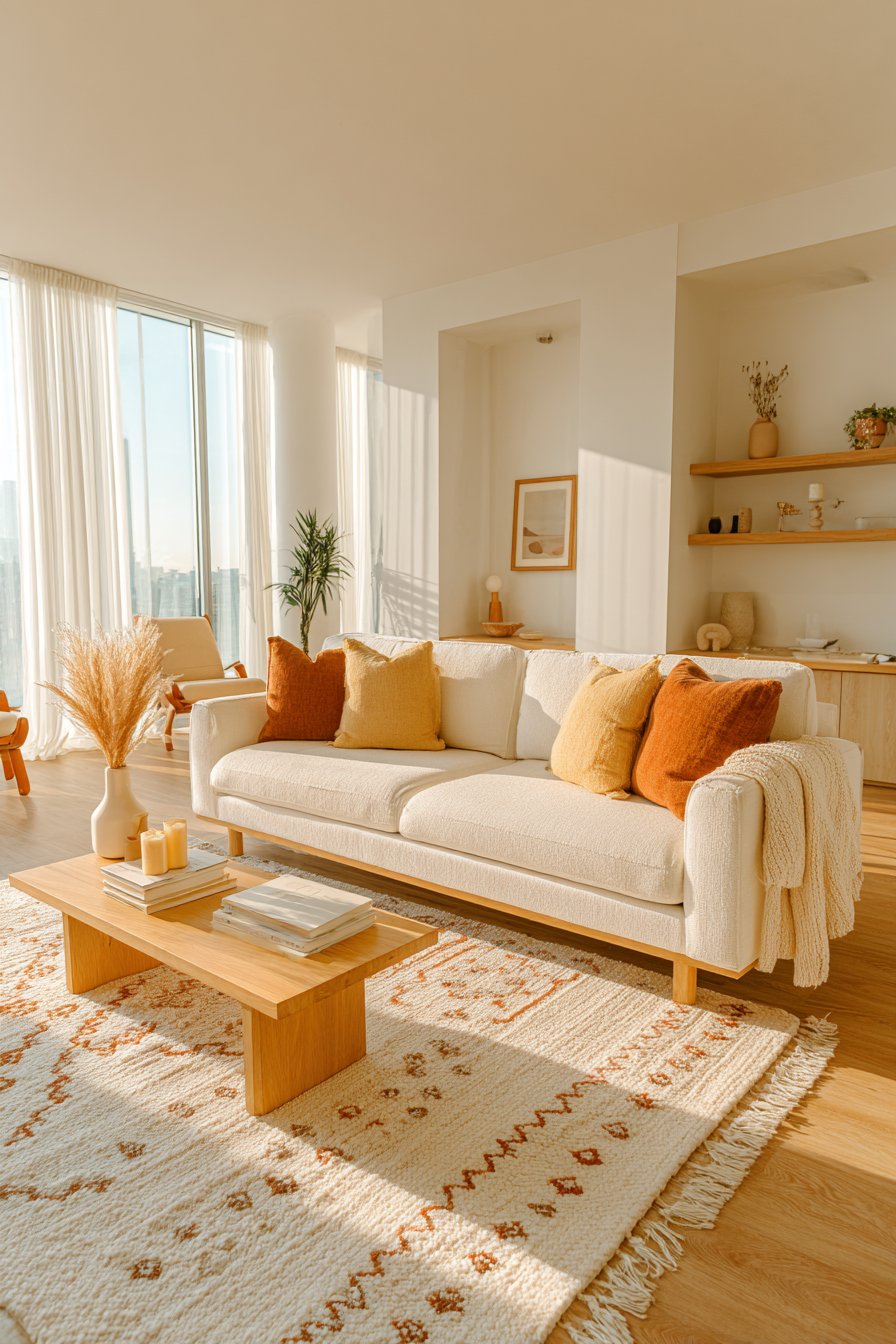
This article explores twenty distinctive warm Scandinavian living room concepts that showcase different approaches to this beloved design style. From cozy reading nooks to family-friendly gathering spaces, each design demonstrates how Scandinavian principles adapt to various needs. Whether you’re drawn to subtle textures or bold accent colors, these ideas offer inspiration for creating your own warm Nordic retreat.
1. Layered Neutral Textures with Natural Oak Foundation
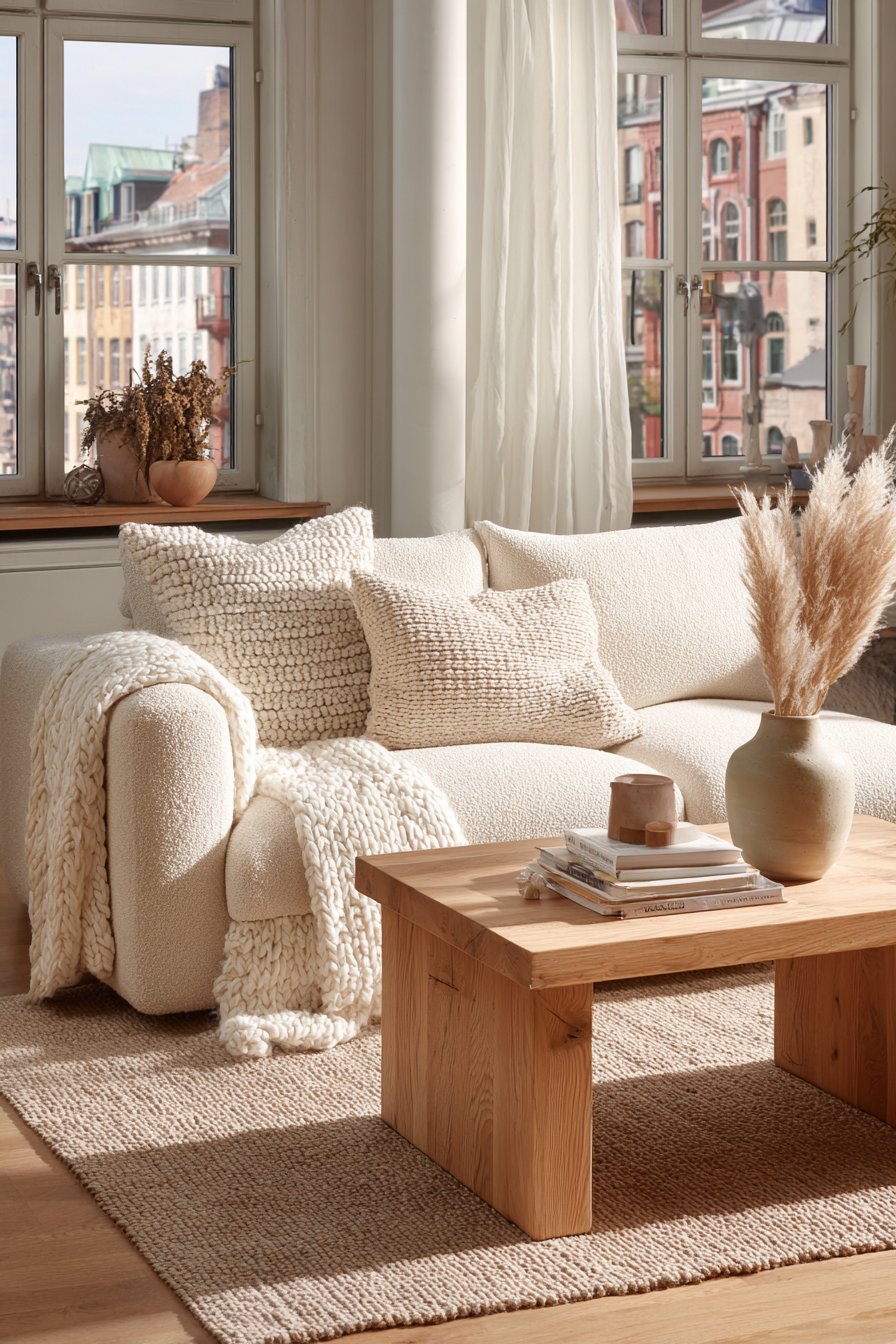
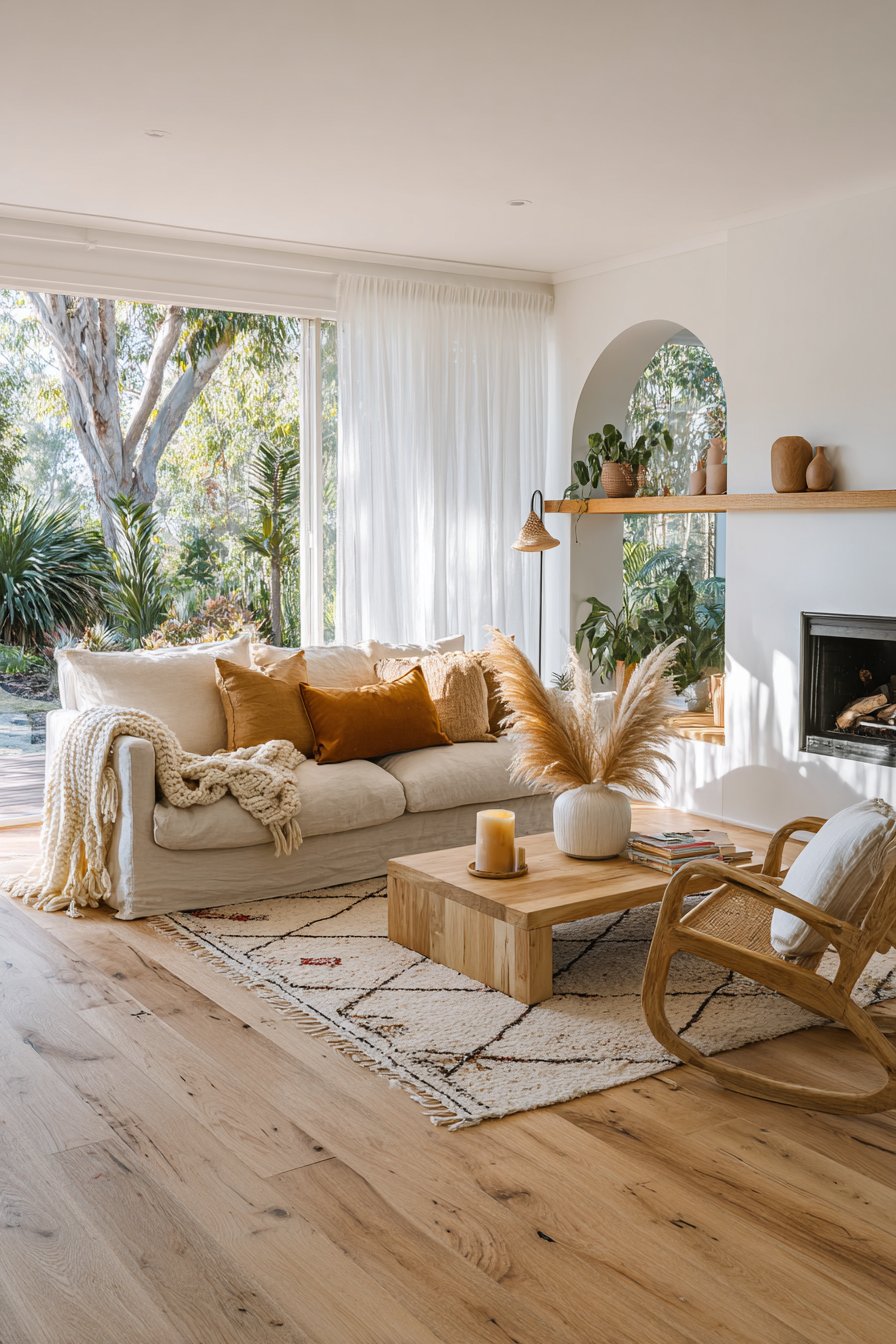
A comfortable ivory linen sofa anchors this inviting Scandinavian living room with plush cushions inviting relaxation. A chunky hand-knit merino wool throw in cream drapes casually across the seating. The natural oak flooring showcases visible grain patterns that add organic beauty underfoot. This creates an immediate connection to nature within the space.
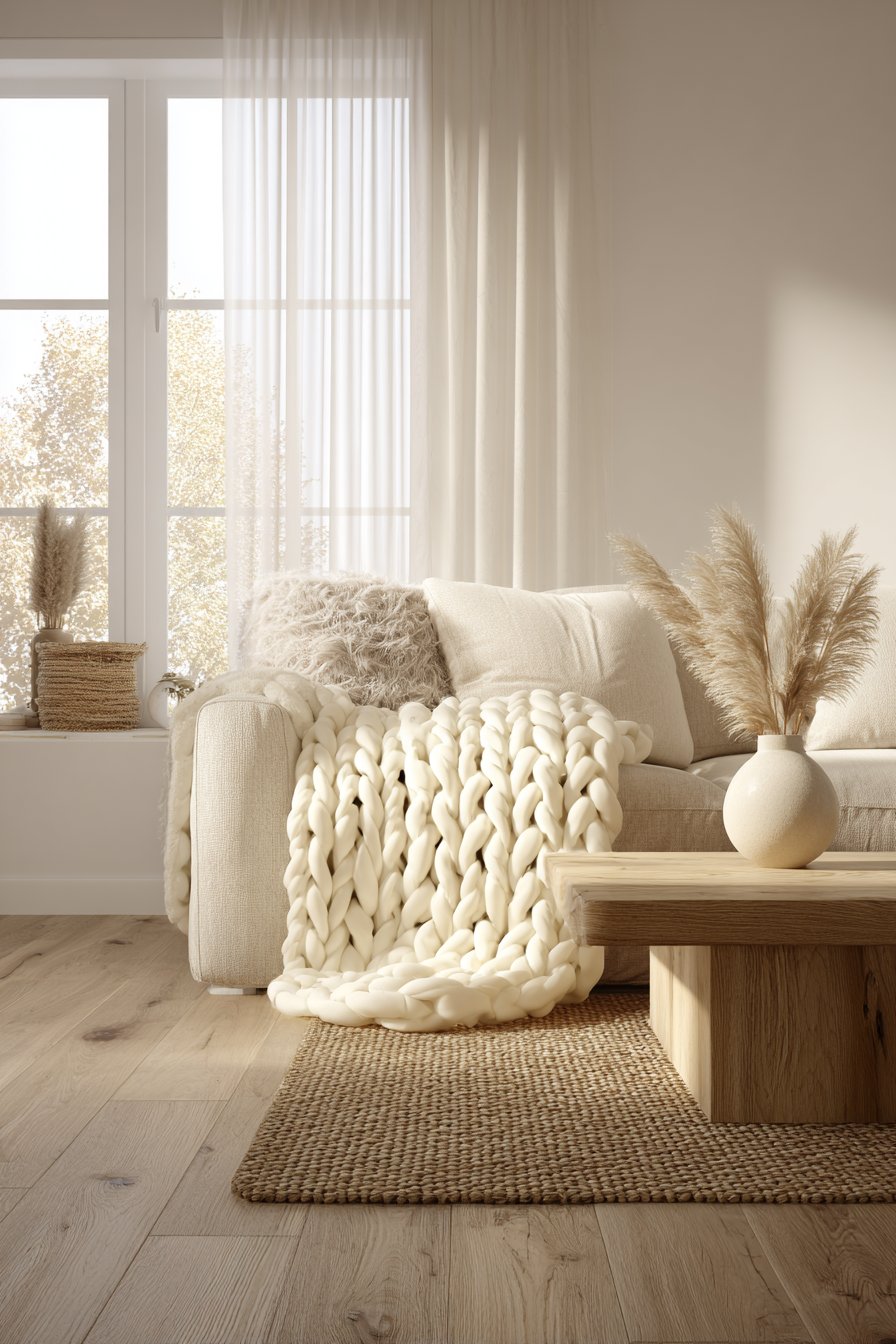
A handwoven jute rug introduces subtle texture variations beneath the seating arrangement. The rug’s natural fibers complement the wood tones beautifully. A low-profile oak coffee table with rounded edges centers the conversation area. Its simple silhouette maintains the clean Scandinavian aesthetic. A ceramic vase displays dried pampas grass, adding vertical interest and softness.
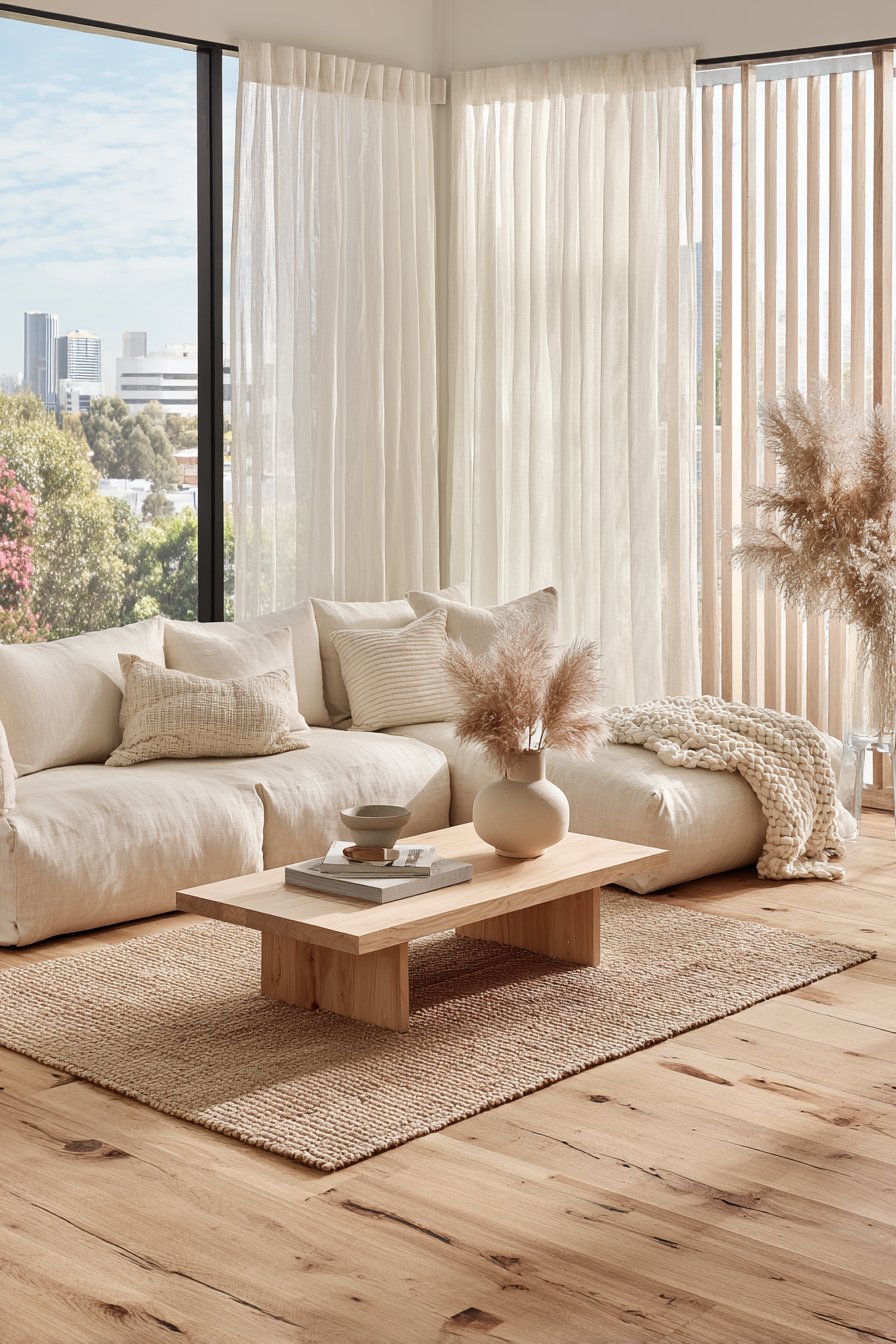
Large windows frame the space with abundant natural light streaming through sheer linen curtains. The soft filtration creates gentle shadows that dance across the room throughout the day. Morning light particularly enhances the layered neutral palette. The interplay between natural and textile textures generates visual depth without overwhelming the senses.
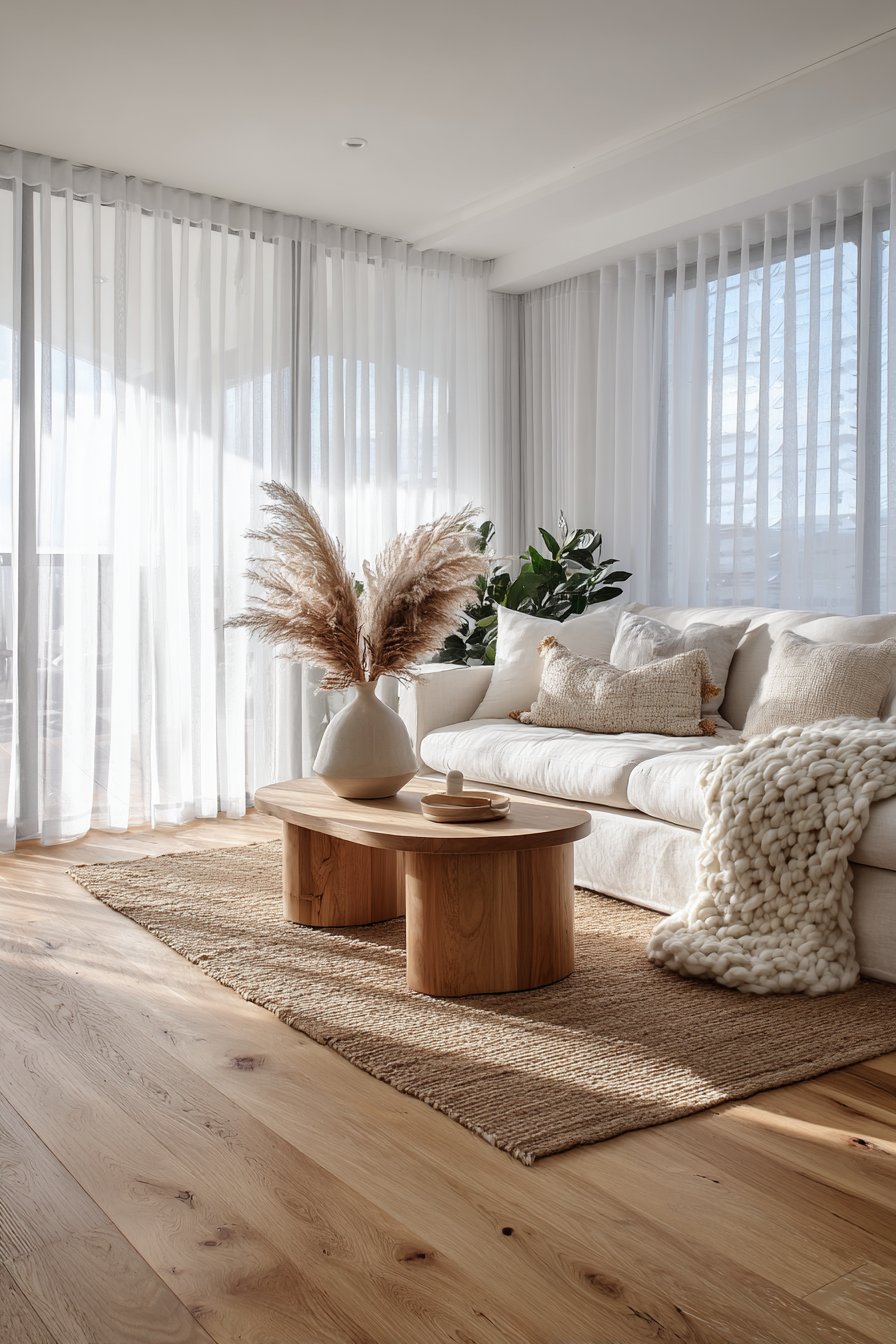
The success of this design lies in its masterful layering of similar tones. Each element contributes unique texture while maintaining overall cohesion. The cream, ivory, and natural oak palette feels warm despite its neutral foundation. This approach proves that monochromatic schemes need not feel flat or boring.
Key Design Tips:
- Layer multiple neutral textiles in varying textures for depth without visual clutter
- Choose natural oak with visible grain to add organic character to flooring
- Select low-profile furniture with rounded edges for soft scandinavian aesthetics
- Install sheer linen curtains to filter harsh light while maintaining brightness
- Incorporate handwoven natural fiber rugs for authentic texture and warmth
2. Cozy Reading Nook with Blonde Wood Accents
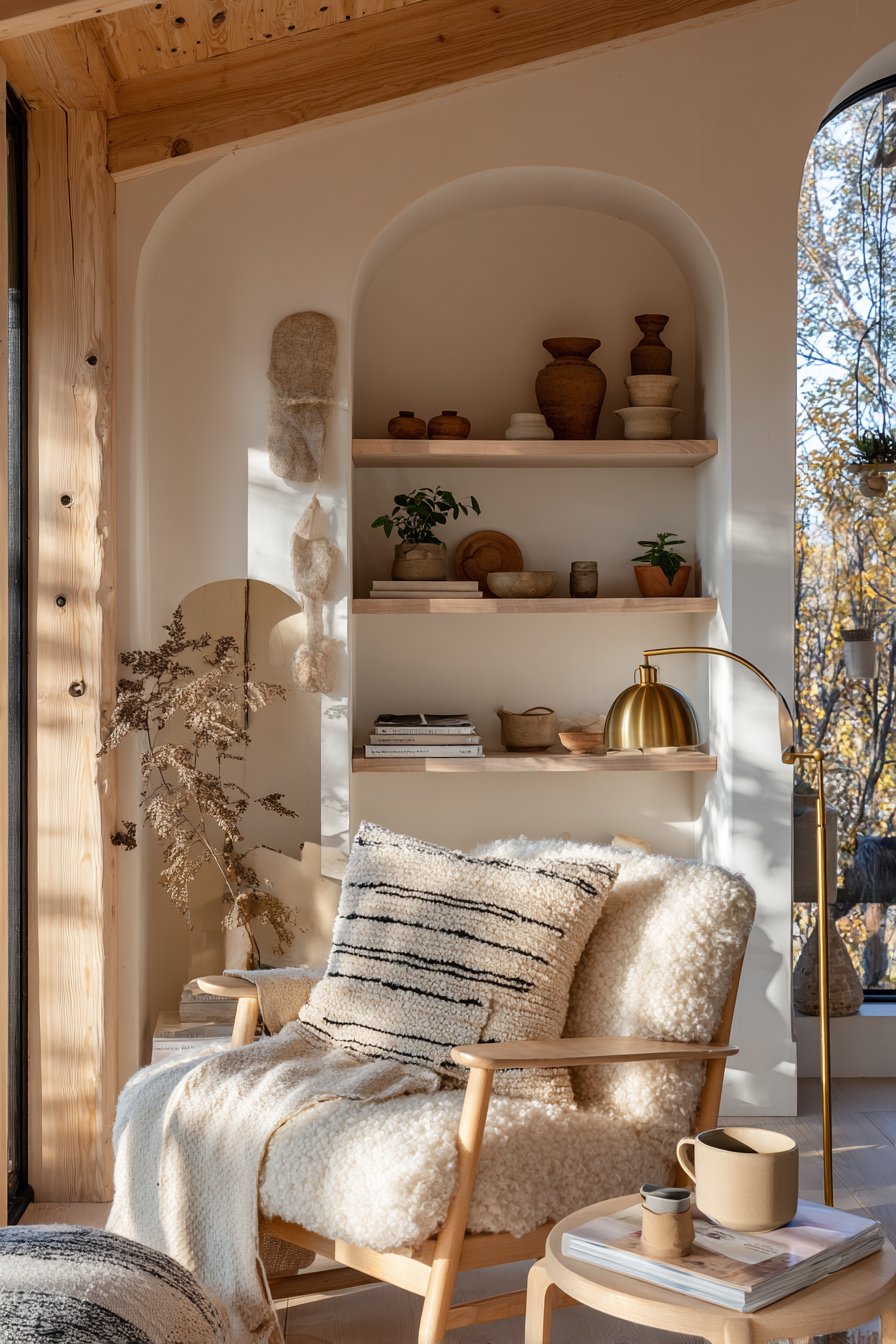
A peaceful corner transforms into an intimate retreat with a blonde ash wood rocking chair. Natural wool fabric upholsters the comfortable seat, inviting hours of reading. An arched brass floor lamp stands beside the chair with elegant proportions. The lamp provides warm ambient lighting perfect for evening relaxation.
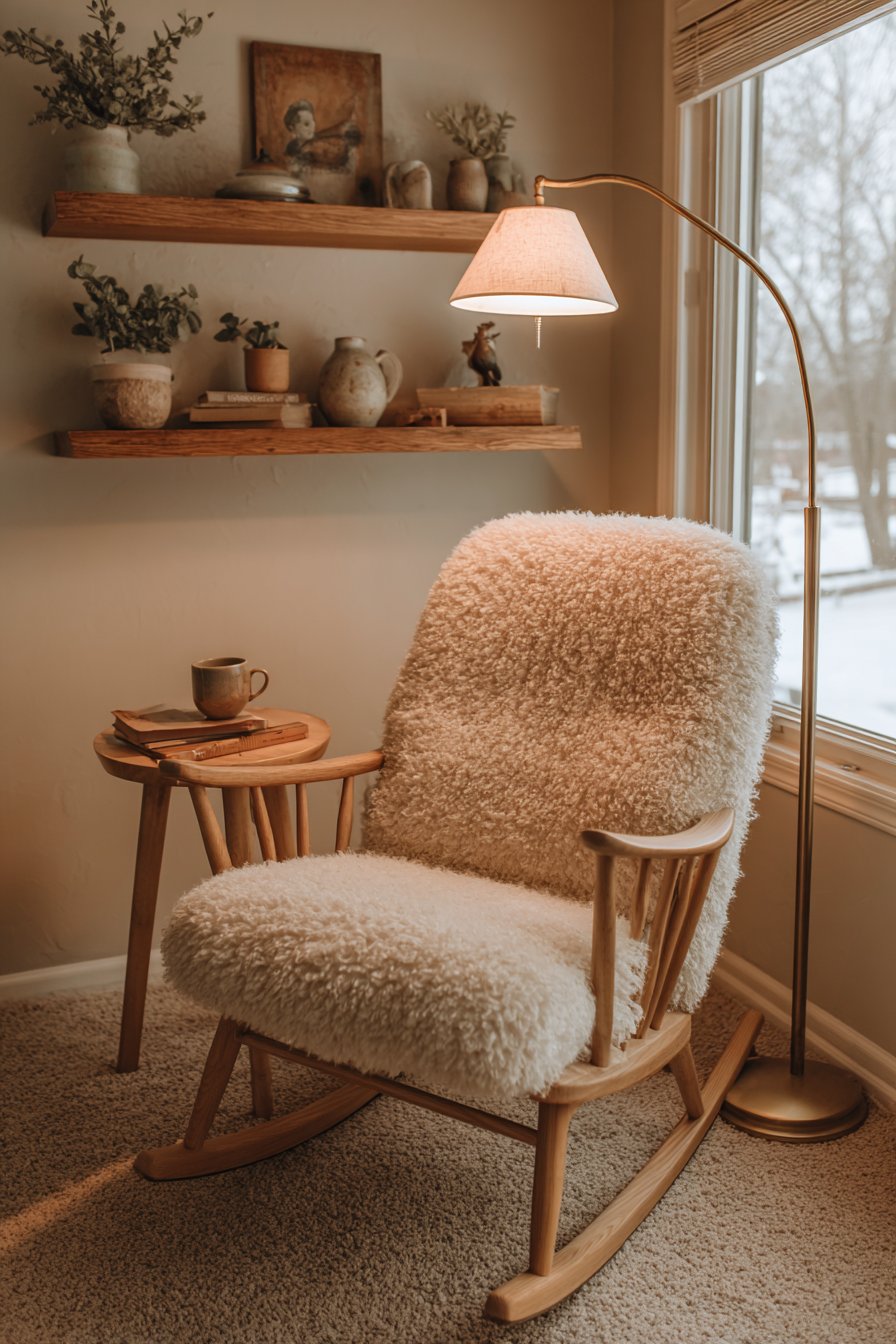
A small round side table in light birch holds life’s simple pleasures perfectly. A steaming cup and open book rest on its surface naturally. The table’s compact size suits the cozy nook without overwhelming the intimate space. Floating oak shelves display ceramic pottery in earth tones above the seating area. Small potted succulents add living elements to the arrangement.
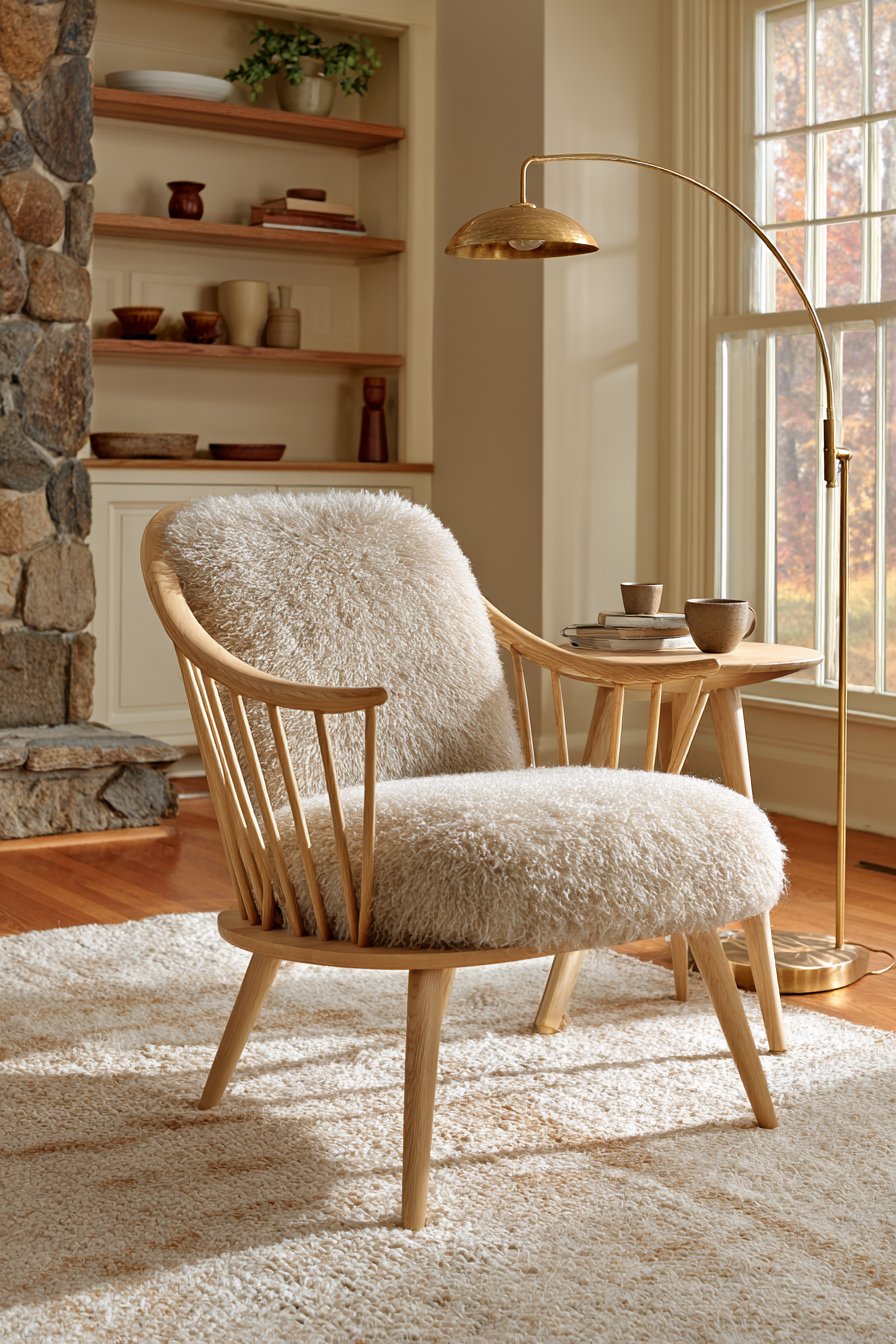
Cream-colored walls reflect soft afternoon light beautifully throughout the corner space. The pale backdrop allows the natural wood tones to shine. The combination creates a serene atmosphere conducive to contemplation. This reading nook exemplifies the Scandi principle of creating intentional spaces for specific activities.
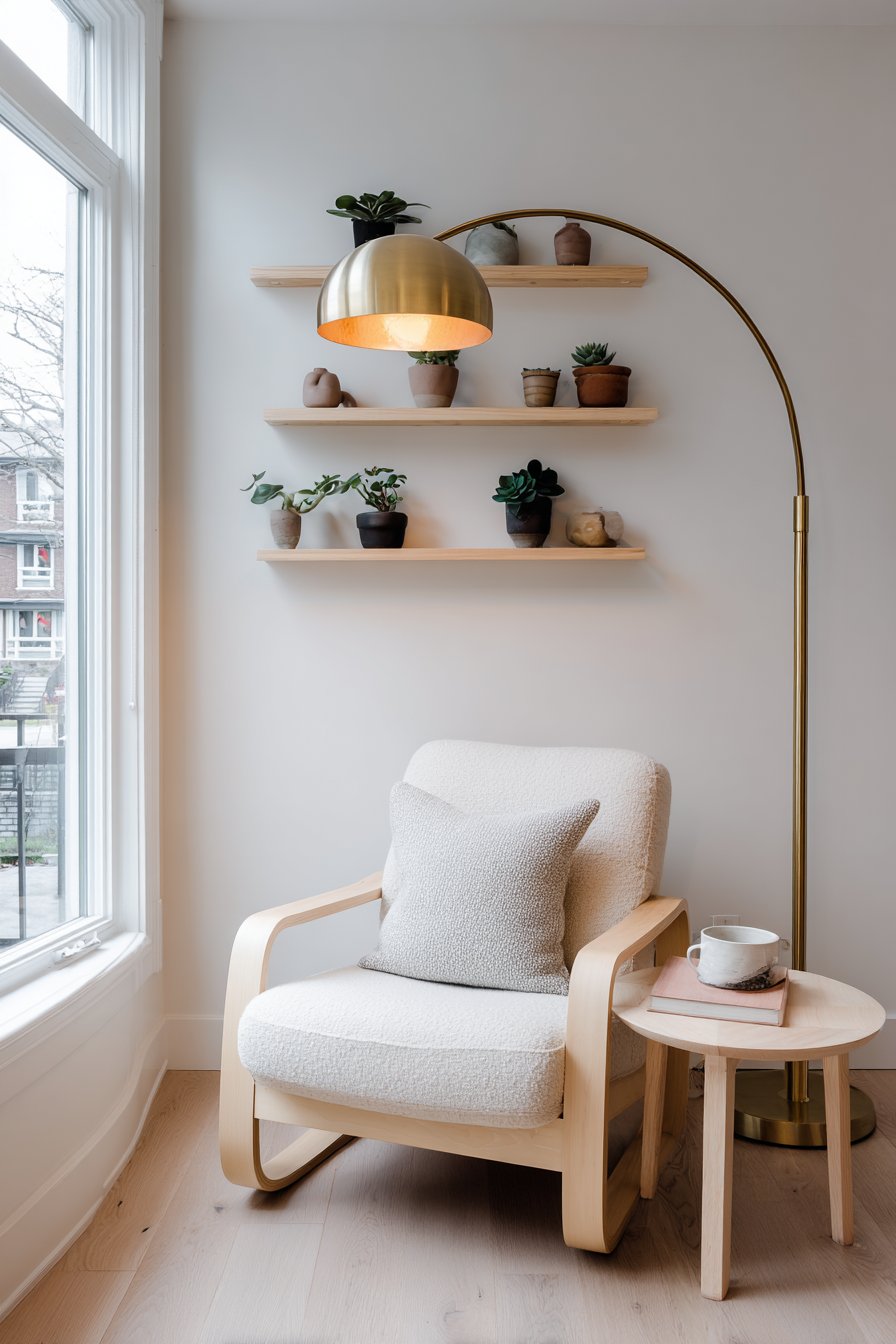
The brass lighting adds a warm metallic accent without feeling overly decorative. Its arched form follows function while contributing sculptural interest. This corner demonstrates how thoughtful furniture placement creates purpose-driven zones. The layering of warm materials generates an environment that nurtures both comfort and focus.
Key Design Tips:
- Create dedicated reading nooks with comfortable seating and proper task lighting
- Use blonde wood furniture to maintain lightness while adding natural warmth
- Position arched floor lamps beside seating for both function and visual interest
- Display pottery and plants on floating shelves for accessible styling
- Choose cream wall colors to maximize natural light reflection throughout the day
3. Linear Fireplace with Whitewashed Pine Accent Wall
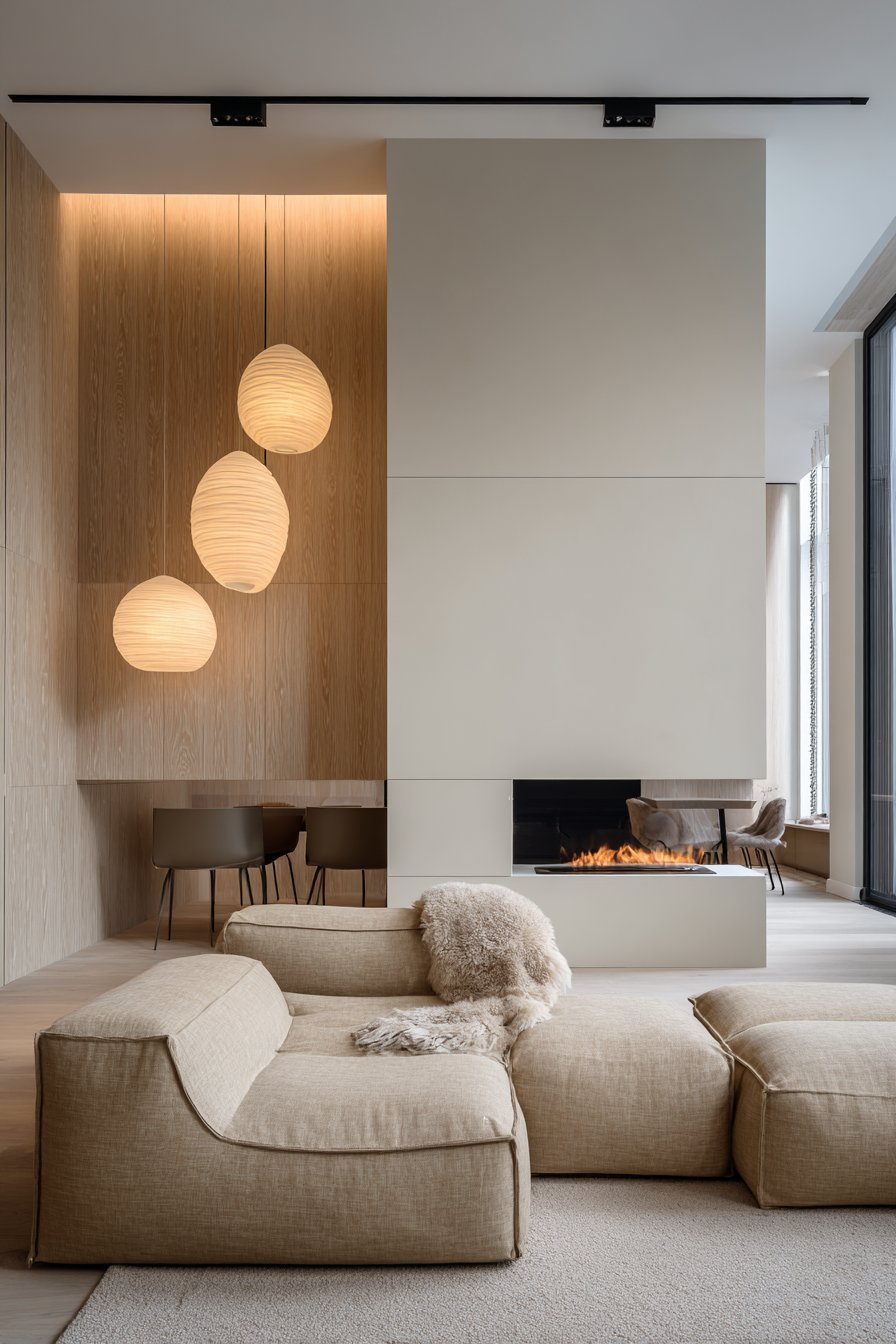
Whitewashed pine wood paneling creates subtle texture and architectural depth on a focal accent wall. The treatment adds dimension without overwhelming the minimalist aesthetic. A modular sectional sofa in warm beige linen faces a simple linear fireplace. The clean fireplace design features a white surround and light oak mantel.
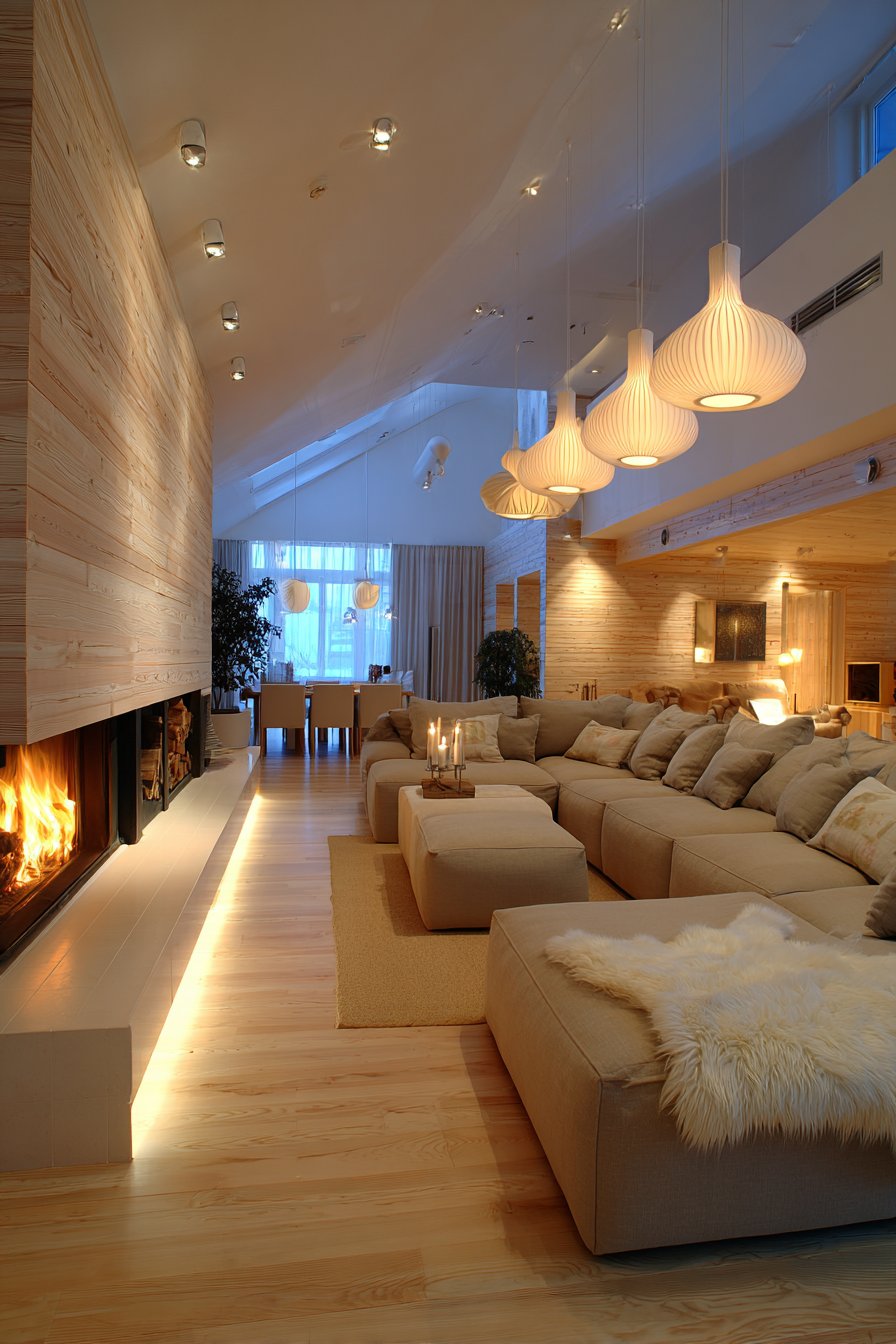
Natural sheepskin throws drape casually over the sectional seating for tactile comfort. The throws invite touch while adding organic texture. Recessed lighting provides gentle overall illumination throughout the living space. Three pendant lights with paper shades hang at varying heights near the adjacent dining area. This creates visual rhythm and functional task lighting.
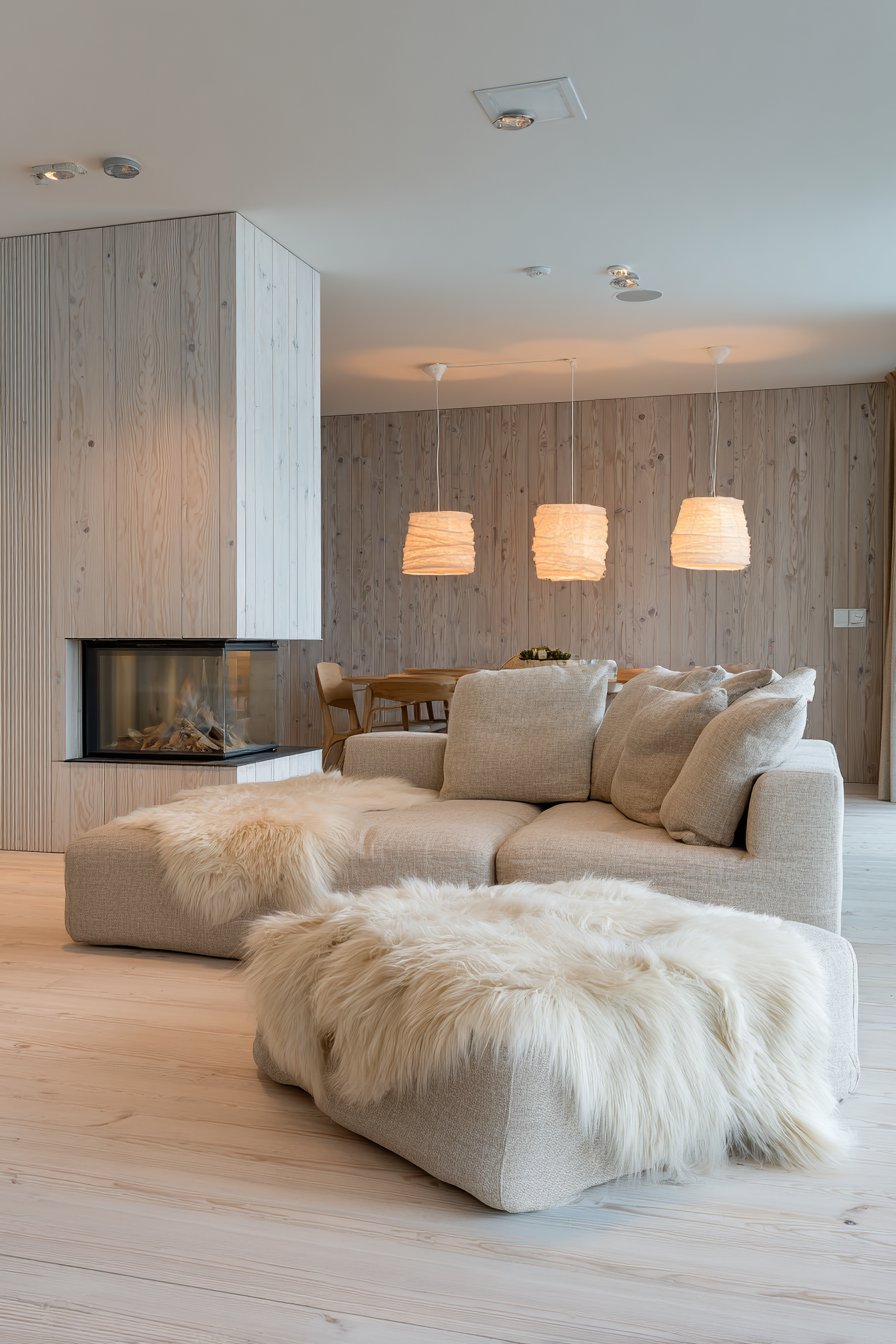
The fireplace serves as the room’s natural gathering point during cooler months. Its linear design maintains contemporary simplicity while providing warmth. The light oak mantel offers minimal display space without cluttering the clean lines. This restraint characterizes the Scandinavian approach to decorative elements.
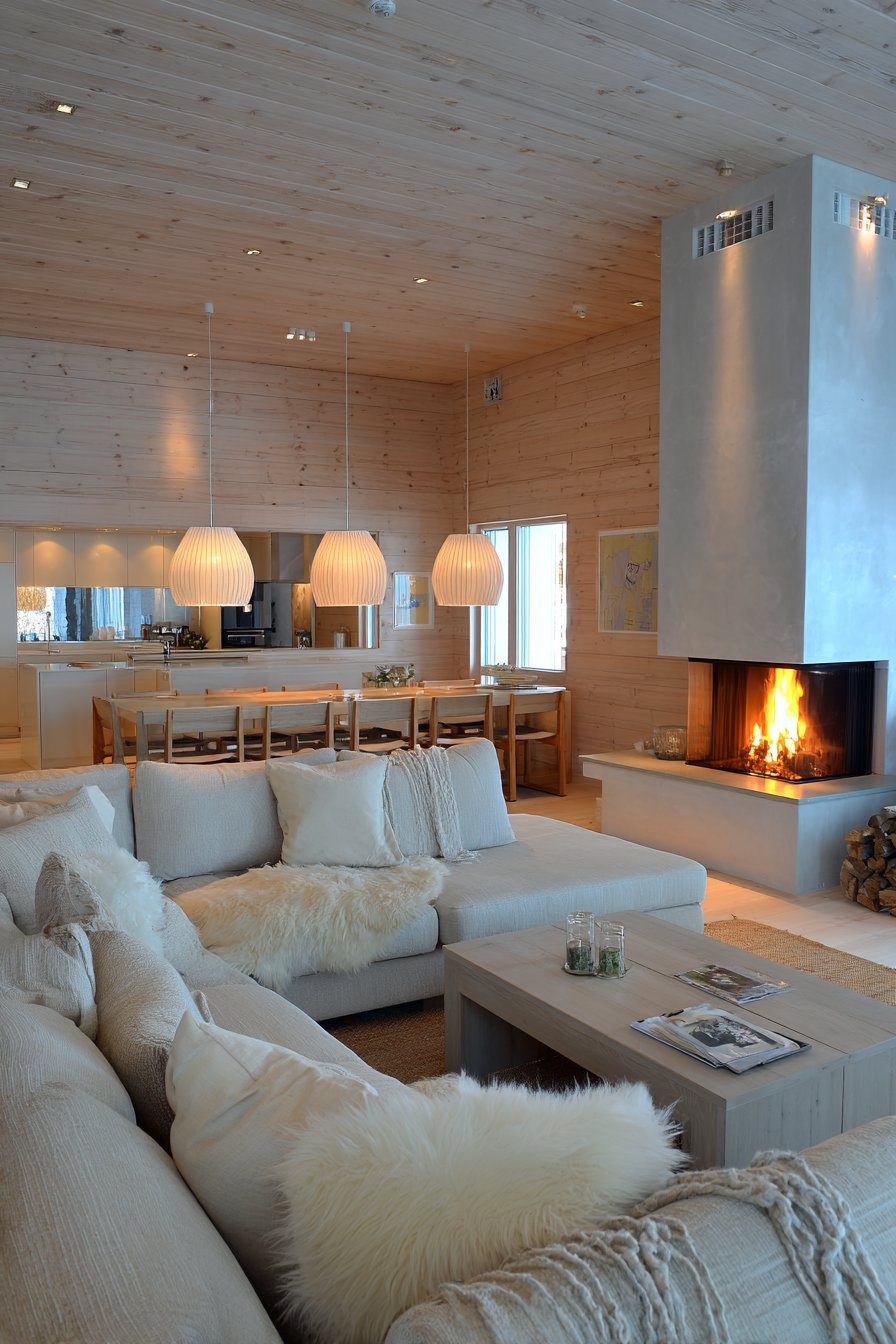
The whitewashed pine paneling technique brightens the wood while preserving its natural grain. This treatment feels both rustic and refined simultaneously. The technique bridges traditional Scandinavian materials with contemporary application. The overall effect creates a welcoming environment perfect for family gatherings.
Key Design Tips:
- Install whitewashed wood paneling on accent walls for texture without heaviness
- Choose linear fireplaces for contemporary Scandinavian spaces seeking clean lines
- Vary pendant light heights to create visual interest and define zones
- Drape sheepskin throws casually for an authentic Scandinavian hygge atmosphere
- Use modular sectionals for flexible seating arrangements that adapt to needs
4. Window Seat Haven with Natural Birch Storage
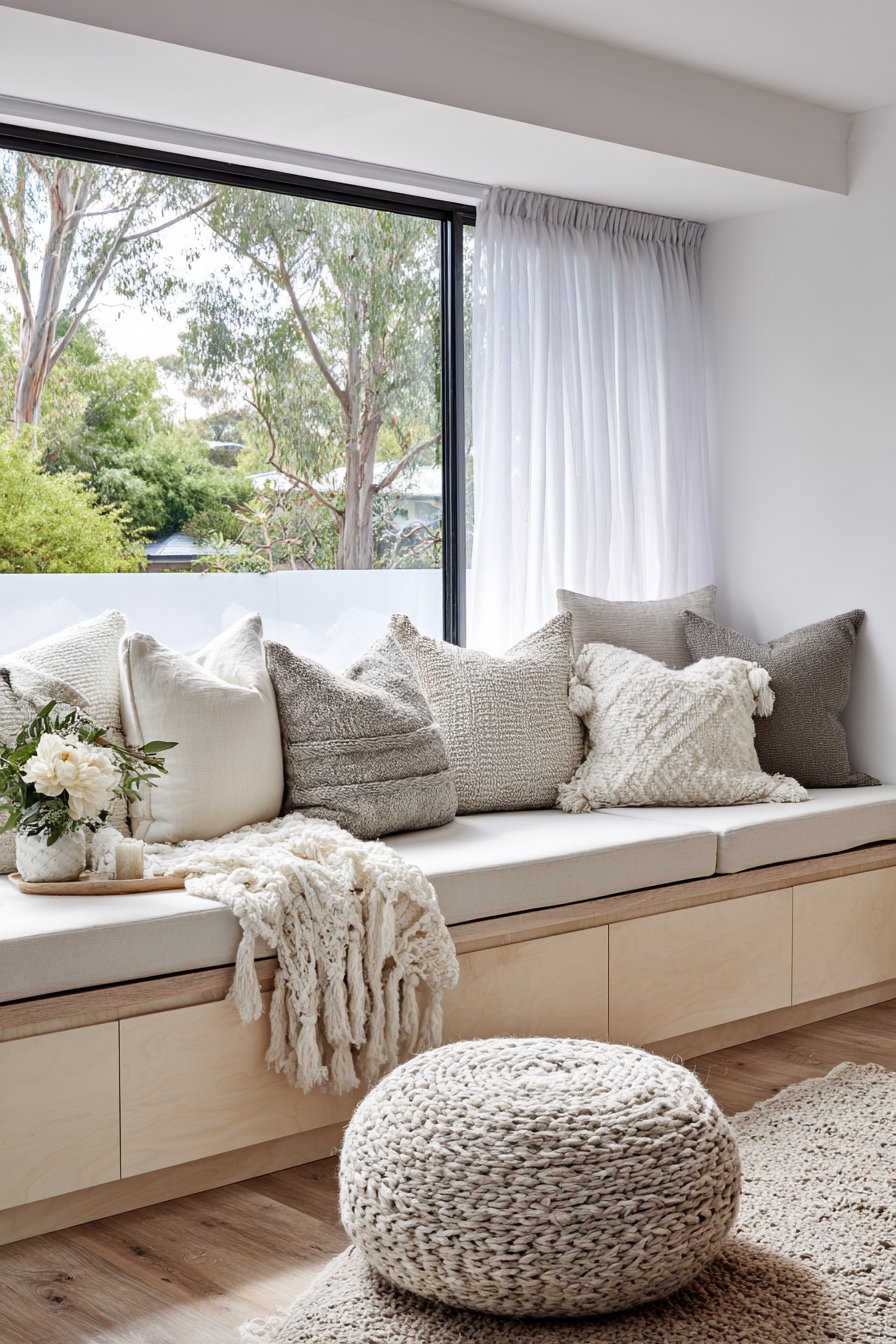
A built-in window seat transforms ordinary windows into a cozy destination within the living room. Cream-colored cushions provide comfortable seating for daydreaming or conversation. An array of textured pillows in warm neutrals invites relaxation. The palette includes oatmeal, sand, and soft grey tones that harmonize beautifully.
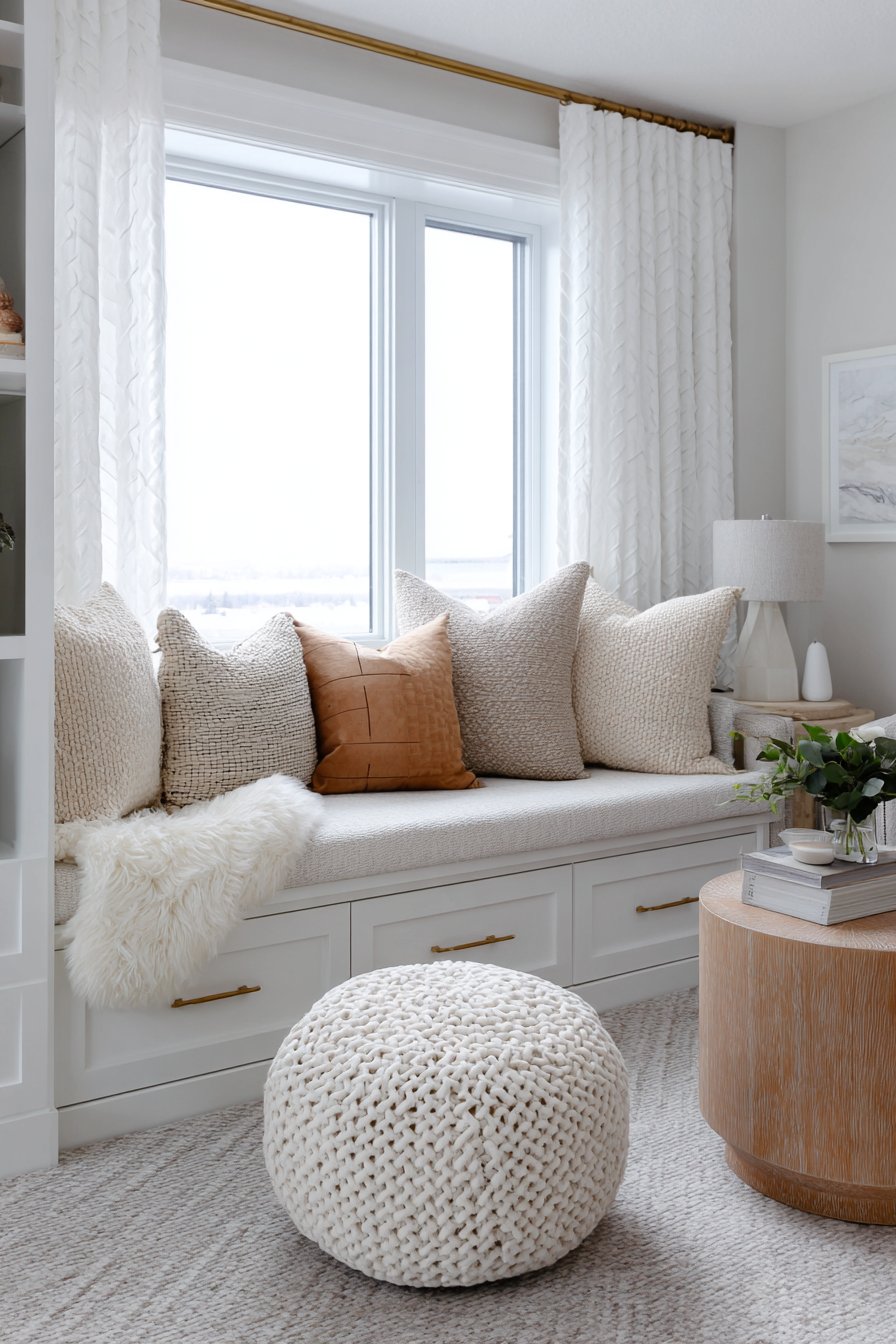
Storage drawers beneath the window seat offer practical functionality in natural birch. The integrated storage maintains the clean aesthetic while maximizing space efficiency. Sheer white curtains frame the large window, allowing diffused daylight throughout the day. The curtains soften the window’s architectural lines without blocking precious natural light.
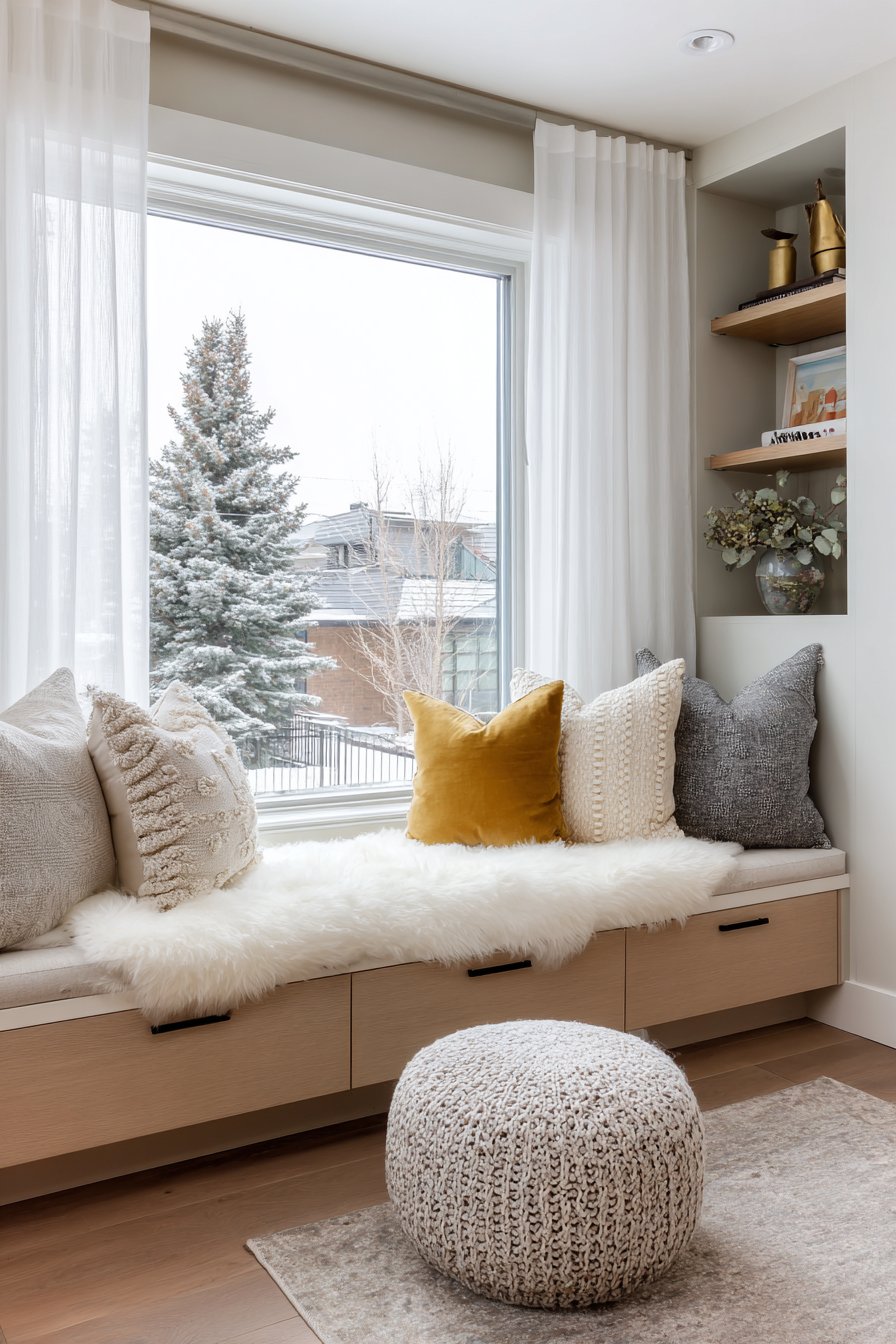
A small round ottoman in natural wool serves as flexible additional seating. Its compact size allows easy repositioning as needs change. The ottoman’s simple form complements the built-in window seat perfectly. Golden hour sunlight enhances all the cozy textiles during late afternoon. The warm light makes the natural materials glow invitingly.
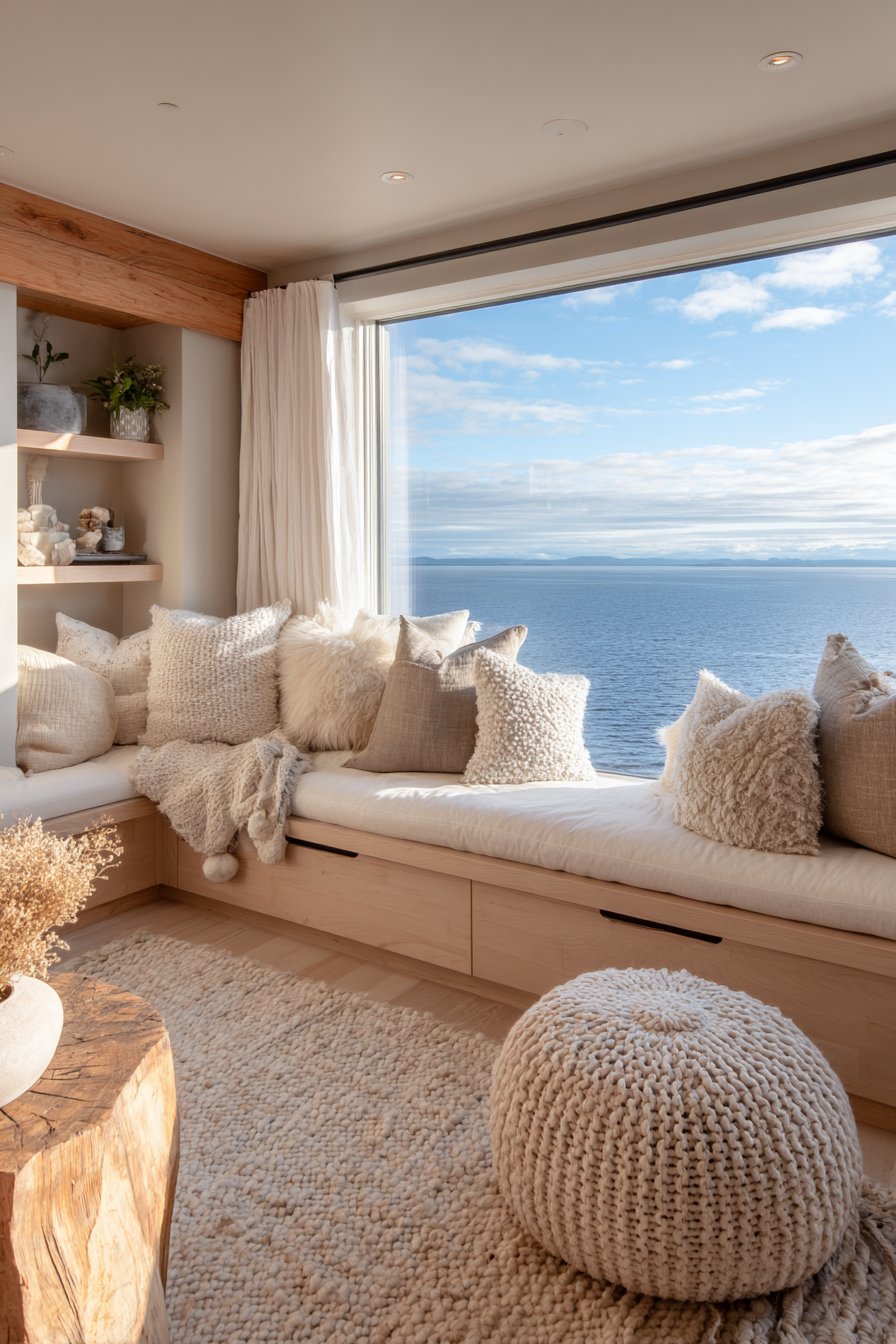
This window seat demonstrates the Scandinavian principle of maximizing every square foot thoughtfully. The combination of seating, storage, and natural light creates a highly functional area. The space becomes a favorite retreat for reading, napping, or simply watching the world outside.
Key Design Tips:
- Build window seats with integrated storage to maximize functionality in any space
- Layer textured pillows in warm neutral tones for inviting comfort
- Frame windows with sheer curtains to maintain light while adding softness
- Add small ottomans for flexible seating that moves easily as needed
- Position seating to capture golden hour light for maximum warmth and beauty
5. Gallery Wall with Natural Wood Frames
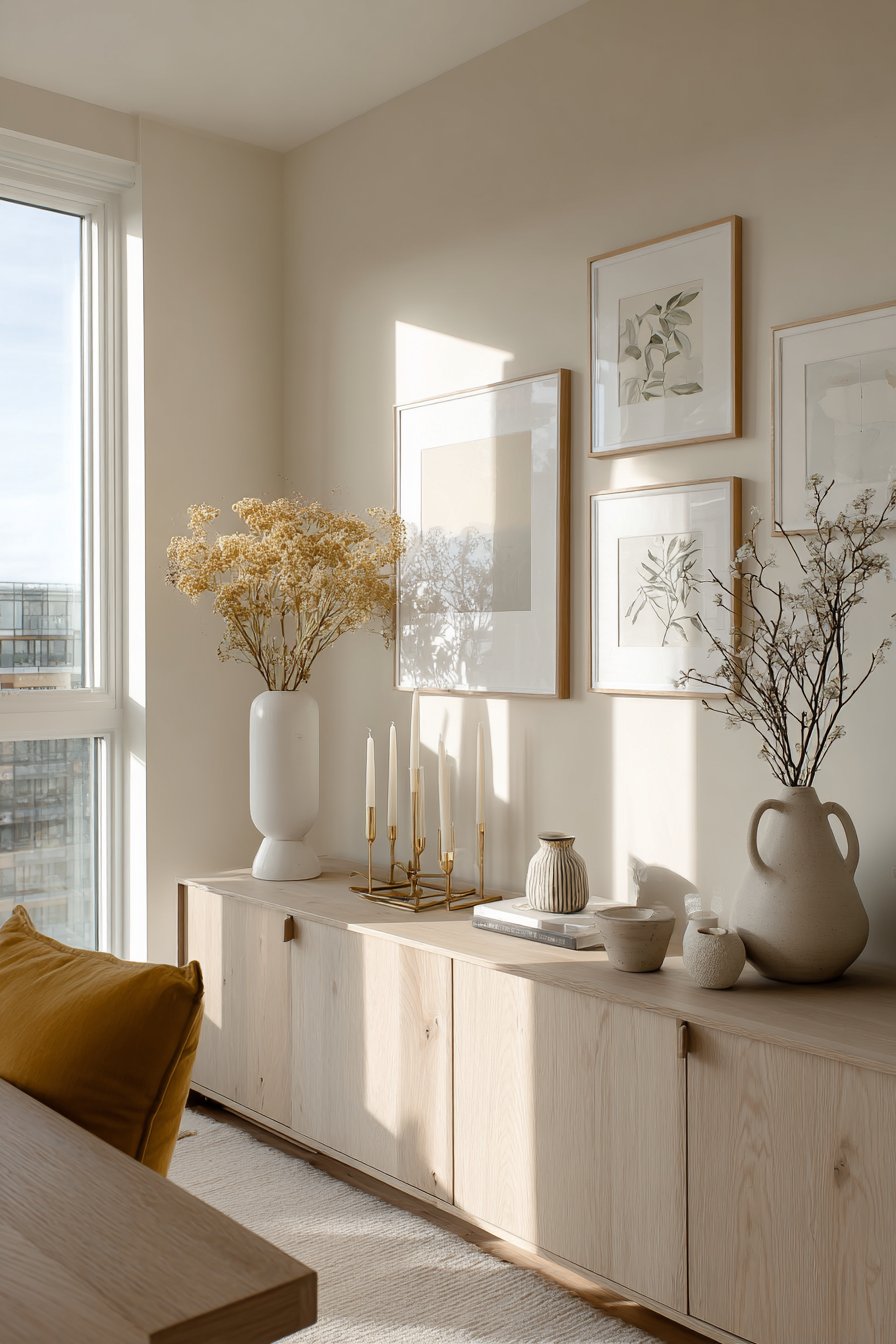
A carefully curated gallery wall features simple wooden frames in light oak and natural ash. The frames display botanical prints and abstract line drawings with minimal visual weight. Below the gallery wall, a low credenza in white oak showcases visible wood grain. The credenza becomes a styling surface for intentionally decorative objects.
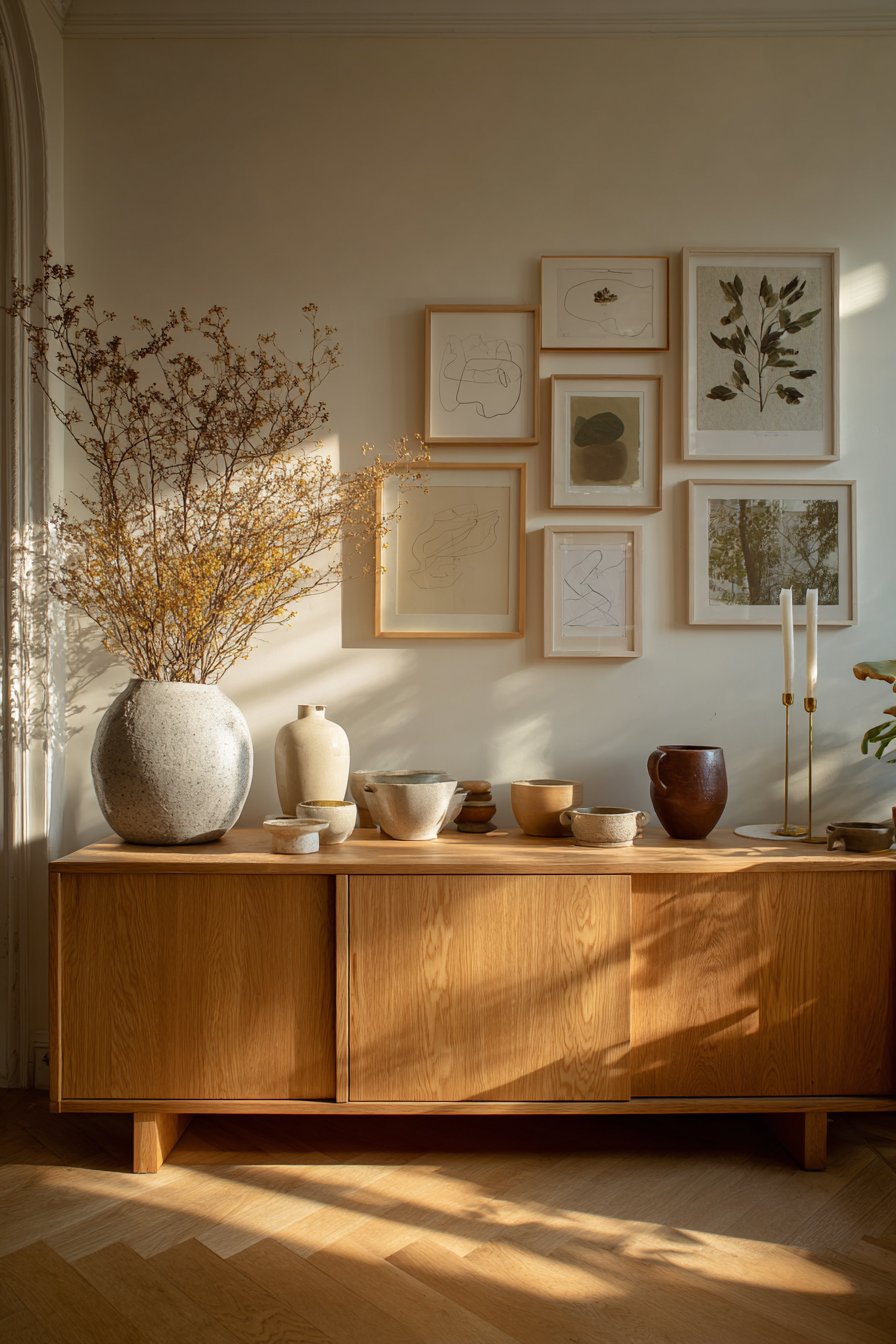
Ceramic vessels in muted earth tones anchor the credenza arrangement with organic forms. Dried branches reach upward from a tall vase, adding height and natural movement. A vintage brass candle holder contributes warm metallic accent without overwhelming the display. The wall color features soft warm white with subtle yellow undertones. This creates a gentle backdrop that enhances rather than competes with the artwork.
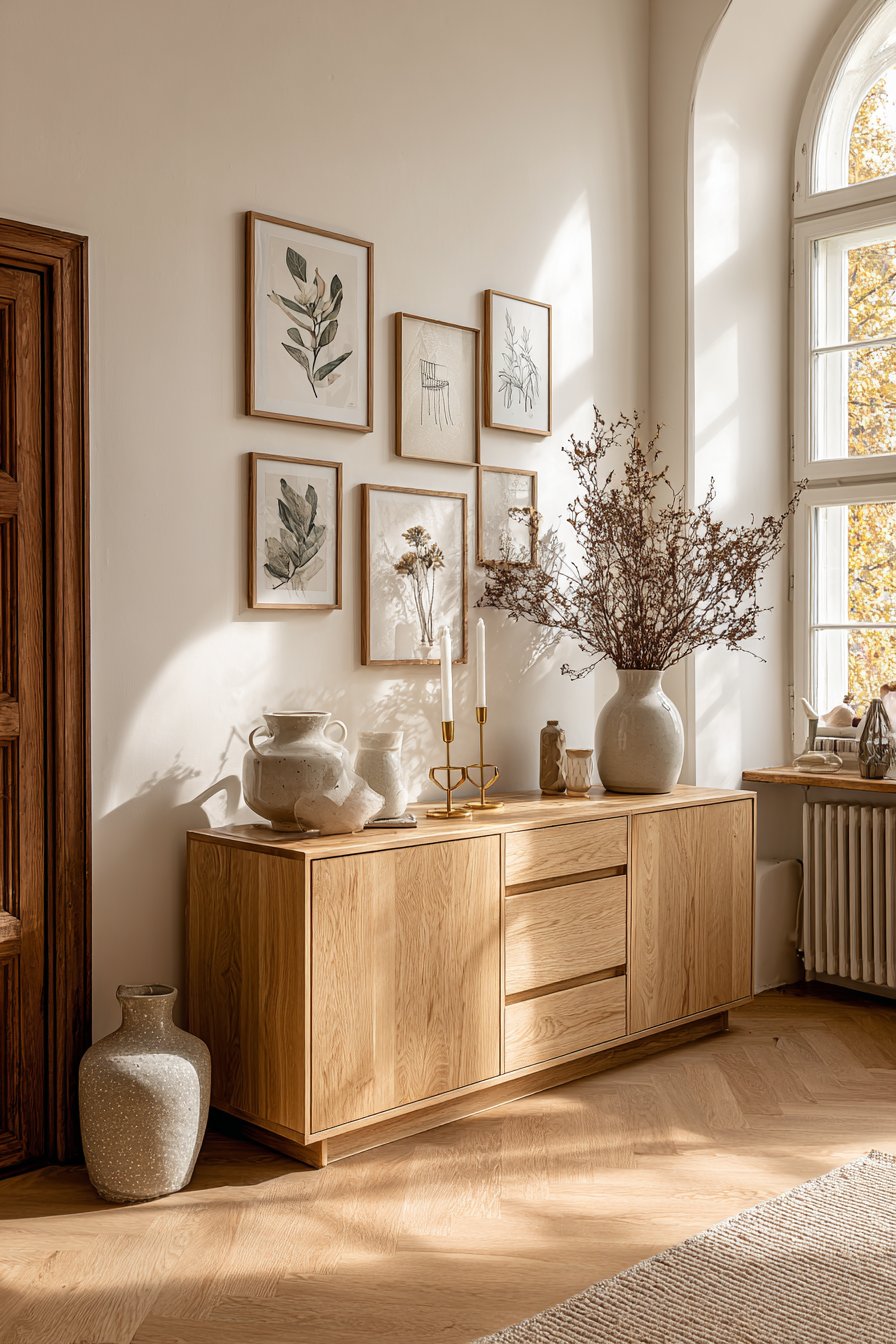
Natural light from adjacent windows creates soft shadows on the gallery wall throughout the day. The changing shadows add dynamic interest to the static display. This interaction between light and objects exemplifies Scandinavian attention to natural elements. The overall arrangement demonstrates restrained curation that avoids visual clutter.
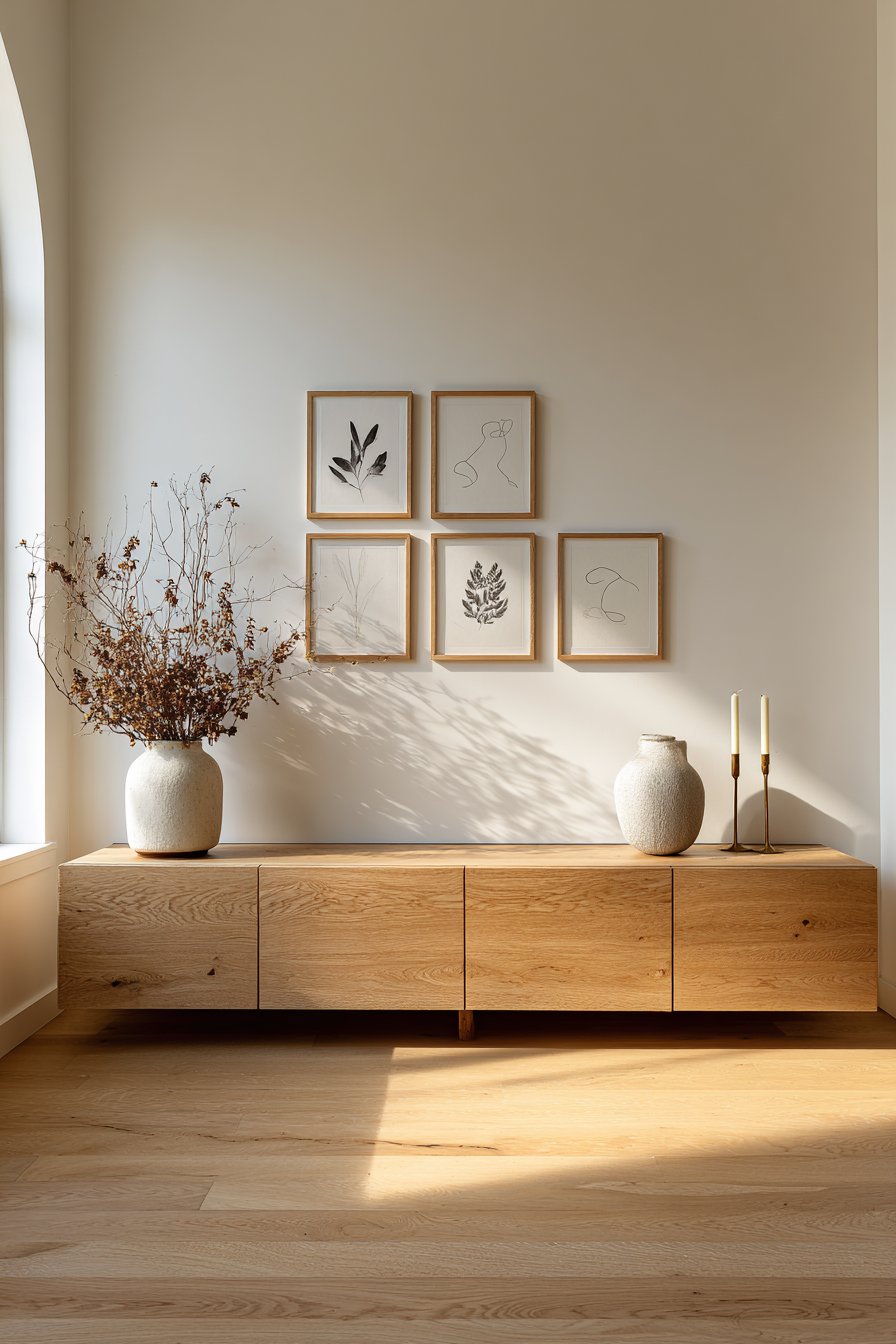
The mixed wood tones in the frames add subtle variation within the cohesive palette. This approach prevents monotony while maintaining harmony. The botanical and abstract artwork reflects the Scandinavian connection to nature. The styling feels personal yet maintains the characteristic simplicity of Nordic design.
Key Design Tips:
- Mix light oak and ash frames for subtle wood tone variation
- Choose botanical and line drawing art for authentic Scandinavian aesthetics
- Style low credenzas with minimal curated objects rather than cluttered displays
- Paint walls in warm whites with yellow undertones for enhanced coziness
- Position artwork near windows to capture changing natural light throughout the day
6. Terracotta Rug Anchoring Mixed Natural Furniture
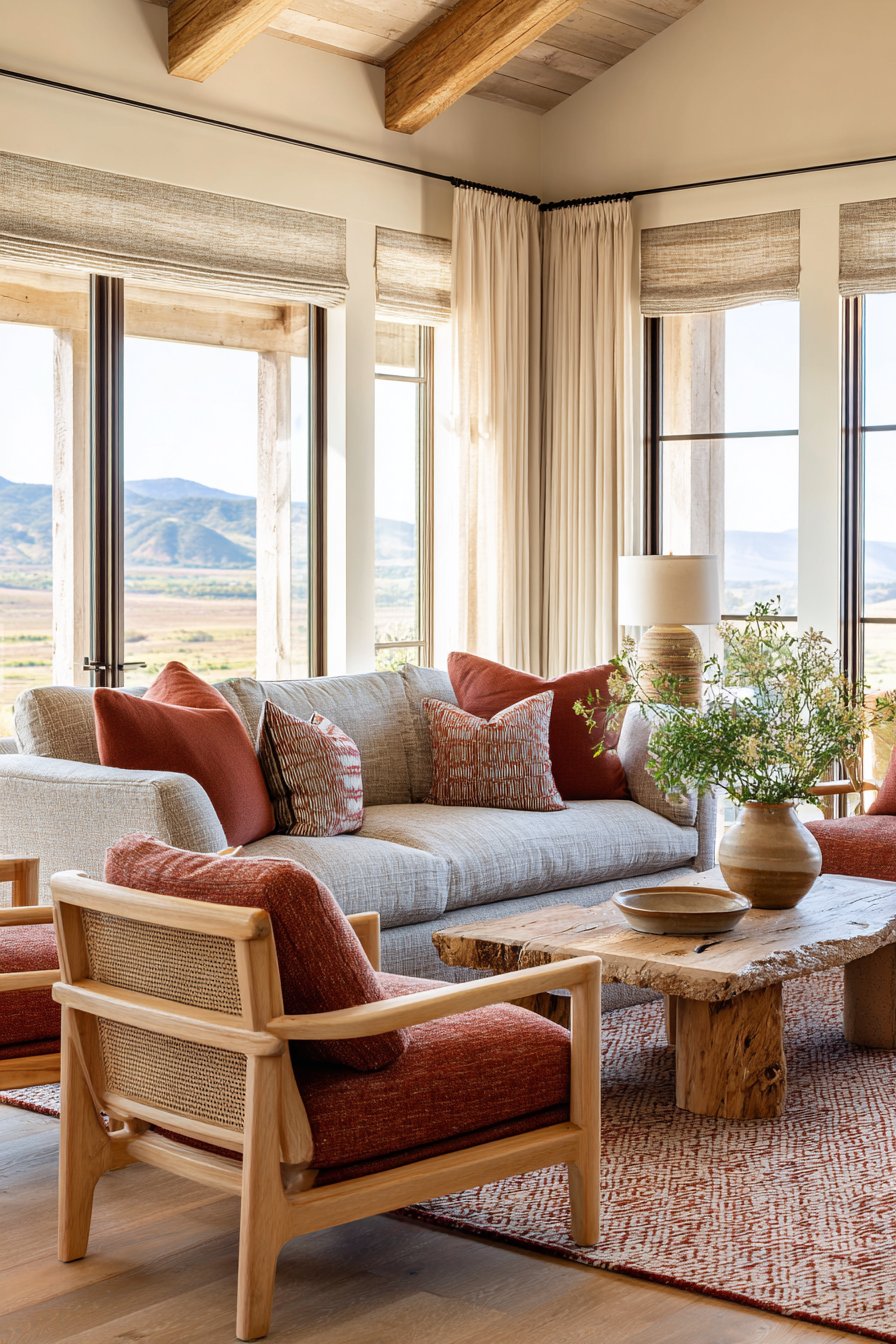
A large area rug in warm terracotta and cream geometric patterns commands attention as the room’s foundation. The bold pattern anchors a thoughtfully arranged seating area with visual weight. A natural linen sofa in warm tones provides neutral balance to the patterned rug. Two matching armchairs in light oak frames flank the sofa creating symmetry.
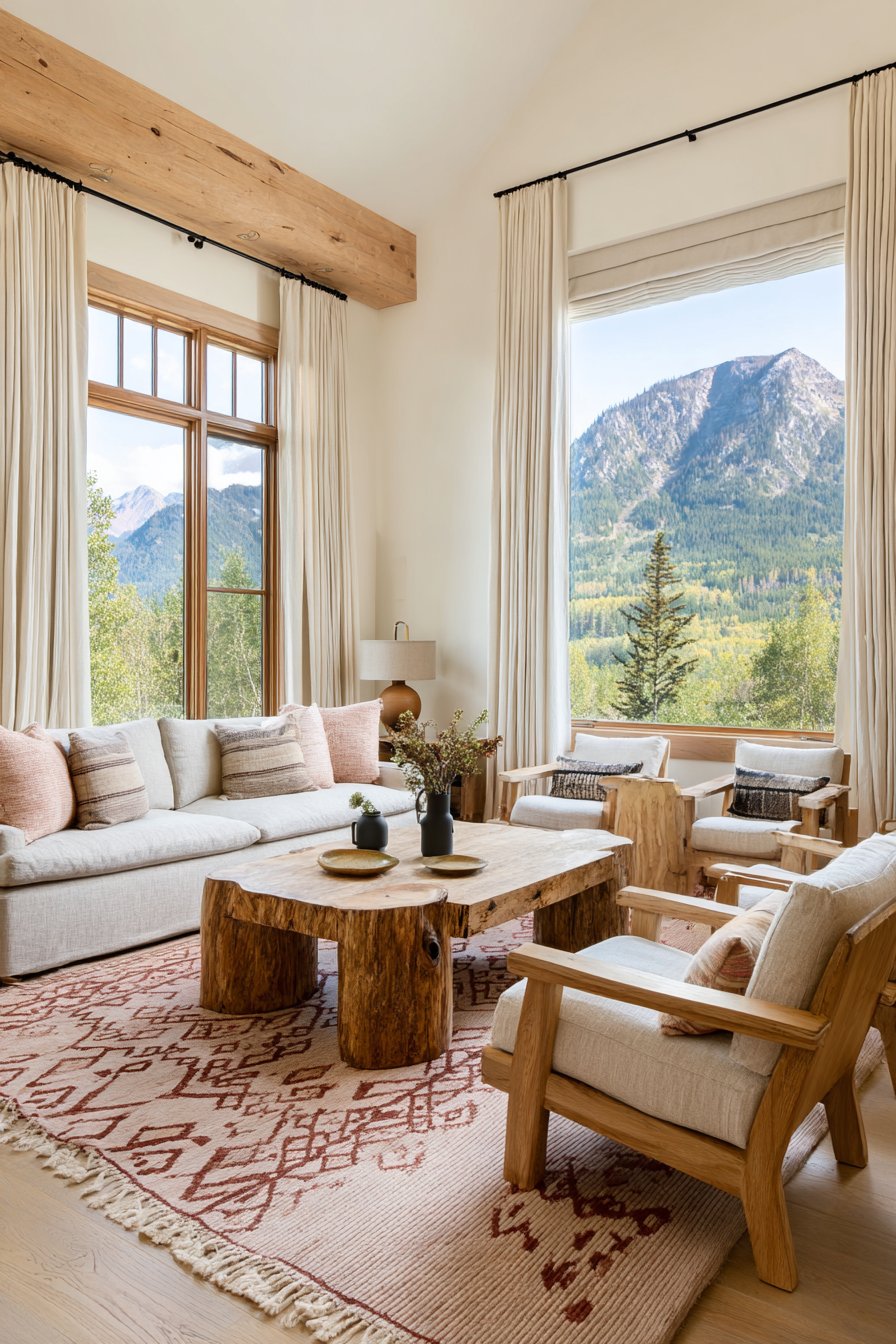
The coffee table features a live-edge oak slab top with preserved natural bark detail. This organic element brings raw nature indoors authentically. The irregular edge celebrates the tree’s original form rather than forcing uniformity. Floor-to-ceiling windows maximize natural light entry with light filtering roller shades in natural linen.
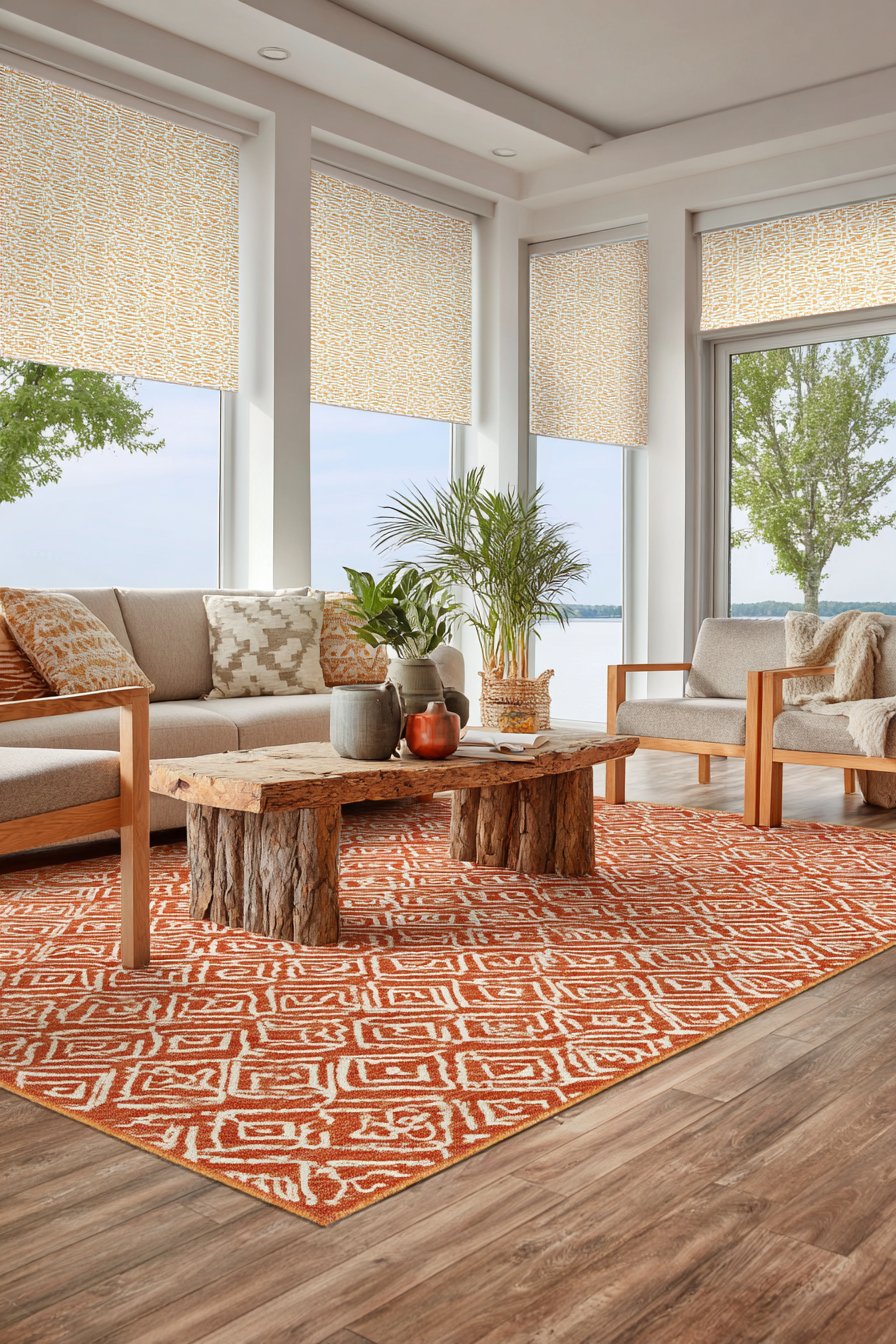
Honey-toned oak flooring runs throughout the space, providing warm continuity. The flooring’s rich color complements the terracotta rug beautifully. Together, these warm elements create an inviting foundation for the entire room. The open floor plan allows natural light to reach deep into the living space.
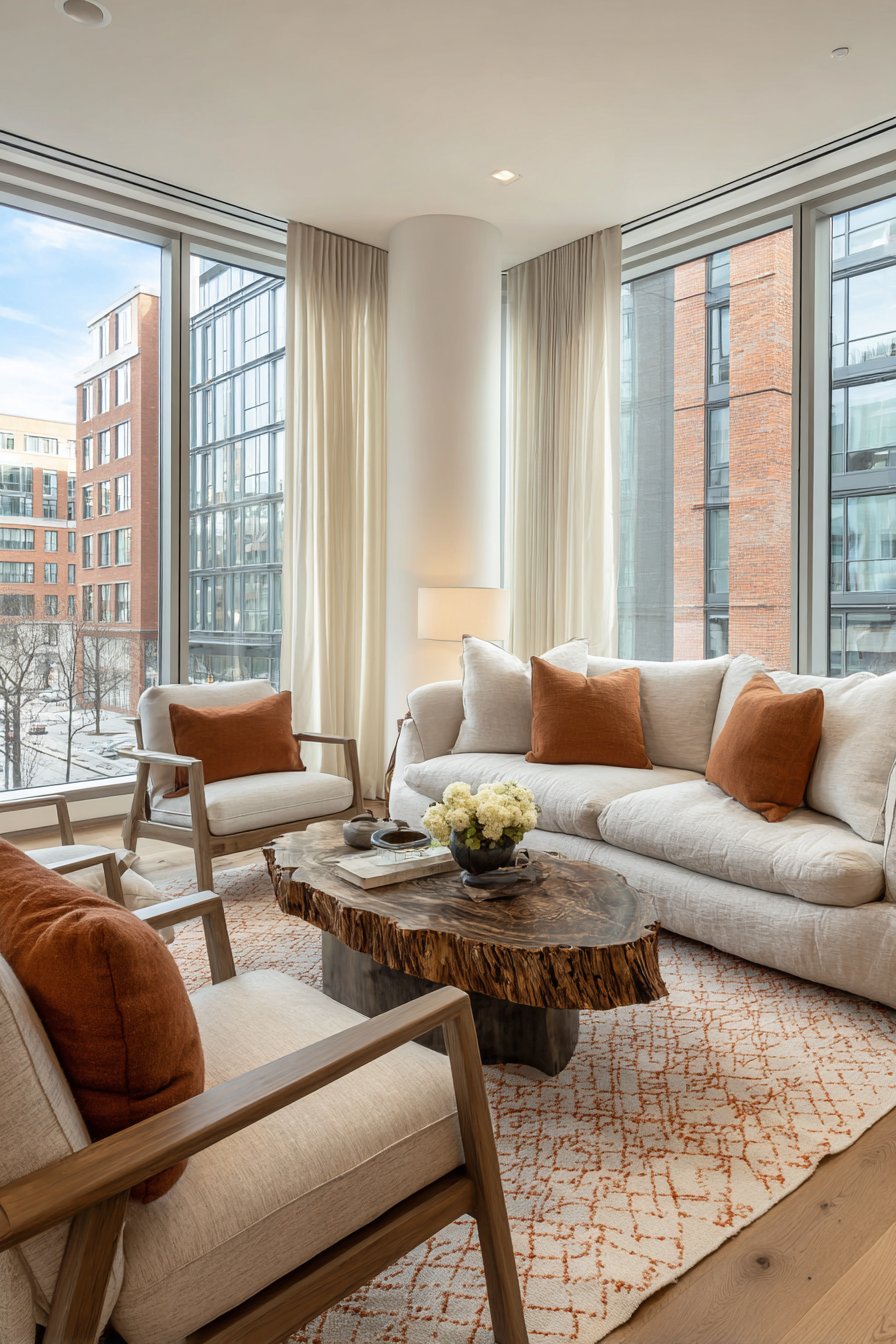
This design demonstrates how a bold rug can anchor an otherwise neutral room successfully. The terracotta introduces personality without overwhelming the Scandinavian simplicity. The geometric pattern adds contemporary edge to traditional natural materials. The overall composition feels both grounded and airy simultaneously.
Key Design Tips:
- Anchor neutral spaces with geometric rugs in warm terracotta and cream tones
- Choose live-edge wood tables to celebrate natural material authenticity
- Install floor-to-ceiling windows with natural linen shades for maximum light control
- Create symmetrical seating arrangements with matching armchairs for balanced composition
- Use honey-toned oak flooring to add warmth throughout the entire space
7. Console Table Vignette with Vintage Brass Accents
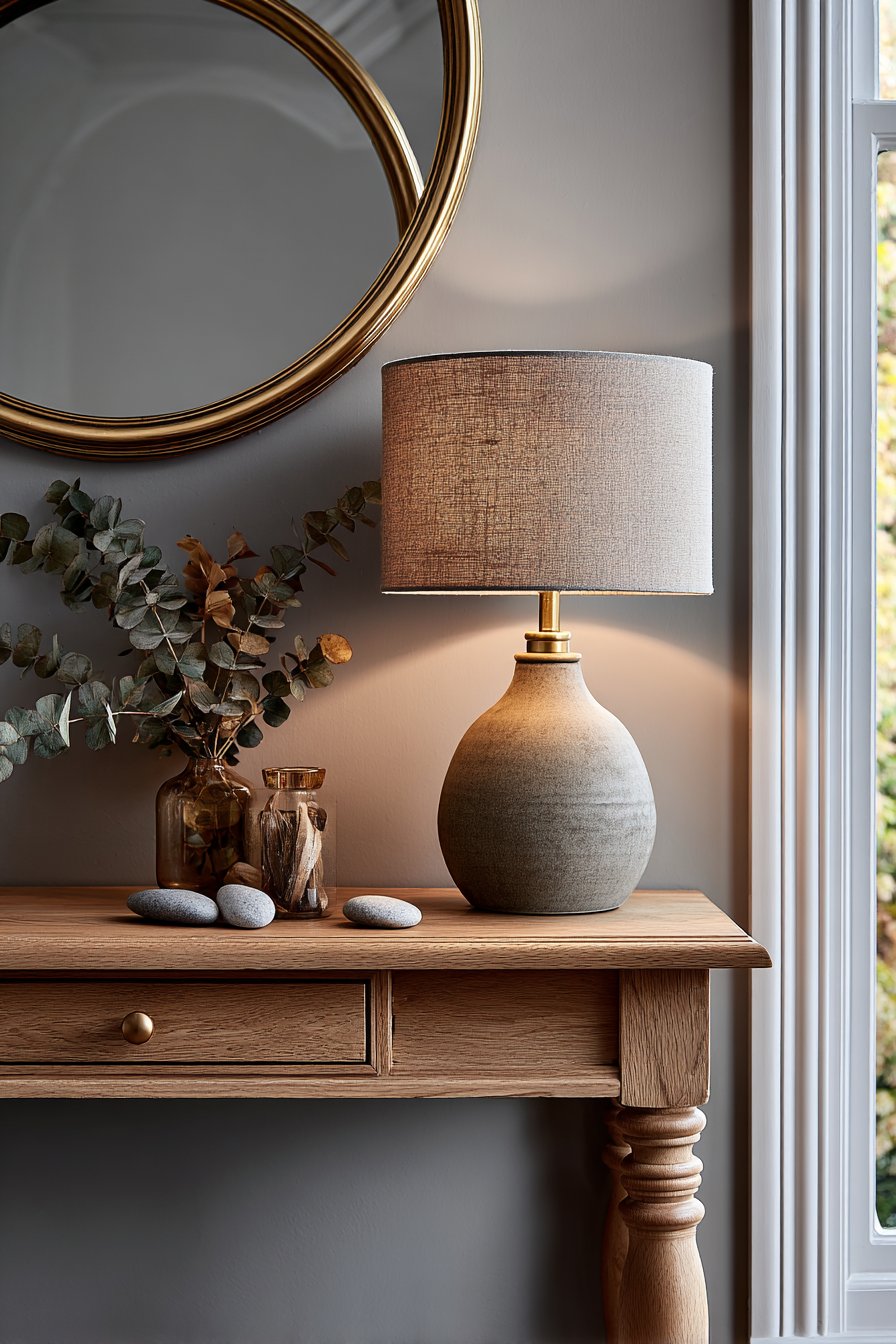
An ash wood console table with turned legs and a single drawer displays refined craftsmanship. The solid construction and traditional details add character to the Scandinavian space. The surface hosts a carefully composed vignette that tells a visual story. A round brass-framed mirror reflects natural light and expands the perceived space.
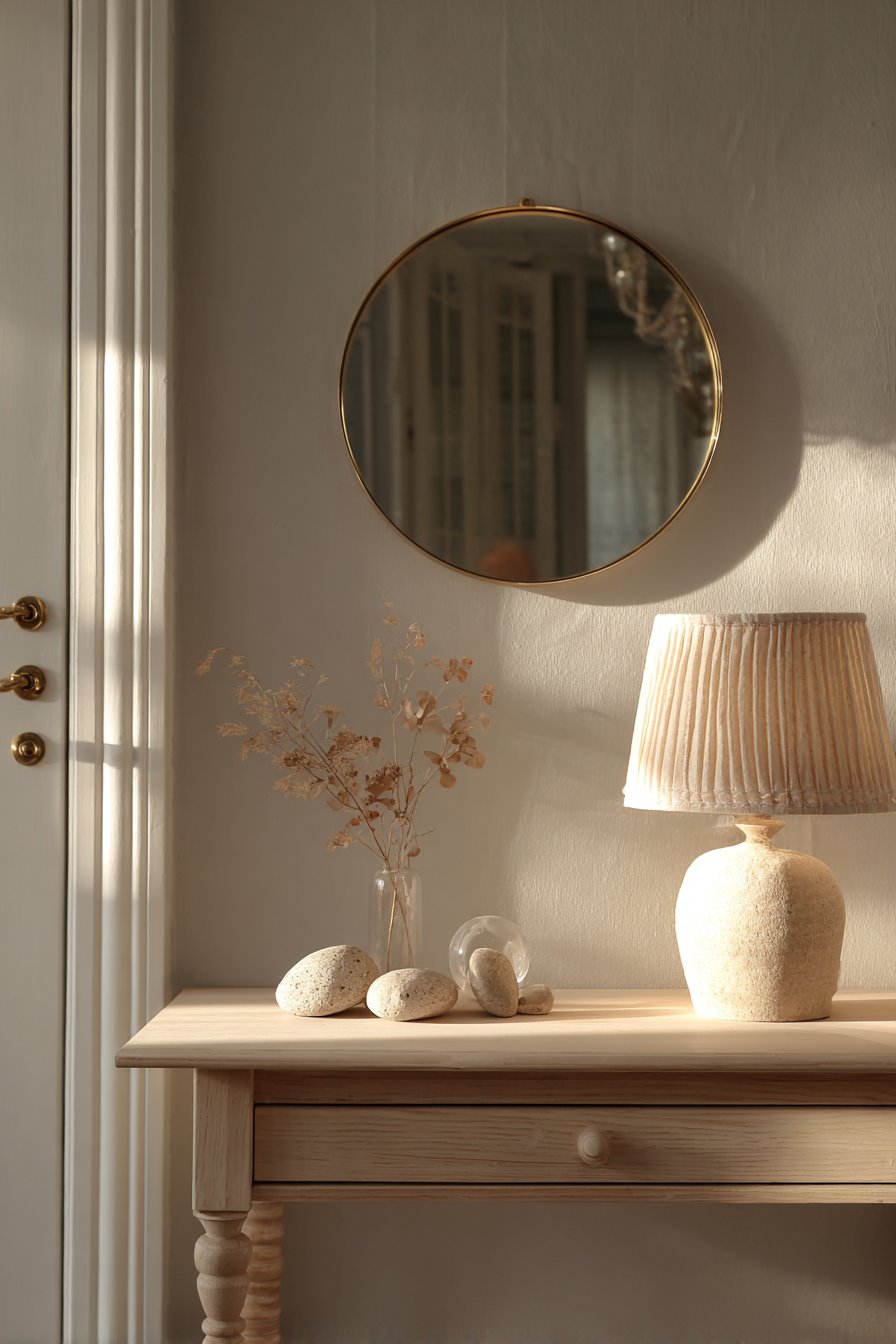
A ceramic table lamp with linen shade casts warm pools of light across the console. The lamp’s soft illumination creates intimate atmosphere during evening hours. Small natural objects, including smooth river stones and dried eucalyptus, complete the styling. These organic elements connect the interior to the natural world outside.
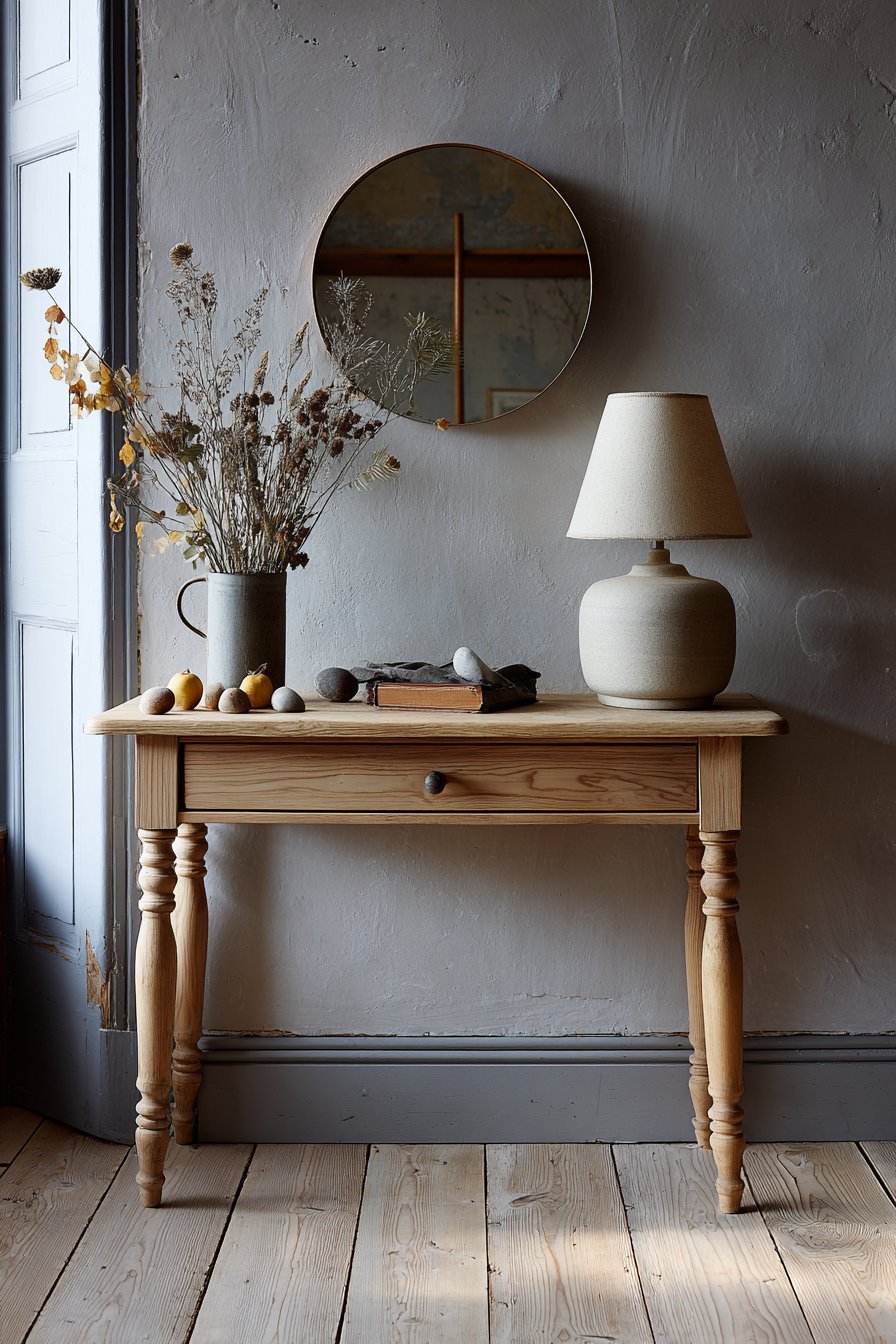
The wall behind features warm grey paint with a subtle matte finish. This backdrop allows the wood and brass tones to shine without competition. Afternoon light from a nearby window illuminates the arrangement with flattering warmth. The interplay of materials creates tactile interest inviting closer inspection.
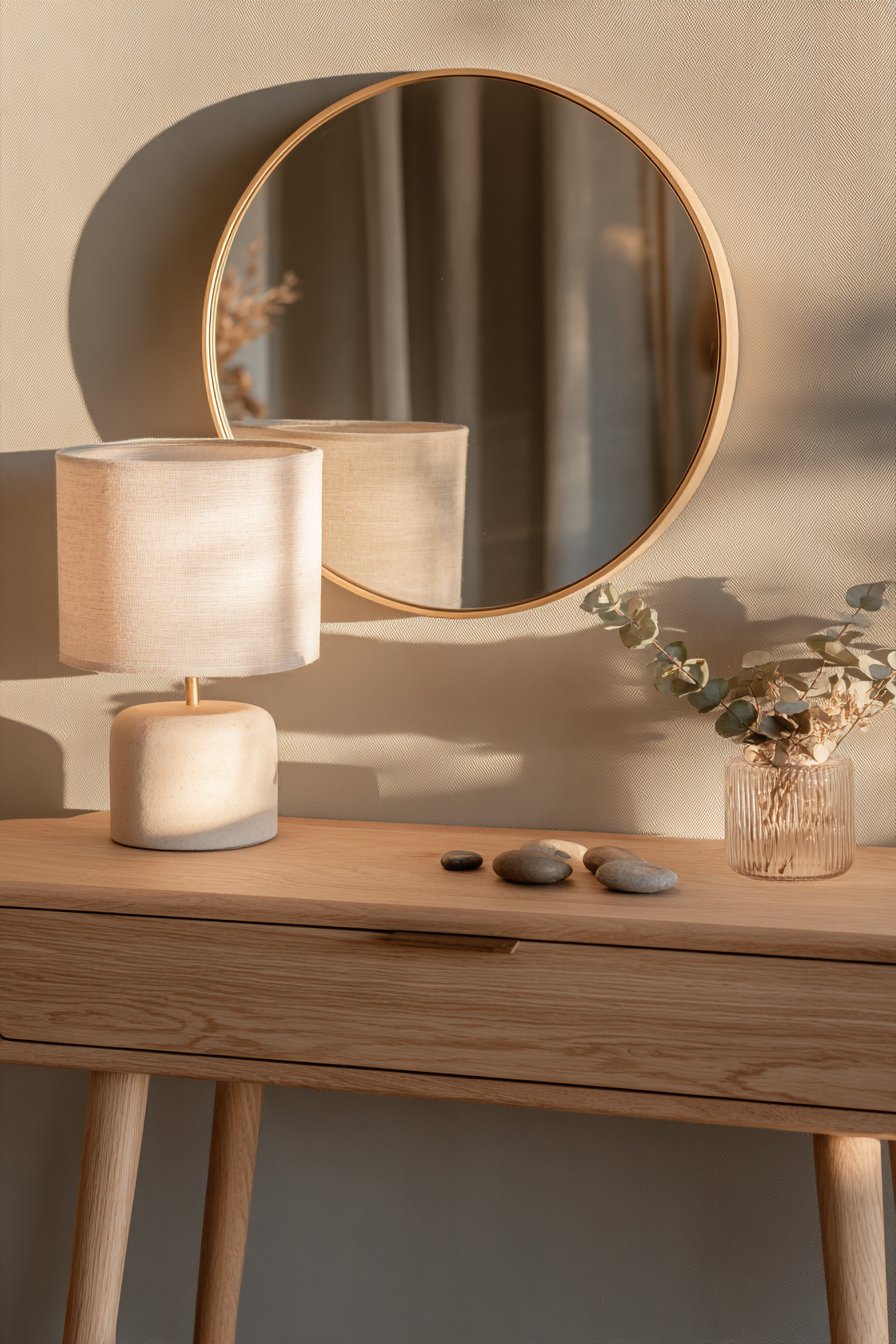
This console vignette demonstrates the Scandinavian principle of intentional object placement. Each element serves both aesthetic and potentially functional purposes. The styling avoids excessive decoration while creating visual interest. The composition feels collected over time rather than purchased all at once.
Key Design Tips:
- Style console tables with minimal curated objects for restrained Scandi elegance
- Use round mirrors to reflect light and visually expand smaller spaces
- Include natural objects like river stones for organic textural interest
- Paint walls in warm grey with matte finish for a sophisticated backdrop
- Position console tables near windows to capture natural light on displays
8. Layered Lighting with Natural Rattan Statement Pendant
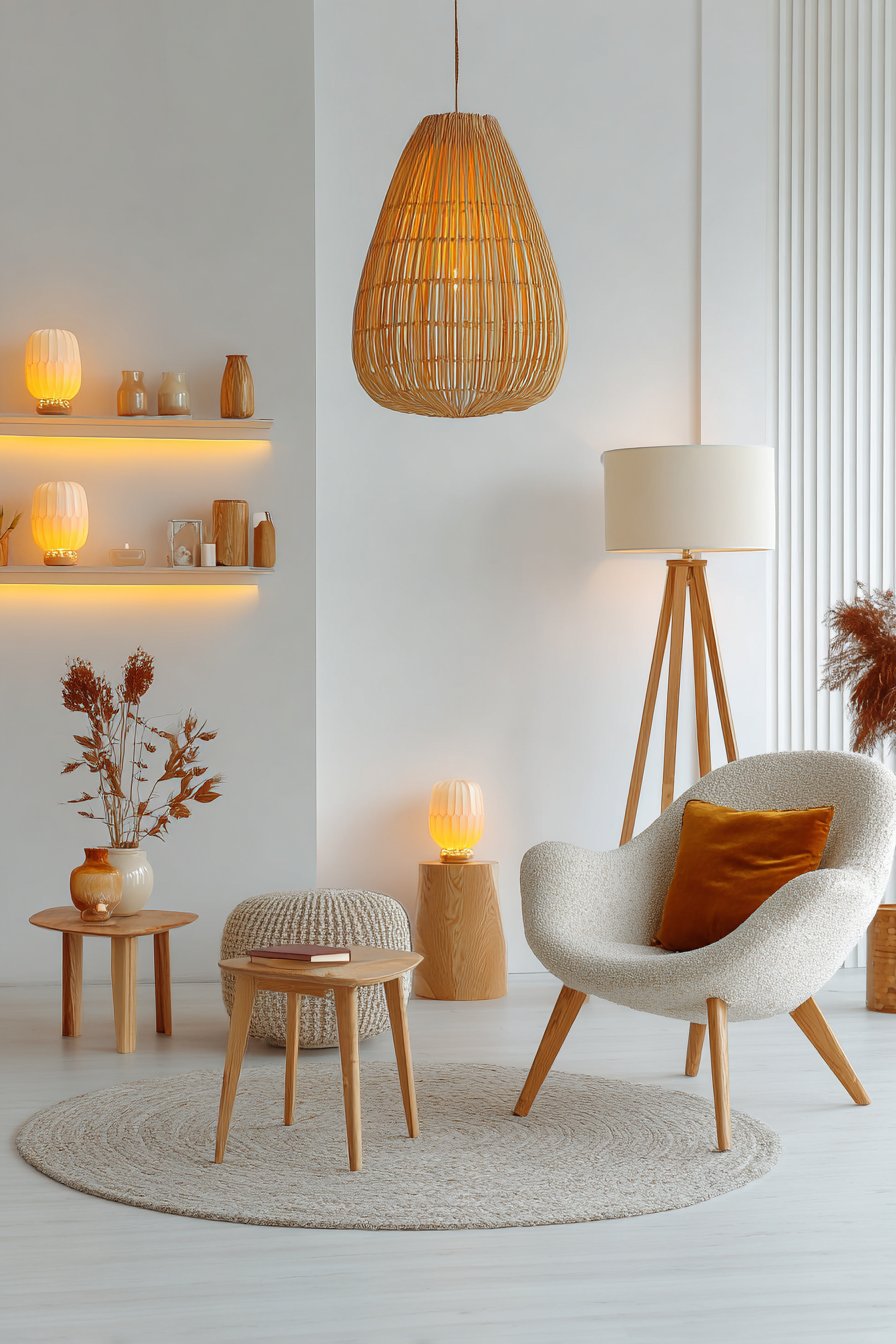
A statement pendant made of natural rattan in a bell shape hangs above the seating area. The pendant’s organic material and sculptural form create a focal point overhead. Table lamps with ceramic bases in matte white sit on side tables providing task lighting. Warm oak accents on the lamp bases tie them to the room’s wood tones.
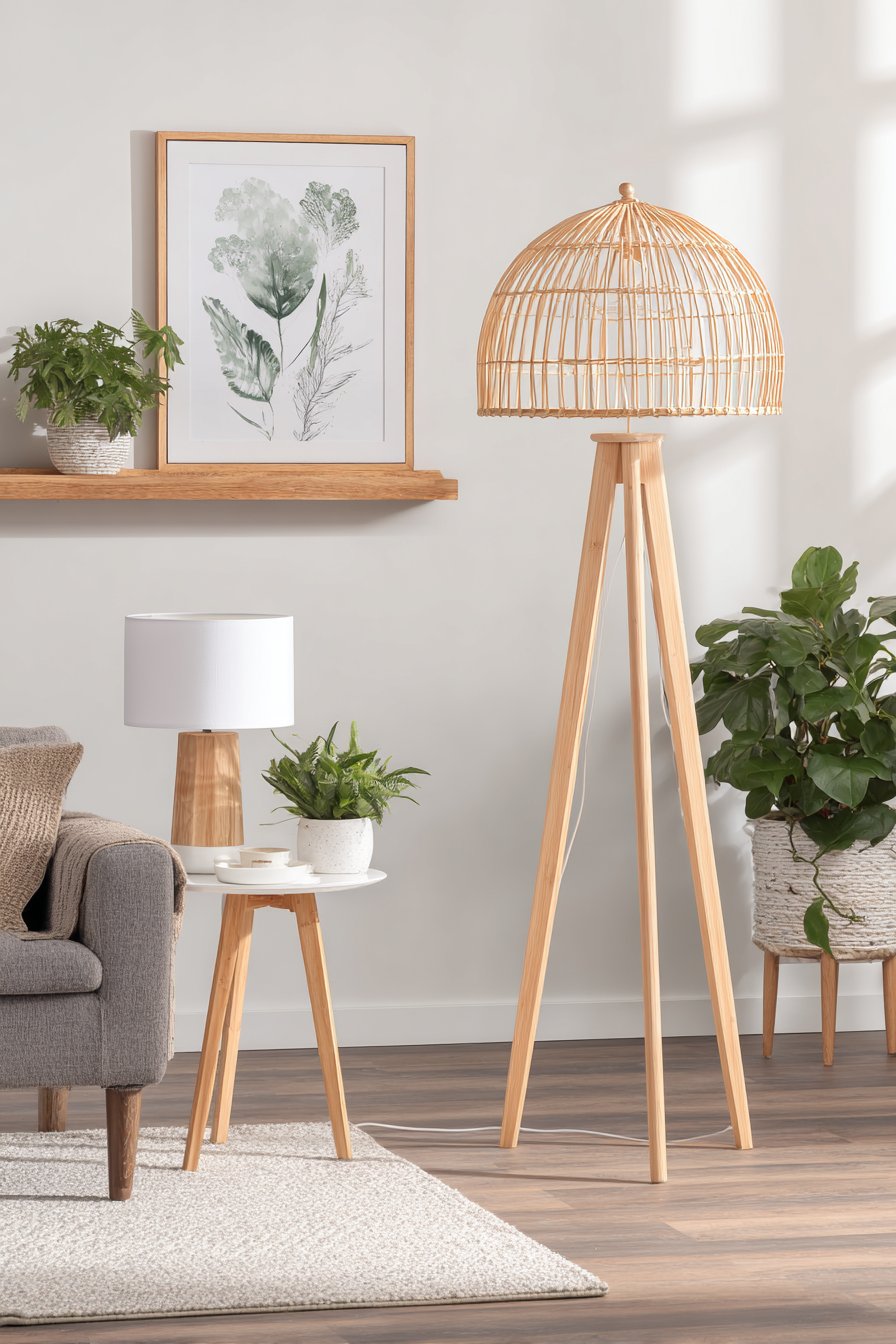
LED strip lighting hidden beneath floating shelves provides subtle ambient glow. This indirect lighting washes the walls with soft illumination without visible fixtures. A floor lamp with tripod base in light wood stands near the reading chair. The tripod design adds visual interest while maintaining stability.
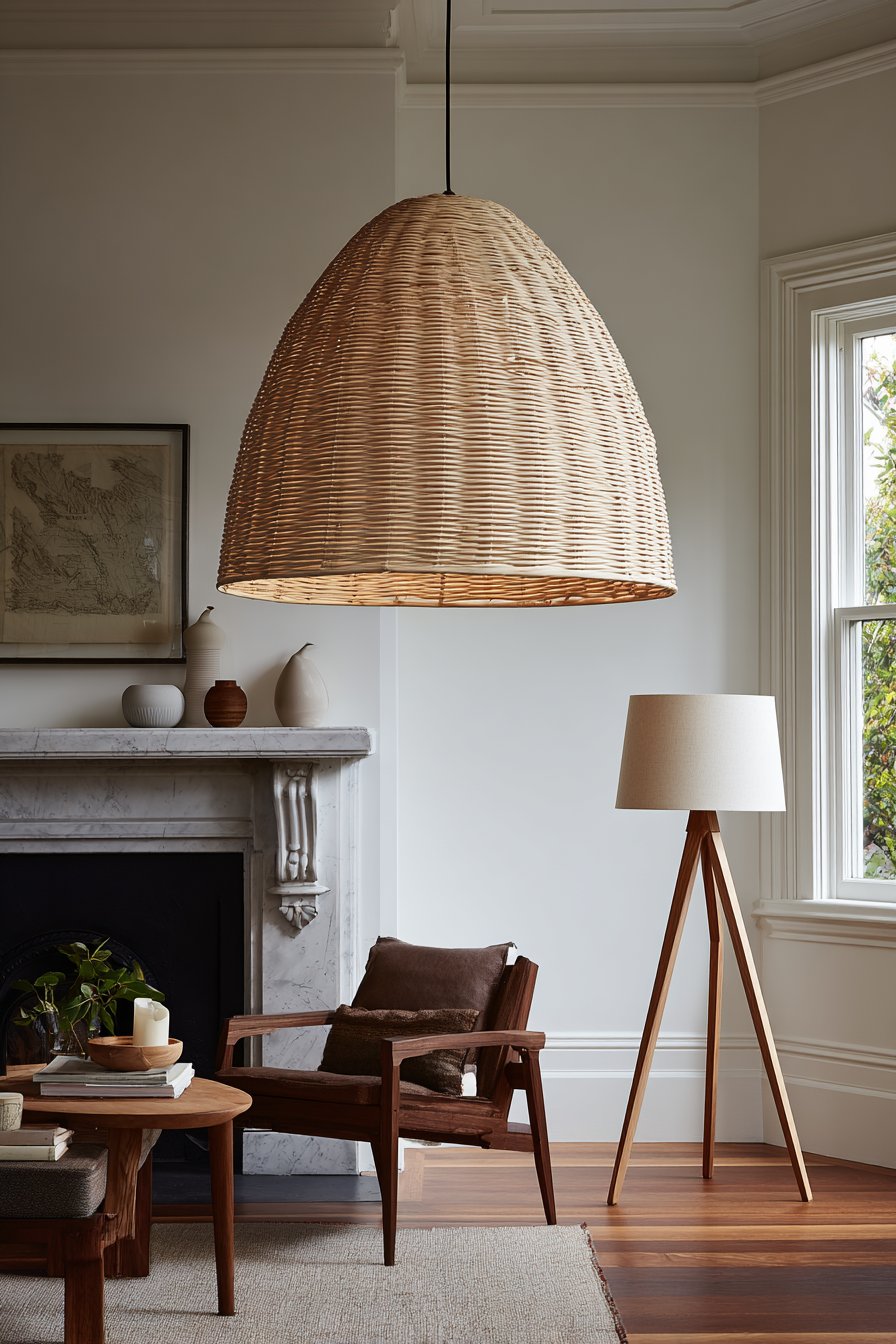
Multiple light sources at different heights create depth throughout the Scandi space. The layered approach allows a customizable ambiance for different activities and times of day. Warm lighting creates a cozy evening atmosphere perfect for relaxation. The combination of natural and artificial light sources feels balanced and intentional.
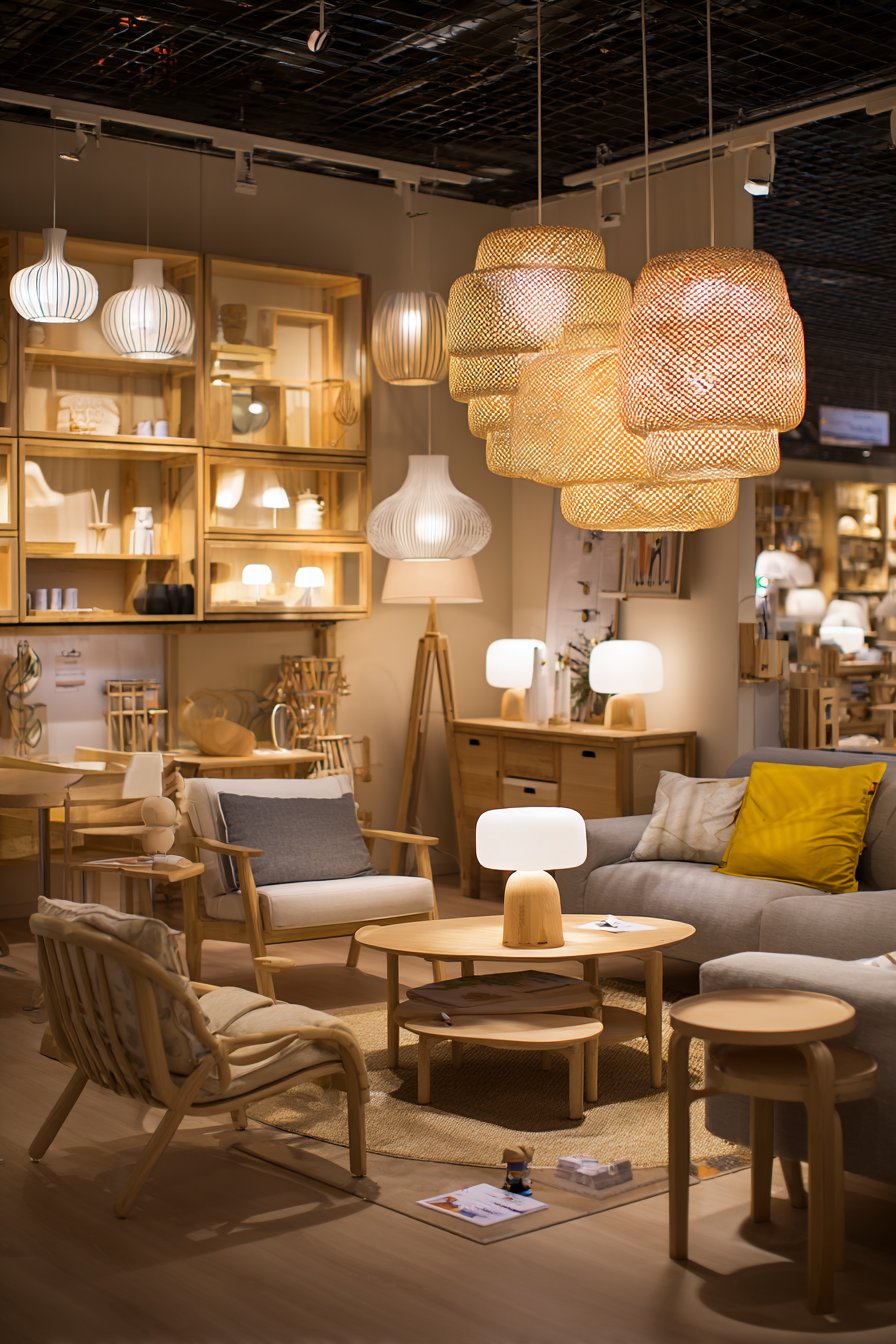
This lighting strategy demonstrates sophisticated understanding of how illumination affects atmosphere. Each light source serves specific purposes while contributing to overall ambiance. The natural materials in the light fixtures themselves become decorative elements. The warm bulb temperatures enhance the room’s cozy Scandinavian character.
Key Design Tips:
- Layer multiple light sources at varying heights for dimensional ambient lighting
- Choose natural rattan pendants for organic sculptural focal points
- Hide LED strips beneath shelves for indirect wall-washing illumination
- Use tripod floor lamps near reading areas for stable task lighting
- Select warm bulb temperatures to enhance cozy Scandi atmosphere throughout
9. Wood-Burning Stove Creating Hygge Focal Point
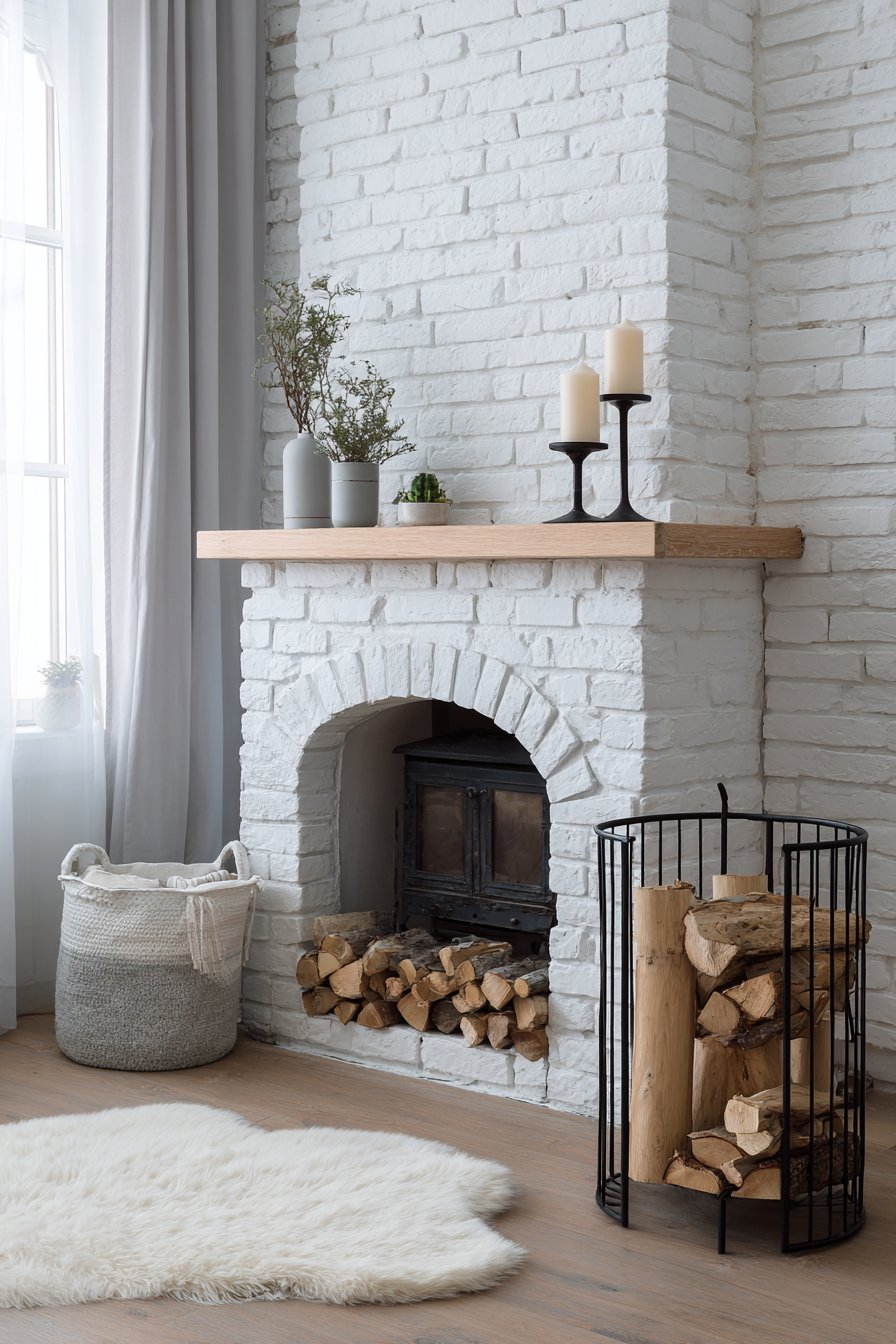
A wood-burning stove insert nestles into a white brick fireplace surround with timeless appeal. The simple oak mantel displays minimal decor including two pillar candles. A small succulent adds living greenery without cluttering the clean lines. The combination creates a hygge focal point that defines the Scandinavian living room.
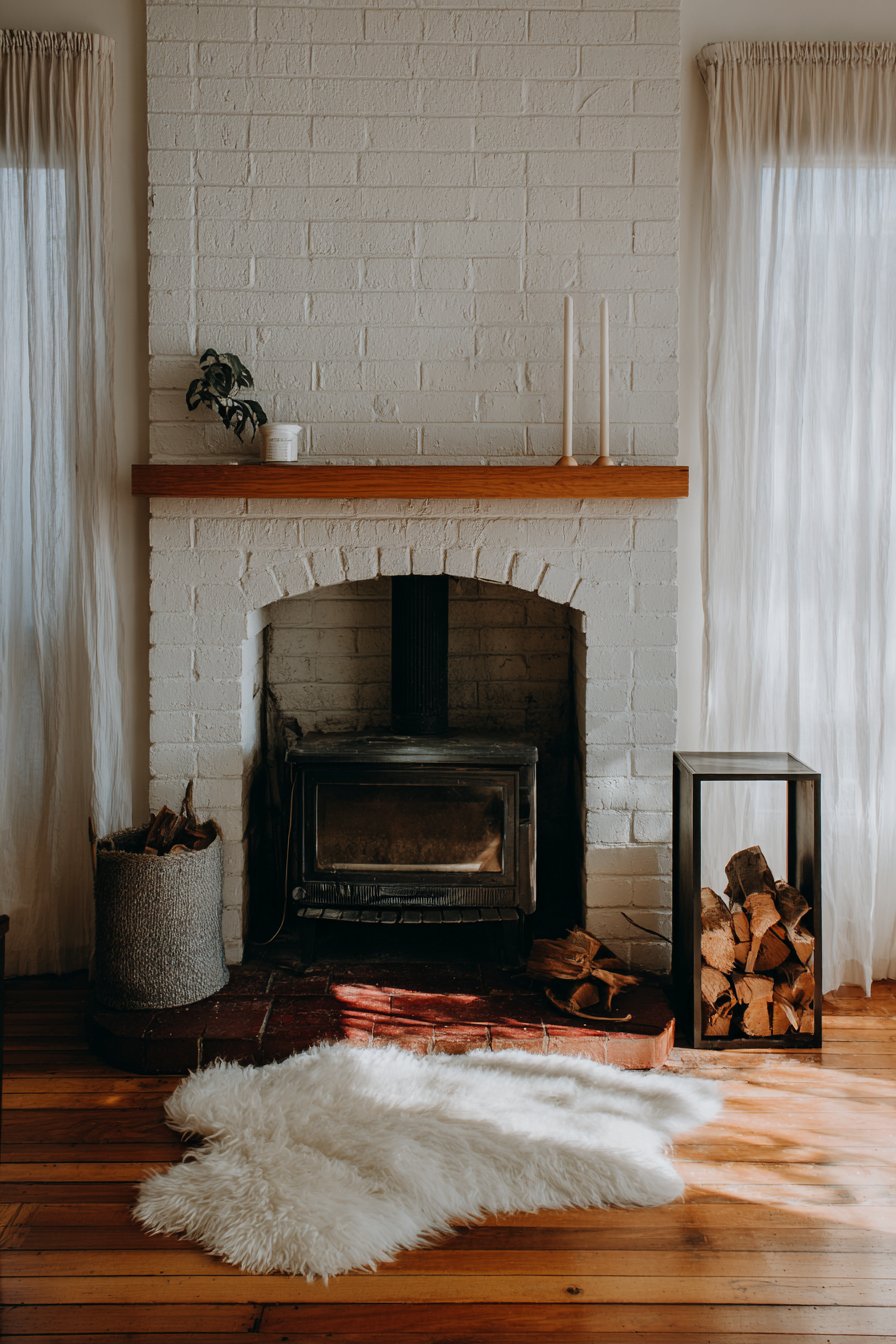
A natural sheepskin rug lies on the oak floor directly in front of the hearth. The soft texture invites sitting close to the fire’s warmth. A wooden log holder in black metal frame stores split firewood within easy reach. The practical storage becomes part of the room’s aesthetic rather than hidden away.
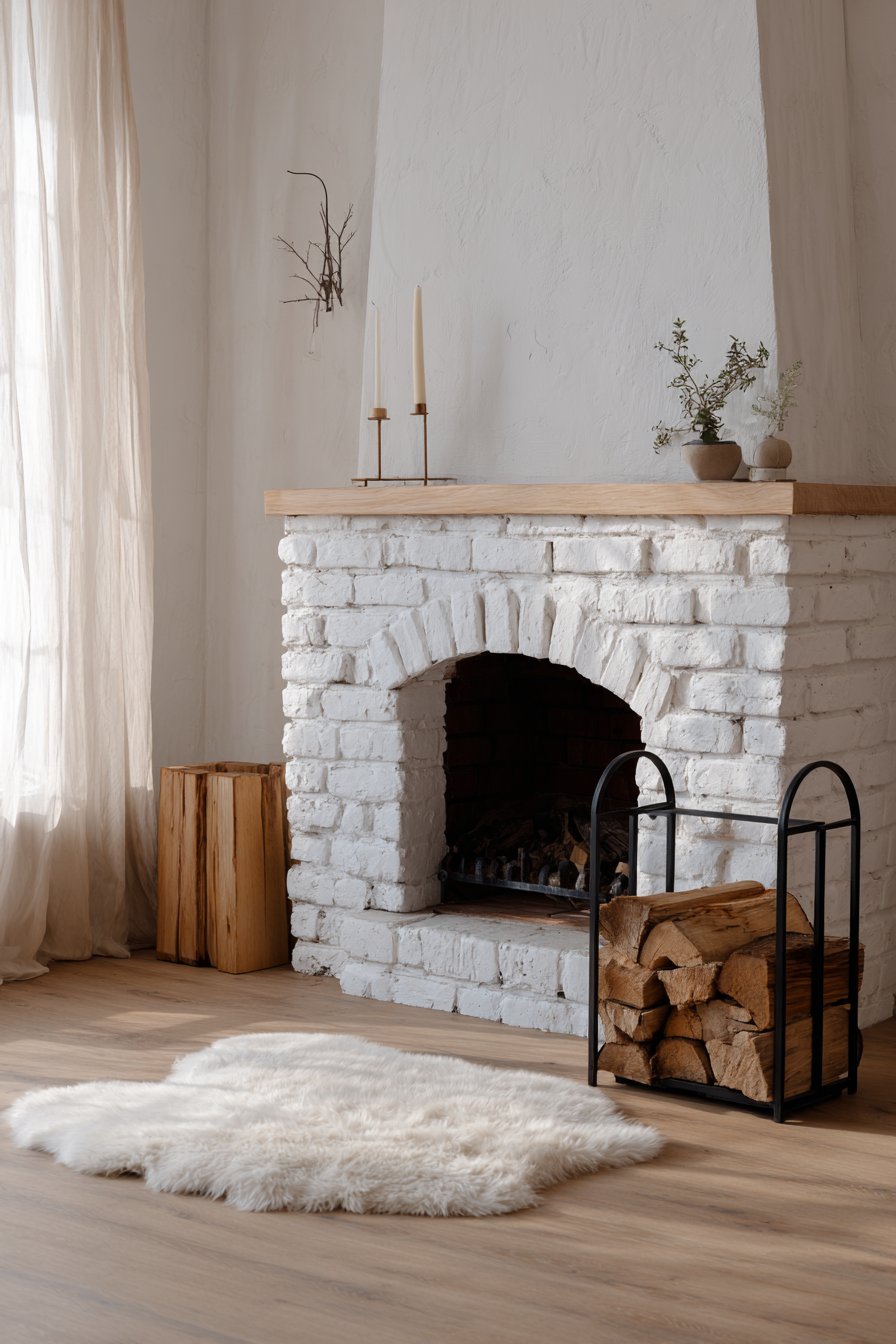
Soft afternoon light filters through sheer curtains, complementing the fireplace’s warm glow. The natural light and fire create layered illumination with beautiful depth. The white brick surround reflects light while adding subtle texture. This material choice keeps the fireplace prominent without overwhelming the space.
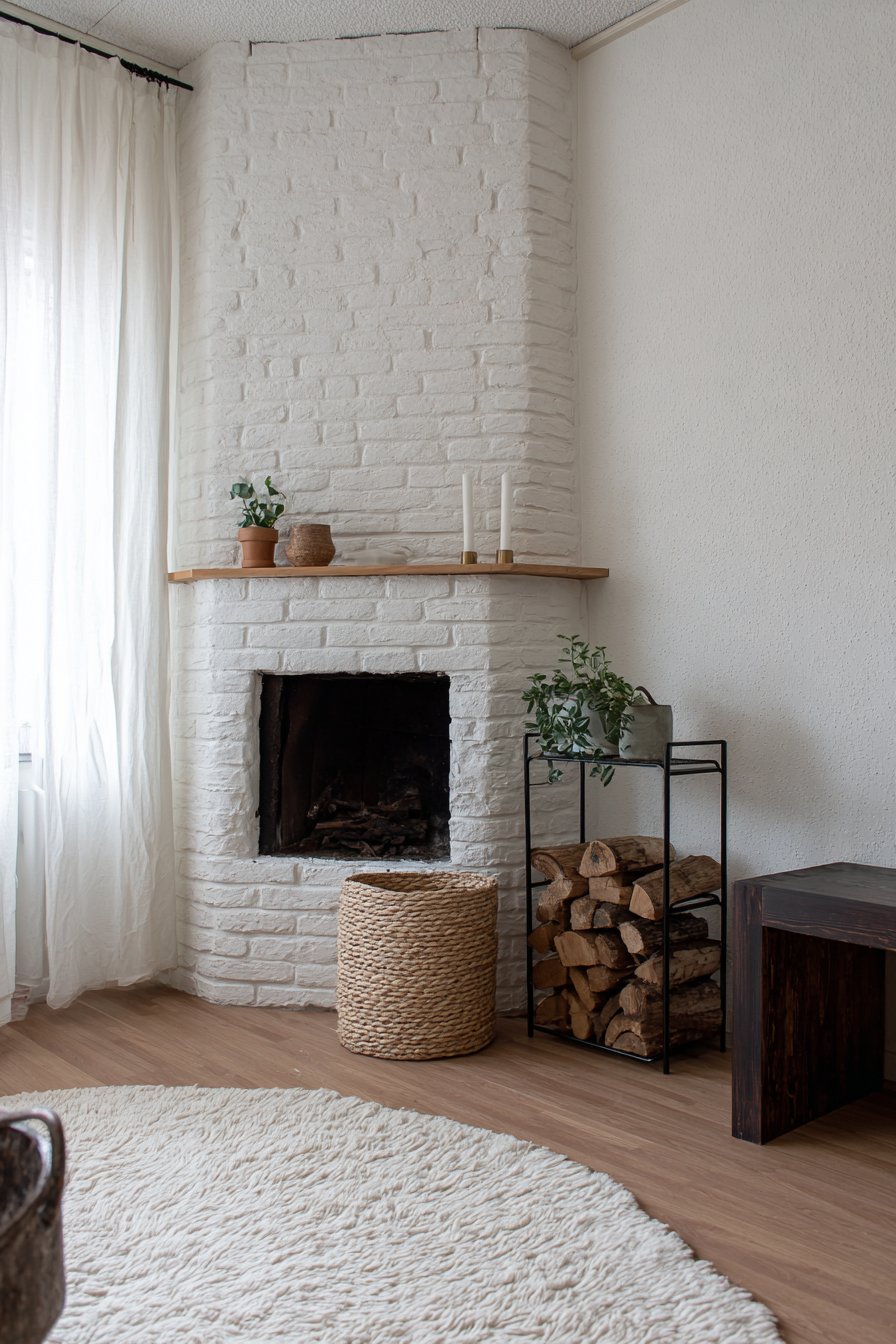
The wood-burning stove represents the heart of Scandinavian living traditions. The crackling fire provides both physical and psychological warmth during long winter months. This design element connects modern living to centuries of Nordic life. The ritualistic aspects of fire-tending add meaning to daily routines.
Key Design Tips:
- Install wood-burning stoves for authentic Scandinavian hygge and functional heating
- Use white brick surrounds to reflect light while adding textural interest
- Keep mantels minimally styled with candles and single plant for restraint
- Place sheepskin rugs before hearths for soft tactile comfort and warmth
- Store firewood visibly in attractive holders as functional decor elements
10. Dining Area Integration with Natural Oak Table
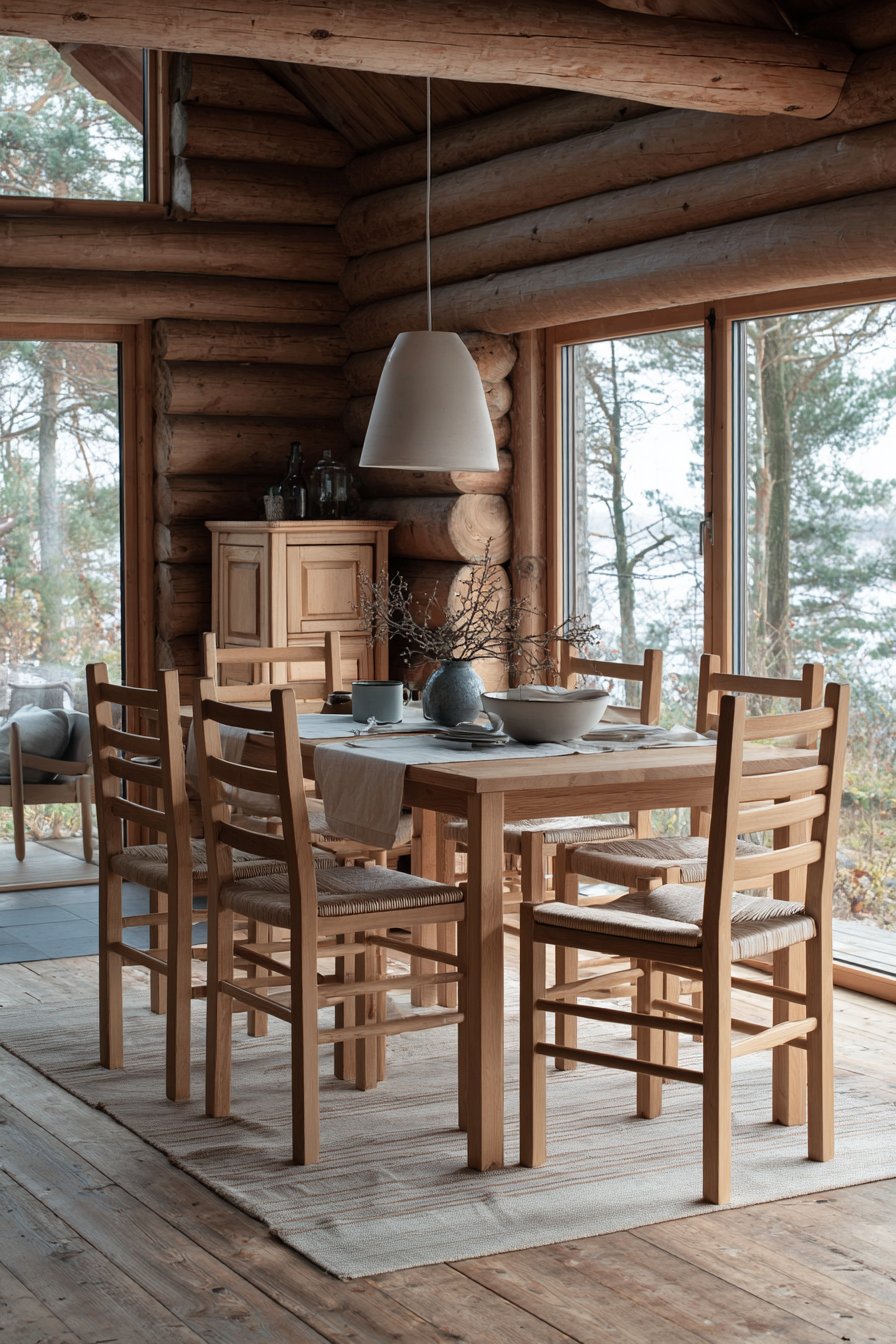
A solid oak dining table features natural edge details celebrating the wood’s organic origin. Six simple dining chairs with woven paper cord seats surround the table. The chairs’ traditional Scandinavian design combines comfort with timeless aesthetics. A ceramic pendant light in matte white hangs centered above the table.
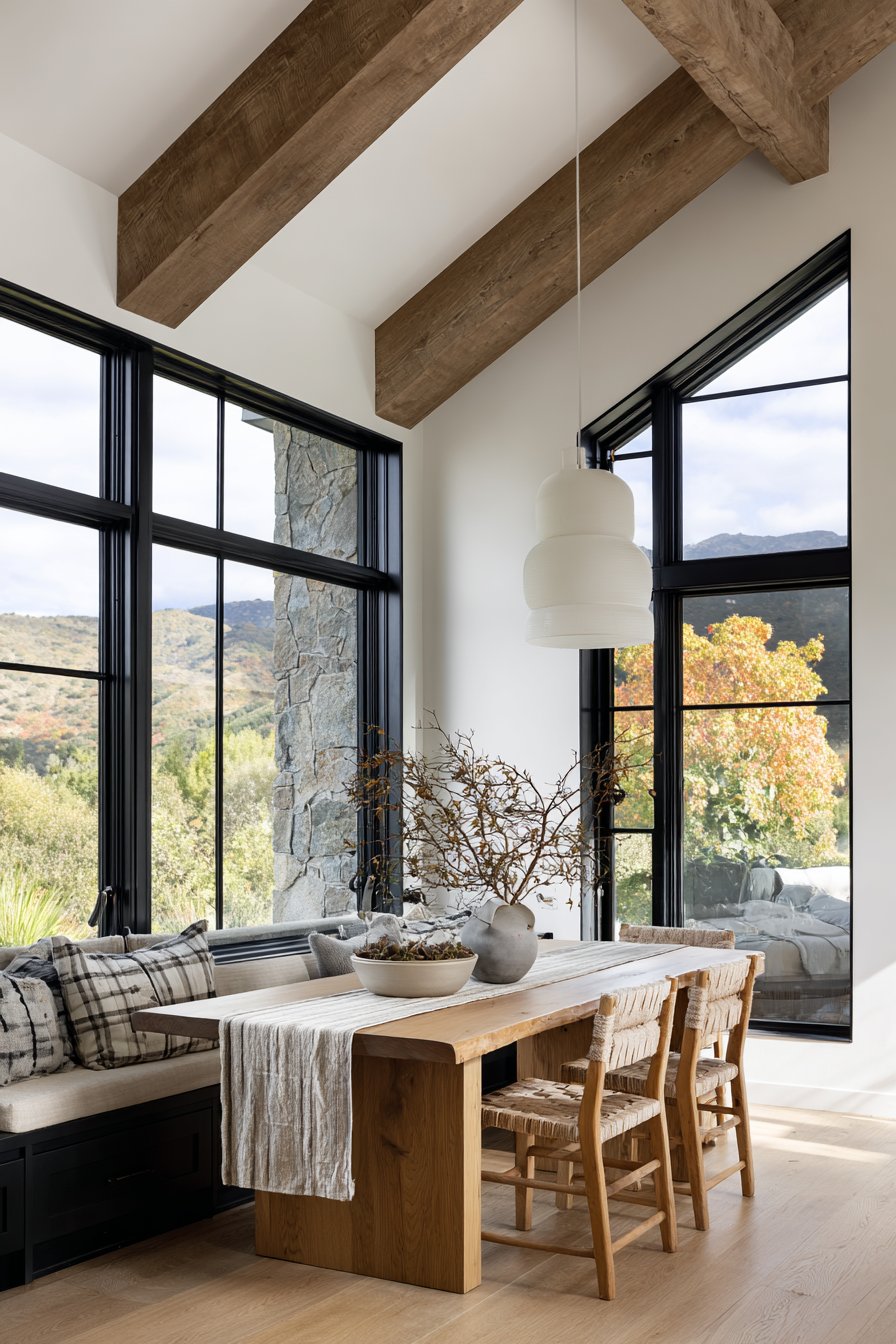
The table styling includes simple linen placemats in warm sand tones. A low ceramic bowl contains seasonal branches bringing nature indoors. Large windows provide abundant natural light throughout the dining area. The open plan allows seamless flow between living and dining spaces.
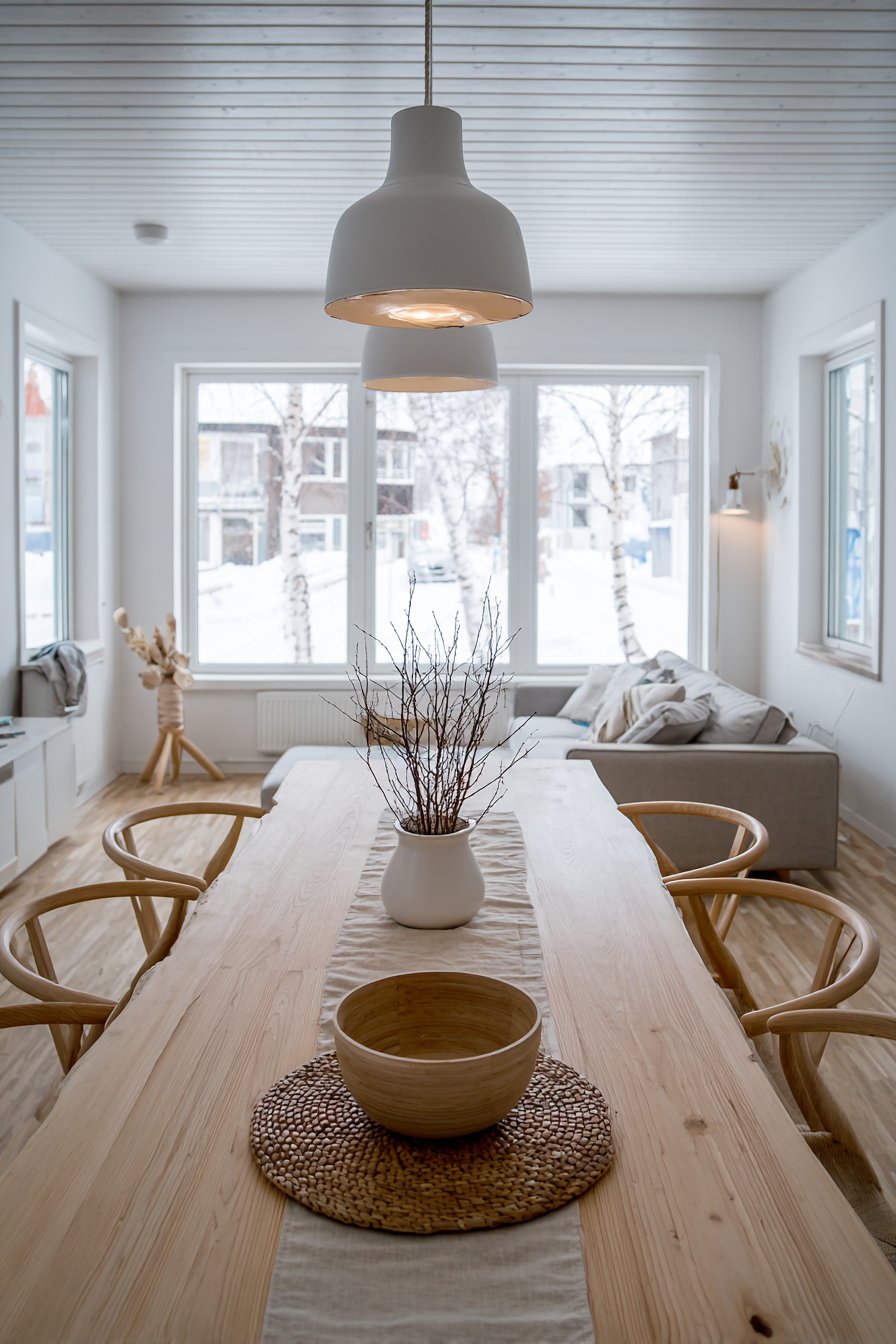
This integrated approach demonstrates the Scandinavian principle of flexible multi-functional spaces. The dining area doesn’t exist in isolation but connects naturally to living areas. The consistent material palette of oak, linen, and ceramic creates visual continuity. The natural light floods both spaces equally throughout the day.
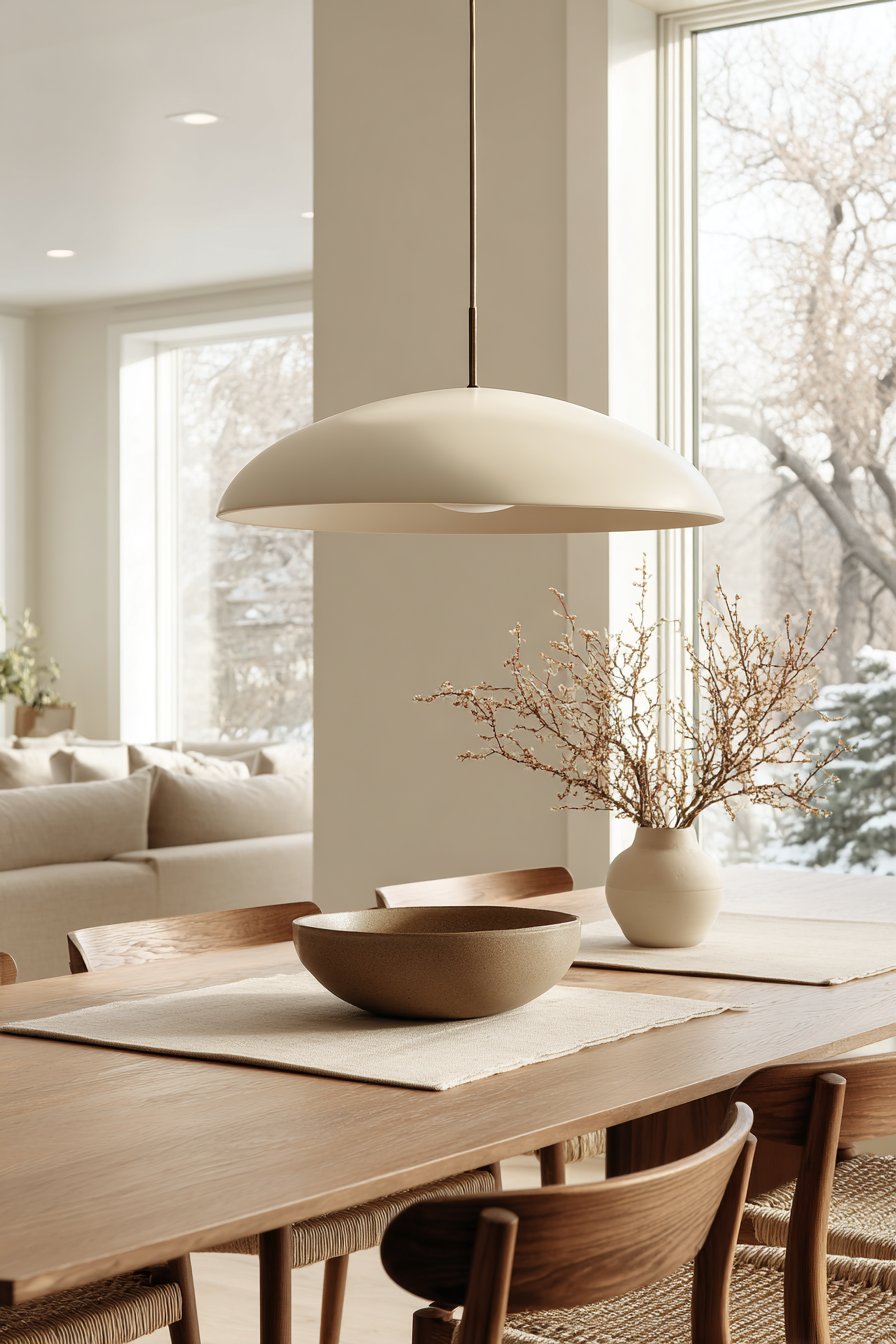
The paper cord chair seats represent classic Danish design that remains popular today. The woven seats provide comfortable support while maintaining visual lightness. The natural materials age gracefully developing character over time. This dining integration shows how Scandinavian design prioritizes gathering and connection.
Key Design Tips:
- Integrate dining areas with living spaces for flexible Scandinavian open floor plans
- Choose solid oak tables with natural edges for an authentic material celebration
- Use paper cord chairs for traditional Scandinavian seating with timeless appeal
- Hang simple ceramic pendants centered above tables for focused task lighting
- Style tables minimally with seasonal natural elements rather than permanent centerpieces
11. Biophilic Design with Abundant Indoor Plants
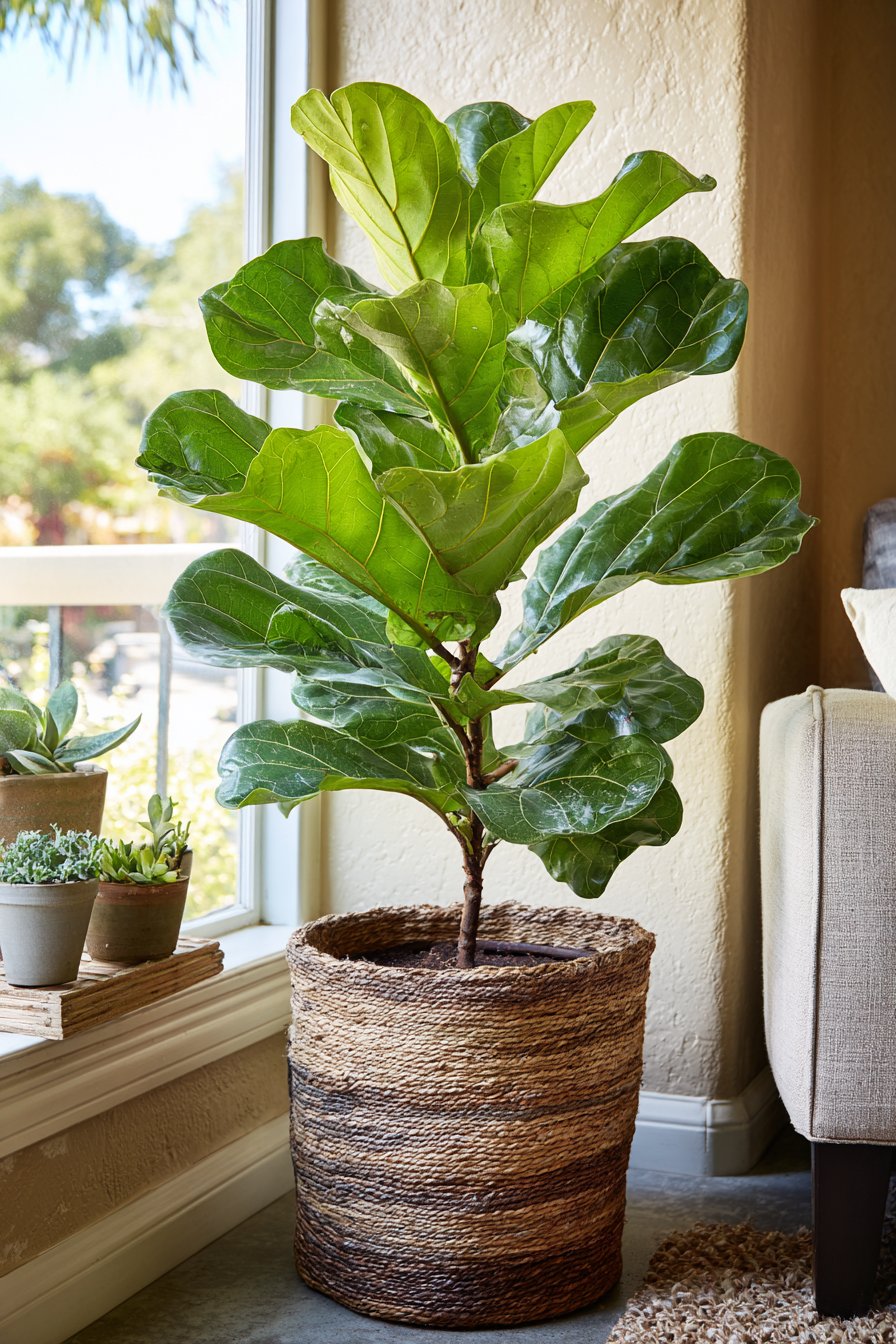
Abundant indoor plants transform this living room into a green sanctuary. A large fiddle leaf fig in a natural fiber basket commands attention with its sculptural leaves. Trailing pothos cascade from floating oak shelves adding vertical movement. Small succulents cluster on the coffee table contributing varied textures and forms.
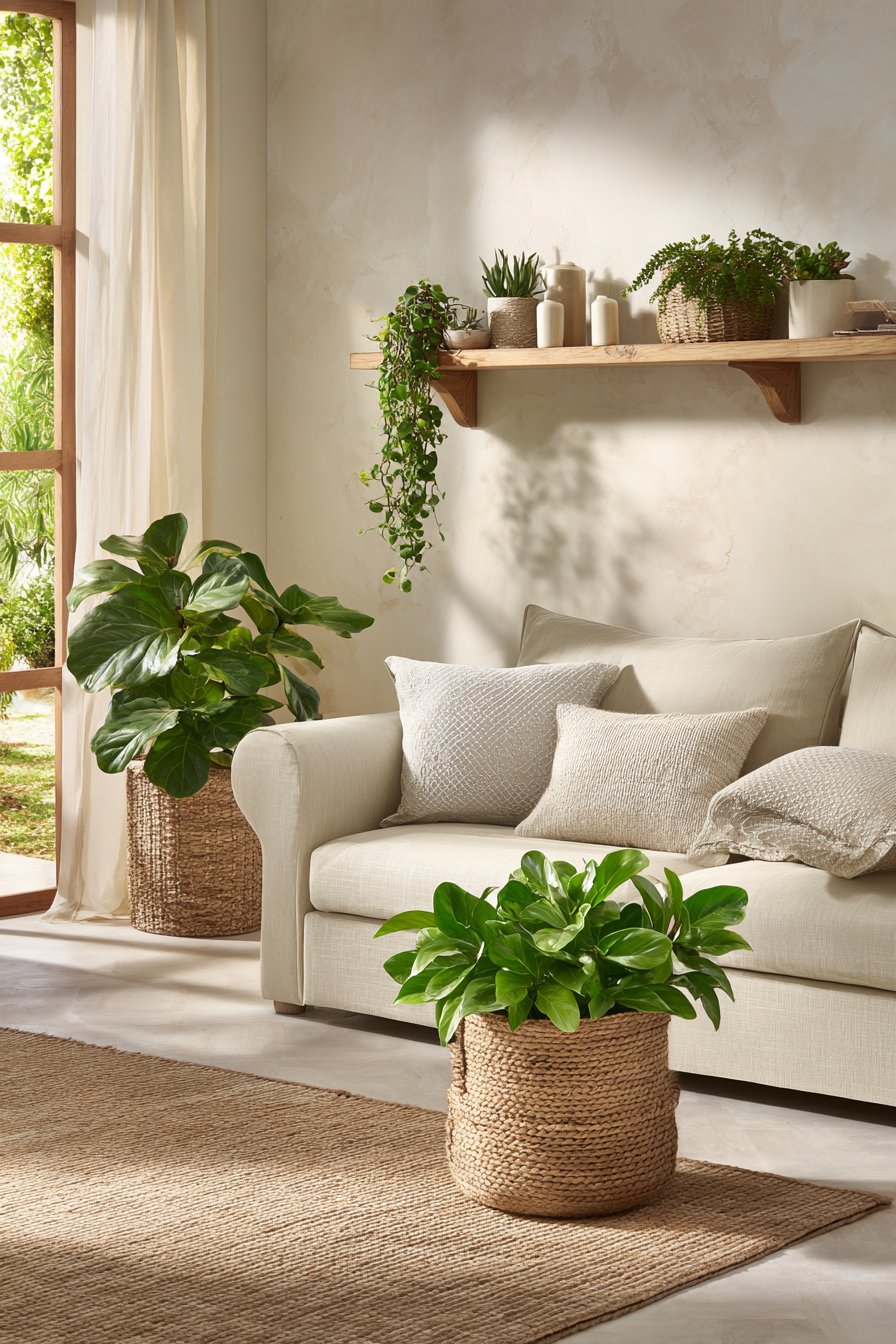
Macramé plant hangers in natural cotton hold smaller potted plants near the window. The handcrafted hangers add artisanal texture while maximizing vertical growing space. Morning light streams through creating dappled shadows on the cream walls. The interplay of light and foliage brings dynamic natural beauty indoors.
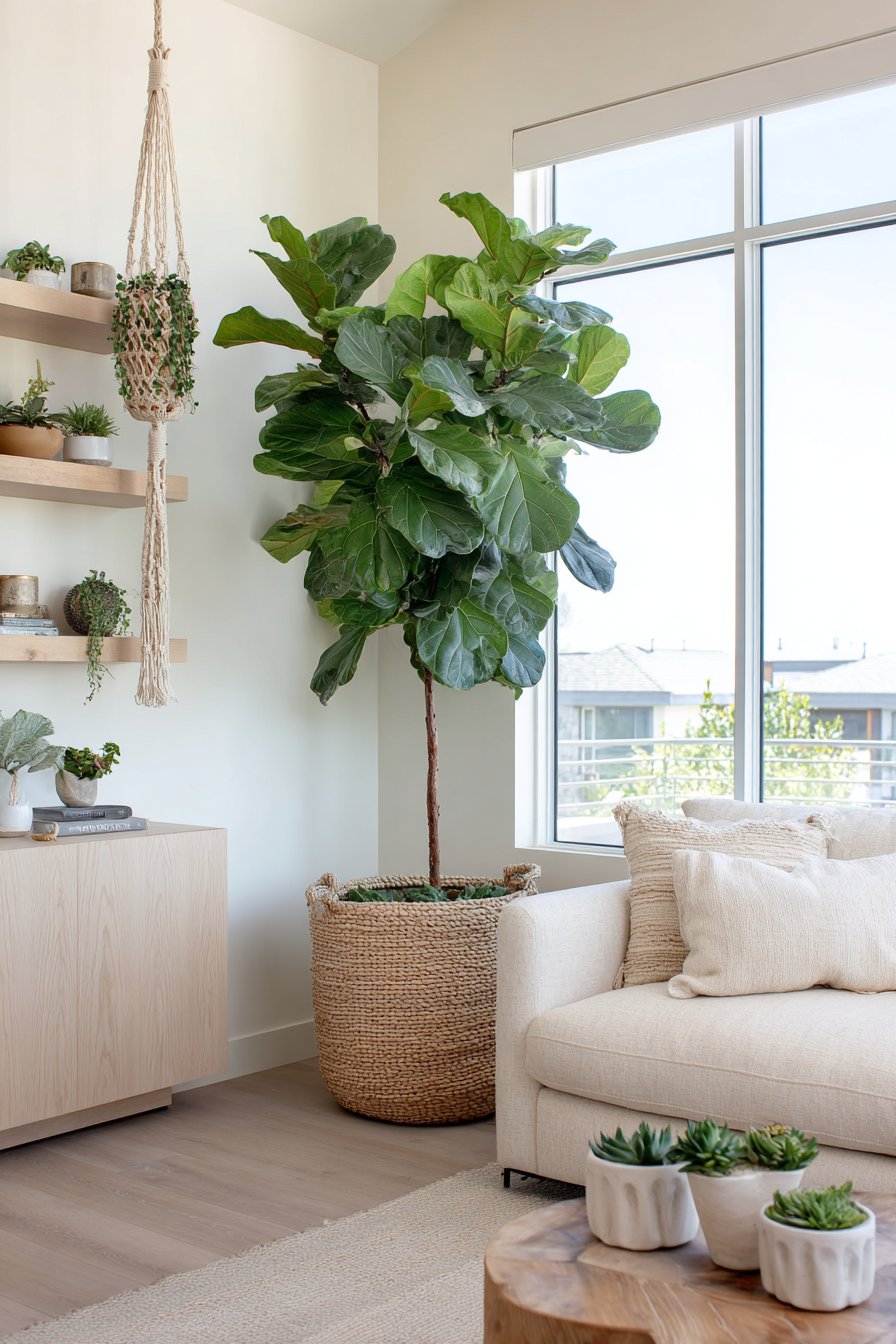
The plants complement a natural linen sofa and light birch furniture pieces perfectly. The greenery adds life and freshness to the neutral palette. The biophilic approach recognizes humans’ innate connection to nature. Bringing plants indoors improves air quality while enhancing psychological wellbeing.
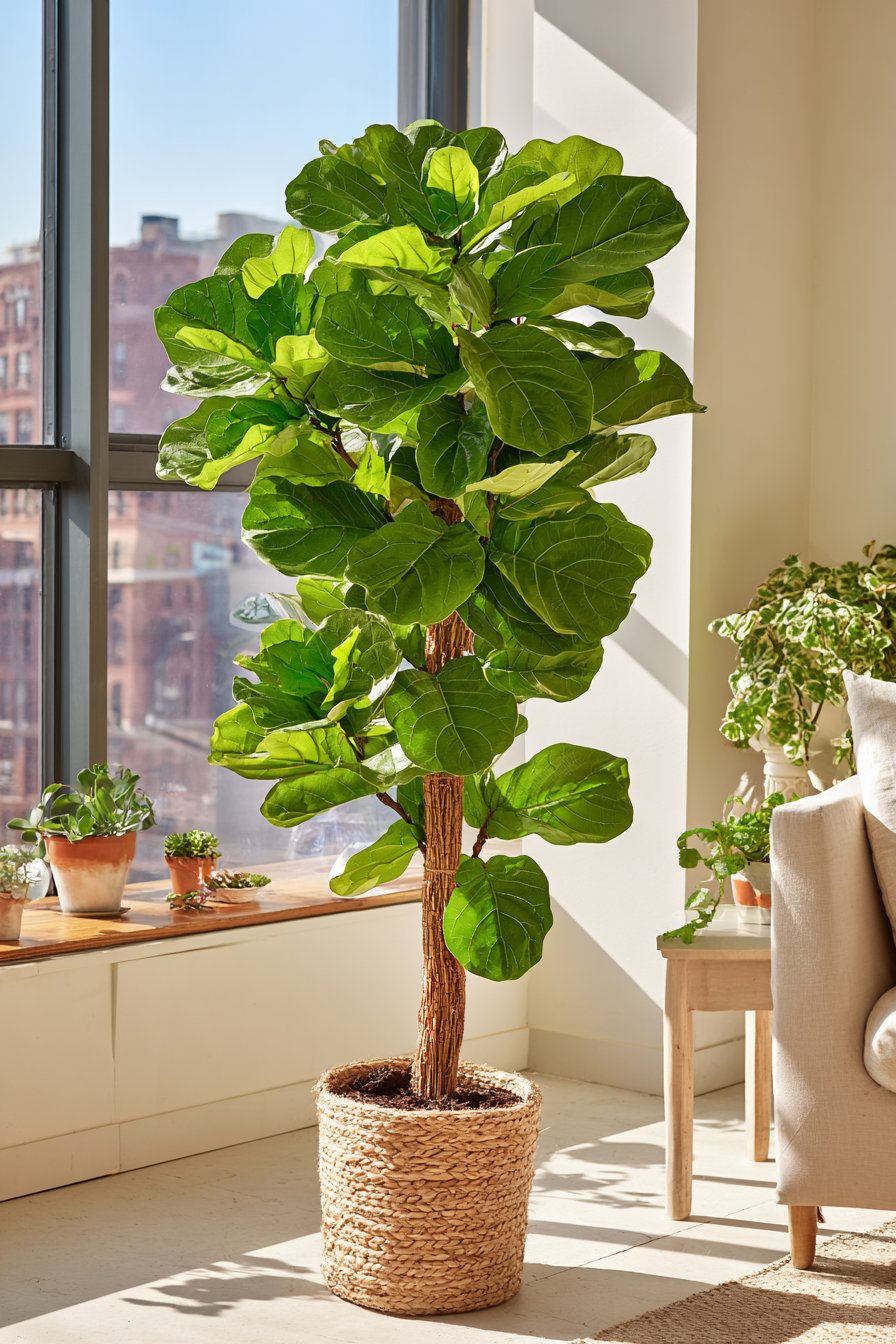
This plant-filled space demonstrates how greenery enhances minimalist Scandinavian design rather than cluttering it. The careful selection of plant varieties creates visual interest through varied forms. The natural fiber containers maintain the organic aesthetic throughout. The overall effect feels fresh and alive while remaining distinctly Scandinavian.
Key Design Tips:
- Incorporate multiple plant varieties at different heights for dimensional biophilic design
- Use natural fiber baskets and containers to maintain organic Scandinavian aesthetics
- Hang macramé plant holders near windows to maximize light for plants
- Choose trailing plants for floating shelves to add graceful vertical movement
- Position large plants like fiddle leaf figs as sculptural focal points
12. Textured Plaster Wall with Caramel Leather Accent
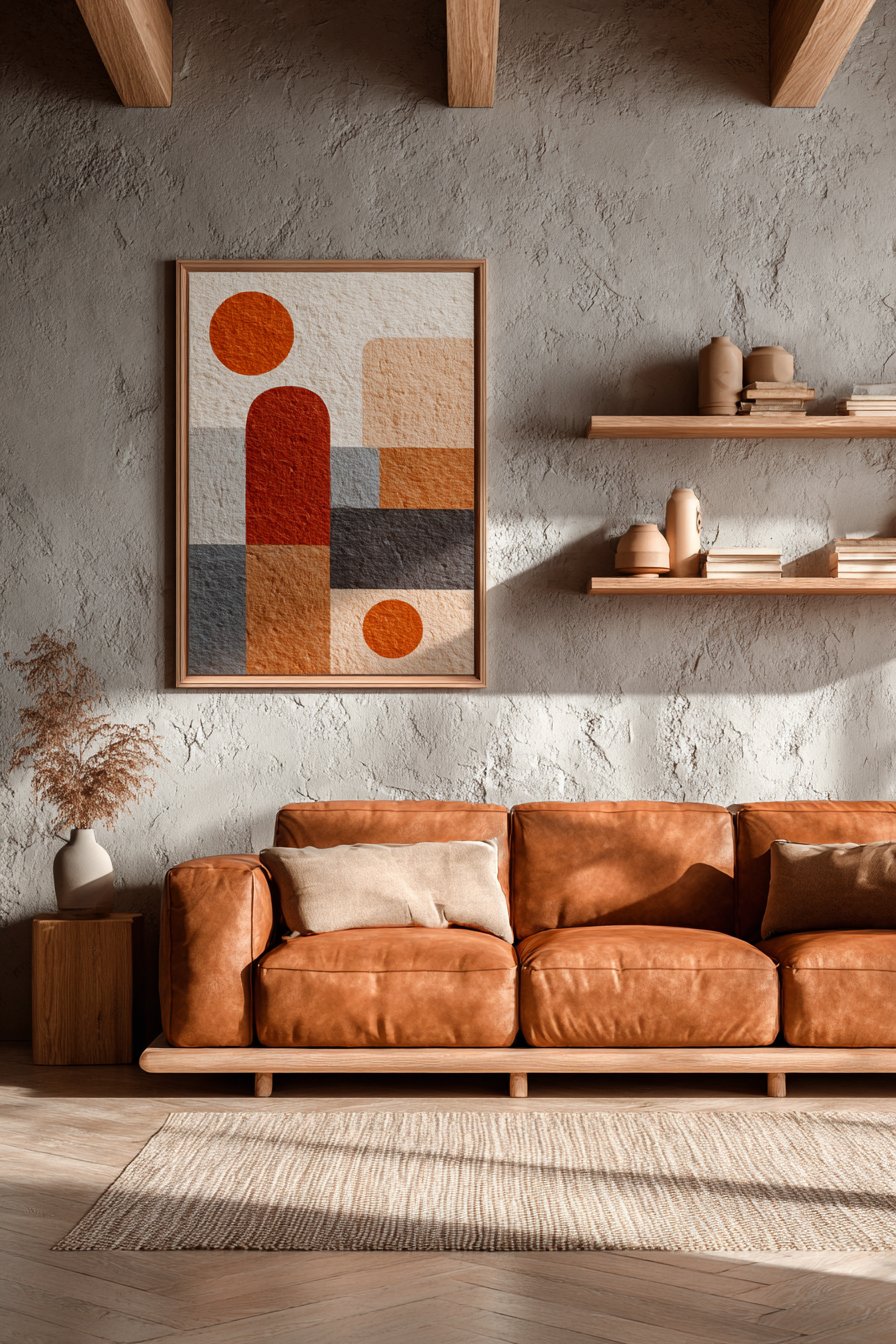
A textured plaster wall finish features subtle trowel marks, adding organic variation. The hand-applied treatment creates depth impossible with flat paint. A low-profile sofa in warm caramel leather provides rich accent against the neutral backdrop. The leather’s natural patina will develop beautiful character over years of use.
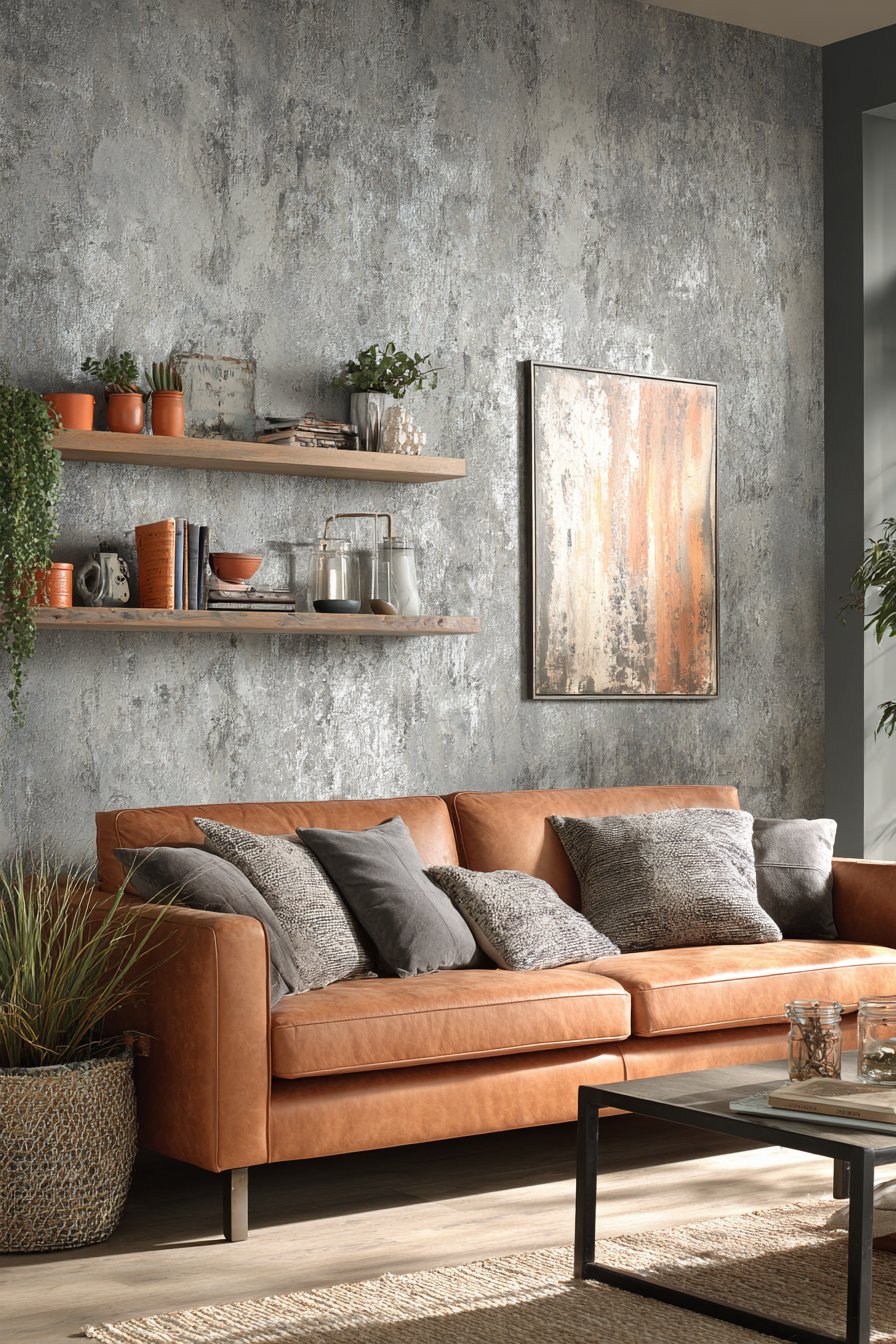
Floating shelves in natural oak display books arranged by color creating visual harmony. Ceramic objects punctuate the book display with three-dimensional interest. A large abstract artwork in earthy tones hangs as the wall’s focal point. The artwork features ochre, terracotta, and cream that echo the room’s warm palette.
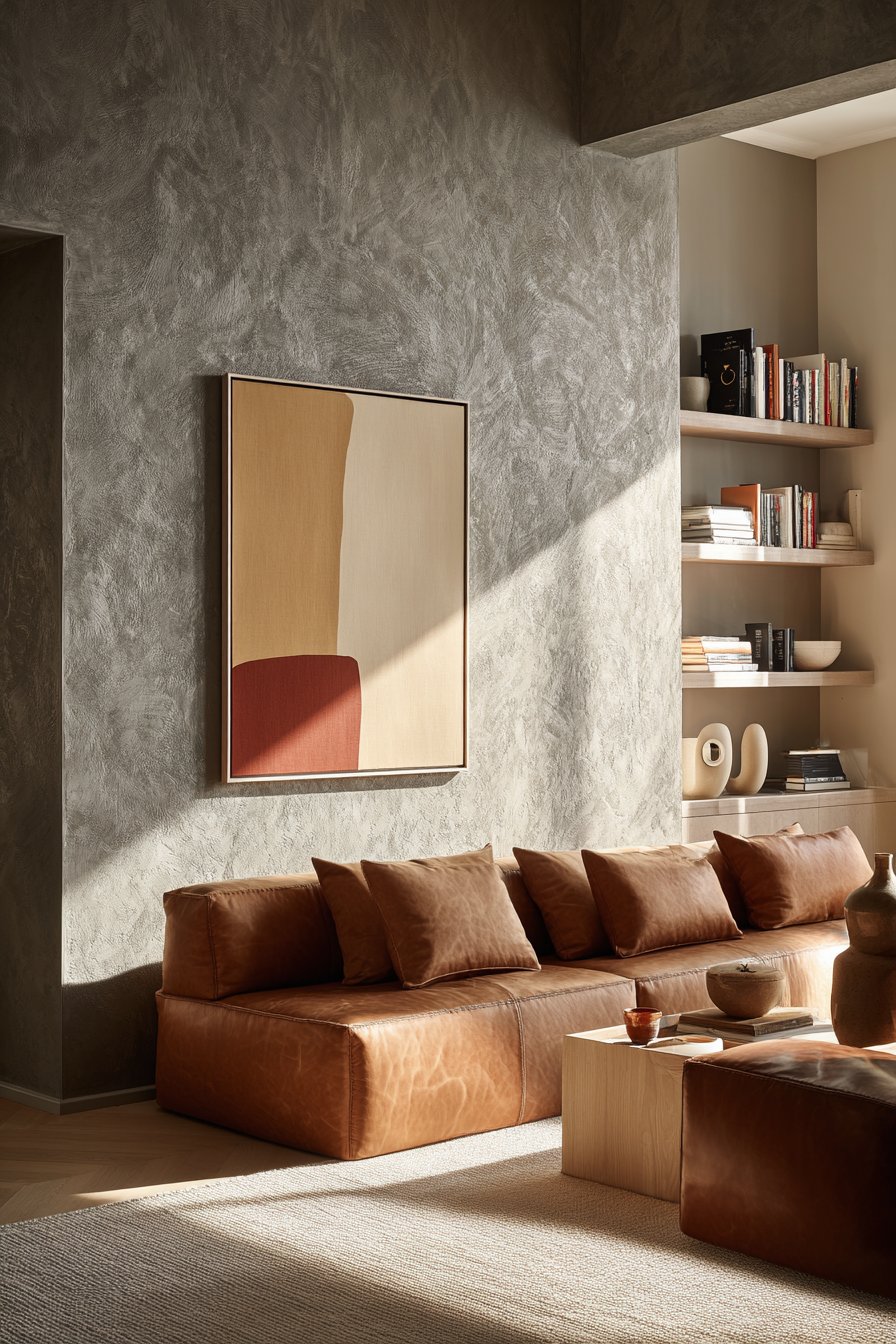
Late afternoon light emphasizes the wall’s texture creating dramatic shadows. The directional light transforms the flat surface into a dynamic backdrop. The caramel leather glows warmly in the golden light. This interplay between materials and natural illumination creates ever-changing beauty.
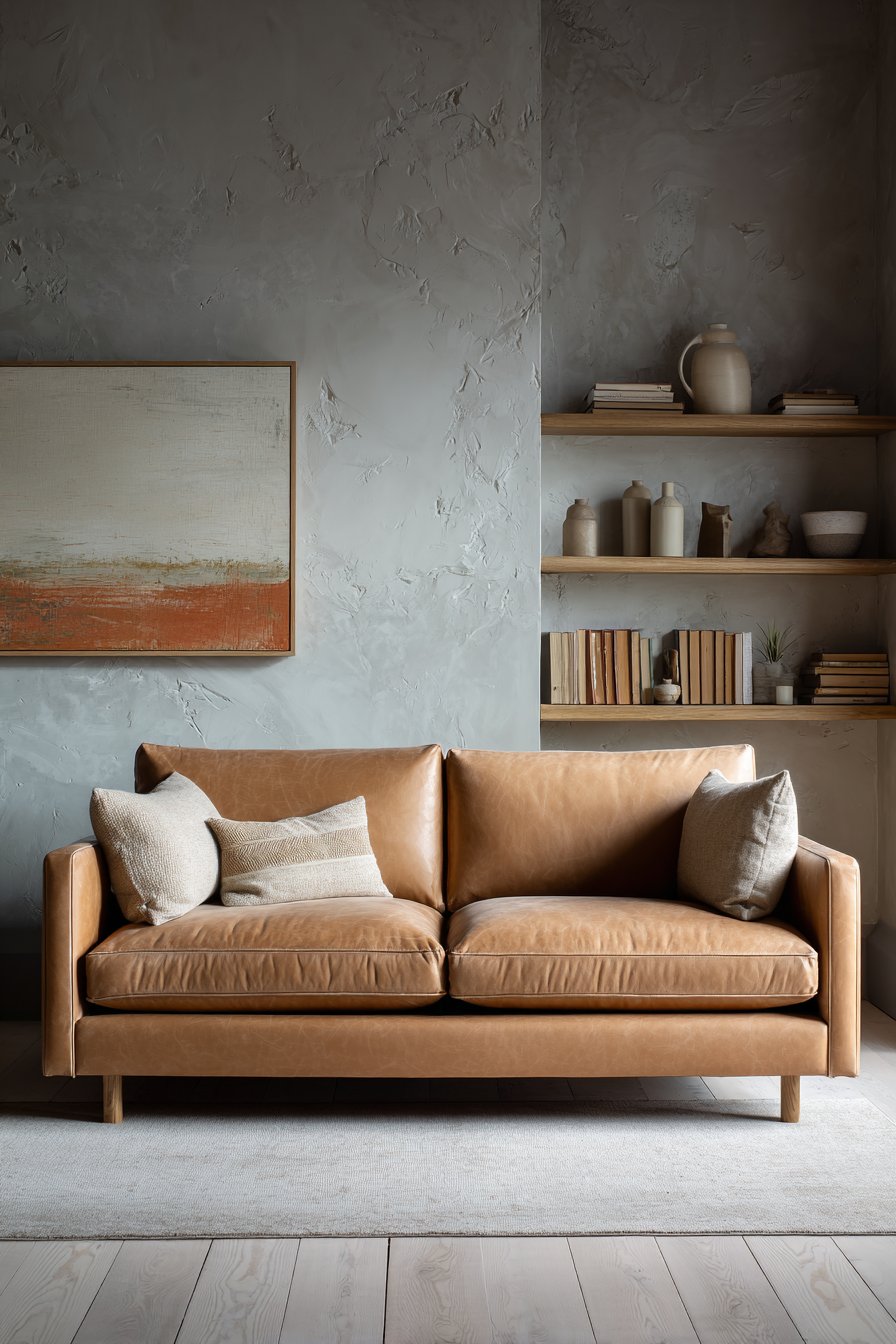
The textured wall treatment represents an elevated approach to Scandinavian design. It adds sophistication while maintaining the style’s essential warmth. The technique shows how artisanal finishes enhance minimalist spaces. The investment in quality materials and application yields timeless results.
Key Design Tips:
- Apply hand-troweled plaster finishes for organic texture and sophisticated depth
- Choose caramel leather furniture for warm accent that develops beautiful patina
- Arrange books by color on floating shelves for visually harmonious displays
- Hang abstract artwork in earthy tones as textured wall focal points
- Position textured walls to receive directional afternoon light for dramatic effect
13. Built-In Birch Cabinetry with Integrated Lighting
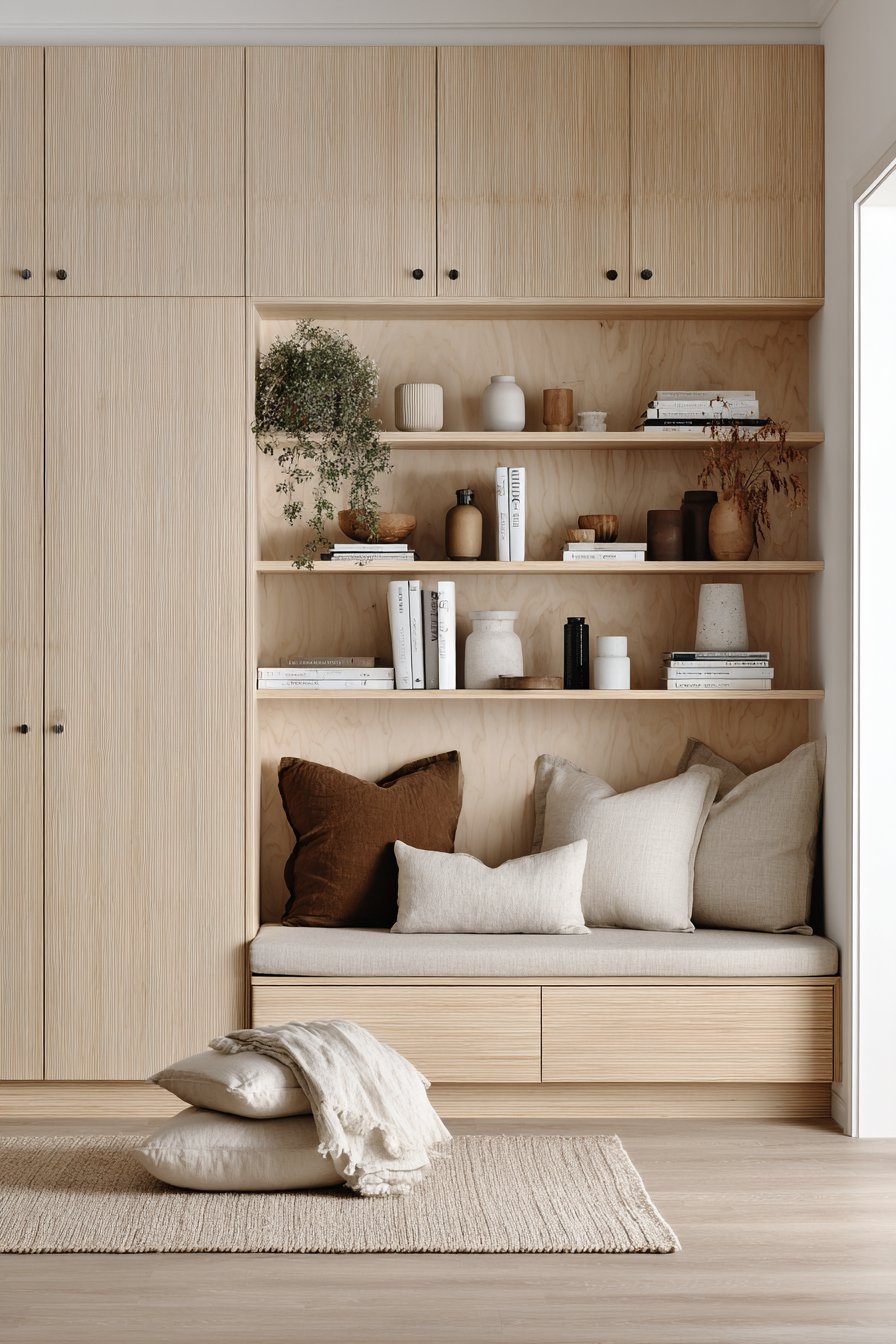
A full wall of built-in cabinetry in blonde birch combines closed and open storage. The closed cabinet doors conceal clutter maintaining the clean Scandinavian aesthetic. Open shelving displays organized books, ceramic vessels, and natural objects. Integrated LED lighting within the shelving provides warm accent illumination.
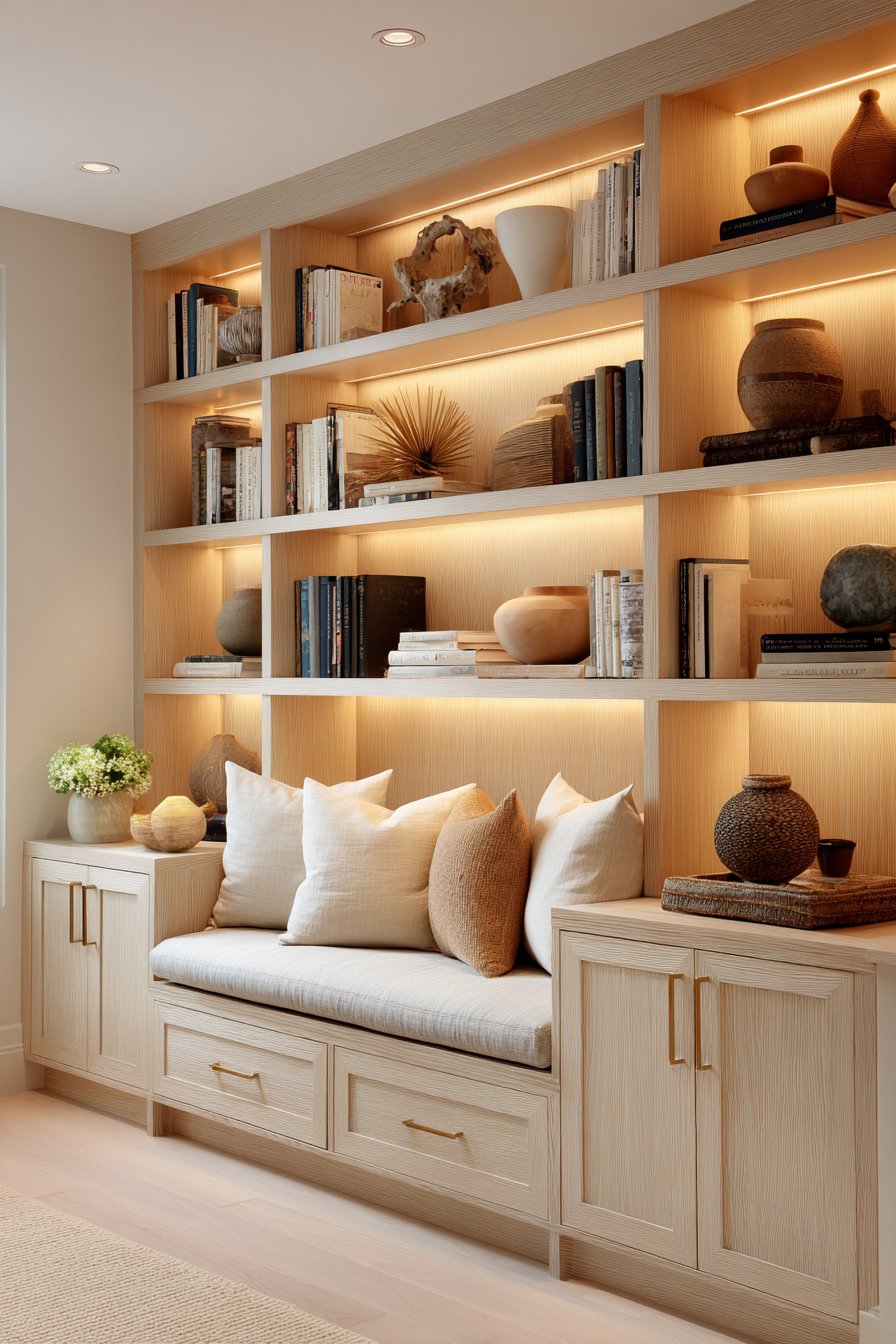
The cabinetry includes a bench seat with cushions in natural linen. The built-in seating provides additional comfortable spots without requiring floor space. The integrated approach maximizes storage while maintaining architectural beauty. The blonde birch’s light tone keeps the extensive cabinetry from feeling heavy.
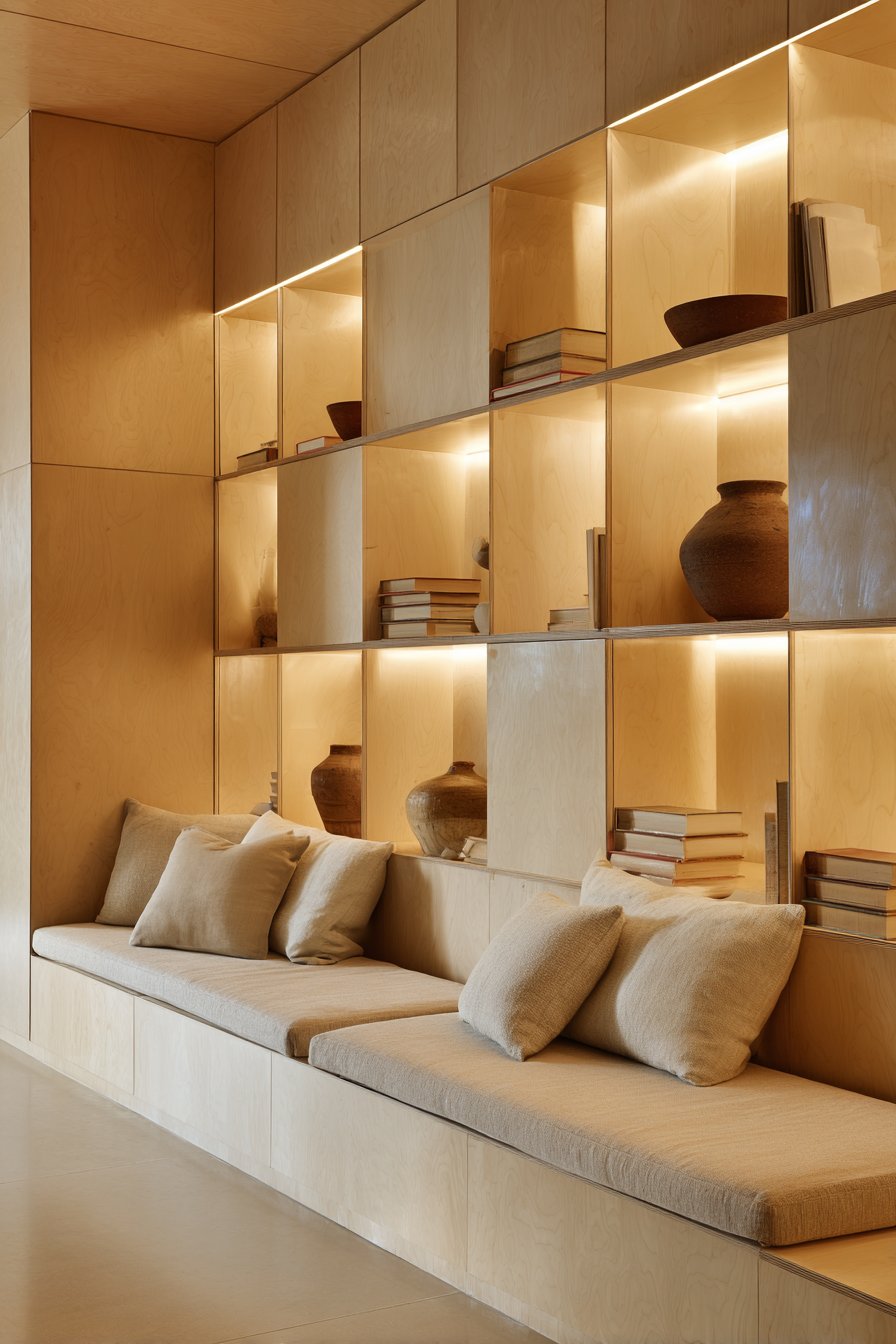
This storage solution demonstrates the Scandinavian principle of practical beauty. The built-ins address real storage needs without compromising aesthetics. The combination of open and closed storage allows both display and concealment. The integrated lighting makes the cabinetry functional for evening use.
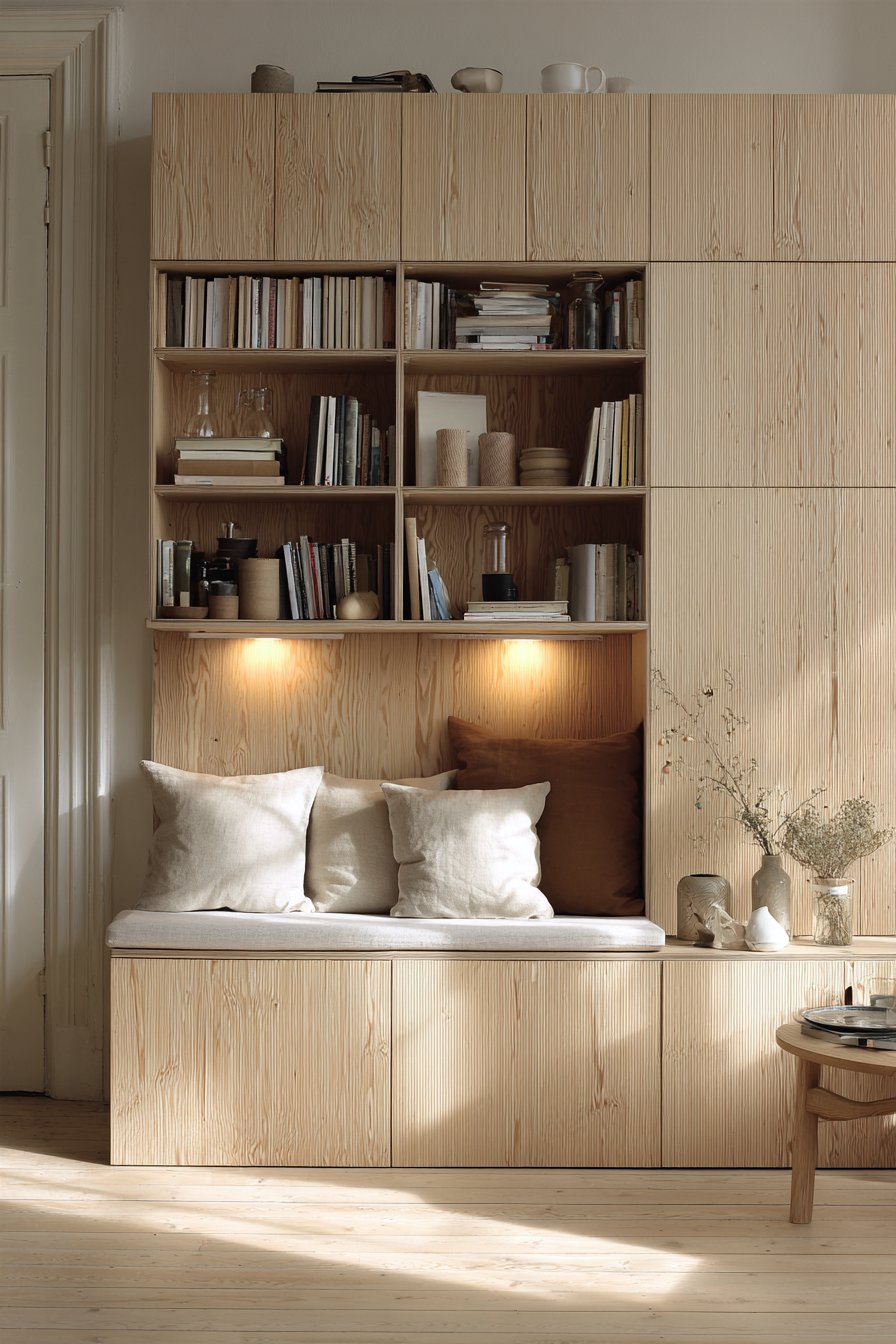
The craftsmanship evident in the custom cabinetry reflects Scandinavian values of quality and longevity. These built-ins represent an investment that enhances the home for decades. The natural wood will age gracefully developing richer tones over time. The design proves that storage solutions can be beautiful architectural features.
Key Design Tips:
- Install full-wall built-in cabinetry in blonde birch for extensive functional storage
- Combine closed cabinets with open shelving for balance of display and concealment
- Integrate LED lighting within shelving for both function and ambient illumination
- Include built-in bench seating for additional comfortable spots without floor furniture
- Choose natural wood that ages gracefully, developing character over decades
14. Ochre Accent Wall with Warm Color Palette
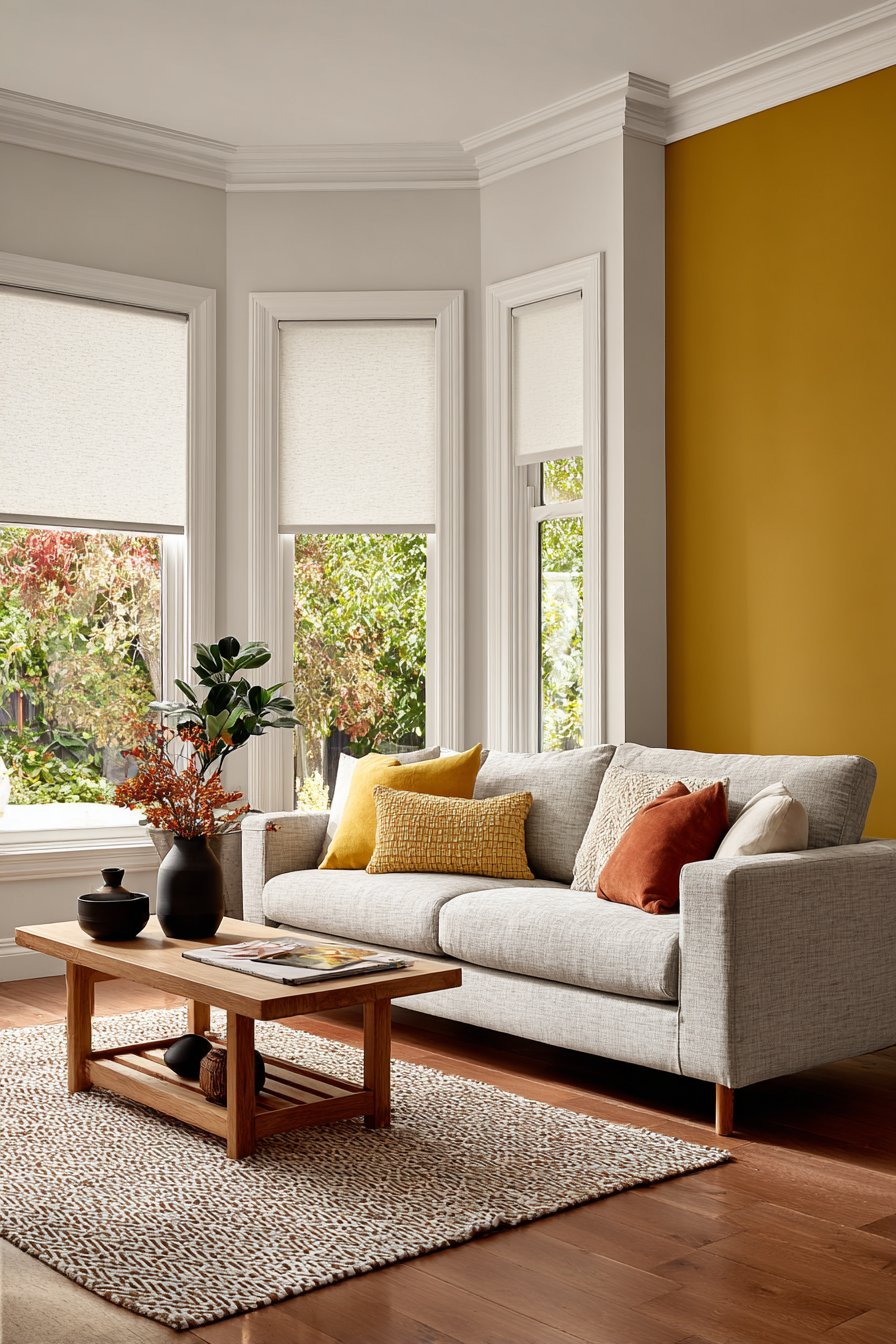
A deep ochre accent wall behind the seating area introduces bold personality. The warm golden tone creates a striking backdrop for the furniture. A light grey linen sofa faces a coffee table in natural oak. Pillows in mustard yellow, terracotta, and cream provide colorful accents.
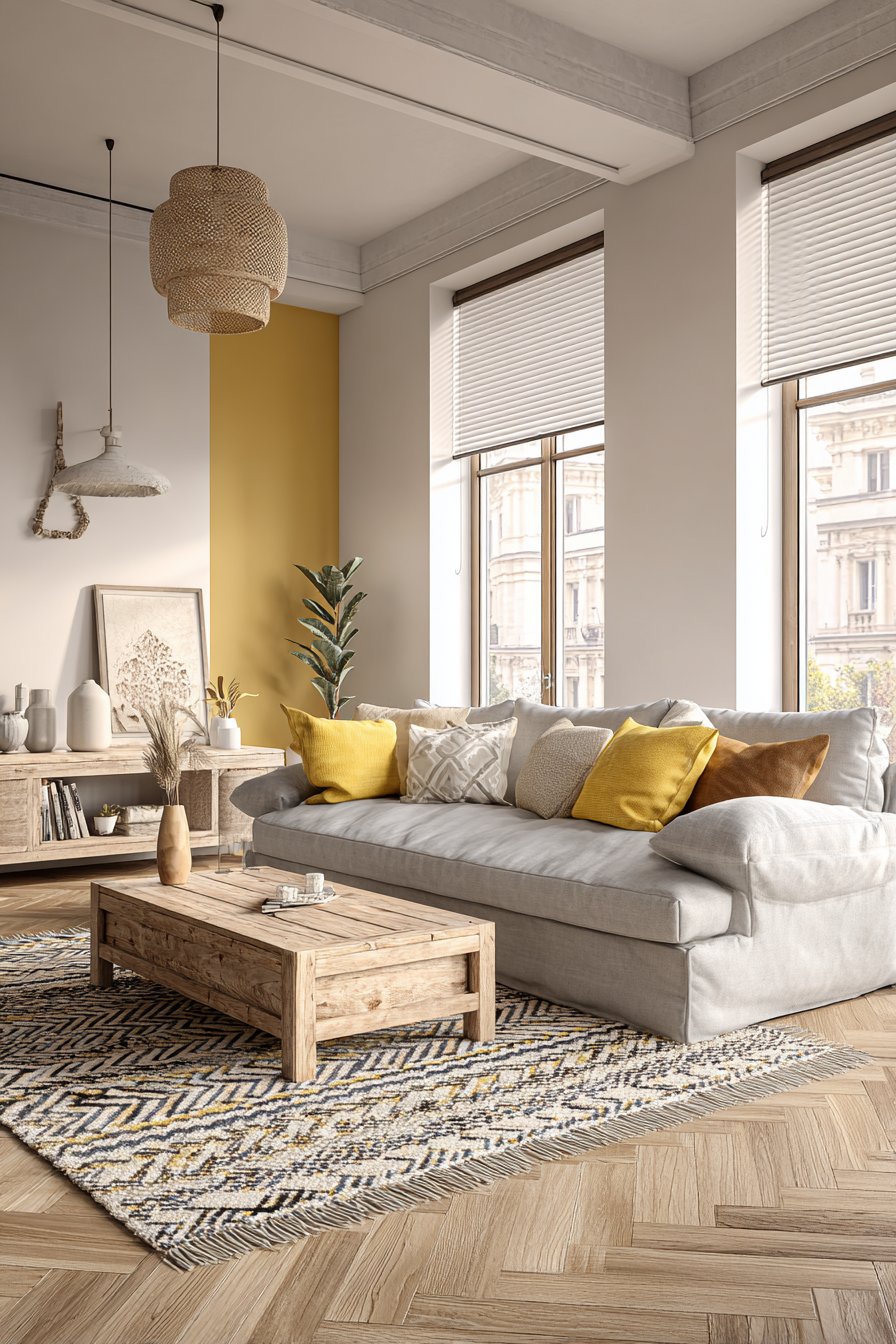
A wool area rug in warm geometric patterns grounds the seating arrangement. The rug’s design echoes the ochre wall while introducing additional colors. Natural oak flooring and white trim provide classic Scandinavian architectural bones. Large windows with simple white roller shades allow abundant natural light.
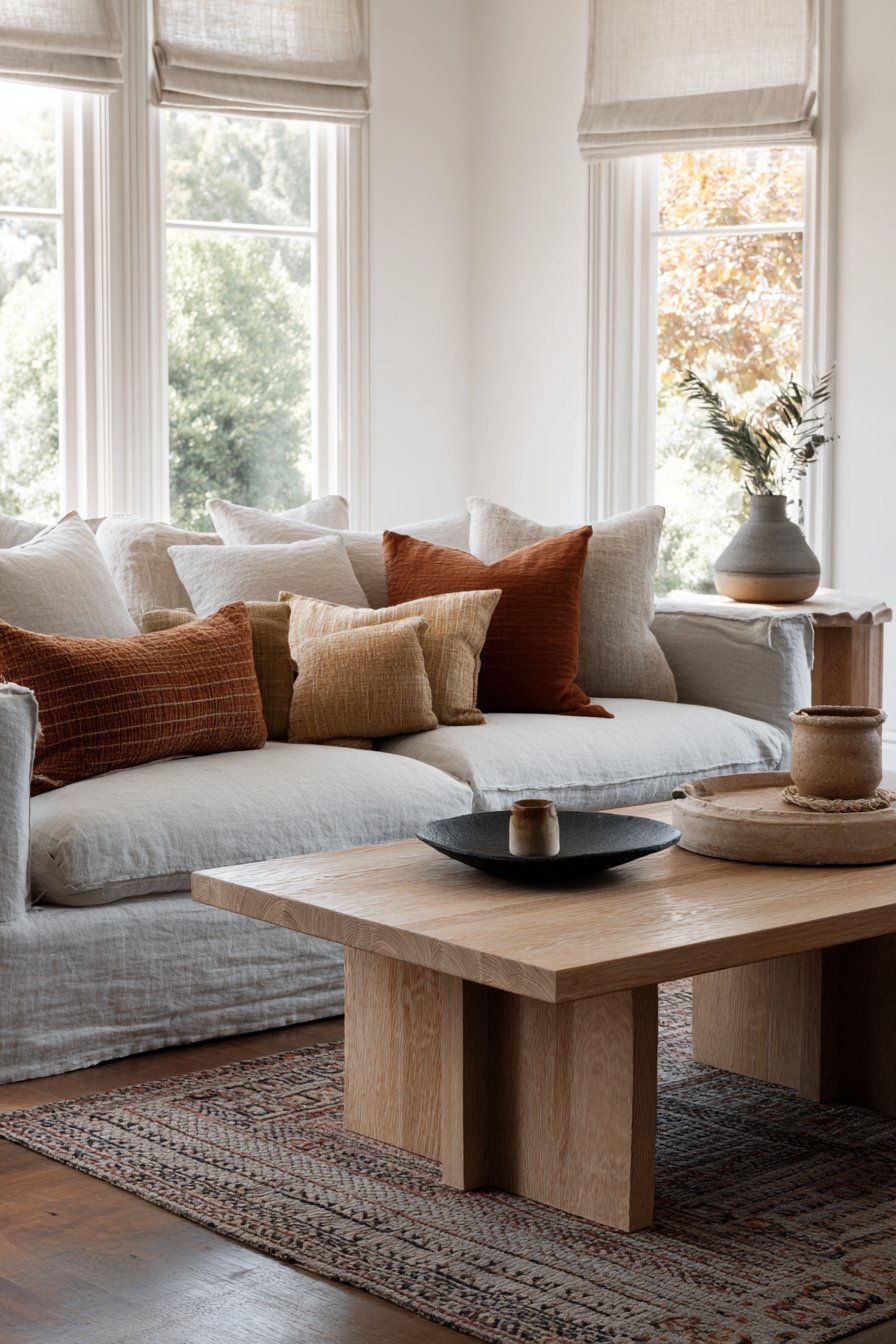
The warm accent colors add personality while maintaining a distinct Scandinavian character. The ochre wall demonstrates how bold color enhances rather than conflicts with Nordic design. The warm palette creates inviting atmosphere that welcomes gathering. The color choices reflect contemporary Scandinavian design’s evolution beyond pure white minimalism.
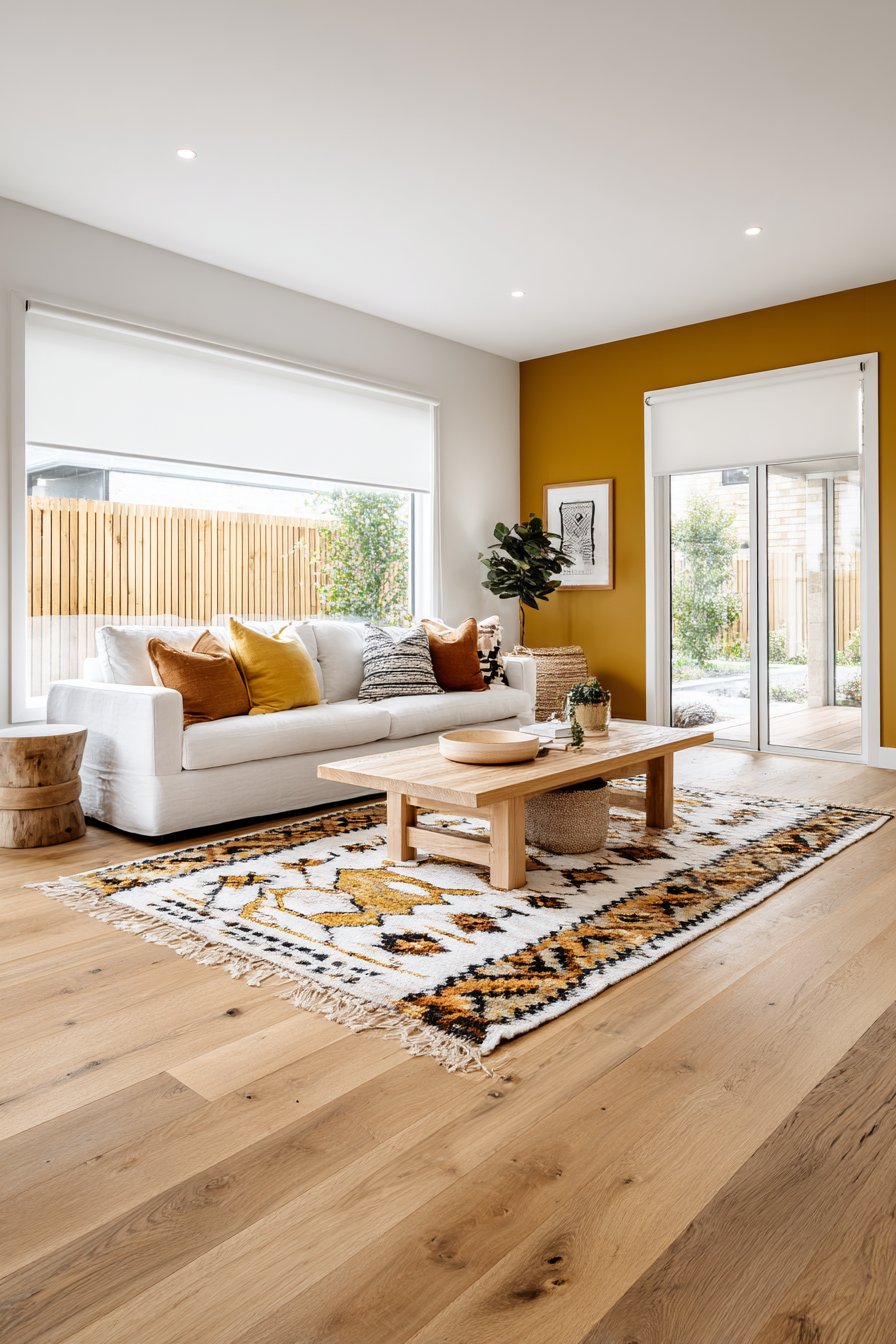
This approach shows the versatility of Scandinavian design principles. The foundation remains rooted in natural materials and functional beauty. The addition of warm accent colors personalizes the space authentically. The result feels both distinctly Scandinavian and uniquely individual.
Key Design Tips:
- Paint accent walls in deep ochre for warm personality without overwhelming spaces
- Layer pillows in complementary warm tones like mustard, terracotta, and cream
- Choose geometric rugs that echo accent wall colors for cohesive composition
- Maintain white trim and natural flooring for classic Scandinavian architectural foundation
- Use warm accent colors to personalize Nordic design while maintaining its essence
15. Sustainable Materials with Reclaimed Oak Focus
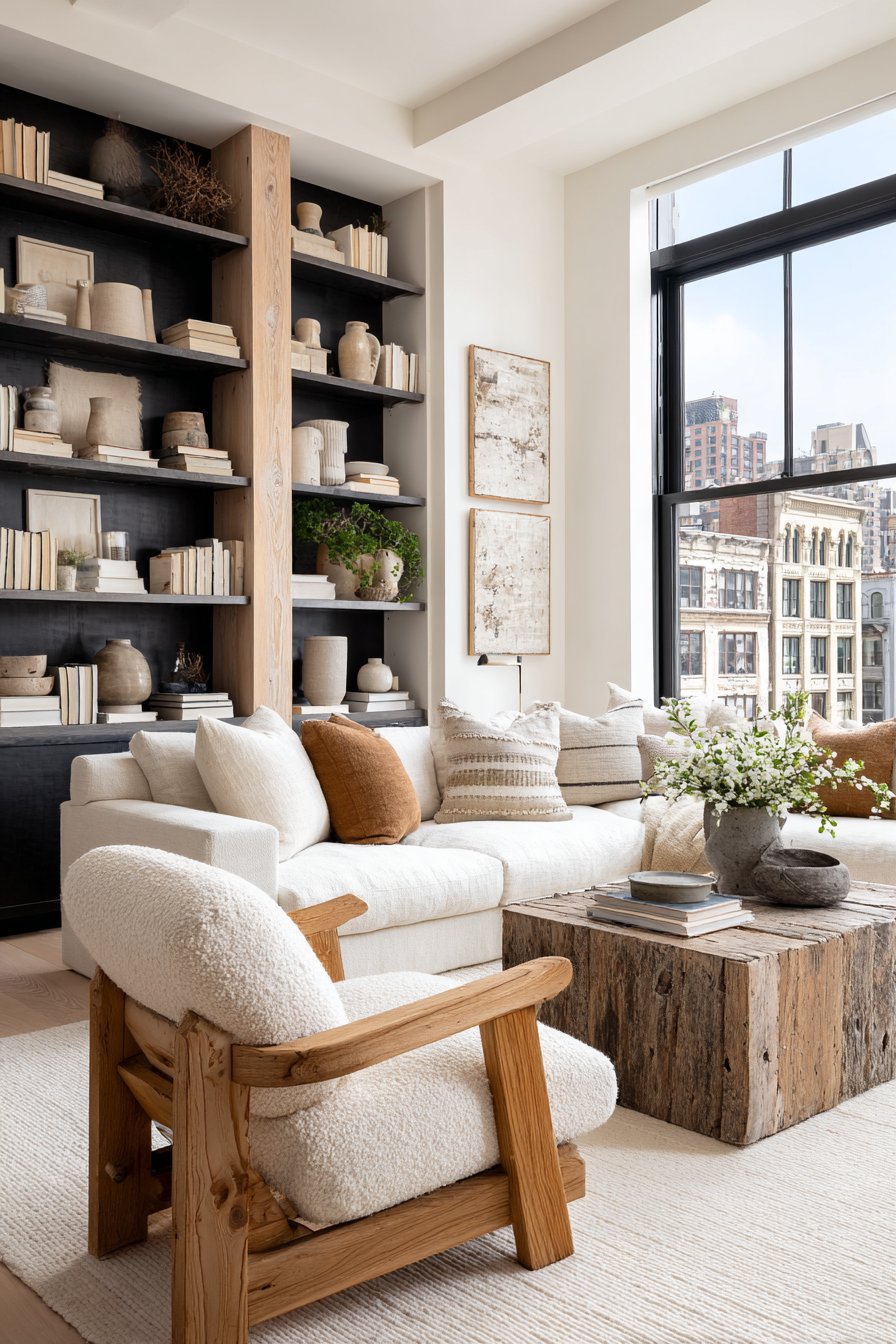
Organic cotton upholsters a sofa in natural oatmeal creating sustainable foundation. The fabric breathes naturally and ages gracefully without synthetic treatments. A coffee table made from reclaimed oak features visible age marks and patina. The reclaimed wood tells stories of its previous life, adding character and history.
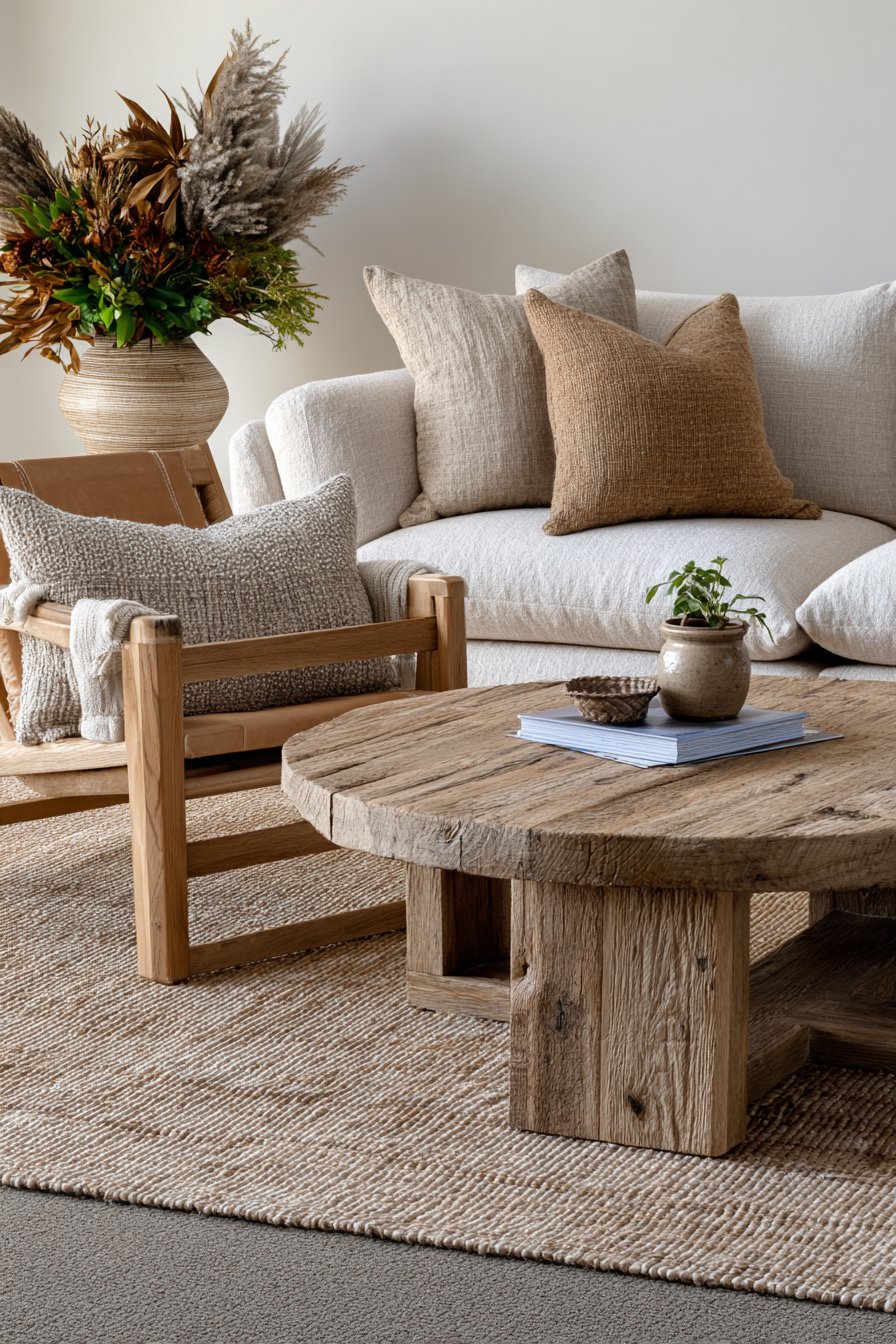
A jute area rug displays subtle color variations from its natural plant fibers. Throw pillows feature linen and hemp fabrics in warm earth tones. A vintage Danish modern armchair in teak anchors one corner with reupholstered wool cushions. The chair’s mid-century design remains timelessly appealing decades later.
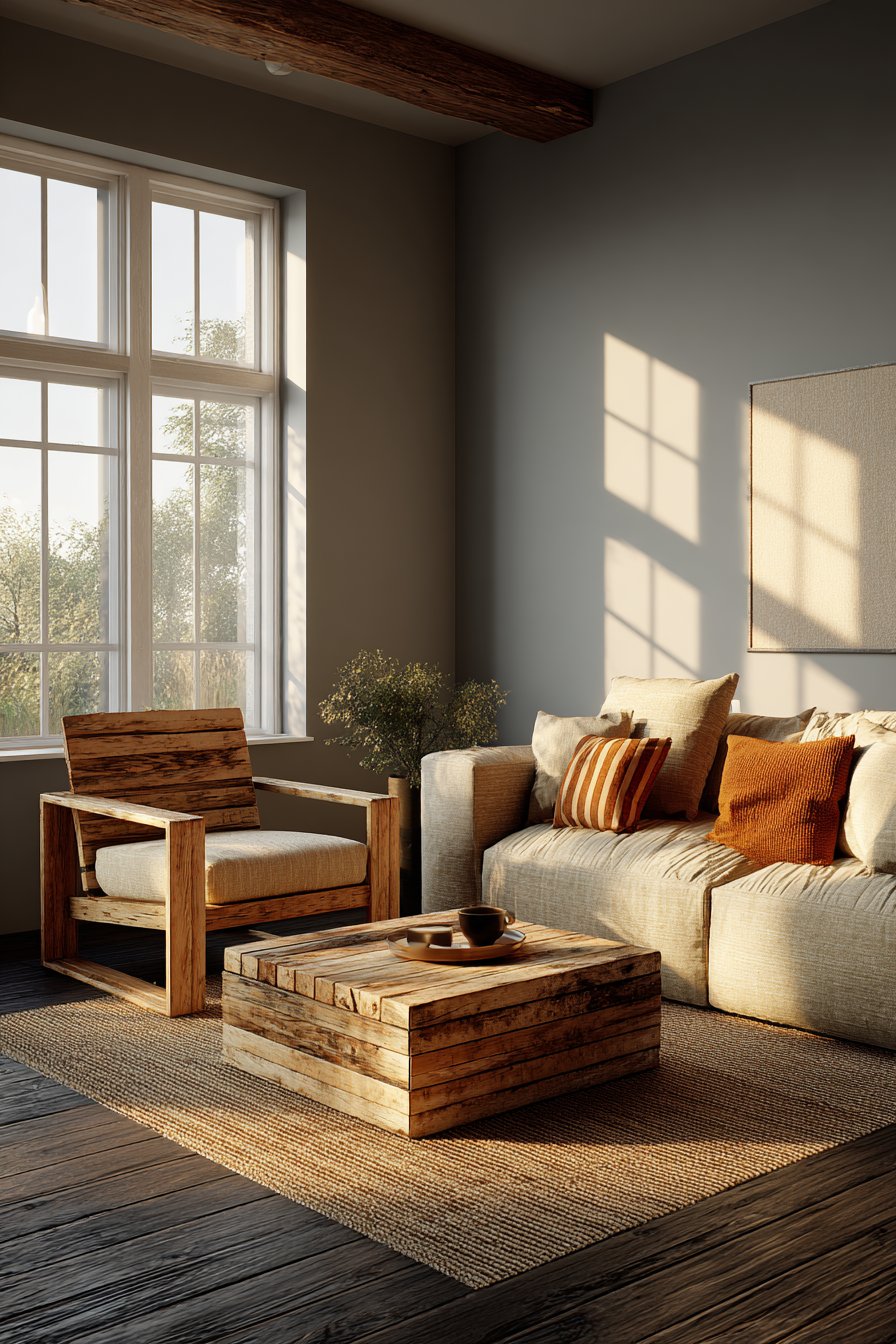
Natural afternoon light illuminates the eco-conscious materials revealing their authentic textures. The sustainable approach aligns with Scandinavian values of environmental responsibility. Quality natural materials outlast synthetic alternatives while requiring less replacement. The room proves that sustainable choices enhance rather than limit design possibilities.
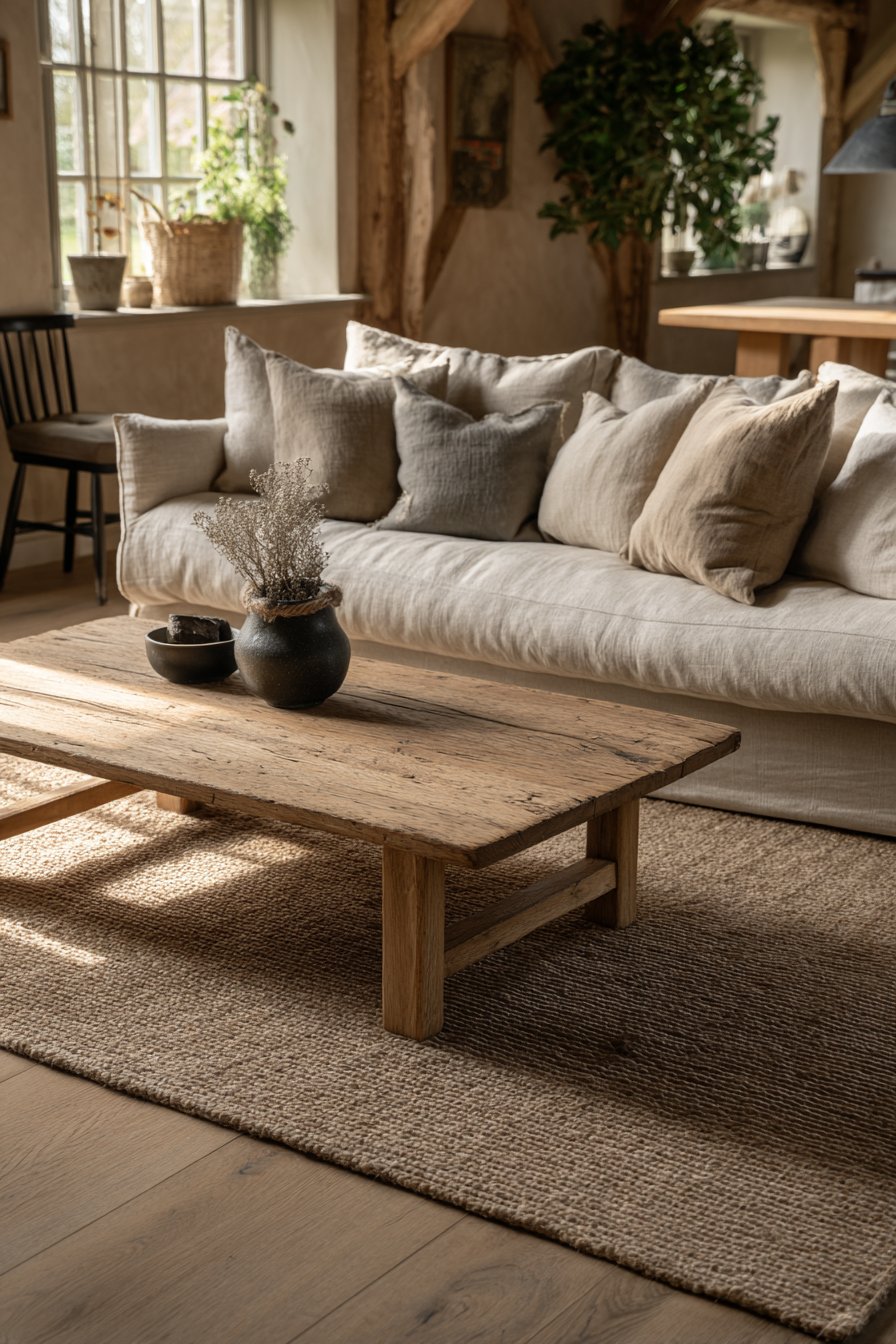
This eco-conscious approach represents the future of Scandinavian interior design. The emphasis on longevity reduces environmental impact over time. The natural materials create healthier indoor environments free from off-gassing. The aesthetic beauty and environmental responsibility coexist harmoniously.
Key Design Tips:
- Choose organic cotton upholstery for breathable, sustainable fabric that ages gracefully
- Select reclaimed wood furniture for character, history, and environmental responsibility
- Use natural fiber rugs like jute for sustainable floor coverings with texture
- Incorporate vintage furniture pieces to reduce waste while adding timeless design
- Prioritize quality natural materials that outlast synthetic alternatives for true sustainability
16. Workspace Integration with Fold-Down Desk
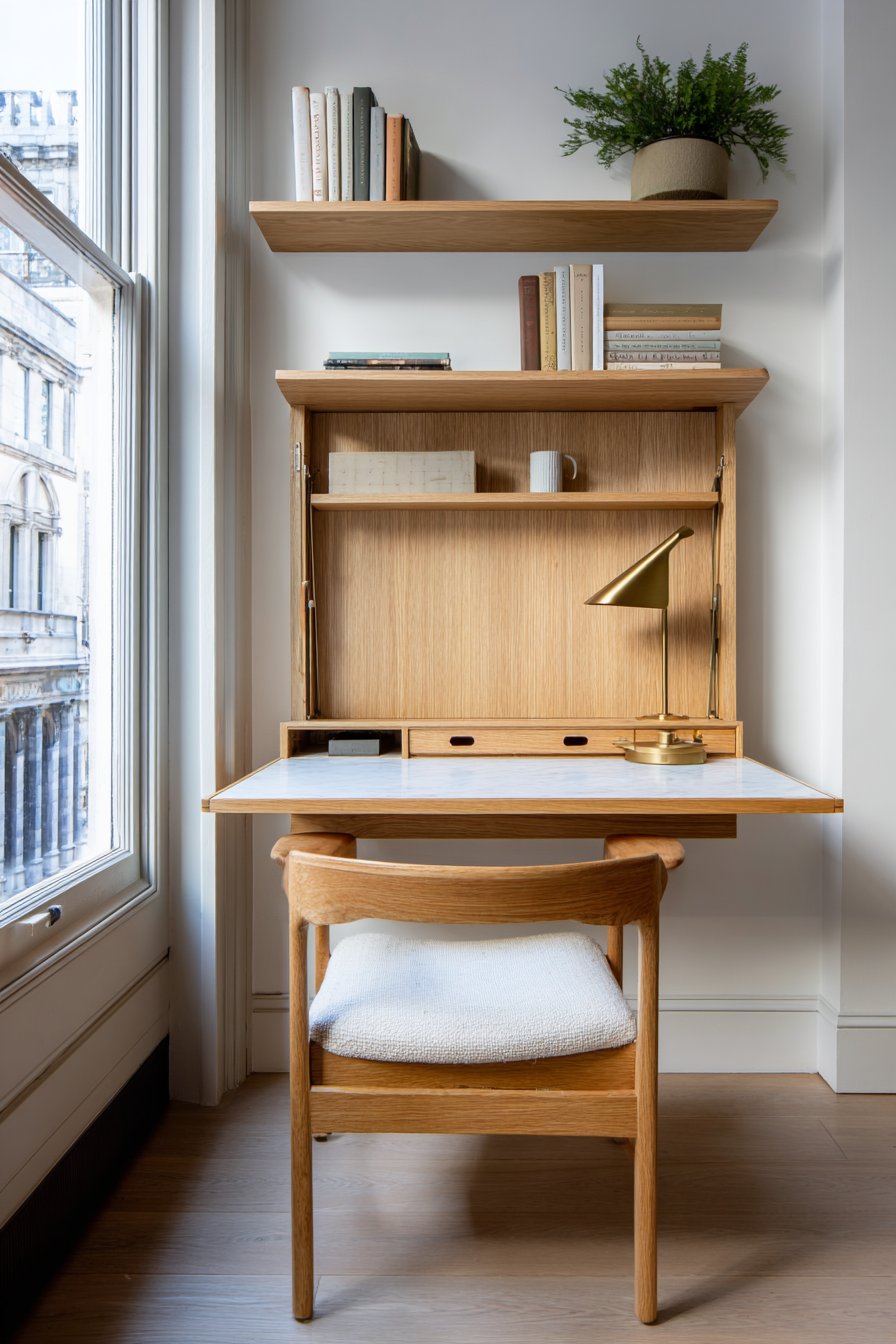
A wall-mounted fold-down desk in light ash wood blends seamlessly when closed. The clever design maintains the living room’s clean aesthetic during non-work hours. When open, it reveals organized storage with small drawers. A clean work surface provides adequate space for laptop and essentials.
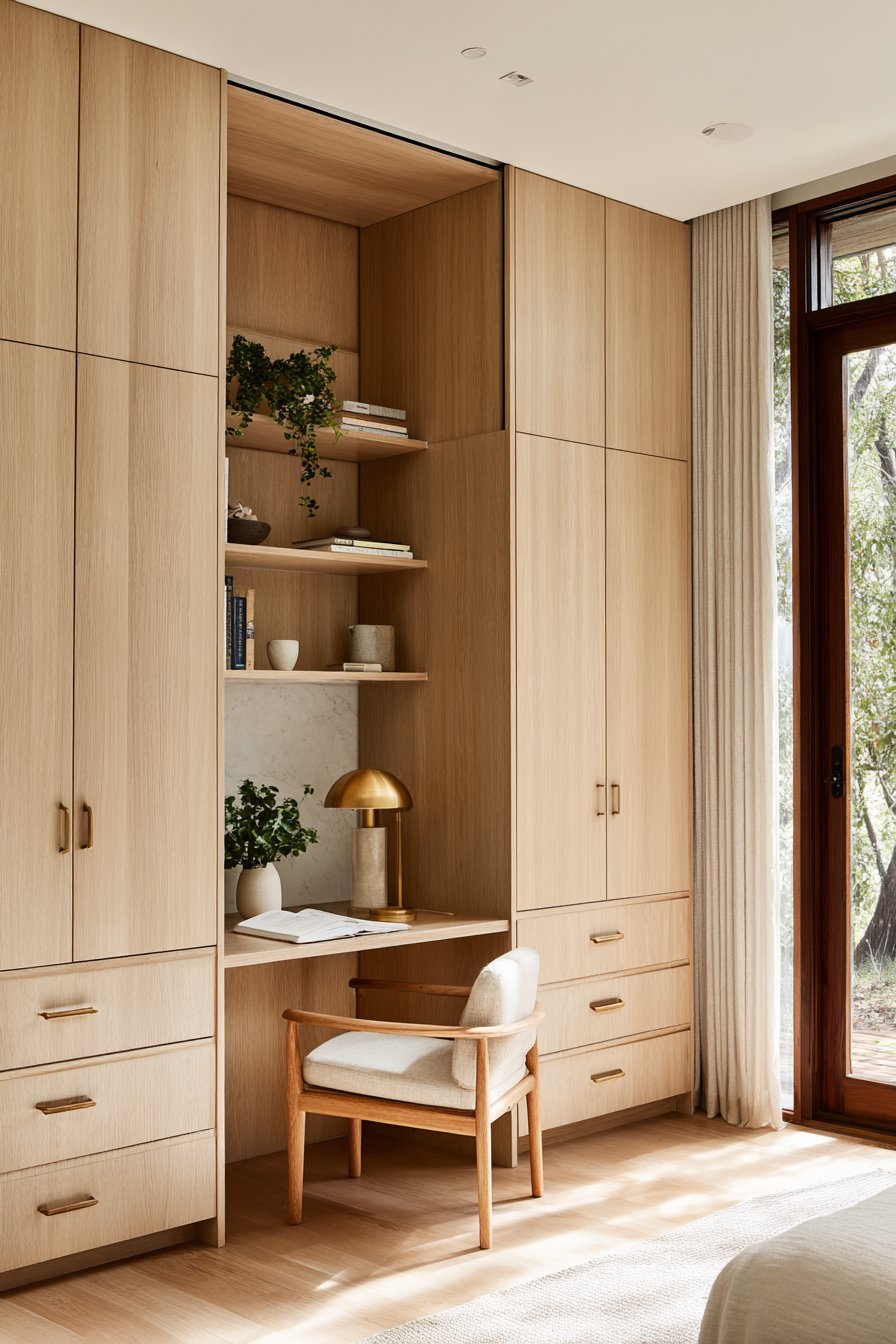
A brass desk lamp and simple ceramic pen holder complete the functional workspace. A comfortable task chair in natural oak with cream cushion tucks underneath when not in use. Floating shelves above hold books and small plants within easy reach. Natural light from nearby windows provides ideal illumination for focused work.
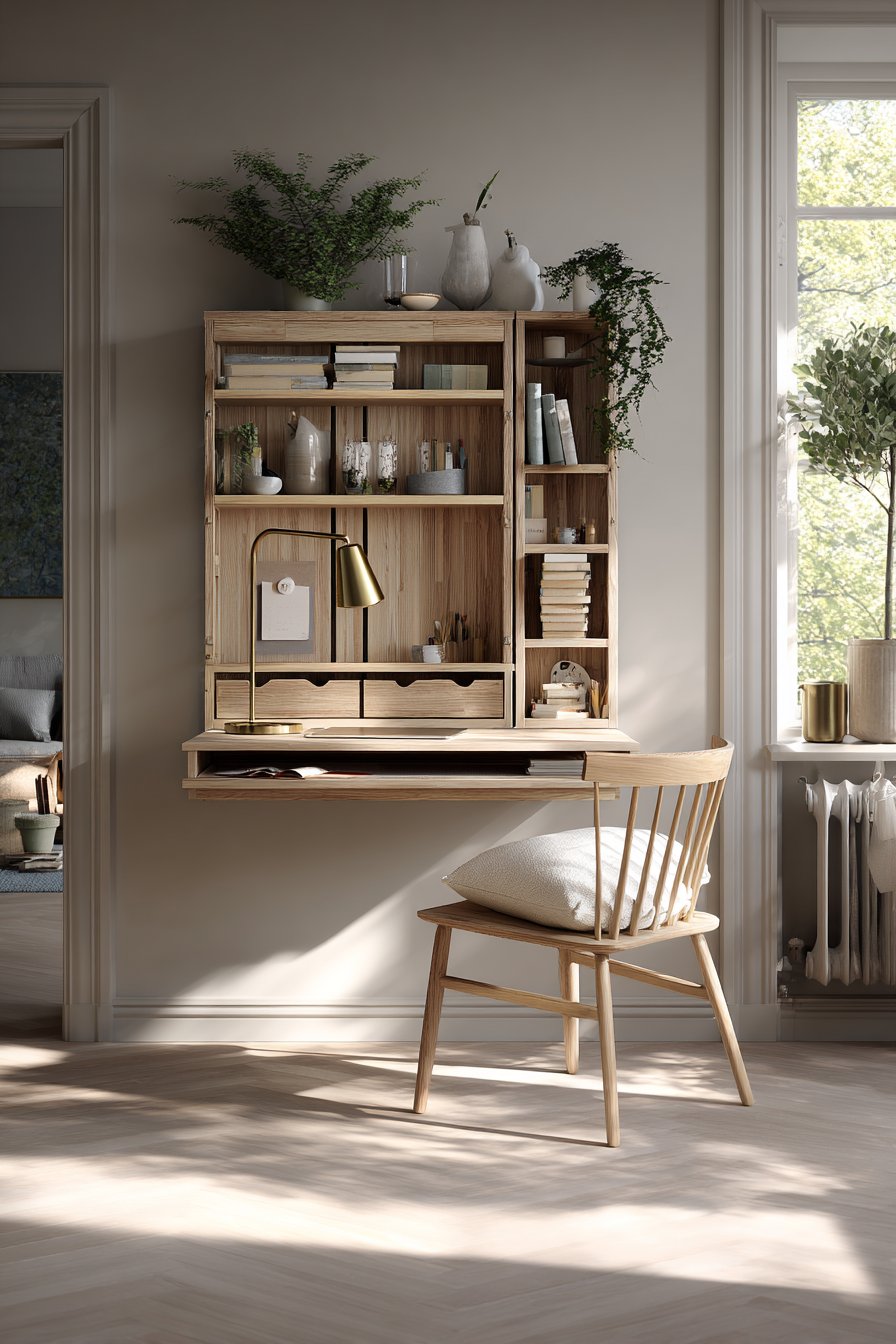
This integrated workspace demonstrates Scandinavian design’s adaptability to modern life needs. The fold-down mechanism allows spaces to serve multiple purposes efficiently. The work area doesn’t compromise the room’s primary function as a relaxing living space. The seamless integration shows thoughtful problem-solving through design.
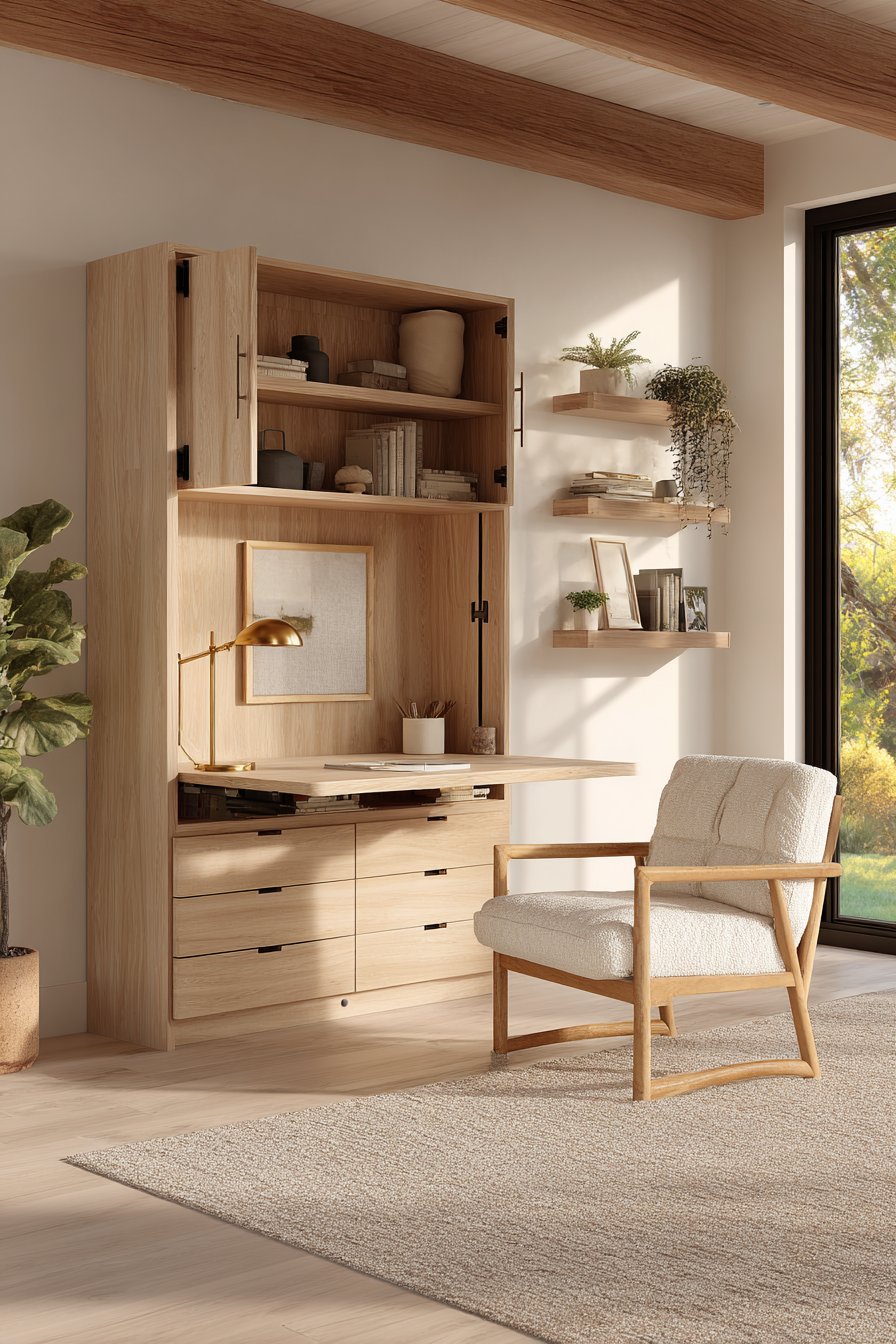
The workspace represents the Scandinavian principle of designing for real contemporary life. Many people now work from home, requiring functional work areas. The solution doesn’t demand dedicated office rooms but integrates naturally into existing spaces. The design maintains aesthetic integrity while addressing practical modern needs.
Key Design Tips:
- Install fold-down wall desks for workspace integration without sacrificing living space
- Choose light wood finishes that blend with Scandinavian living room aesthetics
- Position workspaces near windows for optimal natural light during working hours
- Select compact task chairs that tuck away cleanly when not in use
- Include floating shelves above workspaces for accessible storage and display
17. Mixed Wood Tones Creating Visual Interest
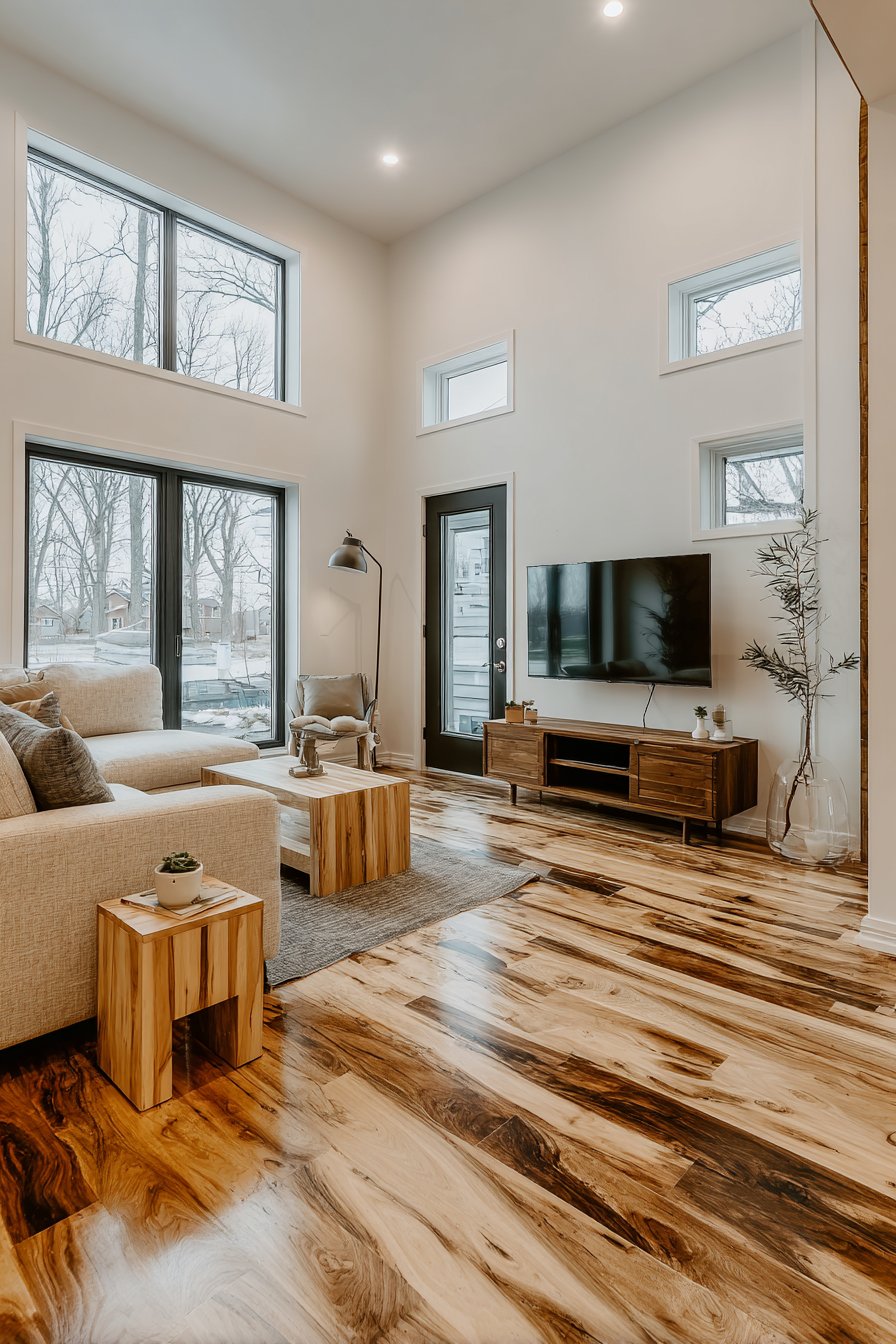
Various natural wood finishes create visual interest while maintaining warmth and cohesion. A walnut media console introduces deeper tones grounding the furniture arrangement. Blonde birch side tables provide lighter accents throughout the seating area. A light oak coffee table bridges the darker and lighter wood tones.
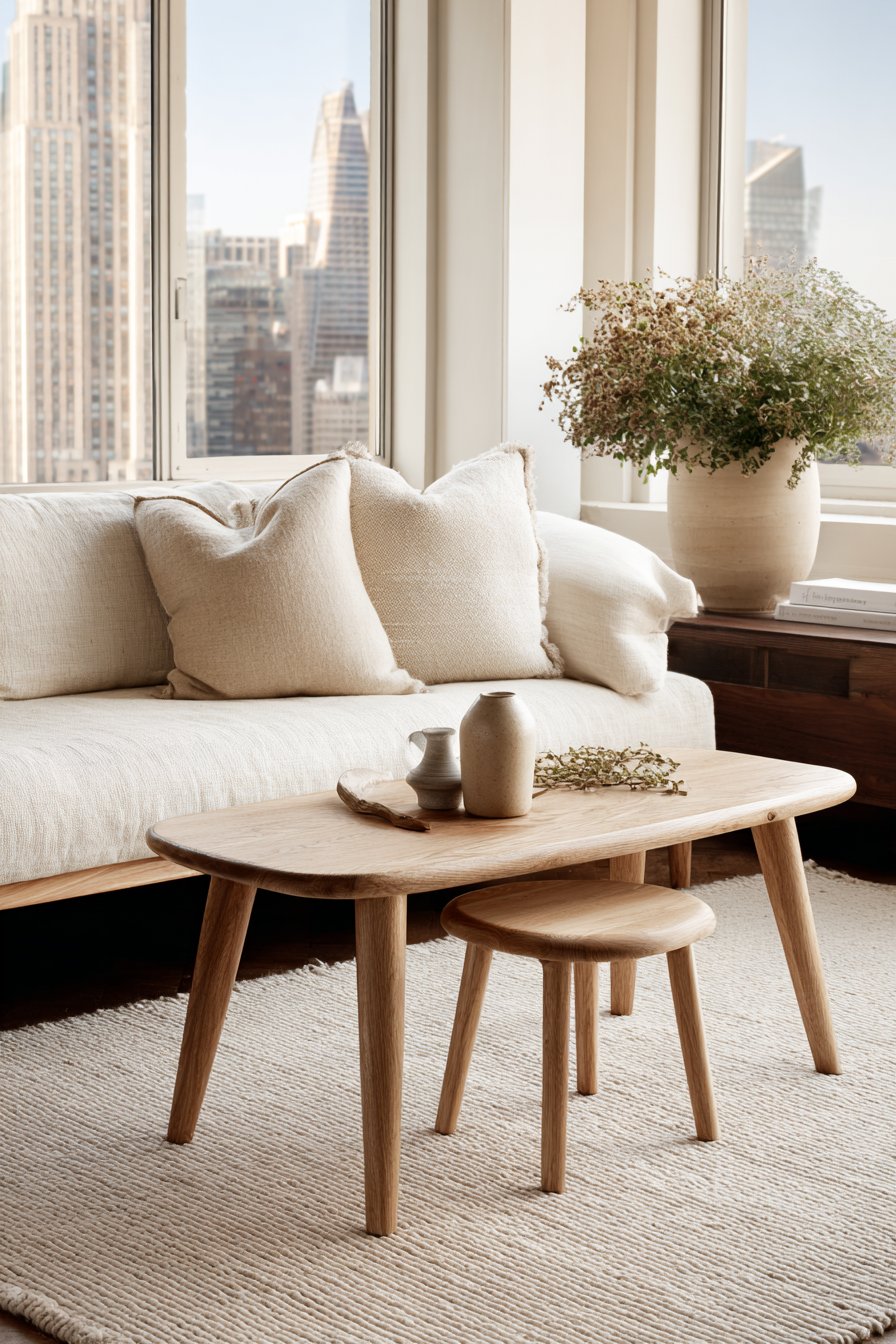
A natural linen sectional sofa in cream anchors the varied wood elements. The neutral upholstery allows the different wood species to shine. The oak flooring features a natural matte finish protecting while preserving authenticity. Soft natural lighting highlights each wood’s unique grain pattern and color variations.
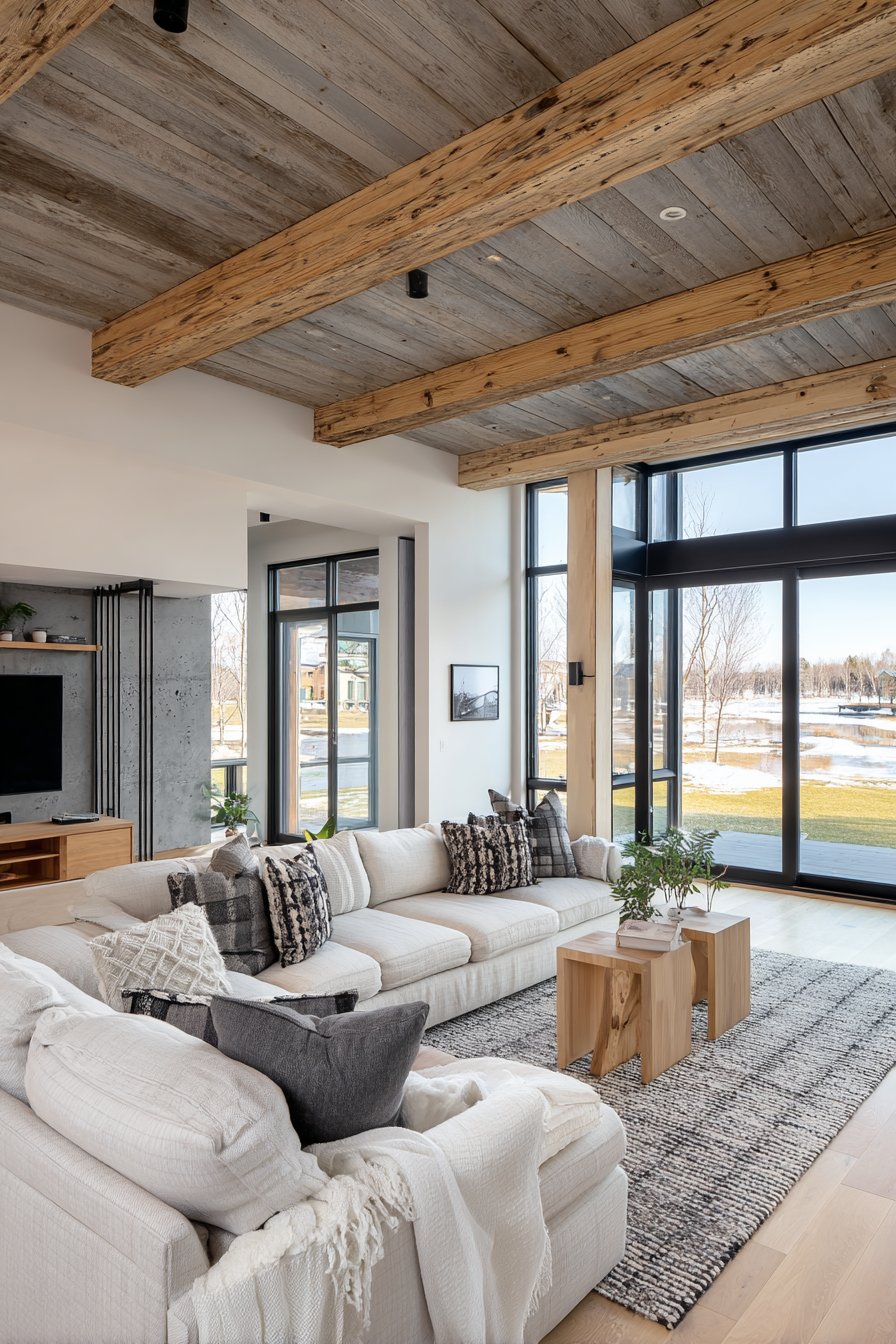
This mixed approach demonstrates sophisticated understanding of how woods complement each other. The varying tones create depth without feeling chaotic or uncoordinated. The natural materials share organic warmth despite their color differences. The composition feels collected over time rather than purchased as a matching set.
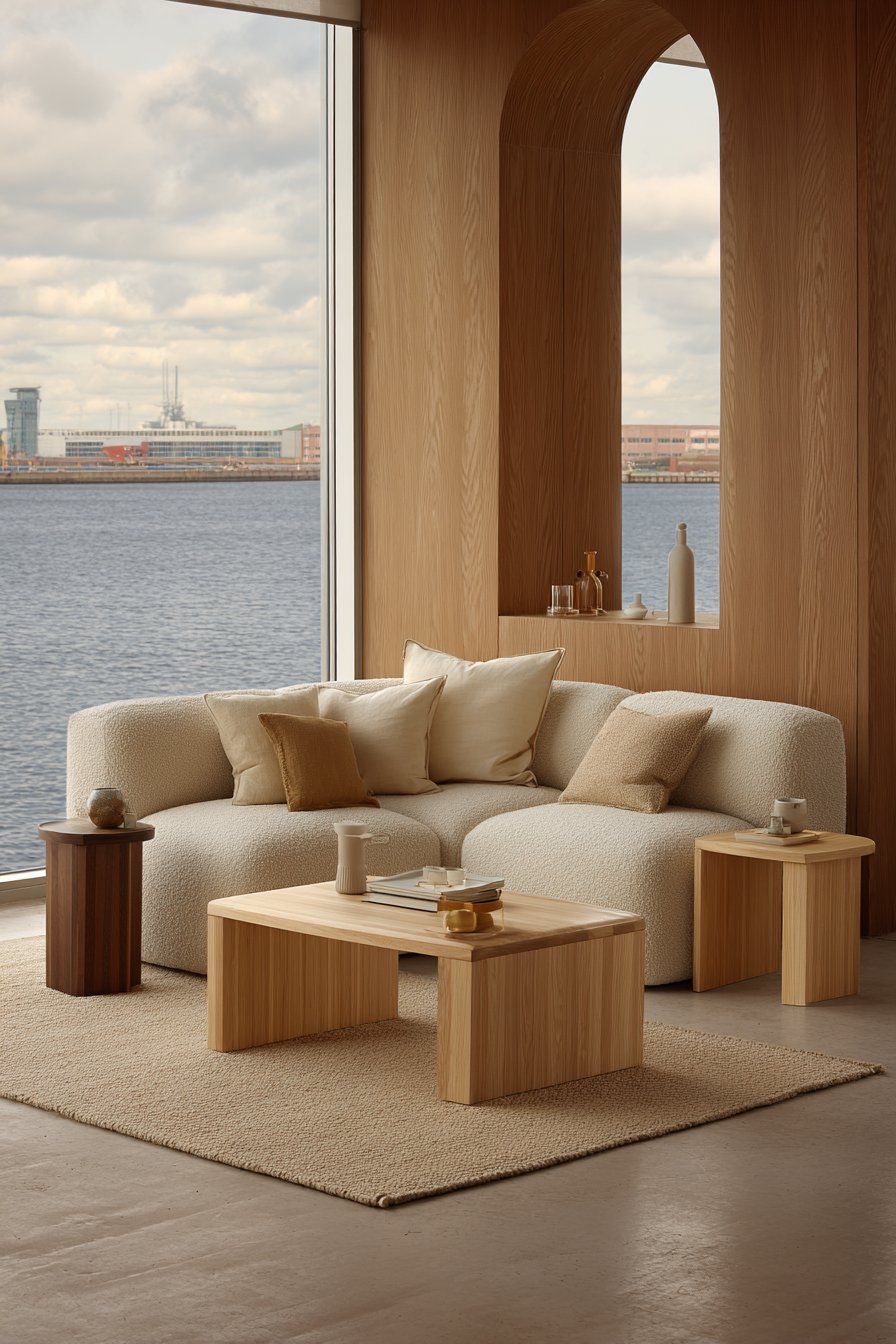
The mixed wood strategy reflects contemporary Scandinavian design’s evolved approach. Earlier Nordic design often favored single wood types throughout spaces. Modern interpretations embrace variety within the natural material framework. The result feels more personalized while remaining distinctly Scandinavian in character.
Key Design Tips:
- Mix multiple wood species like walnut, birch, and oak for dimensional interest
- Anchor varied wood tones with neutral linen upholstery in cream or oatmeal
- Ensure natural matte finishes on wood to preserve an authentic, organic appearance
- Position furniture to allow natural light to highlight each wood’s unique characteristics
- Balance darker and lighter wood tones for cohesion without monotony
18. Textile Layering Creating Tactile Depth
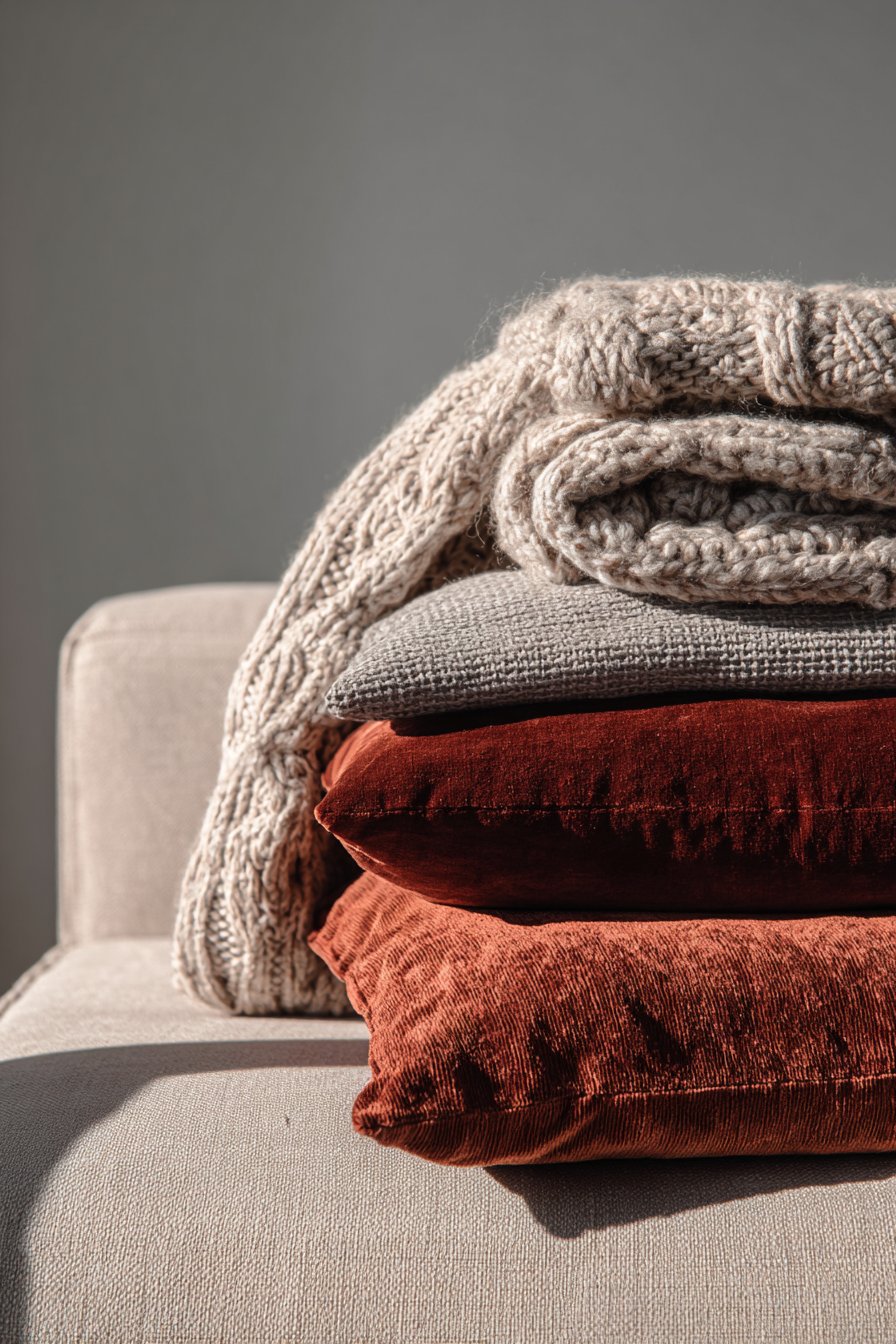
A linen sofa in warm sand tone provides the foundation for extensive textile layering. A chunky cable-knit wool blanket in cream drapes casually across one end. A waffle-weave cotton throw in light grey adds different textural interest. Velvet pillows in muted terracotta and ochre introduce subtle color and luxurious softness.

The layering creates depth inviting touch and exploration. Natural afternoon light emphasizes the textile textures creating shadows in the weave patterns. The varied materials each contribute unique tactile qualities. Together they create the cozy atmosphere central to Scandinavian hygge philosophy.

This approach demonstrates how textiles generate warmth without architectural changes. The layered throws and pillows can adapt seasonally maintaining year-round comfort. The investment in quality natural textiles pays dividends through longevity. The materials improve with age developing softness through use and washing.
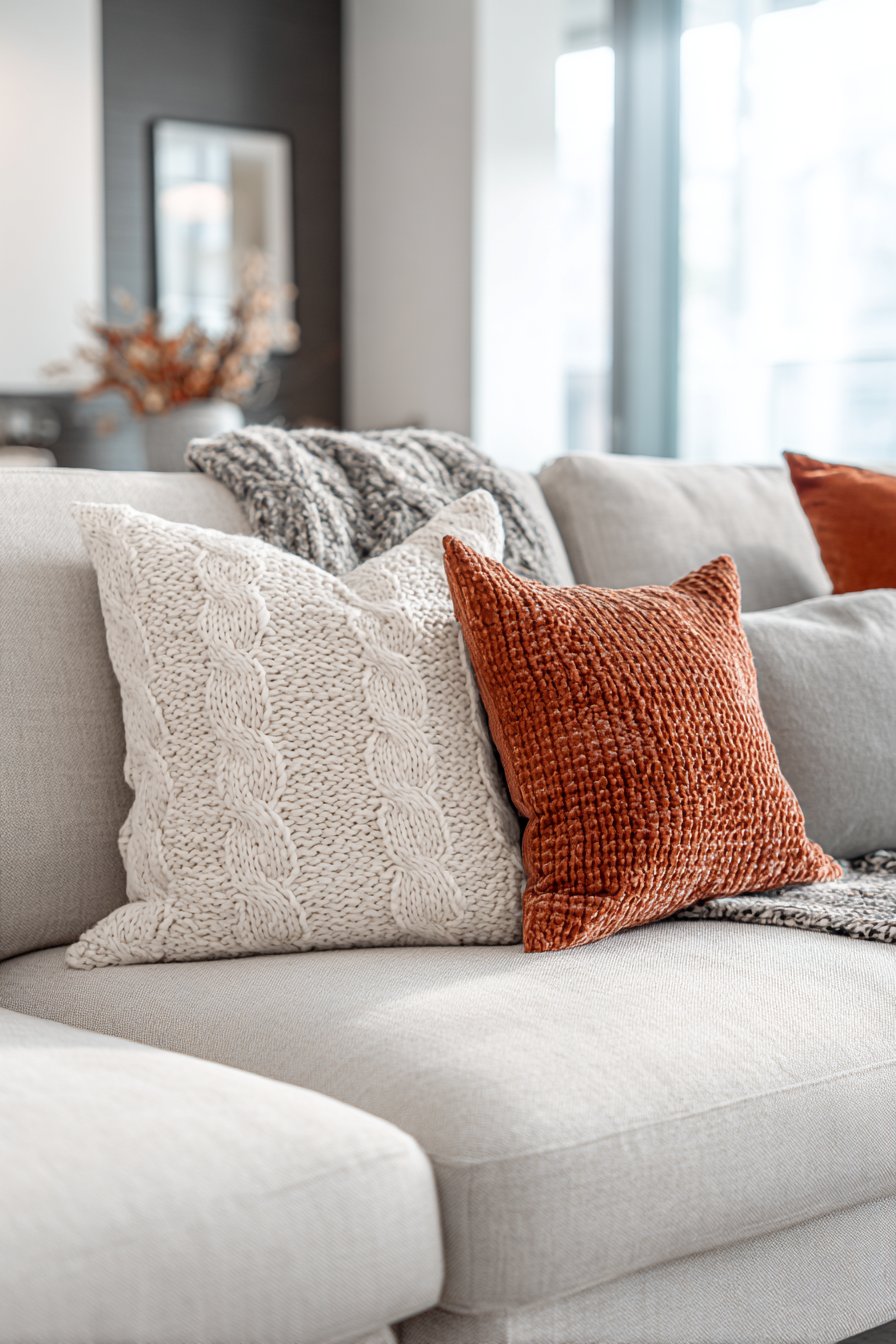
The textile focus reflects Scandinavian understanding of comfort’s multisensory nature. The visual warmth combines with actual tactile softness for complete sensory satisfaction. The careful color coordination maintains cohesion despite the variety of textures. The result invites curling up with books, blankets, and warm beverages.
Key Design Tips:
- Layer multiple textile textures like cable-knit, waffle-weave, and velvet for depth
- Choose throws and pillows in coordinating warm tones for cohesive composition
- Select natural materials like wool, cotton, and linen that improve with age
- Arrange textiles casually rather than rigidly for authentic lived-in comfort
- Use afternoon light to emphasize textile textures through shadow and highlight
19. Vintage Teak Credenza as Statement Piece
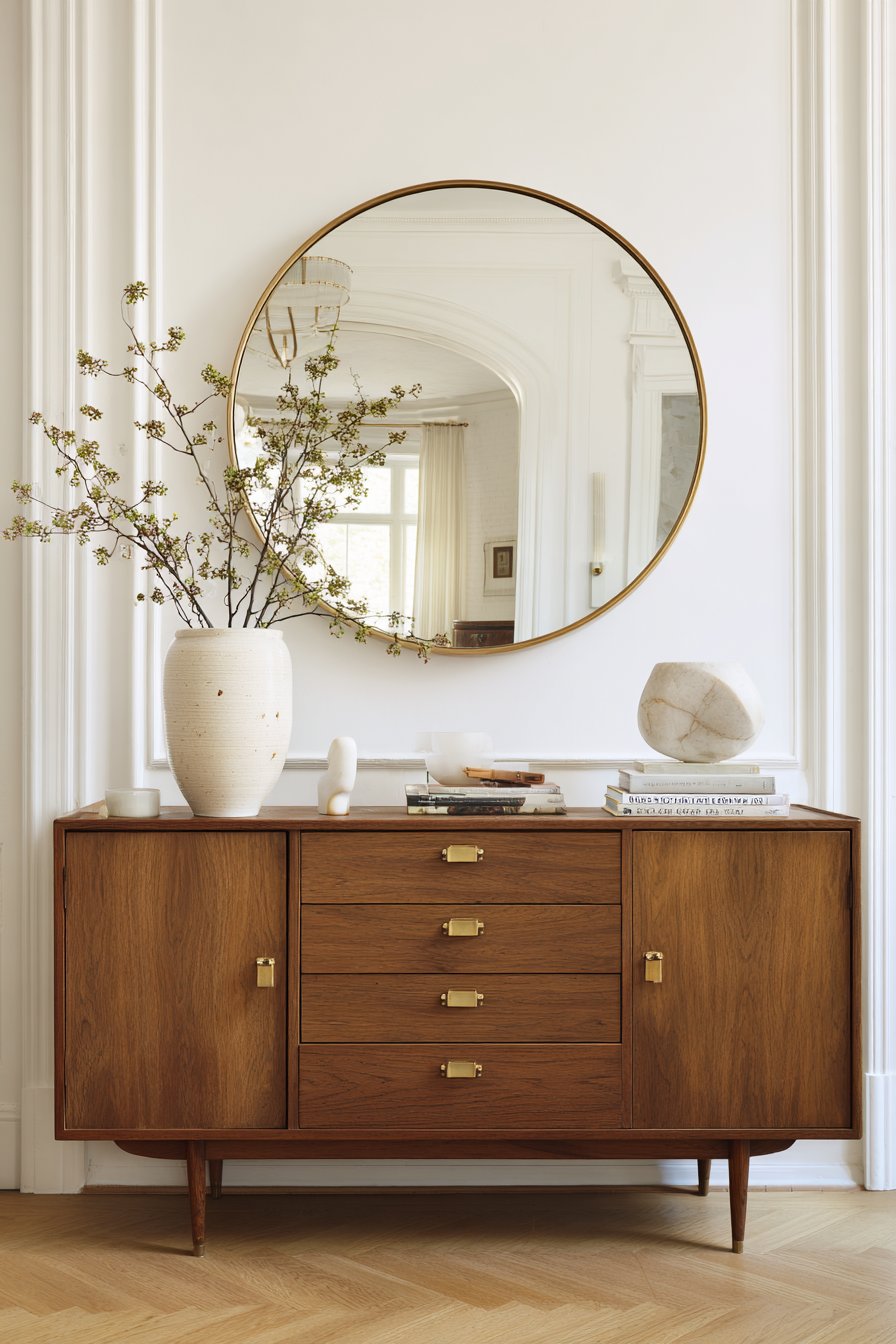
A vintage mid-century credenza in teak serves as the media console. Original brass hardware adds authentic period detail and warm metallic accent. Above the credenza, a round mirror with simple oak frame reflects natural light. The mirror visually expands the space while serving functional purposes.
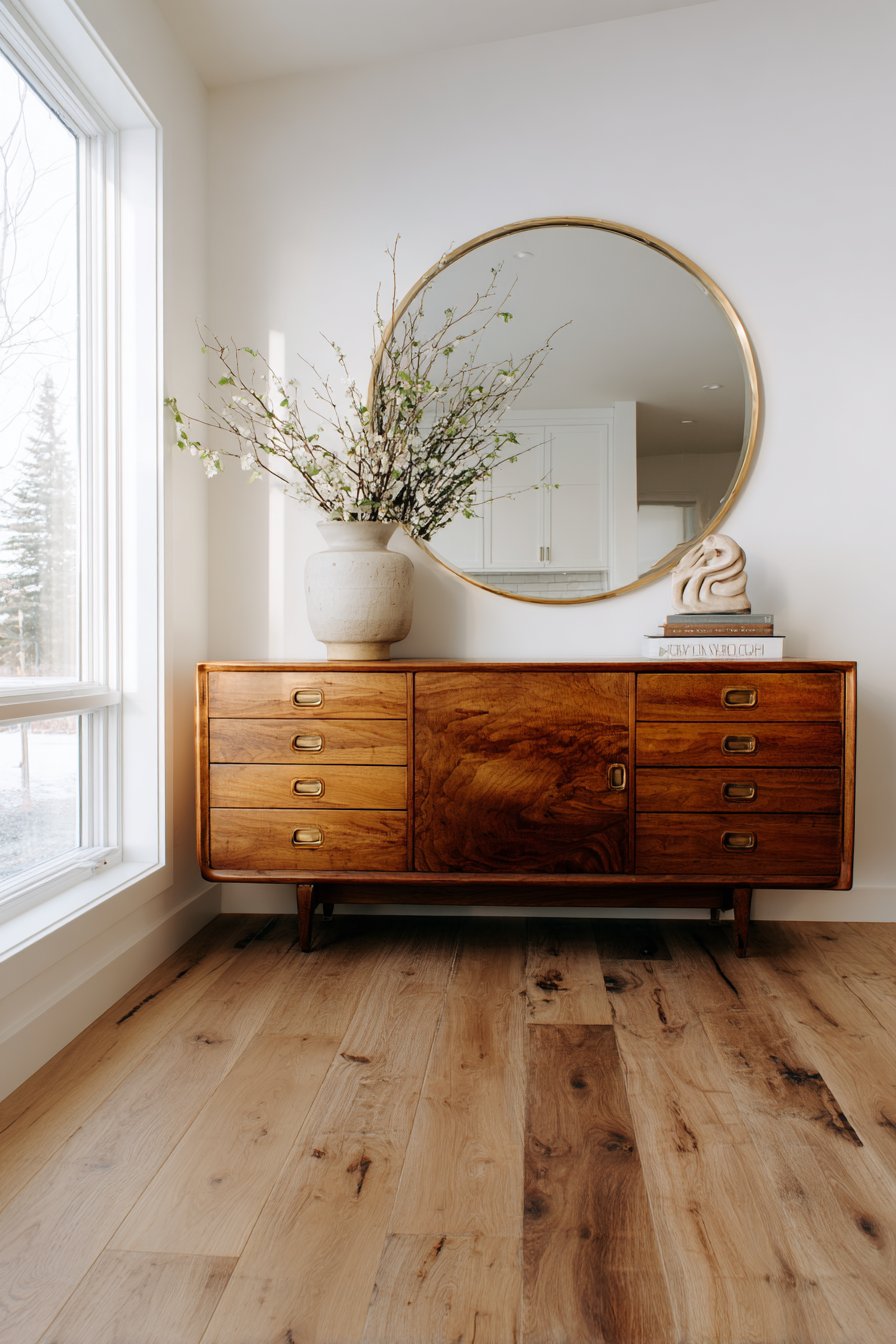
The credenza surface displays carefully chosen objects, including a ceramic vase. Fresh branches bring living natural elements into the arrangement. A small sculptural object adds artistic interest without cluttering. Design books rest horizontally, contributing both color and intellectual reference.
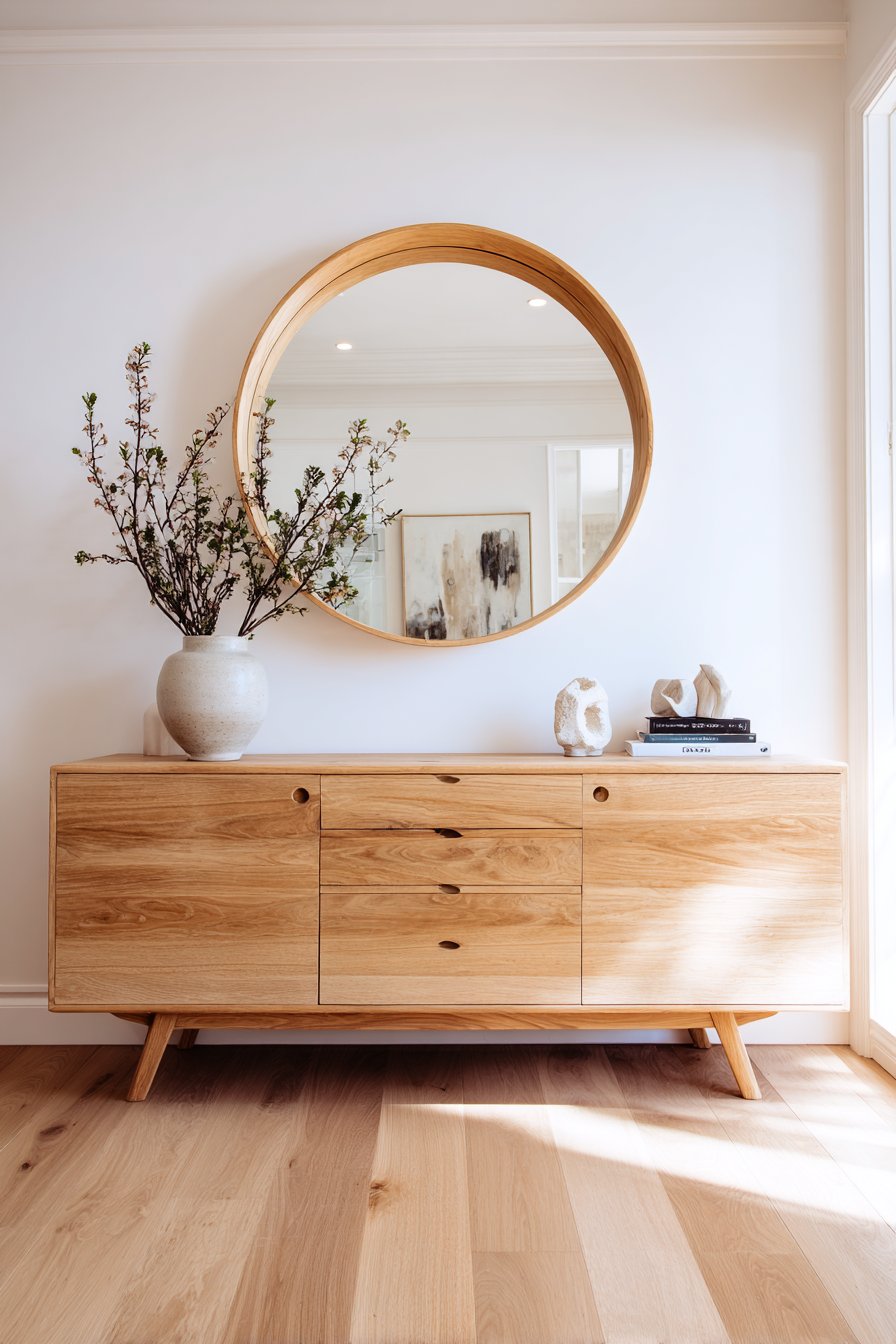
The surrounding space maintains Scandinavian simplicity with white walls and natural oak flooring. The vintage credenza adds character and warmth honoring design heritage. The piece demonstrates Scandinavian design’s timeless quality remaining relevant decades later. The investment in quality vintage furniture proves more sustainable than disposable alternatives.
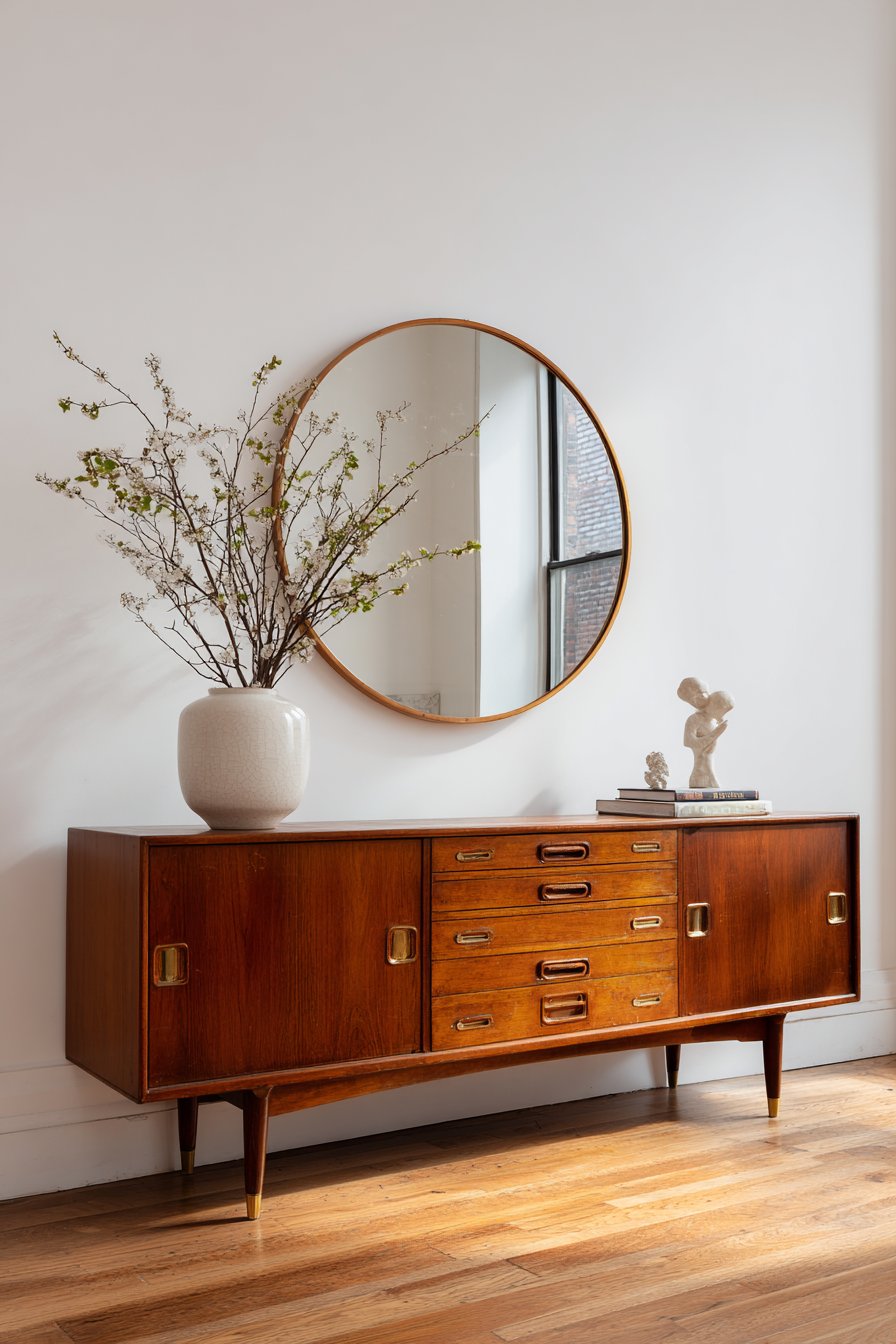
This approach shows how one statement piece can anchor an entire room. The credenza’s rich teak tones warm the otherwise neutral palette significantly. The vintage piece tells stories connecting past and present. The design choice reflects Scandinavian appreciation for lasting quality and craftsmanship.
Key Design Tips:
- Incorporate vintage teak credenzas for warmth and connection to design heritage
- Preserve original hardware for authentic period detail and character
- Hang round mirrors above credenzas to reflect light and expand perceived space
- Style surfaces with minimal curated objects rather than cluttered collections
- Choose quality vintage pieces that demonstrate lasting Scandinavian design principles
20. Candlelight Creating Ultimate Hygge Atmosphere
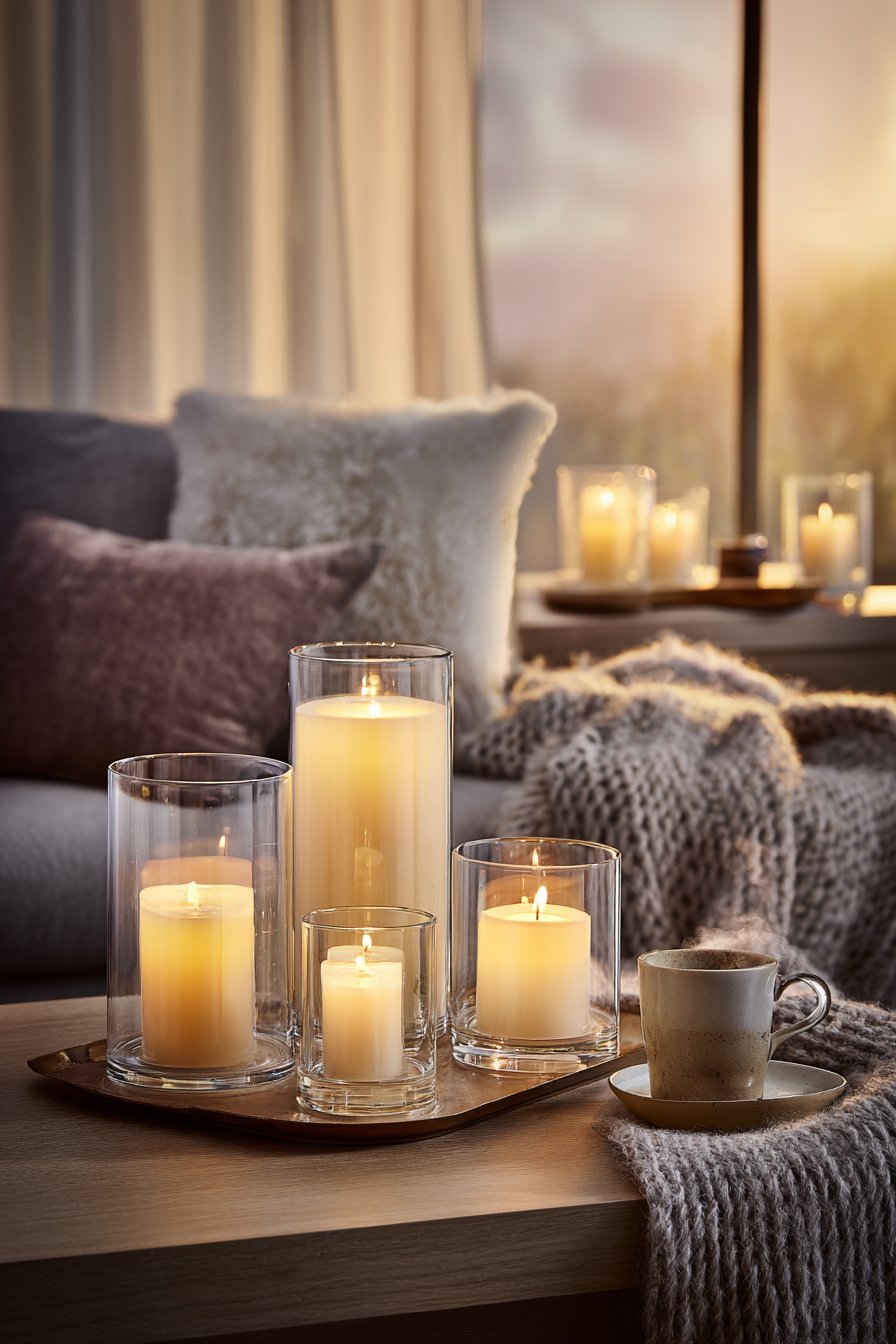
Candles in various sizes create intimate ambiance throughout the living room. Pillar candles cluster on the coffee table in varying heights. Tea lights in simple glass holders dot the floating shelves with points of light. Different height candles gather on the mantel creating a warm glow.
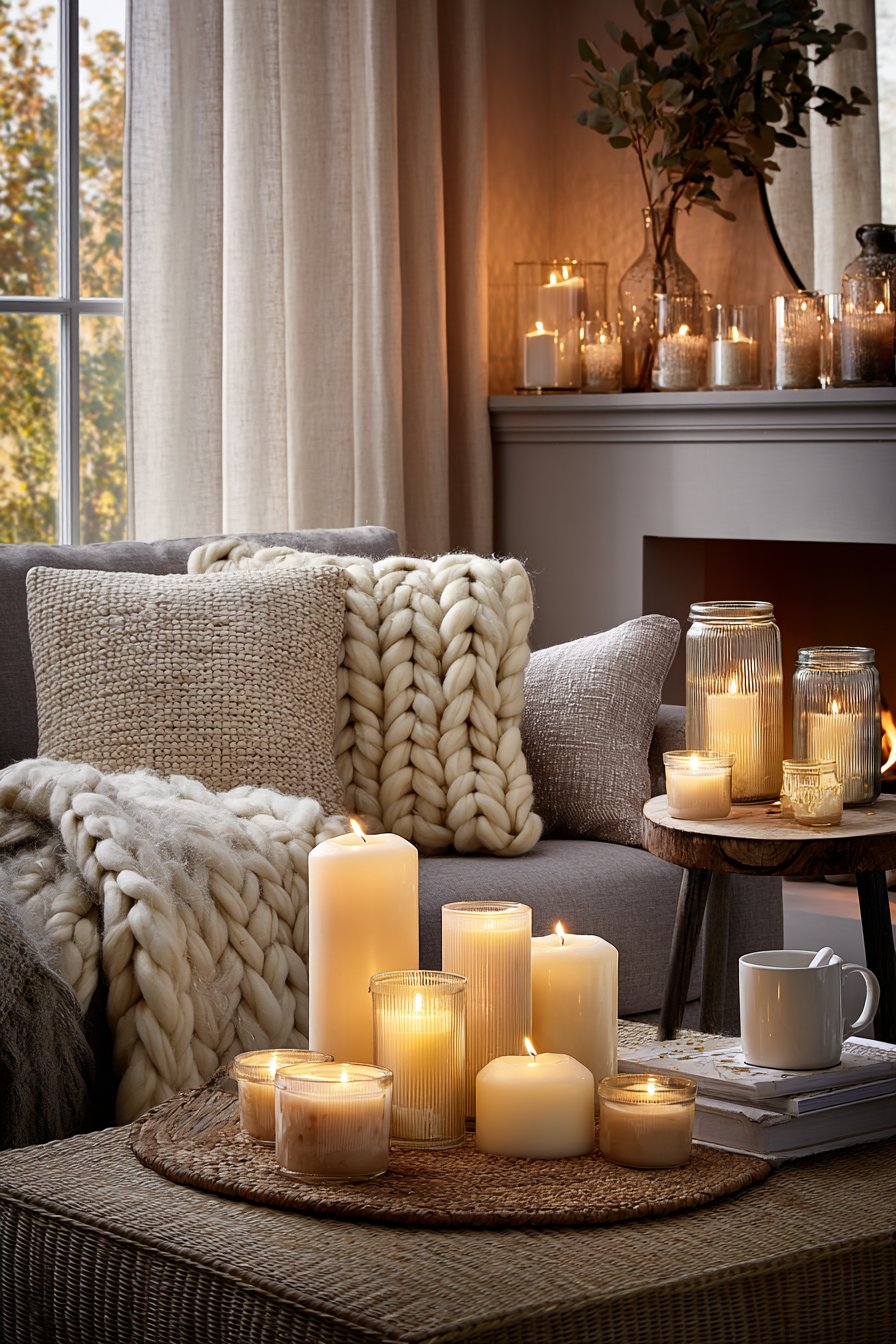
Soft candlelight mixes with warm lamp lighting creating layered illumination. The last rays of golden hour sunlight filter through sheer curtains. A chunky knit throw drapes over a natural linen sofa near the seating area. Steaming mugs rest on a side table completing the hygge scene.
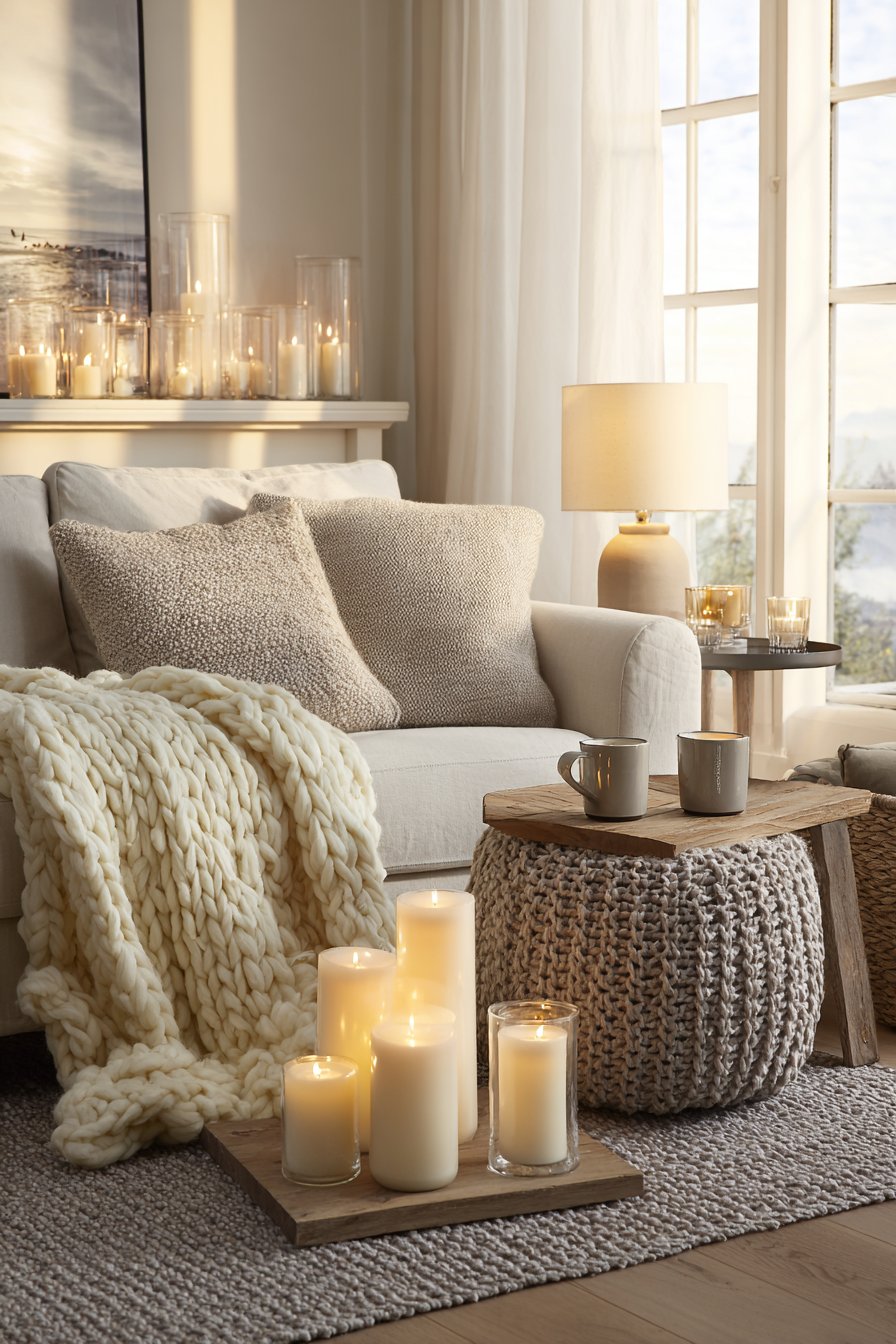
The intimate atmosphere captured during blue hour shows multiple light sources working together. The candles provide flickering organic light connecting to pre-electric traditions. The ritual of lighting candles marks the transition from day to evening. This simple act creates mindfulness and intention in daily living.
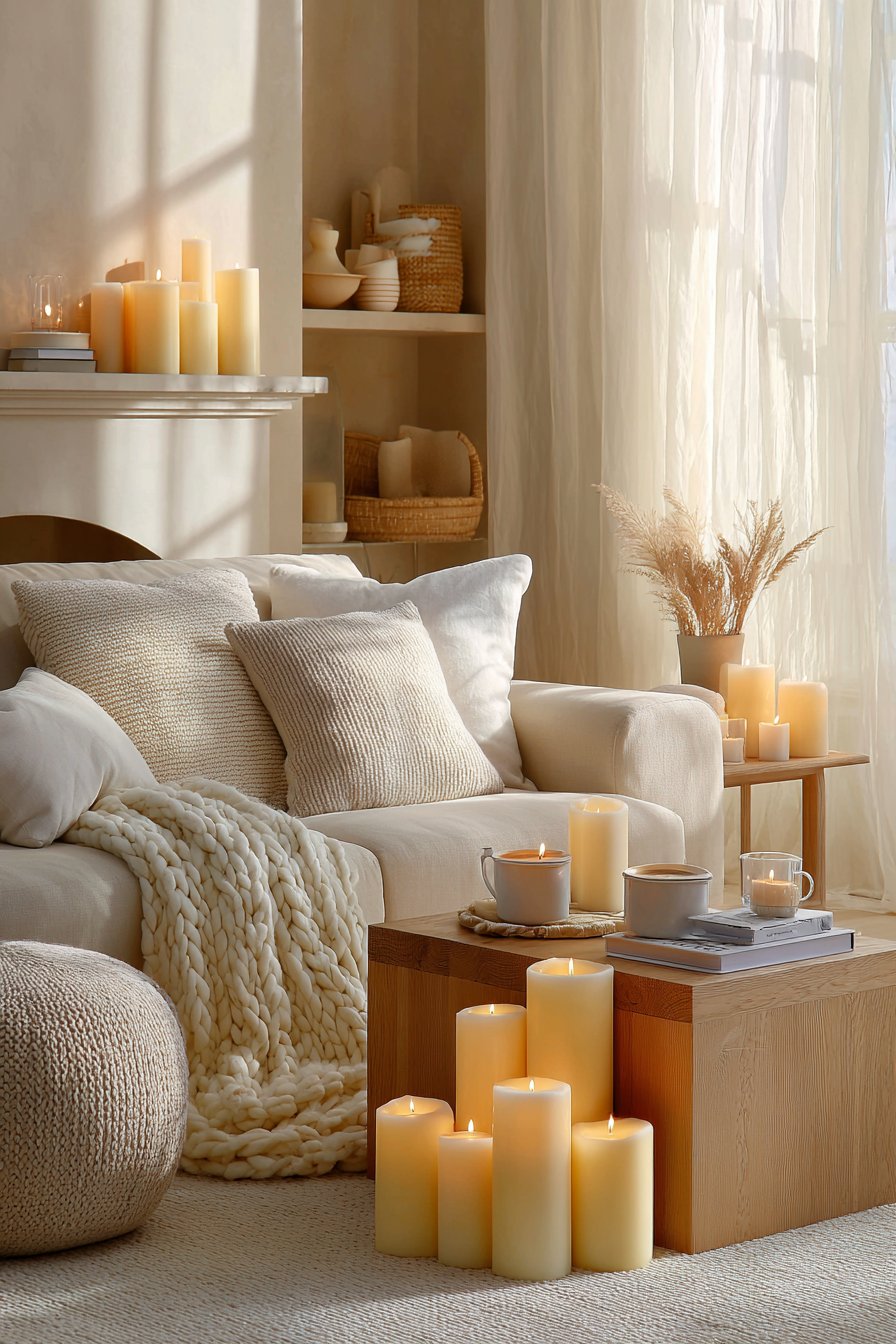
This ultimate warm scandinavian atmosphere embodies the hygge concept completely. The combination of soft lighting, cozy textiles, and warm beverages creates sanctuary. The design proves that atmosphere emerges from thoughtful layering of simple elements. The approach costs little but generates immeasurable comfort and wellbeing.
Key Design Tips:
- Layer multiple candle sizes throughout spaces for warm flickering ambient light
- Combine candlelight with lamp lighting and natural light for dimensional illumination
- Place steaming beverages and cozy throws to complete an authentic hygge atmosphere
- Light candles during blue hour to mark the day-to-evening transition mindfully
- Use simple glass holders for tea lights maintaining clean Scandinavian aesthetic
Why These Warm Scandinavian Living Room Designs Work Best
These warm Scandinavian living room designs represent refined approaches to creating comfortable, functional spaces. Each concept demonstrates sophisticated understanding of natural materials, lighting principles, and spatial composition. The designs succeed by balancing minimalist aesthetics with genuine warmth and livability.
The emphasis on natural materials like oak, birch, linen, and wool creates authentic warmth. These materials age gracefully developing character rather than deteriorating. The neutral color palettes allow quality materials to shine while maintaining visual serenity. Strategic warm accents in ochre, terracotta, and mustard add personality without overwhelming spaces.
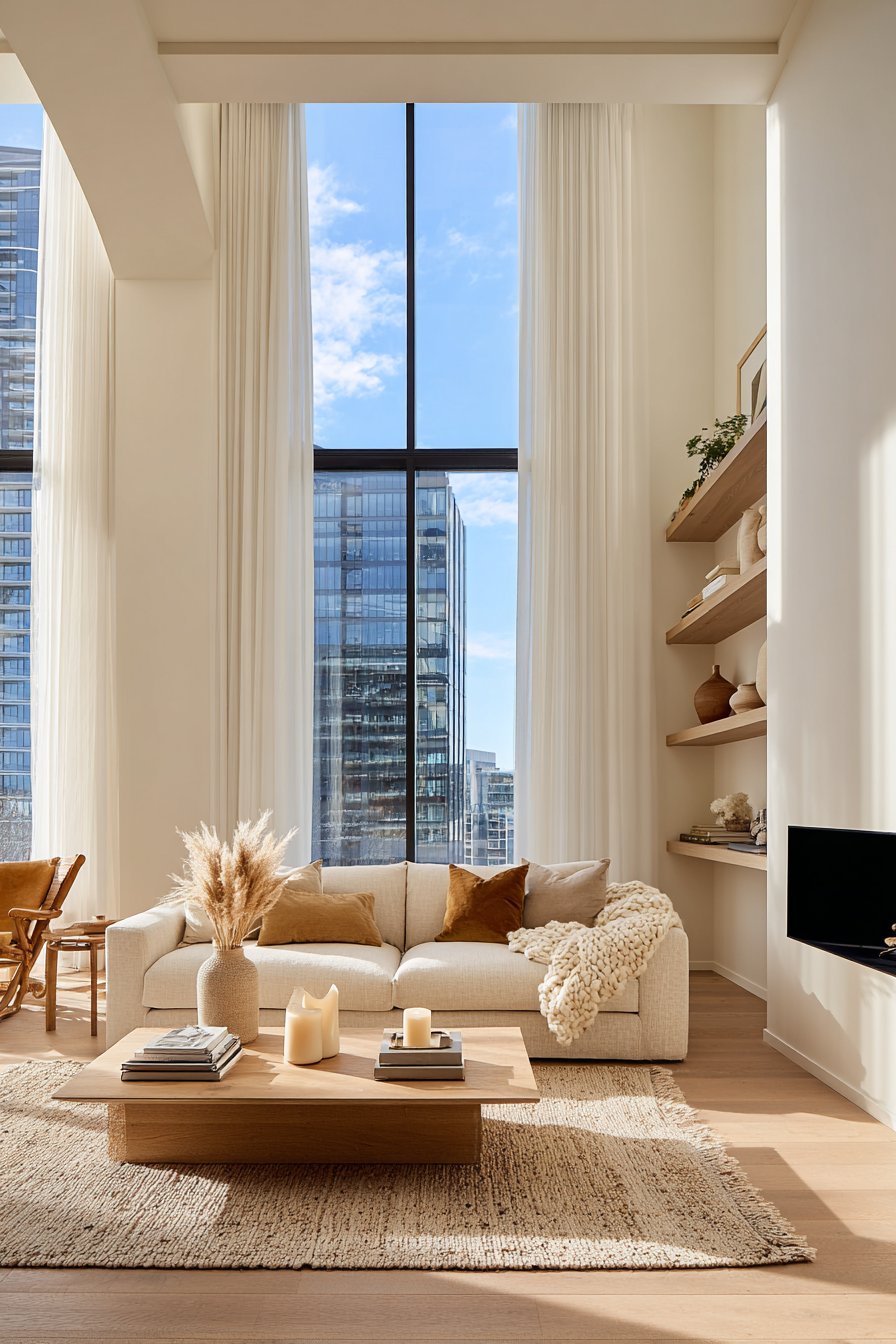
Layered lighting strategies prove essential for warm Scandinavian atmospheres. Multiple light sources at varying heights create dimensional illumination adaptable to different activities. Natural light remains paramount with large windows and sheer curtains maximizing daylight. The integration of candles honors traditional hygge practices while adding organic flickering light.
The textile layering demonstrates how comfort emerges through tactile variety. Multiple throws, cushions, and rugs in coordinating tones invite touch and relaxation. The textural depth prevents neutral palettes from feeling flat or boring. Quality natural textiles improve with use becoming softer and more beautiful.
These designs address real contemporary needs, including workspace integration and flexible storage. The solutions maintain aesthetic integrity while solving practical problems. The emphasis on sustainability through quality materials and vintage pieces reflects environmental consciousness. The biophilic elements connect inhabitants to nature improving psychological wellbeing.
The spatial considerations show how Scandinavian principles adapt to various room sizes and layouts. Small spaces benefit from light wood tones and clever storage. Larger rooms embrace open floor plans with integrated dining areas. The designs scale successfully across different contexts while maintaining core principles.
Conclusion
These twenty warm Scandinavian living room designs demonstrate that minimalism and coziness coexist beautifully. The key takeaways include the importance of natural materials, layered lighting, and textile depth. Quality pieces combined with thoughtful curation create rooms that feel both serene and welcoming.
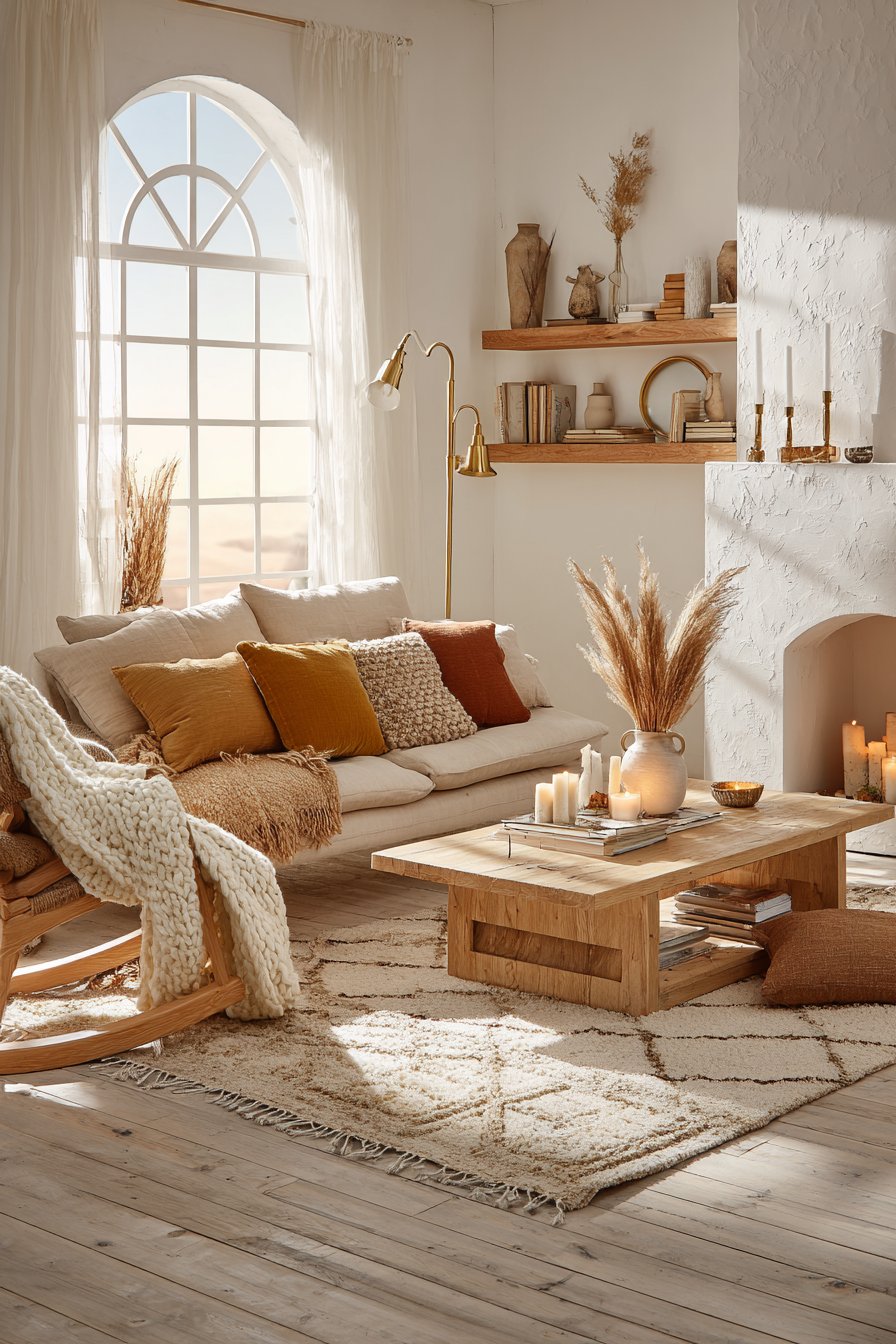
Successful warm Scandinavian design balances aesthetic restraint with sensory comfort. Start by establishing a foundation of natural wood and neutral upholstery. Layer textiles gradually building tactile and visual interest. Invest in quality lighting at multiple heights for adaptable ambiance.
Remember that hygge emerges from intention rather than expense. Simple rituals like lighting candles and brewing tea create an atmosphere. The designs shared here provide inspiration adaptable to various budgets and spaces. Your warm Scandinavian living room awaits through thoughtful planning and authentic material choices.
