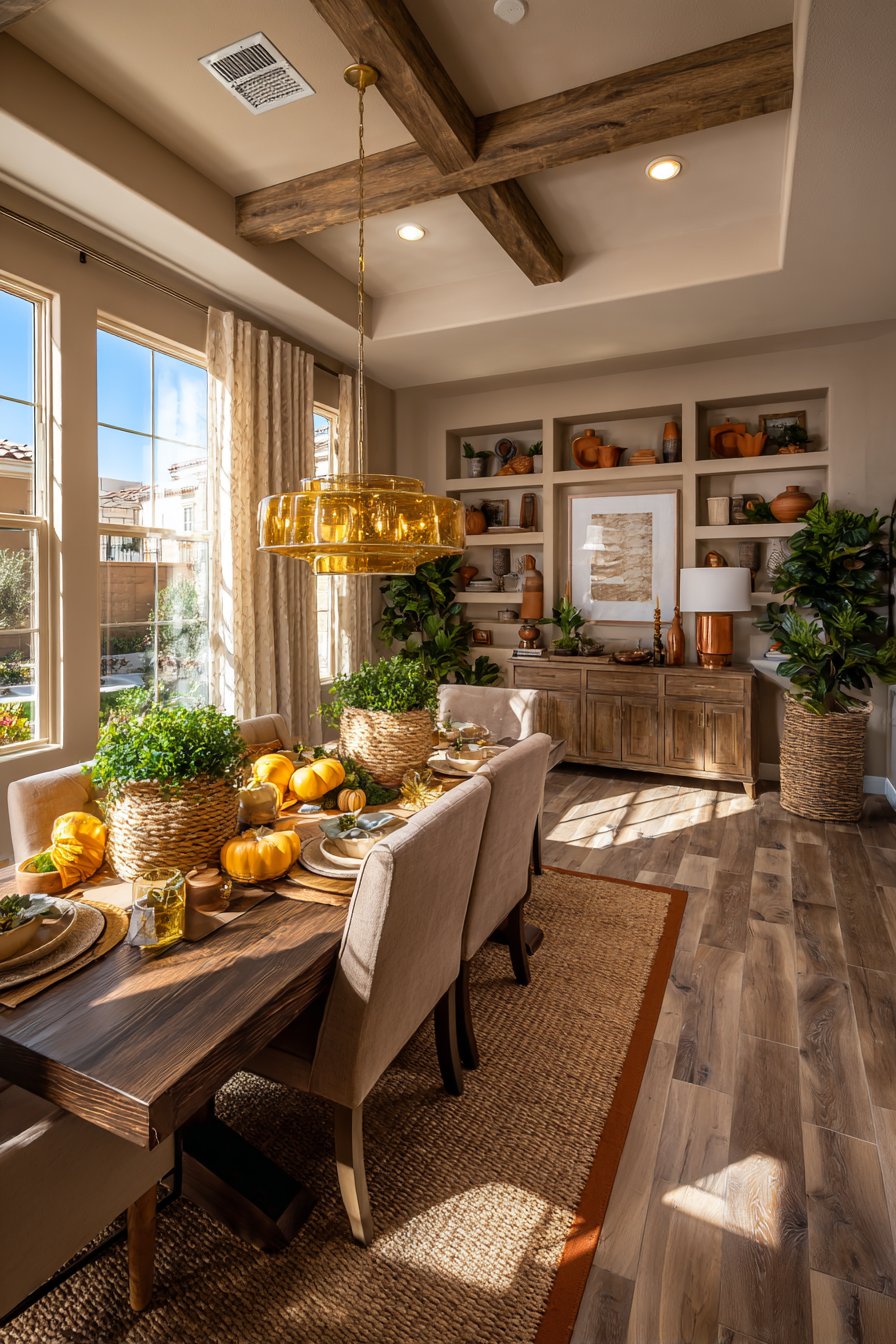


Creating a warm dining room transforms everyday meals into cherished experiences. The right combination of natural materials, thoughtful lighting, and inviting color palettes elevates this essential space. A well-designed dining room becomes the heart of your home where family and friends naturally gather.
Warm dining rooms have become increasingly sought after in modern interior design. They offer sanctuary from busy lives while encouraging meaningful connections. The carefully curated blend of textures, tones, and lighting creates environments that feel both sophisticated and welcoming.
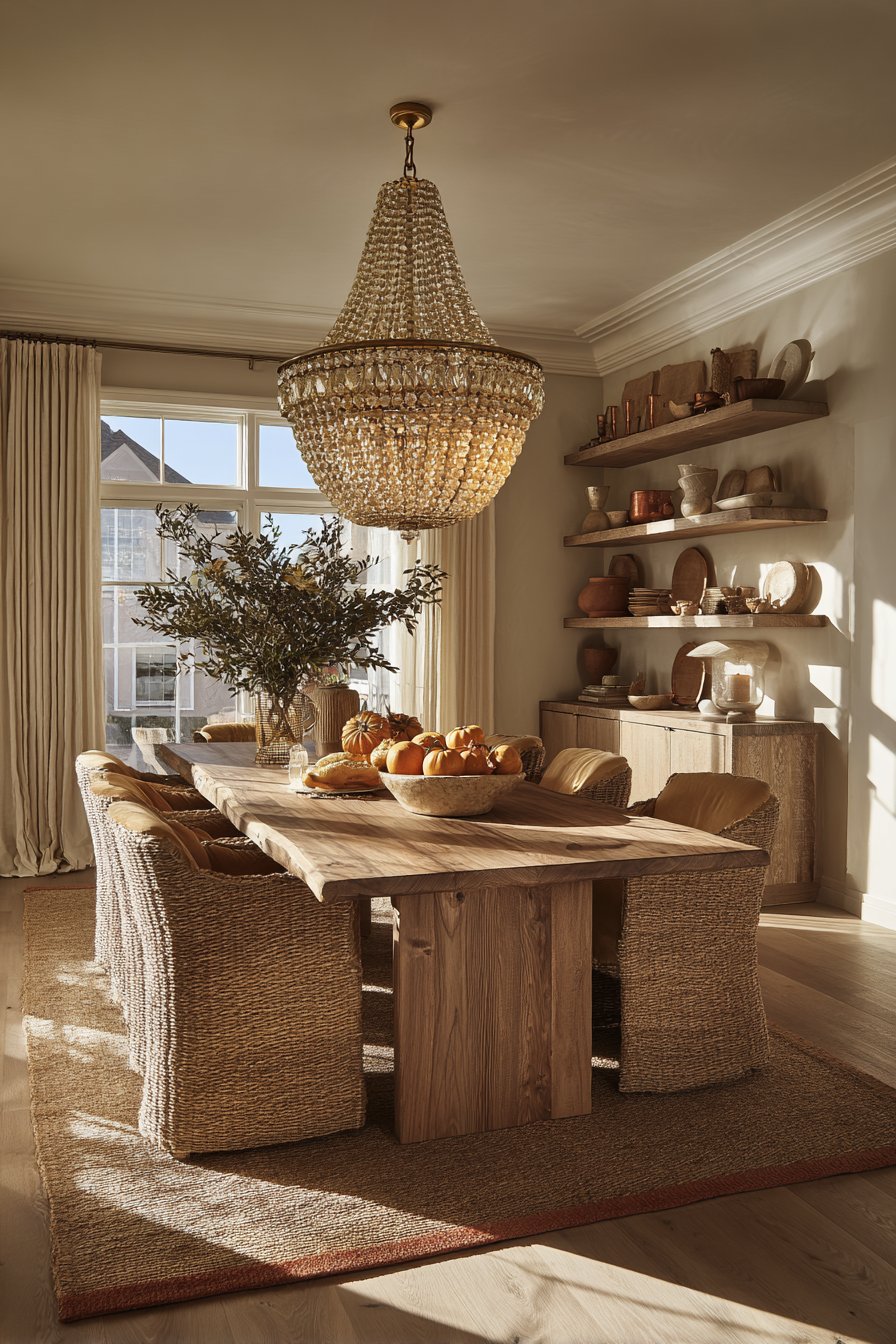
This comprehensive guide explores twenty distinct approaches to warm dining room design. From rustic farmhouse charm to contemporary elegance, each concept demonstrates unique ways to infuse warmth into your dining space. These designs prove that warmth comes not from a single element but from thoughtful layering of materials, colors, and personal touches that reflect your lifestyle.
1. Honey-Toned Oak Elegance with Terracotta Accents
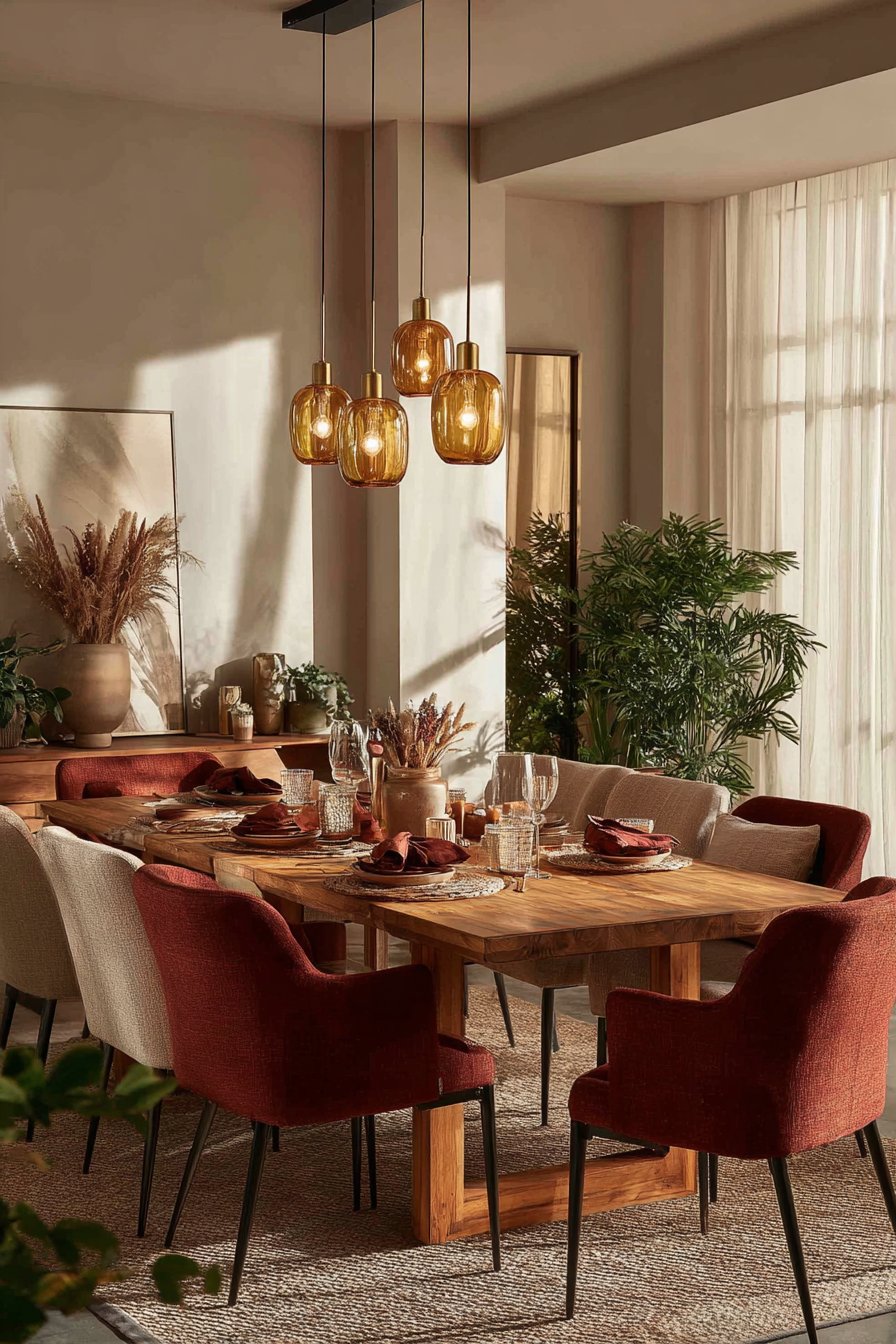
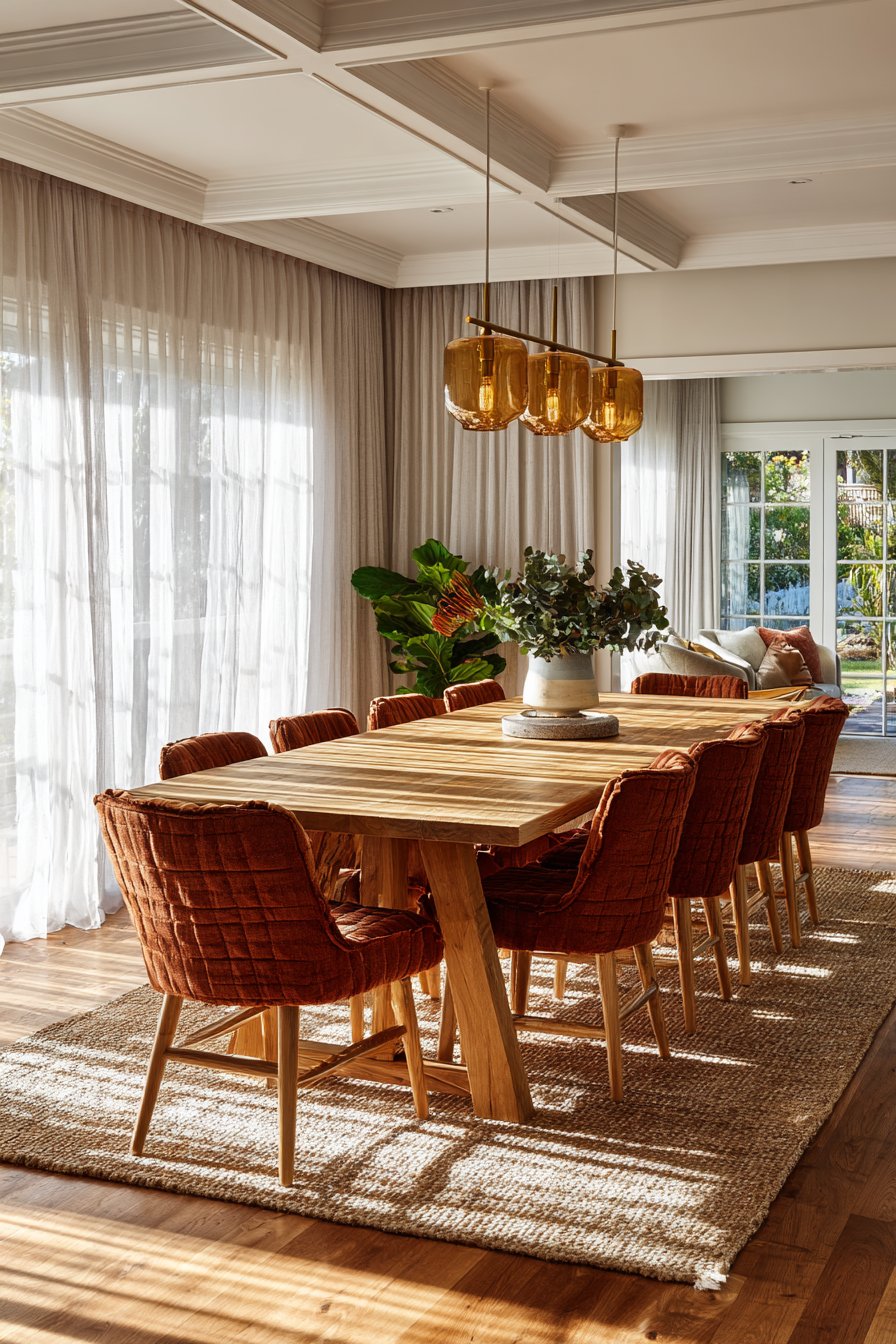
Picture a dining room where a solid oak table commands attention with its natural honey finish. The wood grain patterns tell their own story through organic variations. Upholstered chairs surround the table, dressed in rich terracotta linen that adds both comfort and warmth. The fabric’s earthy tone creates perfect balance with the golden wood.
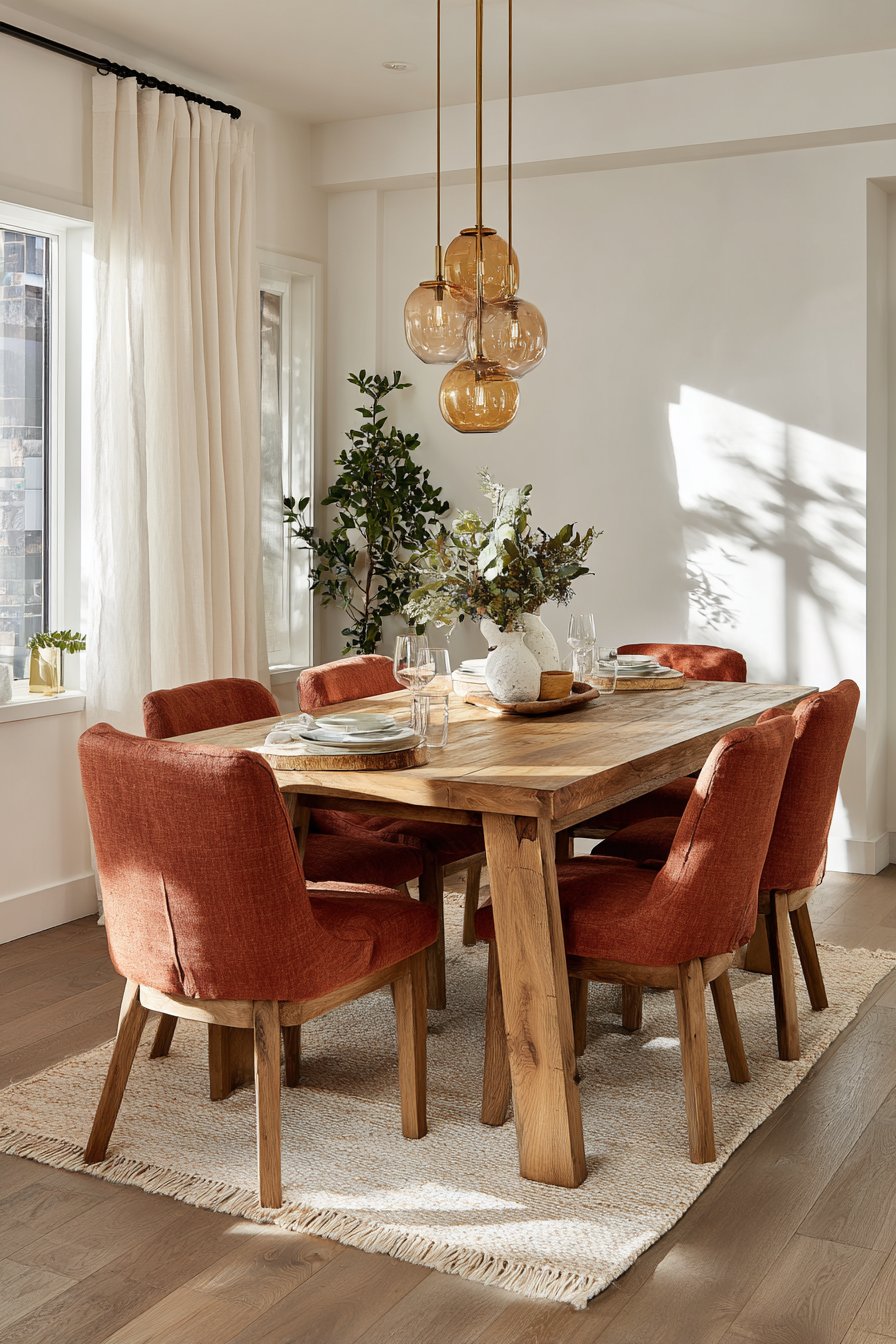
A woven jute rug anchors the arrangement beneath the table. This natural fiber adds textural depth while maintaining the warm aesthetic. The rug’s organic quality complements the wood beautifully. Overhead, a brass pendant light fixture holds amber glass shades. These cast soft golden illumination that enhances the room’s inviting atmosphere throughout the day.
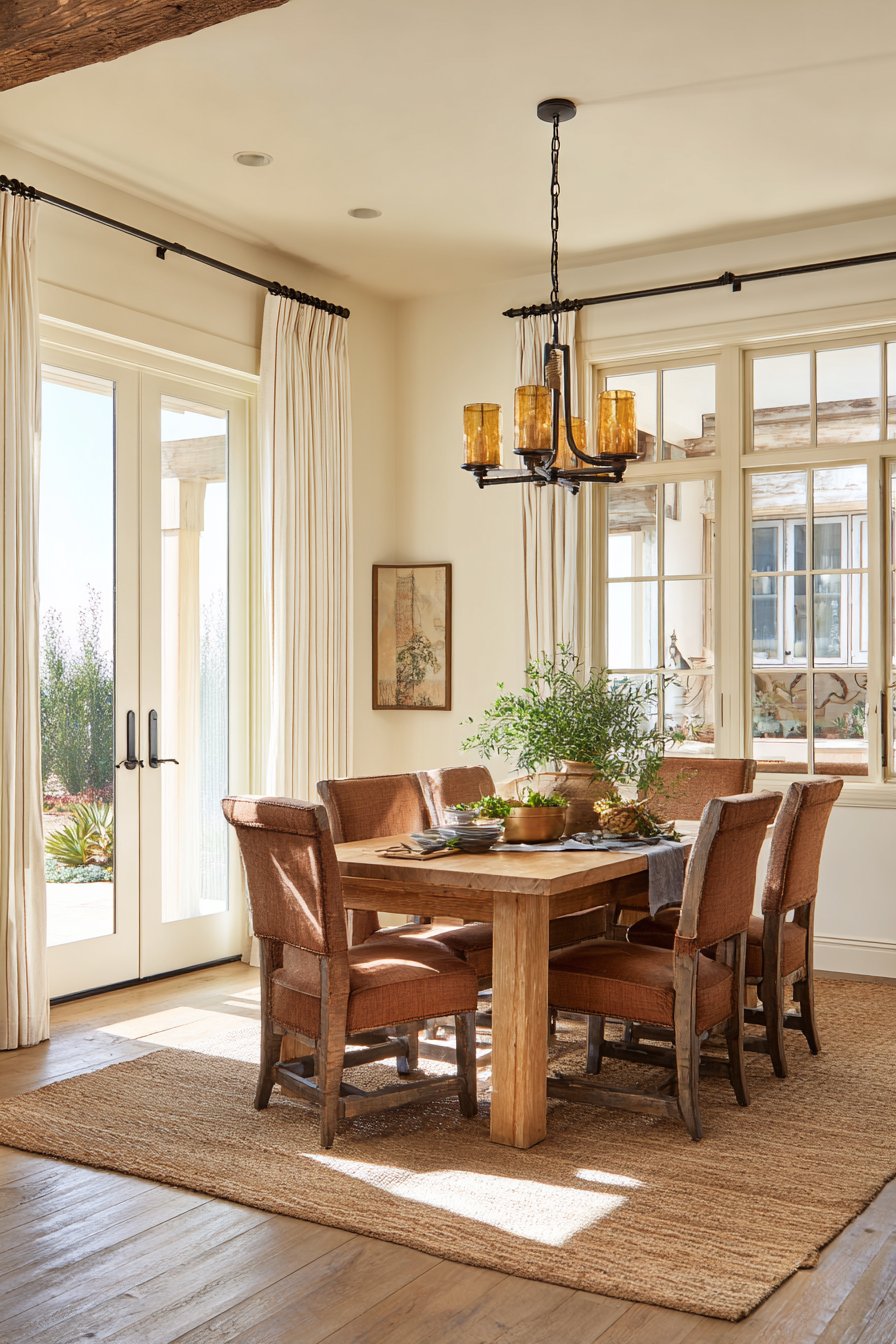
Cream-colored walls provide a neutral backdrop that amplifies natural light. Sheer curtains filter sunlight, creating gentle shadows that dance across surfaces. The interplay of natural and artificial light maintains warmth from morning through evening. This design demonstrates how carefully selected materials create cohesive warmth without overwhelming the space.
The beauty of this approach lies in its timeless appeal. Oak furniture ages gracefully, developing deeper character over years. The terracotta upholstery adds personality without competing with the wood’s natural beauty. Together, these elements create a dining room that feels both current and enduring.
Key Design Tips:
- Select solid oak furniture with visible grain patterns for authentic warmth
- Choose terracotta or rust-toned fabrics to complement honey wood finishes
- Layer natural textures through jute or sisal rugs for grounding effect
- Install brass fixtures with amber glass to enhance golden light quality
- Use cream walls to maximize natural light reflection throughout the space
- Add sheer window treatments for soft, filtered daylight
2. Rustic Farmhouse Charm with Reclaimed Wood Character
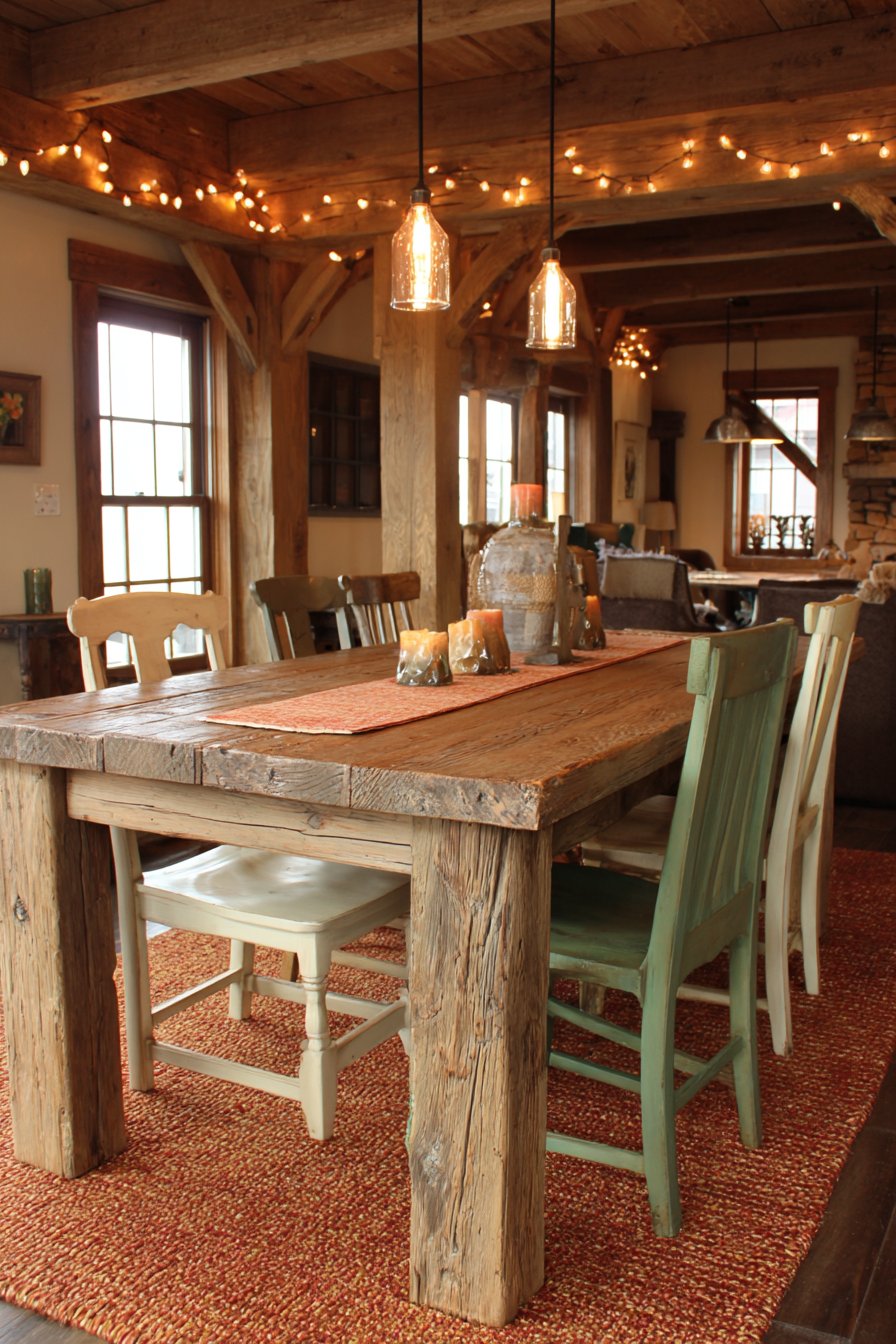
Imagine entering a dining space where a reclaimed wood farmhouse table takes center stage. The surface shows authentic patina and natural imperfections that tell stories of previous lives. Mismatched vintage wooden chairs surround the table in warm cream and sage tones. This intentional variety adds character rather than chaos to the design.
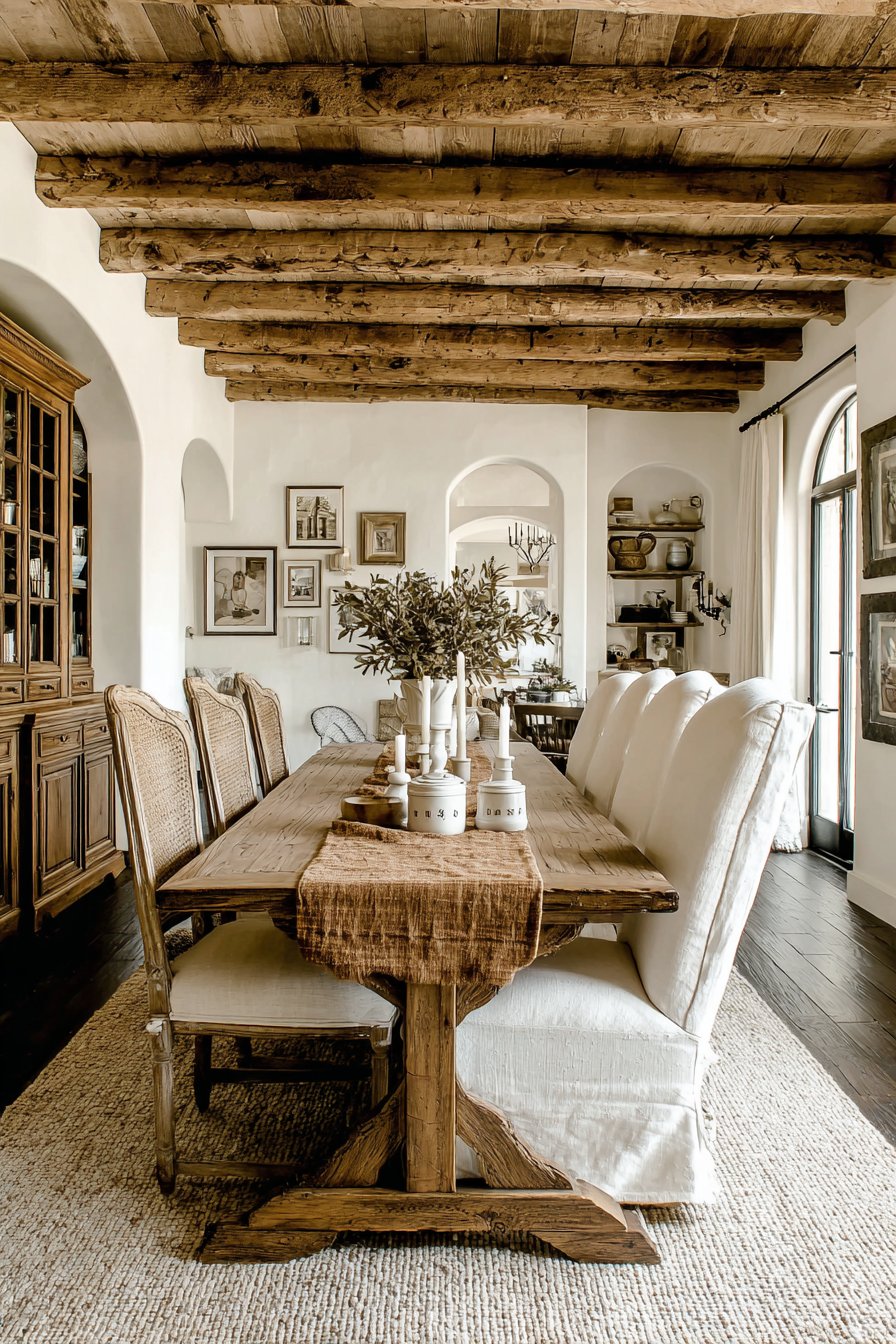
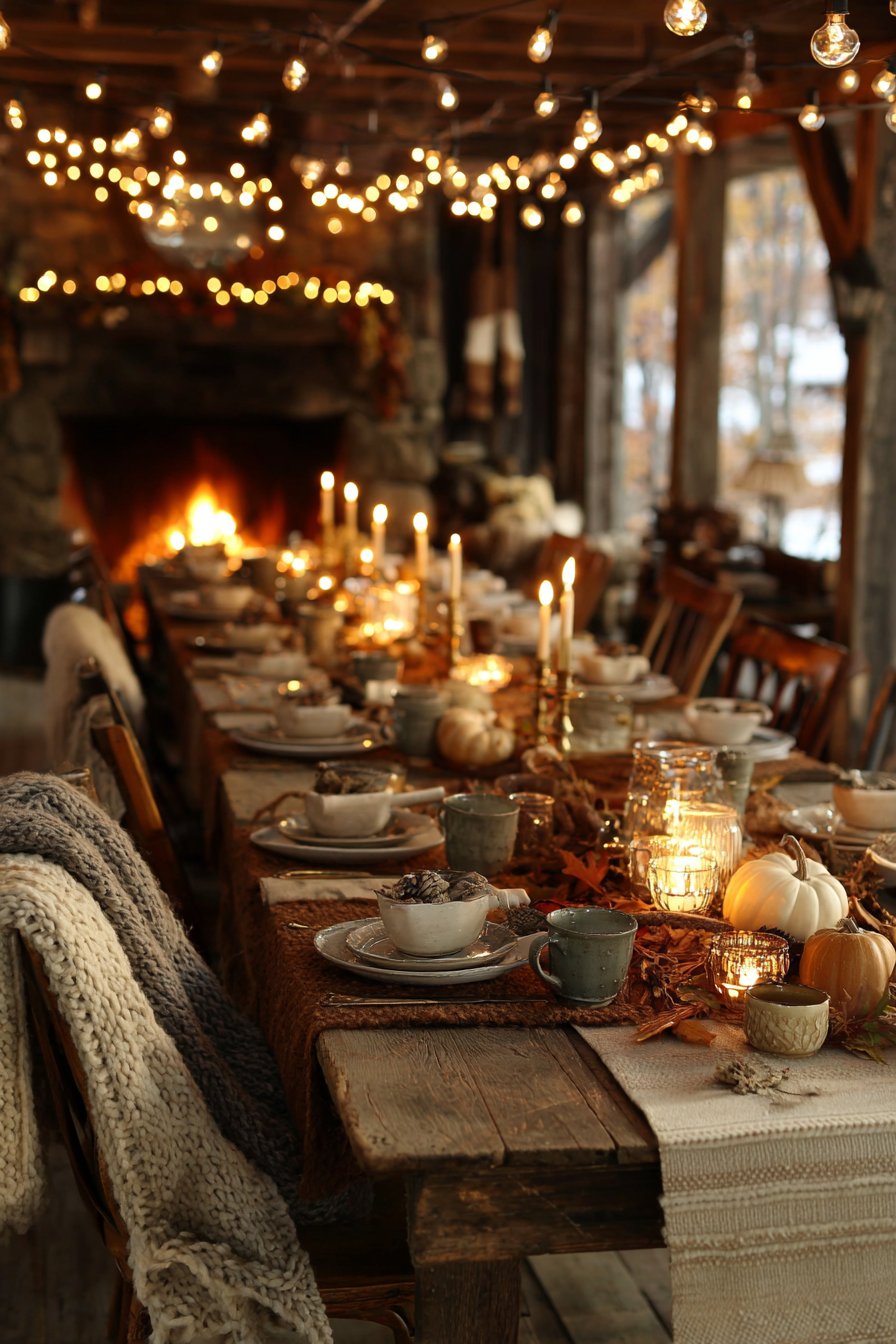
A textured wool runner extends down the table’s center in burnt orange. Brass candlesticks and ceramic serving pieces rest atop this foundation. The layering creates visual interest while maintaining practical functionality. Exposed wooden beams overhead add architectural warmth that connects ceiling to floor elements seamlessly.
Edison bulb string lights provide ambient glow that transforms the space during evening hours. The warm light from vintage-style bulbs creates intimate atmosphere perfect for gatherings. Natural afternoon light complements this evening ambiance beautifully. The combination demonstrates how layered lighting creates warmth throughout different times of day.
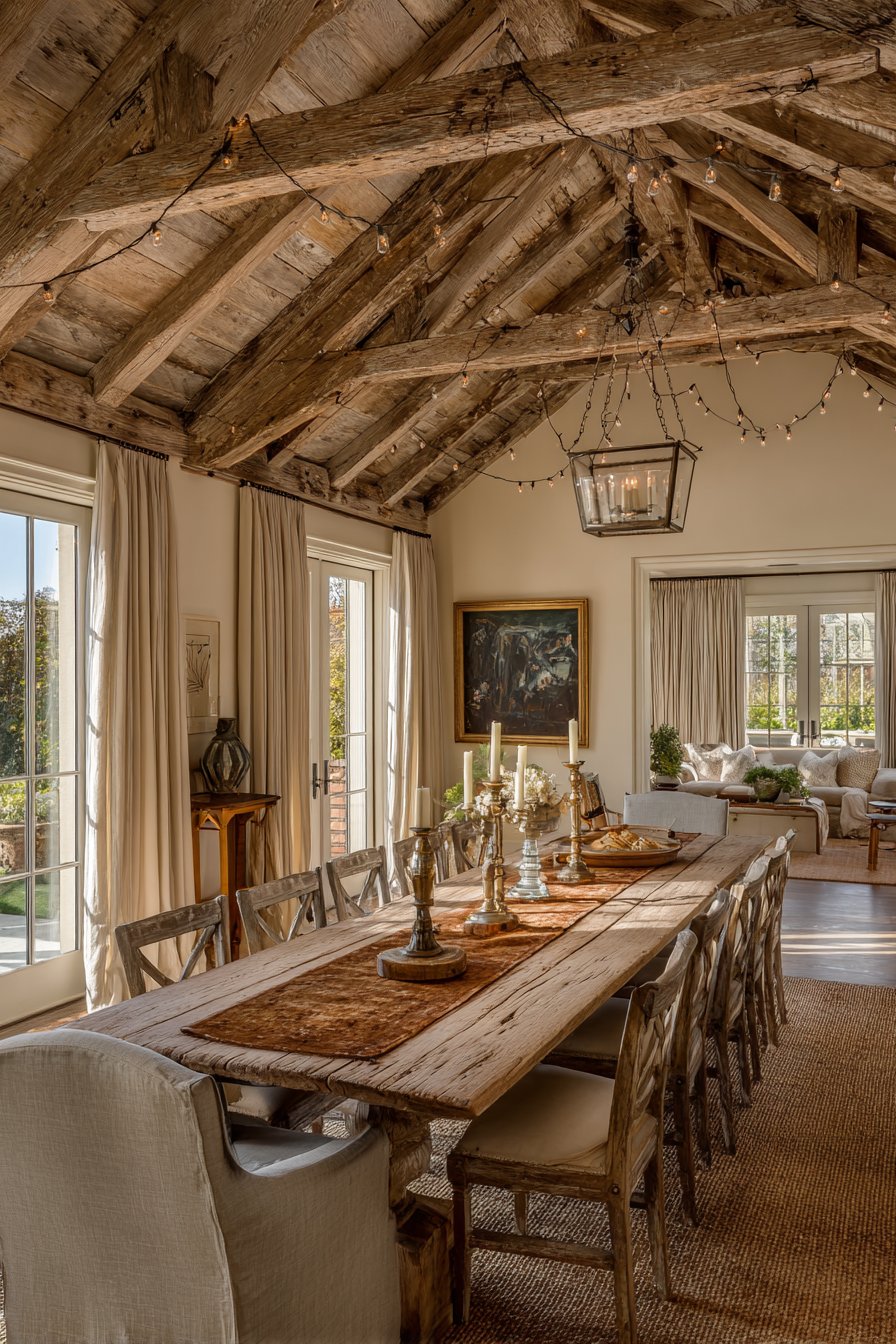
This design celebrates imperfection as a virtue rather than flaw. The reclaimed wood’s weathered appearance brings authenticity that new materials cannot replicate. Each scratch and mark adds character that resonates with those seeking genuine warmth. The mismatched chairs reinforce this lived-in comfort that makes guests feel immediately at home.
Key Design Tips:
- Source reclaimed wood tables for authentic character and sustainability
- Embrace mismatched vintage chairs in coordinating warm tones
- Add wool or linen table runners in burnt orange or rust shades
- Install Edison bulb lighting for warm vintage-inspired ambiance
- Incorporate brass candlesticks and ceramic pieces for metallic warmth
- Expose wooden architectural elements like beams when possible
3. Classic Round Table Elegance with Caramel Velvet
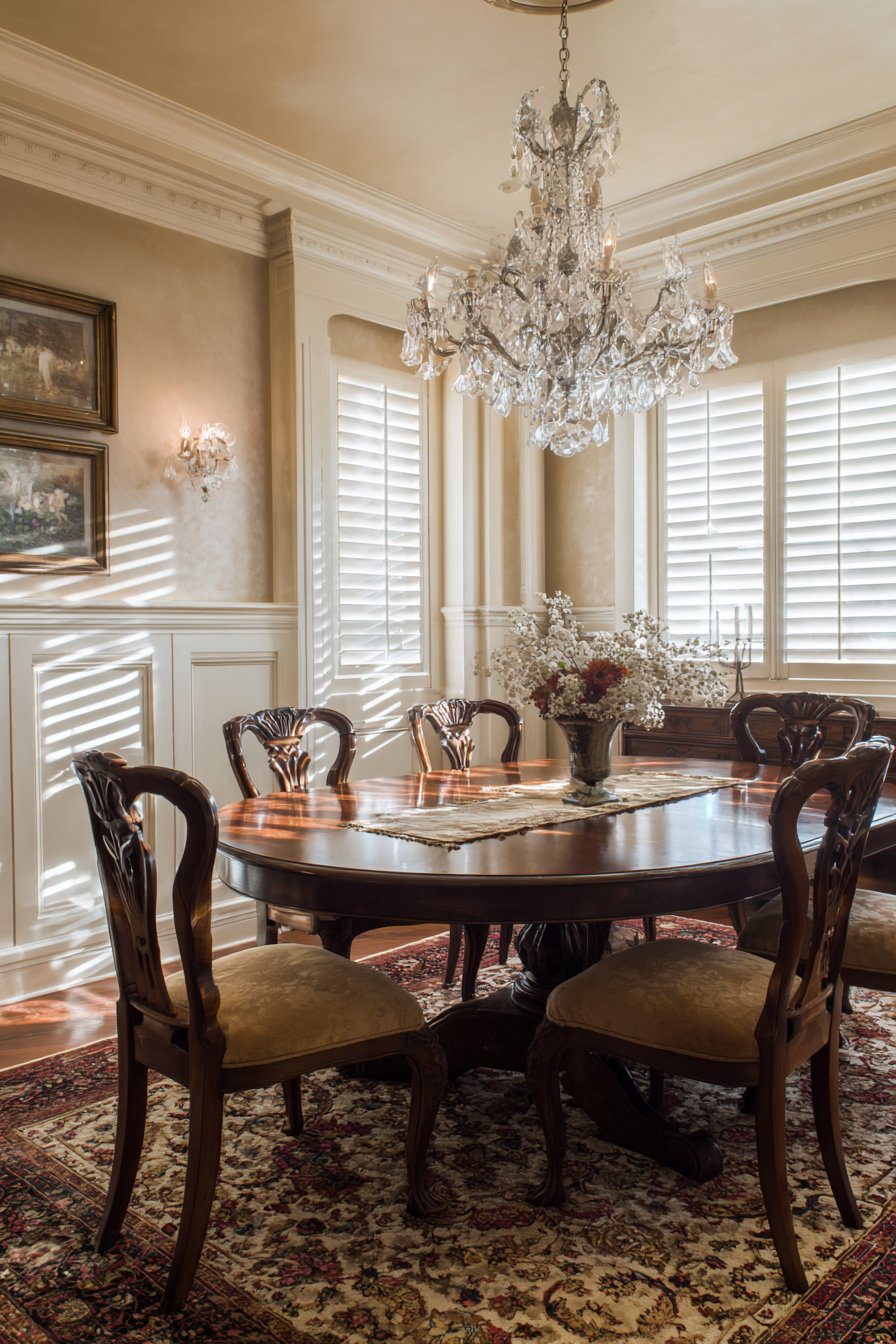
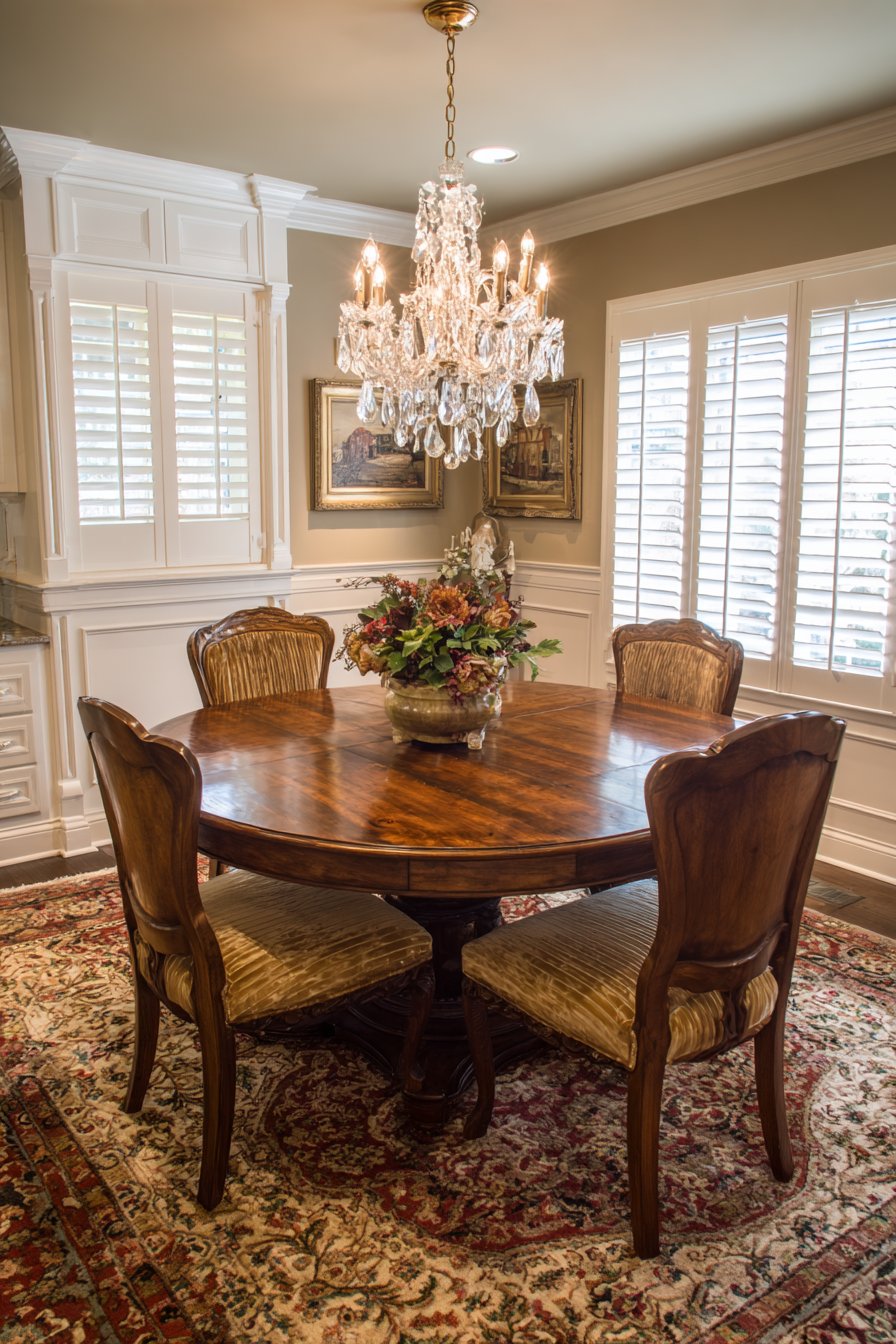
A round pedestal table in walnut finish creates intimate dining arrangements. The circular shape encourages conversation and connection among diners. Six curved-back chairs feature caramel-colored velvet upholstery that invites touch. The luxurious fabric adds sophistication while maintaining approachable warmth.
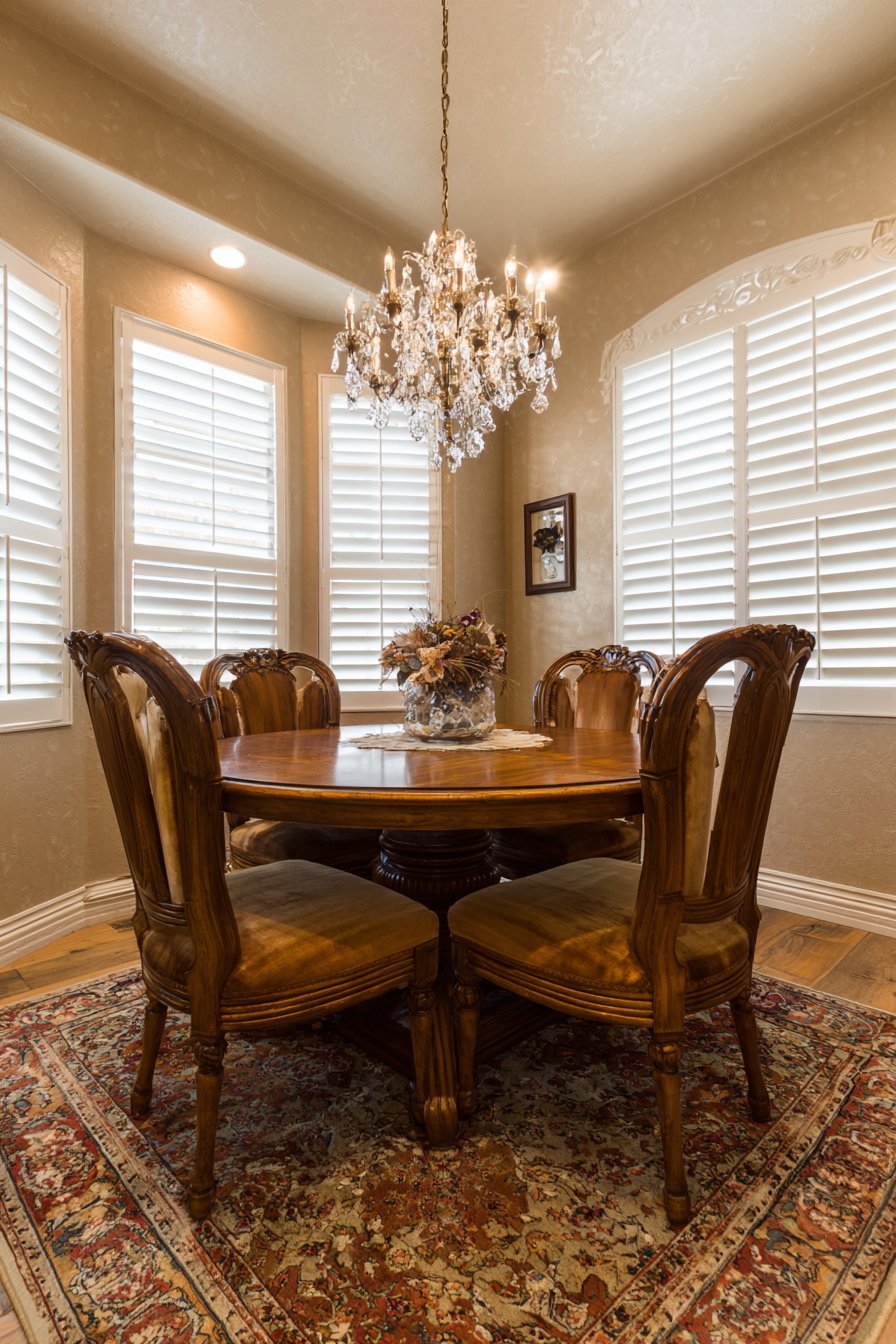
A vintage Persian rug in rust, gold, and cream tones grounds the circular arrangement perfectly. The intricate patterns add visual richness without overwhelming the space. Warm taupe walls feature white wainscoting that adds architectural interest. This classic combination creates depth while maintaining the warm color palette throughout.
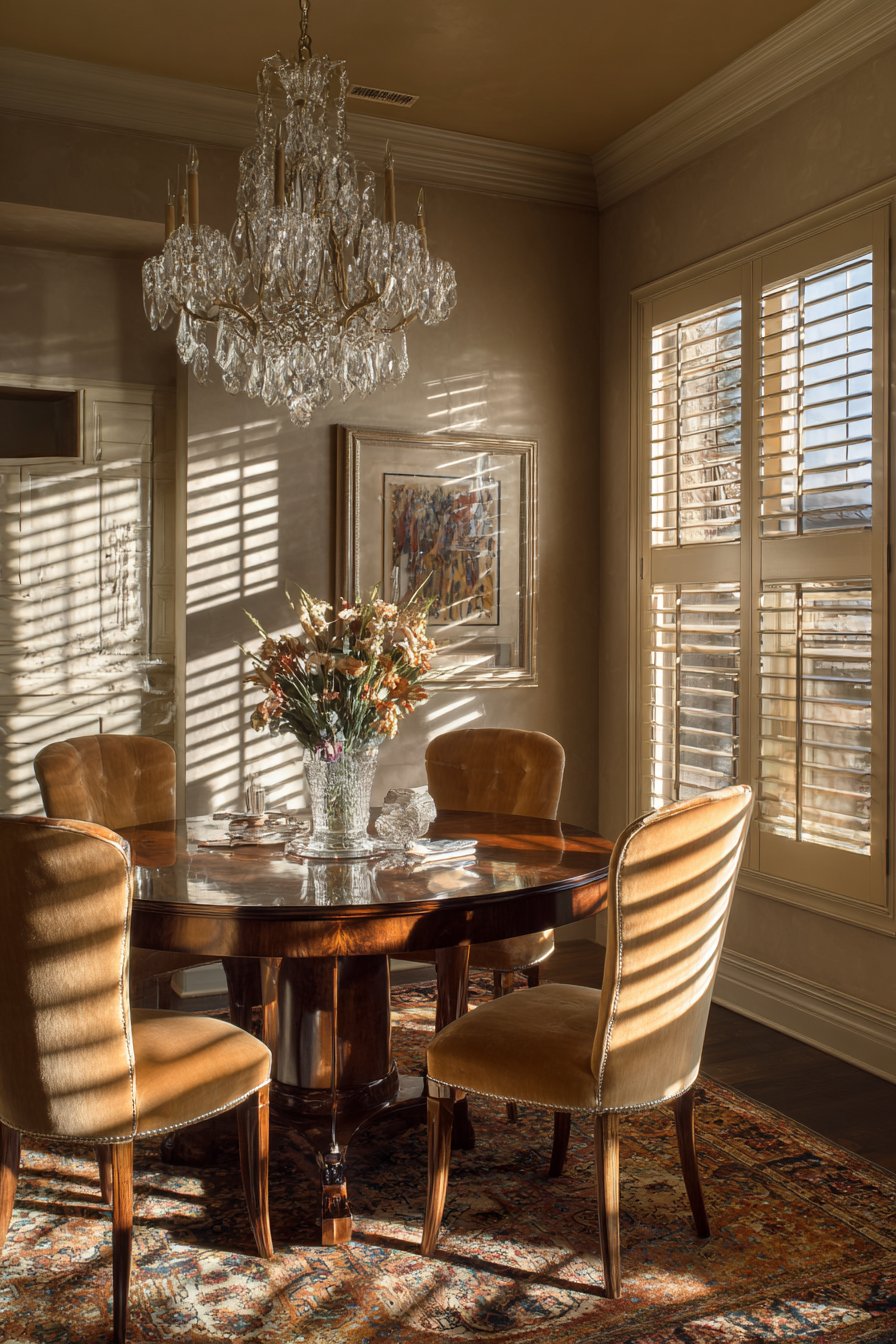
A traditional crystal chandelier adds elegant sparkle overhead. The fixture’s facets catch and reflect light beautifully throughout the day. Natural light filters through plantation shutters, creating striped patterns across surfaces. These light patterns add dynamic visual interest that changes with the sun’s movement.
This design proves that formality and warmth coexist beautifully. The velvet upholstery adds luxury without stuffiness. The round table shape breaks from traditional rectangular formats while maintaining classic elegance. The Persian rug introduces pattern and color that ties all elements together harmoniously.
Key Design Tips:
- Choose round pedestal tables for intimate conversation arrangements
- Upholster dining chairs in caramel or cognac velvet for luxurious warmth
- Layer vintage Persian or Oriental rugs in warm jewel tones
- Paint walls in warm taupe with crisp white wainscoting detail
- Install crystal chandeliers for elegant light reflection and sparkle
- Add plantation shutters for adjustable natural light control
4. Mediterranean-Inspired Warmth with Terracotta Floors
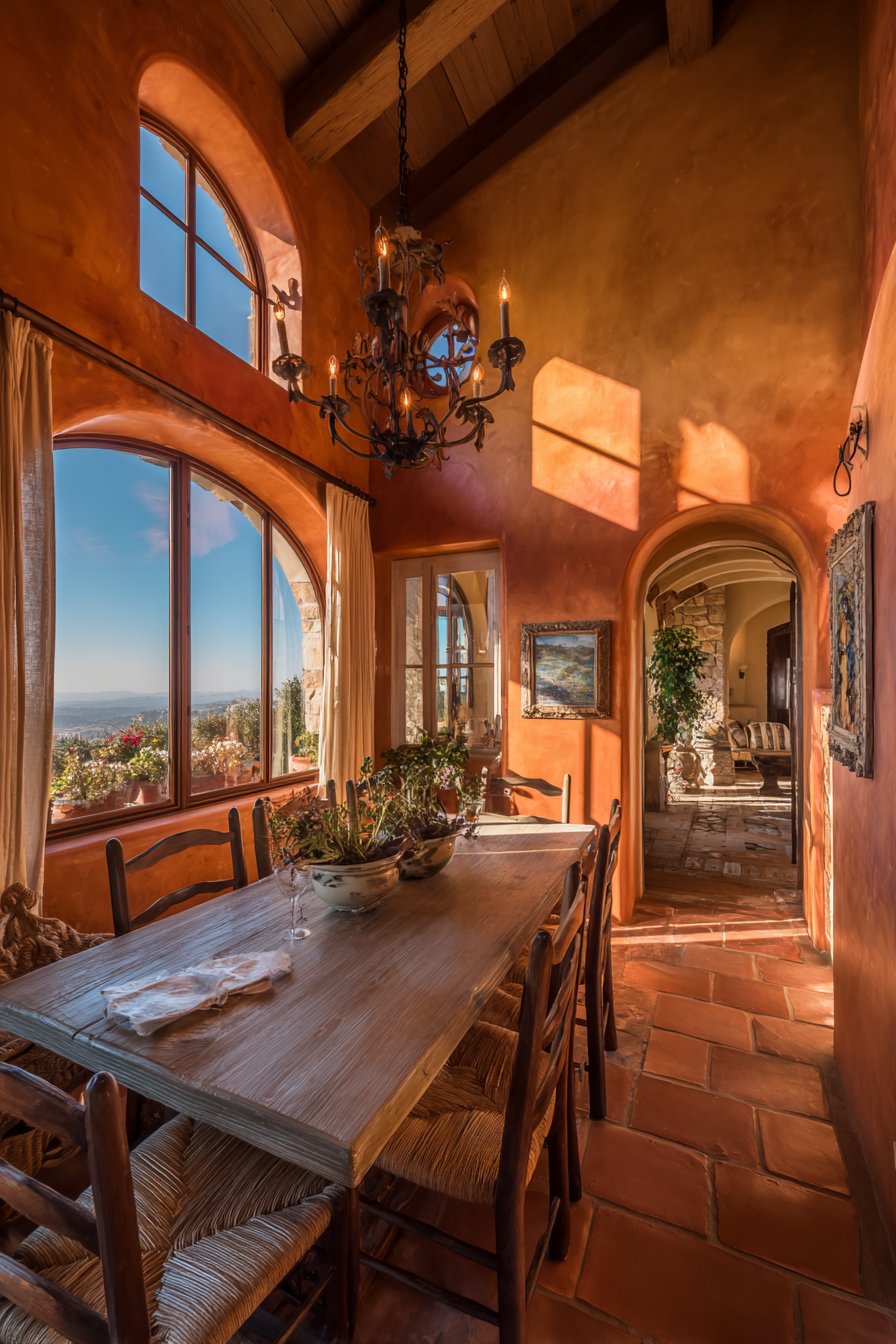
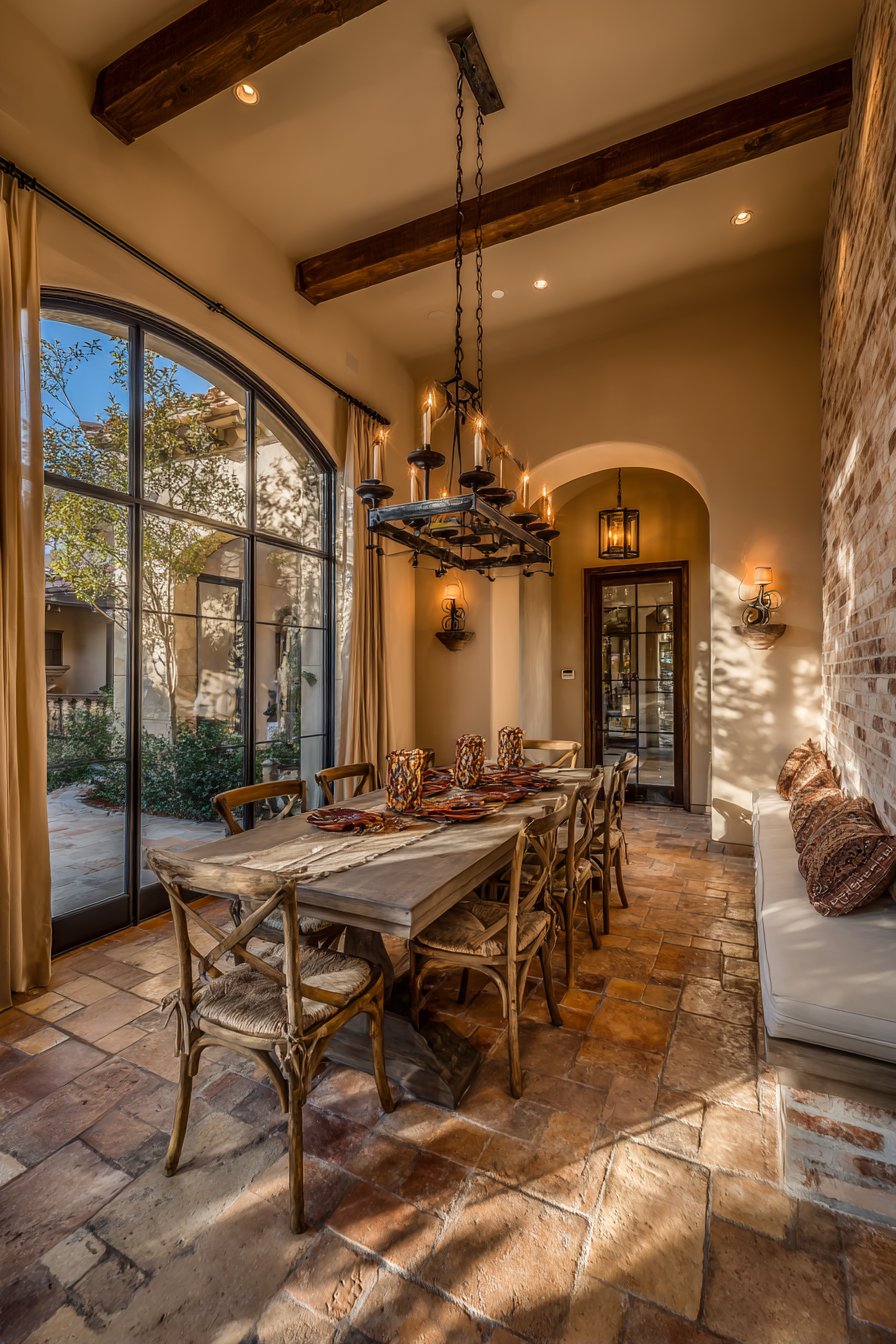
Picture a dining room infused with Mediterranean character and rustic charm. A wrought iron chandelier with candle-style lights creates romantic overhead illumination. Below, a rectangular dining table features distressed pine finish that shows intentional wear. Ladder-back chairs with woven rush seats provide authentic rustic texture.
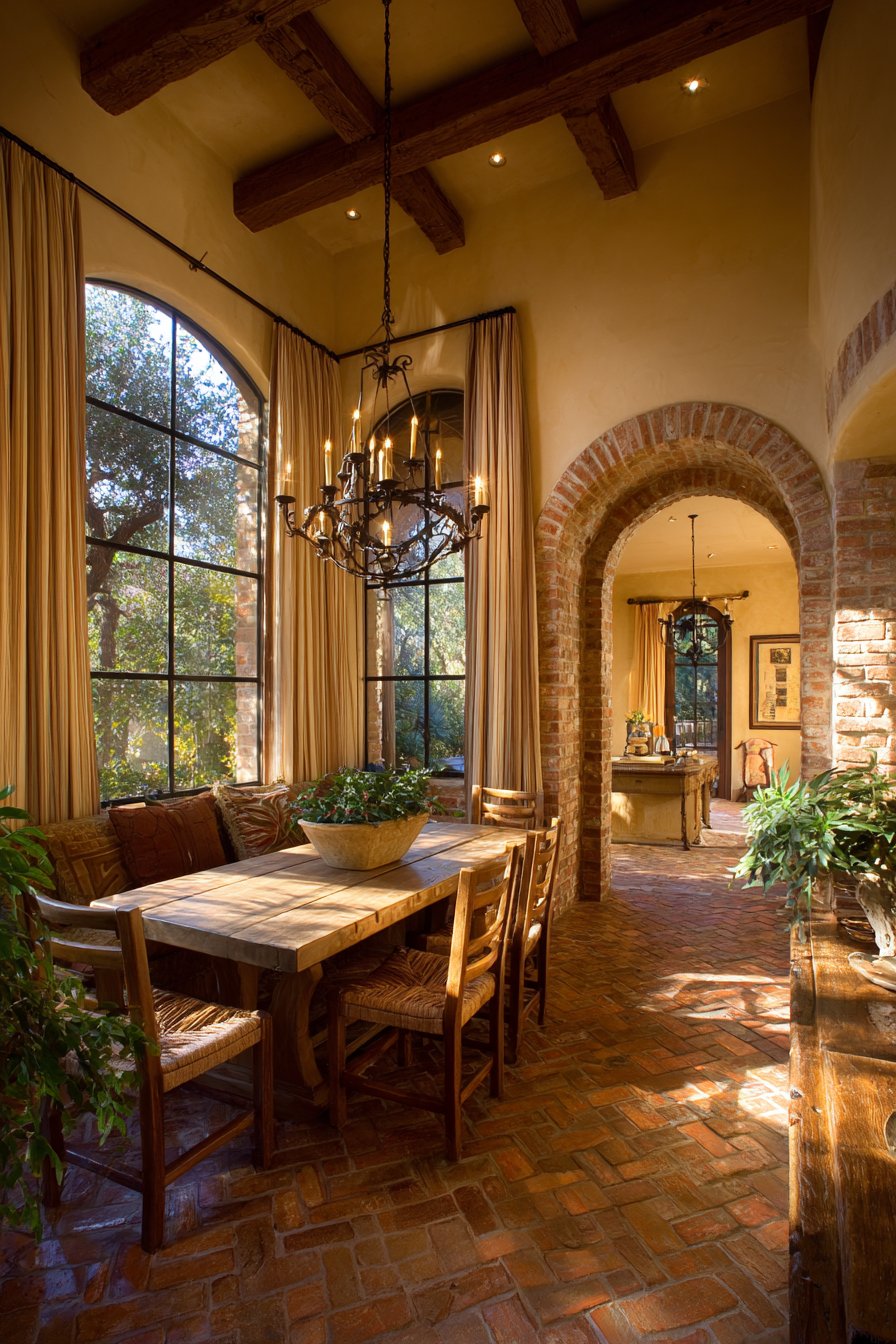
Terracotta floor tiles add earthy warmth that radiates from the ground up. These traditional tiles bring color and durability to high-traffic dining areas. Exposed brick on one accent wall complements the warm color scheme naturally. The brick’s texture and tone create focal interest without paint or wallpaper.
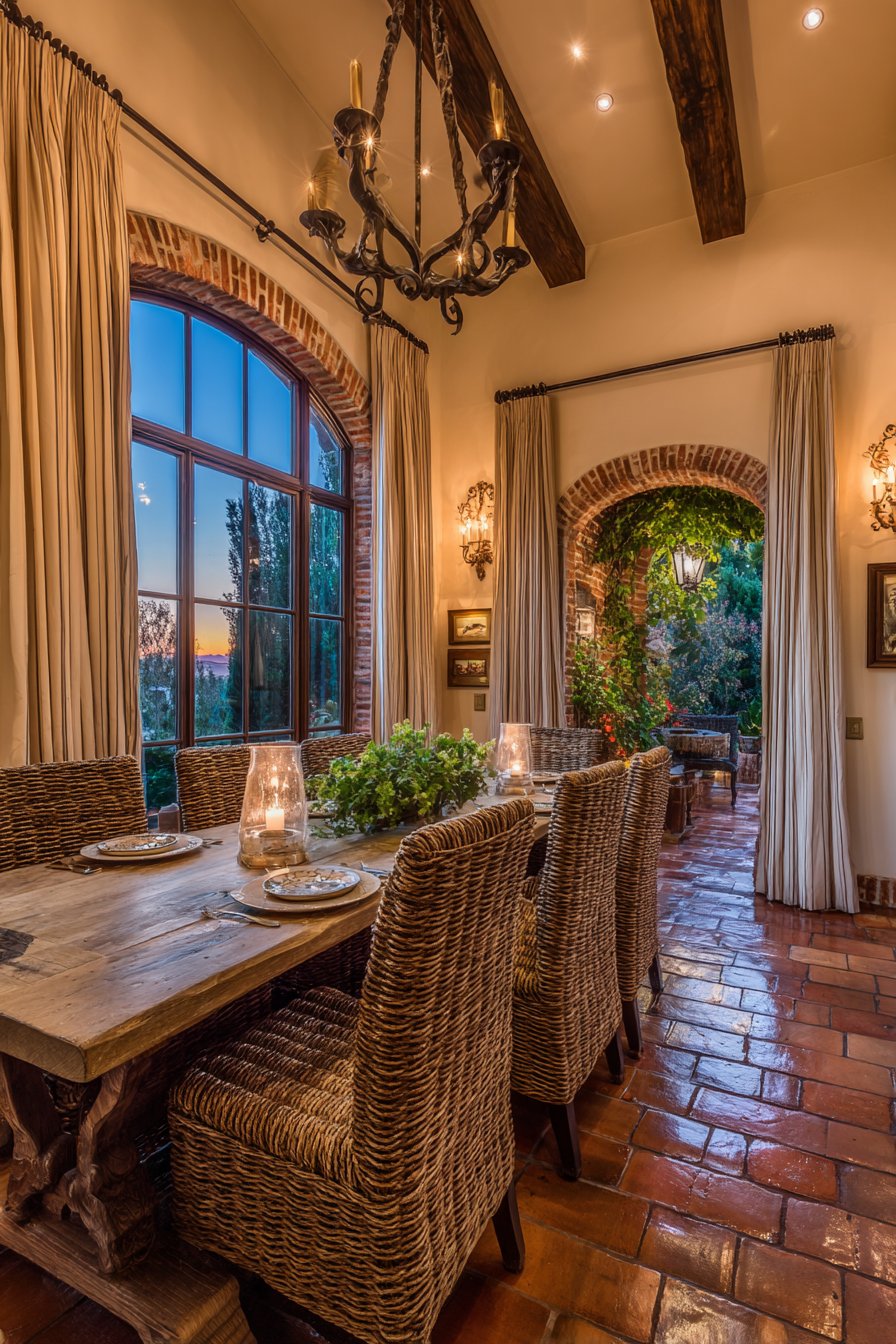
Arched windows draped with linen curtains allow golden hour sunlight to flood inward. The architectural details add European elegance to the rustic foundation. Natural light interacts beautifully with the terracotta floors throughout the day. The warm tones intensify as sunlight moves across the space.
This Mediterranean approach celebrates robust materials that age beautifully. The distressed pine table requires no special care for wear marks. Rush seats develop character through use rather than showing damage. The terracotta tiles gain warmth and patina over years of foot traffic.
Key Design Tips:
- Install authentic terracotta floor tiles for earthy foundation warmth
- Choose distressed pine furniture that embraces wear as character
- Incorporate wrought iron lighting fixtures with candle-style bulbs
- Add exposed brick accent walls for natural texture and color
- Use ladder-back chairs with woven rush seats for rustic authenticity
- Install arched windows with simple linen curtains when architecturally possible
5. Live-Edge Walnut Contemporary with Cognac Leather
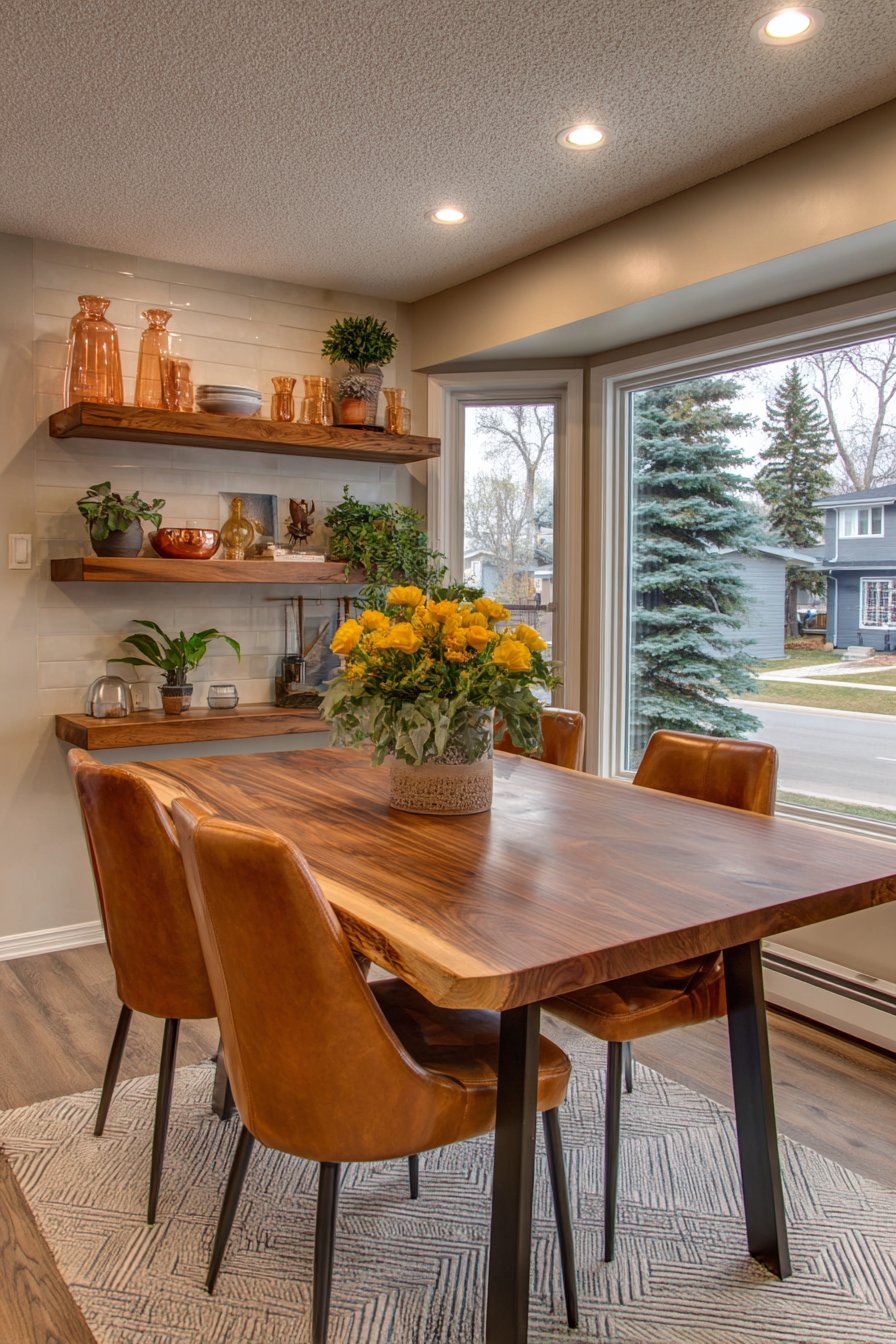
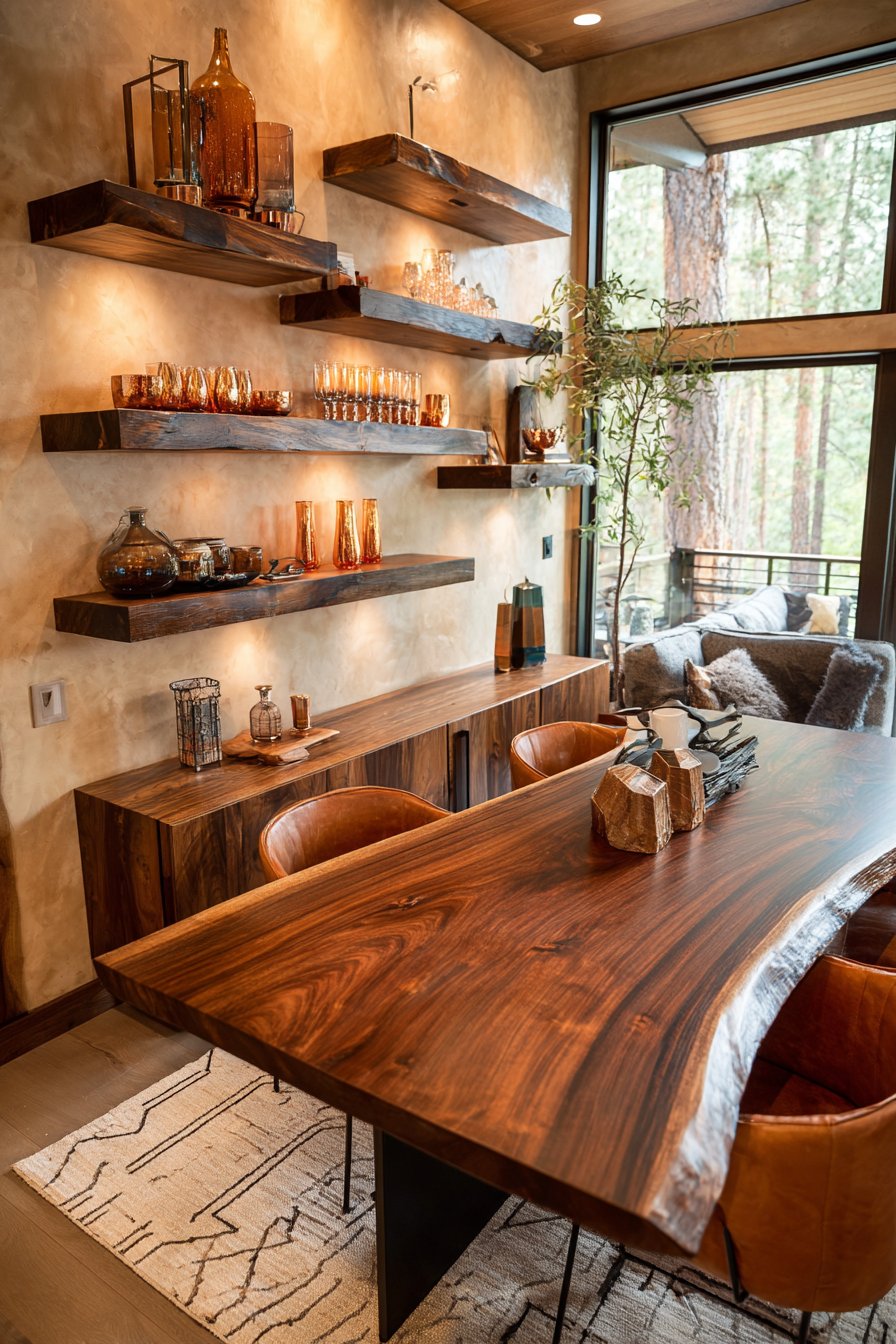
A live-edge walnut dining table serves as sculptural centerpiece in this contemporary design. Black metal hairpin legs provide industrial contrast to the organic wood edge. The natural edge preserves the tree’s original contours and character. Leather dining chairs in cognac brown show natural grain and slight wear that adds authenticity.
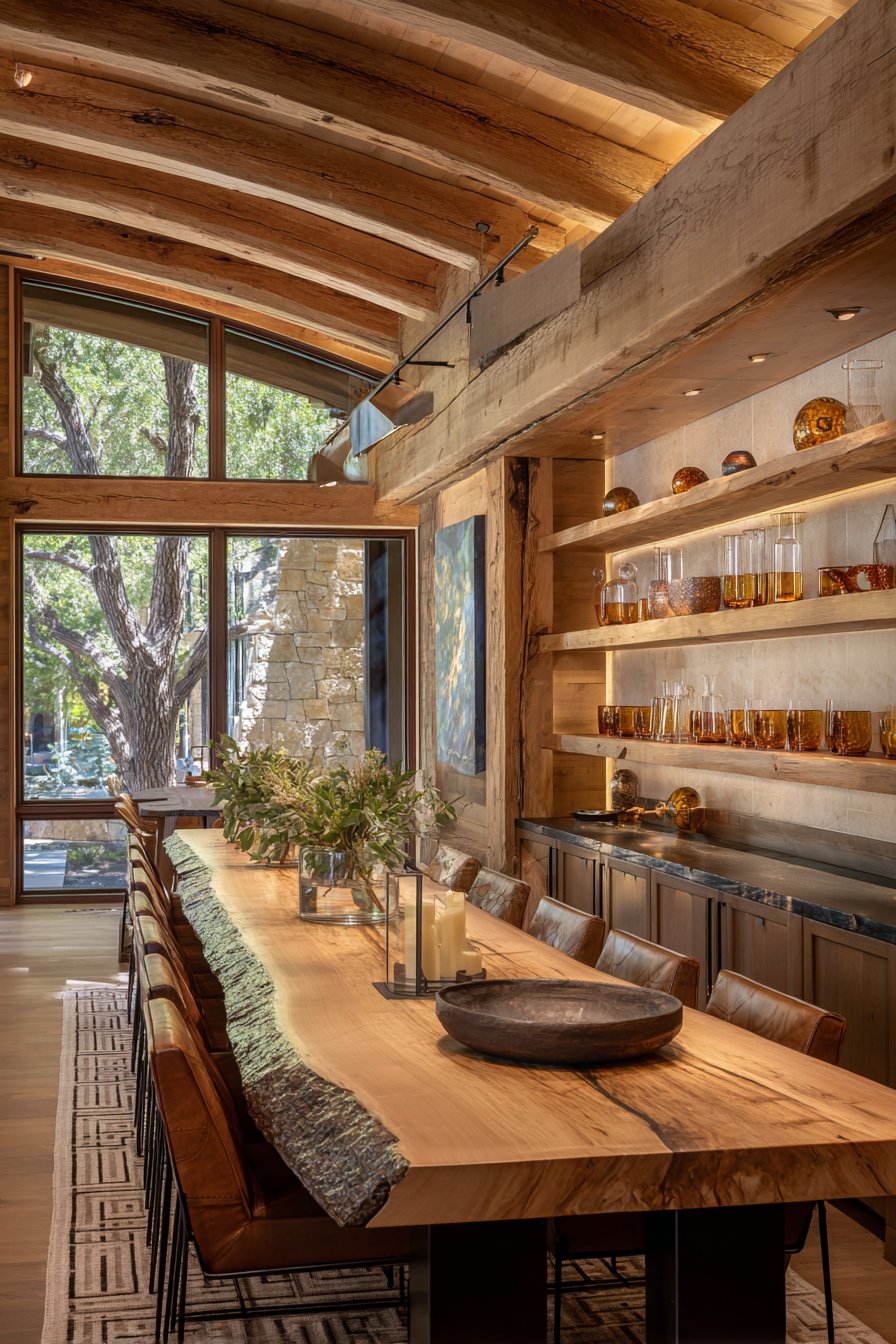
A geometric wool rug in warm neutrals defines the dining zone beneath. The pattern adds contemporary interest while maintaining the warm color story. Floating wooden shelves display amber glassware and copper serving pieces. These metallic accents catch and reflect light while introducing additional warm tones.
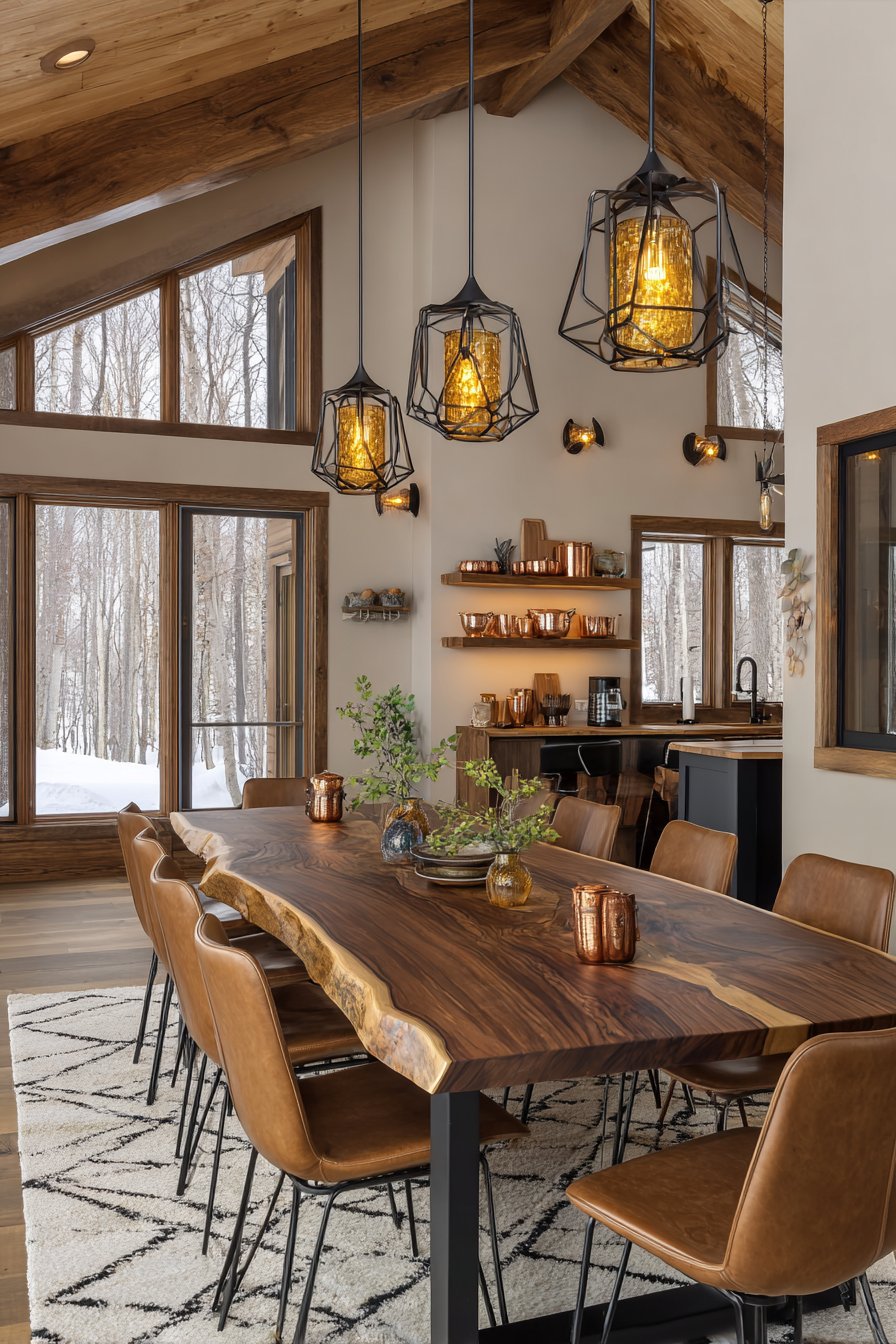
Recessed lighting with warm LED bulbs creates intimate evening ambiance. The controlled lighting focuses attention on the dining area without harsh glare. Natural daylight from large windows provides daytime illumination. The balance between natural and artificial light maintains warmth throughout daily cycles.
This design bridges organic and contemporary aesthetics successfully. The live-edge table brings nature indoors while maintaining modern sensibility. Cognac leather ages beautifully, developing rich patina that improves with time. The combination creates warmth through authentic materials rather than decorative additions alone.
Key Design Tips:
- Select live-edge wood tables for organic sculptural interest
- Pair natural wood with cognac or tan leather for rich contrast
- Add geometric patterned rugs in warm neutral color palettes
- Display amber glassware and copper accessories for metallic warmth
- Install warm-temperature LED recessed lighting for evening ambiance
- Float wooden shelves for functional display of warm-toned objects
6. Traditional Cherry Wood Formality with Mustard Accents
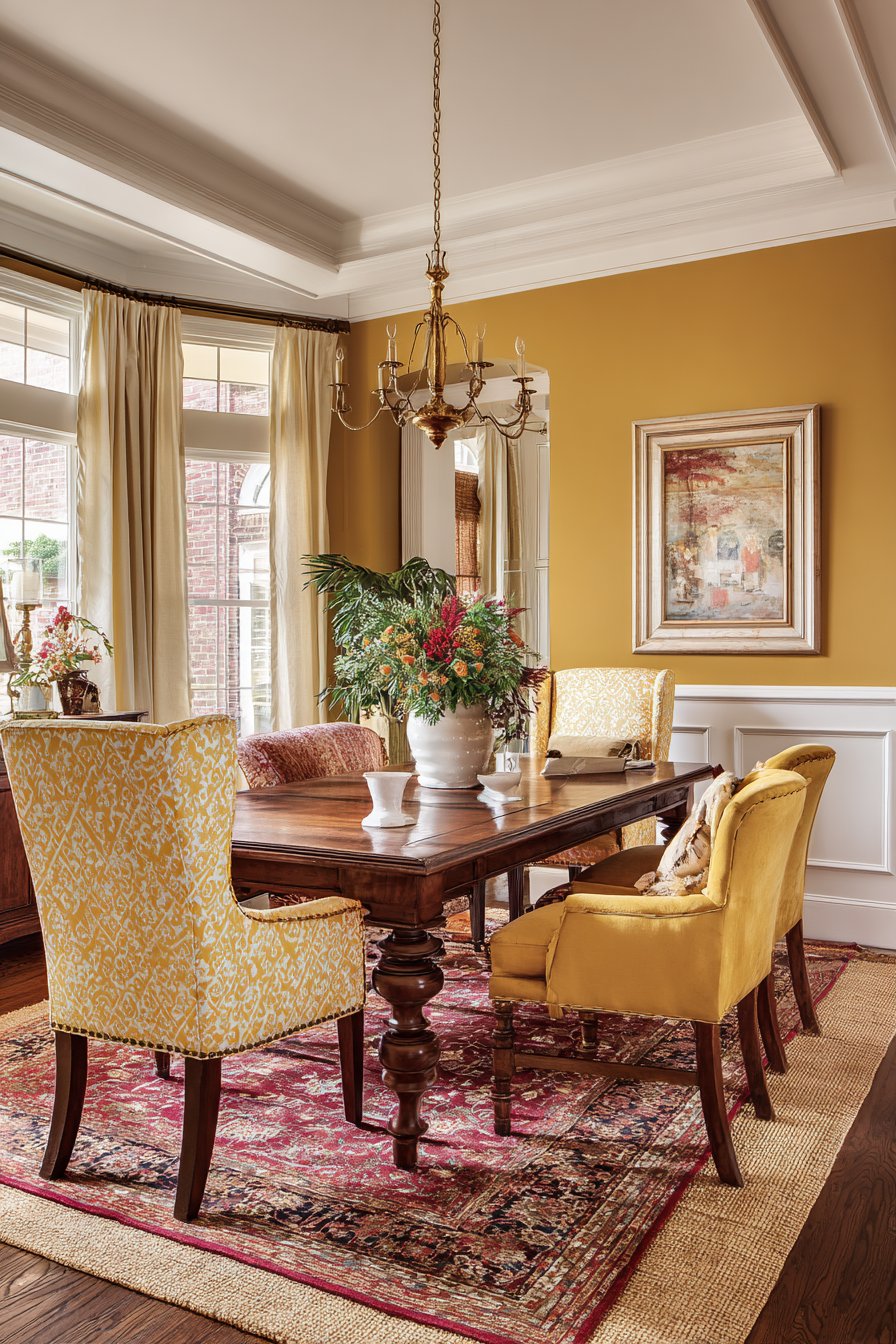
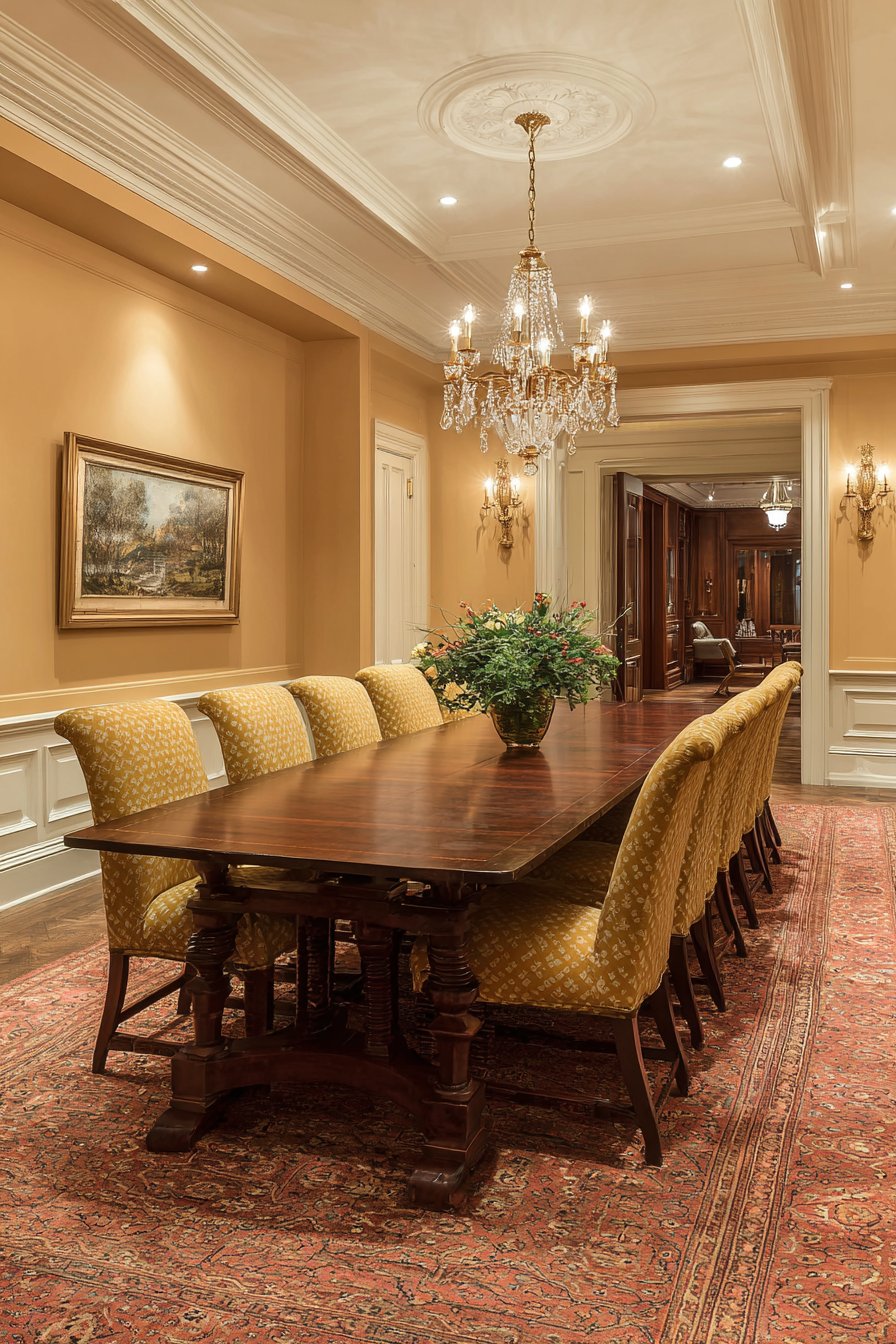
A traditional rectangular table in cherry wood anchors this formal dining space. The turned legs add classical architectural detail to the substantial piece. Wingback dining chairs upholstered in mustard yellow fabric create surprising warmth. The subtle pattern adds visual interest without overwhelming the traditional framework.
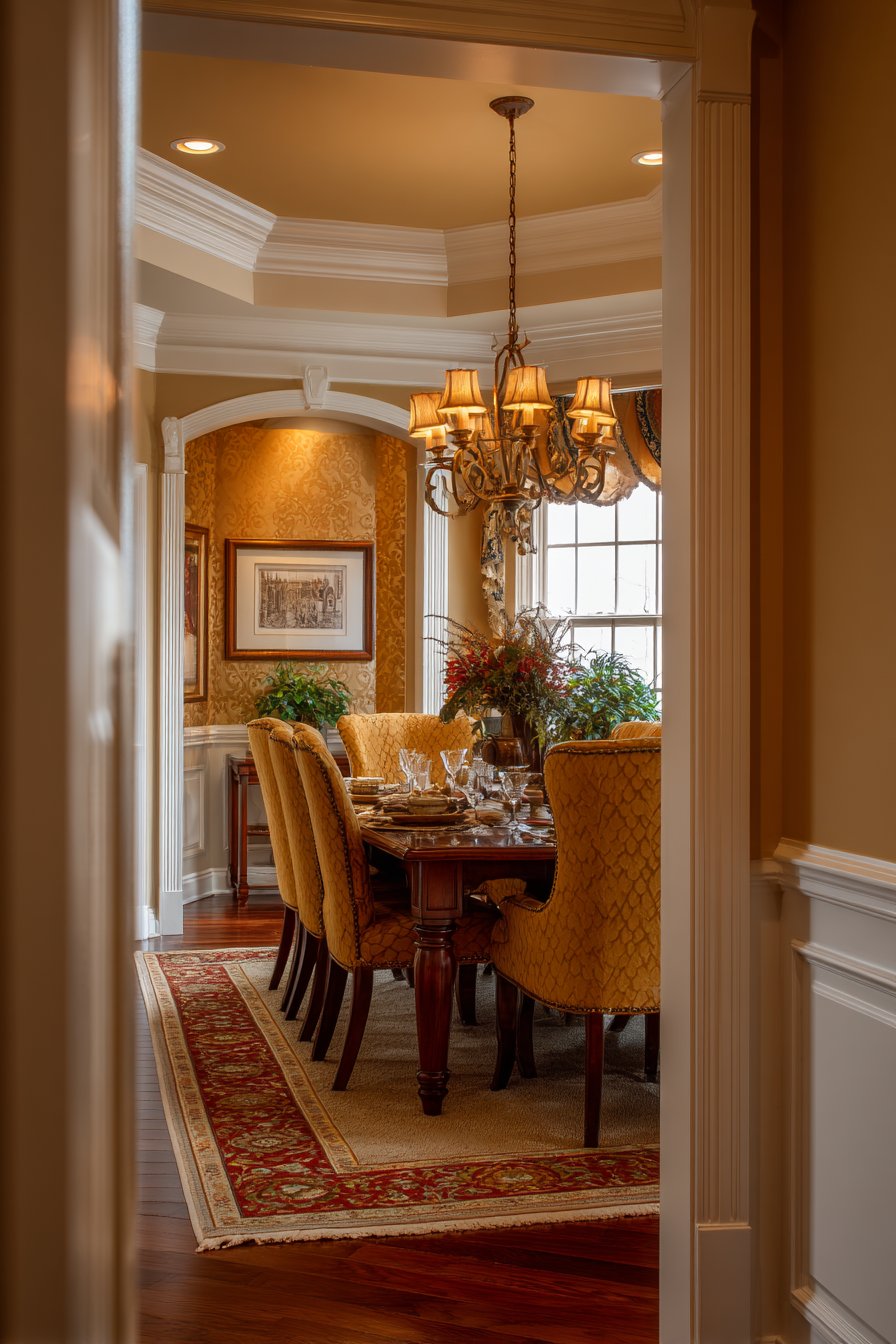
Layered rugs include natural sisal base topped with smaller Persian runner. This combination adds both texture and traditional pattern to the floor. Crown molding painted in creamy white frames walls in rich butterscotch hue. The architectural details create sophisticated framework for the warm color palette.
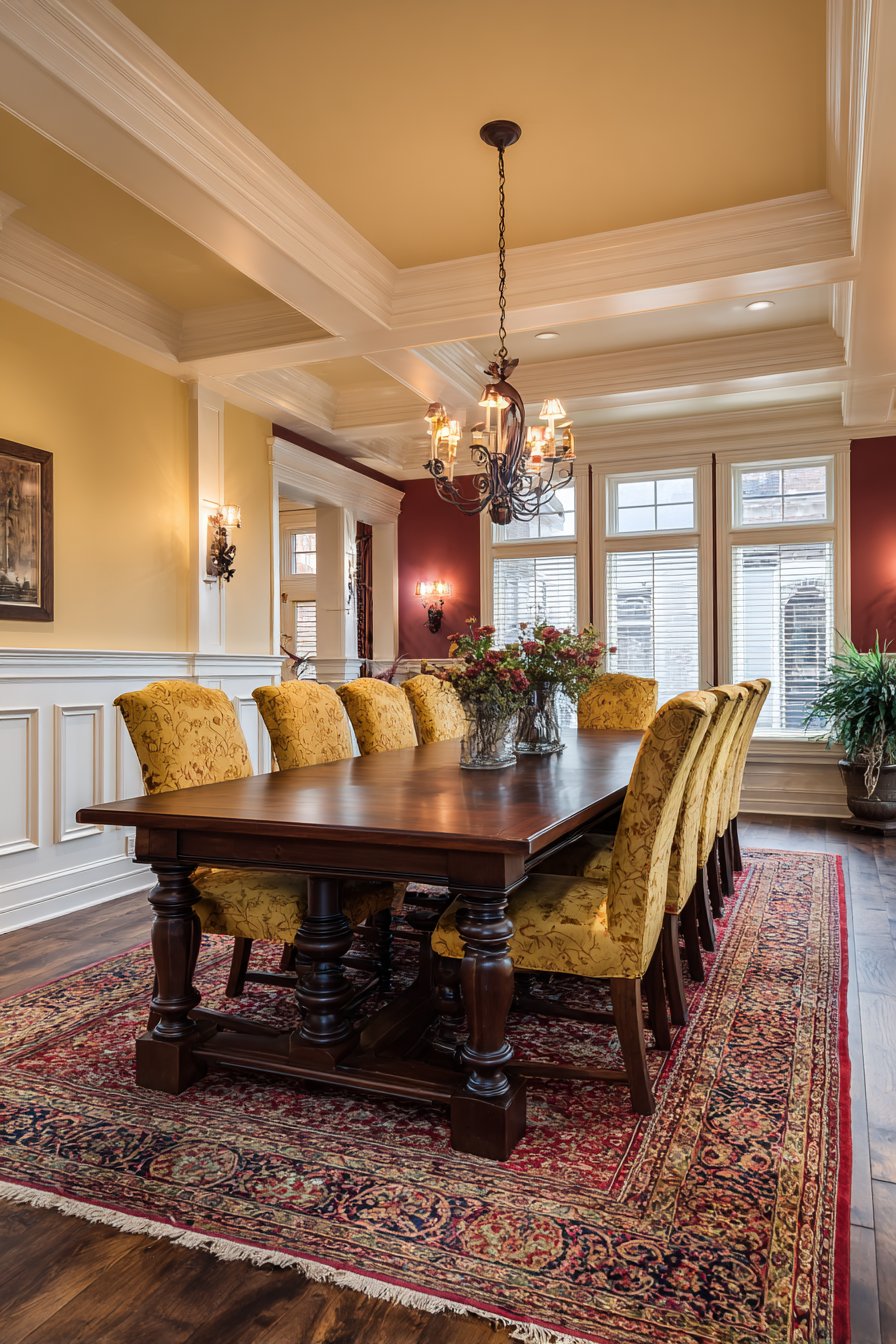
A traditional brass chandelier provides warm overhead lighting throughout meals. The fixture’s classic design complements the cherry wood’s formality perfectly. Natural light enters through windows, highlighting the wood’s rich tones. The interplay creates dimensional lighting that showcases materials beautifully.
This approach demonstrates how traditional design embraces warmth naturally. Cherry wood’s reddish undertones create inherent warmth without additional effort. The mustard upholstery adds contemporary twist to classic format. Together, these choices create dining room that honors tradition while feeling current.
Key Design Tips:
- Choose cherry wood furniture for naturally warm reddish undertones
- Upholster formal chairs in unexpected warm colors like mustard yellow
- Layer rugs starting with natural sisal base for textural foundation
- Paint walls in butterscotch or warm gold tones for enveloping warmth
- Add traditional brass chandeliers for classic warm illumination
- Install crown molding painted in cream for architectural elegance
7. Scandinavian-Inspired Light Oak Simplicity
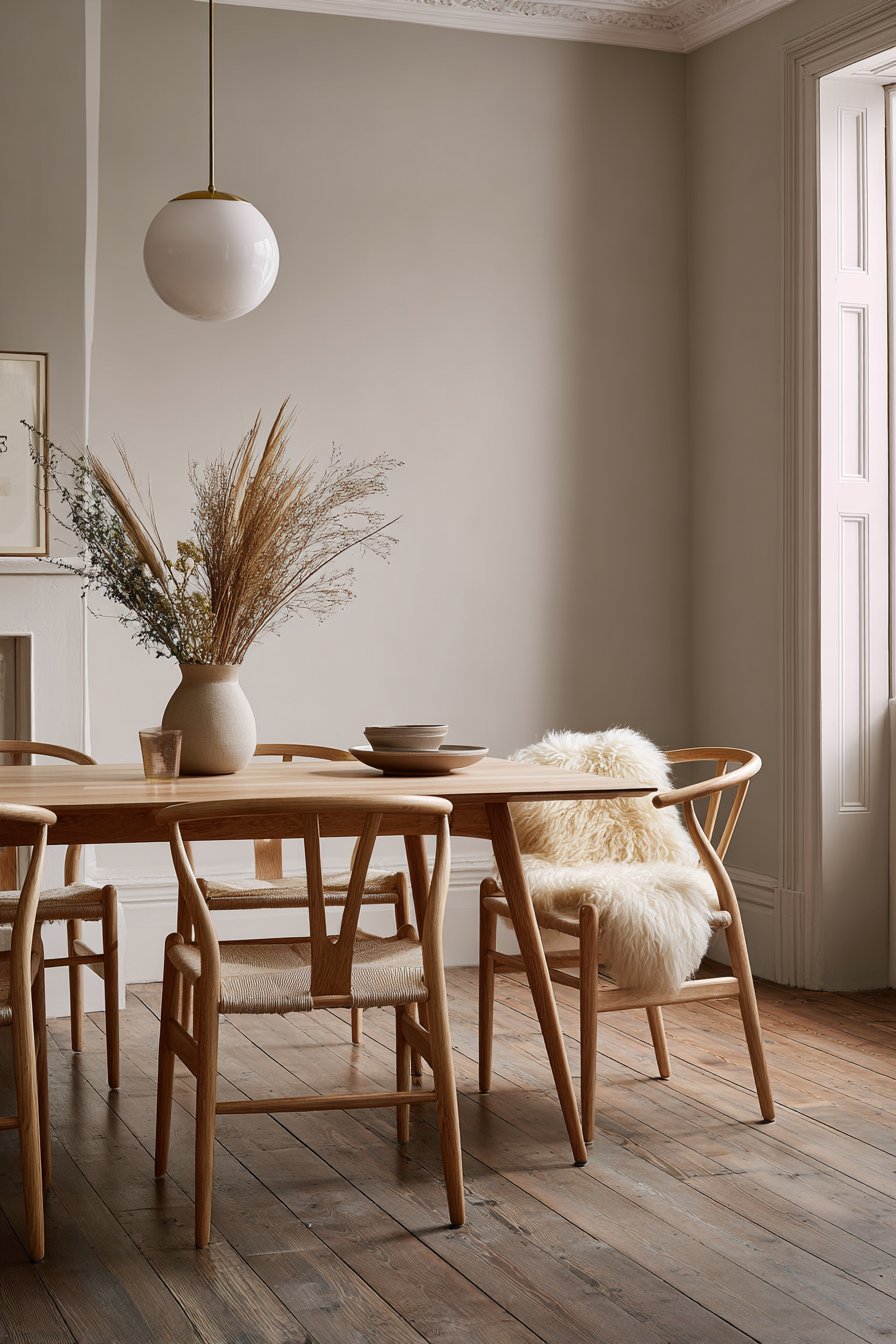
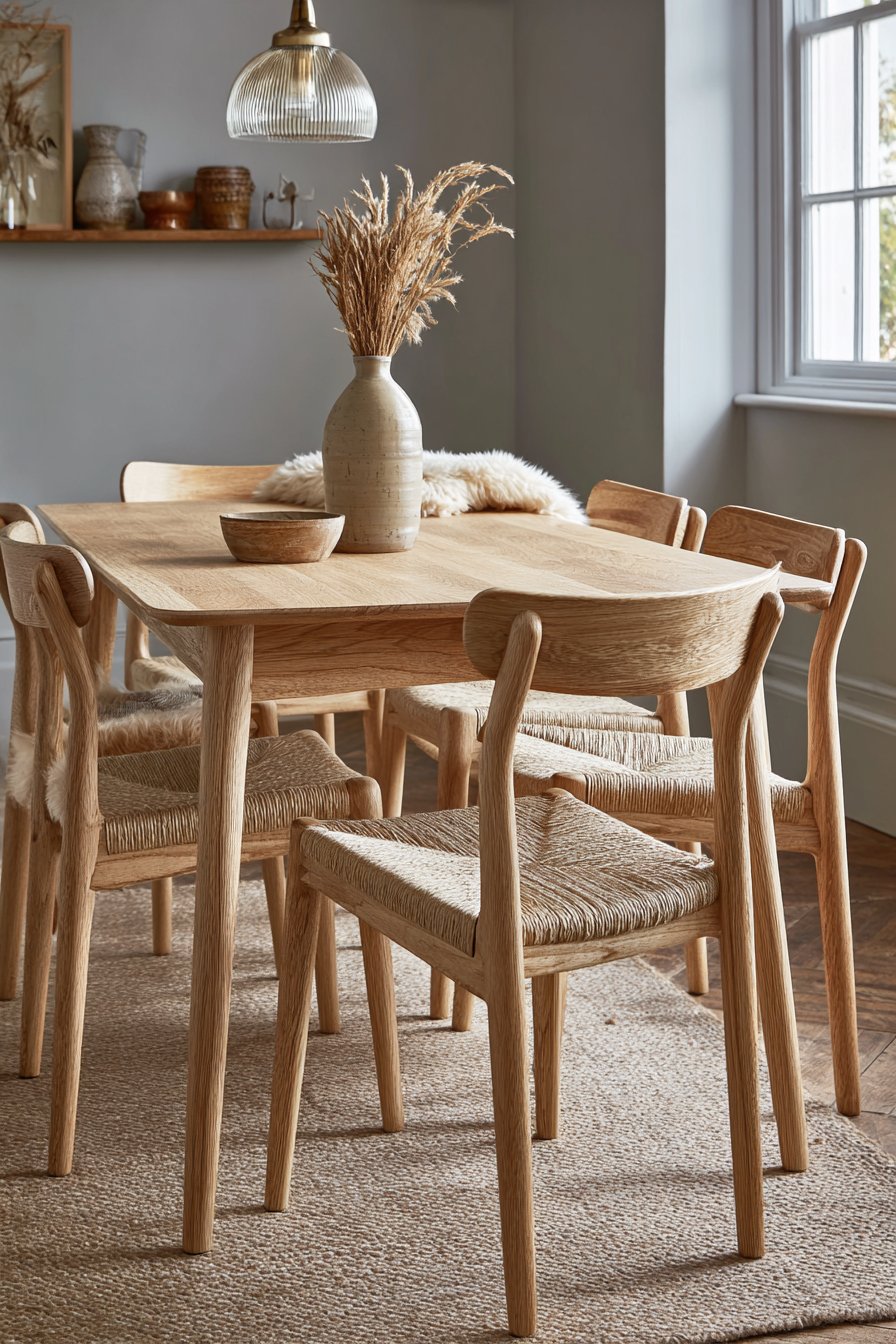
Light oak dining table with tapered legs embodies Scandinavian design principles. The natural finish showcases the wood’s pale beauty without heavy staining. Simple wooden chairs feature curved backs and woven paper cord seats. This traditional Scandinavian material adds textural interest while maintaining minimalist aesthetic.
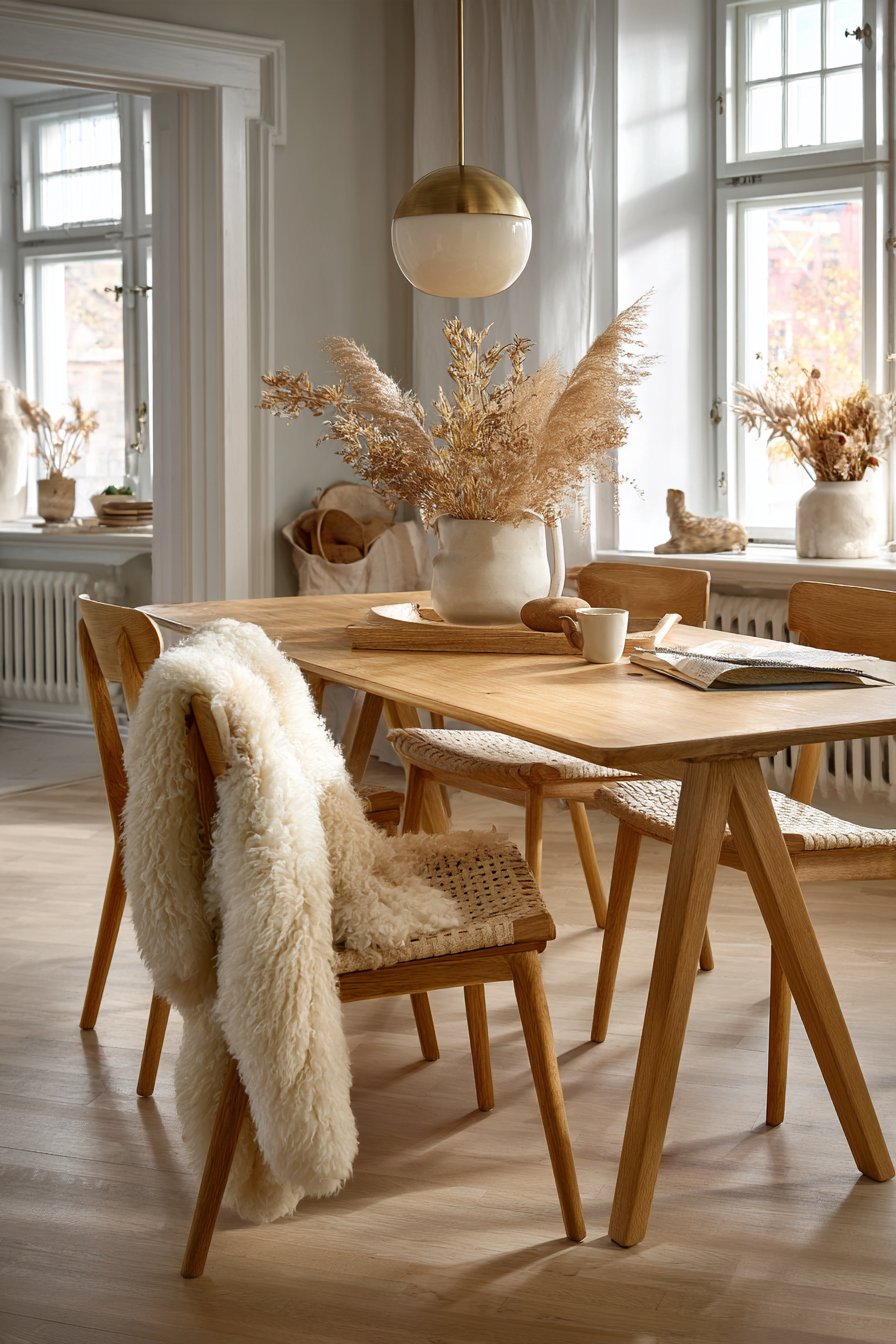
A sheepskin throw draped over one chair adds tactile warmth and visual softness. The natural fiber introduces cozy element without cluttering the clean design. A ceramic vase with dried grasses creates understated natural centerpiece. The organic arrangement adds life without demanding attention.
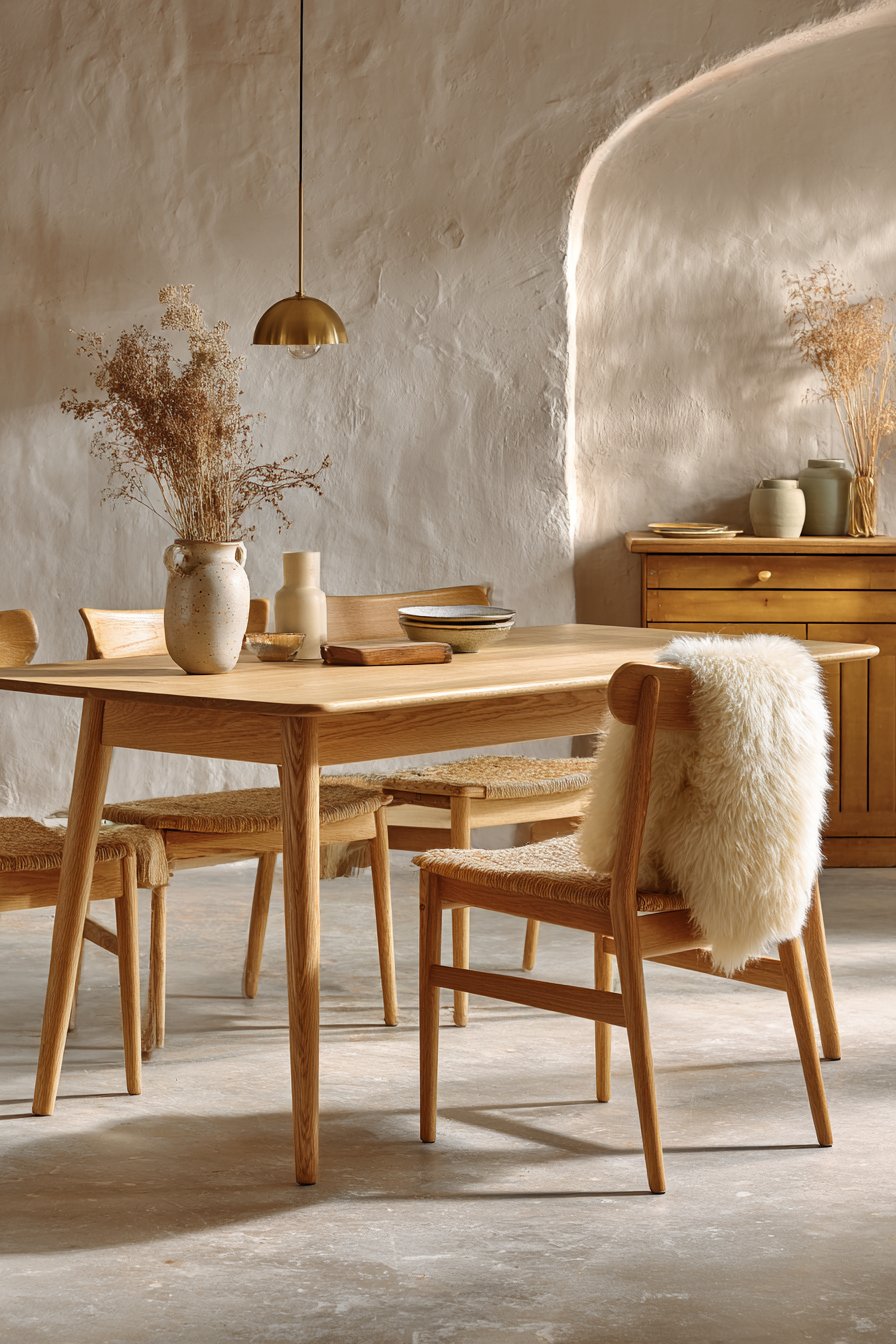
Pale warm grey walls provide subtle backdrop that enhances rather than dominates. This neutral foundation allows natural materials to shine. A modern globe pendant in brushed brass hangs overhead. The minimal fixture provides necessary light while contributing warm metallic accent.
This design proves that warmth doesn’t require heavy traditional elements. The light oak brings gentle warmth through pale honey tones. Paper cord seats add handcrafted quality that machine-made materials lack. The result feels warm despite minimal color and restrained decoration.
Key Design Tips:
- Select light oak furniture with natural or oil finishes for Scandinavian warmth
- Choose chairs with woven paper cord seats for authentic texture
- Add sheepskin throws for soft tactile warmth in minimal settings
- Use ceramic vases with dried natural materials for simple centerpieces
- Paint walls in pale warm grey for subtle supporting backdrop
- Install brushed brass pendant lights for minimal metallic warmth
8. Family-Friendly Oak with Flexible Seating
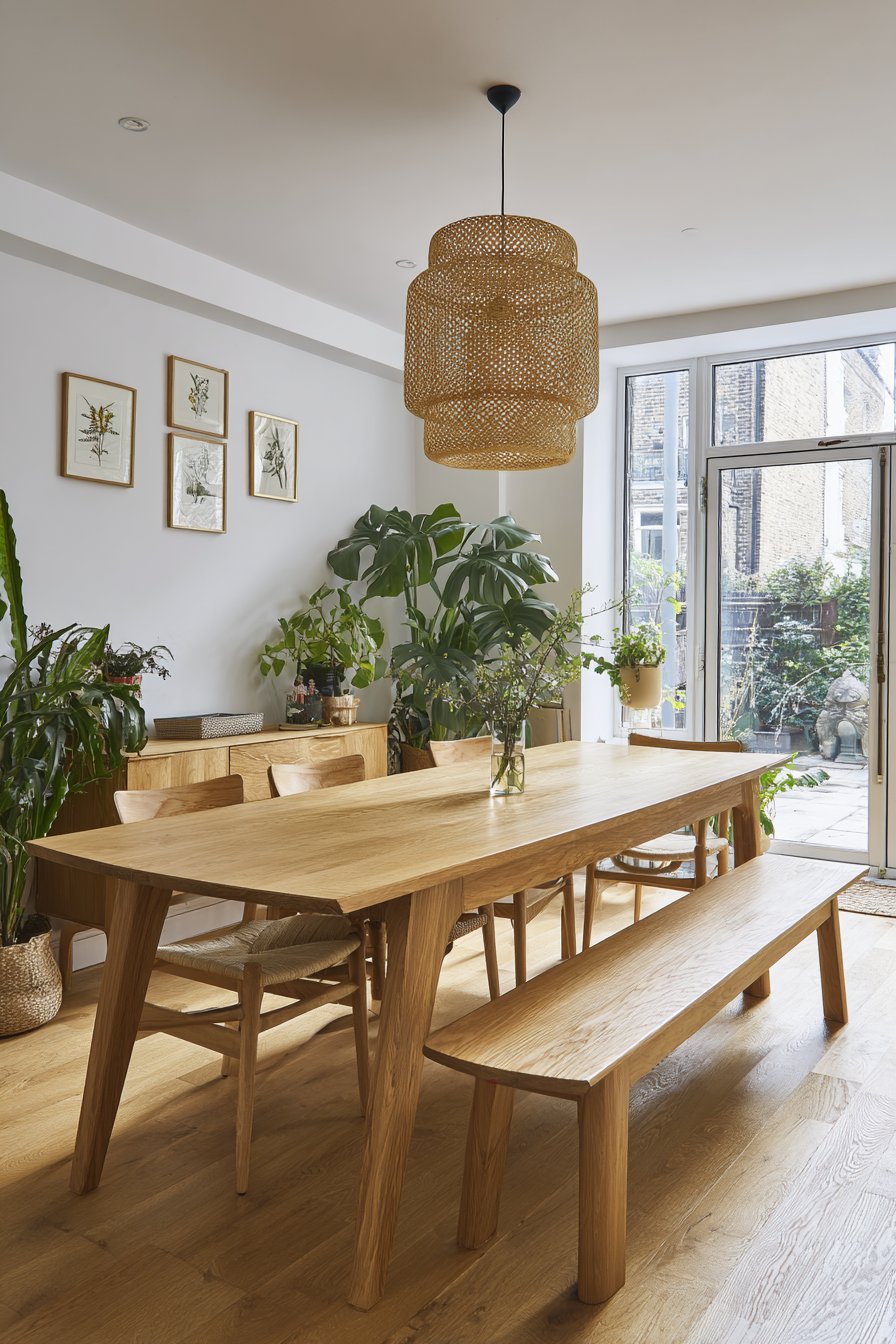
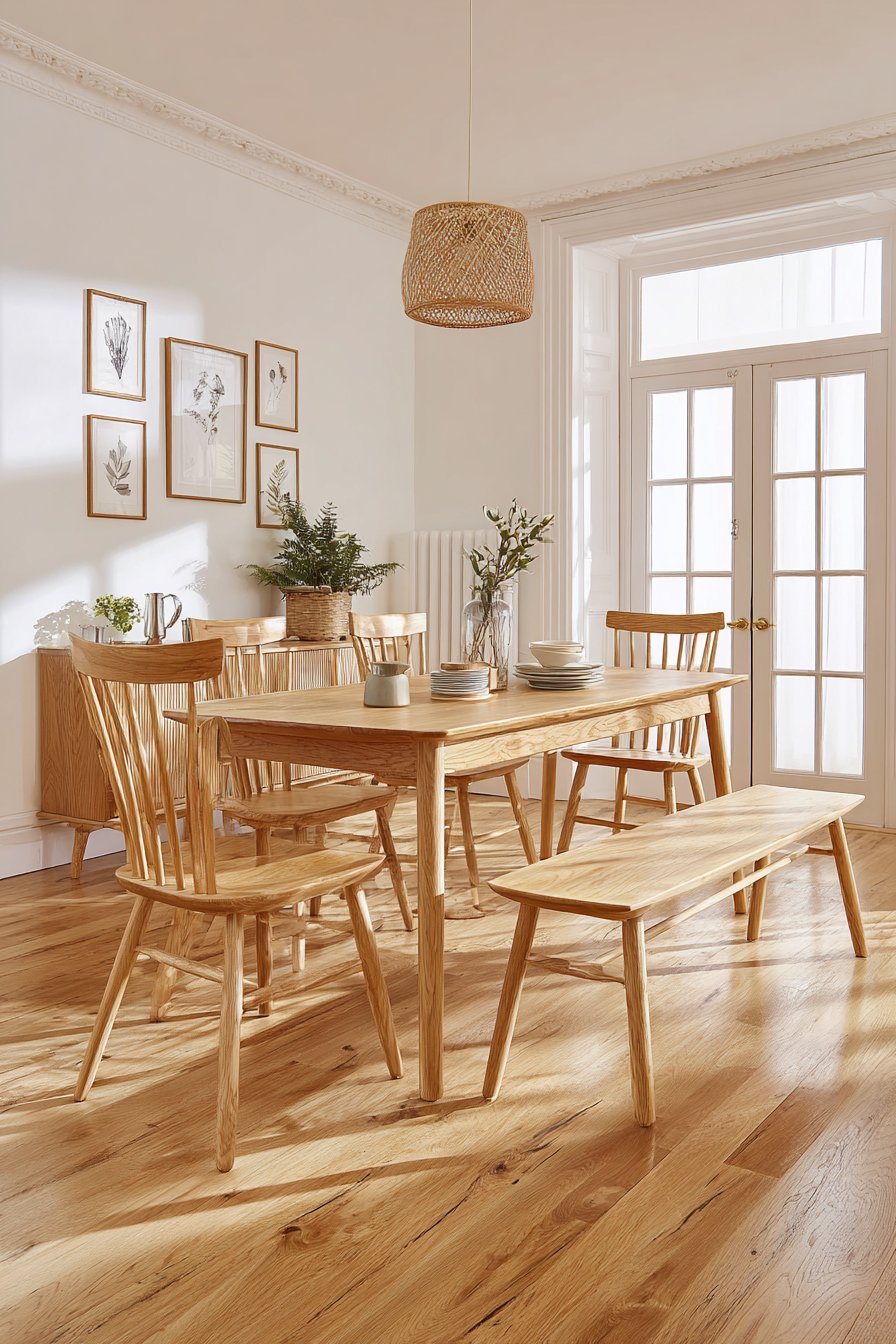
An extendable dining table in medium-toned oak provides practical flexibility. The visible grain patterns add natural beauty to the functional piece. Combination of wooden bench seating and individual chairs accommodates various family needs. This mixed approach adds casual warmth while maintaining sophistication.
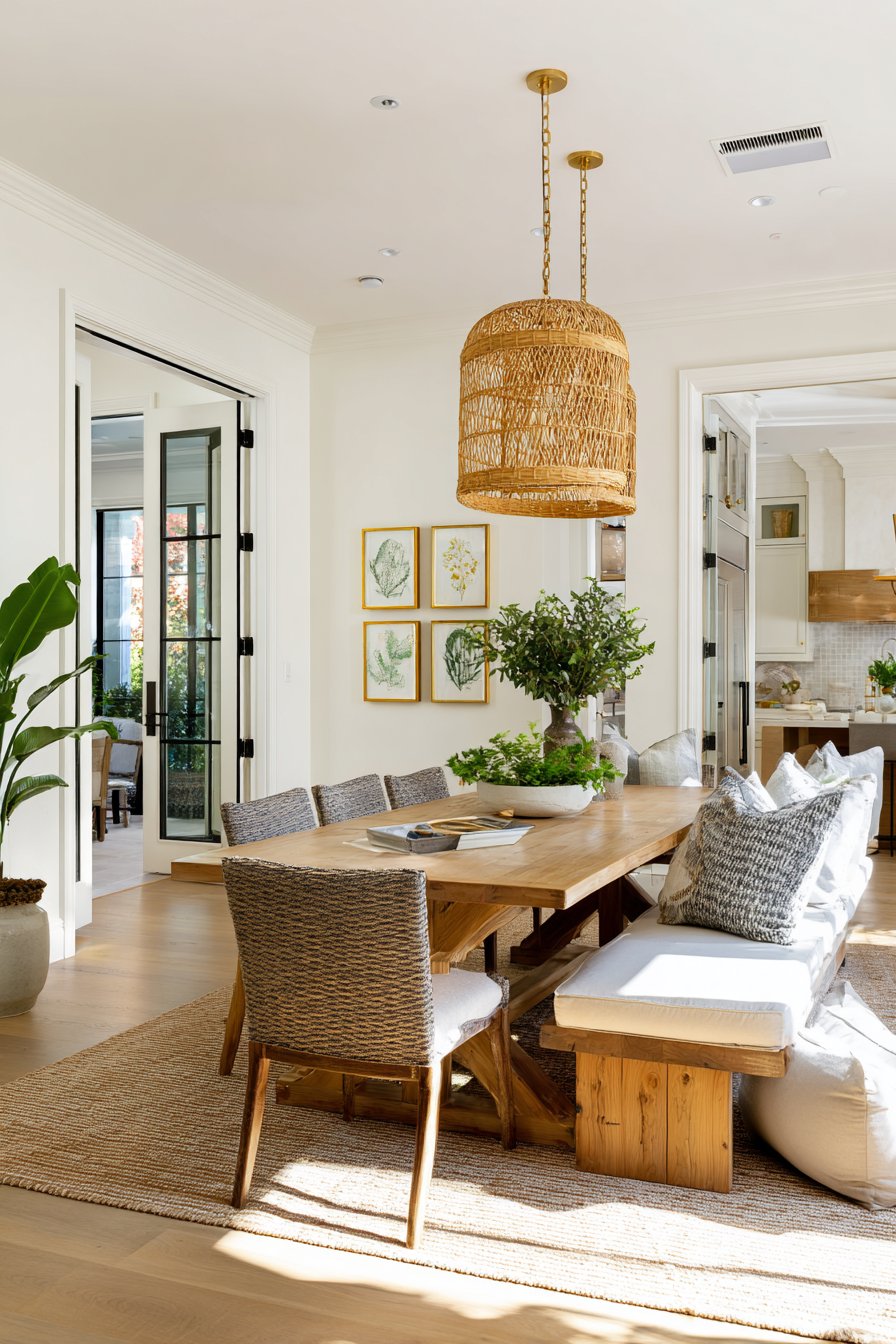
Warm white walls feature gallery frames with botanical prints in gold-tone frames. The collected artwork adds personality without overwhelming the space. A rattan pendant light fixture adds organic texture overhead. The woven material introduces natural element that complements the wood beautifully.
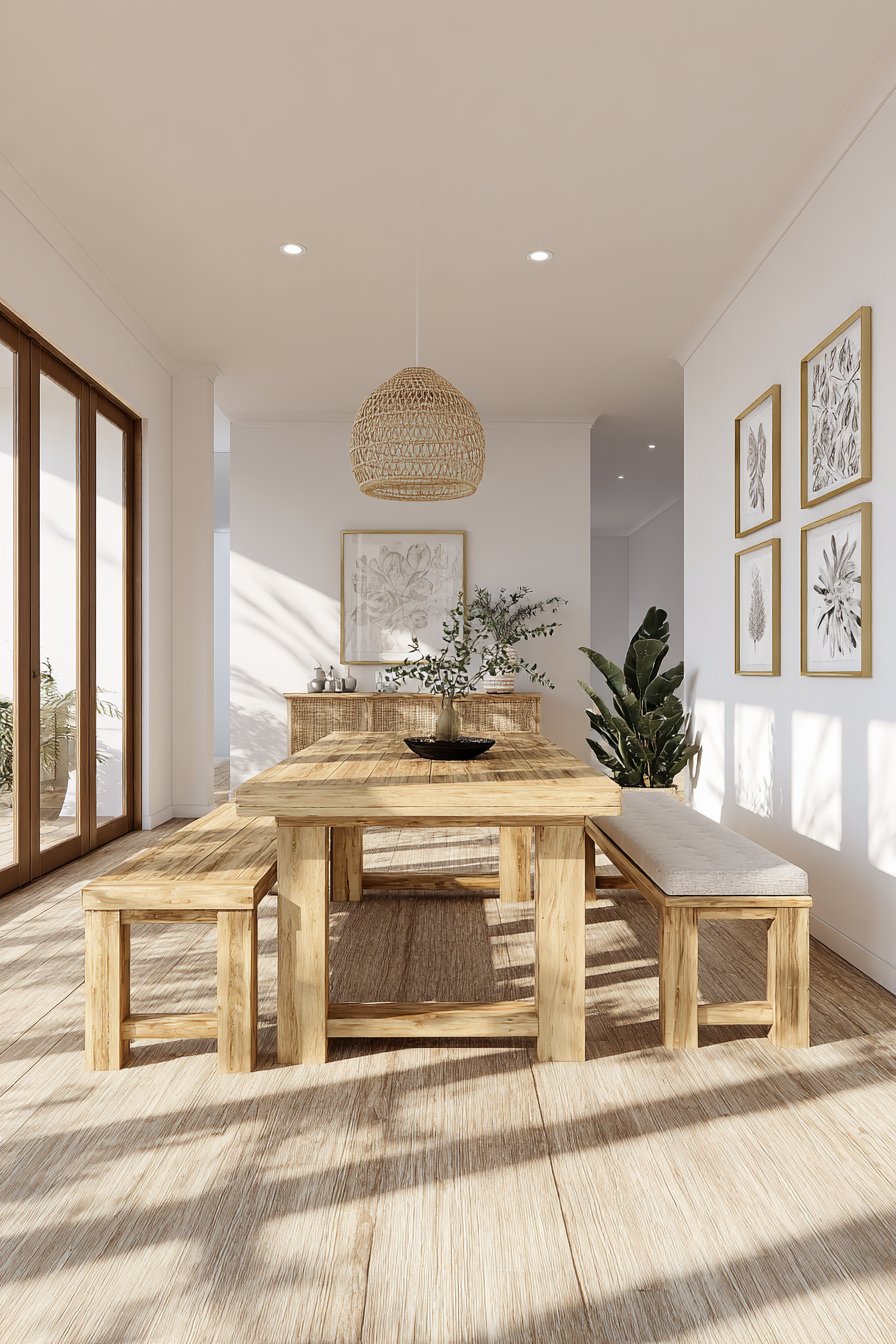
Potted plants on nearby sideboard contribute living warmth to the space. The greenery adds color and life that artificial decorations cannot match. Natural light from French doors creates dappled patterns across surfaces. The changing light adds dynamic visual interest throughout the day.
This design prioritizes practical warmth for real family living. The extendable table grows with gathering needs without requiring furniture replacement. Bench seating accommodates children comfortably while looking intentional. The botanical prints and living plants reinforce connection to nature that enhances warmth.
Key Design Tips:
- Choose extendable tables for flexible family dining needs
- Mix bench seating with individual chairs for casual warmth
- Display botanical prints in warm gold or brass frames
- Install rattan or woven pendant lights for organic texture
- Add potted plants and greenery for living natural warmth
- Position table near French doors or large windows for natural light
9. Bohemian Eclectic Layered Warmth
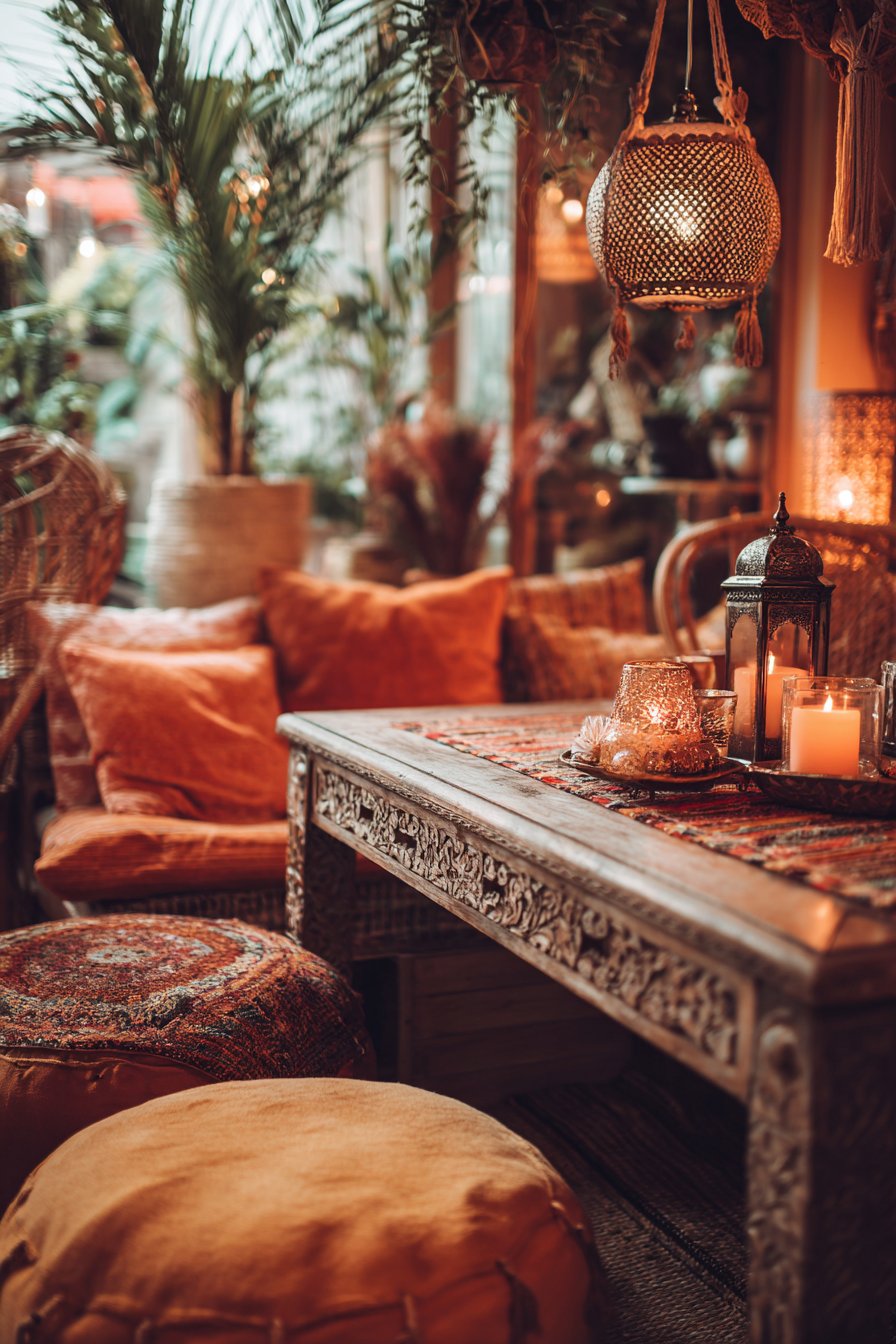
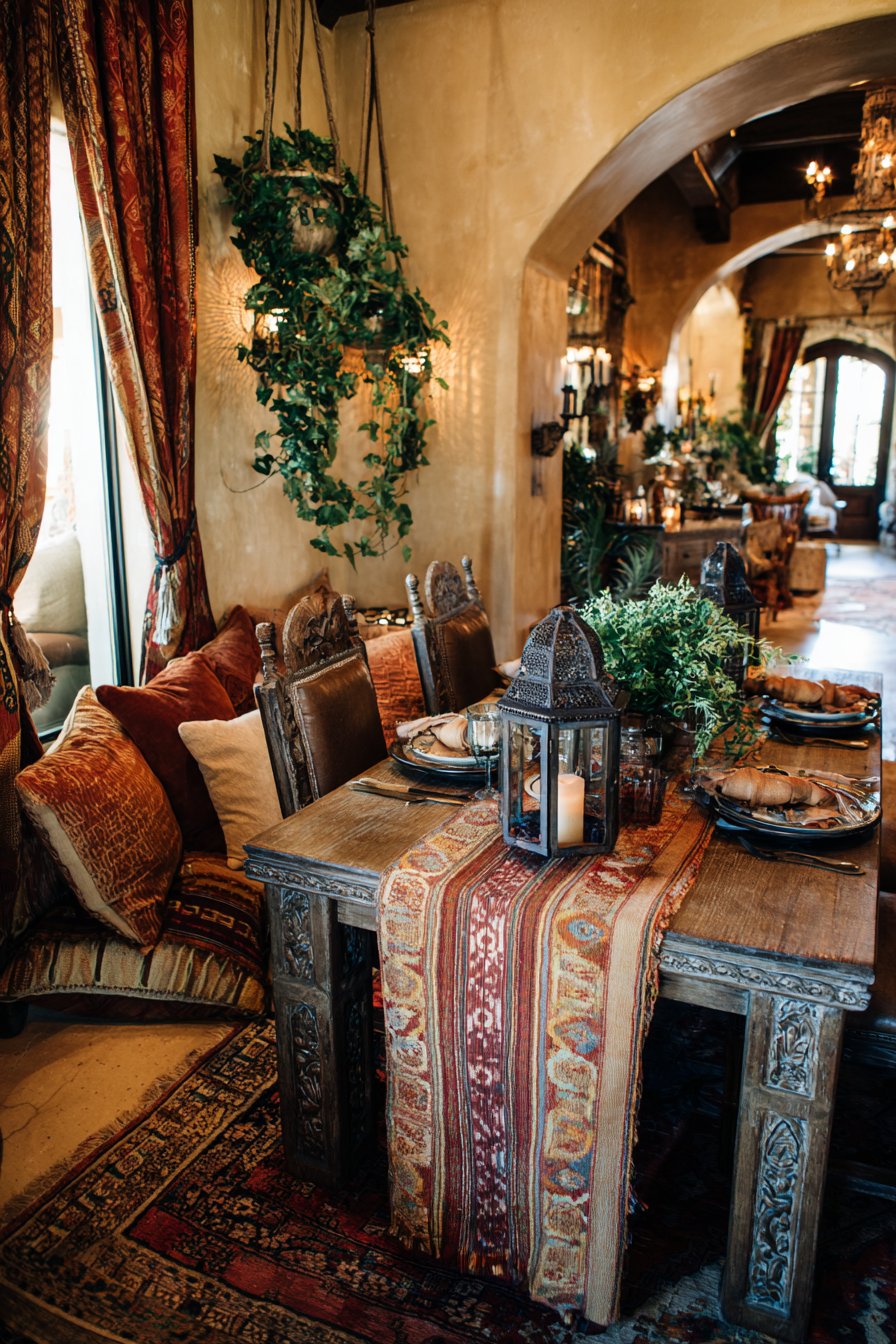
A carved wooden dining table with intricate details serves as foundation. The decorative carving adds artisanal quality and visual interest. Eclectic dining chairs include rattan, upholstered, and painted vintage pieces. The intentional variety creates collected appearance in warm coordinating tones.
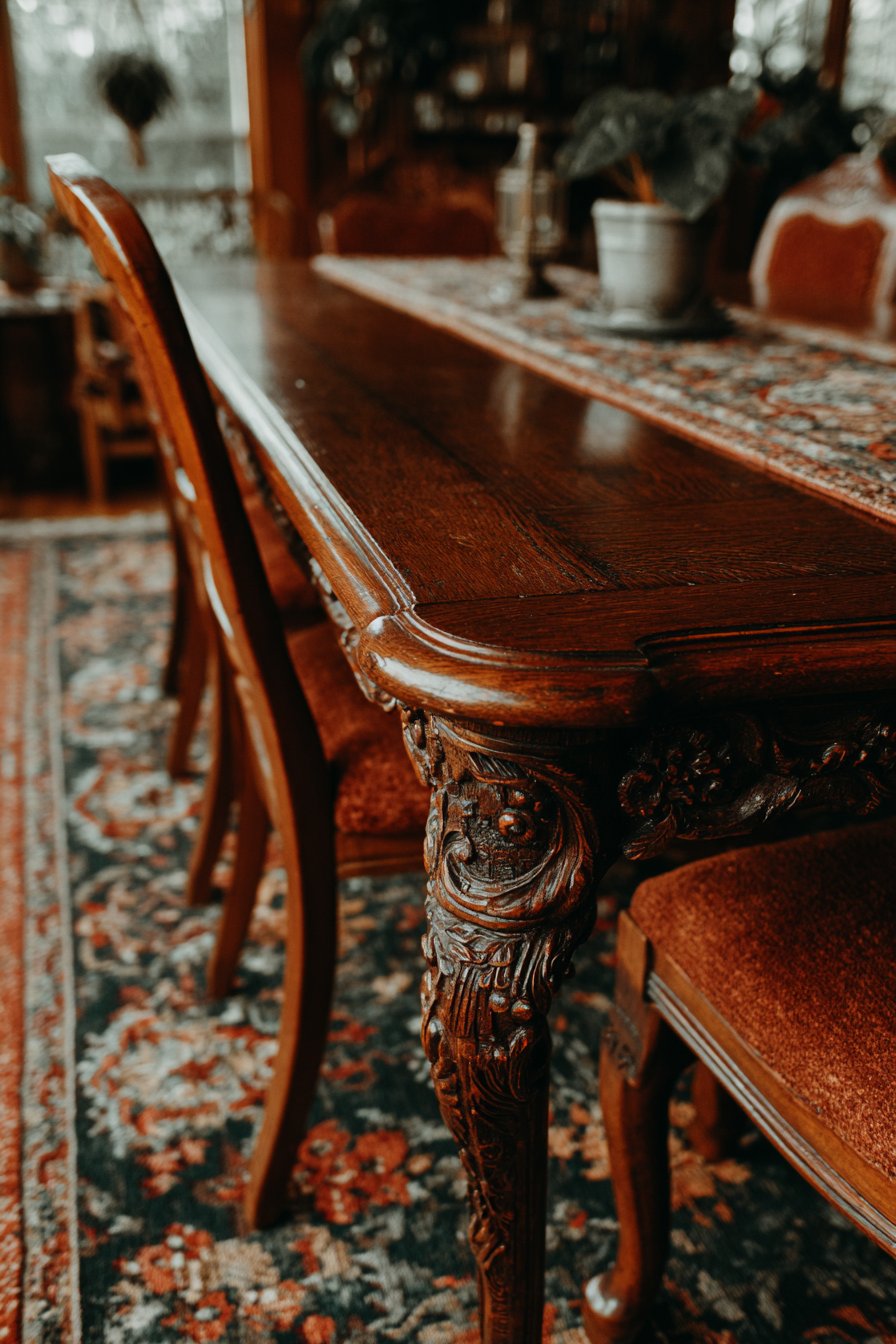
Multiple layered textiles transform this space into bohemian paradise. Kilim rug, embroidered table runner, and velvet cushions combine in rust, ochre, and cream. Each layer adds pattern and texture without creating chaos. Macramé plant hangers with trailing greenery add vertical interest and living warmth.
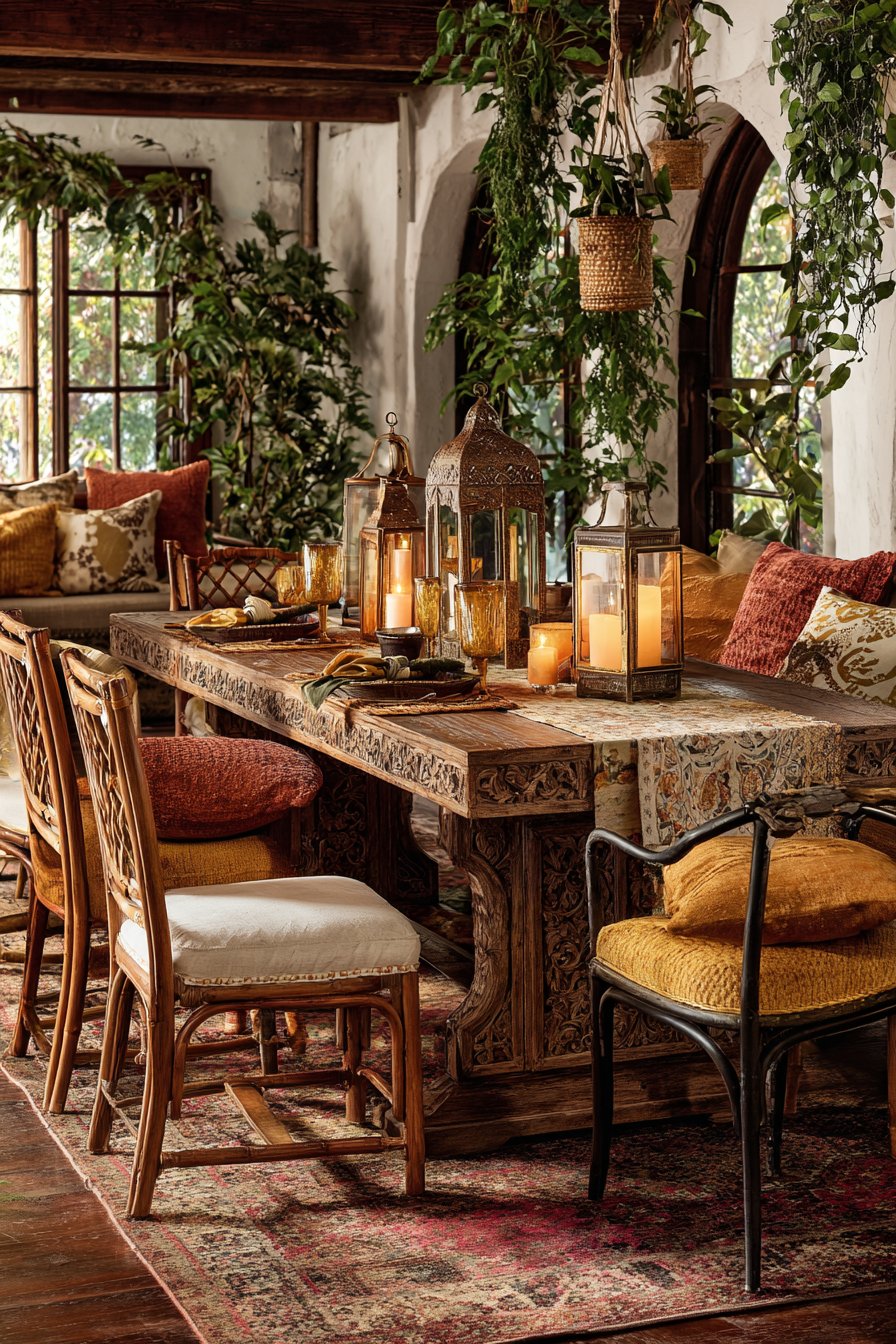
Mixed warm metal lanterns and candles provide ambient lighting throughout. The varied light sources create intimate atmosphere perfect for extended gatherings. Natural light filters through adding daytime warmth to the layered design. The combination demonstrates successful pattern and texture mixing.
This maximalist approach to warmth celebrates abundance and personality. The carved table shows handcrafted quality that mass production cannot achieve. Multiple textile layers create cozy environment that invites lingering. The eclectic chair mix tells story of collected treasures over time.
Key Design Tips:
- Source carved wooden tables for artisanal warmth and character
- Mix different chair styles in coordinating warm color tones
- Layer multiple textiles including rugs, runners, and cushions
- Add macramé plant hangers for vertical bohemian interest
- Use varied lighting sources including lanterns and candles
- Embrace pattern mixing in warm color families for cohesive eclectic look
10. Contemporary Glass and Walnut Sophistication
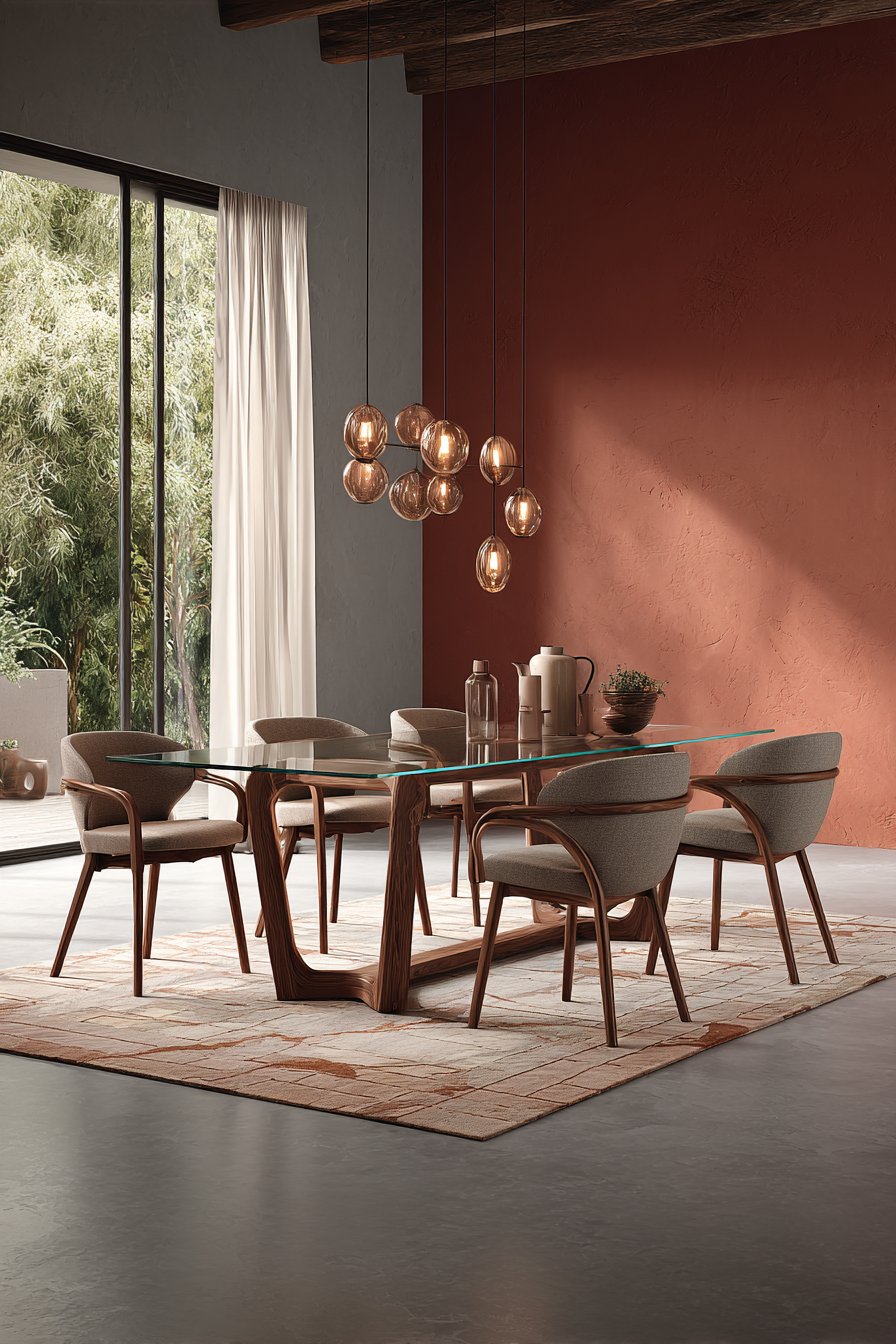
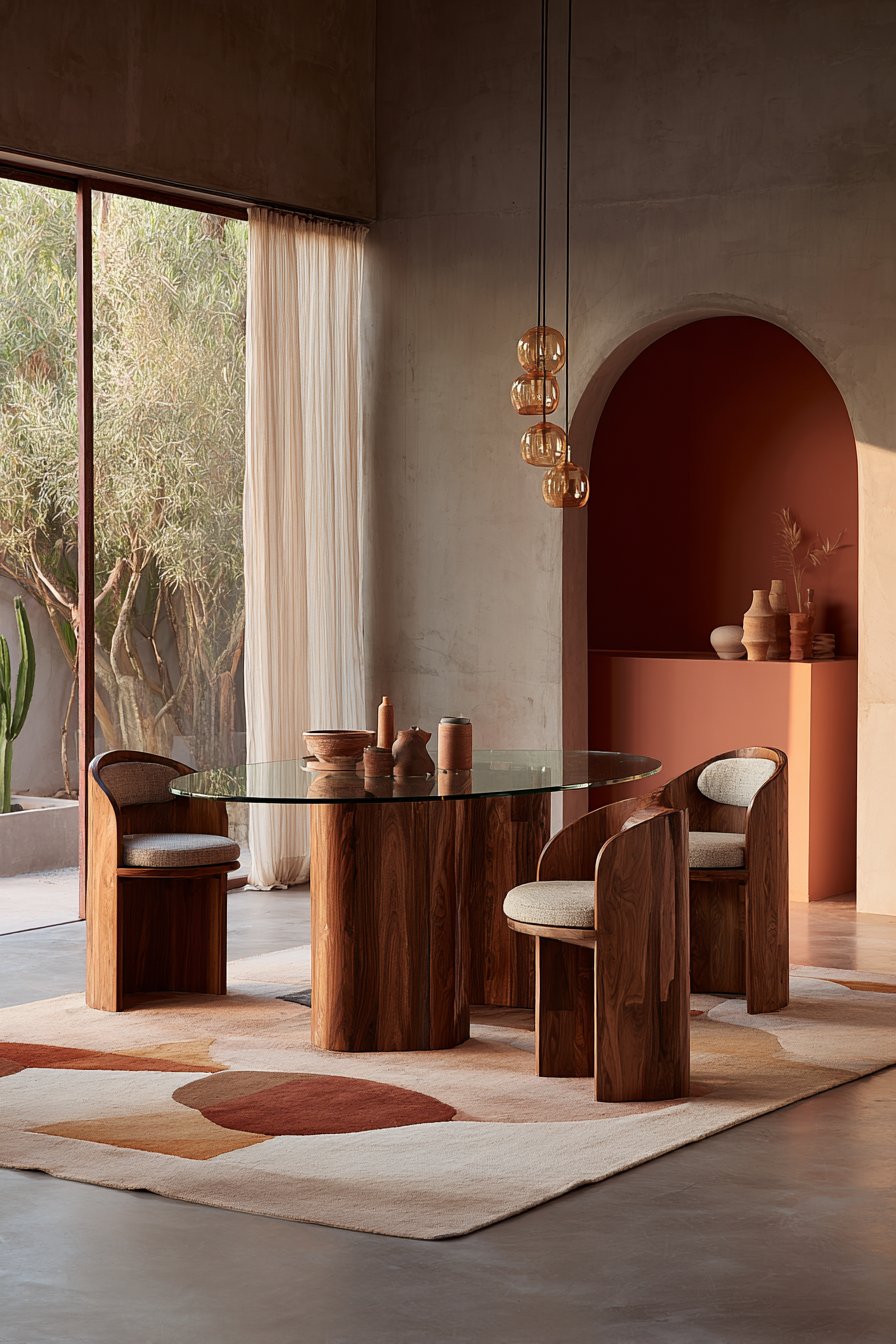
A contemporary glass-top dining table features substantial wooden base in dark walnut. The glass maintains visual lightness while the walnut provides grounding warmth. Modern dining chairs combine curved wooden frames with cushioned seats. The warm taupe fabric adds comfort while maintaining contemporary lines.
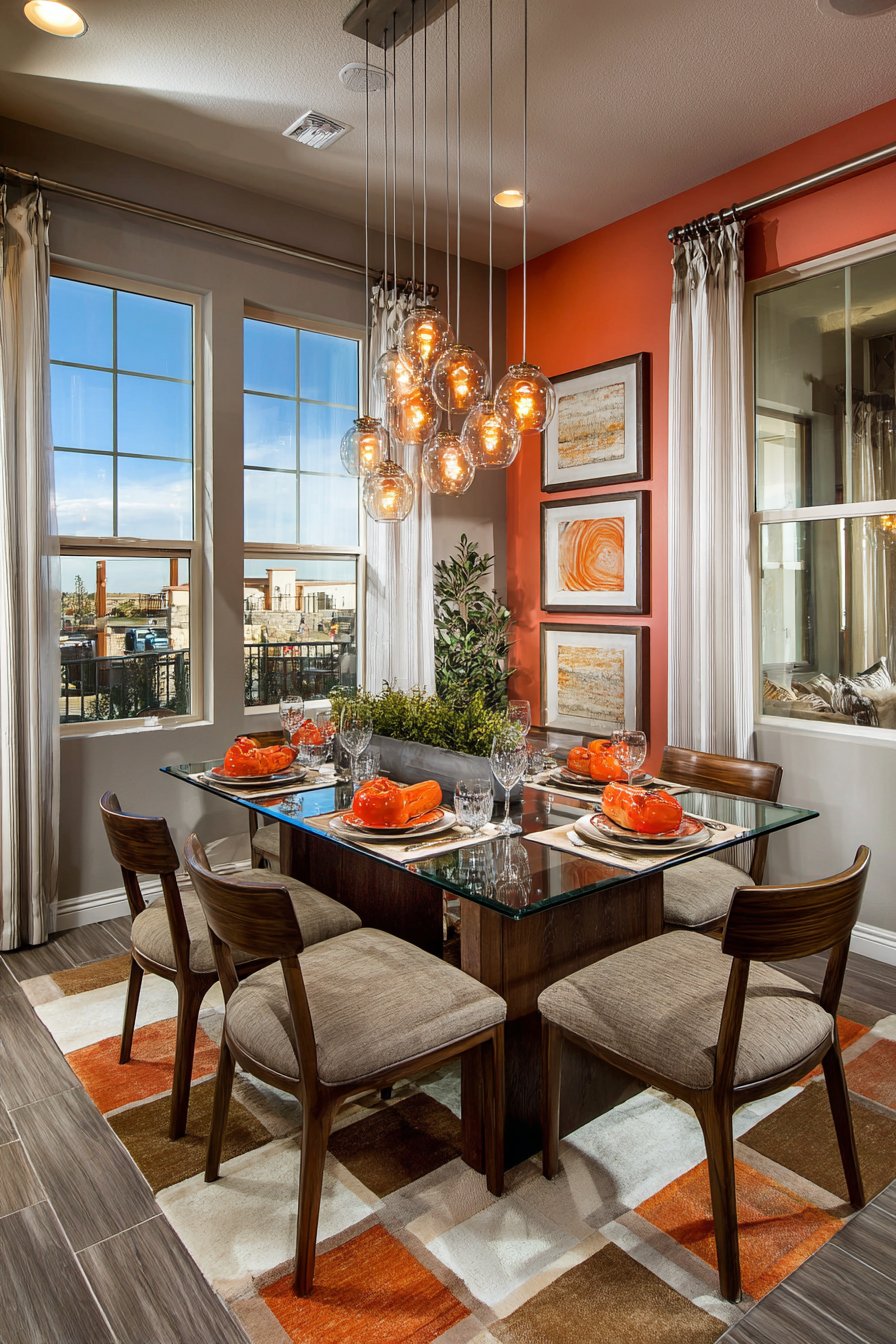
A low-profile area rug in abstract warm geometric pattern grounds the space. The contemporary design adds visual interest beneath the transparent table. Linear pendant light with multiple amber glass globes provides focused illumination. The amber glass adds warm glow that softens the contemporary aesthetic.
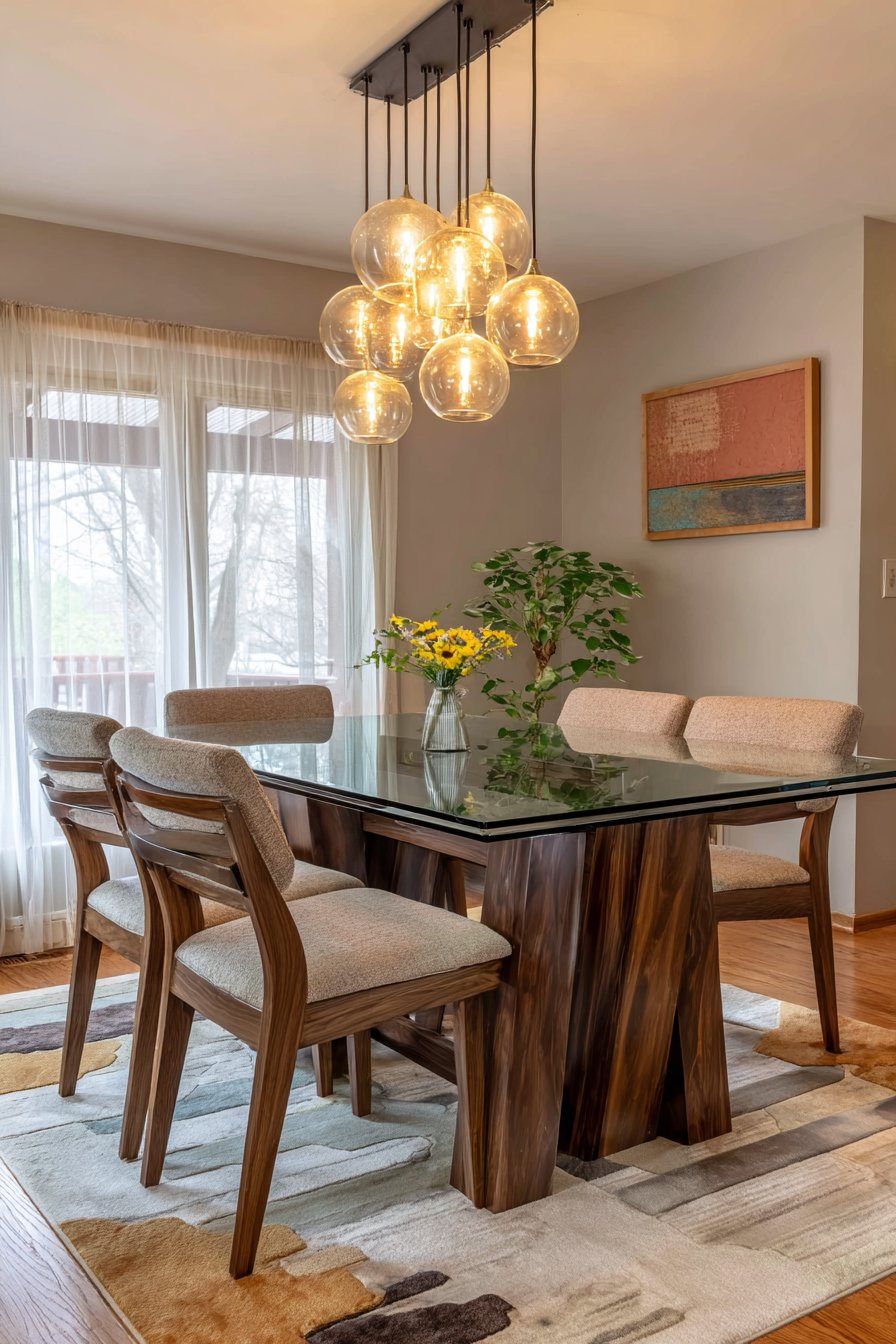
One accent wall in warm terracotta paint creates bold focal point. This color choice adds depth and warmth to the neutral grey remaining walls. Large windows dressed with sheer treatments allow afternoon light streaming through. The natural light interacts beautifully with the warm accent wall throughout the day.
This design demonstrates that contemporary style embraces warmth successfully. The walnut base provides necessary warm tone against glass transparency. Amber glass pendants add vintage-inspired warmth to modern fixture design. The terracotta accent wall proves that bold color enhances rather than overwhelms contemporary spaces.
Key Design Tips:
- Combine glass table tops with substantial walnut wood bases
- Choose modern chairs with warm taupe or camel upholstery
- Add geometric patterned rugs in warm abstract designs
- Install linear pendants with amber glass globes for warm contemporary lighting
- Paint one accent wall in warm terracotta or rust for bold warmth
- Use sheer window treatments to maximize natural light flow
11. Coastal Farmhouse Whitewashed Brightness
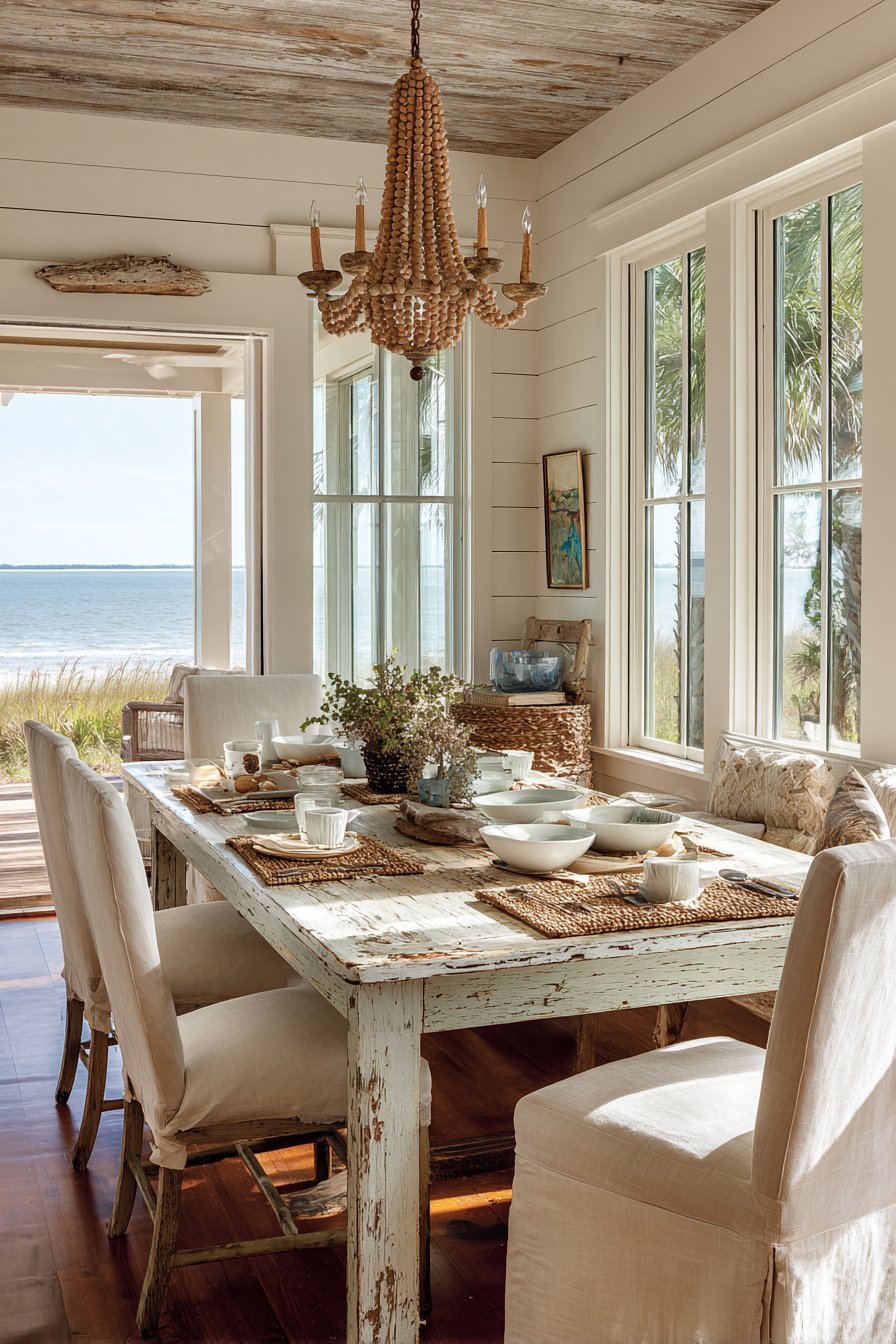
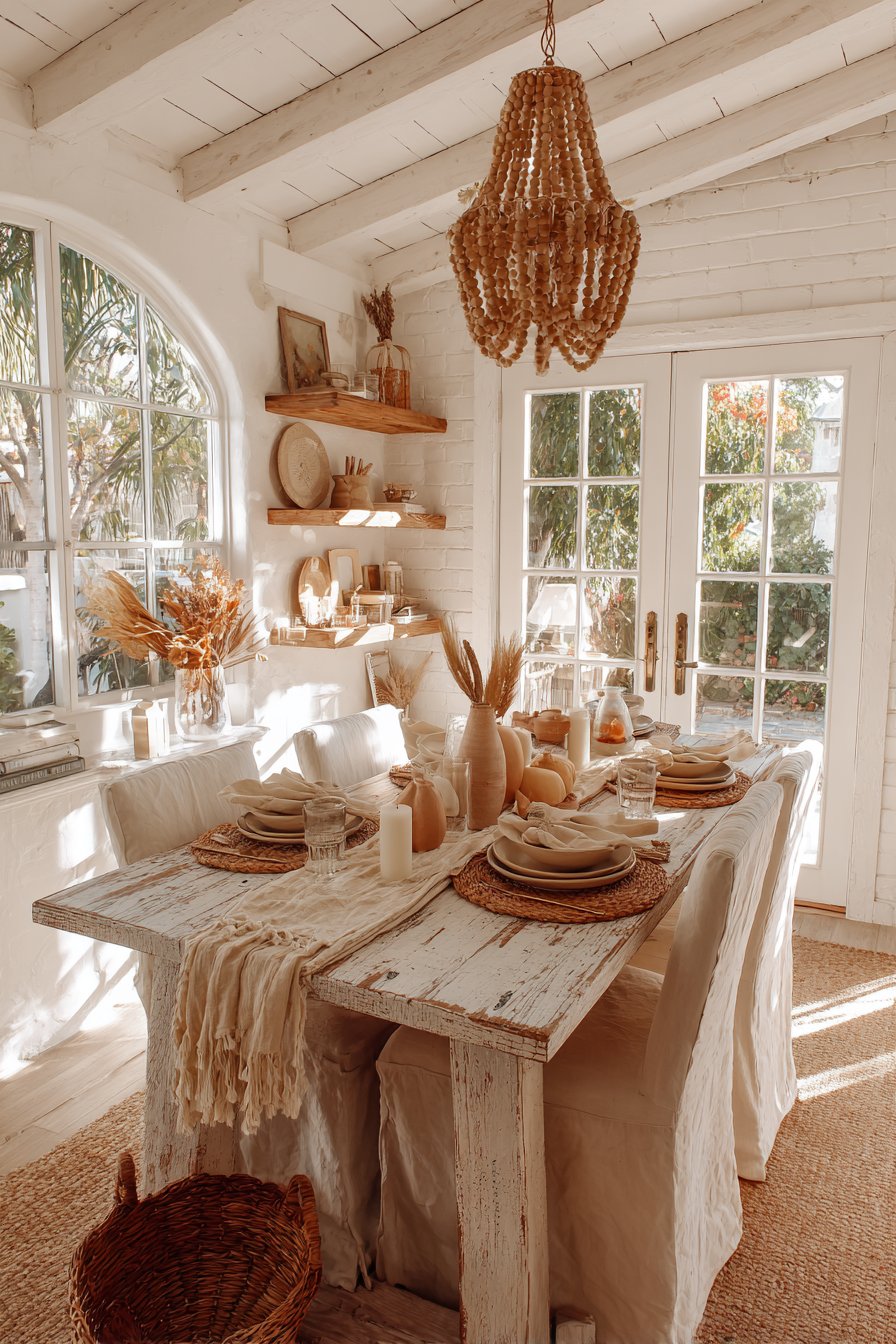
A whitewashed wooden dining table shows natural wood through distressed finish. This technique adds character while maintaining bright coastal aesthetic. Slipcovered dining chairs in natural linen provide relaxed elegance. The washable fabric makes practical sense for casual dining while looking sophisticated.
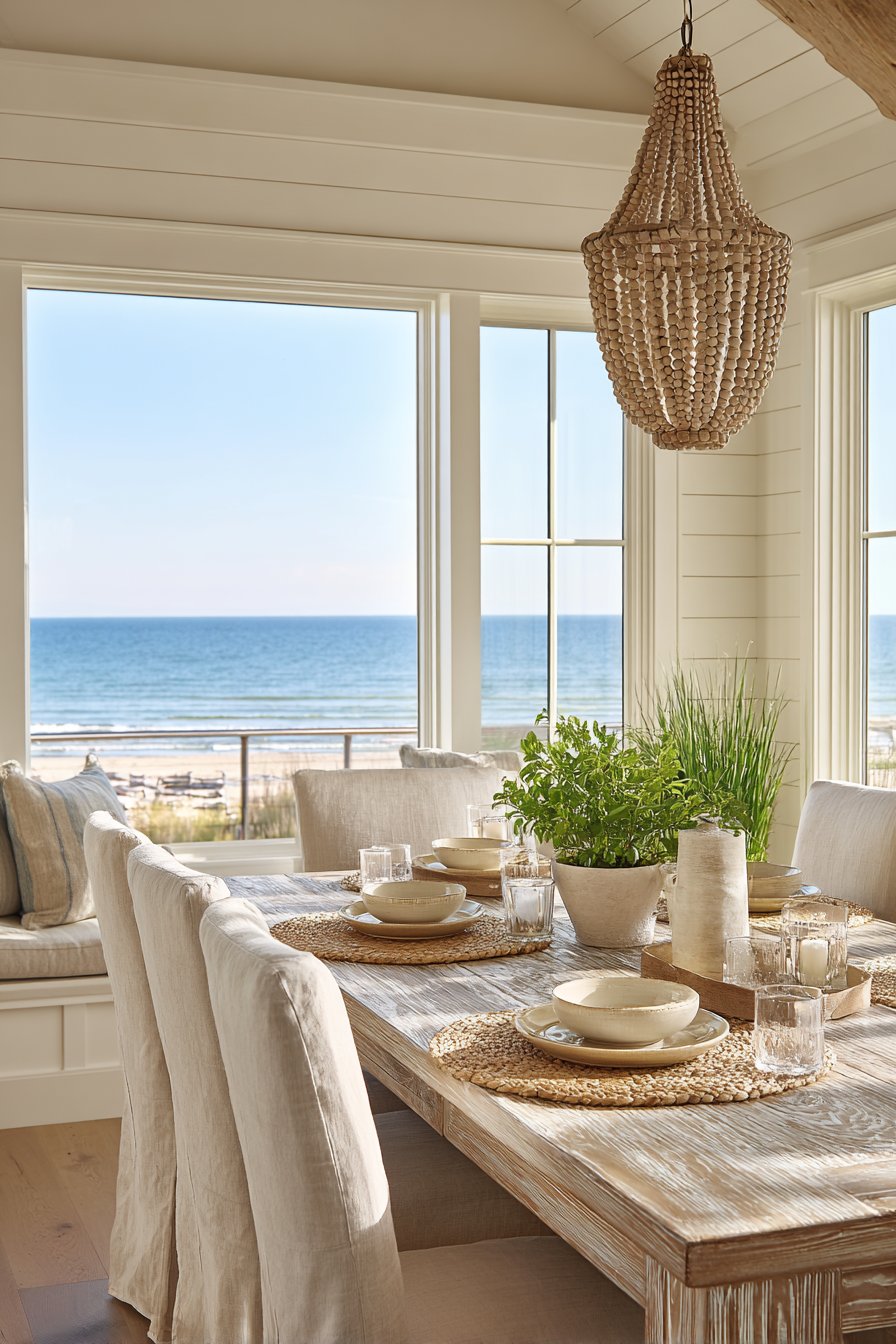
Woven seagrass placemats and ceramic dishes in warm cream tones set inviting table. These natural materials add texture without heavy color commitment. Shiplap walls painted in warm white reflect natural light from oversized windows. The architectural detail adds cottage charm that enhances the coastal farmhouse aesthetic.
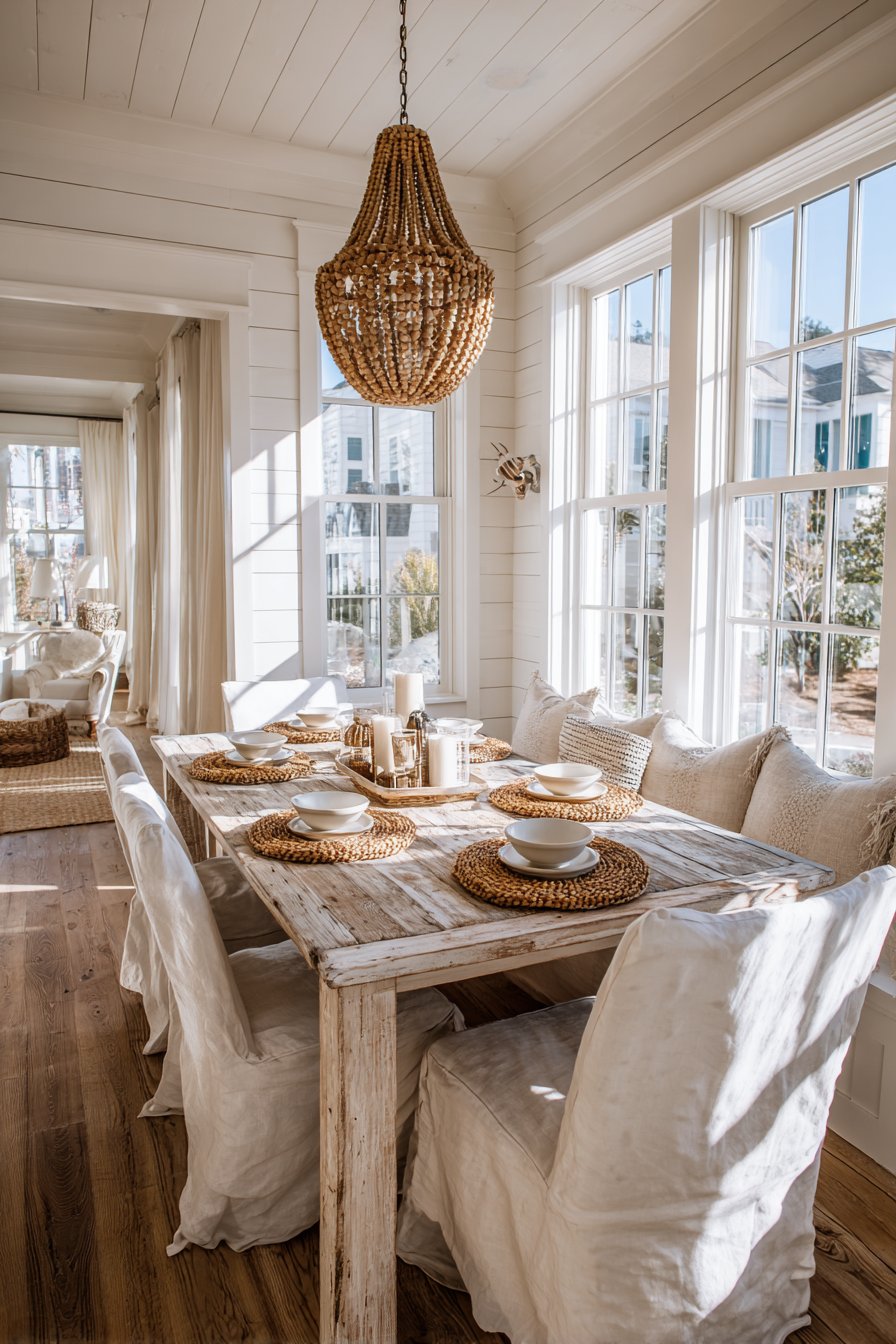
A wooden bead chandelier adds organic texture overhead without visual weight. The natural material complements both coastal and farmhouse elements seamlessly. Natural daylight creates soft shadows that highlight textured materials. The abundant light maintains airiness while warm tones prevent sterile feeling.
This design proves that bright spaces maintain warmth through material choices. The whitewashed wood adds warmth despite pale color. Natural linen and seagrass introduce organic warmth through texture. The combination creates light-filled space that feels warm rather than cold.
Key Design Tips:
- Choose whitewashed wood furniture that shows natural grain beneath
- Use natural linen slipcovers for casual elegant warmth
- Add woven seagrass placemats for organic coastal texture
- Install shiplap walls painted in warm white for architectural interest
- Hang wooden bead chandeliers for lightweight natural texture
- Maximize natural light through oversized windows for bright warmth
12. Formal Mahogany Luxury with Burgundy Velvet
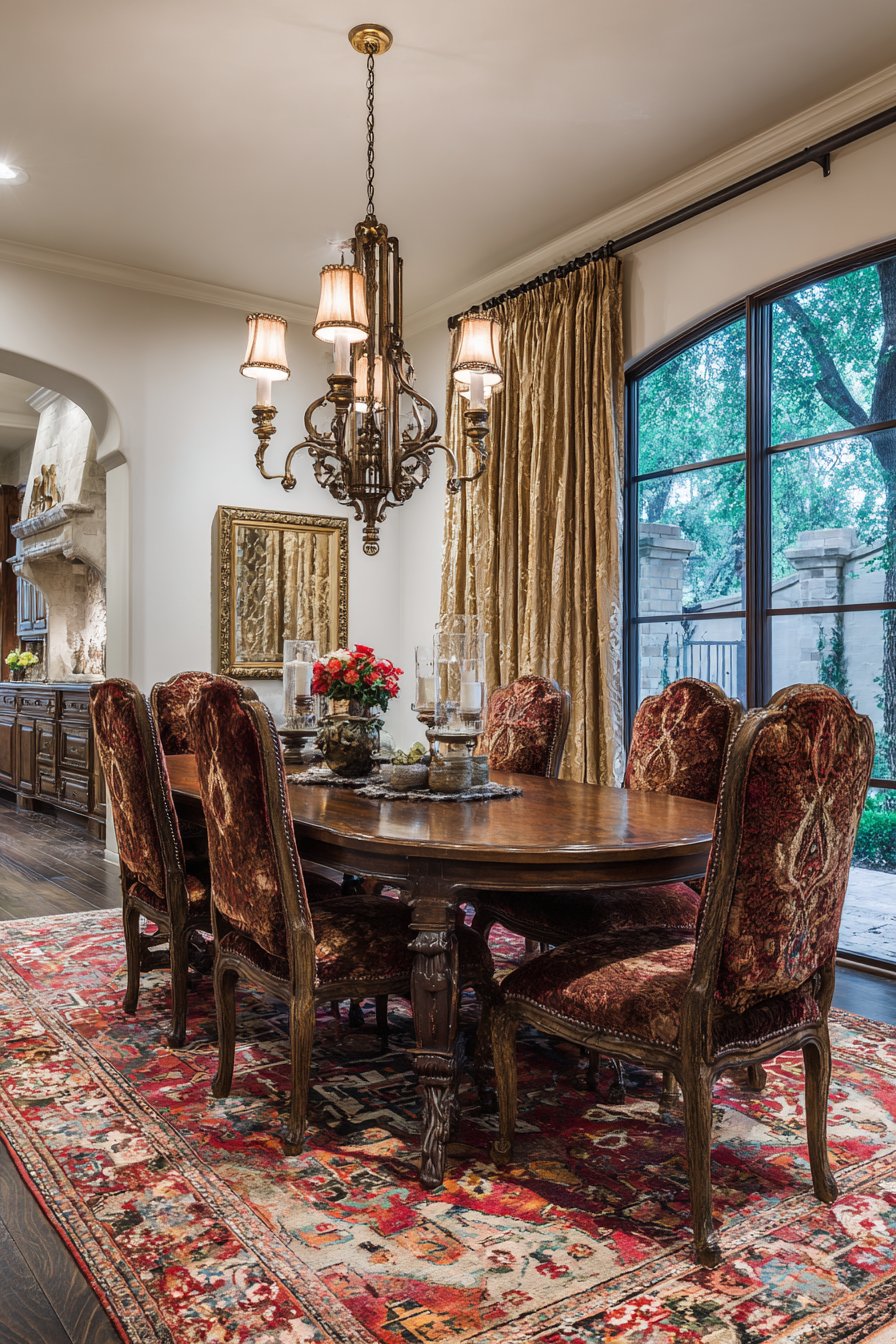
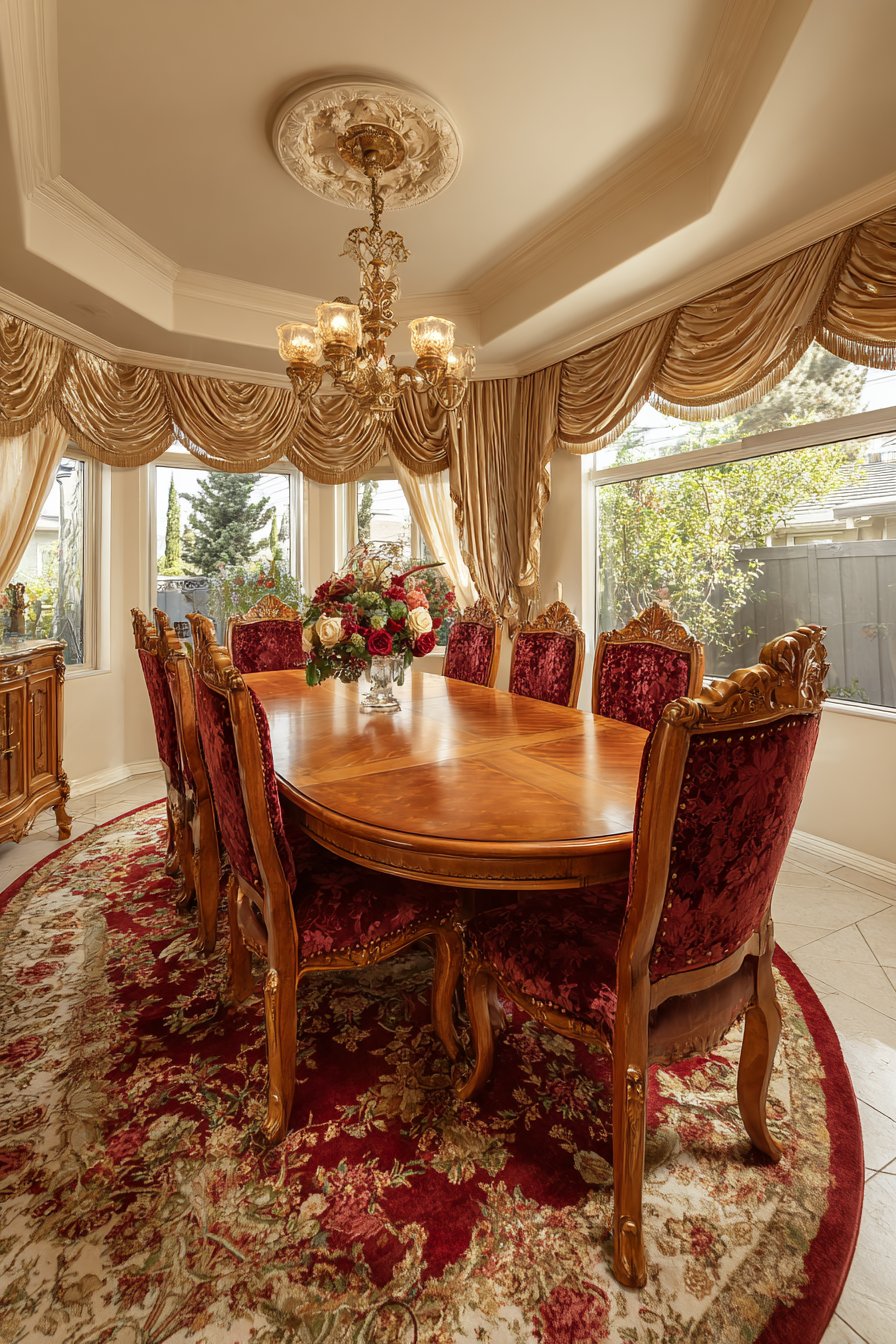
A formal dining set features oval table in rich mahogany finish. The deep wood tone creates immediate warmth and sophistication. Upholstered chairs feature nailhead trim and velvet fabric in deep burgundy. The luxurious details add formality while maintaining approachable warmth.
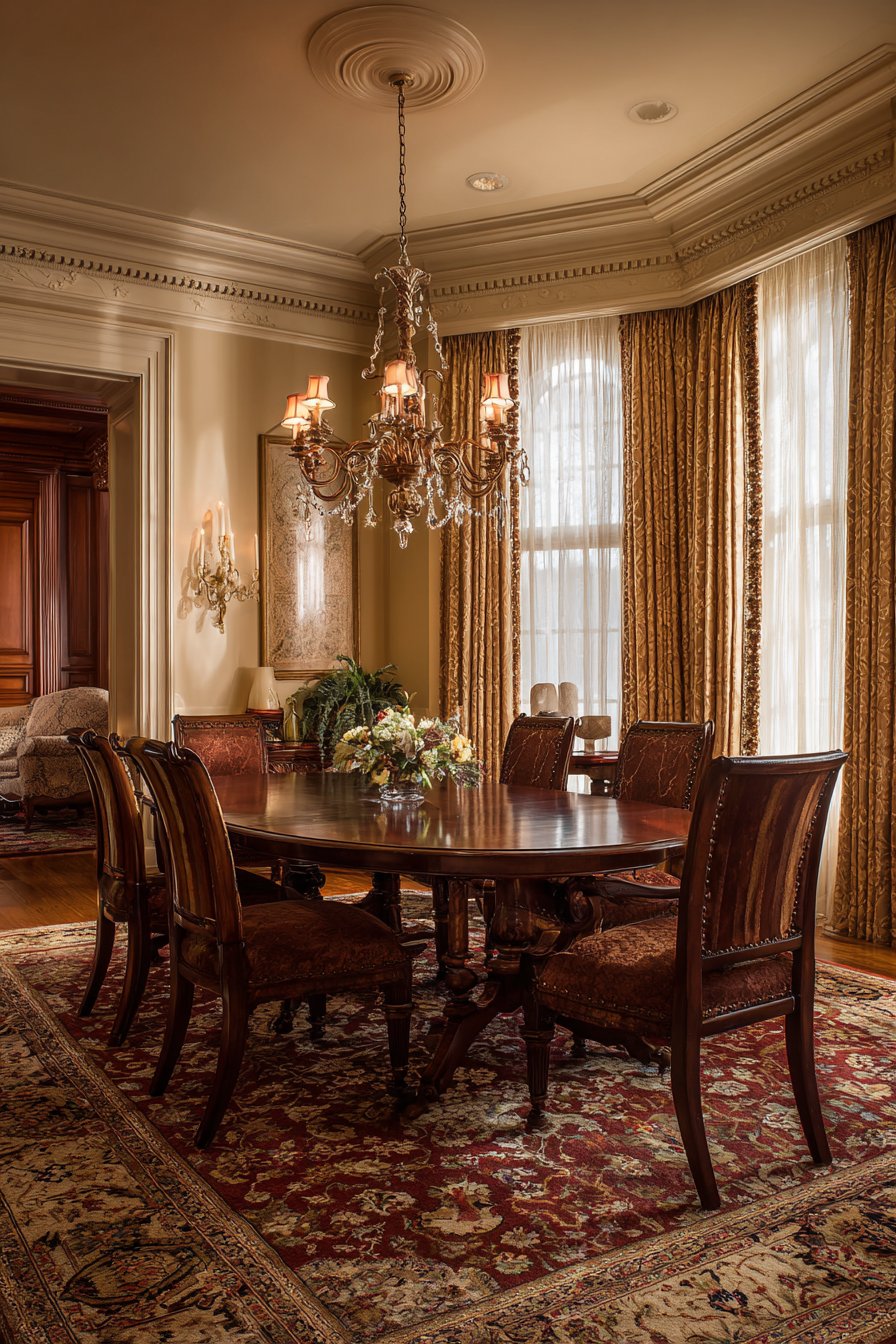
An ornate wool rug in traditional pattern anchors the elegant arrangement. Warm reds, golds, and cream create rich foundation for formal dining. Warm ivory walls feature decorative molding that adds architectural sophistication. The classical details frame the space beautifully without overwhelming it.
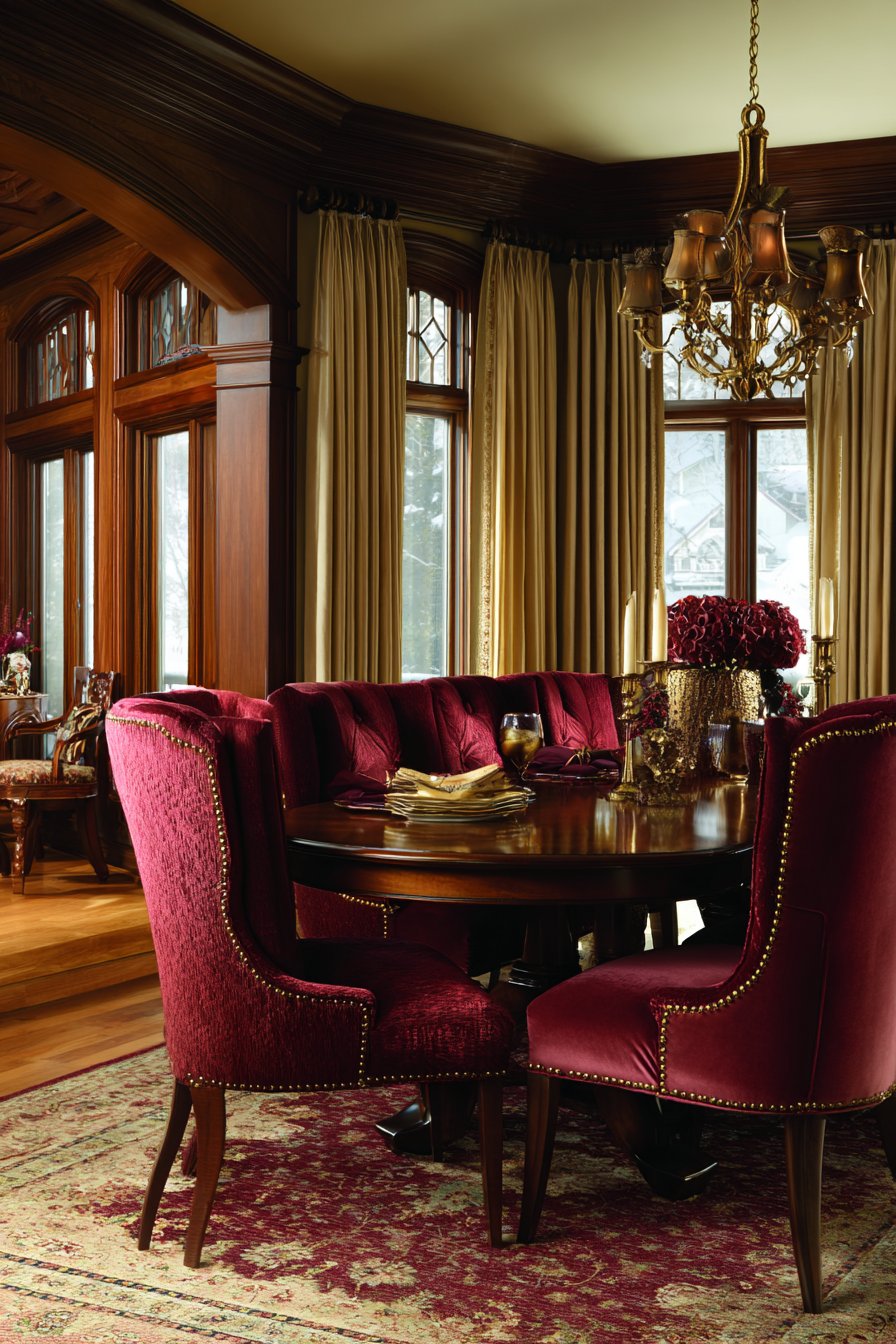
An antique brass chandelier with fabric shades provides sophisticated lighting. The fixture combines metallic warmth with soft fabric-filtered illumination. Heavy silk drapes in gold frame tall windows. These filter afternoon light while adding luxurious textural element.
This design celebrates traditional luxury through quality materials and craftsmanship. The mahogany wood develops deeper richness over decades of use. Burgundy velvet maintains its luxurious appearance while showing appropriate patina. The formal elements create warmth through richness rather than casualness.
Key Design Tips:
- Select mahogany furniture for deep reddish warm wood tones
- Upholster formal chairs in burgundy or wine-colored velvet
- Choose ornate wool rugs in traditional patterns with warm jewel tones
- Add decorative molding painted in warm ivory for architectural elegance
- Install antique brass chandeliers with fabric shades for soft formal lighting
- Hang heavy silk drapes in gold or warm metallics for luxurious warmth
13. Small Space Bistro Oak Intimacy
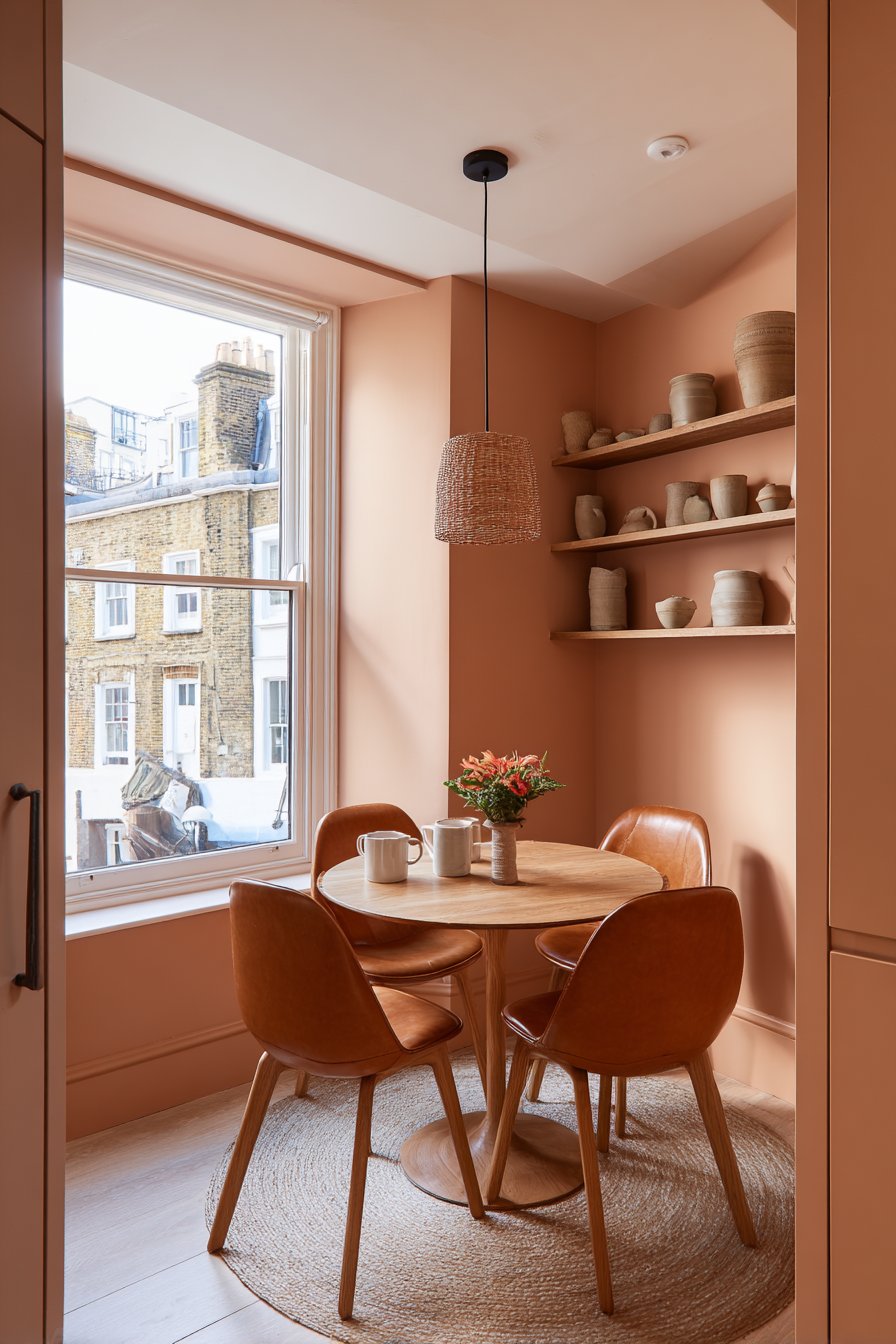
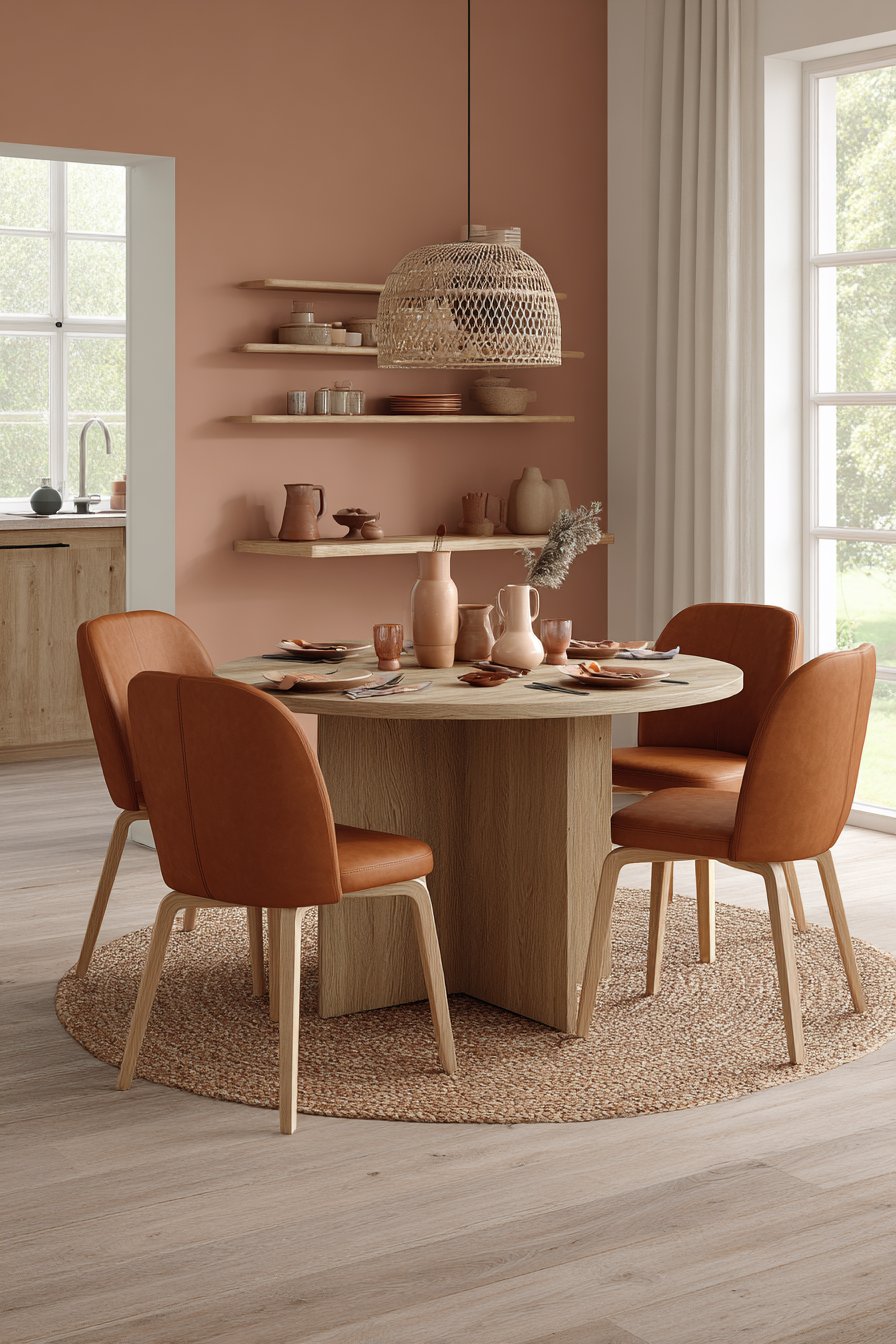
A round bistro-style table in warm oak suits compact dining spaces perfectly. The compact base maximizes floor space while providing stable dining surface. Three modern dining chairs feature curved backs in camel-colored faux leather. The neutral upholstery adds warmth without overwhelming the small space.
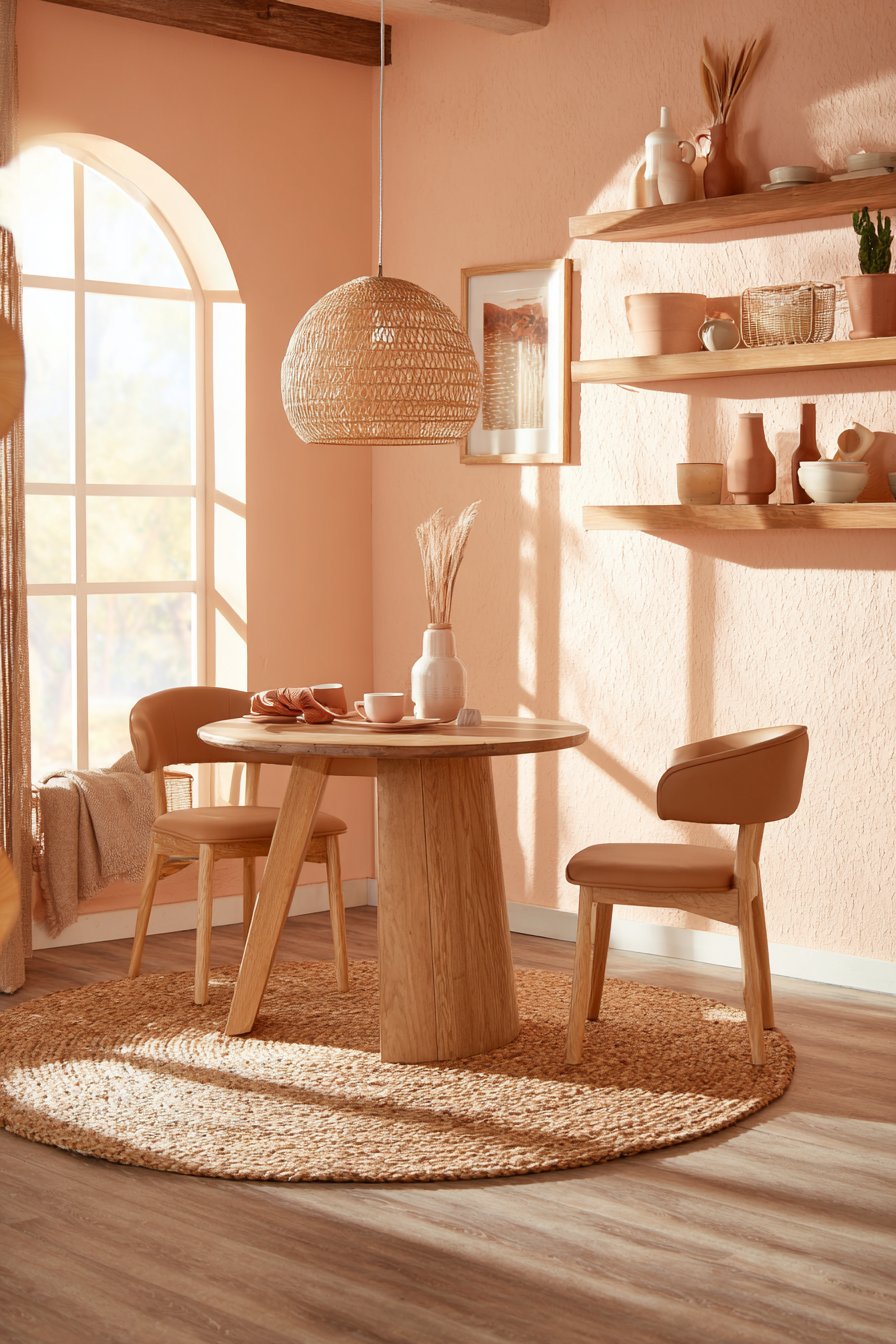
A small round jute rug defines the intimate dining area clearly. The natural fiber adds textural warmth while maintaining visual simplicity. Single pendant light with woven rattan shade hangs at perfect height. The scaled-down fixture provides necessary light without dominating the small space.
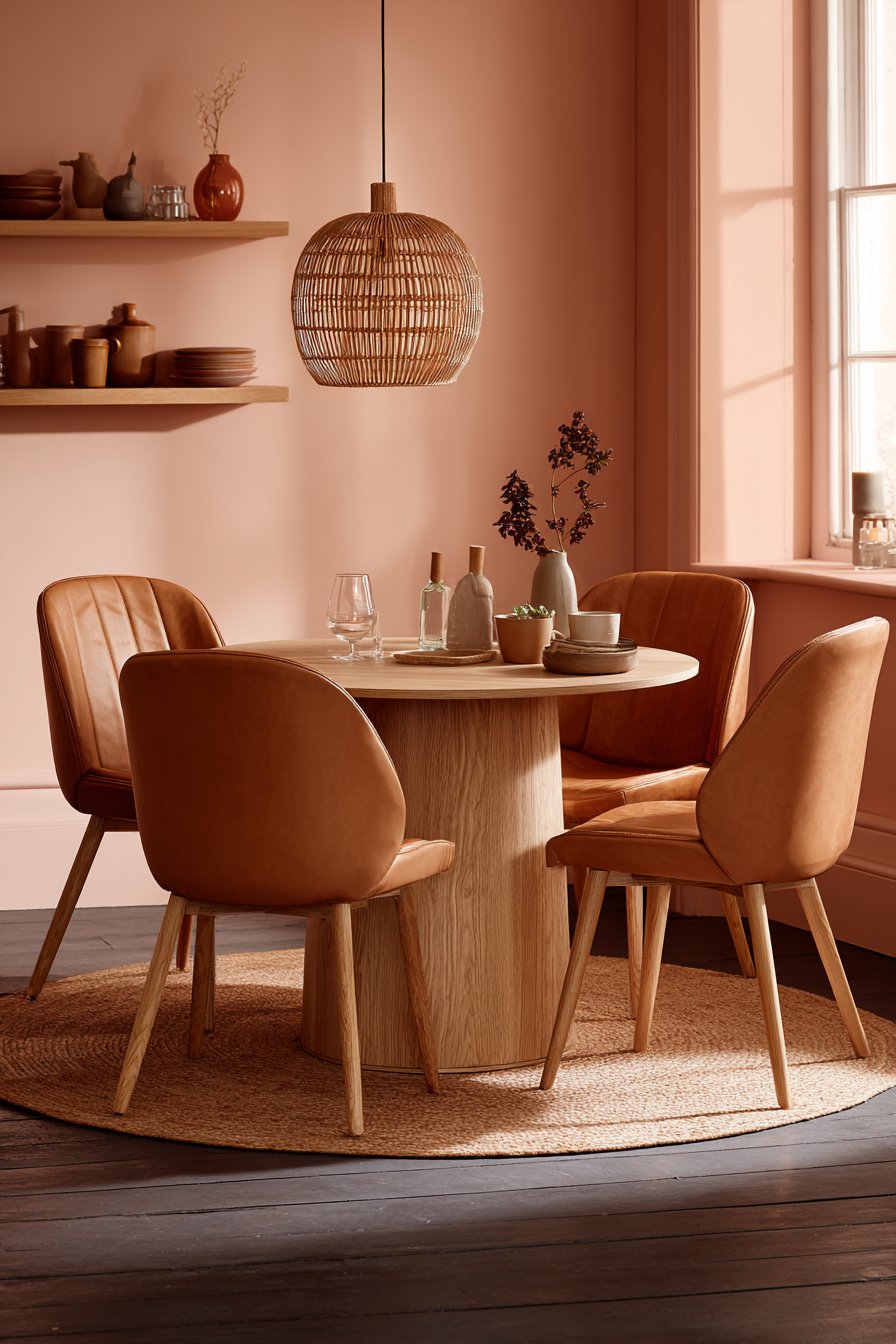
One wall painted in warm peachy-pink creates cozy ambiance. This color choice adds personality without requiring extensive square footage. Floating wooden shelves display warm-toned ceramics that add function and beauty. The open shelving maintains airiness while providing necessary storage.
This design demonstrates that small spaces benefit from concentrated warmth. The warm oak and peachy-pink wall create enveloping coziness. Scaled-appropriate furniture prevents cramped feeling while maintaining functionality. The result proves that intimacy creates its own version of warmth.
Key Design Tips:
- Choose round bistro tables to maximize small dining space efficiency
- Select scaled-down chairs in warm camel or tan tones
- Use small round rugs to define compact dining zones
- Install single pendant lights scaled appropriately for space
- Paint one wall in warm peach or blush for cozy color
- Add floating shelves to display warm ceramics without floor space
14. Transitional Weathered Oak Timelessness
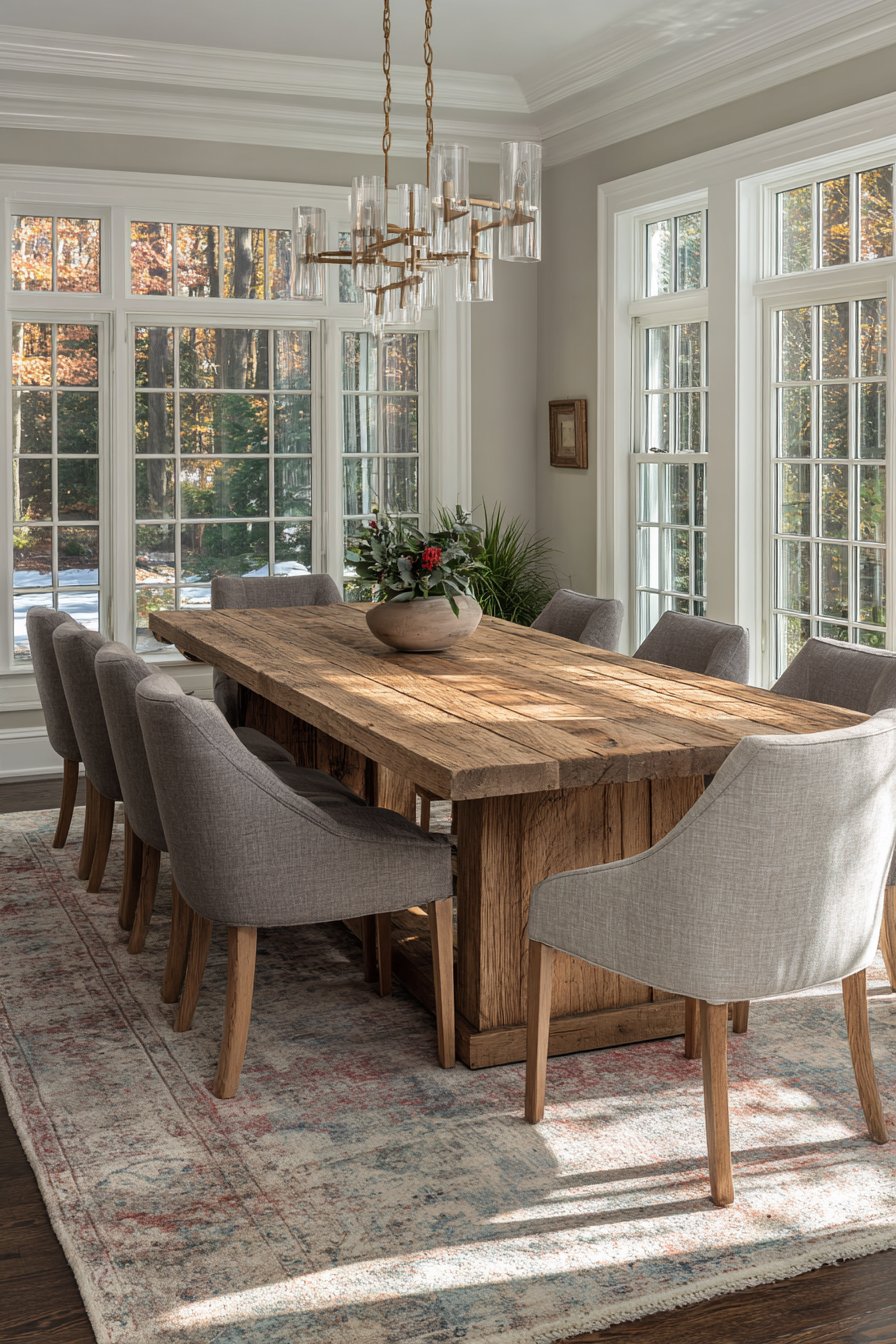
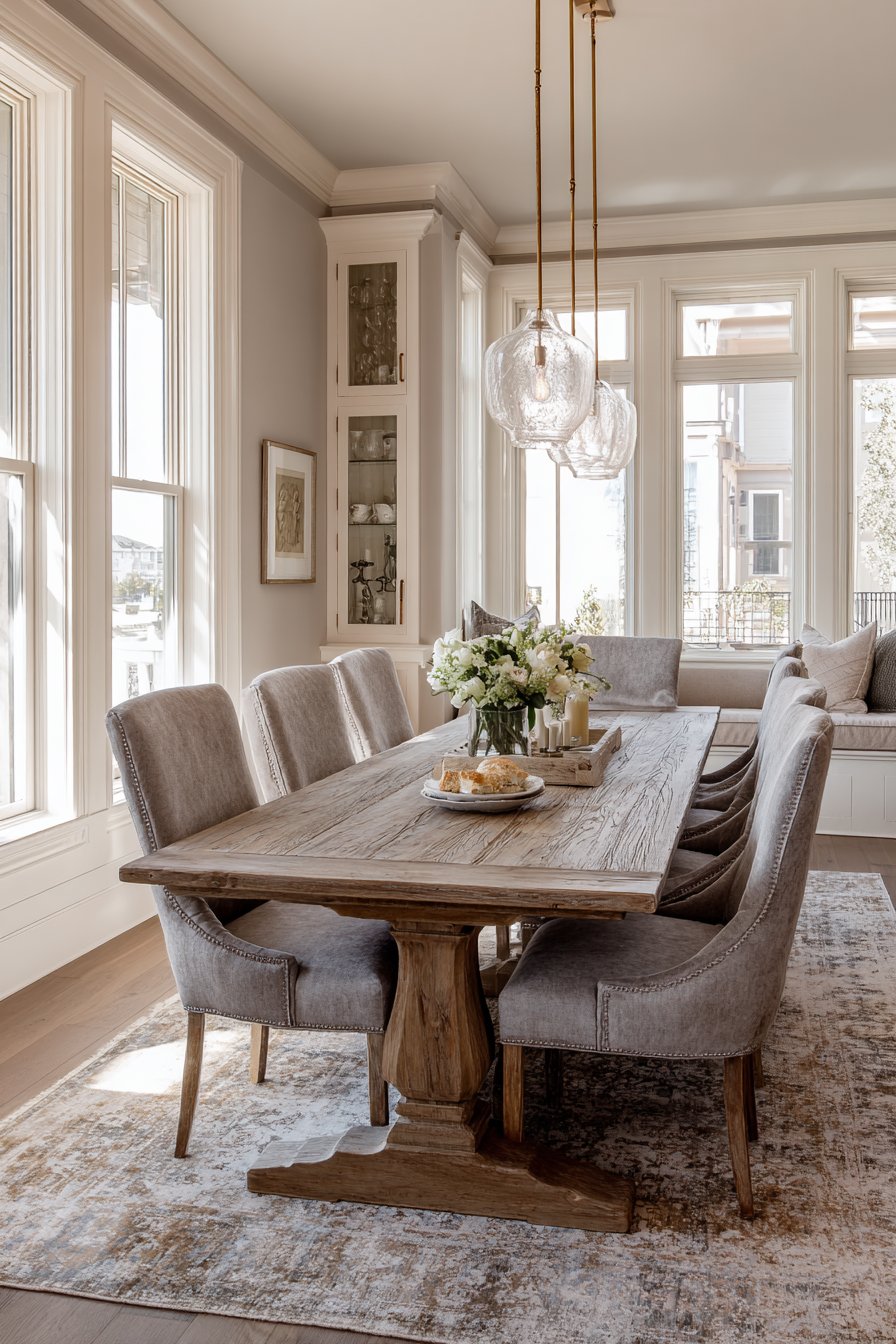
A rectangular dining table features thick plank top in weathered oak. The substantial construction suggests quality that lasts generations. Sturdy trestle base provides visual interest and structural integrity. Combination of upholstered host chairs in warm grey linen and wooden side chairs adds flexibility.
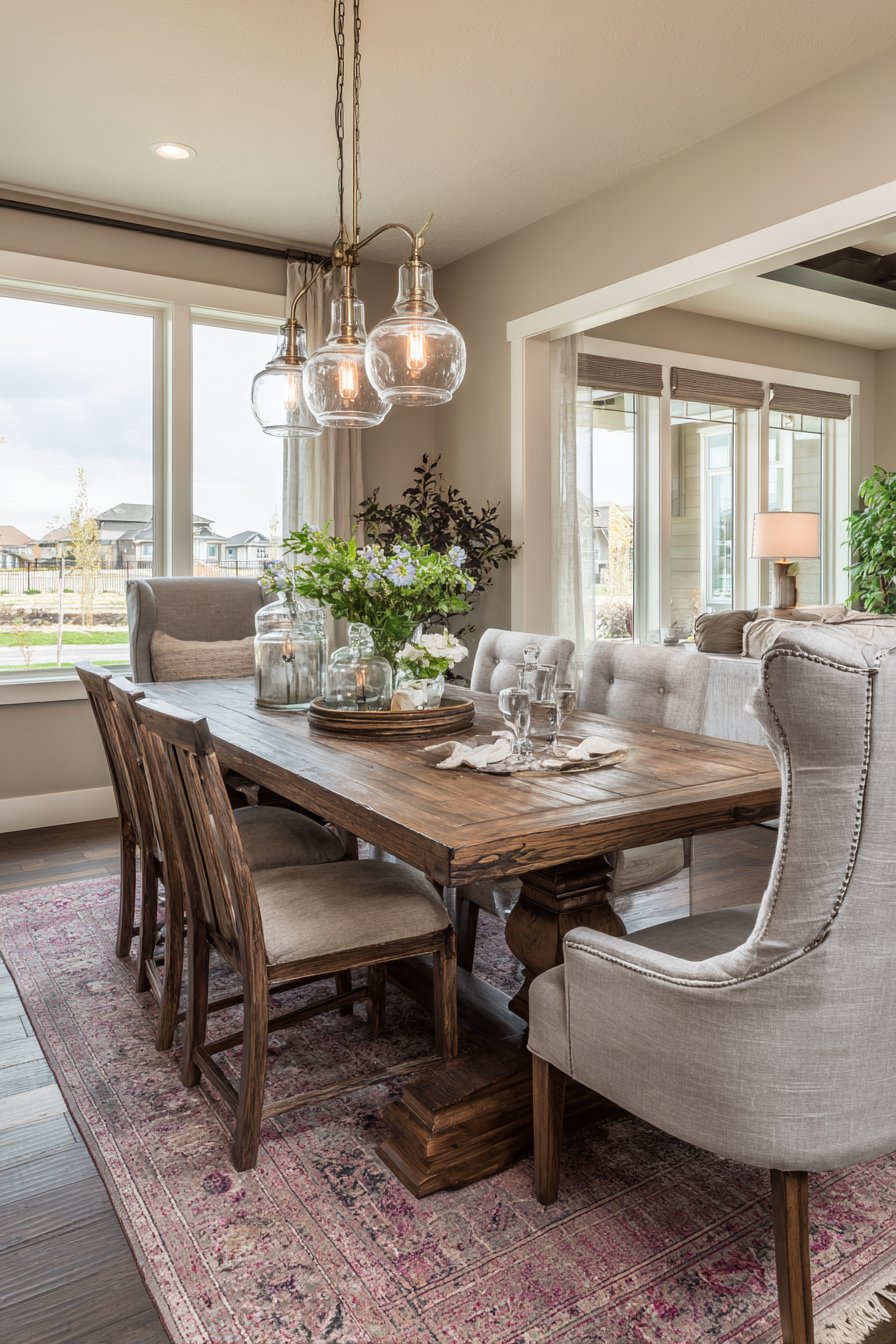
A vintage-inspired rug in faded warm tones grounds the transitional space. The aged appearance adds character without looking worn. Modern chandelier with aged brass finish and clear glass shades provides elegant lighting. The fixture bridges traditional and contemporary styles successfully.
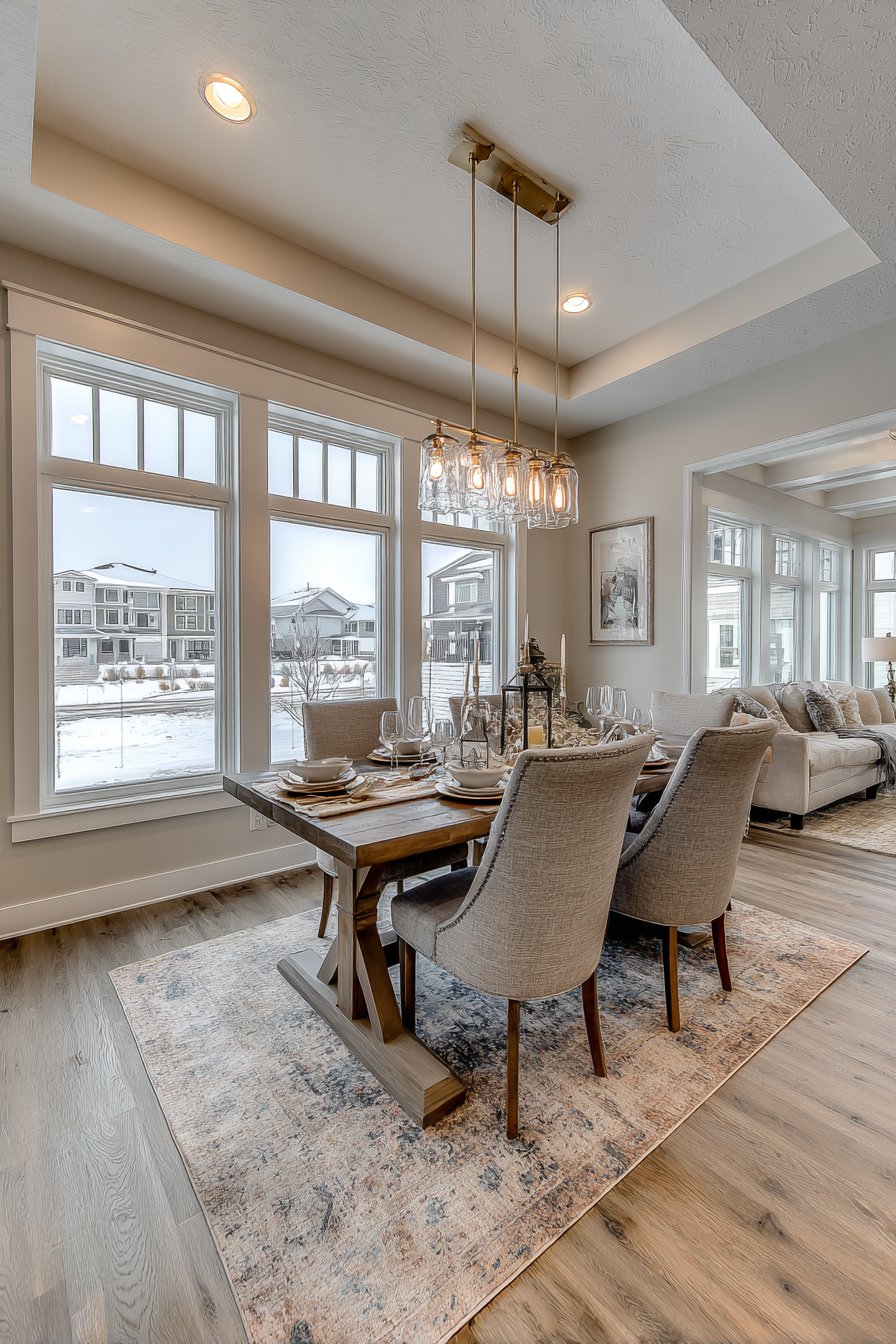
Warm greige walls create sophisticated backdrop for the mixed materials. This neutral allows wood tones and textiles to shine without competition. Natural light from large windows highlights the layered neutral warmth throughout. The balanced lighting showcases materials without harsh shadows.
This design excels at timeless appeal that transcends trend cycles. The weathered oak suggests age without looking outdated. Mixed seating styles accommodate formal and casual dining needs. The neutral palette with warm undertones creates foundation that adapts to changing tastes.
Key Design Tips:
- Select weathered oak tables with thick plank tops for substantial warmth
- Mix upholstered host chairs with wooden side chairs for flexibility
- Choose vintage-inspired rugs in faded warm color palettes
- Install chandeliers with aged brass finish for transitional style
- Paint walls in warm greige for sophisticated neutral backdrop
- Position near large windows to showcase layered warm materials
15. Industrial-Rustic Reclaimed and Metal Mix
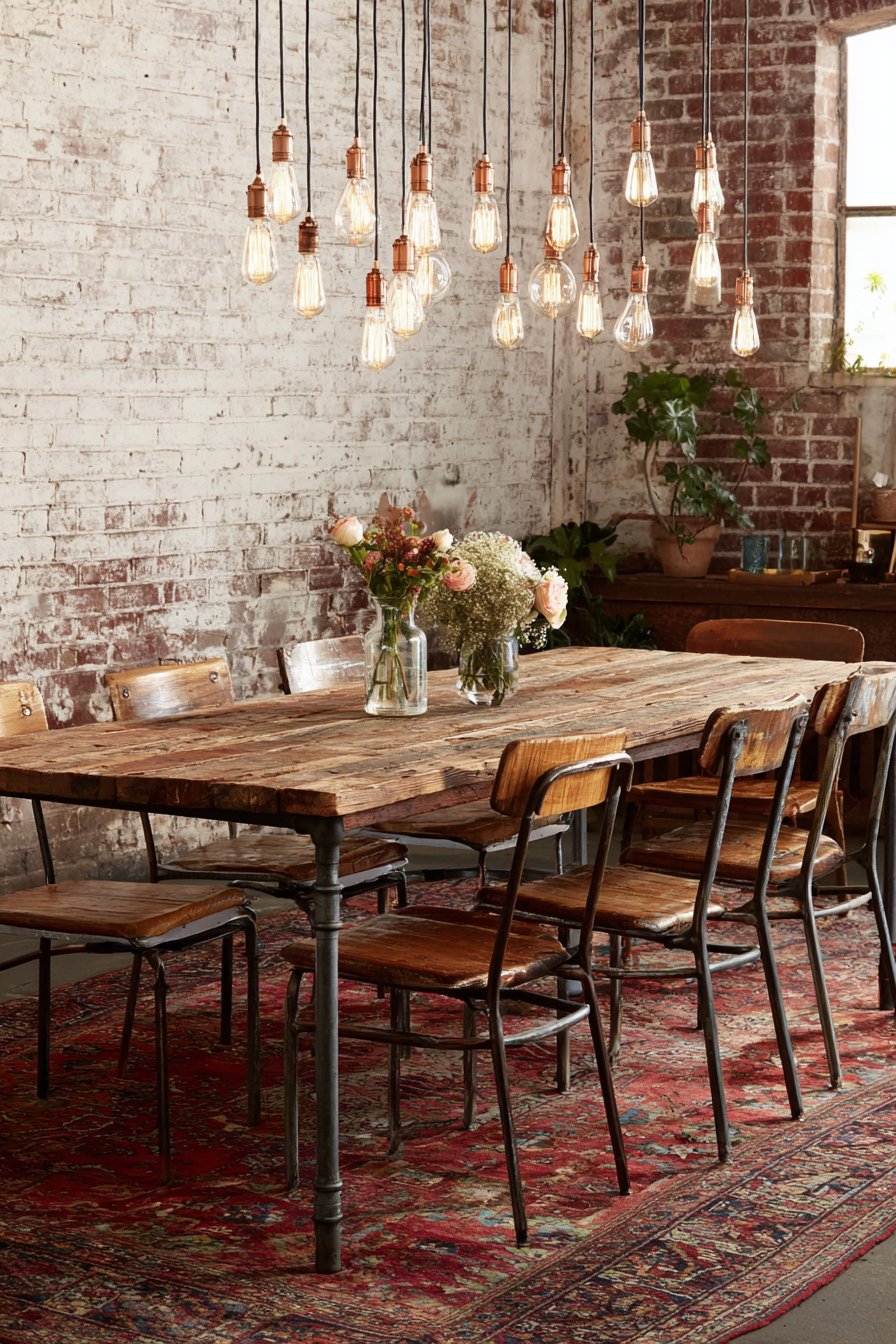
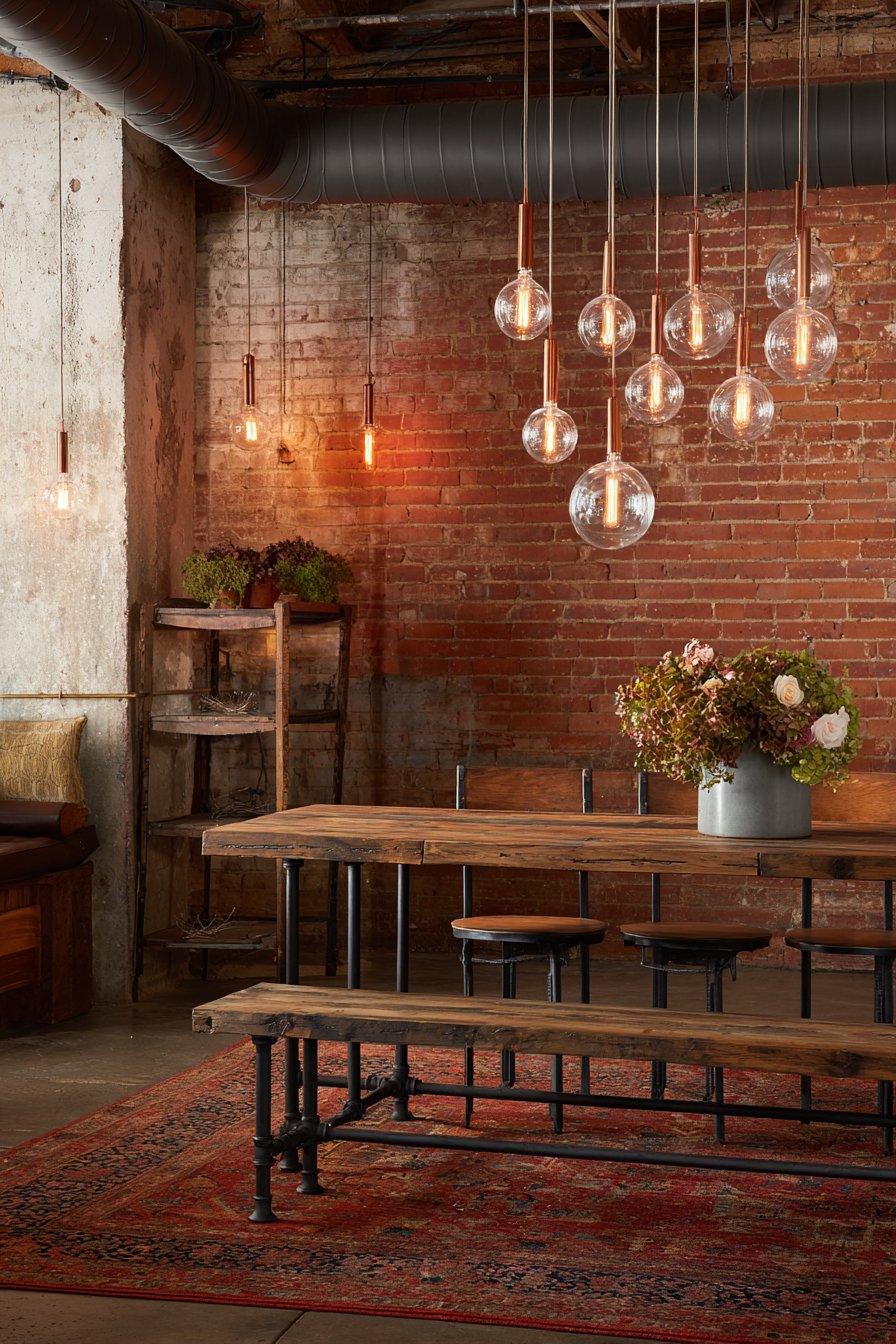
A dining table combines reclaimed wood top with metal pipe legs. The wood shows authentic wear and natural imperfections proudly. Matte black metal provides industrial contrast to organic wood warmth. Metal dining chairs with wooden seats create intentional mismatch in warm wood tones.
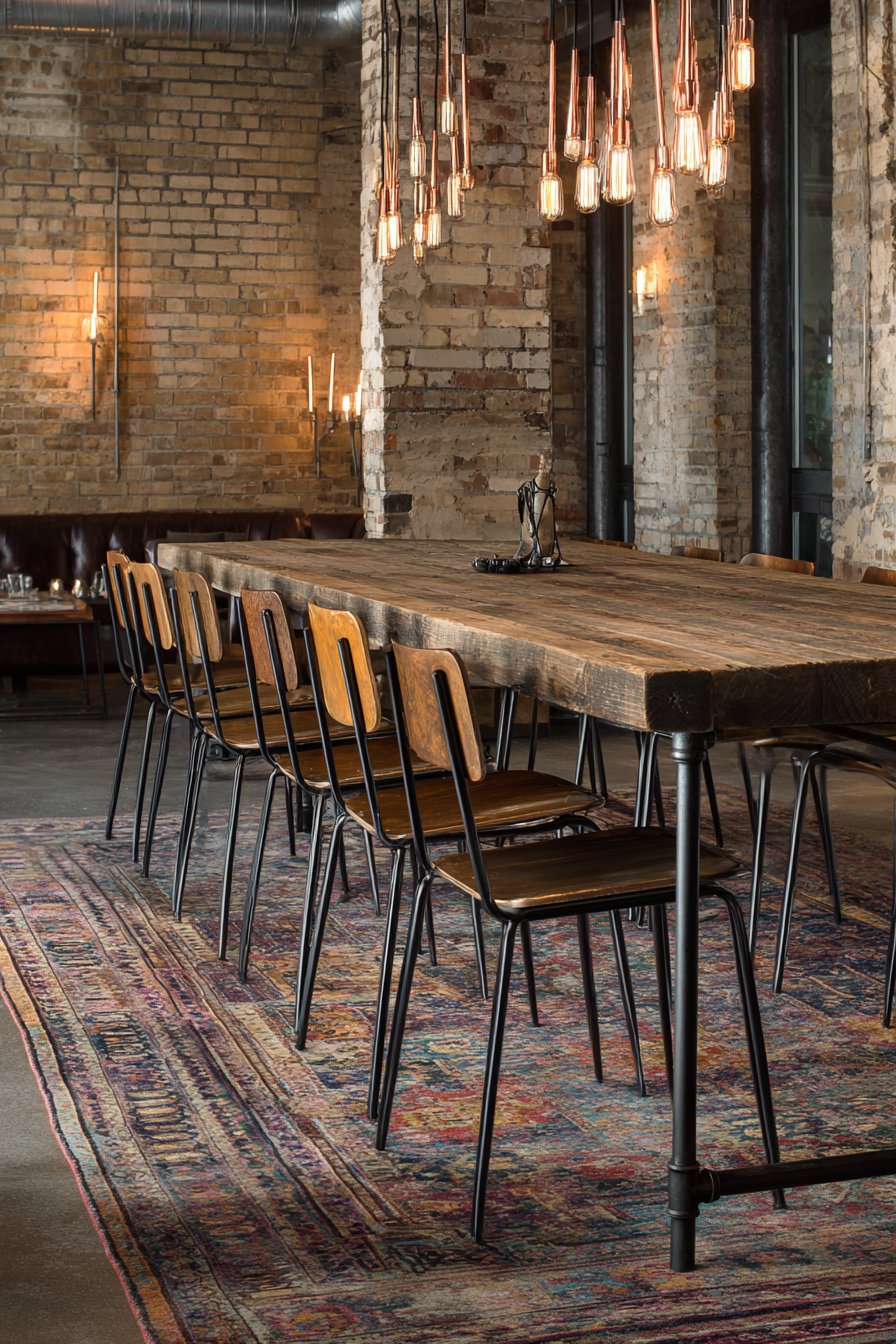
An oversized vintage Persian rug in warm faded colors adds softness underfoot. The aged pattern brings color and history to industrial elements. Exposed brick wall painted in warm white provides textured backdrop. The painted brick maintains texture while preventing overwhelming heaviness.
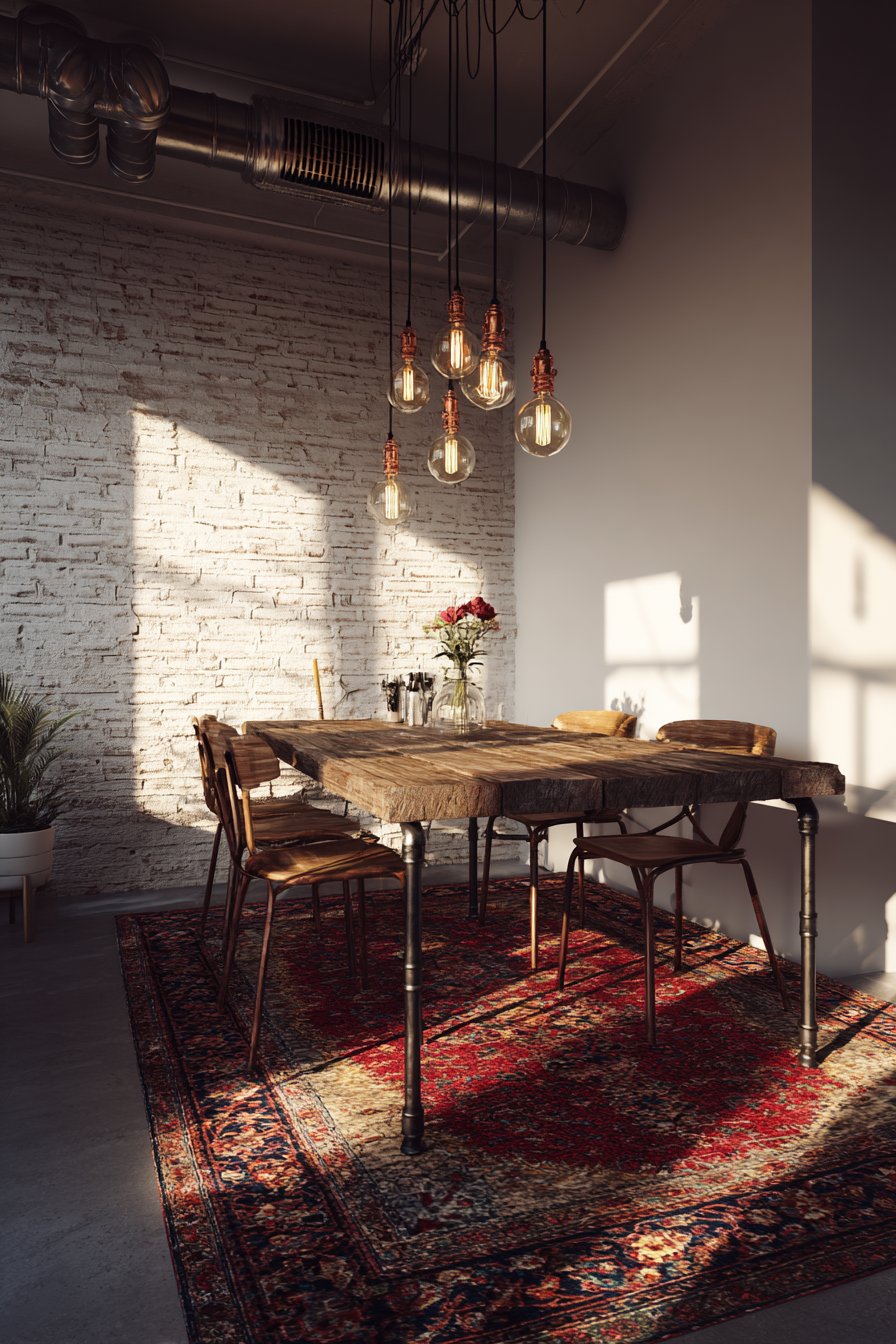
Cluster of Edison bulb pendants with copper fittings hang at varying heights. This creates dramatic focal point while providing necessary illumination. Side lighting creates depth and shadow play throughout the space. The layered lighting adds warmth to potentially cold industrial materials.
This design successfully warms industrial aesthetic through thoughtful material mixing. The reclaimed wood prevents cold industrial feeling. Warm faded rug colors soften metal and brick hardness. The copper light fittings add necessary metallic warmth to balance black metal.
Key Design Tips:
- Combine reclaimed wood table tops with metal pipe bases
- Mix metal and wood dining chairs in warm coordinating tones
- Layer oversized vintage rugs in warm faded colors for softness
- Paint exposed brick walls in warm white for textured backdrop
- Cluster Edison bulb pendants with copper fittings for warm industrial lighting
- Use side lighting to create depth and shadow for dimensional warmth
16. Adaptable Pine with Flexible Space Planning
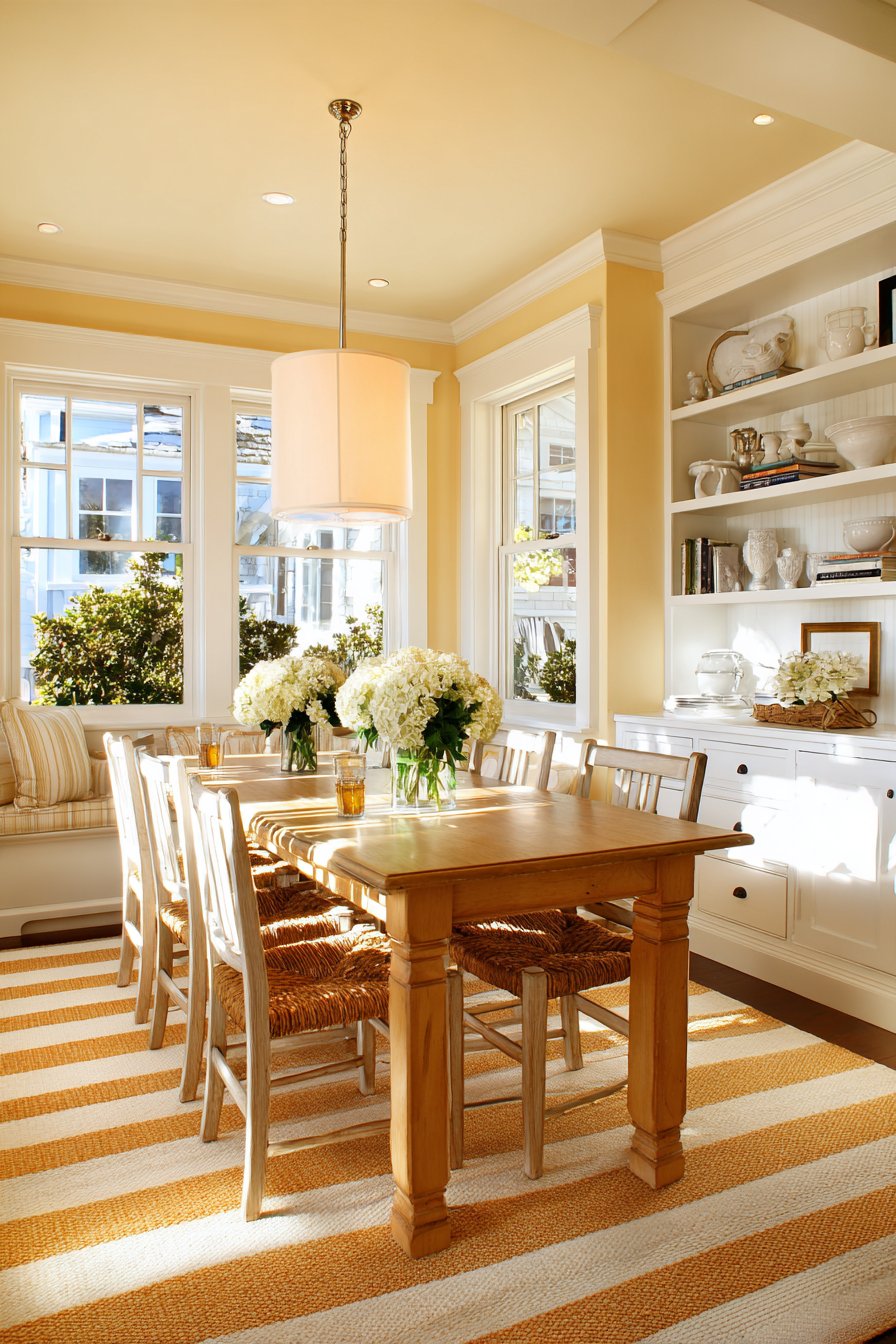
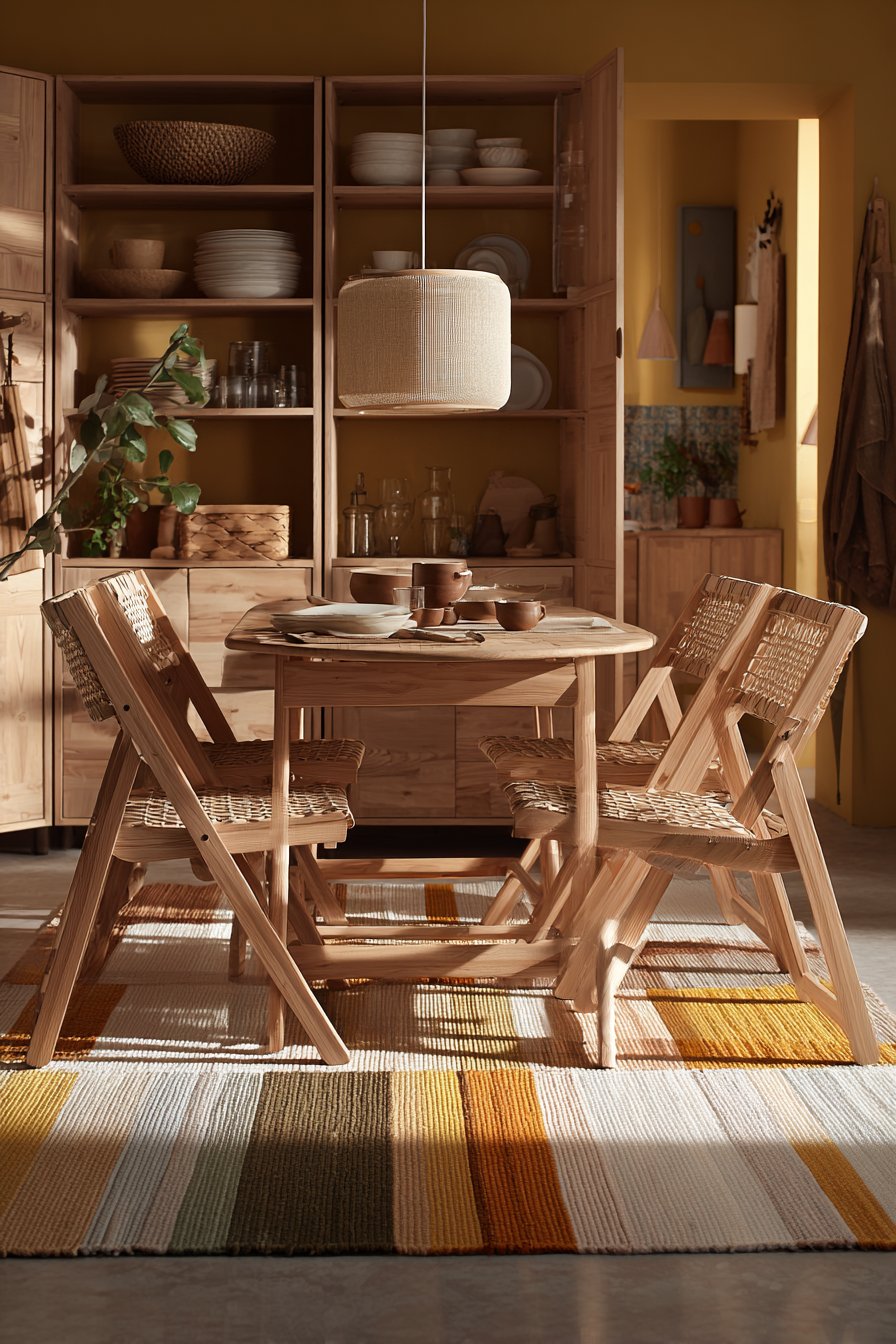
A gate-leg drop-leaf table in warm pine provides ultimate flexibility. The adaptable design serves small gatherings or expands for larger groups. Folding wooden chairs with woven cane backs store easily when not needed. This practical approach maintains style while maximizing space efficiency.
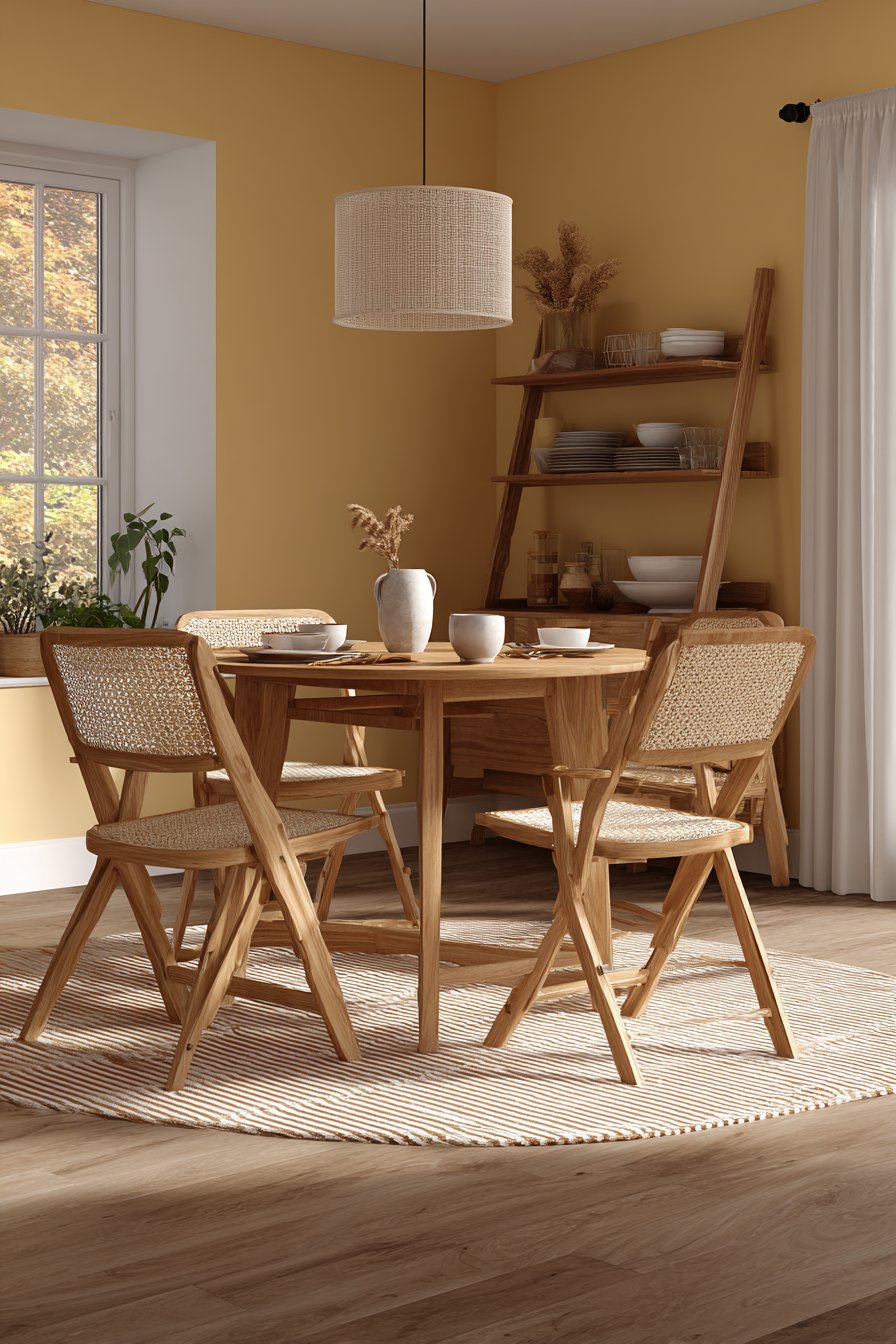
A washable cotton rug in warm stripe pattern defines flexible dining zone. The practical material handles heavy use while maintaining warm aesthetic. Simple drum pendant in natural linen provides soft overhead light. The understated fixture suits various space configurations equally well.
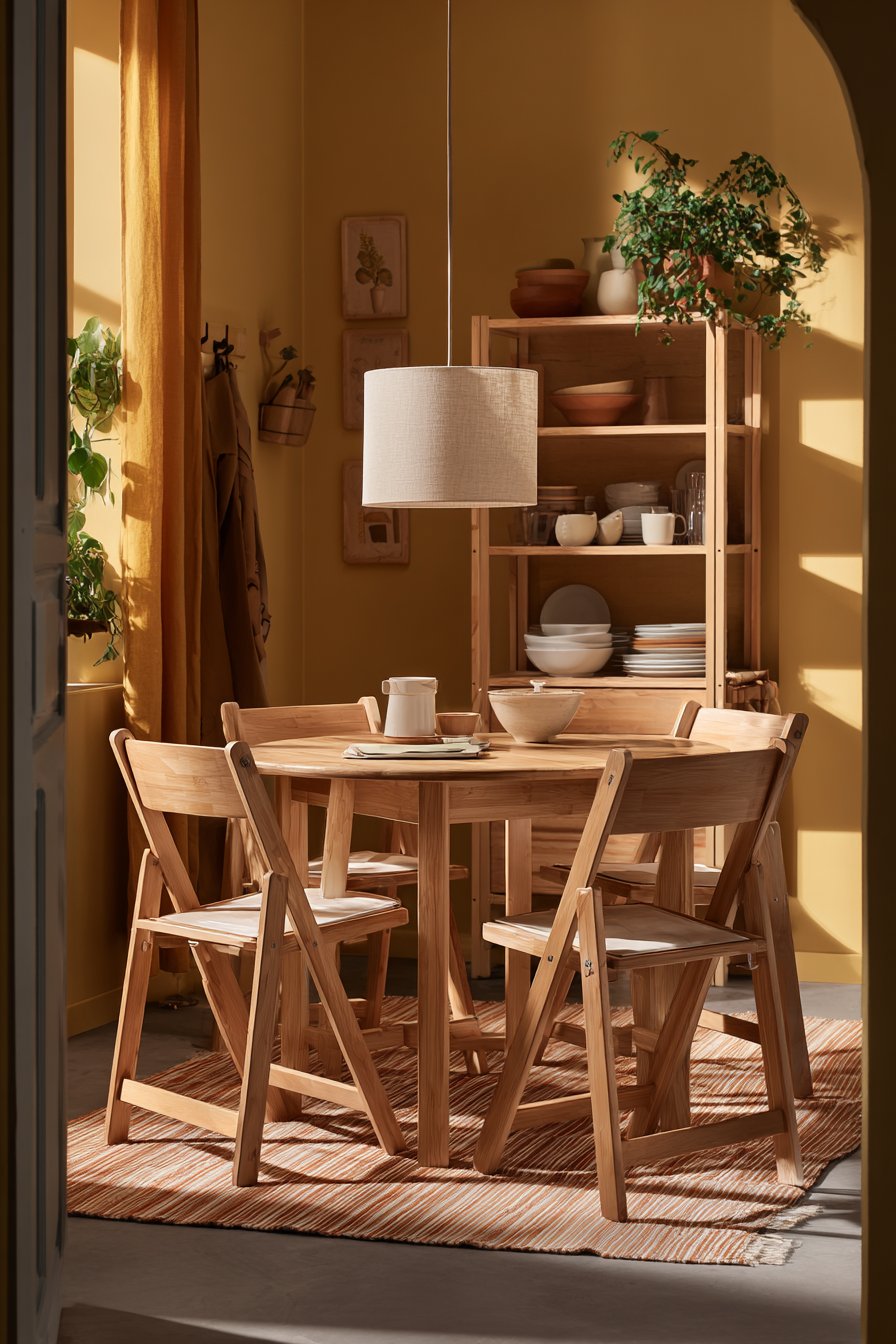
Walls in warm buttery yellow create cheerful backdrop throughout. This color choice adds warmth that works in small and large configurations. Open shelving displays warm-toned dishware and serving pieces. The visible storage adds function while contributing to the warm color story.
This design prioritizes practical warmth for real living situations. The drop-leaf table adapts to changing needs without furniture replacement. Folding chairs prevent permanent space commitment while looking intentional. The warm yellow walls create cheerful atmosphere regardless of table configuration.
Key Design Tips:
- Choose drop-leaf or gate-leg tables for maximum space flexibility
- Select folding chairs with woven cane for practical style
- Use washable cotton rugs in warm patterns for easy maintenance
- Install simple drum pendants in natural linen for adaptable lighting
- Paint walls in warm buttery yellow for cheerful consistent warmth
- Add open shelving to display warm dishware as functional decoration
17. Mid-Century Modern Walnut and Orange-Red
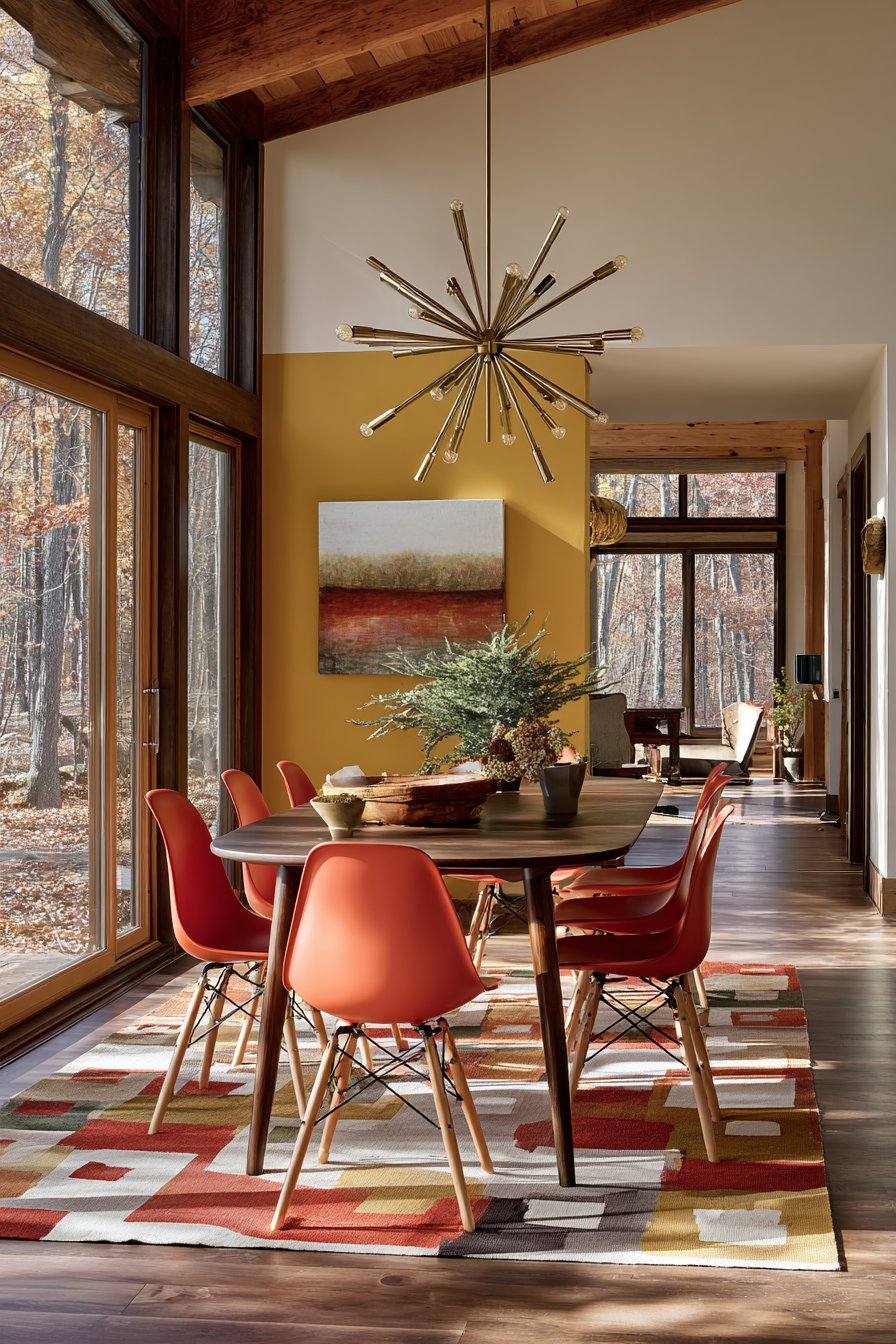
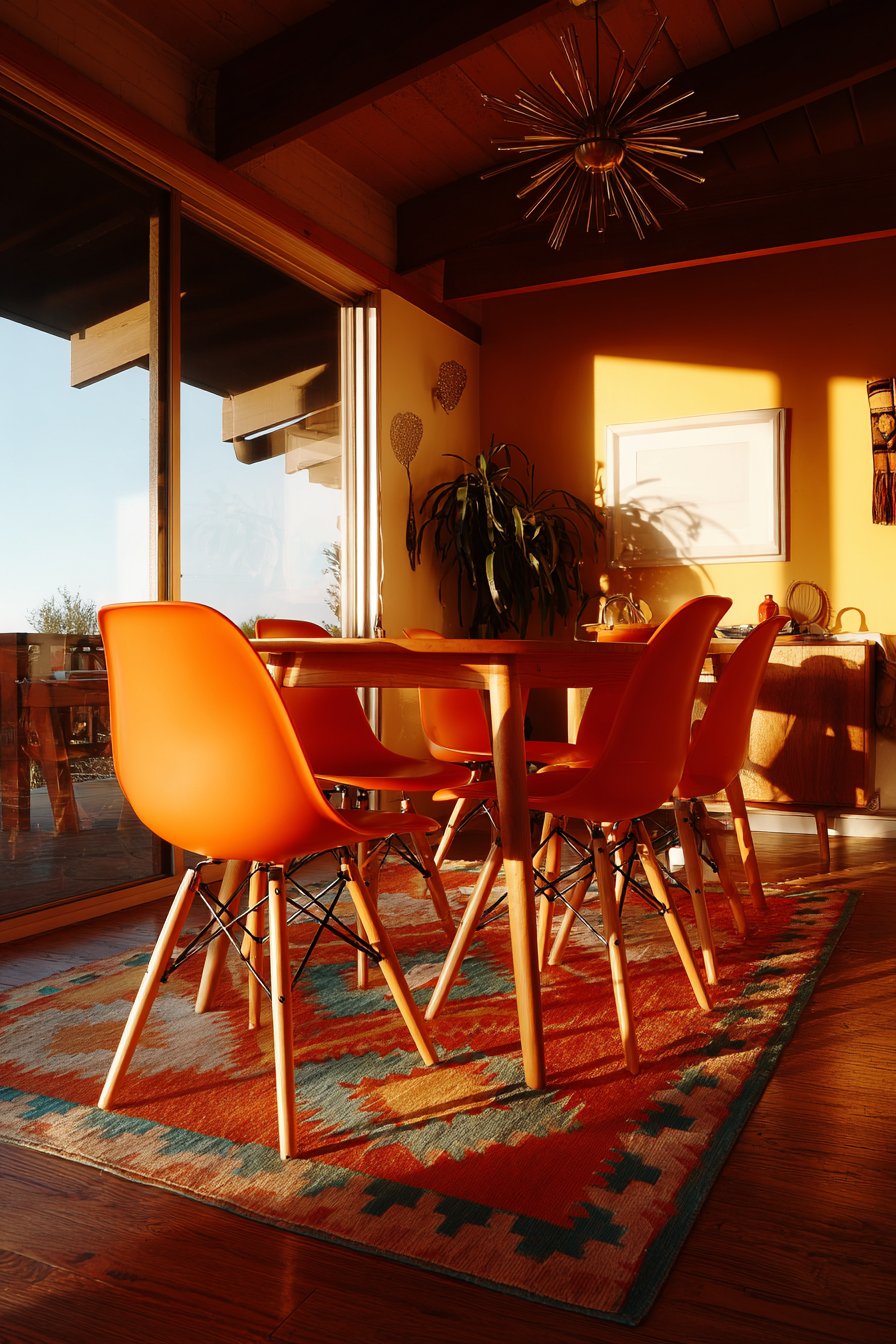
A sleek dining table features tapered walnut legs and oval top. The period-appropriate design celebrates mid-century modern aesthetic authentically. Iconic molded chairs in warm orange-red plastic feature wooden dowel legs. These classic pieces add period color while remaining surprisingly comfortable.
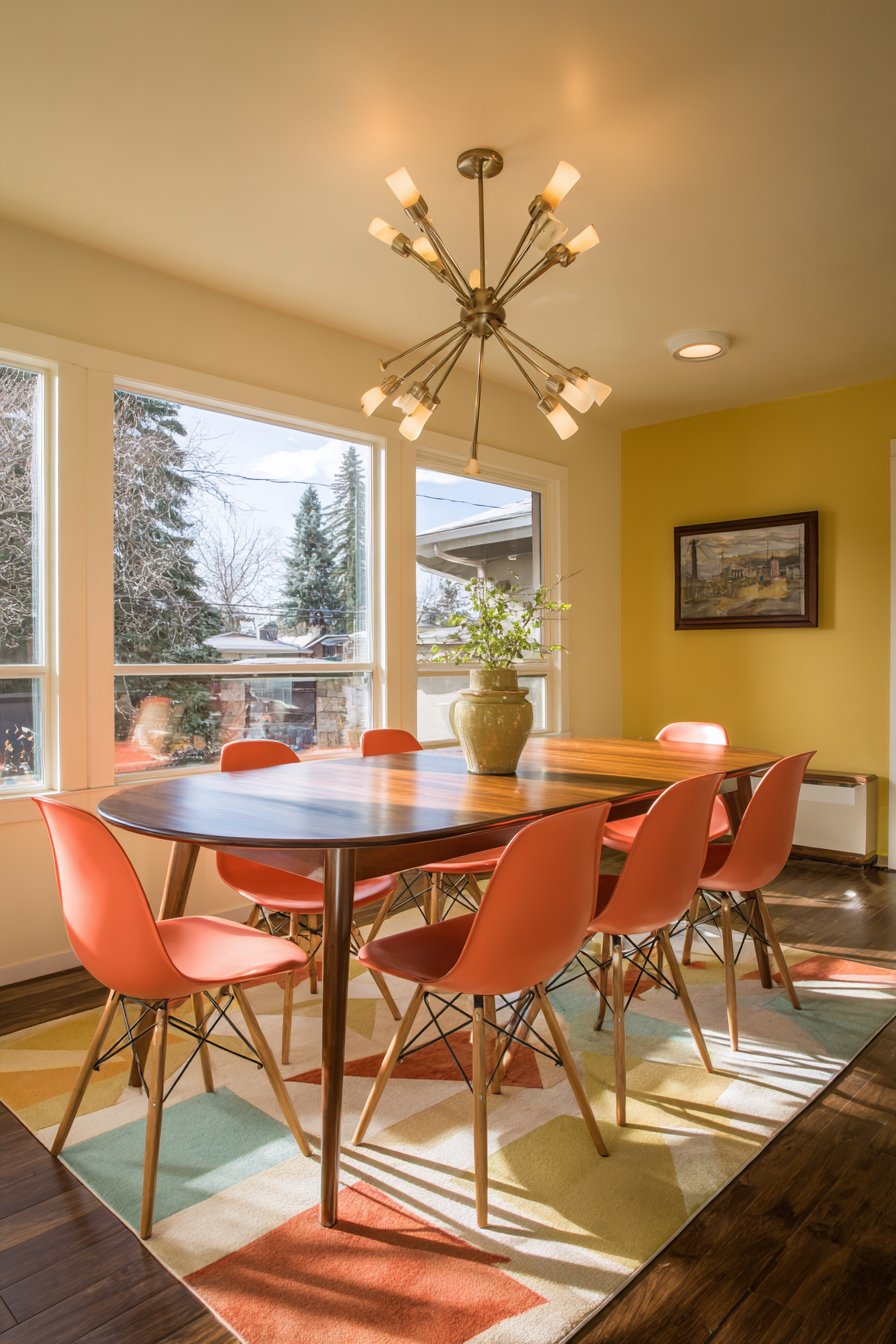
A low-profile rug in geometric pattern features warm earth tones. The contemporary design complements mid-century furniture perfectly. Starburst chandelier in aged brass adds period-appropriate lighting drama. The sculptural fixture serves as jewelry for the ceiling plane.
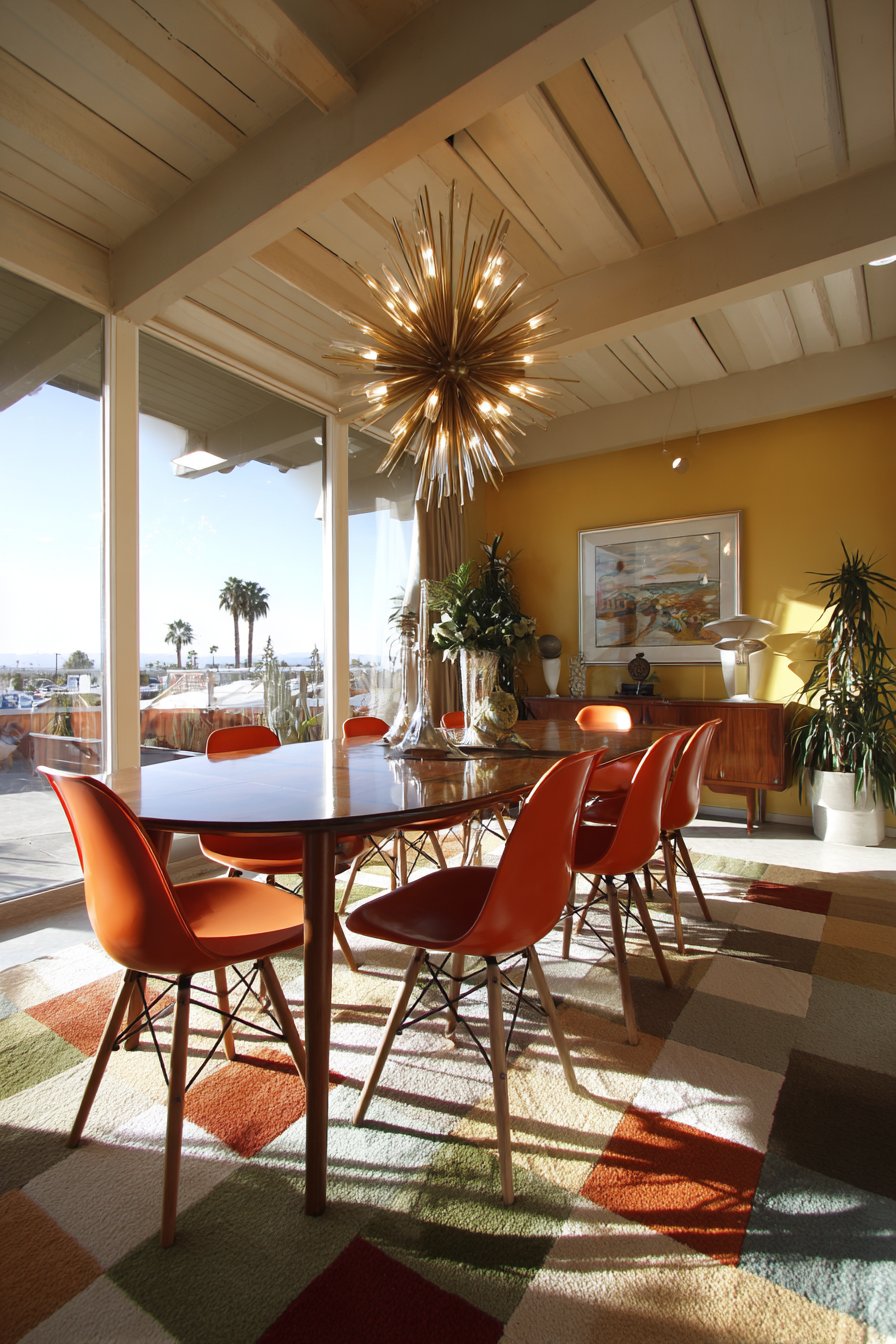
One accent wall in warm mustard yellow complements soft cream remaining walls. This bold color choice reflects authentic mid-century optimism. Natural light through floor-to-ceiling windows creates dynamic warm shadows. The abundant natural light was hallmark of mid-century design philosophy.
This design demonstrates authentic period style through careful furniture selection. The walnut and orange-red combination defines mid-century palette perfectly. Original period pieces or quality reproductions maintain design integrity. The result feels authentic rather than themed or costume-like.
Key Design Tips:
- Select tapered walnut leg tables for authentic mid-century lines
- Choose molded chairs in warm orange-red or mustard tones
- Add geometric patterned rugs in warm earth tone palettes
- Install starburst or sputnik chandeliers in aged brass
- Paint accent walls in warm mustard yellow for period boldness
- Maximize floor-to-ceiling windows for characteristic natural light
18. French Country Distressed Cream Romance
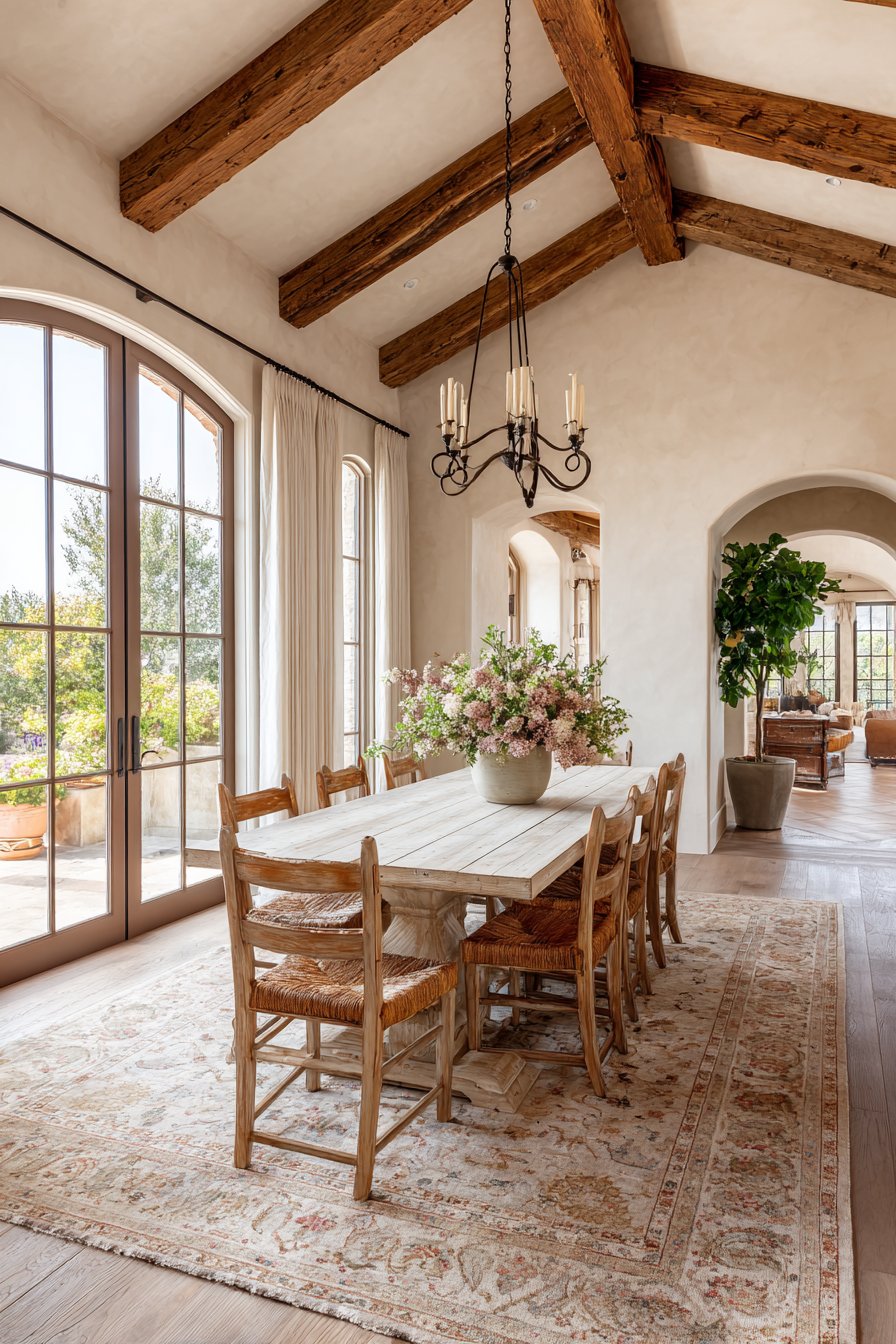
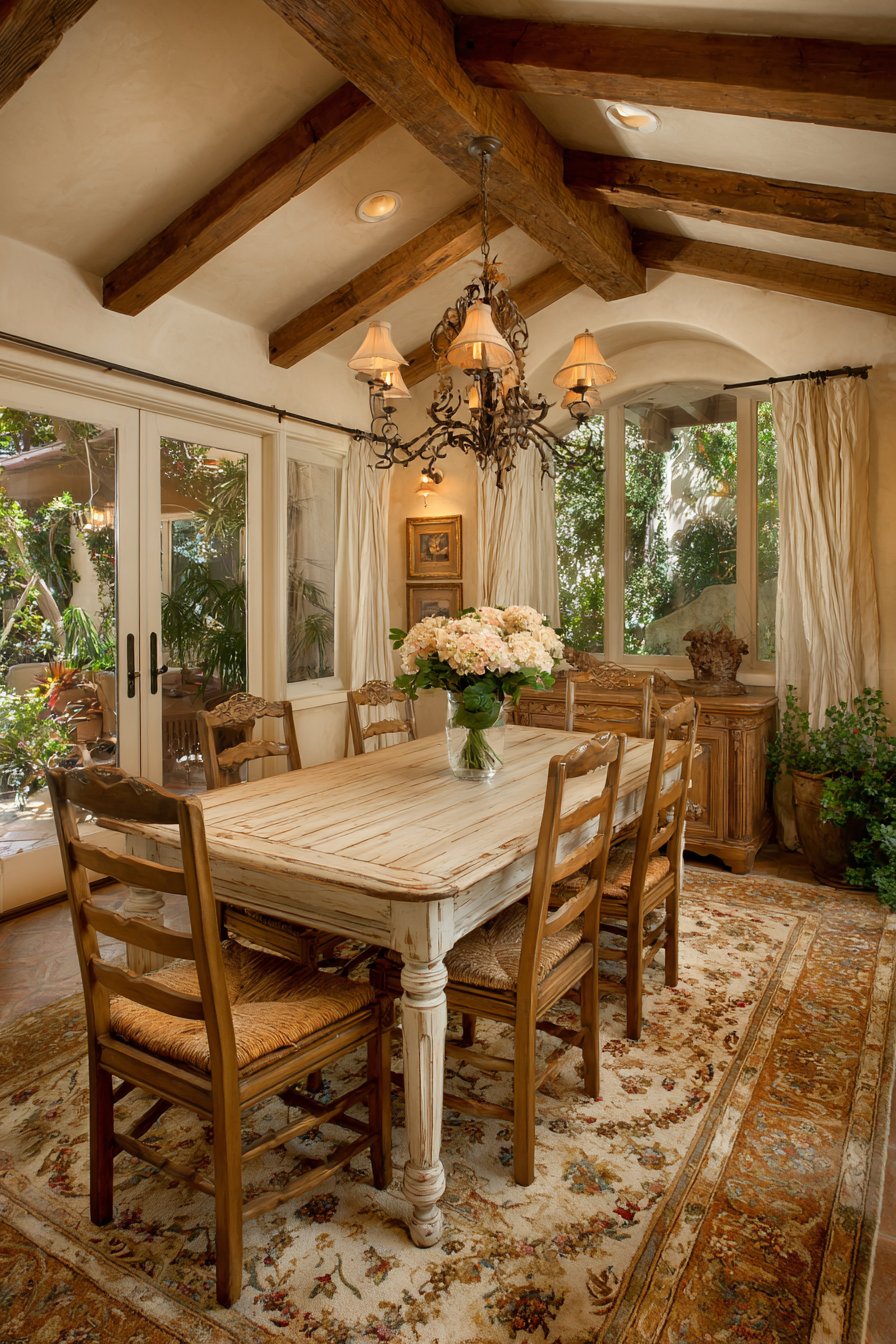
A farm-style dining table features distressed cream paint over warm wood. The painted finish shows intentional wear that suggests age and history. Ladder-back chairs with rush seats show natural honey tones. These traditional French elements create authentic country aesthetic.
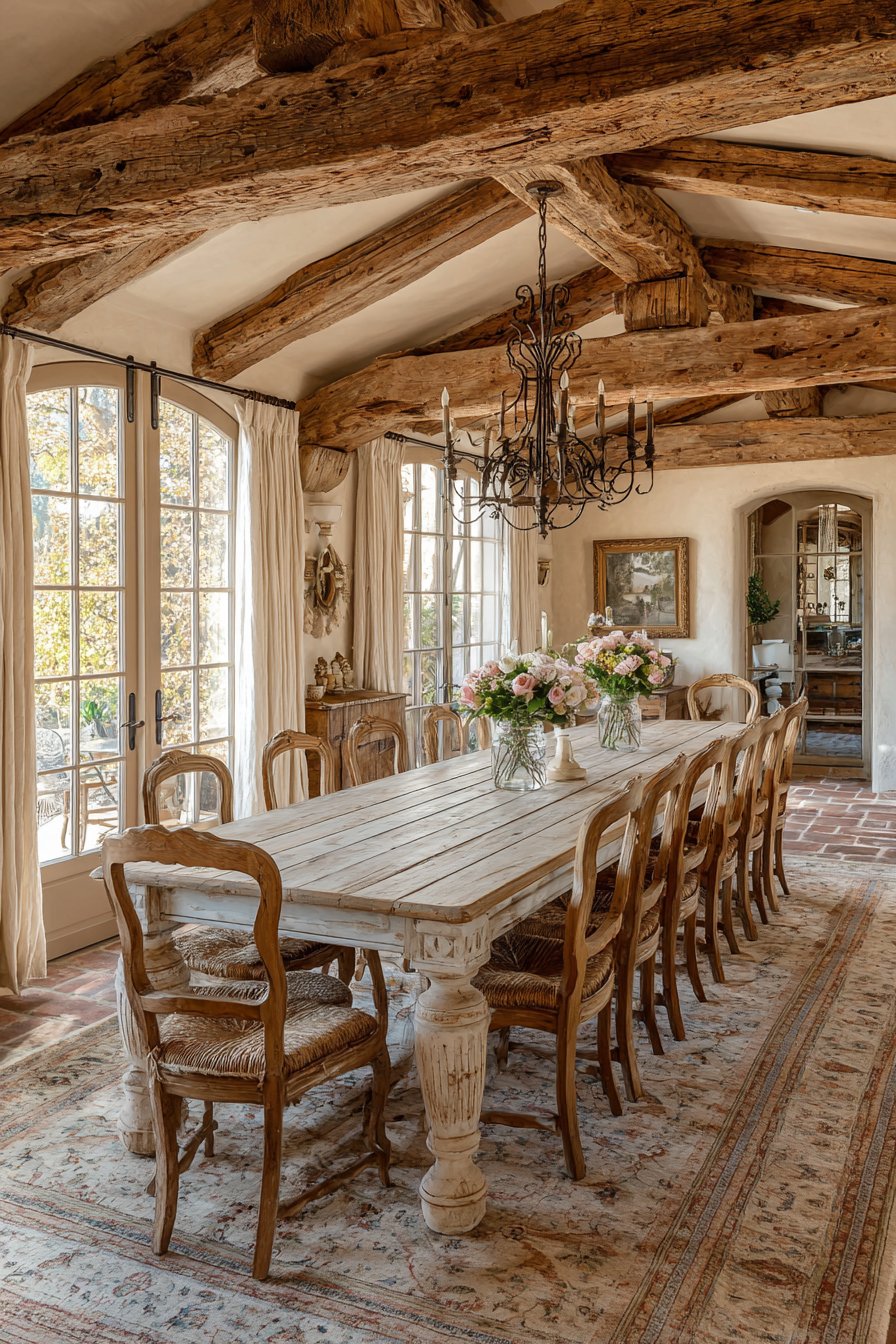
A faded Aubusson rug in soft roses, golds, and cream provides foundation. The traditional pattern adds elegance to rustic furniture pieces. Wrought iron chandelier with fabric candle shades adds romantic illumination. The fixture combines structural strength with soft fabric-filtered light.
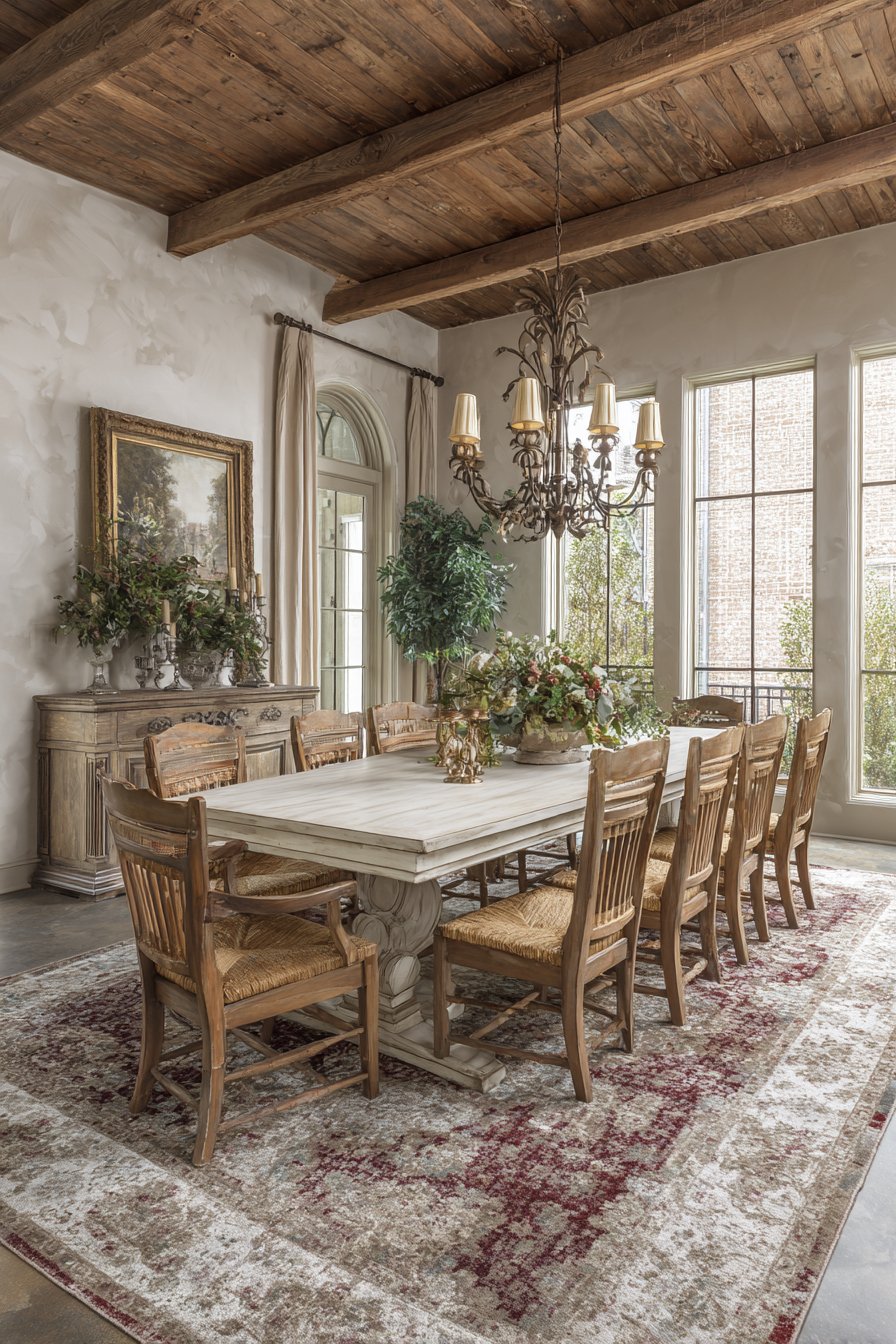
Exposed wooden ceiling beams in warm oak contrast with cream plaster walls. This architectural contrast adds dimension and authentic European character. Tall windows with simple linen panels allow abundant natural light. The filtered light emphasizes aged patinas and authentic textures throughout.
This design celebrates European country elegance through authentic materials. The distressed cream paint suggests generations of use and care. Natural rush seats age beautifully while remaining comfortable. The combination creates warmth through history rather than newness.
Key Design Tips:
- Choose distressed cream painted furniture over warm wood bases
- Select ladder-back chairs with natural rush seats for French authenticity
- Layer faded Aubusson or traditional rugs in soft warm tones
- Install wrought iron chandeliers with fabric candle covers for romance
- Expose wooden ceiling beams in warm oak when architecturally possible
- Use simple linen window panels to filter abundant natural light
19. Global Eclectic Carved Wood and Ikat
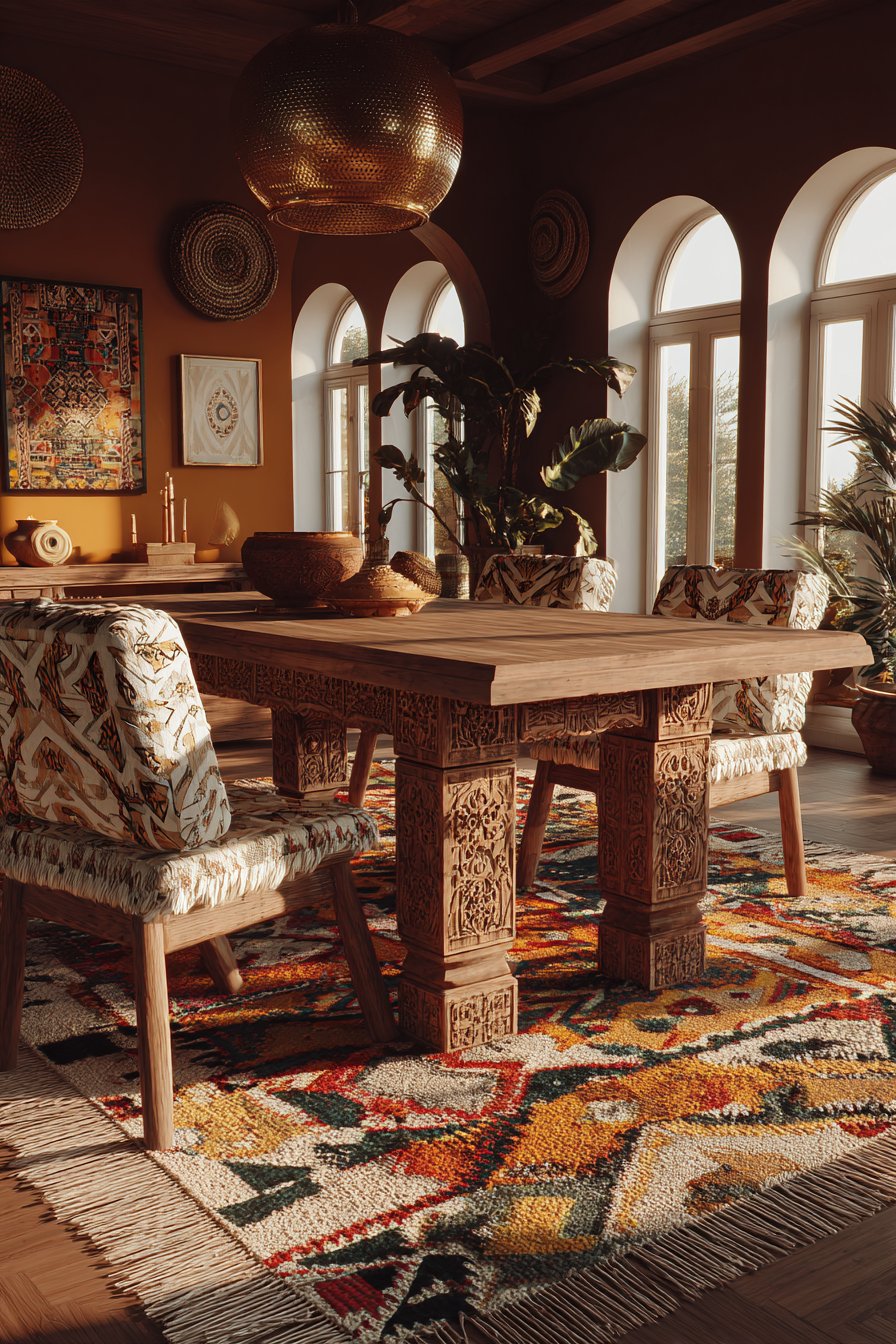
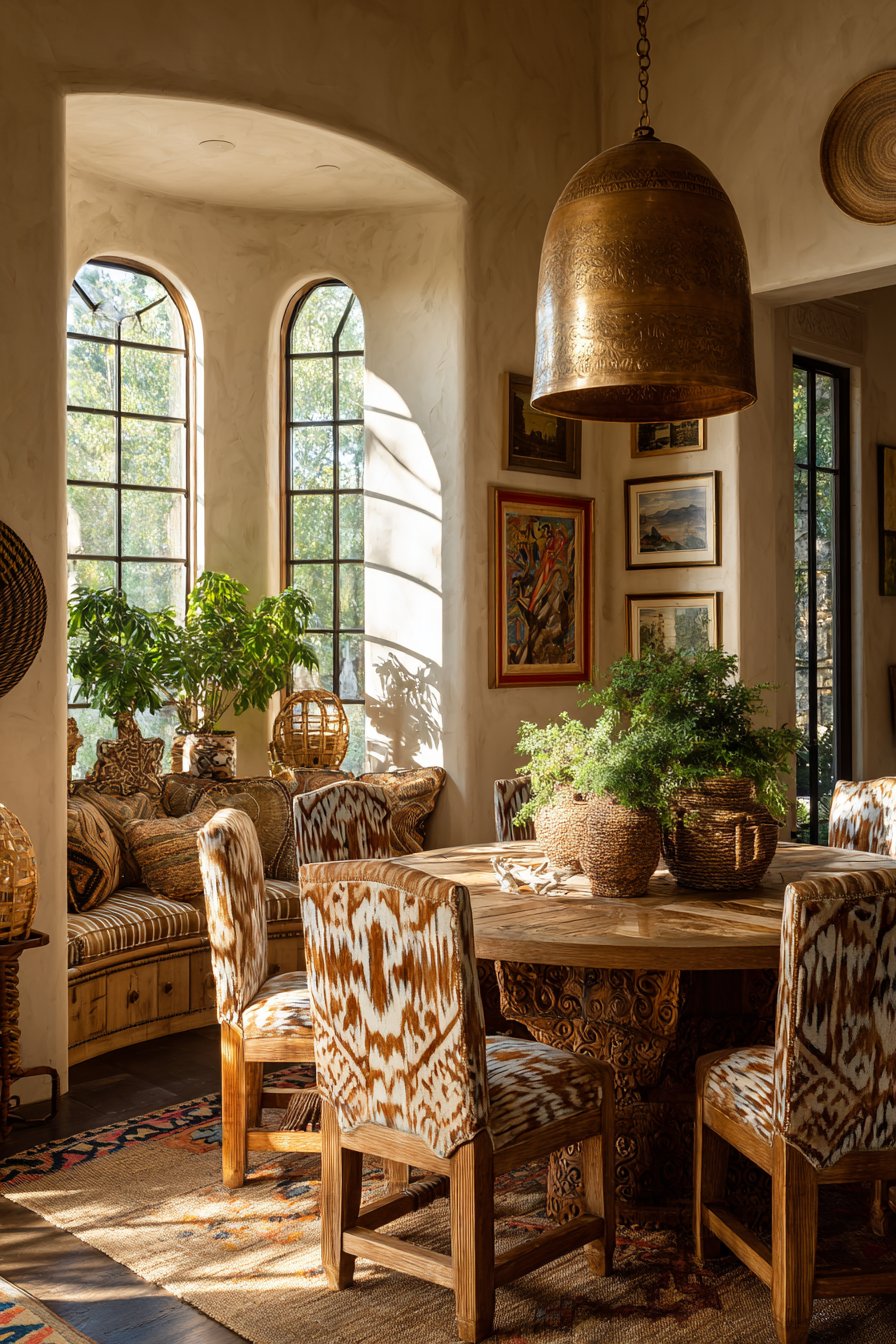
A carved wooden dining table features intricate details from Southeast Asian tradition. The artisanal carving adds cultural richness and visual interest. Upholstered dining chairs feature warm ikat patterns in gold and rust. The traditional patterns add global sophistication to the eclectic mix.
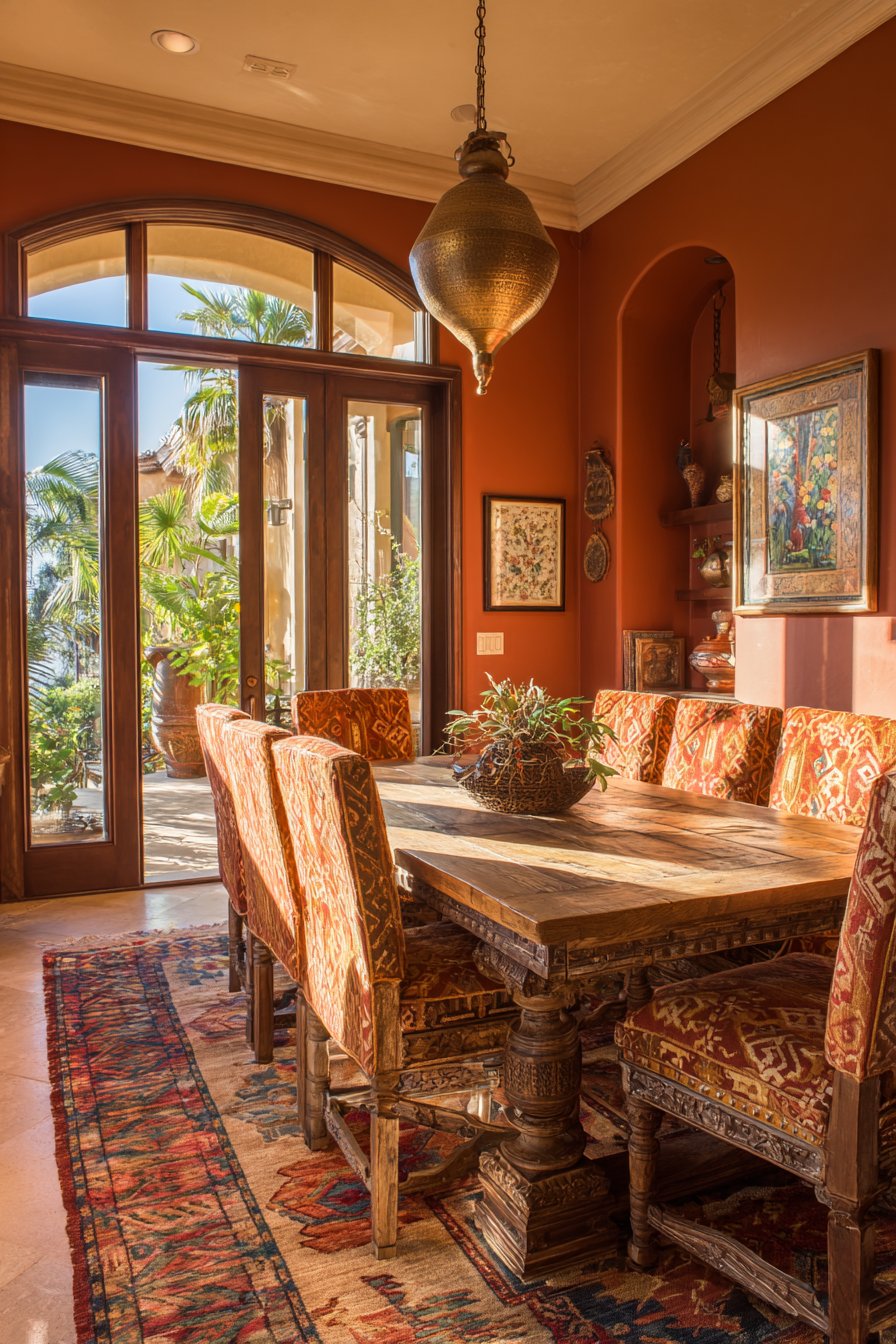
Multiple layered rugs include natural jute base and colorful kilim overlay. This combination adds rich textural and cultural foundation. Hammered brass pendant light adds warm metallic glow overhead. The handcrafted metalwork complements the carved wood beautifully.
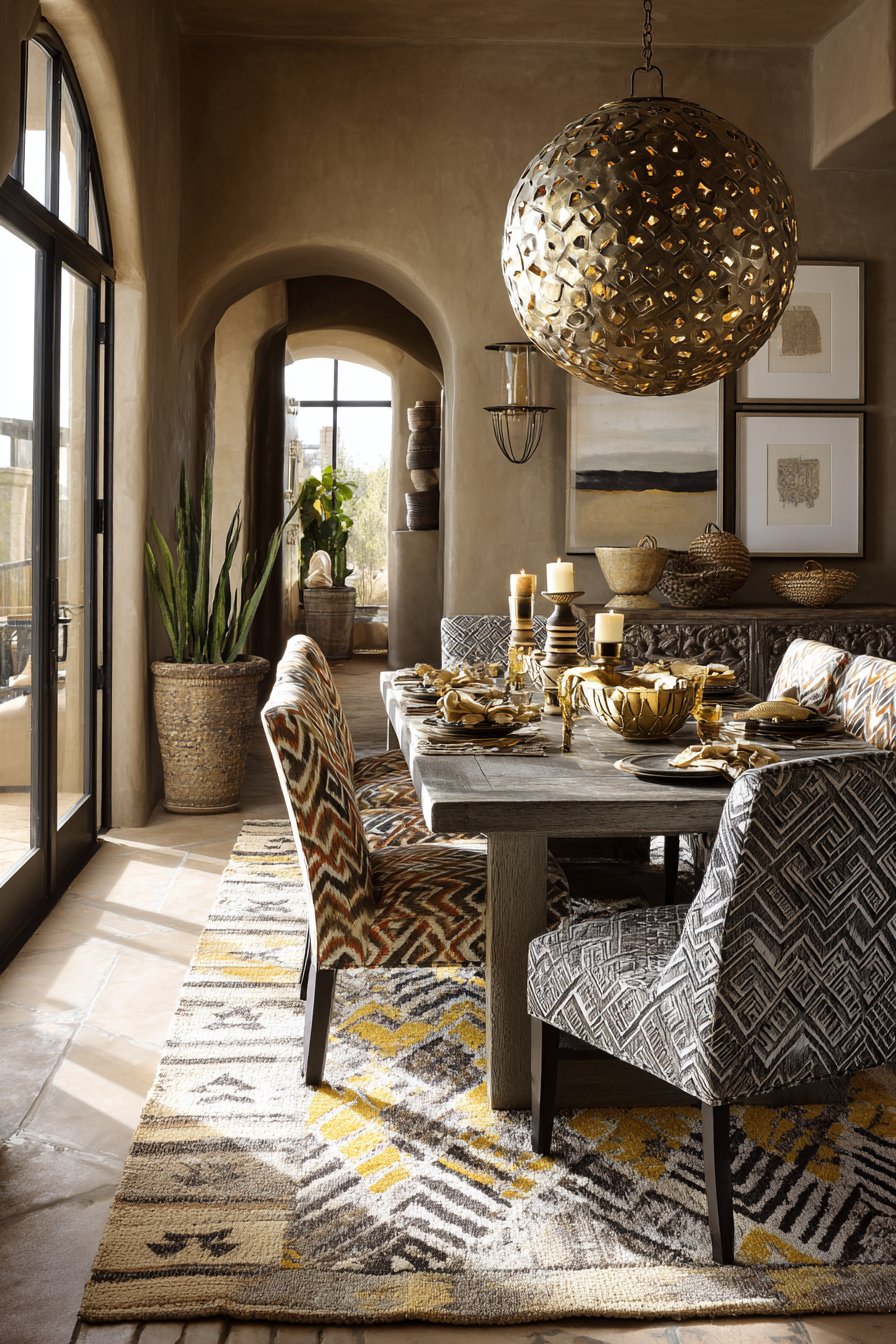
Terra cotta colored walls display collected artwork and woven baskets. The warm wall color creates an enveloping backdrop for global collections. Natural light from arched windows creates dramatic patterns throughout. The changing light adds dynamic visual interest to textured surfaces.
This design celebrates global design through curated collection approach. The carved table shows artisanal quality from specific cultural tradition. Ikat patterns add textile richness with historical significance. The layered approach creates warmth through cultural depth and handcrafted quality.
Key Design Tips:
- Source carved wooden tables from global artisan traditions
- Upholster chairs in warm ikat or suzani traditional patterns
- Layer natural jute rugs with colorful kilim or dhurrie overlays
- Install hammered brass pendants for warm handcrafted lighting
- Paint walls in terra cotta for warm enveloping color
- Display global textiles and artwork as functional decoration
20. Refined Contemporary Oak with Rust Bouclé
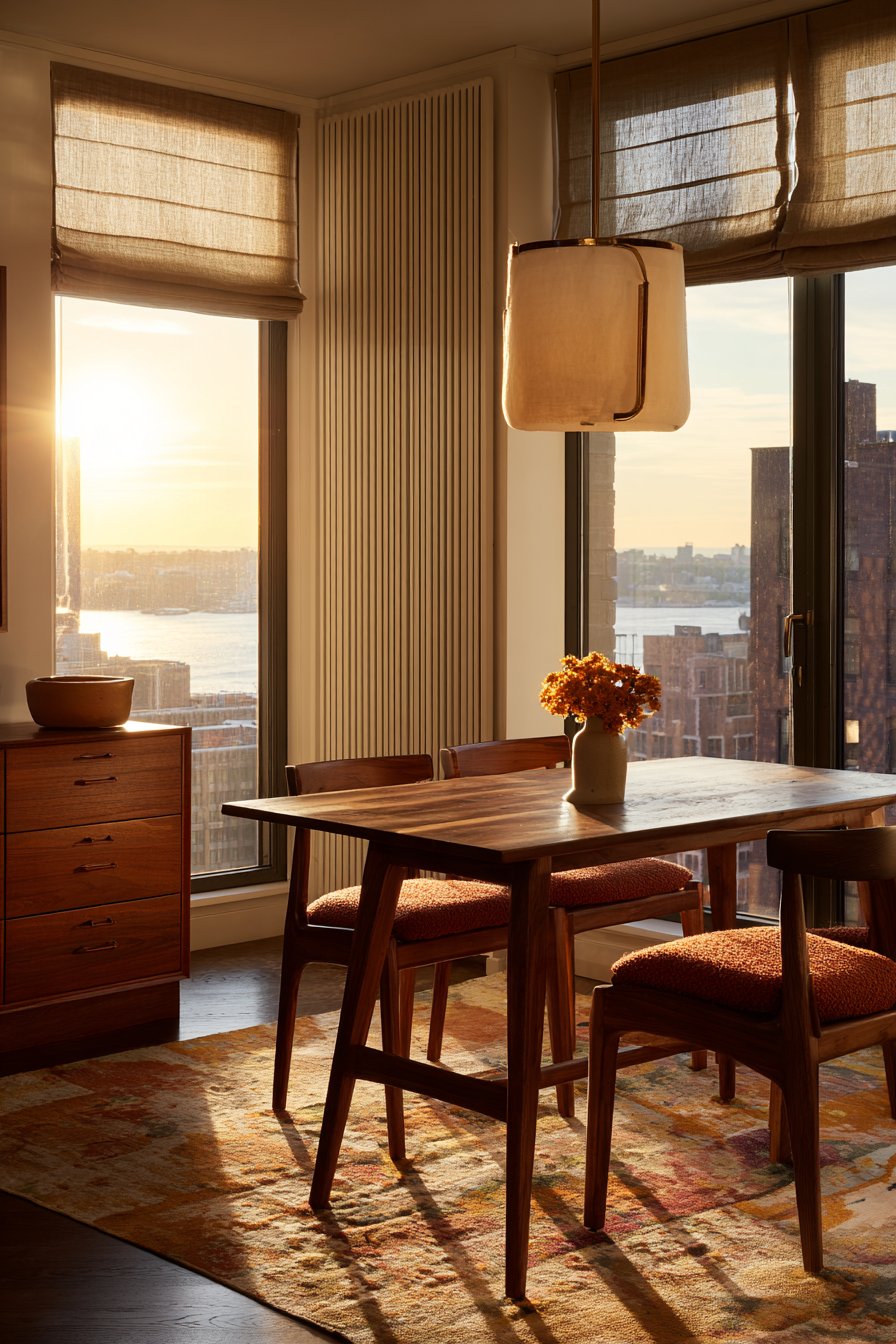
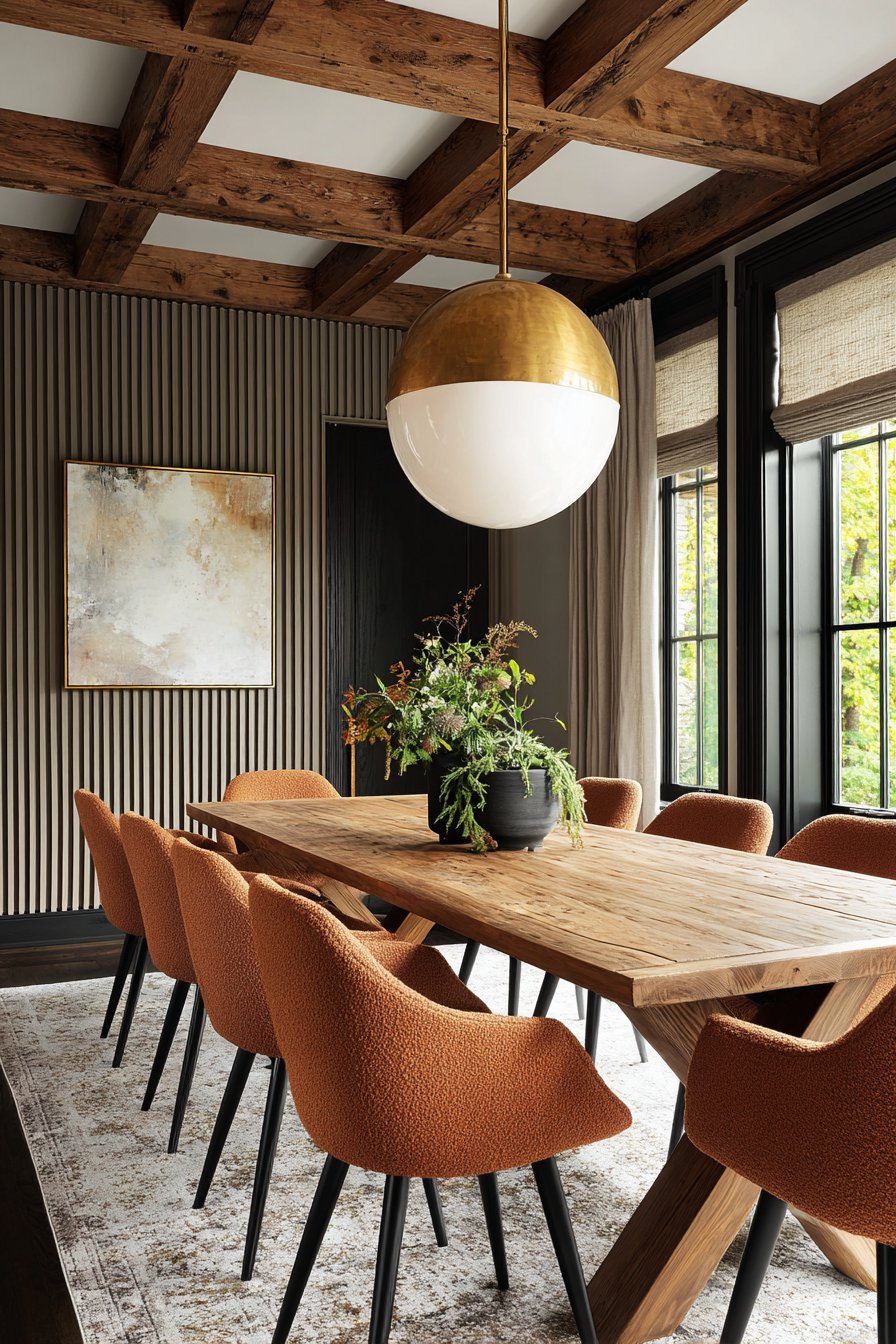
A contemporary trestle dining table features solid oak construction. Natural oil finish showcases the wood’s inherent beauty without heavy treatment. Modern dining chairs combine wooden frames with upholstered seats. The warm rust-colored bouclé fabric adds textural interest and contemporary warmth.
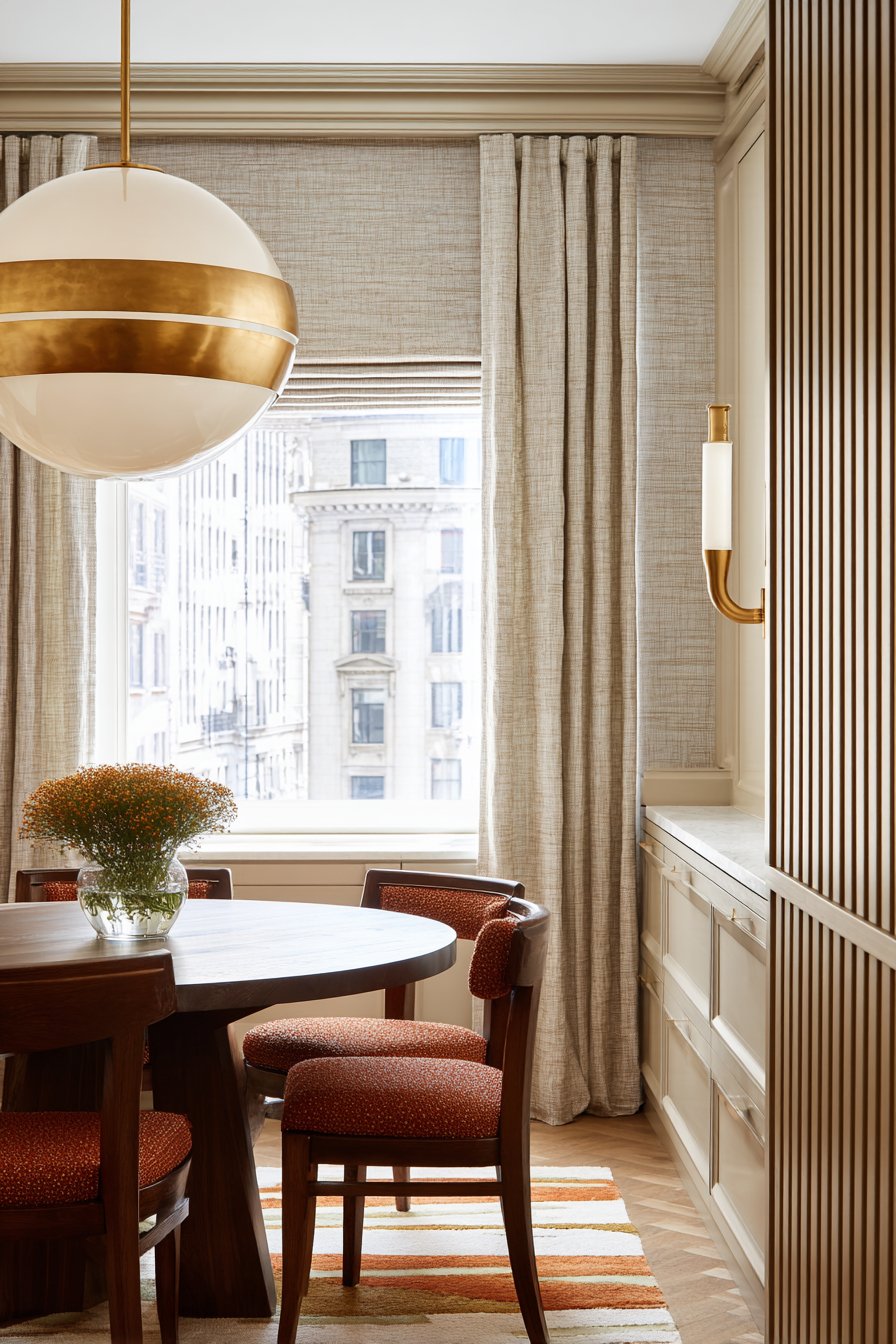
A handwoven wool rug in abstract warm pattern grounds the refined space. The contemporary design adds visual interest while maintaining sophisticated restraint. Sculptural pendant light features warm brass finish and alabaster shade. The fixture combines modern form with warm traditional materials.
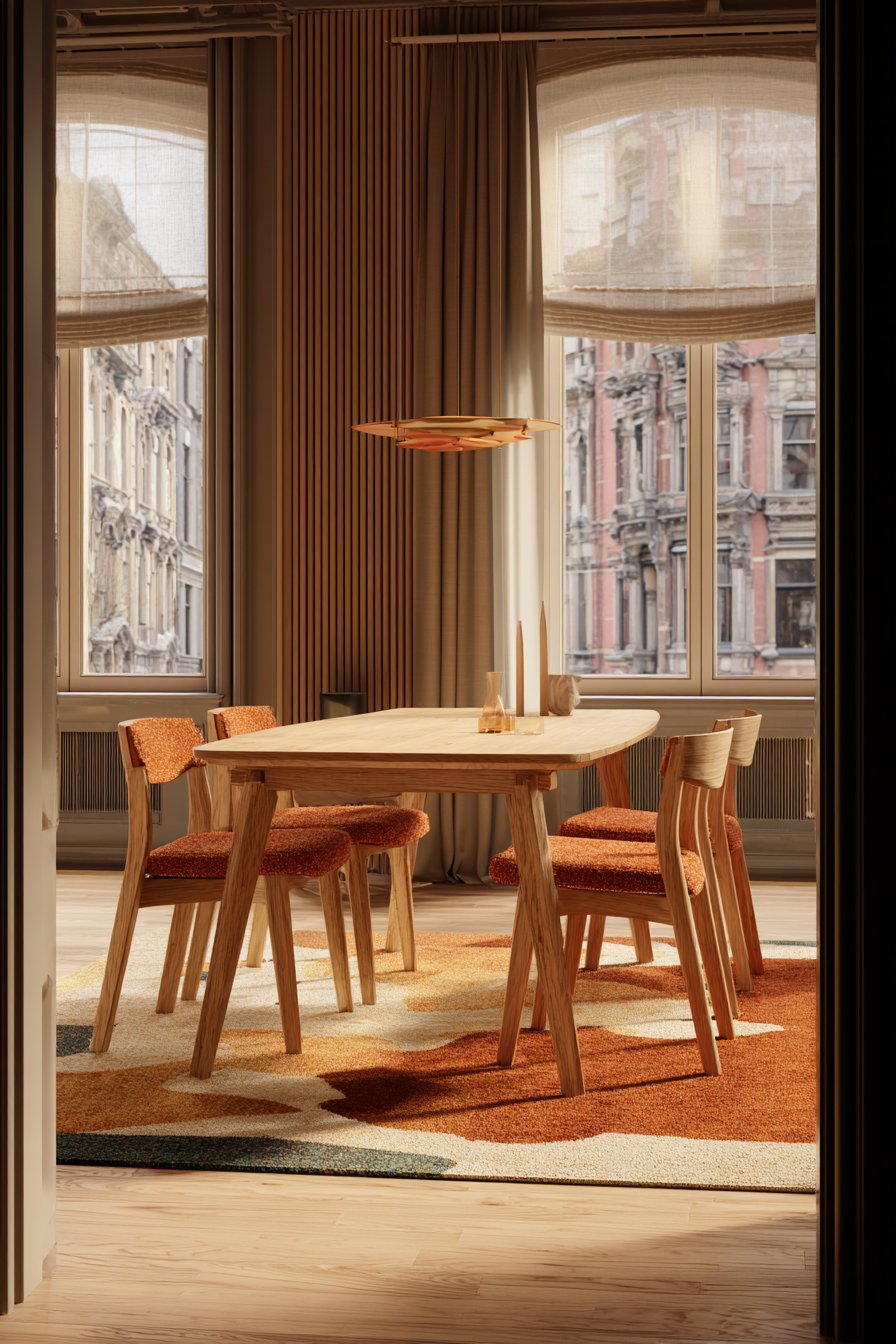
Walls in warm greige feature vertical wooden slat accent behind built-in sideboard. This architectural detail adds dimension while maintaining contemporary aesthetic. Floor-to-ceiling windows with natural linen Roman shades filter golden hour light. The large windows maximize natural light while warm materials prevent cold feeling.
This design represents refined contemporary approach to warmth. The natural oak provides organic warmth within contemporary forms. Rust bouclé adds both color and texture that softens modern lines. The combination proves that contemporary design embraces warmth through material authenticity.
Key Design Tips:
- Select contemporary trestle tables in solid oak with natural oil finish
- Upholster modern chairs in rust or terracotta bouclé fabric
- Choose handwoven wool rugs in abstract warm patterns
- Install sculptural pendants with alabaster and brass for contemporary warmth
- Add vertical wood slat accents for dimensional architectural interest
- Use natural linen Roman shades to filter and soften abundant natural light
Why These Warm Dining Room Designs Excel
These warm dining room designs represent thoughtful approaches to creating inviting spaces through intentional material selection and color theory. Each concept demonstrates how natural materials like wood, leather, linen, and wool contribute inherent warmth that synthetic alternatives cannot replicate. The designs showcase versatility spanning traditional, contemporary, rustic, and eclectic styles while maintaining core warmth principles.
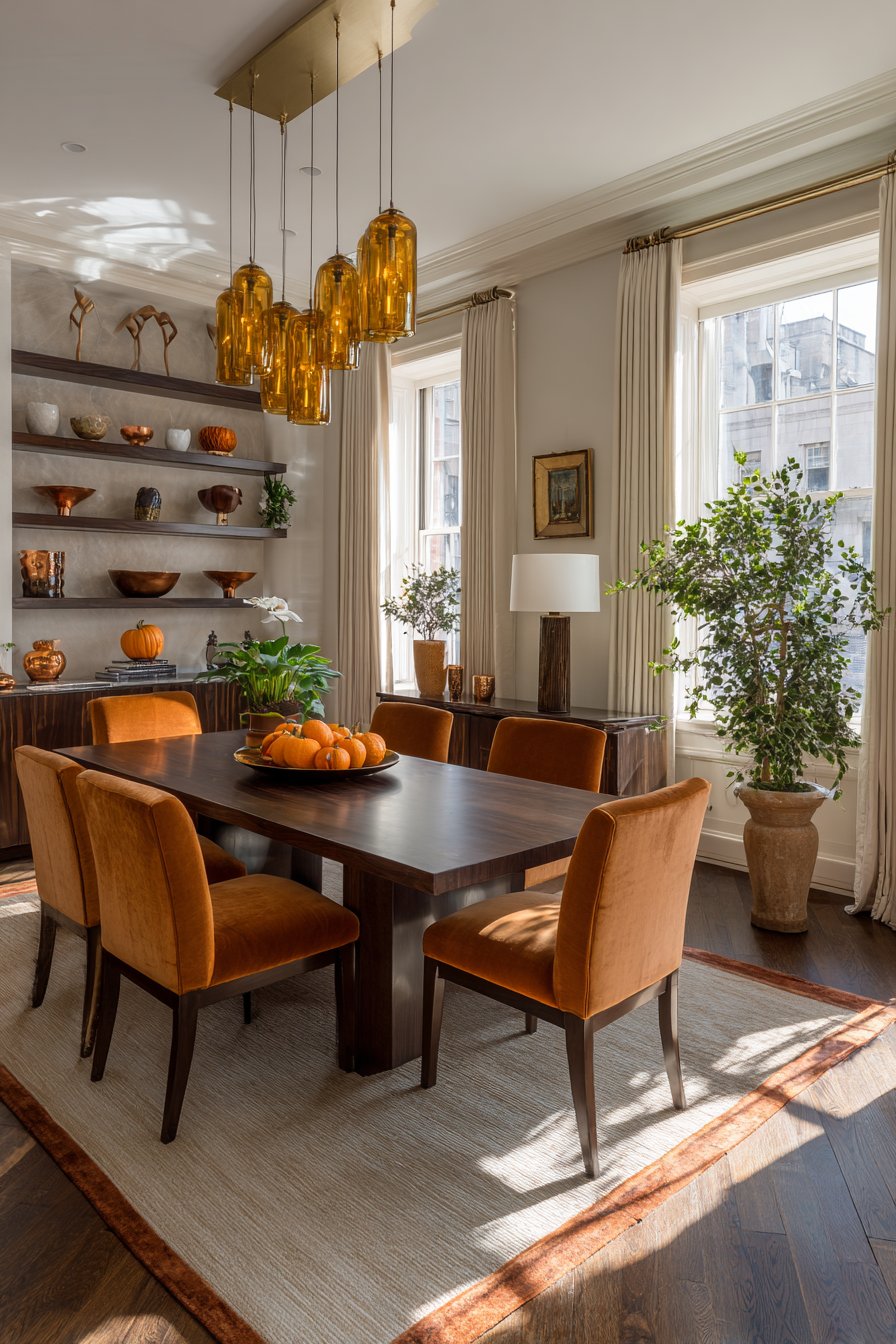
The success of these approaches stems from understanding that warmth emerges through layered elements rather than single focal points. Natural wood tones ranging from pale oak to deep mahogany provide foundational warmth. Textile choices in terracotta, rust, caramel, and warm neutrals add color dimension without overwhelming spaces. Metal finishes in brass, copper, and aged metals contribute reflective warmth that enhances rather than cools environments.
Color theory plays crucial role in these warm dining rooms. Earth tones create psychological comfort while remaining sophisticated. Warm whites, creams, taupes, and greiges provide neutral foundations that amplify rather than compete with wood and textile warmth. Strategic accent colors in terracotta, mustard, or burgundy add personality while maintaining cohesive warm palettes.
Lighting strategies prove essential in achieving sustained warmth. Warm-temperature LED bulbs, amber glass fixtures, and layered lighting sources create ambiance throughout daily cycles. Natural light filtered through linen curtains maintains connection to the exterior while preserving interior warmth. The combination of natural and artificial light sources ensures warmth persists from morning through evening.
These designs address practical considerations including durability, functionality, and real-world application. Natural materials like solid wood, leather, and natural fiber rugs age gracefully rather than showing damage. Quality construction ensures longevity that justifies investment in foundational pieces. Multi-functional furniture like extendable tables and mixed seating styles accommodate various gathering needs without sacrificing aesthetic appeal.
Spatial considerations appear throughout these concepts, proving warm design succeeds in various square footages. Small space solutions demonstrate concentrated warmth through scaled furniture and bold accent walls. Larger rooms benefit from substantial furniture pieces and layered textiles that prevent emptiness. Open concept spaces use warm dining rooms as anchor points that define zones within flowing layouts.
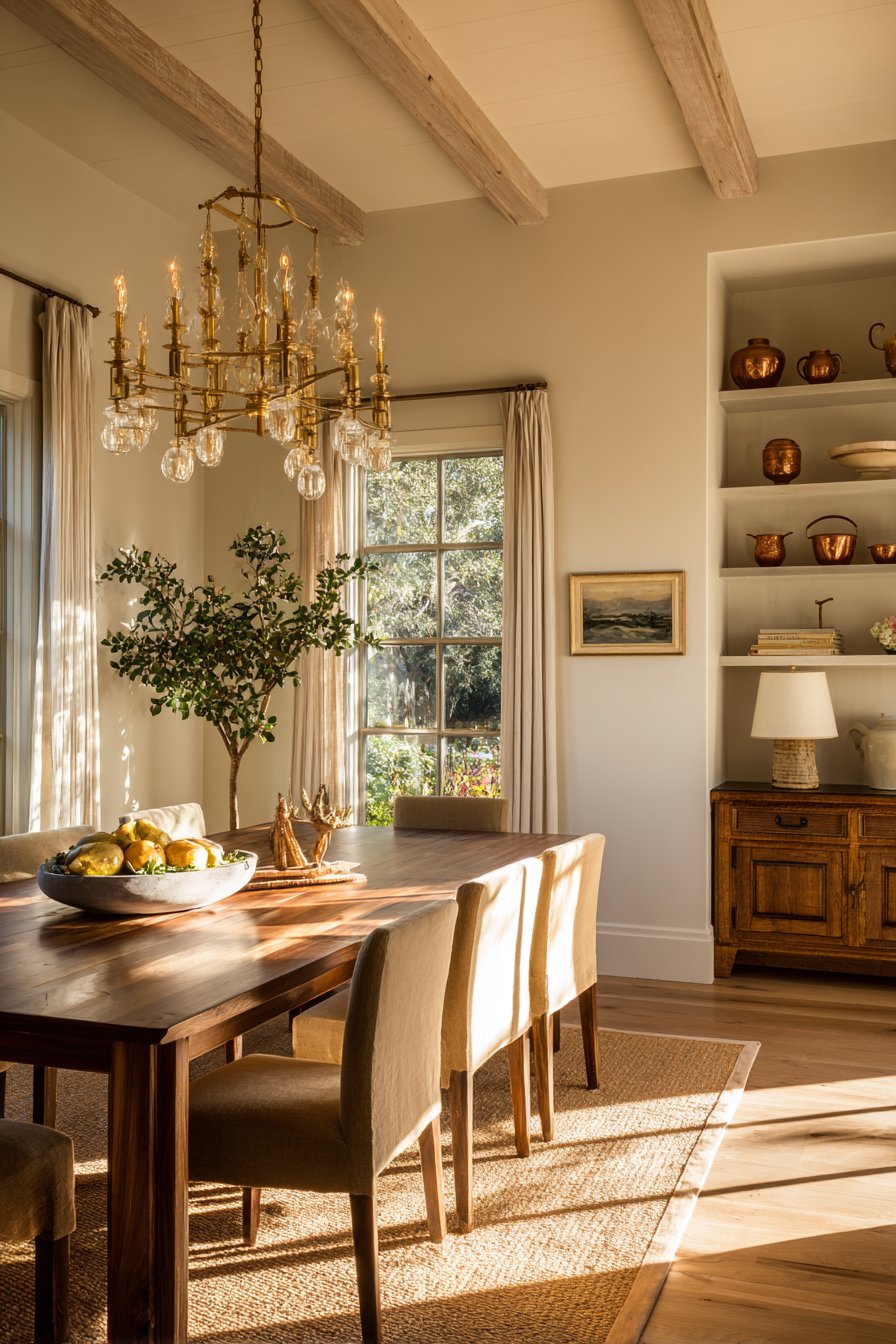
Sustainability emerges naturally through material choices in these warm designs. Reclaimed wood reduces environmental impact while adding authentic character. Natural fibers like jute, sisal, and wool offer renewable alternatives to synthetic materials. Quality furniture construction encourages longevity over disposable trends, aligning environmental responsibility with timeless design.
Conclusion
These twenty warm dining room designs demonstrate that inviting spaces emerge through thoughtful material selection, layered textures, and cohesive color palettes. The key takeaways include embracing natural wood tones, incorporating warm textiles, and layering lighting sources for sustained warmth throughout daily cycles. Quality pieces in authentic materials create foundations that age gracefully rather than requiring frequent replacement.
Successful warm dining rooms balance aesthetic appeal with practical functionality for real family living. Whether your style leans traditional, contemporary, rustic, or eclectic, warmth comes from authentic materials and intentional layering rather than superficial decoration. Start by selecting one quality wood piece, add warm textiles through upholstery or rugs, and layer lighting for complete transformation. Your dream warm dining room awaits creation through these timeless principles and creative personal expression.