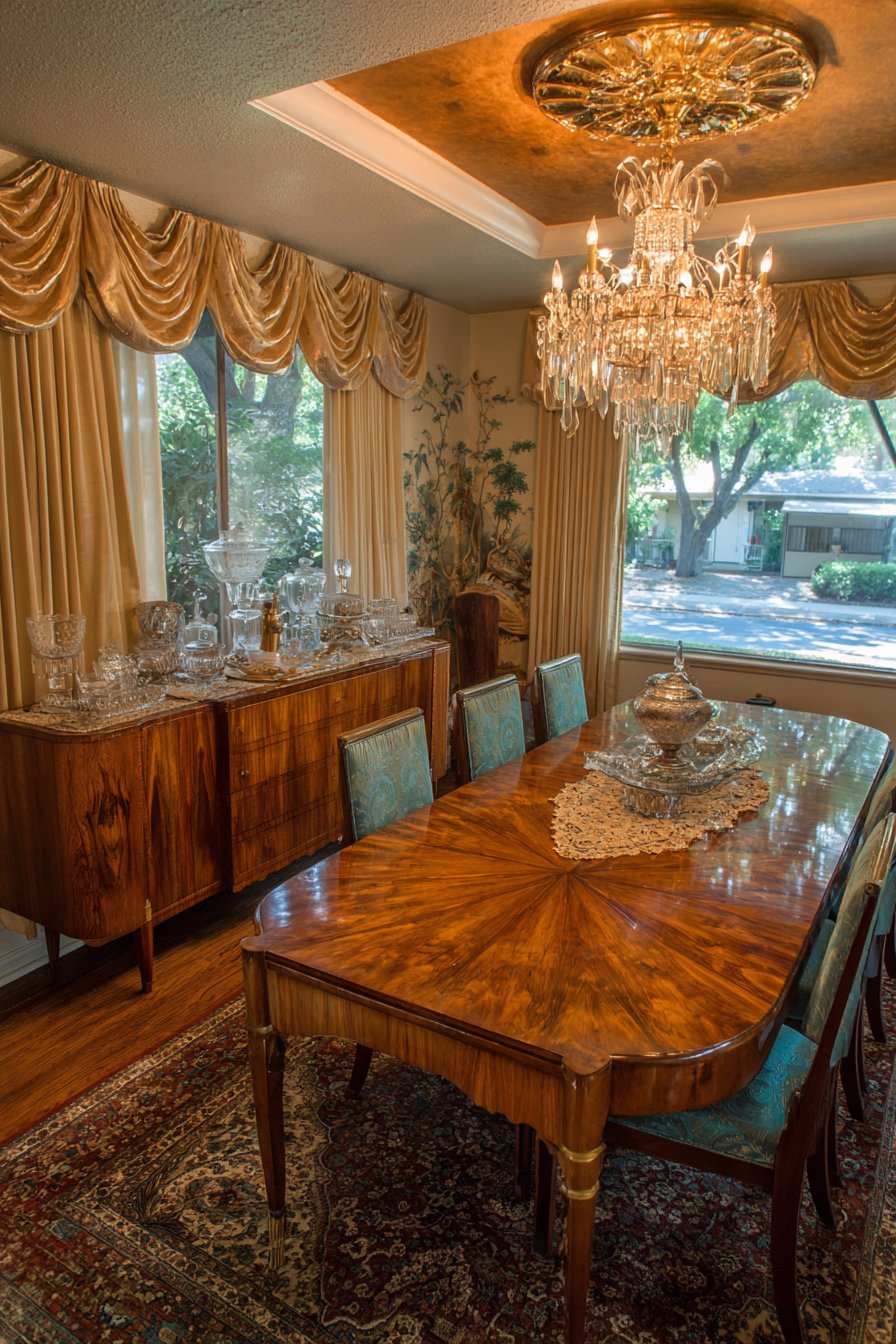


The charm of vintage dining rooms lies in their ability to tell stories through carefully preserved pieces. These spaces celebrate history while maintaining functionality for modern living. A well-designed vintage dining room becomes more than just a place to eat. It transforms into a cherished gathering space where memories are created.
Vintage design has experienced a remarkable resurgence in recent years. Homeowners increasingly appreciate the craftsmanship and character found in period pieces. Unlike mass-produced modern furniture, vintage items offer unique details and superior construction. The patina that develops over time adds depth and authenticity impossible to replicate.
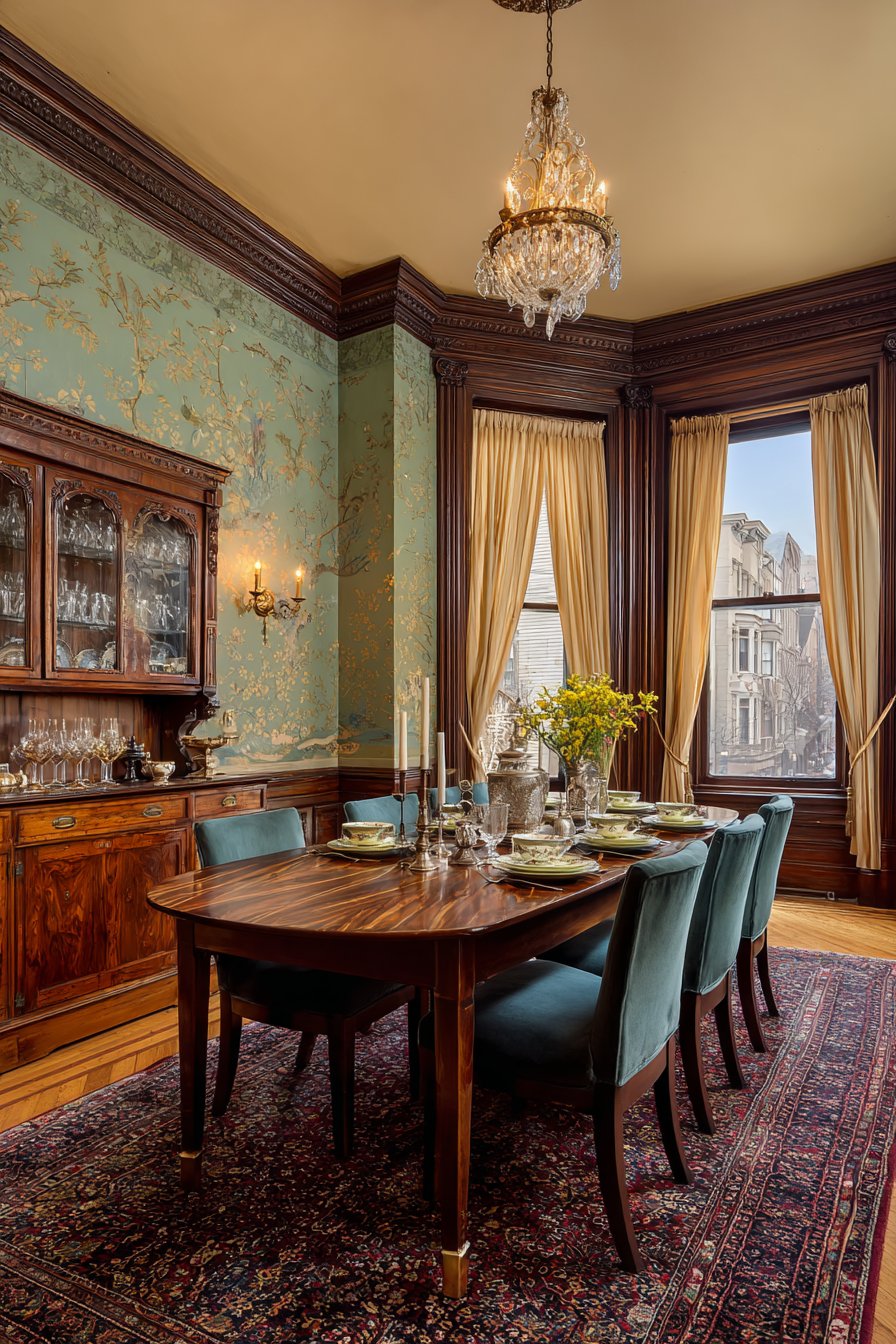
This article explores twenty distinctive vintage dining room concepts. Each design showcases different eras and aesthetic approaches. From formal Victorian elegance to casual farmhouse charm, these spaces demonstrate vintage style’s remarkable versatility. Whether you prefer ornate details or simple lines, vintage design offers endless possibilities.
1. Classic Oak Pedestal Table with Floral Wallpaper
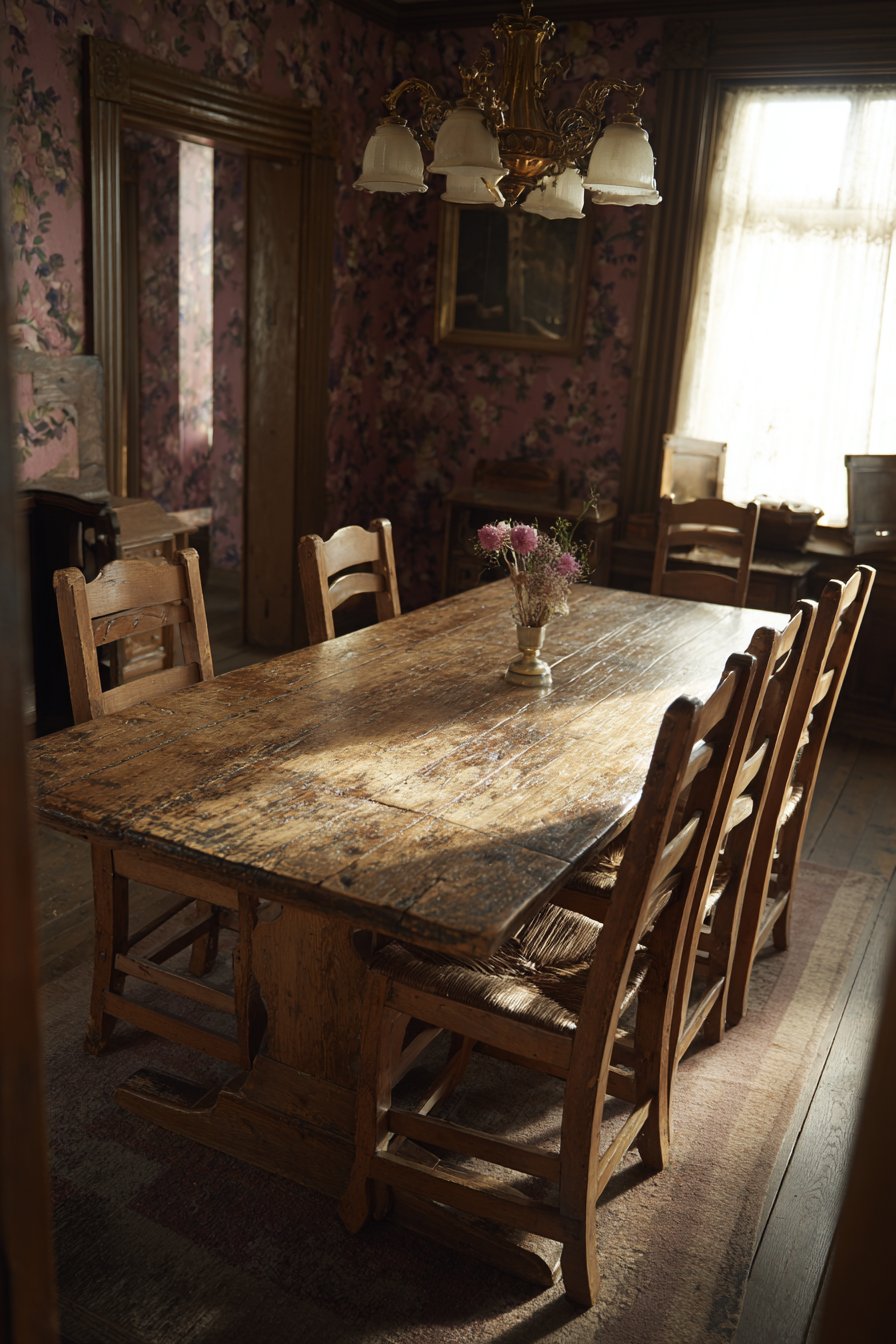
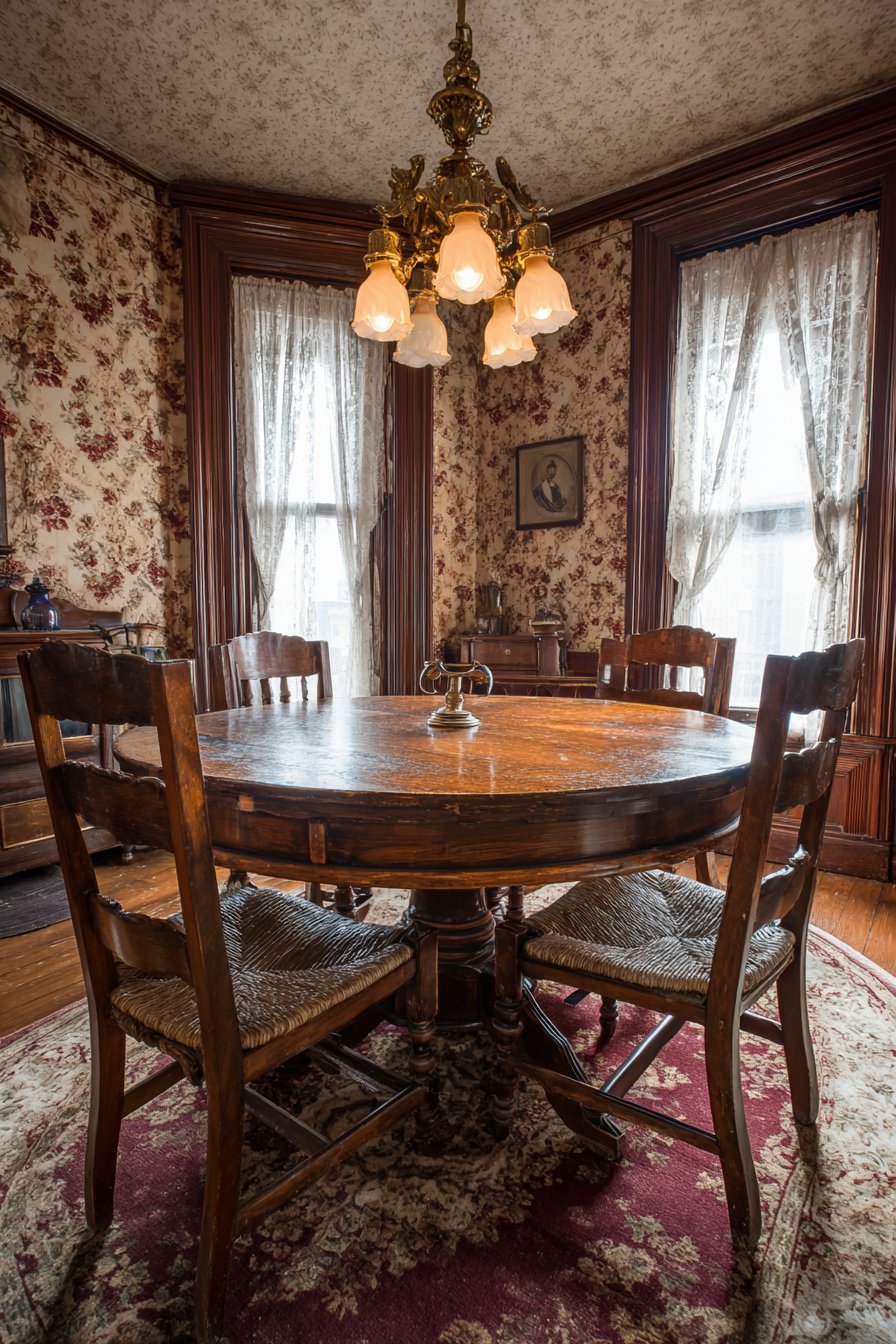
A solid oak pedestal table from the 1940s anchors this charming vintage dining room. The natural wear patterns tell decades of family stories. The original finish patina glows warmly under soft lighting. Six matching ladder-back chairs surround the table with woven rush seats. These seats show gentle sagging that speaks to authentic age.
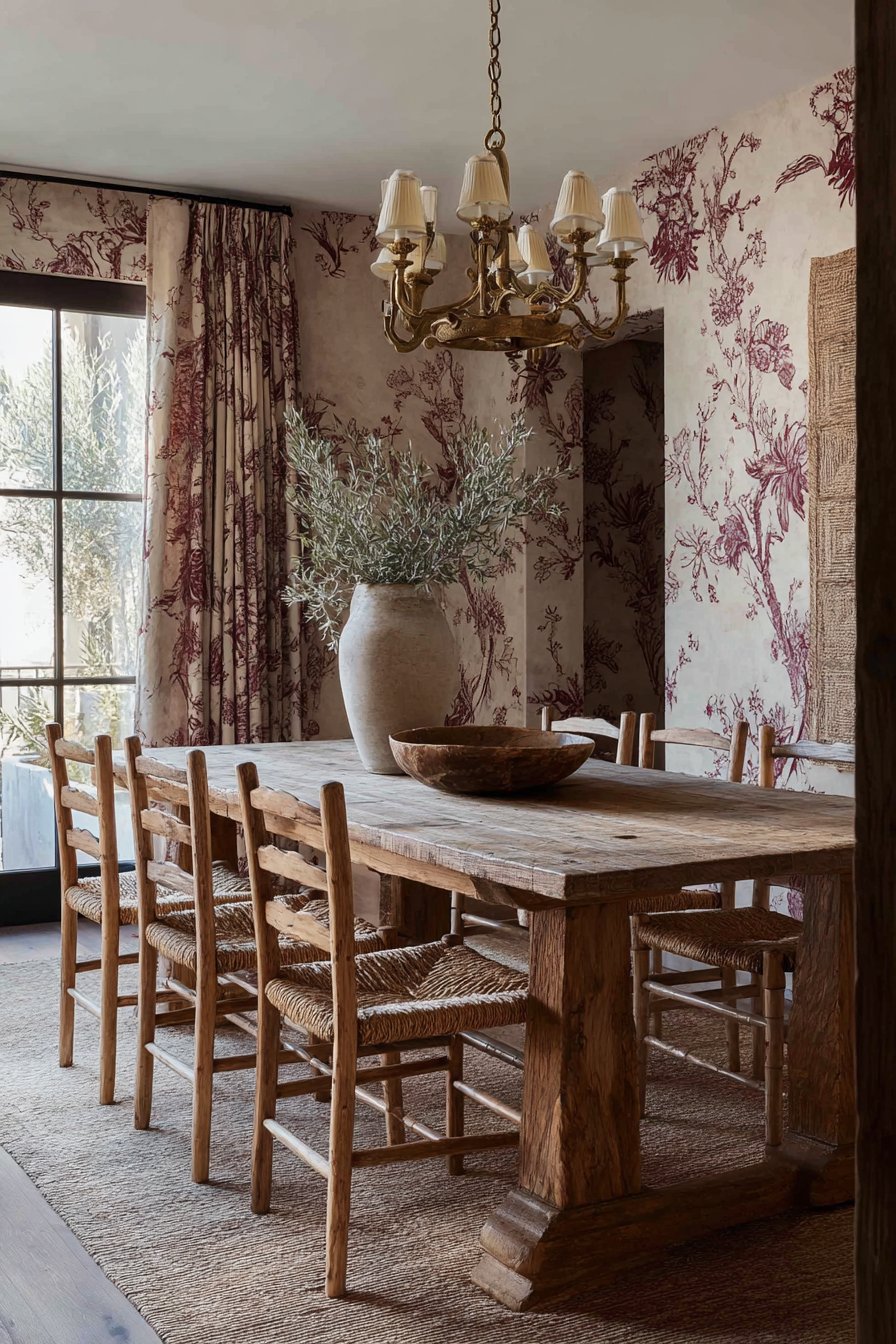
The ornate brass chandelier overhead features frosted glass shades. This fixture casts warm, diffused light across the dining space. Floral wallpaper in muted burgundy and cream creates visual interest on the walls. The slight fading adds character rather than diminishing appeal. Wide plank flooring complements the traditional aesthetic beautifully.
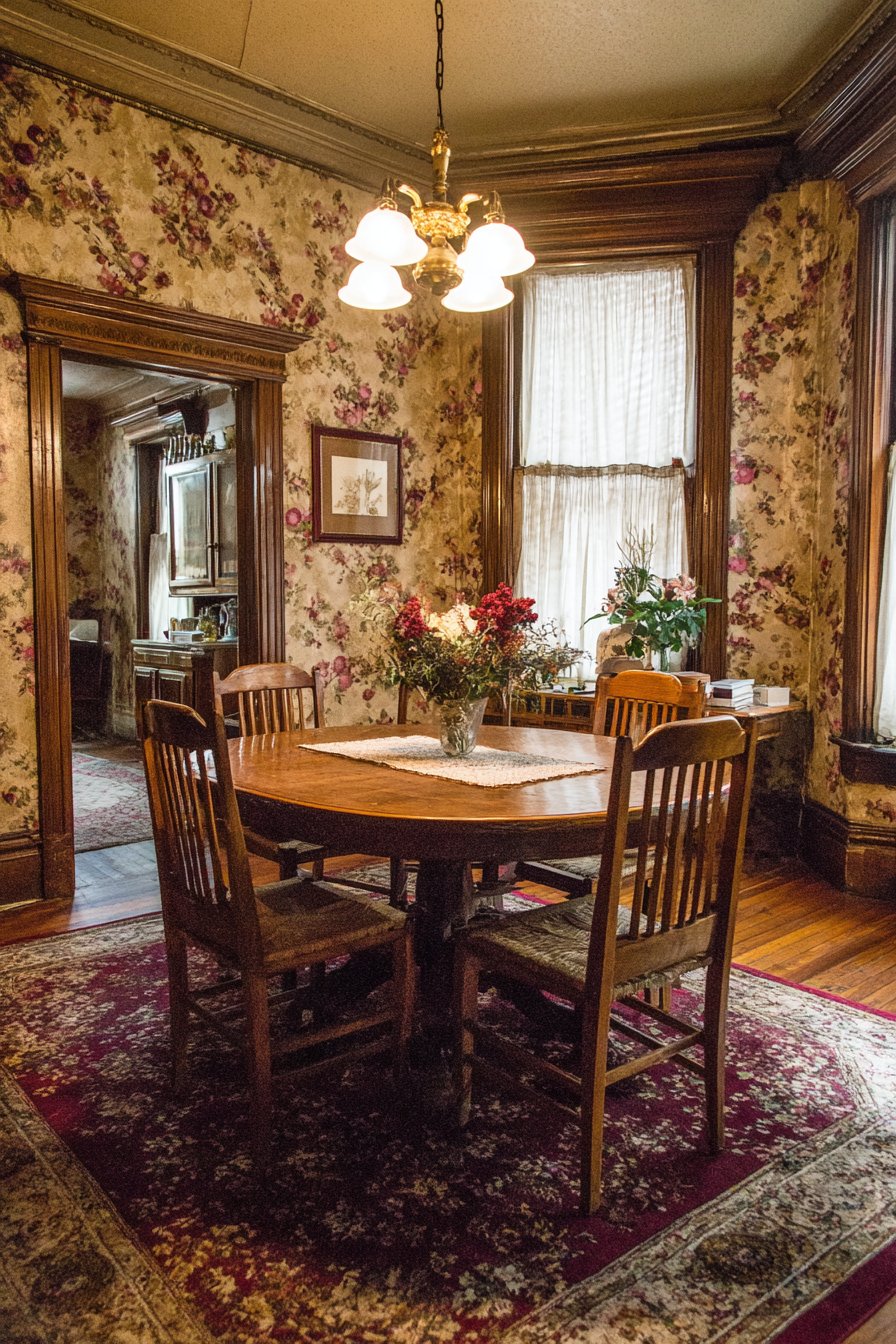
Natural daylight streams through nearby windows during daytime hours. This illumination highlights the rich wood grain and intricate details. The combination of artificial and natural light creates depth throughout the day. Each element works together to establish a welcoming atmosphere for family meals.
The authentic materials showcase quality construction from earlier eras. Modern reproductions cannot capture the same genuine warmth. This dining room proves that well-maintained vintage pieces remain functional and beautiful.
Key Design Tips:
- Select solid wood furniture with original finishes for authentic character
- Embrace natural wear patterns as design features rather than flaws
- Layer lighting sources to highlight architectural and furniture details
- Choose wallpaper with subtle fading for lived-in authenticity
- Maintain rush seating with occasional misting to prevent cracking
- Position furniture to maximize natural light exposure during meals
2. Elegant Mahogany Extendable Table Setting
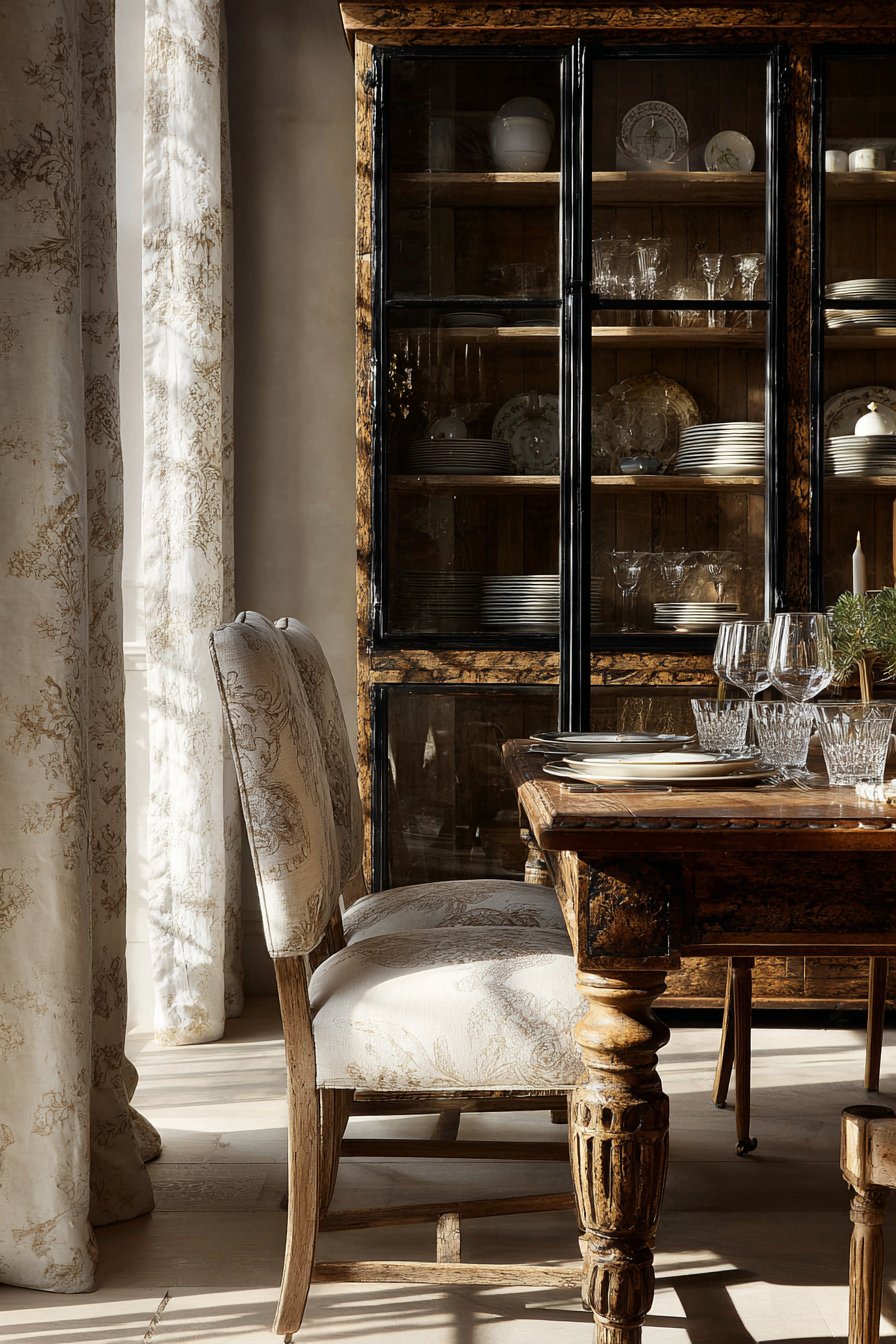
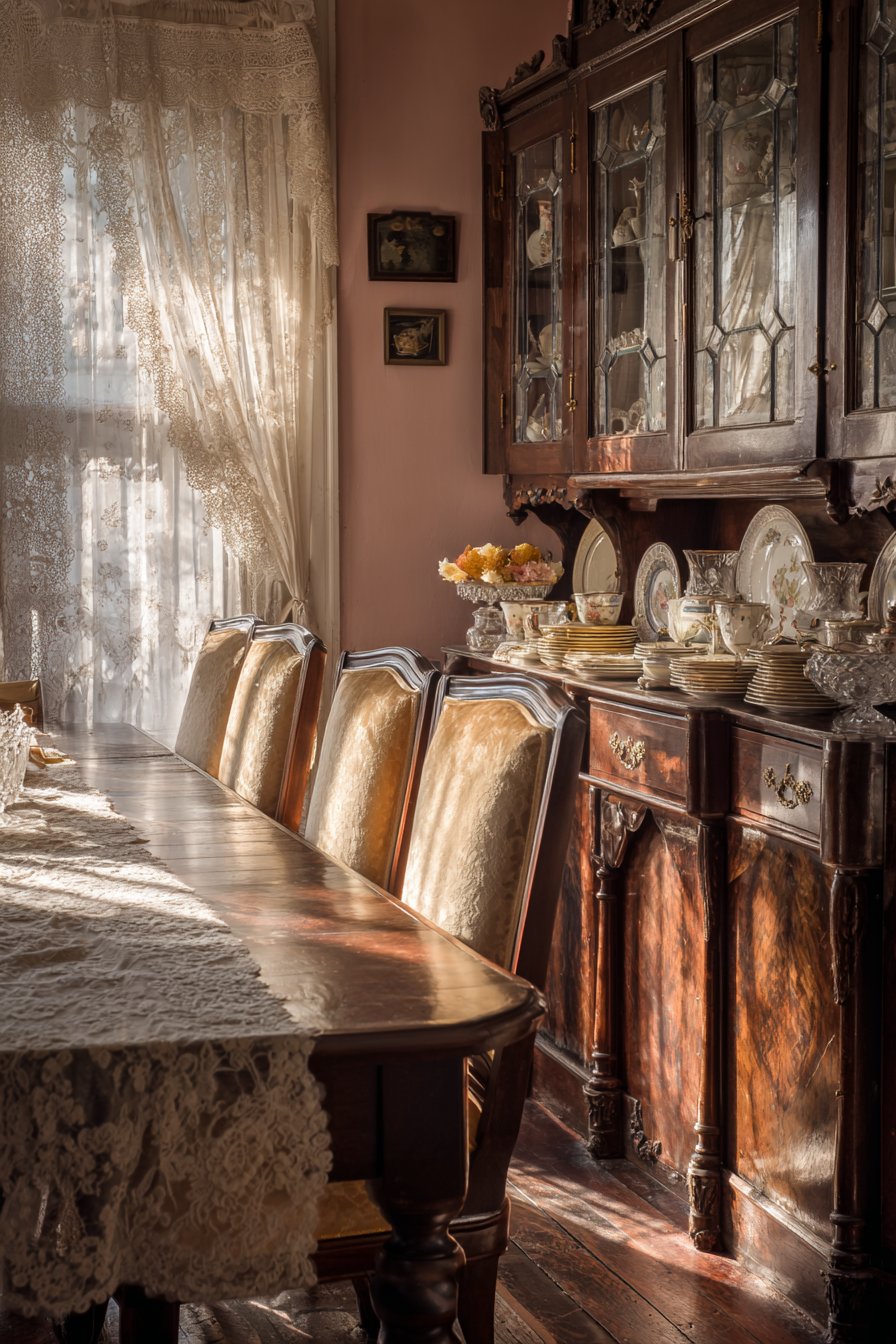
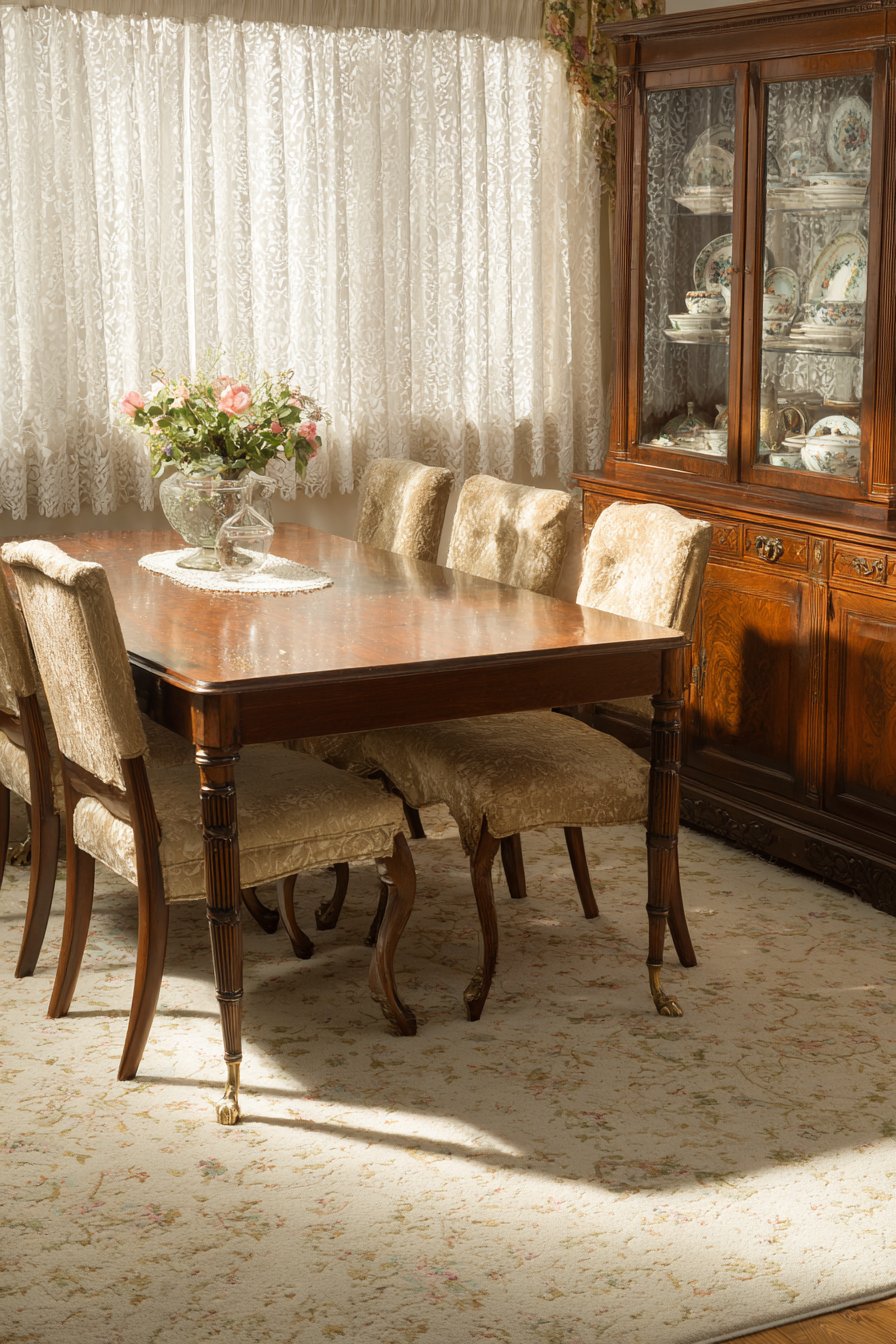
An extendable mahogany dining table with turned legs dominates this sophisticated space. The brass claw feet add elegant detail to the 1950s piece. Upholstered dining chairs feature carved wooden frames with Queen Anne-style flourishes. The faded velvet upholstery shows gentle wear that enhances vintage appeal.
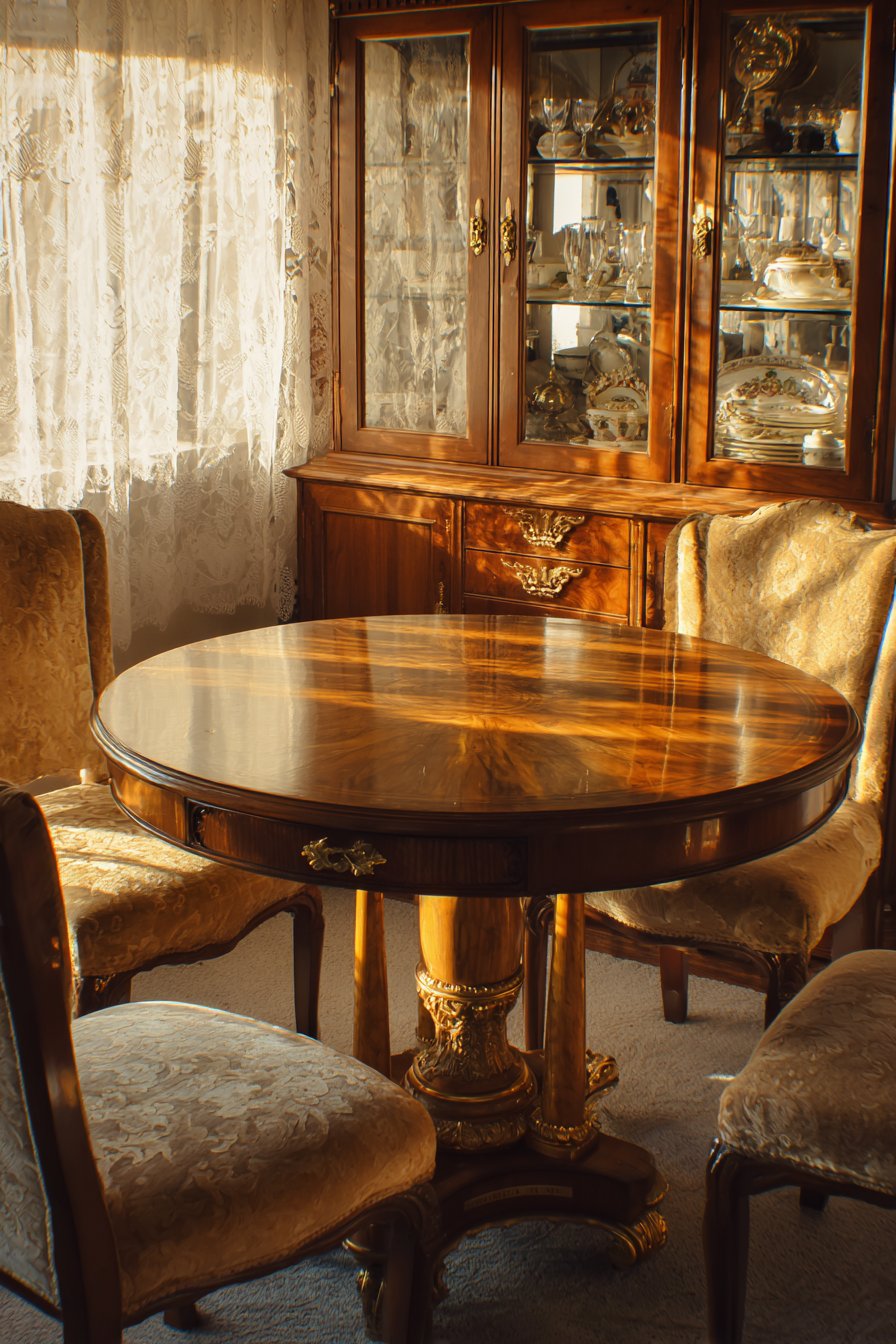
A vintage sideboard displays heirloom china and crystal glassware behind glass panels. These treasured pieces catch and reflect available light beautifully. Warm afternoon sunlight filters through delicate lace curtains. The soft shadows created emphasize rich mahogany tones throughout the room.
The extendable feature offers practical versatility for different occasions. Extended for formal dinners or compact for intimate meals. This functionality demonstrates why vintage furniture remains relevant today. Quality construction ensures smooth operation decades after original manufacture.
The room’s color palette centers on warm wood tones and cream neutrals. These timeless combinations never feel dated or trendy. The space exudes quiet elegance perfect for both celebrations and everyday dining.
Key Design Tips:
- Invest in extendable tables for maximum dining flexibility
- Display cherished china and glassware to add personal history
- Use lace curtains to soften natural light while maintaining privacy
- Select Queen Anne-style chairs for formal traditional settings
- Polish brass hardware regularly to maintain warm golden tones
- Arrange furniture to create clear pathways around extended tables
3. Cozy Round Walnut Table with Mismatched Chairs
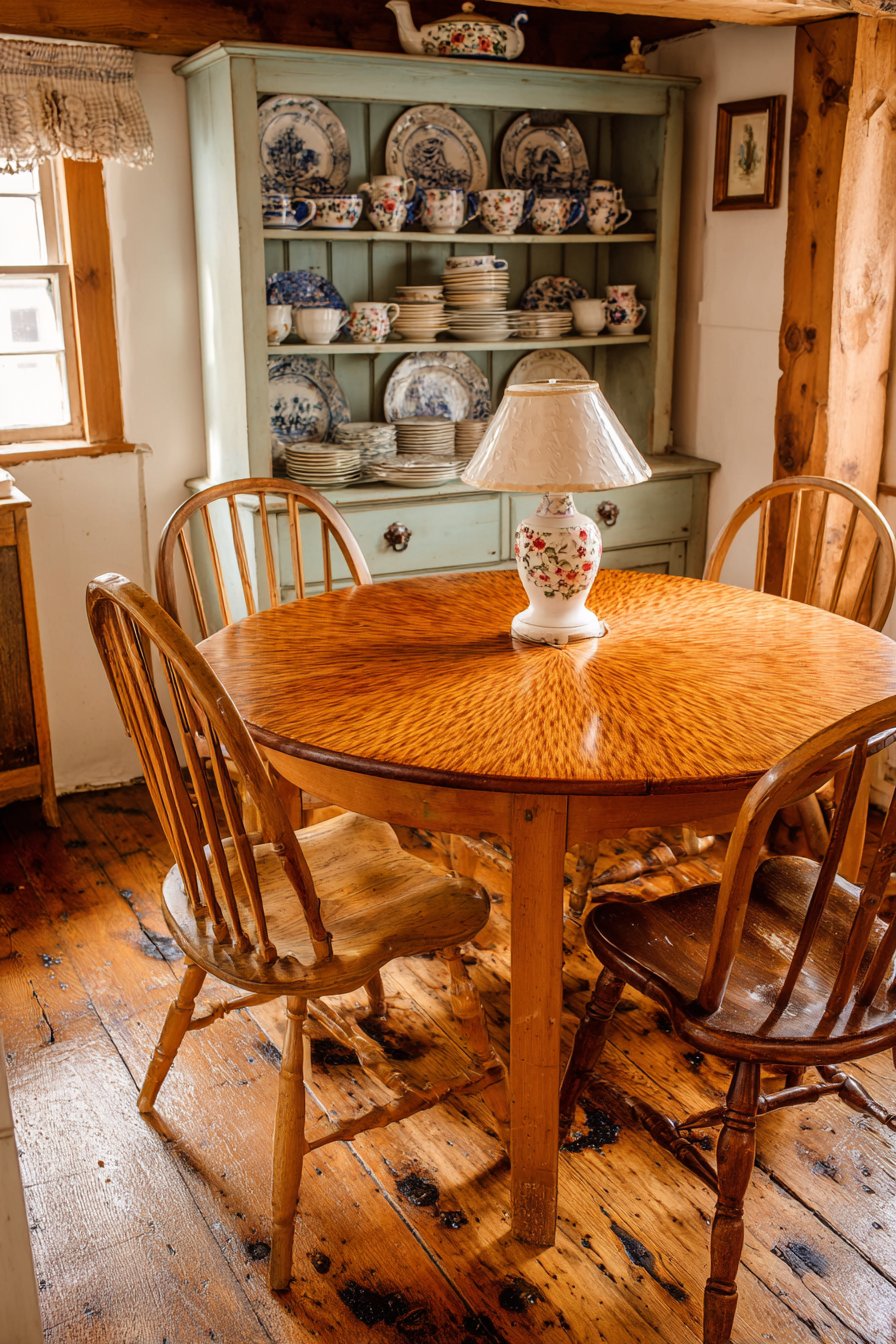
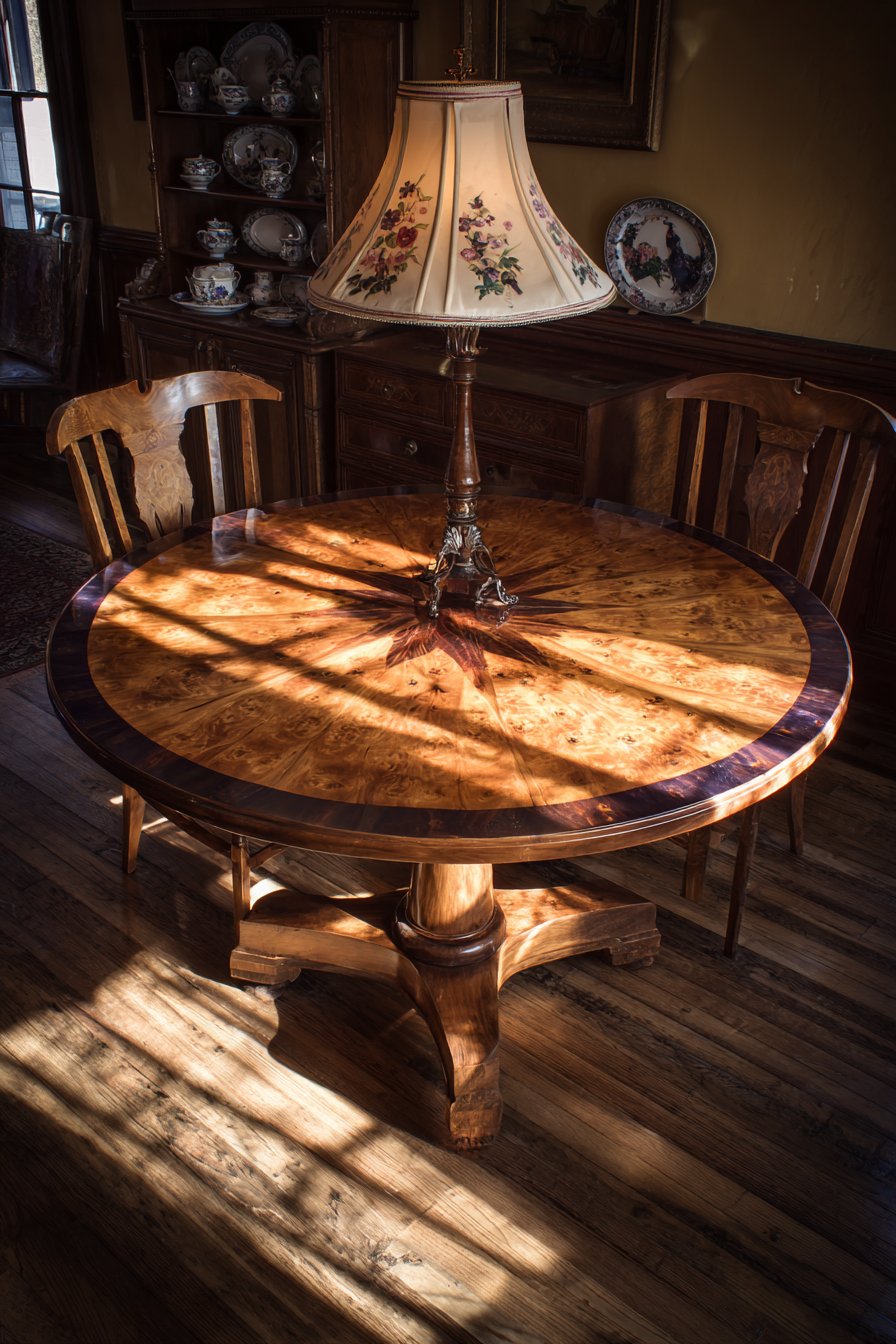
A round walnut table features distinctive sunburst veneer patterns popular in mid-century design. This eye-catching detail creates visual interest as the room’s focal point. Mismatched vintage chairs in complementary wood tones surround the table. The collected-over-time aesthetic feels personal and intentional rather than random.
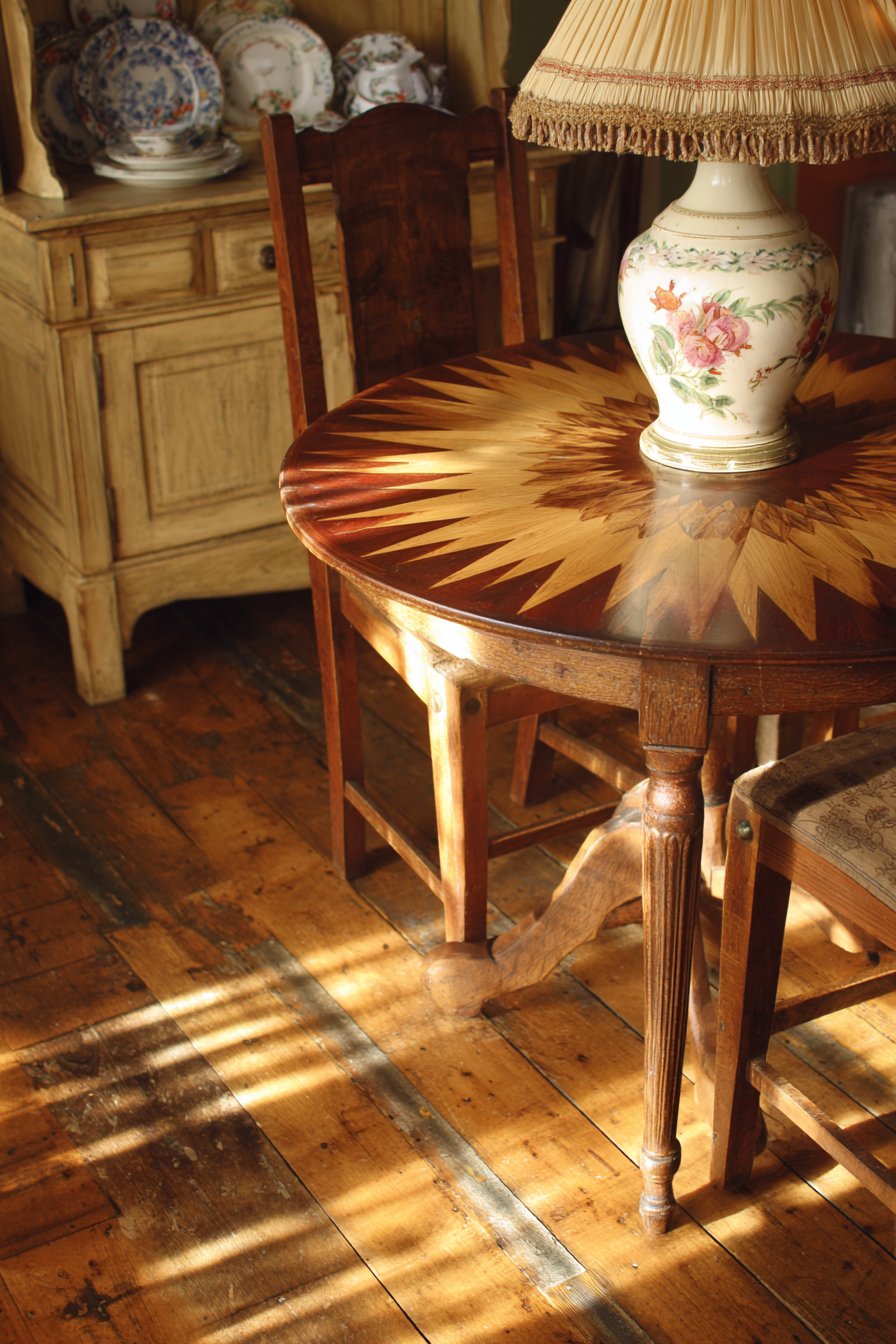
A porcelain table lamp with hand-painted floral design sits on the corner hutch. This lamp provides task lighting for the display area. Vintage dishware arranged in the hutch adds color and pattern. The hardwood floor shows natural wear patterns around the table area.
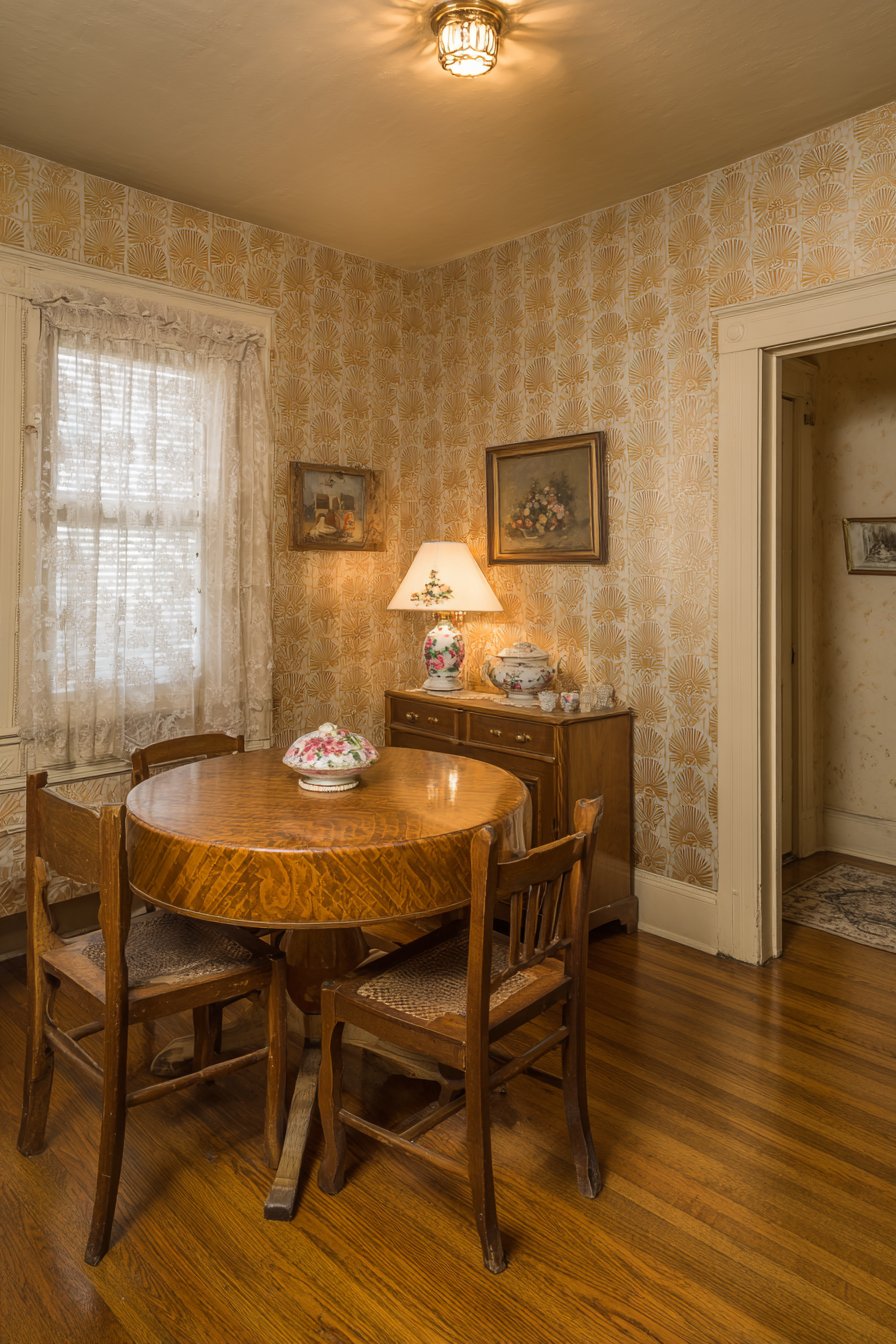
The circular shape encourages conversation and creates democratic seating arrangements. No one sits at the head when gathering around this table. This subtle detail promotes inclusive family interaction during meals. The intimate scale works perfectly in smaller dining spaces.
The varied wood finishes add depth without feeling chaotic. Each piece contributes unique character to the overall composition. This approach allows collectors to add pieces gradually over time.
Key Design Tips:
- Choose round tables for small spaces to maximize seating capacity
- Mix wood tones within the same color family for cohesive variety
- Add portable task lighting to illuminate display areas effectively
- Embrace the collected aesthetic by combining different chair styles
- Protect walnut veneer from direct sunlight to prevent fading
- Create visual balance by distributing darker pieces around the room
4. Rustic Reclaimed Pine Farmhouse Table
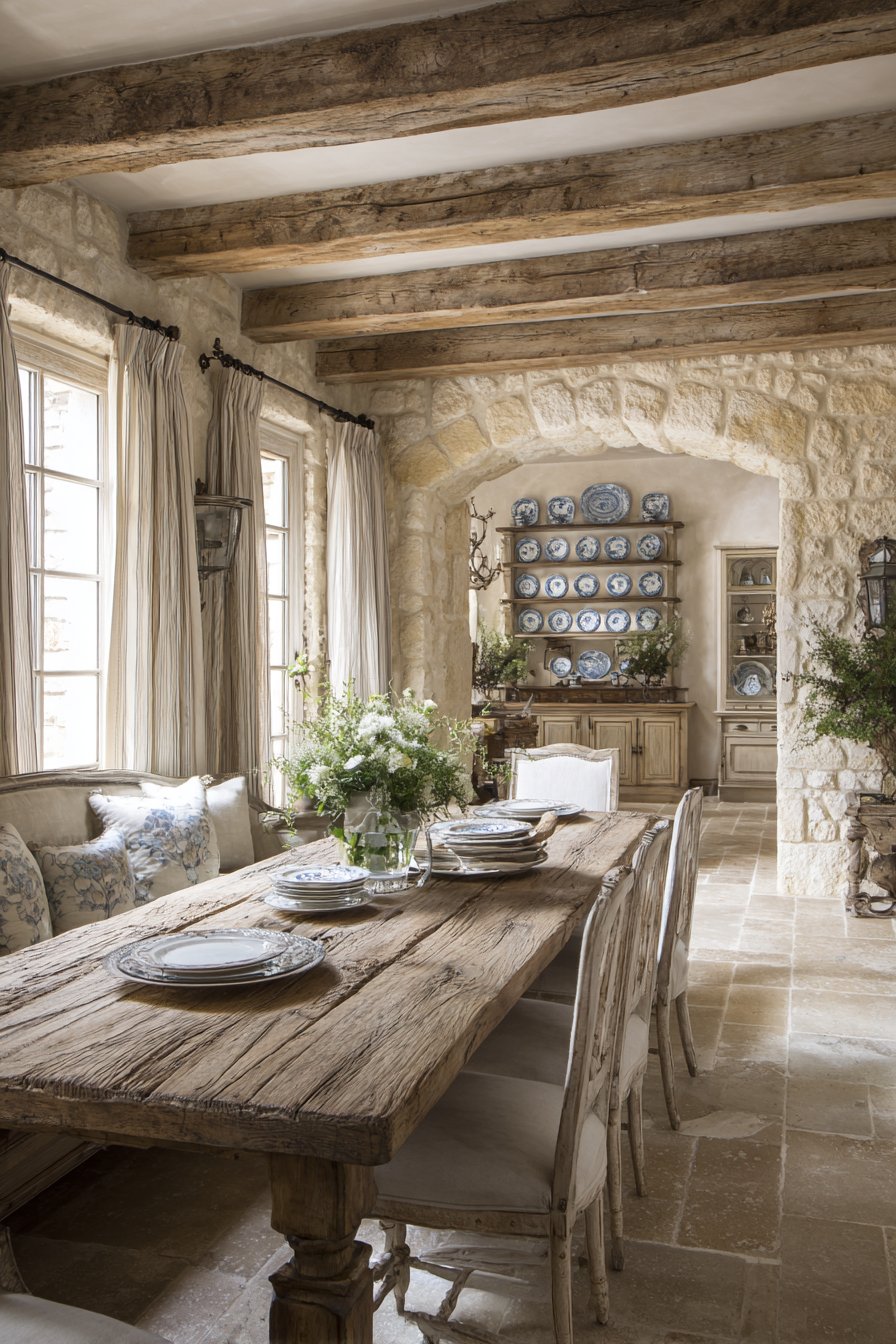
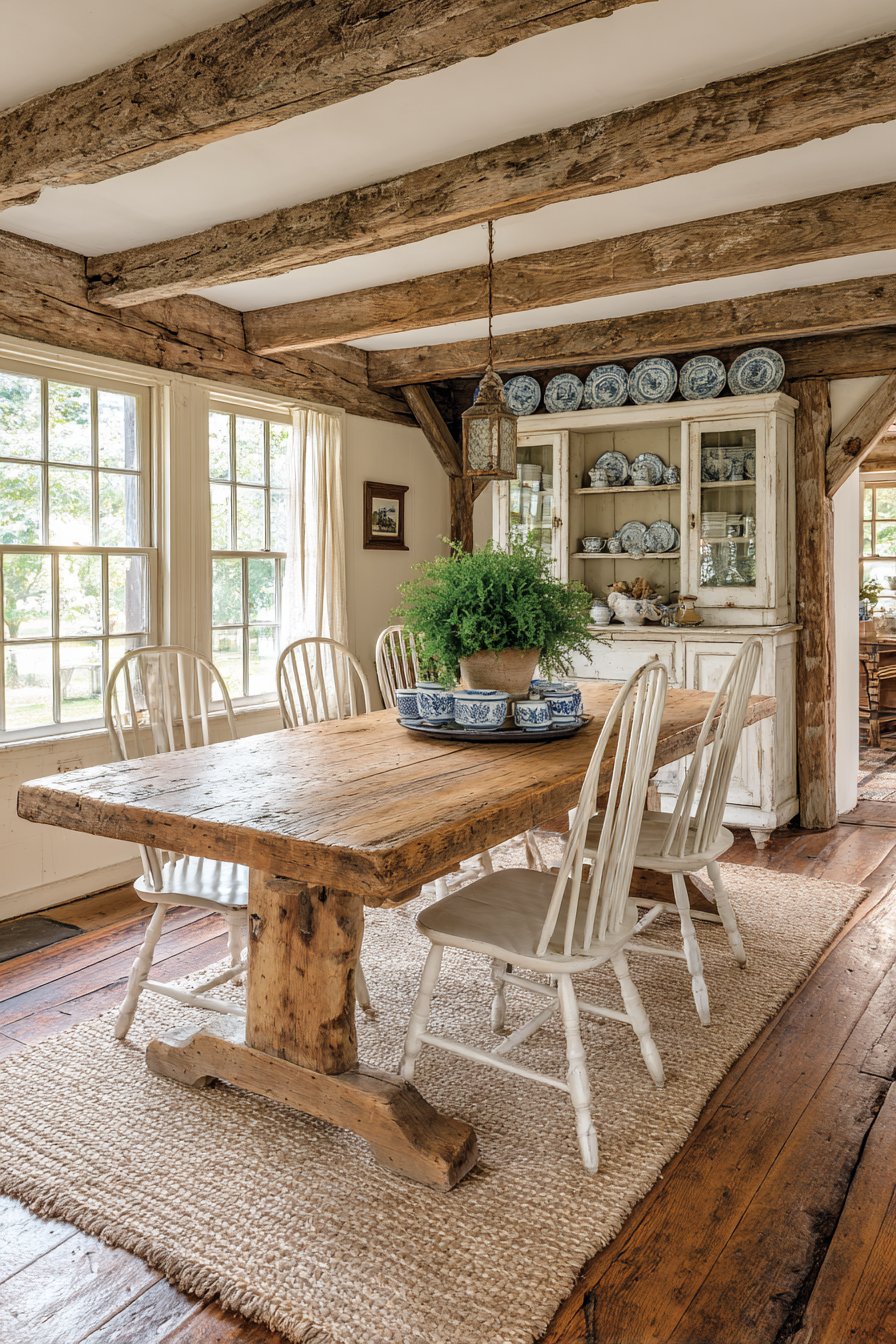
A rectangular farmhouse table constructed from reclaimed pine commands attention immediately. Visible knots and authentic distressing tell stories of previous use. Windsor-style dining chairs in aged white paint show gentle wear. The paint reveals underlying wood at edges and high-contact areas.
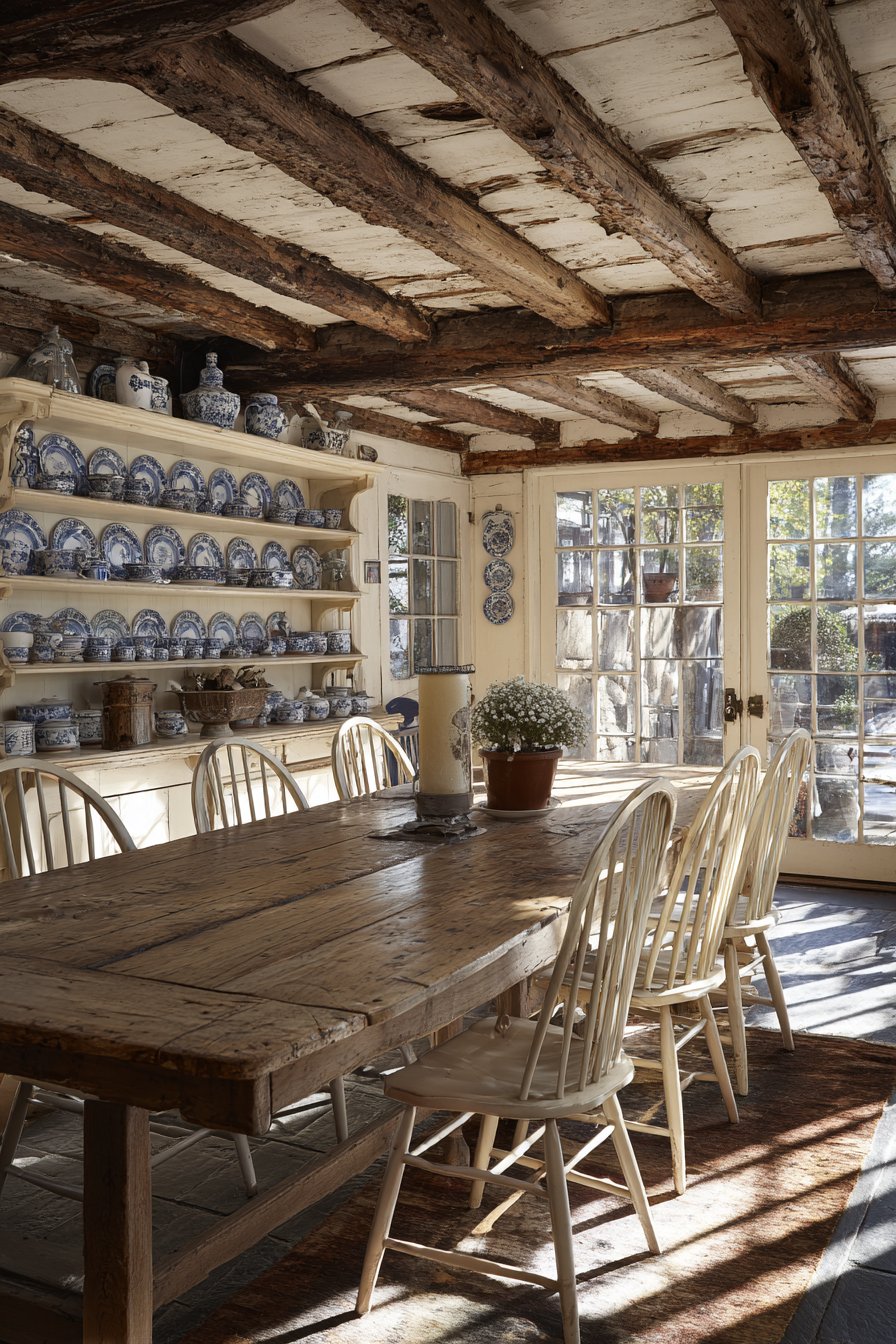
An antique plate rack mounted on the wall displays blue and white transferware china. This practical storage solution doubles as decorative art. Exposed ceiling beams add architectural interest and reinforce rustic character. Morning light streams through multipane windows with original wavy glass.
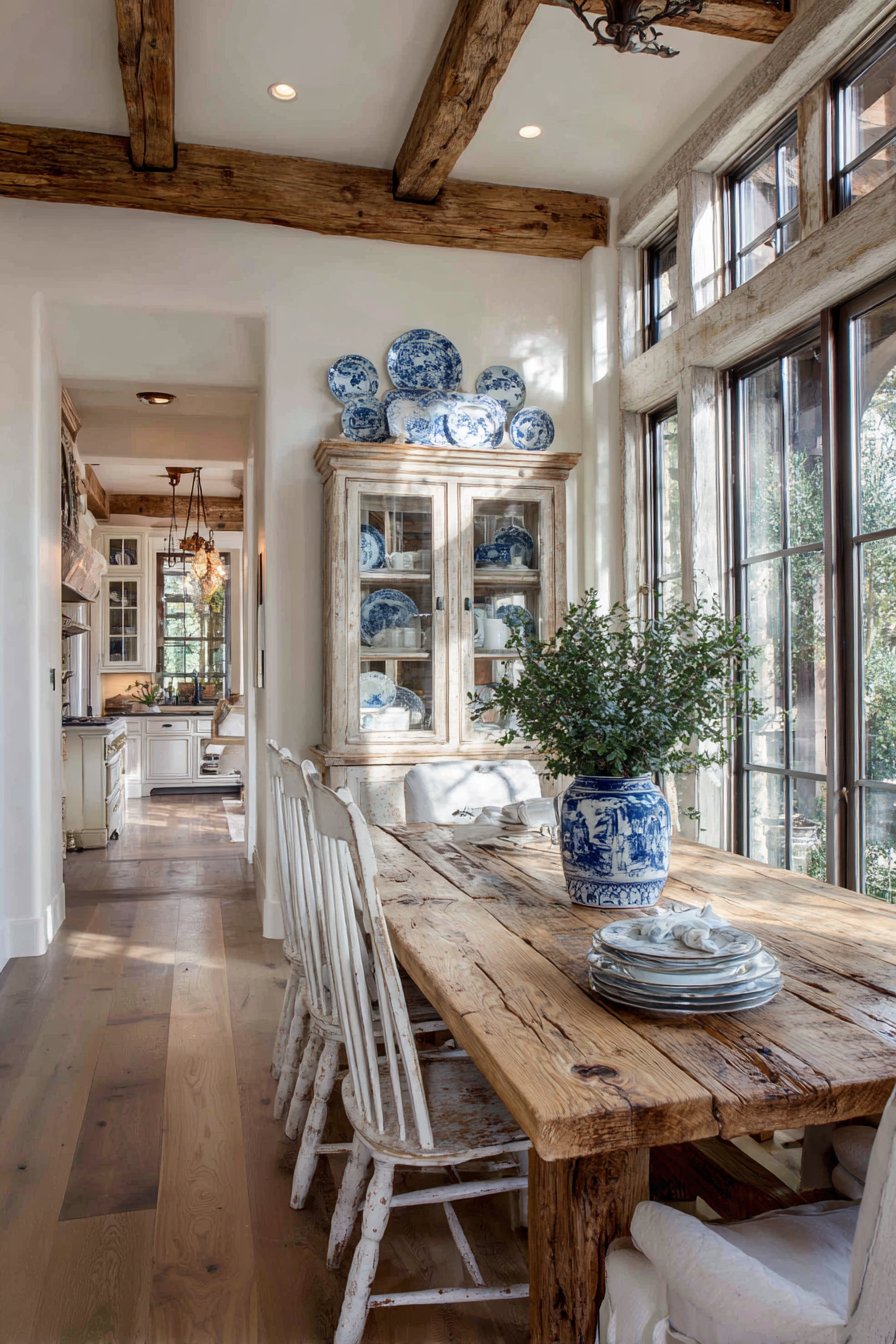
The textured wood surfaces invite touch and close examination. Each imperfection adds to the overall narrative of the space. The white-painted chairs provide contrast against darker wood tones. This balance prevents the room from feeling too heavy or dark.
The farmhouse style emphasizes practicality and durability over ornate decoration. These qualities appeal to modern families seeking low-maintenance dining solutions. The honest materials age gracefully with continued use and care.
Key Design Tips:
- Source reclaimed wood from reputable suppliers for authentic character
- Paint chairs in historic colors like milk paint for period accuracy
- Mount plate racks at comfortable heights for display and access
- Preserve original window glass for authentic light diffusion
- Apply food-safe finishes to pine tables for practical durability
- Balance rustic elements with refined accessories for sophistication
5. Sophisticated Art Deco Geometric Inlay Design
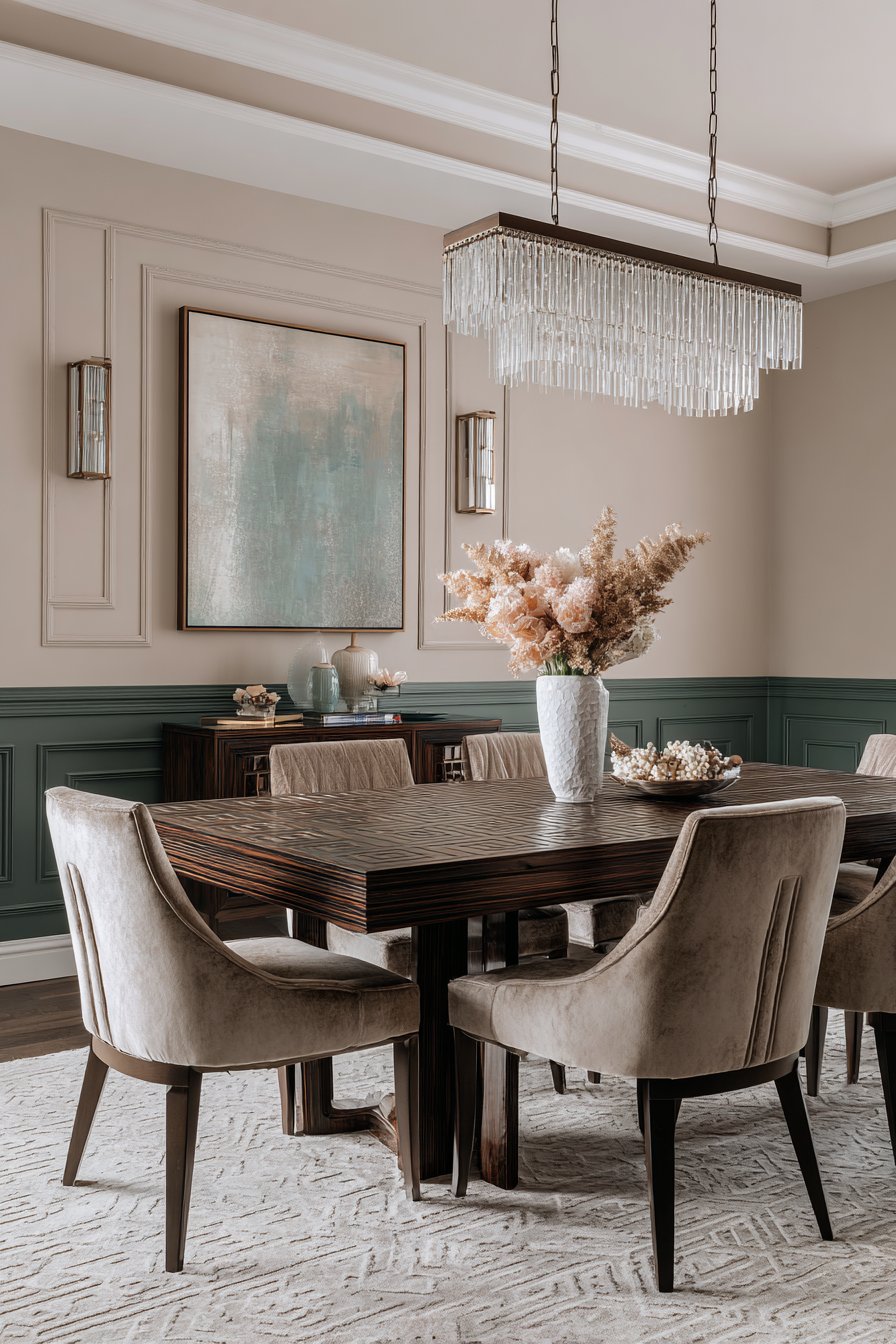
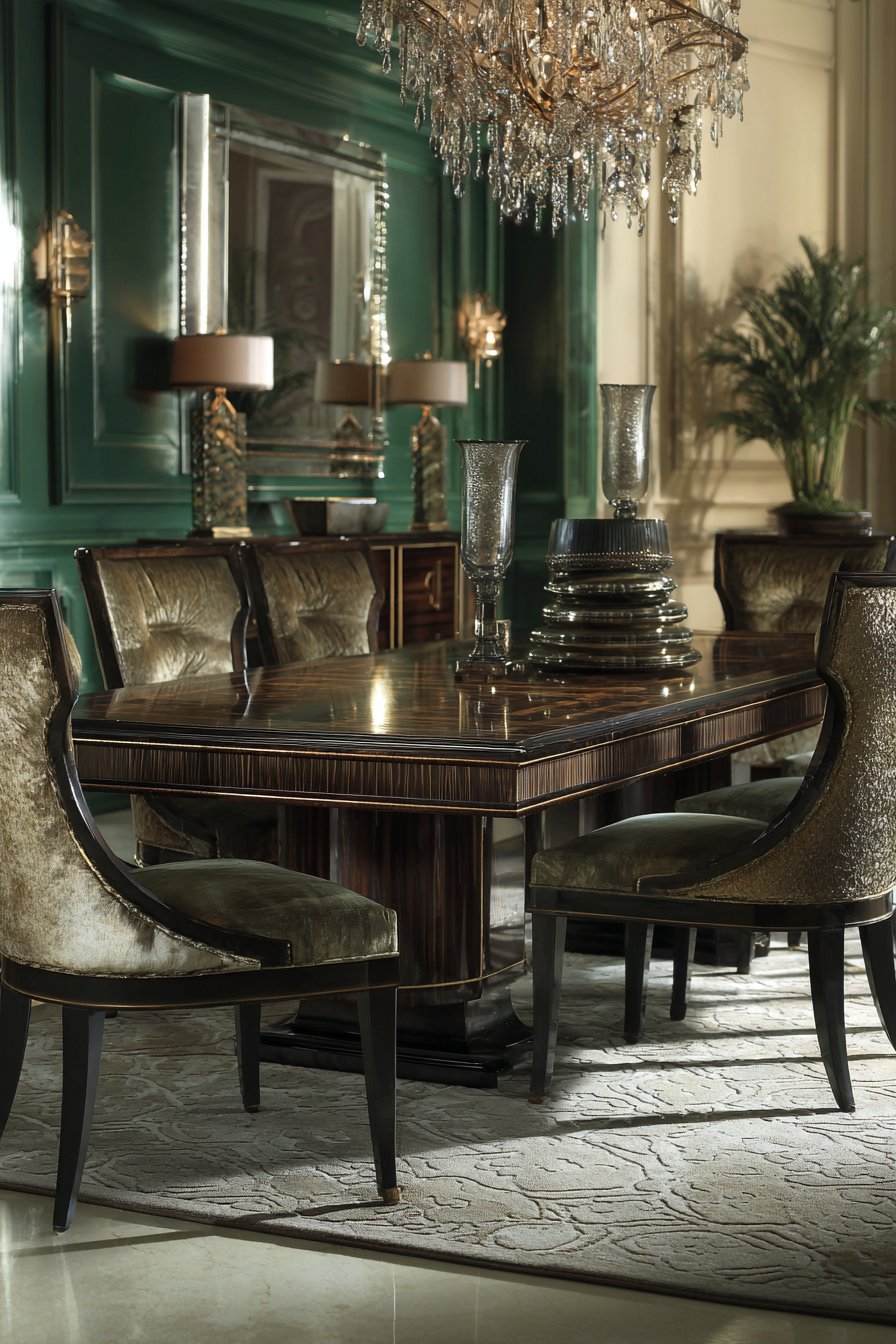
An Art Deco-inspired dining table showcases geometric inlay work in contrasting woods. The dark walnut base features tapered legs with brass accent details. Six matching upholstered chairs display curved backs with bronze velvet fabric. The subtle wear in the upholstery speaks to decades of use.
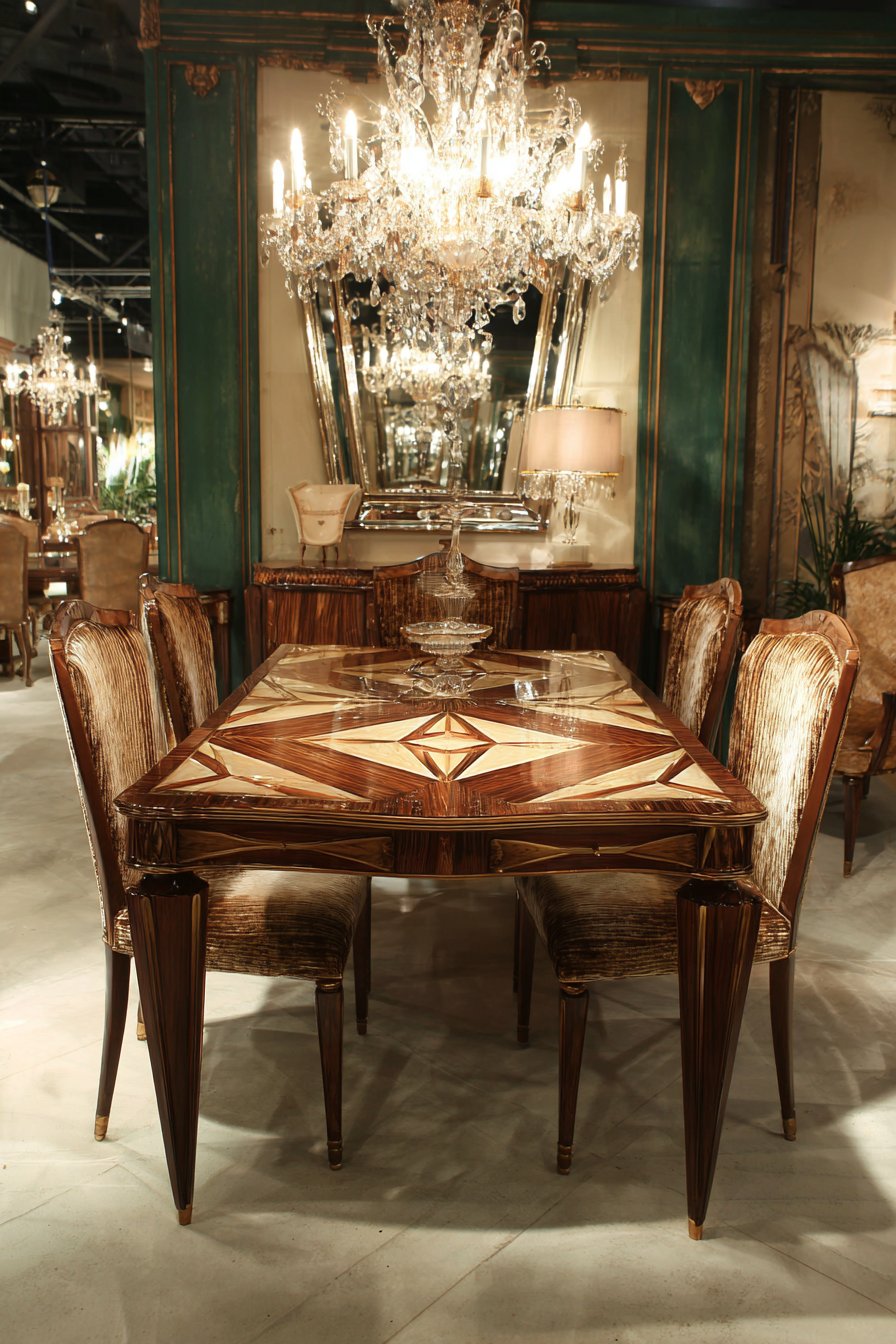
A vintage mirror with beveled edges reflects light from the crystal chandelier. This strategic placement multiplies illumination throughout the space. Wainscoting in deep green paint creates dramatic contrast with cream upper walls. The two-tone treatment adds architectural definition to plain walls.
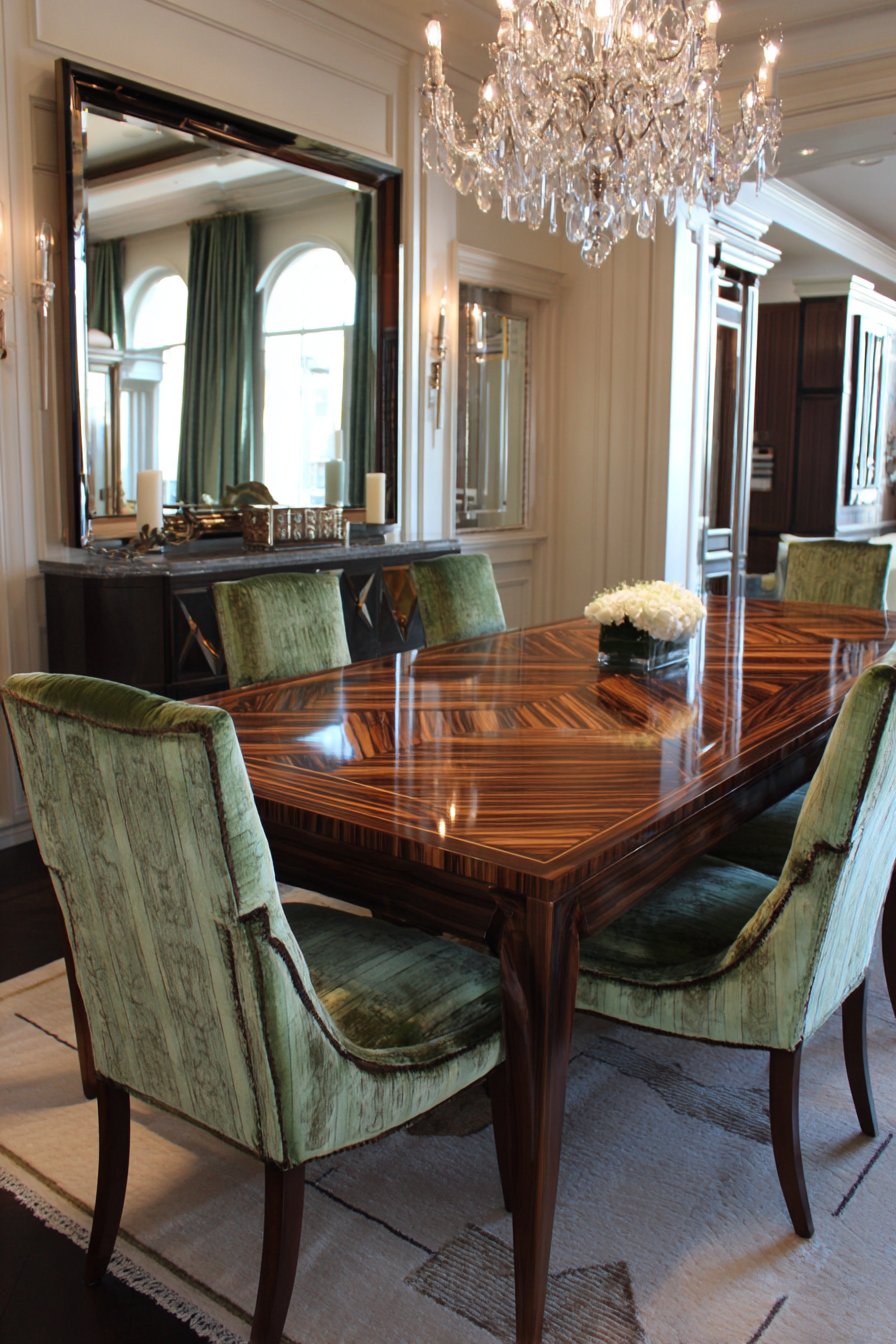
The Art Deco period emphasized luxury and sophisticated geometric patterns. These design principles remain visually striking nearly a century later. The precision of the inlay work demonstrates exceptional craftsmanship. Modern furniture rarely achieves this level of detailed artistry.
The bronze velvet adds richness and tactile interest to the seating. Original fabric shows gentle fading that enhances rather than detracts. This patina cannot be artificially recreated through distressing techniques.
Key Design Tips:
- Highlight geometric inlay details with strategic accent lighting
- Use mirrors to amplify natural and artificial light sources
- Apply wainscoting to add architectural interest in plain rooms
- Preserve original upholstery when wear enhances vintage character
- Polish brass accents monthly to maintain lustrous appearance
- Choose deep jewel tones for authentic Art Deco color schemes
6. Charming Cherry Drop-Leaf Gate-Leg Table
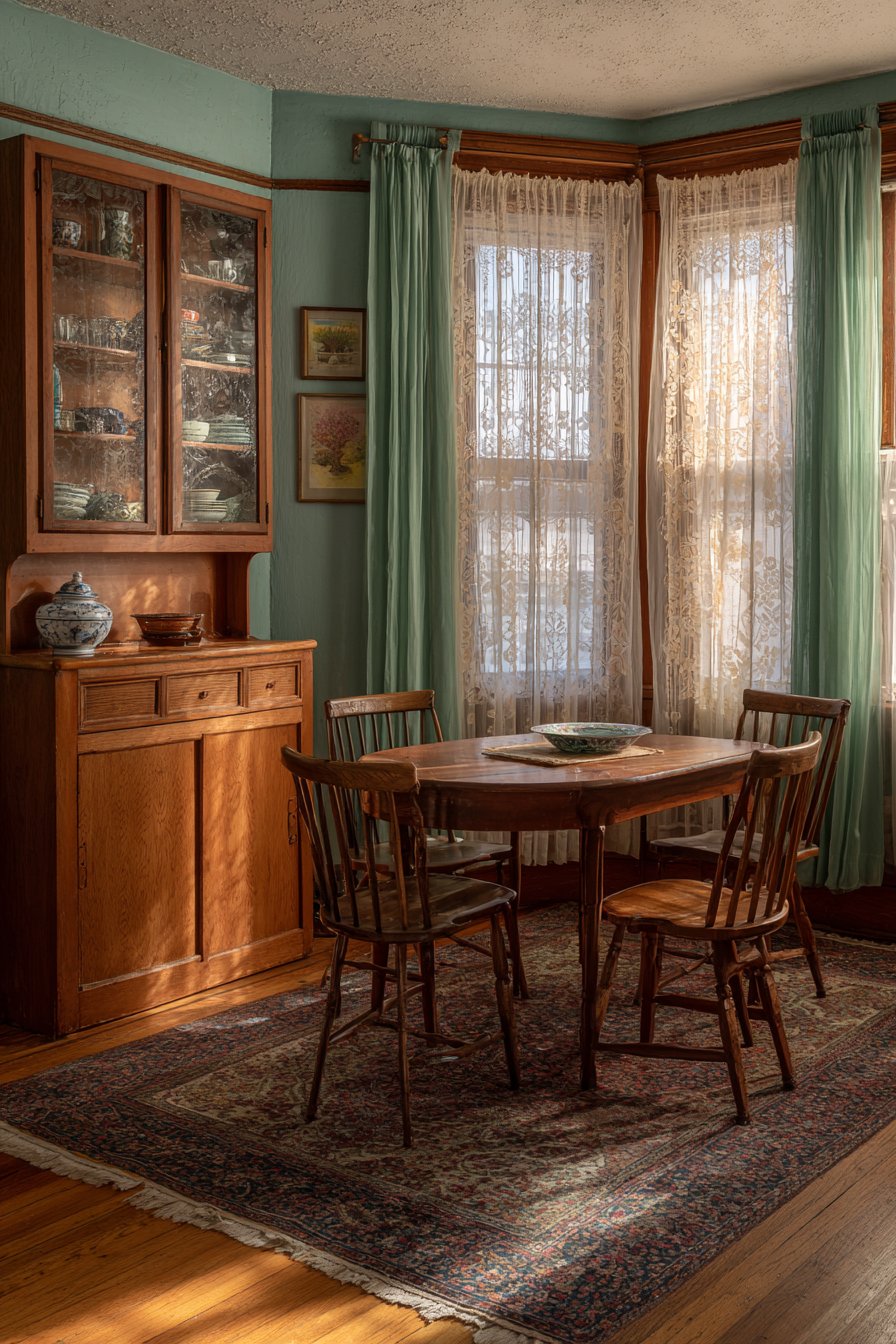
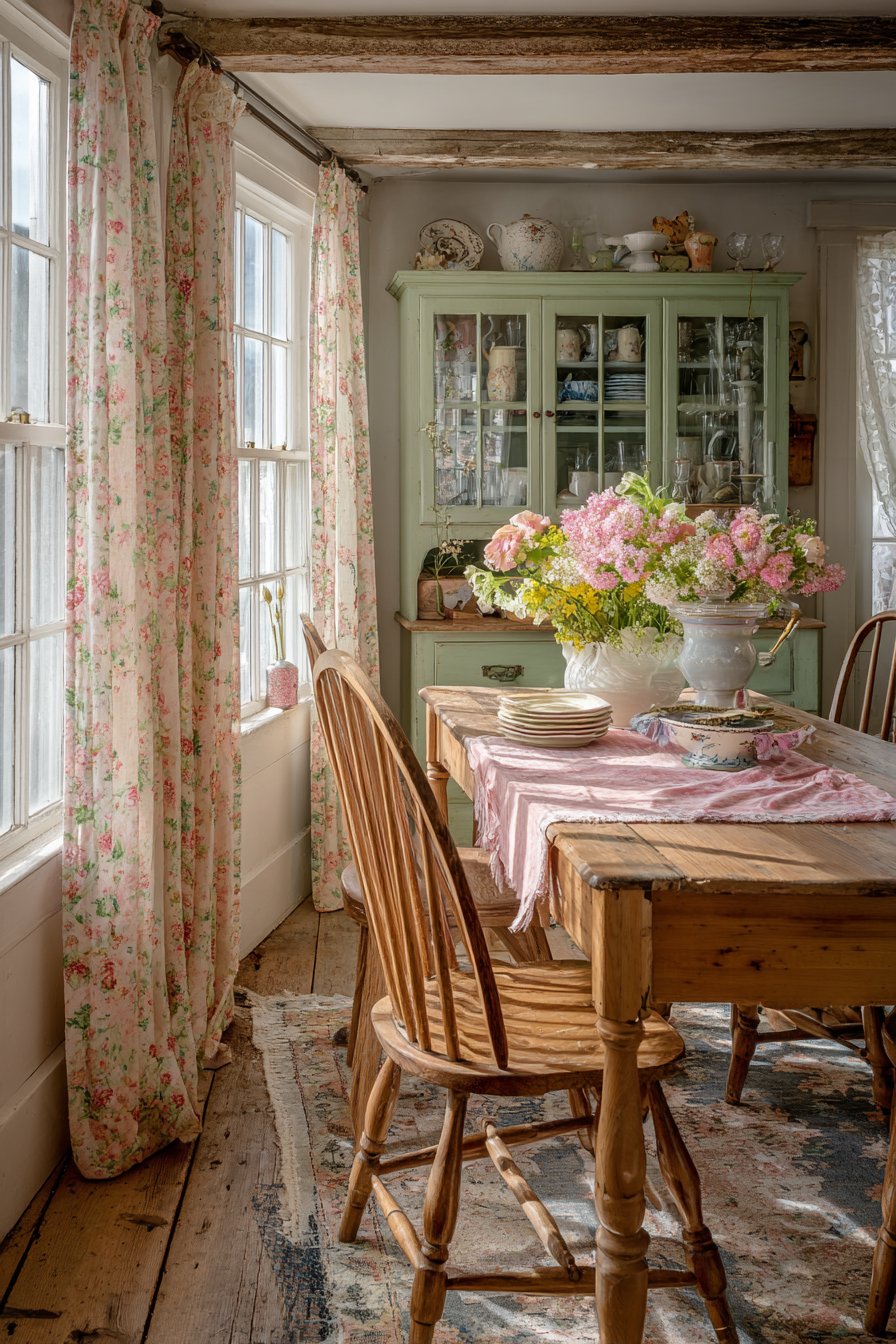
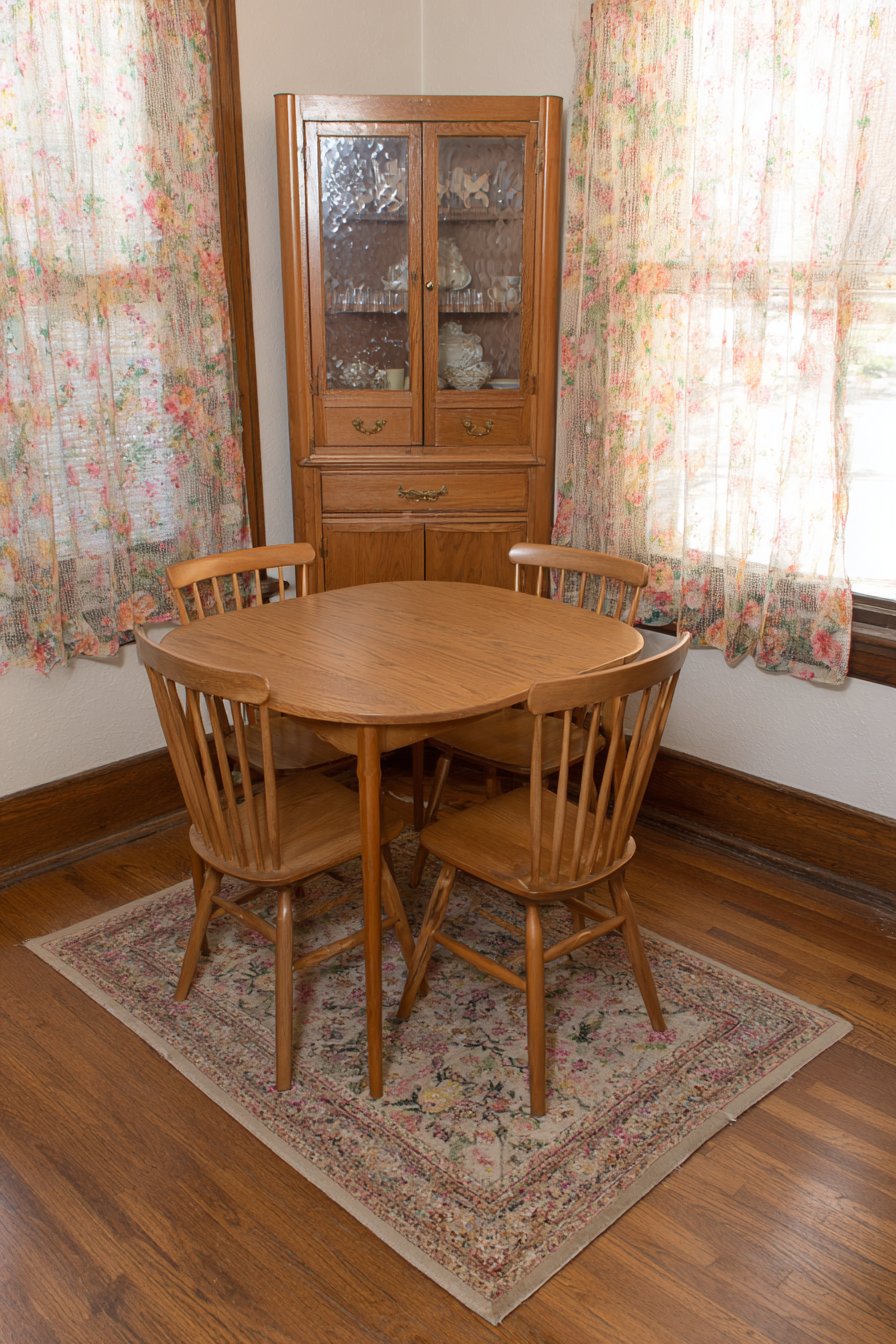
A drop-leaf gate-leg table in cherry wood offers compact versatility. The table expands to accommodate four spindle-back chairs with rush seating. The natural aging of the rush seats shows authentic use patterns. A vintage corner cabinet displays Depression glass in pale colors.
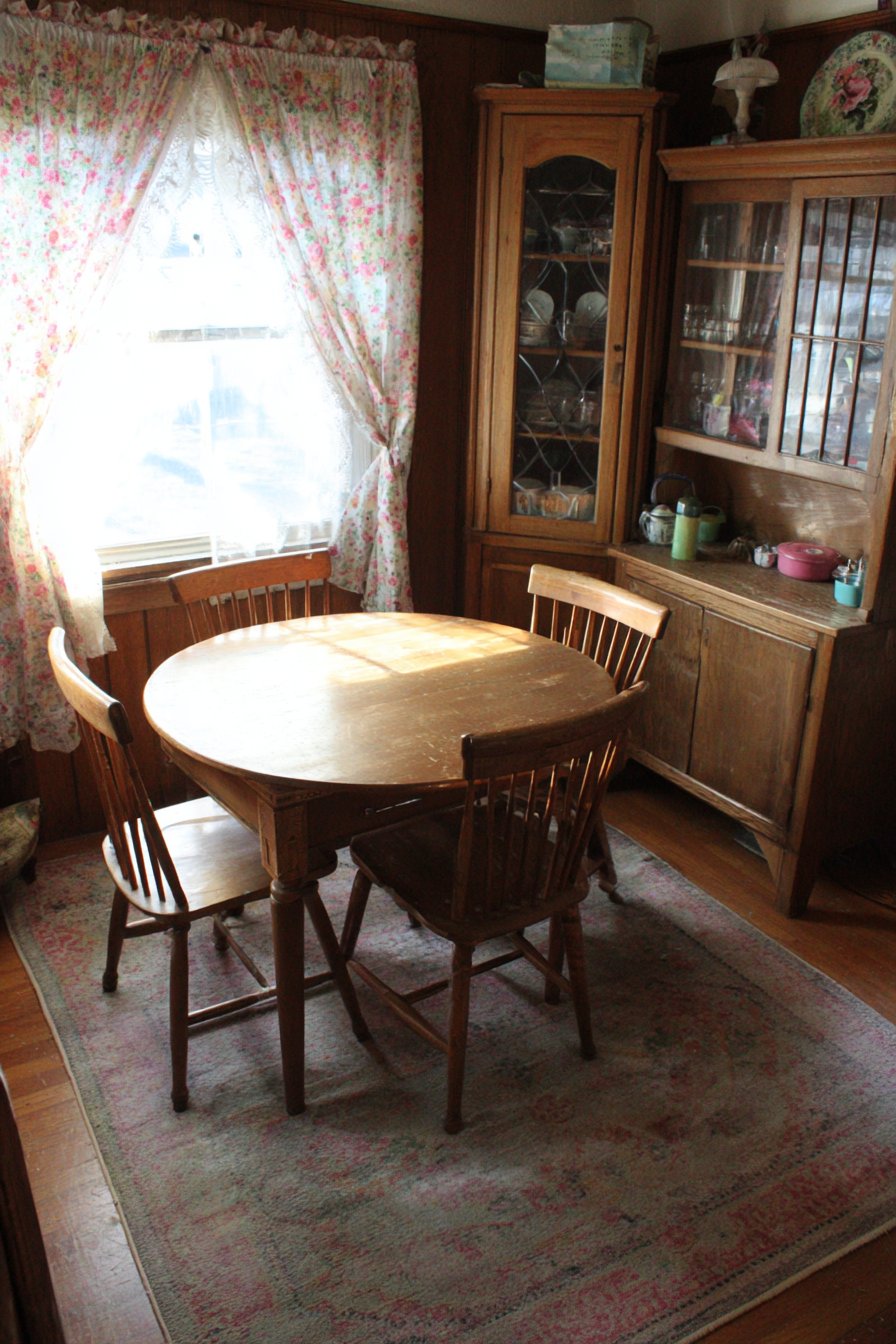
Floral chintz curtains frame windows with original wavy glass panes. These imperfect panes create subtle light distortions that add character. Worn oak flooring adds warmth beneath a faded Persian-style rug. The rug’s muted colors complement rather than compete with other elements.
The gate-leg mechanism represents ingenious space-saving furniture design. Folded down, the table occupies minimal floor space. Extended, it provides ample dining surface for small gatherings. This flexibility proves invaluable in compact dining areas or apartments.
The Depression glass collection adds soft color without overwhelming the space. These affordable collectibles bring history and beauty together. The pale hues catch and filter available light beautifully.
Key Design Tips:
- Measure carefully to ensure adequate clearance for extended leaves
- Rotate displayed glassware seasonally to prevent uneven fading
- Use rug pads to protect vintage rugs from floor friction
- Maintain gate-leg hinges with periodic applications of furniture wax
- Choose chintz patterns that complement displayed collections
- Keep rush seating slightly damp to maintain flexibility and prevent cracking
7. Romantic French Provincial Ivory Finish
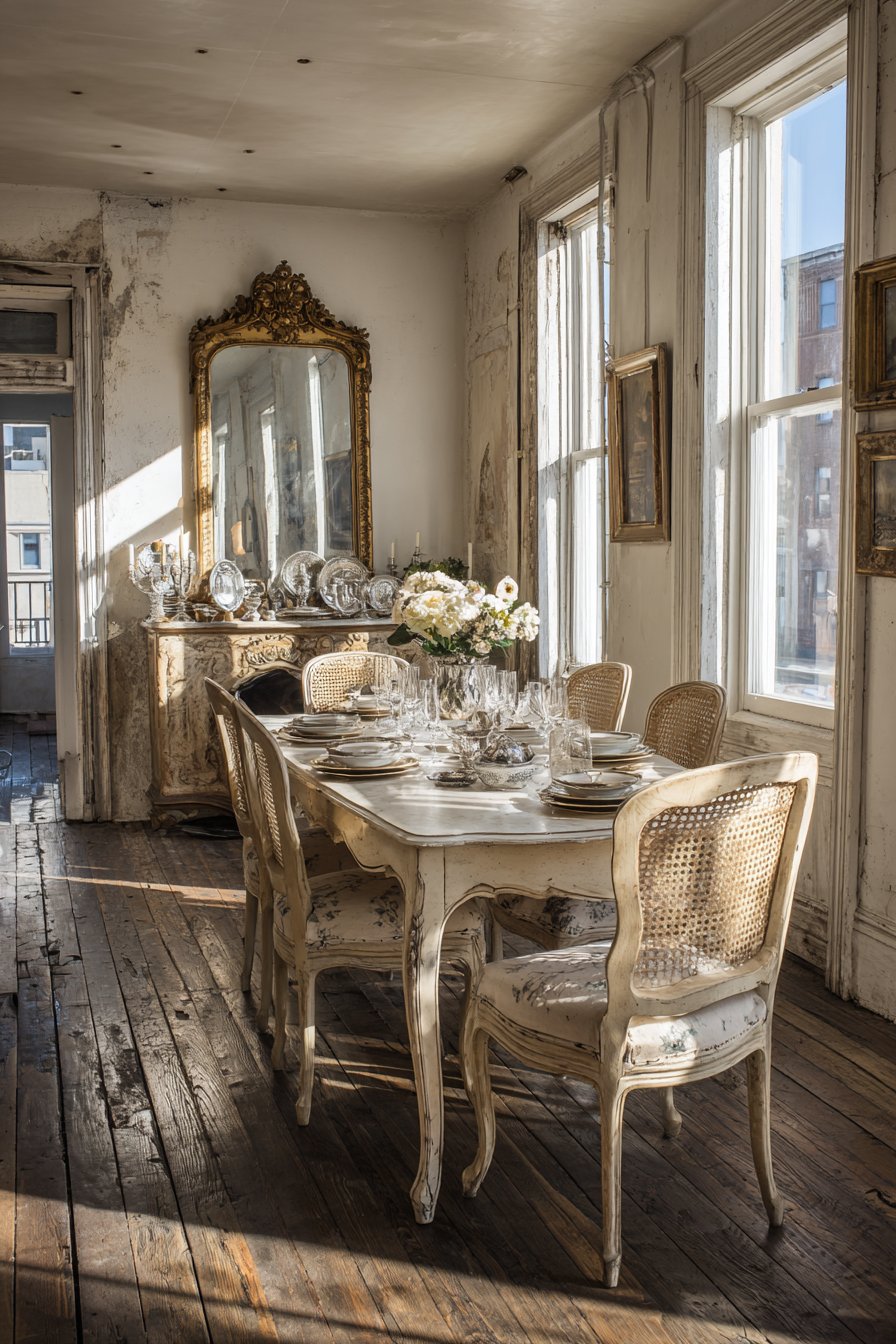
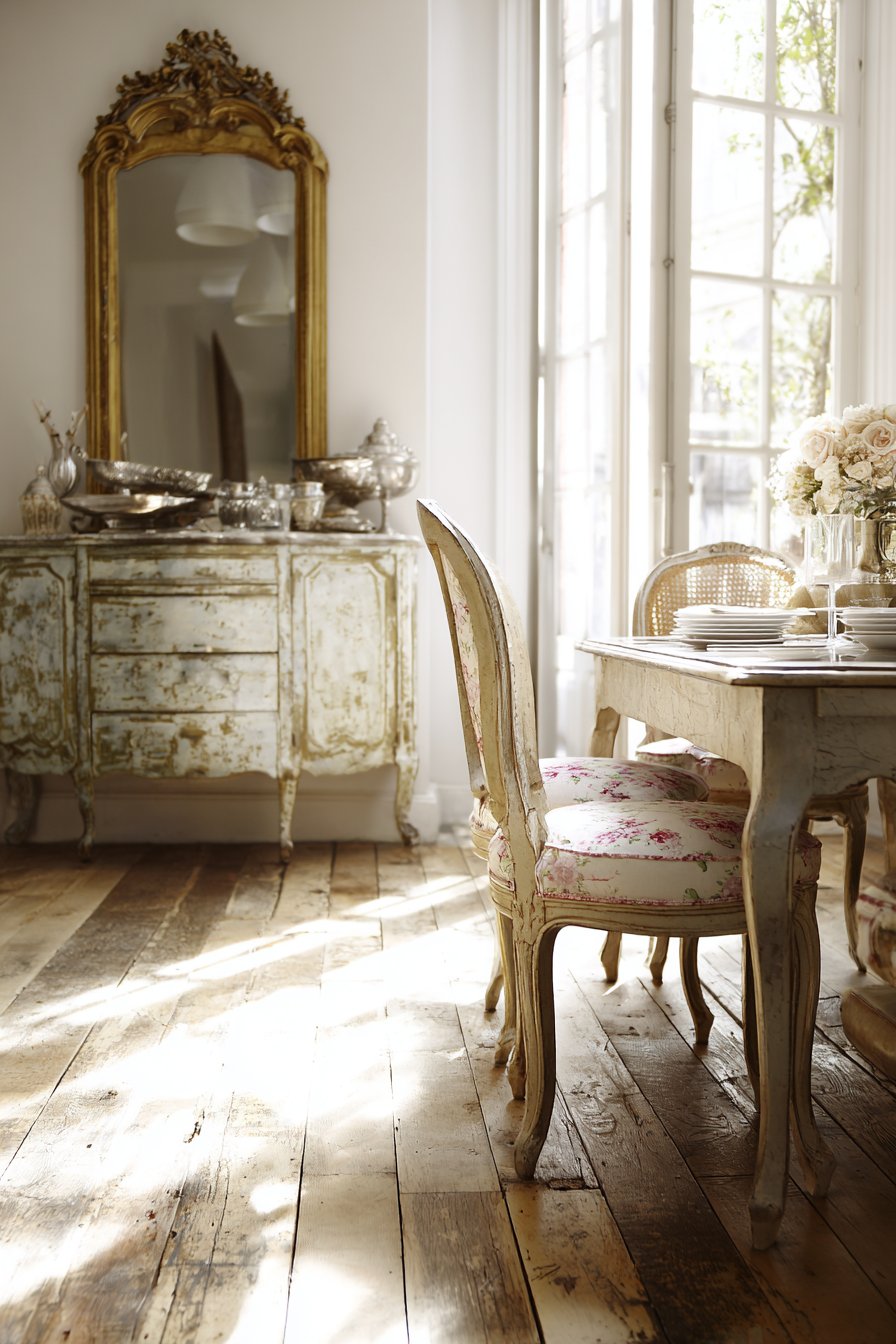
A French provincial dining table features cabriole legs and distressed ivory finish. Multiple paint layers peek through strategic distressing points. Cane-back chairs with curved frames surround the table gracefully. Floral cushions in faded toile fabric add comfort and pattern.
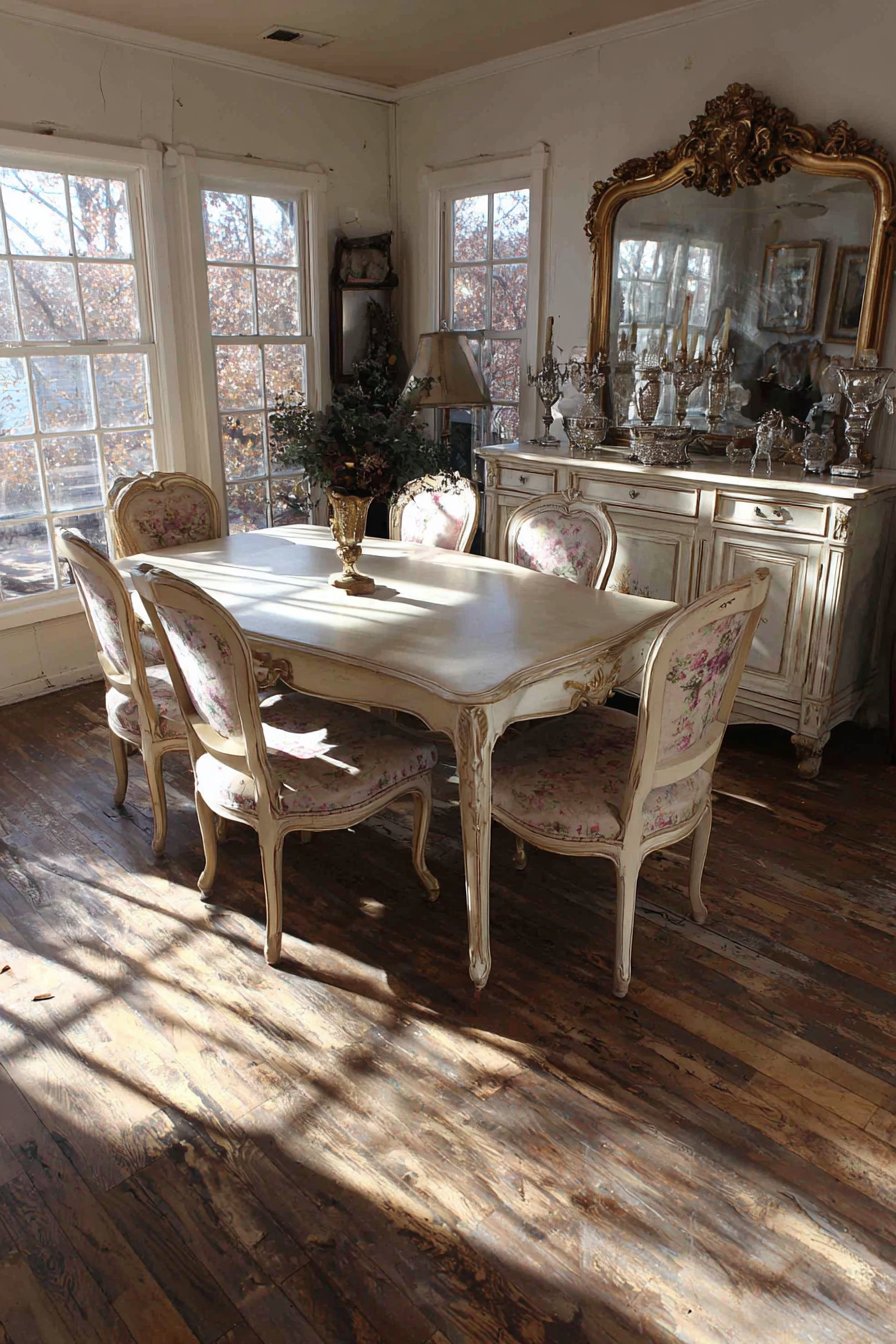
An ornate gilt-framed mirror hangs above a marble-topped buffet. Vintage silver serving pieces displayed on the buffet show natural tarnish. Aged hardwood floors with visible wear patterns complete the romantic aesthetic. The combined elements create refined yet relaxed elegance.
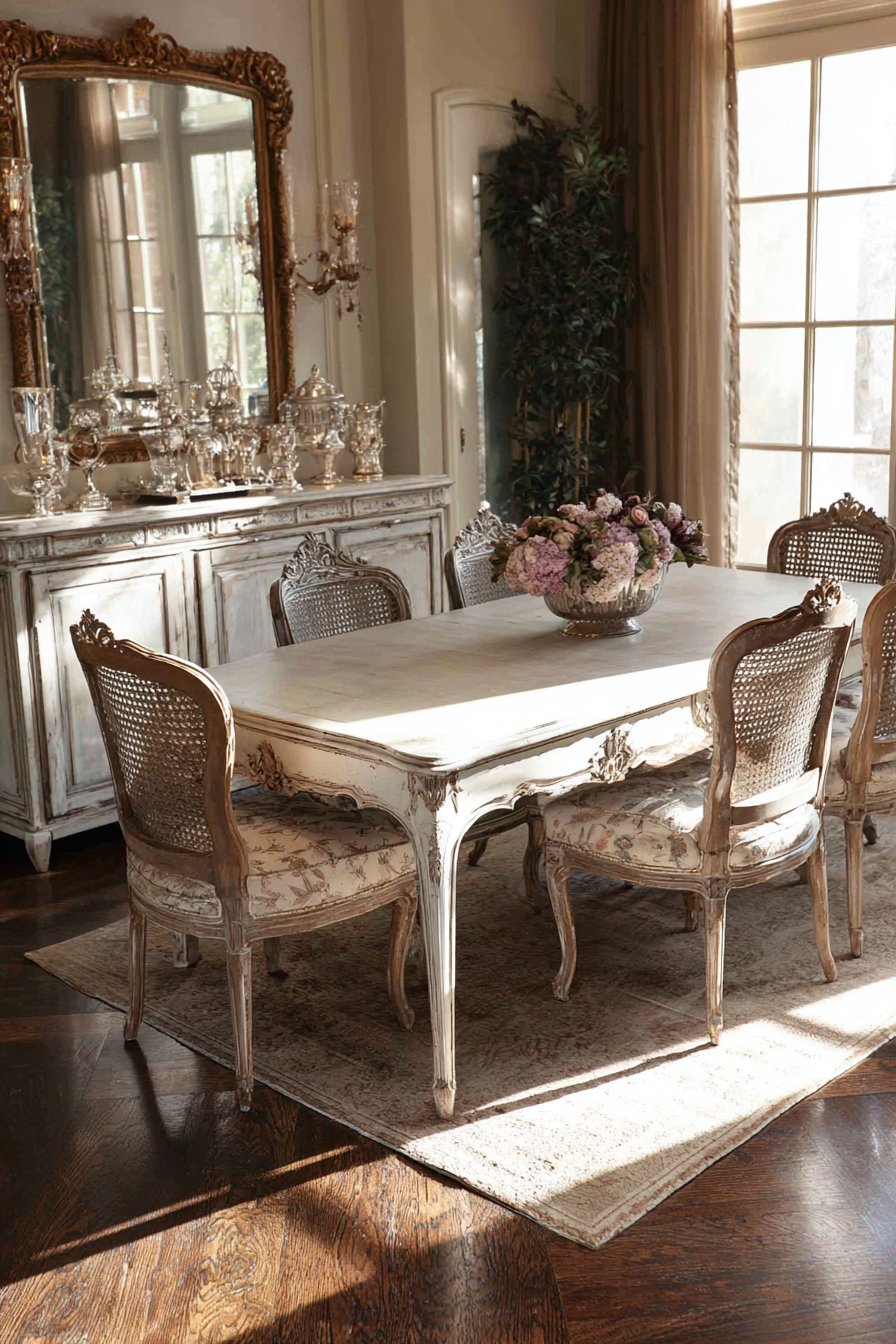
The layered paint finish reveals the piece’s history through visible color. This authentic aging differs markedly from artificially distressed reproductions. The ivory tones brighten the space while maintaining vintage character. Natural light enhances the subtle color variations in the finish.
The cane backing on chairs provides visual lightness and breathability. This practical feature proves especially comfortable during extended meals. The curved lines soften the overall composition and add feminine grace.
Key Design Tips:
- Preserve layered paint finishes to showcase furniture history
- Select toile fabrics in traditional colors for authentic French style
- Display silver with natural tarnish for lived-in authenticity
- Position gilt mirrors to reflect natural light sources
- Maintain cane seating by preventing excessive dryness or moisture
- Use marble trivets on buffet surfaces to protect from heat damage
8. Rustic Oak Refectory Table with Bench Seating
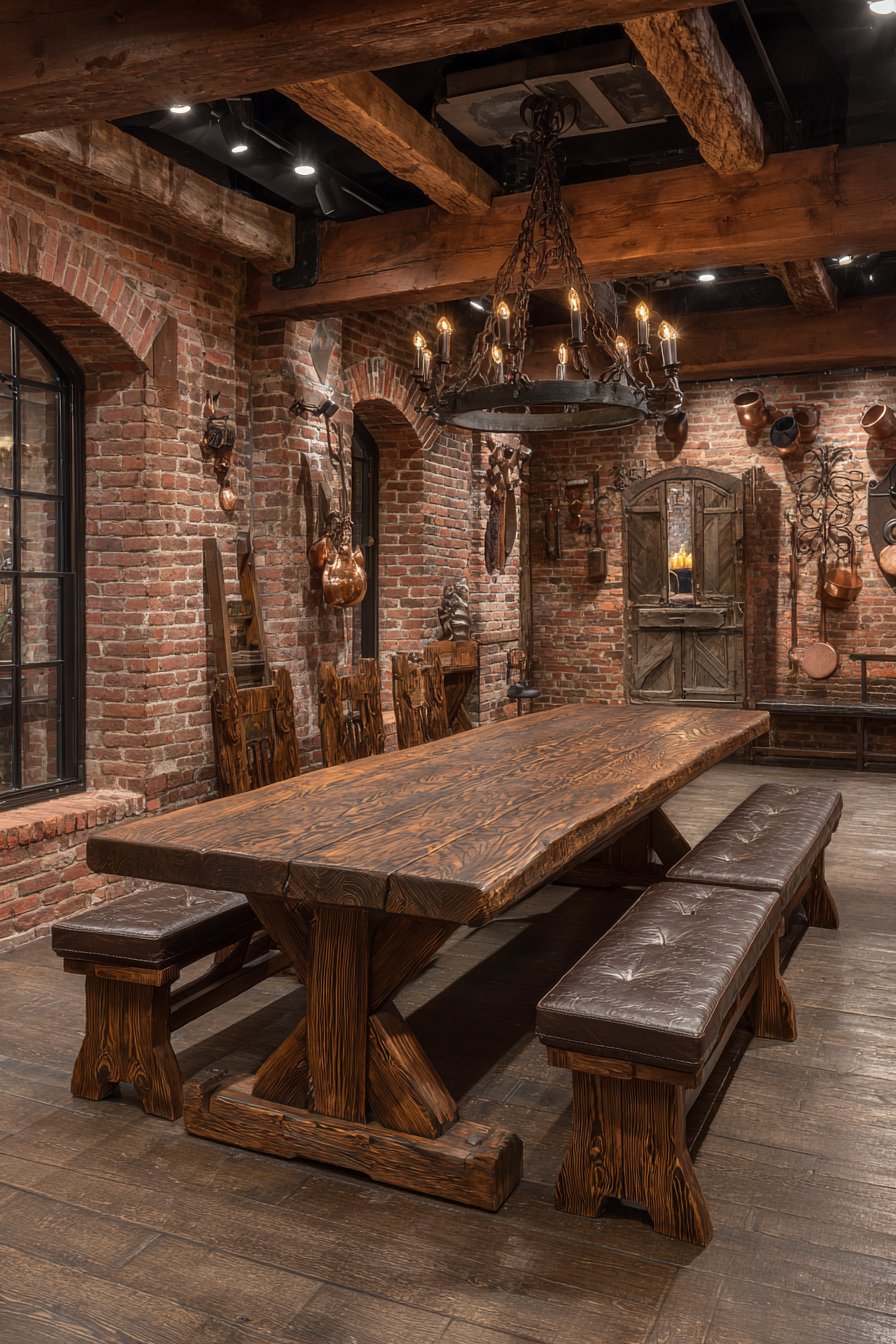
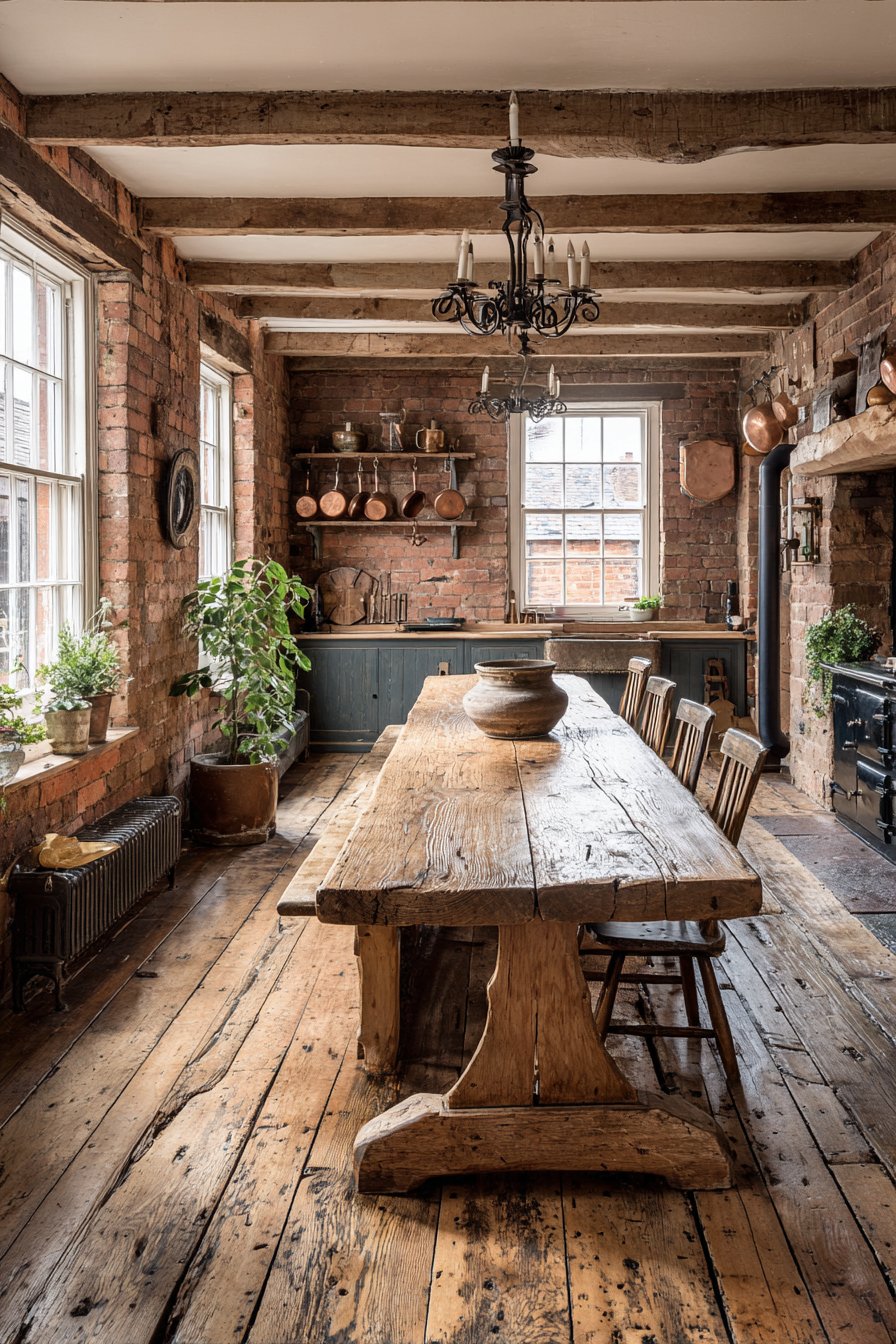
A substantial oak refectory table features a thick planked top. The trestle base shows centuries of natural patina development. Bench seating on one side pairs with ladder-back chairs opposite. All pieces display authentic wear from generations of use.
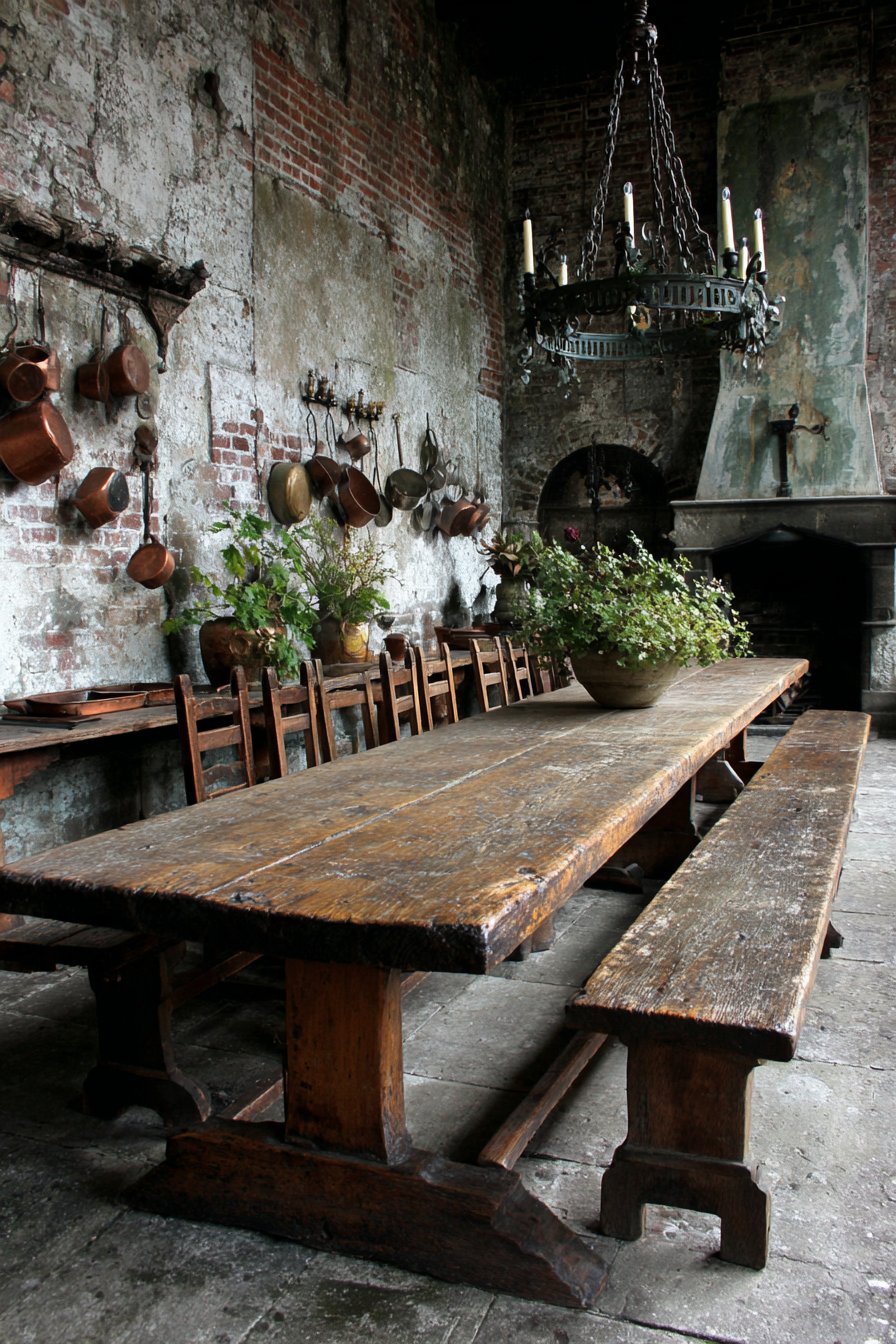
Exposed brick walls provide rich textural backdrop for the space. Hanging copper pots and vintage kitchen implements add functional decoration. A wrought iron chandelier with candle-style lights illuminates from above. The rustic materials create warmth and historical depth.
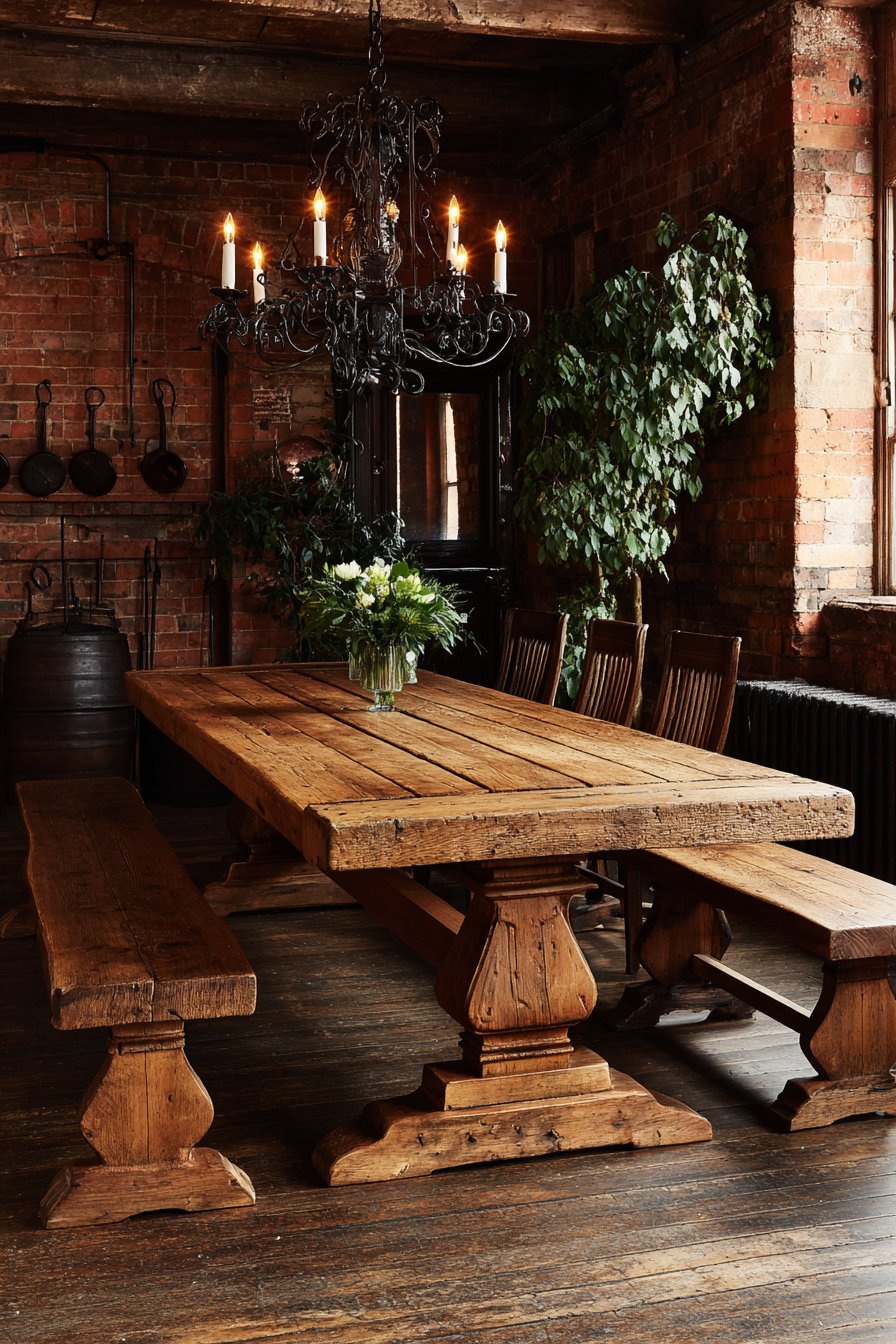
The refectory style originated in monastery dining halls and remains timelessly practical. The sturdy construction supports decades of daily family use. The generous proportions accommodate large gatherings with ease. Bench seating maximizes capacity while maintaining period authenticity.
The exposed brick adds architectural interest and thermal mass. This feature helps regulate room temperature naturally throughout seasons. The copper accessories develop verdigris patina that enhances vintage appeal.
Key Design Tips:
- Apply food-safe oils to oak surfaces annually for protection
- Leave brick walls unsealed to maintain authentic texture and breathability
- Hang copper items away from direct heat sources to control patina development
- Ensure benches include proper back support for comfortable extended seating
- Clean wrought iron fixtures with dry methods to preserve finish
- Balance heavy furniture with lighter accessories to prevent overwhelming spaces
9. Scandinavian Teak Mid-Century Modern Design
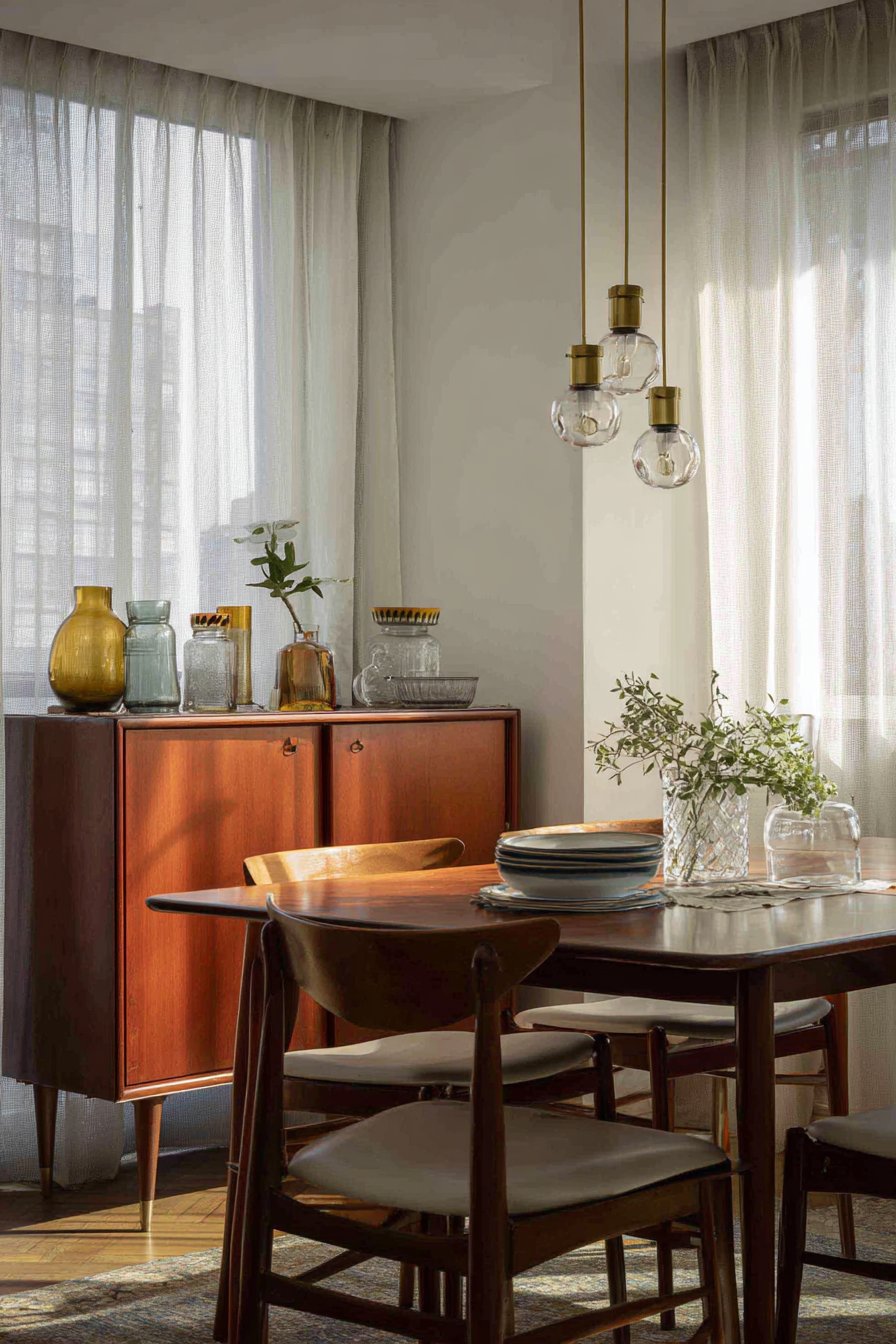
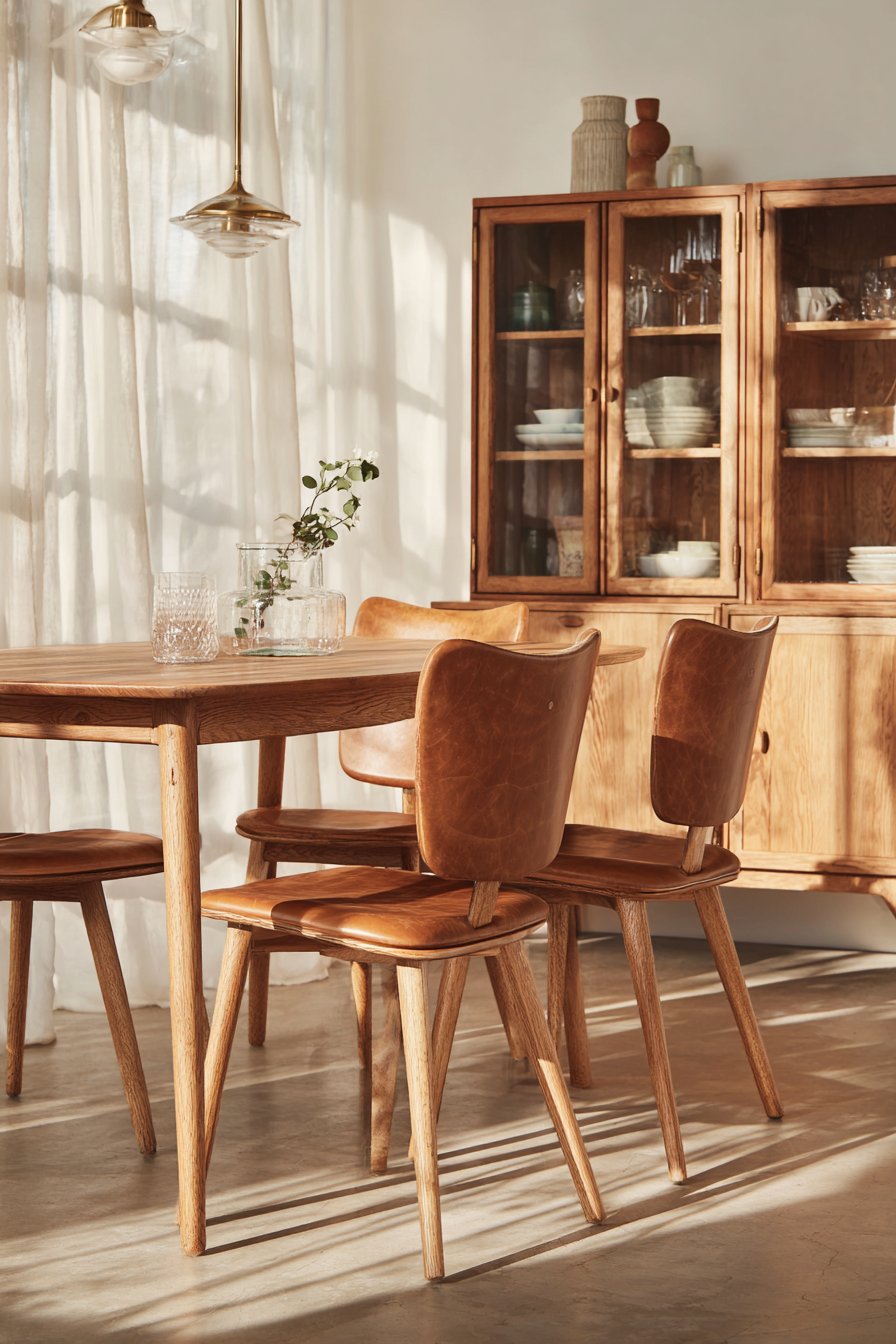
A Scandinavian-inspired teak dining table features tapered legs and smooth oil-rubbed finish. This 1960s piece exemplifies mid-century modern design principles. Molded plywood chairs in matching teak include original leather seat pads. The gentle aging of leather adds character and comfort.
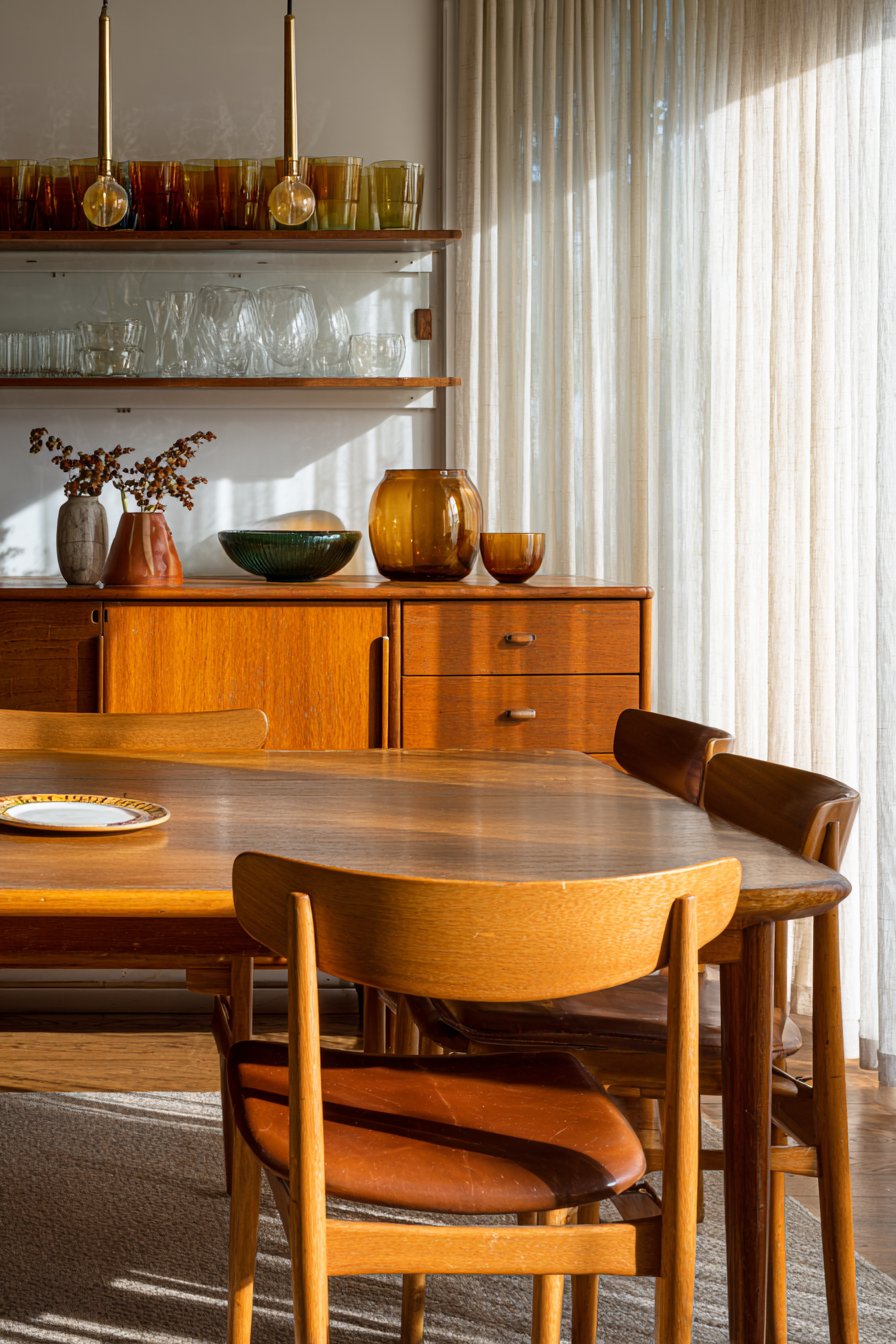
A teak credenza displays vintage glassware and ceramics in earth tones. Simple pendant lighting with brass accents hangs overhead efficiently. Natural light through sheer curtains highlights warm wood tones beautifully. The clean lines create calm, uncluttered atmosphere.
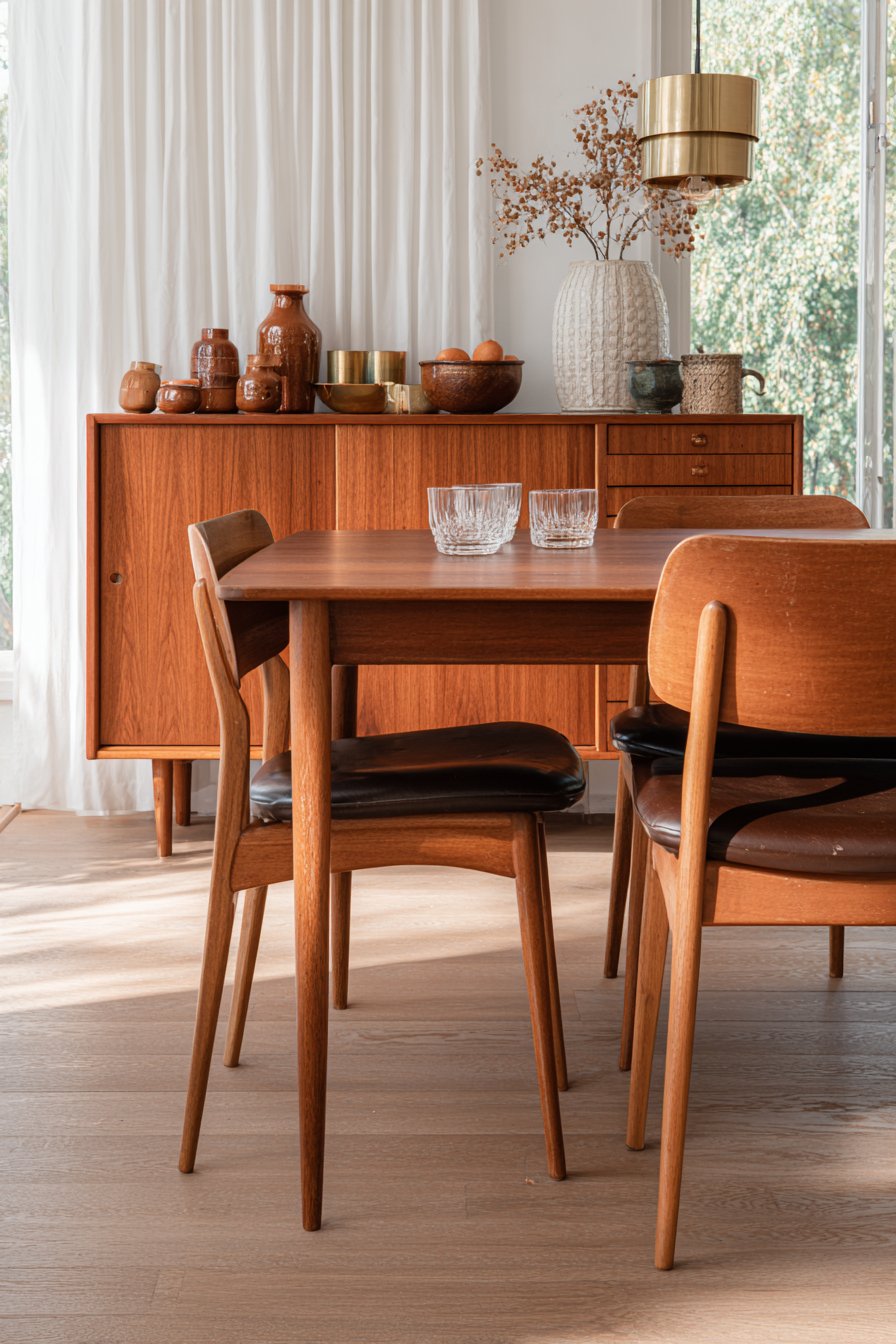
The Scandinavian approach emphasizes function, simplicity, and natural materials. These principles produce timeless designs that remain relevant decades later. The oil-rubbed finish protects wood while enhancing natural grain patterns. Regular maintenance keeps teak looking beautiful for generations.
The molded plywood construction represents innovative mid-century manufacturing techniques. These chairs combine comfort, durability, and aesthetic appeal successfully. The curves support the body ergonomically during extended meals.
Key Design Tips:
- Refresh teak finishes annually with teak oil for lasting beauty
- Condition leather seats with appropriate products to prevent cracking
- Choose pendant lighting with adjustable heights for flexibility
- Display earth-tone ceramics to complement warm wood finishes
- Use sheer curtains to diffuse harsh sunlight while maintaining brightness
- Limit accessories to essential items for authentic minimalist aesthetic
10. Formal Chippendale Mahogany Oval Table
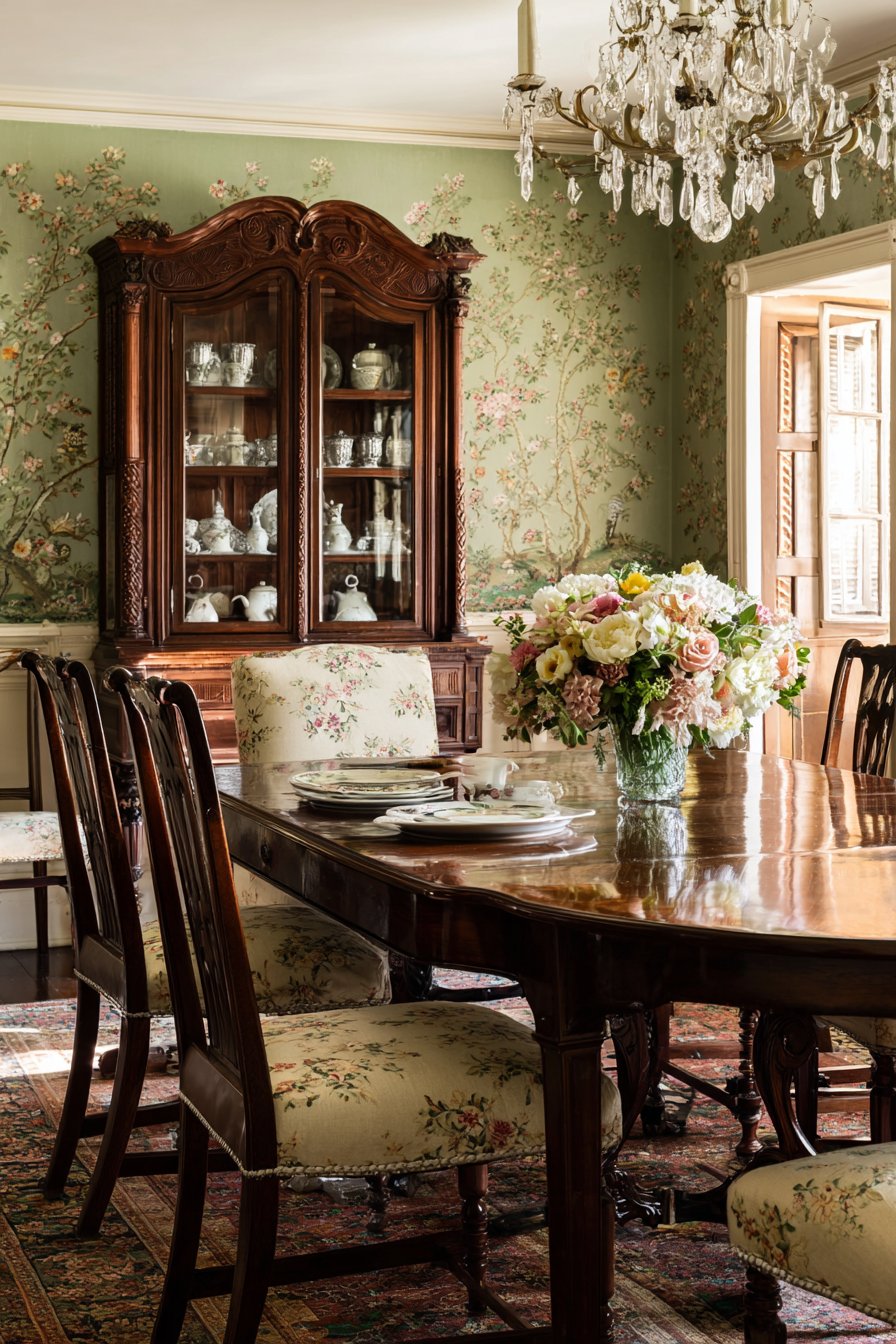
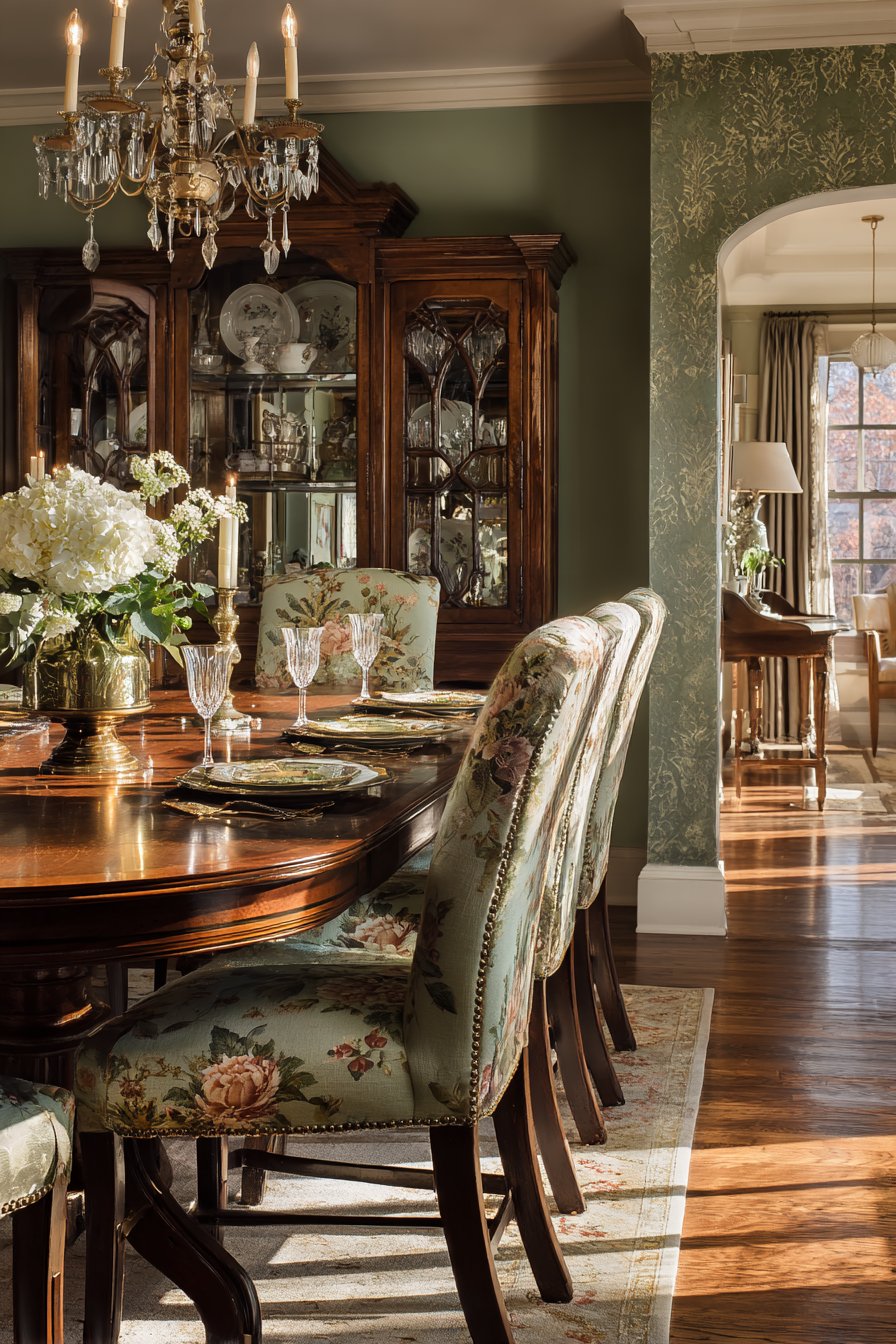
An oval mahogany table features carved apron and ball-and-claw feet. The Chippendale style represents formal 18th-century design excellence. Eight upholstered dining chairs display nailhead trim and needlepoint seats. The floral needlepoint patterns show authentic fading from age and light.
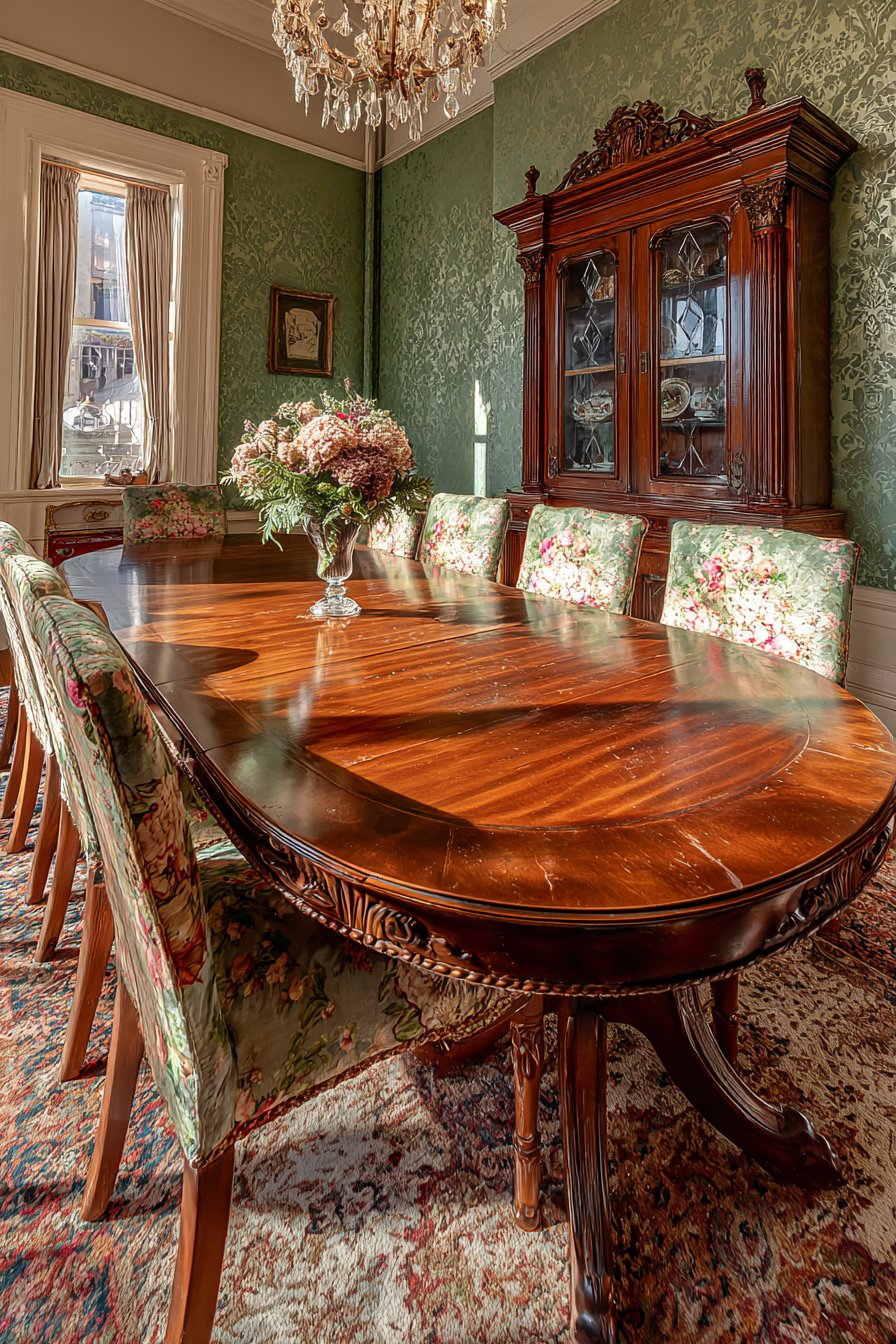
A vintage breakfront china cabinet displays antique porcelain and crystal collections. Damask wallpaper in sage green creates elegant sophisticated backdrop. Chandelier lighting combines with natural daylight to highlight finishes. The formal setting suits special occasions and holiday gatherings.
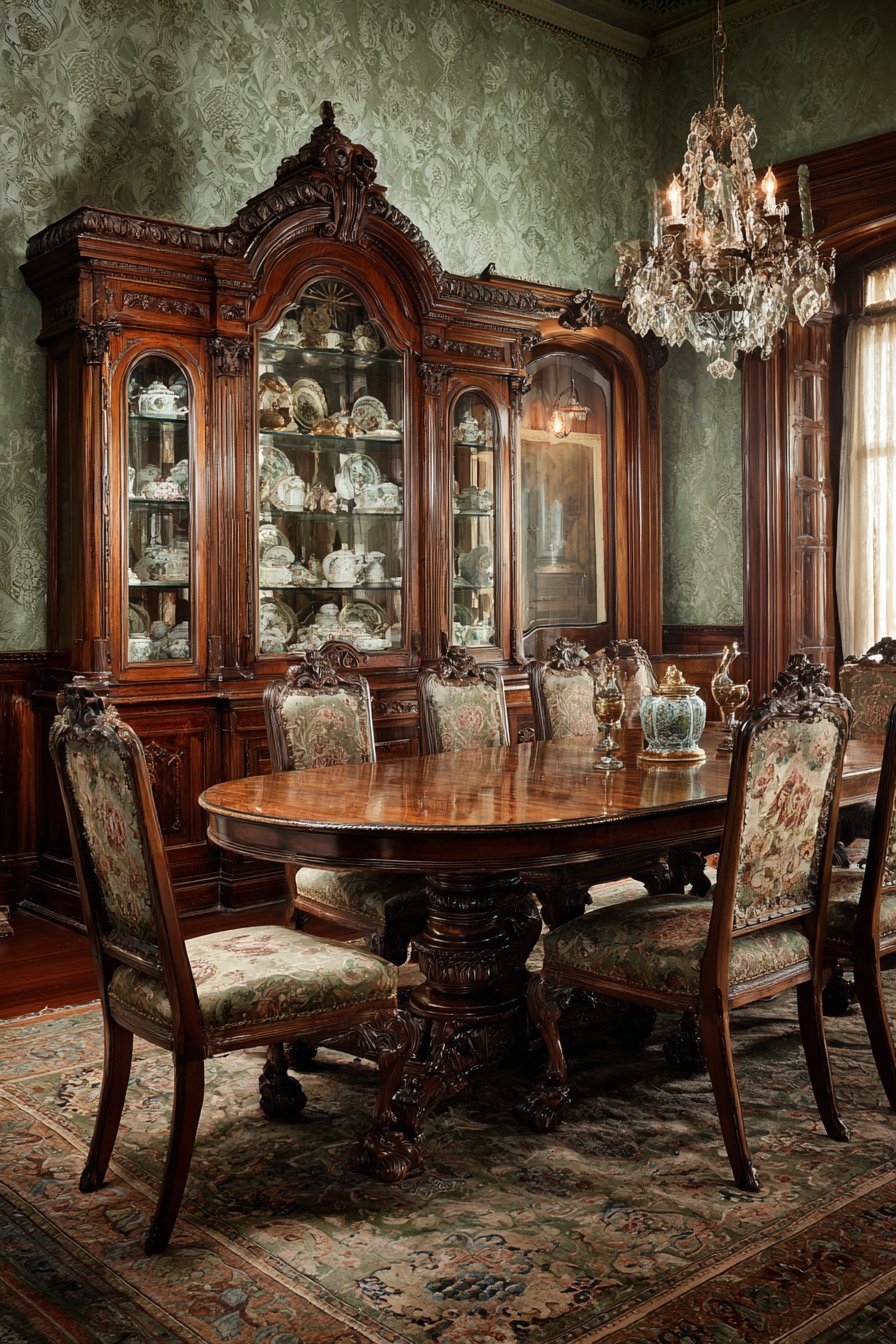
The ball-and-claw feet represent masterful woodworking skill and attention to detail. This carved element adds visual weight and historical gravitas. The oval shape accommodates more guests than rectangular tables of similar length. The continuous curve promotes conversation flow around the table.
The needlepoint seats showcase traditional textile arts and handcraft techniques. Original needlework increases both historical and monetary value significantly. The gentle fading proves authenticity rather than indicating damage.
Key Design Tips:
- Dust carved details regularly to prevent buildup in crevices
- Protect needlepoint upholstery from direct sunlight to minimize fading
- Use table pads under linens to protect mahogany from moisture
- Display finest china and crystal for maximum visual impact
- Choose wallpaper patterns that complement rather than compete with woodwork
- Schedule professional furniture assessment for valuable antique pieces
11. Eclectic Painted Farmhouse Table Collection
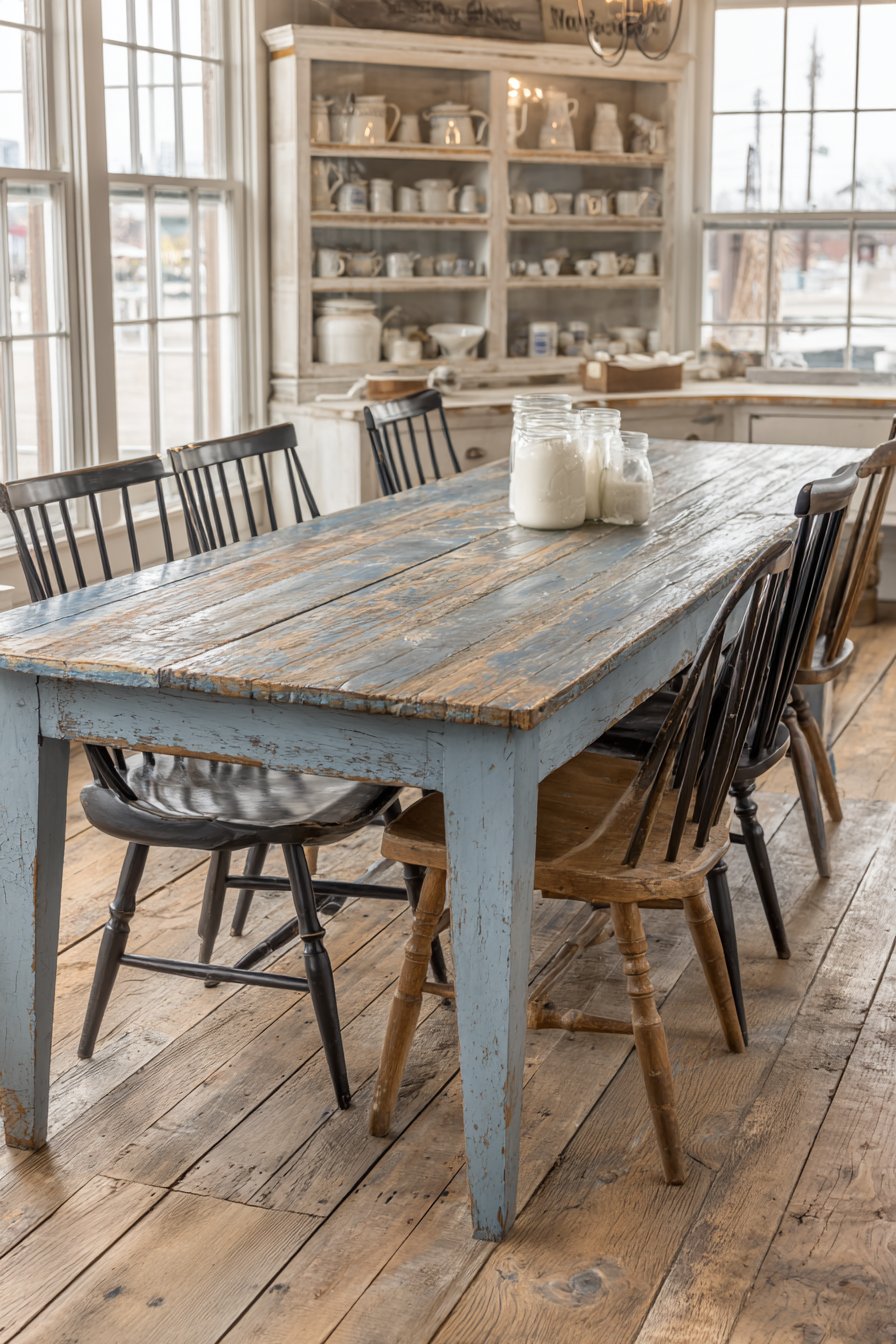
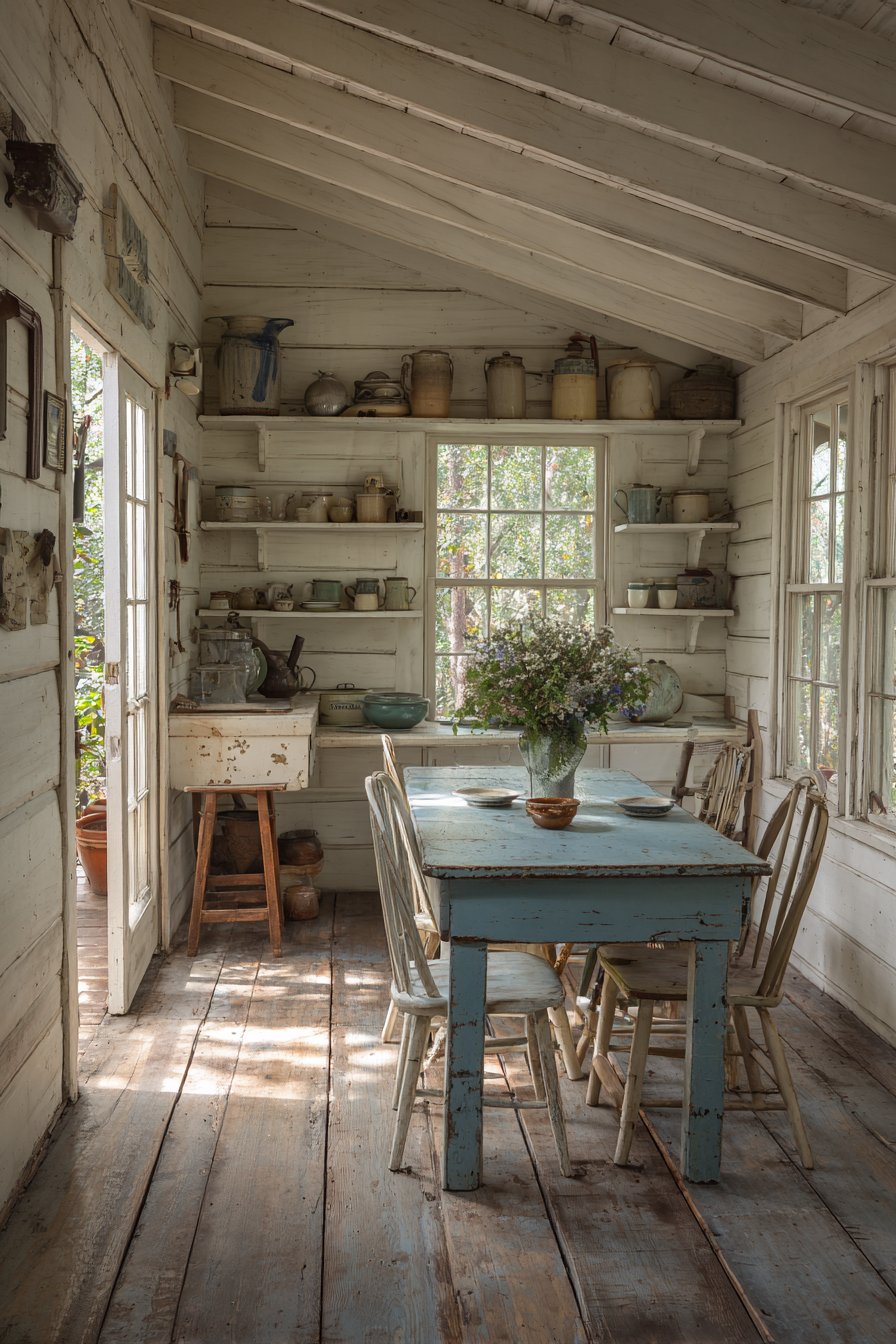
A painted farmhouse table in weathered blue-gray creates instant charm. Intentional distressing reveals white underlayers at edges and high points. Mismatched vintage chairs include bentwood, ladder-back, and Windsor styles. The eclectic combination feels curated rather than random.
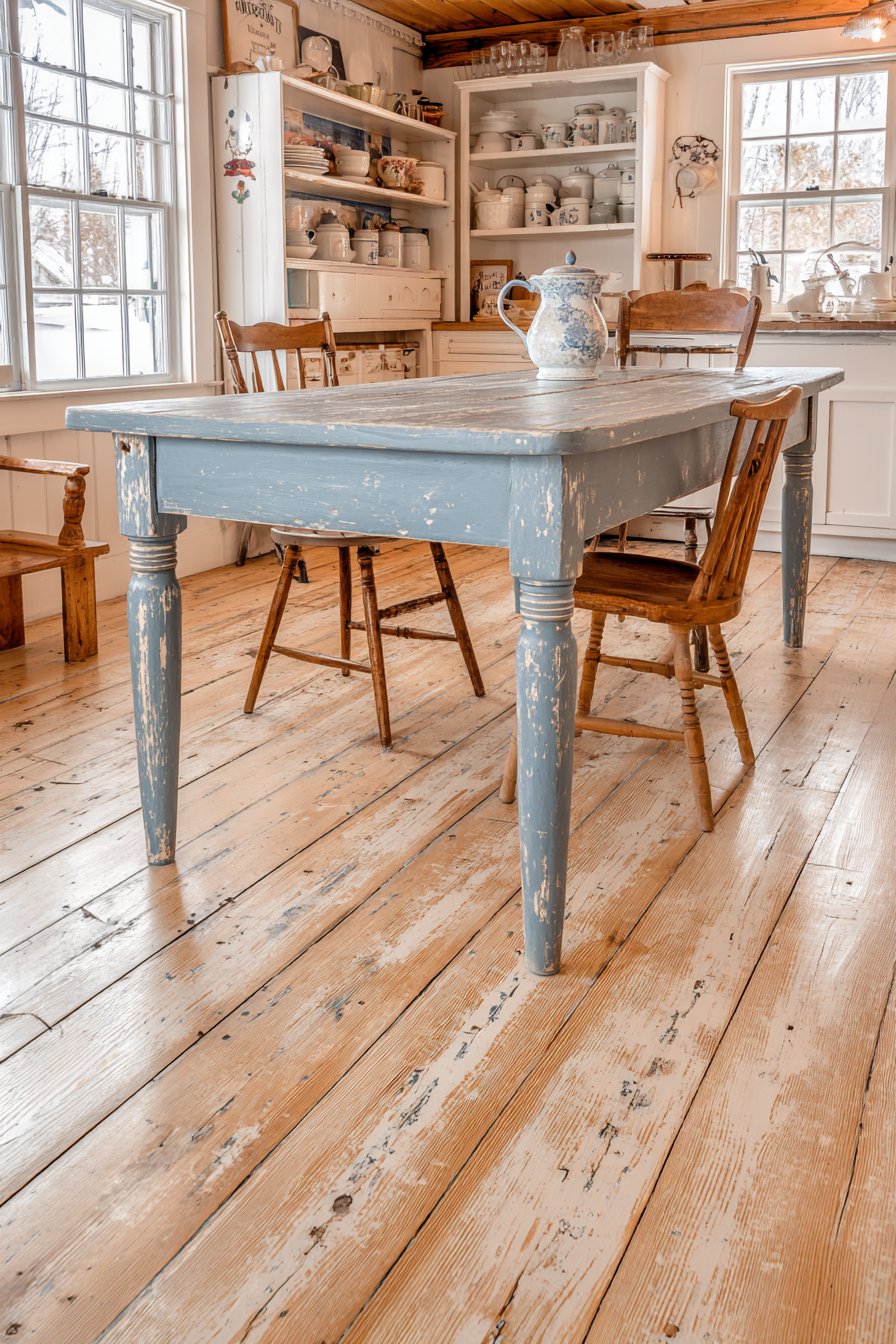
Open shelving displays vintage enamelware and stoneware crocks functionally. Wide plank pine flooring shows authentic wear and color variation. Natural lighting from multiple windows creates warm, inviting ambiance. The collected aesthetic celebrates individuality and personal expression.
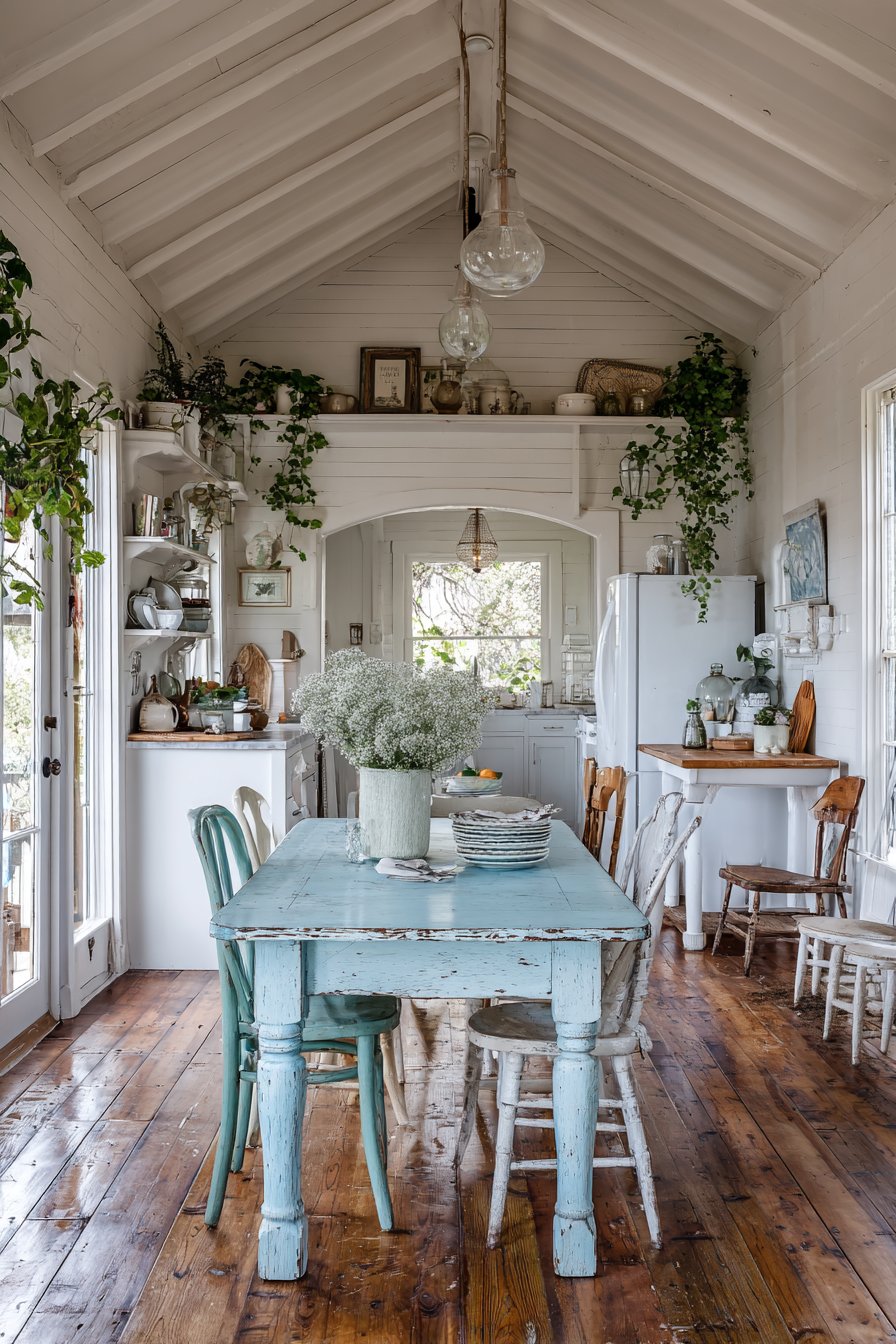
The layered paint technique adds depth and visual interest. Blue-gray tones provide calming backdrop for colorful accessories and food. The various chair styles represent different periods and traditions. Together they create dynamic yet cohesive seating arrangement.
The open shelving keeps frequently used items accessible and visible. This practical storage solution doubles as attractive display space. The vintage enamelware adds pops of color and nostalgic charm.
Key Design Tips:
- Apply multiple paint layers for authentic distressed appearance
- Sand edges and corners naturally for realistic wear patterns
- Limit chair style variety to three or four types maximum
- Display enamelware by color family for visual organization
- Seal painted finishes with matte varnish for durability
- Use consistent color palette across varied furniture styles
12. Intimate Walnut Gate-Leg with Corner Hutch
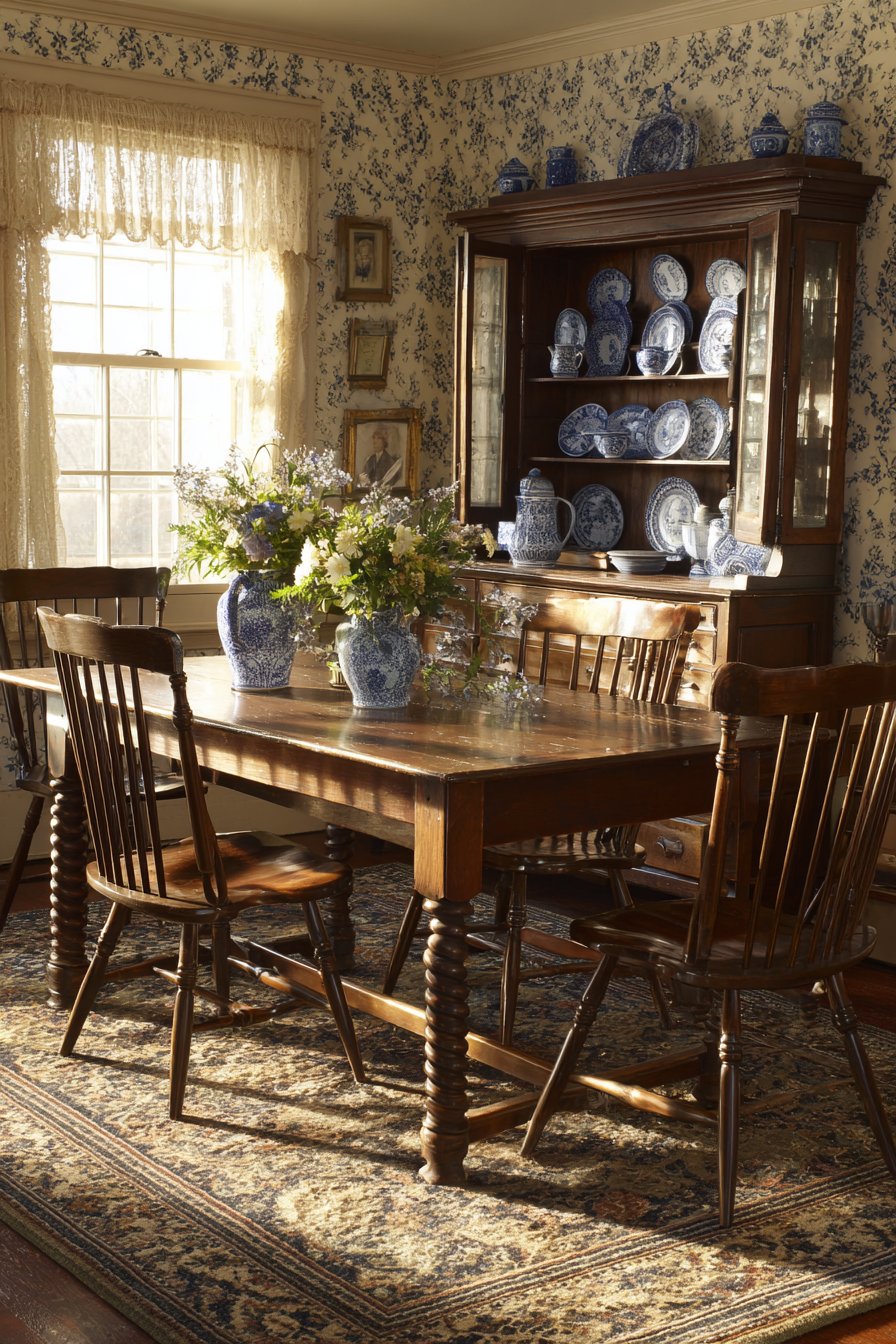
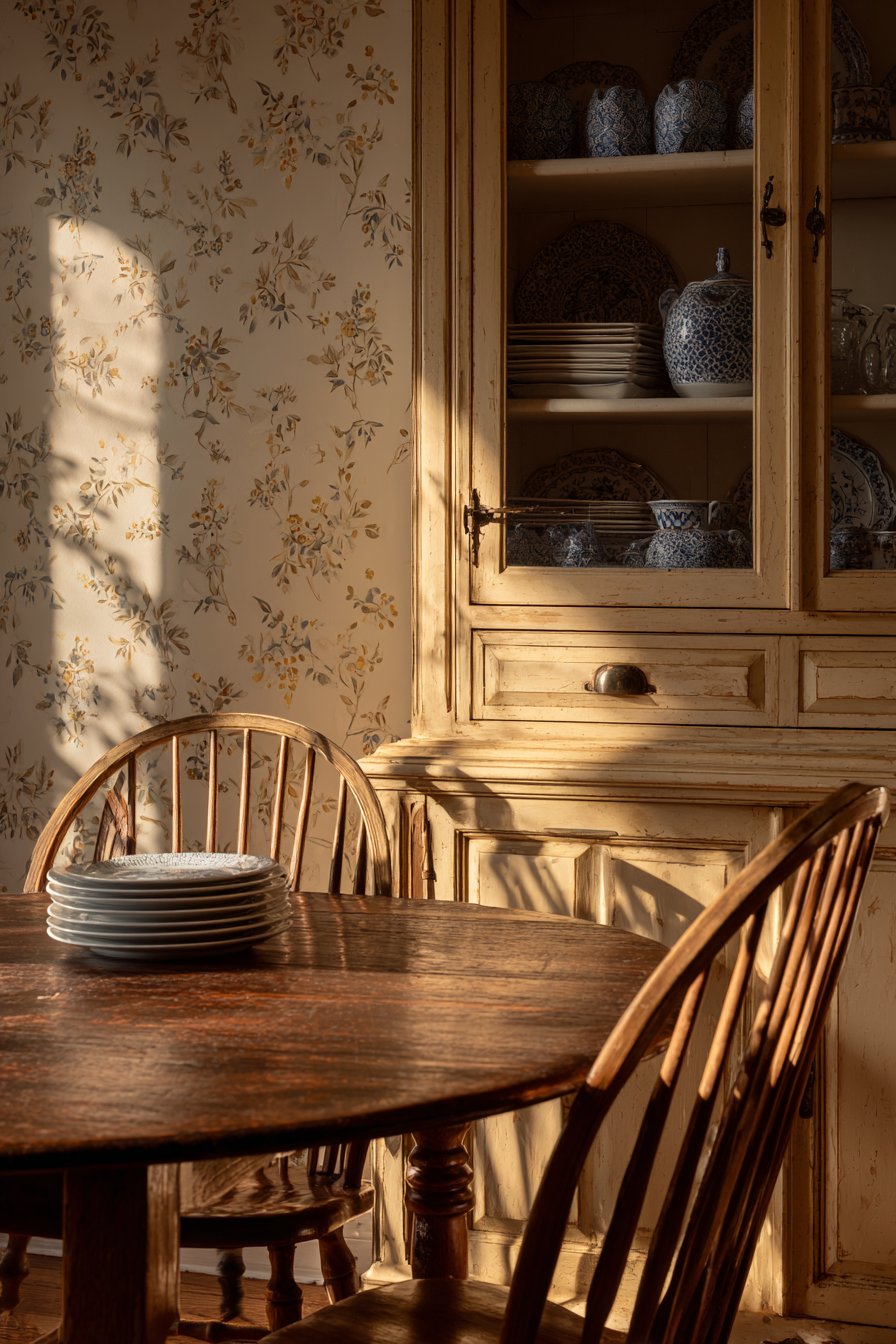
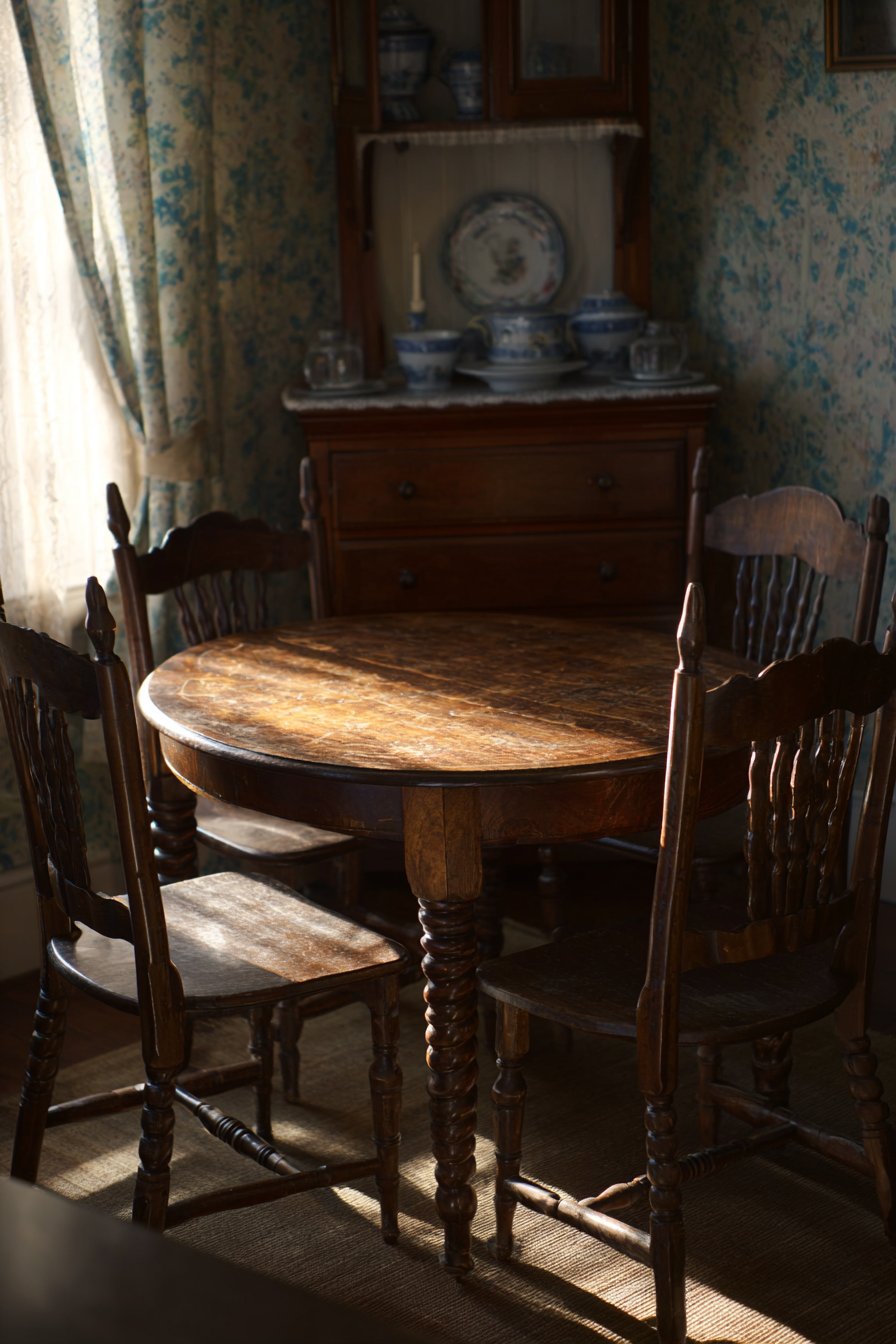
A gate-leg table in solid walnut features barley-twist legs. The original brass hinges show natural tarnish patina. Four vintage dining chairs with turned spindles surround the compact table. A vintage corner hutch displays blue transferware china patterns.
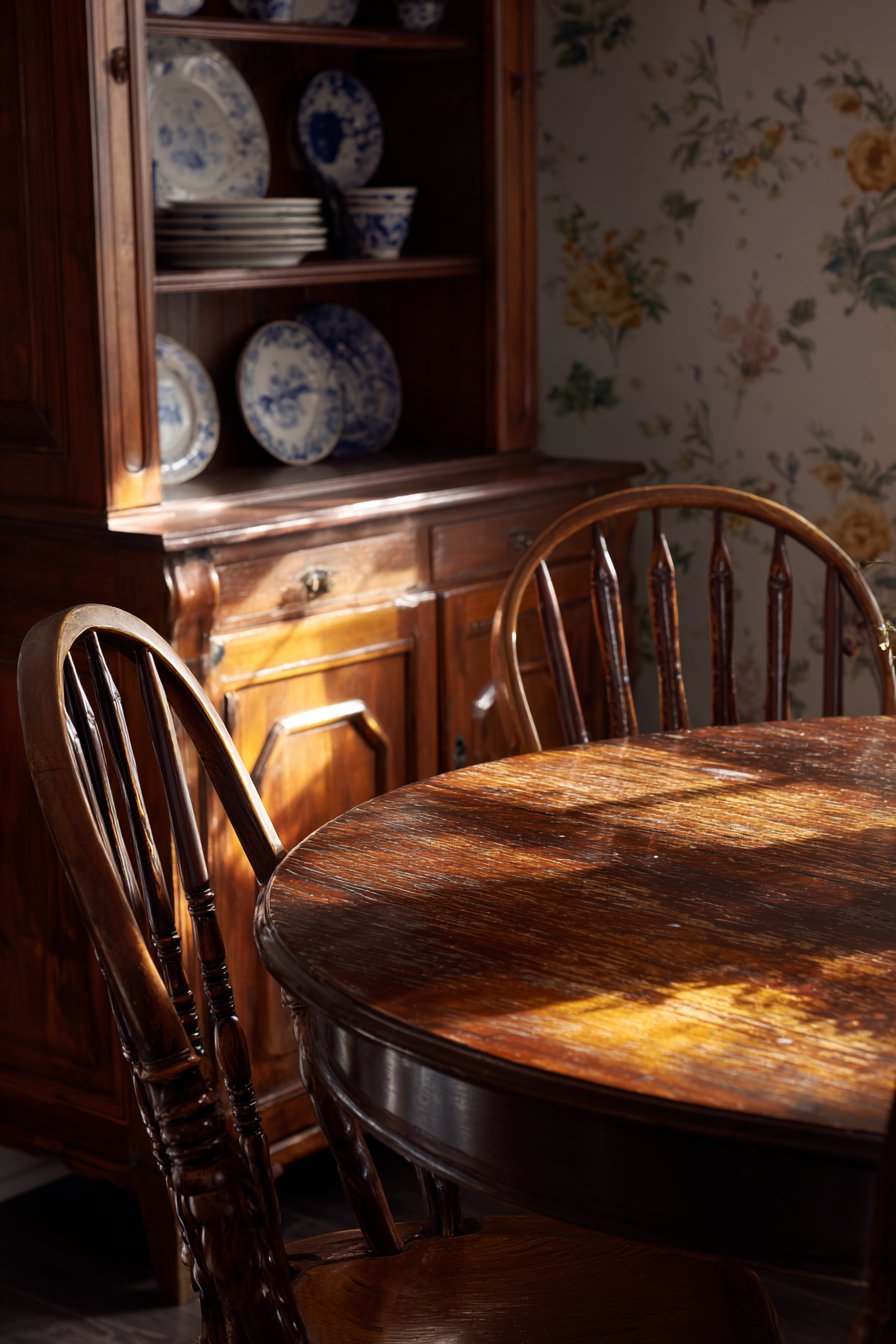
Floral wallpaper with subtle yellowing adds period authenticity to walls. The compact proportions suit smaller dining rooms and breakfast nooks. Afternoon light creates gentle shadows that emphasize wood grain. The intimate scale encourages close conversation during meals.
The barley-twist legs represent complex traditional woodworking techniques. These spiral details add visual interest to otherwise simple table design. The gate-leg mechanism allows space-efficient storage when not in use. Extended leaves provide adequate surface for intimate dinners.
The blue transferware creates focal point through repeated pattern and color. Corner hutches maximize storage in tight spaces efficiently. The glass doors protect displayed items while maintaining visibility.
Key Design Tips:
- Polish brass hardware with appropriate metal cleaners quarterly
- Extend gate-leg tables periodically to prevent mechanism stiffness
- Arrange transferware by pattern for cohesive display impact
- Embrace wallpaper yellowing as authentic age characteristic
- Ensure adequate clearance for extended table leaves before purchasing
- Use corner spaces efficiently with purpose-built furniture pieces
13. Opulent Victorian Burled Walnut Grandeur
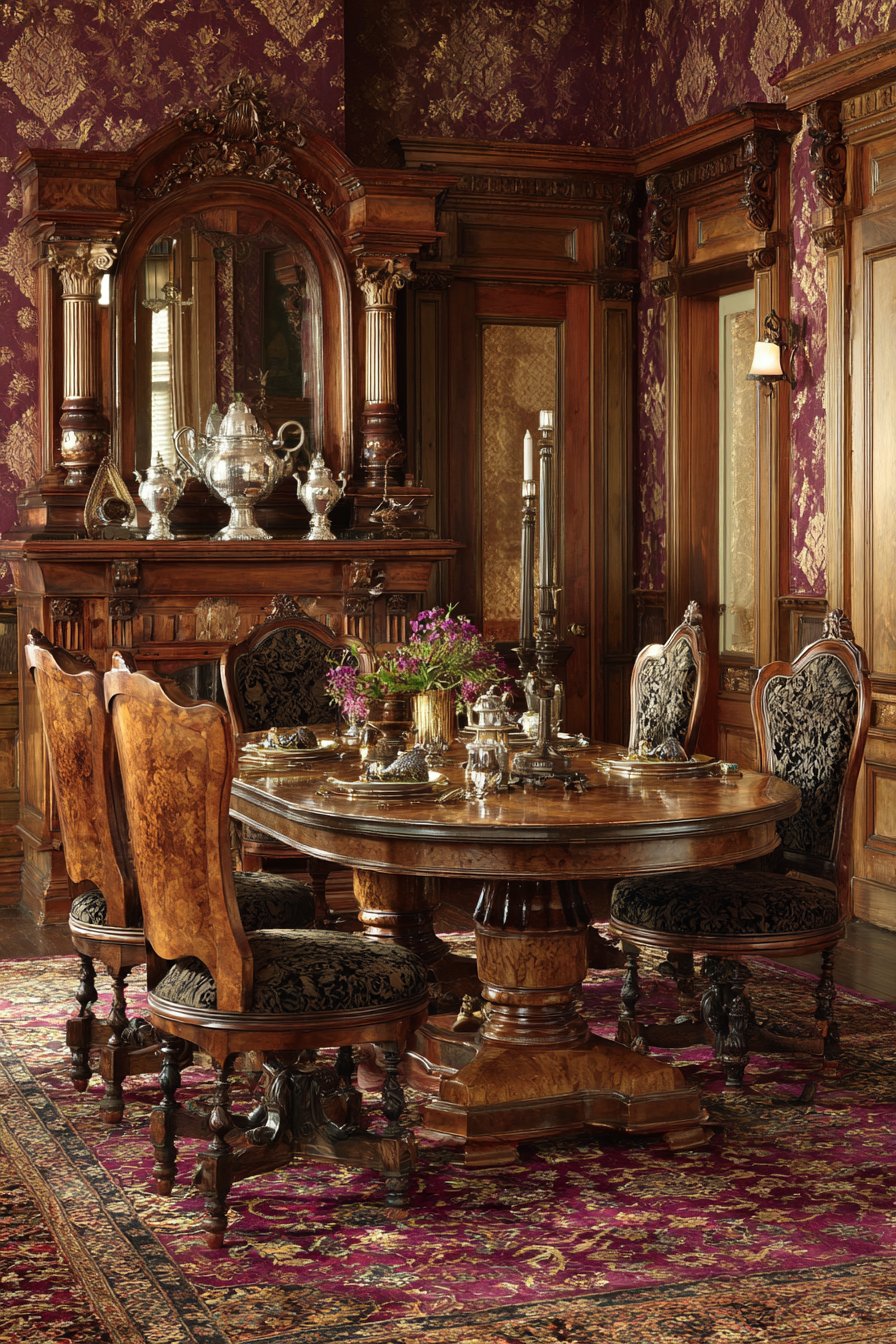
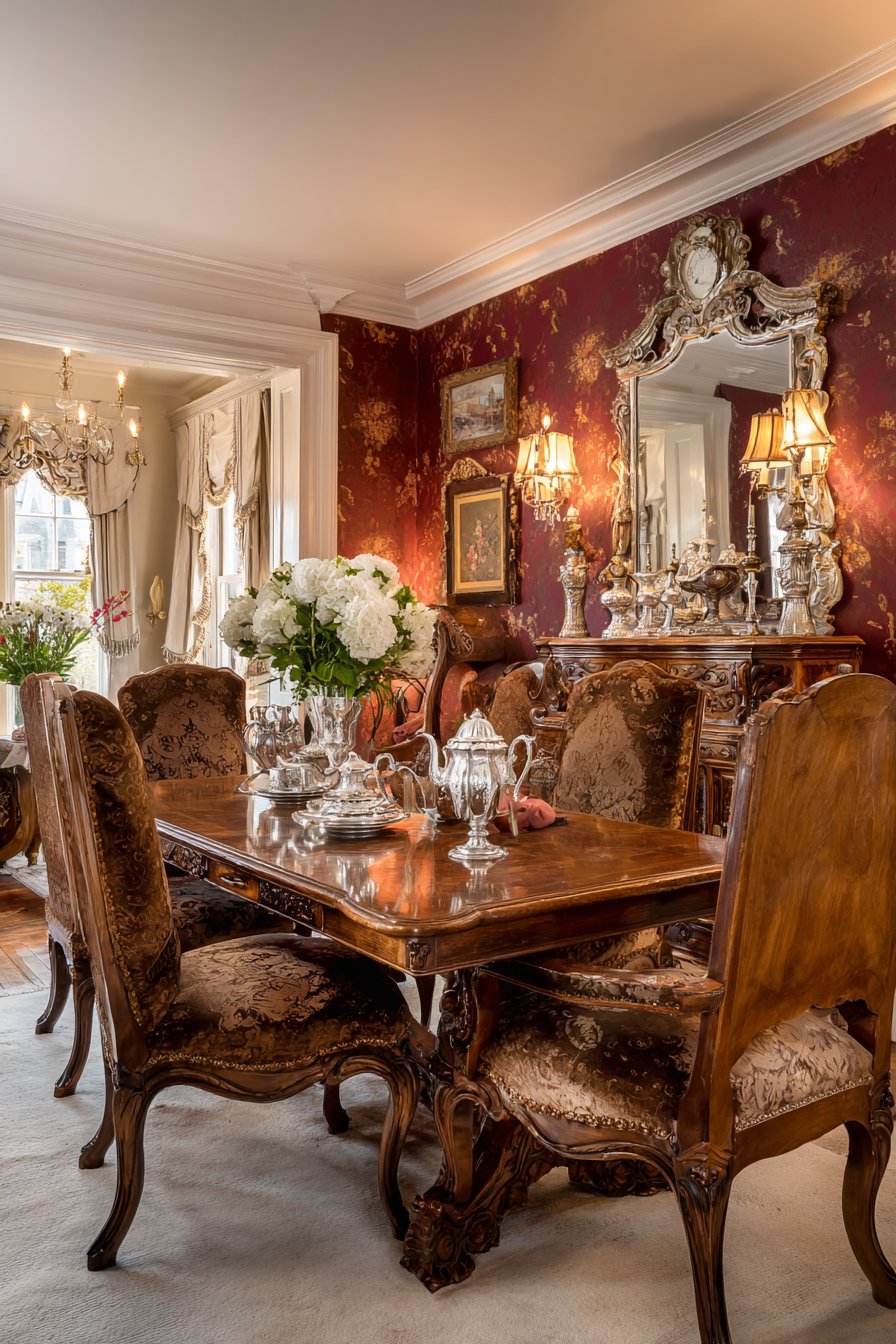
A Victorian-era extending dining table showcases burled walnut veneer. Ornate carved legs and apron demonstrate period craftsmanship. Six balloon-back chairs feature original horsehair upholstery with gentle wear. The elaborate sideboard includes marble top and mirrored back.
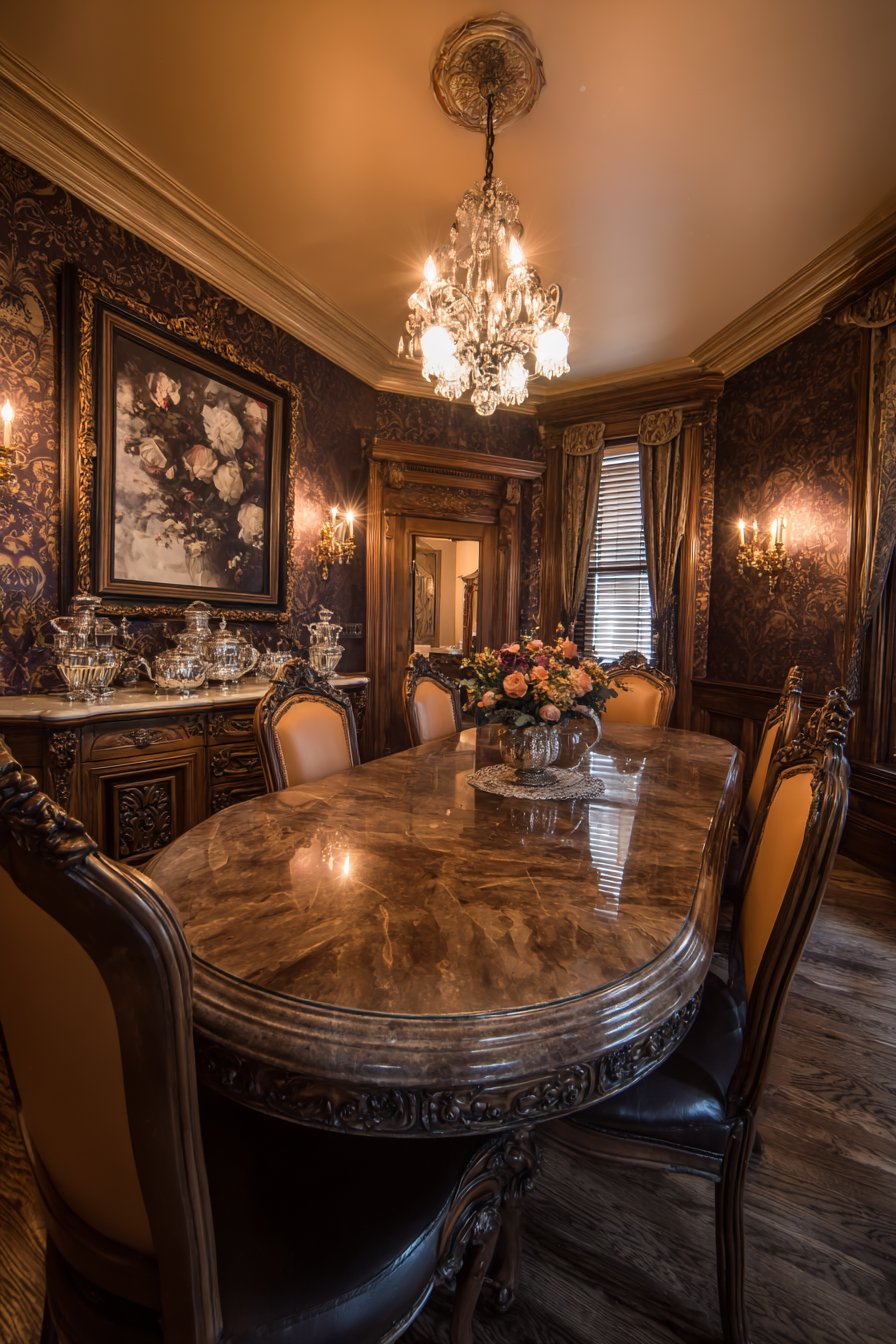
Rich burgundy wallpaper with gold accents creates dramatic backdrop. Period-appropriate sconces provide warm supplemental lighting. The vintage silver tea service displayed adds luxurious metallic shimmer. The opulent aesthetic celebrates Victorian love of ornamentation.
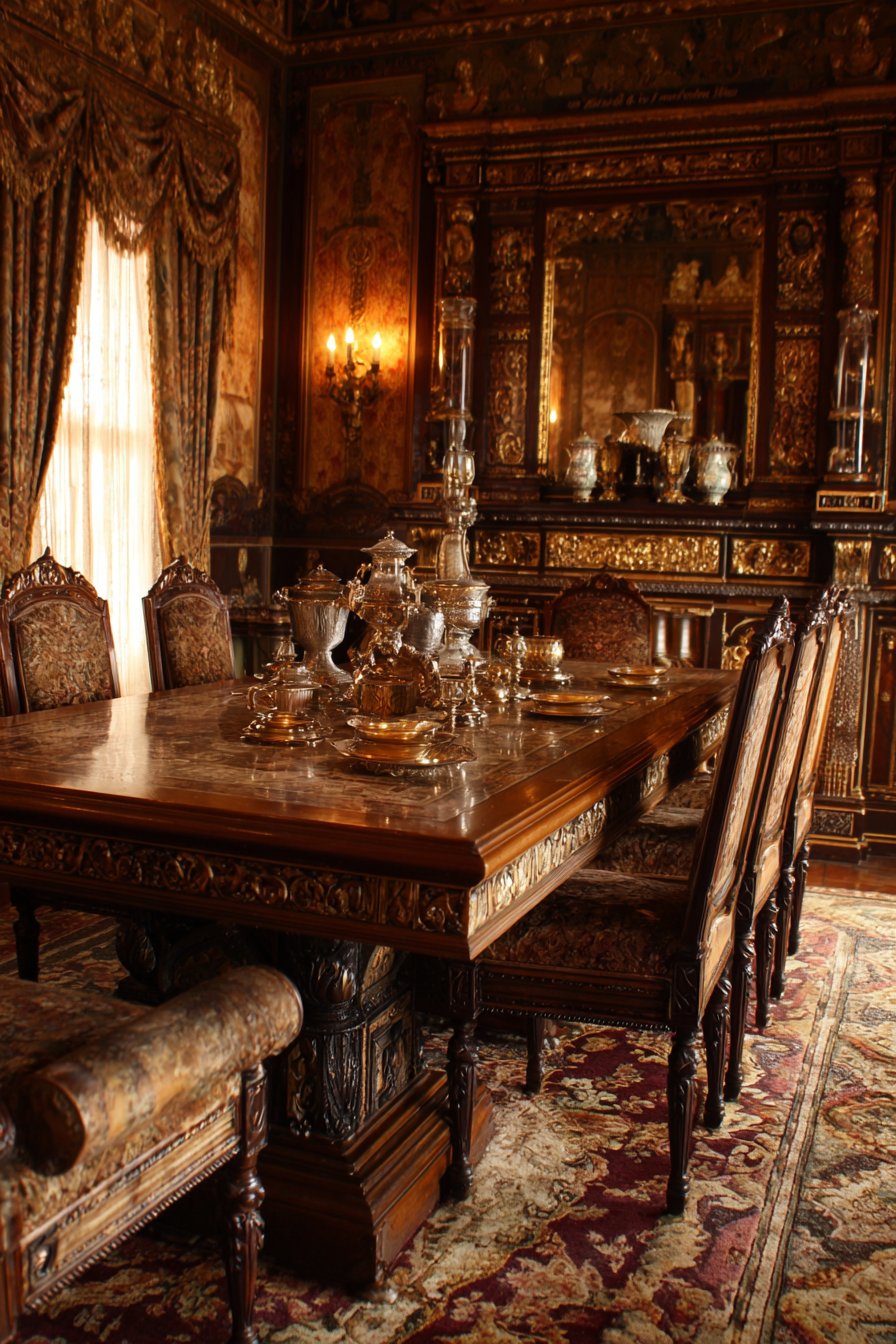
The burled walnut veneer shows unique natural grain patterns. No two pieces of burled wood appear identical. This natural variation adds exclusivity and visual interest. The extending mechanism allows table to accommodate large Victorian families.
The horsehair upholstery represents traditional furniture filling material. This natural fiber remains resilient despite decades of use. The balloon backs curve ergonomically for surprising comfort during extended dining.
Key Design Tips:
- Protect burled veneer from temperature extremes and humidity fluctuations
- Clean horsehair upholstery with gentle vacuum attachments only
- Polish marble surfaces with pH-neutral cleaners to prevent etching
- Use dimmer switches with sconces for adjustable ambient lighting
- Display silver service pieces to celebrate Victorian entertaining traditions
- Balance ornate elements with simpler accessories to prevent visual overwhelm
14. Casual Bistro-Style Marble and Cast Iron
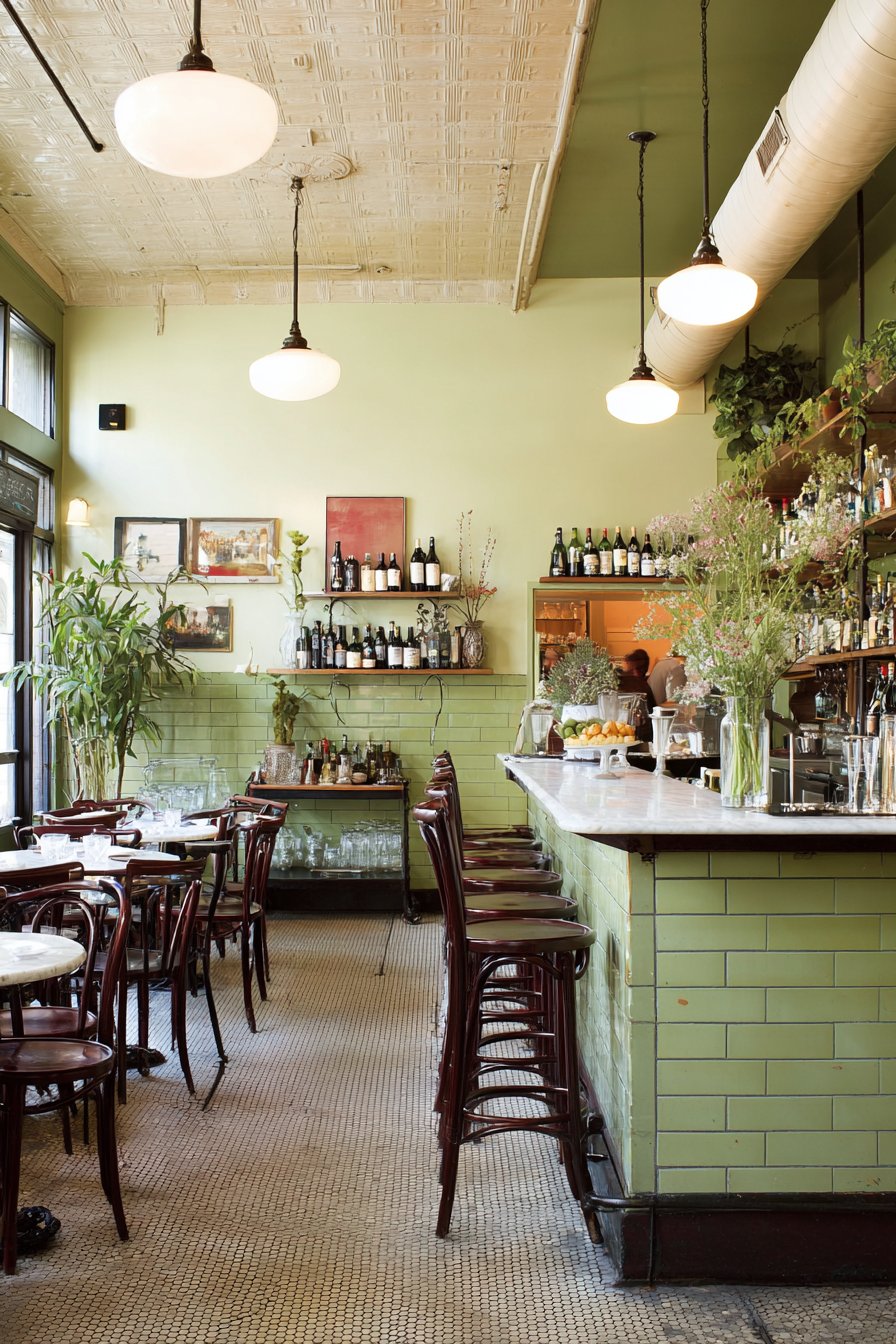
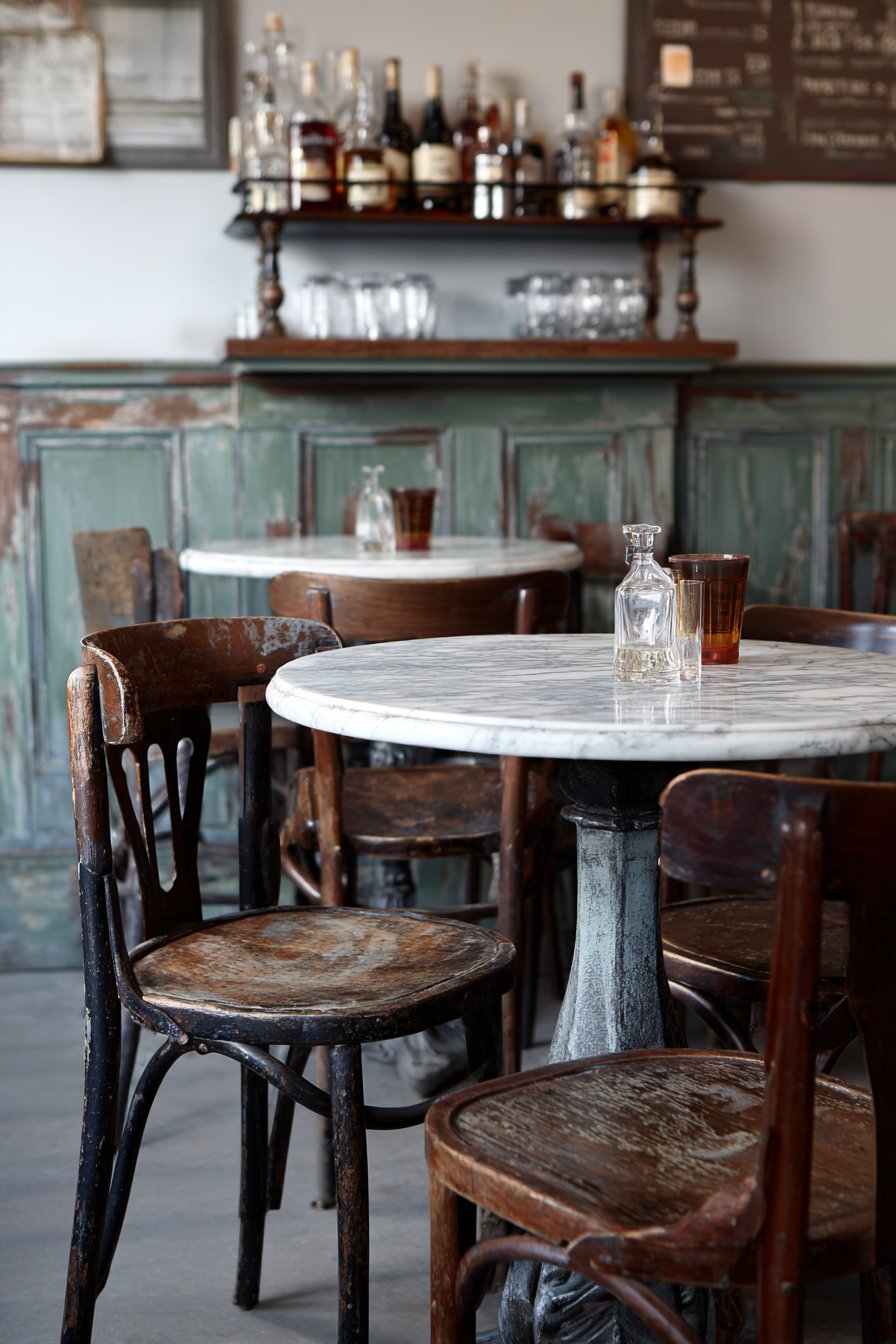
A bistro-style round marble-top table sits on cast iron pedestal. The marble shows natural age spots and distinctive veining patterns. Bentwood chairs in dark stain feature original cane seats. Some gentle sagging in cane indicates authentic age and use.
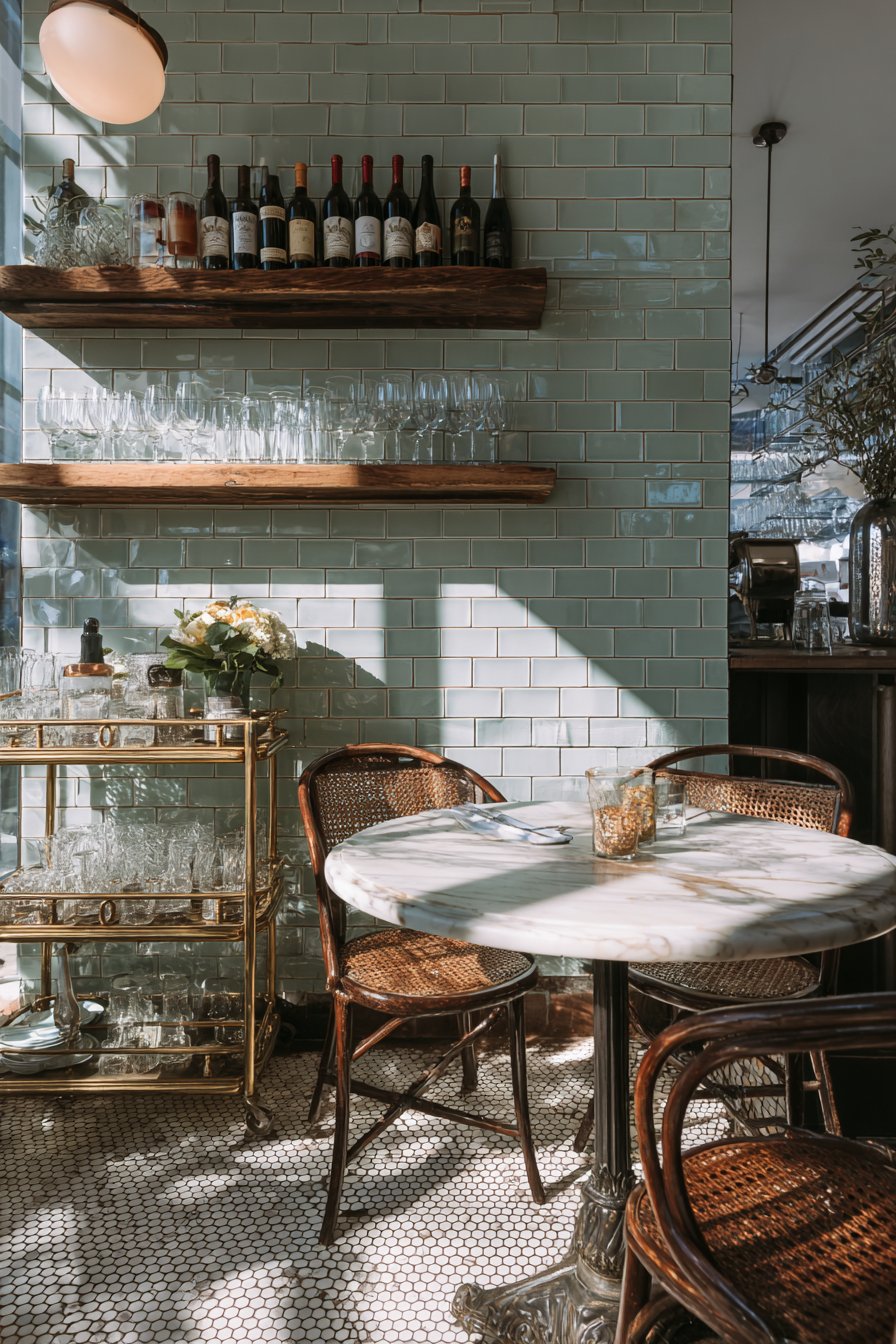
A vintage bar cart displays period glassware and crystal decanters. Subway tile wainscoting pairs with painted upper walls in muted olive. The casual European aesthetic evokes sidewalk cafes and casual elegance. Natural daylight creates authentic cafe atmosphere throughout the day.
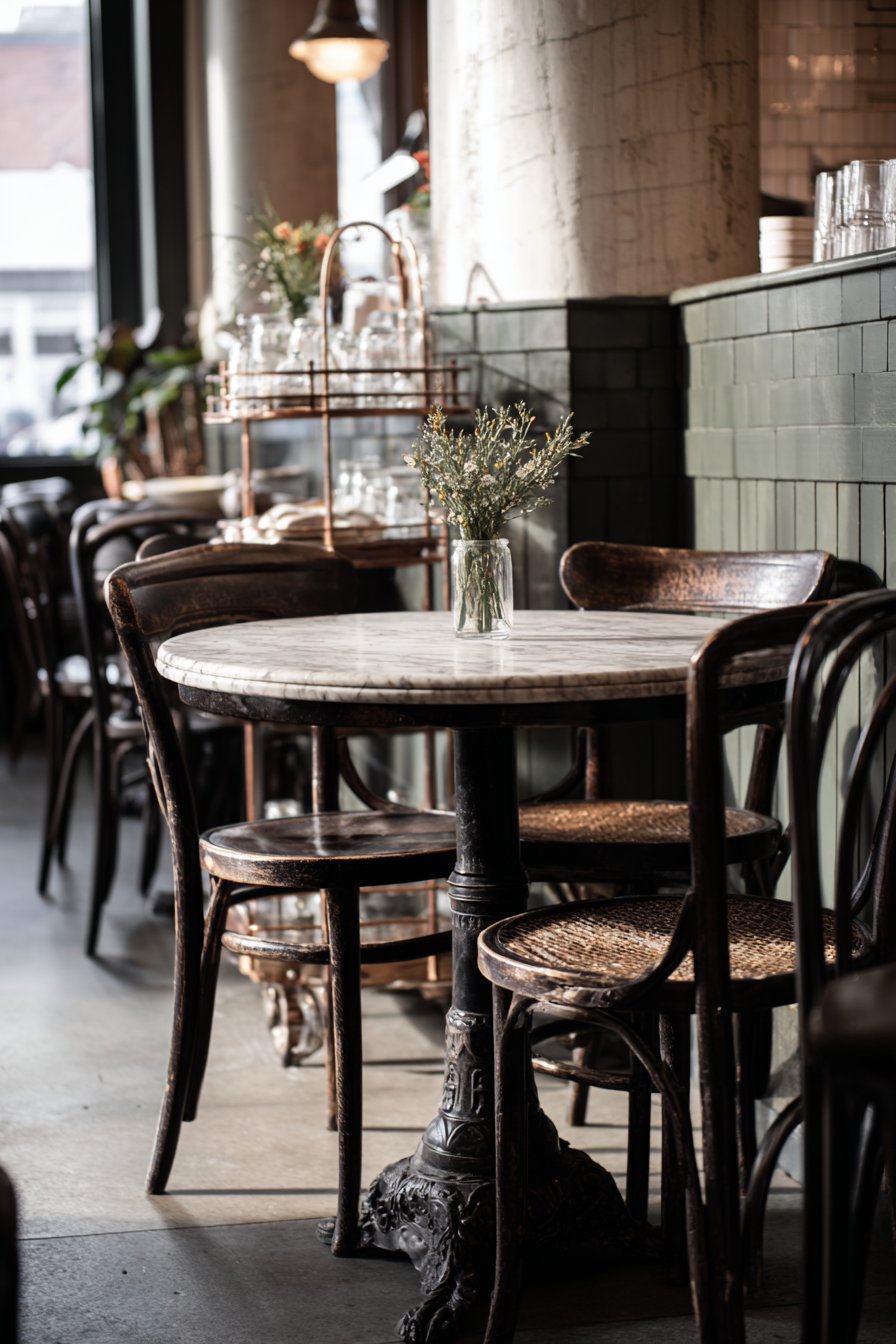
The marble top provides cool, durable surface for dining and drinks. Natural veining patterns ensure each table remains unique. The cast iron base offers stability while adding industrial character. The combination proves both beautiful and remarkably practical.
The bentwood chairs represent innovative 19th-century manufacturing techniques. Steam-bent wood creates fluid curves impossible with traditional joinery. The cane seating provides comfort and breathability during extended sitting.
Key Design Tips:
- Seal marble surfaces to protect from staining and etching
- Recane seats professionally when sagging becomes excessive
- Style bar carts with vintage barware for authentic period appeal
- Install subway tile with period-appropriate grout width for authenticity
- Use cafe-style tables in breakfast nooks for European charm
- Maintain cast iron with periodic applications of paste wax
15. Arts and Crafts Mission Oak Integrity
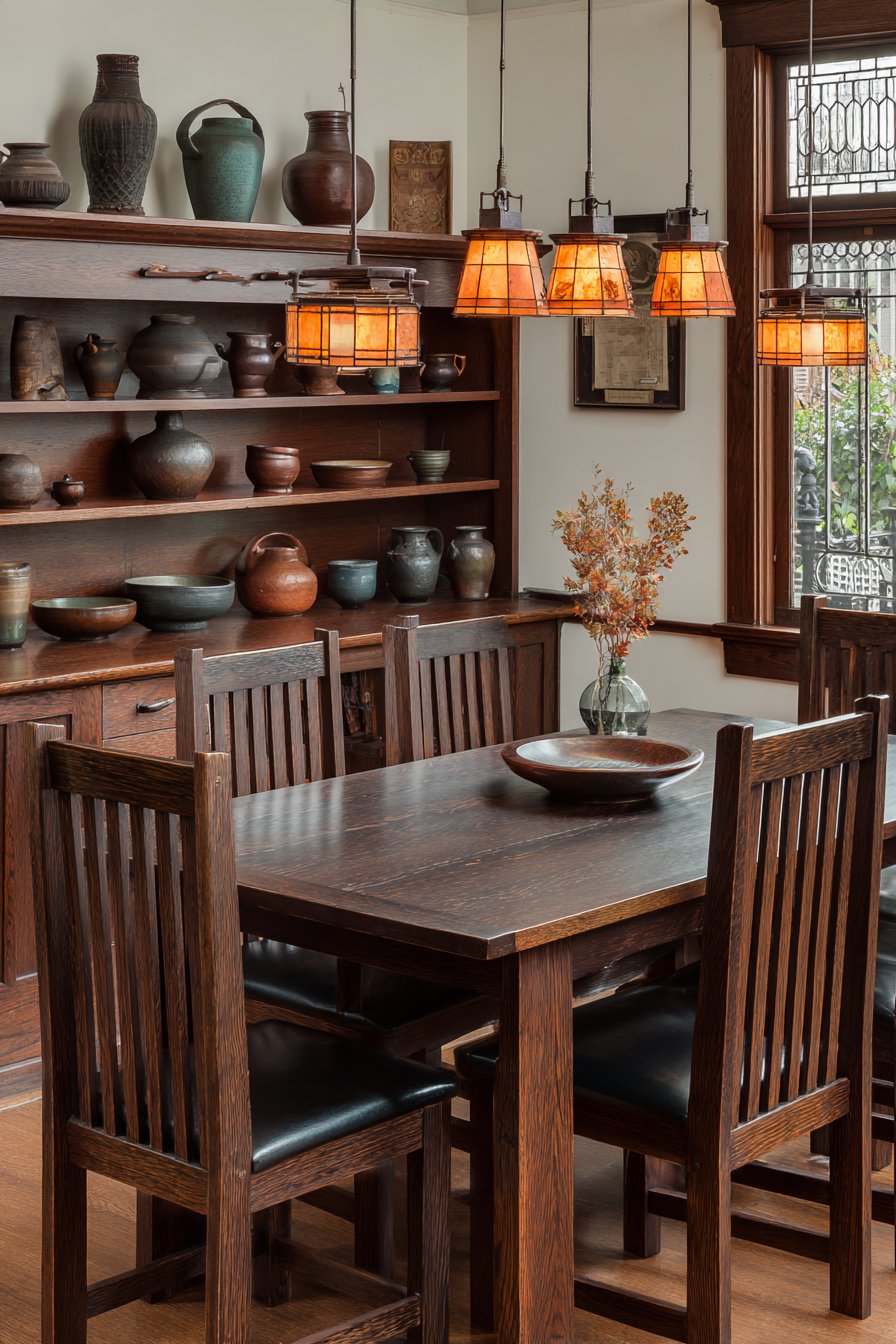
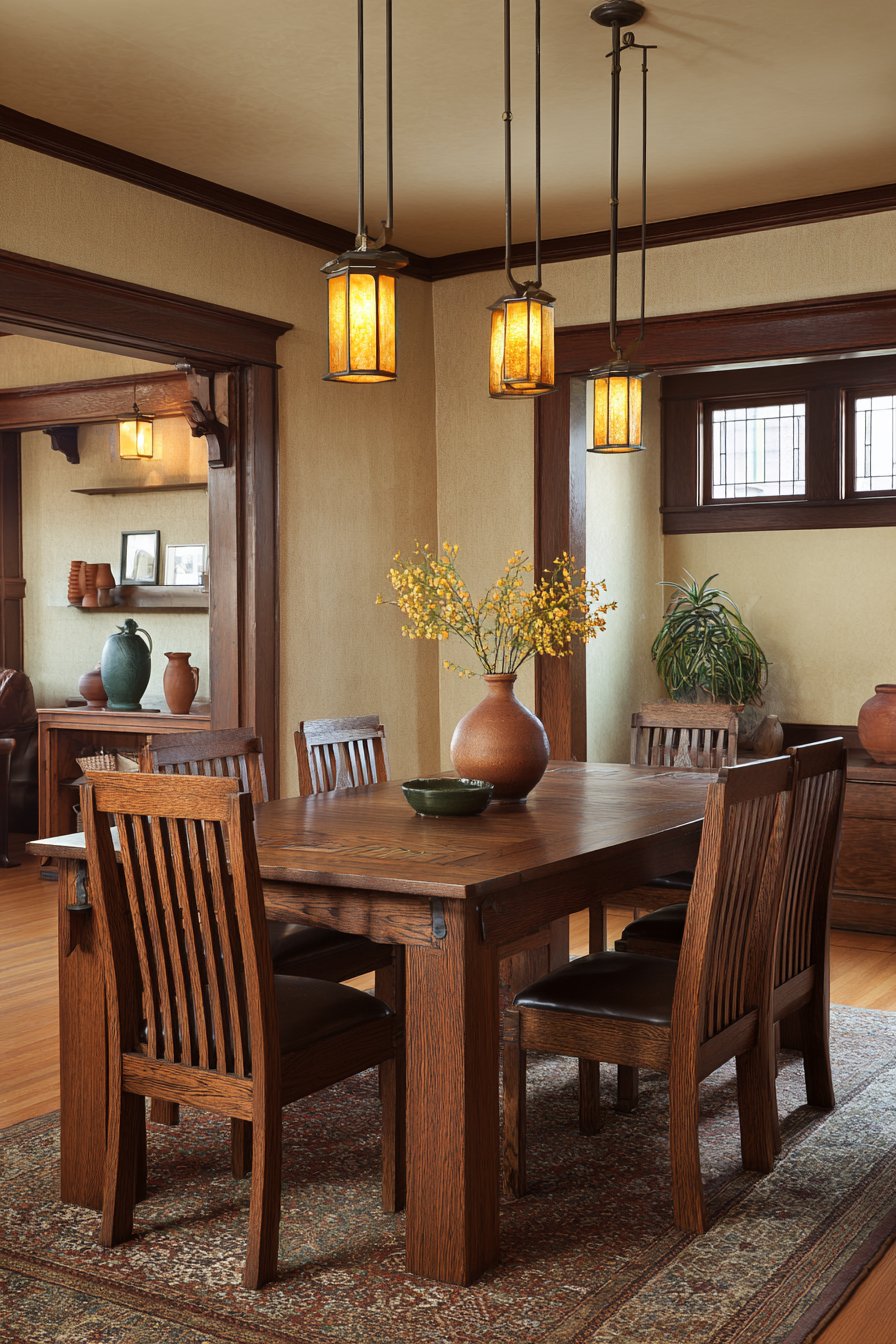
A Mission-style oak dining table features through-tenon construction details. The original dark finish shows subtle wear from decades of use. Matching chairs with vertical slat backs include leather seats. The authentic aging and patina enhance rather than diminish appeal.
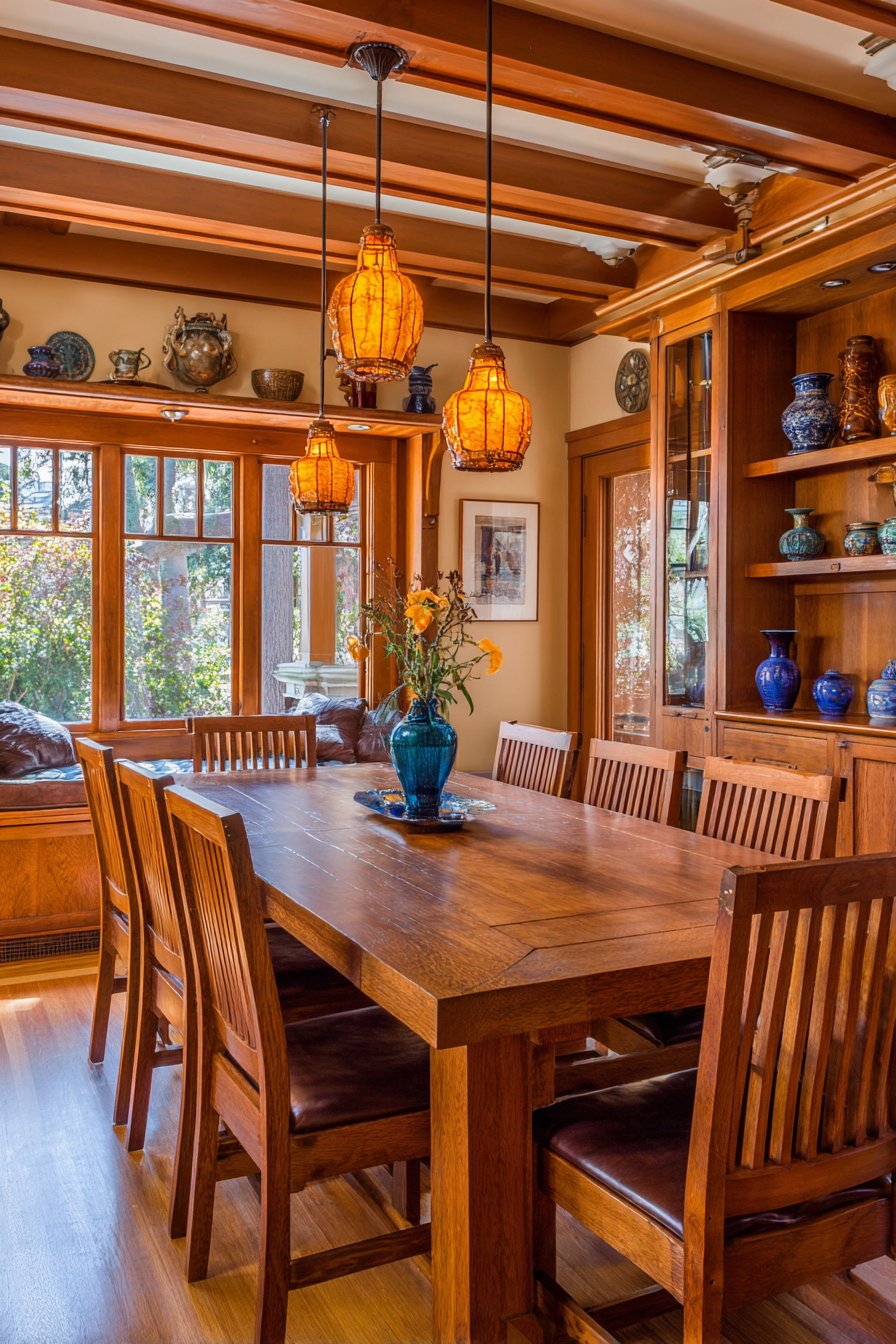
A built-in plate rail displays vintage pottery and stoneware collections. Craftsman-style lighting fixtures with amber glass shades provide illumination. The Arts and Crafts aesthetic celebrates honest materials and visible construction. Quarter-sawn oak grain patterns add distinctive visual texture.
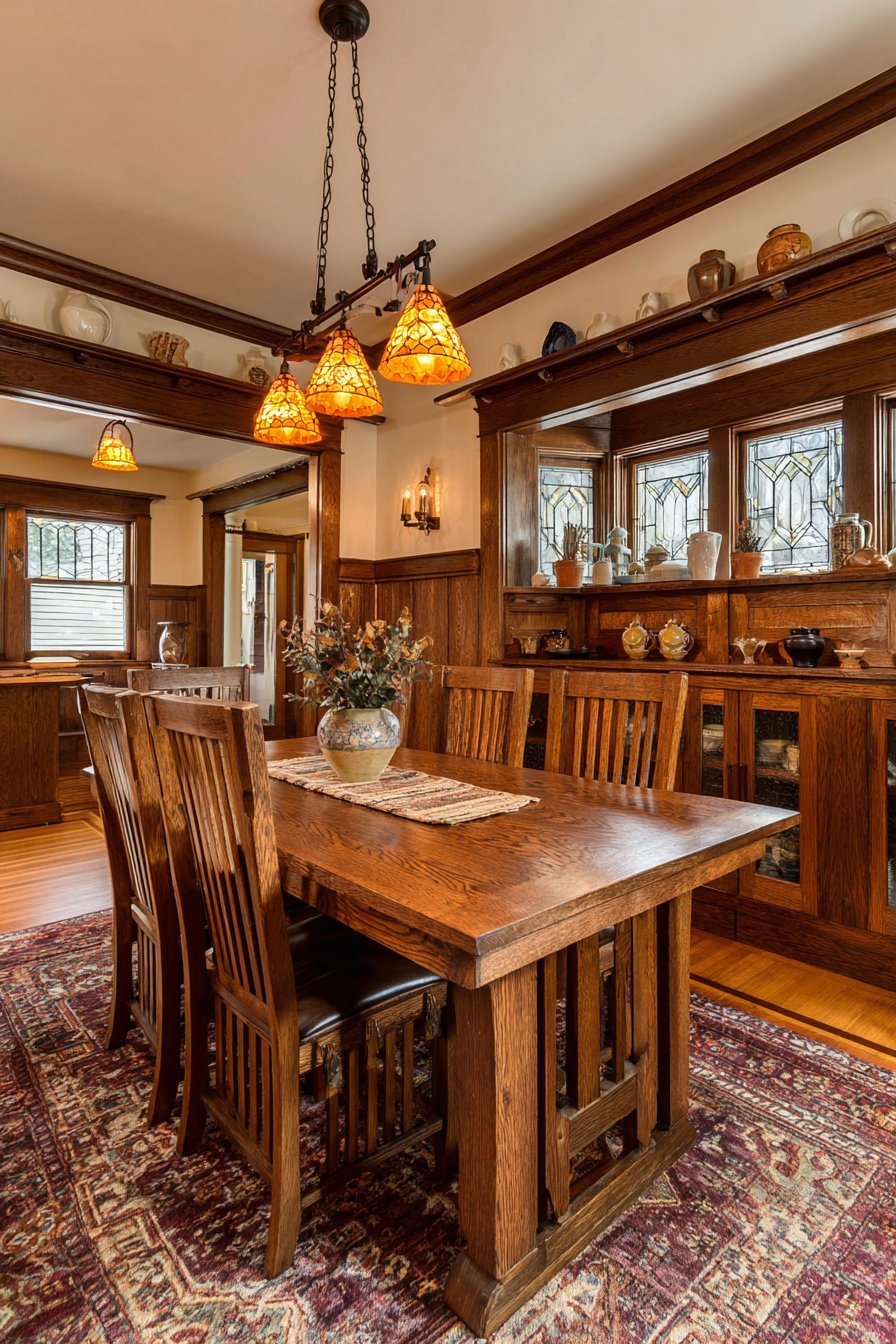
The through-tenon joints show structural elements as decorative features. This honest expression of construction represents core Arts and Crafts philosophy. The vertical slat backs provide lumbar support while maintaining visual lightness. The leather seats develop rich patina through use and aging.
The built-in plate rail demonstrates period attention to integrated storage solutions. This architectural feature adds functionality while reinforcing design cohesion. The amber glass shades cast warm, golden light that enhances oak tones.
Key Design Tips:
- Preserve original dark finishes on Mission furniture for authenticity
- Display period pottery by maker or glaze color for impact
- Choose lighting fixtures with mica or amber glass for warm illumination
- Apply leather conditioner to seats twice yearly to prevent drying
- Highlight quarter-sawn grain by proper furniture placement and lighting
- Integrate built-in features when renovating for period-appropriate storage
16. Retro Tropical Bamboo and Rattan Style
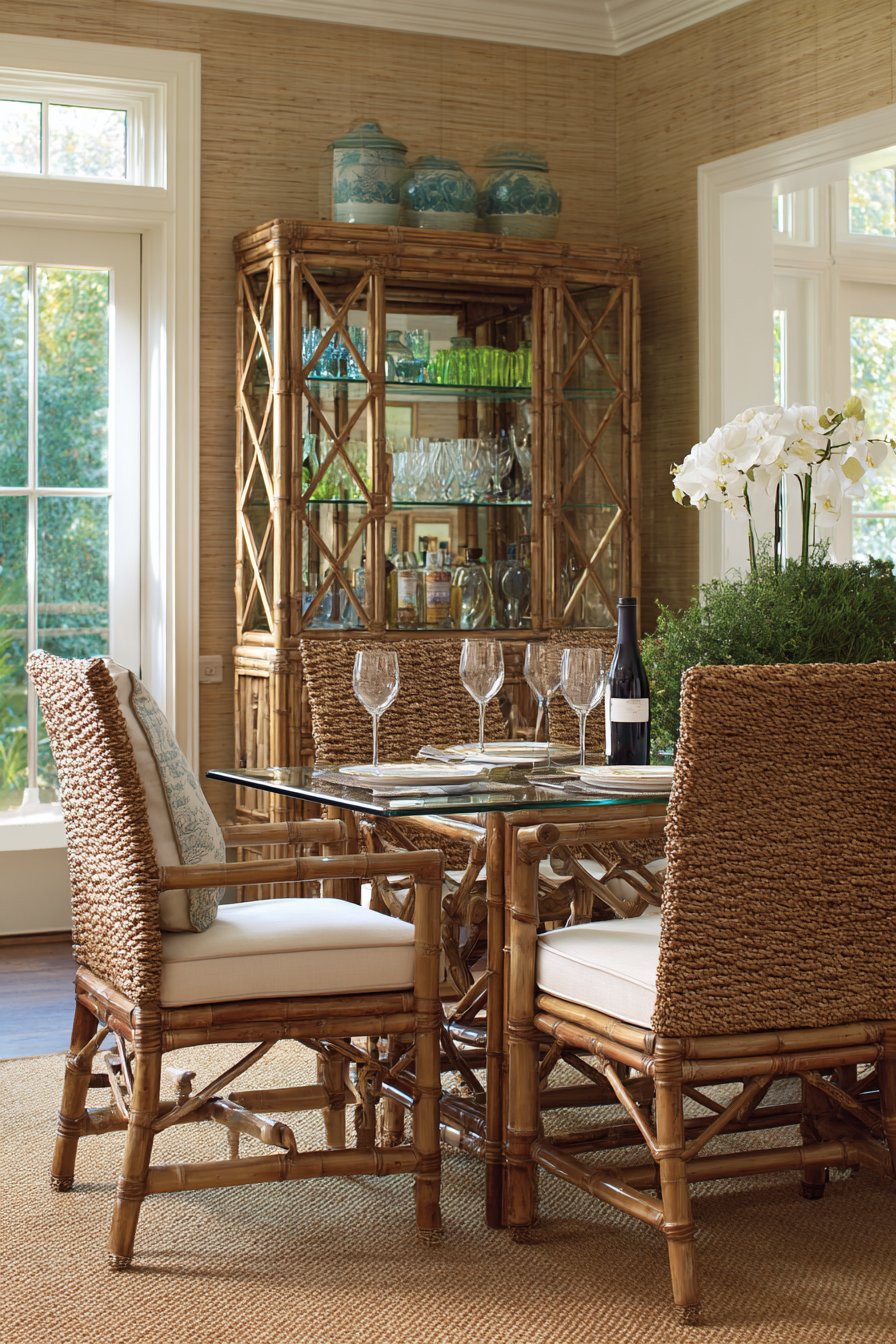
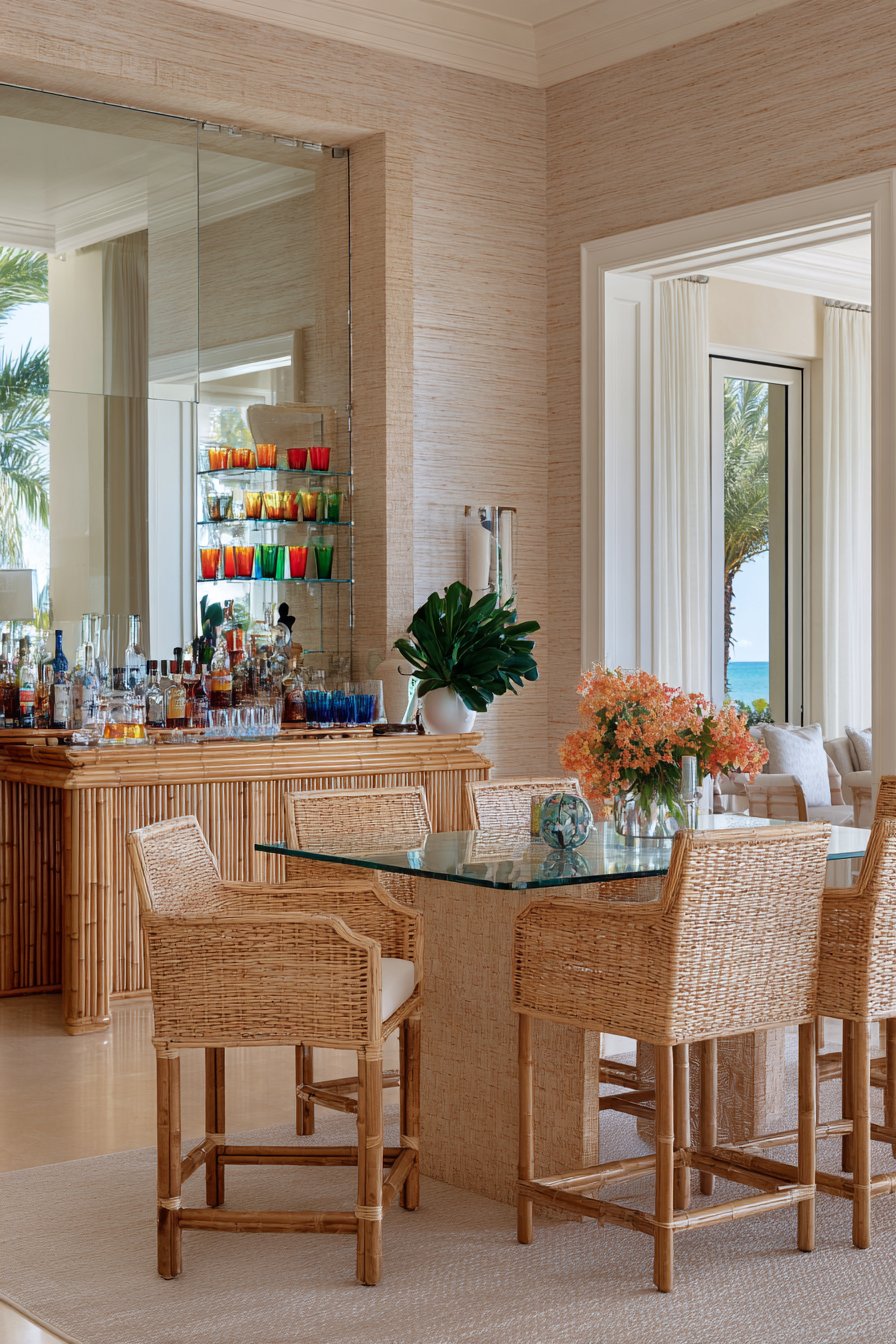
A bamboo and rattan dining table with glass top reflects 1970s tropical design. Six matching chairs feature woven rattan seats and backs. Natural color variations in rattan add organic visual interest. A vintage bar cabinet in matching bamboo displays colored glassware.
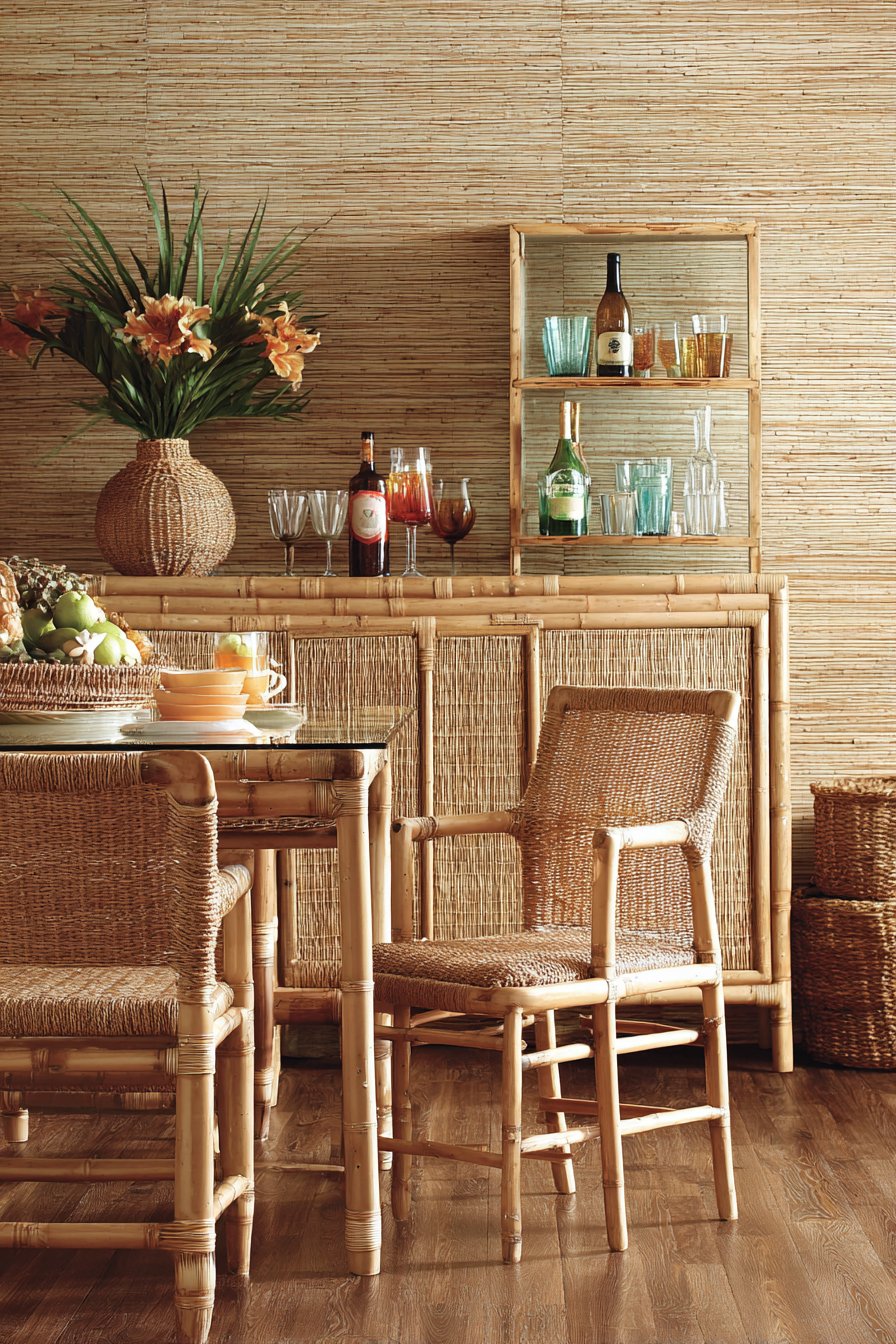
Grasscloth wallpaper in natural jute tones adds rich texture. The retro vintage aesthetic celebrates relaxed tropical living. Natural lighting highlights woven textures and warm honey tones. The complete look transports diners to resort-style casual elegance.
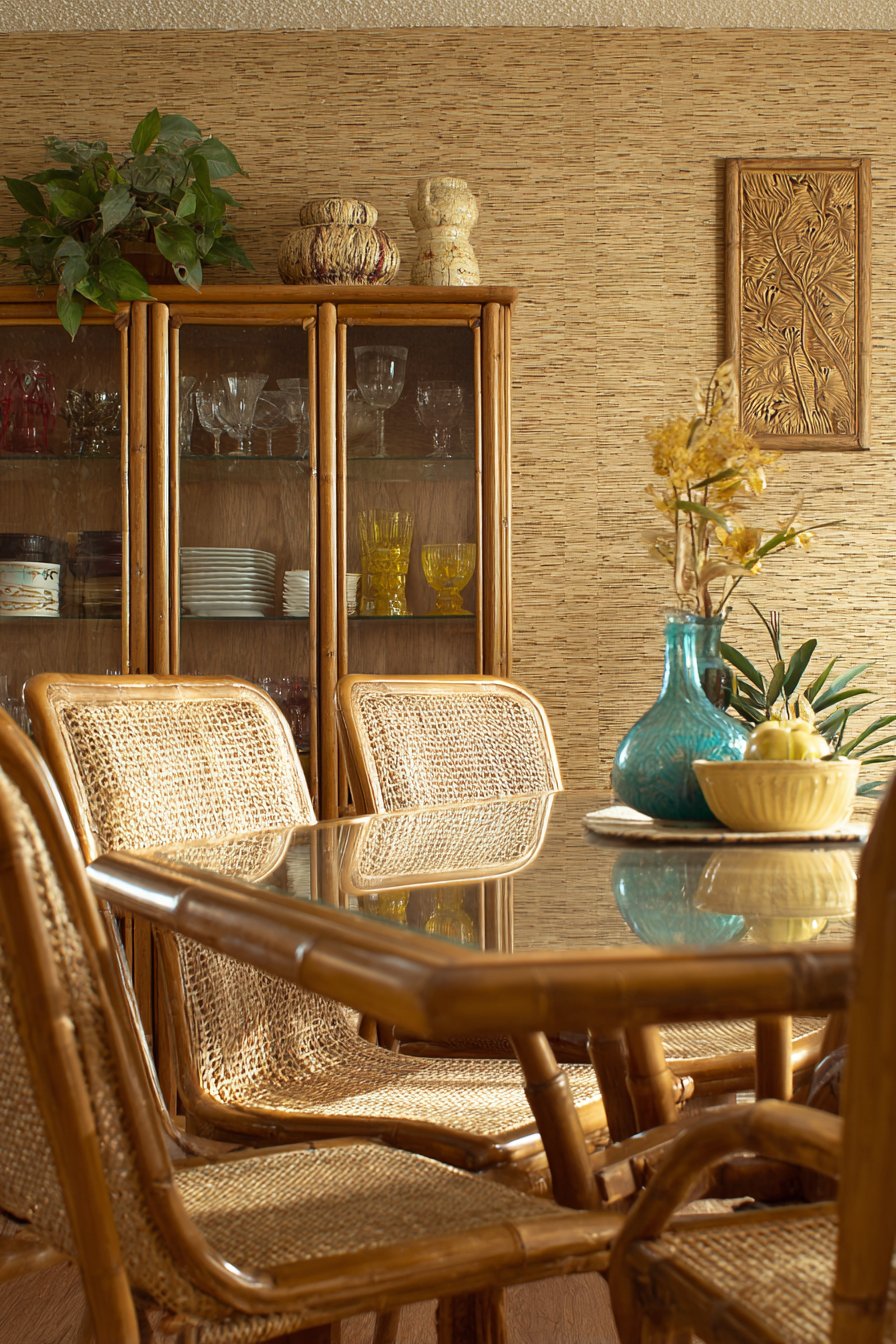
The glass top protects bamboo while maintaining visibility of distinctive grain. The transparent surface creates visual lightness in the space. Woven rattan seats provide comfort through natural flexibility and breathability. The tropical materials perform well in humid climates naturally.
The colored glassware collection adds playful vintage character. These pieces filter light and create colorful displays. The bar cabinet provides practical storage while reinforcing design theme.
Key Design Tips:
- Clean bamboo and rattan with slightly damp cloths only
- Avoid excessive humidity to prevent mold growth on natural fibers
- Display colored glassware where light can illuminate translucent pieces
- Use glass protectors with felt backing to prevent scratching
- Maintain natural color by limiting direct sunlight exposure
- Complement tropical furniture with houseplants for cohesive aesthetic
17. Iconic Mid-Century Tulip Table Ensemble
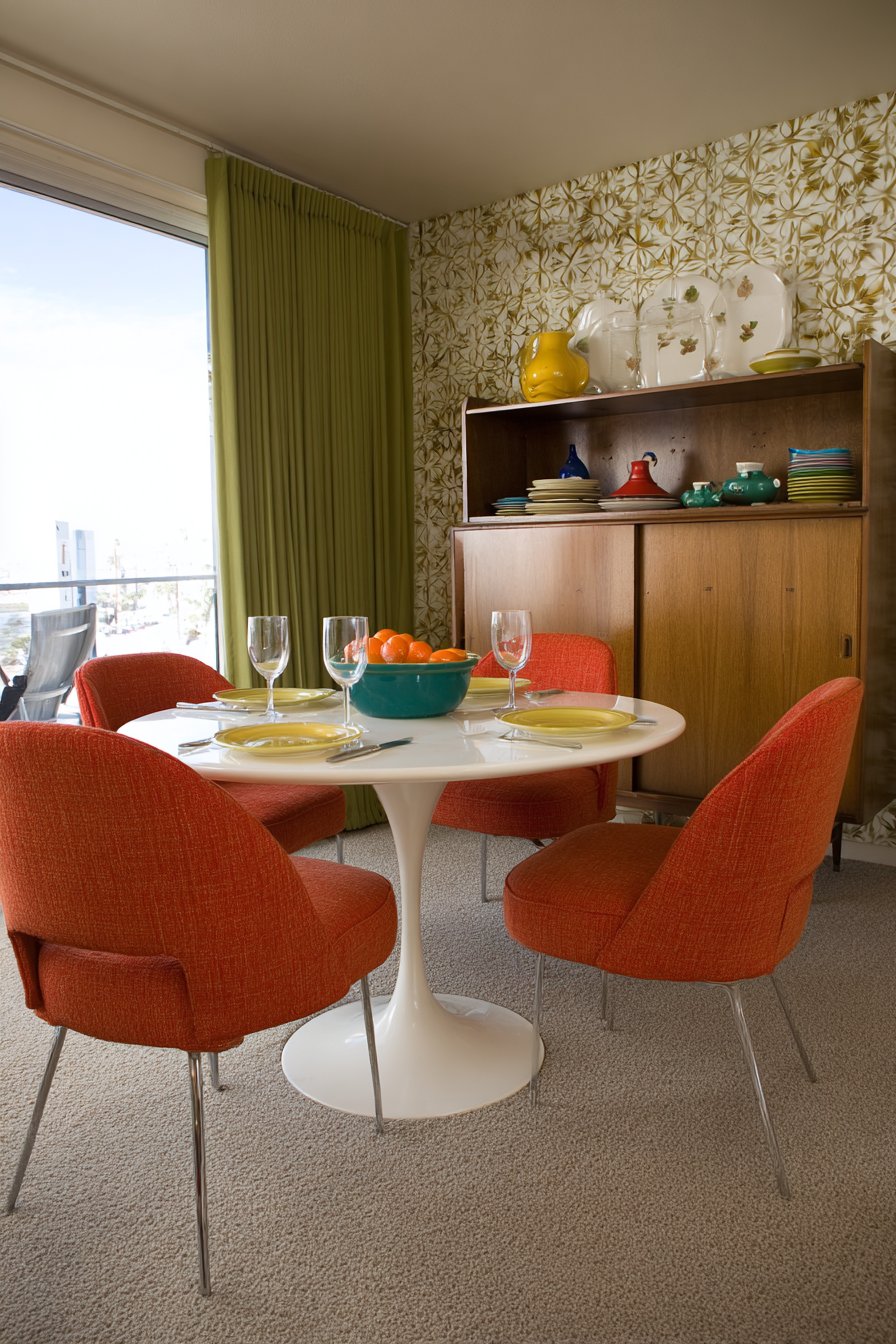
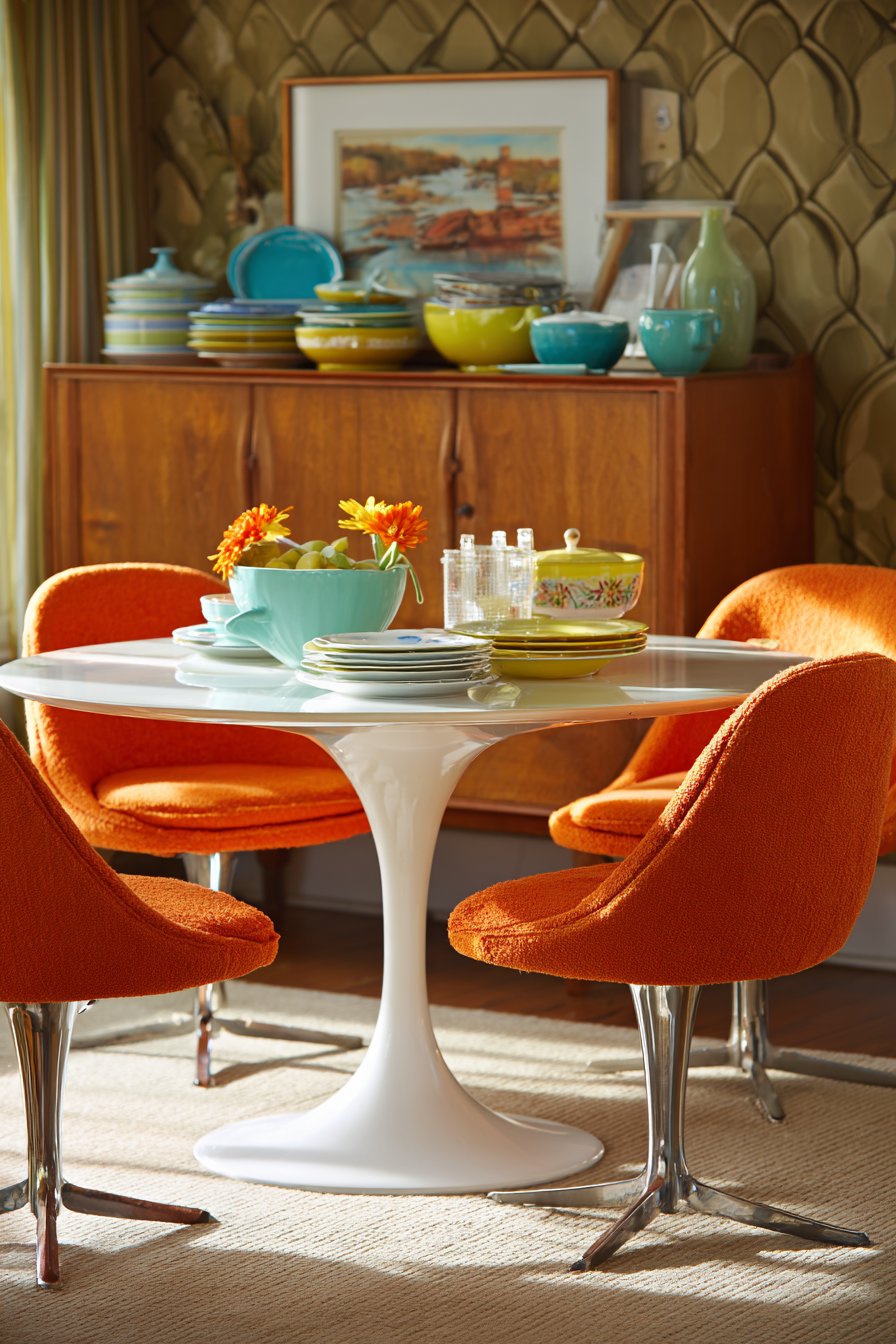
A tulip-style pedestal table in white laminate shows gentle yellowing. This subtle aging indicates authentic 1960s vintage origin. Four matching swivel chairs feature orange upholstery with period fading. A vintage teak credenza displays colorful Pyrex and ceramic dishes.
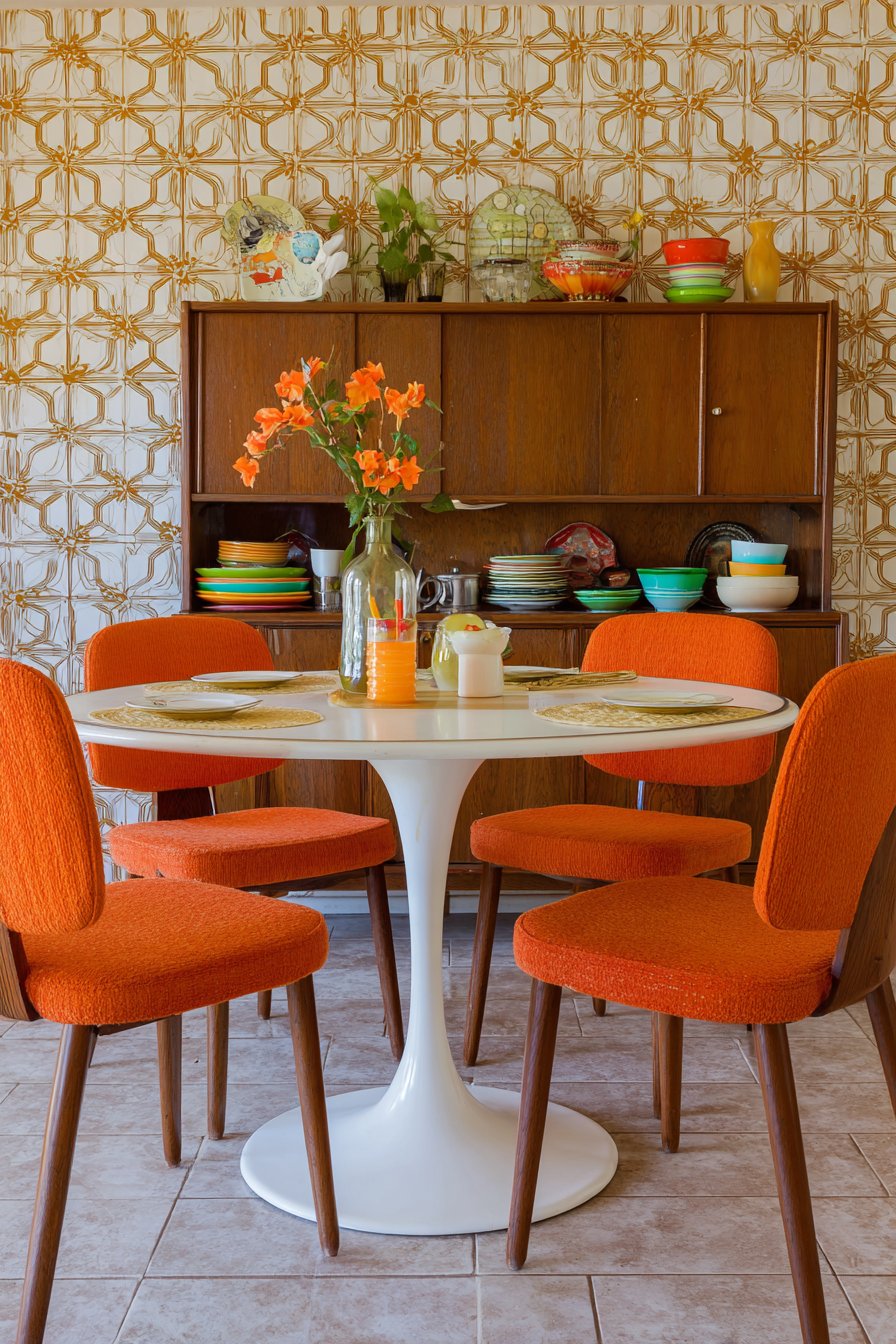
Geometric wallpaper in muted earth tones creates period-appropriate backdrop. The mid-century vintage charm celebrates iconic furniture design. Soft natural lighting emphasizes distinctive furniture forms and colors. The space-age aesthetic remains fresh and relevant decades later.
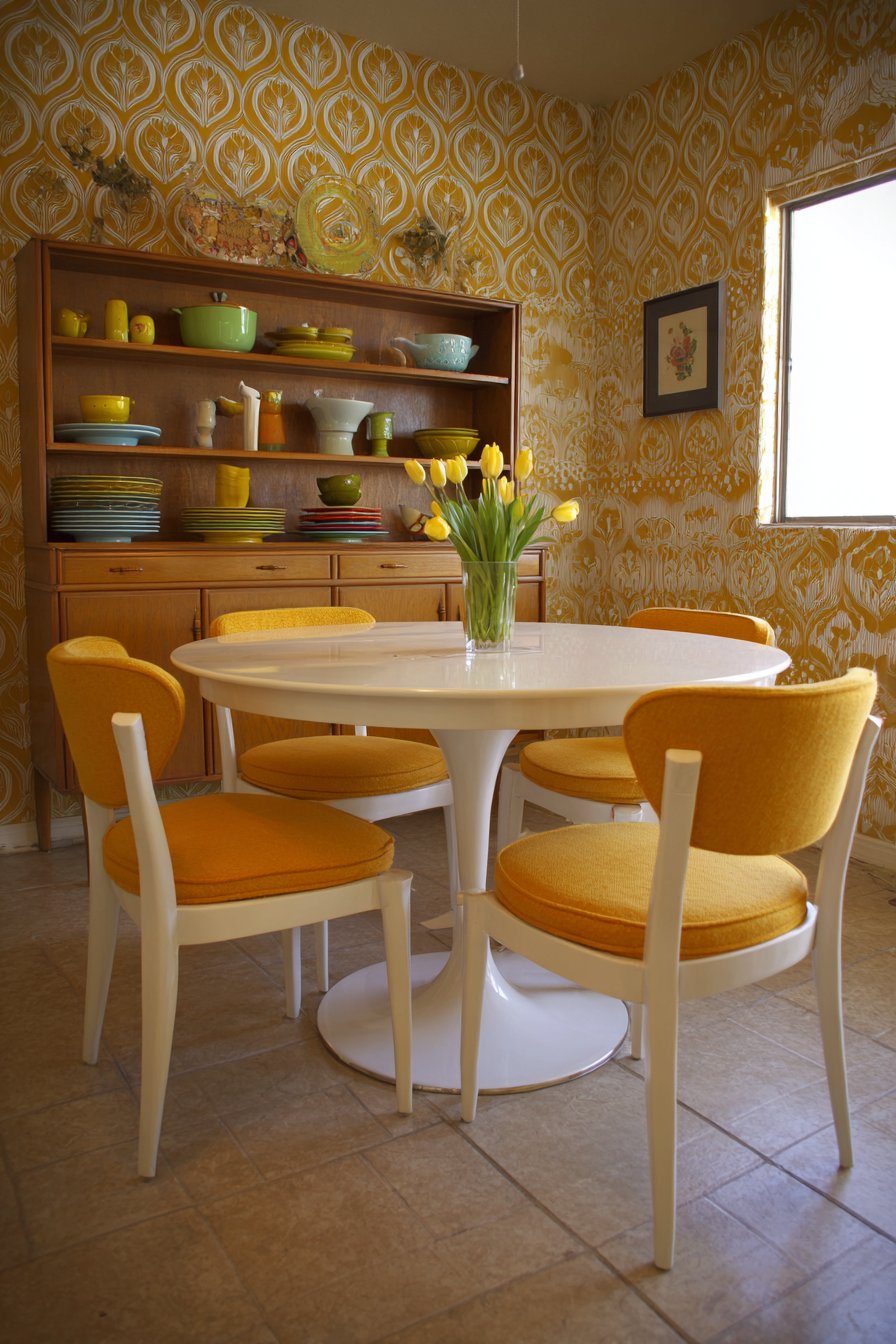
The single pedestal base eliminates traditional table leg obstacles. This design innovation provides unimpeded seating access around entire perimeter. The swivel function adds practical convenience during conversations and serving. The orange upholstery represents bold mid-century color preferences.
The Pyrex collection adds nostalgic color and pattern. These pieces represent American design and manufacturing heritage. The geometric wallpaper reinforces period aesthetic without overwhelming other elements.
Key Design Tips:
- Embrace laminate yellowing as authentic vintage characteristic
- Maintain swivel mechanisms with periodic silicone lubricant applications
- Display Pyrex by pattern or color for maximum visual impact
- Choose geometric patterns that complement rather than clash with upholstery
- Clean laminate surfaces with gentle non-abrasive cleaners only
- Limit bold colors to one or two accent pieces for balance
18. Refined Duncan Phyfe Federal Elegance
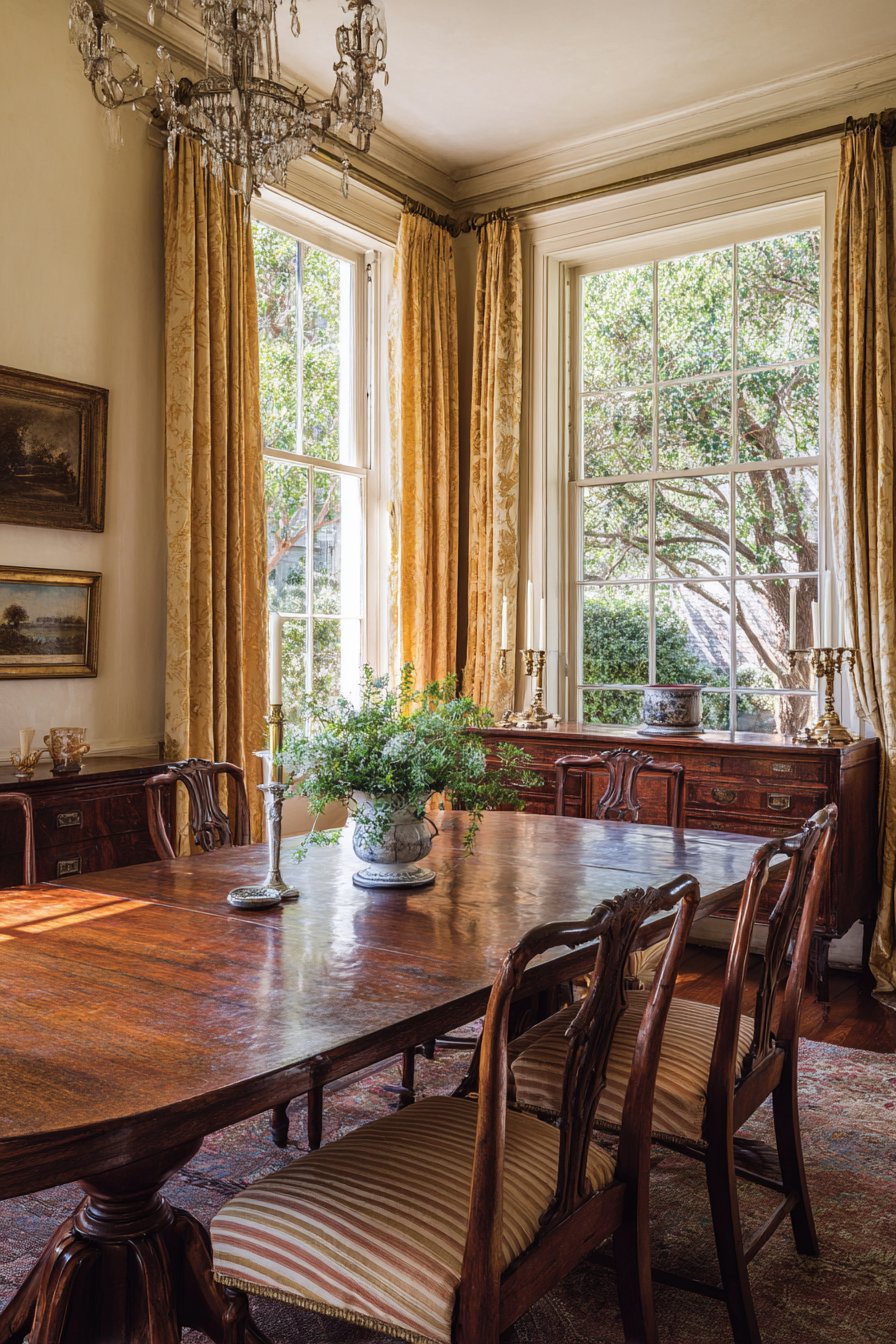
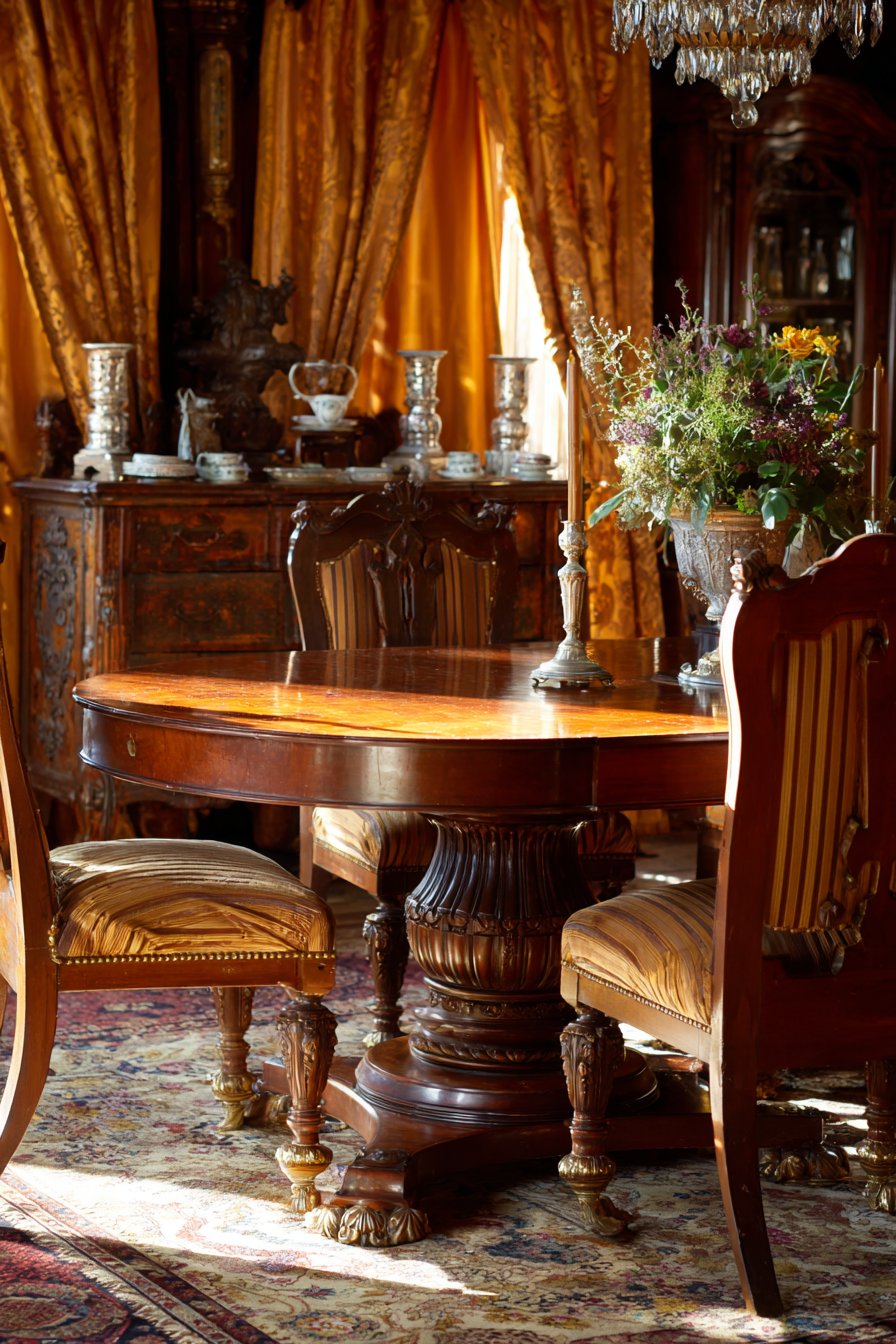
A Duncan Phyfe-style mahogany dining table features lyre-shaped pedestal base. The brass claw feet add refined detail to formal design. Six shield-back chairs with reeded legs show original striped silk upholstery. An antique huntboard serves as buffet displaying vintage silver candlesticks.
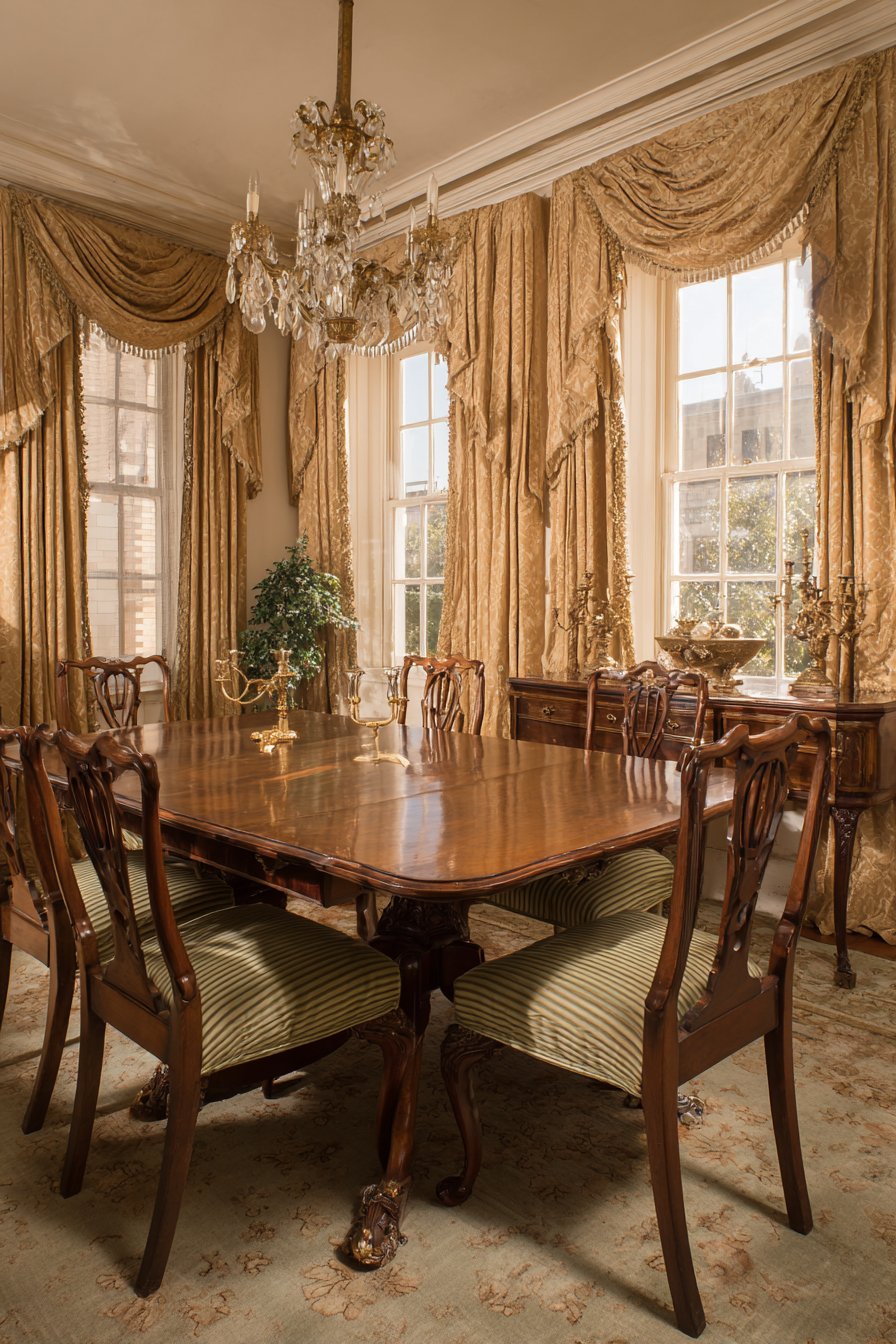
Silk damask drapes in deep gold frame tall windows gracefully. The Federal-period vintage elegance celebrates early American refinement. Chandelier and natural light combine to highlight fine details. The sophisticated space suits formal entertaining and special occasions.
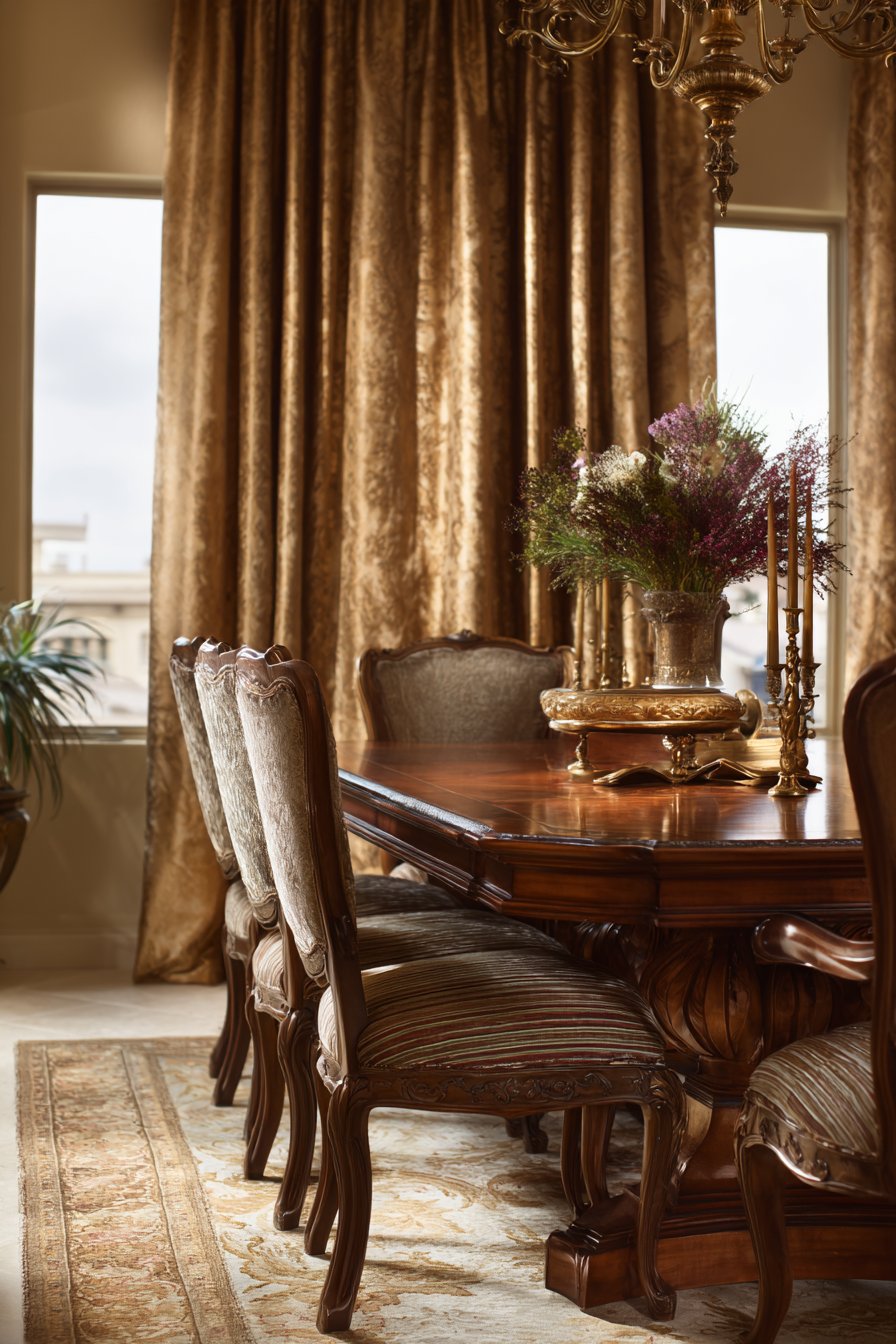
The lyre motif represents classical Greek and Roman design influences. This detail demonstrates Federal period’s neoclassical aesthetic preferences. The shield-back chairs echo patriotic American symbols subtly. The reeded legs add vertical visual interest and textural detail.
The huntboard’s tall stance makes serving convenient without bending. This practical piece combines functionality with period-appropriate design. The vintage candlesticks add vertical elements and metallic shimmer.
Key Design Tips:
- Polish brass feet regularly to prevent tarnish accumulation
- Preserve original silk upholstery behind protective slipcovers for daily use
- Display silver with natural tarnish for authentic patina
- Hang damask drapes with proper lining for light control and fabric protection
- Use table pads under linens to protect mahogany veneer
- Maintain neoclassical aesthetic with restrained classical accessories only
19. Industrial Urban Zinc-Topped Character
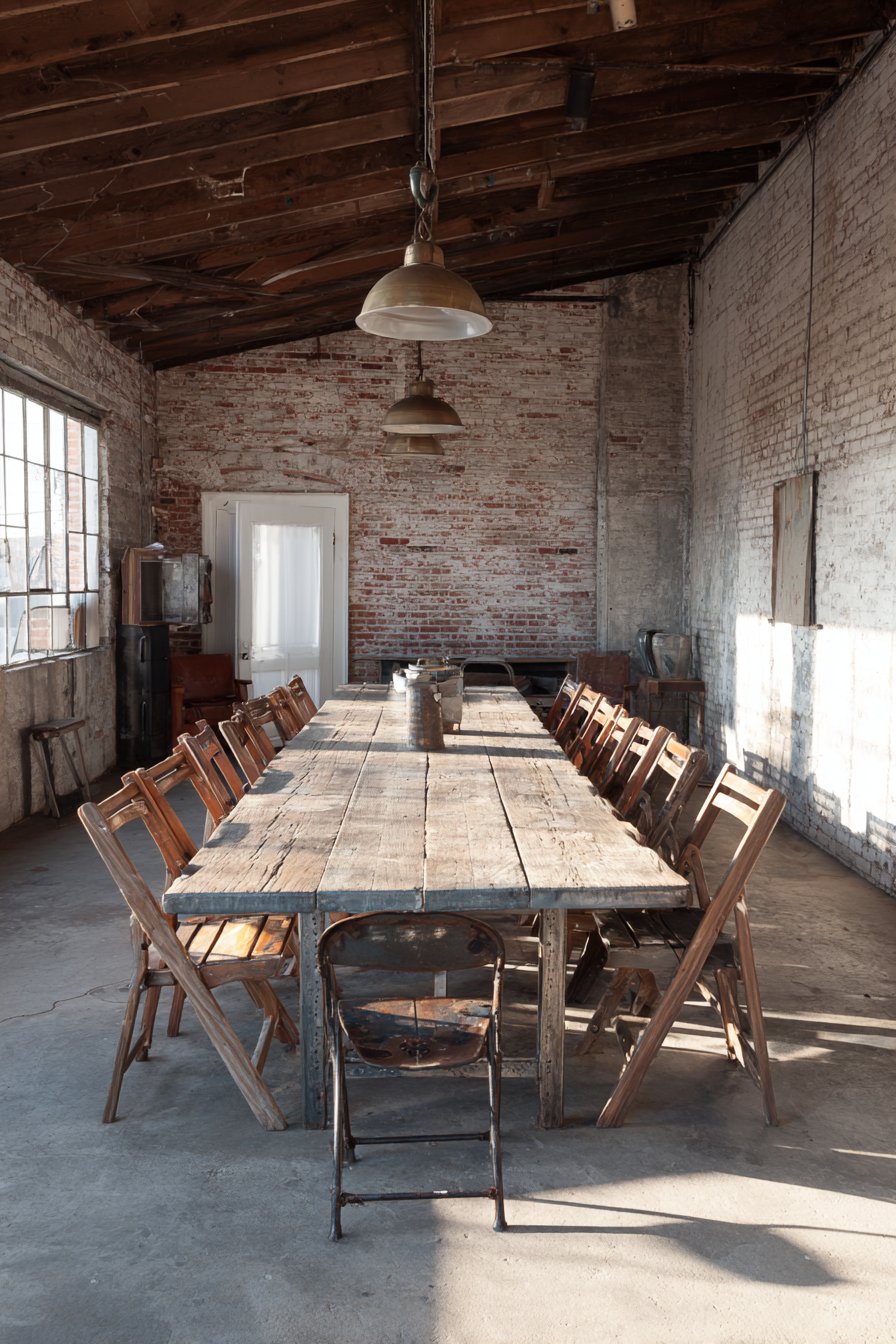
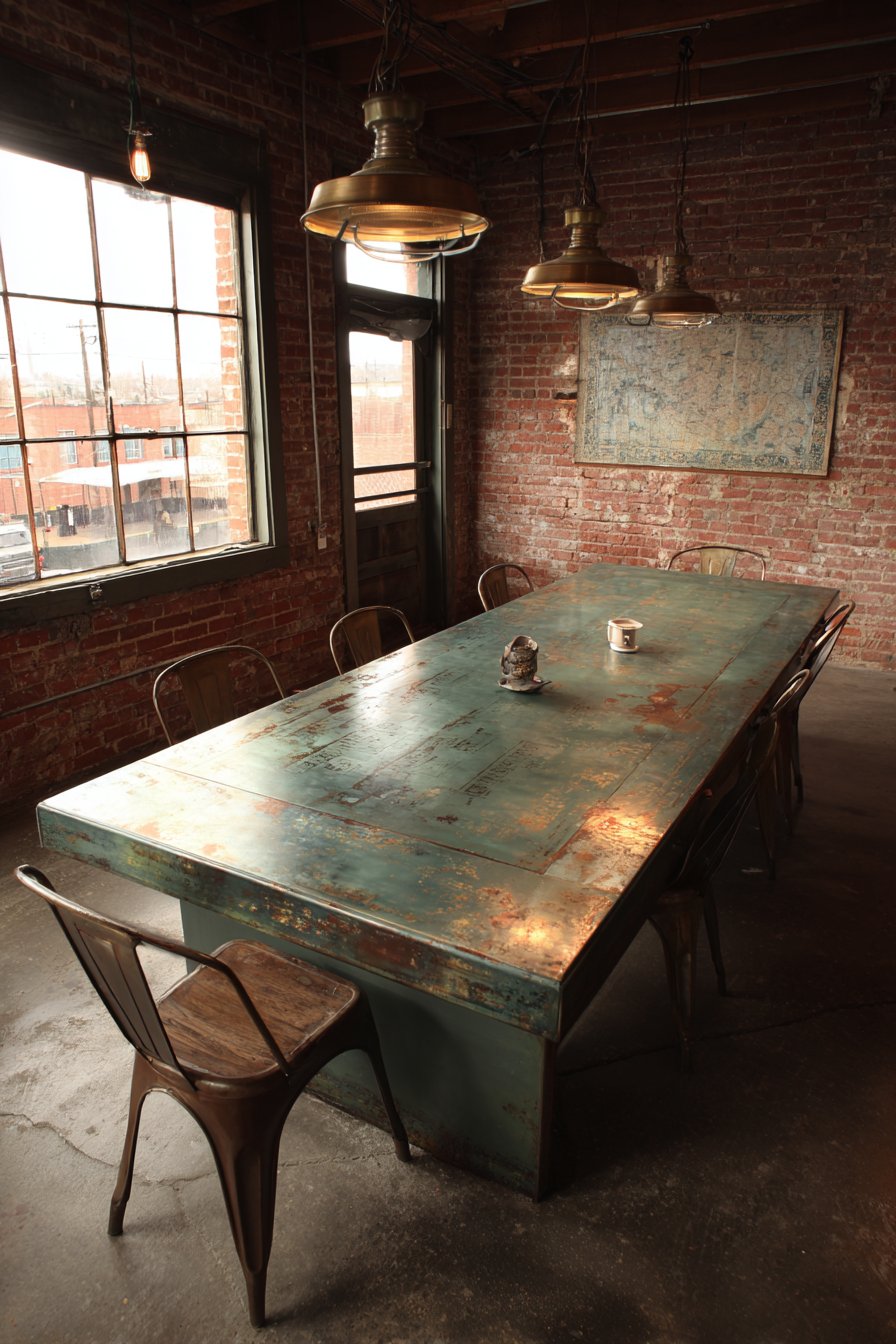
A zinc-topped farmhouse table shows authentic patina and surface variations. Years of use create unique marks and color changes. Mixed vintage seating includes metal cafe chairs and wooden folding chairs. Original paint wears naturally at edges and high-contact points.
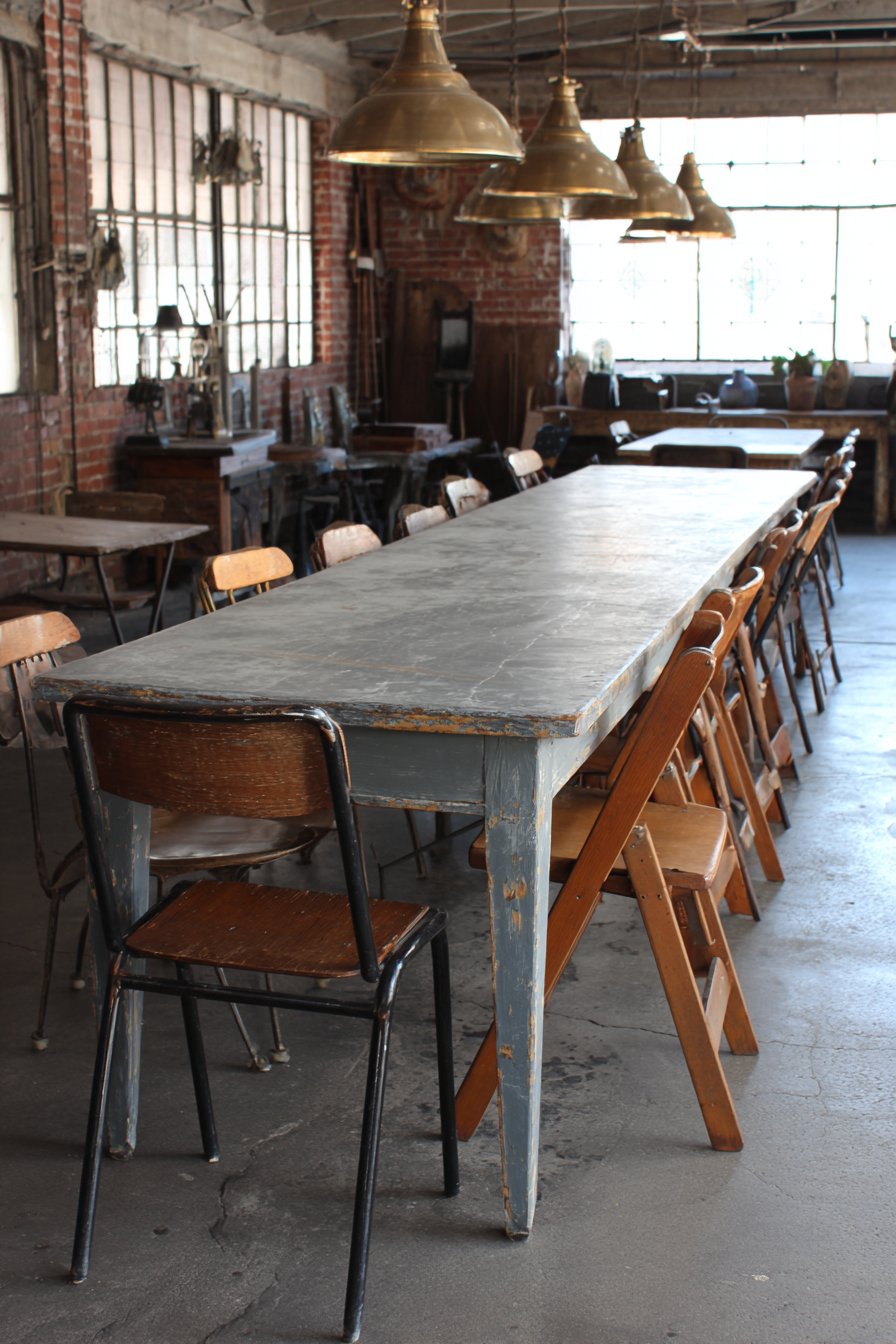
Industrial pendant lights with aged brass finish hang overhead. Exposed brick walls and worn concrete floors add urban character. The industrial-vintage aesthetic celebrates manufacturing heritage and honest materials. Natural warehouse-style windows create dramatic directional lighting effects.
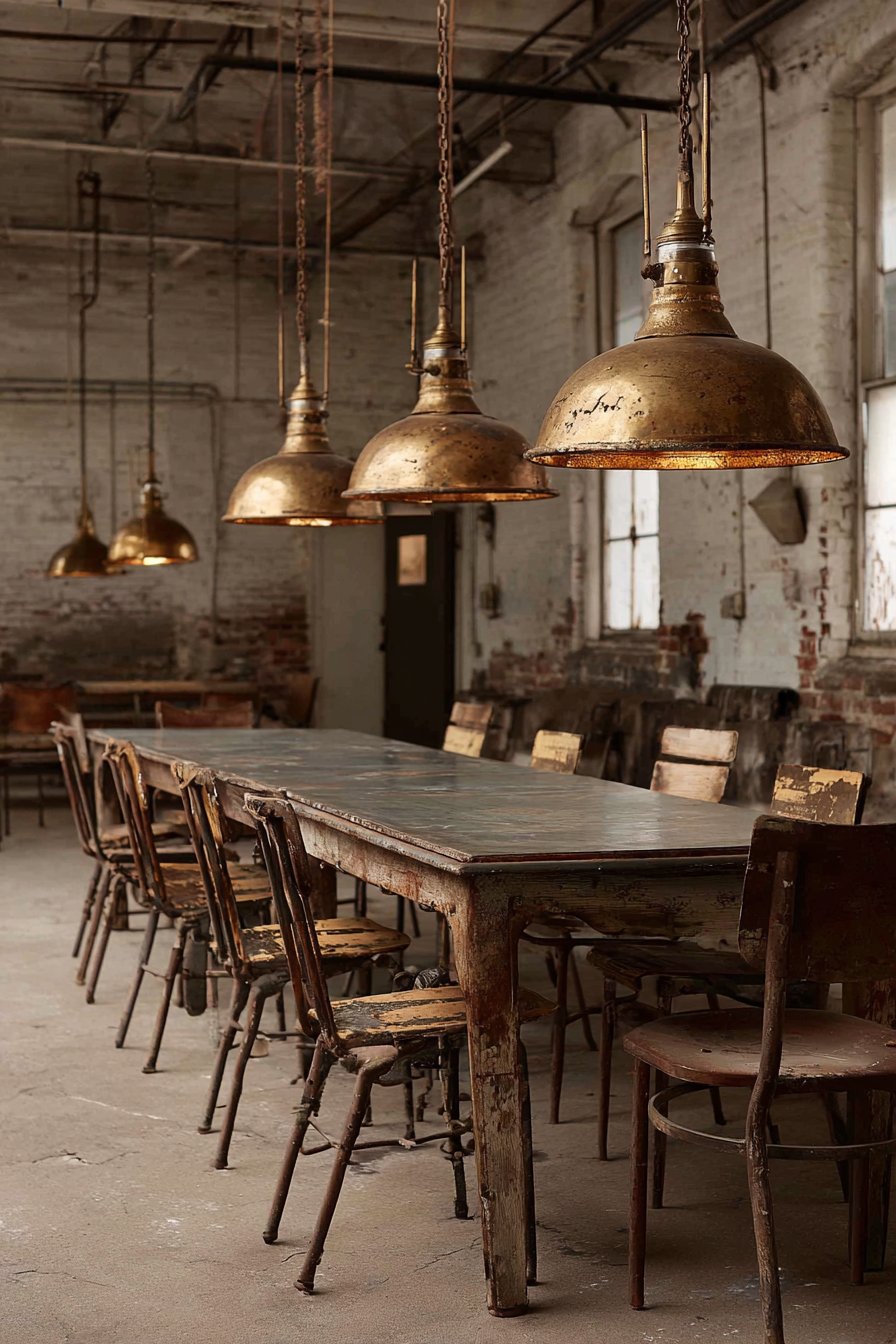
The zinc top develops living patina that darkens and matures. This natural aging process enhances rather than diminishes beauty. The metal surface proves remarkably durable for daily dining use. Heat and moisture naturally contribute to patina development over time.
The mixed seating represents salvaged cafe and restaurant furniture. Each piece contributes individual history to collective composition. The industrial lighting provides task illumination while reinforcing aesthetic theme.
Key Design Tips:
- Apply food-safe wax to zinc surfaces to control patina development
- Mix industrial elements with softer textiles to prevent cold atmosphere
- Embrace concrete floor imperfections as design features
- Source vintage cafe chairs from restaurant supply salvage companies
- Install dimmer switches on industrial fixtures for ambiance control
- Balance hard industrial materials with natural wood warmth
20. Colonial Revival Maple Authenticity
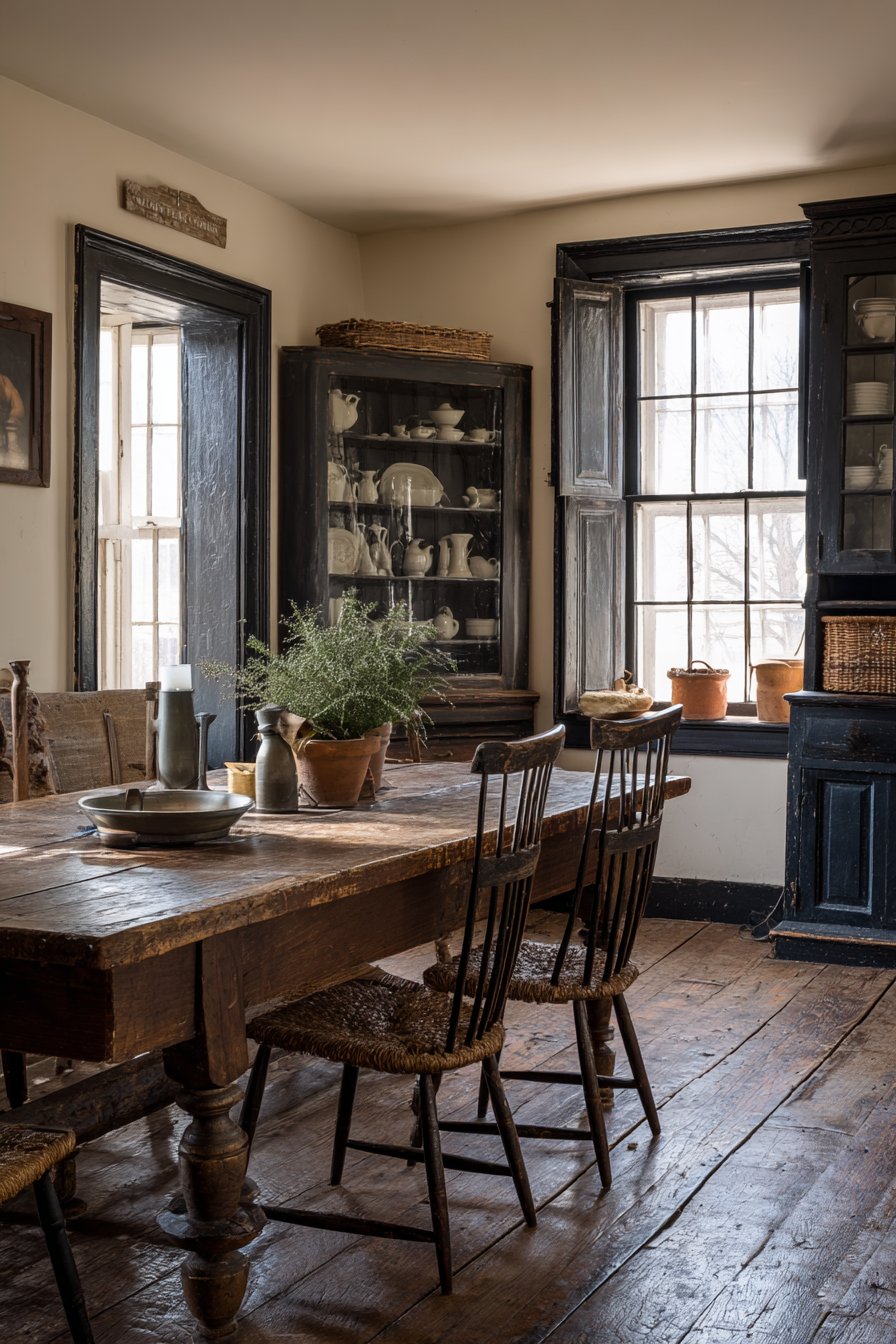
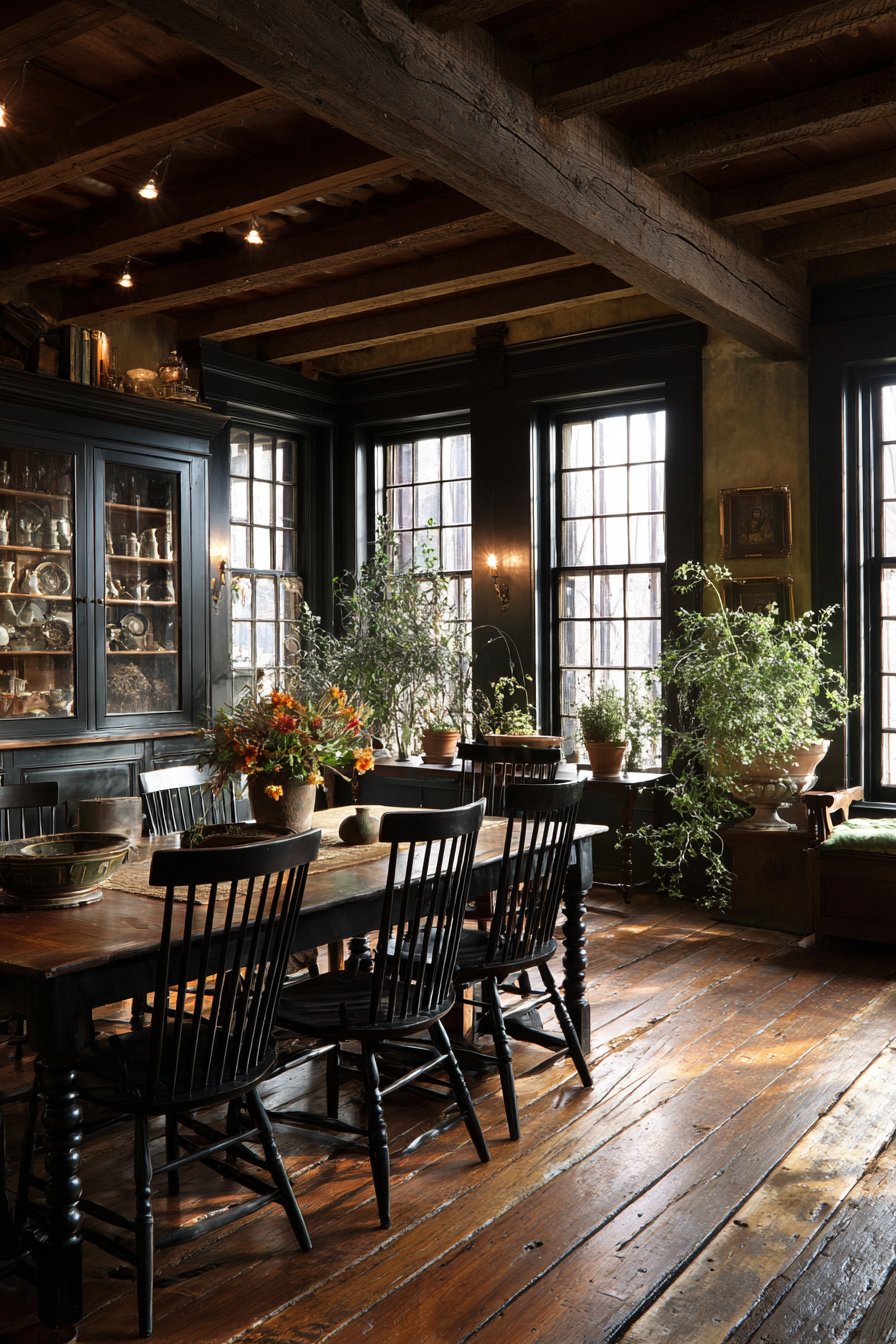
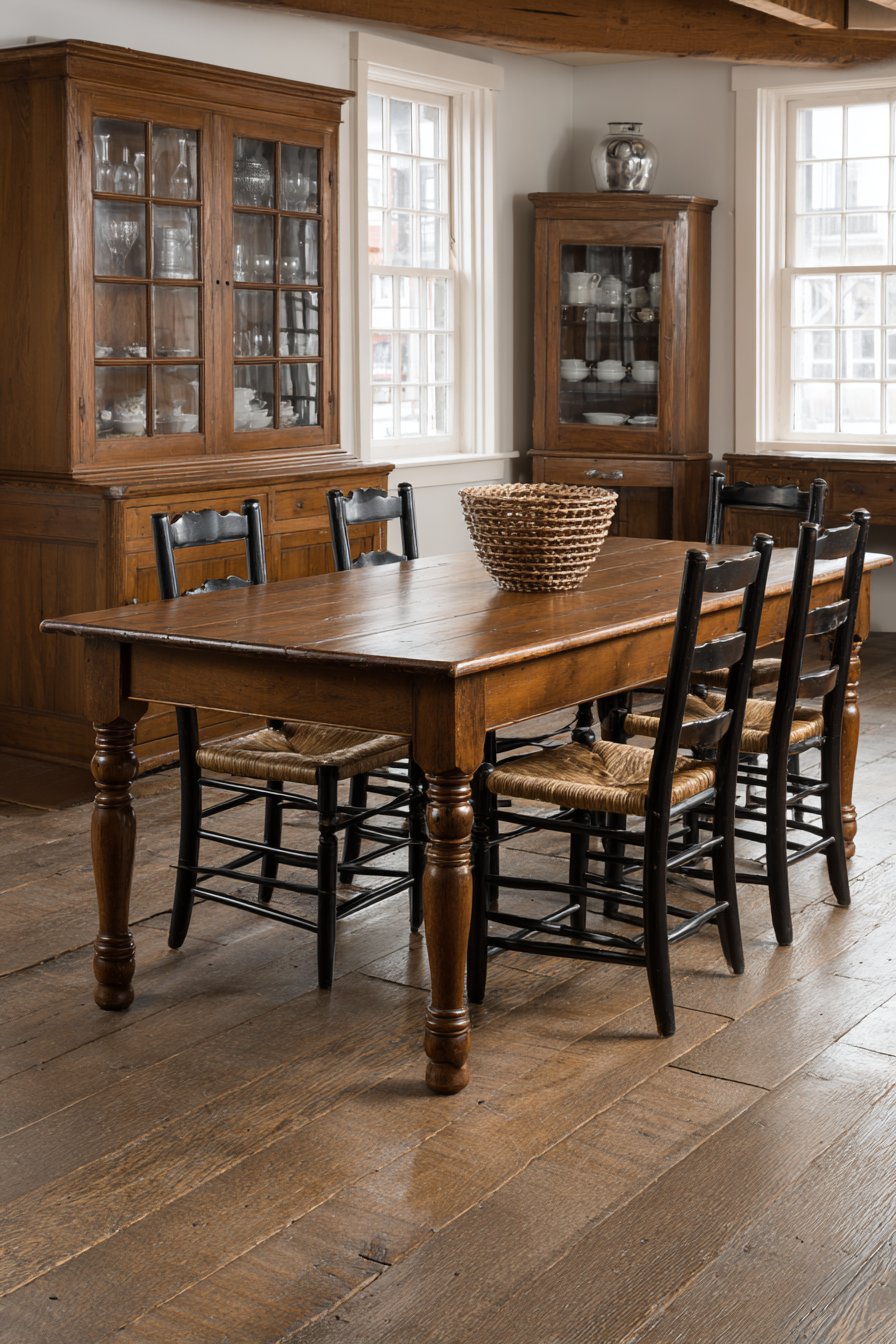
A Colonial Revival dining table in maple features bulbous turned legs. The original finish shows natural darkening from age and oxidation. Six ladder-back chairs with woven splint seats display gentle sagging. A vintage corner cupboard with wavy glass displays antique pewter.
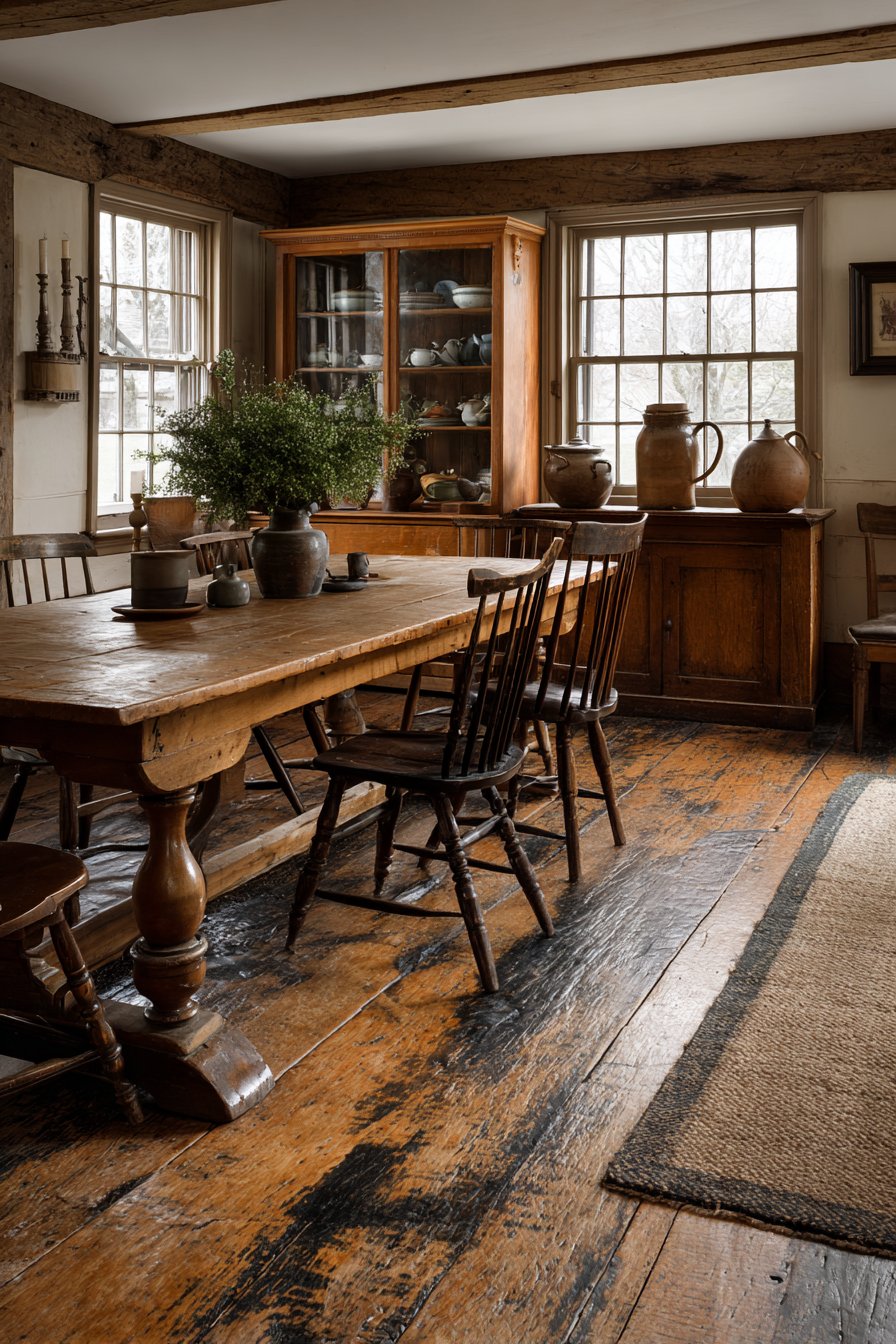
Wide plank flooring in random widths shows authentic wear patterns. The early American vintage aesthetic celebrates simple craftsmanship. Warm natural lighting from multipane windows highlights wood grain. The honest patina of age creates welcoming unpretentious atmosphere.
The bulbous turned legs represent traditional furniture making techniques. These hand-shaped elements add visual weight and historical character. The maple wood develops rich amber tones through natural aging. This transformation occurs gradually over decades of exposure and use.
The woven splint seats demonstrate traditional craft techniques. Natural materials flex and breathe for comfortable extended seating. The wavy glass in cupboard doors indicates hand-blown period production.
Key Design Tips:
- Preserve natural patina by avoiding aggressive cleaning or refinishing
- Re-splint seats when sagging becomes excessive for structural integrity
- Display pewter pieces to celebrate American colonial metalwork traditions
- Maintain random-width flooring with appropriate period-style finishes
- Use multipane windows to reinforce colonial architectural character
- Embrace honest wear as evidence of furniture’s authentic use history
Why These Vintage Dining Room Designs Are the Best
These vintage dining room designs represent superior approaches to creating timeless, characterful dining spaces. Each concept demonstrates the enduring appeal of quality craftsmanship and authentic materials. Vintage furniture offers construction quality rarely found in contemporary mass-produced pieces.
The versatility of vintage design accommodates diverse aesthetic preferences and architectural styles. From ornate Victorian grandeur to streamlined mid-century modern, vintage encompasses remarkable stylistic range. This variety ensures homeowners can find authentic pieces matching their personal taste.
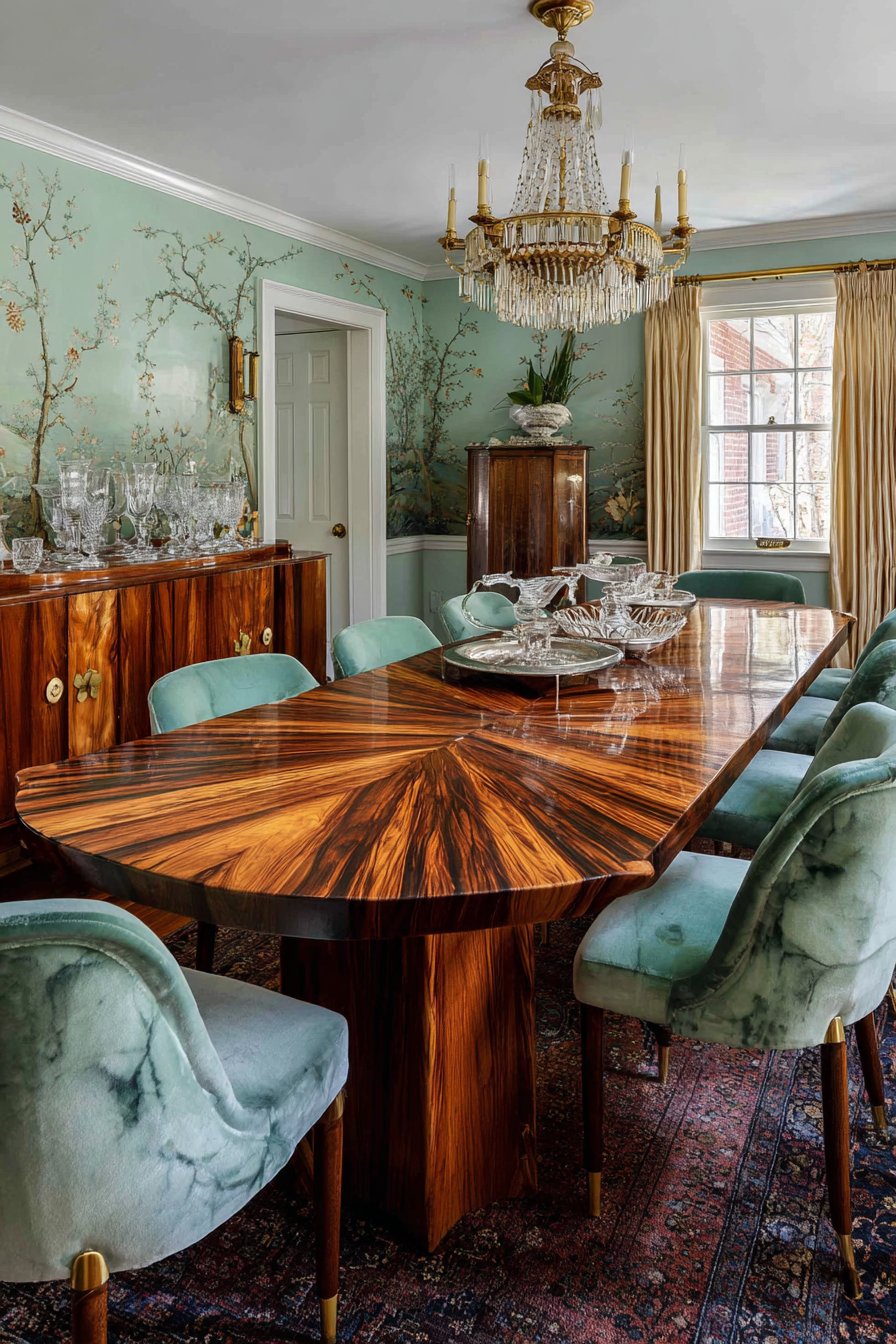
Authentic vintage furniture develops patina that adds depth and visual interest impossible to replicate. Natural aging through use creates unique character in each piece. The subtle imperfections tell stories of family meals and celebrations spanning decades.
Material quality in vintage furniture ensures longevity that justifies investment. Solid wood construction, dovetail joinery, and hand-carved details demonstrate superior craftsmanship. These pieces often outlast their owners when properly maintained and cared for.
Color theory in vintage design emphasizes warm wood tones paired with muted textiles and wallcoverings. These palettes create inviting atmospheres that encourage gathering and conversation. The natural materials age gracefully without appearing dated or requiring replacement.
Sustainability represents another compelling advantage of vintage furniture selection. Choosing existing pieces reduces demand for new manufacturing and associated environmental impacts. Quality vintage furniture eliminates the waste cycle of disposable modern furnishings.
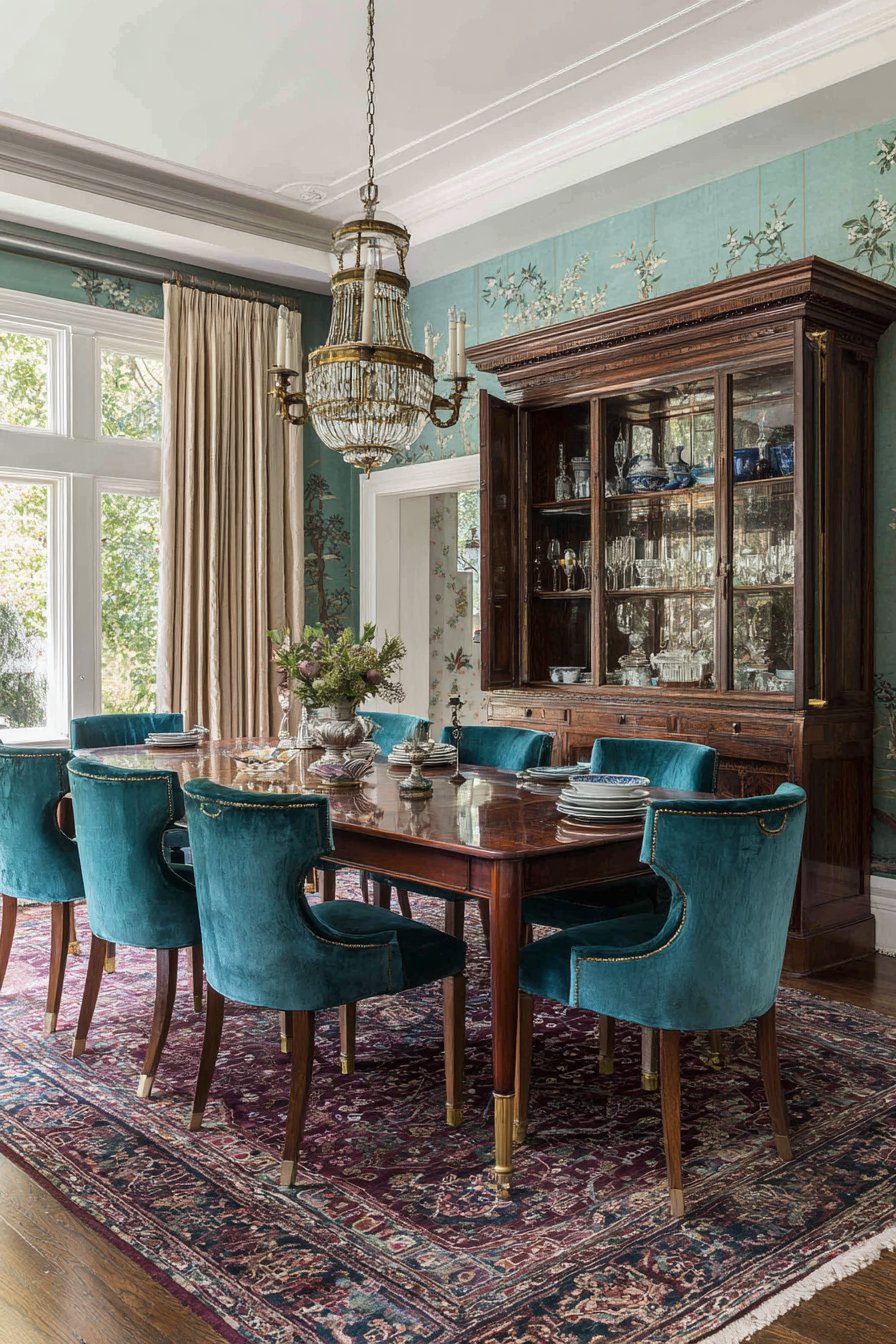
Spatial considerations benefit from vintage furniture’s proportions and scale. Period pieces often suit historic homes better than contemporary alternatives. Even in modern spaces, vintage furniture adds warmth and human scale.
Functionality remains central to vintage design’s continued relevance. Extending tables, gate-leg mechanisms, and integrated storage solutions address practical dining needs. These time-tested features prove their value through generations of daily use.
Conclusion
These vintage dining room designs demonstrate that authentic character comes from embracing history and craftsmanship. The key takeaways include the importance of quality materials, honest construction, and natural patina development. Each design approach offers unique advantages while sharing commitment to enduring beauty.
Successful vintage dining rooms balance aesthetic appeal with practical functionality for modern living. Start by selecting one quality vintage piece as foundation. Build your collection gradually with complementary items that speak to your personal history. Your timeless vintage dining room awaits creation through thoughtful selection and appreciation for authentic craftsmanship.