


Designing a small kids bedroom requires creativity, functionality, and thoughtful planning. Limited square footage shouldn’t limit imagination or comfort. The right approach transforms compact spaces into magical environments where children thrive.
Small bedrooms present unique opportunities for innovative design solutions. Vertical space becomes valuable real estate. Multifunctional furniture serves multiple purposes. Every corner holds potential for storage or play. These challenges inspire designers to create efficient yet enchanting spaces.
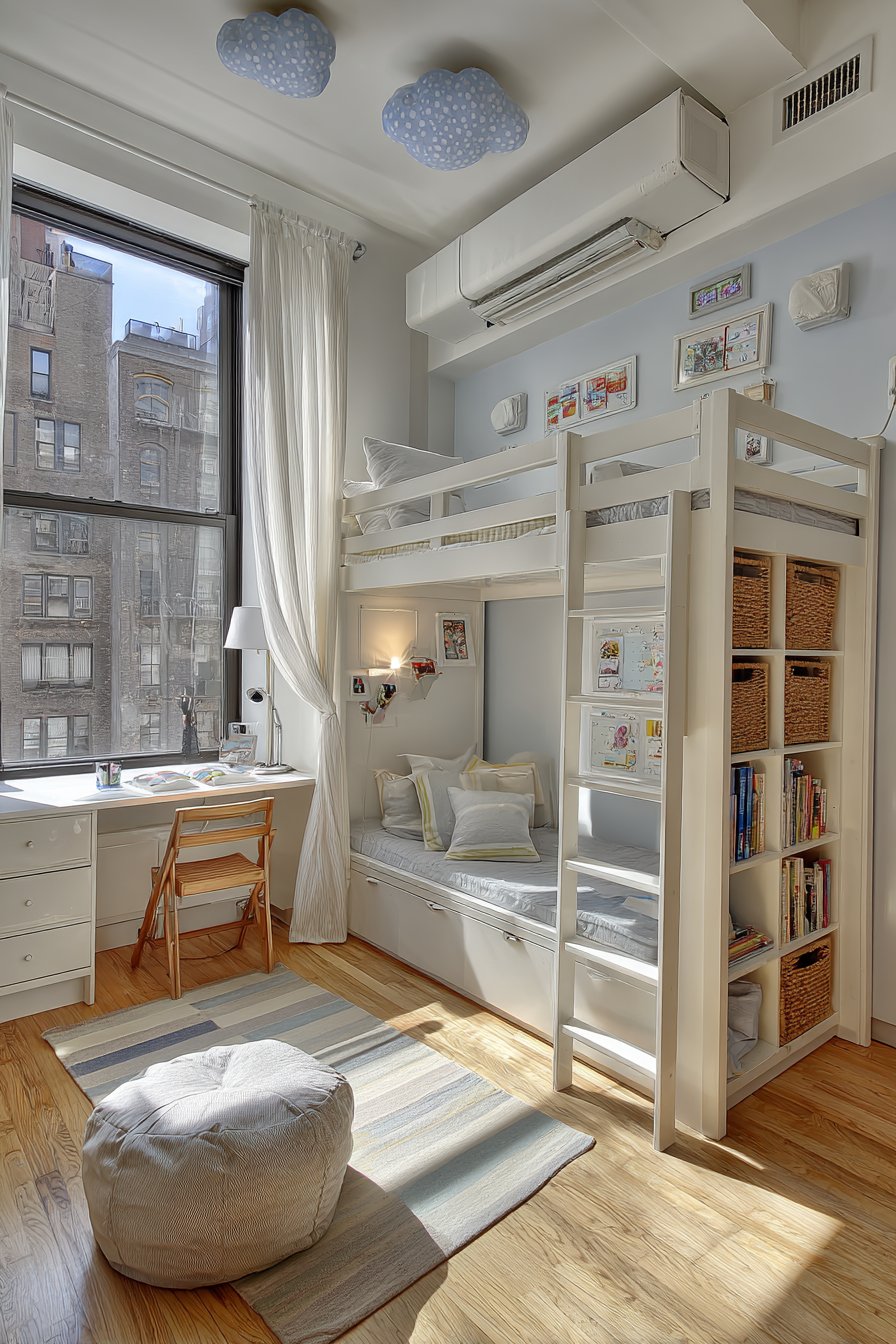
This collection explores twenty distinct approaches to small kids bedroom design. From loft beds to Murphy beds, each concept addresses space constraints differently. The designs balance practicality with personality. They demonstrate how smart choices create rooms that grow with children while maximizing every available inch.
1. Vertical Living with Loft Bed Integration
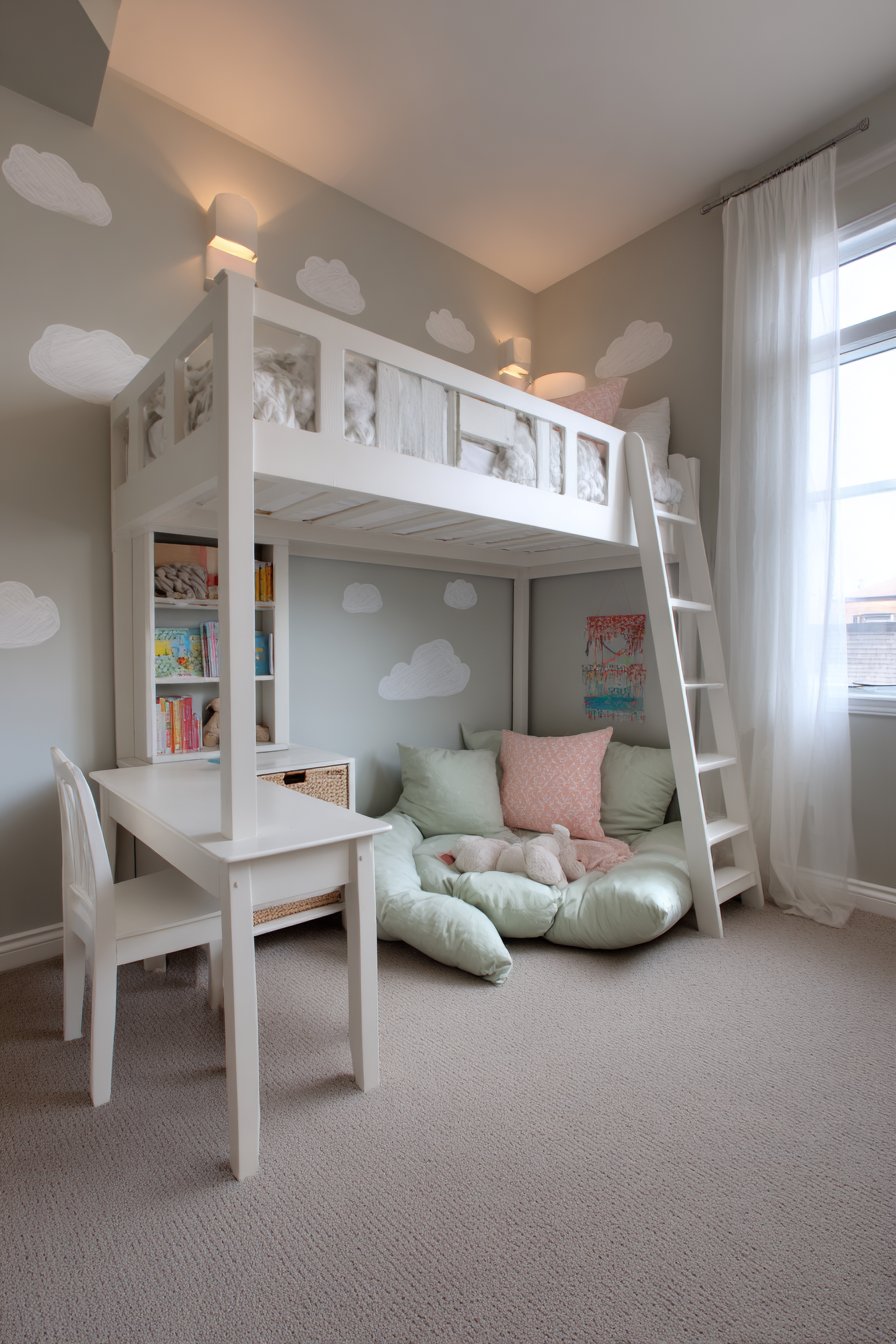
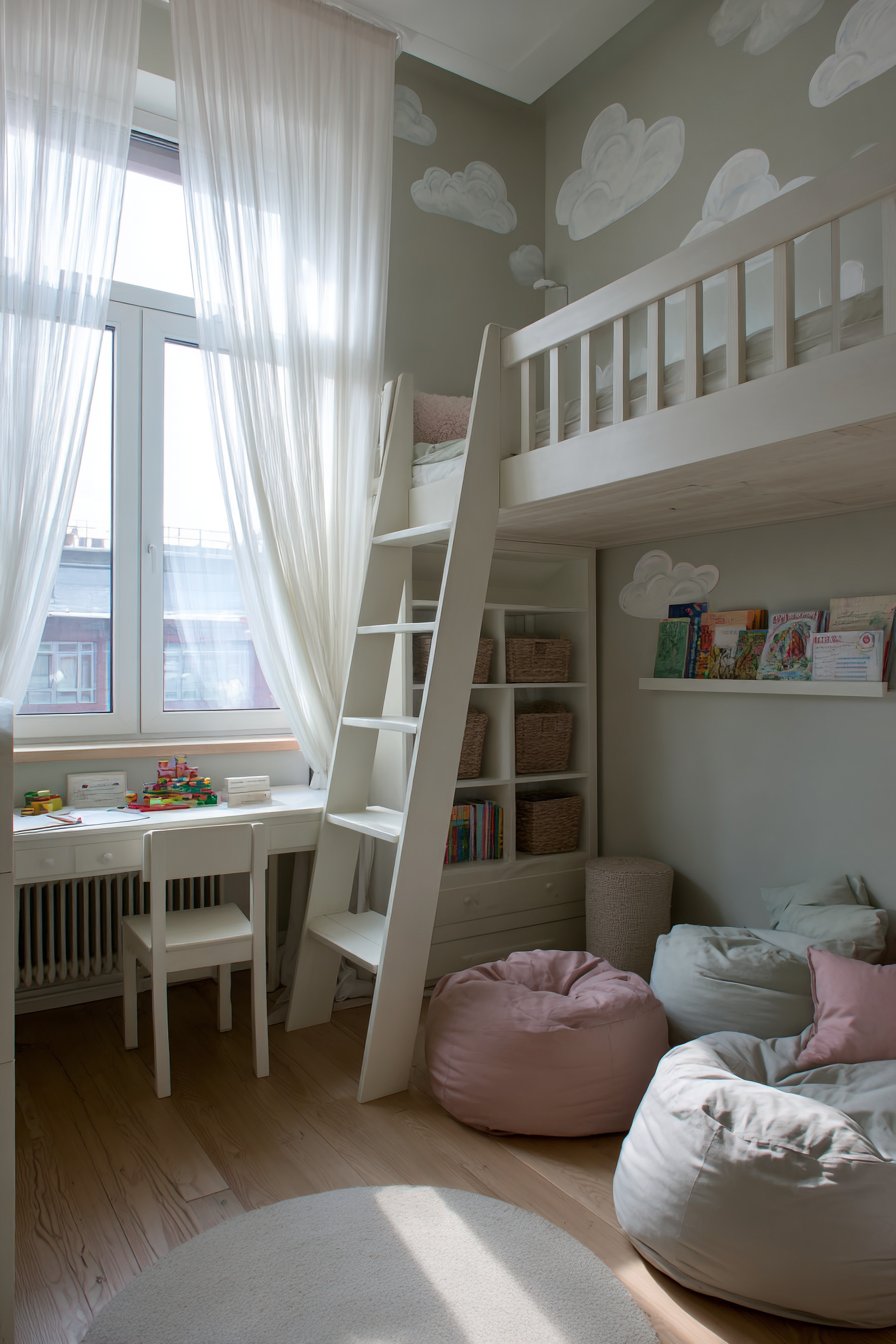
A white wooden loft bed transforms vertical space into functional territory. The integrated ladder features safety rails for secure climbing. Below the elevated sleeping area, a cozy reading nook invites quiet moments. Floor cushions in soft pastels create comfortable seating. A small bookshelf displays children’s books within easy reach.
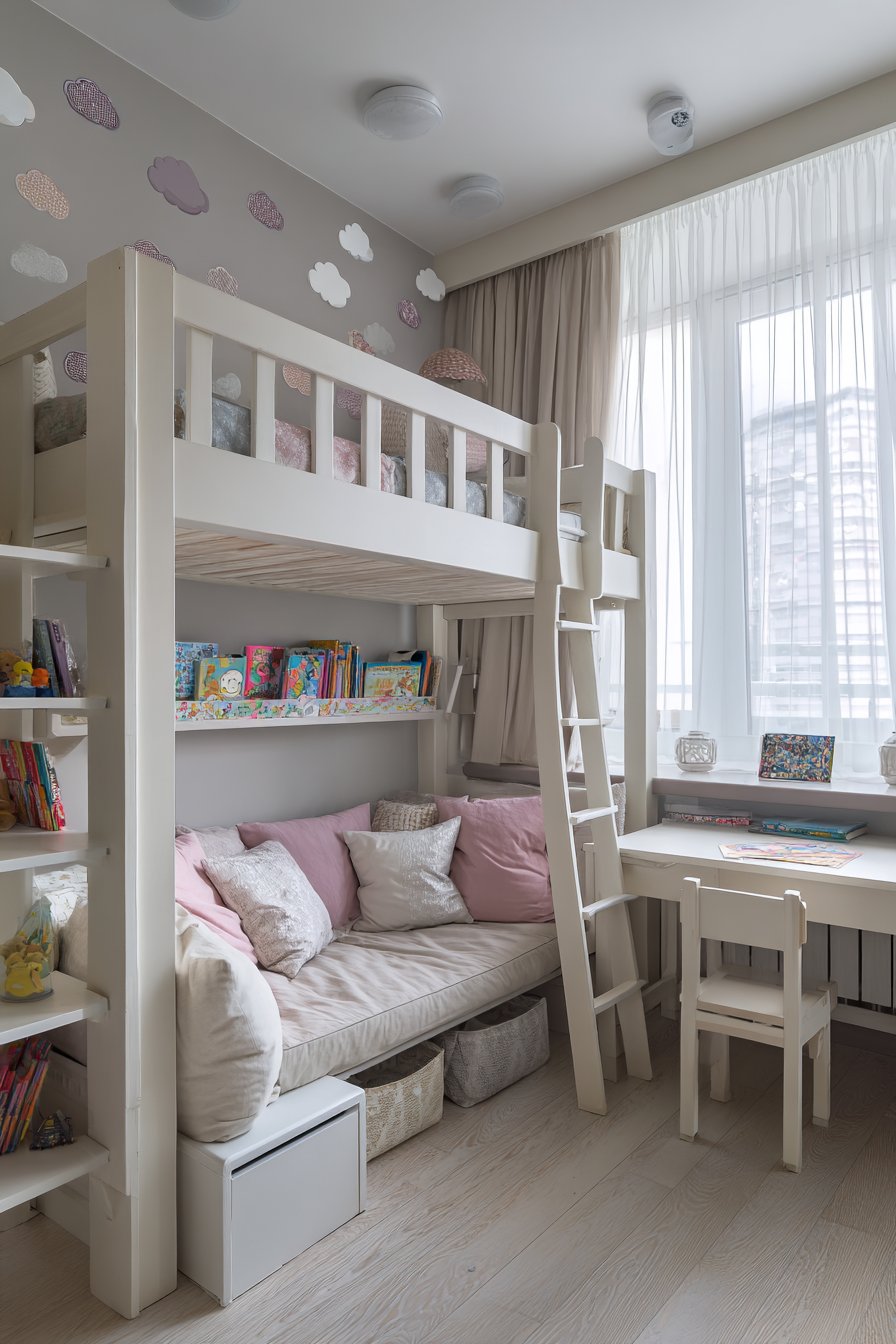
Light grey walls provide a neutral canvas for playful cloud decals. These removable decorations add whimsy without permanent commitment. The decals create visual interest while maintaining calming atmosphere. A compact desk sits beneath a window. Sheer white curtains filter natural morning light beautifully.
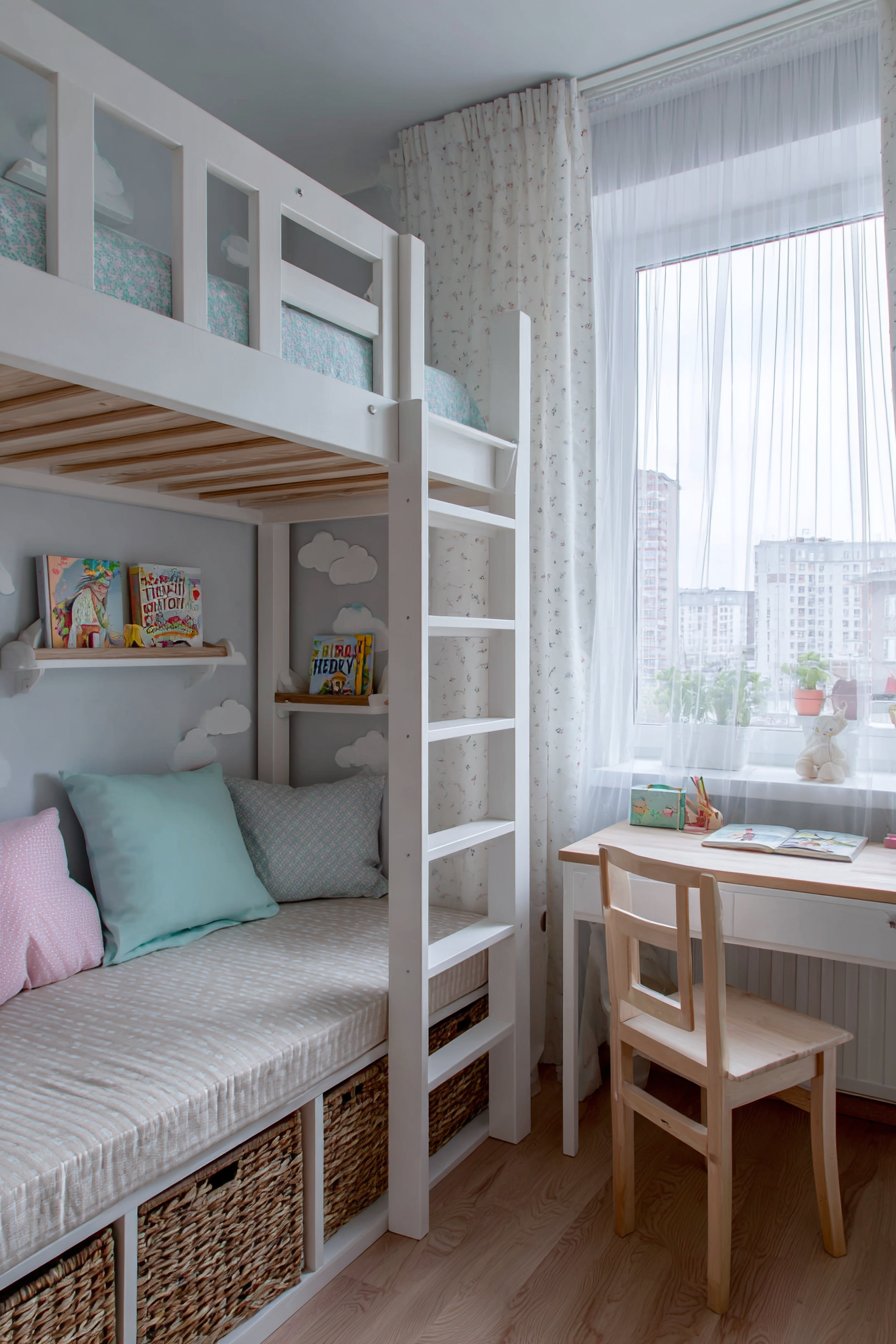
The furniture placement maximizes floor space for movement and play. Neutral-toned storage baskets tuck neatly under the bed. They keep toys organized and accessible. The loft configuration doubles usable floor area. Children enjoy distinct zones for sleeping and activities.
Key Design Tips:
- Install sturdy loft beds with proper weight ratings and safety certifications
- Create dedicated reading nooks with soft lighting and comfortable cushions
- Use removable wall decals for personality without paint commitment
- Position desks near windows to maximize natural light
- Choose storage baskets that slide easily for young children
- Maintain clear pathways between furniture for safe movement
2. Built-In Storage Solution Bedroom
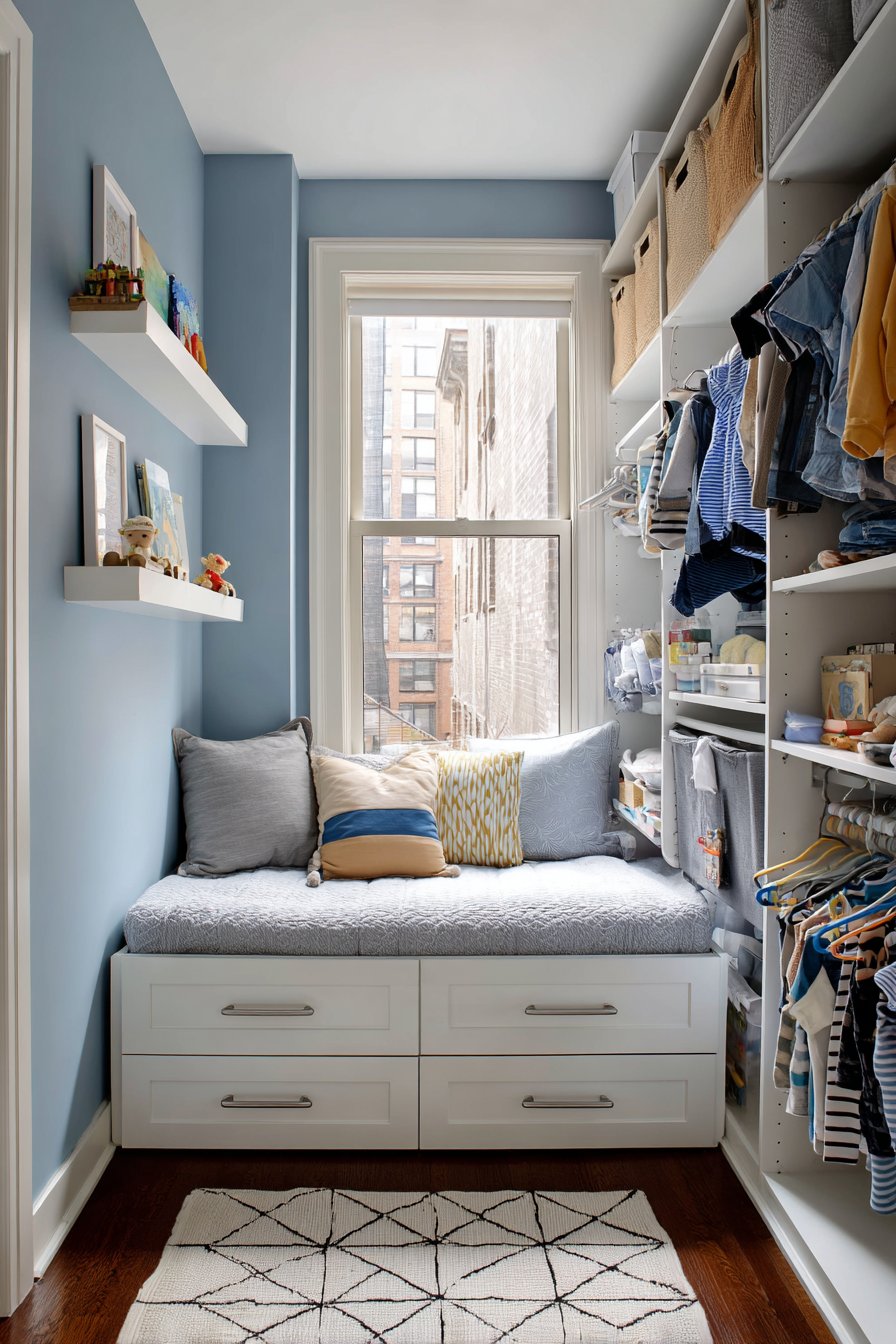
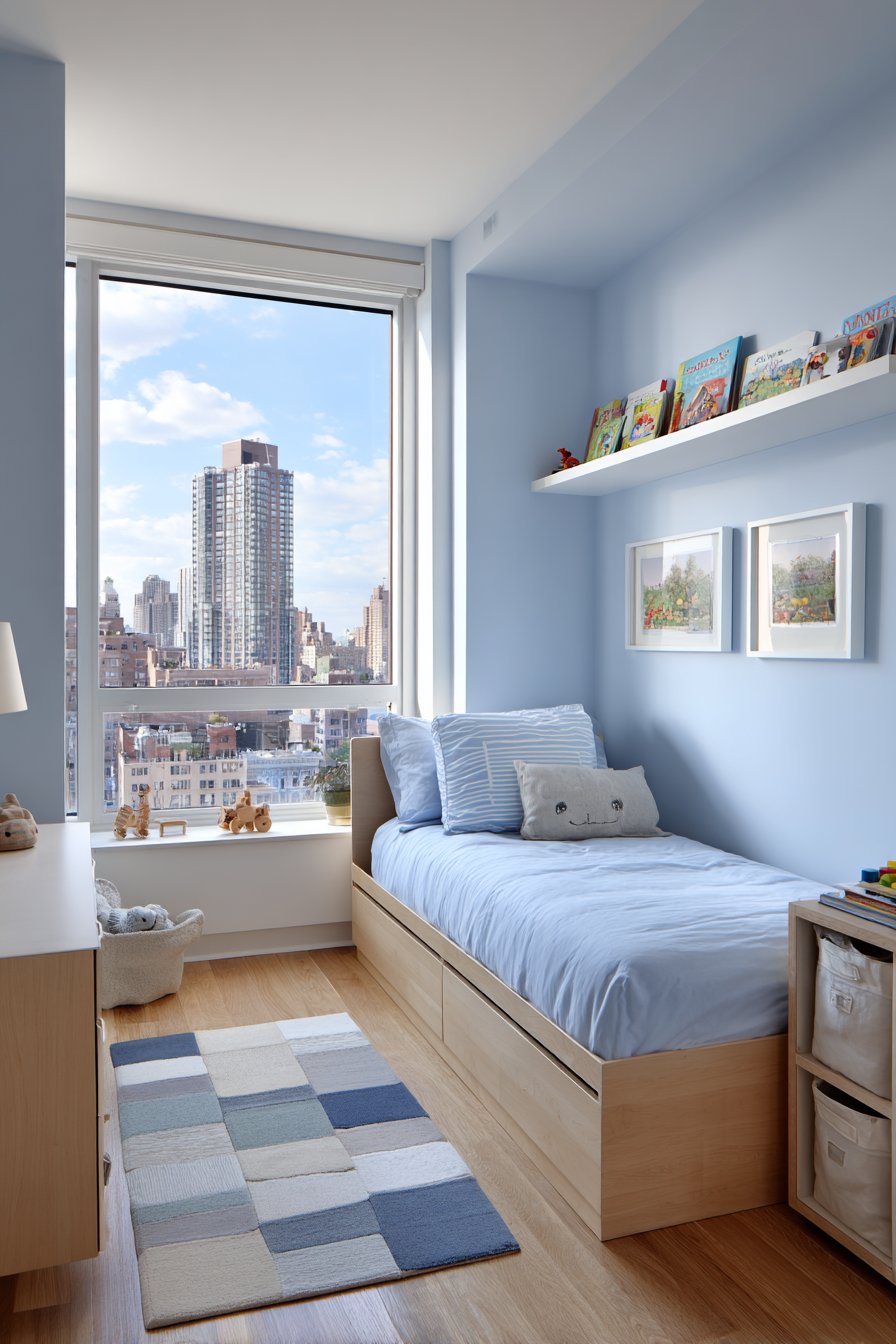
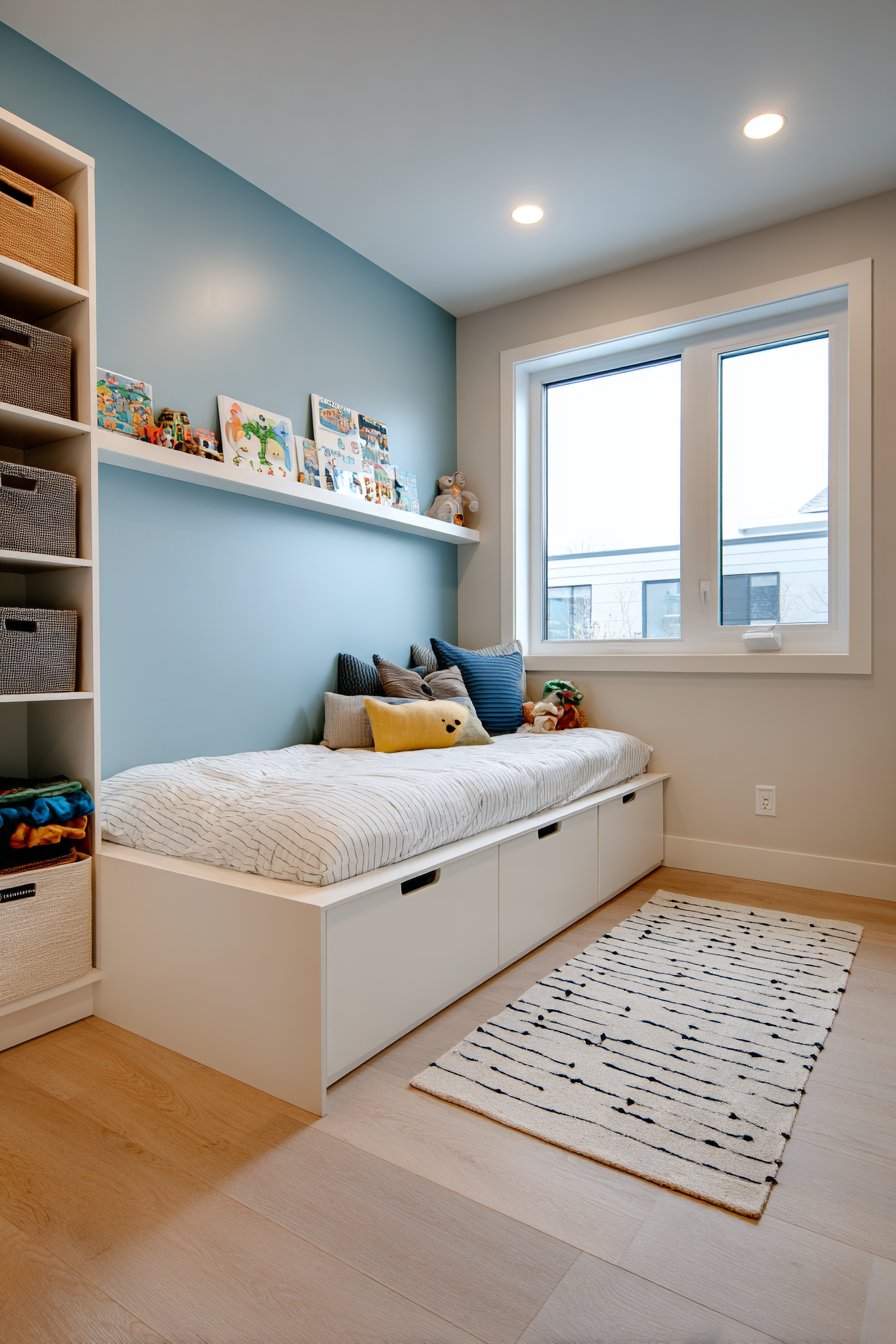
Pale blue accent walls create focal points in this practical design. A twin bed features built-in drawers underneath for clothing storage. The integrated storage eliminates the need for separate dressers. Above the bed, a narrow floating shelf displays small toys. Picture books sit within easy reach for bedtime reading.
The opposite wall showcases a compact closet system. Adjustable rods position at child height for independence. Fabric bins organize smaller items efficiently. Warm oak laminate flooring adds natural warmth. A small washable area rug in geometric patterns provides comfort underfoot.
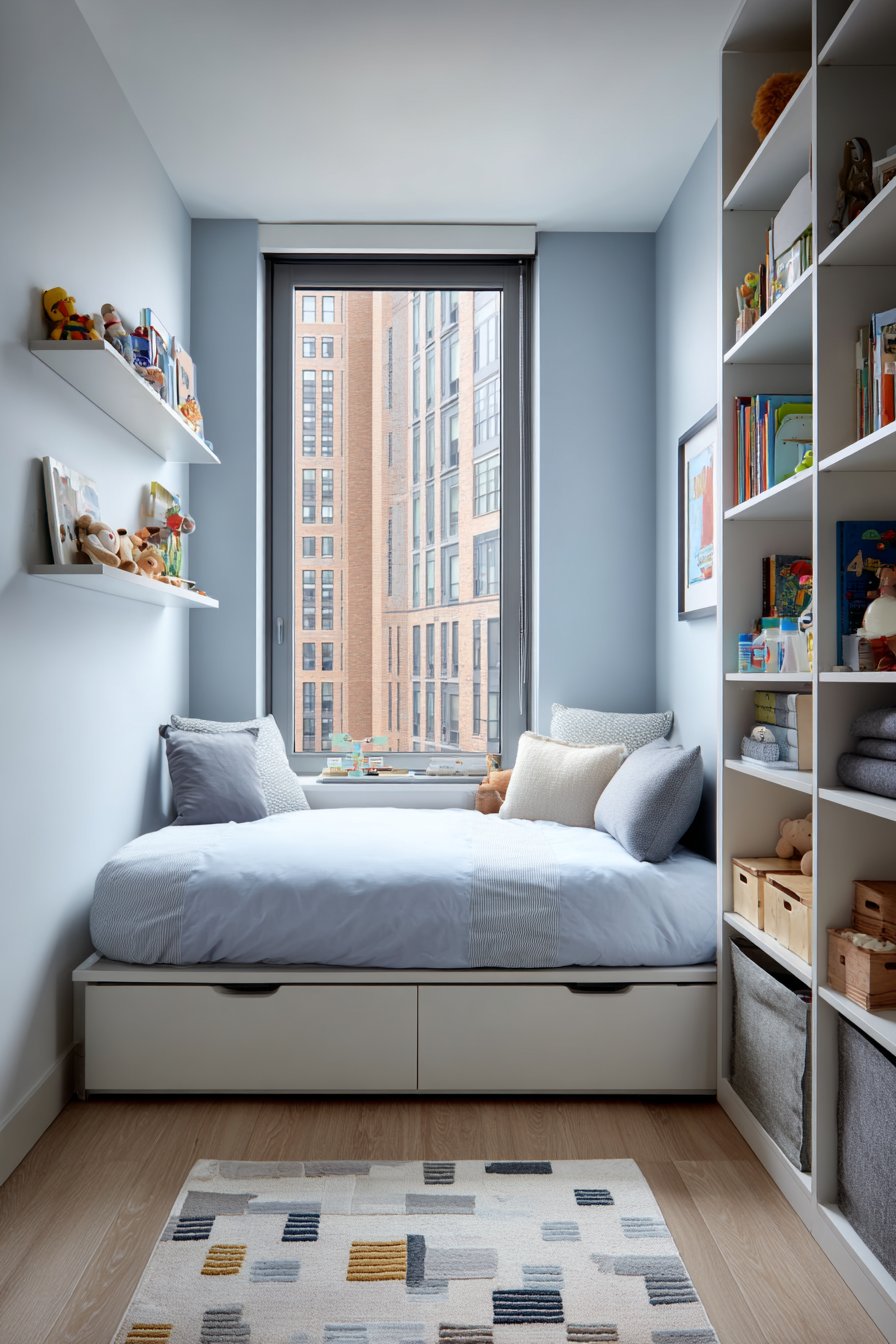
Natural daylight from a single window illuminates the efficient layout. The lighting reveals how every square foot serves specific purposes. The built-in approach creates custom solutions. Storage becomes integral to furniture rather than afterthought. This strategy maximizes limited floor space dramatically.
Key Design Tips:
- Select beds with integrated drawer systems for hidden storage
- Install floating shelves to display items without floor footprint
- Adjust closet rods to child height for encouraging independence
- Choose washable area rugs for easy maintenance
- Use fabric bins for organizing small items and toys
- Position single windows strategically for maximum natural light
3. Corner Bed Configuration Design
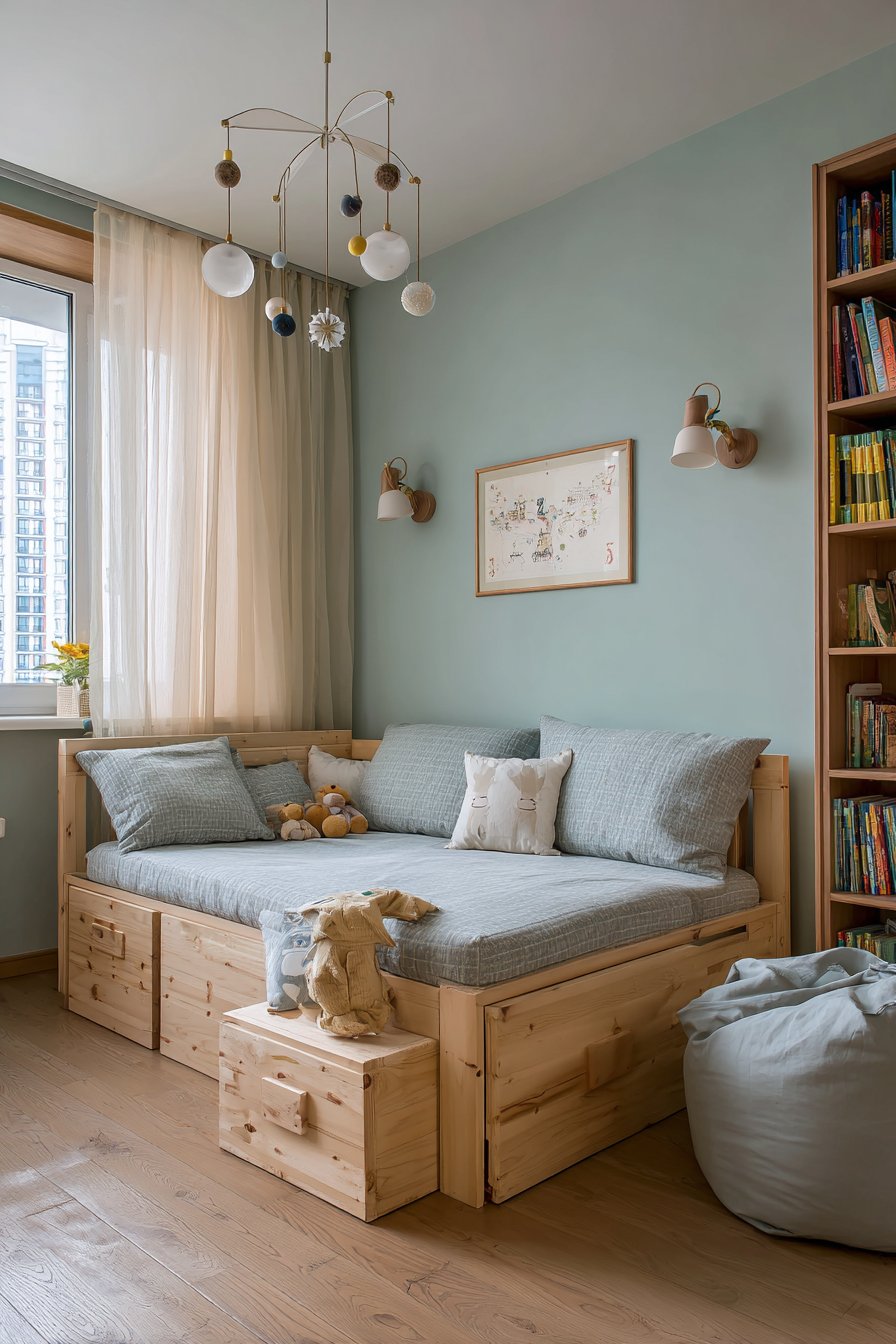
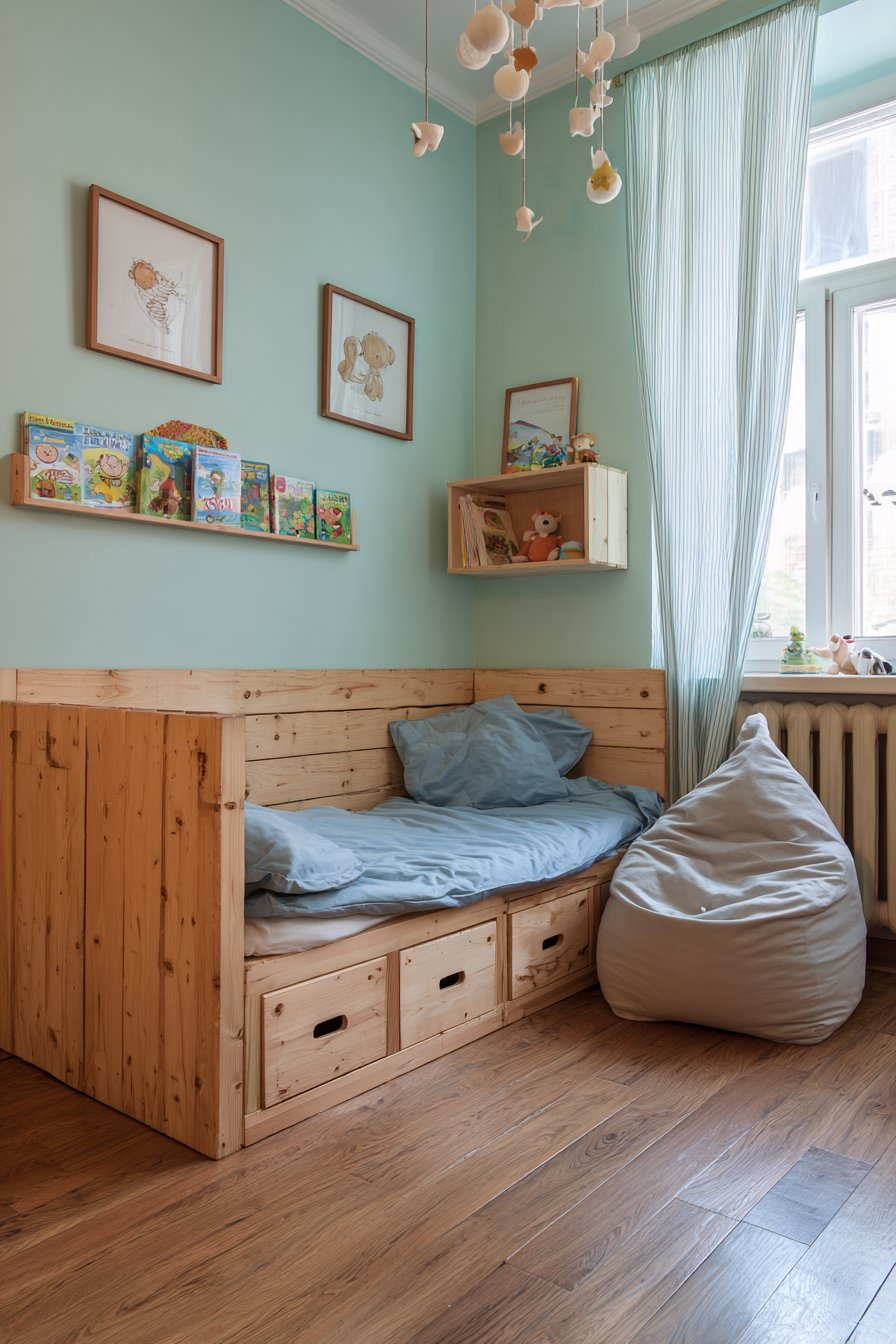
Corner positioning maximizes available floor space in this cozy design. The bed’s headboard rests against two walls simultaneously. This arrangement creates more open area for activities. A simple wooden frame in natural pine features storage cubbies. The headboard cubbies hold books and small toys conveniently.
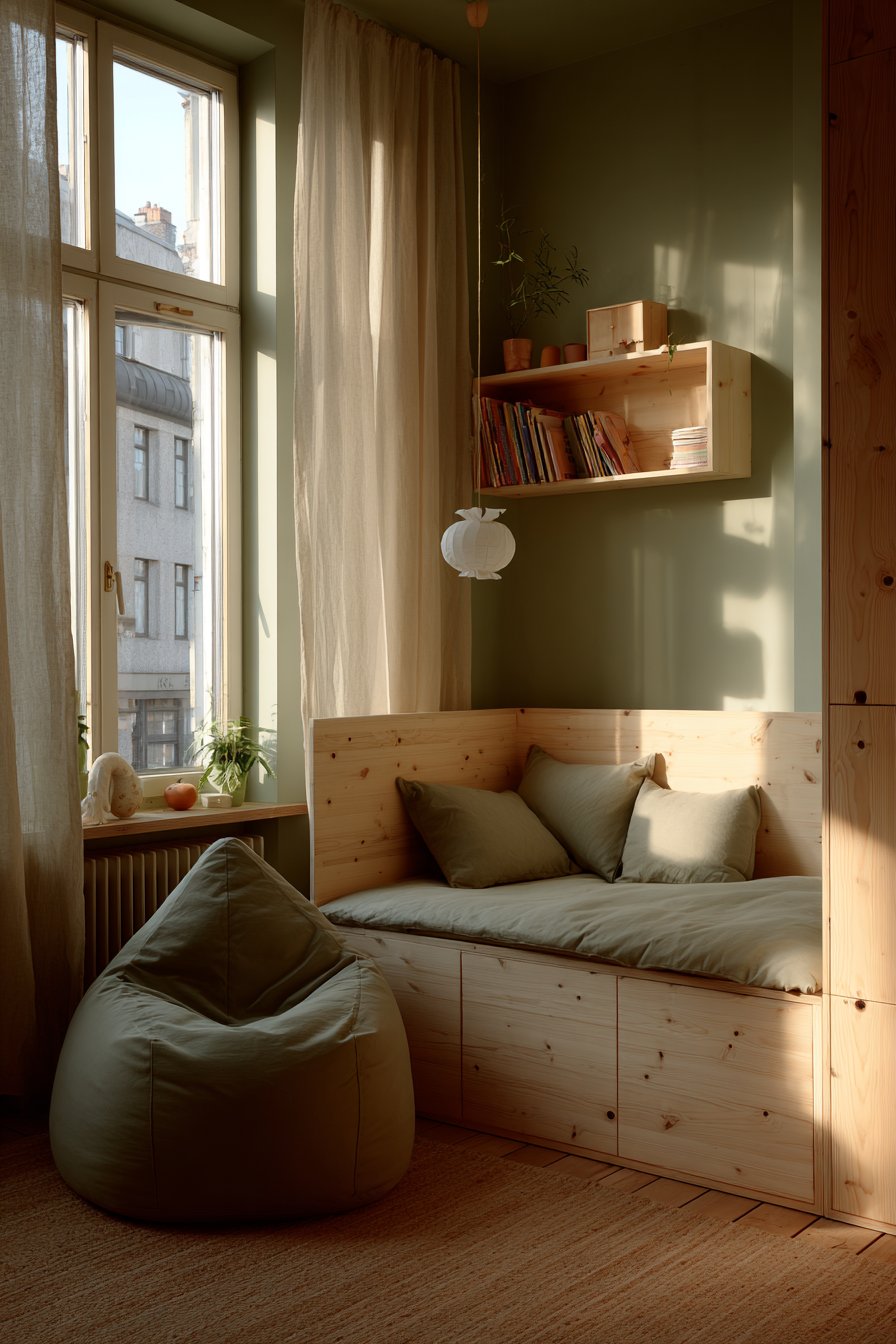
Soft mint green walls establish a calming atmosphere throughout. A whimsical mobile hangs from the ceiling above the bed. It adds visual interest at the vertical dimension. A small bean bag chair sits in the corner. The durable canvas fabric withstands active use beautifully.
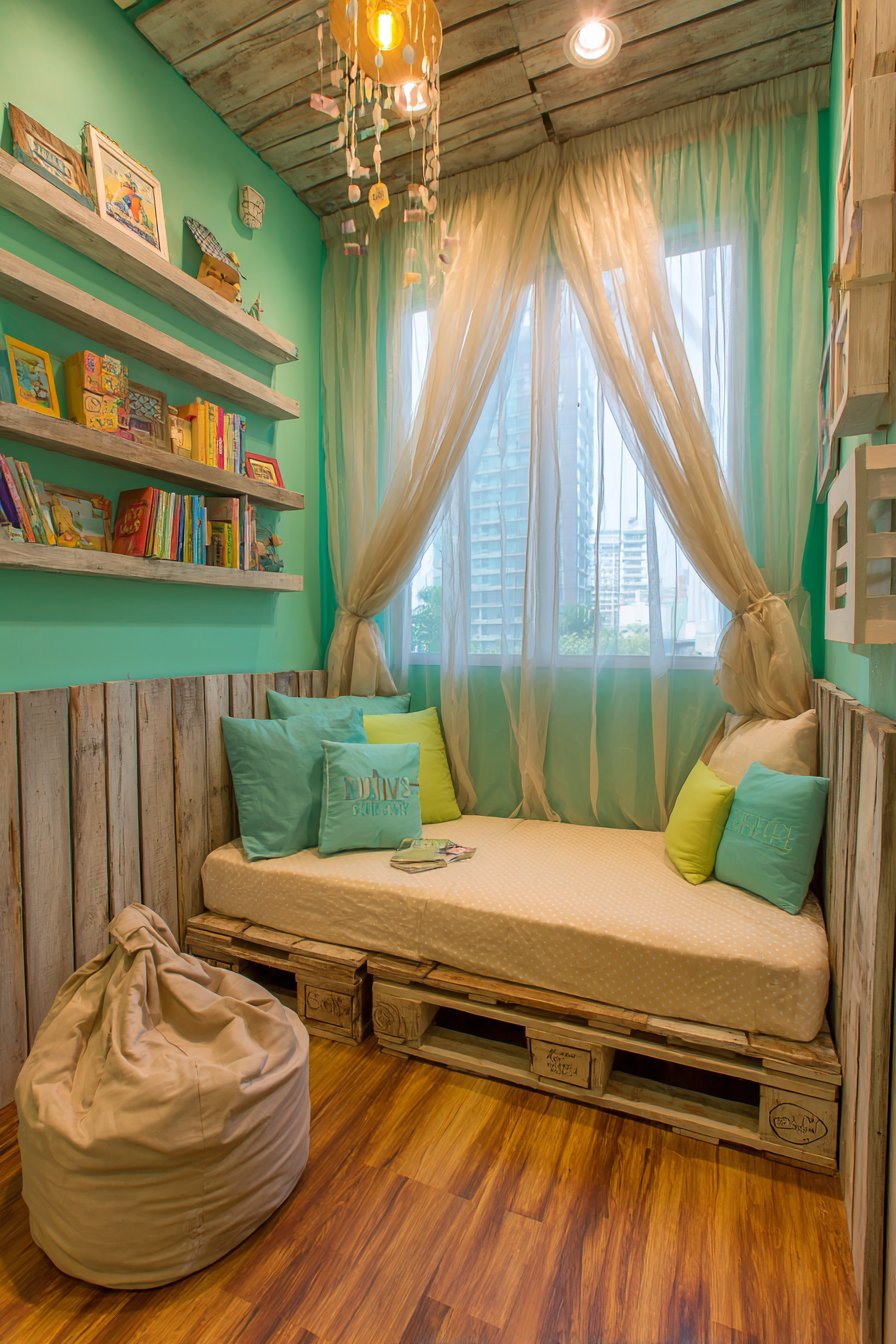
Wall-mounted folding desks save precious floor space when not needed. The desk deploys for homework or art projects. Golden hour lighting streams through gauzy curtains. The warm natural light highlights the efficient room layout. Strategic furniture placement proves that small spaces offer big possibilities.
Key Design Tips:
- Position beds in corners to free central floor space
- Integrate storage into headboards for space efficiency
- Choose calming wall colors like mint green for restful environments
- Install wall-mounted folding furniture for flexibility
- Add ceiling mobiles for visual interest without floor space
- Use gauzy curtains to filter light while maintaining brightness
4. Transformative Murphy Bed System
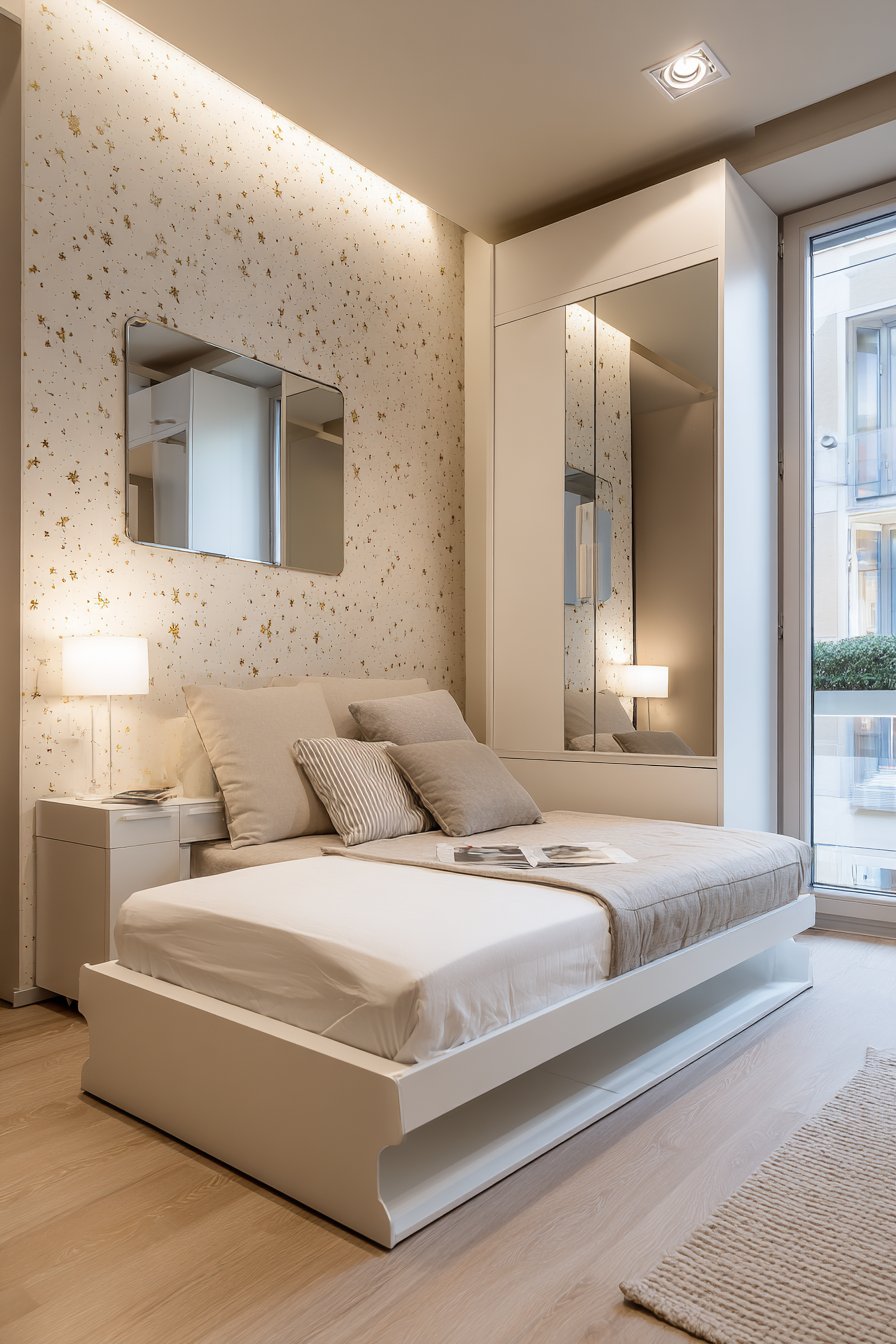
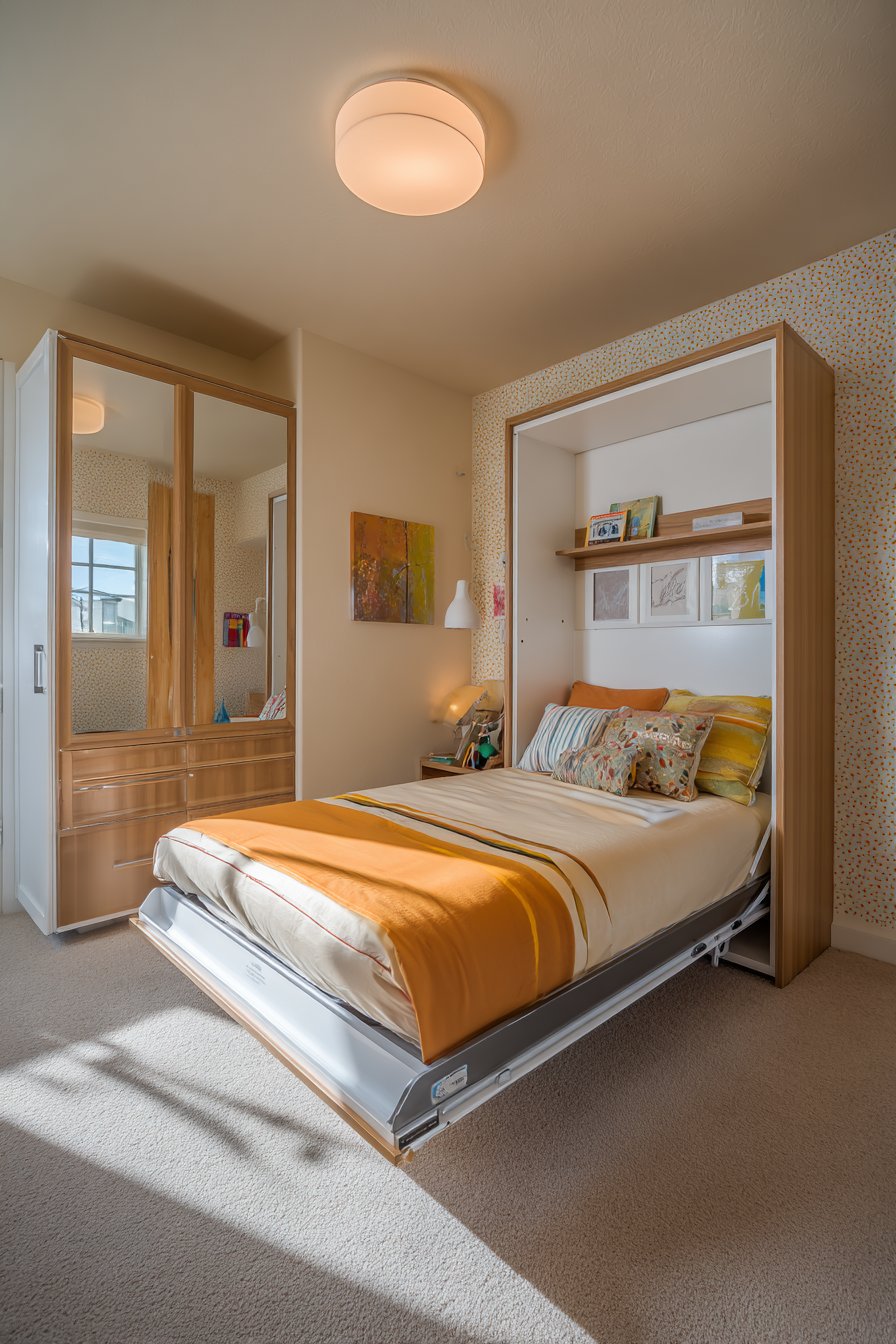
Murphy bed systems offer ultimate flexibility in compact spaces. The bed folds up to reveal play areas during daytime. When deployed, side storage compartments hold bedtime books. A small reading light integrates into the system. Warm cream walls create neutral foundations for design.
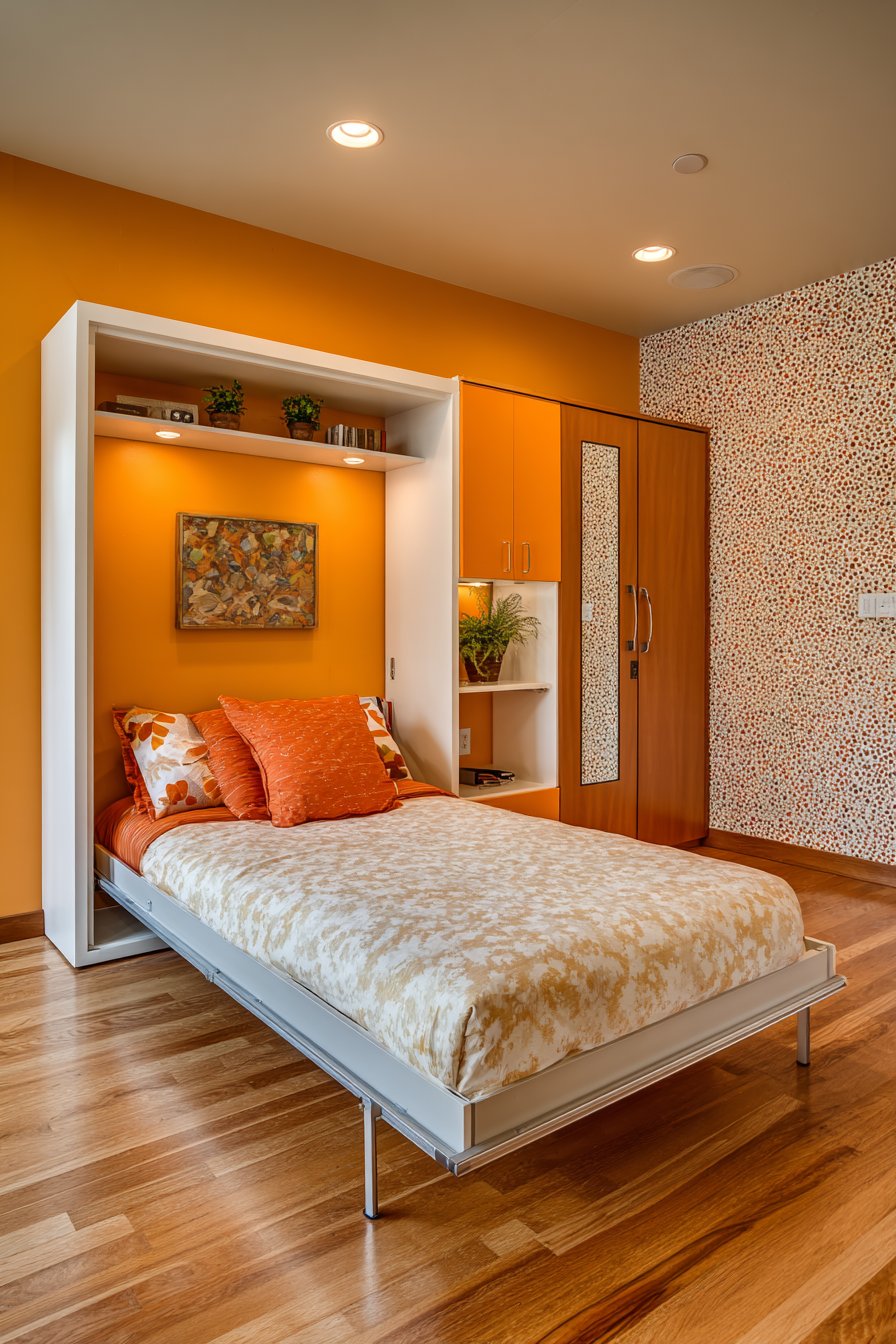
A single accent wall features removable peel-and-stick wallpaper. The subtle star pattern adds personality without permanence. A compact wardrobe with mirror doors serves dual purposes. The mirrors create illusions of expanded space. Recessed ceiling lighting provides even illumination throughout.
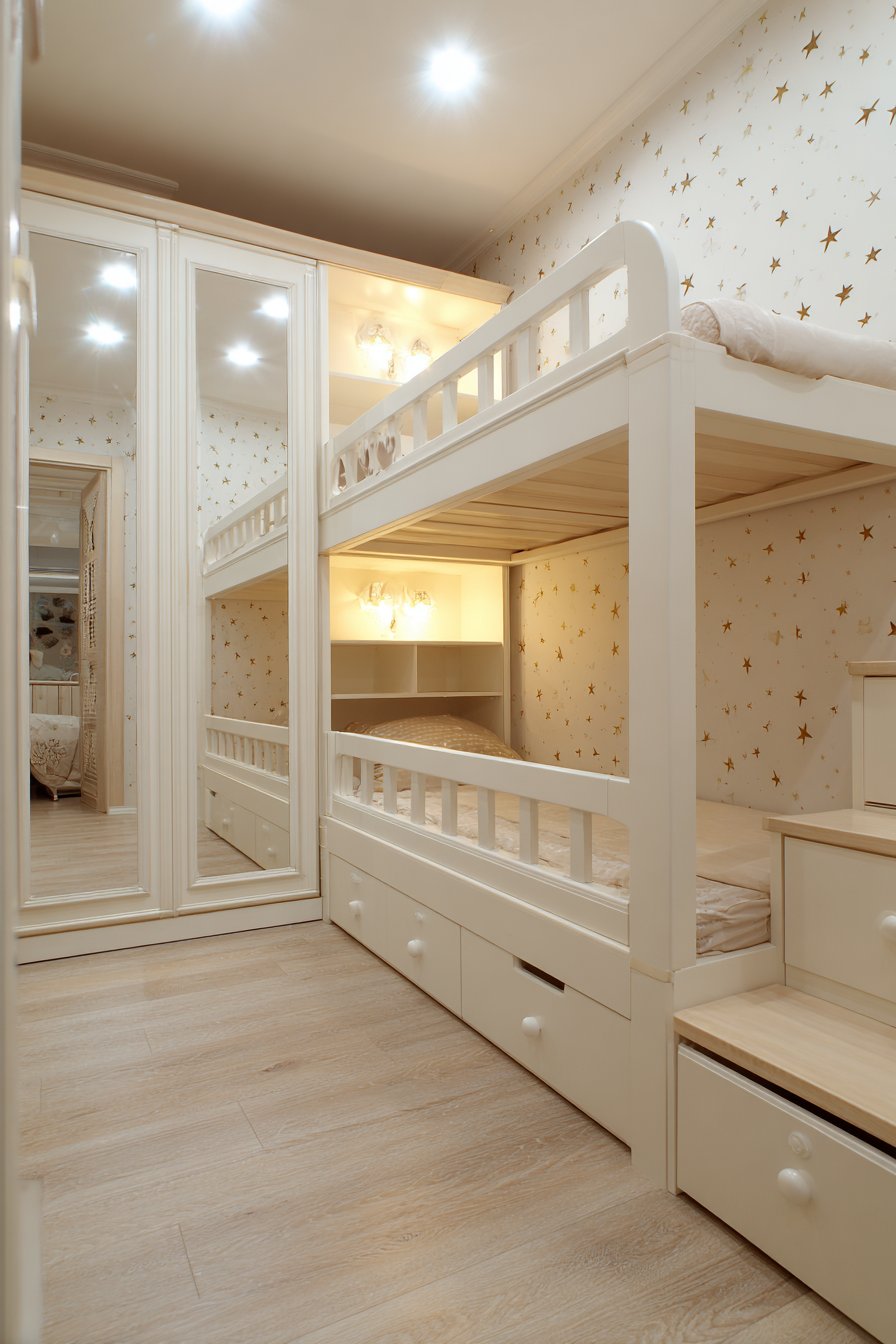
The dual-purpose design demonstrates exceptional space utilization. Children enjoy open play areas during waking hours. Bedtime transforms the room into comfortable sleeping quarters. The versatility accommodates changing needs throughout the day. Professional lighting showcases the system’s innovative engineering.
Key Design Tips:
- Research quality Murphy bed mechanisms with safety certifications
- Include integrated lighting for reading and ambiance
- Use removable wallpaper for changeable personality
- Install mirror doors to visually expand small spaces
- Choose recessed lighting to maintain ceiling height perception
- Consider professional installation for wall-mounted systems
5. Low Platform Bed with Natural Light
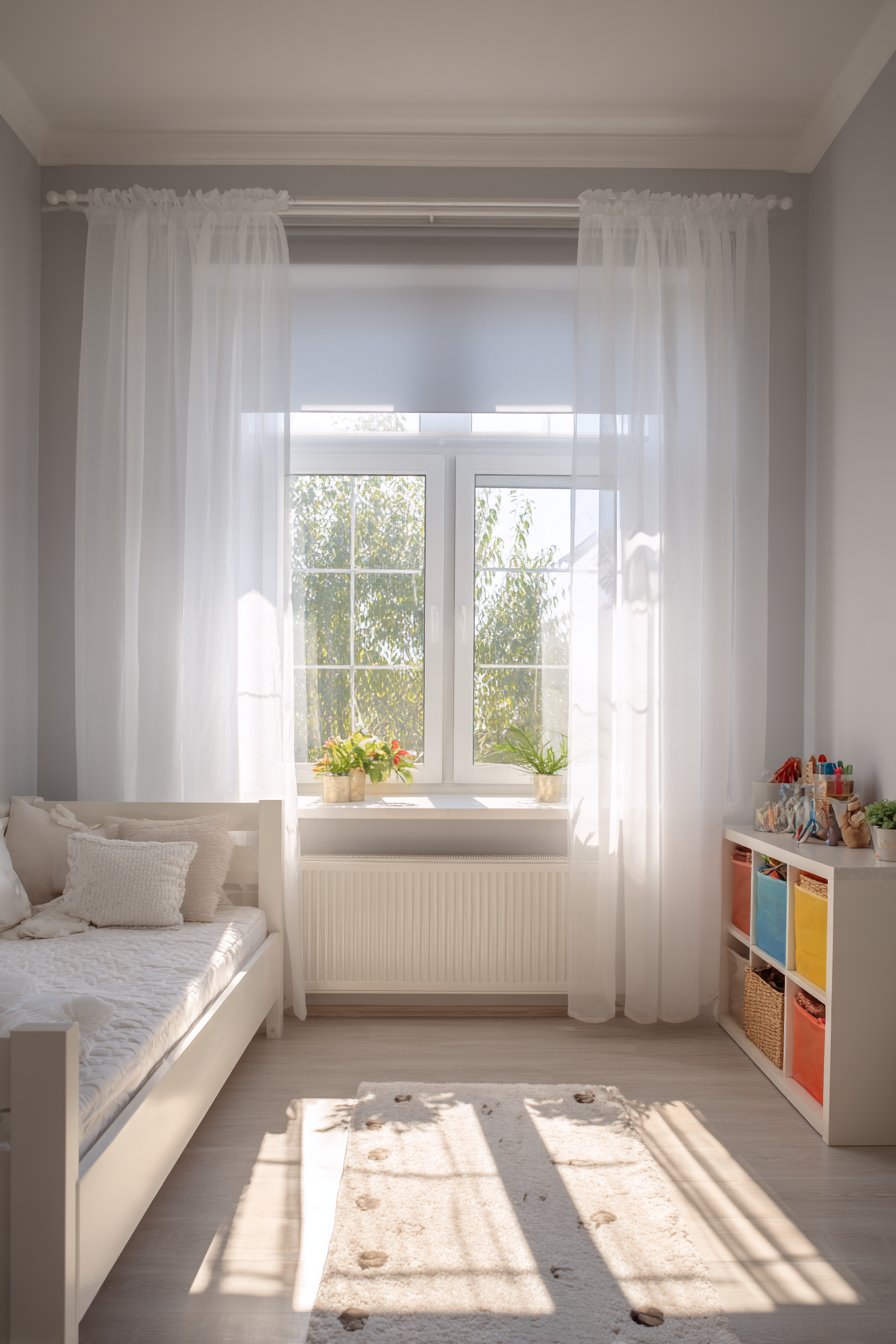
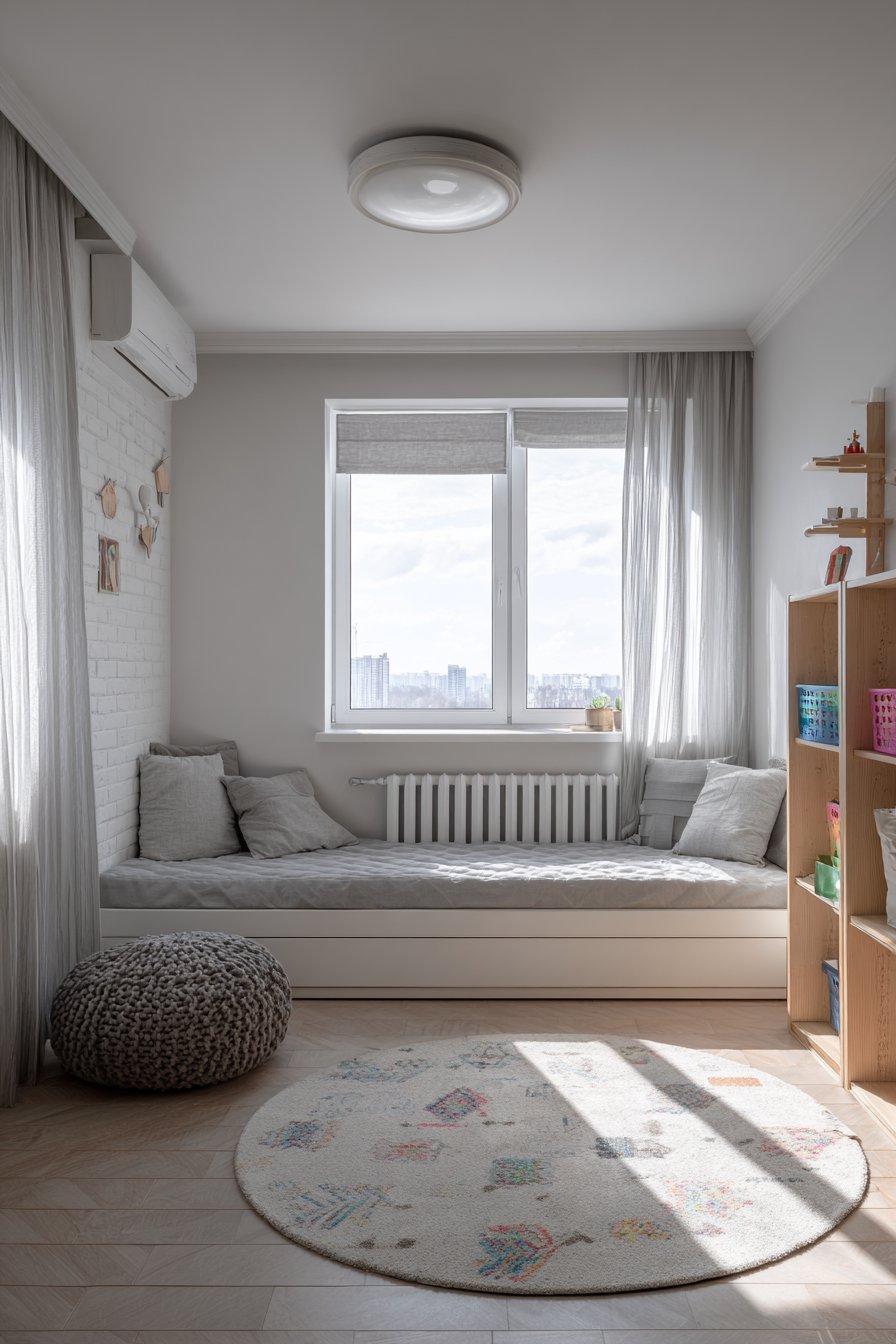
Low platform beds suit young children perfectly. The white-painted wood frame positions beneath windows. Natural light floods the sleeping area throughout the day. Sheer roller blinds in soft grey provide privacy. The blinds maintain brightness while offering light control.
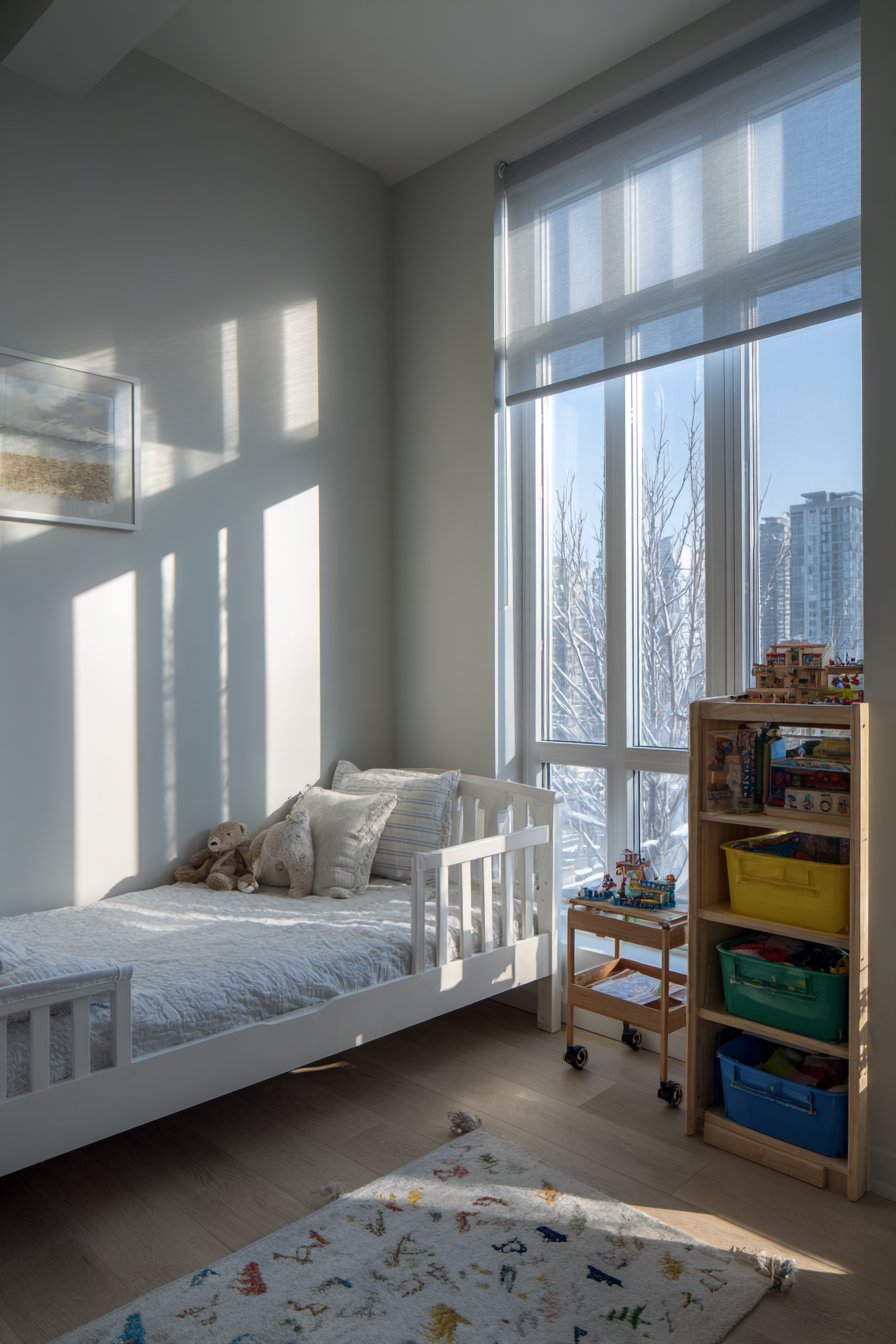
A small rolling cart organizes art supplies efficiently. The cart tucks away when activities conclude. Open shelving units in blonde wood finish display colorful bins. The bins position at child height for easy access. Durable luxury vinyl planks feature light oak tones.
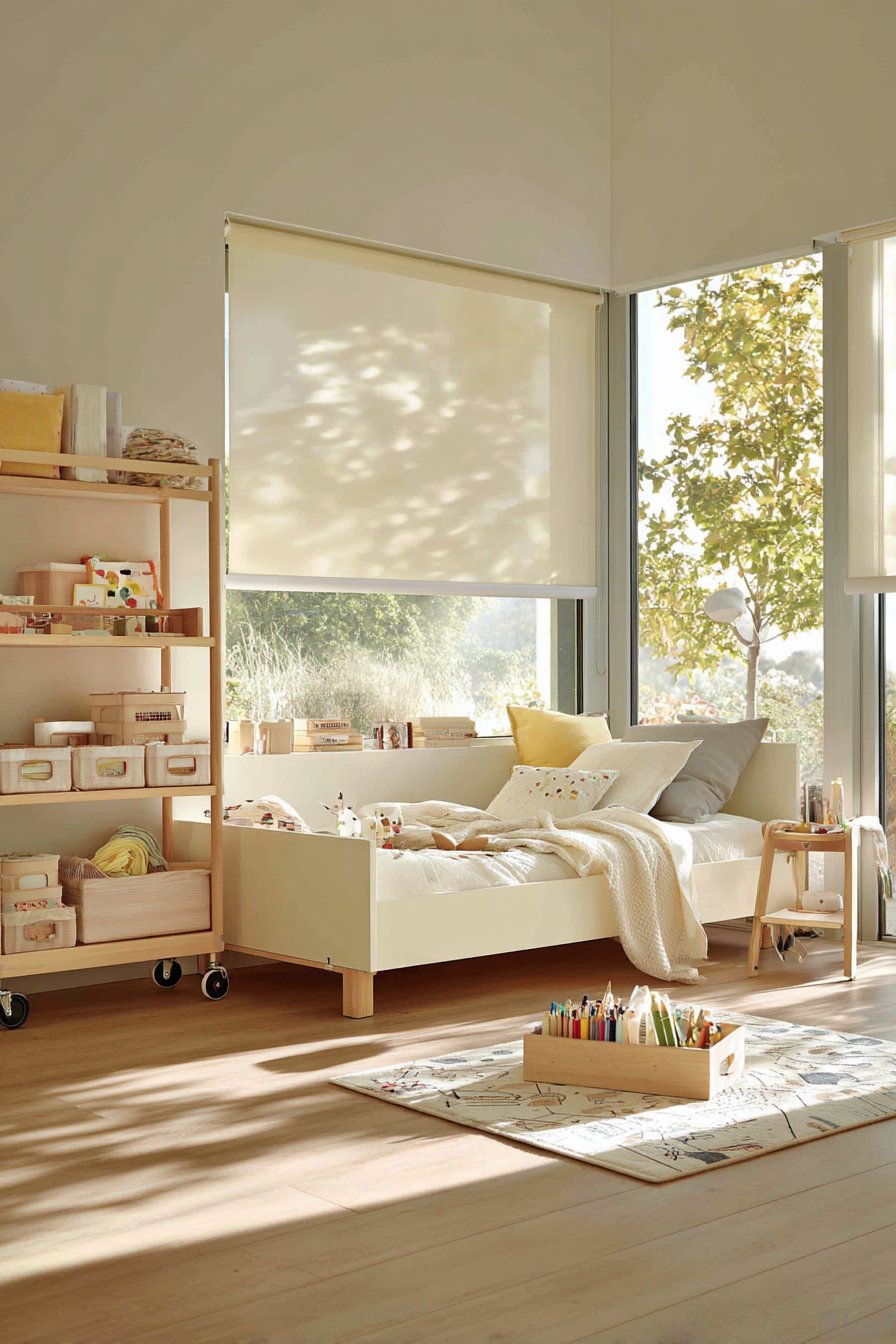
Natural morning light creates soft shadows across surfaces. The airy feel defies limited square footage. Light colors and natural materials expand perceived space. The design proves that brightness matters more than size. Strategic window placement maximizes available natural illumination.
Key Design Tips:
- Select low platform beds for young children’s safety
- Position beds beneath windows for natural wake-up light
- Use sheer blinds to balance privacy and brightness
- Choose rolling carts for flexible storage solutions
- Install open shelving at child height for independence
- Select luxury vinyl planks for durability and easy cleaning
6. Sibling-Friendly Bunk Bed Solution
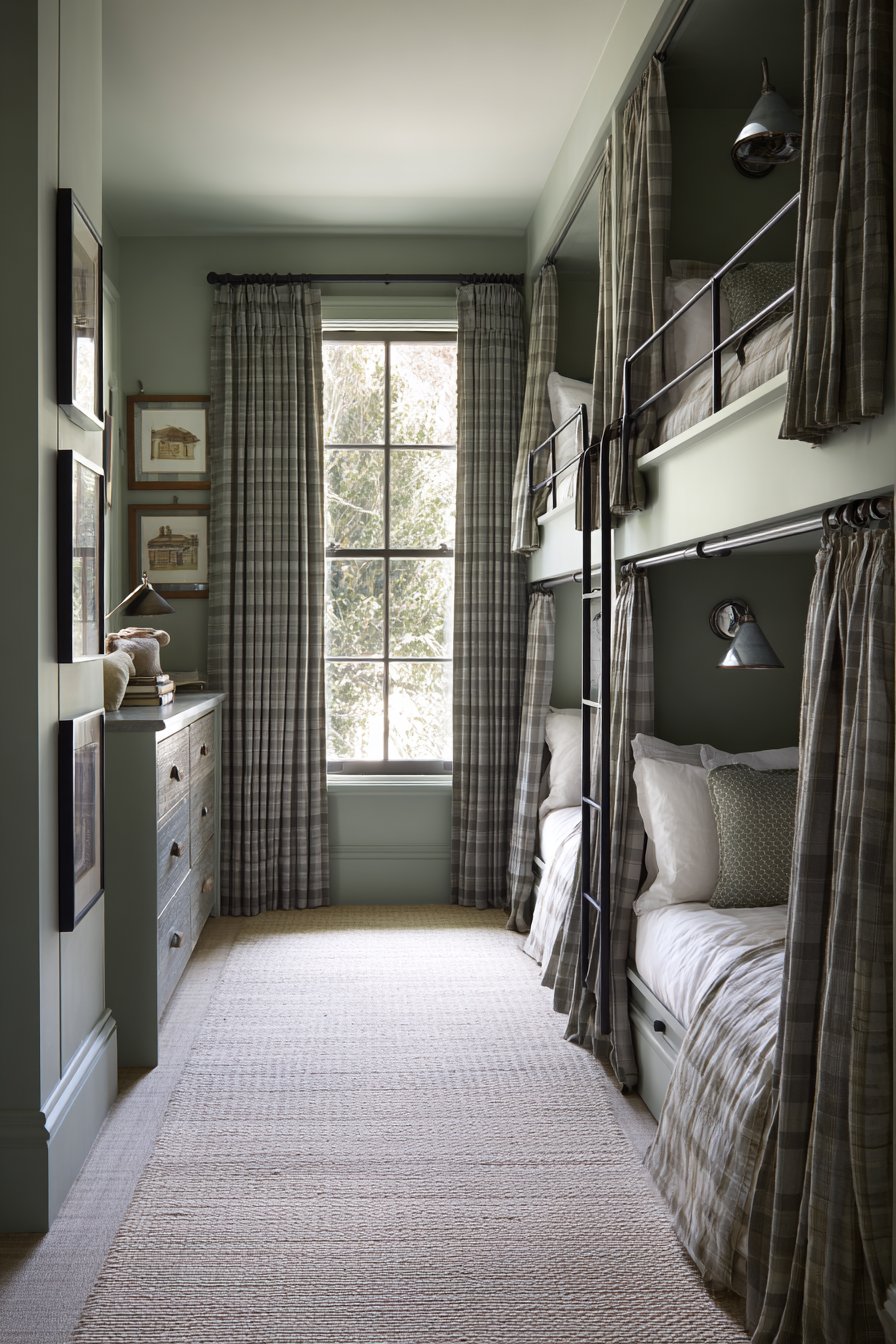
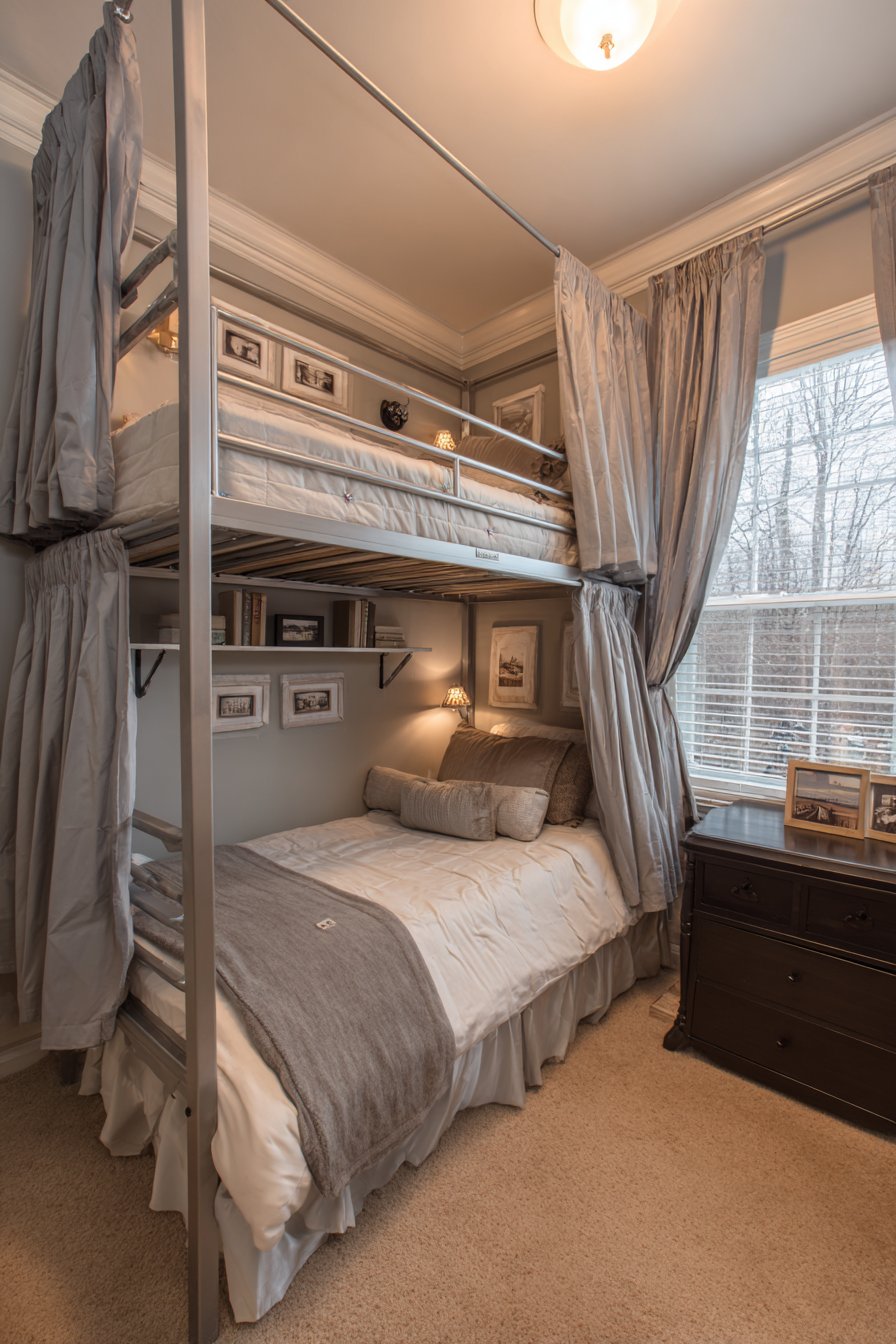
Sturdy metal frame bunk beds accommodate siblings in limited space. Safety rails protect both upper and lower levels. Each bunk includes individual reading lights for independence. Small shelves provide personal storage for each child. The lower bunk features curtains for privacy.
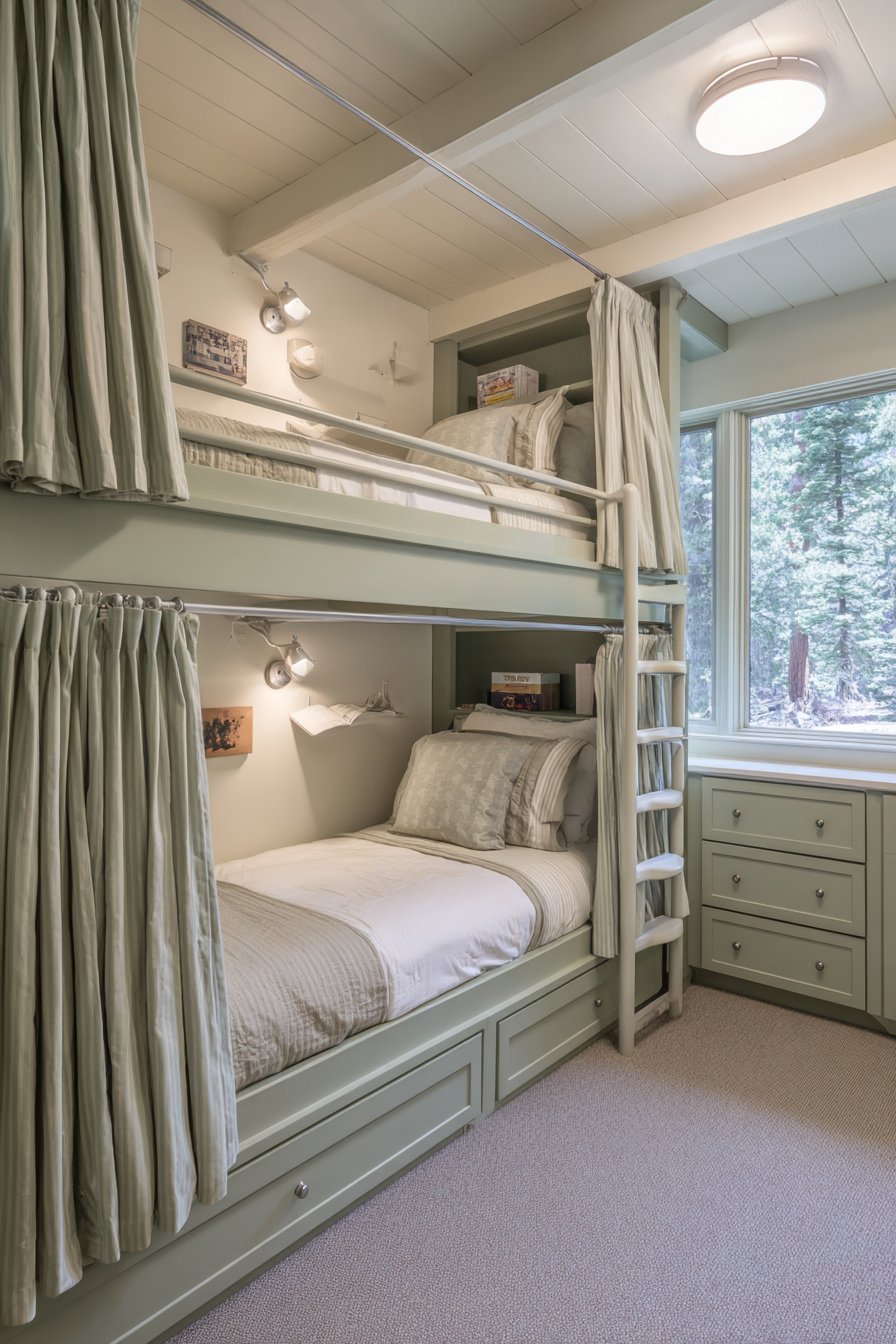
The curtain creates a cozy den feeling for younger children. Soft sage green walls keep the room feeling open. Simple white trim adds architectural detail. A narrow dresser fits between bunks and window. Cotton bedding in coordinating neutrals maintains visual calm.
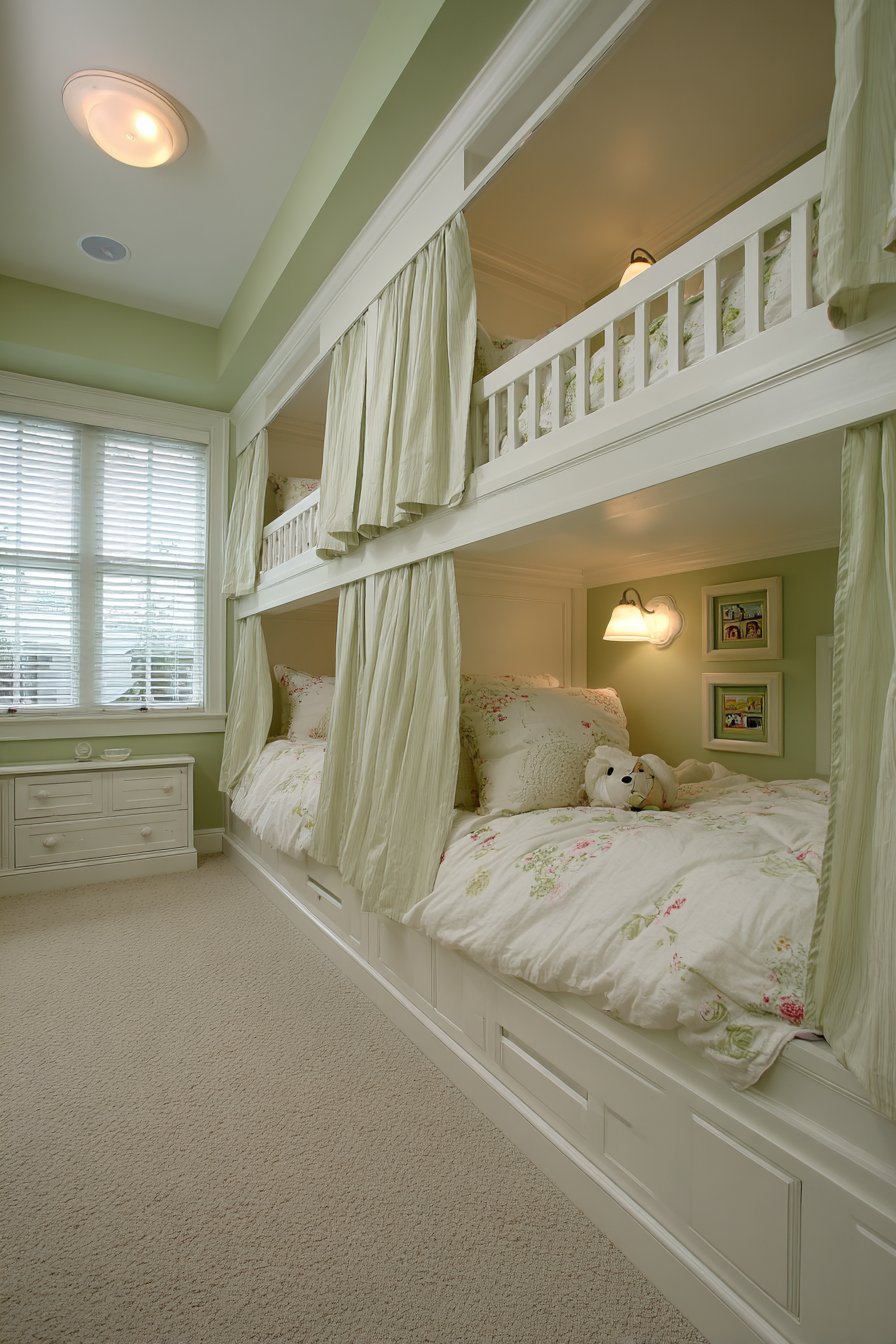
Vertical sleeping solutions effectively double capacity. The design addresses both practical and emotional needs. Personal spaces matter even in shared rooms. Soft diffused daylight highlights the practical arrangement. The lived-in comfort proves bunk beds work beautifully.
Key Design Tips:
- Choose metal frames with certified safety rails
- Install individual reading lights for each bunk level
- Add privacy curtains to lower bunks for personal space
- Select neutral bedding to maintain visual harmony
- Position dressers strategically for shared access
- Ensure adequate clearance between ceiling and upper bunk
7. Minimalist Play-Focused Design
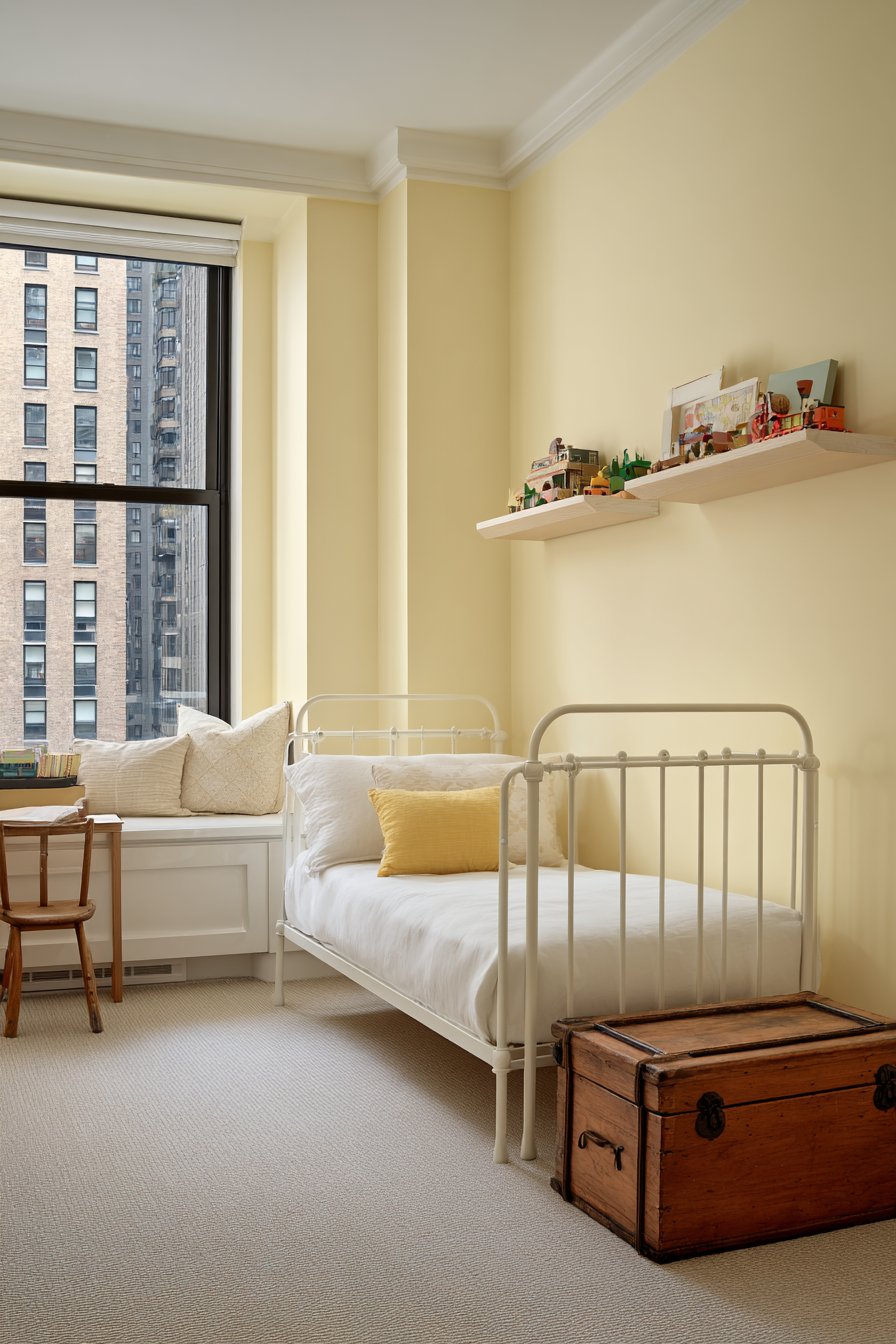
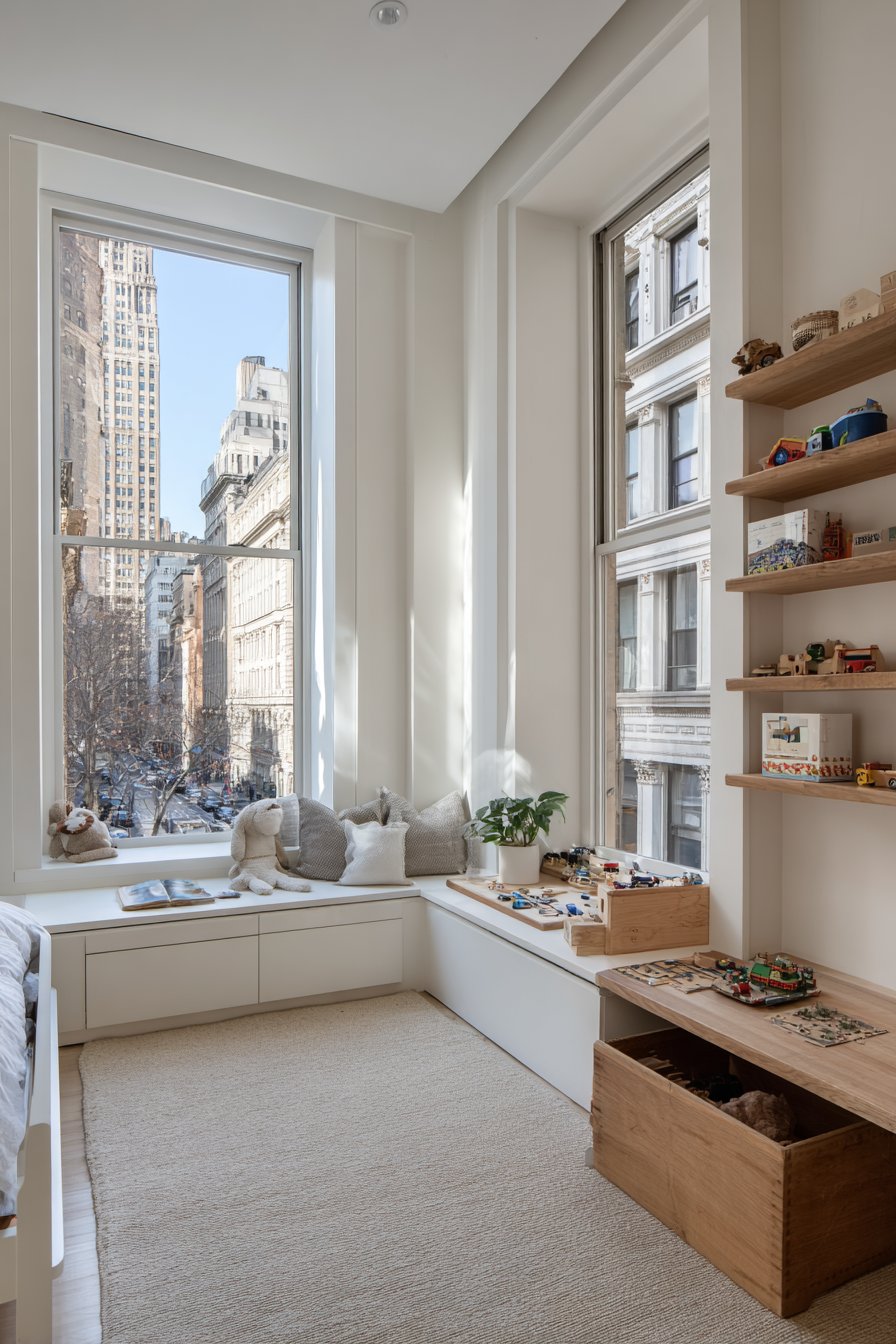
Simple white metal bed frames position strategically along walls. Maximum floor space remains available for active play. A low wooden toy chest features safety hinges. The chest doubles as seating beneath the window. Floating corner shelves display favorite toys without floor interference.
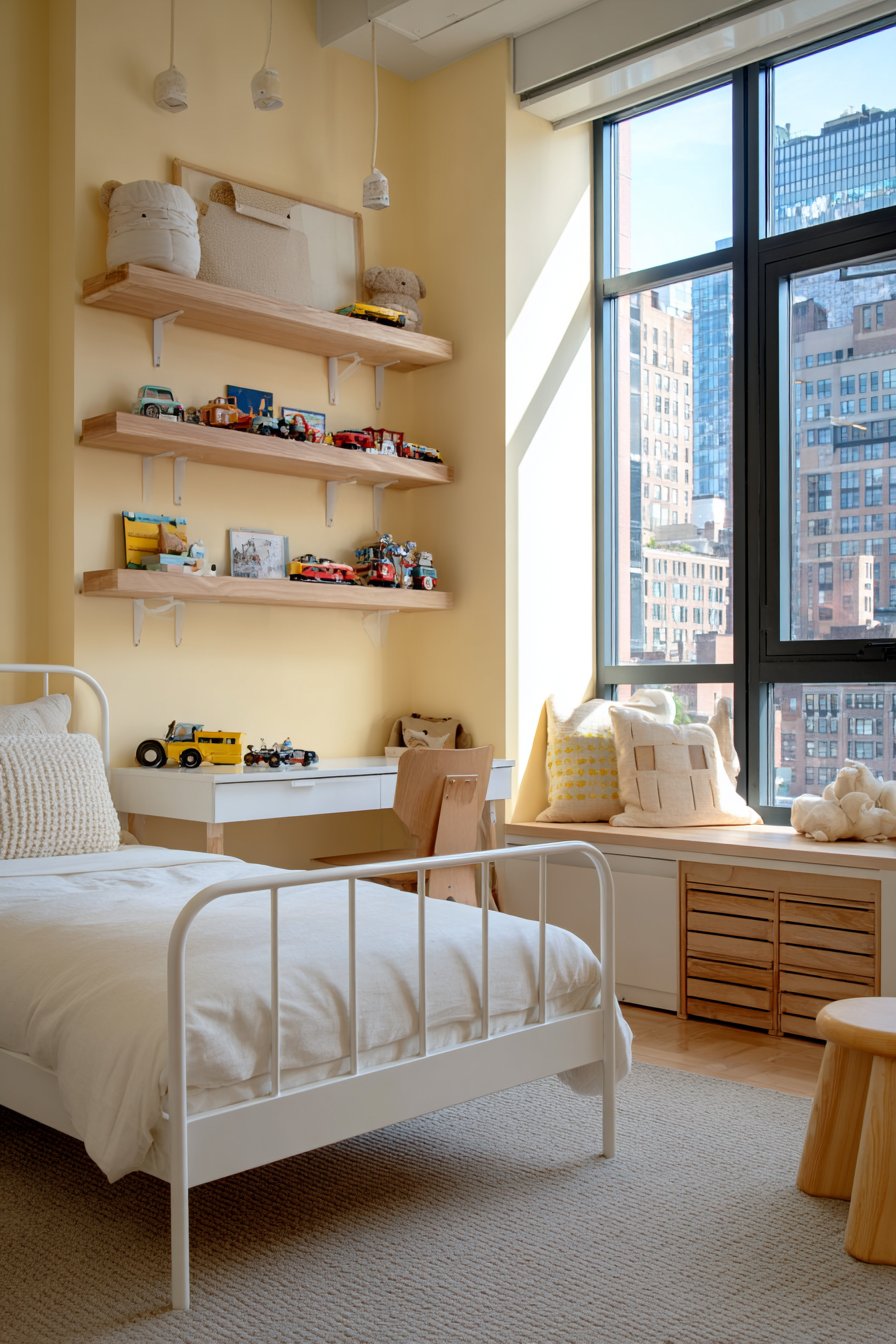
Pale yellow walls create warmth throughout the space. The color reflects available light effectively. A small desk with fold-down chair attaches to walls. The furniture disappears when homework time concludes. Neutral berber carpet in stain-resistant fiber covers floors.
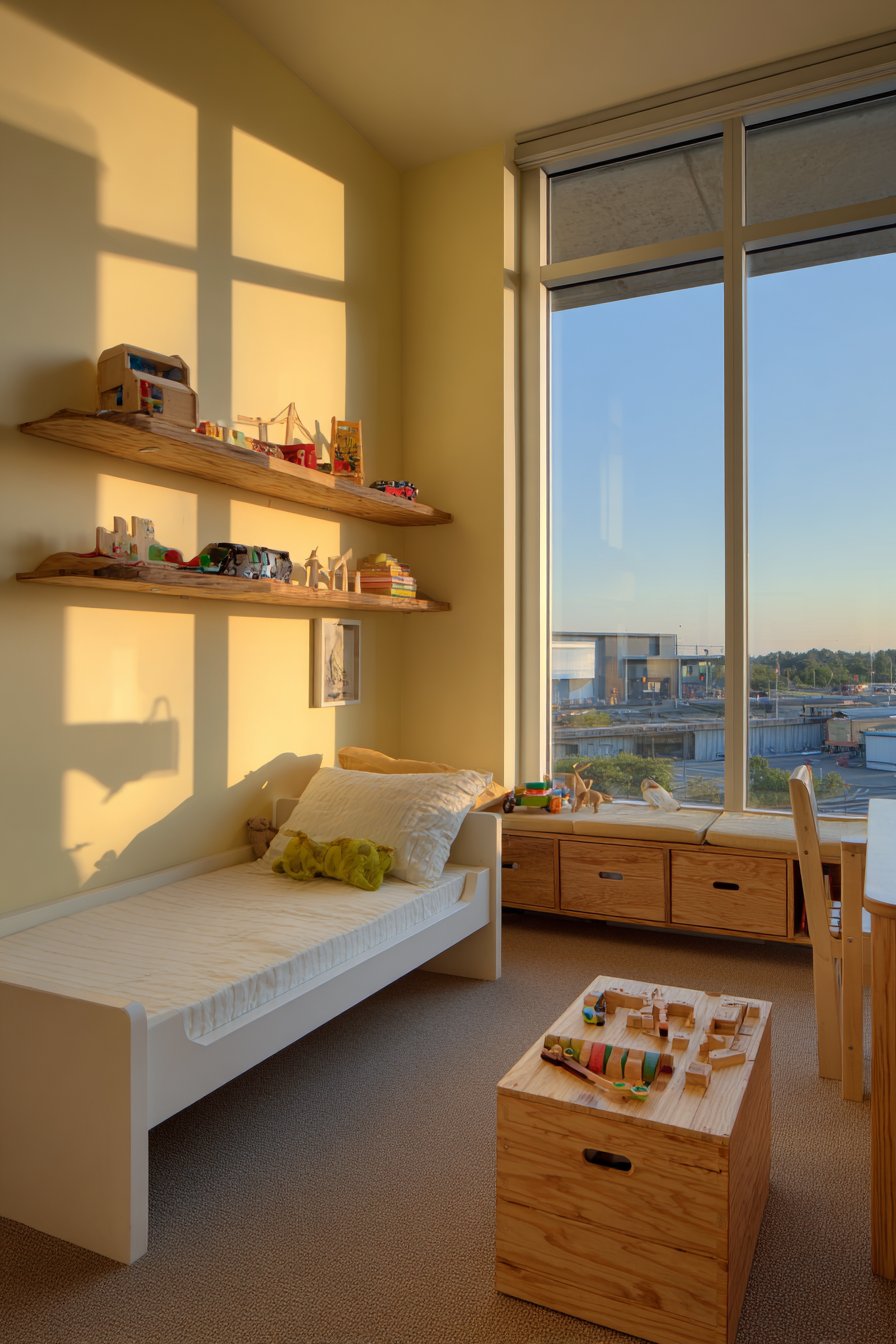
Afternoon natural light fills the uncluttered space beautifully. The thoughtful balance between storage and openness shows clearly. Minimalist approaches suit active children perfectly. Clear floors invite imaginative play and movement. The design prioritizes function over decoration successfully.
Key Design Tips:
- Keep bed frames simple to maximize play space
- Choose toy chests with soft-close safety hinges
- Install floating shelves in corners for vertical storage
- Select light-reflective wall colors like pale yellow
- Use wall-mounted fold-down furniture for flexibility
- Choose stain-resistant carpeting for active children
8. Adventure-Themed Tent Canopy Bedroom
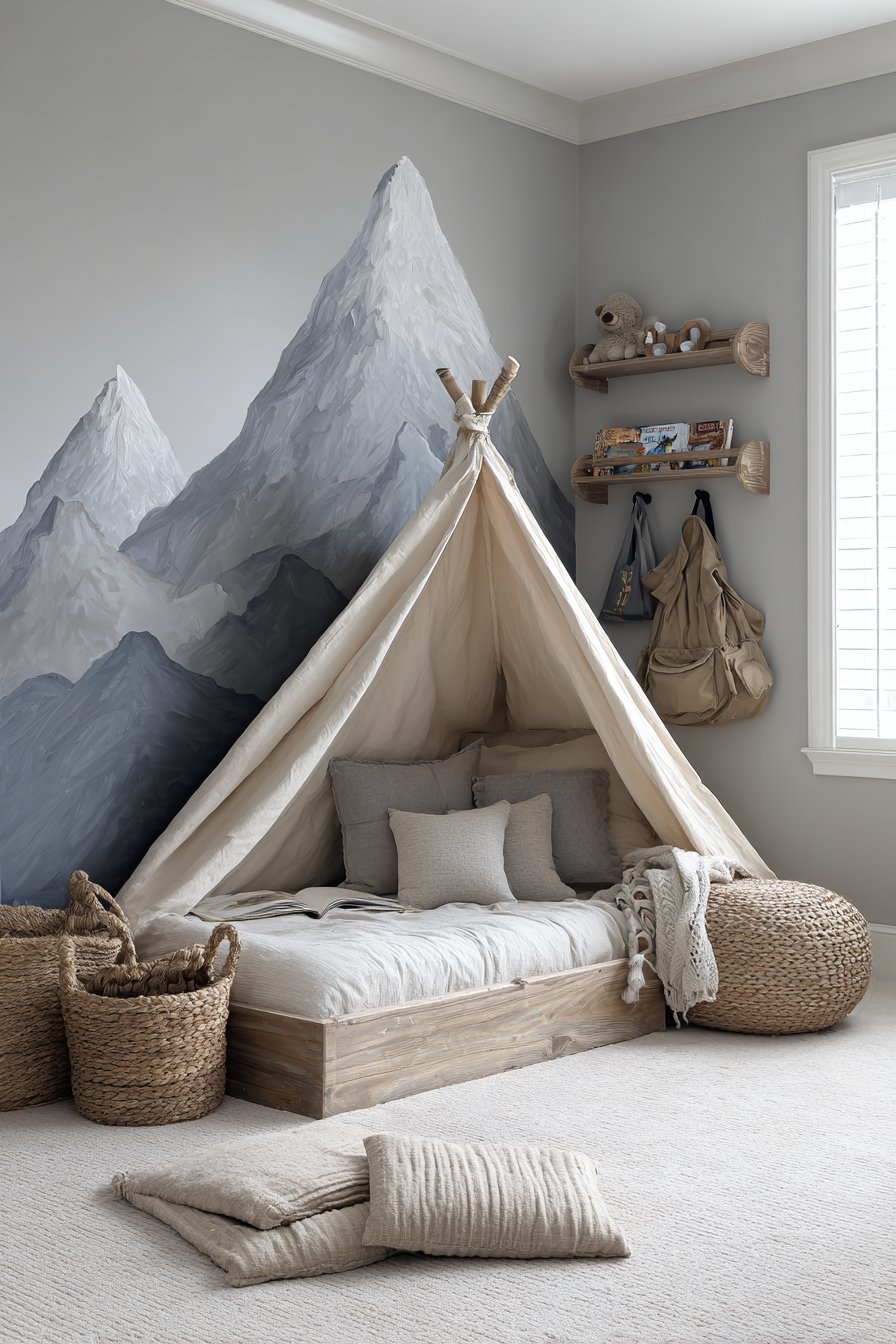
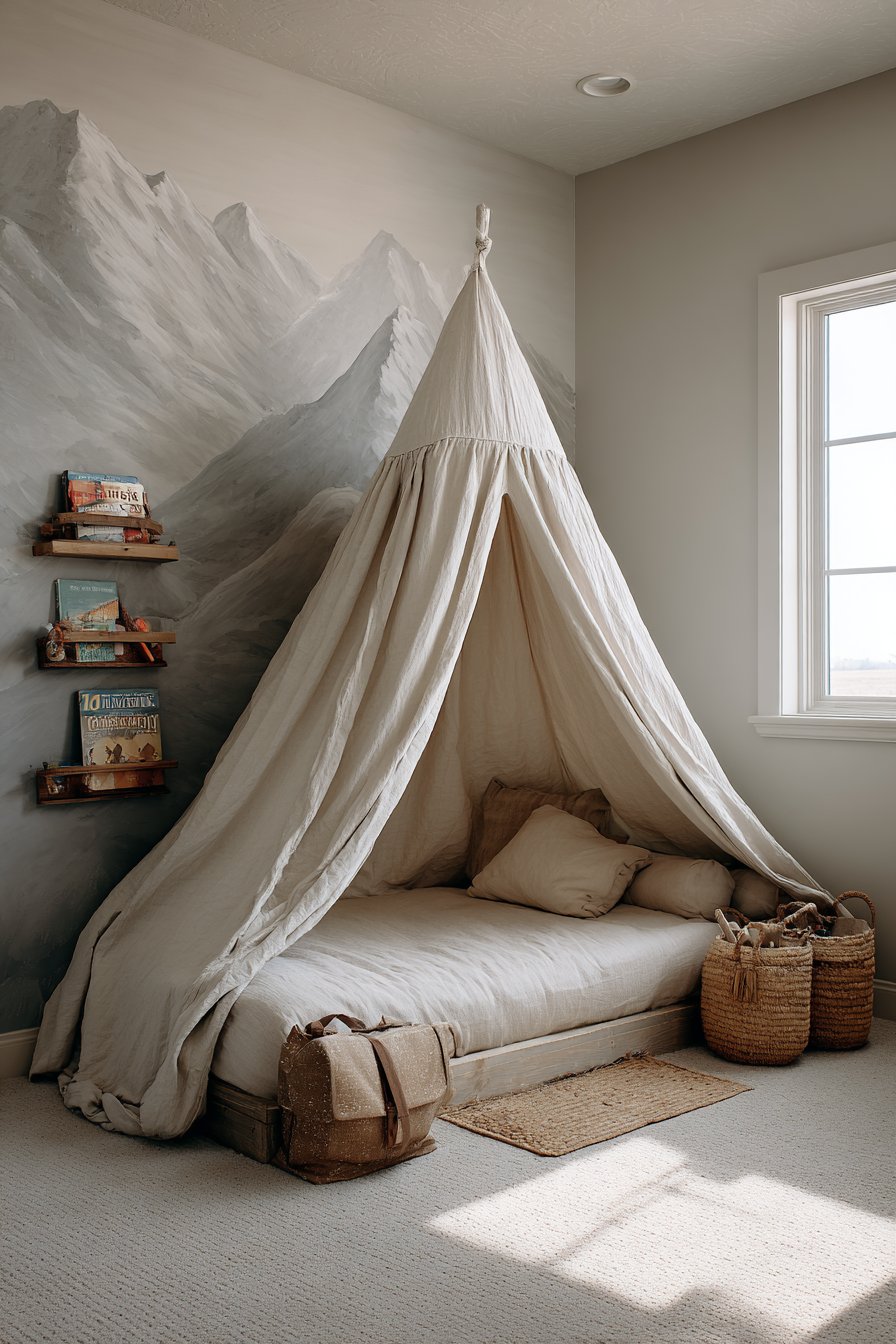
Tent-style bed canopies create adventure zones instantly. The canopy drapes over simple twin mattresses. Low wooden frames suit the temporary installation. One corner dedicates to reading with floor pillows. A compact bookcase completes the cozy nook.
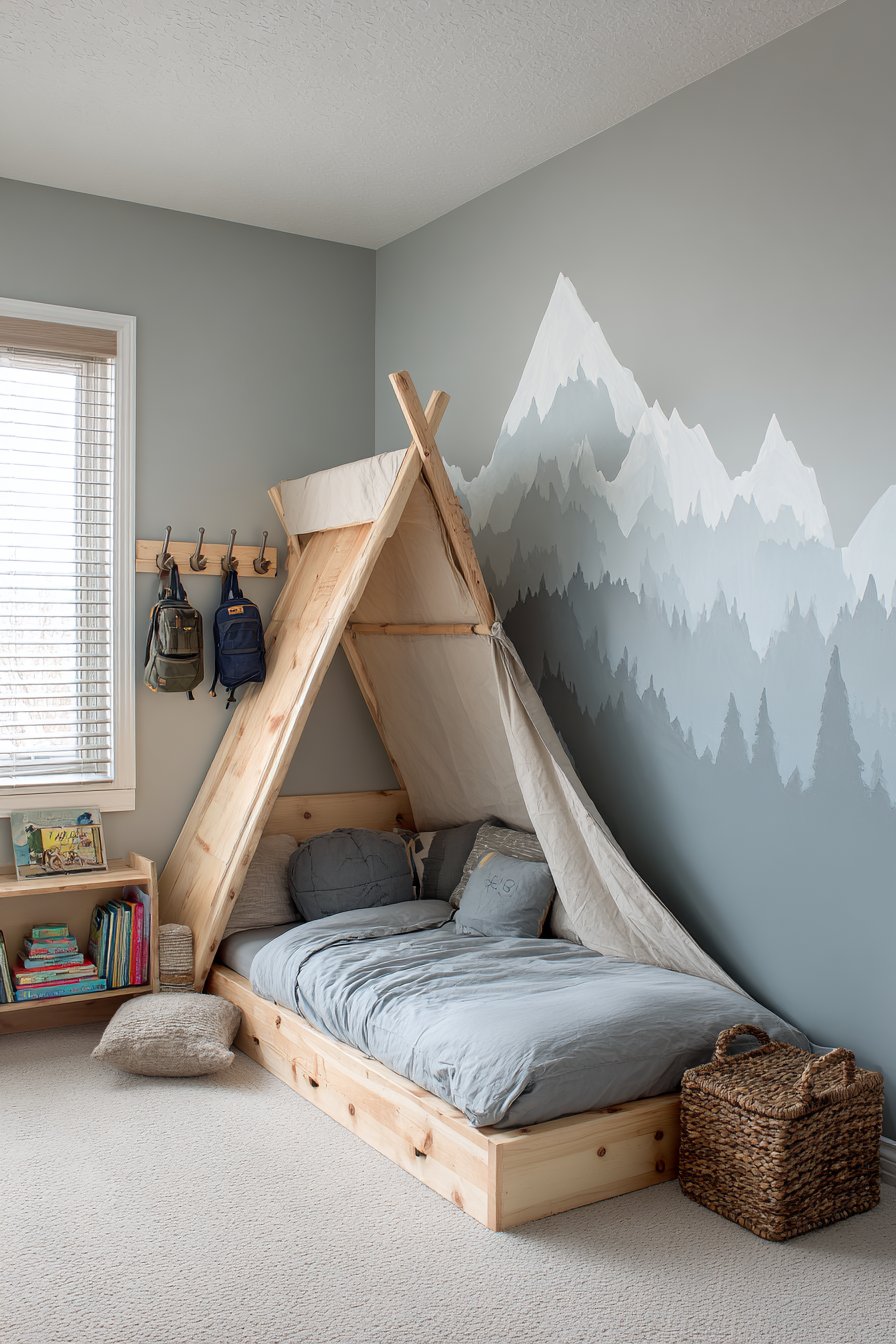
Soft grey walls provide neutral backgrounds throughout. One accent wall features hand-painted mountain murals. The muted tones maintain calming atmosphere. Hook rails at child height organize backpacks and jackets. Natural woven baskets store toys beneath beds.
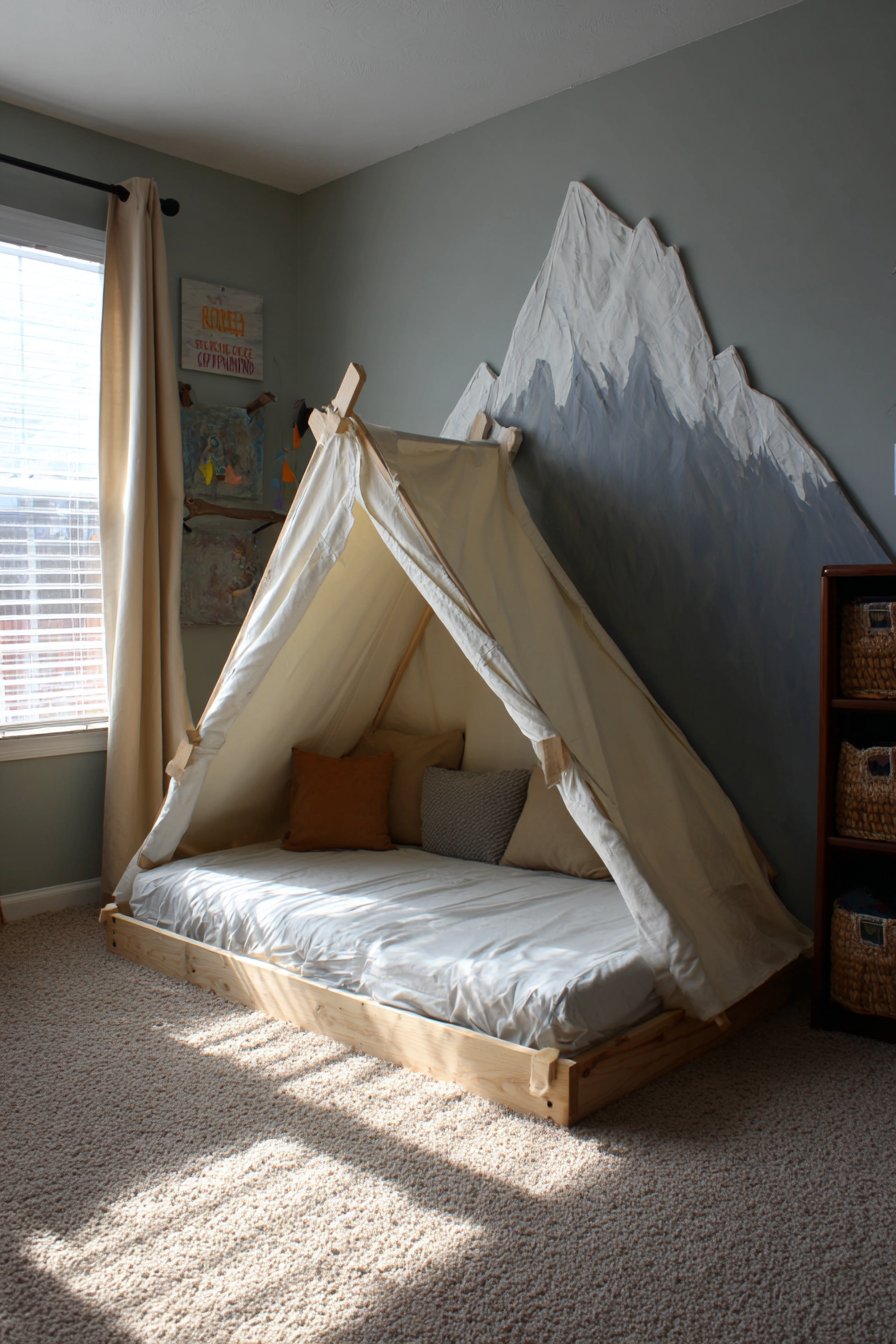
Simple elements create engaging spaces within tight dimensions. The tent canopy sparks imagination without permanent changes. Natural window light creates gentle shadows. The design proves adventure happens in small spaces. Thoughtful details transform ordinary rooms into special places.
Key Design Tips:
- Select washable tent canopies for easy maintenance
- Create dedicated reading corners with floor seating
- Use hand-painted murals in muted tones for personality
- Install hook rails at heights children can reach
- Choose natural woven baskets for attractive storage
- Maintain flexibility with non-permanent installations
9. Multifunctional Daybed Configuration
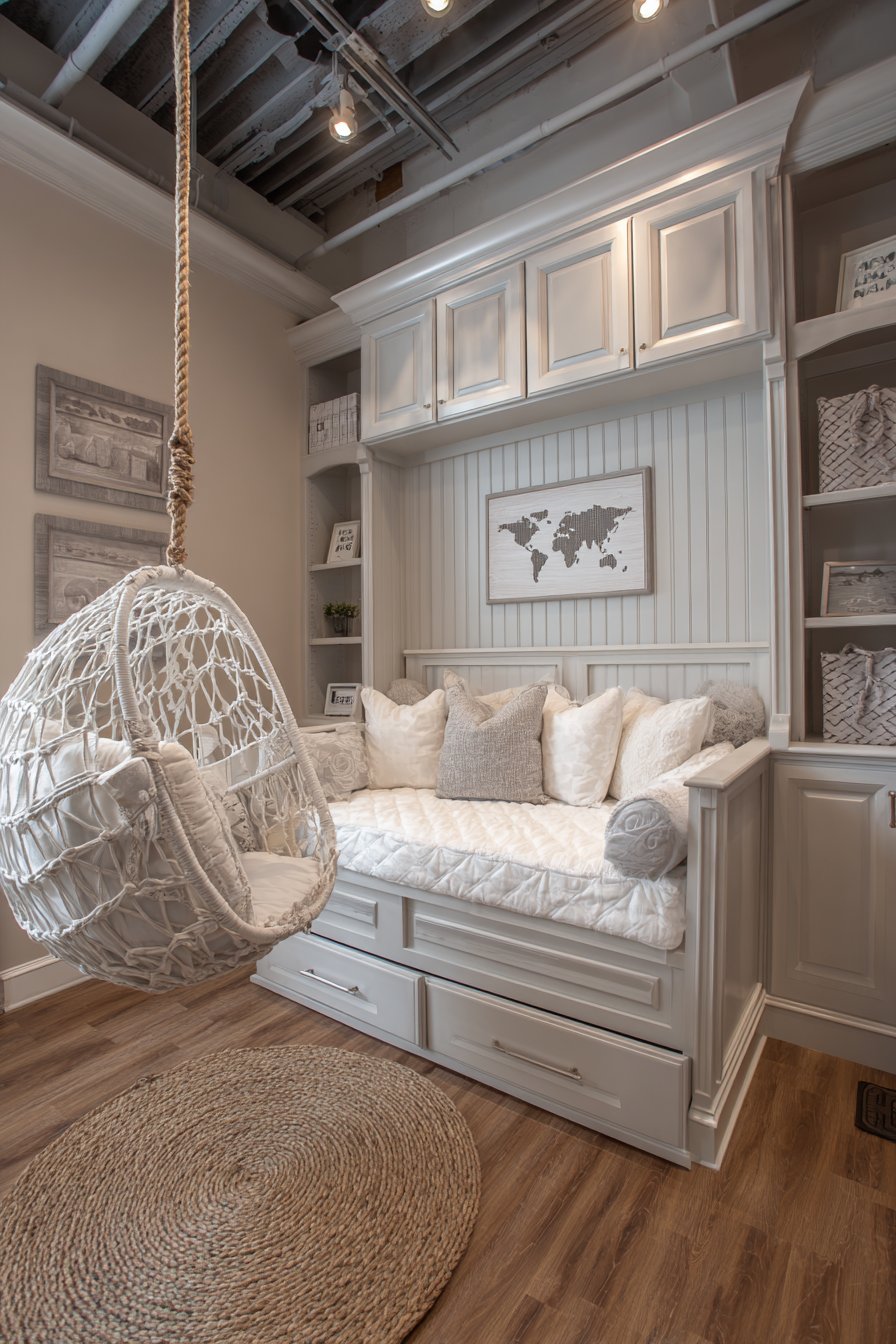
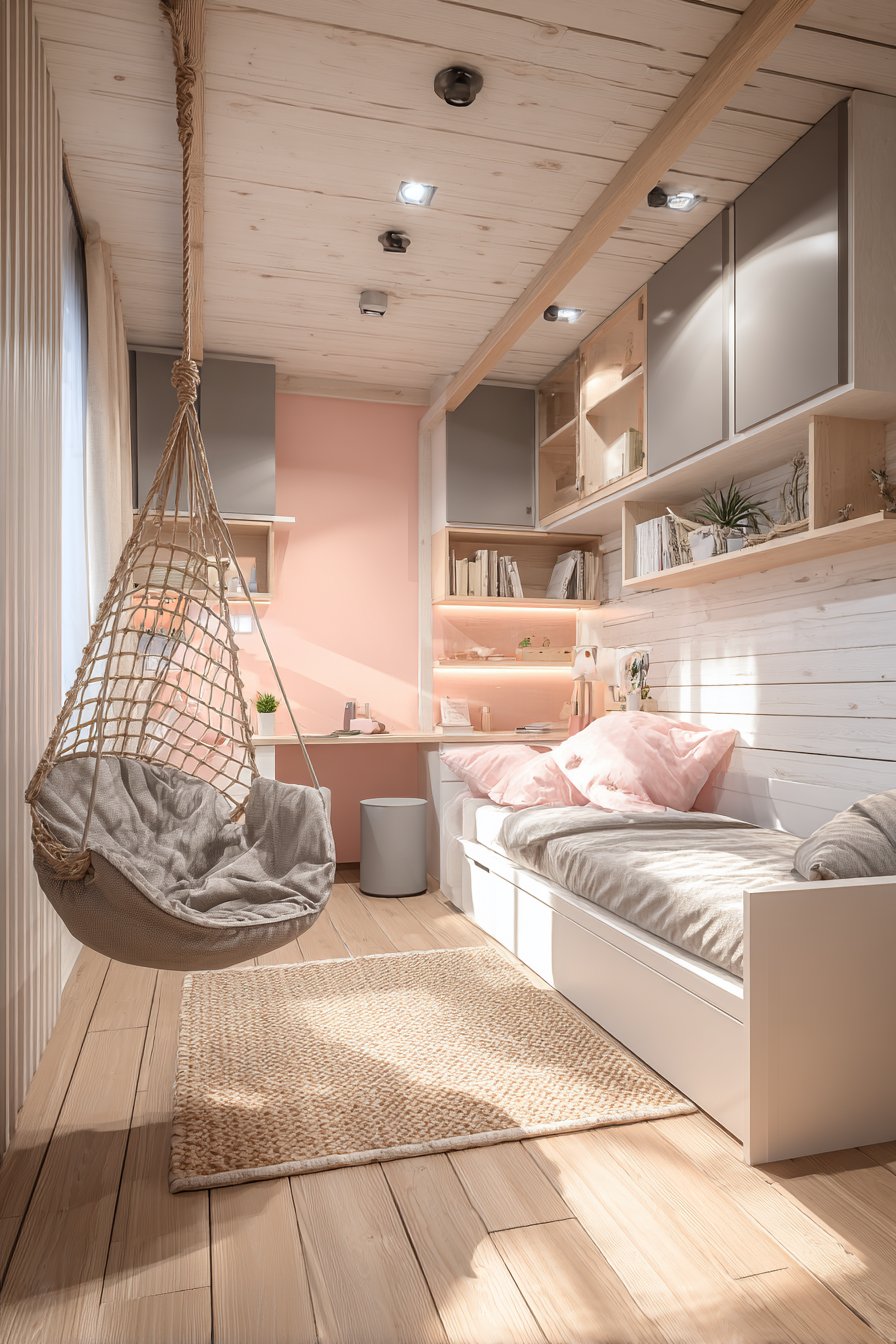
White-painted wood daybed configurations offer exceptional versatility. Trundle beds underneath accommodate overnight guests. Both sleeping surfaces feature simple, clean lines. Built-in shelving along walls includes mixed storage. Open cubbies and closed cabinets in pale grey finish organize efficiently.
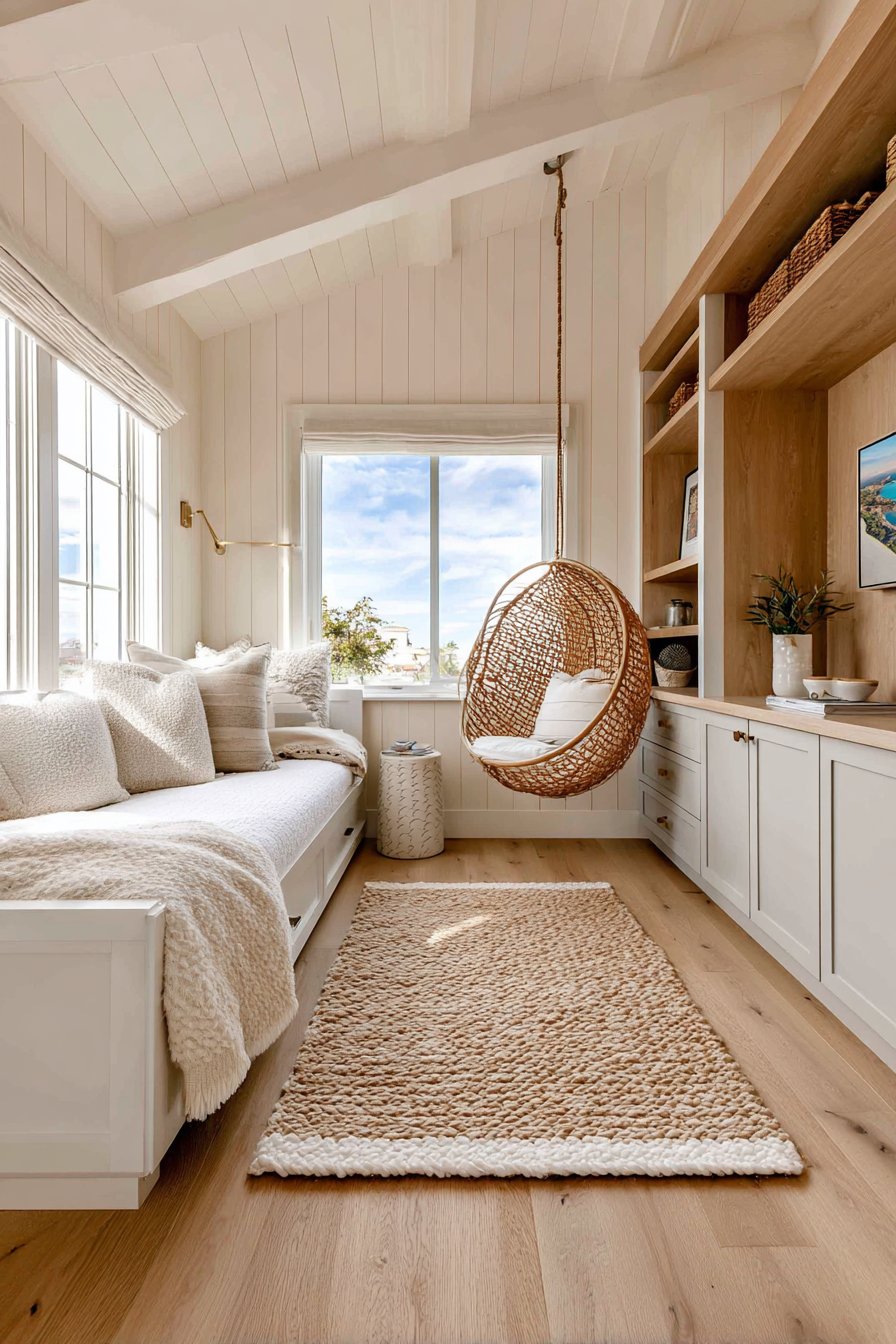
A small hanging chair suspends from ceiling joists. The chair provides cozy reading spots. Soft peach walls with white wainscoting add character. The architectural detail doesn’t overwhelm small dimensions. Hardwood flooring in light maple adds natural beauty.
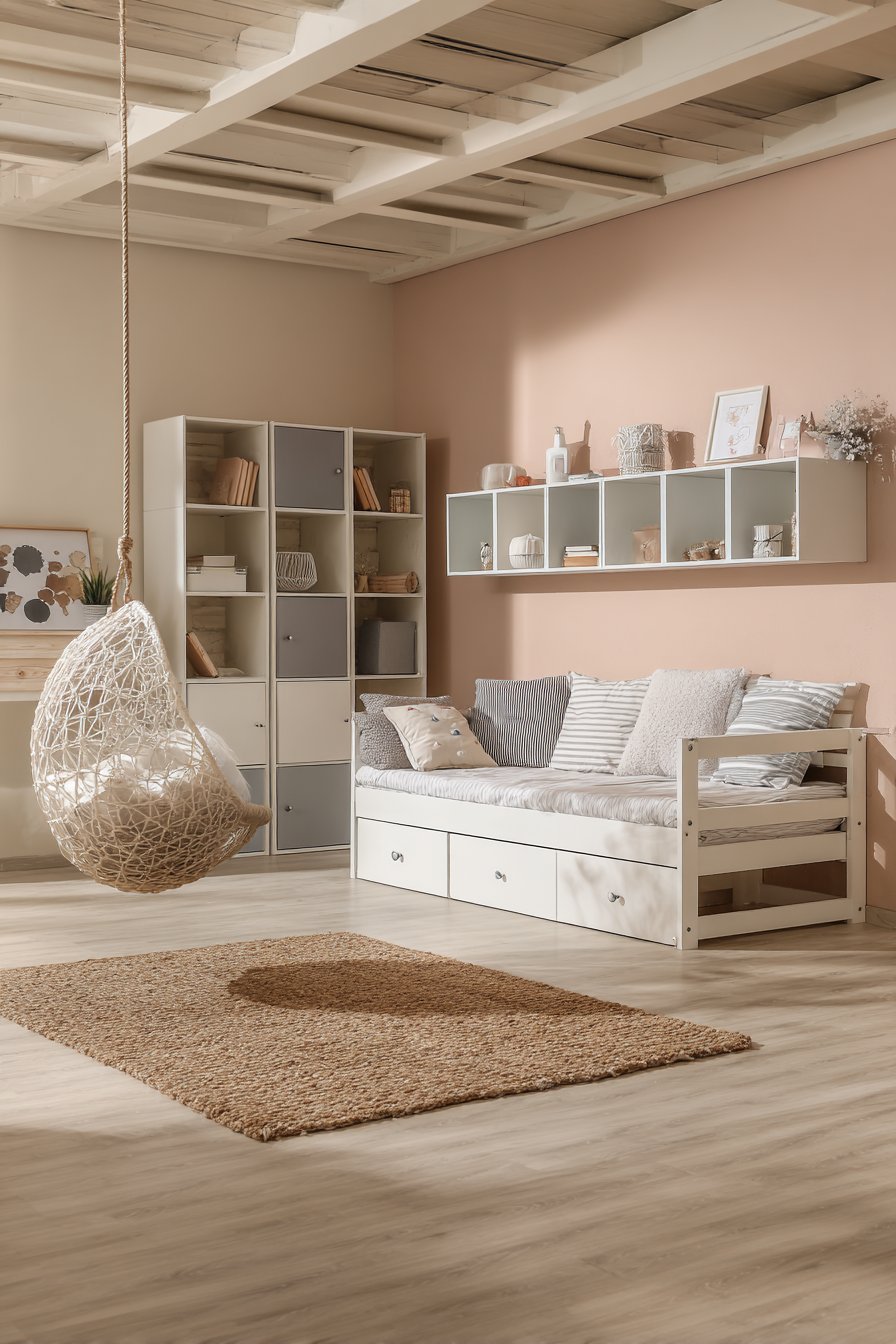
Multifunctional furniture solves multiple space challenges simultaneously. The daybed serves as seating during daytime hours. Night visitors receive comfortable accommodations. Natural lighting emphasizes careful planning. The room demonstrates that versatility matters in small spaces.
Key Design Tips:
- Choose daybeds with pull-out trundles for guest flexibility
- Mix open and closed storage for varied needs
- Install hanging chairs only with proper ceiling support
- Add wainscoting for character without space consumption
- Select light hardwood flooring to brighten spaces
- Plan furniture serving multiple daily purposes
10. Three-Dimensional Platform Bed Design
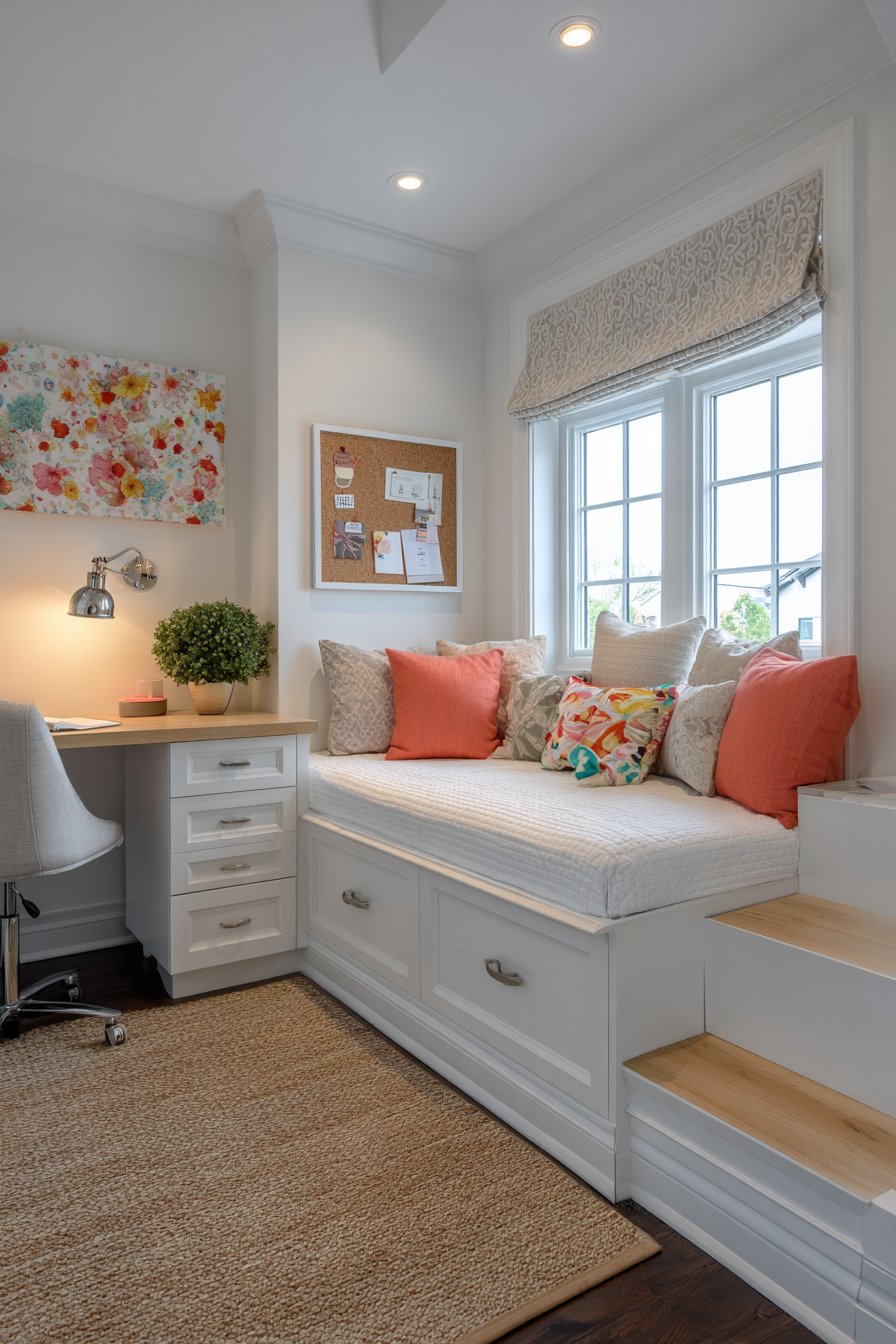
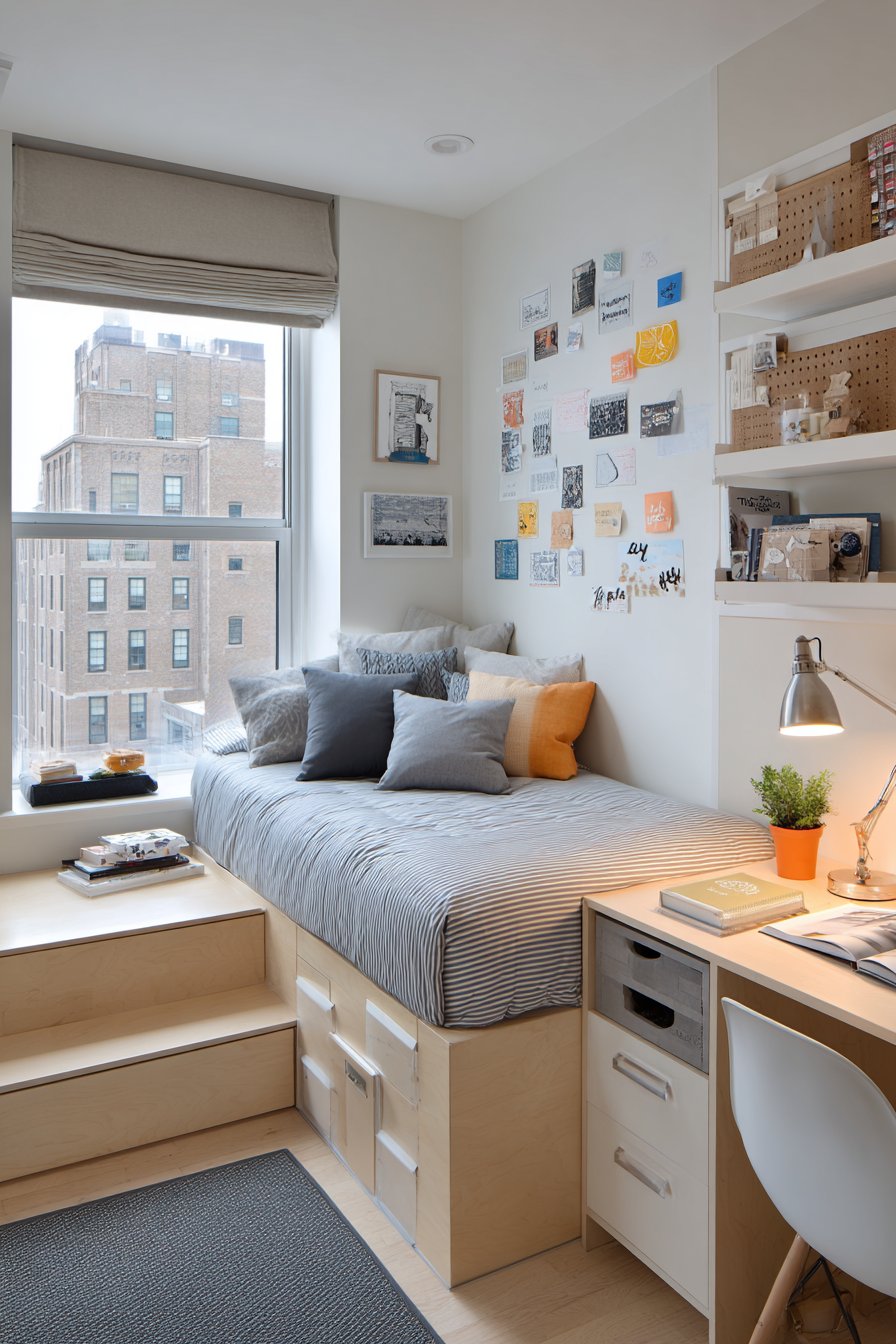
Raised bed platforms with built-in steps maximize vertical organization. The steps double as storage drawers brilliantly. Natural oak finishes provide warmth and durability. Safety rails prevent nighttime falls. Underneath, study areas with wall-mounted desks utilize space.
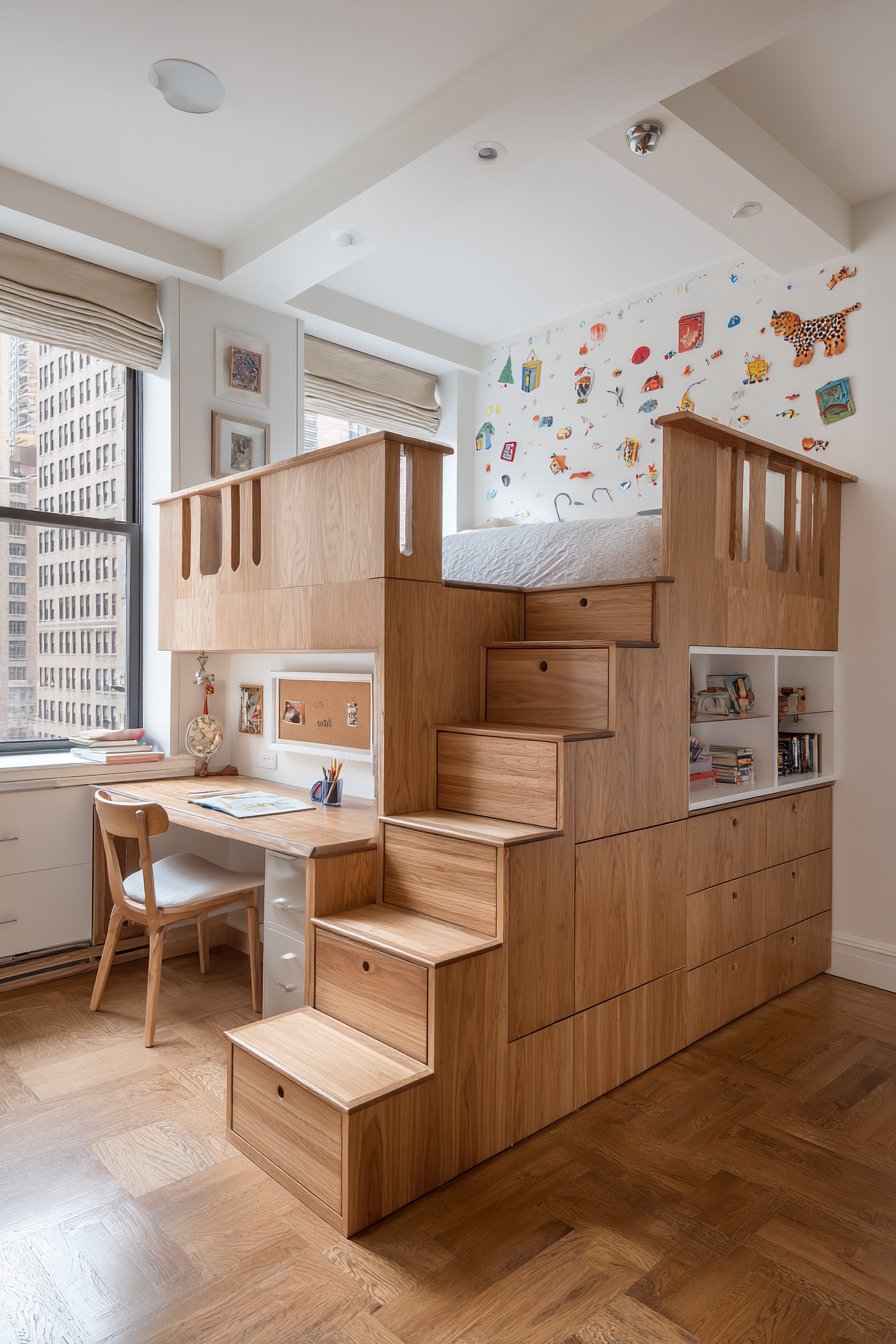
Adjustable task lighting illuminates homework areas effectively. Crisp white walls create clean canvases. Colorful removable wall decals add personality. Single windows with roman shades offer light control. Cork board tiles above desks provide display space.
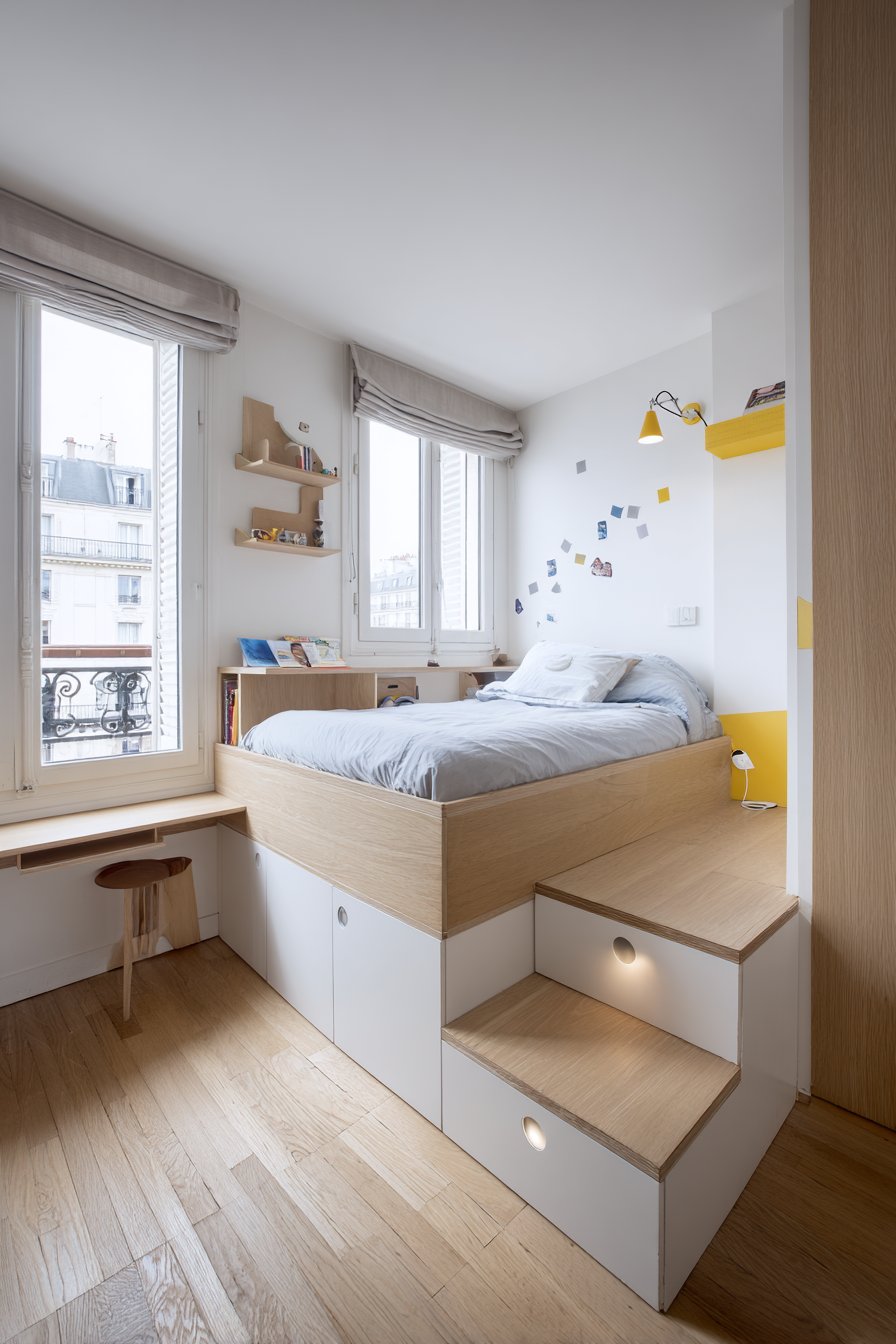
Three-dimensional space utilization proves essential in small rooms. Vertical and horizontal inches both receive attention. The design maximizes every available dimension. Soft natural daylight highlights clever engineering. Professional techniques showcase comprehensive space planning.
Key Design Tips:
- Select platform beds with integrated step storage
- Install adjustable task lighting for homework areas
- Use removable decals for changeable decoration
- Choose roman shades for flexible light control
- Add cork boards for damage-free display options
- Ensure safety rails on all elevated sleeping areas
11. Easy-Clean Microfiber Comfort Design
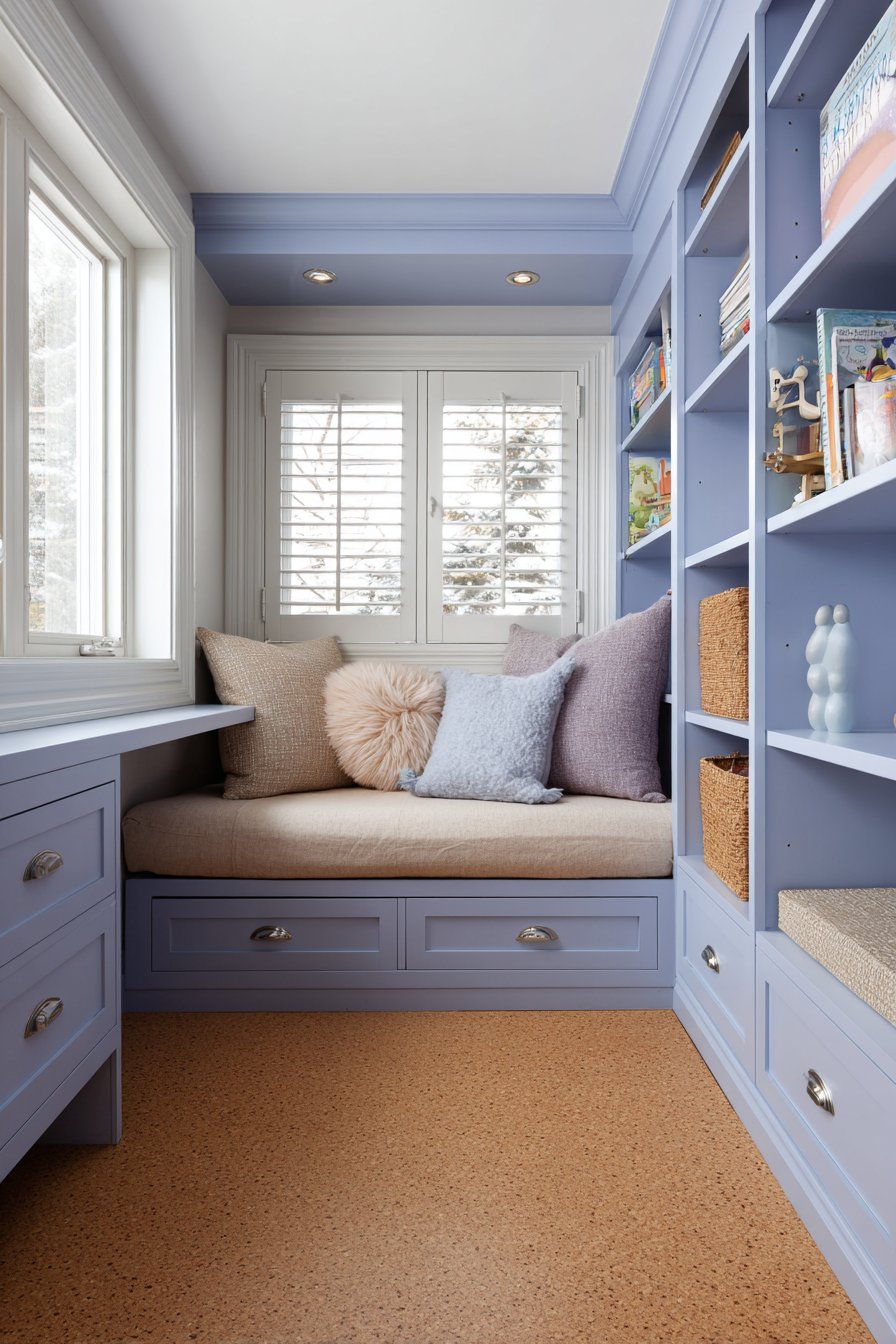
Twin beds with upholstered headboards position along longest walls. Easy-clean microfiber fabric withstands daily wear. Narrow nightstands with single drawers fit perfectly beside. Compact wardrobes with sliding doors save door swing space. The sliding mechanism proves ideal for tight quarters.
Glow-in-the-dark star stickers create nighttime comfort. The ceiling decorations provide gentle illumination. Soft lavender walls with white baseboards soothe. Laminate flooring in grey oak offers durability. Small circular rugs in washable cotton define play areas.
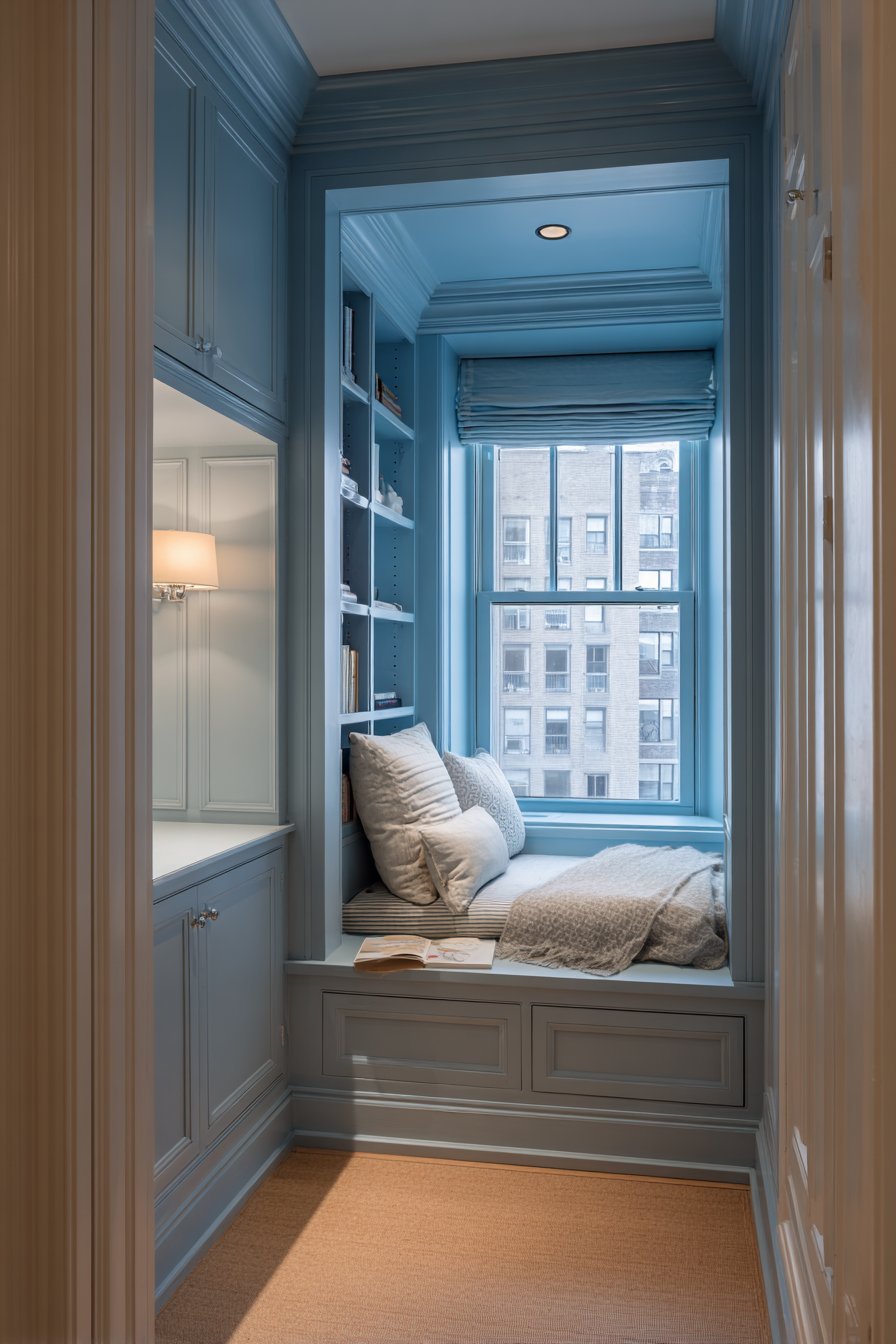
Natural window light illuminates spaces during morning hours. Thoughtful furniture scaling maintains comfortable traffic flow. The limited footprint receives careful consideration. Every piece serves specific purposes. The design balances comfort with practicality beautifully.
Key Design Tips:
- Choose microfiber upholstery for easy spot cleaning
- Select nightstands scaled appropriately for room size
- Install sliding doors where swing space is limited
- Add glow-in-the-dark elements for nighttime comfort
- Use washable cotton rugs for easy maintenance
- Ensure adequate traffic flow between furniture pieces
12. Custom Built-In Storage Wall
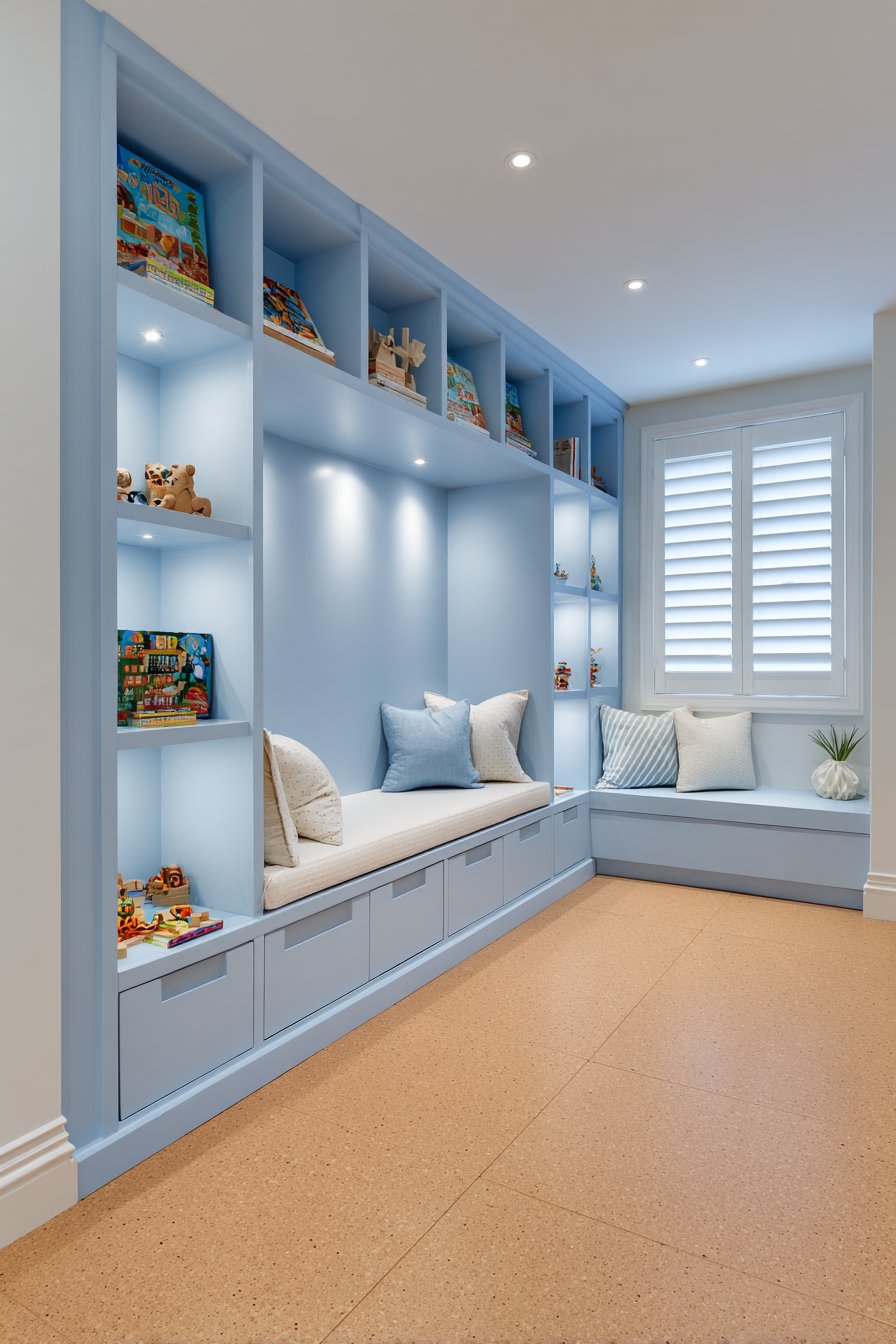
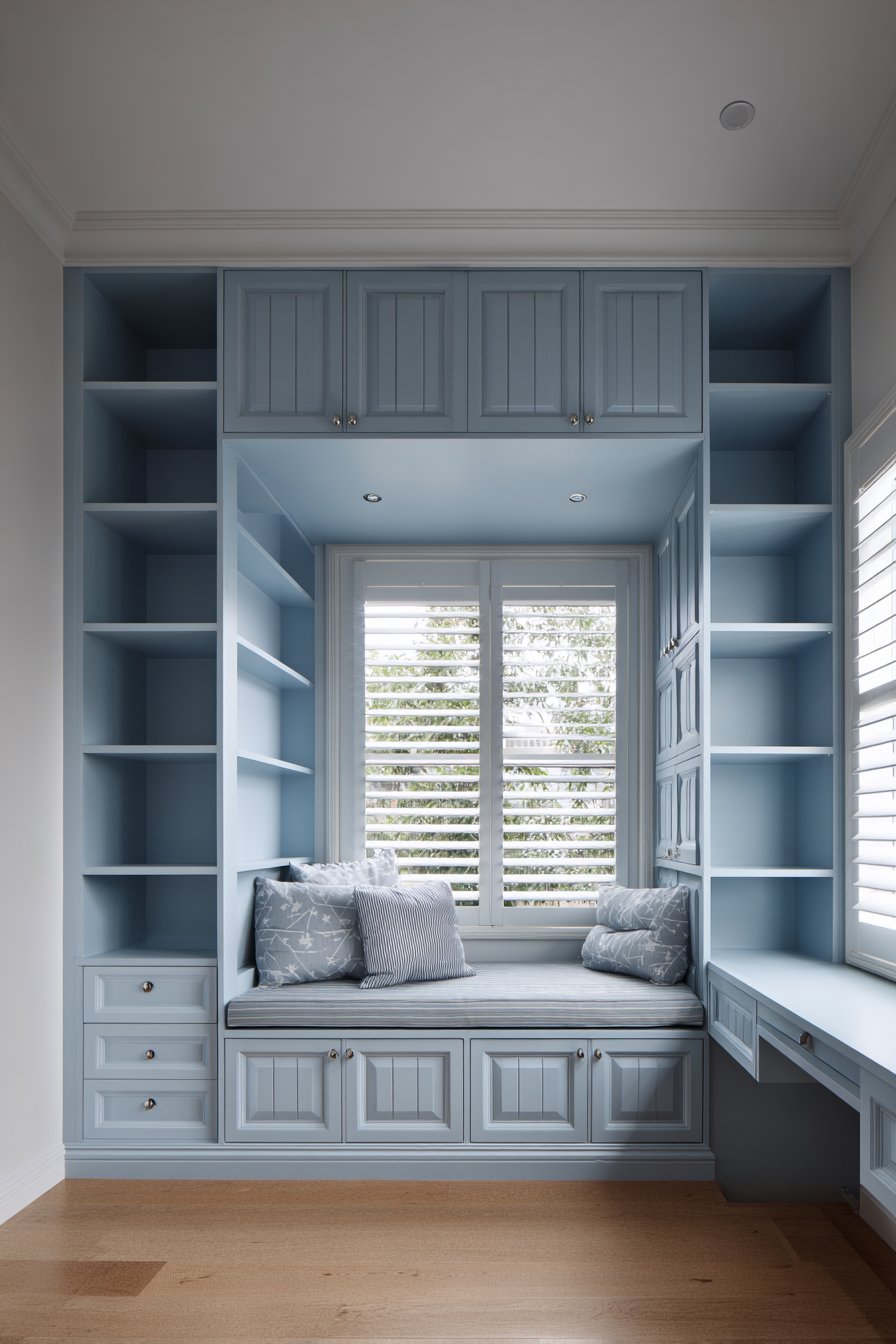
Wall-to-wall built-ins create custom fitted solutions. The bed nook recesses in the center strategically. Soft blue-grey paint unifies the entire system. LED strip lighting above beds provides reading illumination. Open cubbies at various heights organize toys.
Closed lower cabinets hide less attractive items. Fold-out desk surfaces integrate seamlessly. The built-in system maximizes every wall inch. Durable cork tiles in natural finish cover floors. Single windows with plantation shutters control light.
Custom solutions maximize small spaces exceptionally well. The built-in wall demonstrates professional craftsmanship. Natural diffused light highlights thoughtful details. Wide-angle photography captures comprehensive design. The investment in built-ins pays long-term dividends.
Key Design Tips:
- Consider professional installation for built-in systems
- Include LED strip lighting for energy-efficient illumination
- Mix open and closed storage for flexibility
- Integrate fold-out surfaces for homework areas
- Choose cork flooring for comfort and sustainability
- Install quality plantation shutters for lasting value
13. Warm Color Mobile Storage Design
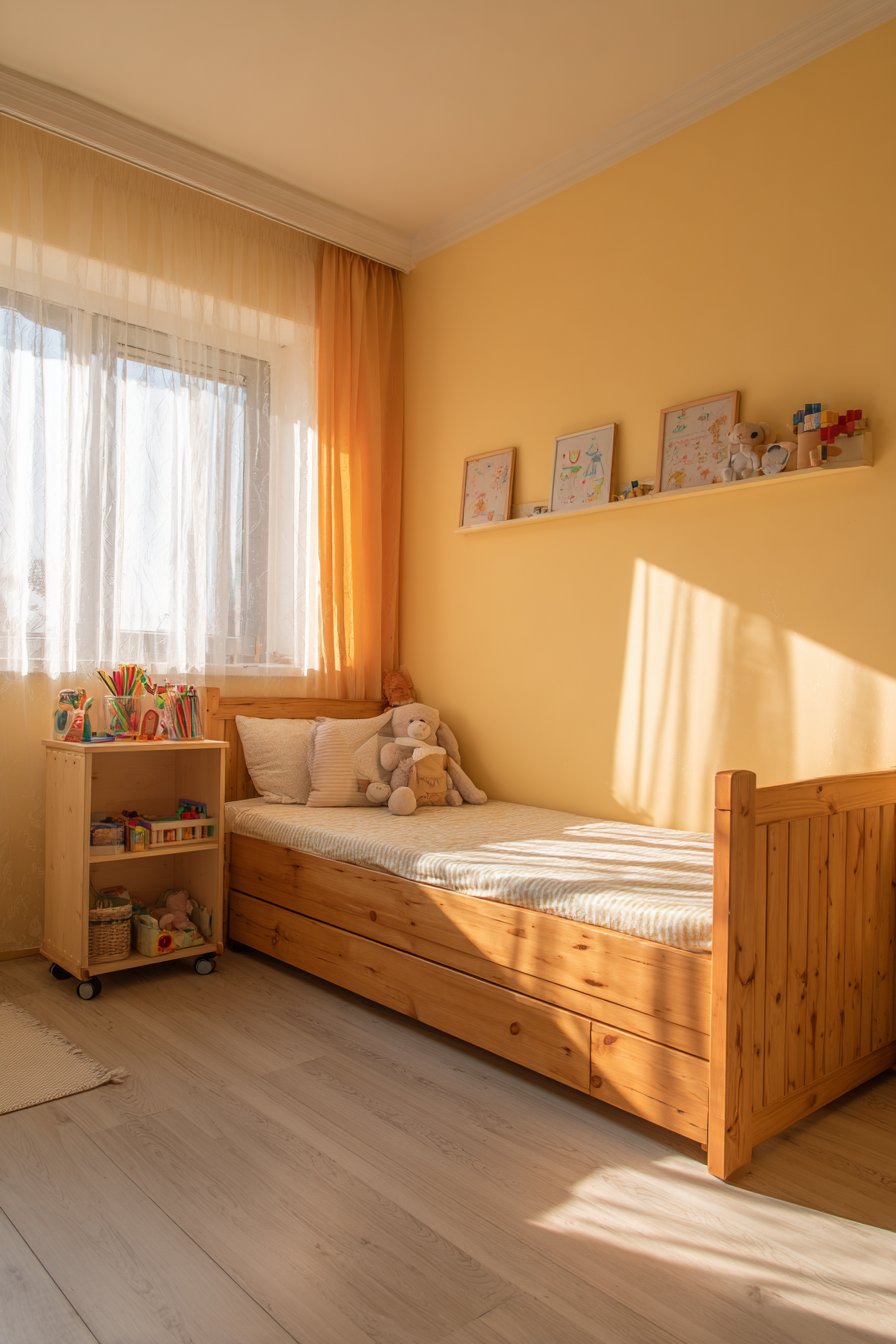
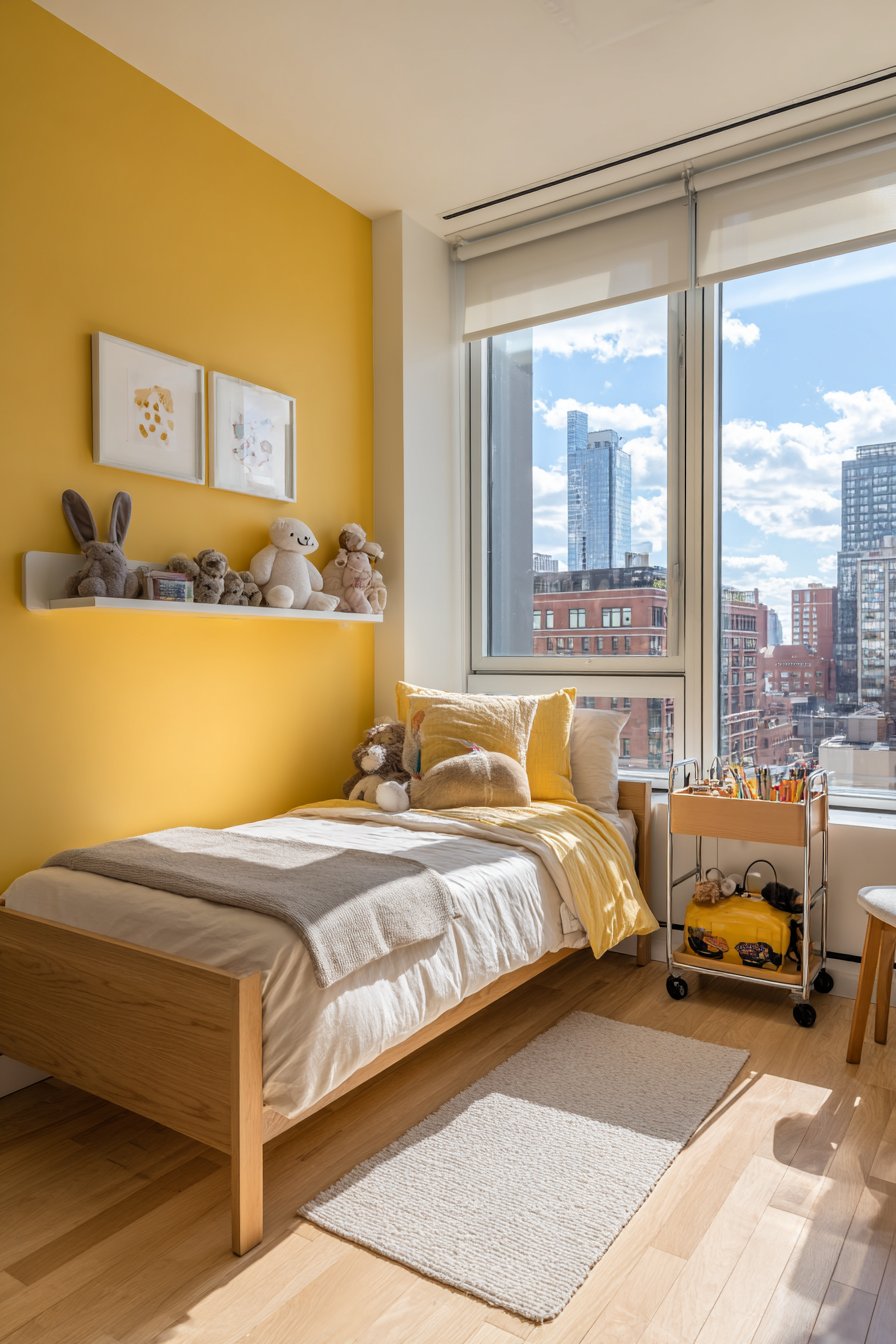
Simple wooden bed frames in natural finish create clear pathways. Over-the-bed organizers with pockets store stuffed animals. Small toys stay off floors and accessible. Warm butter yellow walls reflect natural light beautifully. White trim provides clean architectural detail.
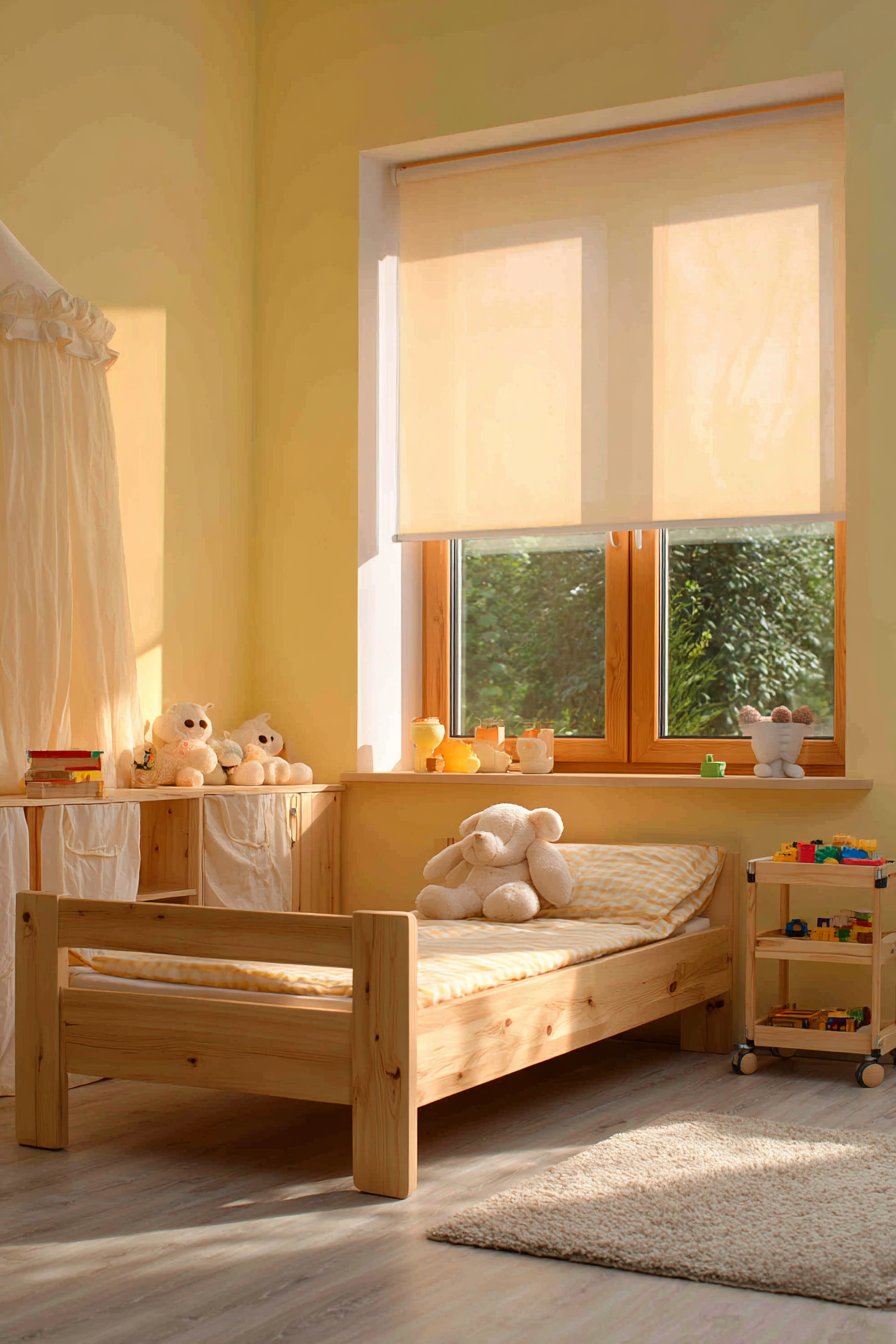
Compact rolling carts with art supplies move as needed. The mobility supports various activities throughout days. Blackout roller shades behind sheer curtains offer options. Children control sleep and light environments independently. Easy-clean vinyl in light wood patterns provides durability.
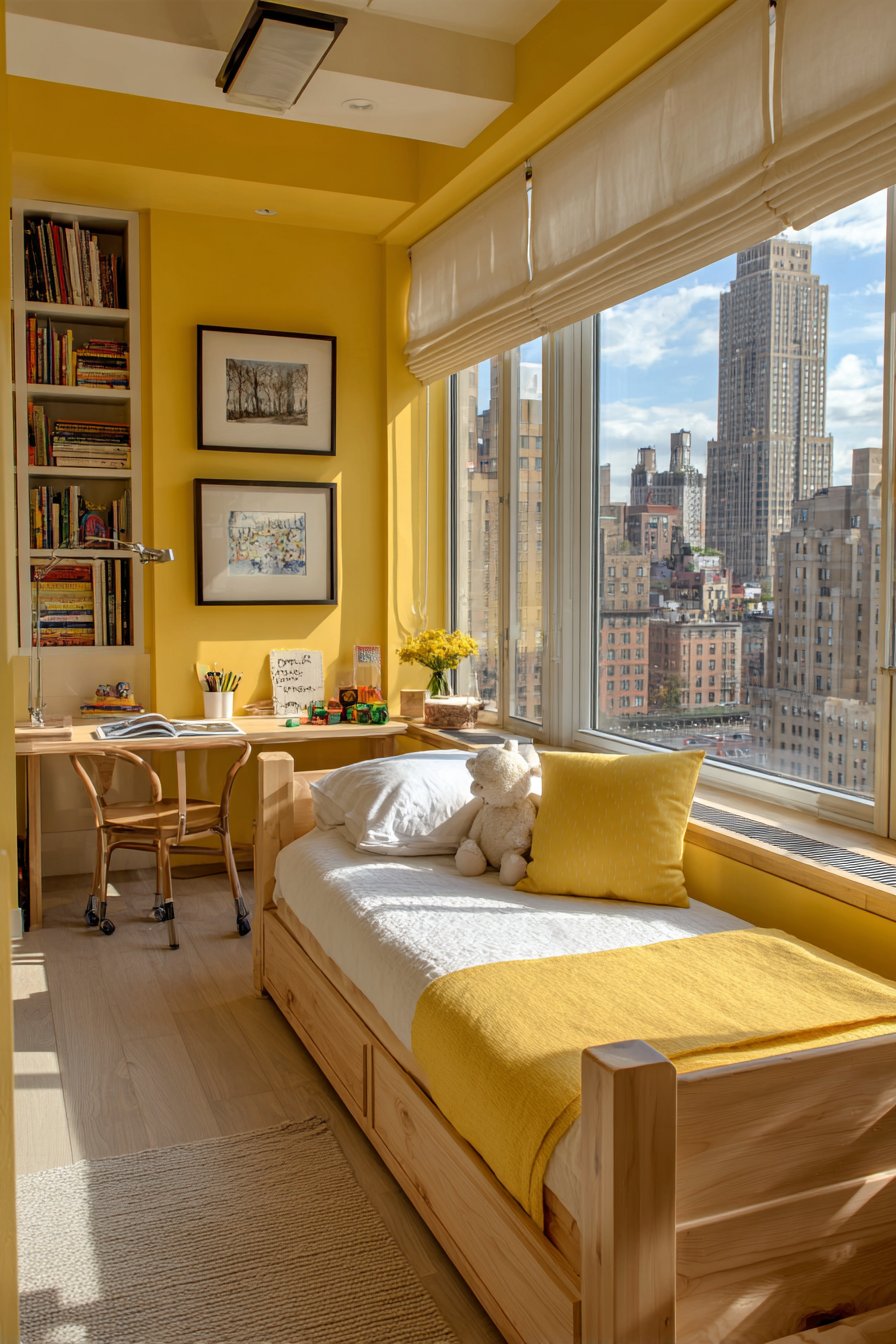
Afternoon golden hour enhances warm tones throughout. Smart furniture placement makes small rooms welcoming. Natural light interaction creates cozy atmospheres. The design proves that warm colors expand perceived space. Careful attention to lighting transforms everyday rooms.
Key Design Tips:
- Use over-the-bed organizers to maximize vertical storage
- Paint walls in warm yellows to reflect natural light
- Choose rolling carts for flexible activity support
- Layer window treatments for complete light control
- Select easy-clean vinyl flooring for active spaces
- Position furniture to maintain clear walking paths
14. Japanese-Inspired Minimalist Platform
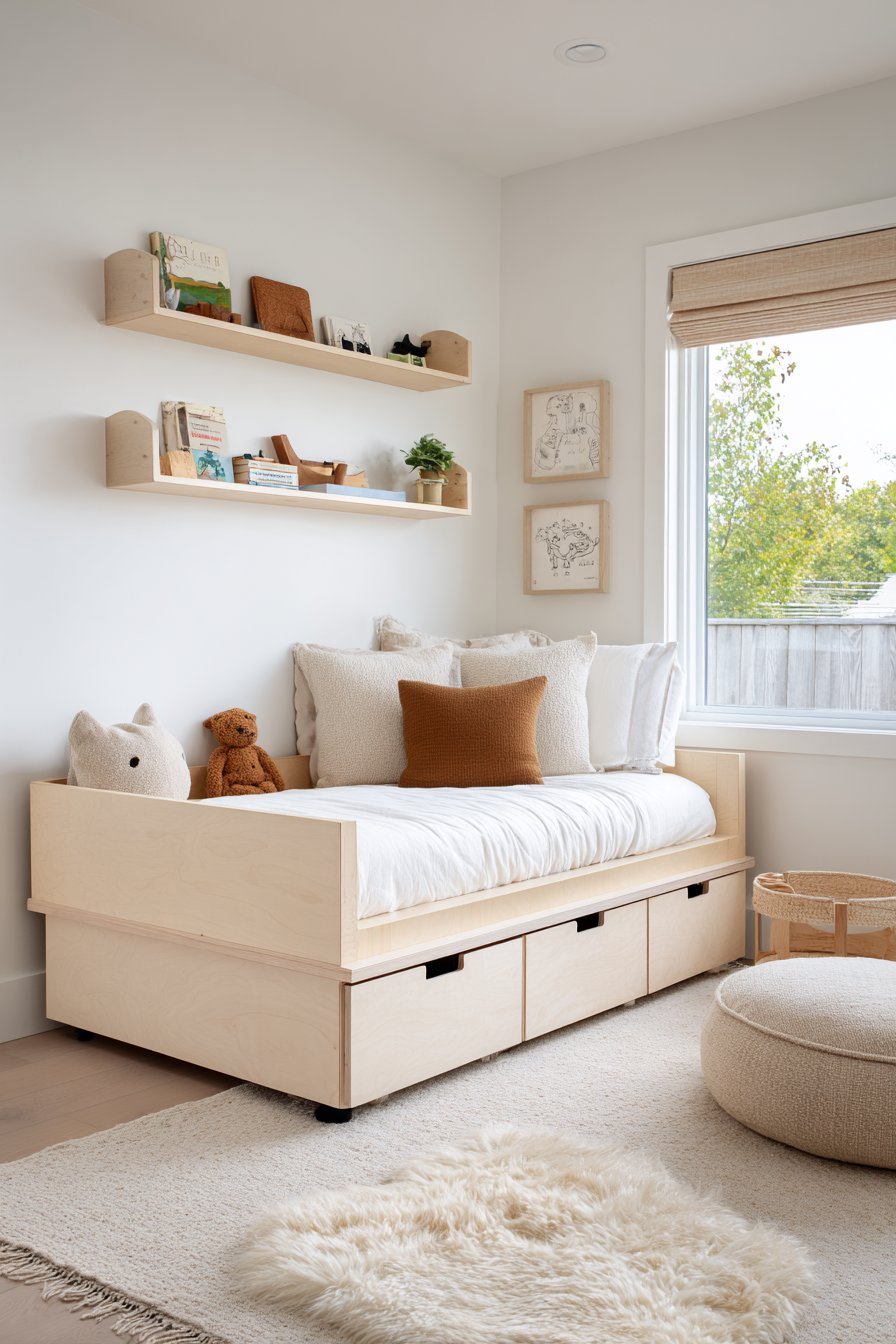
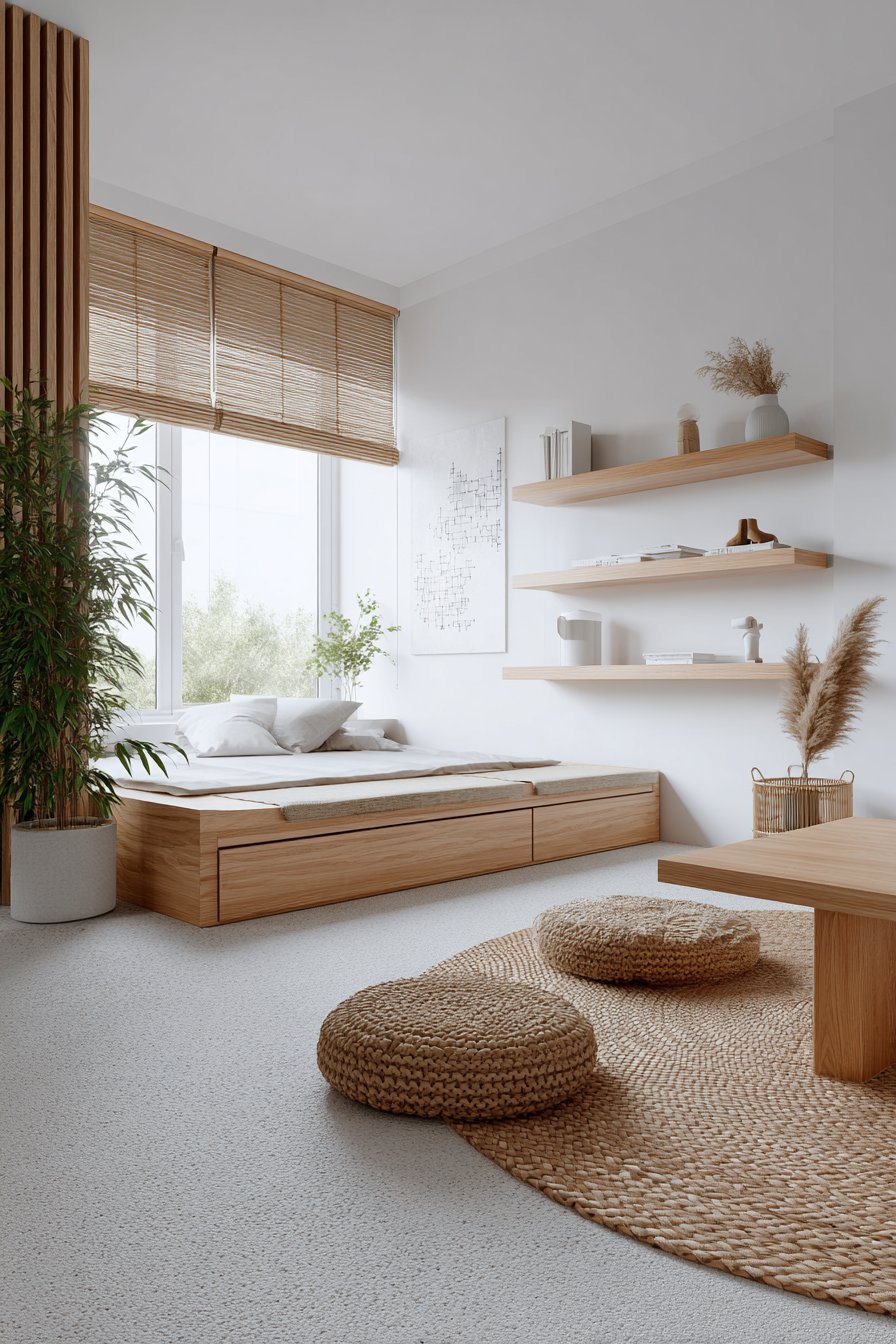
Low Japanese-style platform beds maximize perceived space. Mattresses sit on simple wooden platforms. Storage drawers on casters slide underneath easily. Crisp white walls create clean foundations. Magnetic paint on accent walls provides interactive play.
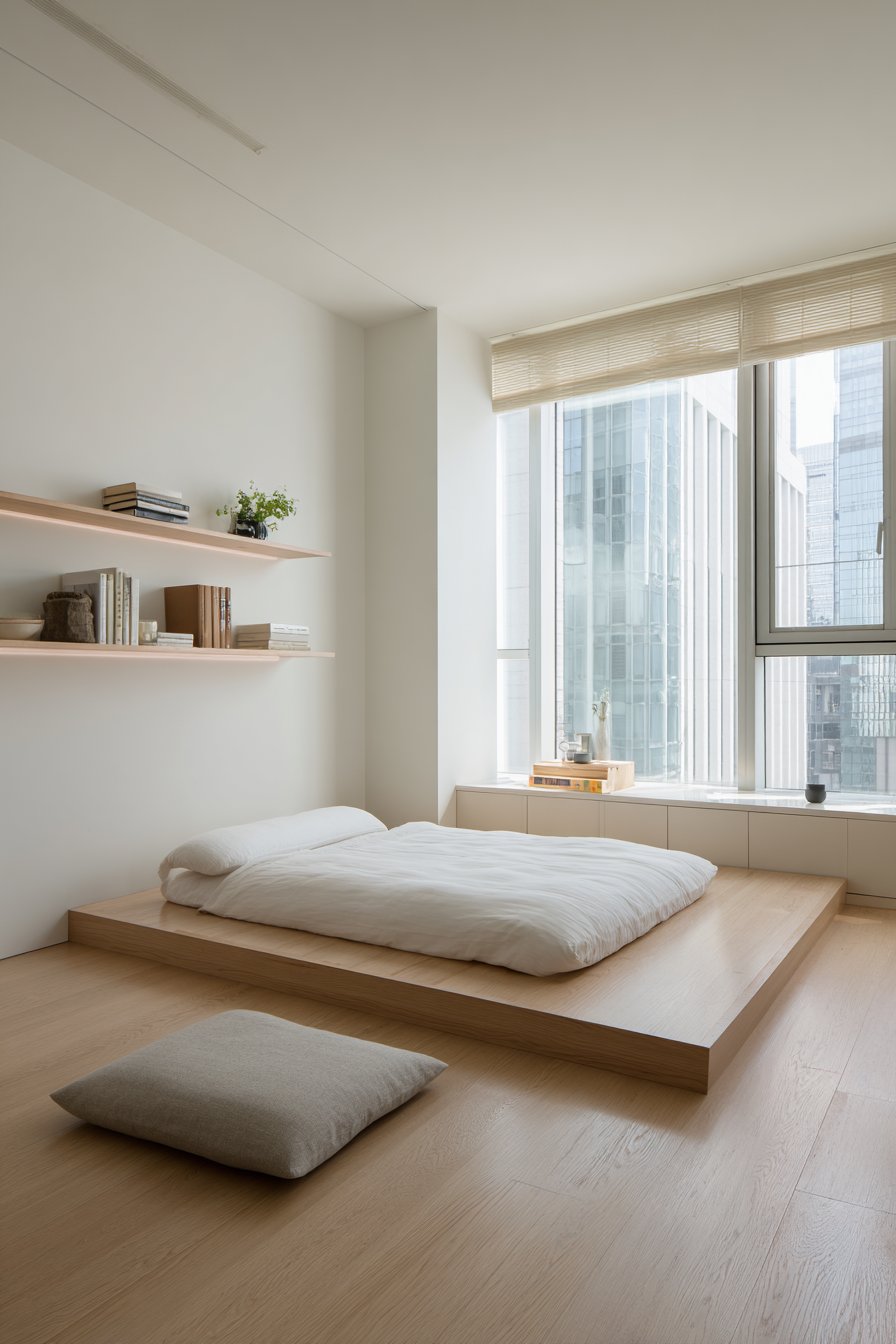
Floating shelves in blonde wood display at staggered heights. Books and small collections arrange attractively. Floor pillow seating areas with low tables enable play. Natural bamboo roller shades filter light gently. The minimalist furniture creates exceptional openness.
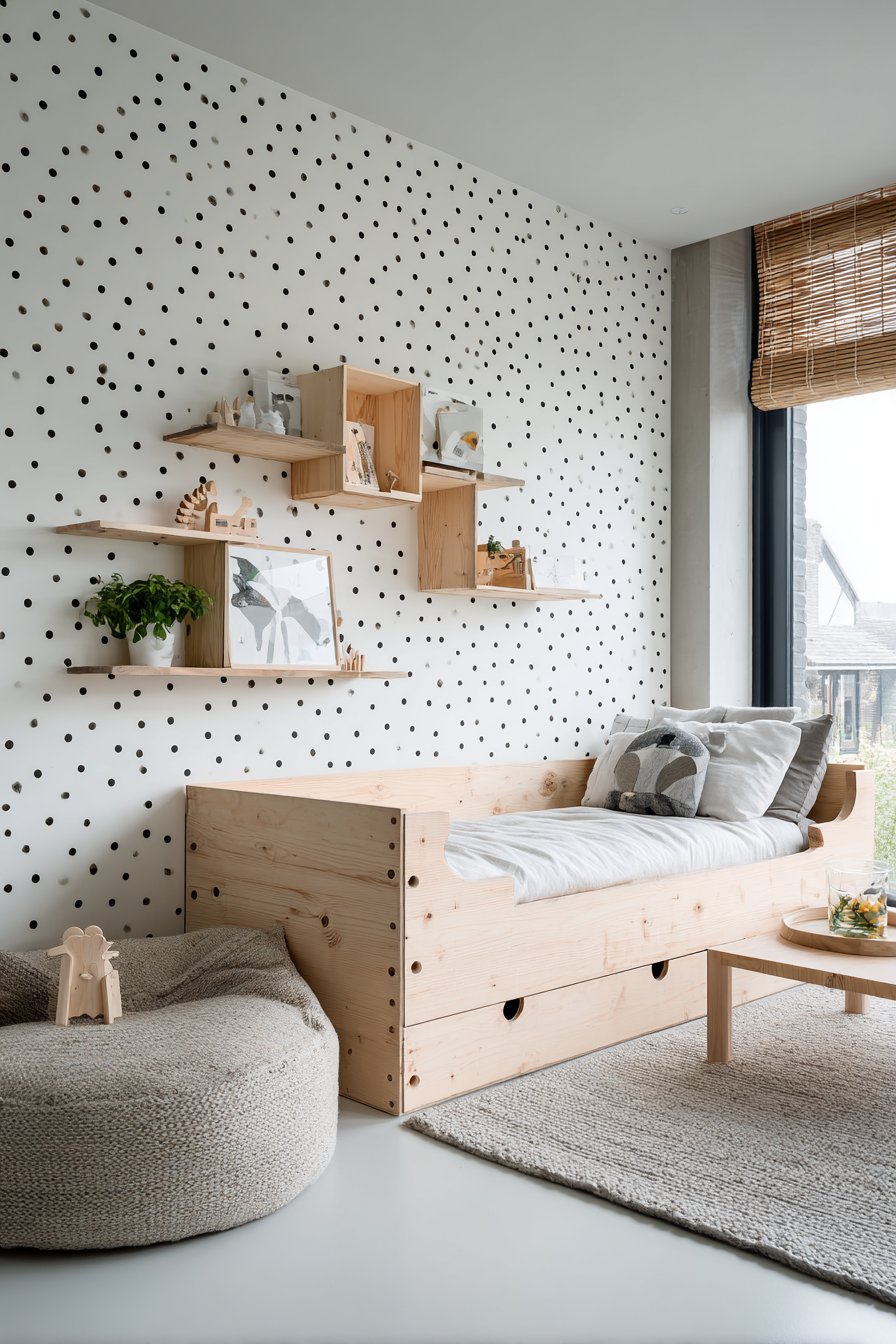
Floor-level perspectives change room dynamics completely. Clear floor space invites movement and creativity. The design demonstrates that less furniture means more freedom. Professional lighting showcases minimalist principles. Small square footage feels surprisingly spacious.
Key Design Tips:
- Select low platform beds to enhance ceiling height perception
- Install magnetic paint for interactive wall surfaces
- Use floor pillows instead of bulky seating furniture
- Choose bamboo window treatments for natural aesthetic
- Maintain clear floors for maximum play space
- Stagger floating shelf heights for visual interest
15. Captain’s Bed Organization System
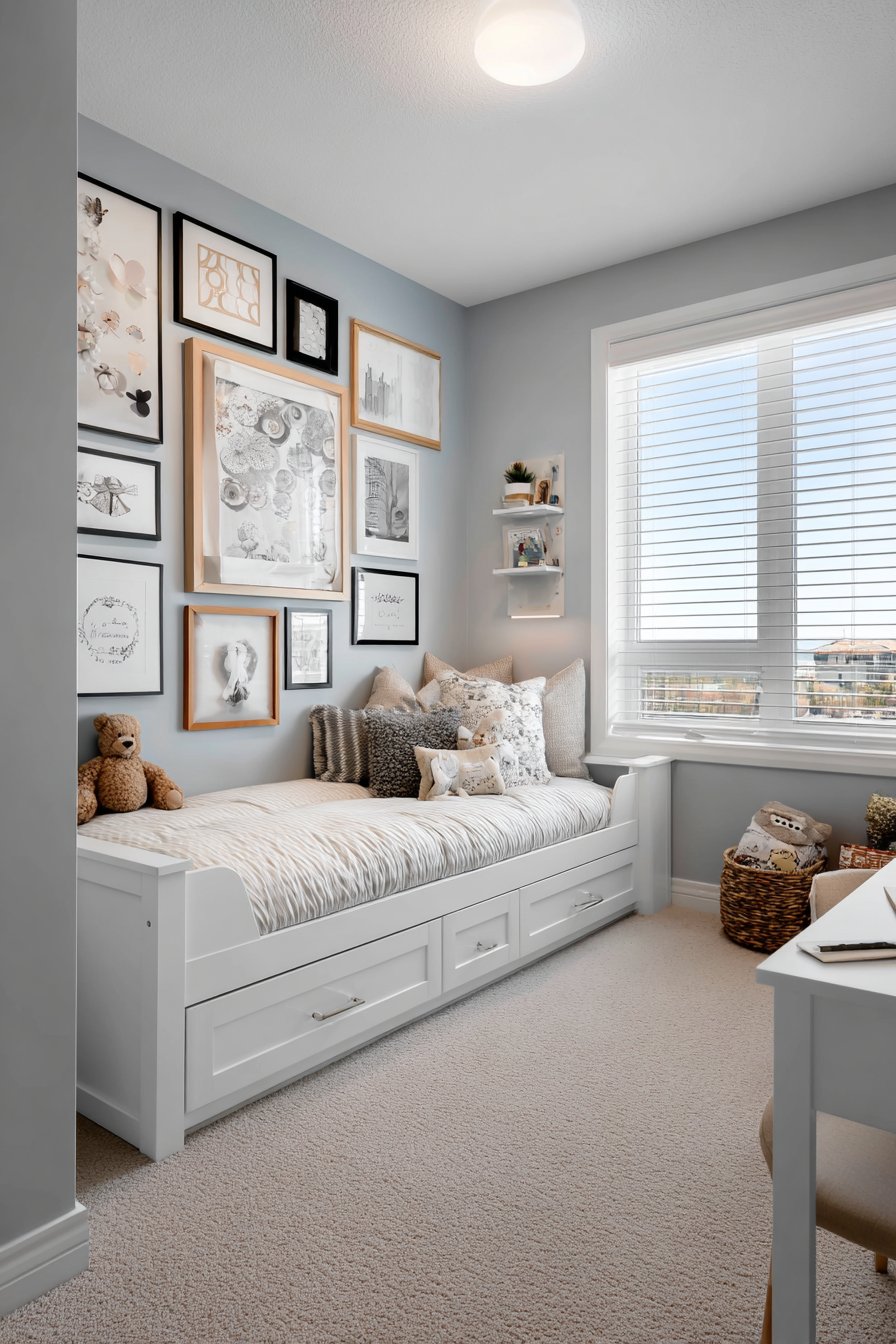
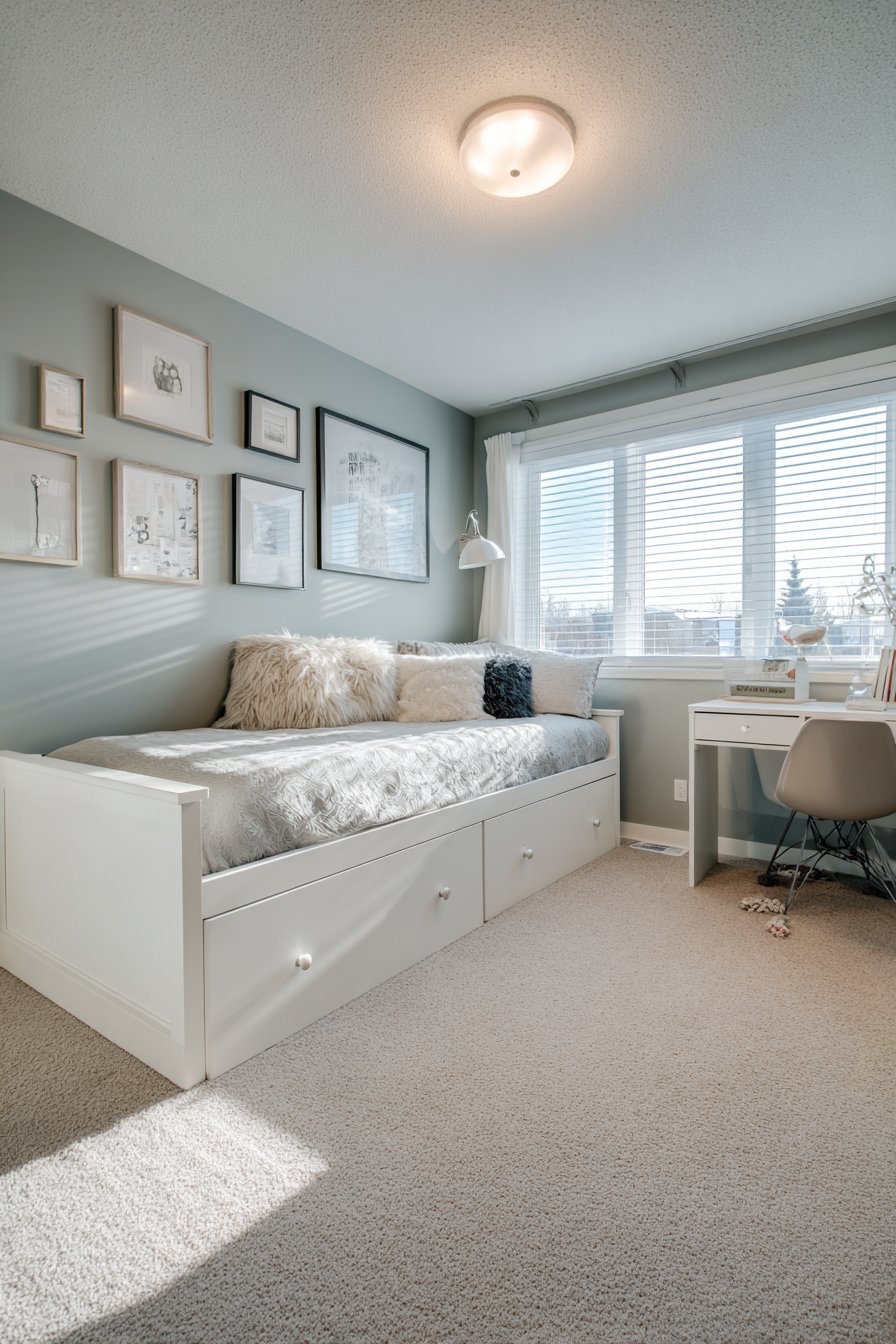
Captain’s beds feature six built-in drawers in bases. The integrated storage eliminates separate dresser needs. White-painted wood with simple hardware maintains clean lines. Gallery walls of framed artwork personalize at child height. The display creates ownership and pride.
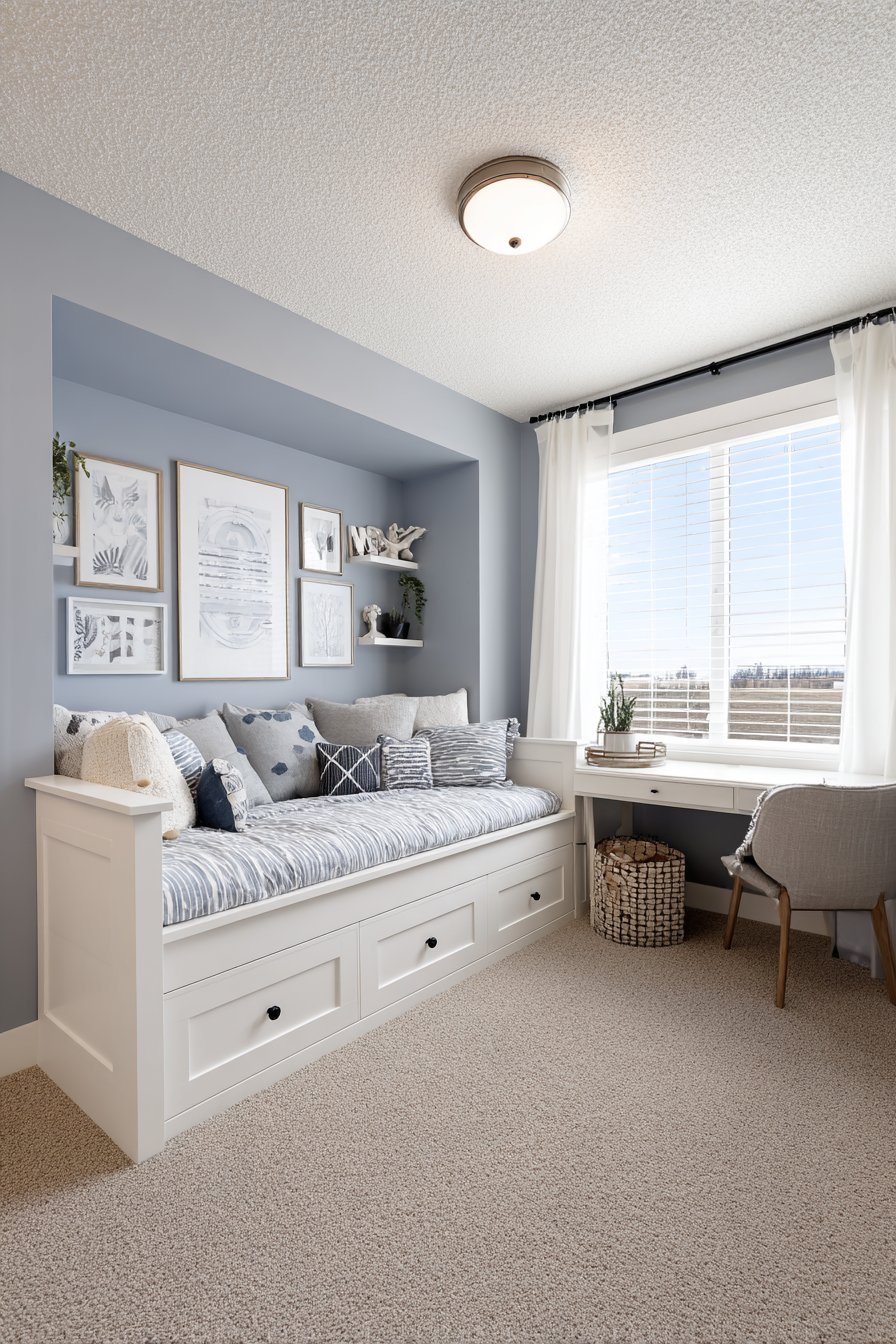
Compact student desks with hutch organizers fit corners. Window proximity provides natural homework lighting. Soft grey-blue walls create calm atmospheres. Lighter ceiling paint adds height perception. Neutral beige carpeting with bound edges offers durability.
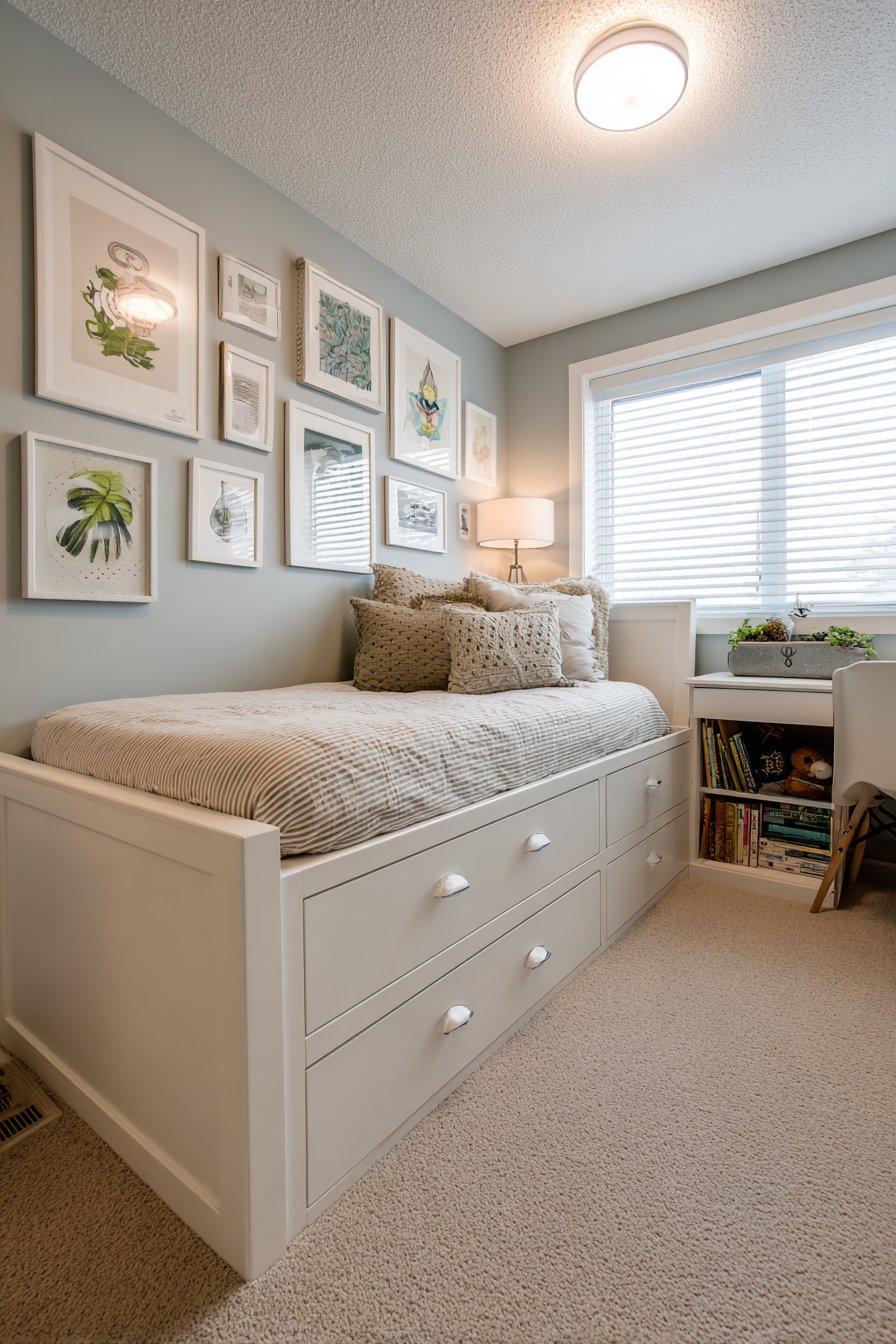
Storage-first approaches keep small spaces tidy naturally. Integrated solutions prove more efficient than separate pieces. Natural morning light streams through simple white blinds. The design demonstrates comprehensive organization thinking. Functionality drives every furniture selection.
Key Design Tips:
- Choose captain’s beds with maximum drawer capacity
- Display children’s artwork at their eye level
- Position desks near windows for natural task lighting
- Paint ceilings lighter than walls for height illusion
- Select bound-edge carpeting for durability and safety
- Prioritize integrated storage over separate furniture pieces
16. Two-Level Loft Living Design
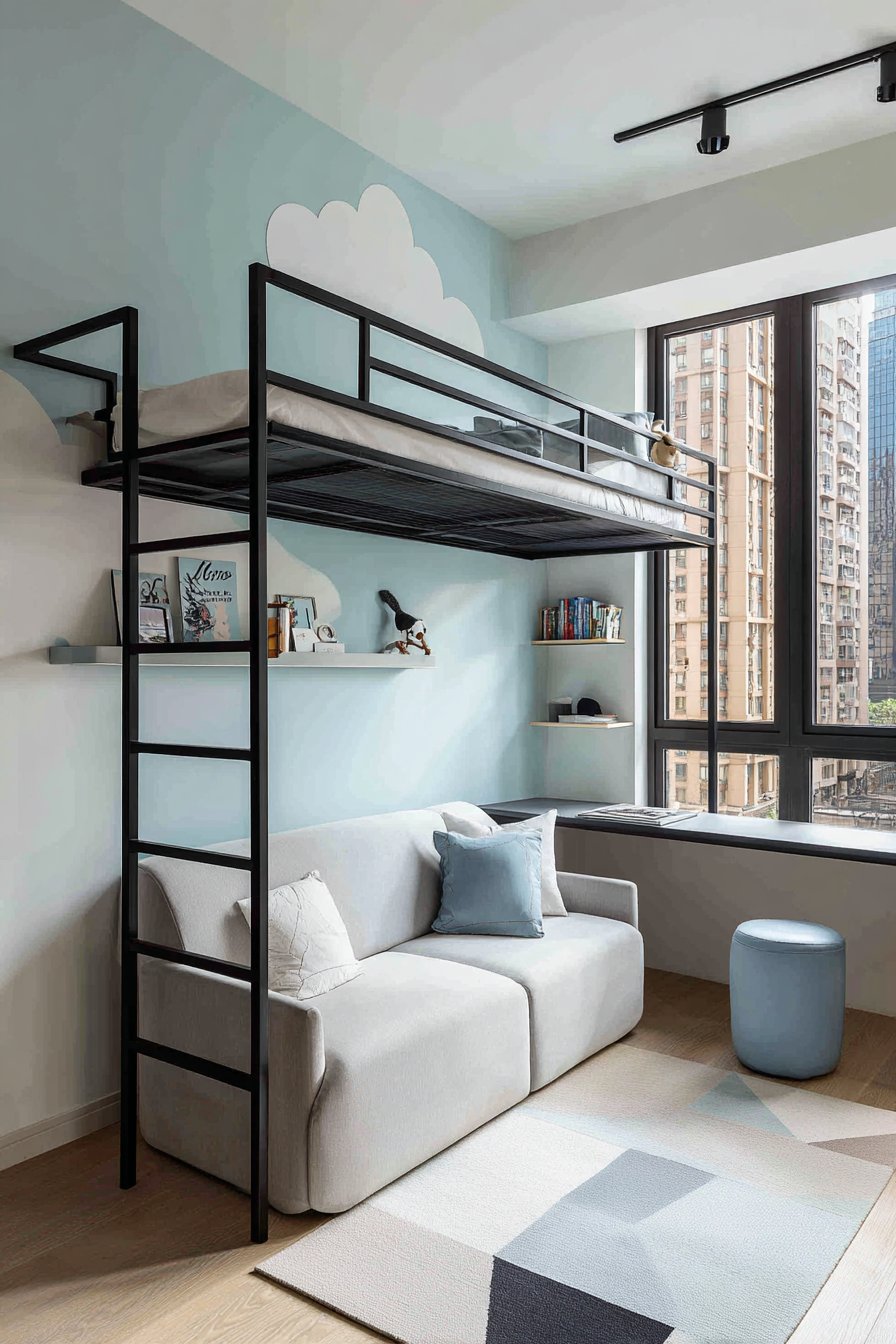
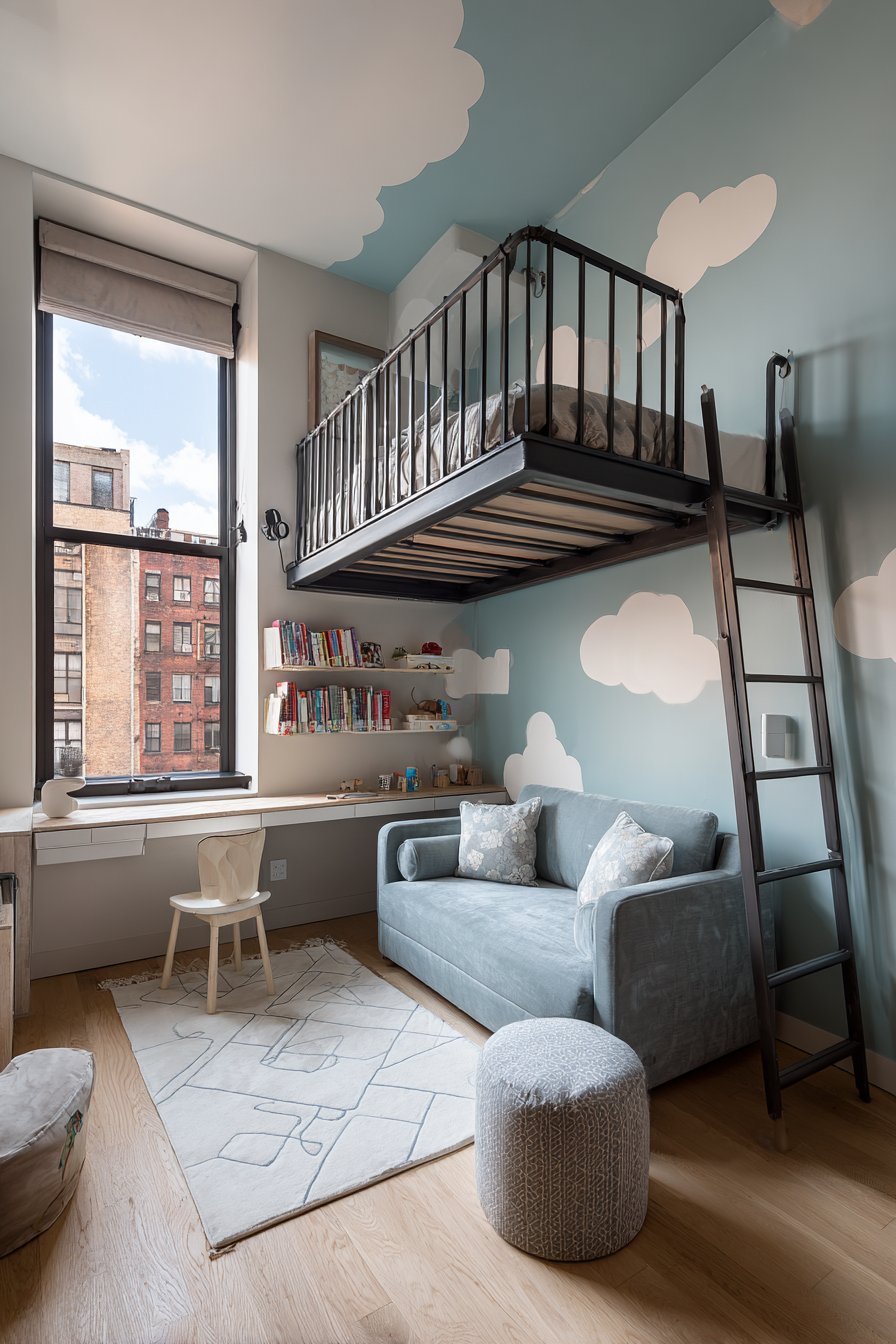
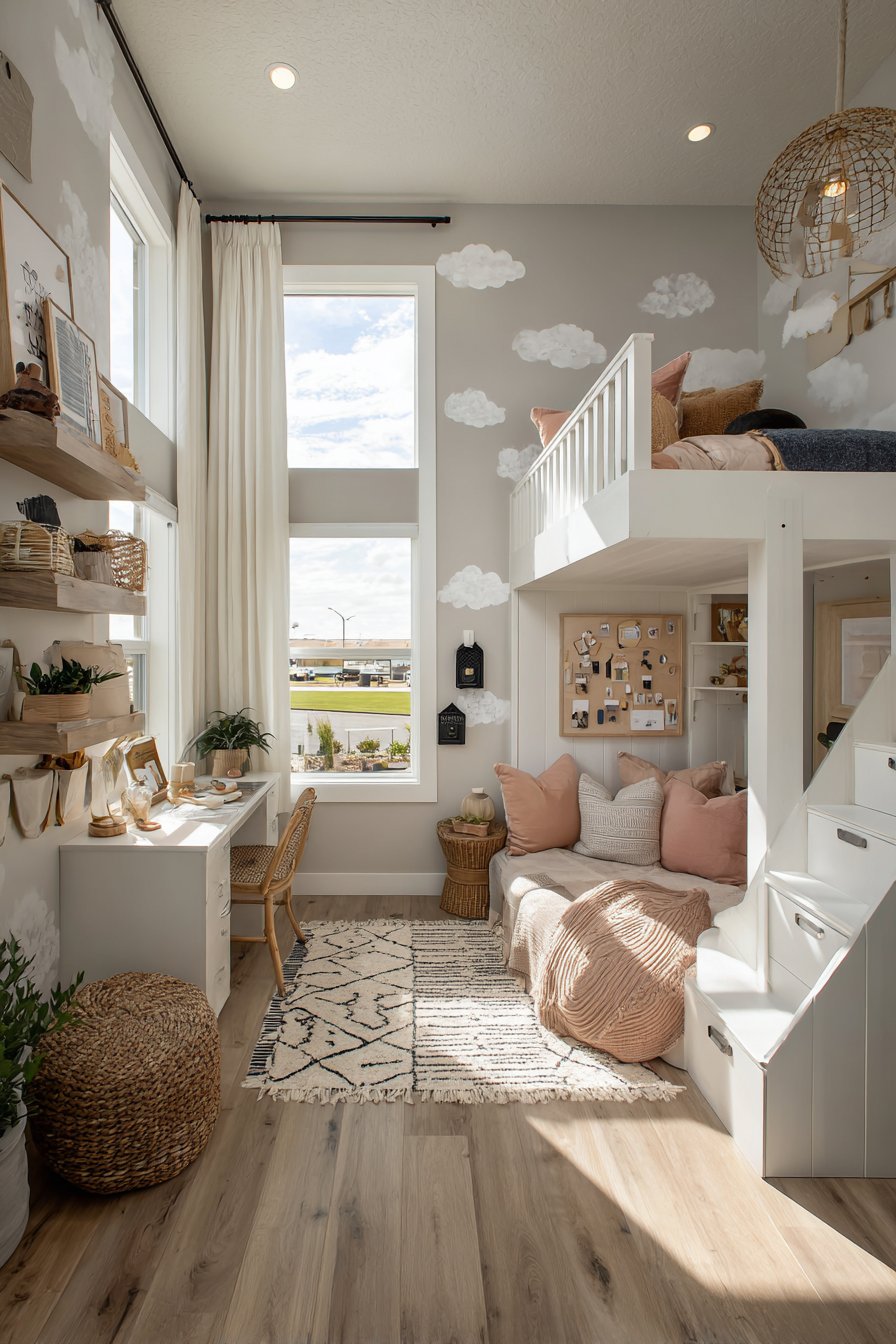
Metal frame loft beds create distinct zones vertically. Study areas and seating occupy lower spaces. Small loveseats in performance fabric provide durability. Wall-mounted bookshelves save valuable floor space. Upper sleeping areas include safety rails and small shelves.
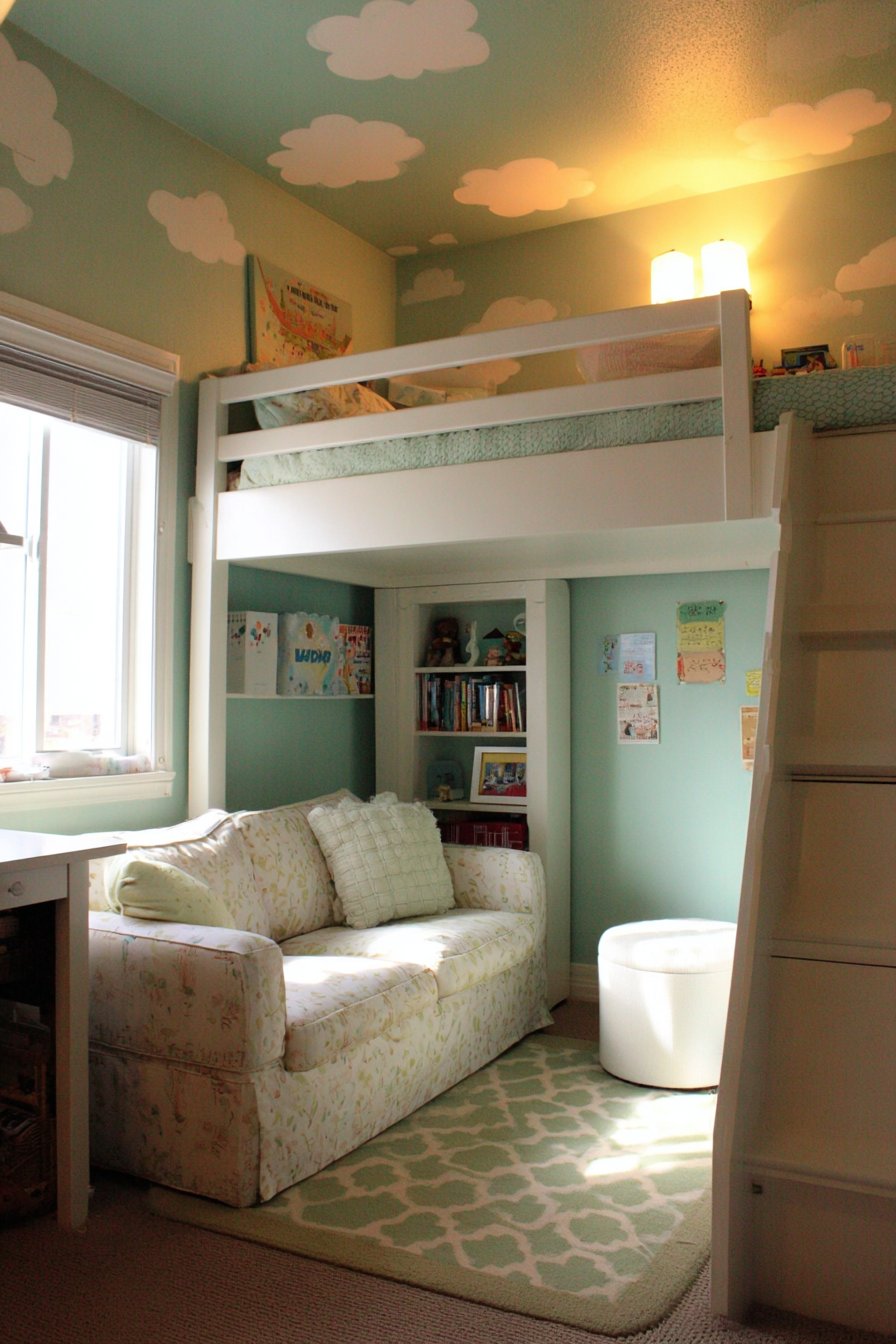
Soft mint walls with white cloud shapes add whimsy. Small area rugs in geometric patterns define lower zones. Compact storage ottomans hide toys efficiently. Natural light from windows illuminates both levels. The vertical approach effectively doubles usable space.
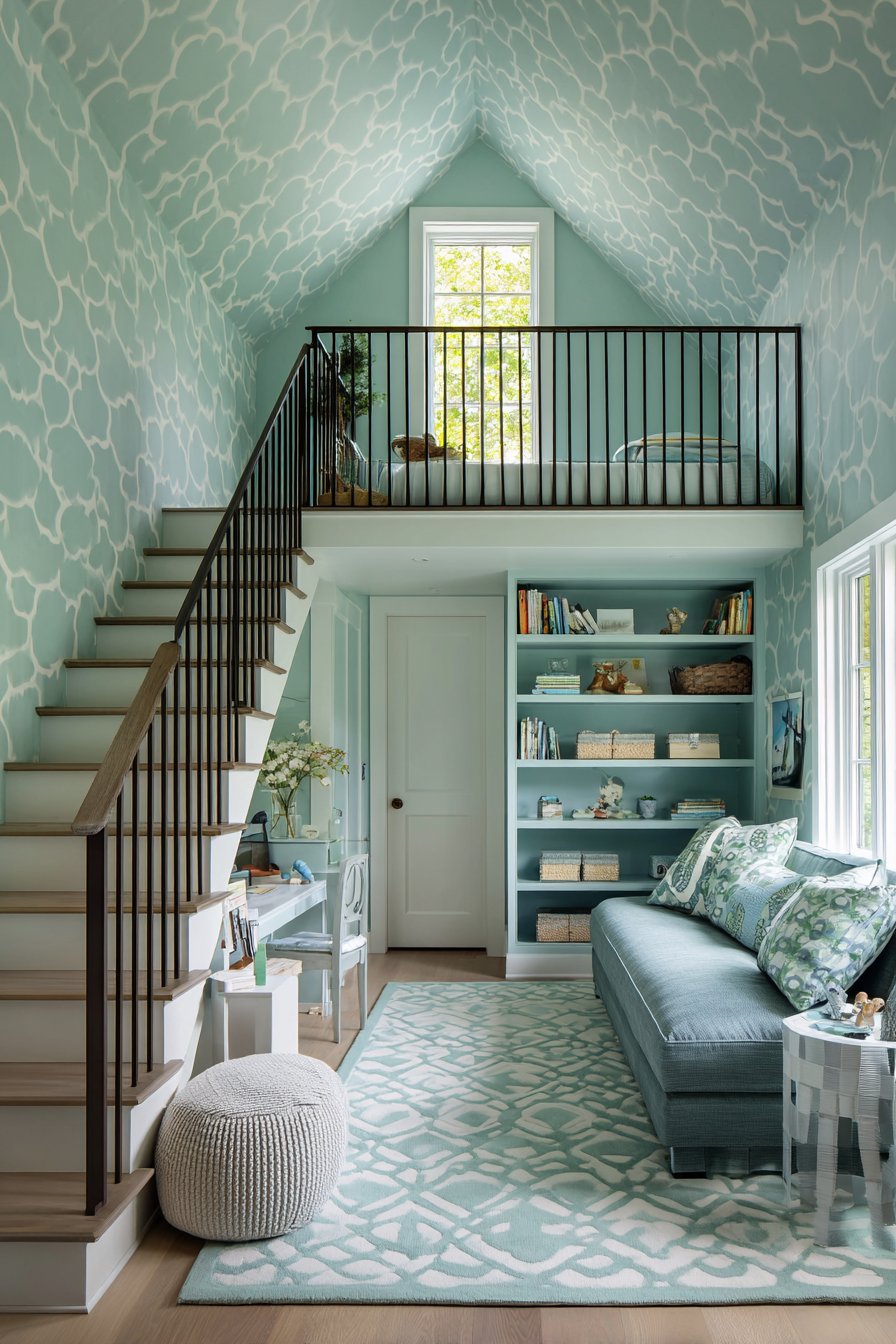
Two-story solutions transform small footprints dramatically. Children enjoy separated sleep and activity zones. Professional photography captures innovative vertical thinking. Lighting demonstrates how elevated design works practically. The concept proves that small rooms offer creative possibilities.
Key Design Tips:
- Select certified metal loft frames for safety
- Include comfortable seating in lower study areas
- Use performance fabrics for high-traffic furniture
- Define zones with area rugs and lighting
- Install adequate lighting at both levels
- Ensure proper headroom clearance above lower areas
17. Practical Everyday Functionality Focus
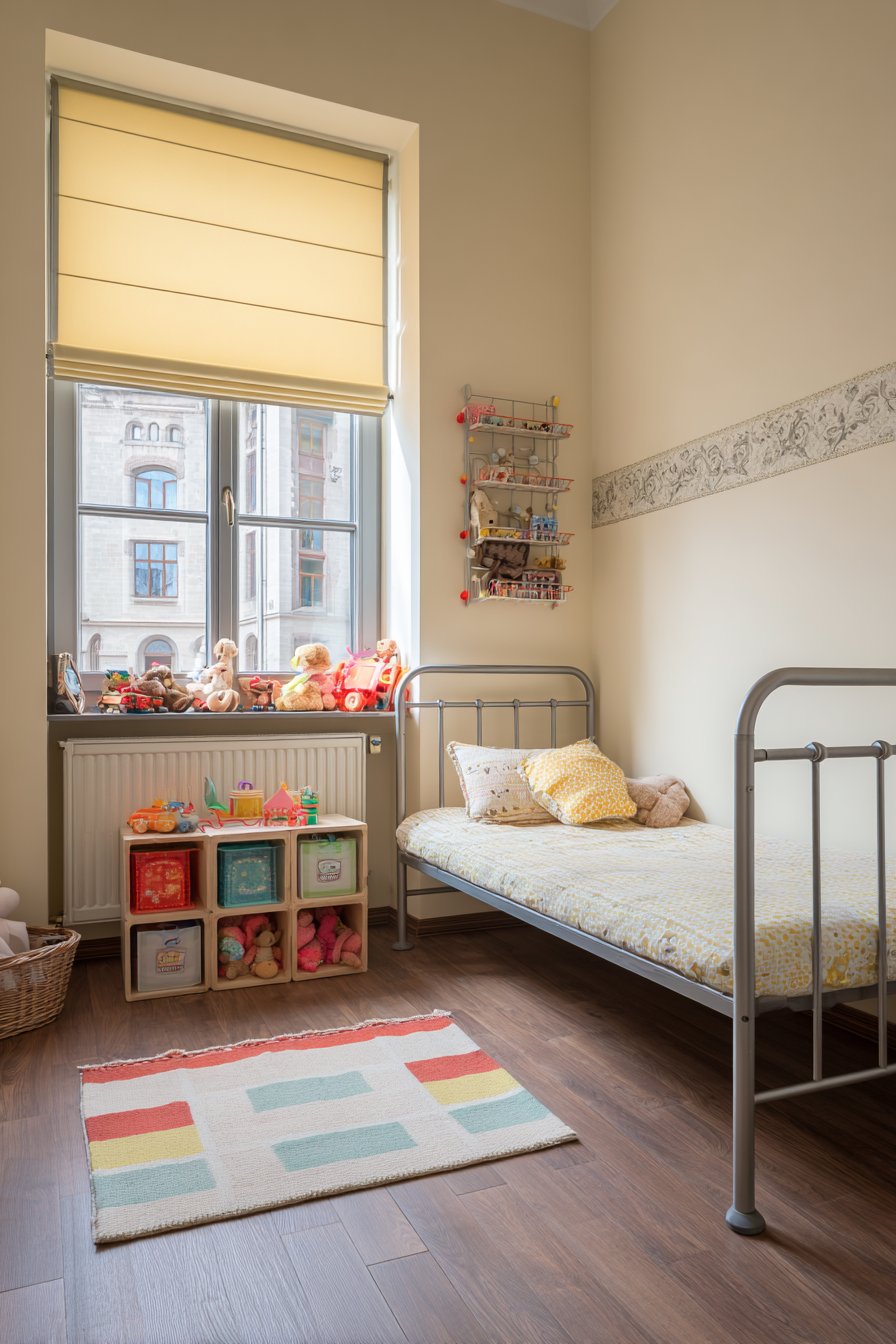
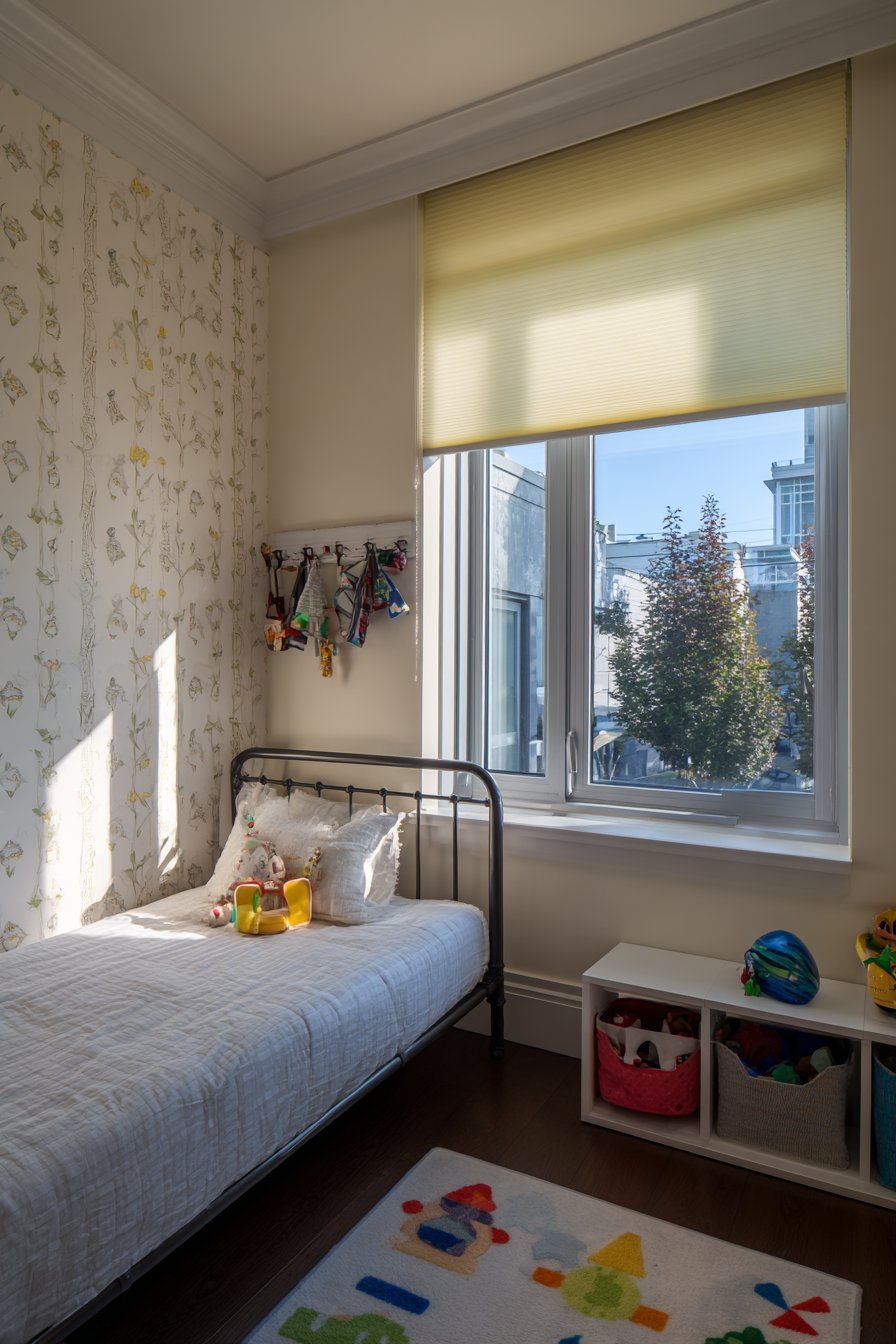
Standard twin beds in simple metal frames maximize floor space. Over-door organizers and wall hooks utilize vertical storage. Clothing and bags hang accessibly. Small cube storage systems in corners hold toys. Fabric bins organize by category efficiently.
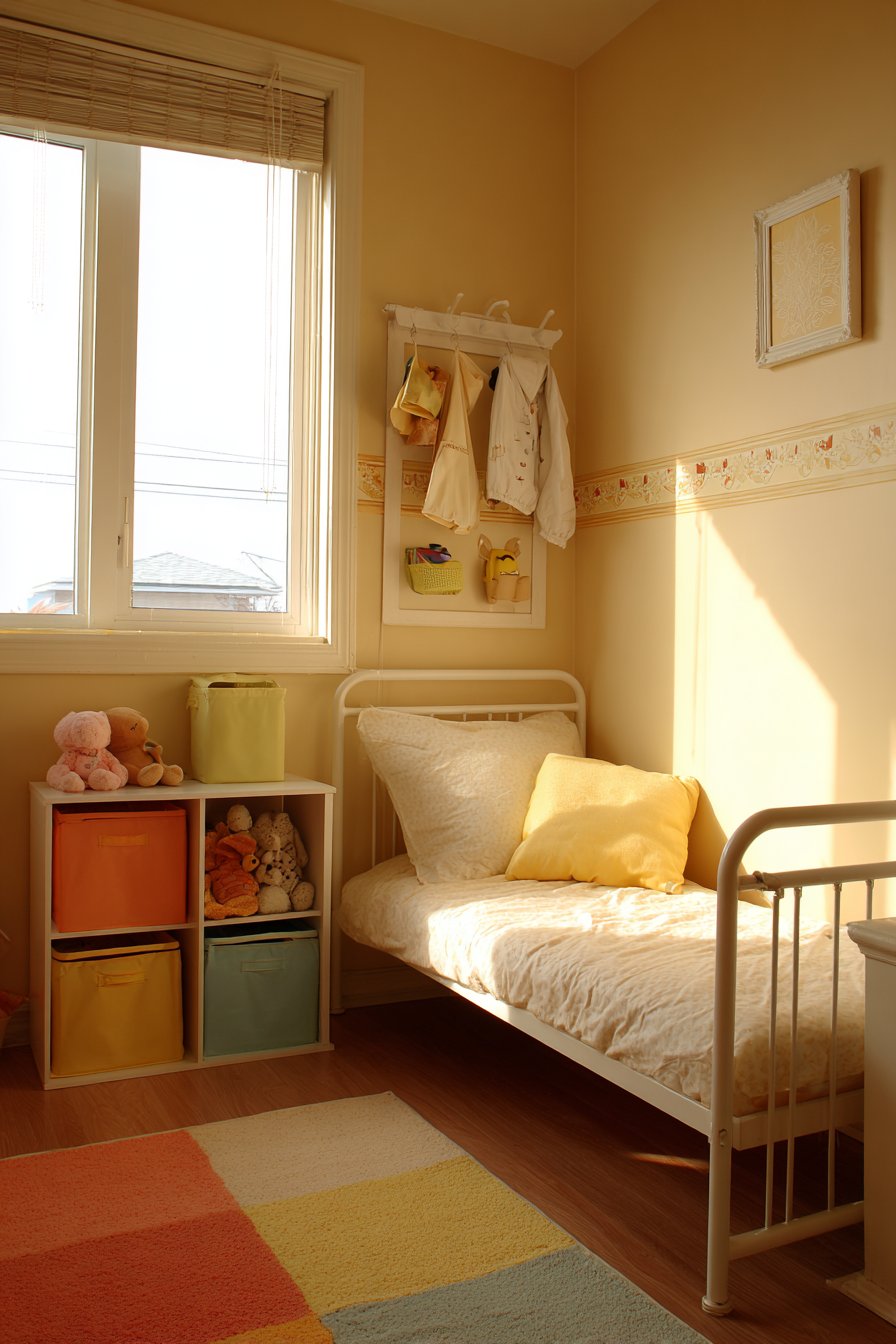
Warm cream walls with decorative border decals add interest. Chair rail height placement creates visual dimension. Cellular honeycomb shades provide insulation and light control. Medium oak hardwood floors offer lasting durability. Small area rugs in primary colors add cheerfulness.
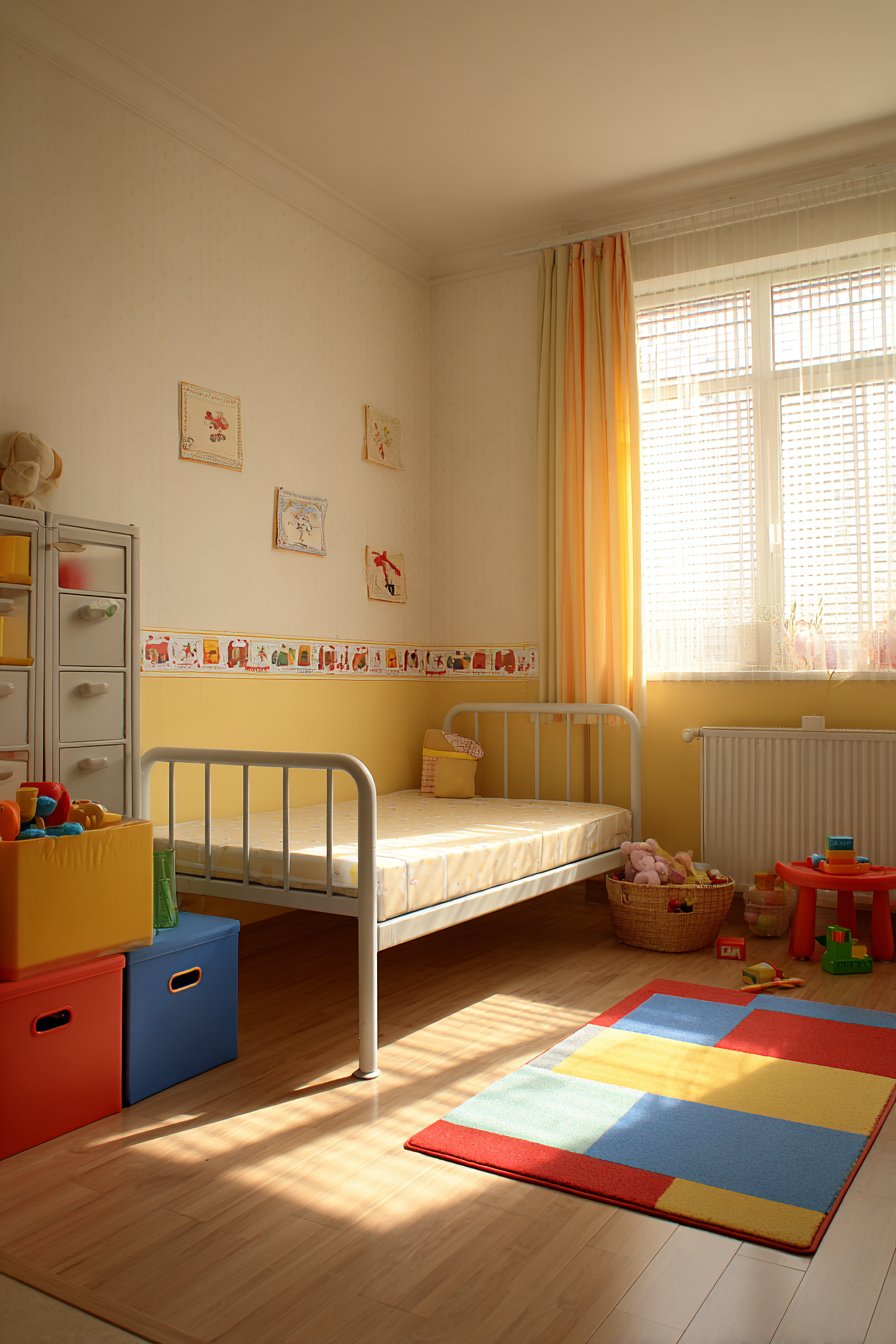
Realistic toy storage solutions address everyday challenges. The lived-in comfort shows practical design thinking. Natural afternoon lighting emphasizes functional arrangements. The design acknowledges that children accumulate belongings. Thoughtful organization systems accommodate real life beautifully.
Key Design Tips:
- Maximize vertical storage with hooks and organizers
- Use cube systems for categorized toy storage
- Add decorative borders at chair rail height
- Choose cellular shades for energy efficiency
- Select durable hardwood flooring for longevity
- Create storage systems matching children’s organization abilities
18. Flexible Trundle Daybed Solution
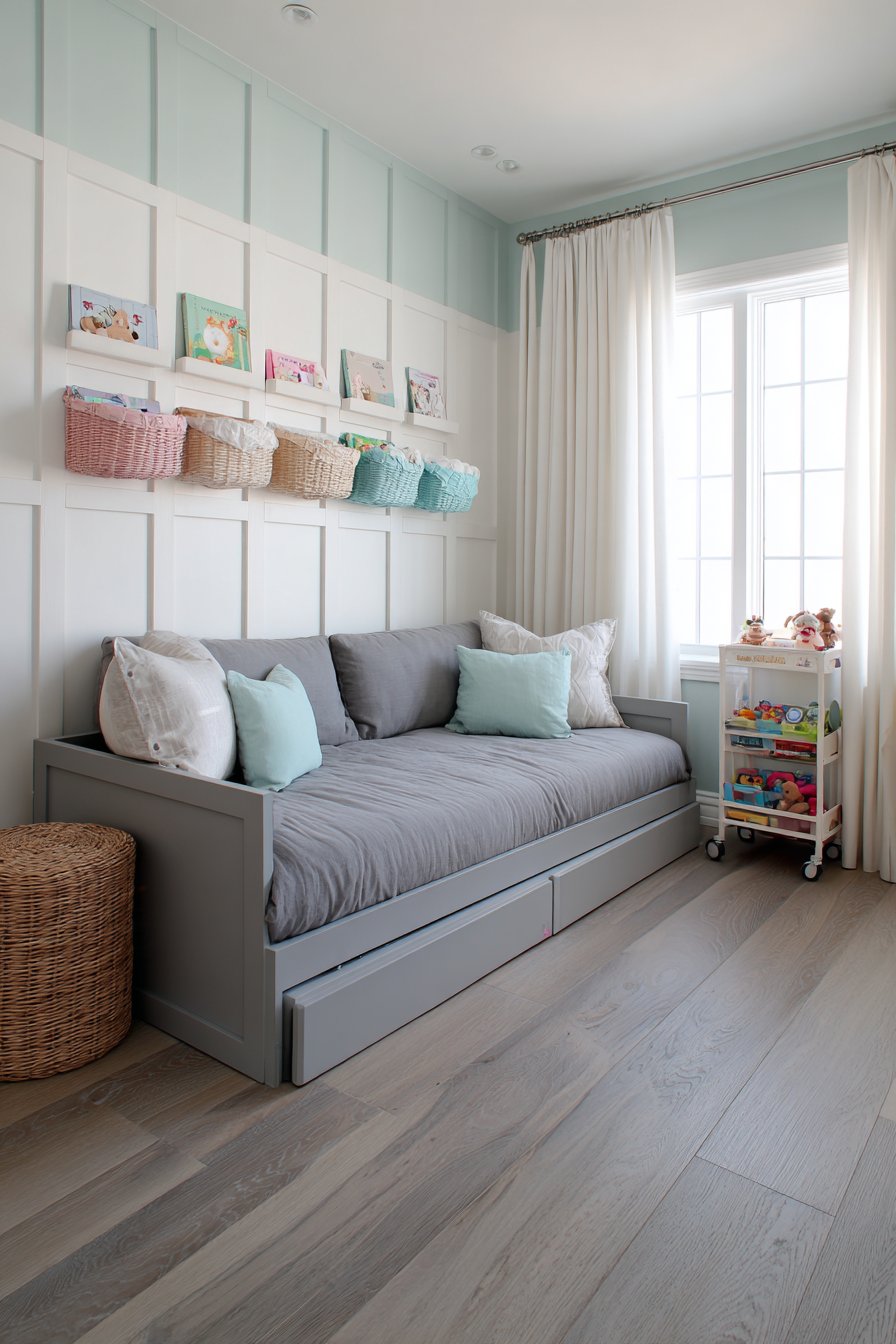
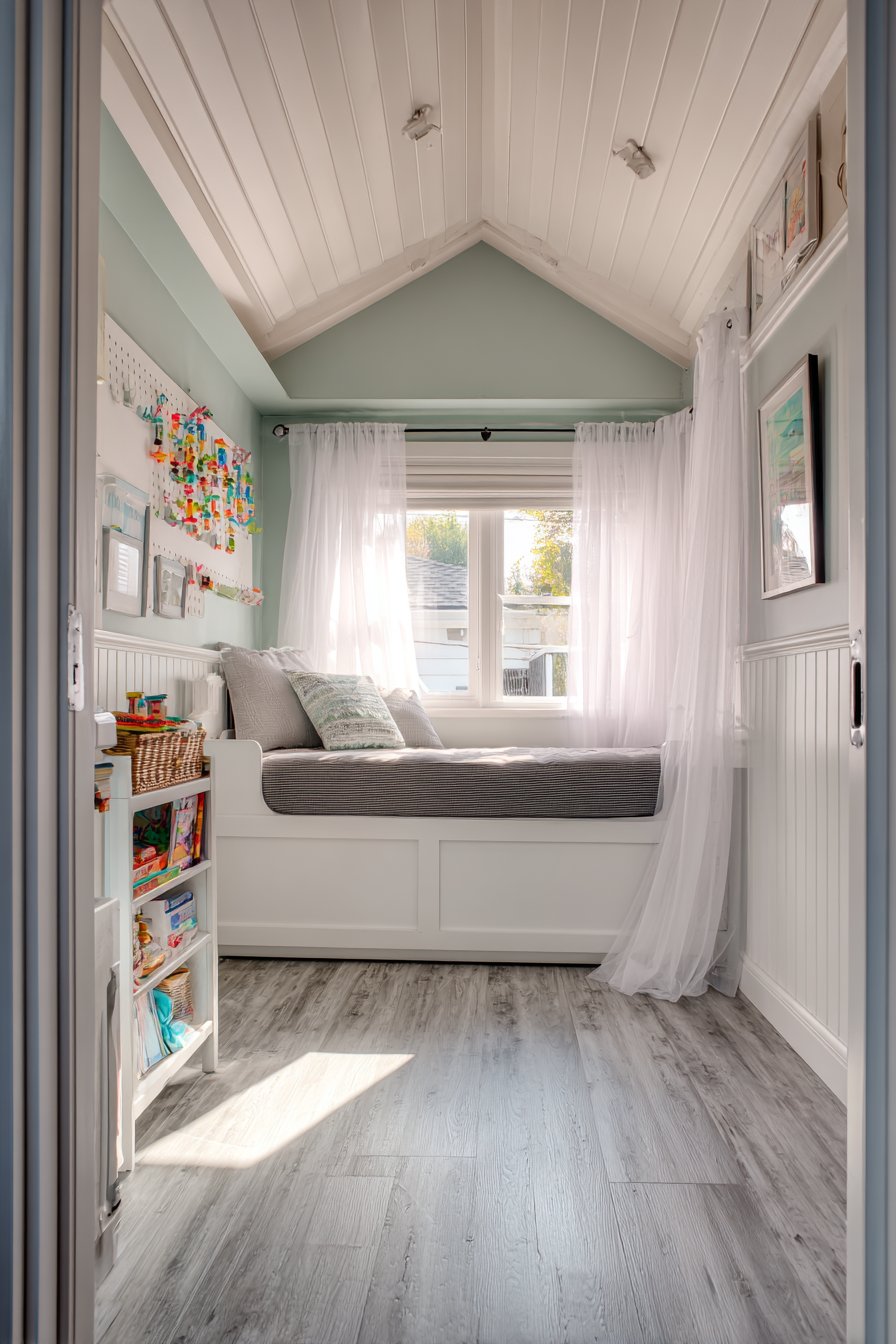
Grey upholstered trundle daybeds serve dual purposes brilliantly. Seating during play transforms to sleeping for two. Floor-to-ceiling pegboard painted white offers customizable storage. Colorful hooks and baskets arrange according to needs. Small rolling carts fit beneath windows.
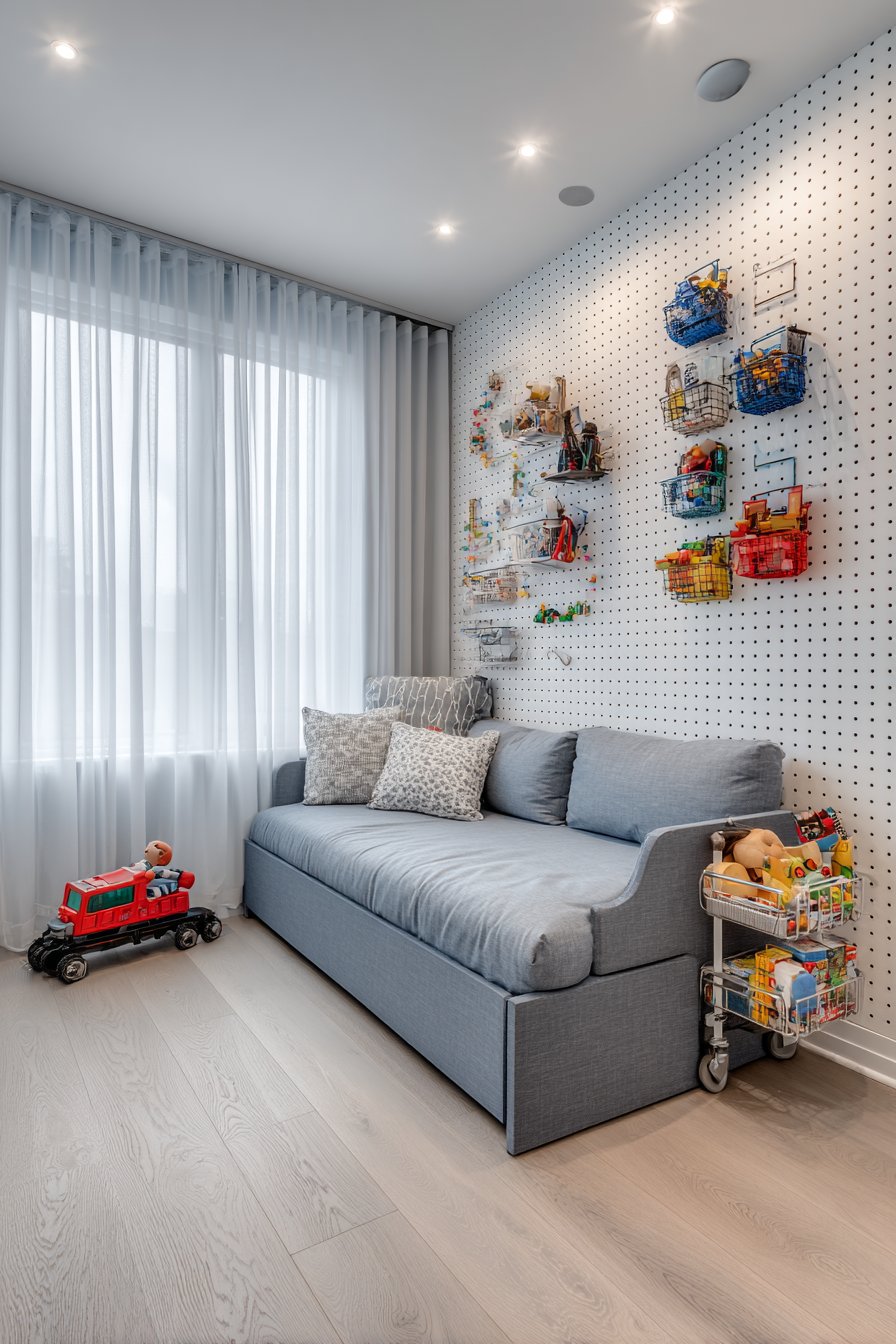
Current favorite toys stay accessible in mobile storage. Soft aqua walls with white wainscoting add dimension. Luxury vinyl tile flooring provides easy maintenance. Sheer white curtains on tension rods maximize natural light. The multifunctional approach solves multiple challenges simultaneously.
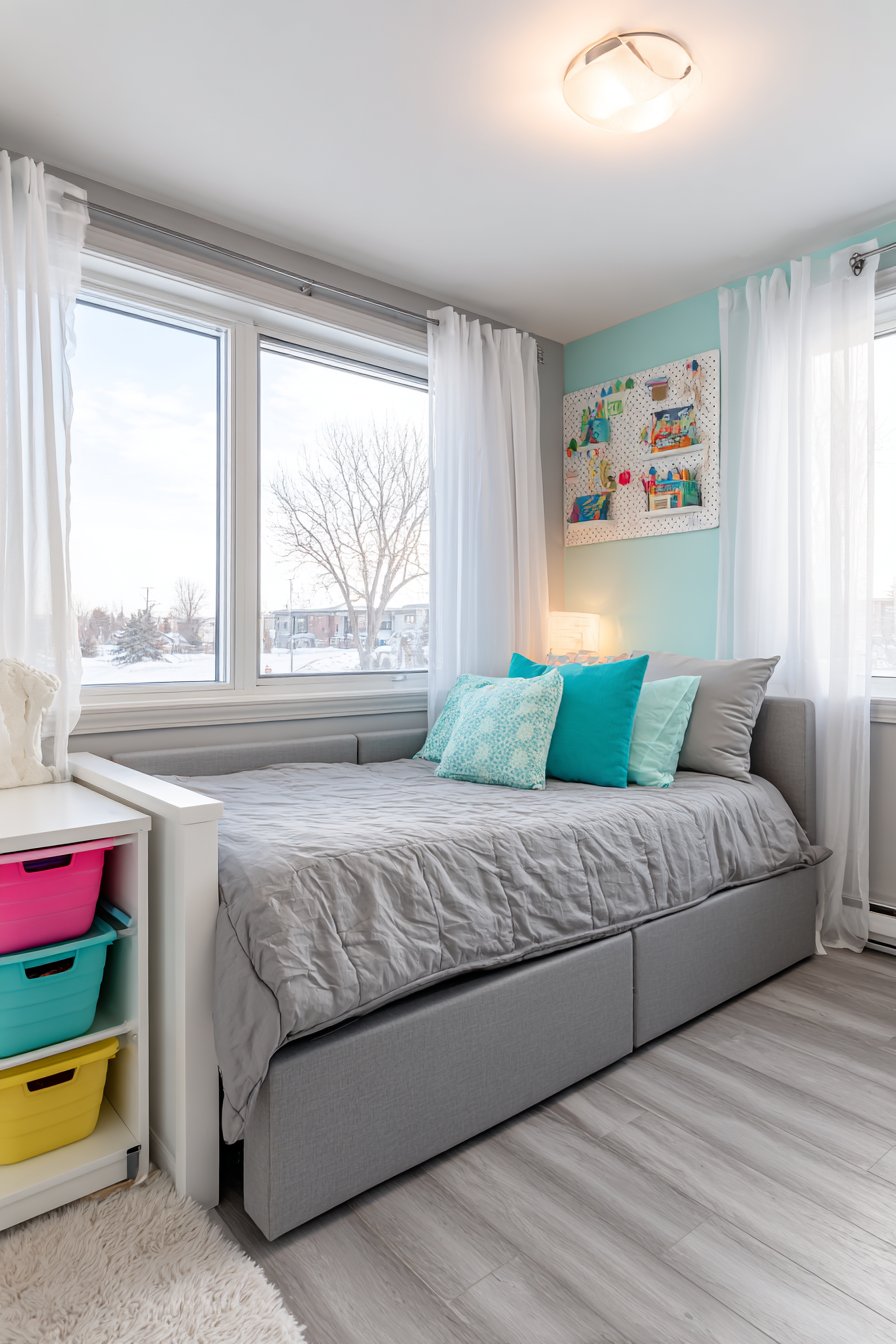
Flexible storage adapts as interests change over time. Dual-purpose pieces prove essential in small spaces. Professional lighting demonstrates versatile thinking. The design accommodates evolving childhood needs. Smart solutions create rooms that grow with children.
Key Design Tips:
- Choose upholstered trundles for comfortable seating and sleeping
- Install pegboard systems for adaptable organization
- Use rolling carts for rotating toy access
- Add wainscoting for architectural interest
- Select luxury vinyl tile for waterproof durability
- Maximize natural light with sheer window treatments
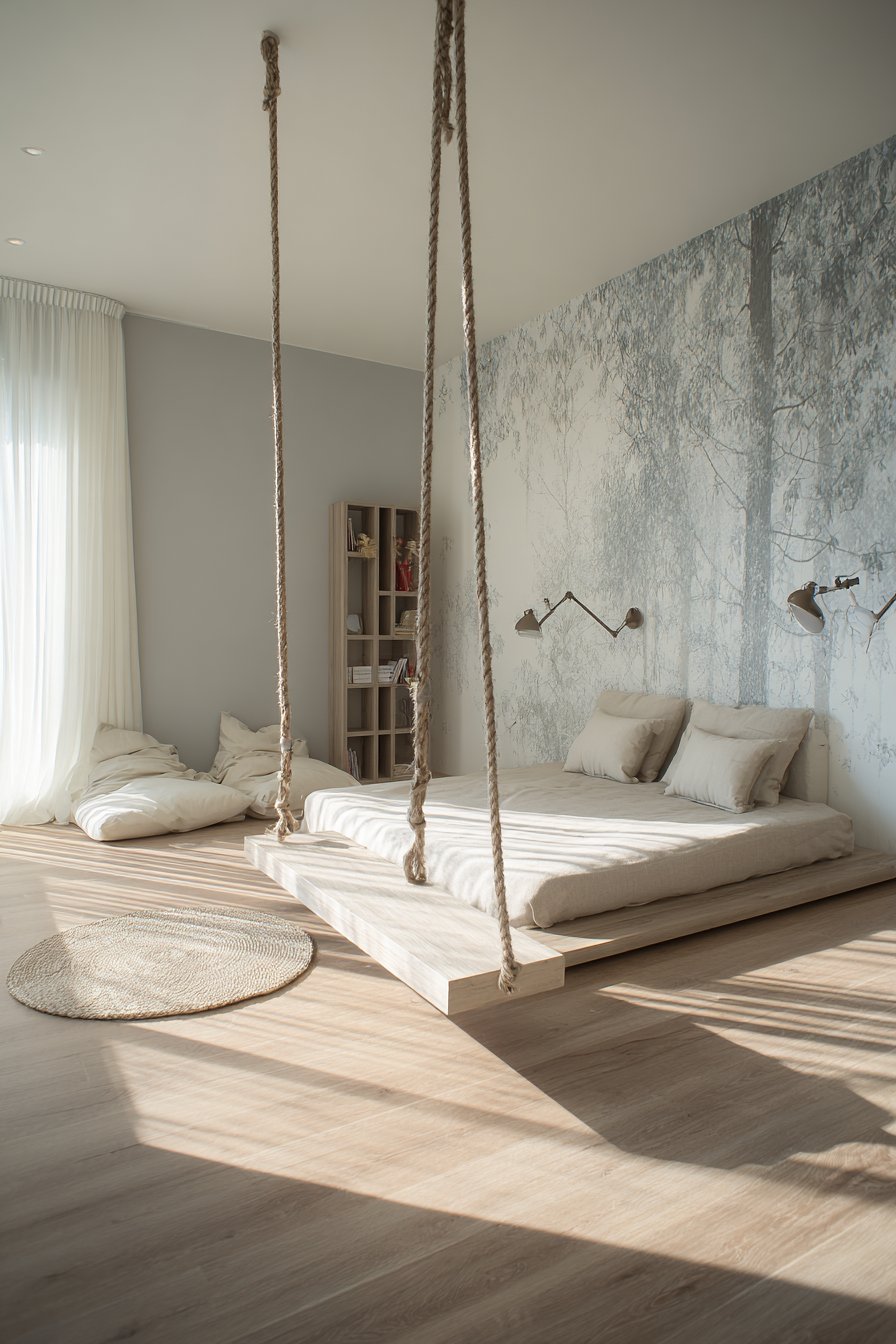
19. Peaceful Alcove Sleeping Zone
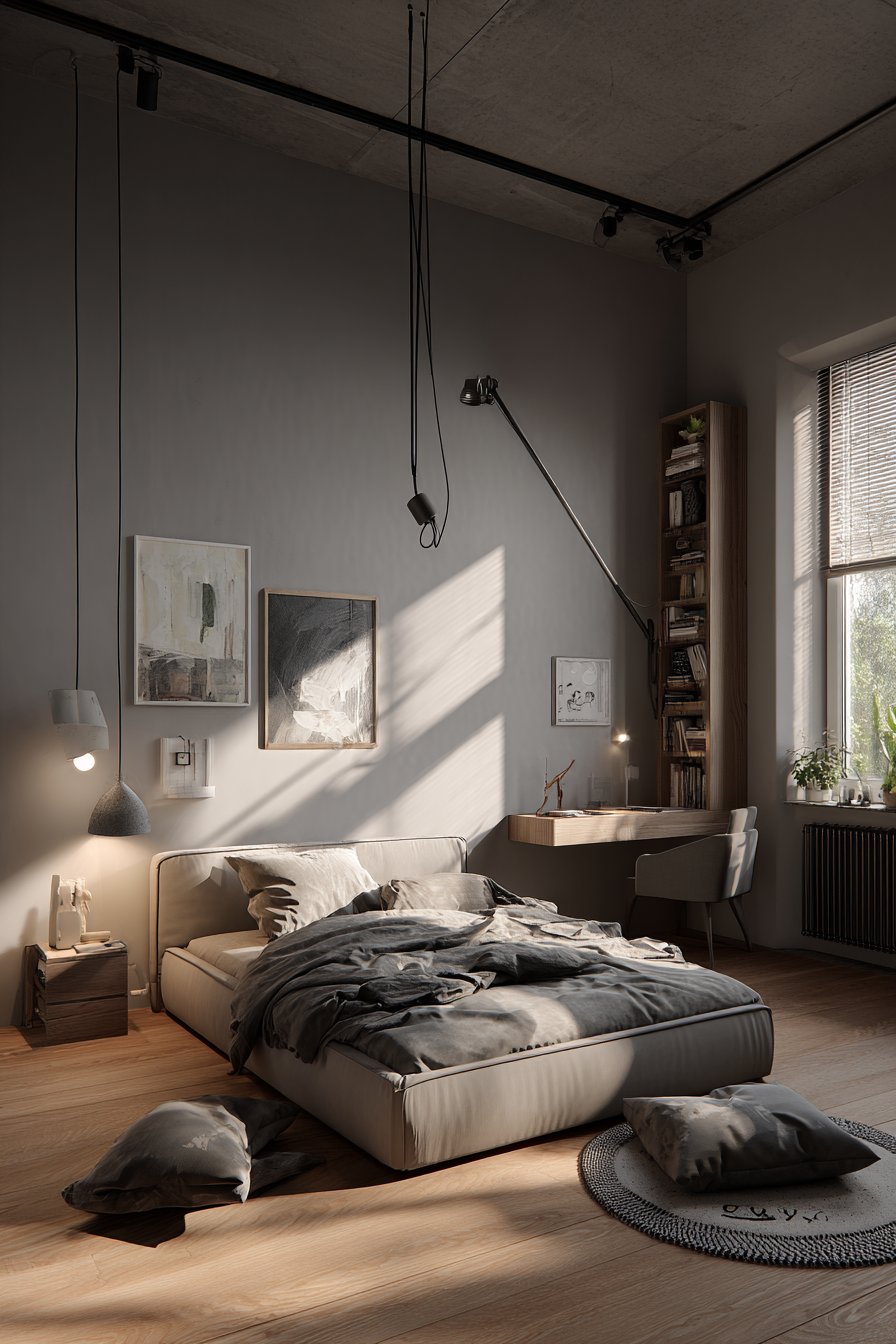
Simple upholstered beds in natural linen create calm environments. Low profile headboards maintain open feelings. Wall-mounted swing arm lamps save nightstand space. Narrow bookshelf room dividers partially separate zones. Sleep areas distinguish from play spaces subtly.
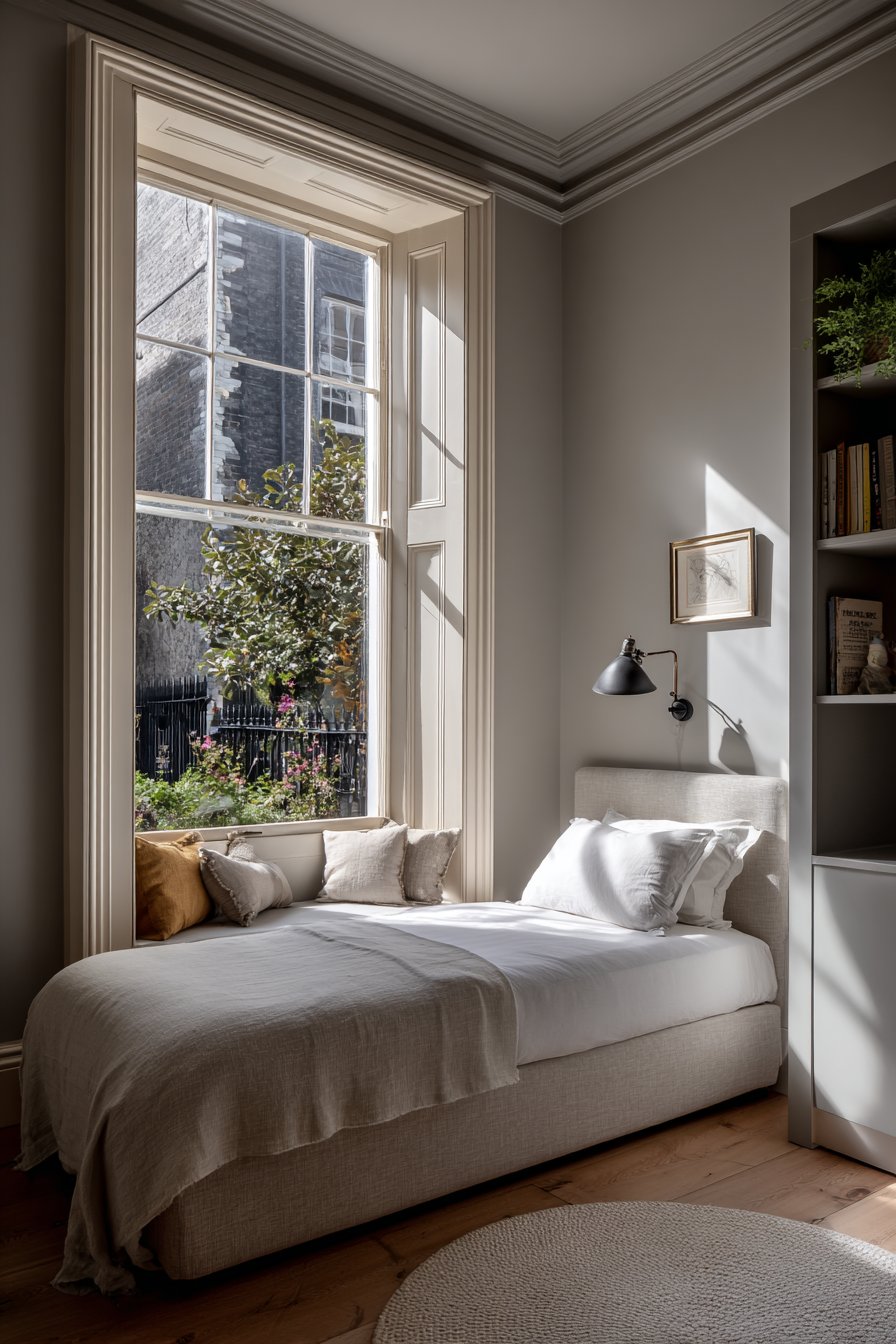
Floor cushions create comfortable play seating. Soft grey walls provide neutral foundations. Removable grasscloth wallpaper adds texture to accent walls. Small desks attach to walls with folding mechanisms. Natural oak engineered hardwood covers floors warmly.
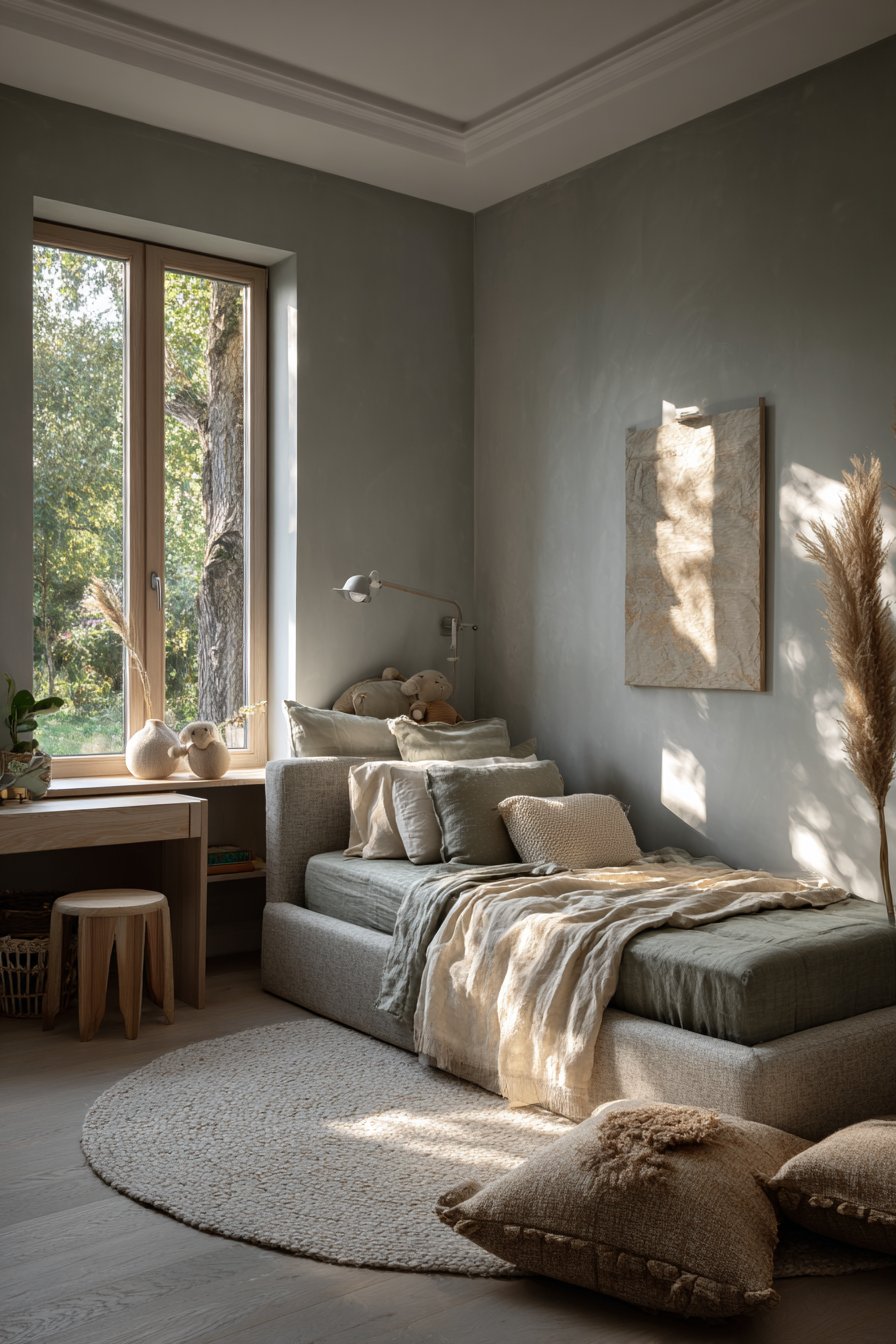
Peaceful atmospheres support better sleep quality. Material textures add depth without visual clutter. Gentle shadows from natural window light enhance serenity. The subtle zoning creates purpose within compact areas. Thoughtful design choices prioritize calm over stimulation.
Key Design Tips:
- Select natural fiber upholstery for breathable comfort
- Install swing arm lamps to eliminate nightstand needs
- Use room dividers to create subtle zone separation
- Add textured wallpaper to single accent walls
- Choose wall-mounted folding desks for flexibility
- Layer soft materials for tactile comfort
20. Corner Alcove Storage Integration
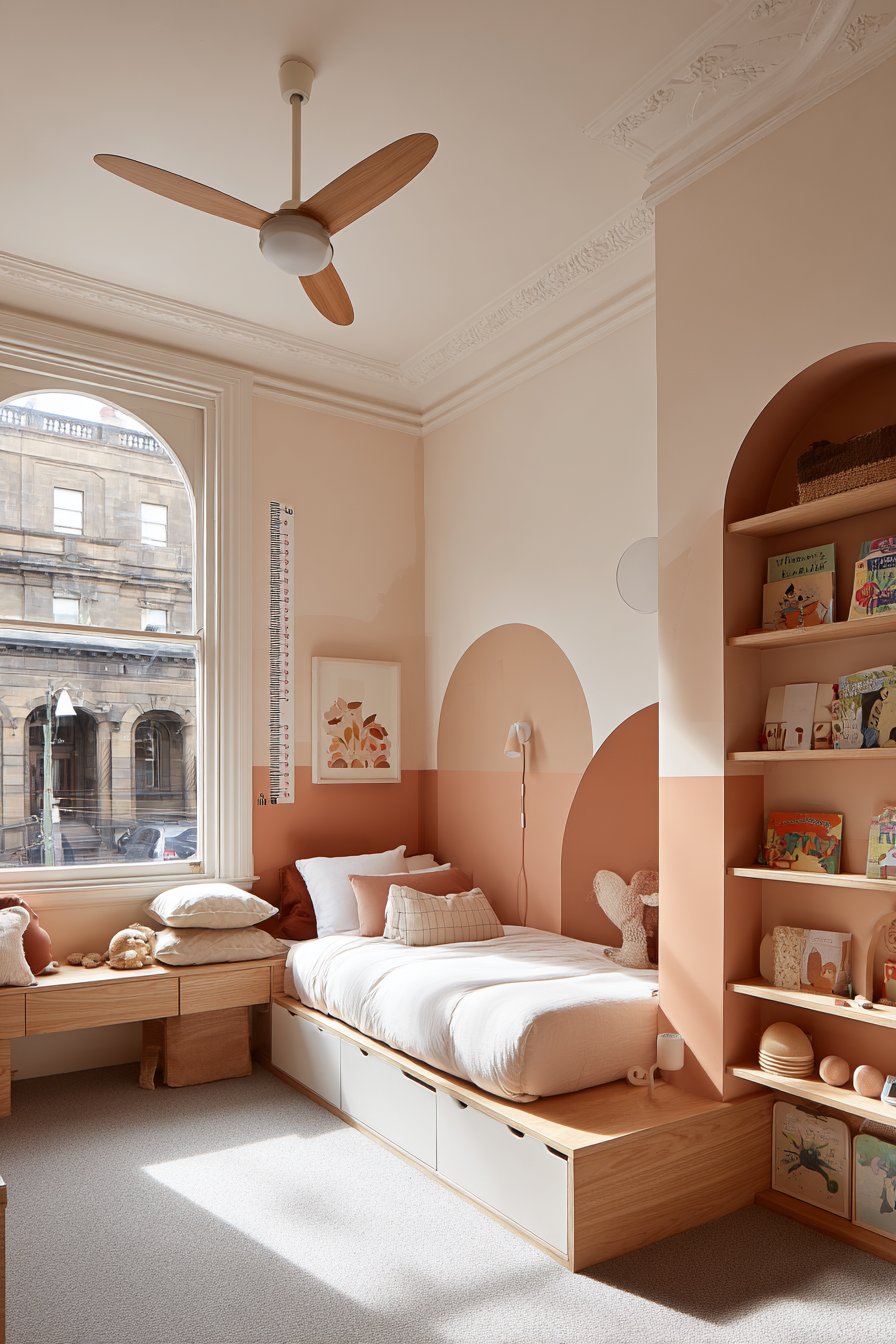
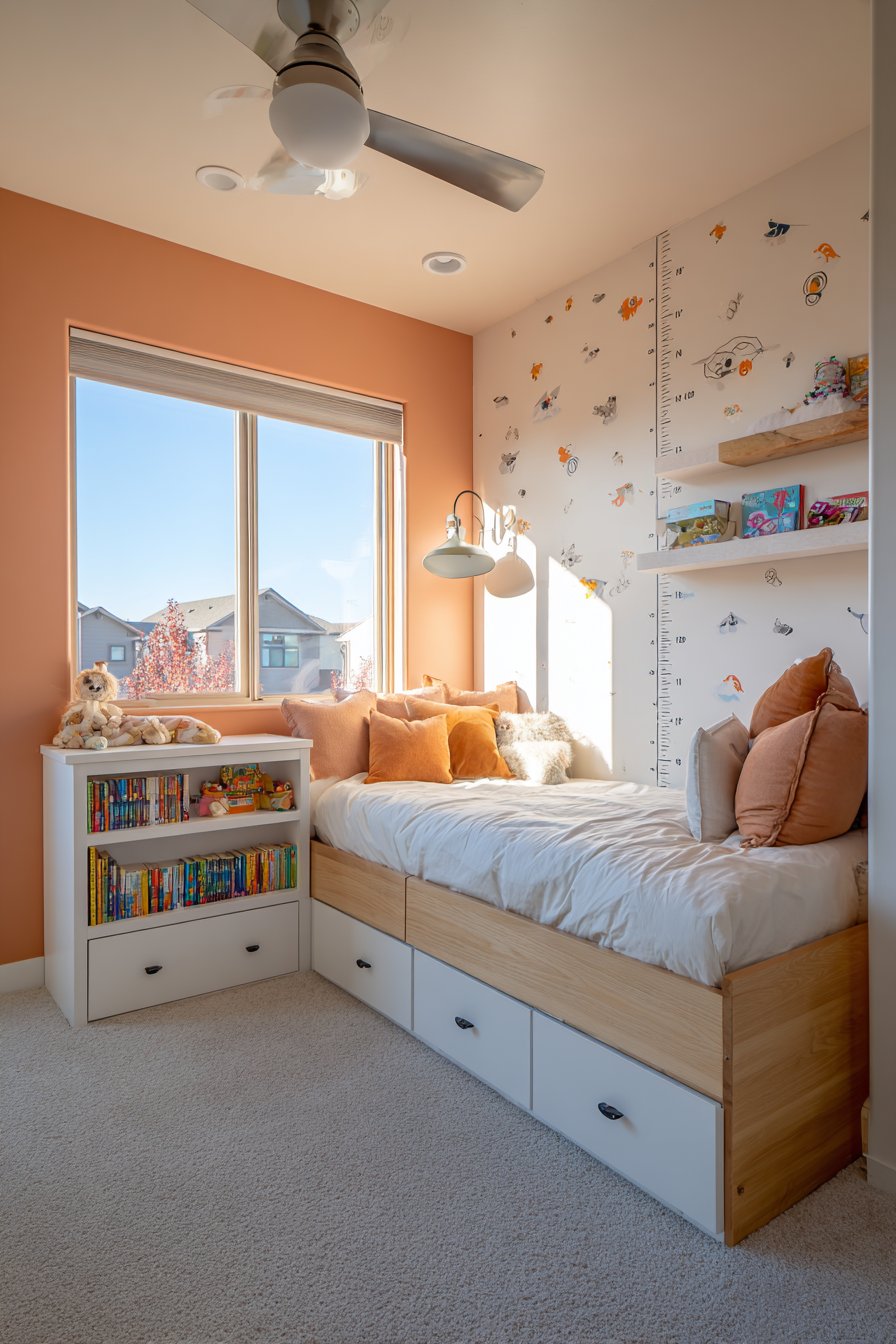
Beds pushed into corner alcoves maximize floor space. Shelving built into walls on both sides creates nooks. Cozy feelings emerge from enclosed sleeping areas. The shelves hold books, toys, and reading lights. Simple white wooden frames include storage drawers underneath.
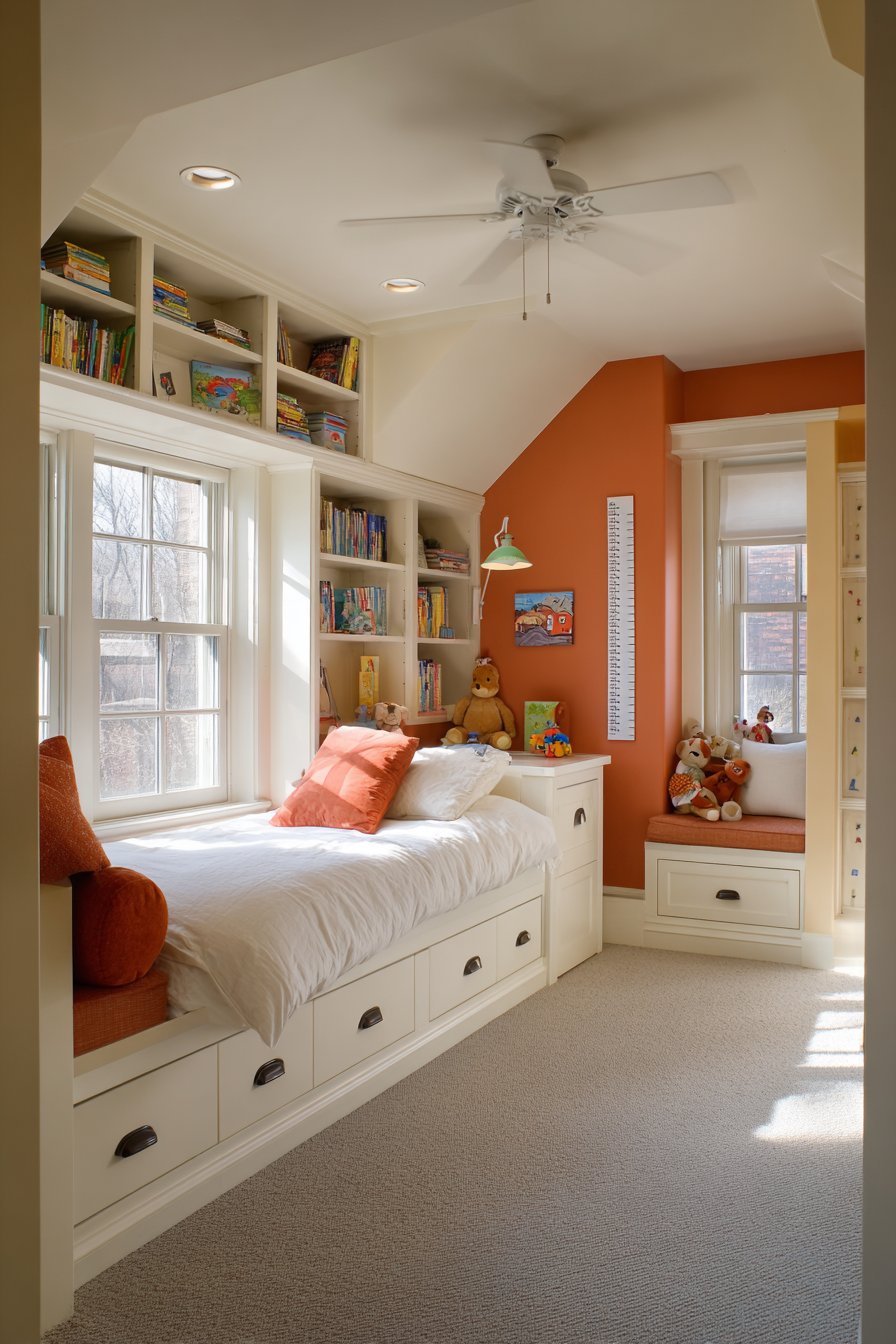
Growth chart decals and small floating shelves utilize remaining walls. Soft peach walls with white trim create warmth. Ceiling fans with lights provide circulation and illumination. Light grey carpeting offers softness and durability. Morning light from windows highlights built-in solutions.
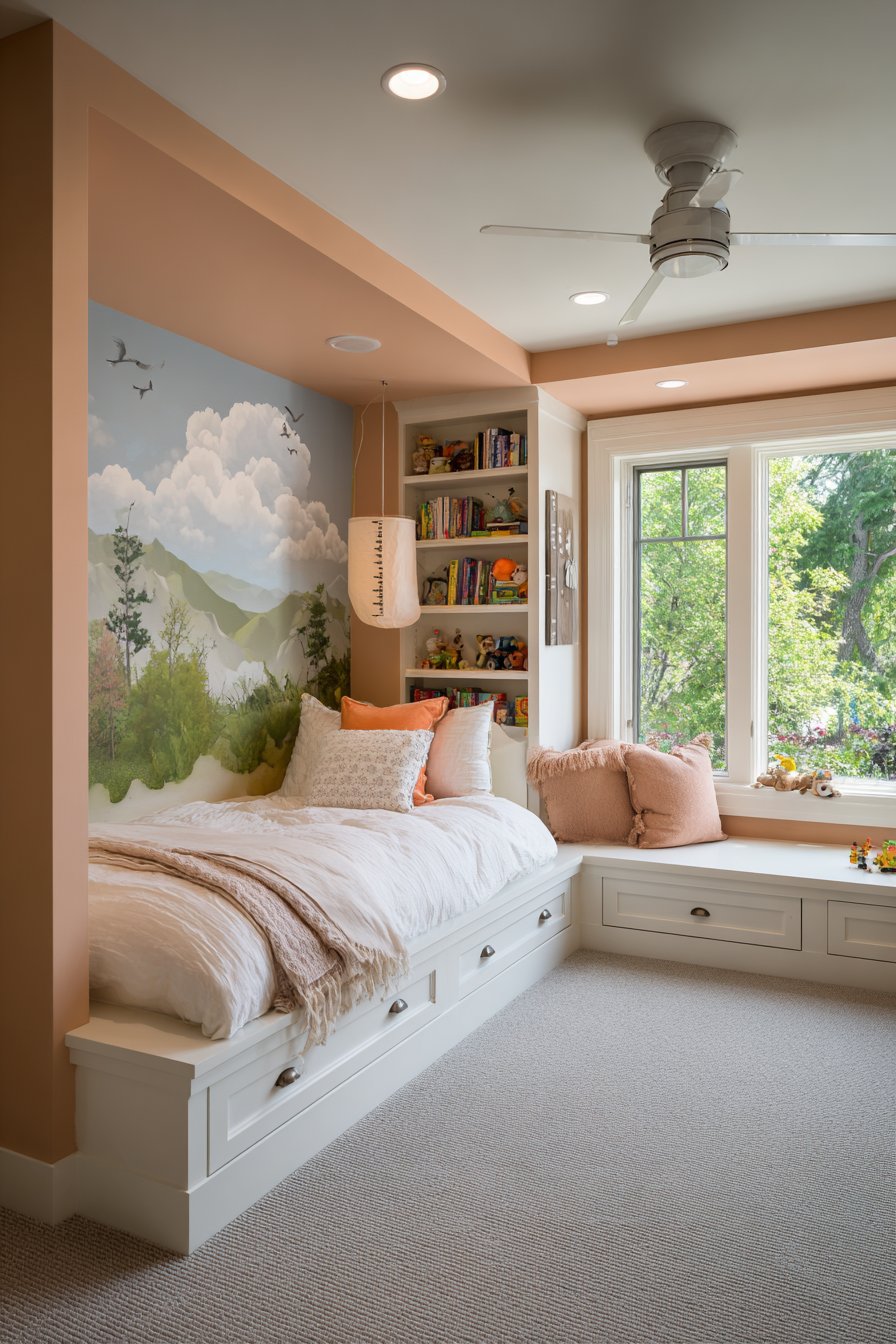
Corner positioning combined with built-ins creates comprehensive storage. The alcove feeling provides security children appreciate. Wide-angle photography captures thoughtful planning. Natural lighting demonstrates how corners offer opportunities. The well-planned design proves every inch matters.
Key Design Tips:
- Build shelving into corner alcoves for integrated storage
- Include under-bed drawers for maximum storage capacity
- Add growth charts for tracking developmental milestones
- Install ceiling fans for air circulation in small rooms
- Choose soft carpeting for comfort and sound absorption
- Position beds to create natural alcove formations
Why These Small Kids Bedroom Designs Are the Best
These small kids bedroom designs represent the finest approaches to maximizing limited space while maintaining functionality and charm. Each concept demonstrates that square footage limitations inspire rather than restrict creative solutions. The designs showcase versatility across different budgets, skill levels, and aesthetic preferences.
Vertical space utilization emerges as a consistent theme throughout successful small bedroom designs. Loft beds, bunk configurations, and platform systems effectively double usable areas. These solutions create distinct zones for sleeping, studying, and playing within compact footprints. The vertical approach addresses both practical storage needs and psychological comfort through defined spaces.
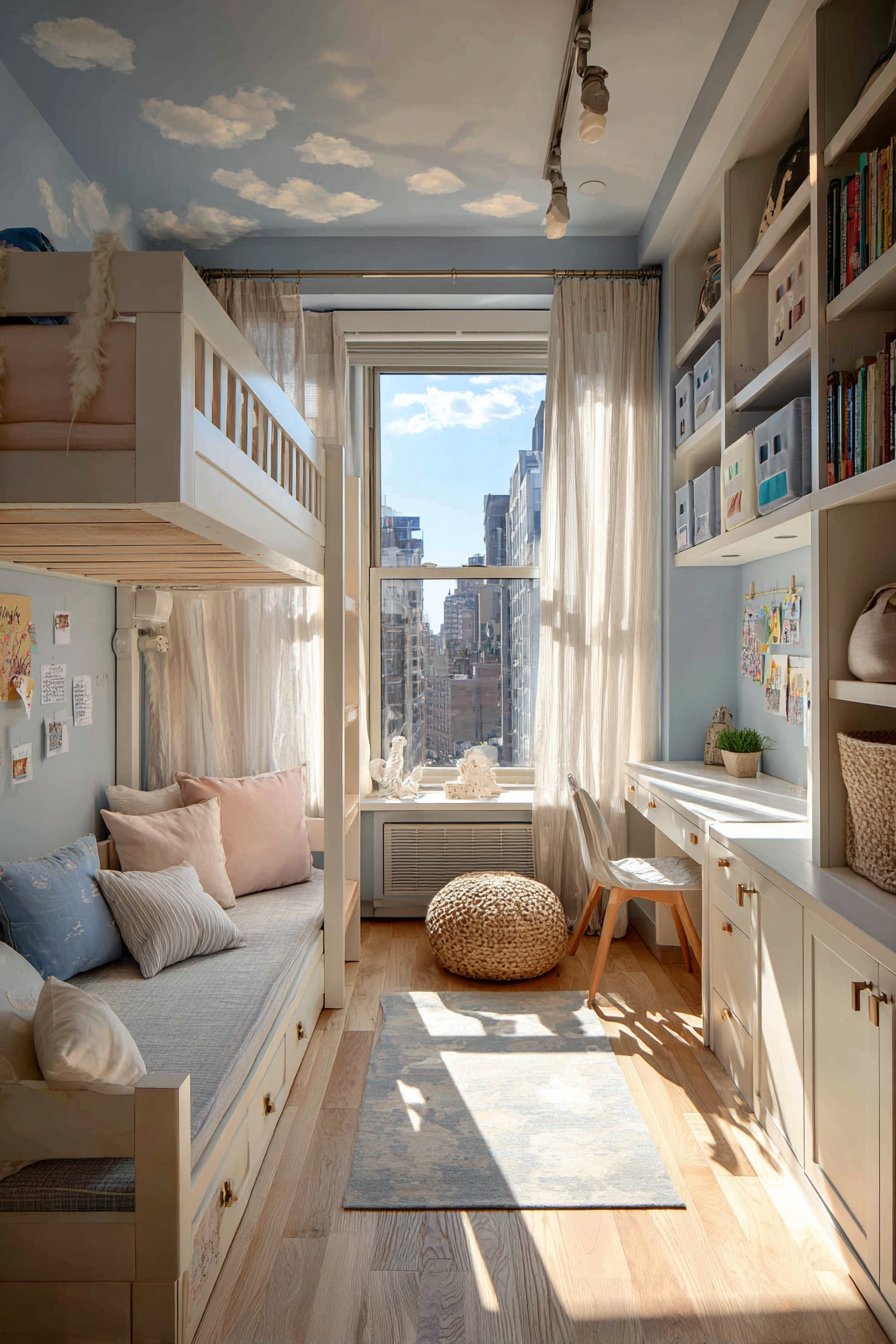
Multifunctional furniture proves essential in small bedroom success. Captain’s beds with integrated drawers, trundle daybeds serving dual purposes, and Murphy beds transforming spaces demonstrate intelligent design thinking. These pieces eliminate the need for separate storage furniture. The consolidation creates more open floor space for movement and play.
Material choices significantly impact both durability and perceived spaciousness. Light-colored woods, natural finishes, and neutral palettes reflect available light effectively. Easy-clean fabrics like microfiber withstand active childhood while simplifying maintenance. Sustainable materials like cork flooring and bamboo shades offer environmental benefits alongside practical advantages.
Color theory applications enhance small spaces considerably. Soft pastels, warm neutrals, and light reflective tones expand perceived dimensions. Strategic accent walls add personality without overwhelming limited square footage. Removable options like peel-and-stick wallpaper and decals allow personalization that evolves with changing tastes.
Storage integration separates successful small bedroom designs from cramped spaces. Built-in systems, under-bed solutions, vertical organizers, and multifunctional pieces keep belongings organized. The designs acknowledge that children accumulate toys, books, and clothing. Adequate storage maintains functionality as collections grow.
Natural lighting maximization appears throughout these successful concepts. Window placement near beds, desks, and play areas supports circadian rhythms and reduces energy consumption. Layered window treatments offer flexibility for sleep, privacy, and brightness control. The designs demonstrate that natural light transforms small spaces dramatically.
Conclusion
These twenty small kids bedroom designs prove that limited square footage inspires exceptional creativity. The key takeaways include maximizing vertical space, selecting multifunctional furniture, and prioritizing integrated storage solutions. Light colors, natural materials, and thoughtful lighting create rooms that feel spacious despite compact dimensions.
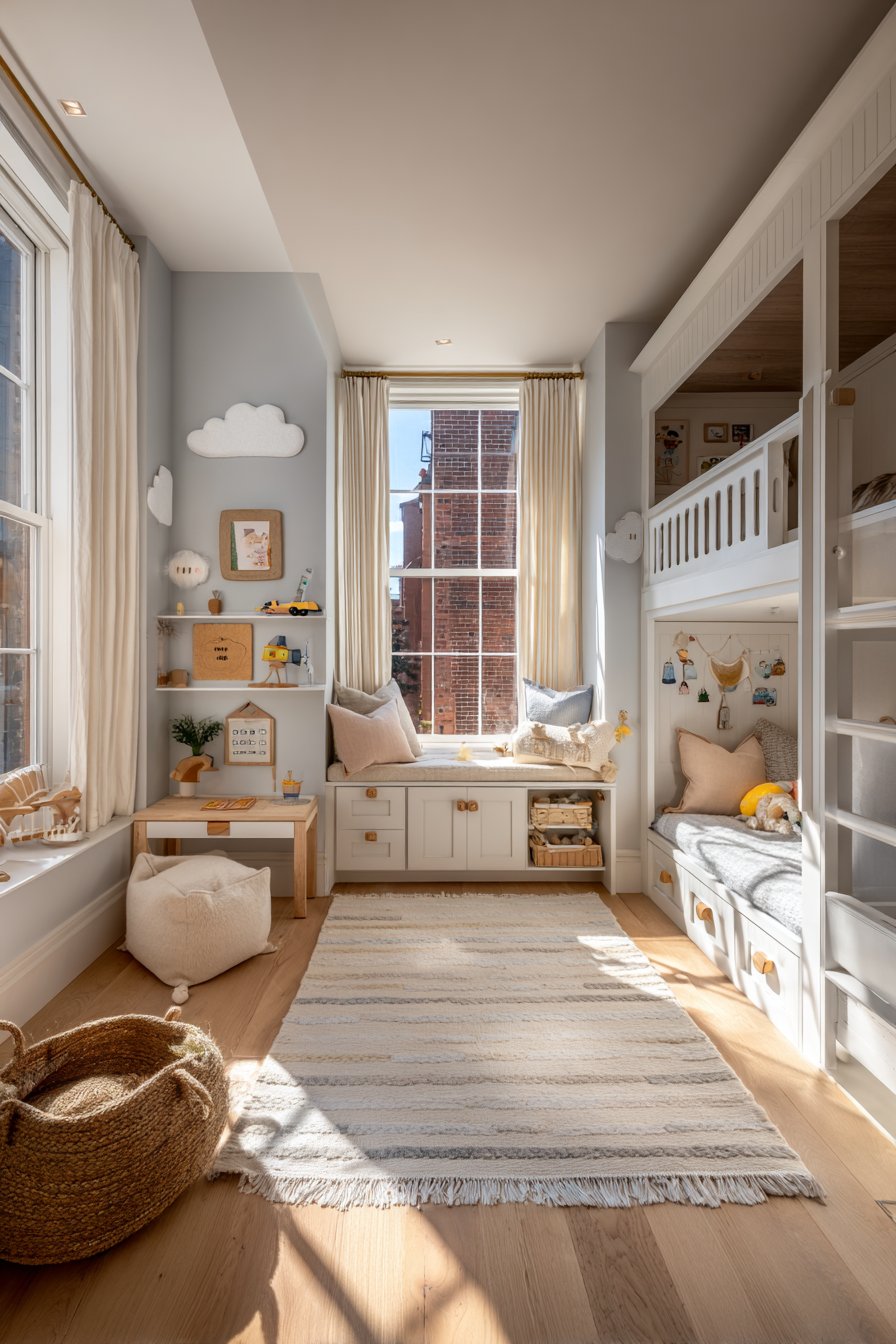
Successful small bedroom design balances practical functionality with childhood wonder. Start by assessing your specific space constraints and prioritizing essential functions. Choose quality pieces that serve multiple purposes and grow with your child. Your dream small kids bedroom awaits creation through thoughtful planning and creative problem-solving.
