


Creating a rustic pantry brings timeless charm and practical organization to your home. This design approach celebrates natural materials, vintage elements, and authentic craftsmanship. The combination creates storage spaces that feel both beautiful and deeply functional. Whether you’re converting a closet or designing a walk-in larder, rustic pantry design offers solutions for every space.
Rustic pantries have experienced remarkable popularity in recent years. They provide a refreshing alternative to sterile modern storage solutions. The warmth of reclaimed wood, aged metals, and vintage containers transforms mundane storage into character-rich spaces. These designs honor traditional food storage methods while meeting contemporary organizational needs. From farmhouse-inspired shelving to industrial-rustic hybrid systems, the variety ensures every homeowner finds their perfect aesthetic.
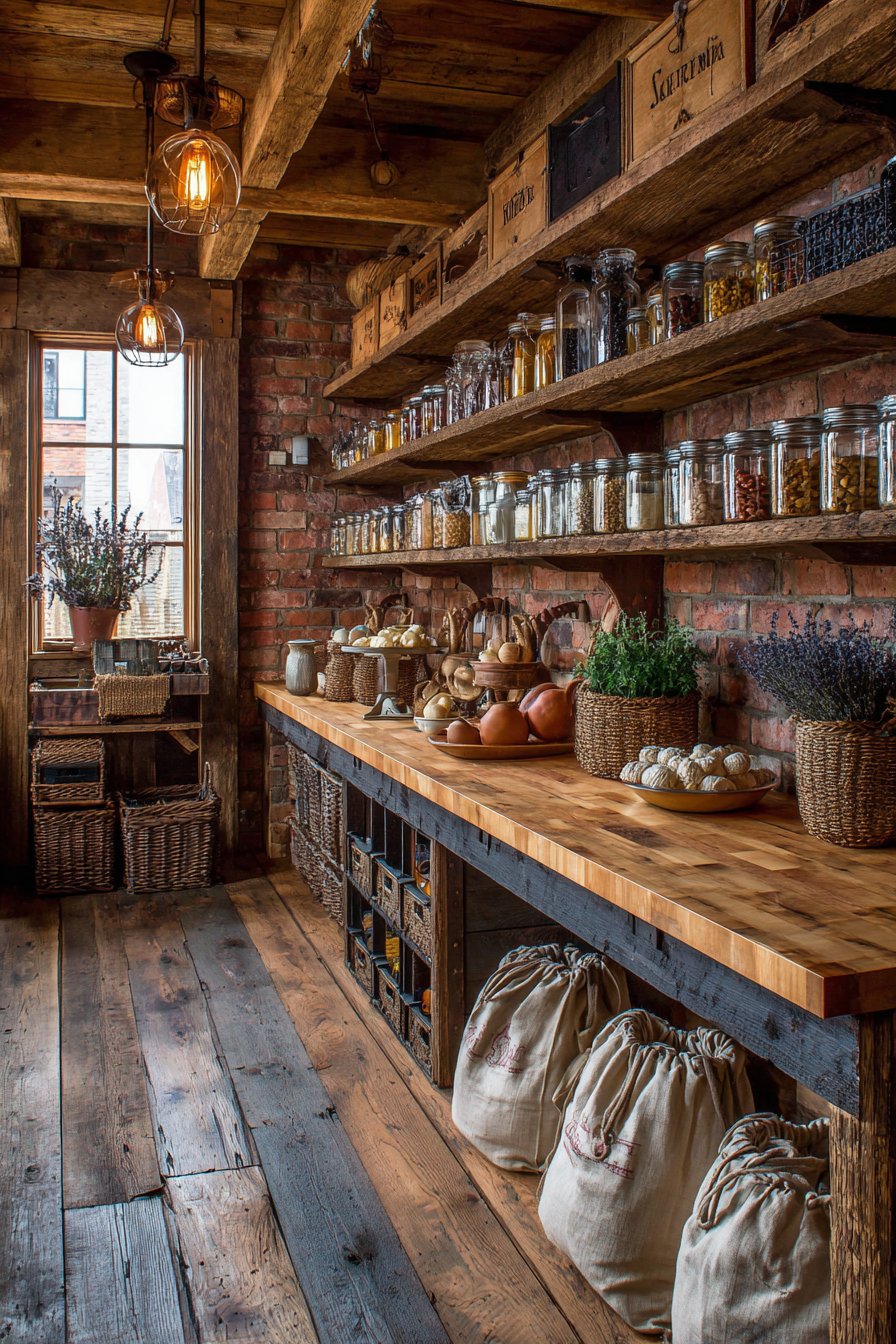
The beauty of rustic pantry design lies in its adaptability and authenticity. Small reach-in pantries benefit from vertical organization using weathered wood and wire baskets. Expansive walk-in spaces showcase floor-to-ceiling shelving with rolling ladders and butcher block workspaces. Each approach emphasizes natural materials that age gracefully. The result is storage that improves with time rather than deteriorating. This article explores twenty distinctive rustic pantry concepts that demonstrate the style’s versatility and enduring appeal.
1. Reclaimed Wood Floor-to-Ceiling Shelving
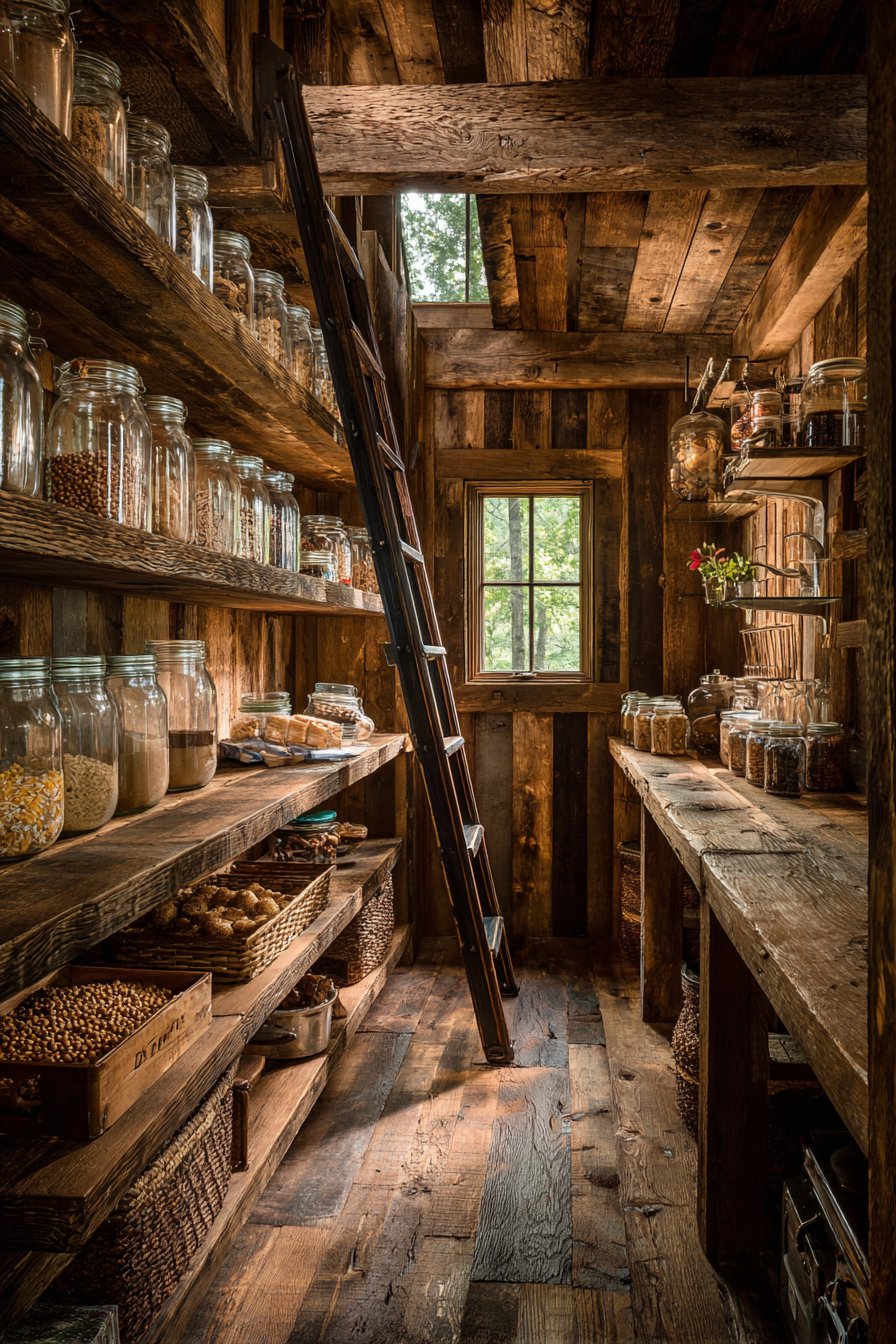
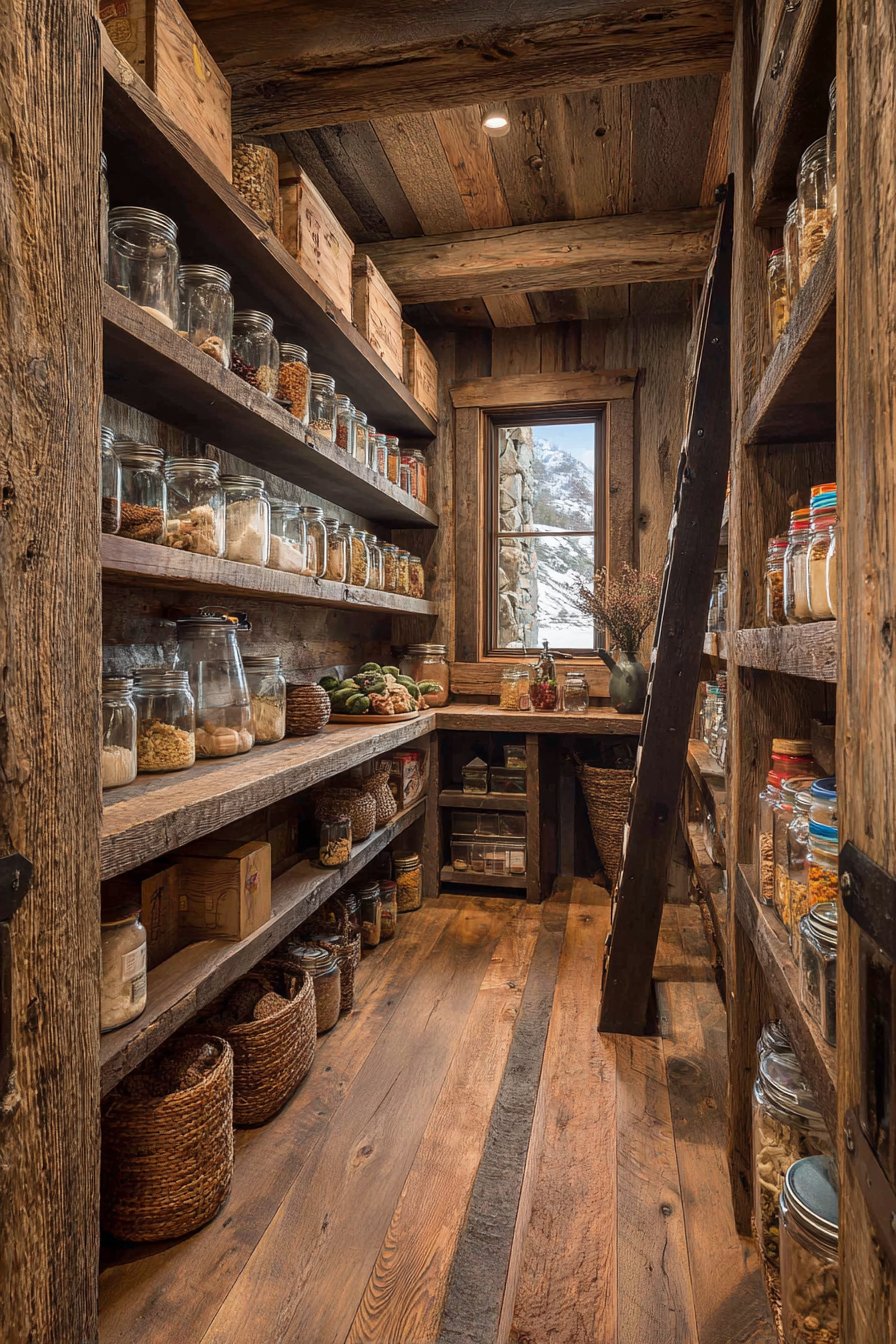
Floor-to-ceiling shelving crafted from reclaimed barn wood creates instant visual impact. The wood displays natural knots and grain variations that tell stories. Visible age marks add character, impossible to replicate with new materials. Open shelves showcase glass mason jars filled with colorful dry goods. Vintage enamelware canisters punctuate the displays with cream and red accents.
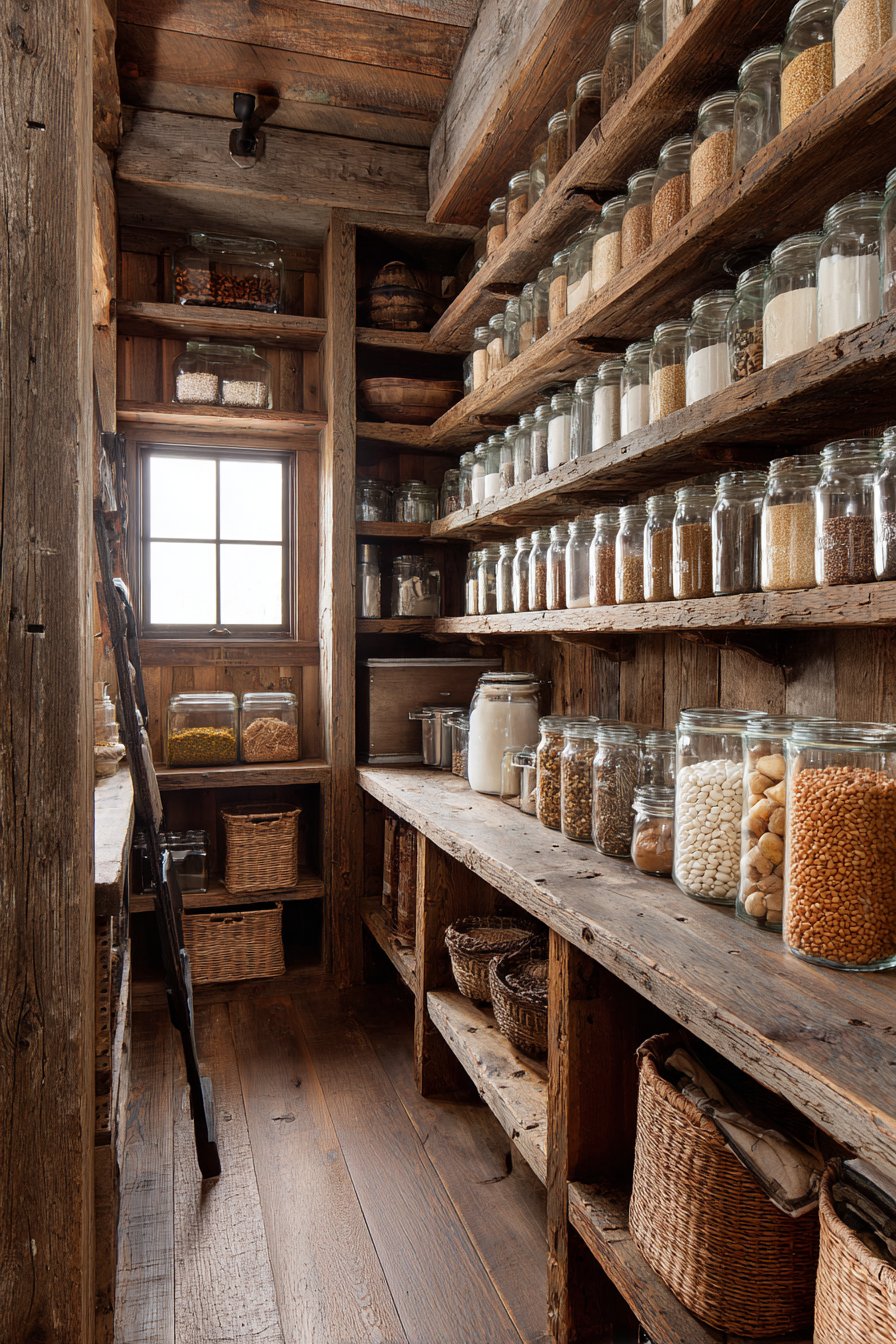
The organizational system balances aesthetics with practical accessibility. Woven baskets contain items while maintaining the rustic visual flow. A rolling ladder in oil-rubbed bronze provides access to upper shelves. This functional element becomes a focal point rather than an afterthought. The ladder’s industrial hardware contrasts beautifully with warm wood tones.
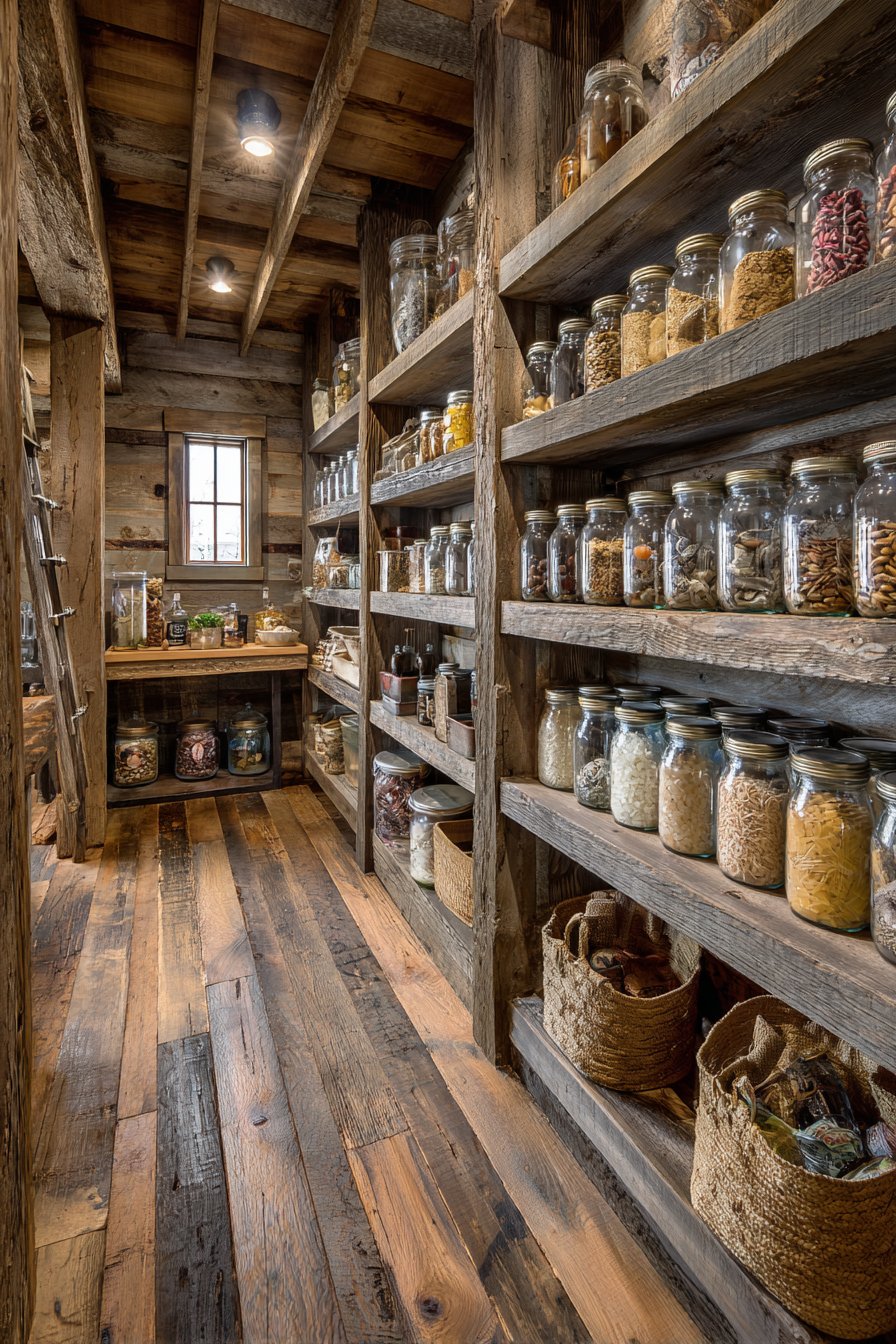
Weathered barn wood planks line the walls behind the shelving. This creates depth and reinforces the farmhouse aesthetic throughout. Natural light from a small window illuminates the space. Dust particles dance in morning sunbeams, creating atmospheric warmth. The lighting highlights authentic wood textures and basket weave patterns.
Key Design Tips:
- Select reclaimed wood with varied grain patterns for visual interest
- Install a rolling ladder system for both function and farmhouse charm
- Use glass jars to display colorful ingredients as decorative elements
- Incorporate woven baskets for concealed storage while maintaining texture
- Position shelving to maximize natural light exposure on wood surfaces
2. Compact Brick and Industrial Metal
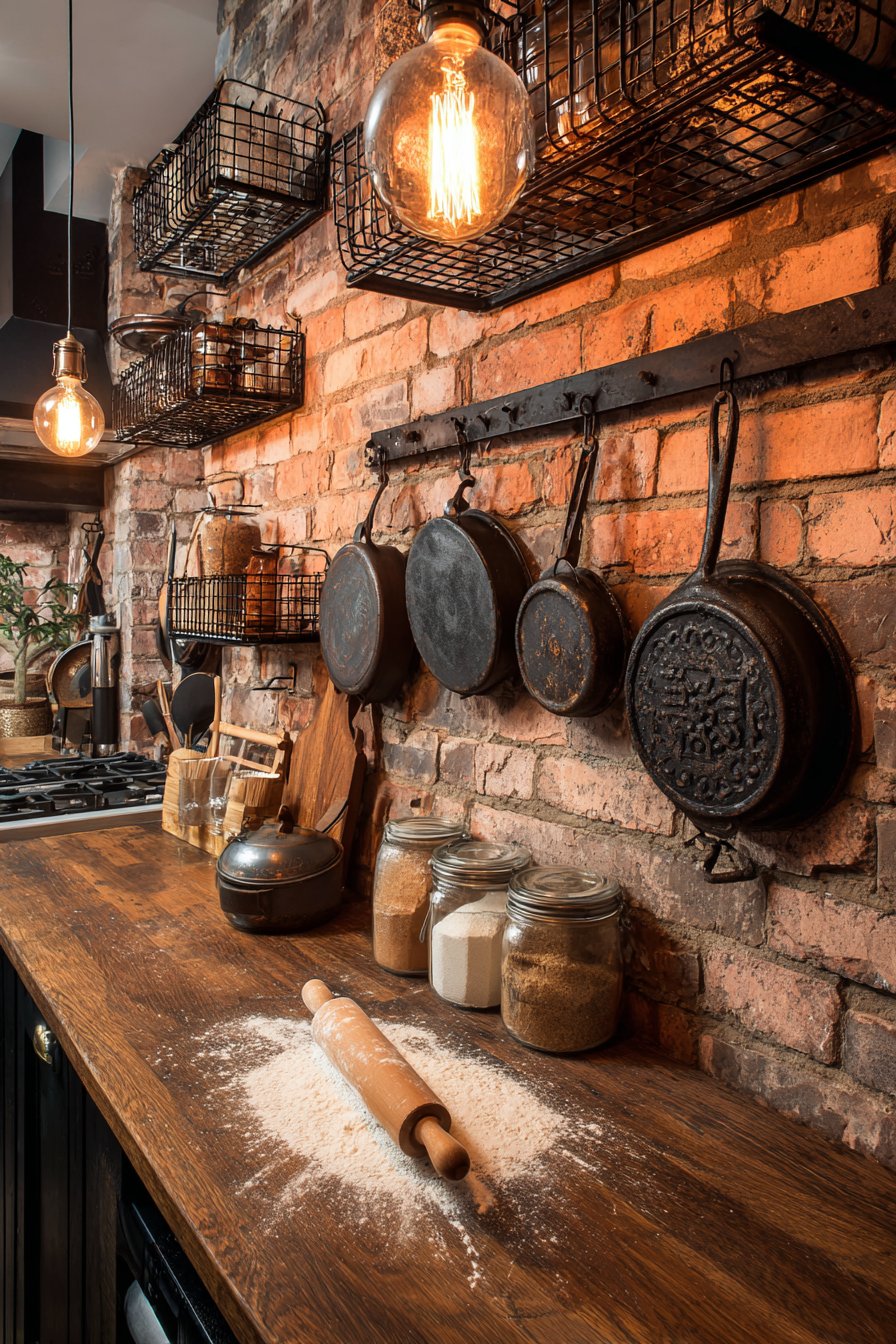
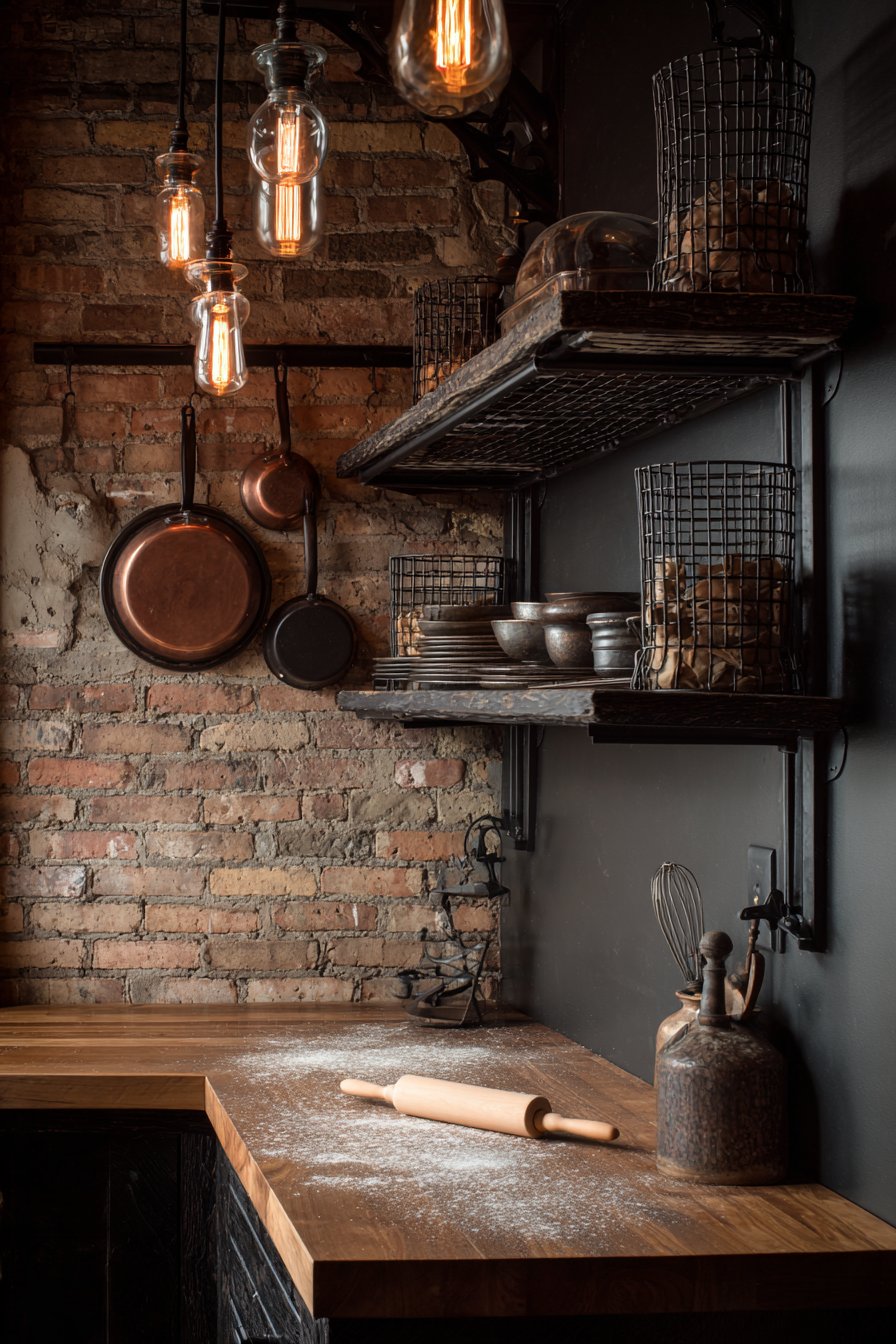
Exposed brick accent walls provide textural foundation in smaller pantries. Wire basket storage mounts on industrial black metal brackets. This combination maximizes vertical space in compact areas. The brick’s natural color variations add warmth without overwhelming limited square footage. Metal brackets create strong visual lines that organize the space.
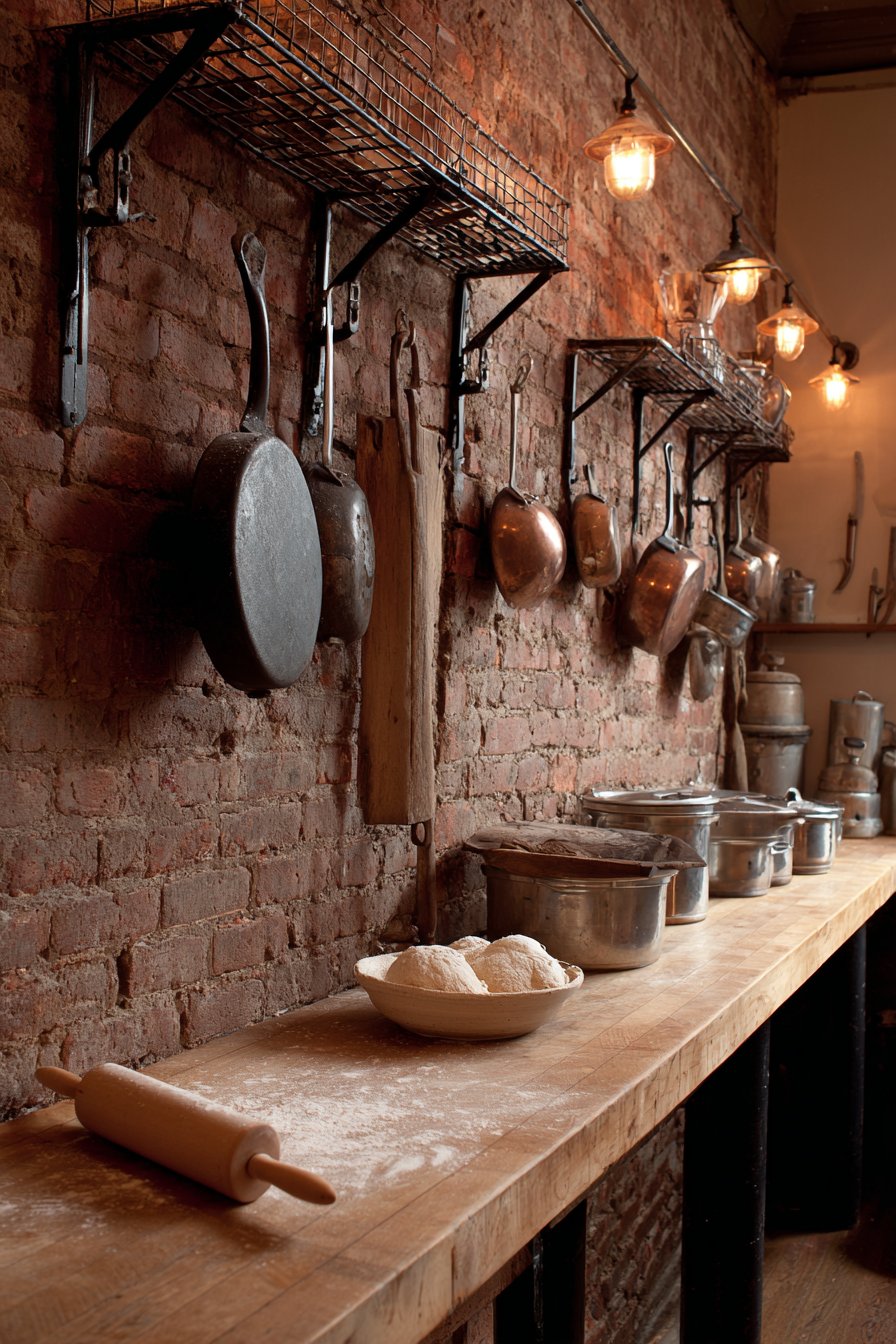
A butcher block countertop workspace shows signs of active use. Flour dusting and a vintage rolling pin suggest ongoing baking projects. This lived-in quality prevents the pantry from feeling sterile. Hanging copper pots and cast iron skillets add functional decoration above the prep area. The metal patina develops character through daily use.
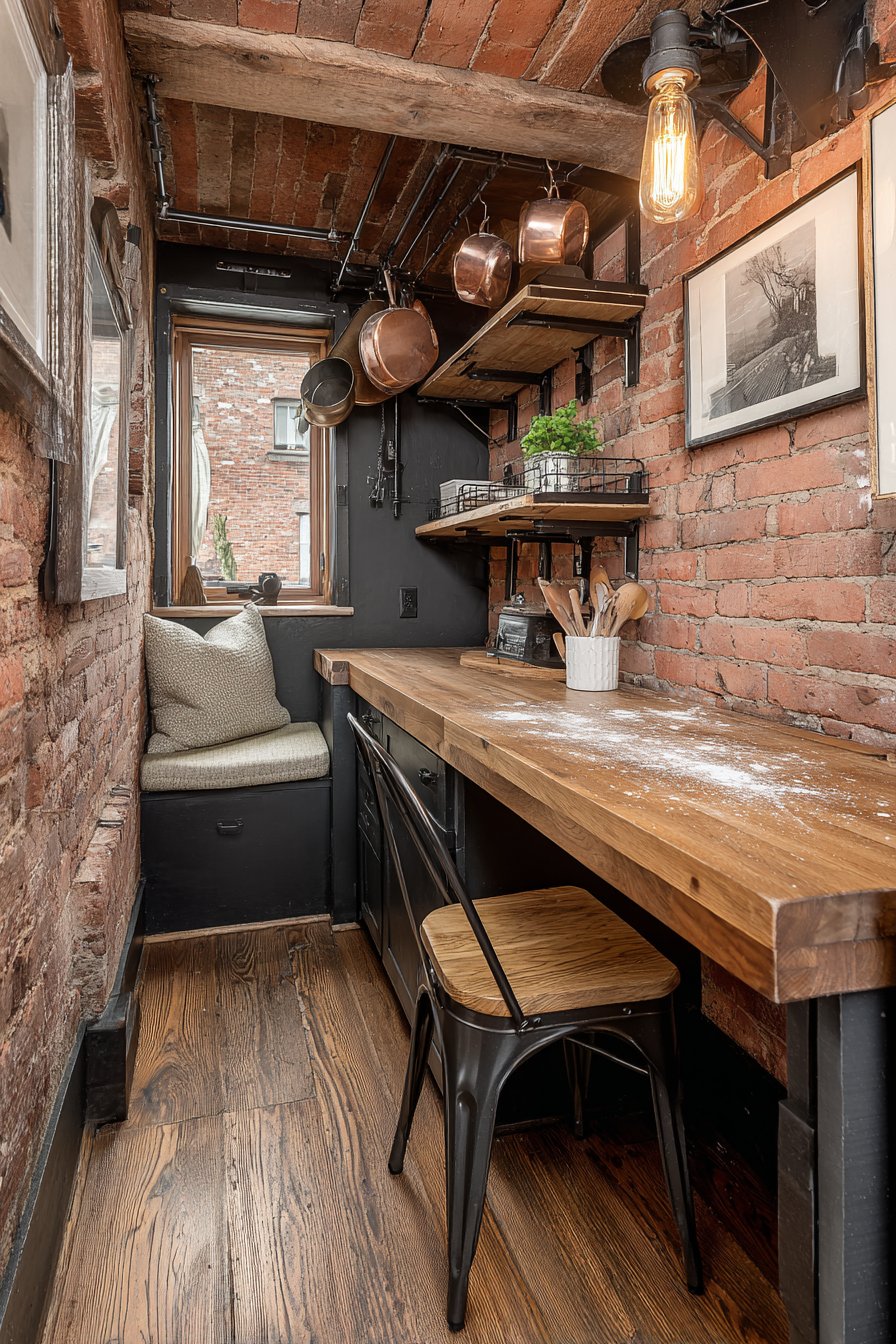
Edison bulb pendant lighting casts warm amber glow across textured surfaces. The vintage-style bulbs complement the industrial metal elements perfectly. Light reflects off brick mortar variations and highlights wood grain details. The overall effect creates an inviting workspace within efficient storage.
Key Design Tips:
- Expose existing brick walls rather than adding faux treatments
- Choose industrial metal brackets rated for heavy storage loads
- Install butcher block counters at comfortable working height
- Hang frequently used cookware for easy access and decoration
- Use Edison bulbs for an authentic vintage lighting character
3. Custom Pine with Wire Cabinet Doors
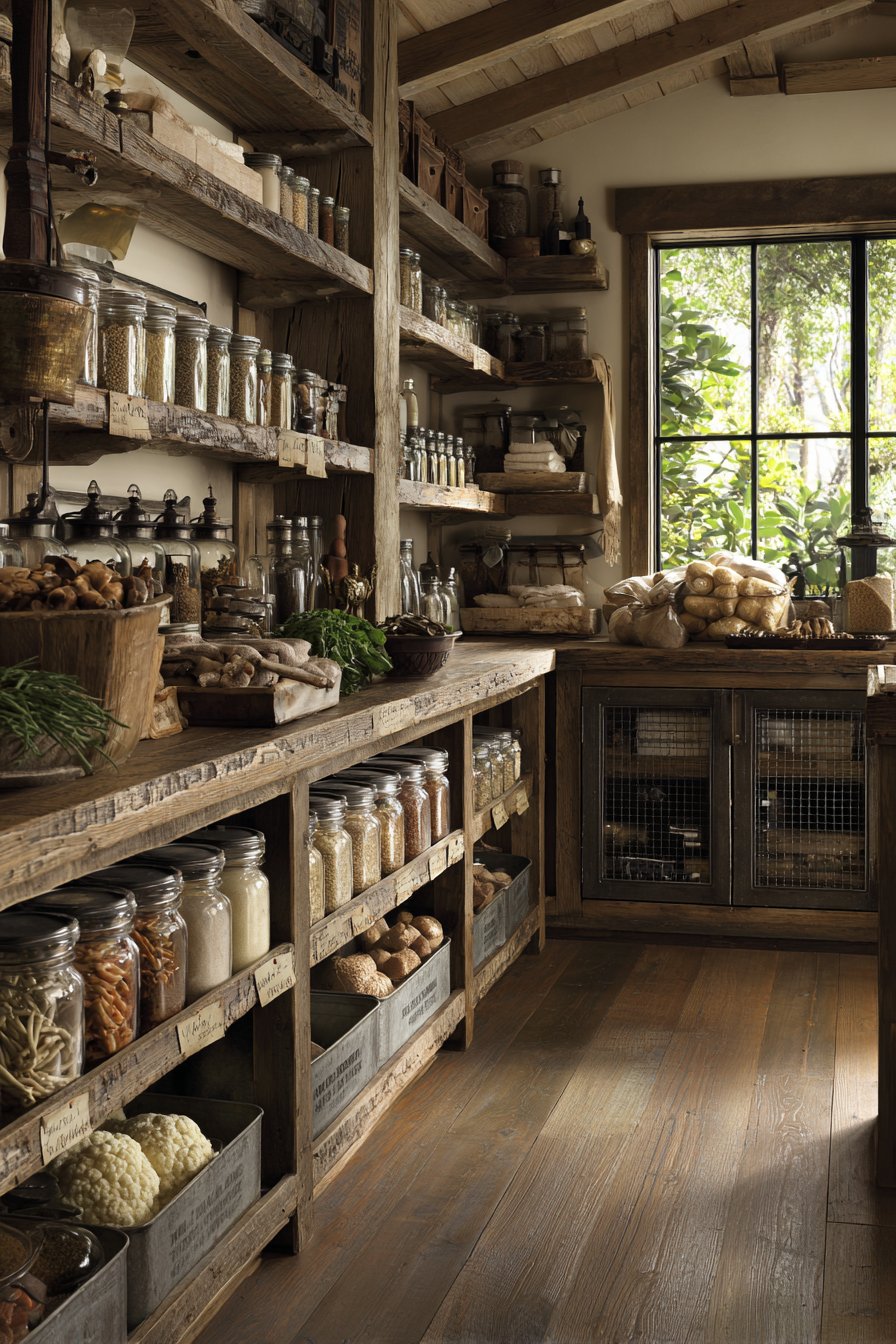
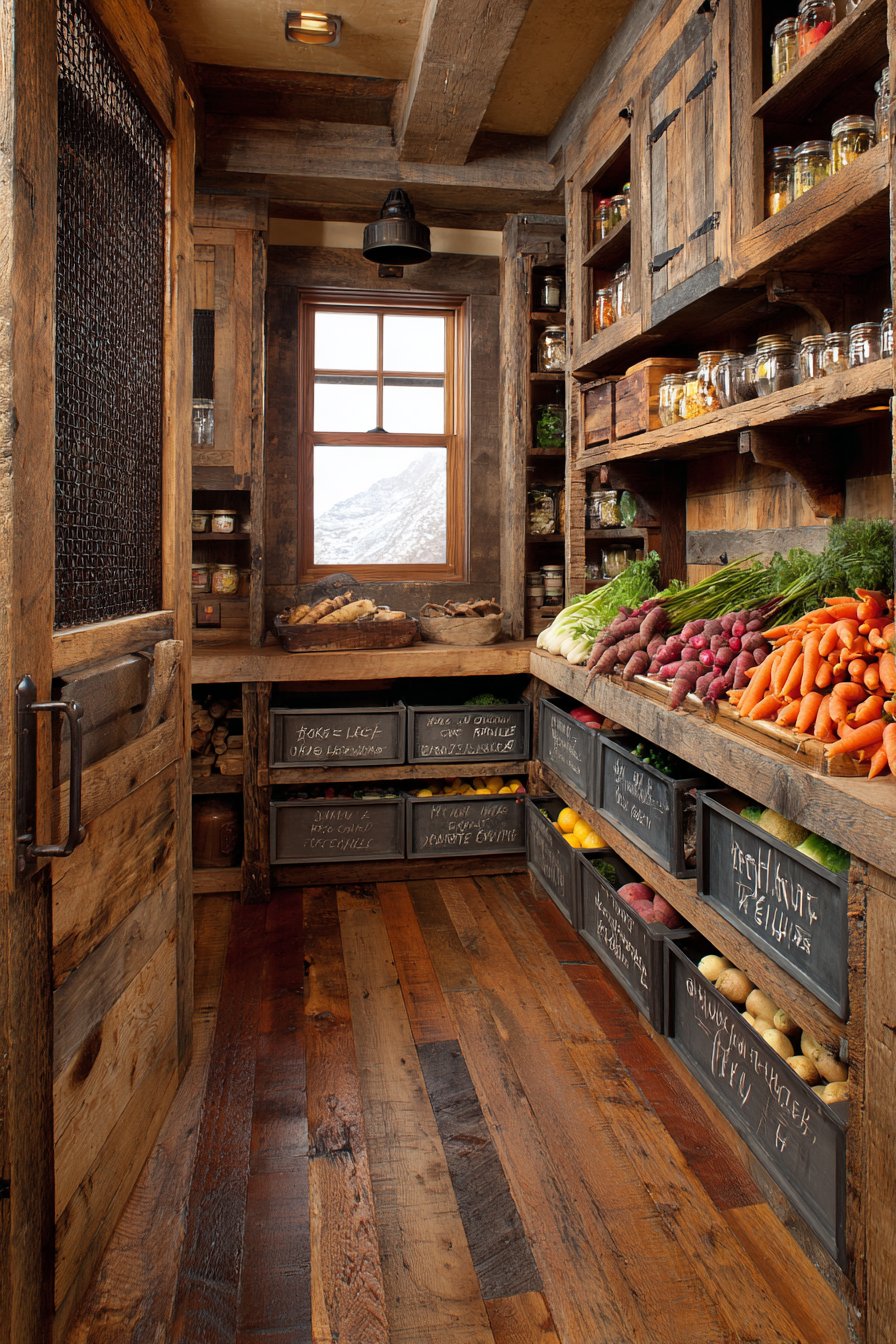
Rough-sawn pine boards create custom built-in shelving with natural edge details. The varied wood tones range from honey to warm brown. Natural edges preserve the organic tree shape on select shelves. This approach celebrates the material’s origin rather than hiding it. Galvanized metal bins organize root vegetables on lower shelves.
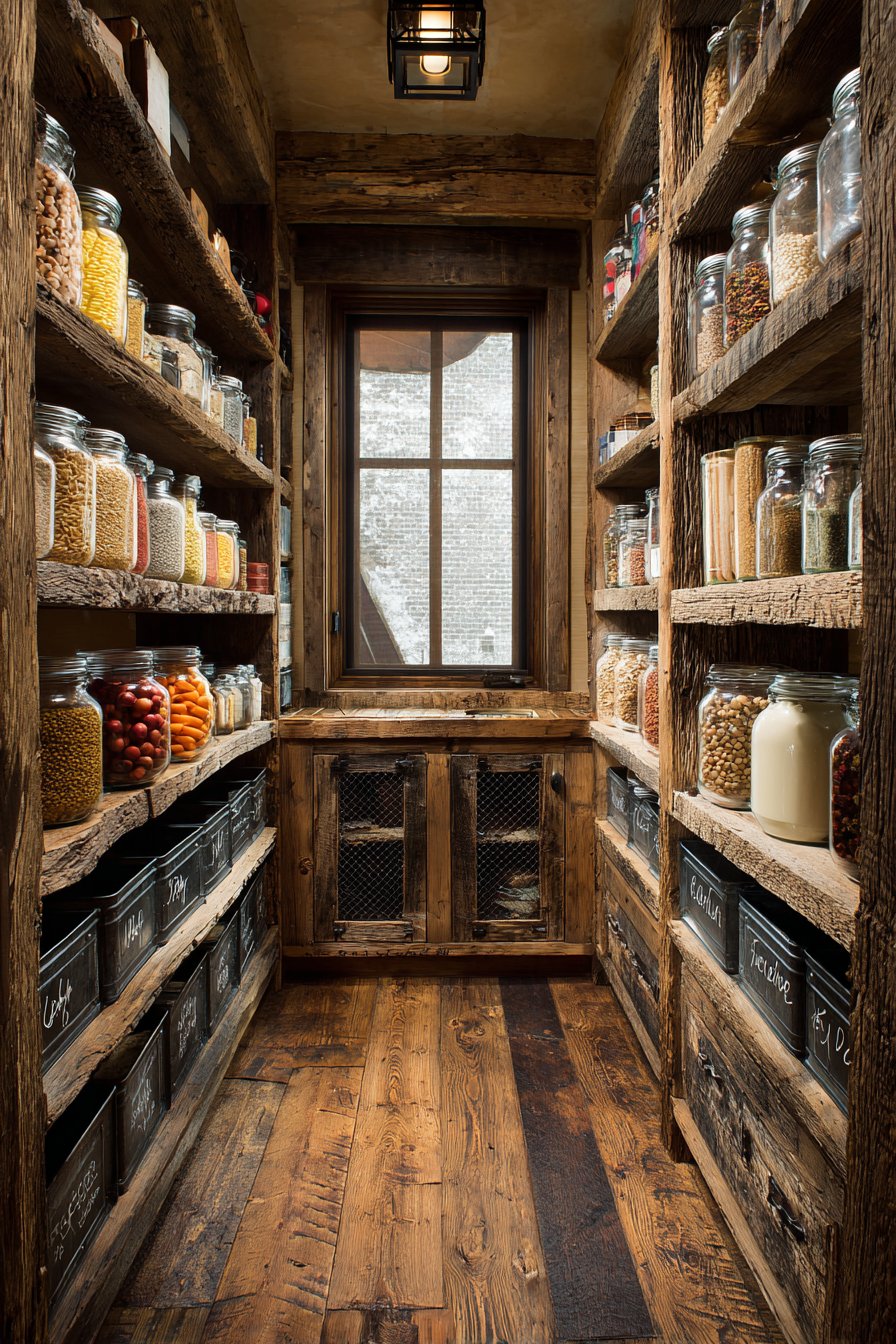
Chicken wire cabinet doors reveal organized spice collections behind them. The wire provides visibility while containing items securely. Vintage-style tags label each storage section clearly. Wide plank reclaimed oak flooring shows authentic wear patterns underfoot. The aged patina develops from decades of use.
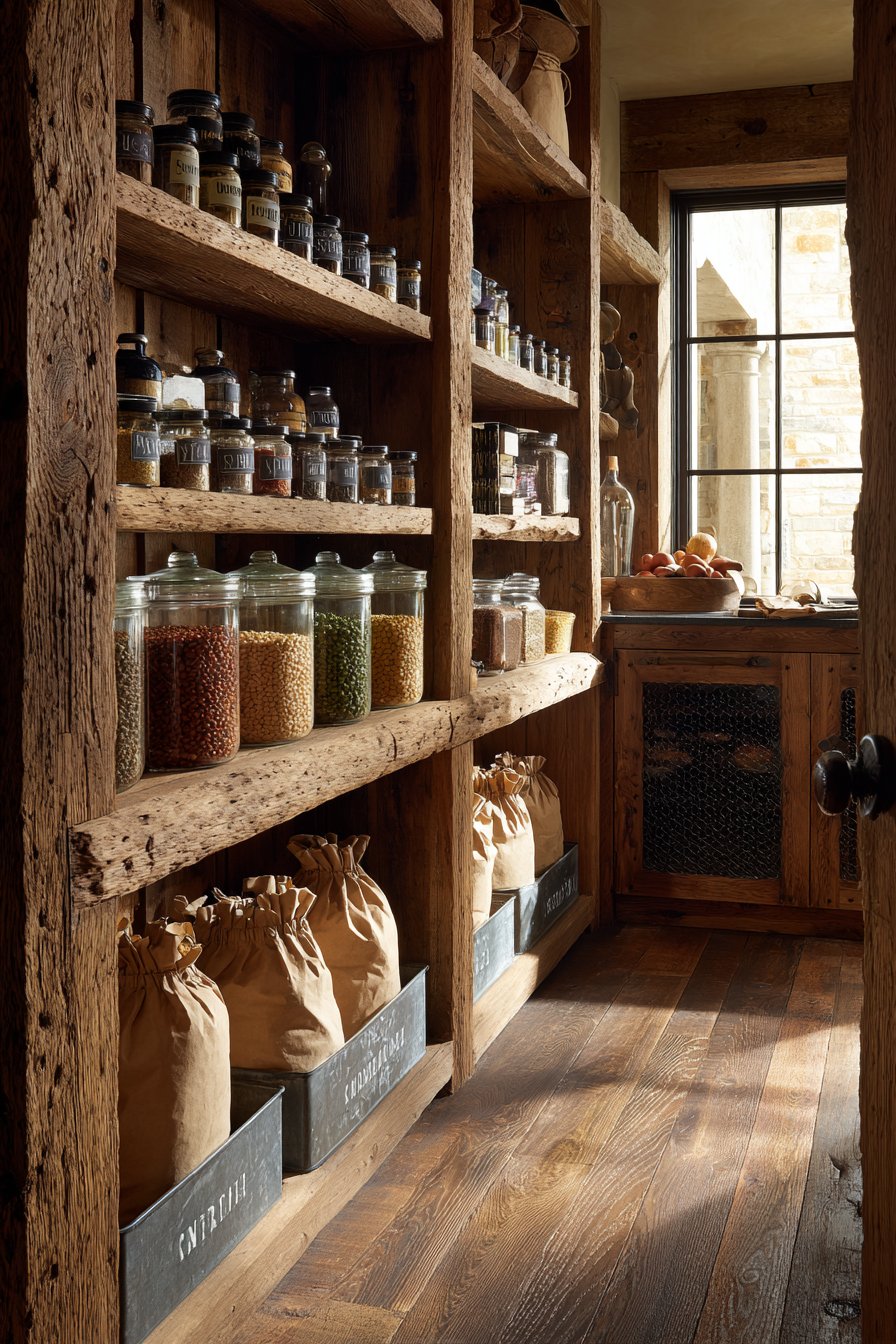
Natural daylight filters through a farmhouse-style window above the shelving. Soft shadows create dimension throughout the day. The changing light reveals different aspects of the wood grain. Morning light emphasizes golden tones while afternoon sun deepens brown hues.
Key Design Tips:
- Specify rough-sawn lumber to maintain an authentic texture
- Incorporate natural edge details on visible shelf fronts
- Use chicken wire for cabinet doors needing visibility
- Install galvanized metal bins for produce requiring air circulation
- Select wide plank flooring to enhance rustic proportions
4. Sliding Barn Door Entry
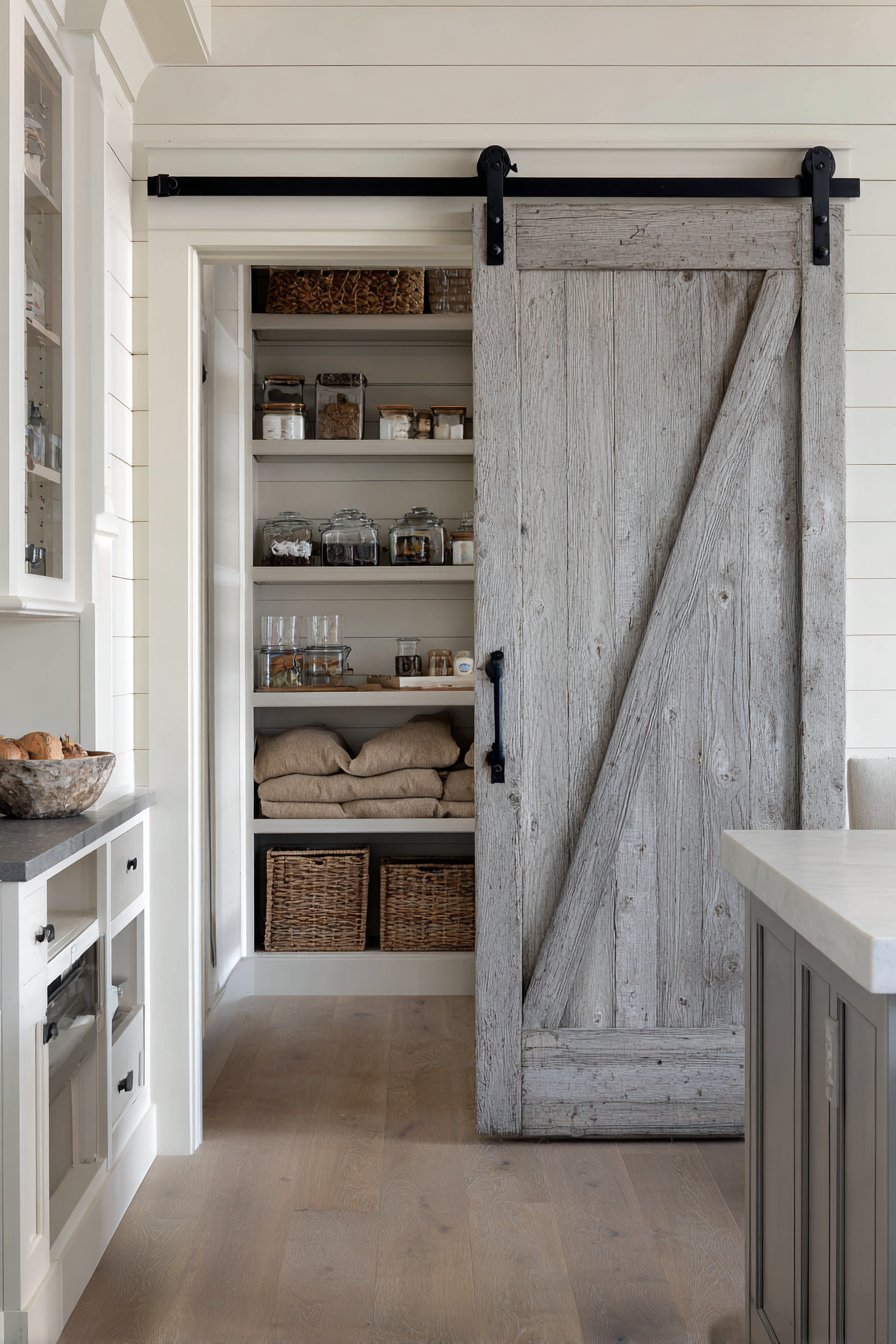
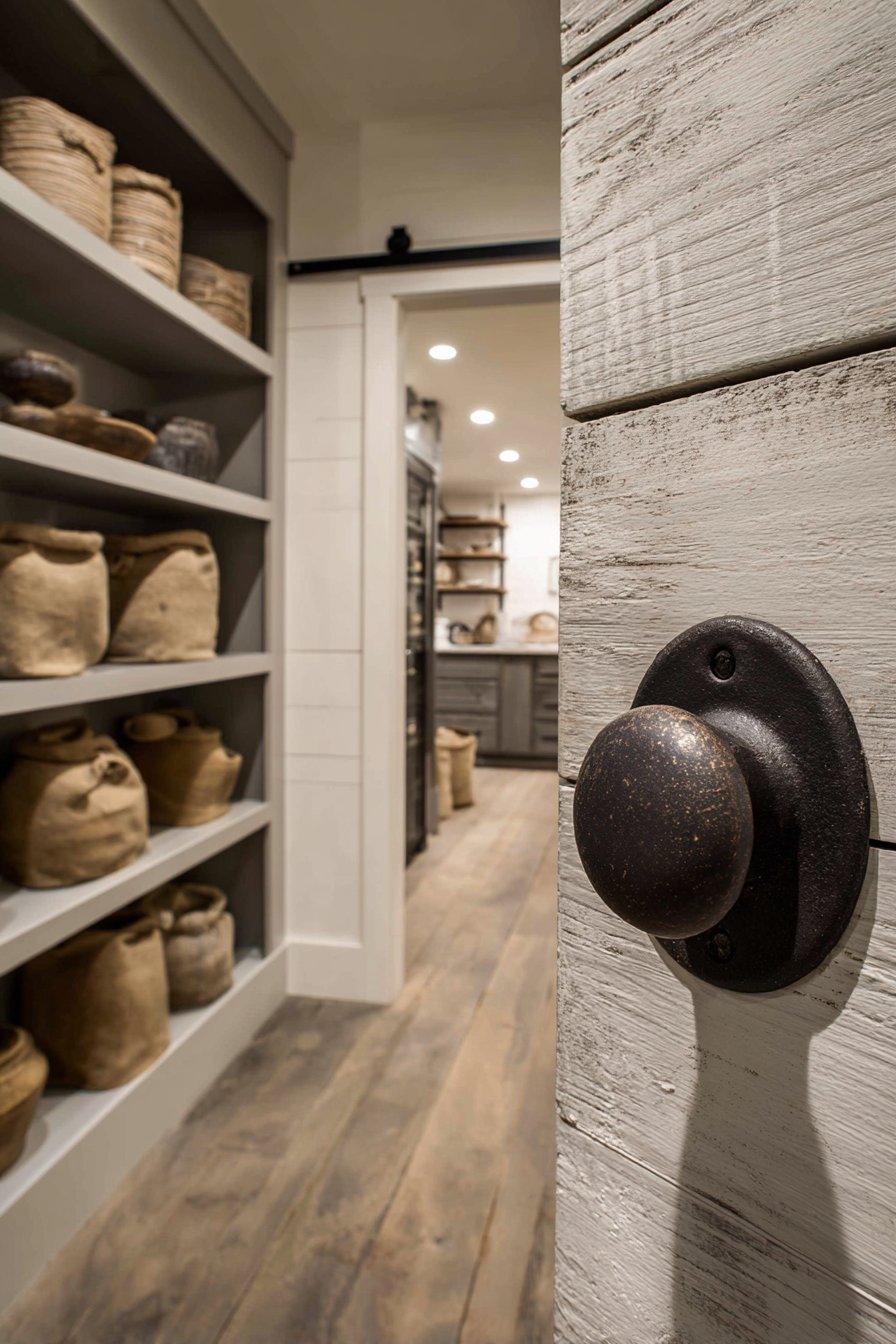
A distressed grey barn door creates dramatic entry to the pantry. Black metal hardware and an exposed track system add industrial elements. The sliding mechanism saves space compared to traditional swing doors. Glimpses through the partially open door reveal organized shelving within. Antique crock containers and burlap sack storage create visual interest.
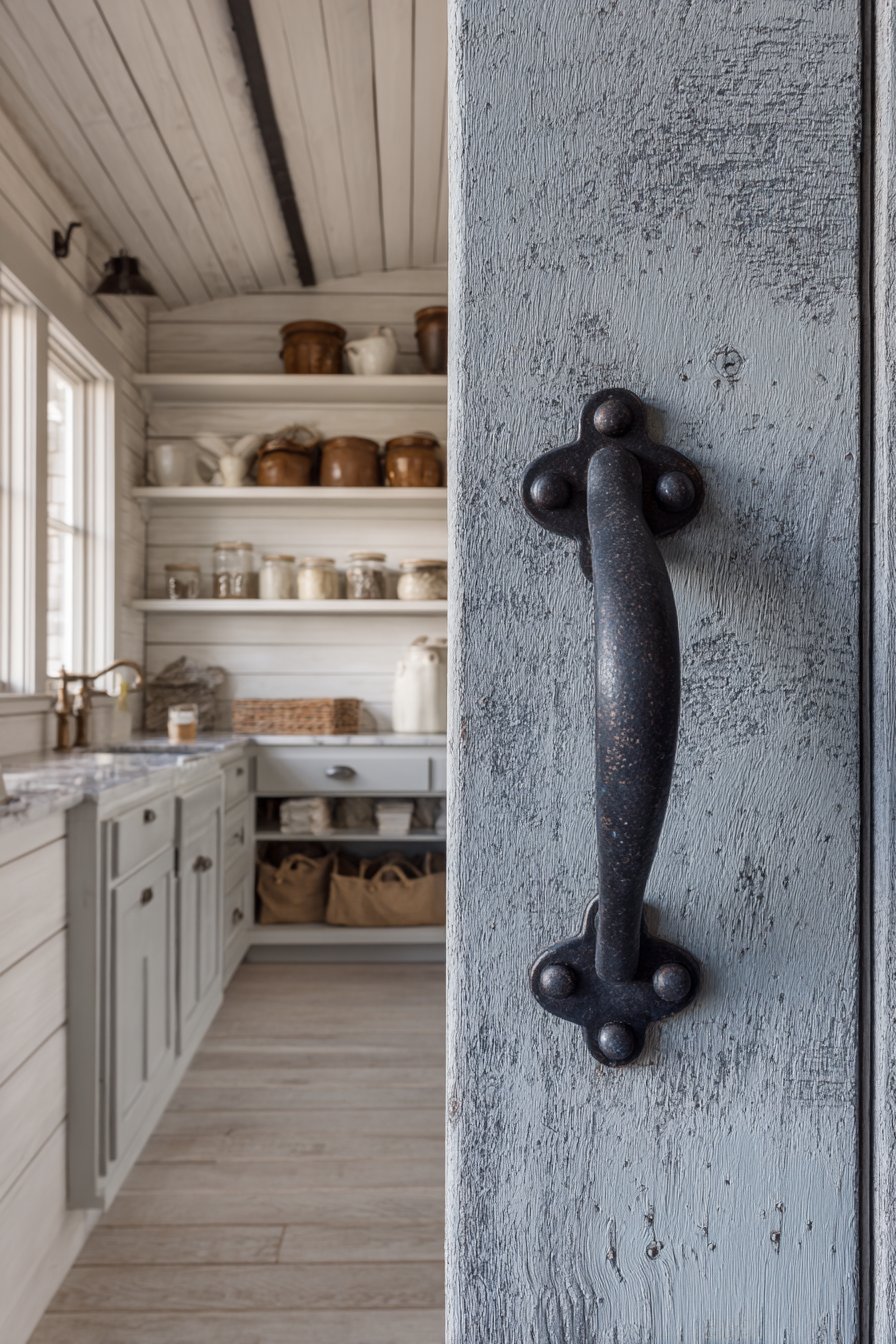
Surrounding walls display shiplap in a whitewashed finish. This creates contrast with the darker grey door. The white backdrop makes the entry feature more prominent. Wrought iron door handle shows natural oxidation from use. Hand-forged details indicate quality craftsmanship rather than mass production.
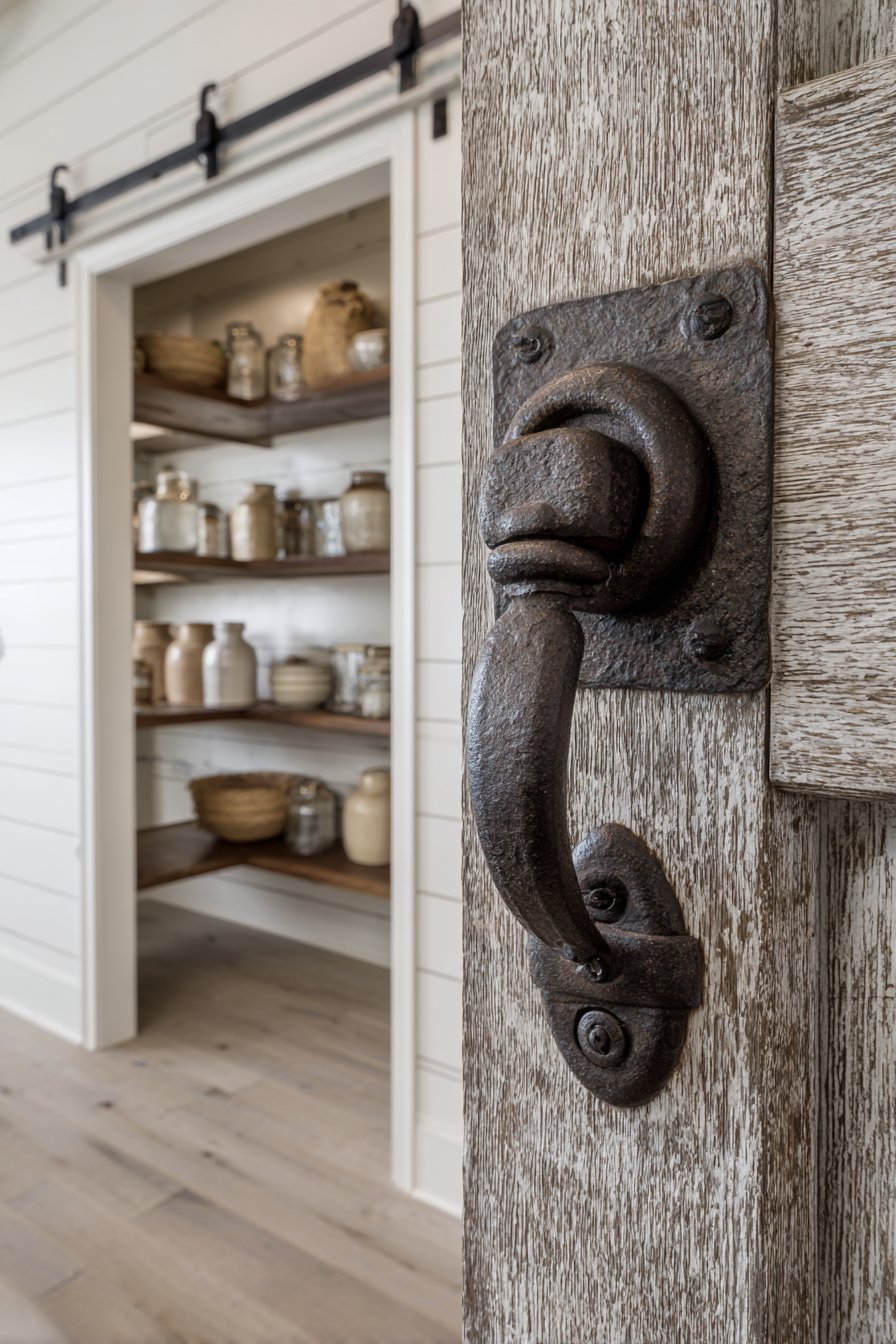
The barn door mechanism becomes an architectural sculpture. Black metal tracks draw the eye upward along the wall. Hardware details reward close inspection with authentic aging. Natural lighting emphasizes texture variations across the distressed wood surface.
Key Design Tips:
- Install quality barn door hardware designed for frequent use
- Choose distressed finishes that hide future wear gracefully
- Paint surrounding walls in lighter tones for contrast
- Select hand-forged hardware over manufactured alternatives
- Ensure track installation supports the door’s full weight
5. Butler’s Pantry with Salvaged Beams
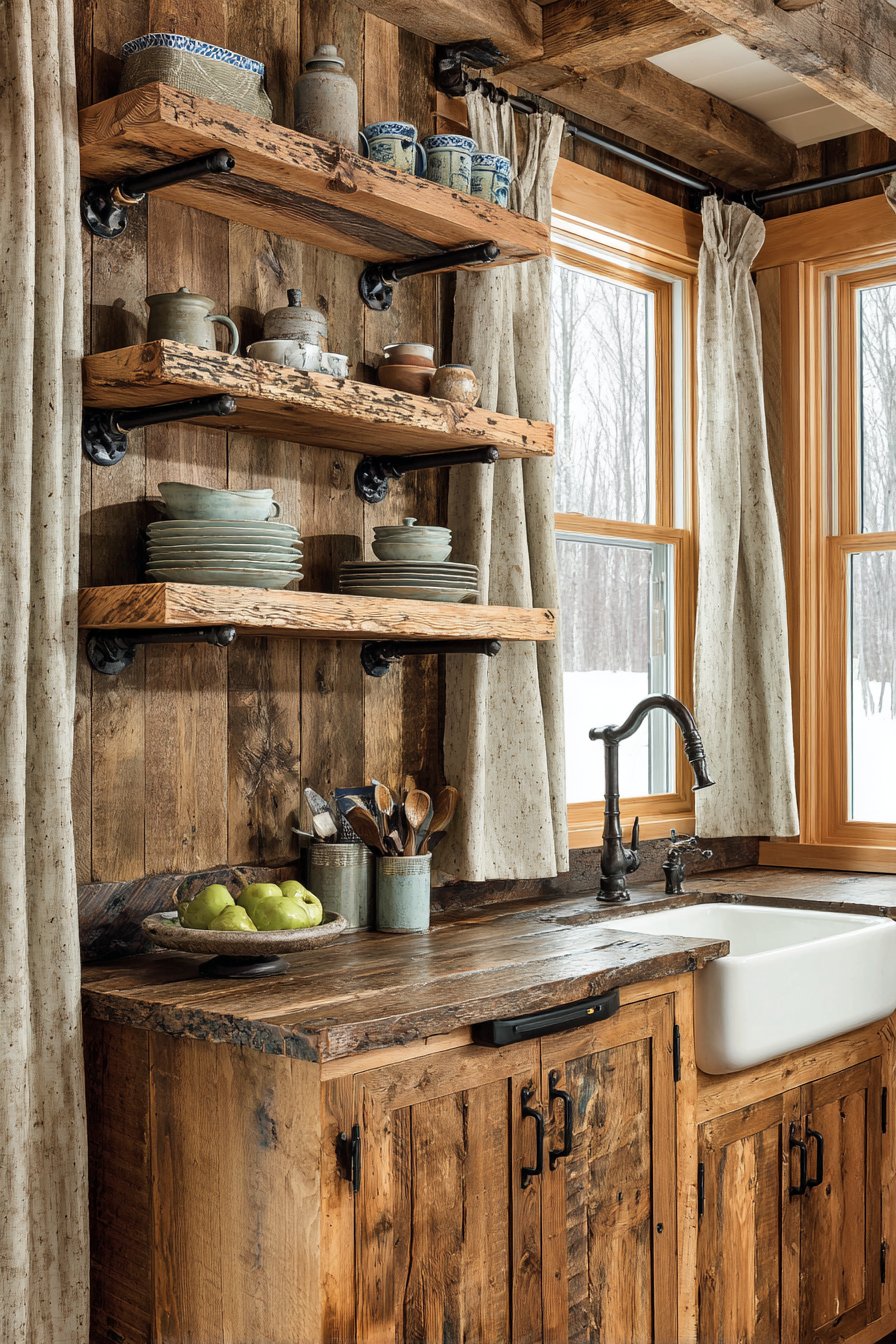
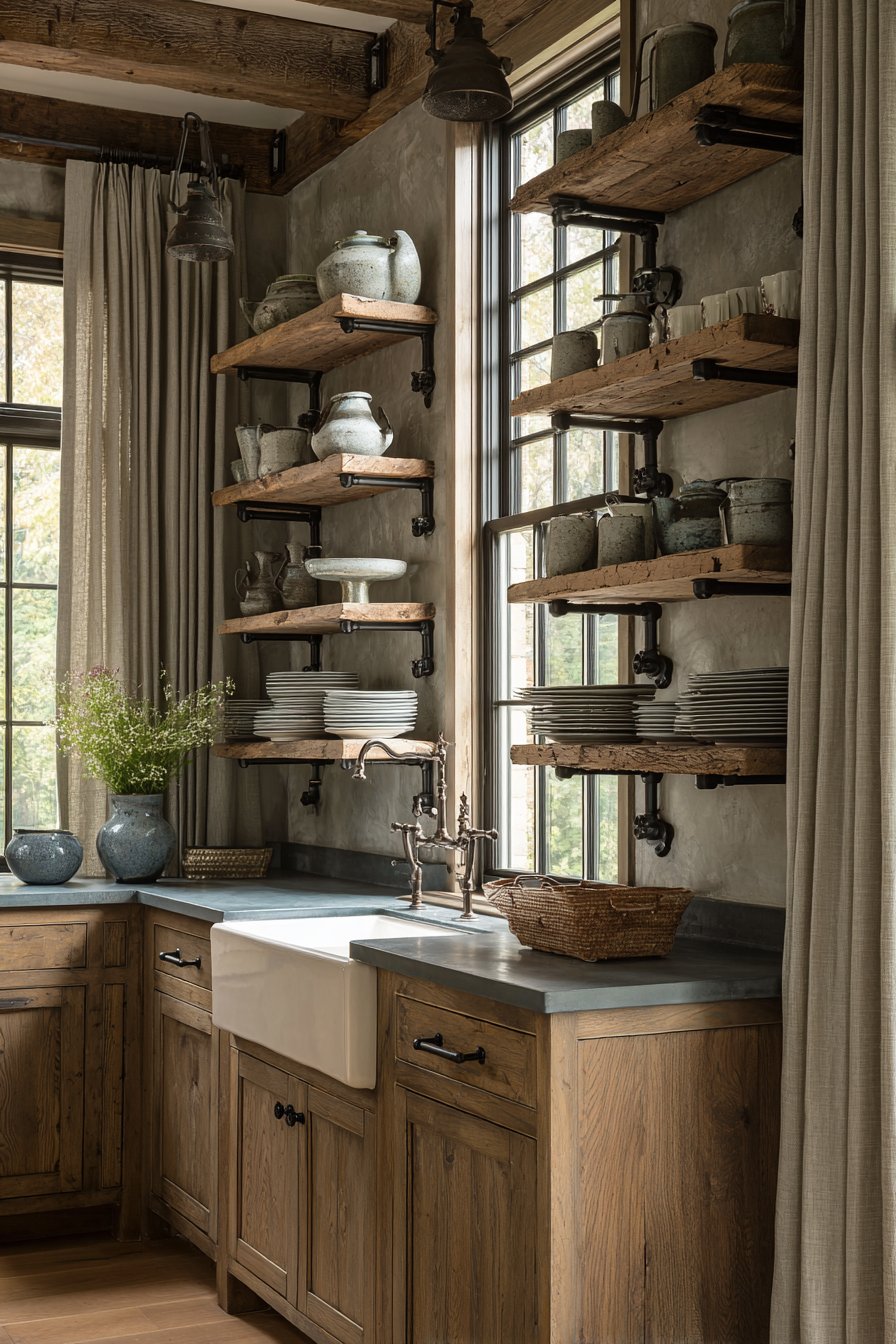
Salvaged barn beams create substantial open shelving in butler’s pantries. Metal pipe brackets in black iron finish provide industrial support. The combination of massive wood and minimal metal feels balanced. A white farmhouse sink with a vintage bridge faucet anchors the prep area. Oil-rubbed bronze faucet finish coordinates with other metal elements.
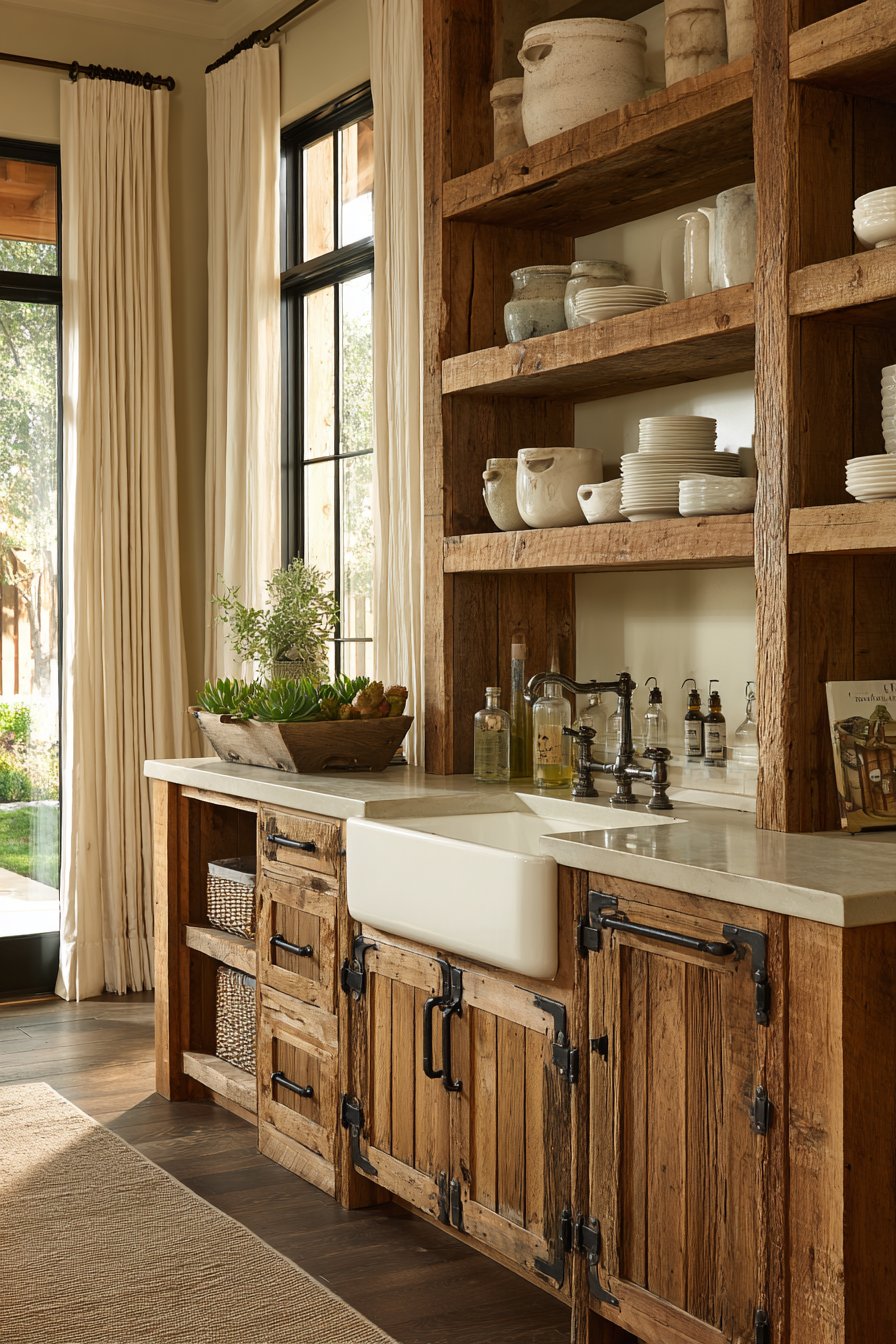
Soapstone countertops display natural veining and honed finish. The stone develops character through contact with acidic ingredients. Ironstone dishes and pottery crocks fill the open shelves above. Windows with simple linen curtains allow soft filtered light. The natural fabrics complement rather than compete with wood textures.
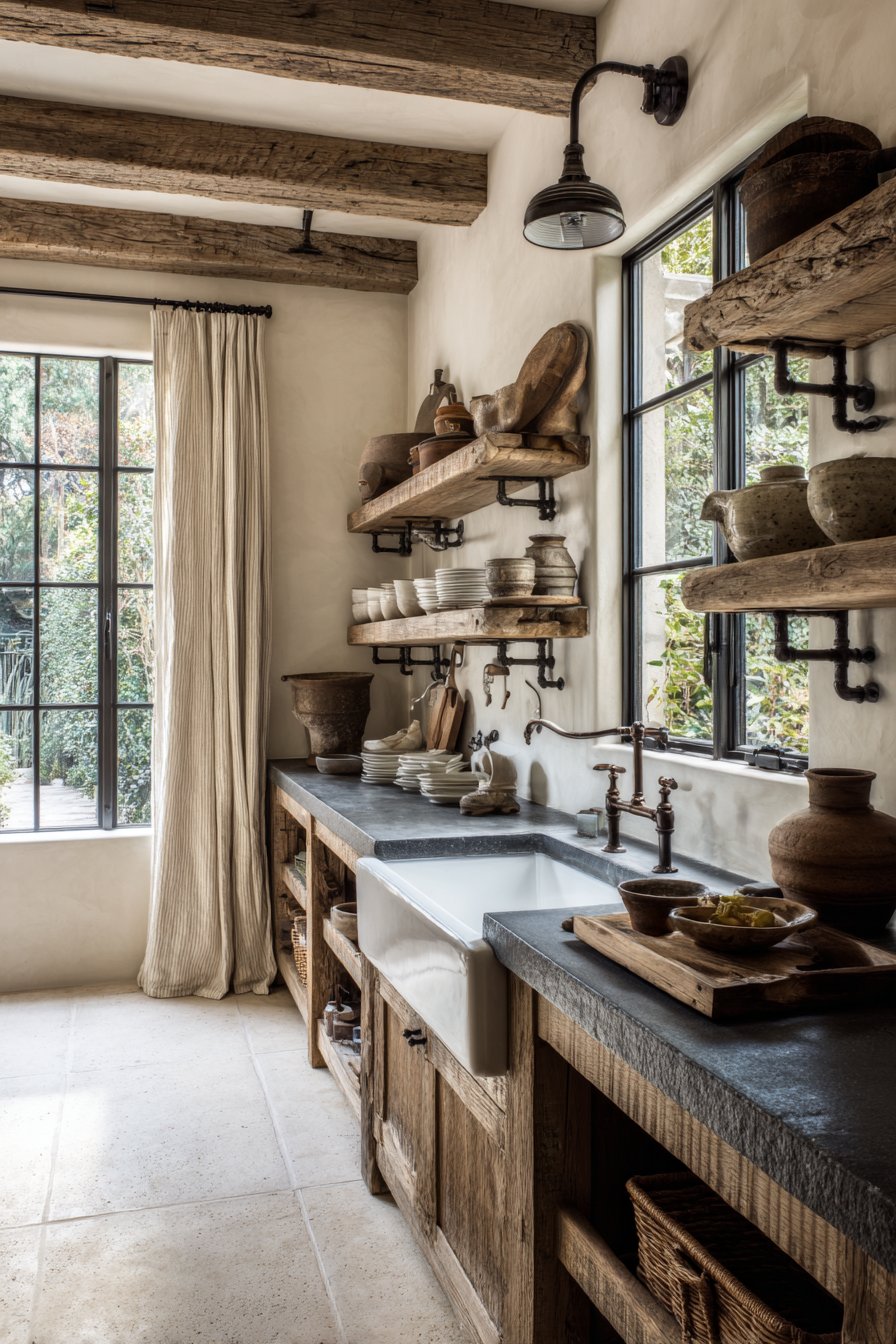
The functional prep space serves multiple purposes efficiently. Counter height accommodates food preparation and dish staging. Open shelving provides easy access to frequently used serving pieces. The workspace flows naturally into adjacent kitchen areas.
Key Design Tips:
- Source salvaged beams from architectural salvage yards
- Ensure beam installation includes proper structural support
- Choose soapstone for counters that develop beautiful patina
- Install farmhouse sinks deep enough for large serving pieces
- Select linen window treatments that filter without blocking light
6. Handcrafted Wooden Crate System
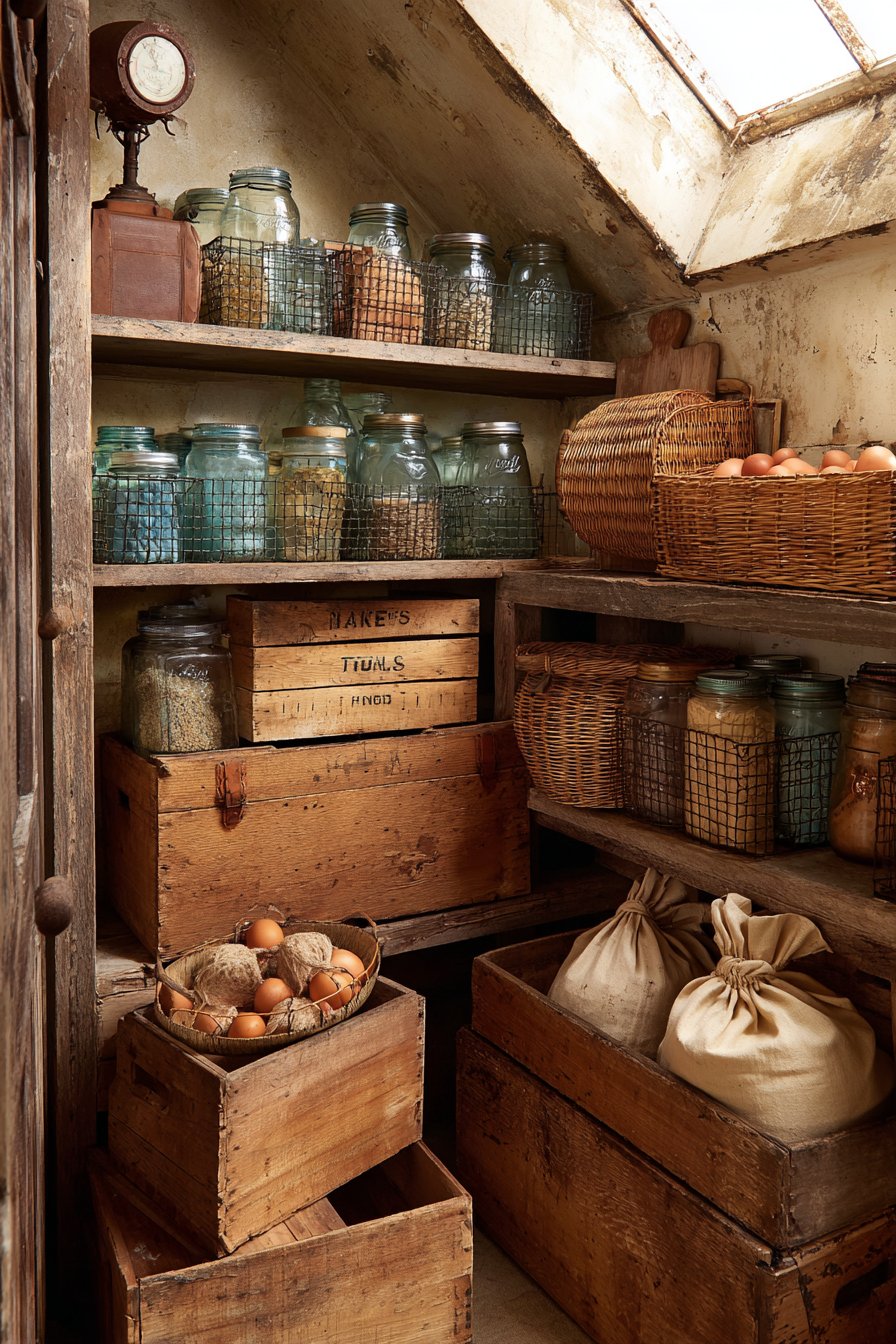
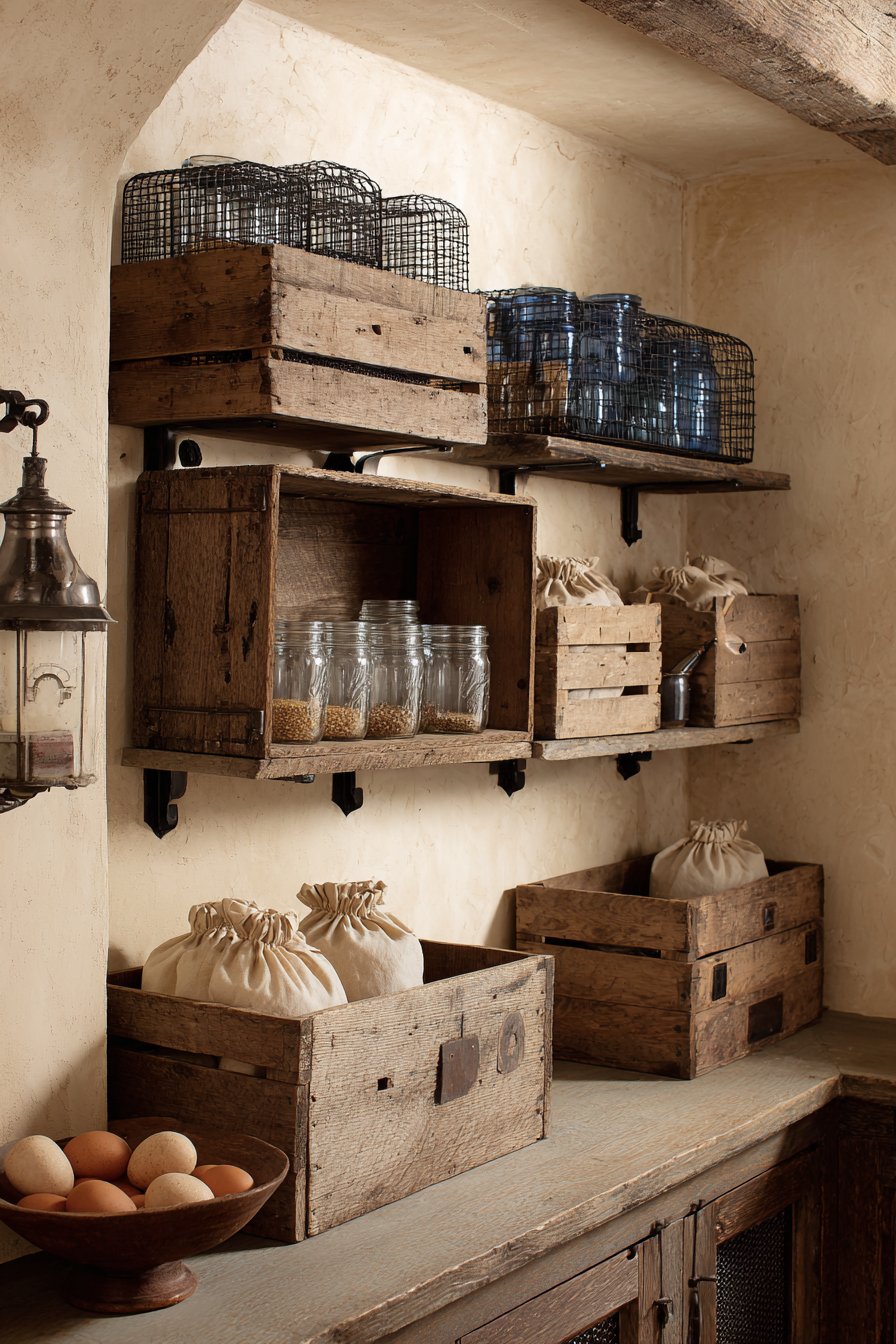
Handcrafted wooden crates stack and mount as modular storage units. Each crate displays different organizational elements within. Vintage blue Ball jars create uniform storage for dry goods. Wire egg baskets and canvas storage bags add textural variety. The modular approach allows customization as needs change.
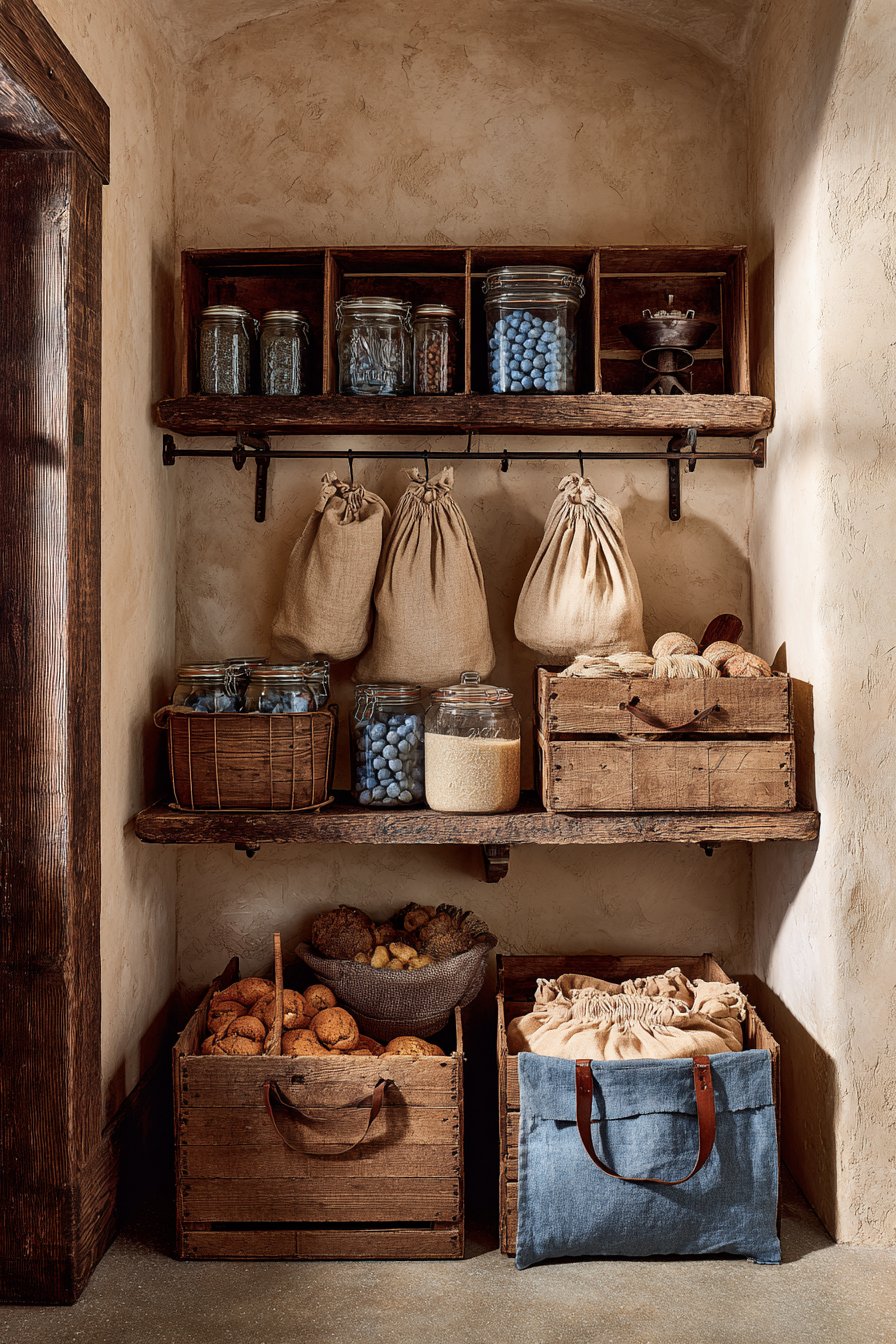
Rough plaster walls in warm cream tone provide neutral backdrop. The textured surface adds dimension without competing for attention. Antique scale and wooden dough bowl contribute authentic farmhouse character. These pieces serve both functional and decorative purposes. Natural light from upper clerestory window creates interesting shadows.
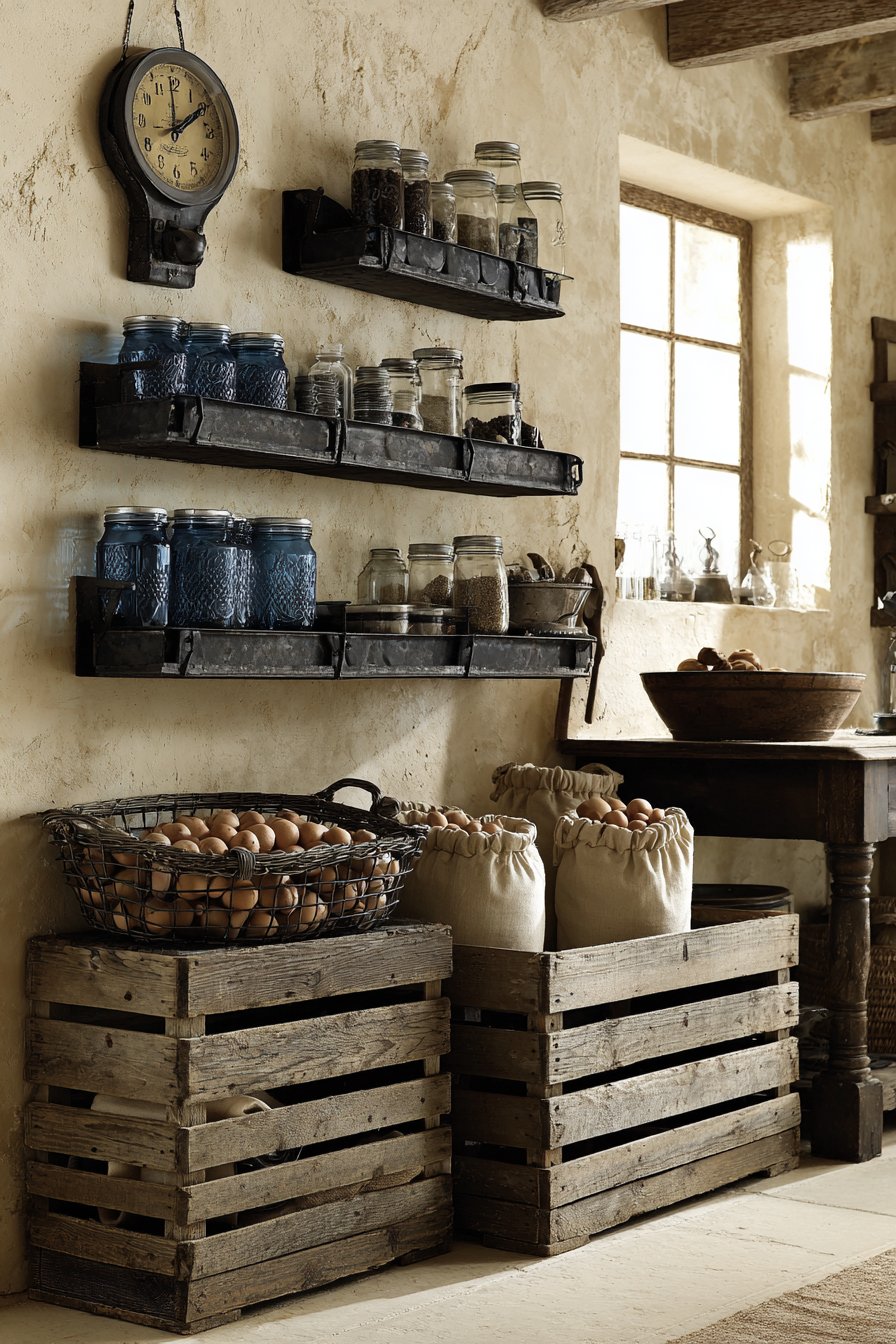
The weathered wood crates show years of previous use. Original paint traces and nail holes tell individual stories. This authentic aging cannot be artificially replicated convincingly. The practical beauty of organized supplies becomes evident daily.
Key Design Tips:
- Source vintage crates from agricultural suppliers and antique markets
- Mount crates securely to wall studs for weight-bearing capacity
- Group similar storage containers within each crate for cohesion
- Apply textured plaster finishes in warm neutral tones
- Position clerestory windows to provide light without sacrificing wall space
7. Curved Corner Pantry Design
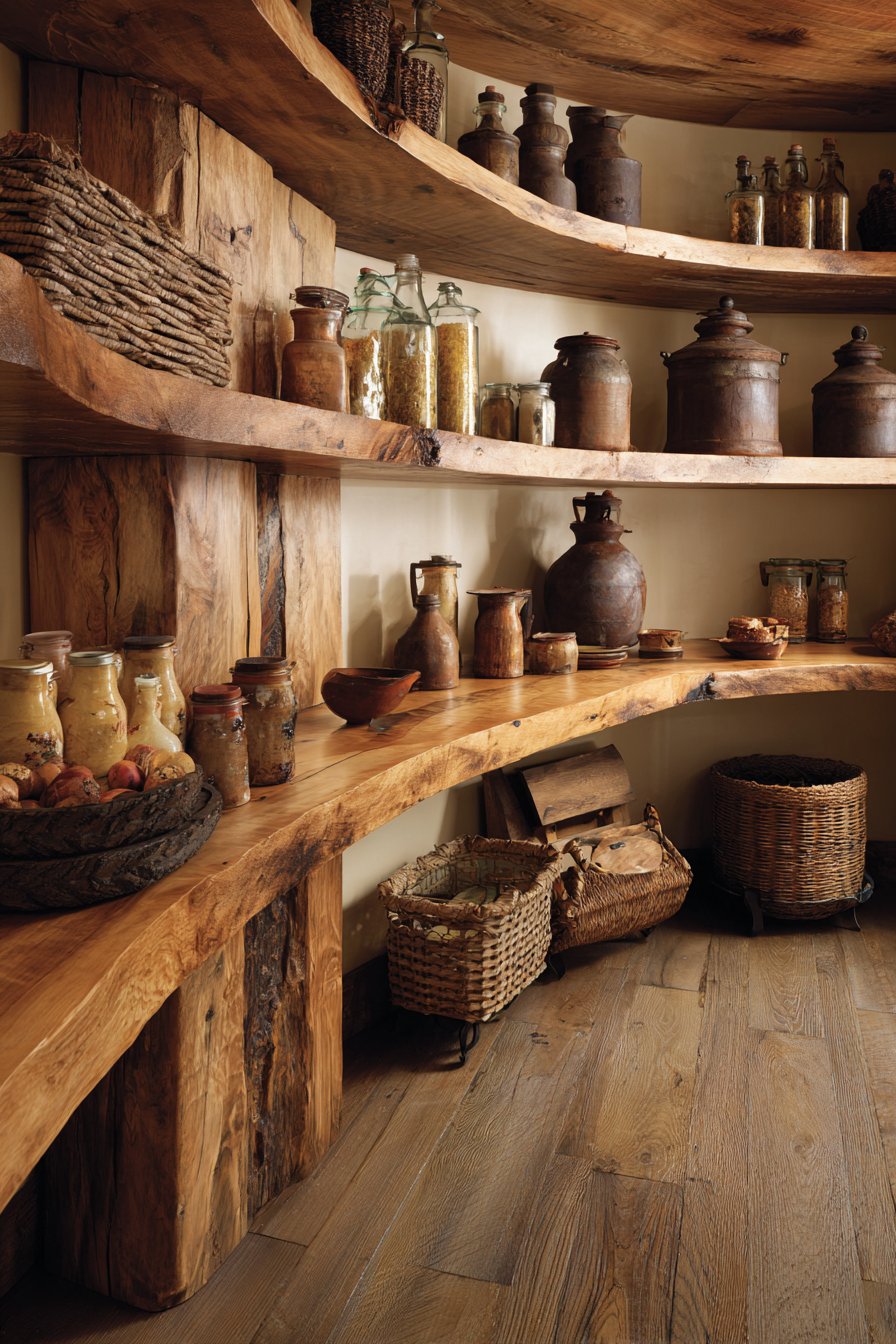
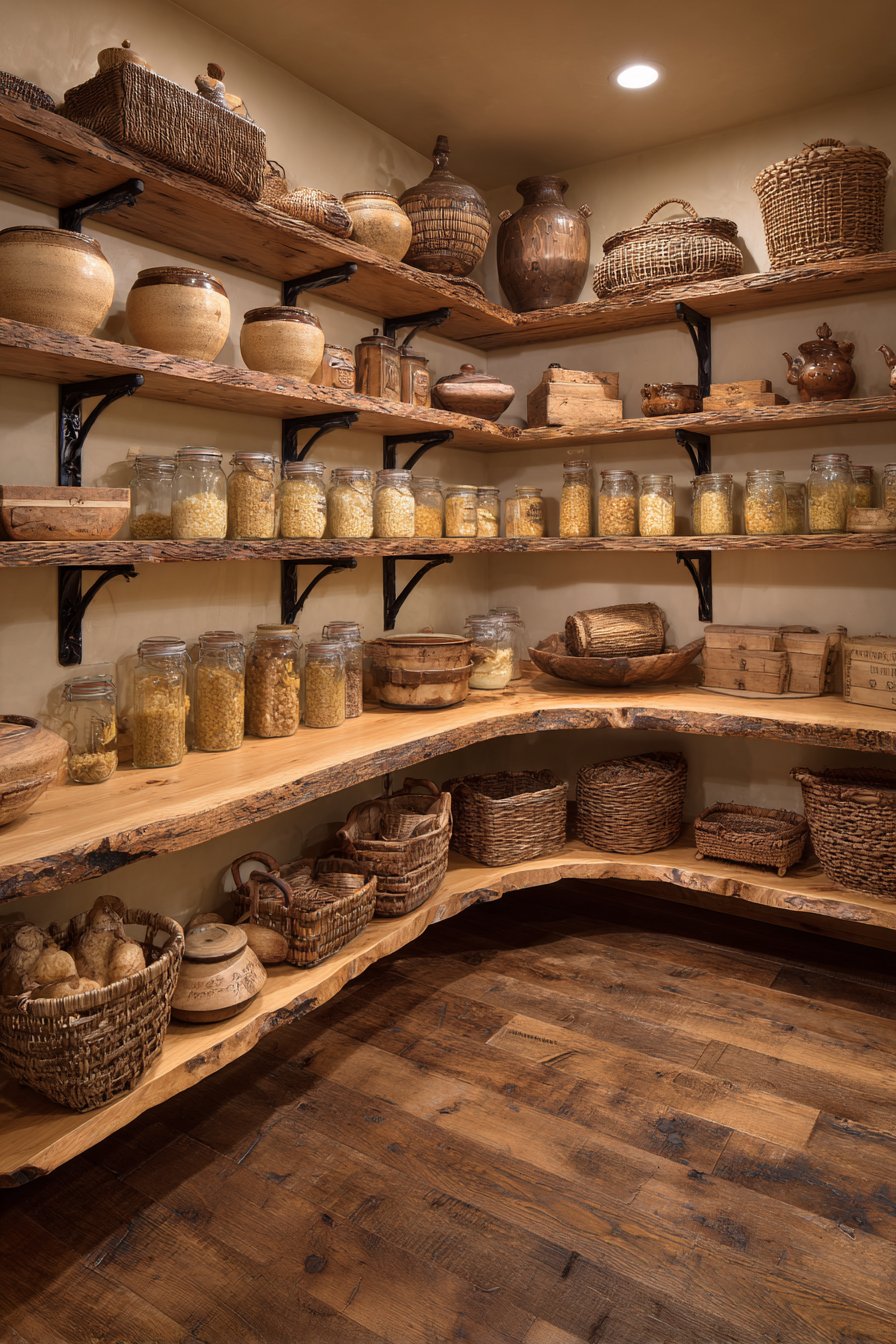
Curved floor-to-ceiling shelving in knotty alder maximizes corner spaces. Live edge details on shelf fronts preserve natural wood character. The organic curves create visual interest in otherwise awkward corners. Lazy Susan turntables on lower shelves improve accessibility. Stoneware crocks and ceramic storage jars rotate easily.
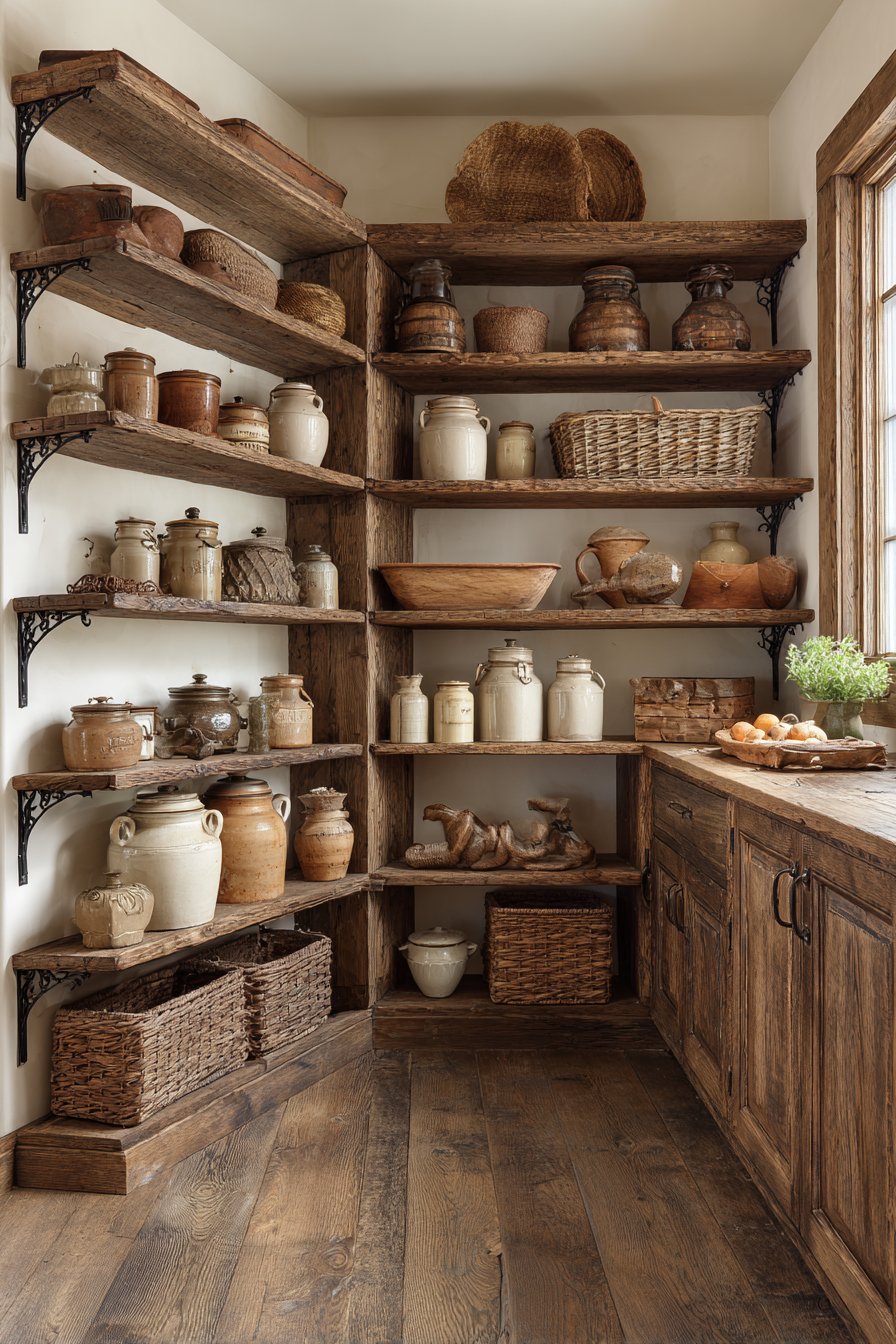
Upper shelves display vintage tin containers and woven rattan baskets. The varied heights accommodate different storage needs efficiently. Original wide plank flooring shows centuries of wear. Natural gaps and visible nail holes authenticate the aged appearance. Wrought iron shelf brackets feature hand-hammered details.
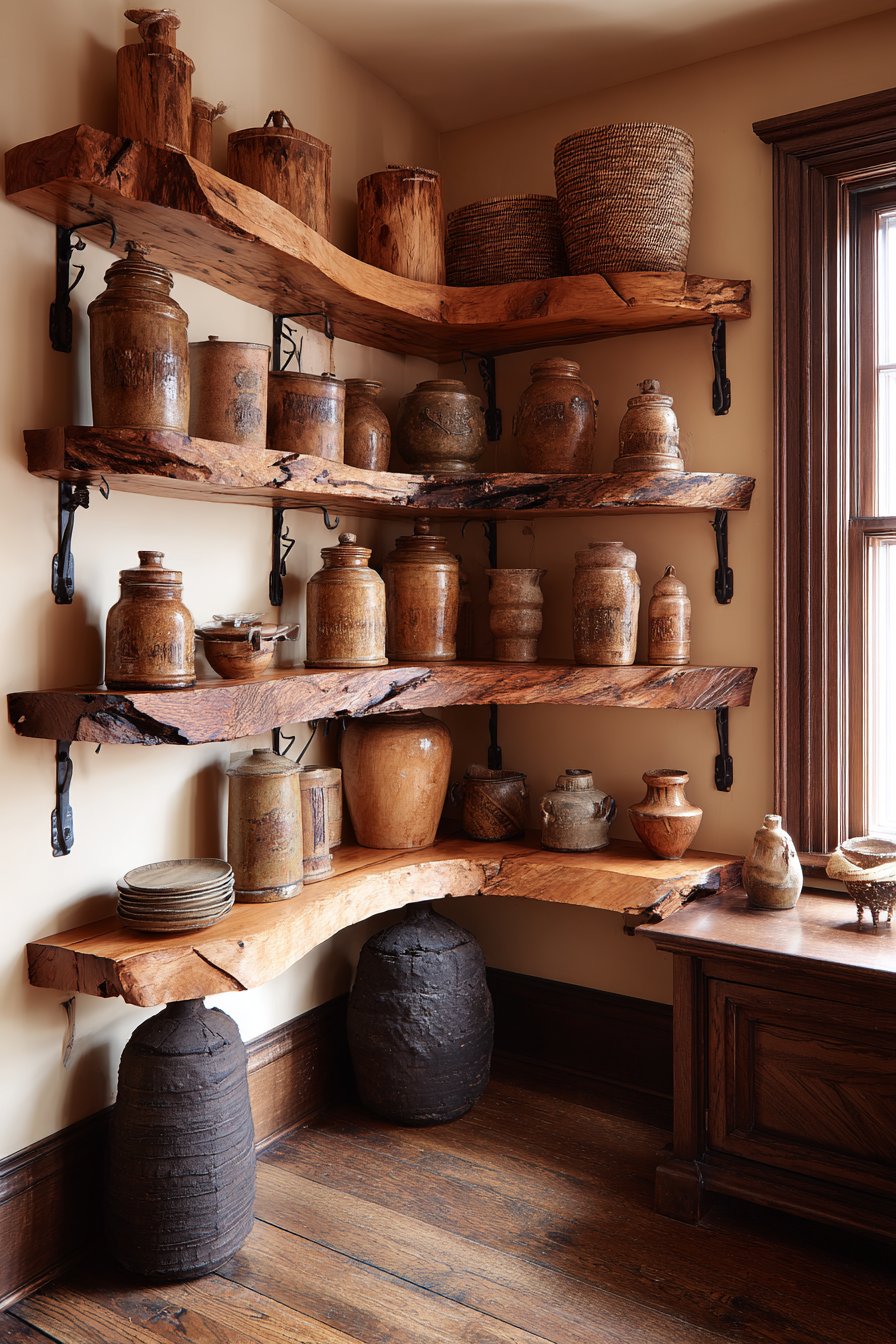
The custom curved design transforms dead corner space into prime storage. Professional installation ensures structural integrity throughout. Soft ambient lighting showcases the organic curved design. Varied wood tones create depth within the compact footprint.
Key Design Tips:
- Design curved shelving to follow corner radius precisely
- Install lazy Susan mechanisms on lower shelves for accessibility
- Select knotty wood species for enhanced rustic character
- Use live edge details where they won’t snag clothing or bags
- Incorporate hand-forged iron brackets as decorative structural elements
8. Antique Pie Safe Larder
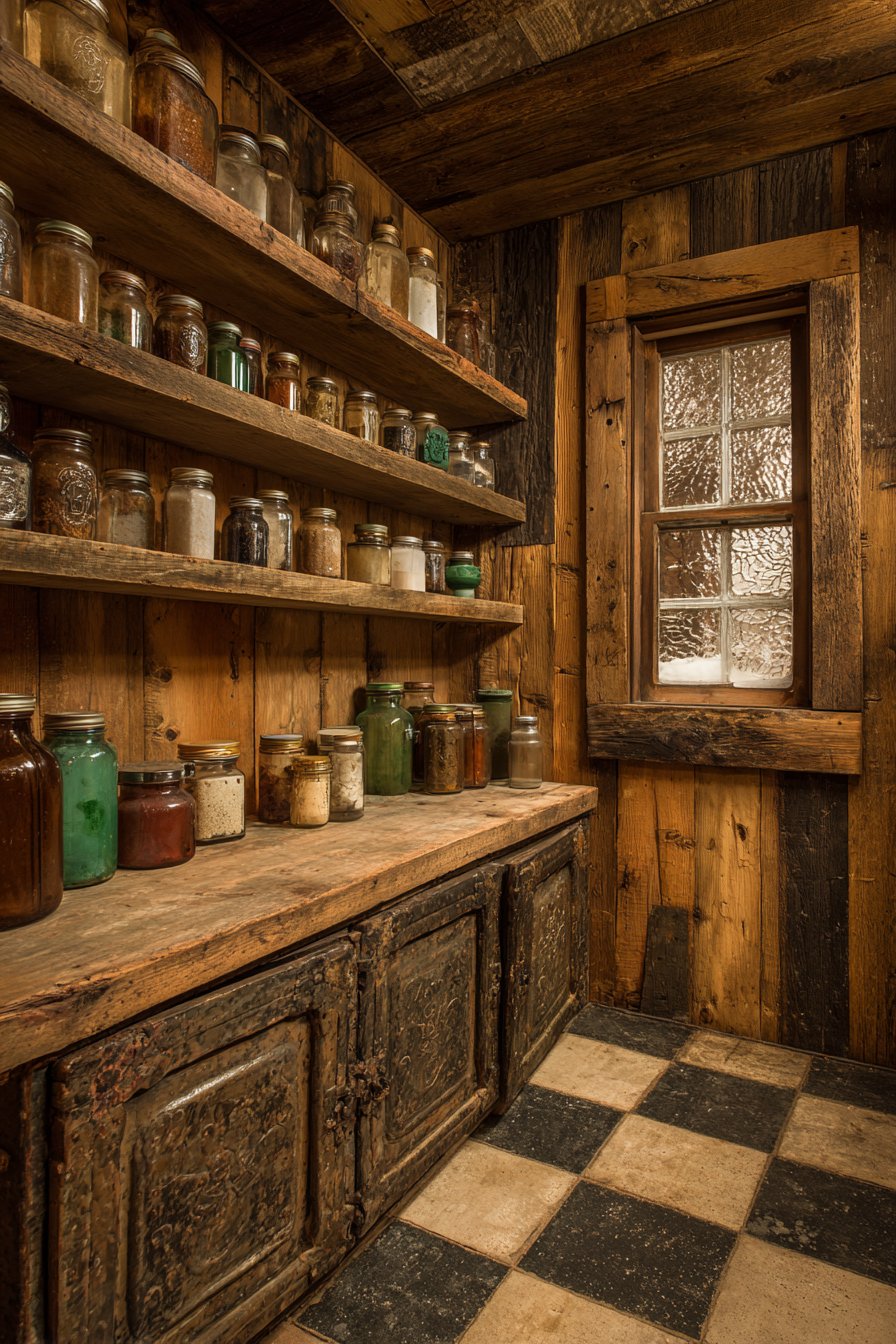
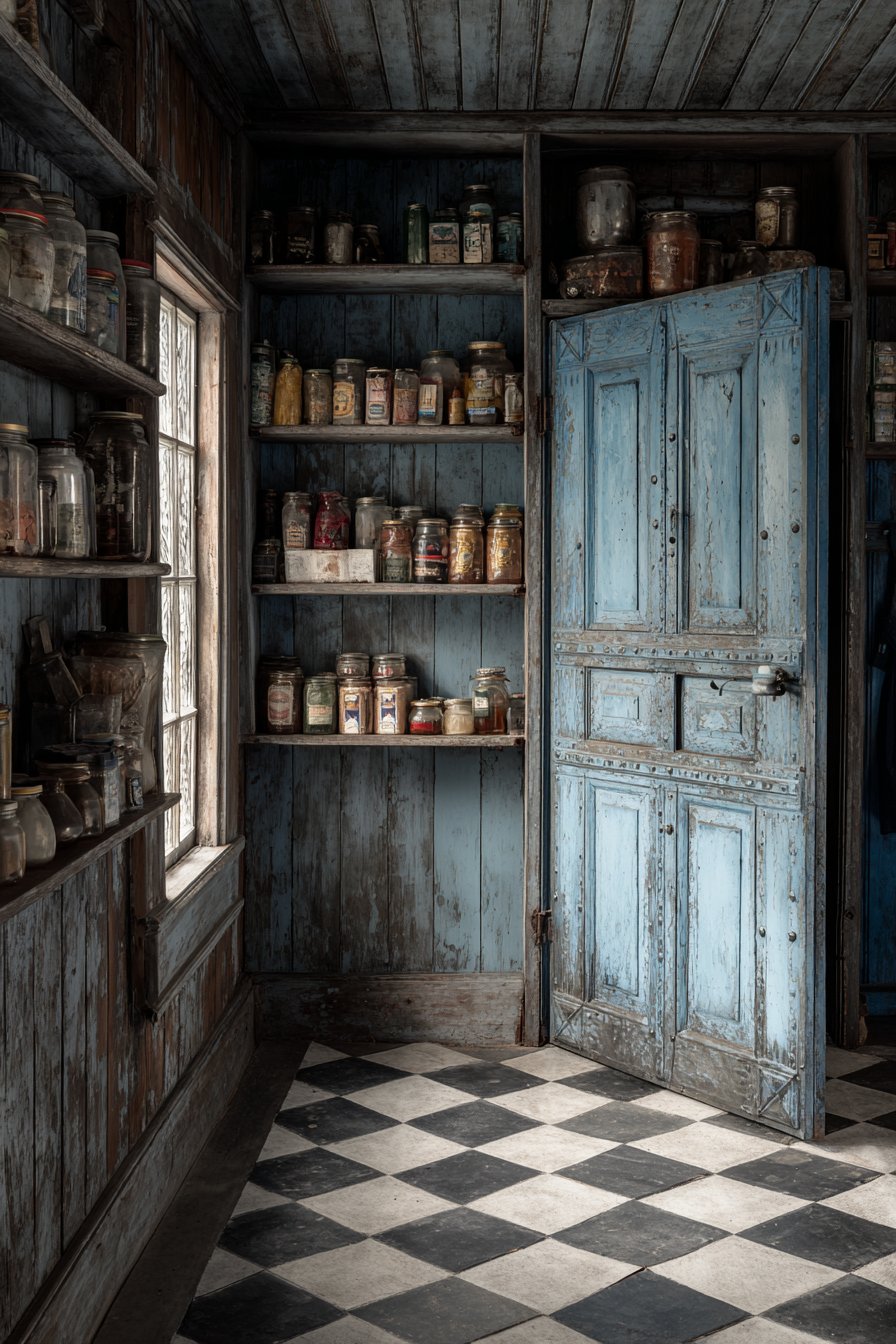
A freestanding antique pie safe with punched tin panels anchors the design. Original milk paint finish shows authentic chippy patina. The aged surface reveals layers of previous paint colors. Surrounding walls feature tongue-and-groove beadboard in natural pine. Open shelves above display vintage preserved jars in graduated sizes.
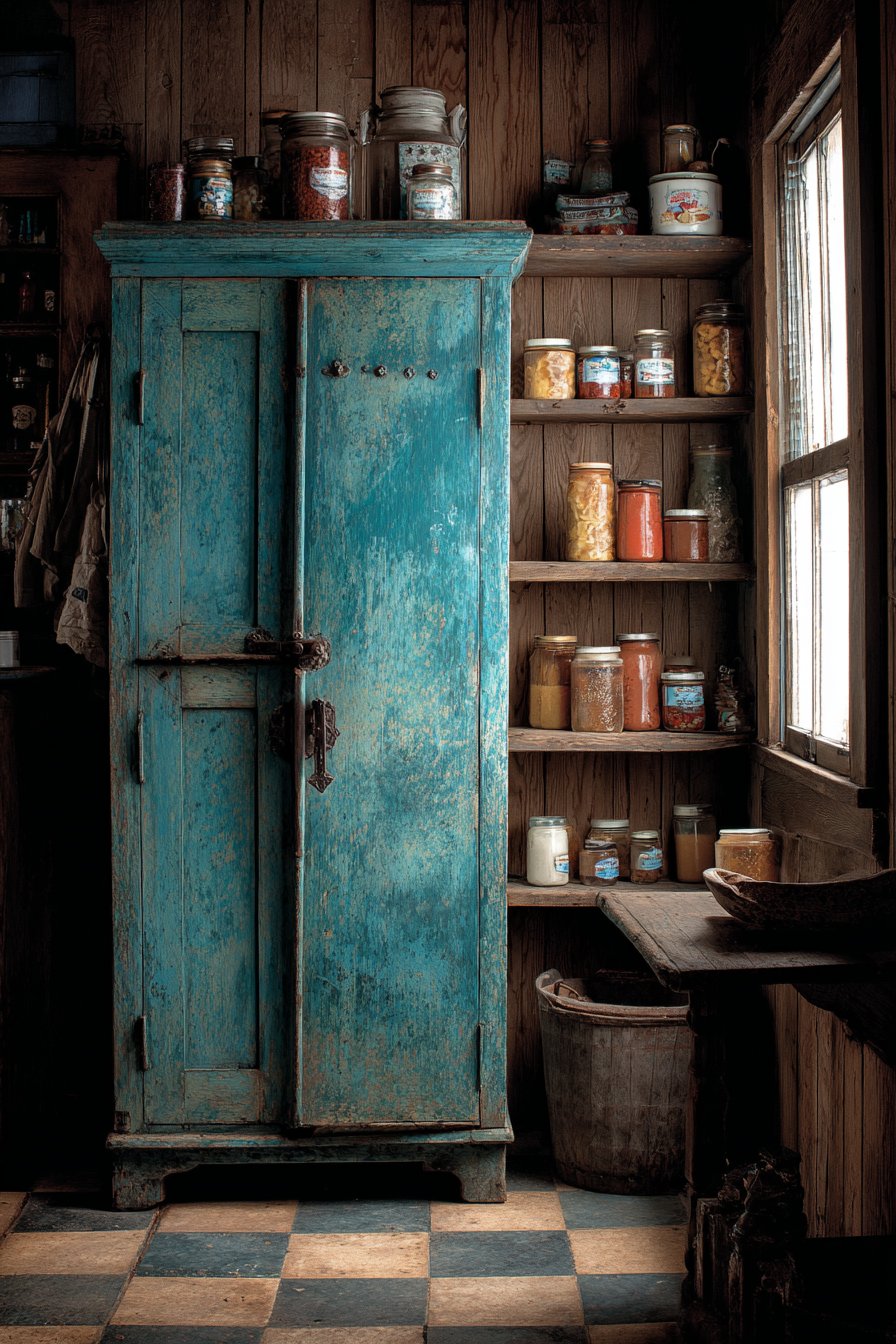
Enamel canisters in classic white create uniform storage for dry goods. Checkerboard floor in slate and limestone provides traditional farmhouse appeal. The natural stone develops subtle patina through foot traffic. Small window with wavy antique glass filters gentle daylight. The glass imperfections create visual interest through light refraction.
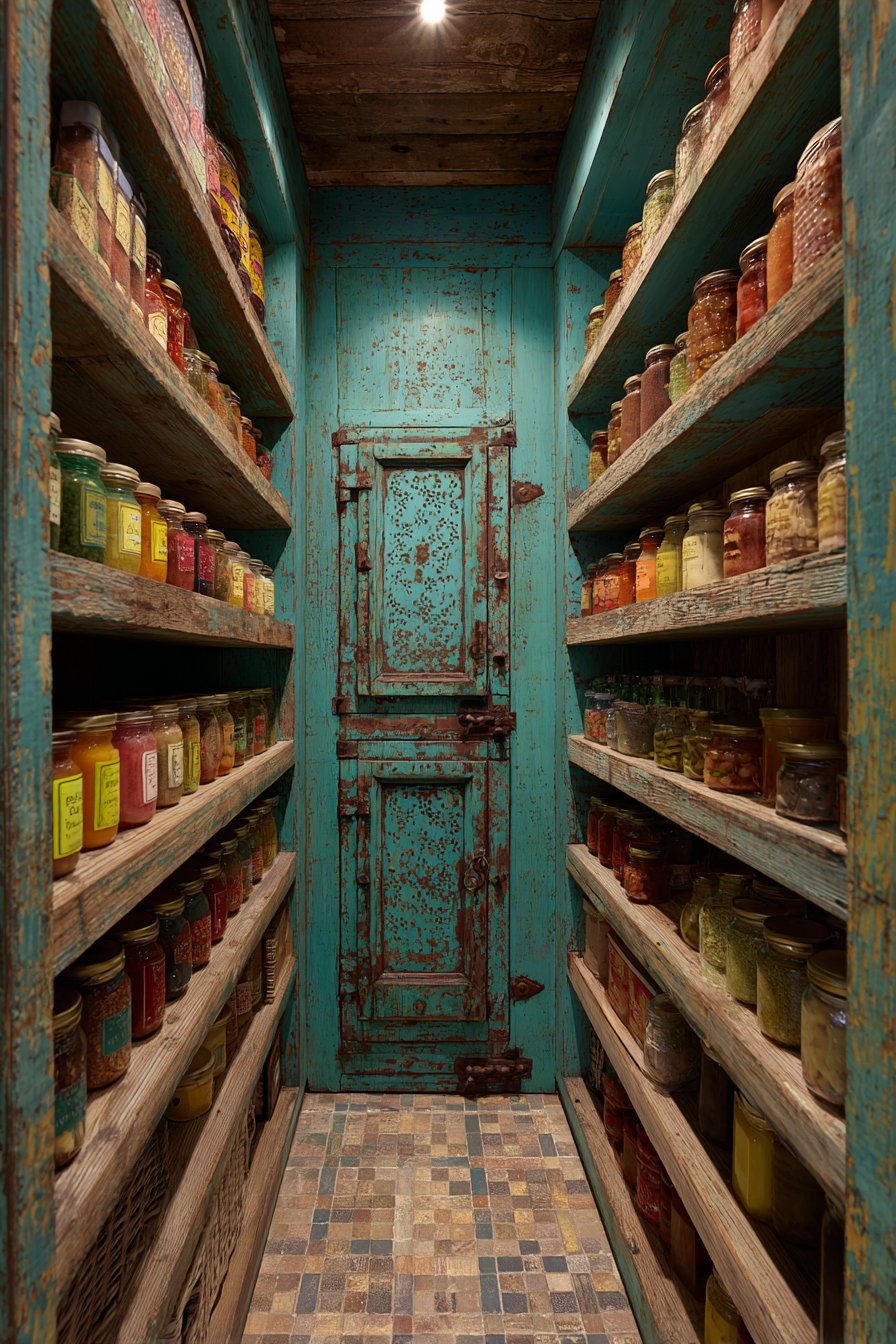
The historical authenticity creates a unique character impossible with reproductions. Paint wear patterns reveal decades of use and care. Metal patina develops naturally over time. The complete composition feels collected rather than designed.
Key Design Tips:
- Source authentic pie safes from estate sales and auctions
- Preserve original paint finishes rather than refinishing
- Install natural stone floors that improve with age
- Use antique glass windows when available from salvage sources
- Display vintage preserve jars as decorative storage elements
9. Pegboard Organization System
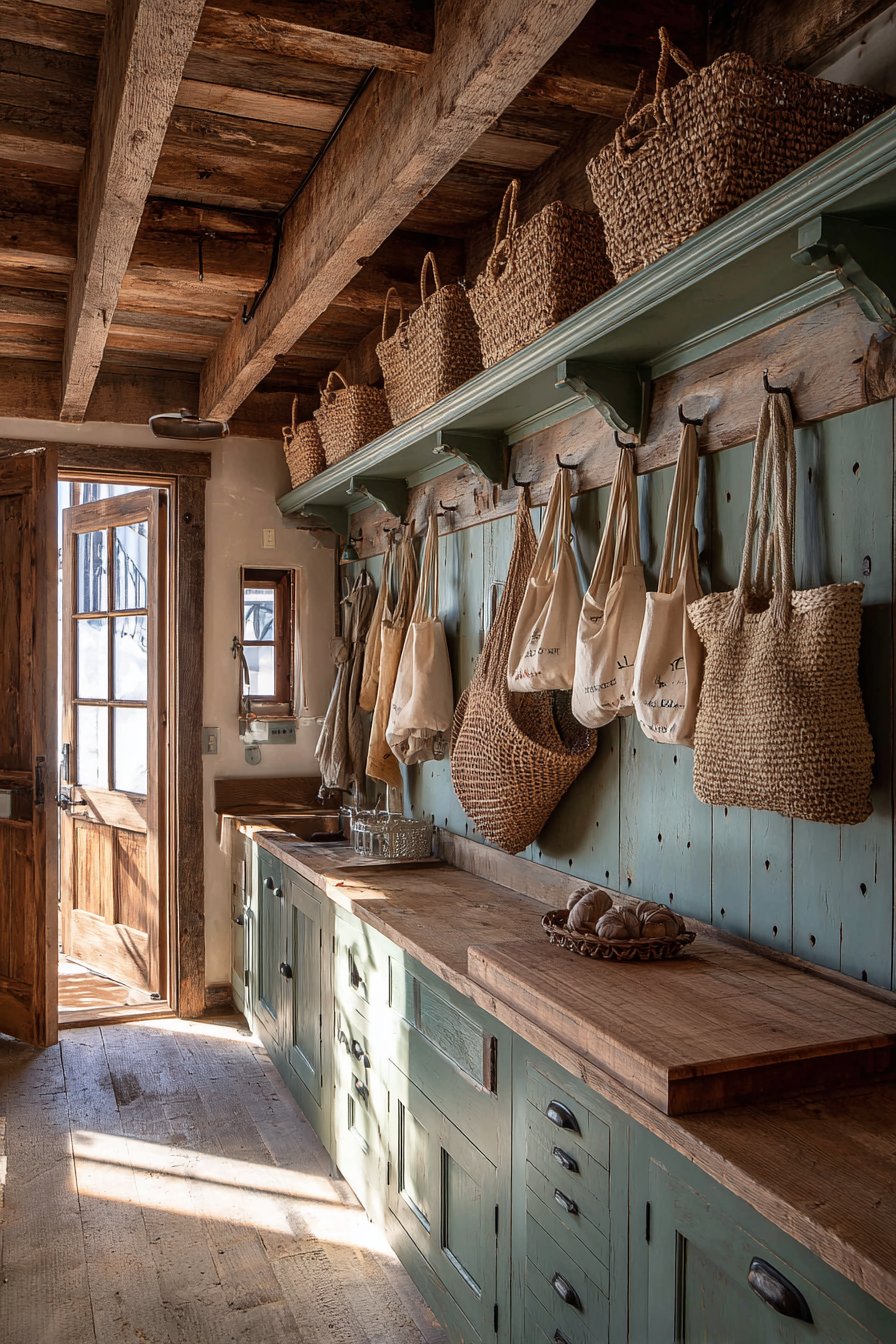
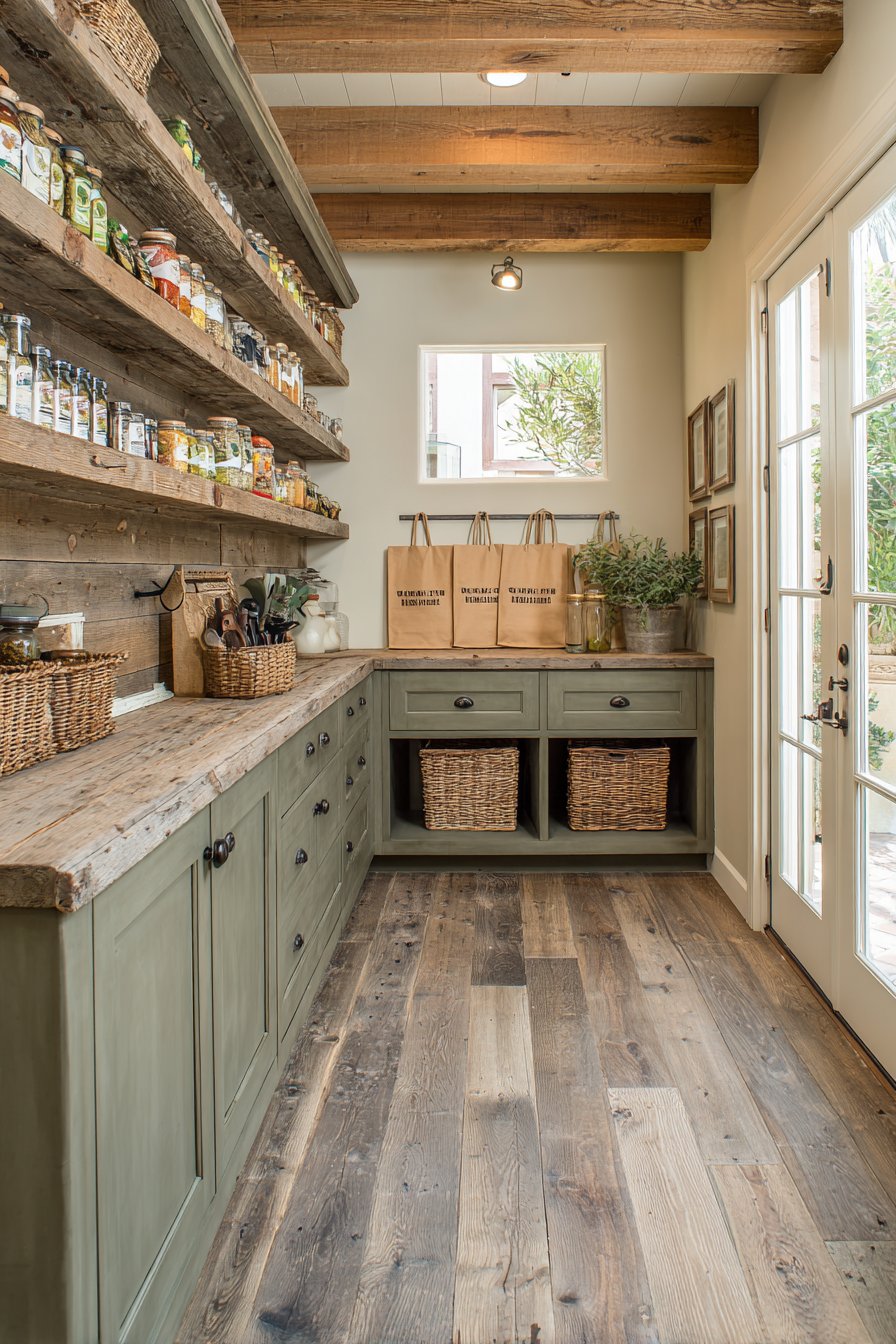
Reclaimed wood planks create a pegboard organization system. Varied weathering and original nail holes prove material authenticity. Wooden pegs hold canvas shopping bags and vintage utensils. Woven market baskets hang at convenient heights. The vertical storage maximizes wall space efficiently.
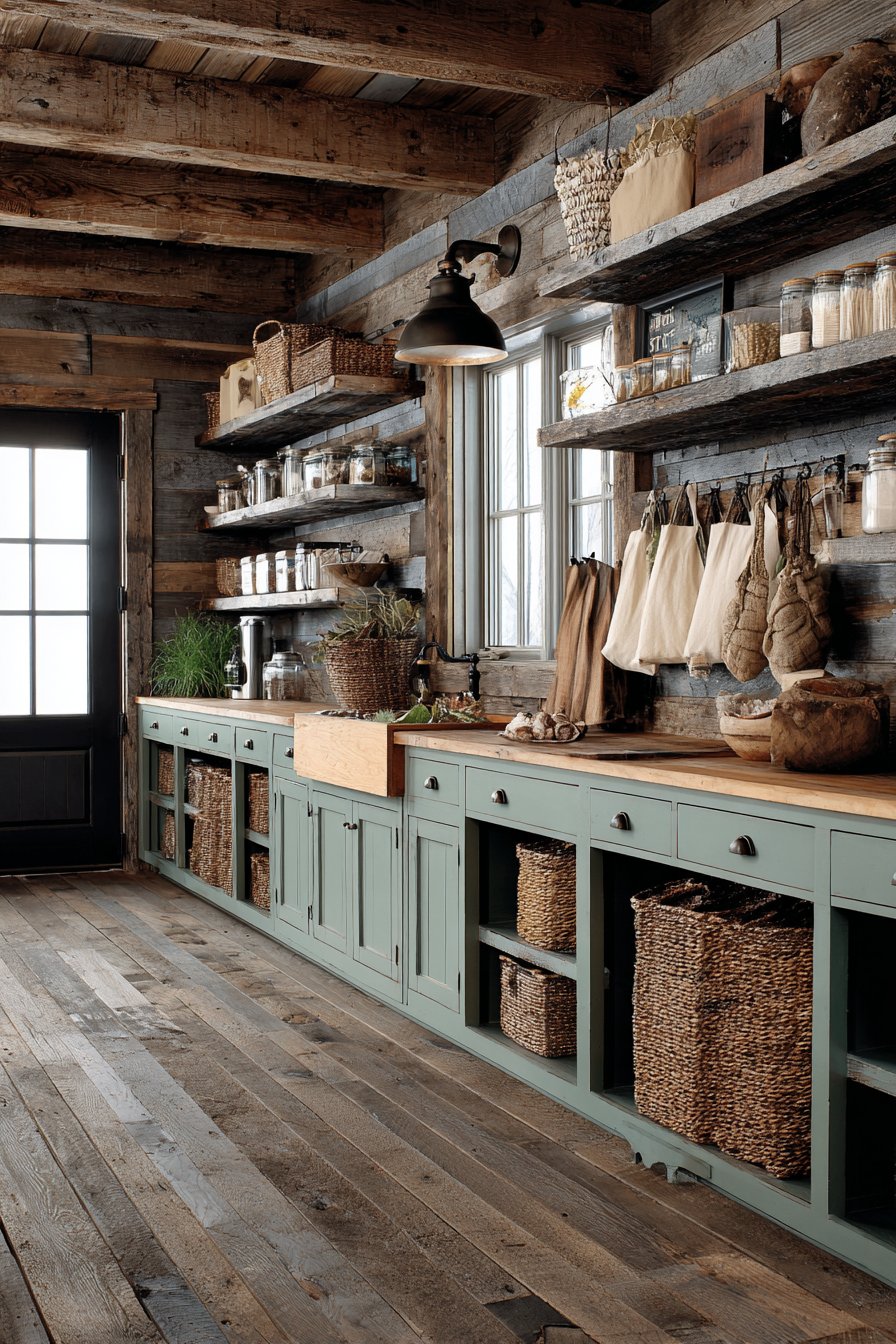
Lower cabinets feature a distressed paint finish in sage green. Porcelain knobs add traditional farmhouse details. Butcher block pull-out cutting board installs at comfortable working height. The hidden workspace emerges when needed. Exposed ceiling beams in aged oak show original adze marks.
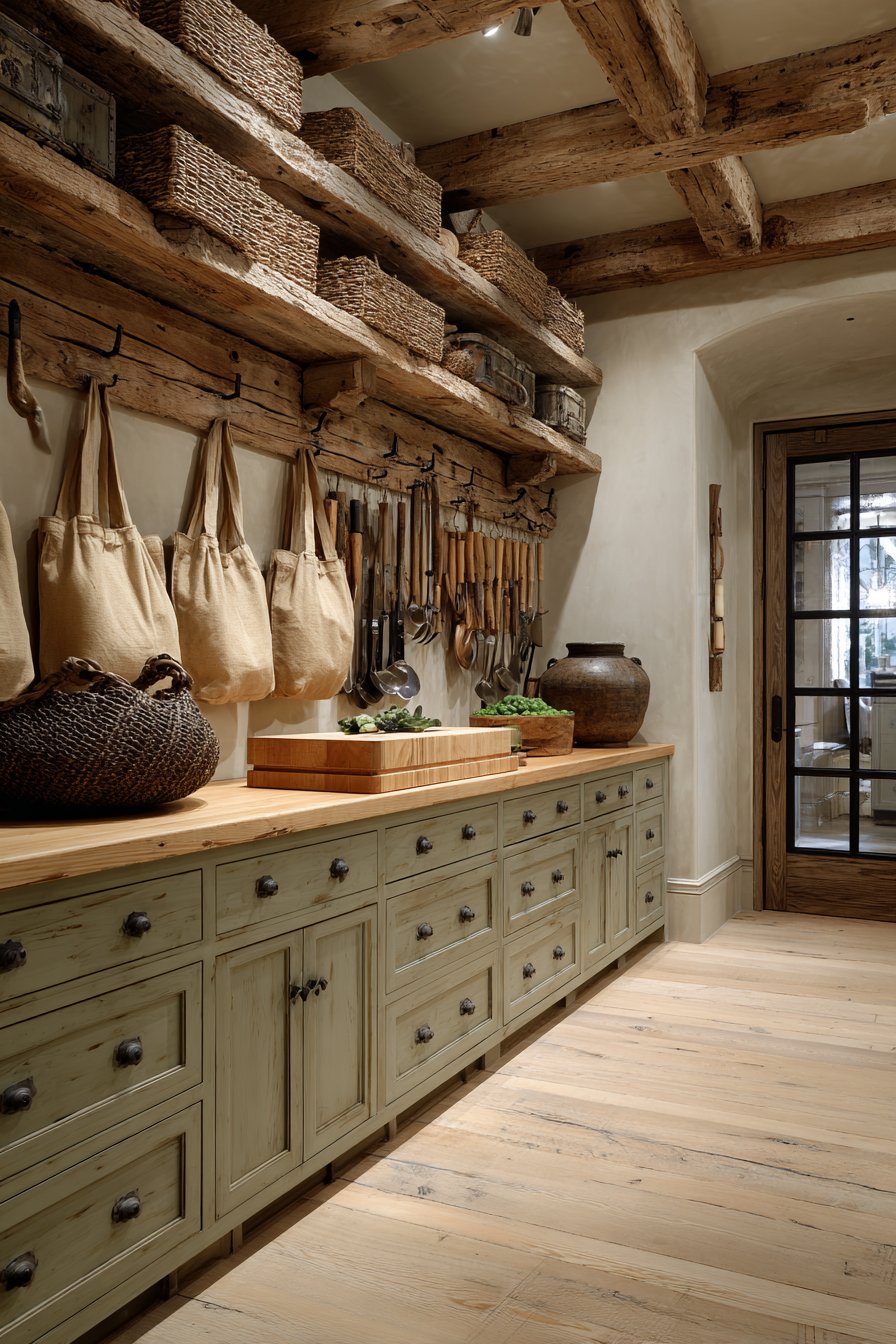
Natural light through transom window above door illuminates the vertical storage. Wall sconces in aged brass provide task lighting after dark. The combination ensures adequate illumination throughout the day. Authentic wood textures become focal points under proper lighting.
Key Design Tips:
- Create pegboard from reclaimed planks rather than manufactured sheets
- Space pegs to accommodate various basket and bag sizes
- Install pull-out work surfaces at ergonomic heights
- Paint lower cabinets in muted historical colors
- Position transom windows to maximize natural light penetration
10. Apothecary-Style Drawer System
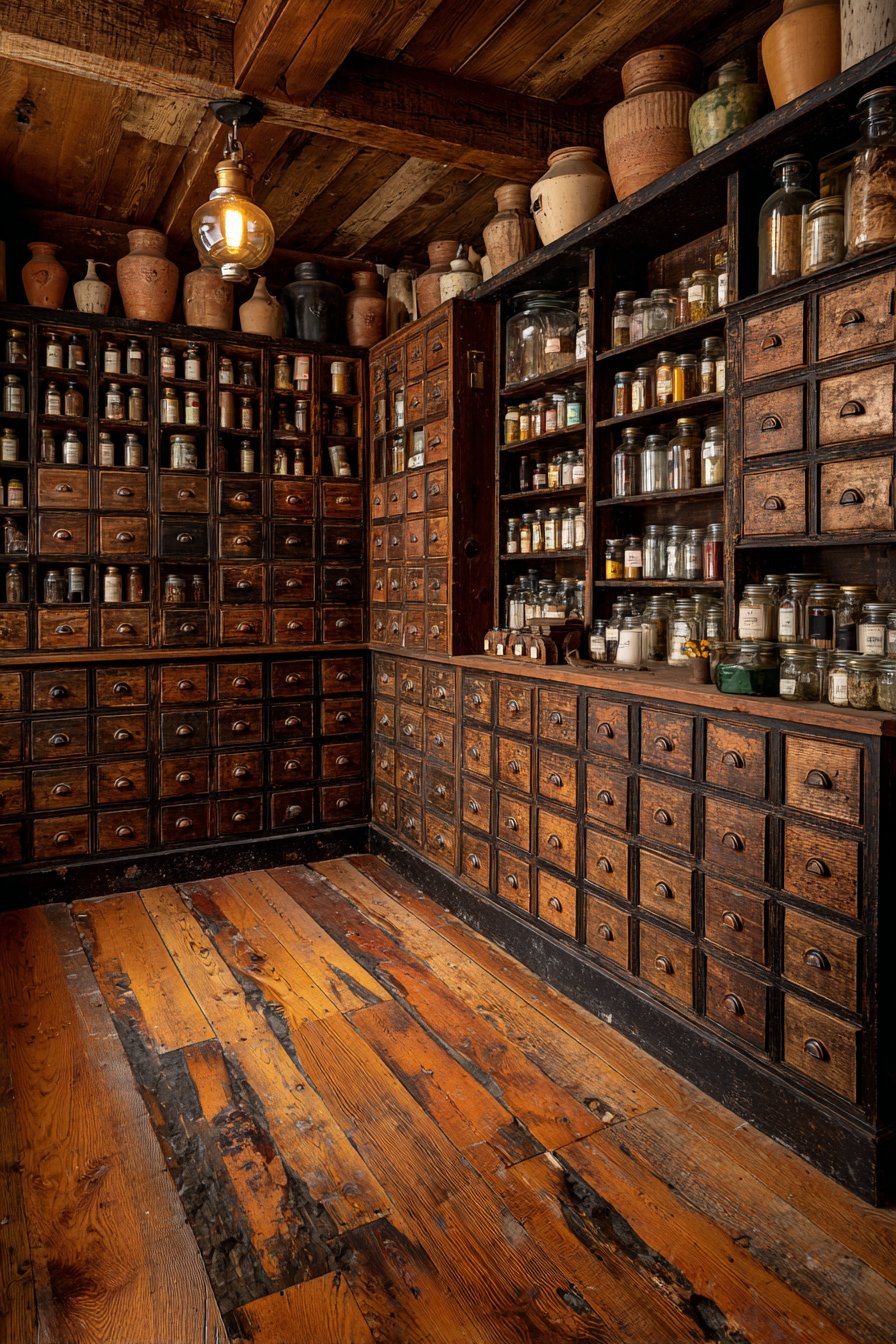
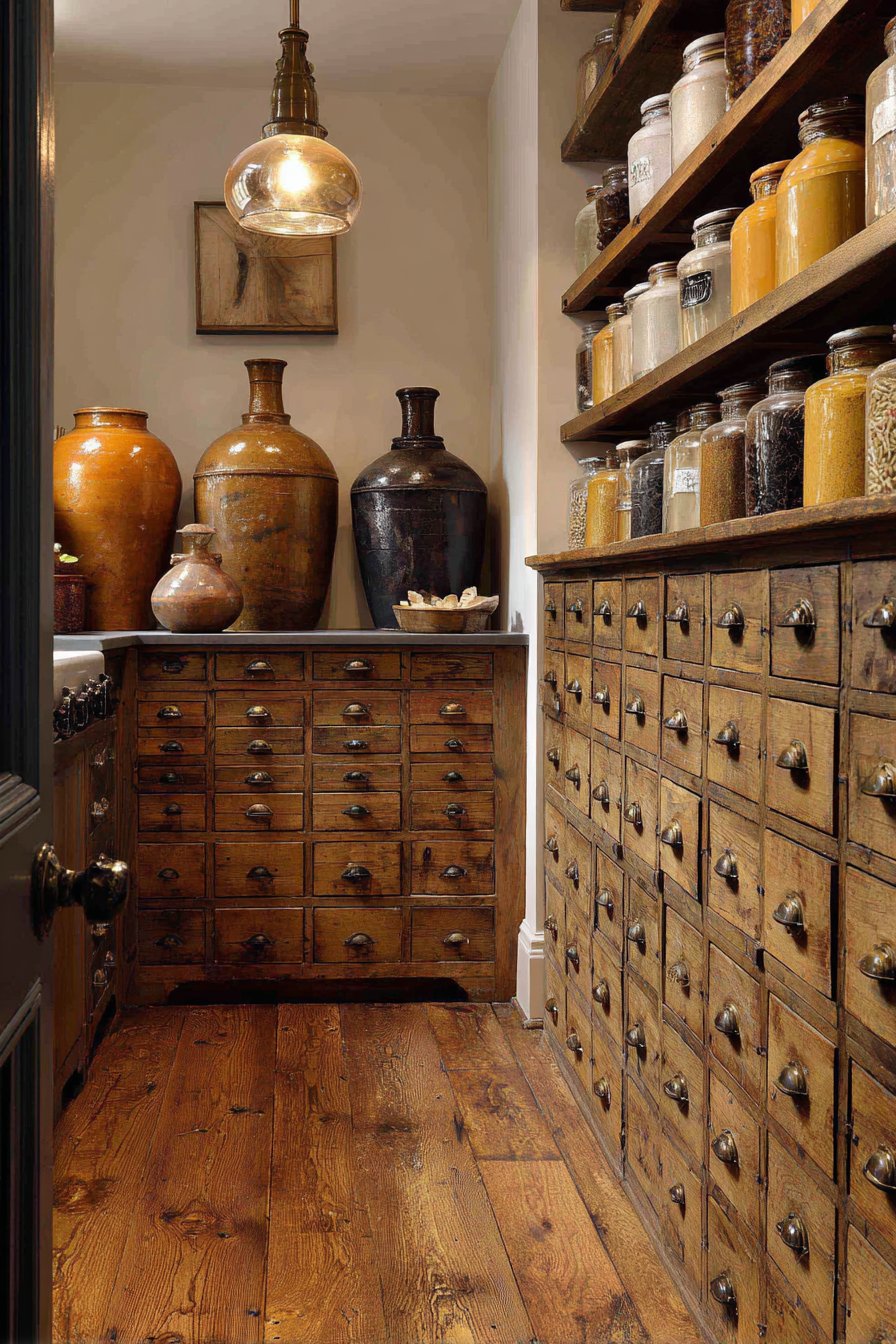
Dozens of small wooden drawers create apothecary-style organization. Hand-lettered labels identify contents clearly. Brass cup pulls show natural tarnish from years of use. Each drawer sizes appropriately for different dry goods and spices. The wall of organized storage becomes an architectural feature.
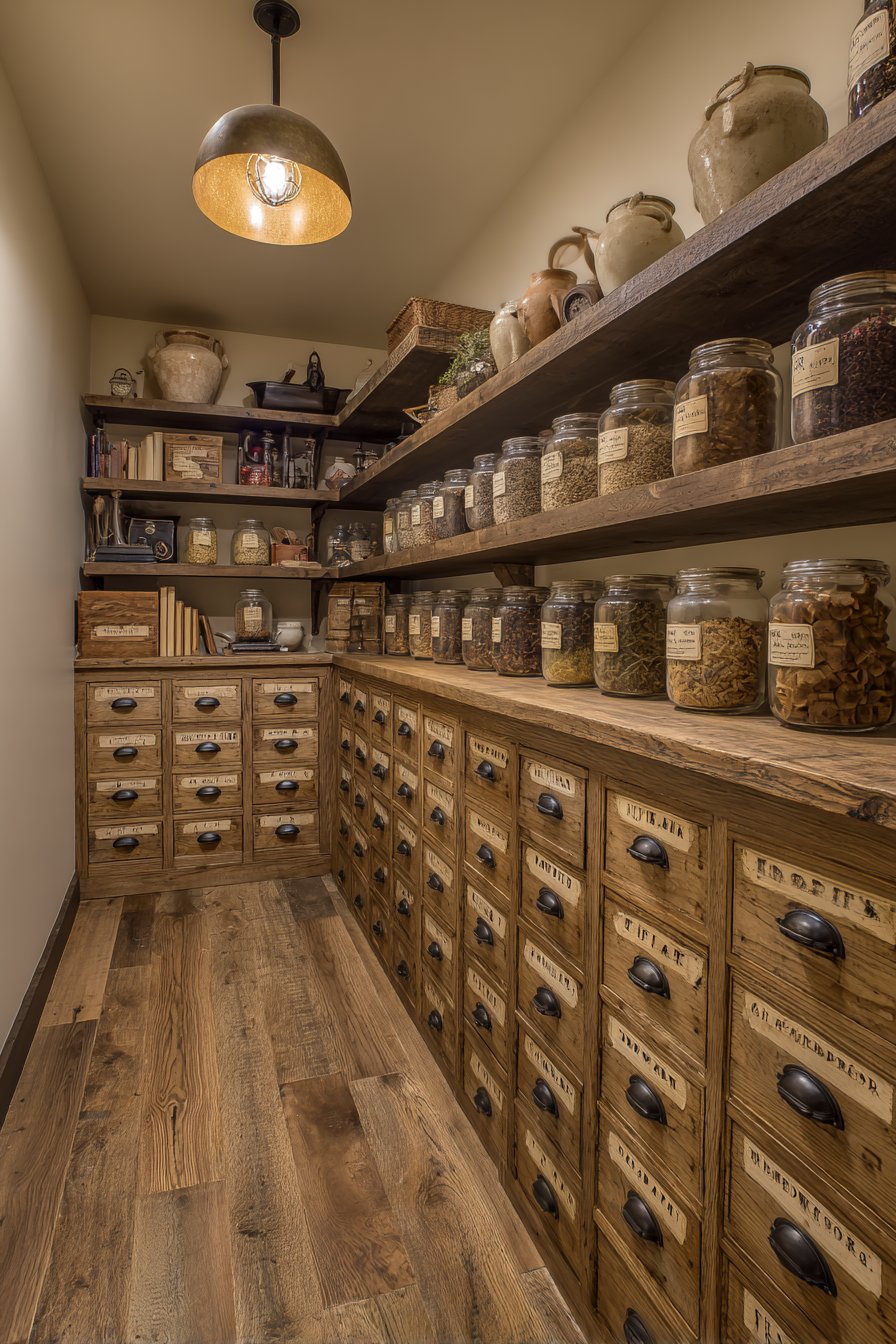
Surrounding shelves hold larger ceramic crocks and stoneware jugs. Heart pine flooring displays rich amber patina underfoot. Natural wear patterns develop in high-traffic areas. Single pendant light with aged brass finish illuminates the space. Seeded glass shade diffuses light while adding vintage character.
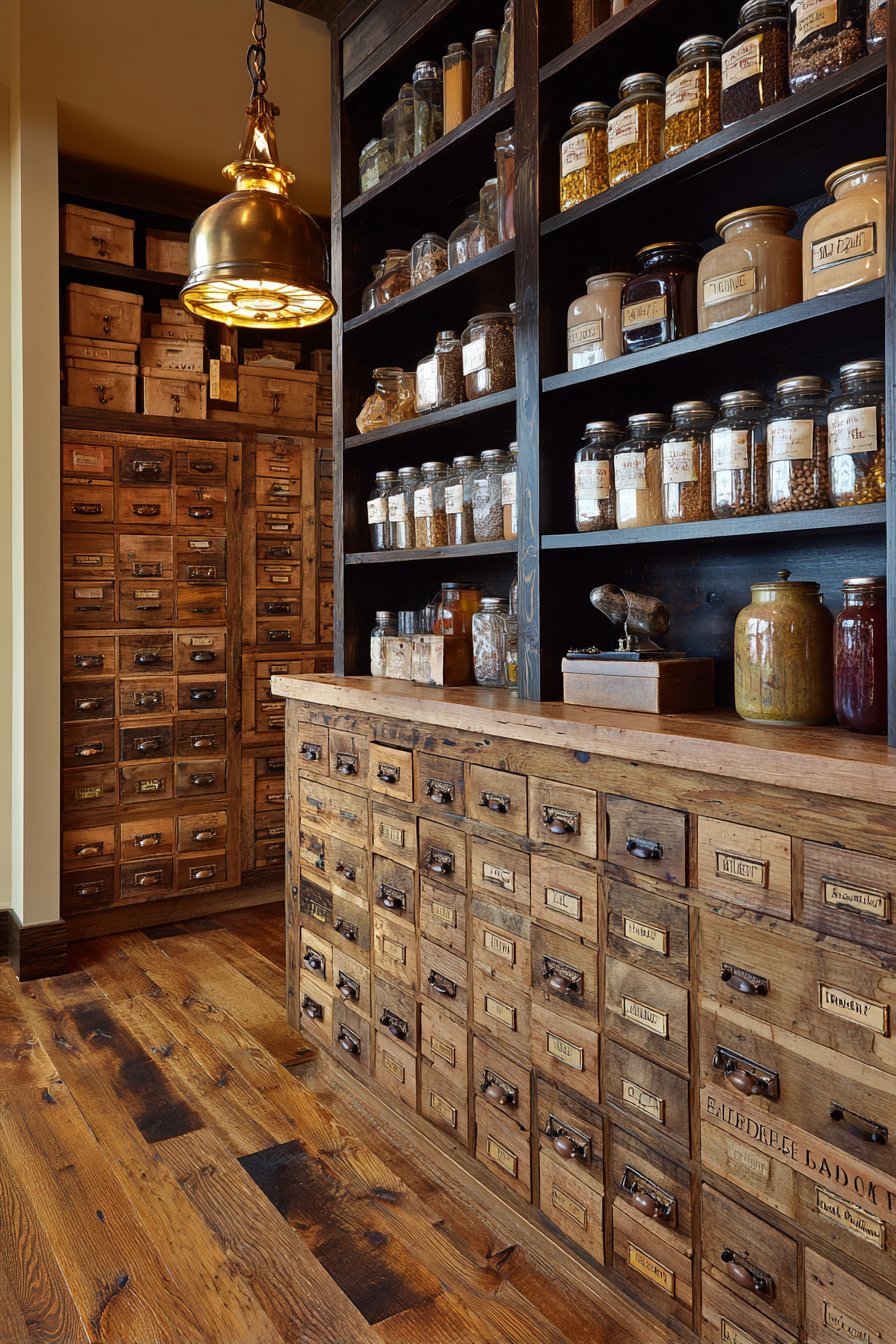
The drawer organization system provides unmatched storage density. Small compartments prevent ingredient mixing and spillage. Labels ensure quick location of needed items. The functional beauty creates satisfaction with every use.
Key Design Tips:
- Size drawers specifically for intended contents
- Use hand-lettering or vintage-style labels for authenticity
- Select heart pine or other resinous woods for rich patina
- Install pendant lighting at heights, preventing glare
- Choose seeded glass shades for diffused vintage illumination
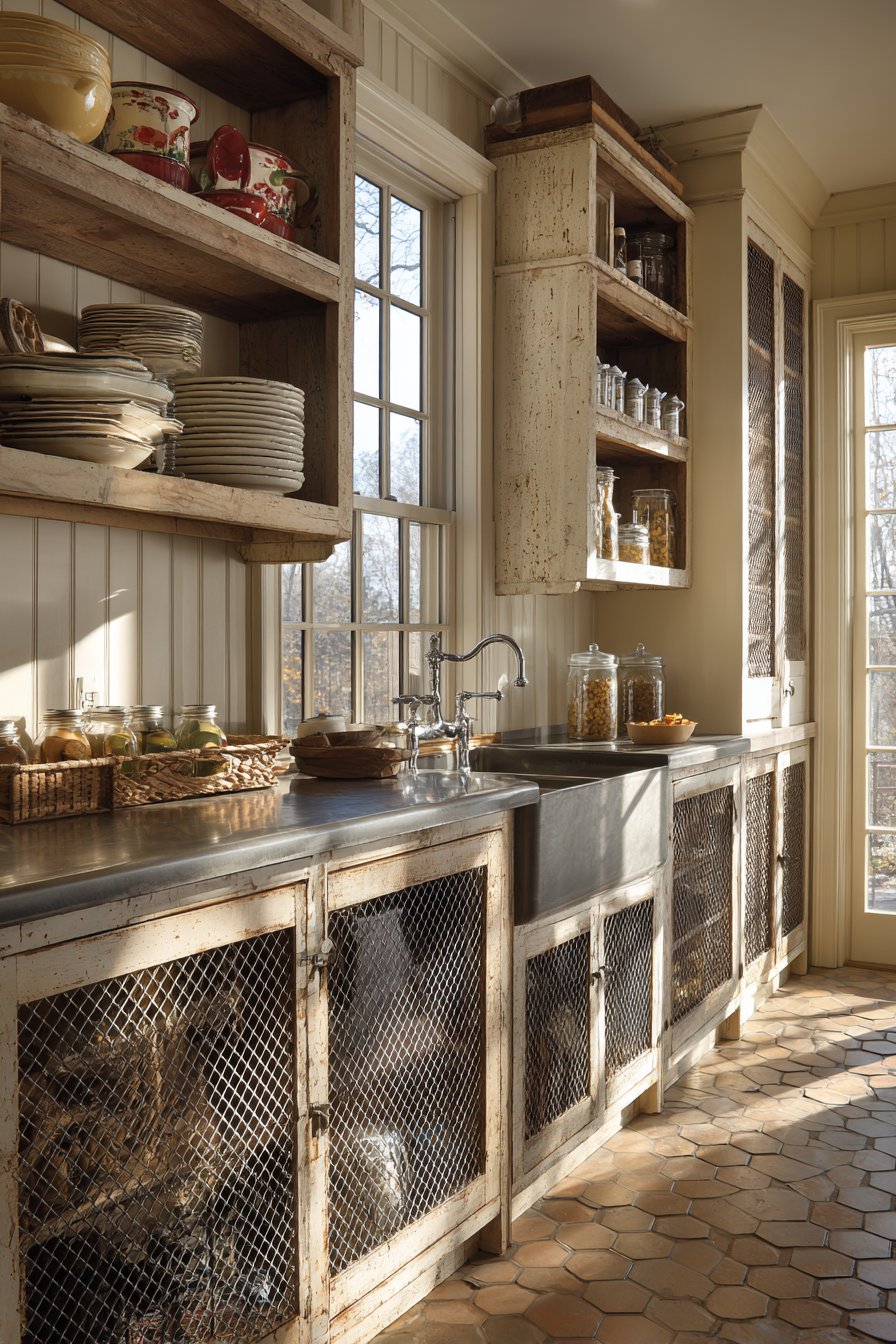
11. Chicken Wire Mesh Cabinets
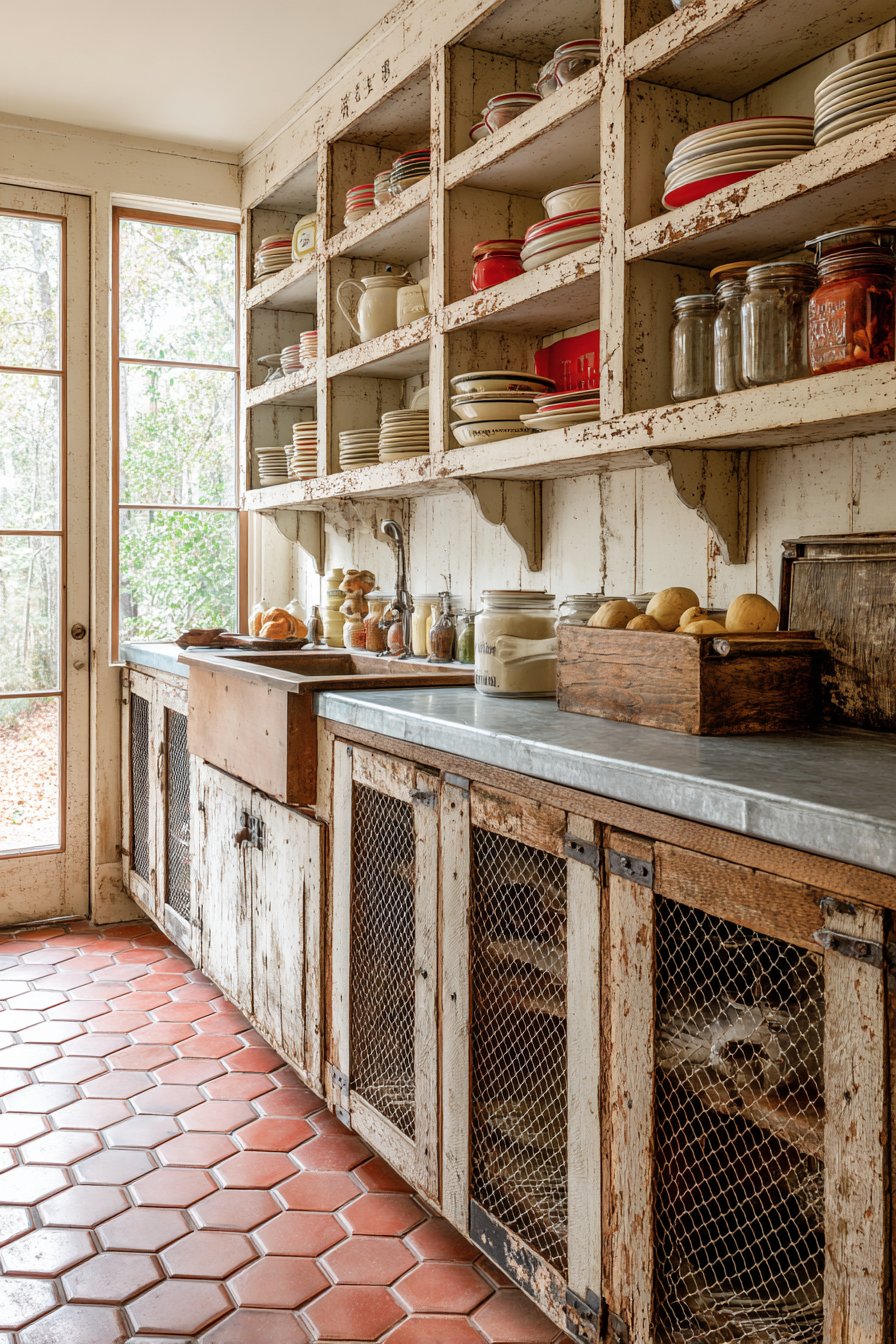
Chicken wire mesh cabinet fronts in wooden frames reveal contents. Chippy white paint finish shows authentic wear patterns. Stacked vintage dishes and preserved jars display through the wire. Open upper shelving features enamelware in cream and red. Lower closed cabinets incorporate beadboard panel doors.
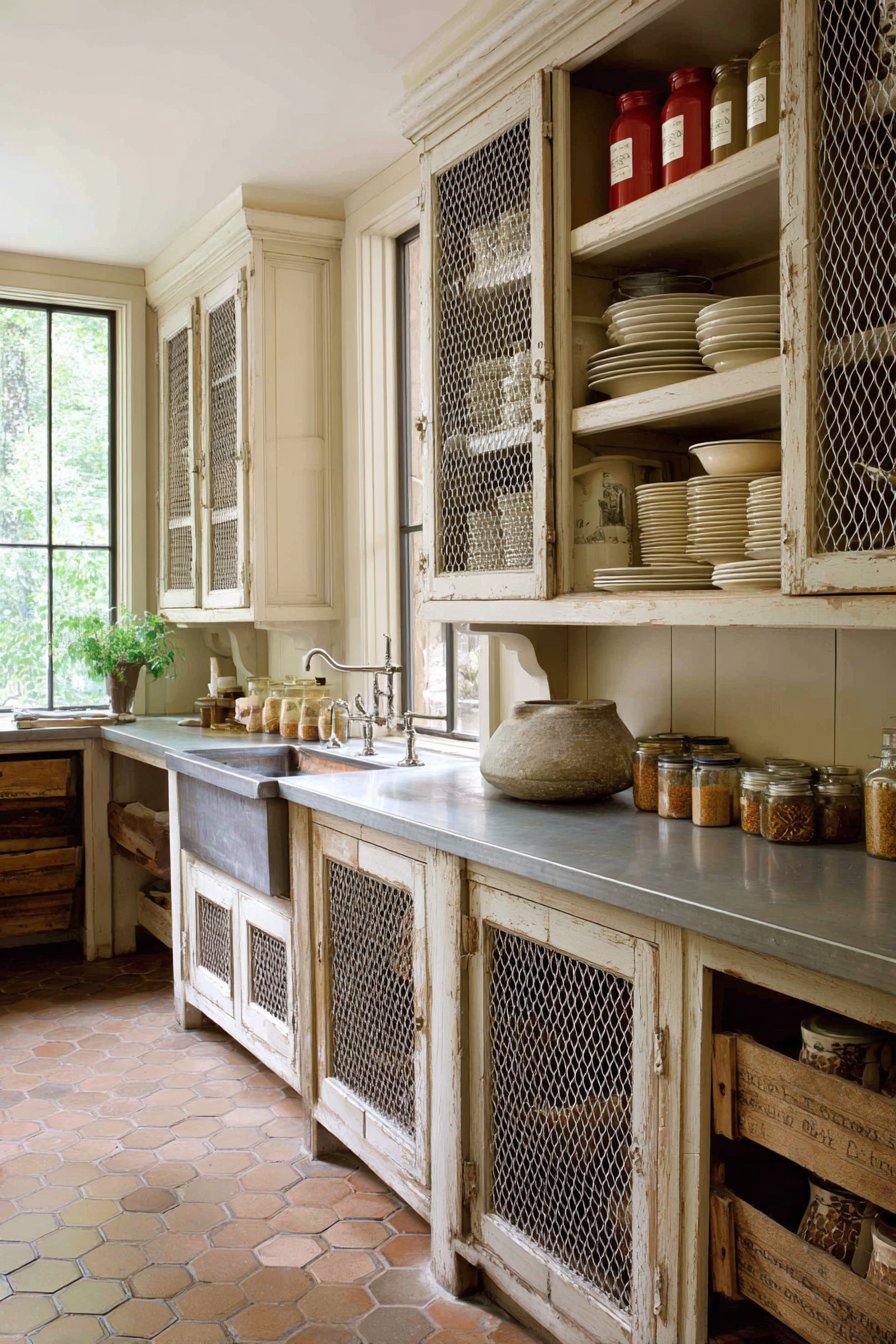
Zinc-topped work surface shows natural oxidation and use marks. The living finish changes character over time. Farmhouse sink with gooseneck faucet in brushed nickel anchors the workspace. Hexagonal terracotta floor tiles show natural color variations. Morning light through casement windows creates soft shadows throughout.
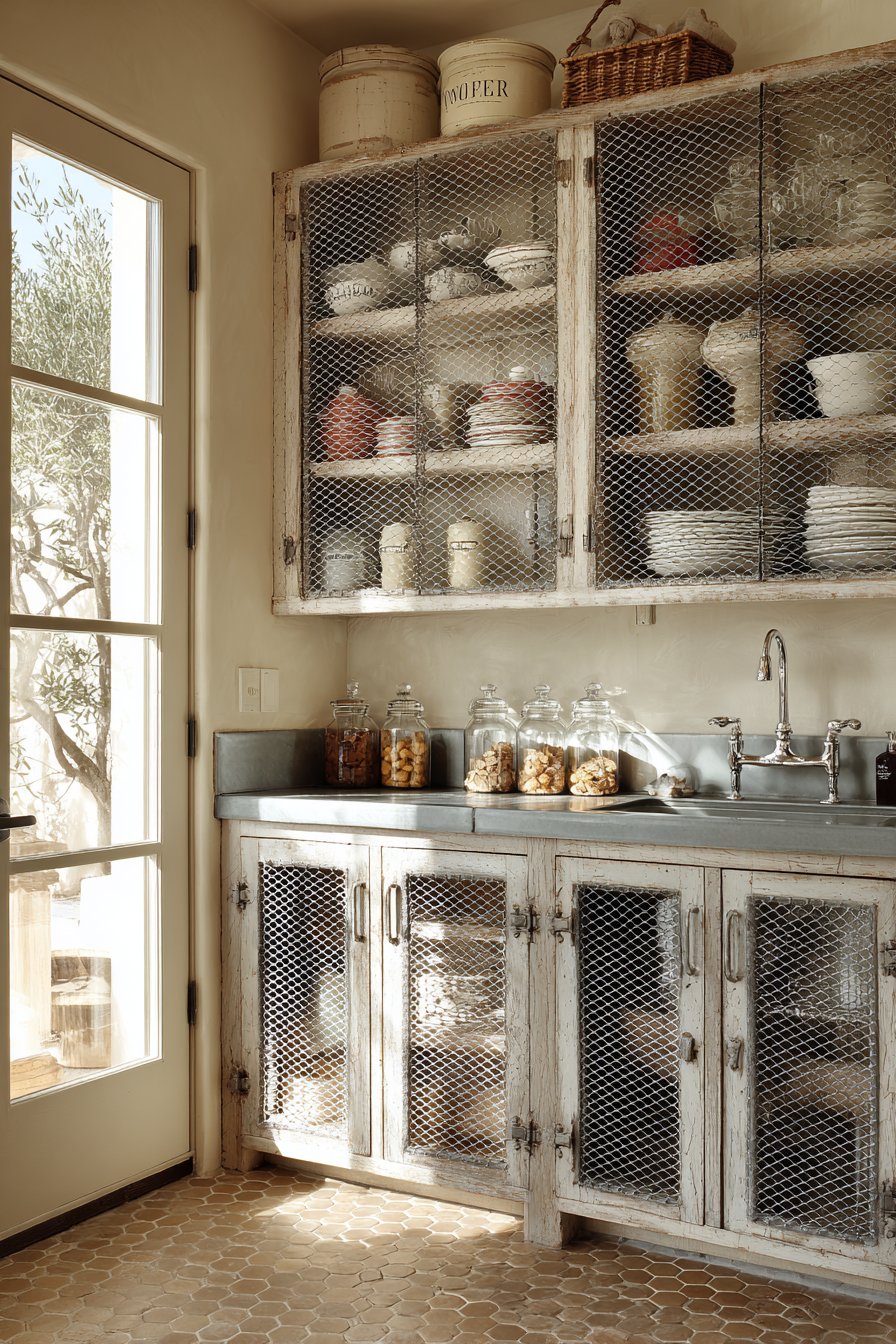
The French farmhouse aesthetic emerges through material choices. Paint authenticity matters more than perfect coverage. Metal surfaces develop character through oxidation. The complete design feels transported from European countryside.
Key Design Tips:
- Apply paint in thin layers for an authentic chippy finish
- Use actual chicken wire rather than decorative alternatives
- Install zinc countertops that develop natural patina
- Select hexagonal terracotta tiles for traditional French appeal
- Choose casement windows for classic European farmhouse style
12. Narrow Corridor Pantry
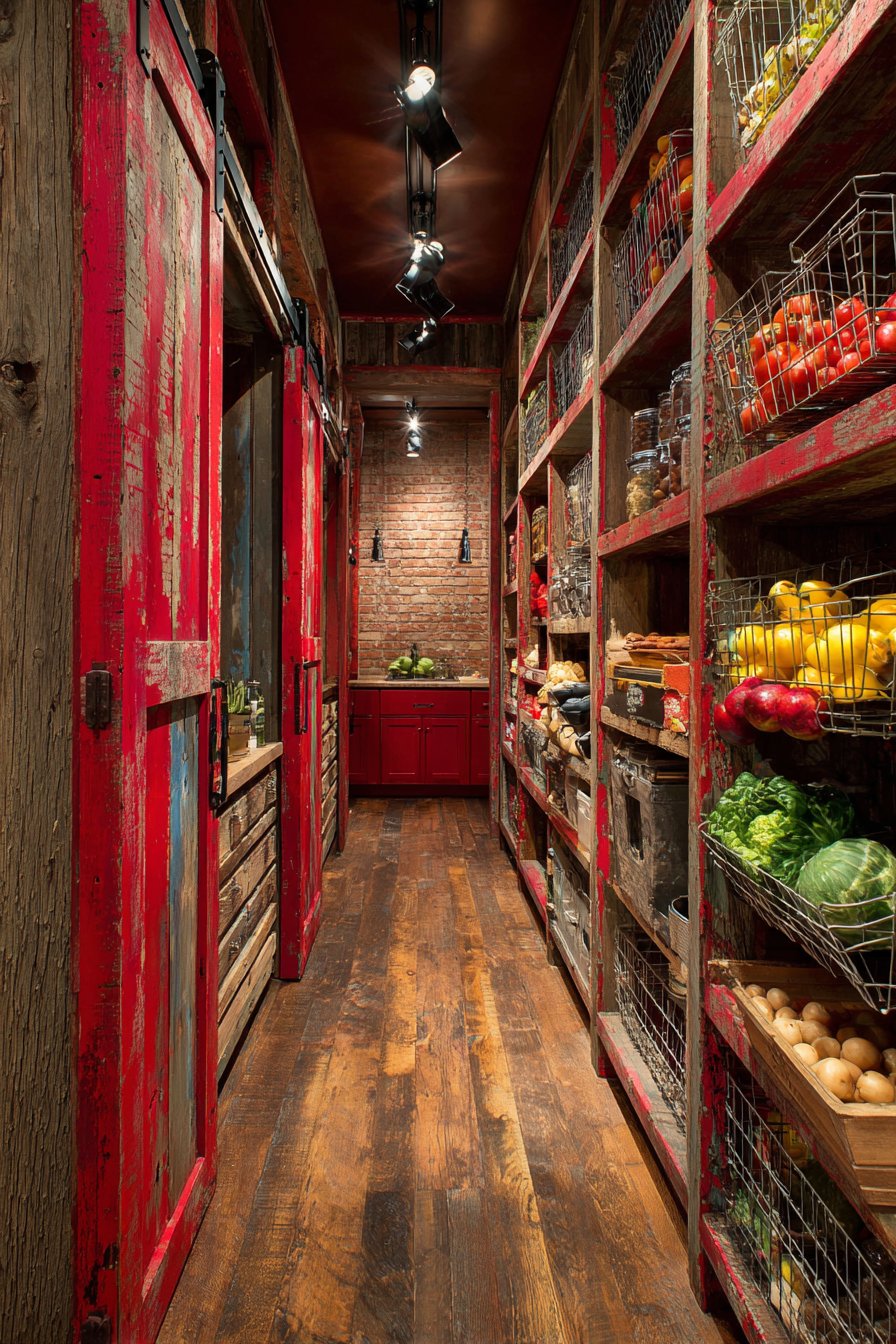
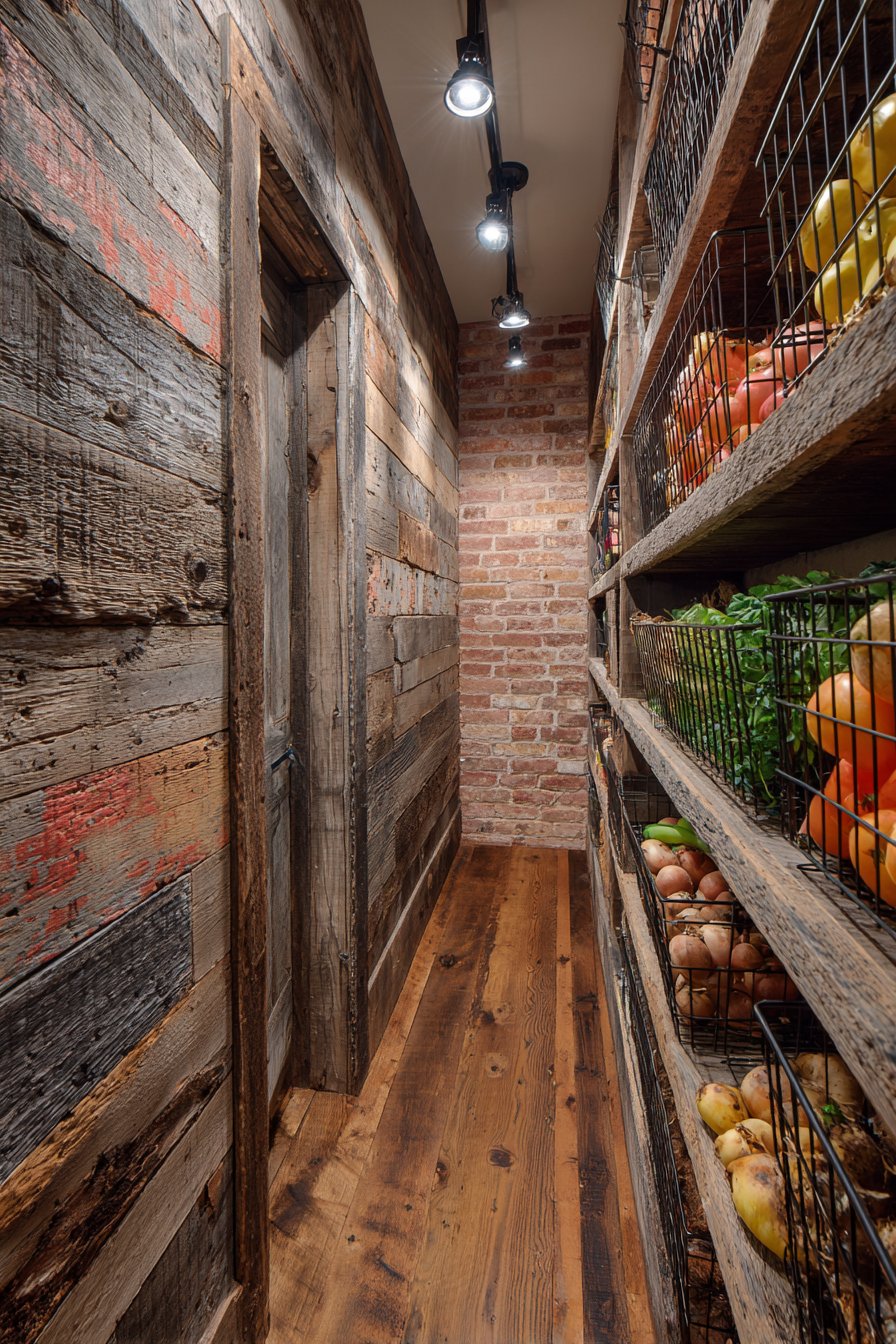
Floor-to-ceiling shelving on both sides maximizes corridor pantries. Reclaimed barn siding shows original red paint traces. Weathered grey wood creates visual interest through color variation. Wire basket pull-outs on metal glides provide accessible storage. Produce stays visible and within reach.
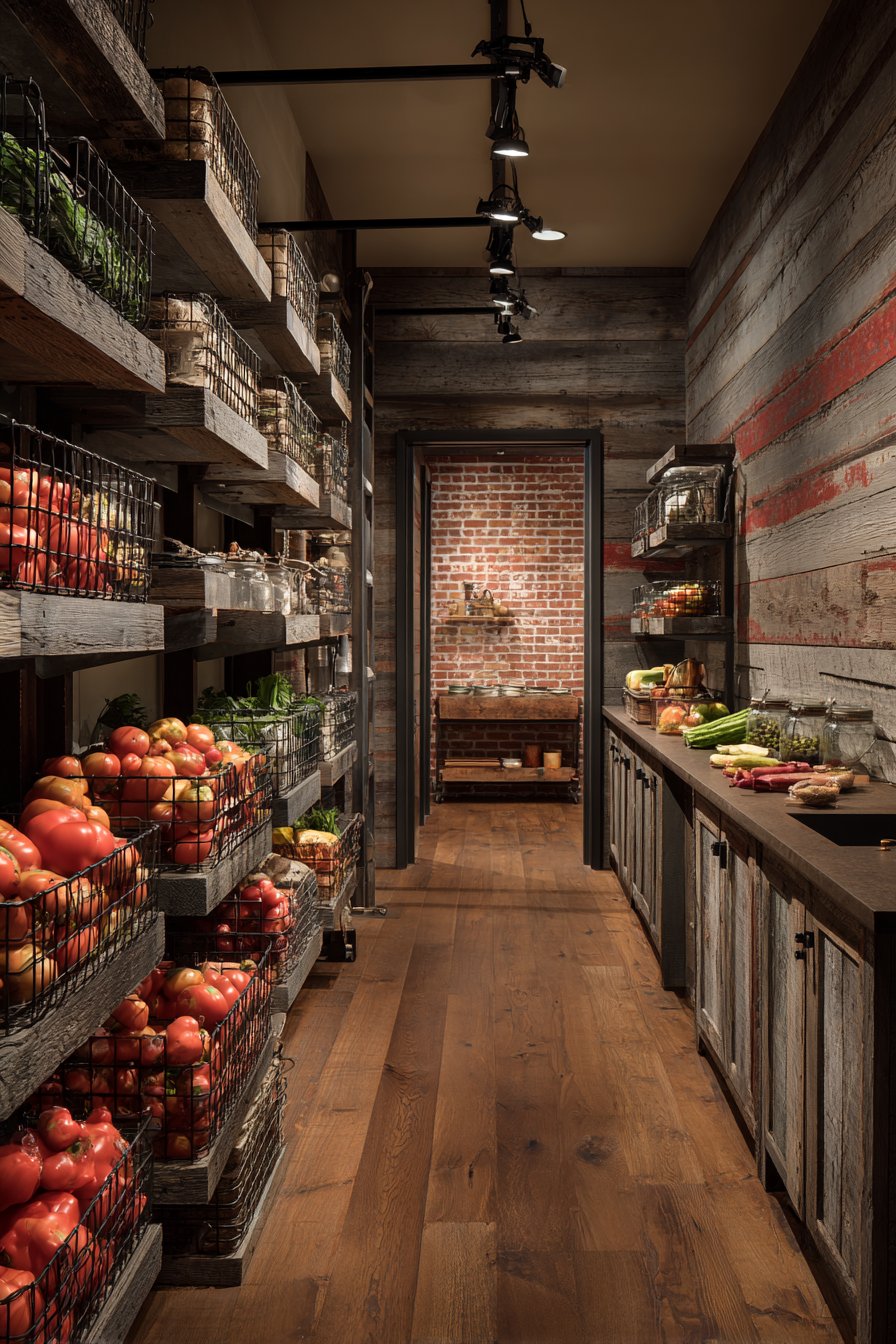
Vintage ladder track system allows mobility along the eight-foot length. The ladder can be positioned anywhere along the corridor. Exposed brick at the end wall adds textural interest. Overhead track lighting in black metal highlights shelving contents. The narrow space becomes highly functional storage.
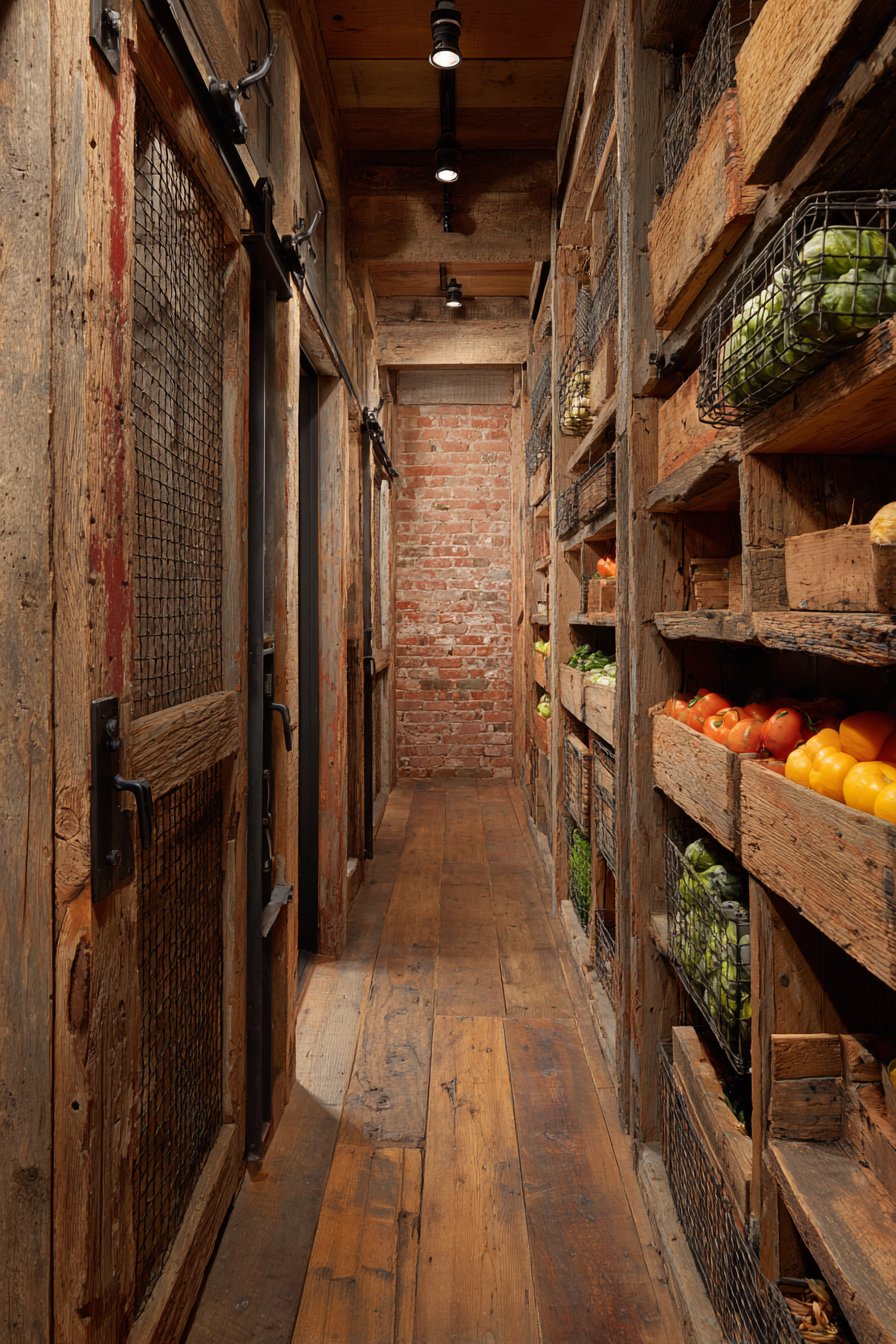
Efficient use of limited width prevents wasted space. Both walls contribute equally to storage capacity. The corridor transforms from liability into an asset. Professional lighting ensures visibility despite limited natural light.
Key Design Tips:
- Install shelving depths appropriate for corridor width
- Use pull-out baskets to improve accessibility in narrow spaces
- Mount track systems for movable ladder access
- Add accent walls at corridor ends for visual interest
- Install overhead track lighting to eliminate dark corners
13. Farmhouse Table Workspace
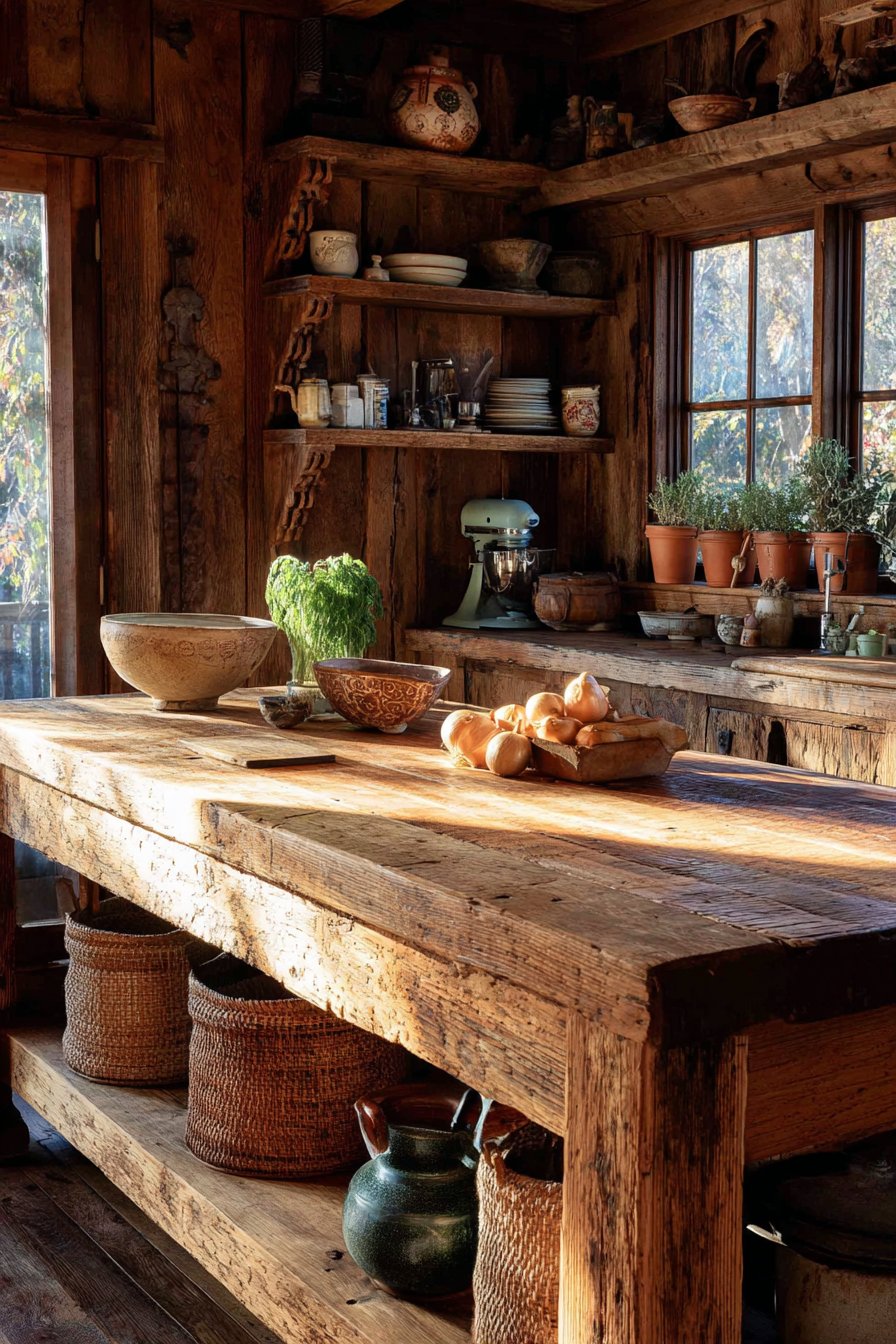
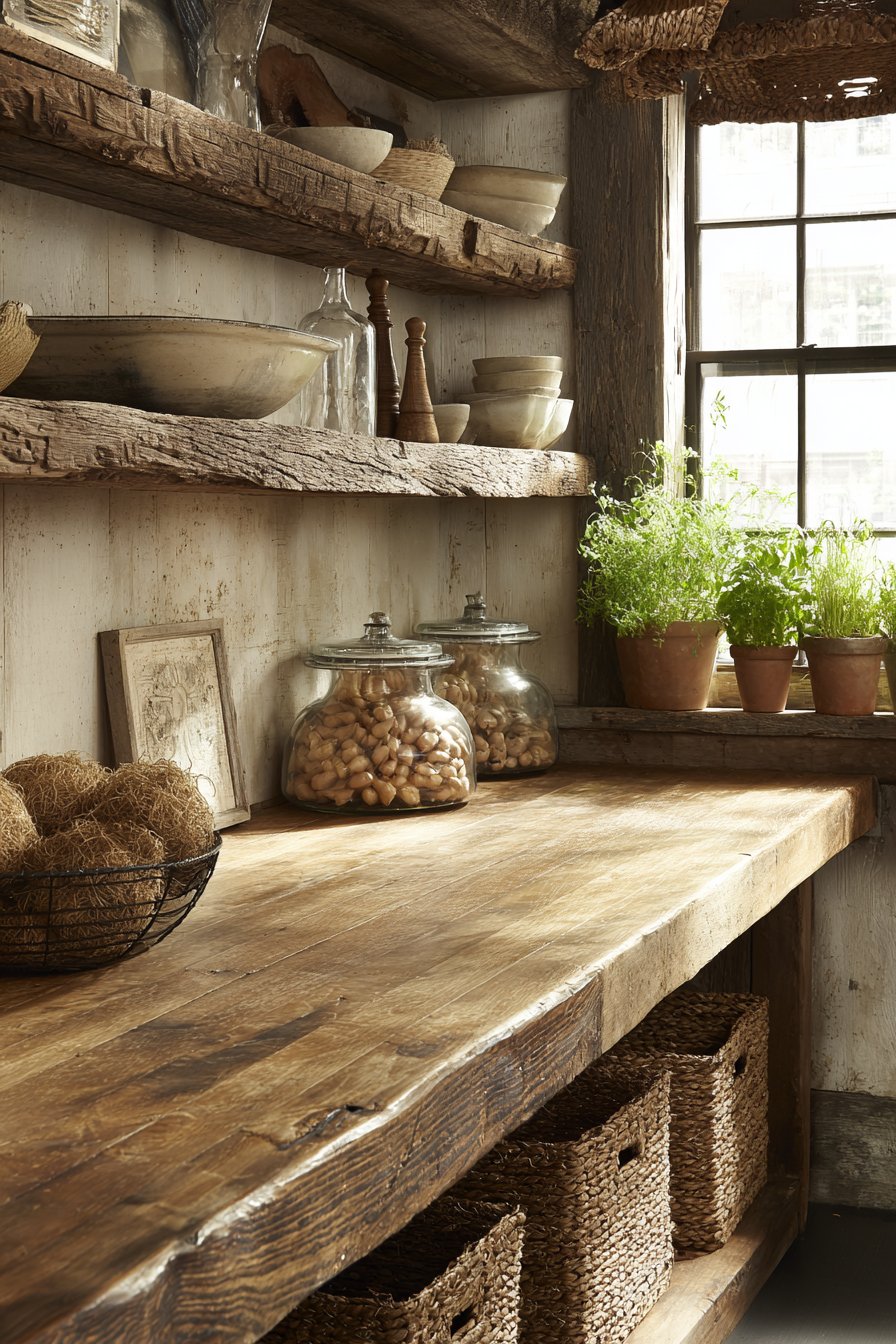
A farmhouse table work surface made from thick butcher block anchors the pantry. Breadboard ends show traditional joinery techniques. Natural checking and knife marks prove decades of use. Below the table, open cubbies hold woven willow baskets. Root vegetables store in breathable natural materials.
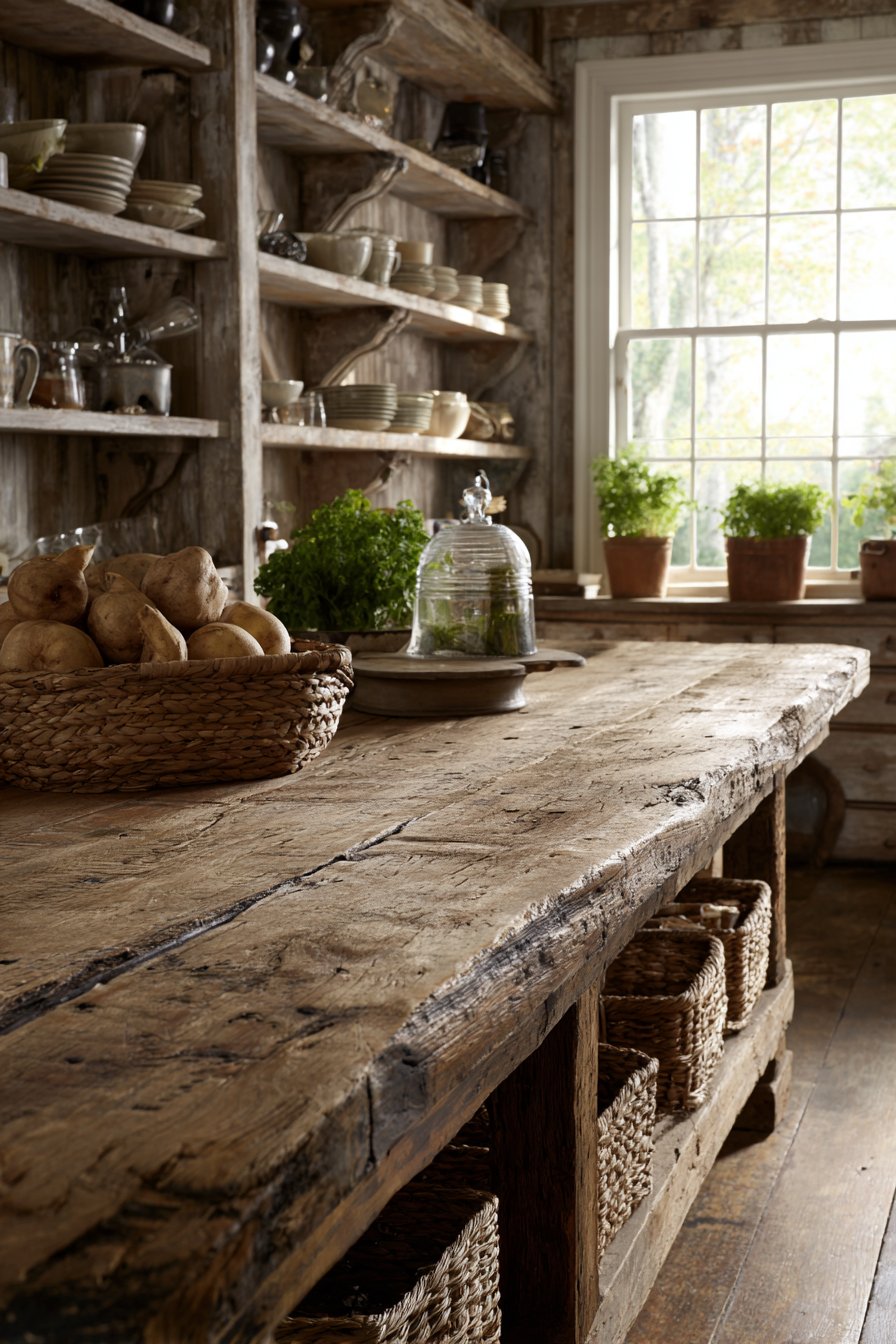
Walls display open shelving in rough-cut lumber. Decorative corbels in hand-carved wood support the shelves. Vintage flour sifter and ceramic mixing bowls create functional vignettes. Window sill holds fresh herbs in terracotta pots. Natural light creates warm ambiance throughout the day.
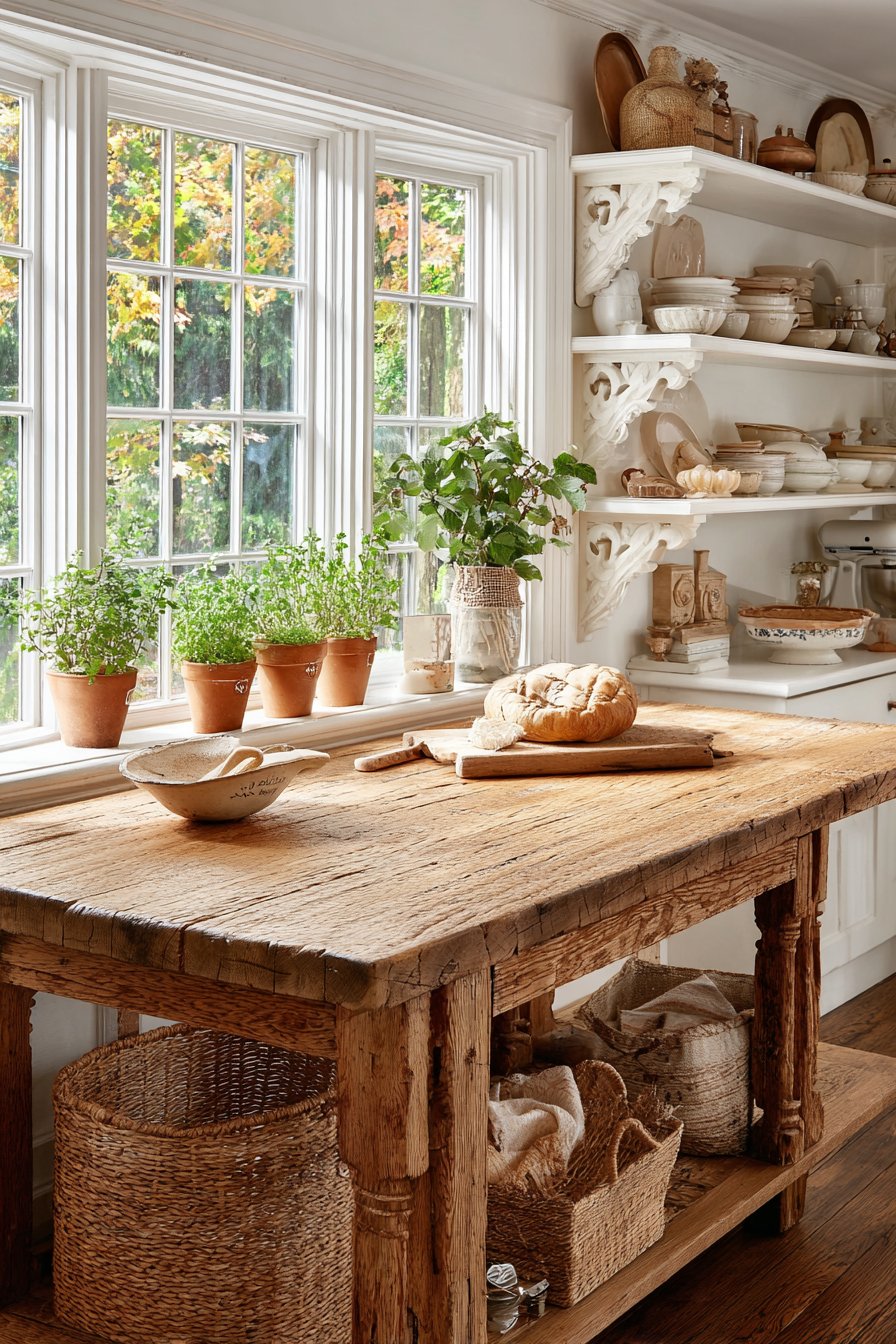
The workspace functionality combines with storage efficiency. Food preparation happens steps from ingredient storage. Fresh herbs grow within arm’s reach. The integrated approach streamlines cooking workflows.
Key Design Tips:
- Select butcher block with breadboard ends for structural stability
- Install open cubbies beneath work surfaces for basket storage
- Use hand-carved corbels rather than manufactured brackets
- Position work tables near windows for natural light
- Grow fresh herbs on sunny windowsills in terracotta pots
14. Dutch Door Entry Pantry
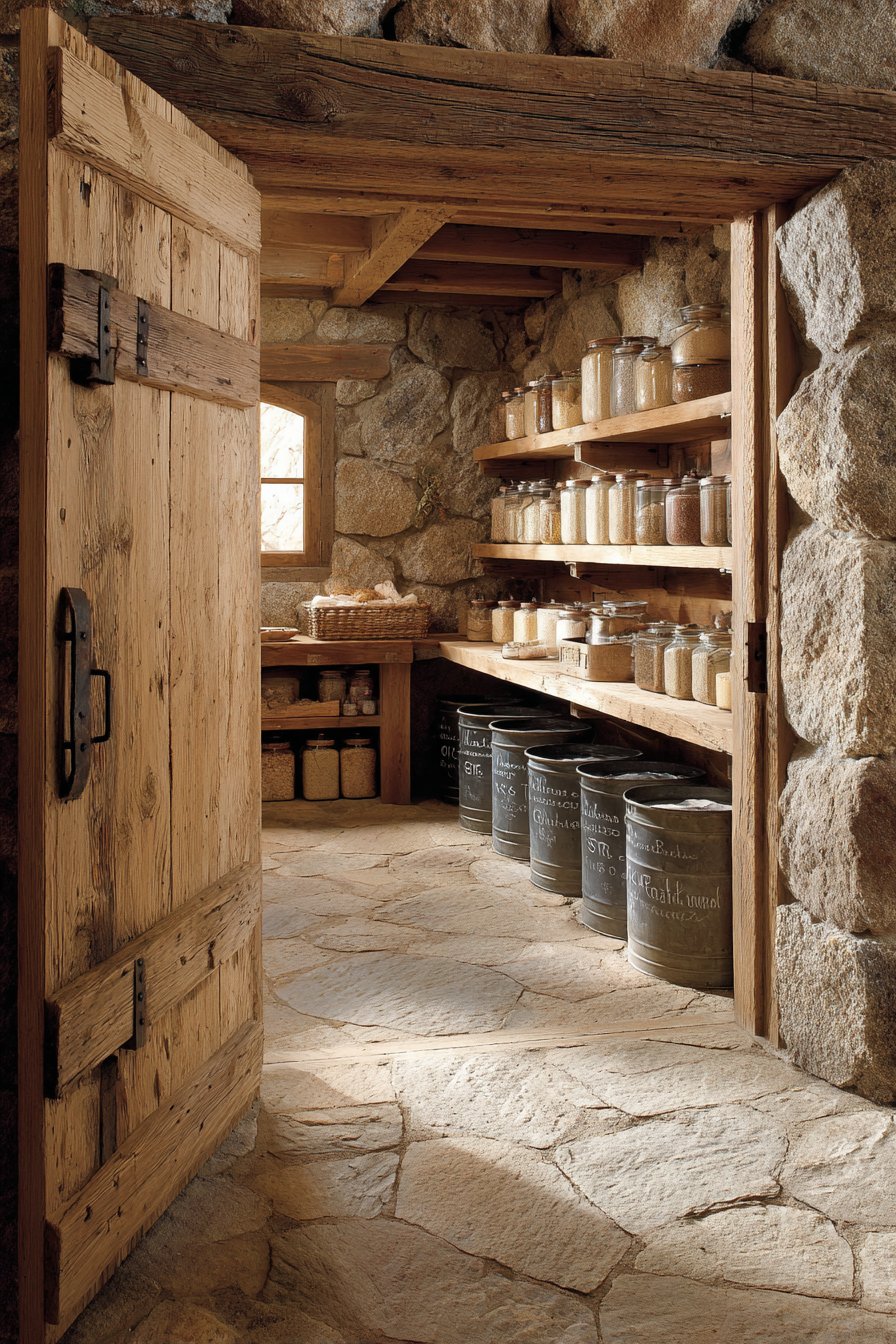
A Dutch door entry in natural oak shows quality joinery. Mortise-and-tenon construction ensures long-term durability. Hand-forged strap hinges display blacksmith craftsmanship. The split door allows airflow while maintaining security. Interior reveals adjustable wooden shelving with varying depths.
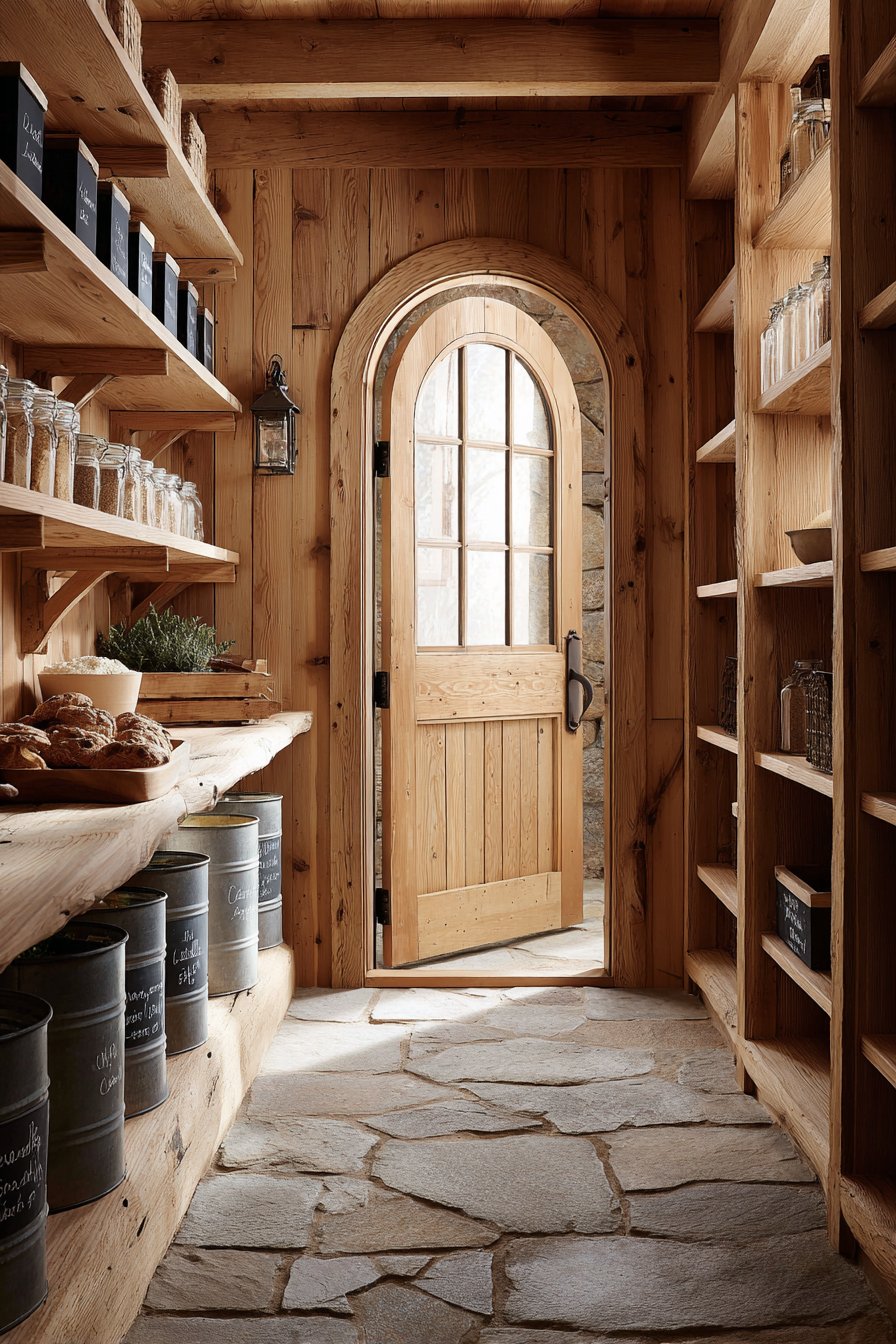
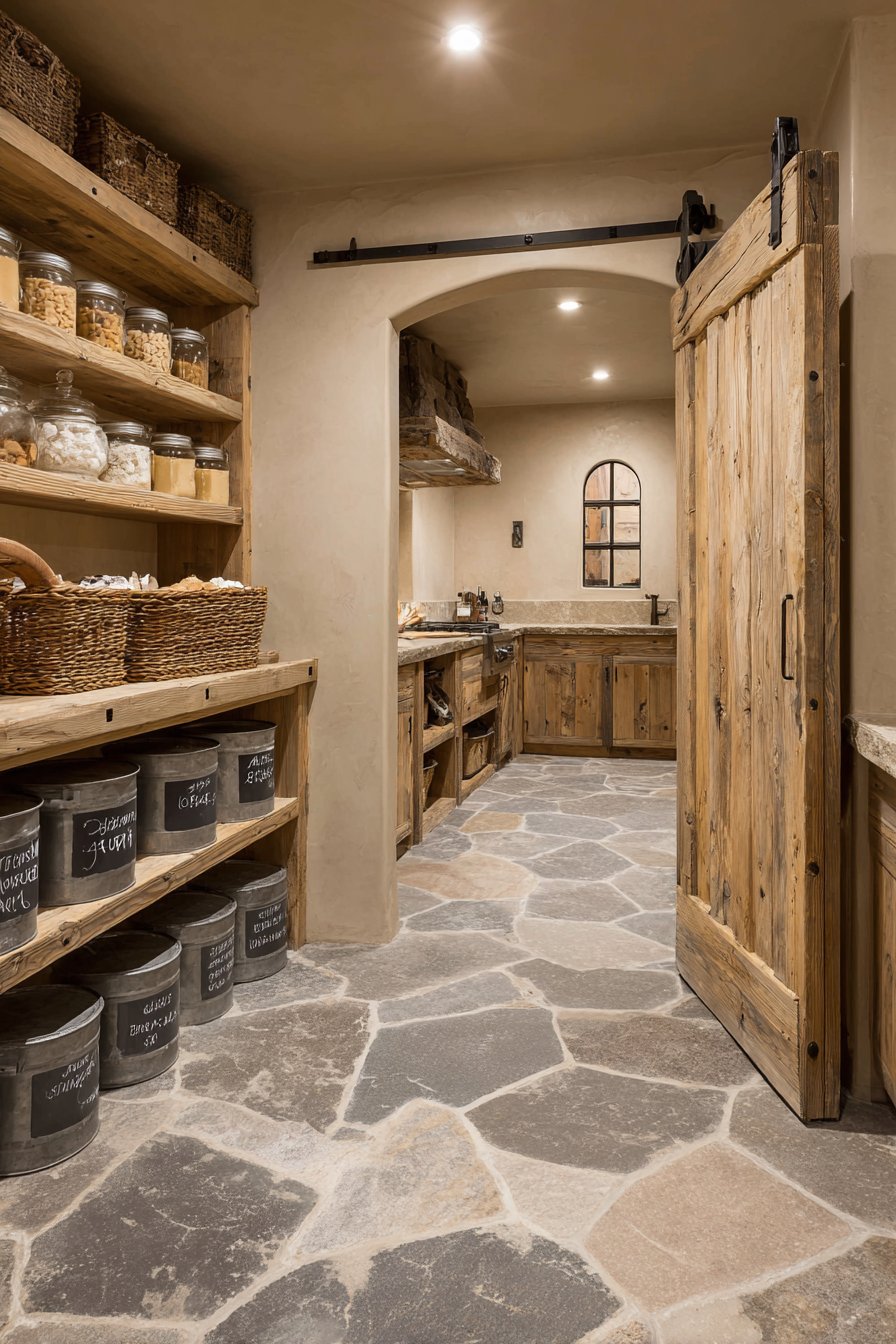
Galvanized metal containers with chalkboard labels organize baking supplies. The metal surfaces develop natural patina over time. Stone floor in an irregular flagstone pattern provides a durable surface. Each stone shows a unique color and texture. Small arched window with antique glass panes filters daylight beautifully.
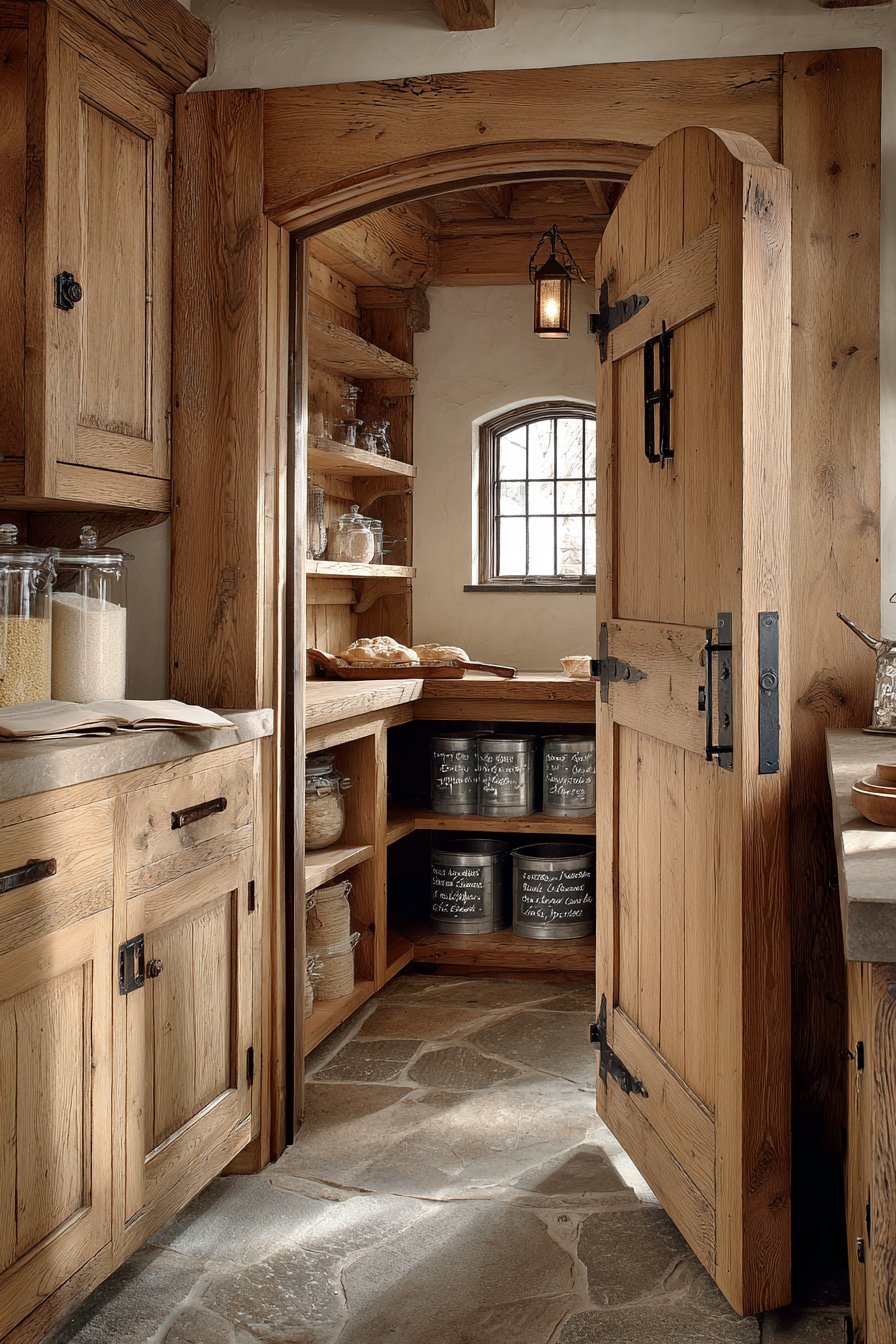
The Dutch door creates practical advantages beyond aesthetics. Upper half opens independently for ventilation. Lower half prevents pets from entering. The architectural detail adds character to simple storage spaces.
Key Design Tips:
- Specify mortise-and-tenon joinery for door longevity
- Install hand-forged hardware for authentic period details
- Use chalkboard labels on metal containers for flexibility
- Lay flagstone in irregular patterns for organic appeal
- Source antique glass panes from architectural salvage
15. Exposed Joist Ceiling Design
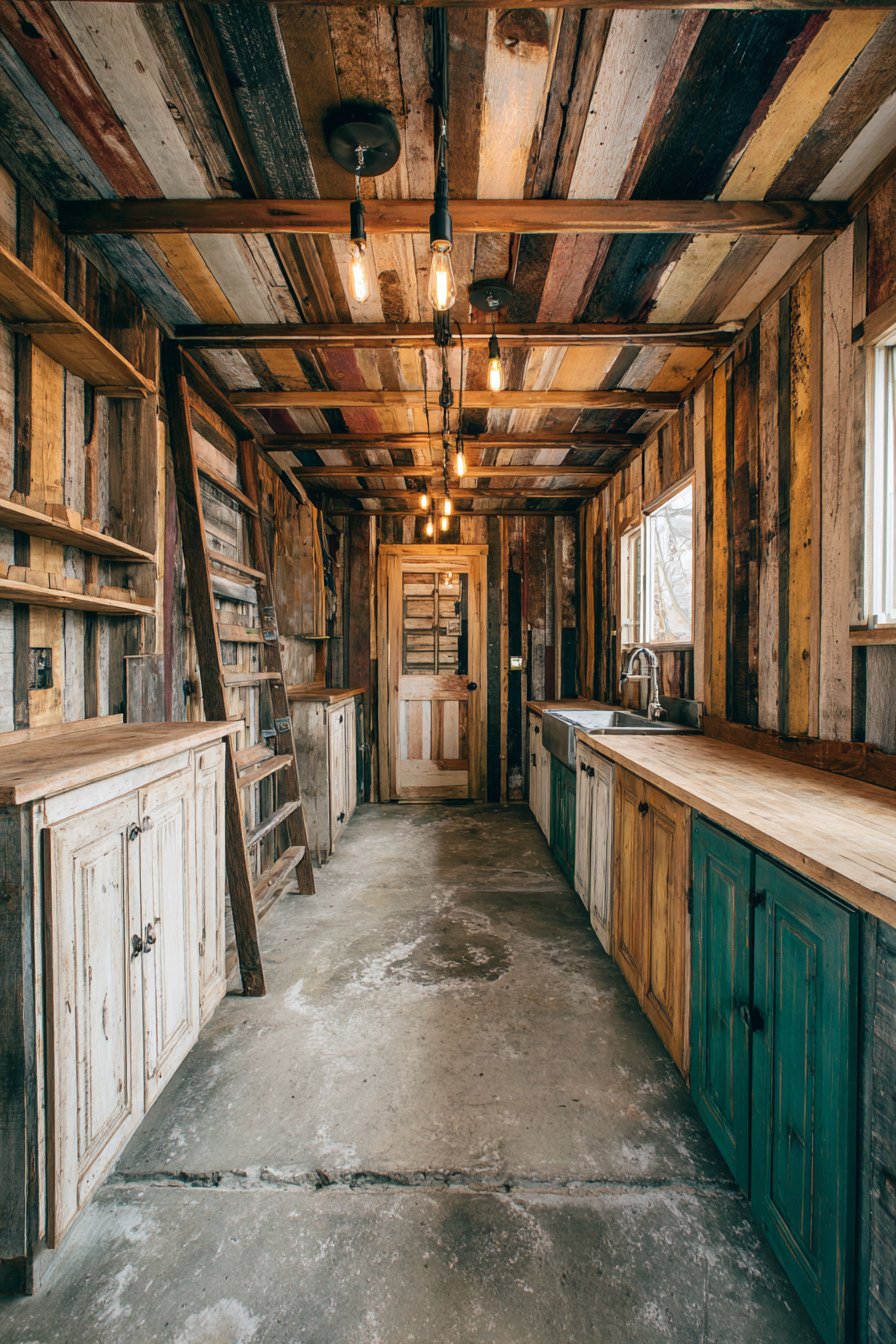
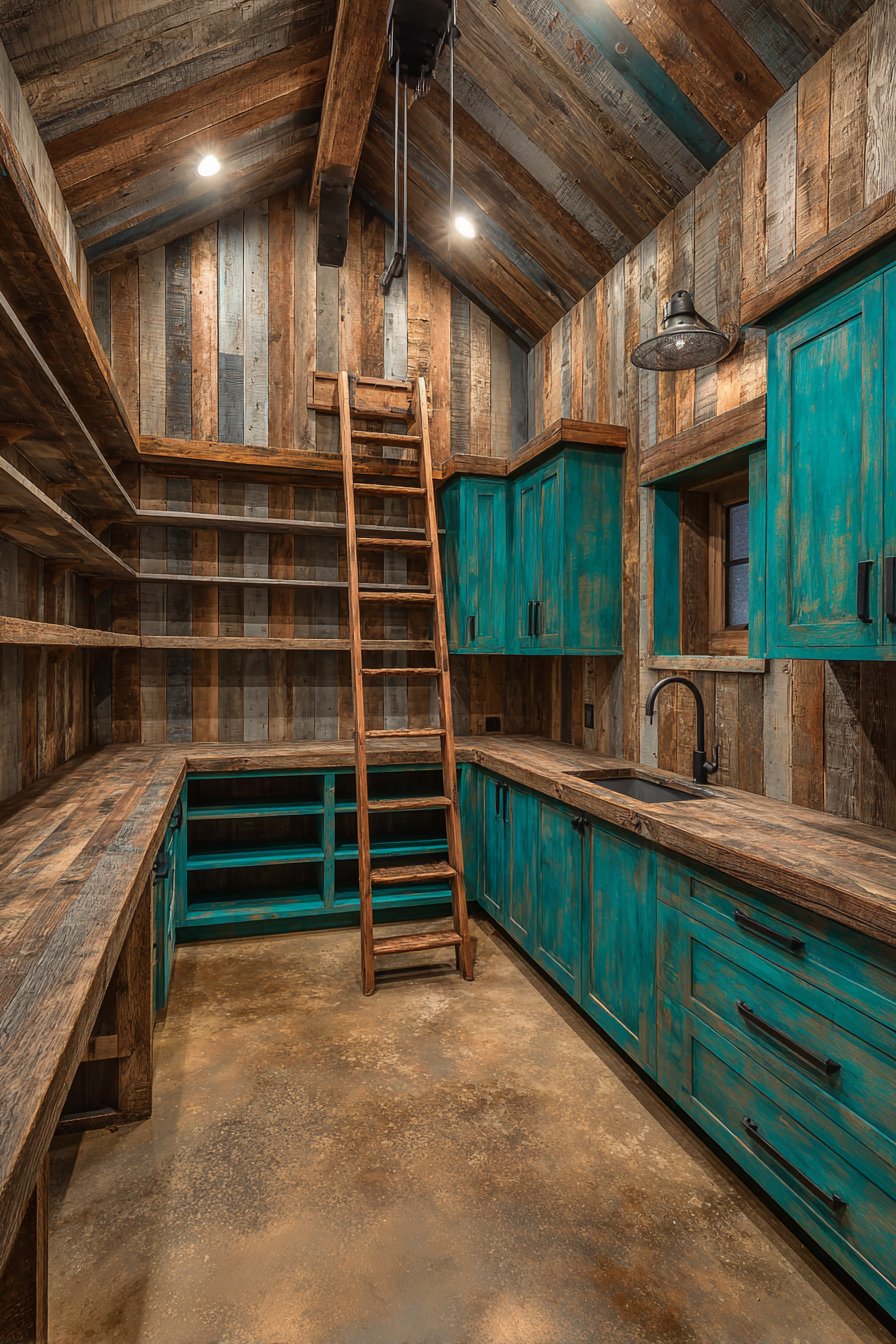
Exposed ceiling joists in rough-hewn timber display original saw marks. The structural elements become decorative features. Walls feature vertical shiplap in varying widths. Natural wood color gradations range from honey to grey. Lower cabinets in distressed teal paint provide concealed storage.
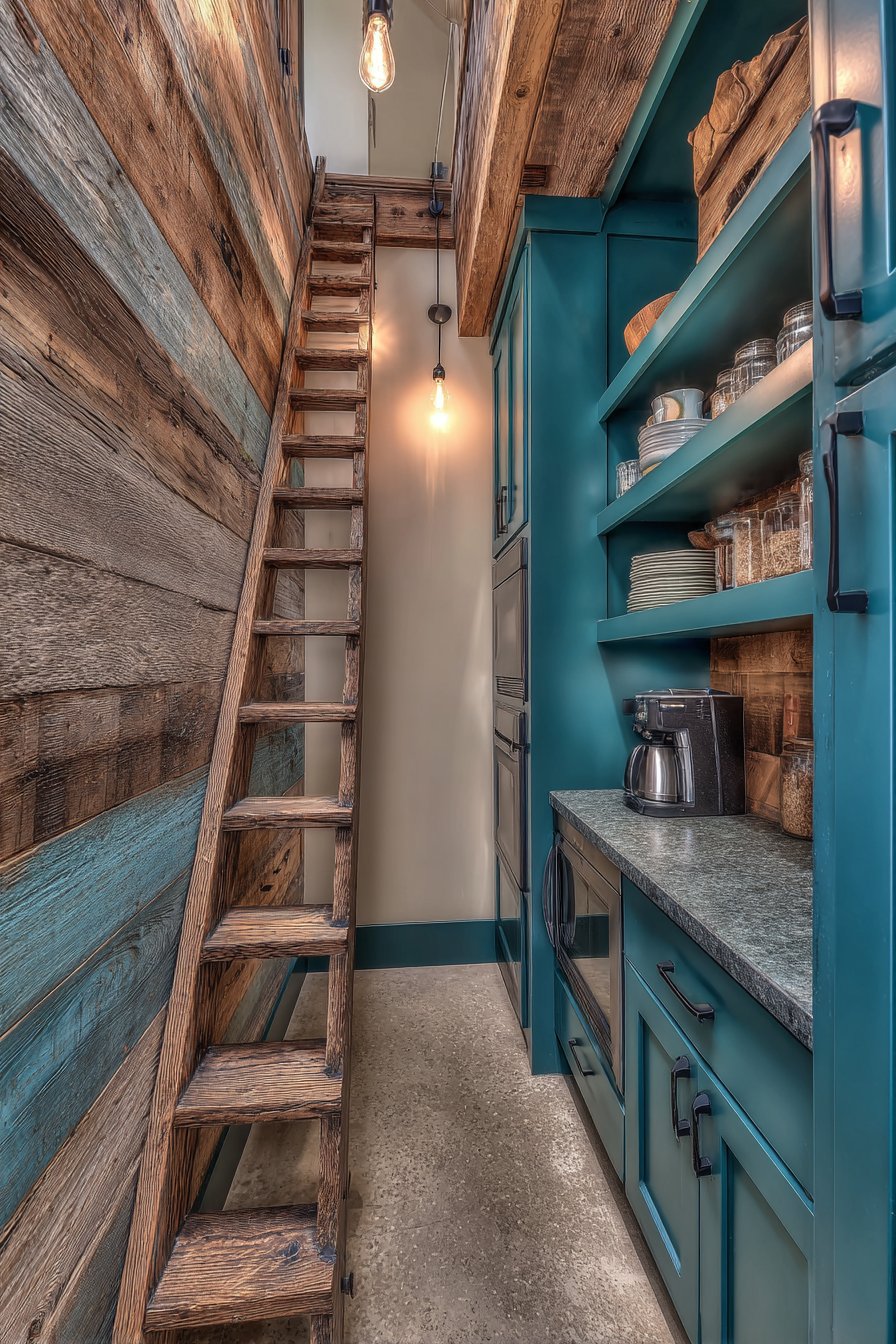
Open upper shelving creates accessible storage for frequently used items. Vintage wooden ladder leans against wall for high shelf access. Concrete floor sealed with natural finish shows aggregate. Minor imperfections authenticate the industrial-rustic aesthetic. Edison bulbs on black cord provide ambient lighting throughout.
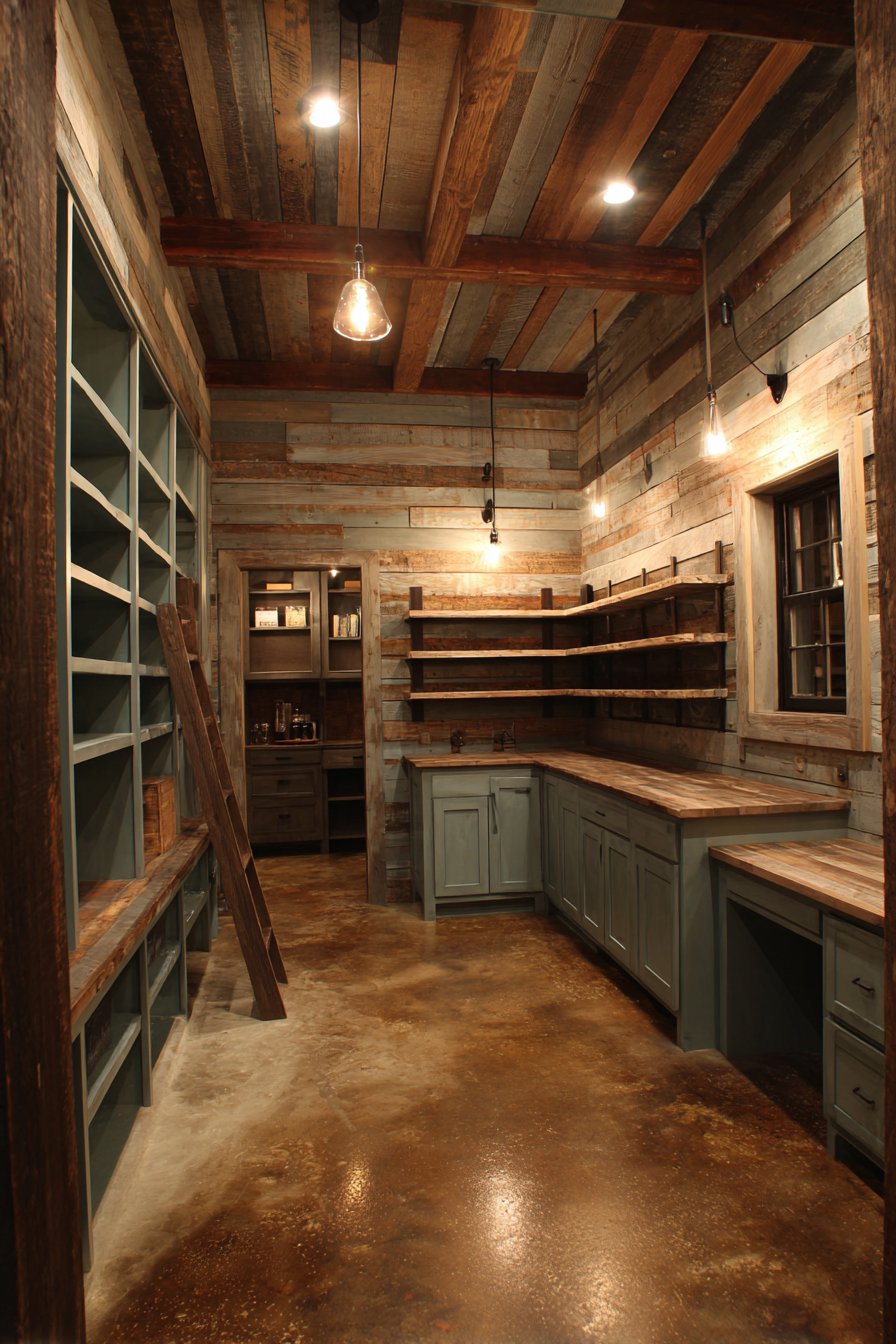
The vertical space utilization maximizes storage capacity. High ceilings accommodate tall shelving units. Exposed joists add architectural interest overhead. The complete design feels both spacious and efficiently organized.
Key Design Tips:
- Expose existing joists rather than adding faux beams
- Vary shiplap widths for an authentic reclaimed appearance
- Paint lower cabinets in historical colors like teal or sage
- Seal concrete floors with penetrating rather than surface sealers
- Hang Edison bulbs on fabric-wrapped cords for vintage appeal
16. Wine Barrel Stave Shelving
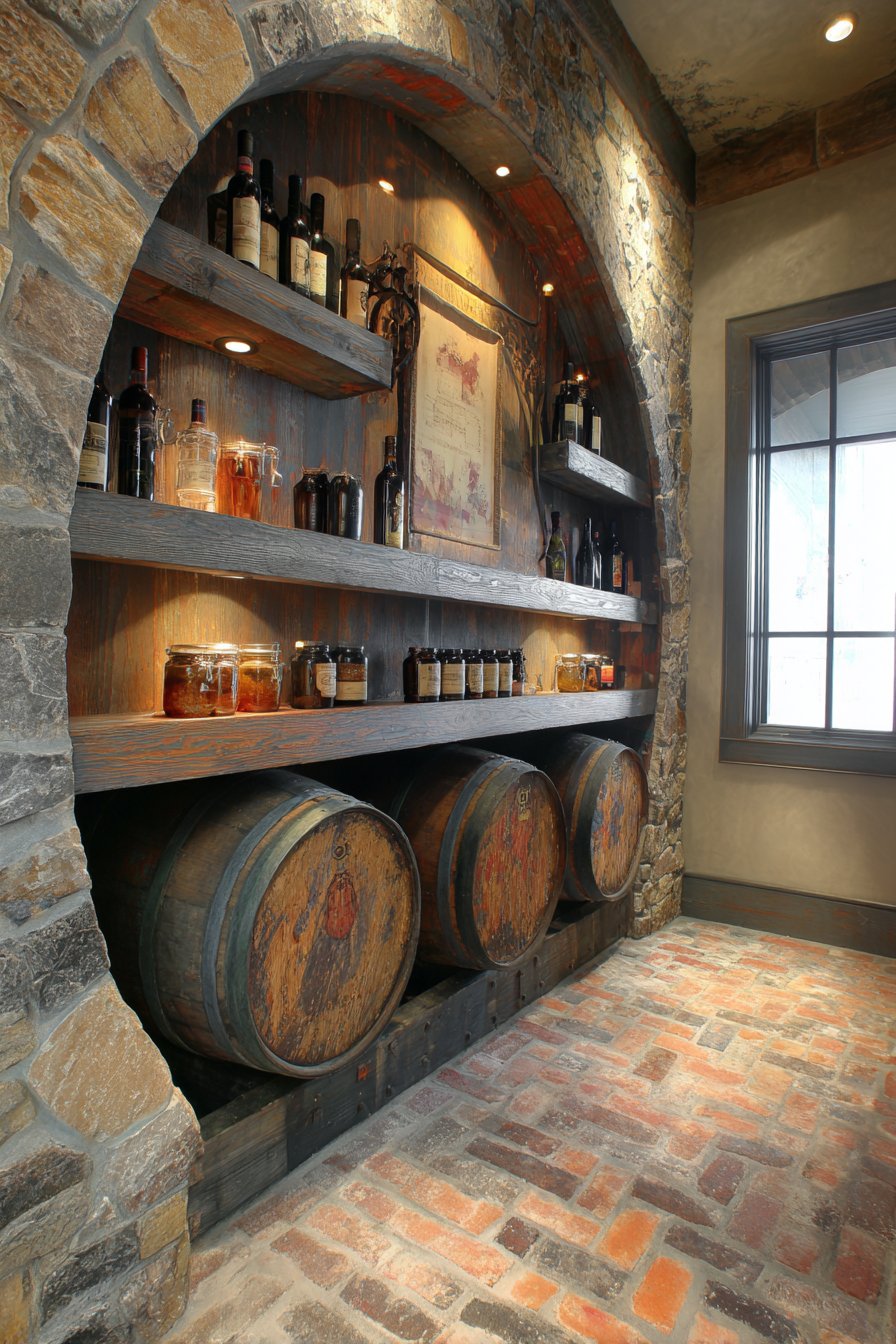
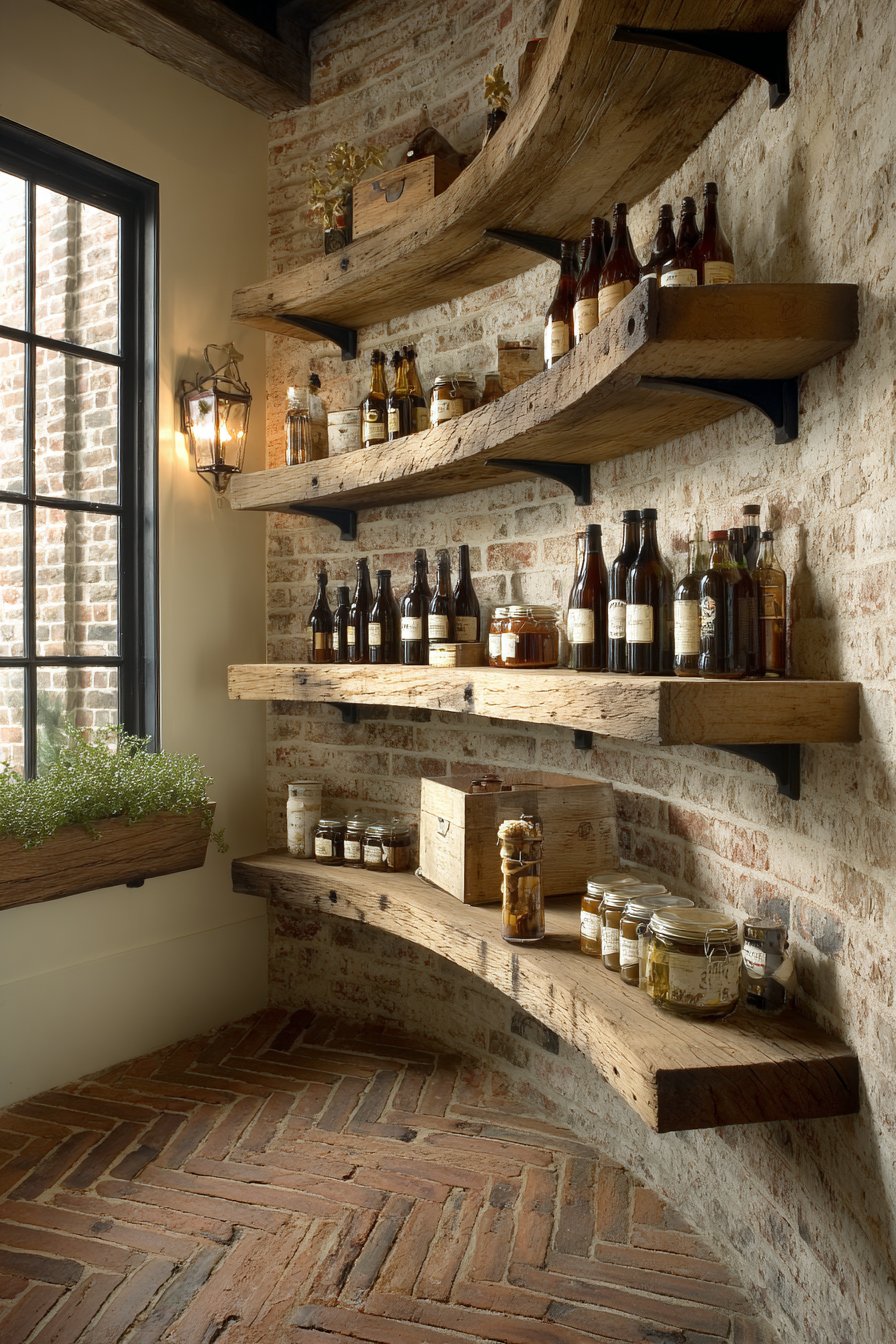
Repurposed wine barrel staves create unique curved wall shelving. Natural wine staining preserves the barrel’s history. Cooper’s marks remain visible on the wood surface. Black iron brackets support the curved wooden shelves. Wine bottles and artisanal preserves are displayed on the curves.
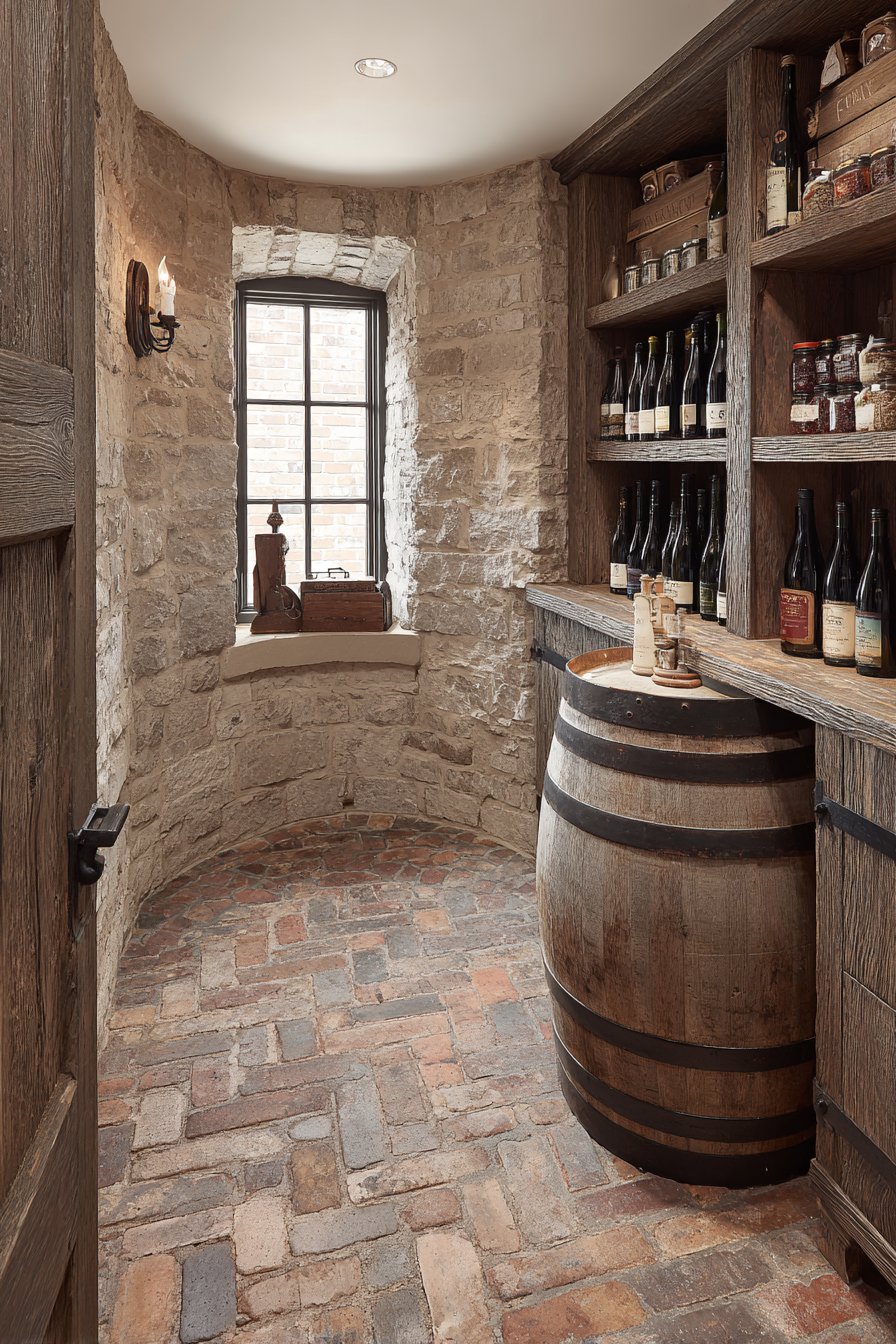
Stone accent wall in stacked fieldstone provides textural backdrop. Each stone shows natural color variation and weathering. Reclaimed brick floor in herringbone pattern adds geometric interest. Mortar variations and brick color gradations create visual depth. Small basement window allows limited natural light supplemented by sconce lighting.
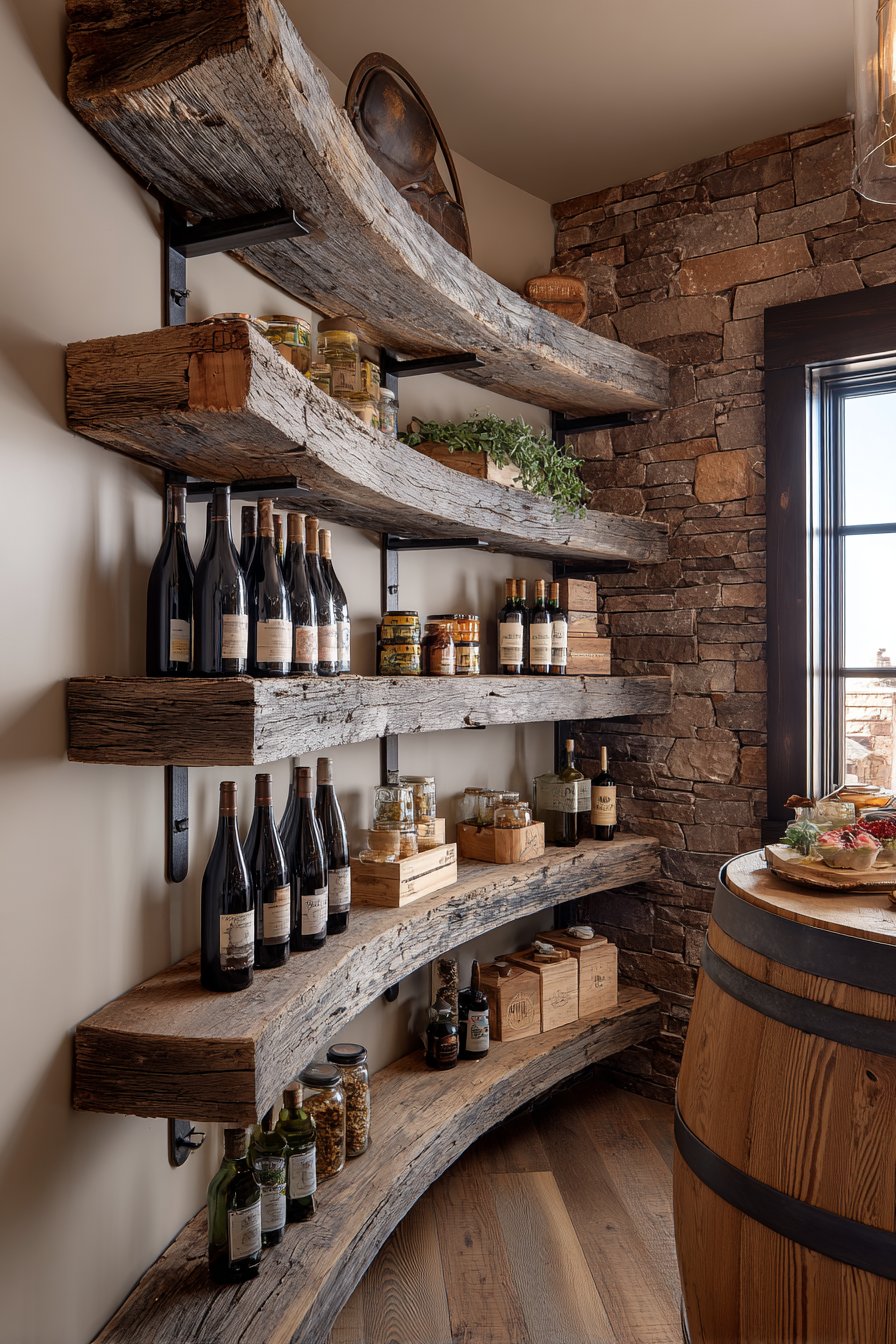
The unique curved shelving creates conversation-worthy storage. Material repurposing adds sustainability to beautiful design. Wine barrel character brings wine country aesthetics indoors. The specialized storage suits wine collectors and preserving enthusiasts.
Key Design Tips:
- Source wine barrel staves from wineries or cooperages
- Install heavy-duty brackets to support curved wood weight
- Stack fieldstone with varied sizes for natural appearance
- Lay brick in herringbone for traditional basement flooring
- Add vintage-style sconces where natural light is limited
17. Industrial Wire with Wood Liners
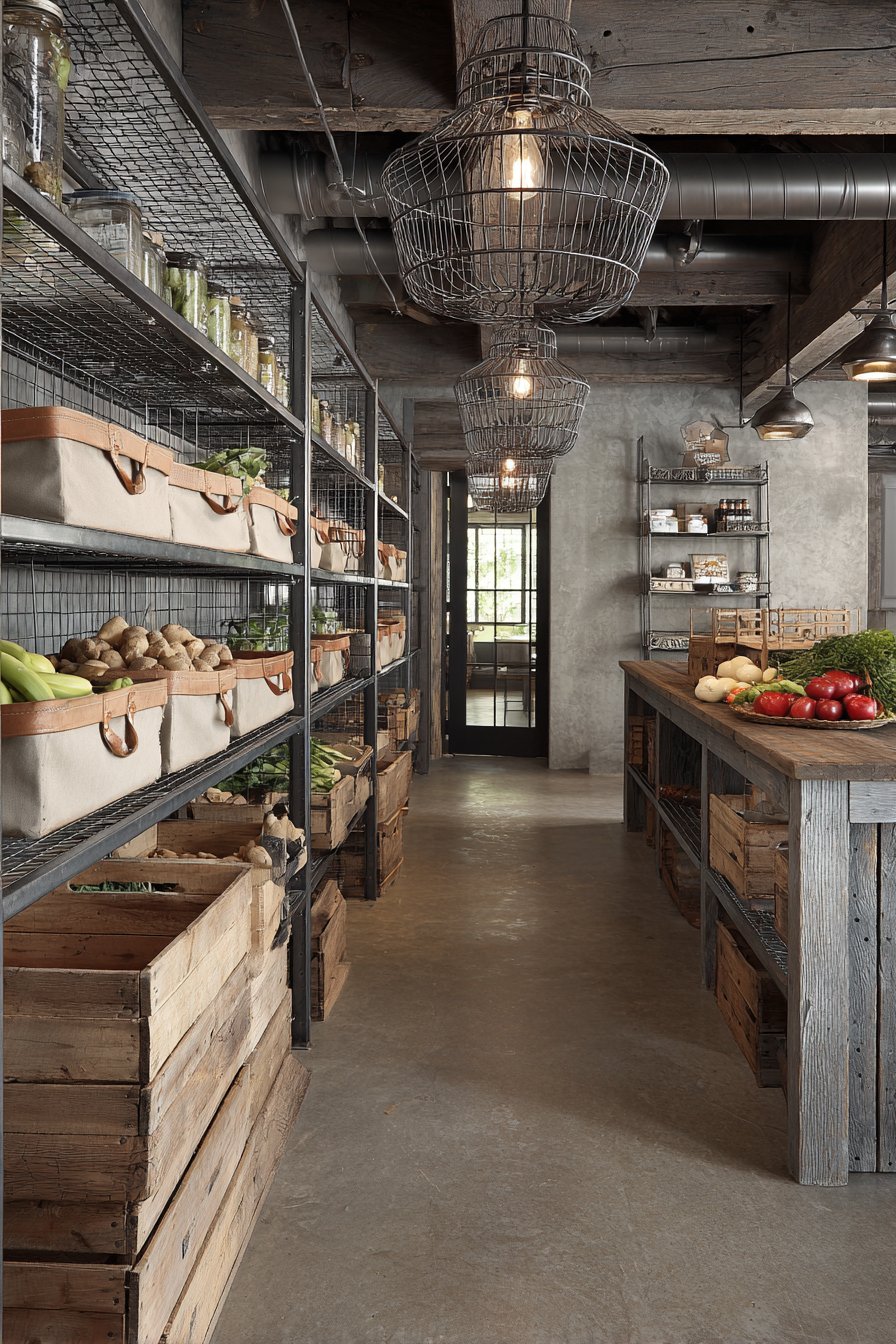
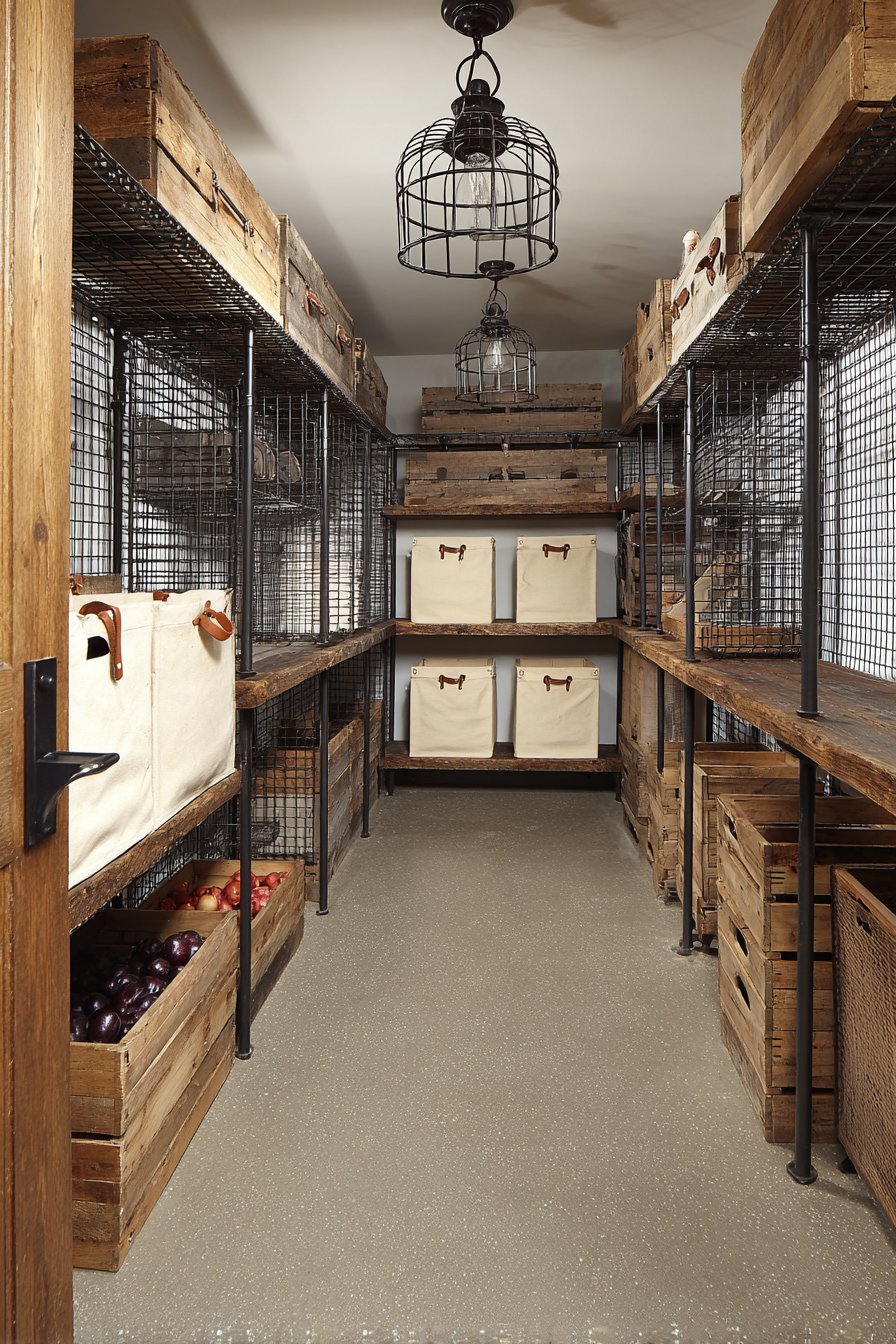
Industrial wire shelving units gain warmth through wooden shelf liners. Reclaimed fence boards show weathered grey finish. Original post holes prove material authenticity. Metal shelving frame in matte black powder coat provides structure. Varying shelf heights accommodate different storage needs.
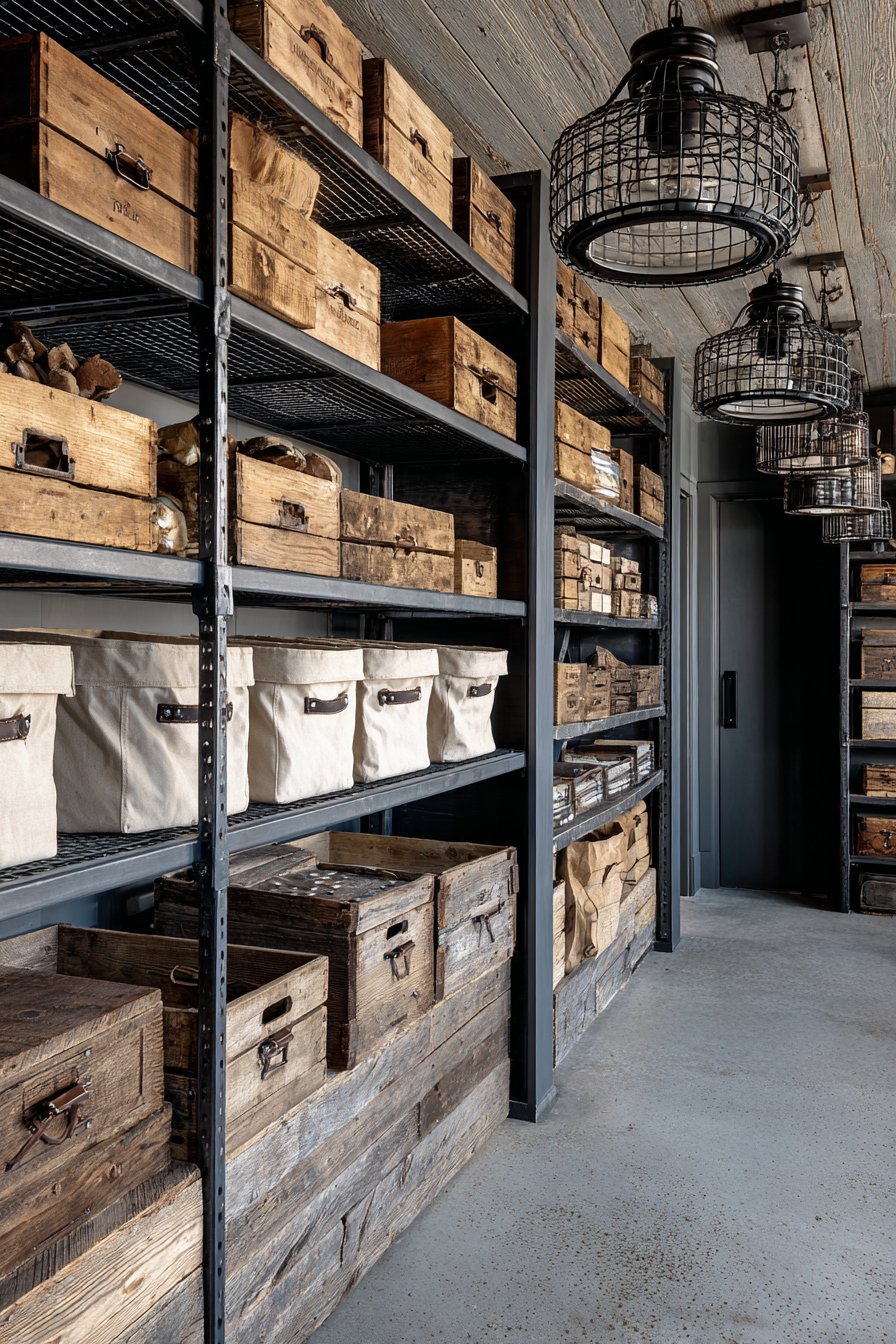
Canvas bins with leather handles organize smaller items efficiently. Vintage wooden crates stack for produce storage. Concrete floor with natural finish shows trowel marks. Aggregate exposure adds textural interest underfoot. Overhead industrial pendant lights with metal cage guards illuminate thoroughly.
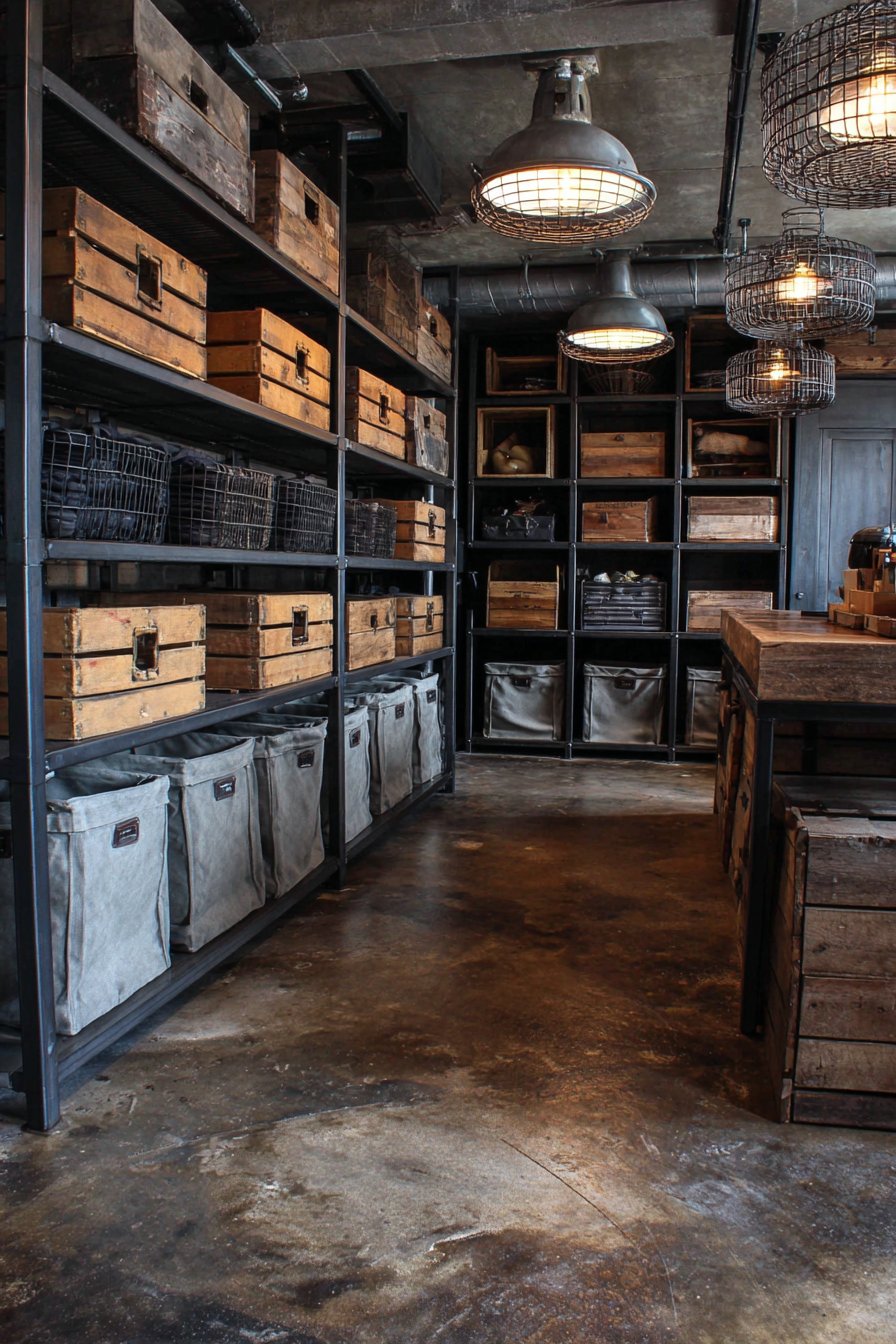
The industrial-rustic fusion creates contemporary farmhouse appeal. Wire frames provide modern functionality. Wood liners add traditional warmth. The hybrid approach suits transitional home styles perfectly.
Key Design Tips:
- Cut reclaimed boards to fit standard wire shelving dimensions
- Choose matte black finishes over shiny chrome for rustic appeal
- Select canvas storage with leather details for quality appearance
- Leave concrete floors with natural trowel marks exposed
- Install cage-guard pendant lights rated for damp locations
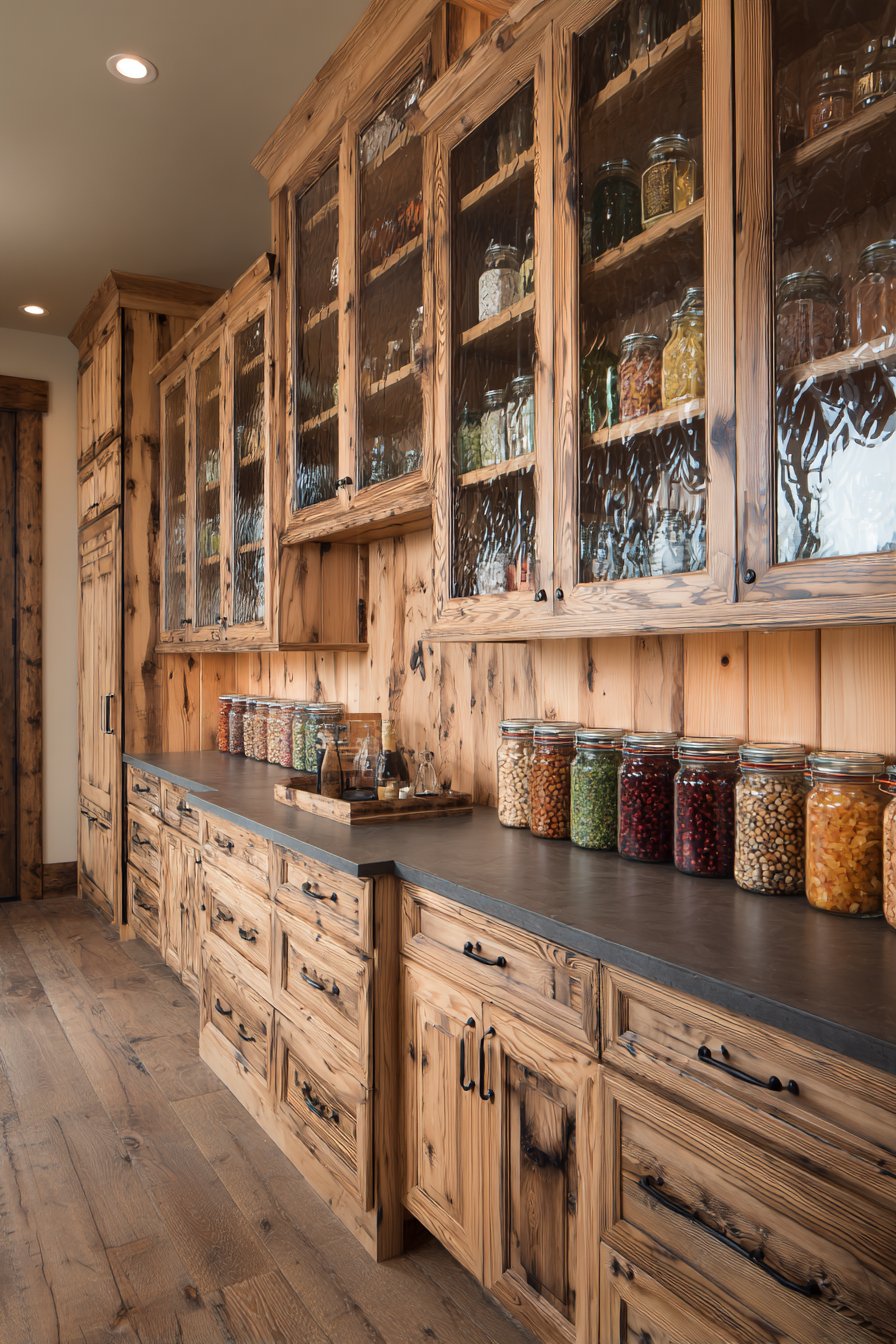
18. Custom Knotty Pine Cabinetry
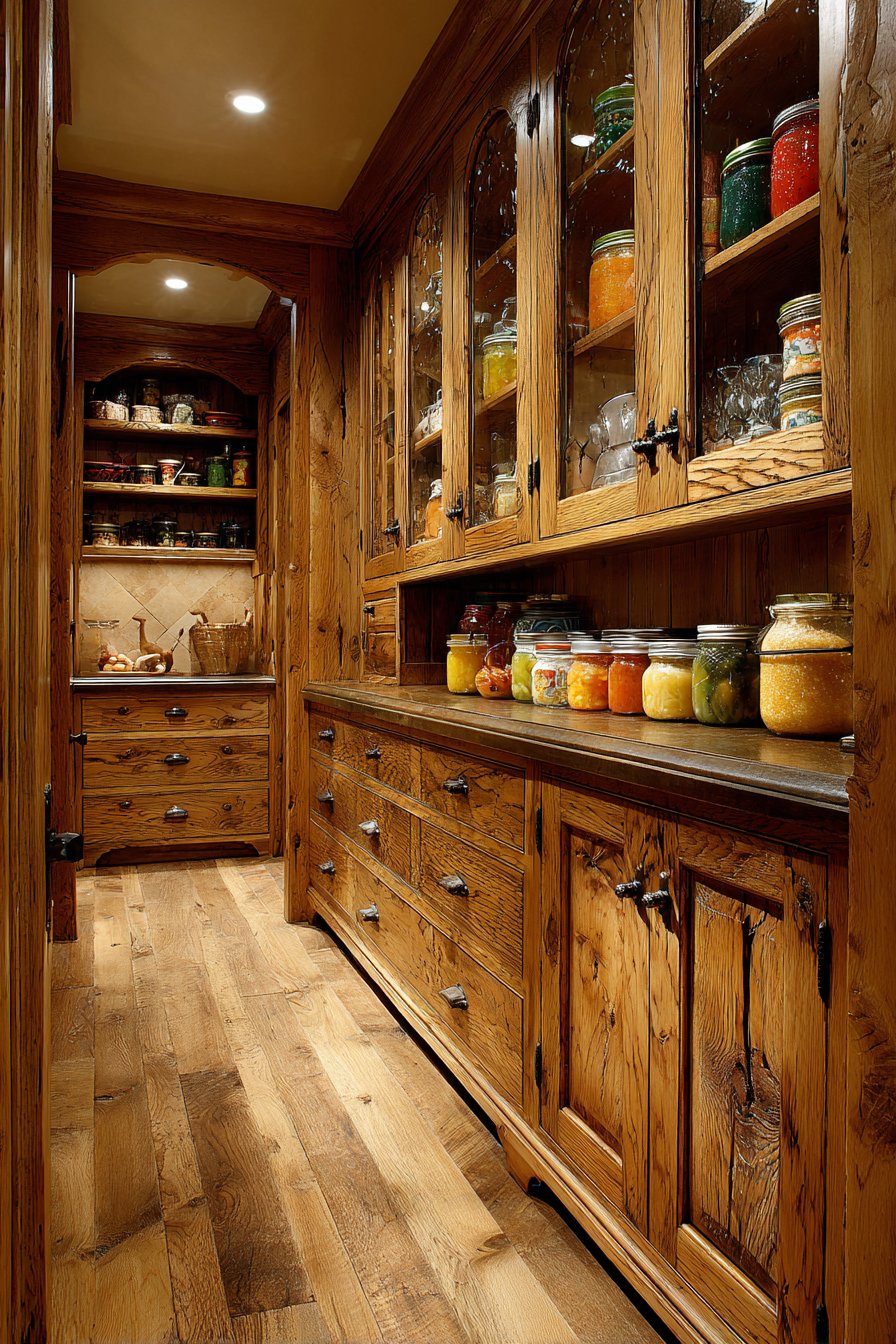
Custom floor-to-ceiling cabinetry in knotty pine showcases natural character. Cathedral grain patterns create visual movement across doors. Natural resin pockets preserve the wood’s organic qualities. Glass-front upper cabinets feature wavy antique glass panes. Colorful preserve jars become decorative displays behind glass.
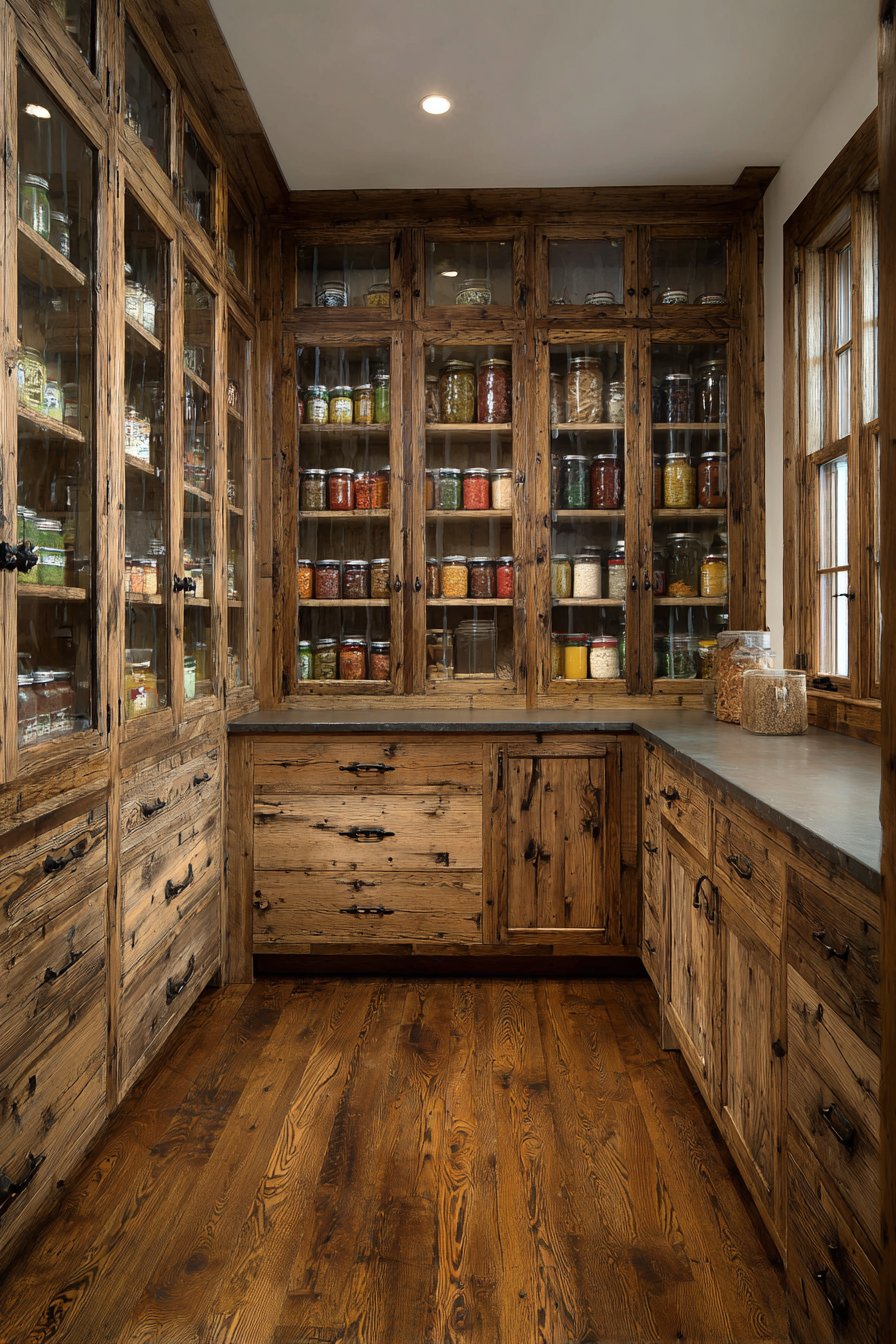
Pull-out drawers in varying heights accommodate different storage needs. Dovetail joinery shows quality construction on drawer sides. Honed soapstone countertop workspace displays natural veining. Slight patina develops from daily use over time. Wrought iron cup pulls feature hand-forged details throughout.
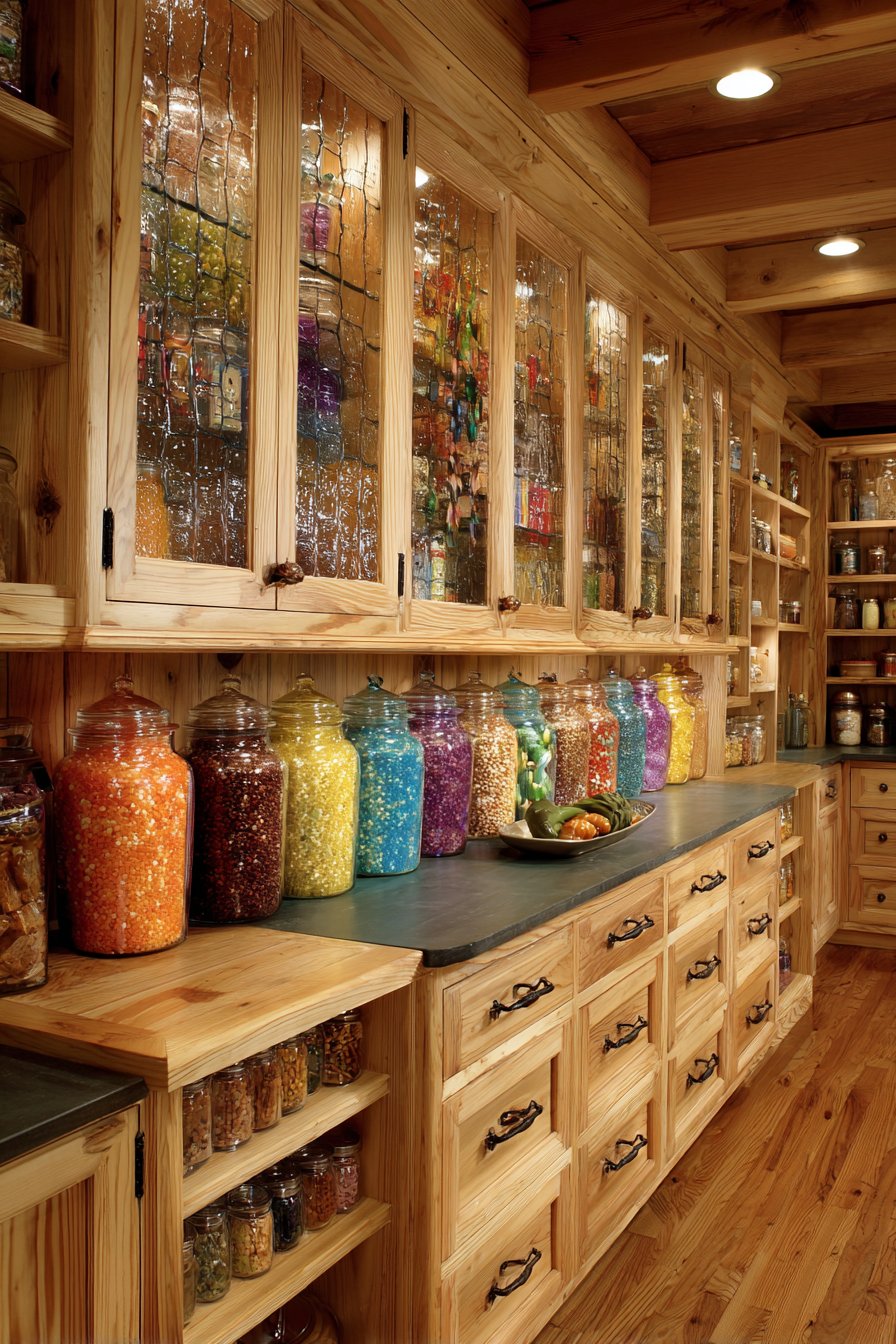
The comprehensive cabinetry system maximizes every inch of space. Custom sizing eliminates gaps and wasted areas. Professional installation ensures precise alignment and smooth operation. Recessed lighting creates even illumination across work surfaces.
Key Design Tips:
- Select knotty pine with prominent grain and resin pockets
- Install wavy glass in upper cabinets for vintage character
- Specify dovetail joinery for drawer longevity
- Choose honed rather than polished stone for work surfaces
- Use hand-forged hardware throughout for consistency
19. Arched Brick Alcove
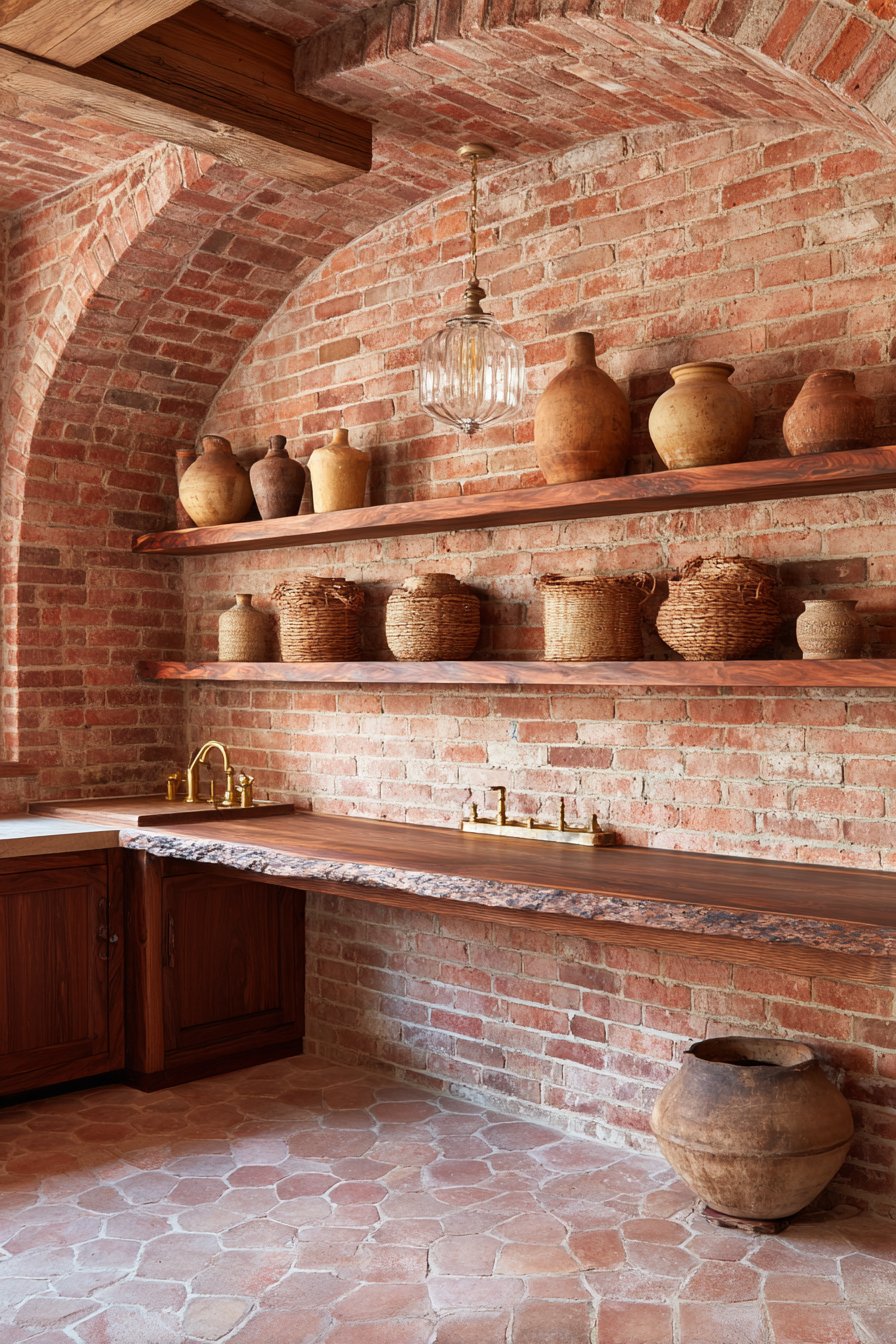
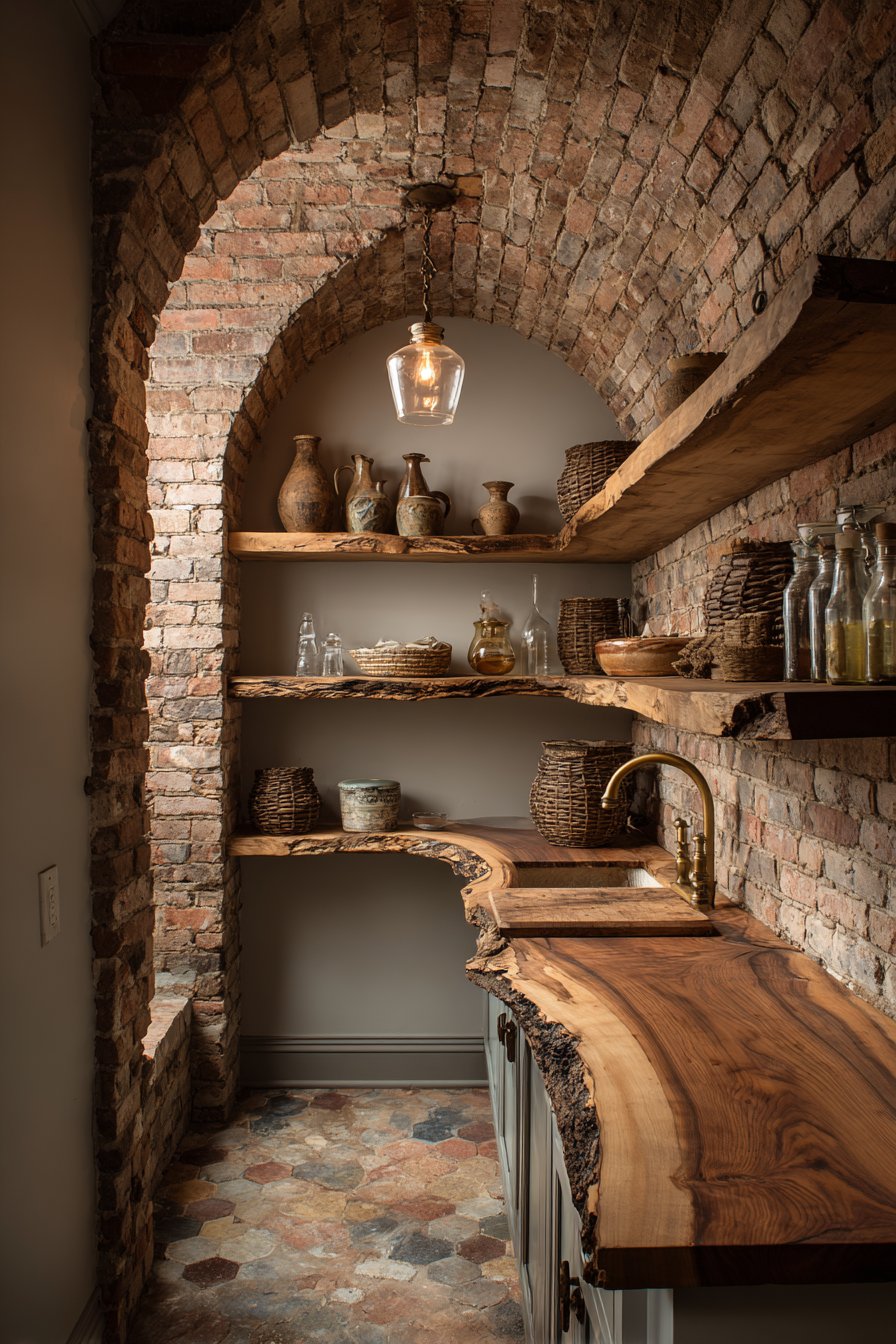
An arched alcove with an exposed brick surround creates architectural focus. Wooden shelving floats on invisible brackets within the arch. Live-edge walnut slabs show natural bark inclusion. Varied thickness preserves the organic tree shape. Vintage wicker demijohns and stoneware crocks provide decorative storage.
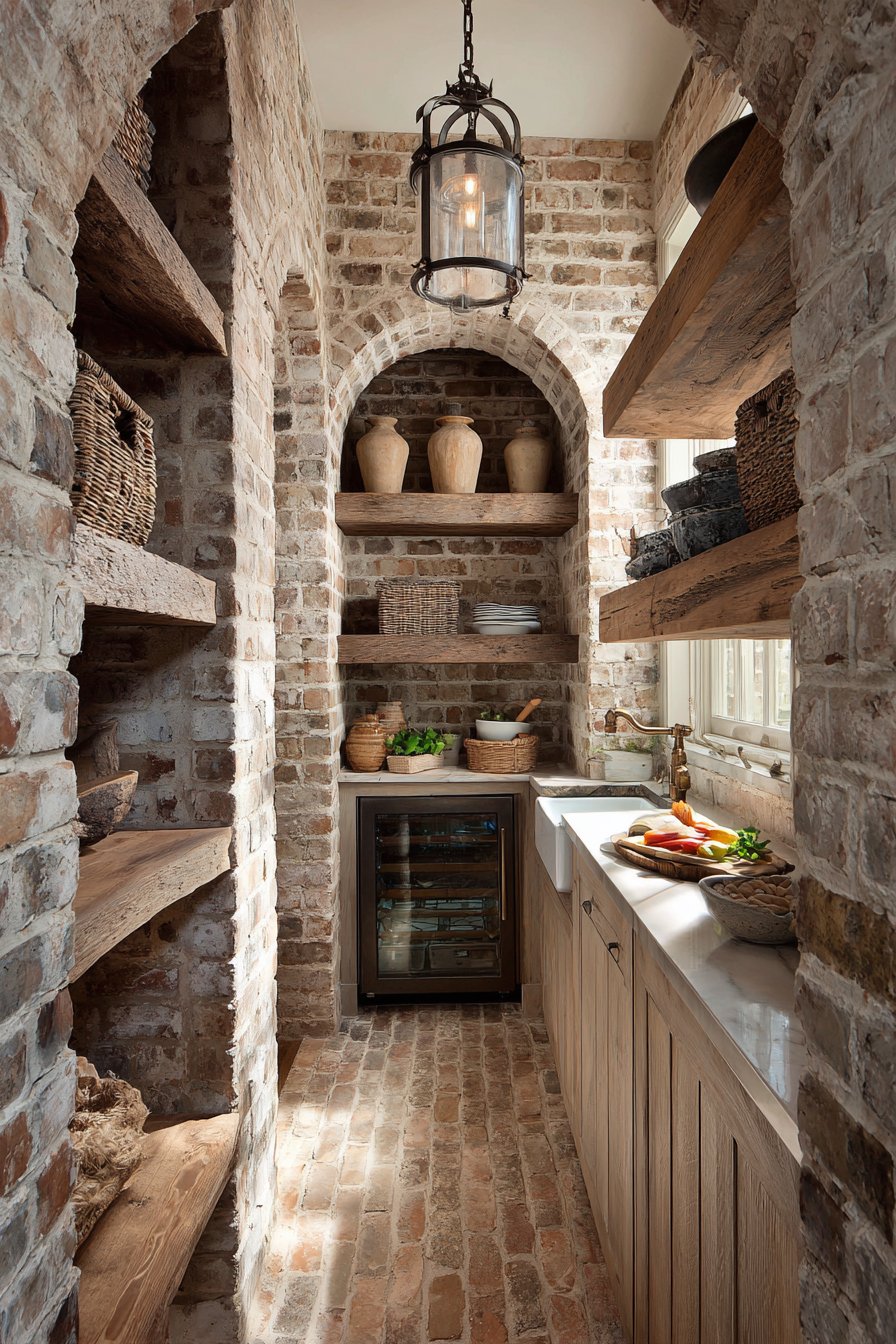
Below the alcove, a small prep area features butcher block surface. Vintage brass faucet adds functional elegance. Terracotta tile floor shows natural color variations. Slight edge chipping adds authentic aging. Single pendant light with seeded glass shade highlights the alcove beautifully.
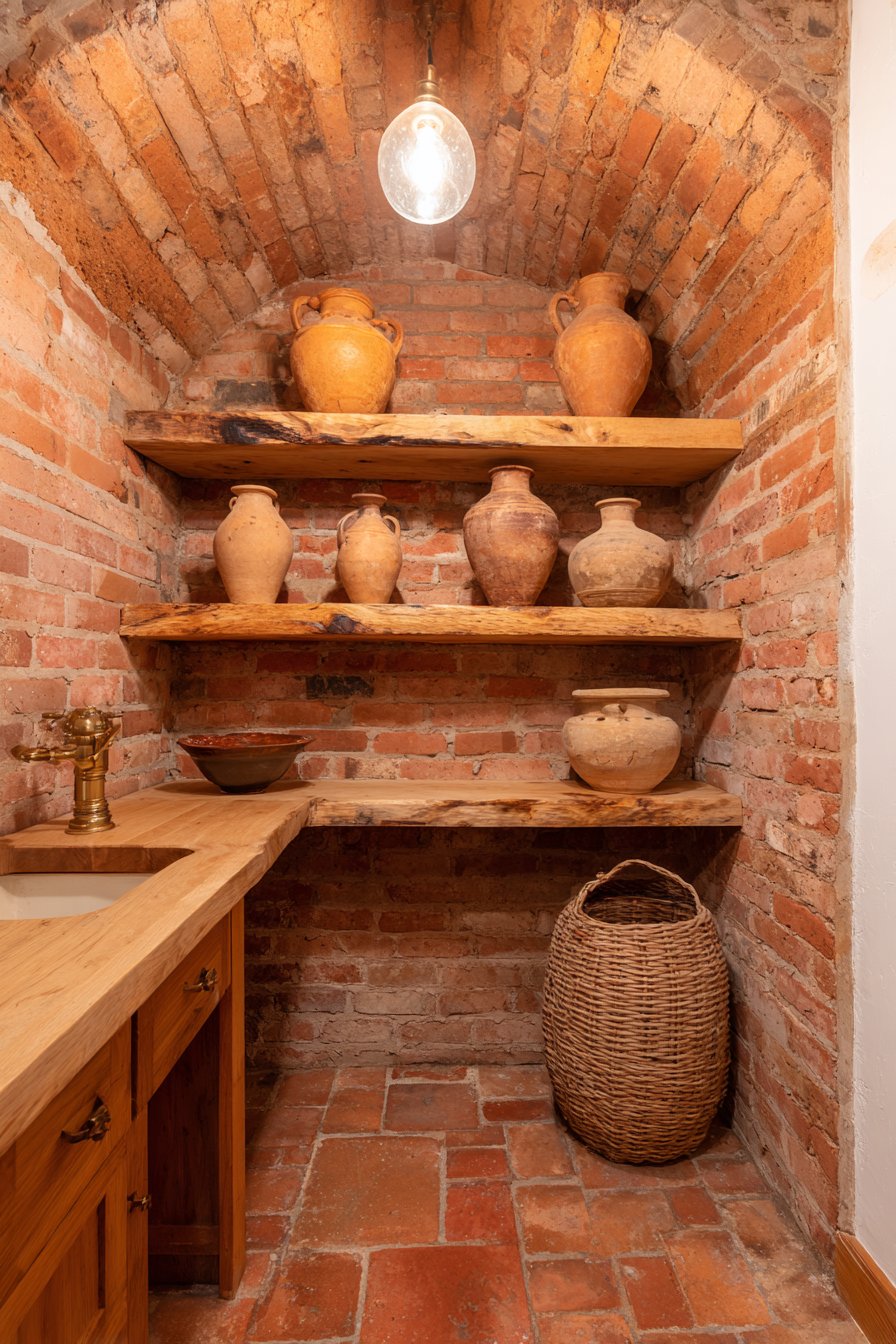
The architectural alcove transforms standard walls into distinctive features. Brick texture adds depth and warmth. Live-edge shelving creates organic contrast. The focused lighting draws attention to carefully curated displays.
Key Design Tips:
- Expose existing brick arches rather than constructing new ones
- Install invisible brackets rated for live-edge wood weight
- Select walnut or other hardwoods for live-edge shelving
- Lay terracotta tiles with slight irregularity for authenticity
- Focus pendant lighting directly on the alcove displays
20. Library Ladder System
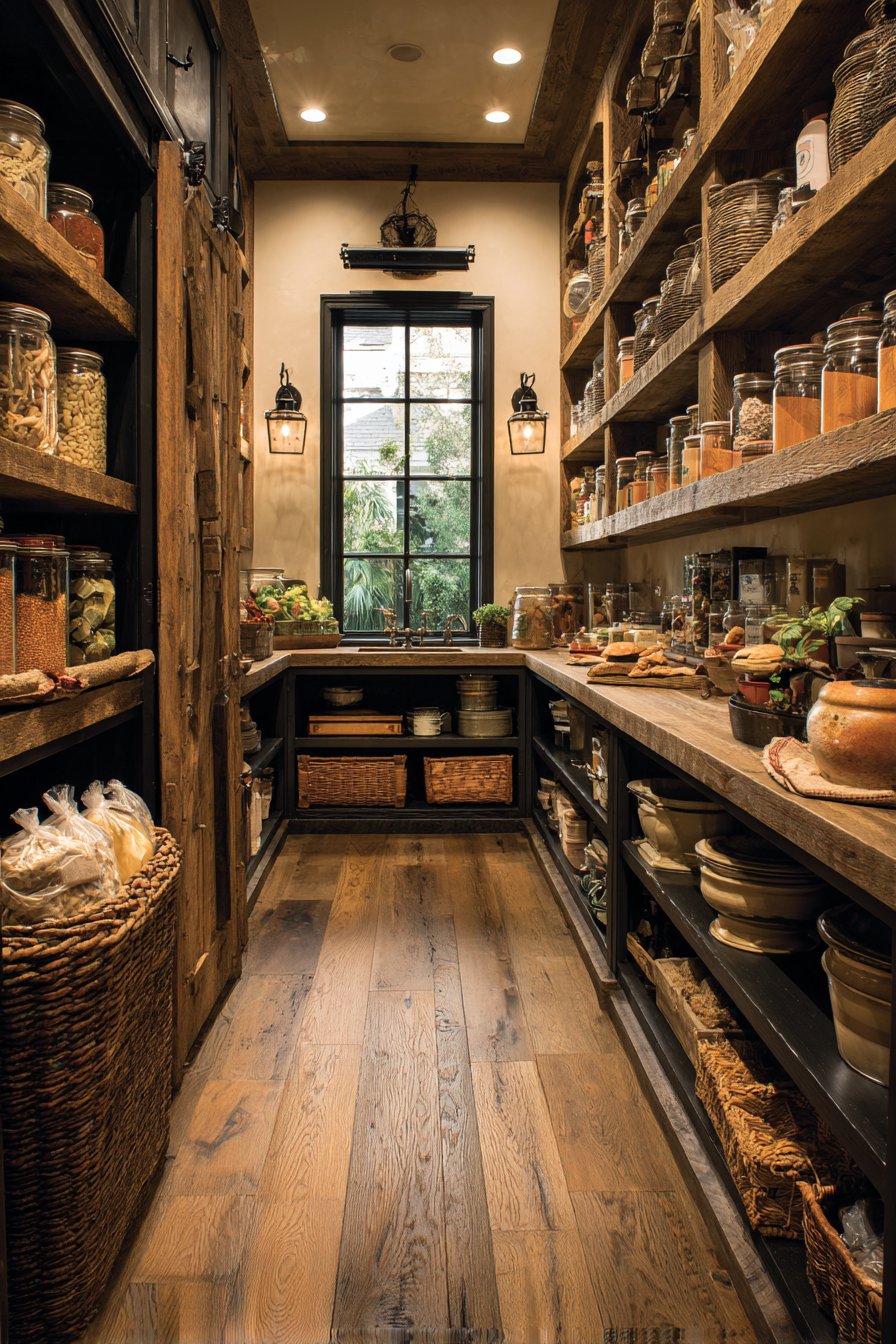
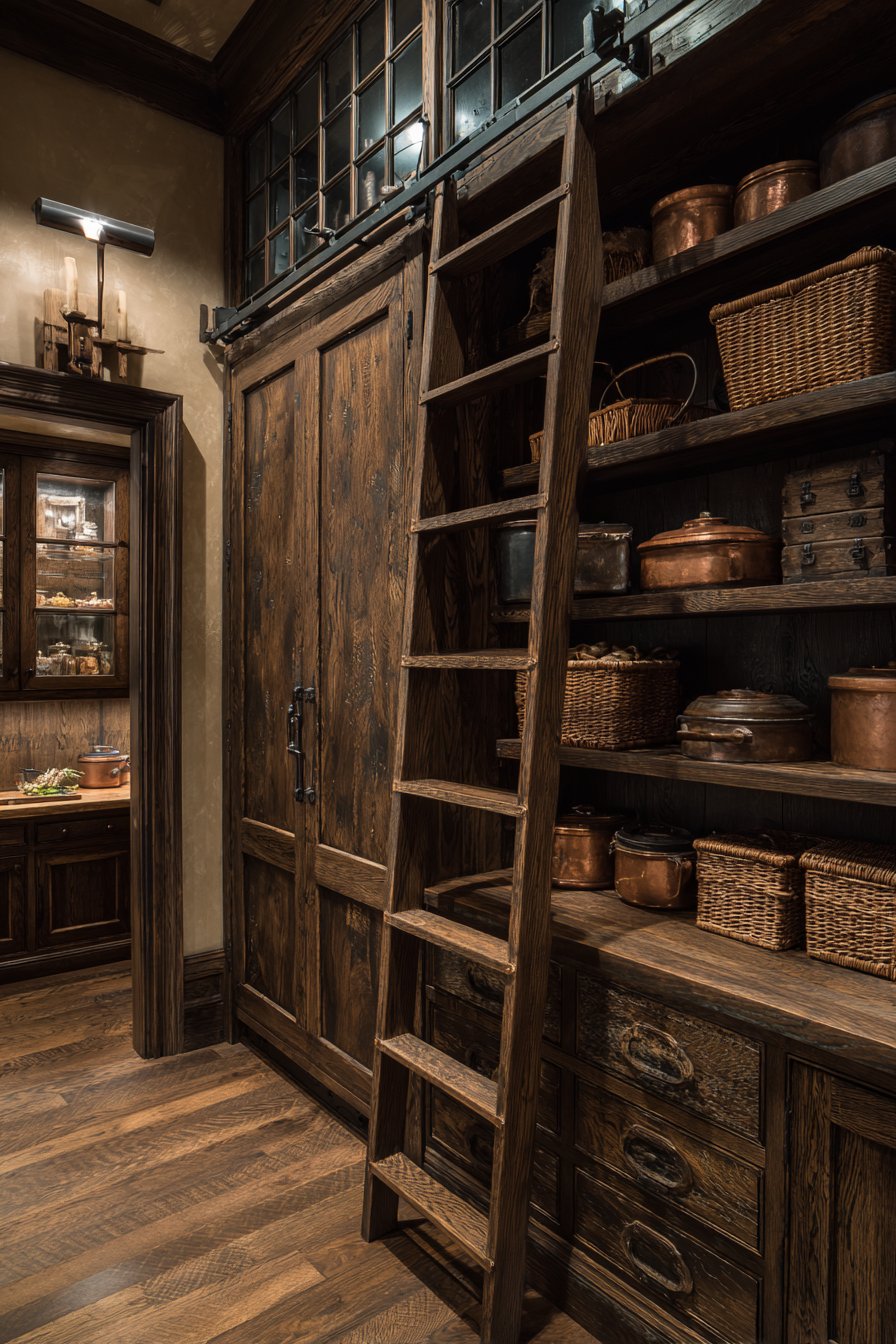
A sliding ladder library system in oil-rubbed bronze creates sophisticated storage. Rolling wooden ladder shows routed edge details. Mortised rungs ensure structural integrity and safety. Floor-to-ceiling shelving in reclaimed heart pine displays graduated heights. Heavy stoneware and cast iron occupy lower shelves.
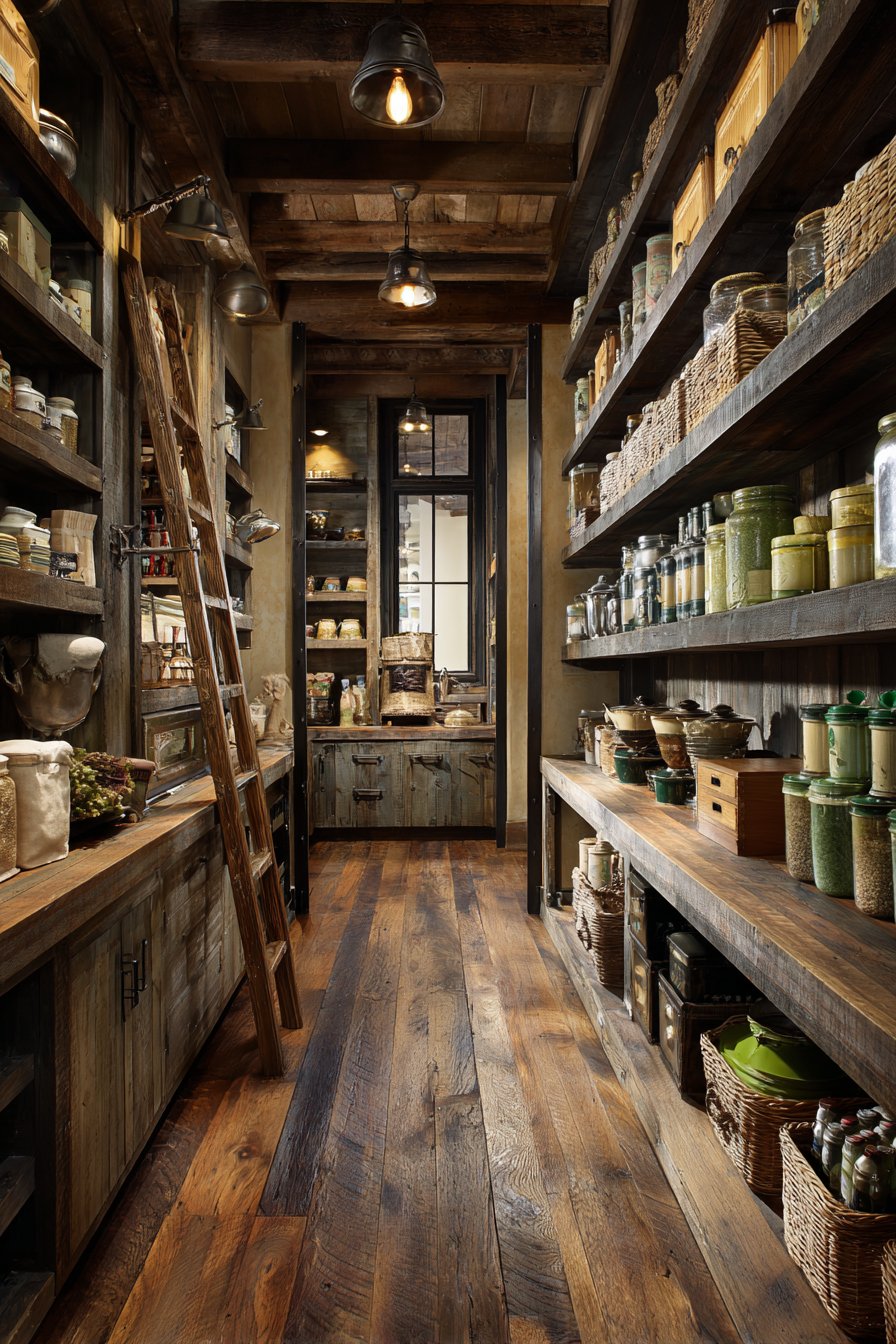
Upper shelves hold lighter items in vintage tins and baskets. Quarter-sawn oak flooring shows medullary ray figuring. Natural color depth ranges from golden to deep brown. Transom window above provides natural light. Wall sconces in aged brass offer task lighting for evening use.
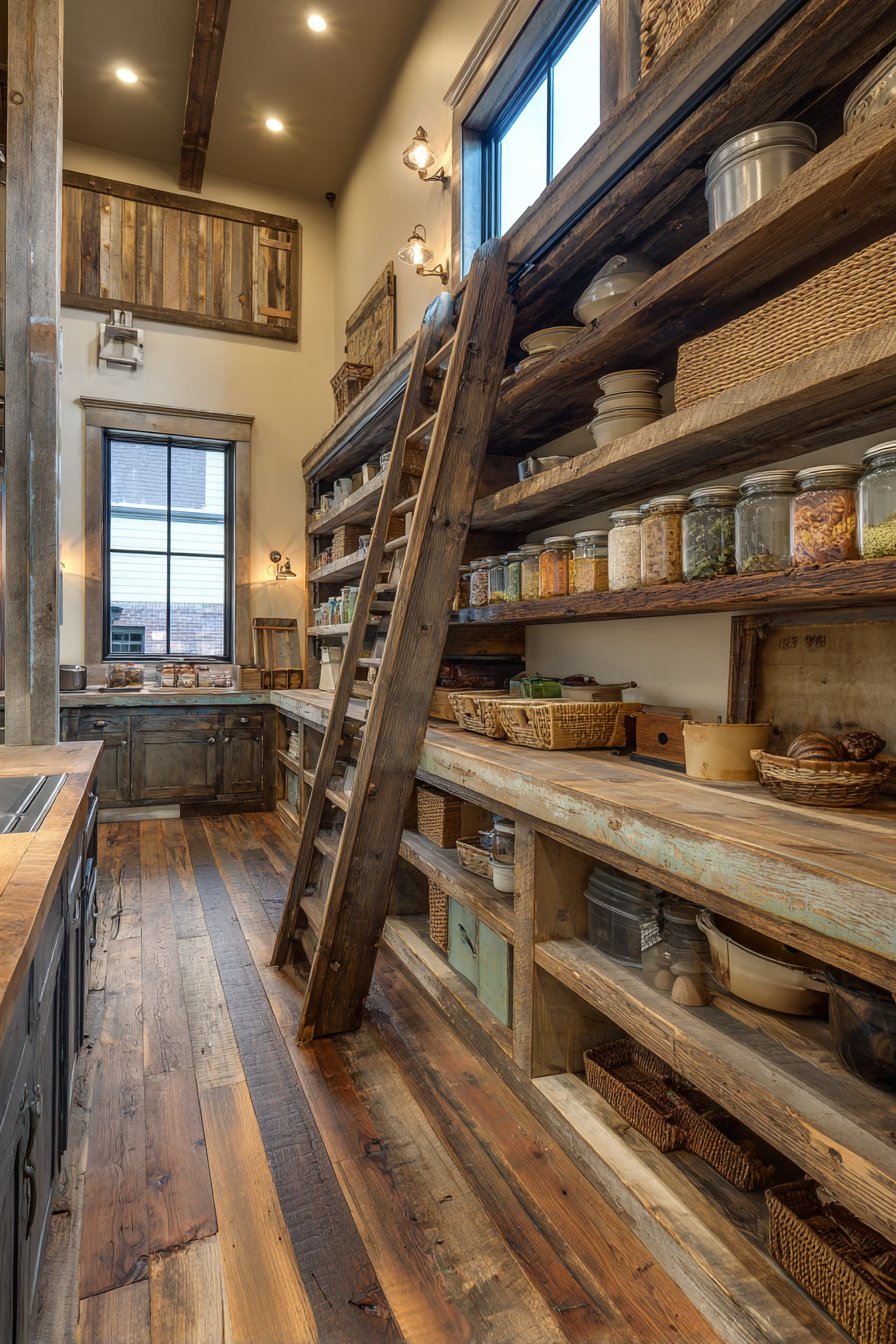
The comprehensive pantry system combines beauty with accessibility. The ladder reaches highest shelves safely. Graduated shelf heights optimize storage efficiency. Professional lighting ensures visibility throughout the day and night.
Key Design Tips:
- Install library ladder track systems designed for pantry loads
- Specify mortised ladder rungs for maximum safety
- Use reclaimed heart pine for shelving with rich patina
- Install quarter-sawn oak flooring for distinctive ray figuring
- Position transom windows above doors to maximize light without sacrificing wall space
Why These Rustic Pantry Designs Are the Best
These rustic pantry designs represent the finest approaches to combining authentic materials with practical storage solutions. Each concept demonstrates thoughtful consideration of natural aging, structural integrity, and functional organization. The designs showcase versatility that suits different home styles while maintaining rustic authenticity.
The incorporation of reclaimed wood adds sustainability to beautiful design choices. Salvaged barn wood, wine barrel staves, and antique lumber bring history that new materials cannot replicate. These weathered surfaces develop richer character over time rather than deteriorating. The rustic aesthetic creates storage spaces that feel warm and inviting rather than clinical.
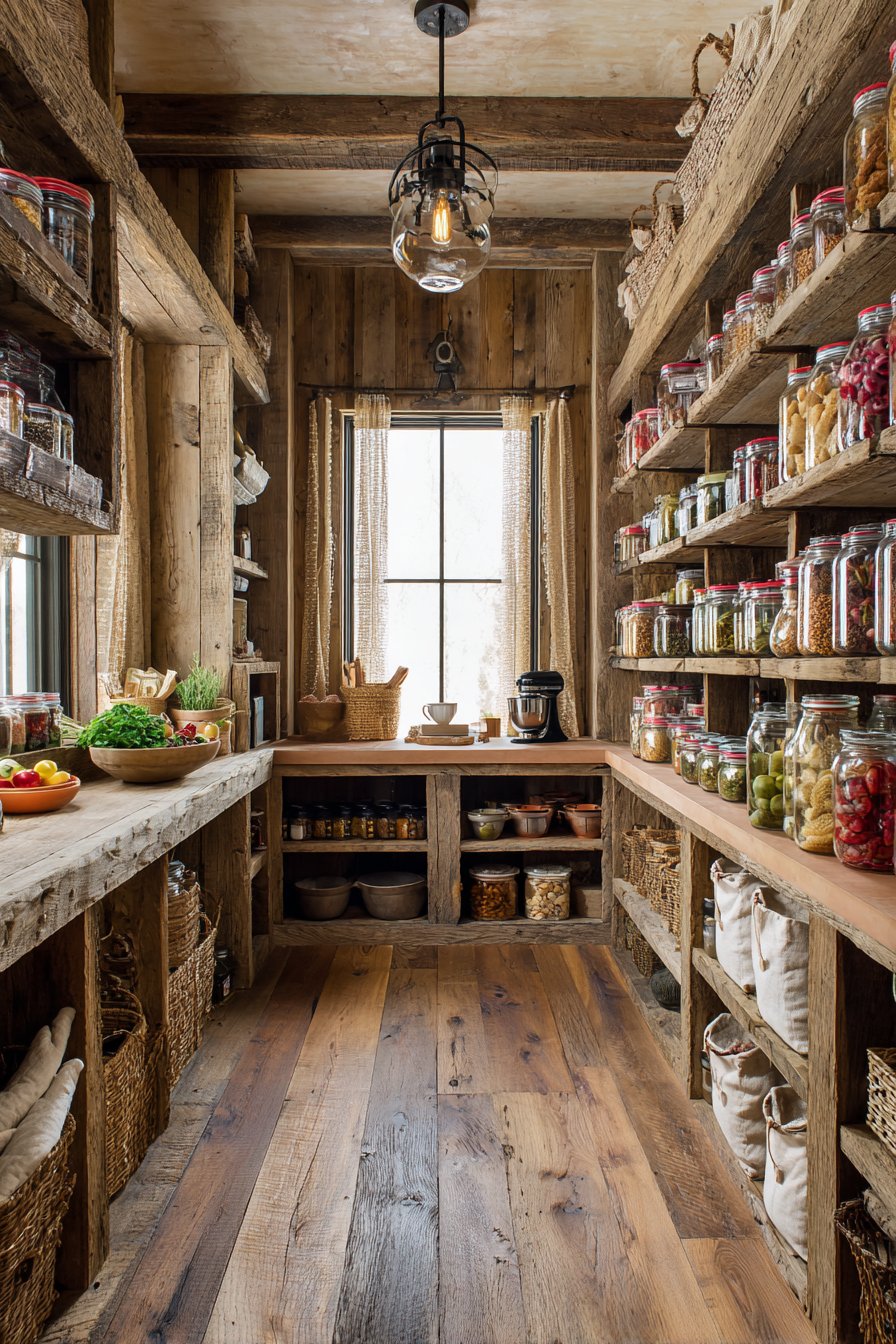
Material diversity within these designs prevents monotony while maintaining cohesive style. Combinations of aged wood with industrial metal, natural stone, and vintage glass create textural richness. Each material contributes unique qualities to the overall composition. Exposed brick adds warmth, galvanized metal provides industrial contrast, and soapstone counters develop living patinas.
The organizational systems balance accessibility with aesthetic appeal. Open shelving displays beautiful storage containers while providing easy access. Wire baskets, wooden crates, and vintage jars become decorative elements. Closed cabinets conceal less attractive items without interrupting visual flow. Pull-out mechanisms and rolling ladders ensure practical functionality.
Color theory in rustic design favors natural wood tones, aged metals, and earth-based hues. Weathered greys, warm browns, and cream tones create soothing palettes. Strategic paint applications in historical colors like sage green or teal add personality. These muted tones prevent overwhelming small spaces while creating visual interest.
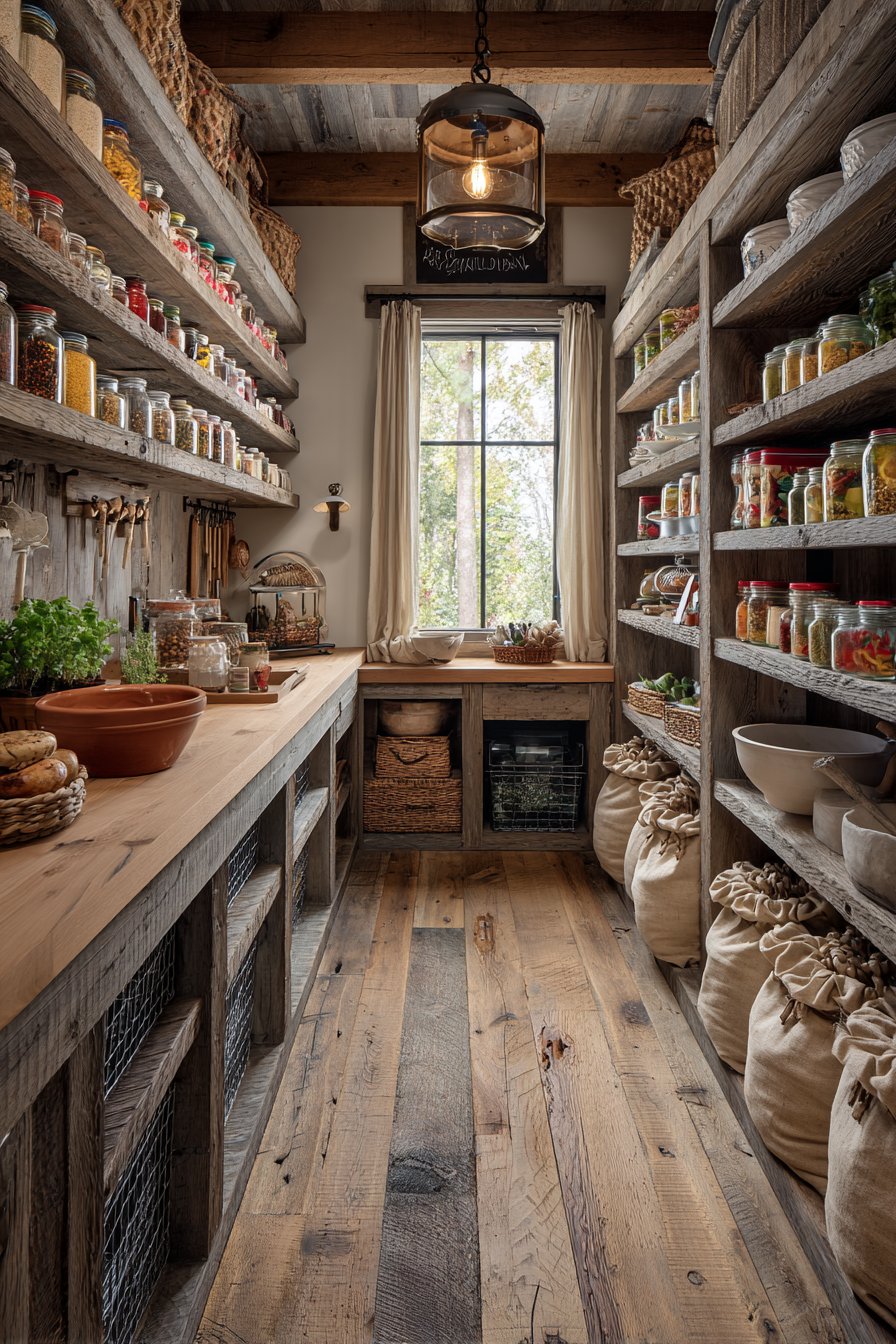
Spatial considerations address both compact reach-in pantries and expansive walk-in spaces. Vertical storage solutions maximize limited footprints. Corner shelving transforms awkward spaces into prime storage. Narrow corridor designs prove that challenging layouts can become highly functional. The principles scale appropriately across different square footages.
Lighting strategies layer natural daylight with vintage-style artificial illumination. Windows, transoms, and clerestories bring sunshine deep into storage areas. Edison bulbs, aged brass sconces, and industrial pendants provide evening visibility. The lighting choices reinforce rustic aesthetics while serving practical purposes.
Conclusion
These rustic pantry designs demonstrate that storage spaces deserve the same design attention as living areas. The key takeaways include the importance of authentic materials, thoughtful organization systems, and lighting that enhances functionality. Quality reclaimed wood combined with vintage hardware and natural stone creates pantries that improve with age.
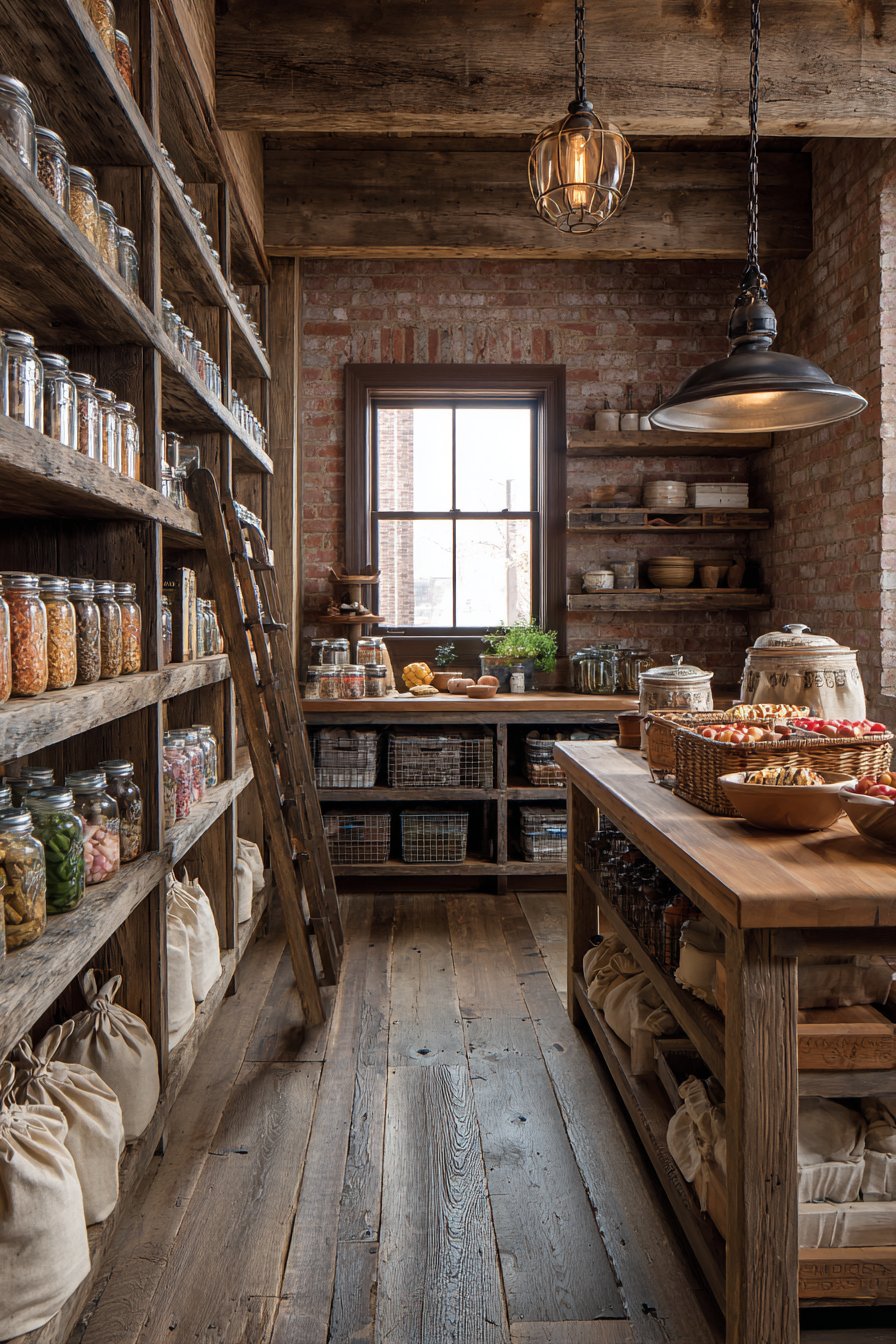
Successful rustic pantry design balances aesthetic appeal with daily practical use. The storage systems must function efficiently while looking beautiful. Natural materials develop character through daily interaction rather than showing wear. Start your rustic pantry transformation by selecting one authentic element like reclaimed shelving or vintage containers. Your dream farmhouse storage space awaits creation through thoughtful material choices and creative organization.
