


Rectangle living rooms present unique design opportunities and challenges. These elongated spaces require strategic furniture placement and thoughtful spatial planning. The right approach transforms potentially awkward proportions into beautifully functional living areas.
Many homeowners struggle with rectangular living rooms. The long, narrow shape can feel corridor-like without proper design intervention. However, these spaces offer wonderful possibilities for creative zoning and furniture arrangements. From symmetrical formal layouts to asymmetrical contemporary designs, rectangular rooms accommodate diverse aesthetic preferences.
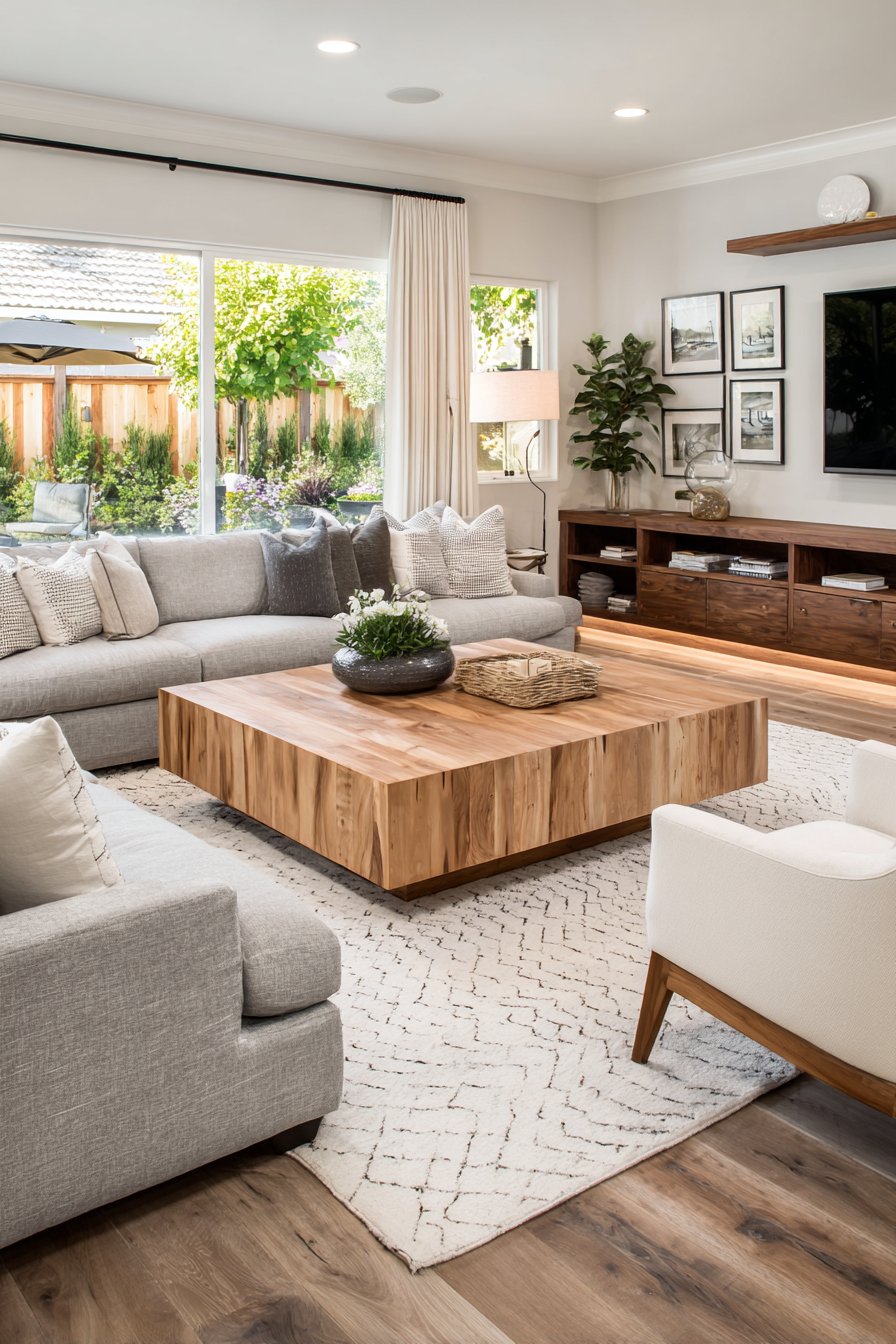
This comprehensive guide explores twenty distinctive approaches to rectangle living room design. Each concept demonstrates how strategic furniture placement, lighting choices, and material selection optimize elongated proportions. Whether you’re working with a narrow space or a generous rectangular footprint, these designs provide inspiration for creating balanced, inviting living areas that feel cohesive and comfortable.
1. Warm Grey Linen L-Shaped Sectional Layout
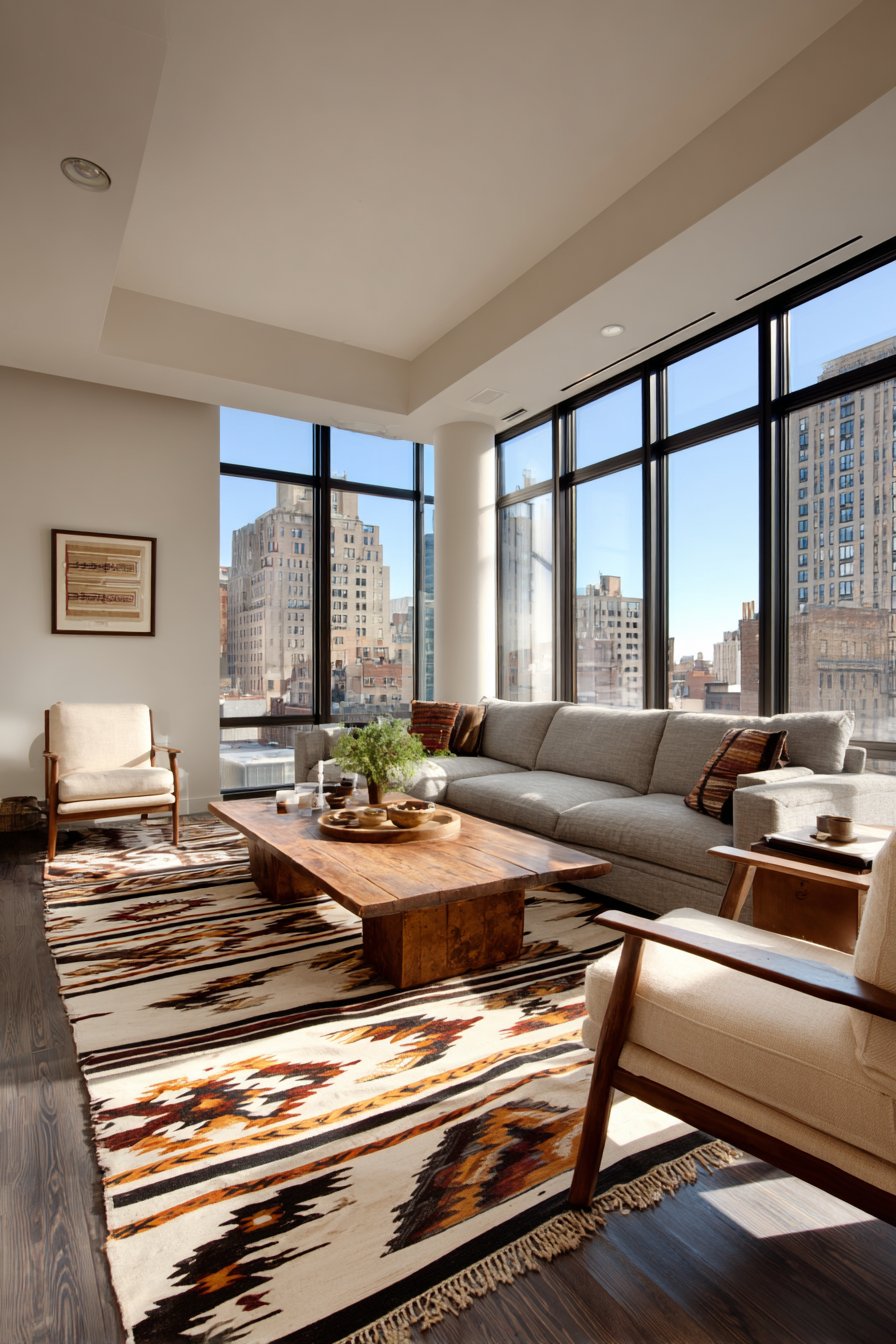
A long sectional sofa in warm grey linen anchors this rectangular living room design. The L-shaped configuration positions along the longer wall, maximizing seating capacity. This arrangement creates natural flow through the space. A rectangular oak coffee table centers the seating area, grounded by a geometric-patterned rug.
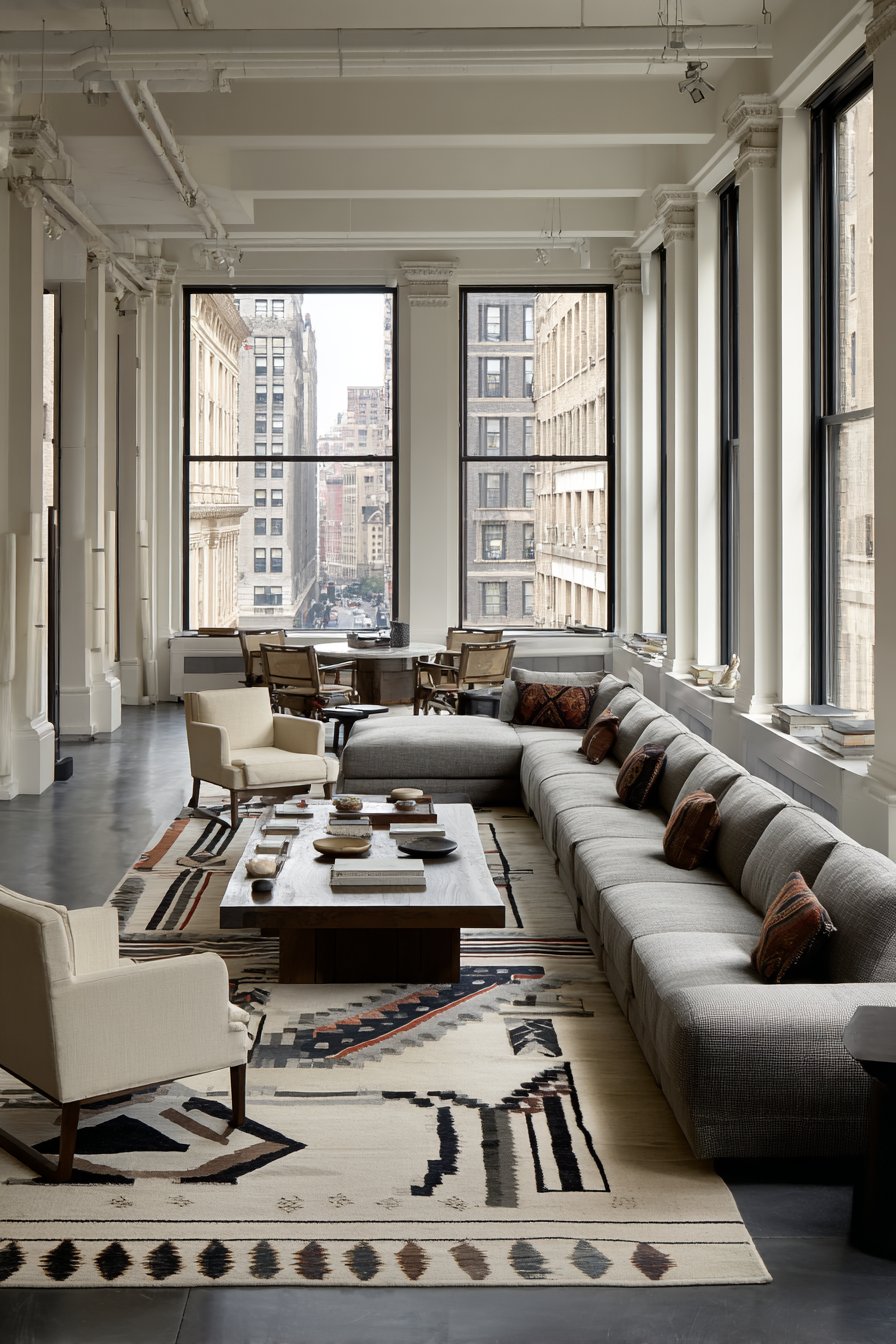
The rug selection emphasizes the room’s proportions intentionally. Geometric patterns draw the eye along the length of the space. Two matching armchairs in complementary cream upholstery complete the conversation area. Floor-to-ceiling windows along one short wall flood the interior with natural daylight.
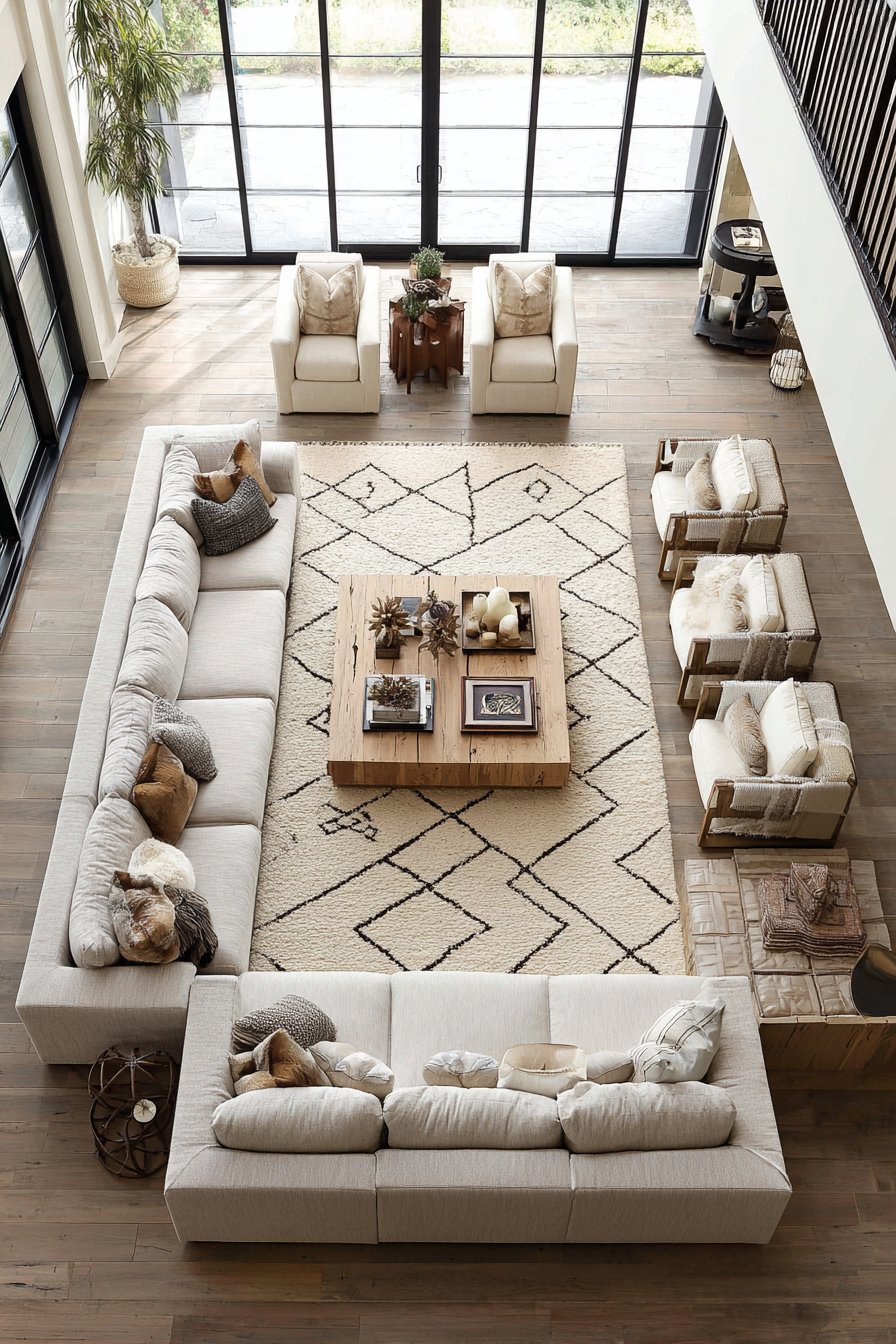
The strategic furniture placement creates distinct pathways around the seating zone. This prevents the corridor effect common in rectangular rooms. The warm grey and cream color palette maintains visual cohesion throughout. Natural oak coffee table adds warmth against the cooler upholstery tones.
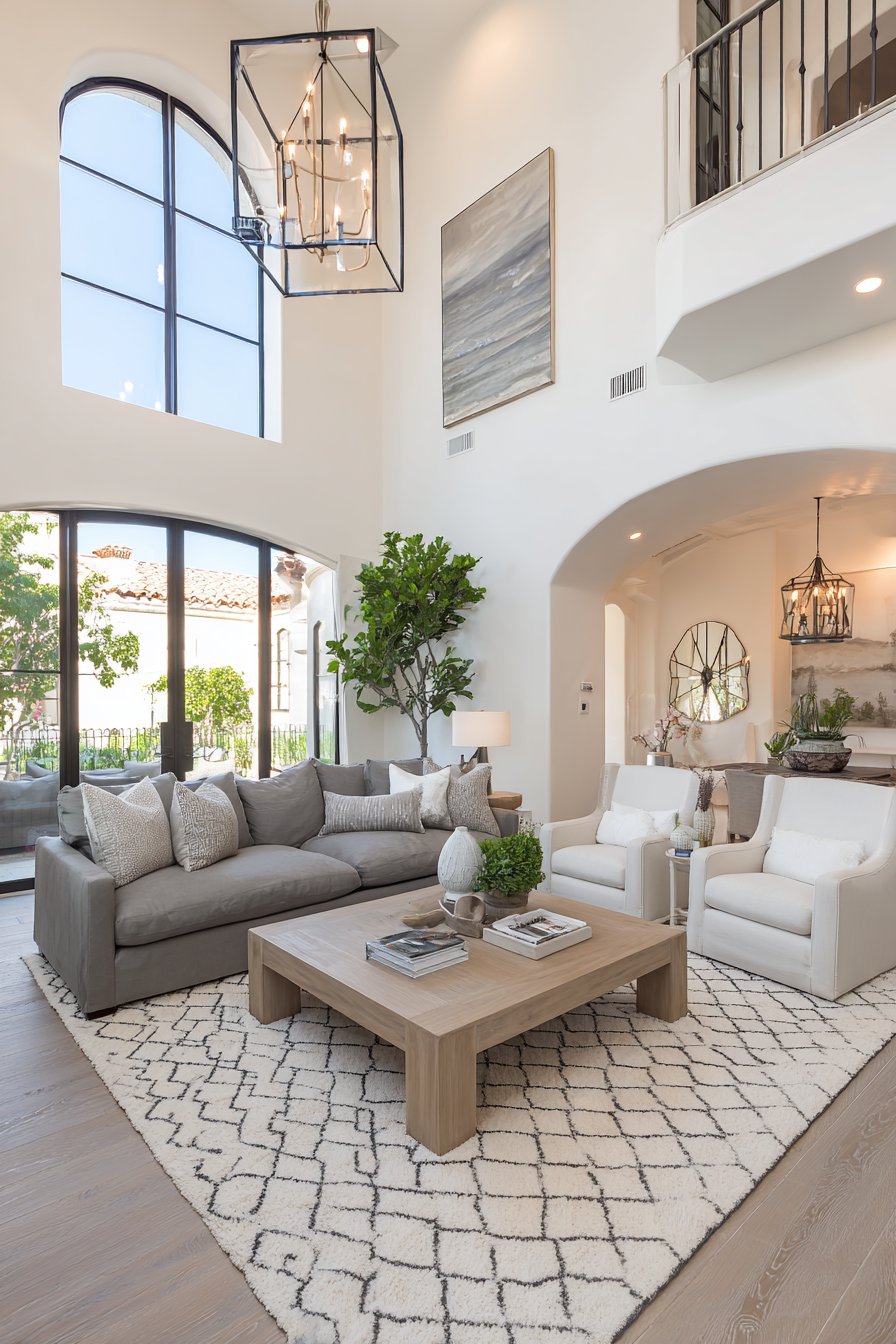
Wide-angle photography captures the full rectangular layout beautifully. Balanced exposure highlights each furniture piece and architectural feature. The design demonstrates how L-shaped sectionals maximize both seating and spatial flow in elongated living rooms.
Key Design Tips:
- Position sectionals along longer walls to define the space without blocking pathways
- Choose area rugs with geometric patterns that emphasize room proportions
- Use matching pairs of furniture to create visual balance
- Maximize natural light through minimal window treatments
- Select coffee tables that complement the sectional shape without overwhelming the space
2. Streamlined Narrow Living Room Solution
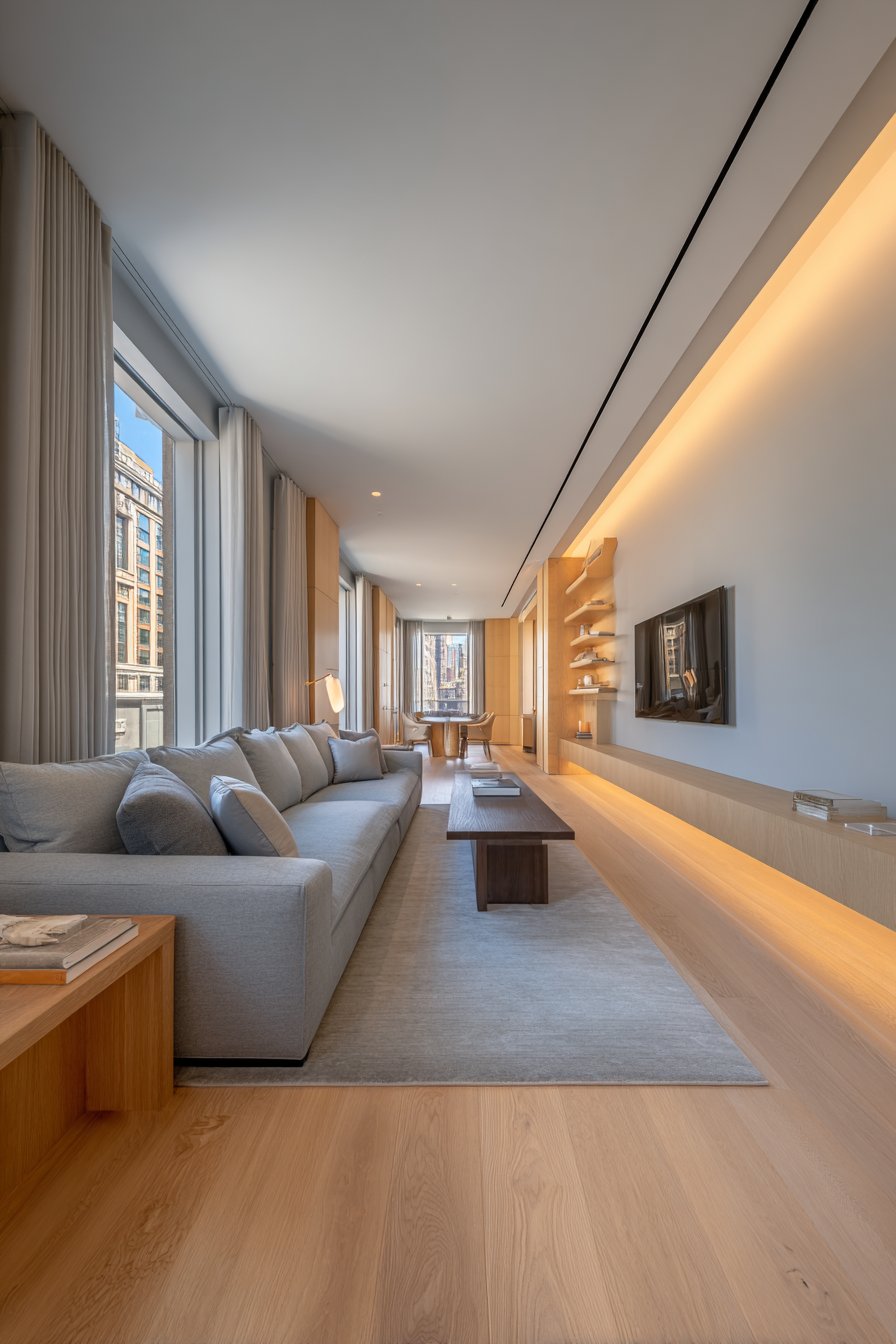
Narrow rectangular living rooms require streamlined furniture selections. This design features a three-seat sofa against one long wall. The media console is positioned on the opposite side, creating visual balance. A narrow rectangular coffee table in walnut wood maintains essential walkway space.
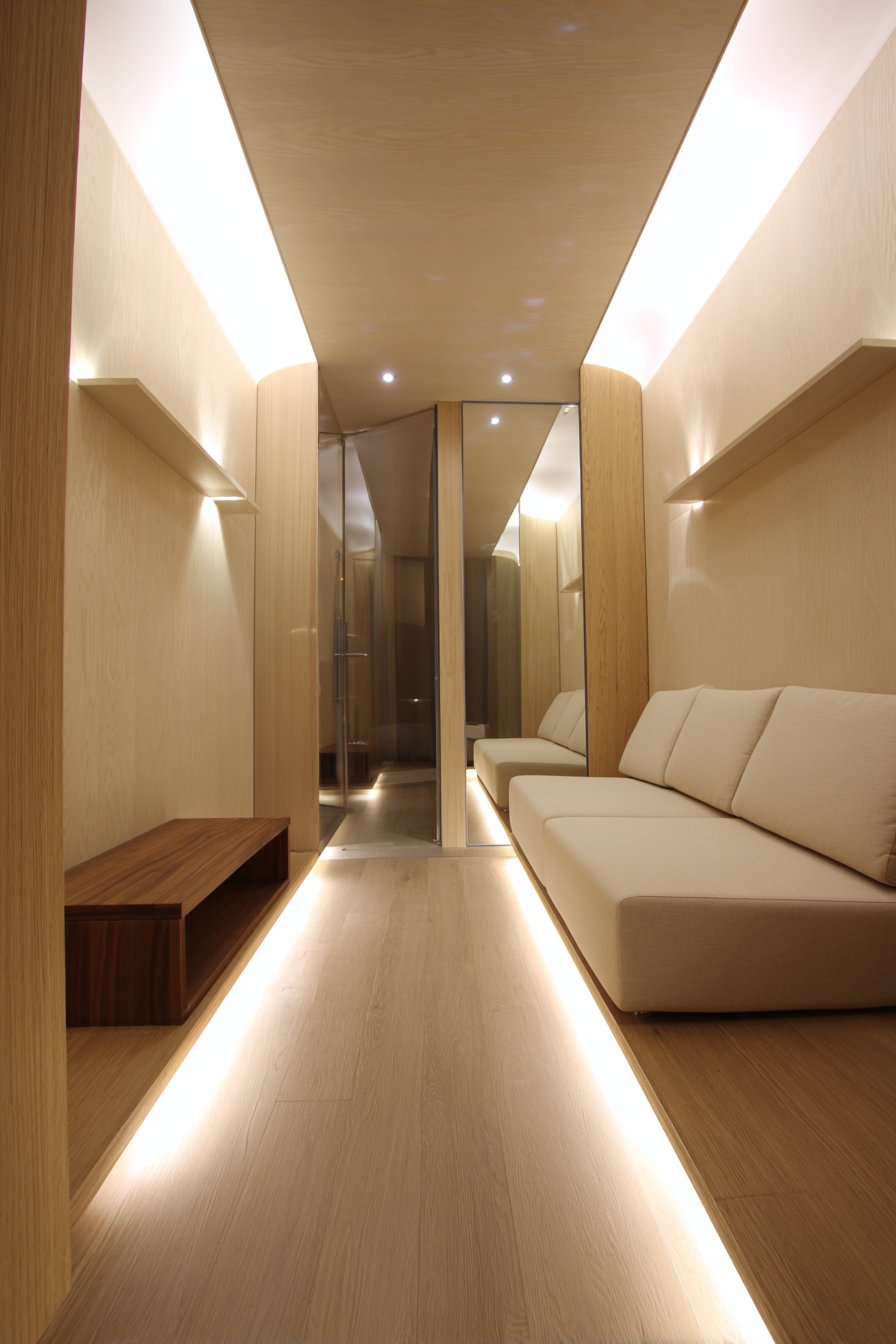
Built-in floating shelves on the end wall provide storage solutions. These shelves don’t consume valuable floor space. This matters significantly in narrow rectangular layouts. Recessed lighting creates ambient illumination along the room’s length. The lighting prevents dark corners common in elongated spaces.
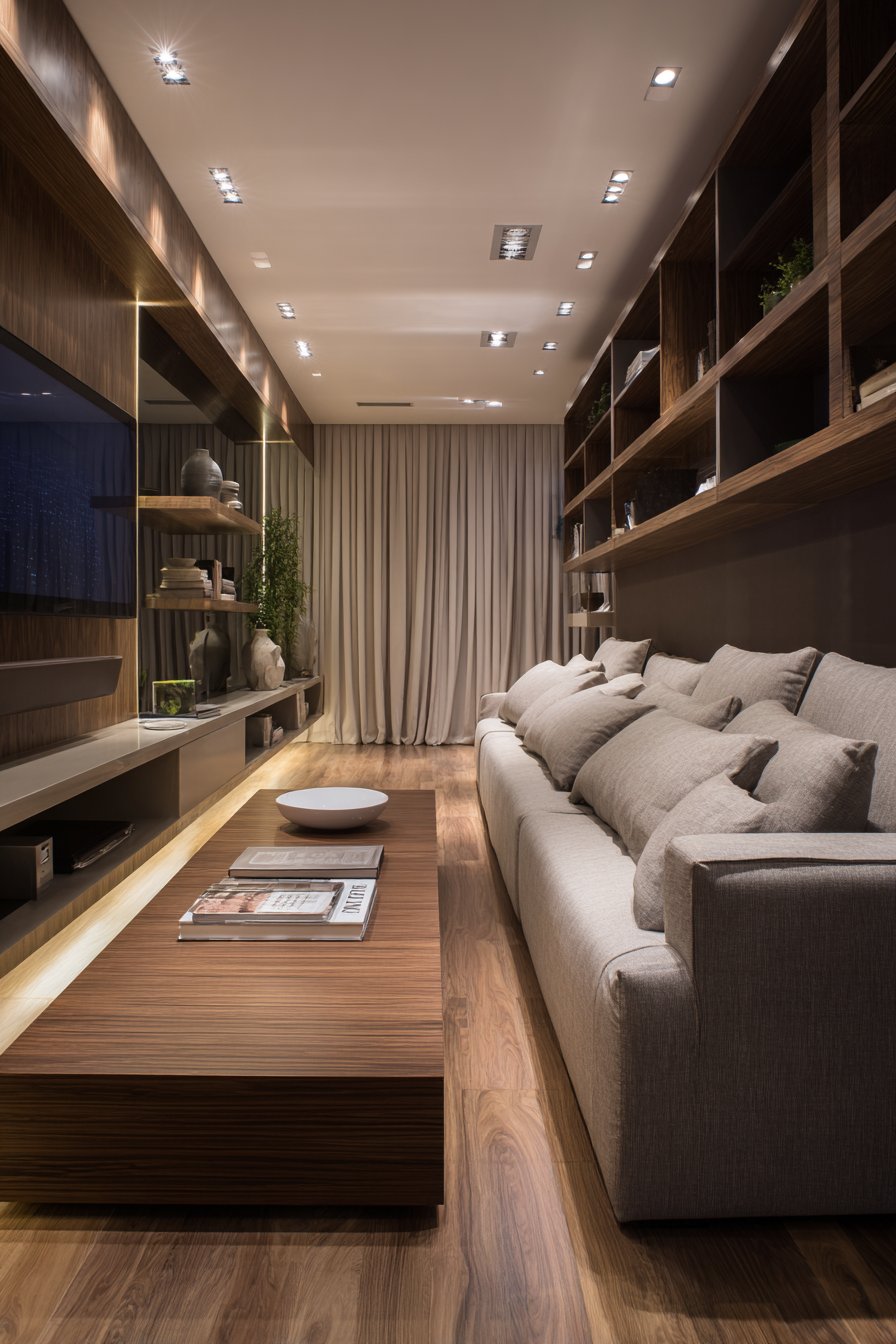
The furniture scale proves critical in this narrow layout. Each piece maintains appropriate proportions for the space. Oversized furniture would obstruct pathways and create cramped feelings. The walnut coffee table introduces rich wood tones without visual heaviness.
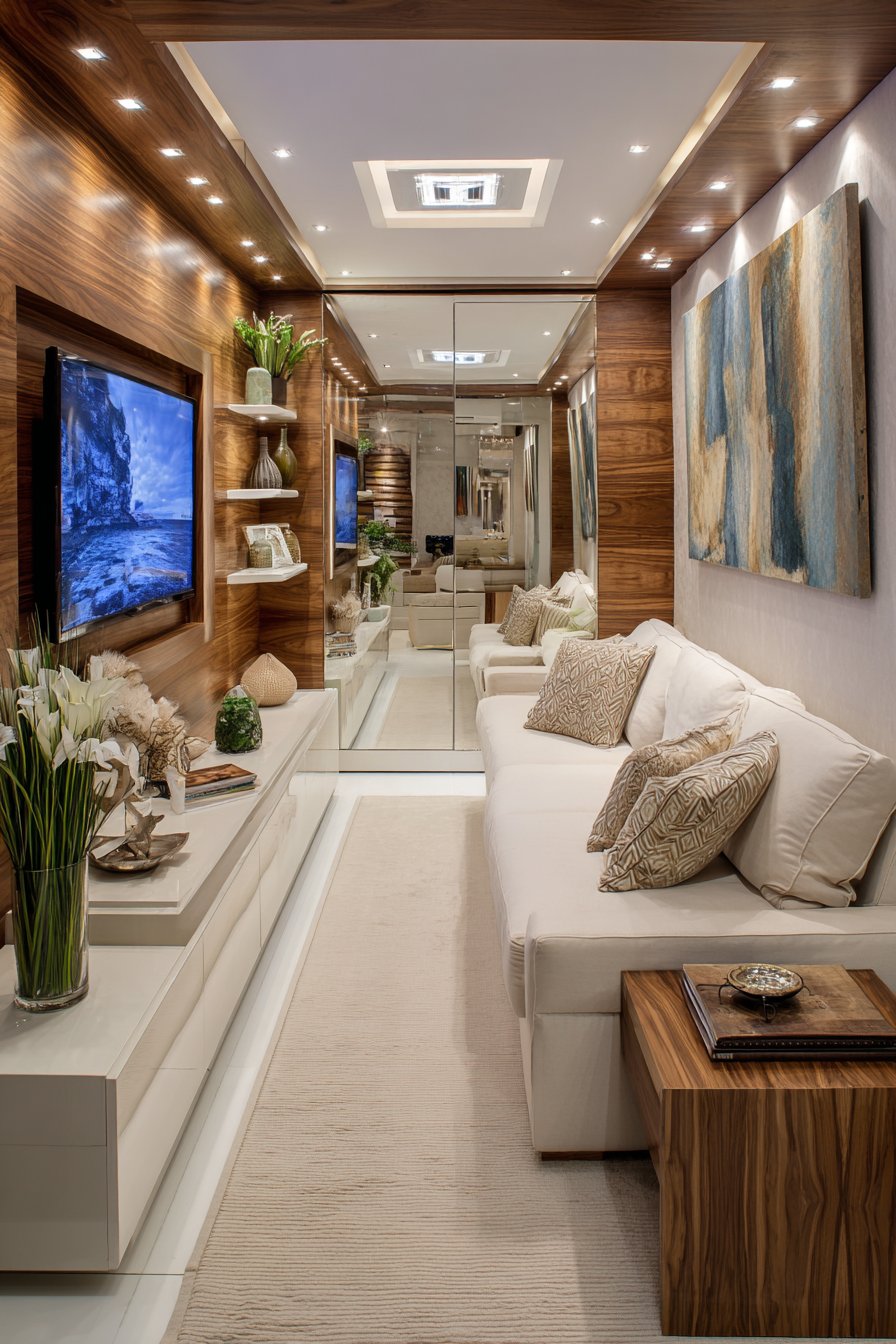
Professional photography demonstrates the thoughtful furniture placement. Wide-angle perspective reveals how scale and spacing optimize functionality. This design proves narrow doesn’t mean compromised style or comfort.
Key Design Tips:
- Choose furniture with appropriate scale for narrow spaces
- Position larger pieces against walls to maximize central pathways
- Use floating shelves instead of floor-standing storage units
- Install recessed lighting to avoid cluttering ceilings with fixtures
- Select narrow coffee tables that provide function without blocking movement
3. Spacious Zoned Rectangular Living Area
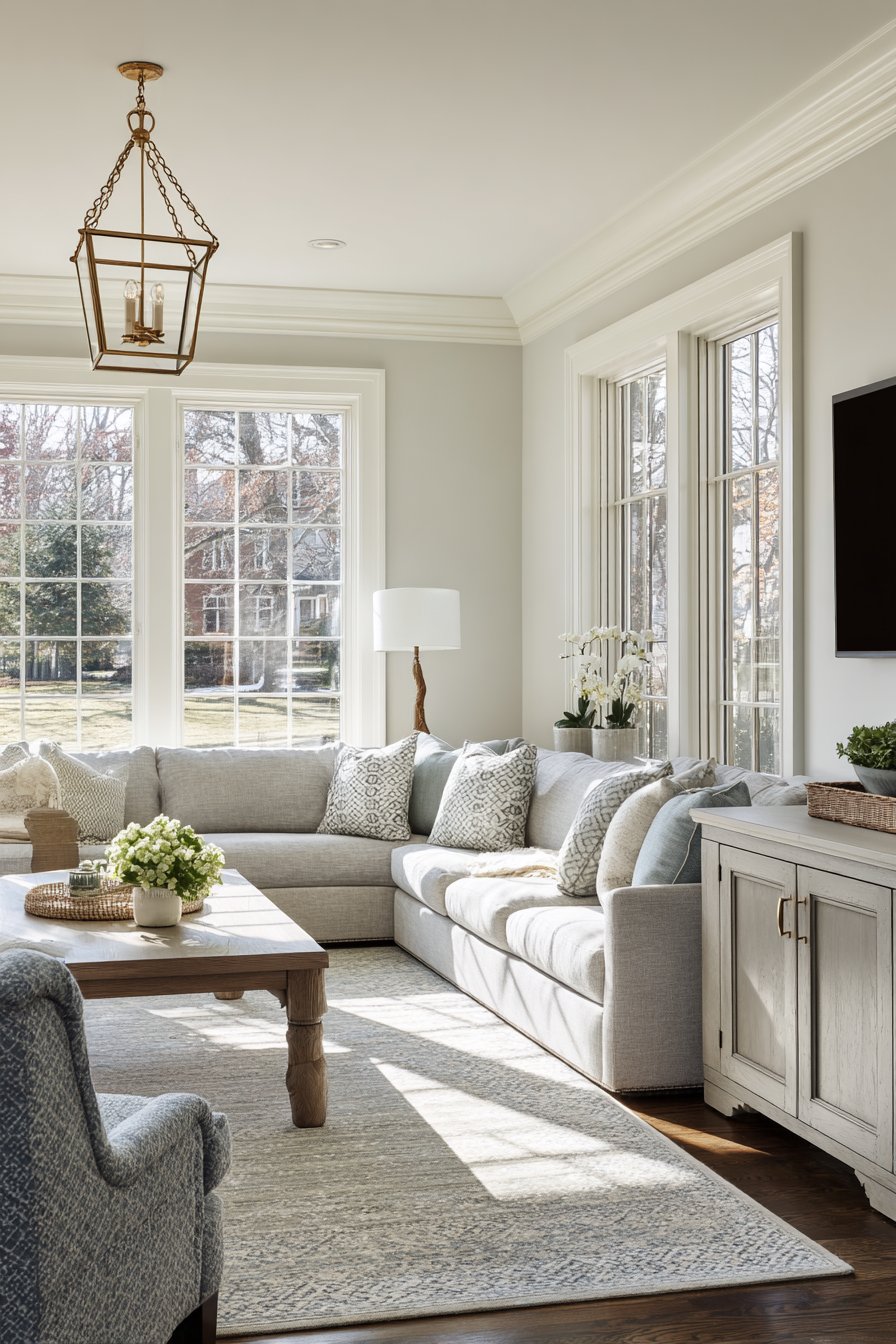
Strategic furniture placement creates distinct zones in this spacious rectangular living room. The primary seating features a U-shaped sectional arrangement near windows. A reading nook with wingback chair occupies the far end. This demonstrates effective spatial division in larger rectangular rooms.
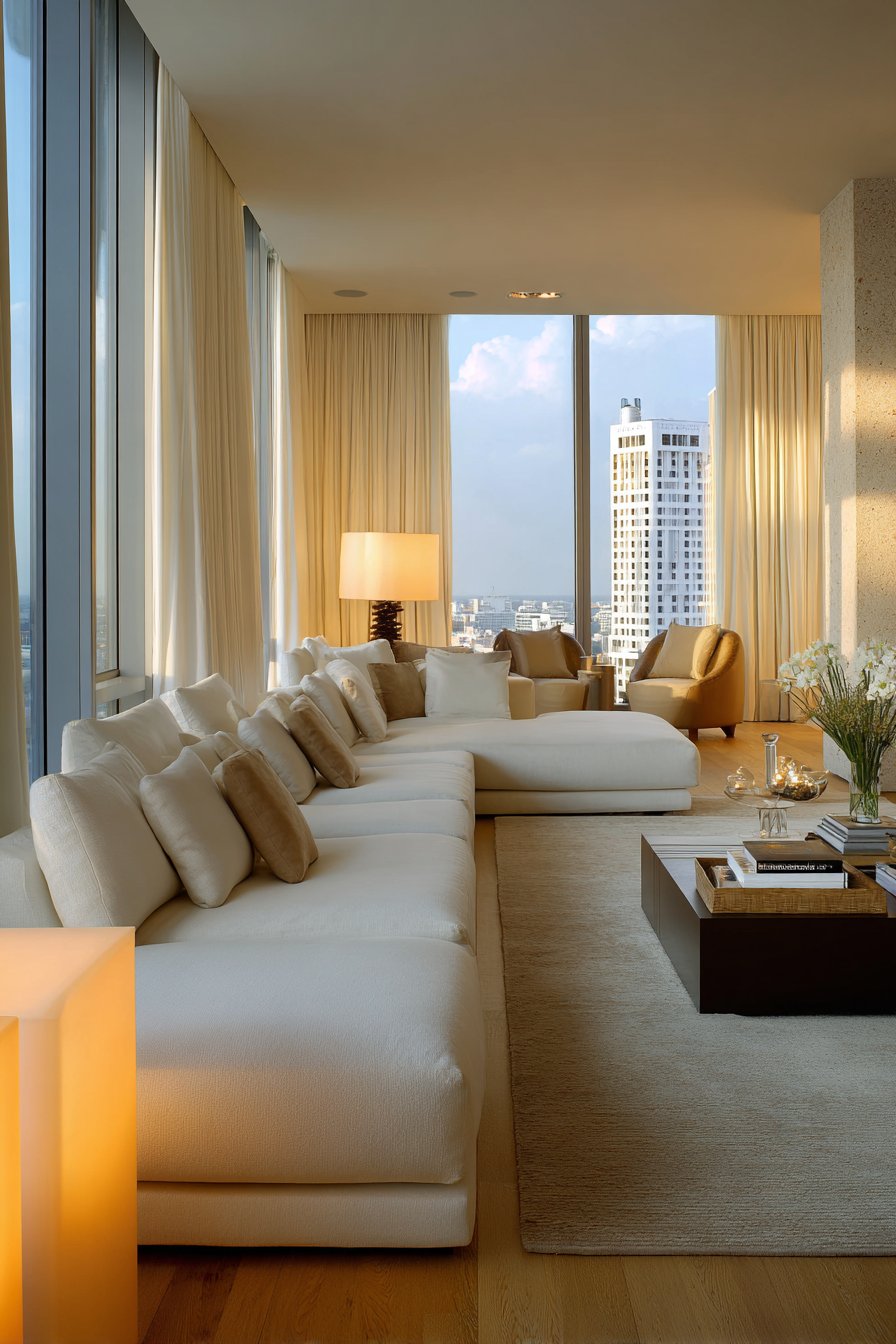
A rectangular area rug in soft neutral tones defines the main conversation space. Natural oak flooring runs the length of the room. The continuous flooring emphasizes the rectangular shape while maintaining visual flow. Soft morning light streams through multiple windows, creating natural depth.
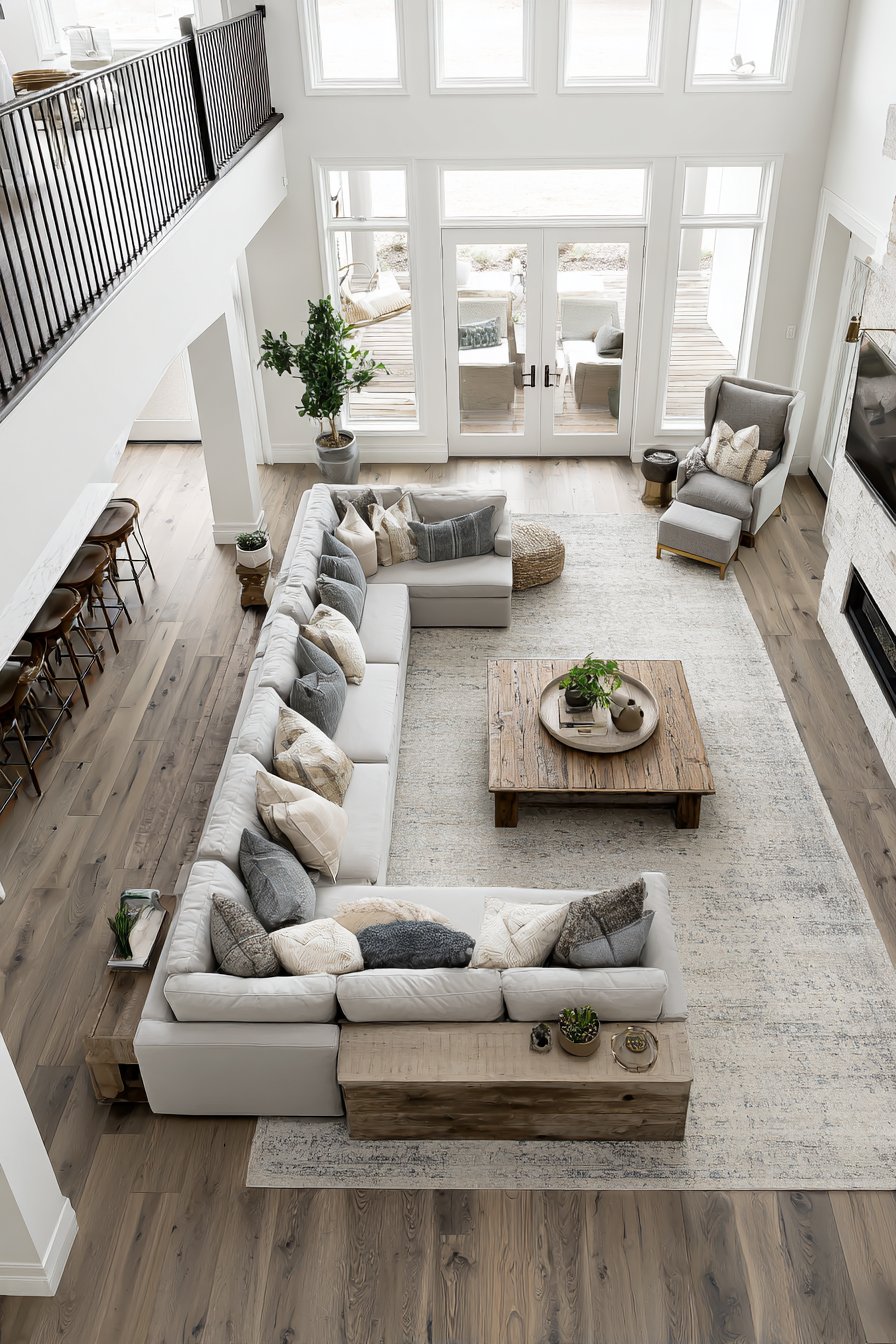
The zoning approach allows multiple activities without spatial conflict. The main seating accommodates group conversations and entertainment. The reading nook provides quiet retreat space. Both zones feel connected yet functionally separate.
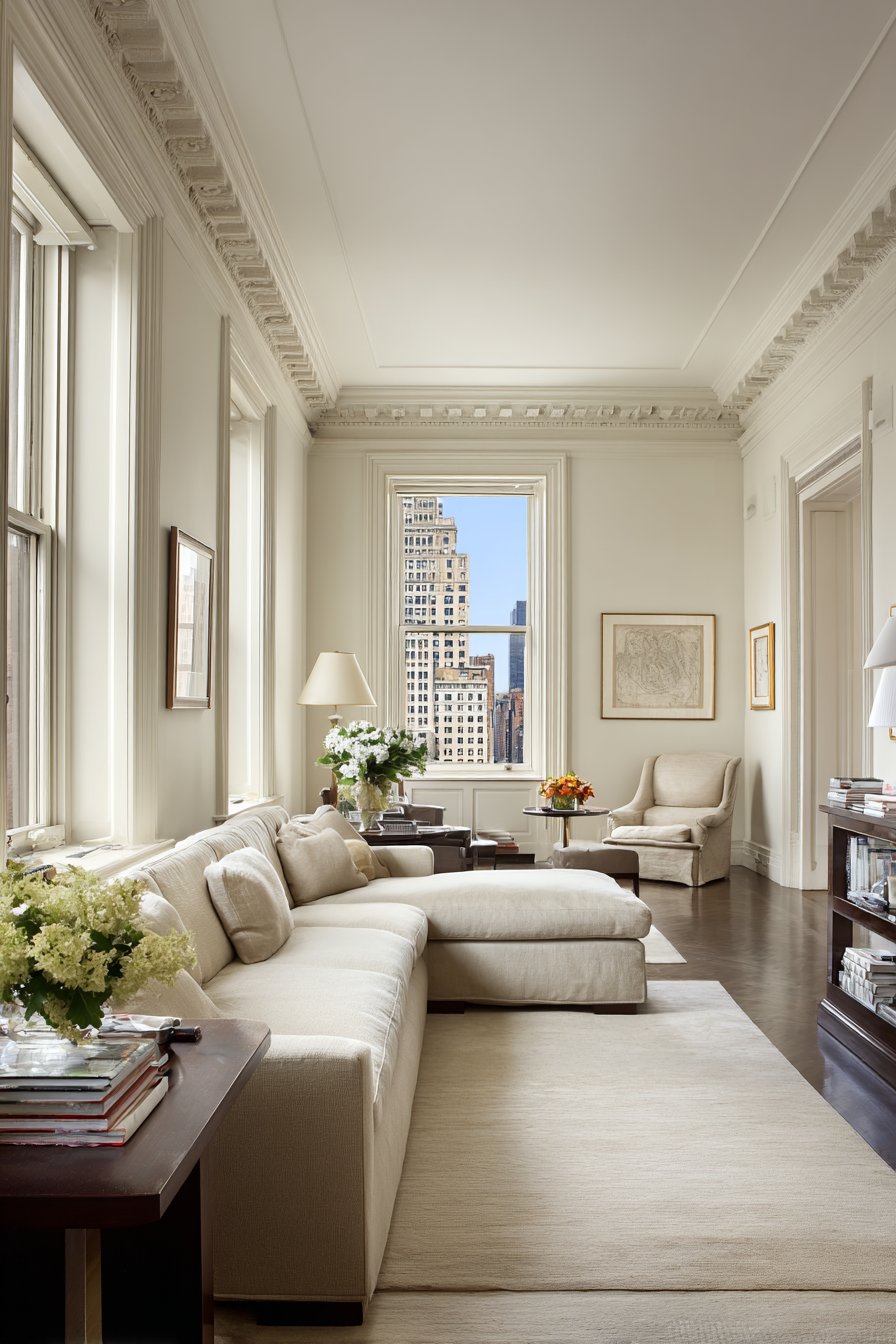
Interior design photography captures the complete layout effectively. The image shows how rectangular spaces accommodate multiple functions comfortably. Proper zoning prevents the single-use limitation many associate with elongated rooms.
Key Design Tips:
- Create distinct functional zones using furniture arrangements and area rugs
- Position primary seating near natural light sources
- Use continuous flooring to maintain visual connection between zones
- Include intimate spaces like reading nooks at room ends
- Ensure each zone has appropriate lighting for its intended function
4. Symmetrical Formal Rectangular Layout
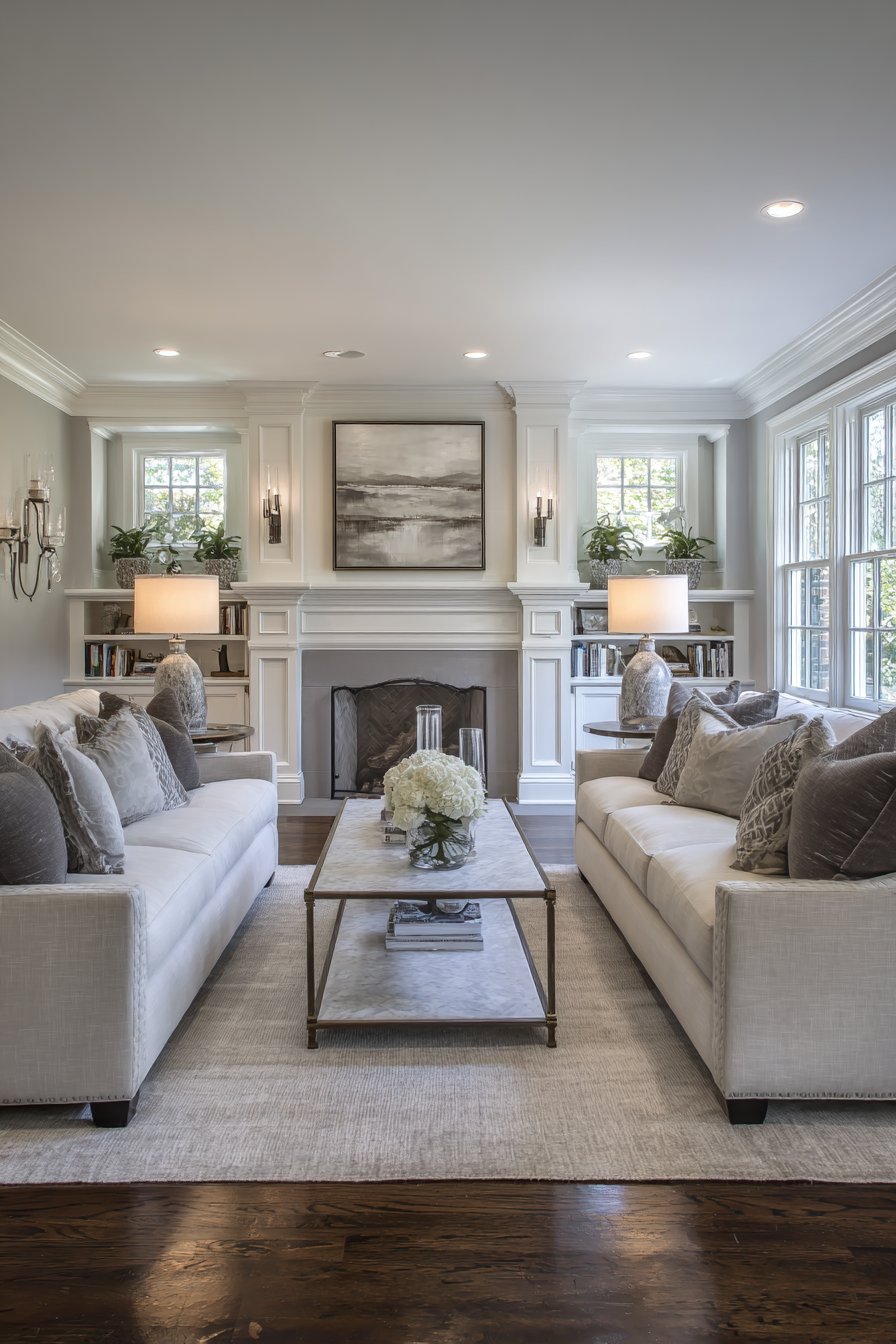
Symmetry creates formal elegance in this rectangular living room design. Matching sofas face each other along the longer walls. This balanced arrangement suits traditional aesthetic preferences. A rectangular marble coffee table with brass legs centers between the sofas.
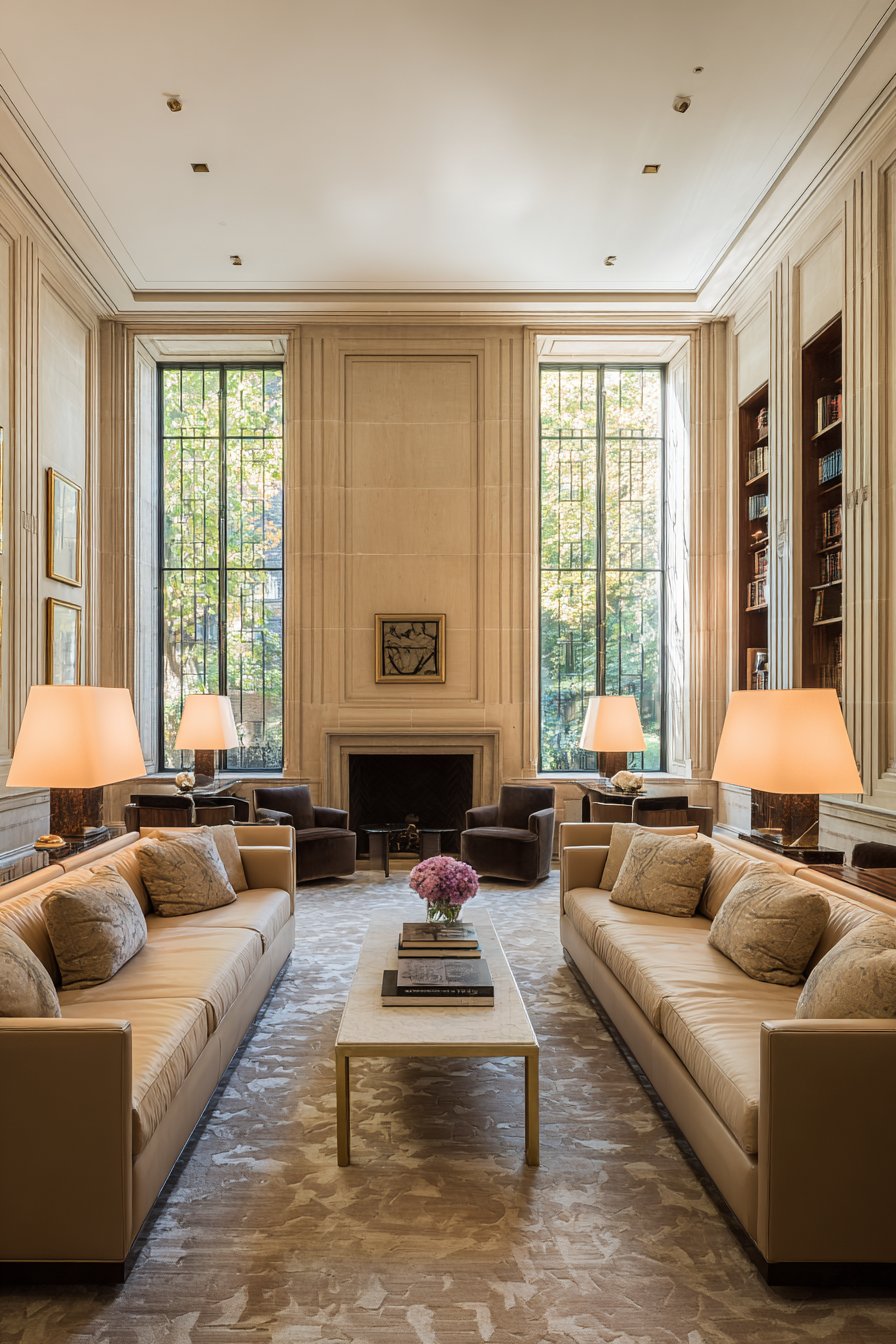
Identical table lamps on matching end tables provide symmetrical lighting. The repetition reinforces the formal balanced design. The far short wall features a statement fireplace with built-in shelving. The fireplace serves as the room’s natural focal point.
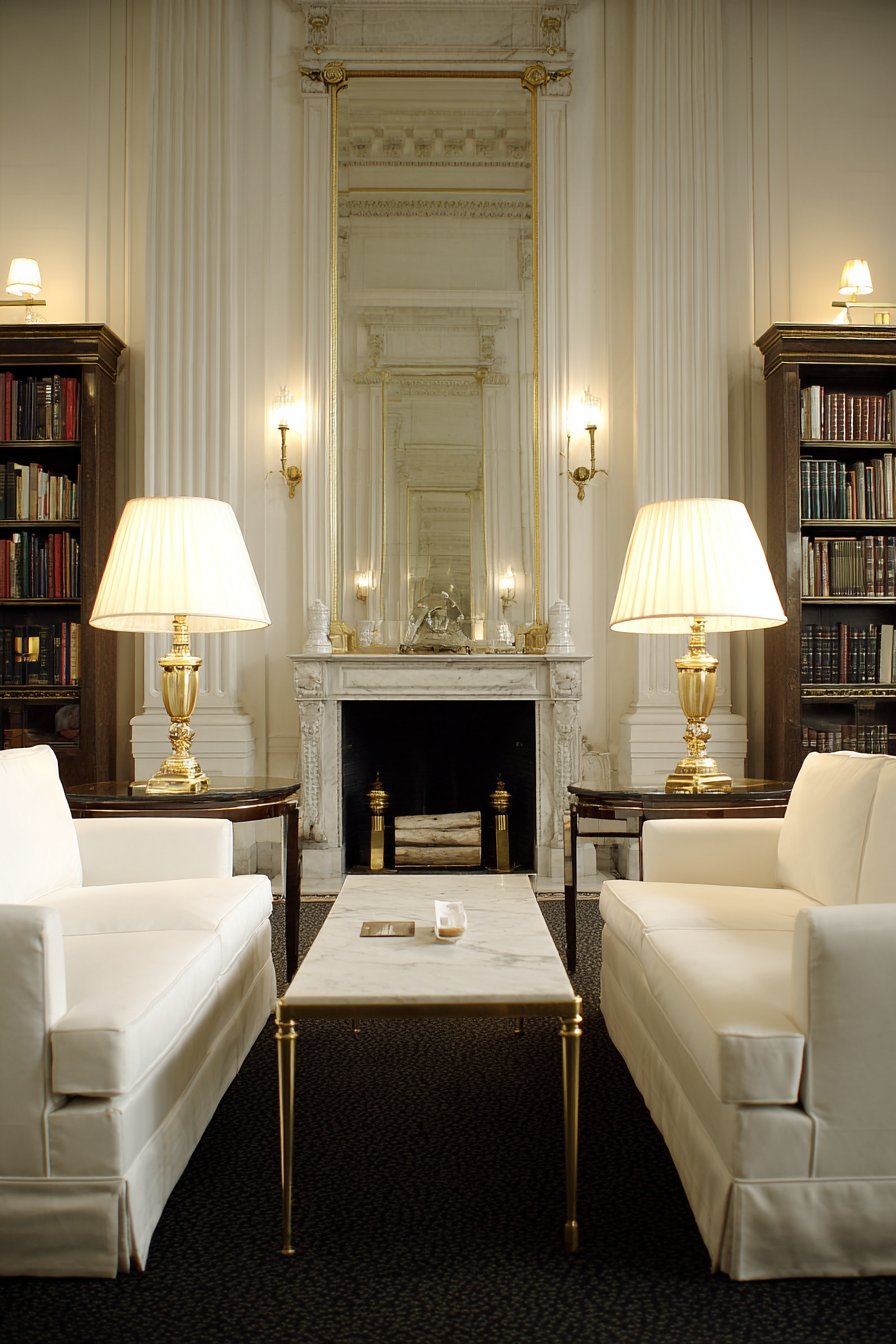
Built-in shelving flanks the fireplace symmetrically. This architectural feature adds storage while maintaining design balance. The marble and brass materials introduce luxury elements. These sophisticated finishes elevate the formal aesthetic.
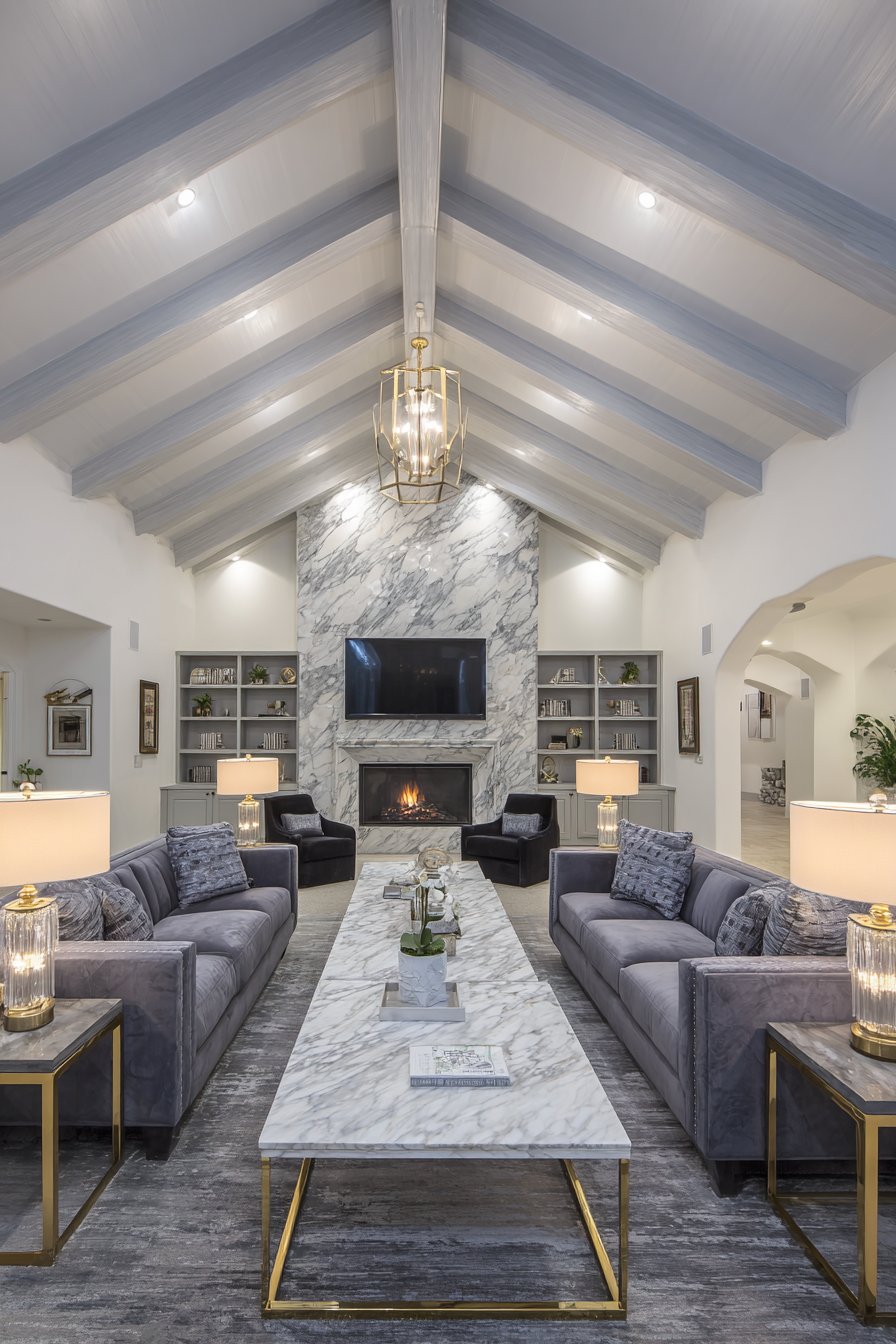
Wide-angle architectural photography showcases the symmetrical furniture placement. Natural lighting highlights material textures and formal balance. This design demonstrates how symmetry suits rectangular proportions beautifully.
Key Design Tips:
- Create mirror-image furniture arrangements for formal aesthetics
- Use matching pairs of sofas, tables, and lamps
- Position focal points like fireplaces on short walls
- Choose luxury materials like marble and brass for sophistication
- Ensure consistent spacing between symmetrical elements
5. Modern Floating Furniture Arrangement
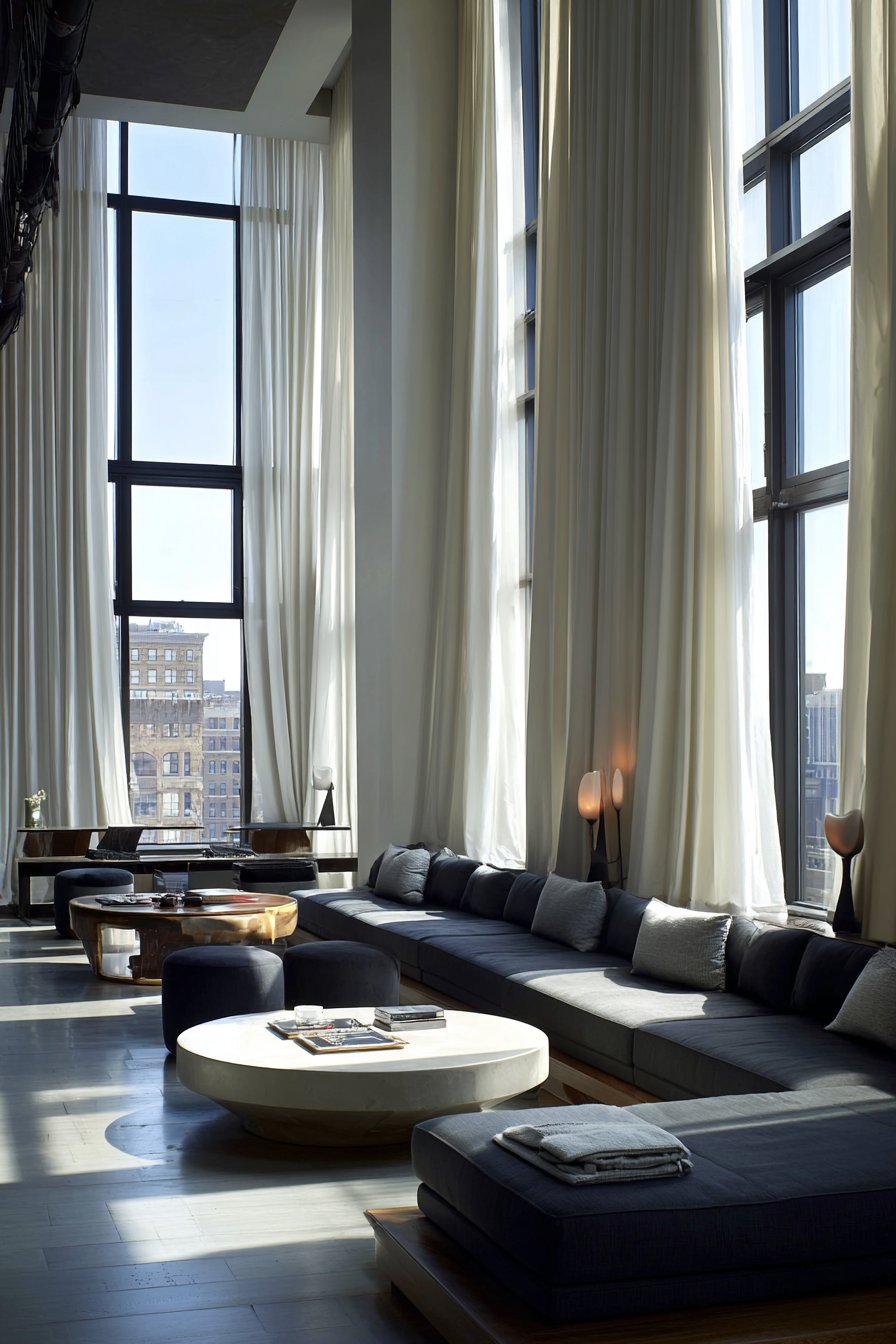
Floating furniture creates spaciousness in this modern rectangular living room. A low-profile sectional in charcoal fabric forms an L-shape. The sectional positions are intentionally in one corner. This arrangement leaves the center of the rectangular space open and flowing.
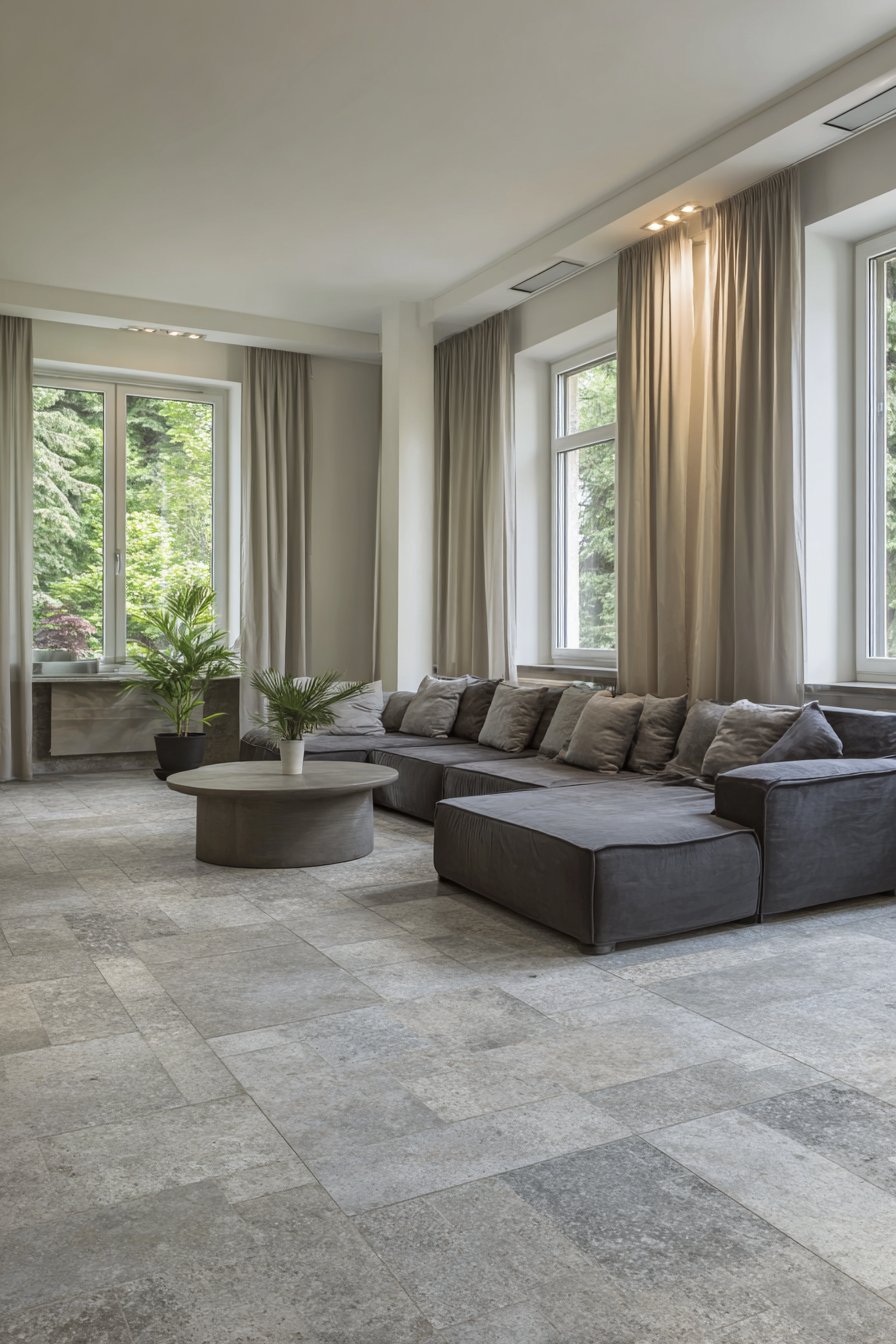
A round coffee table provides geometric contrast to angular room shapes. Large format porcelain tiles in light grey run continuously. The consistent flooring enhances the sense of length. Floor-to-ceiling curtains in natural linen frame windows along one wall.
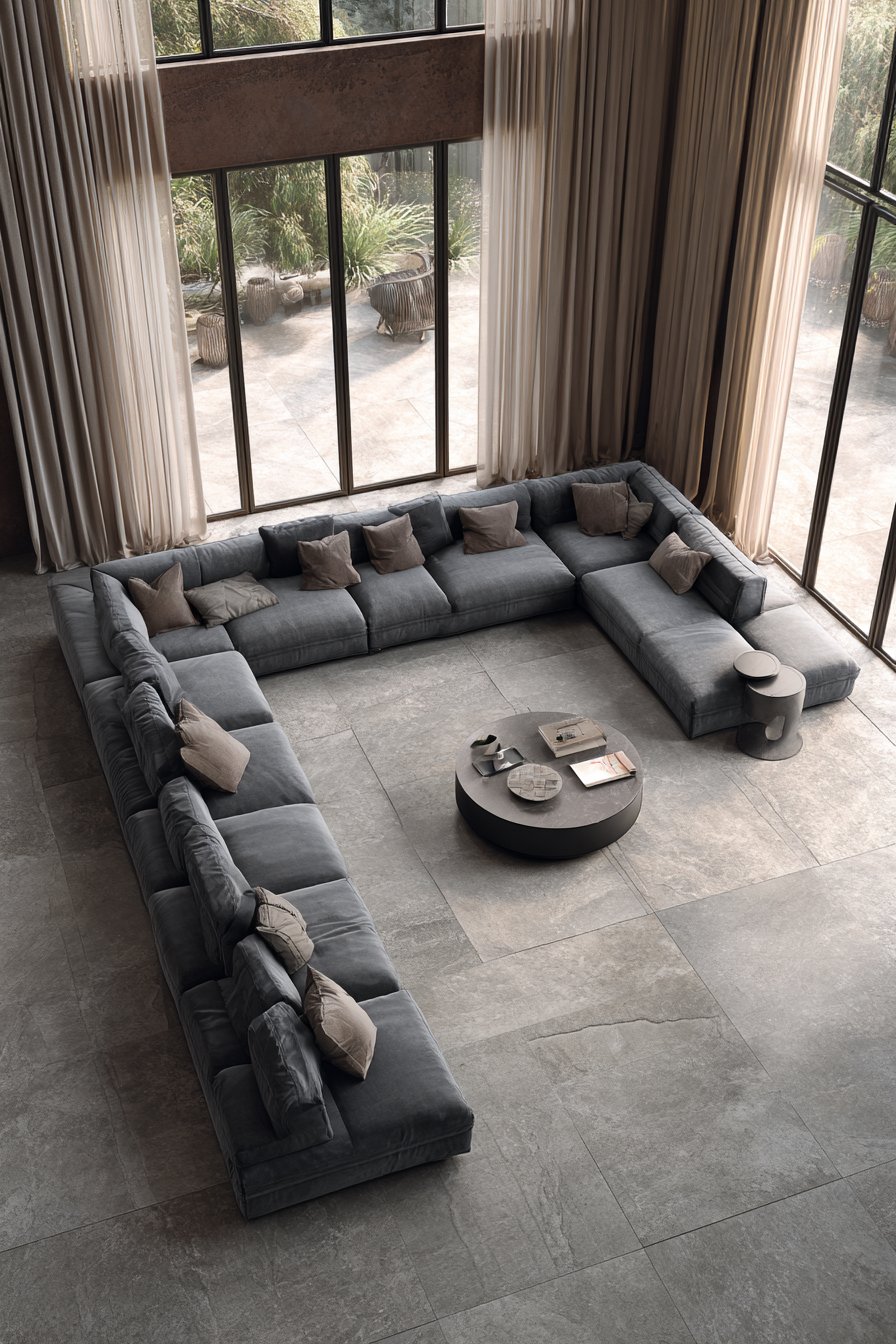
The floating arrangement prevents the space from feeling boxed in. Furniture doesn’t touch all walls simultaneously. This creates breathing room and emphasizes spatial volume. The low-profile sectional maintains sight lines across the room.
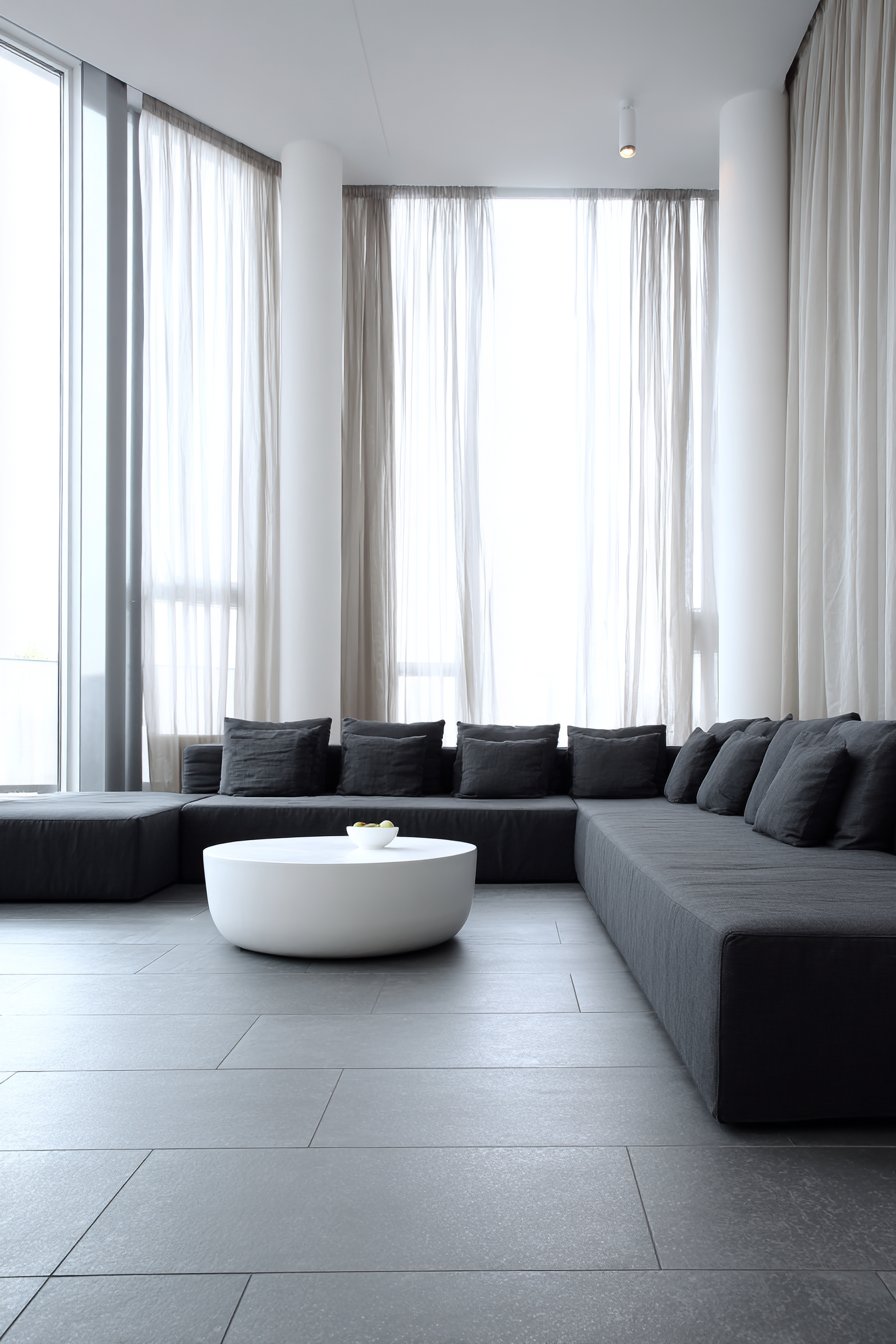
Professional photography captures the open flow and modern interpretation. Balanced exposure shows how floating arrangements work in rectangular layouts. The design proves less furniture often creates more impactful spaces.
Key Design Tips:
- Position furniture away from walls to create floating arrangements
- Choose low-profile pieces that maintain open sight lines
- Use round tables to soften angular room shapes
- Install floor-to-ceiling curtains to emphasize height
- Select continuous flooring to enhance length perception
6. Media Wall Entertainment Center Focus
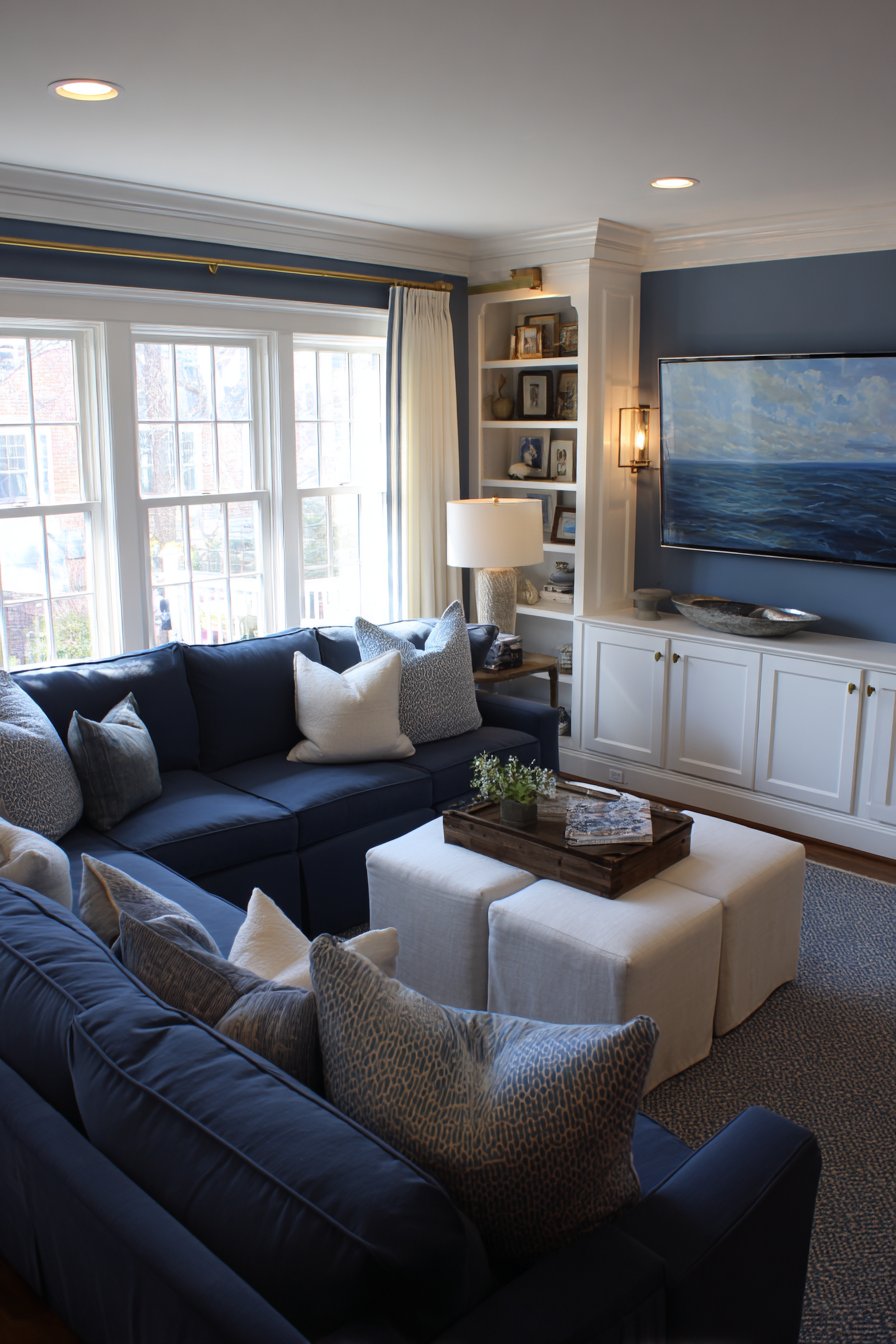
The media wall anchors this rectangular living room design effectively. A wall-mounted television centers on the short end wall. Custom built-in cabinetry in white oak surrounds the entertainment center. A long modular sofa in navy blue faces the feature wall.
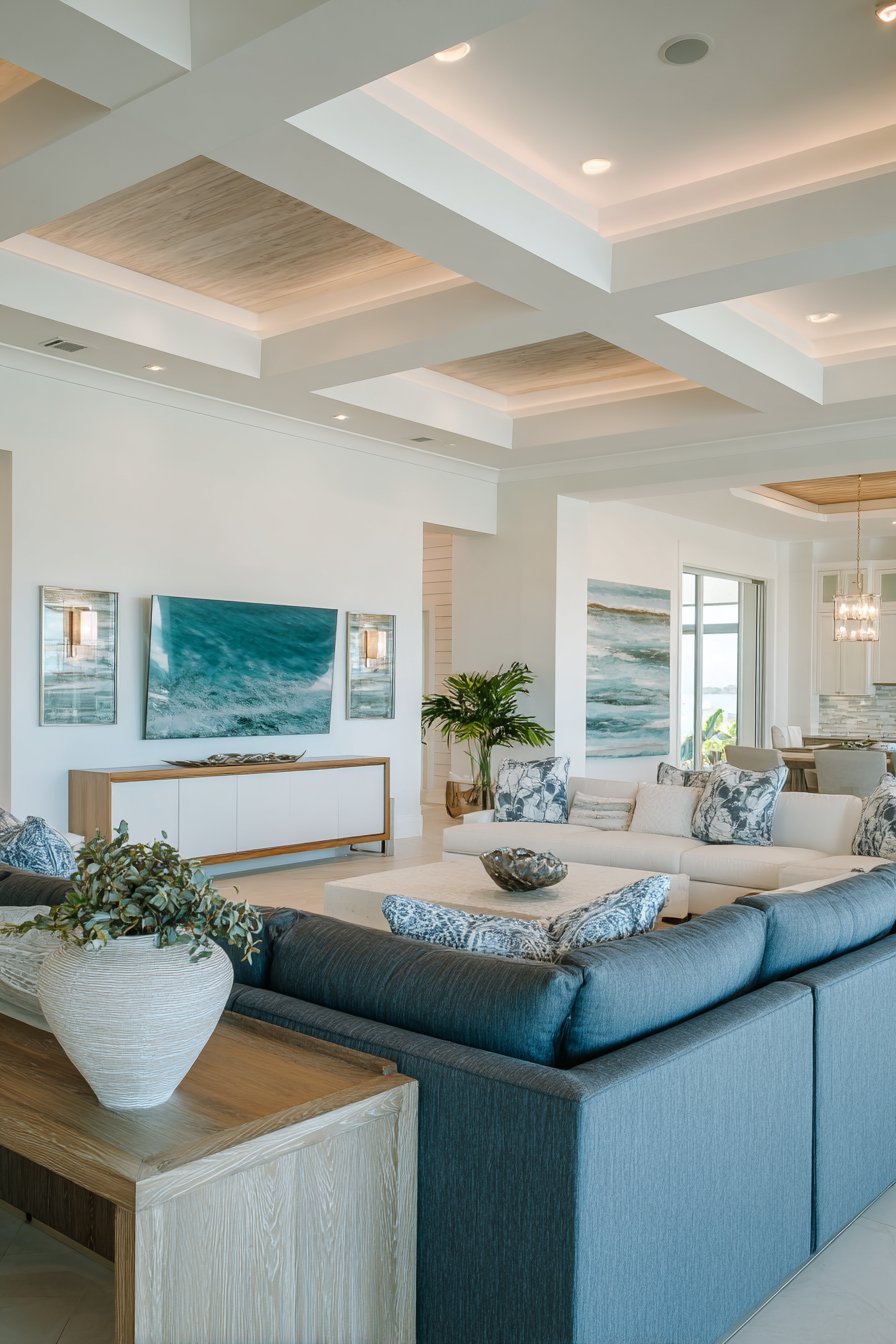
Ottomans provide flexible seating arrangements. They can be rearranged based on activities and guest numbers. A rectangular console table behind the sofa adds functional surface space. This creates visual separation between the seating and any back area.
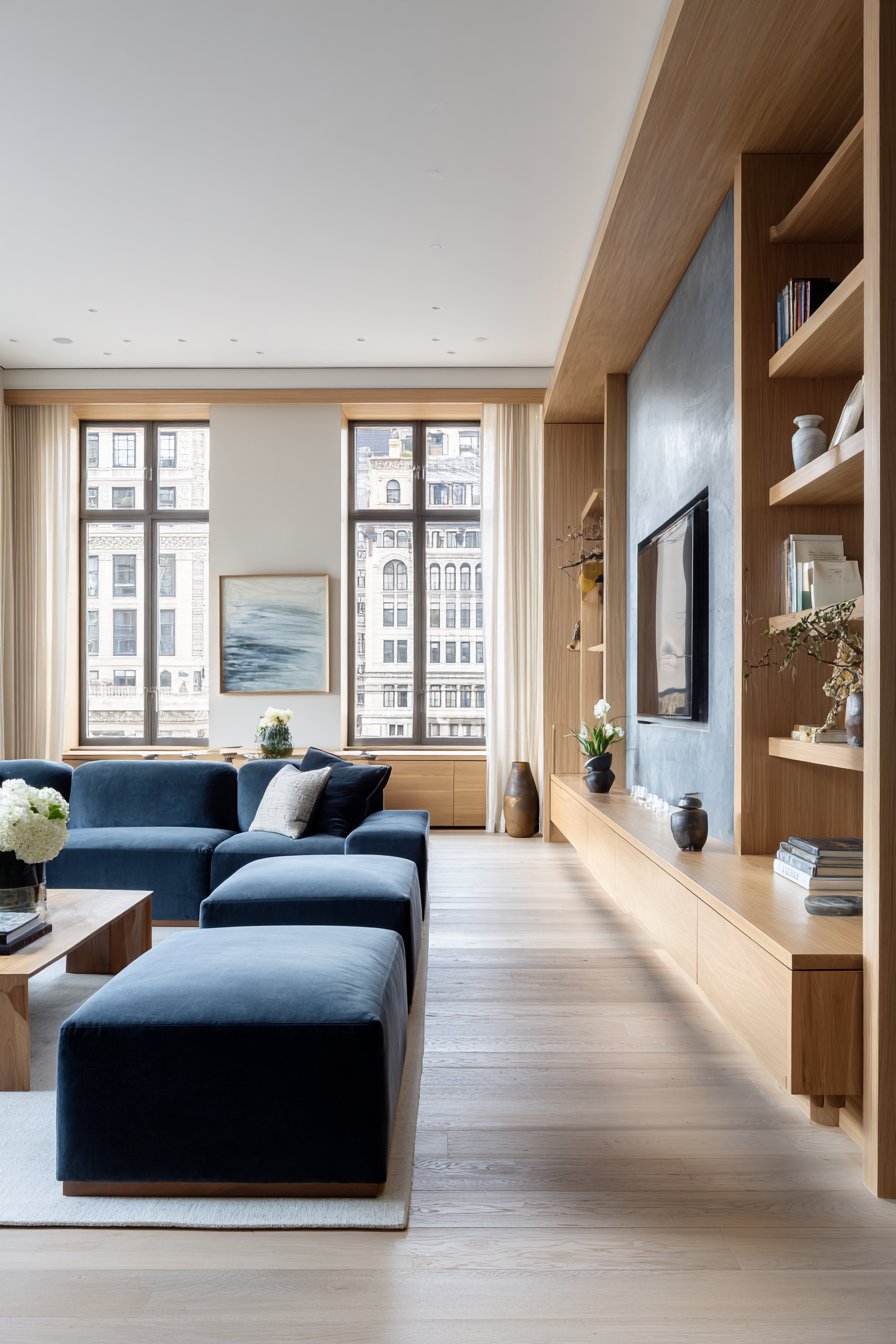
Recessed ceiling lights combine with picture lights on artwork. This layered illumination creates depth and visual interest. The white oak cabinetry provides substantial storage for media equipment. The built-in approach maintains clean lines throughout the space.
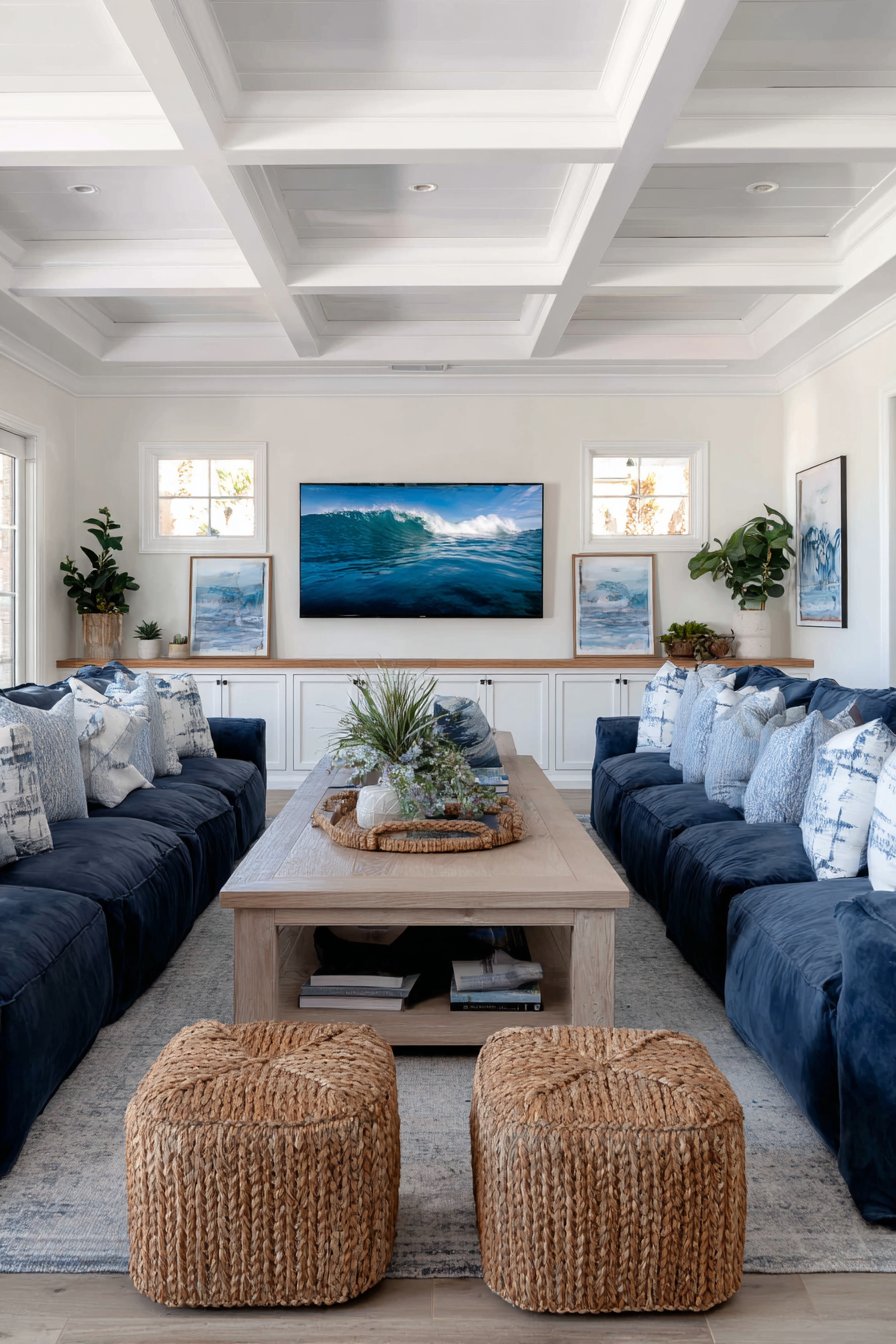
Wide-angle photography demonstrates how the media wall anchors the design. The rectangular space maintains comfortable viewing distances. This layout proves ideal for entertainment-focused living rooms.
Key Design Tips:
- Position media centers on short walls for optimal viewing angles
- Use custom built-ins for cohesive storage solutions
- Choose modular seating for arrangement flexibility
- Add console tables behind sofas for additional function
- Layer lighting with recessed fixtures and accent lights
7. Bay Window Built-In Seating Feature
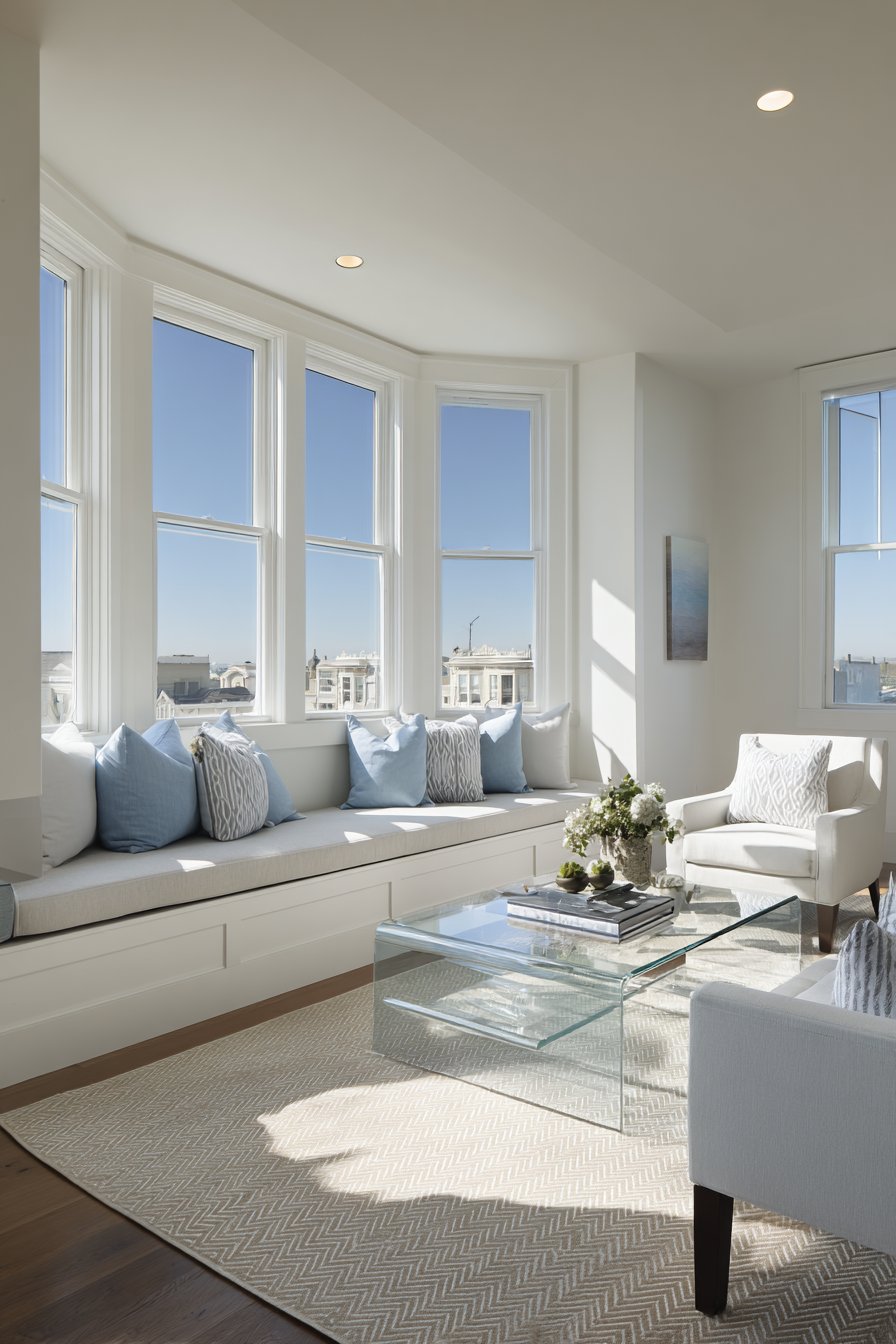
Bay window seating transforms this rectangular living room beautifully. Built-in cushioned bench seating runs along one longer wall. Storage compartments hide underneath the window seat. The main seating area includes a loveseat and two chairs.
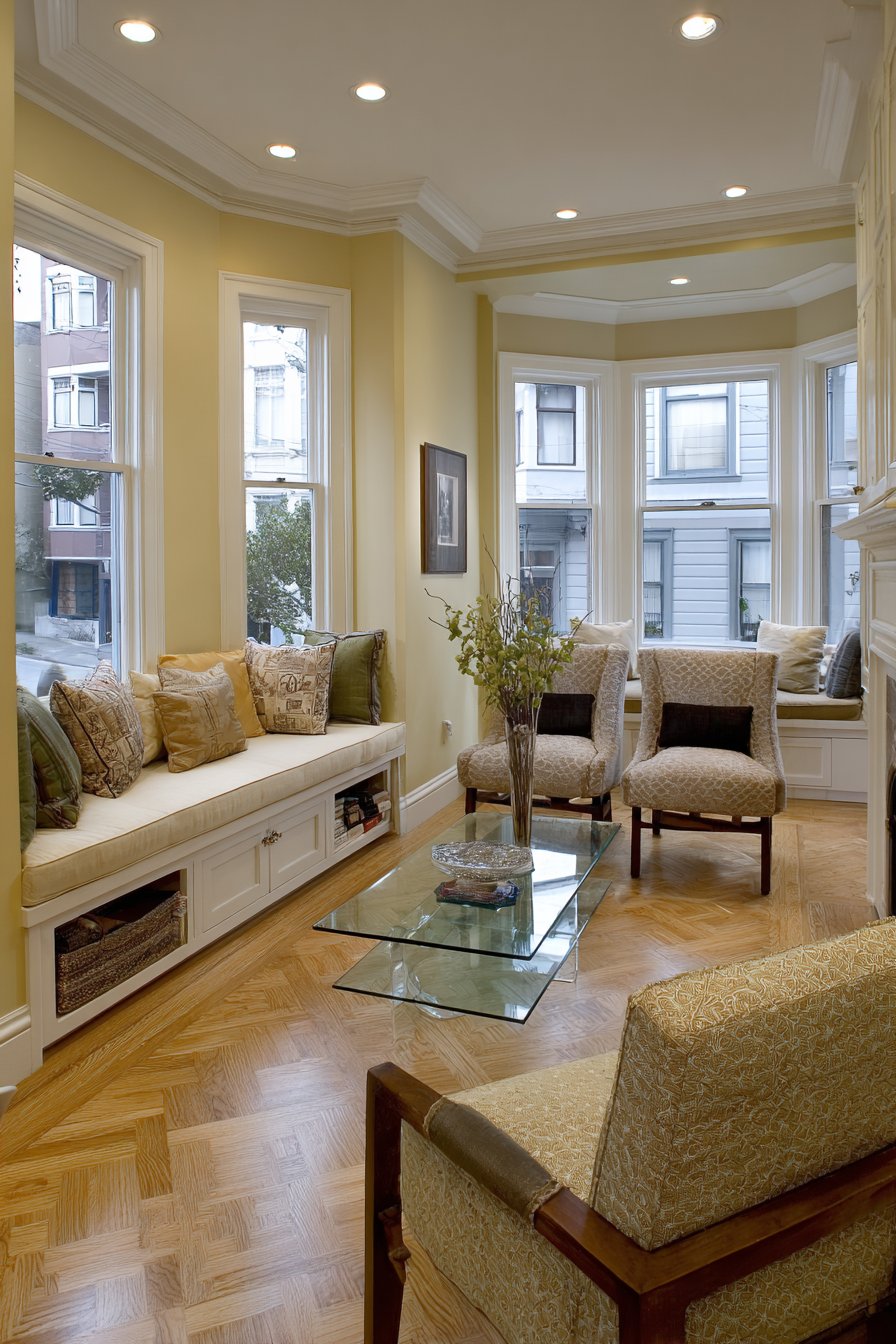
These pieces are arranged in a conversational cluster. A rectangular glass coffee table centers the grouping. Natural light pours through the bay window generously. This creates bright, even illumination throughout the rectangular space.
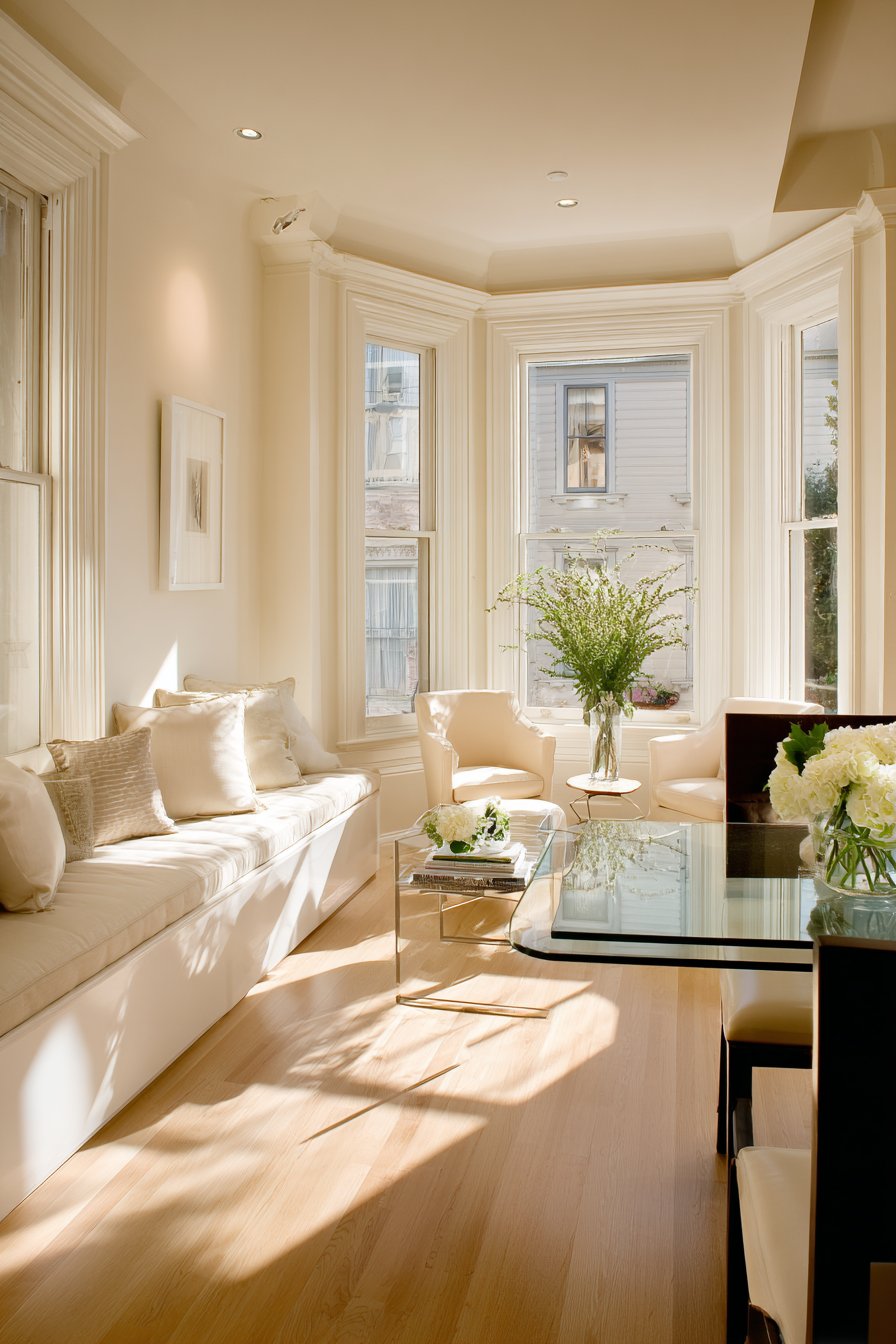
Light hardwood flooring features diagonal pattern installation. This adds visual interest to the long room. The diagonal lines prevent monotonous length emphasis. The bay window creates architectural distinction in otherwise simple rectangular proportions.
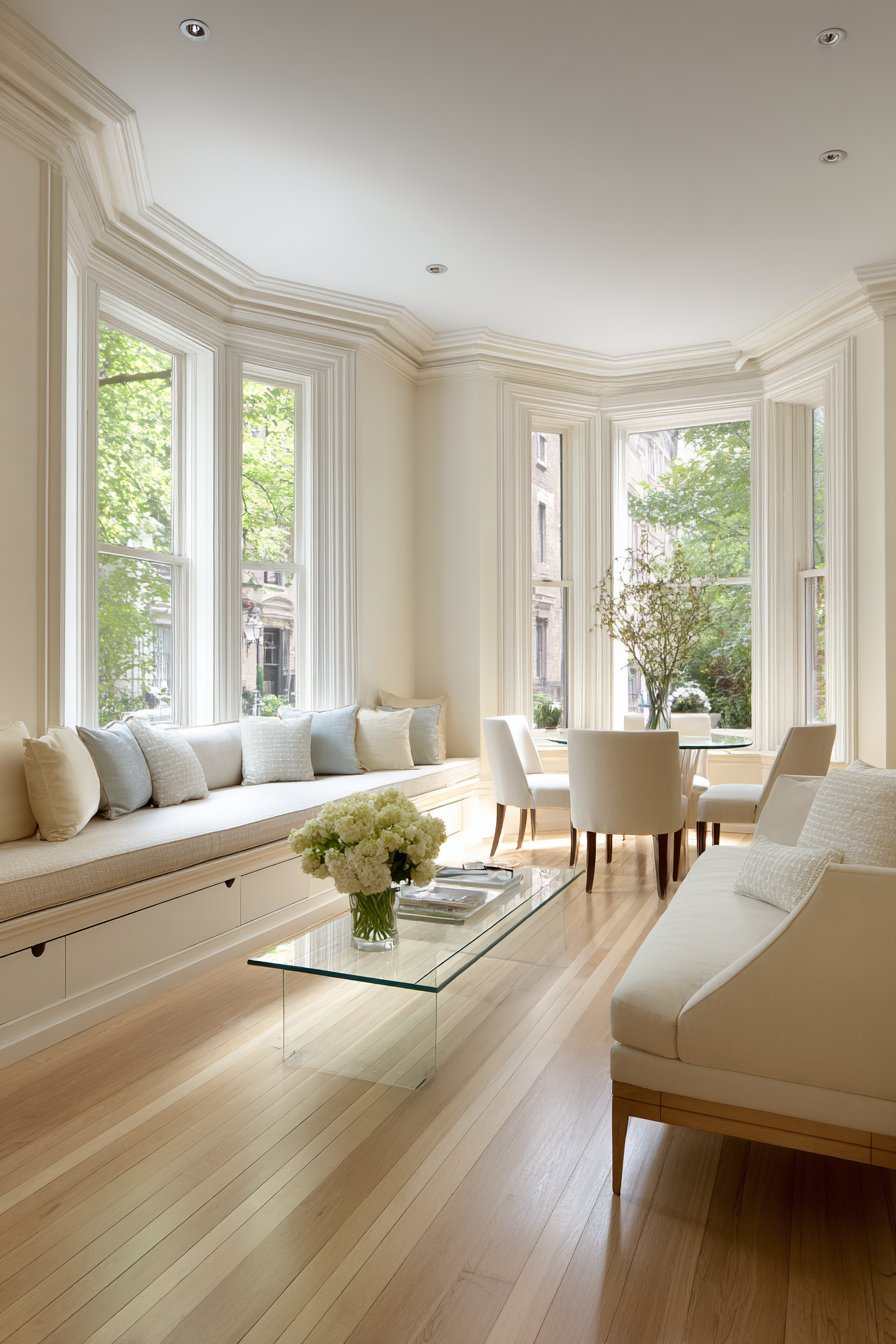
Professional photography captures the bay window architectural detail. The image shows how this feature enhances functionality and light quality. Window seats provide additional seating without consuming floor space.
Key Design Tips:
- Utilize bay windows for built-in seating with storage
- Arrange main furniture in conversational clusters
- Install flooring diagonally to break up rectangular monotony
- Choose glass coffee tables to maintain light flow
- Maximize natural light through minimal window treatments
8. Off-Center Fireplace Asymmetrical Design
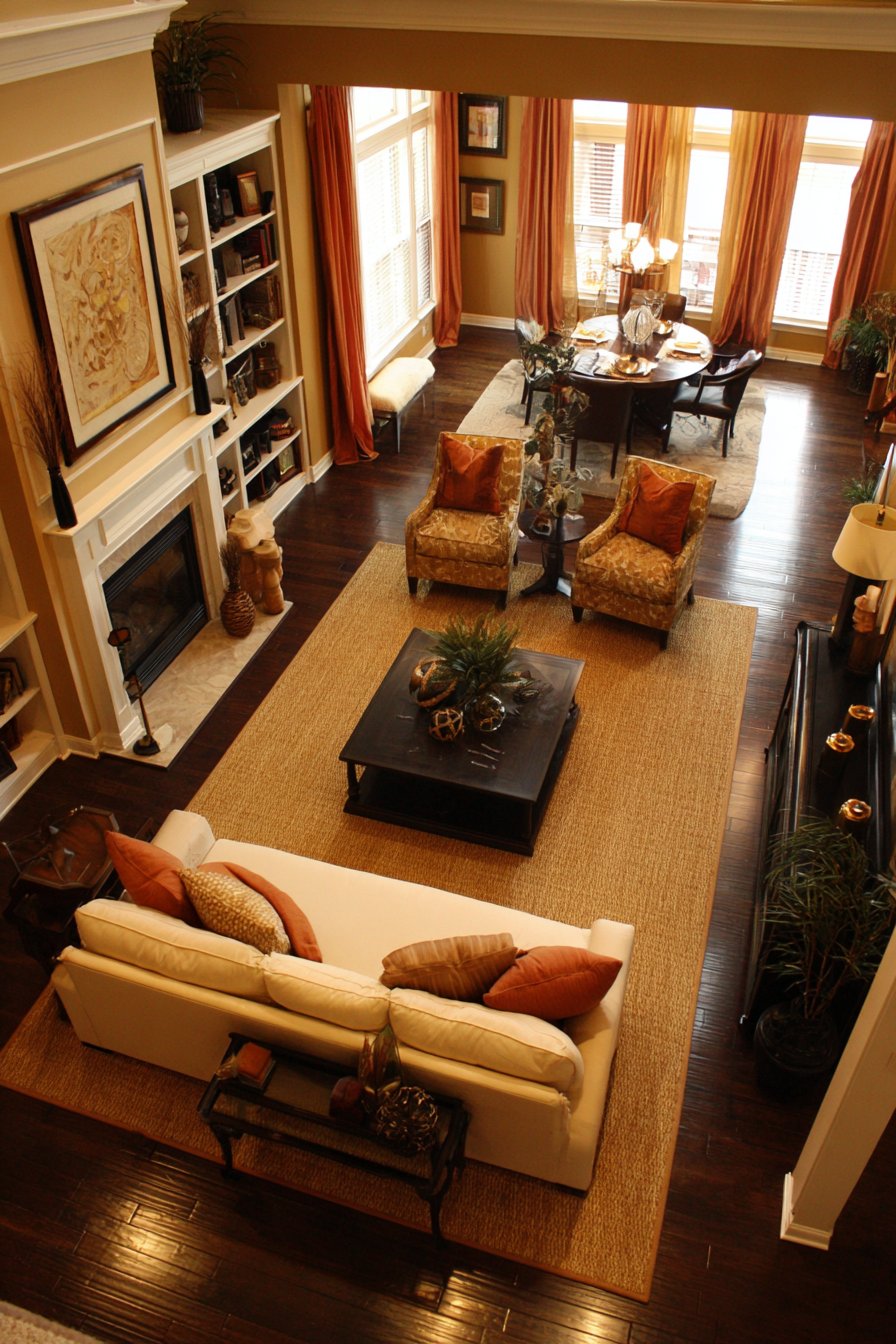
An off-center fireplace creates interesting asymmetry in this rectangular living room. The fireplace is positioned on one long wall unexpectedly. Furniture is arranged to accommodate this unique focal point. A three-seat sofa angles slightly toward the fireplace.
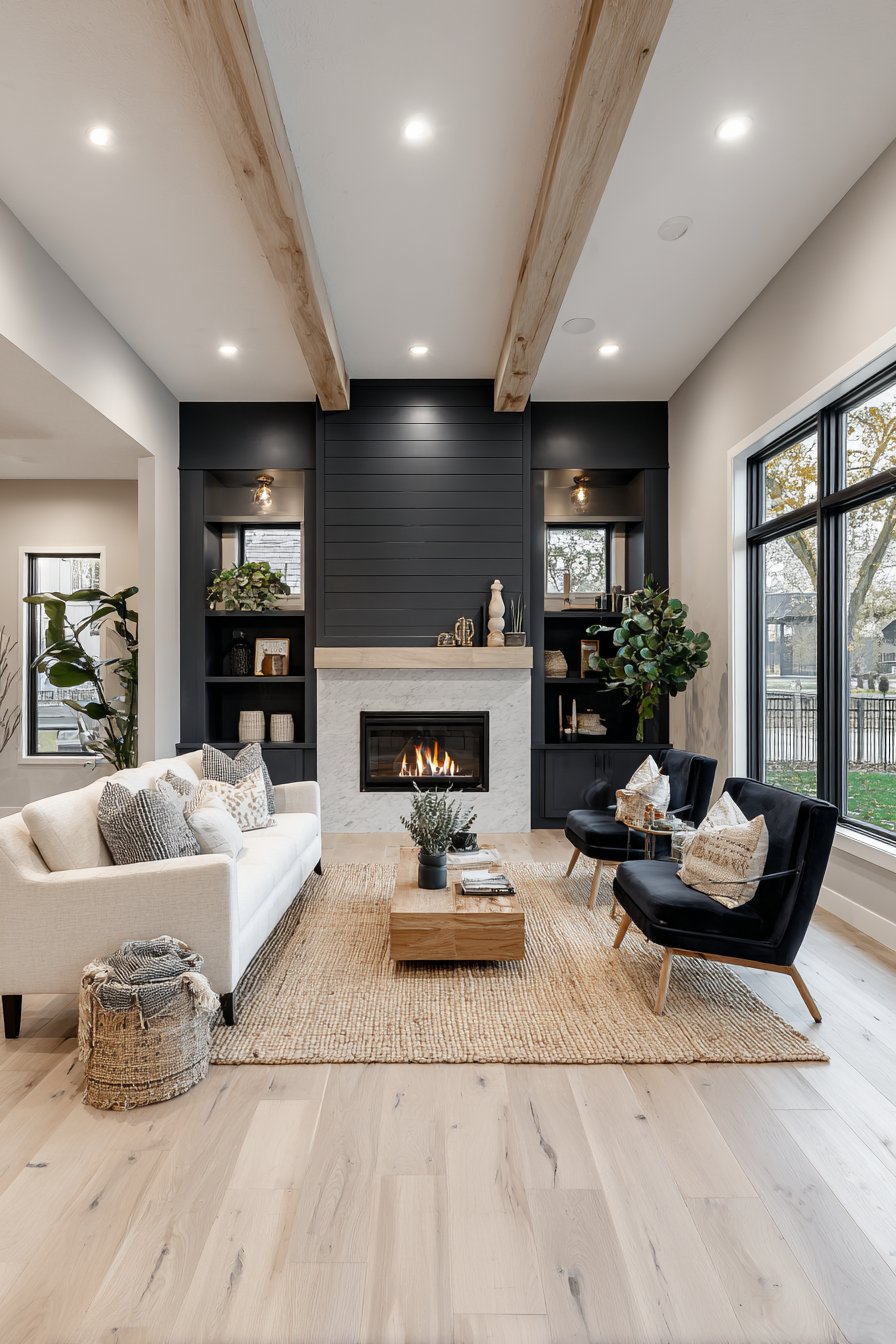
Two accent chairs complete the seating arrangement naturally. A rectangular jute area rug grounds the furniture grouping. The rug allows views of refinished oak flooring. Built-in bookshelves flank the fireplace, adding character and storage.
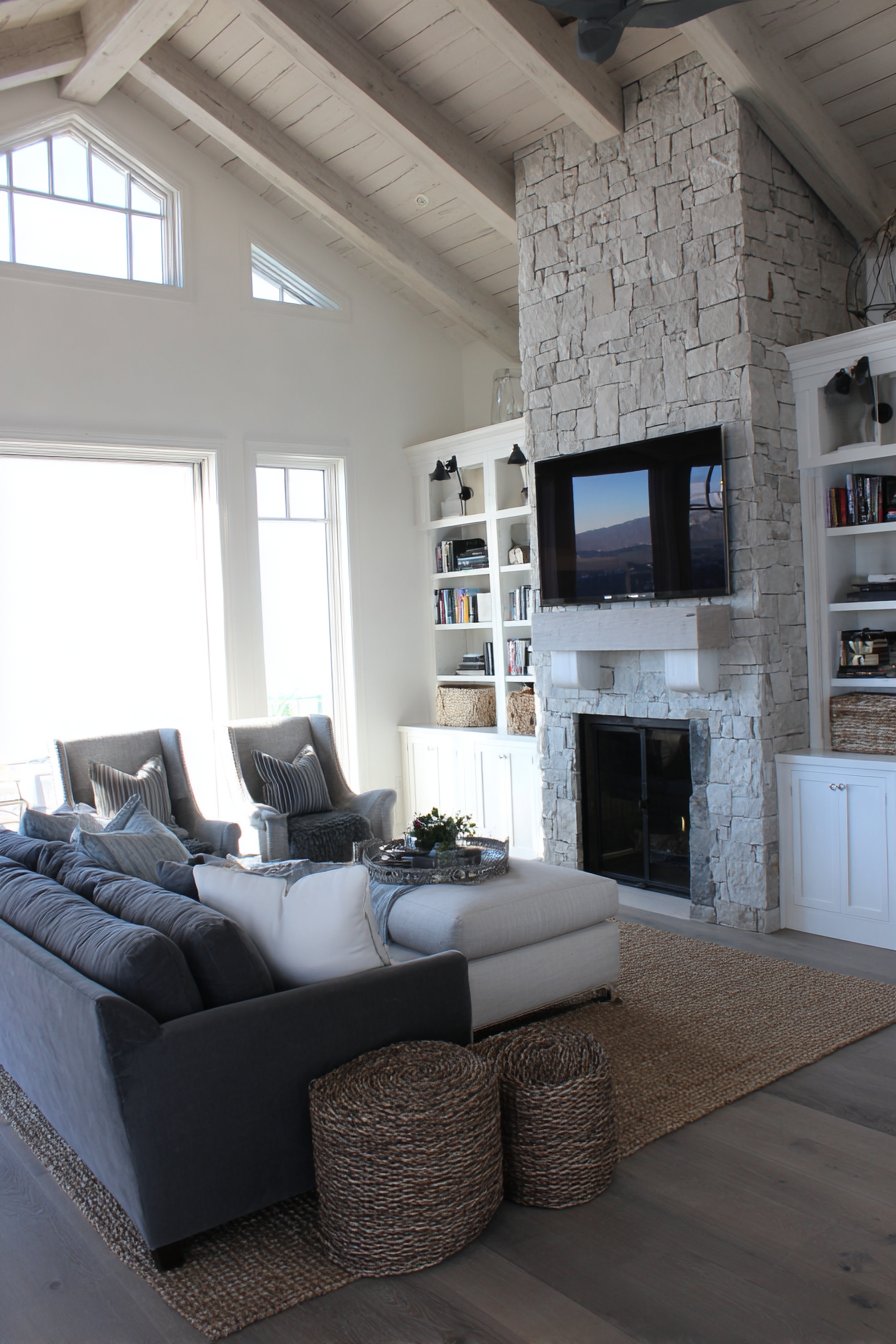
Natural afternoon light enters through windows on the opposite long wall. This cross-light creates dimensional shadows and highlights. The asymmetrical arrangement prevents the static feeling of centered focal points. The design feels organic and collected rather than overly planned.
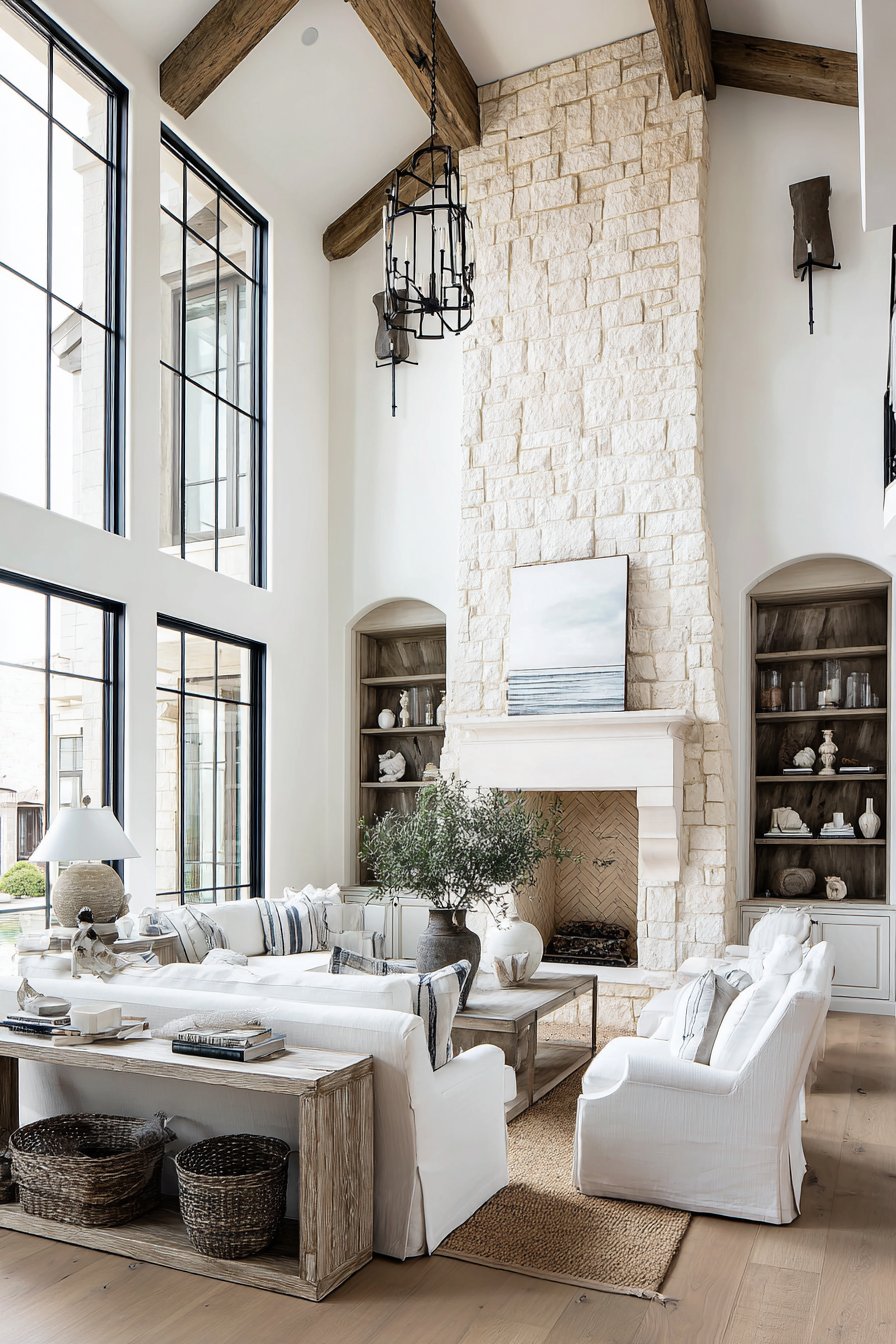
Interior design photography captures the creative furniture arrangement. Wide-angle perspective shows how the layout works with unique architectural features. This design proves rectangles don’t require symmetry for success.
Key Design Tips:
- Embrace off-center architectural features rather than fighting them
- Angle furniture slightly toward focal points for natural flow
- Use area rugs to define seating zones without covering the entire floors
- Add built-in storage around fireplaces for an integrated design
- Position windows on opposite walls for cross-lighting benefits
9. Double-Height Dramatic Vertical Space
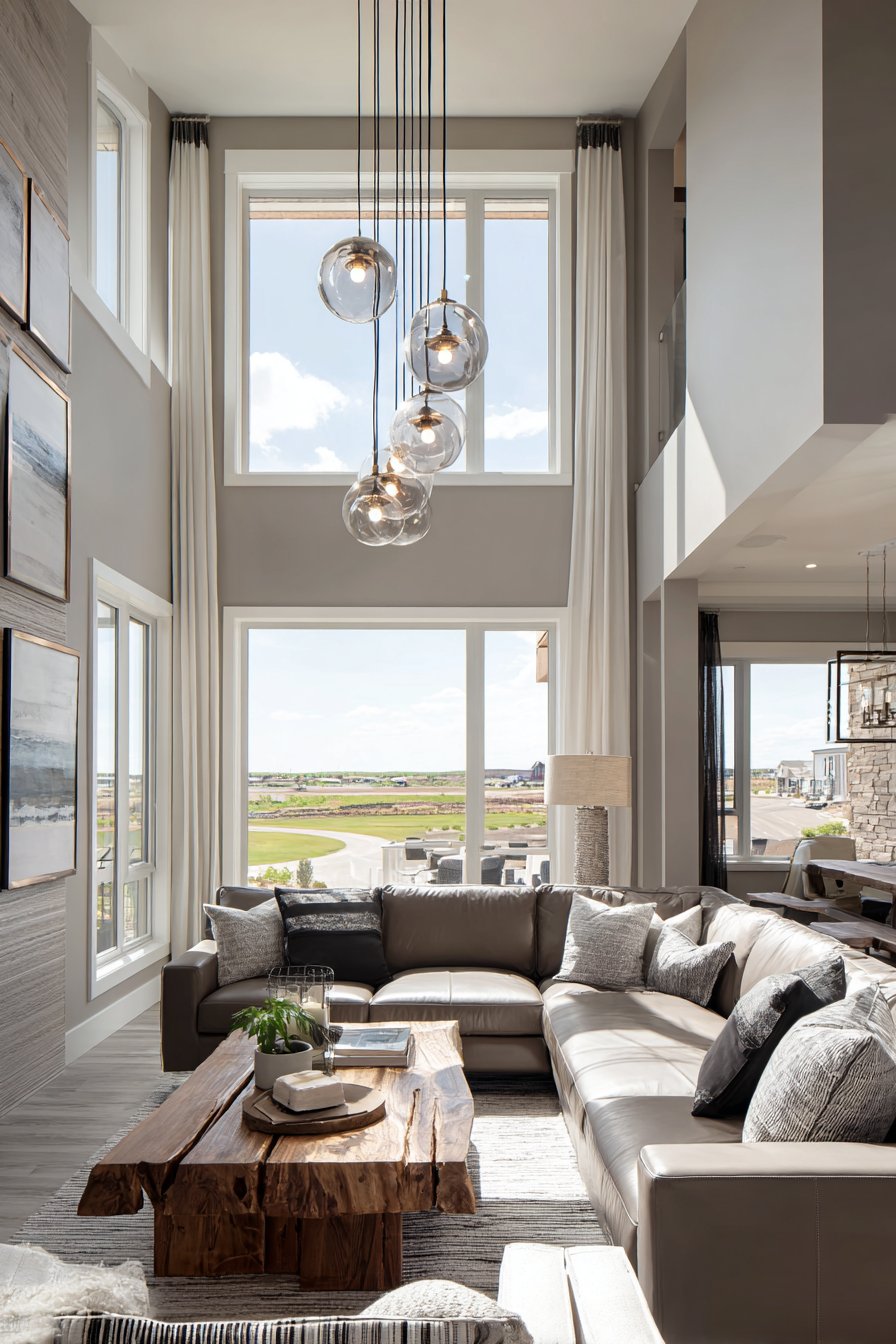
Tall windows create dramatic vertical emphasis in this double-height rectangular living room. Windows span one long wall entirely. A large sectional in warm taupe leather positions to capture views. The natural light floods the elevated space generously.
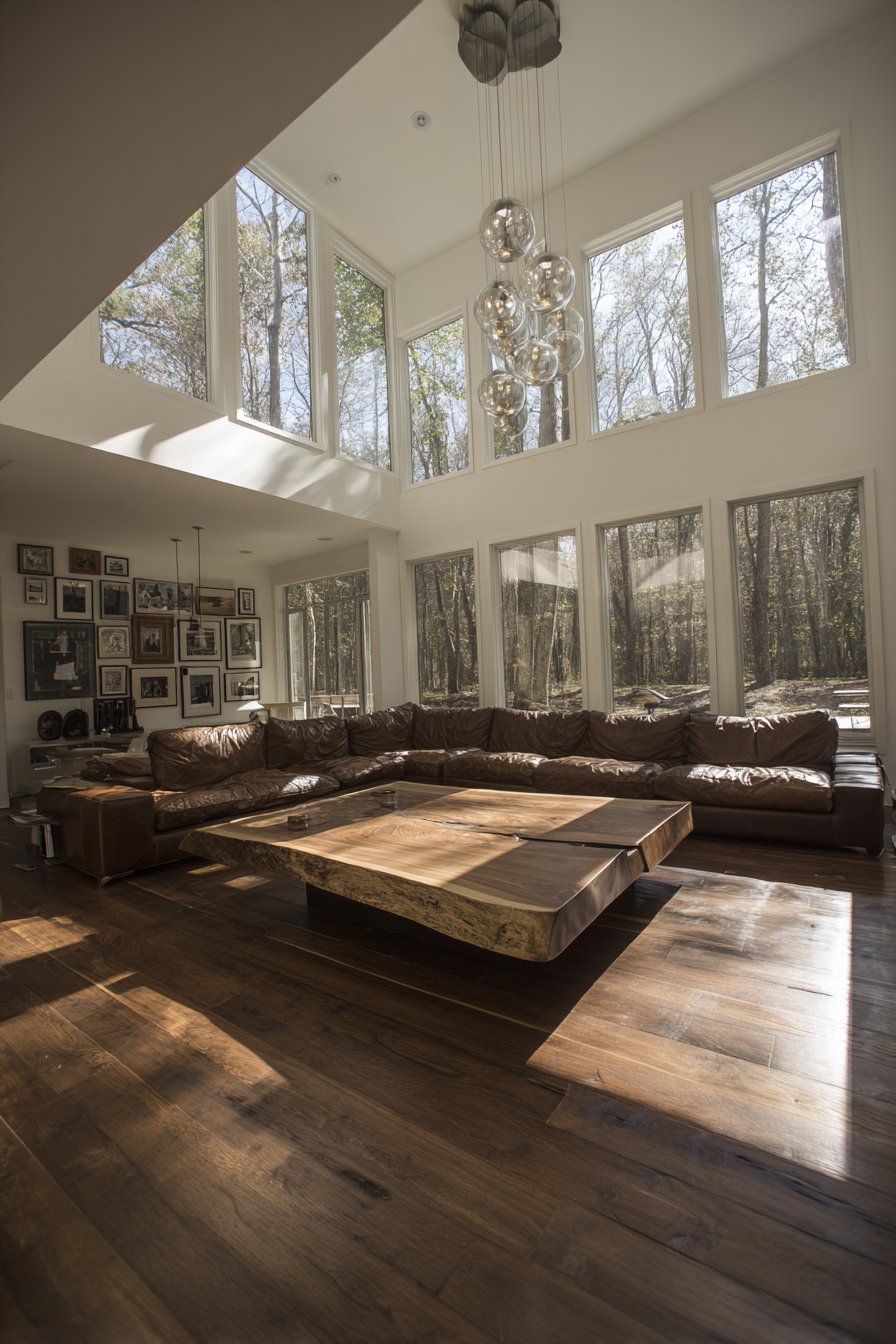
A rectangular live-edge wood coffee table provides organic texture contrast. A statement pendant light fixture hangs from the high ceiling. Multiple globes draw eyes upward, emphasizing vertical dimension. The upper wall portions feature gallery arrangements.
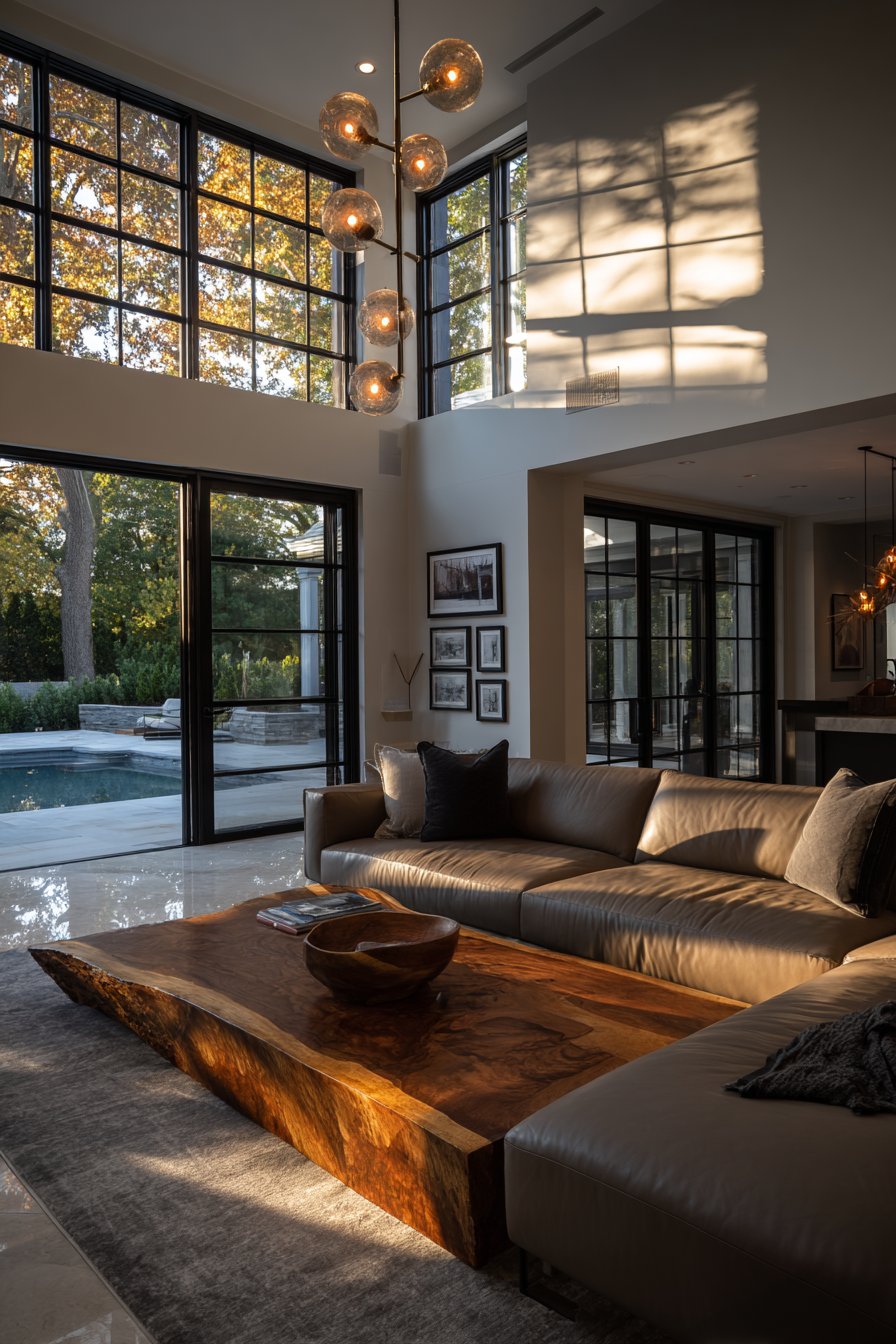
The artwork emphasizes the room’s impressive height. High ceilings change rectangular room dynamics significantly. The vertical dimension prevents tunnel-vision effects. The space feels expansive rather than confined.
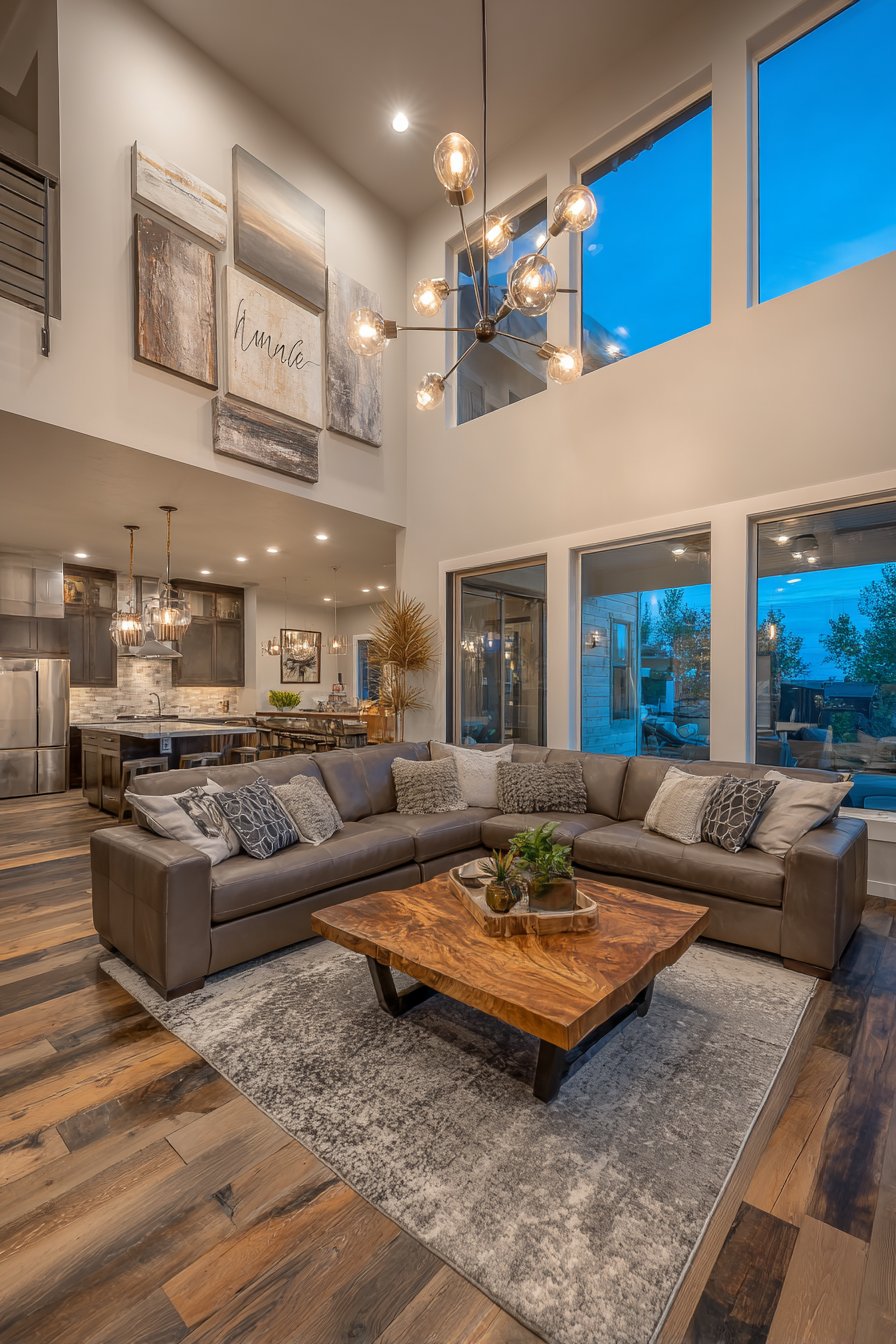
Professional photography captures both horizontal and vertical dimensions. Balanced exposure shows how the space manages scale successfully. Double-height rectangles offer unique design possibilities unavailable in standard ceiling heights.
Key Design Tips:
- Use tall windows to emphasize vertical dimensions
- Hang statement lighting fixtures that draw eyes upward
- Create gallery walls on upper wall portions
- Choose substantial furniture that suits the room’s scale
- Position seating to take advantage of views and natural light
10. Open Concept Flow Connection
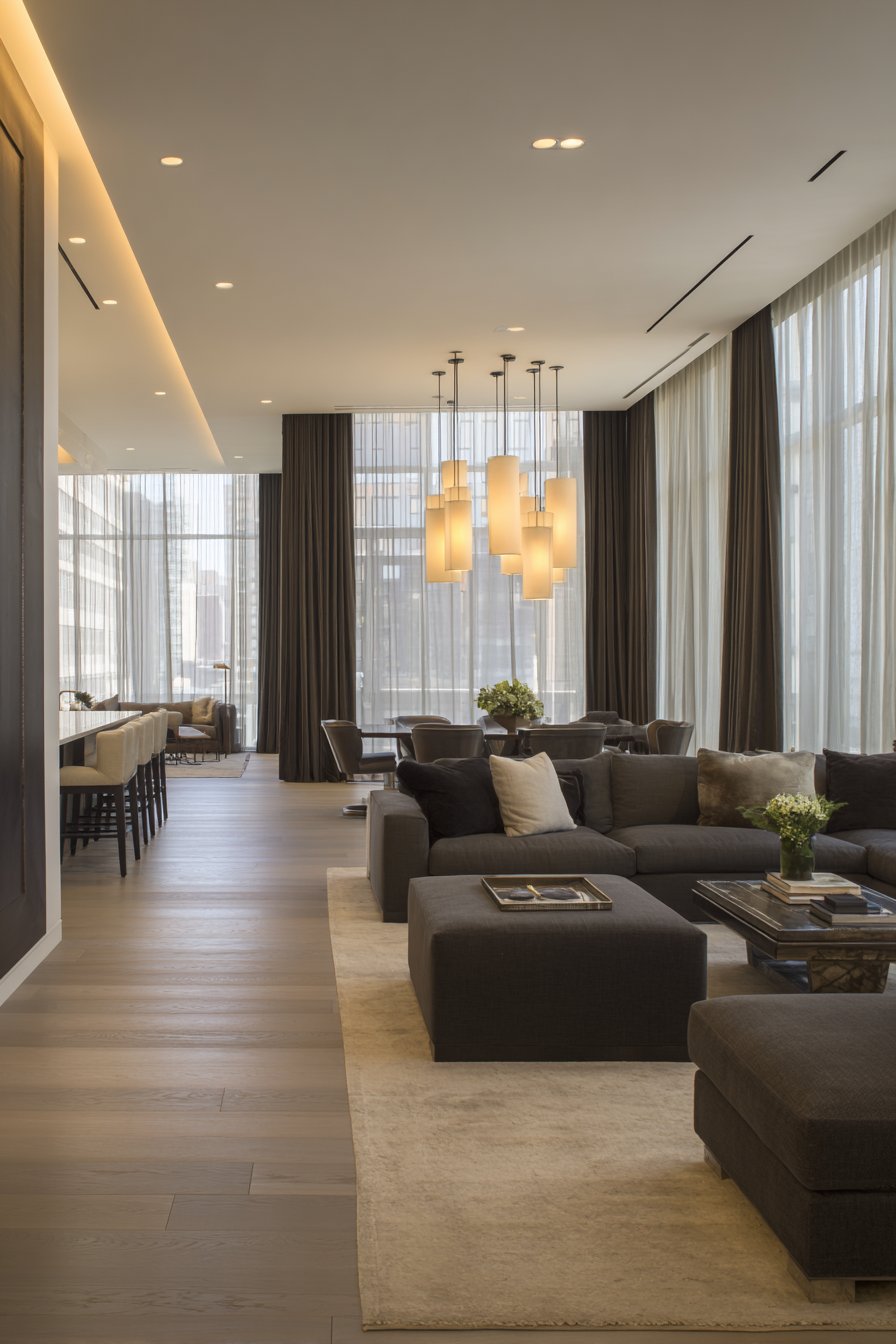
Furniture placement defines the living zone in this open concept rectangular space. The design flows into an adjacent dining area. A grey fabric sectional creates visual boundaries. The sectional maintains sight lines through the rectangular space.
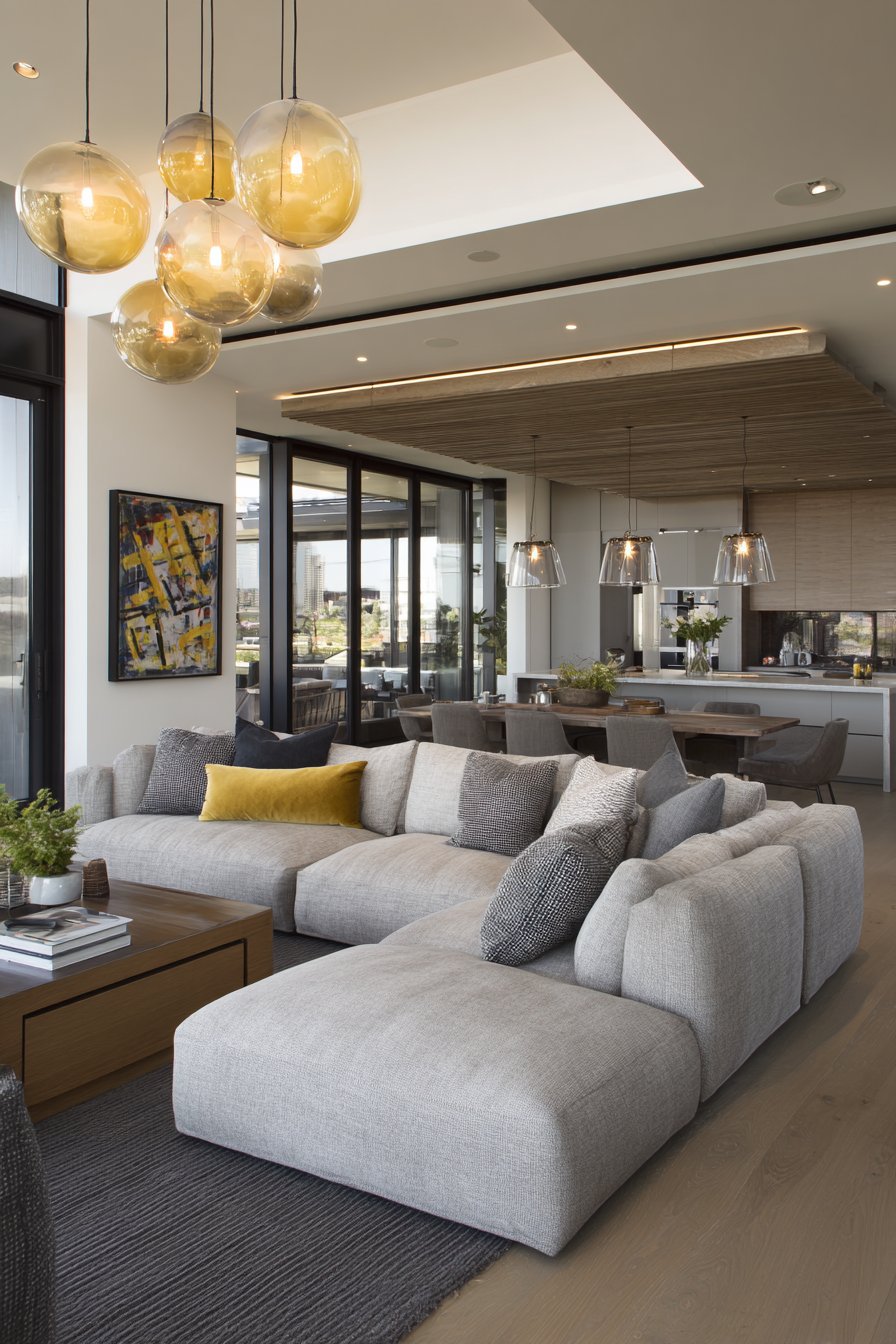
A rectangular ottoman with storage doubles as a coffee table. Light oak wide-plank flooring runs through combined spaces. The continuous material creates cohesive flow. Pendant lights over the dining table provide ambient illumination.
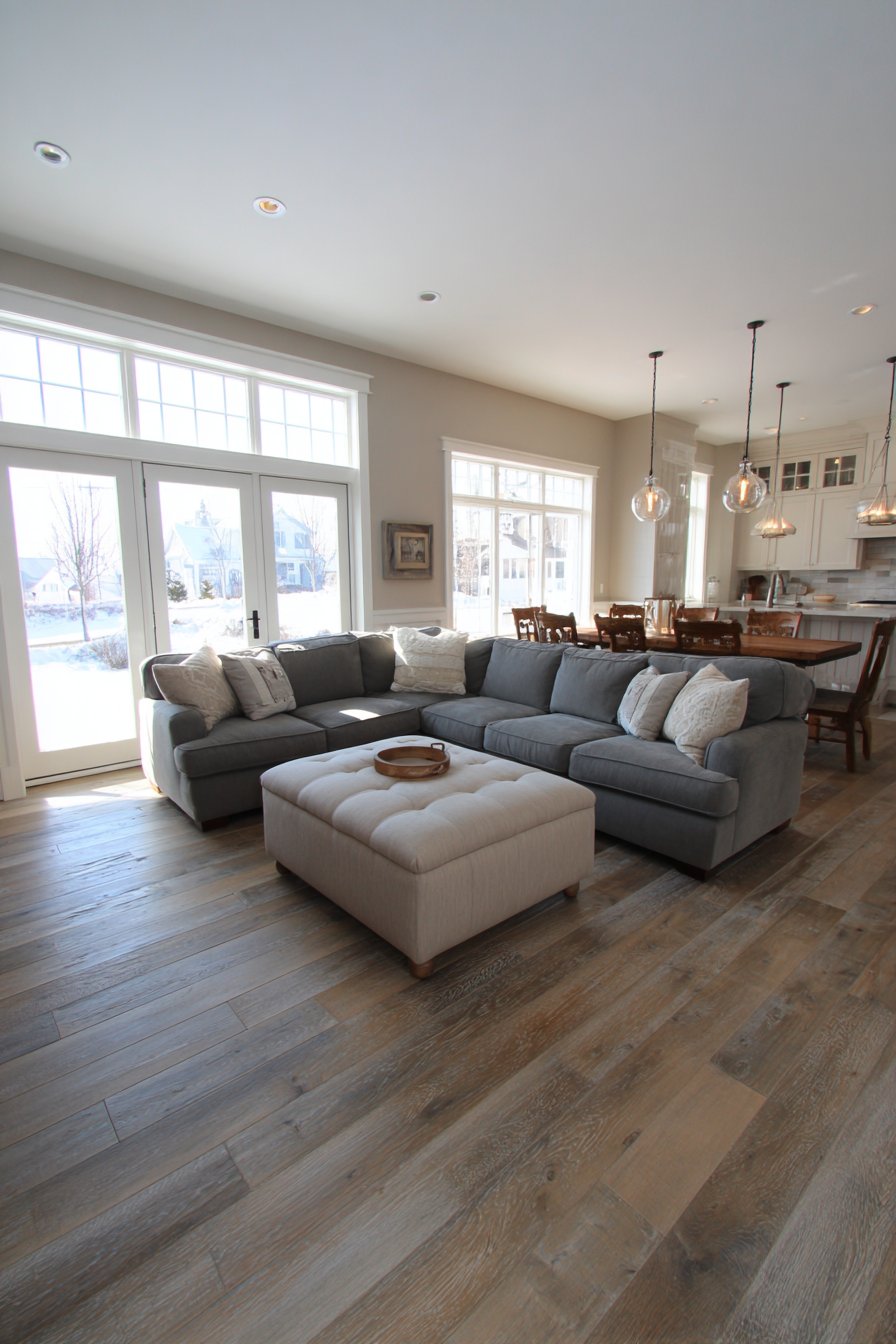
The lighting spills naturally into the living area. This integrated approach suits open concept designs. The living room maintains distinct identity despite open connections. Thoughtful furniture arrangement and consistent materials achieve this balance.
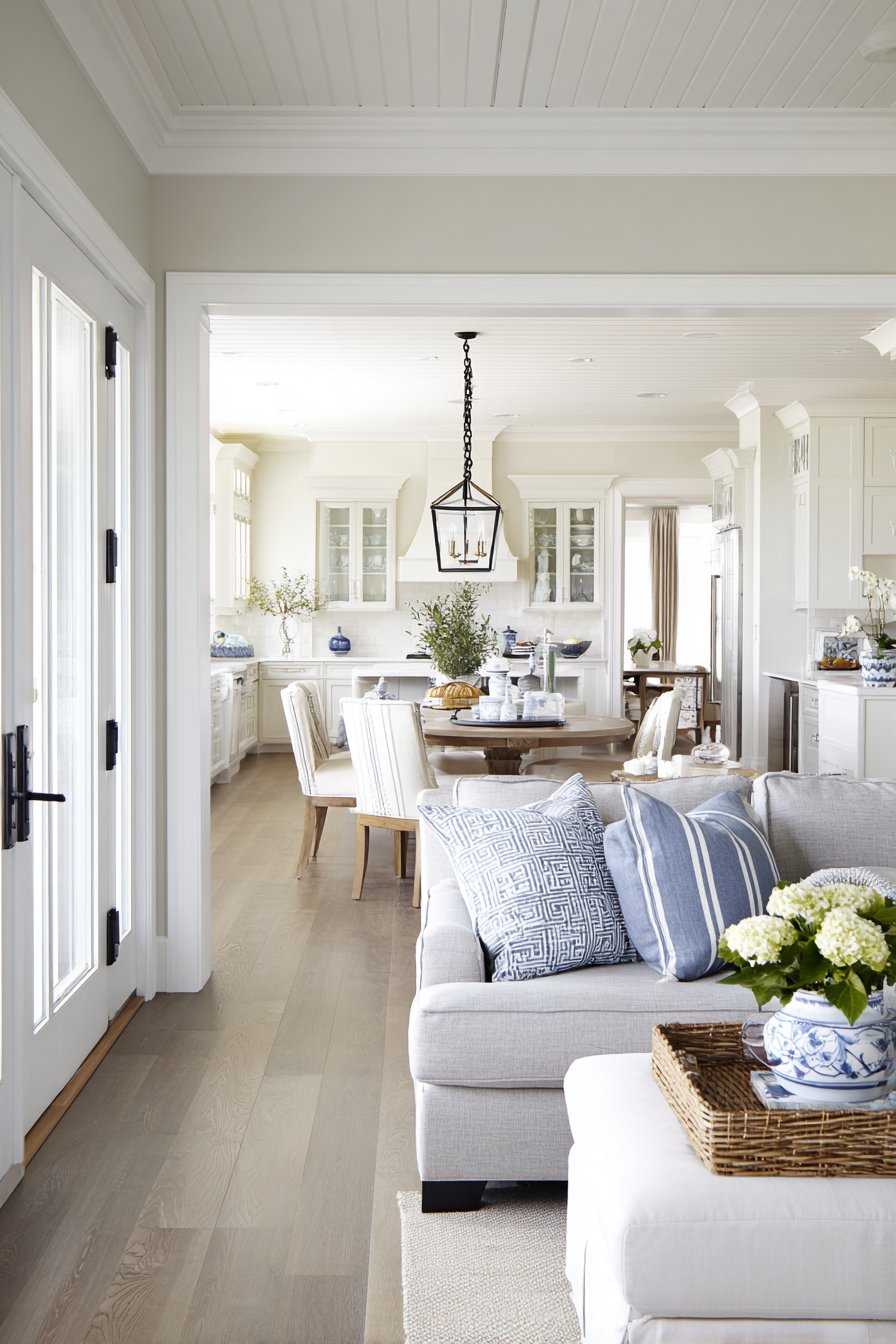
Wide-angle architectural photography demonstrates the connection strategy. The image shows how rectangles maintain identity within larger open spaces. This design addresses modern preferences for flowing floor plans.
Key Design Tips:
- Use furniture to create boundaries in open concept spaces
- Maintain sight lines for visual connection between areas
- Choose consistent flooring materials throughout connected spaces
- Position lighting to serve multiple adjacent zones
- Select storage ottomans for dual-purpose functionality
11. Long Gallery Wall Linear Display
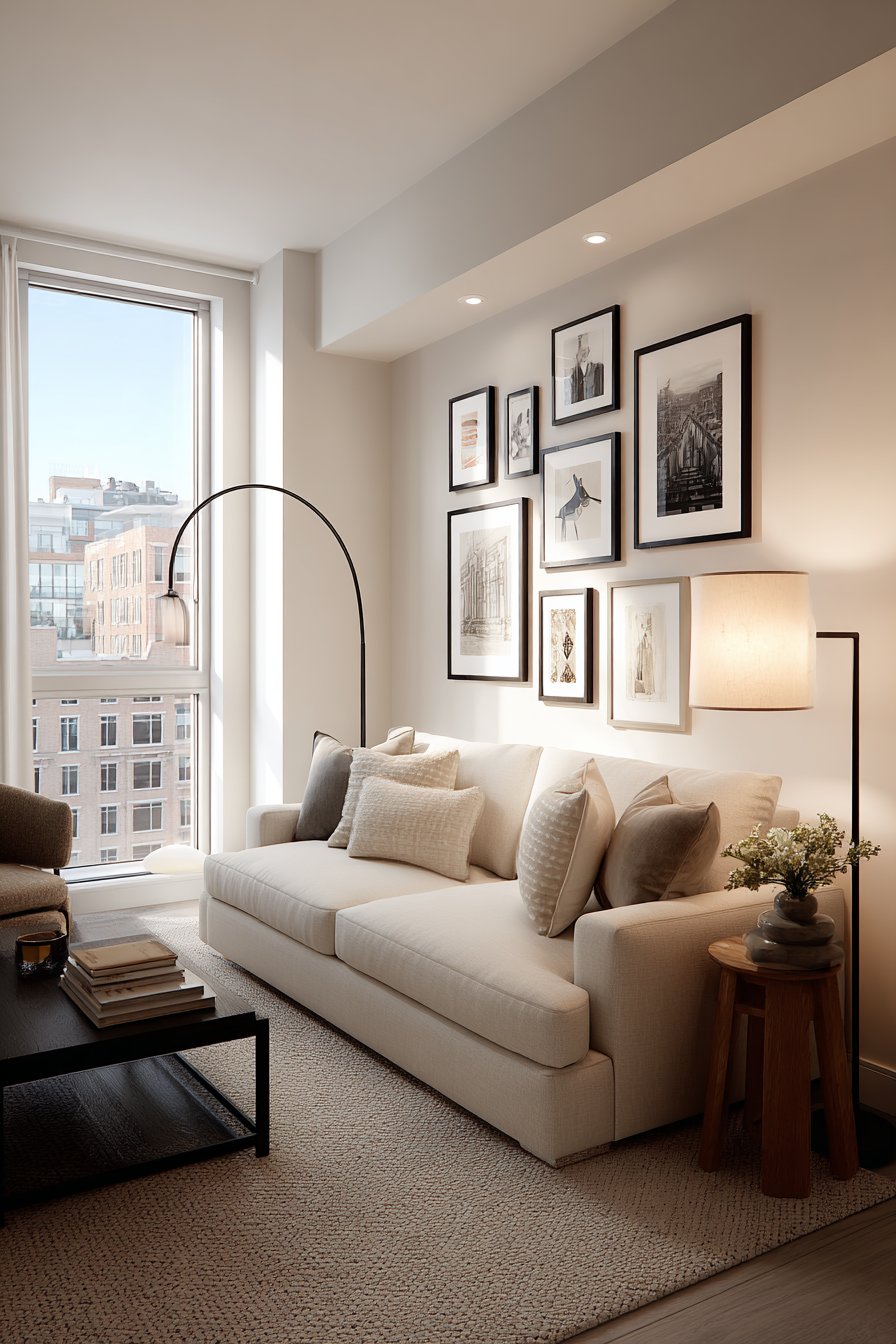
A long gallery wall transforms one extended wall in this rectangular living room. Curated artwork and photographs display in matching black frames. The linear arrangement suits the rectangular proportions perfectly. A streamlined sofa in cream linen sits below the gallery.
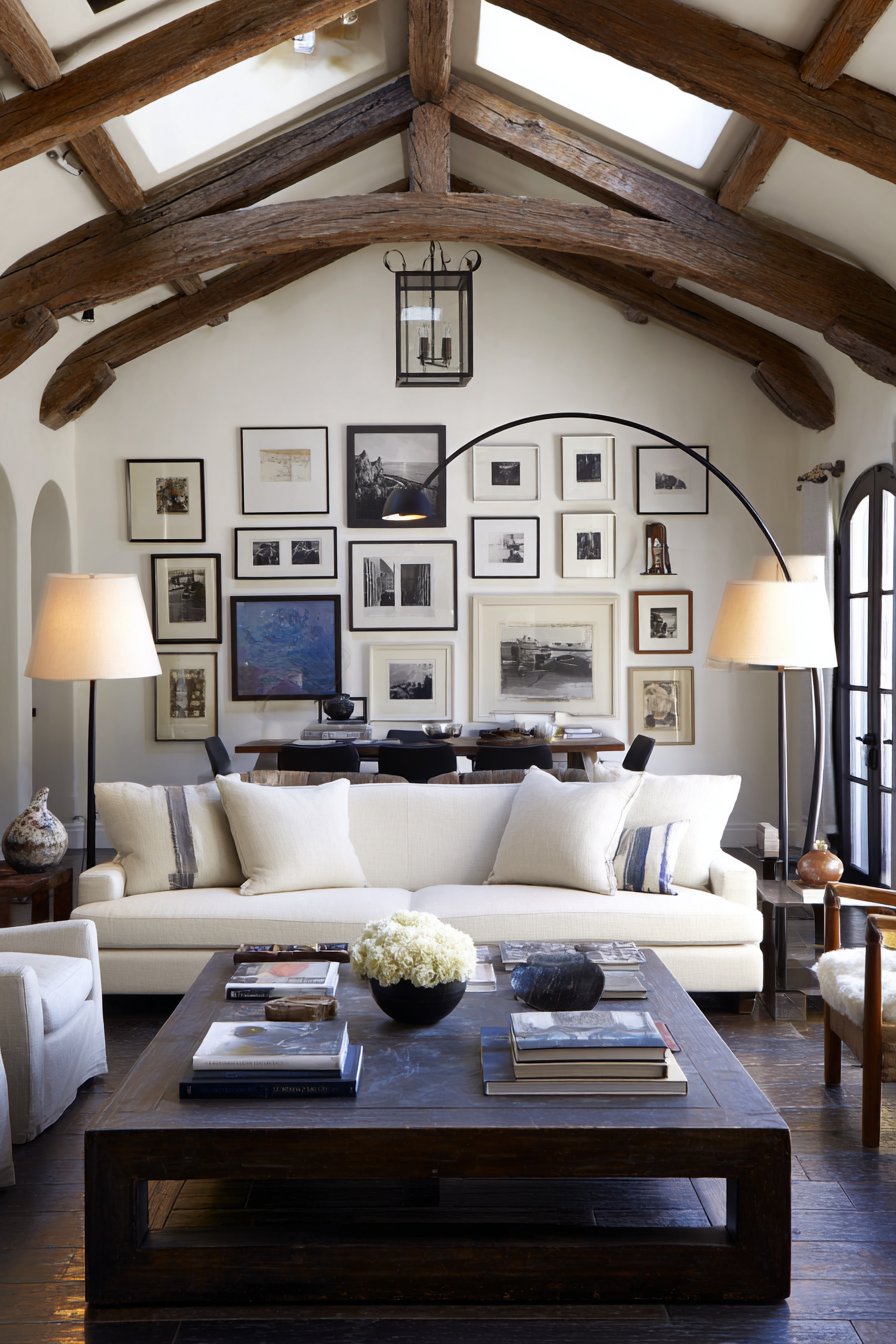
A rectangular coffee table in dark walnut positions at a comfortable distance. Two modern floor lamps with arched designs flank the sofa. These provide focused reading light at each end. Natural light from perpendicular windows creates even illumination.
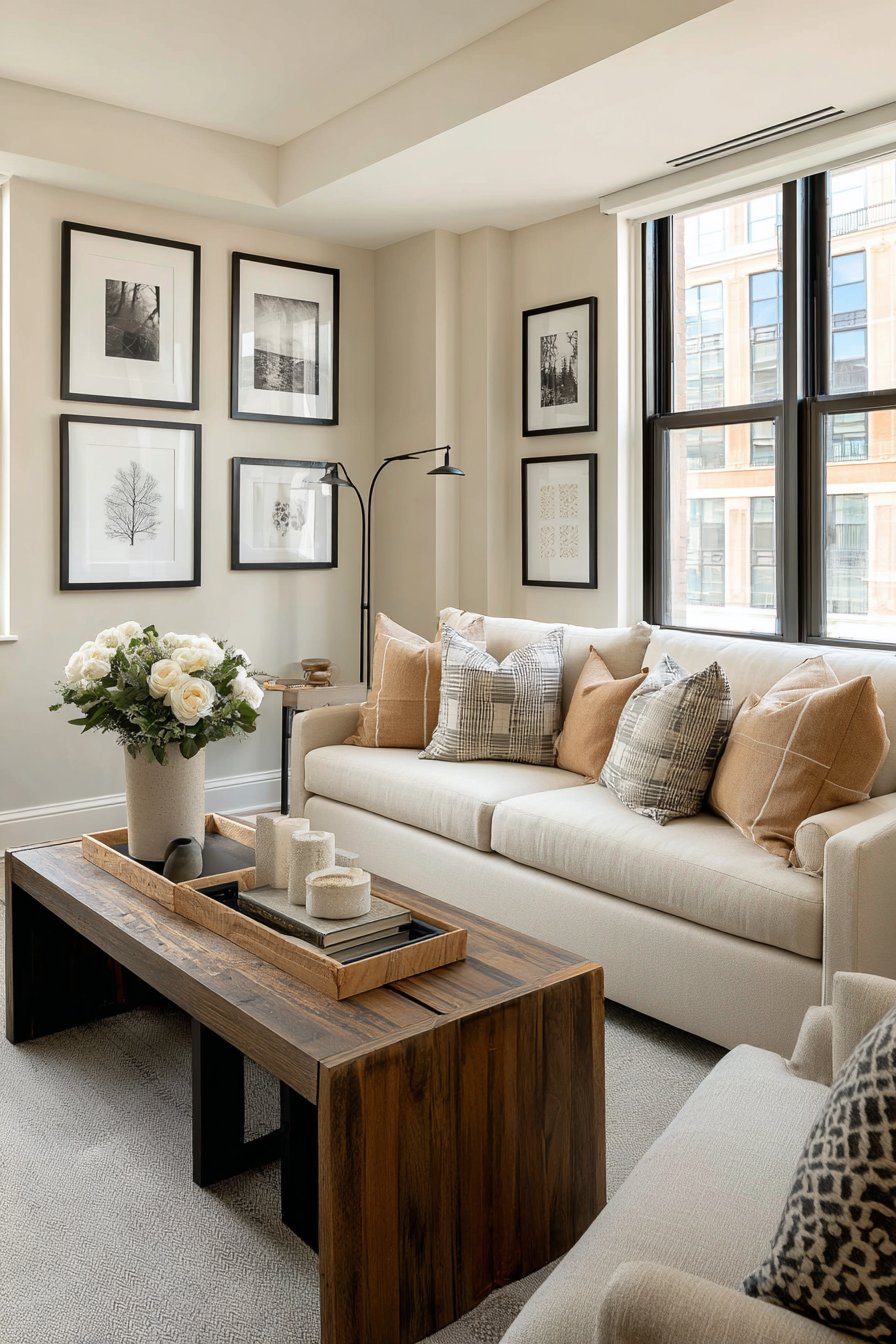
The gallery wall becomes the room’s primary focal point. The consistent black frames create visual cohesion. The artwork collection adds personality and interest along the length. This prevents long walls from feeling blank or monotonous.
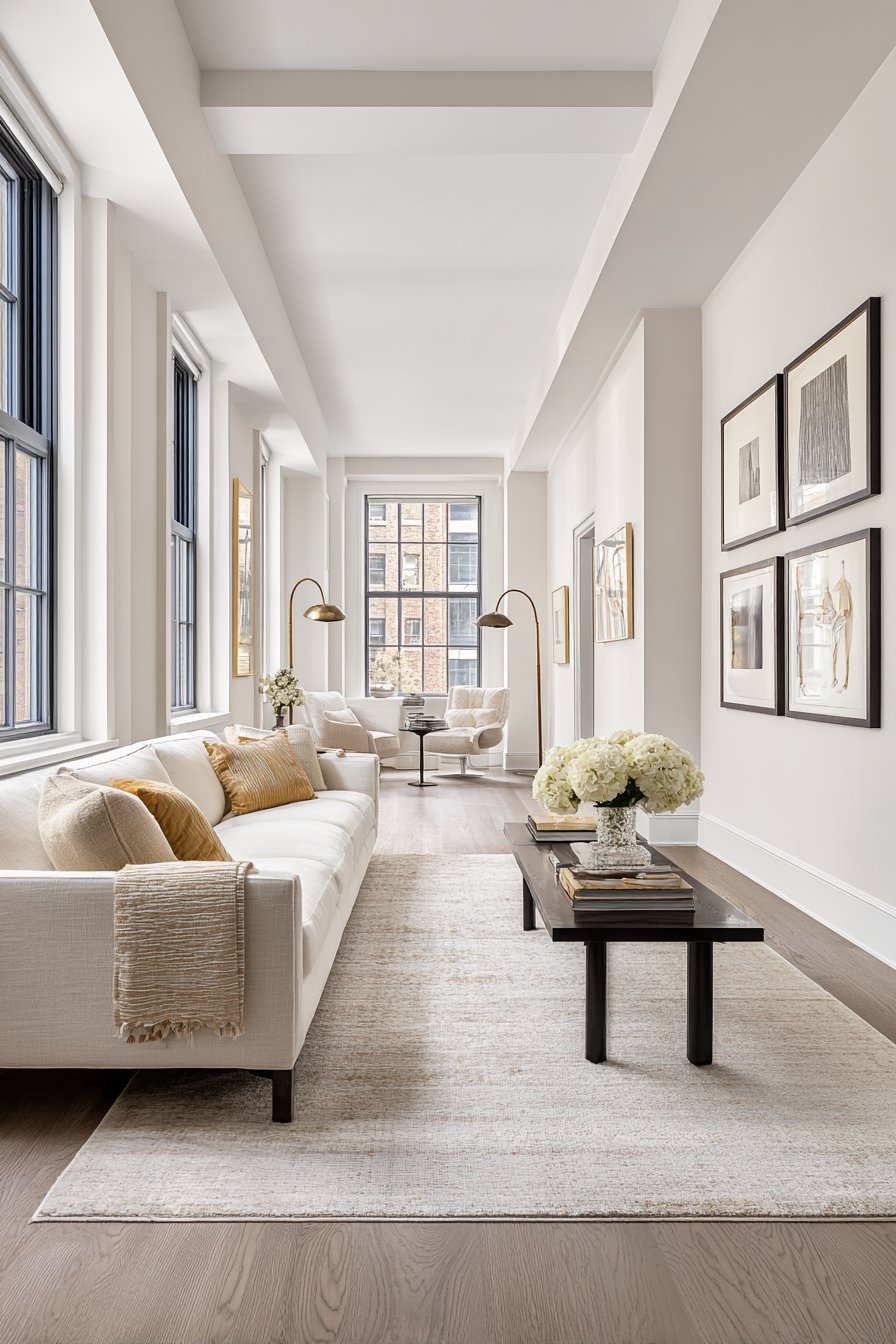
Interior design photography captures the full gallery wall length. The image shows how rectangular proportions provide perfect canvas for linear displays. This design demonstrates artistic approaches to rectangular challenges.
Key Design Tips:
- Create gallery walls along long walls for visual interest
- Use matching frames for cohesive linear displays
- Position sofas below galleries at appropriate viewing distance
- Add arched floor lamps for functional task lighting
- Choose perpendicular window placement for even natural light
12. Diagonal Furniture Softening Strategy
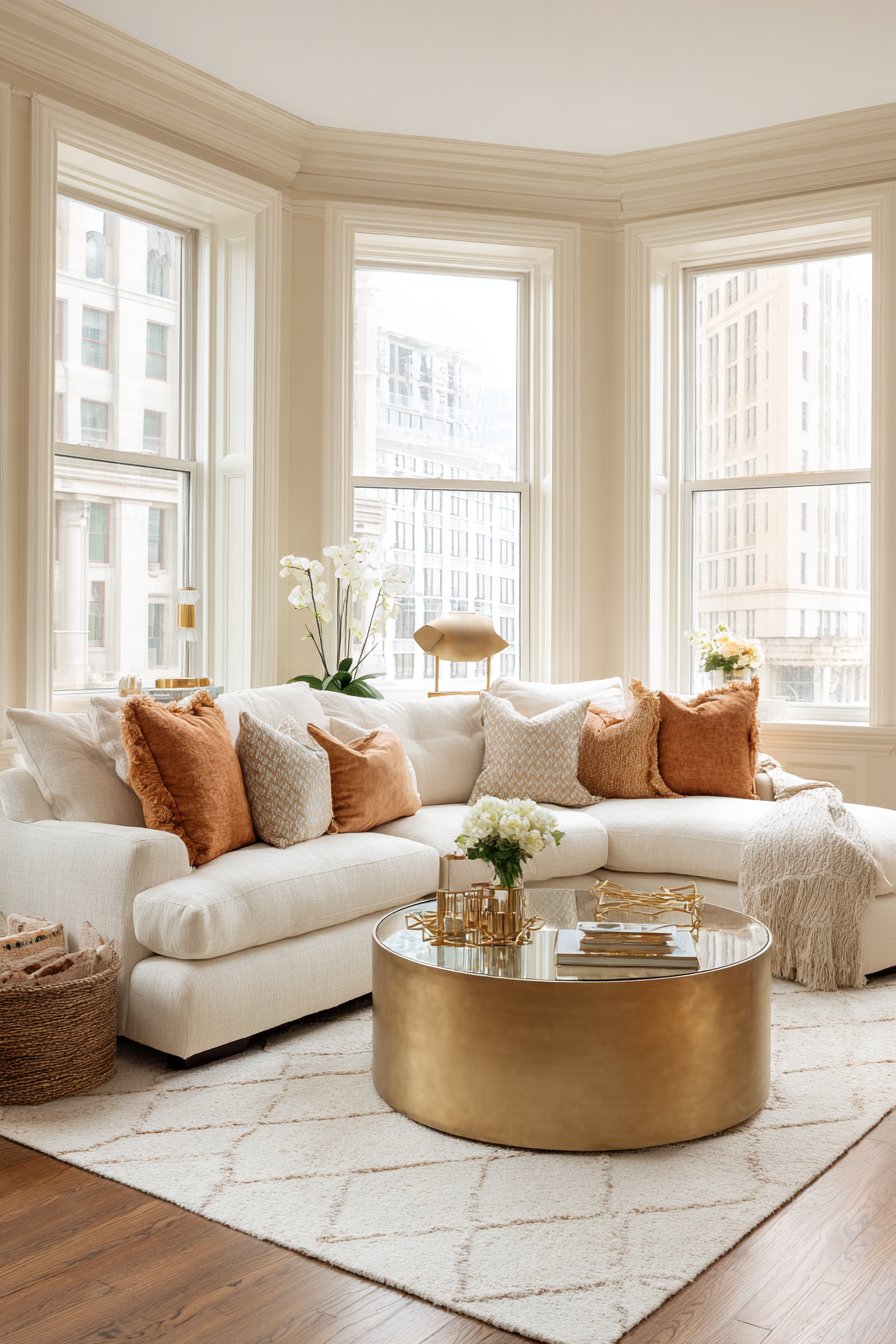
Diagonal furniture arrangement softens this linear rectangular living room. A curved sectional sofa is positioned at an angle. This creates more dynamic flow through the space. The angled placement prevents corridor feelings.
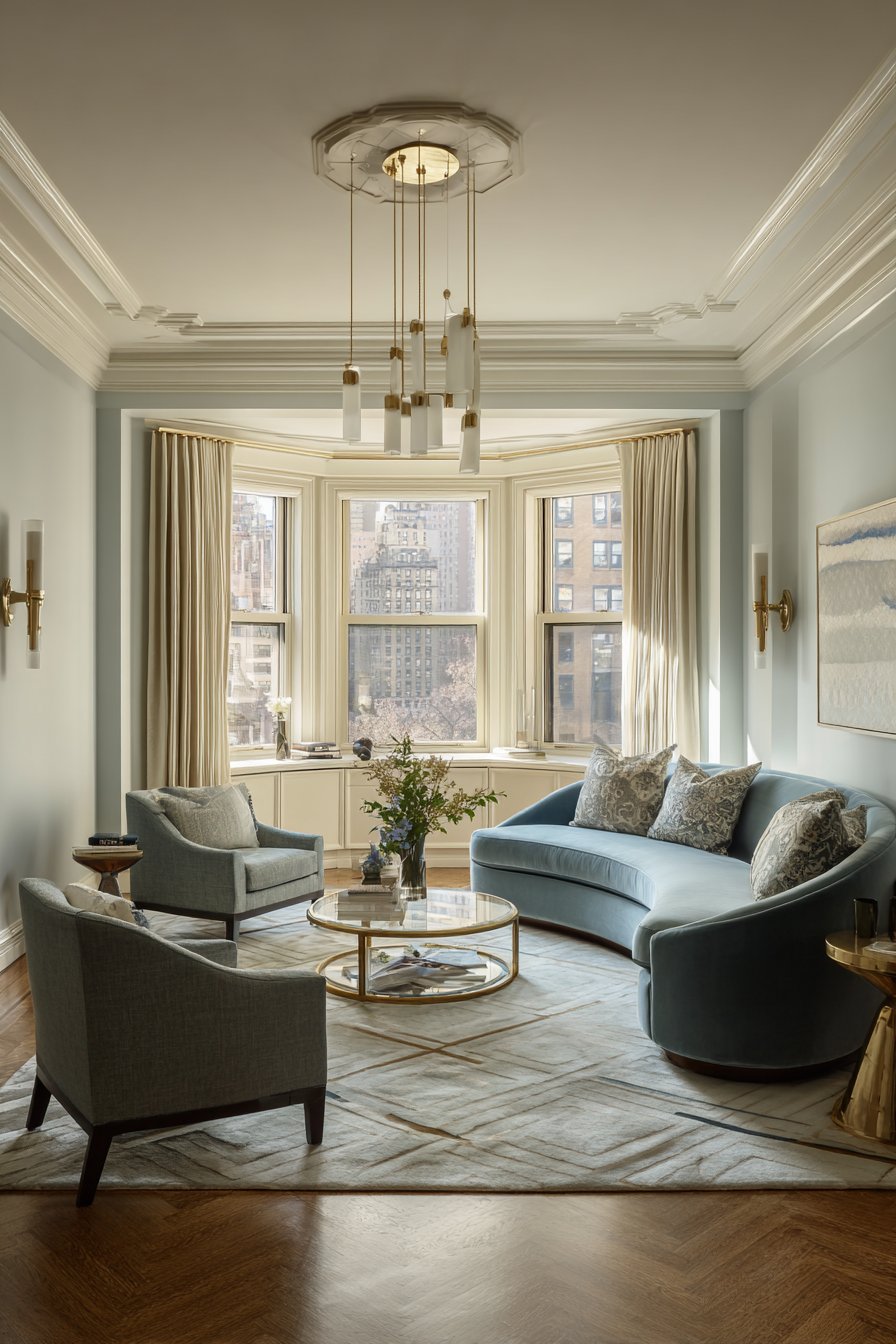
A round coffee table in brass and glass provides circular contrast. The round shape plays against rectangular architecture beautifully. An area rug with curved geometric patterns reinforces the softened arrangement. Windows on both short walls create cross-ventilation.
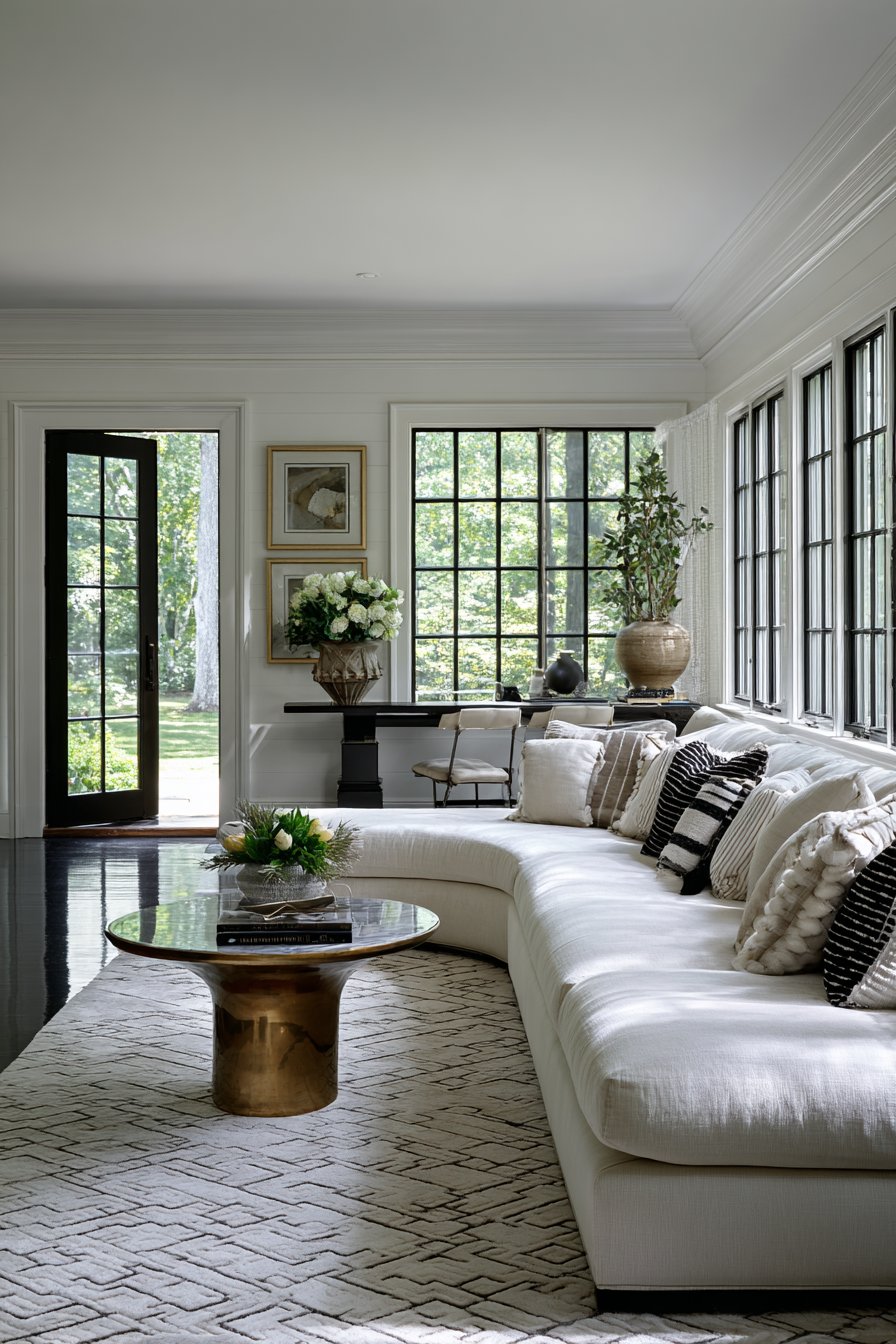
The balanced natural lighting benefits from dual window placement. The diagonal furniture breaks up predictable rectangular arrangements. The space feels less rigid and more inviting. The curved sectional shape enhances the softening strategy.
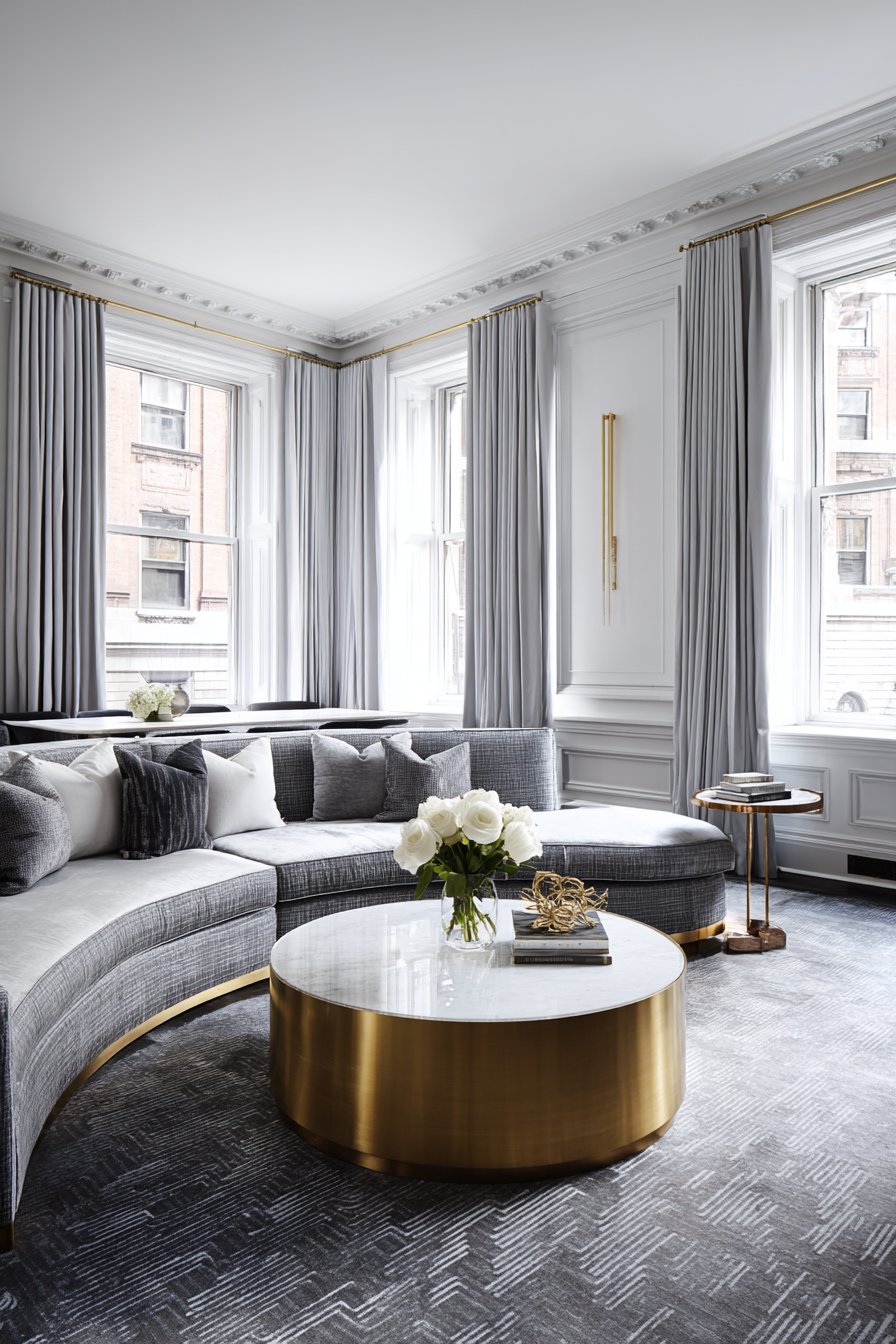
Professional photography shows how angled furniture transforms rectangular perception. The wide-angle perspective demonstrates maintained functionality despite unconventional placement. This design proves that rectangles benefit from non-parallel arrangements.
Key Design Tips:
- Angle furniture diagonally to soften linear spaces
- Choose curved sectionals to contrast angular architecture
- Use round coffee tables and rugs for geometric variety
- Position windows on short walls for cross-ventilation
- Select patterns with curves to reinforce a softened aesthetic
13. Built-In Window Seat Bookends
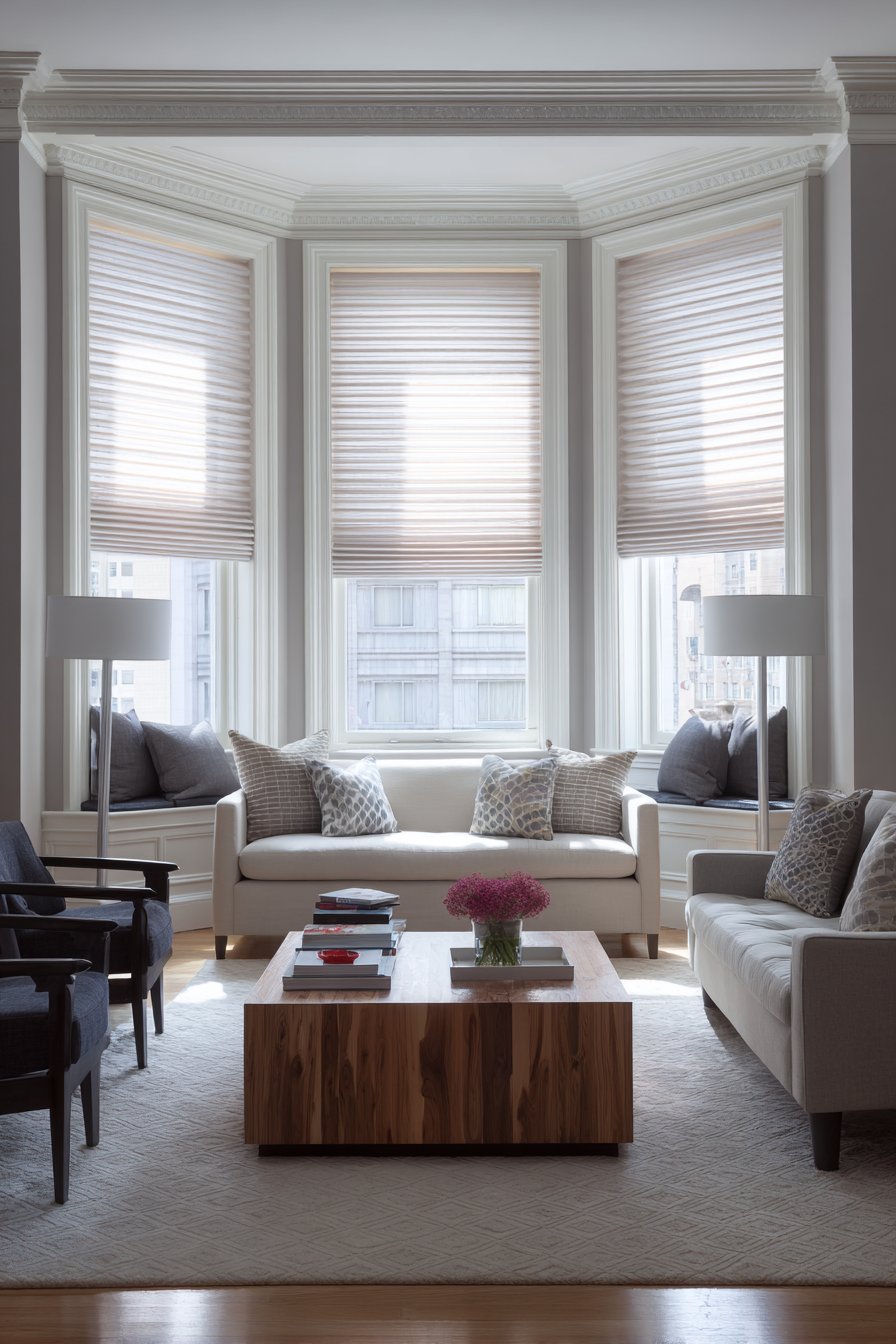
Built-in window seats on both short ends bookend this rectangular living room. These create cozy reading nooks symmetrically. The central area features a compact sofa and two club chairs. A rectangular coffee table in reclaimed wood centers the seating.
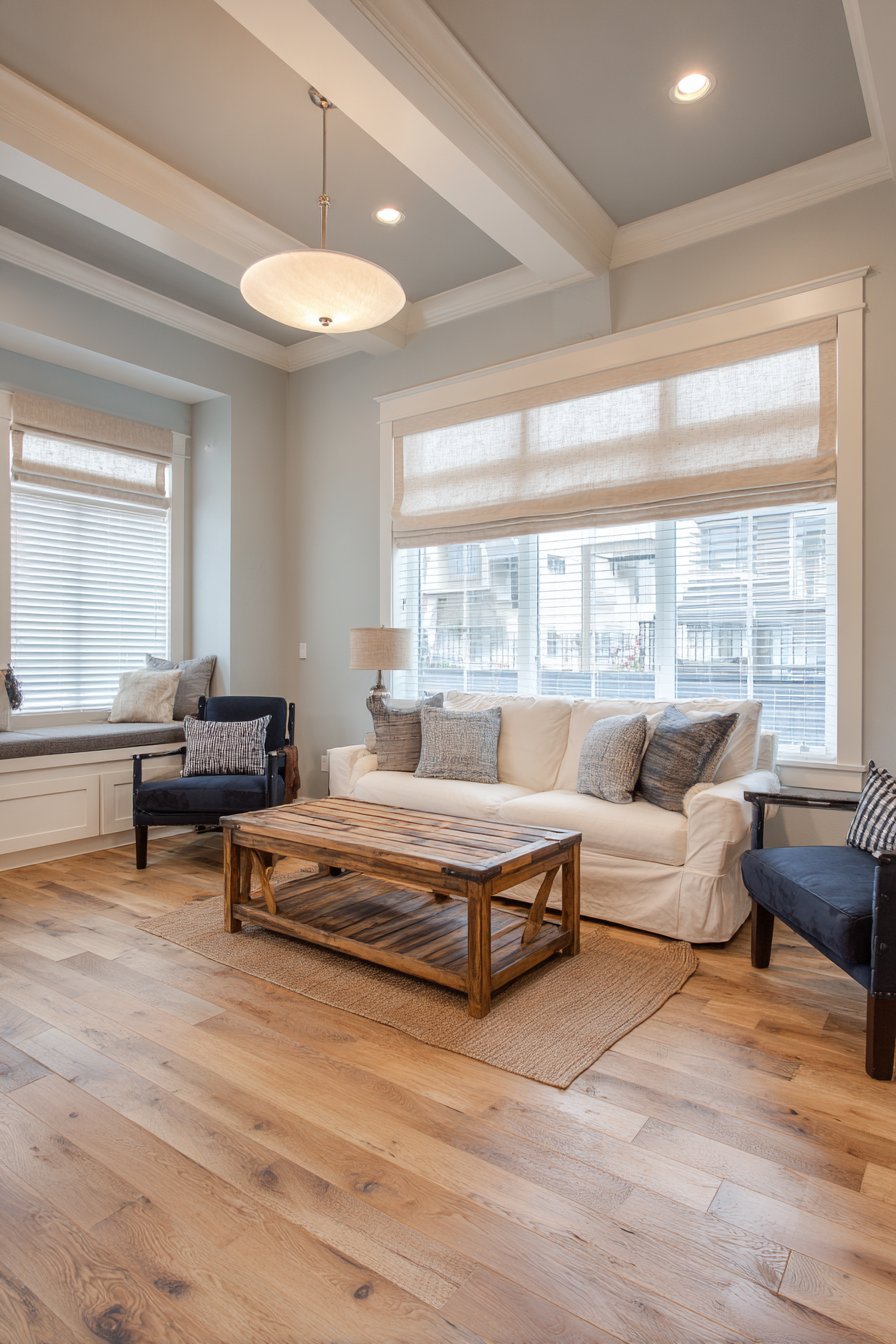
Sheer Roman shades on window seats filter natural light. The shades maintain privacy while allowing illumination. Walls painted in soft grey feature white trim. The trim emphasizes the room’s clean rectangular lines.
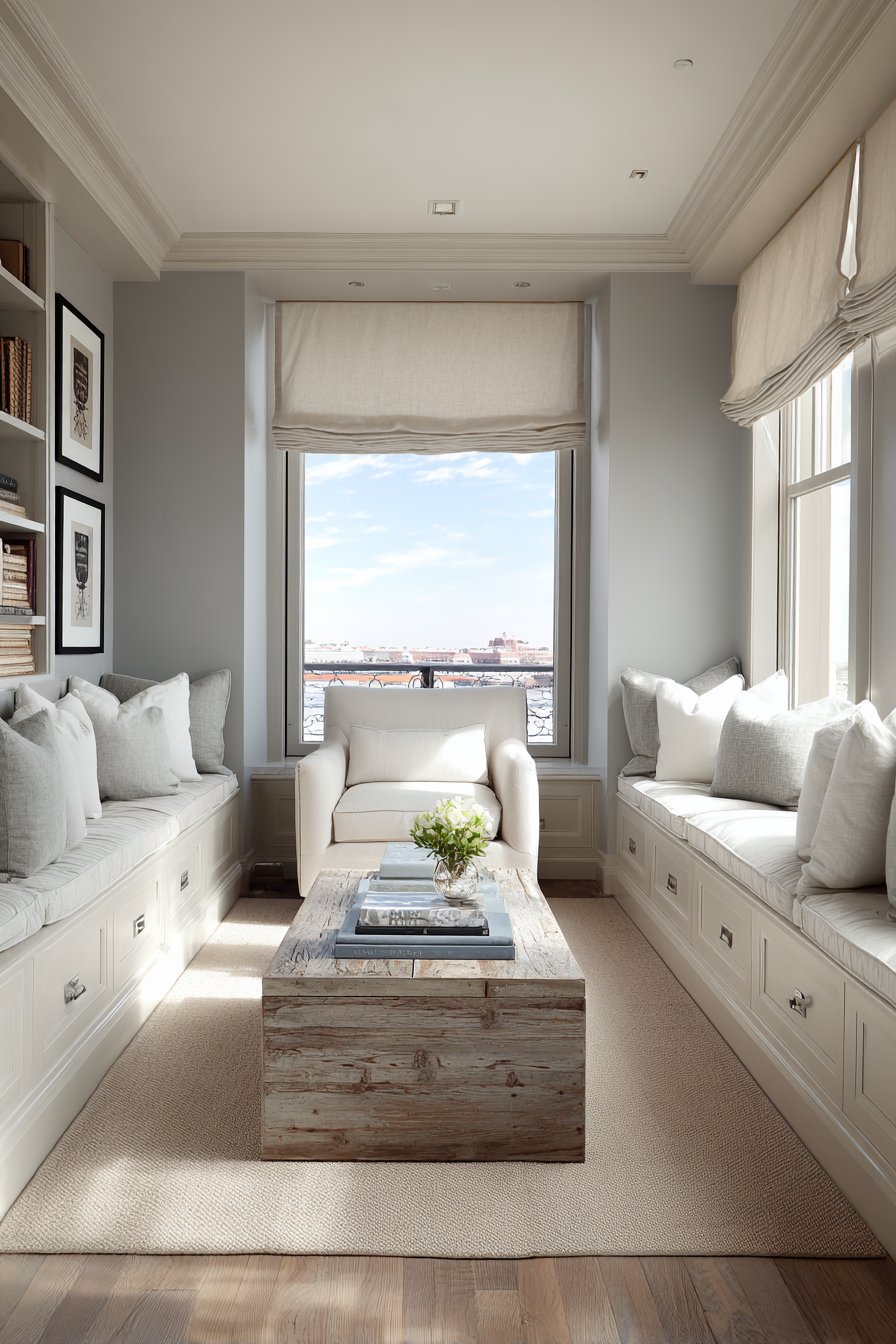
The symmetrical window seats add architectural interest. They provide additional seating without consuming central floor space. The design balances formal symmetry with comfortable functionality. The reclaimed wood coffee table adds character and warmth.
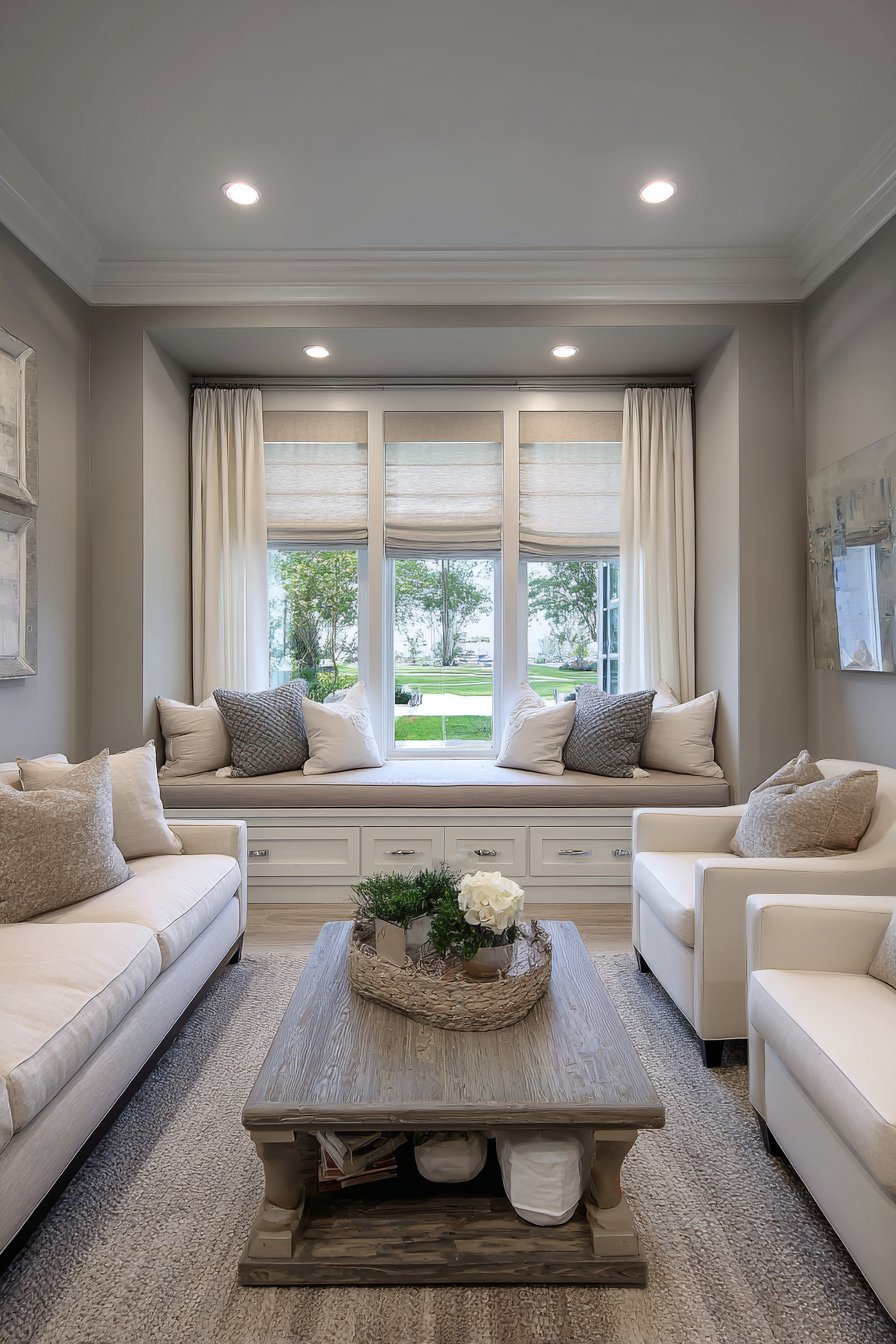
Interior design photography captures the balanced window seat symmetry. The image shows how they enhance rectangular footprint functionality. Built-in seating maximizes space in ways freestanding furniture cannot.
Key Design Tips:
- Install built-in window seats at room ends for symmetry
- Use compact central furniture to maintain open flow
- Add sheer window treatments for filtered natural light
- Paint walls in soft colors with contrasting trim
- Choose reclaimed wood pieces for character and warmth
14. Layered Console Table Behind Sofa
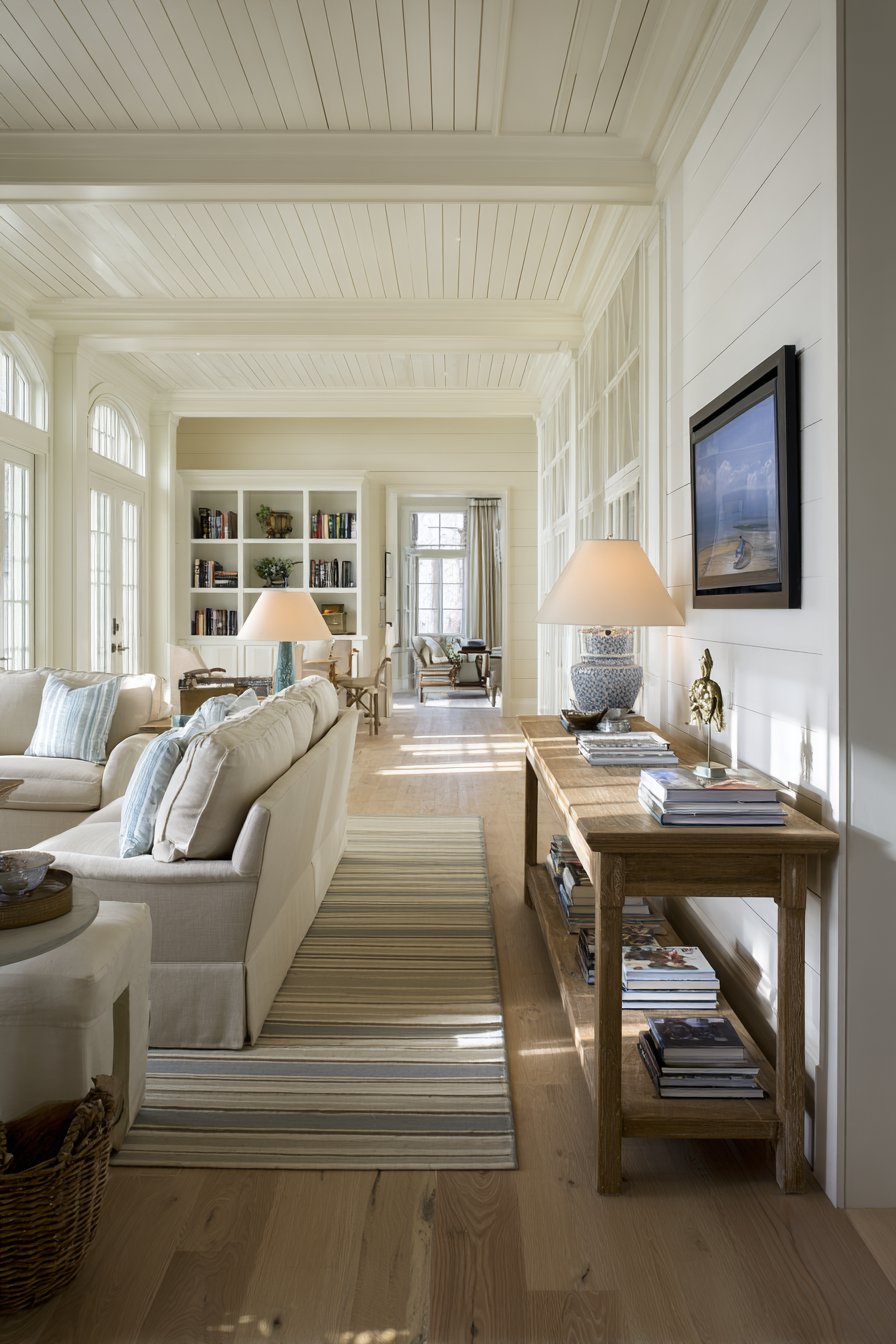
A long console table behind the sofa creates layered depth. The console runs parallel to the room’s length. Table lamps, books, and decorative objects display on the surface. The sofa faces a wall-mounted television with minimal storage.
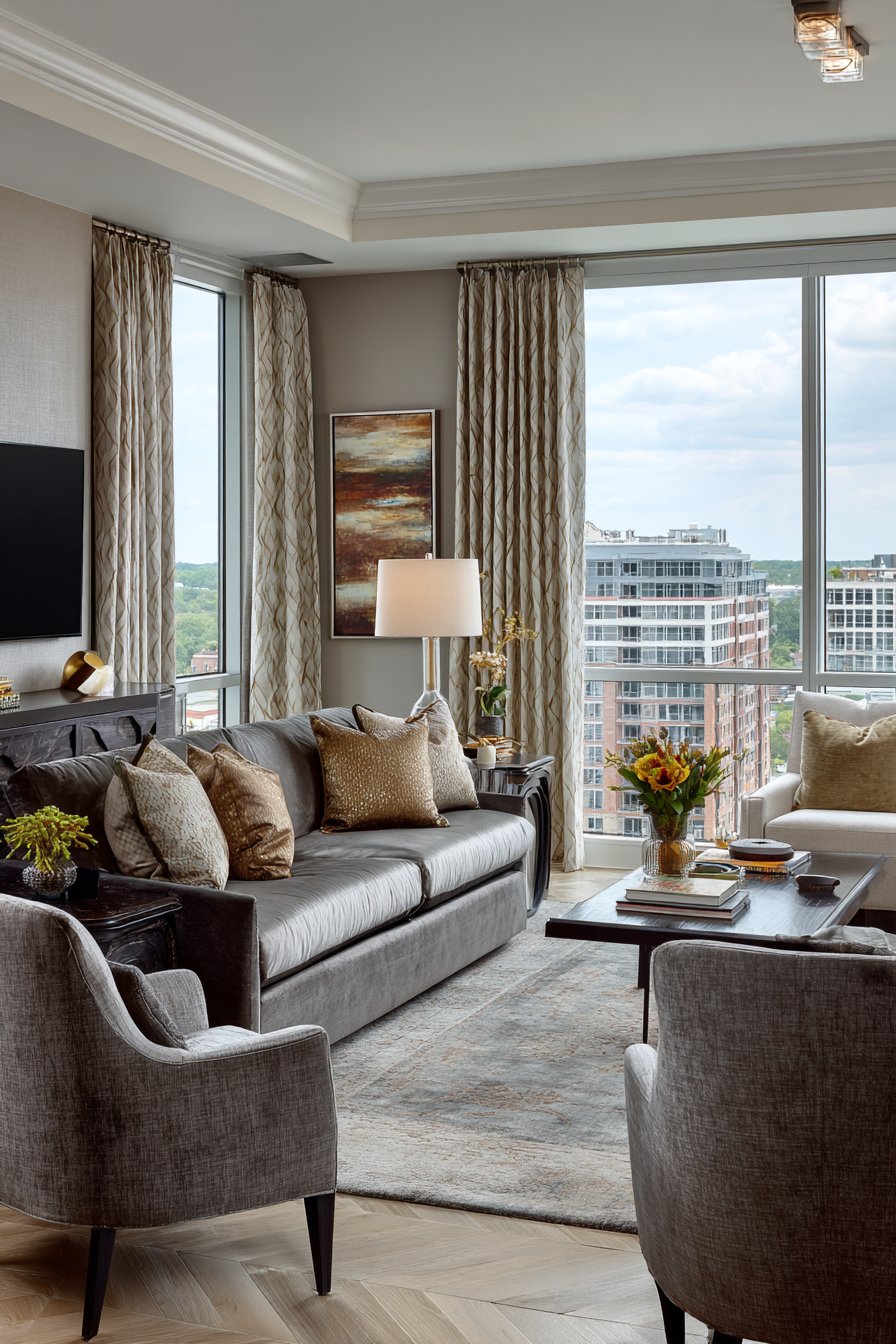
Two lightweight accent chairs provide flexible additional seating. These can move as needed for different occasions. A rectangular area rug in muted tones defines the seating area. Strips of light oak flooring are exposed on either side.
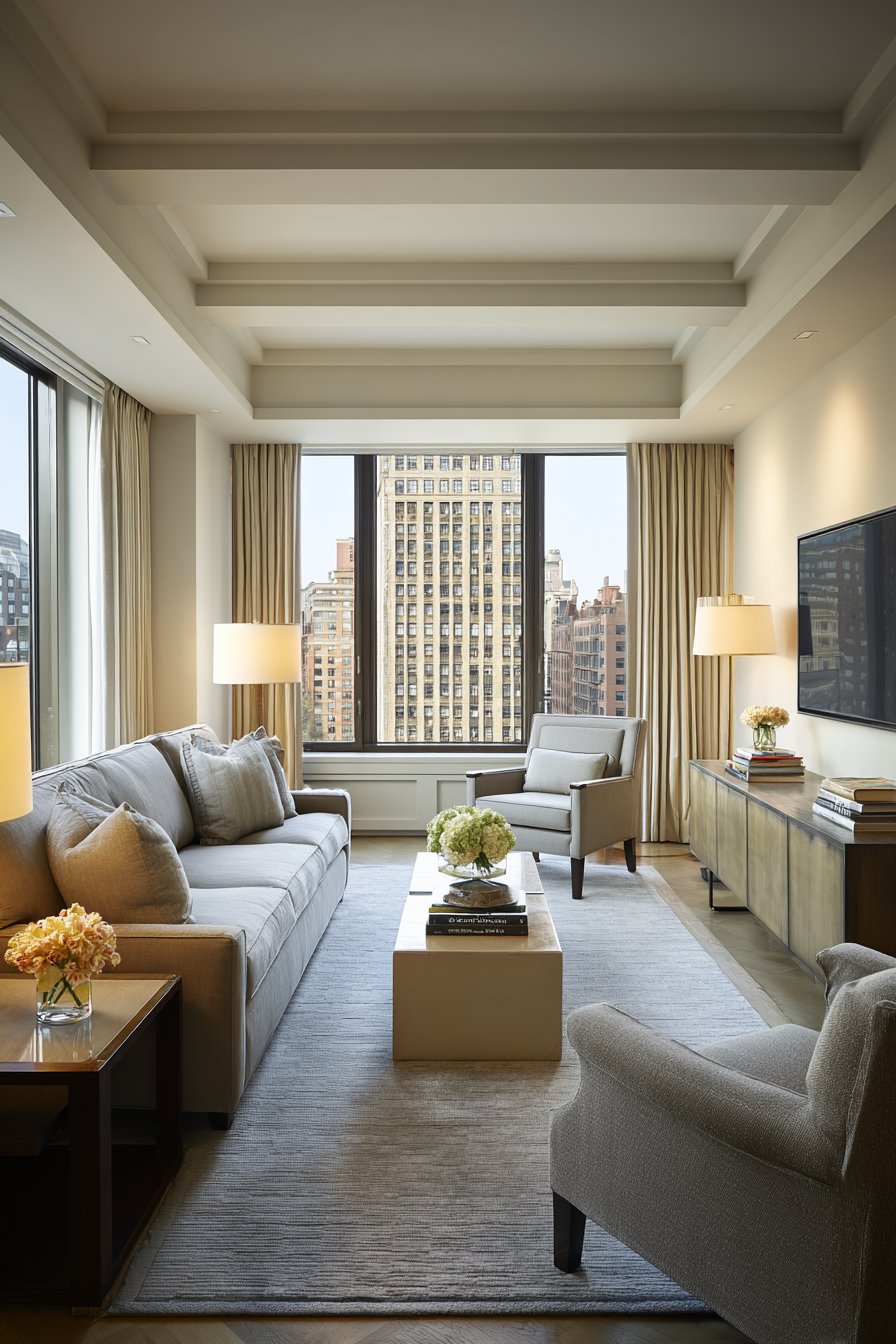
Natural light from clerestory windows provides illumination. These high windows maximize light without sacrificing wall space. The layered furniture arrangement adds visual interest. The console prevents the sofa back from appearing unfinished.
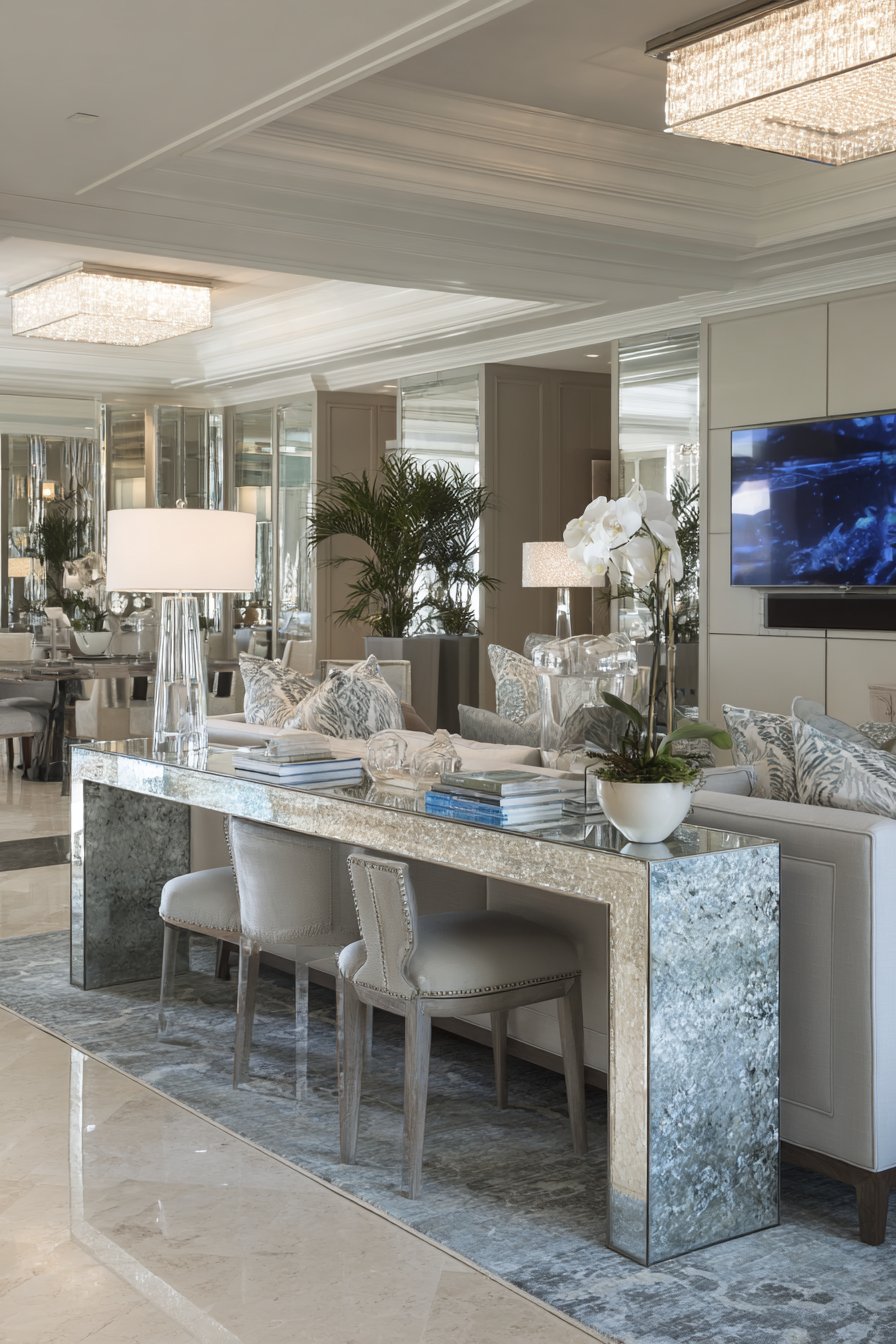
Wide-angle photography demonstrates the layered arrangement benefits. The image shows how consoles maximize rectangular functionality. This approach adds surfaces without reducing seating capacity.
Key Design Tips:
- Add console tables behind sofas for layered depth
- Display lamps and accessories on consoles for visual interest
- Use lightweight chairs for flexible seating arrangements
- Install clerestory windows for light without wall space loss
- Choose area rugs that define zones while showing flooring
15. Corner Fireplace Diagonal Focus
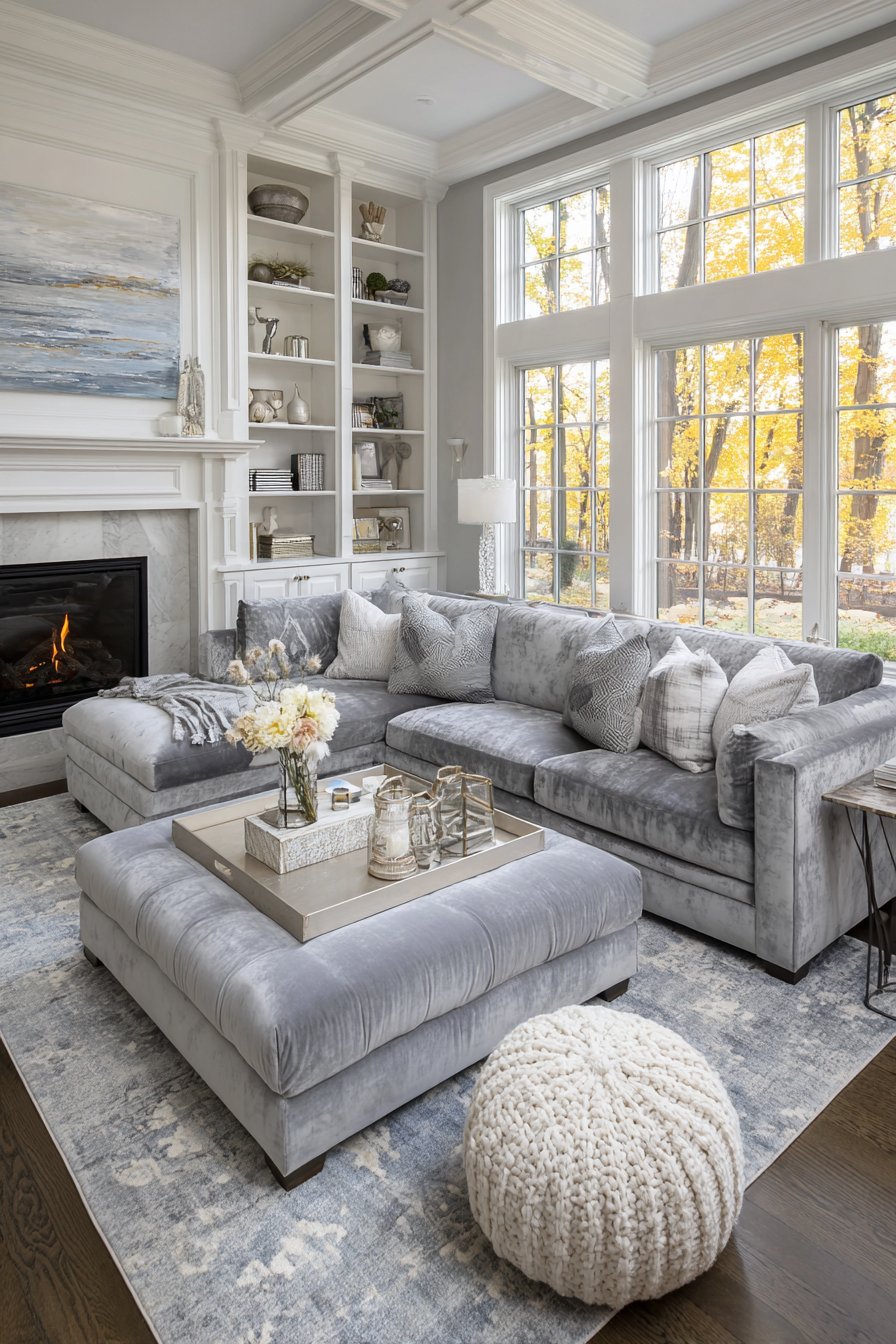
A corner fireplace creates an interesting diagonal focal point. The fireplace is positioned at one end of the rectangular room. Furniture is arranged in an L-shape to embrace the diagonal element. A sectional in soft grey velvet wraps around the corner.
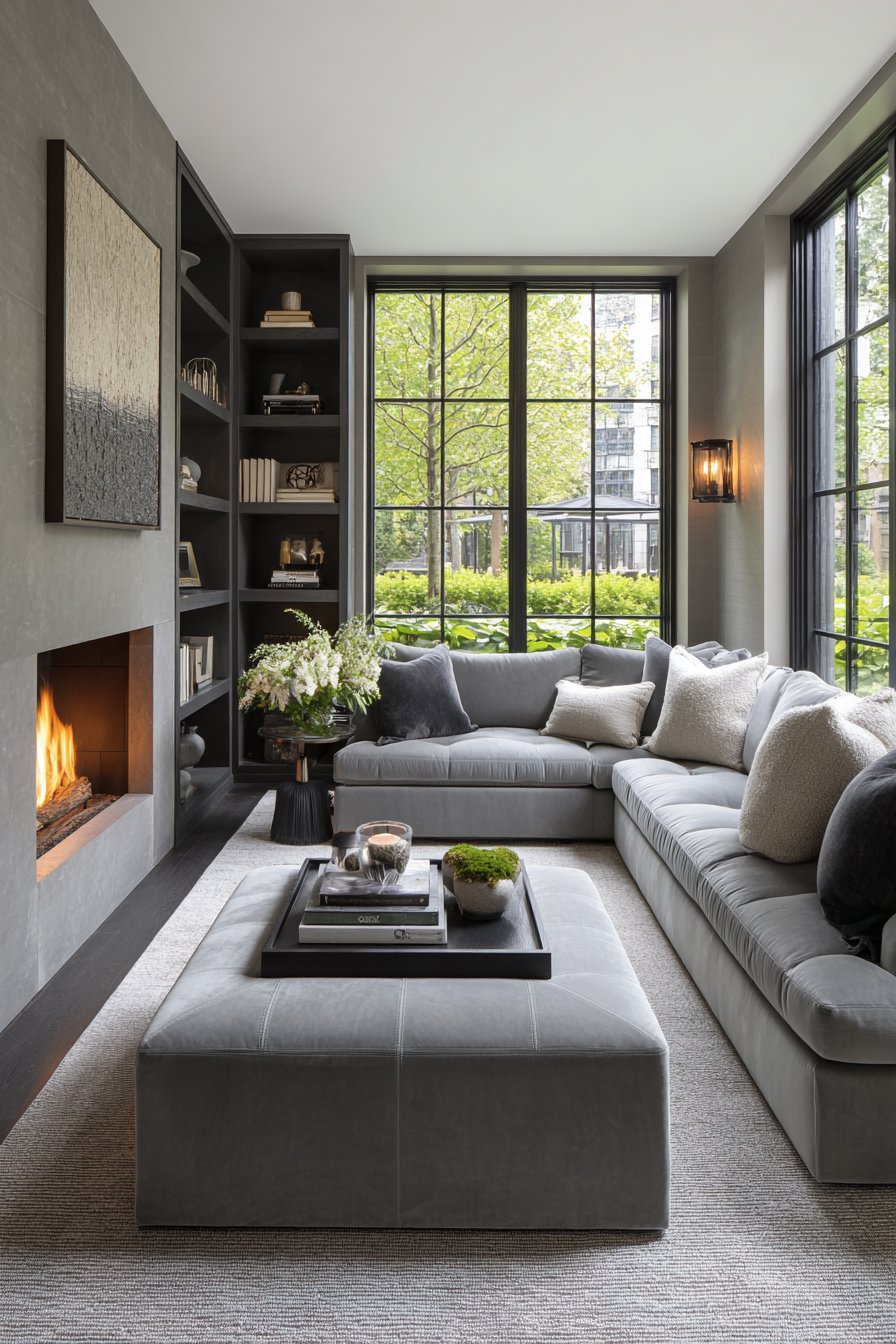
A square ottoman serves as a coffee table. Built-in shelving on adjacent walls provides display space. Large windows on one long wall offer garden views. Abundant natural light fills the space throughout the day.
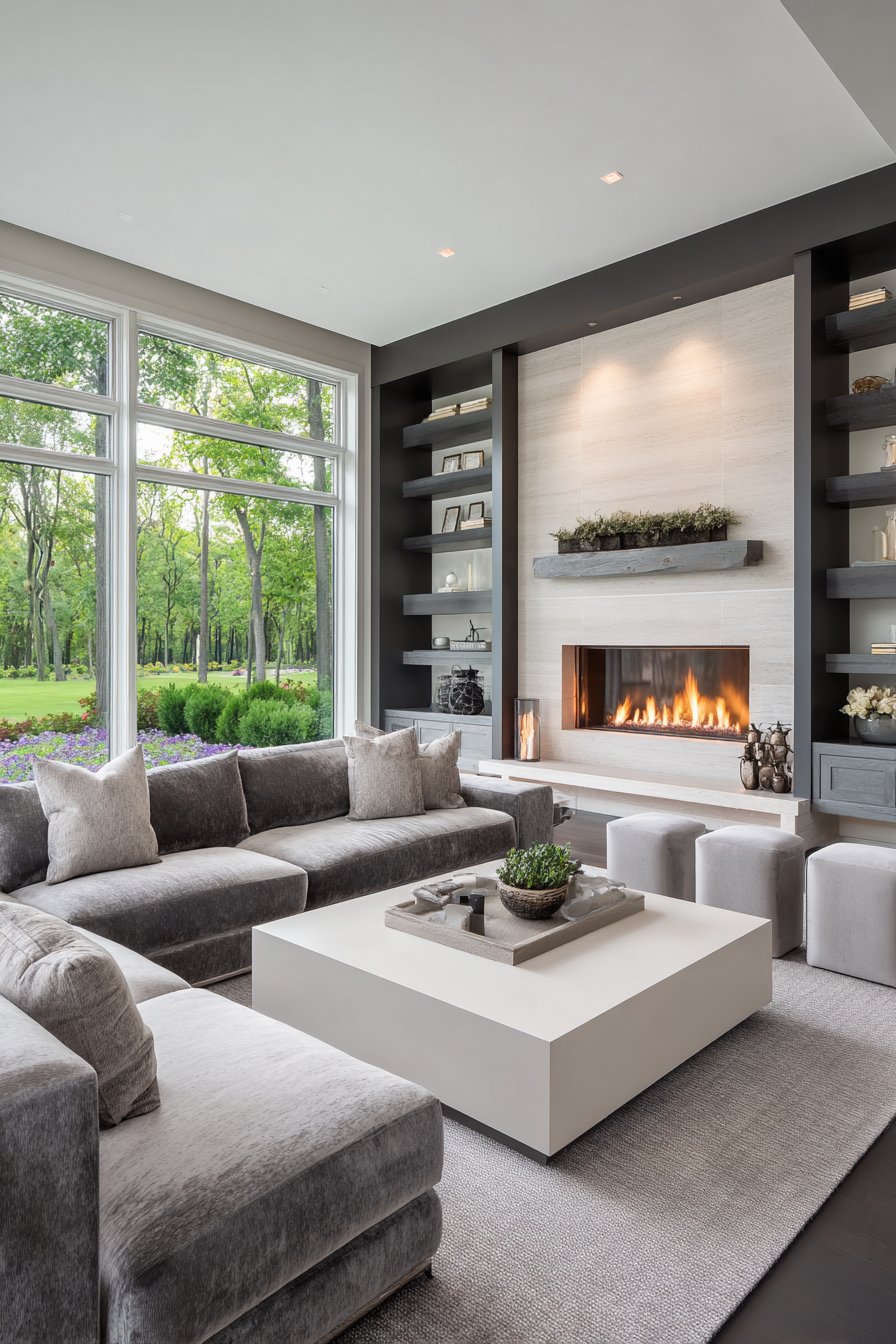
The corner fireplace works with rather than against the rectangular architecture. The diagonal focal point adds visual interest. The grey velvet sectional provides luxurious comfort. The built-in shelving creates integrated storage solutions.
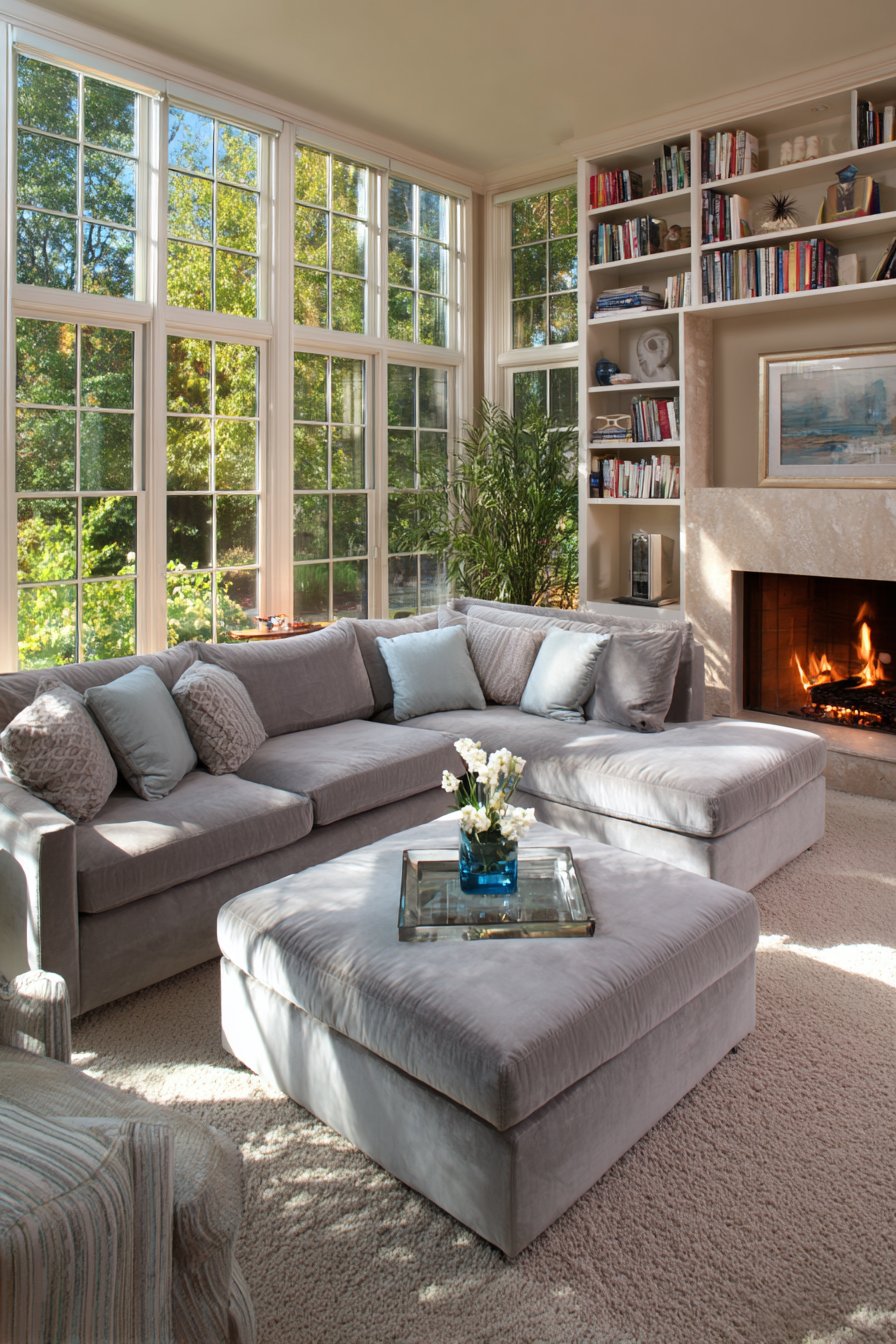
Professional photography captures how the corner fireplace creates unique focus. The image demonstrates the successful integration of diagonal elements. This design proves rectangles accommodate unconventional focal point placement.
Key Design Tips:
- Embrace corner fireplaces as diagonal focal points
- Arrange furniture in L-shapes around corner features
- Use ottomans as flexible coffee table alternatives
- Add built-in shelving on adjacent walls
- Position windows to maximize natural light and views
16. Continuous Floating Shelves Display
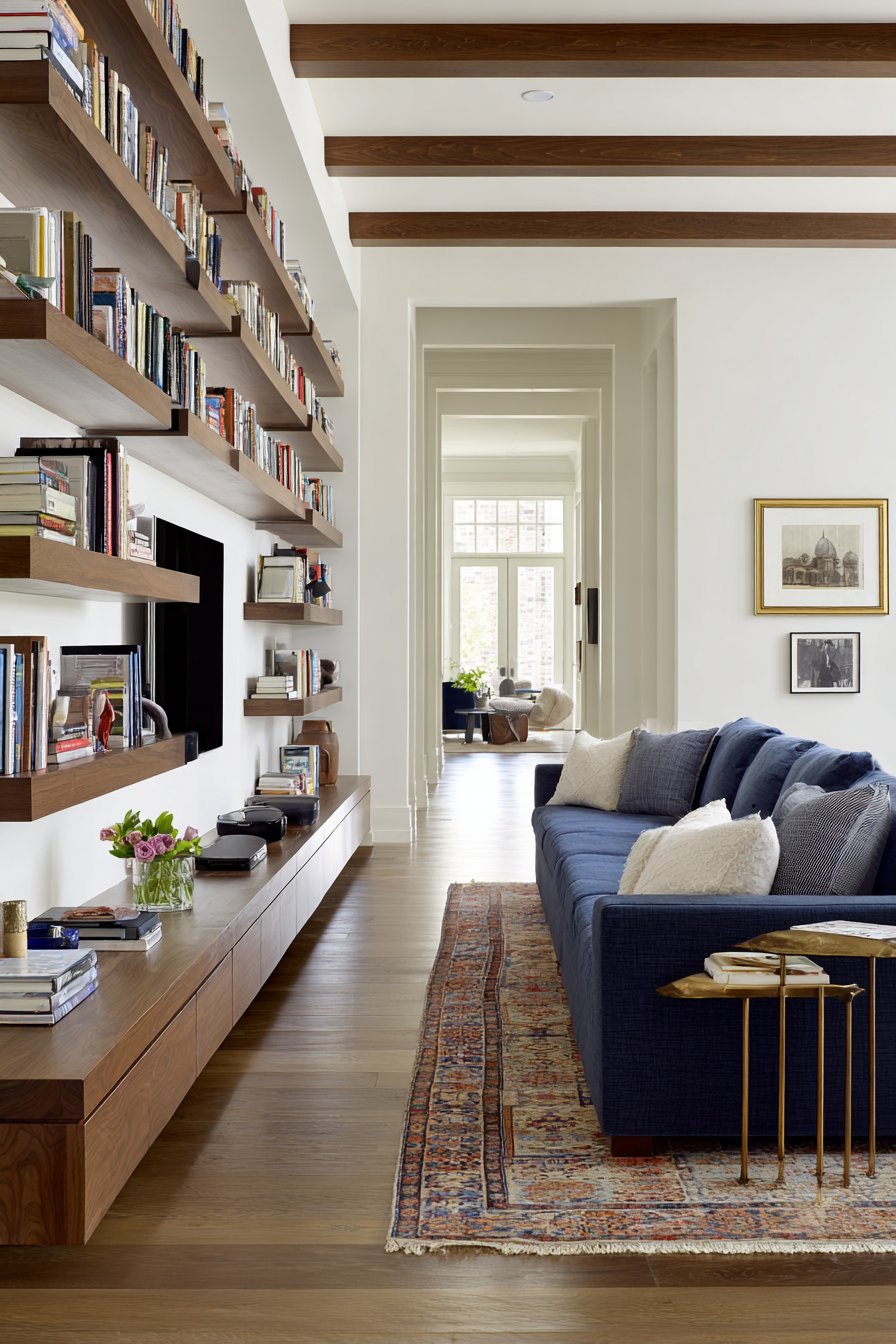
Floating shelves running the entire long wall length create horizontal emphasis. The shelves provide practical storage and display space. Below the shelves, a low-profile entertainment center houses media equipment. A long sofa in navy blue fabric faces the media wall.
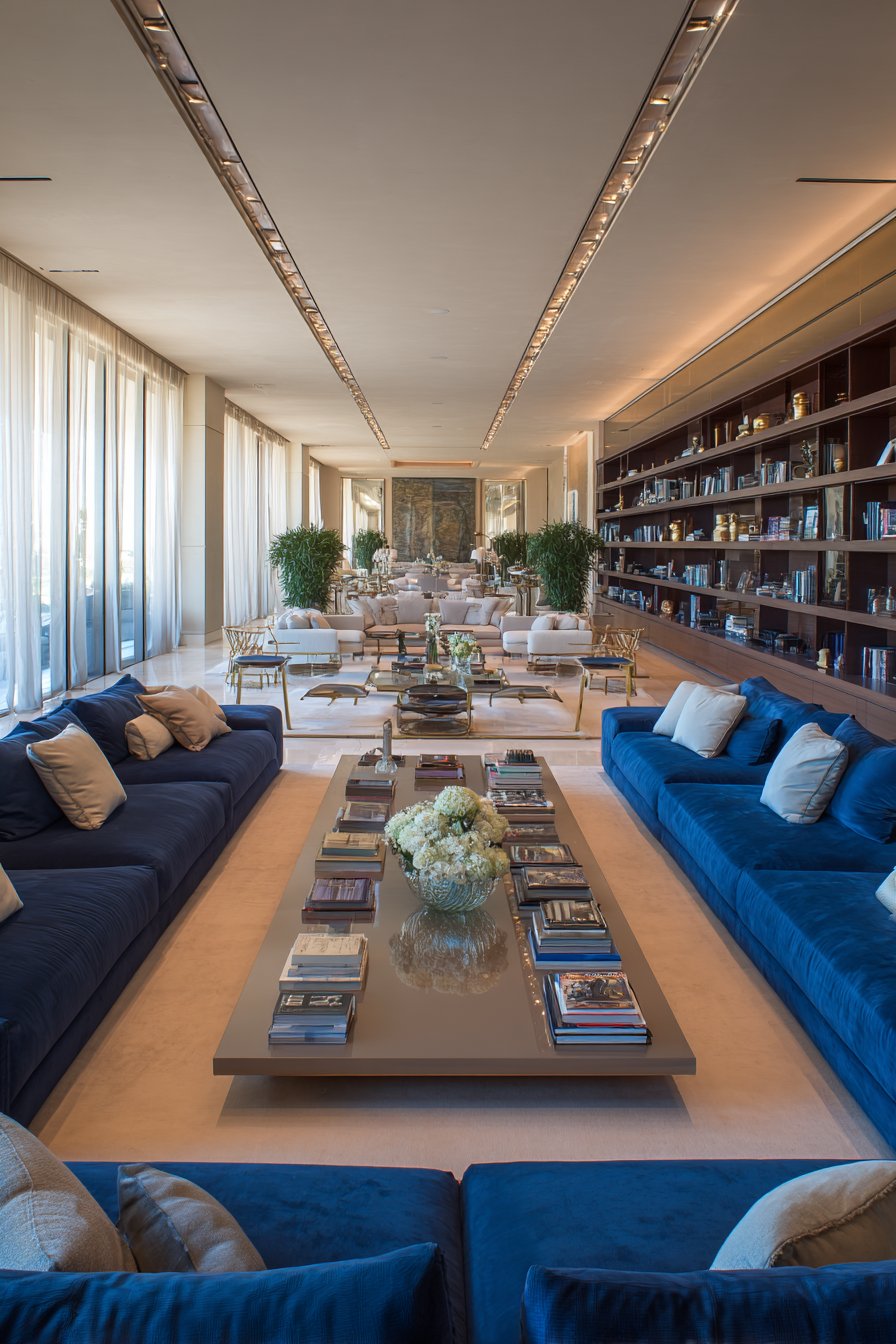
A narrow rectangular coffee table maintains clear pathways. Two small side tables with brass bases provide end surfaces. Recessed lighting highlights the shelving display beautifully. The continuous horizontal lines complement rectangular proportions.
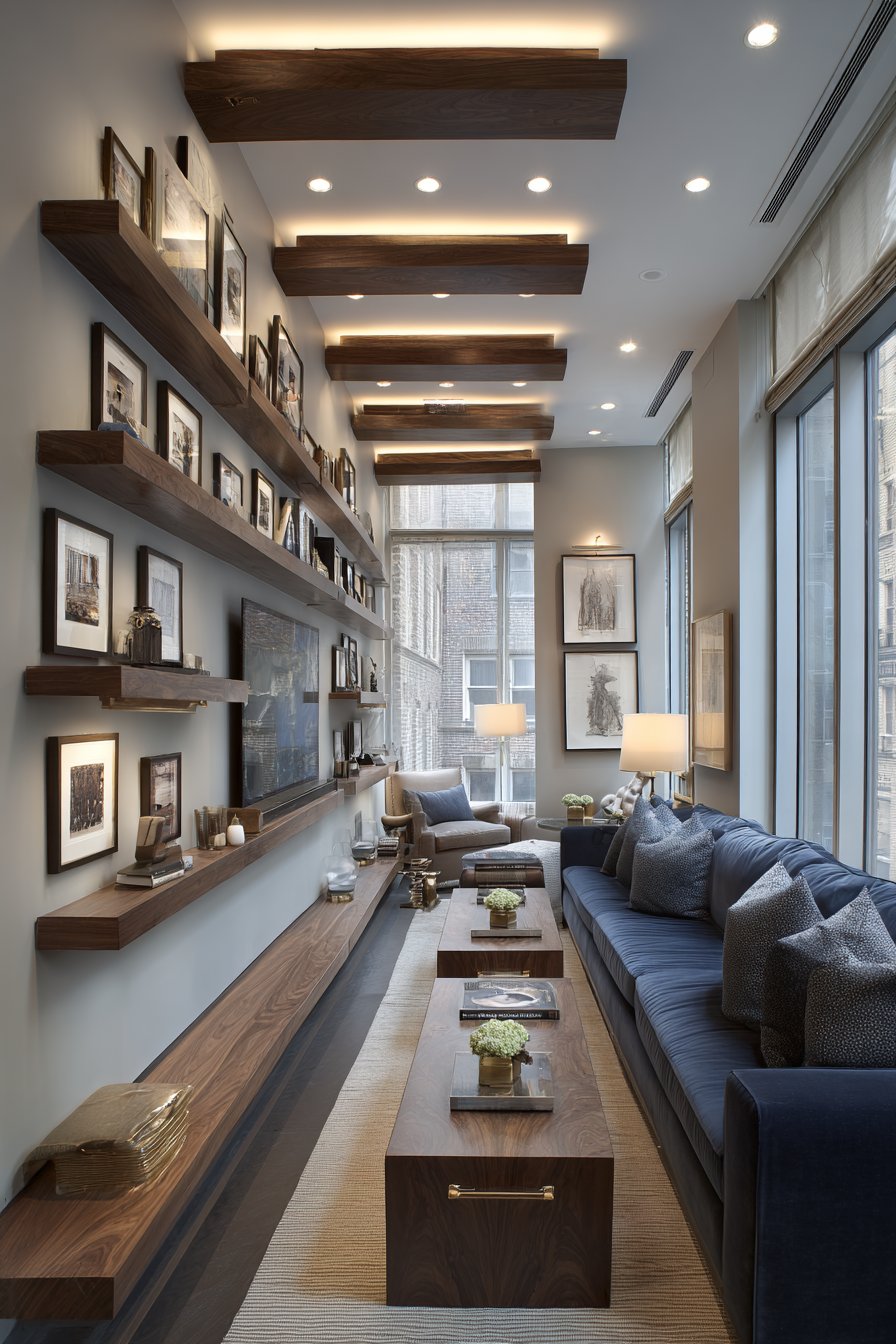
The floating shelves create visual interest along the length. They provide substantial storage without floor space consumption. The navy blue sofa adds rich color against neutral walls. The brass accents introduce metallic warmth.
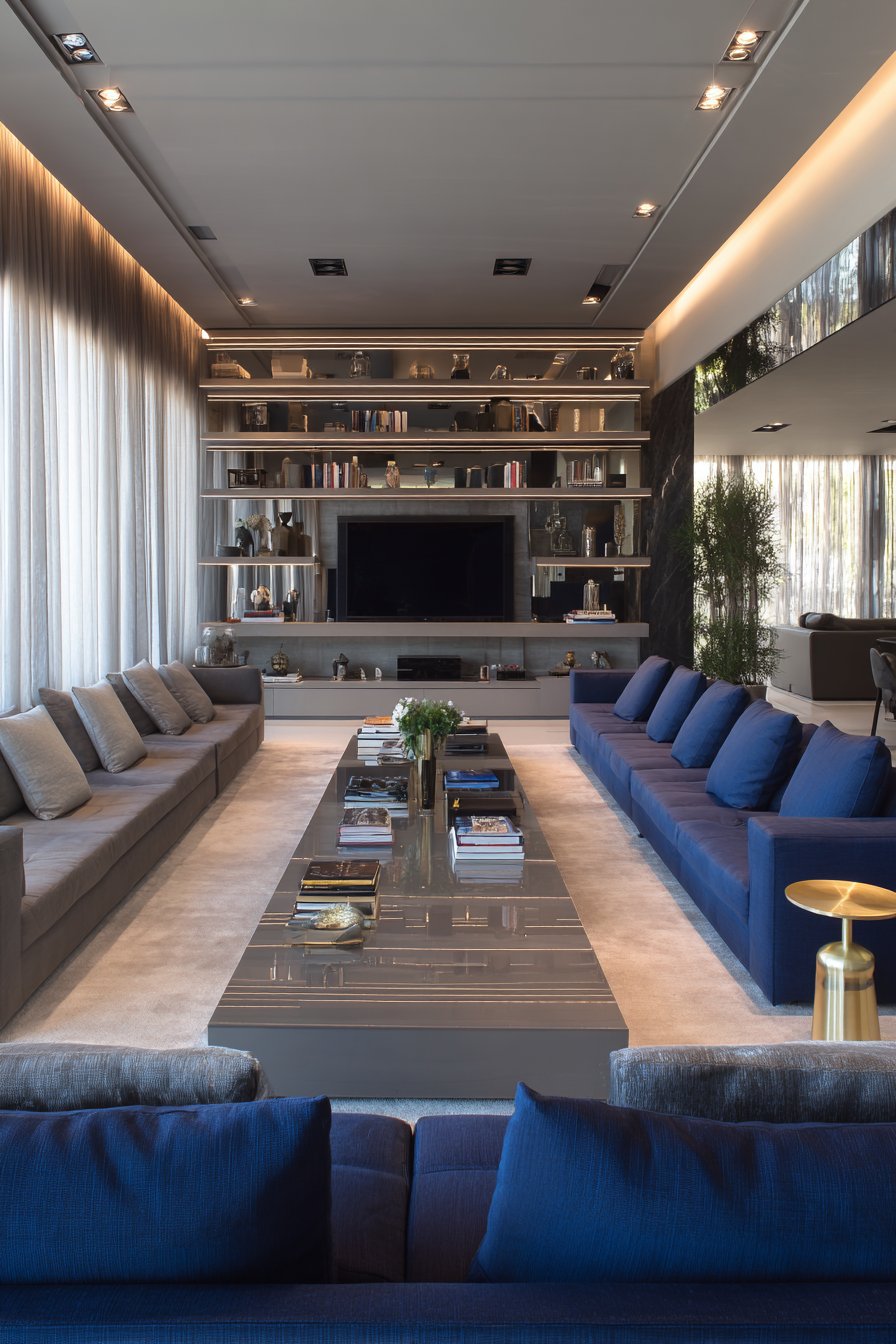
Wide-angle architectural photography shows the continuous shelving system. The image demonstrates how horizontal lines enhance rectangular rooms. This storage-focused design suits media-centric living spaces.
Key Design Tips:
- Install floating shelves along entire long walls
- Position entertainment centers below shelving systems
- Choose narrow coffee tables to maintain pathways
- Add recessed lighting to highlight displays
- Use brass accents for metallic warmth and sophistication
17. French Doors Indoor-Outdoor Connection
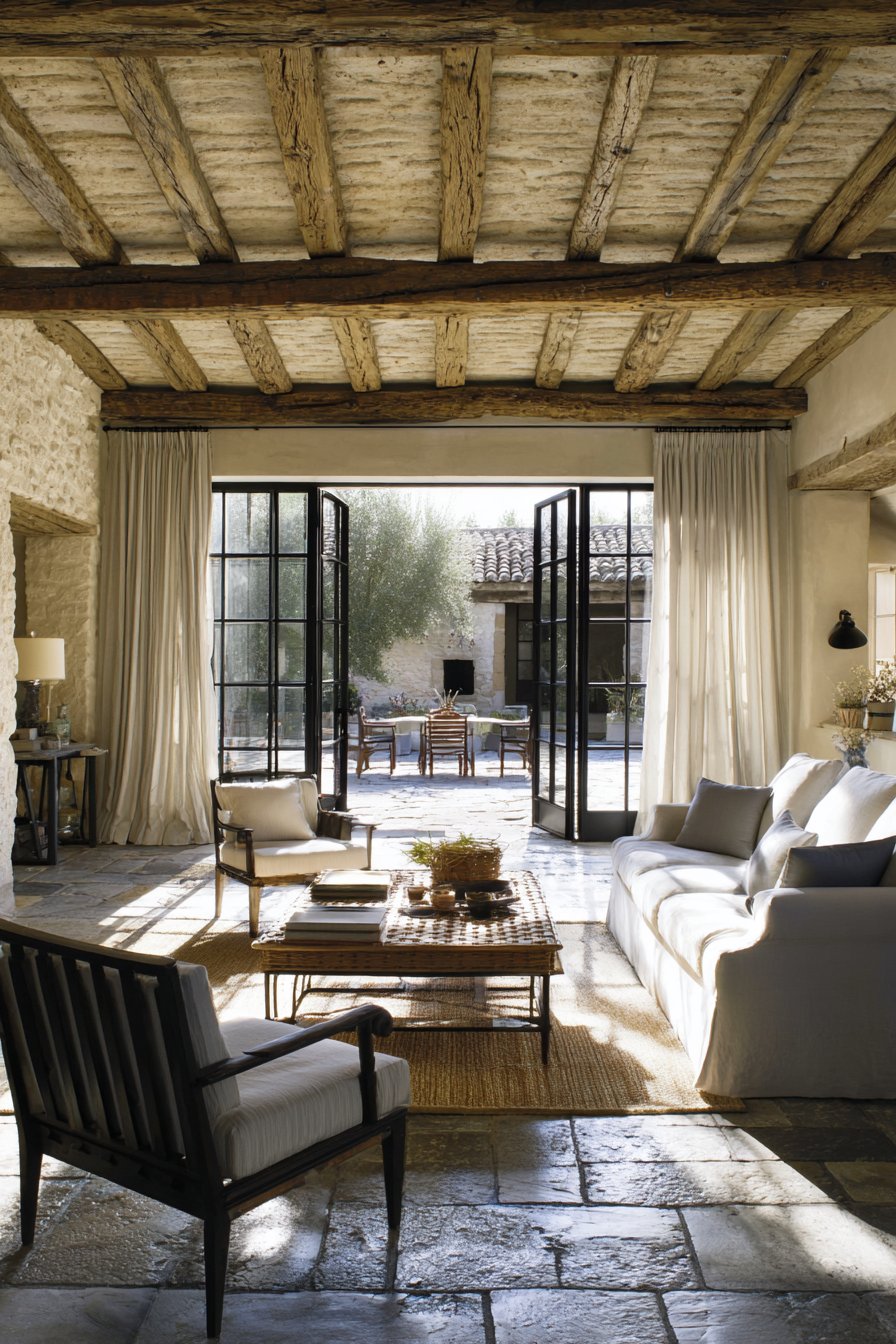
French doors along one long wall create an exceptional indoor-outdoor connection. The doors open to a patio area. Furniture is arranged to maximize views and natural light. A sofa parallel to the doors faces a pair of chairs.
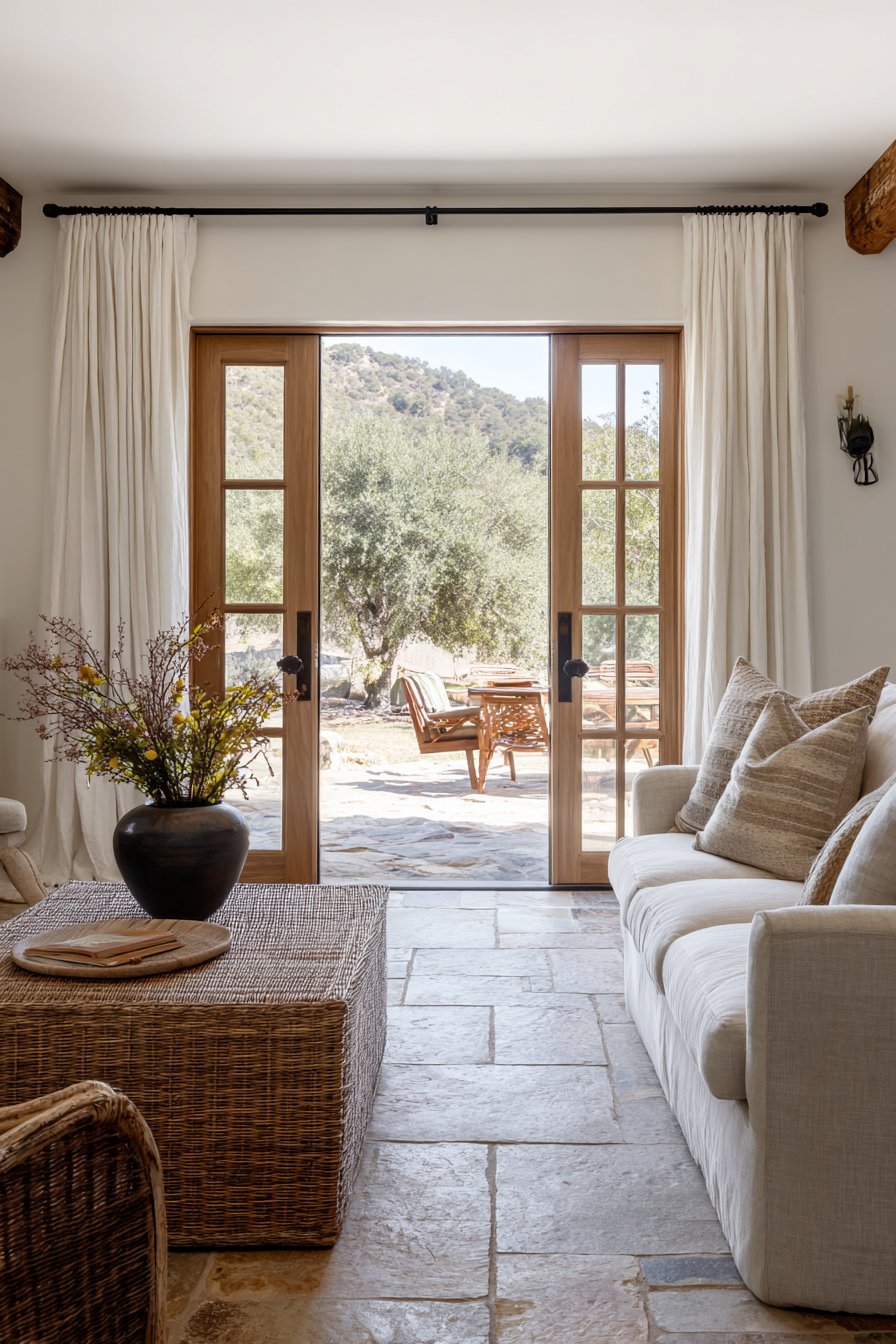
The conversation area enjoys both light and outdoor views. A rectangular rattan coffee table adds natural texture. Sheer linen curtains frame the doors without blocking light. Natural stone tile flooring creates a seamless indoor-outdoor transition.
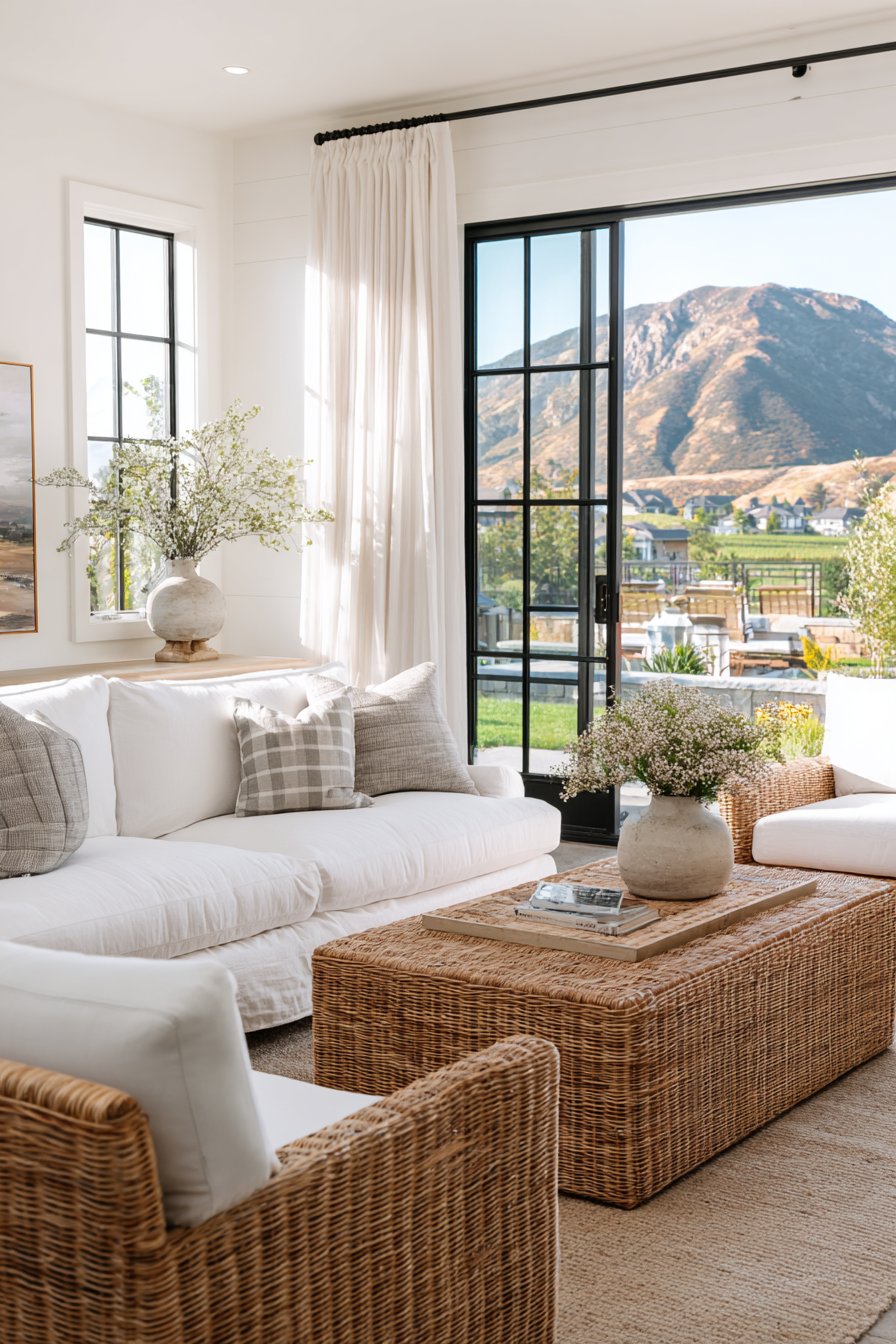
The French doors transform the rectangular room’s character. The outdoor connection expands perceived space significantly. The natural materials complement the garden views. The sheer curtains maintain privacy when needed.
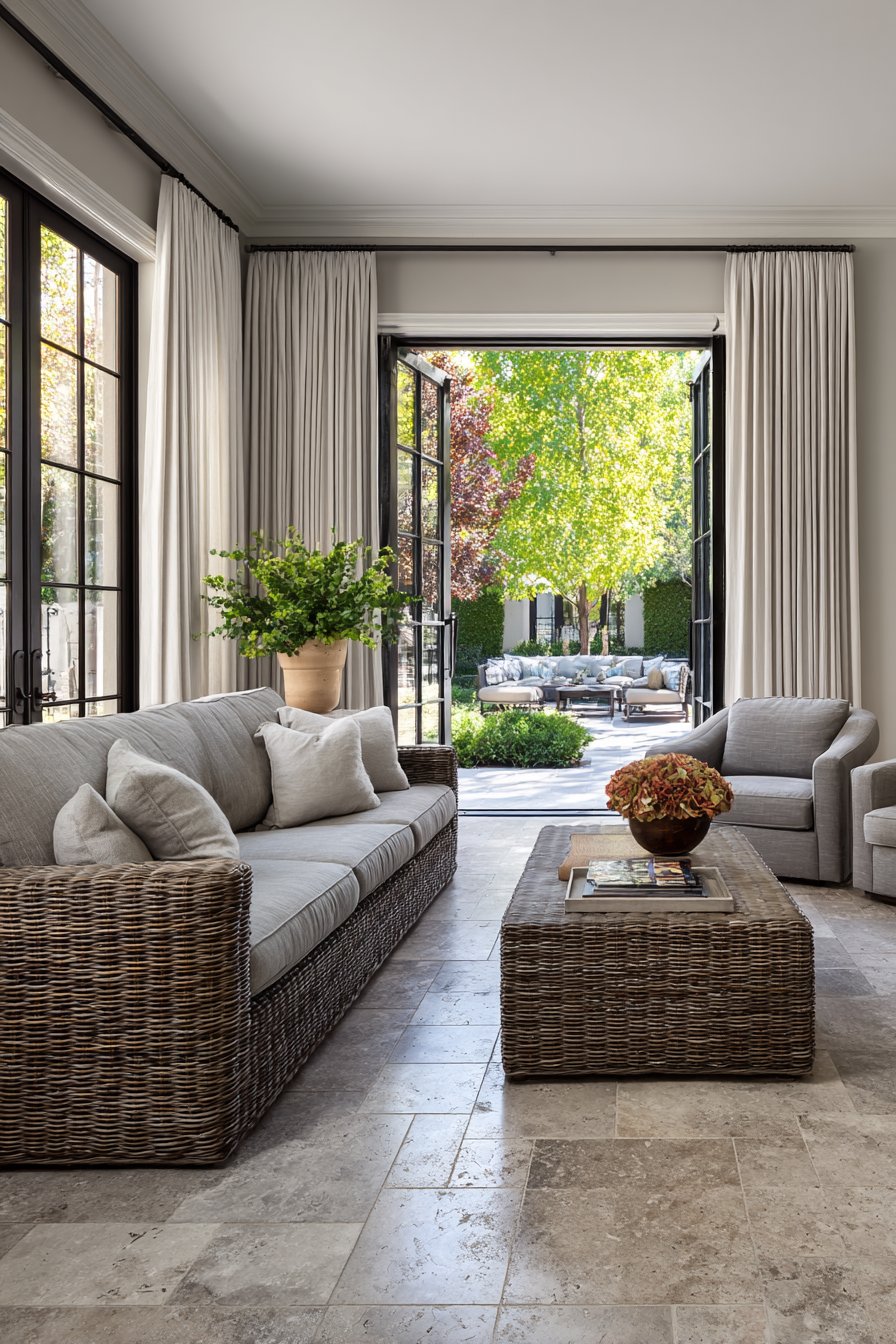
Interior design photography captures the indoor-outdoor connection beauty. Balanced exposure shows how French doors enhance rectangular length. This design suits homes with accessible outdoor spaces.
Key Design Tips:
- Position furniture to maximize French door views
- Use natural materials like rattan for outdoor connection
- Choose sheer curtains that filter light without blocking
- Install continuous flooring for seamless transitions
- Arrange seating to enjoy both interior and exterior spaces
18. Bold Emerald Accent Wall Statement
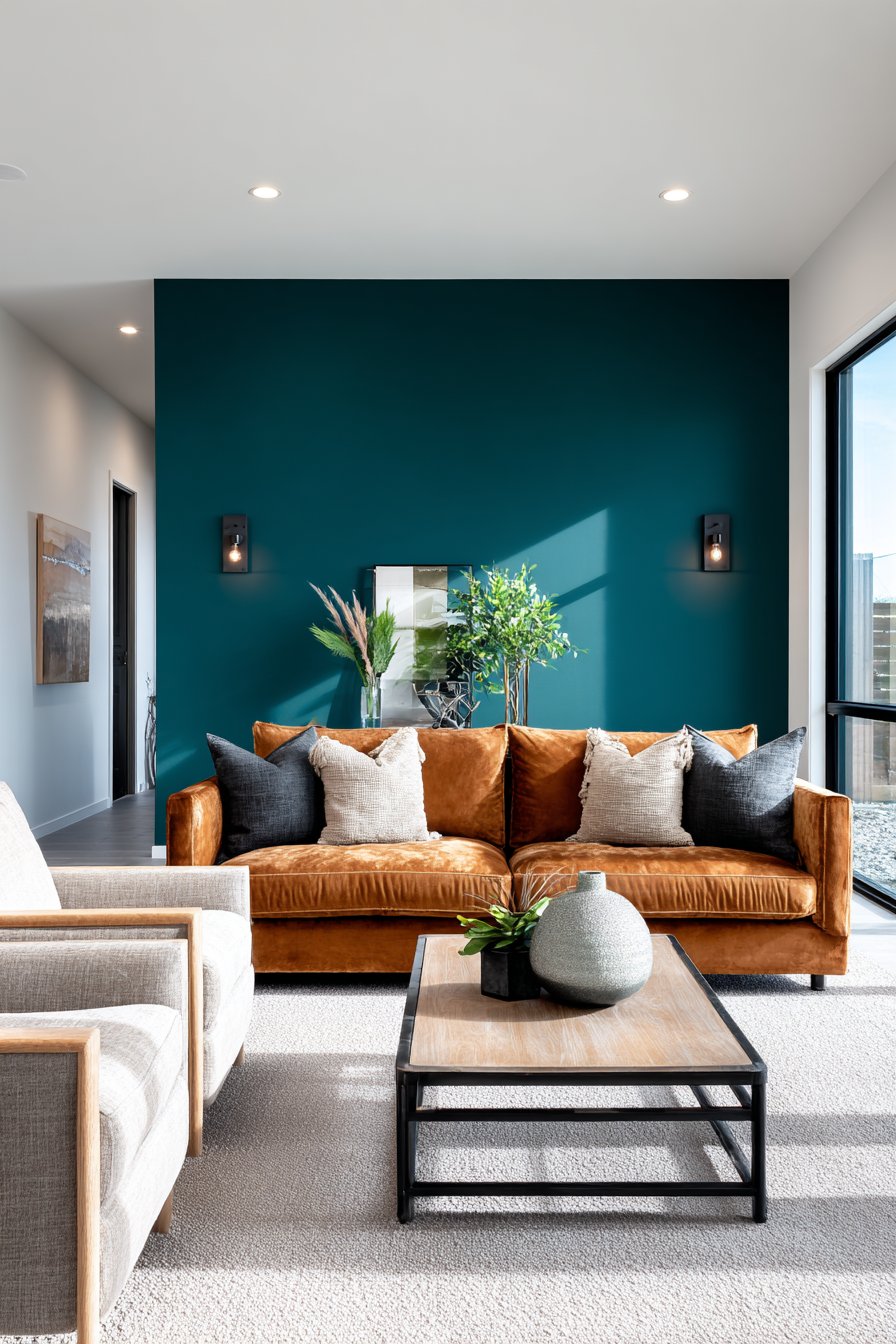
A deep emerald green accent wall creates drama on one short end. This feature wall serves as a bold focal point. A velvet sofa in gold ochre faces the emerald wall. A rectangular coffee table in black metal and glass centers the seating.
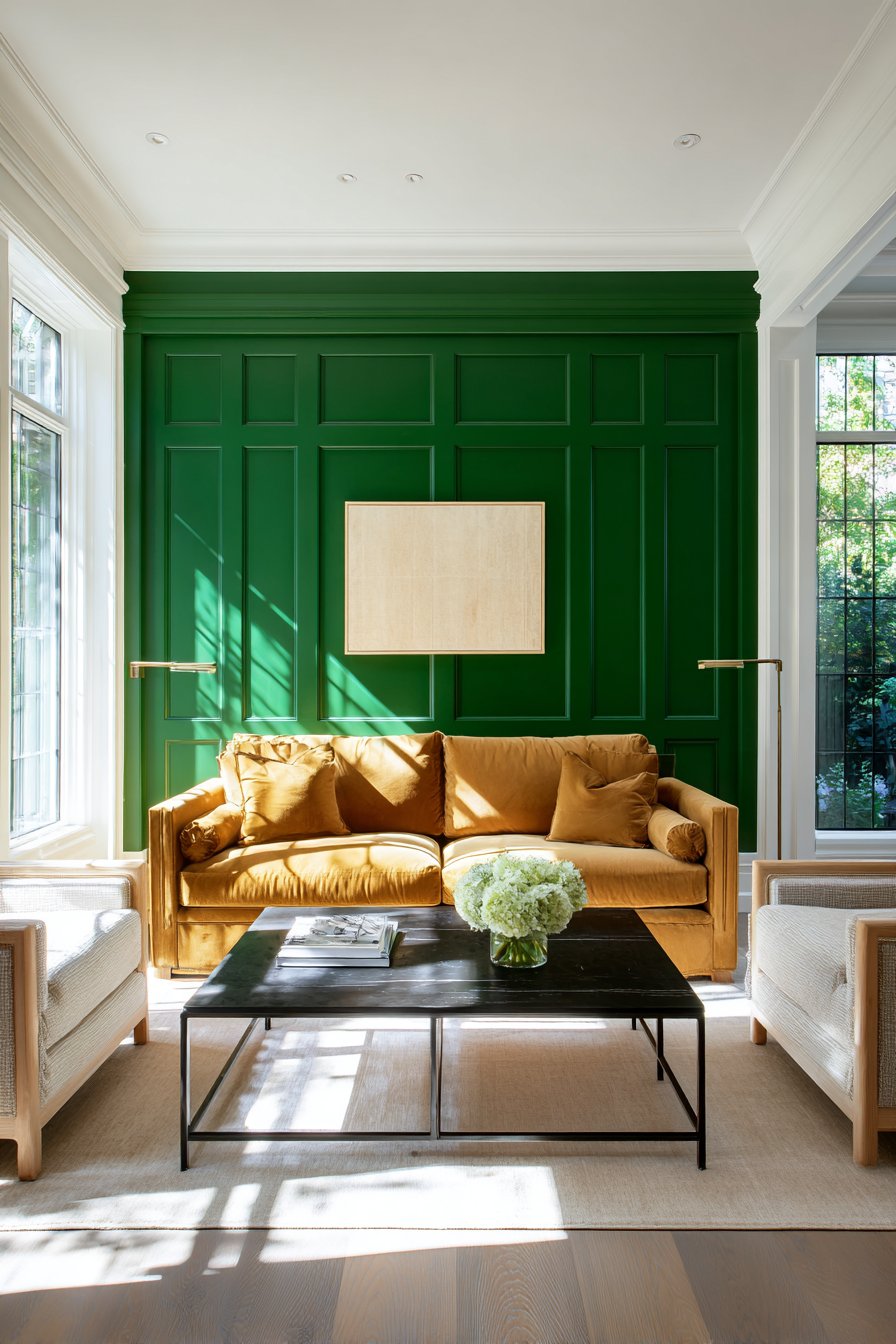
Two matching armchairs in neutral linen complete the arrangement. The remaining walls stay crisp white. This emphasizes the room’s clean rectangular geometry. Natural light from windows creates beautiful shadows and highlights.
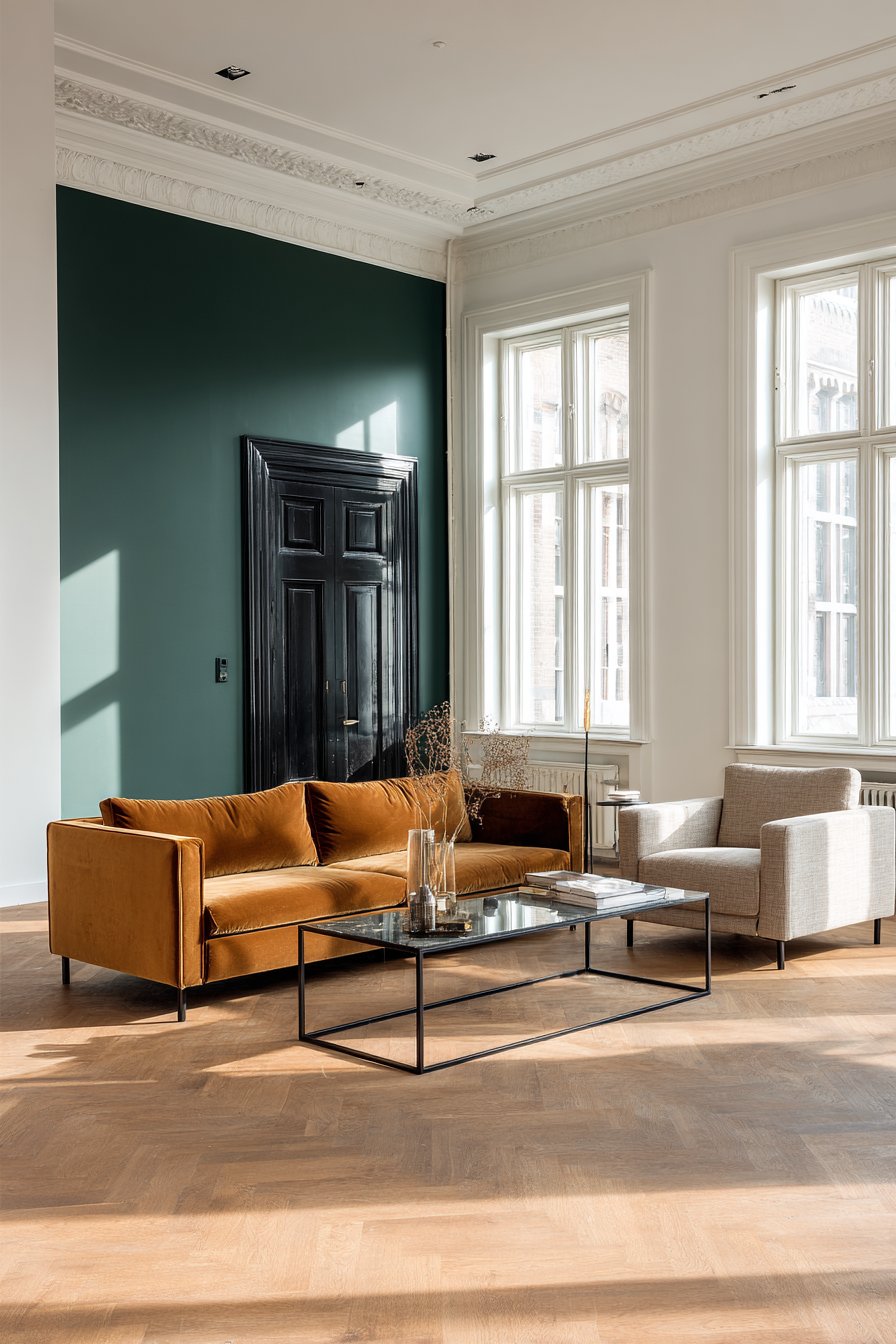
The bold color statement anchors the rectangular design scheme. The emerald and ochre combination feels sophisticated and warm. The black metal coffee table adds contemporary edge. The white walls prevent color from overwhelming.
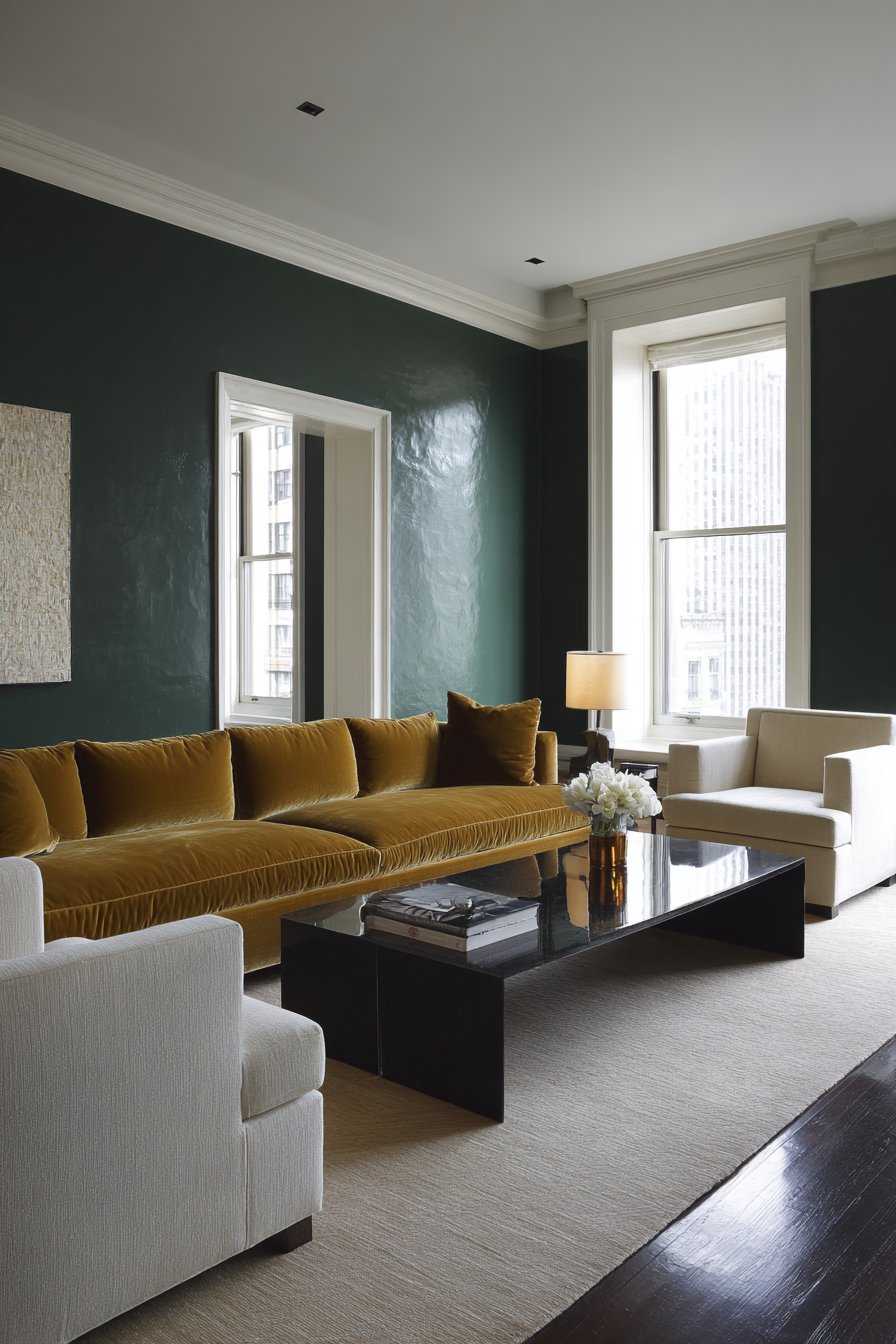
Professional photography captures the bold accent wall impact. The image shows how color anchors rectangular room design. This approach suits those seeking dramatic yet balanced aesthetics.
Key Design Tips:
- Paint one short wall in bold colors for focal interest
- Choose complementary upholstery colors like ochre with emerald
- Keep remaining walls neutral to prevent overwhelm
- Use black metal furniture for contemporary contrast
- Position windows to create shadows that highlight accent colors
19. Minimalist Scandinavian Simplicity
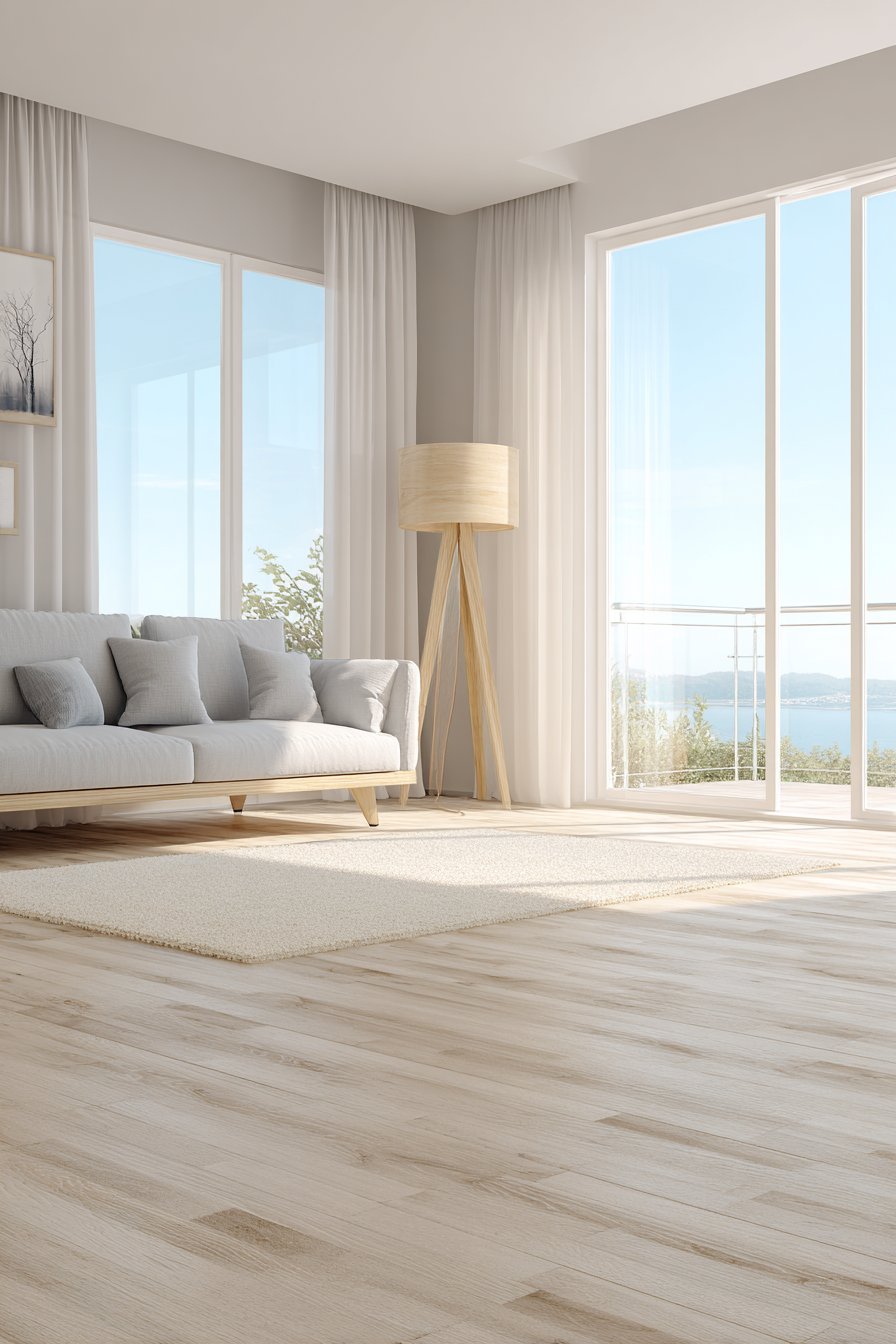
Minimalist Scandinavian design creates serene simplicity in this rectangular living room. A simple three-seat sofa in light grey positions against one long wall. A long low-profile media console in white oak sits opposite. A rectangular wool area rug in natural cream defines the space.
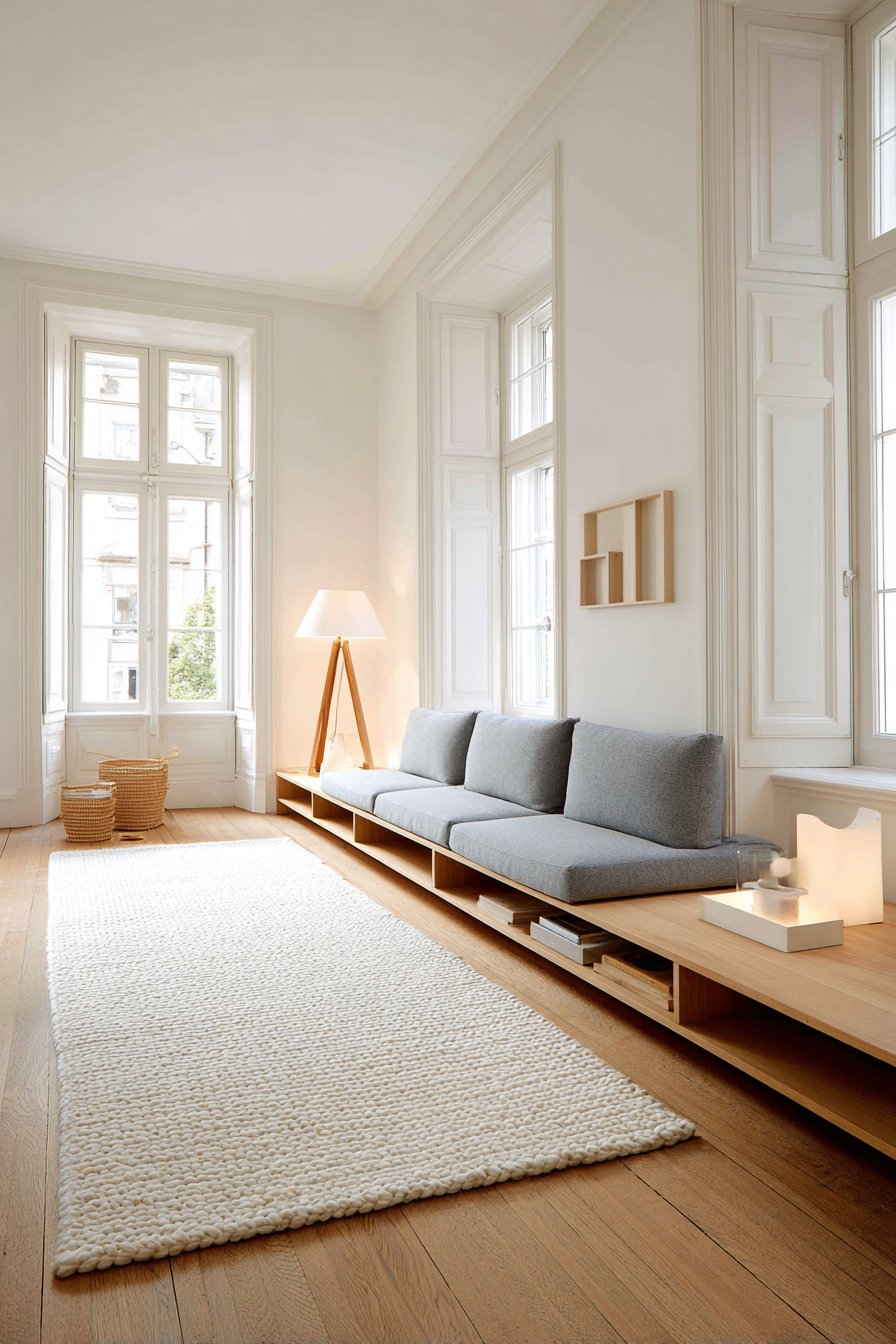
Minimal window treatments allow maximum natural light. Large windows provide generous daylight throughout. A single statement floor lamp with wooden tripod legs adds task lighting. The sparse furniture arrangement emphasizes clean rectangular lines.
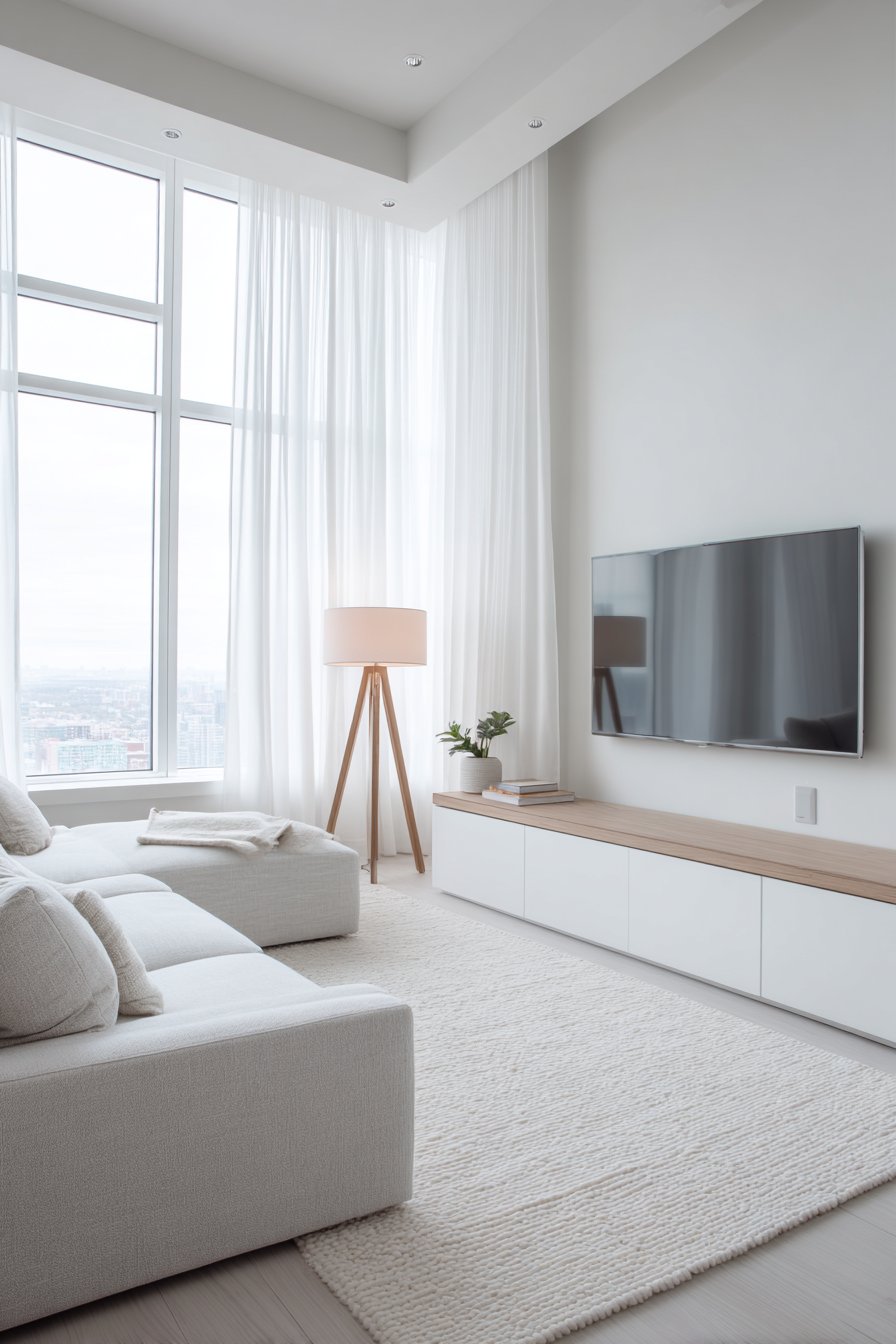
The minimalist approach creates spacious feelings. Each furniture piece serves clear purpose without excess. The natural materials maintain warmth despite simplicity. The light color palette enhances the serene atmosphere.
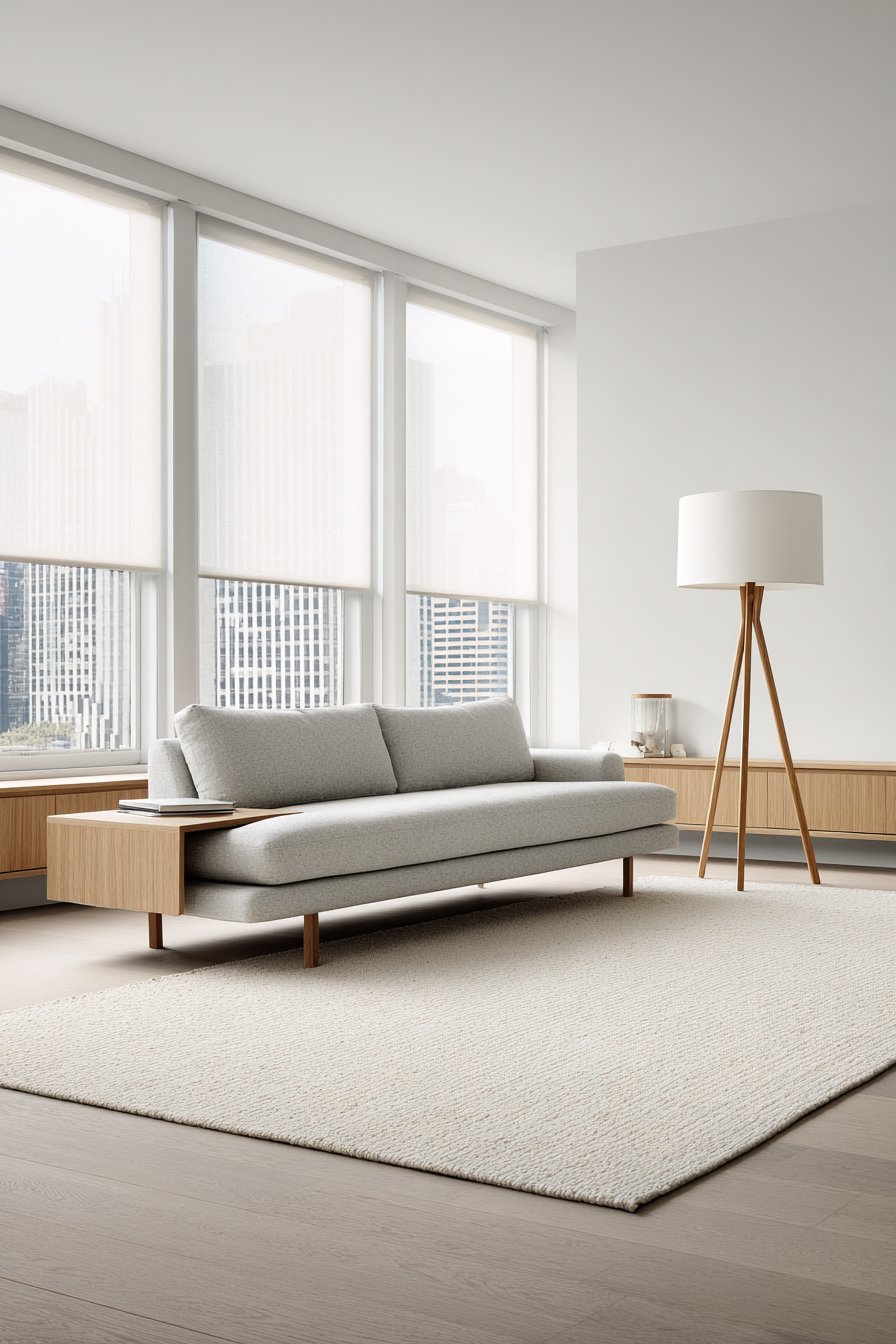
Wide-angle photography captures the uncluttered aesthetic. Soft natural lighting creates peaceful ambiance. This design proves rectangles suit minimalist philosophy beautifully.
Key Design Tips:
- Choose minimal furniture with clear functional purposes
- Use light neutral colors for serene atmosphere
- Maximize natural light through minimal window treatments
- Select natural materials like wood and wool for warmth
- Embrace negative space to emphasize clean lines
20. Eclectic Mixed Seating Collection
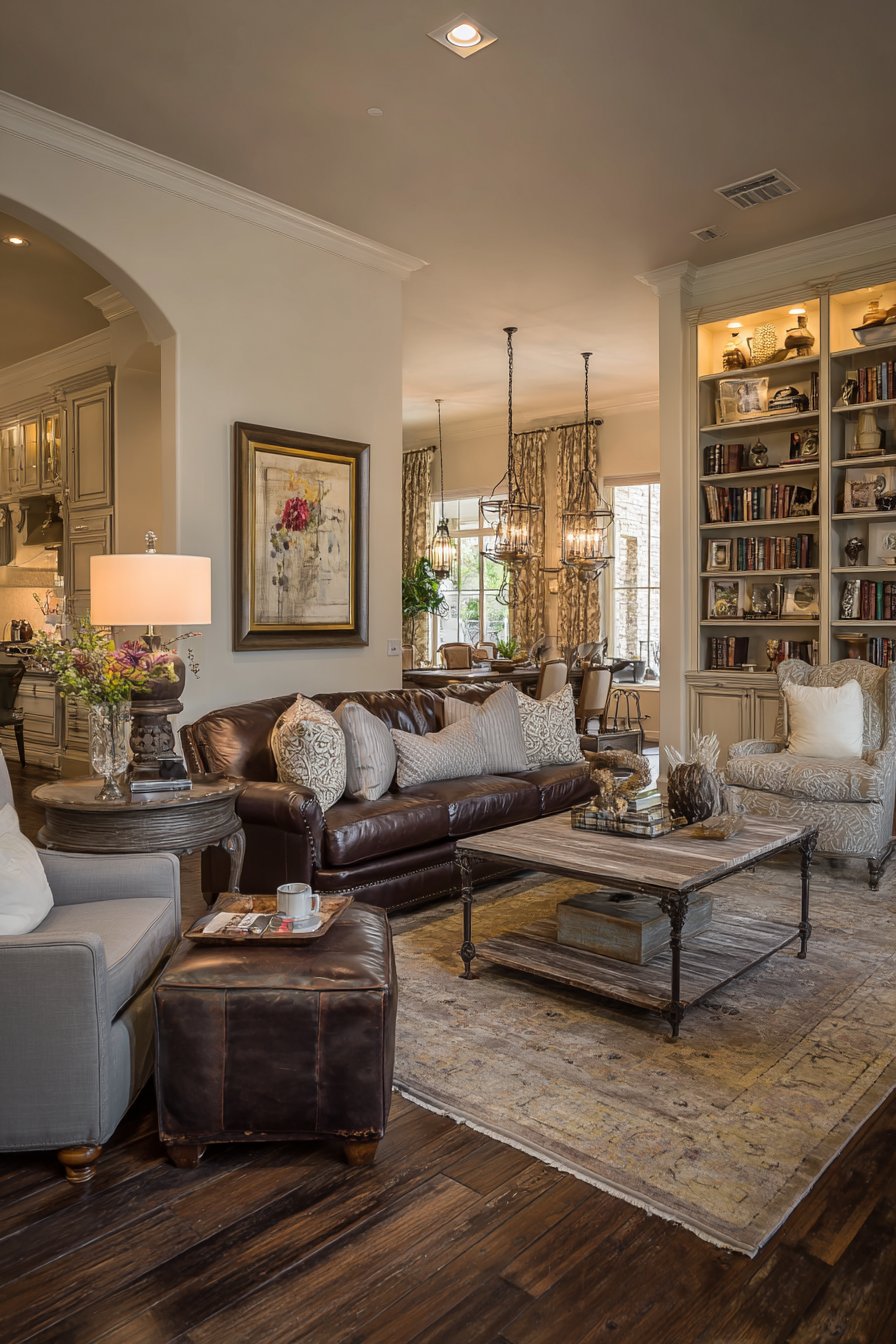
Mixed seating creates eclectic character in this rectangular living room. A traditional sofa combined with modern accent chairs. A vintage leather ottoman adds collected charm. A rectangular distressed wood coffee table centers the grouping.
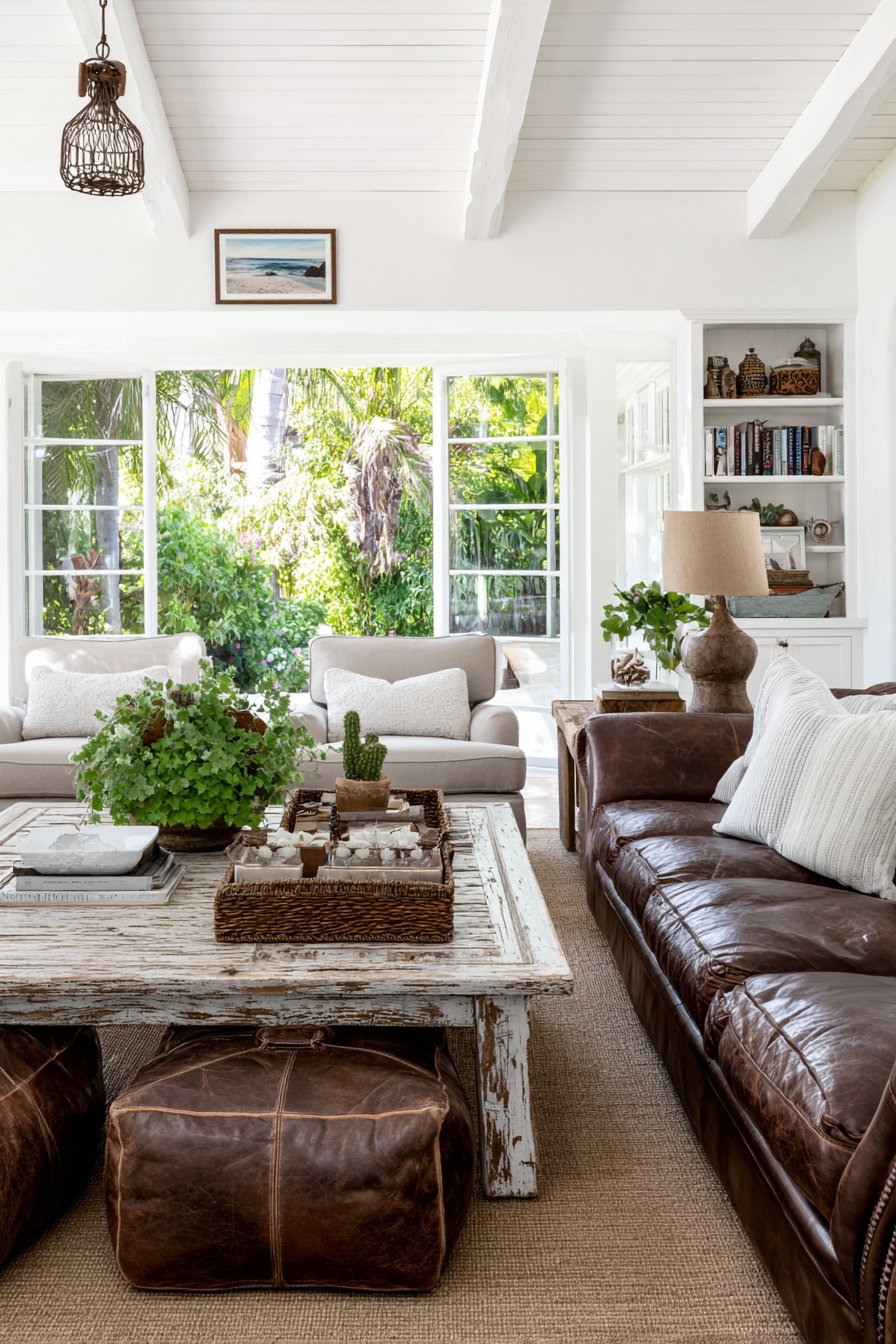
Built-in bookshelves on one short wall provide architectural interest. Multiple area rugs layer together, adding warmth and definition. Table lamps, floor lamps, and pendant lighting create varied illumination. The collected aesthetic feels personal and curated.
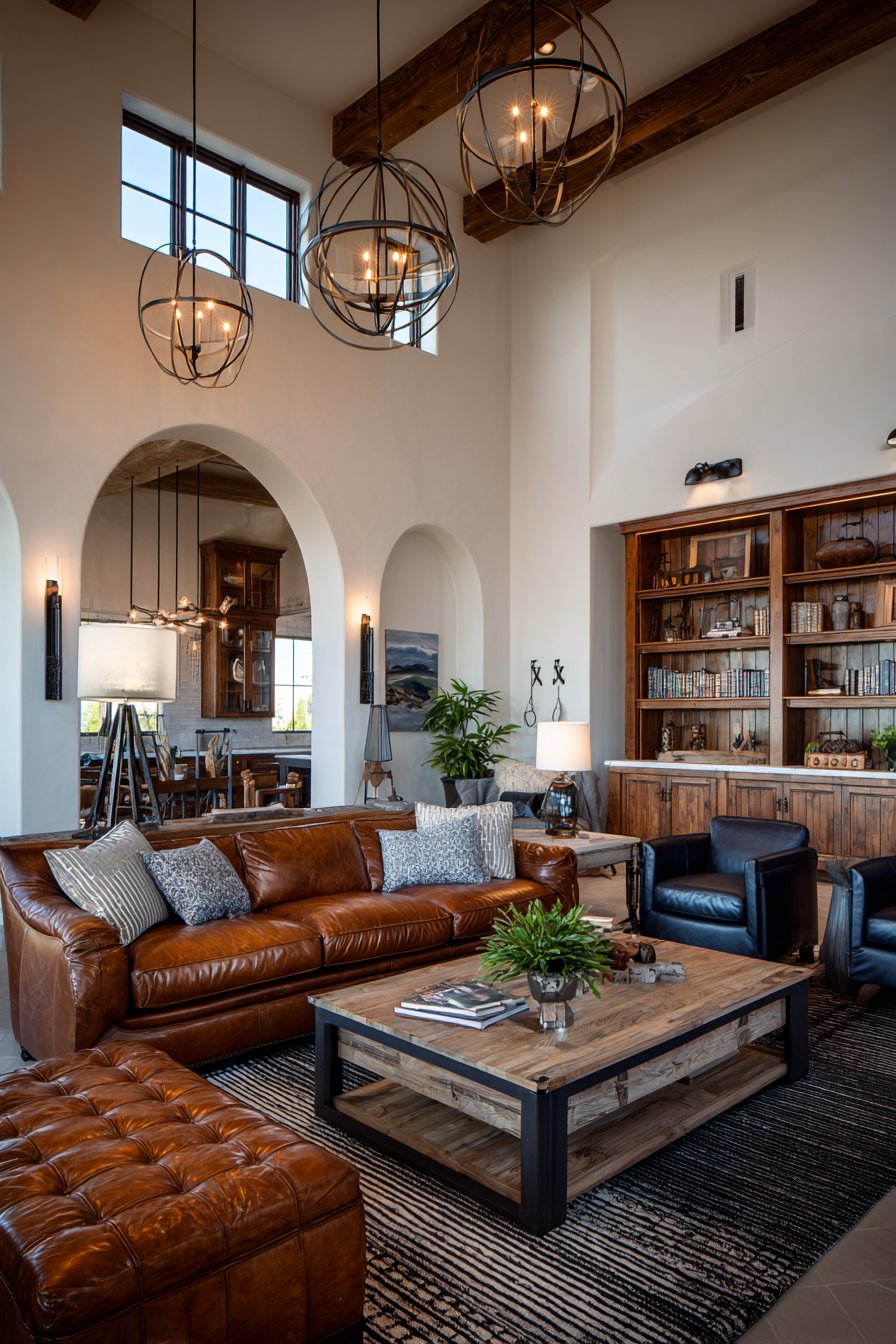
The diverse furniture styles work together cohesively. The distressed wood coffee table unifies different periods. The layered rugs add depth and visual richness. The varied lighting creates a dimensional ambiance.
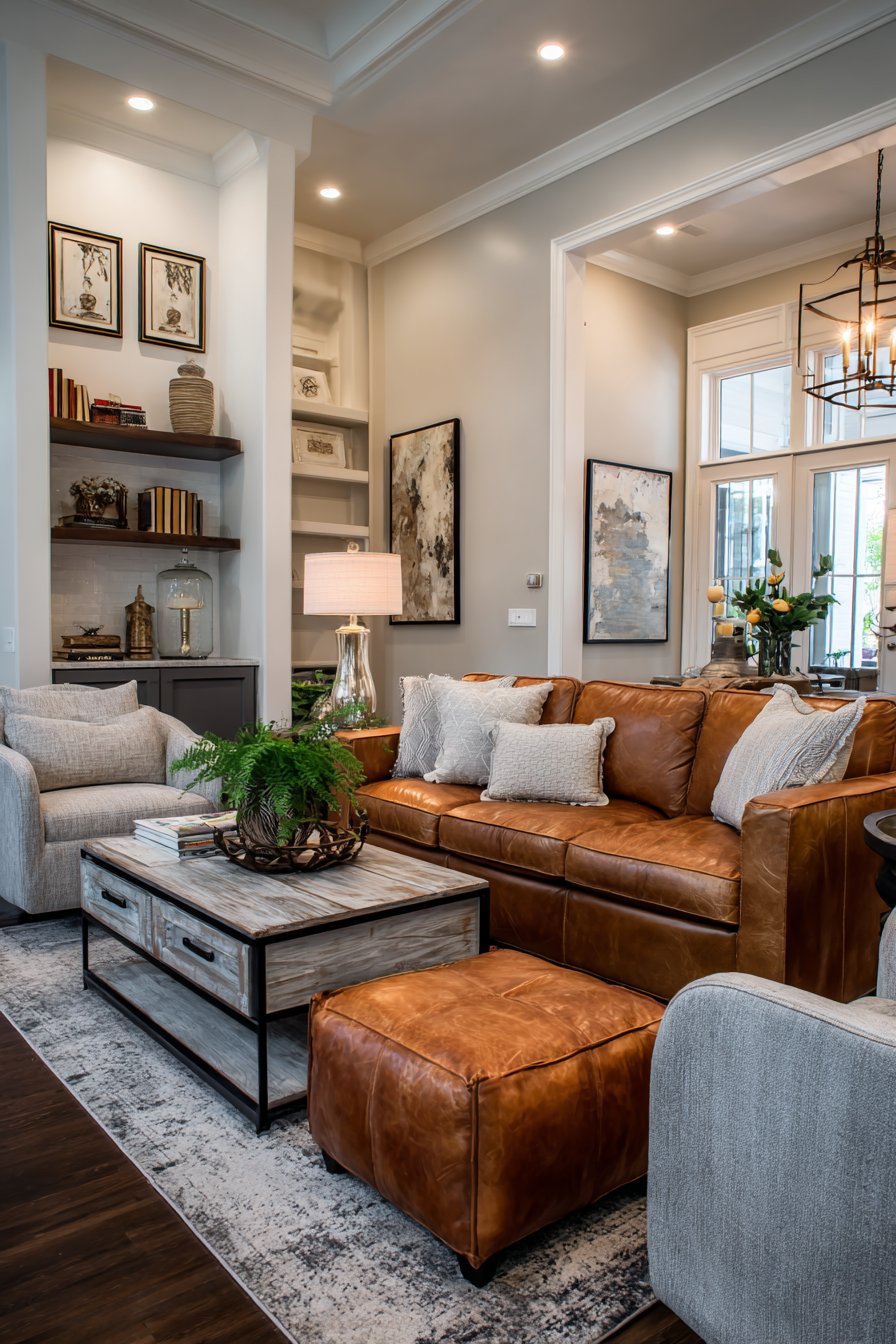
Professional photography captures the collected-over-time aesthetic. The image demonstrates how diverse styles coexist successfully. This design proves rectangles accommodate eclectic approaches beautifully.
Key Design Tips:
- Mix furniture from different style periods for eclectic appeal
- Use distressed wood pieces to unify diverse elements
- Layer multiple rugs for depth and zone definition
- Create varied lighting with multiple fixture types
- Add built-in features for architectural character
Why These Rectangle Living Room Designs Are the Best
These rectangle living room designs represent optimal approaches to elongated space challenges. Each concept addresses the fundamental issue of corridor-like feelings through strategic furniture placement. The designs demonstrate that rectangular proportions offer advantages when approached correctly.
Successful rectangular room design begins with understanding spatial flow. Furniture arrangements must maintain clear pathways while creating distinct functional zones. The L-shaped sectional approach maximizes seating without blocking circulation. Floating furniture arrangements prevent boxed-in feelings that hurt elongated spaces.
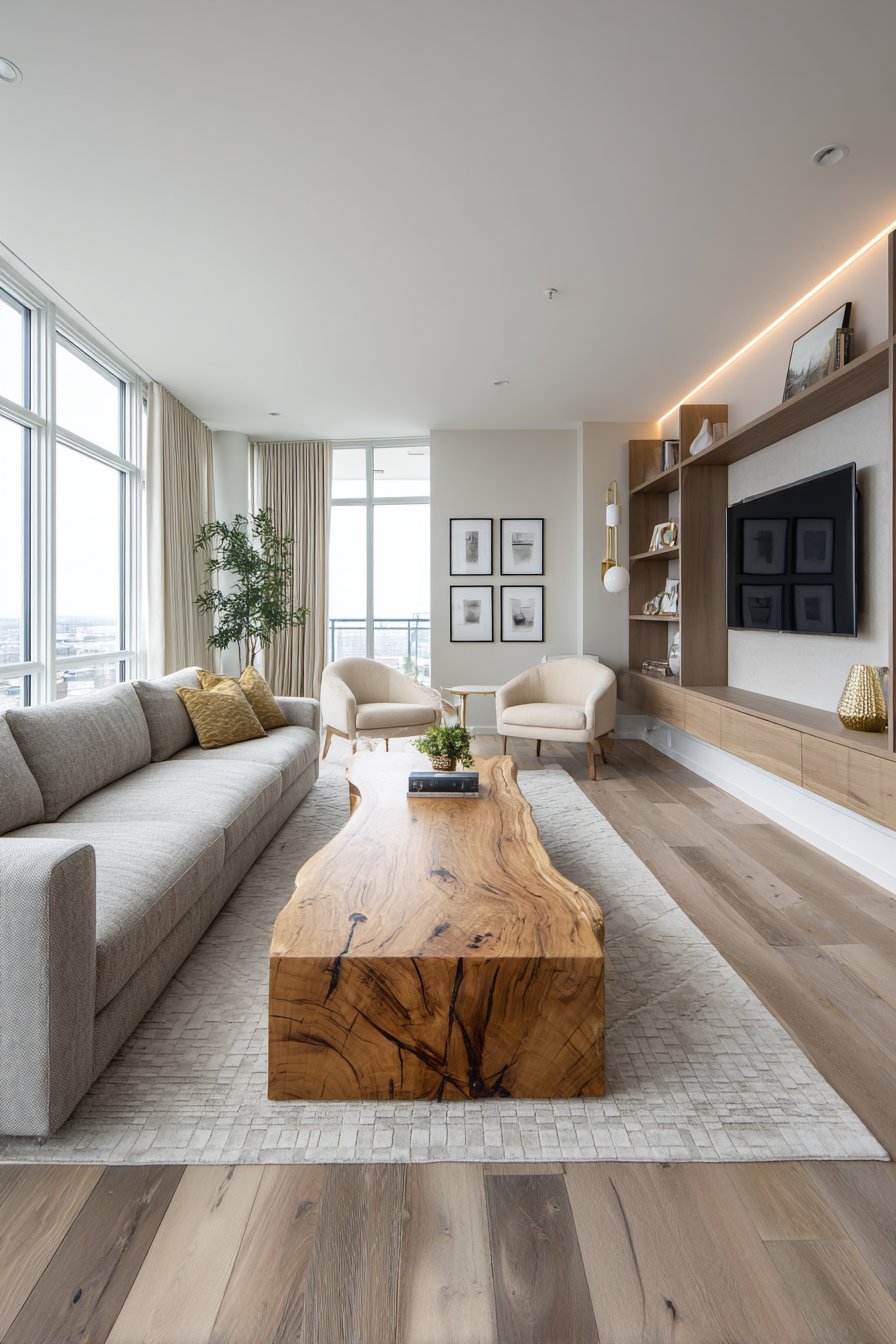
Material selection plays crucial roles in the success of a rectangular room. Natural materials like oak, linen, and wool add warmth to potentially cold proportions. These materials age beautifully while maintaining visual interest. The contrast between materials creates depth that photographs cannot fully capture.
Lighting strategy proves essential across all rectangular designs. Layered lighting approaches combining natural light, recessed fixtures, and task lamps create dimensional spaces. Single-source lighting creates flat, uninteresting rectangles. Multiple light sources at varied heights add depth and functionality.
Color application requires careful consideration in rectangular spaces. Bold accent walls on short ends create focal points without overwhelming. Neutral palettes along long walls prevent claustrophobic feelings. The color distribution affects perceived proportions significantly.
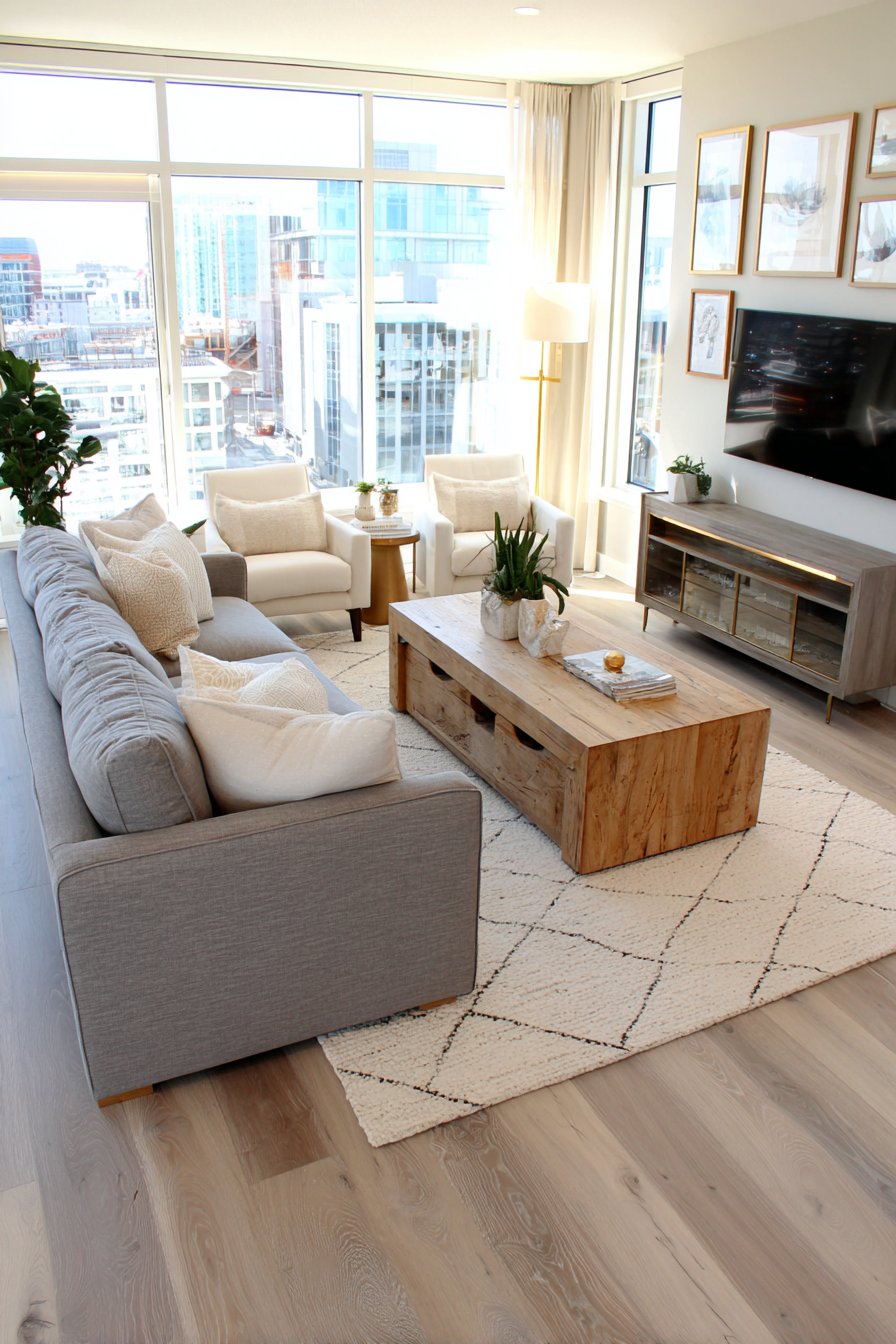
Zone creation through furniture groupings allows multifunctional rectangular spaces. Primary seating areas, reading nooks, and media zones coexist comfortably. Area rugs define zones visually while maintaining spatial flow. This approach maximizes rectangular room utility.
The designs showcase adaptability across traditional to contemporary aesthetics. Symmetrical arrangements suit formal preferences. Asymmetrical layouts create modern, dynamic feelings. Both approaches succeed when executed with spatial awareness and proper scale.
Conclusion
These twenty rectangle living room designs demonstrate that elongated proportions offer exciting design possibilities. Strategic furniture placement transforms potential challenges into beautiful, functional spaces. The key takeaways include understanding spatial flow, embracing zone creation, and selecting appropriate furniture scales.
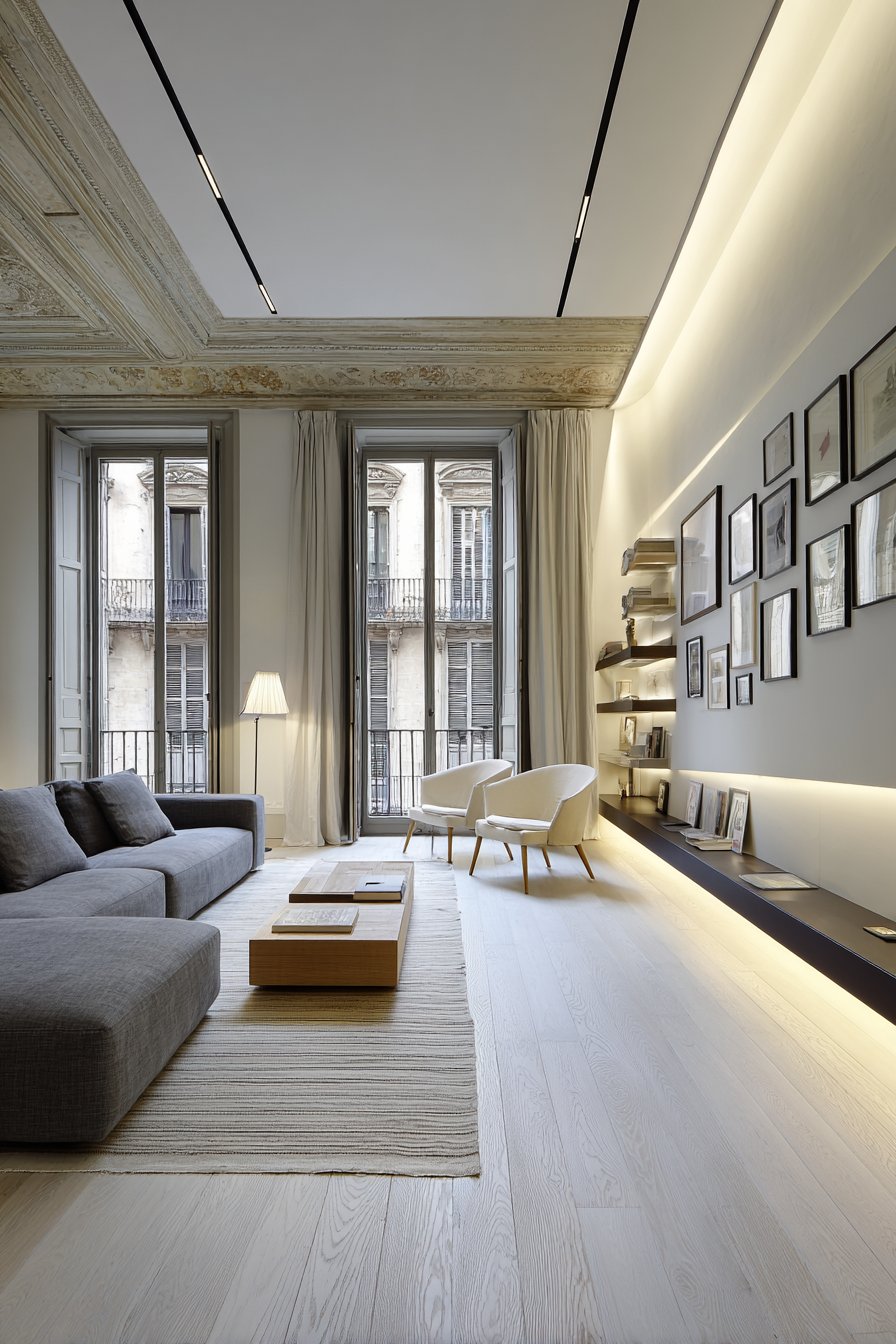
Successful rectangular living room design balances aesthetics with practical considerations. Natural materials, layered lighting, and thoughtful color application create inviting environments. Whether you prefer minimalist Scandinavian simplicity or eclectic collected charm, rectangular rooms accommodate diverse preferences beautifully.
Start implementing these concepts by assessing your rectangular space honestly. Identify natural focal points and traffic patterns. Choose furniture arrangements that maximize both seating and circulation. Your perfectly designed rectangle living room awaits through thoughtful planning and creative execution.
