


Creating a Parisian living room brings sophistication and charm to your home. This design style celebrates classical architecture and refined aesthetics. The combination creates elegant spaces perfect for both entertaining and everyday living. Parisian interiors embody a unique balance between formal grandeur and comfortable intimacy.
Parisian living rooms have captivated design enthusiasts for generations. They offer timeless elegance that transcends fleeting trends. The characteristic features include ornate moldings, herringbone floors, and tall French windows. These architectural elements provide the foundation for layered, curated interiors.
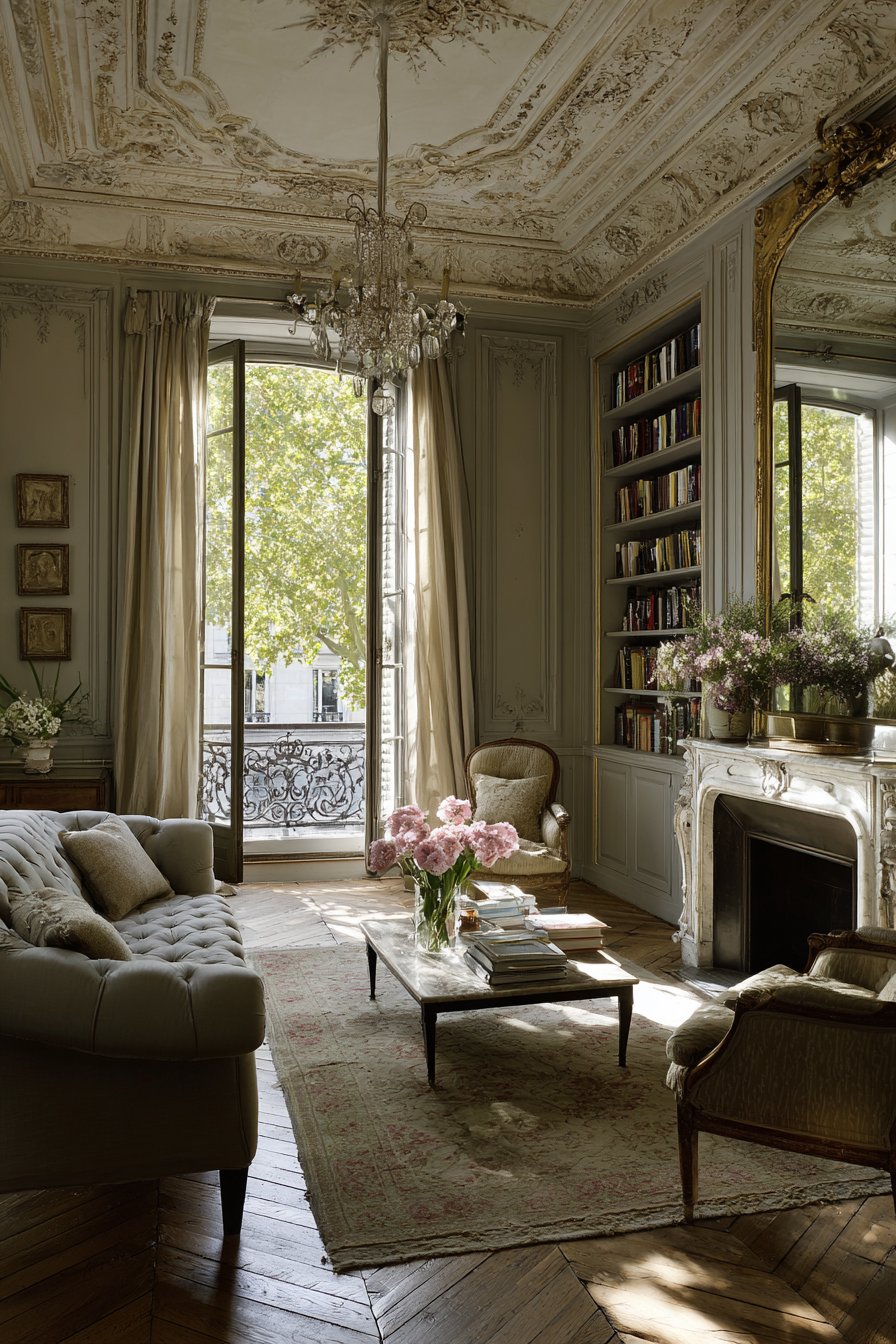
The beauty of Parisian design lies in its versatility and adaptability. Whether you inhabit a classic Haussmann apartment or a modern space, these principles translate beautifully. From minimalist contemporary interpretations to richly decorated traditional rooms, Parisian style accommodates diverse tastes. This article explores twenty distinctive approaches to achieving authentic Parisian living room elegance.
1. Classic Haussmann Elegance with Tufted Camelback Sofa
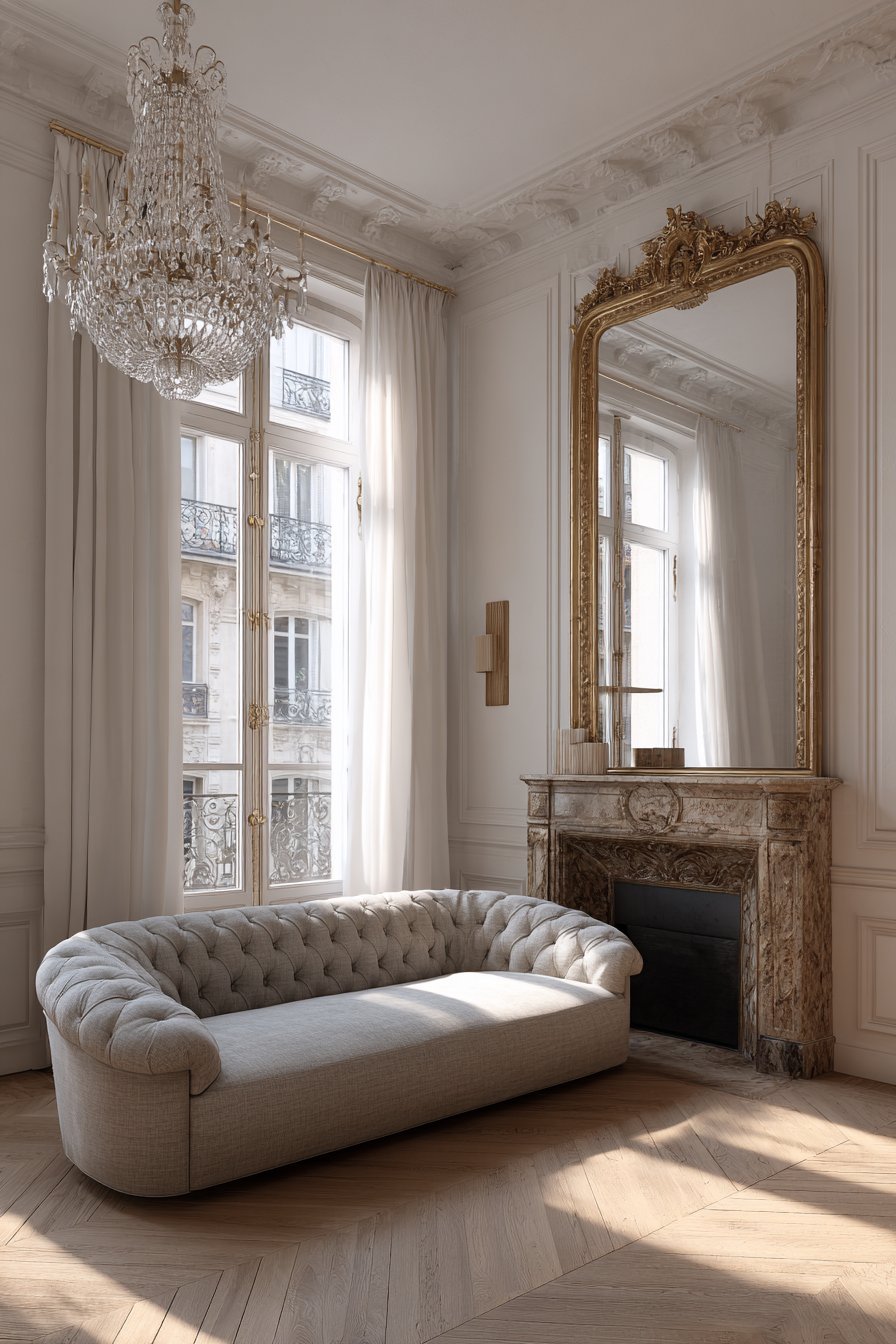
Envision a sophisticated living room where a tufted camelback sofa commands attention in soft dove grey linen. The walls showcase classic Haussmann cream paint that reflects centuries of refined taste. An ornate antique marble fireplace serves as the architectural focal point. Above it, an elaborate gilded mirror captures and multiplies the natural light streaming through tall French windows.
The flooring features iconic herringbone oak parquet in warm honey tones. This traditional pattern extends throughout the space, creating visual continuity and timeless appeal. The wood grain variations add organic beauty that synthetic materials cannot replicate. Each plank tells a story of craftsmanship and quality construction.
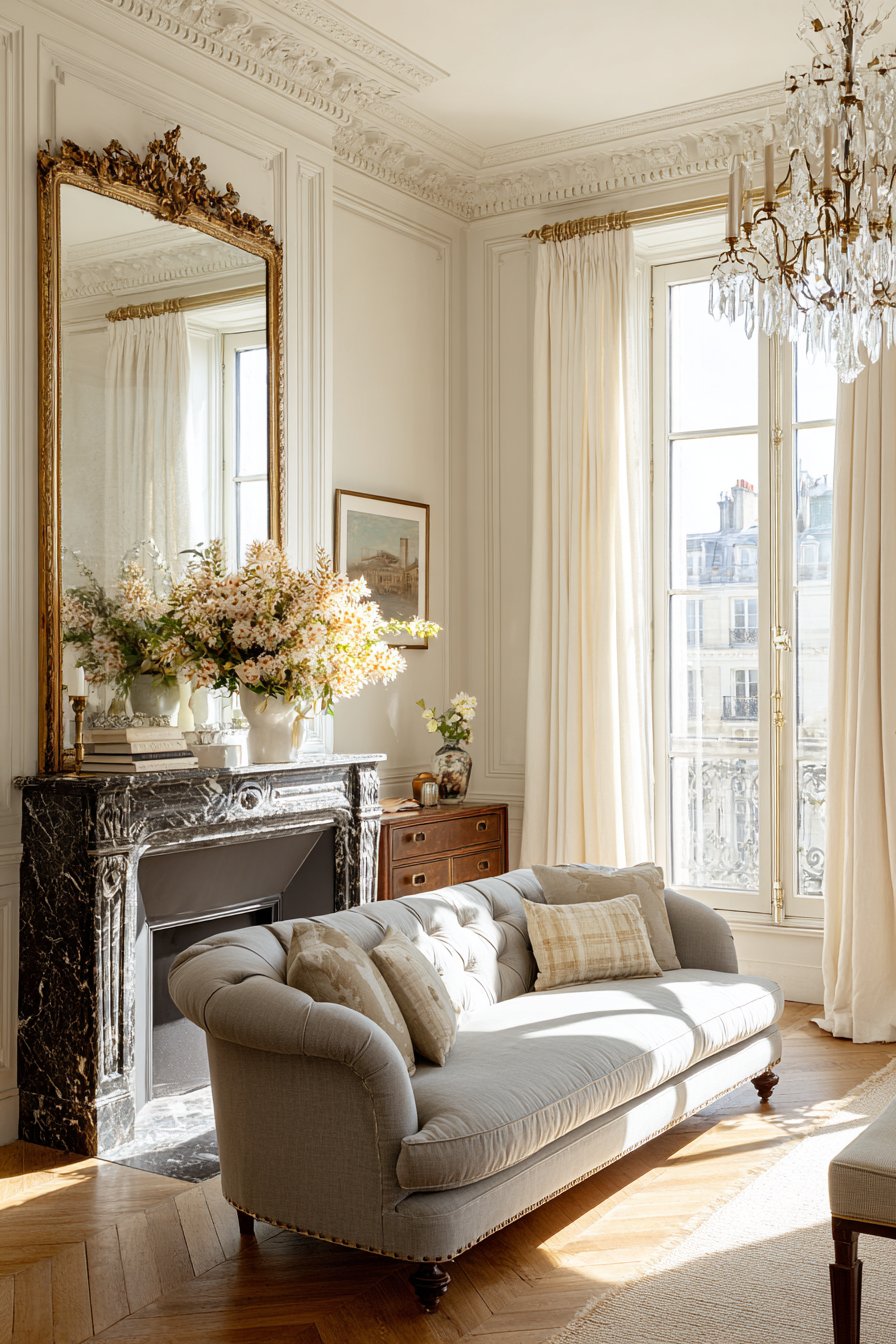
A crystal chandelier with brass accents hangs from the high ceiling adorned with decorative crown molding. The fixture provides both functional illumination and sculptural beauty. During daylight hours, natural light dances through the crystal prisms. Evening brings warm ambient glow that transforms the room’s atmosphere completely.
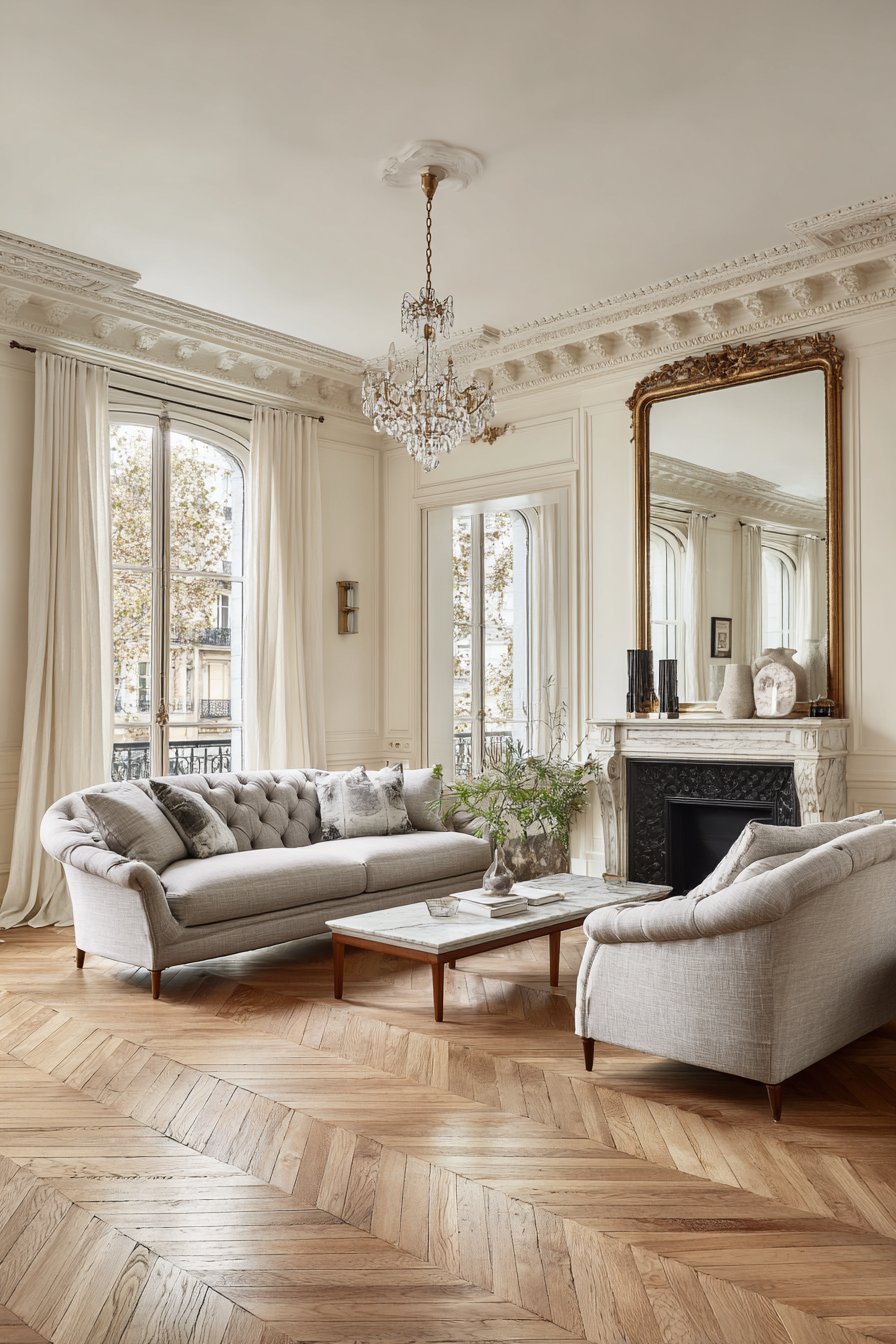
Sheer white curtains filter the morning light, creating gentle shadows that highlight refined textures. The layered window treatments add softness without obscuring the architectural beauty of the French windows. This interplay between light and shadow defines the Parisian aesthetic throughout the day.
Key Design Tips:
- Select a tufted camelback sofa in neutral linen for timeless sophistication and comfort
- Paint walls in classic Haussmann cream to maximize light reflection and create warmth
- Install herringbone oak parquet flooring for authentic Parisian character and durability
- Choose crystal chandeliers with brass accents to combine elegance with functional lighting
- Use sheer curtains to filter natural light while maintaining privacy and softness
2. Vintage Reading Corner with Louis XVI Armchair
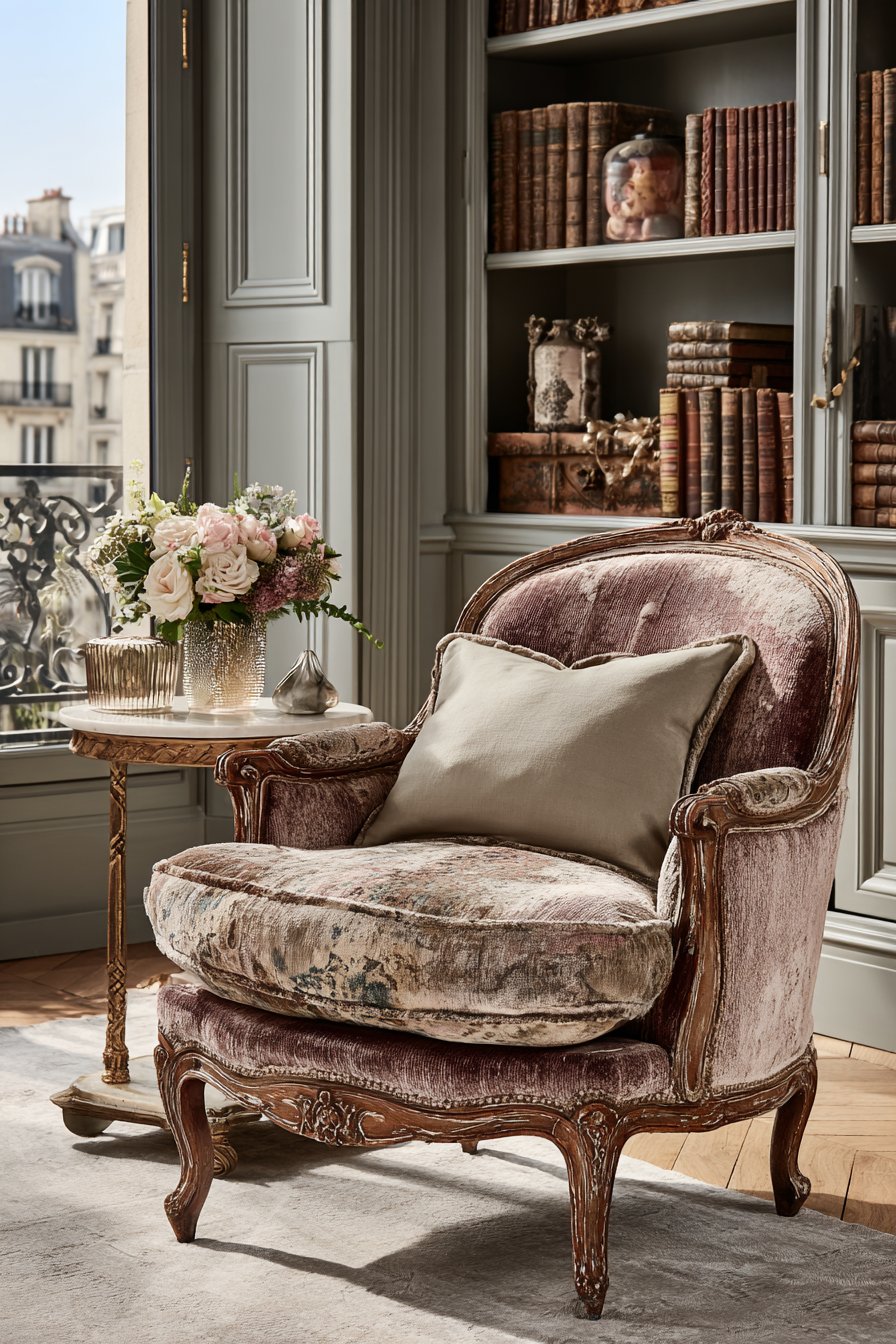
Picture a charming corner where a vintage Louis XVI-style armchair beckons for afternoon reading. The piece features worn velvet upholstery that reveals years of comfortable use. The exposed carved wooden frame displays natural patina that only time can create. This authentic aging adds character that new furniture lacks entirely.
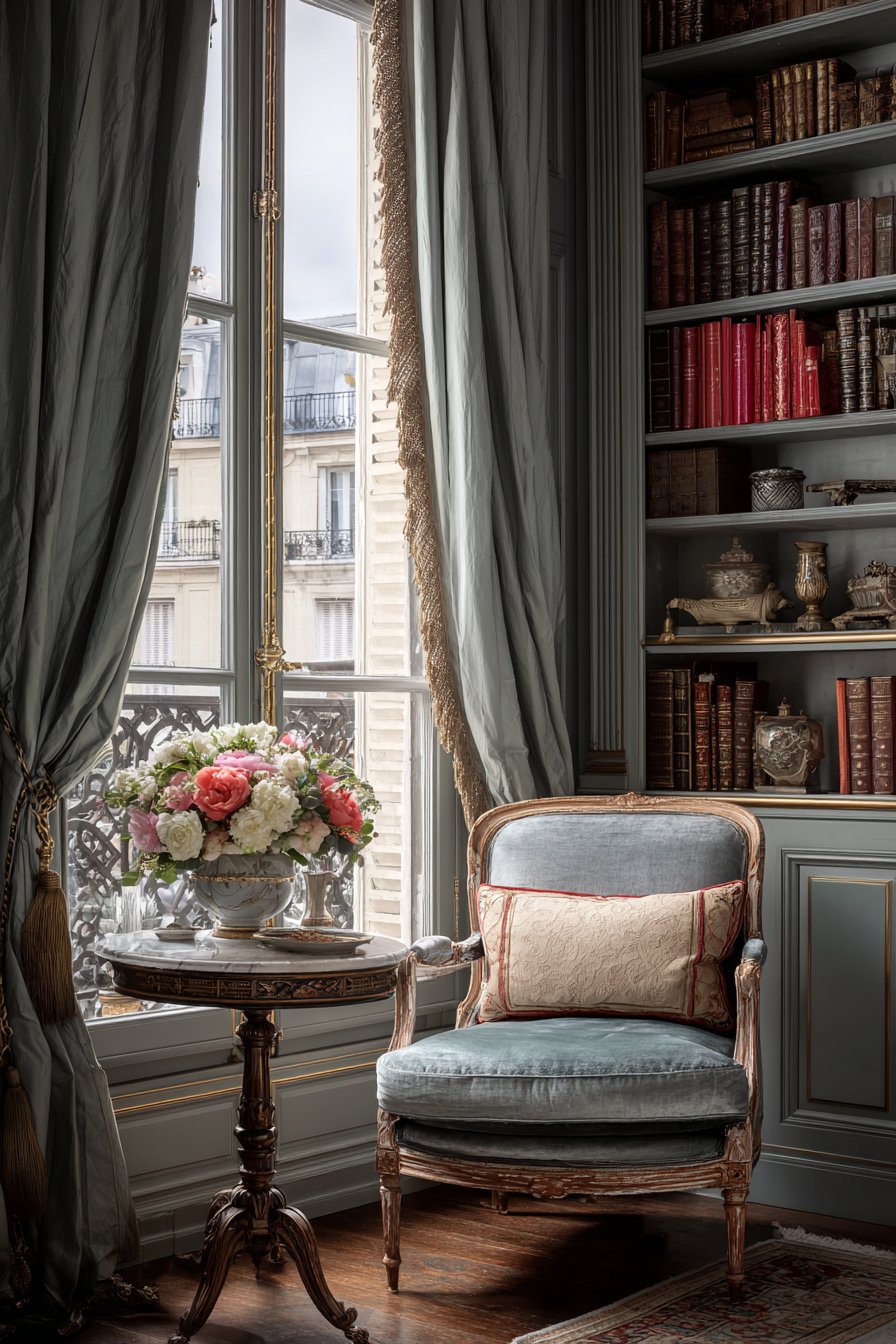
A small round gueridon table with marble top sits beside the chair at perfect height. Fresh flowers in a porcelain vase add living beauty and seasonal fragrance. The arrangement changes with the seasons, bringing nature’s rhythms indoors. This simple touch connects the interior to the natural world outside.
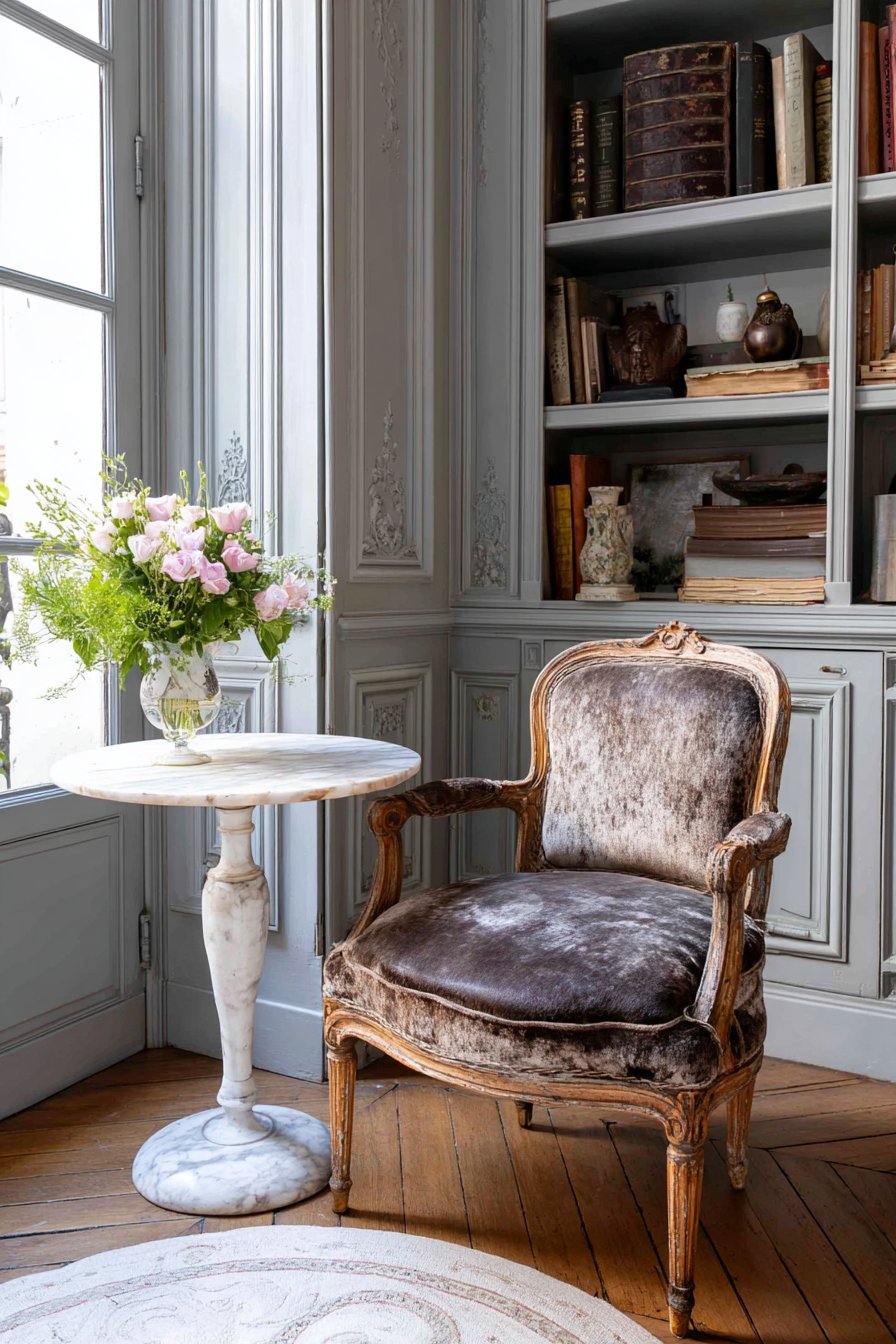
Behind the seating area, built-in floor-to-ceiling bookshelves painted in muted grey hold treasured volumes. Leather-bound books mix with decorative objects to create visual interest. The shelving provides both practical storage and display opportunities. Original molding details frame the ceiling, adding architectural distinction to the intimate corner.
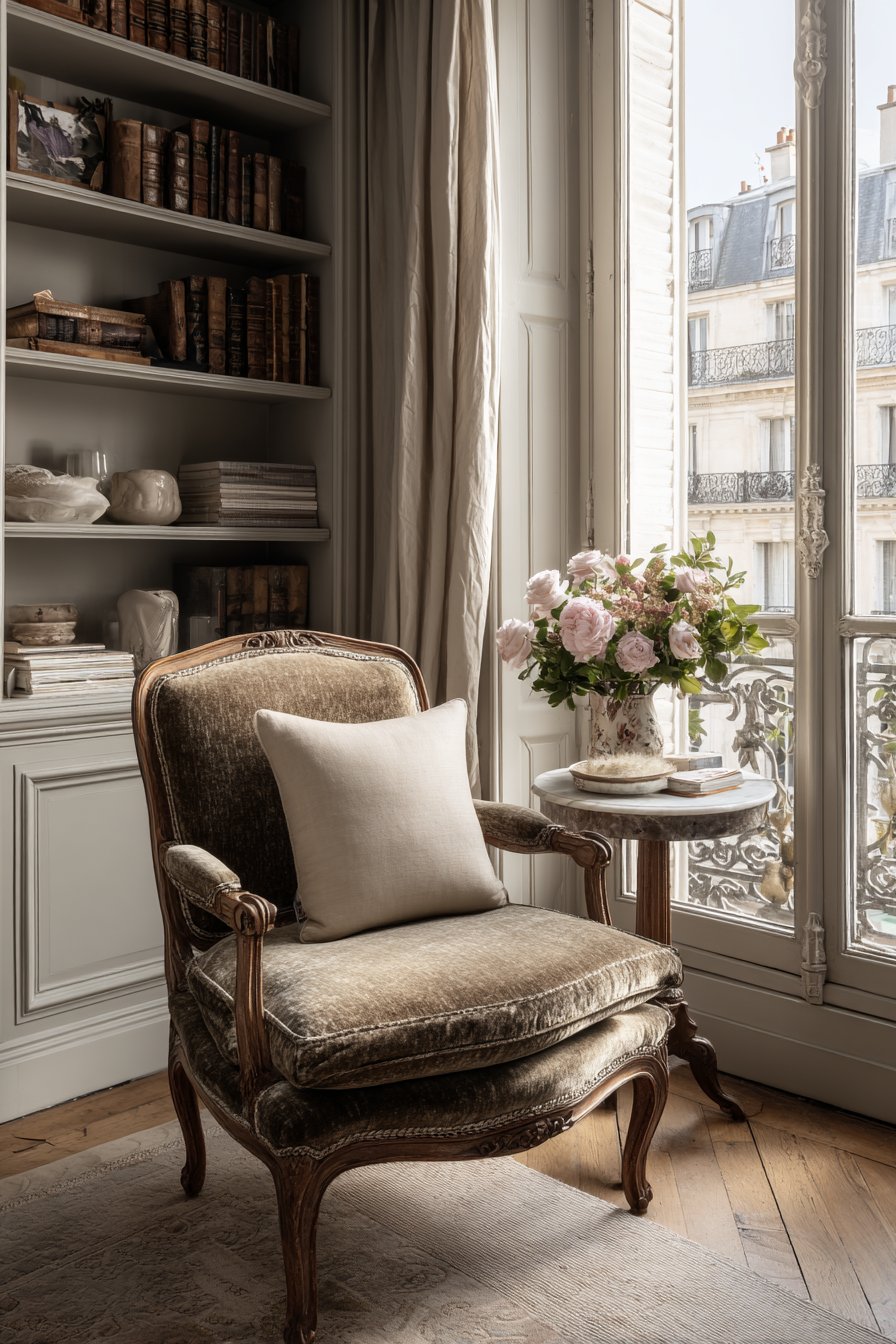
The natural diffused daylight emphasizes the lived-in elegance of this carefully curated space. Morning light reveals the texture of worn velvet and aged wood. The corner feels like a personal sanctuary dedicated to quiet contemplation. This authentic Parisian apartment character cannot be replicated through new purchases alone.
Key Design Tips:
- Choose vintage armchairs with carved wooden frames showing authentic patina and wear
- Position a small marble-top gueridon table within easy reach for functionality
- Install floor-to-ceiling bookshelves to maximize storage while adding architectural interest
- Display fresh flowers in porcelain vases to bring life and seasonal beauty
- Embrace worn textiles and aged finishes that tell stories of previous generations
3. Contemporary-Classical Fusion with Low-Profile Sectional
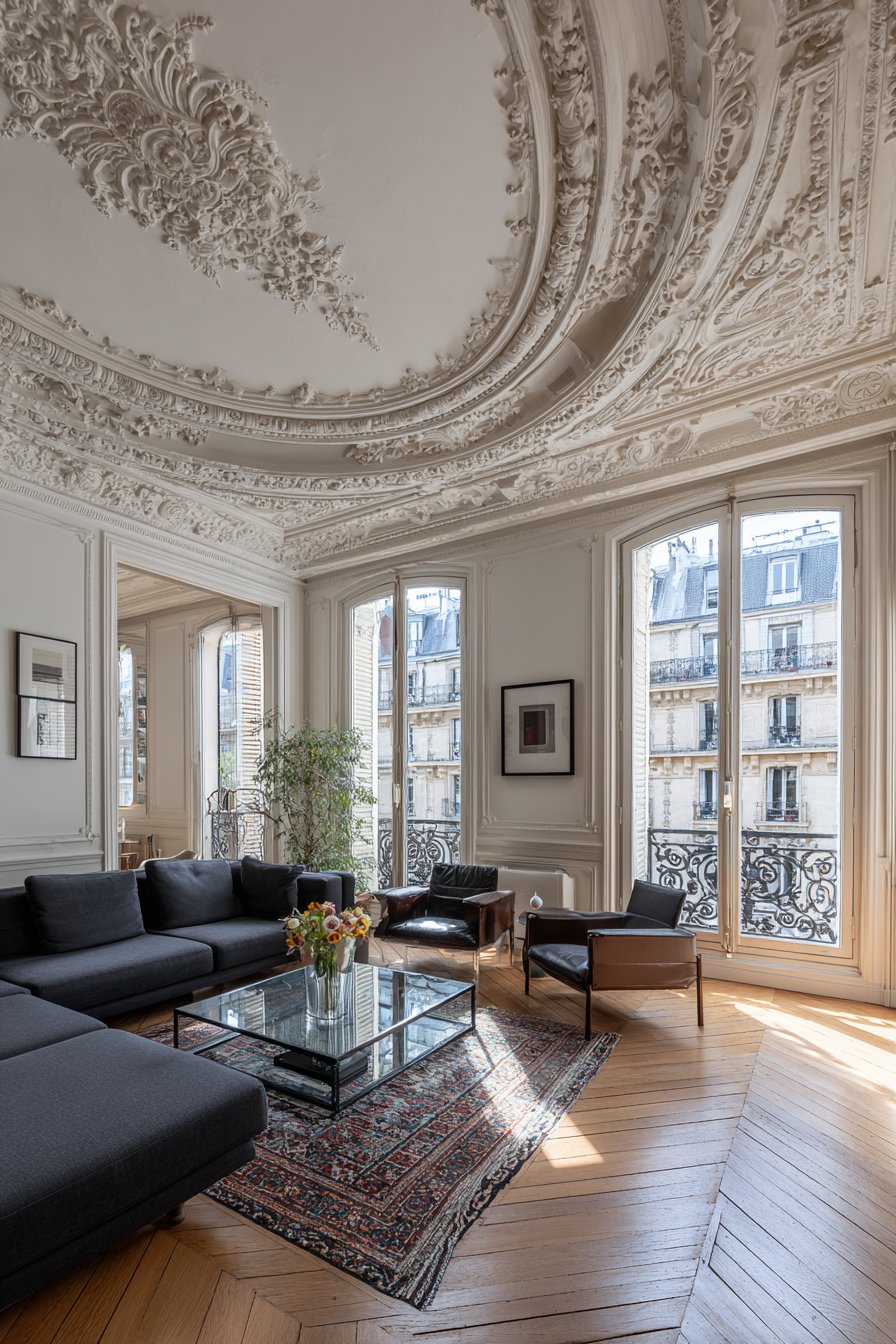
Imagine a modern living room that honors classical architecture while embracing contemporary comfort. A low-profile sectional sofa in charcoal grey provides streamlined seating without competing visually with ornate details. The piece faces original Haussmann windows with wrought-iron balcony railings visible beyond. This connection to outdoor space defines Parisian apartment living.
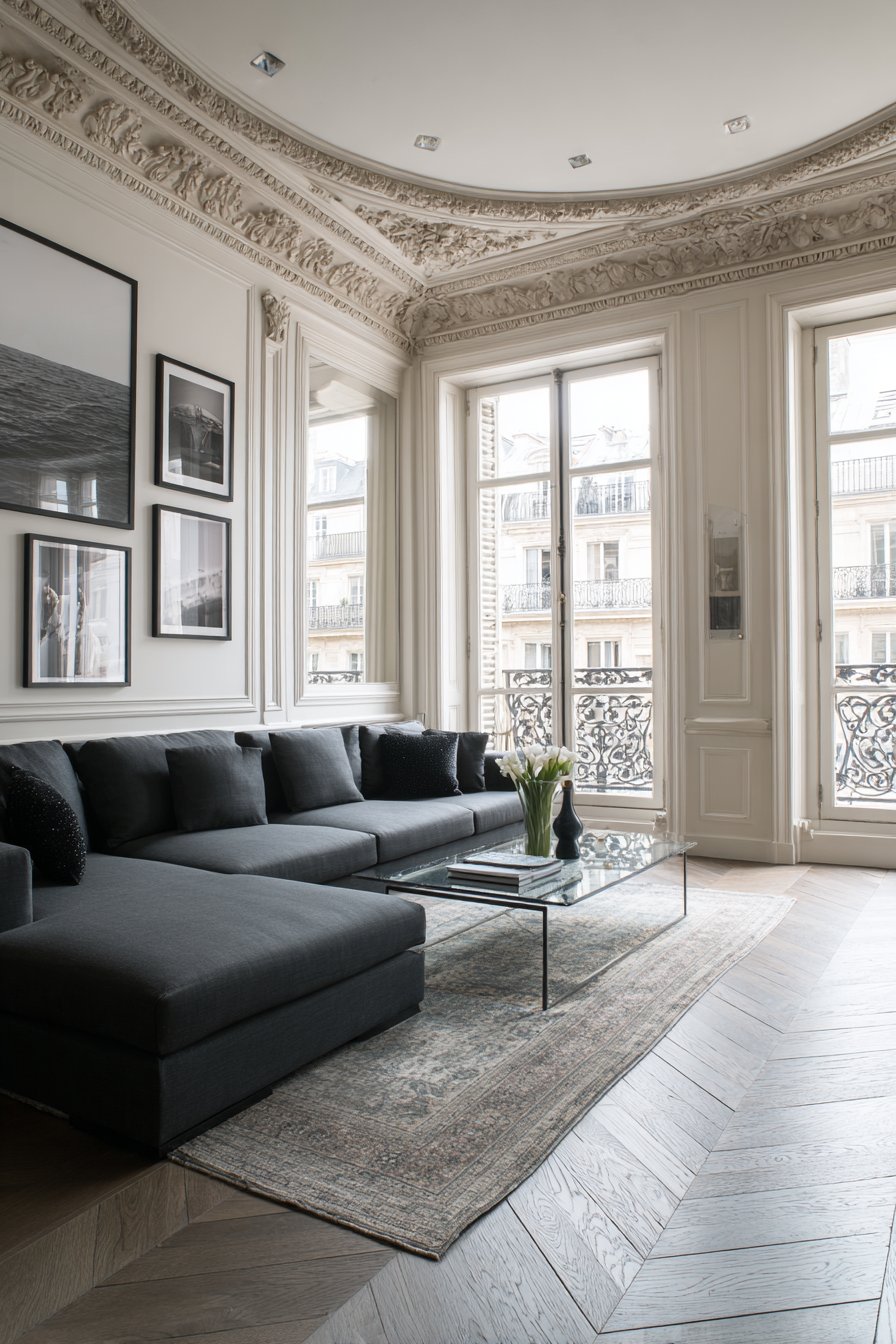
A sleek glass coffee table seems to float above a vintage Persian rug with faded jewel tones. The transparency allows the rug’s beauty to remain visible while providing practical surface area. The original herringbone parquet floor shows beautiful age patina that synthetic finishes cannot duplicate. Each scratch and mark represents decades of family life.
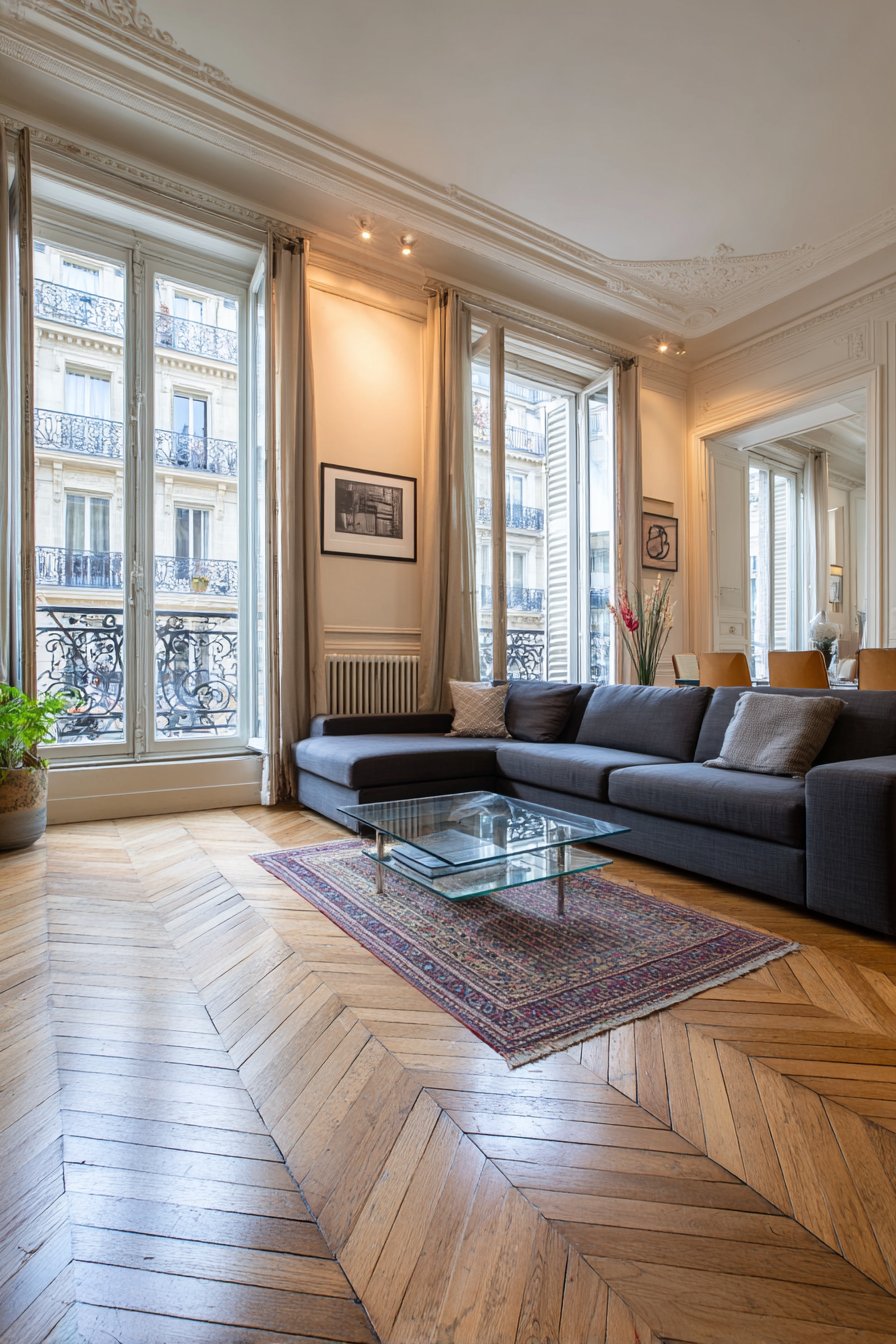
Minimalist artwork in simple black frames creates deliberate contrast with elaborate ceiling rosettes and cornices. The juxtaposition highlights both elements more effectively than matching styles would achieve. Modern pieces gain drama from ornate surroundings. Classical architecture receives fresh relevance through contemporary interventions.
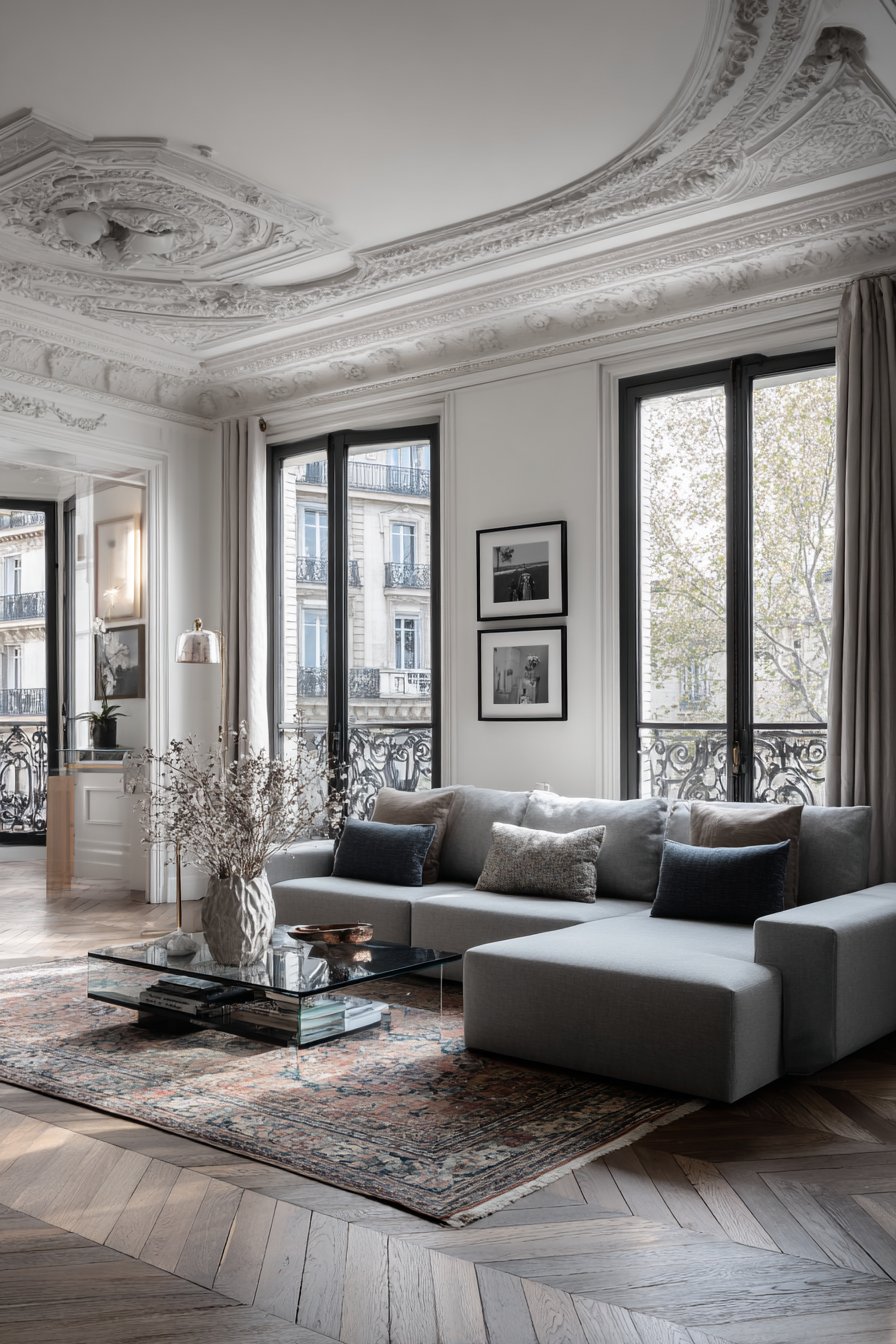
The balanced natural lighting highlights both historical architectural features and contemporary furnishings equally. Neither element dominates the visual composition. Instead, they engage in dynamic conversation across centuries. This dialogue between old and new epitomizes sophisticated Parisian design thinking.
Key Design Tips:
- Select low-profile modern furniture that respects rather than competes with ornate architecture
- Layer vintage rugs over original parquet to add warmth and color
- Use transparent glass tables to maintain visual lightness and showcase flooring
- Hang minimalist art in simple frames to create intentional contrast with classical details
- Embrace the dialogue between contemporary furnishings and historical architectural elements
4. Vertical Grandeur Showcasing Haussmann Architecture
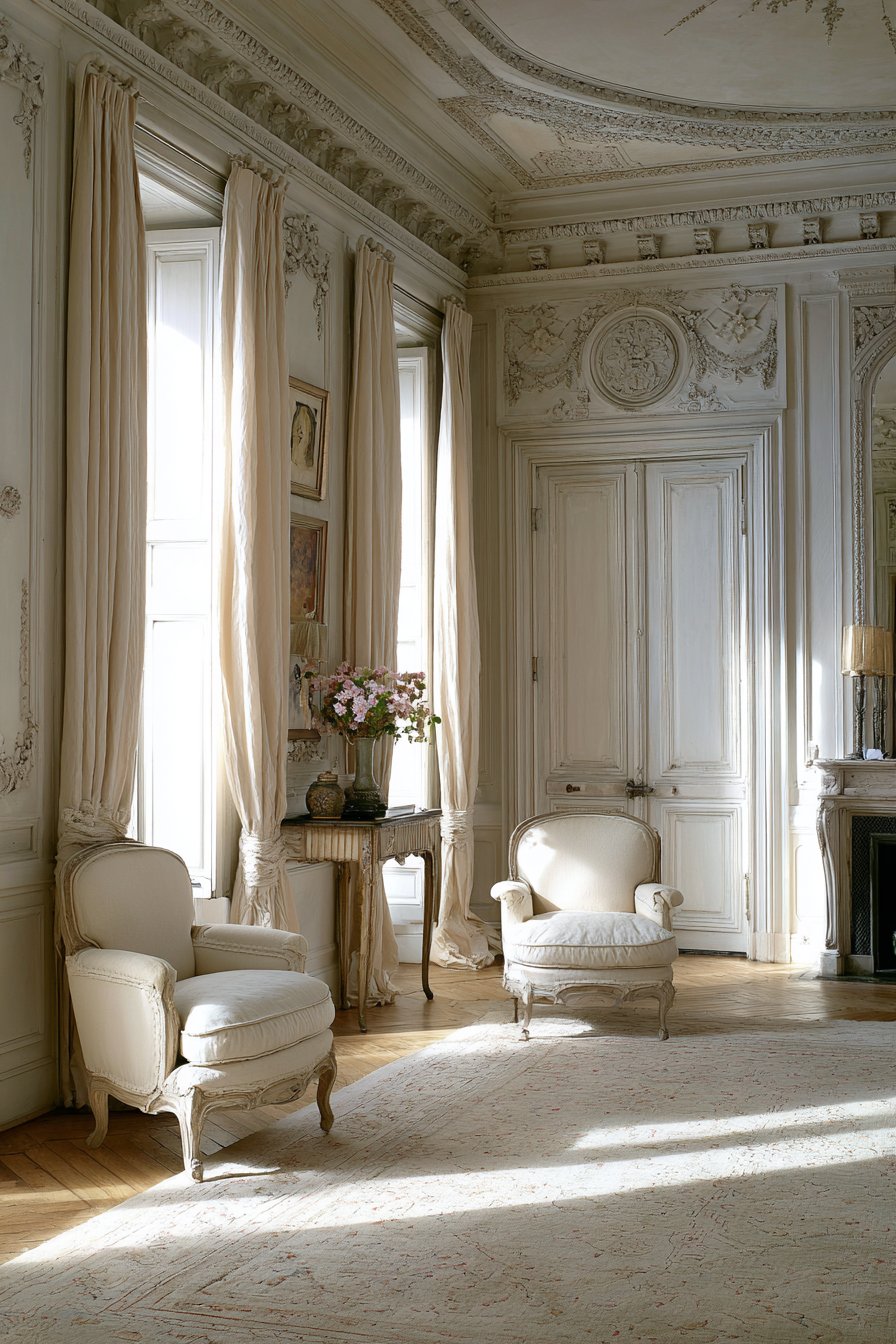
Enter a living room designed to celebrate soaring ceilings adorned with intricate plasterwork. Decorative medallions and elaborate moldings draw the eye upward, emphasizing vertical space. A pair of matching bergère chairs in cream linen flank a narrow console table. The symmetrical arrangement honors classical French design principles.
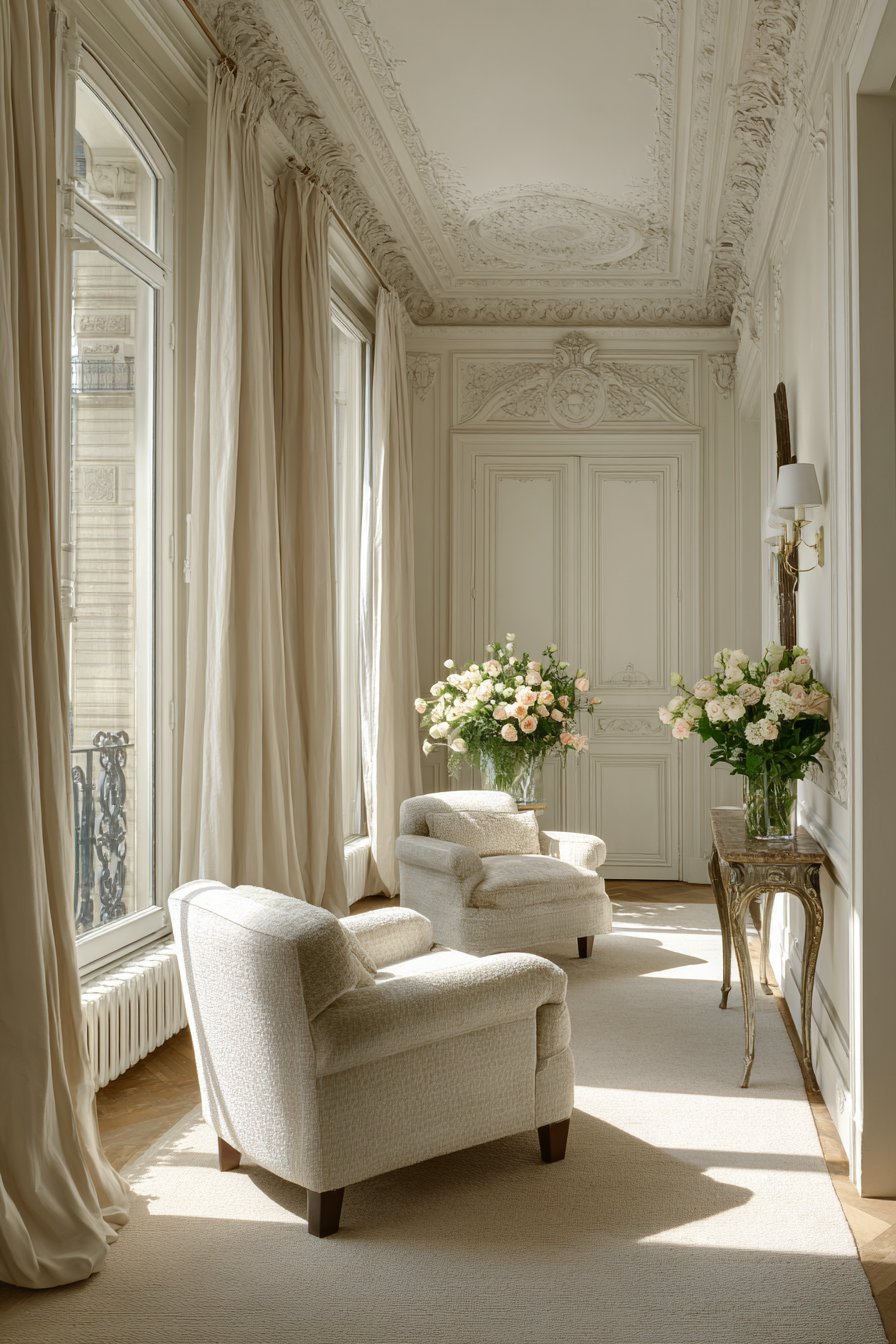
The console features curved legs and a marble top that echo historical furniture traditions. This piece provides both practical surface area and sculptural beauty. Tall paneled doors in original white paint lead to adjacent rooms. The paint shows subtle crazing that reveals authentic age and continuous use.
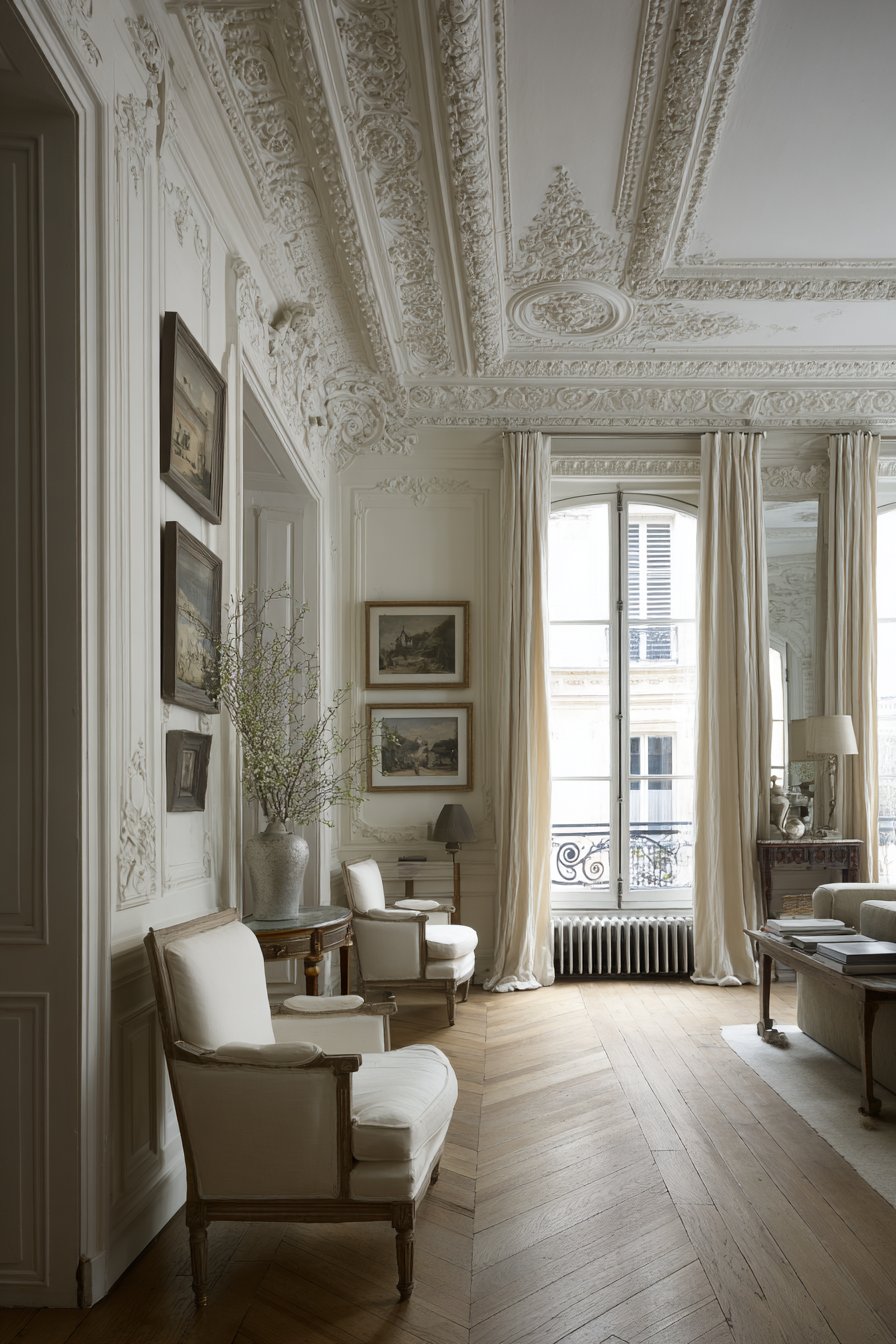
Traditional radiators sit beneath windows dressed in flowing silk curtains of pale champagne. These heating elements represent period-appropriate climate control that modern systems often replace. The silk curtains filter light beautifully while adding luxurious texture. The fabric’s subtle sheen catches and reflects ambient illumination.
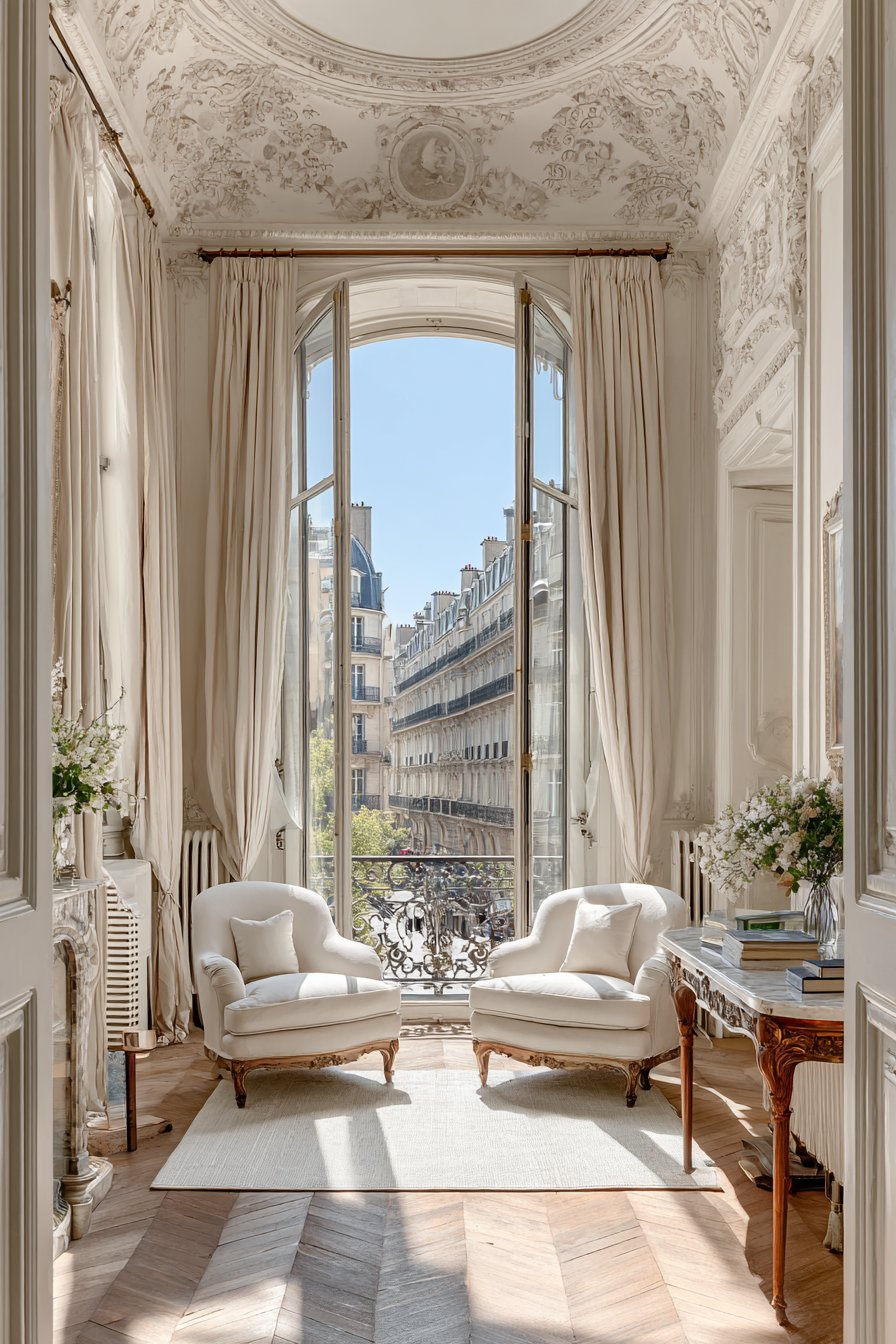
Afternoon light casts shadows that accentuate the depth of ornamental plasterwork throughout. The three-dimensional nature of the ceiling decorations becomes most apparent during these golden hours. Shadows reveal details that flat lighting obscures completely. This natural drama requires no artificial enhancement or intervention.
Key Design Tips:
- Arrange furniture symmetrically to honor classical French design traditions and create balance
- Select bergère chairs with exposed wooden frames in traditional styles for authenticity
- Preserve original architectural elements like paneled doors and decorative plasterwork whenever possible
- Choose silk curtains in neutral tones to add luxury while filtering natural light
- Position furniture to emphasize vertical space and draw attention to ceiling details
5. Intimate Proportions with Curved Rose Velvet Settee
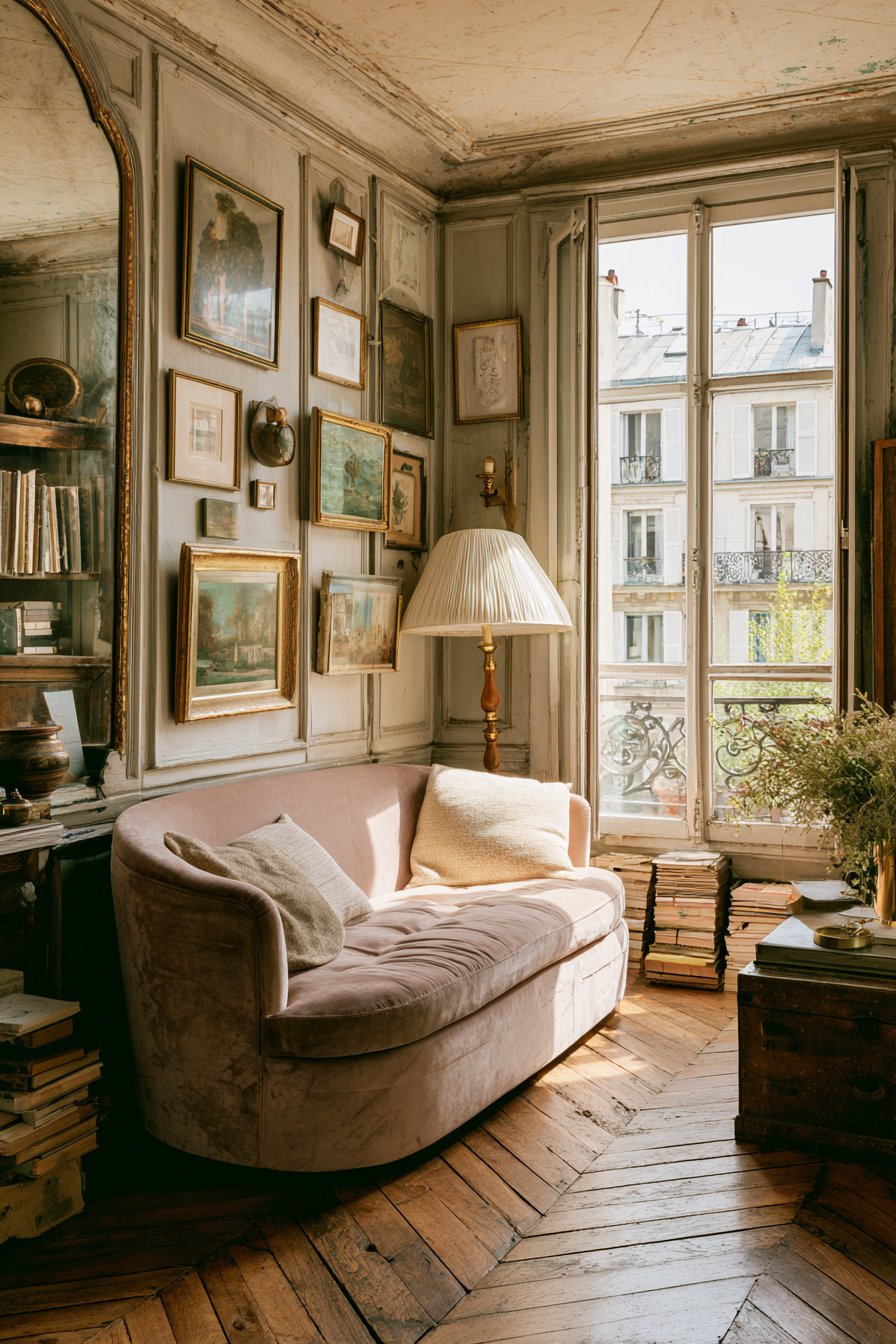
Visualize a cozy living room featuring compact seating suited to typical Parisian apartment dimensions. A curved settee in dusty rose velvet maximizes the intimate space without overwhelming it. The gentle curve creates conversational seating that feels embracing and welcoming. This thoughtful furniture selection makes small spaces feel deliberately designed rather than cramped.
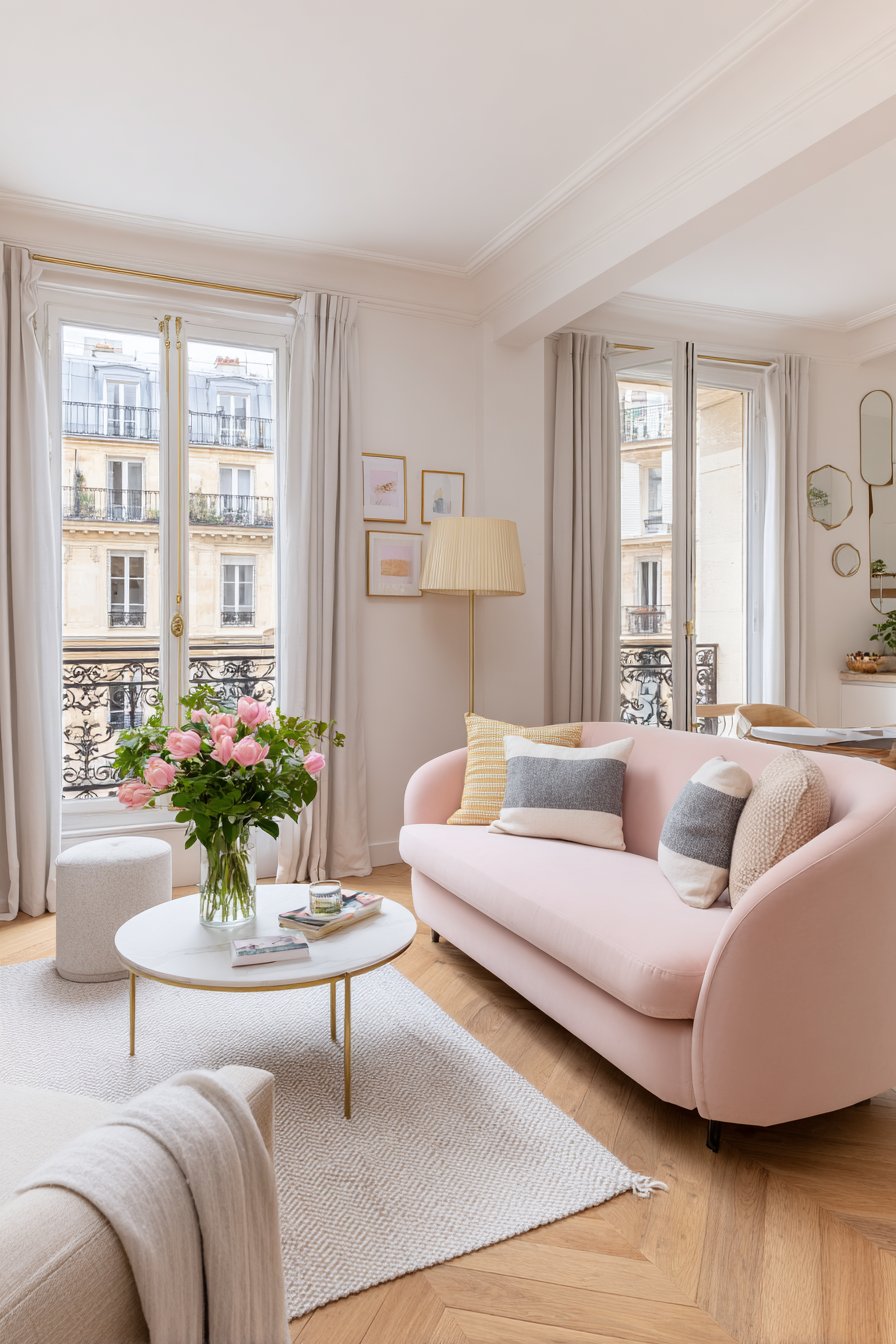
A vintage brass floor lamp with pleated silk shade provides warm ambient lighting. The vertical element adds height without consuming valuable floor space. The brass develops natural patina that enhances its vintage character. Silk shading diffuses light beautifully for comfortable evening reading or conversation.
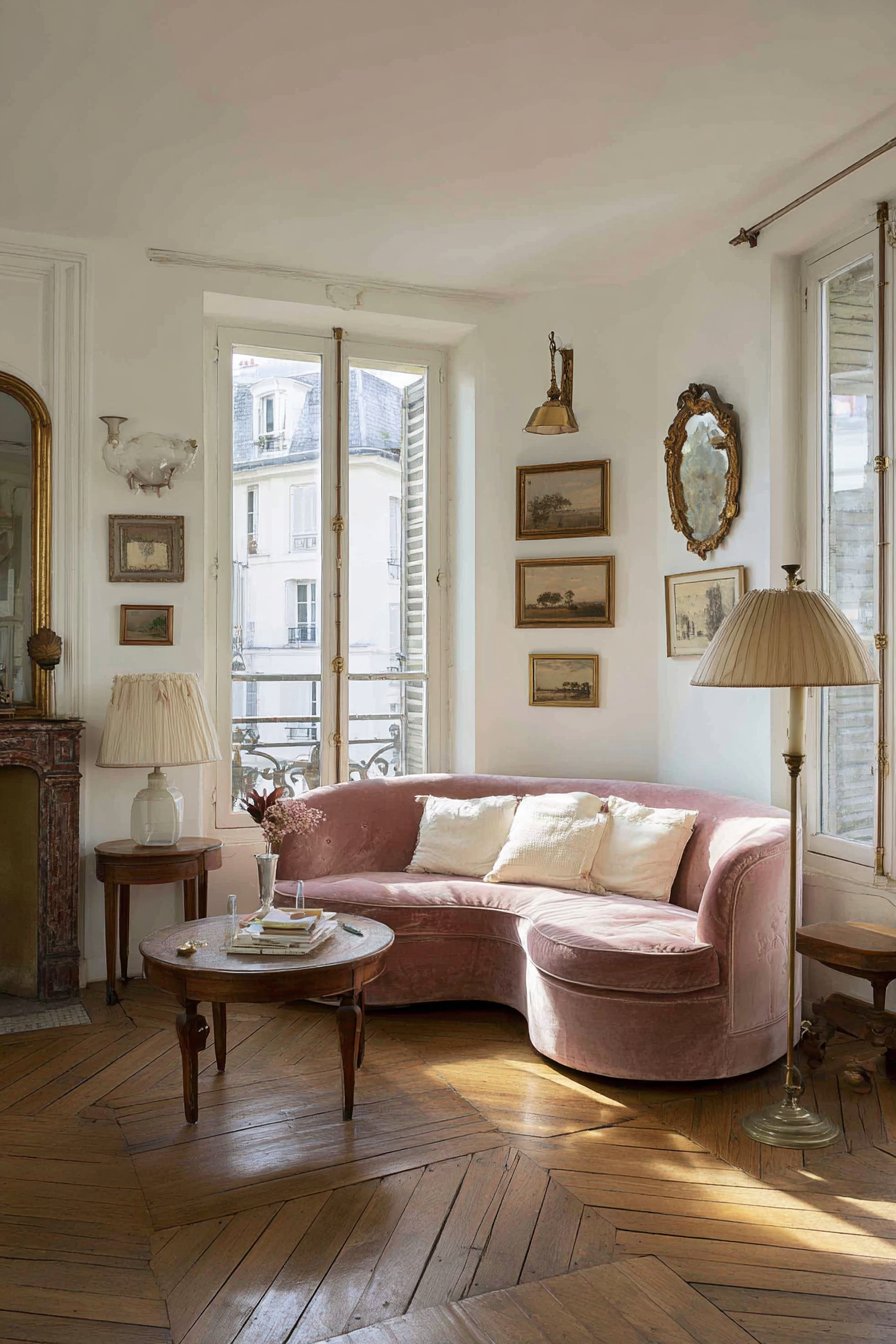
The walls display a curated gallery of antique mirrors and small oil paintings in gilded frames. This layered approach to wall decoration adds visual richness and personal history. Each piece contributes to the overall narrative without dominating individually. The varied frame styles create an interesting rhythm along the wall plane.
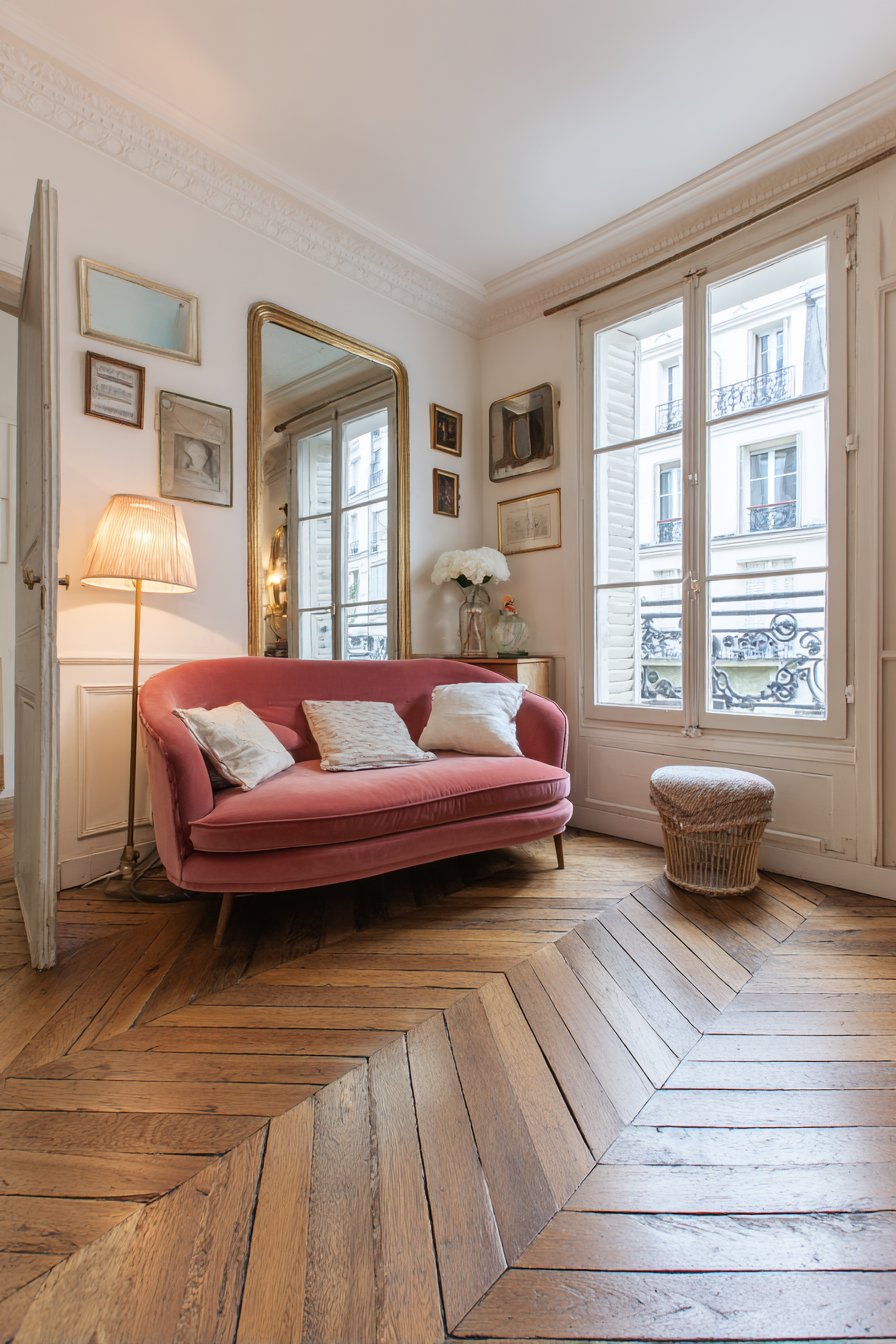
Original wooden shutters painted in pale grey frame the windows elegantly. These functional elements provide privacy and light control while adding architectural interest. The herringbone flooring shows natural wear patterns that tell stories of generations past. Real aging creates beauty that artificial distressing cannot authentically replicate.
Key Design Tips:
- Choose curved furniture pieces to soften small spaces and encourage conversation
- Use vertical elements like floor lamps to add height without consuming floor area
- Create gallery walls with varied frame sizes and styles for visual interest
- Preserve original shutters and architectural elements that add historical character
- Embrace natural wear patterns on floors as evidence of authentic age and use
6. Light-Filled Space with Juliet Balcony Connection
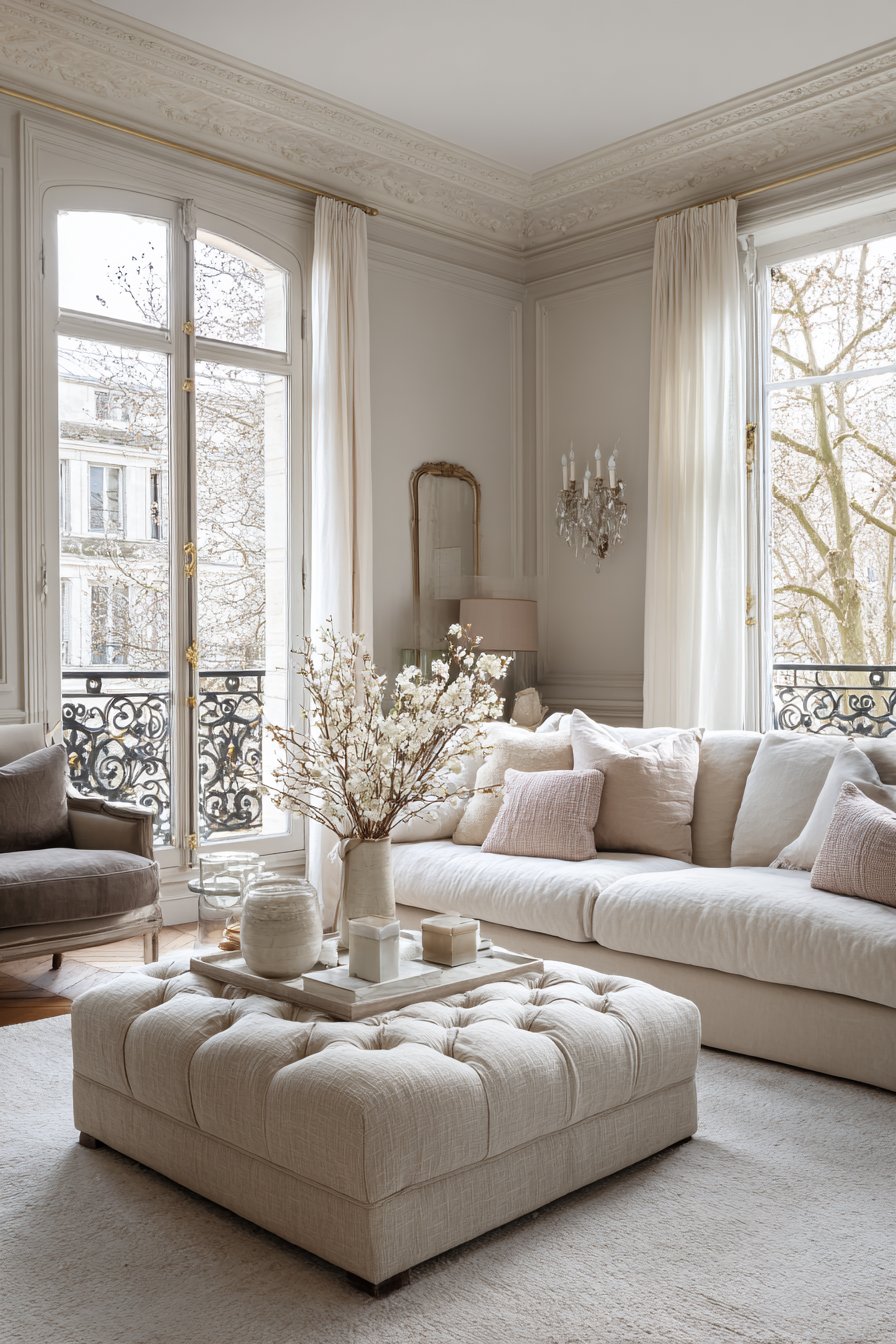
Picture a living room dominated by three tall French windows opening onto a wrought-iron Juliet balcony. The outdoor connection defines the Parisian living experience fundamentally. Tree-lined streets visible beyond bring nature’s changing seasons into the interior space. This visual extension makes rooms feel larger and more connected to neighborhood life.
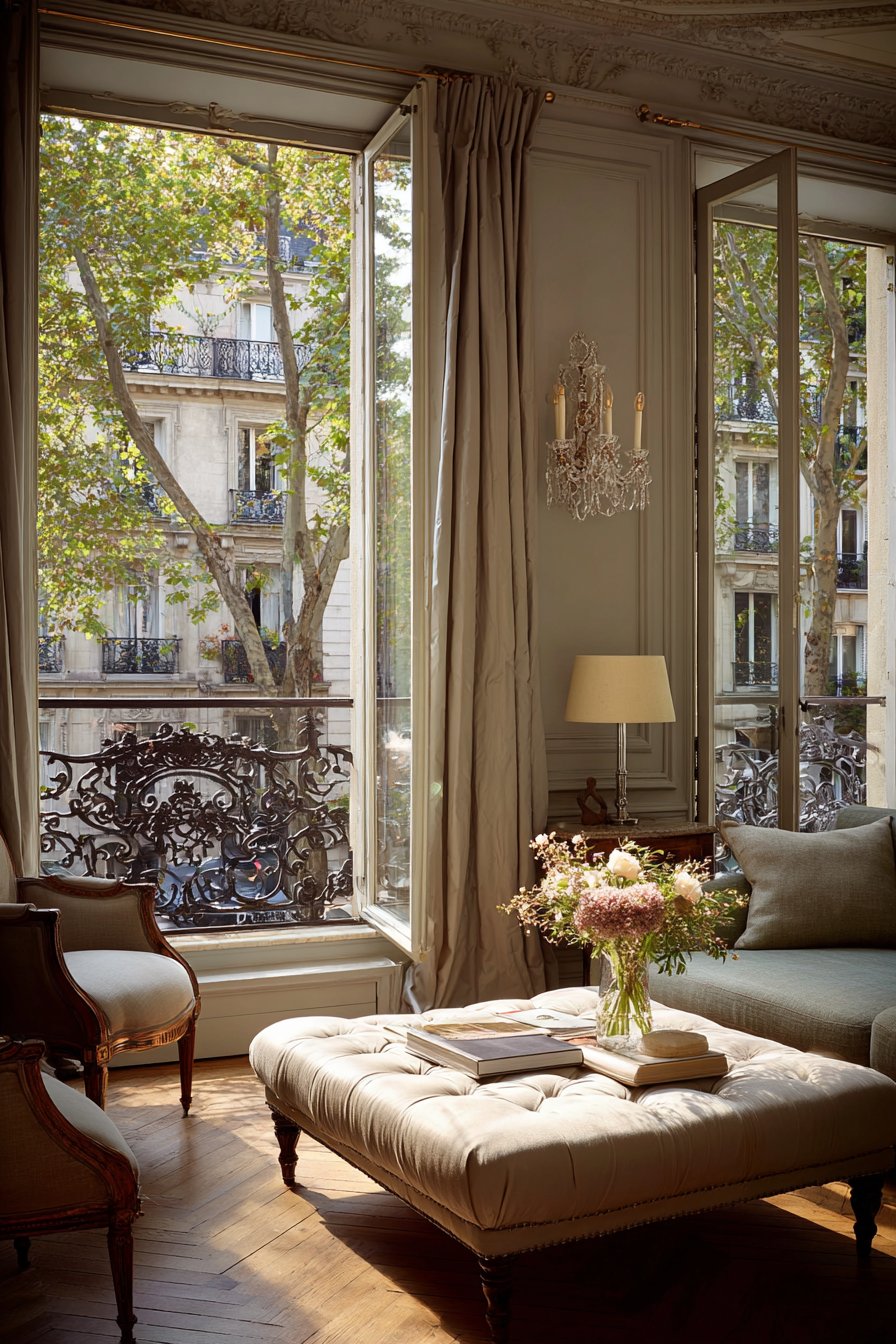
Sheer linen curtains billow gently in the breeze, creating constant subtle movement. The lightweight fabric filters harsh sunlight while maintaining views and privacy. A tufted ottoman in neutral linen serves as a versatile central coffee table. The piece provides seating, surface area, and storage in one multifunctional form.
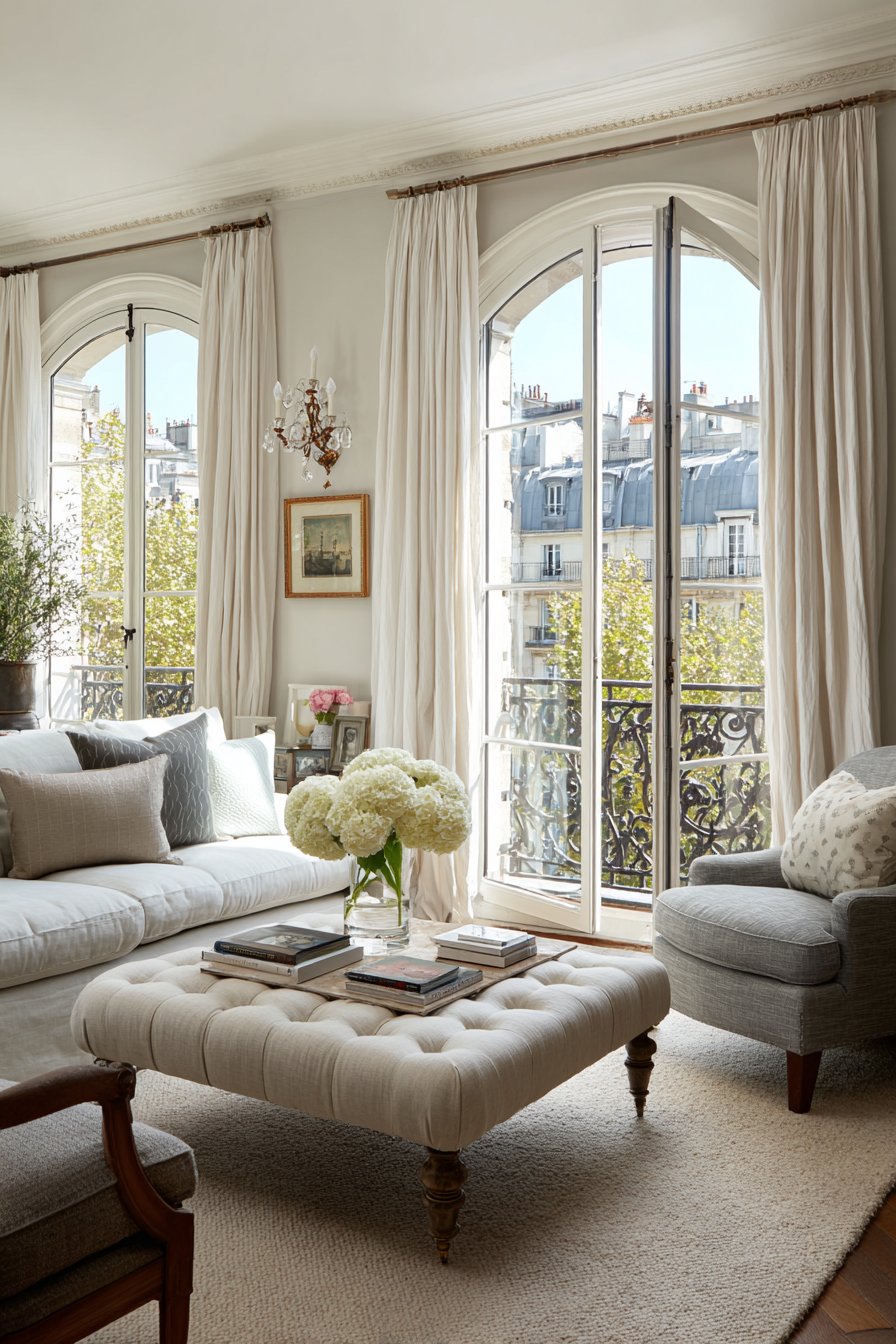
Mixed seating surrounds the ottoman, combining antique and modern pieces harmoniously. This eclectic approach reflects personal collecting over time rather than coordinated purchasing. The walls feature subtle grey-beige paint with visible brush texture. Hand-applied finishes add depth that roller application cannot achieve.
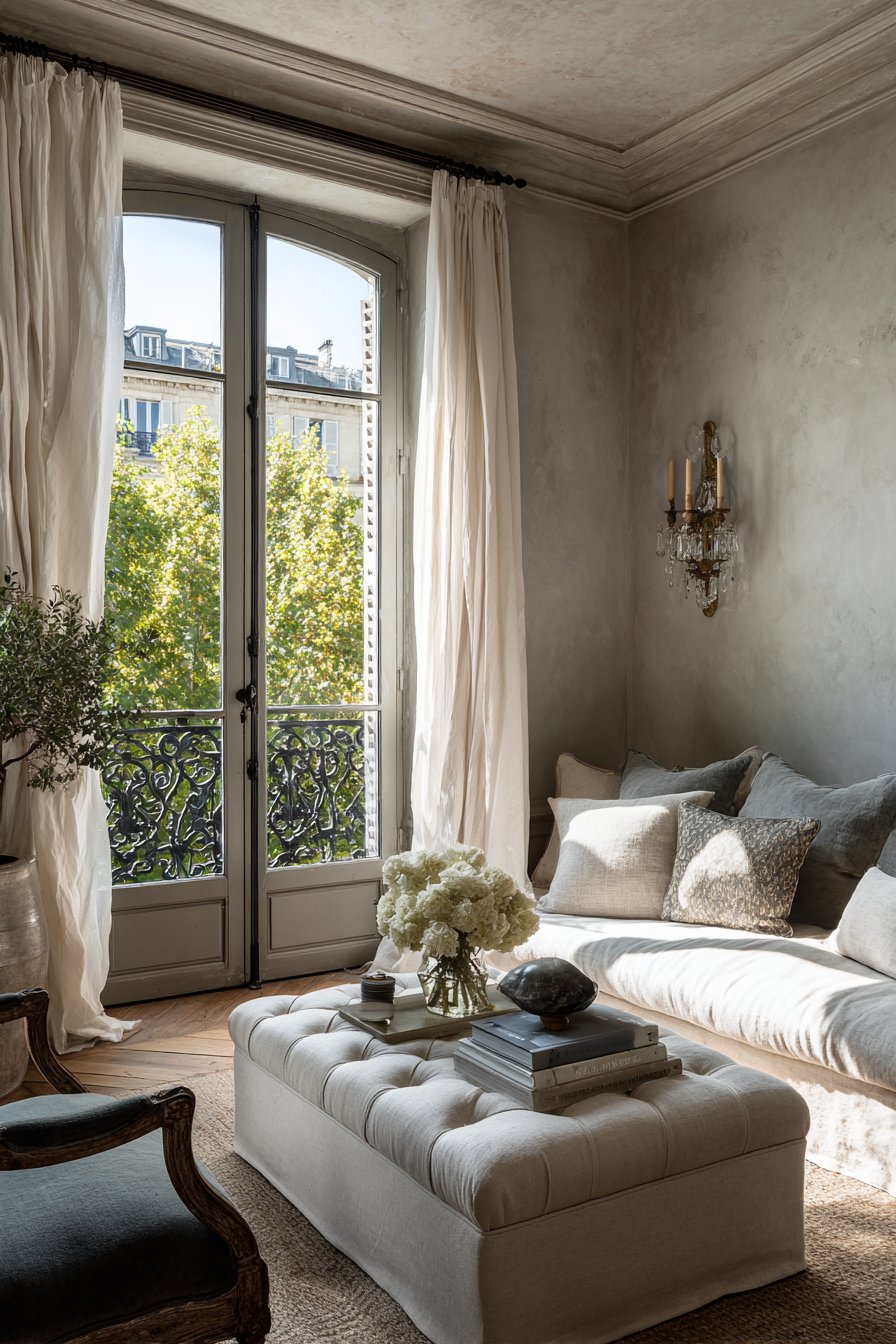
An ornate crystal sconce provides accent lighting during evening hours. The decorative fixture complements the chandelier while adding supplementary illumination. Natural daylight floods the room throughout the day, illuminating classic architectural proportions. The abundance of light defines the space’s character and mood completely.
Key Design Tips:
- Maximize window transparency to strengthen indoor-outdoor connections and increase natural light
- Use billowing sheer curtains to add movement and romance while maintaining views
- Select multifunctional furniture like tufted ottomans that serve multiple purposes efficiently
- Mix antique and modern seating to create collected-over-time authenticity rather than matching sets
- Add crystal sconces for supplementary evening lighting that enhances architectural character
7. Built-In Sage Green Bookcases Surrounding Fireplace
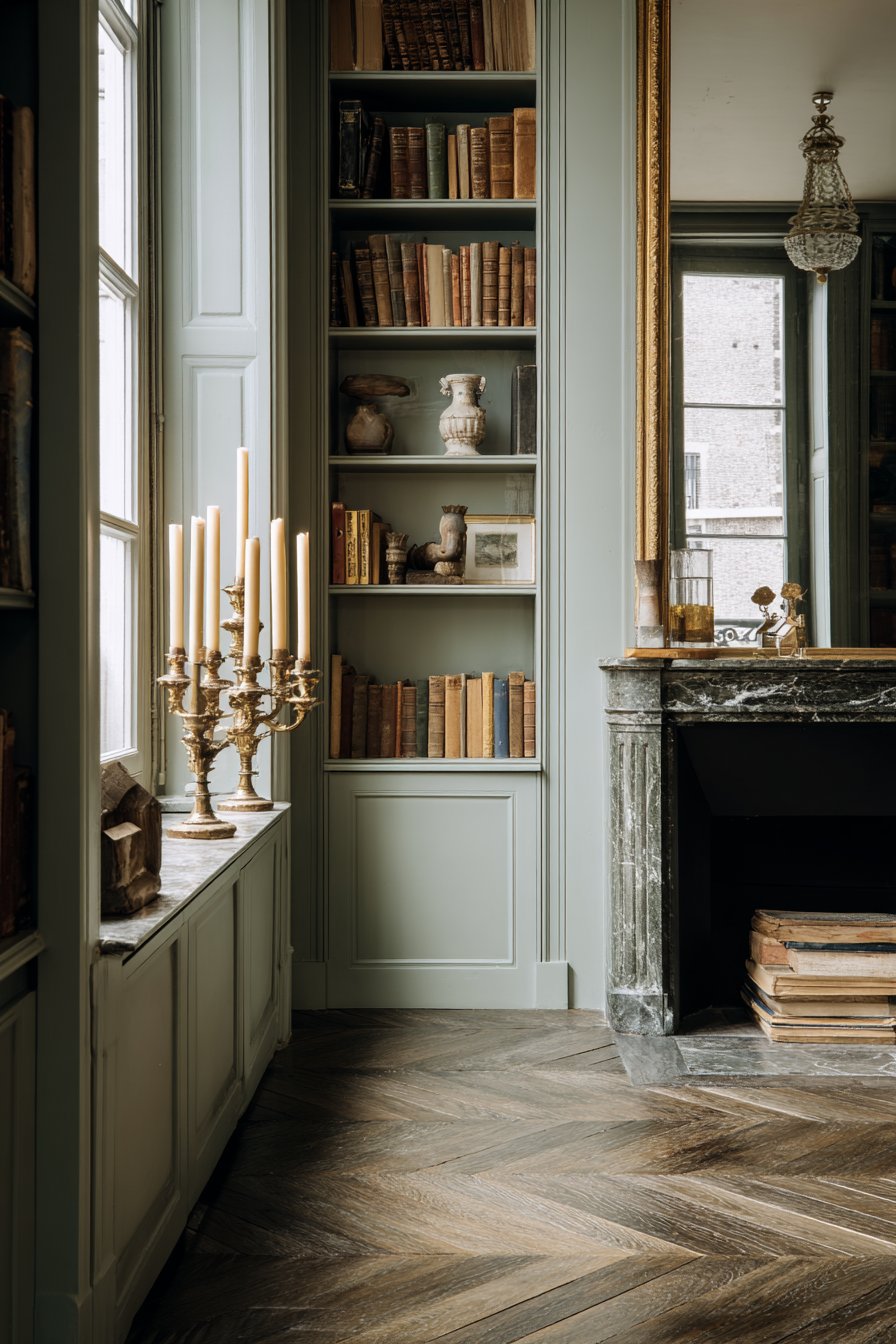
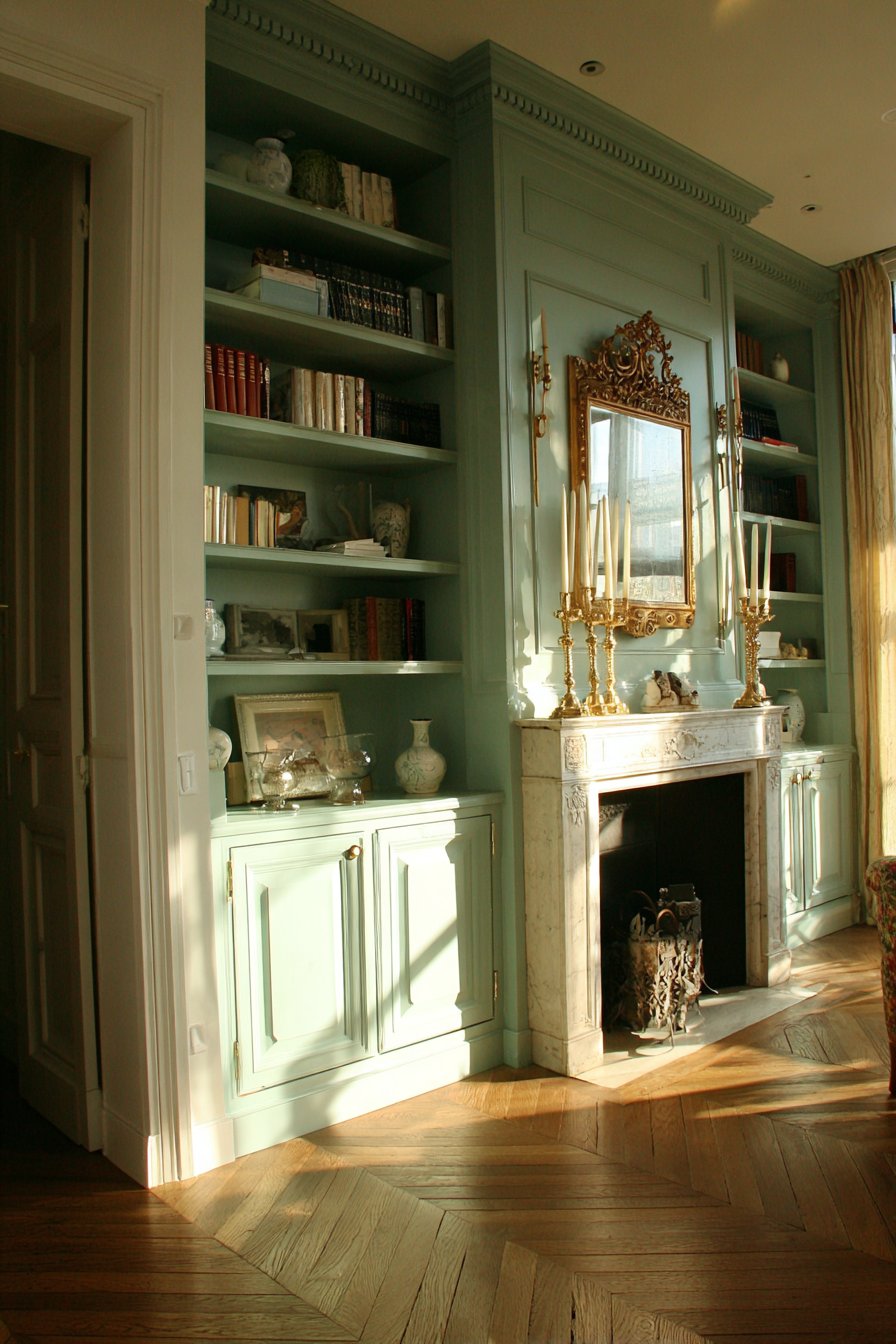
Imagine floor-to-ceiling built-in bookcases painted in soft sage green flanking a marble fireplace. The custom millwork provides extensive storage while creating architectural interest and symmetry. Carefully arranged leather-bound books share space with vintage ceramics and small sculptures. This curated approach balances practical storage with beautiful display.
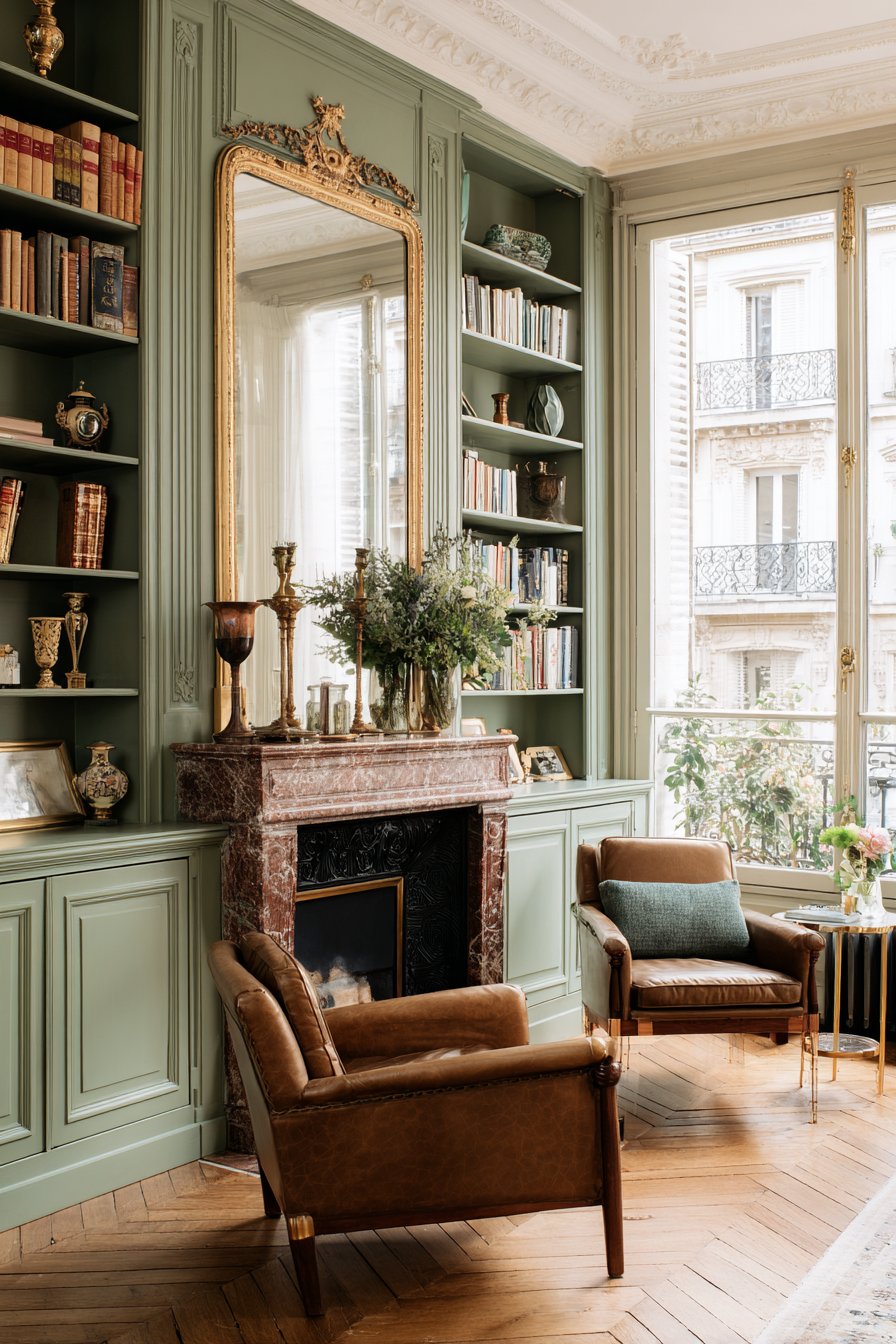
The central marble fireplace mantel shows intricate carved details and original brass andirons. Above hangs a large baroque mirror that reflects light and visually expands the room. The mantel displays symmetrically arranged brass candlesticks, small gilt clock, and porcelain figurines. This formal styling honors traditional Parisian decorating conventions.
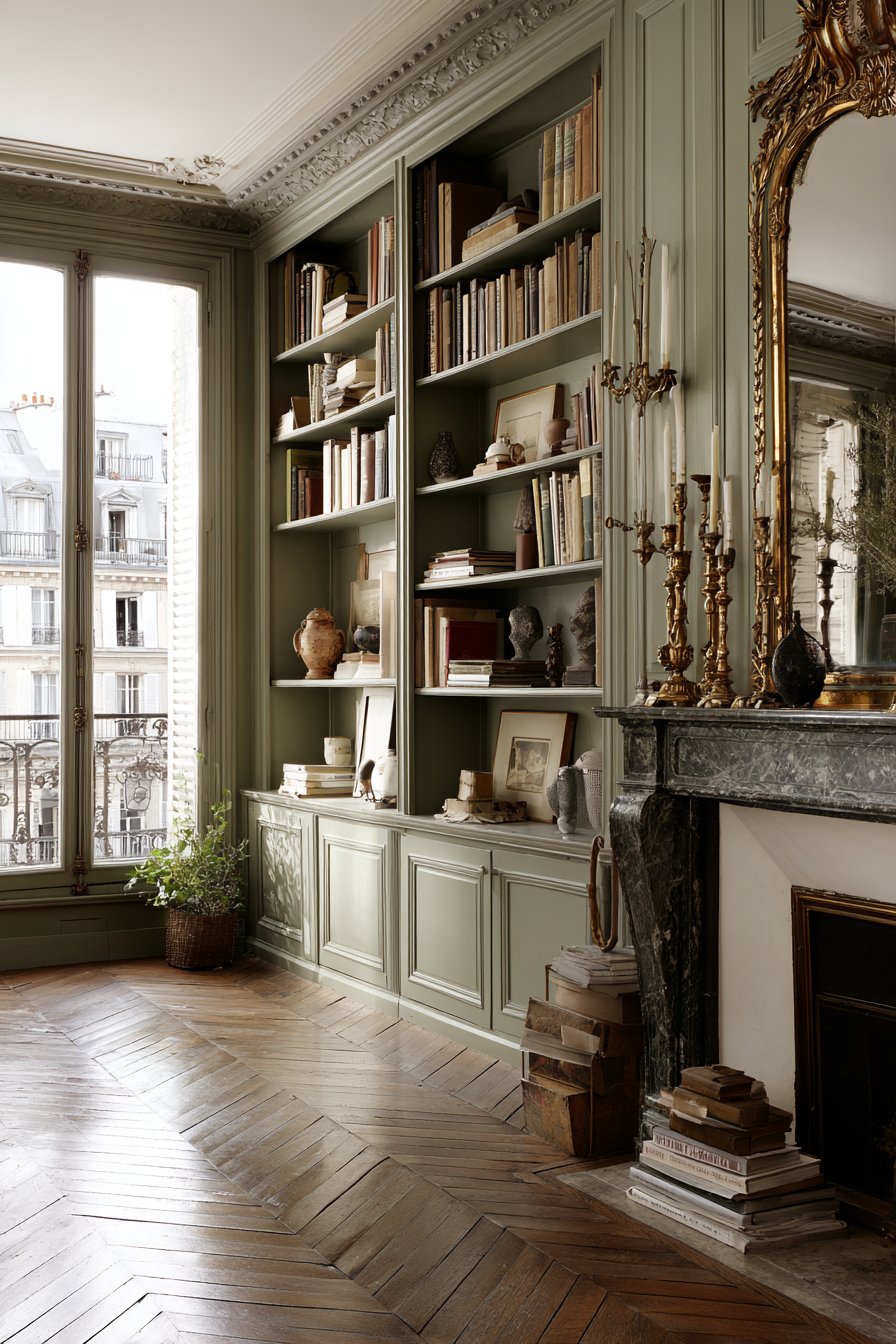
The herringbone parquet floor reflects warm light from nearby windows throughout the day. The honey-toned wood provides visual warmth that complements the cooler sage green cabinetry. Glass doors protect valuable leather-bound volumes from dust while allowing visual access. The transparency maintains display quality while providing practical protection.
Soft natural lighting emphasizes textures of aged leather, worn wood, and polished marble beautifully. Morning light reveals grain patterns and surface patina that artificial lighting cannot showcase. The layered materials create visual interest through varied textures and finishes. Each element contributes its unique character to the cohesive whole.
Key Design Tips:
- Paint built-in bookcases in soft sage green for subtle color that complements rather than dominates
- Surround fireplaces with symmetrical built-ins to create focal points and maximize storage
- Mix leather-bound books with decorative objects to balance function and beauty
- Install glass doors on cabinetry to protect valuable items while maintaining visibility
- Display items symmetrically on mantels to honor traditional French decorating principles
8. Formal Conversation Area with Louis XV Fauteuils
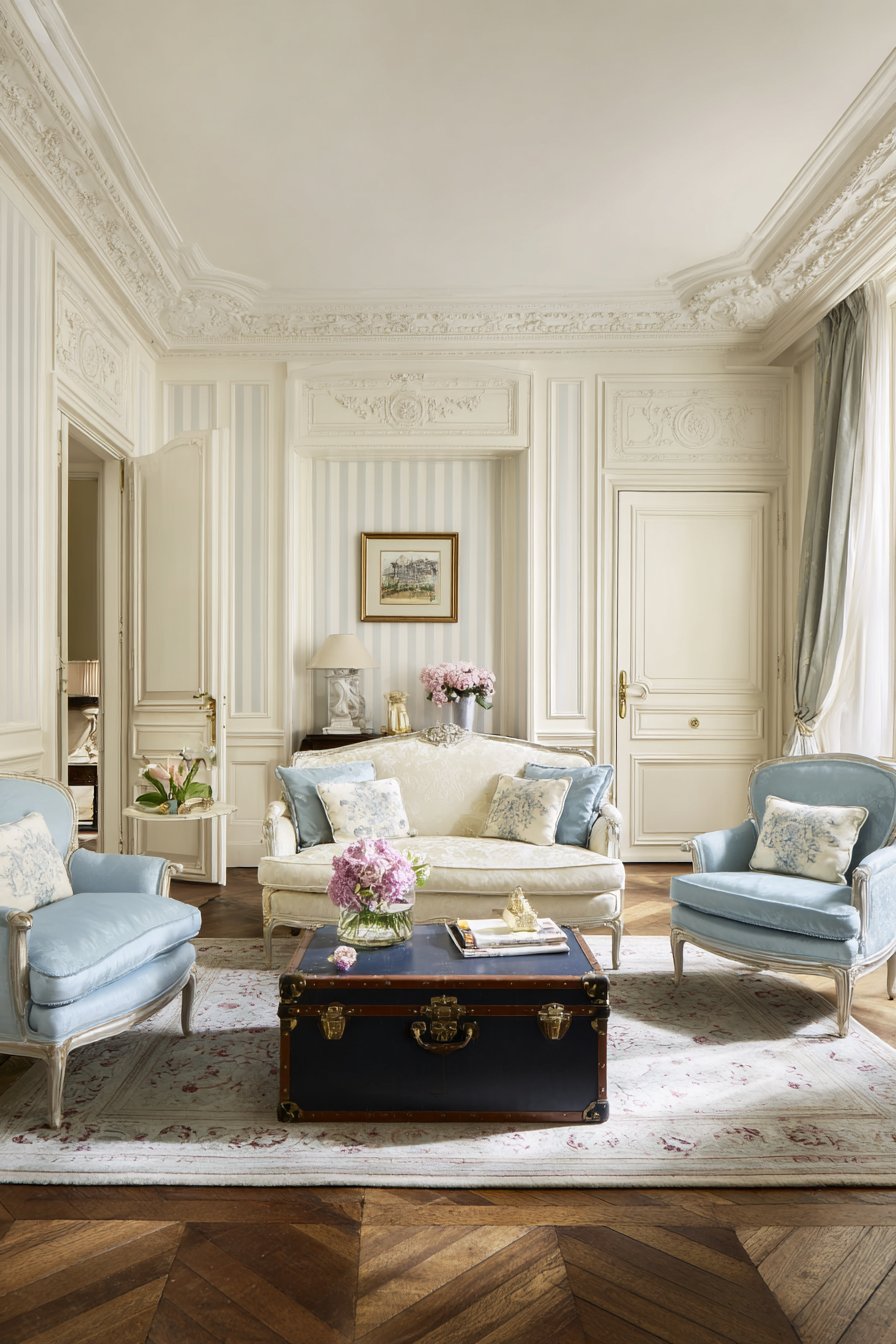
Envision a refined seating arrangement featuring two matching Louis XV-style fauteuils in pale blue silk. The chairs face a settee in complementary cream damask across a low antique trunk. The trunk’s original brass hardware adds functional storage with historical character. This formal grouping creates perfect conversation distance and comfortable interaction.
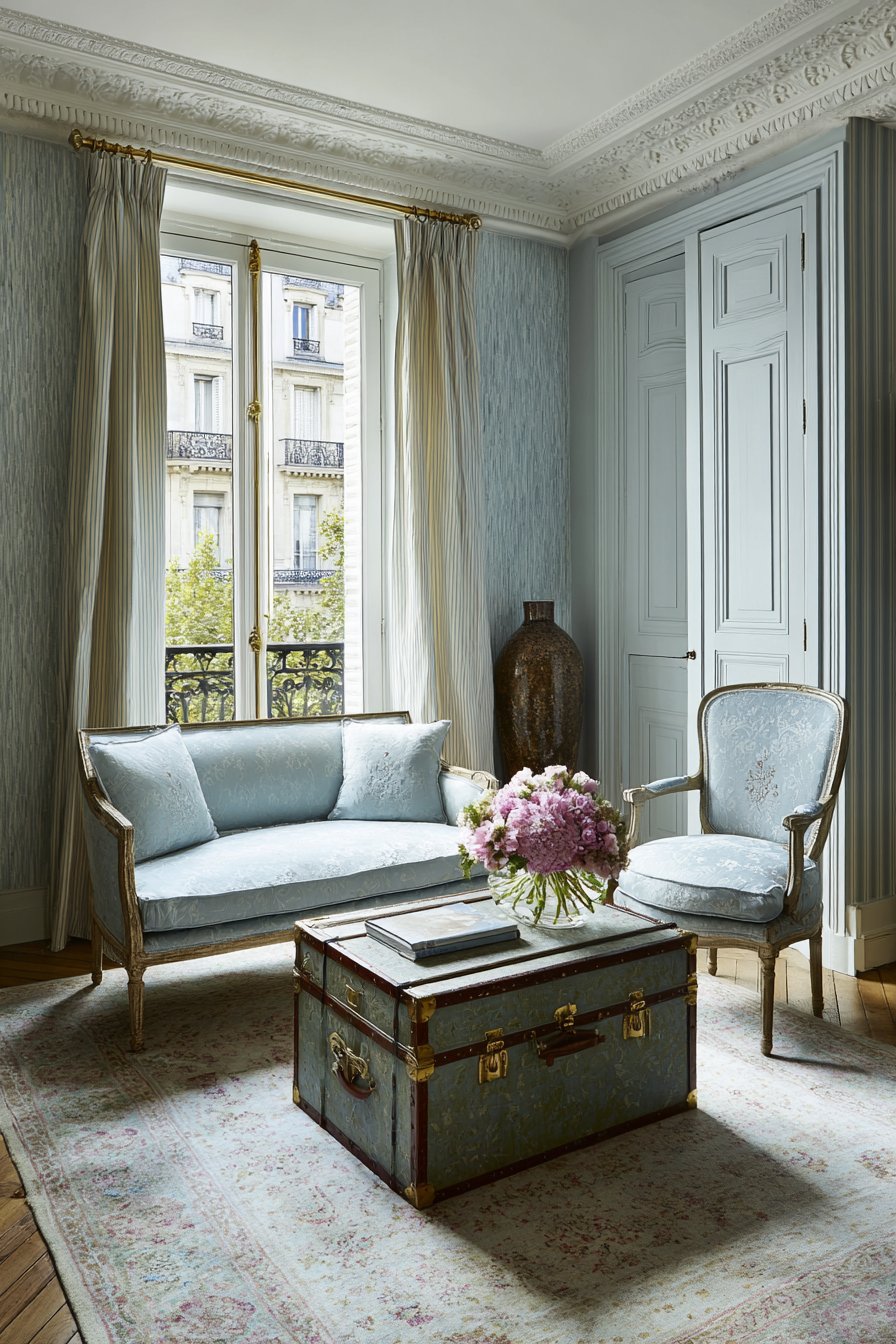
Traditional fabric wallpaper in subtle striped pattern covers the walls to the elaborate crown molding. The vertical stripes subtly emphasize ceiling height while adding texture and visual interest. An Aubusson-style rug in faded pastels anchors the seating group and defines the conversation zone. The rug’s soft colors harmonize with the upholstery fabrics beautifully.
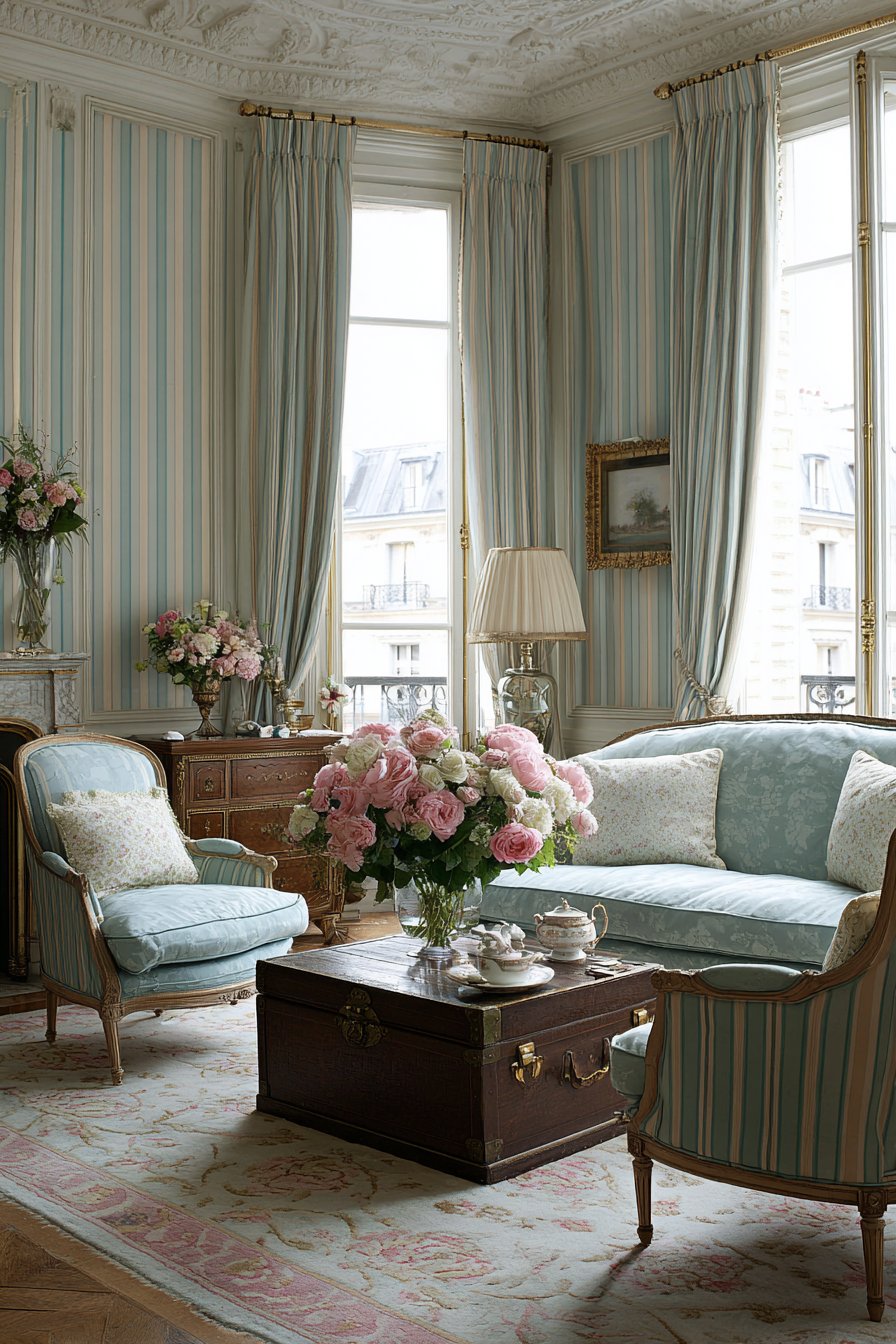
The symmetrical arrangement reflects formal elegance typical of Parisian entertaining spaces. Equal spacing and balanced proportions create visual calm and classical beauty. The pale color palette maintains lightness while the varied textures add depth. Silk reflects light differently than damask, creating subtle visual interest.
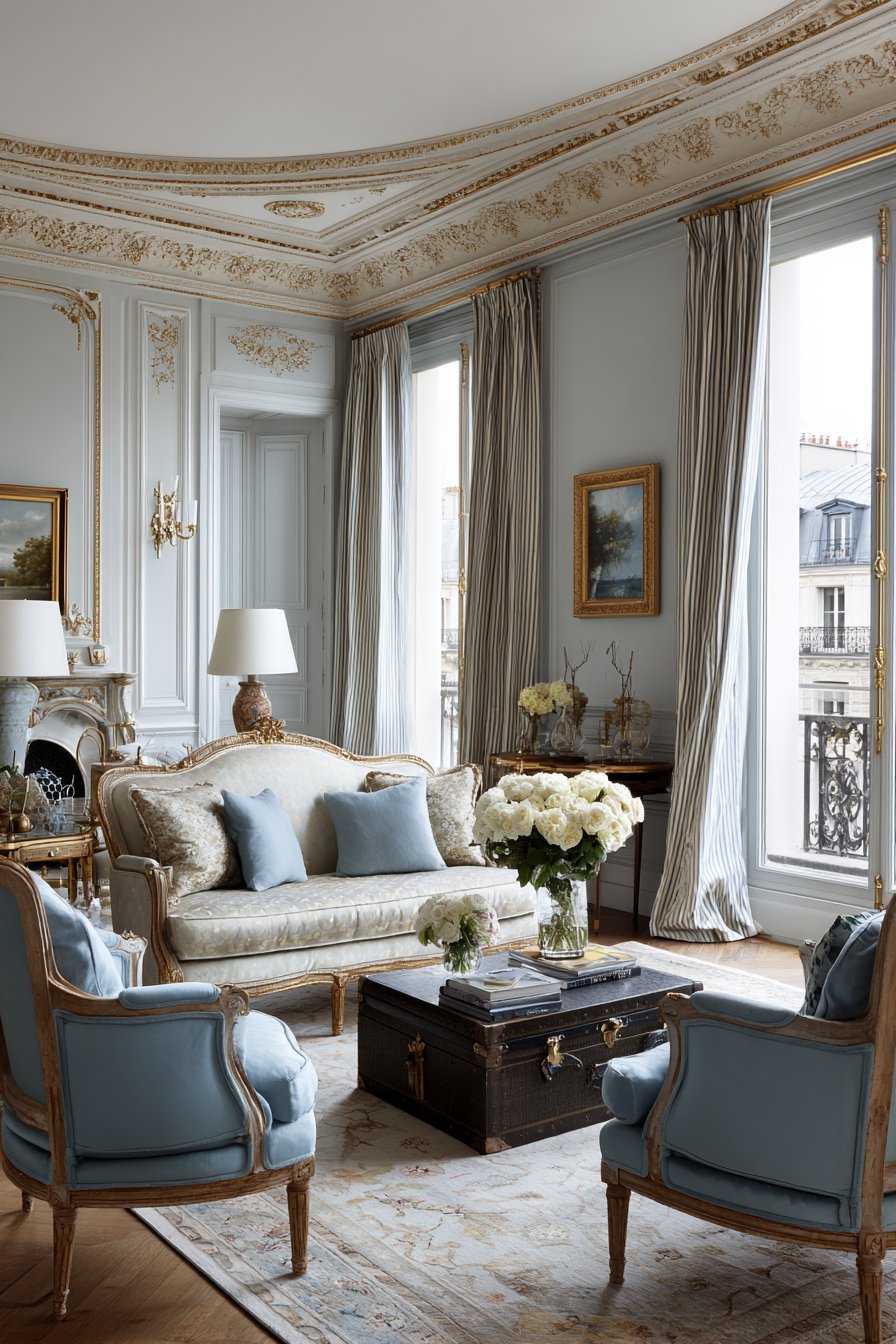
Balanced natural light reveals the color harmonies and textile textures throughout the day. Morning light emphasizes the coolness of blue silk. Afternoon warmth brings out cream damask undertones. This changing quality keeps the static arrangement visually dynamic across different hours.
Key Design Tips:
- Arrange seating symmetrically to create formal elegance and comfortable conversation distances
- Choose complementary fabric colors like pale blue and cream for harmonious sophistication
- Use antique trunks as coffee tables to combine storage functionality with historical character
- Install fabric wallpaper to add texture and subtle pattern without overwhelming the space
- Select Aubusson-style rugs in faded pastels to anchor seating groups with soft color
9. Artistic Bohemian Eclecticism Within Classical Shell
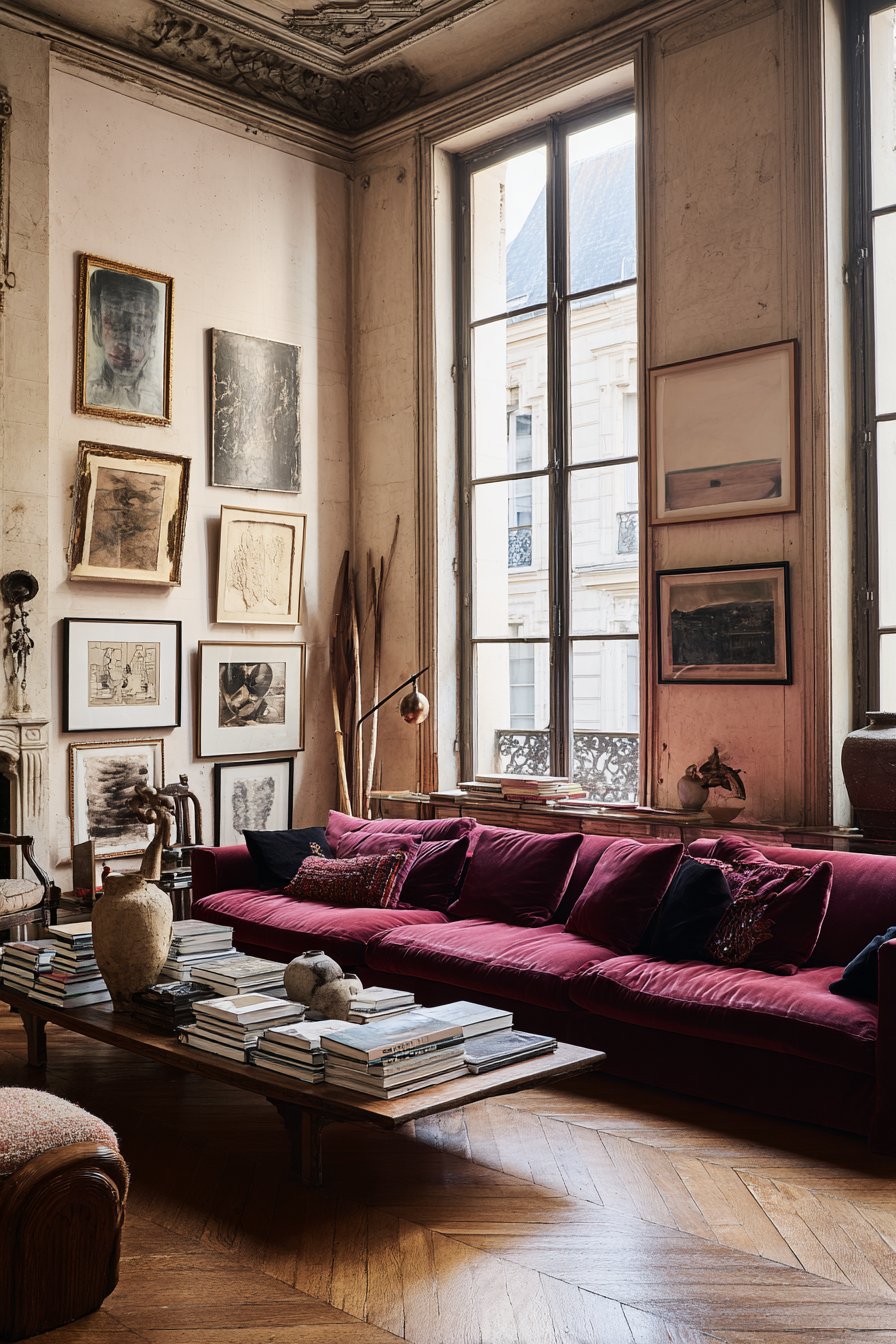
Picture a living room showcasing creative freedom within formal architectural constraints. A deep burgundy velvet sofa contrasts dramatically against walls displaying eclectic framed artwork floor to ceiling. The gallery-style hanging creates visual richness and personal expression. Each piece contributes to an overall narrative of artistic collecting and cultural engagement.
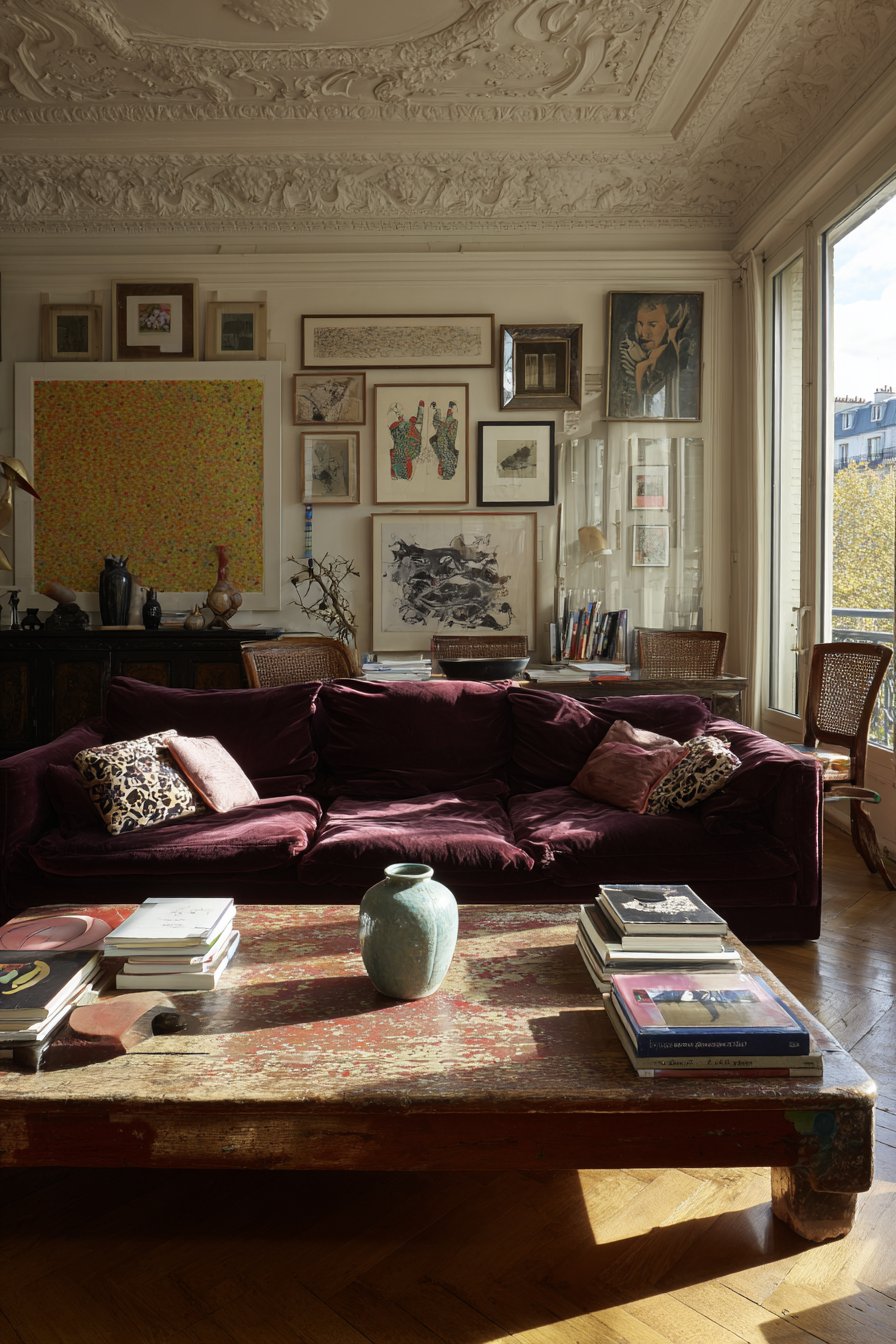
A weathered wooden coffee table holds art books and a vintage ceramic vase with casual elegance. The worn surface shows decades of use and enjoyment. Original ceiling plasterwork maintains decorative grandeur while walls show subtle texture and patina. The juxtaposition between ornate ceiling and bohemian walls creates dynamic tension.
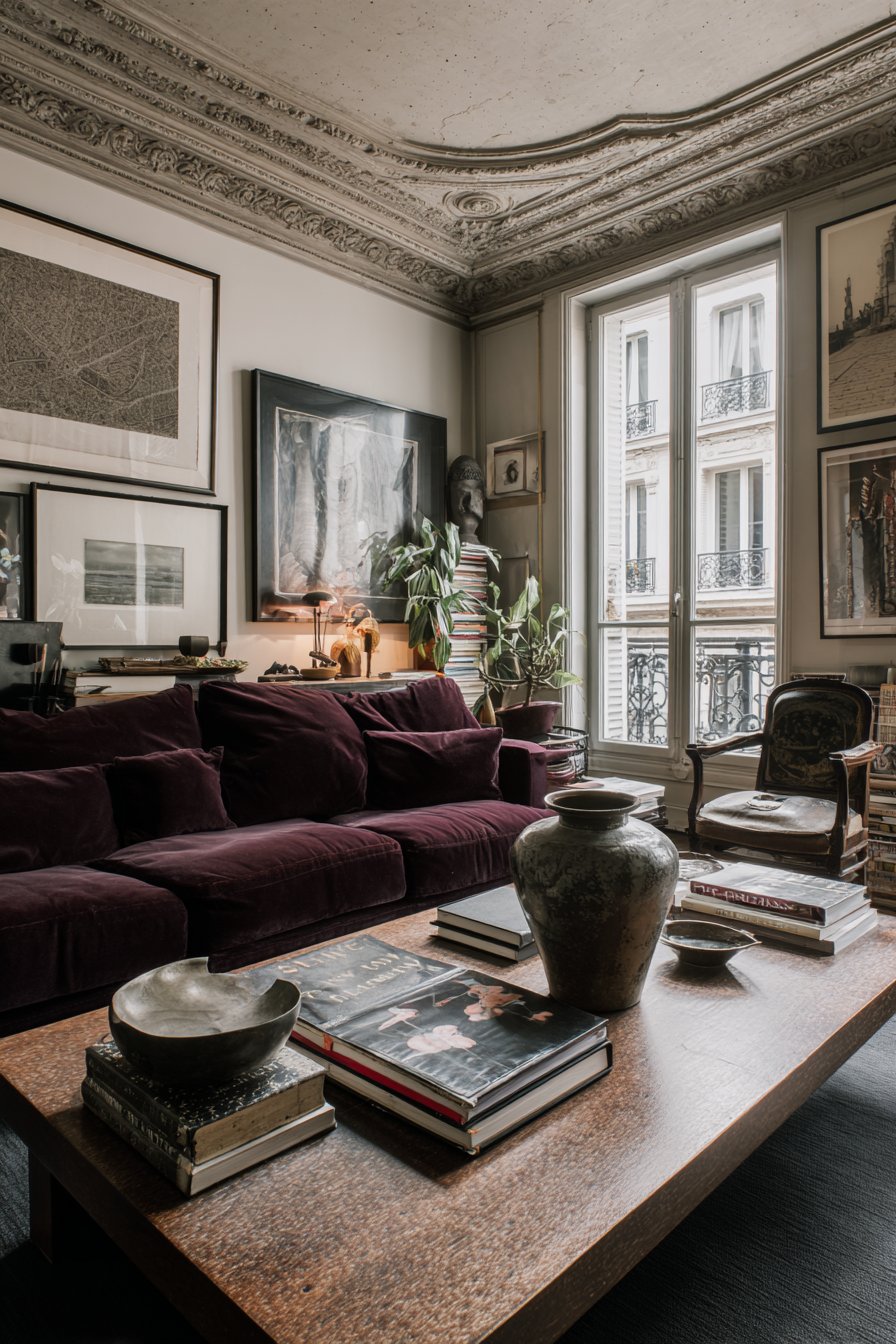
Mismatched vintage chairs provide additional seating with individual character and history. Each piece tells its own story through worn upholstery and aged frames. The eclectic mix reflects personal taste rather than coordinated design schemes. This authenticity cannot be purchased as a complete room package.
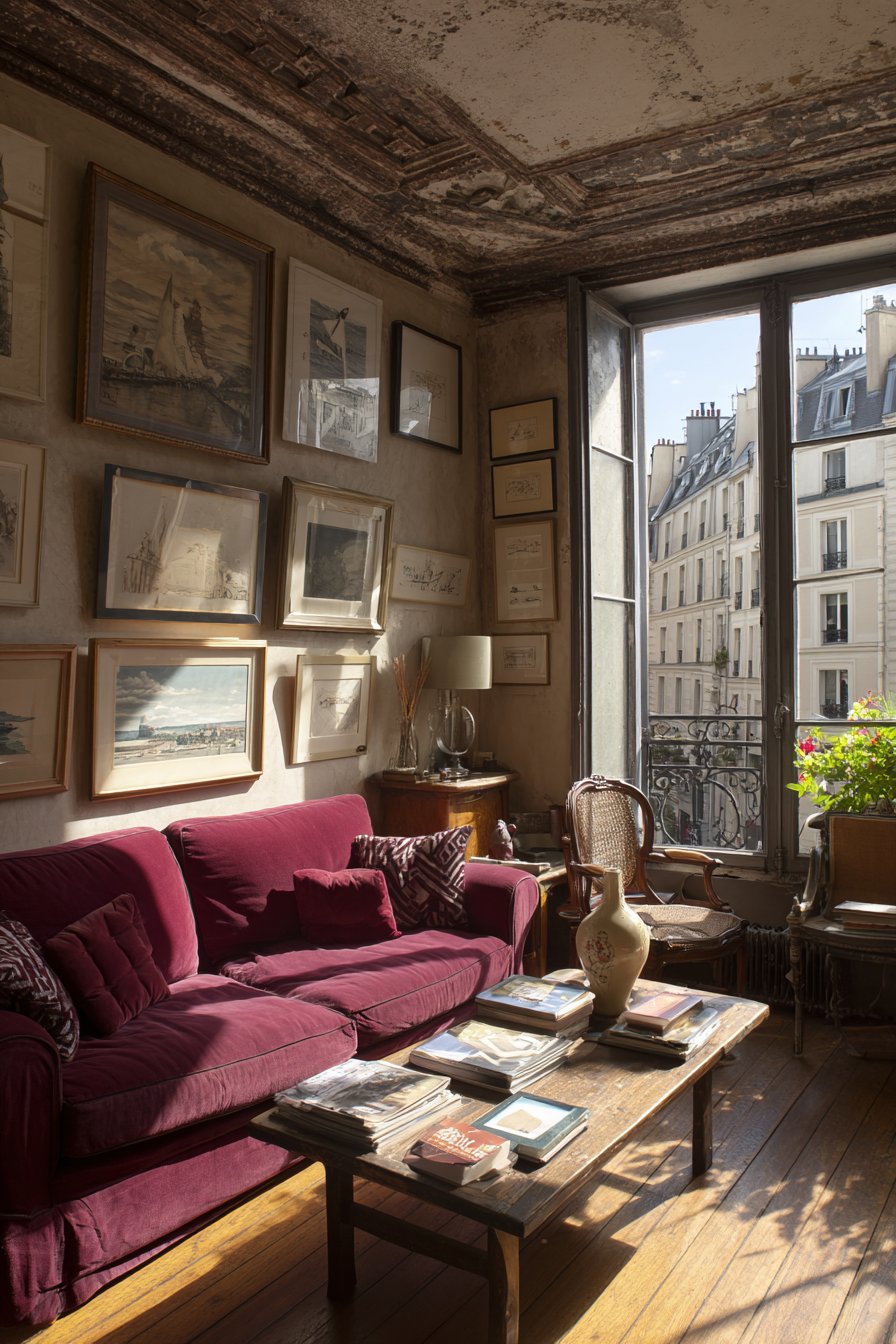
Natural light from tall windows creates dynamic shadows that change throughout the day. The varied artwork surfaces catch light differently, creating constant visual interest. The creative layering demonstrates how formal architecture accommodates personal artistic expression. Classical elements gain new relevance through unexpected contemporary interventions.
Key Design Tips:
- Hang artwork gallery-style from floor to ceiling for maximum visual impact and personality
- Choose one bold furniture piece like burgundy velvet sofa as dramatic focal point
- Mix mismatched vintage seating to create eclectic authenticity and individual character
- Preserve original architectural plasterwork even when adopting bohemian decorating approaches
- Embrace weathered furniture surfaces that show authentic use and historical patina
10. Minimalist Contemporary Respecting Architectural Heritage
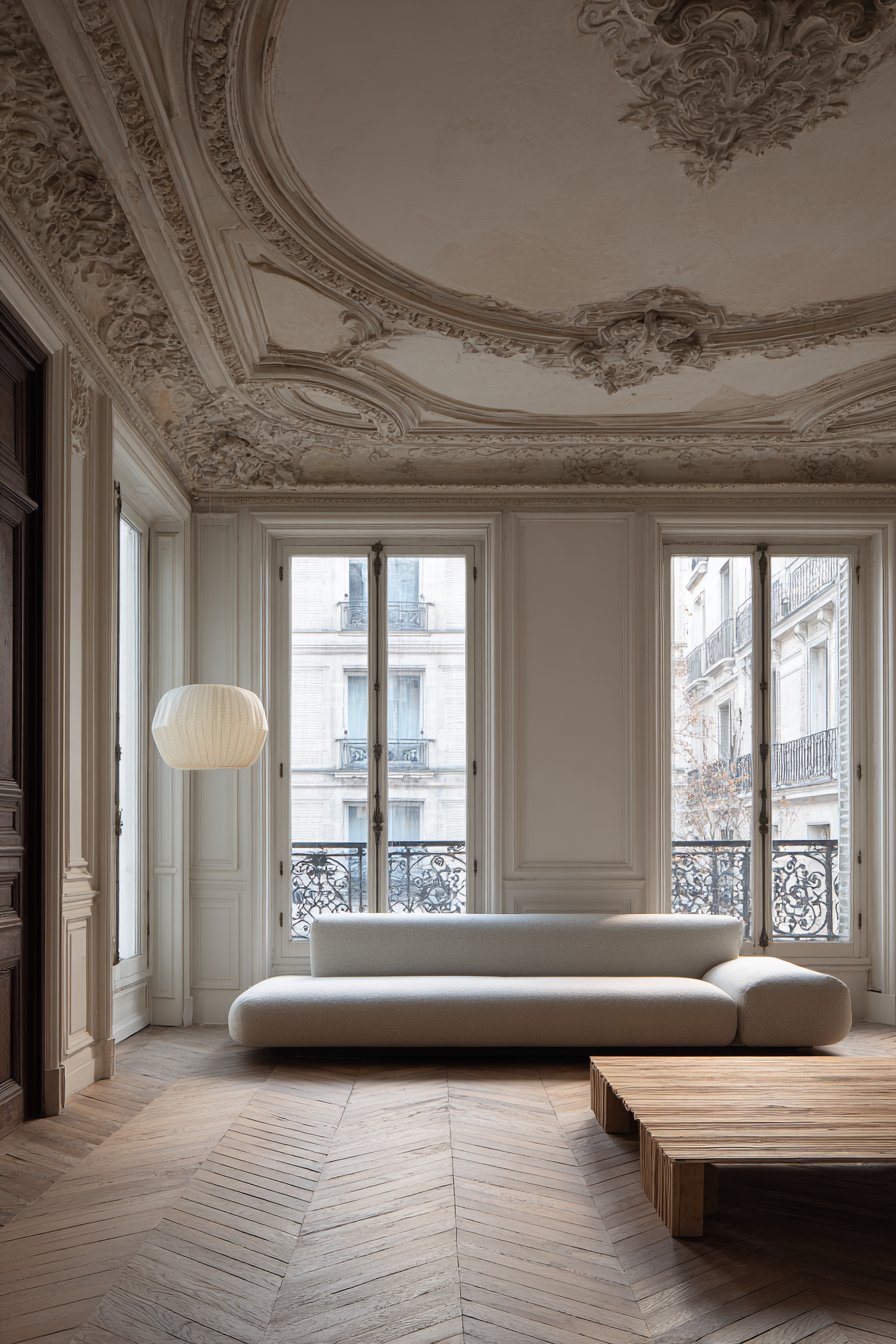
Imagine a streamlined living room where contemporary simplicity honors historical details. A minimalist sofa in warm grey wool sits beneath an original ceiling medallion and ornate molding. The restraint allows architectural elements to shine without competition. The dialogue between ornate historical details and modern furnishings creates sophisticated tension.
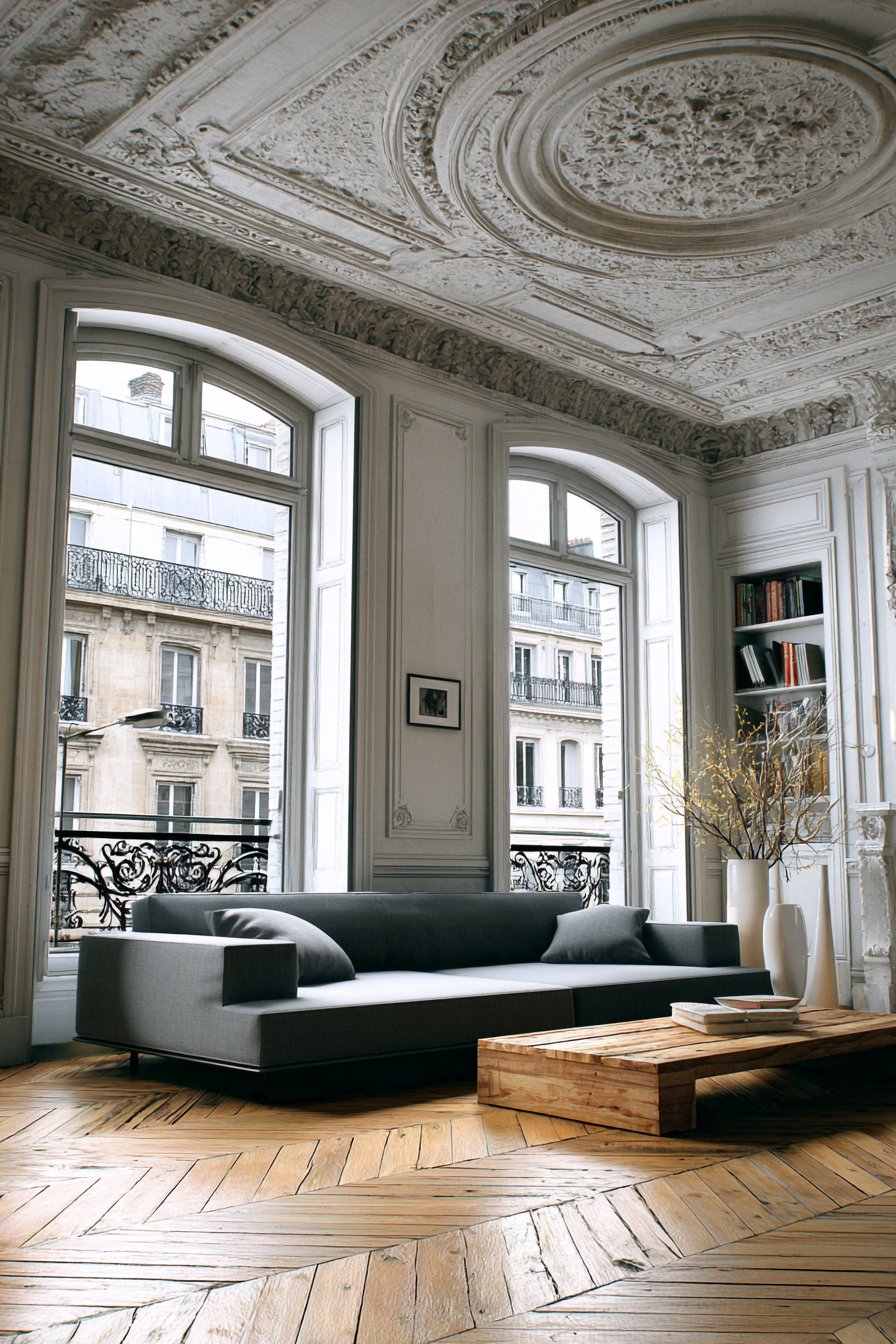
A single sculptural floor lamp provides accent lighting with artistic presence. The piece serves functional and aesthetic purposes simultaneously. Tall windows remain undressed to maximize natural light and showcase classic wrought-iron balcony details. The transparency emphasizes the connection between interior and exterior spaces.
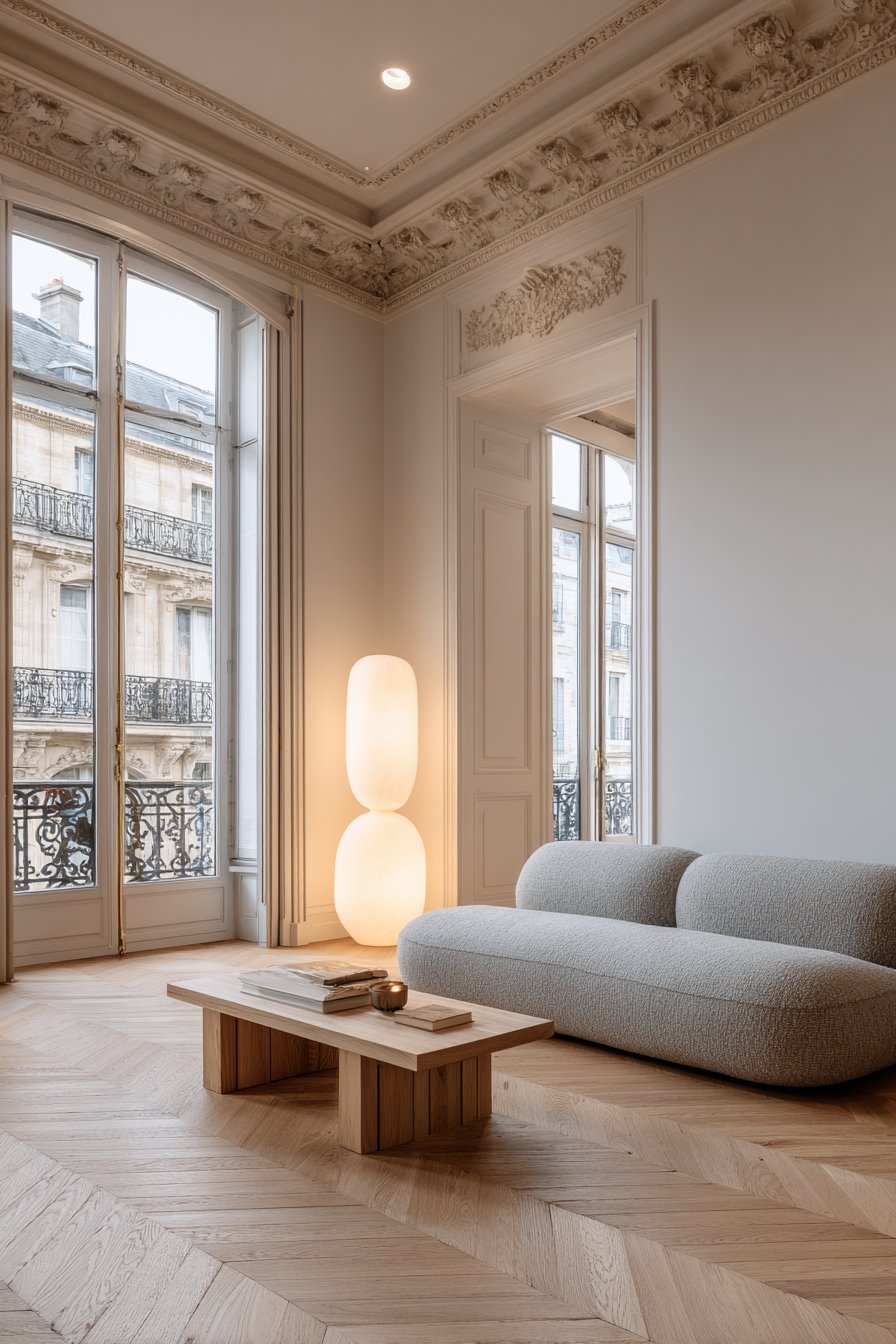
The herringbone oak floor shows natural aging and beautiful variation across its surface. No two planks match exactly, creating organic visual interest. A low wooden bench serves as a minimalist coffee table with clean lines. The simple form respects rather than competes with the architectural complexity above.
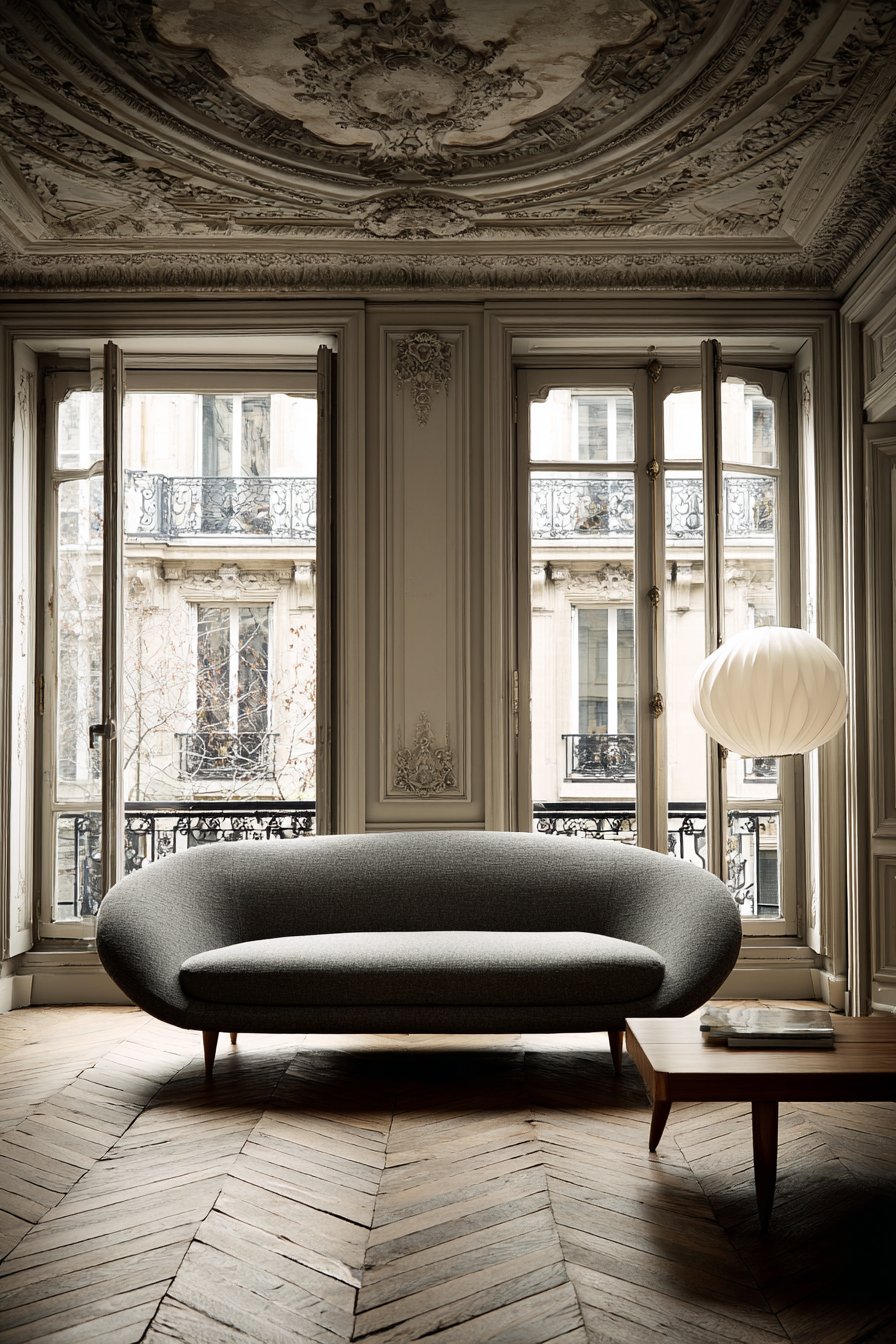
Soft diffused daylight highlights the contrast between ornate ceiling details and restrained furnishings. Morning light emphasizes the three-dimensionality of plasterwork. The minimal furniture allows shadows to play across walls uninterrupted. This approach demonstrates confidence in both historical architecture and contemporary design thinking.
Key Design Tips:
- Select minimal contemporary furniture in neutral tones to honor rather than compete with ornate architecture
- Leave windows undressed when views and balcony details deserve showcasing and light is abundant
- Choose sculptural lighting that serves as functional art rather than merely utilitarian objects
- Use low furniture profiles to maintain visual emphasis on ceiling details and vertical space
- Embrace natural floor aging as beautiful patina rather than damage requiring concealment
11. Family-Friendly Lived-In Parisian Elegance
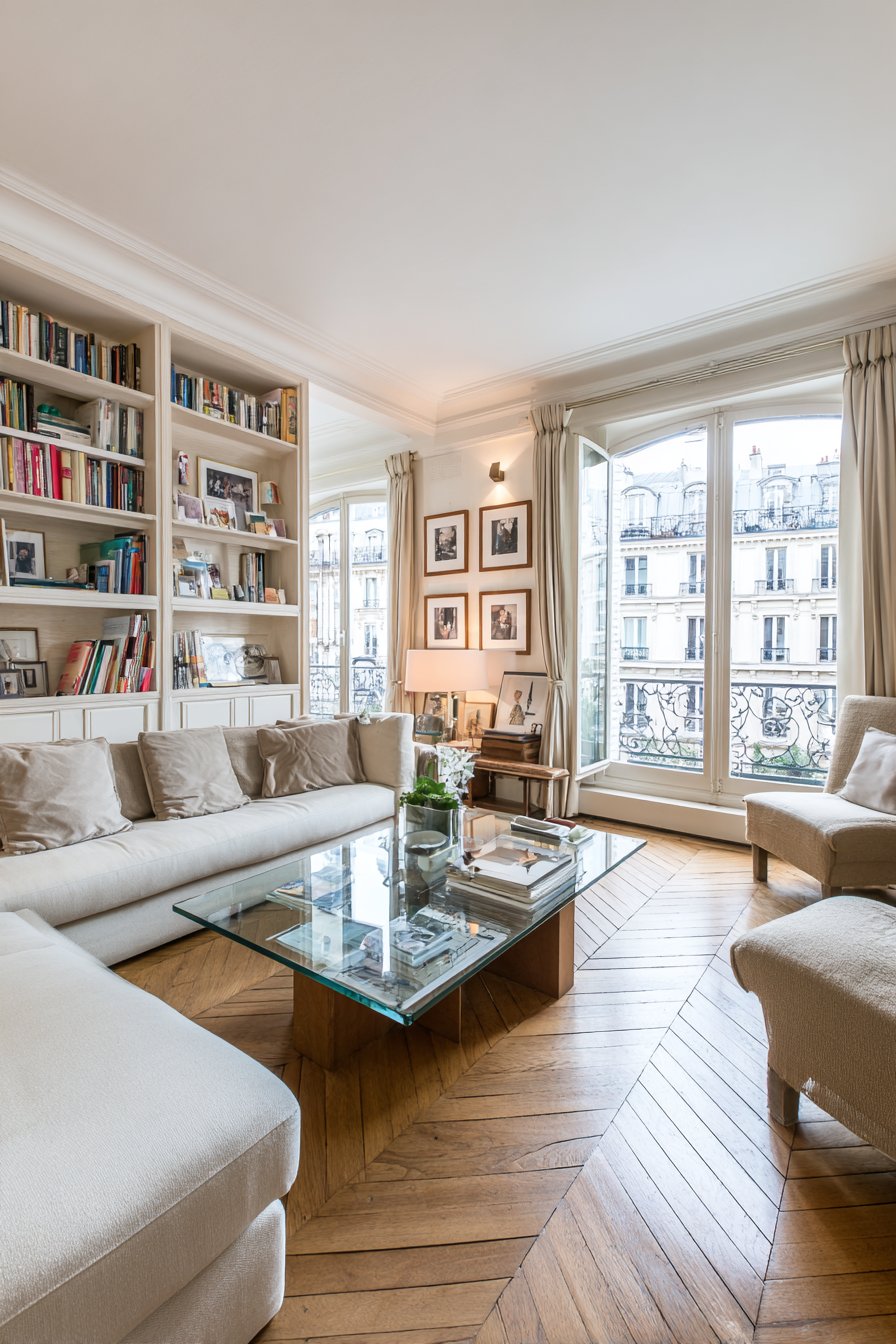
Visualize a living room designed for real family life within an elegant architectural context. A comfortable sectional in durable grey linen provides ample seating with plenty of throw pillows. The mixed textures invite relaxation without sacrificing visual appeal. The coffee table combines modern glass top with vintage wooden base for practical durability.
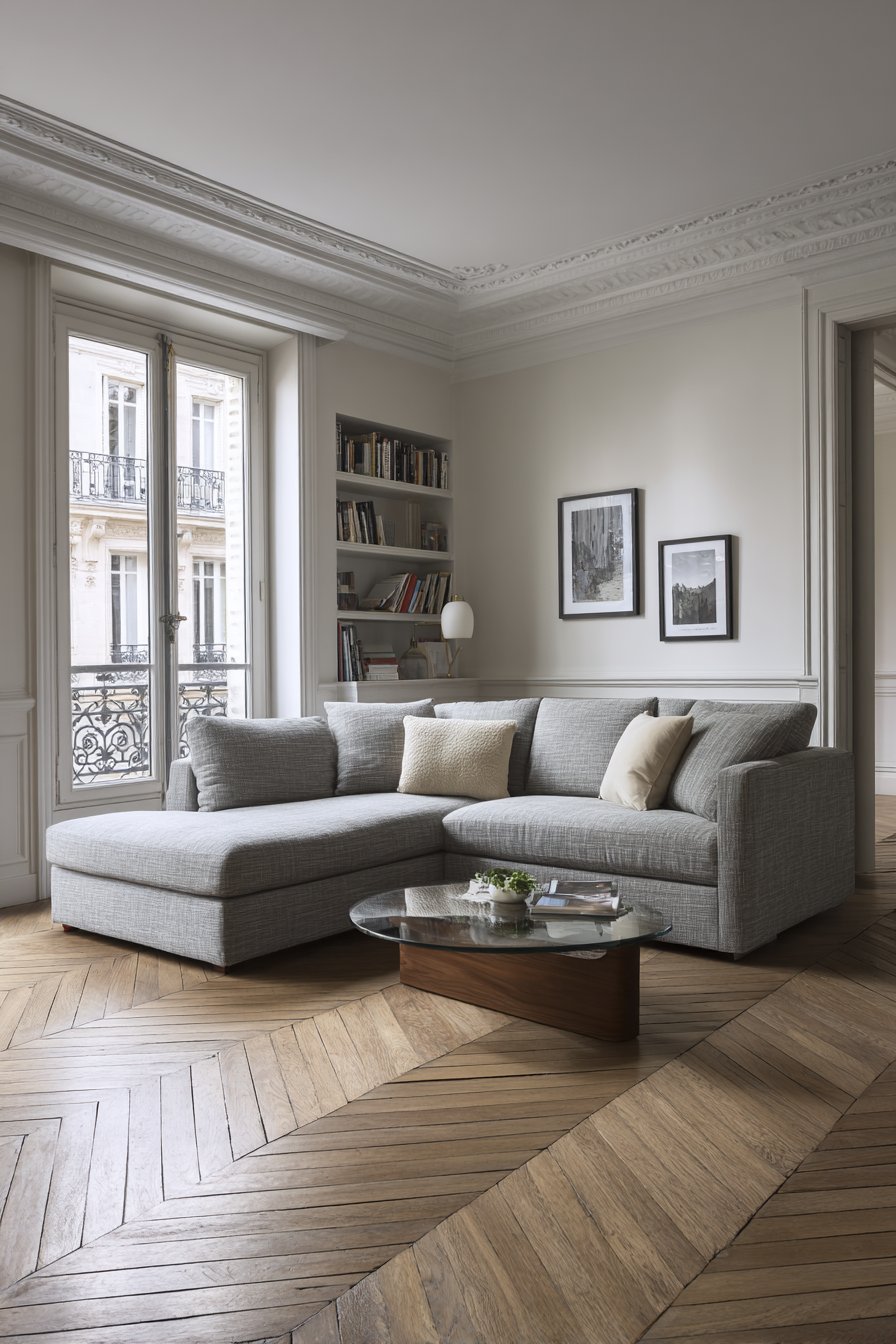
Built-in storage along one wall incorporates original architectural molding seamlessly. The cabinetry provides necessary organization for family life without appearing institutional. Children’s books and family photos add genuine personal touches throughout the space. These elements transform elegant architecture into warm family home.
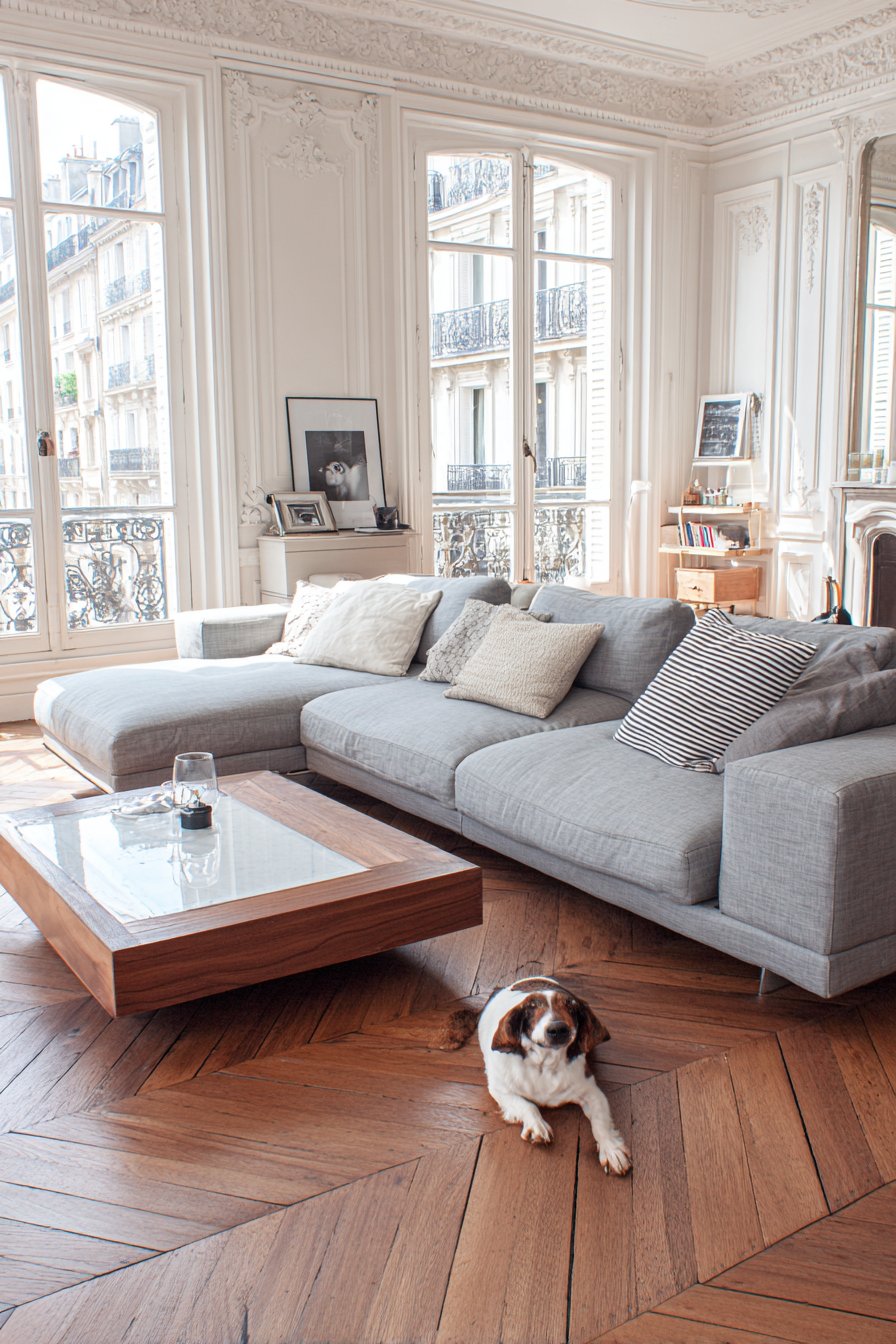
The herringbone floor shows realistic wear from daily use rather than pristine preservation. Scuff marks and worn areas tell stories of children playing and family gathering. This authentic aging demonstrates that beautiful spaces can accommodate real life. The room balances aesthetic aspiration with functional reality beautifully.
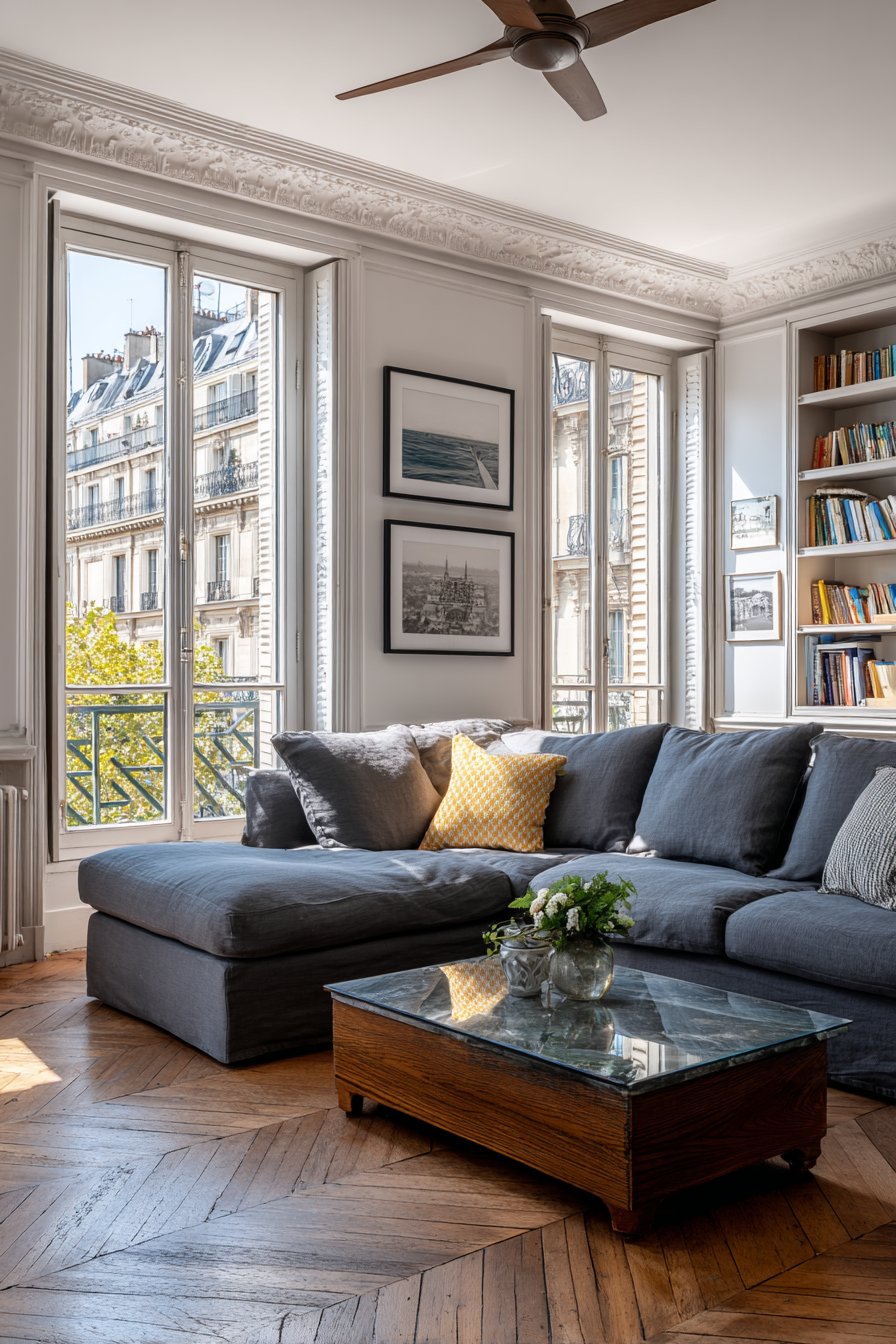
Natural light reveals how classic architecture accommodates contemporary family needs successfully. The formal architectural shell embraces informal family activities without contradiction. Built-in storage keeps chaos organized while maintaining elegant proportions. This approach proves that Parisian style suits actual living rather than museum-like preservation.
Key Design Tips:
- Choose durable performance fabrics like linen that withstand family use while maintaining elegance
- Incorporate built-in storage that respects architectural molding and provides organization
- Add personal items like family photos to transform elegant spaces into warm homes
- Accept realistic floor wear as evidence of authentic family life rather than damage
- Balance aesthetic beauty with functional requirements for comfortable daily living
12. Luxurious Grand Piano Music Room
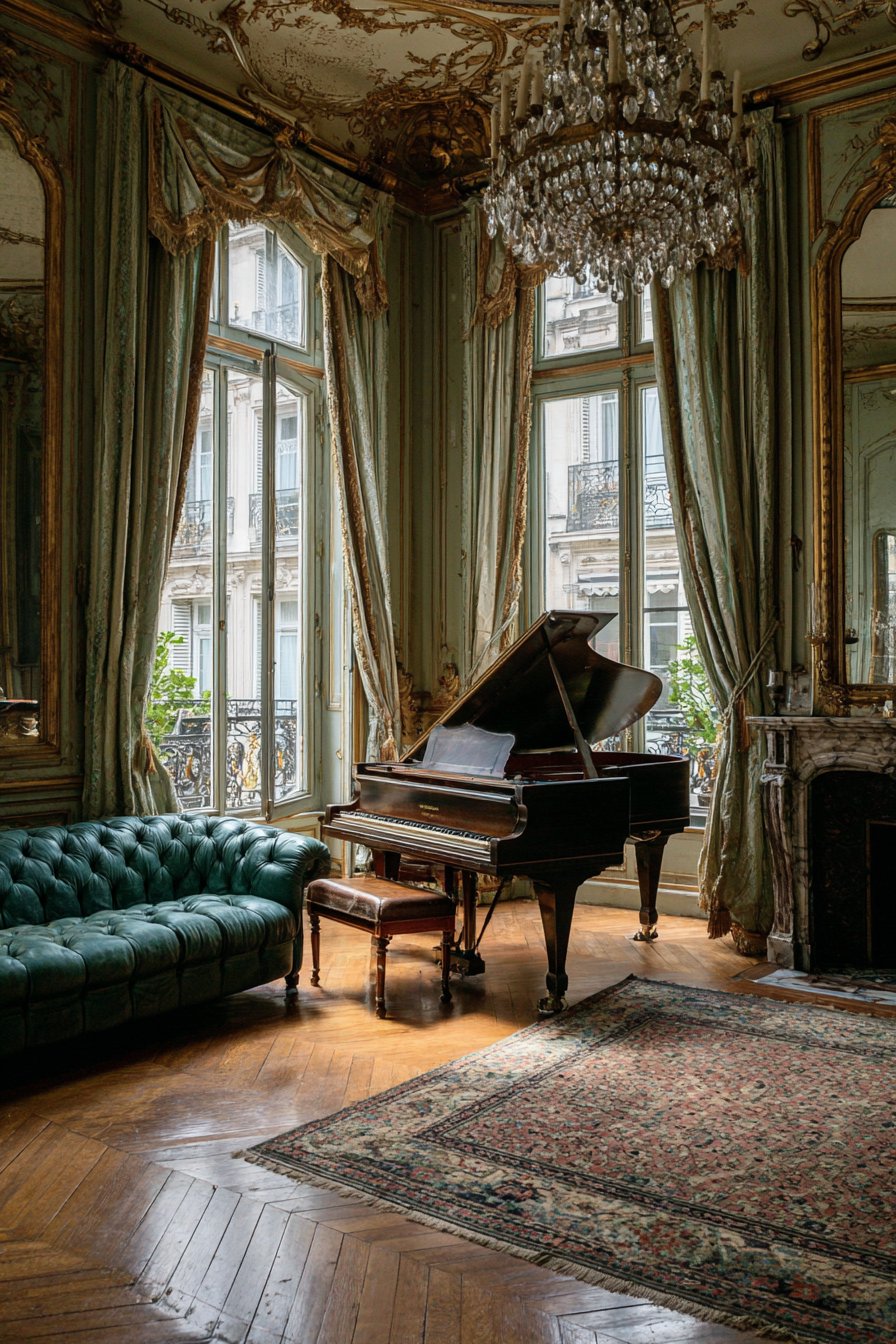
Picture a sophisticated living room featuring a grand piano positioned near tall windows. Heavy silk drapery with decorative trim and tassels frames the windows elaborately. A velvet Chesterfield sofa in deep emerald green provides seating for enjoying musical performances. The rich color adds drama and cultural sophistication to the space.
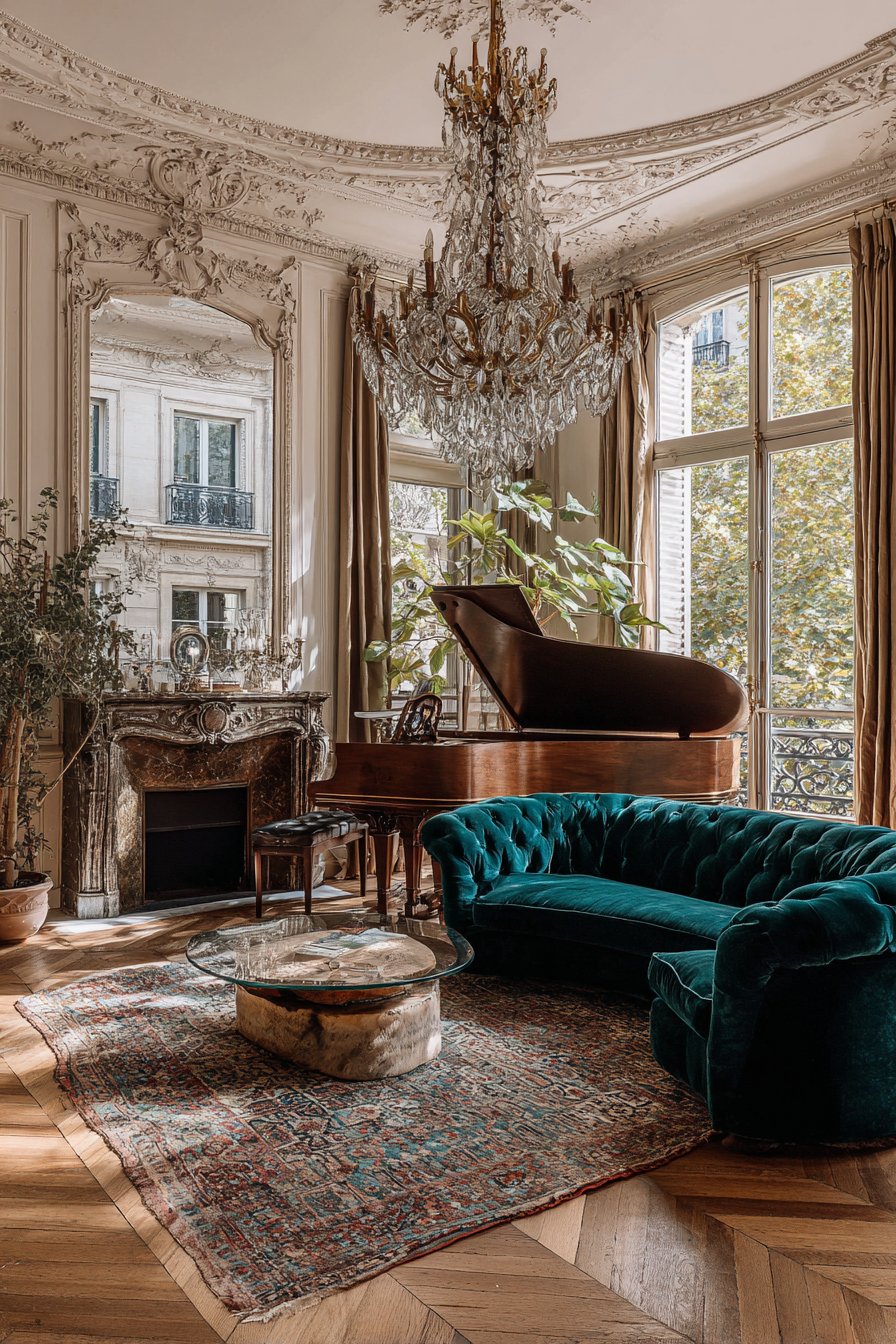
An antique Baccarat crystal chandelier hangs from the ornamental ceiling, scattering prismatic light. The fixture represents significant investment in both artistry and illumination. The marble fireplace surround shows intricate carved details that required master craftsmanship. Persian rugs layer over herringbone parquet, adding color and acoustic softness.
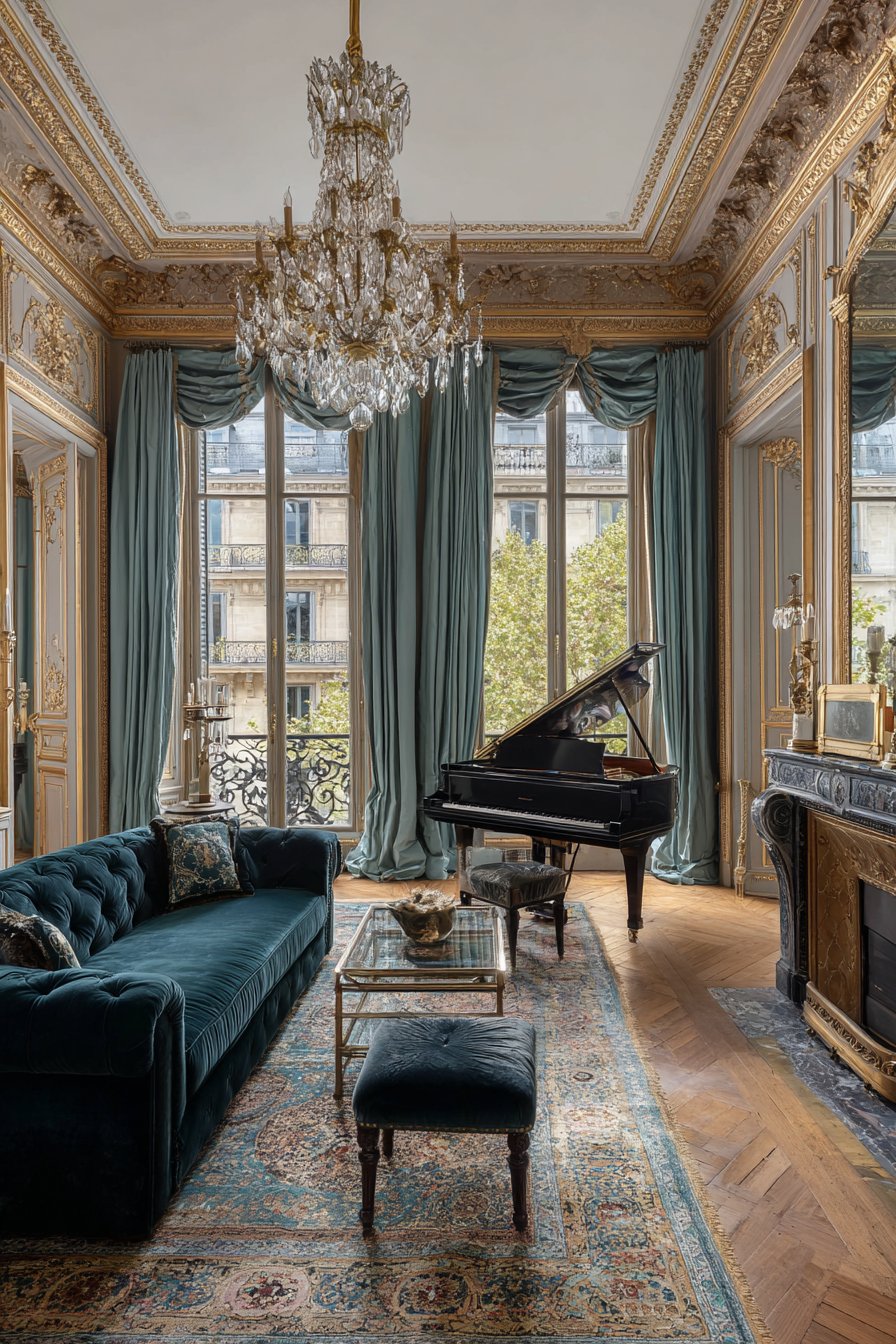
The golden afternoon light streams through windows and reflects off polished surfaces. Crystal prisms scatter rainbow fragments across walls and ceiling throughout the day. The reflective quality of polished piano finish multiplies the light’s effect. This luminous quality transforms the room into a jewel box.
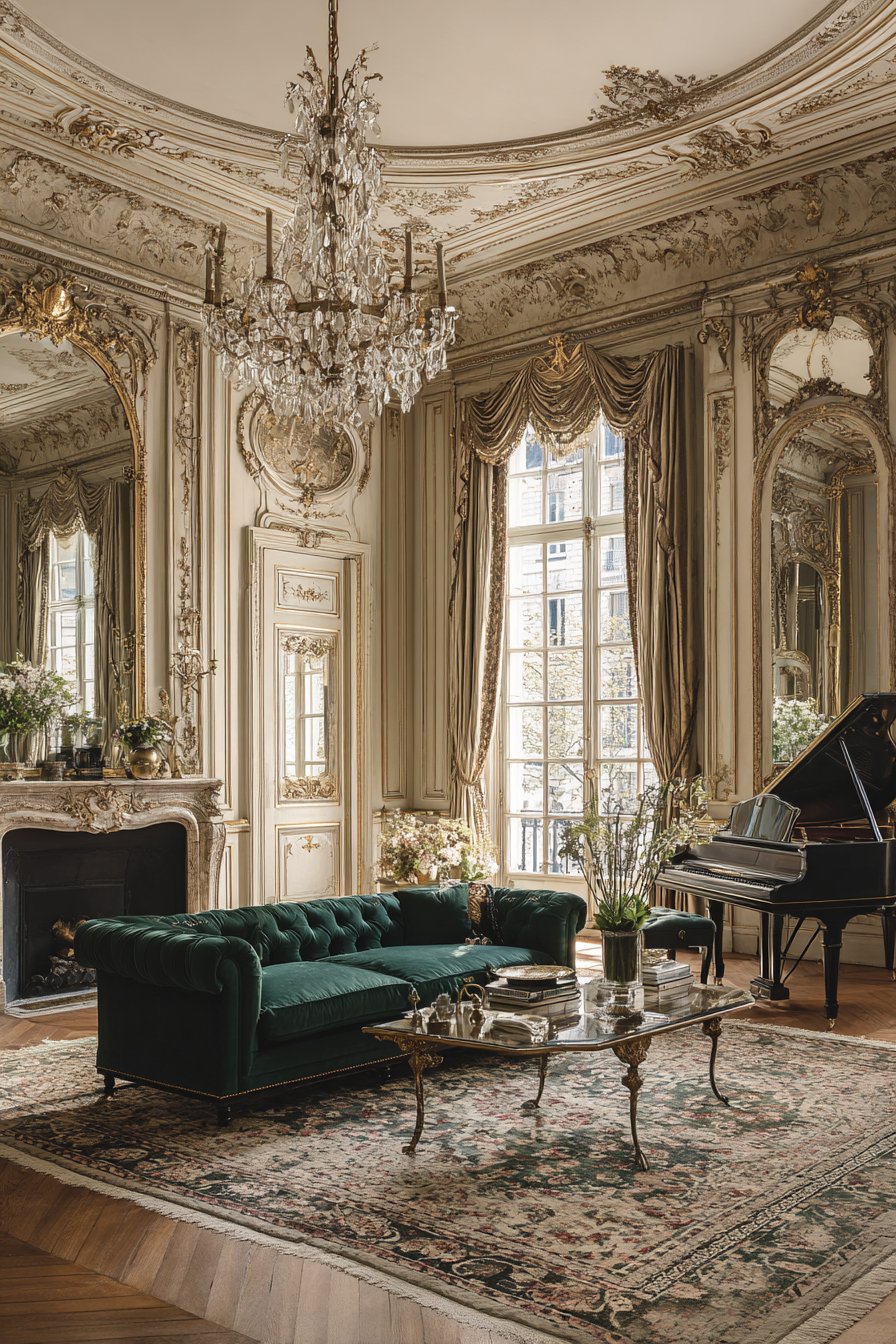
The refined grandeur speaks to cultural sophistication and musical appreciation. The room functions as both an elegant living space and performance venue. The acoustics benefit from high ceilings and layered textiles that absorb and diffuse sound. This multipurpose functionality demonstrates thoughtful French design thinking.
Key Design Tips:
- Position grand pianos near windows to take advantage of natural light during practice
- Choose elaborate window treatments with trim and tassels for formal elegance and light control
- Select rich jewel-tone upholstery like emerald velvet for dramatic sophistication and depth
- Layer Persian rugs over hard floors to add acoustic softness and visual warmth
- Invest in quality crystal chandeliers that create prismatic light effects throughout the day
13. Dedicated Reading Nook with Leather Club Chair
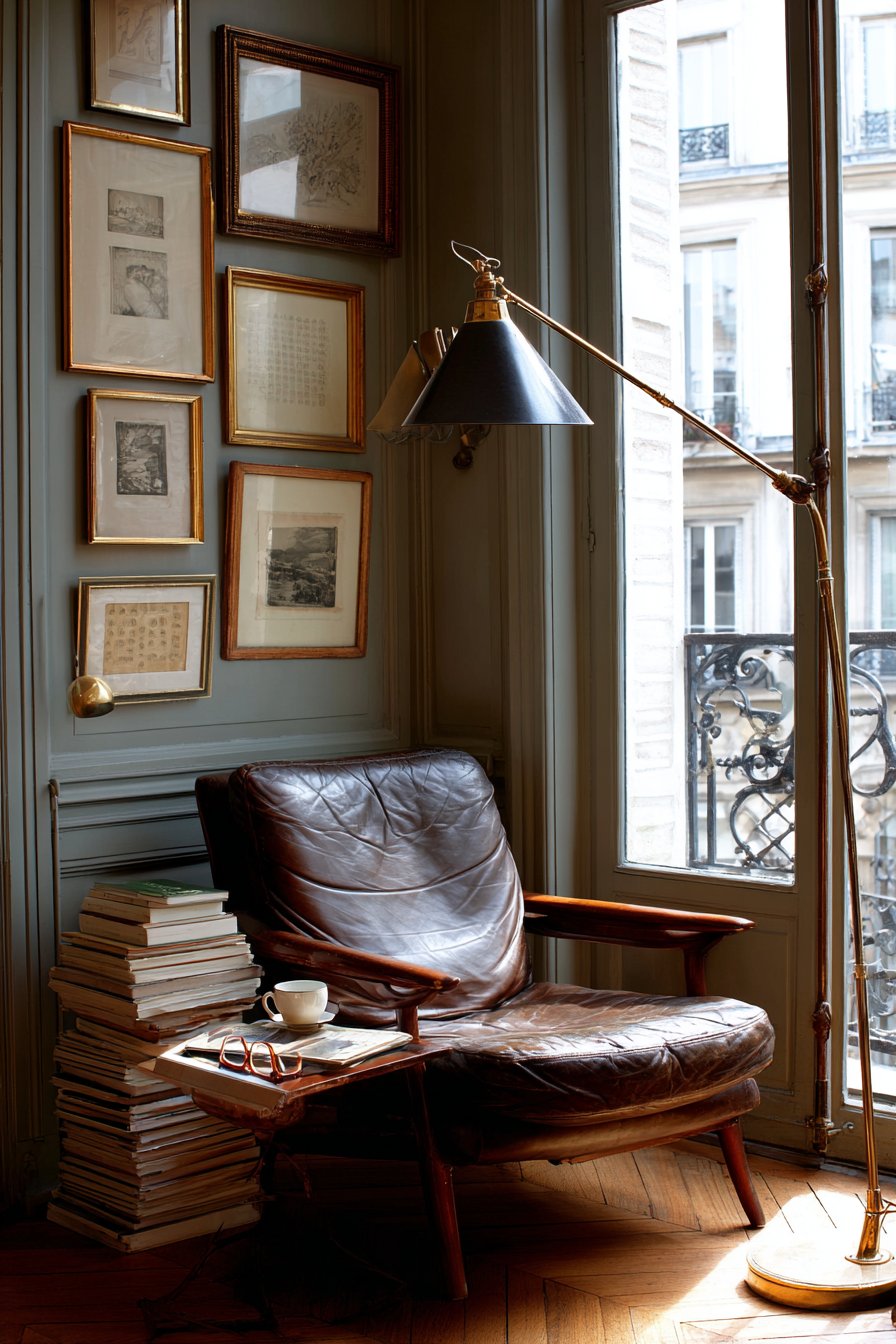
Imagine a corner designed specifically for afternoon reading and quiet contemplation. A vintage leather club chair positioned to catch natural light provides comfortable seating for hours. A brass articulating floor lamp provides task lighting for evening reading sessions. The adjustable arm allows perfect light positioning without harsh glare.
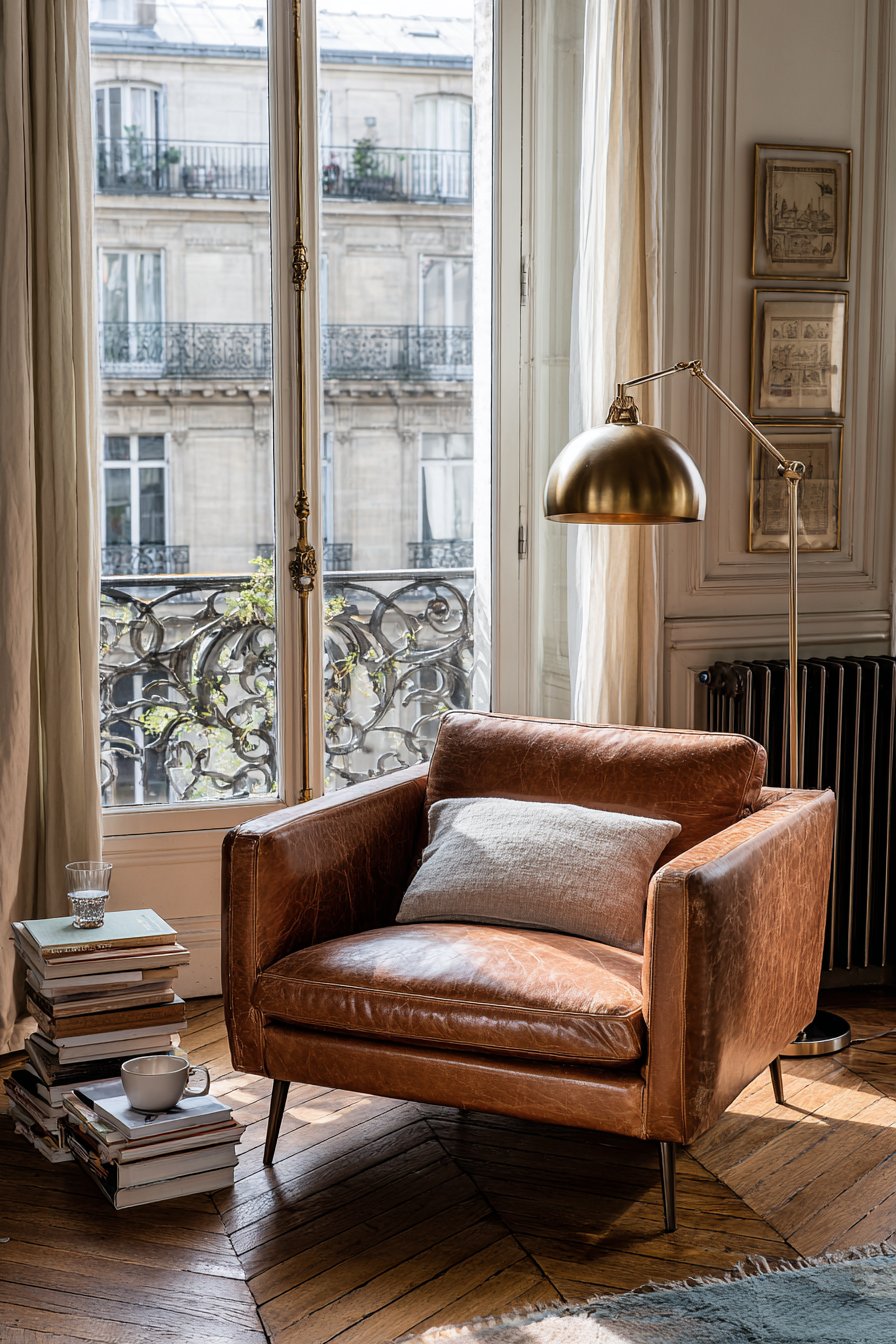
Stacked antique books serve as an unconventional side table holding reading glasses and coffee. This clever solution adds height while celebrating literary pursuits. Walls painted in warm greige display a collection of small gilt-framed etchings arranged asymmetrically. The varied sizes create visual interest without rigid formality.
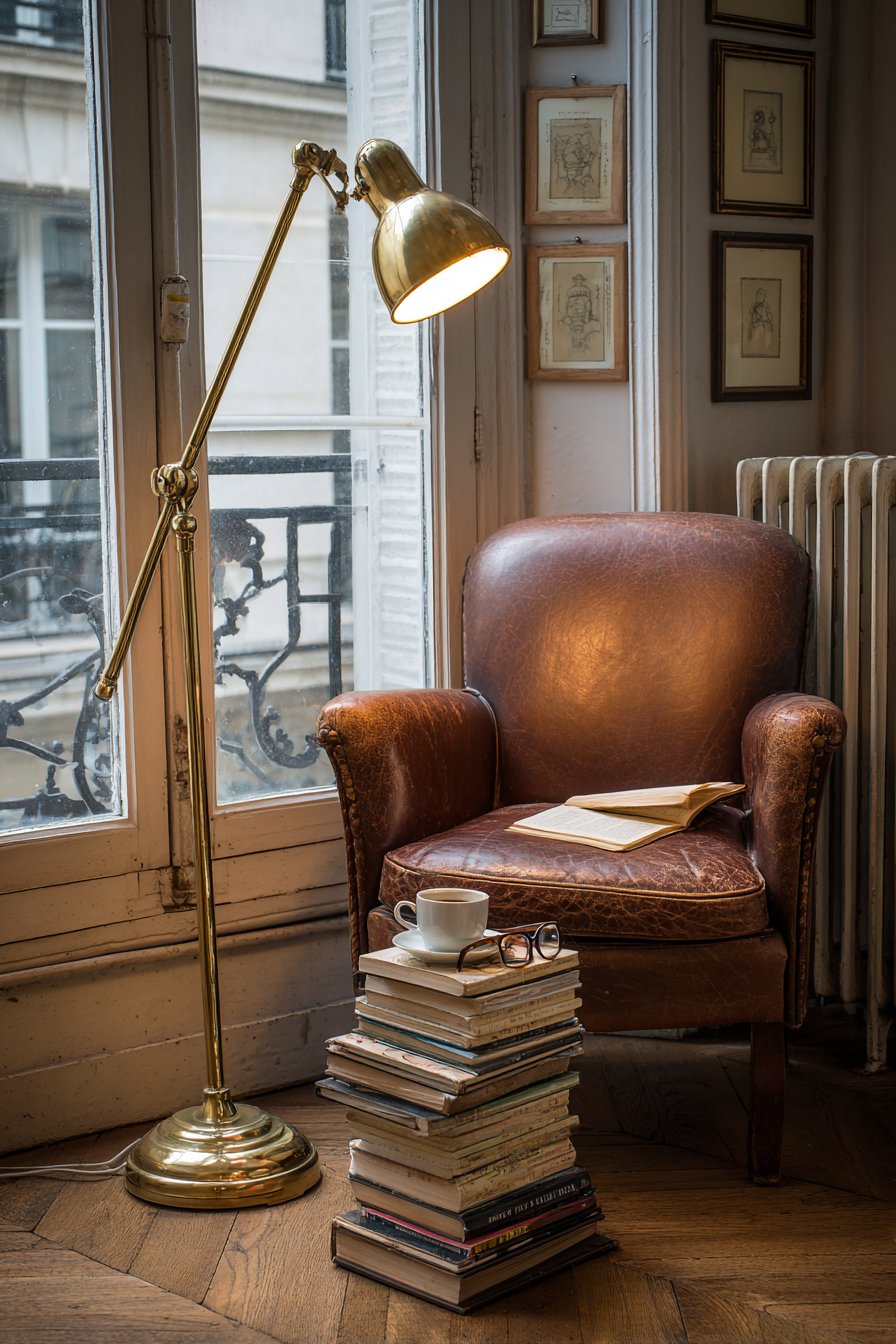
The oak parquet floor shows beautiful natural patina developed over decades of use. The honey tones provide visual warmth that complements the aged leather chair. Soft natural light emphasizes the worn leather texture and brass patina throughout the day. The intimate scale creates a personal refuge within larger living space.
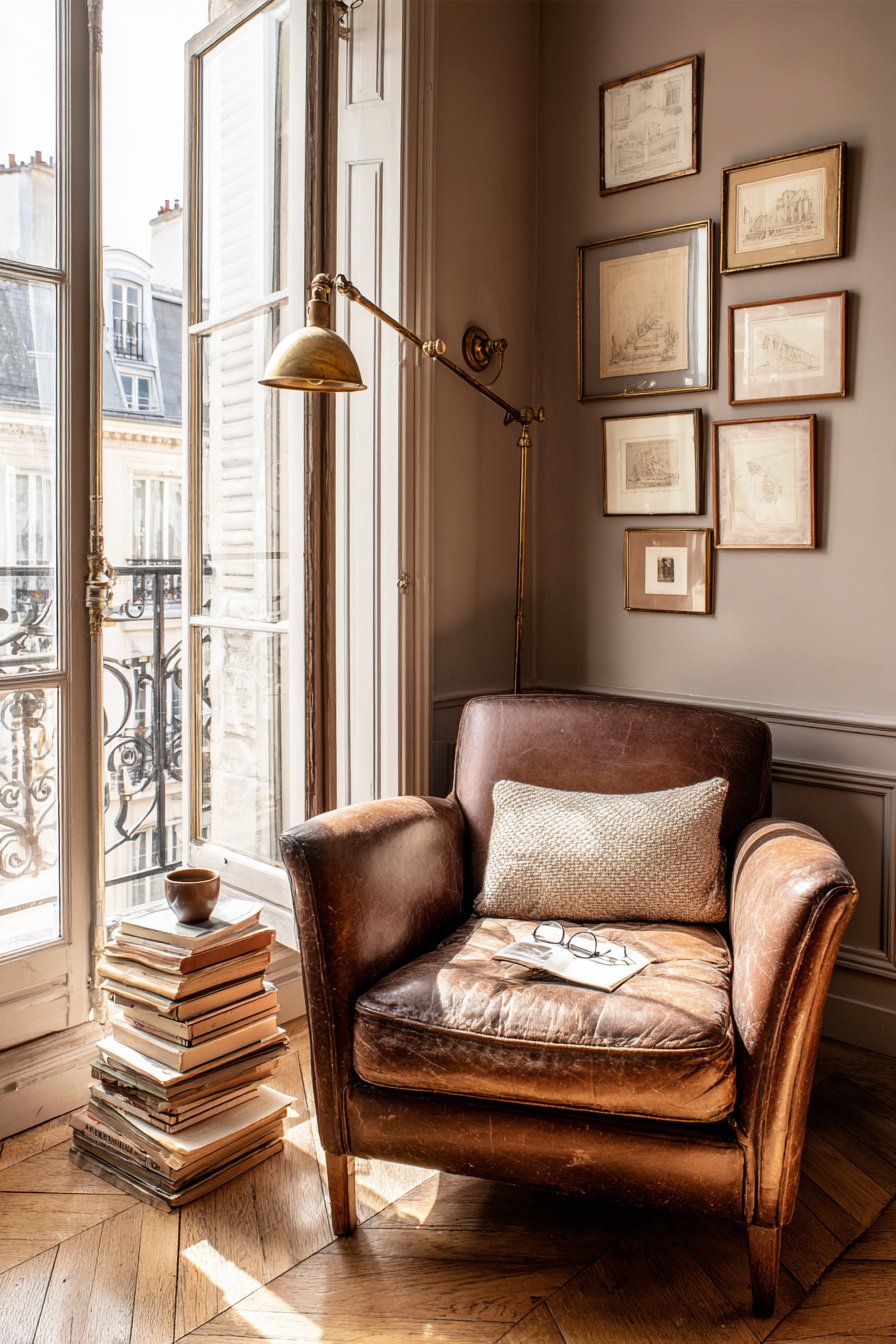
The purposeful arrangement demonstrates that small corners deserve careful design attention. Every element serves both functional and aesthetic purposes simultaneously. The reading nook shows how Parisian design embraces dedicated spaces for specific activities. This specialization elevates everyday activities into intentional rituals.
Key Design Tips:
- Position reading chairs to maximize natural daylight during afternoon hours for comfort
- Choose brass articulating lamps that provide adjustable task lighting without harsh glare
- Stack antique books as functional side tables that celebrate literary interests
- Paint walls in warm greige to create cozy backdrops that complement leather and brass
- Create dedicated activity zones within larger rooms for purposeful spatial planning
14. Textural Neutral Monochromatic Sophistication
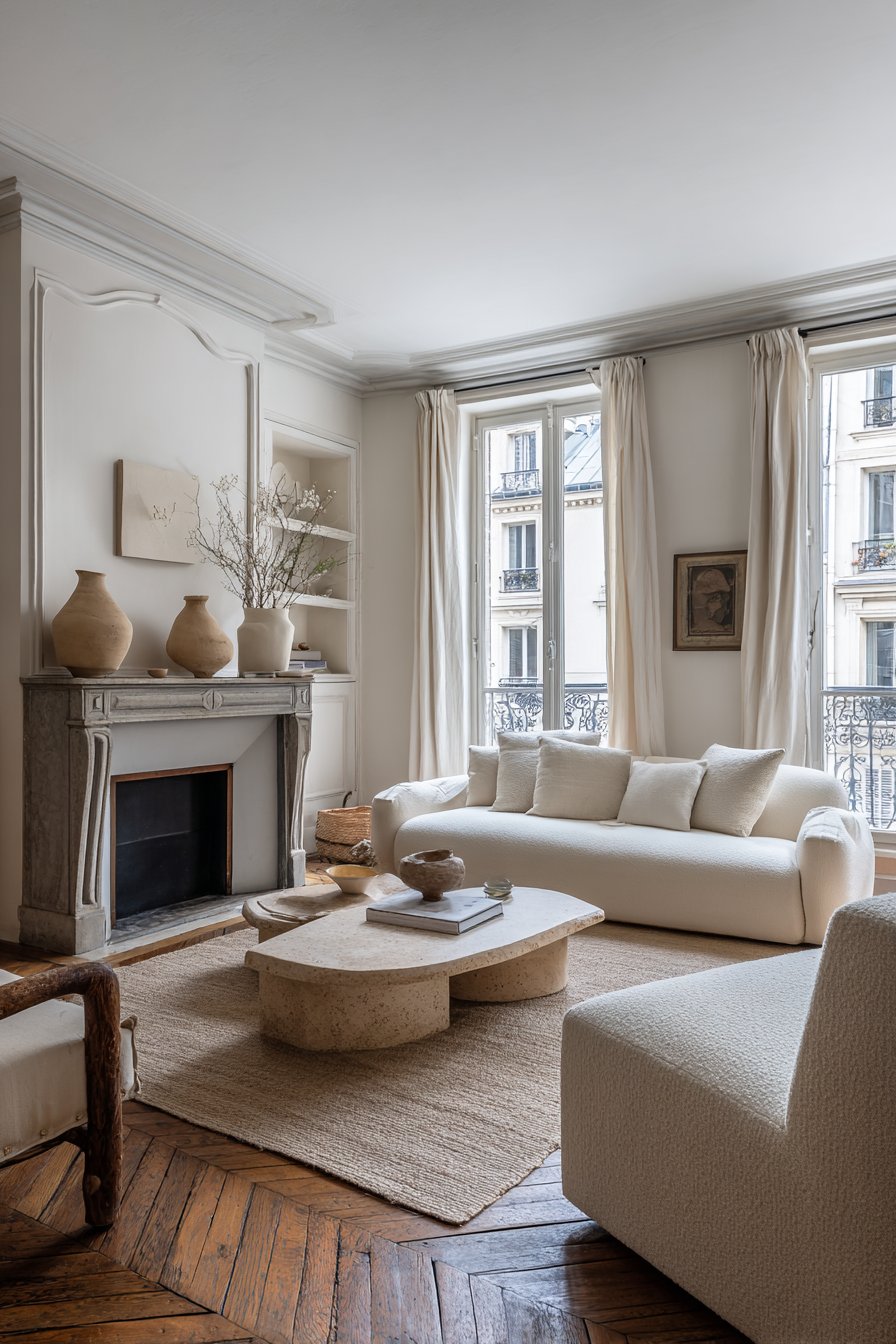
Envision a living room exploring subtle variations within a neutral palette. An oatmeal linen sofa with nubby weave texture pairs with a Belgian linen armchair. The slightly lighter shade creates gentle contrast without disrupting harmony. The coffee table combines aged oak with limestone top for mixed natural materials.
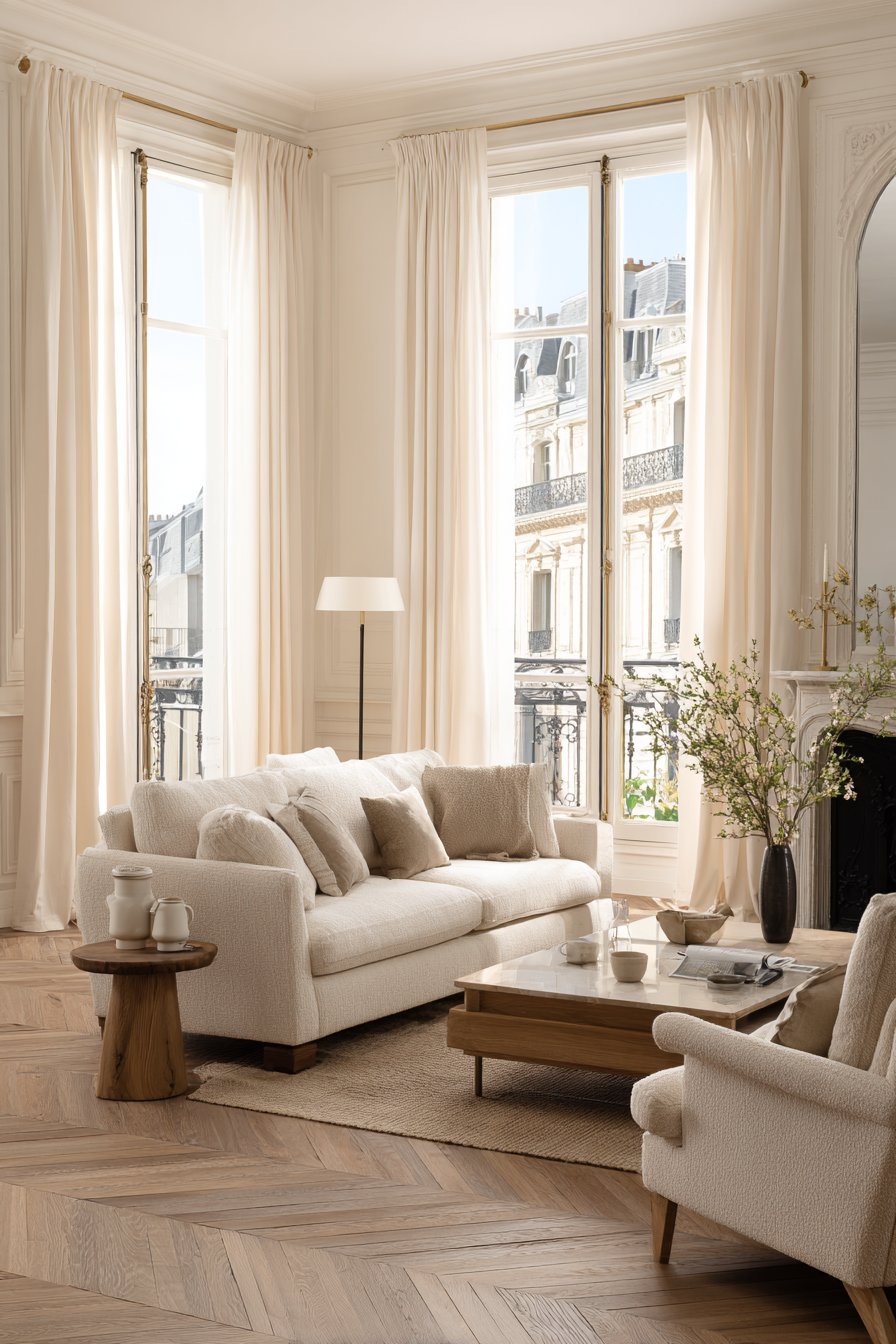
Walls in warm white contrast elegantly with original dark wood herringbone flooring. The light walls reflect natural light while dark floors anchor the space visually. Gauzy white curtains filter light from tall windows without blocking views. A collection of cream-colored ceramics decorates the mantel with sculptural presence.
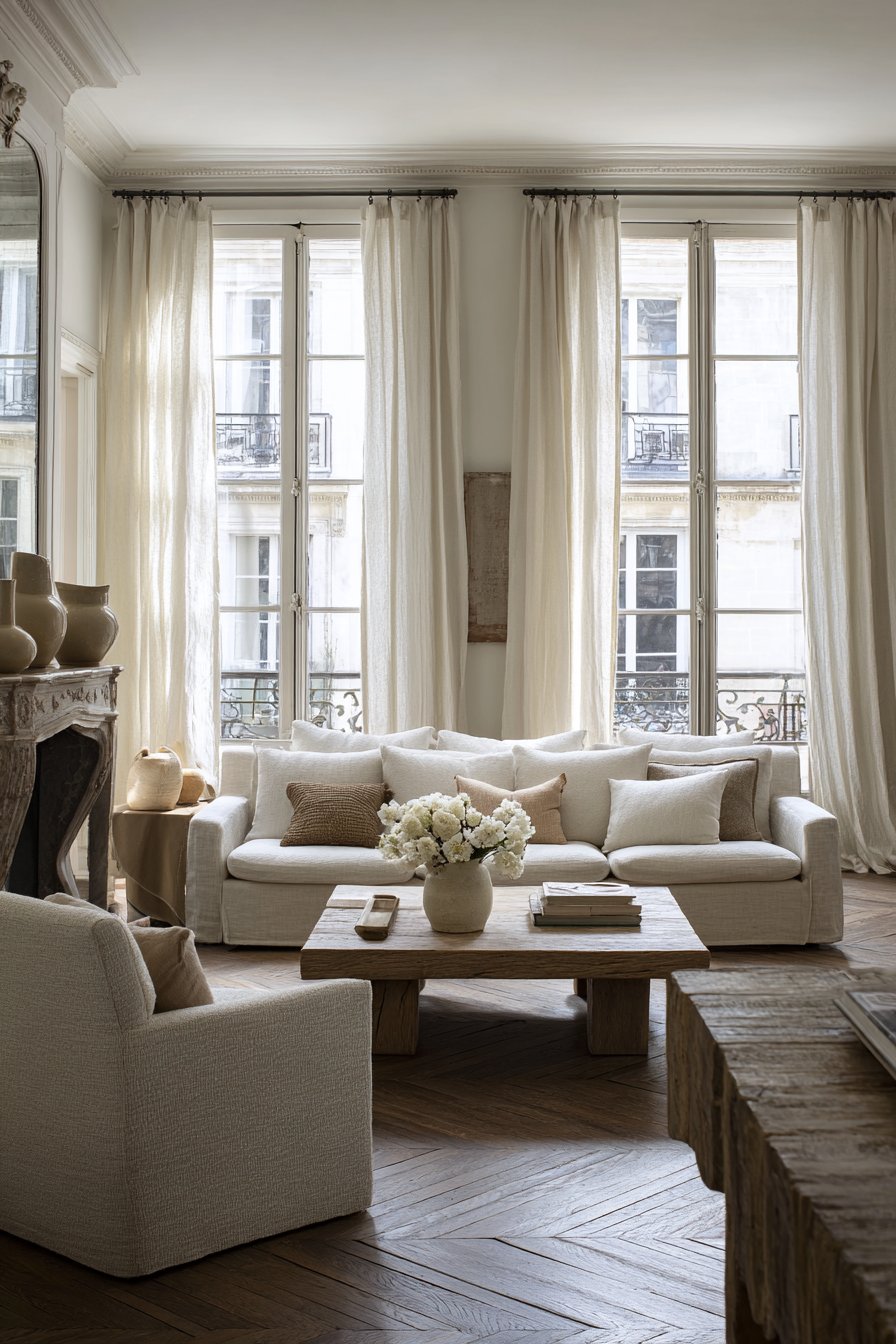
Soft diffused morning light reveals depth and dimension within the monochromatic scheme. The varied textures prevent visual flatness despite limited color range. Nubby linen reflects light differently than smooth Belgian weave creates subtle interest. Oak grain patterns contrast with uniform limestone surface for organic variation.
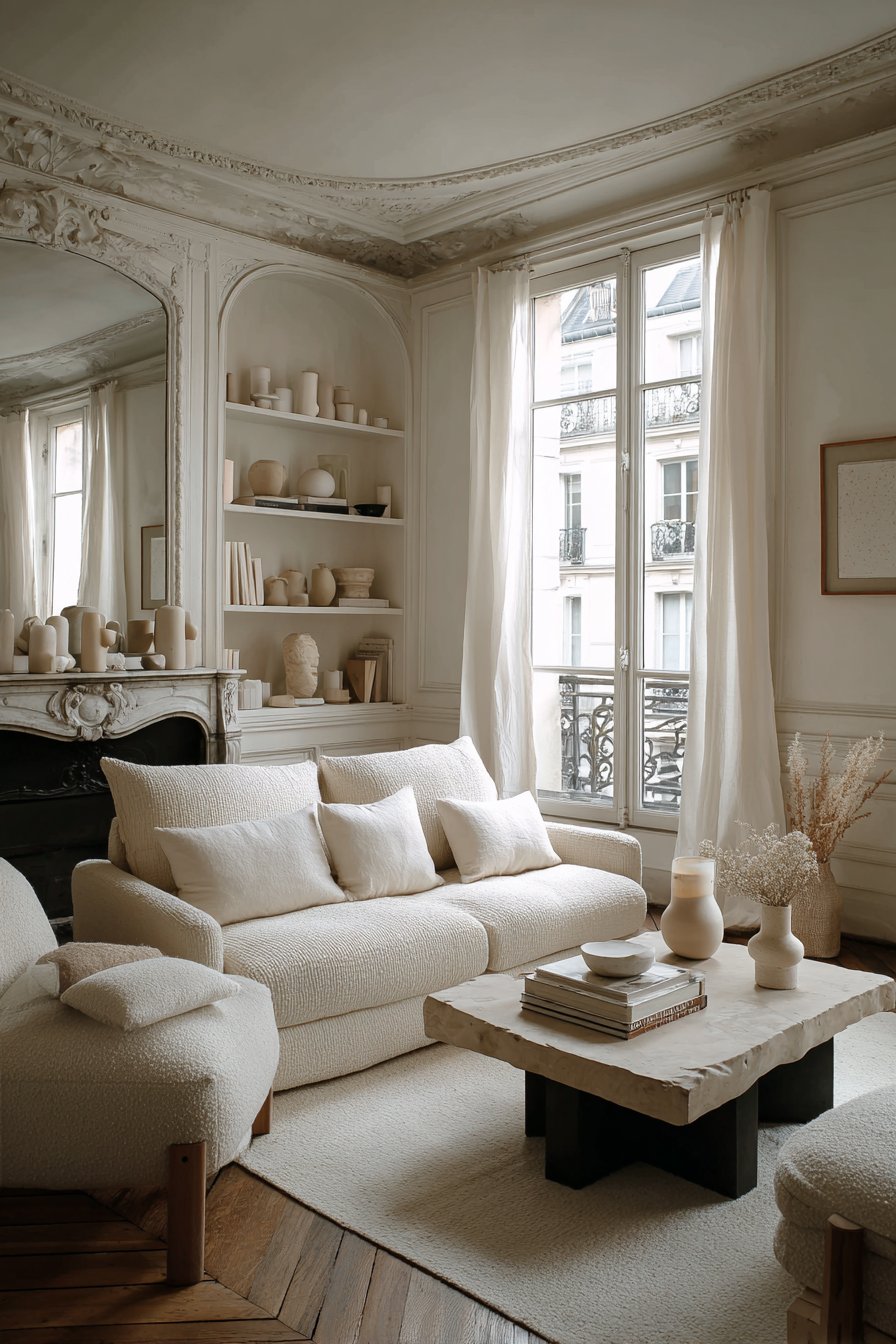
The subtle variations in neutral tones demonstrate sophisticated color sensitivity. The room feels calm without becoming boring or sterile. Natural materials provide visual interest through inherent texture and variation. This approach proves that color isn’t necessary for beautiful, engaging interior spaces.
Key Design Tips:
- Layer multiple neutral tones in slightly different shades for depth without color contrast
- Mix varied textures like nubby linen and smooth Belgian weave to prevent visual flatness
- Combine natural materials like oak and limestone for organic variation and interest
- Use gauzy white curtains to filter light softly while maintaining views and transparency
- Display collections of cream ceramics to add sculptural presence within neutral palettes
15. Romantic Feminine Touches in Masculine Architecture
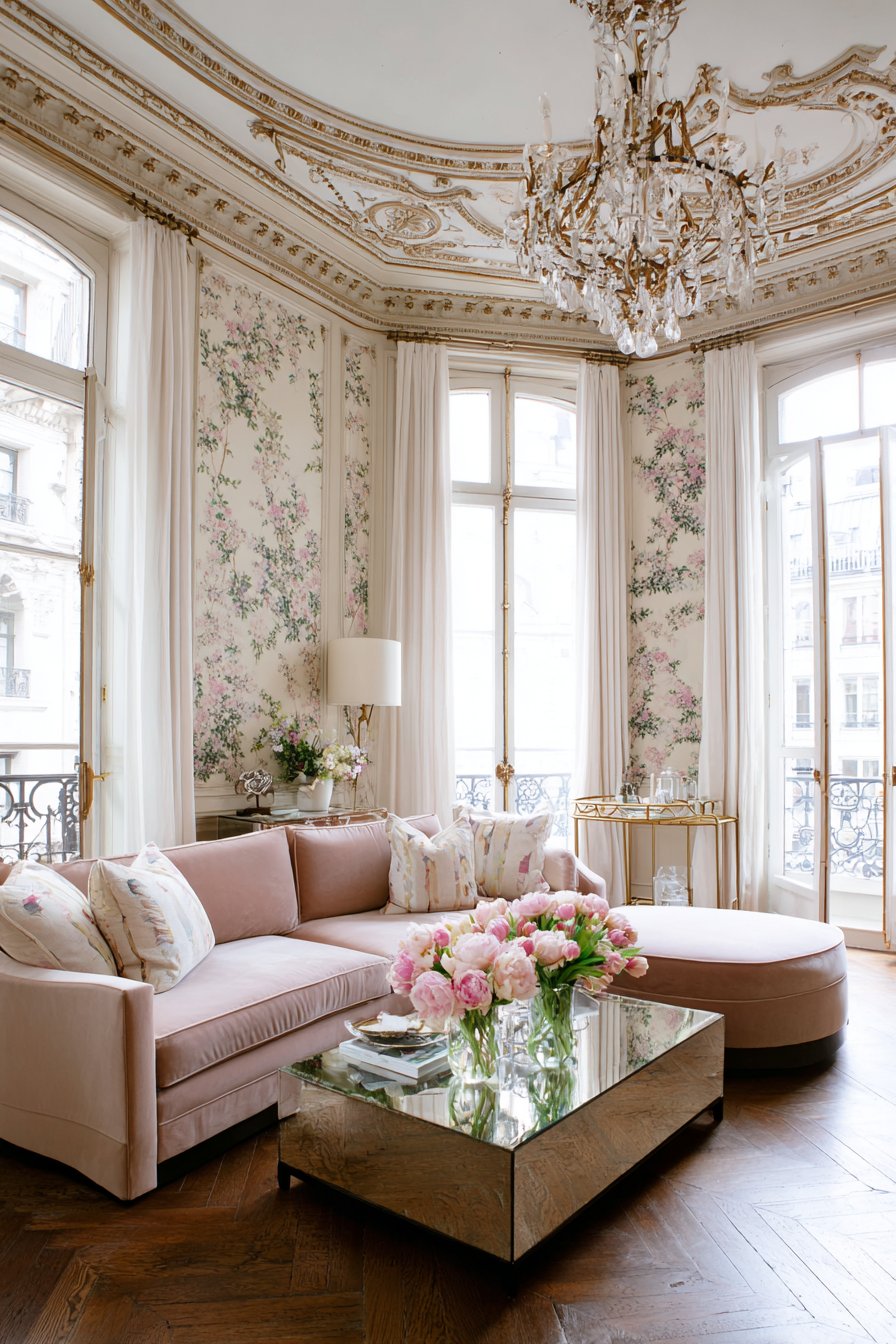
Picture a living room balancing delicate romance with strong architectural framework. A curved sofa in blush pink velvet sits beneath heavy ornate ceiling molding. The juxtaposition creates interesting dialogue between soft furnishings and hard architecture. An antique mirrored coffee table reflects the crystal chandelier above, multiplying light effects.
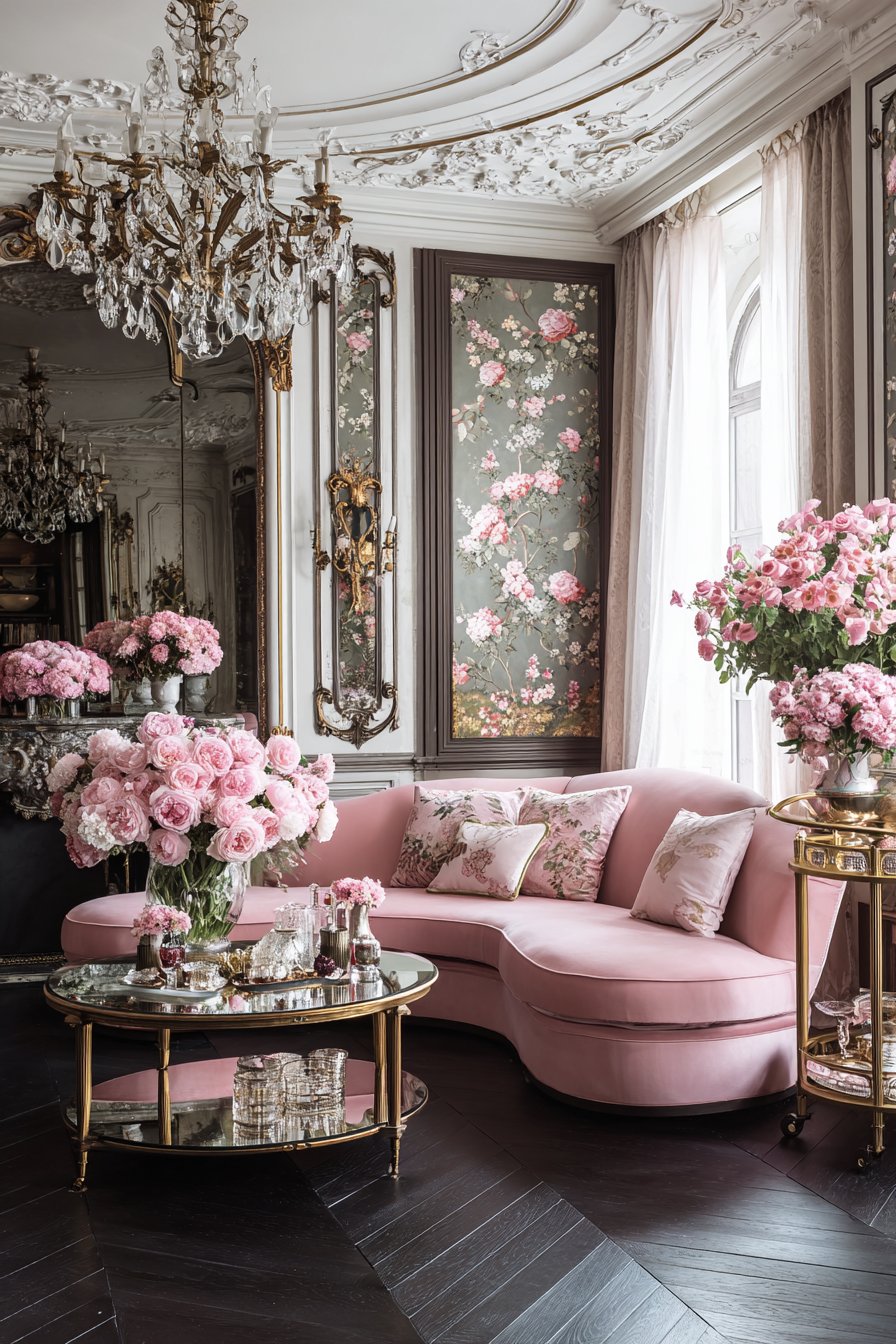
Walls covered in pale floral toile fabric contrast with dark herringbone floors beautifully. The traditional French fabric pattern adds historical reference and soft pattern. Fresh peonies in porcelain vases add living beauty and seasonal fragrance. Gilded accent furniture includes a vintage drinks cart that combines function with decorative appeal.
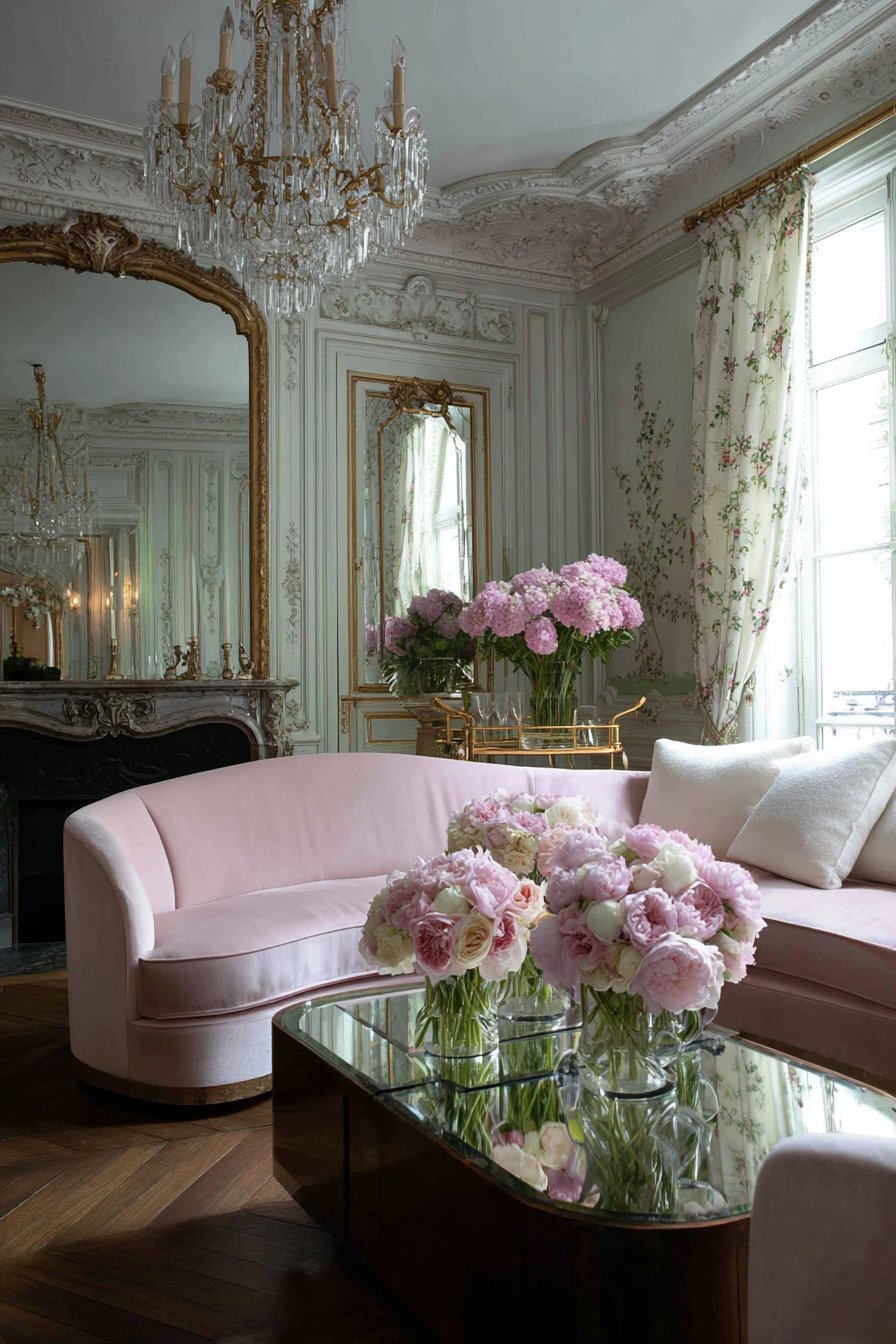
The balance between ornate classical architecture and romantic decorative elements creates sophisticated femininity. The room feels deliberately designed rather than accidentally pretty. Natural light creates soft, dreamy atmosphere throughout daylight hours. The pink velvet appears almost luminous in morning light, while evening brings warmth.
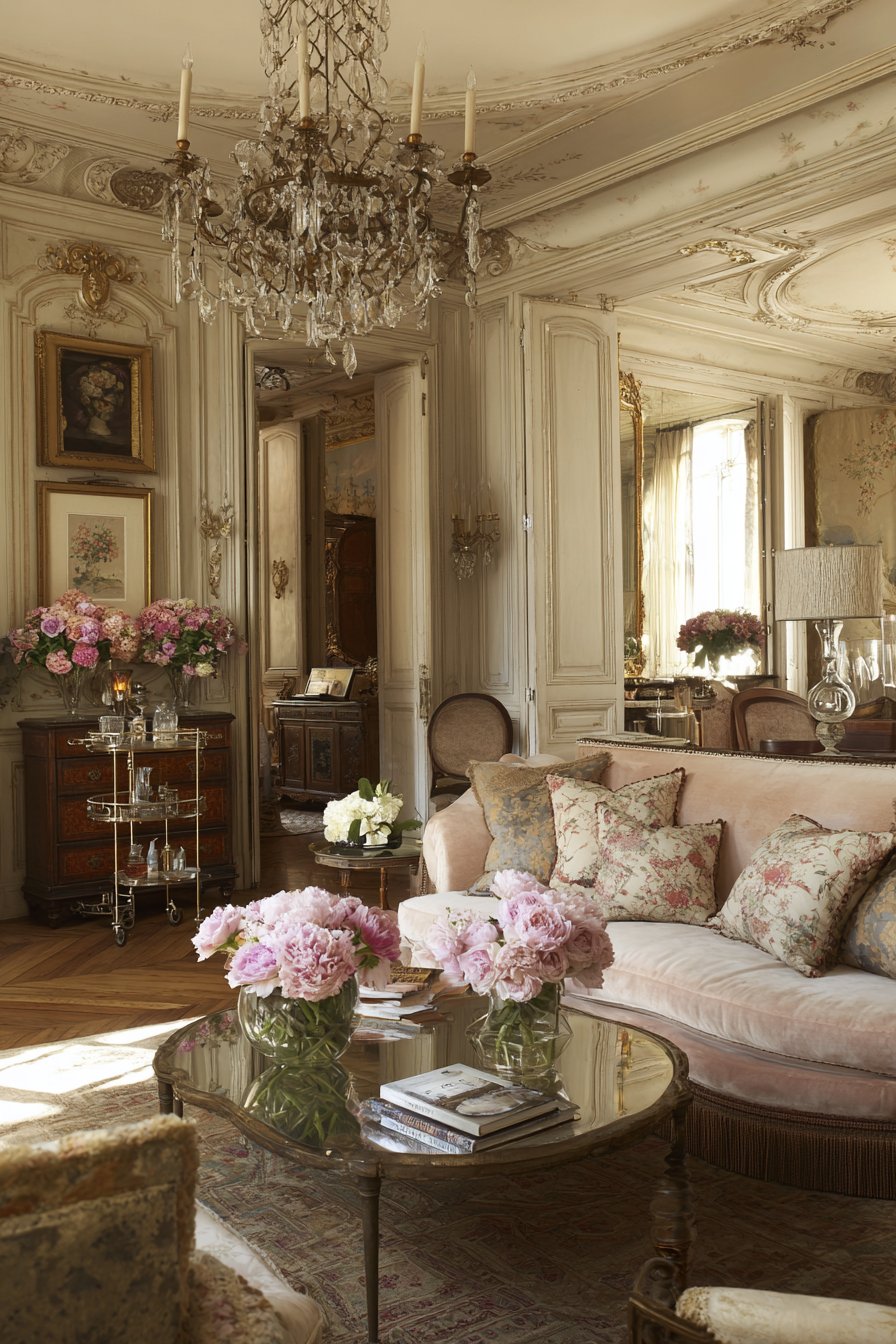
The space demonstrates that feminine design need not be weak or frivolous. Strong architectural bones support rather than conflict with romantic elements. The combination creates rooms that feel both substantial and beautiful. This approach honors both masculine structure and feminine decoration equally.
Key Design Tips:
- Choose blush pink velvet for romantic softness that still feels substantial and luxurious
- Cover walls in pale toile fabric for traditional French pattern and soft visual interest
- Add fresh flowers regularly to bring living beauty and connect interior to natural seasons
- Include gilded accent pieces like vintage drinks carts for functional glamour
- Balance romantic decorative choices with strong architectural elements for sophisticated femininity
16. Art Gallery Within Classical Apartment
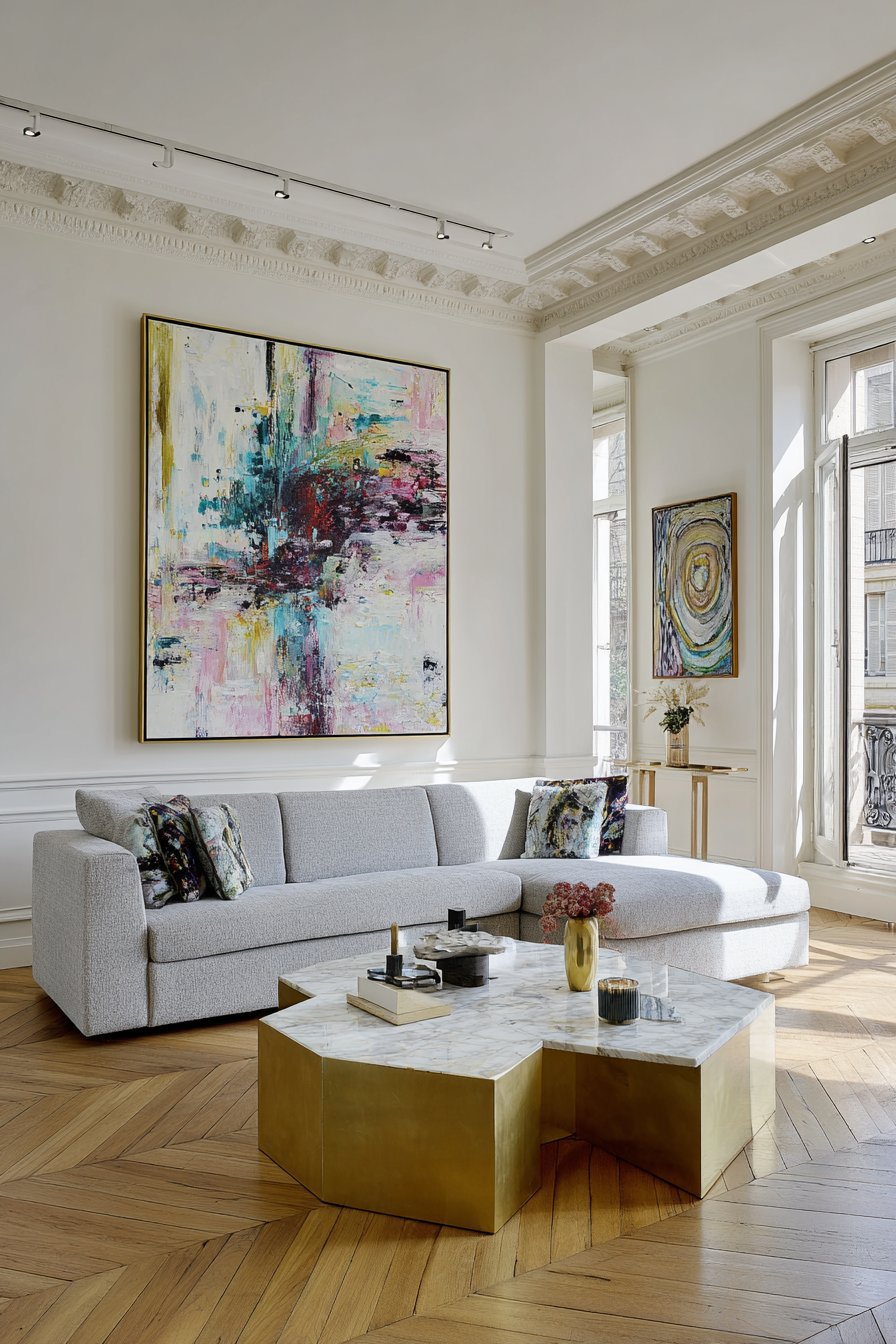
Imagine walls painted gallery-white to showcase contemporary paintings in ornate gilded frames. The neutral backdrop allows artwork to dominate visual attention completely. A simple grey sofa provides seating without competing for attention. Track lighting supplements natural light from French windows for optimal artwork illumination.
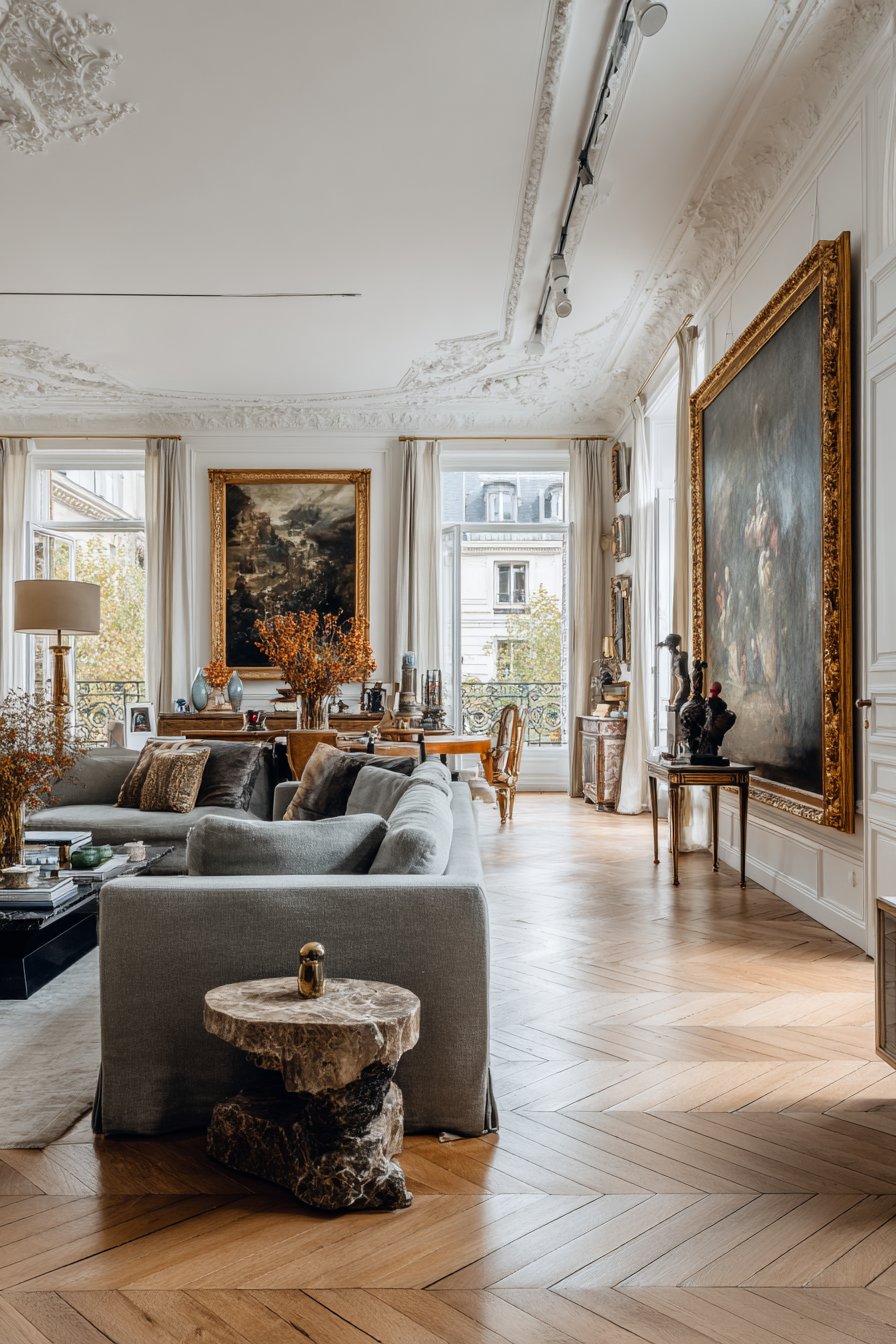
The herringbone parquet floor in light oak provides warmth without competing visually. The subtle pattern adds texture without drawing focus from displayed art. A sculptural coffee table in marble and brass serves as three-dimensional art piece. The functional object receives the same design consideration as wall-hung artwork.
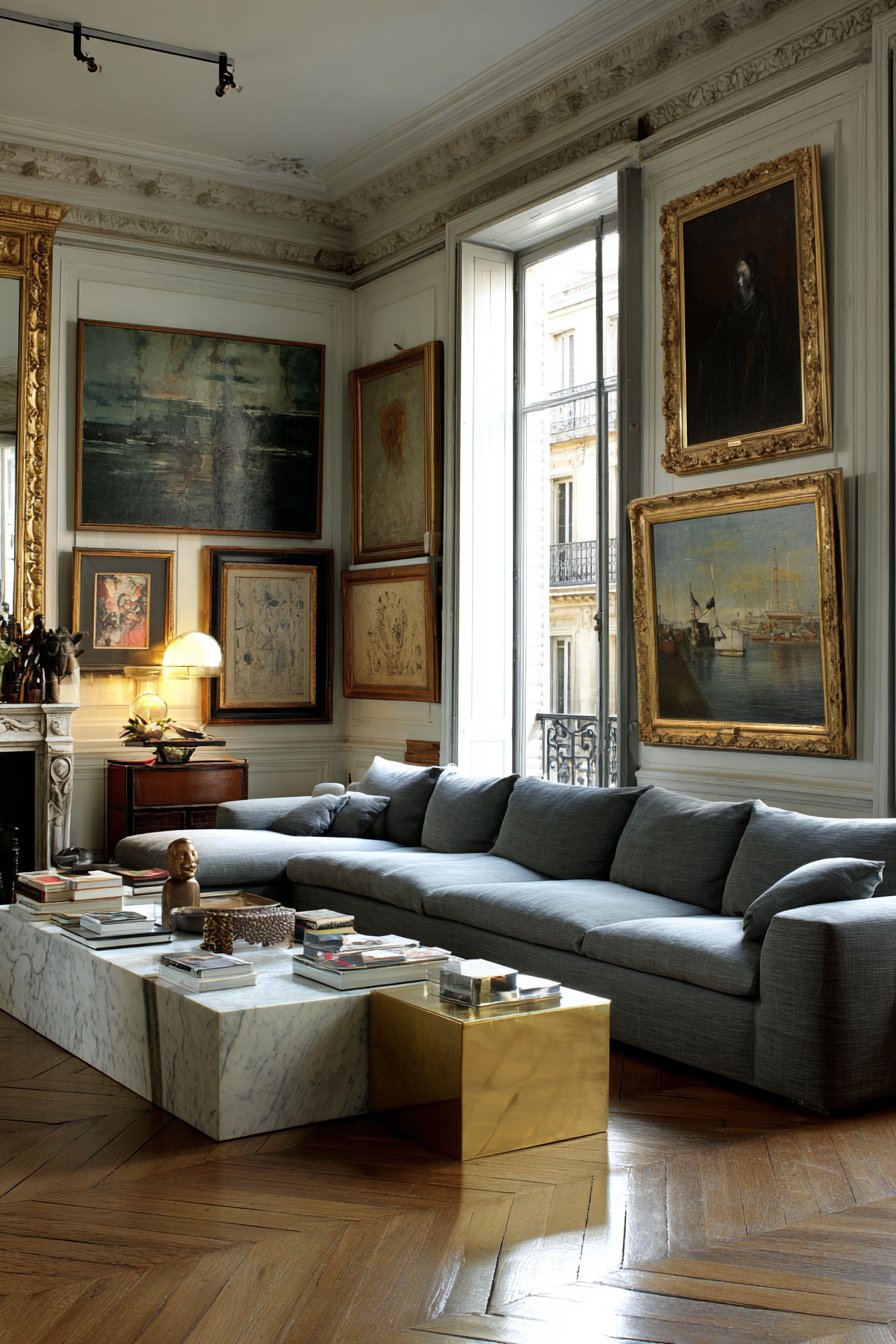
Carefully balanced lighting highlights both artwork and architectural details throughout the day. Natural light changes how colors appear across different hours. Supplementary track lighting provides consistent illumination during evening hours. The space functions as modern gallery within classical apartment shell successfully.
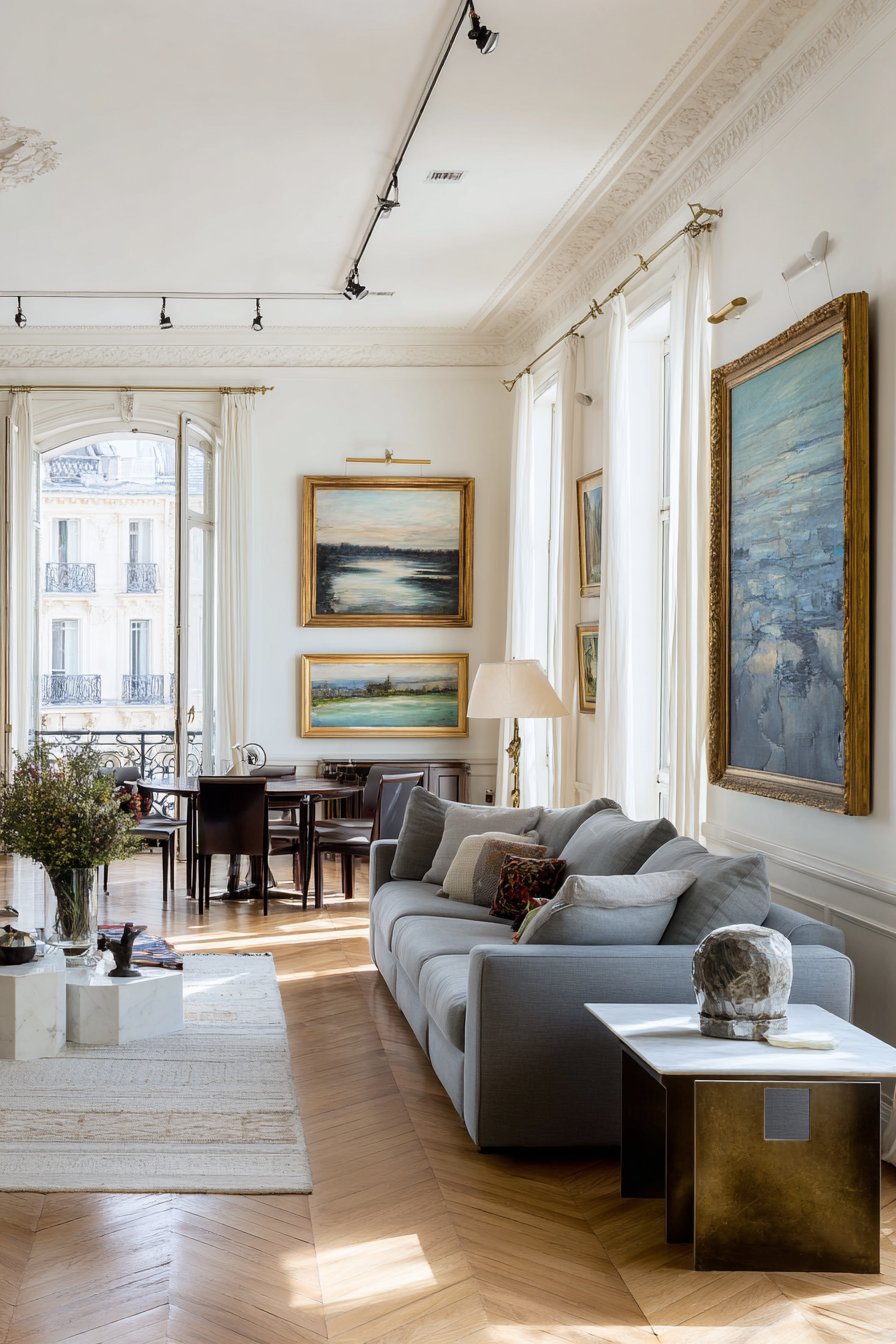
The approach demonstrates that art collecting deserves thoughtful spatial planning. The room’s purpose drives all design decisions consistently. Architectural details provide beautiful context without overshadowing collected works. This balance requires restraint and confidence in both art and architecture.
Key Design Tips:
- Paint walls gallery-white to create neutral backdrop that showcases art without competition
- Choose simple neutral sofas that provide seating without drawing visual attention
- Install track lighting to supplement natural light for consistent artwork illumination
- Select sculptural furniture pieces that function as three-dimensional art objects
- Frame contemporary art in ornate gilded frames to bridge classical architecture and modern work
17. Window Wall Maximizing Natural Light
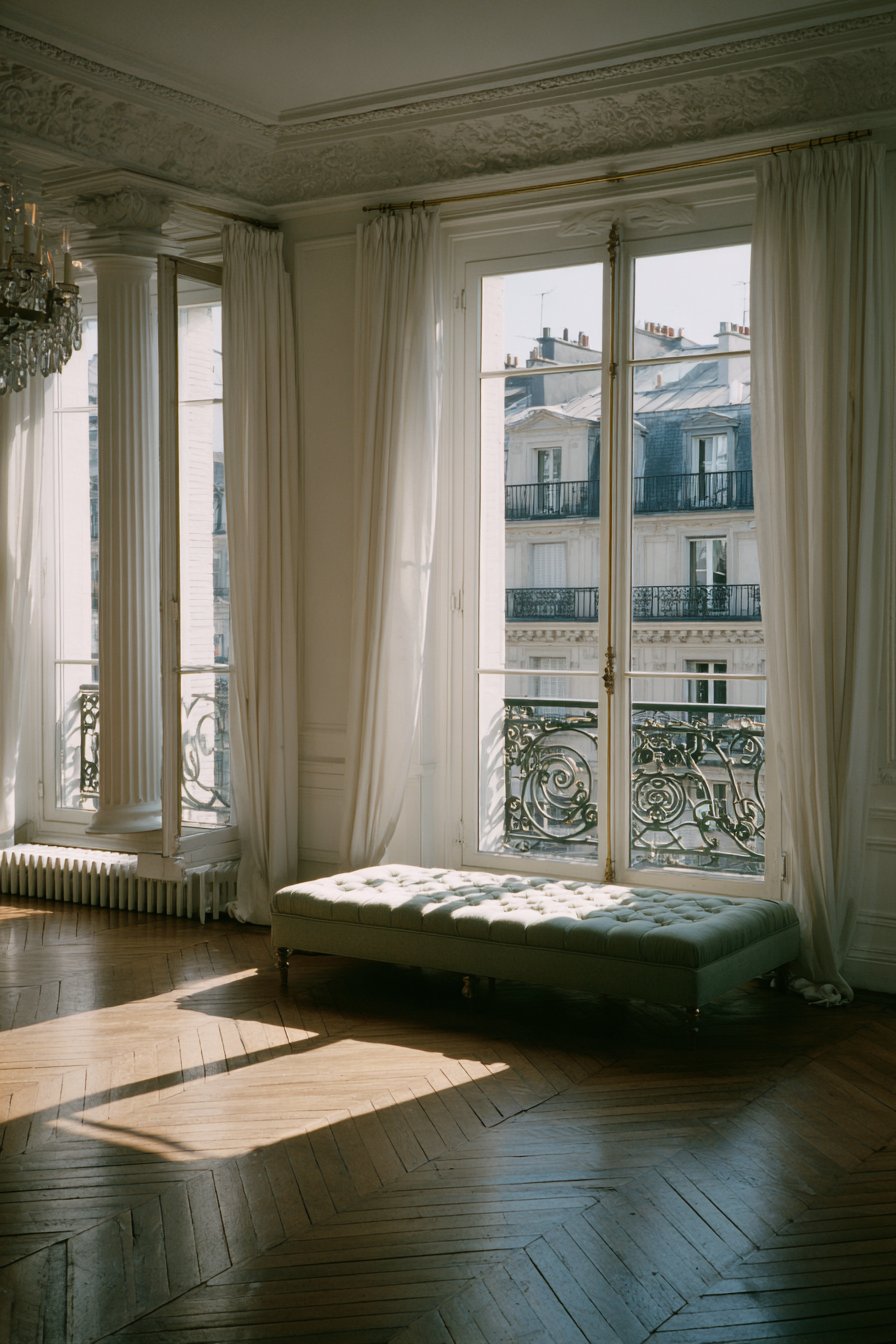
Visualize three sets of tall French doors opening onto a continuous balcony. Intricate wrought-iron railing shows verdigris patina from decades of weather exposure. Billowing white linen curtains frame each opening with soft movement. A window seat with tufted cushion in natural linen provides a perch for city views.
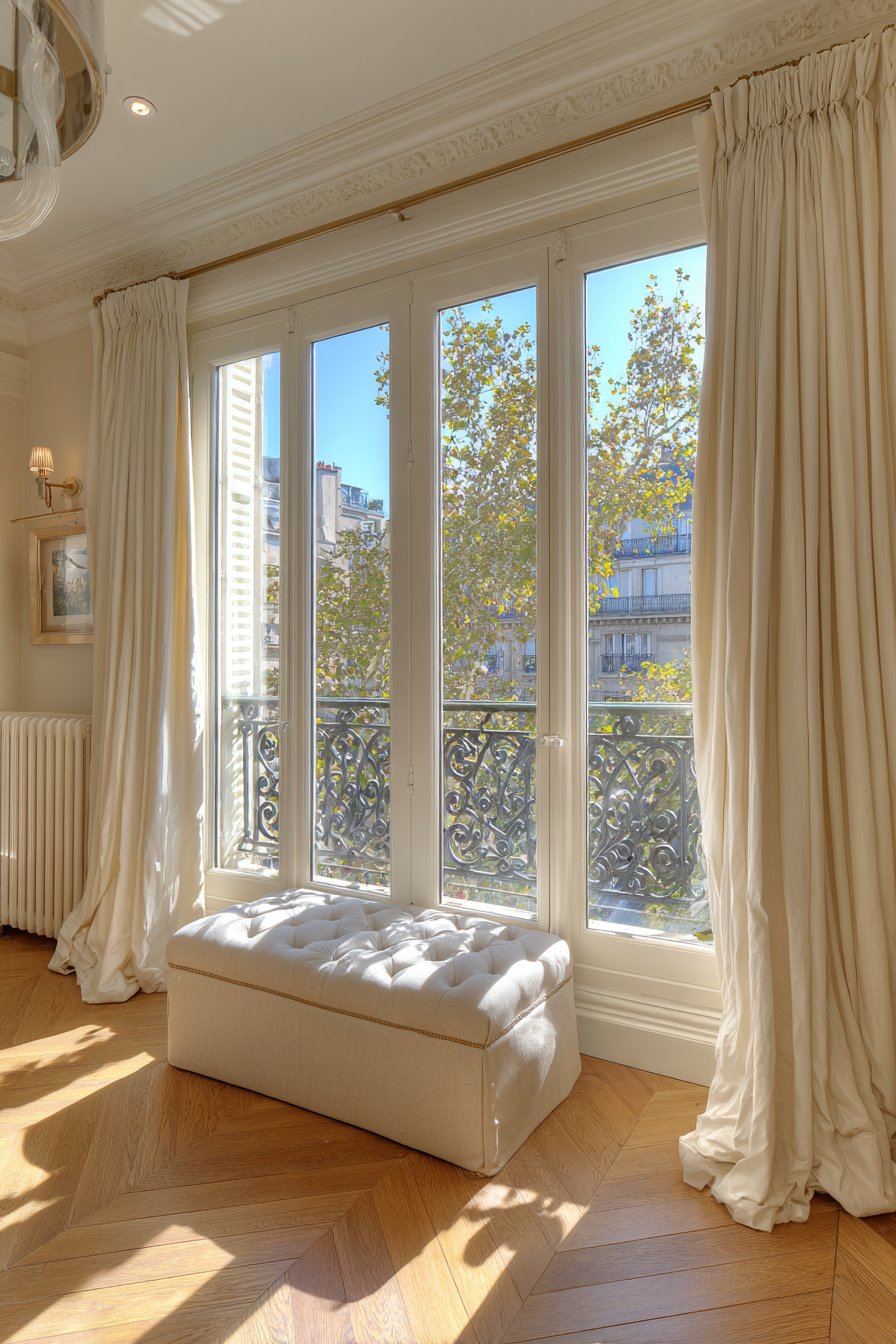
The herringbone oak floor reflects dappled sunlight that changes throughout the day. Light patterns shift across the floor as sun moves across the sky. Original radiator beneath windows shows classic design with functional beauty. The heating element becomes decorative architectural detail rather than eyesore requiring concealment.
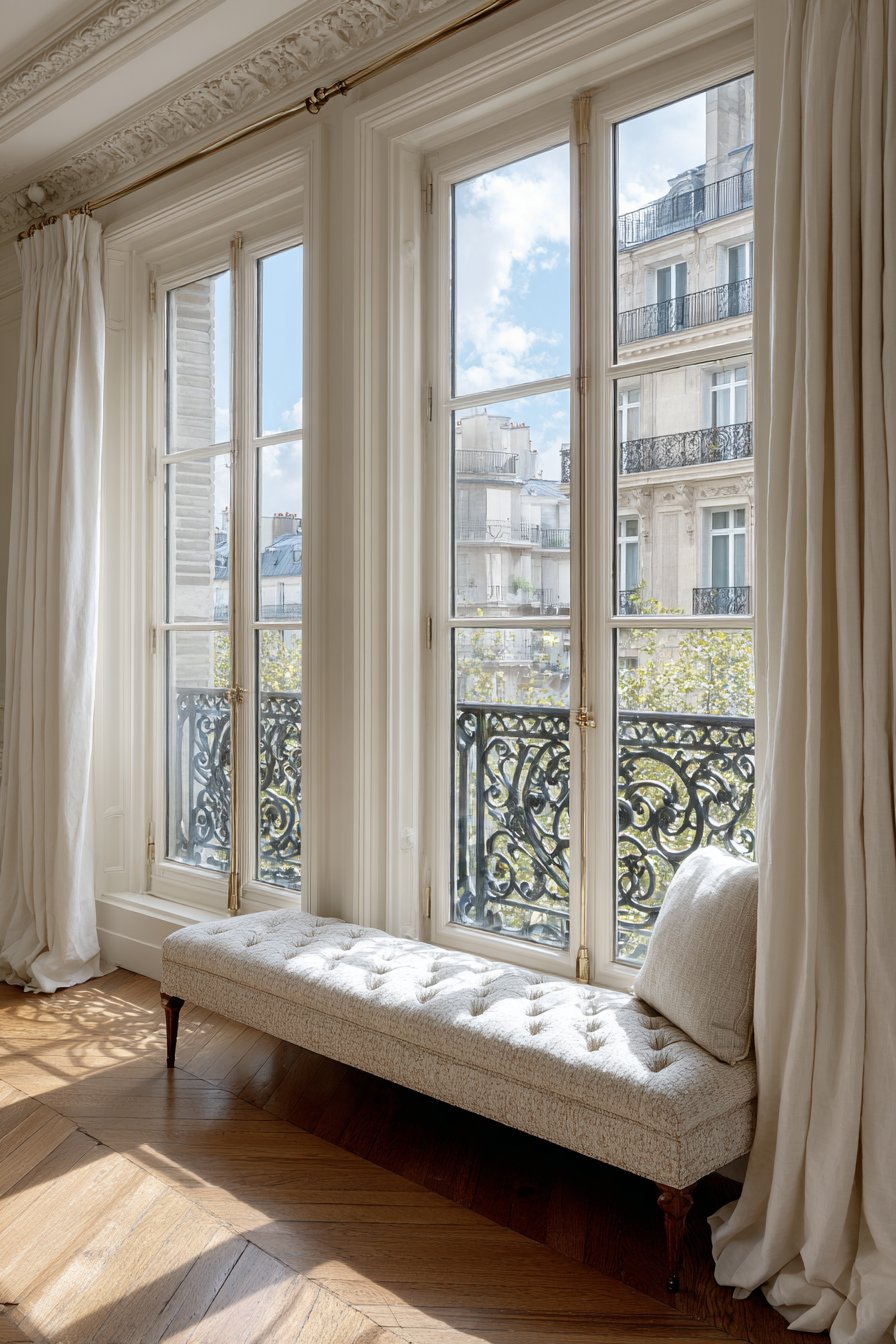
The window wall creates abundant natural light that transforms the room’s atmosphere continuously. Morning light feels cool and energizing. Afternoon warmth brings golden glow. Evening light becomes soft and romantic. This natural variation provides visual interest without requiring intervention.
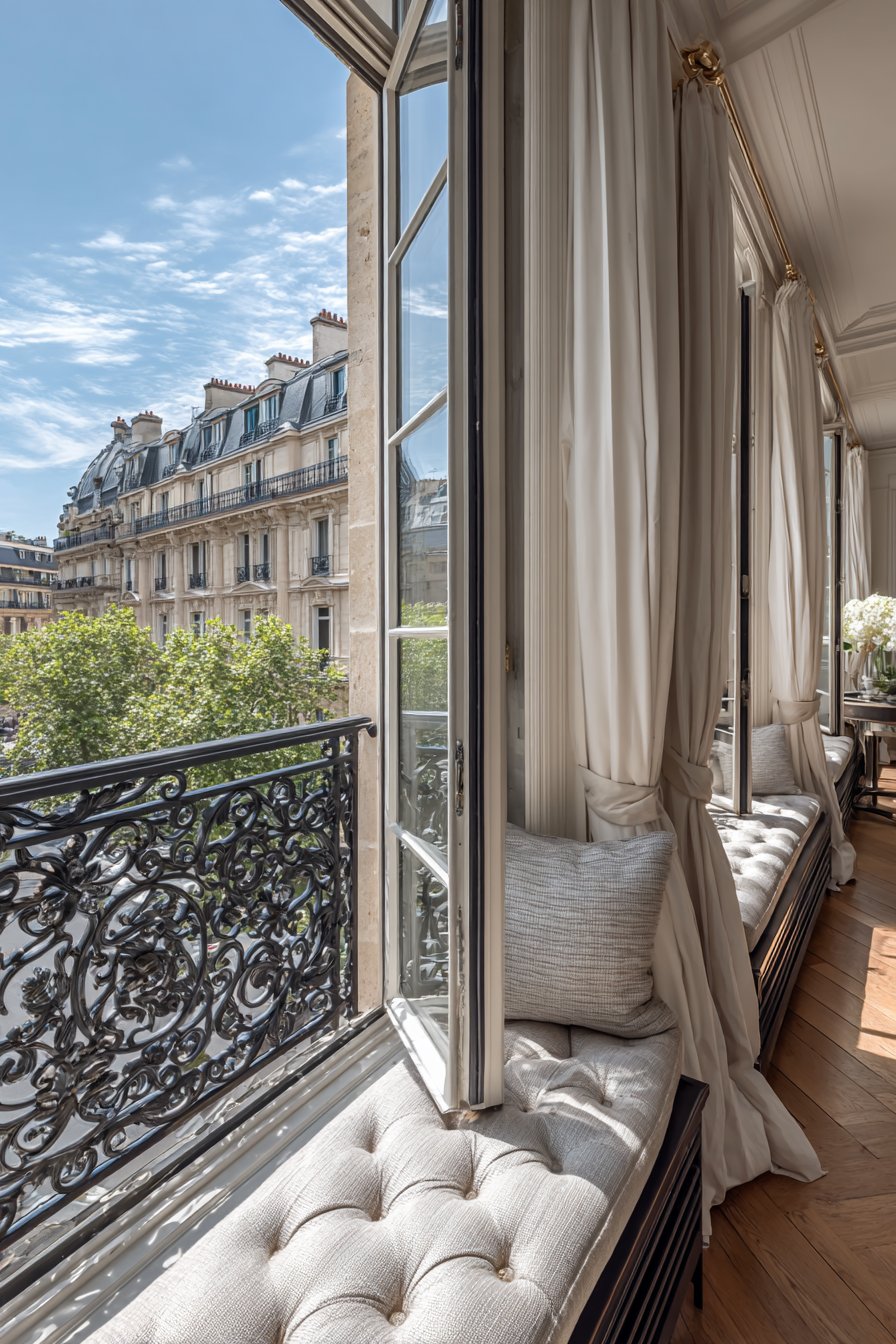
The connection to outdoors defines the Parisian living experience fundamentally. The balcony extends living space while connecting interior to neighborhood life. Tree branches visible beyond bring seasonal changes indoors visually. This indoor-outdoor relationship differentiates Parisian apartments from isolated suburban homes.
Key Design Tips:
- Maximize window exposure when architectural features include French doors and balconies
- Use billowing white linen curtains to add movement while maintaining light and views
- Install window seats with tufted cushions to create vantage points for enjoying views
- Embrace verdigris patina on ironwork as beautiful aging rather than damage requiring repair
- Position furniture to take advantage of changing natural light patterns throughout the day
18. Layered History Through Mixed Period Furnishings
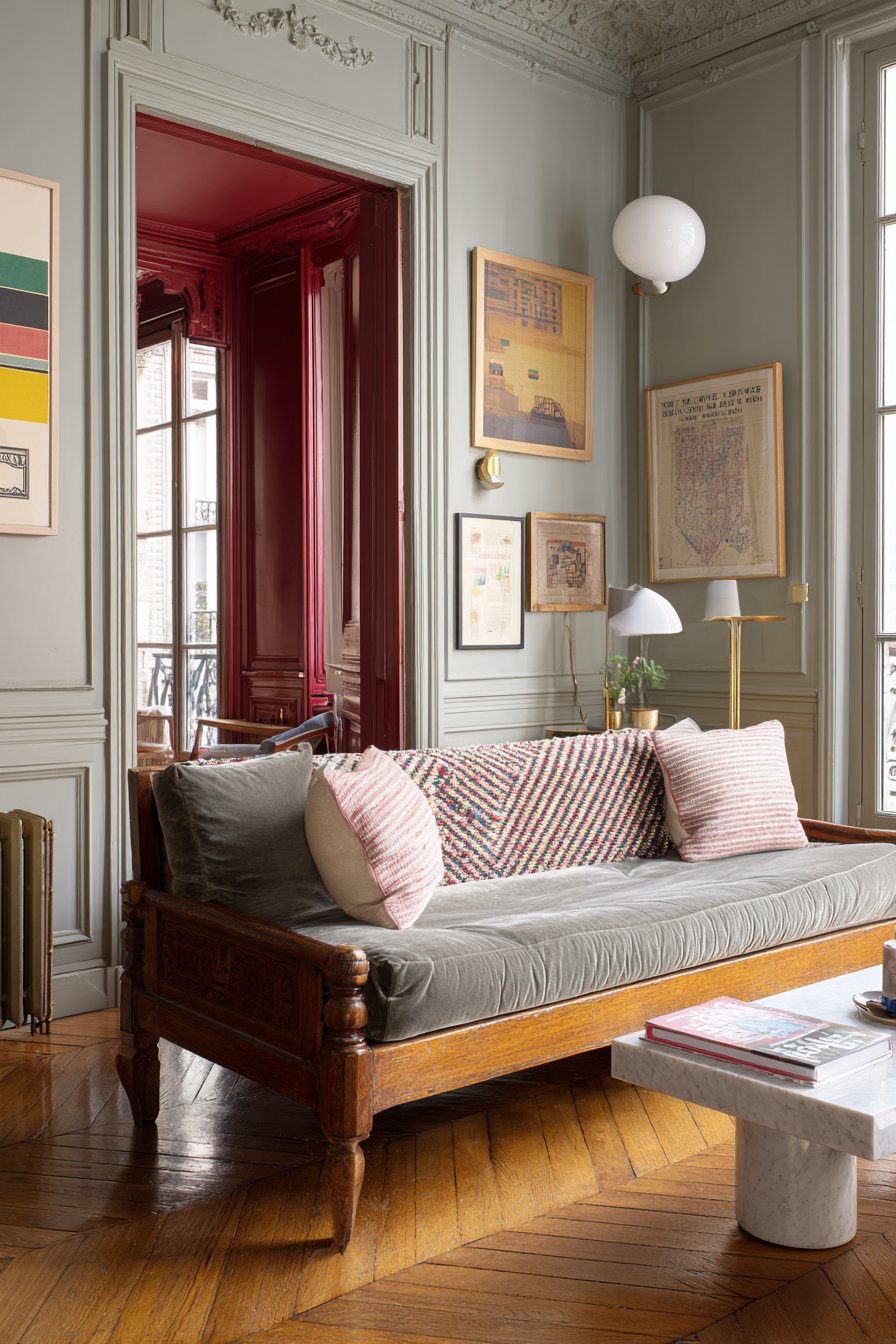
Picture a living room mixing authentic pieces from different eras harmoniously. A Napoleon III-era sofa with carved wooden frame and original horsehair stuffing receives modern grey velvet reupholstery. The update preserves historical frame while providing contemporary comfort. A 1950s marble coffee table adds mid-century contrast to nineteenth-century seating.
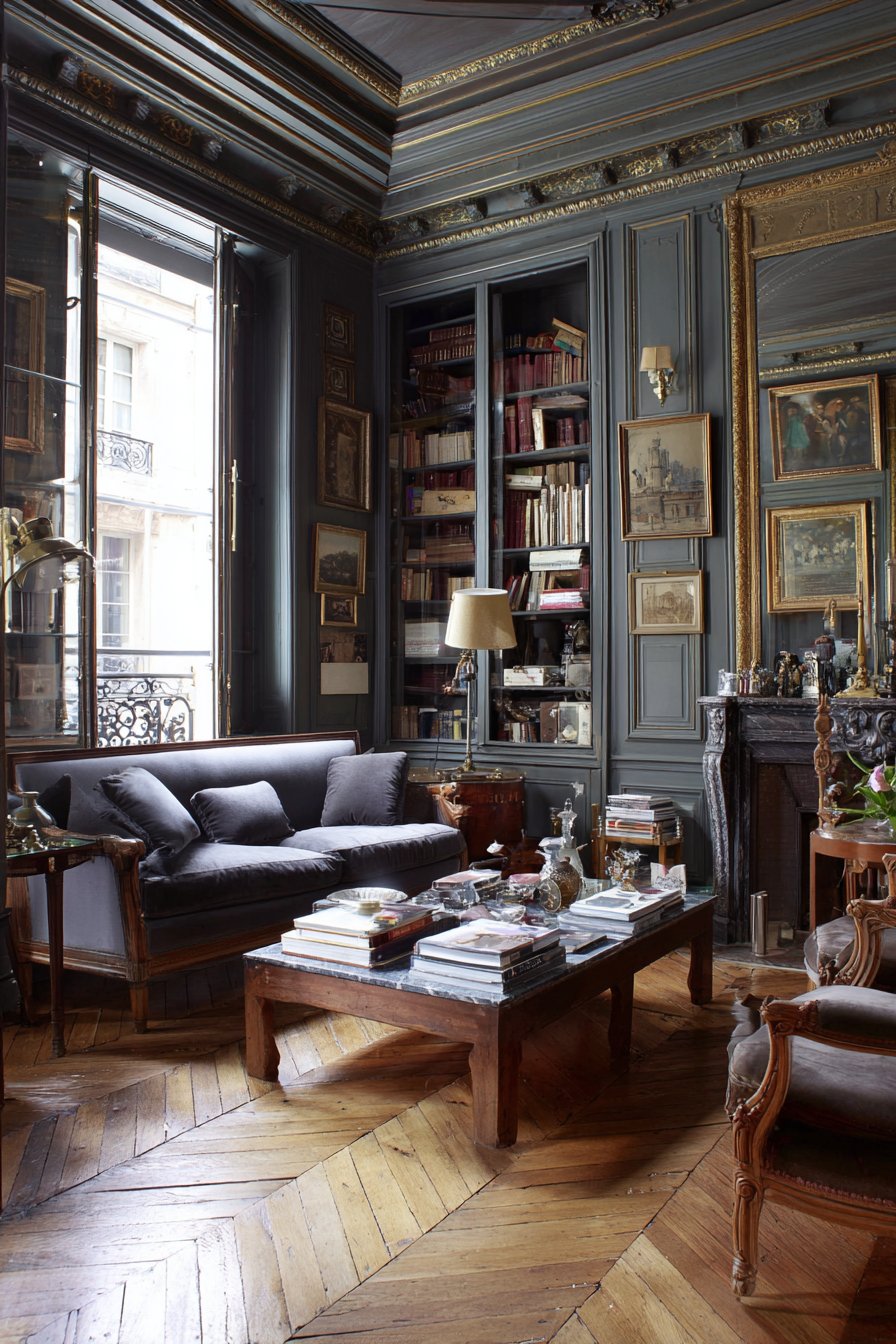
Walls display a mix of antique oil paintings and vintage posters in mismatched frames. The eclectic gallery approach reflects genuine collecting rather than coordinated purchasing. A brass pharmacy floor lamp provides reading light with adjustable functionality. Herringbone floors show generations of patina accumulated through decades of use.
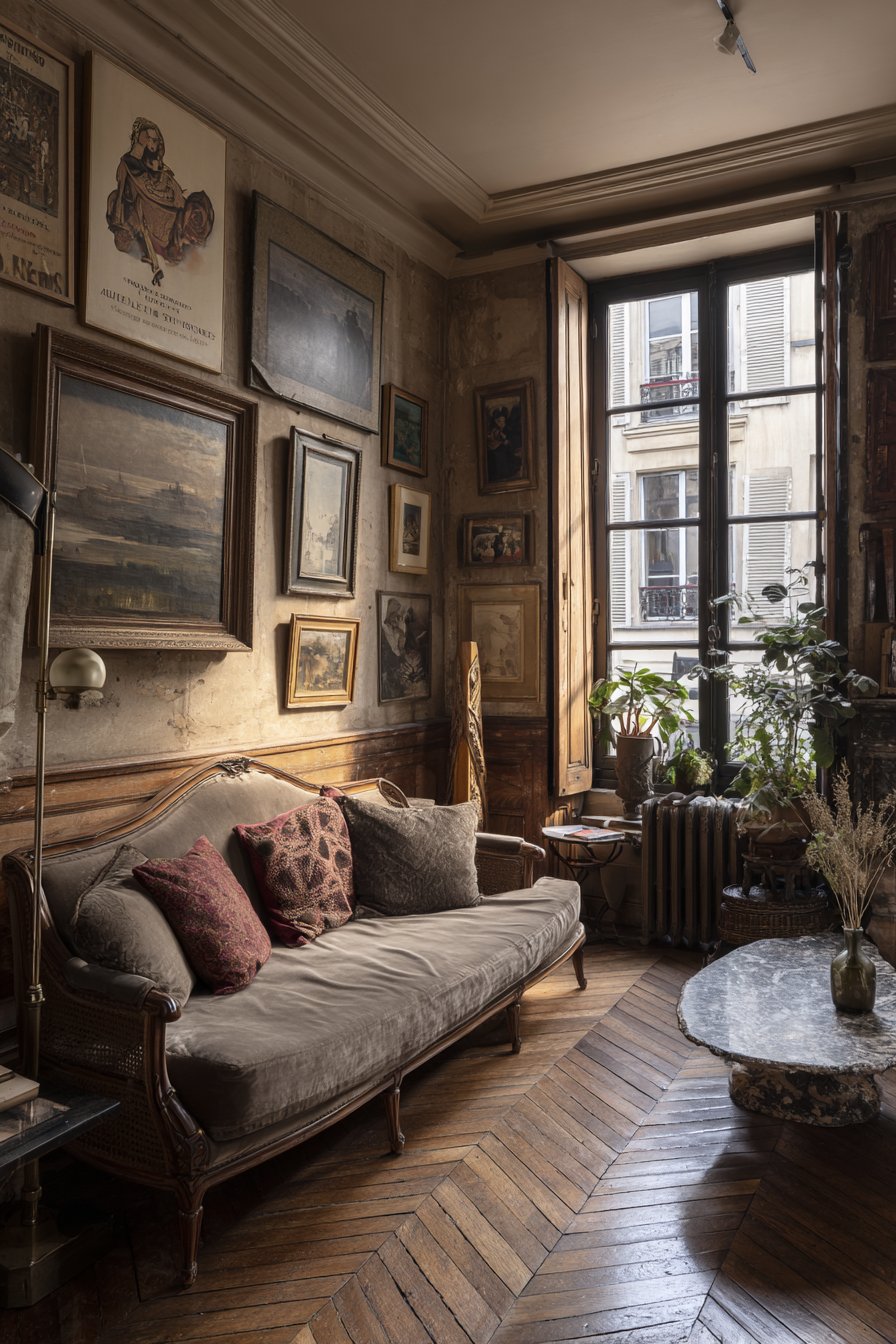
Natural light reveals the varied textures and finishes across different periods and materials. Each piece shows its age differently through unique patina and wear patterns. The layered history creates rooms that feel collected rather than decorated. This authenticity cannot be purchased as complete coordinated packages.
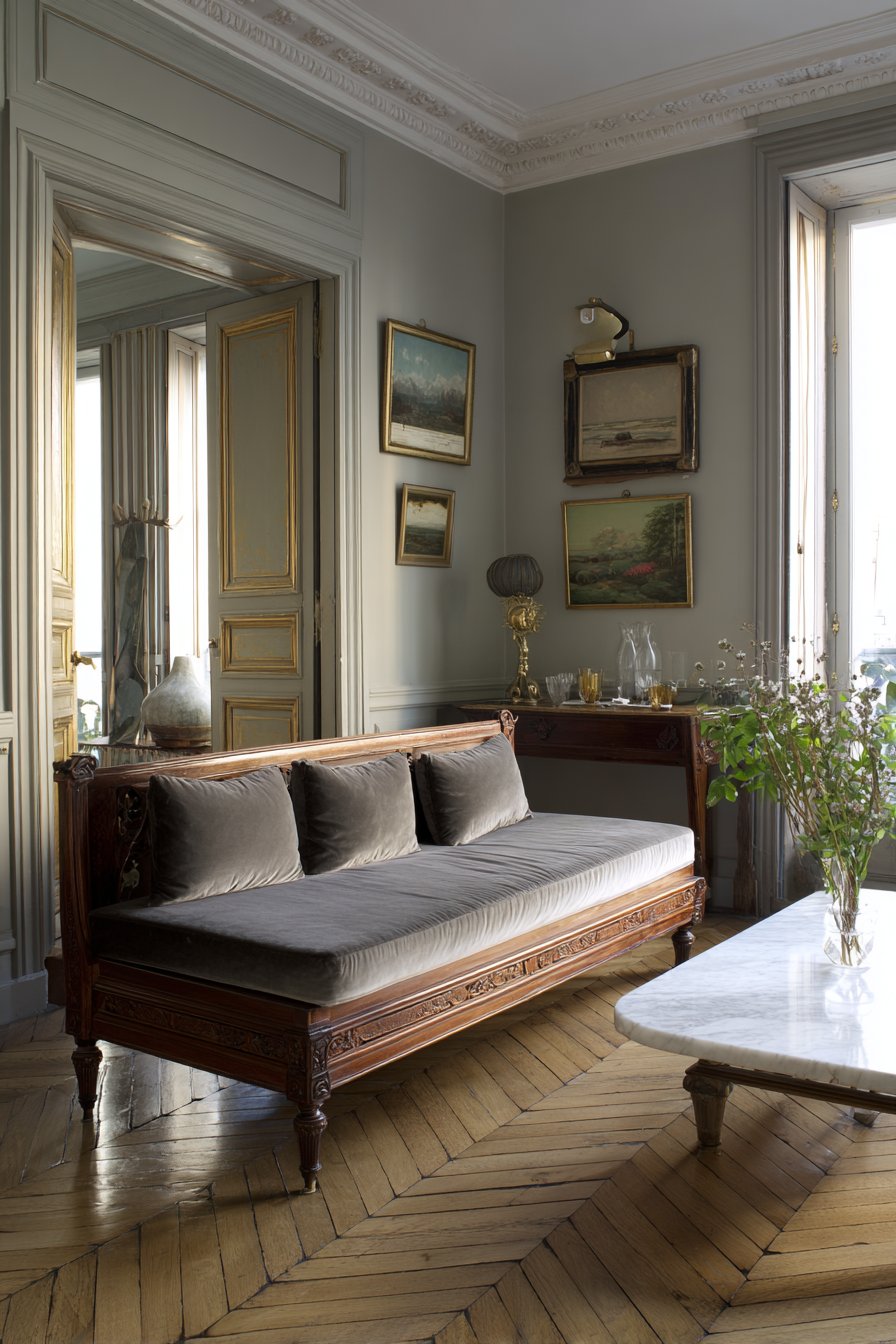
The approach demonstrates confidence in personal taste rather than dependence on professional styling. The room tells stories through each individual object and their relationships. French design traditionally embraces mixing periods rather than strict historical accuracy. This freedom creates more interesting, personal spaces than period rooms achieve.
Key Design Tips:
- Reupholster antique frames in modern fabrics to preserve history while providing contemporary comfort
- Mix furniture from different periods to create collected authenticity rather than museum-like coordination
- Display varied artwork in mismatched frames for eclectic collector’s aesthetic and personality
- Choose adjustable floor lamps that provide functional task lighting with vintage character
- Embrace accumulated patina across different materials and periods as evidence of genuine age
19. Fireplace as Central Decorative Focus
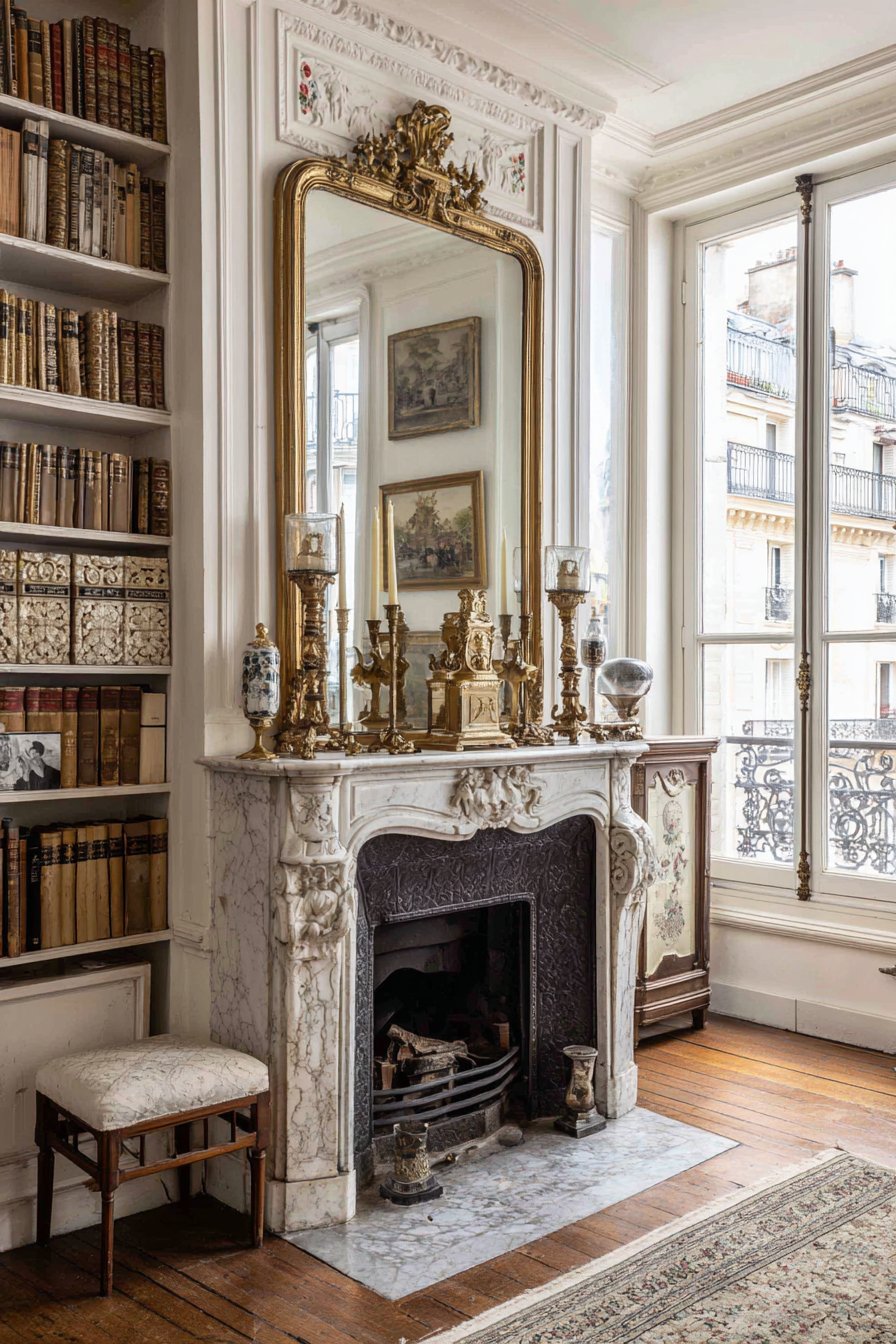
Imagine an ornate white marble mantelpiece with intricate carved details as room centerpiece. Original brass andirons provide functional beauty and historical authenticity. Above hangs a large antique trumeau mirror with painted decorative panel. The mirror reflects light while adding architectural verticality to the composition.
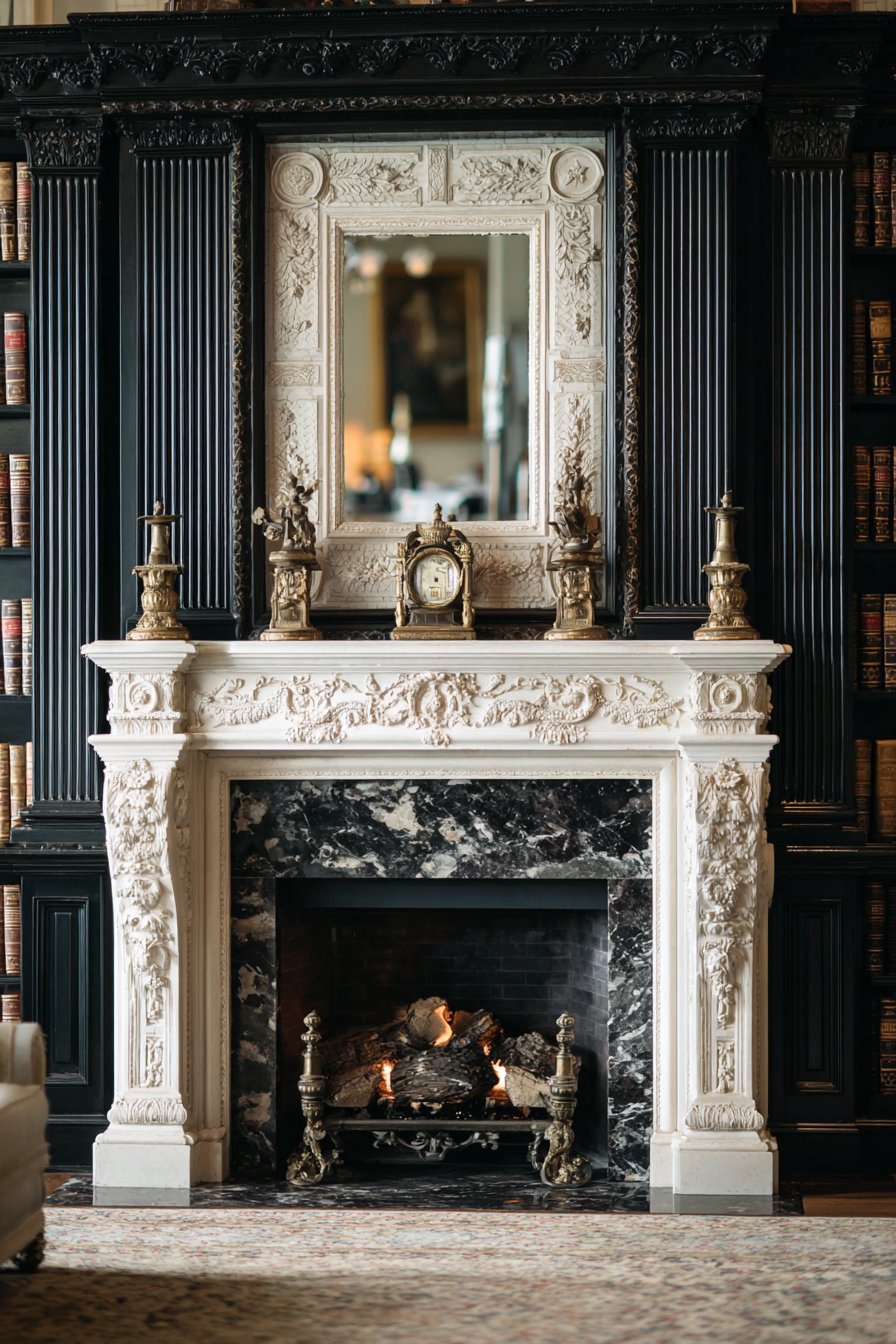
The mantel displays a symmetrical arrangement of brass candlesticks, small gilt clock, and porcelain figurines. The formal styling honors traditional French decorating conventions and classical proportions. Flanking the fireplace are built-in bookcases with glass doors protecting leather-bound volumes. The integrated design creates cohesive architectural composition.
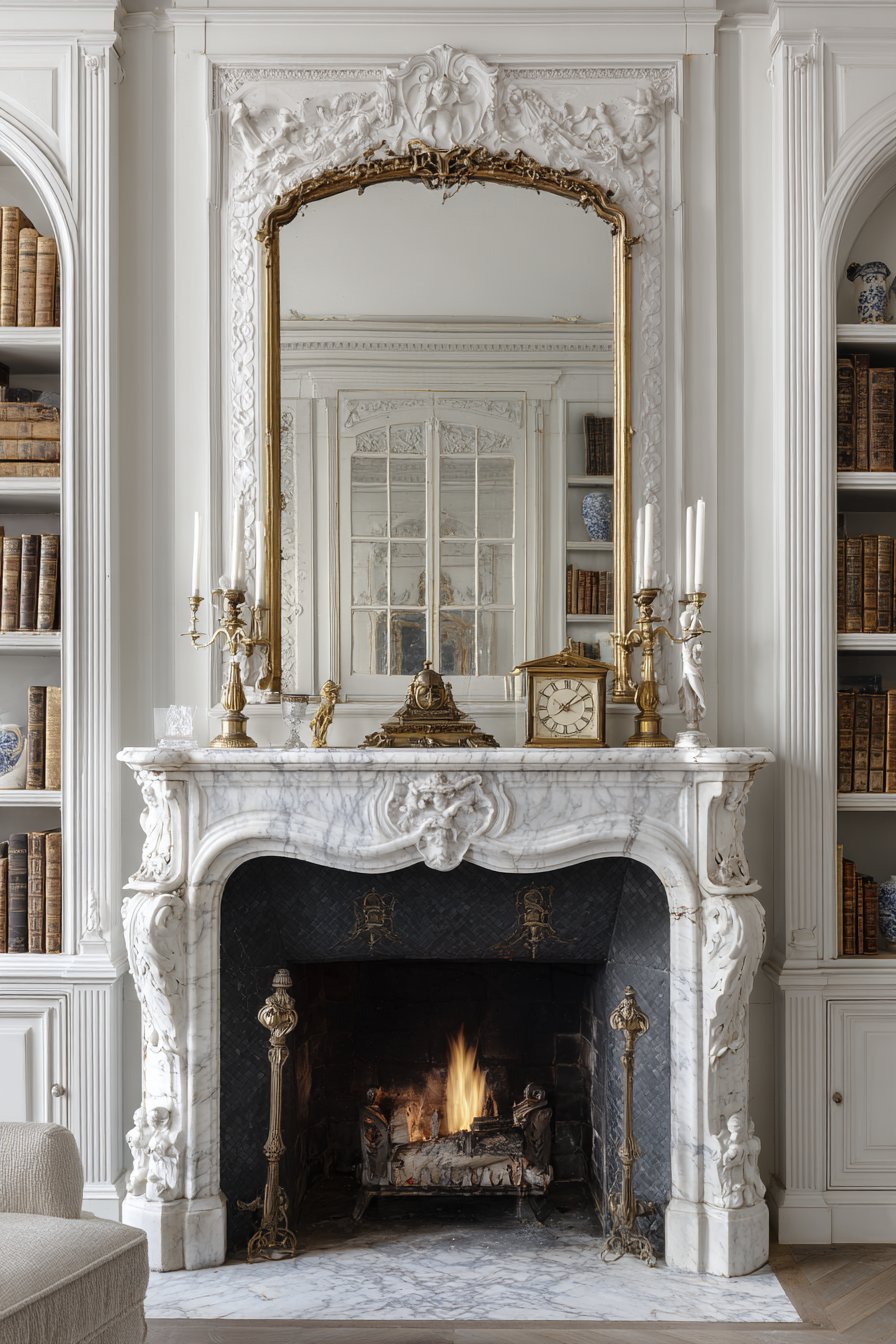
Soft natural light from nearby windows highlights the carved marble texture and brass patina. The three-dimensional carving becomes most apparent during angled morning or afternoon light. Shadows emphasize depth and craftsmanship that flat lighting obscures. The fireplace becomes sculptural focal point beyond mere functional heating element.
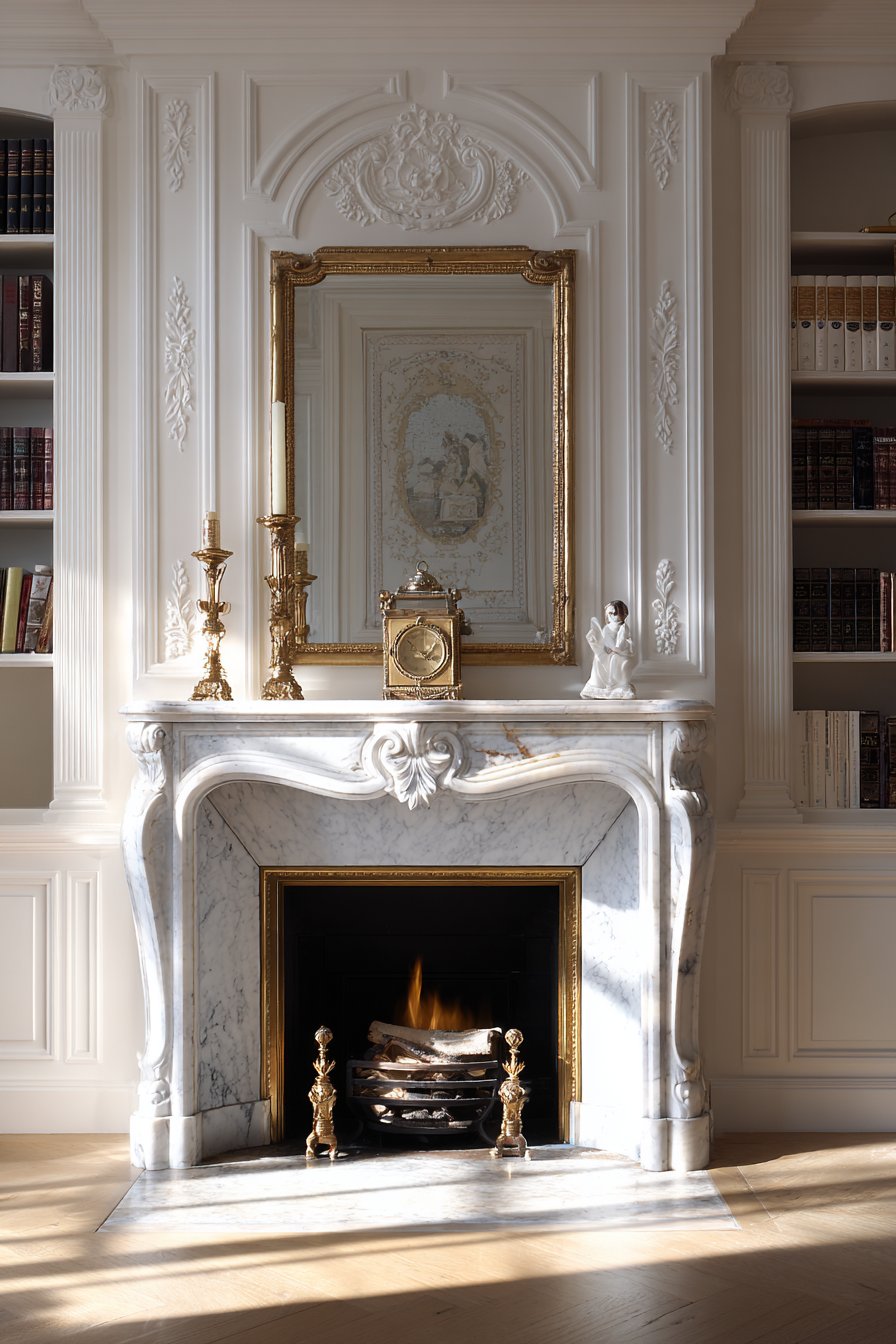
The vignette demonstrates how French design elevates functional elements into decorative features. The fireplace receives the same design attention as furniture or artwork. This approach creates rooms where every element contributes to overall beauty. Nothing exists purely for utility without aesthetic consideration.
Key Design Tips:
- Display mantel items symmetrically to honor classical French decorating traditions and proportions
- Preserve original brass andirons and hardware for authentic historical character and functionality
- Hang trumeau mirrors above mantels to add verticality while reflecting and multiplying light
- Flank fireplaces with built-in bookcases to create integrated architectural compositions
- Position furniture to take advantage of natural light angles that emphasize carved details
20. Compact Efficiency in Smaller Apartments
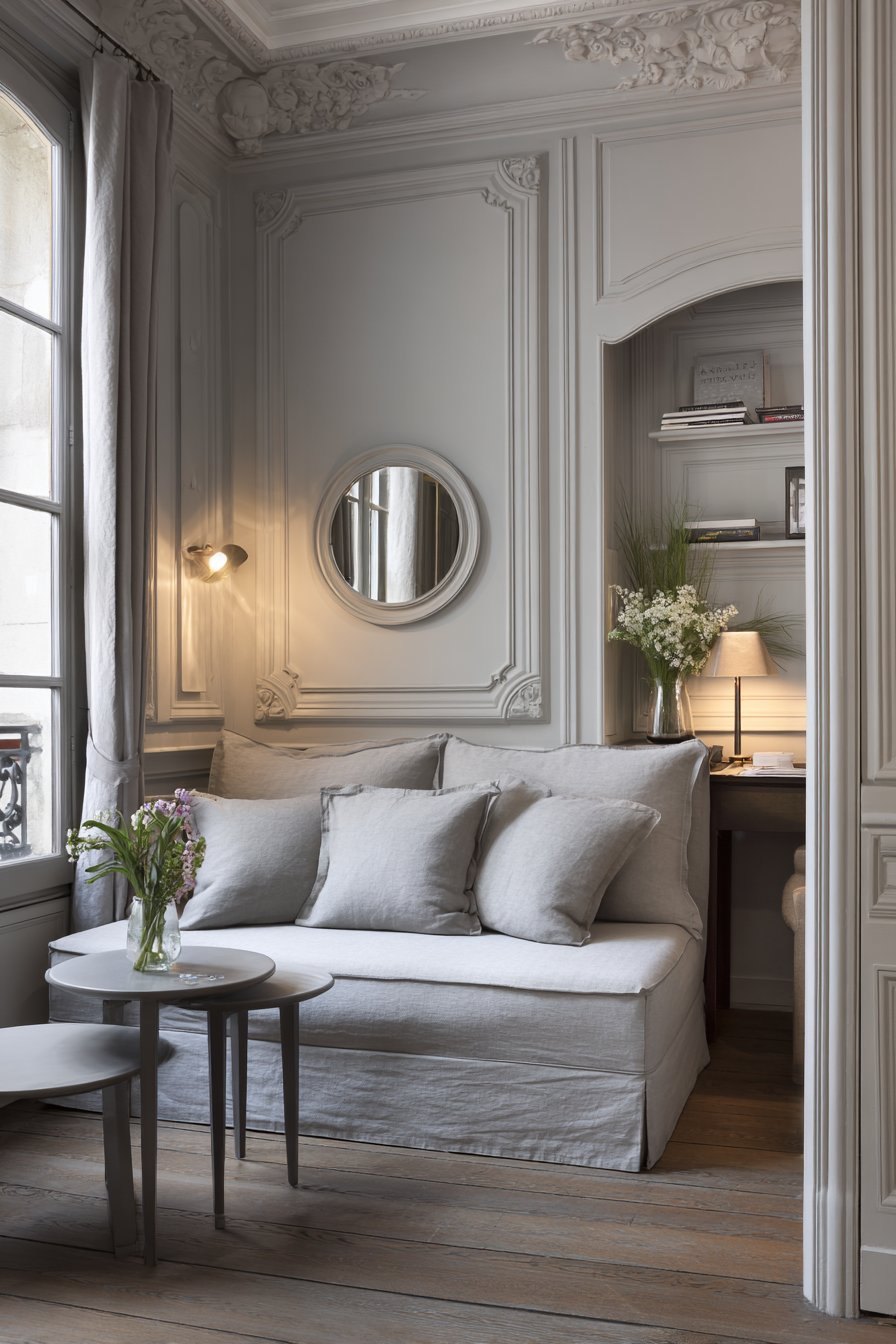
Visualize efficient space planning typical of smaller Parisian apartments. A loveseat in grey linen positions against one wall, facing a narrow console table. The console functions as both storage and display surface with vertical efficiency. A pair of nesting tables provides flexible surface area that tucks away when not needed.
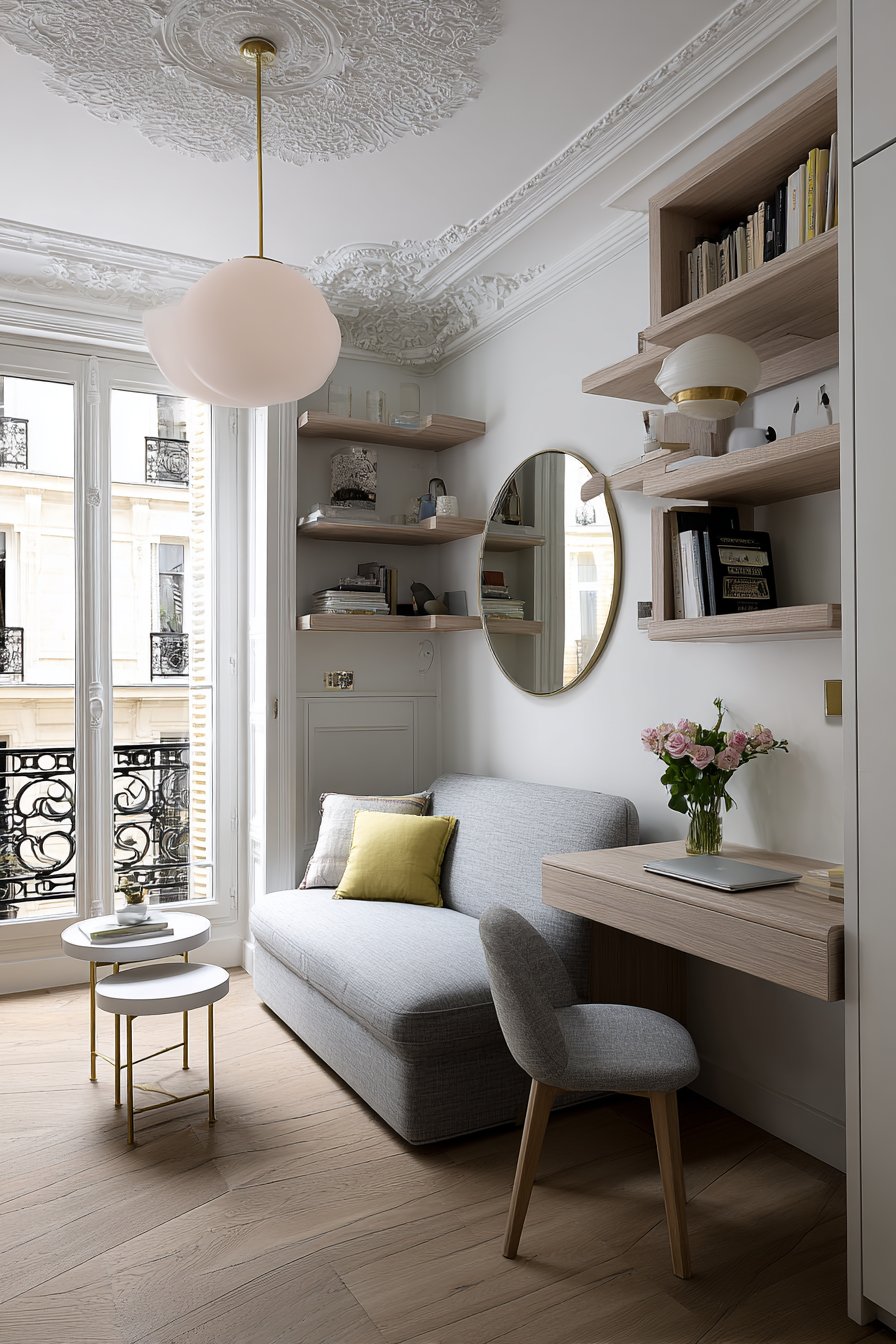
Floating shelves maximize vertical space without overwhelming the modest room dimensions. A round mirror expands the sense of space through reflection and light multiplication. Original architectural details including ceiling medallion and molding maintain grandeur despite compact footprint. The decorative elements add presence without consuming valuable floor area.
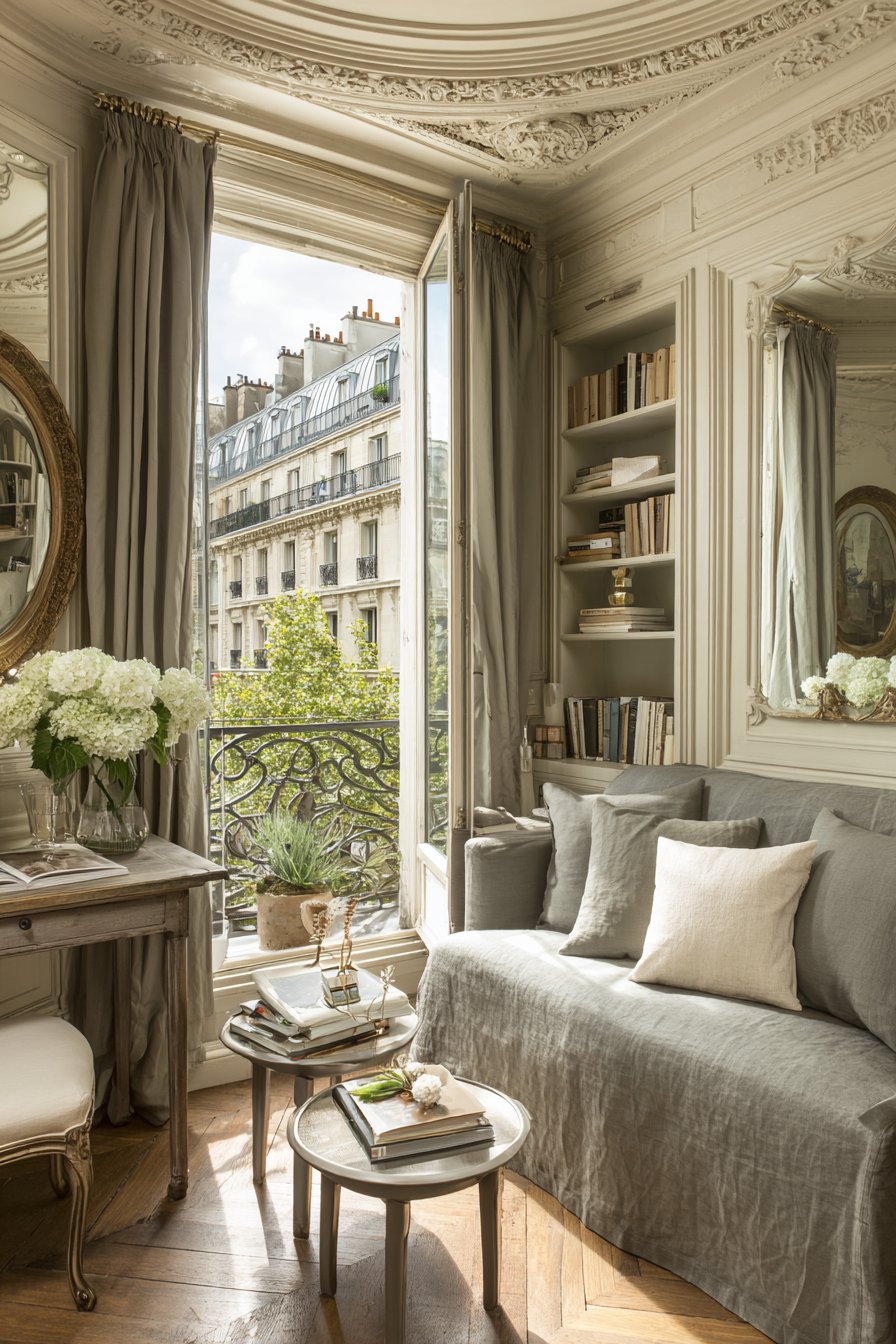
The clever spatial solutions demonstrate that small spaces can maintain elegance through careful planning. Every piece serves multiple functions efficiently. The vertical emphasis draws eyes upward, making ceilings feel higher. Reflective surfaces bounce light around, making the room feel more spacious.
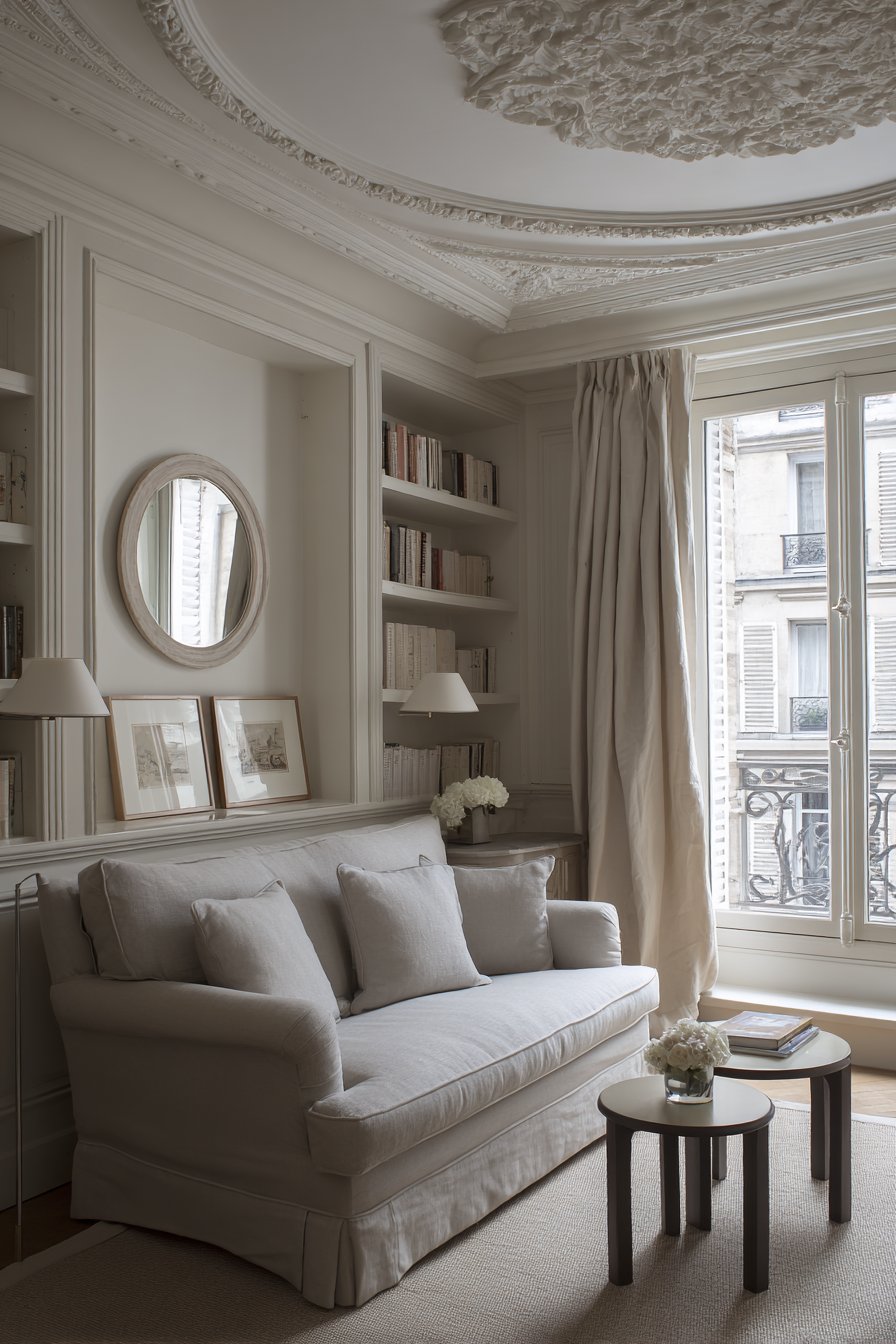
Natural light emphasizes how architectural details add presence to compact footprints successfully. The molding and medallion provide visual interest without requiring furniture or accessories. This approach proves that Parisian elegance transcends square footage. Thoughtful design creates beautiful rooms regardless of size constraints.
Key Design Tips:
- Choose loveseats instead of full sofas to provide seating while preserving space in small rooms
- Use narrow console tables that provide function without consuming valuable floor depth
- Install floating shelves to maximize vertical storage without overwhelming small spaces
- Hang round mirrors to expand perceived space through reflection and light multiplication
- Preserve architectural details like medallions that add grandeur without requiring floor area
Why These Parisian Living Room Designs Are the Best
These Parisian living room designs represent refined approaches to creating sophisticated, livable spaces. Each concept demonstrates thoughtful integration of classical architecture with curated furnishings. The designs showcase remarkable versatility that accommodates diverse personal styles and practical requirements.
The emphasis on authentic architectural details provides foundation for successful Parisian interiors. Original herringbone floors, ornate moldings, and tall French windows offer character that new construction cannot replicate. These elements justify preservation efforts and thoughtful restoration. Quality materials like natural wood, marble, and linen develop beautiful patina through aging.
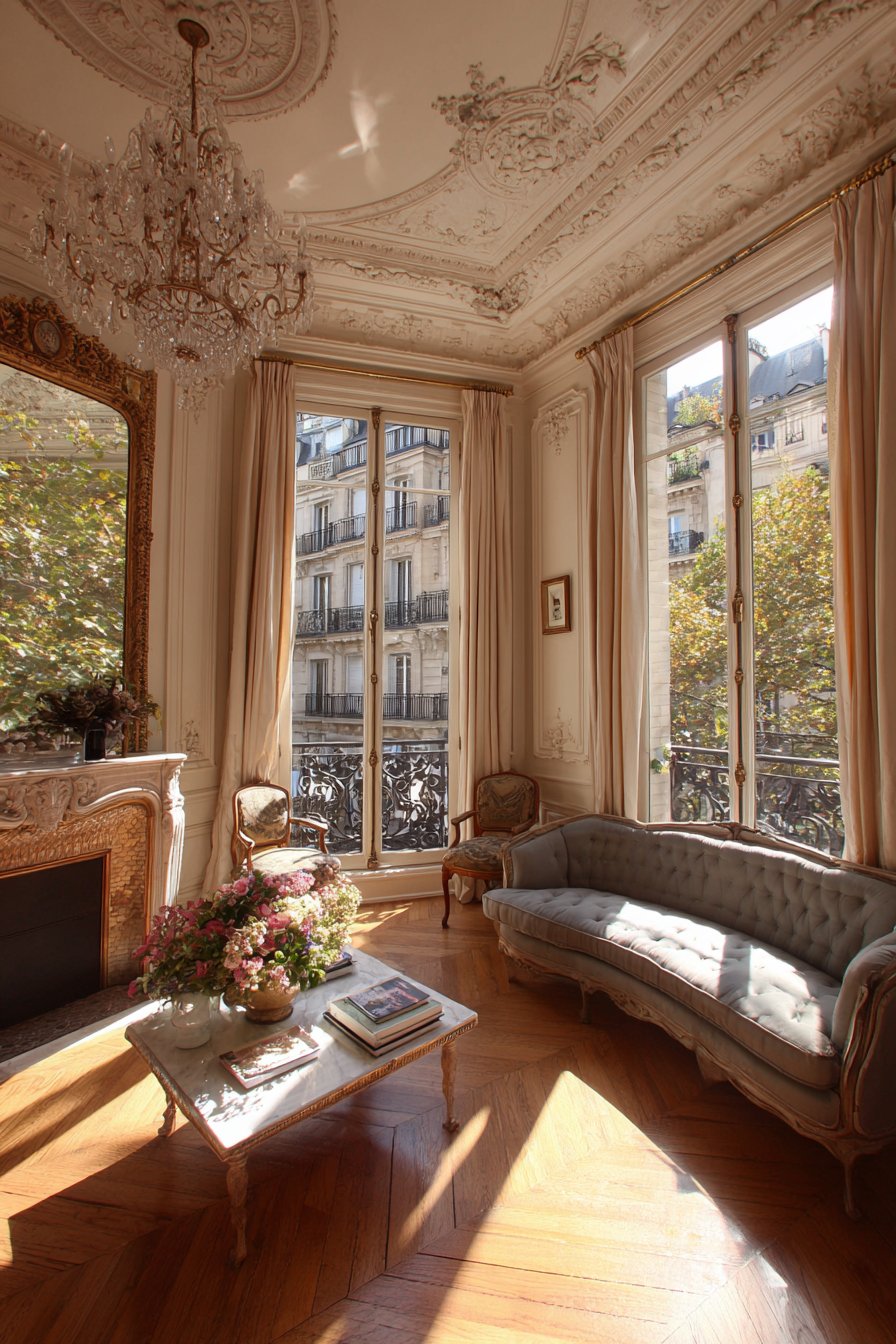
The color palettes across these designs favor neutral bases with strategic accent colors. This approach creates timeless elegance while allowing personal expression through accessories and art. Warm whites, soft greys, and honey-toned woods provide versatile backdrops. Jewel tones like emerald and burgundy add drama when desired.
The furniture selections balance historical authenticity with contemporary comfort requirements. Reupholstered antique frames preserve history while providing modern functionality. Mixing periods creates collected authenticity rather than staged museum rooms. This layered approach reflects genuine personal taste and gradual acquisition.
Spatial planning accommodates both grand entertaining spaces and intimate family living. The designs address various apartment sizes from compact studios to spacious Haussmann flats. Efficient storage solutions maintain elegance while providing necessary organization. Multifunctional furniture maximizes utility without sacrificing beauty.
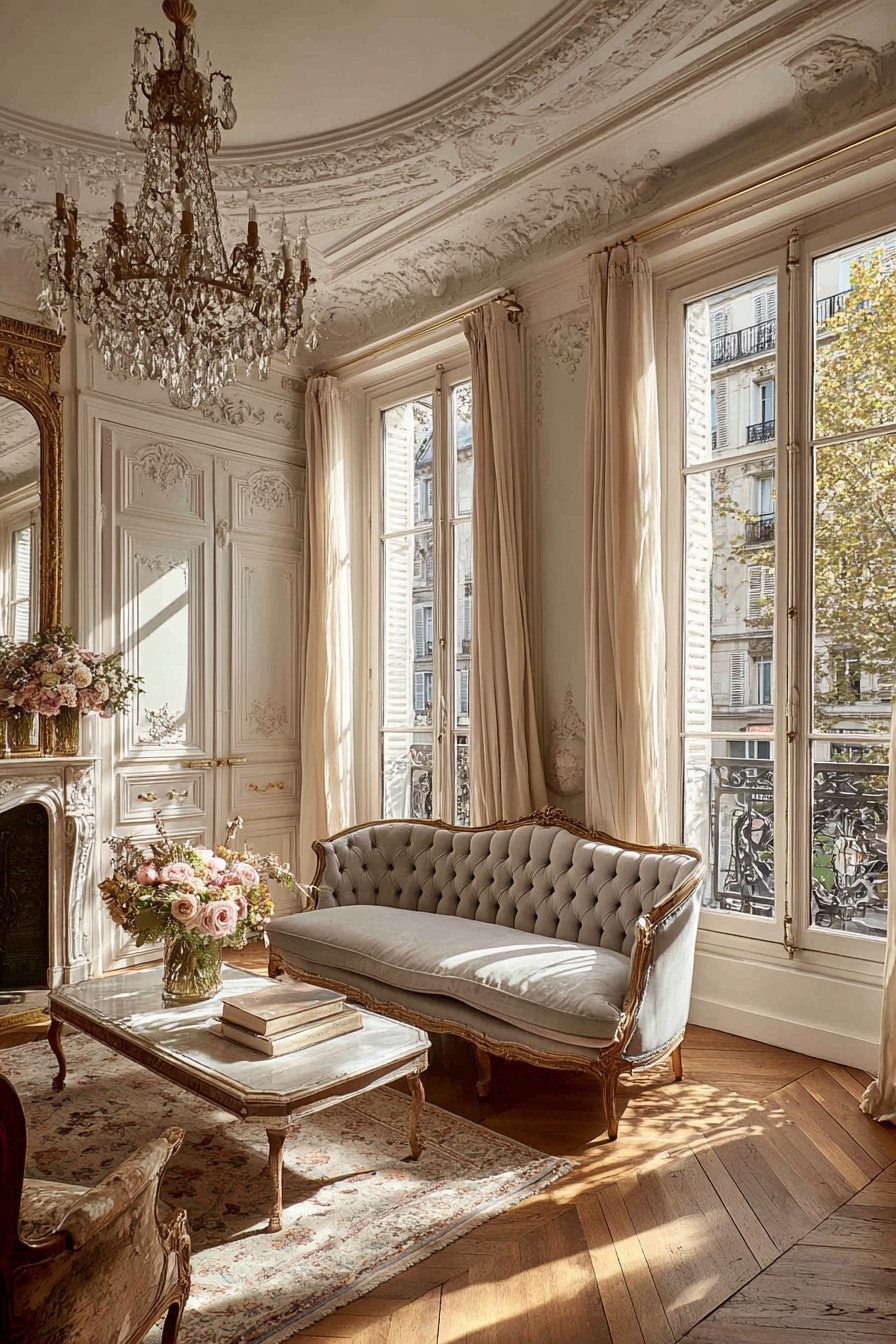
Natural light receives primary consideration throughout these designs. Tall windows remain focal points rather than problems requiring concealment. Sheer curtains filter harsh sunlight while maintaining transparency. The changing quality of natural light throughout the day provides constant visual interest. This connection to outdoor spaces and neighborhood life defines authentic Parisian living.
The textile selections favor natural fibers like linen, silk, velvet, and wool. These materials age beautifully while providing superior comfort and durability. The varied textures create visual interest even within neutral color schemes. Quality natural fabrics justify higher initial investment through lasting beauty and performance.
Conclusion
These Parisian living room designs demonstrate that timeless elegance emerges from respecting architectural heritage while embracing personal style. The key takeaways include prioritizing quality natural materials, preserving original architectural details, and curating furnishings gradually over time. Successful Parisian interiors balance formal sophistication with comfortable livability for everyday use.
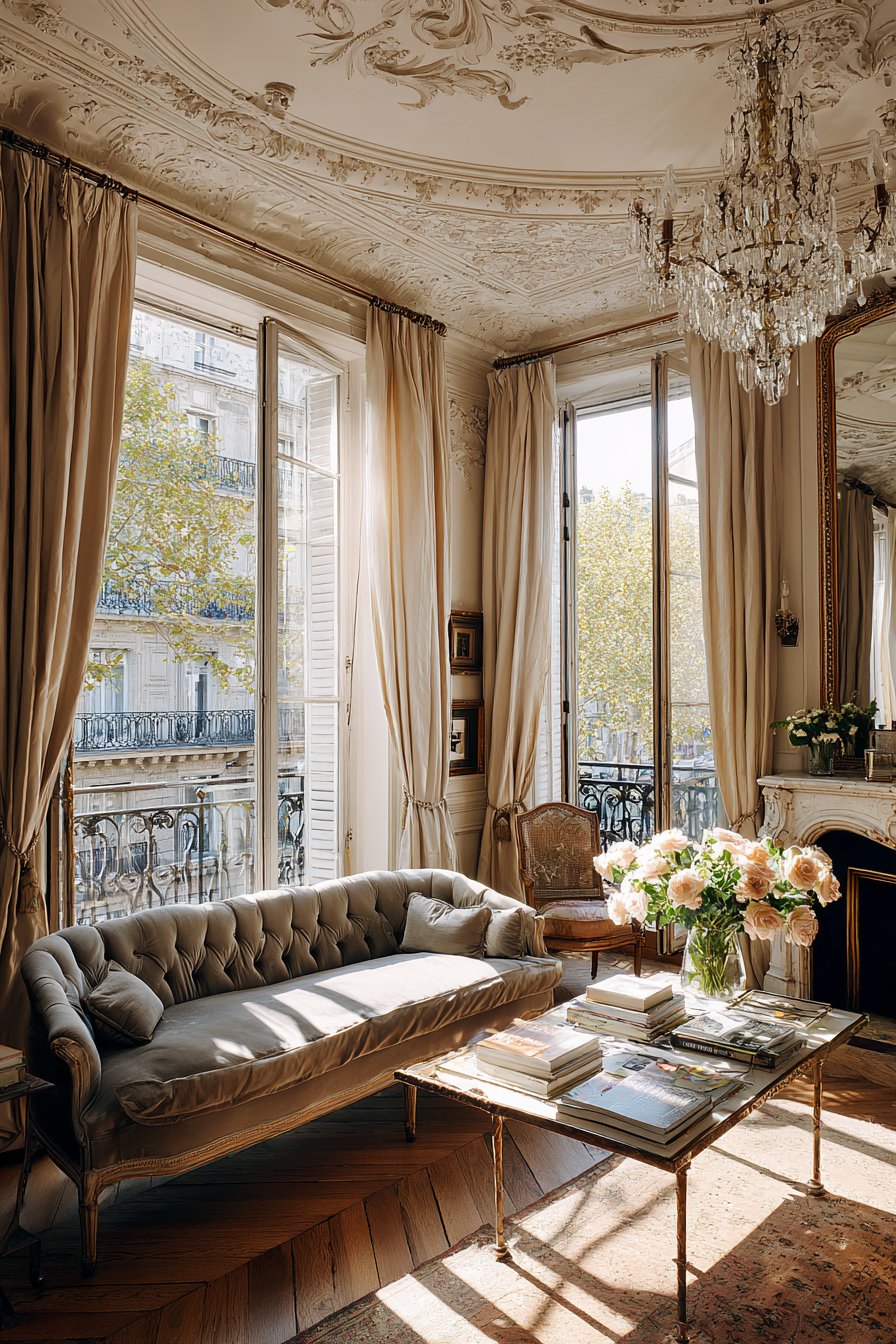
The designs prove that authentic style transcends square footage and budget constraints through thoughtful planning. Start by identifying and enhancing existing architectural features in your space. Add quality pieces gradually rather than purchasing complete room packages. Your dream Parisian living room awaits creation through patient curation and respect for timeless design principles.
