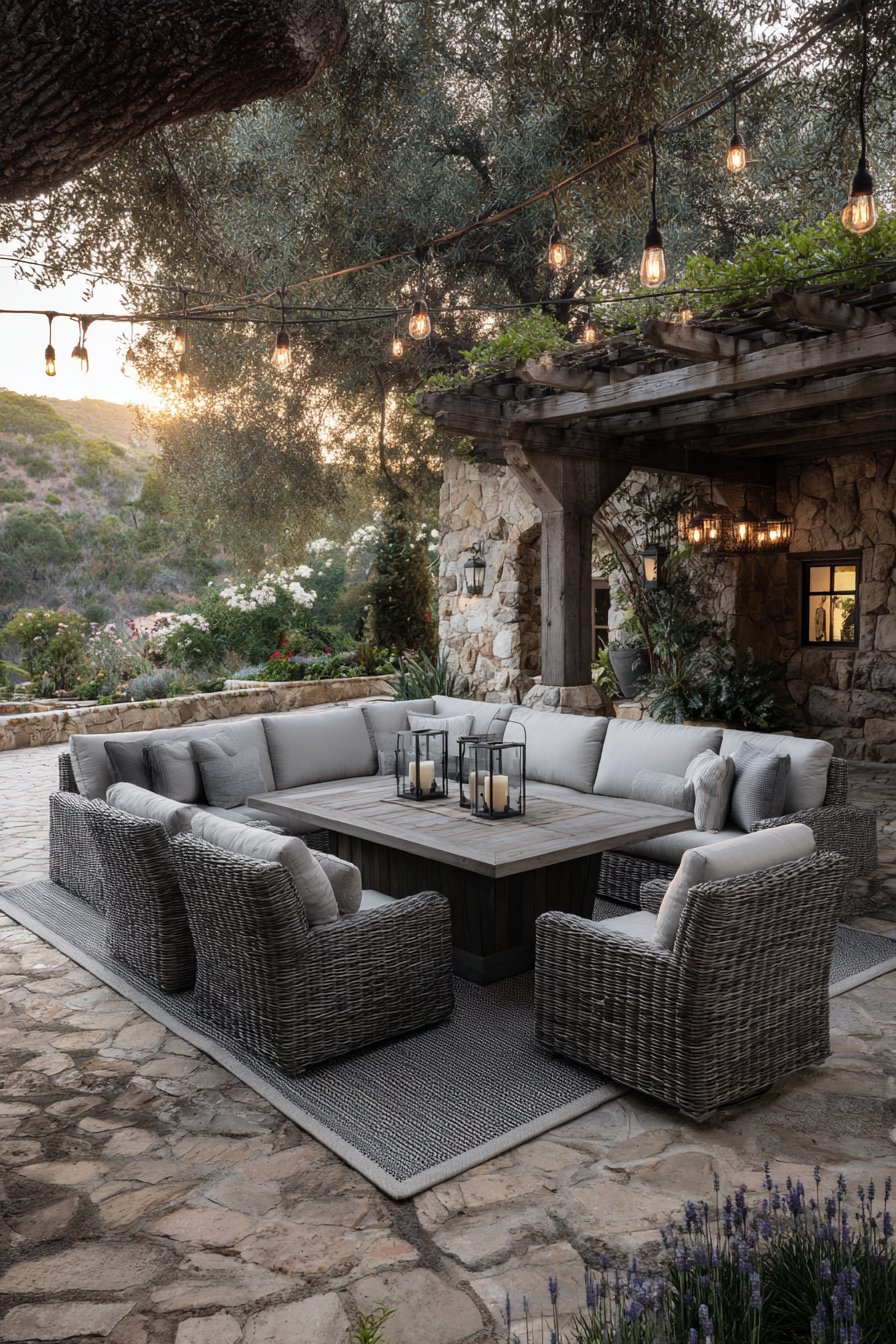


Creating an outside patio transforms your home’s outdoor area into a functional living space. These designs blend comfort with style and practicality. The right patio design extends your living area beyond interior walls. It creates opportunities for dining, entertaining, and peaceful relaxation under open skies.
Outdoor patios have become essential extensions of modern homes. They serve as transitional spaces between indoor comfort and natural surroundings. A well-designed patio enhances property value while providing daily enjoyment. Whether you prefer contemporary minimalism or rustic charm, the perfect patio design awaits. These concepts showcase diverse approaches to outdoor living, from intimate reading nooks to elaborate entertainment areas.
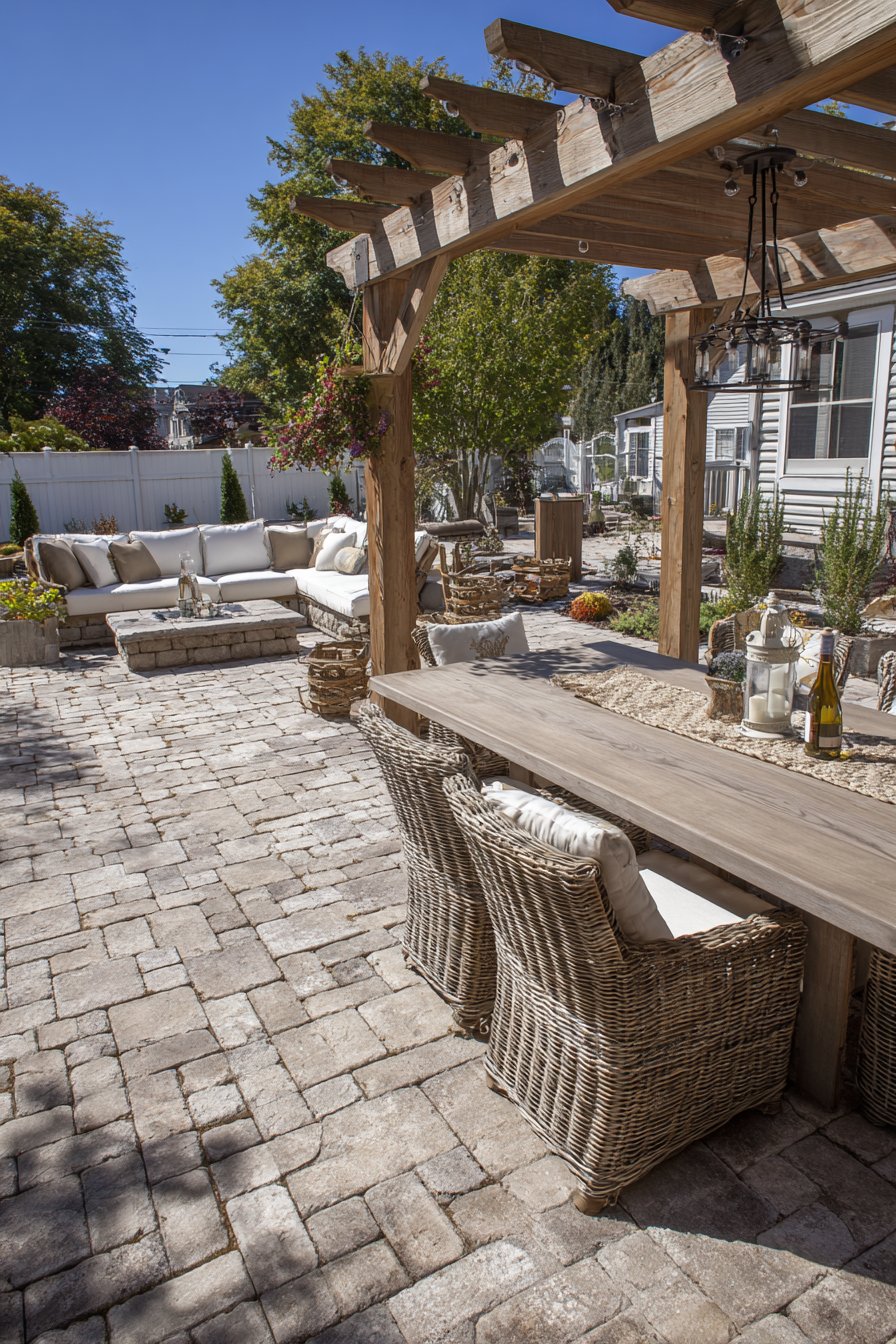
The following designs demonstrate how materials, furniture, and landscaping combine to create compelling outdoor environments. Each concept offers unique solutions for different lifestyles and aesthetic preferences. Natural elements play central roles in these spaces. Weather-resistant materials ensure longevity while maintaining visual appeal through changing seasons.
1. Contemporary Sectional Seating Haven
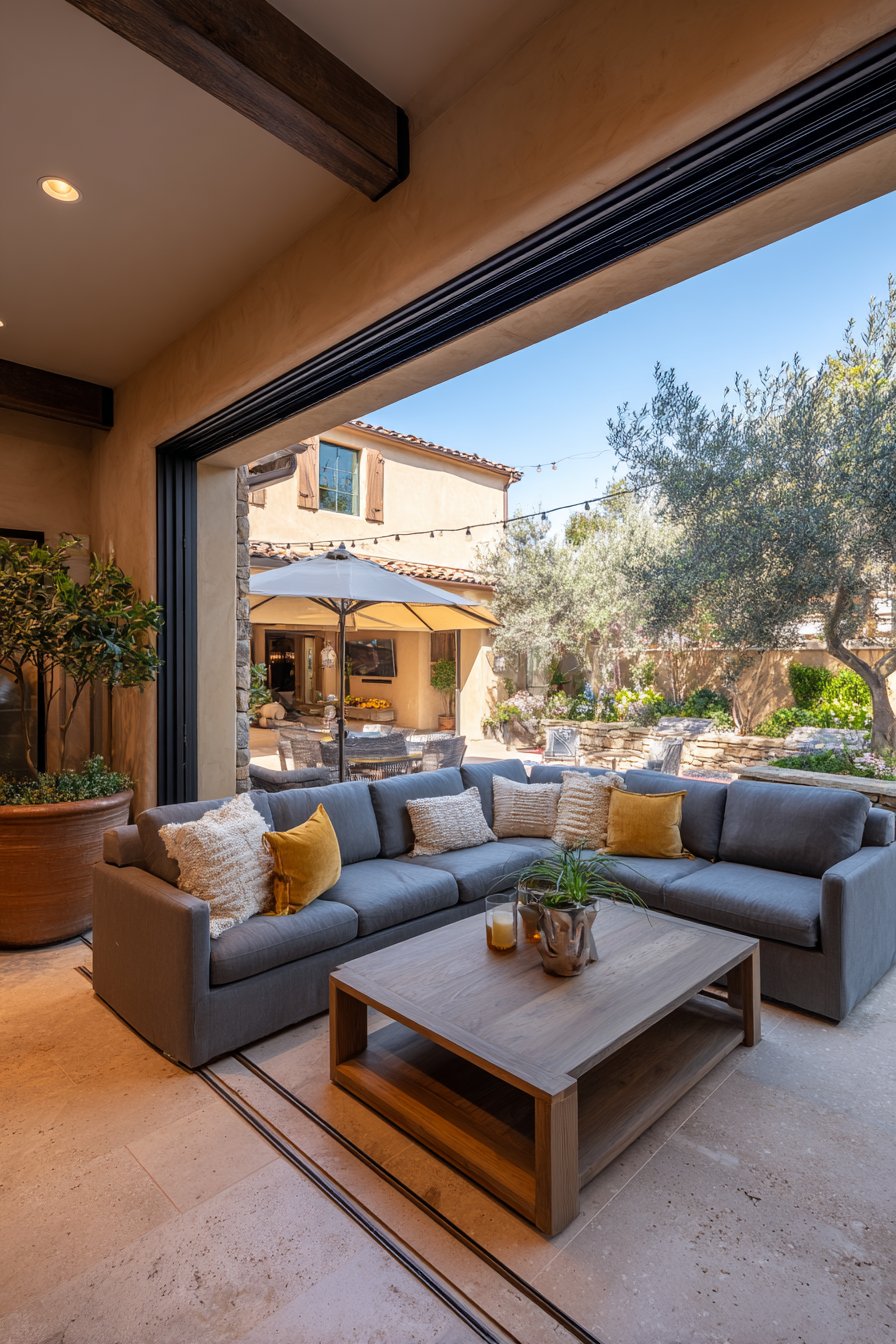
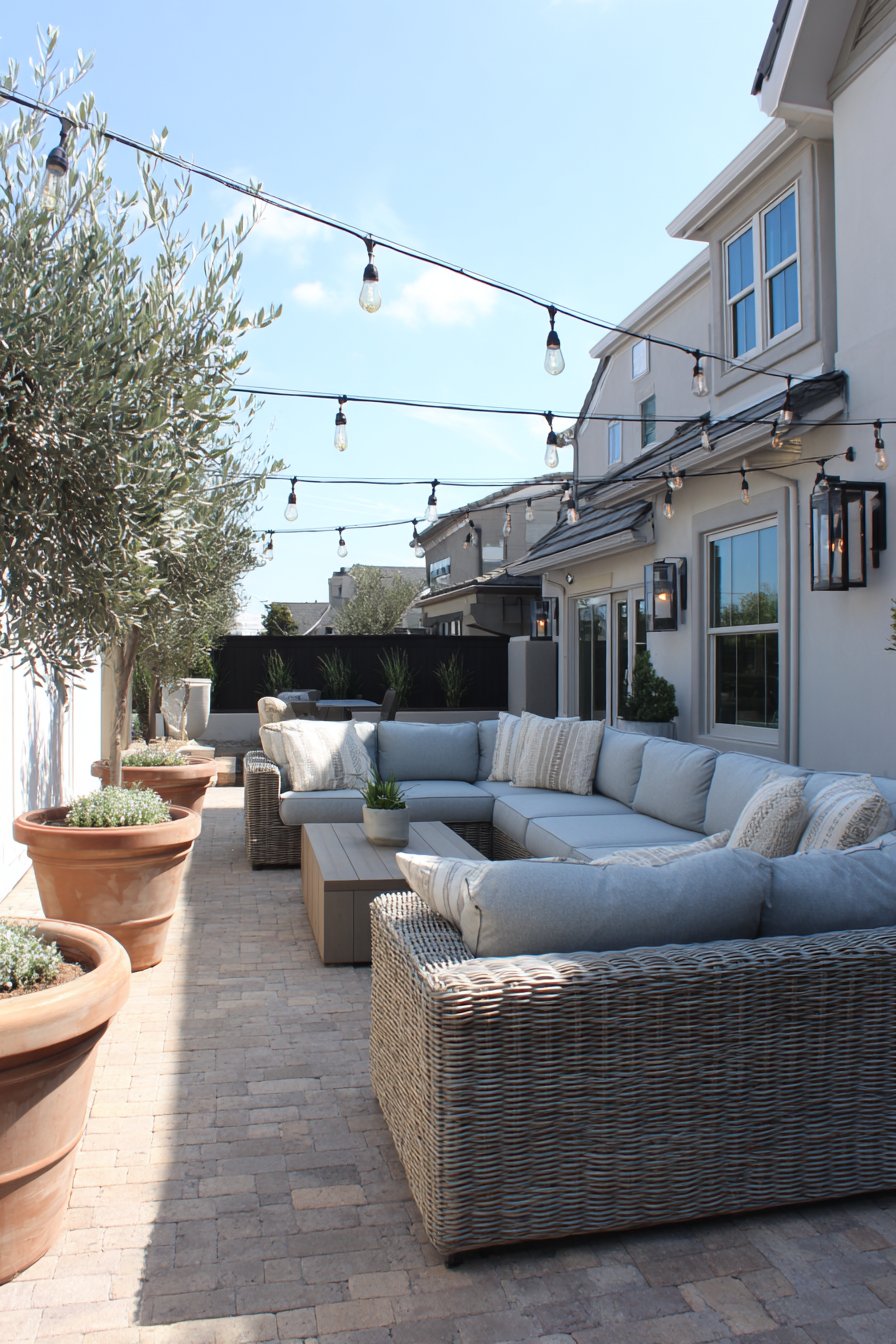
A welcoming L-shaped sectional anchors this inviting outdoor space with weather-resistant grey cushions. Textured throw pillows in natural tones add layers of comfort and visual interest. The teak coffee table centers the arrangement on durable porcelain tiles. These tiles feature a warm travertine finish that complements the neutral palette perfectly.
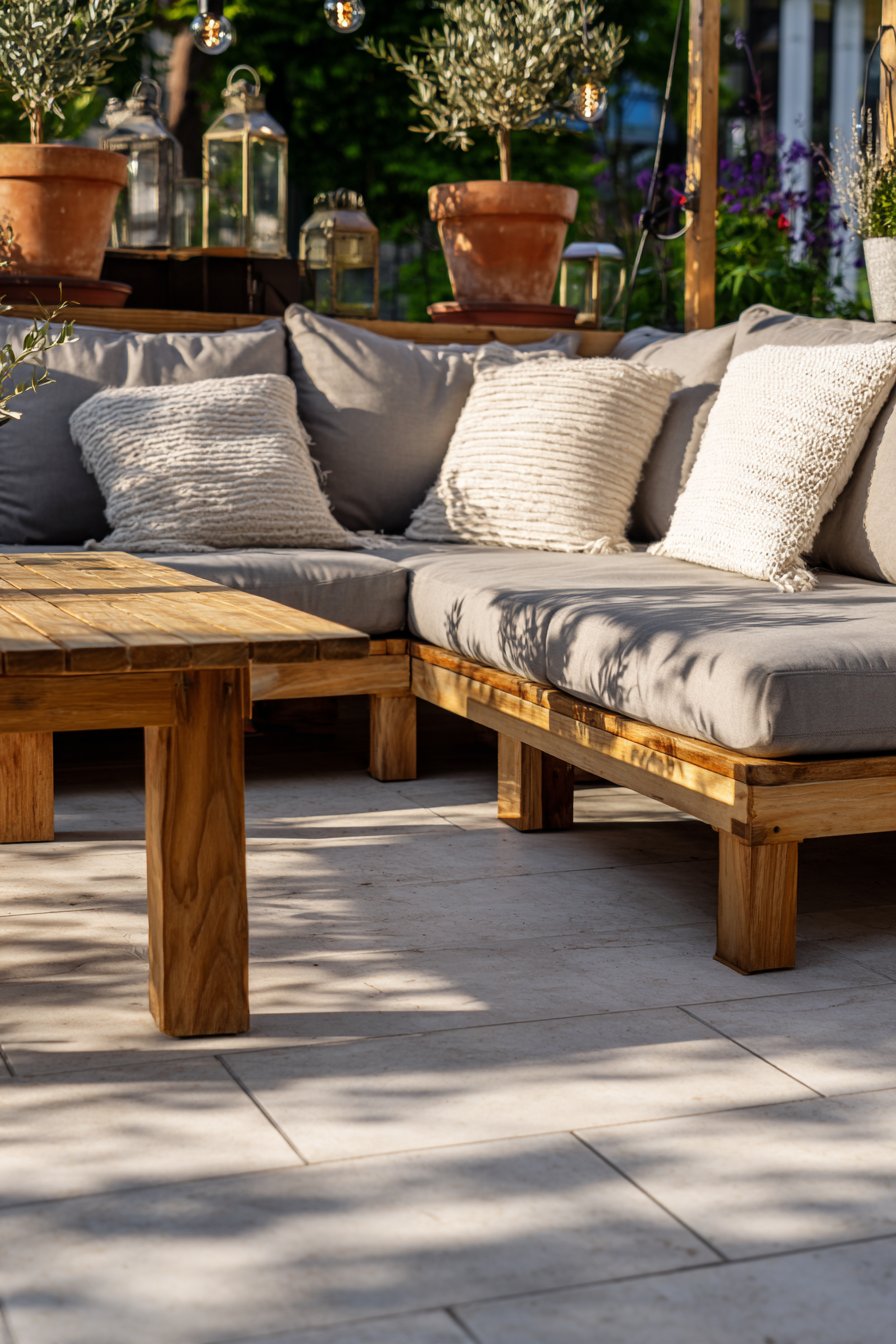
String lights overhead create magical ambient illumination for evening gatherings. Potted olive trees in terracotta planters define spatial boundaries naturally. The Mediterranean influence adds timeless elegance to the contemporary furniture arrangement. Natural afternoon sunlight filters through the space, creating soft shadows across the patio surface.
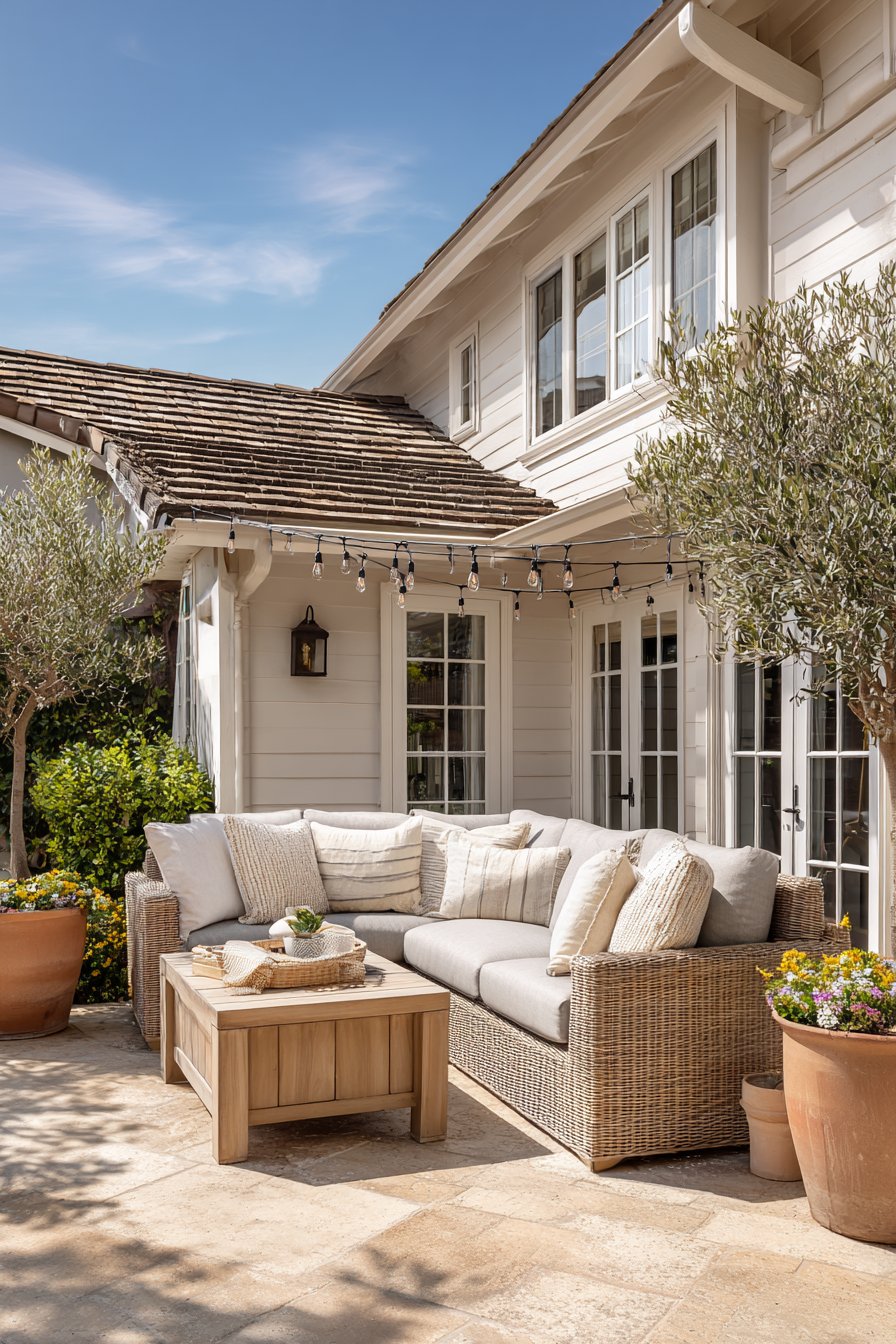
The material choices reflect thoughtful consideration of outdoor durability requirements. Weather-resistant cushions maintain their appearance through rain and sun exposure. Porcelain tiles offer superior resistance to moisture and temperature fluctuations. The teak wood develops a beautiful silver patina over time when left unsealed.
This design excels at creating comfortable conversation areas for family and friends. The sectional configuration encourages social interaction while providing ample seating capacity. The overhead lighting extends usability into evening hours seamlessly.
Key Design Tips:
- Select weather-resistant cushions with removable, washable covers for easy maintenance
- Choose porcelain tiles over natural stone for superior durability and stain resistance
- Position potted trees strategically to create natural privacy screens and define zones
- Install dimmable string lights to control ambiance for different occasions
- Allow teak furniture to age naturally for authentic outdoor character
2. Rustic Dining Pergola Setting
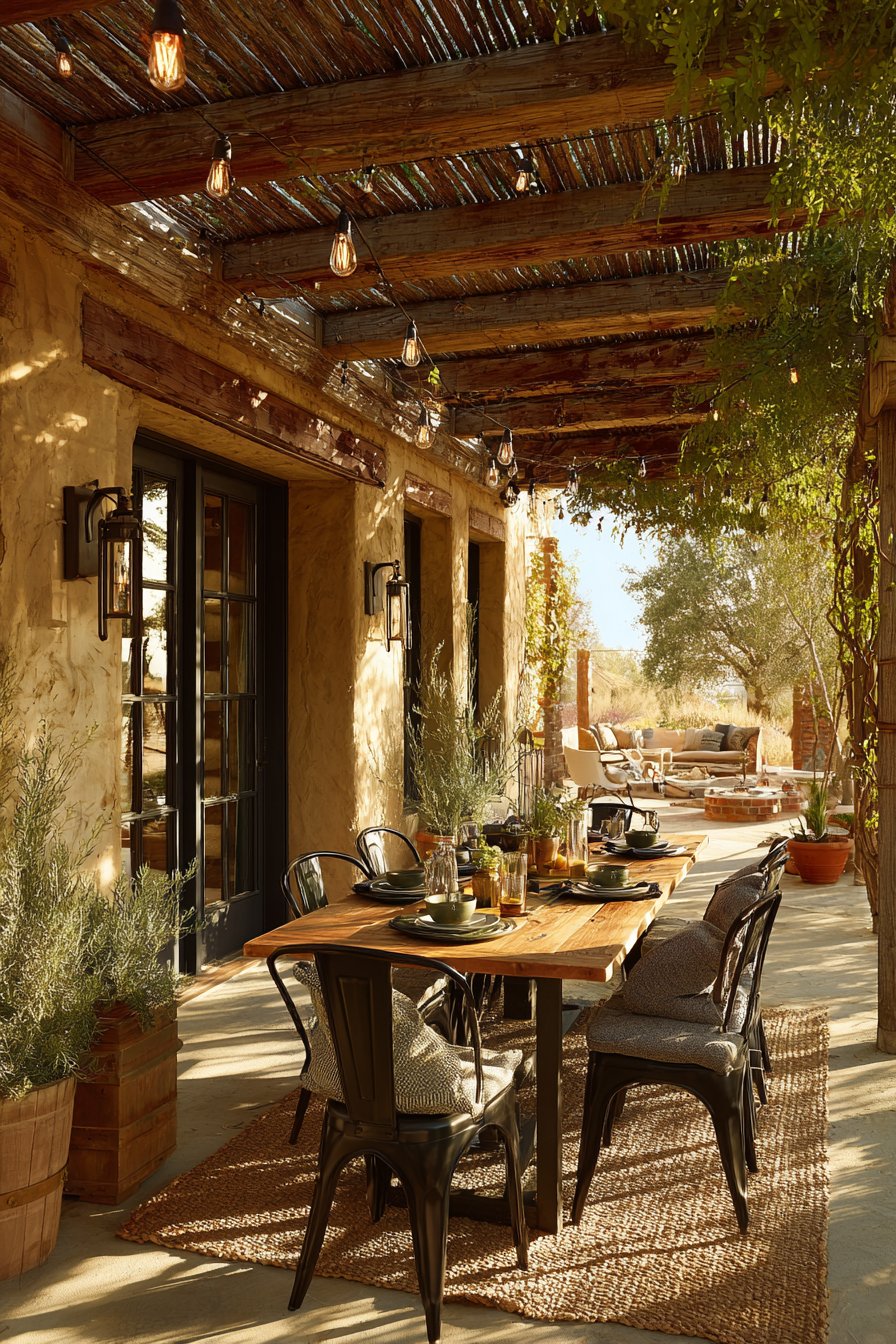
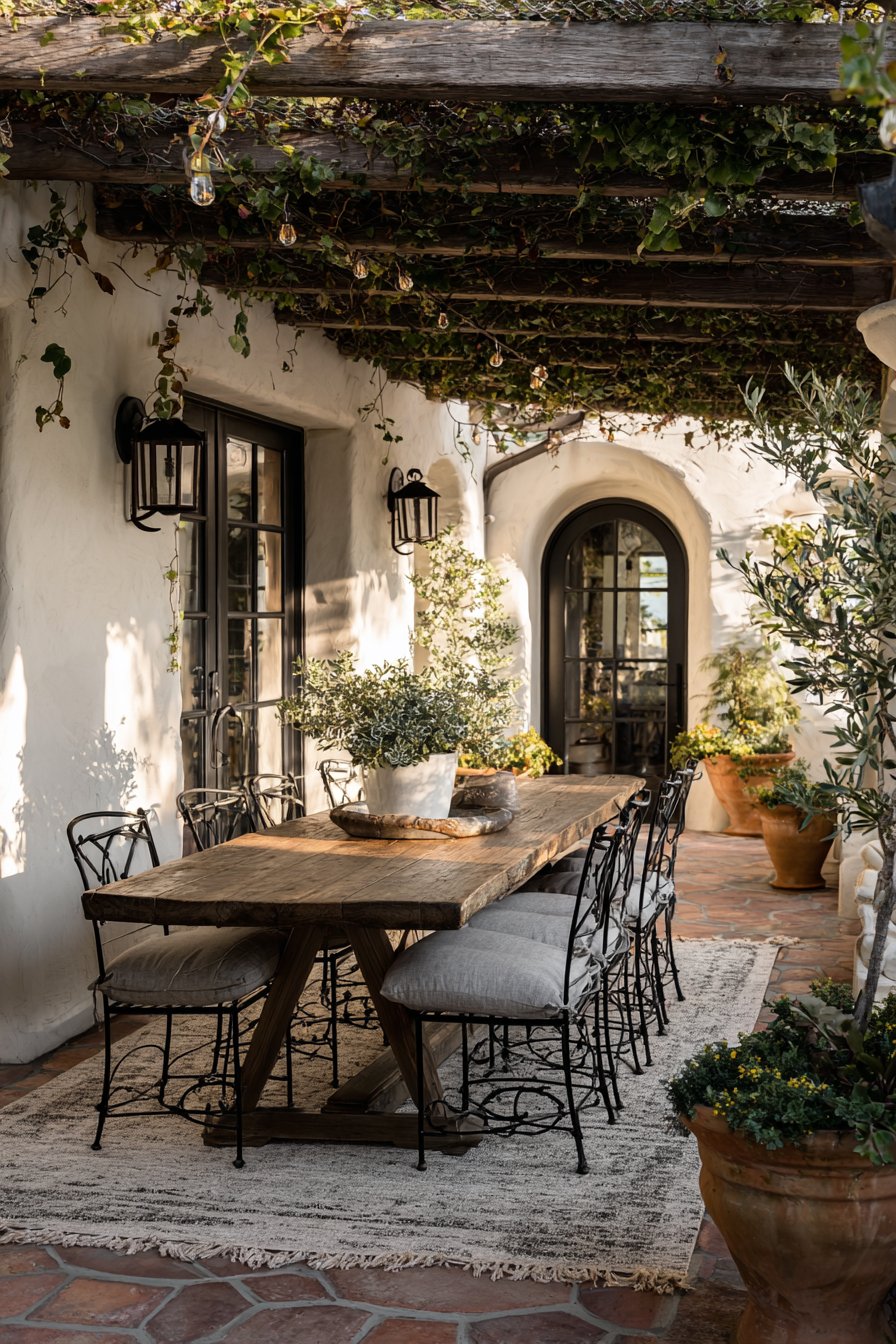
An intimate dining area features a rustic wooden table surrounded by black metal chairs. Comfortable seat cushions soften the industrial metal frames for extended dining comfort. A natural fiber area rug anchors the dining space beneath the furniture. The pergola overhead provides essential shade while supporting climbing jasmine vines.
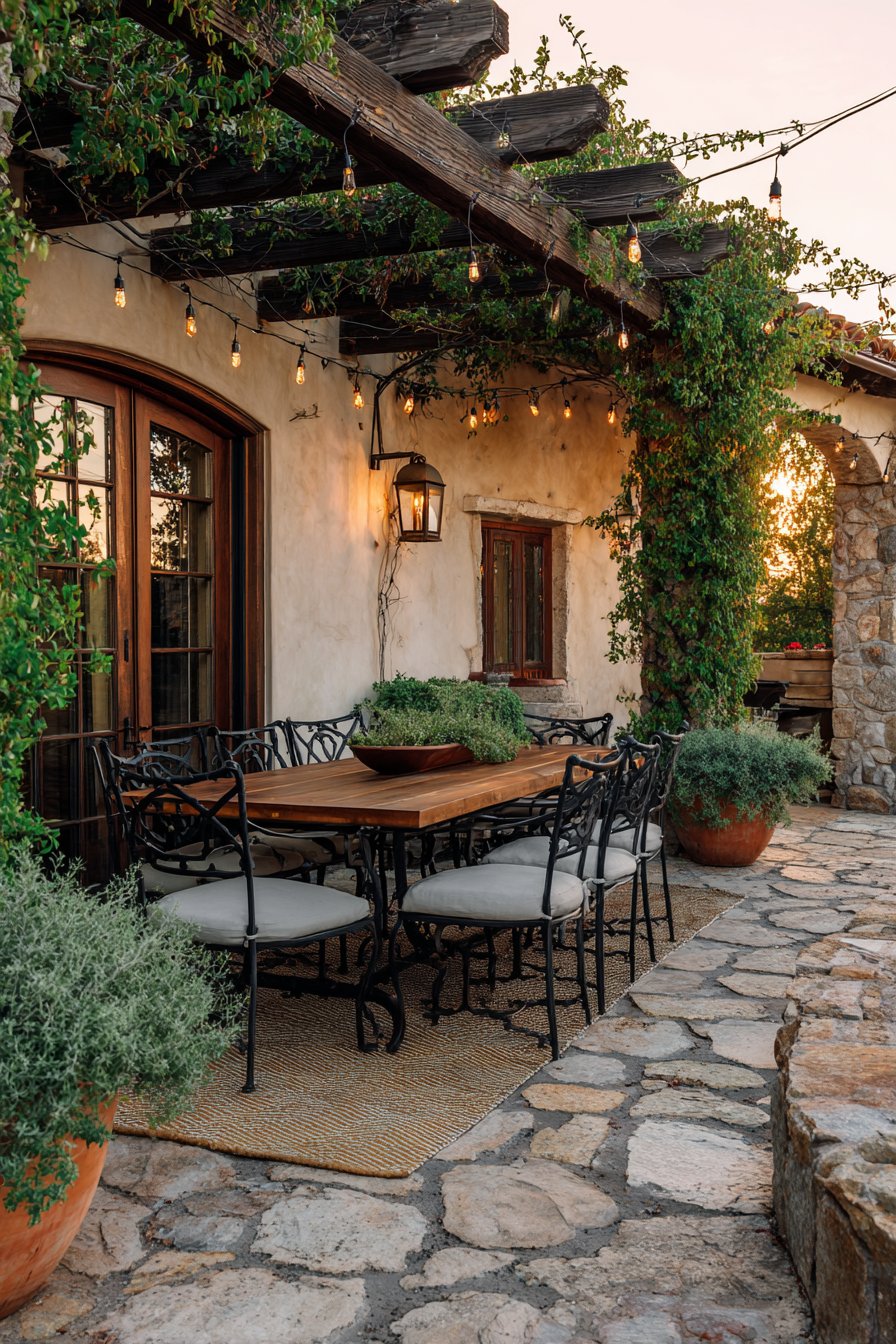
Edison bulb string lights hang from the pergola beams, creating warm evening ambiance. Terra cotta planters filled with Mediterranean herbs line the patio edge. The herbs provide both culinary convenience and aromatic enhancement to the dining experience. Golden hour lighting creates stunning highlights on wood grain and metal finishes.
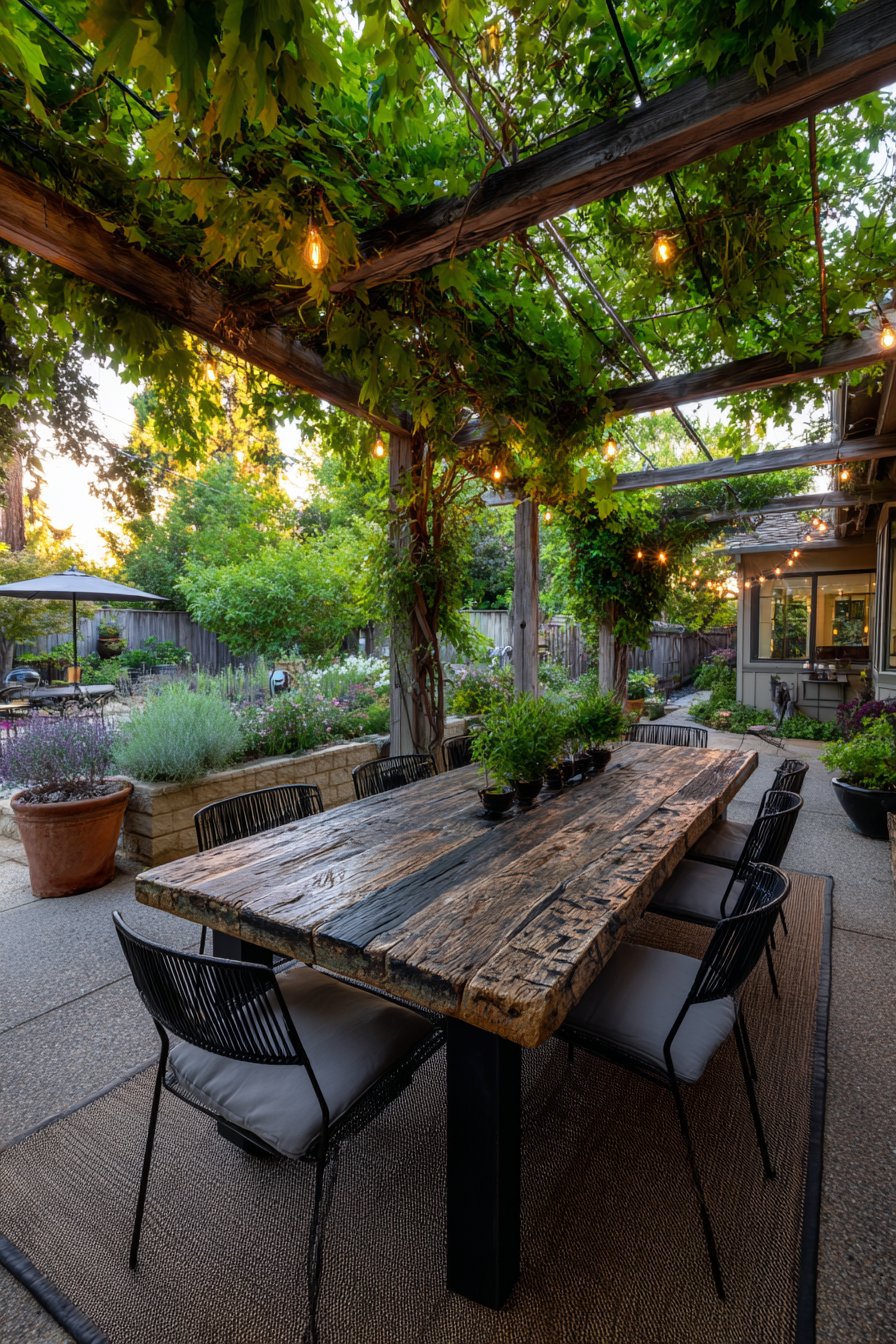
The combination of rustic wood and industrial metal creates visual interest through contrast. The natural fiber rug adds textural warmth to the hard patio surface. Climbing plants soften architectural elements while providing increasing shade over seasons.
This design proves perfect for homeowners who prioritize outdoor dining experiences. The pergola structure offers flexible shade that adapts throughout the day. The herb planters bring functional gardening directly into the entertaining space.
Key Design Tips:
- Choose a wooden table with natural imperfections for authentic rustic character
- Add cushions to metal chairs for comfort during lengthy outdoor meals
- Plant fast-growing vines like jasmine for quick pergola coverage and fragrance
- Position Edison bulbs at varying heights to create dimensional lighting effects
- Select Mediterranean herbs like rosemary and thyme for low-maintenance aromatic borders
3. Cozy Hanging Chair Retreat
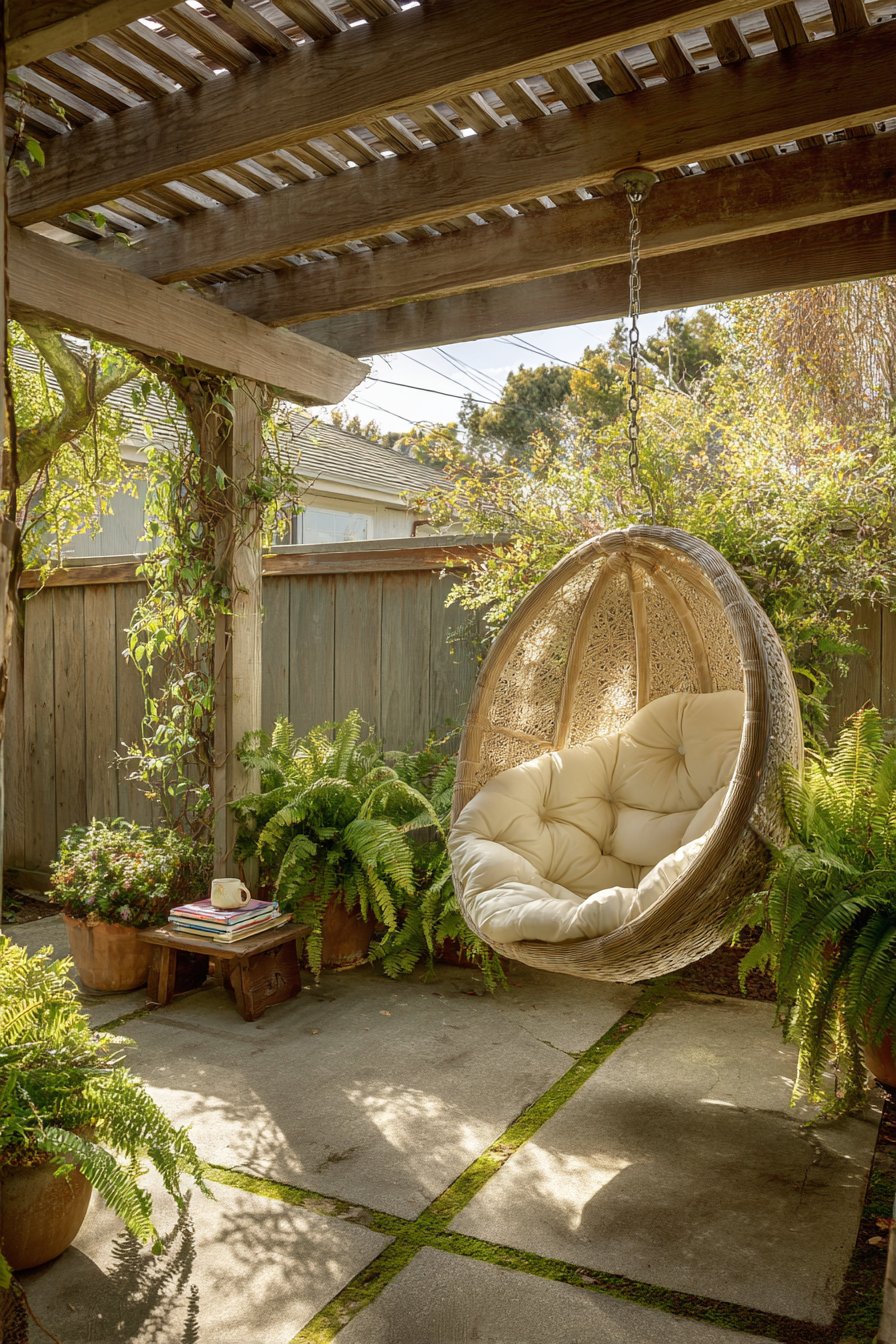
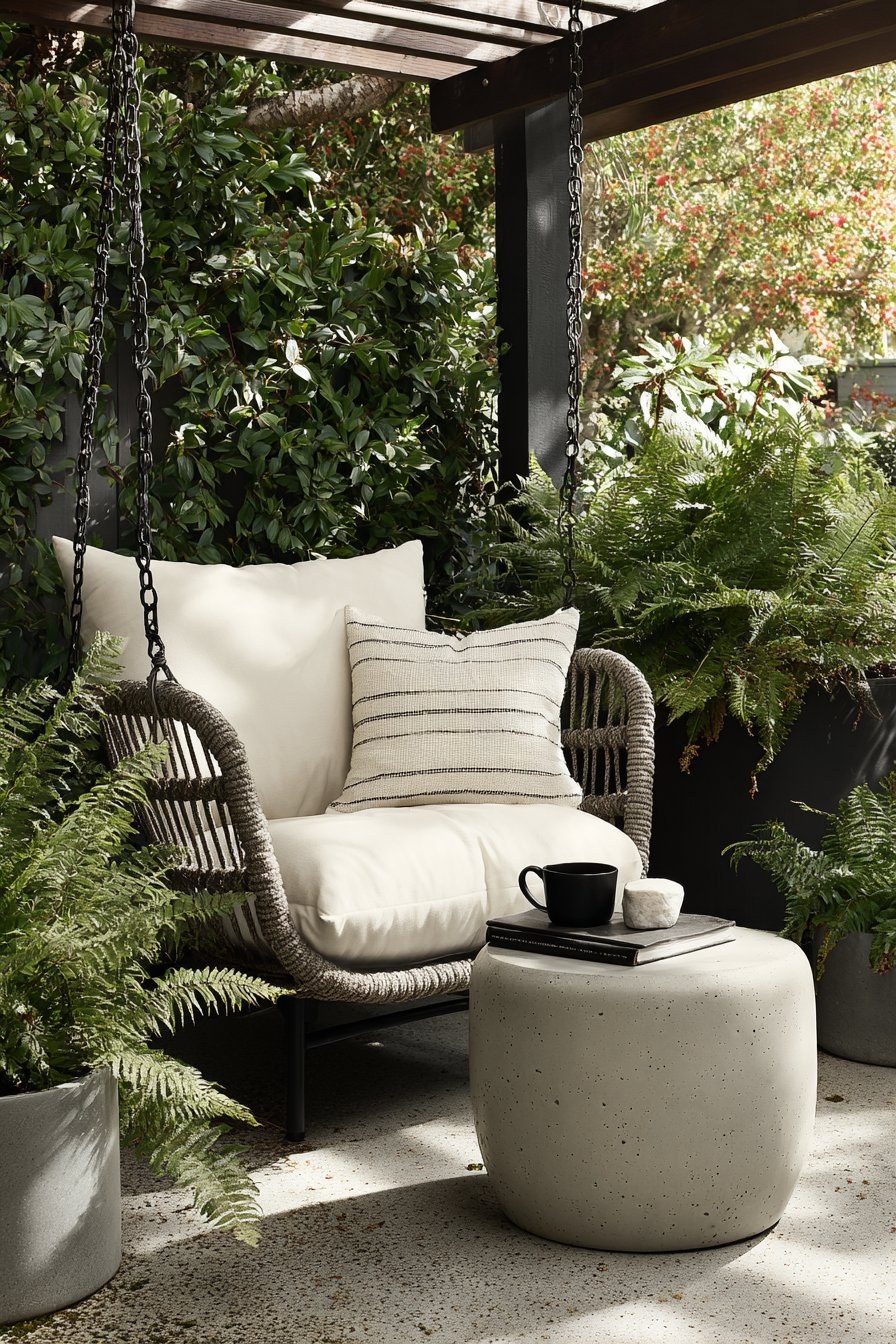
A compact patio transforms into a serene reading nook with a hanging egg chair. Cream cushions provide plush comfort while suspended from a sturdy pergola beam. The small side table holds books and ceramic mugs within easy reach. Potted ferns create natural privacy screening around the intimate space.
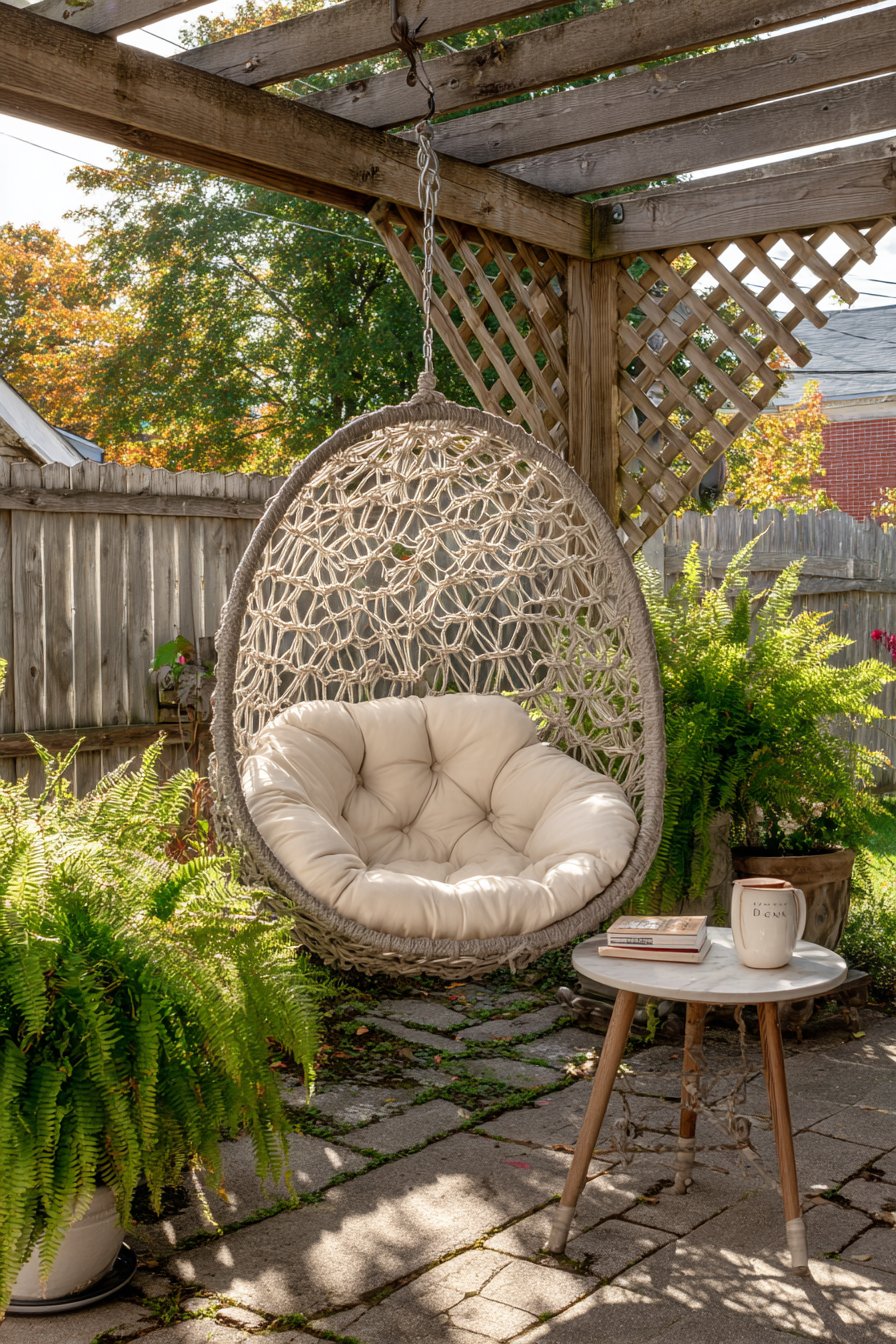
The concrete patio floor shows natural weathering with moss growth between pavers. This organic aging adds authentic character rather than detracting from the design. Soft morning light filters through overhead lattice, creating dappled shadow patterns. The textured rope weaving of the chair adds tactile visual interest.
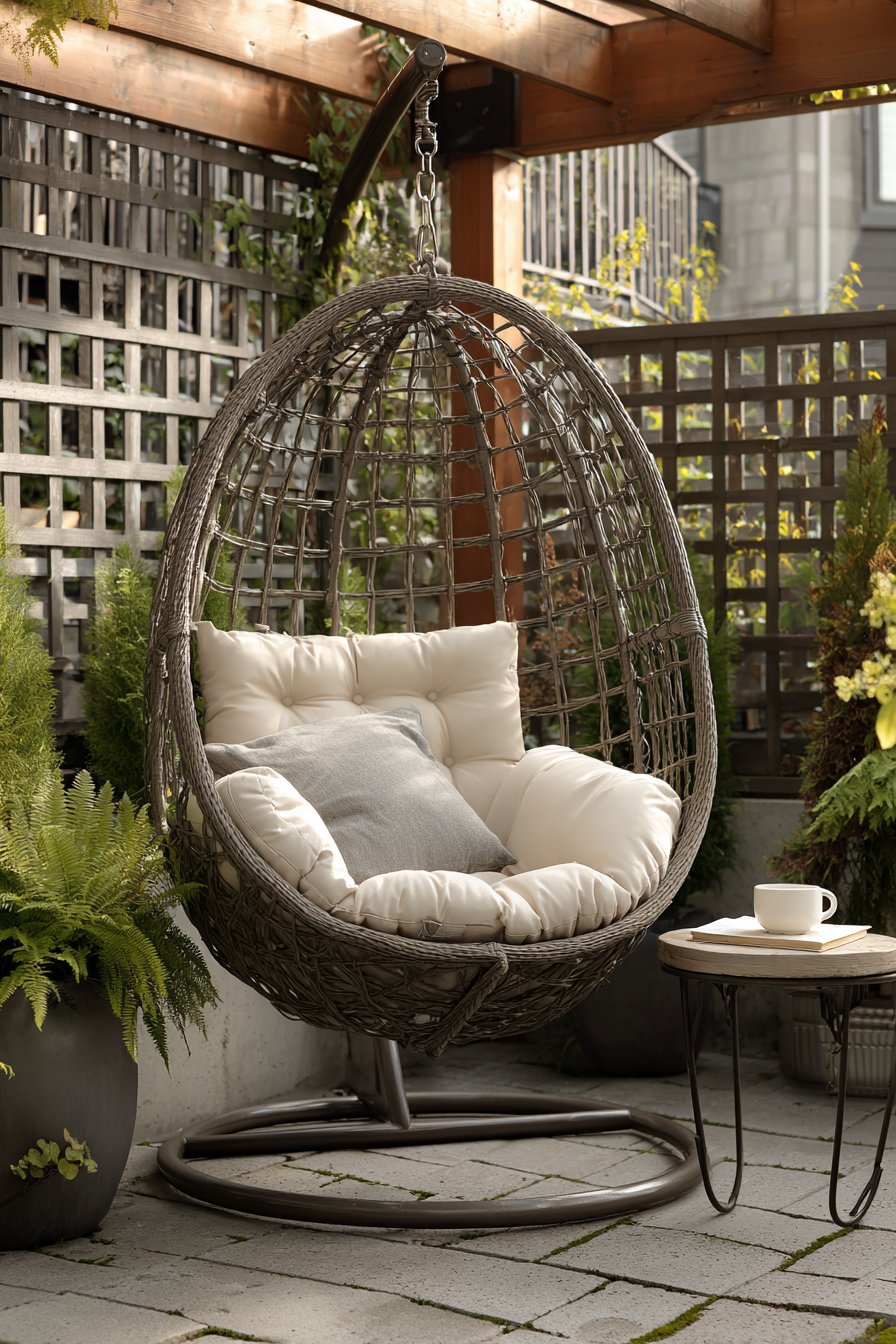
This design maximizes limited square footage by utilizing vertical space effectively. The hanging chair becomes a focal point while occupying minimal floor area. The surrounding ferns create a micro-ecosystem that feels secluded and peaceful.
Perfect for creating personal retreat spaces, this concept prioritizes relaxation over entertainment. The single-occupancy design encourages quiet activities like reading or meditation. The natural weathering embraces outdoor authenticity rather than fighting against it.
Key Design Tips:
- Verify pergola beam strength before installing hanging chairs to ensure safety
- Choose egg chairs with weather-resistant synthetic rattan for durability
- Allow moss to grow naturally between pavers for cottage garden charm
- Position ferns to filter direct sunlight while maintaining brightness
- Select side tables with weighted bases to prevent tipping in wind
4. Modern Fire Pit Gathering Space
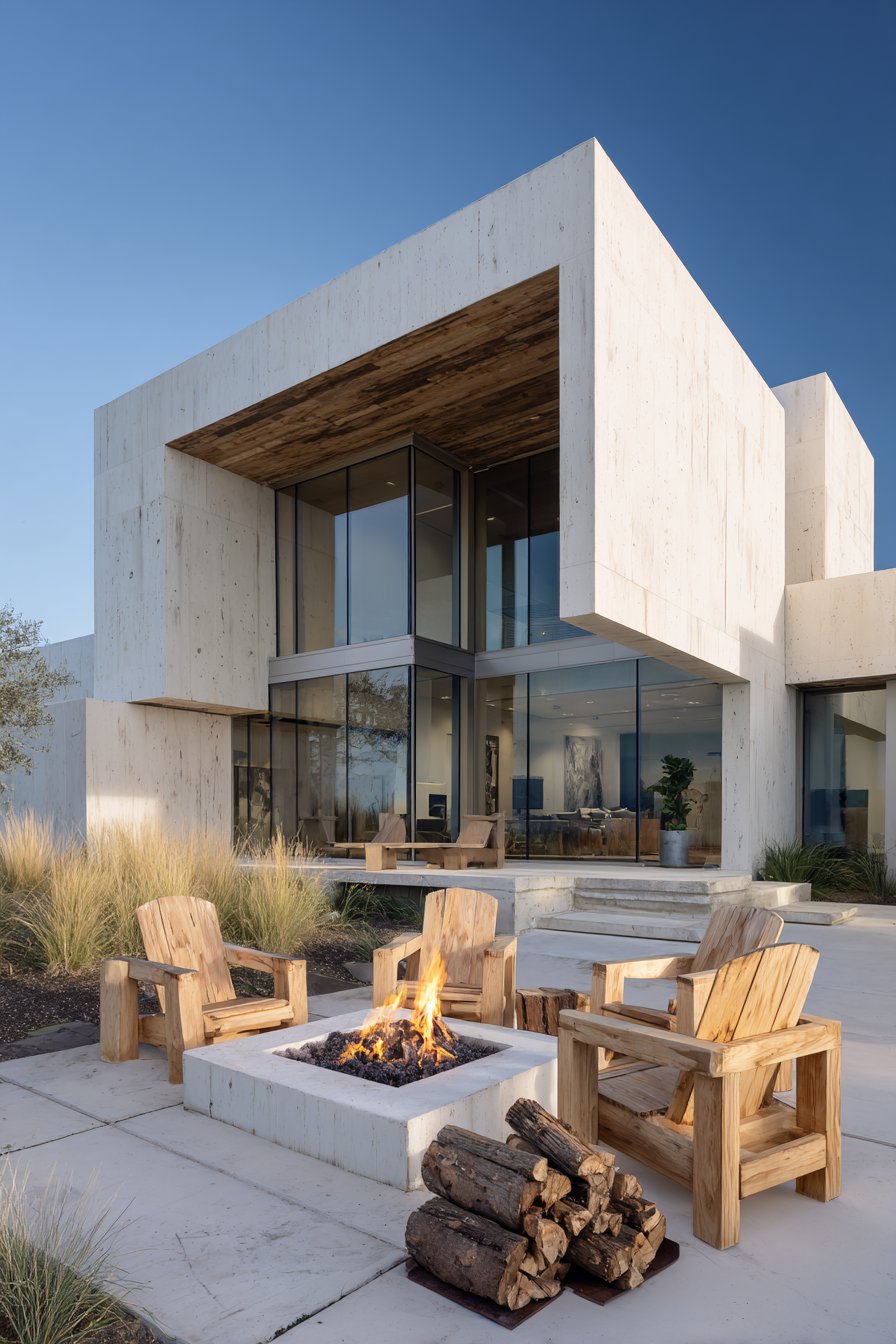
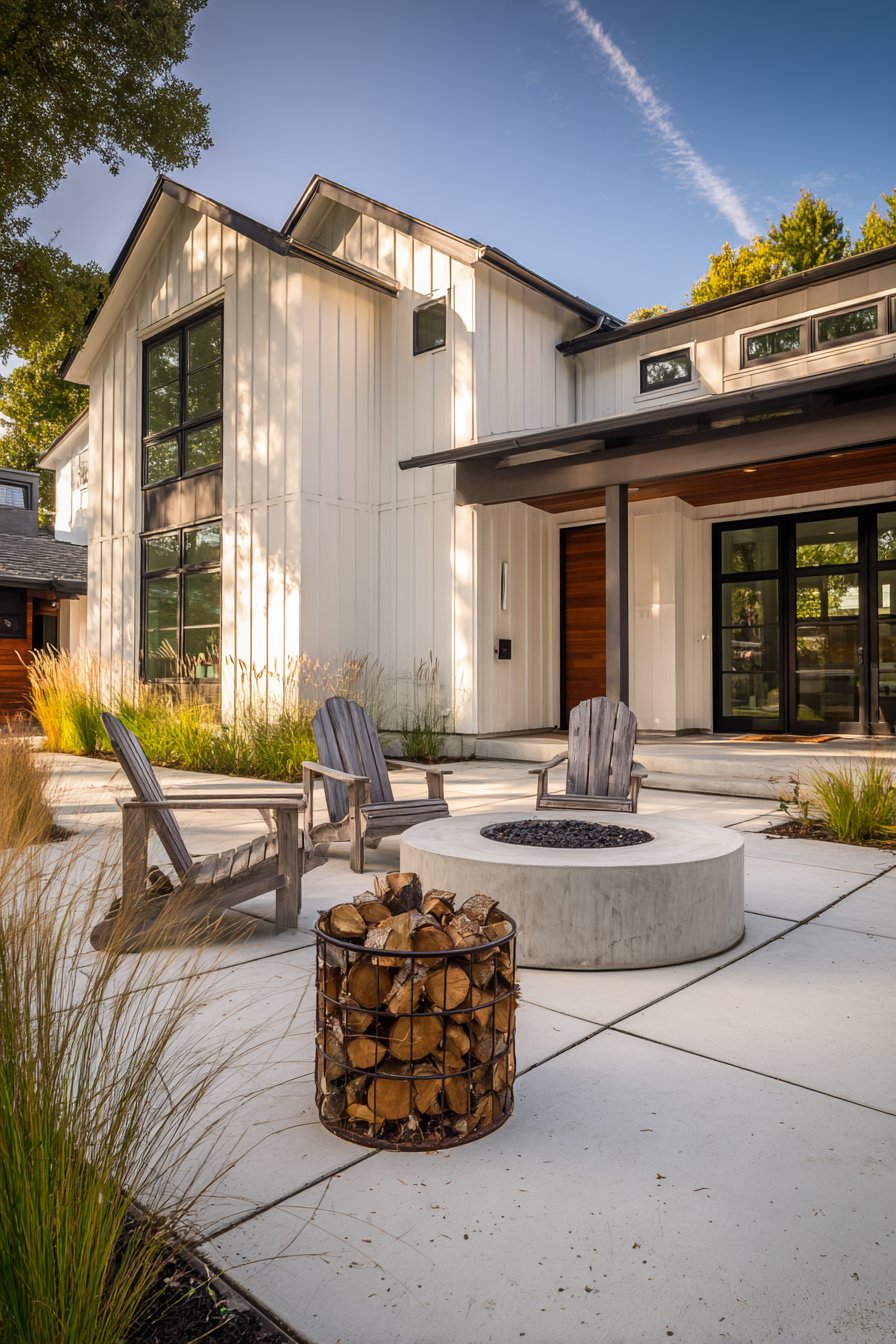
A built-in fire pit forms the centerpiece of this modern outdoor living area. Low-profile Adirondack chairs in natural cedar surround the fire feature. Visible grain patterns showcase the wood’s organic beauty and craftsmanship. Large format concrete pavers create clean geometric lines throughout the space.
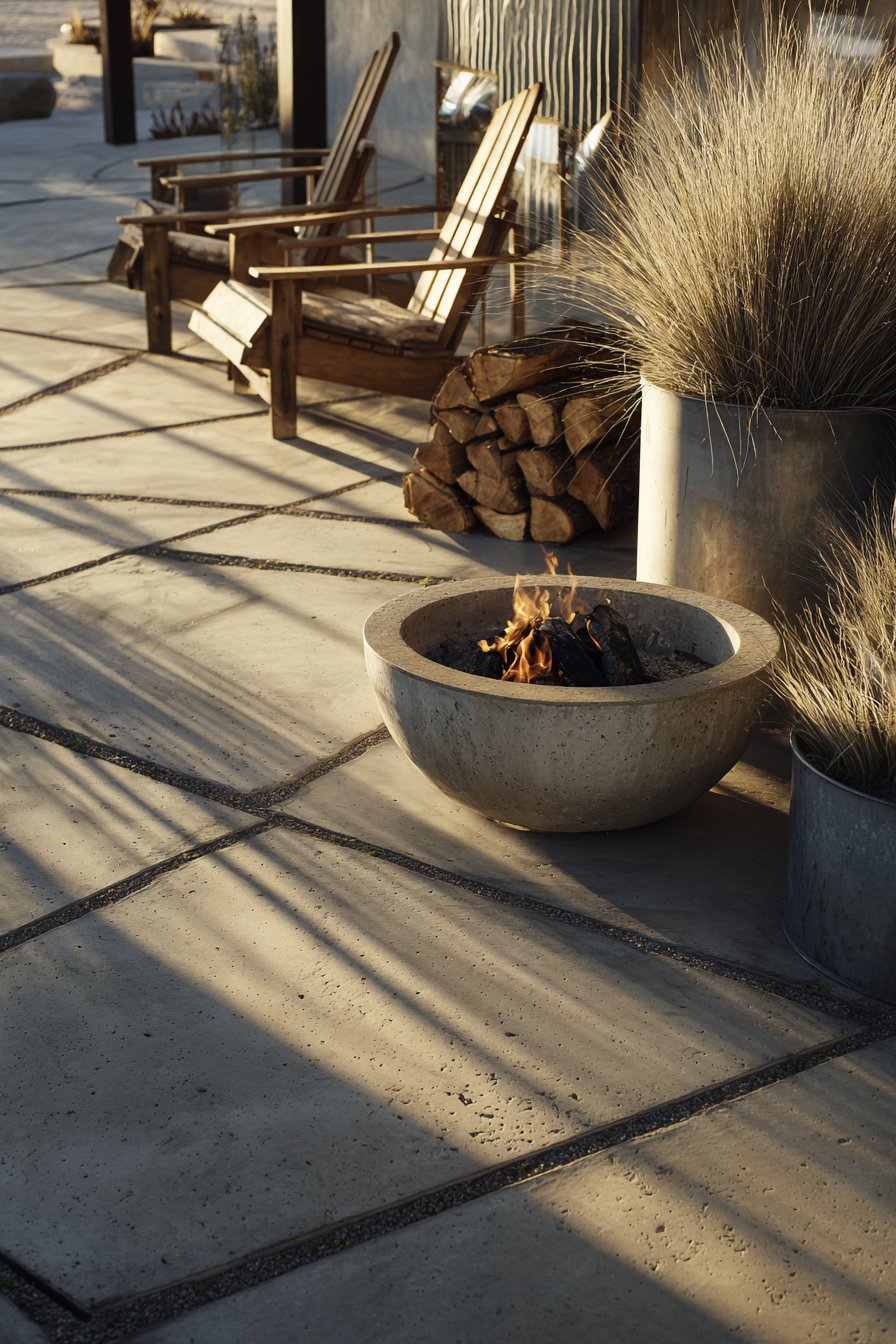
Ornamental grasses in galvanized metal planters soften the contemporary aesthetic. The contrast between structured hardscaping and flowing plants creates balanced visual interest. A stack of seasoned firewood sits nearby in a custom metal holder. Evening light creates dramatic shadows while fire pit stones show authentic heat discoloration.
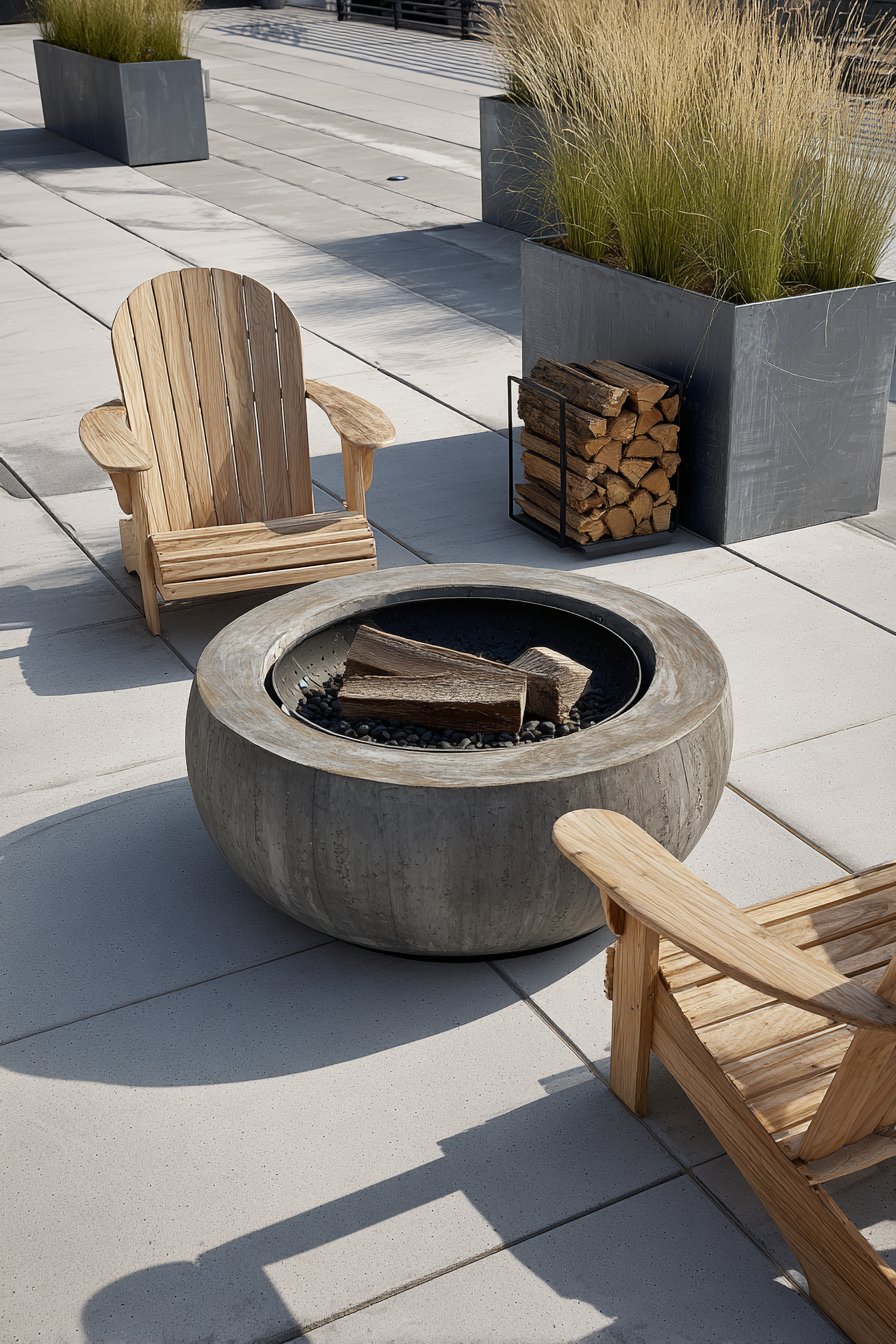
The circular conversation layout encourages social interaction around the warming fire. Cedar chairs develop natural weathering that enhances their rustic appeal over time. The concrete pavers require minimal maintenance while providing a stable surface.
This design excels for homeowners who prioritize outdoor entertaining during cooler months. The fire feature extends patio usability through three seasons. The natural materials age gracefully without requiring protective finishes.
Key Design Tips:
- Build fire pits with heat-resistant stone that can withstand temperature extremes
- Position chairs 4-5 feet from fire pit edges for comfortable heat distribution
- Choose untreated cedar to allow natural silver-grey patina development
- Plant ornamental grasses that require minimal watering for low maintenance
- Store firewood in covered holders to keep it dry and ready for use
5. Family-Friendly Composite Deck
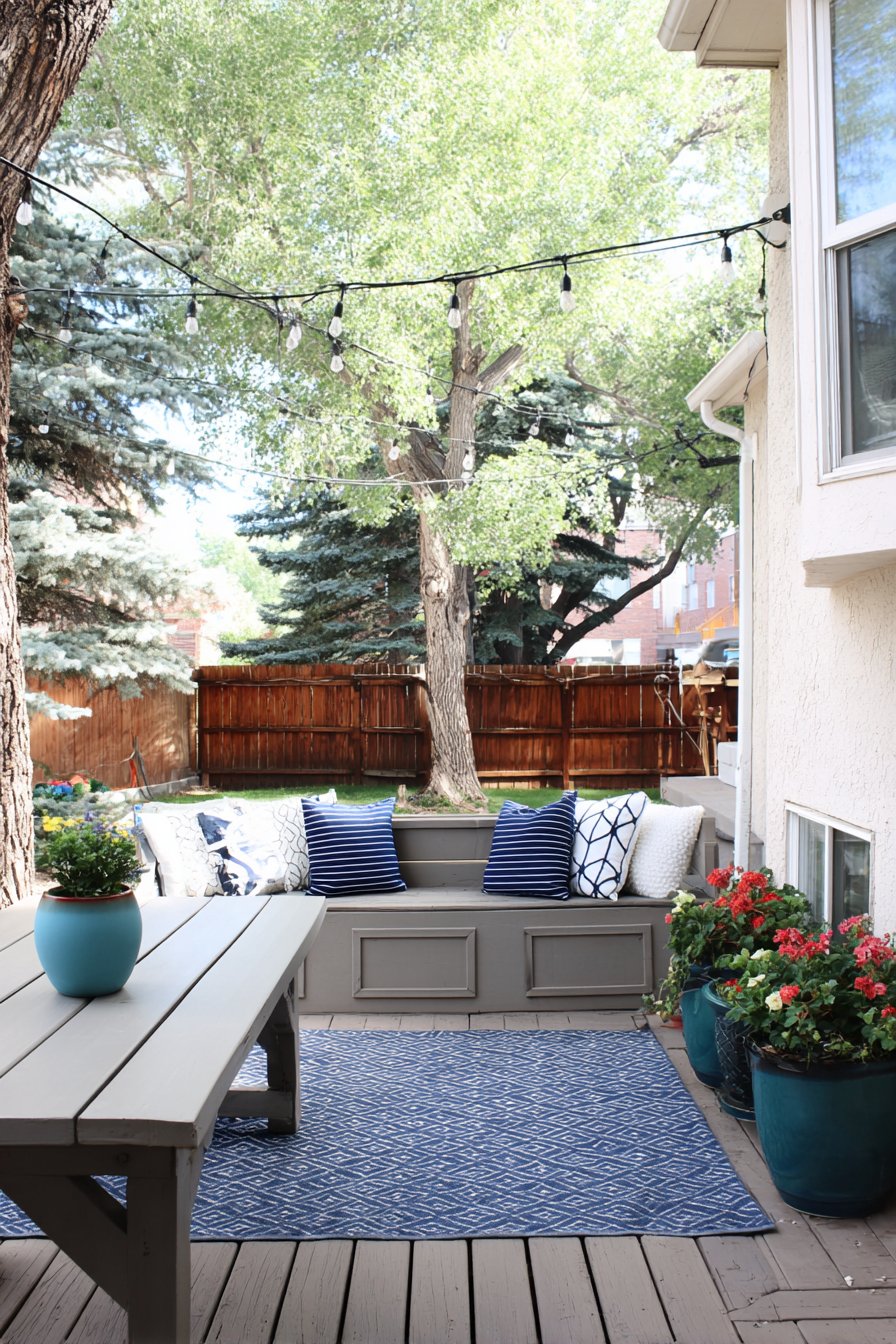
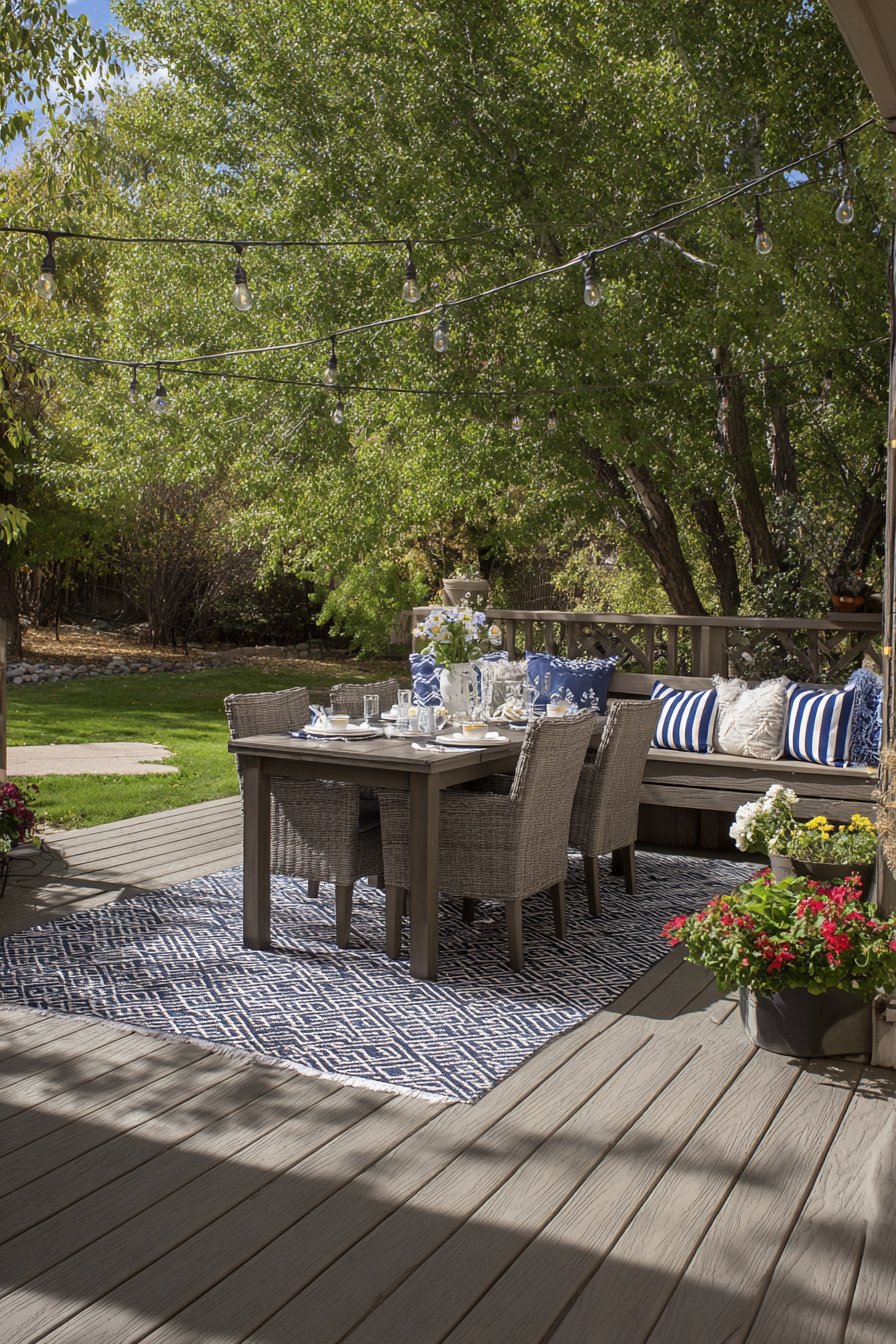
Durable composite decking in driftwood grey creates a maintenance-free outdoor surface. Built-in bench seating includes hidden storage compartments for toys and cushions. Outdoor throw pillows in navy and white stripes provide comfortable back support. A weather-resistant area rug defines the children’s play space clearly.
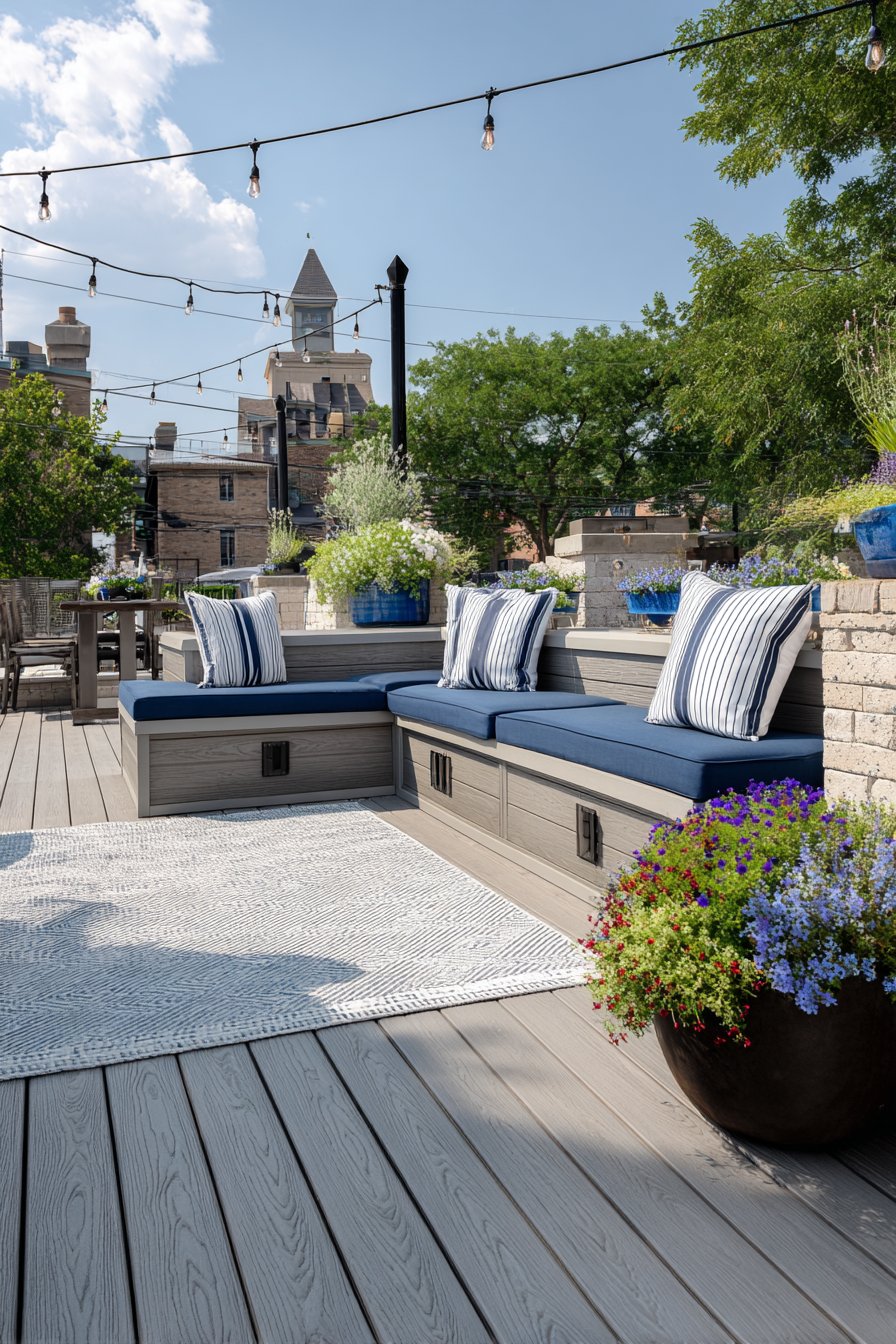
String lights zigzag overhead between posts, creating cheerful illumination patterns. Potted flowering plants add seasonal color without overwhelming the functional layout. The practical design accommodates active family use while maintaining attractive aesthetics. Realistic wear patterns on high-traffic areas demonstrate the durability of composite materials.
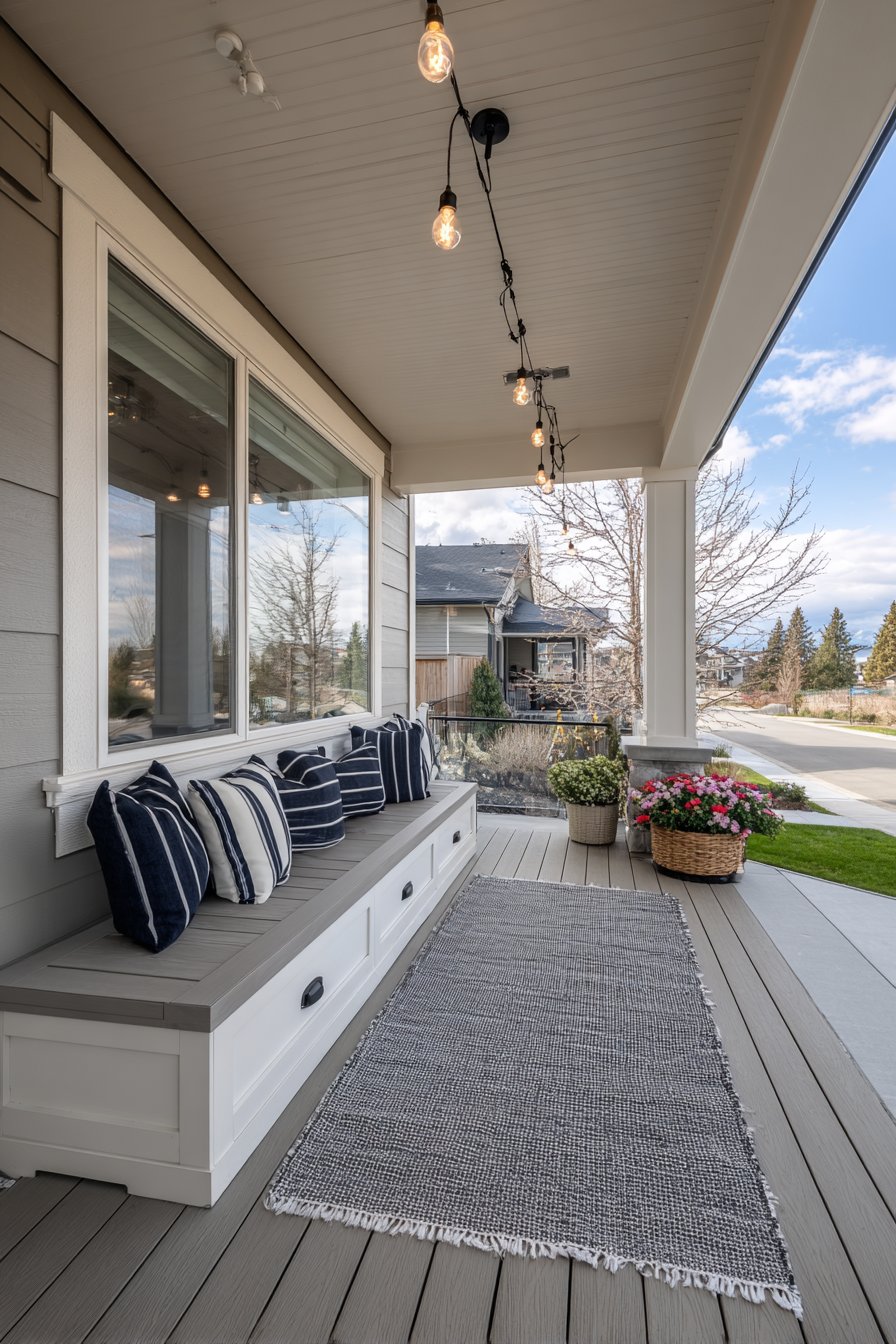
The built-in storage solutions keep the deck organized and clutter-free. The composite material resists splintering, making it safe for barefoot children. The defined play area helps contain toys and activities to specific zones.
This design prioritizes durability and safety for families with young children. The low-maintenance materials allow more time for family activities. The storage integration keeps outdoor spaces functional and organized.
Key Design Tips:
- Select composite decking with textured surfaces to prevent slipping when wet
- Build storage benches with hydraulic lifts for easy access to contents
- Choose machine-washable outdoor pillows and rugs for easy cleaning
- Install LED string lights on dimmer switches to control brightness levels
- Position play areas away from stairs and elevated edges for safety
6. Mediterranean Terracotta Paradise
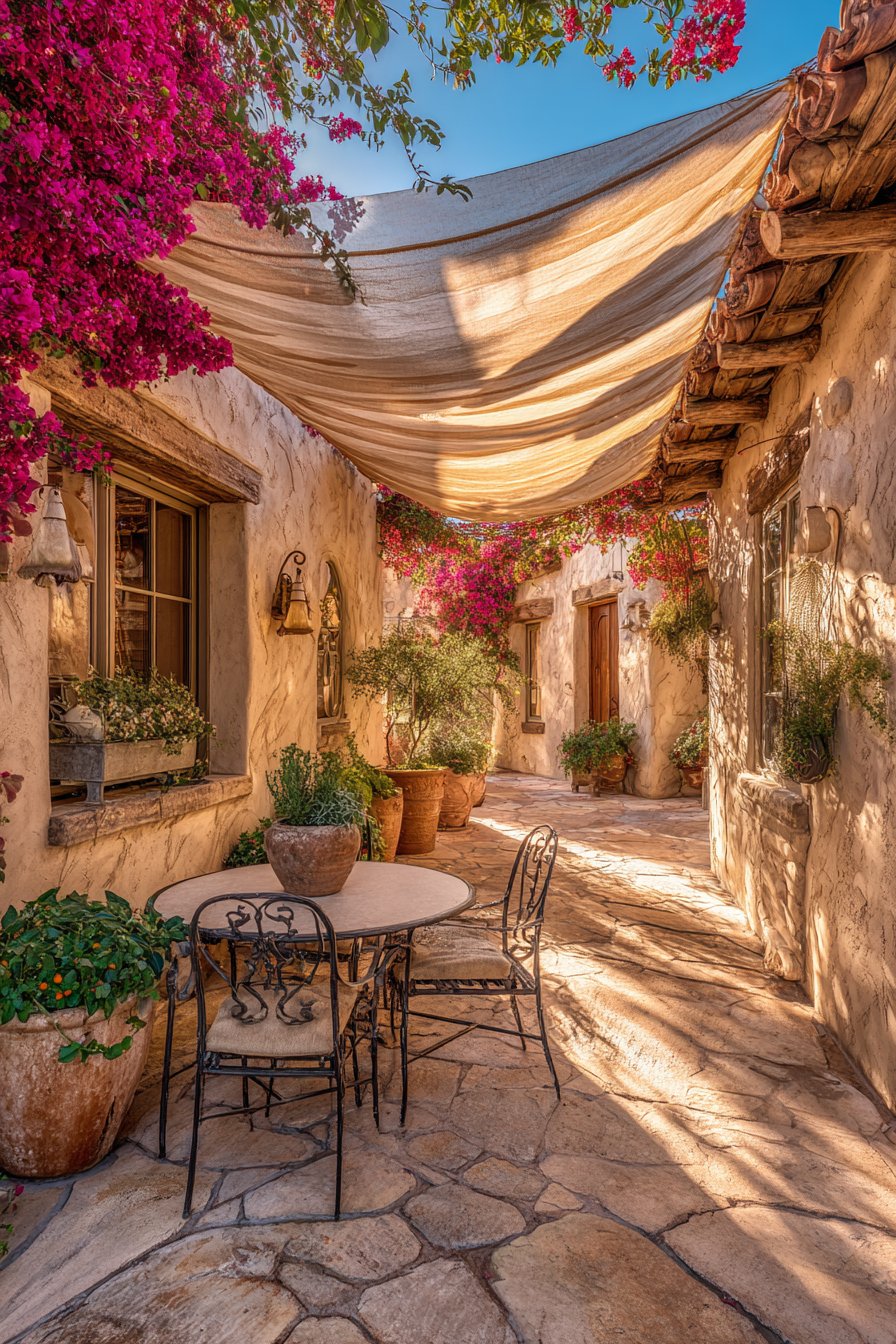
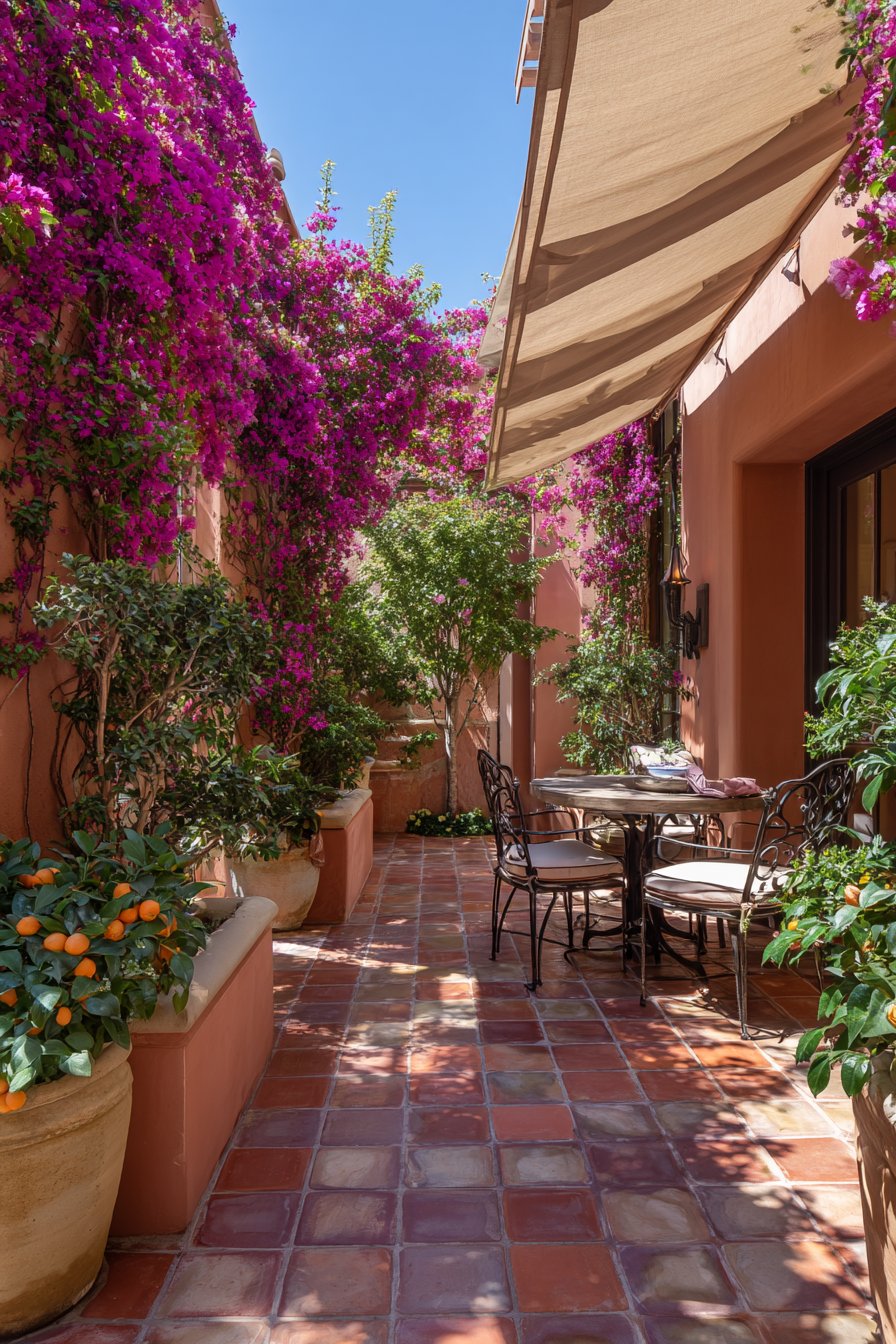
Terracotta tile flooring shows natural color variation and authentic edge chipping. Wrought iron furniture with decorative scrollwork creates classic Mediterranean elegance. A fabric shade sail in natural canvas provides flexible sun protection. Climbing bougainvillea in vibrant magenta cascades dramatically down the stucco wall.
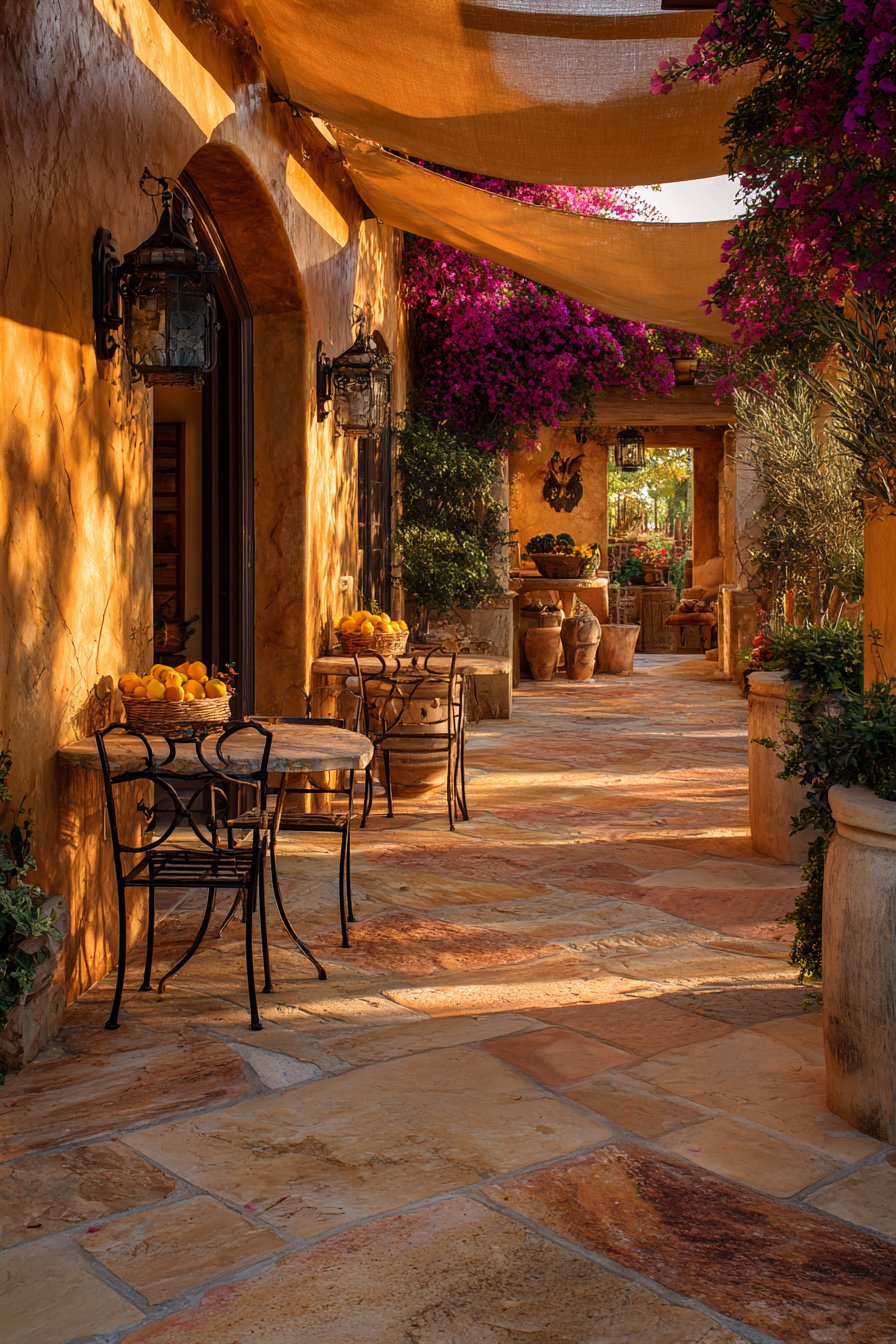
Ceramic pots hold productive citrus trees that provide both beauty and harvest. Late afternoon sunlight creates a warm terracotta glow throughout the entire space. The authentic aging on metal furniture adds character rather than appearing worn. Realistic plant growth patterns show established, thriving specimens.
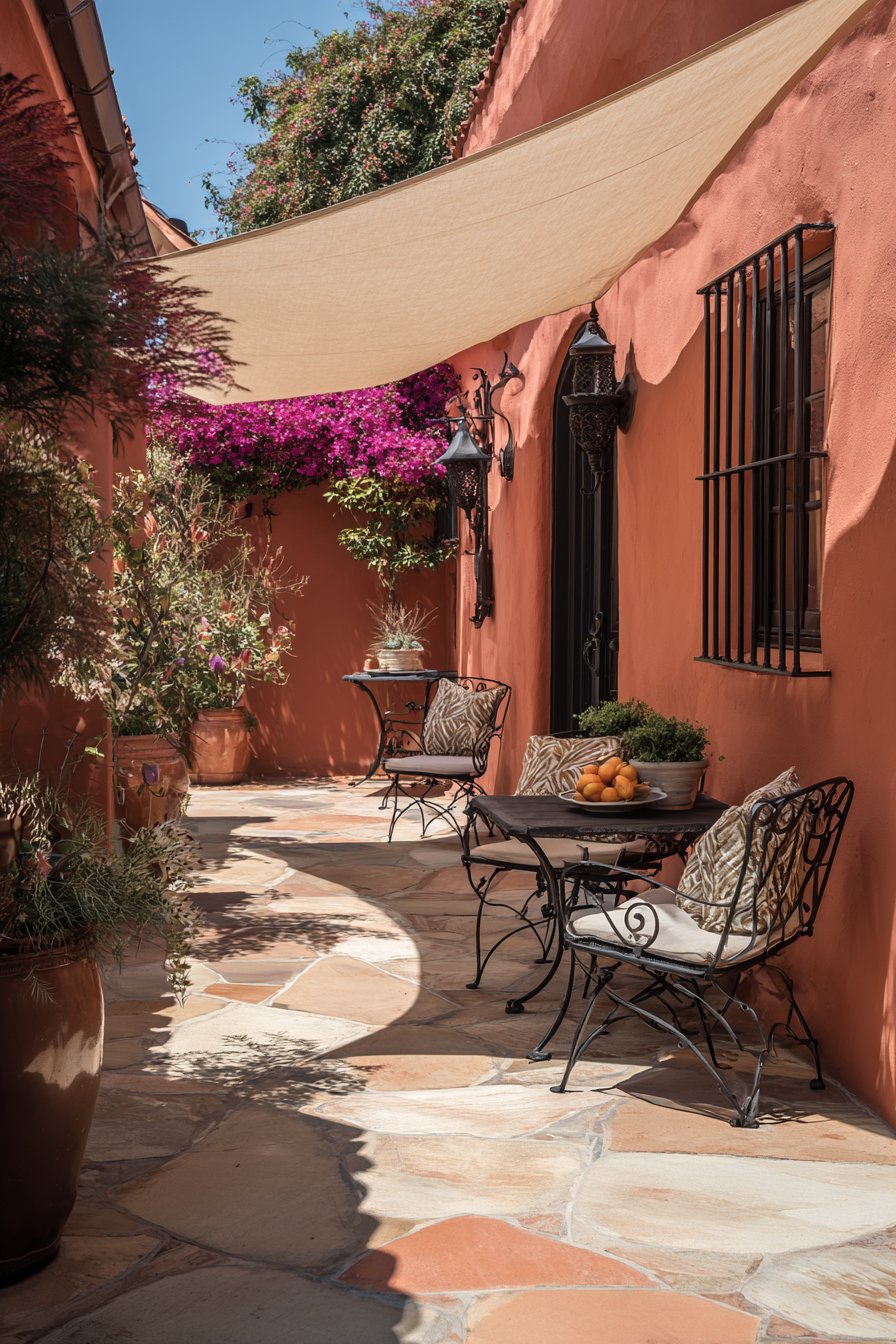
The terracotta tiles retain heat during the day and release warmth into evening. The wrought iron furniture withstands outdoor conditions for decades with minimal maintenance. The bougainvillea provides living color that changes intensity through seasons.
This design transports homeowners to Mediterranean coastlines through authentic material choices. The combination of terracotta, wrought iron, and flowering vines creates timeless appeal. The functional citrus trees add practical value to ornamental landscaping.
Key Design Tips:
- Install terracotta tiles with proper drainage to prevent water damage in freezing climates
- Apply rust-inhibiting treatments to wrought iron furniture annually for longevity
- Train bougainvillea on sturdy support structures as mature plants become heavy
- Choose dwarf citrus varieties for container growing in northern regions
- Position shade sails at angles to maximize coverage during peak sun hours
7. Minimalist Aluminum Elegance
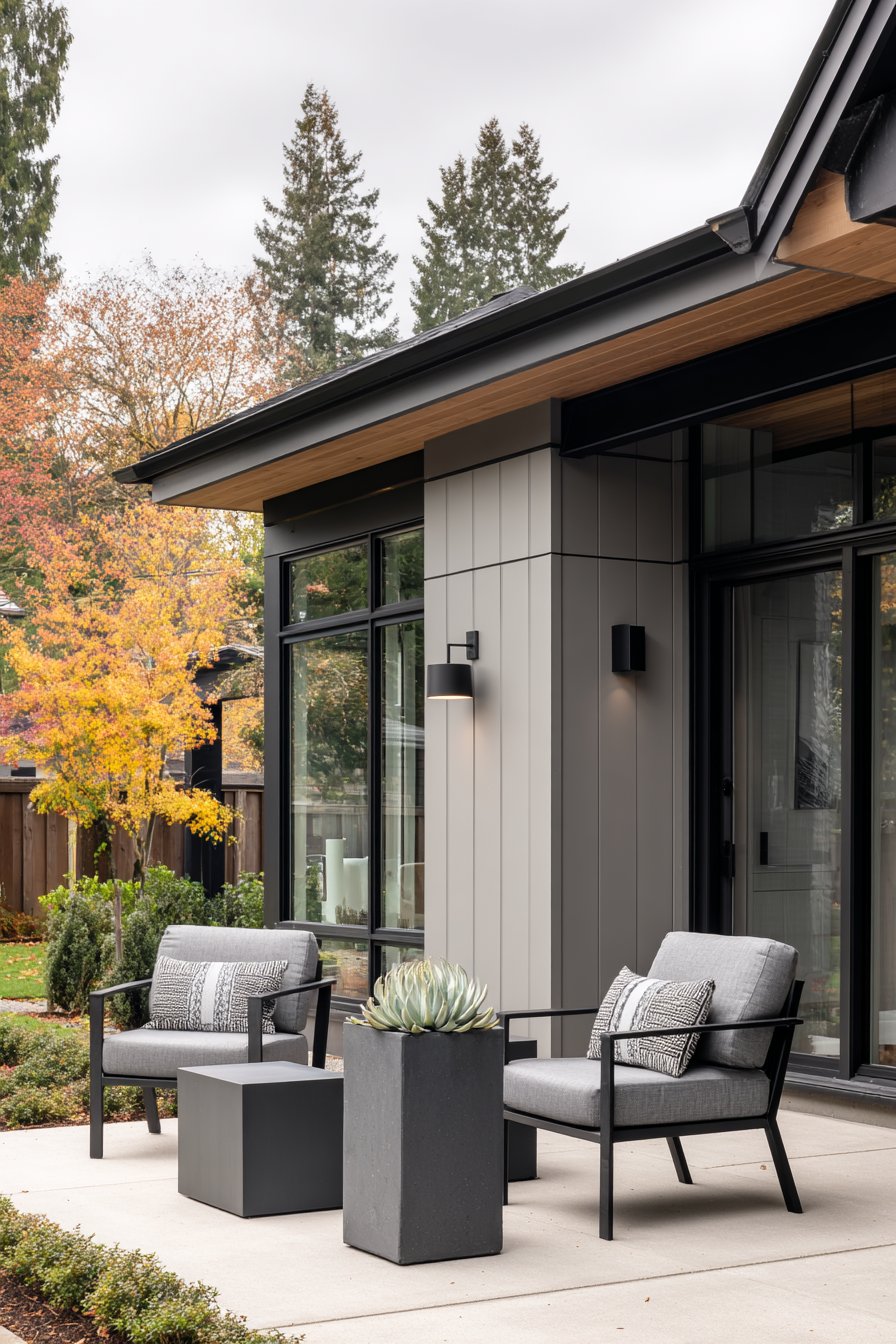
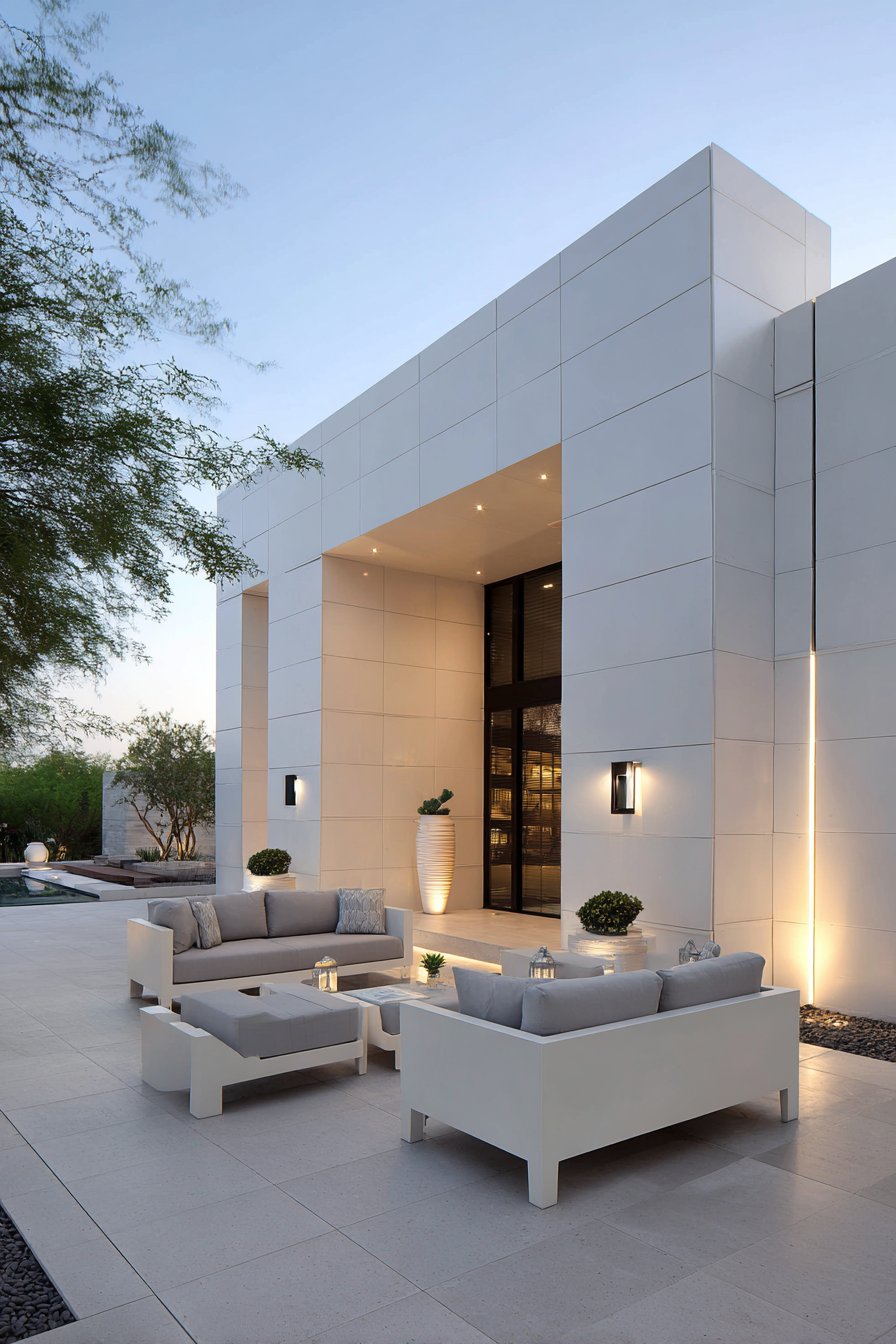
Sleek aluminum furniture with grey cushions sits on large format porcelain pavers. The concrete grey pavers create seamless visual continuity with contemporary architecture. A single statement planter with architectural succulent serves as the focal point. Integrated LED strip lighting runs along patio edges for subtle illumination.
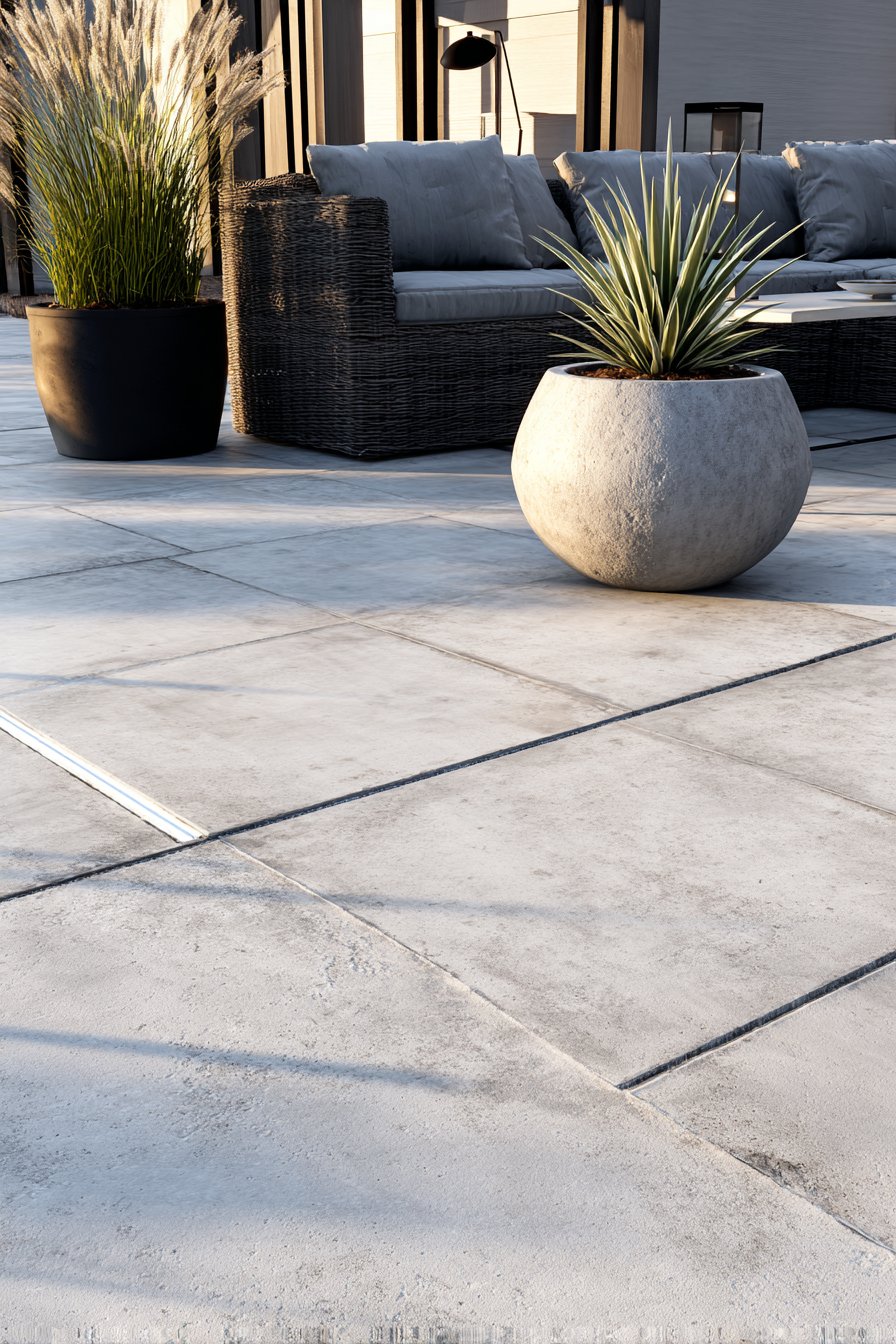
Clean lines dominate the design without unnecessary decorative elements. One carefully placed outdoor floor lamp provides task lighting for evening reading. The sophisticated simplicity appeals to modern aesthetic sensibilities. Subtle texture variations in porcelain surfaces add interest without breaking minimalist principles.
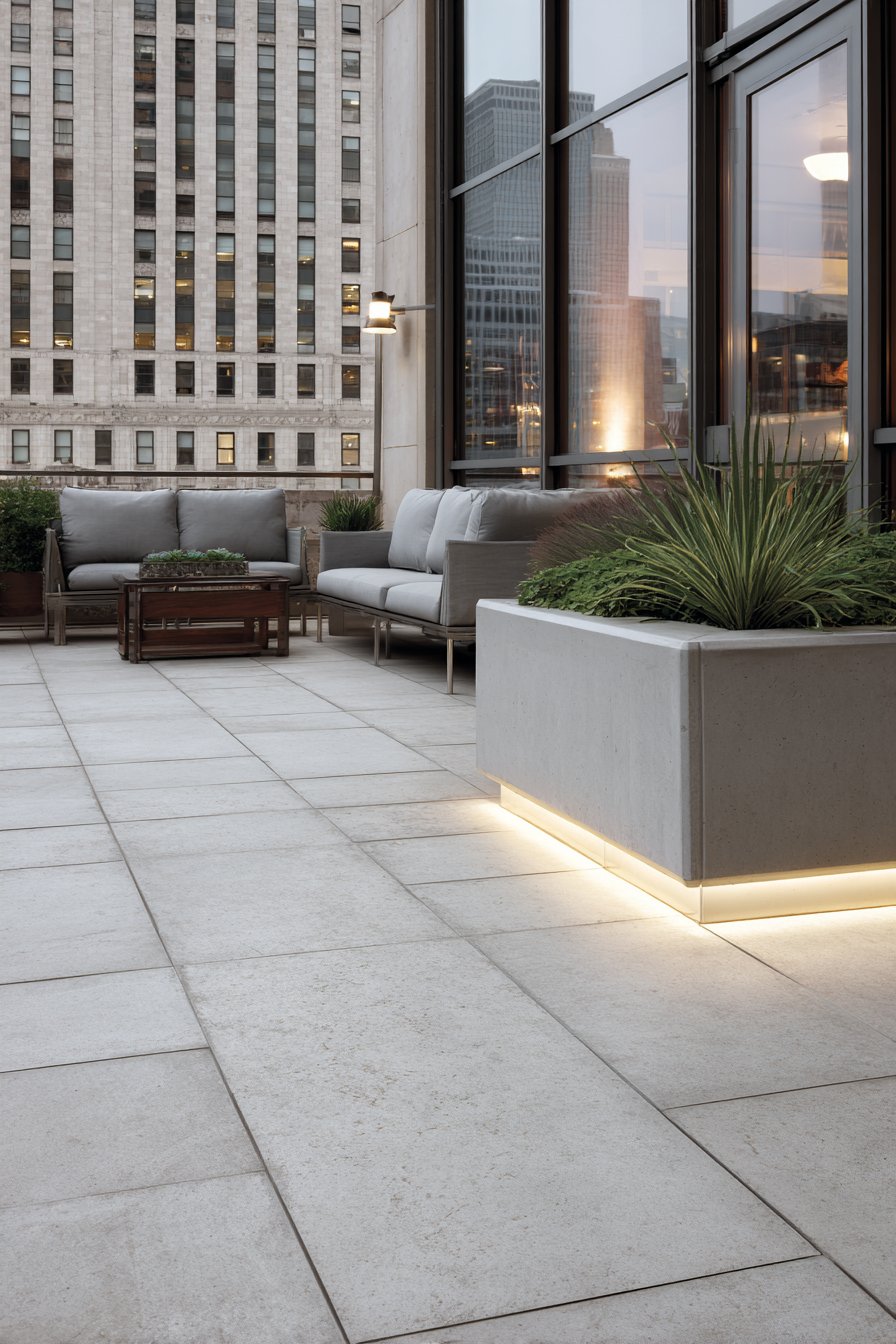
The aluminum furniture requires virtually no maintenance while resisting rust completely. The porcelain pavers never need sealing and maintain their appearance indefinitely. The single succulent demands minimal care, fitting the low-maintenance philosophy perfectly.
This design suits homeowners who appreciate restraint and intentionality in design choices. The minimalist approach creates calm outdoor environments free from visual clutter. The integrated lighting provides function without adding visible fixtures.
Key Design Tips:
- Choose aluminum furniture with powder-coated finishes for color longevity
- Select porcelain pavers in large formats to minimize grout lines
- Install LED strips on separate circuits from other lighting for layering control
- Choose architectural succulents like agave for dramatic sculptural impact
- Maintain strict editing of accessories to preserve minimalist aesthetic
8. Cottage Garden Shabby Chic
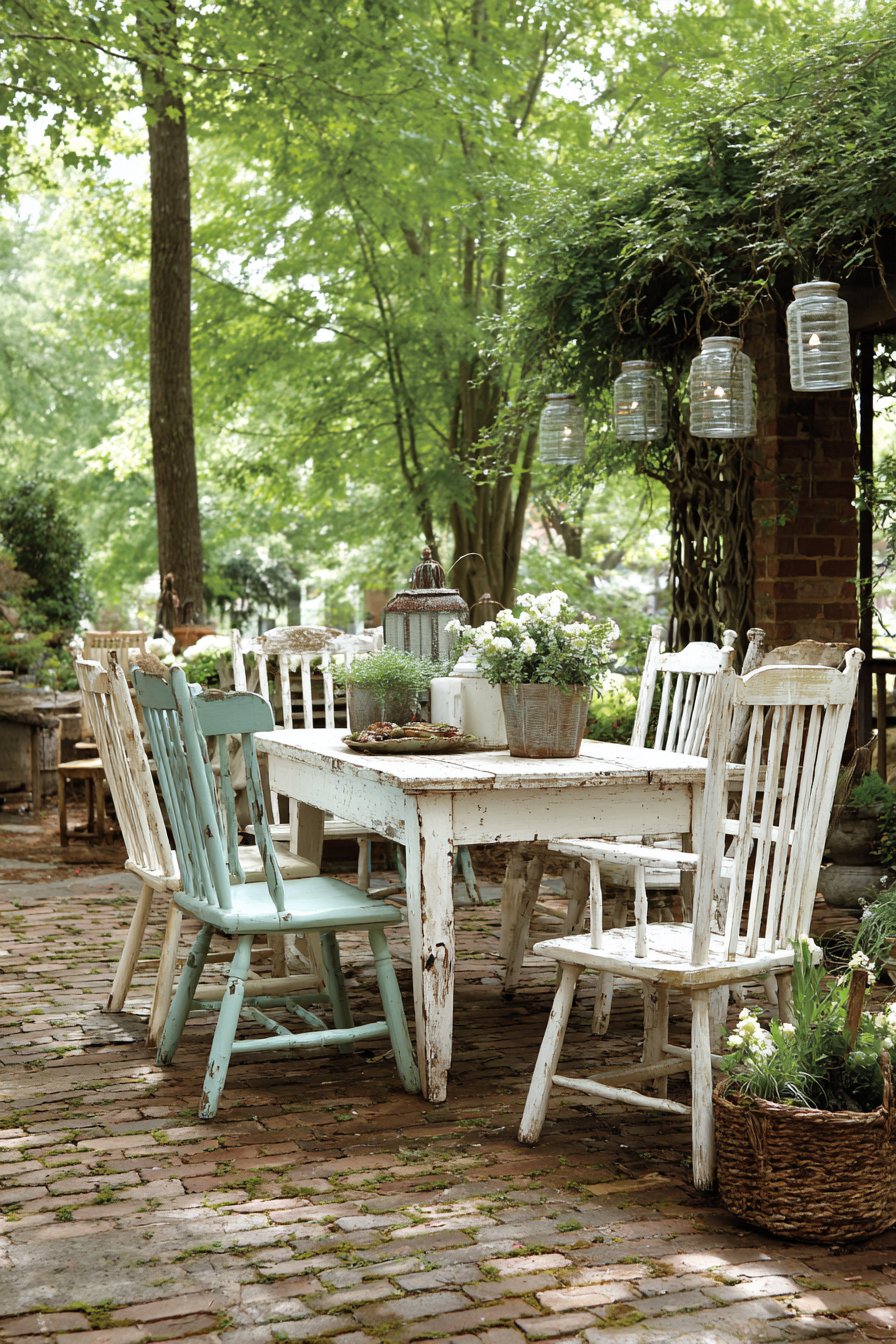
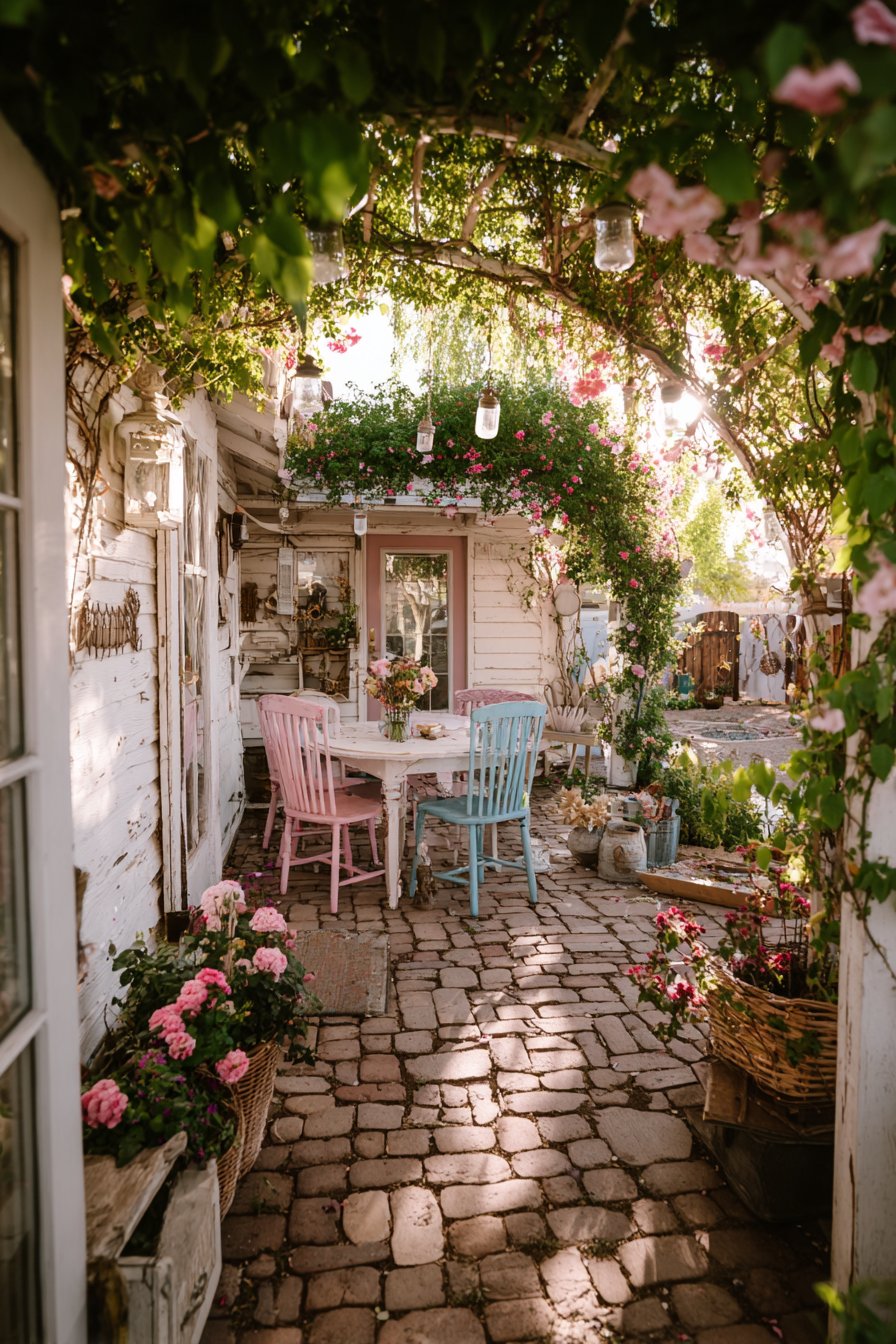
Mismatched vintage wooden chairs painted in soft pastels surround a distressed white table. The eclectic furniture collection tells stories through layers of paint and weathering. Climbing roses on a trellis provide natural privacy and romantic fragrance. Mason jar lanterns hang from shepherd hooks, casting flickering candlelight.
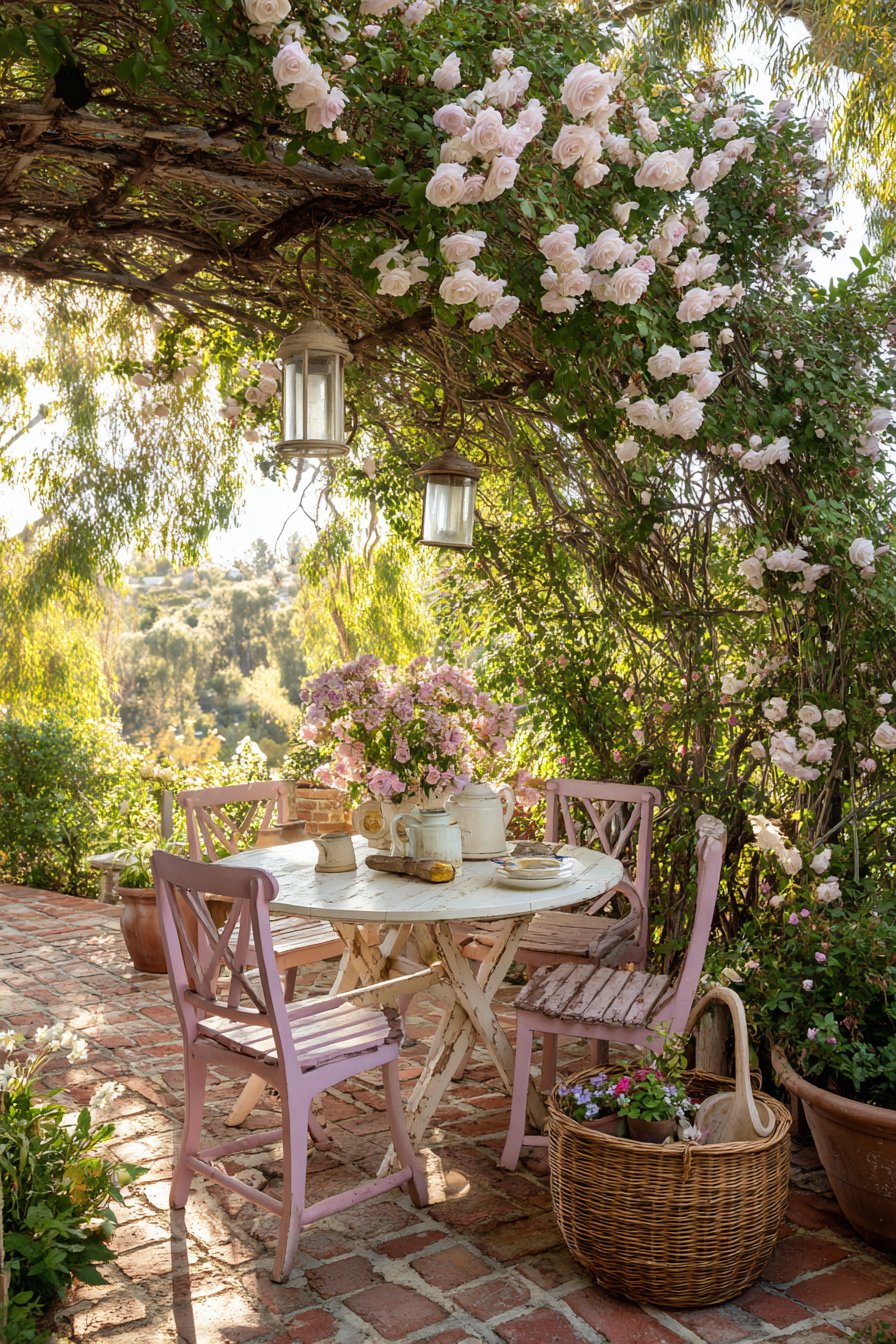
The brick paver patio shows moss growth in crevices and natural weathering patterns. Wicker baskets hold gardening tools and fresh-cut flowers within easy reach. Golden hour lighting enhances the romantic shabby chic aesthetic beautifully. Layered vintage elements create collected-over-time authenticity.
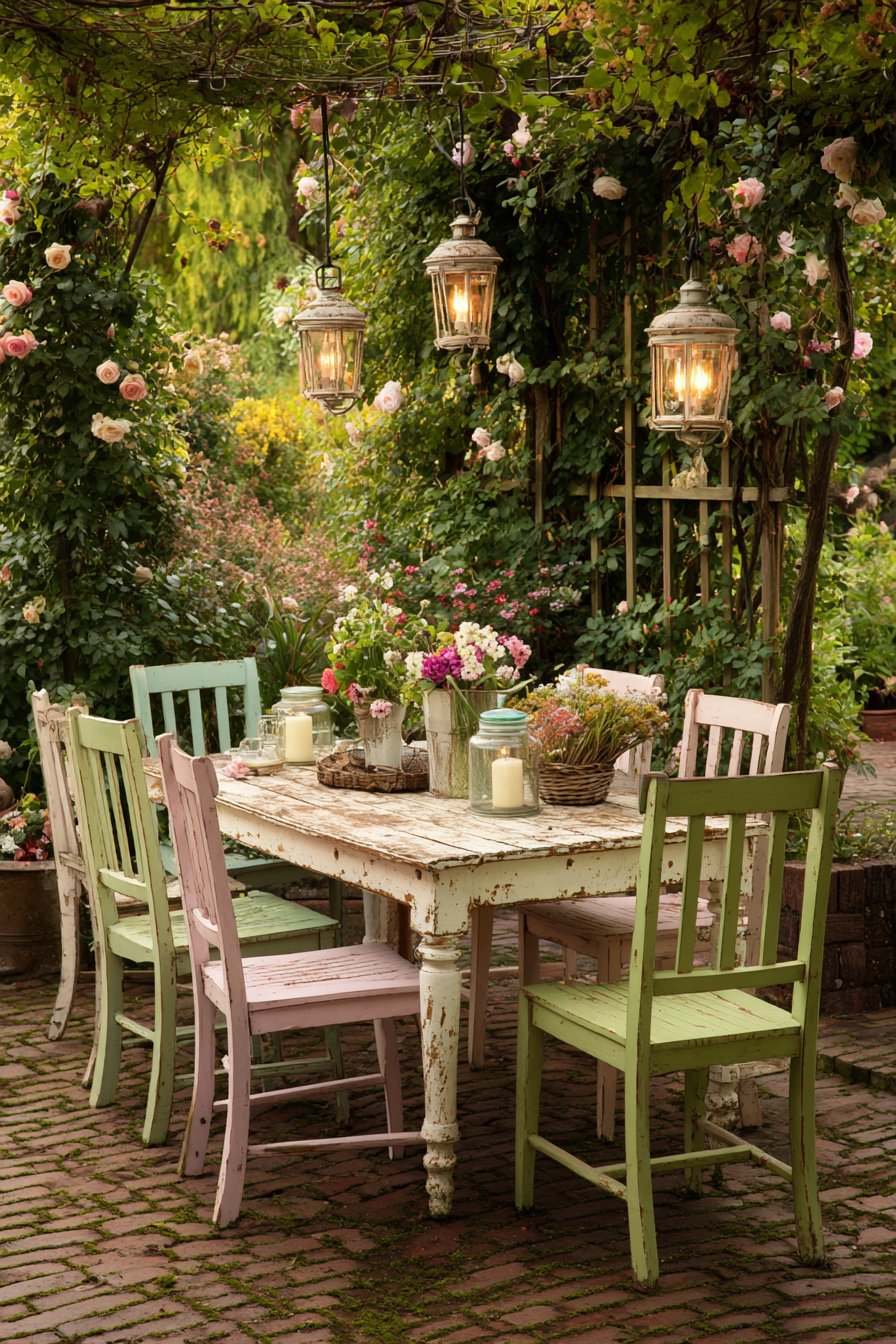
The mismatched furniture eliminates pressure for perfect coordination. The climbing roses attract pollinators while providing seasonal blooms. The brick pavers develop character through organic aging processes.
This design appeals to homeowners who value romantic, collected aesthetics over modern uniformity. The vintage elements create warmth and personality that new furniture cannot replicate. The cottage garden style embraces imperfection as part of its charm.
Key Design Tips:
- Collect vintage chairs from estate sales and flea markets for authentic pieces
- Apply milk paint for soft, matte finishes that age gracefully
- Plant climbing roses in spring for establishment before summer heat
- Use battery-operated candles in mason jars for safe ambient lighting
- Allow natural moss growth to enhance aged brick character
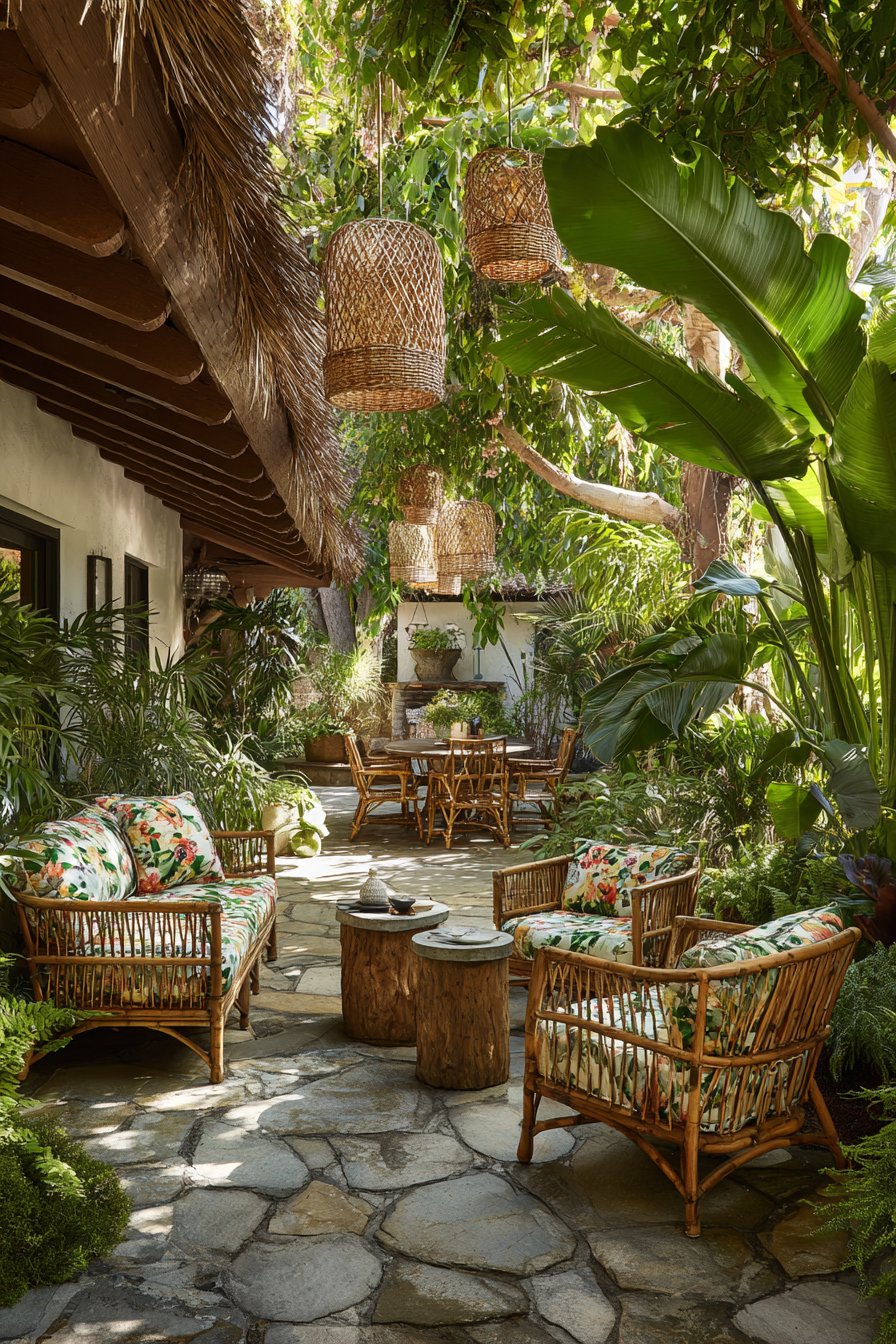
9. Tropical Bamboo Oasis
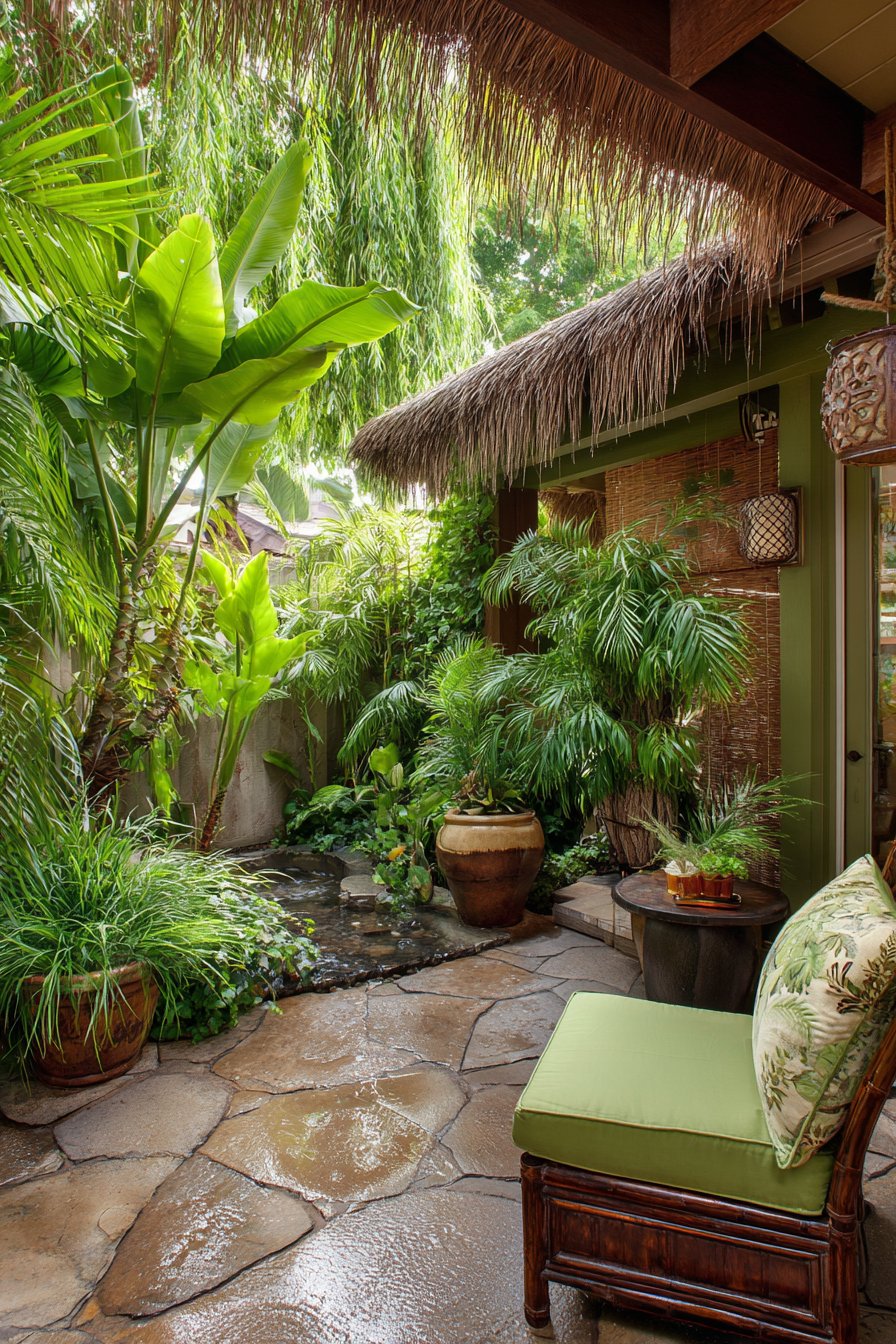
Bamboo furniture with deep seat cushions features bold botanical print fabrics. A thatched roof overhang provides essential shade in tropical climates. Banana leaf plants in oversized planters create lush backdrops. Natural stone pavers with irregular edges show realistic wet spots from watering.
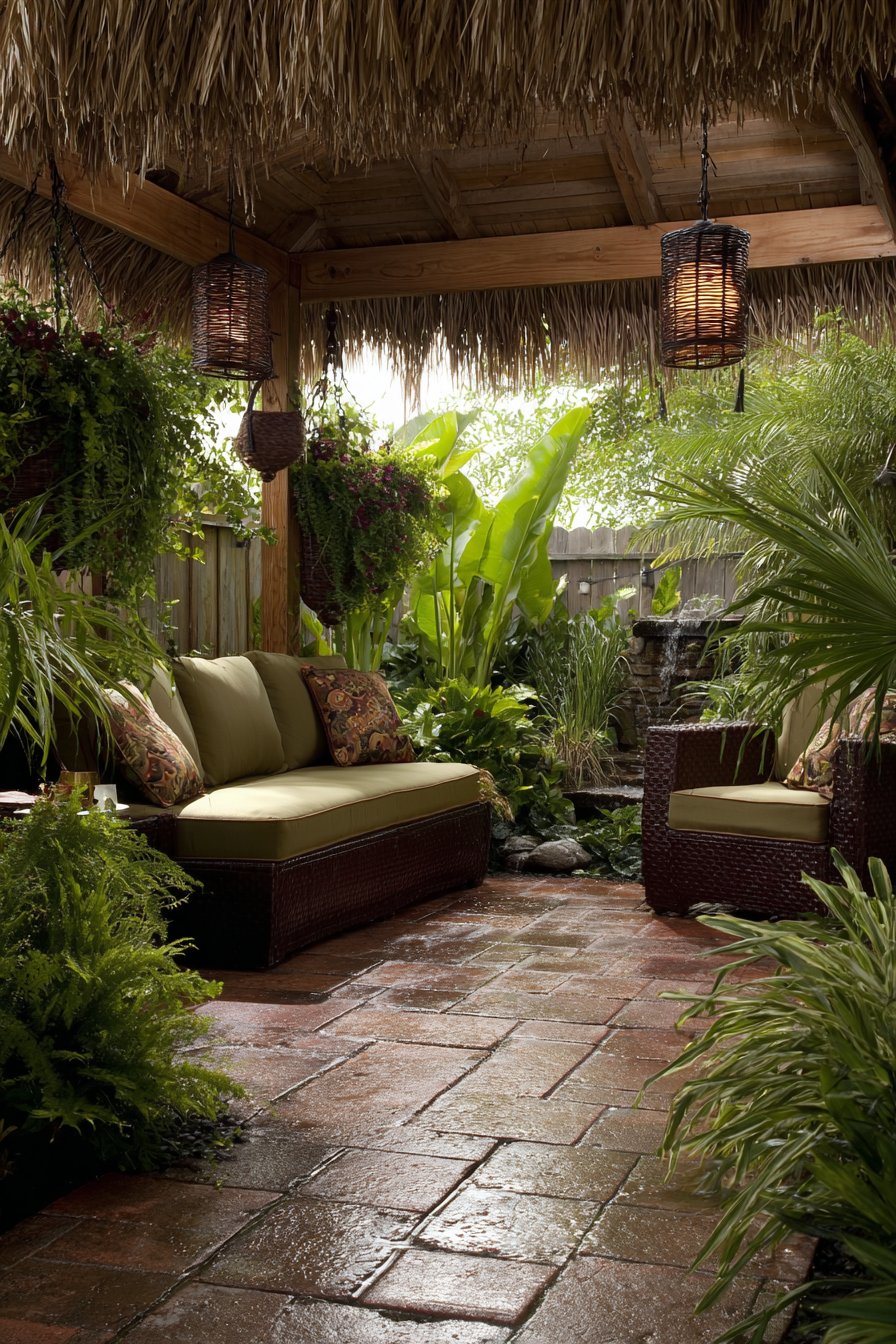
Rattan pendant lights hang from bamboo beams, adding vertical visual interest. A small water feature provides soothing movement and sound to the space. Midday filtered light through foliage creates natural dappled shadow patterns. Layered tropical plantings achieve realistic humidity effects on surfaces.
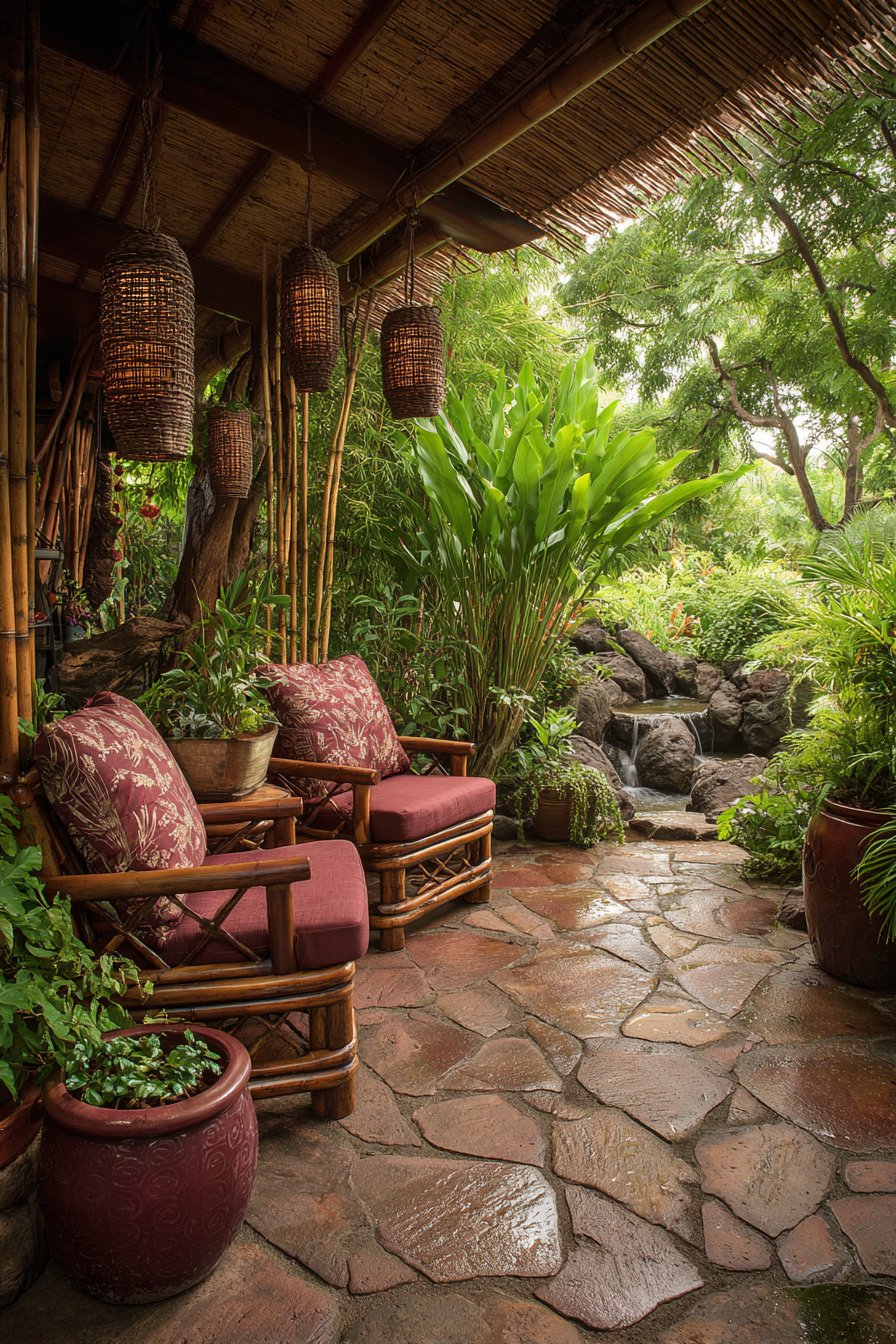
The bamboo materials offer sustainable alternatives to hardwood furniture. The botanical prints tie indoor tropical themes to outdoor reality. The water feature creates microclimate cooling through evaporation.
This design transports homeowners to tropical resort destinations through plant selections and materials. The layered plantings create privacy while maintaining lush visual appeal. The natural cooling effects reduce reliance on artificial climate control.
Key Design Tips:
- Choose bamboo furniture treated for outdoor moisture resistance
- Select cushion fabrics specifically rated for high humidity environments
- Install misting systems near seating areas for cooling in hot climates
- Plant multiple banana varieties for continuous leaf interest
- Position water features where they can be heard from primary seating
10. Industrial Concrete and Metal
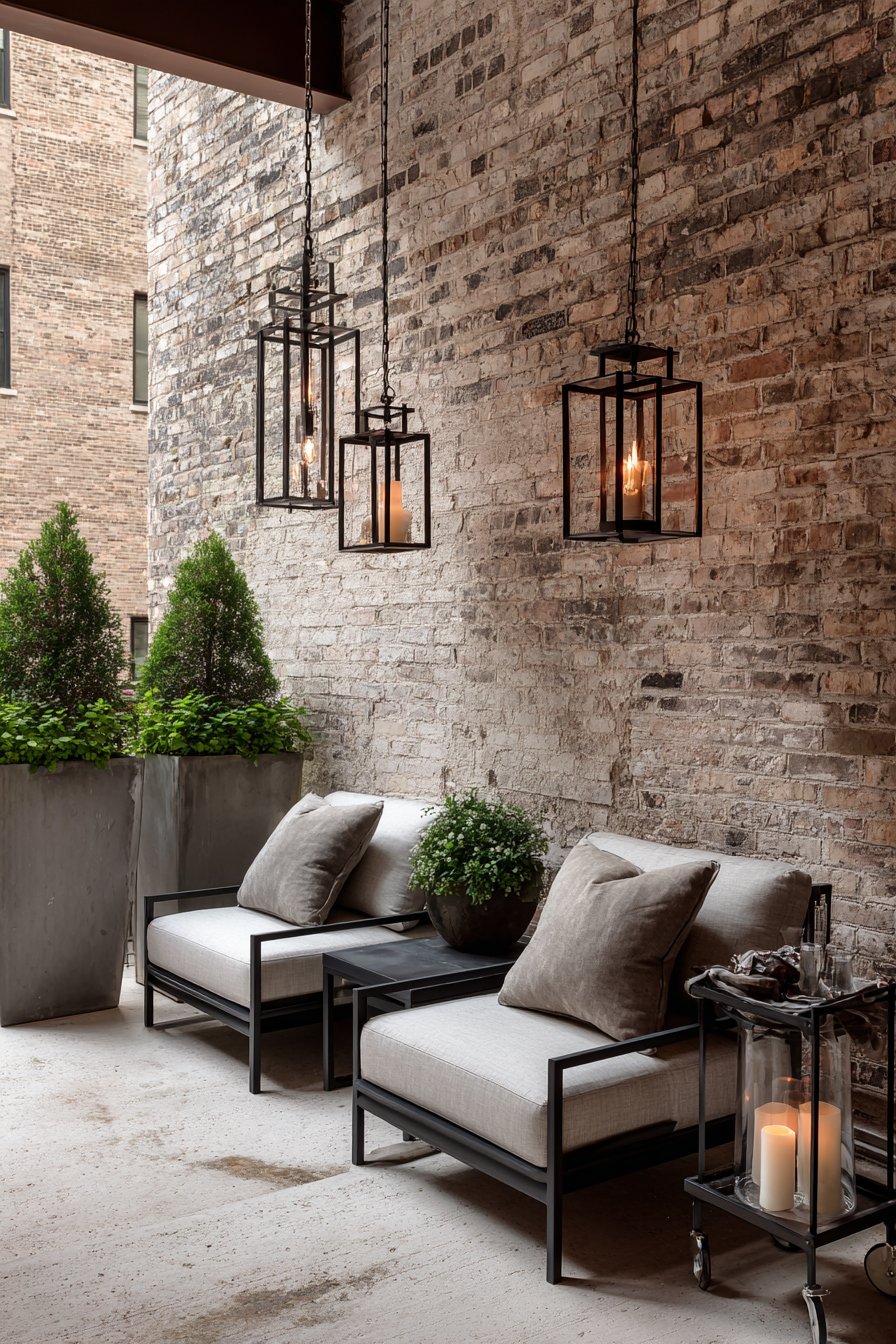
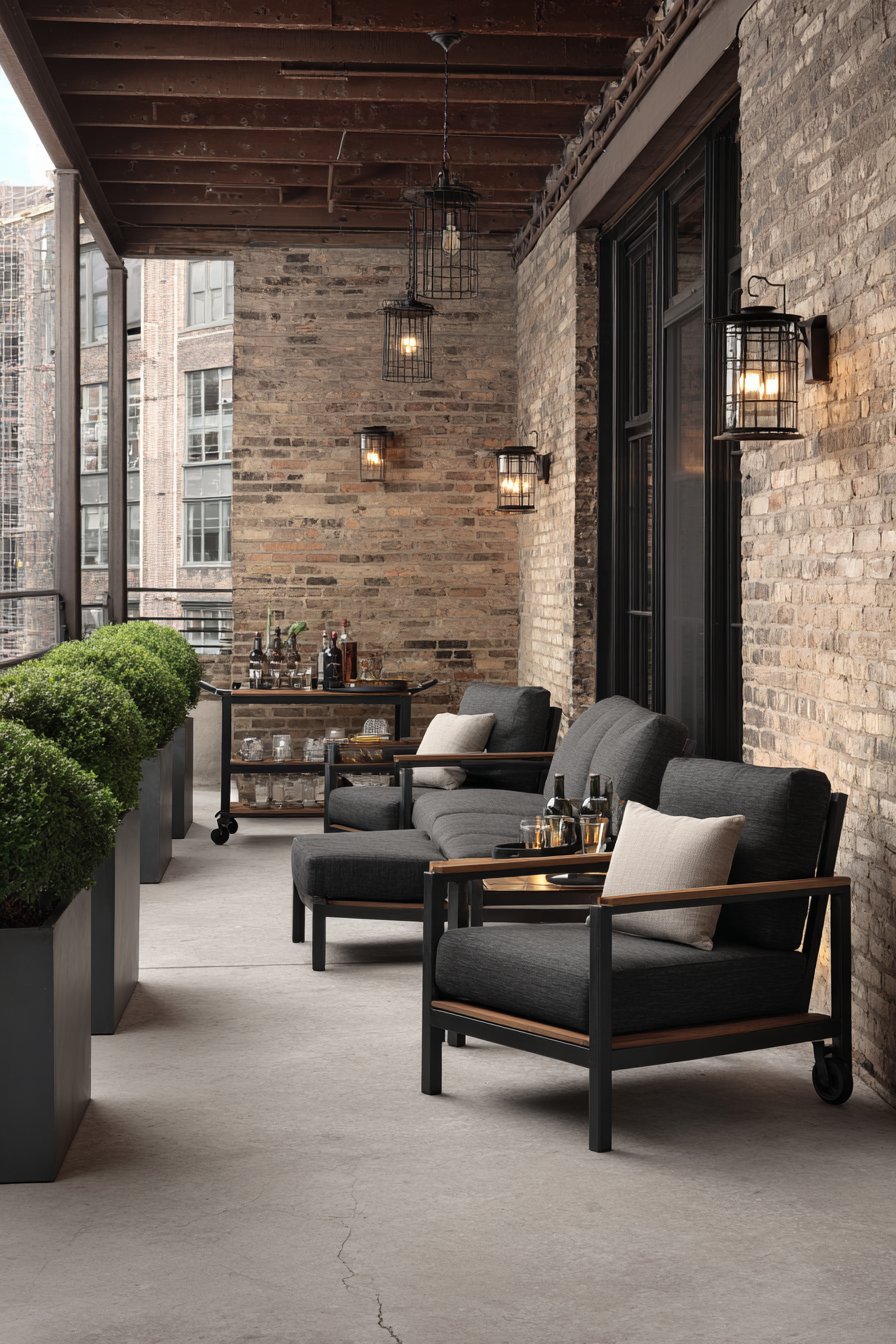
Poured concrete flooring shows authentic trowel marks and natural cracking patterns. Black metal furniture with minimal cushioning creates utilitarian aesthetic appeal. Exposed brick walls provide textured backdrops for the industrial styling. Edison bulb fixtures in black metal cages provide overhead illumination.
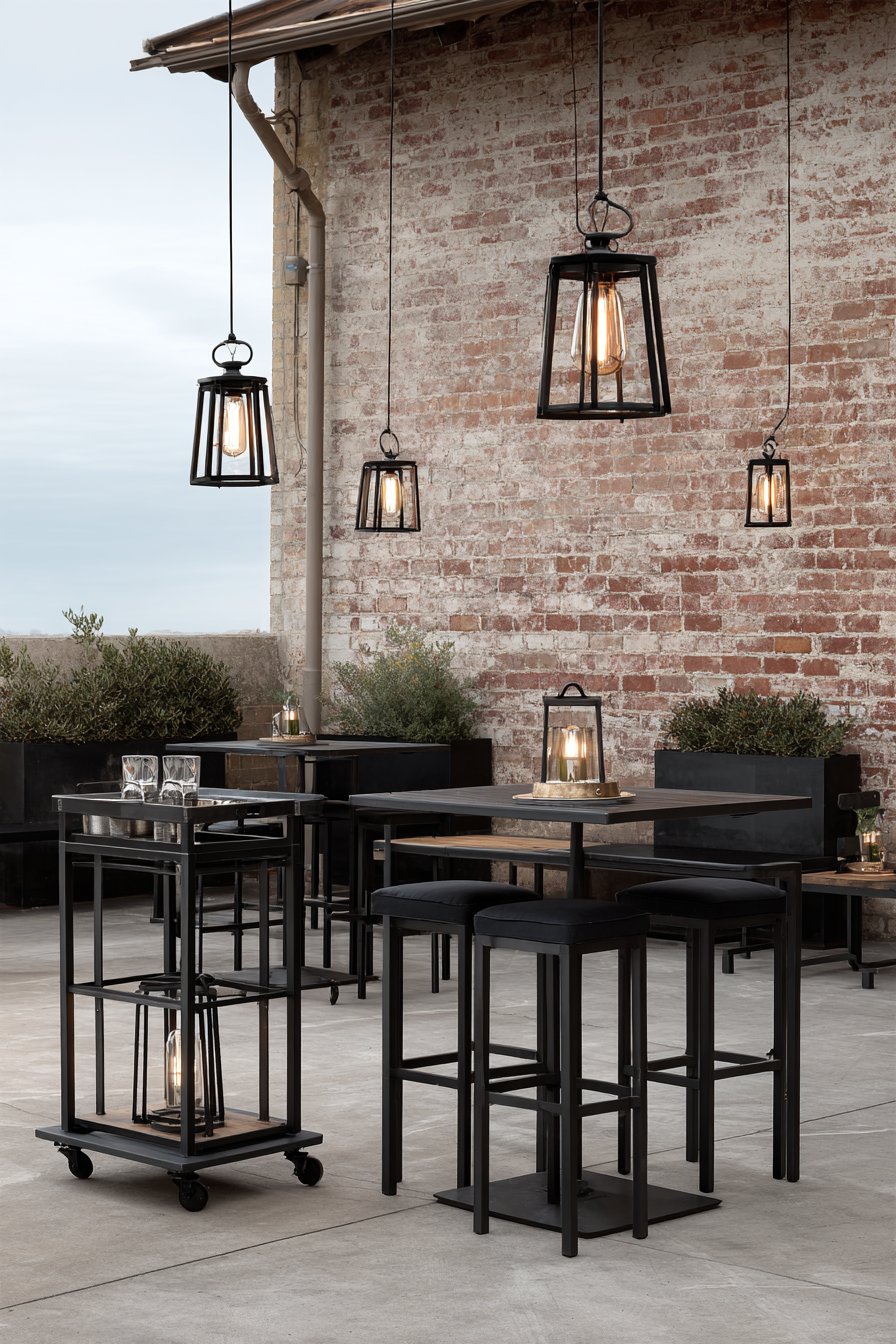
Galvanized metal planters hold simple boxwood shrubs for geometric green contrast. A rolling bar cart with metal frame serves as mobile serving station. Overcast day lighting creates even illumination perfect for showcasing raw materials. Authentic material finishes celebrate rather than hide construction elements.
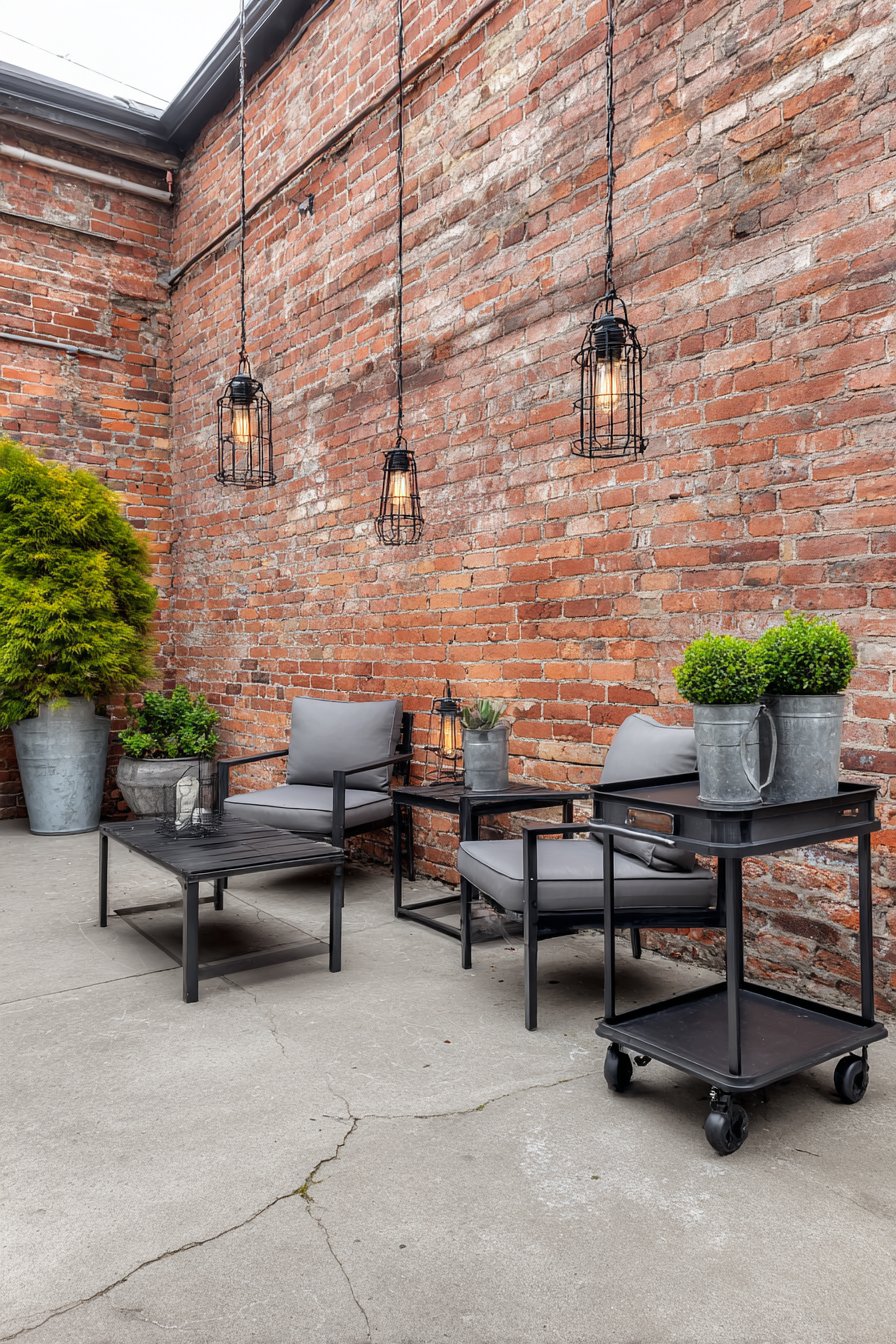
The concrete flooring requires no maintenance beyond occasional sealing. The metal furniture withstands heavy use without showing wear. The rolling cart adds flexibility for different entertainment configurations.
This design appeals to homeowners who appreciate honest materials and utilitarian beauty. The industrial aesthetic works particularly well with urban loft architecture. The minimal cushioning emphasizes form over excessive comfort.
Key Design Tips:
- Seal concrete floors annually to prevent moisture absorption and staining
- Choose powder-coated metal furniture to prevent rust in damp conditions
- Embrace natural concrete cracking as part of the authentic aesthetic
- Select compact boxwoods that maintain shape with minimal pruning
- Use furniture pads on metal feet to prevent concrete scratching
11. Bohemian Floor Cushion Lounge
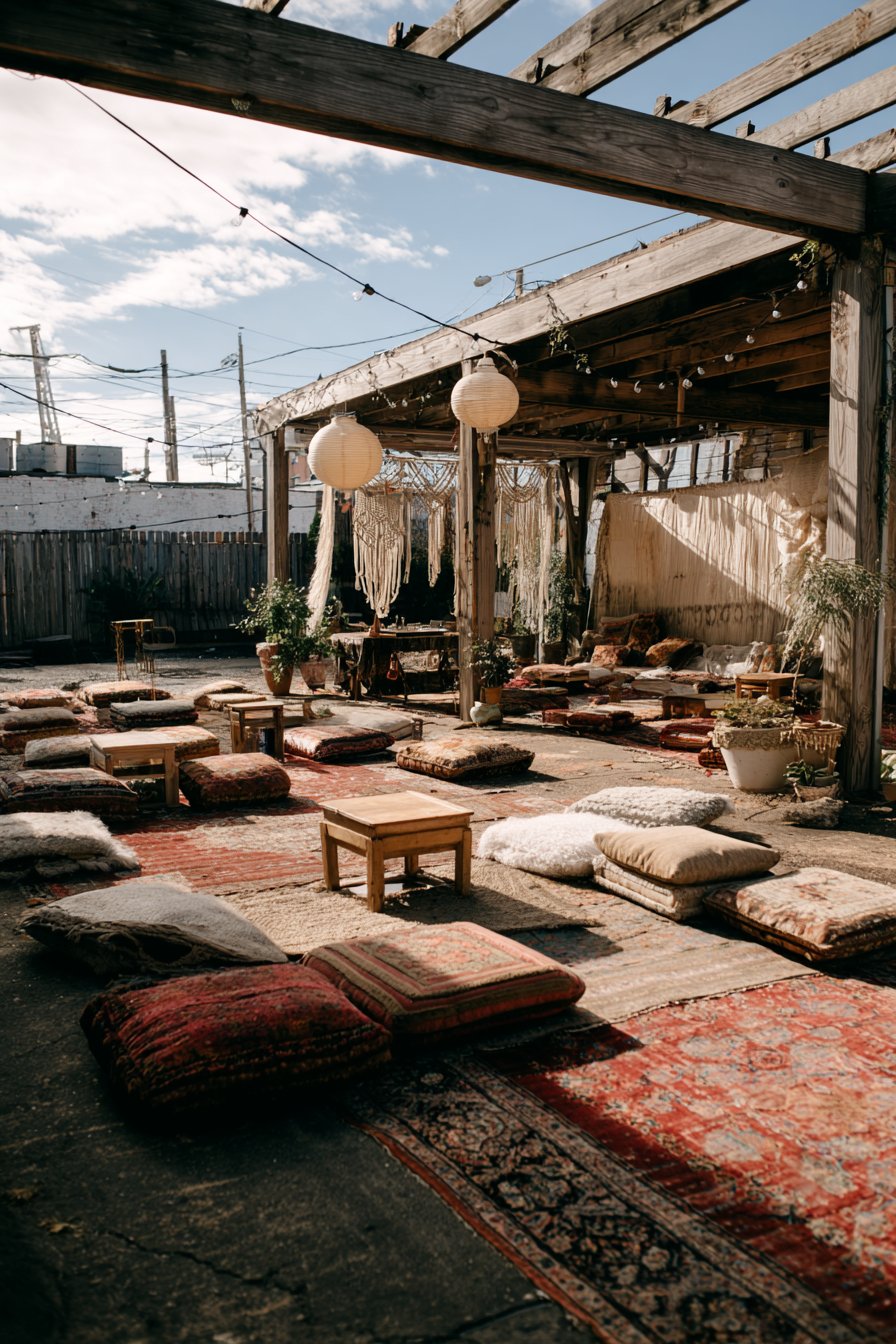
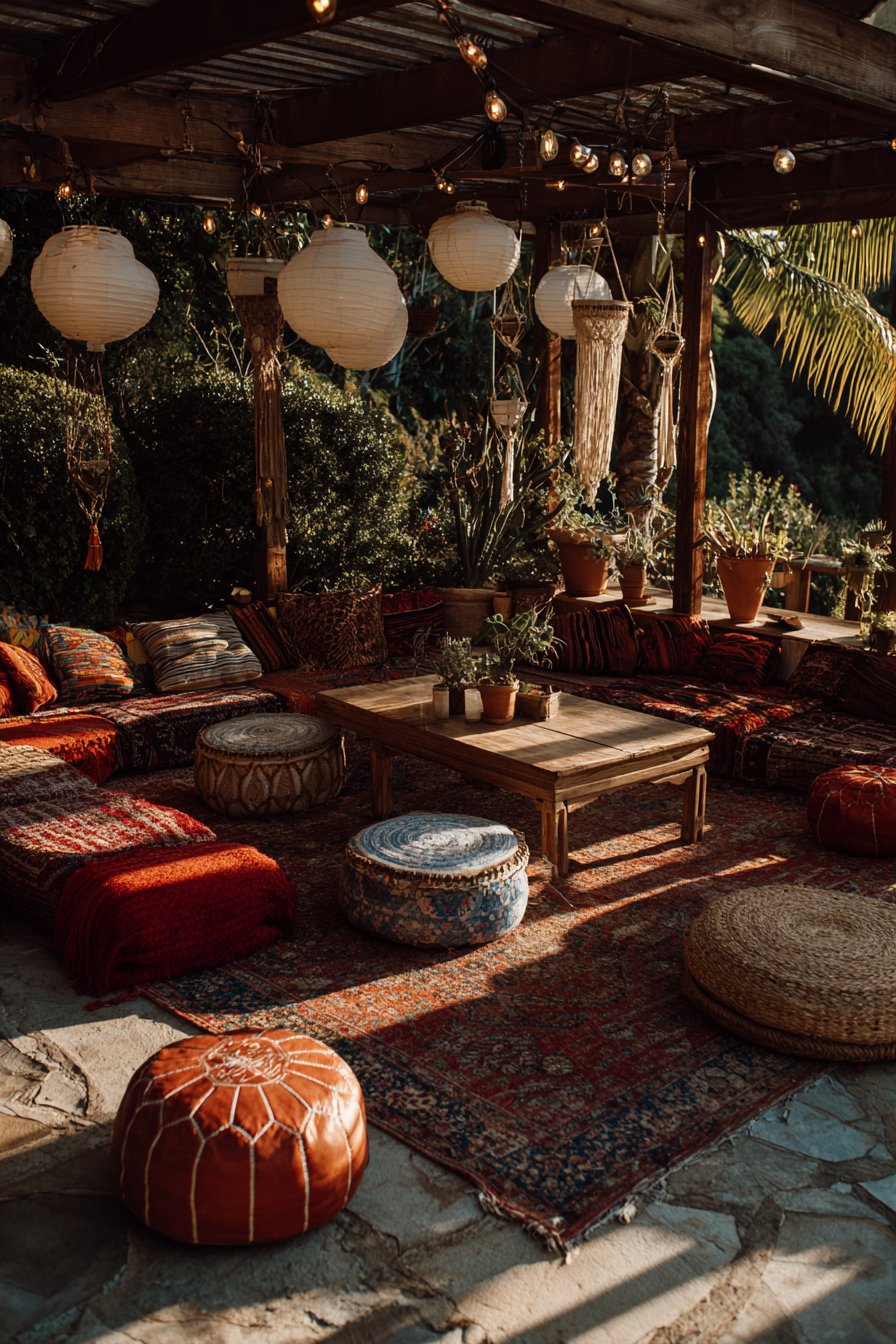
Low-profile seating with colorful floor cushions and poufs creates relaxed atmosphere. Layered vintage rugs show visible wear patterns that add authentic character. Macramé plant hangers suspend from wooden pergola beams at varying heights. String lights and paper lanterns create ambient lighting layers.
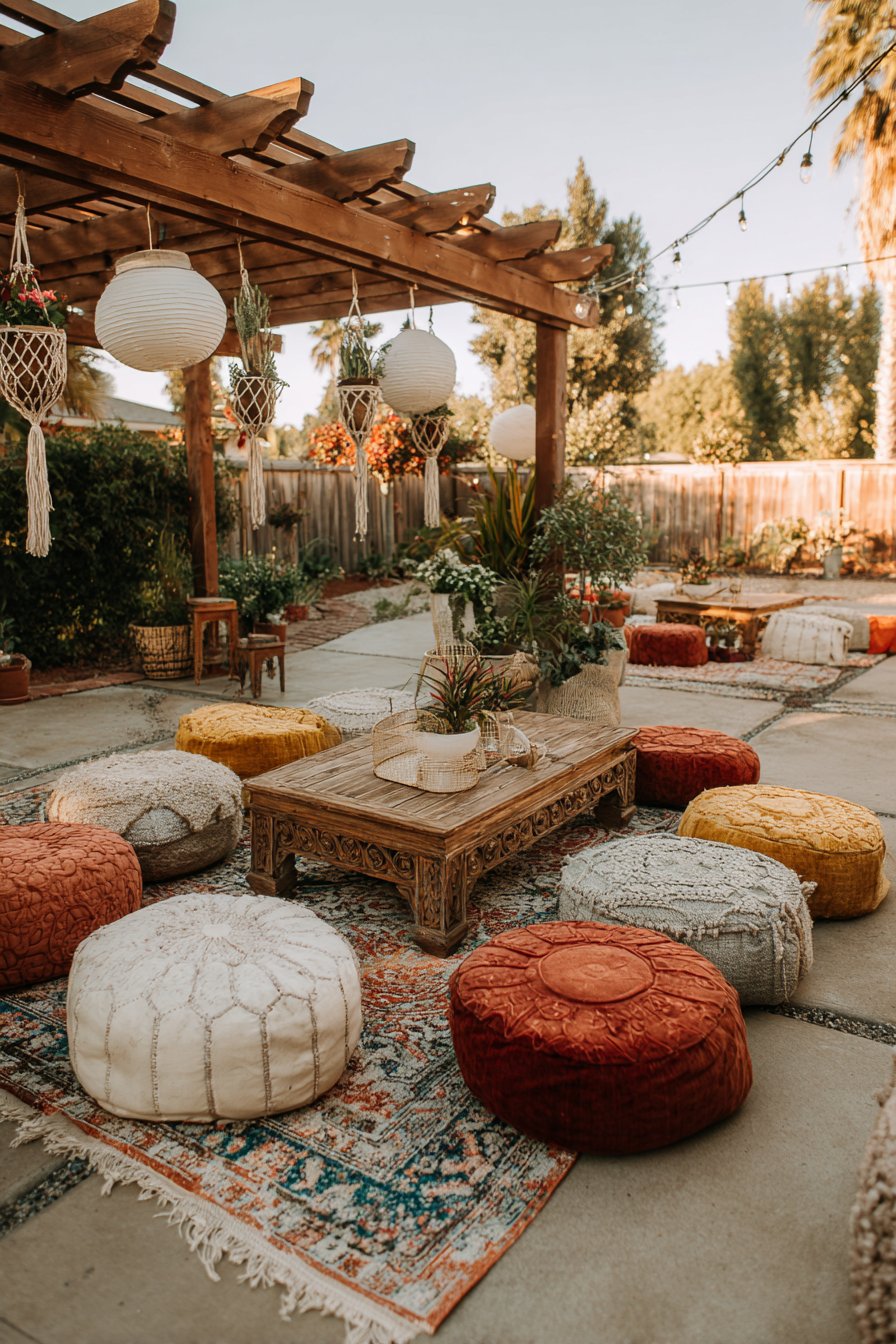
Mixed planters in ceramic, terracotta, and woven baskets hold various succulents. Natural wood furniture shows sun-bleaching and prominent grain texture. Late afternoon light creates warm glows on textile surfaces. Eclectic layering achieves collected-over-time authenticity.
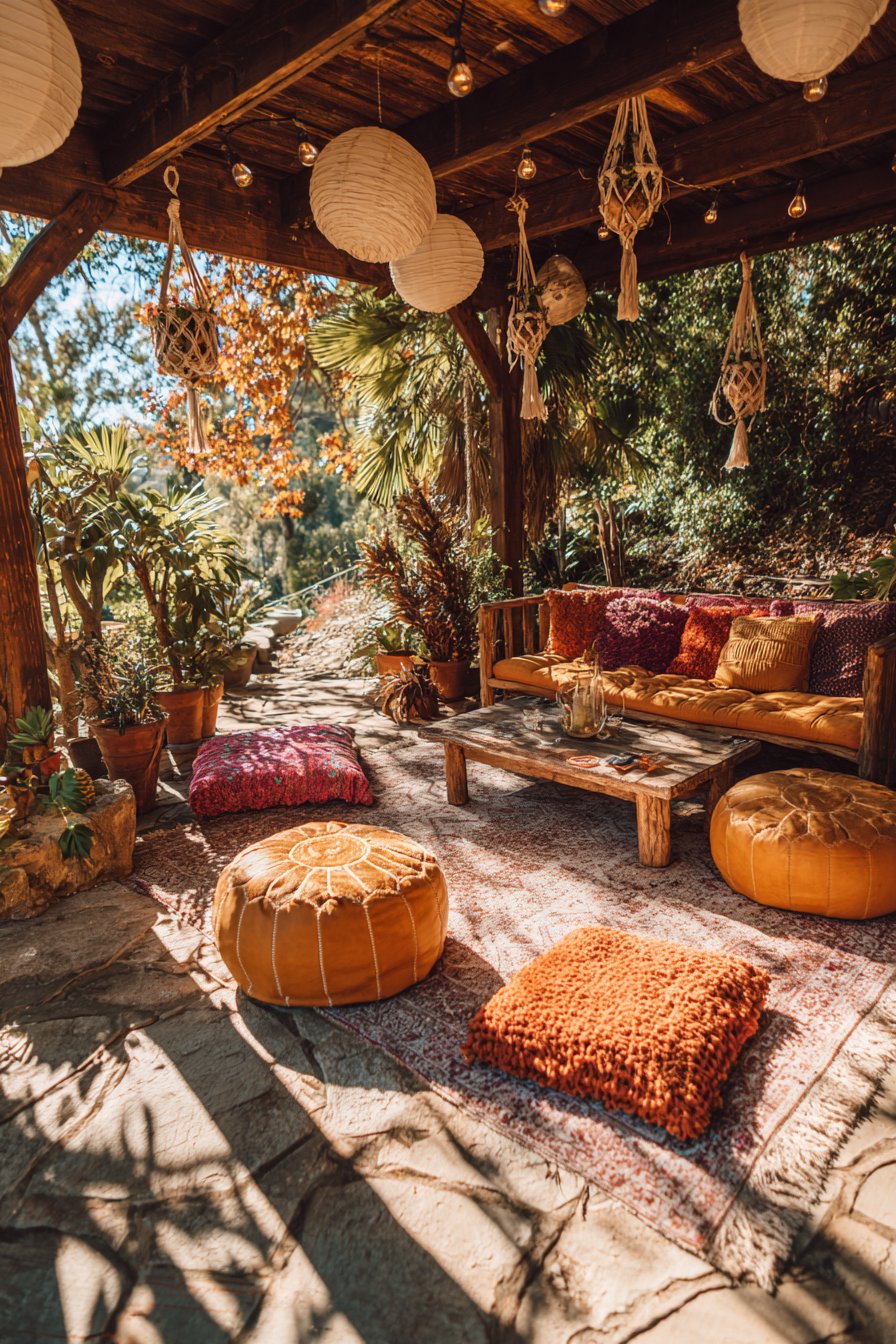
The floor seating encourages casual, relaxed social interaction. The layered rugs provide comfort while adding pattern and color. The varied planters eliminate matching sets in favor of personal collection.
This design suits homeowners who embrace eclectic, artistic lifestyle choices. The bohemian aesthetic celebrates global influences and personal expression. The low-maintenance succulents fit the carefree lifestyle philosophy.
Key Design Tips:
- Layer outdoor rugs in complementary patterns for bohemian depth
- Choose floor cushions with removable covers for washing convenience
- Mix plant containers in odd numbers for visual balance
- Install macramé hangers at different heights to create dimension
- Select fade-resistant fabrics for cushions exposed to direct sunlight
12. Formal Symmetrical Elegance
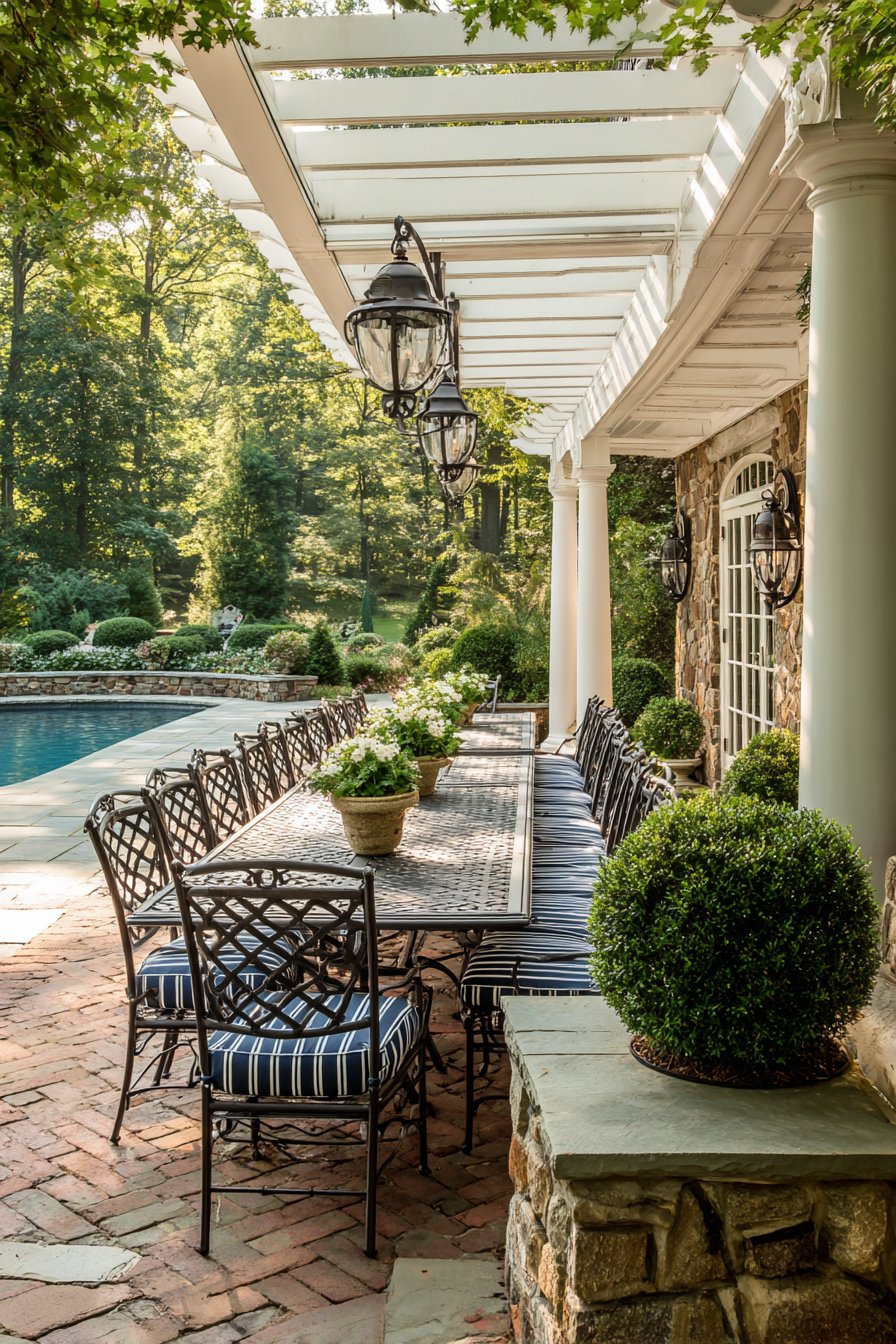
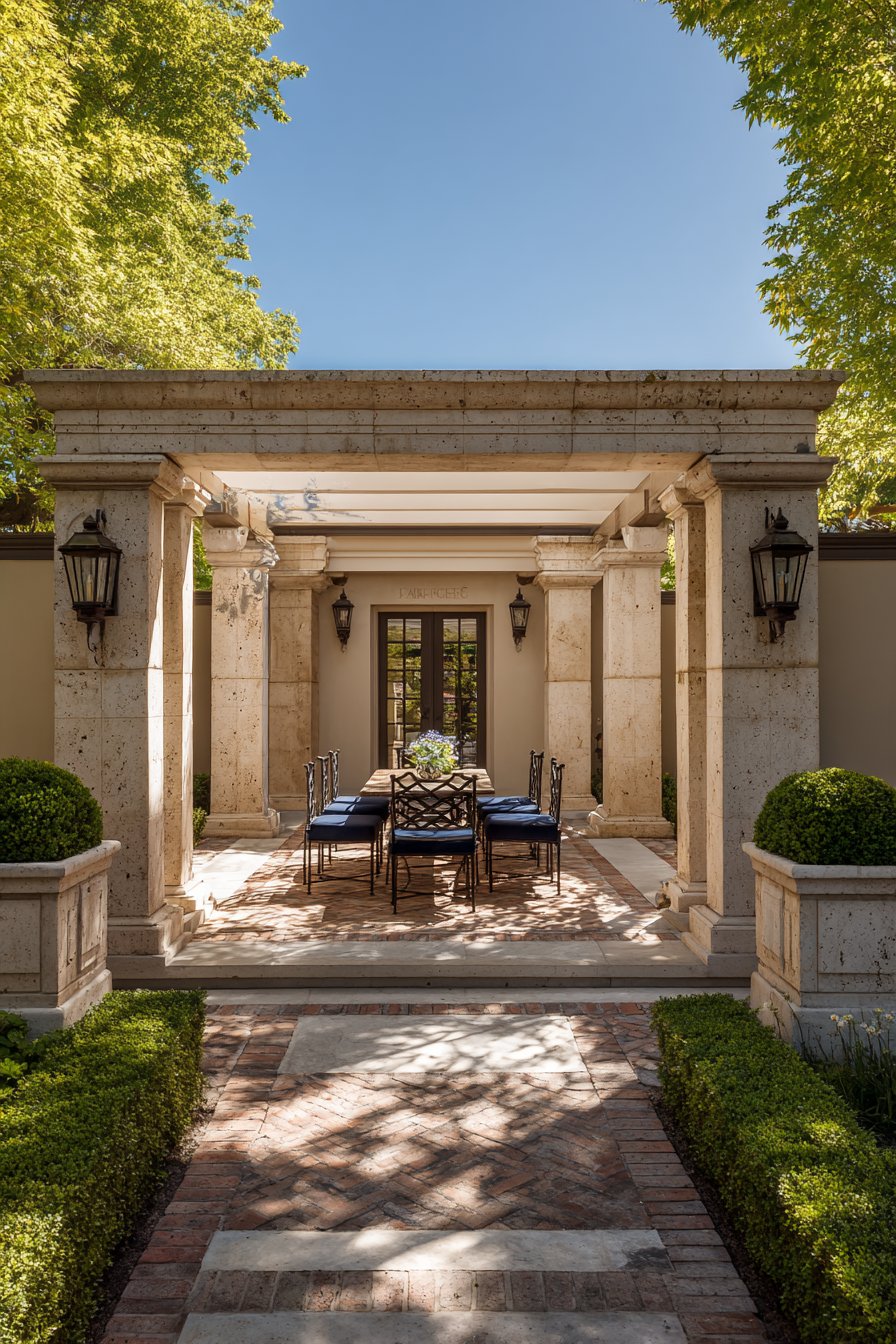
Stone columns support a covered pergola in classic architectural proportions. Wrought iron dining set with navy cushions centers on herringbone brick paving. Topiary boxwoods in matching stone planters flank the entry symmetrically. Wall-mounted lanterns provide traditional lighting that matches the formal aesthetic.
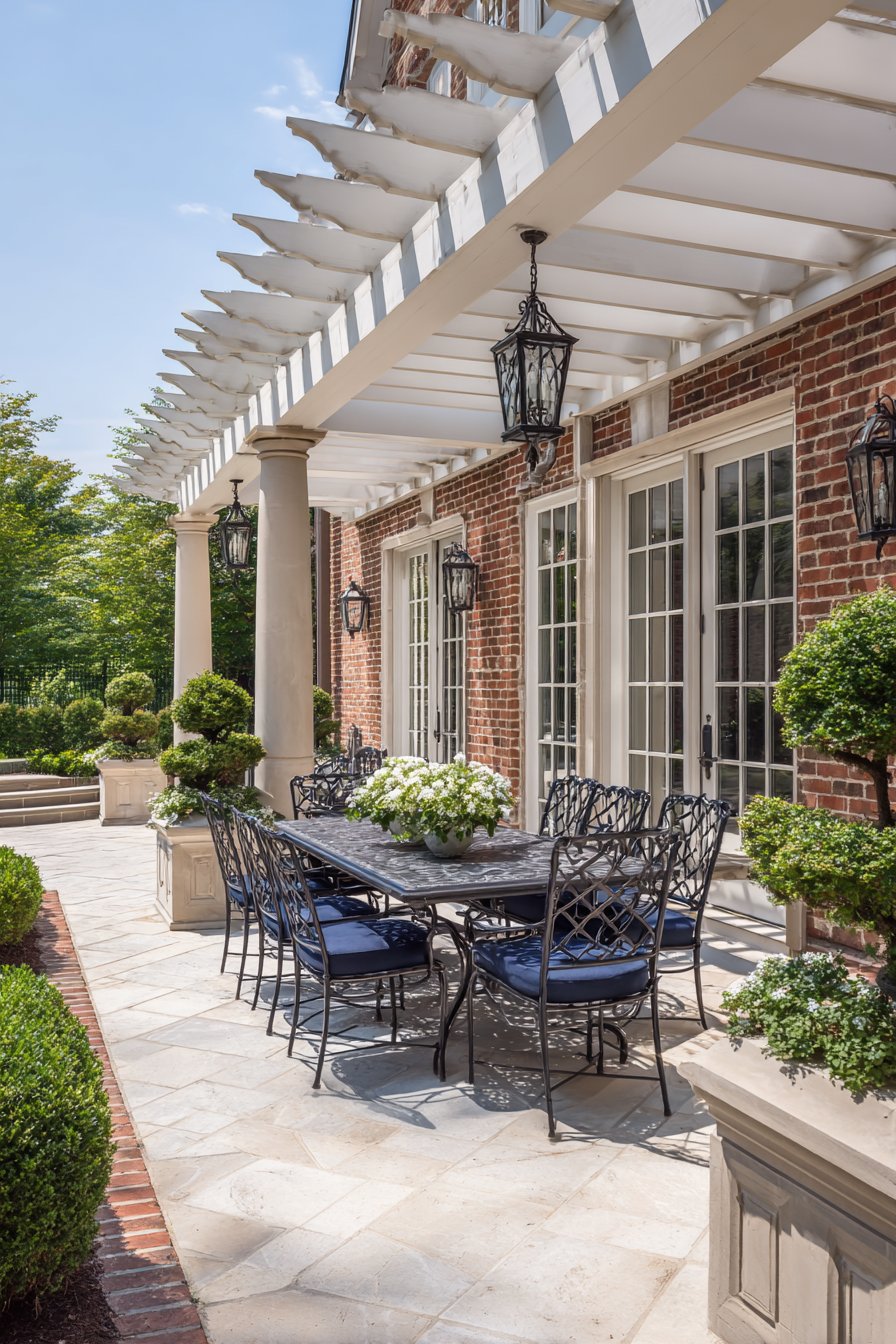
Natural limestone shows subtle weathering and mineral deposits from water exposure. Morning light creates elegant shadows that emphasize formal geometry. The balanced classical composition creates timeless outdoor dining space. Architectural details demonstrate attention to traditional design principles.
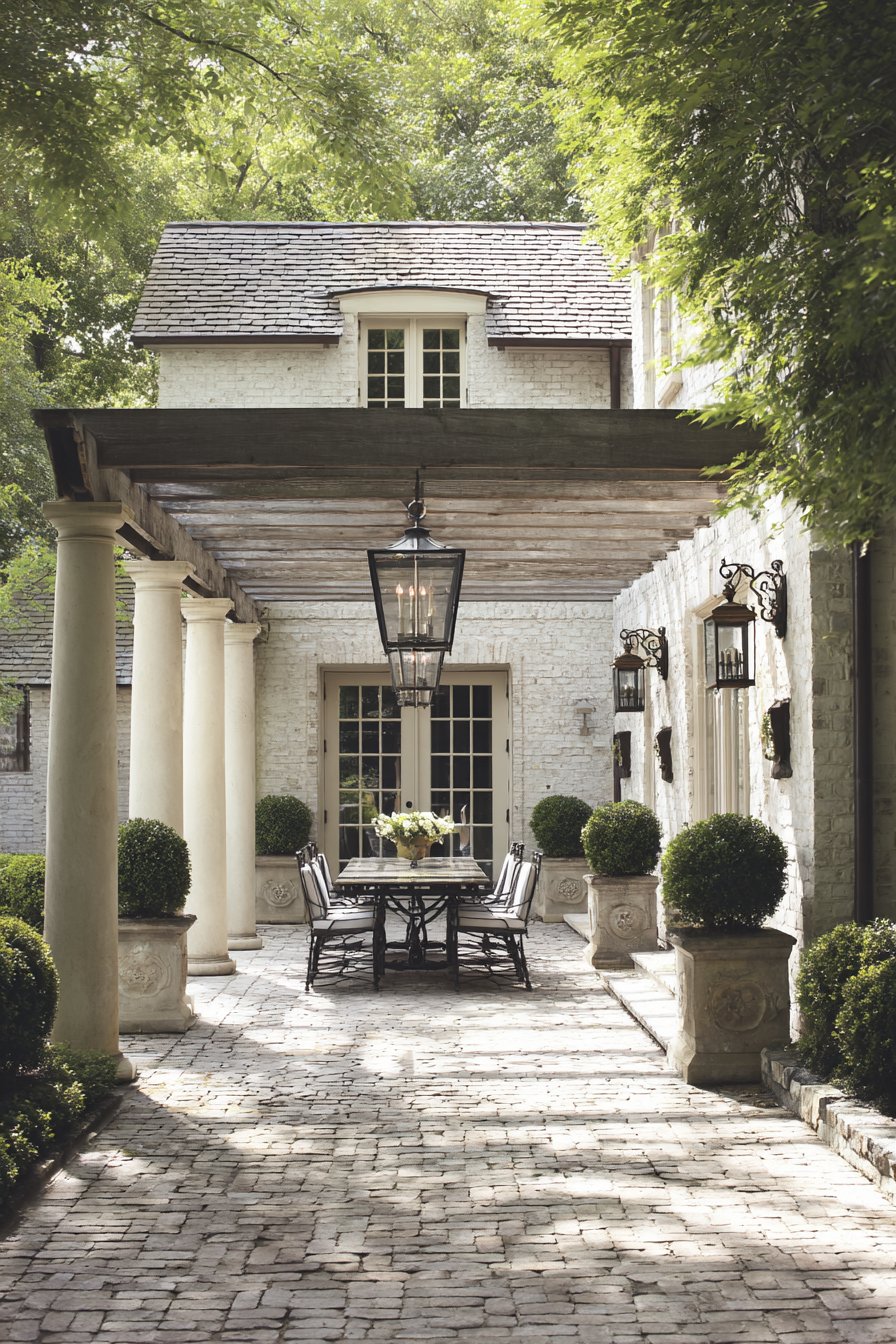
The symmetrical layout creates psychological sense of order and permanence. The herringbone brick pattern adds visual interest to the traditional design. The limestone develops beautiful patina through natural aging processes.
This design appeals to homeowners who appreciate classical architecture and formal entertaining. The traditional elements create sophisticated outdoor dining experiences. The symmetry provides visual stability and timeless appeal.
Key Design Tips:
- Maintain strict symmetry in plant placement for formal design integrity
- Choose wrought iron furniture with traditional motifs and scrollwork
- Install brick in classic herringbone pattern for timeless elegance
- Select cushions in classic navy or hunter green for traditional color palette
- Trim topiary boxwoods monthly to maintain precise geometric shapes
13. Scandinavian Light and Natural
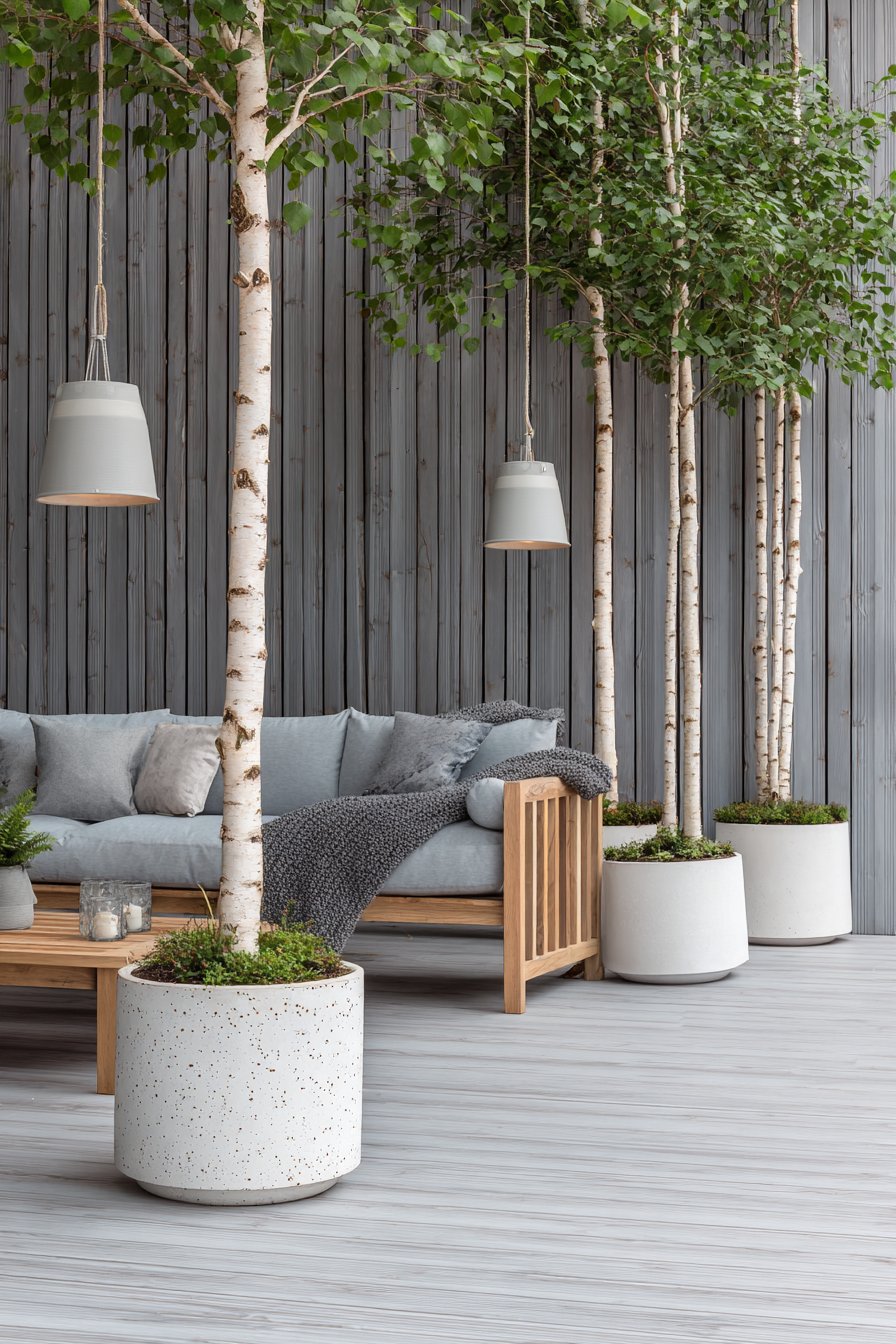
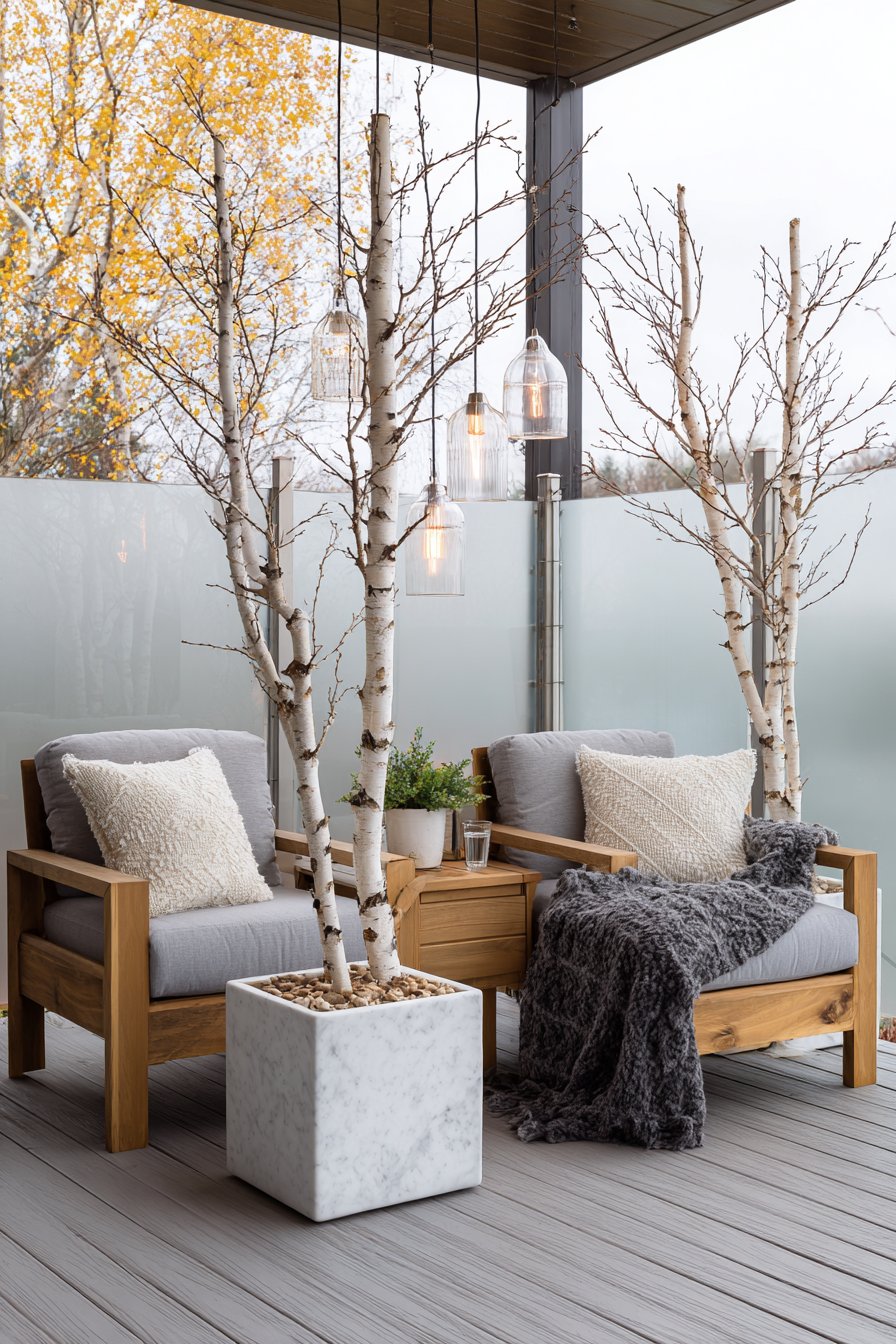
Light grey composite decking provides clean foundation for minimal furniture. Simple teak furniture features clean lines and minimal ornamentation. White ceramic planters hold graceful birch trees for vertical interest. A single wool throw in charcoal grey adds warmth without clutter.
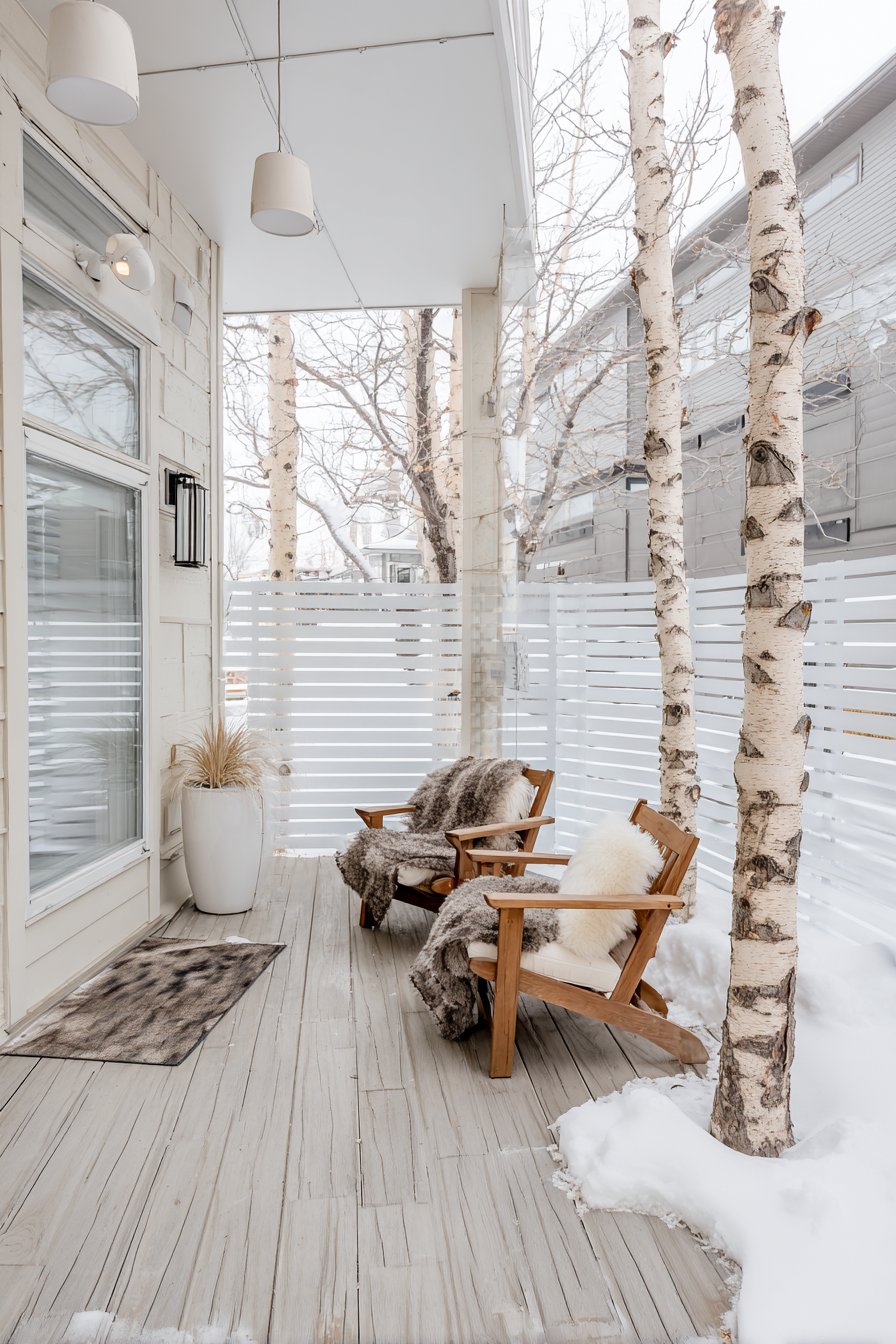
Frosted glass privacy panels provide screening without blocking precious light. Simple pendant lights with white shades hang from thin cables. Bright overcast day provides even illumination characteristic of Nordic design. Understated elegance emphasizes natural wood grain and subtle color variations.
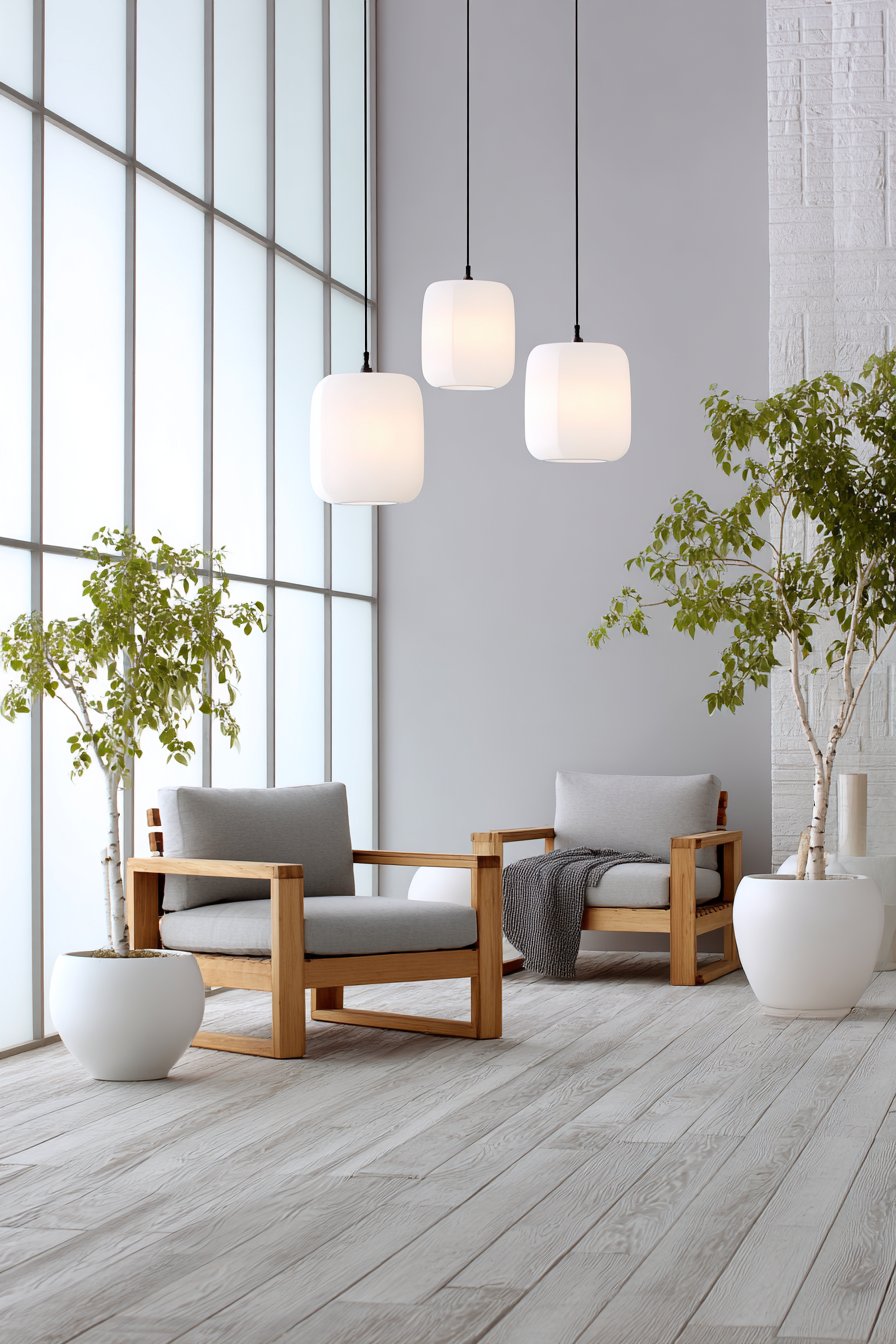
The composite decking eliminates maintenance while providing consistent appearance. The teak furniture ages to silver-grey patina in Scandinavian tradition. The limited color palette creates calm, uncluttered visual environment.
This design suits homeowners who appreciate restraint and connection to nature. The Scandinavian aesthetic emphasizes quality over quantity in furnishings. The bright, airy feeling maximizes perceived space in small areas.
Key Design Tips:
- Choose composite decking in light grey to reflect rather than absorb heat
- Select teak furniture with simple joinery and minimal decorative elements
- Plant white birch trees for authentic Scandinavian landscape reference
- Install frosted panels to maintain privacy without sacrificing brightness
- Limit accessories to single focal pieces for true minimalist aesthetic
14. Desert Modern Minimalism
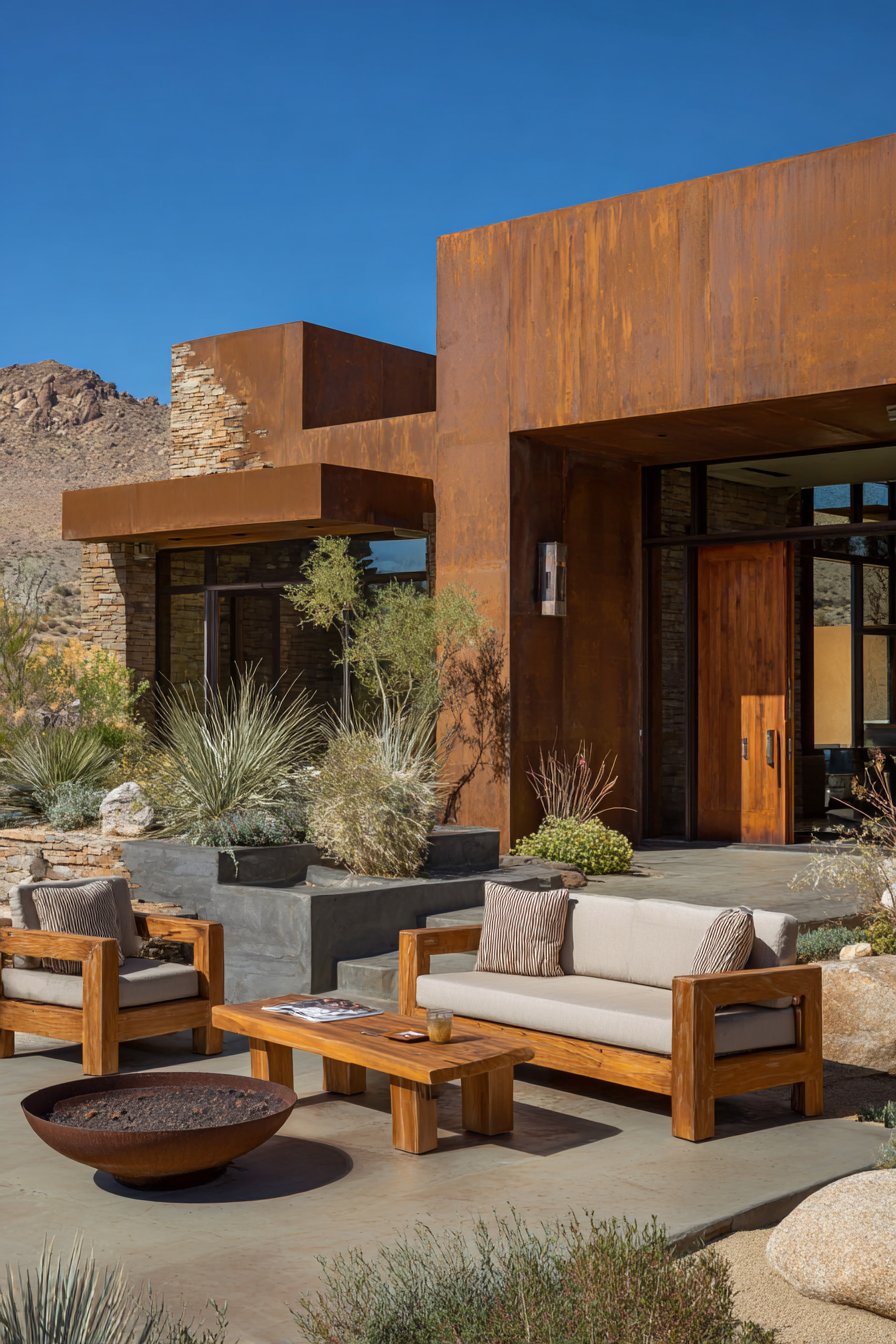
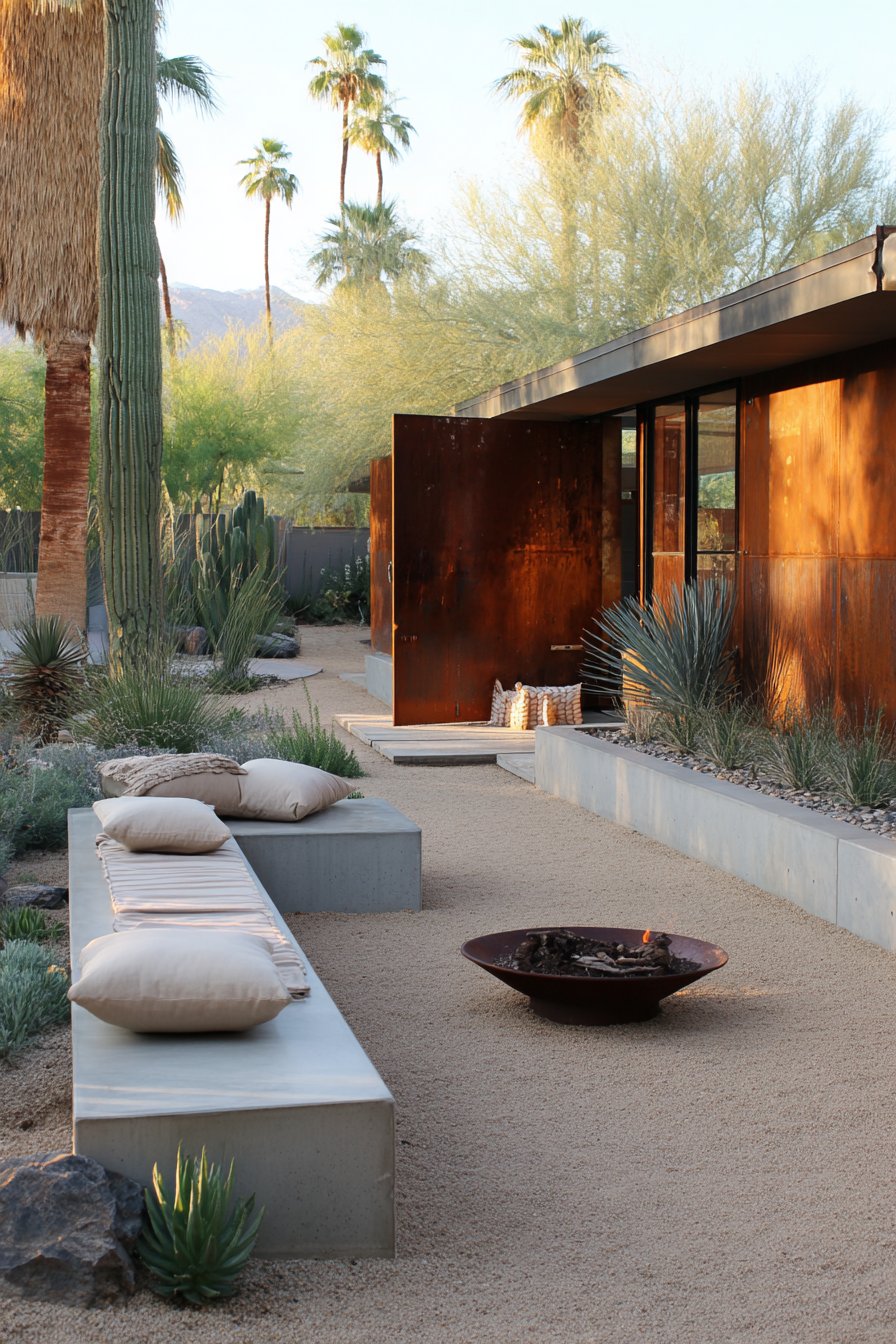
Decomposed granite flooring in warm tan shows natural color variation. Low concrete bench seating with built-in planters holds drought-tolerant specimens. Cor-ten steel privacy screens show authentic rust patina while providing wind protection. Modern outdoor furniture in neutral canvas fabric complements the desert palette perfectly.
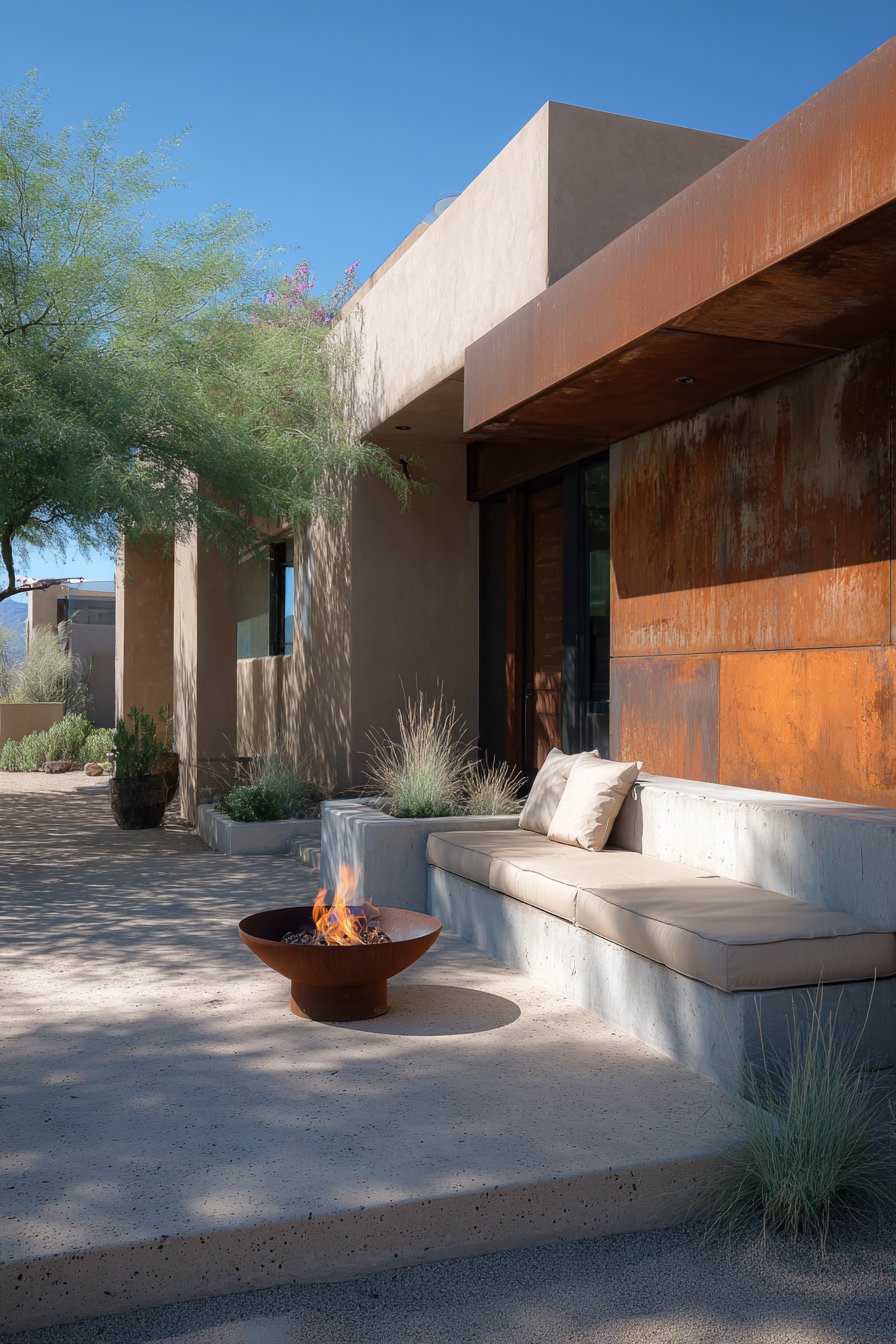
A simple steel fire bowl serves as evening focal point for gatherings. Harsh midday desert light creates strong shadows and dramatic contrast. Architectural photography captures minimalist desert aesthetic with precision. Metal oxidation and natural stone textures demonstrate authentic material aging.
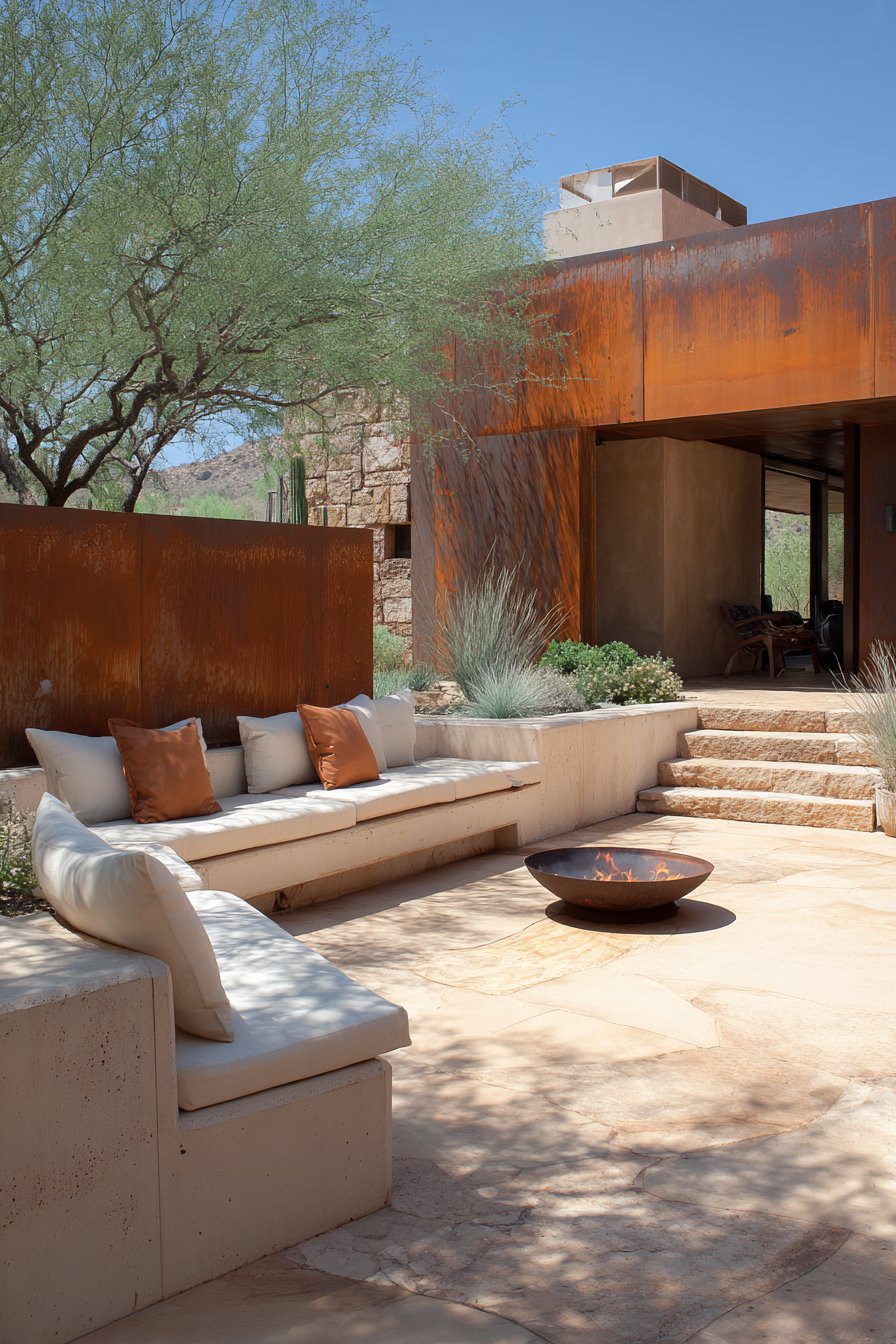
The decomposed granite provides permeable surface for desert rainfall. The drought-tolerant plants thrive without irrigation systems. The cor-ten steel develops stable rust layer that prevents further corrosion.
This design suits homeowners in arid climates seeking low-water landscaping solutions. The desert aesthetic embraces harsh climate rather than fighting against it. The minimalist approach reduces maintenance requirements dramatically.
Key Design Tips:
- Install decomposed granite over compacted base for stability and drainage
- Choose native succulents and ornamental grasses for zero-irrigation landscaping
- Allow cor-ten steel to weather naturally for protective rust layer
- Position fire bowls on non-combustible surfaces away from structures
- Select light-colored furniture to reflect desert heat rather than absorb it
15. Coastal Weathered Elegance
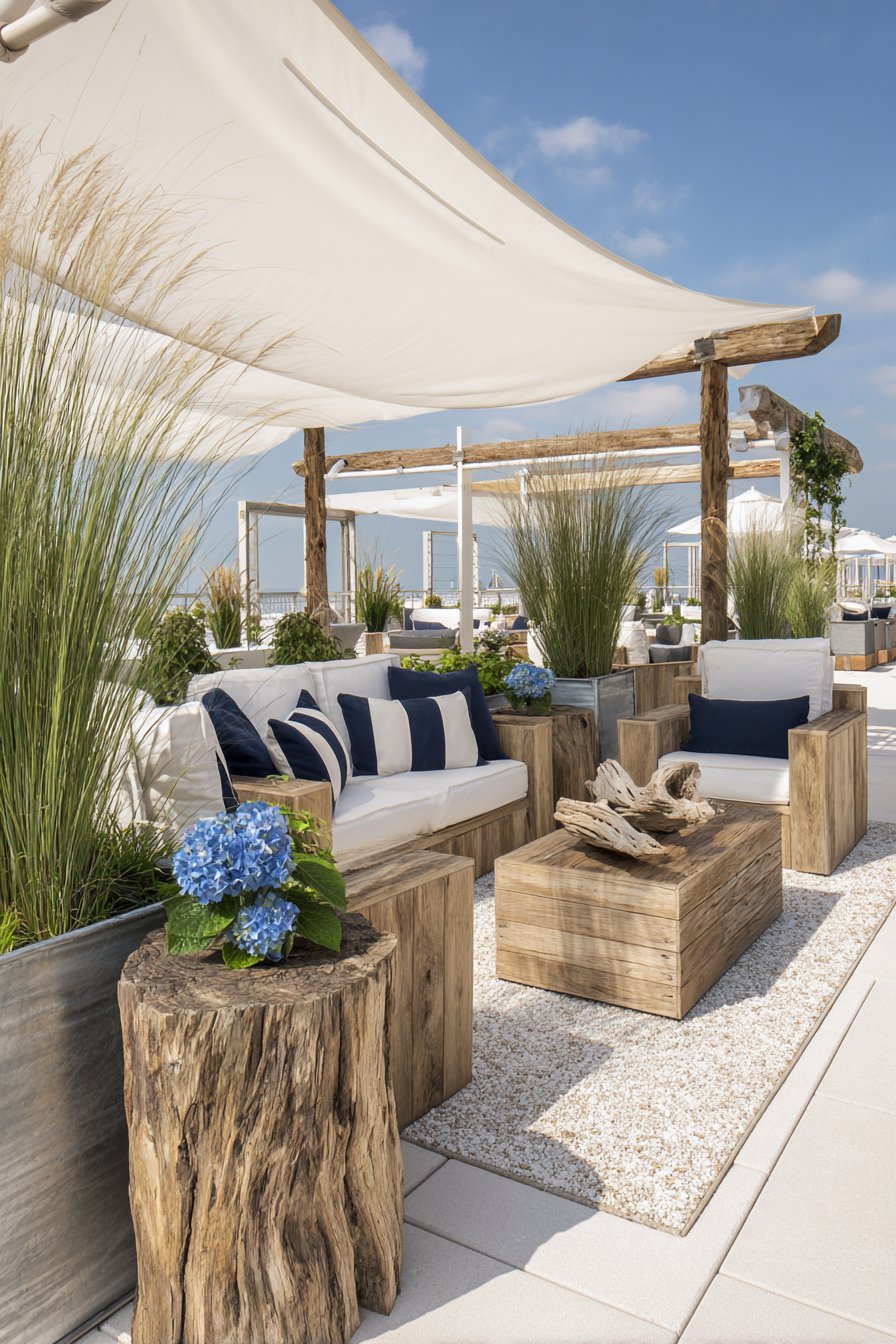
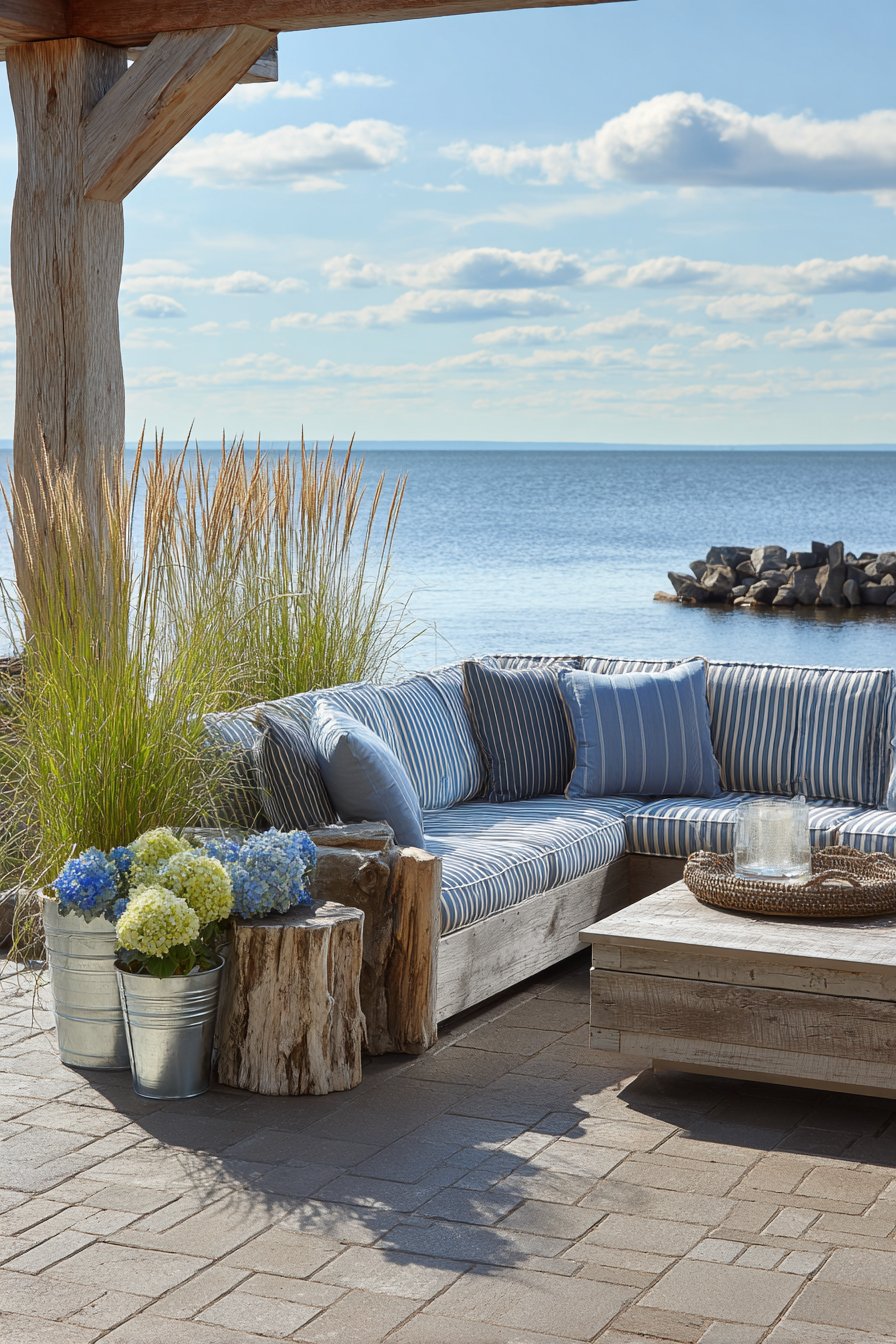
Weathered teak furniture shows natural silver-grey patina from salt air exposure. Navy and white striped cushions provide classic nautical accent colors. Rope-wrapped posts support canvas awning in traditional coastal style. Concrete pavers show sand accumulation in joints and salt crystallization patterns.
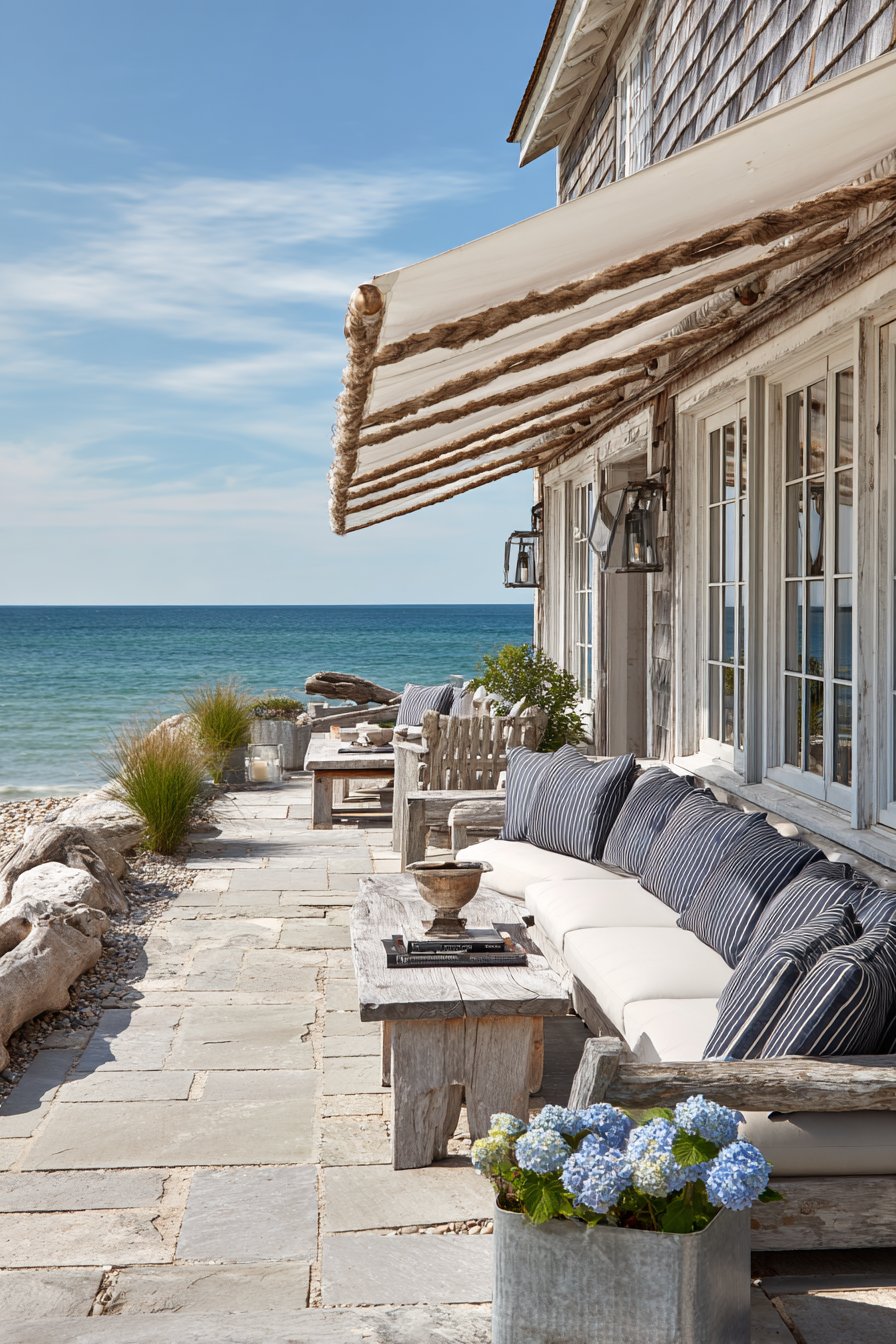
Galvanized metal planters hold beach grasses and blue hydrangeas perfectly suited to coastal conditions. Natural driftwood pieces serve as decorative sculptural elements. Soft coastal morning light creates gentle highlights on water-worn surfaces. Authentic coastal weathering demonstrates natural material aging from marine environment.
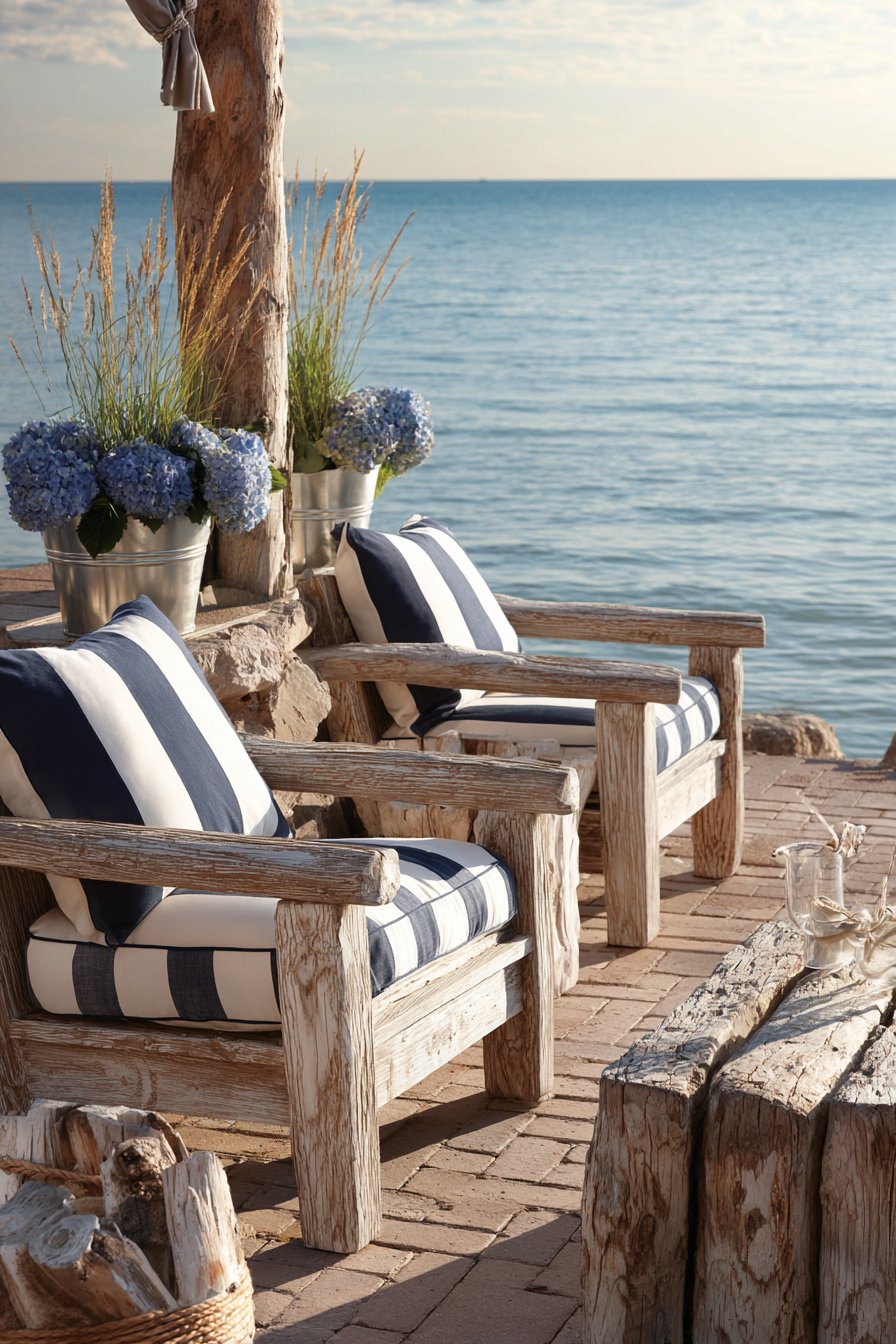
The teak furniture withstands salt air without requiring protective finishes. The nautical color scheme remains timeless across changing trends. The beach grasses stabilize sand while adding movement in coastal breezes.
This design appeals to homeowners seeking authentic coastal aesthetic rather than theme-park interpretation. The weathered materials embrace harsh marine conditions as design elements. The natural aging eliminates pressure for pristine maintenance.
Key Design Tips:
- Allow teak to weather naturally rather than applying oils or sealers
- Choose marine-grade canvas for awnings to withstand salt corrosion
- Select hydrangea varieties suited to coastal pH levels and salt tolerance
- Position furniture to avoid direct salt spray from breaking waves
- Embrace sand accumulation as part of authentic coastal living
16. Contemporary Outdoor Kitchen
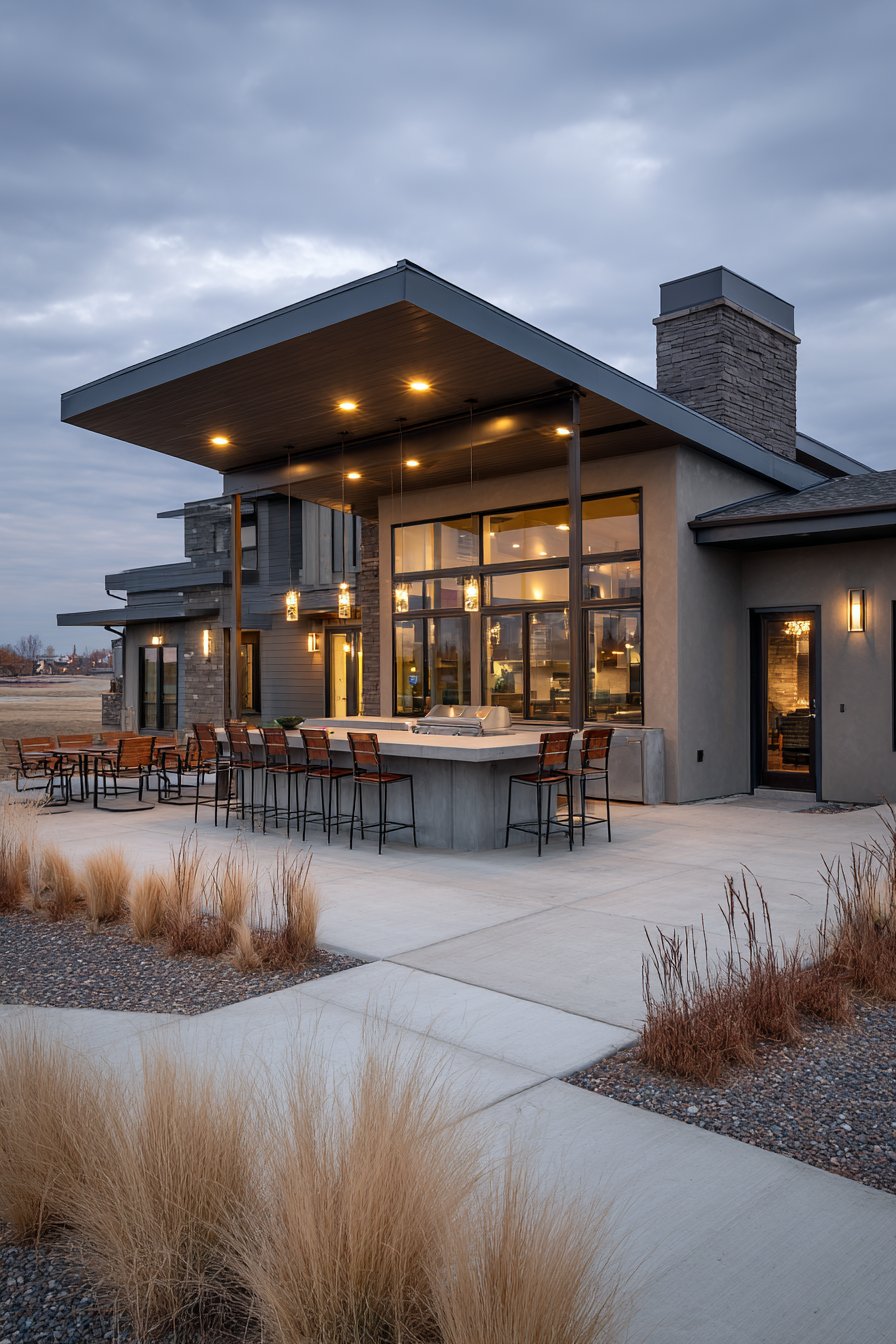
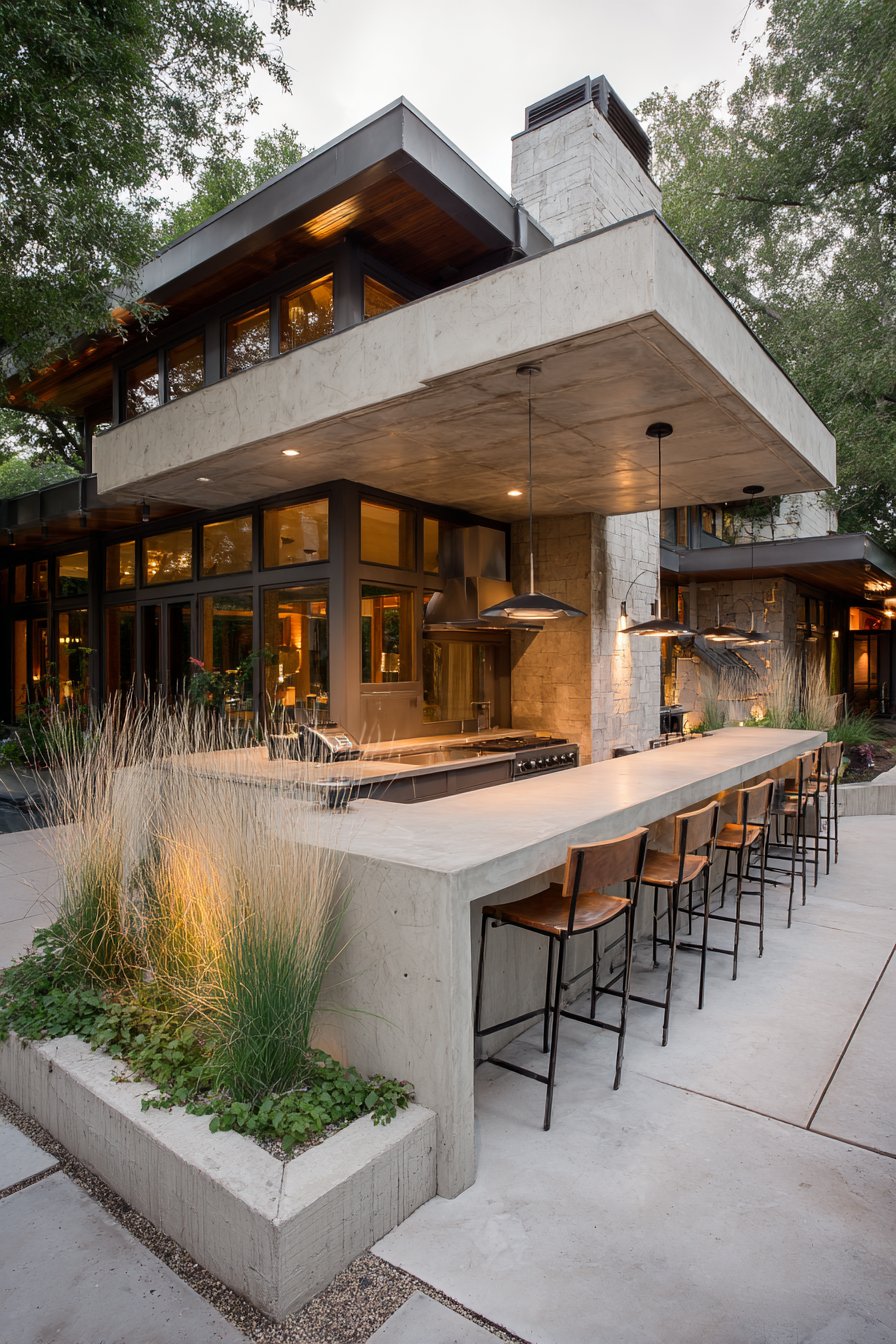
A built-in outdoor kitchen features concrete countertops with exposed aggregate. Stainless steel appliances maintain clean modern lines throughout the cooking area. Bar seating in powder-coated steel with walnut accents provides dining space. Large format pavers in charcoal grey create seamless flooring transition.
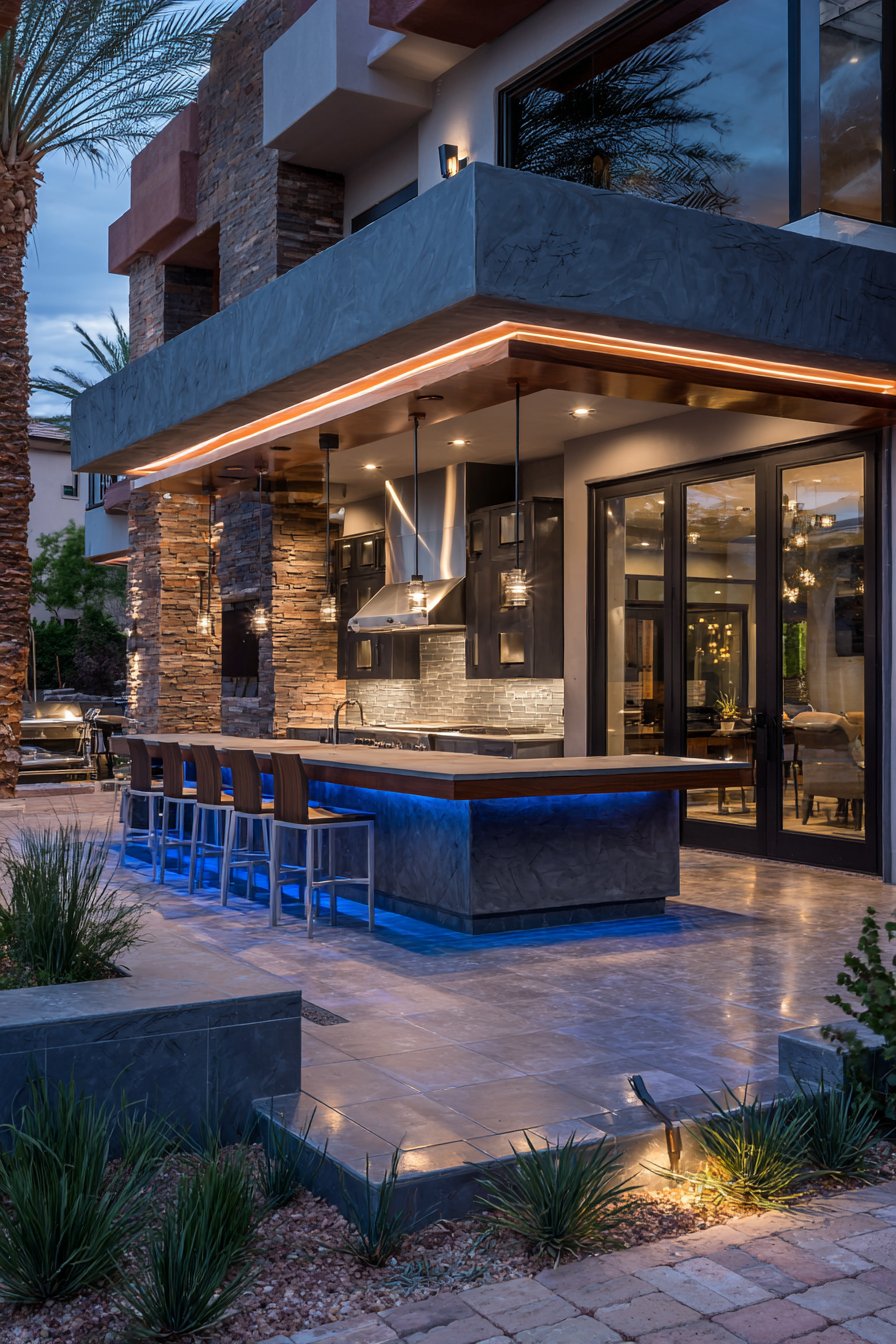
Integrated planters with ornamental grasses provide softness against hard surfaces. Under-cabinet LED lighting and overhead pendants offer layered illumination. Evening photography captures the functional entertainment space perfectly. Professional-grade cooking setup demonstrates serious outdoor culinary capability.
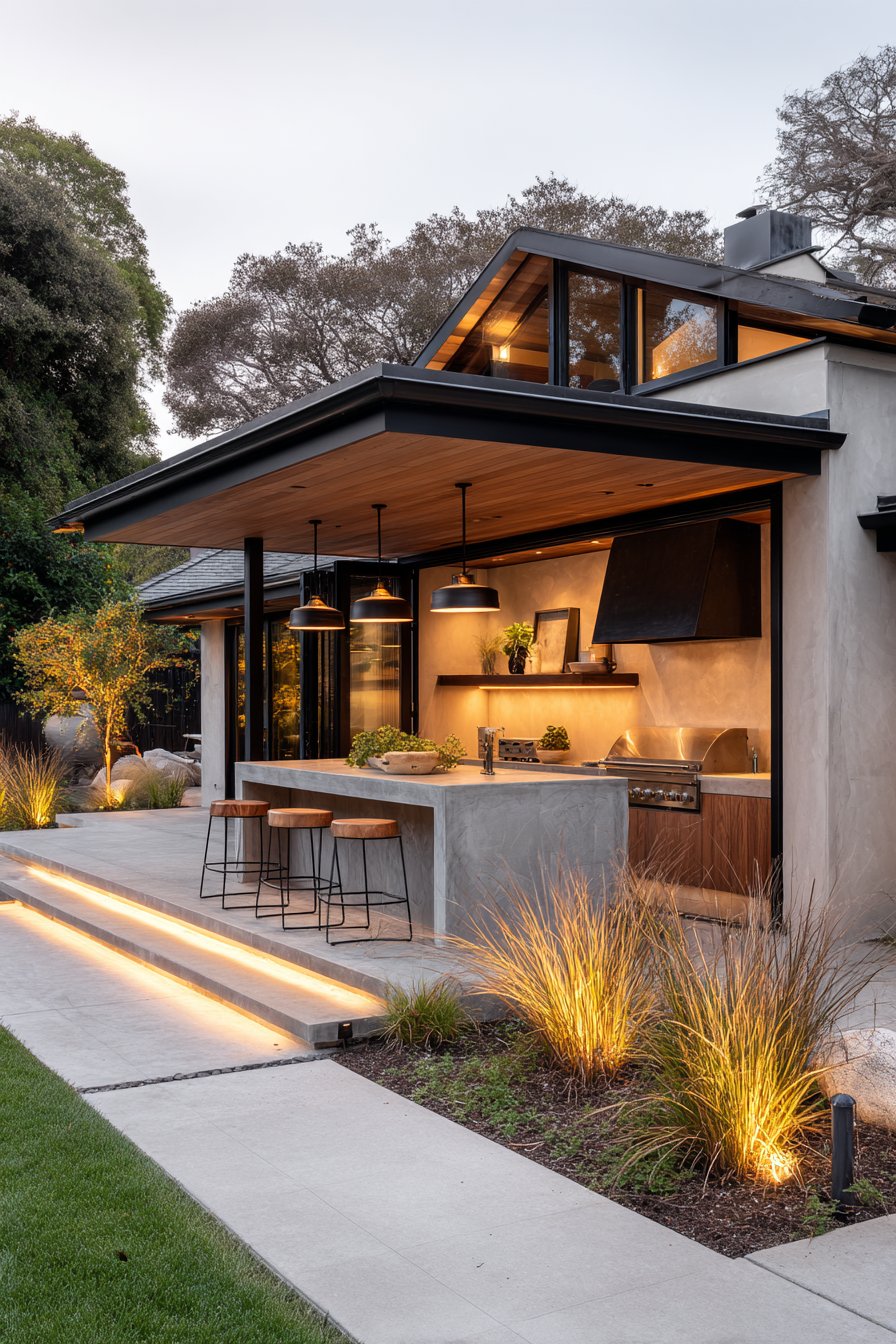
The concrete countertops resist heat and weathering without maintenance requirements. The stainless steel appliances withstand outdoor conditions while maintaining functionality. The powder-coated steel furniture resists rust through multiple seasons.
This design suits homeowners who prioritize outdoor cooking and entertaining. The professional equipment enables restaurant-quality outdoor meals. The bar seating creates social cooking experiences where guests interact with chefs.
Key Design Tips:
- Seal concrete countertops with food-safe penetrating sealers
- Install weatherproof electrical outlets with ground fault protection
- Choose appliances specifically rated for outdoor installation and exposure
- Position cooking areas with prevailing wind consideration for smoke direction
- Include ample counter space on both sides of cooking surfaces
17. Farmhouse Reclaimed Wood Character
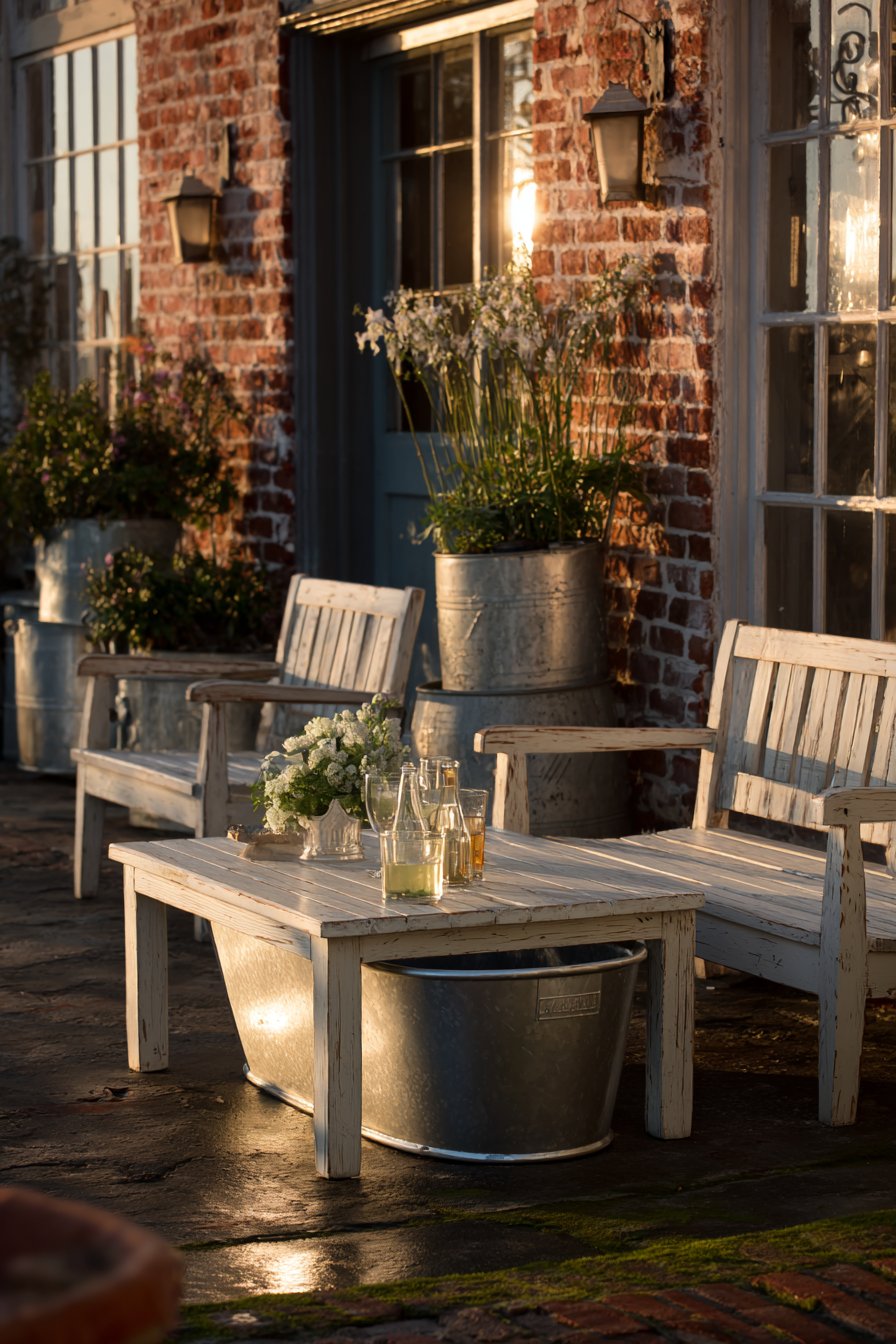
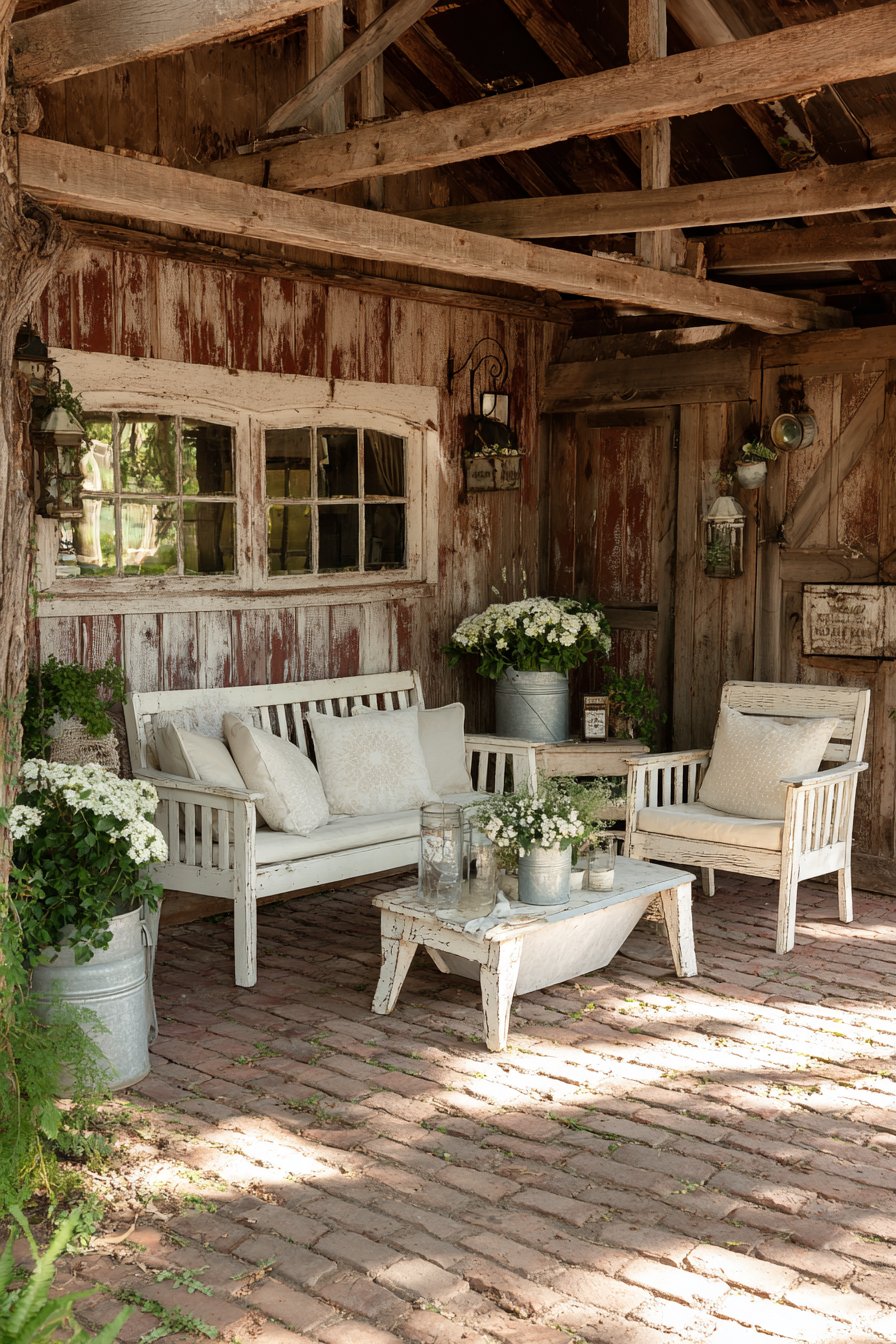
Reclaimed barn wood accent wall provides rustic backdrop with authentic patina. White-painted wooden furniture with distressed finish surrounds galvanized metal tub coffee table. Tumbled brick pavers with moss growth add organic character. Mason jar sconces on barn wood provide ambient lighting with farmhouse charm.
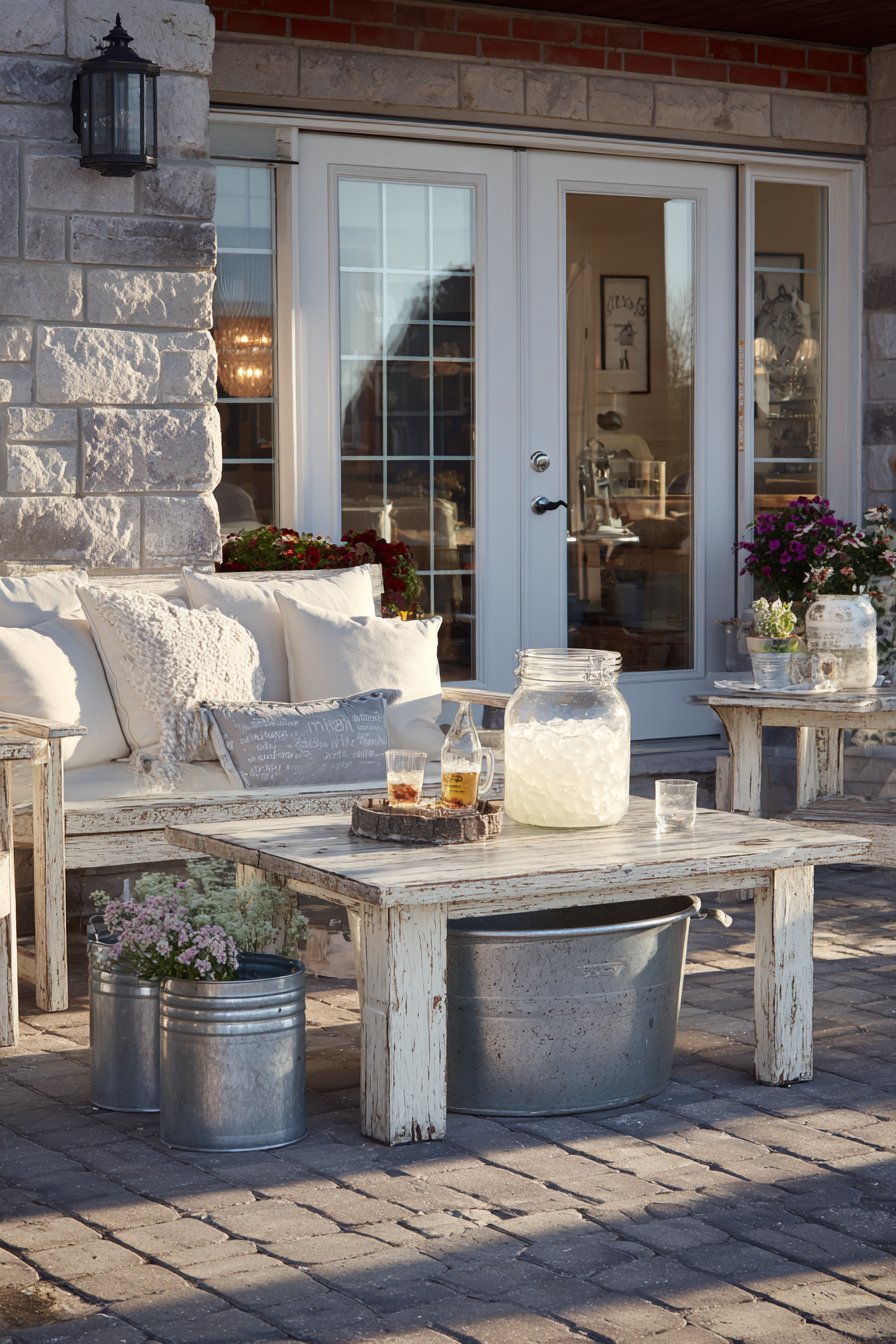
Metal milk cans repurposed as vases hold fresh seasonal flowers. Late afternoon sun creates warm shadows on authentically textured surfaces. Legitimate age and wear demonstrate genuine farmhouse elements rather than artificial distressing. The collected aesthetic tells stories through reclaimed materials.
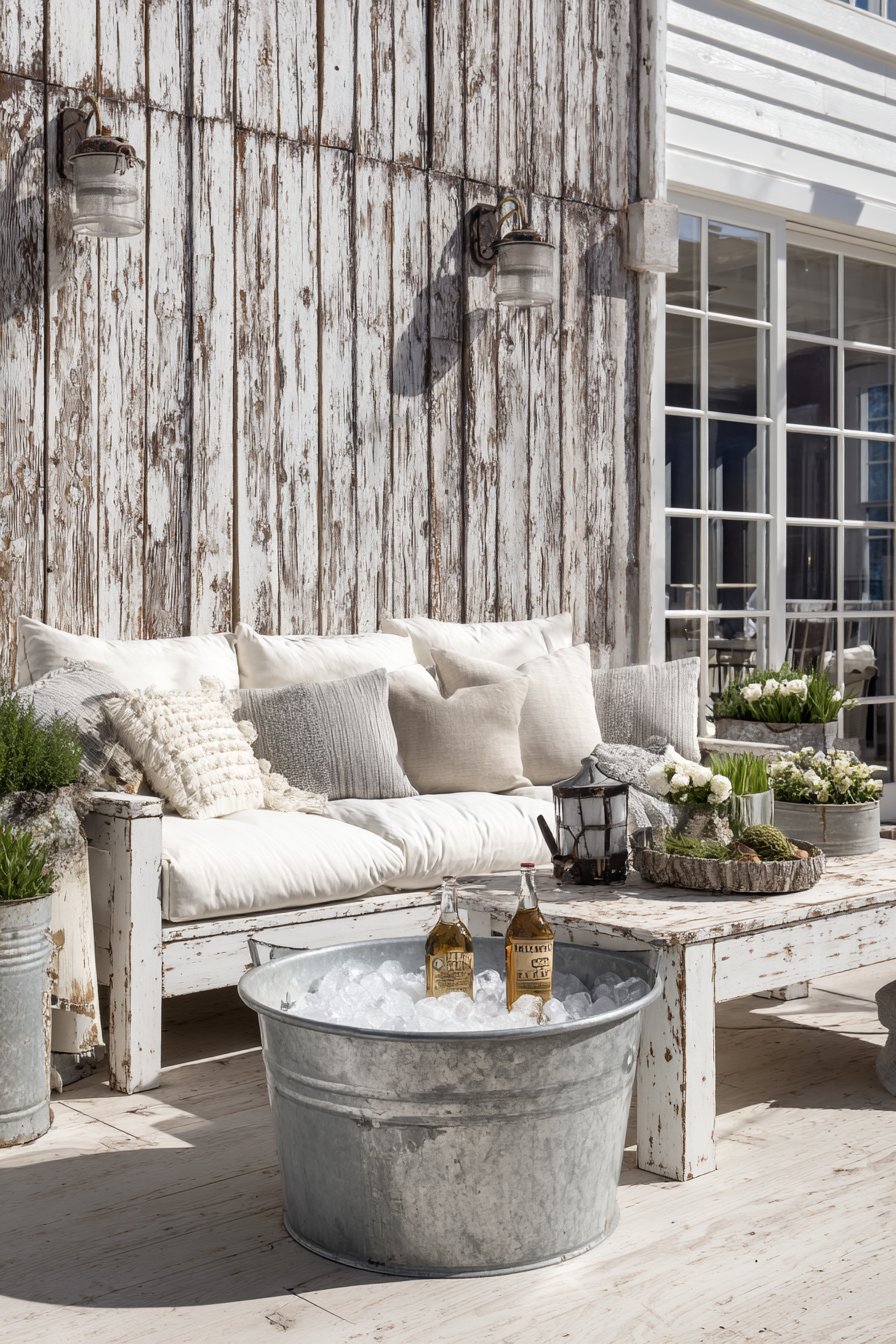
The reclaimed barn wood brings history and character to new construction. The galvanized metal ages gracefully through outdoor exposure. The tumbled brick develops natural weathering that enhances appearance.
This design appeals to homeowners who value authentic materials with provenance. The farmhouse aesthetic celebrates agricultural heritage and simpler times. The repurposed elements demonstrate environmental responsibility through material reuse.
Key Design Tips:
- Source reclaimed barn wood from reputable suppliers who verify material origins
- Seal barn wood with clear exterior finishes to prevent further weathering
- Choose tumbled brick over standard pavers for authentic aged appearance
- Repurpose vintage farm elements as functional furniture pieces
- Allow natural moss growth between bricks for cottage garden effect
18. Asian-Inspired Tranquility
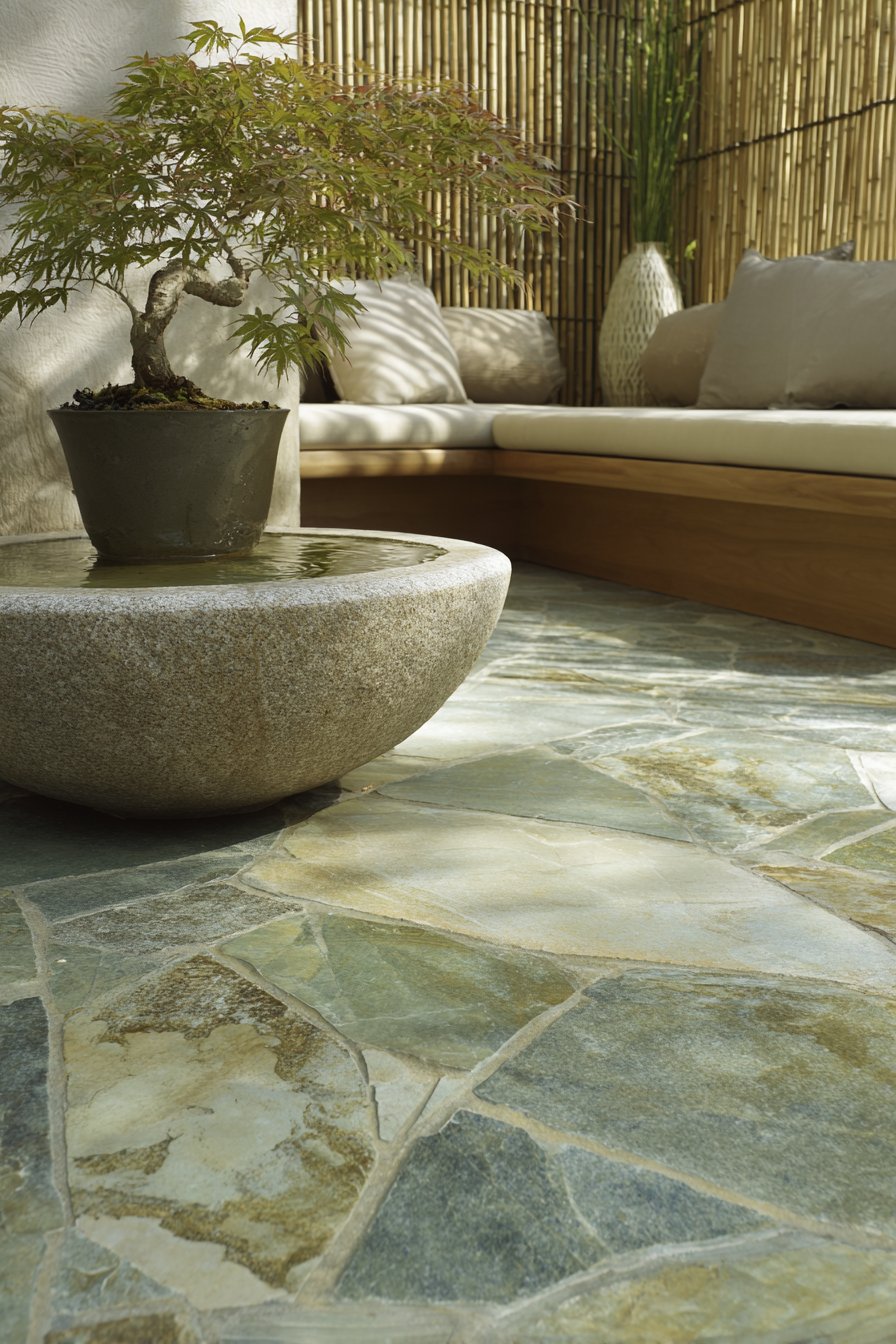
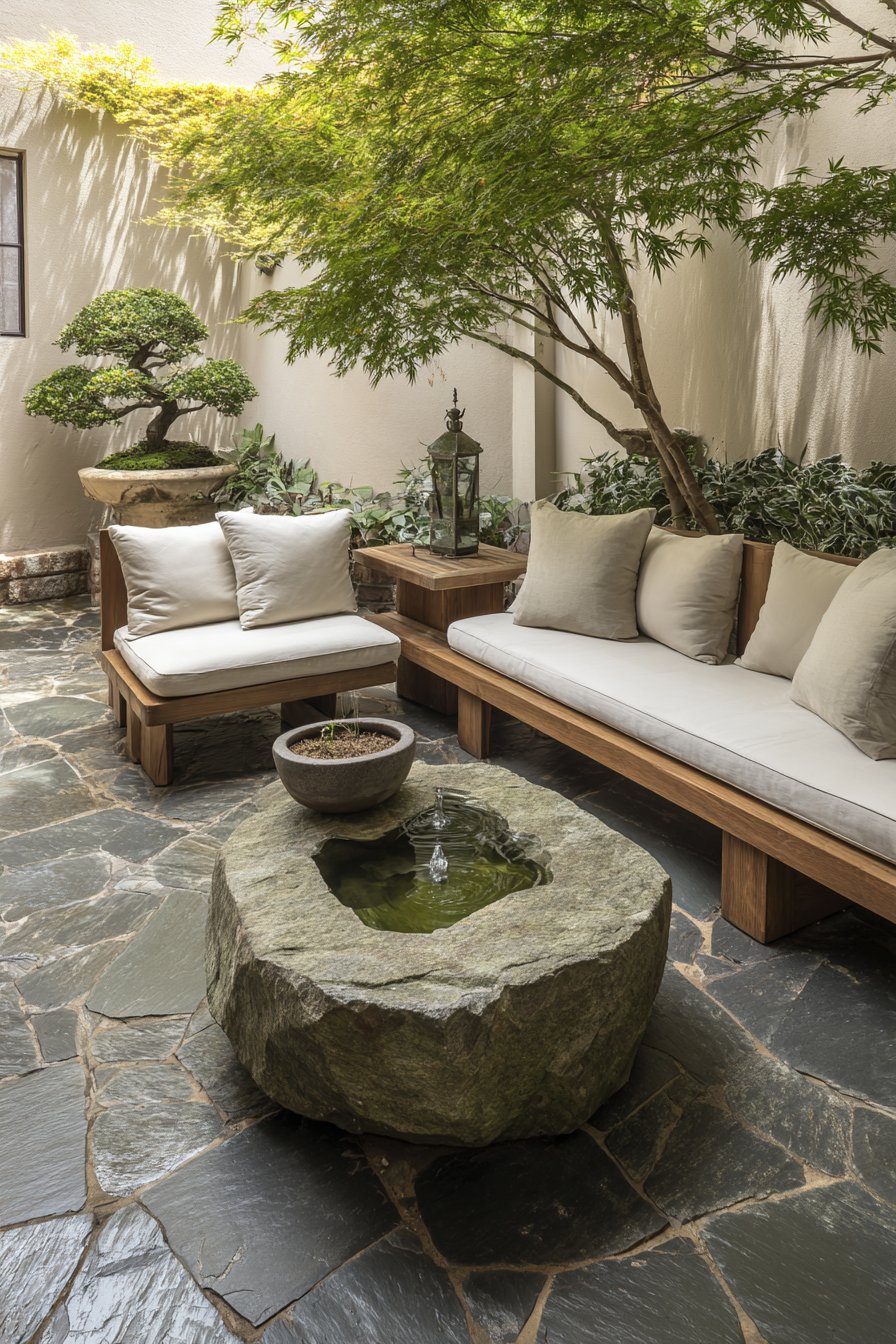
Natural slate tiles with irregular edges show color variation from charcoal to green. Low teak platform seating with thin cushions in natural linen creates meditation space. A central stone water basin provides focal point and soothing sounds. Bamboo privacy screens provide enclosure without blocking airflow completely.
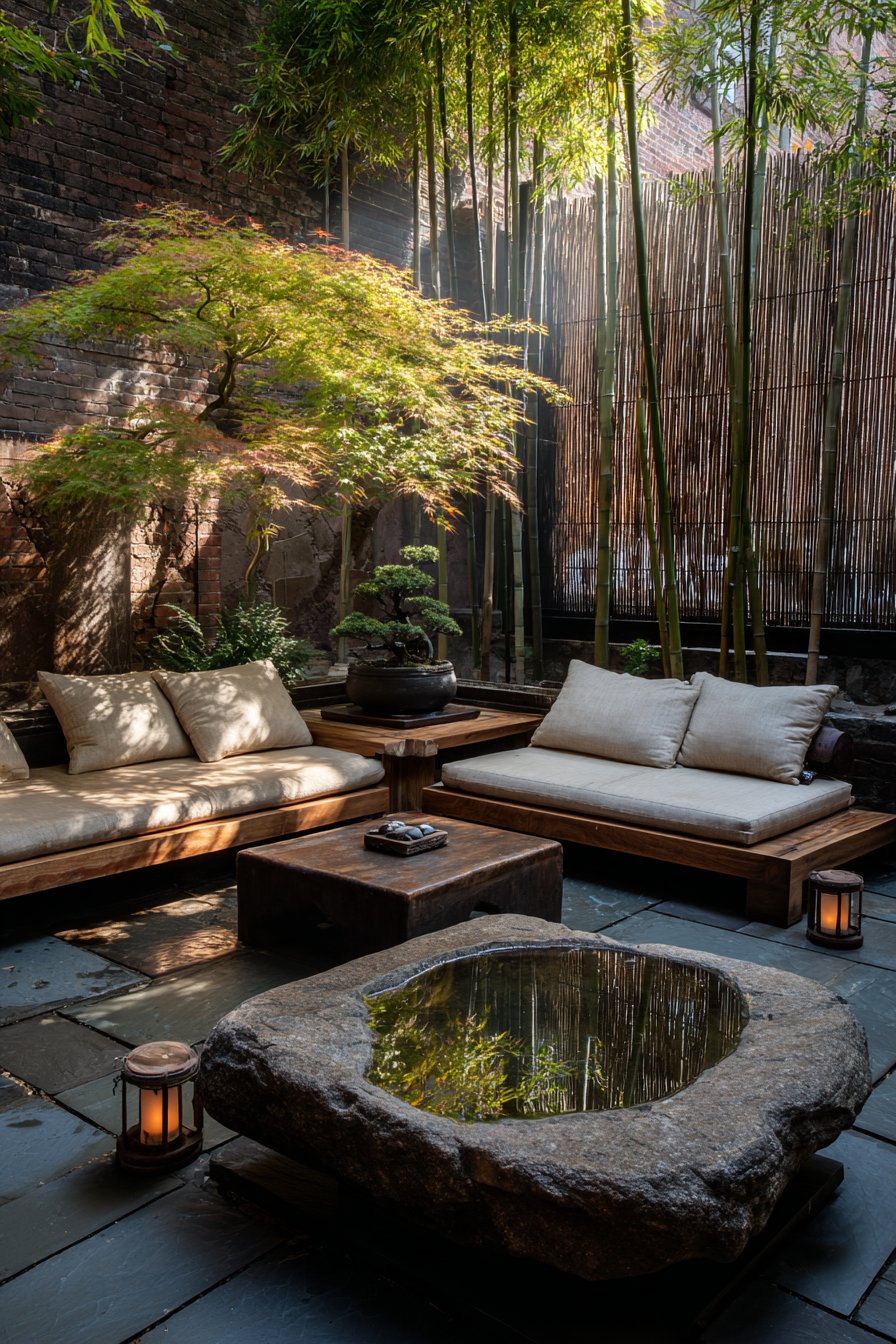
Japanese maple in ceramic bonsai pot serves as living sculptural element. Stone lanterns provide subtle ground-level lighting for evening ambiance. Soft filtered morning light through bamboo creates tranquil atmosphere. Natural stone textures and subtle water reflections emphasize meditative minimalism.
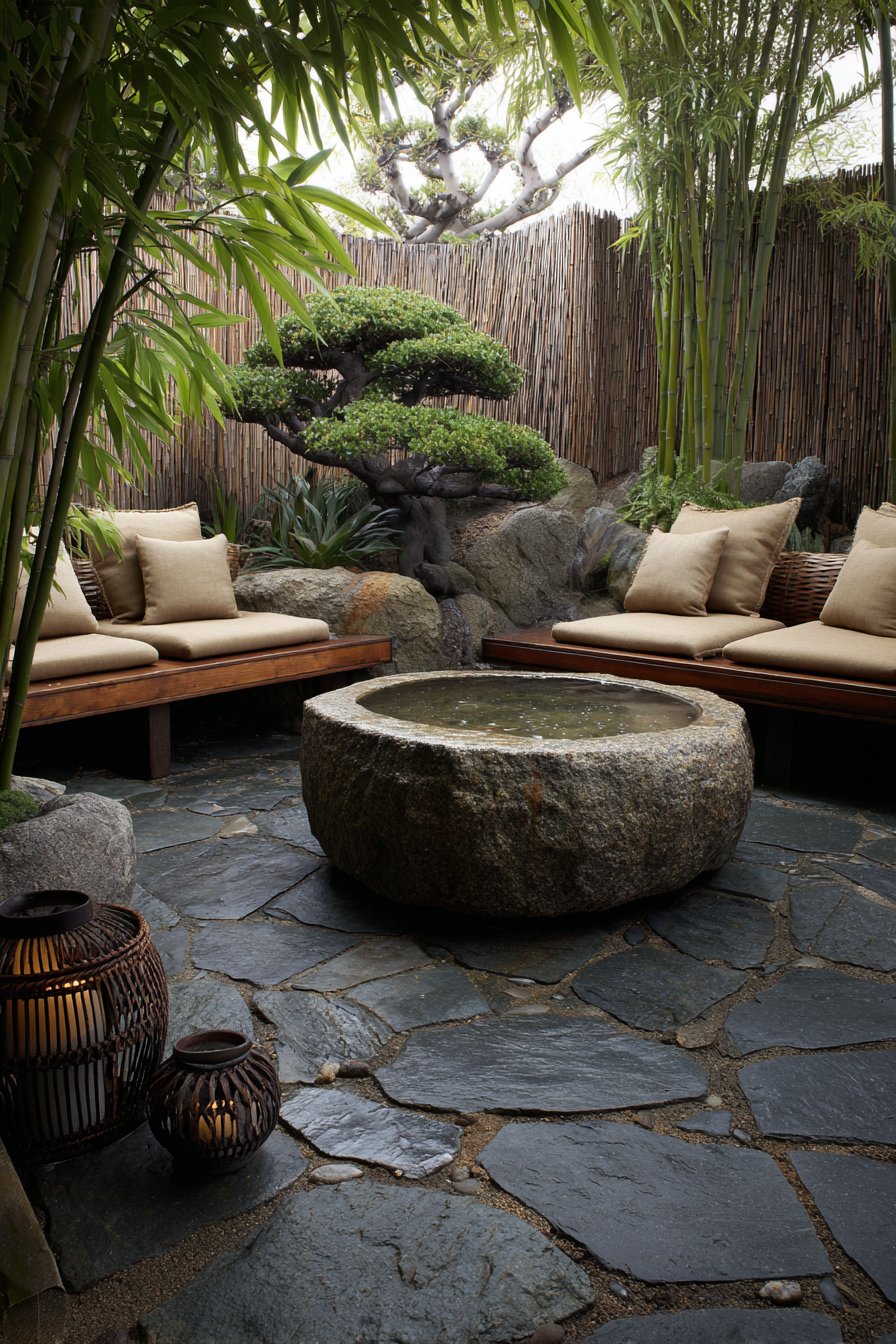
The slate tiles provide natural slip resistance in wet conditions. The water basin creates cooling microclimate through evaporation. The bamboo screens filter harsh sunlight while maintaining privacy.
This design suits homeowners seeking peaceful retreat spaces for meditation and reflection. The Asian aesthetic emphasizes harmony with natural elements. The minimal ornamentation focuses attention on essential elements.
Key Design Tips:
- Choose slate tiles with natural cleft surface for an authentic texture
- Position water features where sound carries to primary seating areas
- Select bamboo screens in dark tones to create backdrop for plantings
- Prune Japanese maples to maintain graceful branching structure
- Keep accessories minimal to preserve meditative quality of space
19. Mid-Century Modern Revival
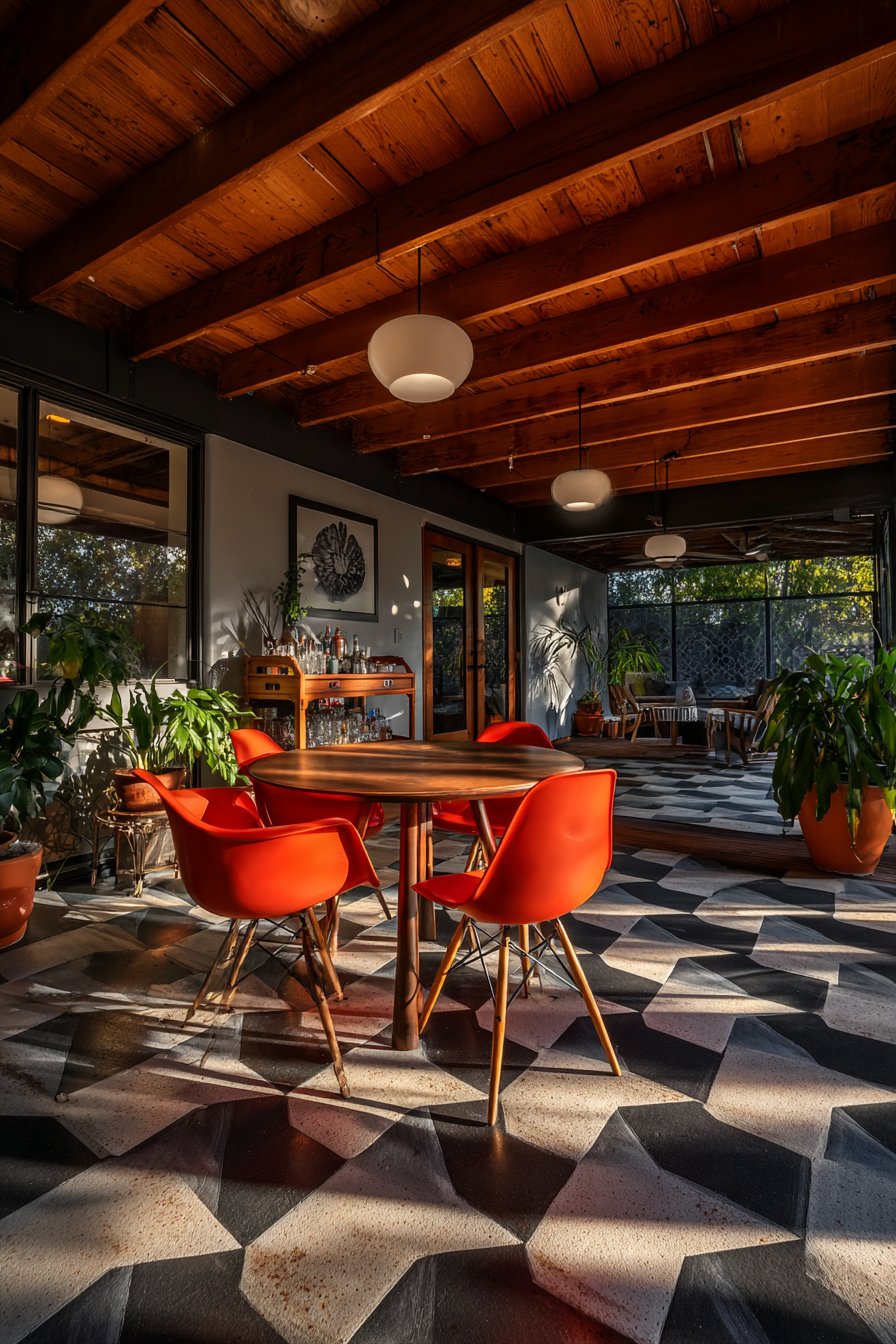
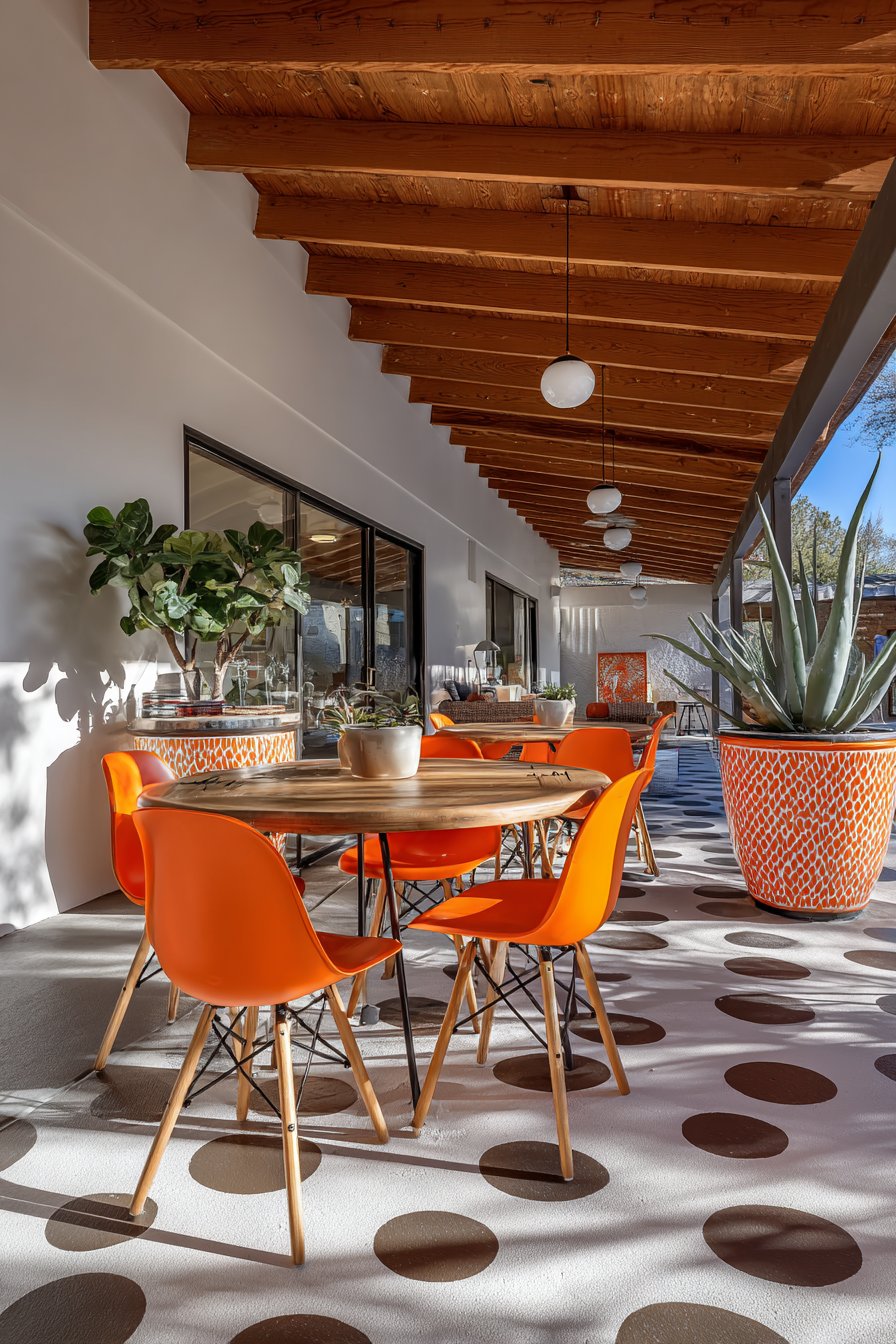
Geometric concrete pavers in alternating sizes create dynamic visual pattern. Iconic molded plastic chairs in bright orange surround round teak table. Exposed wood beam ceiling with period-appropriate pendant lights defines covered area. Planters in ceramic with atomic-era patterns hold tropical plants.
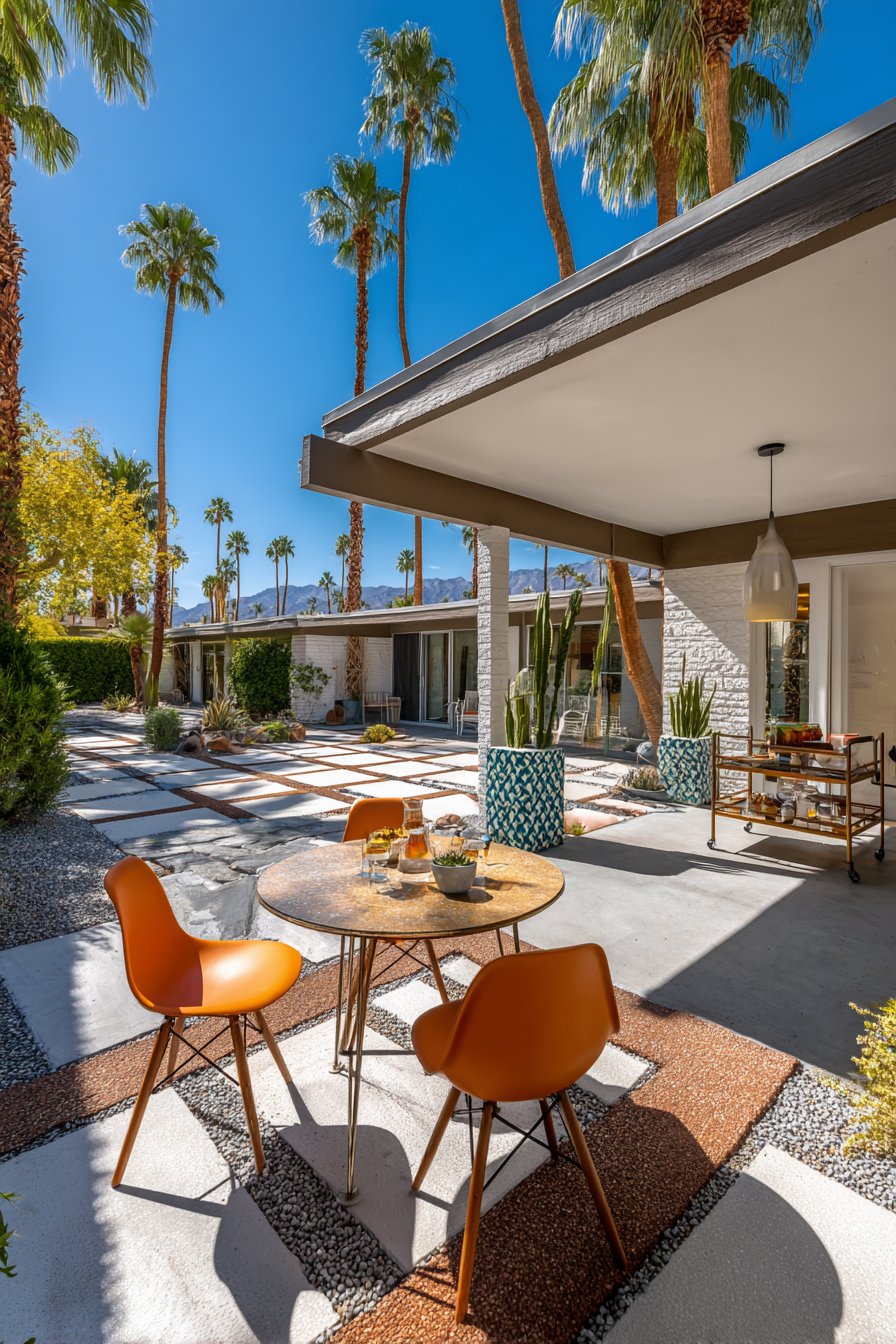
A retro outdoor bar cart in teak and chrome holds cocktail accessories. Afternoon light creates dramatic angular shadows emphasizing geometric forms. Authentic mid-century design elements demonstrate period-appropriate materials. Period-appropriate color palette celebrates optimistic post-war design philosophy.
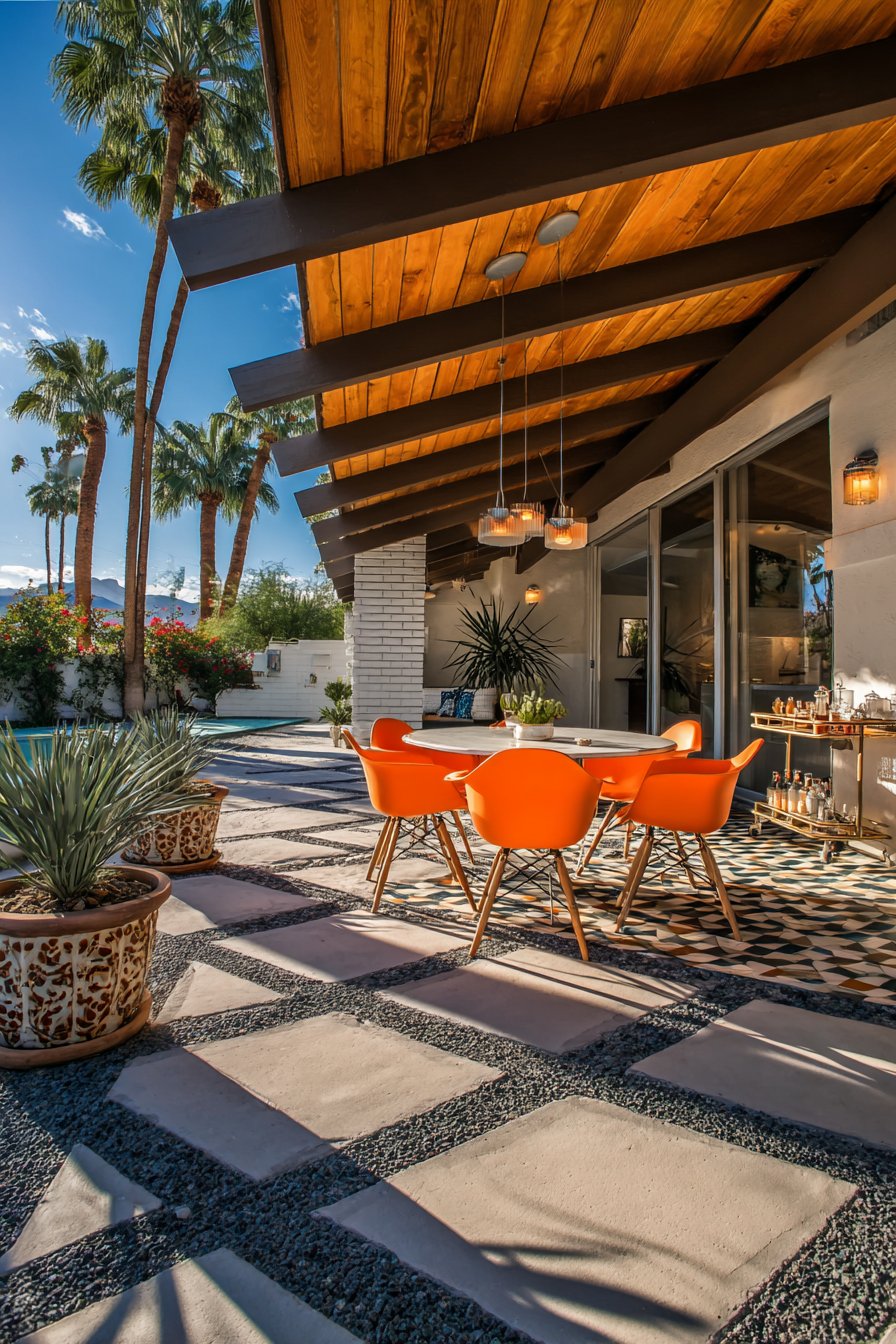
The geometric paver pattern creates visual interest through mathematical precision. The molded plastic chairs resist weathering while maintaining iconic profiles. The teak and chrome combination epitomizes mid-century material preferences.
This design appeals to homeowners who appreciate distinctive mid-century modern aesthetic. The period elements create cohesive outdoor rooms that complement interior vintage collections. The bold colors celebrate optimism characteristic of the era.
Key Design Tips:
- Source authentic vintage pieces or high-quality reproductions of iconic designs
- Choose pavers in modular sizes that create interesting geometric patterns
- Select pendant lights with authentic mid-century silhouettes and materials
- Paint accent walls in period colors like avocado, burnt orange, or mustard
- Maintain clean lines and avoid ornate decorative elements
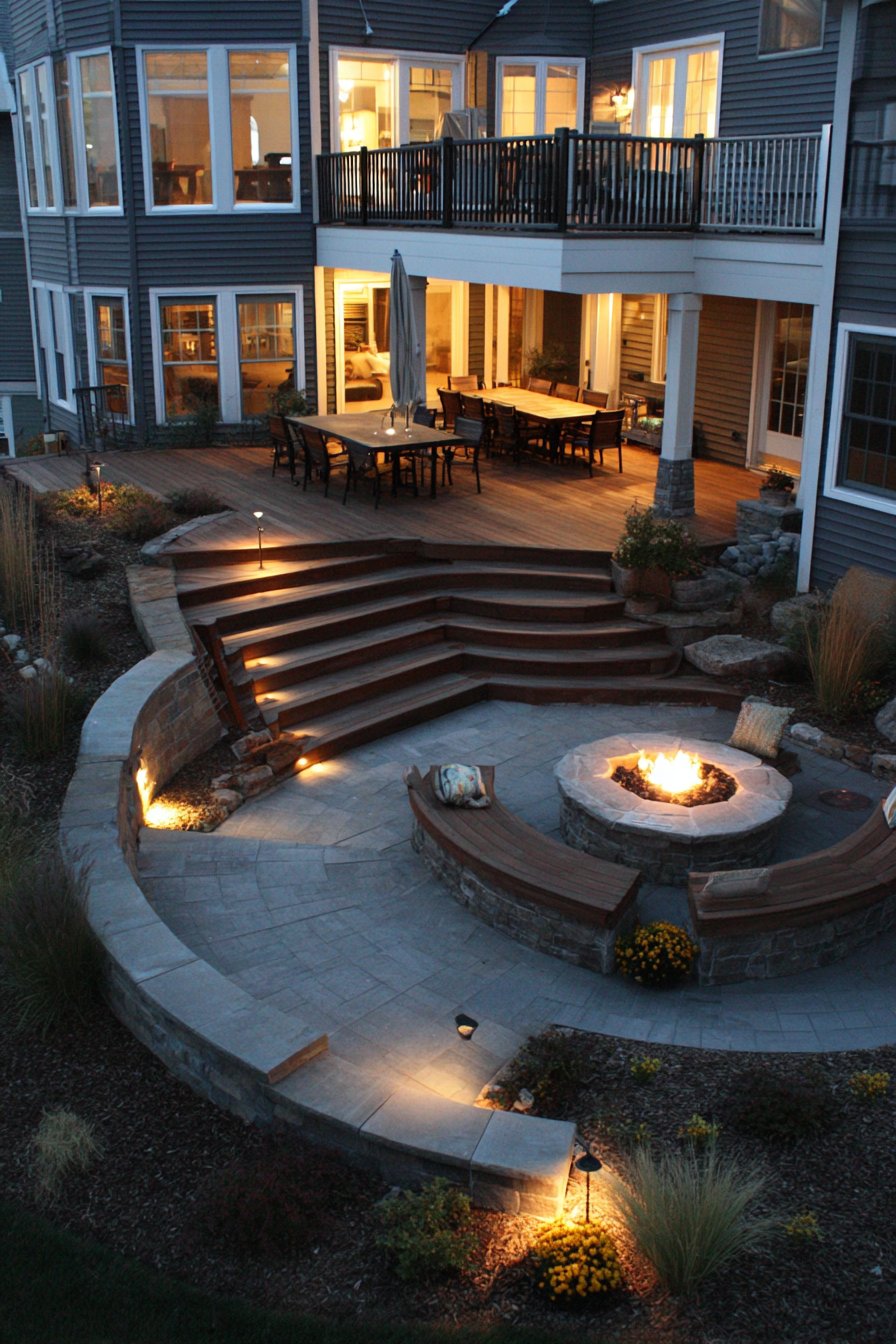
20. Multi-Level Outdoor Living
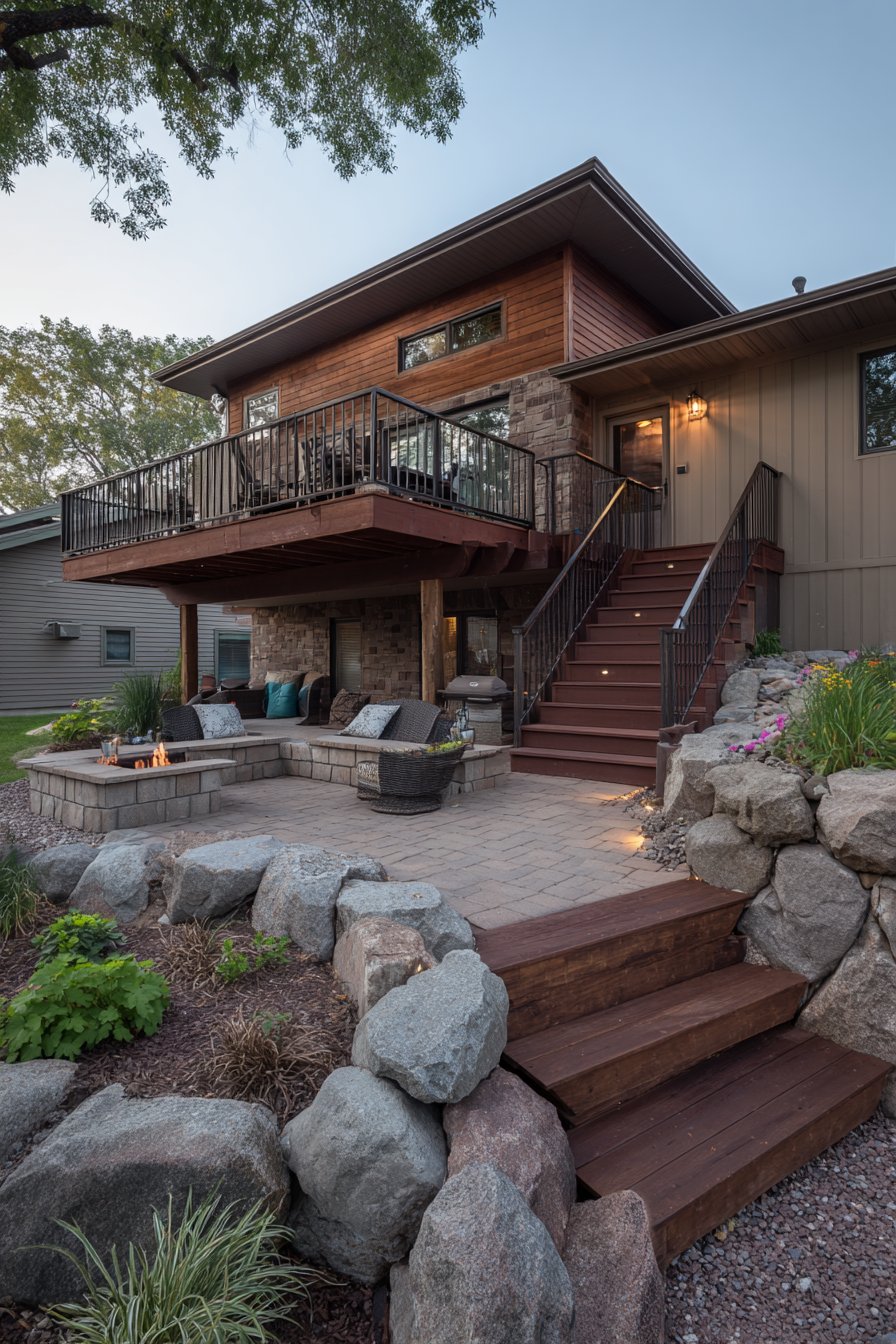
Upper cedar deck transitions to lower stone patio via wide wooden steps. The upper level holds dining furniture while lower features fire pit seating. Built-in stone benches topped with outdoor cushions surround the fire feature. Landscape lighting integrated into steps provides safety and ambiance.
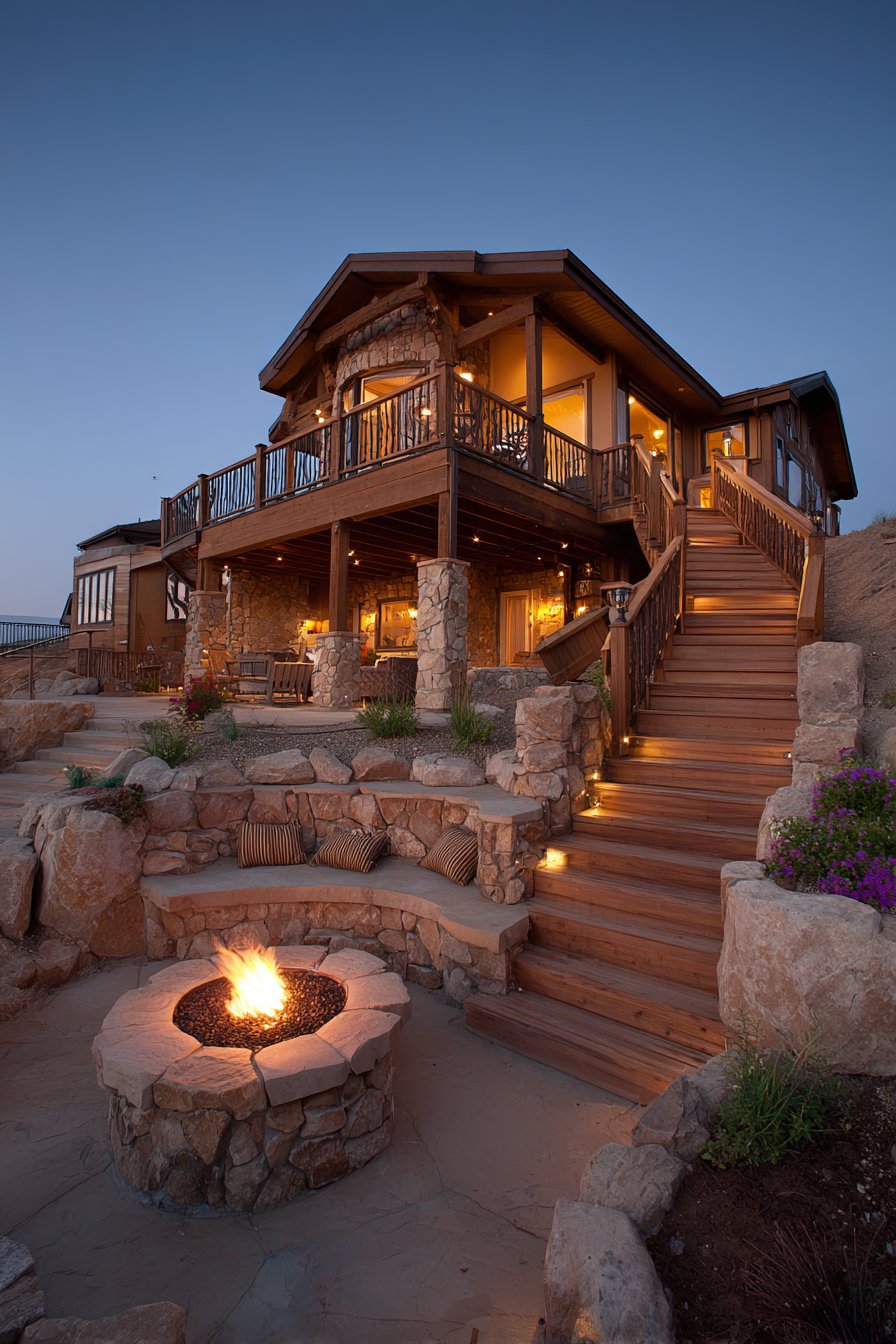
Mixed plantings in terraced beds soften transitions between elevation changes. Evening twilight photography captures dimensional outdoor living space beautifully. Both levels receive balanced exposure showing complete outdoor room concept. Material transitions demonstrate thoughtful integration of wood and stone elements.
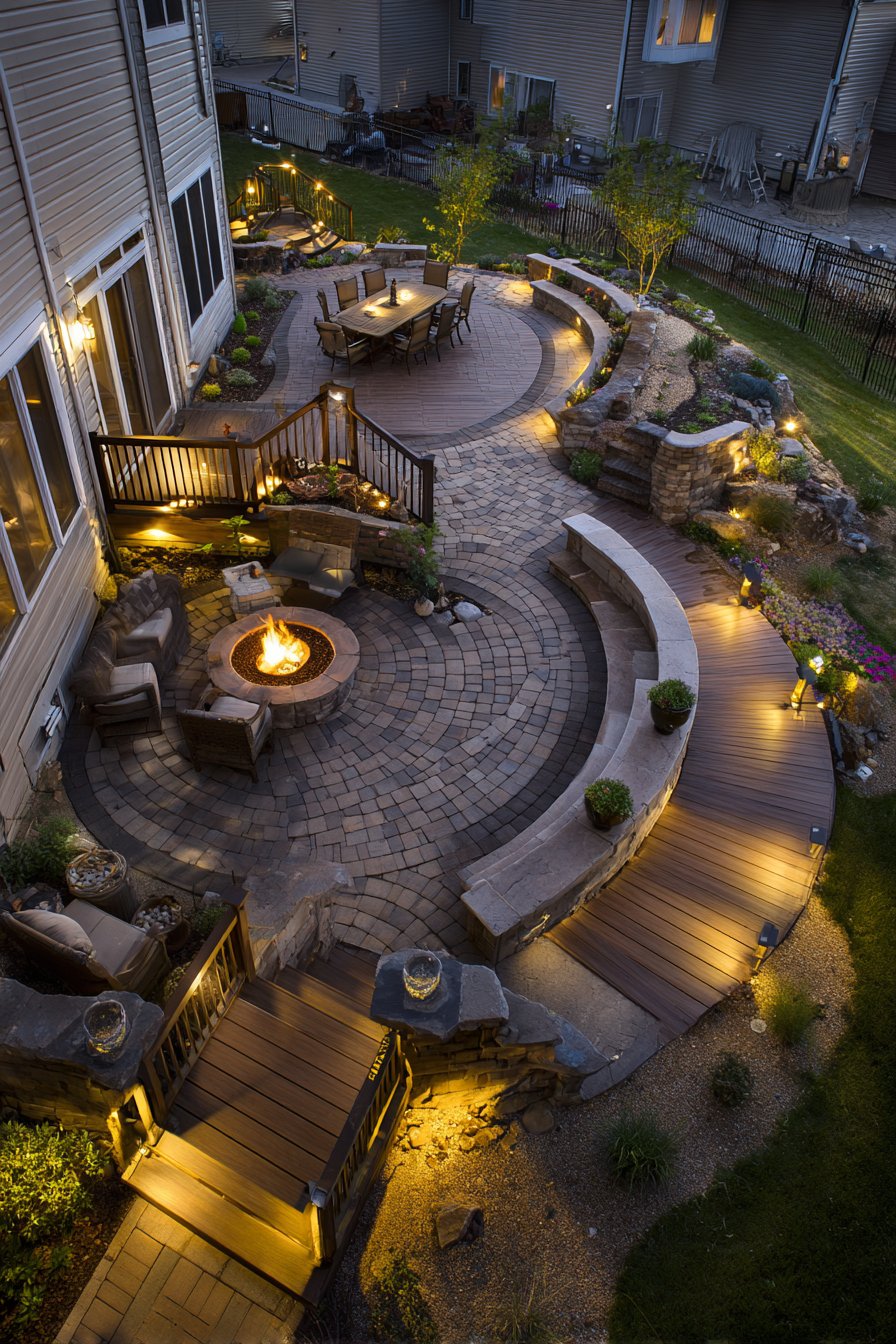
The multi-level design creates distinct zones for different activities. The integrated step lighting provides safety without visible fixtures. The terraced plantings prevent erosion while adding vertical interest.
This design maximizes sloped properties by creating usable outdoor living spaces. The level changes create psychological separation between dining and relaxation zones. The dimensional approach adds architectural interest to flat outdoor designs.
Key Design Tips:
- Ensure railings meet local building codes for elevated deck areas
- Install landscape lighting on separate circuits for individual zone control
- Choose stone for lower level to distinguish from upper wood deck
- Build wide steps to accommodate comfortable seating during gatherings
- Plant terraced beds with deep-rooted species to prevent soil erosion
Why These Outside Patio Designs Are the Best
These outside patio designs represent comprehensive approaches to outdoor living that balance aesthetics with functionality. Each concept demonstrates thoughtful material selection that withstands weather exposure while maintaining visual appeal. The diversity of styles ensures homeowners find designs matching their personal preferences and architectural context.
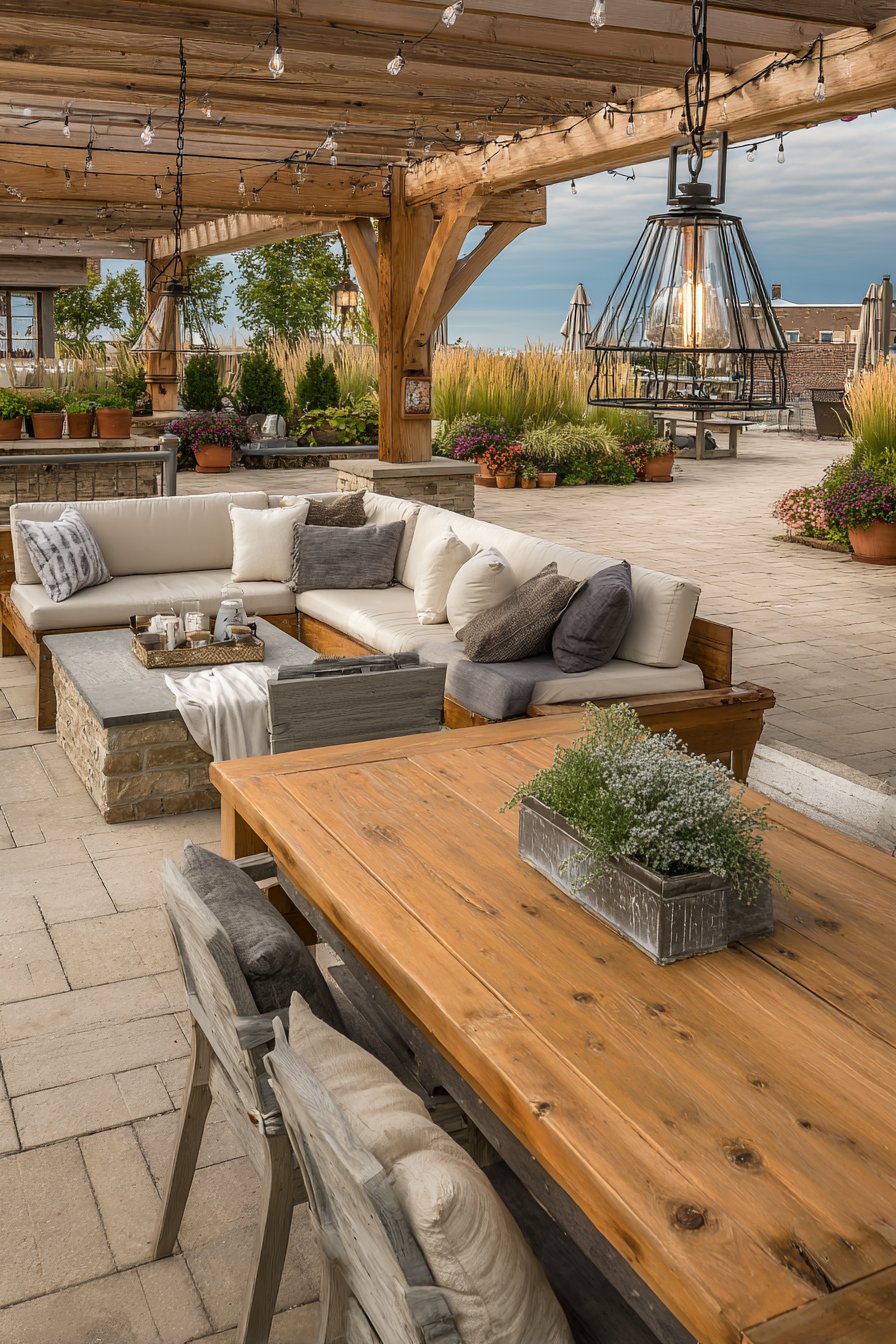
The incorporation of durable materials like porcelain pavers, composite decking, and weather-resistant metals ensures longevity. Natural materials such as teak, cedar, and stone develop beautiful patinas through aging. This authentic weathering adds character rather than appearing worn or neglected. The designs embrace outdoor reality rather than attempting to recreate indoor conditions.
Color theory applications throughout these concepts demonstrate professional design principles. Neutral palettes provide versatile foundations while strategic accent colors create visual interest. Earth tones and nature-inspired colors create cohesive transitions between built environments and natural landscapes. These color choices remain timeless across changing trends.
The spatial considerations address both compact urban patios and expansive suburban yards. Multi-functional furniture and built-in storage maximize limited square footage efficiently. Open layouts in larger spaces create distinct zones for various activities. The designs demonstrate how thoughtful planning creates comfortable outdoor rooms regardless of available space.
Sustainability appears throughout these concepts through material choices and plant selections. Reclaimed wood, recycled composite materials, and locally sourced stone reduce environmental impact. Drought-tolerant plantings and native species minimize irrigation requirements. These responsible choices align with contemporary environmental awareness.
The lighting strategies employ layered approaches combining ambient, task, and accent illumination. String lights, integrated LEDs, and traditional lanterns create flexible lighting schemes. This versatility extends patio usability into evening hours while creating appropriate ambiance. The various lighting types serve different functional and aesthetic purposes.
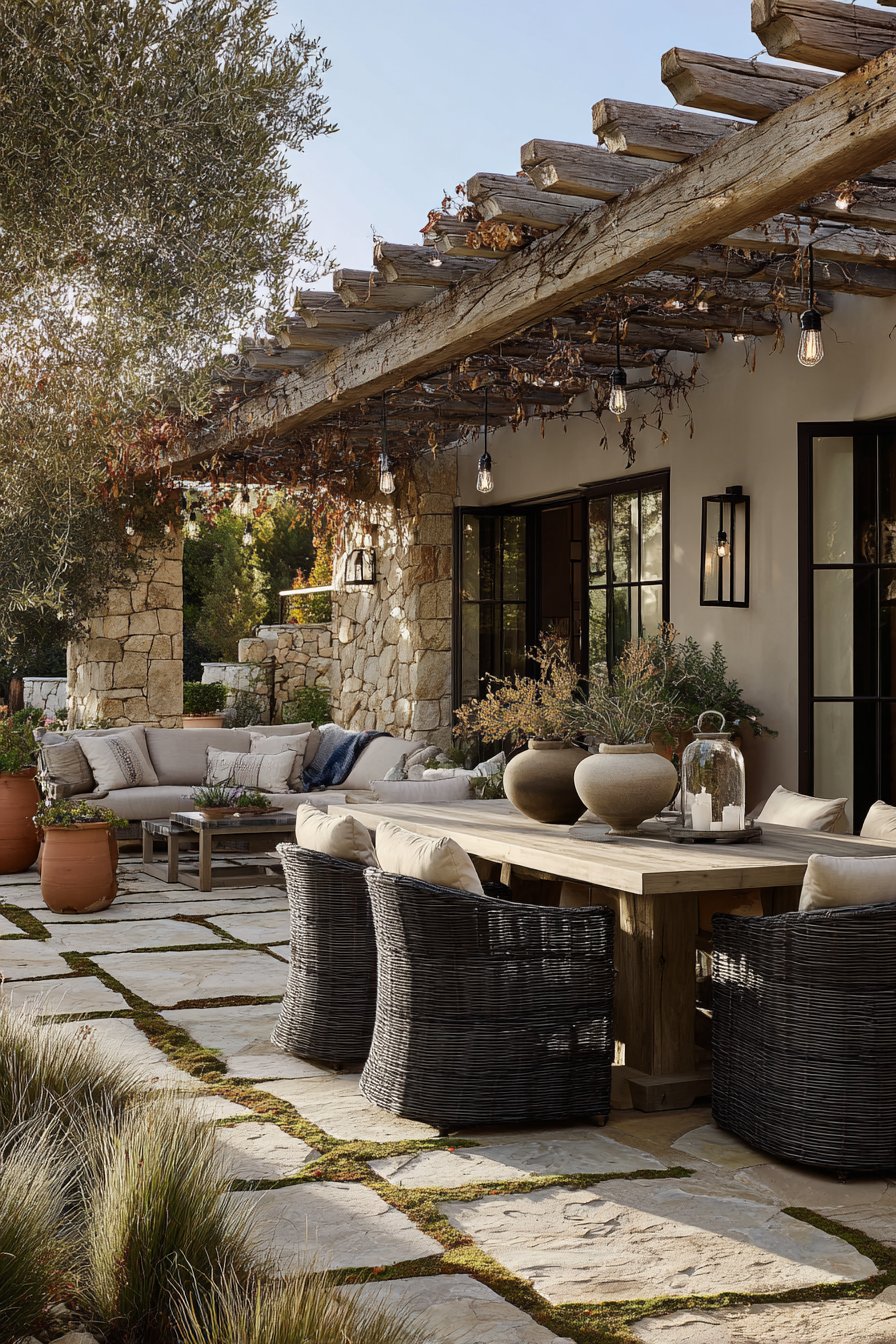
Furniture selections balance comfort with weather resistance across all designs. The concepts demonstrate that outdoor furniture need not sacrifice comfort for durability. Quality cushions with removable covers, weather-resistant frames, and thoughtful proportions create inviting seating. The furniture arrangements encourage social interaction while maintaining functional circulation paths.
Conclusion
These outside patio designs demonstrate that thoughtful planning creates outdoor living spaces rivaling interior rooms. The key takeaways include prioritizing durable materials, embracing natural weathering, and creating distinct functional zones. Quality investments in permanent elements like pavers and built-in features provide long-term value.
Successful patio design balances personal style with practical requirements for outdoor exposure. Start by identifying primary uses whether dining, entertaining, or relaxation. Select materials appropriate for local climate conditions and maintenance preferences. Your ideal outside patio awaits creation through careful planning and creative implementation of these inspiring concepts.