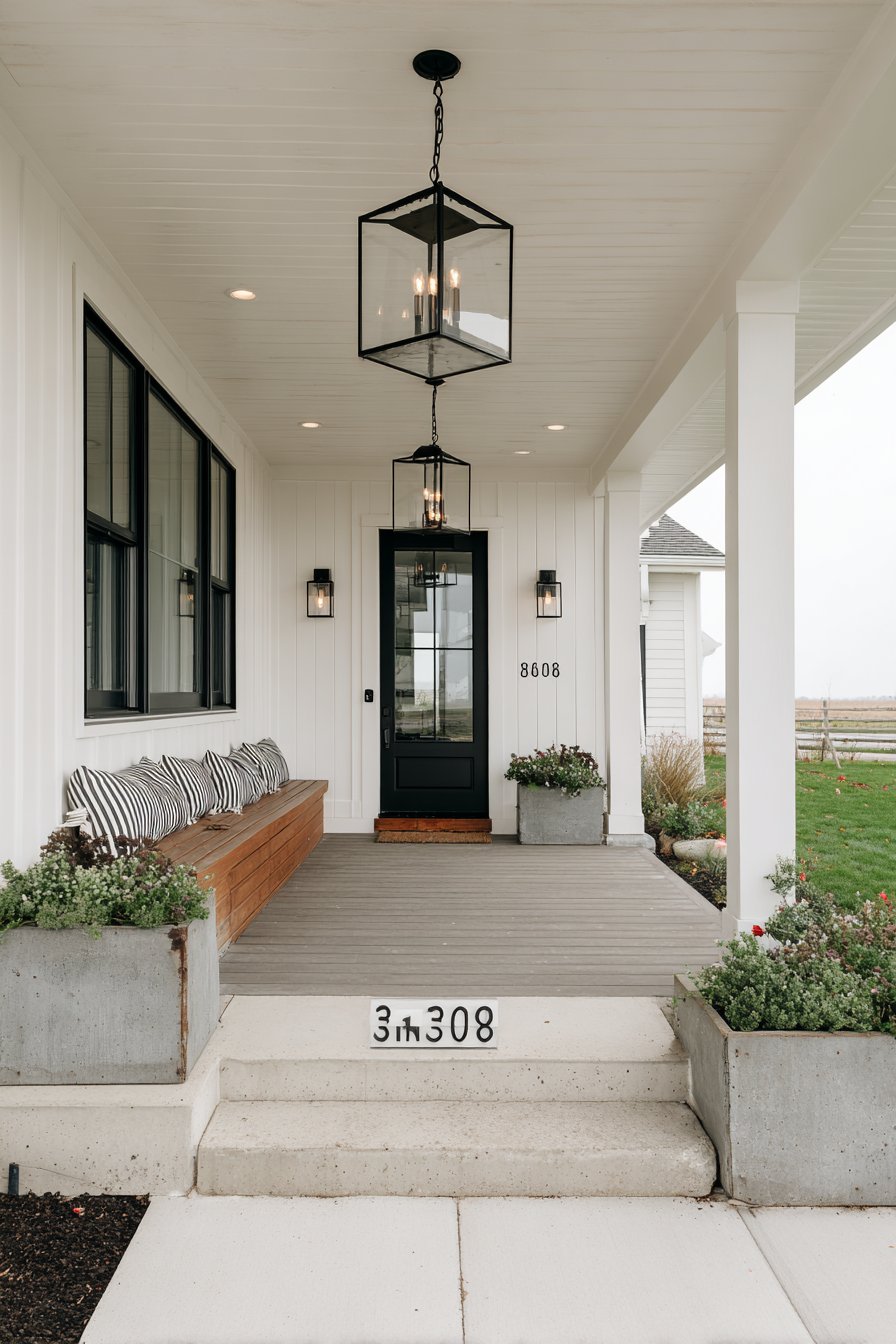


Your home’s entrance serves as the first chapter of your personal design story. This crucial transition space welcomes guests and family members alike. The outside entrance sets expectations for everything that follows. A thoughtfully designed exterior entry communicates your aesthetic sensibilities before anyone steps inside.
The power of a well-executed entrance cannot be overstated. These spaces blend architectural elements with practical considerations seamlessly. From traditional colonial doorways to sleek contemporary designs, entrance aesthetics span countless styles. Each approach offers unique opportunities to express personality while maintaining functionality. The variety of materials, colors, and architectural details available today makes personalizing your entrance more exciting than ever.
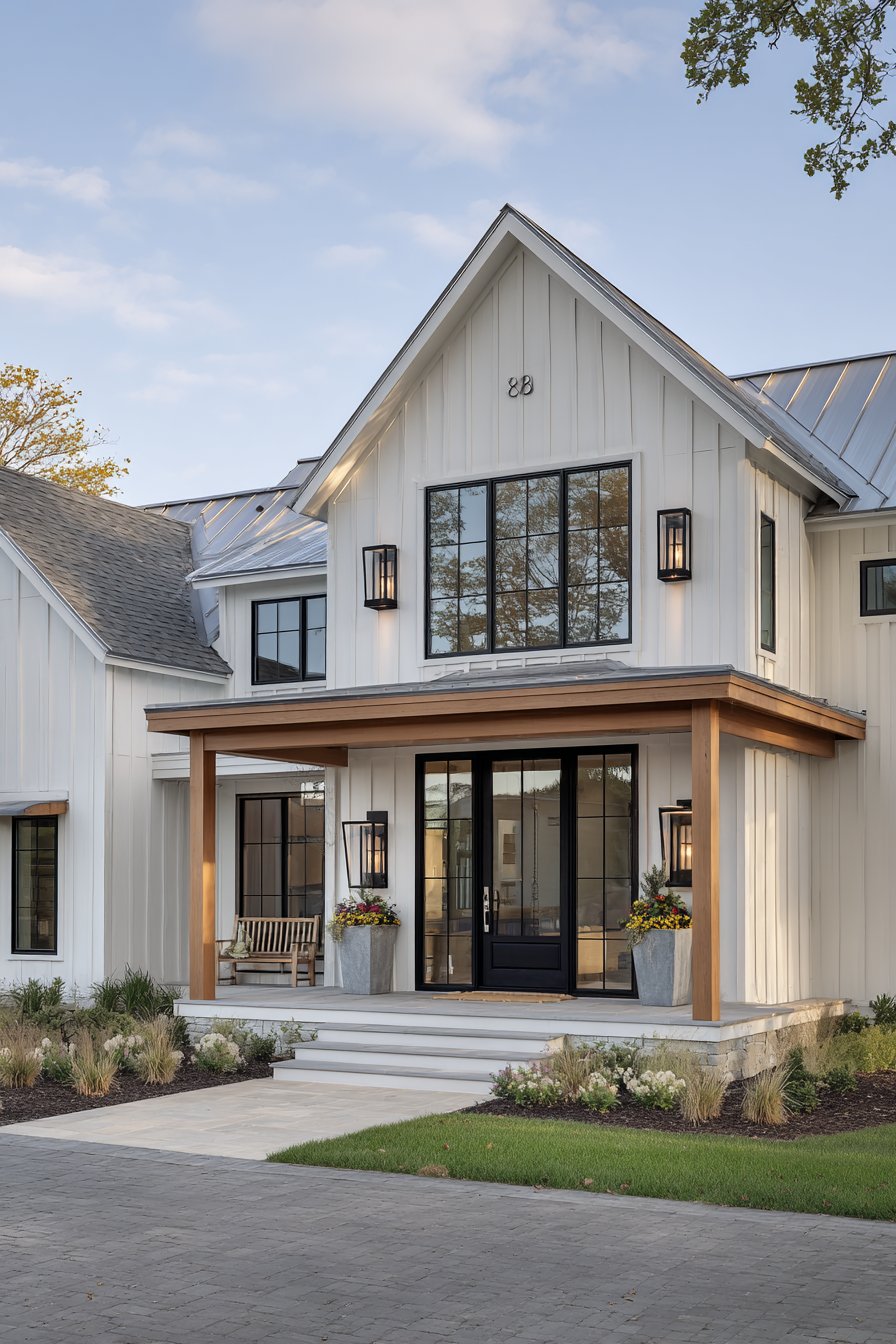
This article explores twenty distinct entrance designs that demonstrate exceptional craftsmanship and design thinking. Each concept showcases different material combinations, color palettes, and architectural styles. Whether you gravitate toward rustic farmhouse charm or modern minimalist precision, these designs offer inspiration. The following sections reveal how authentic materials, thoughtful lighting, and strategic plantings create memorable first impressions.
1. Deep Charcoal Door with Craftsman Trim
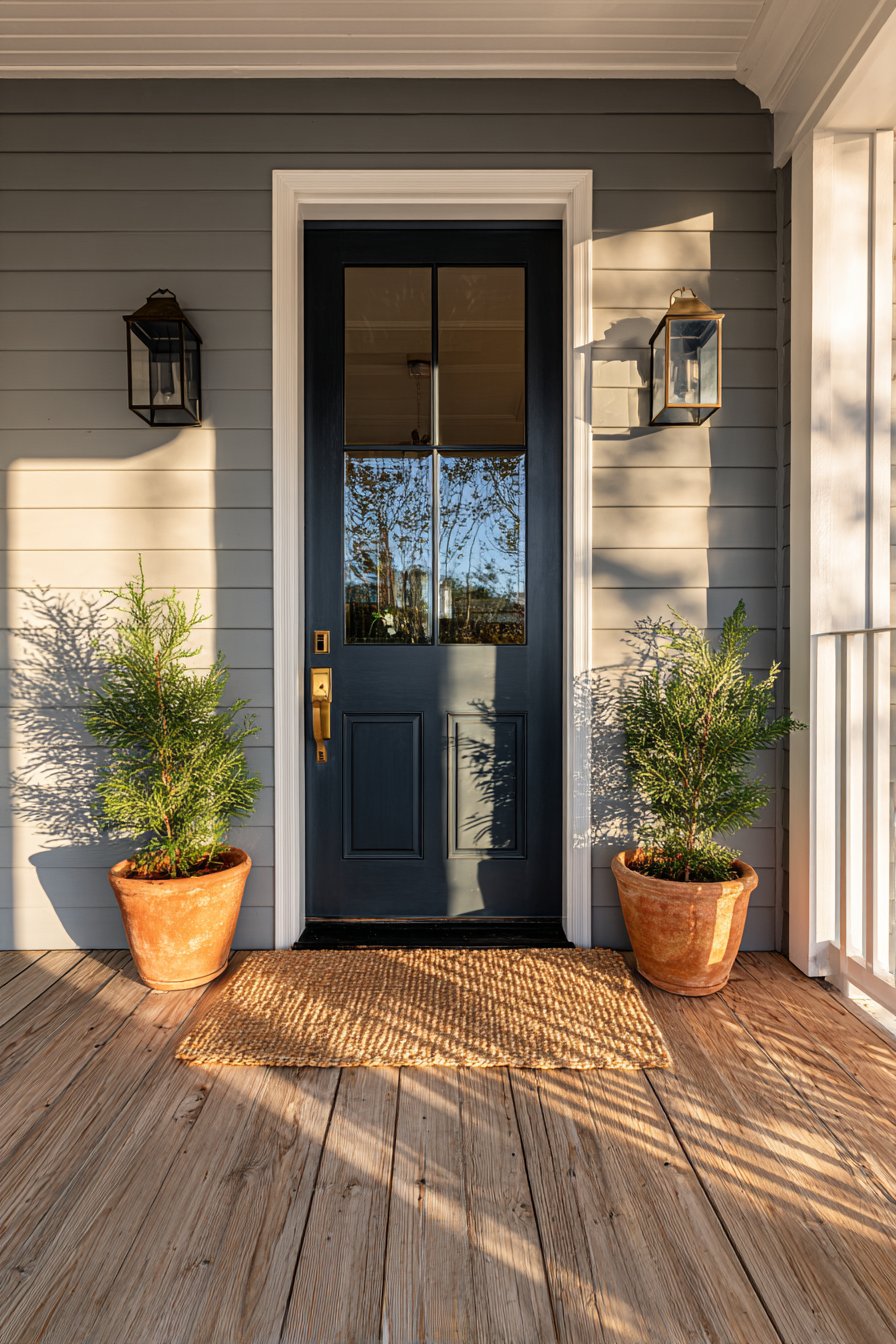
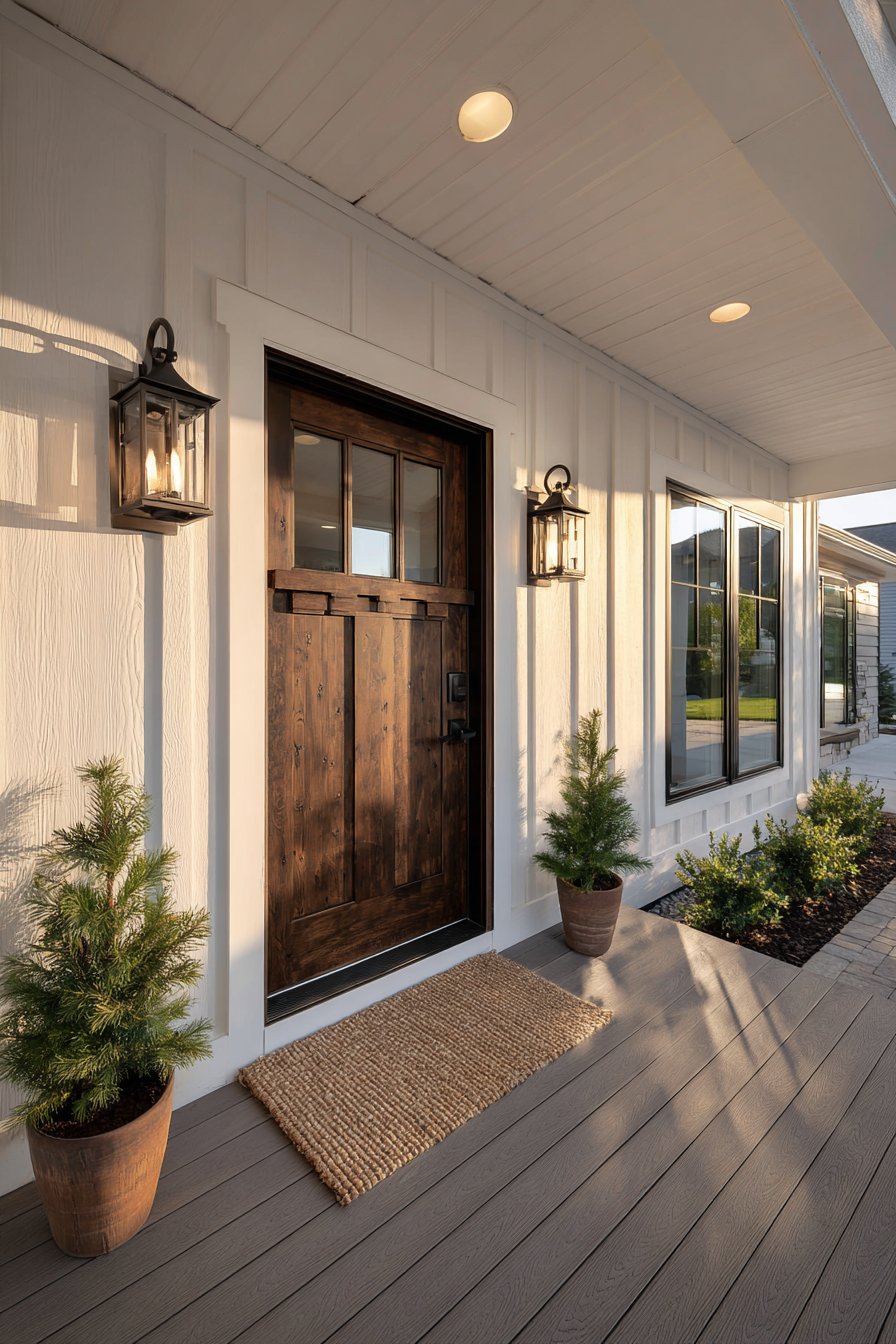
A solid wood front door in deep charcoal grey creates immediate visual impact. The antique brass hardware adds warmth against the dark surface. Substantial lever handles invite touch with their quality feel. The door sits within craftsman-style trim painted in crisp white. This contrast draws the eye naturally to the entrance point.
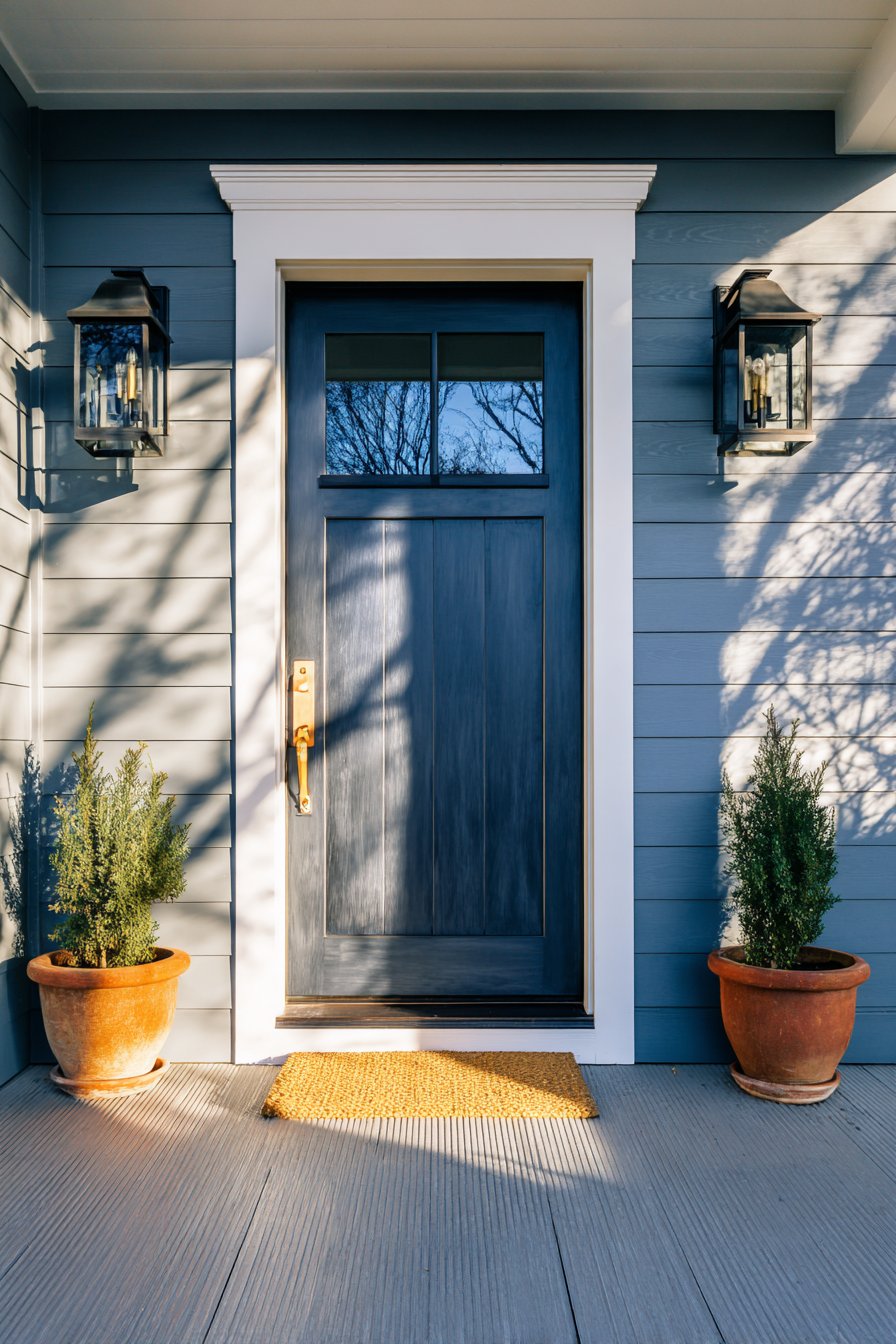
Warm grey horizontal siding creates a sophisticated backdrop for this composition. The material texture adds subtle dimension to the exterior walls. Two matching black lantern-style wall sconces flank the entrance symmetrically. These fixtures cast gentle shadows that enhance architectural depth. The lighting creates welcoming illumination during evening hours.
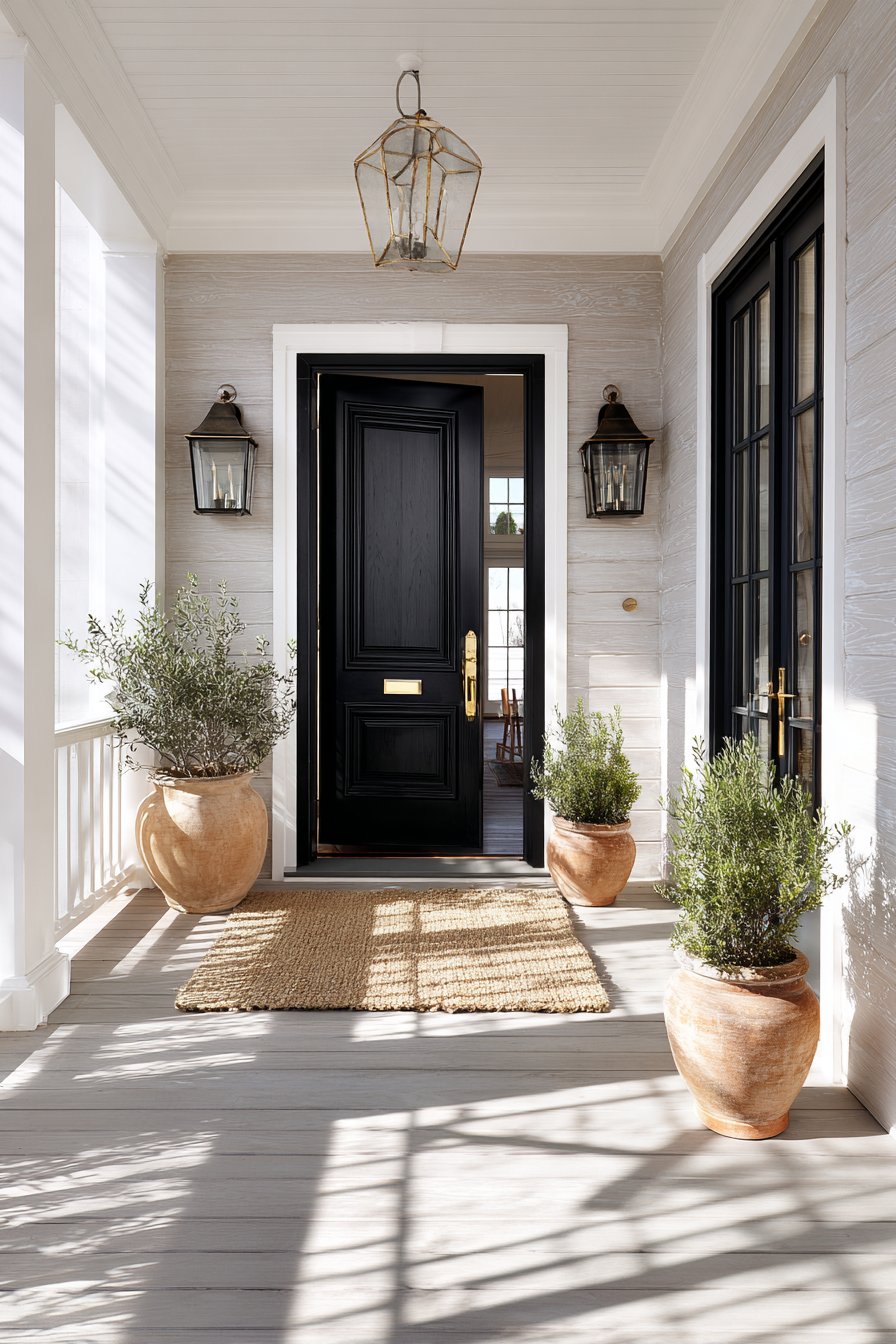
A handwoven natural fiber doormat introduces organic texture at ground level. Grey composite decking provides durable flooring that resists weather damage. Potted evergreen shrubs anchor each side of the entrance with living elements. Aged terracotta planters add earthy tones to the color scheme. The combination of materials creates visual interest through varied textures.
Golden hour sunlight emphasizes the interplay between wood grain and metal finishes. Natural shadows define architectural details throughout the composition. The directional light creates dimensional depth across all surfaces. This entrance demonstrates how quality materials and classic proportions create timeless appeal.
Key Design Tips:
- Select solid wood doors for superior durability and natural beauty
- Use antique brass hardware to add warmth to cool color palettes
- Create contrast with white trim against darker siding colors
- Position matching wall sconces for balanced symmetrical lighting
- Choose natural fiber doormats that complement the overall aesthetic
- Anchor the entrance with evergreen plantings in quality containers
2. Vintage Blue Cottage Charm
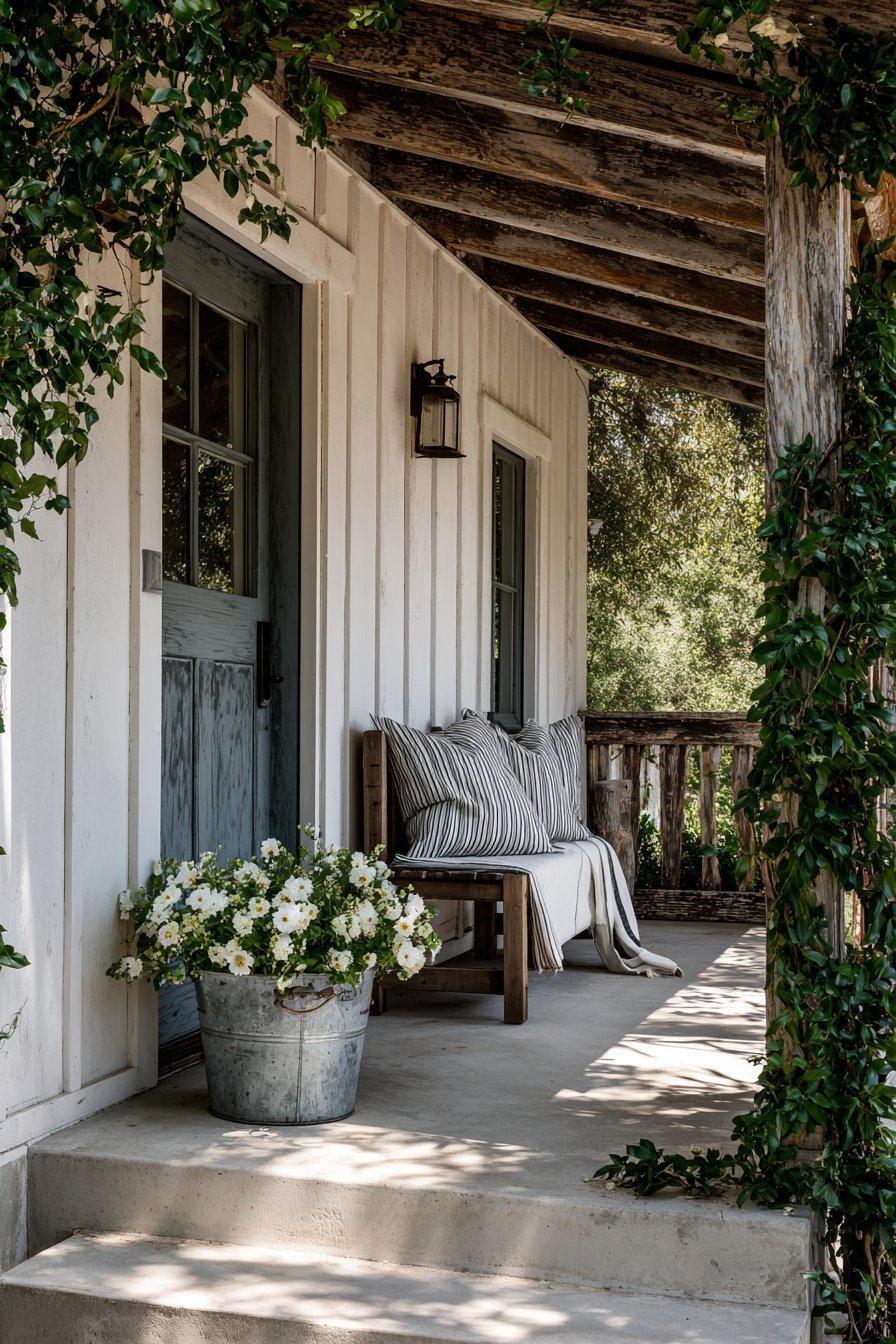
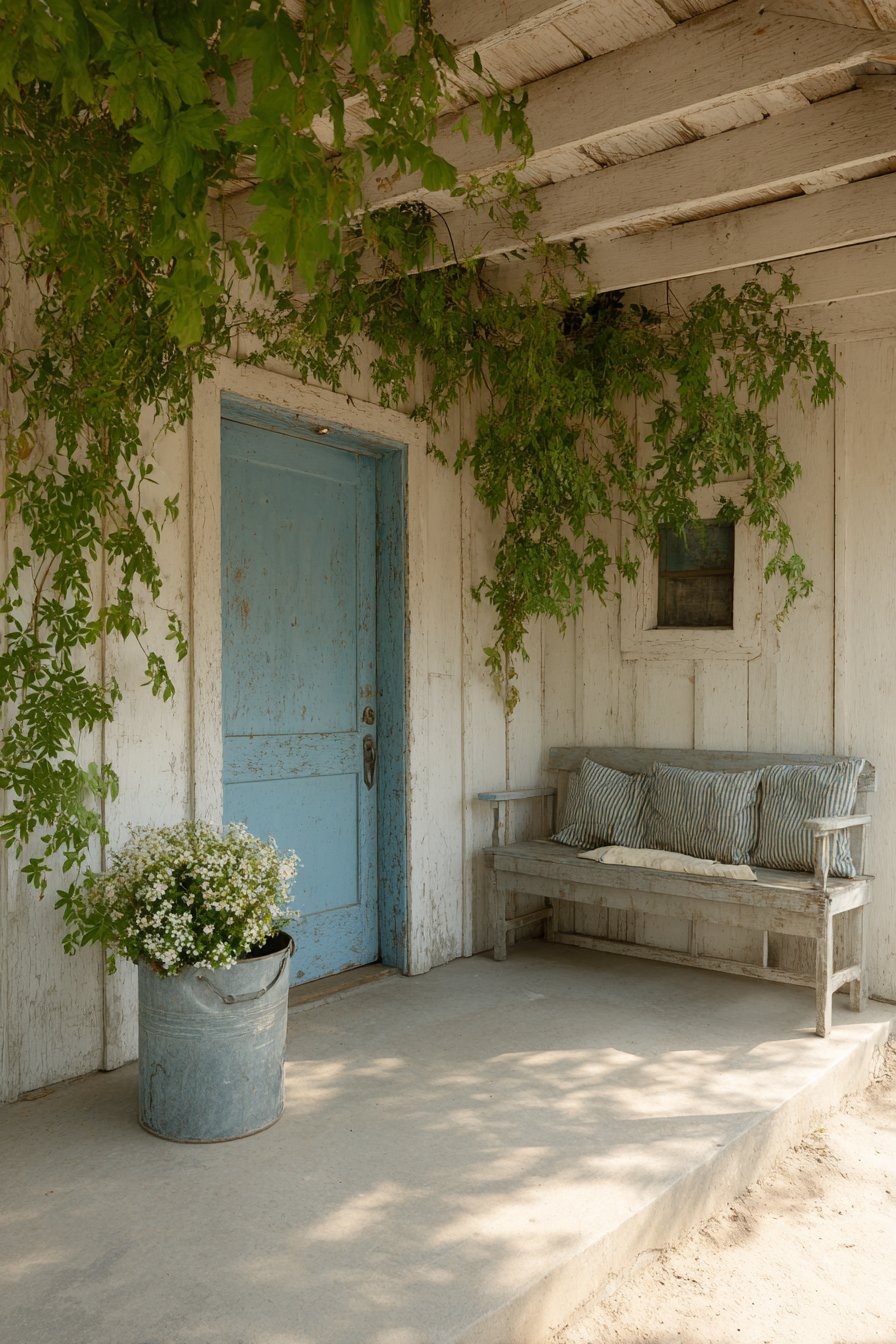
A vintage blue painted door shows subtle weathering that adds authentic character. The distressed finish reveals layers of history through gentle aging. Simple hardware maintains the cottage aesthetic without unnecessary embellishment. White beadboard wainscoting wraps the covered porch area completely. This classic material choice enhances the cottage style authenticity.
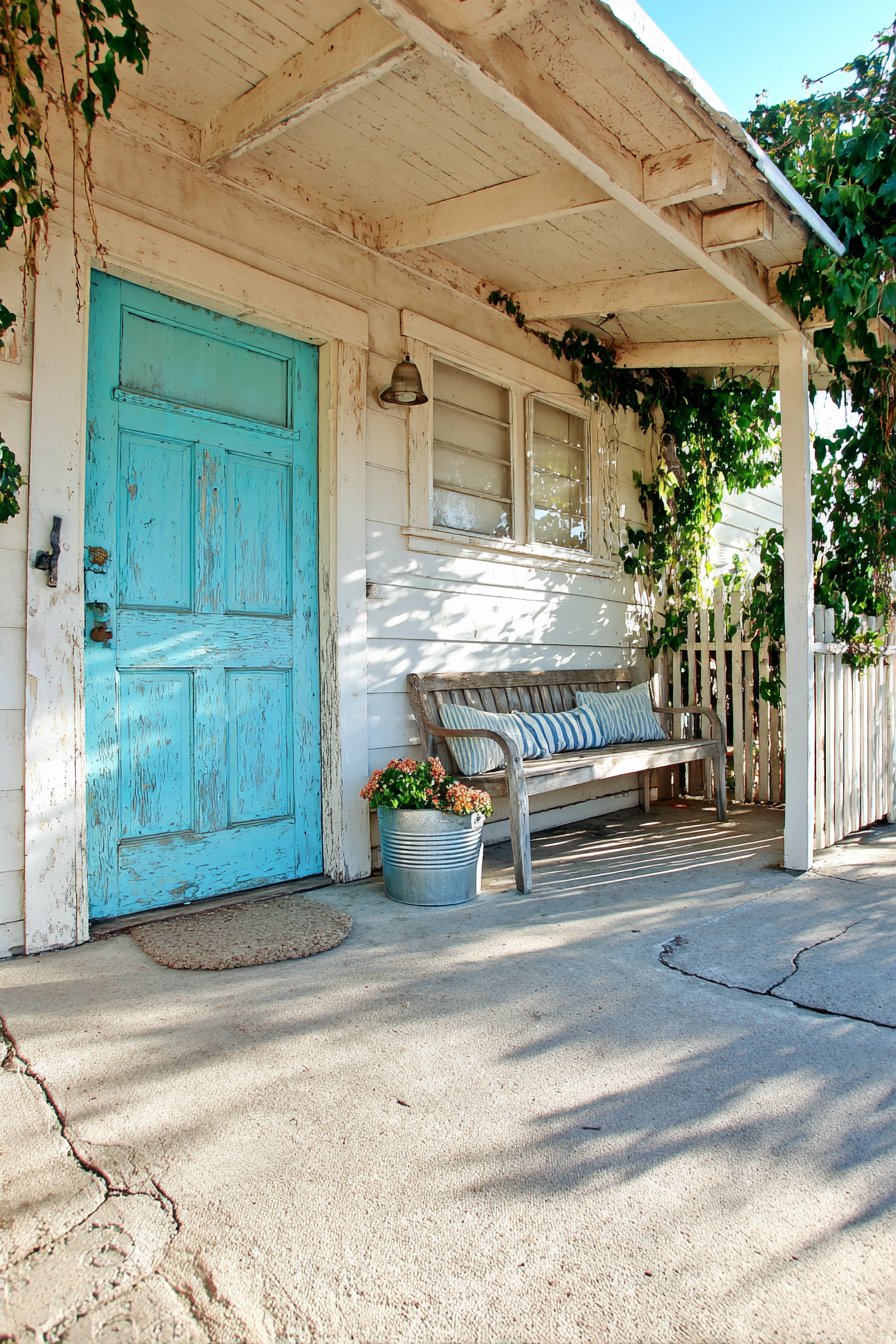
A simple wooden railing painted to match provides safety without visual heaviness. The cushioned wooden bench offers practical seating with faded striped fabric. This lived-in quality feels welcoming rather than overly precious. A galvanized metal bucket holds seasonal flowers that change with nature’s cycles. The concrete porch floor displays natural aging with color variations.
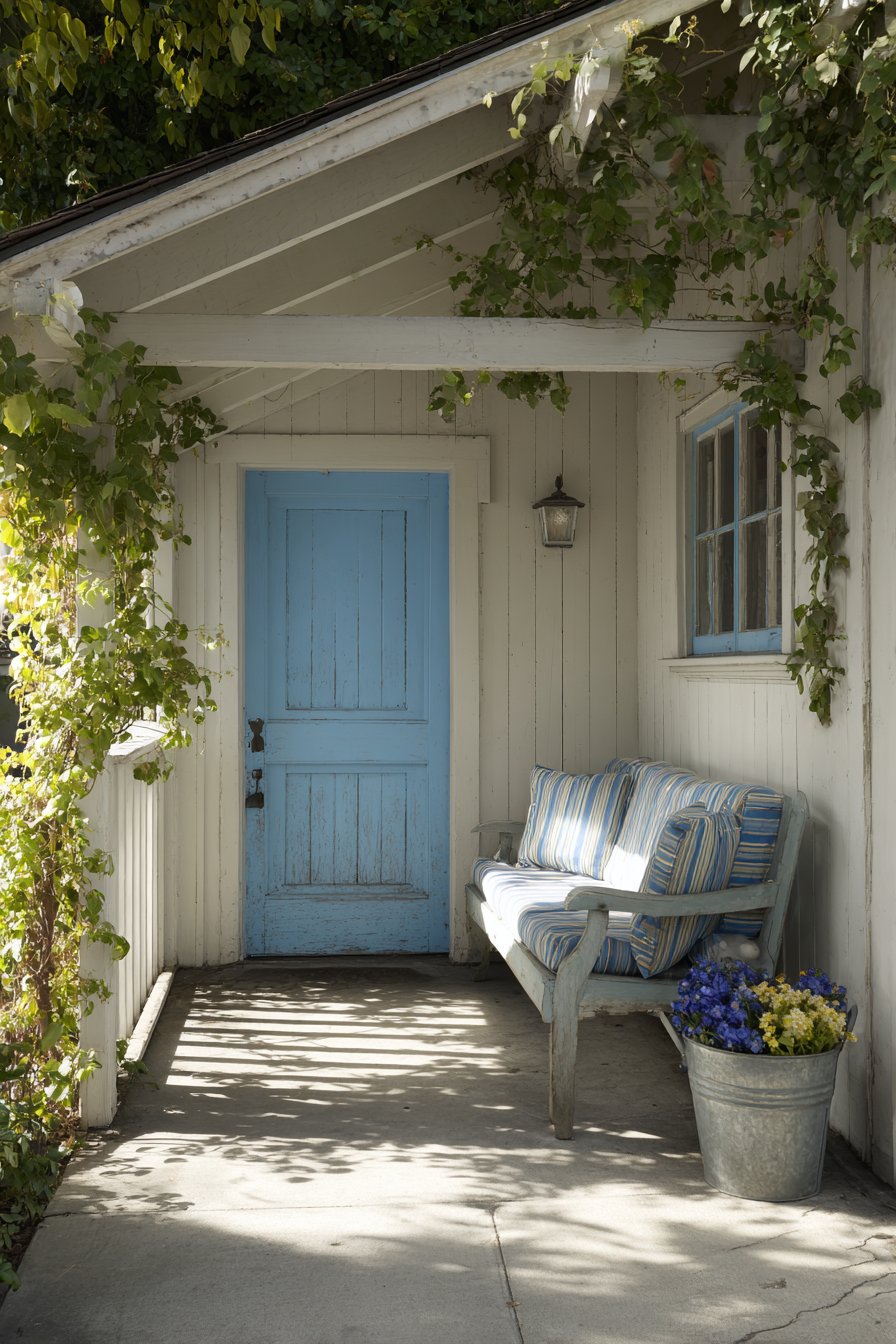
Climbing jasmine vines frame one side naturally without excessive manicuring. The organic growth patterns soften architectural lines beautifully. Morning light filters softly across the entrance during early hours. This gentle illumination emphasizes texture in weathered surfaces and natural materials.
The overall composition celebrates imperfection as part of its charm. Each element contributes to a cohesive cottage aesthetic. The entrance feels approachable and comfortable rather than formal. This design proves that authentic aging creates beauty that cannot be manufactured.
Key Design Tips:
- Embrace weathered finishes that show natural patina development
- Layer white painted elements to create classic cottage brightness
- Include practical seating to make entrances feel welcoming
- Add seasonal plantings that allow for changing displays
- Allow climbing vines to grow naturally for organic softness
- Choose materials that age gracefully rather than deteriorate
3. Modern Minimalist Black Door
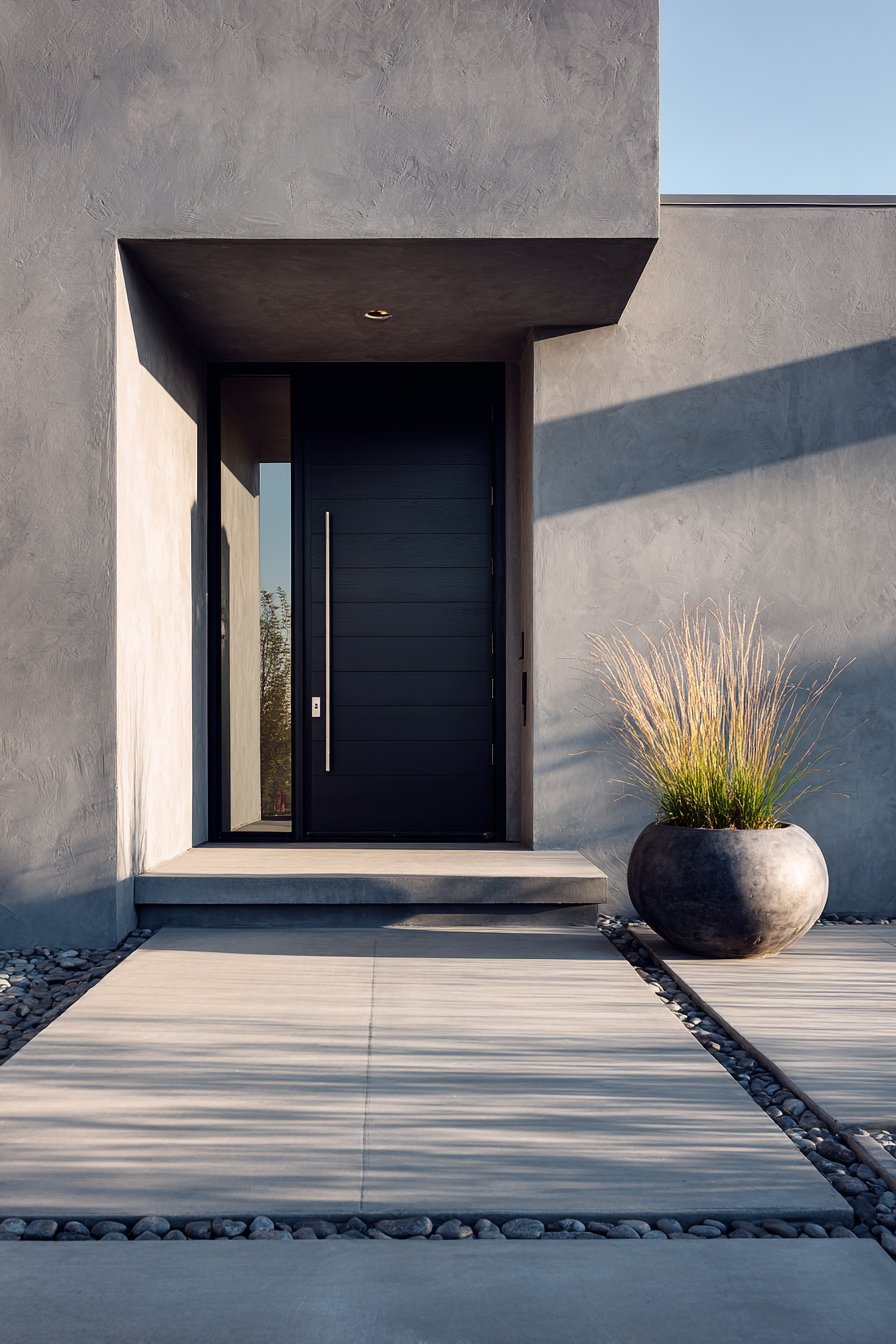
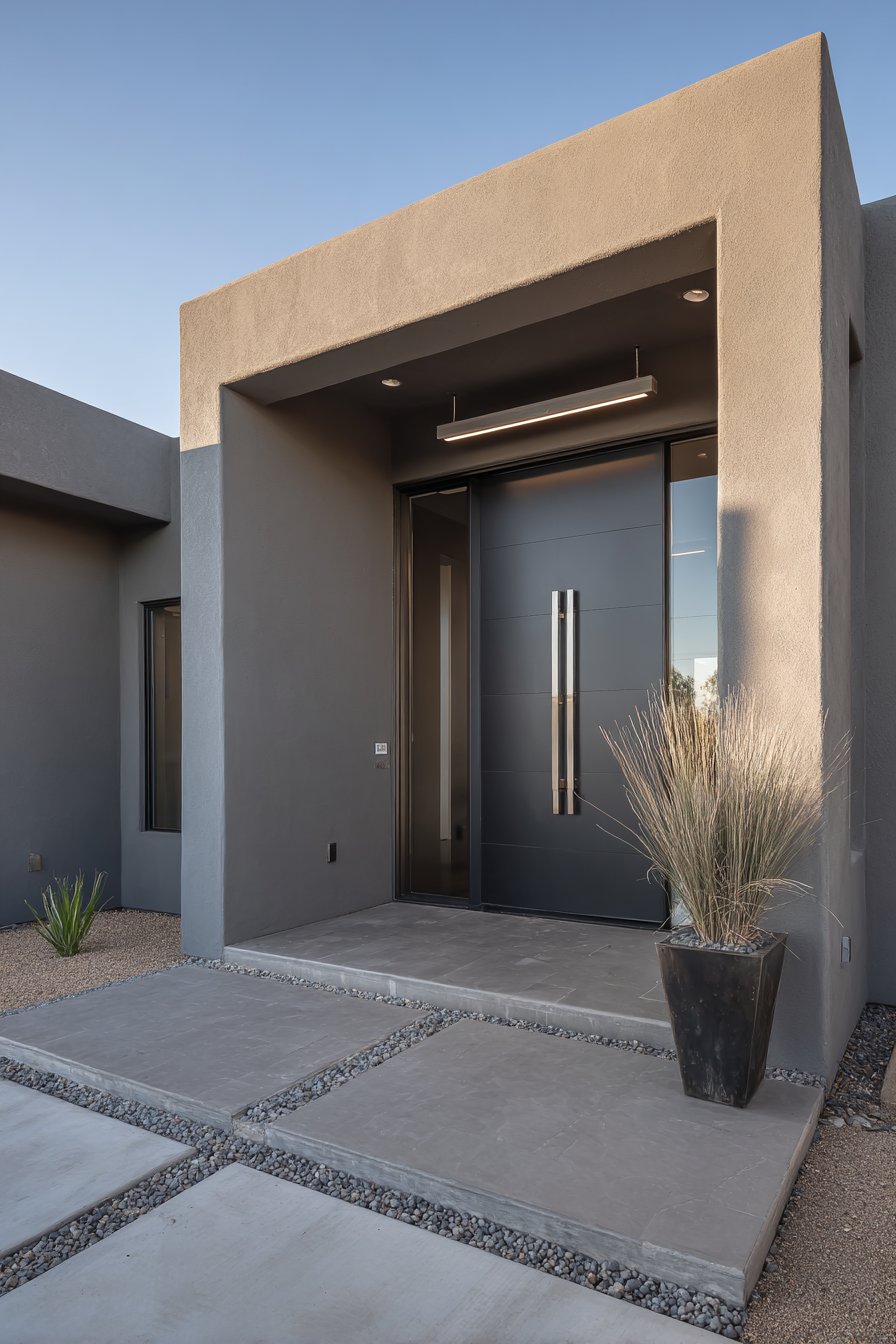
A flush-mounted solid core door in matte black makes a bold contemporary statement. The concealed hinges maintain clean lines without visible hardware interruptions. A sleek horizontal pull handle in brushed stainless steel provides functional elegance. The door sits within a geometric frame of smooth grey stucco. This architectural precision defines modern minimalist design philosophy.
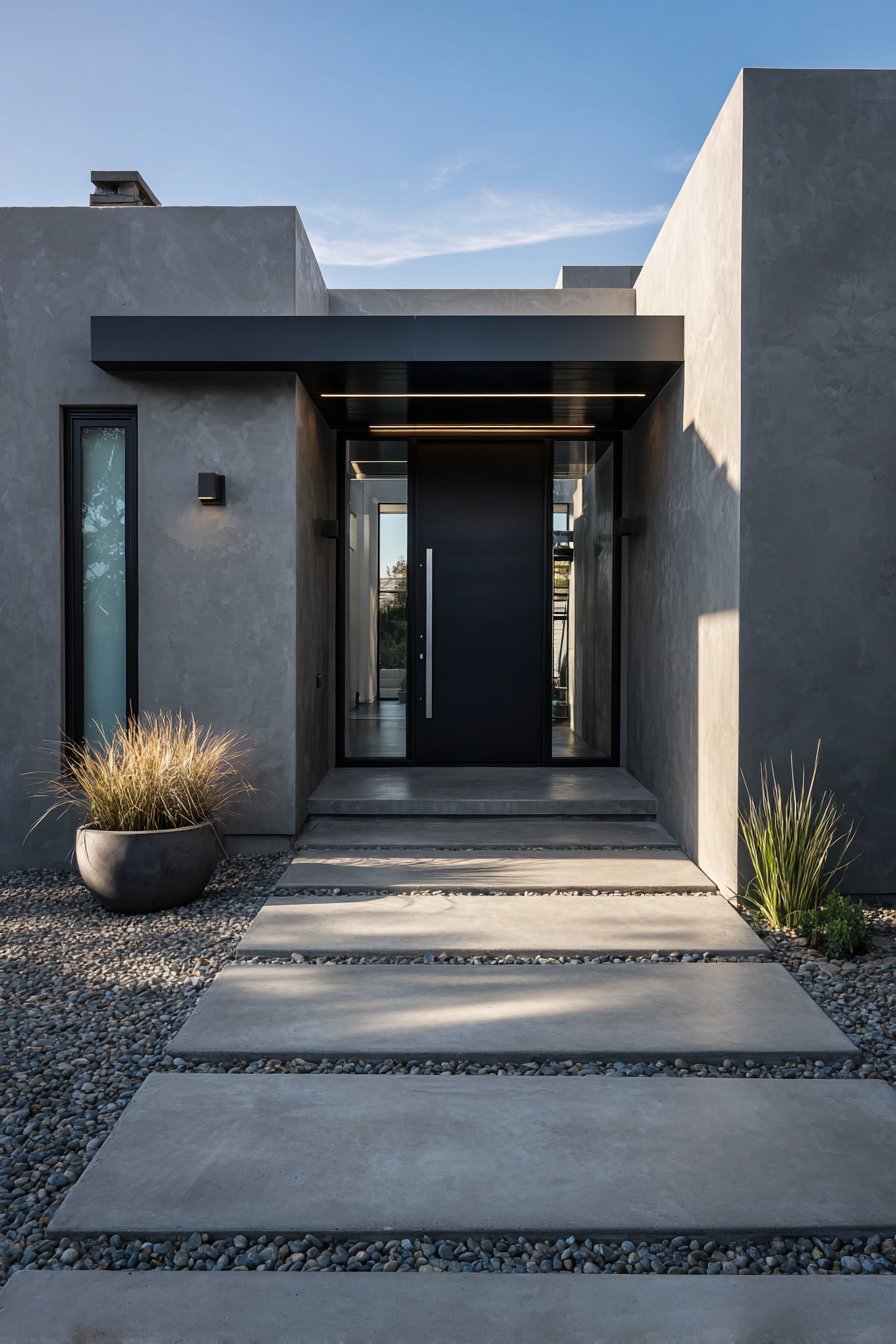
A single linear LED light fixture mounted horizontally provides architectural illumination. The lighting emphasizes horizontal lines in the overall composition. Large format concrete pavers create a sophisticated approach path. Subtle spacing filled with river pebbles adds textural contrast. This detail demonstrates attention to material transitions and relationships.
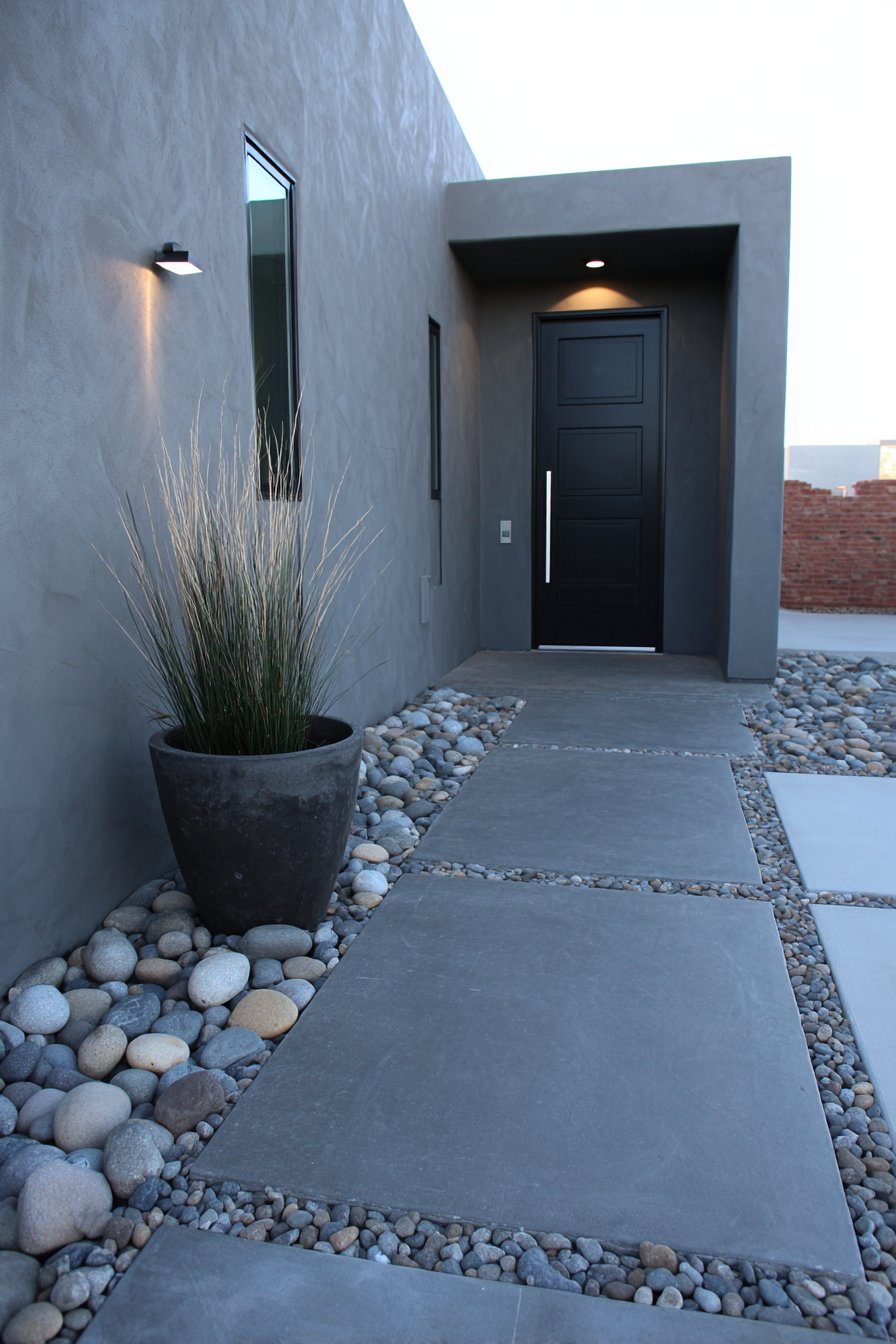
A single sculptural planter holds ornamental grass for organic contrast. The vertical plant form balances the horizontal architectural elements. Late afternoon light creates strong shadows that emphasize geometric forms. These shadow patterns become part of the design composition themselves.
The material palette remains deliberately limited for maximum impact. Every element serves a specific visual or functional purpose. Nothing extraneous clutters the refined aesthetic. This entrance demonstrates that restraint creates powerful design statements.
Key Design Tips:
- Choose matte black finishes for contemporary sophistication
- Use concealed hardware to maintain clean visual lines
- Install linear lighting that emphasizes architectural geometry
- Create interest through material texture rather than decoration
- Balance horizontal and vertical elements for visual harmony
- Limit the material palette to enhance minimalist impact
4. Reclaimed Barn Wood Rustic Appeal
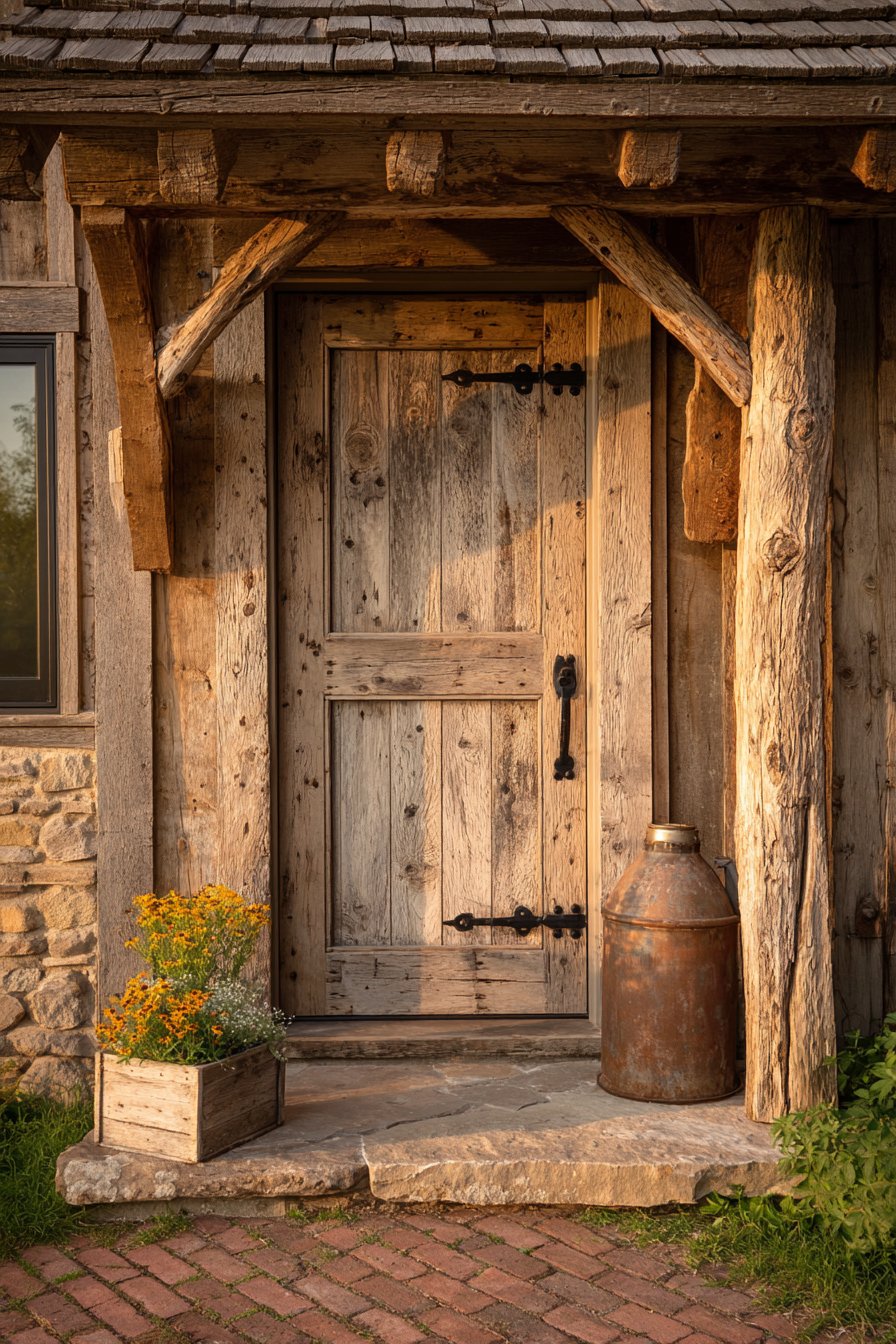
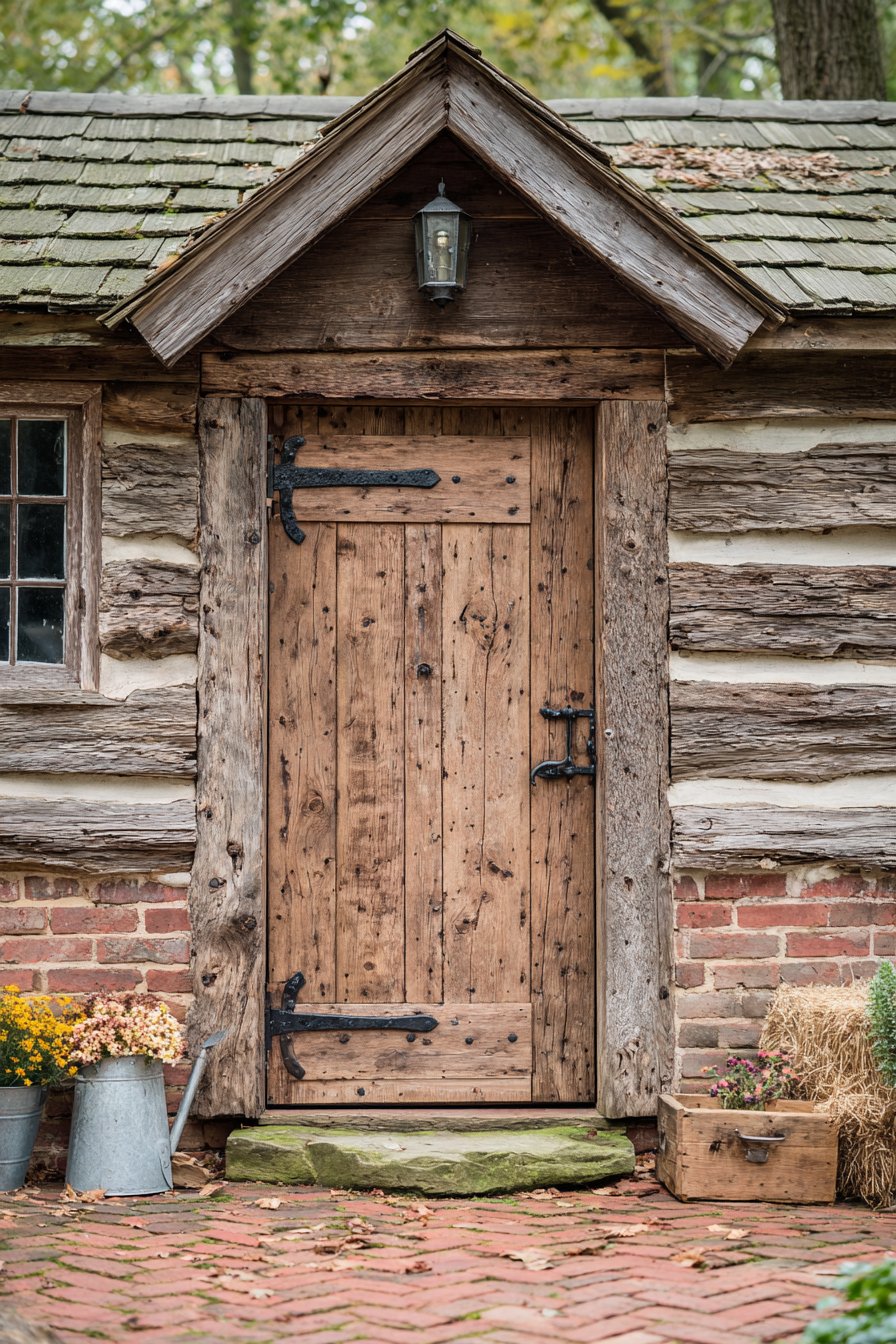
A reclaimed barn wood door features visible knots and authentic grain patterns. The weathering tells stories of previous use and natural aging. Black strap hinges and wrought iron thumb latches add period-appropriate hardware. These elements honor traditional craftsmanship and functional beauty. The entrance sits beneath a modest gabled overhang for weather protection.
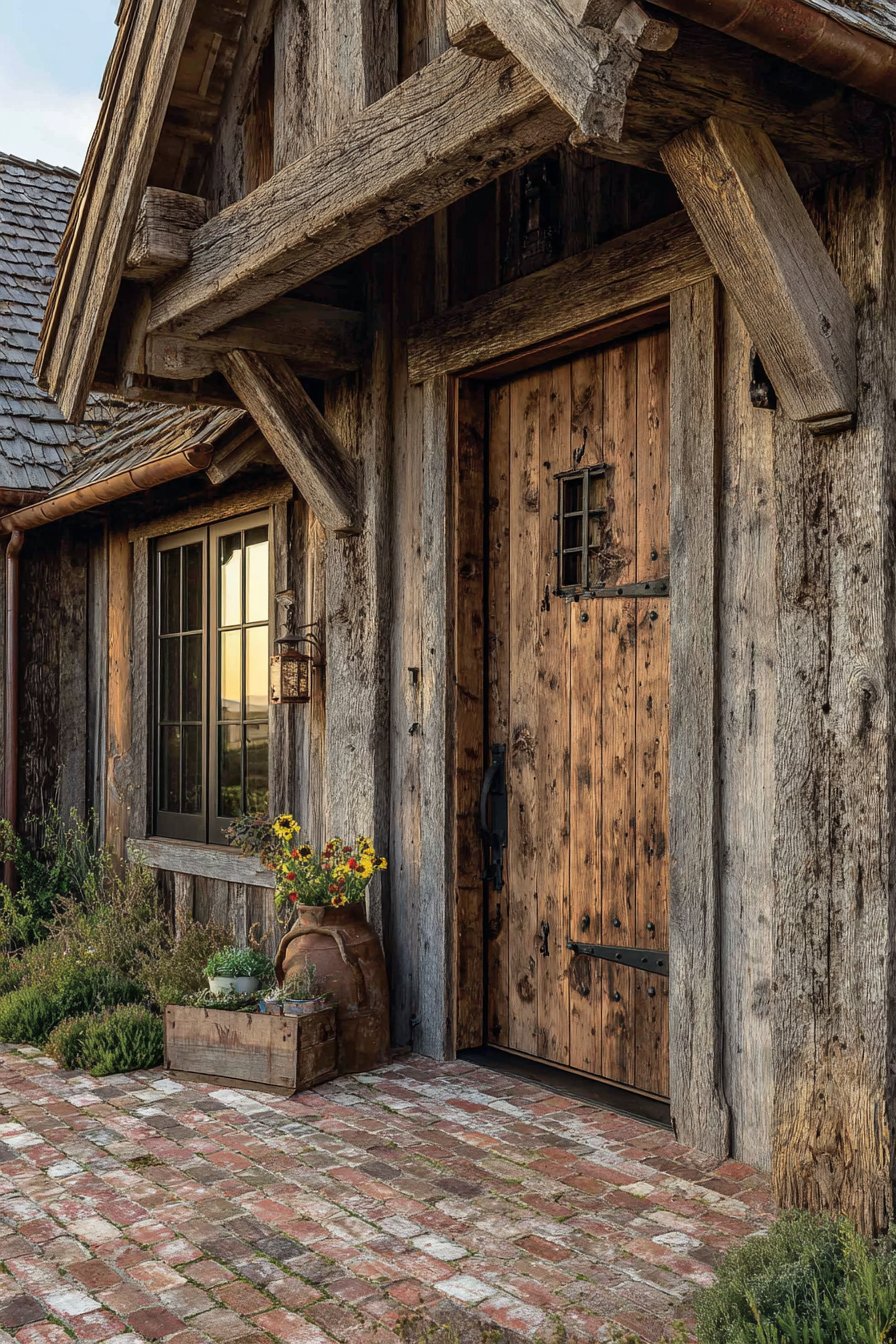
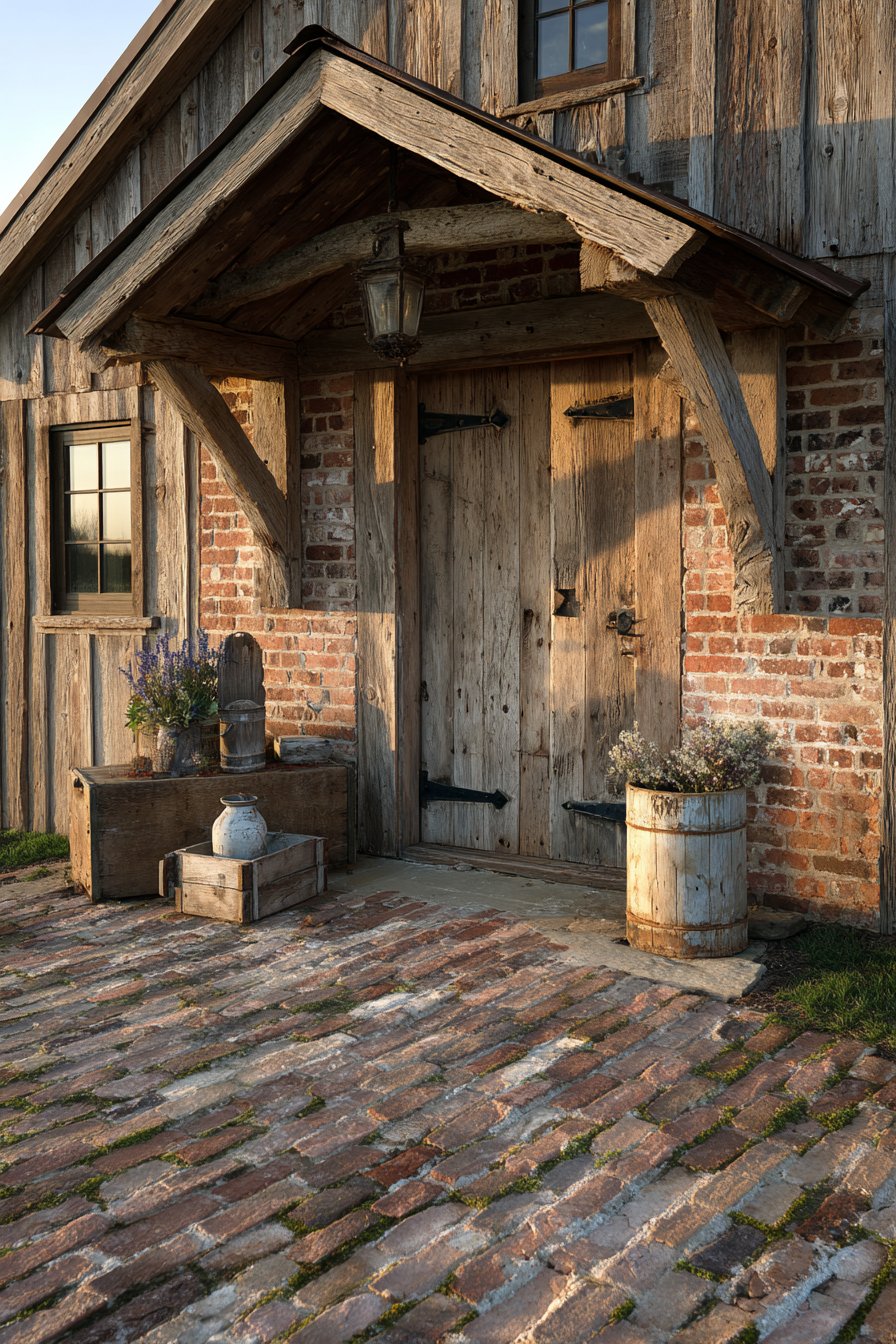
Rough-hewn timber posts show natural bark edges and checking patterns. These imperfections celebrate the organic nature of wood material. Worn brick pavers laid in herringbone pattern create textured flooring. Moss grows naturally between some stones adding green softness. This organic growth enhances rather than detracts from the design.
A vintage milk can holds informal wildflower arrangements that change seasonally. An old wooden crate provides additional storage with rustic character. Golden hour light emphasizes the texture of aged wood surfaces. The warm directional lighting creates depth through dramatic shadows.
Every material choice reinforces the commitment to authentic rustic aesthetics. The entrance feels connected to agricultural heritage and simpler times. This design approach celebrates honest materials and traditional construction methods. The result feels grounded and genuine rather than contrived.
Key Design Tips:
- Source reclaimed wood with authentic aging and character marks
- Use traditional hardware styles that match the period aesthetic
- Incorporate rough-hewn timbers that show natural wood characteristics
- Lay brick or stone pavers in traditional patterns for authenticity
- Allow natural moss growth for organic softening of hard surfaces
- Display vintage elements that add functional character
5. Mediterranean Arched Elegance
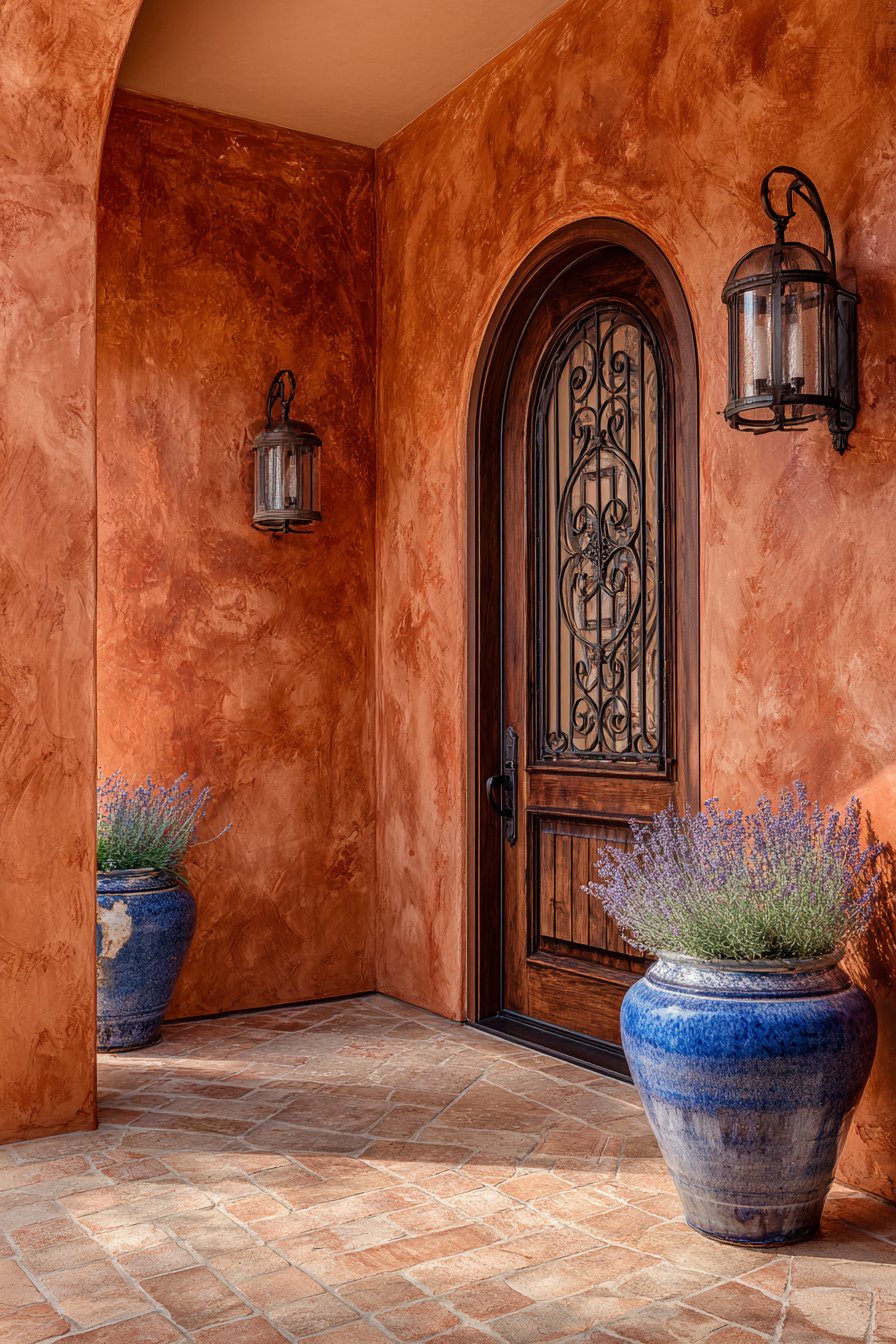
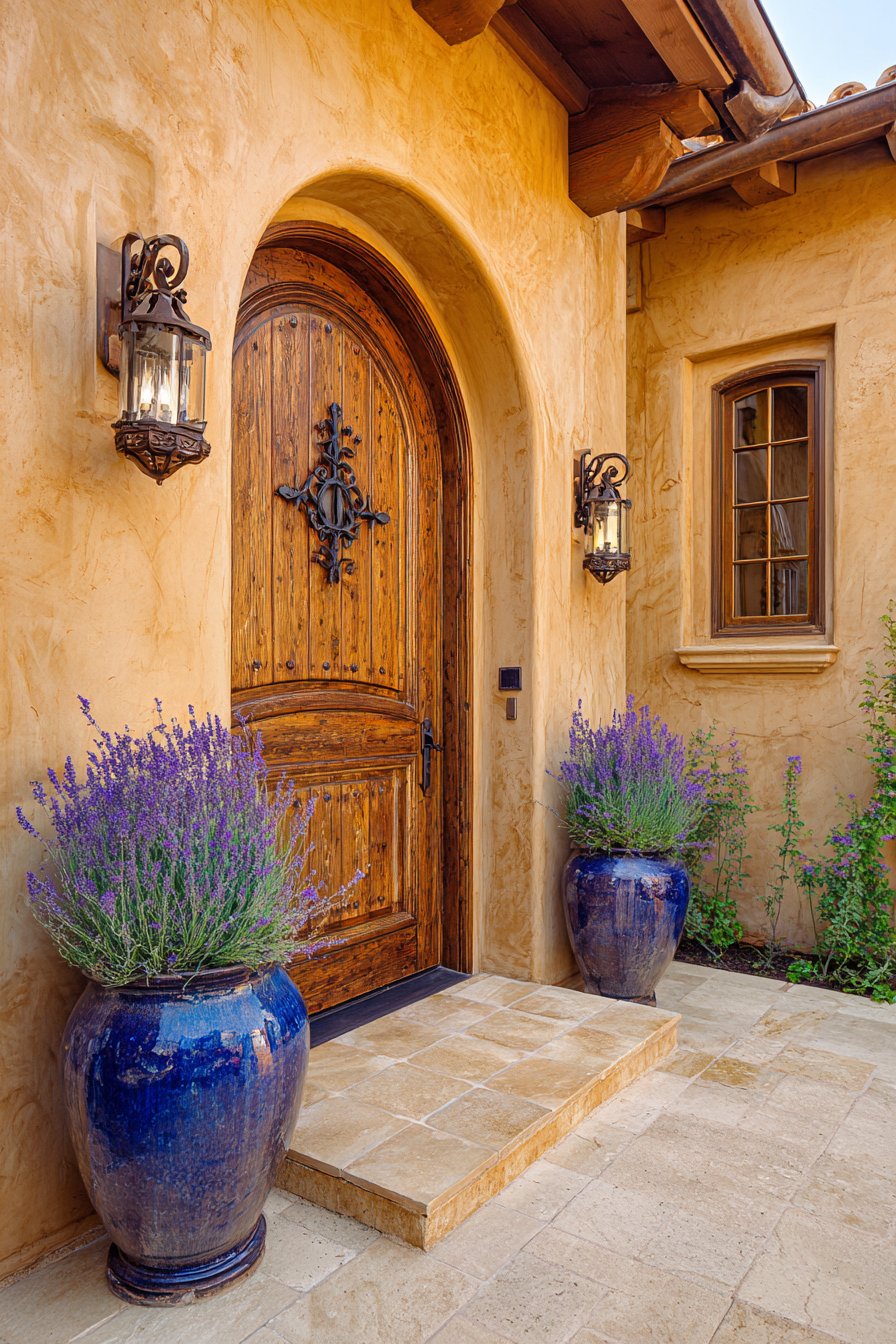
An arched wooden door features decorative iron grille inserts with hand-forged hardware. The oil-rubbed bronze finish adds depth to metal elements. Warm terracotta-colored stucco surrounds the entrance with subtle texture variations. This wall treatment creates Mediterranean warmth and visual interest. The arched doorway provides classical architectural geometry.
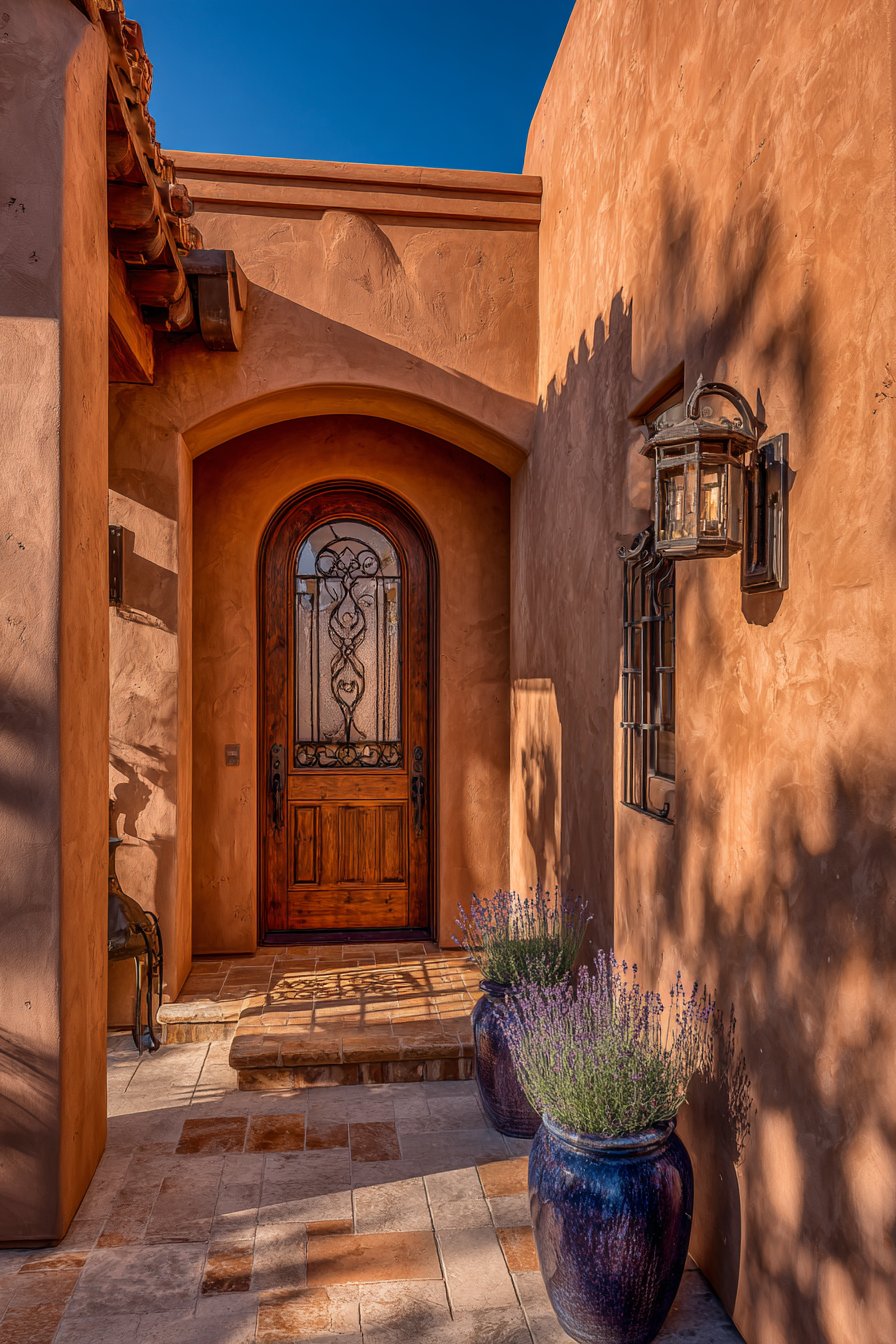
Saltillo tile flooring displays natural earth tones with slight color variations. Each tile shows unique characteristics from the firing process. Two large ceramic urns in cobalt blue glaze create striking color accents. Lavender plants fill these containers with silvery foliage and purple blooms. The combination provides both visual and aromatic appeal.
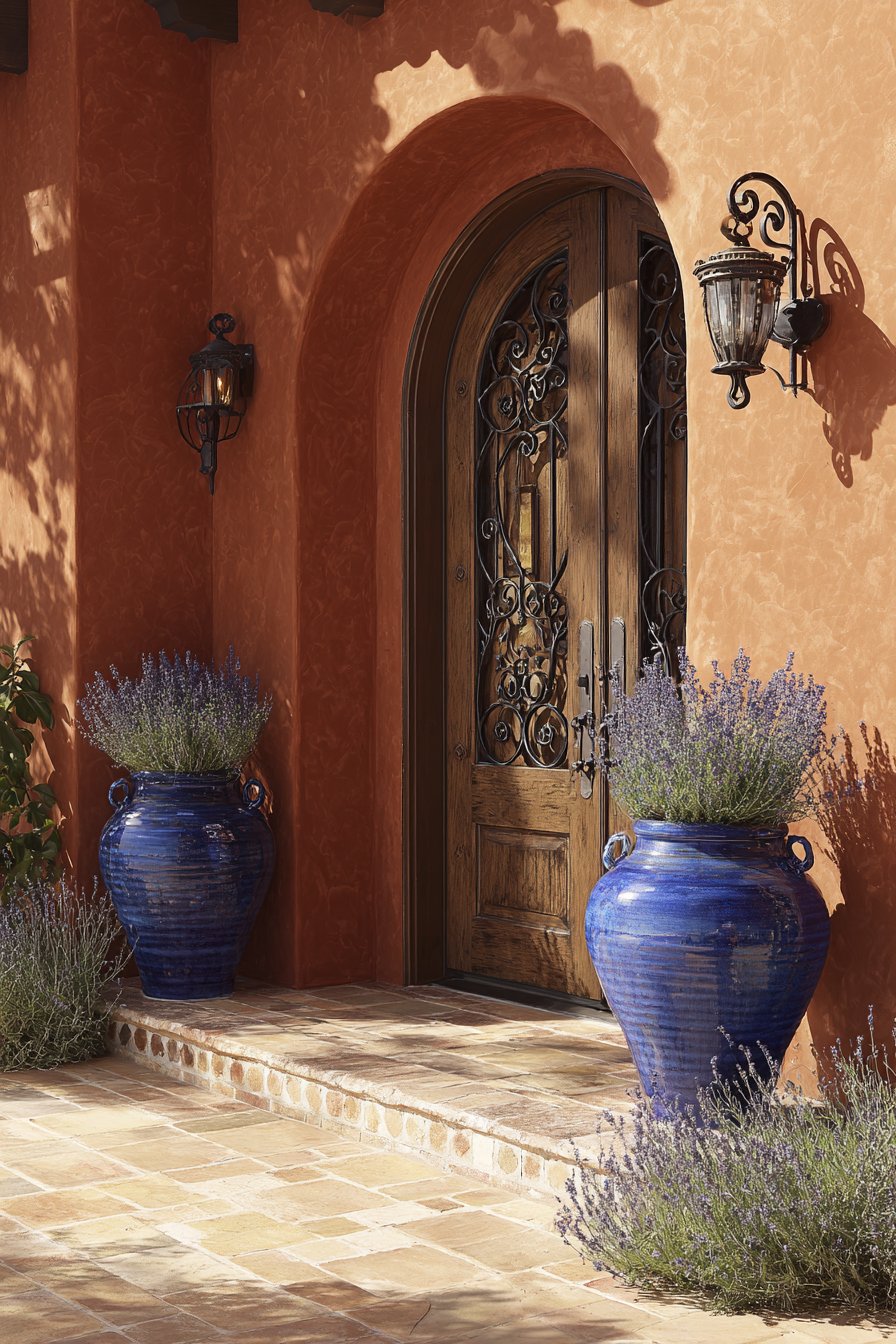
A wrought iron wall-mounted lantern with seeded glass casts textured light patterns. The fixture design complements the door’s iron grille work perfectly. Afternoon light highlights the warm color palette throughout the entrance. Material textures become more pronounced under directional illumination.
This entrance transports visitors to sun-drenched Mediterranean courtyards. The material choices and color palette work together harmoniously. Every element contributes to the cohesive regional aesthetic. The design feels authentic rather than merely decorative.
Key Design Tips:
- Incorporate arched architectural elements for classical Mediterranean form
- Choose terracotta and earth tones for authentic color palettes
- Use hand-forged iron hardware and decorative metalwork details
- Add cobalt blue ceramic accents for traditional color contrast
- Plant lavender for both visual appeal and aromatic qualities
- Select lighting fixtures that complement architectural metalwork
6. Classic Colonial Navy Door
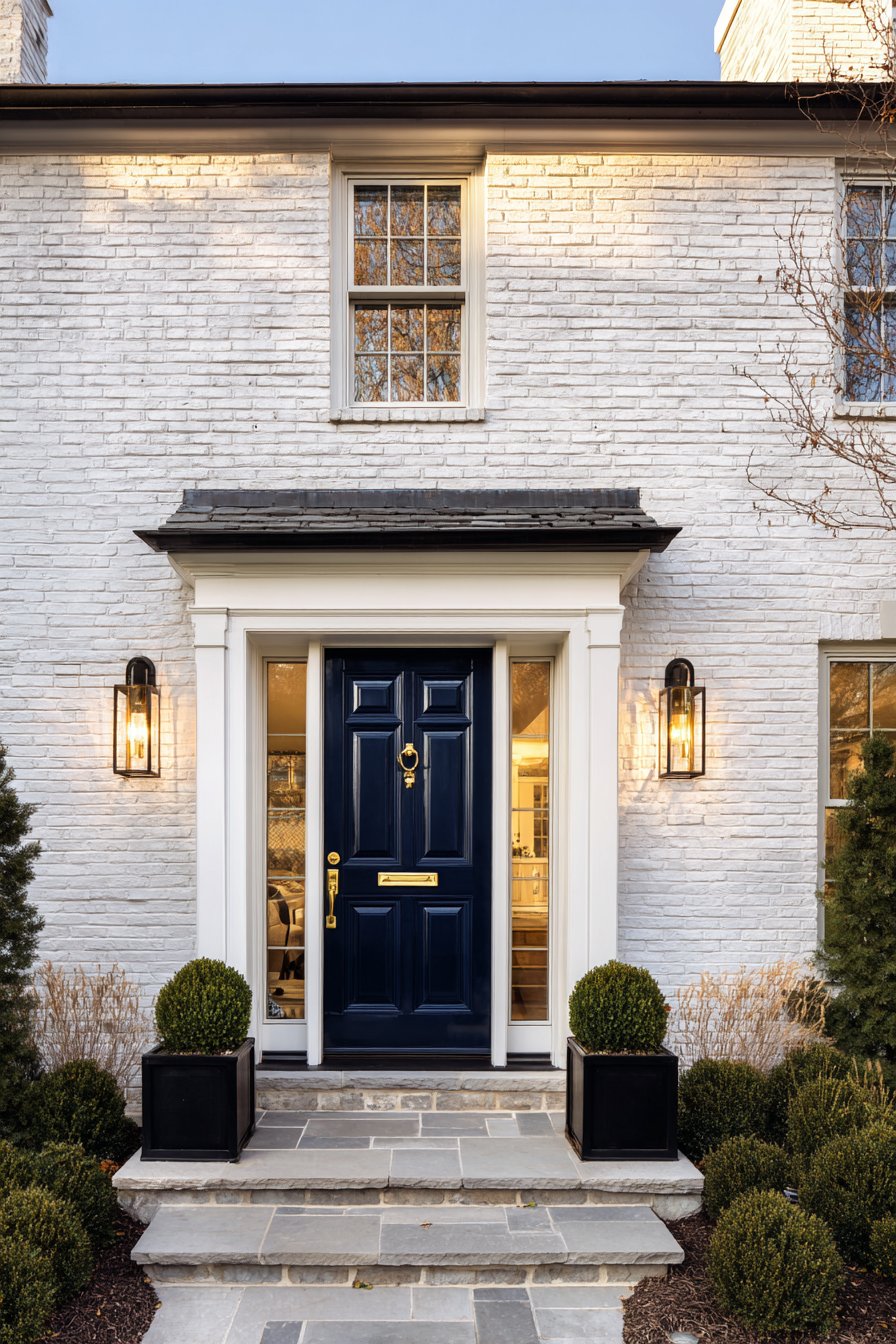
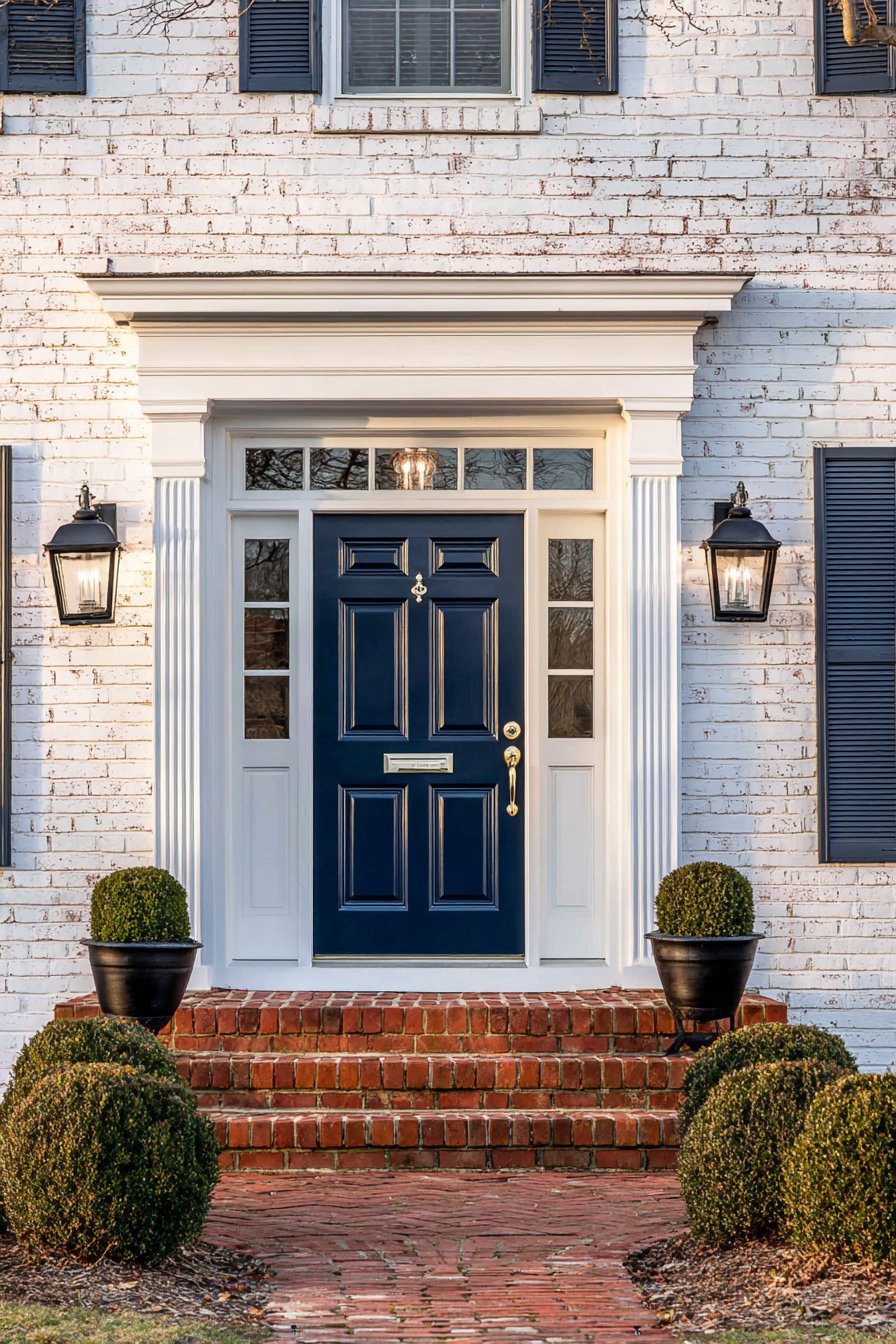
A six-panel door painted in classic deep navy blue commands attention. Polished brass hardware includes a centered knocker and matching kick plate. These traditional elements demonstrate attention to historical accuracy. White-painted brick surrounds the entrance with authentic mortar joints. Slight color variations in brickwork add natural character and depth.
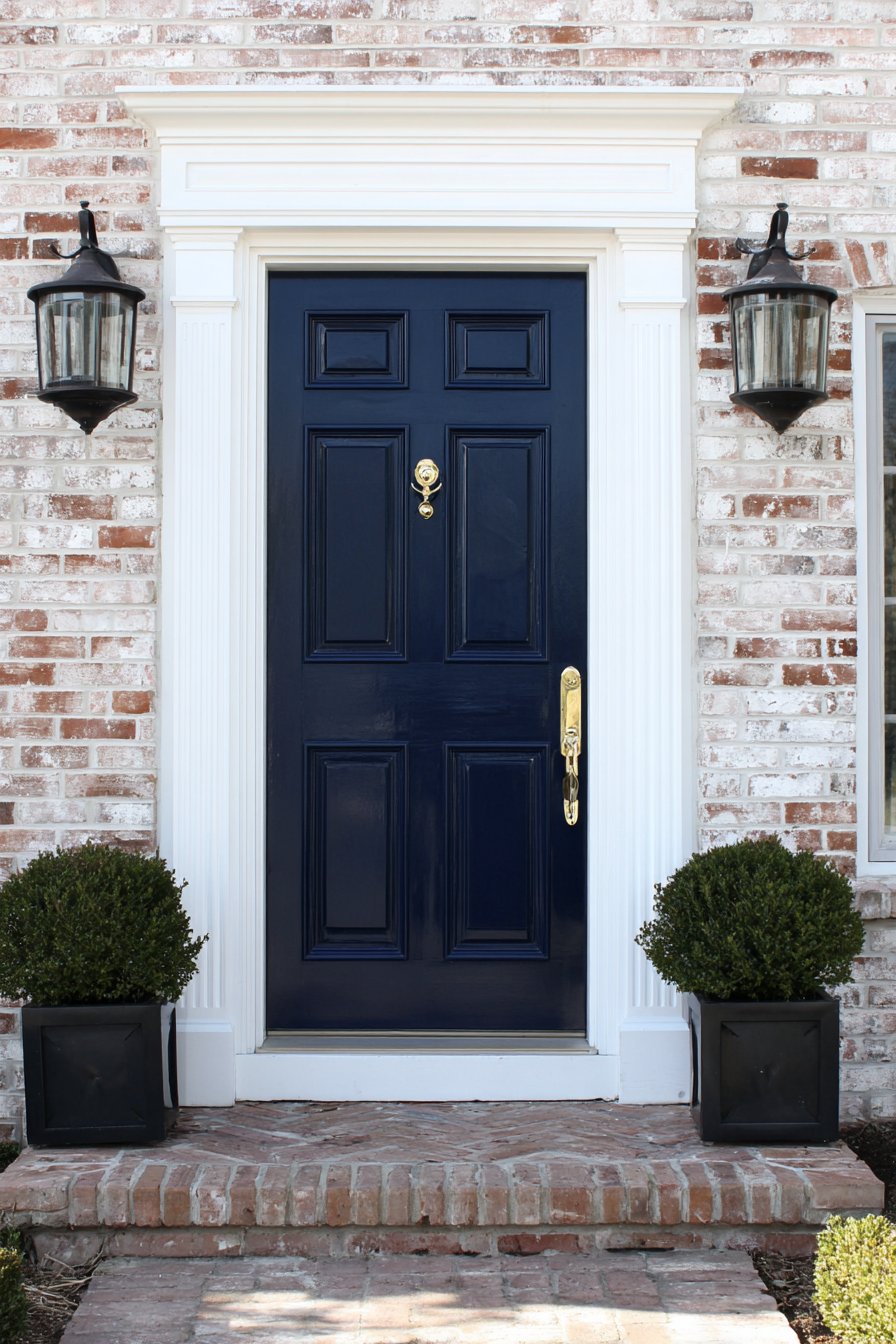
Symmetrical black metal coach lights mount on either side of the entrance. Clear glass panels allow maximum light transmission for safety. A brick landing in running bond pattern shows subtle weathering from use. This natural aging adds authenticity to the traditional design approach.
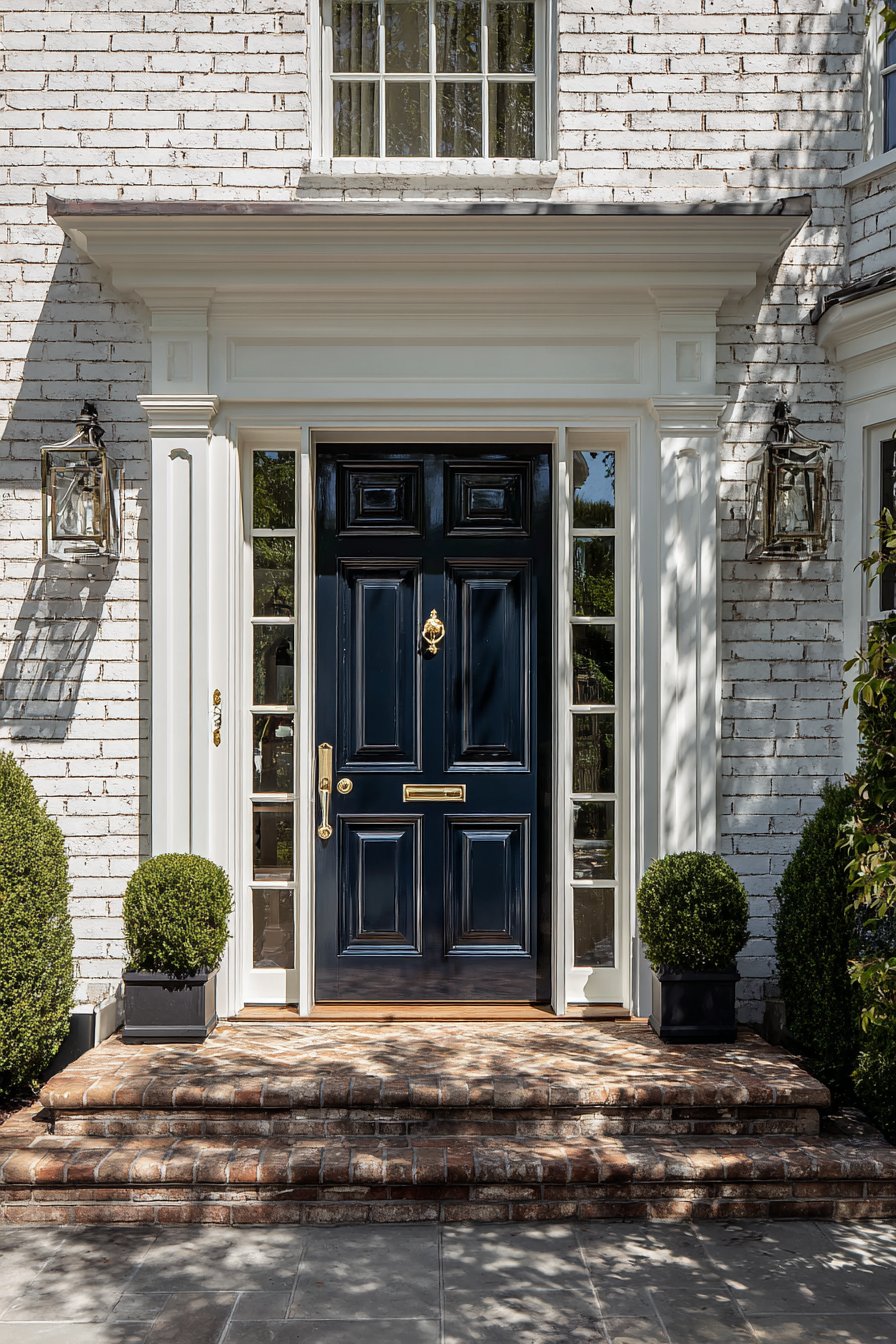
Boxwood shrubs trimmed into neat spheres sit in matching black planters. The formal geometry reflects colonial garden design principles. Morning light creates balanced illumination across the symmetrical composition. Natural shadows add dimensional depth without overwhelming the design.
The entrance demonstrates formal colonial design principles executed with precision. Every element respects historical precedent while remaining functional today. The contrast between navy blue and white creates timeless visual impact. This approach proves that traditional design remains perpetually relevant.
Key Design Tips:
- Paint six-panel doors in deep traditional colors for impact
- Use polished brass hardware for authentic colonial elegance
- Create perfect symmetry in all architectural and landscape elements
- Choose black metal light fixtures with classic coach lamp styling
- Trim boxwood into formal geometric shapes for traditional gardens
- Maintain authentic brick patterns and natural aging characteristics
7. Craftsman Wood and Stone
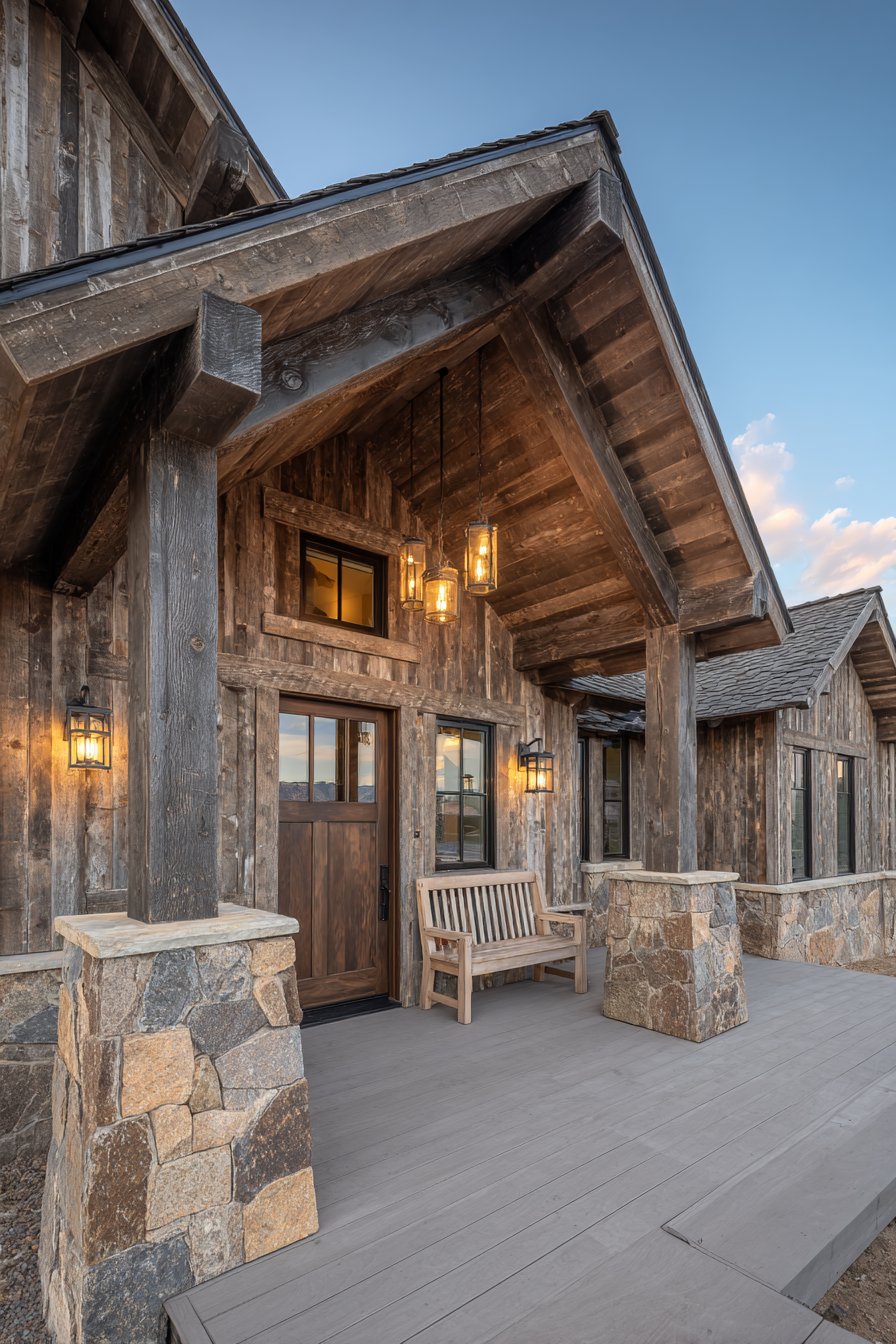
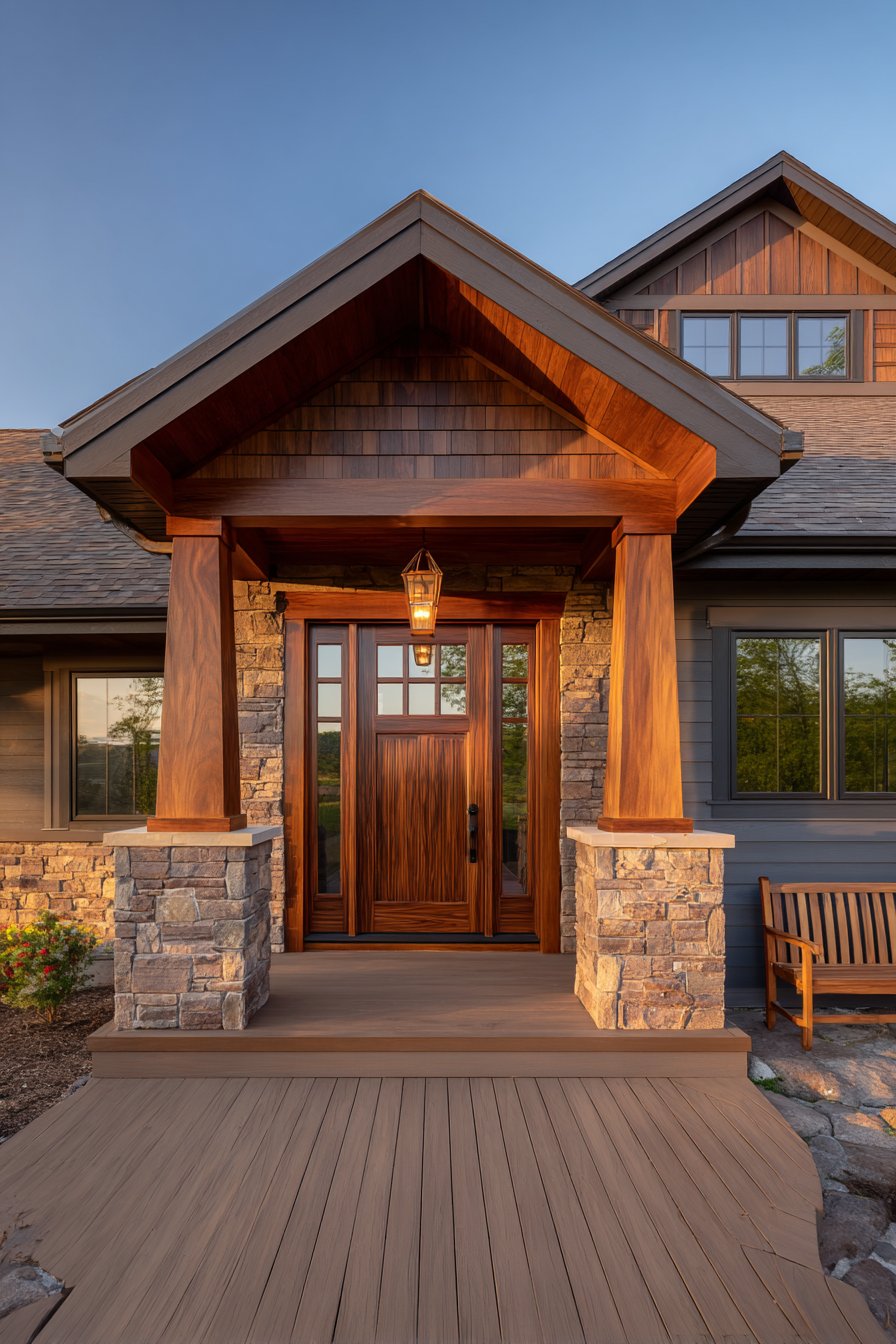
A solid wood door features vertical panels with three small windows at top. Medium walnut stain reveals beautiful natural wood grain patterns. Tapered columns with stone bases support the low-pitched gabled roof. These elements define authentic craftsman architectural vocabulary. Natural stone veneer in varied grey and tan tones clads lower walls.
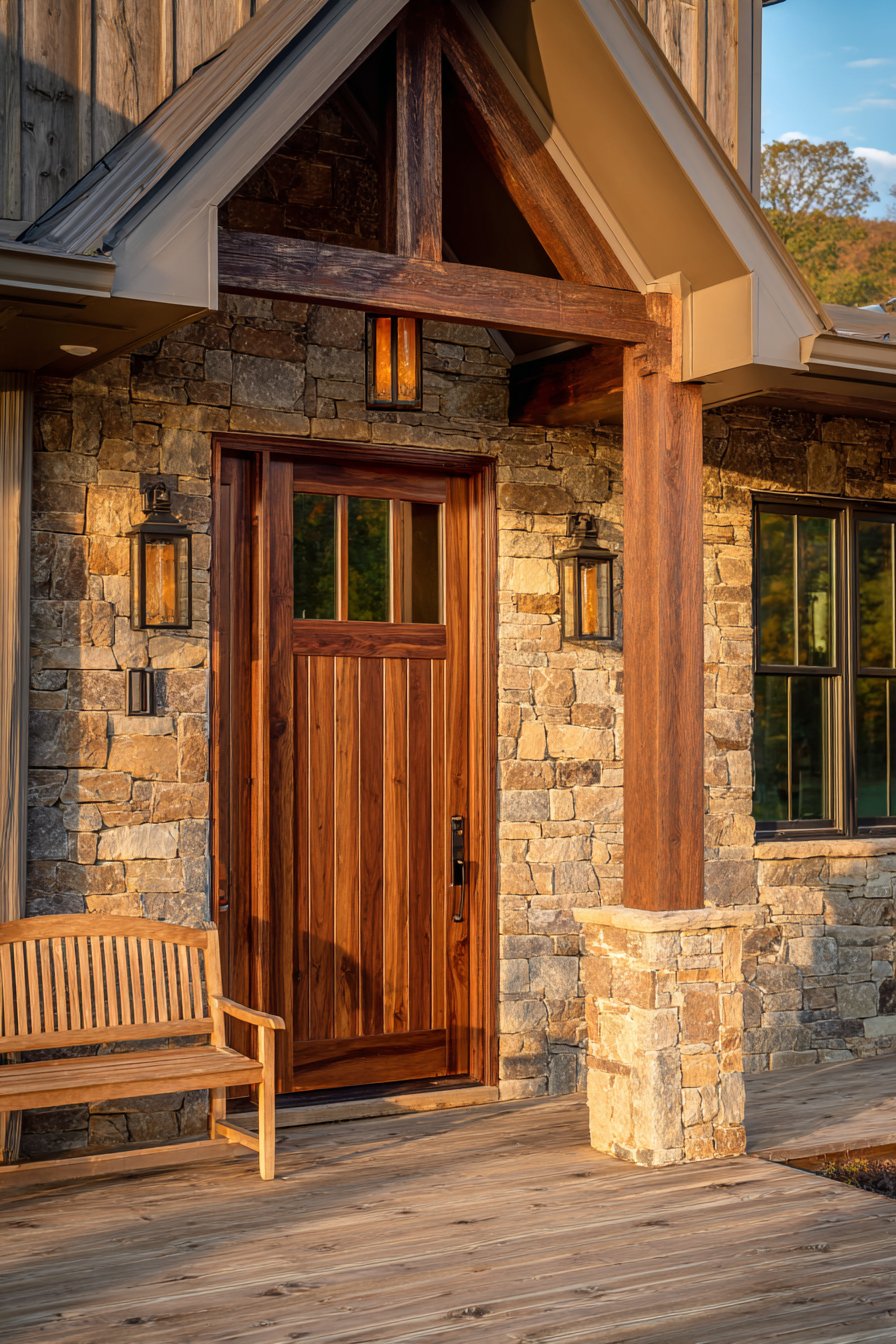
Wide wooden porch boards painted soft grey show subtle grain texture. The horizontal lines emphasize the craftsman style’s trademark proportions. Mission-style pendant lights with amber glass hang from the porch ceiling. These fixtures provide warm illumination with period-appropriate styling. A simple wooden bench with slatted back offers seating with honest construction.
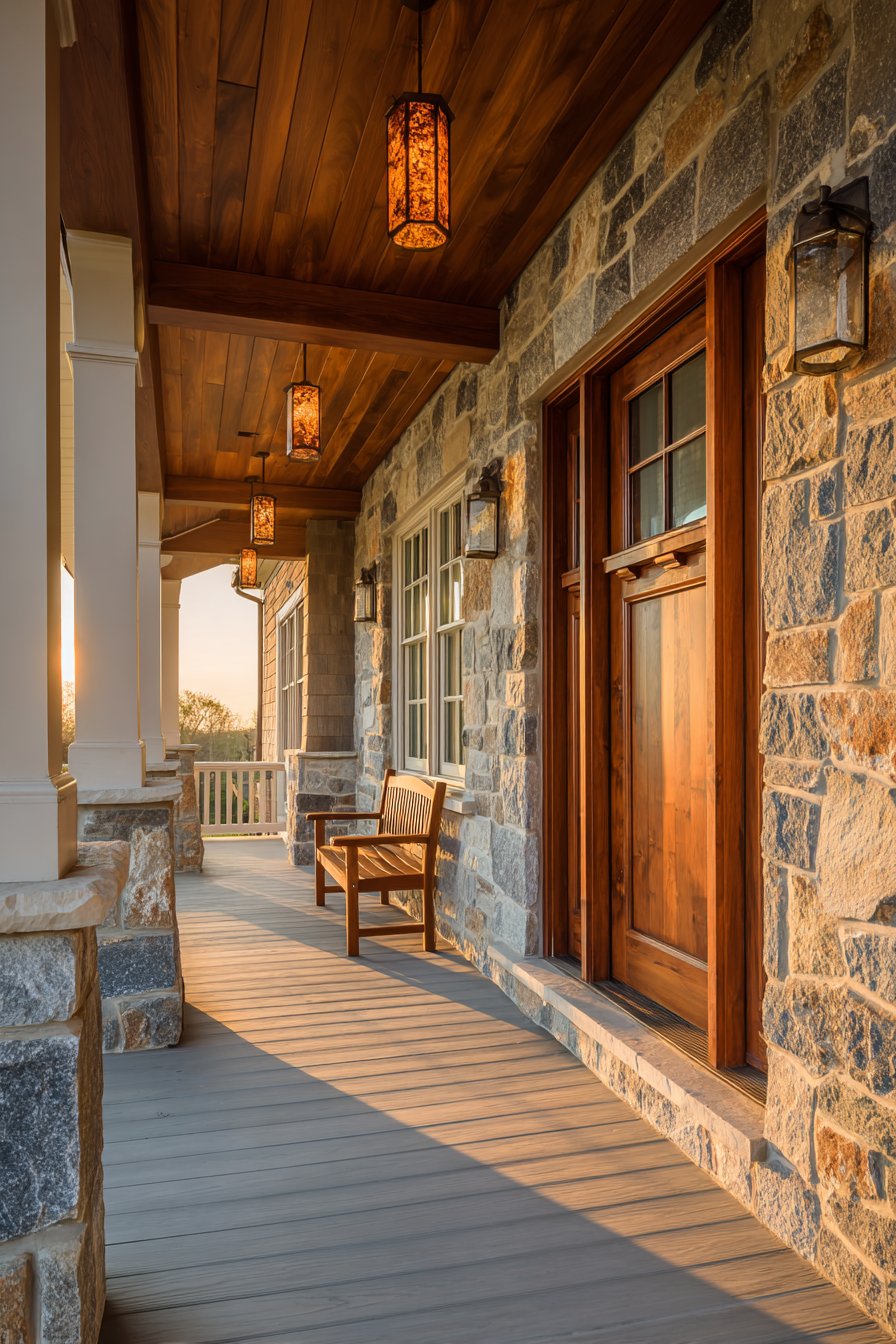
Golden hour lighting emphasizes natural stone texture and wood grain details. The warm directional sunlight creates shadows that define architectural elements. Every material choice reflects arts and crafts movement principles. The design celebrates honest materials and visible craftsmanship throughout.
This entrance embodies craftsman philosophy through material selection and proportions. Horizontal emphasis creates visual calm and connection to landscape. The combination of wood and stone provides textural variety and natural beauty. Traditional construction methods receive appropriate visual celebration.
Key Design Tips:
- Stain wood doors to showcase natural grain beauty
- Use tapered columns for authentic craftsman architectural detail
- Incorporate natural stone veneer with varied colors and textures
- Paint porch boards in soft colors that complement natural materials
- Install mission-style lighting with amber glass for warm illumination
- Add simple wooden furniture that demonstrates visible construction
8. Contemporary White Oak Pivot
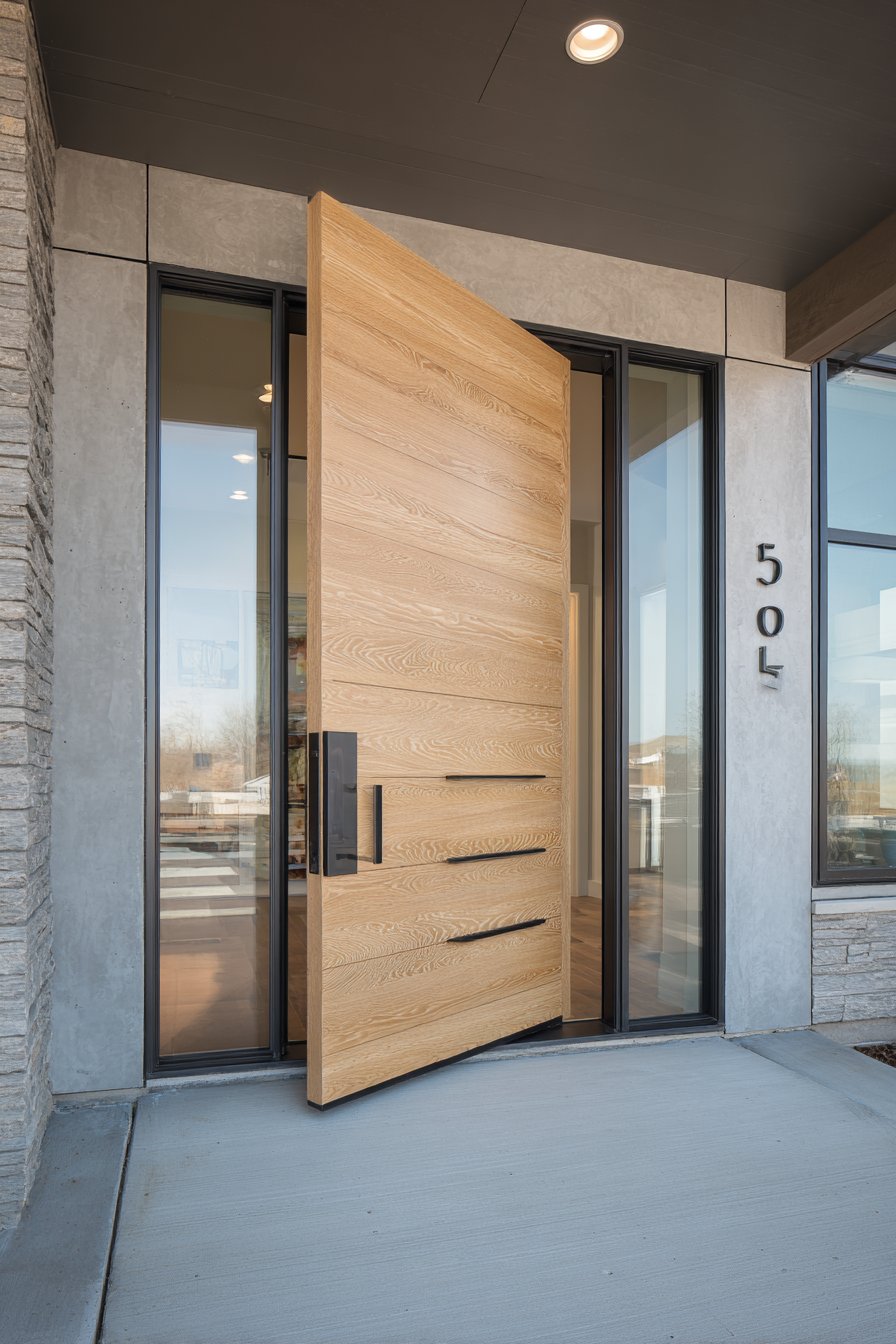
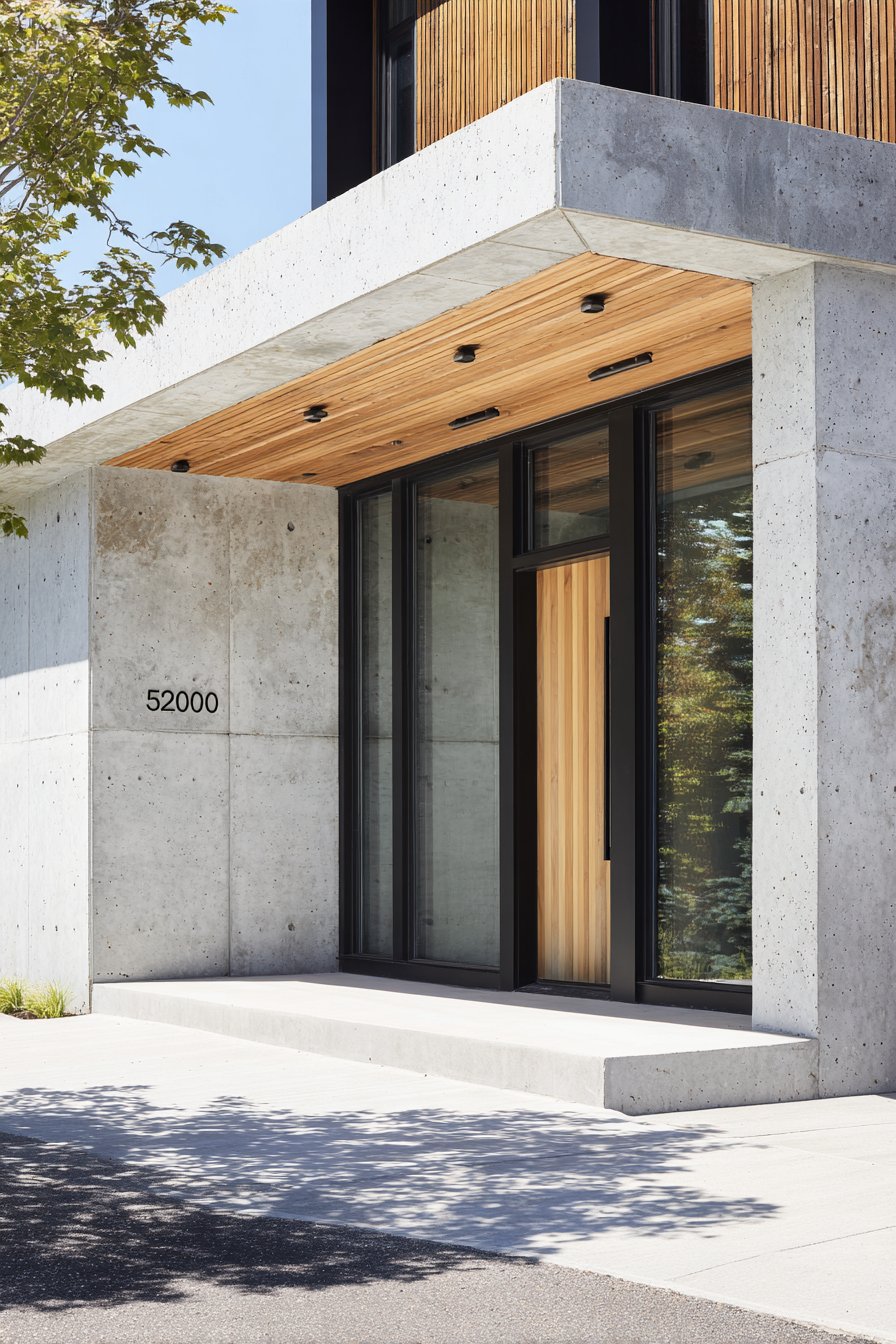
A pivot door in natural white oak showcases horizontal grain patterns beautifully. The clear matte finish protects while revealing authentic wood character. Floor-to-ceiling glass sidelights with minimal black metal frames flank the entrance. This transparency creates connection between interior and exterior spaces. Smooth grey concrete walls extend to create a protected alcove.
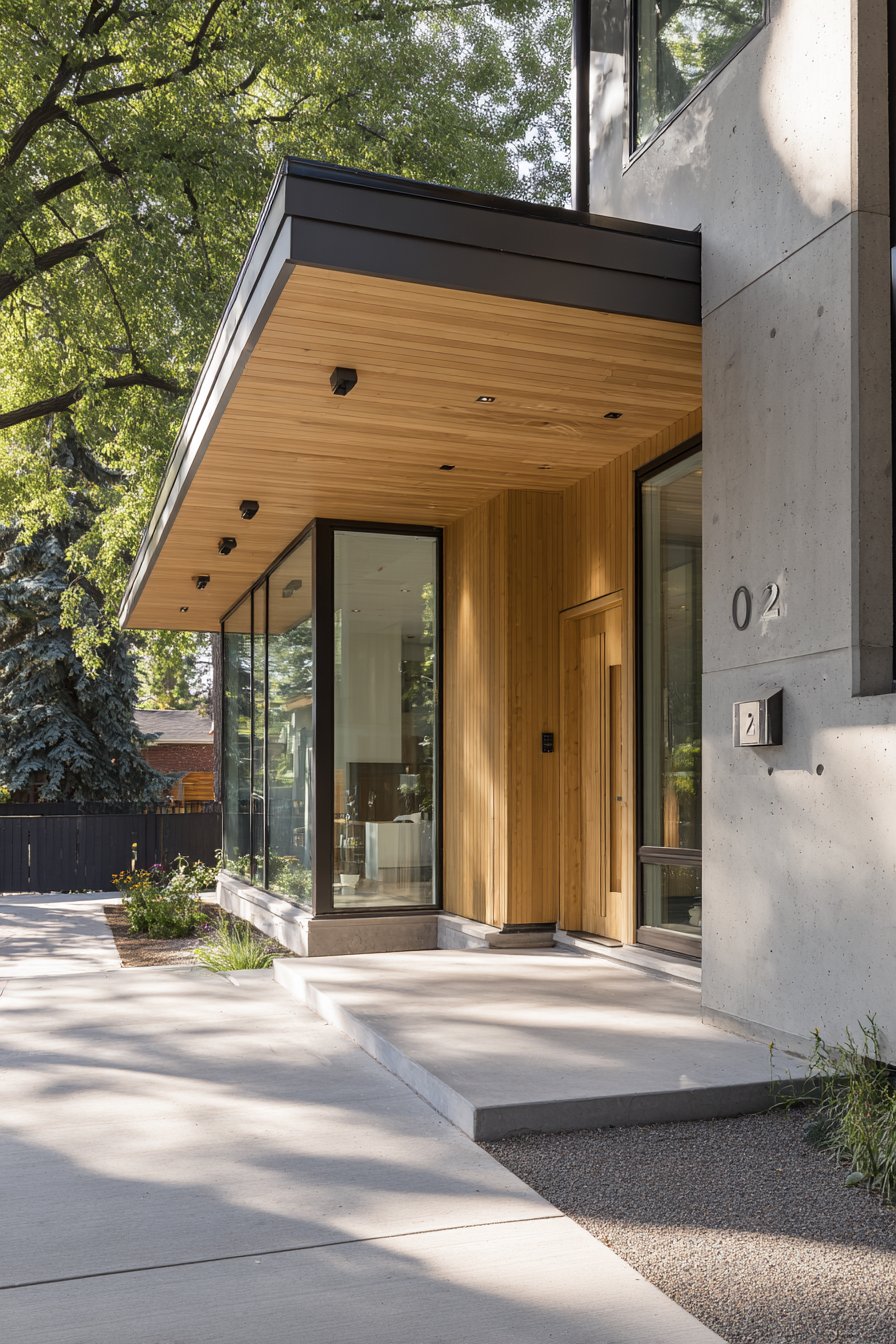
The concrete entry pad features lightly broom-finished texture with subtle control joints. These details demonstrate attention to material finishing and installation precision. A single modern house number in brushed aluminum mounts at eye level. The minimalist approach to identification maintains design purity. Linear recessed lighting provides clean illumination without visible fixtures.
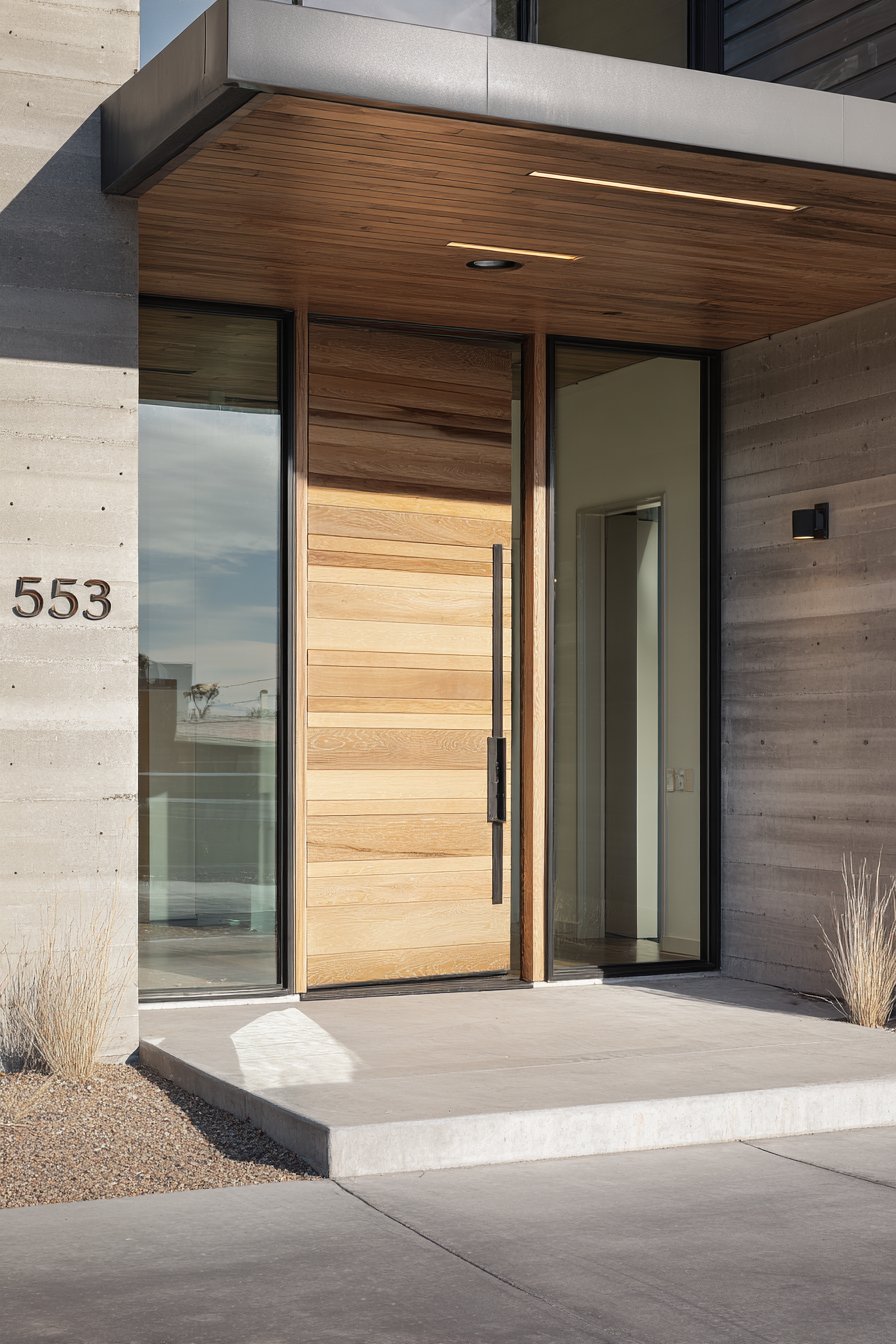
Soft diffused daylight emphasizes the interplay of natural wood and industrial concrete. The material contrast creates visual interest through texture and color differences. Glass transparency allows light to flow freely between spaces. This entrance demonstrates modern architecture’s emphasis on material honesty.
The design celebrates each material’s authentic characteristics without applied decoration. Precise detailing shows respect for contemporary craftsmanship standards. Clean lines and minimal elements create sophisticated simplicity. This approach proves that less can indeed be more.
Key Design Tips:
- Choose natural wood finishes that showcase authentic grain patterns
- Use pivot door hardware for contemporary architectural statements
- Add floor-to-ceiling glass for transparency and light transmission
- Select smooth concrete finishes for modern industrial aesthetics
- Install recessed lighting to eliminate visible fixture clutter
- Display house numbers as sculptural minimalist elements
9. Victorian Ornate Burgundy
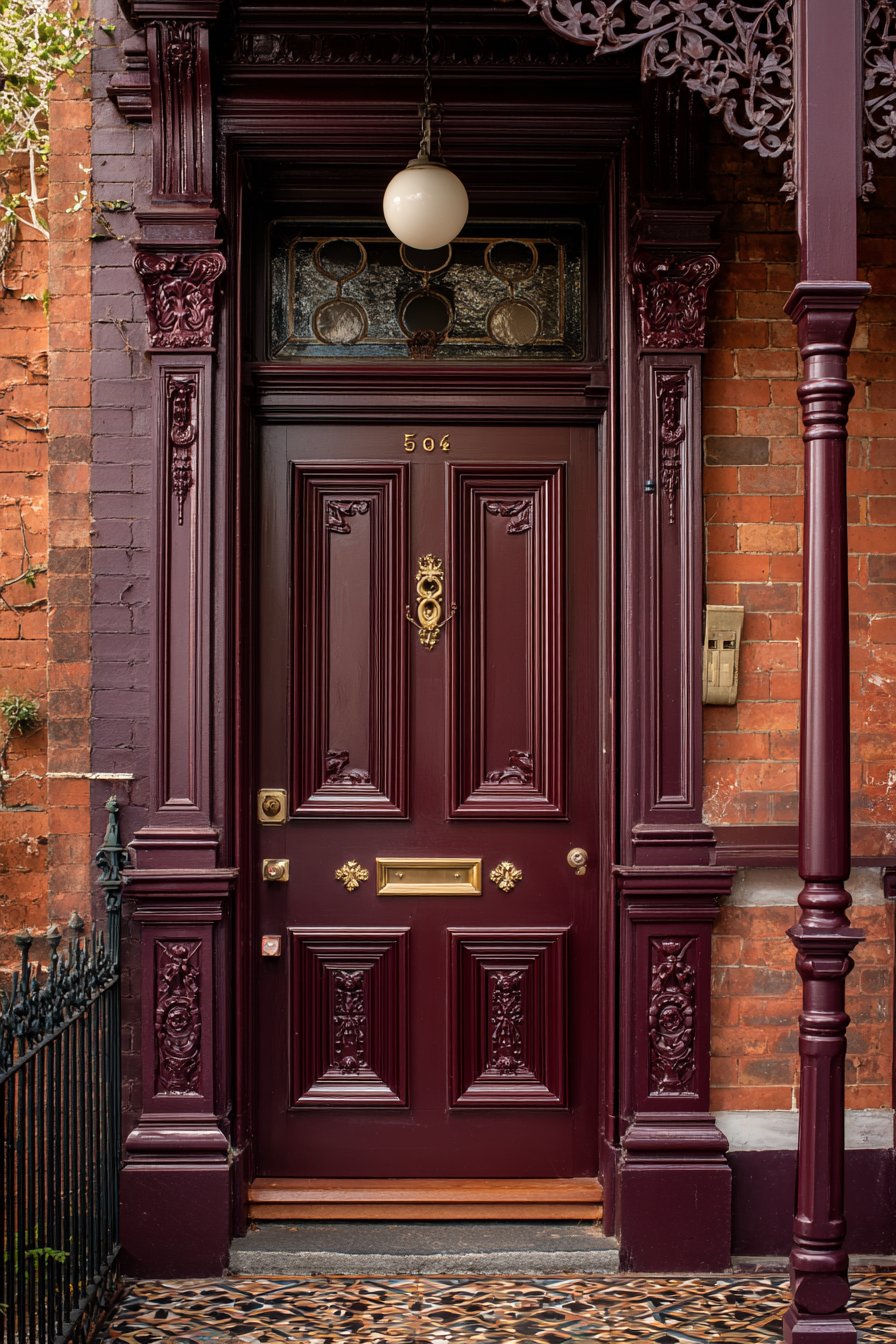
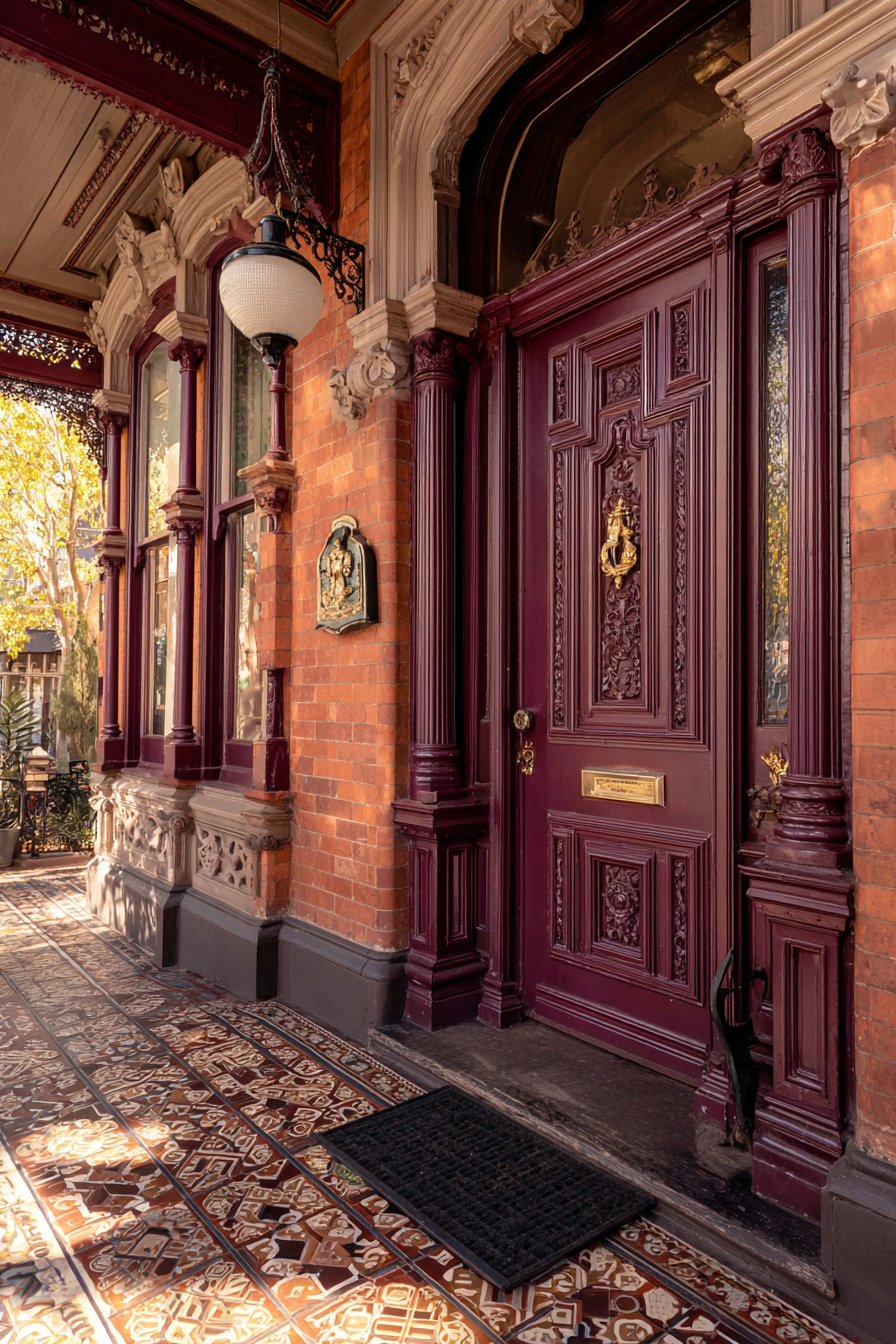
An ornate wooden door displays raised panels and carved details throughout. Deep burgundy paint color adds richness to the elaborate millwork. Polished brass hardware includes an elaborate door knocker and mail slot. These decorative elements reflect Victorian era’s love of ornamentation. Decorative millwork with dentil molding frames the entrance completely.
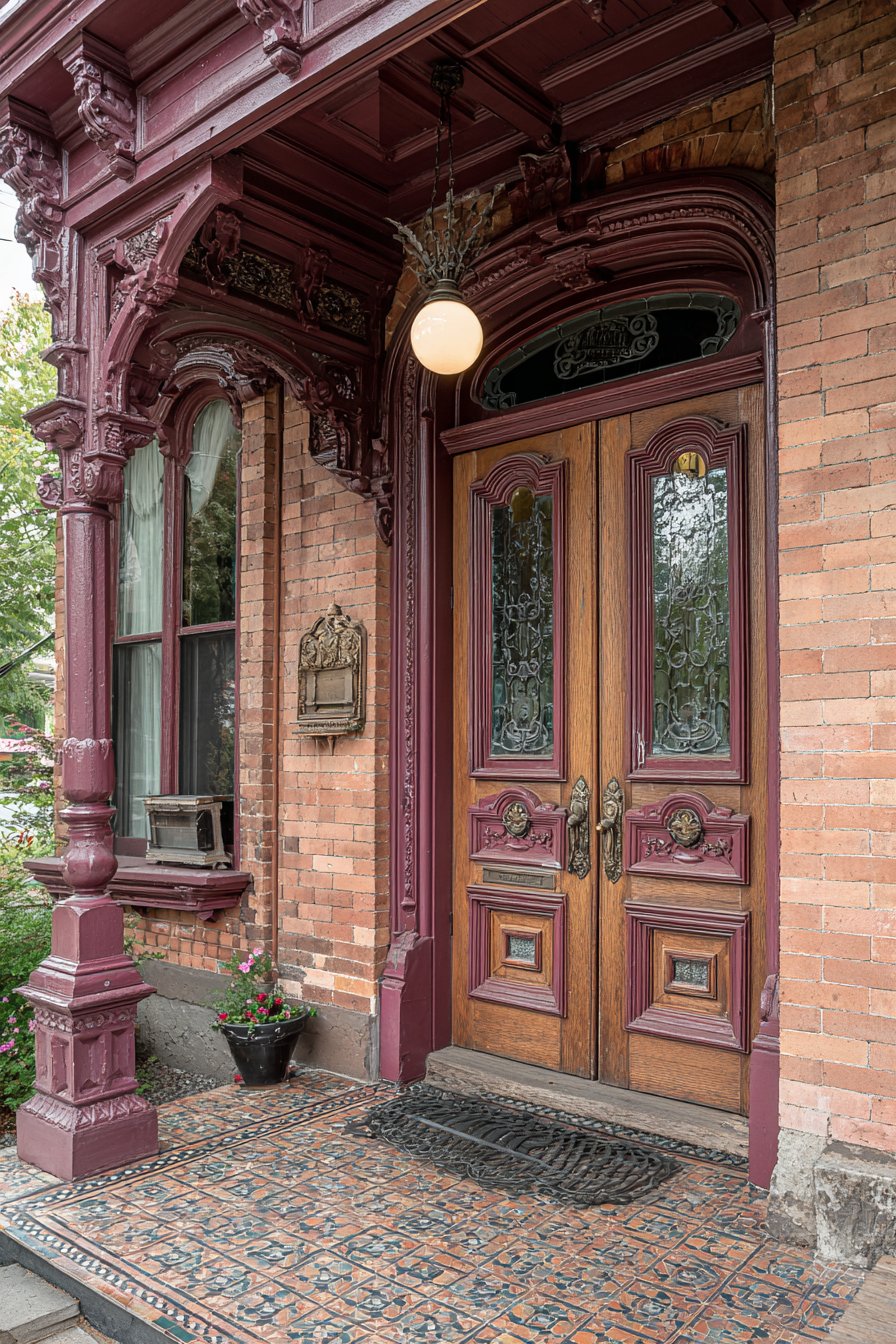
Original brick in warm red tones shows authentic aging and patina. White-painted mortar creates contrast that defines individual brick units. An intricate brass porch light with frosted glass globe provides period lighting. Encaustic tile in geometric patterns covers the covered porch with historic accuracy.
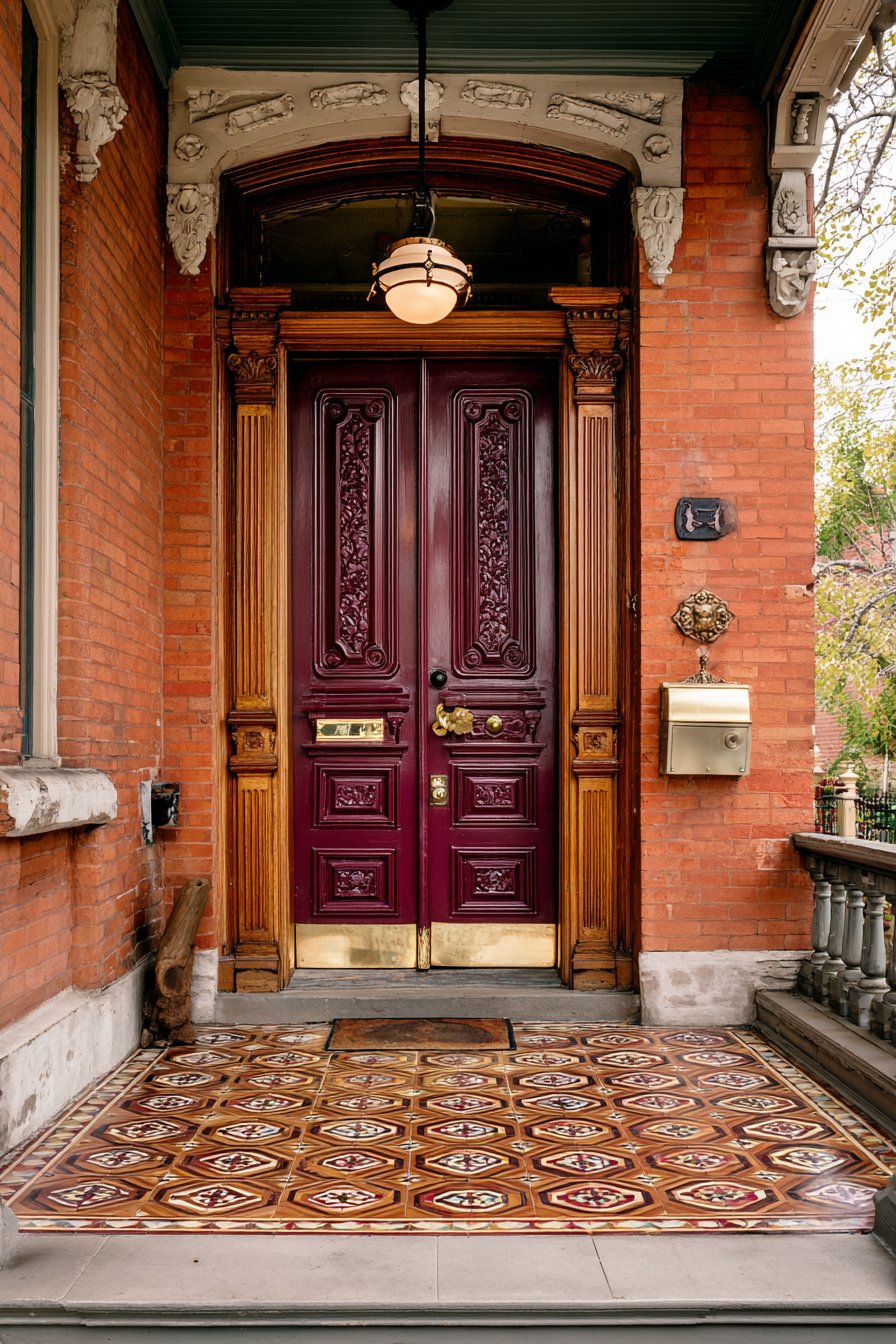
Natural wear patterns in the tile demonstrate genuine age and use. A cast iron boot scraper mounts near the entrance for practical function. Afternoon light emphasizes ornate details and rich material colors. The shadows created enhance the three-dimensional quality of carved elements.
This entrance celebrates Victorian architecture’s decorative exuberance and craftsmanship. Every surface receives ornamental attention appropriate to the period. The rich color palette and elaborate details create dramatic first impressions. Historical accuracy combines with practical functionality throughout the design.
Key Design Tips:
- Paint doors in deep jewel tones for Victorian richness
- Use elaborate brass hardware as decorative focal points
- Incorporate dentil molding and detailed trim work throughout
- Choose encaustic tiles with authentic geometric patterns
- Install period-appropriate lighting with decorative metal and glass
- Add functional elements like boot scrapers that enhance character
10. Scandinavian Sage Green Simplicity
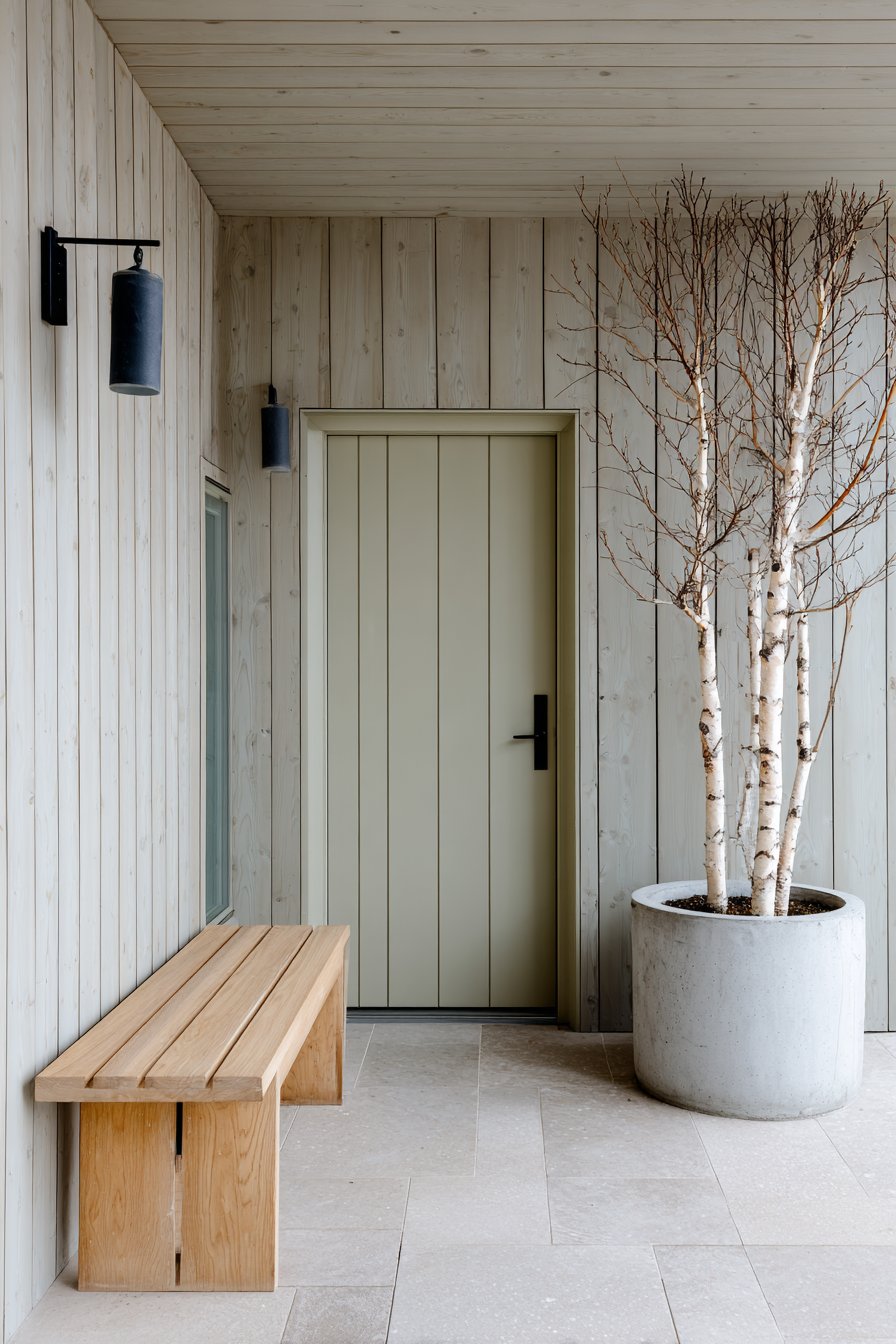
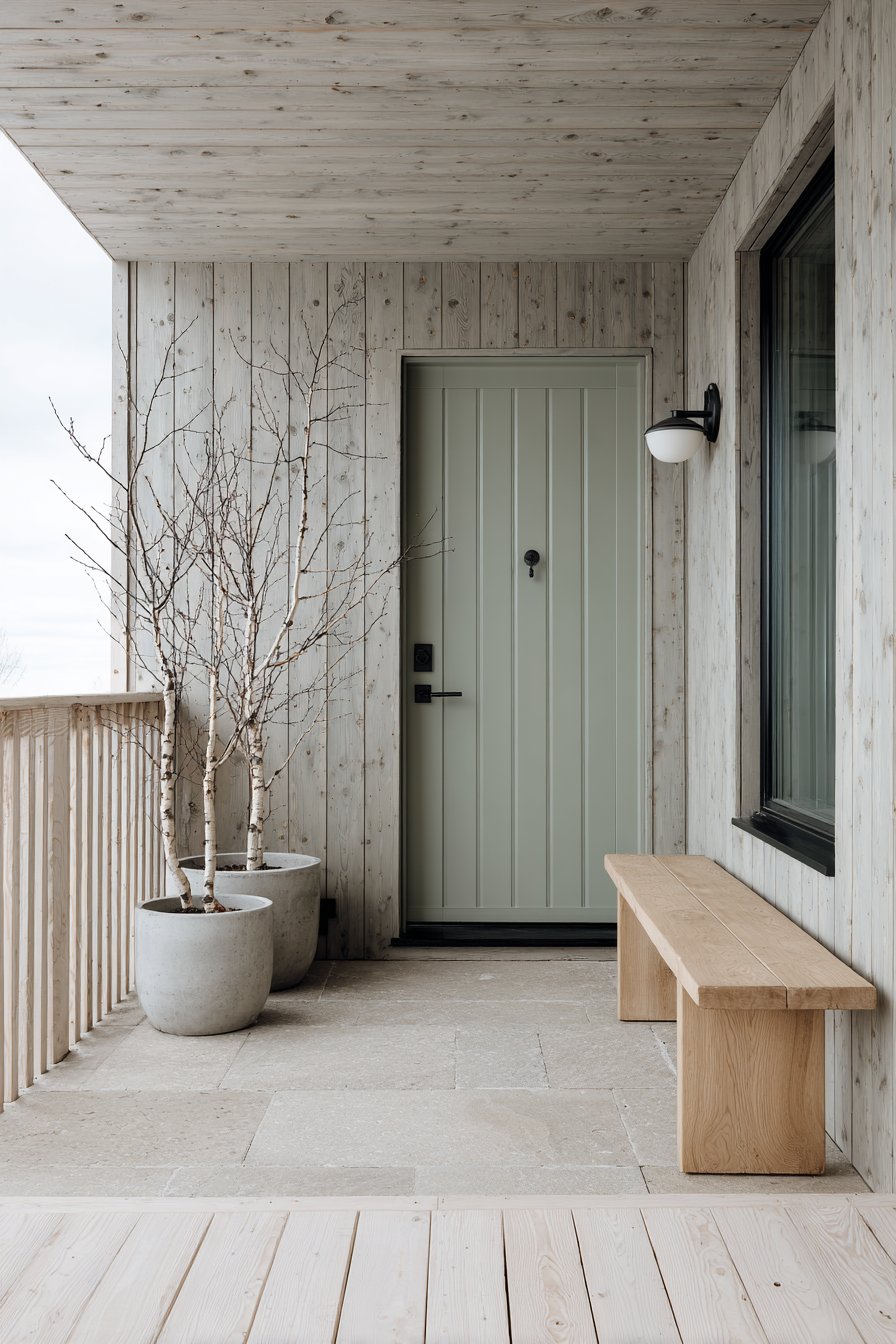
A simple paneled door painted in soft sage green creates calm sophistication. Matte black hardware provides contemporary contrast against the muted color. Light grey wooden lap siding shows visible wood texture across exterior walls. The material honesty reflects Scandinavian design principles perfectly. A minimalist black metal wall sconce with opal glass provides functional lighting.
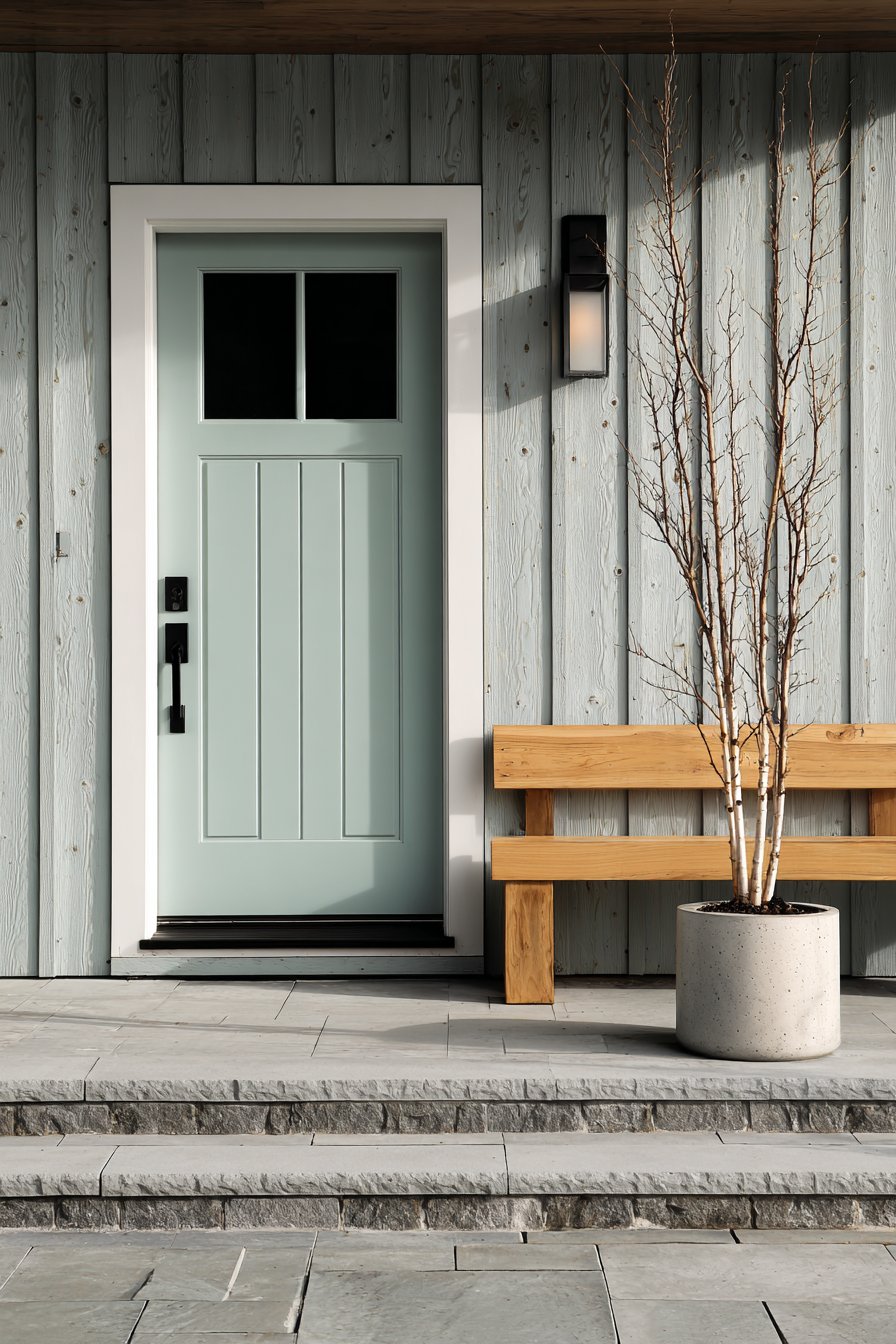
Natural stone tiles in cool grey tones with subtle variation cover the landing. Each stone displays unique characteristics from its formation. A single wooden bench in light oak demonstrates simple construction methods. The clean lines and honest joinery celebrate straightforward craftsmanship. Potted birch branches in cylindrical concrete planter add organic vertical elements.
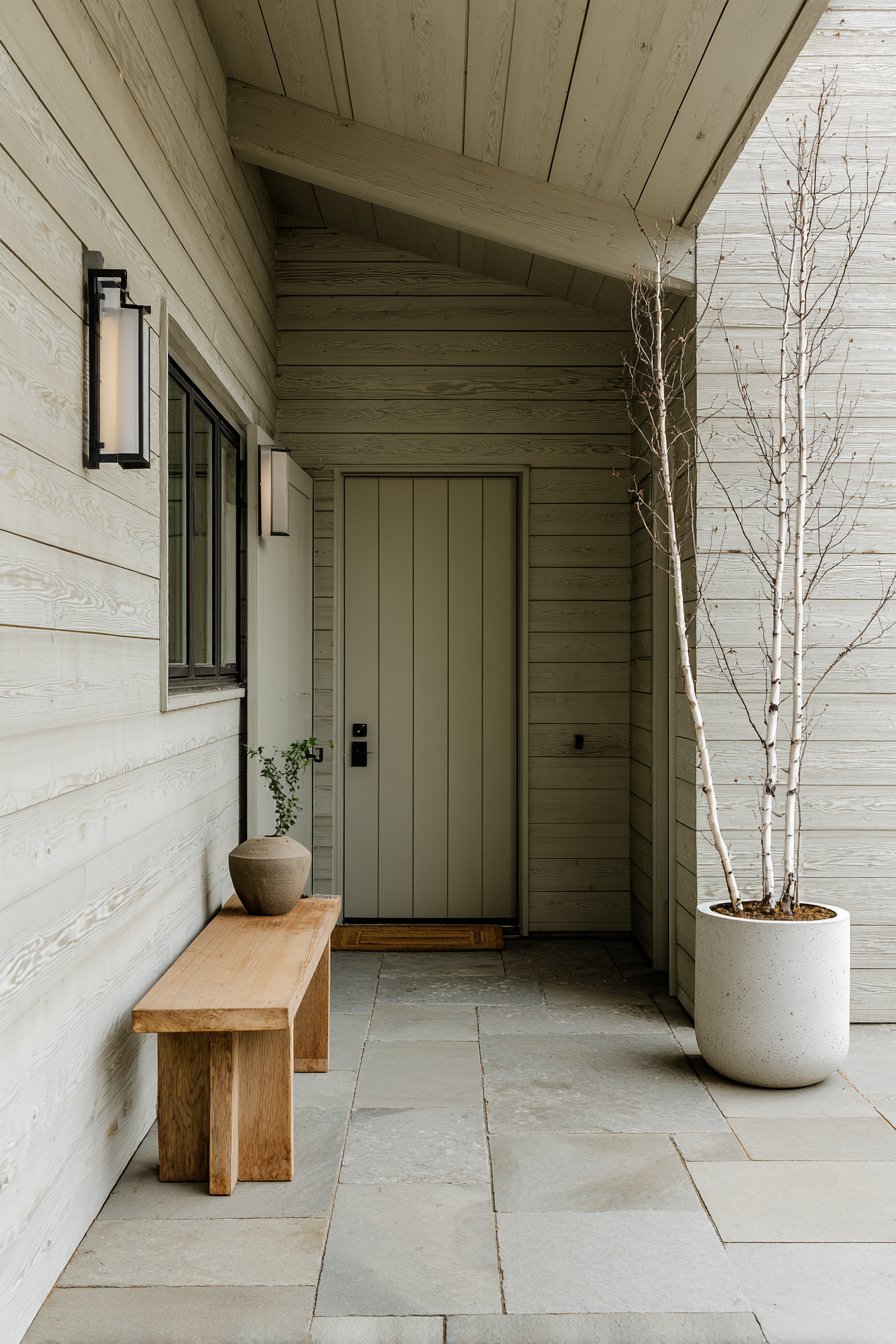
Diffused morning light creates soft even illumination across all surfaces. This gentle lighting emphasizes subtle texture variations without harsh shadows. The restrained color palette of sage, grey, and light wood creates visual calm. Every element serves a function without unnecessary decoration.
This entrance demonstrates Scandinavian design’s emphasis on simplicity and natural materials. The uncluttered aesthetic creates peaceful first impressions. Quality materials and careful proportions replace elaborate ornamentation. The design proves that restraint creates its own form of elegance.
Key Design Tips:
- Choose soft muted colors like sage green for Scandinavian calm
- Use matte black hardware for contemporary minimalist contrast
- Select light grey wood siding that shows natural texture
- Install simple lighting fixtures with clean geometric forms
- Add minimal furniture with visible simple construction methods
- Include organic elements like branches in simple modern containers
11. Mid-Century Cedar and Brass
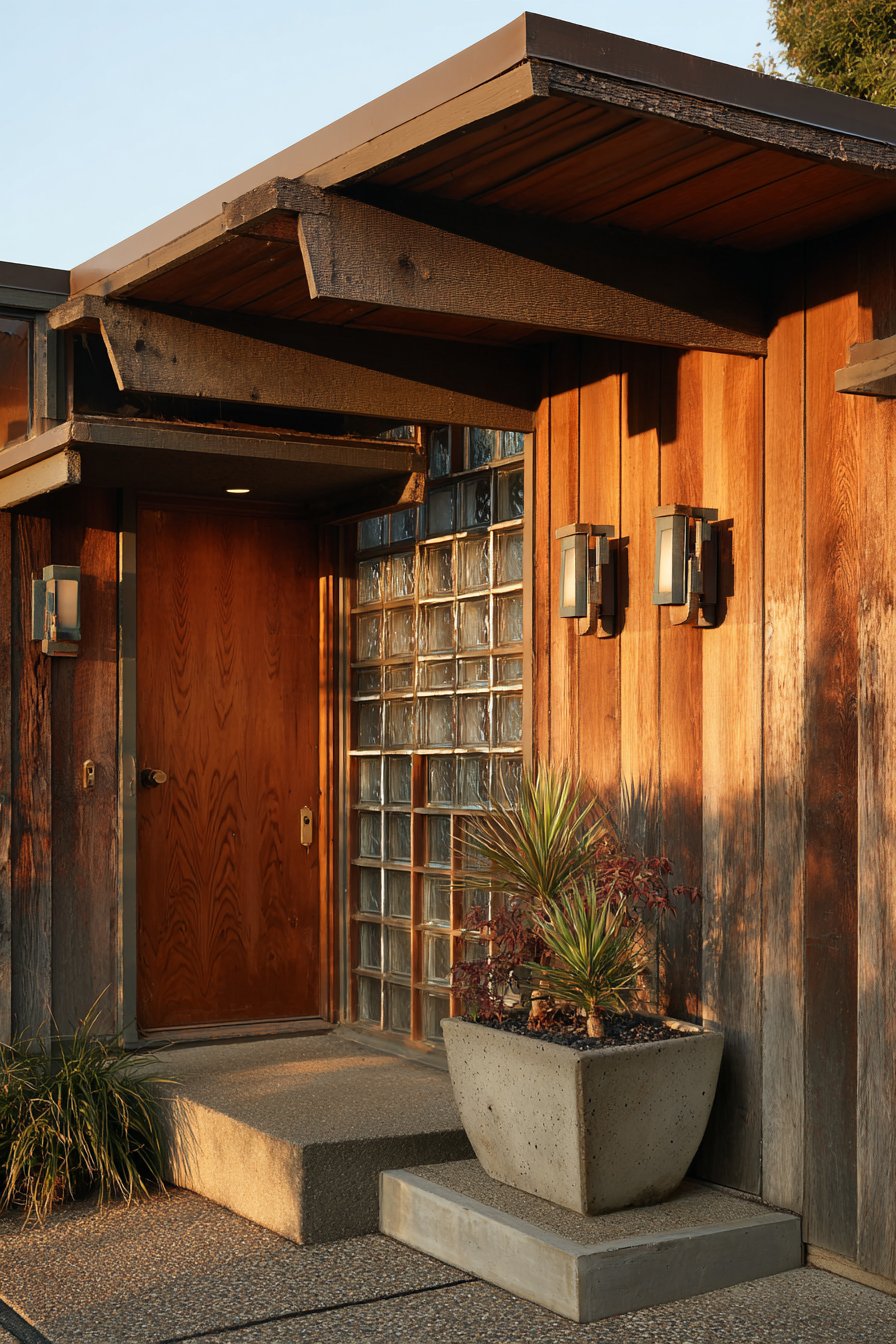
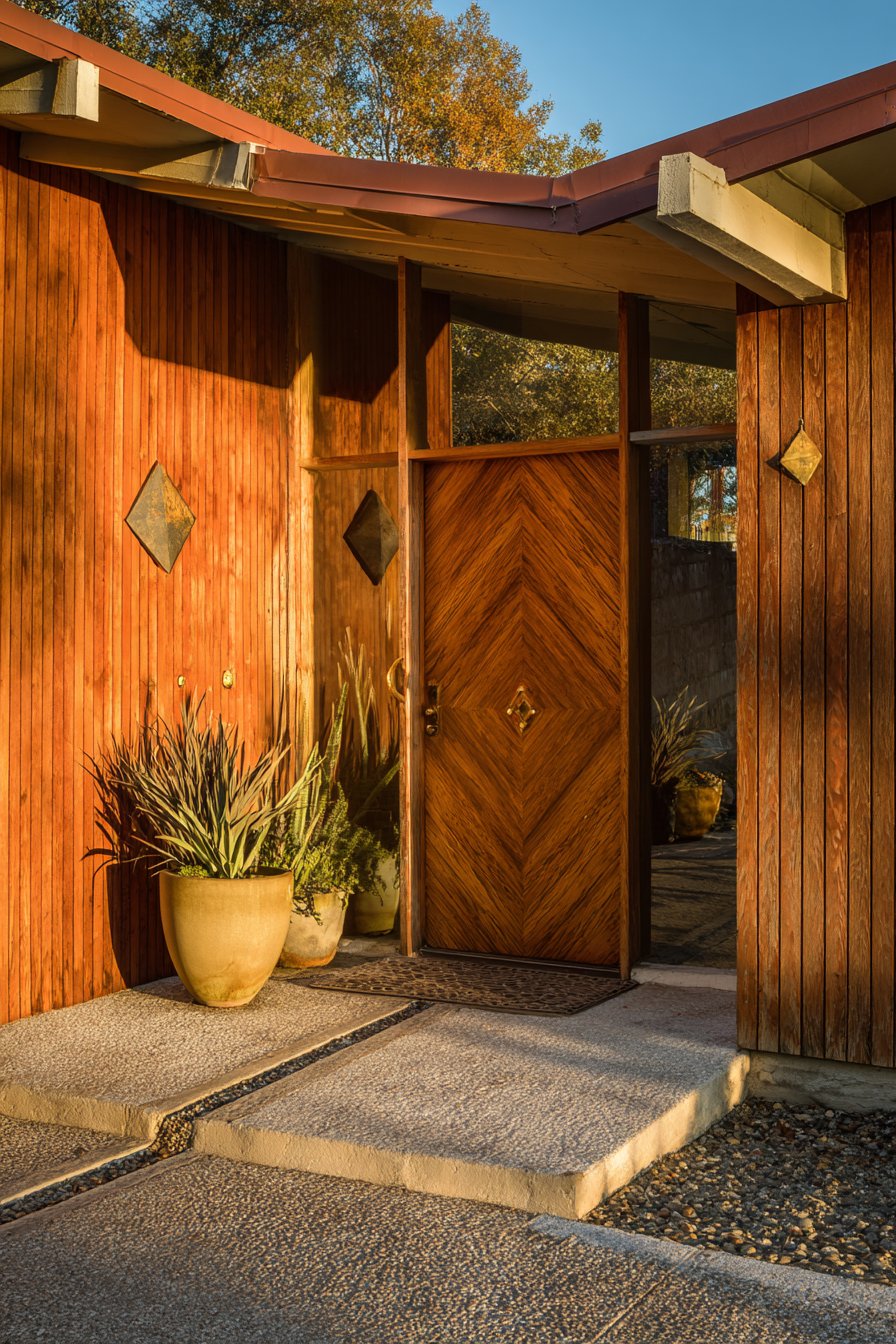
A door features large geometric window patterns in the upper section. The stained wood lower panel reveals beautiful visible grain characteristics. Simple brass hardware maintains the mid-century modern aesthetic perfectly. Warm-toned vertical cedar siding shows natural weathering and color variation. An angled overhang provides weather protection with exposed beam ends visible.
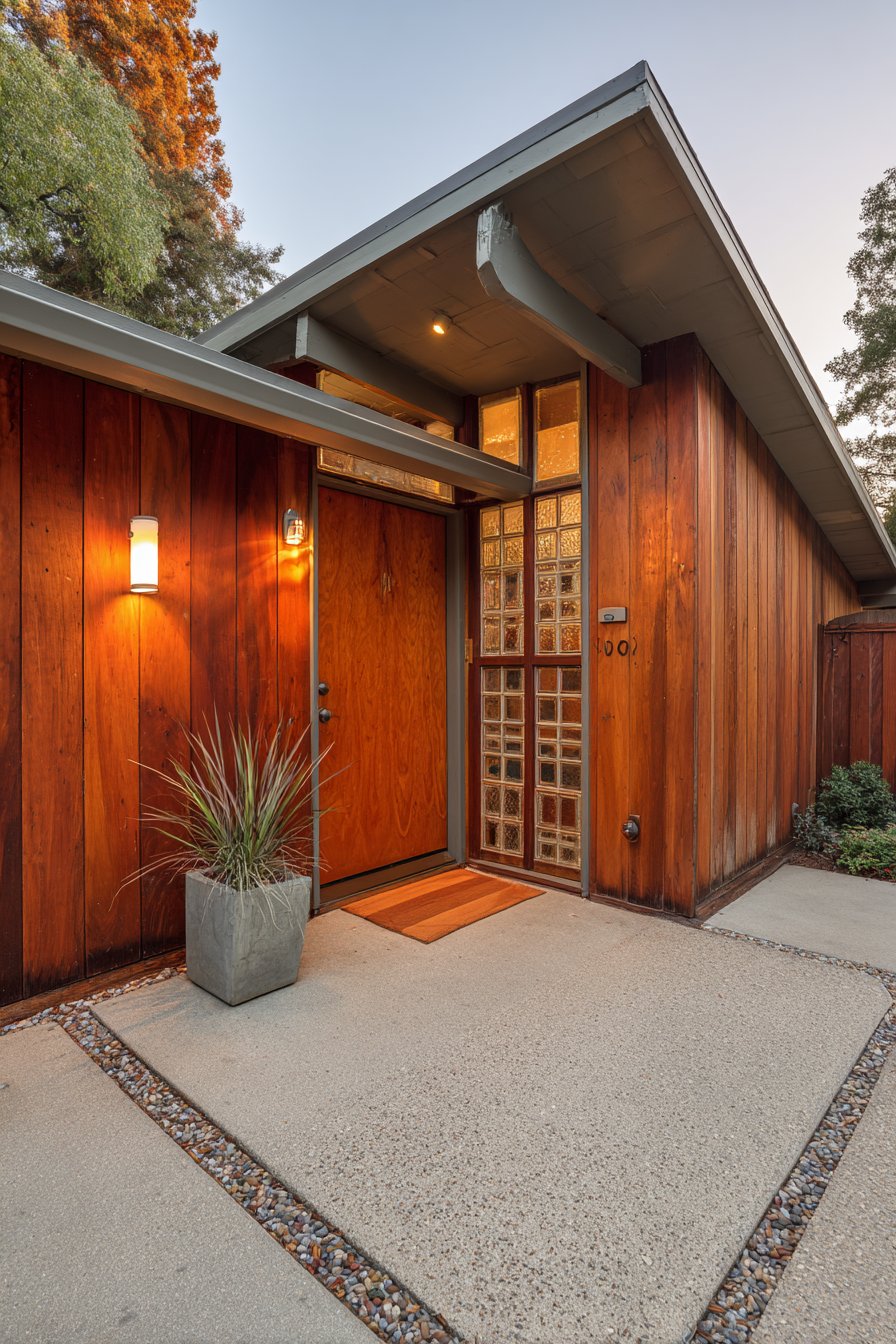
A concrete aggregate landing displays revealed pebbles and brass inlay strips. These details demonstrate mid-century attention to material expression and craft. Period-appropriate atomic-style wall sconces feature brass and glass elements. The fixtures provide both functional light and sculptural visual interest. A tapered planter holds architectural plants with strong geometric forms.
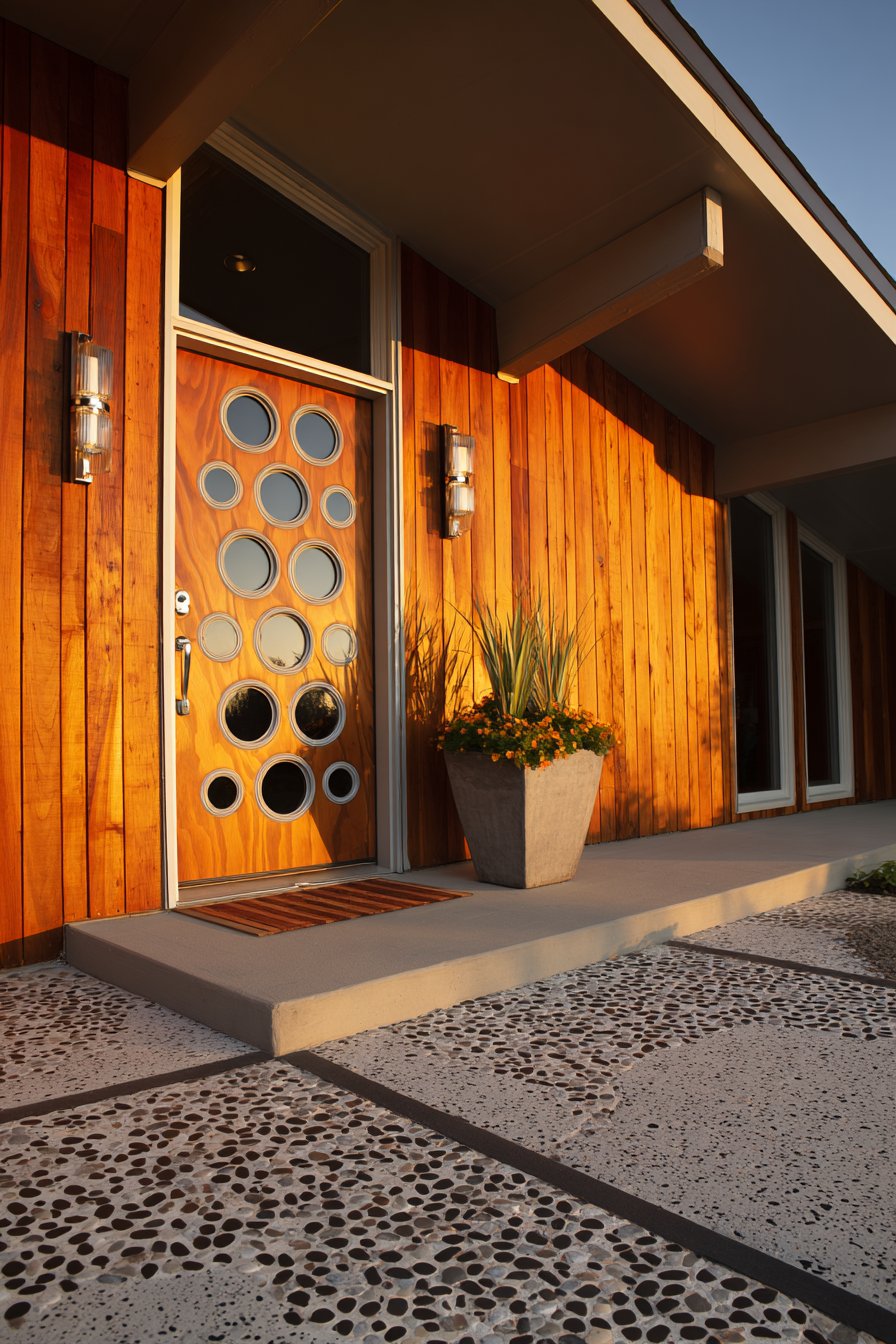
Golden hour light emphasizes the integration of natural and manufactured materials. The warm directional illumination creates shadows that define architectural geometry. Every material choice reflects mid-century modern design principles authentically. The design celebrates optimism through clean lines and quality materials.
This entrance captures the essential character of mid-century modern architecture. Organic materials combine with geometric forms throughout the composition. Attention to craft details elevates simple forms into sophisticated design. The approach remains remarkably fresh despite its historical roots.
Key Design Tips:
- Incorporate geometric window patterns for mid-century authenticity
- Use brass hardware and accents for warm metal contrast
- Choose vertical cedar siding that develops natural patina
- Create angled overhangs with exposed structural beam ends
- Add concrete with revealed aggregate for textural interest
- Install atomic-era light fixtures as sculptural design elements
12. Cottage Garden Romance
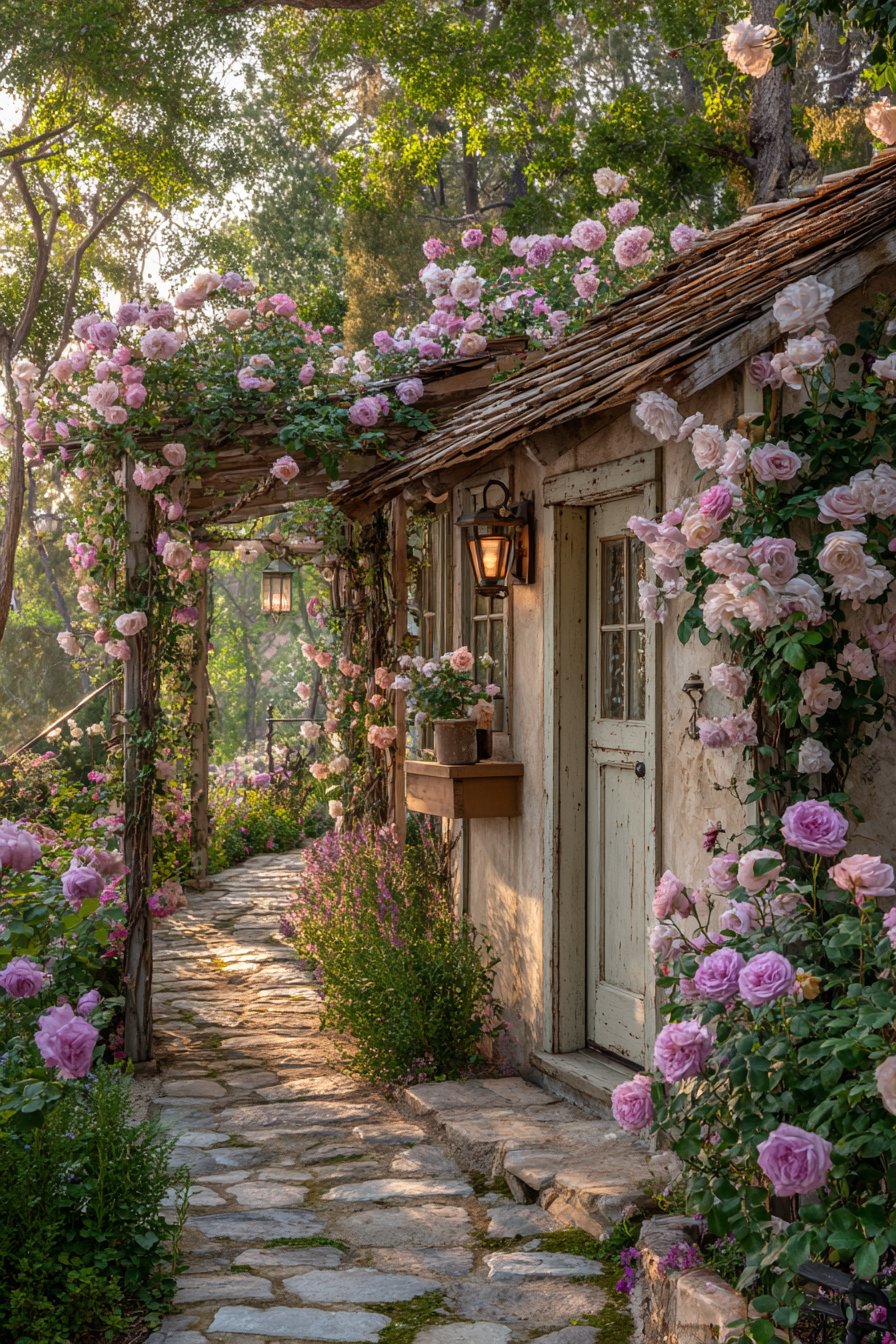
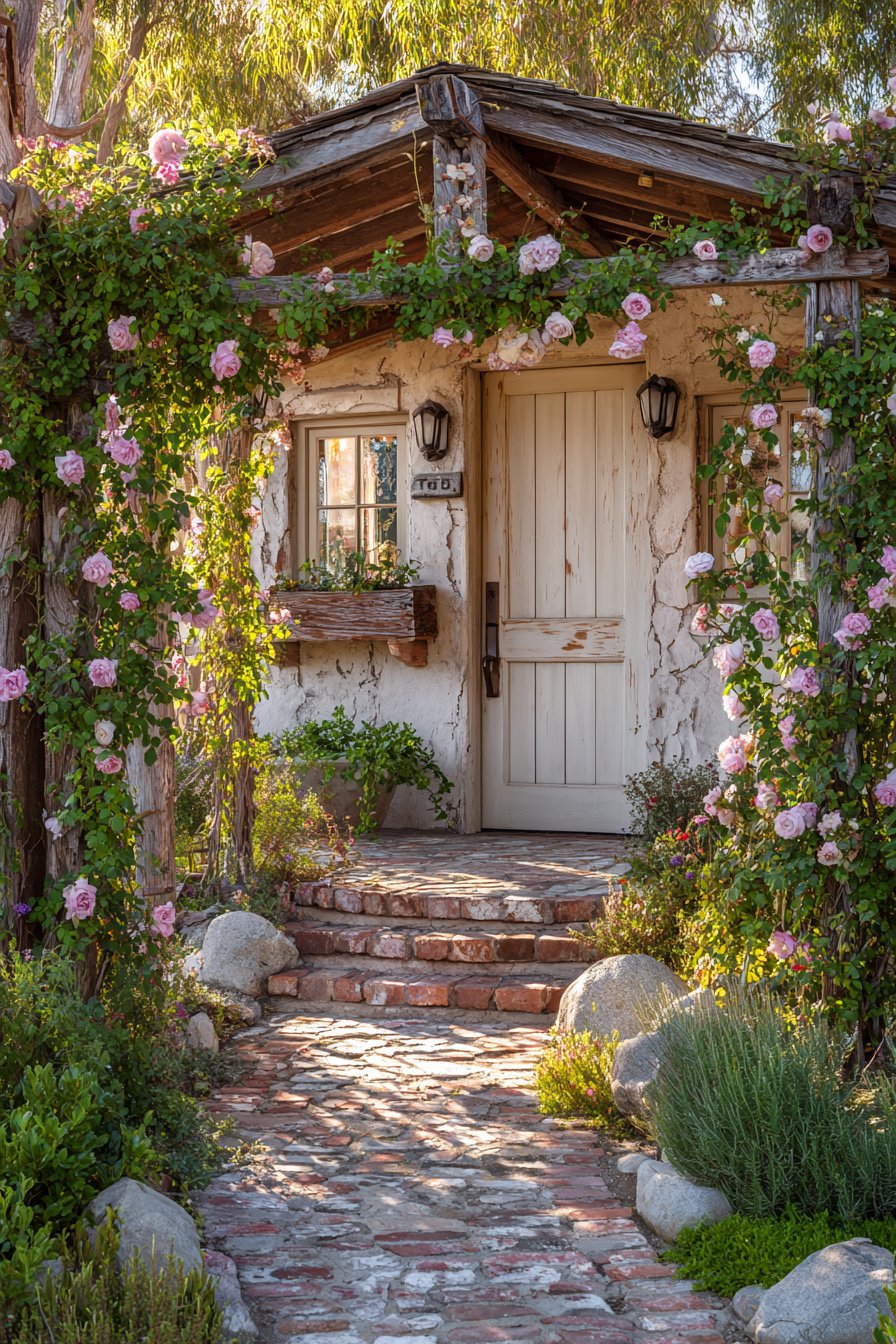
A painted wooden door in soft cream color shows gentle aging marks. Subtle distress patterns add authenticity without appearing artificial. Climbing roses frame the entrance naturally with visible thorny canes. Varied petal colors create changing displays throughout blooming seasons. A small covered porch features painted wooden floorboards with natural wear.
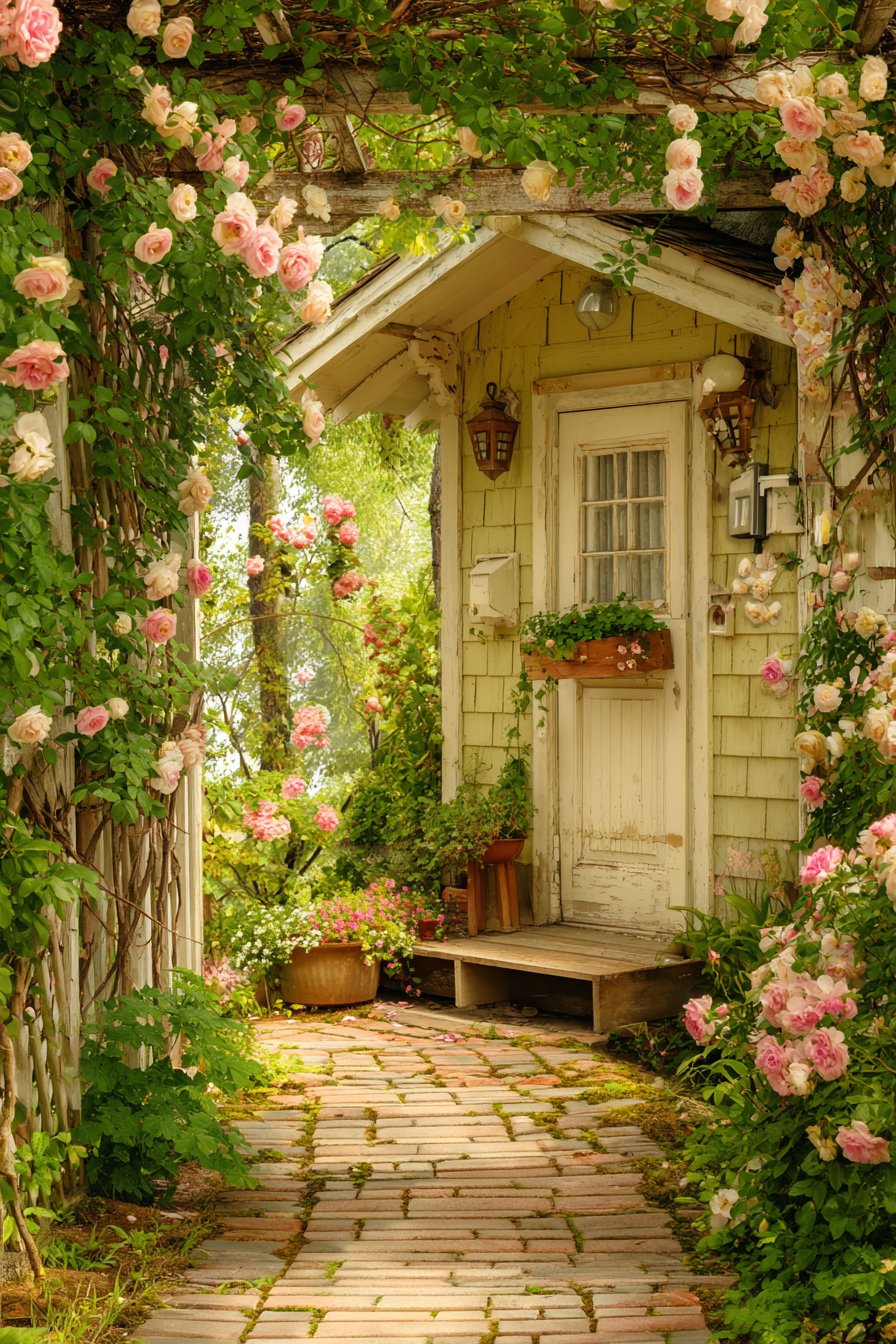
Vintage-style wall lanterns with seeded glass cast dappled light patterns. The textured glass creates romantic illumination perfect for the cottage aesthetic. A wooden window box mounted below holds herbs and trailing plants. This living element adds fresh scents and visual softness. Brick path leading to entrance shows moss growth between stones naturally.
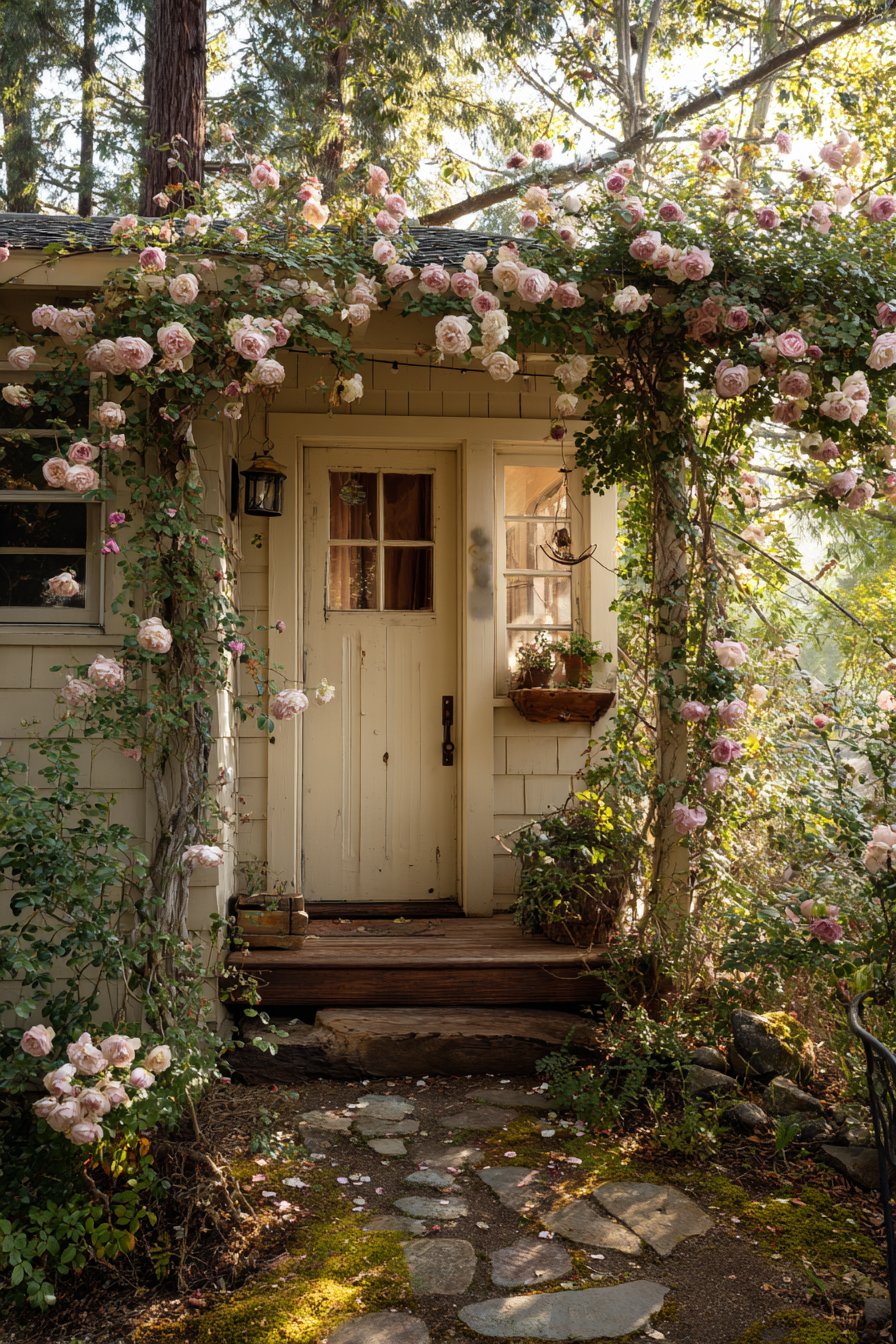
Soft morning light filters through rose blooms creating magical effects. Natural illumination emphasizes authentic plant growth and material aging. The romantic lived-in quality feels genuine rather than manufactured. Every element contributes to the cottage garden dream aesthetic.
This entrance celebrates the integration of architecture and garden design. Plants and structures work together creating unified compositions. The design embraces natural aging as beauty enhancement. Practical function combines with romantic visual appeal throughout.
Key Design Tips:
- Paint doors in soft neutral colors that age gracefully
- Allow climbing roses to grow naturally framing architectural elements
- Use vintage-style lighting with seeded glass for romantic effects
- Add window boxes planted with herbs for practical beauty
- Encourage moss growth in brick paths for organic softening
- Embrace natural wear patterns as authentic character development
13. Desert Modern Bronze Steel
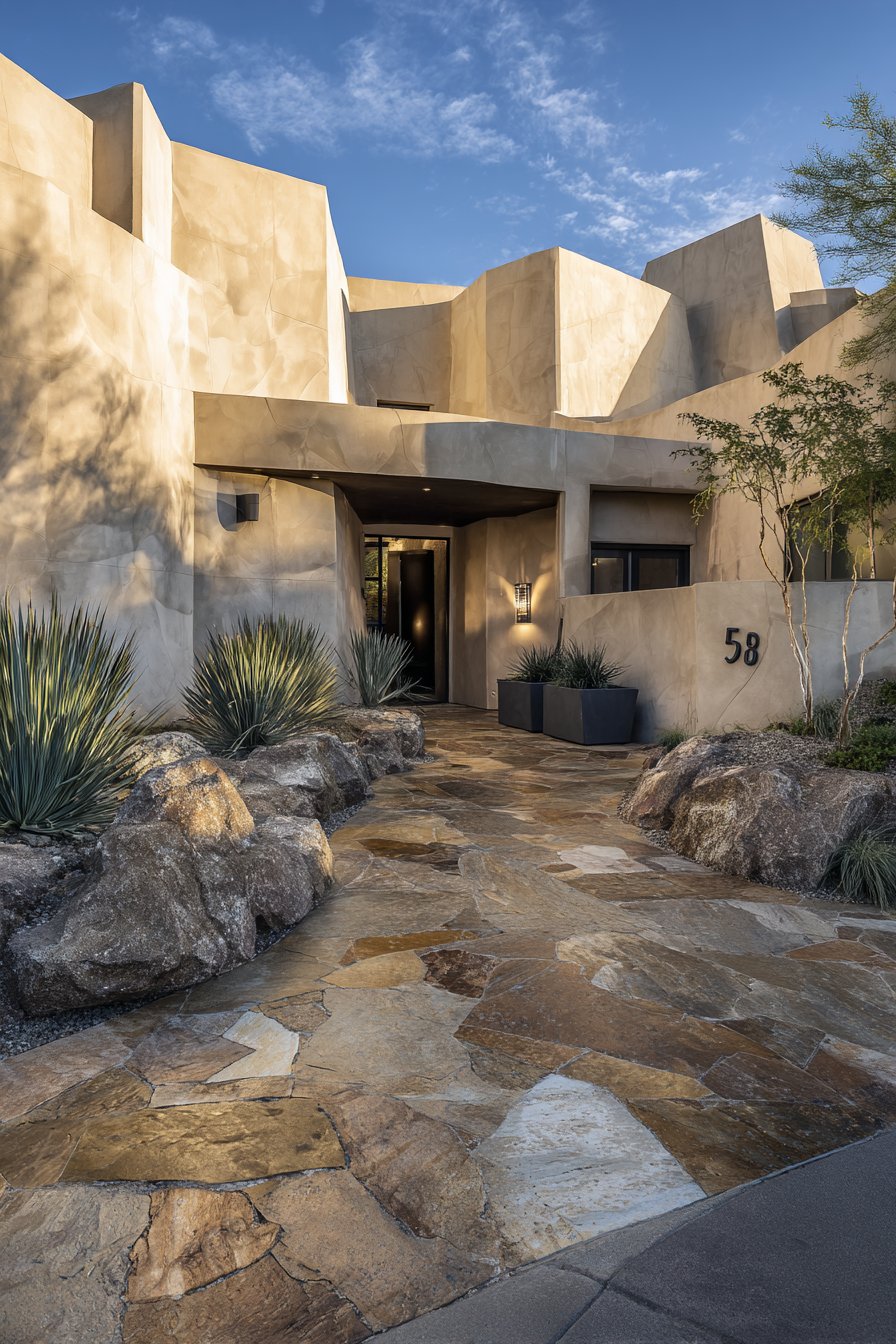
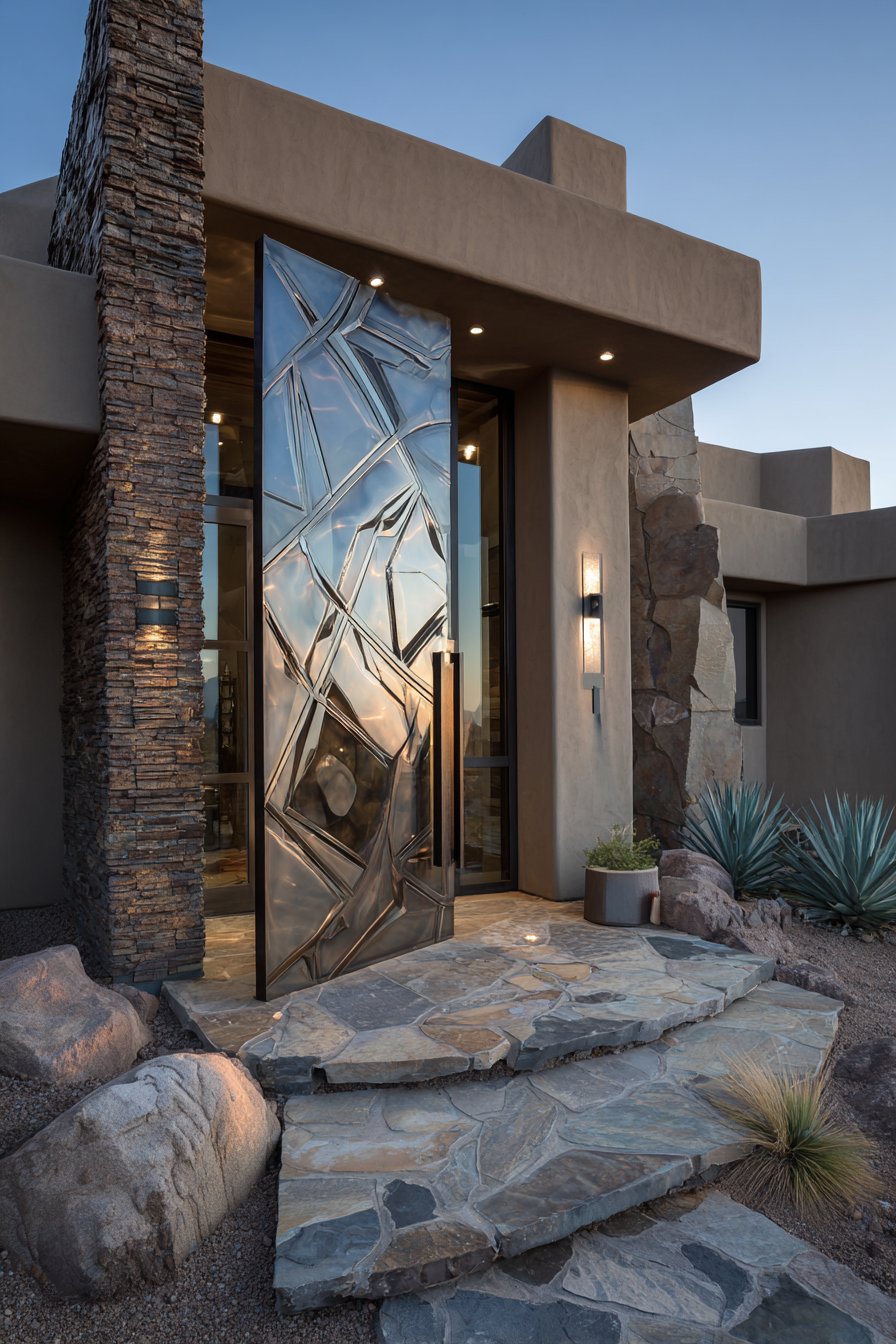
A custom steel and glass door features geometric patterns in bronze finish. The powder-coated surface provides durability in harsh desert conditions. Smooth stucco walls in warm sand tones create clean desert backdrops. Subtle color variations add natural interest to large wall surfaces. The entrance recess creates natural shade protection from intense sun.
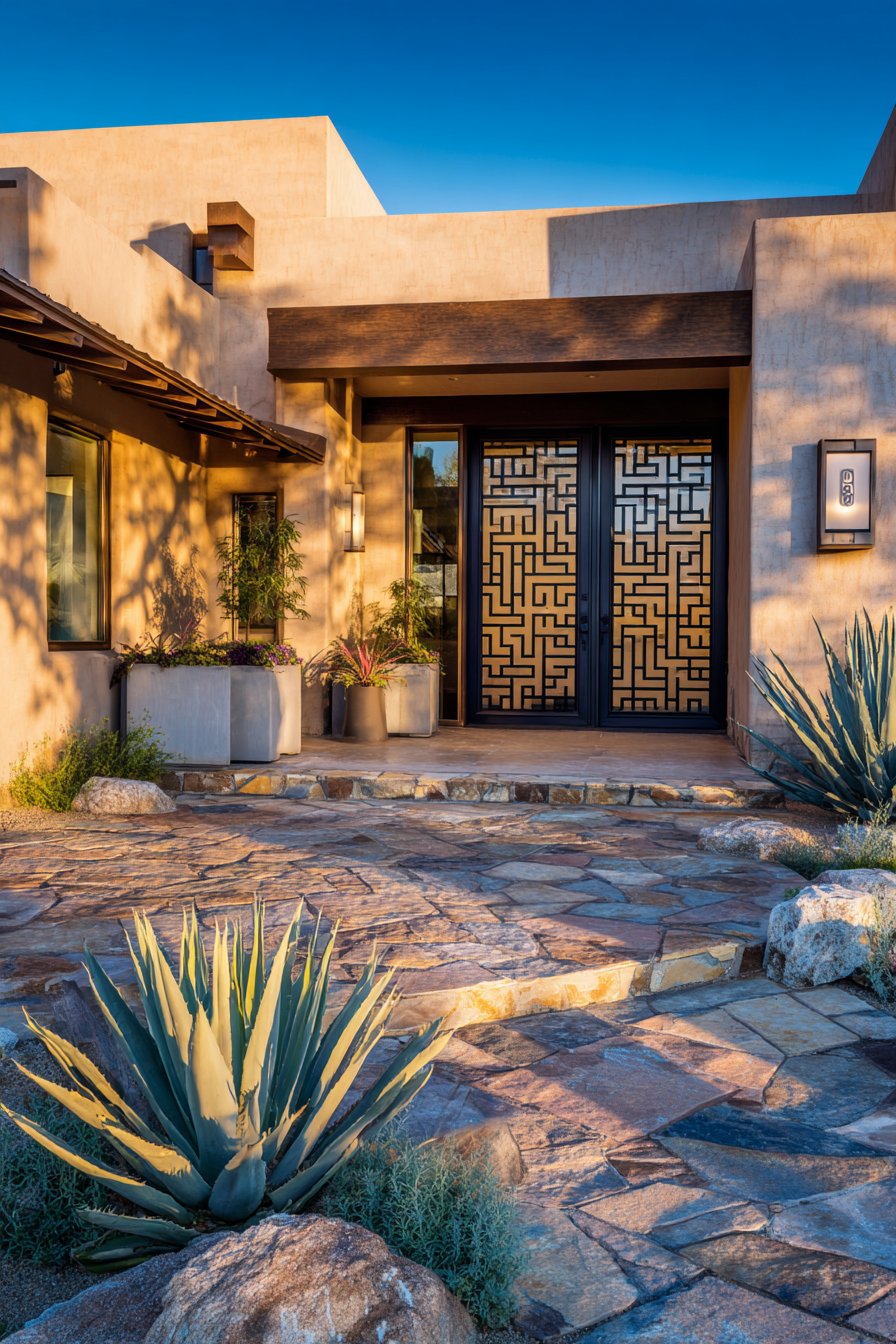
Flagstone pavers in natural desert colors show irregular edges and varied thicknesses. Each stone displays unique characteristics from its formation process. Sculptural drought-tolerant plants including agave and ornamental grasses provide organic forms. Simple concrete planters allow plant forms to become focal points. A modern house number in illuminated acrylic adds practical function.
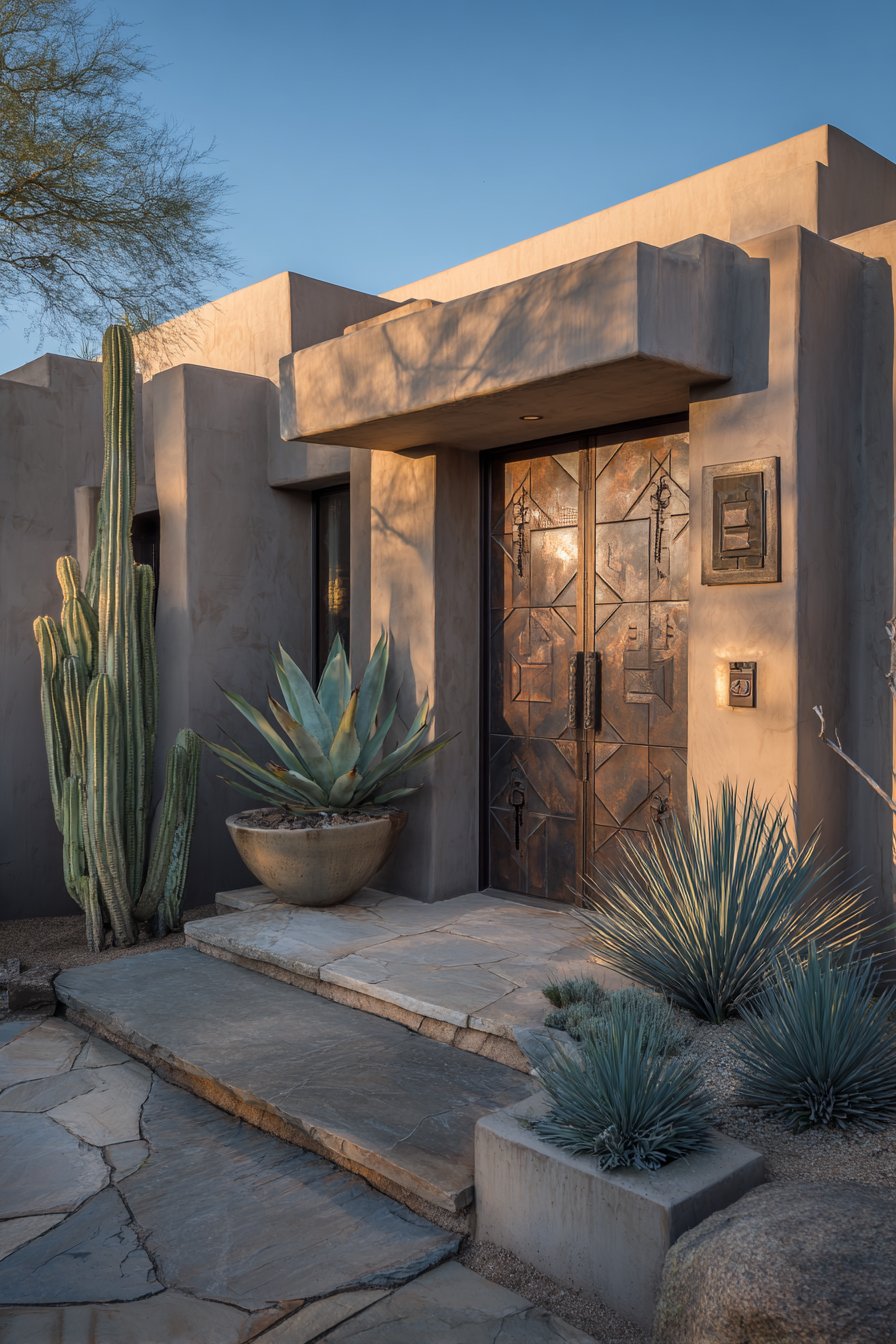
Late afternoon light creates strong shadows that emphasize architectural geometry. Natural desert illumination highlights the interplay of smooth stucco and textured stone. Glass elements reflect changing light throughout the day. The material palette connects architecture to the surrounding desert landscape.
This entrance demonstrates how modern design responds to specific regional conditions. Material choices reflect both aesthetic preferences and practical climate considerations. The design celebrates southwestern architectural traditions through contemporary interpretation. Function and beauty merge seamlessly throughout the composition.
Key Design Tips:
- Choose metal finishes in bronze tones for desert heat resistance
- Use smooth stucco in warm sand colors for regional authenticity
- Create recessed entries that provide natural shade protection
- Select flagstone with natural irregular edges for organic texture
- Plant drought-tolerant species that reflect desert ecology
- Add illuminated house numbers for practical nighttime visibility
14. French Country Weathered Grey
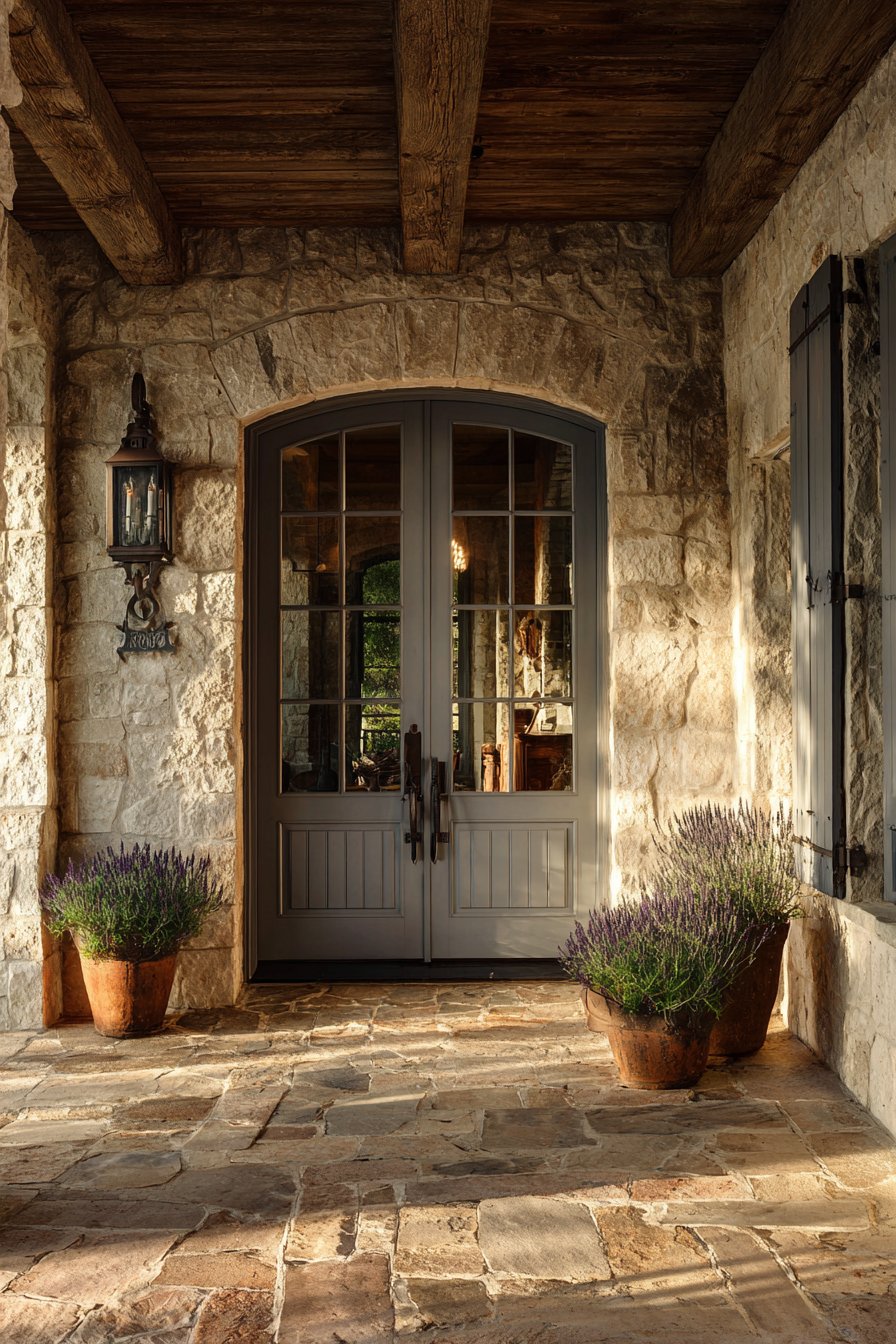
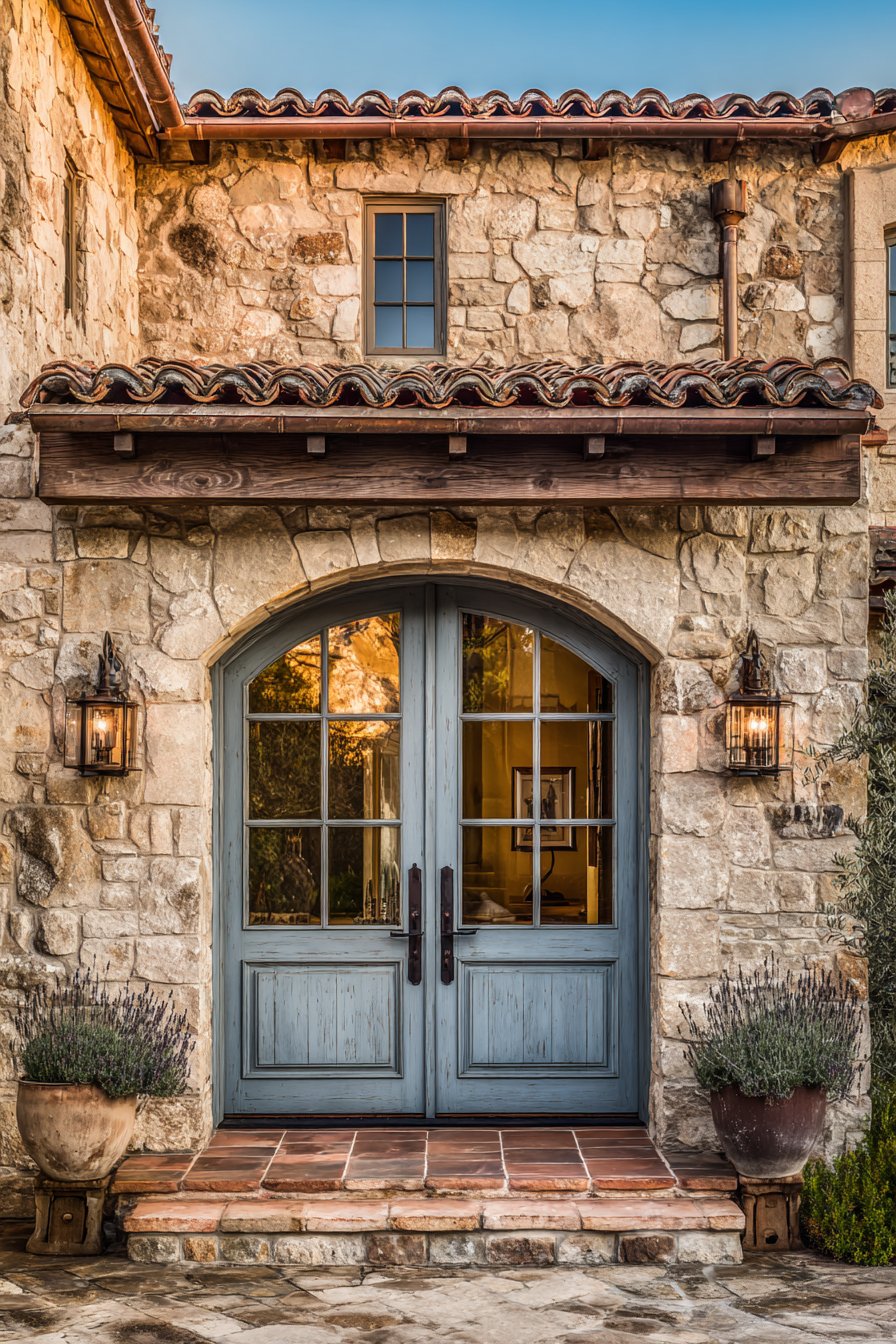
Double doors feature arched tops with divided light windows throughout. Weathered grey-blue paint color adds soft sophistication to the entrance. Antique iron hardware provides authentic period-appropriate detailing. Natural stone surrounds show varied sizes and colors with quarry marks. A small covered entry area displays vaulted ceiling with exposed wooden beams.
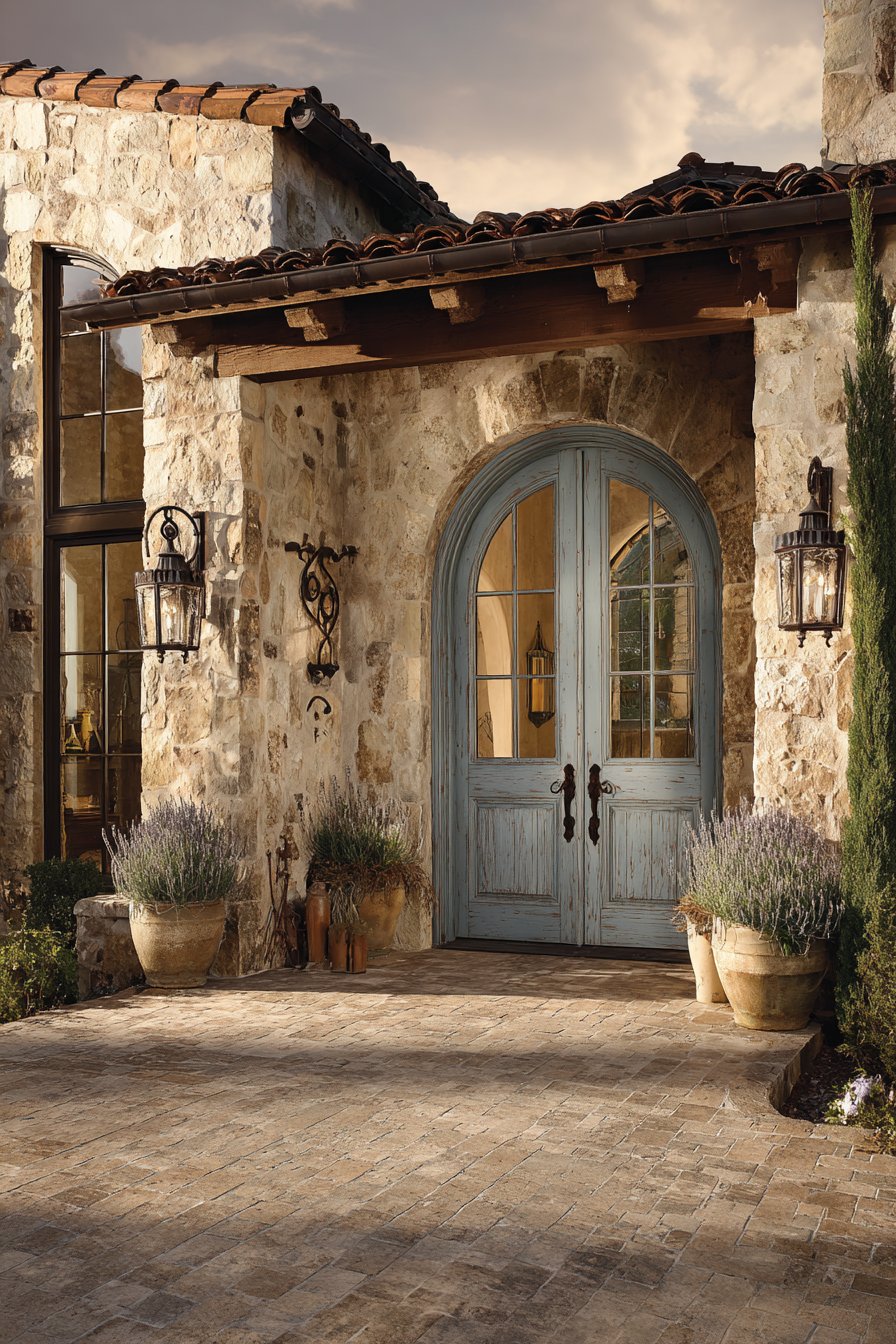
Terracotta tile flooring shows natural color variations across individual pieces. Slight wear patterns demonstrate authentic aging from years of use. Wrought iron wall sconces with scroll details hold candle-style bulbs. The fixtures provide both functional light and decorative visual interest. Lavender plants in weathered terracotta pots line the approach path.
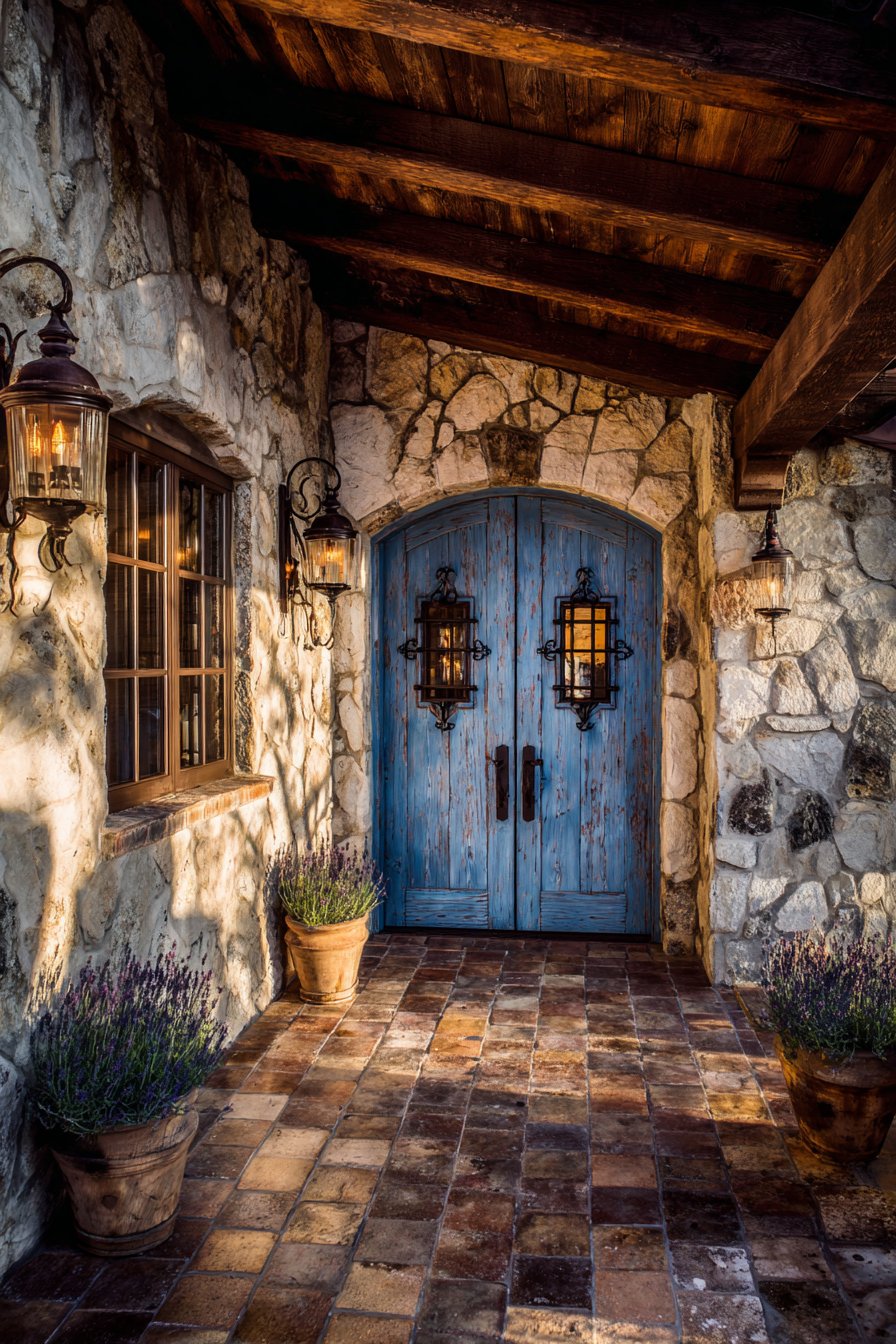
Golden hour light emphasizes textured stone and aged wood surfaces. Warm directional sunlight creates dramatic shadows that add dimensional depth. The old-world charm feels transported from French countryside villages. Every material choice reinforces the provincial French aesthetic authentically.
This entrance captures the romantic essence of French country design. Natural materials age beautifully creating patina that enhances character. Traditional craftsmanship receives proper celebration through careful detailing. The design feels timeless rather than trendy or temporary.
Key Design Tips:
- Use weathered paint colors in soft blue-grey tones
- Install arched double doors with authentic divided light patterns
- Incorporate natural stone with varied sizes and visible quarry marks
- Add exposed wooden beams to ceiling areas for rustic texture
- Choose terracotta tiles with natural color variation and wear
- Plant lavender in weathered pots for French countryside authenticity
15. Transitional Charcoal Brass
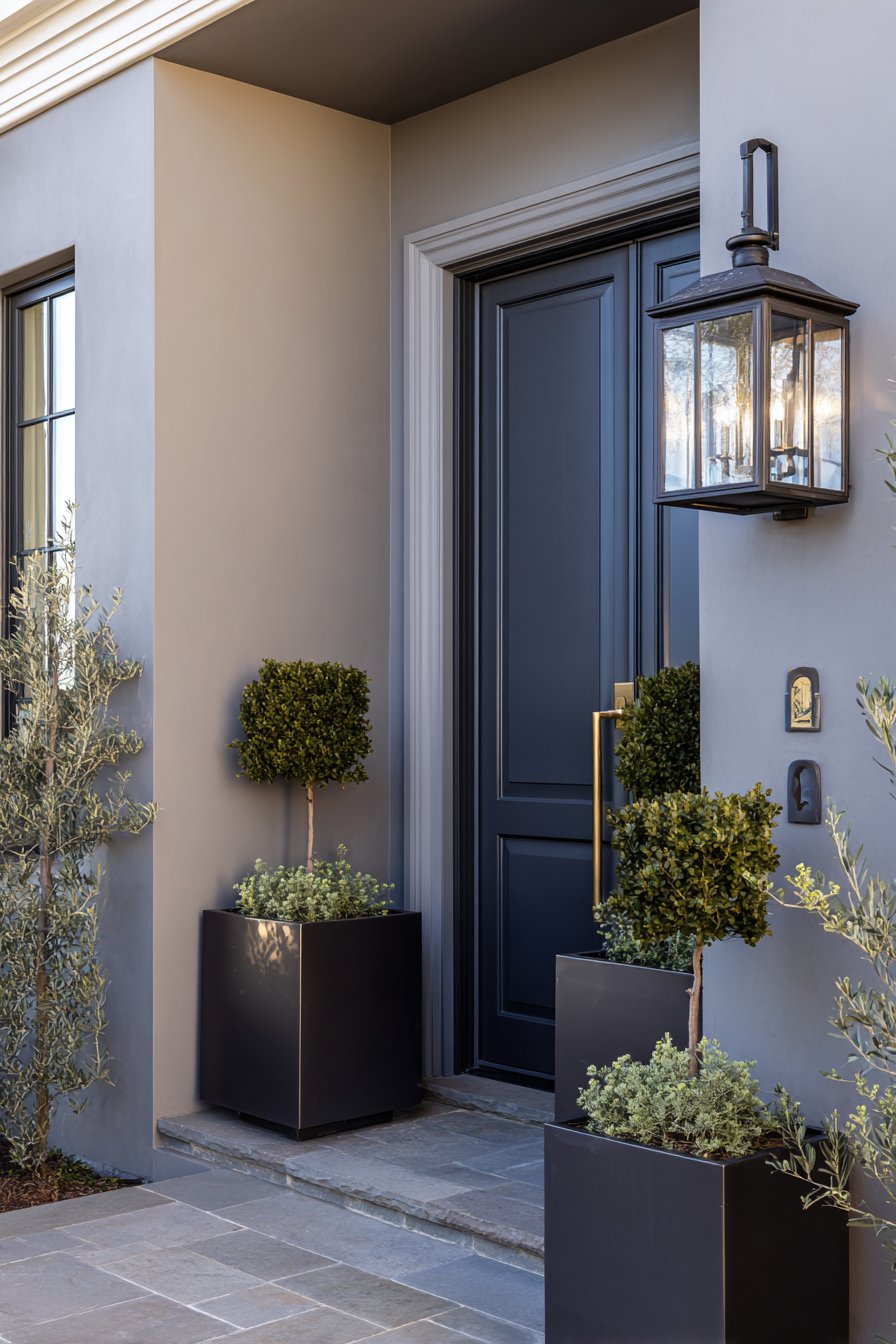
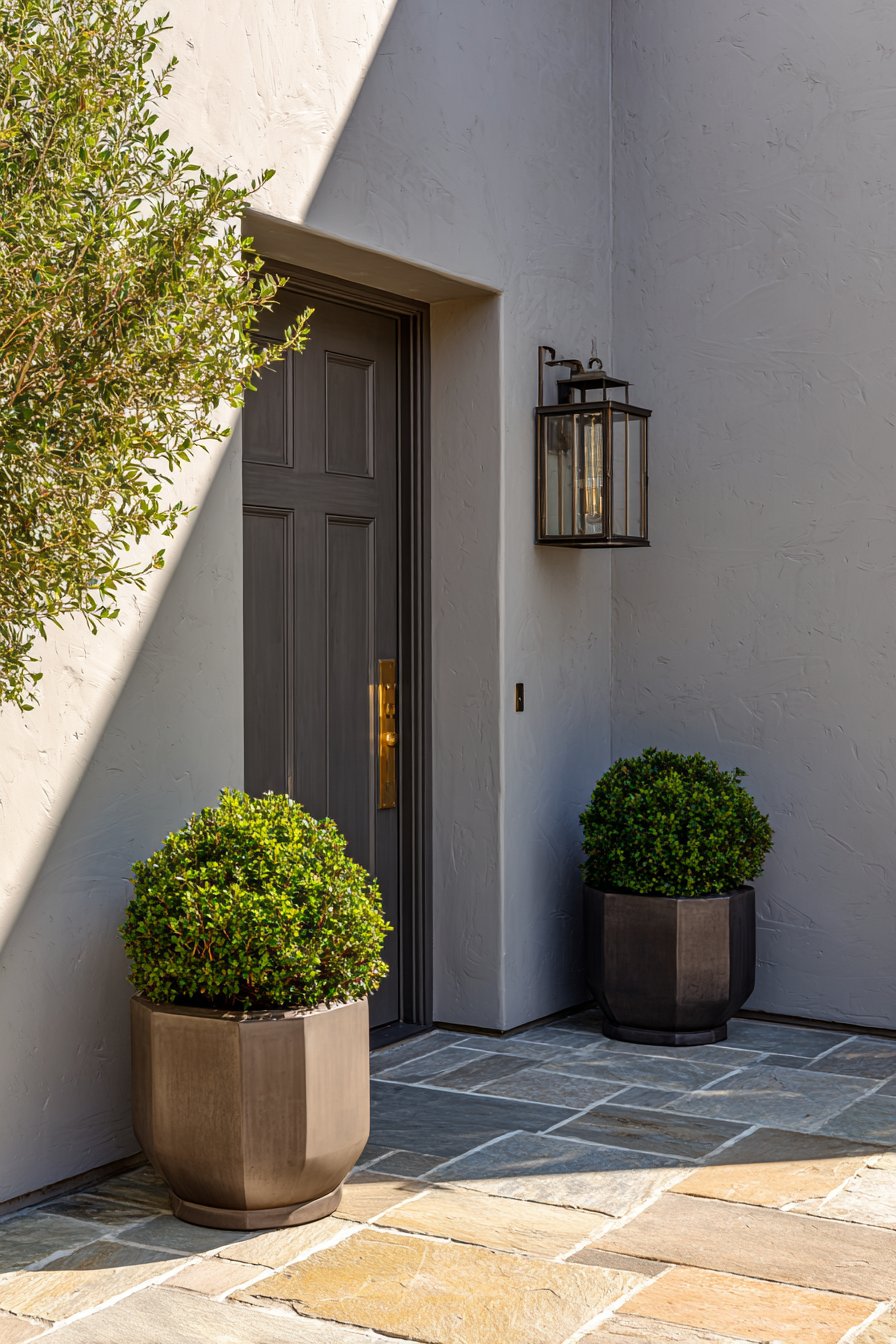
A solid wood door painted in sophisticated charcoal grey creates contemporary elegance. Modern brass hardware includes an oversized pull handle for dramatic effect. The entrance sits within smooth-finished grey stucco with clean lines. Minimal trim maintains the transitional style’s balanced aesthetic. Simple geometric planters in dark bronze finish hold manicured evergreen topiaries.
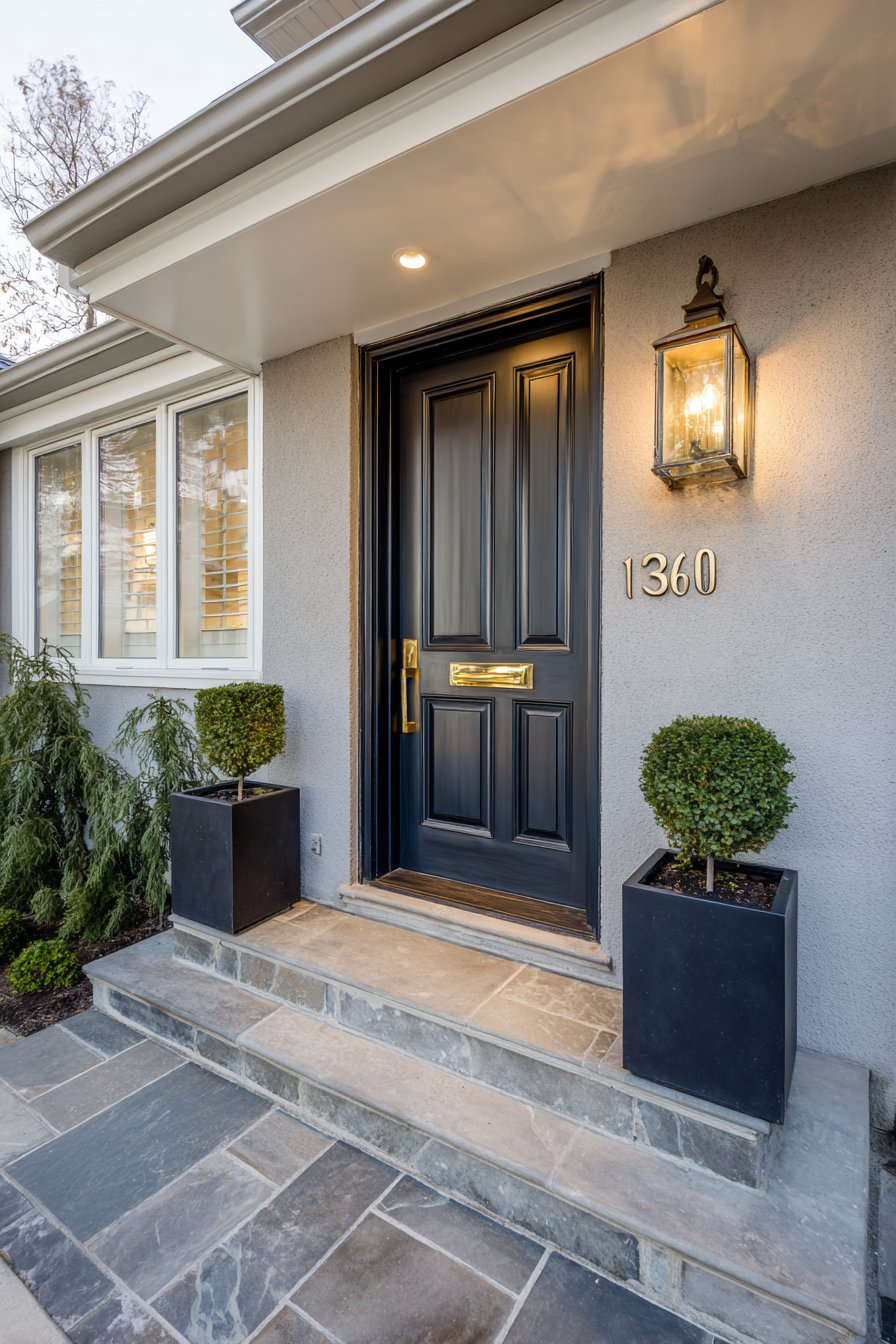
The approach features bluestone pavers in natural cleft finish with color variation. Each stone displays authentic surface texture from splitting process. A contemporary lantern-style light fixture combines clear glass and black metal. House numbers in brushed brass mount vertically along the doorframe creating visual interest.
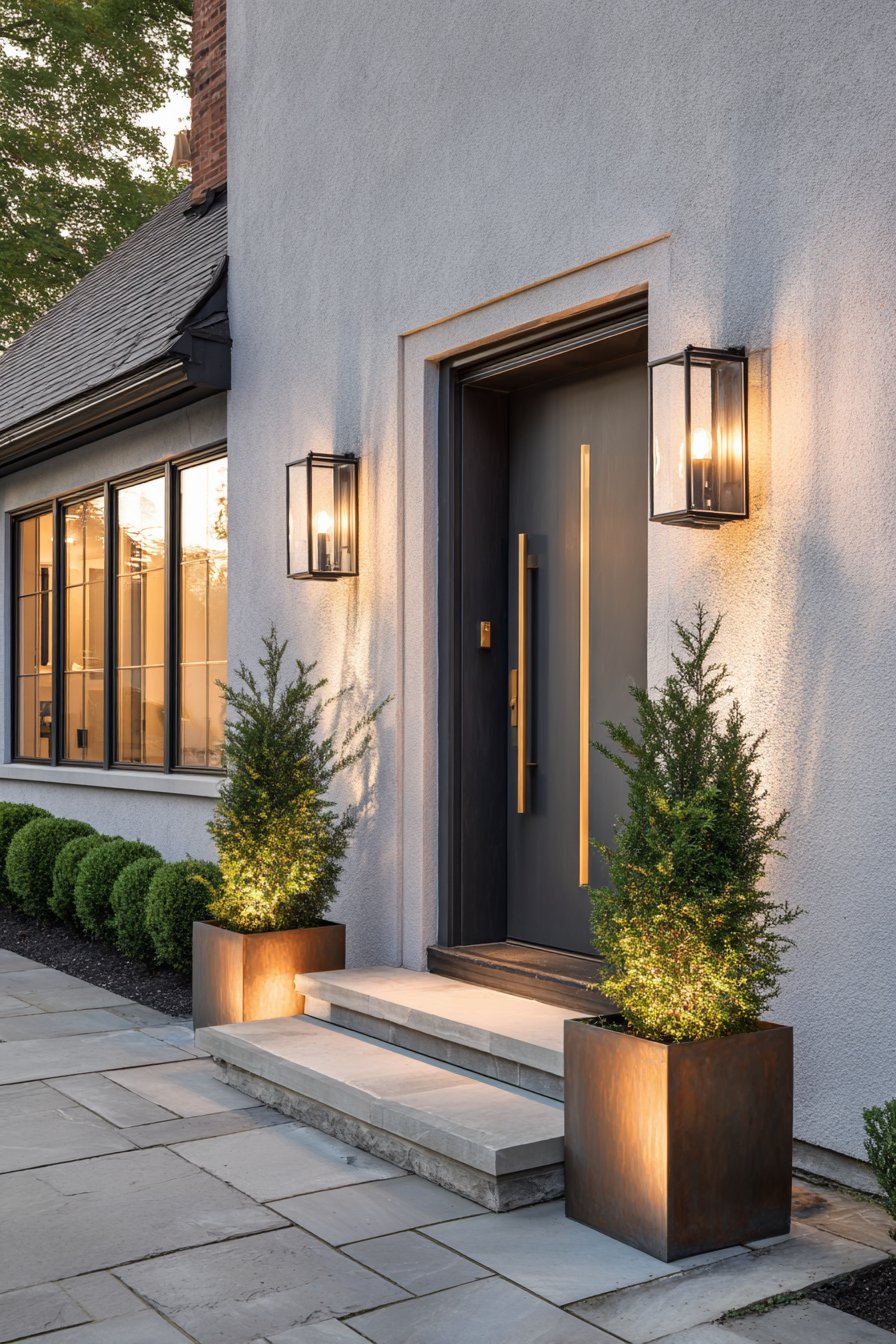
Soft afternoon light emphasizes the blend of traditional and contemporary elements. Even illumination highlights material quality and clean installation details. The sophisticated restraint demonstrates confidence through understatement. Every element serves the overall design vision without competing for attention.
This entrance proves that transitional style successfully bridges design periods. Traditional materials receive contemporary treatment throughout the composition. The result feels current without rejecting classical design principles. Quality craftsmanship remains evident in every detail and finish.
Key Design Tips:
- Paint doors in sophisticated grey tones for transitional elegance
- Choose oversized modern hardware in warm brass finishes
- Use smooth stucco finishes with minimal trim for clean lines
- Select geometric planters in dark metal finishes for contrast
- Install bluestone in natural cleft finish for authentic texture
- Display house numbers as vertical design elements with quality materials
16. Coastal Aqua Weathered
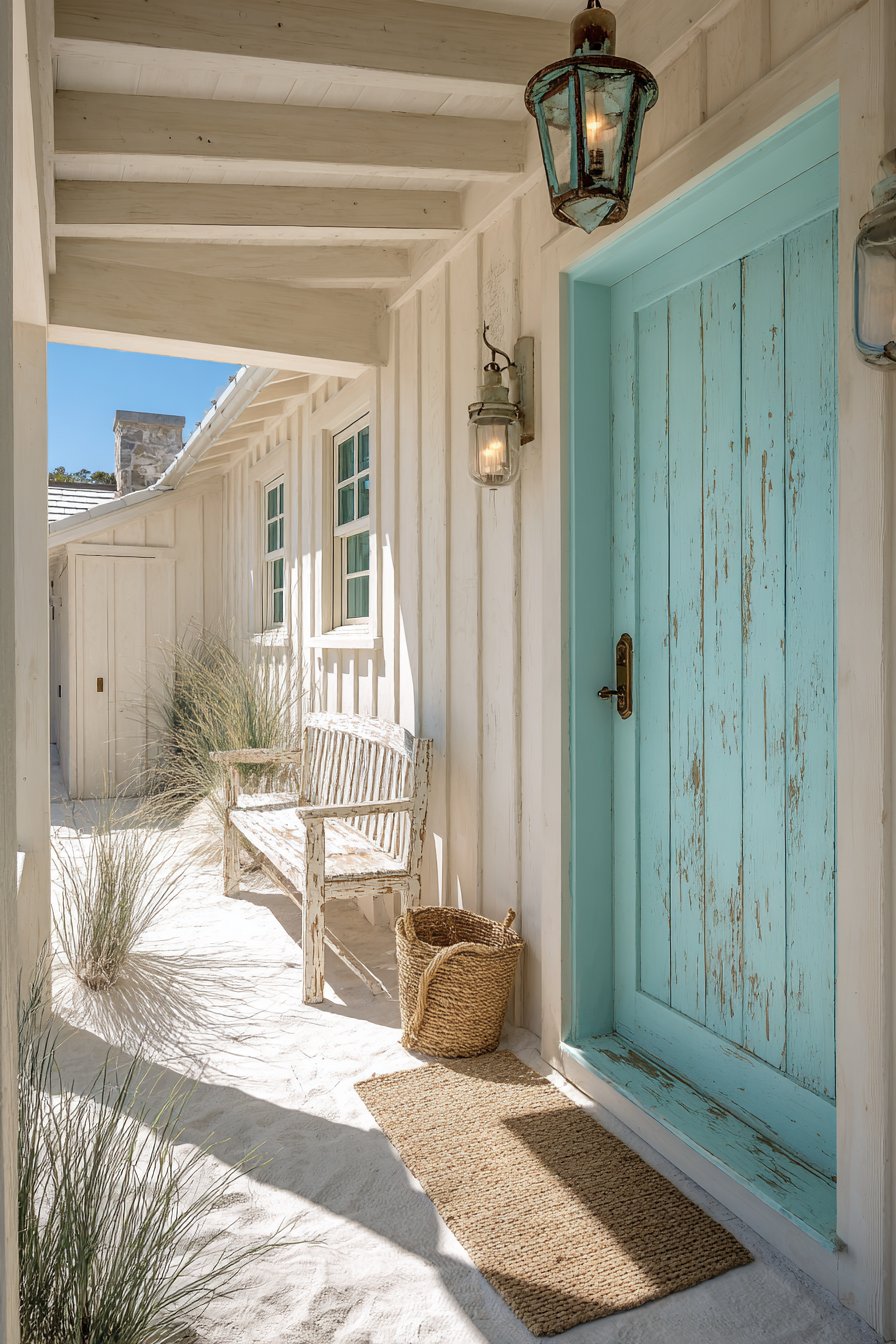
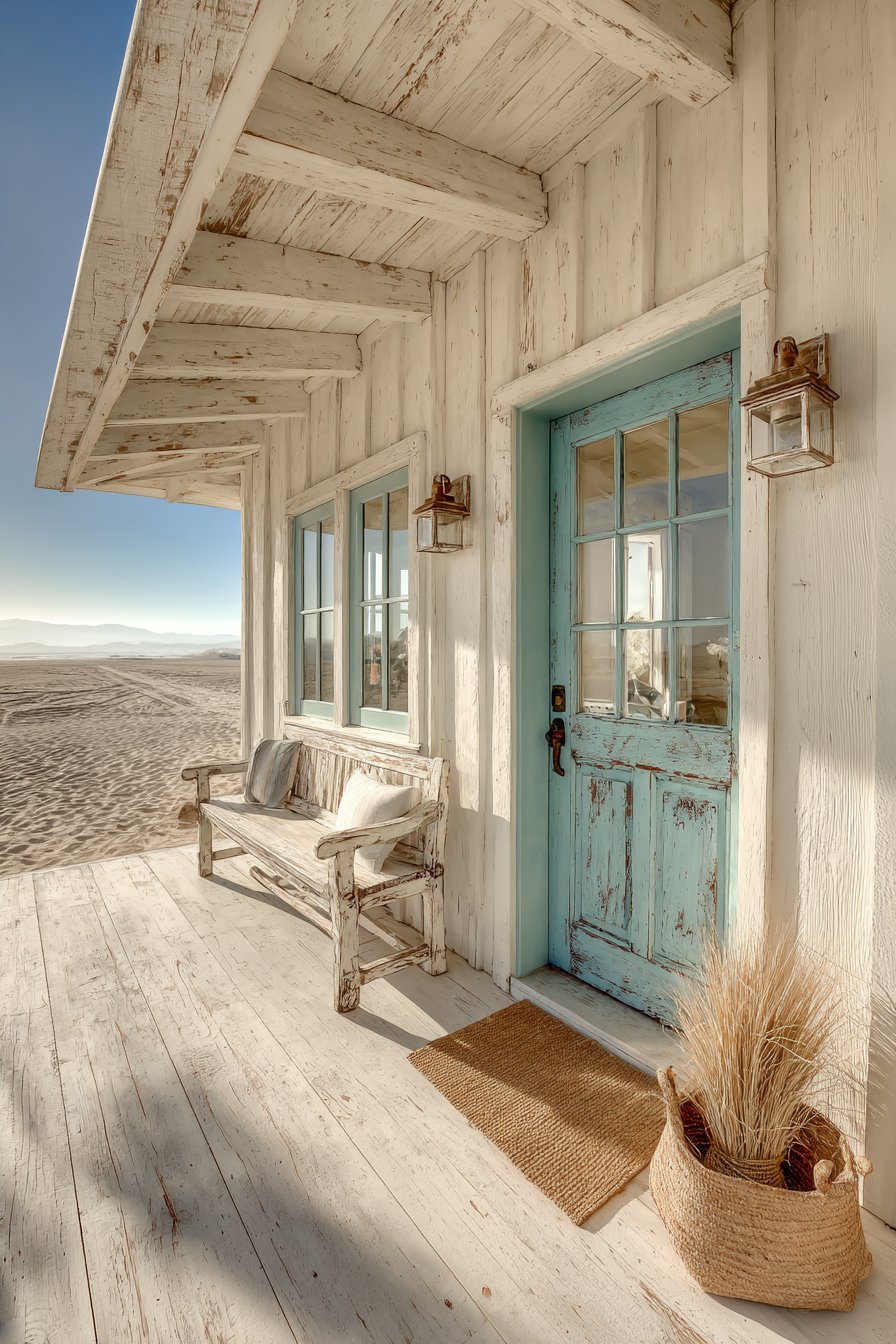
A weathered wooden door painted in soft aqua blue shows natural fading. Salt air patina adds authentic coastal character to the surface. White-painted tongue and groove siding displays visible wood grain throughout. A covered porch features painted white floorboards with natural wear patterns. Traffic paths show heavier wear adding genuine aging characteristics.
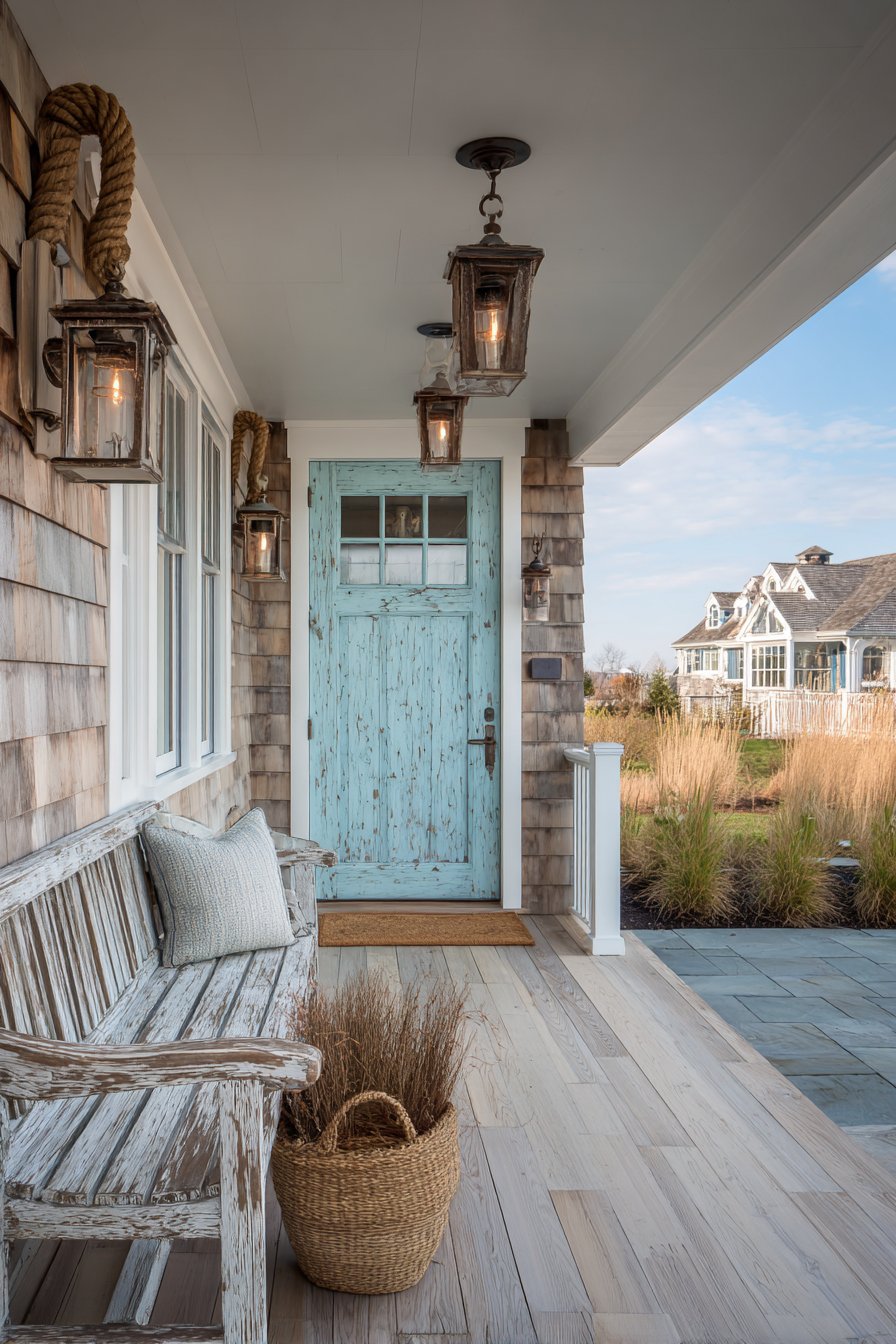
Nautical-inspired wall lanterns in oil-rubbed bronze provide functional lighting. Clear glass panels allow maximum light transmission for safety. Rope-wrapped posts support the porch overhang with maritime detailing. A weathered wooden bench shows peeling white paint adding coastal charm. A basket filled with beach grass sits beside the bench naturally.
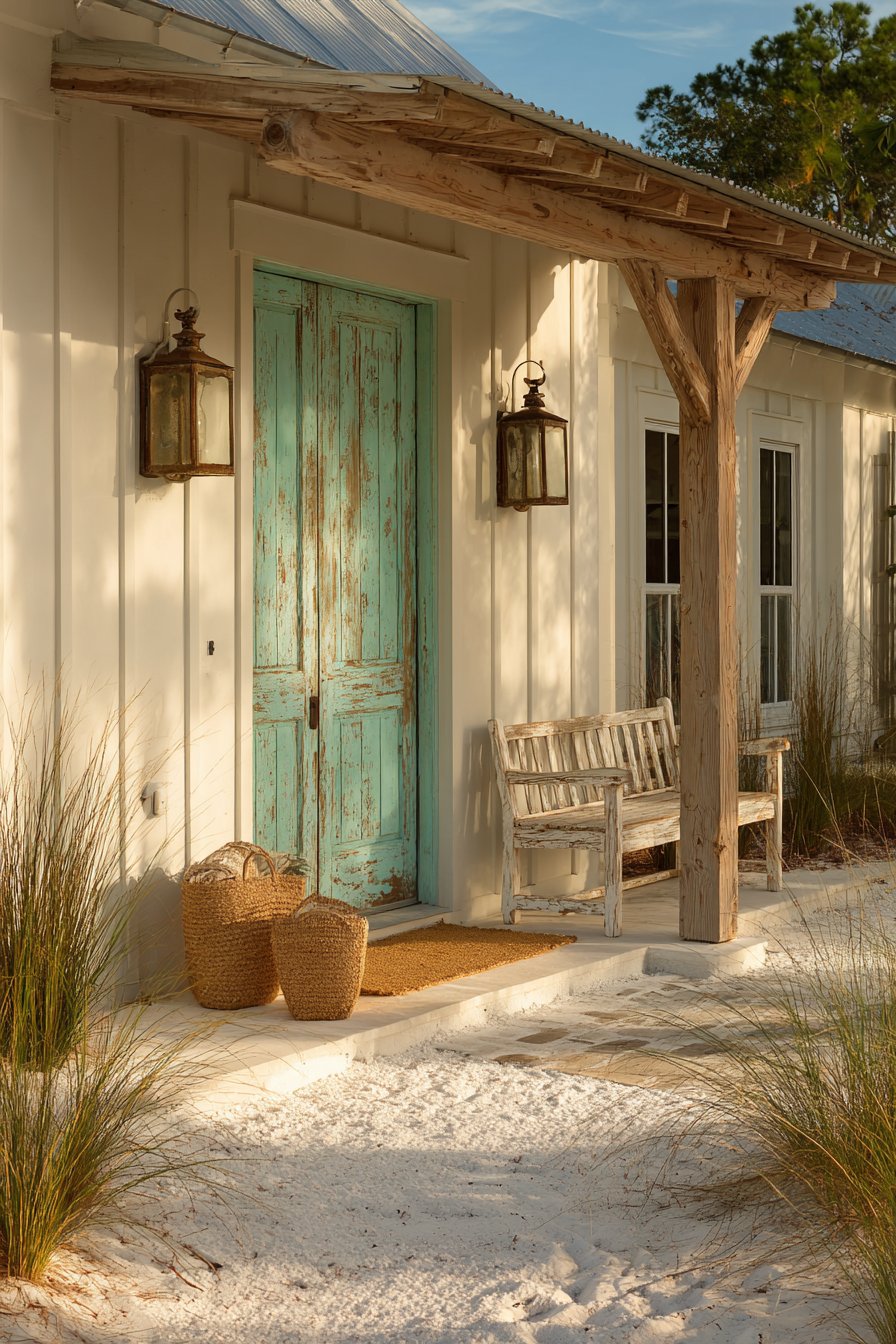
Sandy beige outdoor doormat adds textural contrast at the entrance threshold. Bright morning light captures the breezy relaxed coastal aesthetic perfectly. Natural sunlight emphasizes weathered finishes and authentic paint aging. The casual elegance reflects seaside living’s laid-back sophistication.
This entrance celebrates the beauty of natural weathering in coastal environments. Materials age gracefully accepting the effects of sea air. The design feels authentic rather than artificially distressed. Every element contributes to the relaxed coastal lifestyle aesthetic.
Key Design Tips:
- Choose soft aqua blue paint that weathers naturally over time
- Use white tongue and groove siding for classic coastal architecture
- Add nautical-inspired lighting in weathered metal finishes
- Incorporate rope-wrapped elements for maritime detailing
- Allow painted surfaces to show natural wear and aging
- Include beach grass and natural elements in casual arrangements
17. Mountain Lodge Rugged Stone
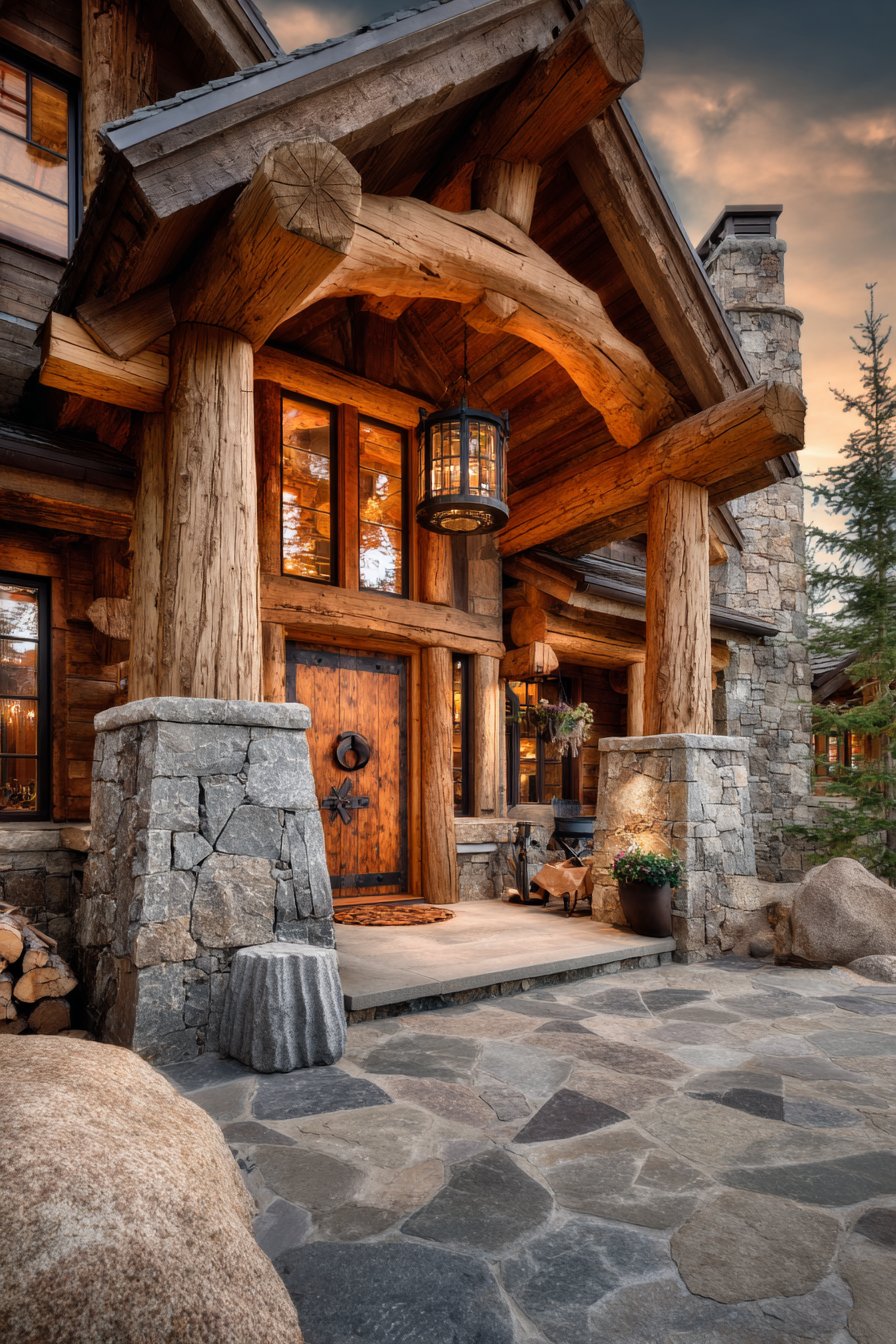
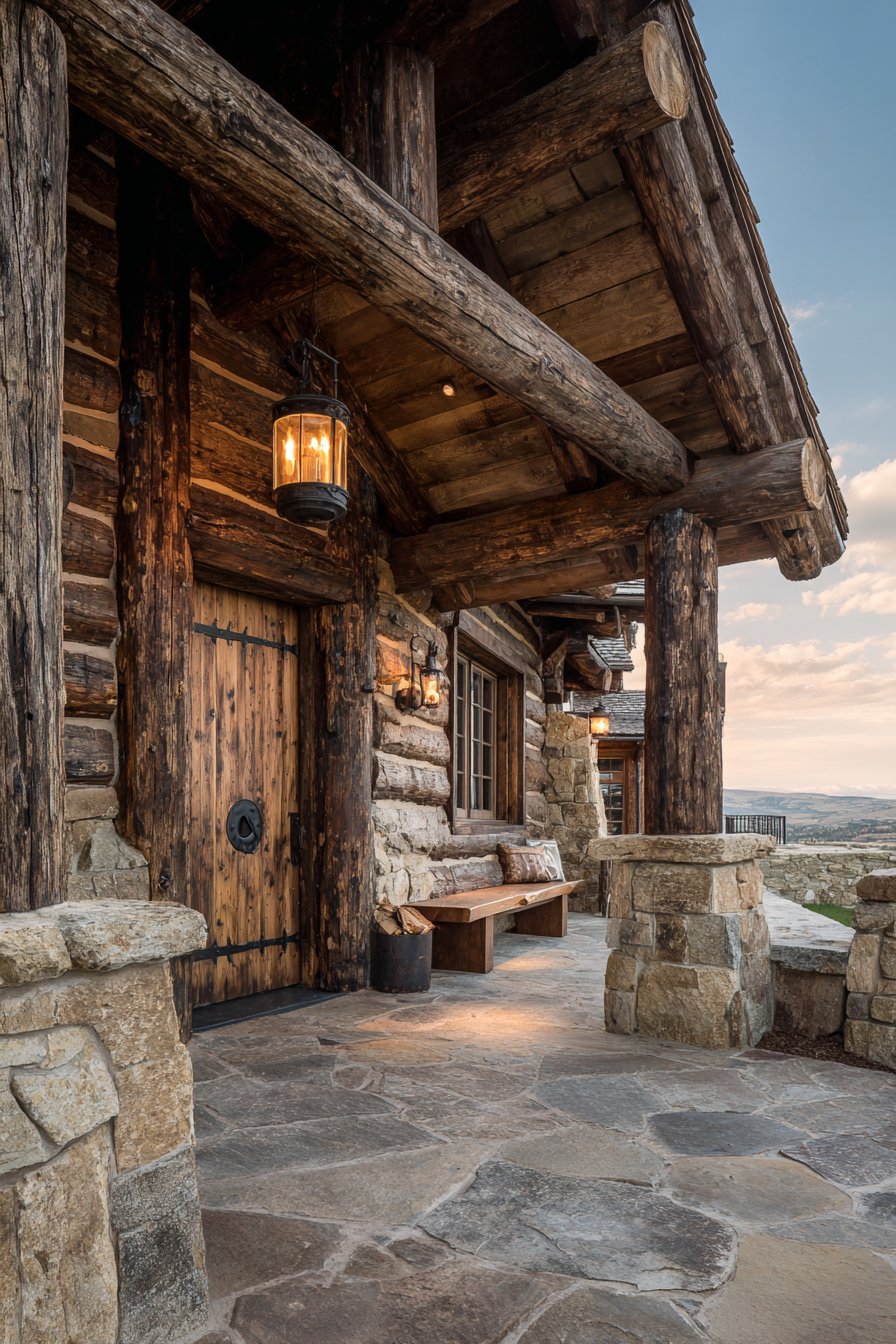
A substantial door crafted from rough-hewn planks commands attention immediately. Decorative iron strap hinges and large ring pull handle provide functional art. Natural log siding with visible bark edges creates authentic mountain character. Massive stone pillars with varied stone sizes support deep overhanging roofs. The substantial construction reflects mountain lodge building traditions.
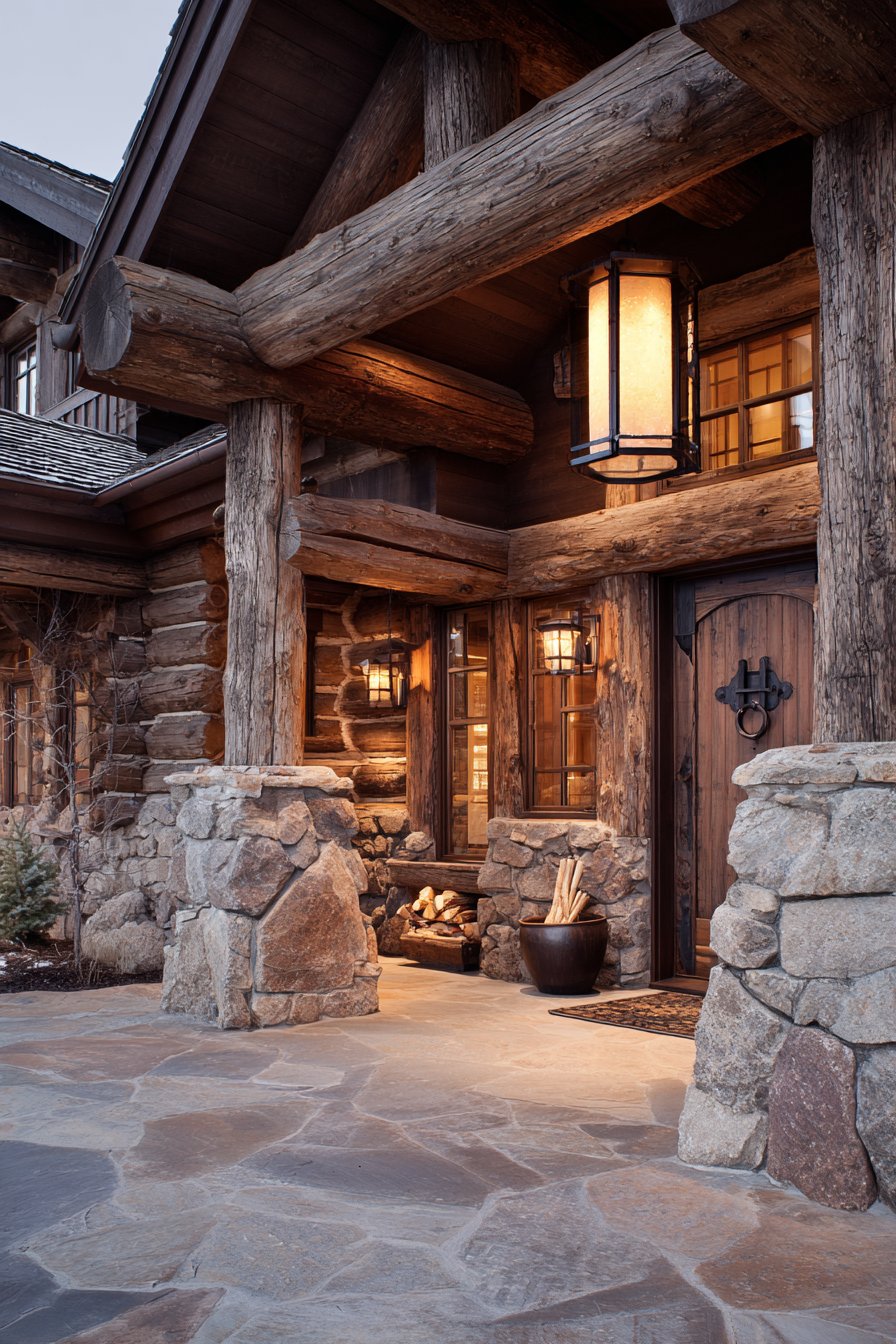
Flagstone landing features irregular shapes in natural grey-brown tones. Each stone displays unique characteristics from its mountain origin. A large iron lantern with seeded glass hangs from timber-frame overhang. Stacked firewood visible to one side adds authentic functional detail. The practical element enhances the mountain aesthetic naturally.
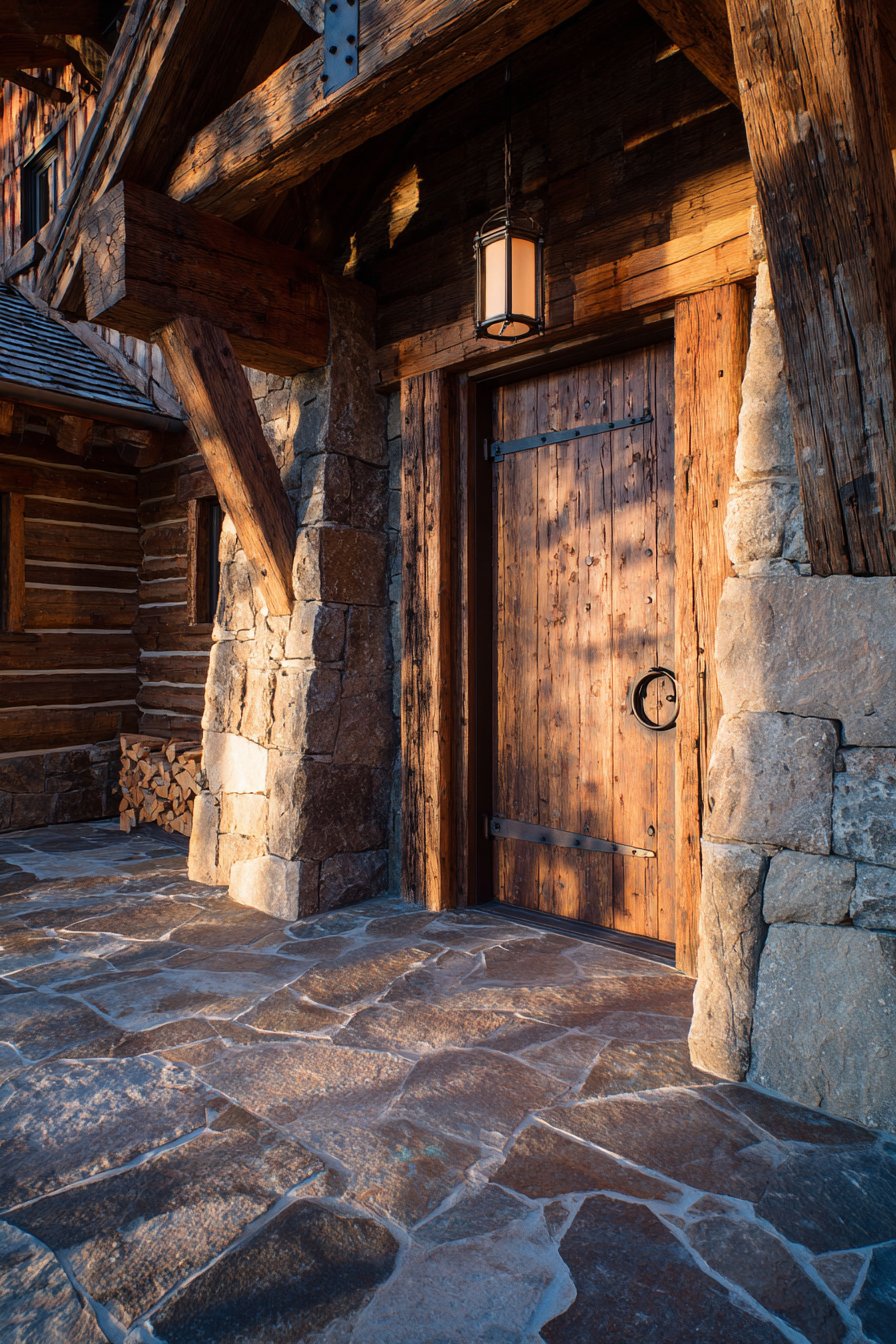
Golden hour light emphasizes log texture and natural stone variation. Warm directional illumination creates dramatic shadows adding architectural presence. The rugged mountain aesthetic feels substantial and permanent. Every material choice reflects the surrounding mountain environment authentically.
This entrance captures the essence of mountain lodge architecture perfectly. Massive proportions and natural materials create appropriate scale and character. Traditional construction methods receive proper visual celebration. The design feels connected to its mountain setting through material choices.
Key Design Tips:
- Use rough-hewn planks for doors showing authentic wood character
- Install decorative iron hardware as functional artistic elements
- Choose natural log siding with visible bark edges for authenticity
- Build massive stone pillars with varied stone sizes and colors
- Create deep overhangs for weather protection and architectural drama
- Display stacked firewood as practical decorative element
18. Japanese Cedar Minimalism
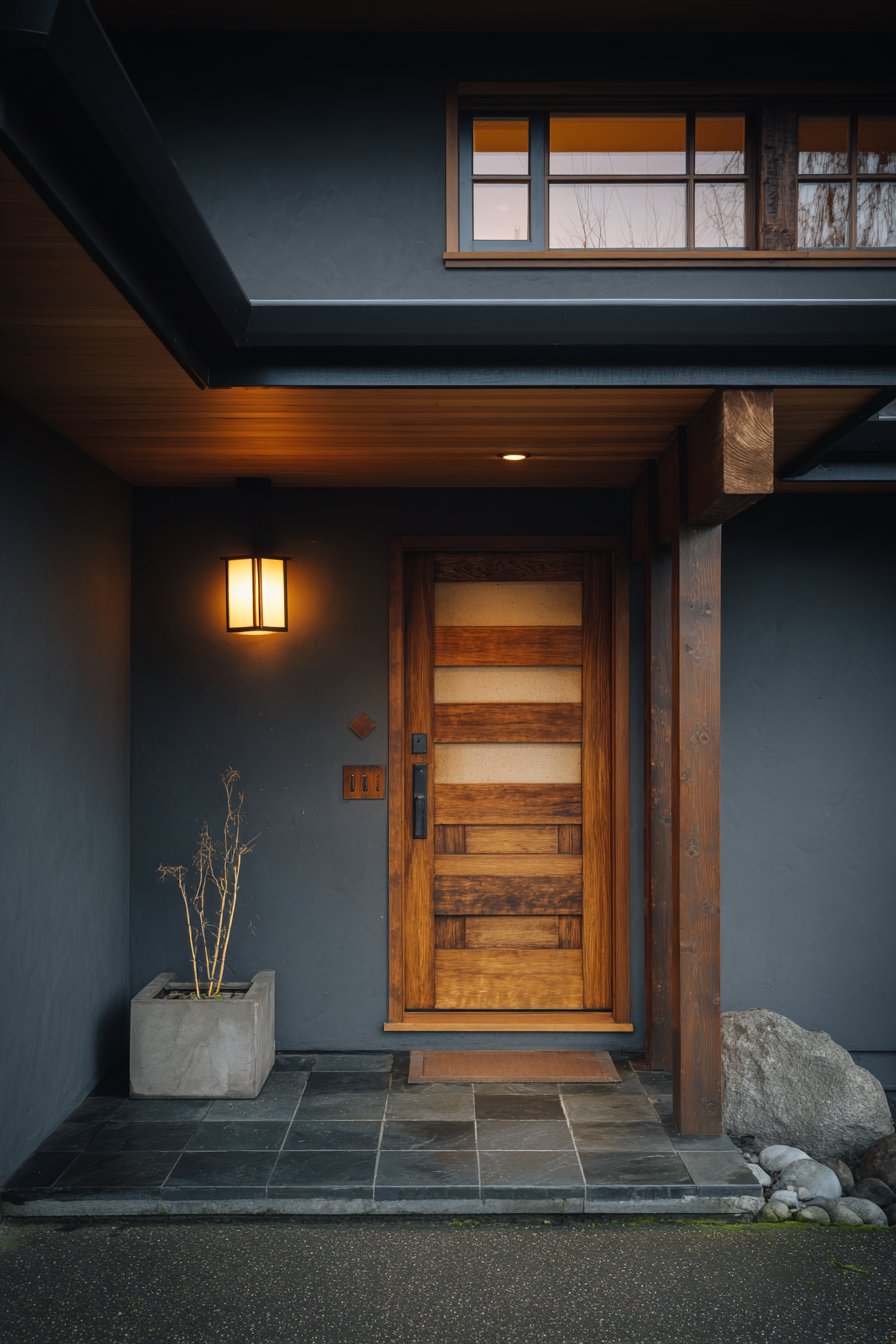
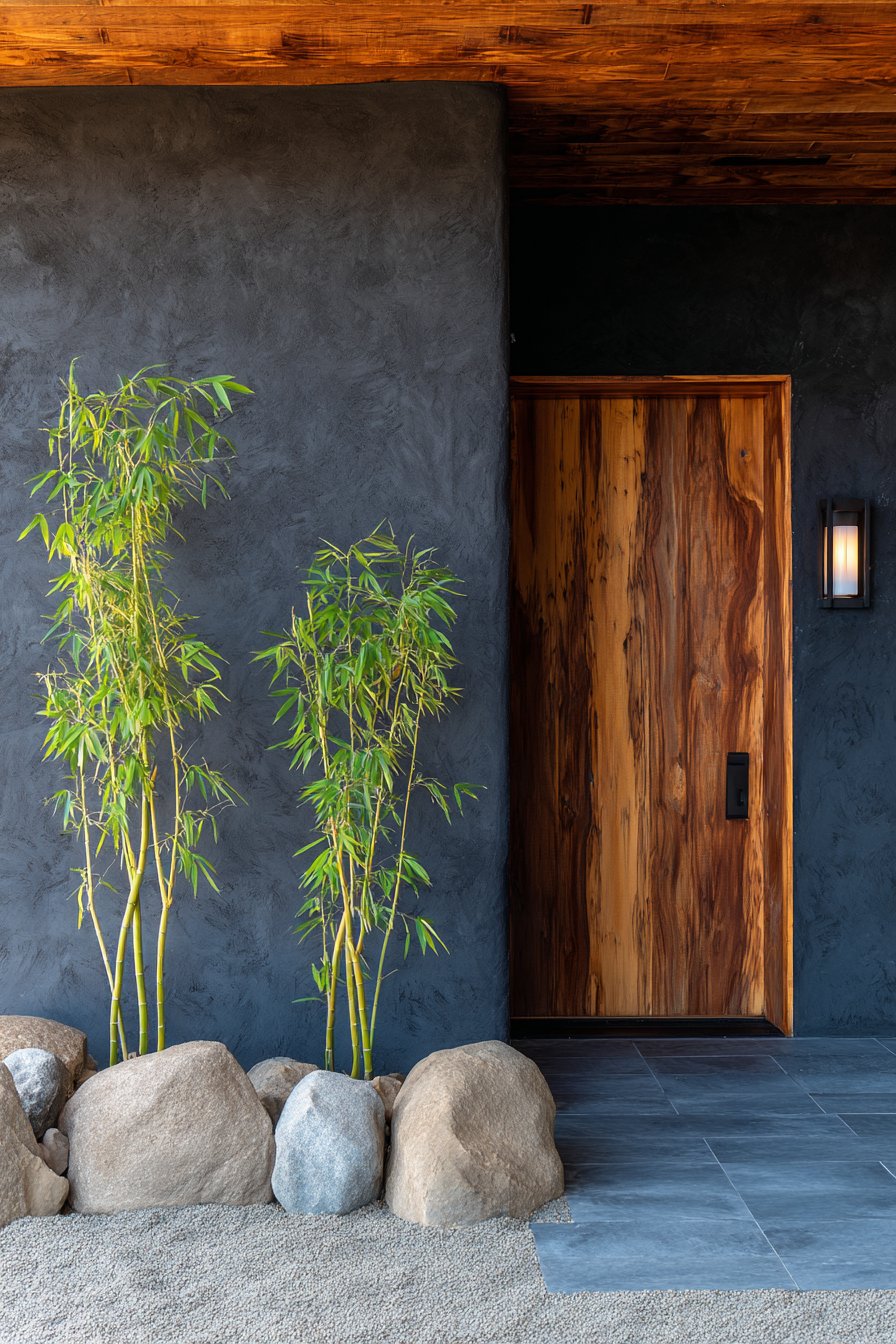
A simple wooden door features horizontal panels in natural cedar finish. Authentic grain patterns and color variations showcase wood’s natural beauty. The entrance sits within dark charcoal stucco and natural wood accents. A small covered genkan area features slate tile in dark grey. Subtle texture adds visual interest without overwhelming the minimal aesthetic.
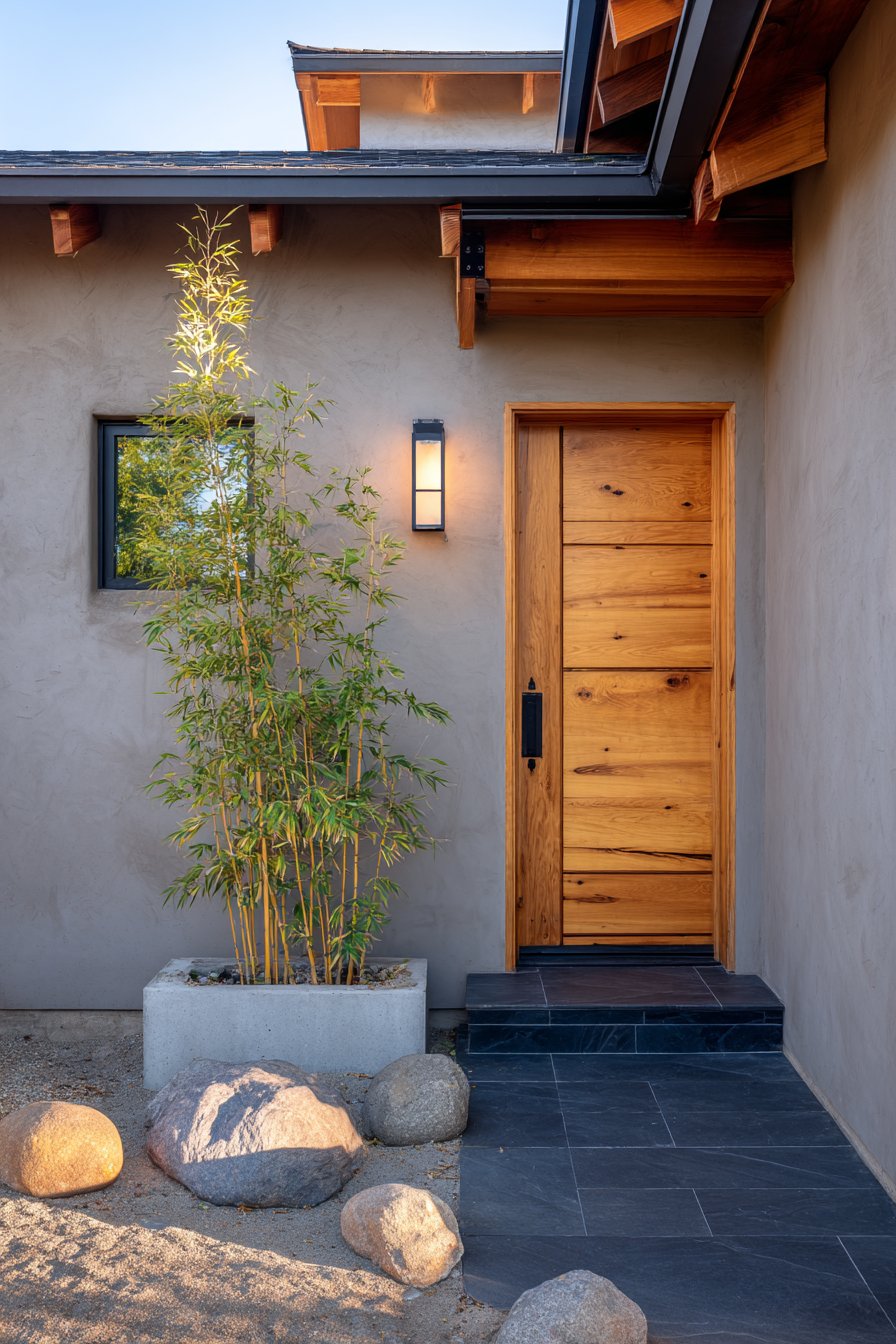
A minimalist wall-mounted light fixture provides soft illumination with geometric simplicity. Bamboo plants in rectangular concrete planter create vertical living elements. Natural river rocks arranged around planting bases add organic texture. The composition demonstrates Japanese design principles of refined simplicity perfectly.
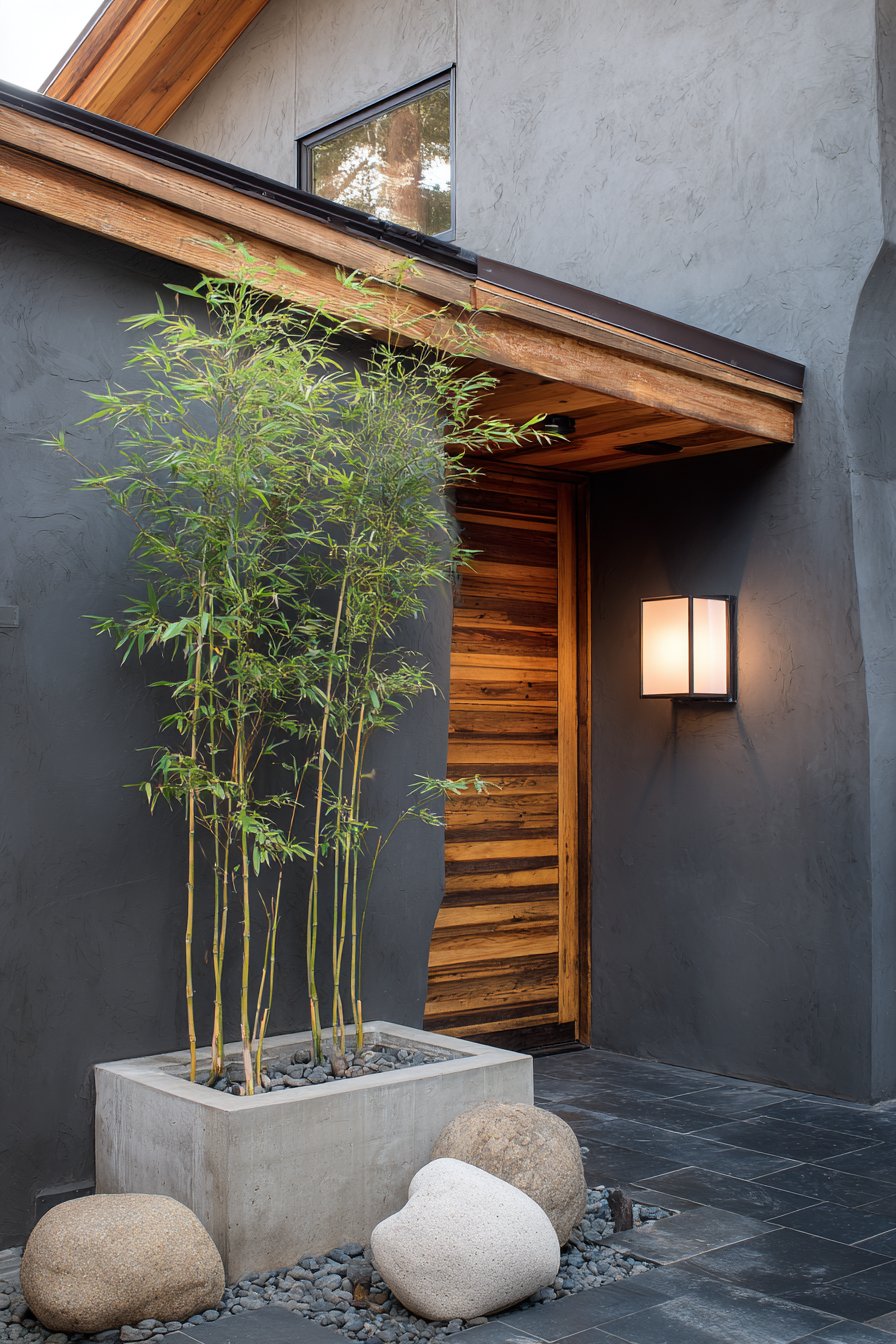
Diffused daylight creates soft even lighting across all surfaces naturally. Gentle illumination emphasizes material honesty and precise detailing throughout. Shadow patterns contribute to spatial harmony and contemplative quality. Every element serves the overall design philosophy without excess.
This entrance demonstrates Japanese architecture’s emphasis on natural materials. The serene contemplative quality invites peaceful entry into the home. Precise detailing shows respect for craftsmanship and material properties. The design celebrates beauty through restraint and careful composition.
Key Design Tips:
- Choose natural cedar finishes showing authentic grain and color
- Use dark charcoal stucco for contemporary Japanese aesthetic
- Select slate tile with subtle texture for genkan flooring
- Install minimal geometric lighting fixtures with simple forms
- Add bamboo plants in simple concrete containers for living elements
- Arrange natural river rocks for organic textural interest
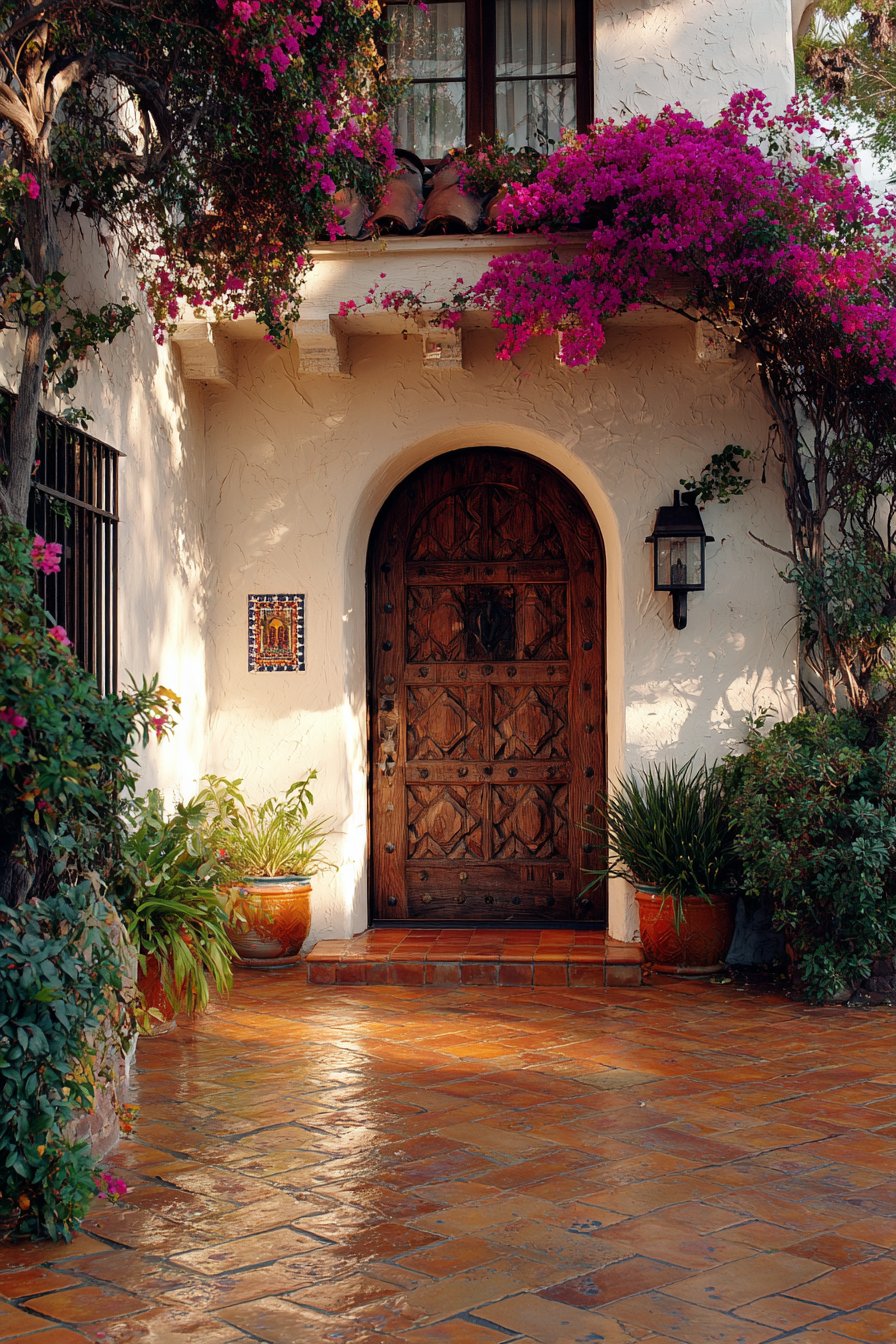
19. Spanish Colonial Hand-Forged Iron
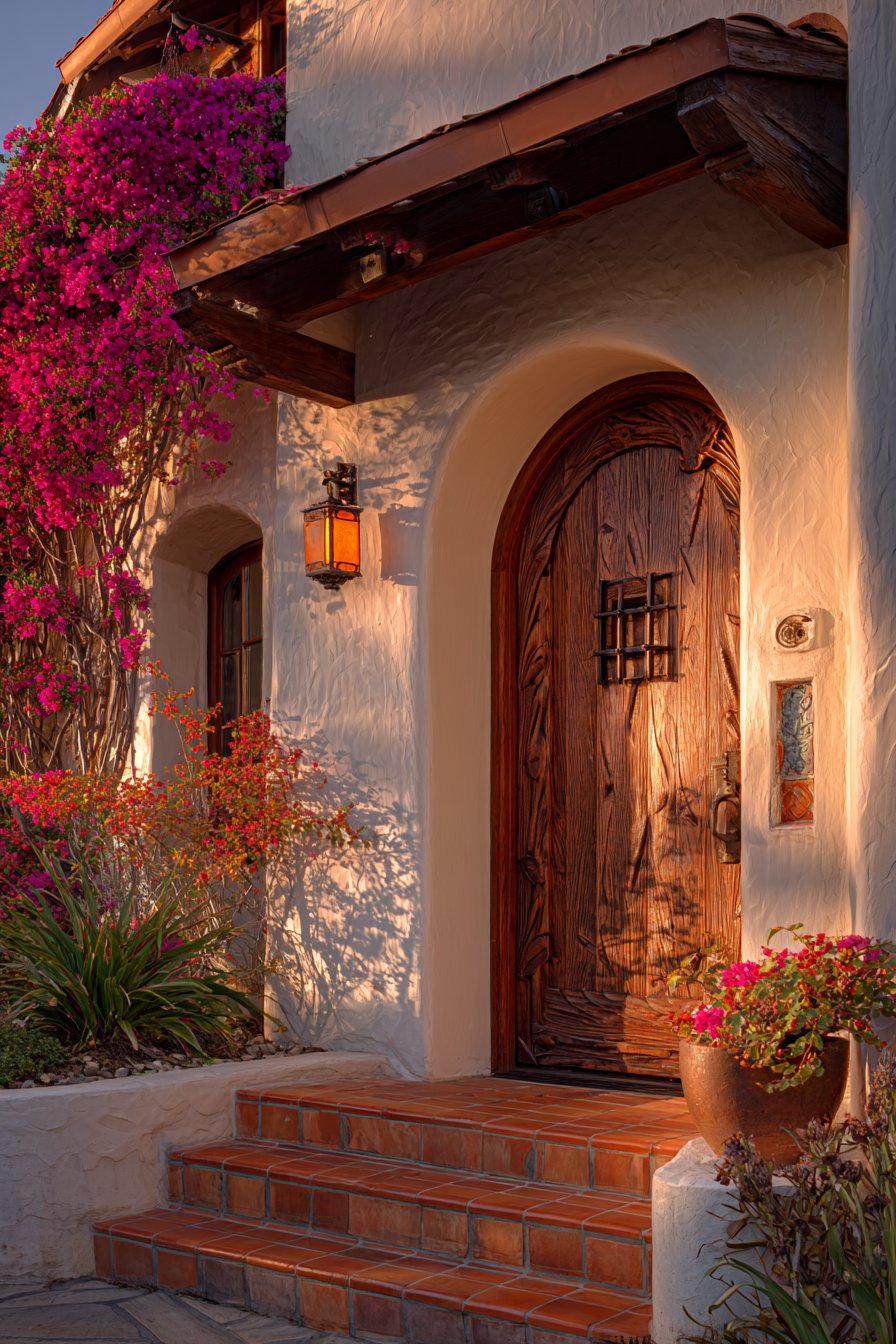
A carved wooden door features geometric patterns with authentic craftsmanship. Original hardware in hand-forged iron displays natural rust patina beautifully. White stucco walls show handmade texture variations adding character. An arched doorway provides classical Spanish colonial architectural form. Saltillo tiles in warm terracotta tones cover the covered entry area.
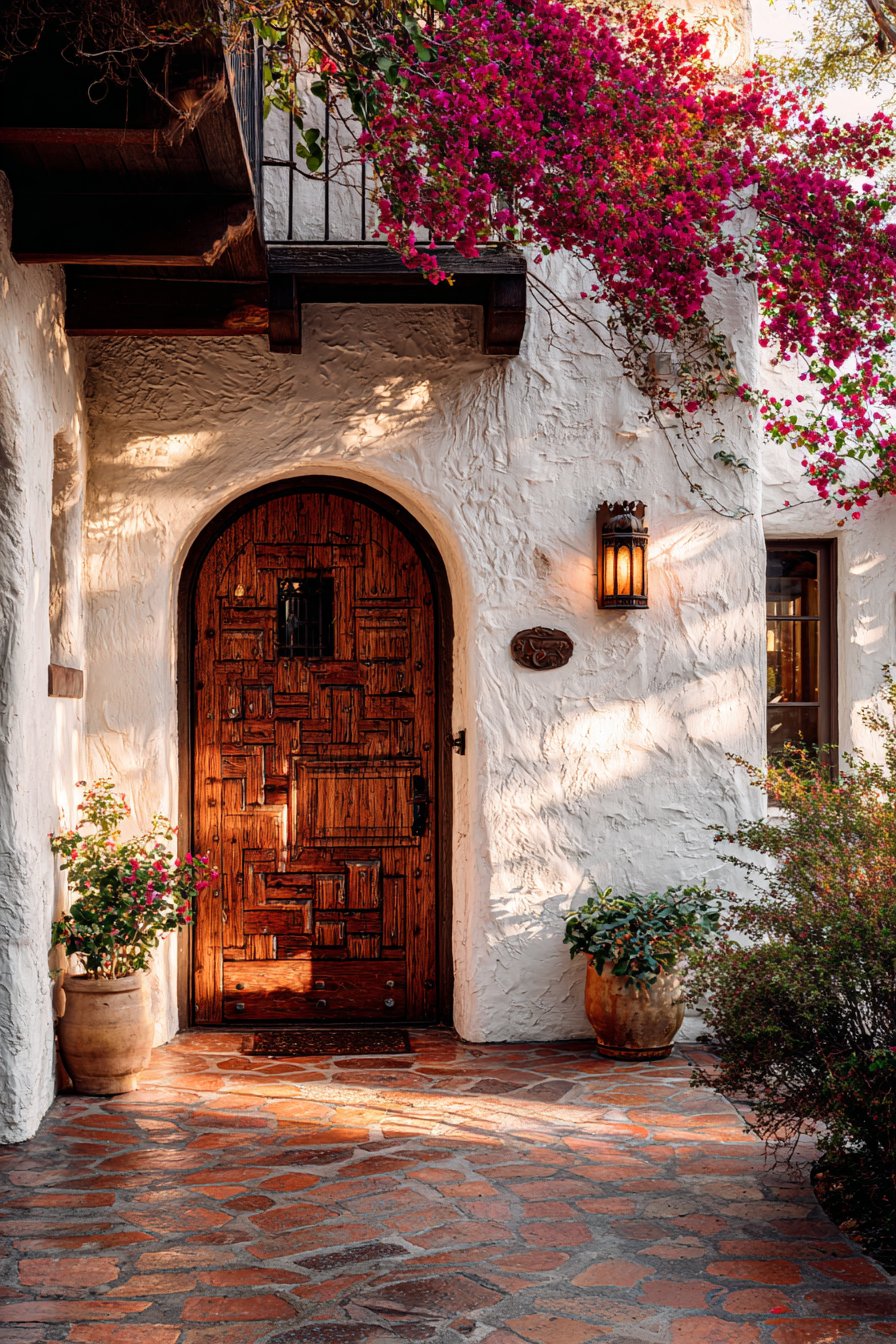
Natural color variations and slight surface irregularities demonstrate authentic tile making. A Spanish-style wall sconce features wrought iron frame with amber glass. The fixture casts warm light appropriate to the Mediterranean aesthetic. Climbing bougainvillea with vibrant magenta blooms cascades naturally over entrance sides. Hand-painted talavera tile house number adds colorful decorative detail.
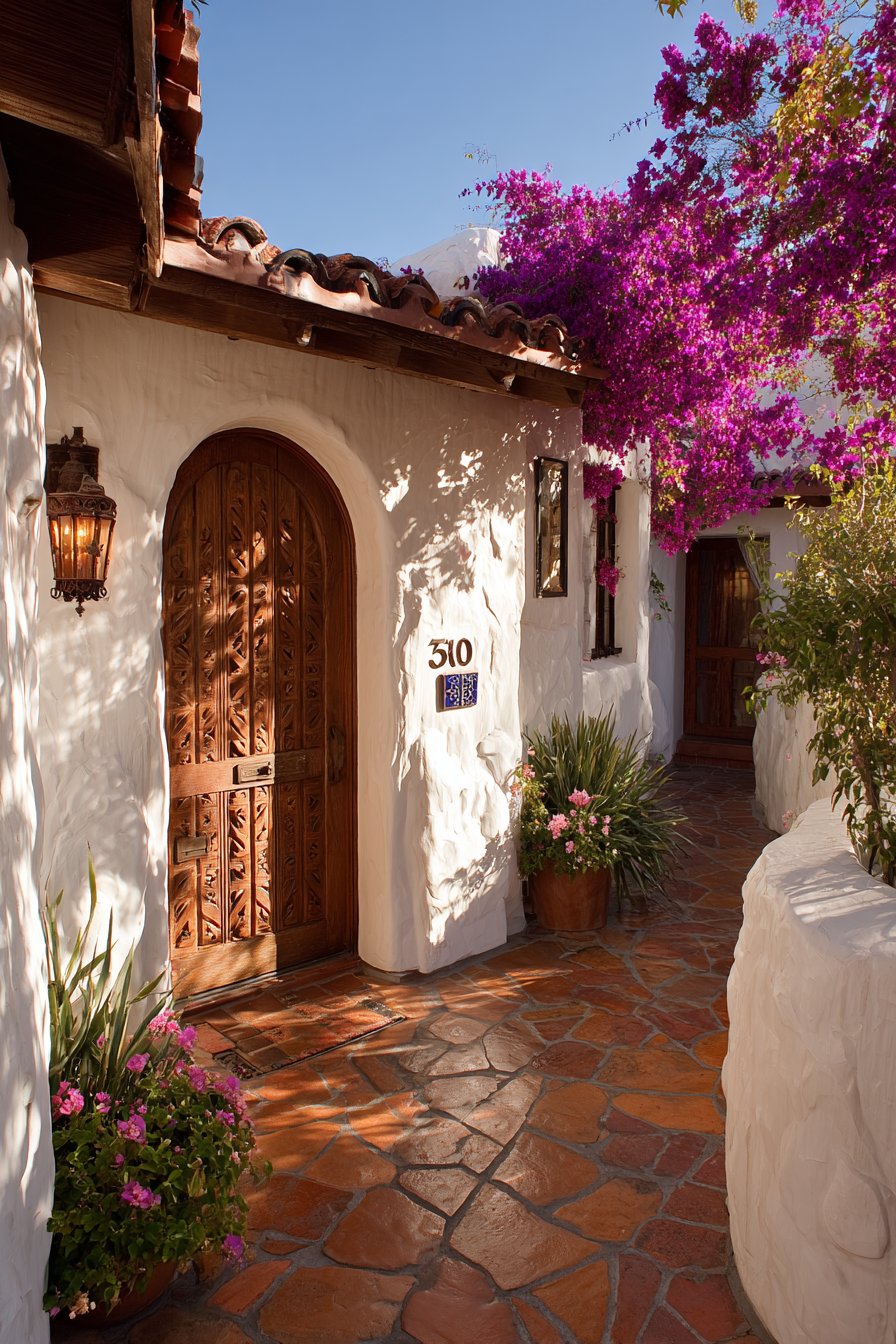
Late afternoon light emphasizes warm Mediterranean color palette throughout. Golden hour illumination highlights stucco texture and tile variations beautifully. Rich shadows add dimensional depth to architectural elements. The authentic Spanish colonial elements create timeless regional character.
This entrance celebrates Spanish colonial architecture’s rich decorative traditions. Hand-crafted details demonstrate respect for traditional artisan methods. Natural materials age beautifully enhancing character over time. The design connects to historical architectural heritage authentically.
Key Design Tips:
- Choose carved doors with geometric patterns showing hand craftsmanship
- Use hand-forged iron hardware with natural rust patina
- Apply white stucco with handmade texture for authentic character
- Incorporate arched doorways for classical Spanish form
- Select saltillo tiles with natural color variations and irregularities
- Add climbing bougainvillea for vibrant Mediterranean color
20. Modern Farmhouse Black and White
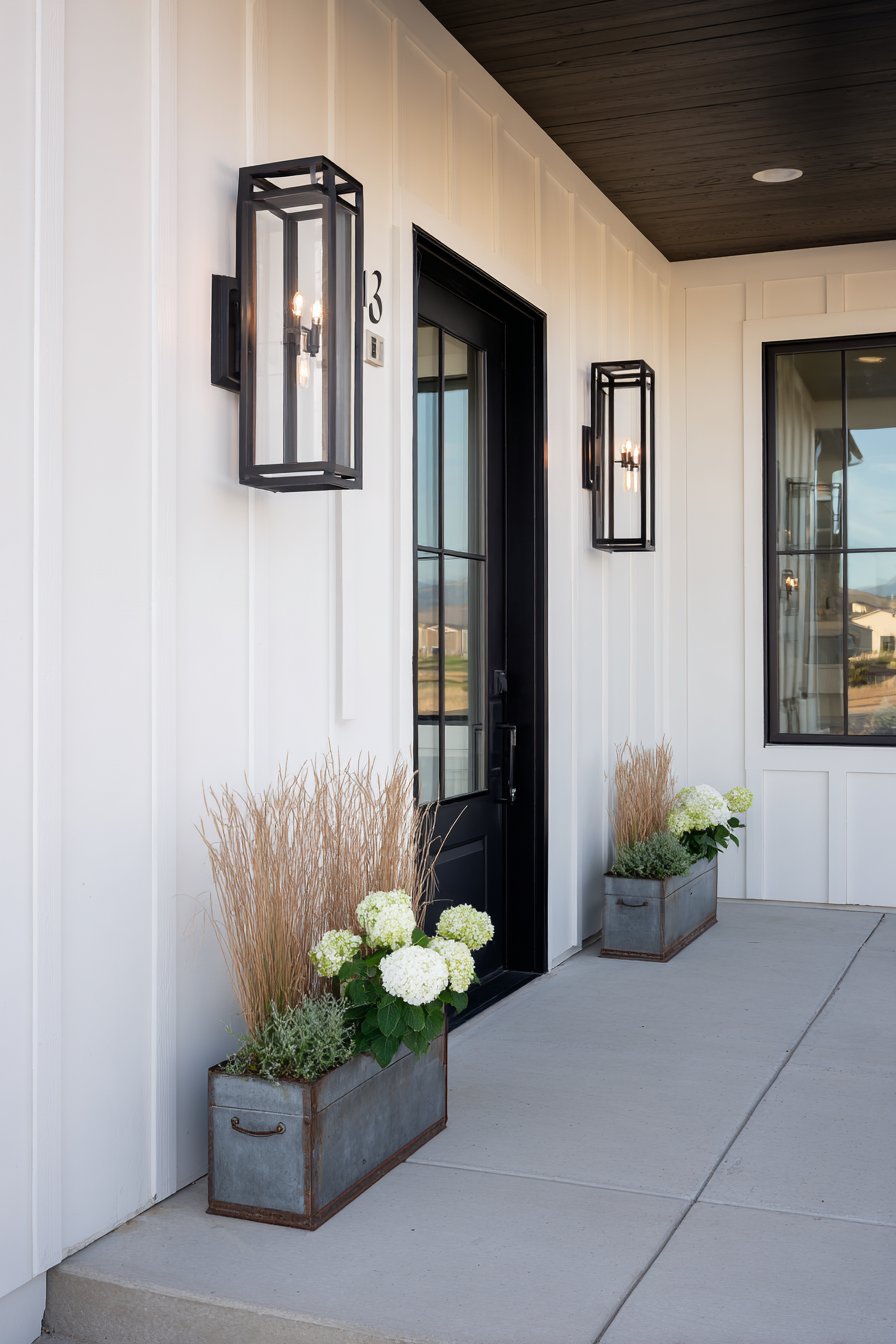
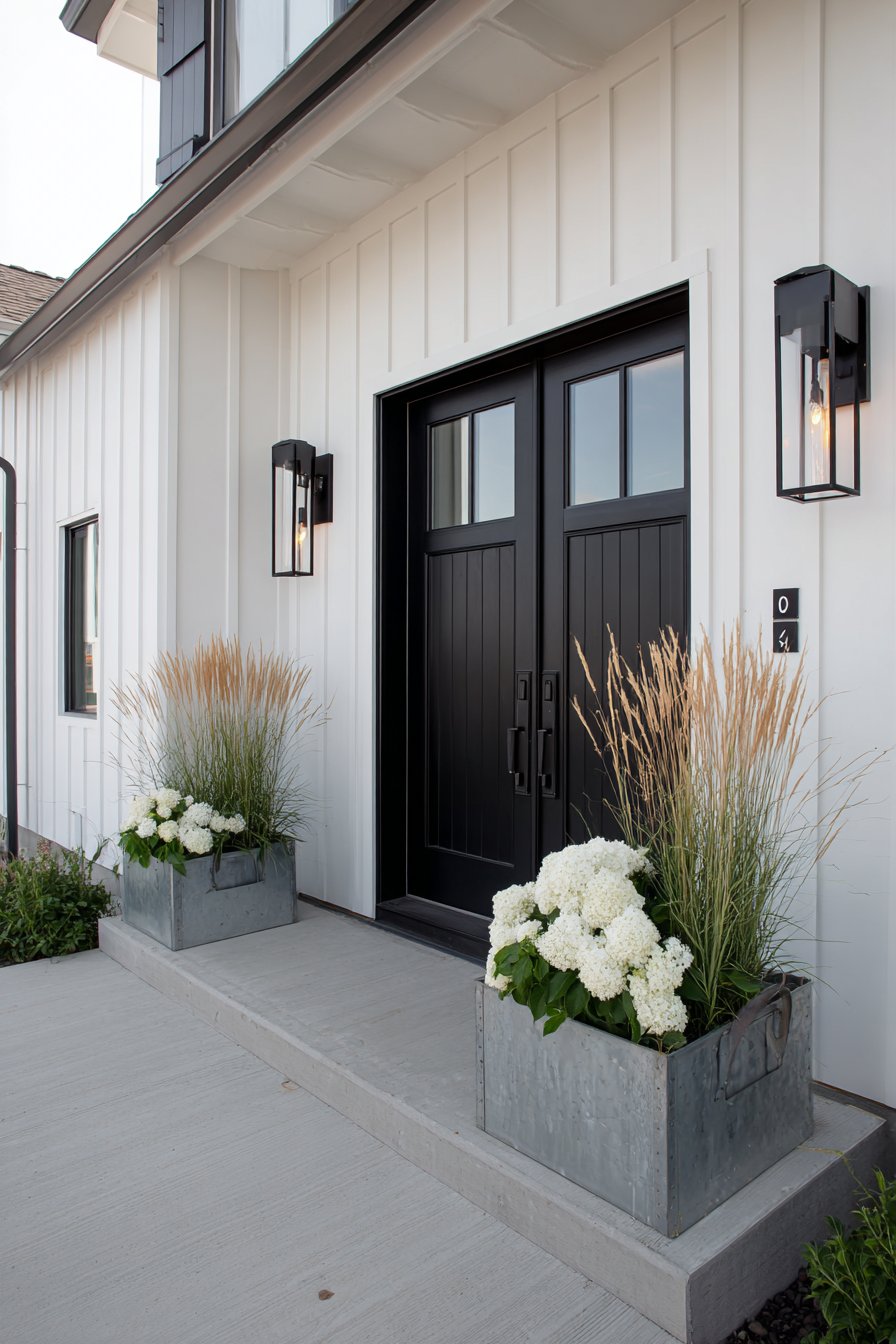
A board and batten door painted crisp black creates graphic contemporary impact. Modern matte black hardware includes substantial handle and house numbers. The entrance sits within vertical white board and batten siding. Visible wood texture and shadow lines between boards add dimensional interest. Black metal and glass lantern fixtures feature clean geometric forms.
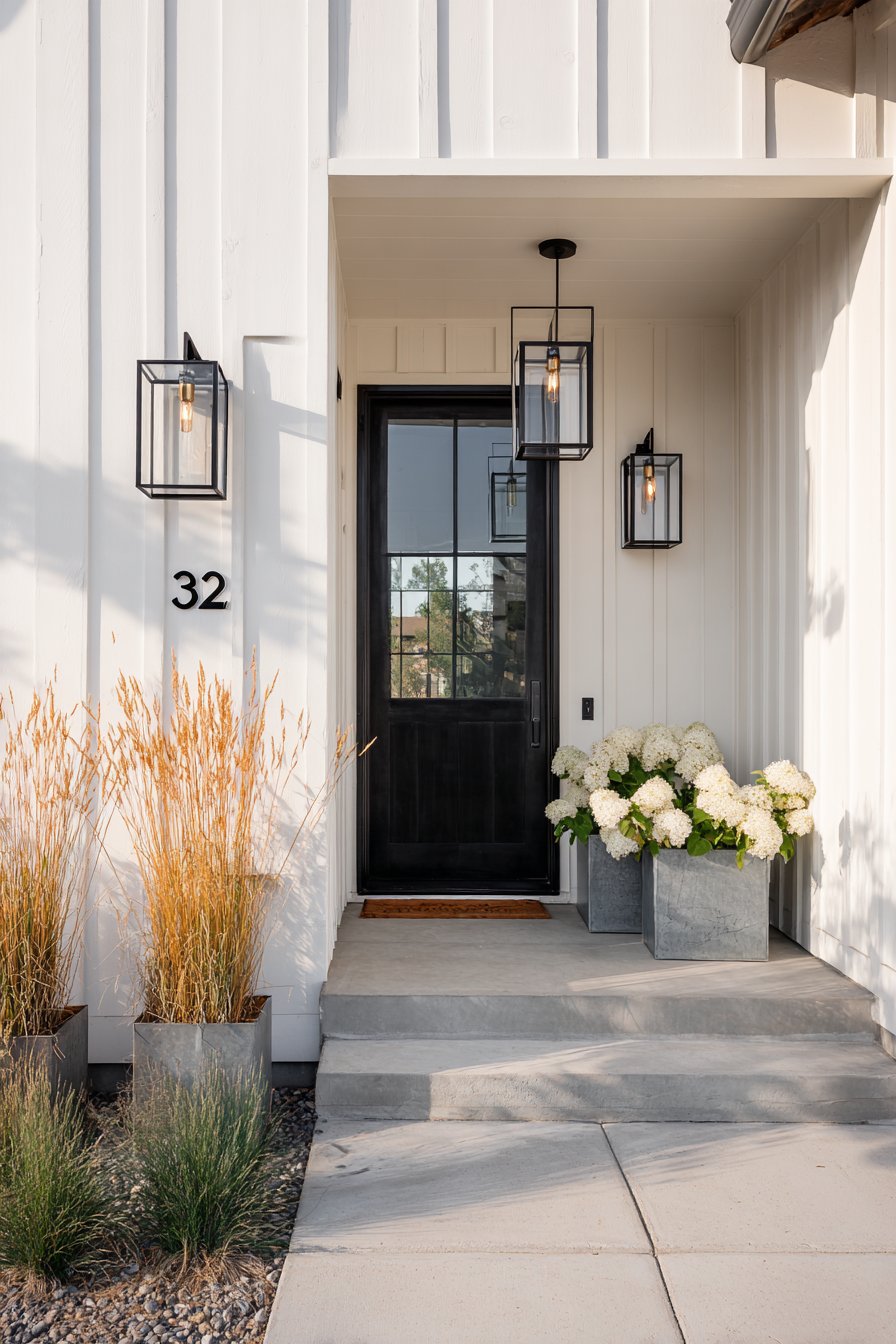
A concrete landing in light grey shows smooth trowel finish with subtle variations. Galvanized metal planters hold wheat-colored ornamental grasses and white hydrangeas. The combination provides seasonal interest and textural softness. A simple black metal boot tray adds practical function near the entrance. The functional element maintains the clean modern aesthetic perfectly.
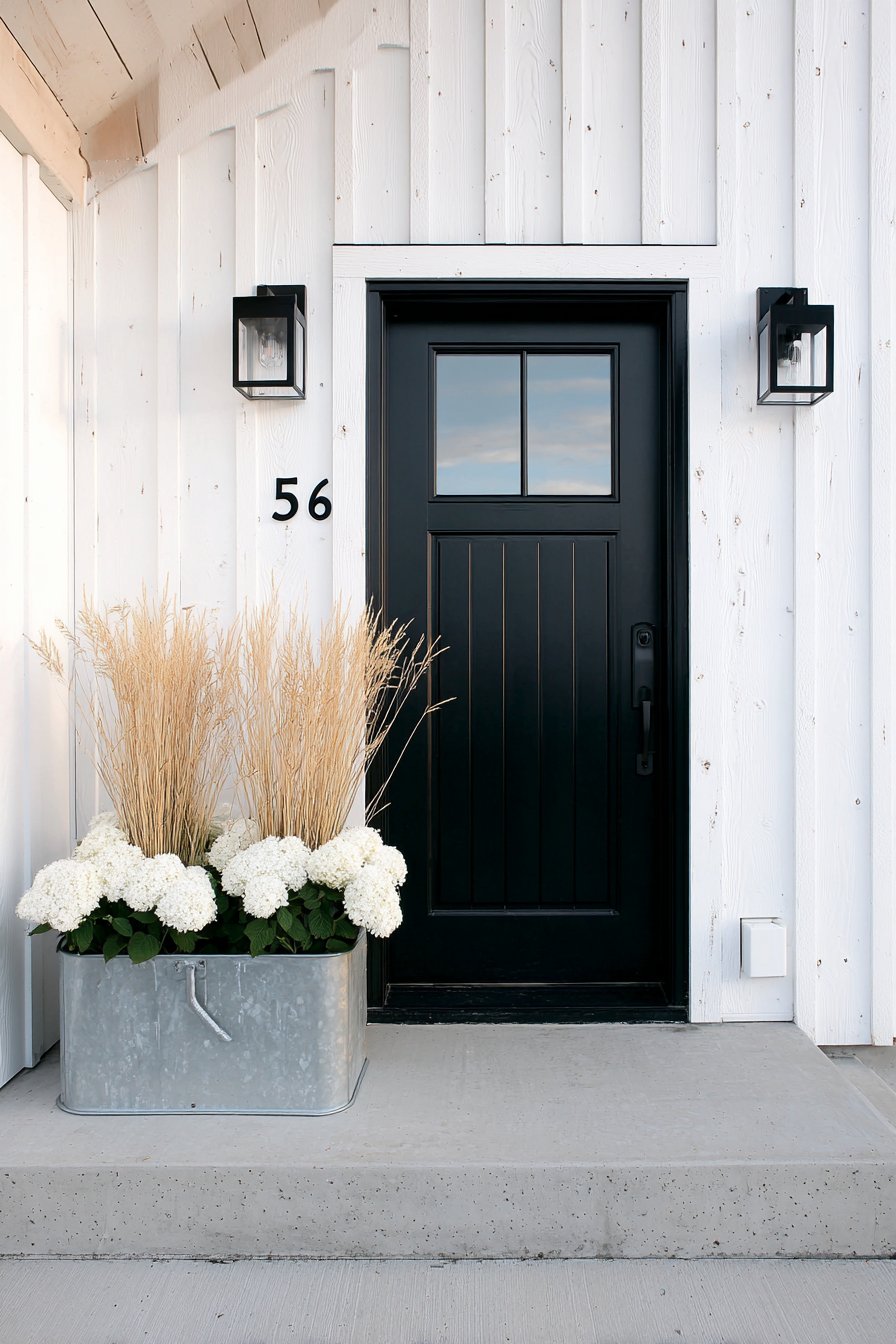
Morning light creates balanced exposure highlighting black and white contrast. Natural illumination emphasizes the graphic quality of the contemporary farmhouse style. Clean material applications update traditional farmhouse elements successfully. The design demonstrates how classic rural architecture translates to modern contexts.
This entrance captures the essence of modern farmhouse design philosophy. Traditional forms receive contemporary material treatments throughout the composition. The bold black and white contrast creates immediate visual impact. Practical functionality combines with aesthetic sophistication in every detail.
Key Design Tips:
- Paint board and batten doors in crisp black for graphic contrast
- Use matte black hardware with contemporary styling and proportions
- Install vertical board and batten siding in clean white paint
- Choose geometric lantern fixtures in black metal and clear glass
- Select galvanized metal planters for modern farmhouse authenticity
- Add practical elements like boot trays that maintain design aesthetic
Why These Outside Entrance Designs Are the Best
These entrance designs represent exceptional approaches to creating memorable first impressions through thoughtful material selection and architectural composition. Each concept demonstrates how authentic materials age gracefully while maintaining structural integrity and visual appeal. The variety of styles showcases versatility that accommodates different architectural contexts and personal aesthetic preferences.
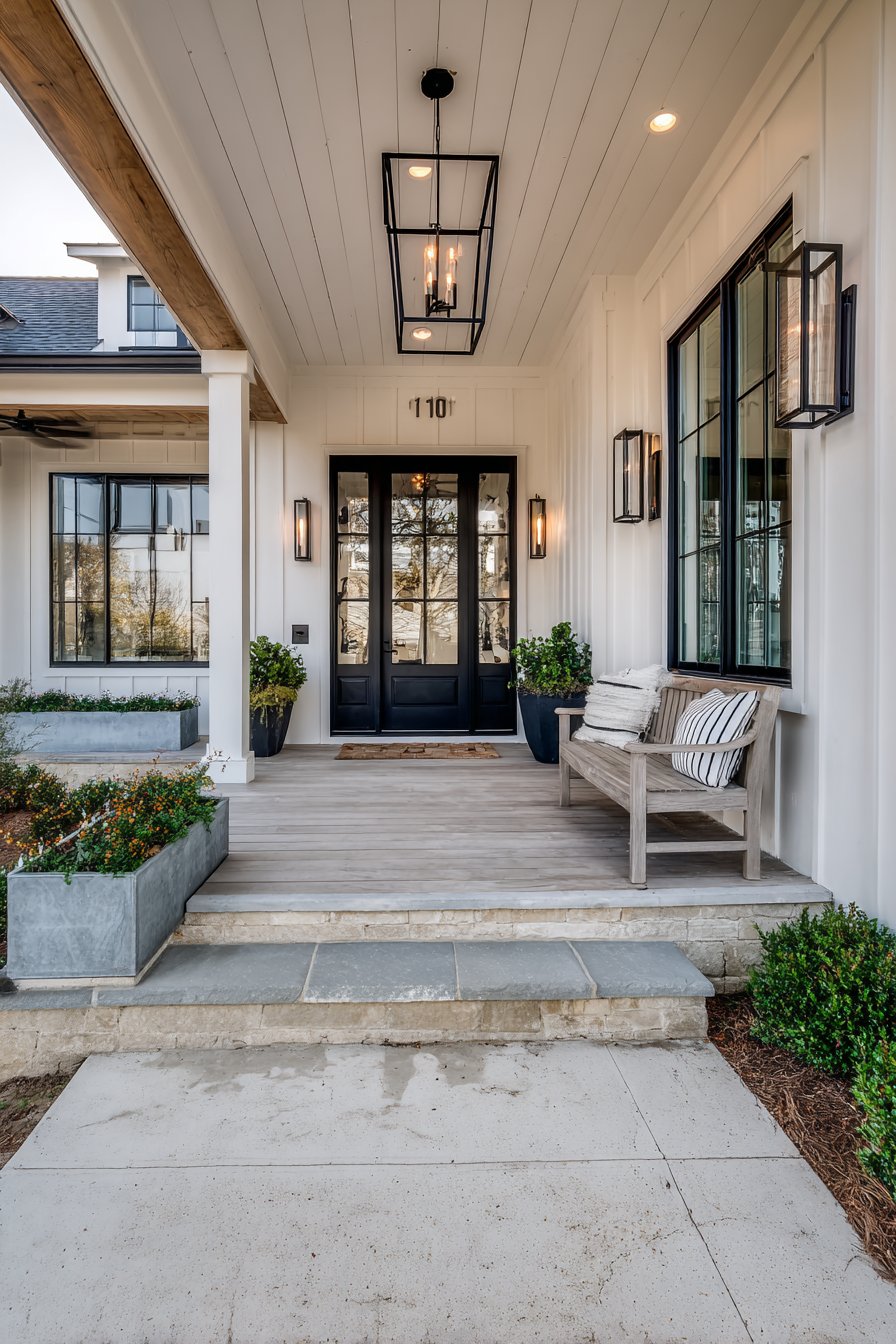
Traditional designs like colonial and Victorian entrances prove that historical accuracy creates timeless beauty. These approaches honor craftsmanship traditions while remaining completely functional for contemporary living. The use of solid wood, authentic brick, and quality hardware ensures longevity that justifies initial investment. Material choices that develop beautiful patina transform aging from deterioration into enhancement.
Contemporary and minimalist designs demonstrate that restraint creates powerful architectural statements. Clean lines and limited material palettes focus attention on quality finishes and precise detailing. Modern entrances utilize industrial materials like concrete and steel alongside natural wood for sophisticated contrasts. These combinations prove that contemporary design respects material honesty and authentic expression.
Regional styles including Mediterranean, Spanish colonial, and coastal designs, show how architecture responds to specific climates and cultural traditions. Material selections reflect practical considerations like weather resistance and thermal performance. The incorporation of regional plants and locally appropriate finishes creates designs that feel connected to place. This contextual sensitivity ensures designs remain appropriate to their locations.
The integration of functional elements with aesthetic considerations throughout these designs demonstrates comprehensive thinking. Lighting serves both practical safety needs and architectural drama. Plantings provide seasonal interest while softening hard architectural surfaces. Storage elements and seating add convenience without compromising visual impact. This balance between beauty and utility defines successful entrance design.
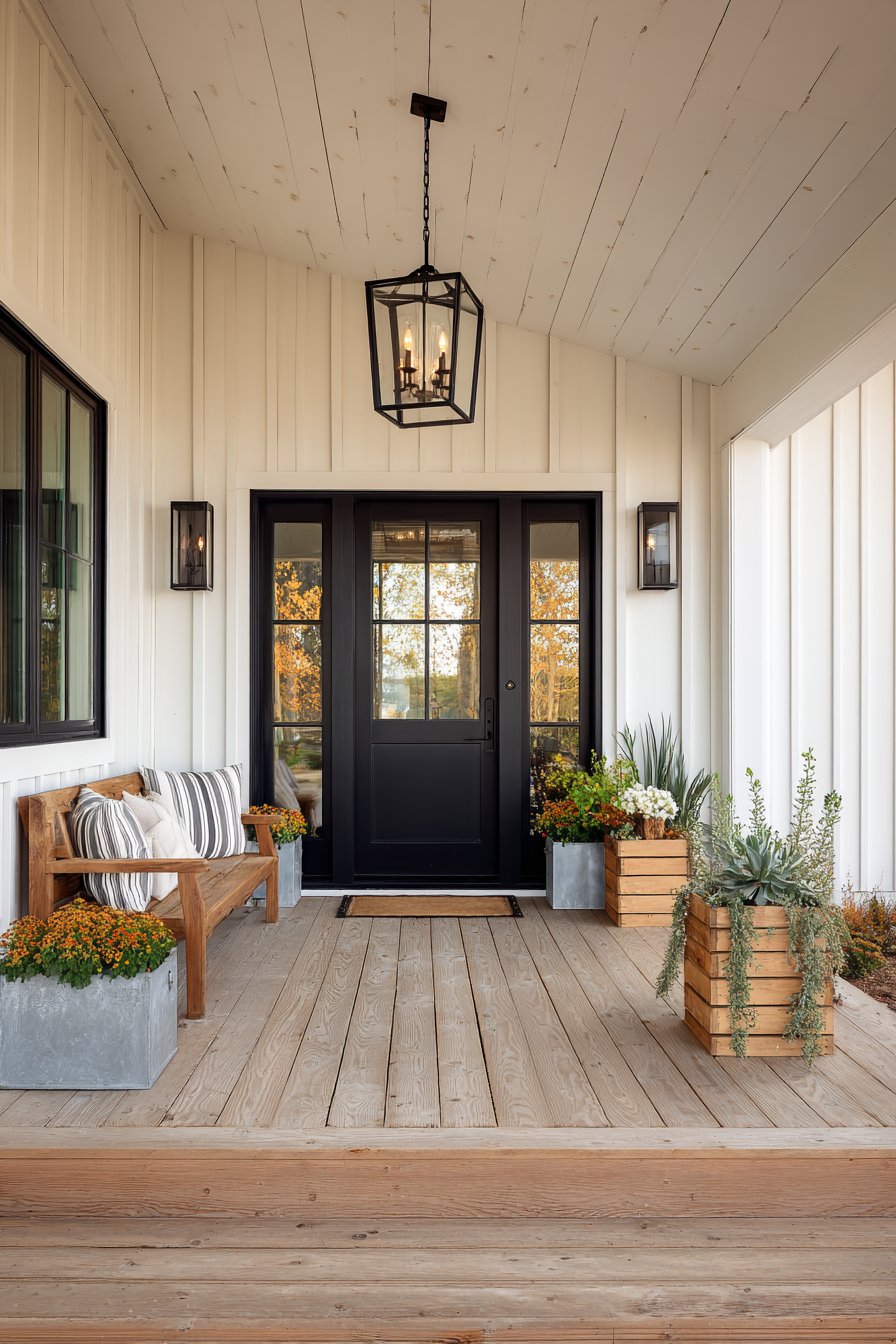
Sustainability emerges naturally through quality material choices that eliminate frequent replacement needs. Solid wood, natural stone, and authentic metals outlast synthetic alternatives significantly. Proper maintenance extends material life while developing attractive aging characteristics. The investment in quality creates both economic and environmental benefits over time. These designs prove that lasting beauty requires appropriate material selection from the beginning.
Conclusion
These twenty entrance designs demonstrate that first impressions stem from authentic material choices and thoughtful composition. The key takeaways include the importance of selecting materials that age gracefully, incorporating appropriate lighting for both function and atmosphere, and respecting architectural style through consistent detailing. Whether traditional or contemporary, successful entrances balance aesthetic appeal with practical functionality through comprehensive design thinking.
The variety of styles presented offers inspiration for diverse architectural contexts and personal preferences. Quality craftsmanship and honest materials create entrances that welcome rather than intimidate. Start your entrance transformation by identifying your preferred style direction and prioritizing authentic materials over synthetic alternatives. Your home’s first chapter deserves the investment in lasting beauty and genuine craftsmanship that these designs exemplify.