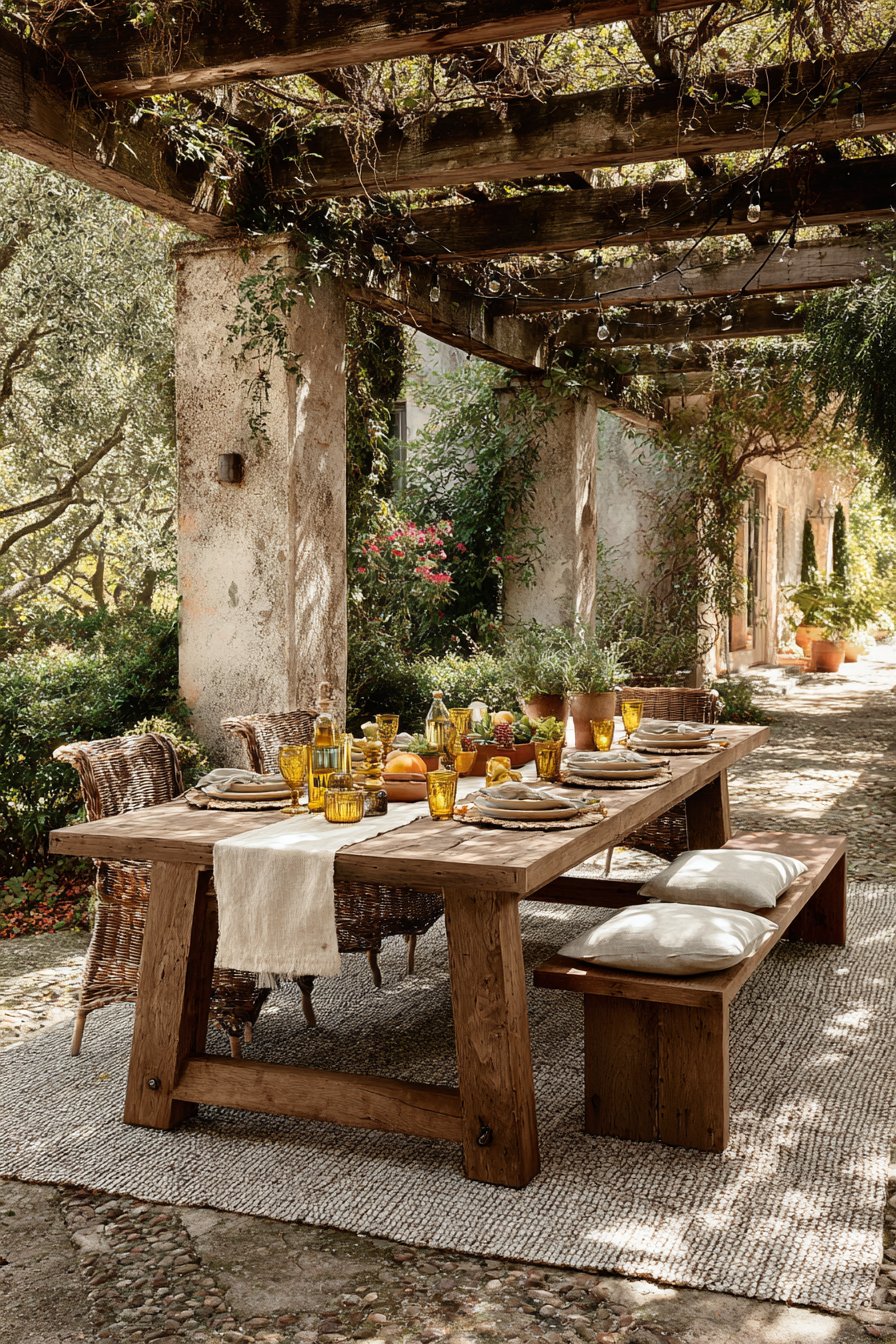


Creating an inviting outdoor dining space transforms your patio, deck, or garden into an extension of your home. Thoughtful table decor elevates simple meals into memorable experiences. The right combination of materials, colors, and accessories turns ordinary outdoor furniture into extraordinary gathering places.
Outdoor table decor encompasses far more than simply moving indoor dinnerware outside. It requires understanding how natural elements interact with design choices. Weather-resistant materials, strategic lighting, and nature-inspired accents work together harmoniously. These elements create spaces that feel both polished and relaxed.
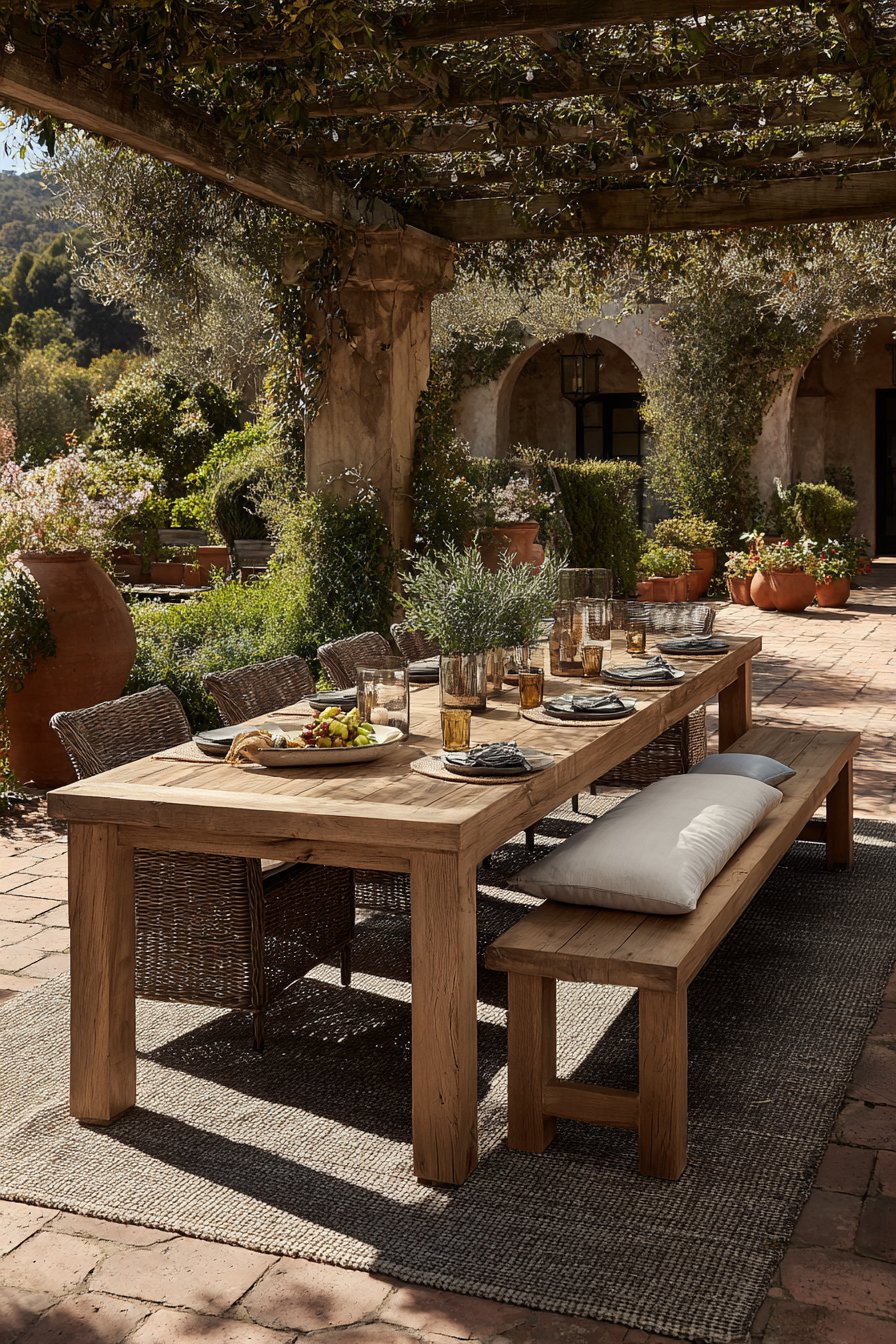
This comprehensive guide explores twenty distinctive outdoor table decor approaches. Each style offers unique character and practical solutions for alfresco entertaining. From rustic farmhouse charm to sophisticated minimalism, these concepts demonstrate versatility across different aesthetic preferences. Whether you’re planning casual family dinners or elegant evening gatherings, these designs provide inspiration for every occasion.
1. Rustic Farmhouse Garden Dining
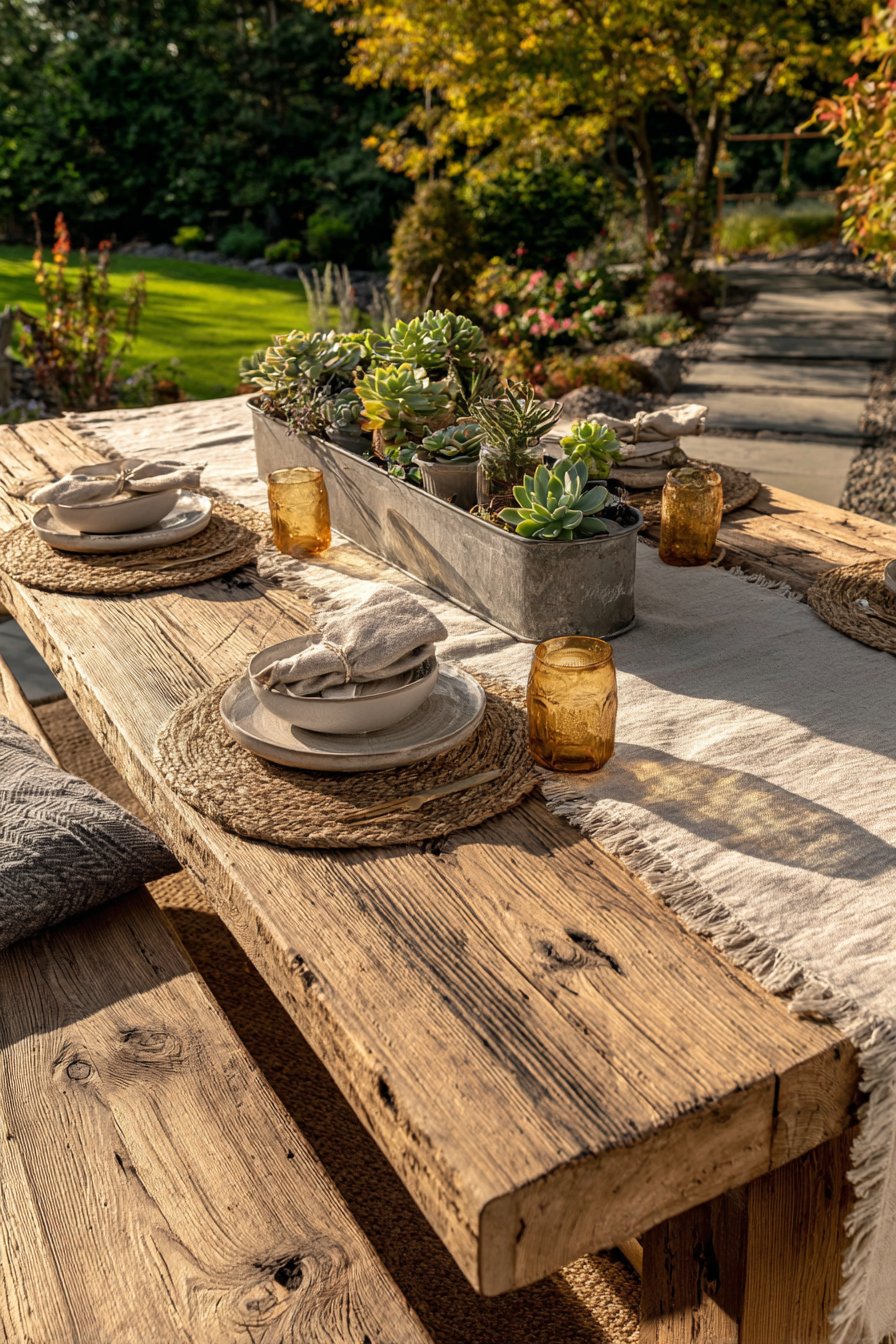
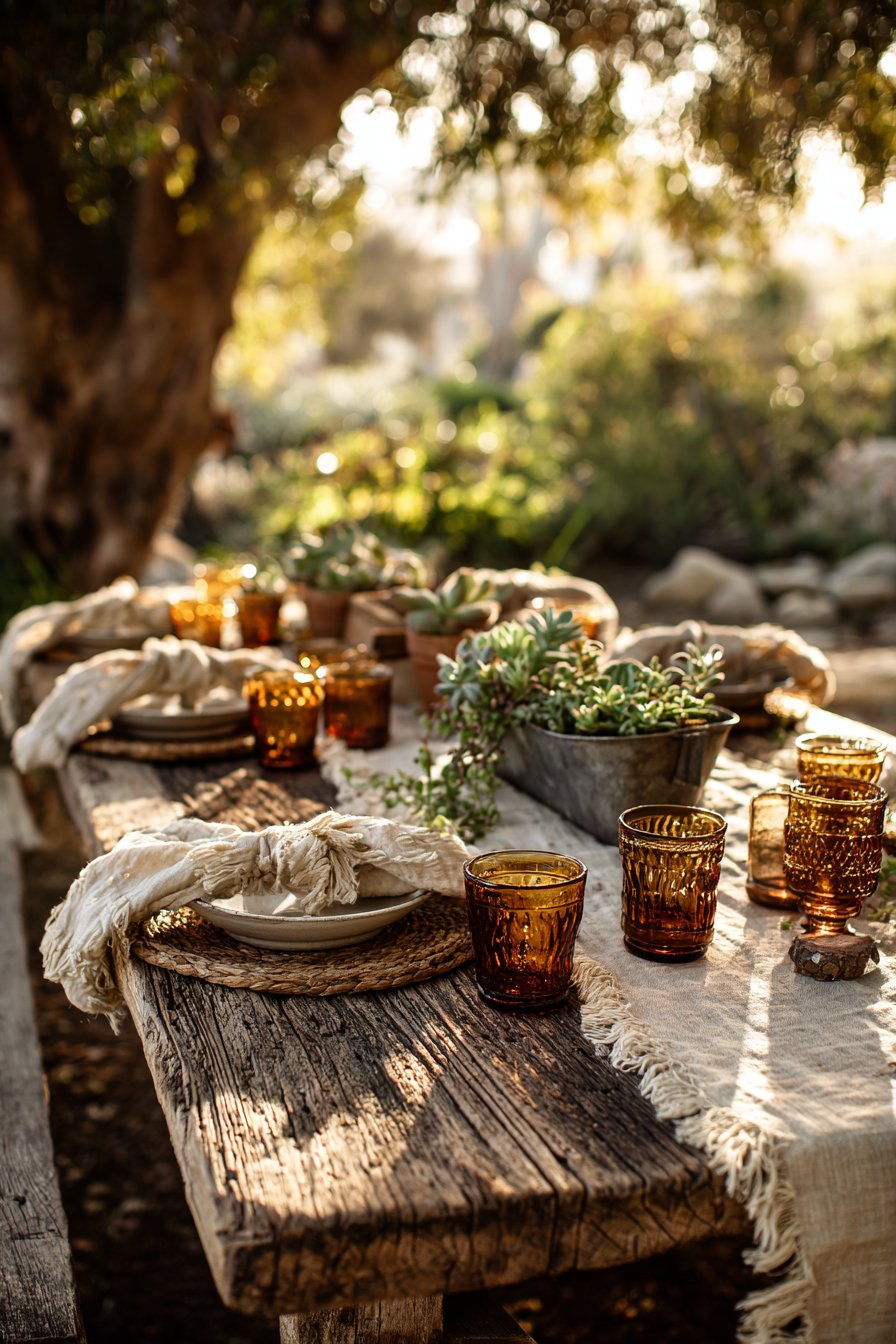
Picture a weathered teak wood table displaying authentic patina and natural grain variations. The surface tells stories through gentle wear patterns. Golden hour sunlight filters through nearby tree foliage. Dappled shadows dance across the table surface creating ever-changing patterns.
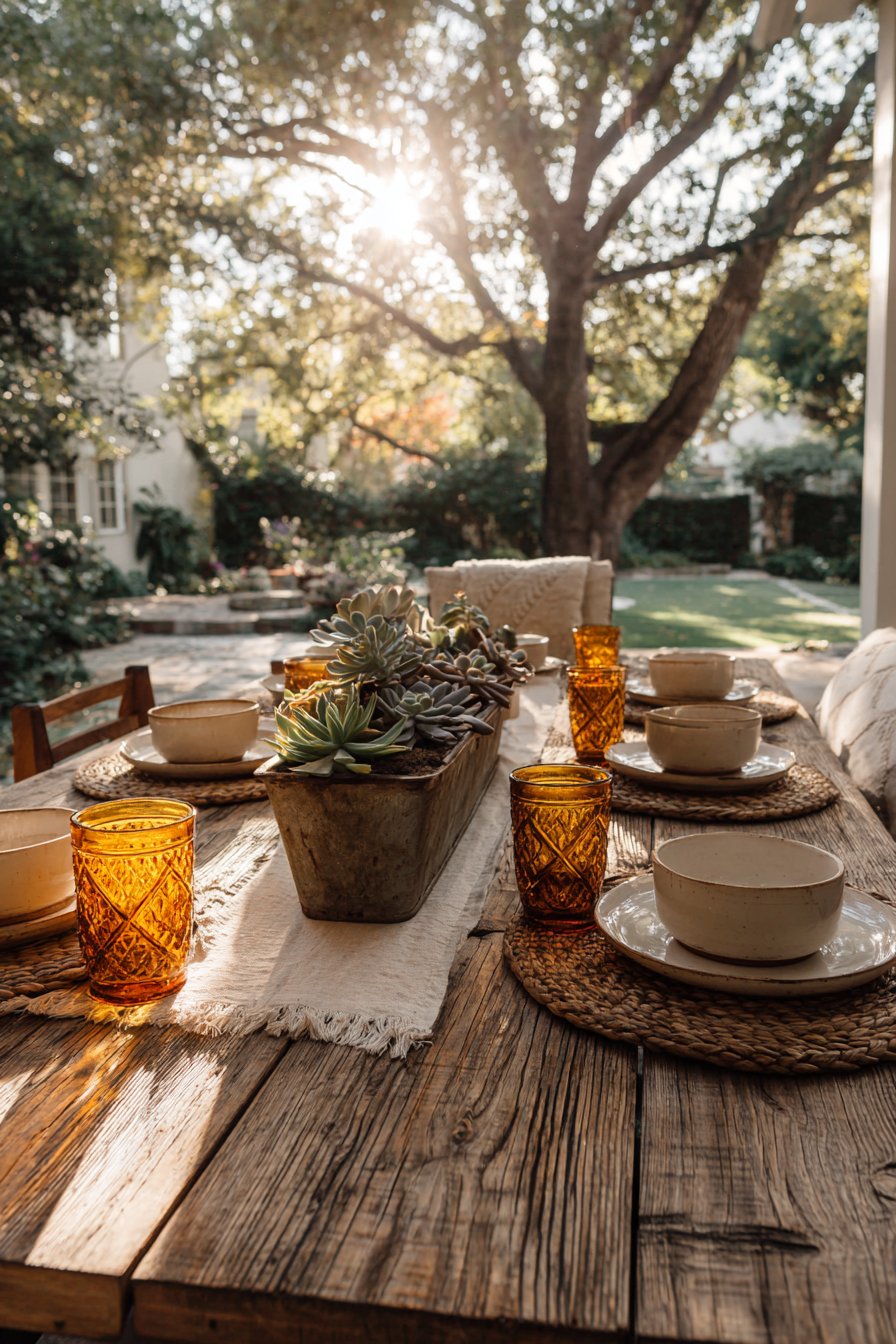
A galvanized metal trough serves as the centerpiece foundation. Potted succulents and trailing greenery overflow with organic abundance. The cream-colored linen runner features subtle fraying at edges. This intentional imperfection adds authentic farmhouse character. Simple white ceramic dinnerware creates clean contrast against natural textures.
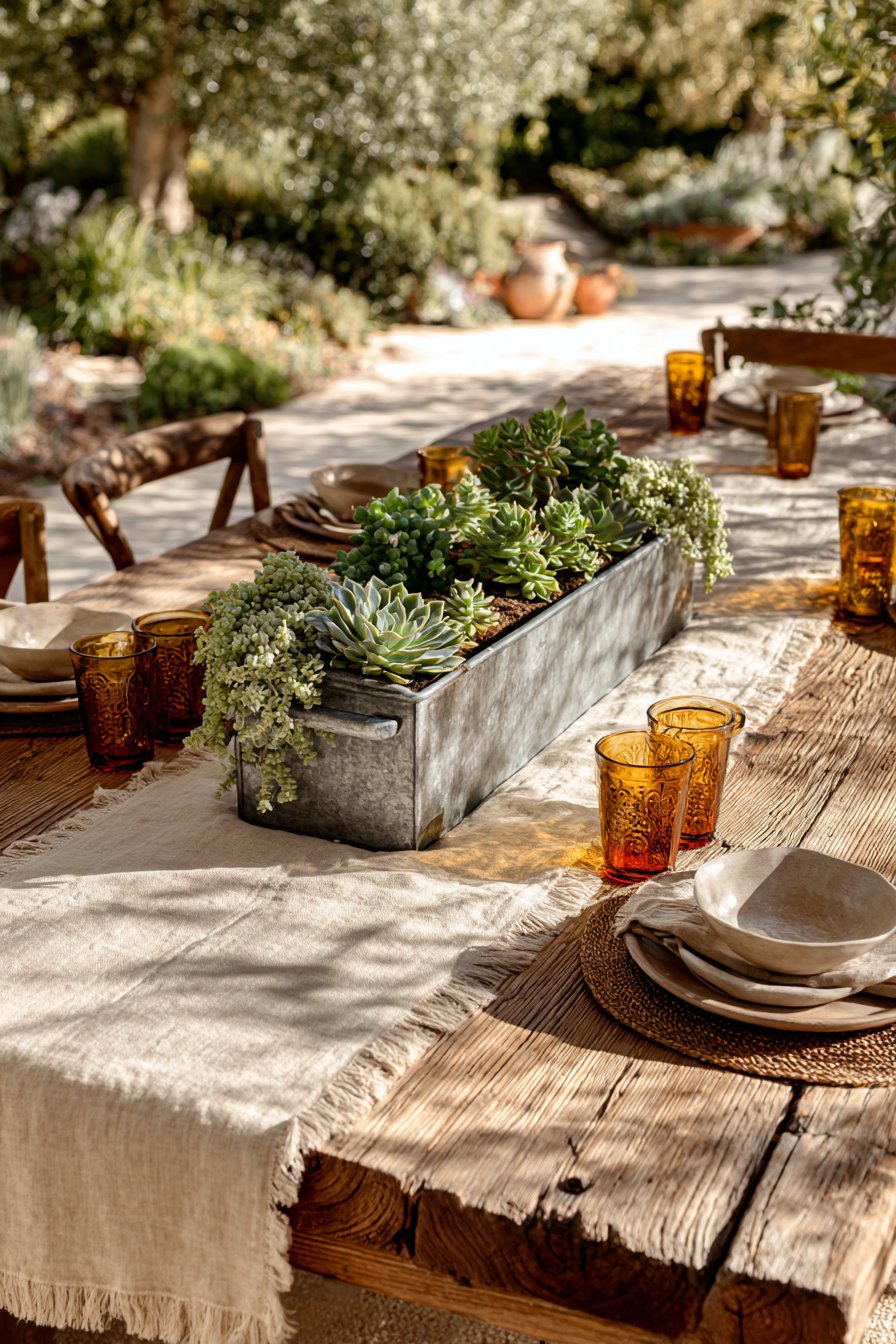
Amber glass tumblers catch and reflect warm afternoon light beautifully. Natural fiber placemats complement the organic aesthetic perfectly. The complete setting evokes countryside charm without feeling overly styled. Every element appears thoughtfully chosen yet effortlessly arranged.
The background garden setting remains softly focused. This maintains emphasis on the carefully curated table arrangement. Wide-angle photography captures texture details and material variations. The rustic approach celebrates authenticity over perfection.
Key Design Tips:
- Select weathered wood furniture that showcases natural patina and character
- Use galvanized metal containers for durable, farmhouse-appropriate planters
- Choose cream or natural linen textiles with visible texture and slight imperfections
- Incorporate trailing plants like string of pearls or ivy for organic movement
- Keep dinnerware simple and white to balance rustic elements
- Position the table where dappled natural light creates interesting shadow patterns
2. Contemporary Concrete and Herb Garden
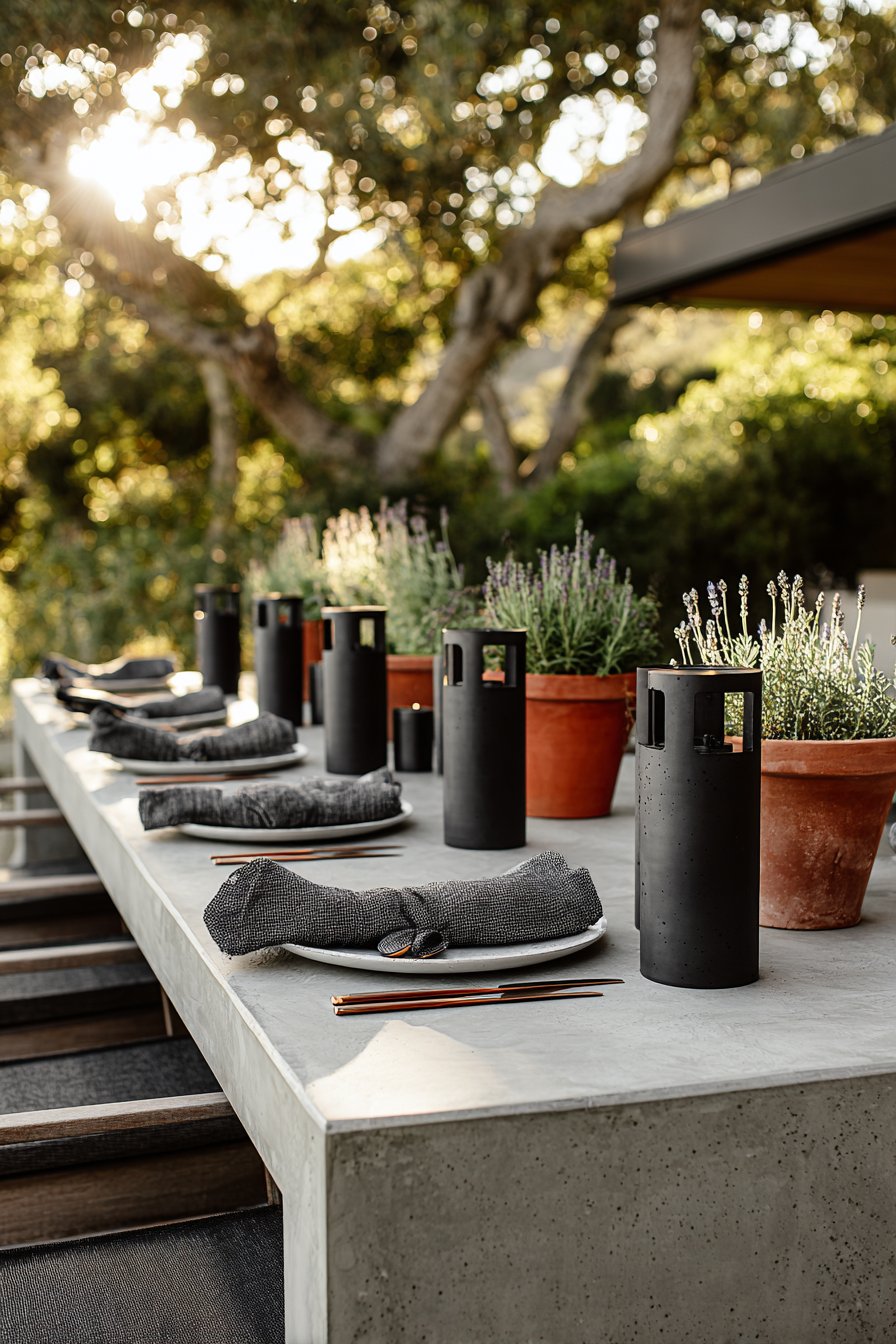
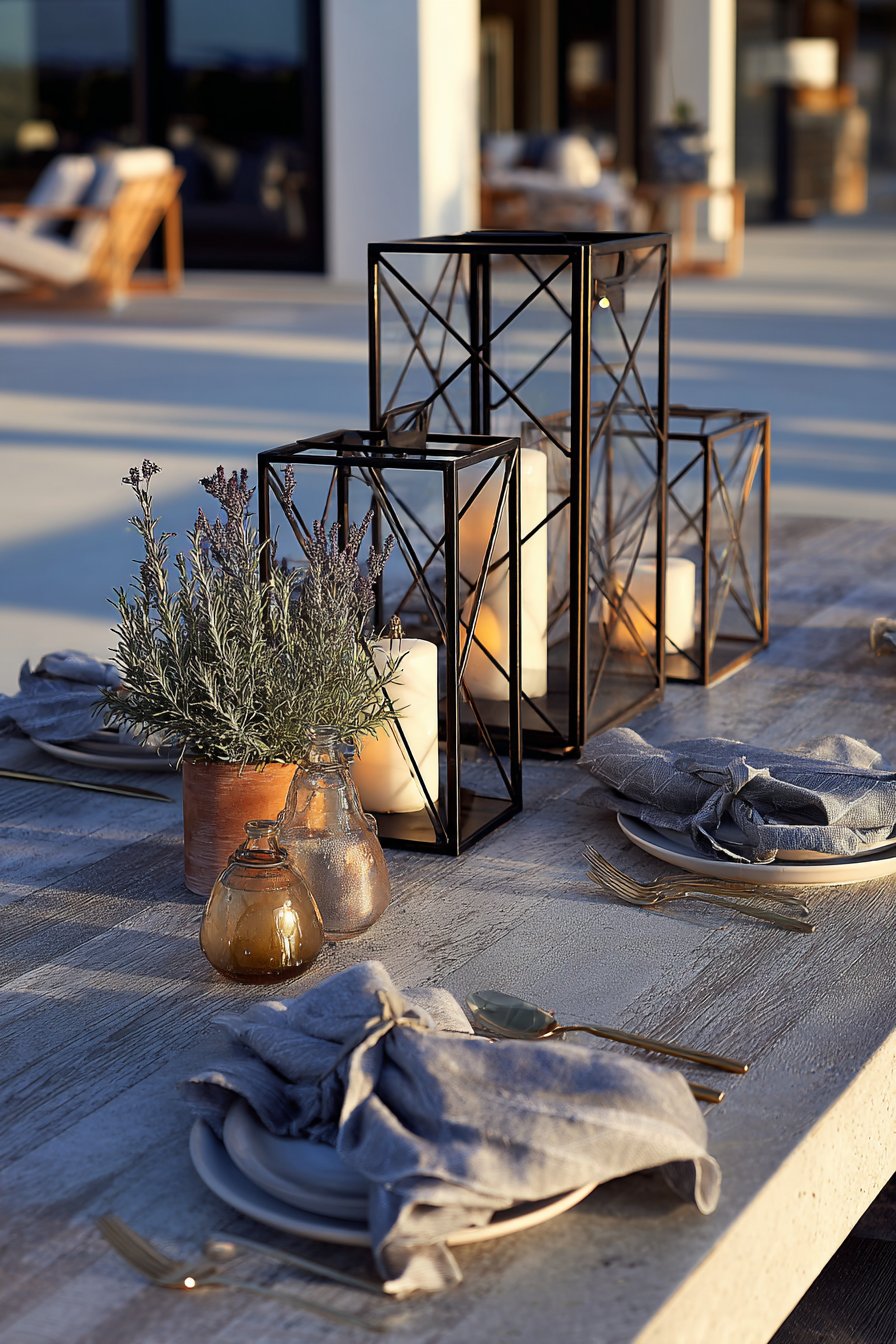
A sleek concrete dining table anchors this modern outdoor setting. The smooth matte finish provides sophisticated minimalism. Modern black metal candle holders create vertical interest down the center. Varying heights add dimensional complexity to the arrangement.
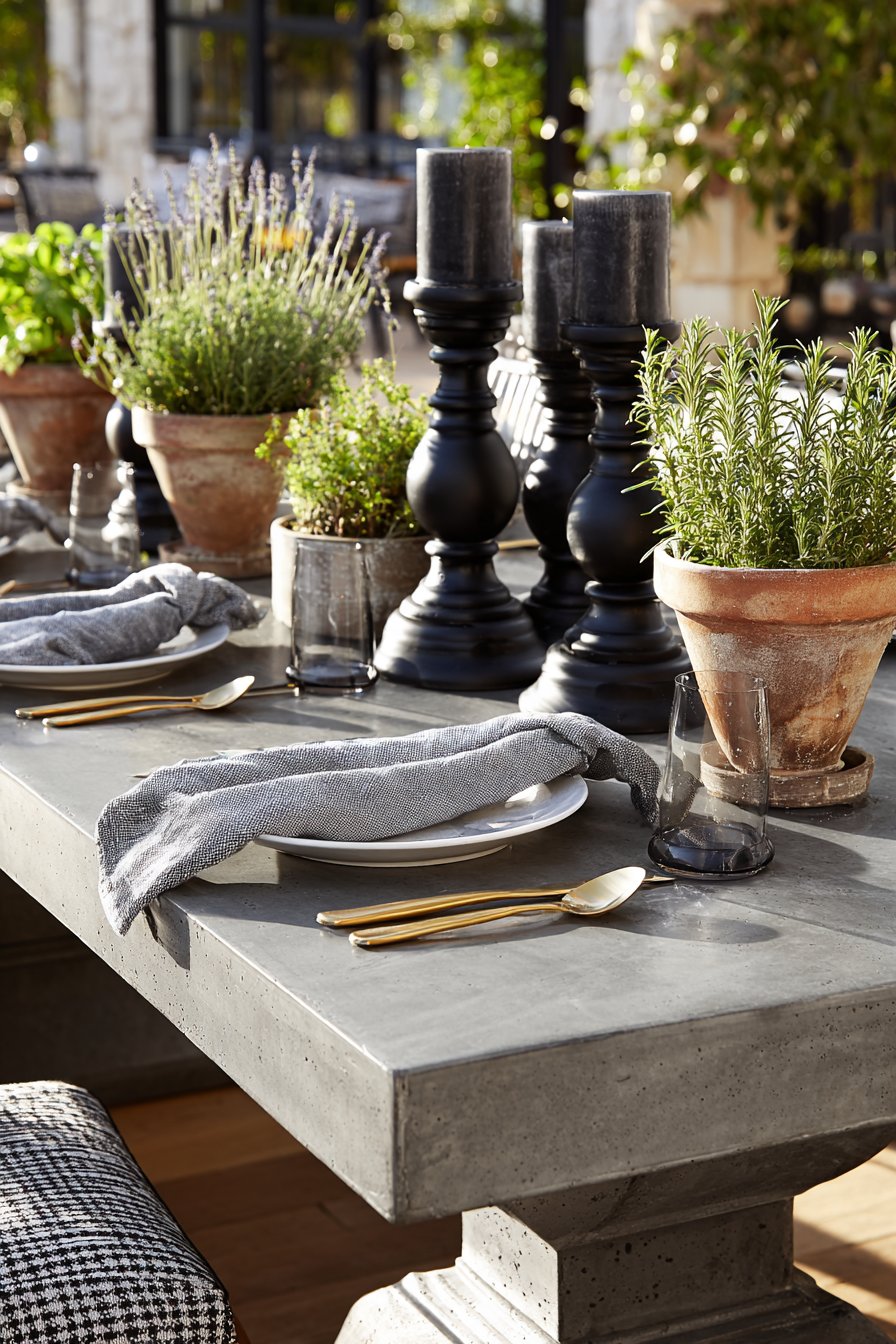
Low terracotta planters hold fragrant herbs like rosemary and lavender. The edible garden element adds practical beauty to the design. Charcoal grey linen napkins fold casually beside each place setting. Simple white stoneware plates maintain the minimalist aesthetic.
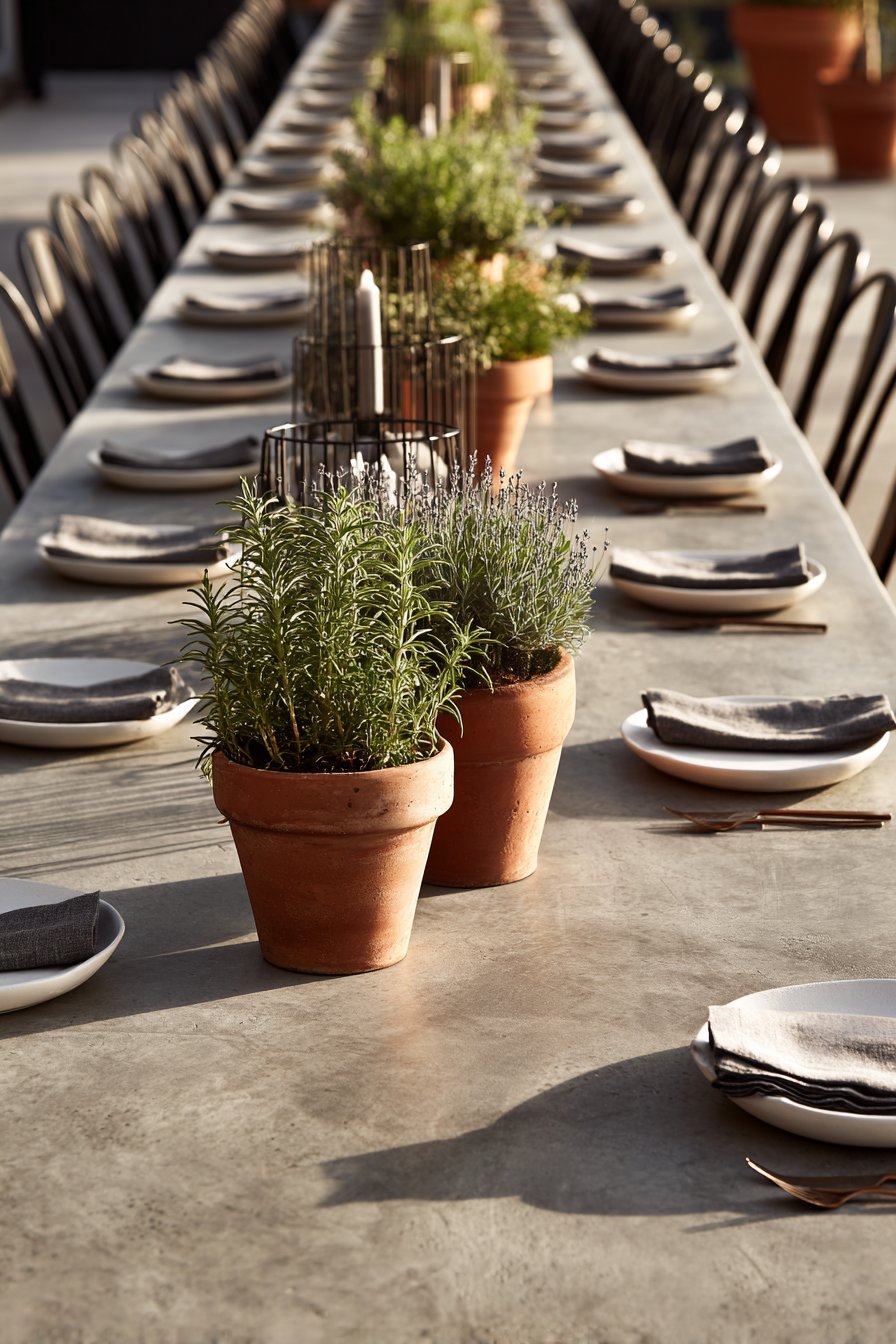
Brushed brass flatware introduces warm metallic accents strategically. The combination of cool concrete and warm brass creates perfect balance. Late afternoon lighting highlights textural contrasts beautifully. Smooth surfaces play against organic plant elements dramatically.
Professional architectural photography captures this minimalist sophistication. Attention to material details and shadow play enhances visual interest. The contemporary approach proves that simplicity requires careful consideration. Every element serves both functional and aesthetic purposes.
Key Design Tips:
- Choose concrete tables for weather resistance and modern aesthetic appeal
- Plant edible herbs in terracotta for functional beauty and wonderful fragrance
- Use varying candle holder heights to create visual rhythm and interest
- Select charcoal or grey linens that won’t show outdoor dining stains
- Balance cool materials like concrete with warm accents like brass
- Maintain strict color discipline within a limited neutral palette
3. Coastal Whitewashed Beach Cottage
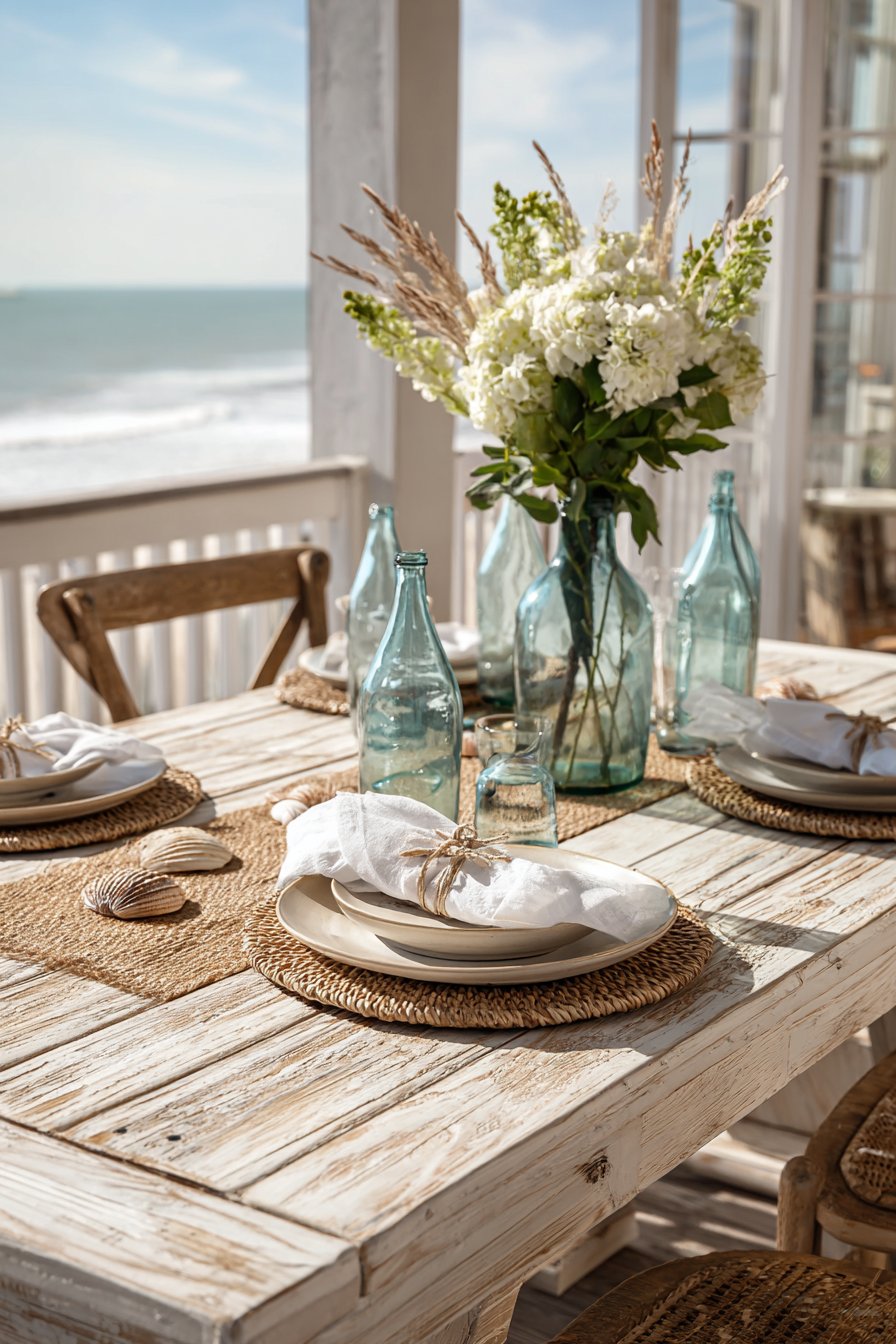
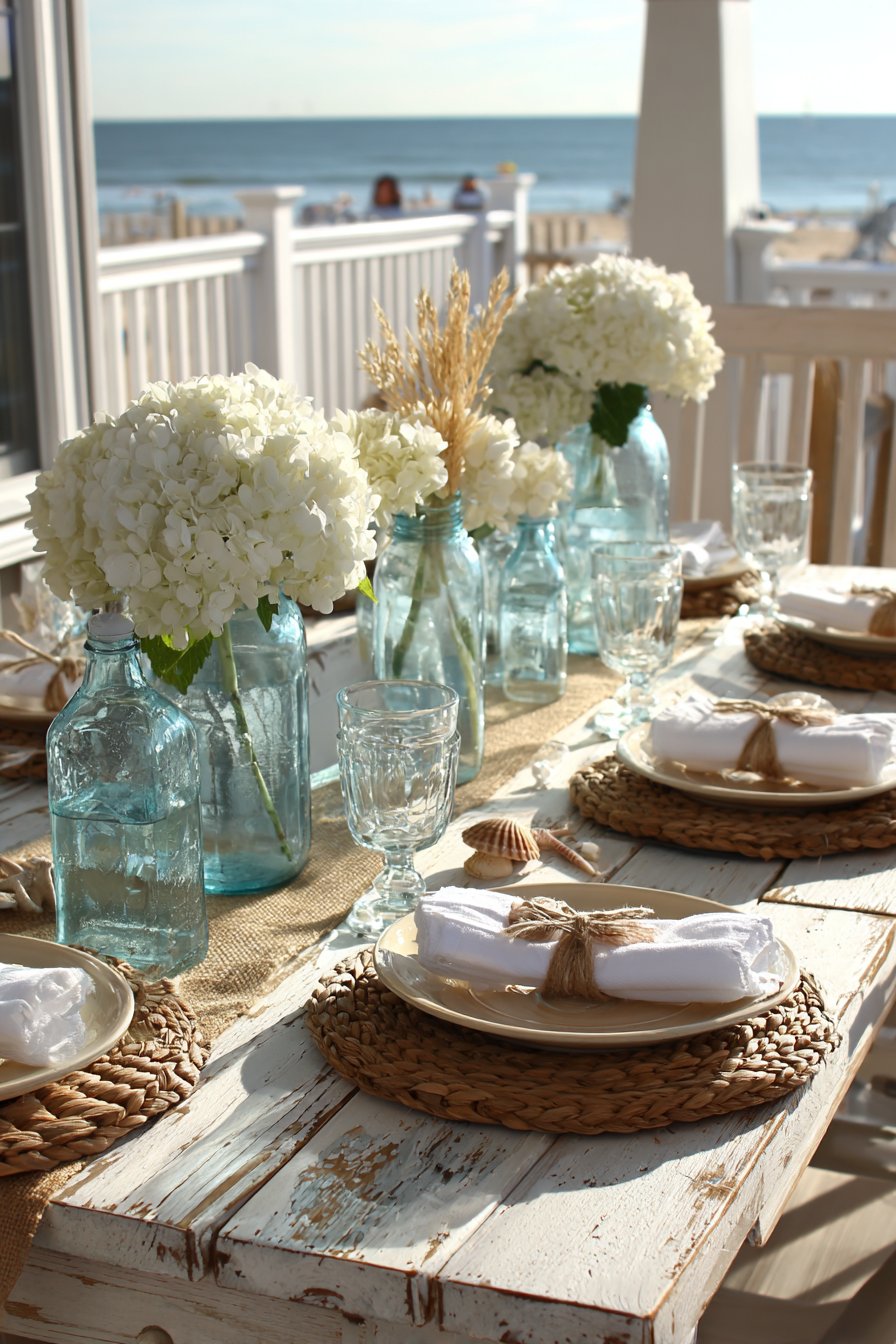
Whitewashed wood planks create the table foundation. Authentic weathering and salt-worn texture add coastal character. Seafoam blue glass bottles serve as casual vases. Various heights create an informal collected appearance.
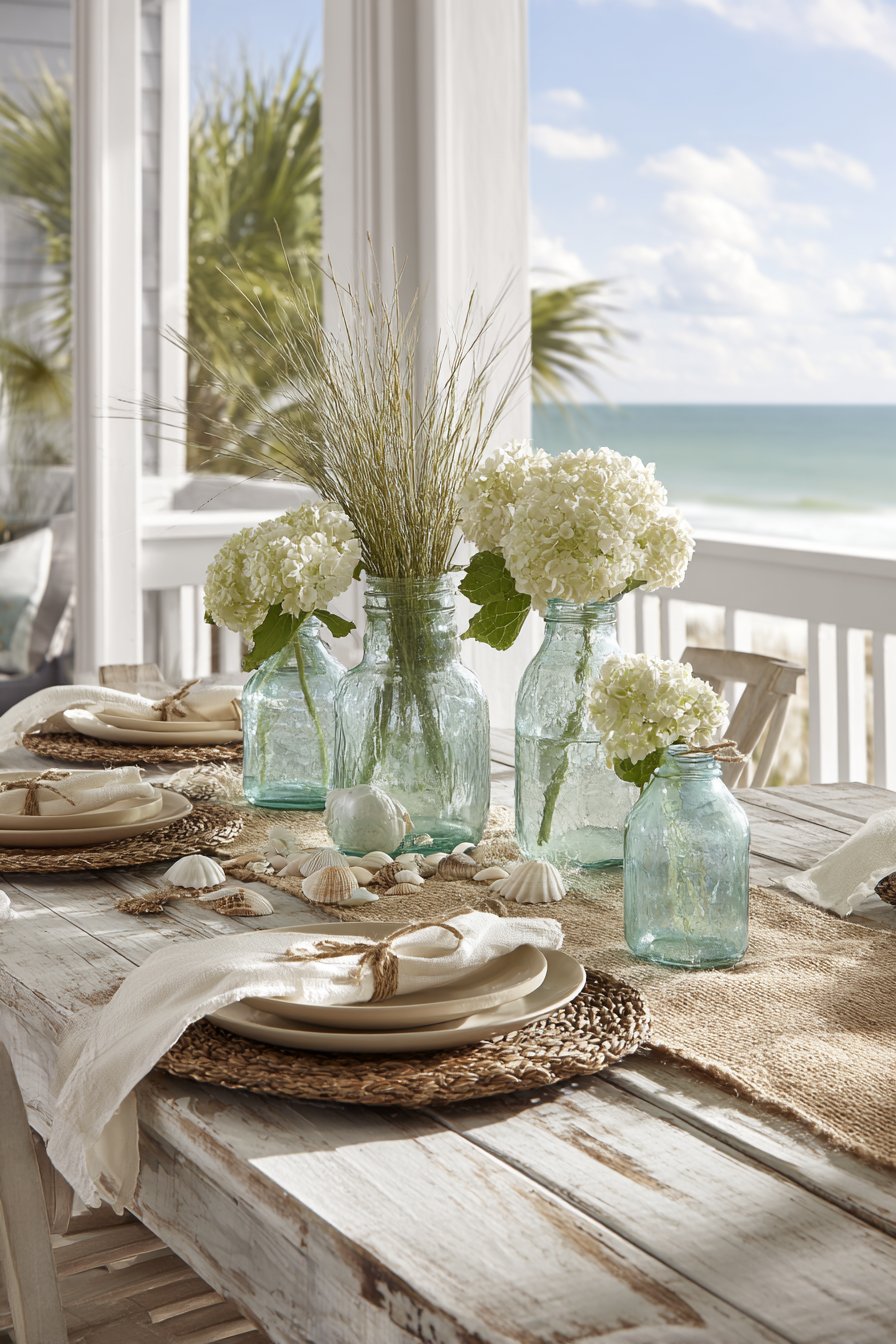
White hydrangeas and coastal grasses fill the glass bottles naturally. Natural jute table runner provides excellent textural contrast. Crisp white napkins tie with simple twine and small seashells. These details reinforce the beachside location beautifully.
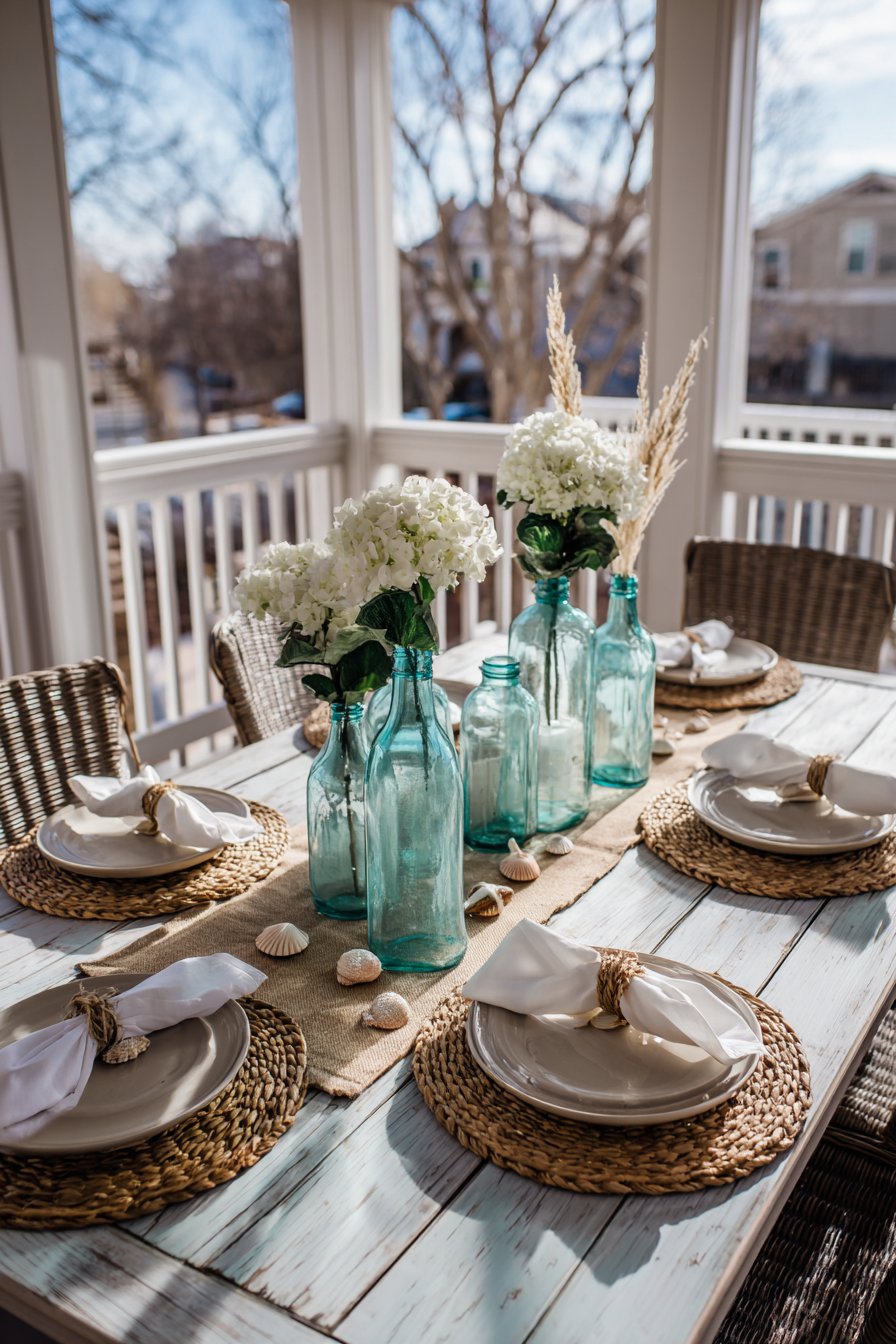
Woven rattan chargers anchor each individual place setting. Sand-colored ceramic plates rest atop the natural fiber bases. Morning sunlight illuminates the entire setting with fresh brightness. The beach-cottage aesthetic feels relaxed yet intentional.
Background views hint at deck railings and coastal scenery. Soft focus maintains attention on the table arrangement. Wide-angle interior photography showcases the complete setting. The interplay between natural materials and ocean-inspired colors succeeds beautifully.
Key Design Tips:
- Whitewash wood furniture to achieve authentic coastal weathered appearance
- Collect seafoam or aqua glass bottles in varying shapes and sizes
- Use jute or sisal runners for natural texture that withstands outdoor conditions
- Tie napkins with twine and add small shells or starfish for beach details
- Choose sand, cream, and white tones for the primary color palette
- Position the table where morning light enhances the bright, airy feeling
4. Reclaimed Barn Wood Farmhouse
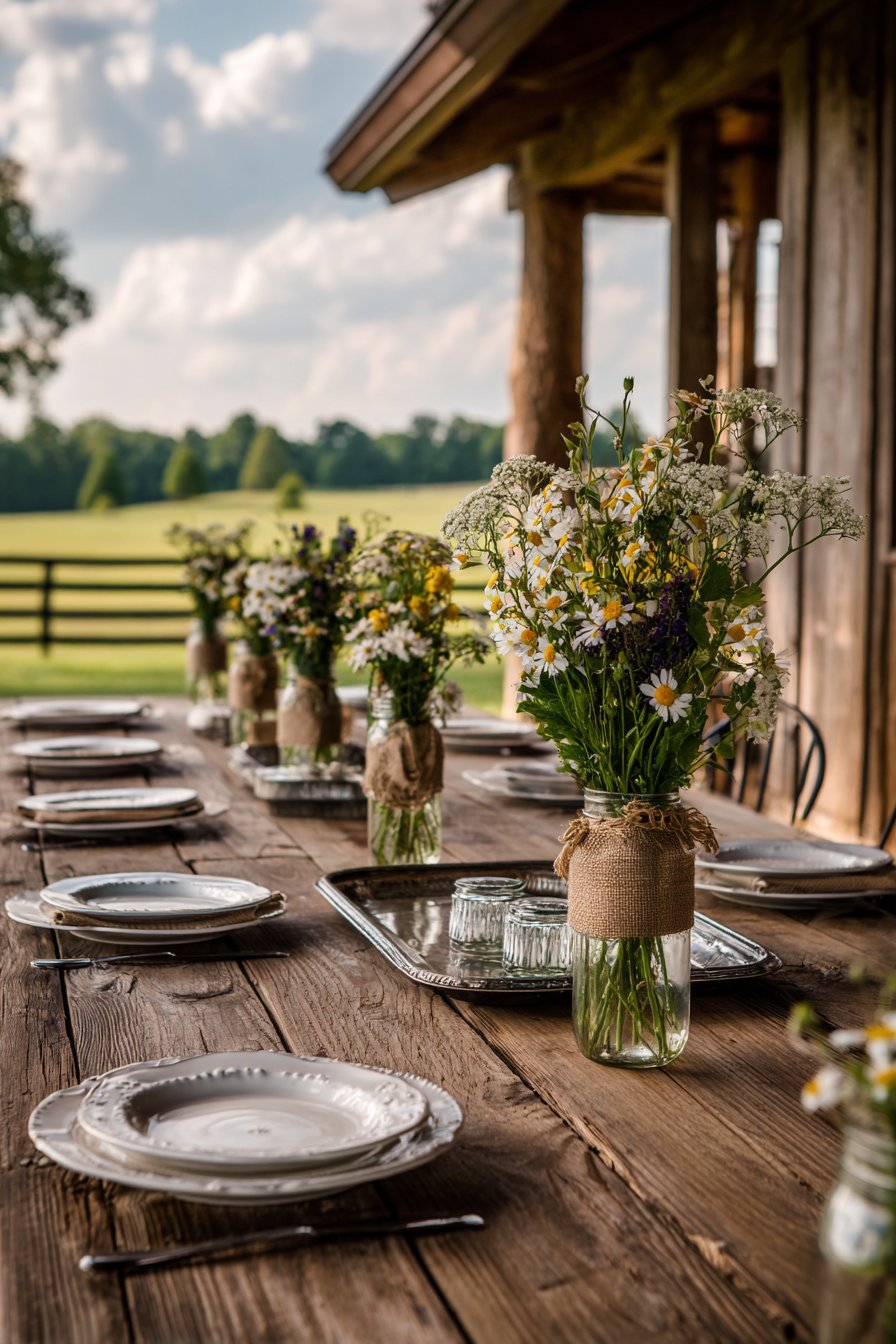
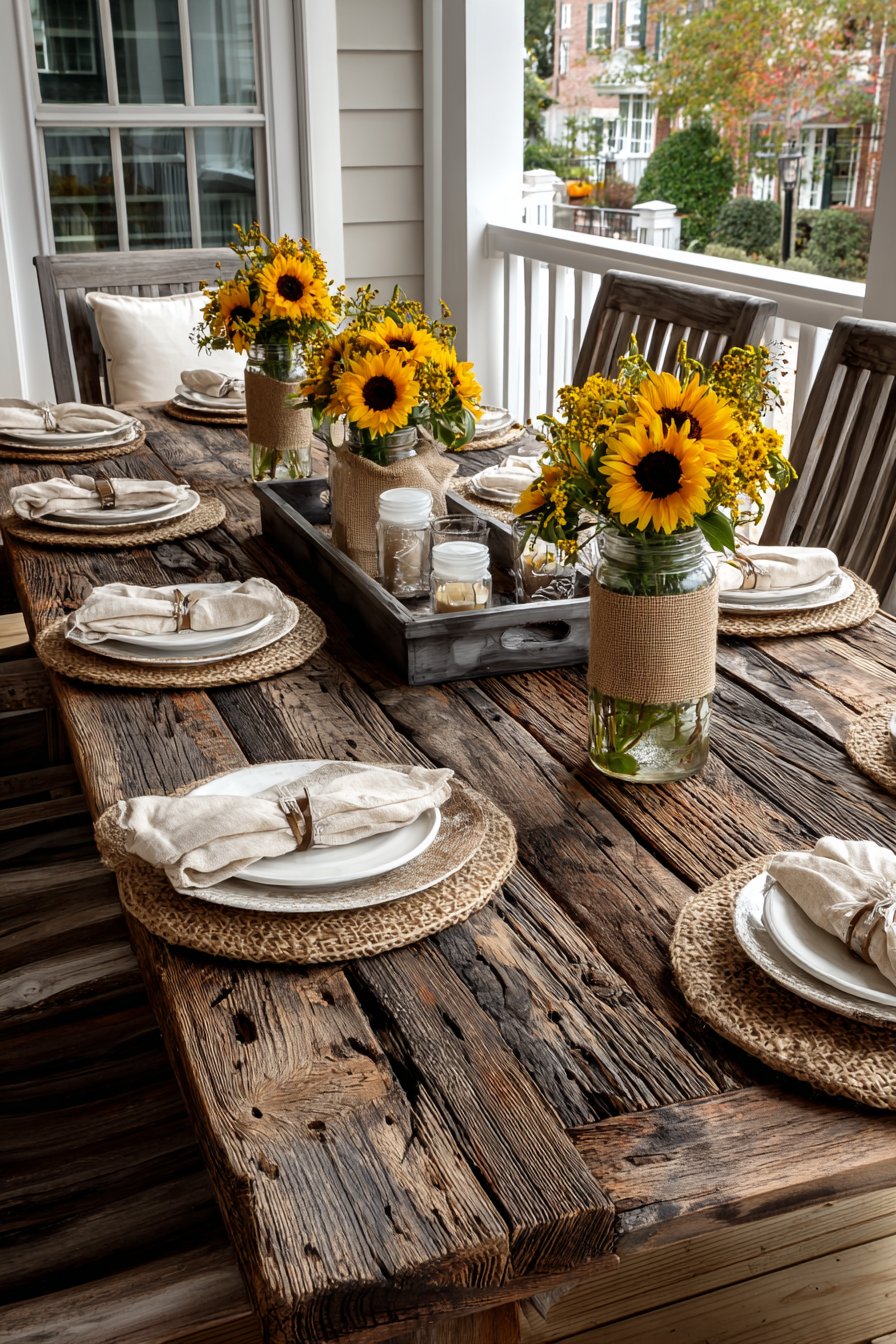
A reclaimed barn wood table showcases visible knots and color variations. The authentic weathered surface provides instant character and history. Mason jars wrapped in burlap ribbon create charming rustic vases. Wildflower arrangements include daisies, black-eyed susans, and Queen Anne’s lace.
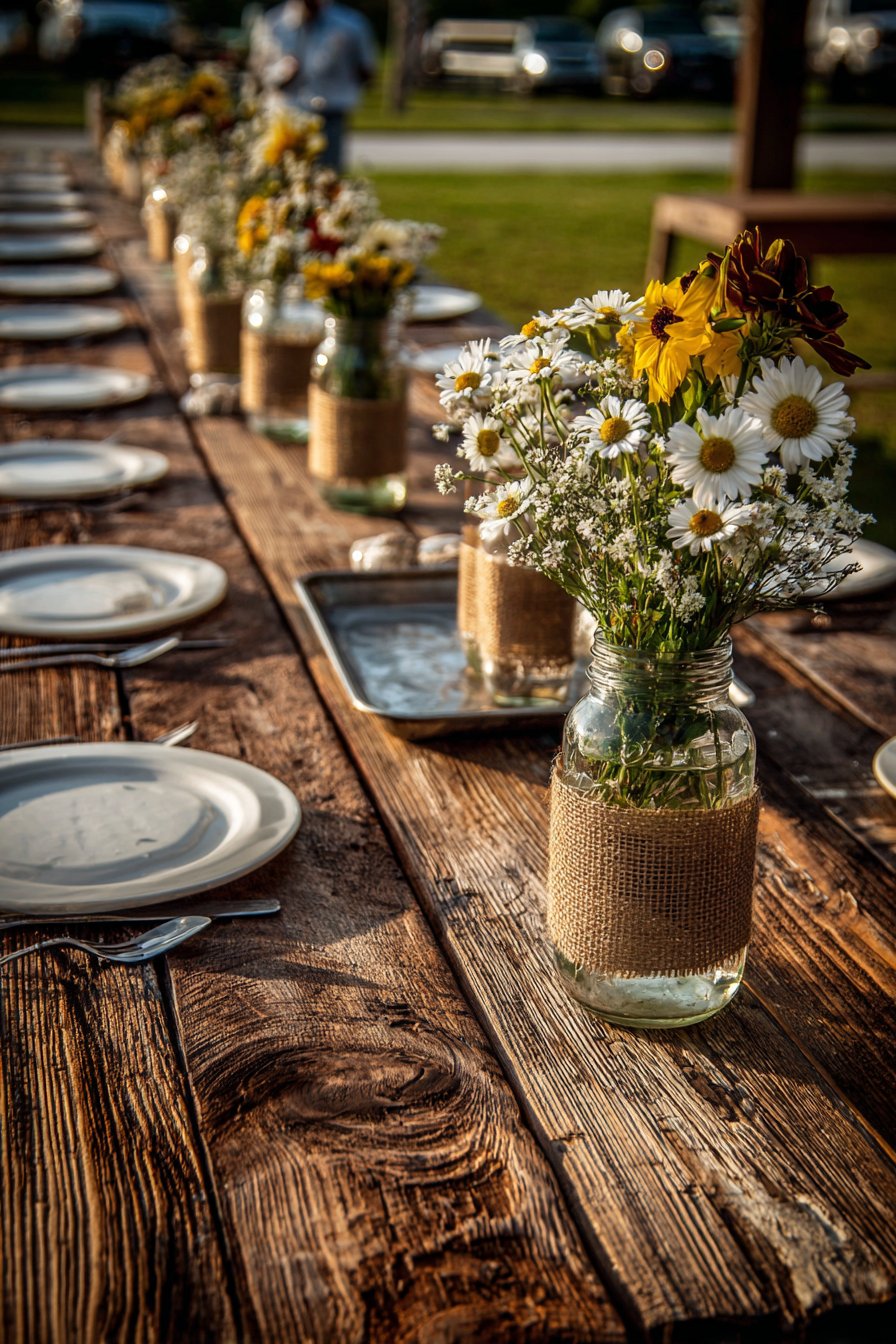
White enamelware plates deliver classic farmhouse simplicity. Vintage-style flatware complements the nostalgic aesthetic perfectly. A galvanized metal tray corrals condiments and napkins efficiently. This practical element adds to the overall farmhouse appeal.
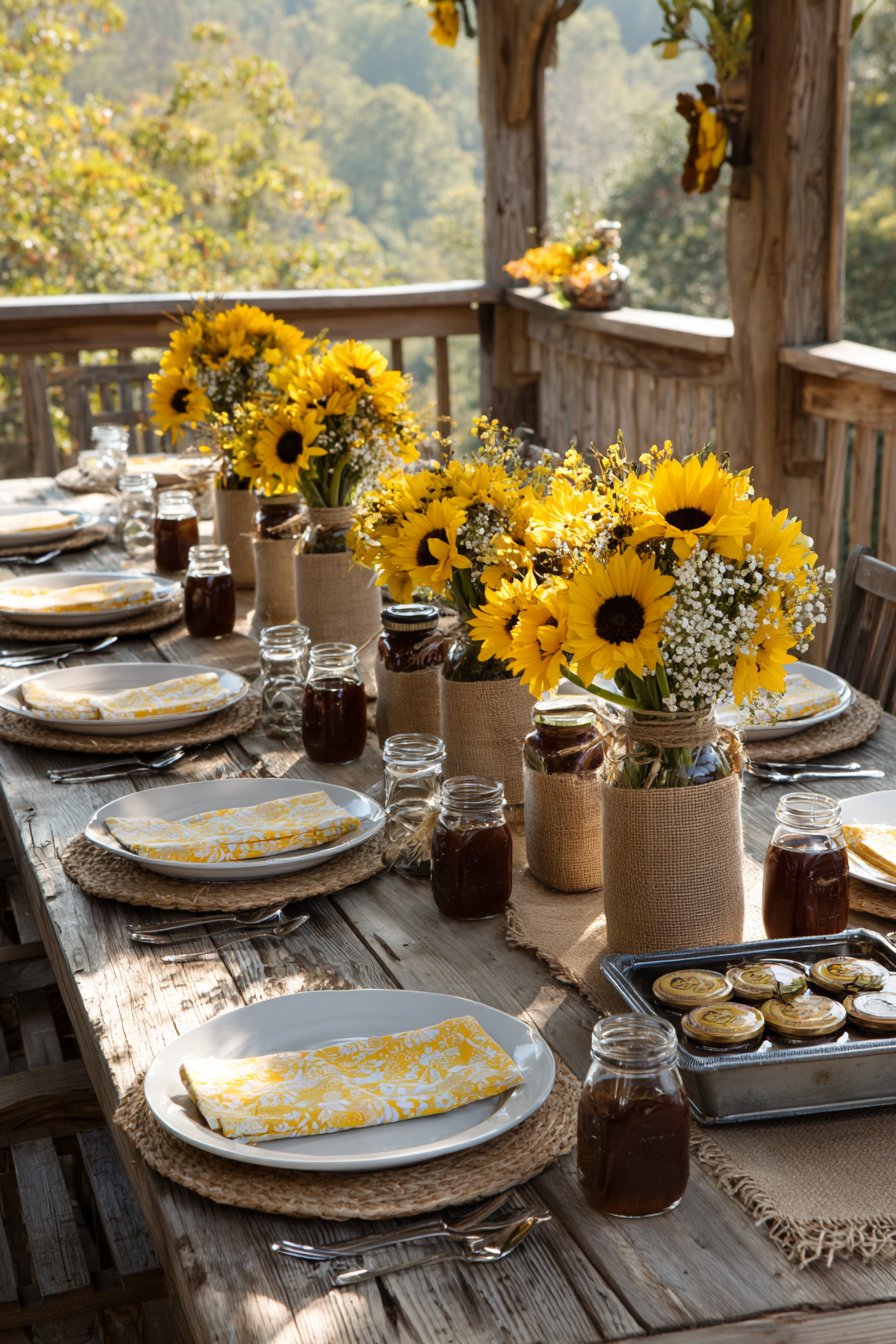
Natural afternoon light creates warm highlights across wood grain. Gentle shadows fall from the abundant floral arrangements. Professional interior design photography captures authentic farmhouse charm. Balanced exposure showcases material textures and practical arrangement details.
The countryside porch or garden setting enhances authenticity. Every element works together to create cohesive rustic elegance. The design proves that farmhouse style combines beauty with functionality.
Key Design Tips:
- Source reclaimed barn wood for tables with genuine history and character
- Wrap mason jars with burlap ribbon and twine for authentic farmhouse charm
- Choose wildflowers over formal arrangements for casual garden-fresh beauty
- Use white enamelware that’s durable enough for actual outdoor dining
- Incorporate galvanized metal accessories for practical farmhouse functionality
- Allow natural wood grain and texture to remain the focal design element
5. Mediterranean Terra Cotta and Tile
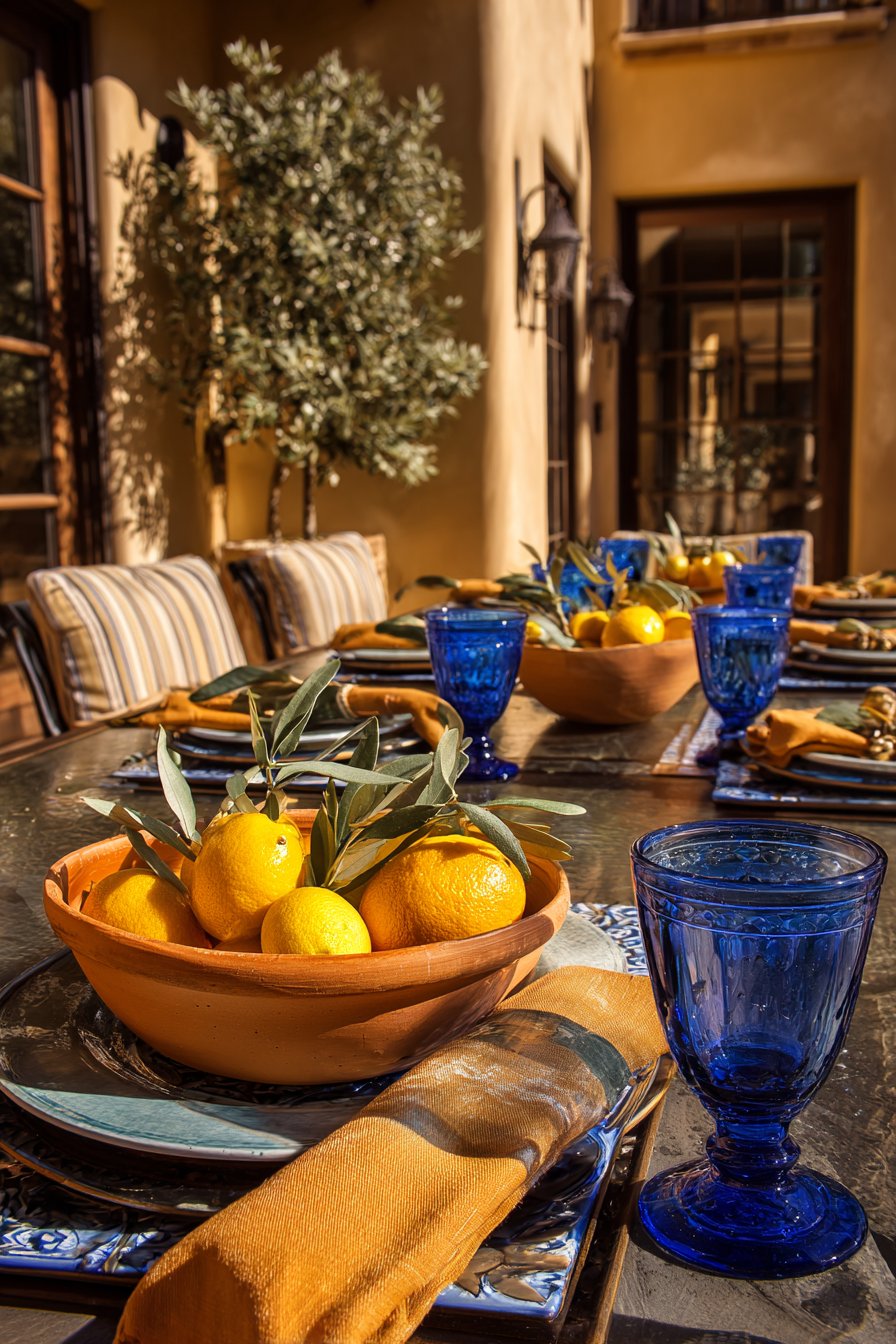
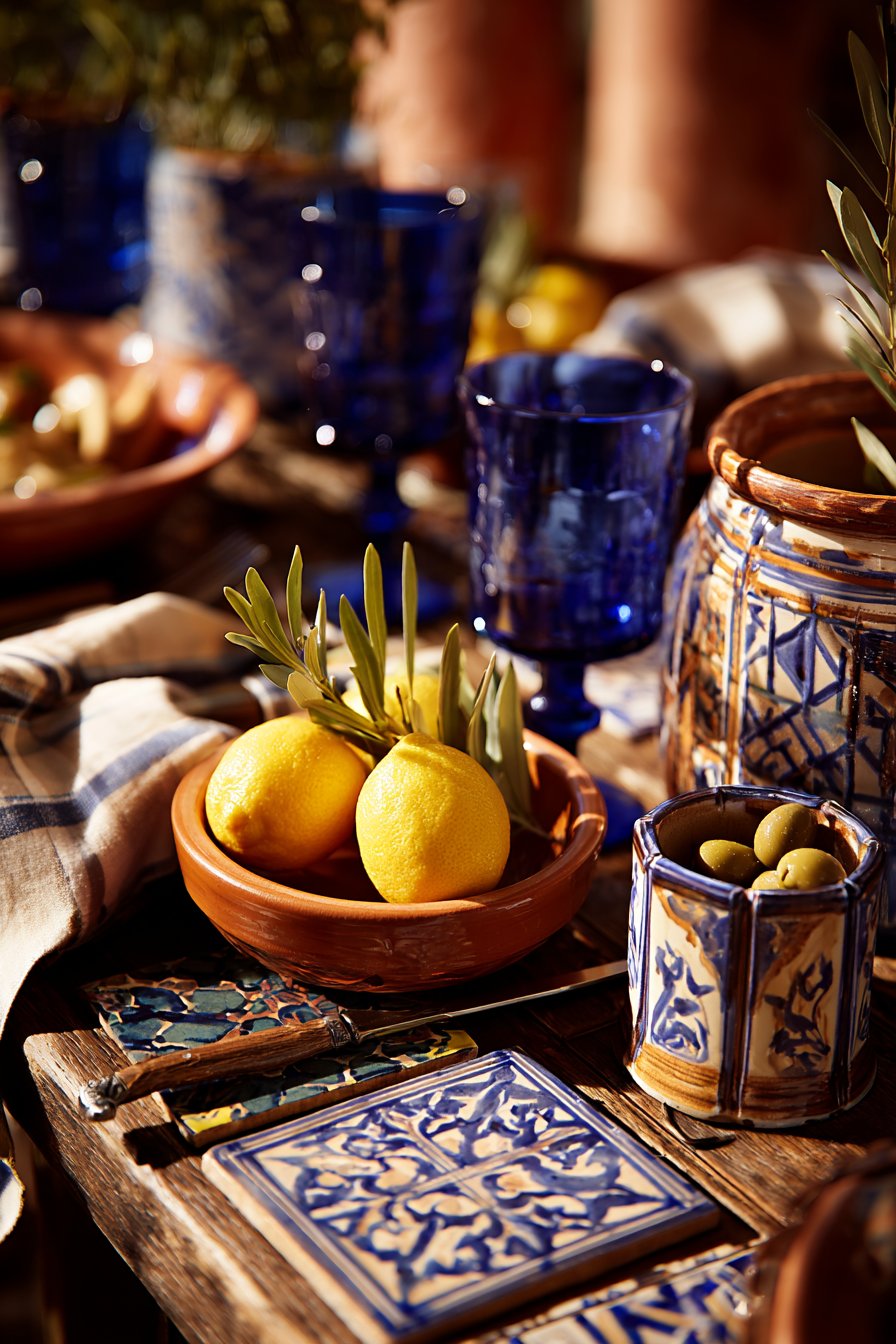
Rough-hewn ceramic serving bowls display warm earth tones beautifully. Fresh lemons and olives create edible centerpiece elements. Hand-painted Mediterranean tiles serve as functional trivets scattered strategically. The wrought iron table provides sturdy foundation.
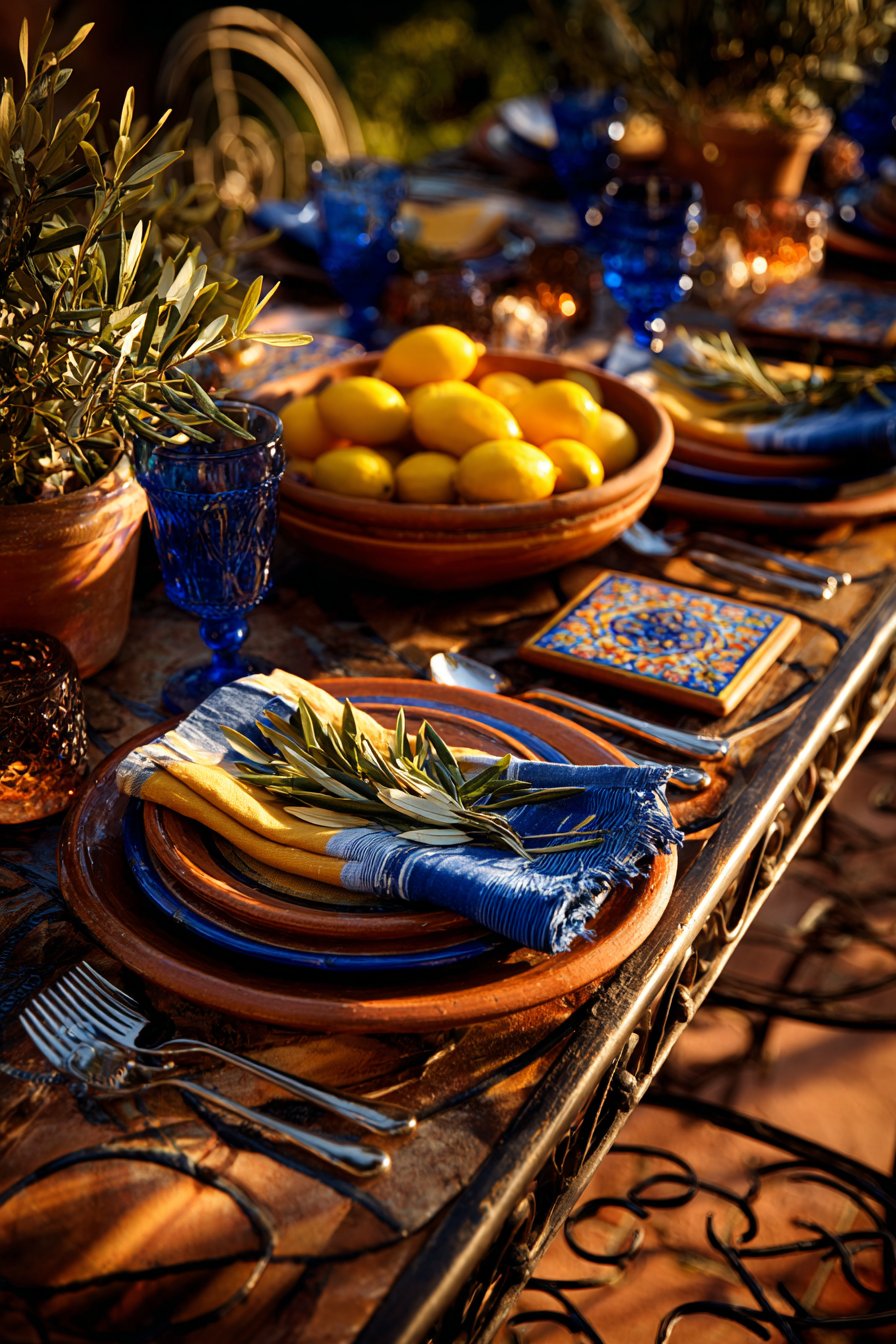
Cobalt blue glassware catches sunlight with brilliant intensity. Natural linen napkins in ochre and cream tones soften the setting. Olive branch sprigs secure each napkin with organic elegance. Golden hour lighting bathes everything in warm Mediterranean glow.
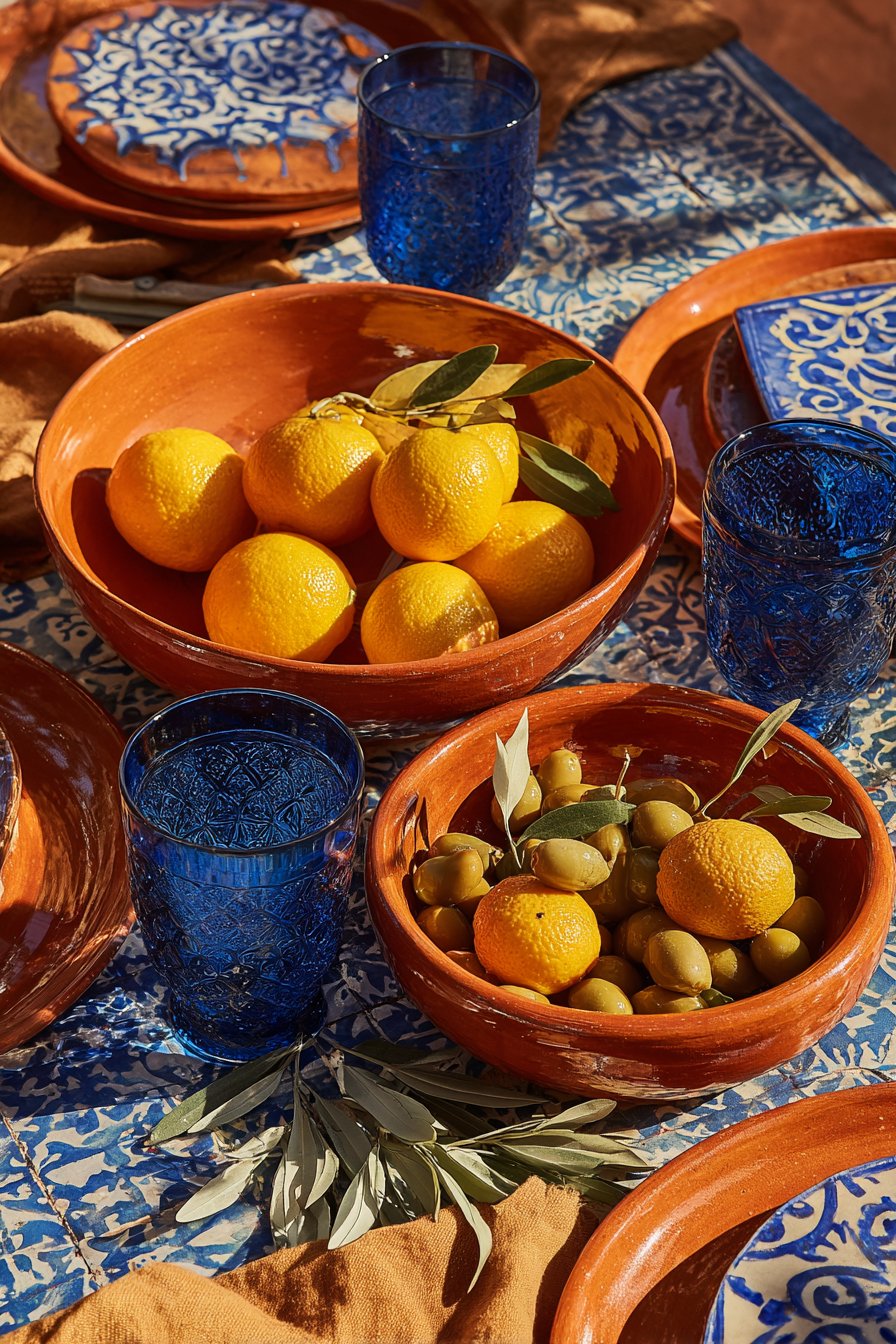
Rich color palette and textured ceramics define this style. Architectural photography captures complete table settings expertly. Attention focuses on authentic cultural design elements throughout. Natural light interaction with glossy ceramic and matte linen creates visual interest.
The Mediterranean approach celebrates bold color and natural materials. Every piece reflects the warmth of coastal European dining traditions. This design transports diners to sun-drenched Mediterranean terraces.
Key Design Tips:
- Use terra cotta ceramics in various shapes and sizes for authentic appeal
- Incorporate cobalt blue glassware as the signature color accent throughout
- Choose hand-painted tiles as both decorative and functional trivets
- Display fresh lemons, olives, or figs as edible centerpiece elements
- Secure napkins with olive branches, rosemary, or lavender sprigs
- Position the table where golden hour light enhances warm Mediterranean tones
6. Modern Minimalist Monochrome
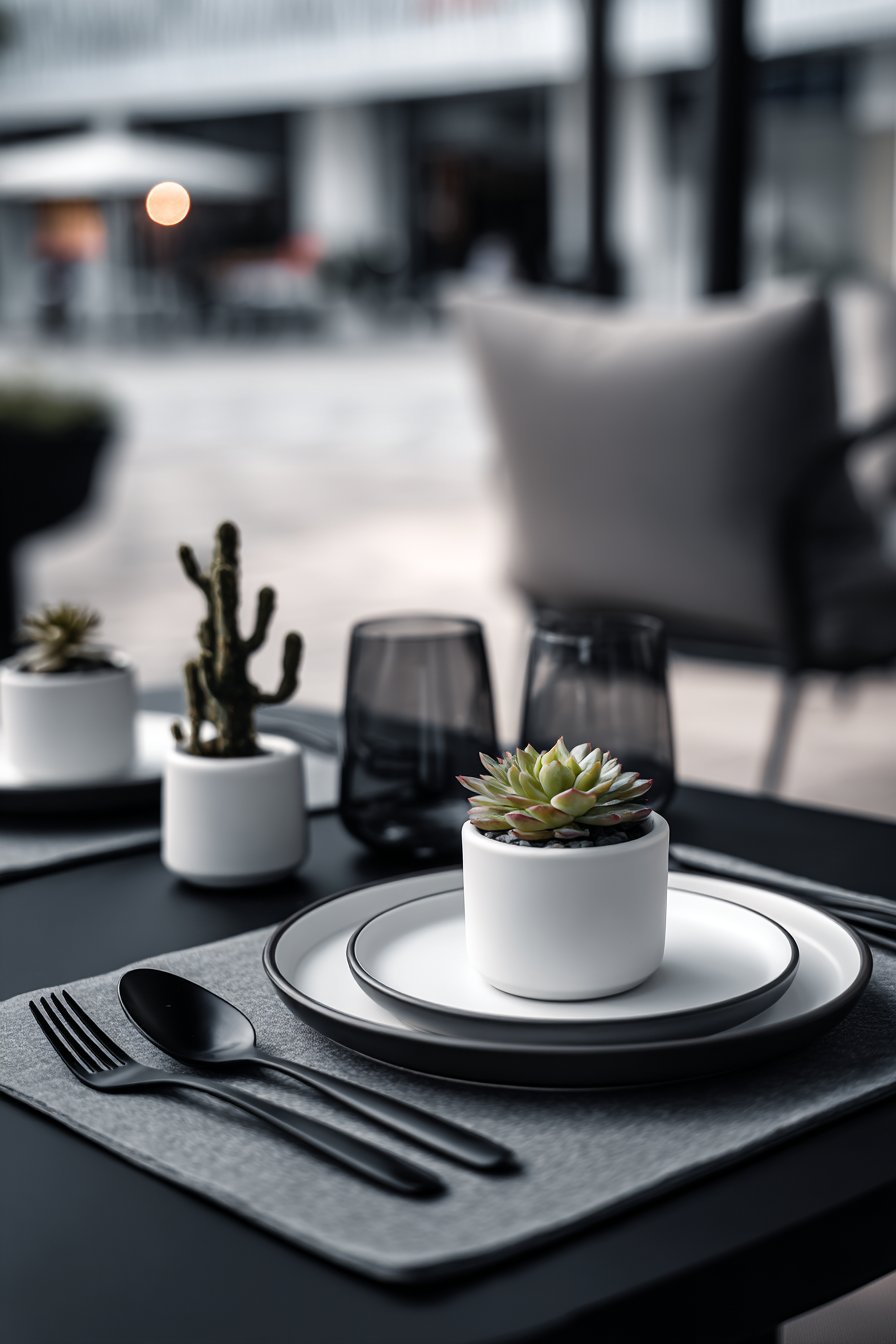
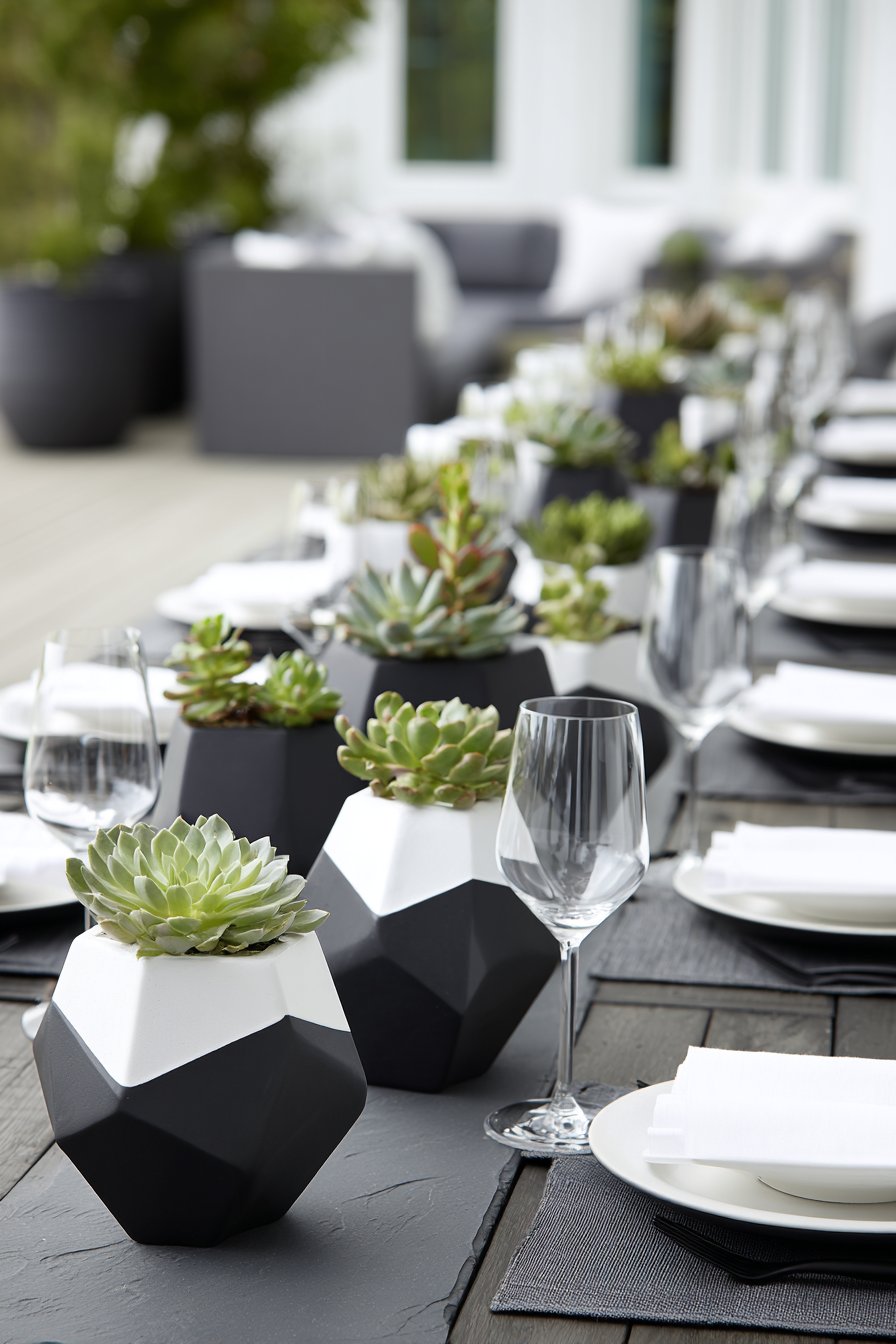
A black aluminum table features matte powder-coated finish. Single succulent specimens sit in small white ceramic cube planters. Clean geometric centerpiece creates purposeful linear arrangement. Slate grey placemats anchor simple white porcelain dinnerware.
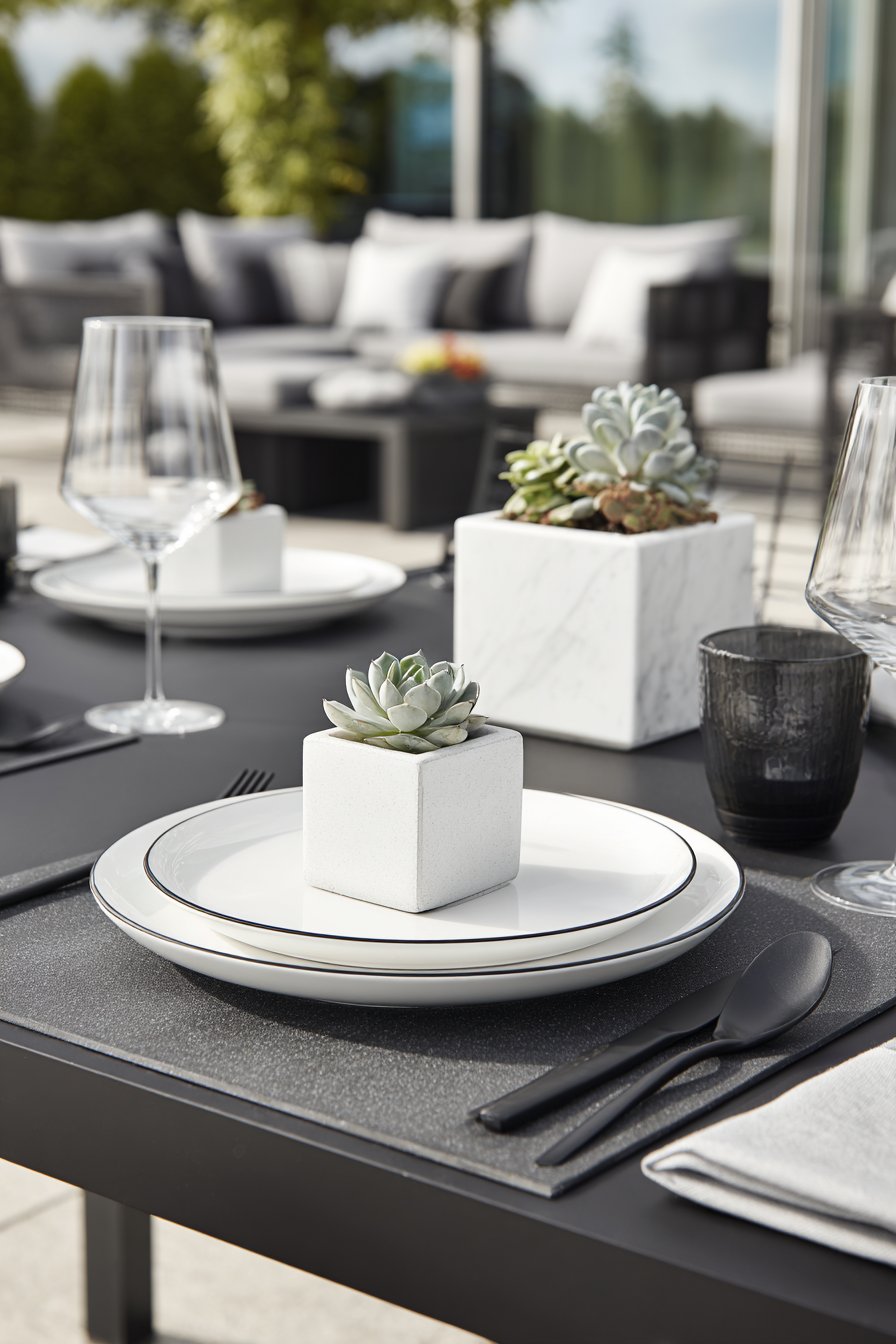
Black rim detail on plates provides subtle visual definition. Matte black flatware and stemless wine glasses maintain monochromatic sophistication. Soft diffused natural lighting from overcast conditions eliminates harsh shadows. This perfect lighting showcases clean lines and intentional negative space.
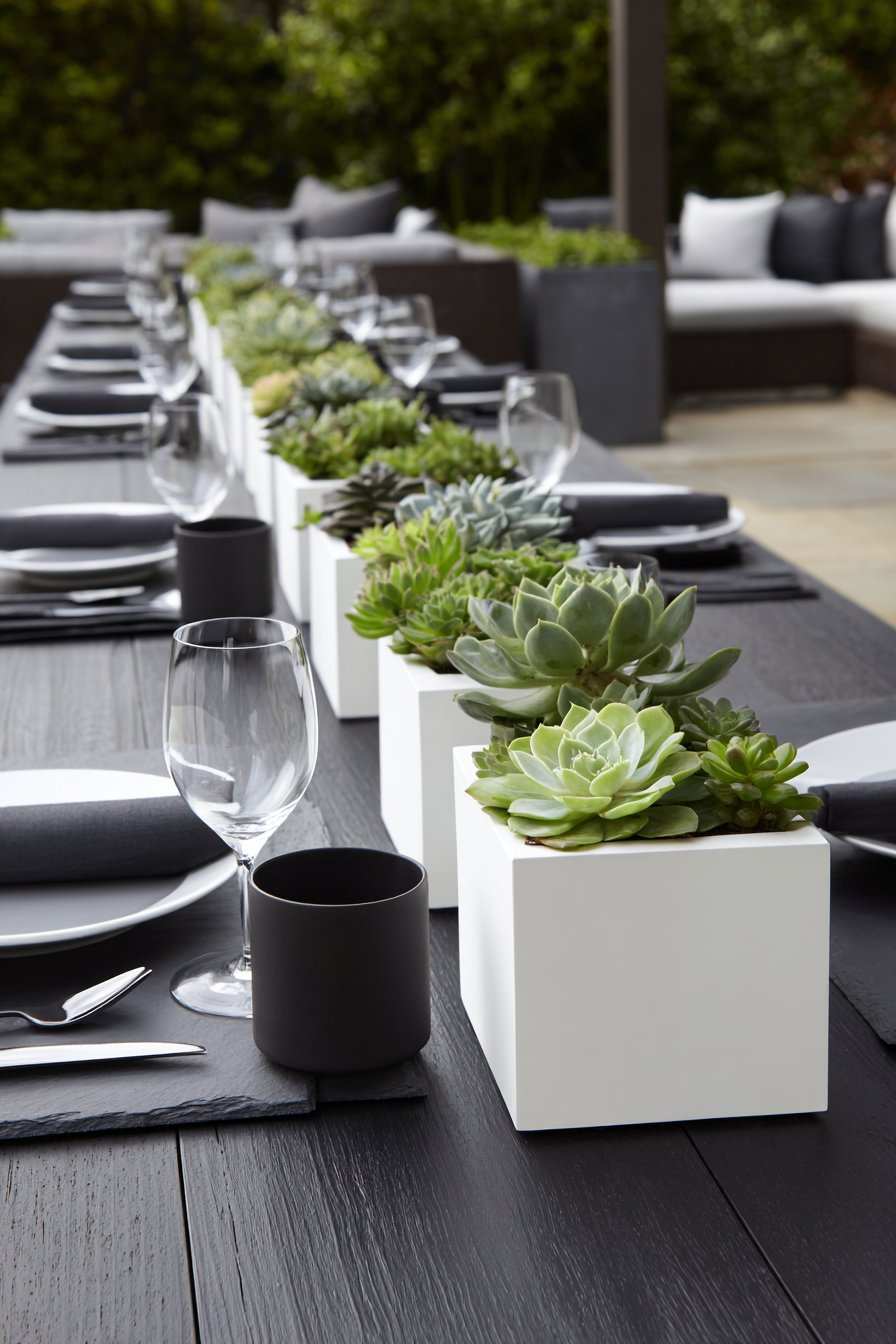
Professional interior photography emphasizes restrained elegance. Precise placement of minimal decorative elements demonstrates thoughtful curation. Contemporary outdoor furniture appears in complementary grey tones. Slight background focus maintains emphasis on table details.
The minimalist approach proves less truly becomes more. Every element serves essential purpose without excess decoration. Modern sophistication emerges through restraint and precision.
Key Design Tips:
- Limit color palette to black, white, and grey for true minimalist aesthetic
- Choose geometric planters and arrange them in strict linear patterns
- Use matte finishes on metals and ceramics to avoid visual distraction
- Embrace negative space as intentional design element rather than emptiness
- Select dinnerware with clean lines and minimal decorative details
- Photograph on overcast days when diffused light enhances minimalist qualities
7. Bohemian Mosaic and Macramé
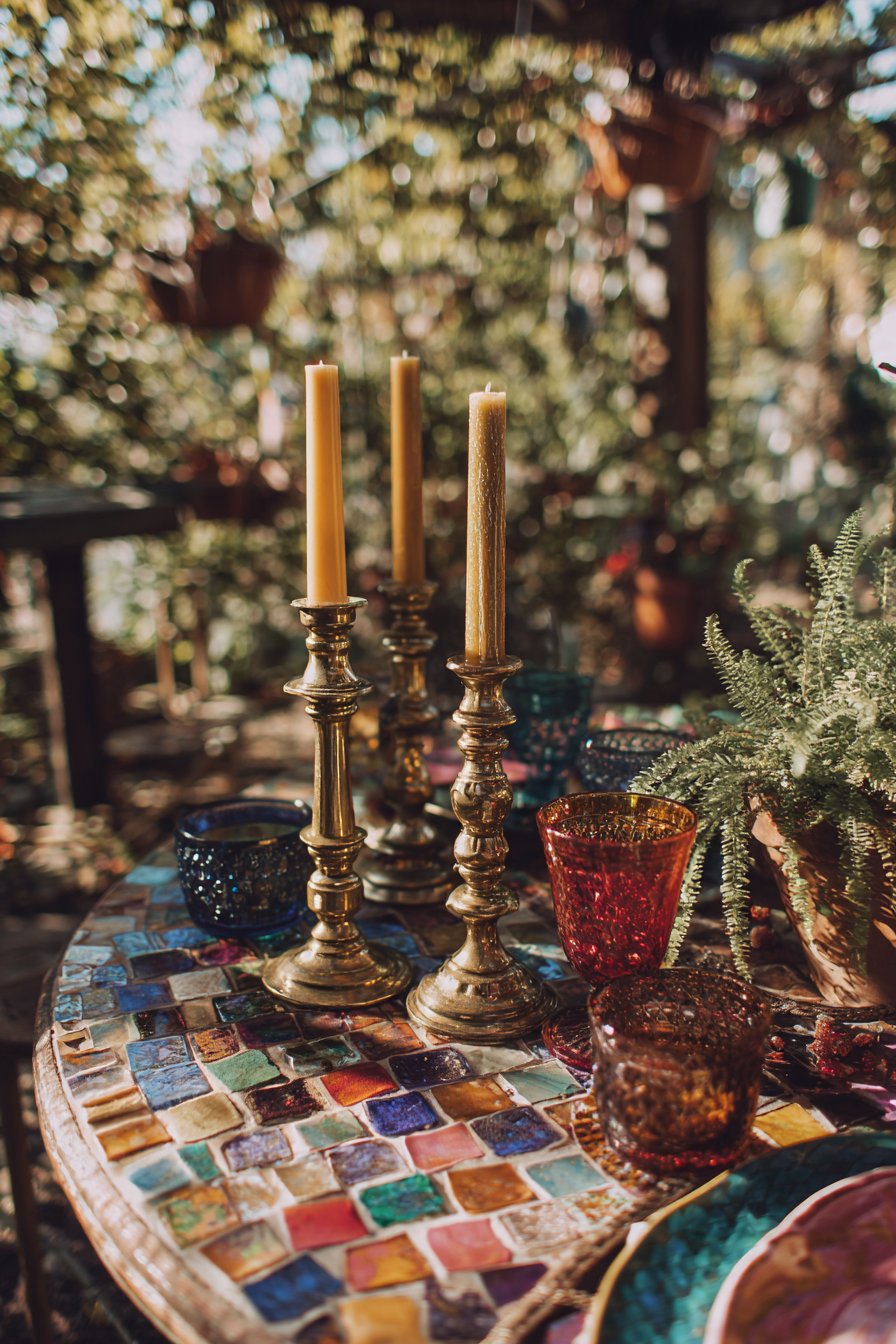
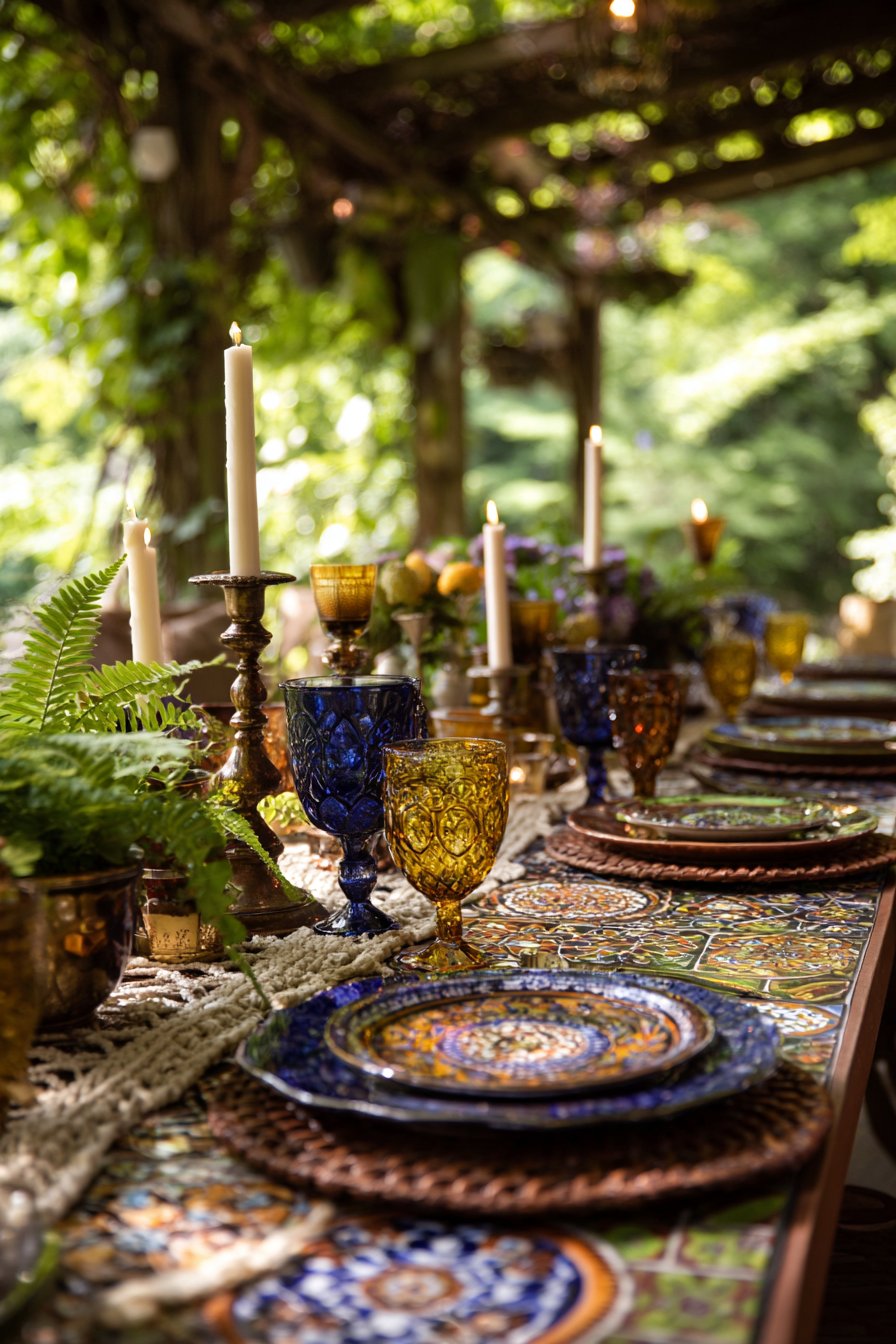
A mosaic tile-topped table displays intricate colorful patterns. Mismatched vintage brass candlesticks showcase varying patinas beautifully. Ivory taper candles provide elegant vertical elements. Macramé table runner features detailed natural cotton knotwork.
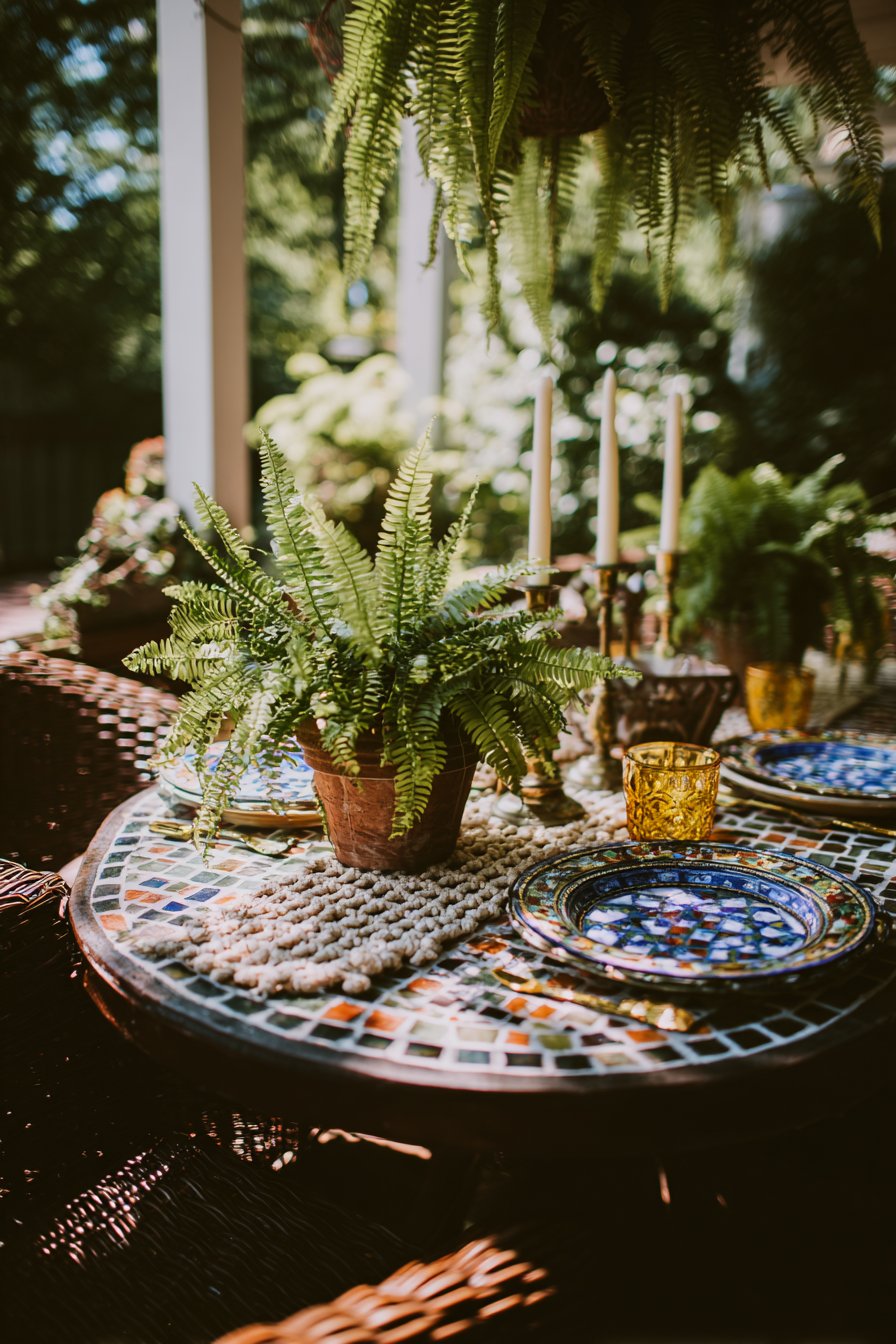
Eclectic ceramic plates in jewel tones create vibrant place settings. Amber and cobalt glassware mixes freely without matching. Potted ferns and trailing pothos plants overflow from woven baskets. Late afternoon sun creates dramatic lighting effects.
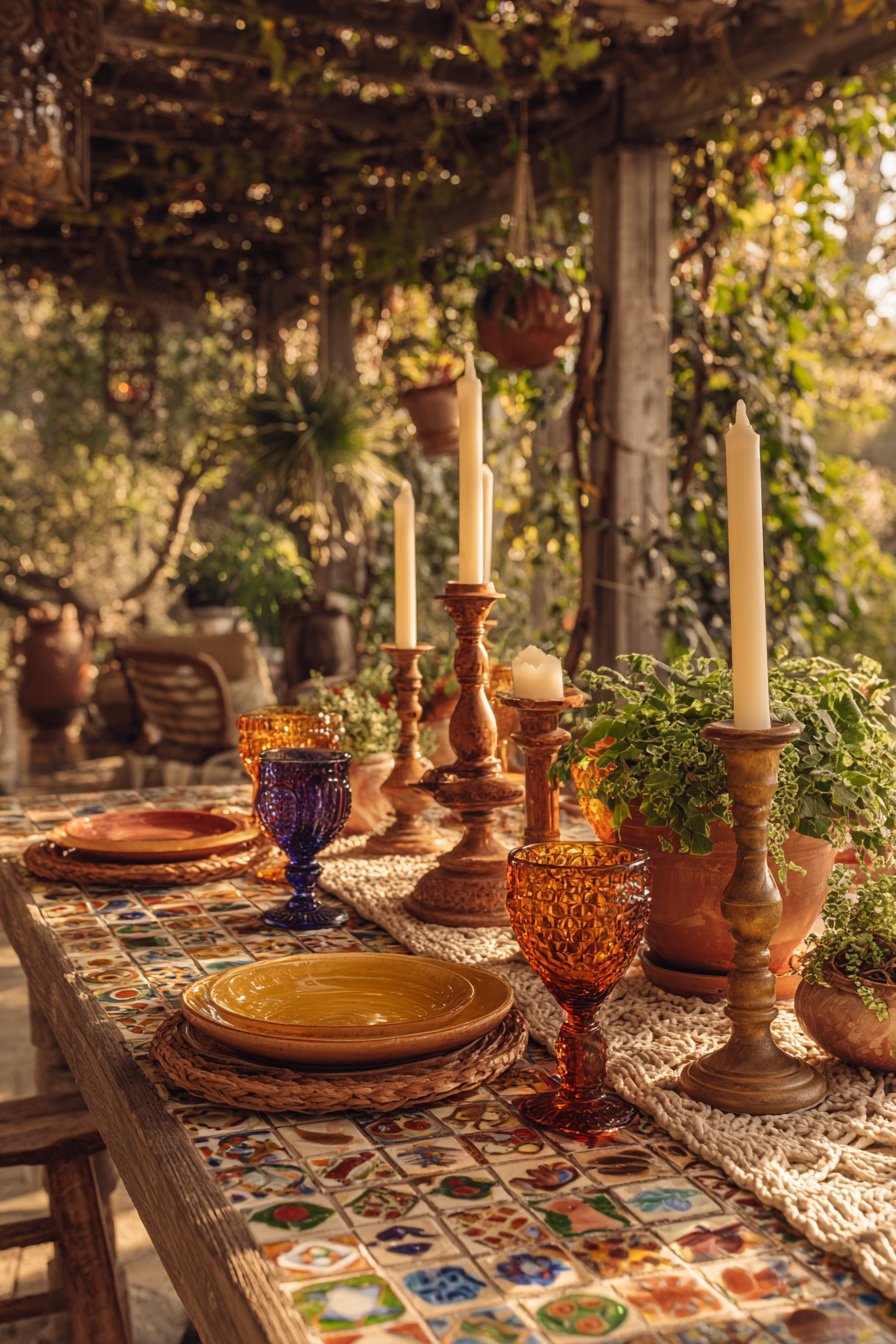
Rich colors and varied textures define this collected aesthetic. Wide-angle photography captures the layered, curated appearance. Pattern interplay between mosaic, ceramics, and textiles succeeds beautifully. Organic plant elements soften the abundant decorative details.
The bohemian style celebrates personal expression and collected treasures. Nothing matches perfectly yet everything works together harmoniously. This approach encourages creativity and individual interpretation.
Key Design Tips:
- Mix vintage brass candlesticks in different heights and patina variations
- Layer macramé runners over mosaic or patterned table surfaces
- Collect ceramic plates in jewel tones rather than matching sets
- Combine amber and cobalt glassware for signature bohemian color scheme
- Add multiple potted plants in woven baskets for lush organic layers
- Embrace the beauty of mismatched elements that share similar aesthetic spirit
8. Tropical Bamboo Paradise
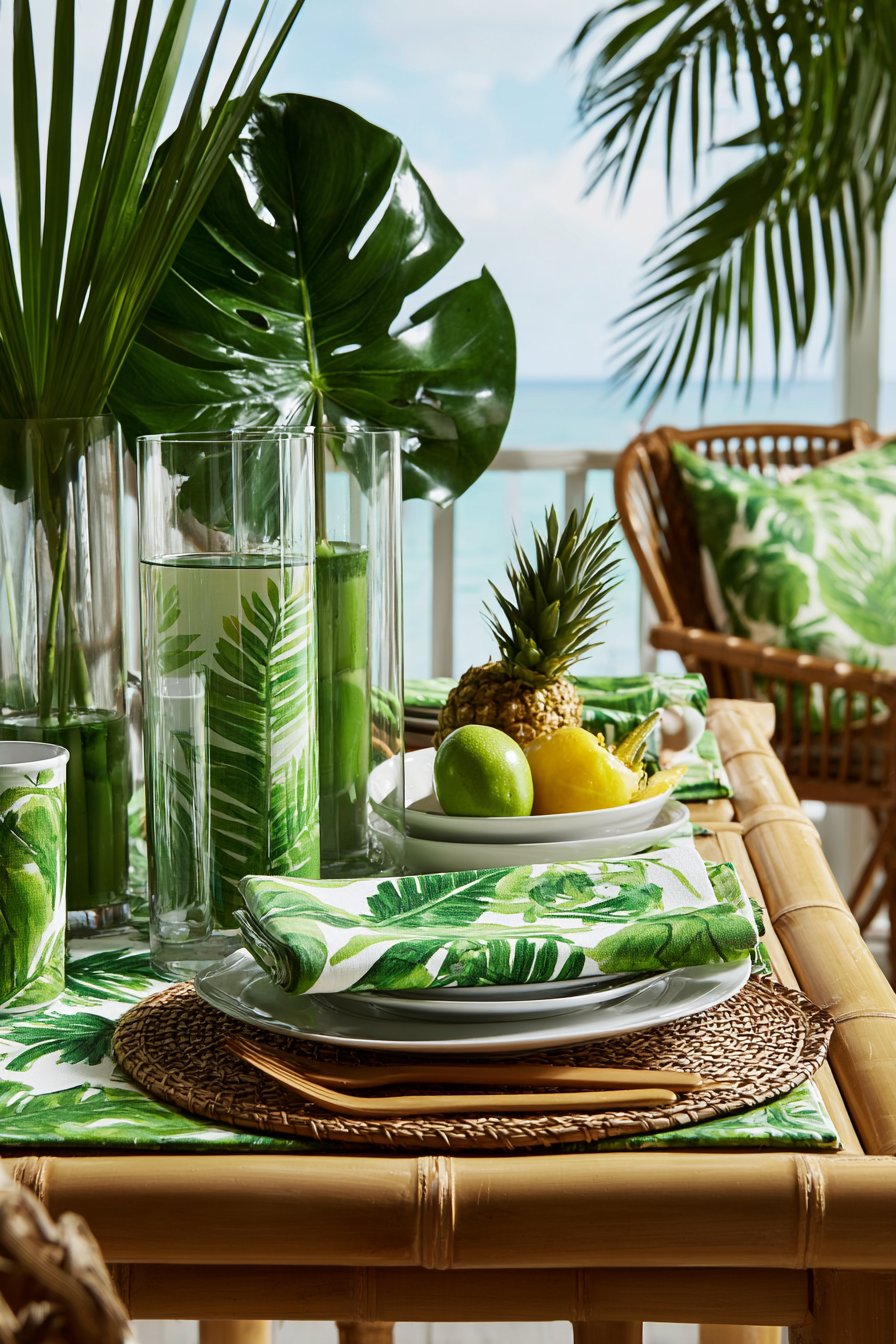
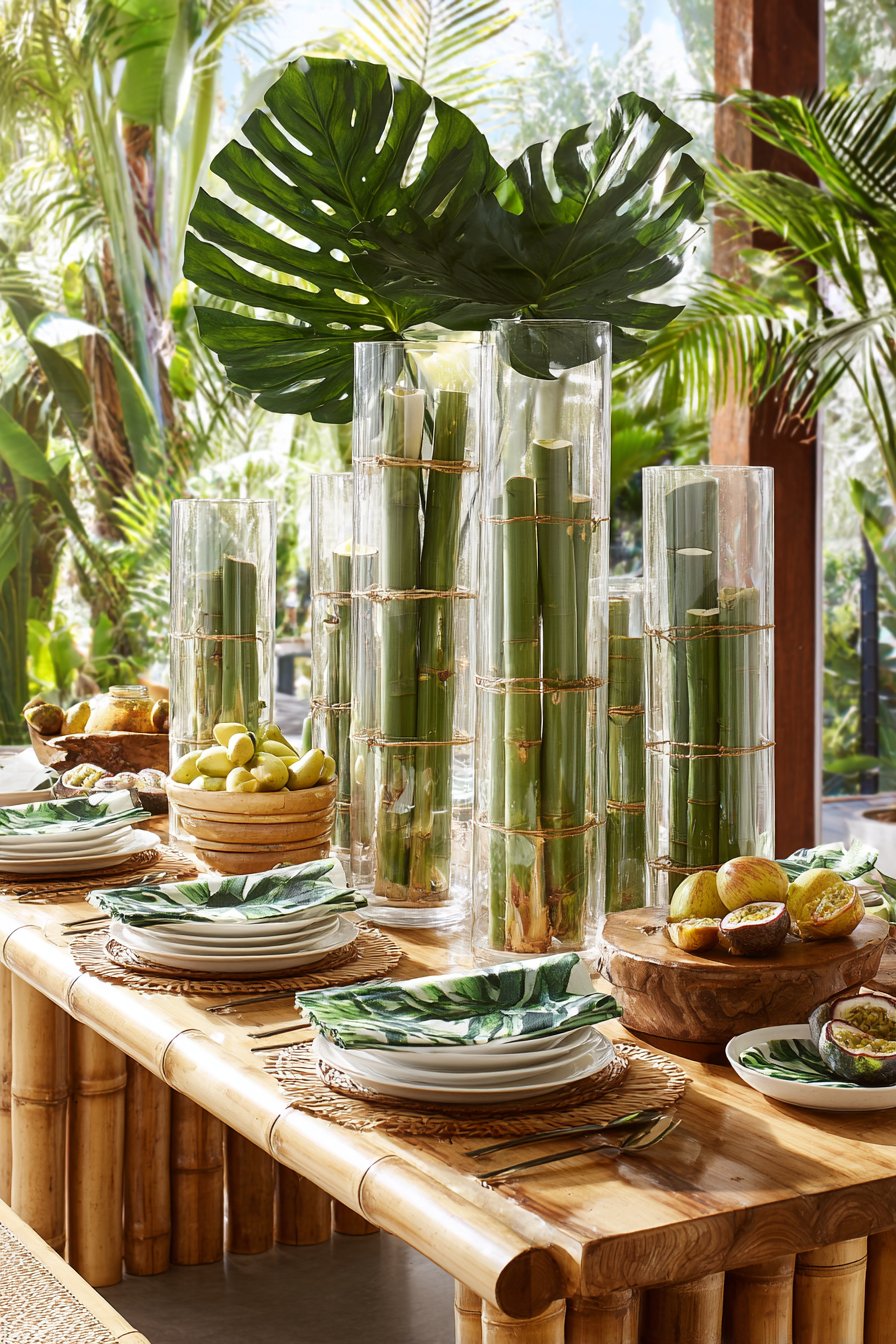
Natural bamboo table construction showcases visible joints and honey tones. Large monstera and palm leaves create dramatic vertical centerpiece elements. Tall clear glass cylinders display the tropical foliage beautifully. Woven palm leaf placemats complement the natural material focus.
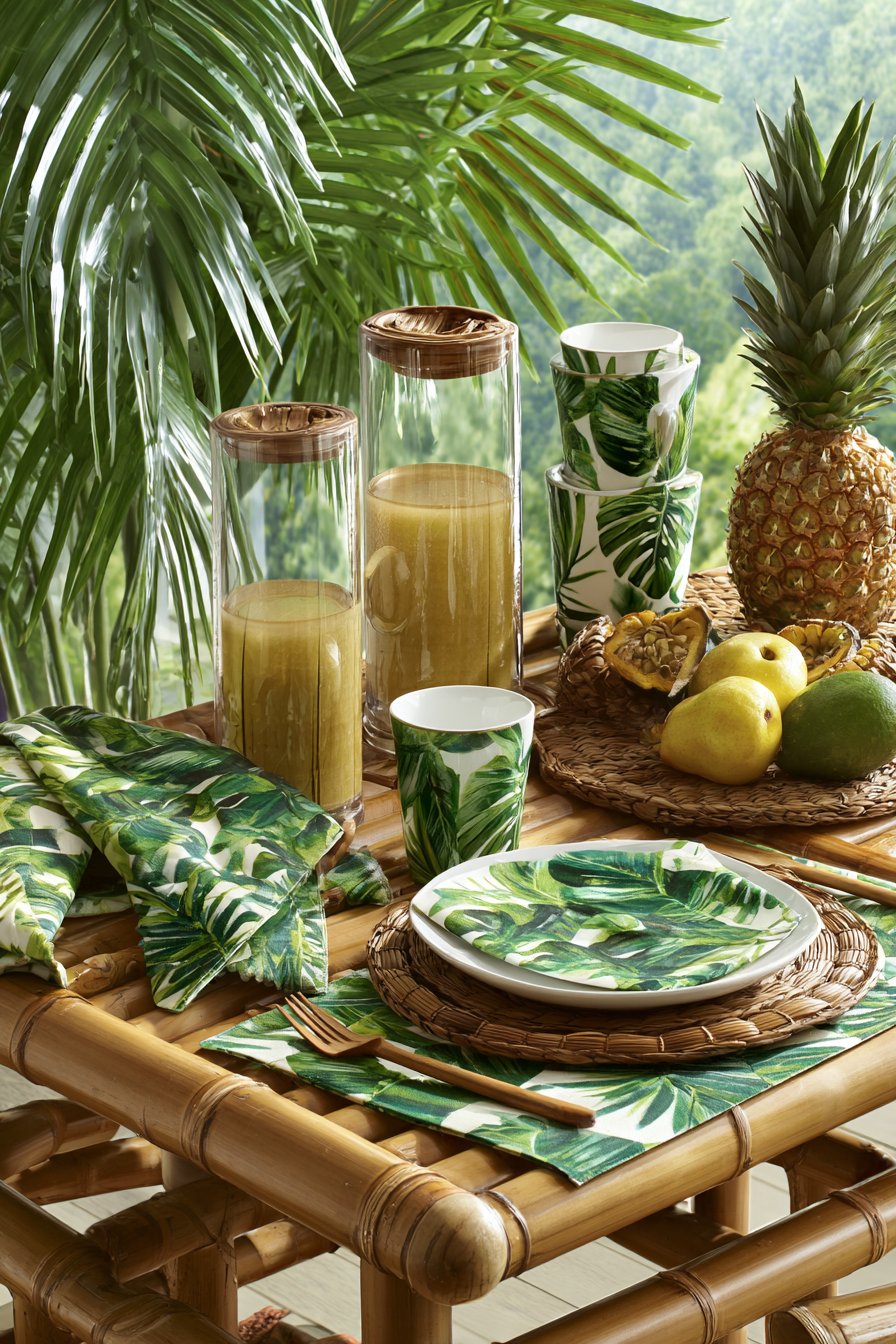
Banana leaf-printed napkins feature vibrant green patterns. White ceramic dinnerware provides clean contrast against tropical abundance. Bamboo-handled serving utensils maintain cohesive natural material theme. Fresh tropical fruits including pineapple and passion fruit serve dual purposes.
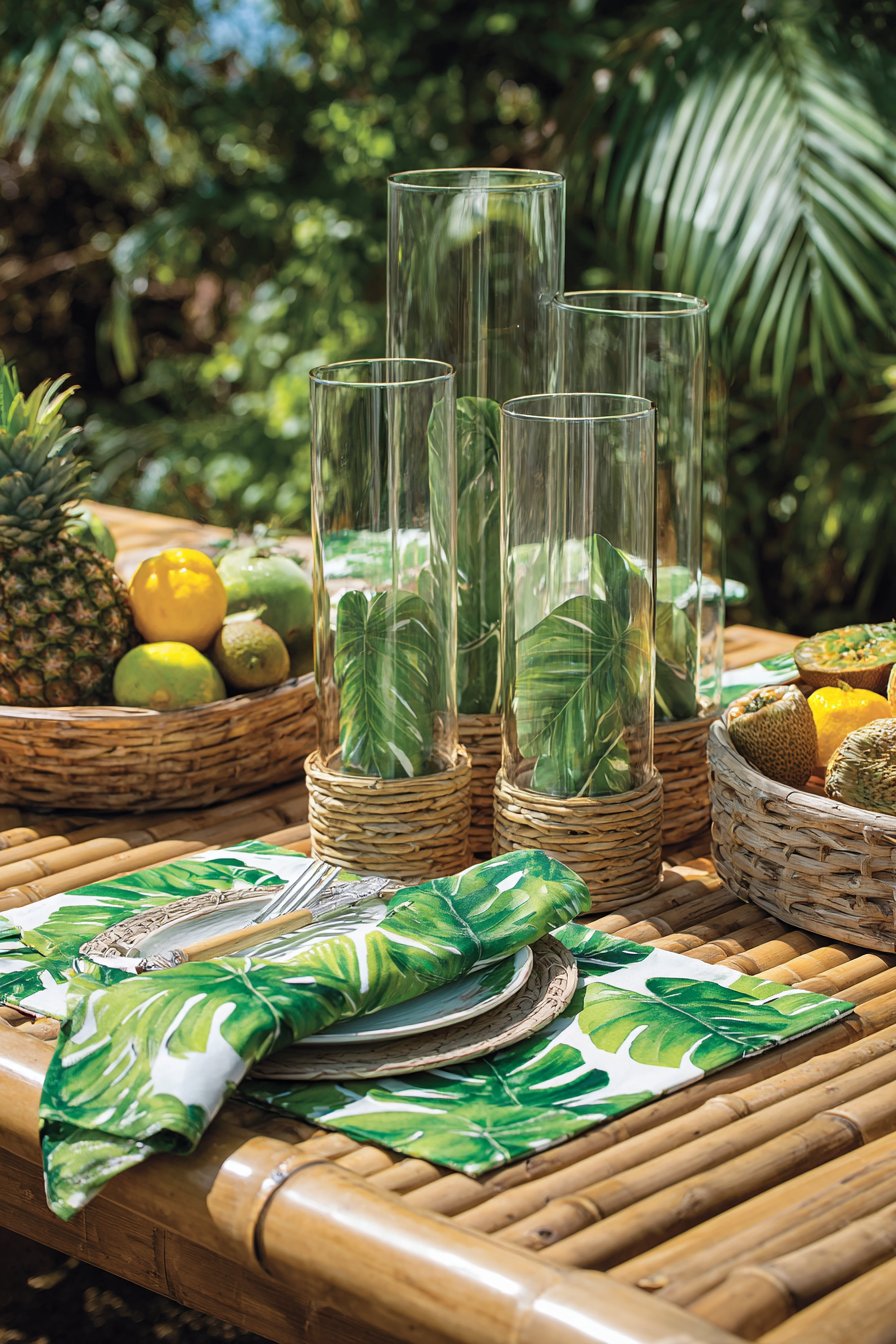
Bright natural daylight emphasizes lush green color palette. Organic textures create exotic resort aesthetic successfully. Professional interior design photography captures layered tropical elements. Natural material details receive appropriate attention and focus.
The tropical theme transports diners to paradise destinations. Every element celebrates the abundance and vitality of tropical environments. This design works perfectly for poolside entertaining and warm climate settings.
Key Design Tips:
- Select bamboo furniture with visible joints that showcase natural construction
- Use tall clear cylinders to display large tropical leaves dramatically
- Choose woven palm leaf placemats that coordinate with bamboo tones
- Display fresh tropical fruits as both decoration and refreshment
- Keep dinnerware simple white to balance abundant tropical patterns and colors
- Position table where bright natural light enhances lush green palette
9. Industrial Urban Rooftop
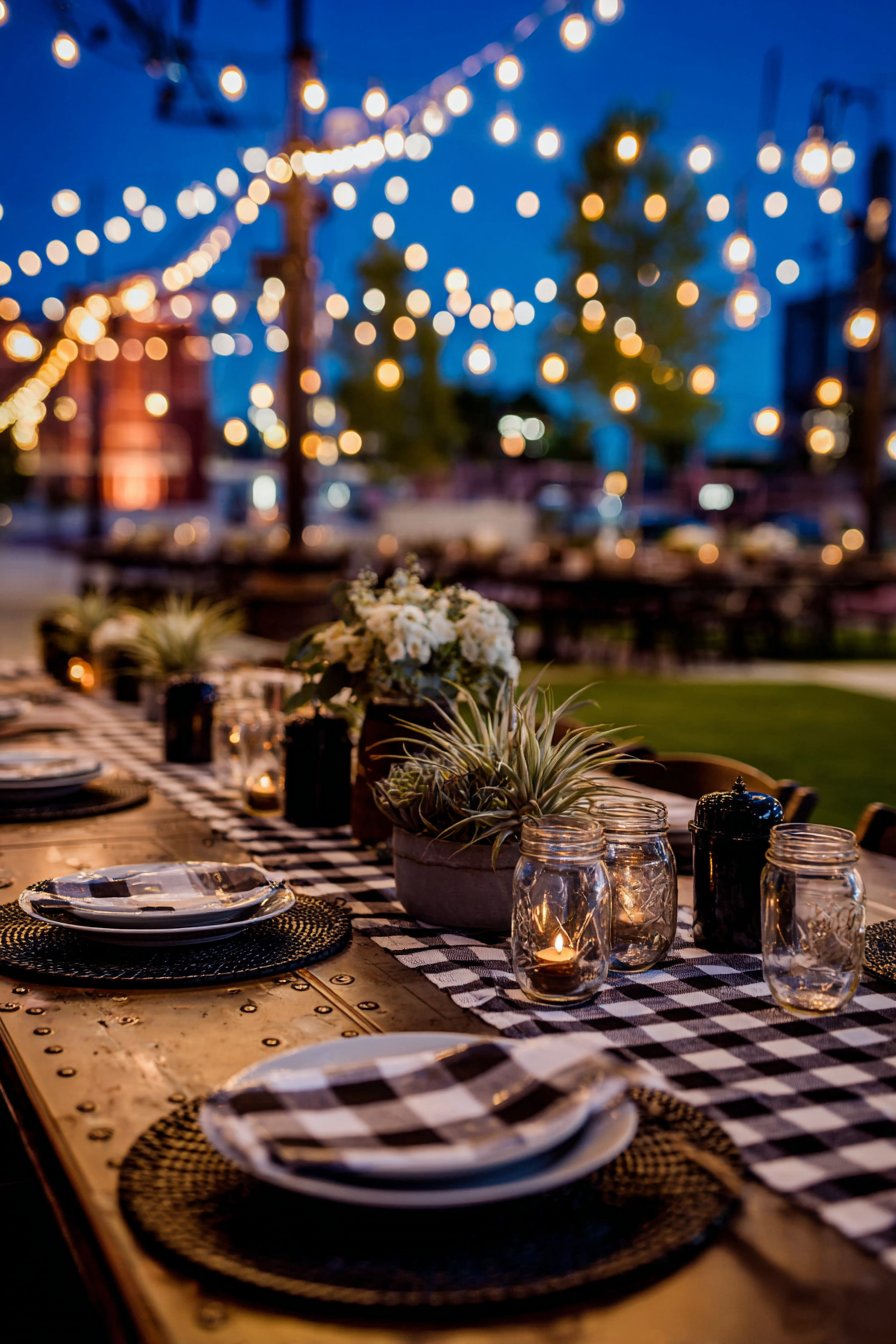
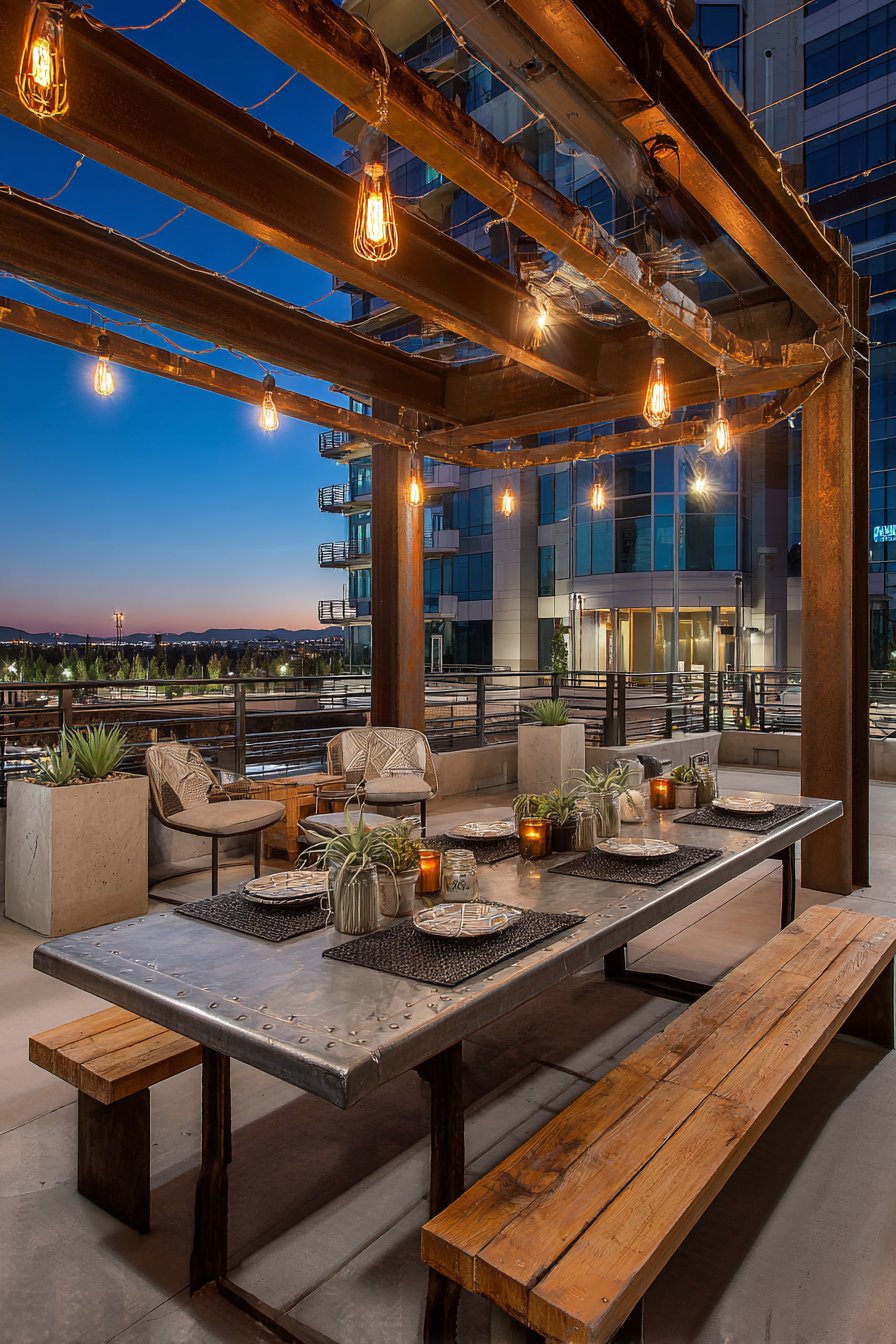
Metal-topped bar height table features riveted edges and aged zinc finish. Edison bulb string lights overhead provide ambient illumination. Urban aesthetic benefits from exposed industrial elements. Concrete planters contain low-maintenance succulents and air plants.
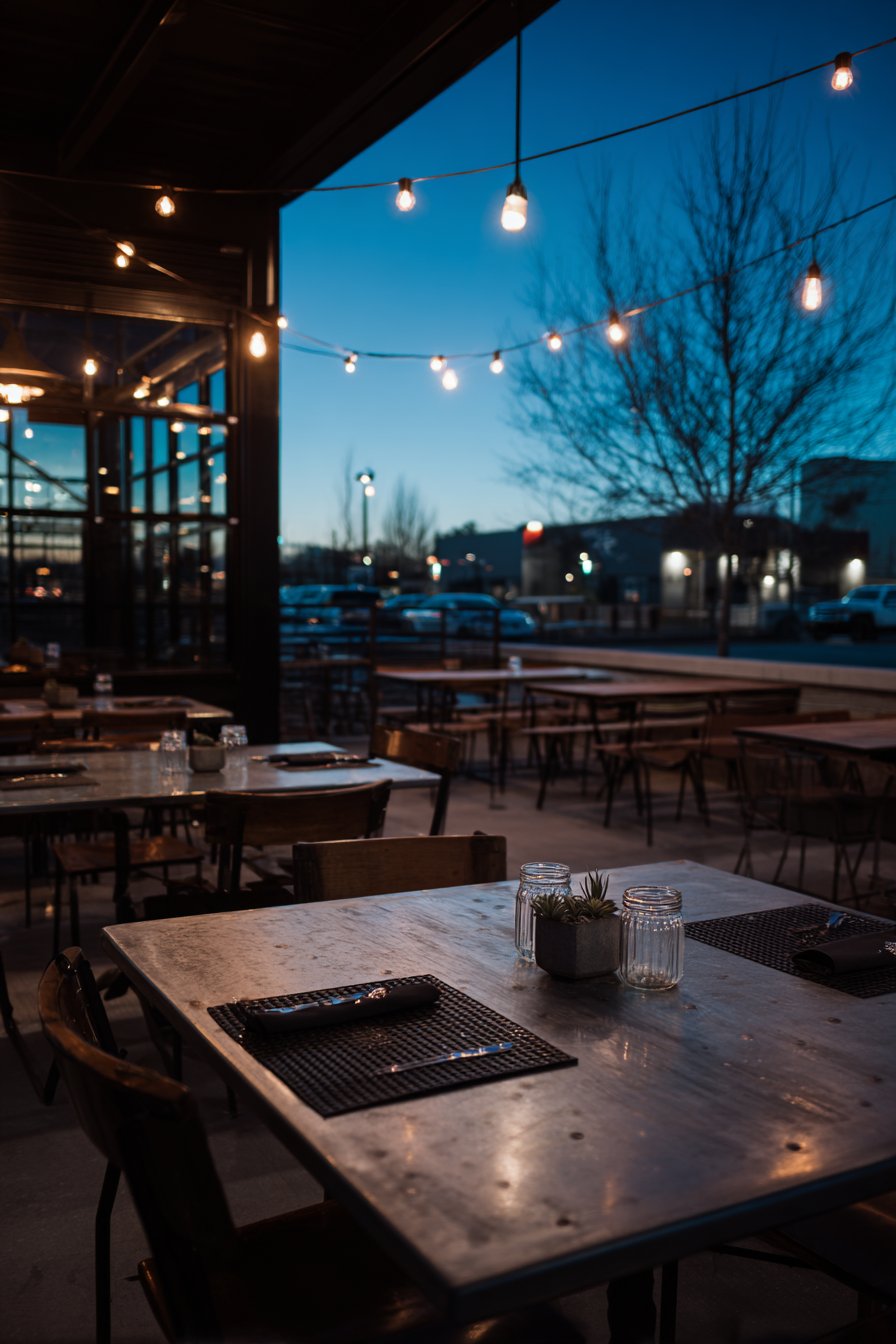
Black metal mesh placemats coordinate with restaurant-style white dinnerware. Vintage-style mason jars with metal lids serve practical drinkware purposes. Twilight photography captures Edison bulbs providing warm artificial light. Deepening blue hour sky creates dramatic backdrop.
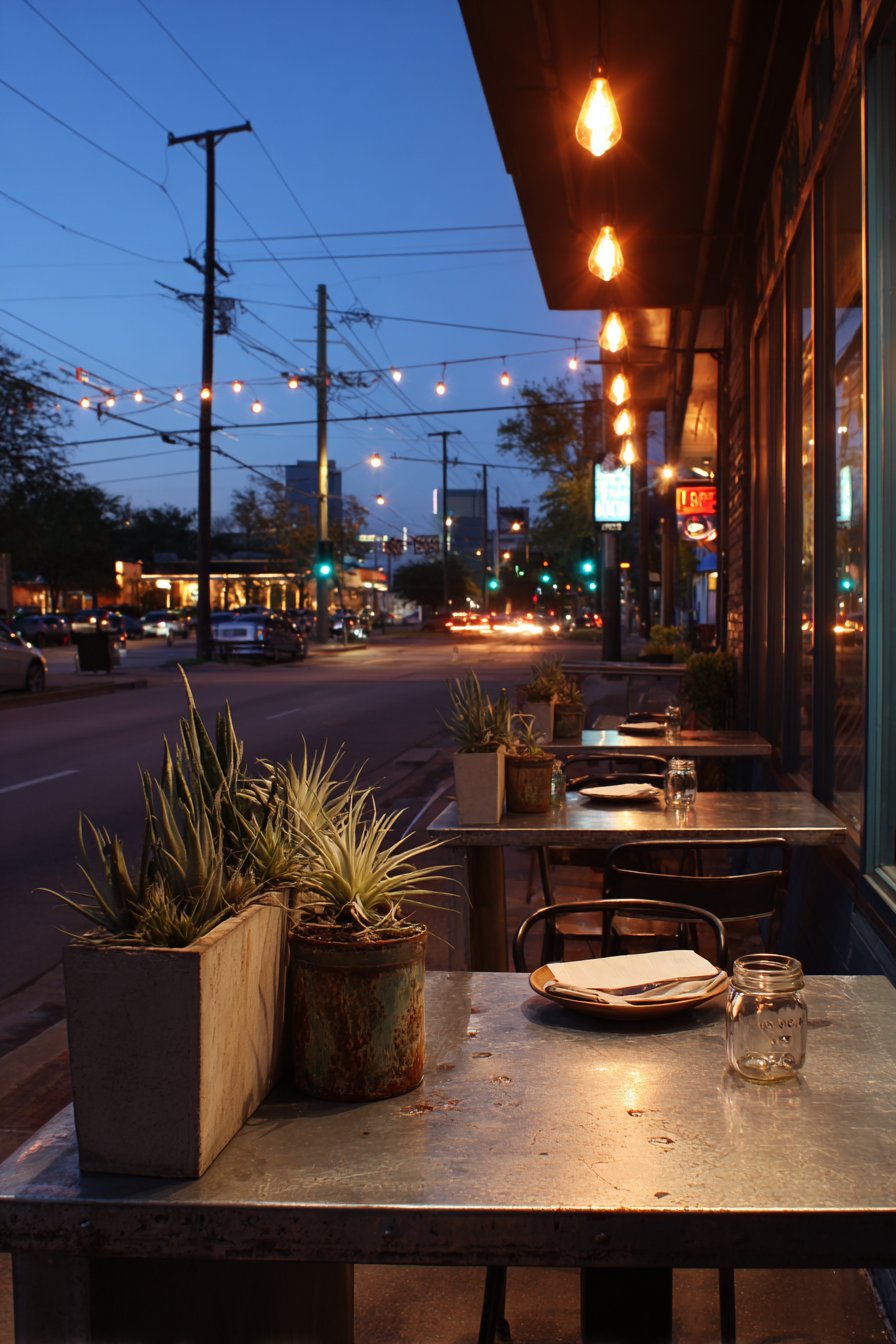
Architectural photography style emphasizes urban industrial vibe. Metal textures and weathered finishes receive detailed attention. Cool concrete contrasts beautifully with warm lighting glow. The industrial approach brings urban sophistication to outdoor spaces.
This design works particularly well for city rooftops and modern lofts. Raw materials and utilitarian elements create contemporary edge. Industrial style proves that beauty exists in honest materials.
Key Design Tips:
- Choose metal tables with riveted details or aged zinc finishes
- String Edison bulb lights overhead for ambient industrial-style illumination
- Use concrete planters for low-maintenance succulents and air plants
- Select black metal mesh accessories that reference restaurant supply aesthetics
- Photograph during blue hour when artificial lights contrast with twilight sky
- Embrace weathered and aged finishes rather than pristine new materials
10. Vintage Garden Party Romance
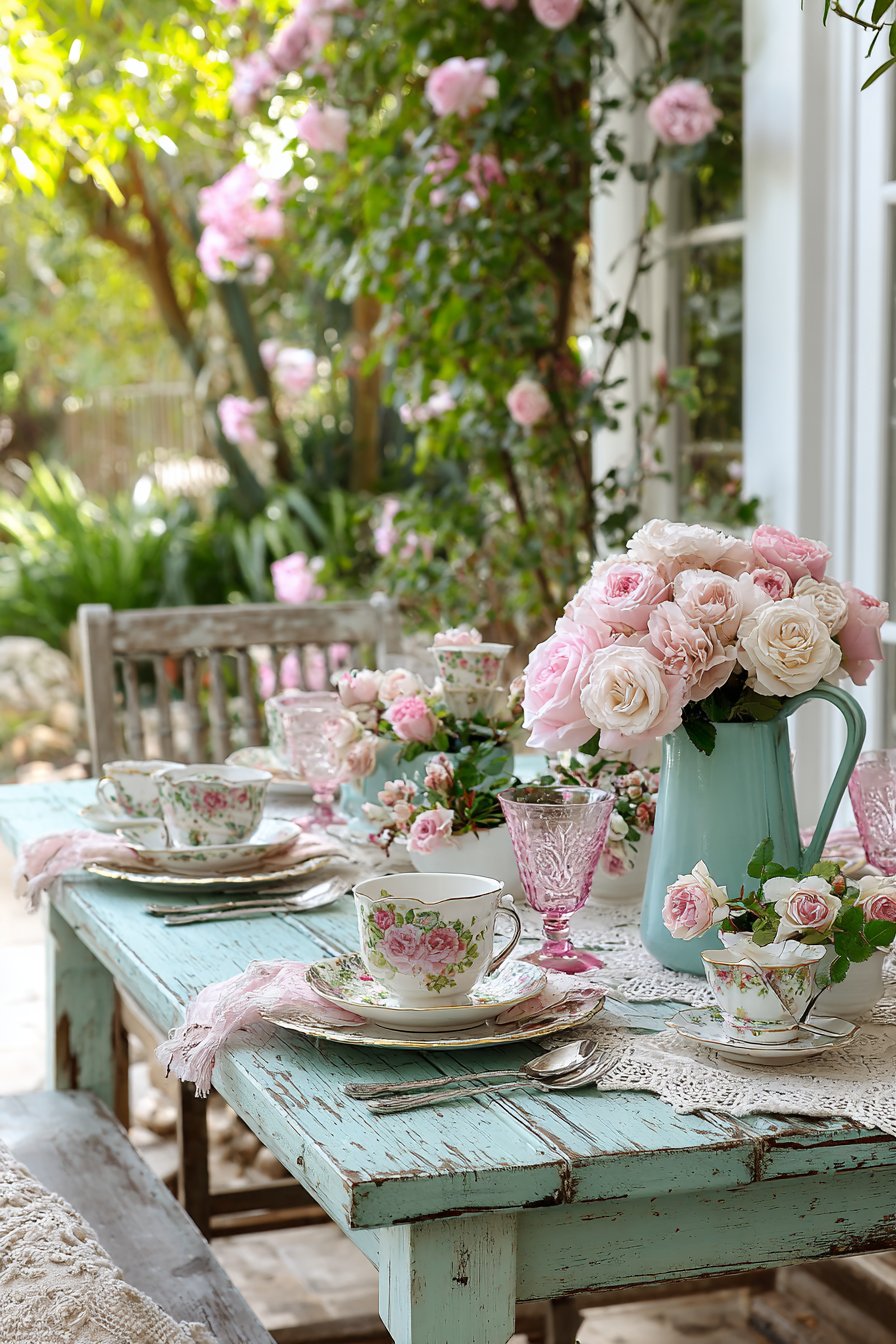
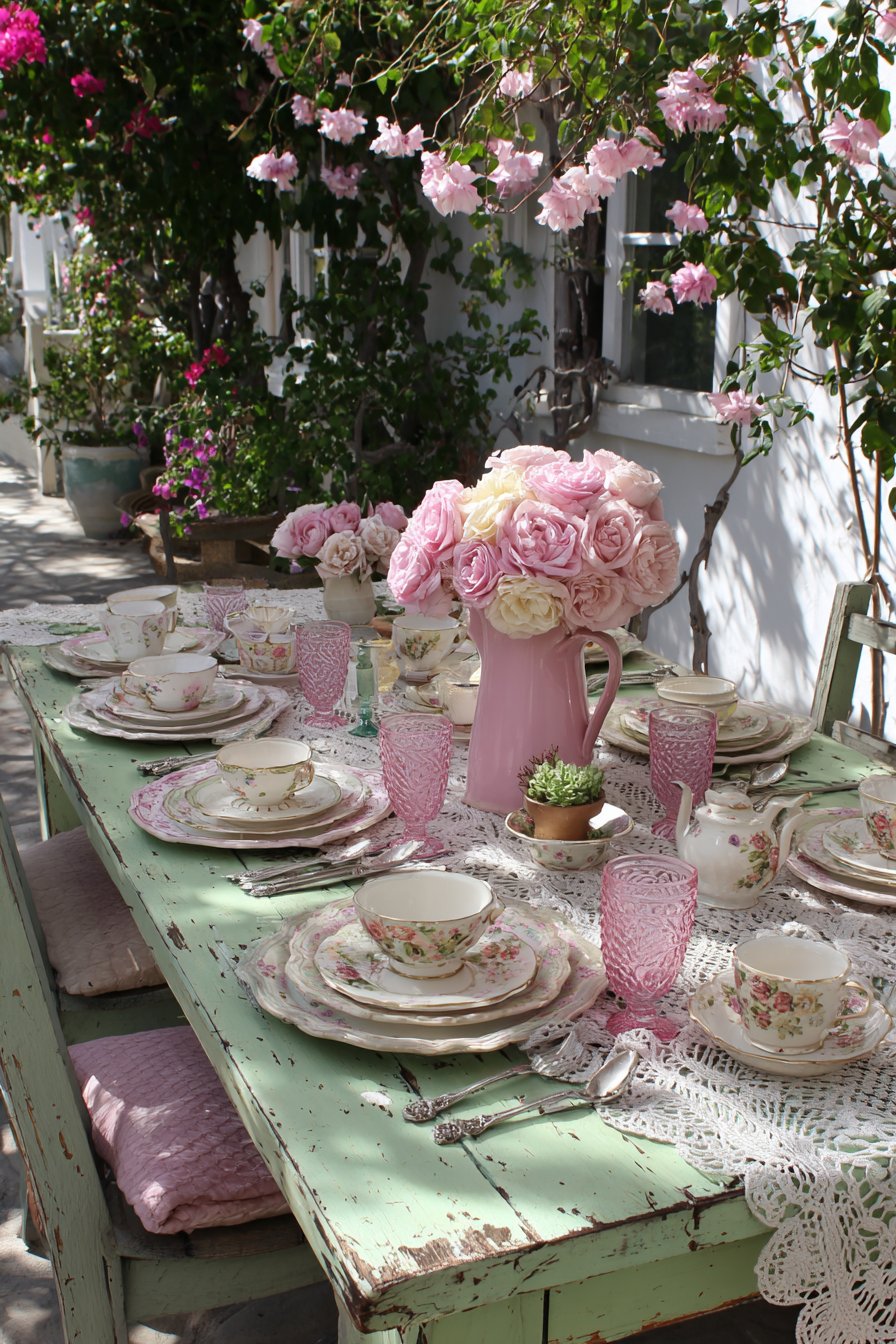
Distressed painted wood table features soft sage green finish. Deliberately worn edges reveal white primer beneath the surface. Vintage teacups and saucers in mismatched floral patterns serve as planters. Small flowering annuals and herbs grow charmingly in repurposed china.
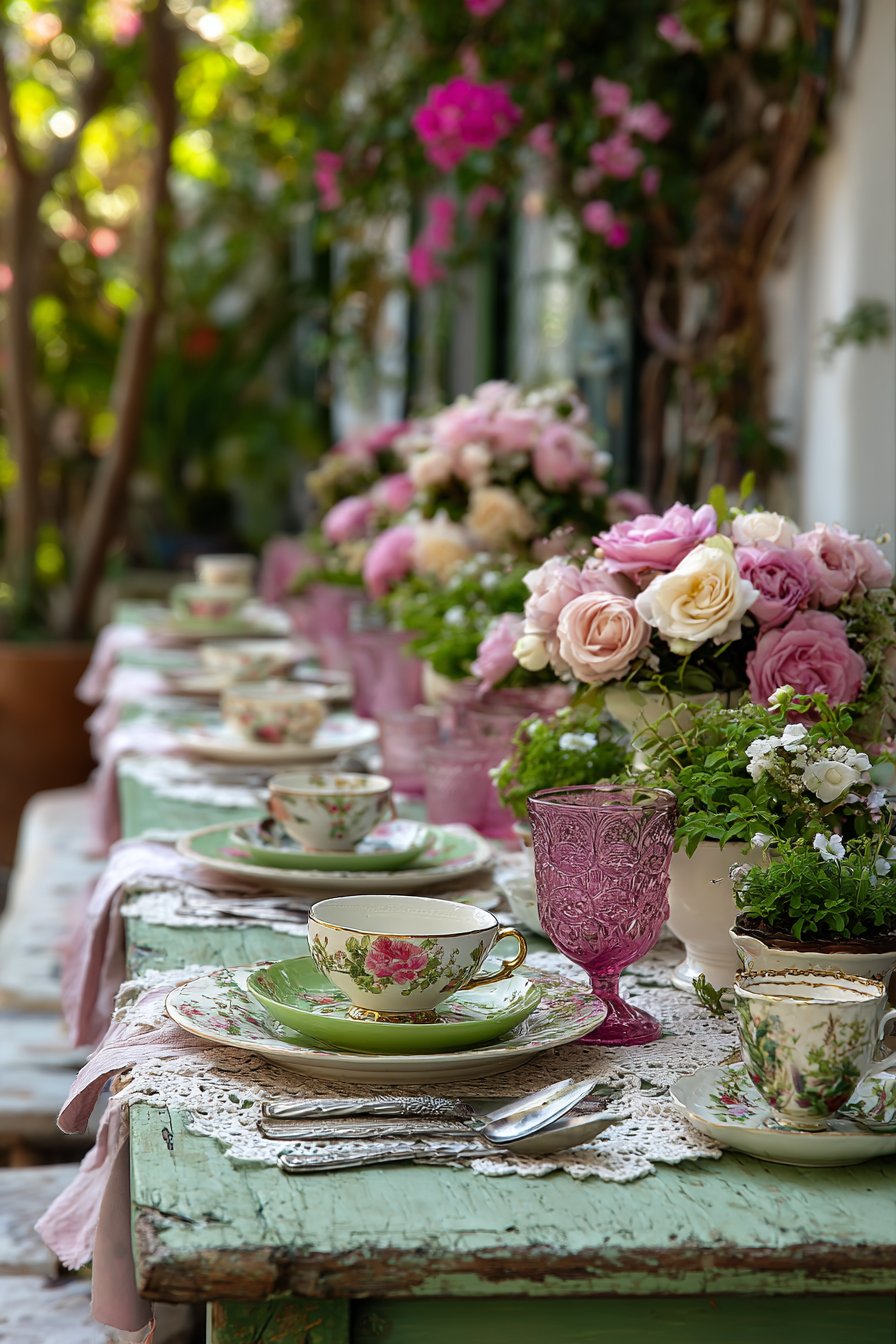
Delicate lace doilies layer beneath each individual place setting. Pink depression glass creates romantic vintage aesthetic. Antique silver-plated flatware showcases ornate decorative patterns. Fresh garden roses overflow from vintage enamel pitcher centerpiece.
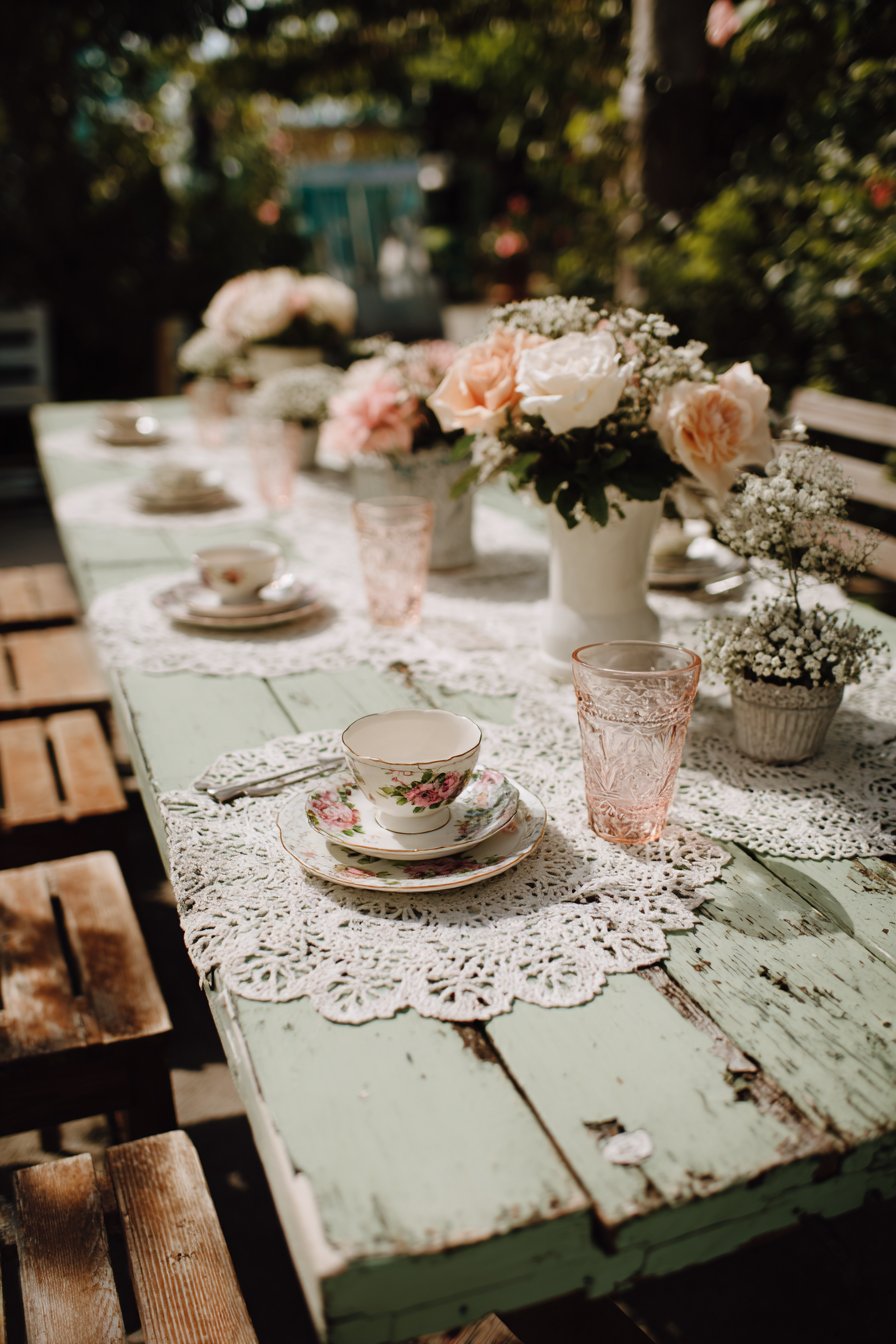
Soft morning light filters through nearby flowering bushes. Dreamy garden party atmosphere emerges from thoughtful styling. Professional interior photography captures romantic shabby-chic aesthetic. Delicate details and pastel color palette receive careful attention.
The vintage garden party theme celebrates nostalgia and femininity. Every element references grandmother’s garden and afternoon tea traditions. This design creates magical settings for special celebrations.
Key Design Tips:
- Paint wooden tables in soft pastels and distress edges for shabby-chic character
- Repurpose vintage teacups as charming small planters for herbs and flowers
- Layer lace doilies under place settings for delicate romantic texture
- Collect pink depression glass in various pieces for cohesive vintage look
- Use antique silver-plated flatware with ornate patterns and visible patina
- Arrange fresh garden roses in vintage enamel pitchers or watering cans
11. Scandinavian Nordic Simplicity
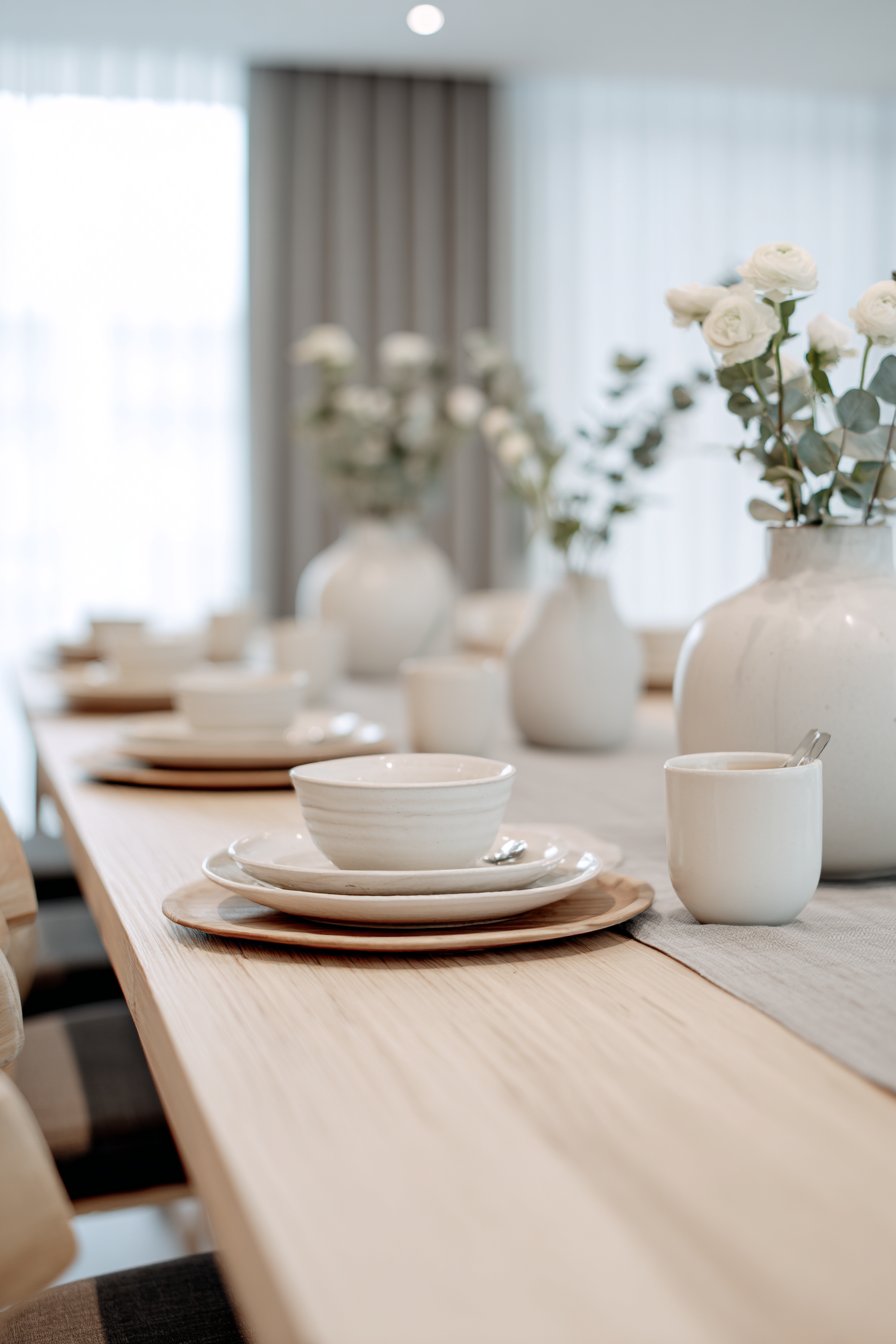
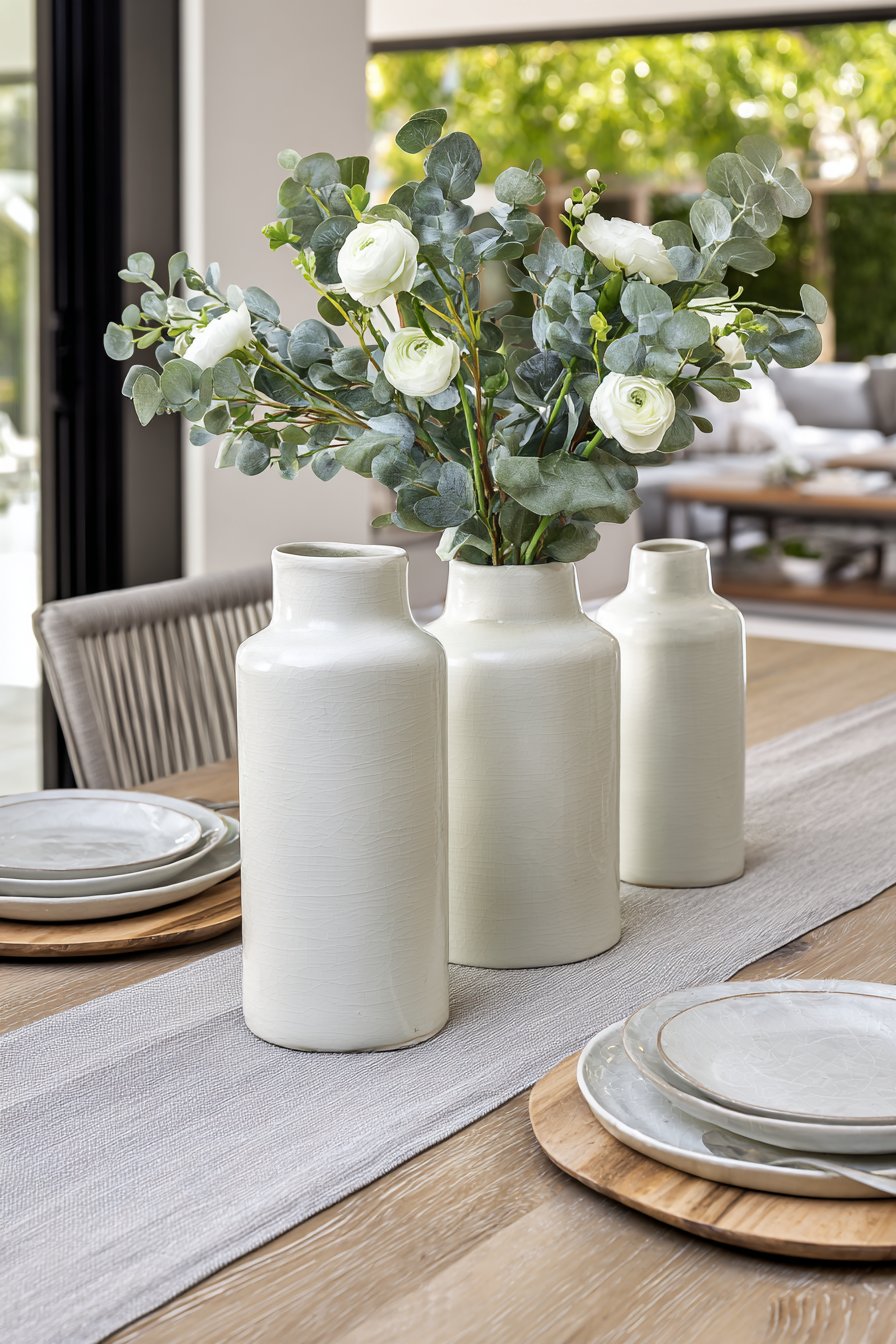
Light blonde ash wood table shows minimal grain and matte finish. Simple white ceramic vessels hold single stem eucalyptus arrangements. Varying vessel heights create subtle visual interest without complexity. Pale grey linen table runner provides understated texture.
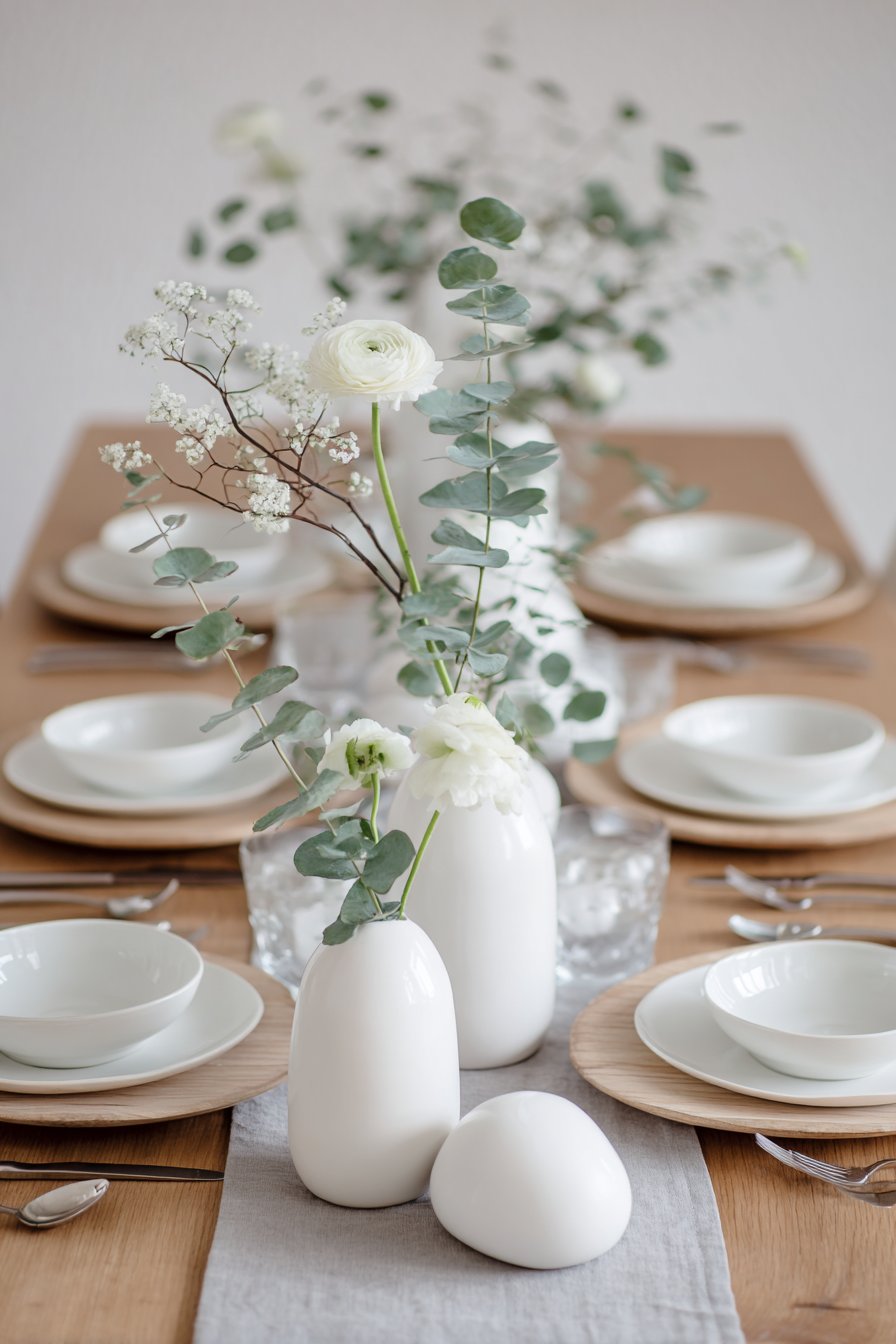
White porcelain dinnerware features slight organic shape variations. Natural birch wood chargers ground each place setting. Brushed stainless steel flatware maintains Nordic minimalism perfectly. Bright diffused natural light characteristic of Nordic summers illuminates evenly.
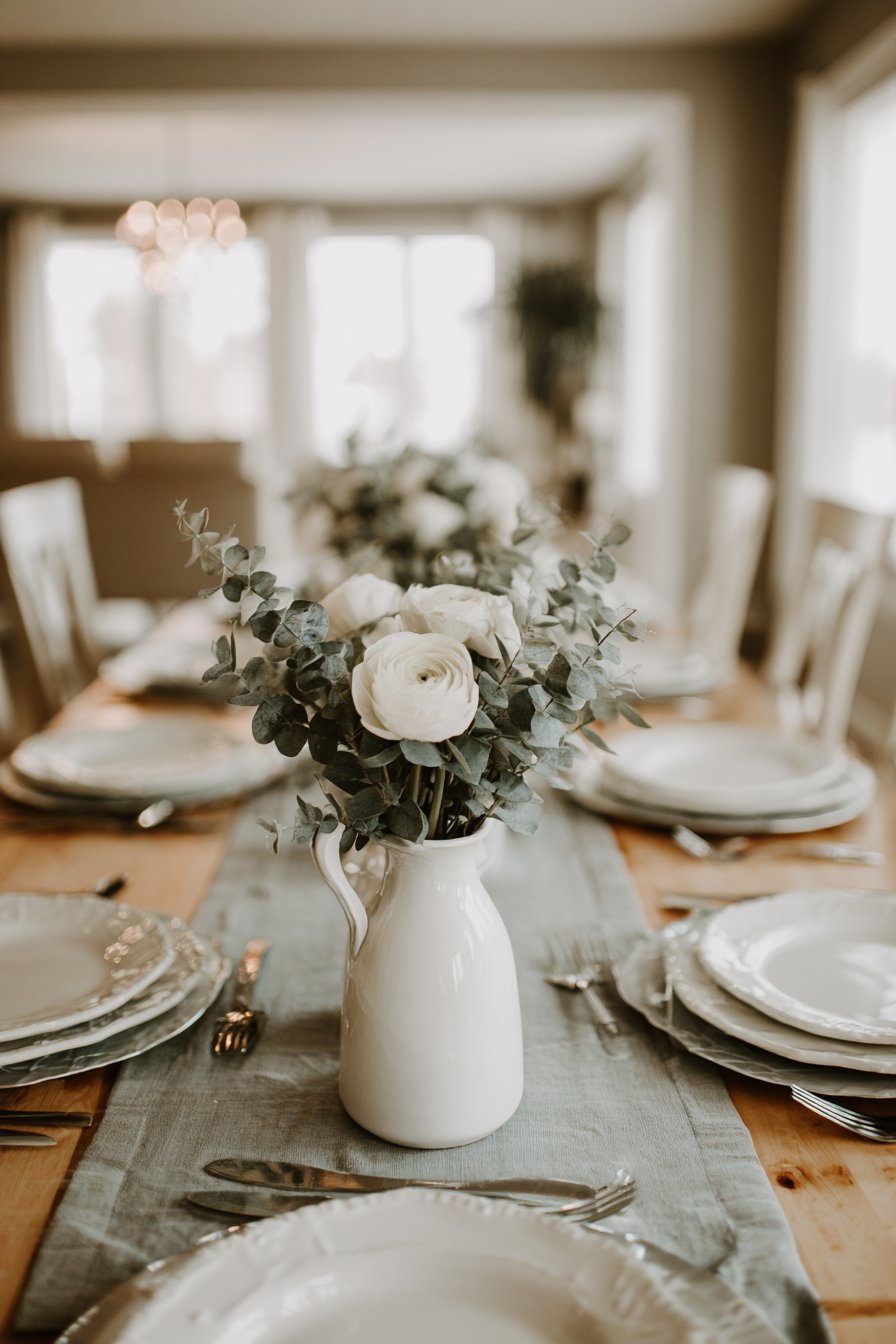
Wide-angle interior photography emphasizes serene simplicity. Functional beauty emerges through restrained design choices. Natural wood, white ceramics, and organic plant elements interact beautifully. Limited color palette creates calming cohesive appearance.
Scandinavian style proves that simplicity requires thoughtful curation. Every element serves purpose while contributing to peaceful aesthetic. This approach creates tranquil outdoor dining environments.
Key Design Tips:
- Choose light blonde woods like ash or birch for authentic Nordic aesthetic
- Use single stem arrangements rather than abundant floral displays
- Limit color palette to whites, pale greys, and natural wood tones
- Select dinnerware with organic shapes that reference natural forms
- Keep all decorative elements minimal and purposeful without excess
- Photograph in bright diffused light that mimics Nordic summer conditions
12. Autumn Harvest Celebration
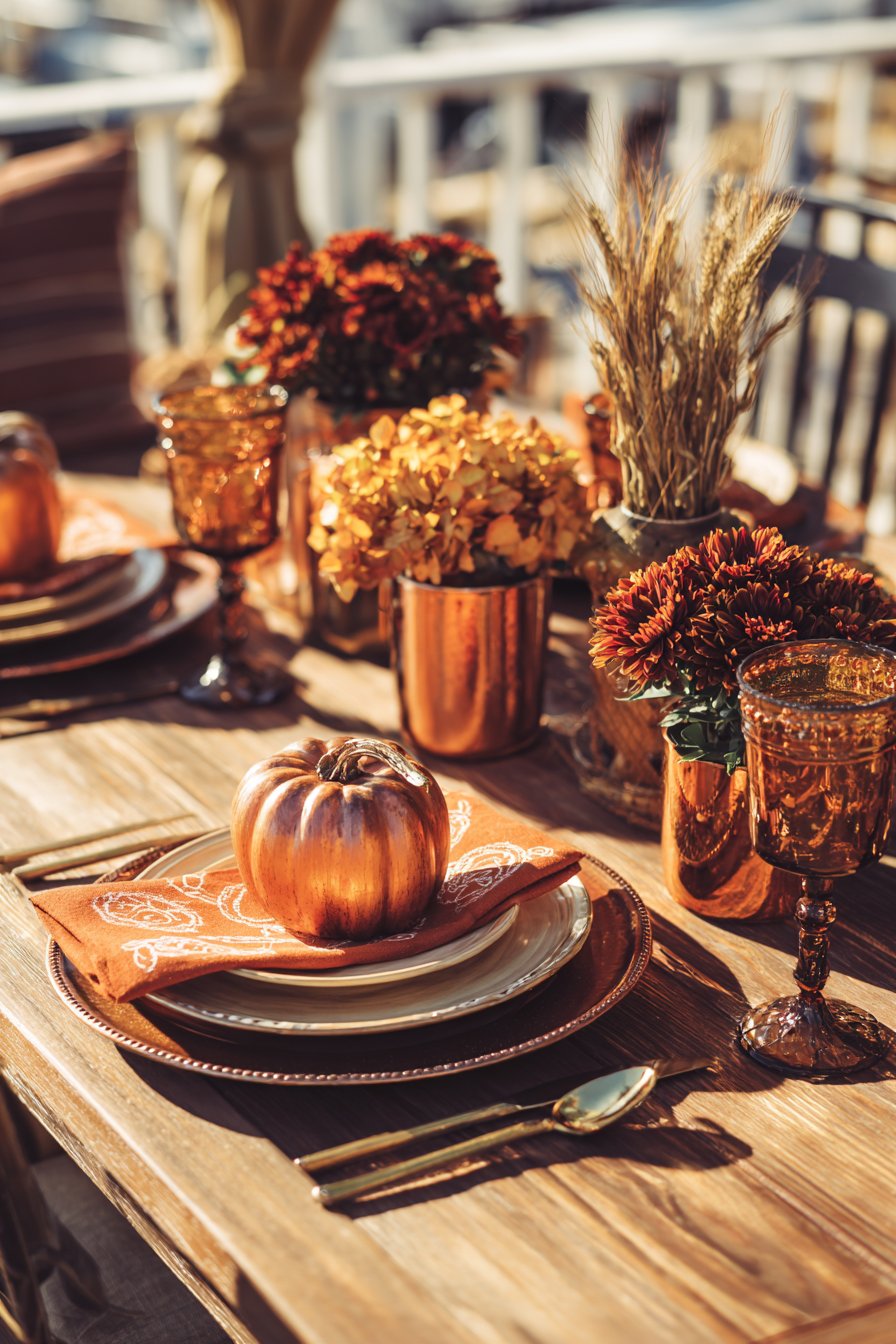
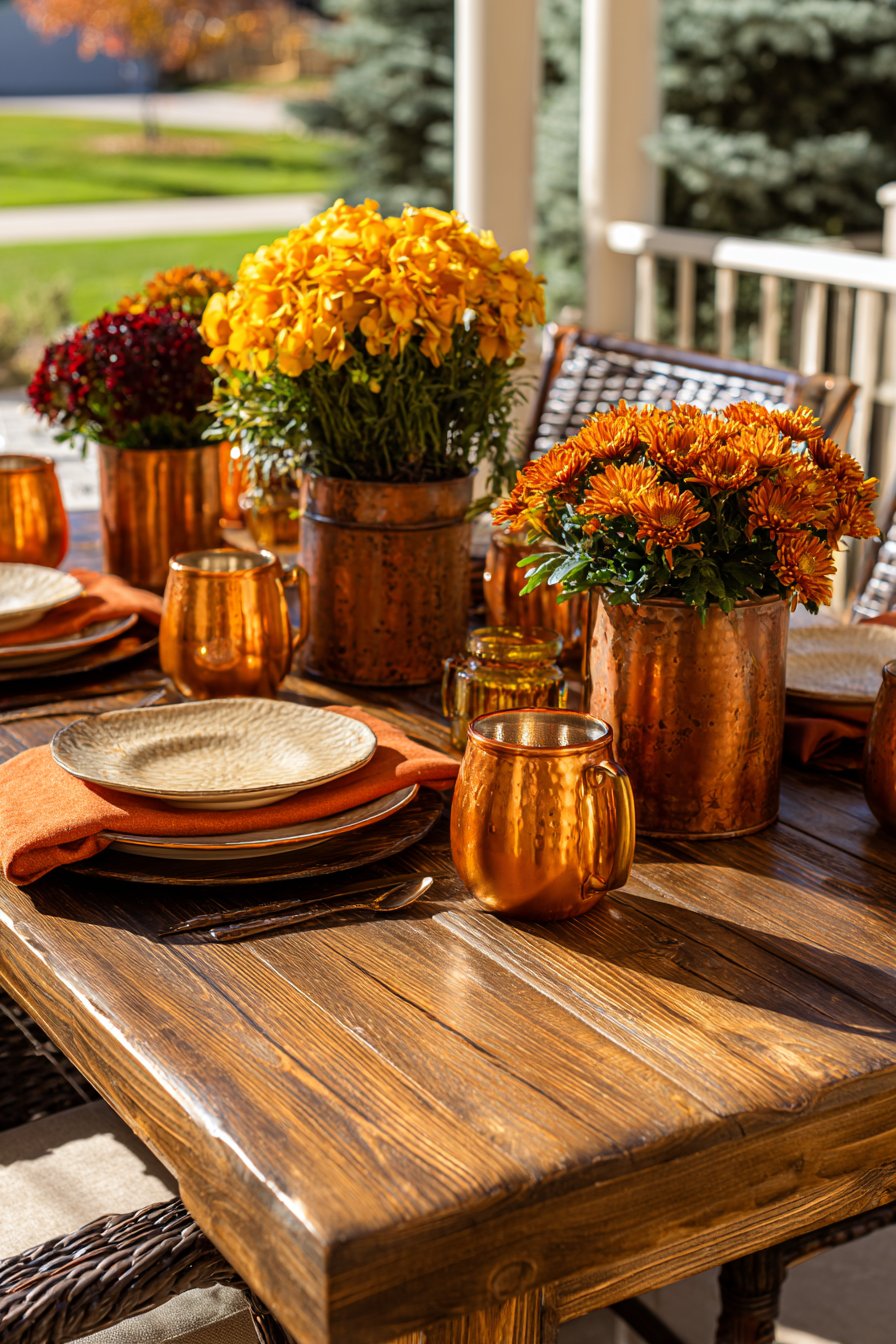
Solid oak table displays rich medium brown tones and pronounced grain. Copper planters in varying sizes hold seasonal mums. Burnt orange, deep burgundy, and golden yellow create autumn palette. Wheat stalks and dried hydrangeas provide textural harvest elements.
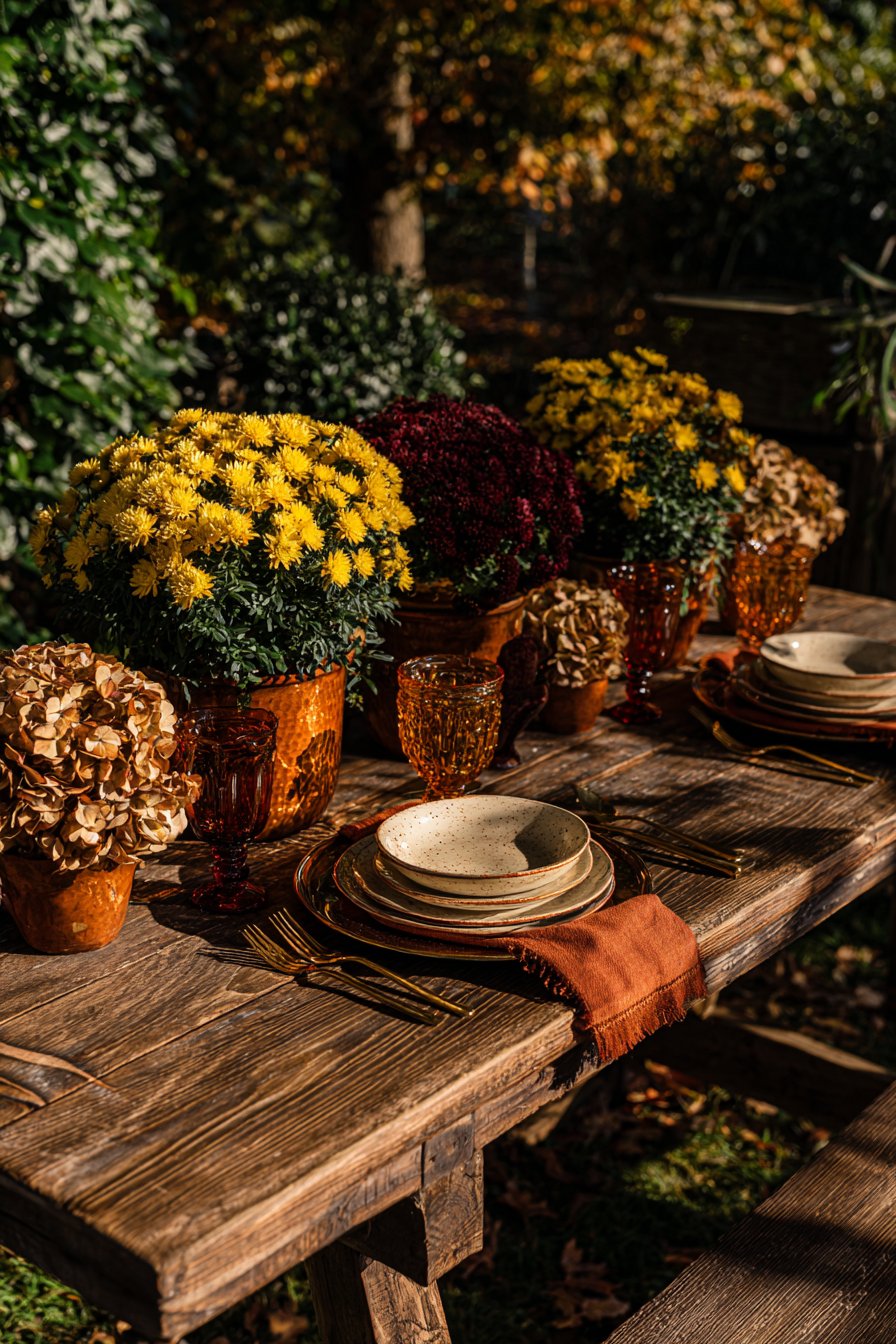
Terracotta-colored napkins coordinate with cream ceramic plates. Subtle reactive glaze variations add organic interest. Antique brass flatware and amber glass goblets enhance metallic accent theme. Late afternoon autumn sunlight creates dramatic long shadows.
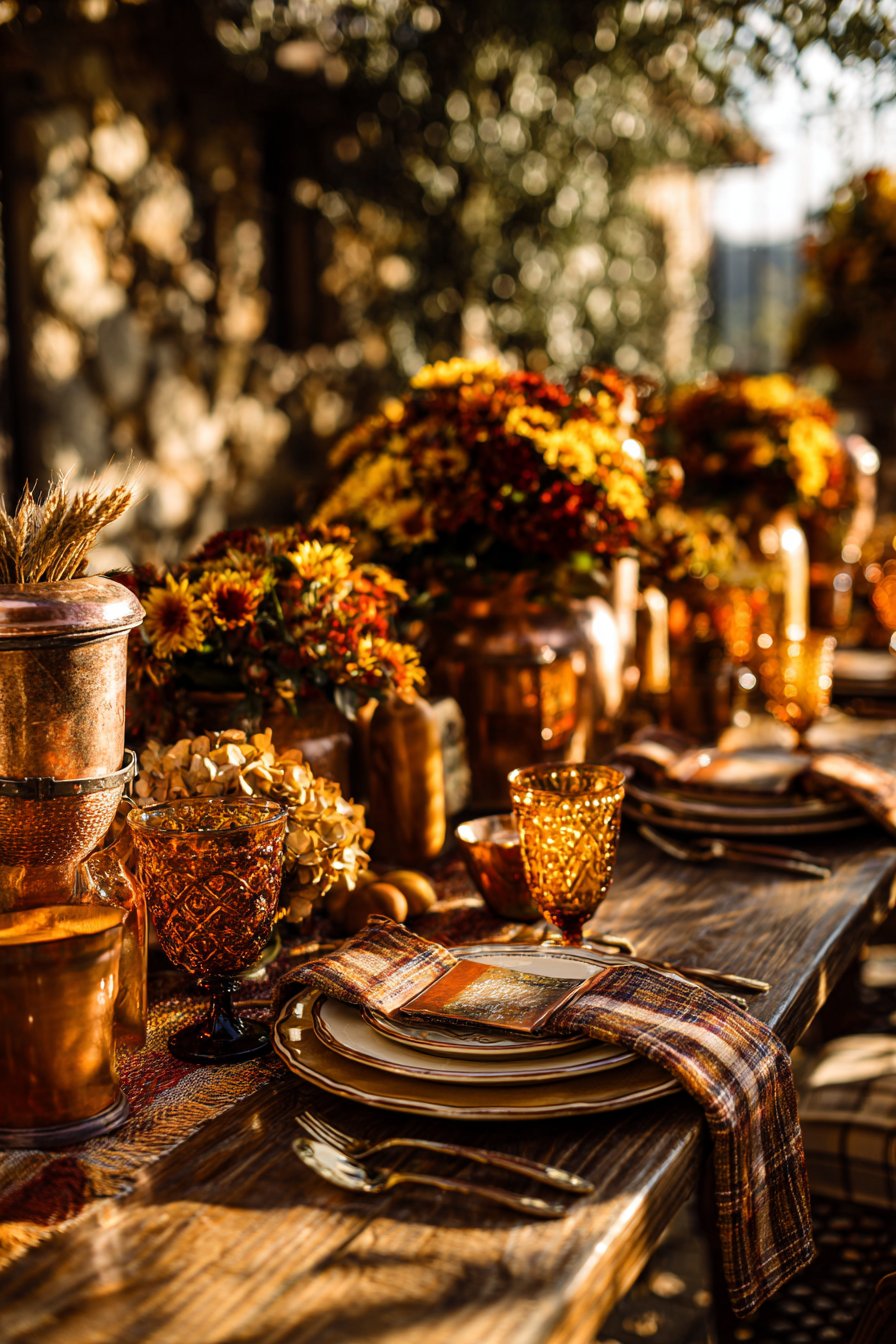
Rich warm color palette defines this seasonal approach. Professional interior design photography captures abundant harvest atmosphere. Layered warm tones and natural materials succeed beautifully. Golden afternoon lighting emphasizes characteristic fall qualities.
The autumn theme celebrates seasonal abundance and cozy gatherings. Every element reflects harvest time warmth and gratitude. This design works perfectly for Thanksgiving and fall entertaining.
Key Design Tips:
- Use solid oak tables that showcase pronounced wood grain naturally
- Display seasonal mums in copper planters for authentic autumn metallics
- Layer wheat stalks, dried hydrangeas, and fall foliage for textural abundance
- Choose terracotta and cream tones that echo fall color palette
- Incorporate antique brass and amber glass for warm metallic accents
- Position table where late afternoon light creates dramatic golden glow
13. Japanese Zen Garden Tranquility
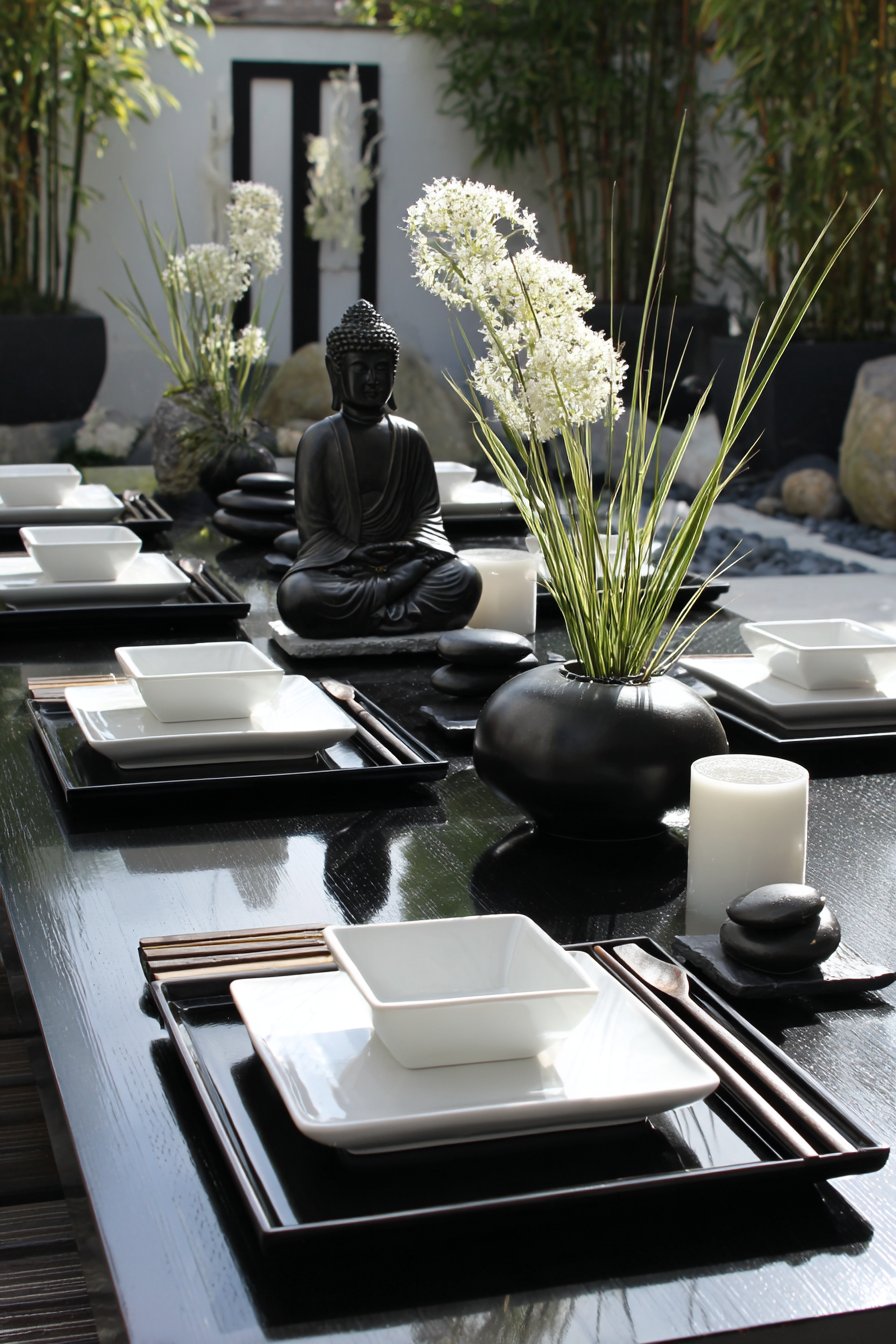
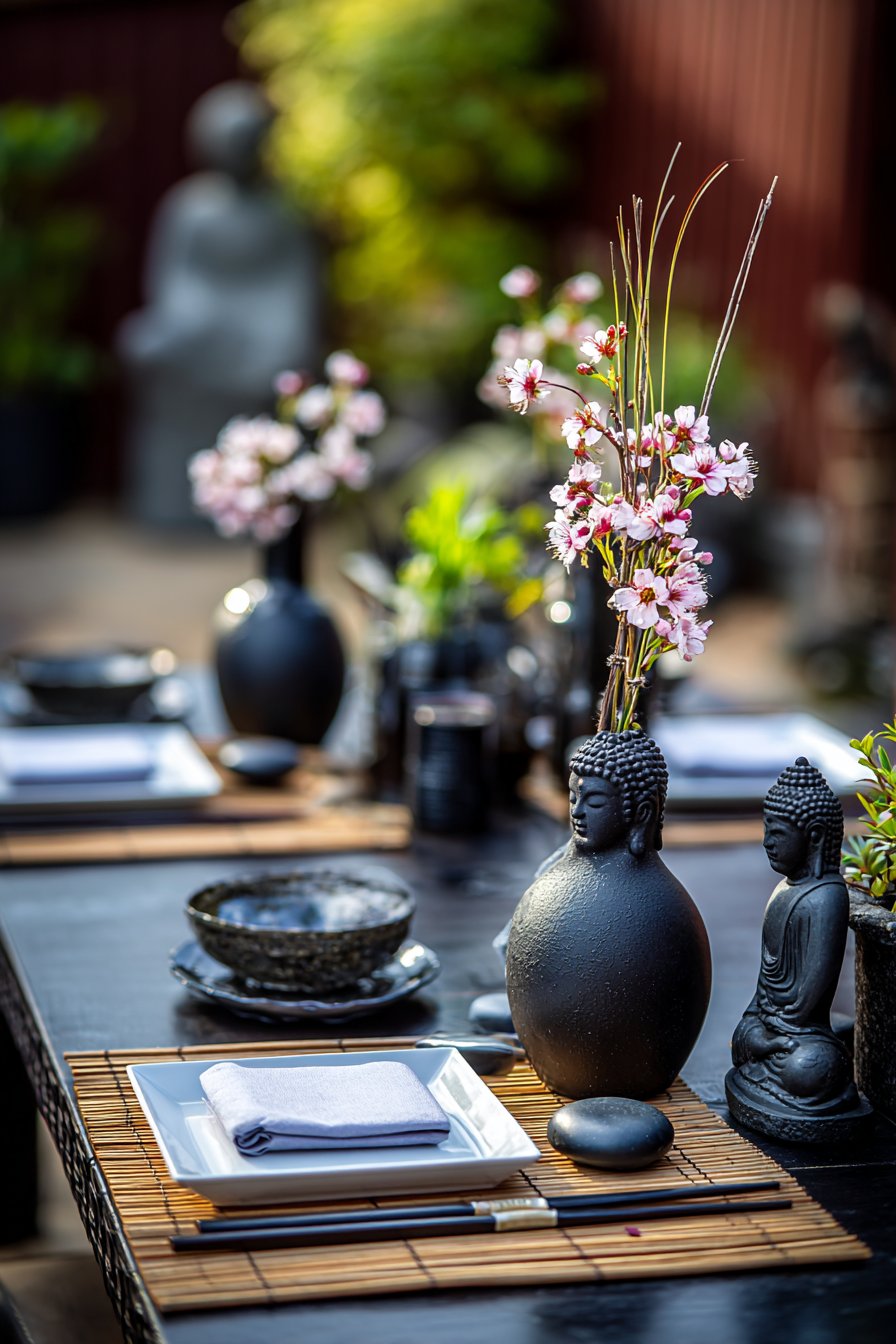
Low black lacquered table features smooth reflective finish. Minimalist ikebana arrangements follow traditional asymmetric principles. Black ceramic vases hold carefully positioned cherry blossoms. Ornamental grasses add subtle movement to arrangements.
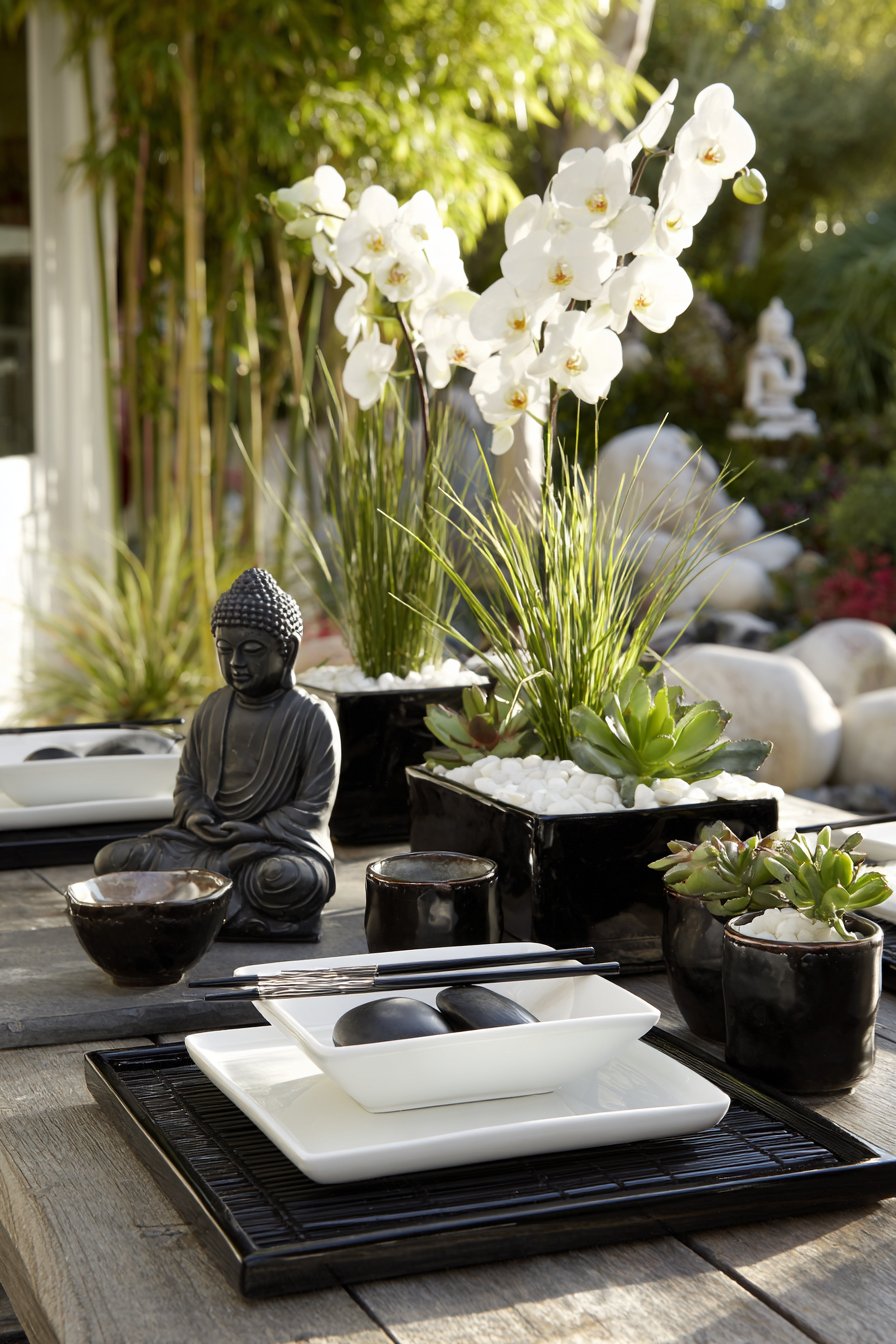
Natural bamboo placemats anchor simple white square plates. Small sake cups complete the traditional Japanese table setting. Black chopsticks rest on ceramic holders shaped like river stones. Buddha statue and smooth black river rocks create zen centerpiece.
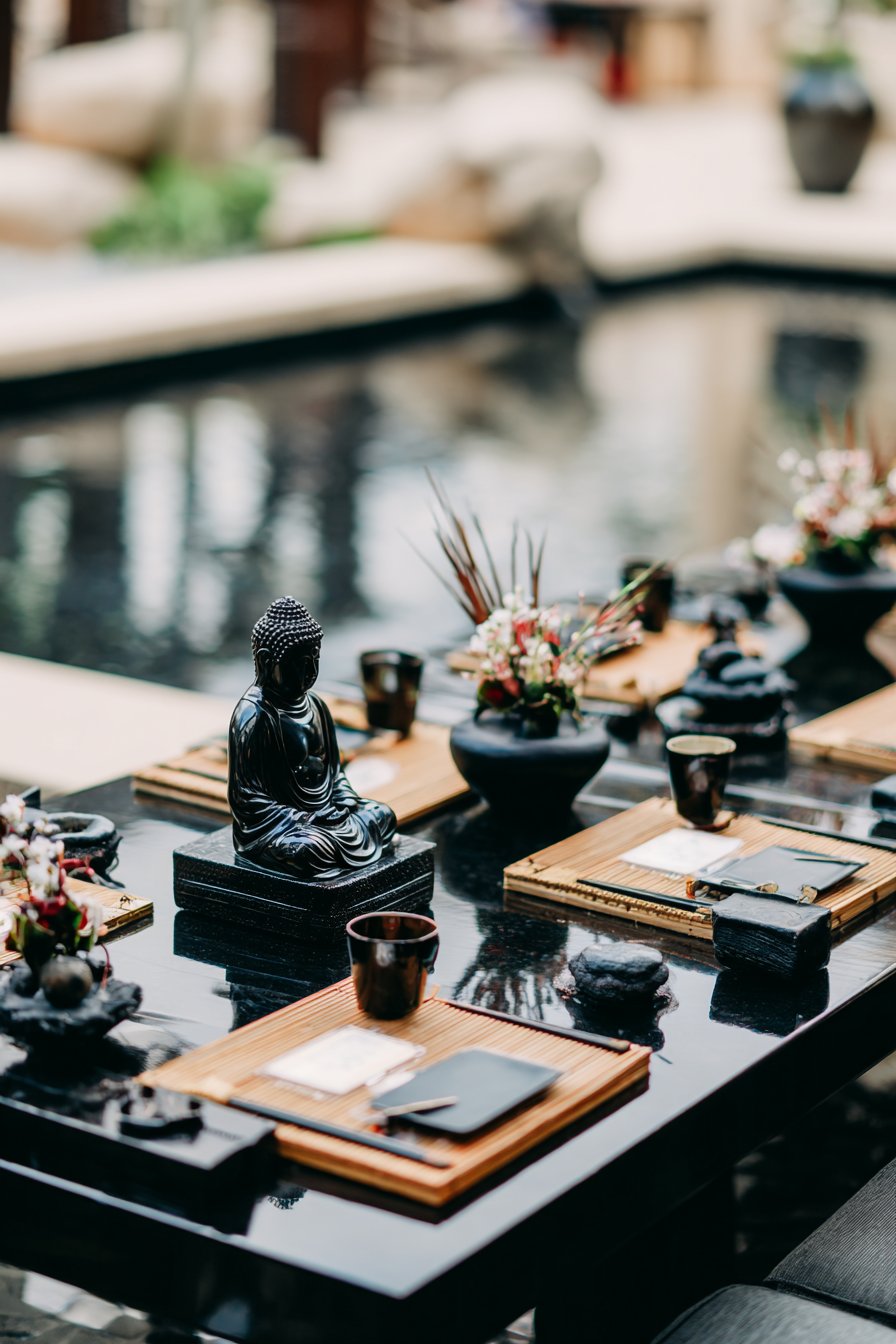
Soft filtered natural light mimics traditional Japanese garden illumination. Architectural photography captures contemplative aesthetic expertly. Negative space receives equal importance as placed elements. Balance between natural organic materials and refined lacquered surfaces succeeds.
Japanese-inspired design emphasizes mindfulness and intentional placement. Every element occupies purposeful position within the composition. This approach creates meditative outdoor dining experiences.
Key Design Tips:
- Choose low tables with black lacquer finish for authentic Japanese aesthetic
- Study ikebana principles for asymmetric arrangements with intentional negative space
- Use natural bamboo placemats that complement black lacquered surfaces
- Incorporate smooth river stones and Buddha statues for zen garden elements
- Select black ceramic vases and serving pieces for cohesive dark palette
- Filter natural light to create soft gentle illumination without harsh shadows
14. Festive Summer Celebration
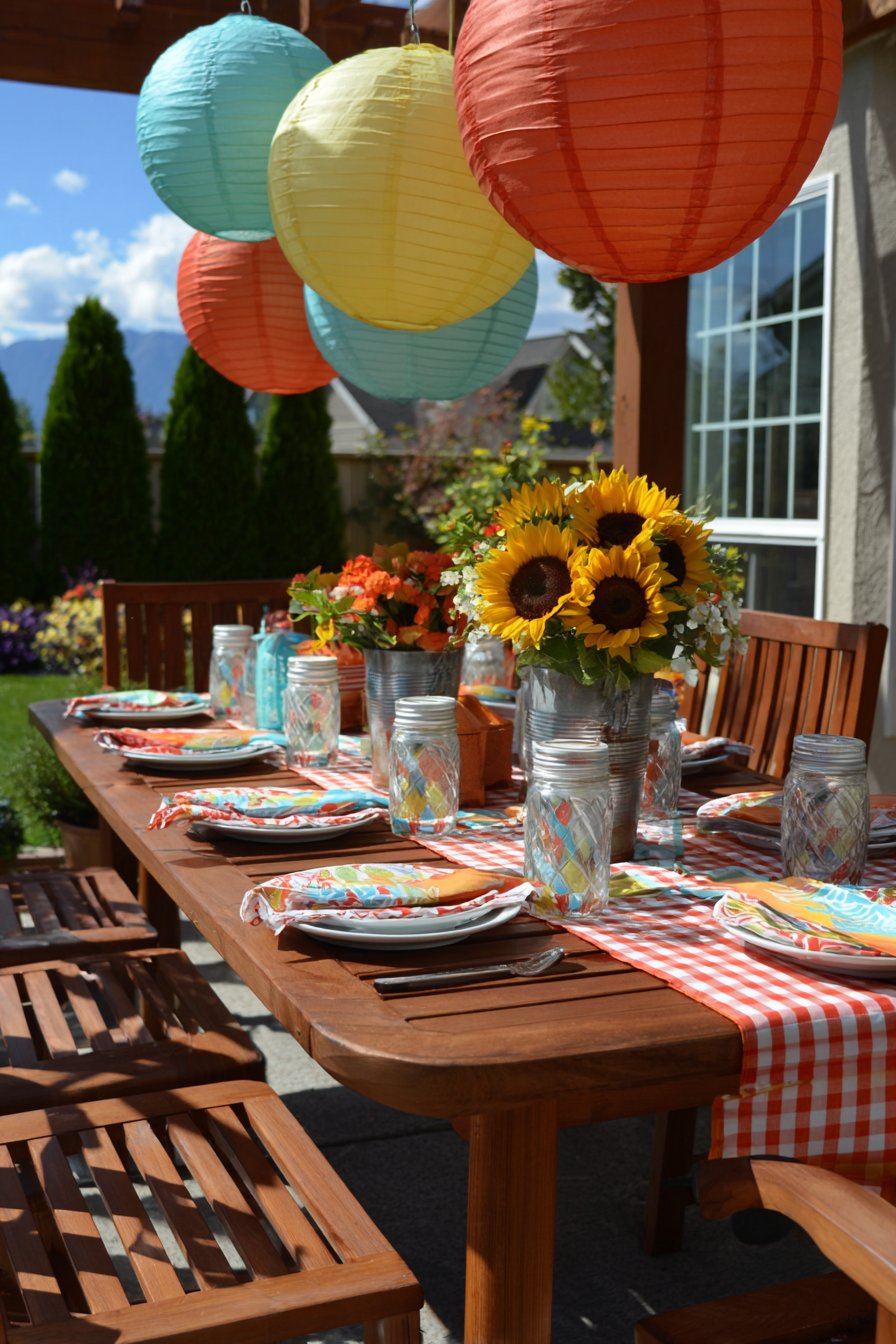
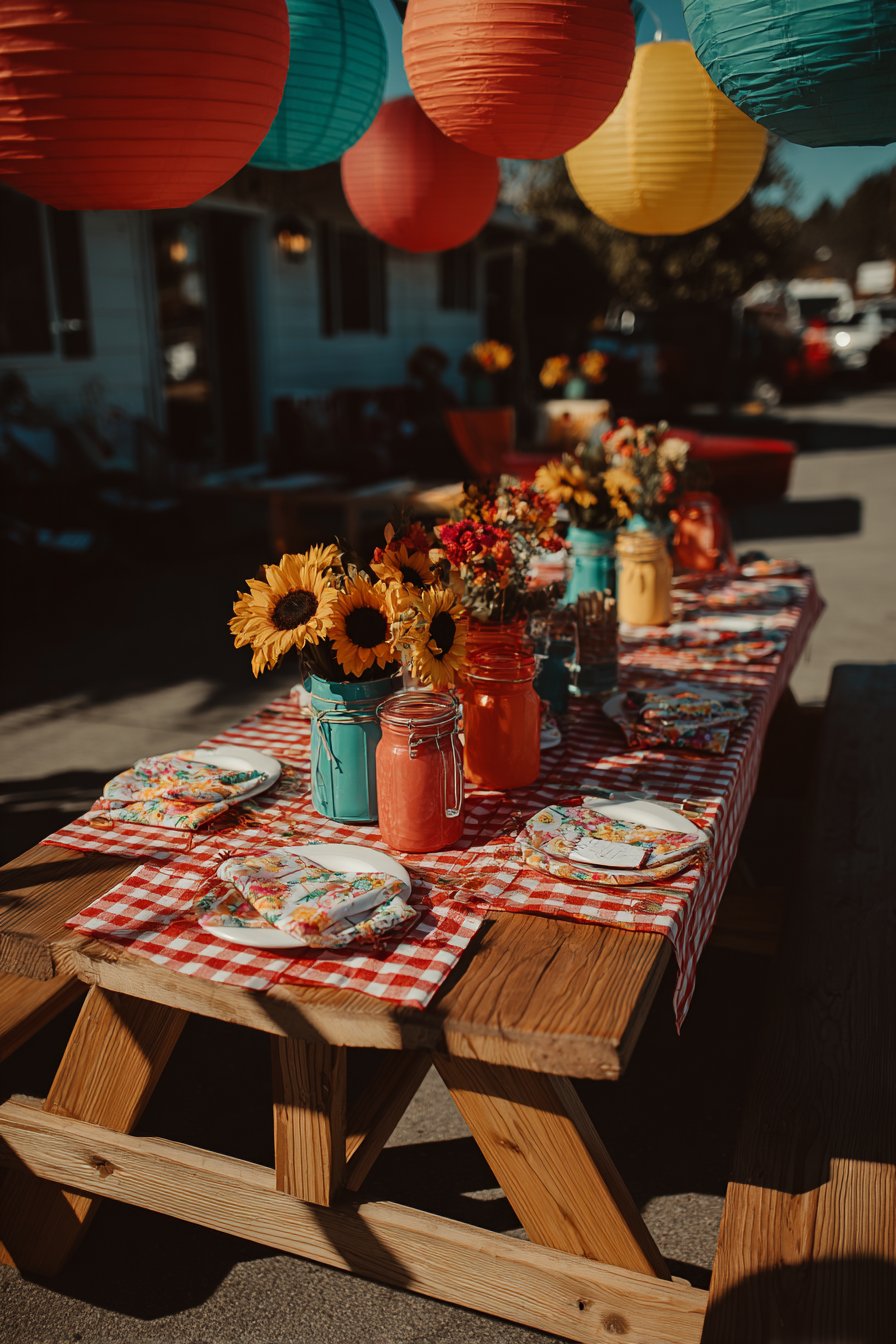
Refinished vintage wooden picnic table provides casual foundation. Bench seating encourages communal gathering and conversation. Colorful paper lanterns in coral, yellow, and turquoise hang overhead. Visual interest extends beyond the table surface creatively.
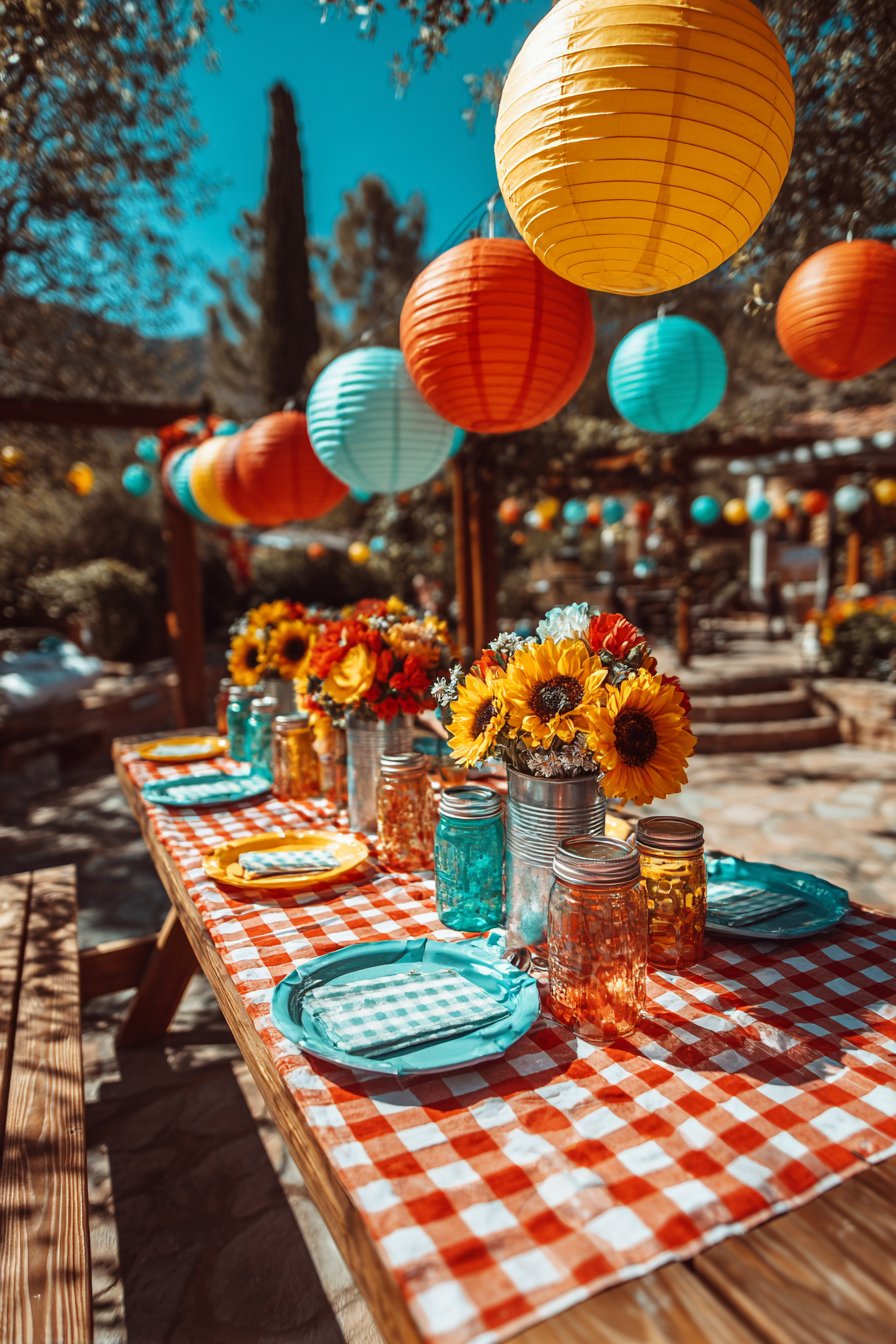
Mason jar drinking glasses wrap with colored twine matching lanterns. Fresh sunflowers and zinnias overflow from galvanized buckets. Checkered napkins in red and white add classic picnic charm. White melamine dinnerware provides practical durability for outdoor use.
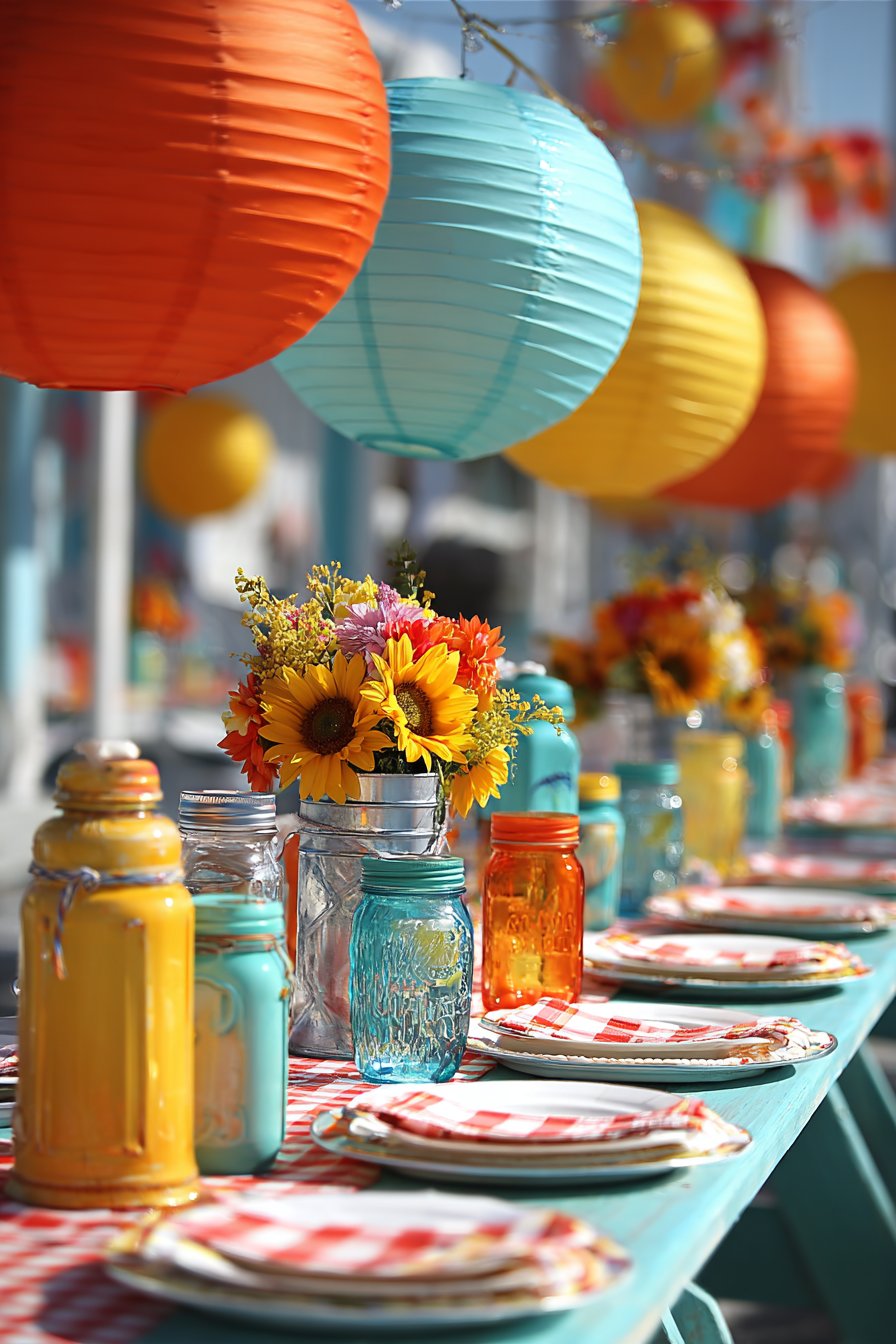
Mid-day summer sunlight creates vibrant colors and crisp shadows. Wide-angle interior photography captures joyful party atmosphere. Layered colors and casual outdoor setup work together perfectly. Festive decorative elements suit summer entertaining beautifully.
The celebration theme embraces joy and informal gathering spirit. Every element encourages relaxation and shared happiness. This design works wonderfully for birthdays and casual parties.
Key Design Tips:
- Refinish vintage picnic tables rather than purchasing new furniture
- Hang colorful paper lanterns overhead for festive visual impact
- Wrap mason jars with colored twine that coordinates with lantern palette
- Choose bright cheerful flowers like sunflowers and zinnias for summer abundance
- Use classic checkered napkins for timeless picnic aesthetic
- Select durable melamine dinnerware that withstands outdoor celebration use
15. Mid-Century Modern Retro
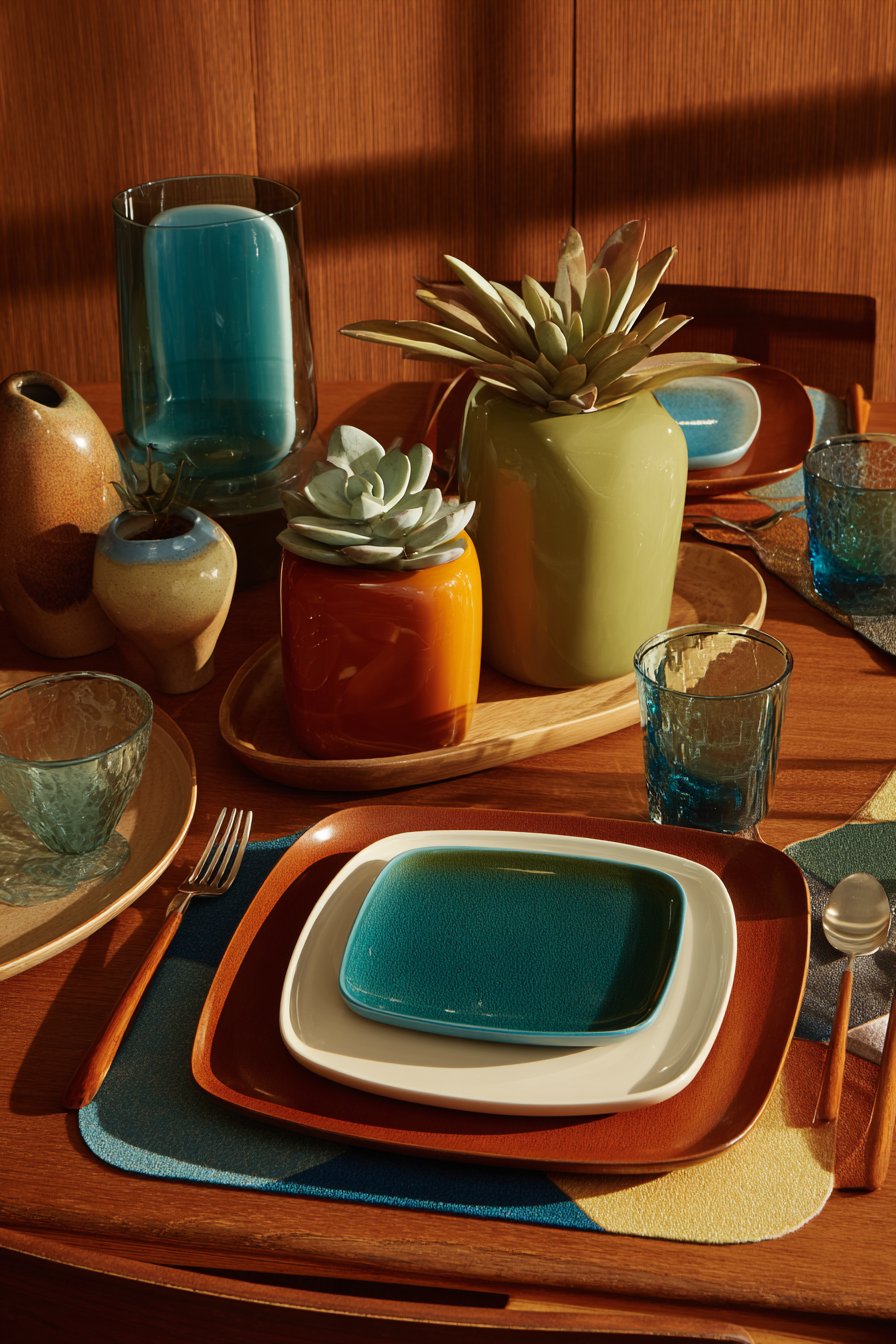
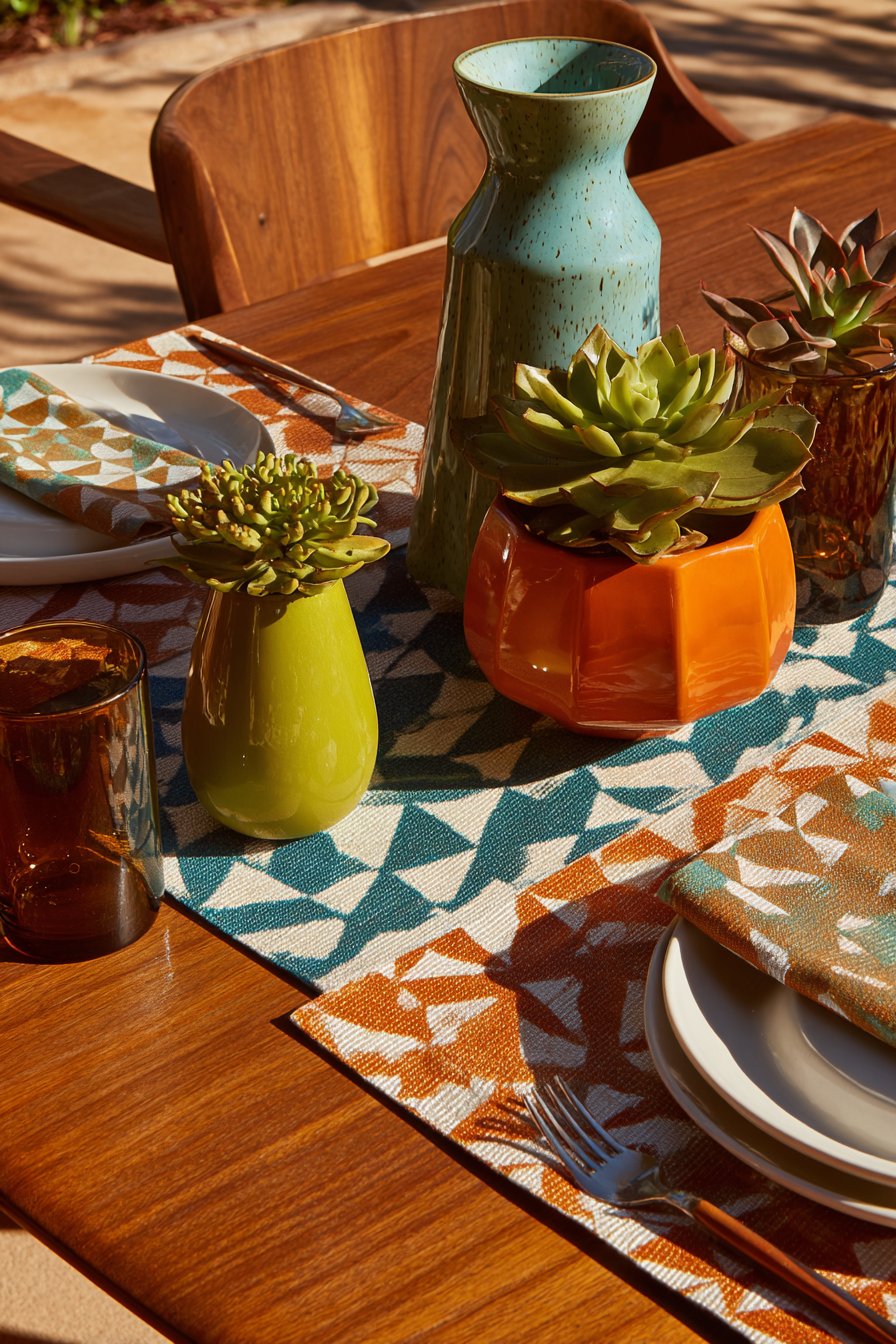
Teak wood table features tapered legs and oil-rubbed finish. Rich wood tones showcase quality craftsmanship beautifully. Ceramic vessels display signature atomic-era shapes authentically. Avocado green and burnt orange provide characteristic mid-century colors.
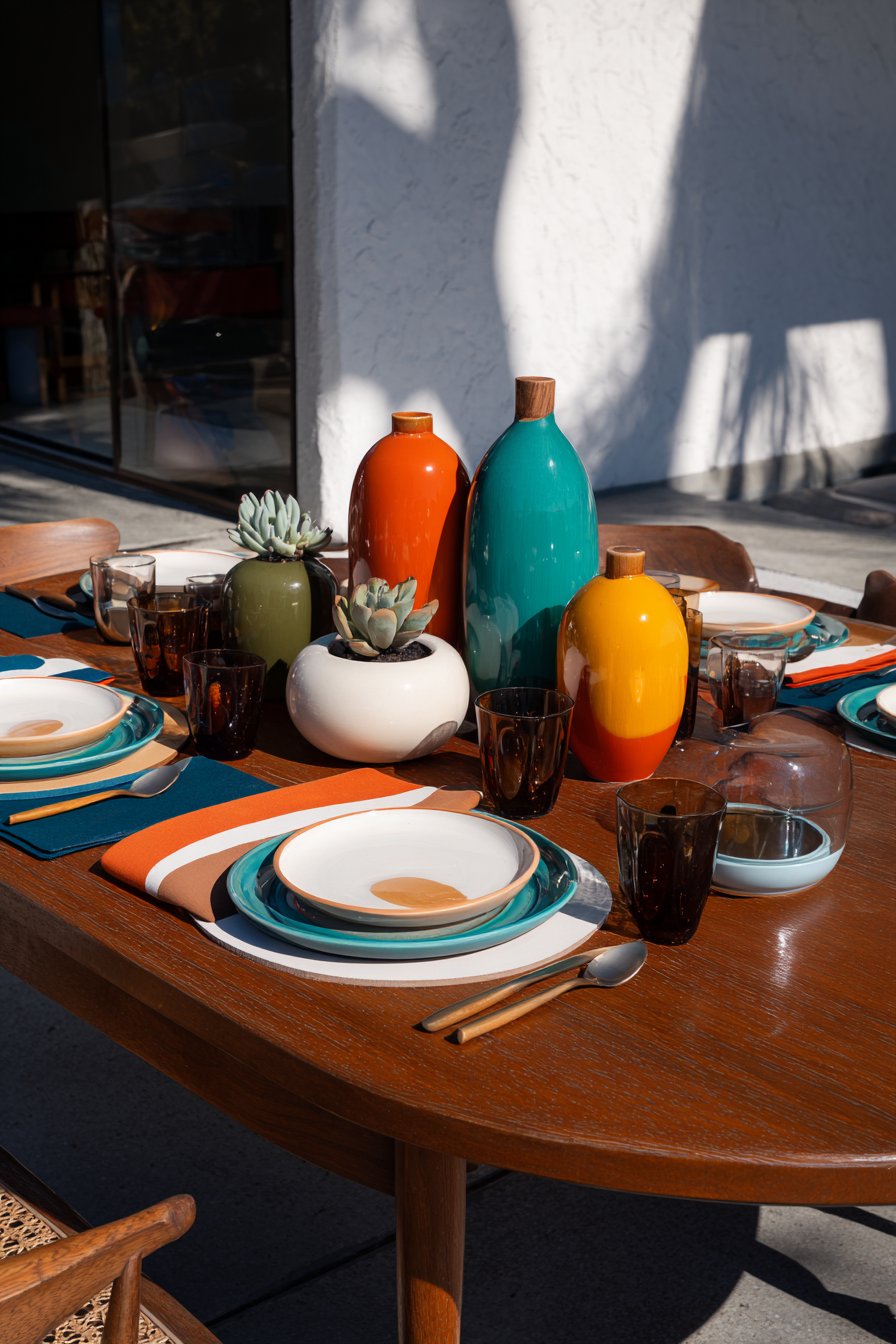
Architectural succulent arrangements reference period-appropriate plant choices. Geometric patterned placemats coordinate in teal and orange tones. Simple white dinnerware features subtle curved modern edges. Walnut-handled flatware and smoked glass tumblers complete authentic aesthetic.
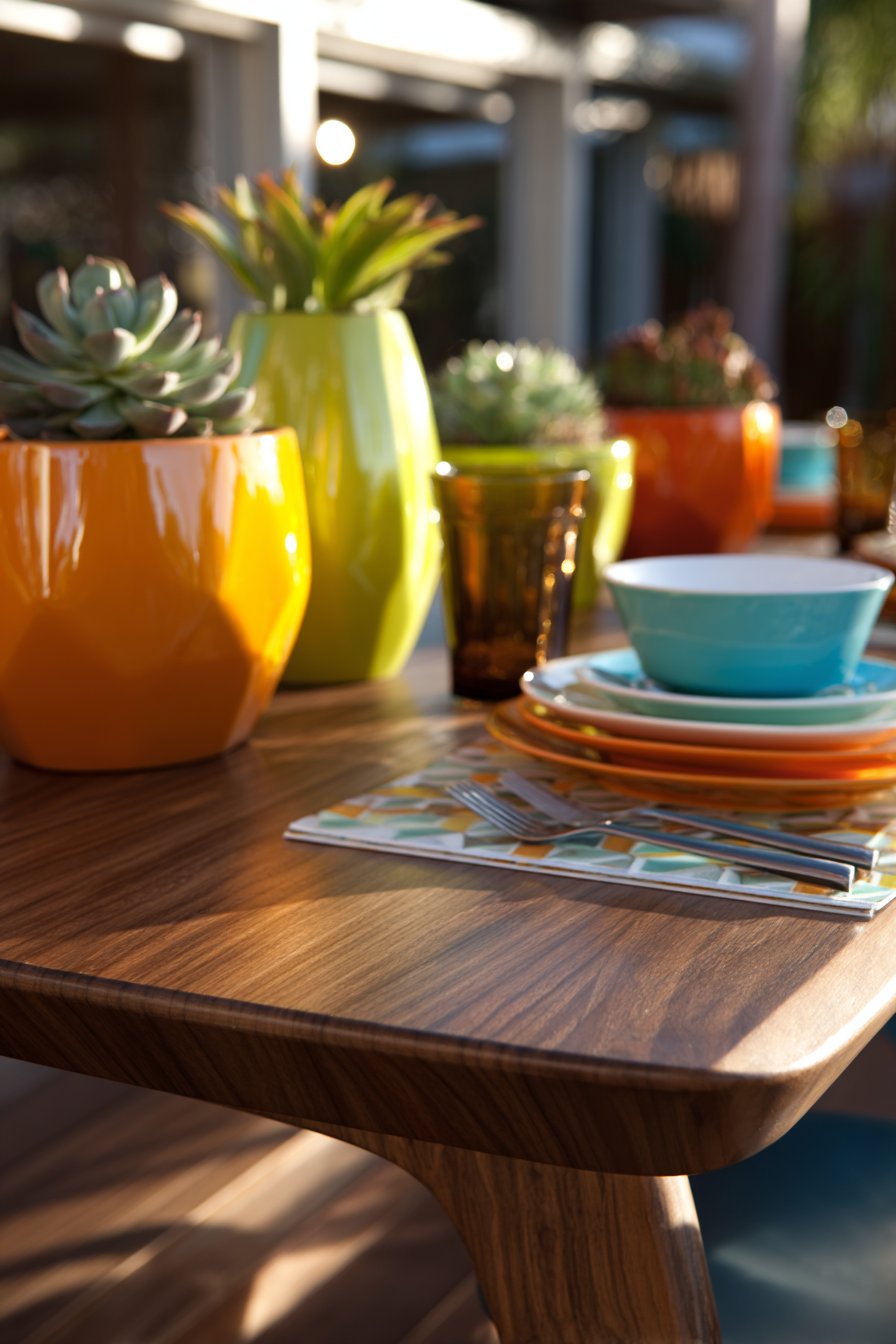
Afternoon sunlight highlights warm wood tones dramatically. Period-appropriate shadows enhance the vintage authenticity. Professional architectural photography emphasizes clean lines throughout. Organic modern shapes and characteristic color palette succeed beautifully.
Mid-century modern design celebrates the optimism of post-war era. Every element references specific historical design movements. This approach brings retro sophistication to contemporary outdoor spaces.
Key Design Tips:
- Select teak furniture with tapered legs characteristic of mid-century design
- Use ceramic vessels in atomic shapes with period-appropriate glazes
- Incorporate avocado green and burnt orange as signature color accents
- Choose geometric patterned textiles in teal and orange color schemes
- Select walnut-handled flatware and smoked glass drinkware for authenticity
- Arrange architectural succulents that reference 1950s-60s plant preferences
16. Sophisticated Evening Elegance
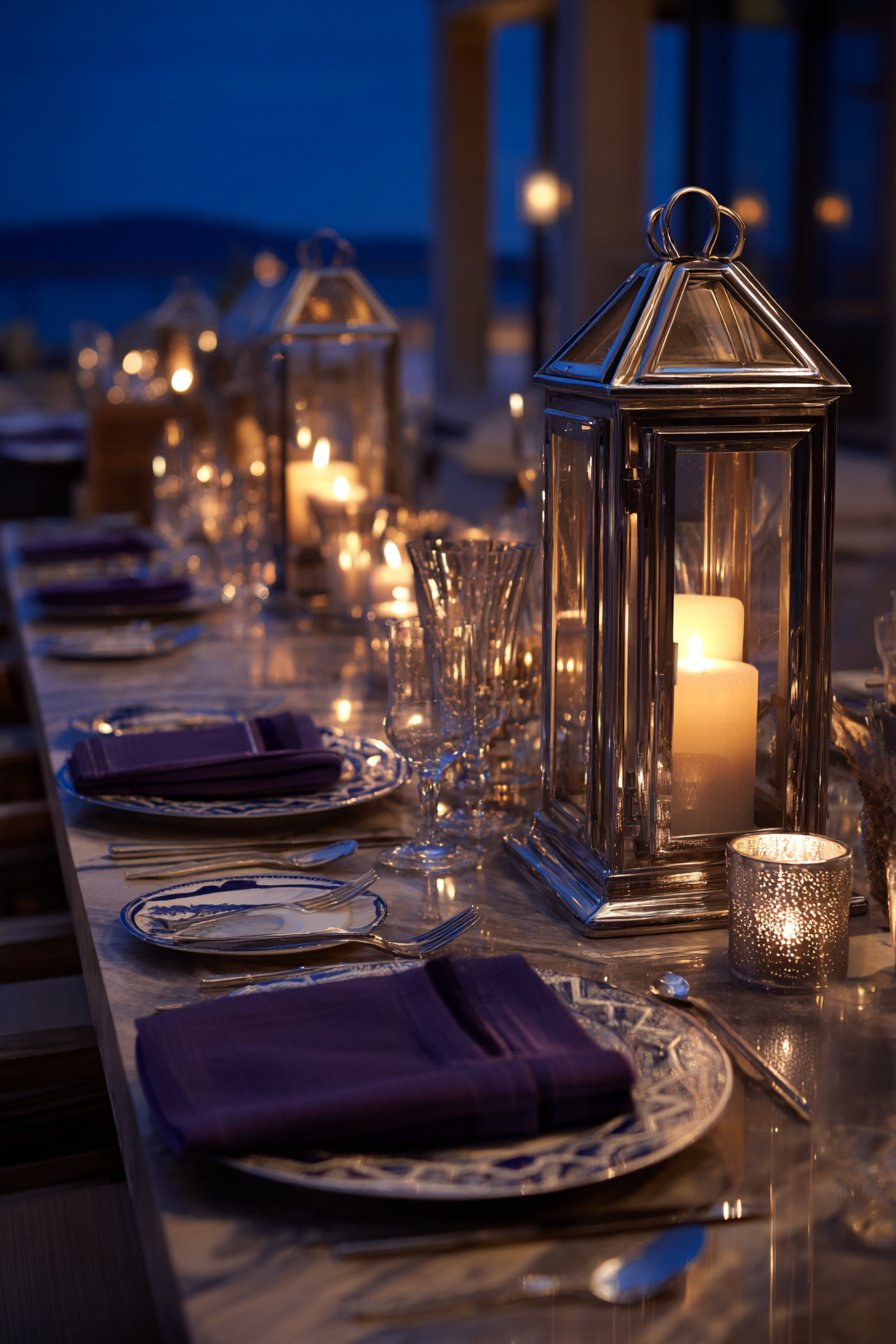
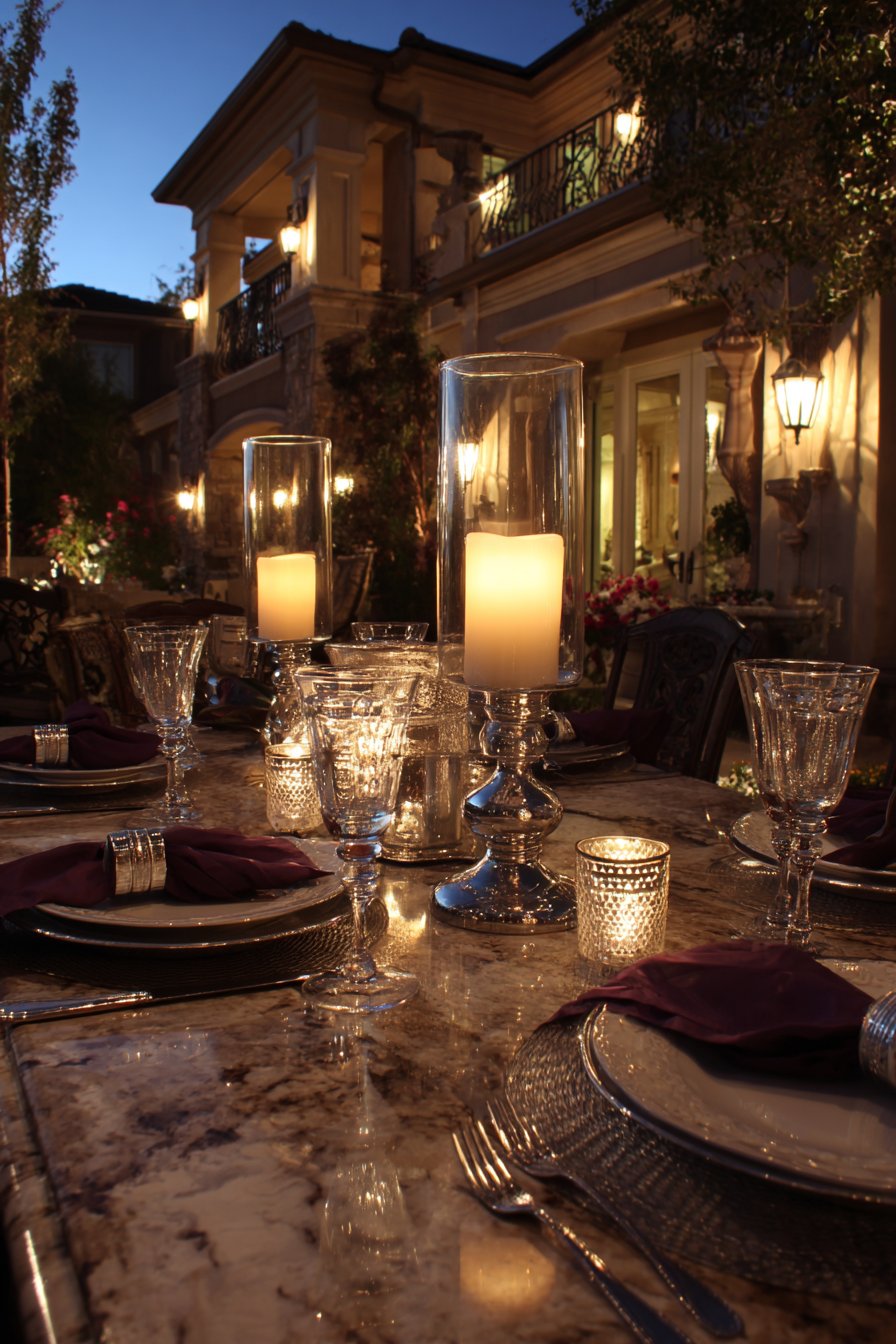
Polished granite table top features subtle silver flecks. Charcoal grey stone provides elegant foundation for formal dining. Tall glass hurricane lanterns hold ivory pillar candles down center. Silver mercury glass votive holders scatter additional candlelight beautifully.
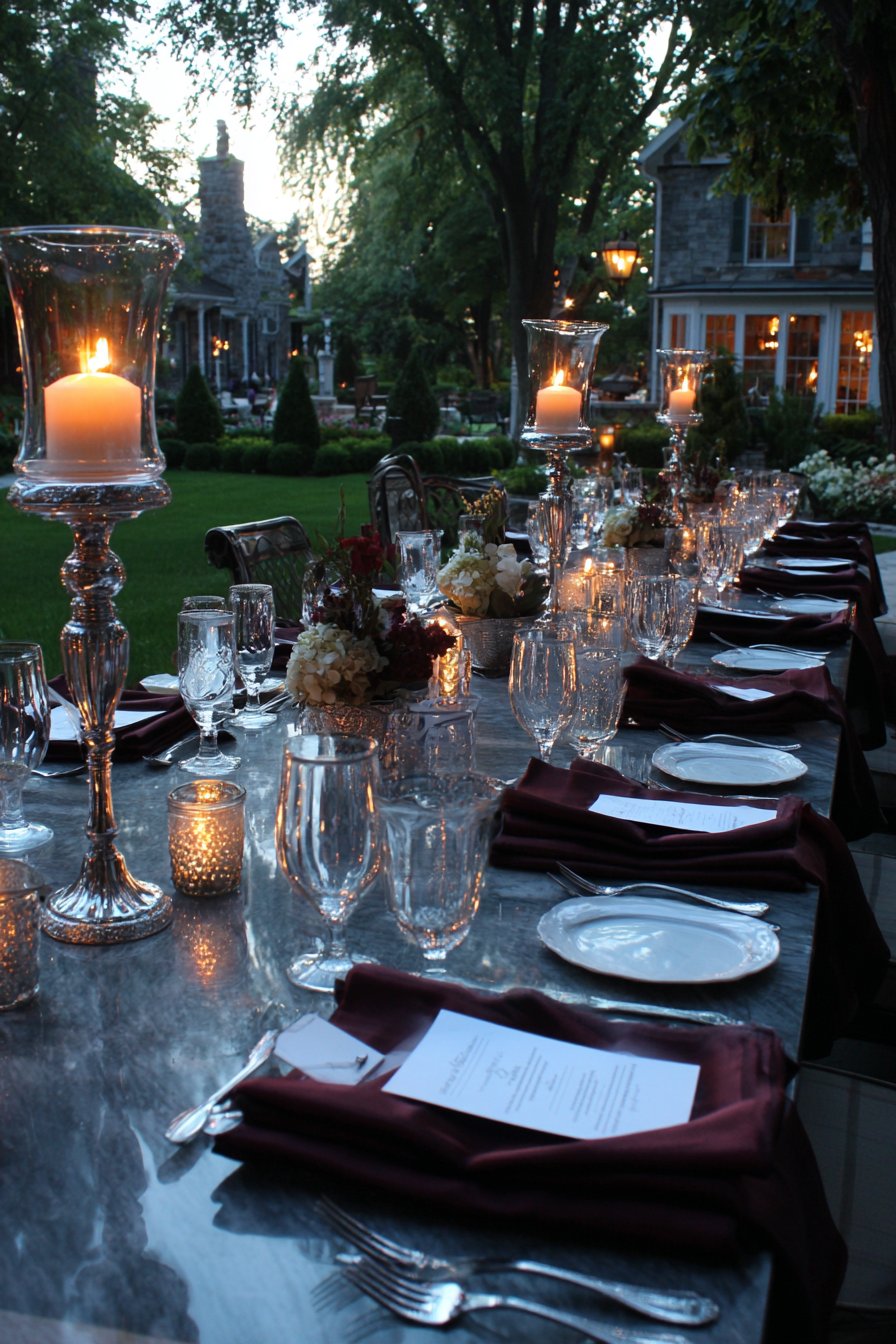
Deep plum-colored napkins provide rich color against white china. Platinum rim detail adds refined sophistication to dinnerware. Crystal stemware and silver-plated flatware elevate the formal aesthetic. Classic beaded pattern on flatware references traditional elegance.
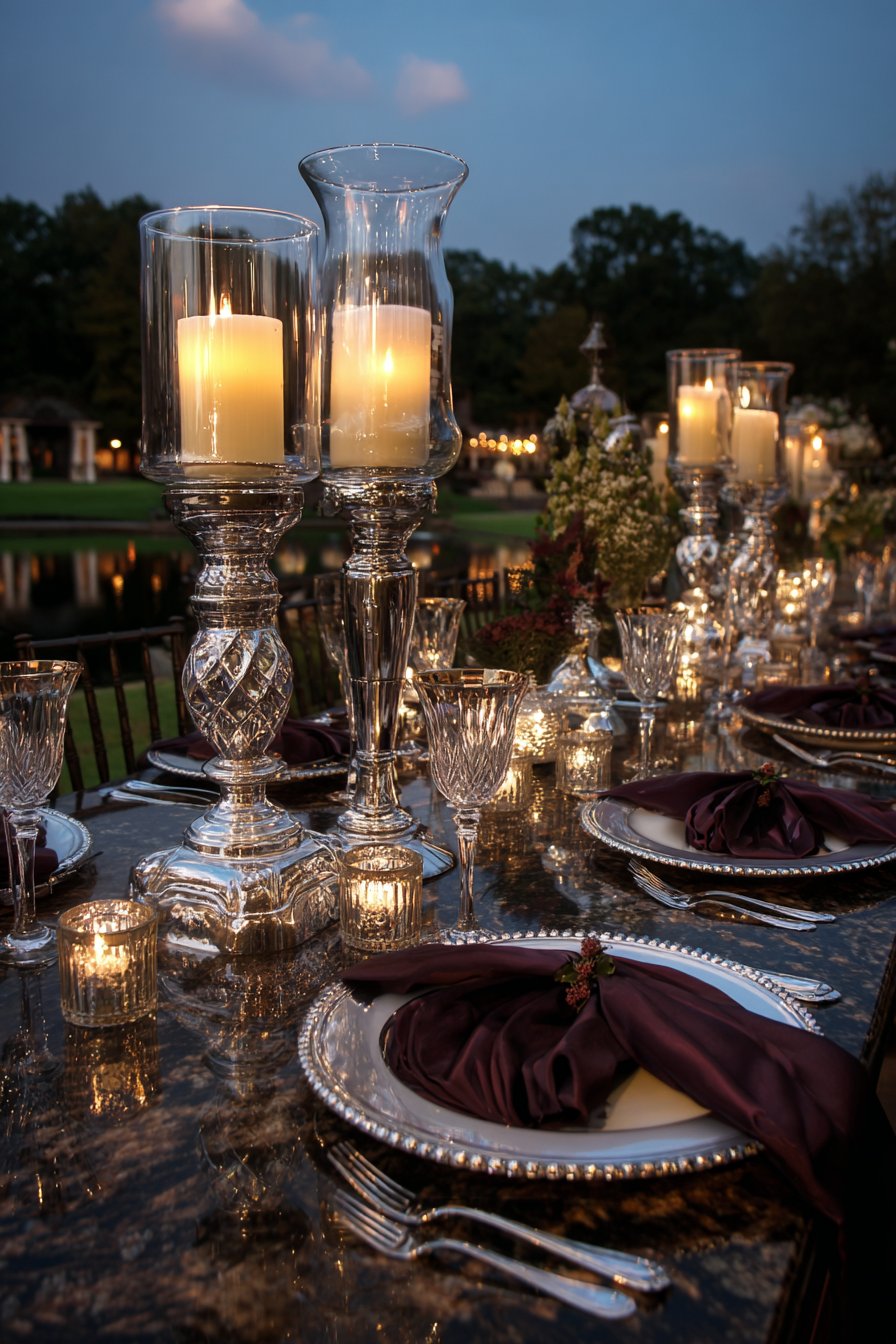
Blue hour photography captures candlelight providing warm illumination. Darkening sky creates dramatic backdrop for evening entertaining. Professional interior photography showcases sophisticated ambiance expertly. Candlelight reflections off polished surfaces create magical atmosphere.
Evening elegance requires careful lighting and refined material choices. Every element contributes to formal yet inviting atmosphere. This design suits special occasions and important celebrations.
Key Design Tips:
- Choose polished stone table tops that reflect candlelight beautifully
- Use tall hurricane lanterns with pillar candles for safe outdoor flame
- Scatter mercury glass votives for layered ambient lighting effects
- Select deep jewel-tone napkins like plum or burgundy for richness
- Invest in crystal stemware and silver-plated flatware for formal occasions
- Photograph during blue hour when candlelight contrasts with twilight sky
17. Casual Weekend Brunch
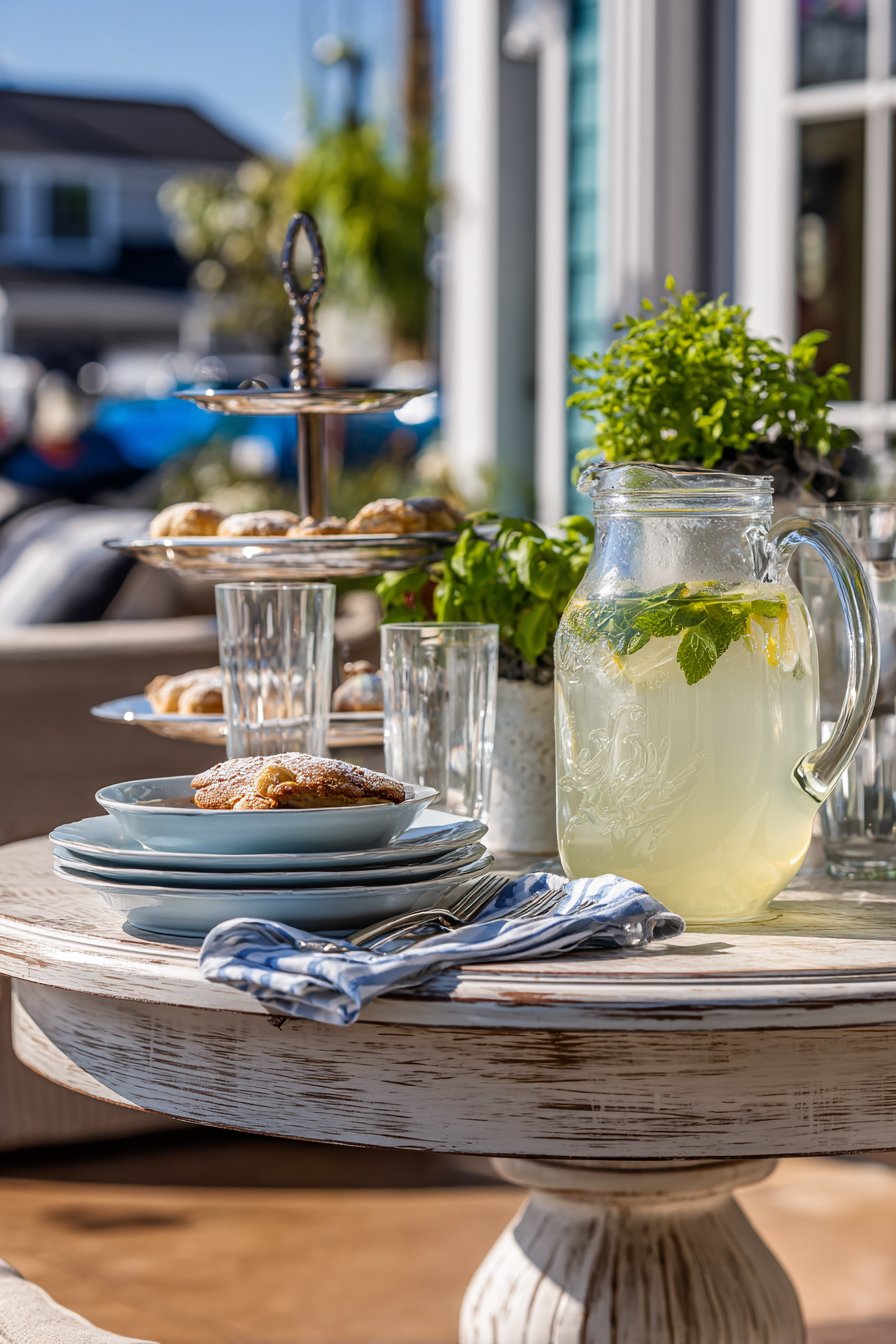
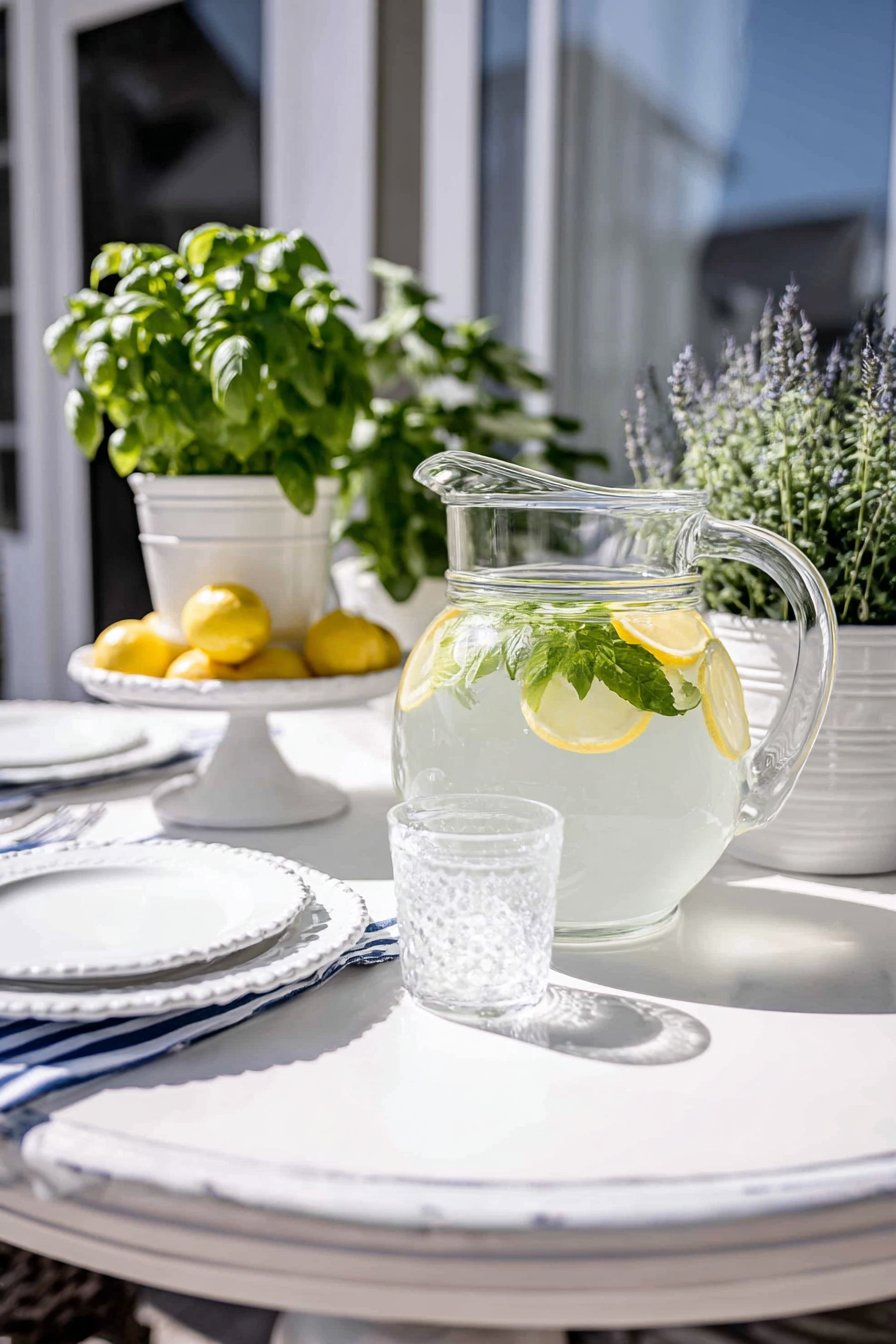
Round pedestal table features white painted finish with slight weathering. Edges show authentic wear that adds casual character. Large pitcher of fresh lemonade holds floating lemon slices. Fresh mint sprigs add aromatic appeal to functional centerpiece.
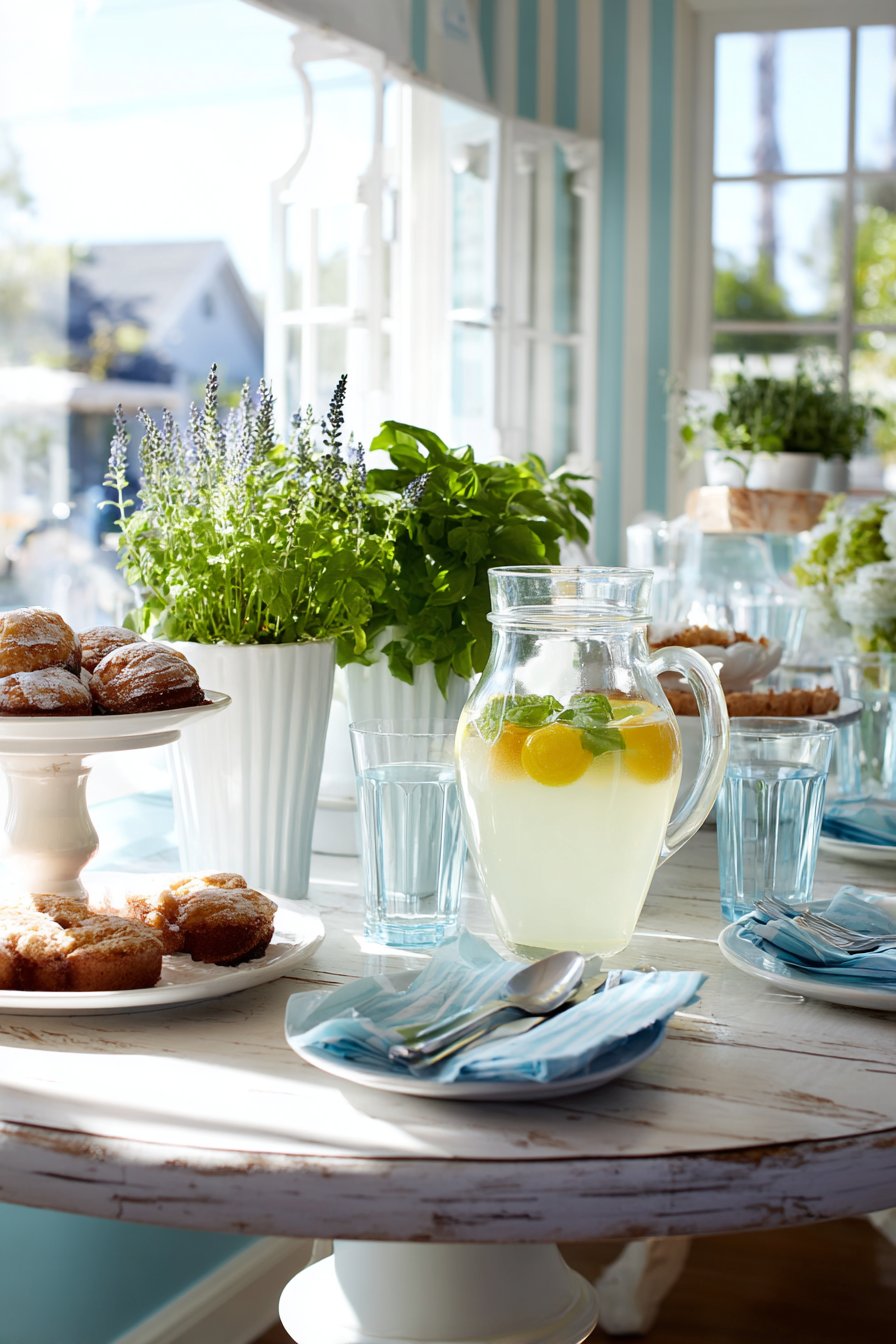
Tiered stand displays fresh pastries as edible decoration. Fresh herb pots in white ceramic containers include basil and mint. Fragrance and color combine in practical plantings. Blue and white striped cotton napkins bring coastal breakfast feel.
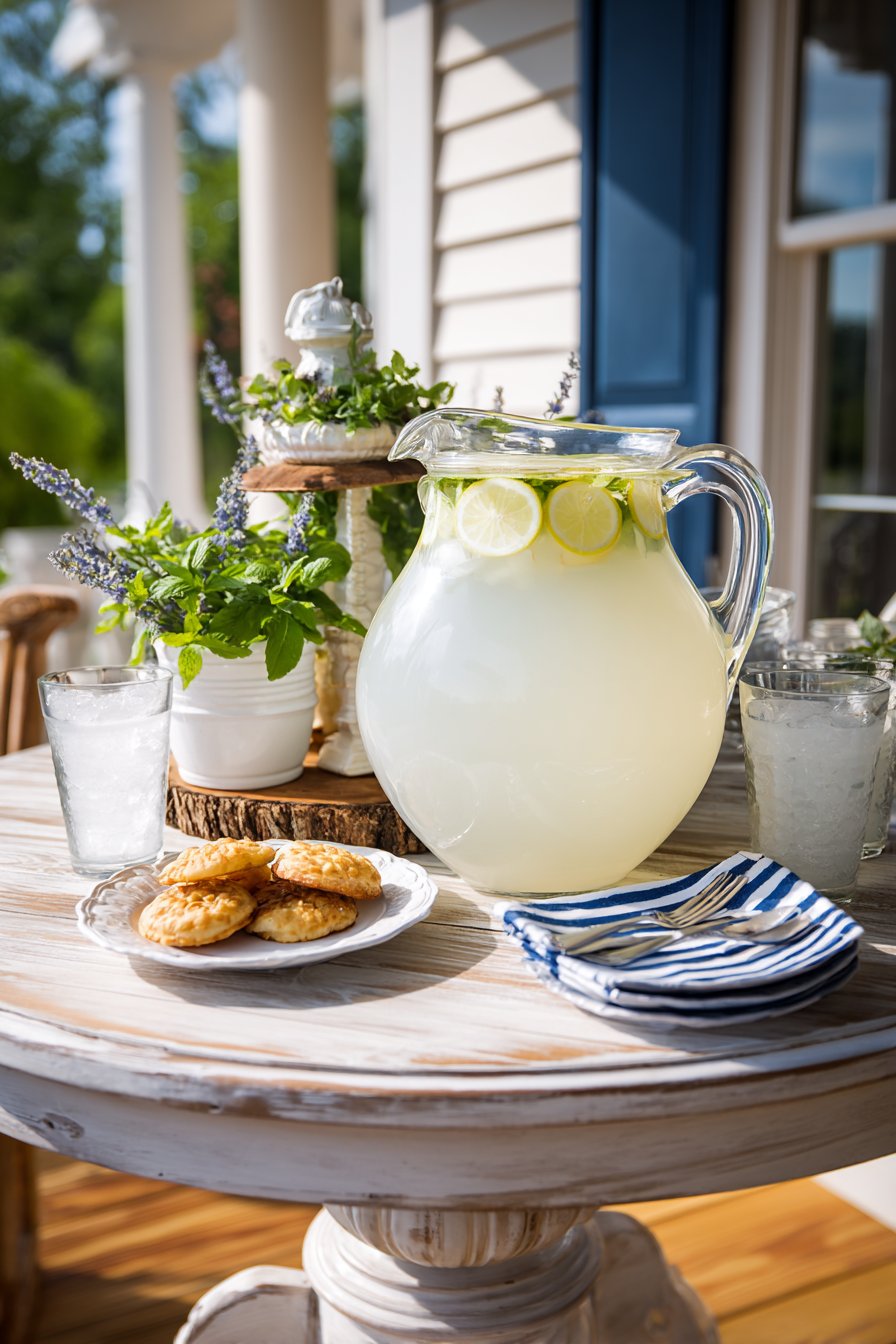
Simple white porcelain plates maintain unpretentious aesthetic. Clear glass juice glasses and stainless flatware keep setup approachable. Bright morning sunlight creates fresh cheerful atmosphere. Wide-angle interior photography captures inviting casual elegance.
Weekend brunch design celebrates relaxed morning gatherings. Every element encourages lingering over coffee and conversation. This approach creates welcoming breakfast settings effortlessly.
Key Design Tips:
- Paint pedestal tables white and allow edges to weather naturally
- Use large pitchers of lemonade or iced tea as functional centerpieces
- Display fresh pastries on tiered stands as both decor and refreshment
- Plant fresh herbs in white ceramic pots for fragrance and kitchen use
- Choose blue and white striped textiles for classic coastal brunch aesthetic
- Set tables where bright morning light creates cheerful inviting atmosphere
18. Global Eclectic Worldly Mix
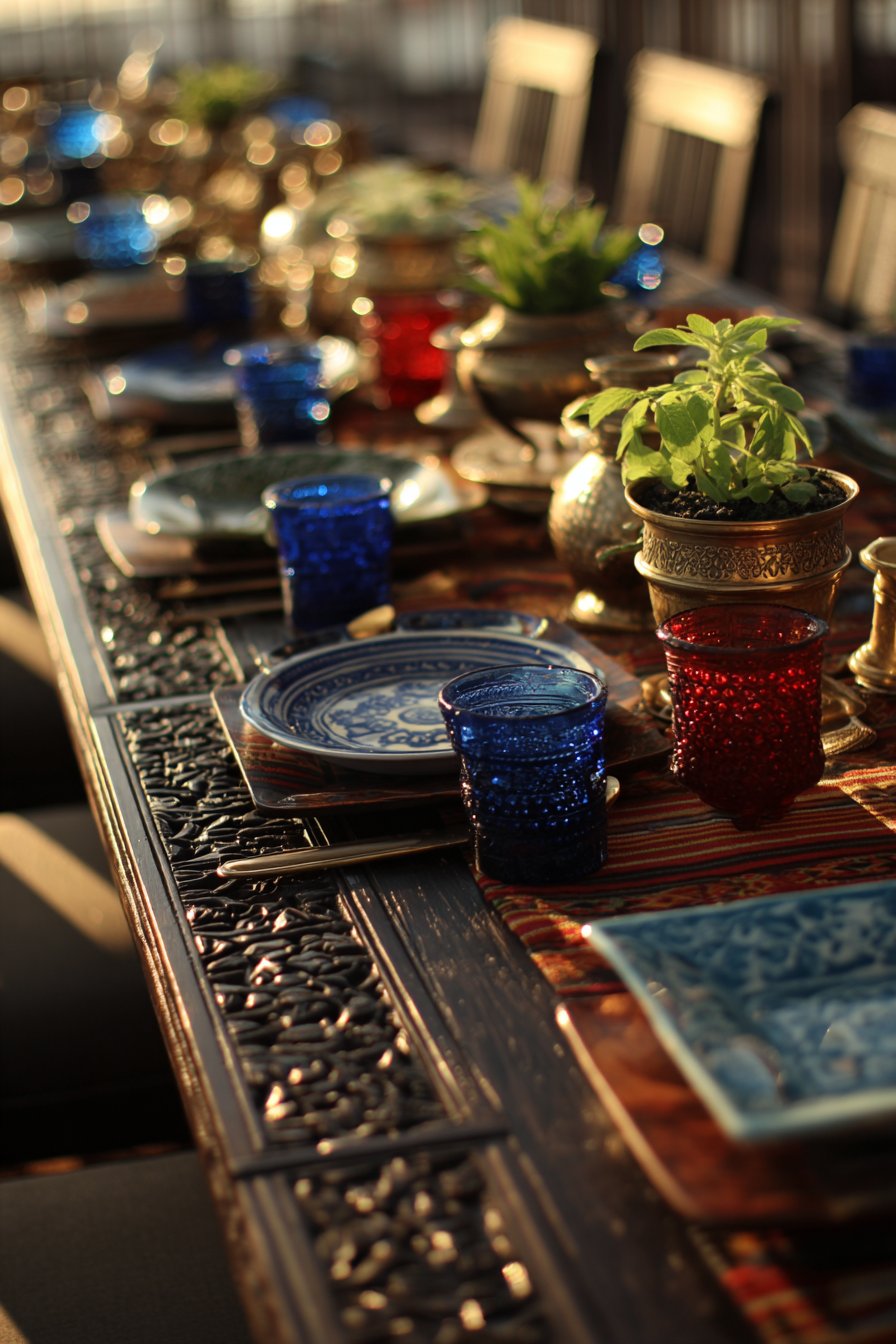
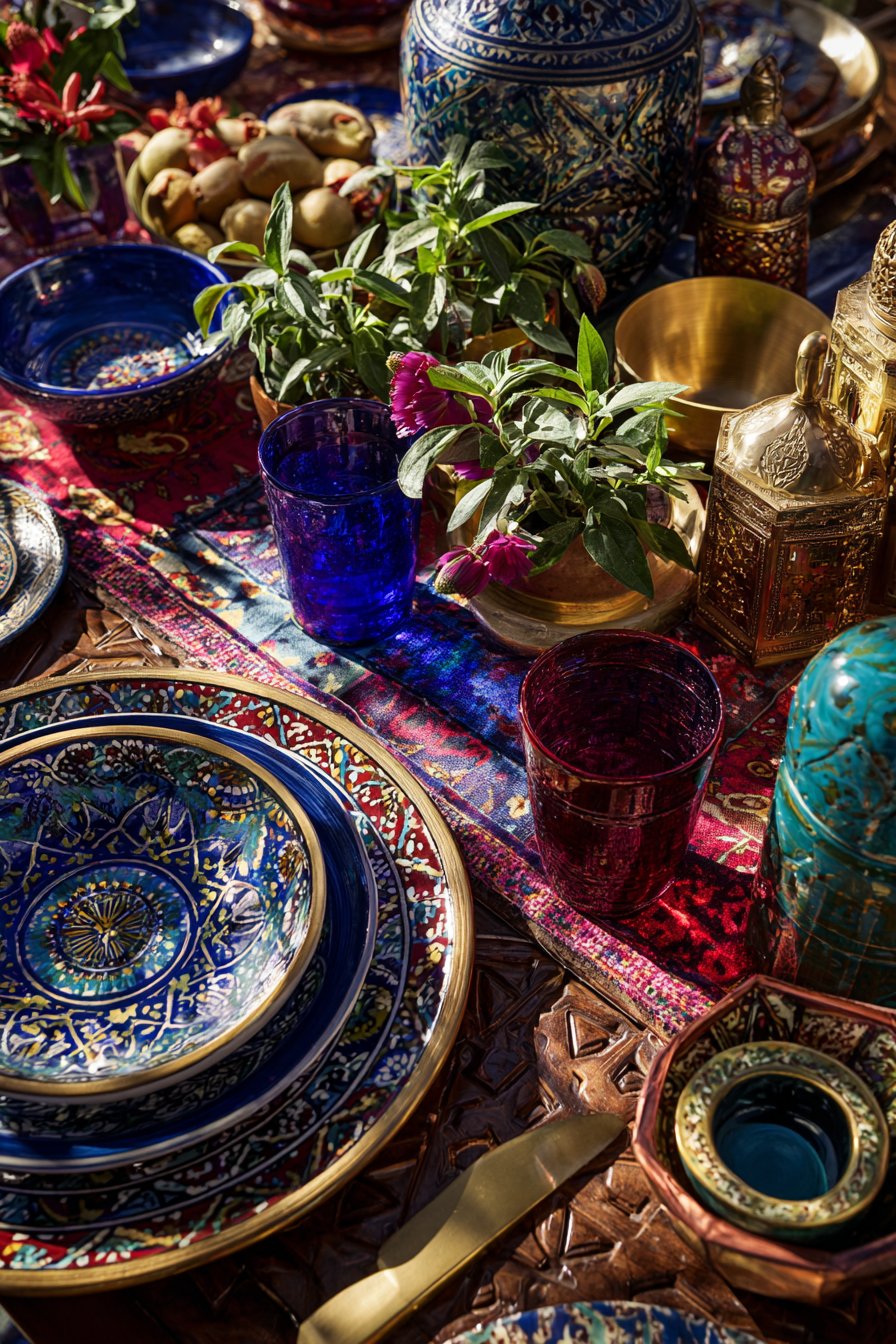
Carved wood table features intricate Indian-inspired patterns. Deep mahogany finish showcases detailed craftsmanship beautifully. Vibrant textile runner displays bold ikat patterns. Moroccan tea glasses in jewel tones hold individual flower stems.
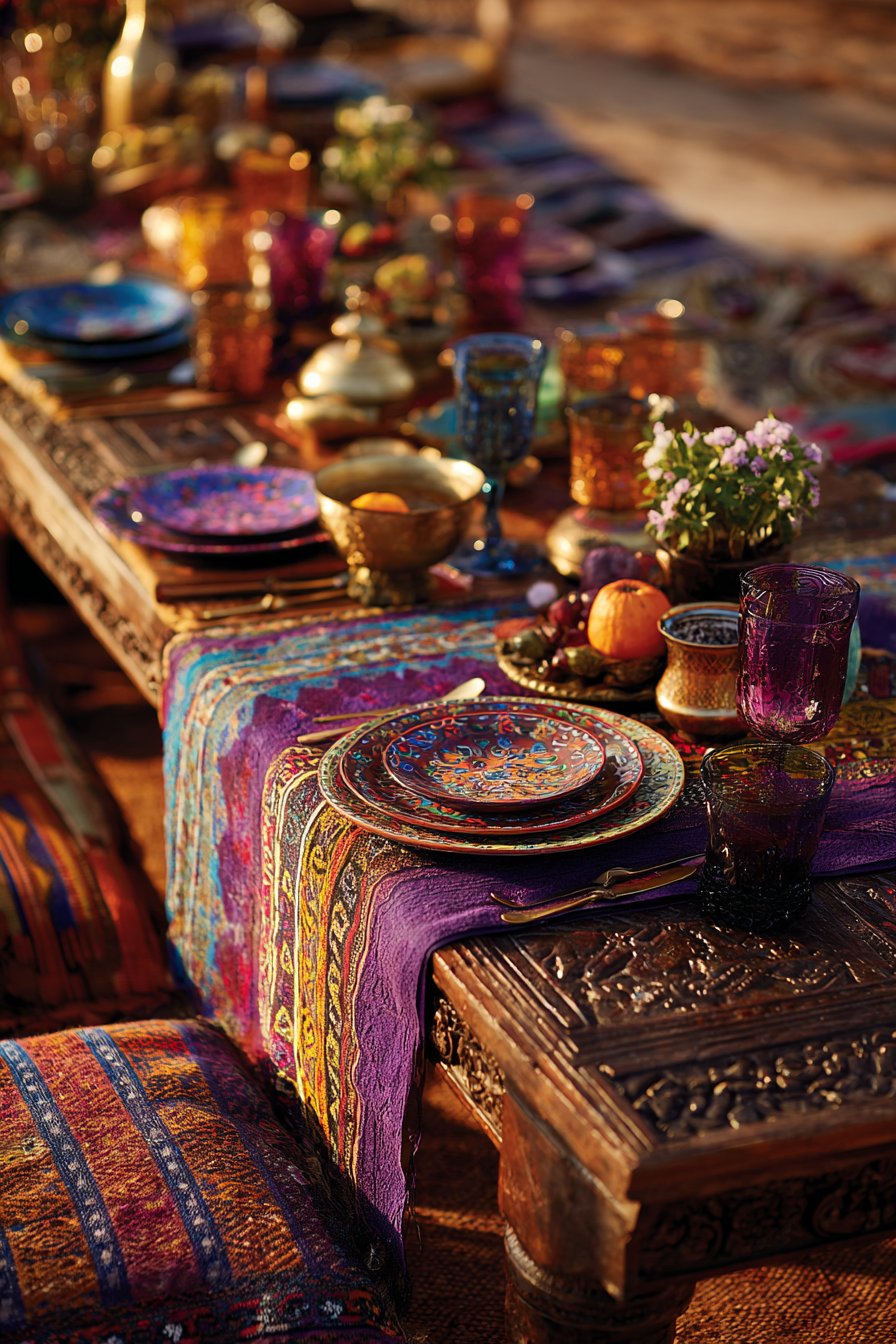
Colorful ceramic plates from various cultural traditions create intentional mismatching. Brass bowls and serving pieces add metallic warmth throughout. Potted jasmine and ornamental peppers provide living centerpiece elements. Golden afternoon light emphasizes rich saturated colors.
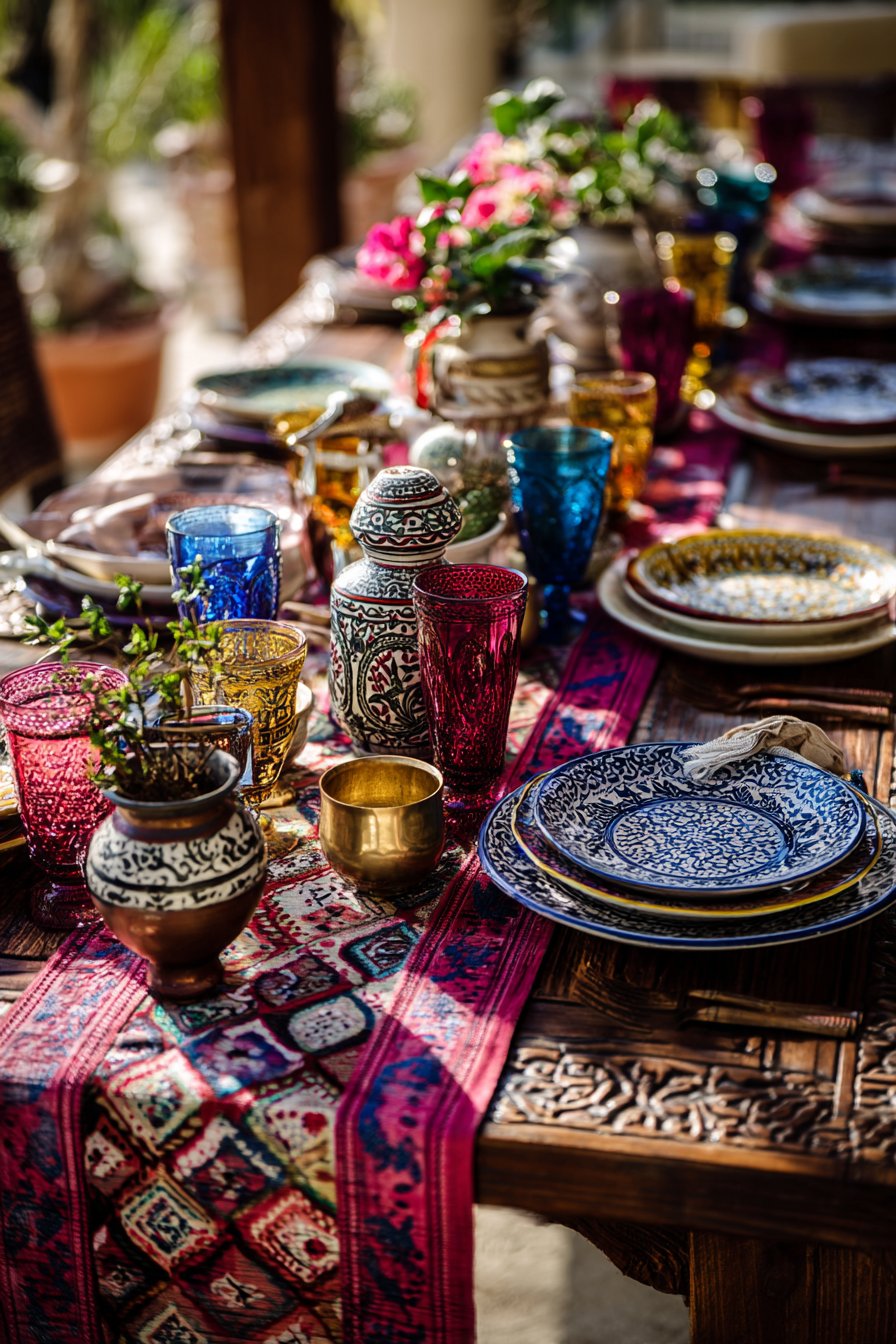
Professional interior design photography showcases worldly collected aesthetic. Pattern mixing and cultural design elements succeed together. Layered textiles, metals, and carved wood create bohemian fusion. Global influences combine in harmonious outdoor dining experience.
Eclectic global design celebrates travel and cultural appreciation. Every piece tells story from different world tradition. This approach encourages personal expression through collected treasures.
Key Design Tips:
- Select carved wood furniture with intricate cultural patterns and details
- Layer vibrant textile runners in ikat or suzani patterns
- Use Moroccan tea glasses as individual bud vases for jewel-tone color
- Collect ceramic plates from various traditions rather than matching sets
- Incorporate brass serving pieces and bowls for warm metallic accents
- Plant jasmine or other fragrant flowers for sensory garden experience
19. Spring Garden Fresh Romance
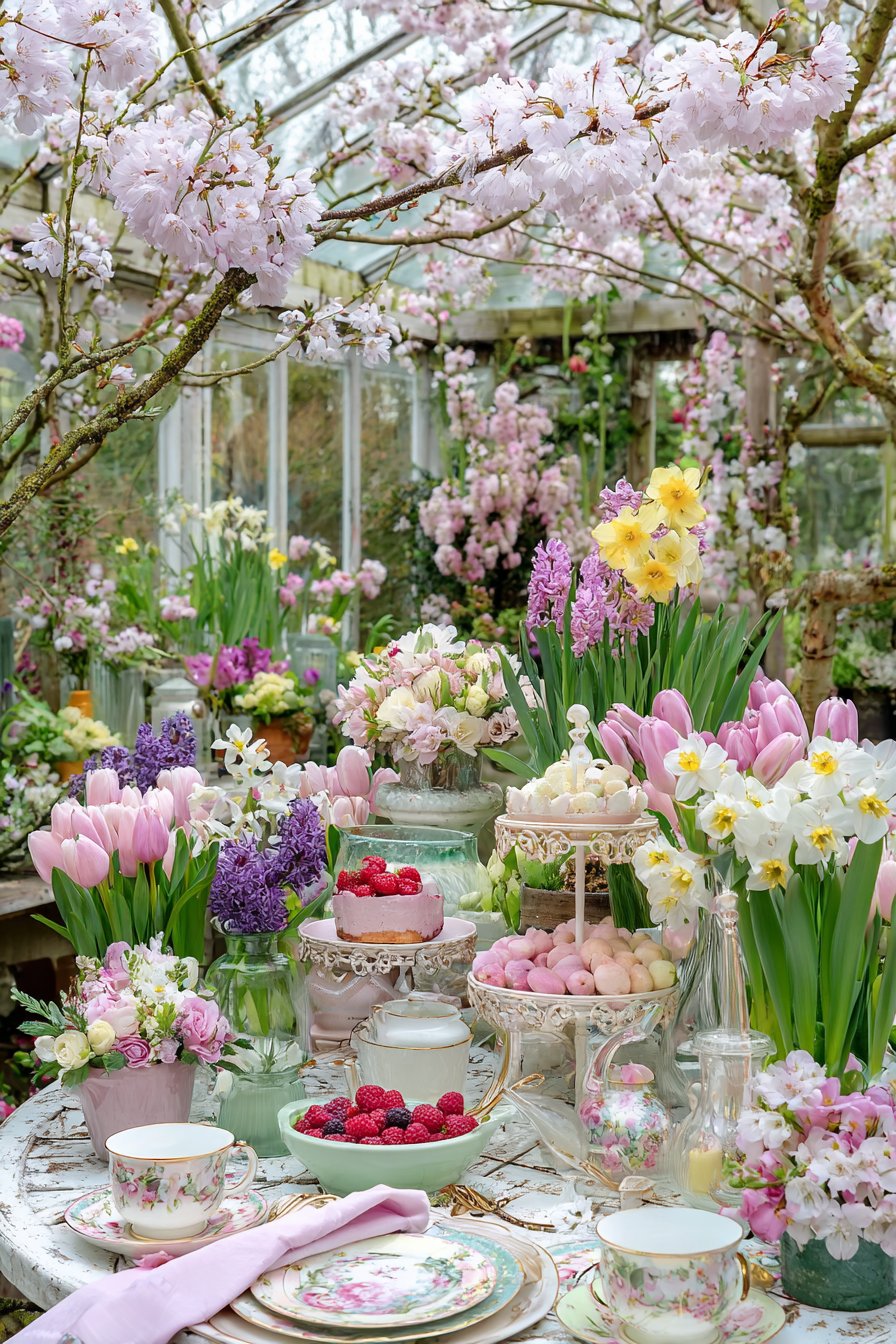
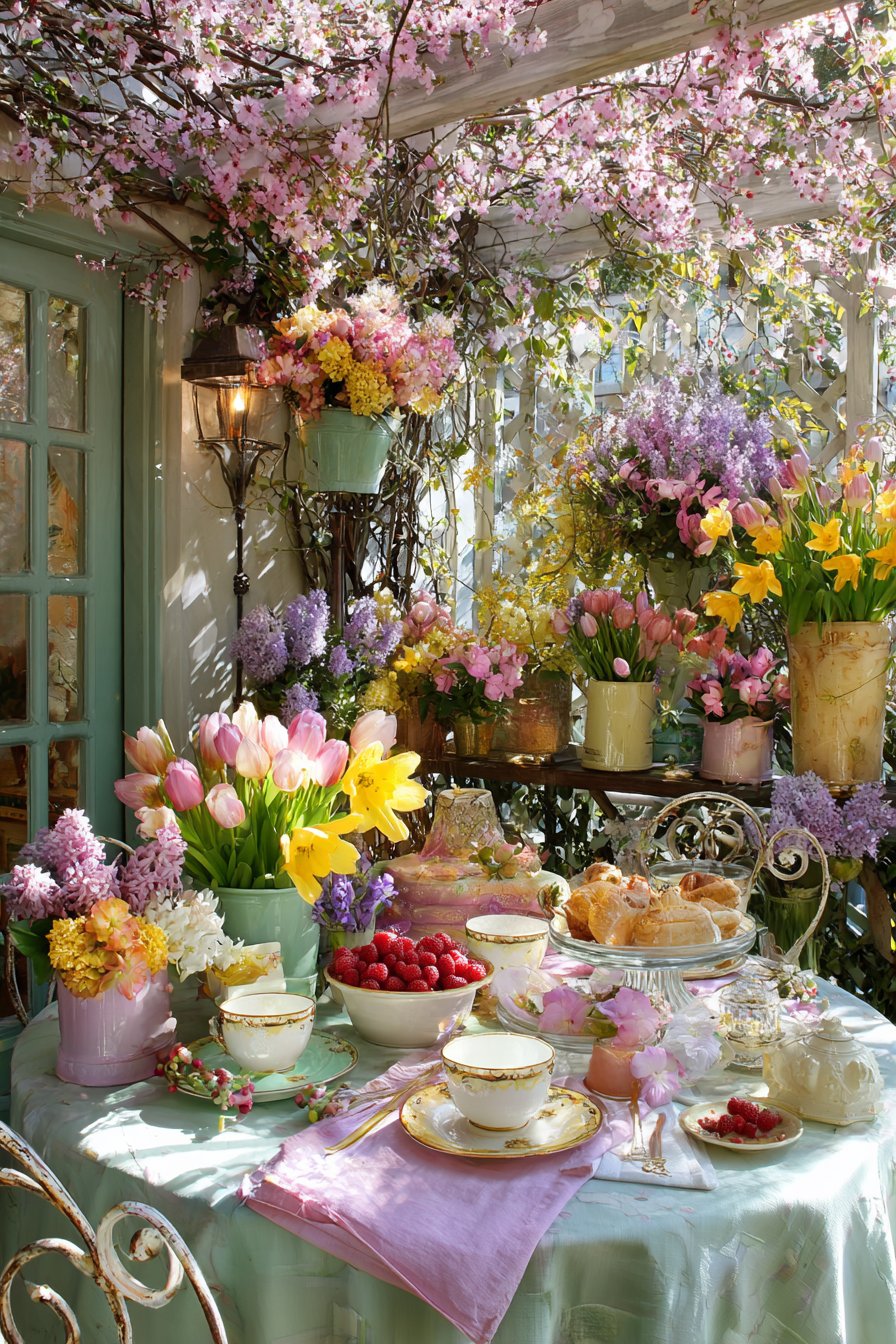
Wrought iron table features decorative scrollwork in fresh white paint. Abundance of flowering bulbs creates lush centerpiece garden. Tulips, daffodils, and hyacinths overflow from vintage enamel pots. Pastel-colored napkins coordinate in soft pink, lavender, and mint.
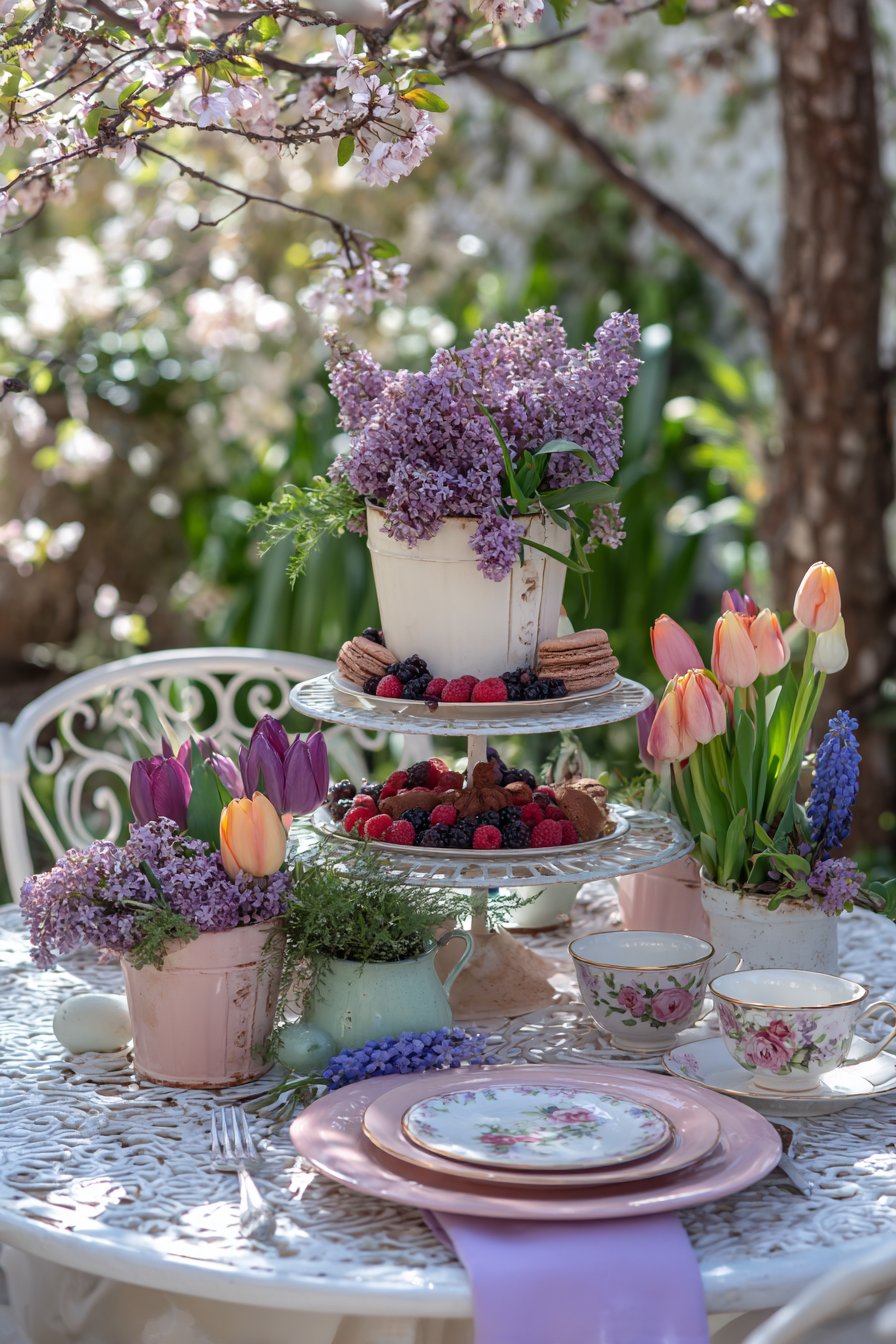
Floral-patterned vintage china plates add romantic garden charm. Glass pedestal cake stand displays fresh berries as edible decoration. Delicate gold-rimmed teacups suggest afternoon tea setting. Soft diffused spring morning light filters through blooming branches.
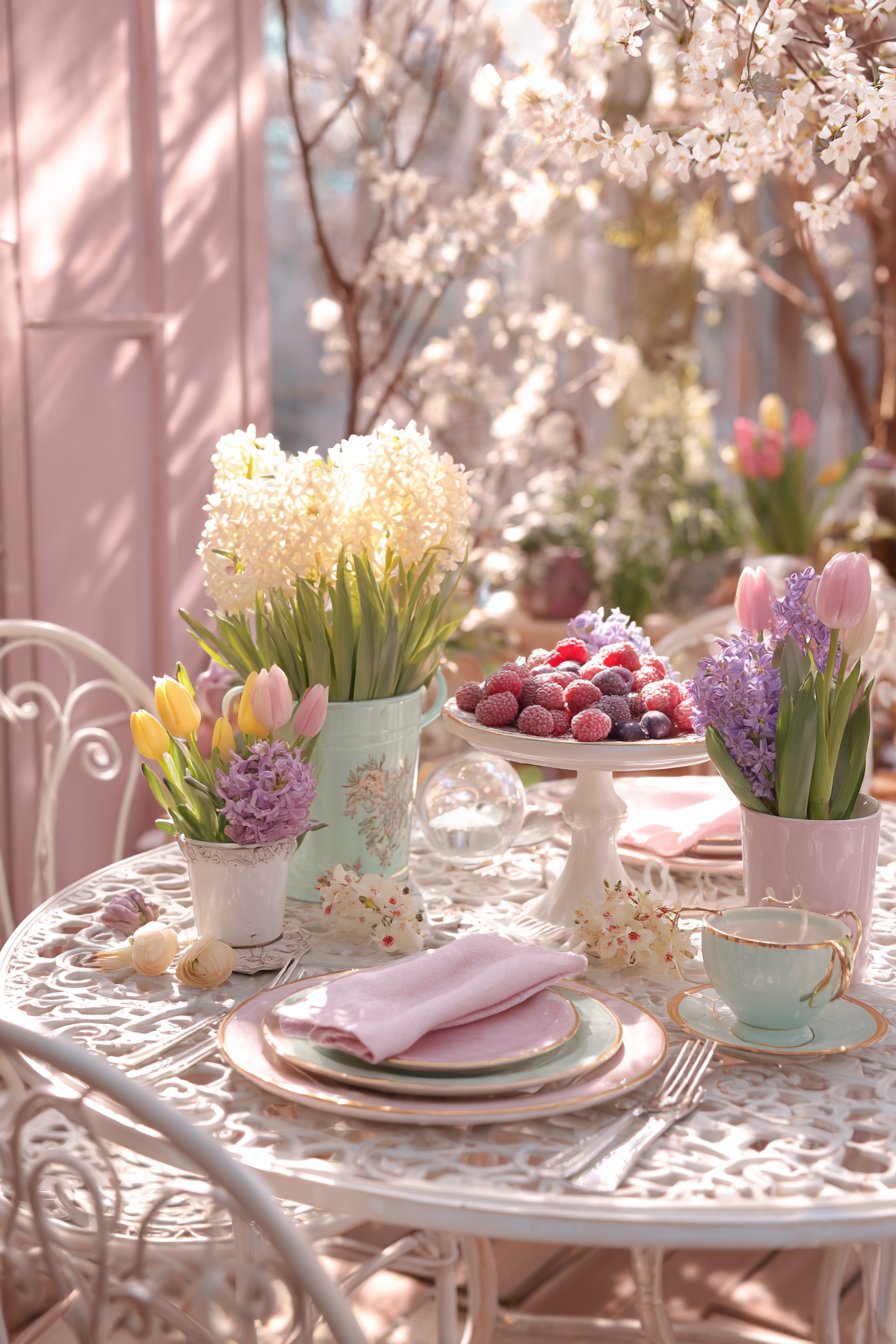
Gentle dappled patterns dance across the table surface. Wide-angle interior photography captures fresh romantic spring atmosphere. Abundant fresh flowers and pastel color palette succeed beautifully. Natural spring light interacts with white painted metal to create magic.
Spring garden design celebrates renewal and natural beauty. Every element reflects the joy of blooming season. This approach creates enchanting settings for spring celebrations.
Key Design Tips:
- Paint wrought iron furniture fresh white for clean spring aesthetic
- Plant abundant flowering bulbs in vintage enamel containers
- Use pastel napkins in spring colors like pink, lavender, and mint
- Choose floral-patterned vintage china for romantic garden charm
- Display fresh berries on glass pedestal stands as spring dessert option
- Position table where morning light filters through blooming tree branches
20. Organic Modern Live-Edge Sophistication
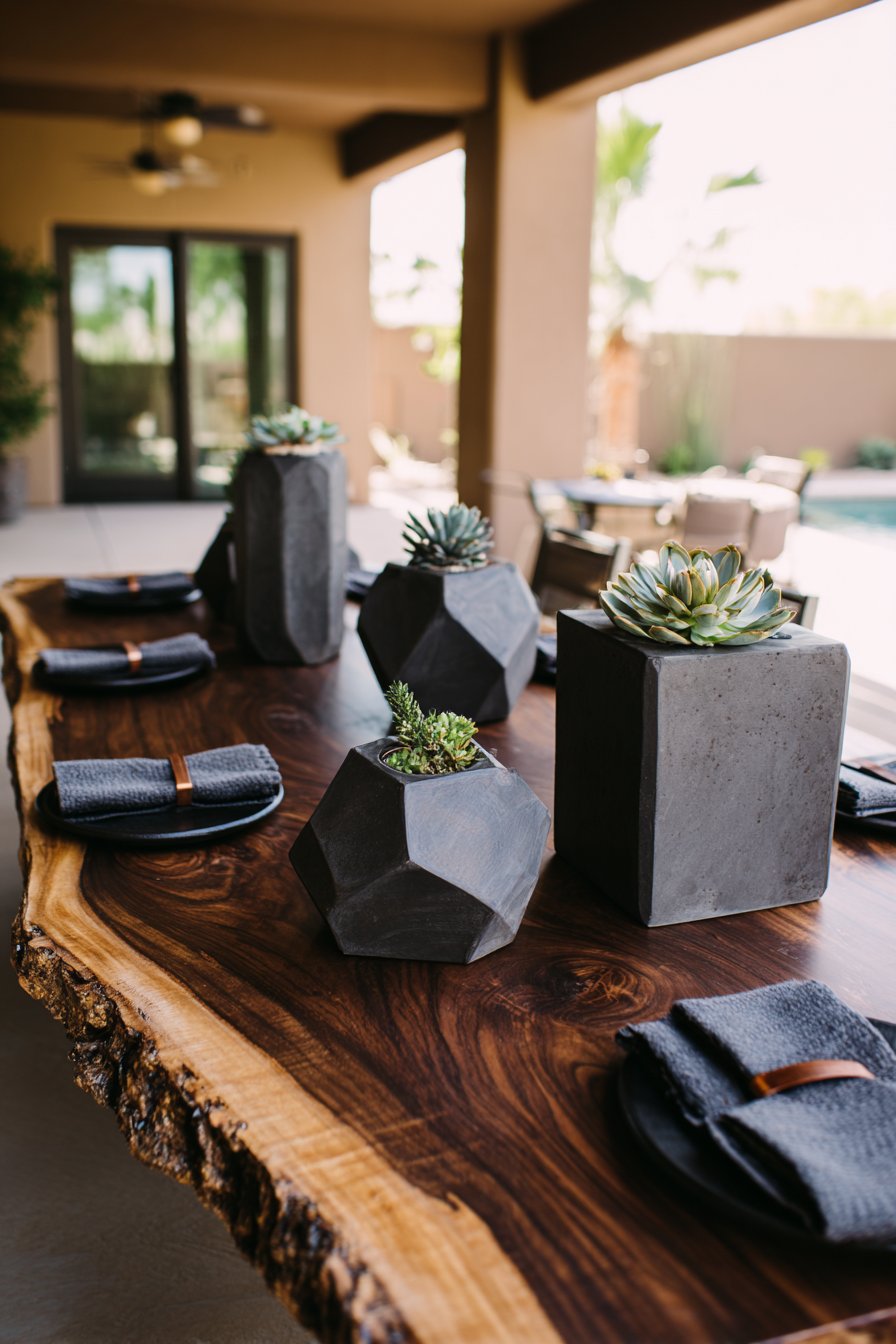
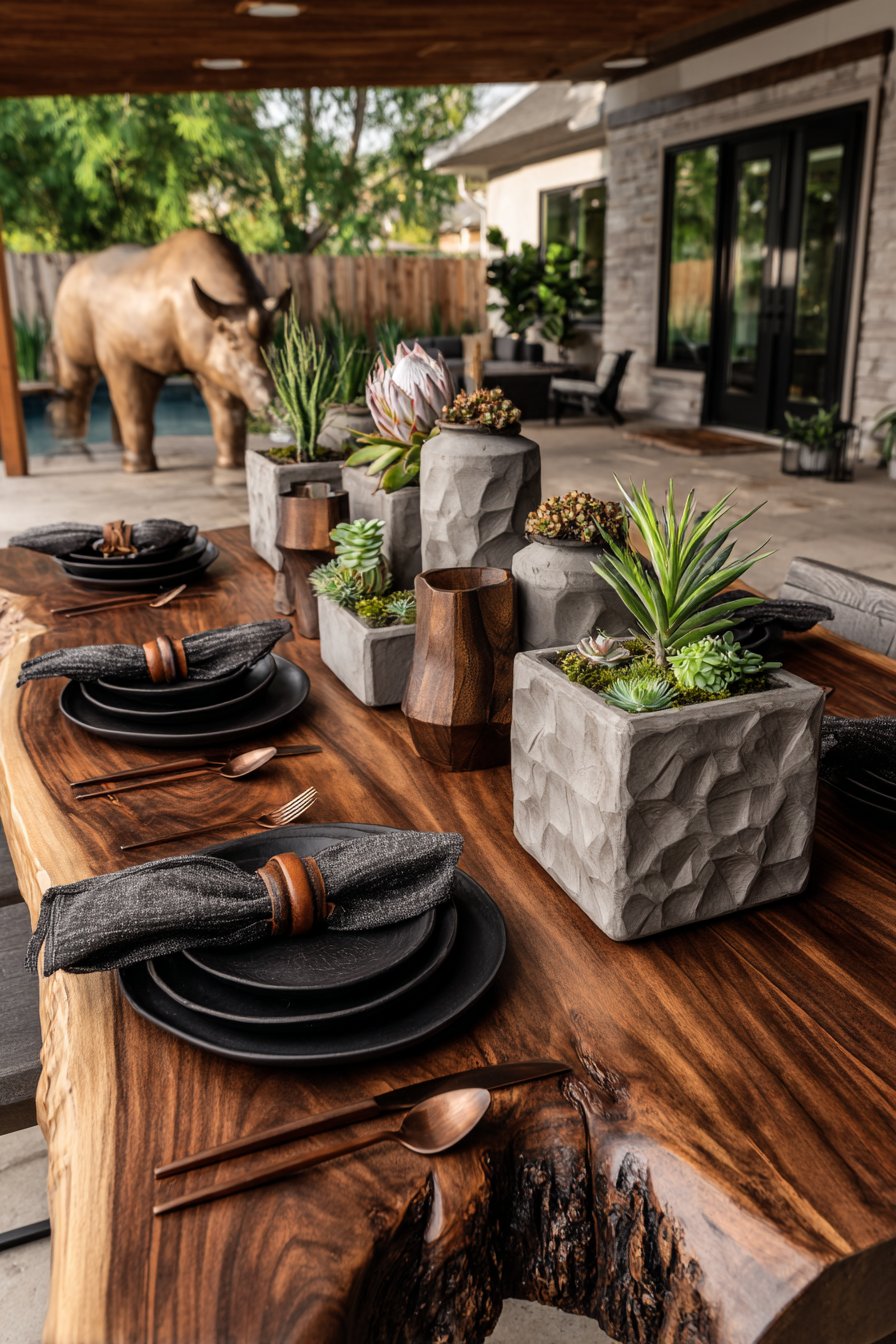
Live-edge walnut wood slab table showcases natural bark edge. Rich chocolate brown tones feature dramatic grain patterns. Modern concrete planters display geometric cube and cylinder shapes. Architectural succulents and snake plants provide sculptural elements.
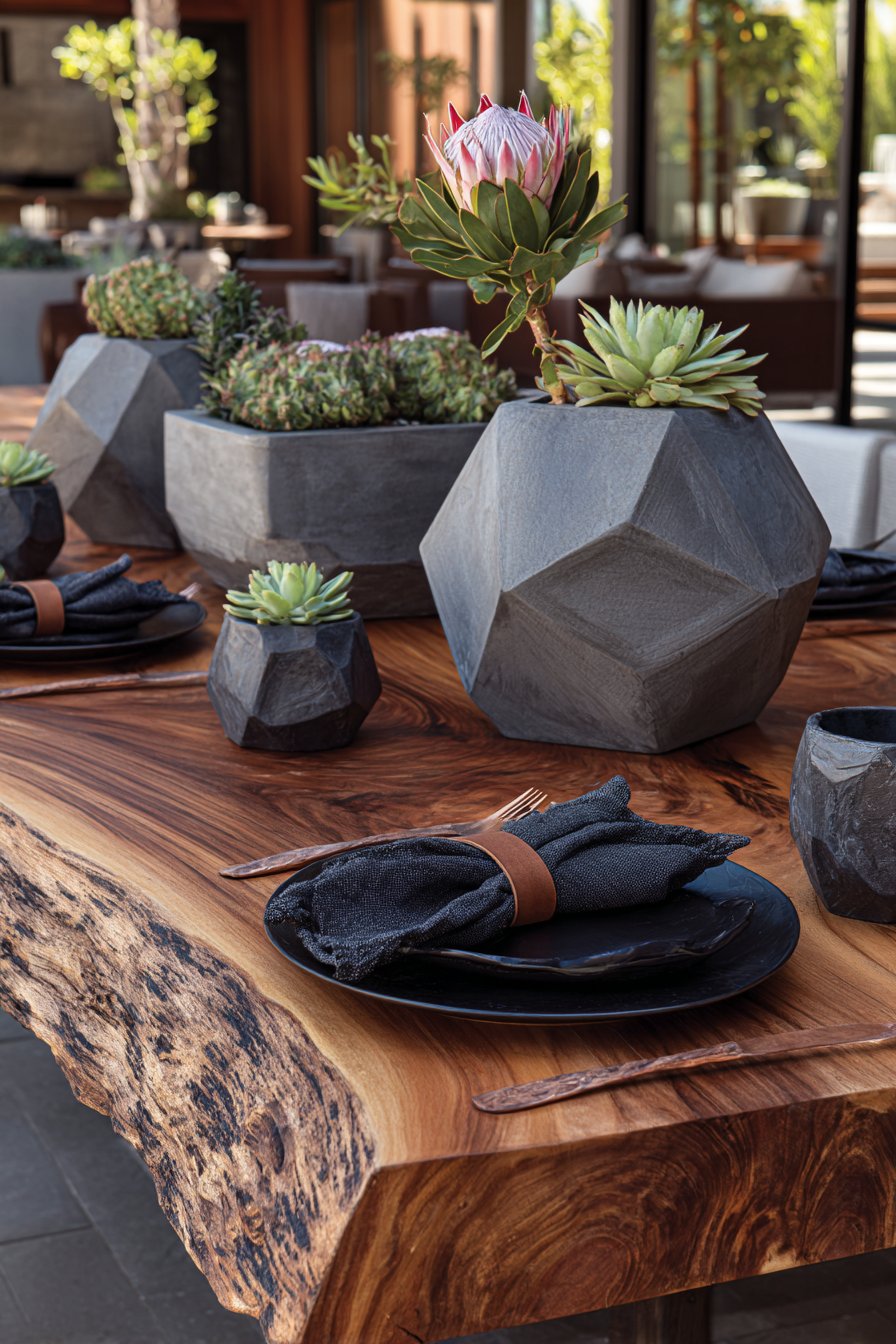
Charcoal linen napkins feature leather napkin rings for textural contrast. Matte black stoneware dishes show organic edge detail beautifully. Copper flatware adds warm metallic accent against dark palette. Single stem protea flowers create dramatic focal points individually.
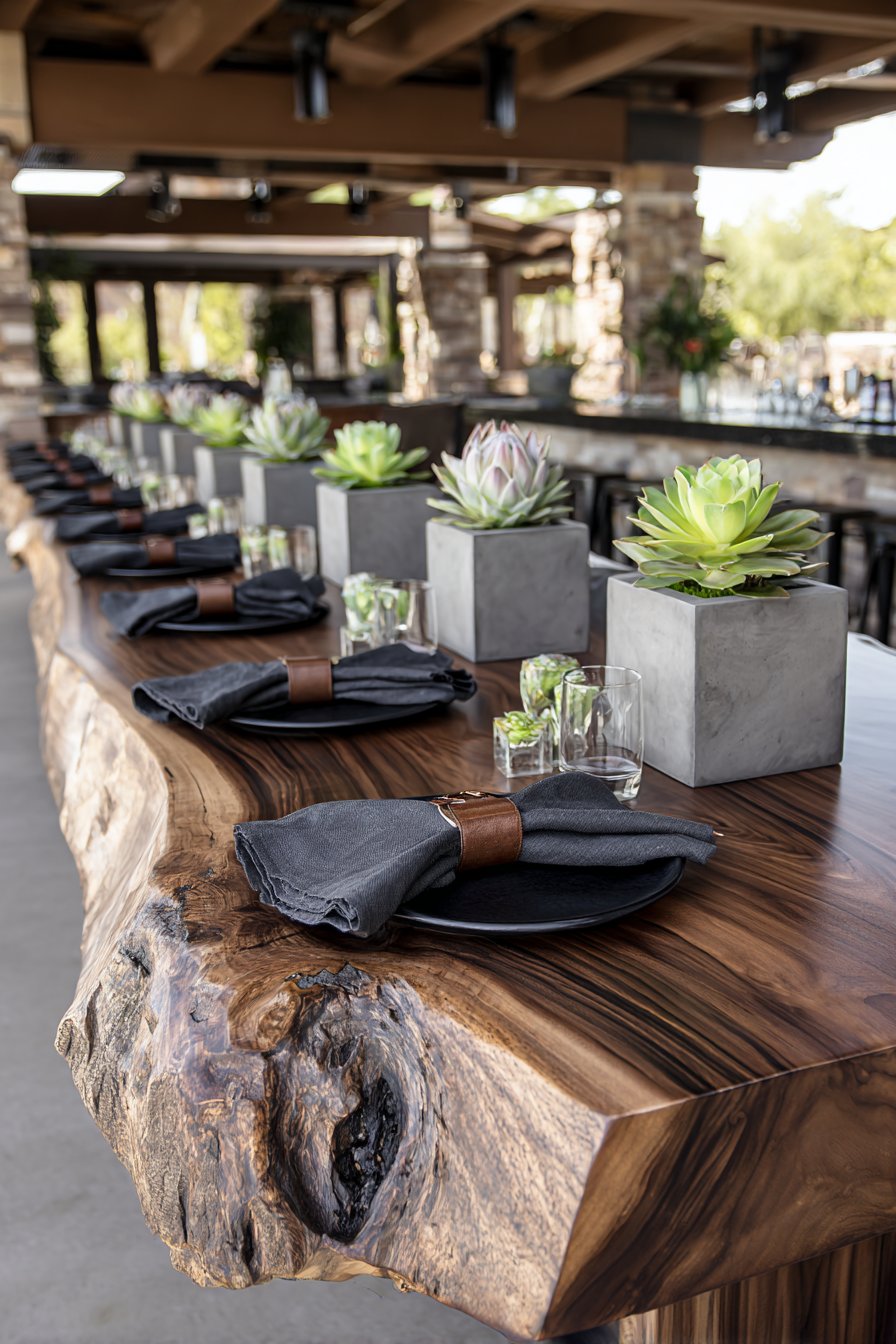
Indirect natural light from covered patio provides even illumination. Wood grain detail and material textures receive appropriate emphasis. Architectural photography style balances raw natural materials with refined modern elements. Rich dark tones and sophisticated organic-modern aesthetic succeed perfectly.
Contemporary outdoor entertaining requires thoughtful material combinations. Every element demonstrates quality craftsmanship and design intention. This approach creates striking outdoor dining environments.
Key Design Tips:
- Select live-edge wood slabs that showcase natural bark and grain dramatically
- Use modern concrete planters in geometric shapes for contemporary contrast
- Choose architectural plants like succulents and snake plants for sculptural quality
- Incorporate leather details like napkin rings for warm textural accents
- Add copper flatware as warm metallic accent against dark color palette
- Display single dramatic flowers like protea in individual bud vases
Why These Outdoor Table Decor Designs Are the Best
These outdoor table decor concepts represent comprehensive approaches to alfresco entertaining across diverse aesthetic preferences. Each design demonstrates thoughtful consideration of weather-resistant materials, natural lighting conditions, and practical functionality. The collection spans traditional to contemporary styles, ensuring options for every architectural setting and personal taste.
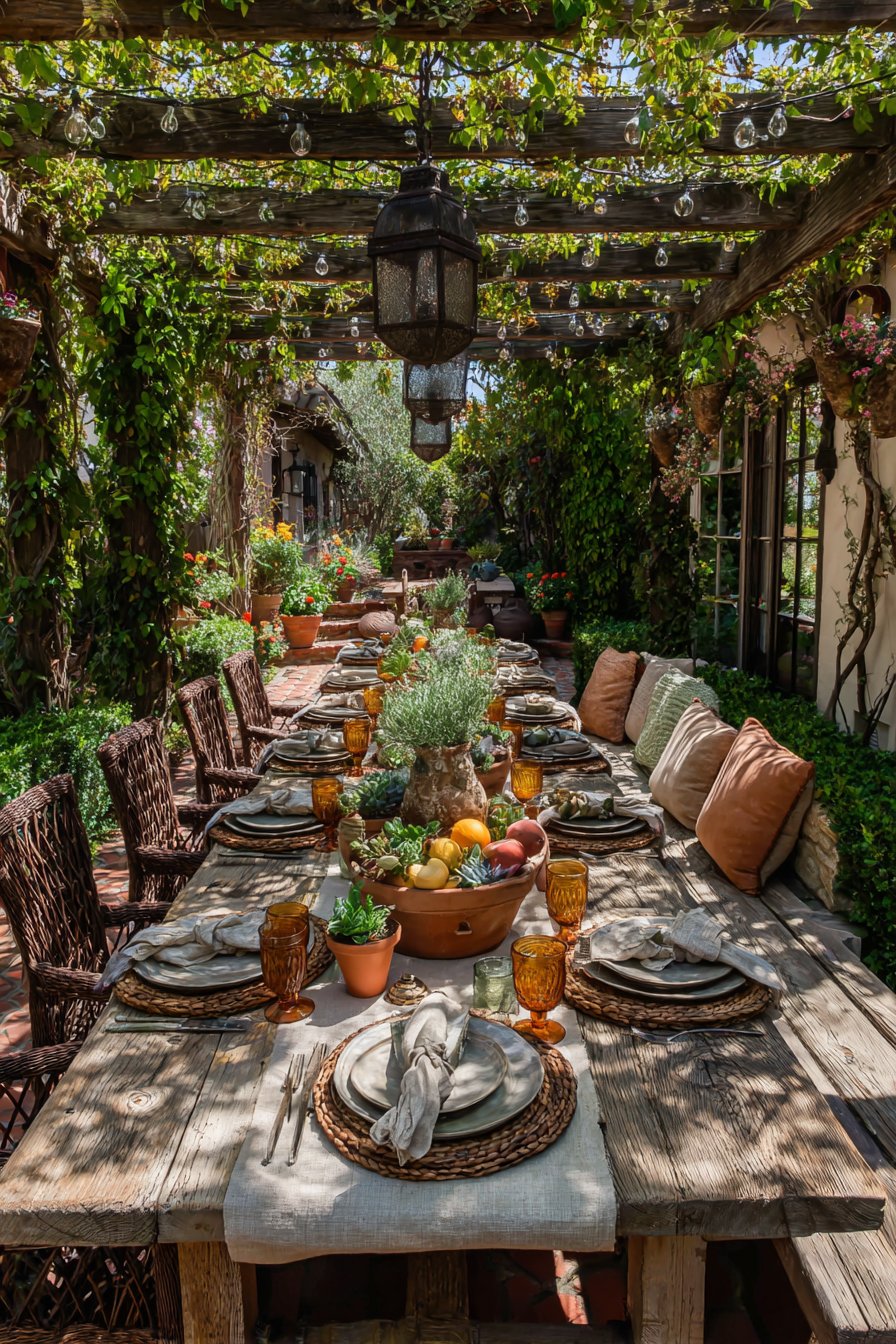
Material selection proves critical in outdoor applications. Teak, concrete, metal, and treated wood provide durability against weather exposure. These surfaces age gracefully rather than deteriorate quickly. Natural textiles like linen and cotton work well for seasonal use. Glass, ceramic, and metal accessories withstand outdoor conditions while maintaining visual appeal.
Color theory applications differ outdoors compared to interior spaces. Natural sunlight intensifies colors throughout the day. Morning light appears cool and bright, while golden hour creates warm amber tones. Neutral foundations allow flexibility with seasonal accent changes. Jewel tones and earth tones photograph beautifully in natural settings.
Spatial considerations vary based on available outdoor areas. Compact balconies benefit from minimalist approaches with vertical elements. Expansive patios accommodate abundant centerpieces and layered styling. Scale remains important—oversized arrangements overwhelm small spaces while sparse decor appears lost on large tables.
Sustainability emerges through quality material investments. Solid wood furniture lasts decades with proper care. Real ceramic and glass pieces replace disposable alternatives. Living centerpieces like herb gardens serve dual purposes. These choices reduce waste while creating beautiful functional spaces.
The versatility of these concepts allows personal interpretation and adaptation. Rustic farmhouse elements combine with modern touches successfully. Mediterranean colors enhance coastal settings naturally. Industrial aesthetics suit urban rooftops perfectly. Each approach provides foundation for individual expression.
Lighting strategies extend outdoor dining into evening hours. Candles, lanterns, and string lights create ambient illumination. Layered lighting approaches combine practical task lighting with decorative accents. Strategic placement enhances safety while maintaining romantic atmosphere.
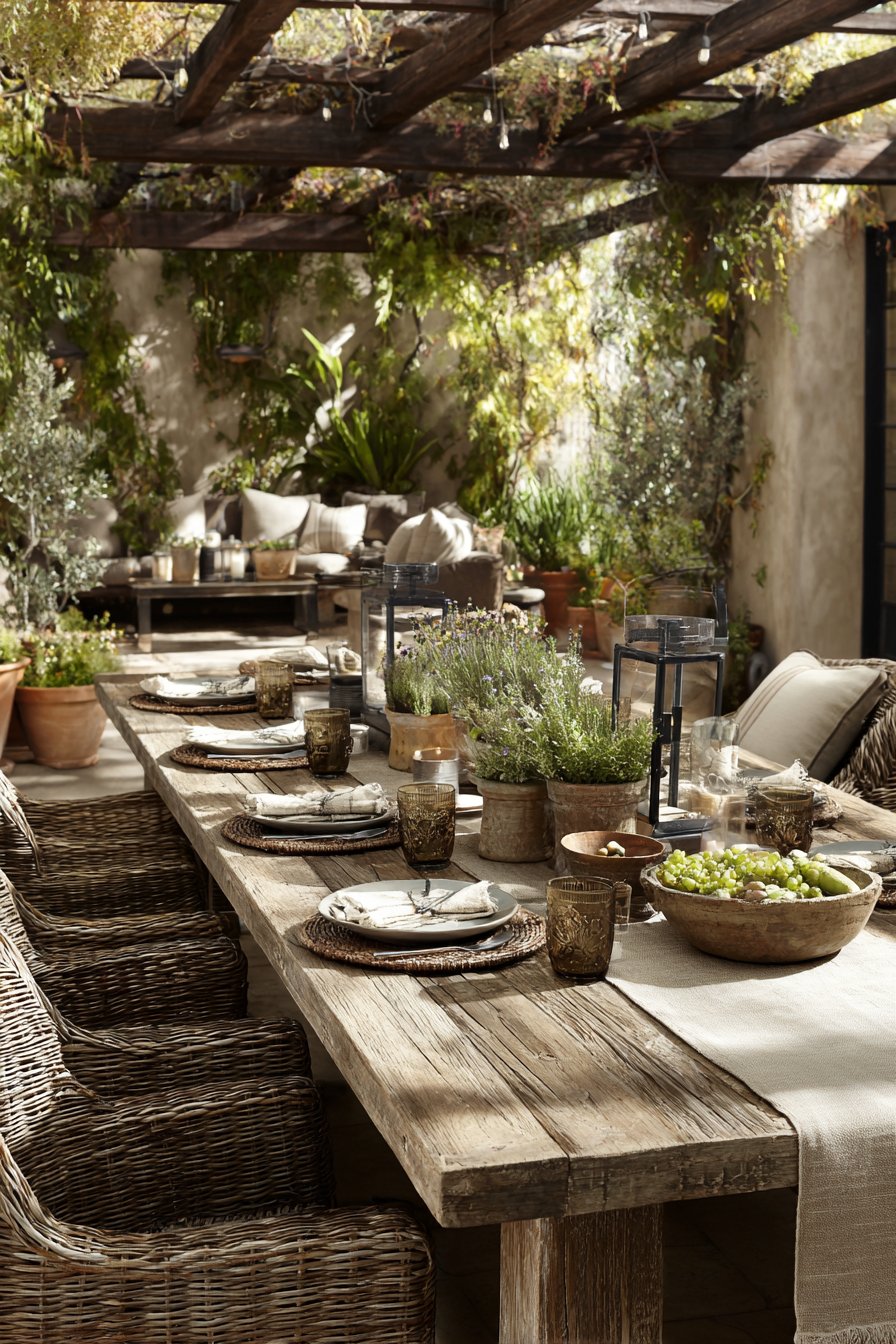
Seasonal adaptability ensures year-round outdoor enjoyment in appropriate climates. Spring celebrates fresh flowers and pastel palettes. Summer embraces vibrant colors and tropical abundance. Autumn showcases harvest elements and warm metallics. Winter requires protected spaces with evergreen elements.
Conclusion
These twenty outdoor table decor designs demonstrate that alfresco dining spaces deserve the same design attention as interior rooms. Material quality, color coordination, and thoughtful accessories transform ordinary outdoor furniture into extraordinary gathering places. Each concept provides starting point for personal interpretation.
The key takeaways include weather-resistant material selection, appropriate scale for available space, and lighting strategies for day-to-evening transitions. Natural elements like fresh flowers, herbs, and organic textures connect outdoor dining with surrounding environments. Layered approaches combining practical functionality with aesthetic beauty create most successful outcomes.
Start by assessing your outdoor space characteristics and entertaining needs. Select one design direction that resonates with your personal style. Invest in quality foundational pieces that withstand weather exposure. Add seasonal accessories and living elements for flexible updates. Your outdoor dining area awaits transformation through thoughtful planning and creative expression.