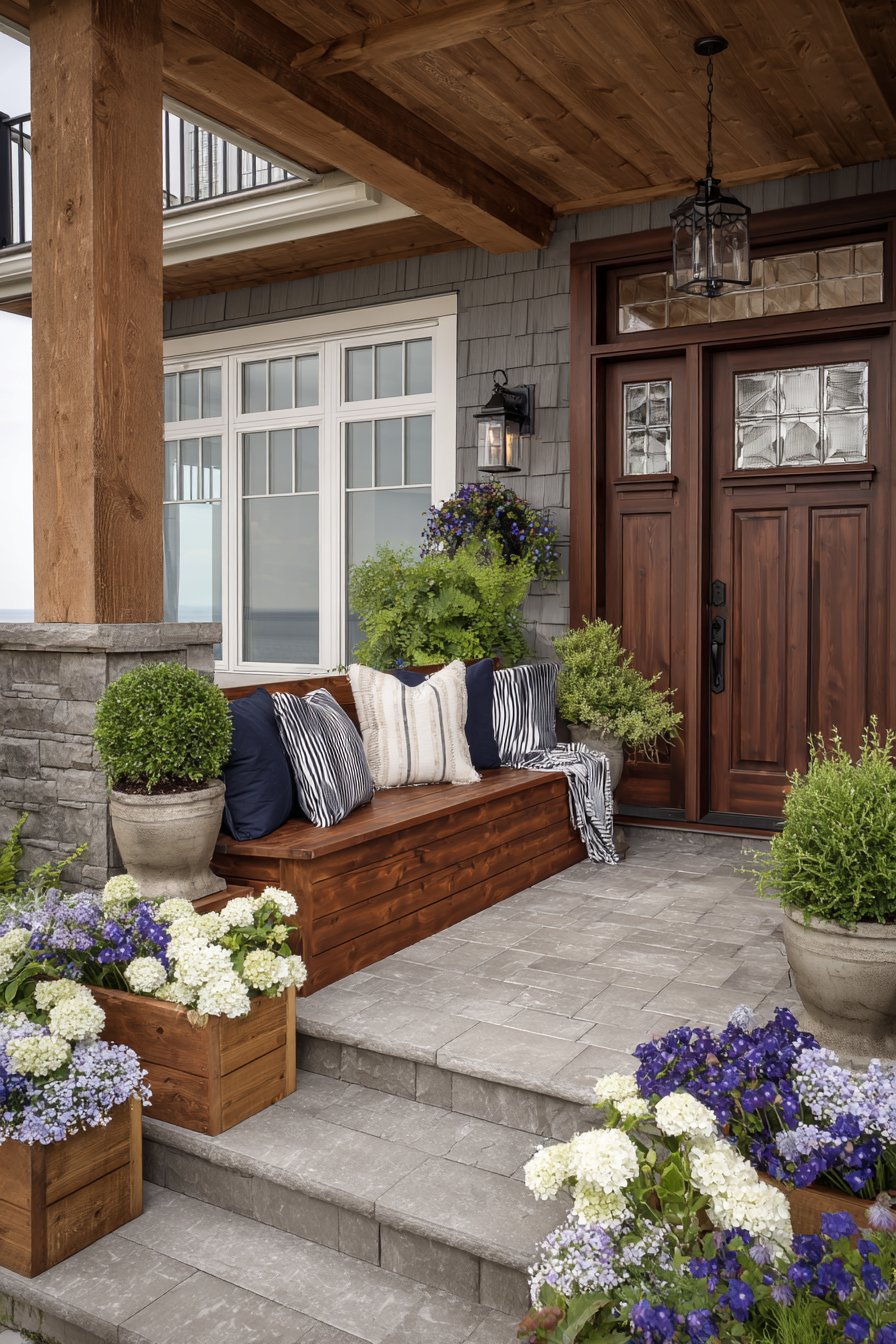


The outdoor entryway serves as the first impression of your home. It sets the tone for what guests will experience inside. A thoughtfully designed entrance creates an inviting atmosphere that reflects your personal style. Whether you prefer traditional elegance or contemporary minimalism, your entryway deserves careful attention.
Outdoor entryway design has evolved significantly in recent years. Homeowners now recognize the importance of extending interior design principles to exterior spaces. The right combination of materials, lighting, and plantings transforms a simple doorway into a welcoming destination. These spaces provide opportunities to showcase personality while enhancing curb appeal and property value.
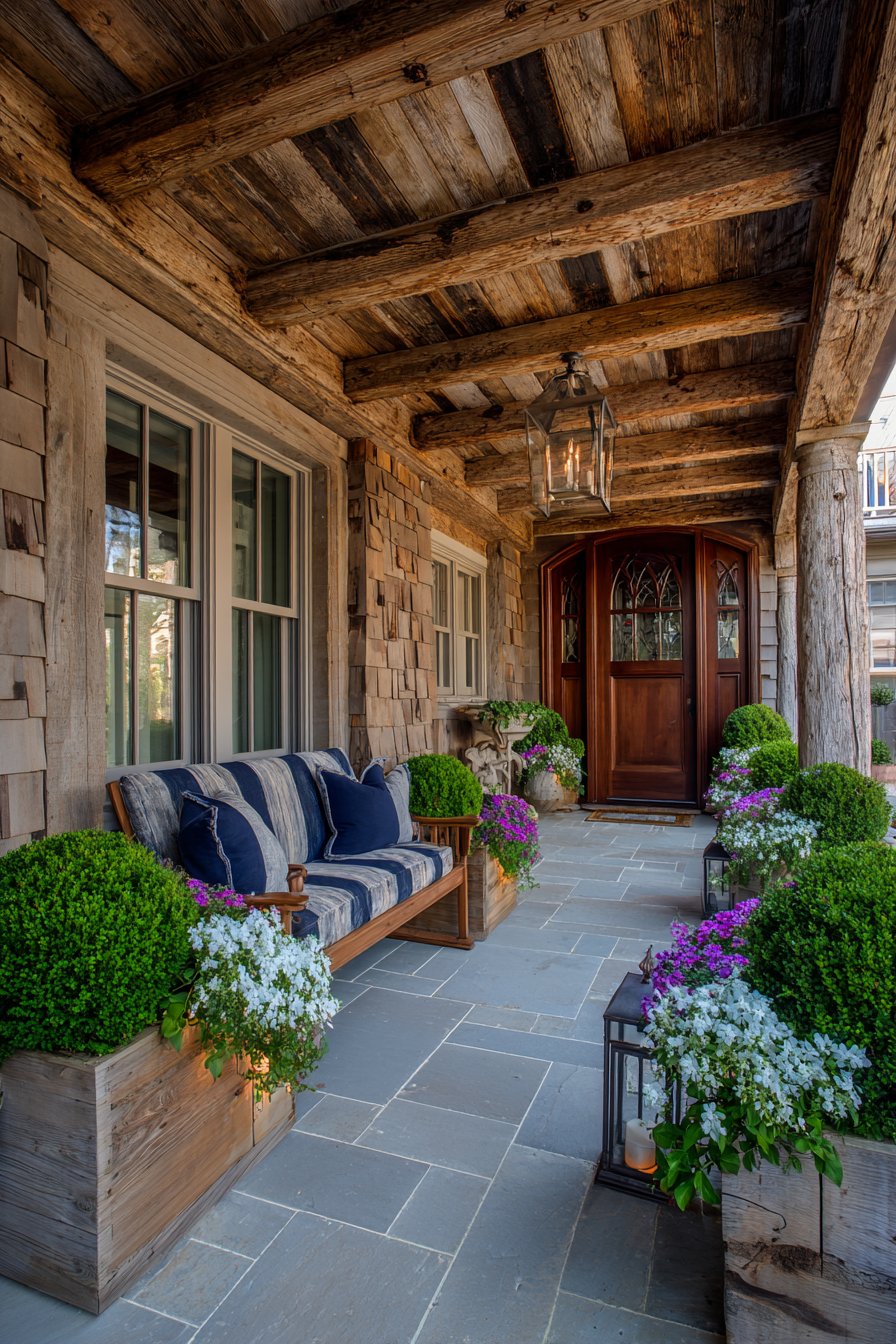
This comprehensive guide explores twenty distinctive outdoor entryway designs. Each concept demonstrates unique approaches to materials, color palettes, and architectural styles. From rustic farmhouse charm to sleek modern aesthetics, these ideas cater to diverse tastes and architectural contexts. The designs emphasize natural materials that age gracefully and authentic details that create lasting impressions.
1. Classic Wood and Greenery Welcome
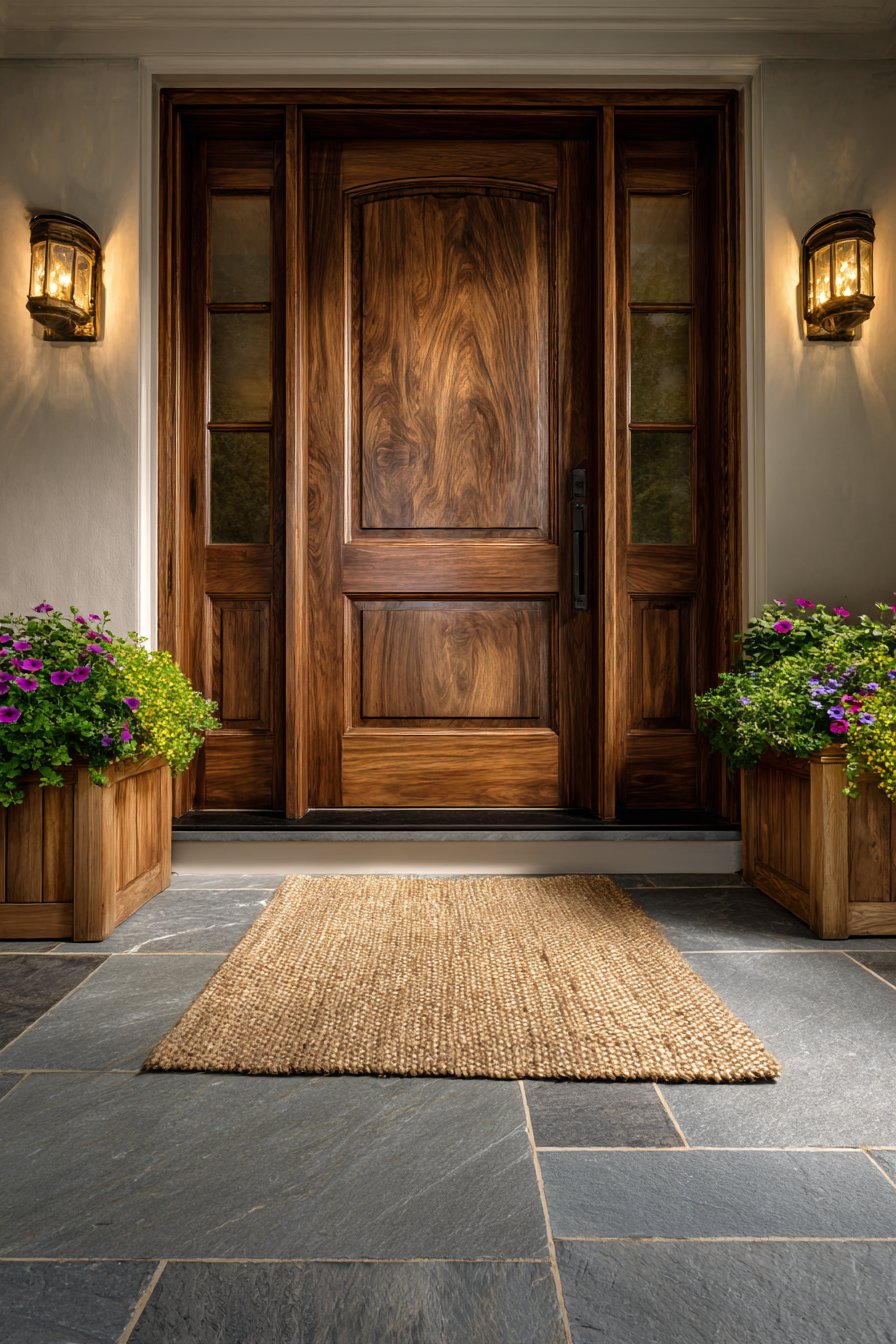
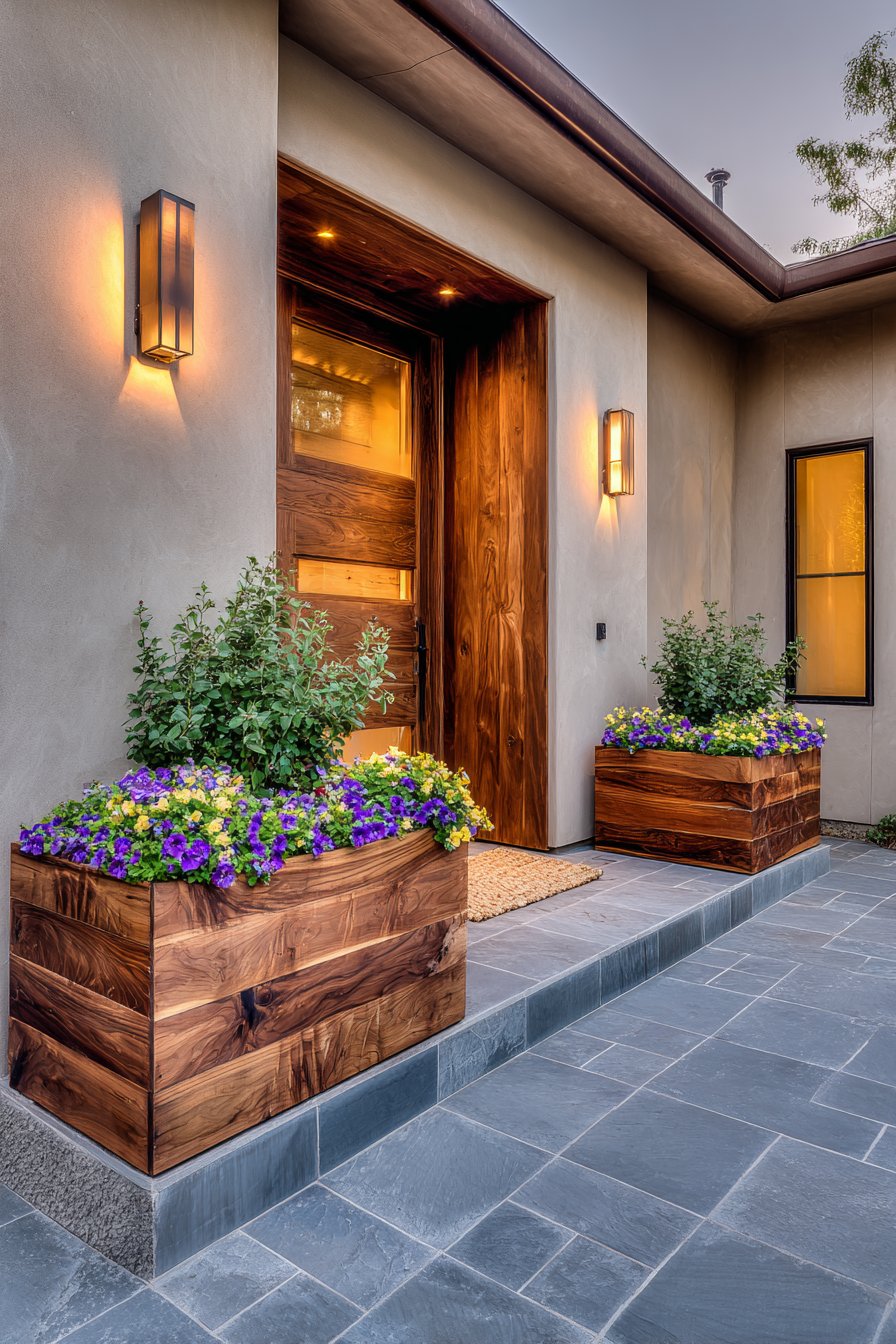
A solid walnut front door anchors this welcoming outdoor entryway. The rich wood finish displays beautiful grain patterns that catch natural light. Cedar planter boxes flank the entrance on both sides. They overflow with seasonal greenery and colorful petunias in vibrant hues. The symmetrical arrangement creates visual balance and formal appeal.
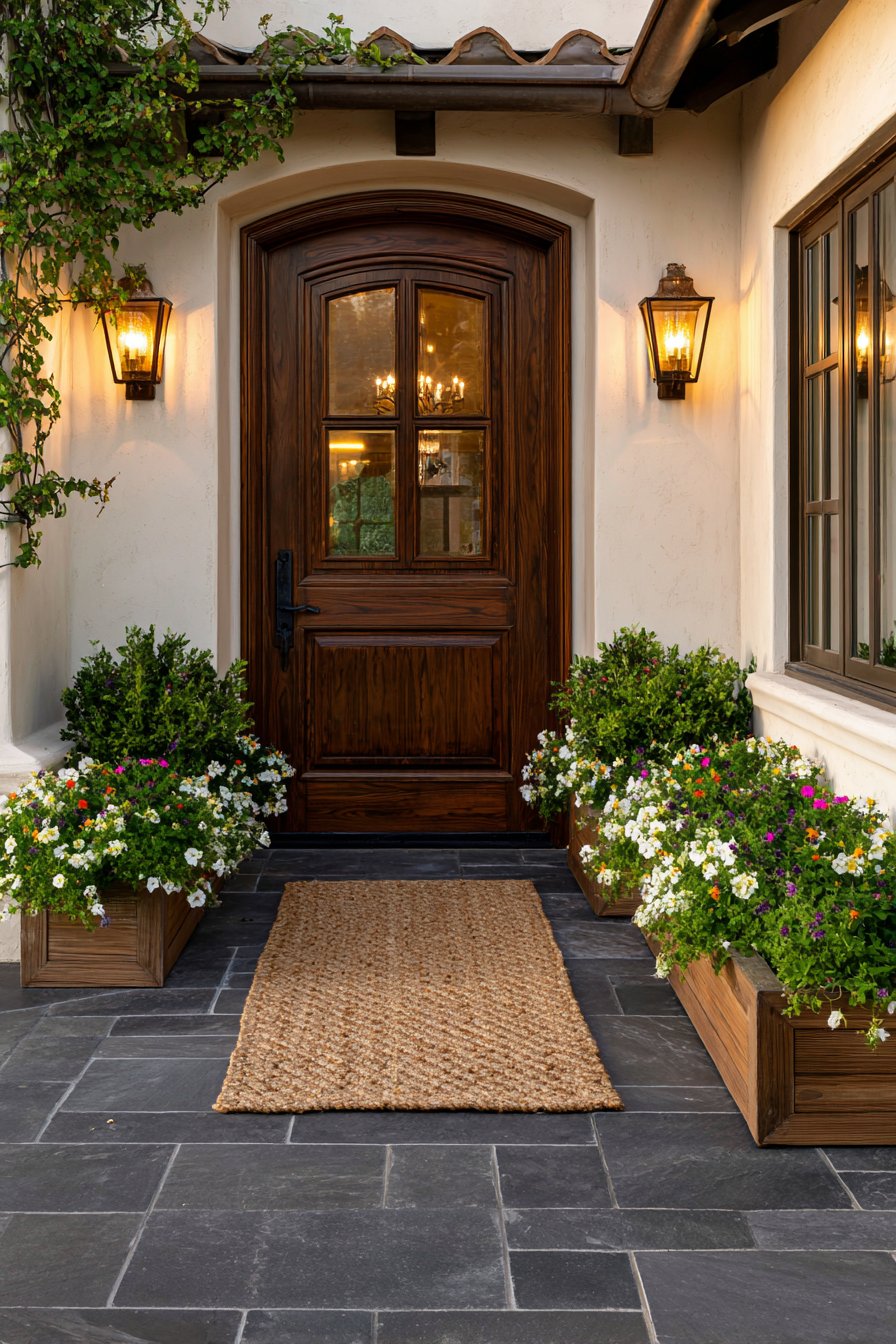
Grey slate tile flooring provides a neutral foundation beneath the entrance. Subtle texture variations add visual interest without overwhelming the space. The natural stone weathers beautifully over time. A handwoven natural fiber doormat adds warmth and practical functionality. It invites guests to pause before entering your home.
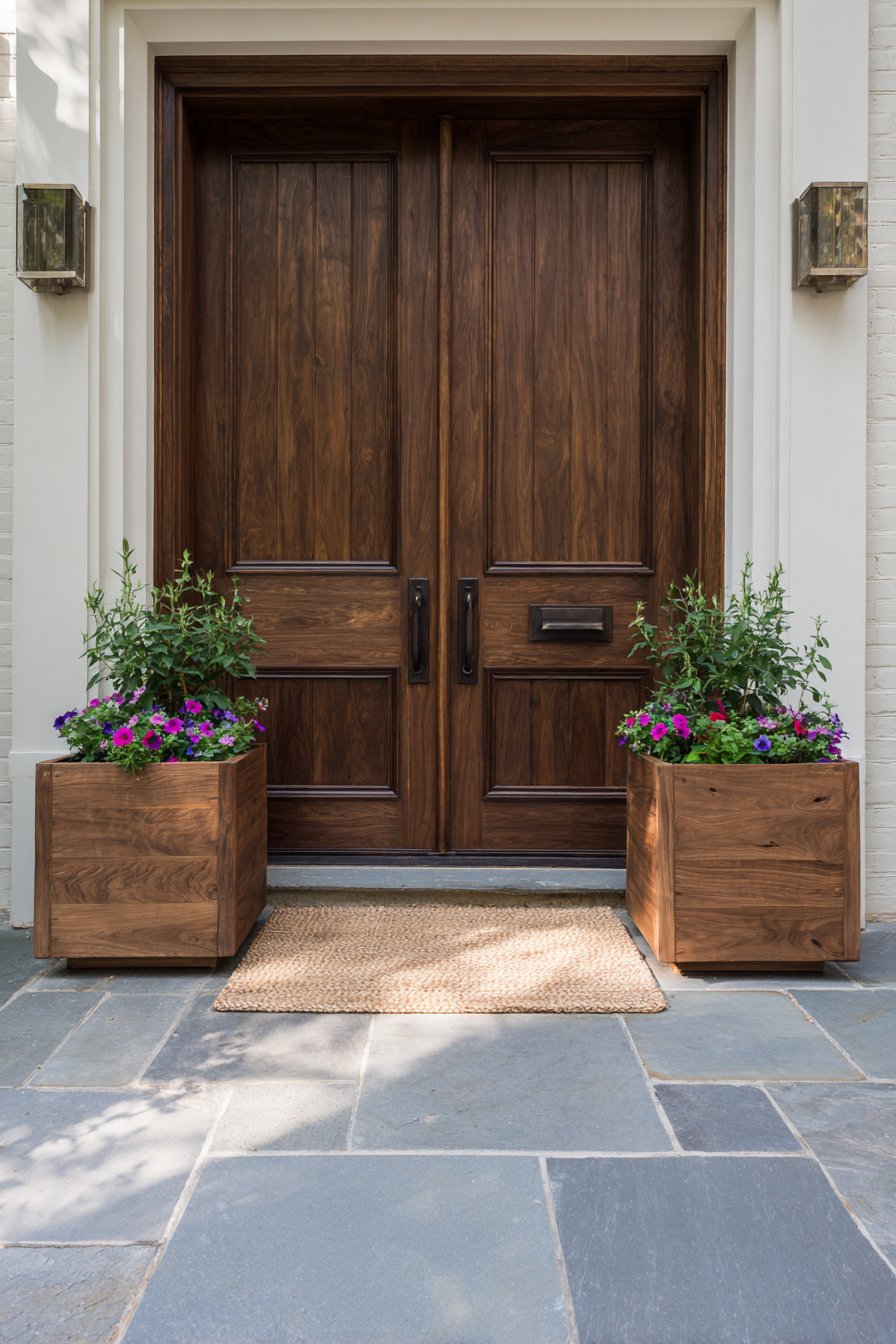
Brushed bronze wall sconces mount on either side of the door. They cast warm ambient lighting during evening hours. The fixtures complement the walnut door finish beautifully. Golden hour light highlights the wood grain naturally. Shadows create depth that emphasizes the three-dimensional quality of materials.
The combination of natural wood and living plants creates organic appeal. This design works particularly well with traditional and transitional home styles. The materials develop character as they age naturally over time.
Key Design Tips:
- Select solid wood doors over hollow core for authentic quality and longevity
- Choose planter boxes in materials that complement your door finish
- Coordinate metal finishes across lighting fixtures and door hardware
- Plant seasonal flowers that provide color throughout the year
- Maintain natural fiber doormats by shaking out debris regularly
- Position lighting to illuminate the entryway without creating harsh shadows
2. Farmhouse Sage and Lavender Charm
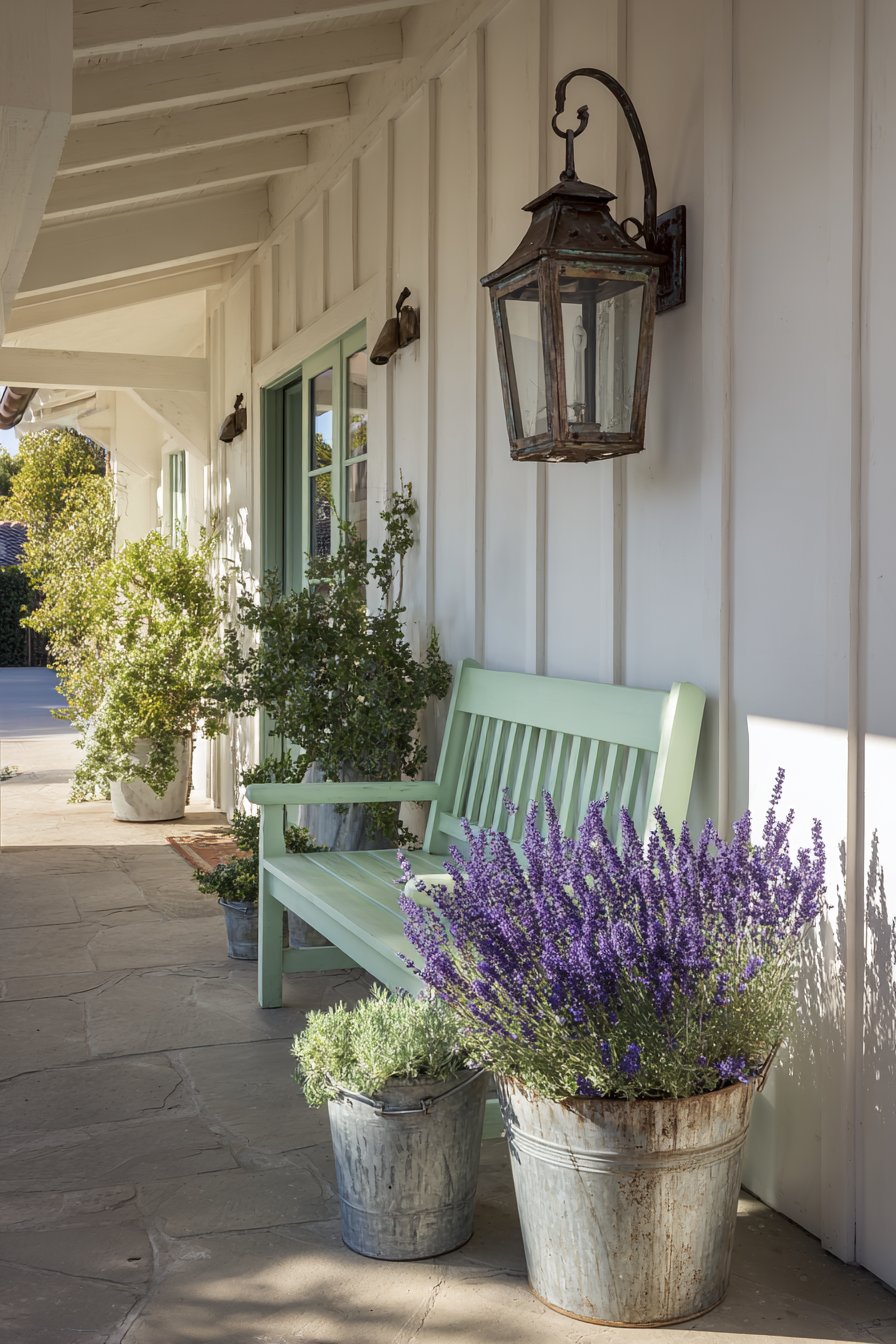
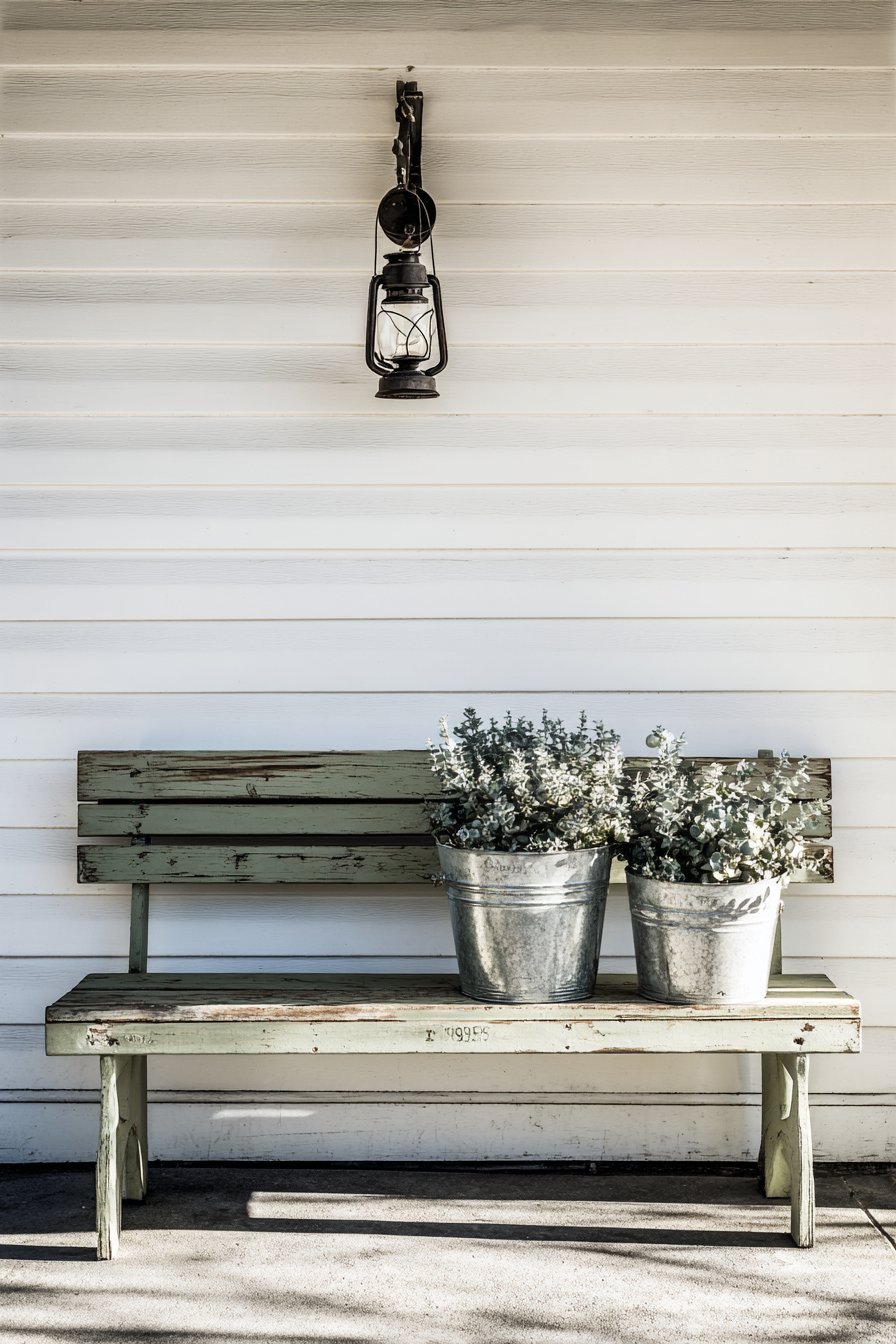
Sage green paint transforms a simple wooden bench into a focal point. The color creates visual interest against white horizontal lap siding. This farmhouse-inspired entryway demonstrates how color choices define character. Galvanized metal buckets filled with lavender and eucalyptus add rustic charm. The aromatic plants provide sensory appeal beyond visual beauty.
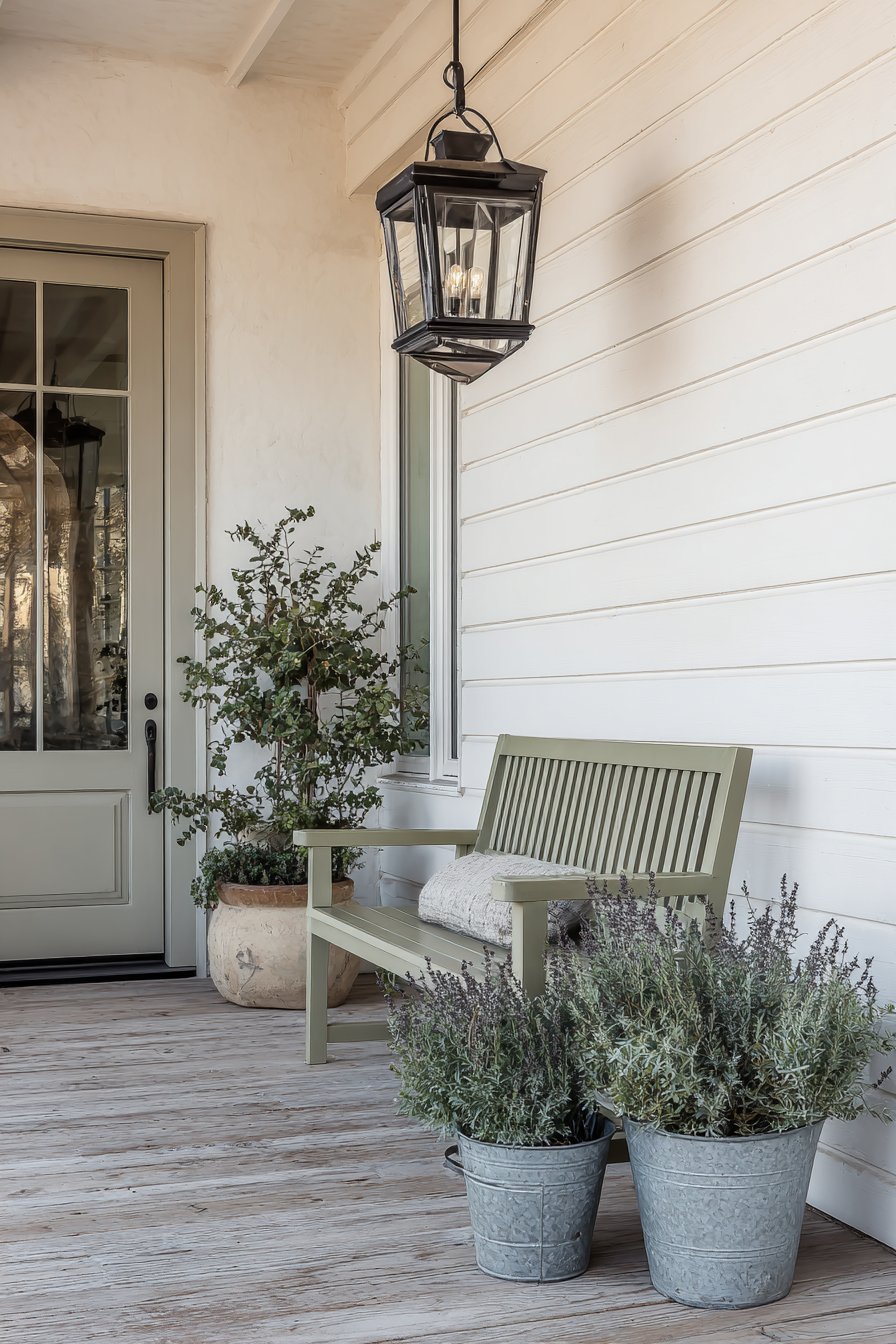
A vintage-style lantern hangs overhead from a black iron hook. The fixture adds vertical interest and practical illumination. Natural morning light creates soft, diffused quality across the space. The combination of painted wood and weathered metal creates authentic farmhouse character.
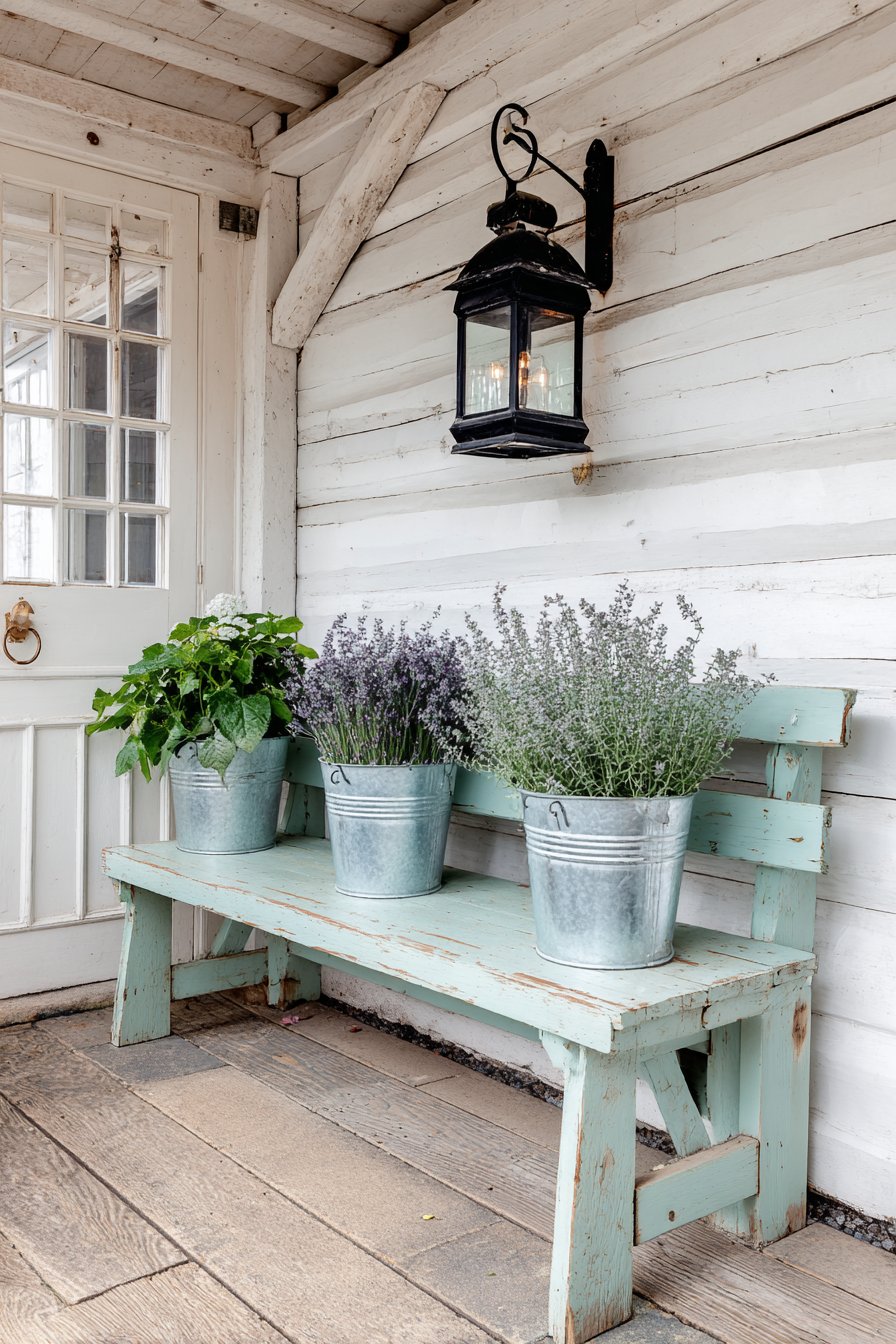
The layered textures distinguish this design from simpler approaches. Fresh paint contrasts with deliberately weathered elements. Living plants introduce organic movement and seasonal variation. These layers create depth that makes the space feel collected over time.
This inviting entryway demonstrates that farmhouse style need not feel contrived. The sage green provides a sophisticated alternative to typical farmhouse colors. The careful balance of new and aged elements creates lived-in authenticity.
Key Design Tips:
- Paint outdoor furniture with exterior-grade paint formulated for durability
- Choose herbs like lavender and eucalyptus for fragrance and visual appeal
- Mix new pieces with vintage finds for authentic farmhouse character
- Position seating to create a welcoming pause point before entering
- Select metal finishes that develop attractive patina over time
- Maintain white siding with regular cleaning to preserve crisp contrast
3. Modern Minimalist Concrete and Steel
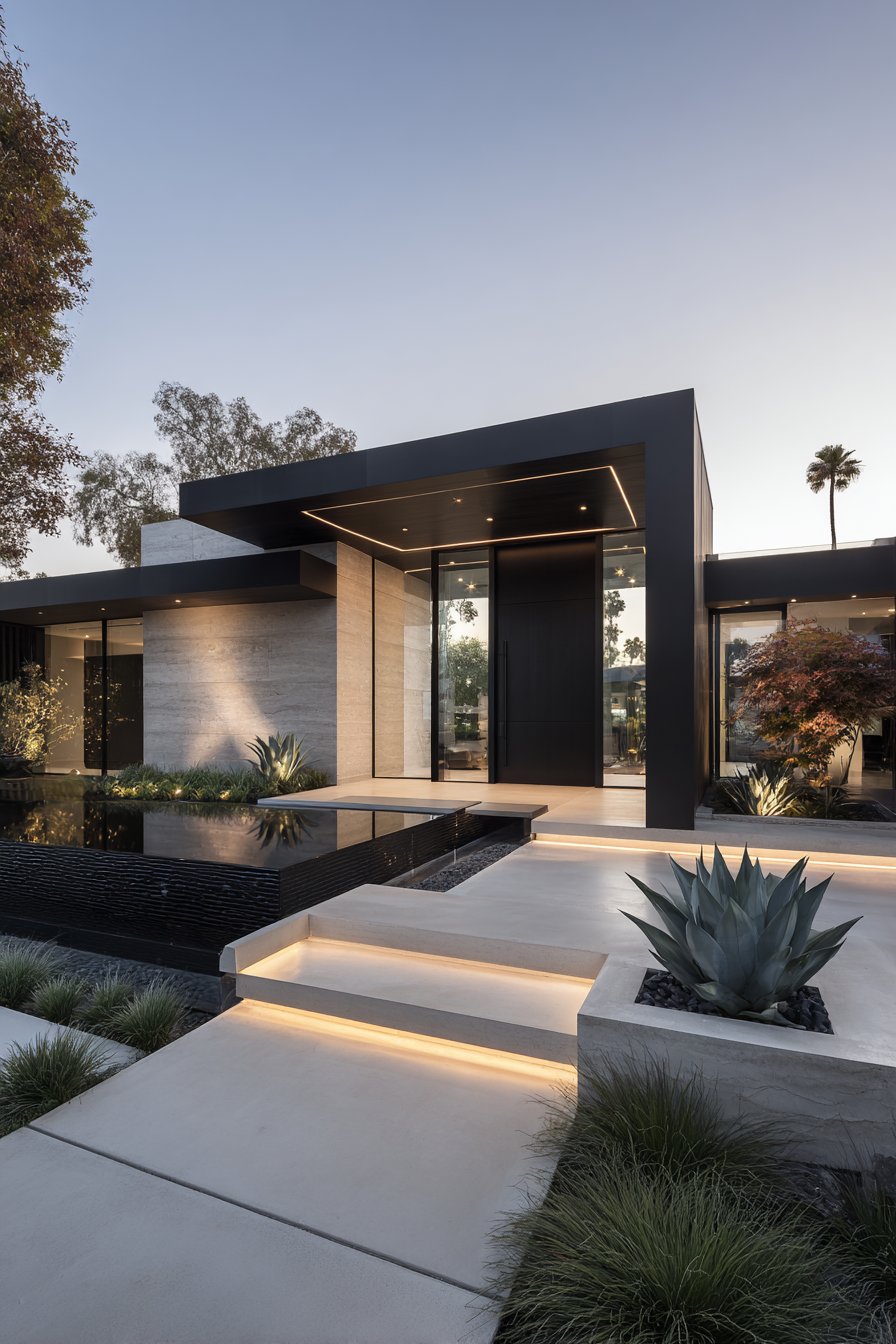
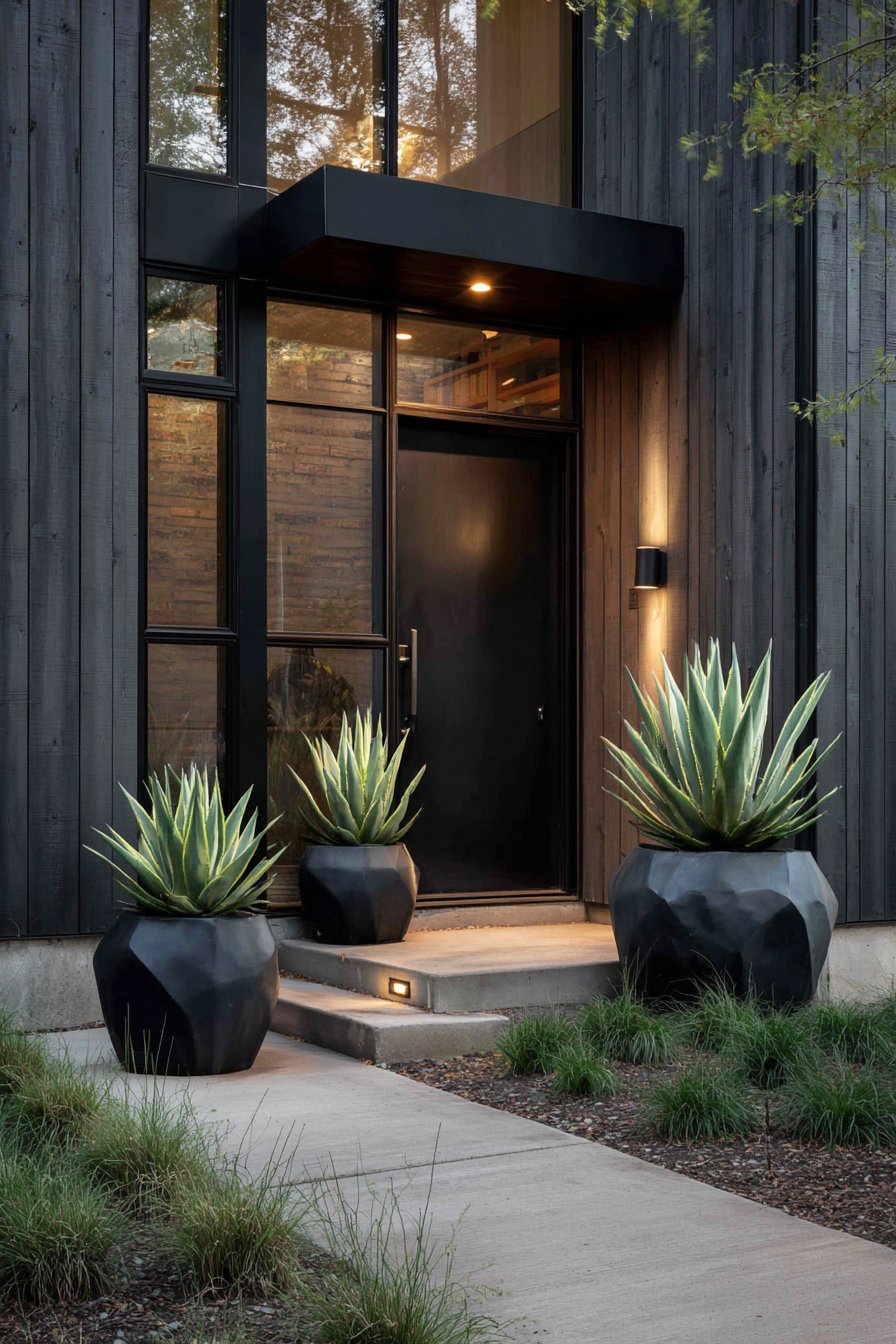
Clean lines define this contemporary outdoor entryway design. A matte black steel and glass door makes a bold architectural statement. The sleek entrance demonstrates restraint and sophisticated simplicity. Concrete pathways lead visitors directly to the entrance with purposeful clarity. Low-profile landscape lighting embeds along the walkway edges.
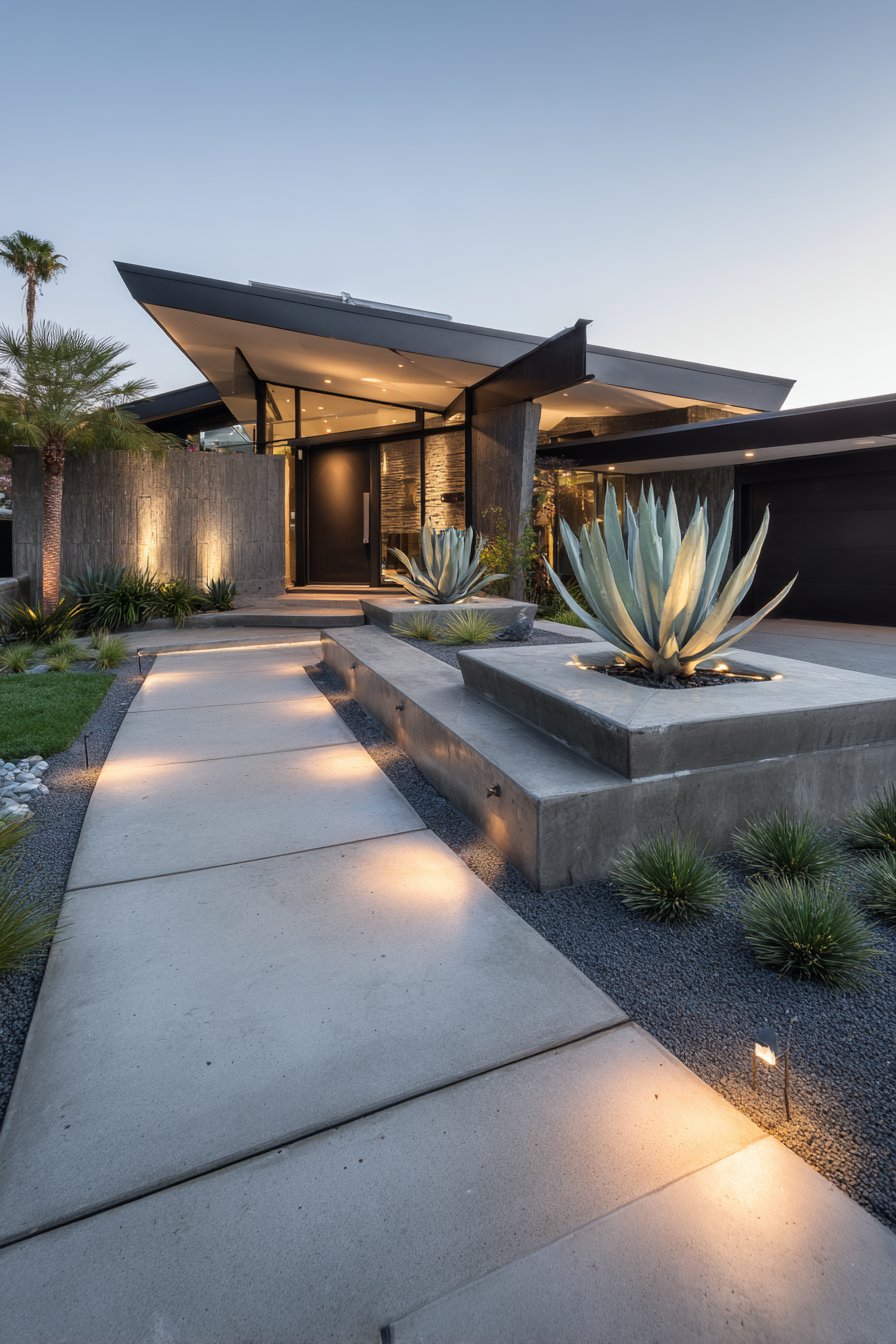
Architectural concrete planters contain ornamental grasses and sculptural agave plants. The geometric arrangements emphasize form over abundance. Each plant serves as living sculpture rather than decorative filler. The drought-tolerant selections require minimal maintenance while providing year-round interest.
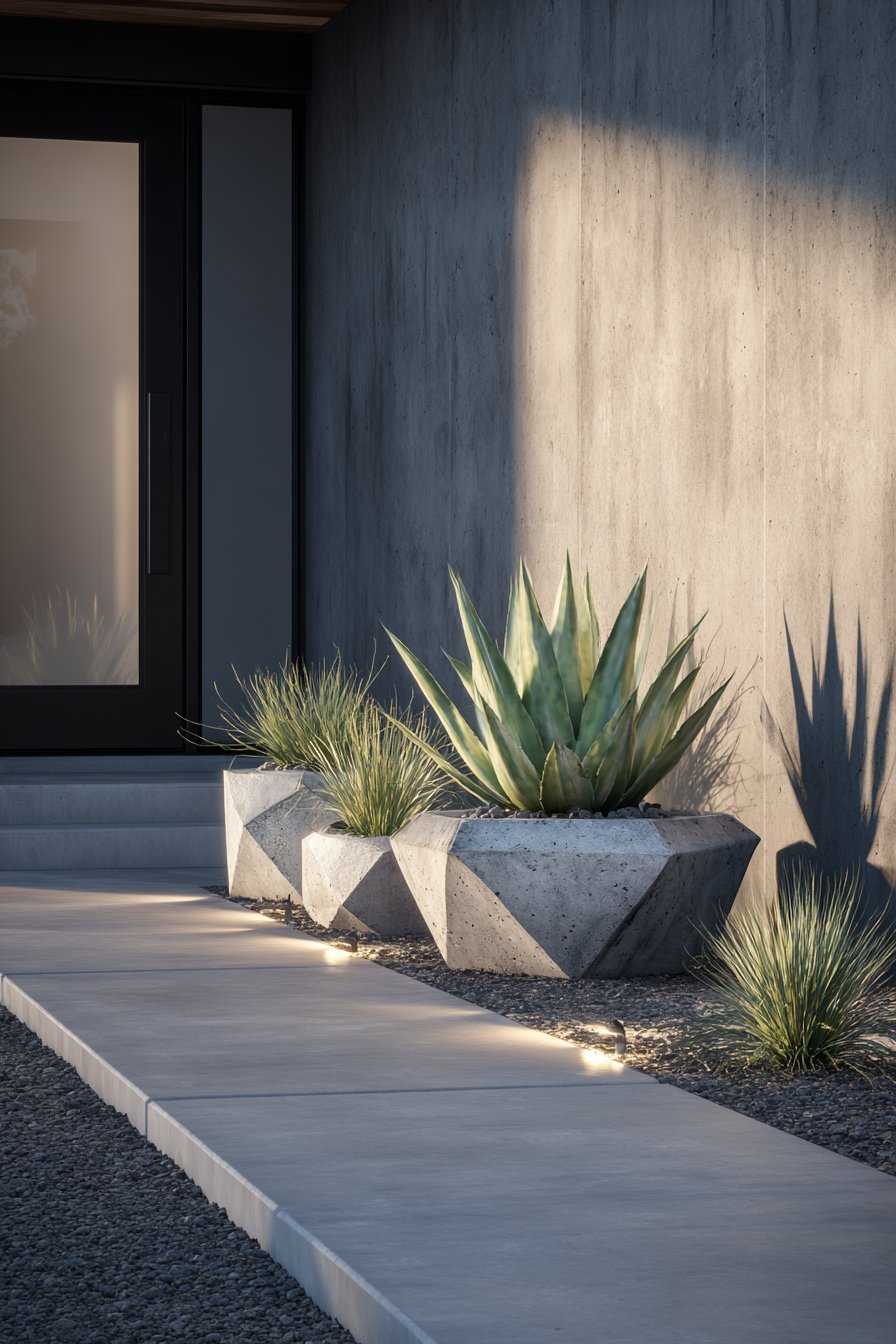
Blue hour photography captures how artificial lighting interacts with twilight. The embedded pathway lights create dramatic shadows and highlight material contrasts. The interplay between natural and artificial illumination adds sophisticated dimension. Clean lines remain visible even in diminishing natural light.
This minimalist approach appeals to those who appreciate modern architecture. The design requires careful material selection and precise installation. Every element serves a specific purpose without unnecessary decoration.
Key Design Tips:
- Invest in quality steel and glass doors that resist weathering and corrosion
- Pour concrete pathways with smooth finishes for modern aesthetic appeal
- Select architectural plants with strong forms and low water requirements
- Install LED landscape lighting for energy efficiency and long lifespan
- Limit plant palette to three varieties maximum for cohesive minimalism
- Maintain clean concrete surfaces with periodic pressure washing
4. Coastal Navy and White Breeze
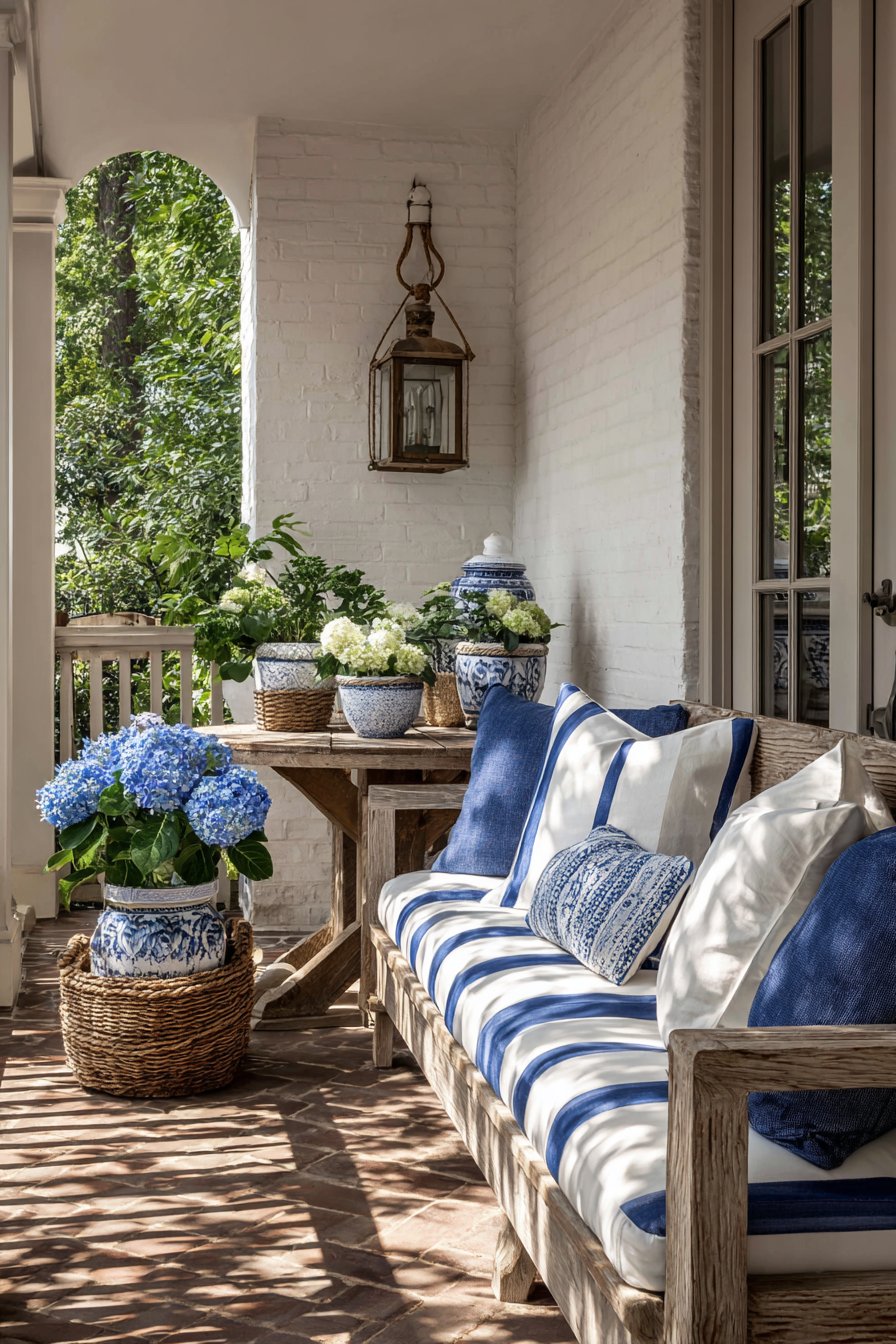
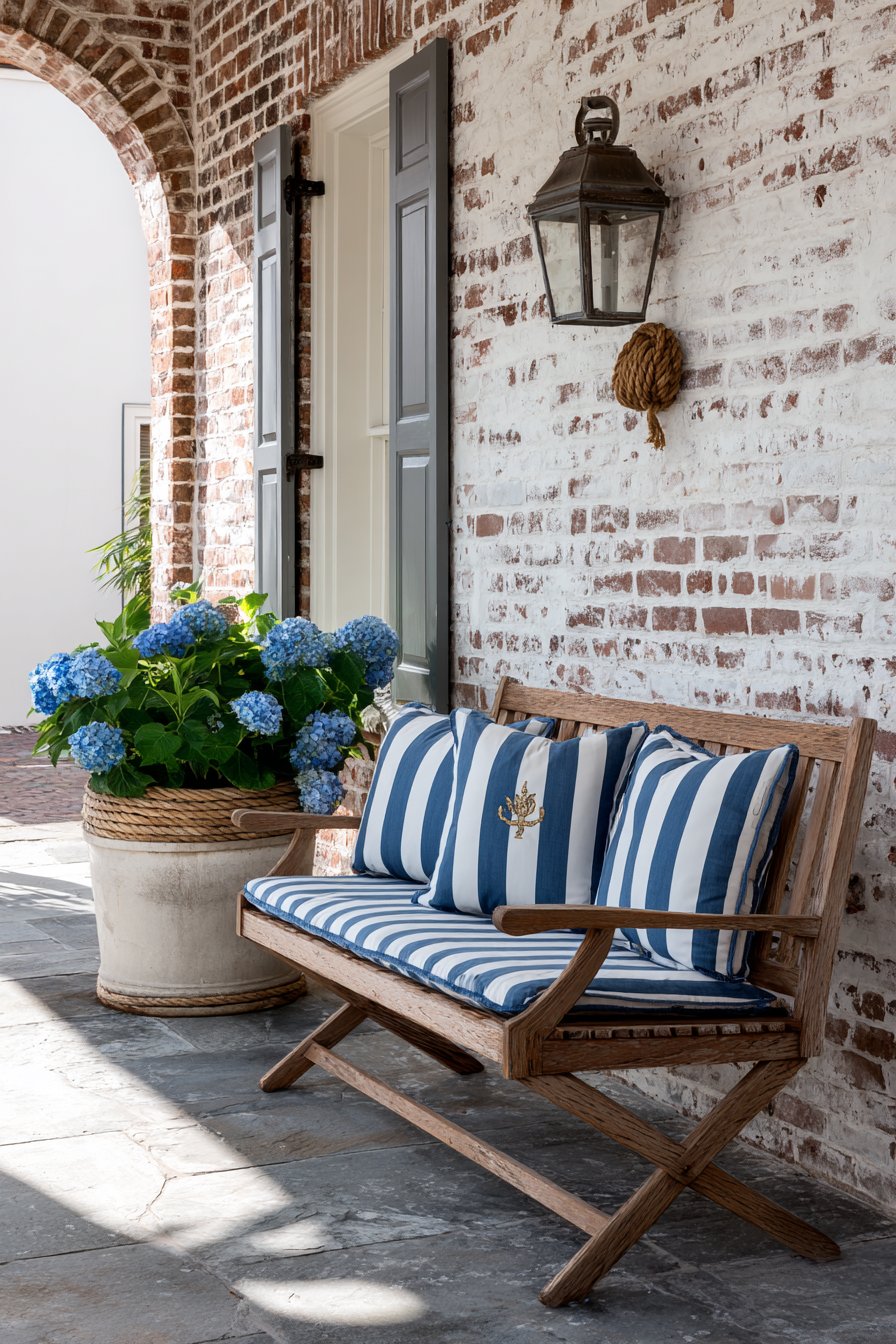
Weathered teak furniture brings coastal charm to this covered porch entrance. A substantial bench features navy and white striped cushions. The maritime color scheme creates instant coastal recognition. Rope-wrapped nautical accents reinforce the theme without feeling overly literal. A hanging lantern adds vertical interest and practical lighting.
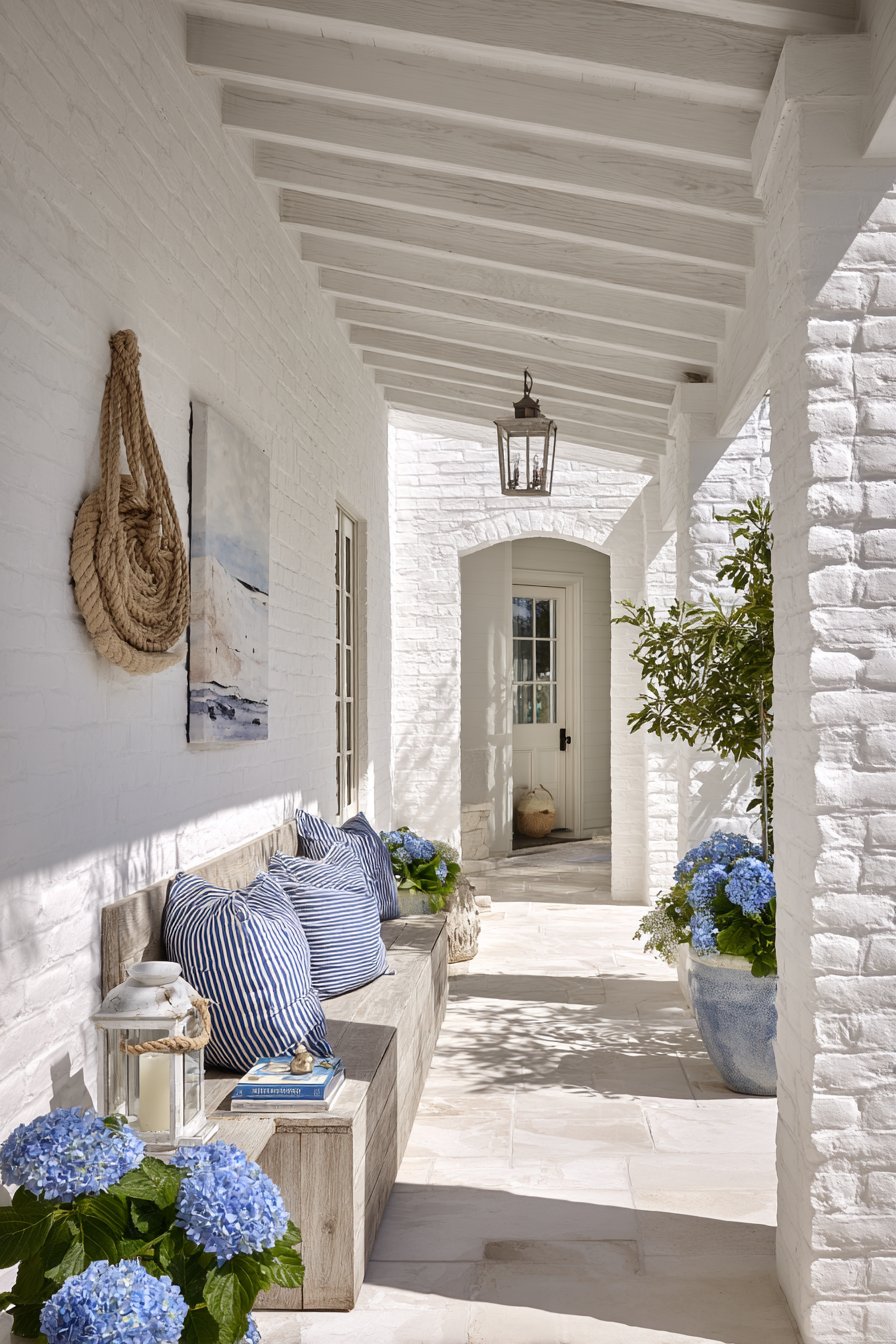
White-washed brick walls provide textured neutral backgrounds. The brick treatment softens what could feel industrial into something more relaxed. Potted hydrangeas in ceramic planters contribute pops of blue throughout summer months. The flowering plants complement the navy cushions beautifully during bloom periods.
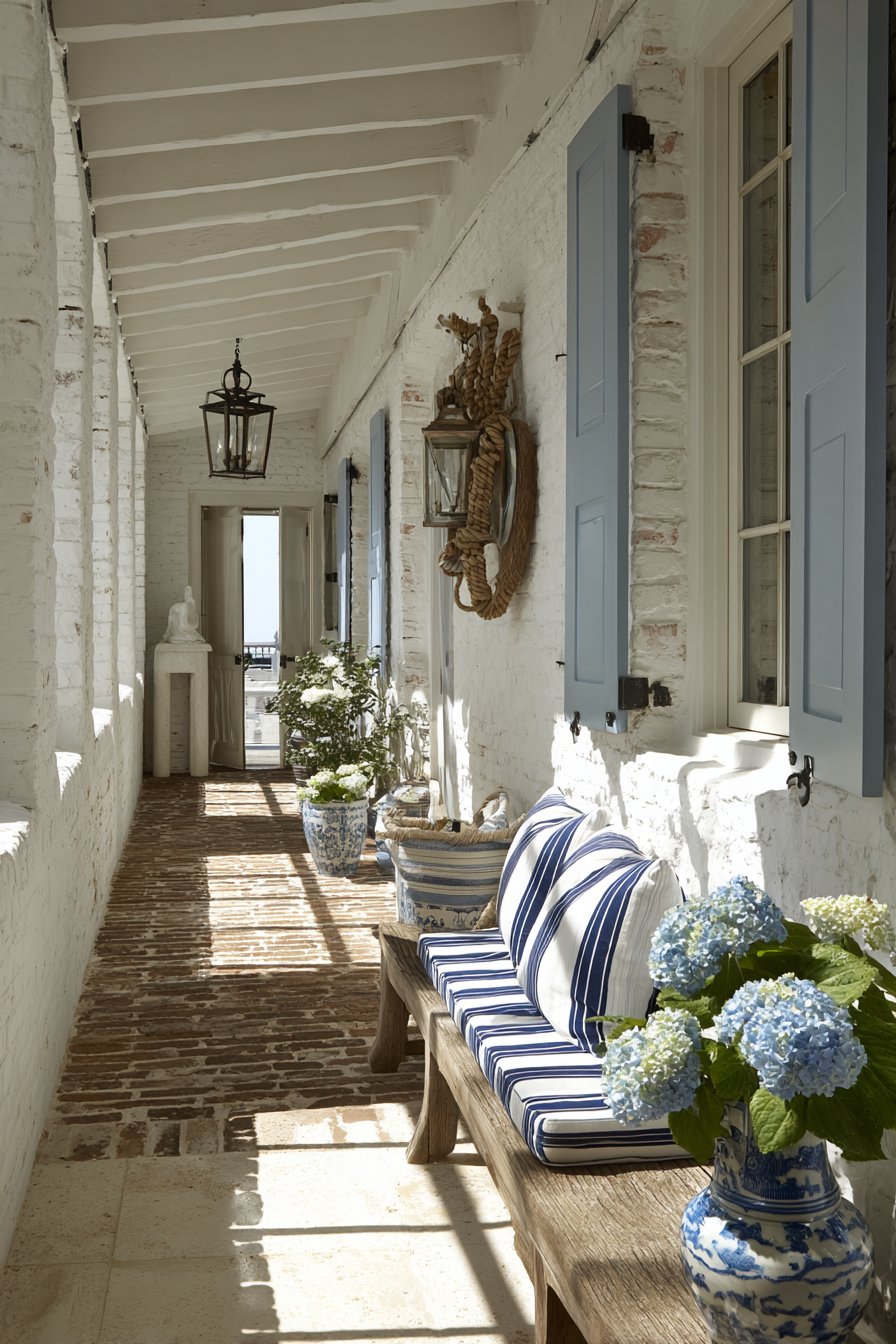
Natural daylight filters through the porch overhang throughout the day. Dappled shadows create movement as sun positions change. The covered structure protects furniture from direct weather exposure. This extends the lifespan of cushions and wooden elements significantly.
The coastal aesthetic works particularly well in beach communities and waterfront properties. However, the style translates beautifully to inland locations seeking relaxed sophistication. The weathered materials and breezy color palette create vacation-like feelings daily.
Key Design Tips:
- Choose teak furniture for natural weather resistance and beautiful aging
- Select outdoor cushion fabrics specifically rated for UV and moisture resistance
- Incorporate nautical elements sparingly to avoid theme park aesthetics
- Plant hydrangeas in areas receiving morning sun and afternoon shade
- Apply white-wash treatments to brick for softened vintage appearance
- Maintain teak with occasional oiling or allow natural silver-grey patina
5. Rustic Reclaimed Barn Wood Character
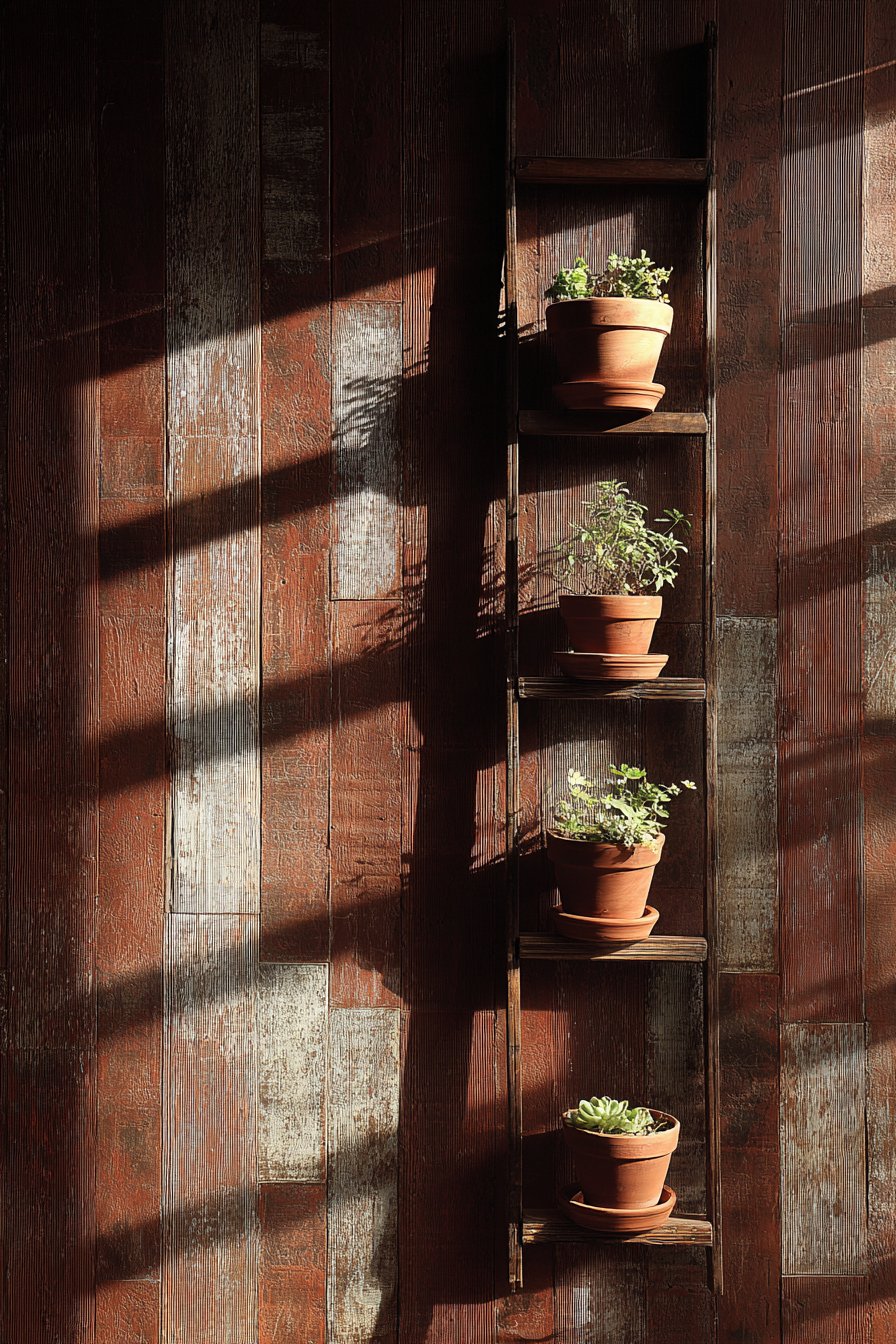
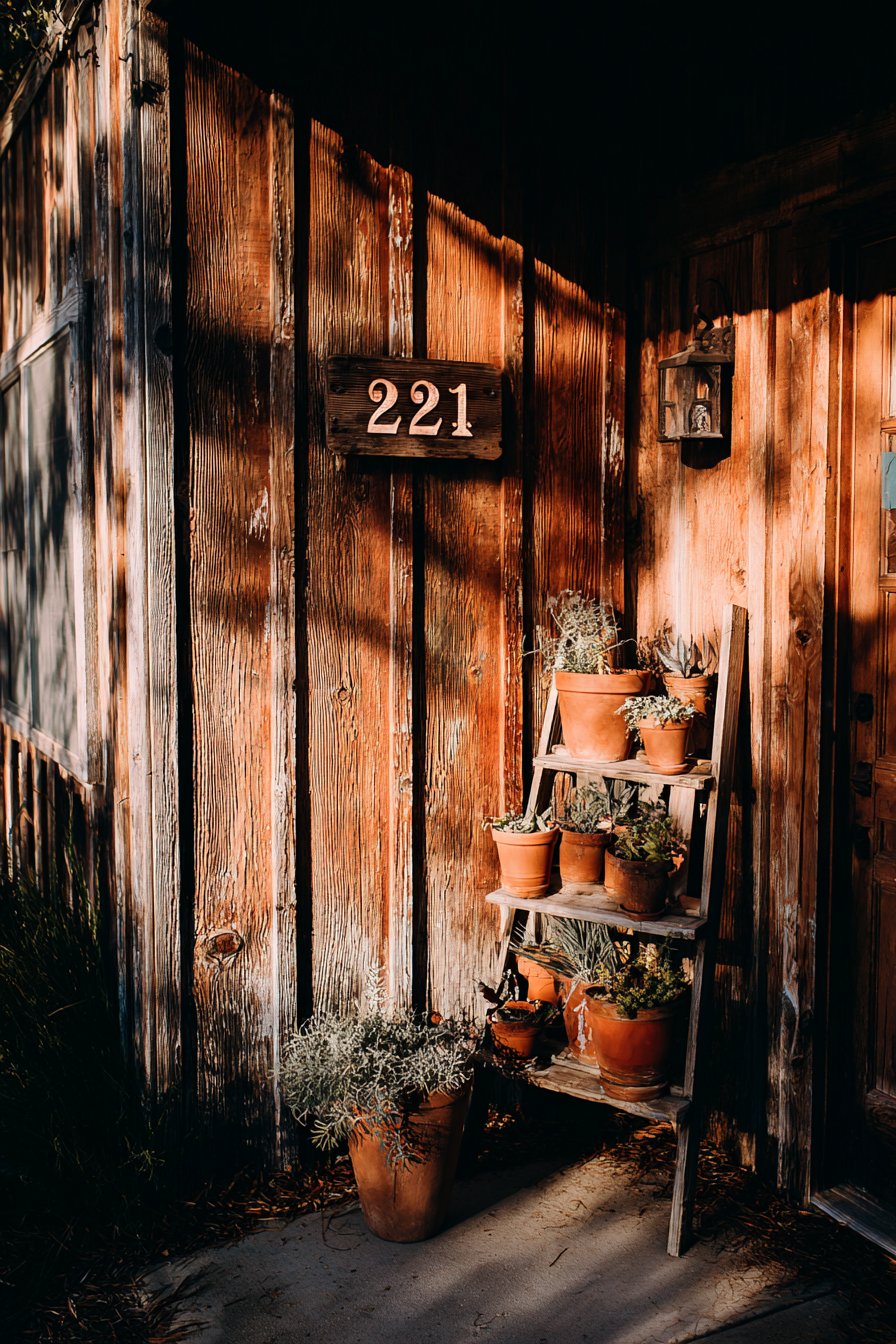
A reclaimed barn wood accent wall creates immediate focal point impact. The weathered planks display natural color variations and authentic aging. A vintage wooden ladder repurposes beautifully as a plant stand. Terracotta pots in varying sizes display herbs and succulents at different heights. The vertical arrangement adds dimensional interest to the vertical surface.
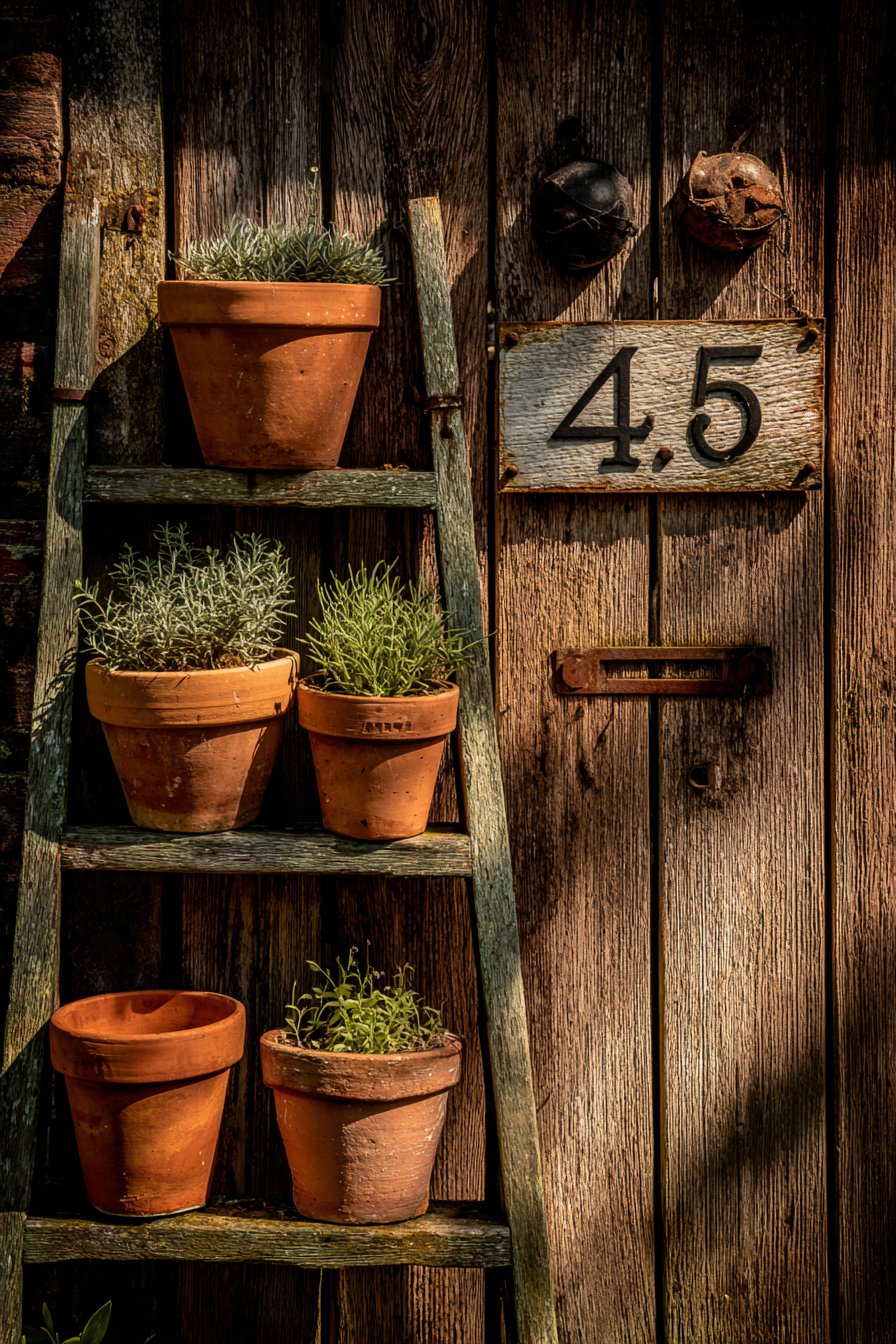
Handcrafted wrought iron house numbers provide authentic detail. The metal elements complement the rustic wood aesthetic perfectly. Warm afternoon sunlight creates dynamic shadows across the textured surfaces. The interplay of light and shadow emphasizes the wood’s three-dimensional character.
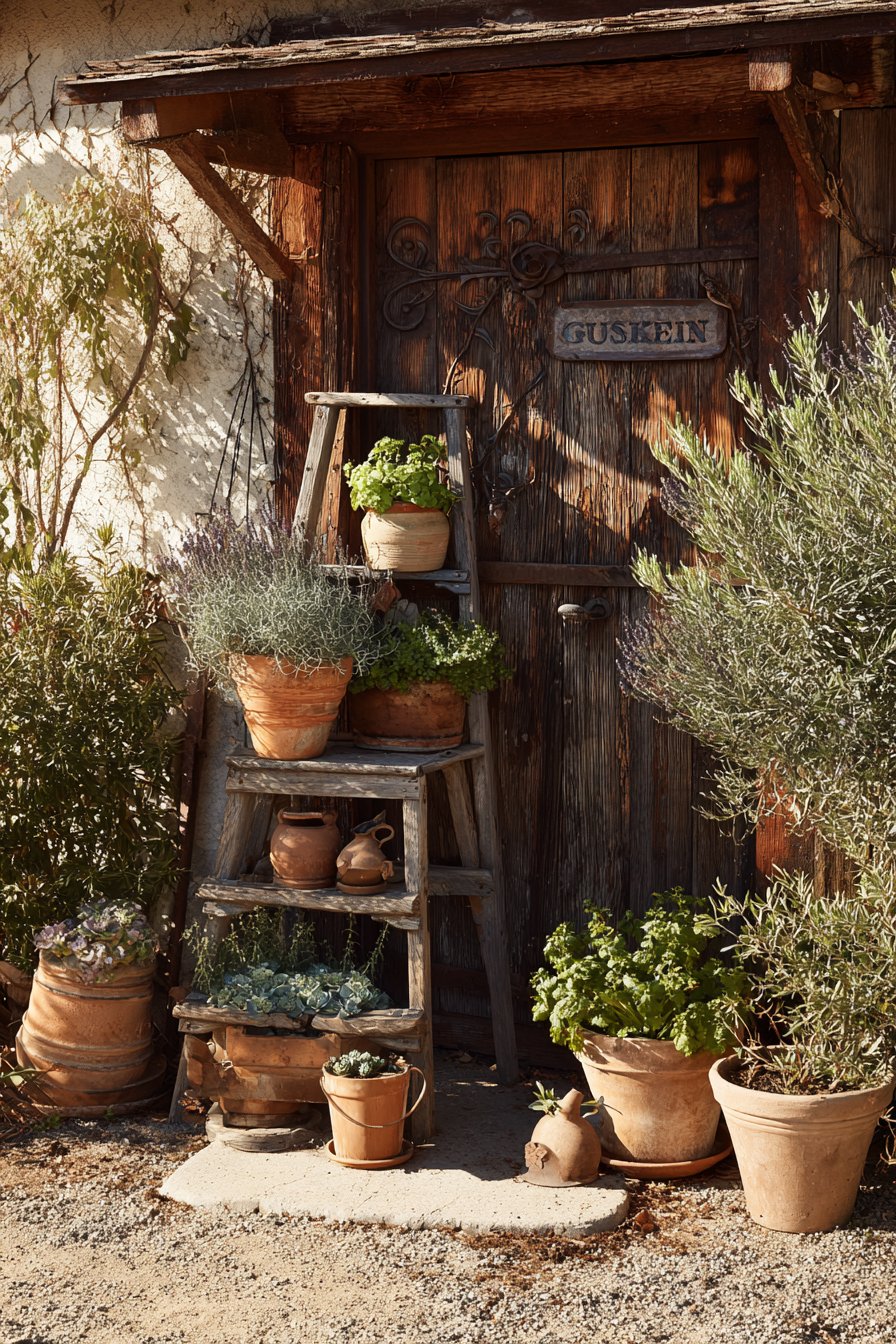
Multiple pot sizes create visual rhythm along the ladder rungs. The arrangement feels organic rather than overly planned. Herbs like rosemary and thyme provide fragrance near the entrance. Succulents add sculptural interest with minimal water requirements.
This design demonstrates how salvaged materials create sustainable beauty. The barn wood carries history and character impossible to replicate artificially. Each plank tells its own story through grain patterns and weathering.
Key Design Tips:
- Source reclaimed barn wood from architectural salvage yards for authenticity
- Seal weathered wood for outdoor use while preserving aged appearance
- Arrange plants vertically to maximize impact in limited horizontal space
- Choose terracotta pots that develop attractive patina as they age
- Install wrought iron elements securely to withstand weather exposure
- Group odd numbers of pots for more visually pleasing arrangements
6. Mediterranean Terracotta and Tile Warmth
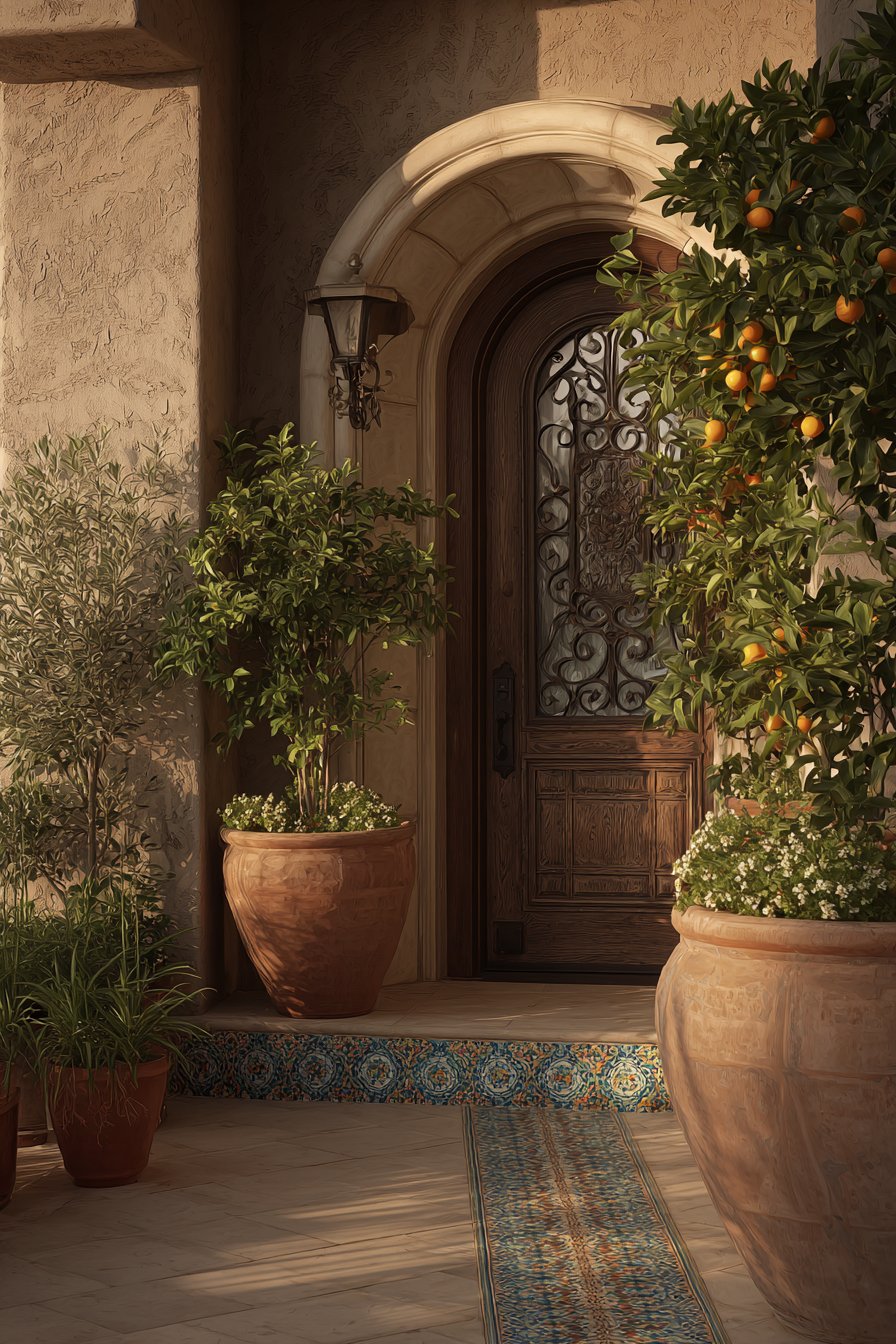
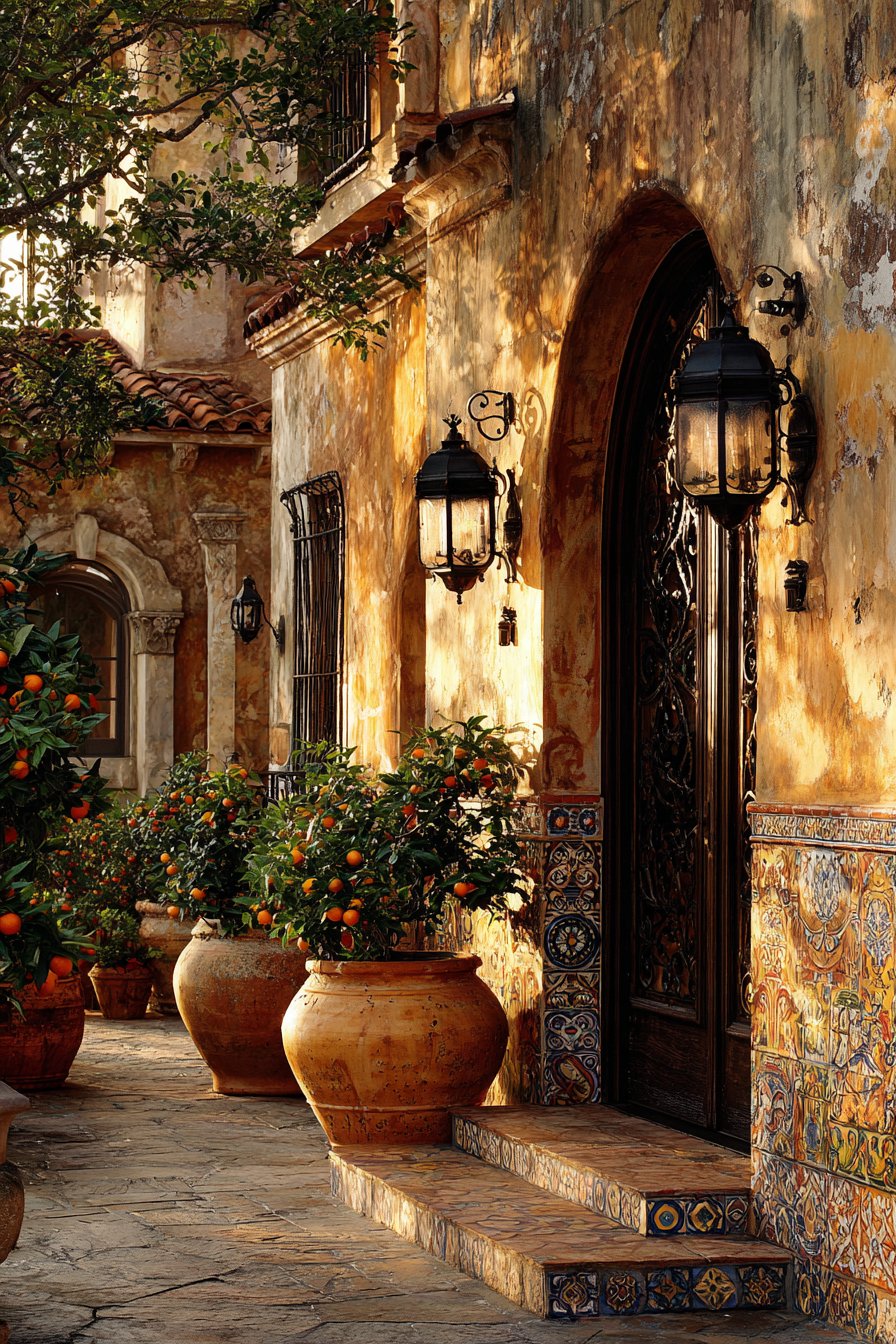
Warm terracotta tones define this Mediterranean-inspired entrance. Stucco walls in rich earth colors create welcoming backdrop warmth. A rounded archway frames the entrance with classic architectural character. Hand-painted ceramic tiles create decorative accent strips near the doorway. The colorful patterns add artisan authenticity and visual interest.
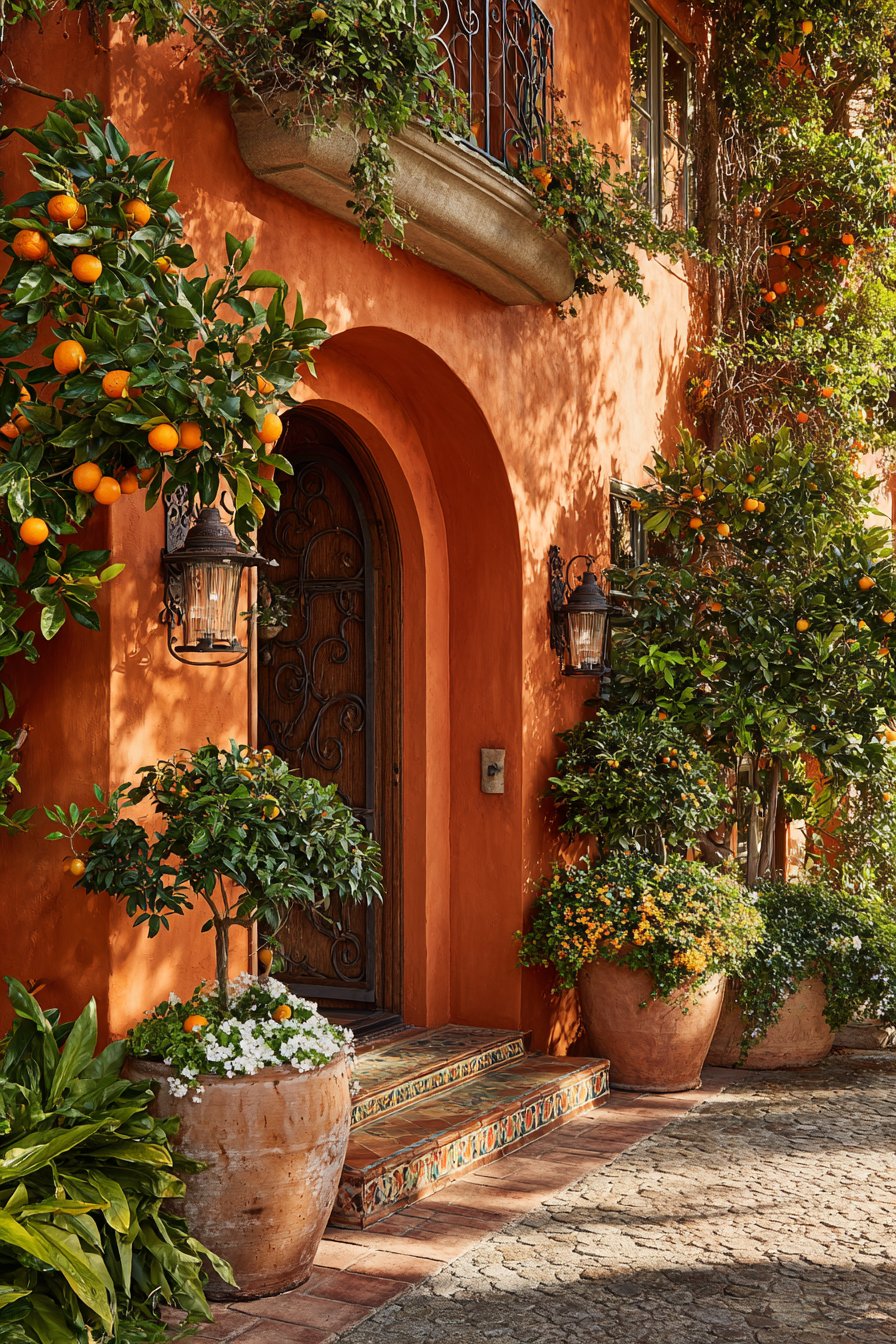
Large terracotta urns flank the entrance holding citrus trees. The potted trees provide seasonal fruit and glossy evergreen foliage. Flowering jasmine climbs nearby surfaces releasing evening fragrance. Wrought iron scrollwork adorns the door and wall-mounted fixtures. The ornate details reflect traditional Mediterranean craftsmanship.
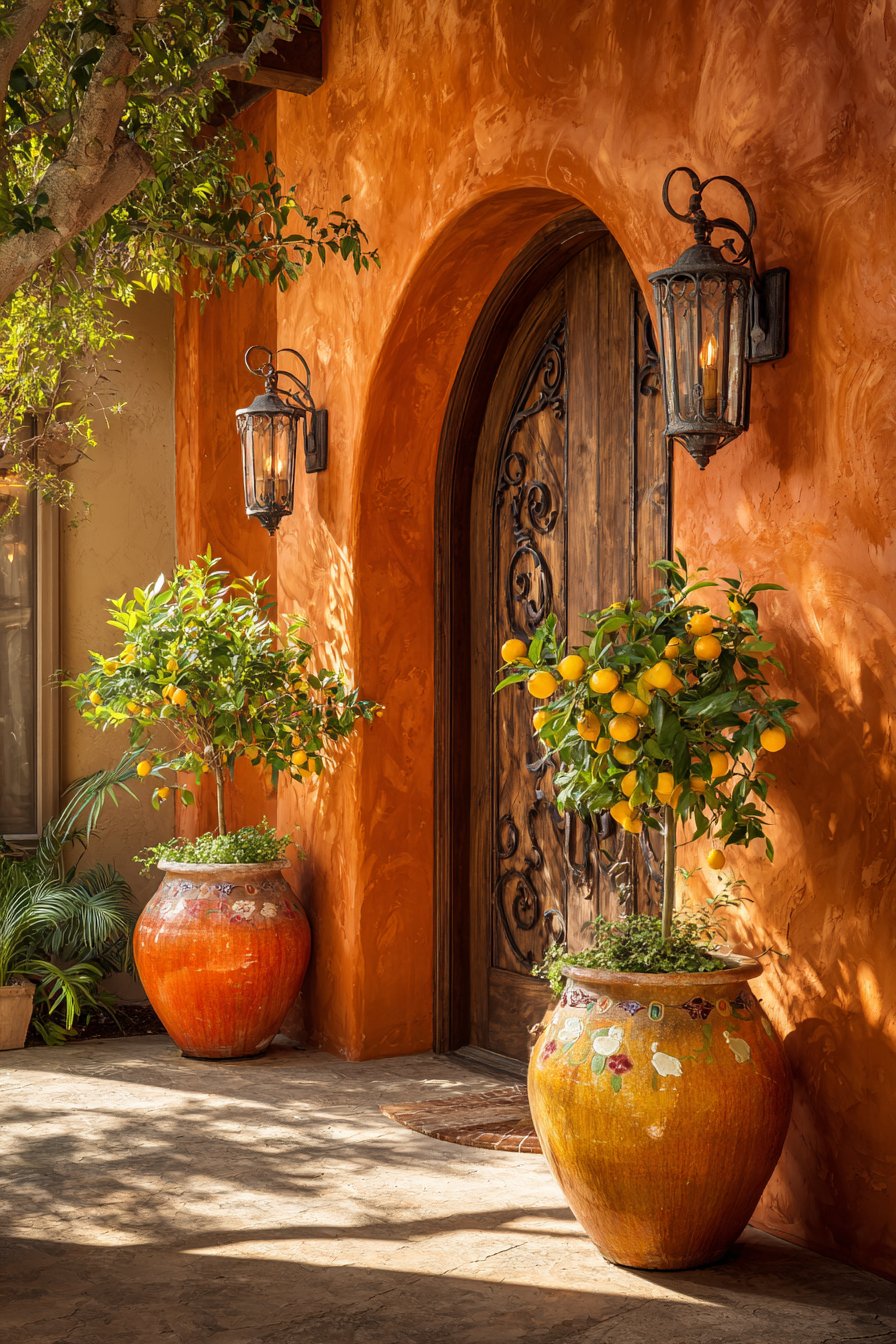
Golden hour lighting emphasizes the rich color palette beautifully. Warm sunlight enhances terracotta tones and creates gentle shadows. The textured stucco becomes more dimensional as light rakes across surfaces. Ceramic tile glazes reflect light creating subtle sparkle effects.
This design transports visitors mentally to Mediterranean coastal villages. The combination of earthen materials and living citrus creates sensory richness. The style works particularly well in warm climates with abundant sunshine.
Key Design Tips:
- Apply stucco finishes in warm terracotta or sandy earth tones
- Source hand-painted ceramic tiles from artisan suppliers for authenticity
- Plant citrus trees in large containers with proper drainage
- Train jasmine on trellises or wire supports near entryways
- Select wrought iron fixtures with traditional scrollwork patterns
- Maintain stucco with periodic cleaning and minor repair as needed
7. Scandinavian Light Wood Simplicity
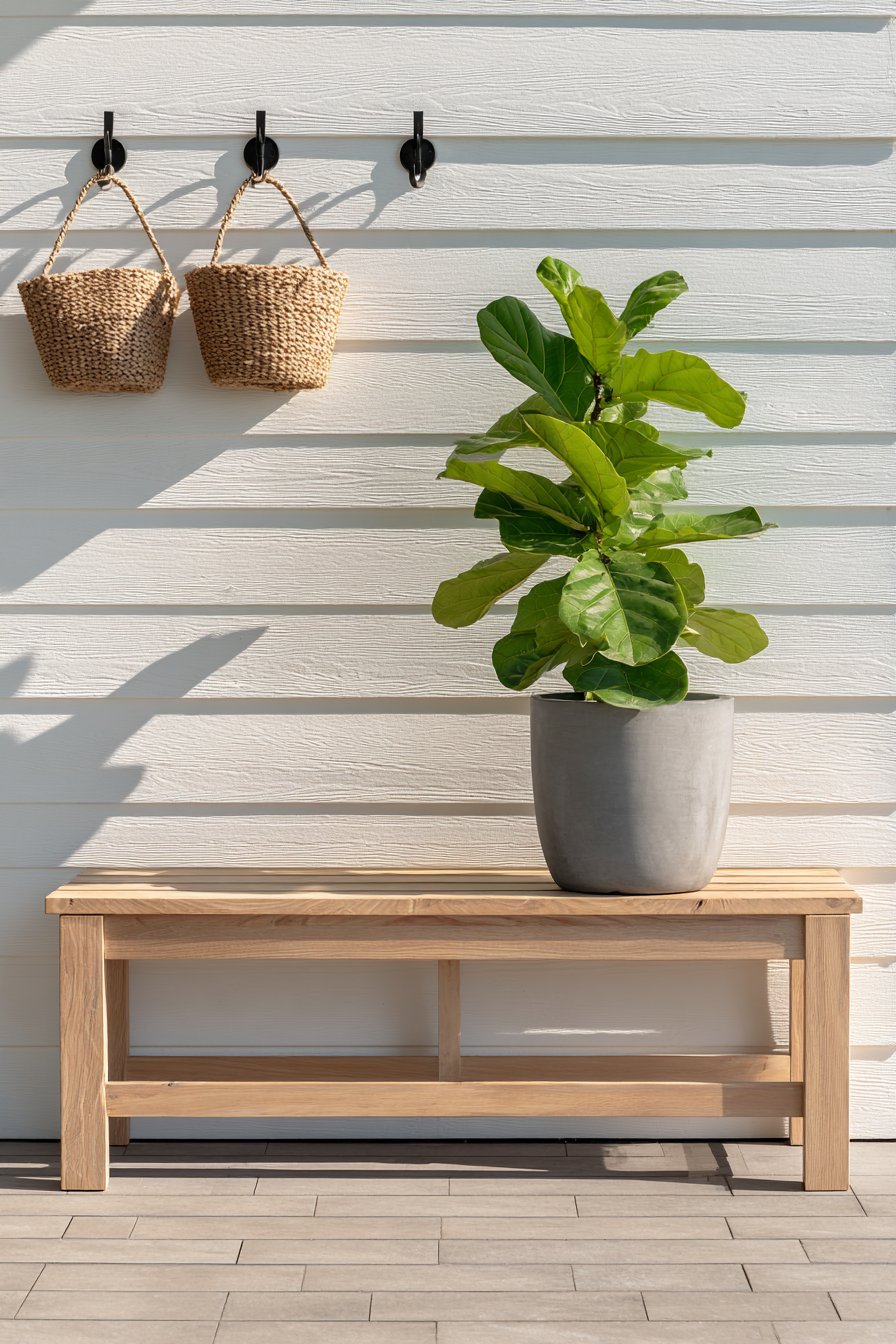
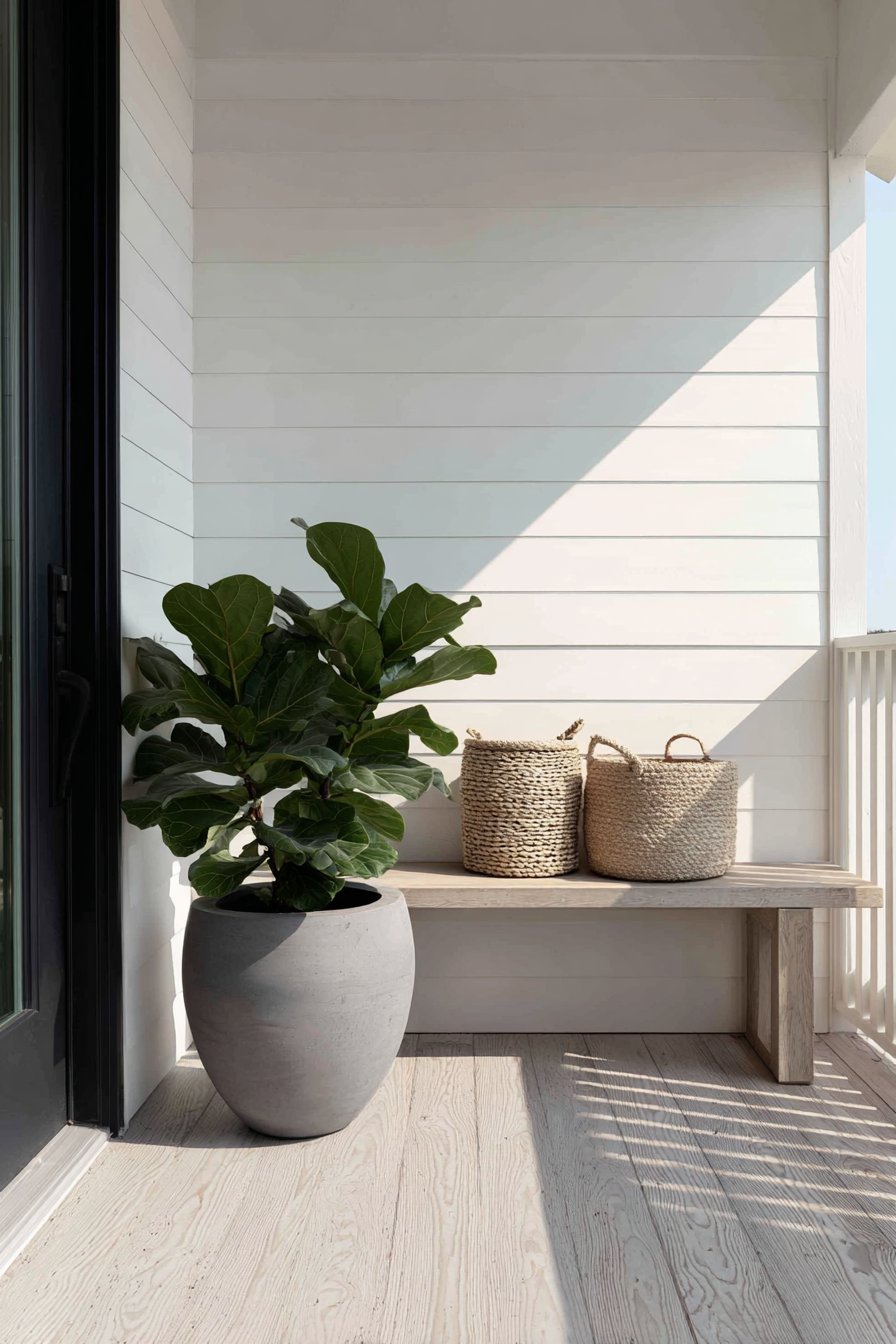
Light ash wood creates the foundation for this Scandinavian-inspired entrance. A simple bench demonstrates functional minimalism without unnecessary embellishment. The pale wood finish maintains natural grain visibility. White-painted tongue and groove siding provides clean backdrop contrast. Black metal hooks mount directly to siding with purposeful simplicity.
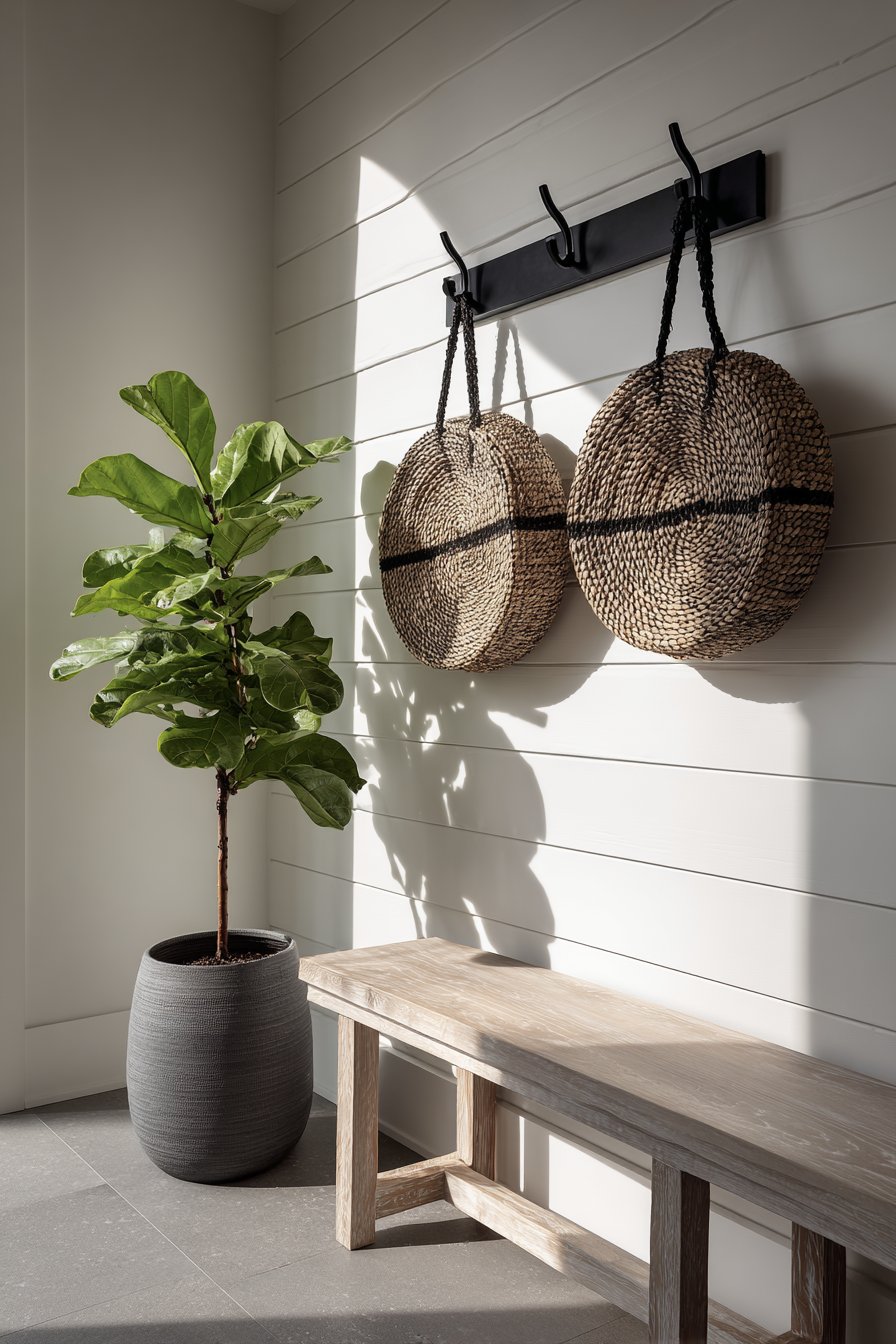
Woven baskets hang from hooks holding outdoor accessories. The natural fiber textures add warmth to the restrained palette. A single large ceramic planter in matte grey contains a sculptural fiddle leaf fig. The oversized plant makes a bold statement through scale rather than quantity.
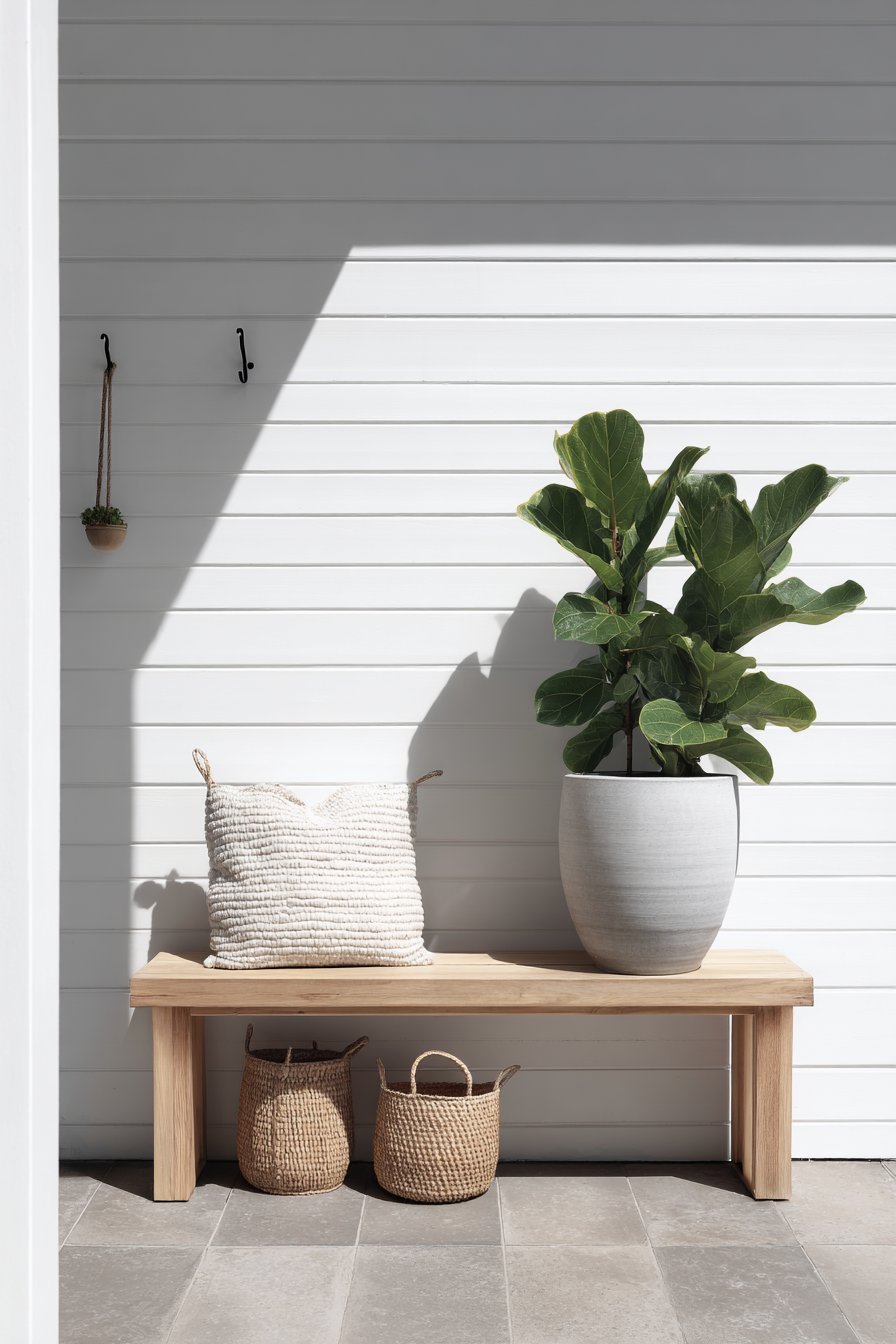
Natural morning light creates clean shadows and highlights the restrained color scheme. The neutral palette allows material textures to become primary visual interest. Subtle wood grain patterns provide organic detail without color distraction.
This approach demonstrates Scandinavian design principles of functionality and natural materials. The restrained aesthetic creates calm rather than visual noise. Every element serves clear purpose while maintaining beauty through simplicity.
Key Design Tips:
- Select light-colored woods like ash, birch, or maple for Scandinavian aesthetic
- Limit color palette to whites, greys, and natural wood tones
- Choose one statement plant rather than multiple smaller specimens
- Incorporate woven natural fiber baskets for organic texture
- Mount simple black metal hooks for functional storage solutions
- Maintain wood finishes with periodic cleaning and protective treatments
8. Victorian Ornate Iron Romance
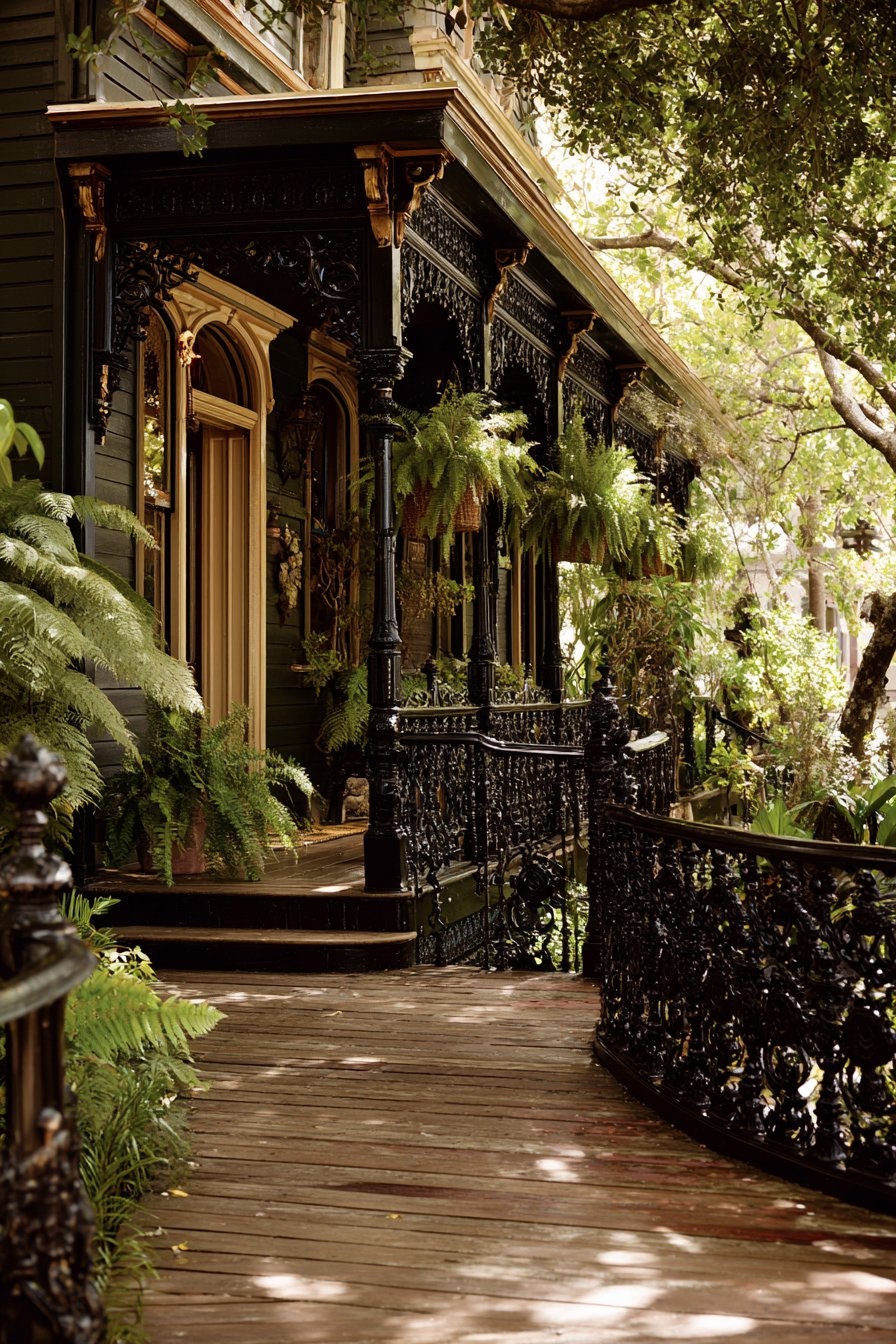
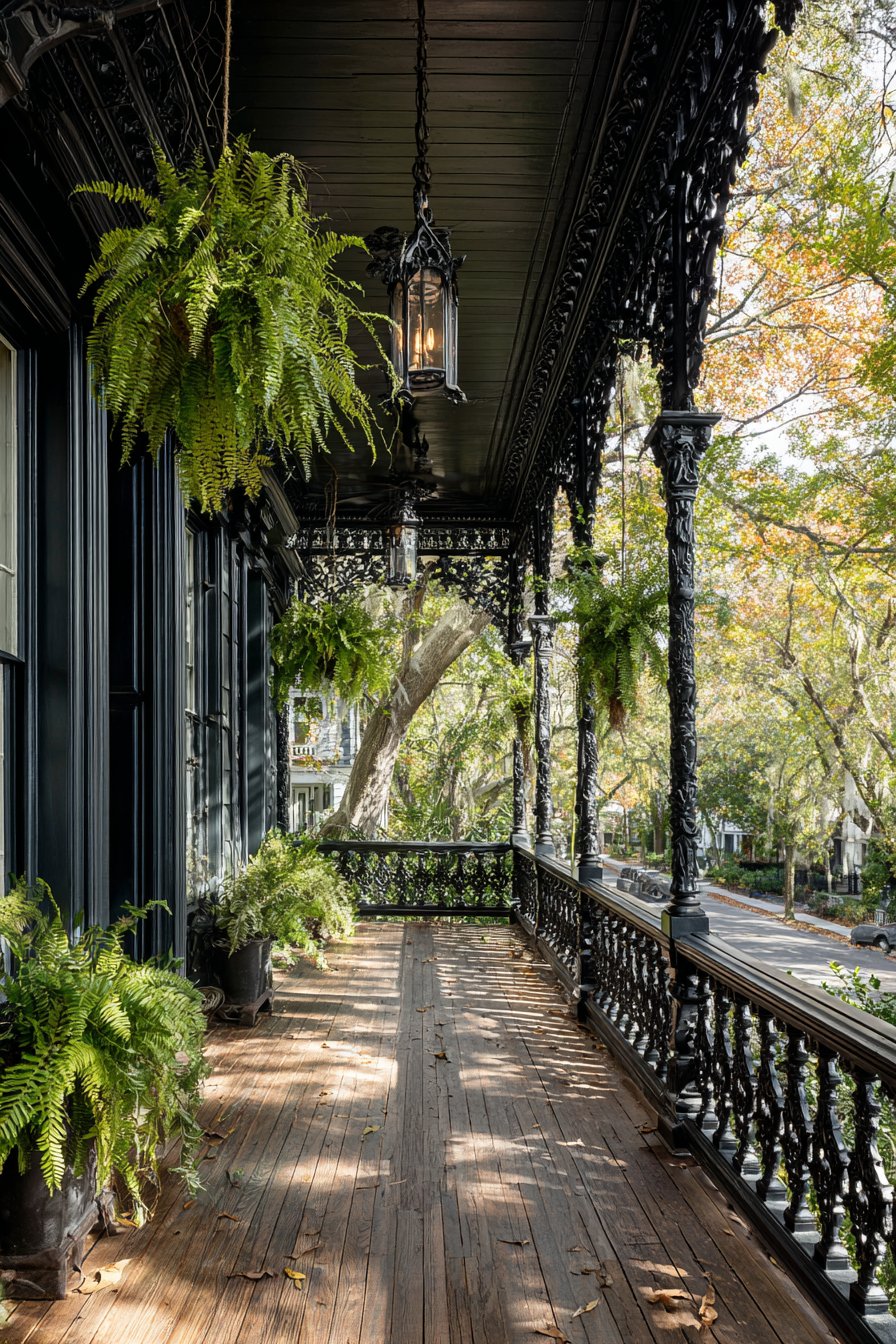
Ornate wrought iron railings define this Victorian-inspired entrance. Glossy black paint emphasizes the intricate metalwork patterns. The railings lead to a covered porch with decorative gingerbread trim. Hanging ferns suspend from wire baskets creating lush greenery. Vintage-inspired gas lamp fixtures provide ambient period-appropriate lighting.
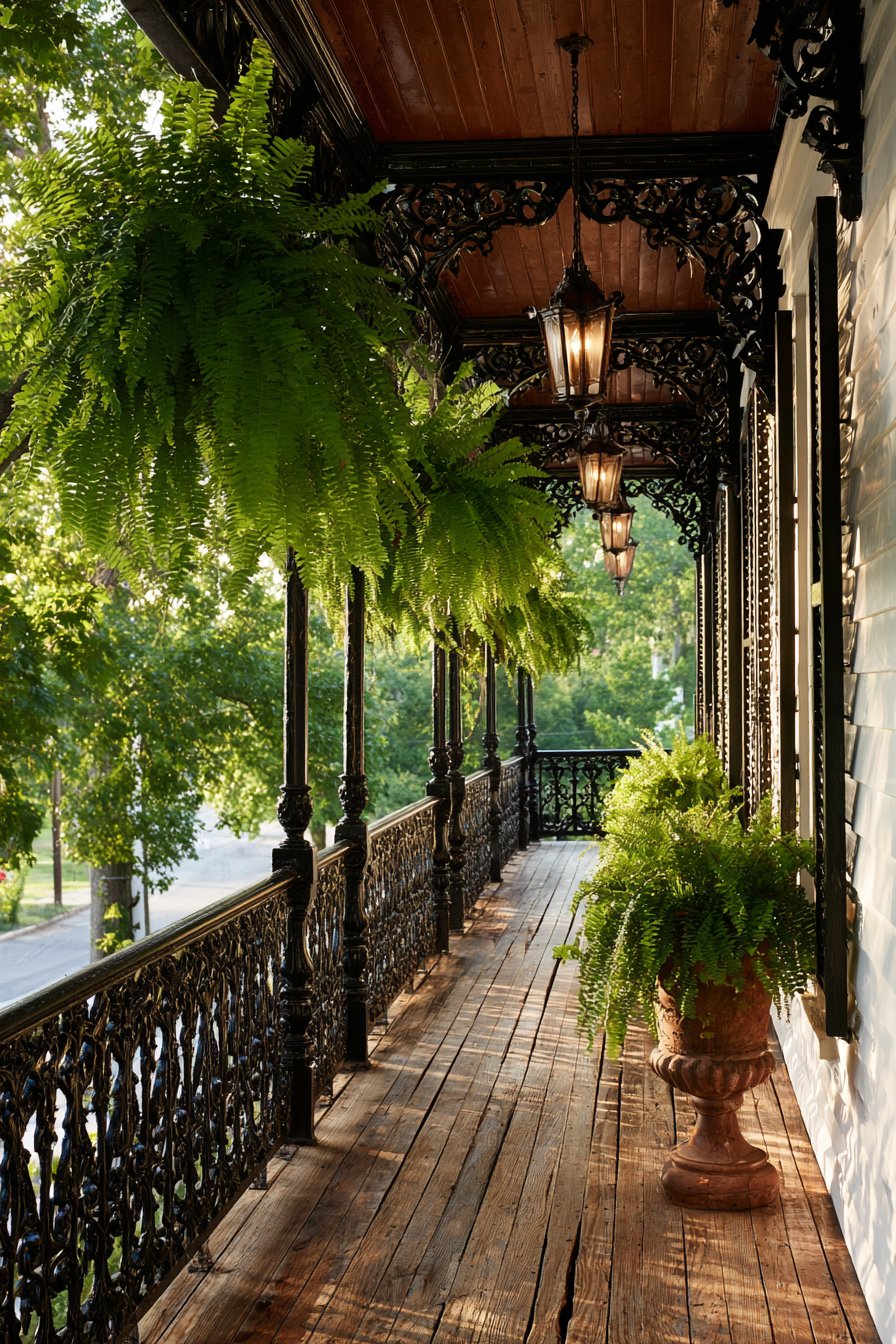
The wooden porch floor shows natural wear patterns from years of use. The authentic aging adds character impossible to fabricate artificially. Afternoon light filters through foliage creating dappled shadow patterns. The romantic atmosphere evokes nostalgic Victorian garden settings.
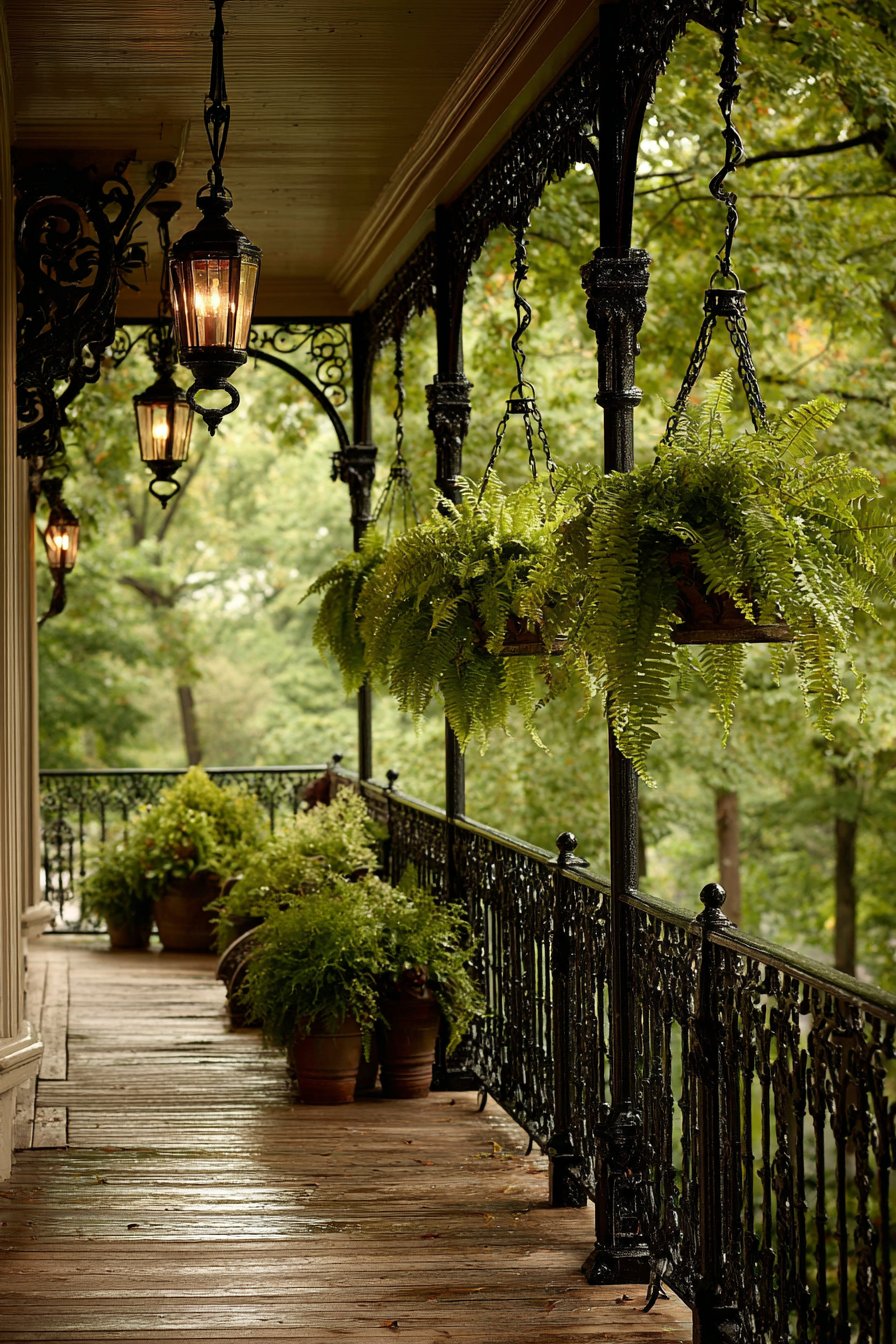
Intricate metalwork details reward close examination with their craftsmanship. The dimensional architectural elements create visual richness at multiple scales. From street view to close approach, new details reveal themselves continuously.
This design appeals to historic home enthusiasts and romantic aesthetics. The ornate Victorian style creates drama and period authenticity. Proper maintenance preserves these decorative elements for future generations.
Key Design Tips:
- Paint wrought iron with rust-inhibiting primers before glossy topcoats
- Source vintage-inspired lighting fixtures with period-appropriate details
- Hang ferns in wire baskets for classic Victorian porch styling
- Preserve original wood flooring with appropriate sealants and regular maintenance
- Research historical color palettes for authentic Victorian paint schemes
- Repair decorative trim elements promptly to prevent further deterioration
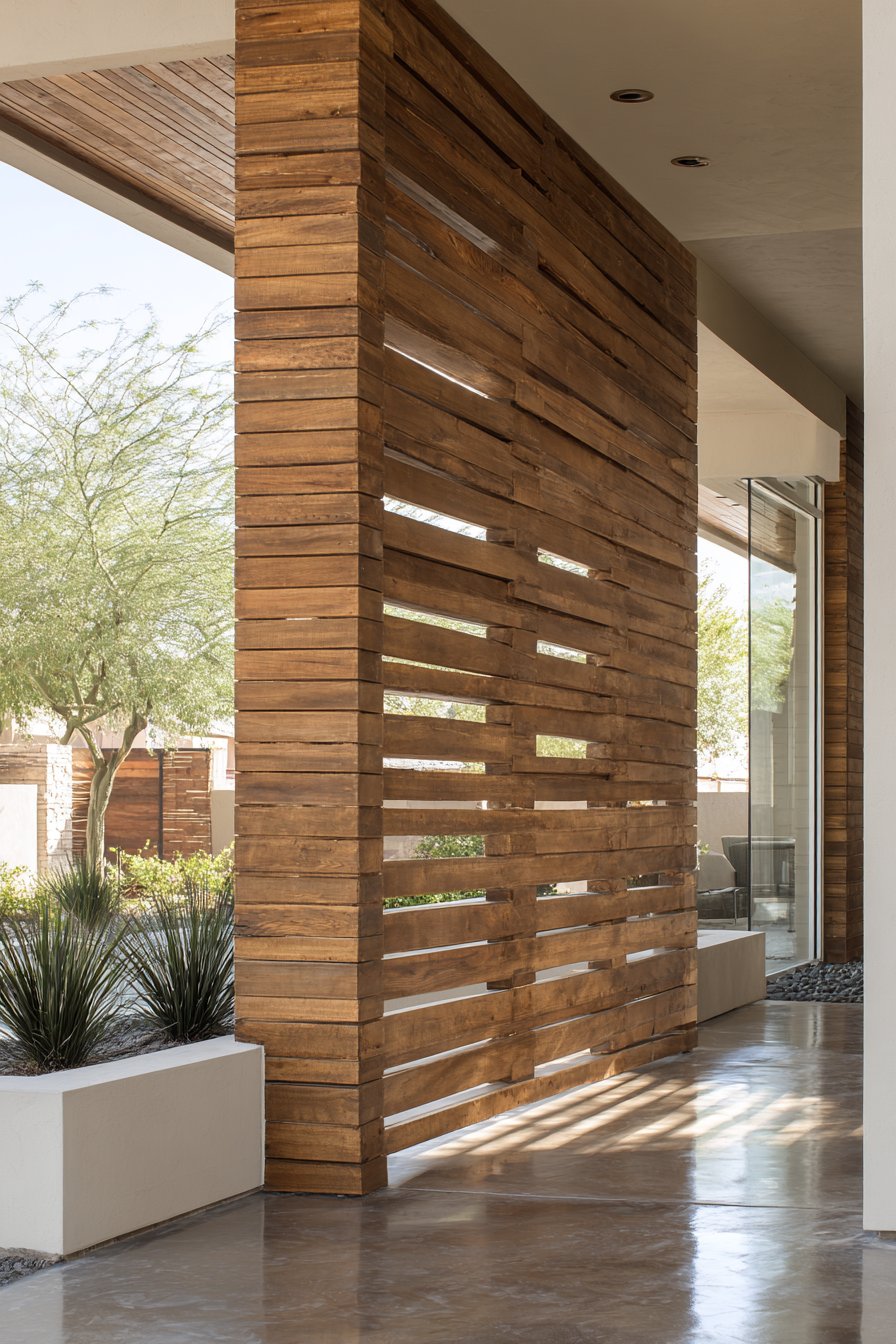
9. Contemporary Cedar Slat Privacy Screen
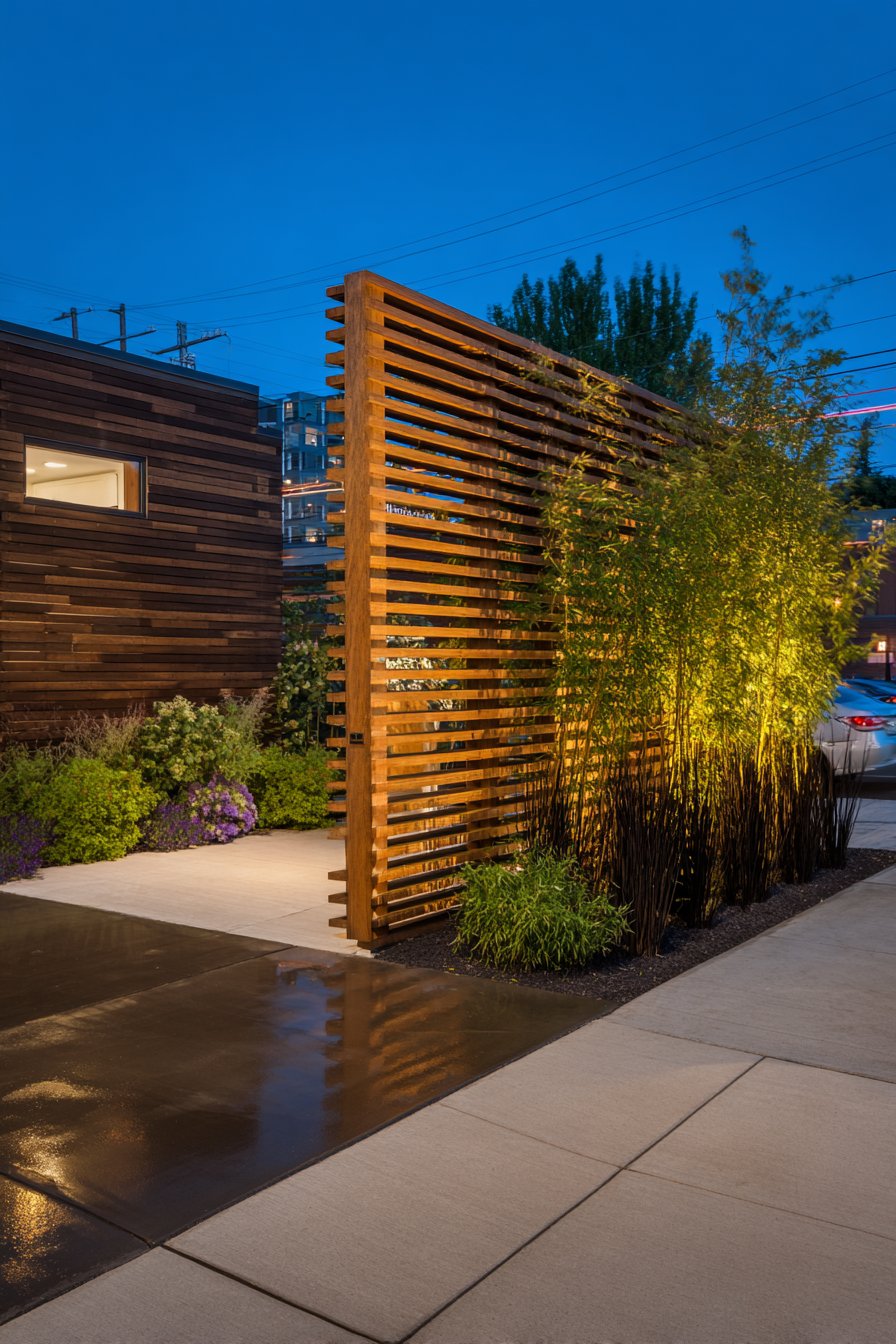
Horizontal wood slat screening creates modern privacy and architectural interest. Natural cedar develops attractive silver-grey patina over time. The slatted design allows air circulation while defining space boundaries. Built-in planter beds at the base contain architectural plants. Bamboo and black mondo grass provide height variation and textural contrast.
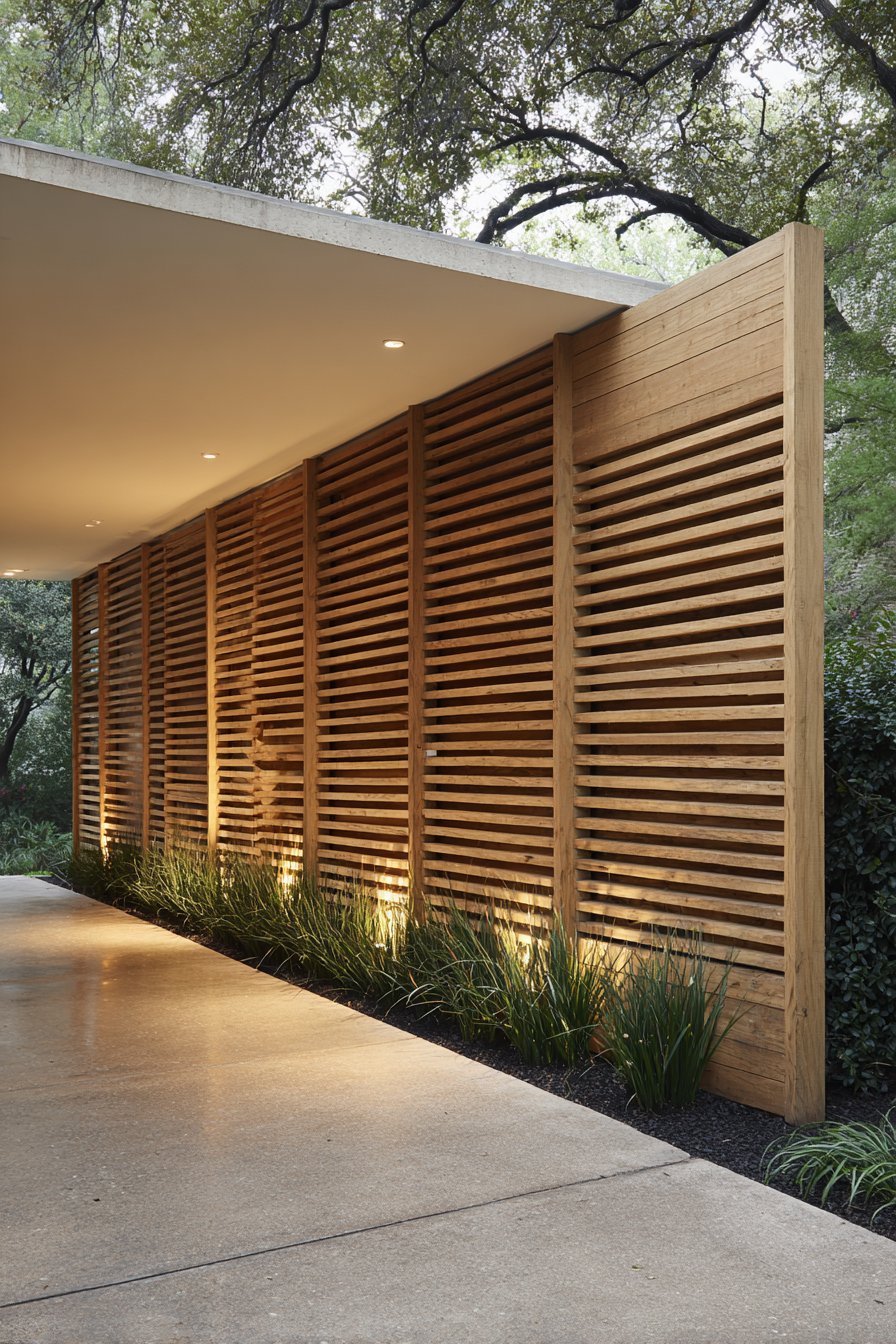
Recessed LED strip lighting beneath the slats provides subtle nighttime illumination. The indirect lighting creates dramatic effects without harsh glare. Polished concrete flooring reflects ambient light multiplying illumination effects. The smooth surface contrasts beautifully with natural wood grain.
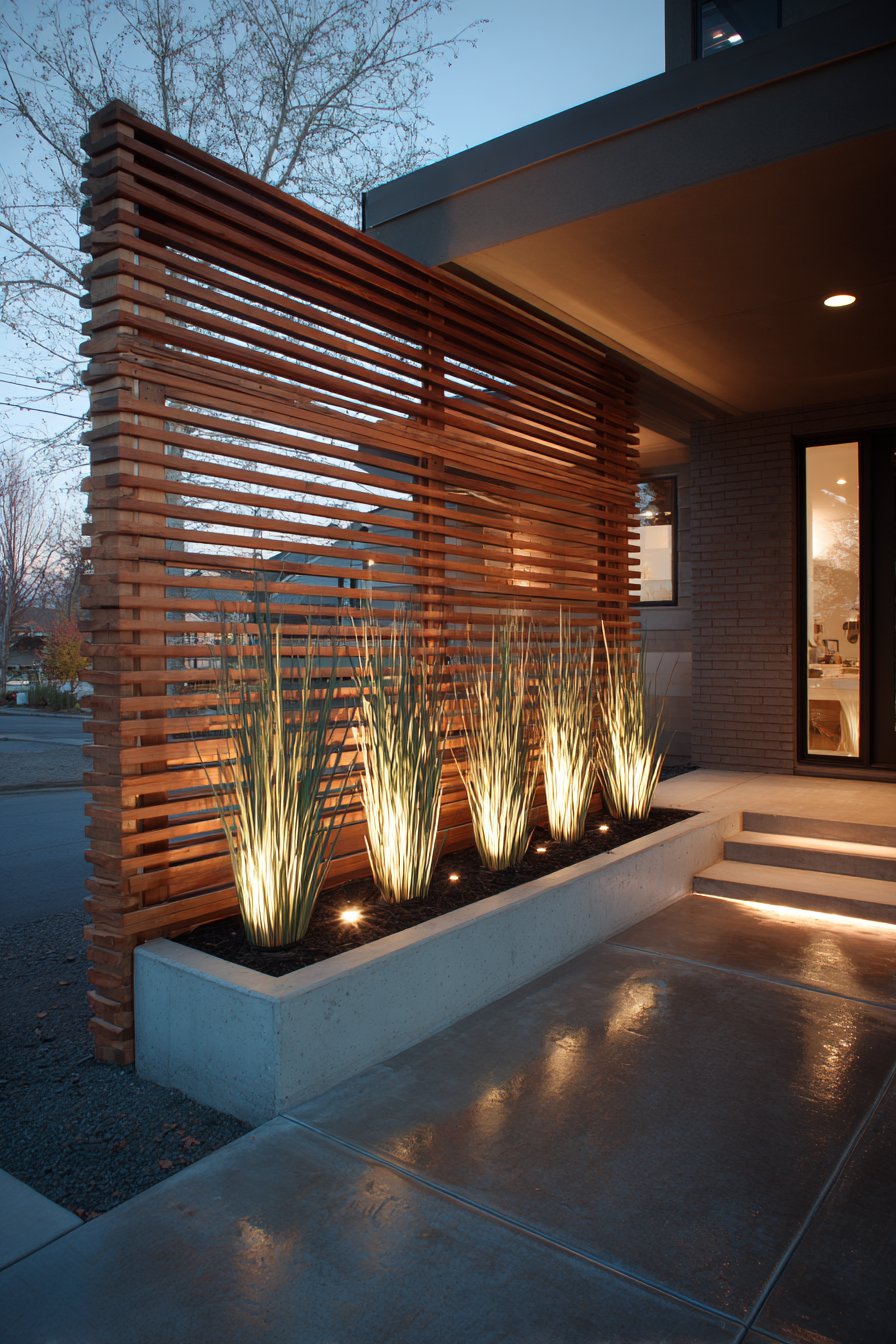
Professional photography captures the balanced exposure between natural and artificial light. The linear design elements create strong geometric visual impact. Natural wood works harmoniously with sleek concrete for material contrast. The contemporary aesthetic feels fresh and architecturally sophisticated.
This design suits modern homes seeking privacy without solid walls. The horizontal slats create visual interest through repetition and shadow patterns. The combination of natural wood and concrete exemplifies contemporary material pairings.
Key Design Tips:
- Install cedar slats with appropriate spacing for air flow and light penetration
- Allow natural cedar to weather or apply sealant to maintain original color
- Incorporate LED strip lighting for energy-efficient accent illumination
- Pour polished concrete with smooth trowel finish for modern aesthetic
- Select architectural plants with strong vertical or horizontal forms
- Maintain wood slats with periodic cleaning and optional re-sealing
10. Cottage Garden Yellow Door Charm
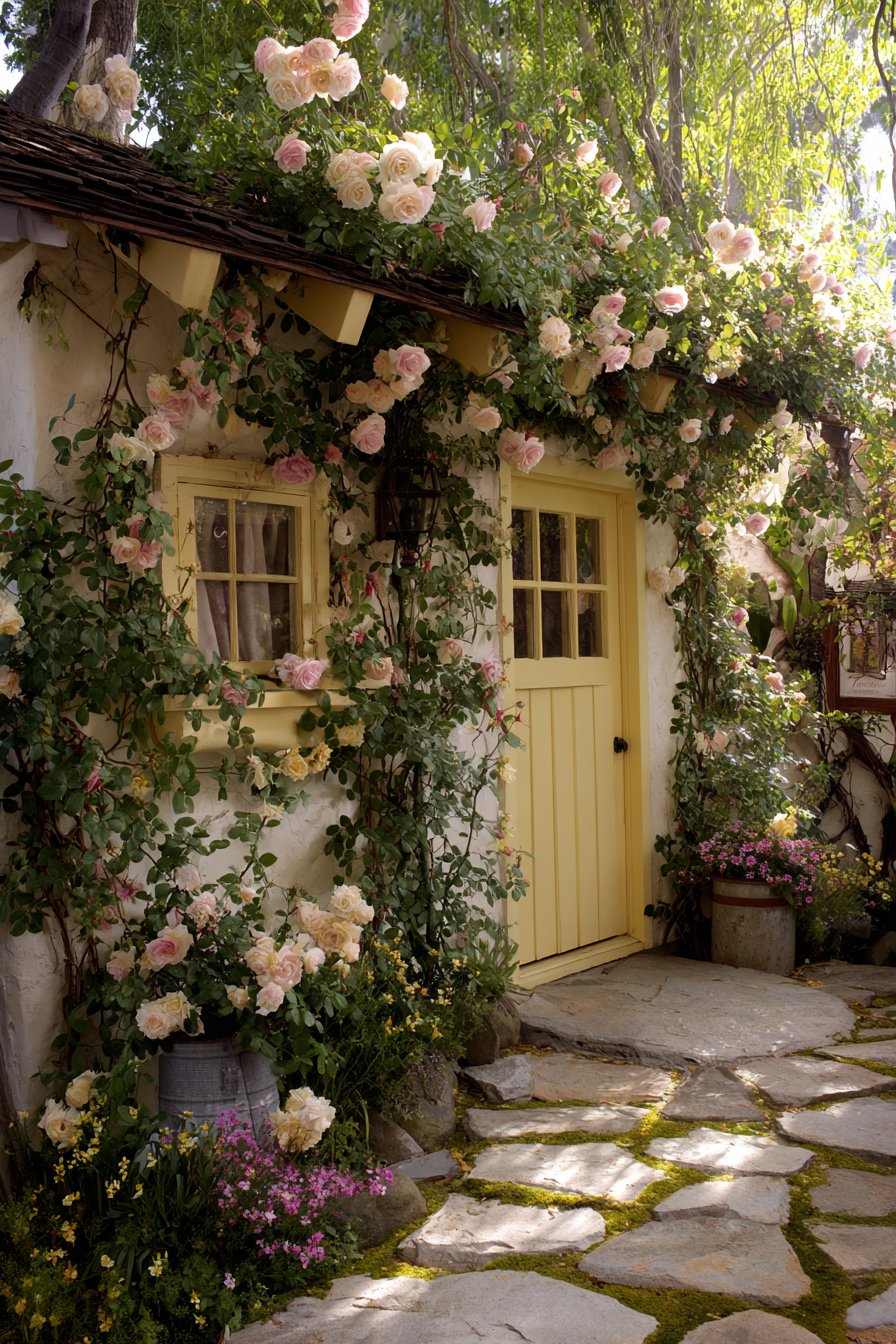
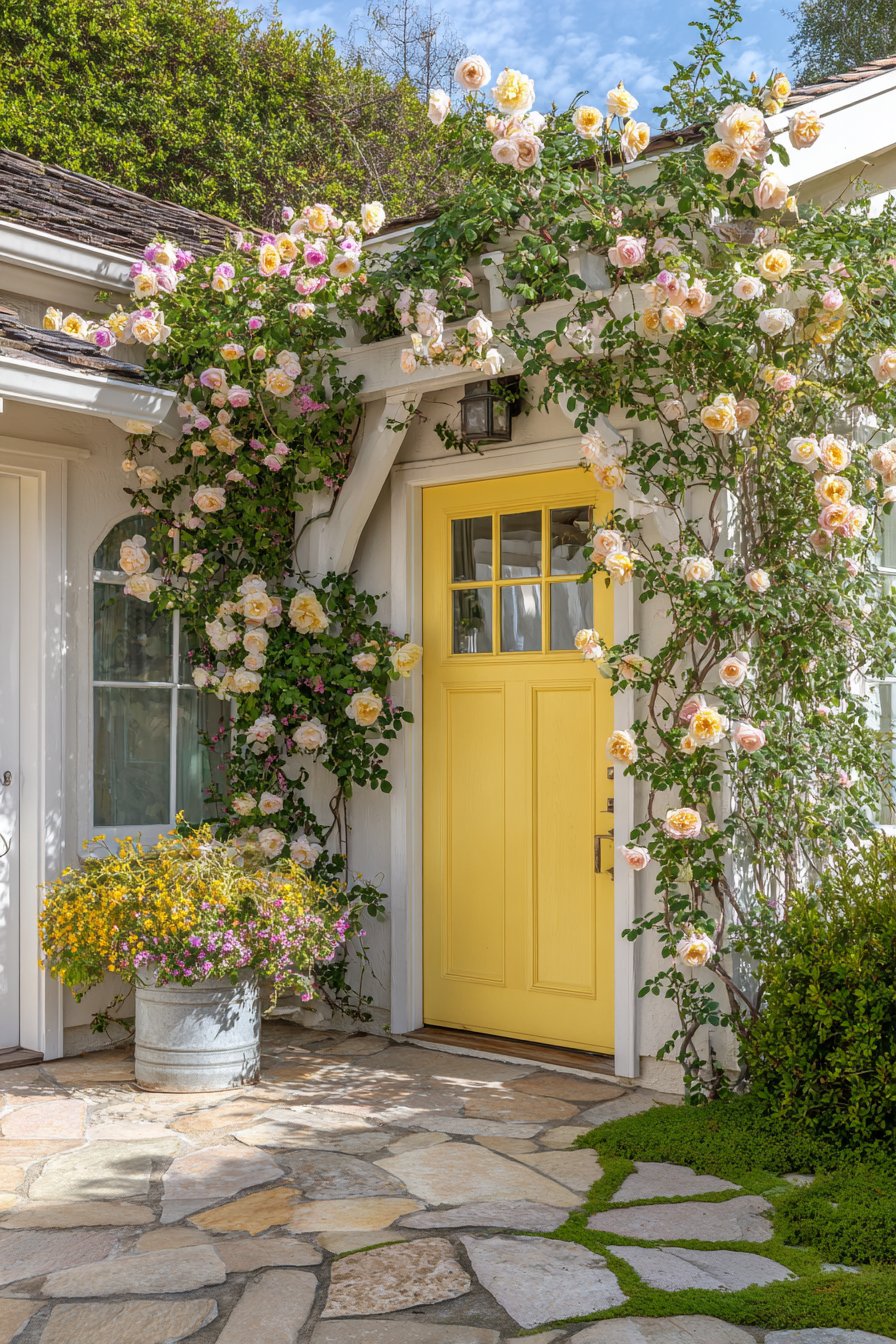
A cheerful yellow painted door creates instant cottage garden character. The bright color choice demonstrates confidence and welcoming personality. Climbing roses scale a white trellis structure flanking the entrance. The romantic flowering vines add vertical interest and seasonal fragrance. A vintage metal milk can repurposes as an oversized planter.
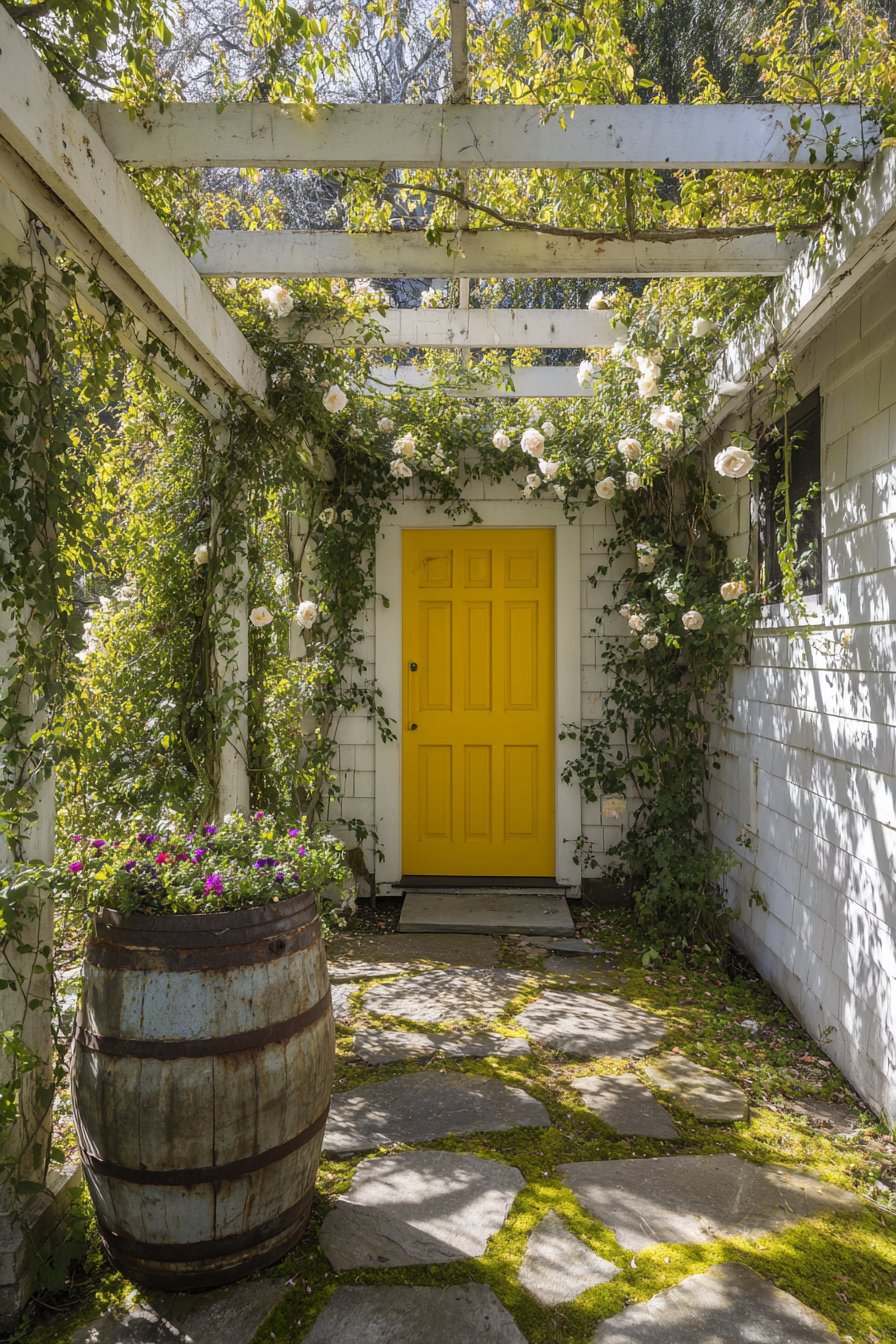
Wildflowers and garden blooms fill the milk can with cottage informality. Stone pavers create an irregular pathway with organic character. Moss grows between cracks adding authentic aged appearance. Soft morning light creates dreamy quality across the planted entrance.
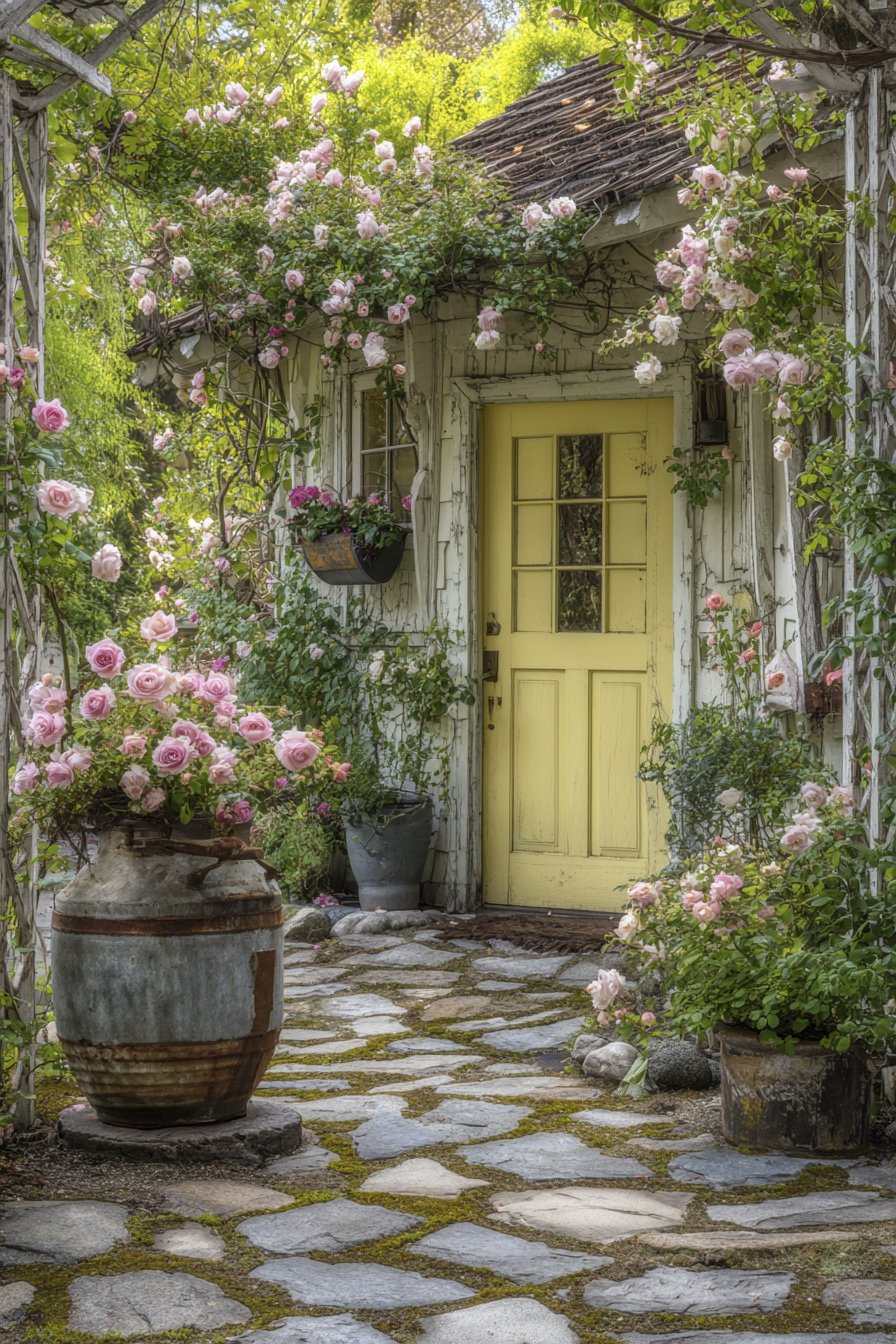
The charming informal arrangement feels collected rather than designed. Multiple layers of plants create abundant cottage garden fullness. Weathered paint finishes on vintage elements add to the collected aesthetic. This approach celebrates imperfection and natural evolution over time.
Cottage style appeals to gardeners and those seeking relaxed informality. The style encourages abundance and personal expression through plantings. The cheerful yellow door becomes a neighborhood landmark creating memorable identity.
Key Design Tips:
- Paint doors in bold cheerful colors using exterior-grade formulations
- Train climbing roses on sturdy trellises anchored securely to structures
- Repurpose vintage containers like milk cans for unique planter options
- Allow moss to grow naturally between stone pavers for aged character
- Plant cottage garden flowers in informal mixed arrangements
- Maintain painted surfaces with touch-ups as weathering occurs naturally
11. Desert Modern Adobe and Copper
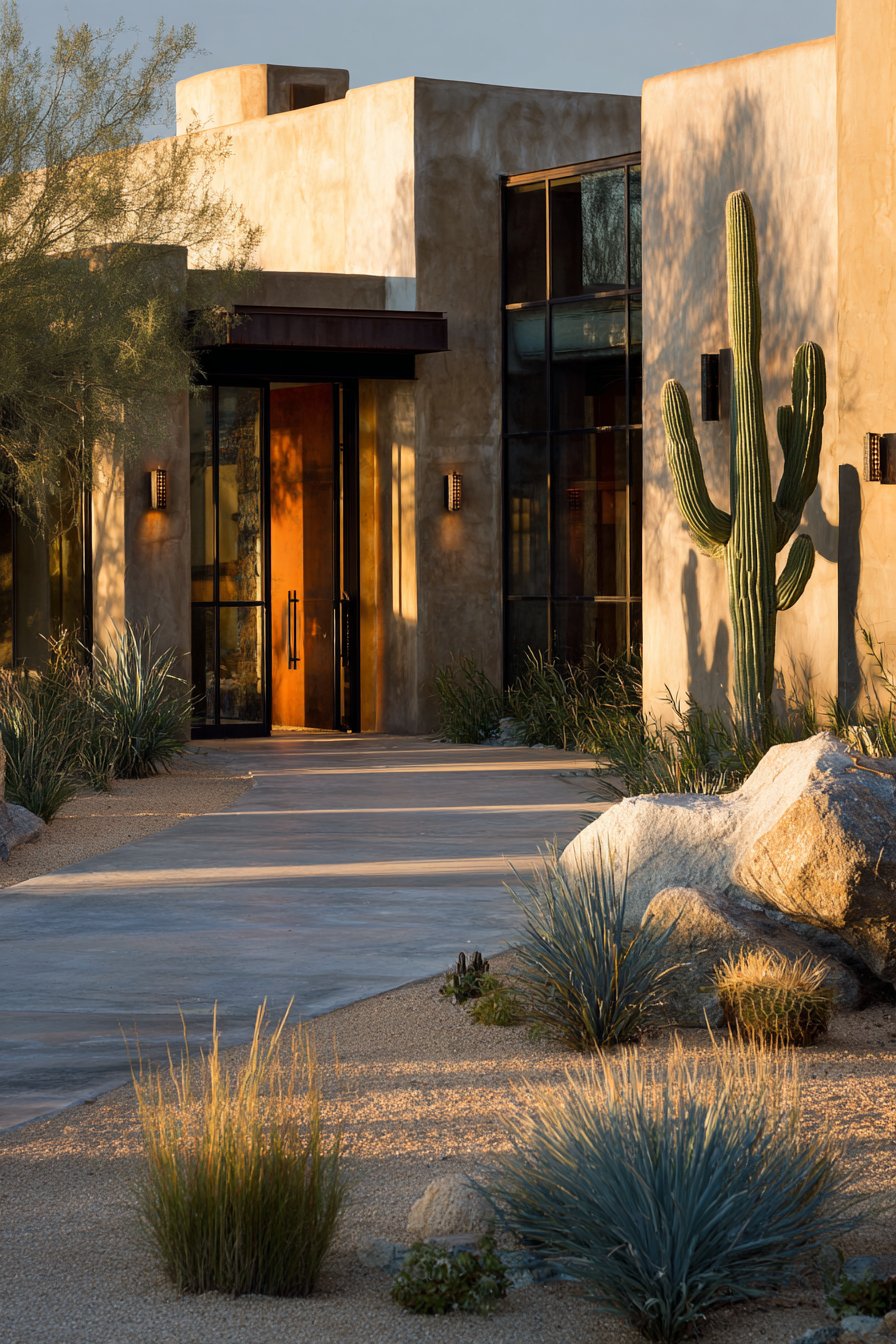
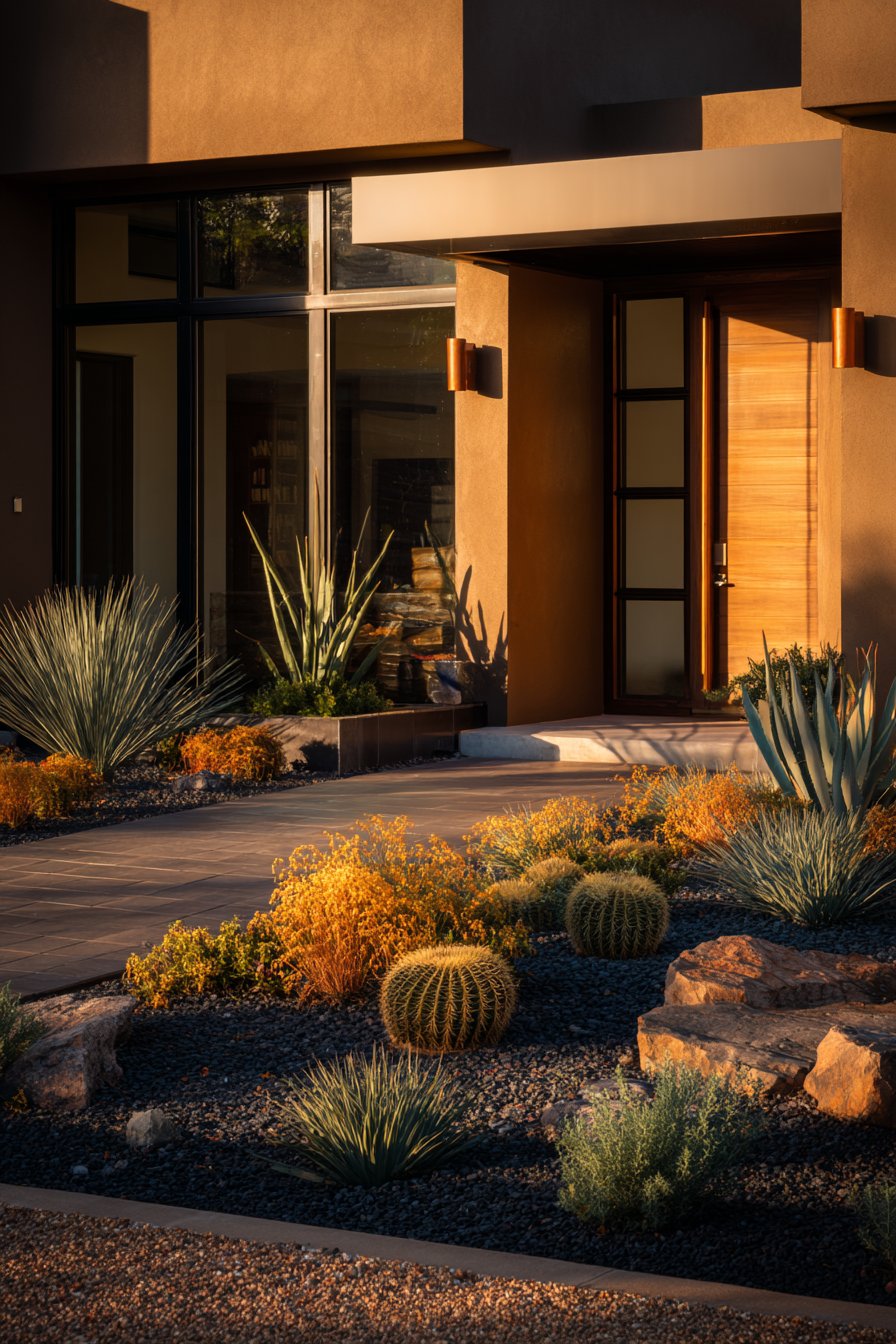
Smooth adobe-style walls in warm sand tones create southwestern character. The earth-toned surfaces reference traditional desert architecture with contemporary execution. A custom steel and glass pivot door makes a bold modern statement. The oversized door rotates on central hinges creating dramatic entry experience.
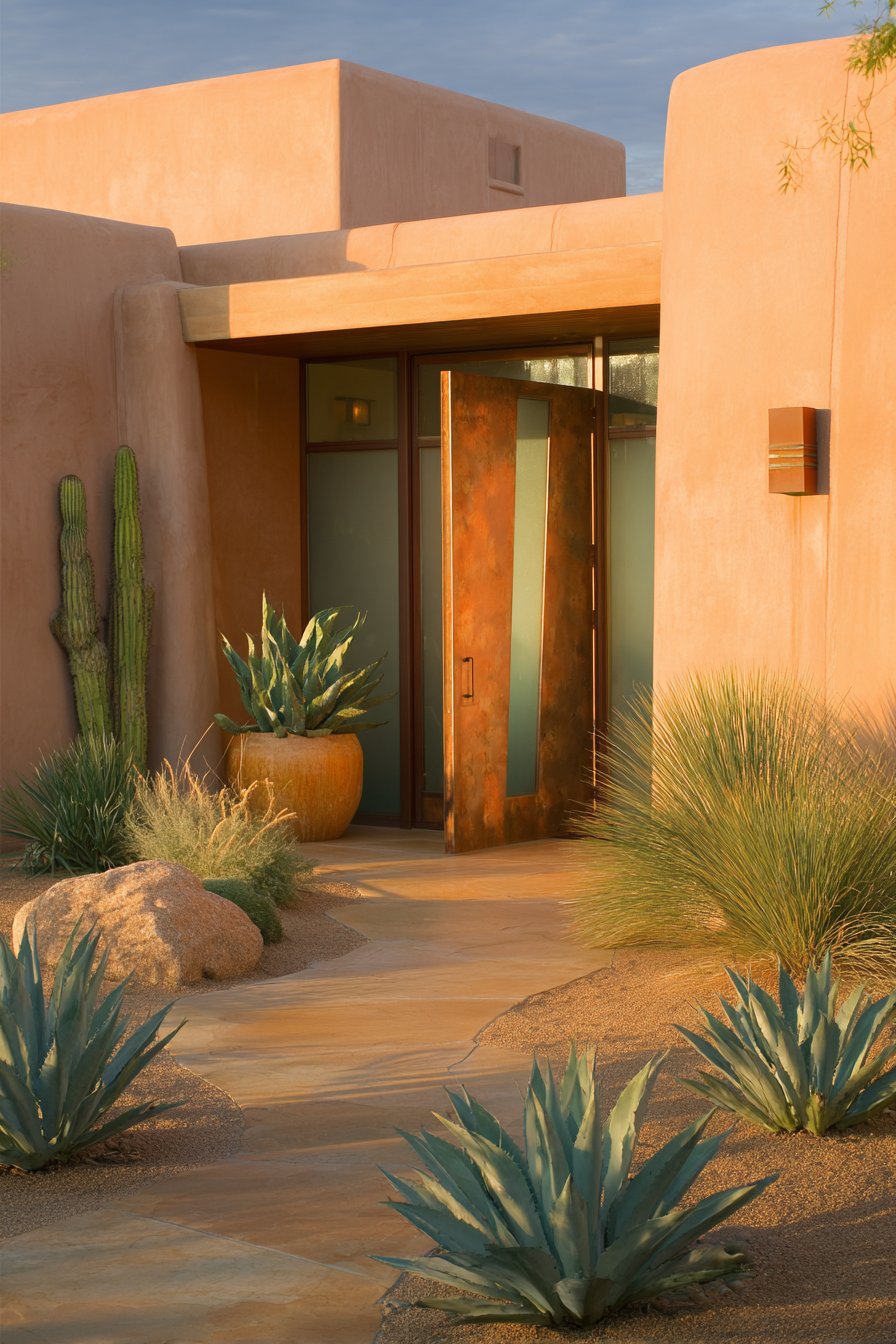
Drought-tolerant landscaping includes barrel cacti, agave, and ornamental grasses. The plants thrive naturally in arid conditions requiring minimal irrigation. Decomposed granite beds provide clean modern ground cover. Copper wall sconces develop natural patina adding living finish character.
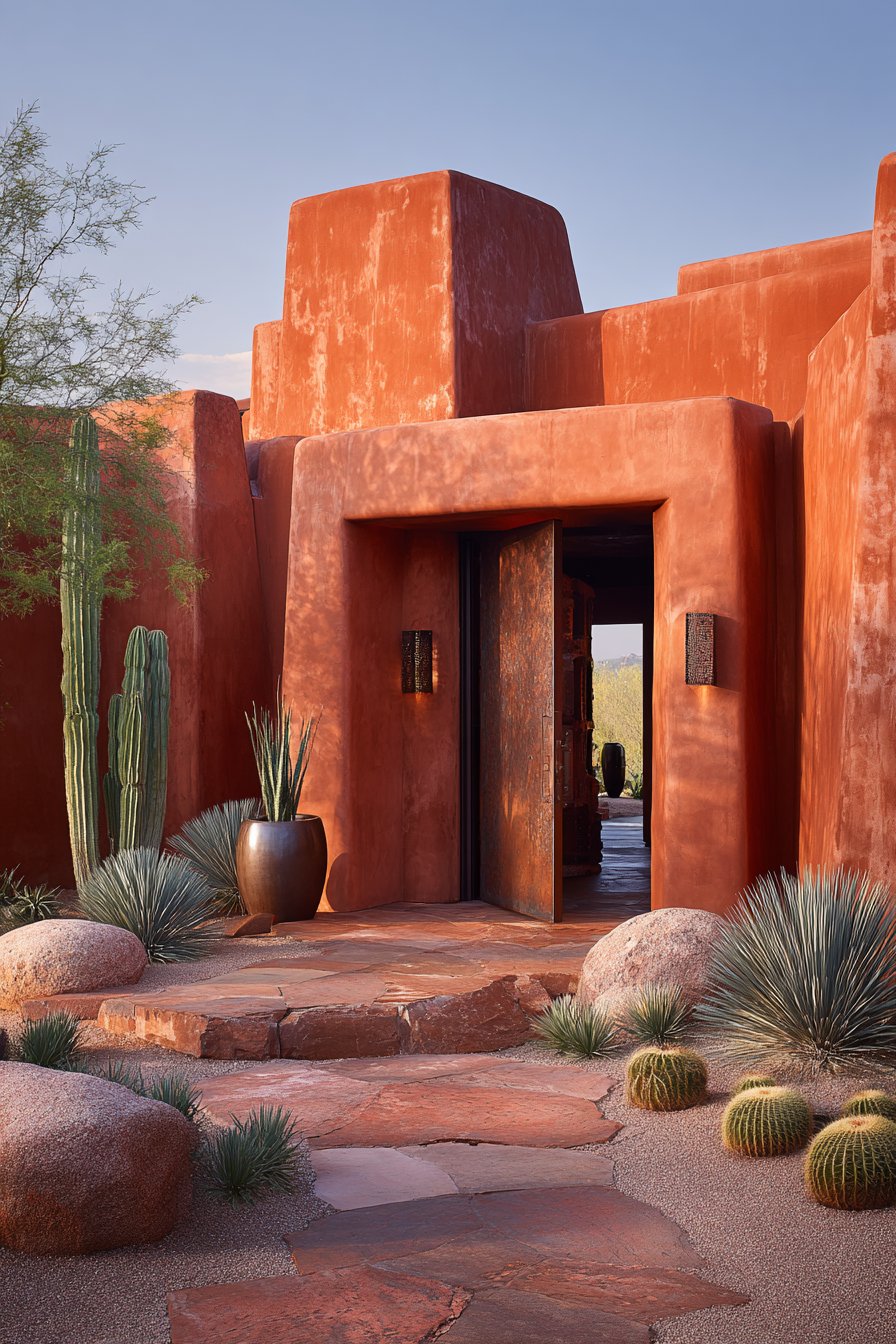
Late afternoon light creates dramatic side lighting across textured walls. Long shadows from desert plants add sculptural dimension to the scene. The warm light interacts beautifully with earth-toned surfaces and metallic copper. The color temperature shifts create constantly changing visual experiences.
This design suits arid climates and desert contemporary architecture. The material choices respect environmental conditions while creating beauty. Native plantings provide ecological benefits alongside aesthetic appeal.
Key Design Tips:
- Apply stucco or adobe-style finishes in warm sand and earth tones
- Install pivot doors for dramatic contemporary entry experiences
- Select native drought-tolerant plants adapted to local climate conditions
- Use decomposed granite for low-maintenance modern ground cover
- Choose copper fixtures that develop natural patina over time
- Design irrigation systems specifically for desert plant water requirements
12. Traditional Brick and Boxwood Formality
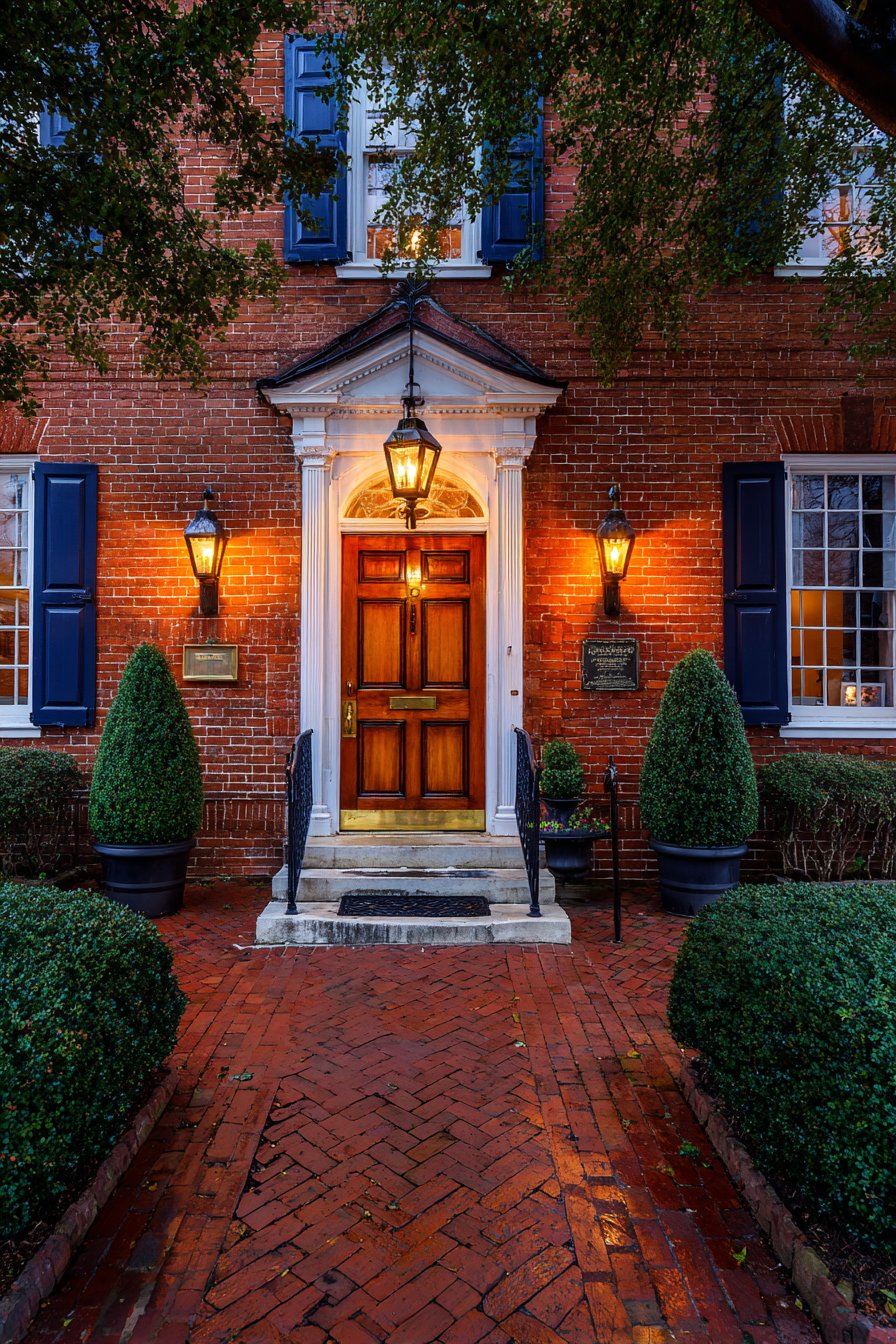
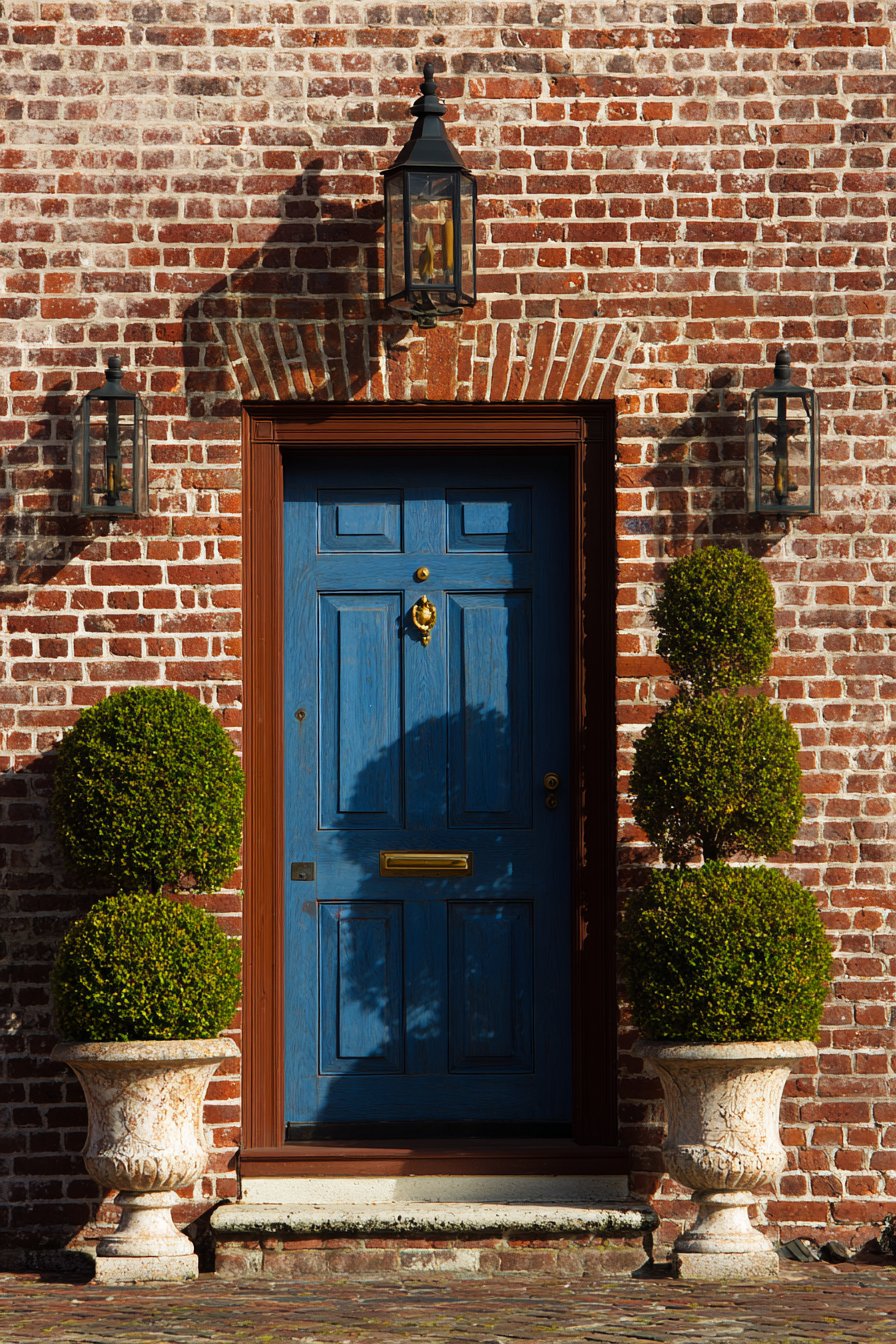
Classic red clay brick creates timeless traditional facade character. The historic material provides durability lasting generations with proper maintenance. A six-panel wooden door painted in Williamsburg blue adds period authenticity. The historic color palette references colonial American design traditions. Symmetrical boxwood topiaries flank the entrance in cast stone planters.
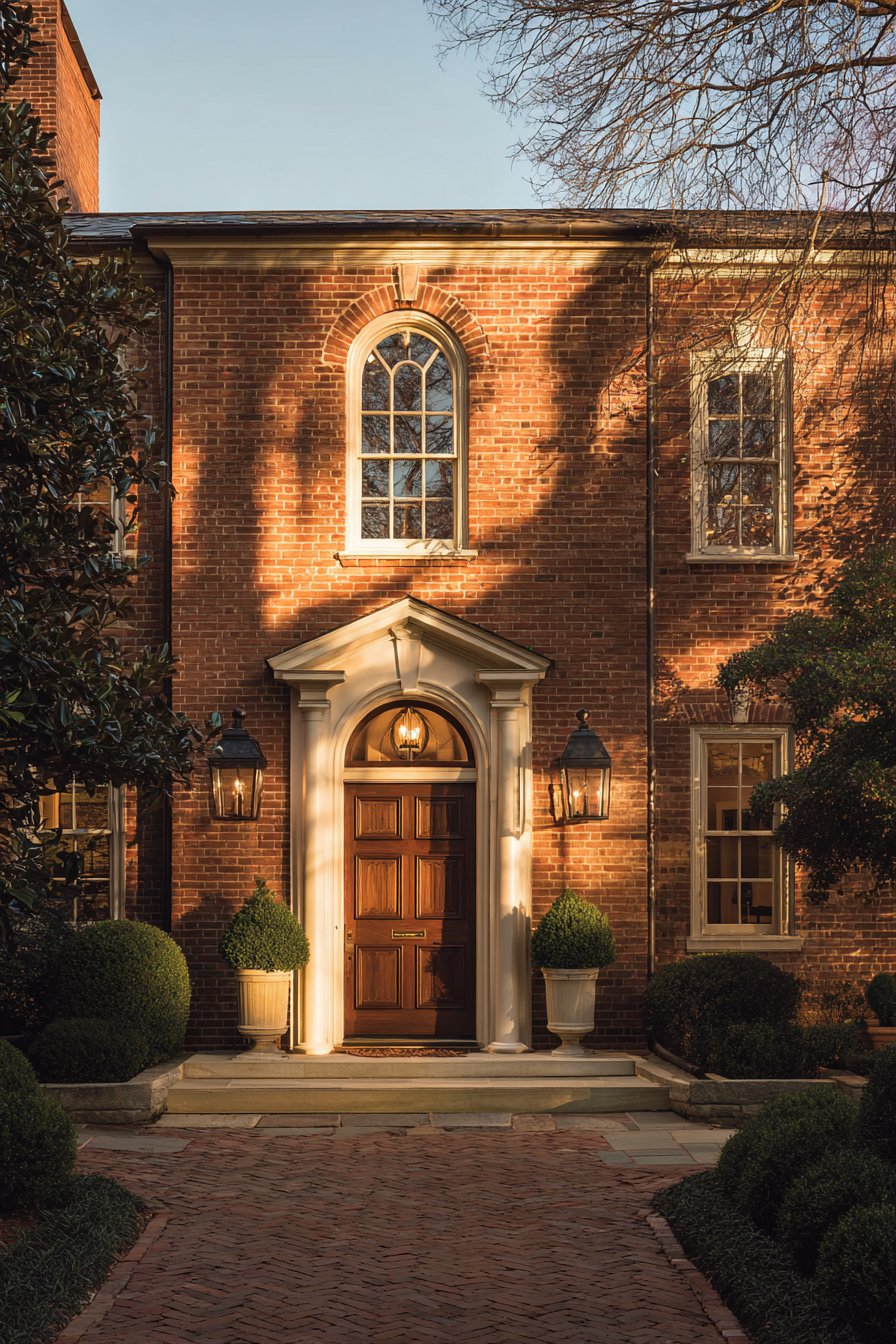
Polished brass kickplate and door hardware catch ambient light creating warm highlights. The metal develops rich patina as it ages naturally. Black metal carriage-style lanterns provide illumination with period-appropriate styling. The formal symmetry creates balanced composition and traditional elegance.
Golden hour sunlight enhances rich brick color creating warmth. Inviting shadows develop as light rakes across textured brick surfaces. The traditional architectural details reward close examination with their craftsmanship. Formal symmetry creates orderly welcoming impression for arriving guests.
This design appeals to historic home enthusiasts and traditional aesthetic preferences. The materials and proportions reference centuries of architectural evolution. Proper maintenance preserves these elements for continued enjoyment and property value.
Key Design Tips:
- Repoint brick mortar joints periodically to maintain structural integrity
- Paint wooden doors in historic colors using exterior-grade formulations
- Maintain boxwood topiaries with regular shearing for formal shapes
- Polish brass hardware periodically or allow natural patina development
- Select carriage-style lighting fixtures with appropriate scale for entrance
- Clean brick surfaces with appropriate methods avoiding damage to mortar
13. Japanese Zen Natural Wood Gate
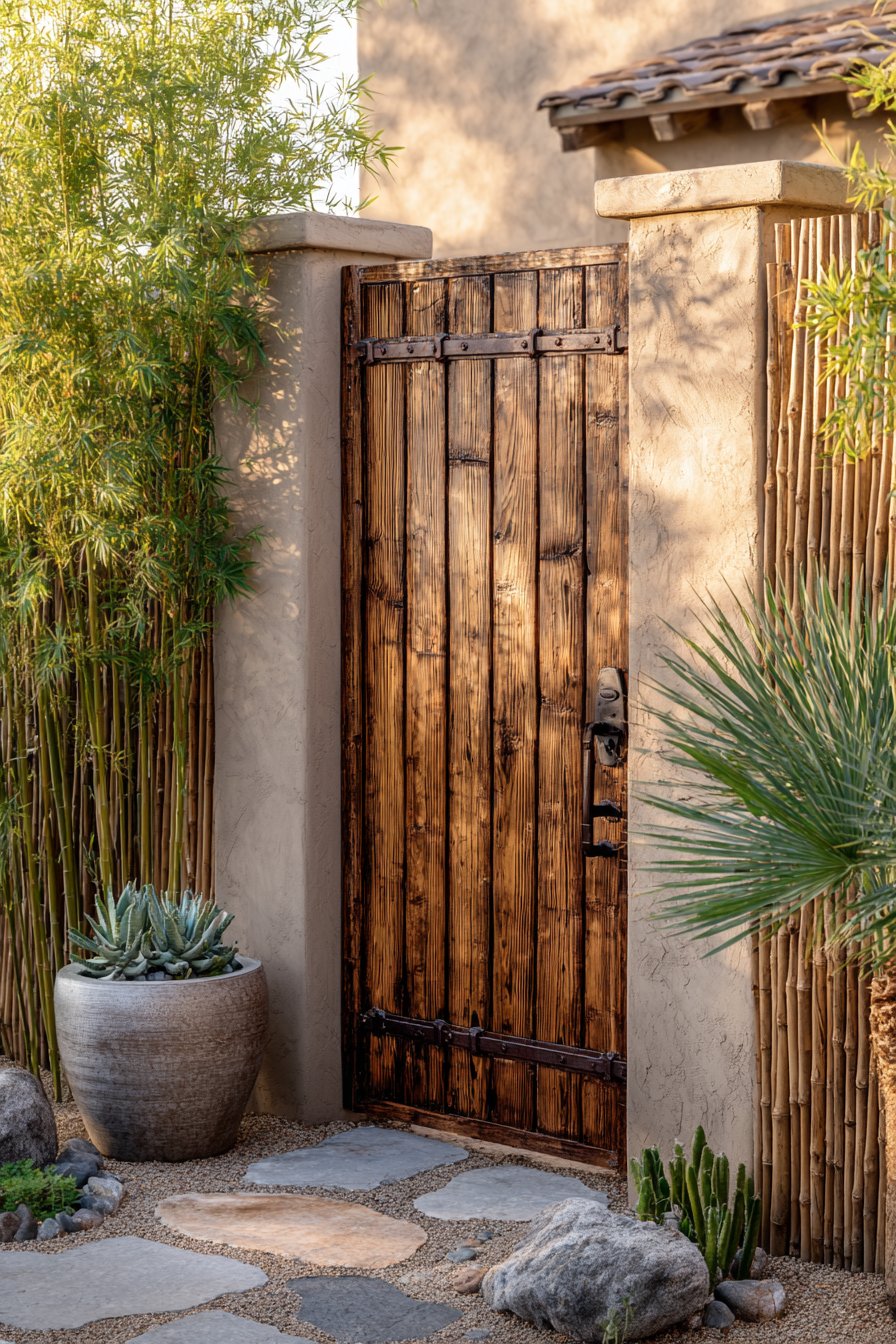
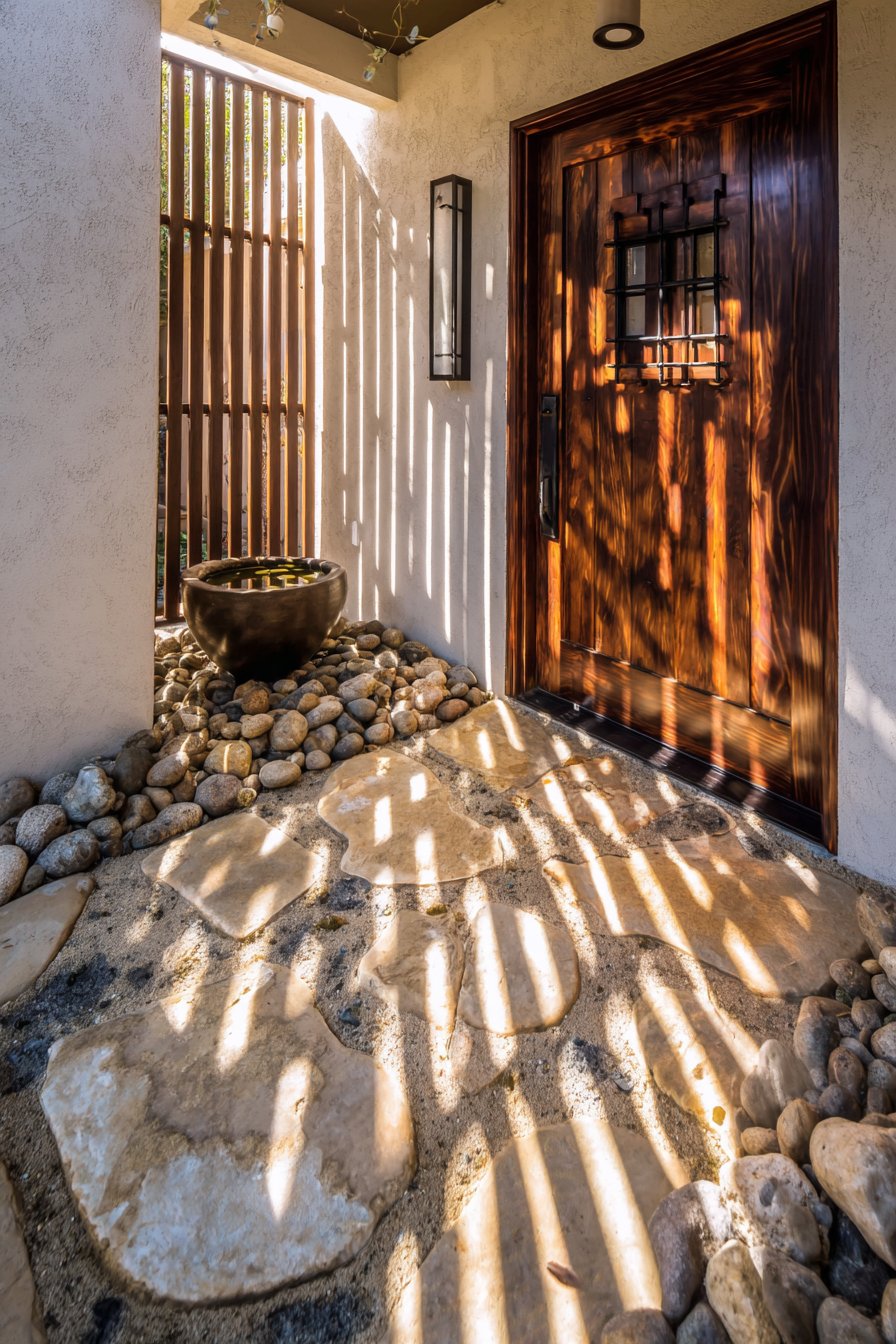
A natural wood gate features vertical slat design with clean lines. Hand-forged iron hardware adds artisan authenticity and functional beauty. The gate provides threshold transition from public to private space. Irregular flagstone pathway set in gravel leads visitors mindfully forward. Each stone requires deliberate foot placement creating contemplative approach.
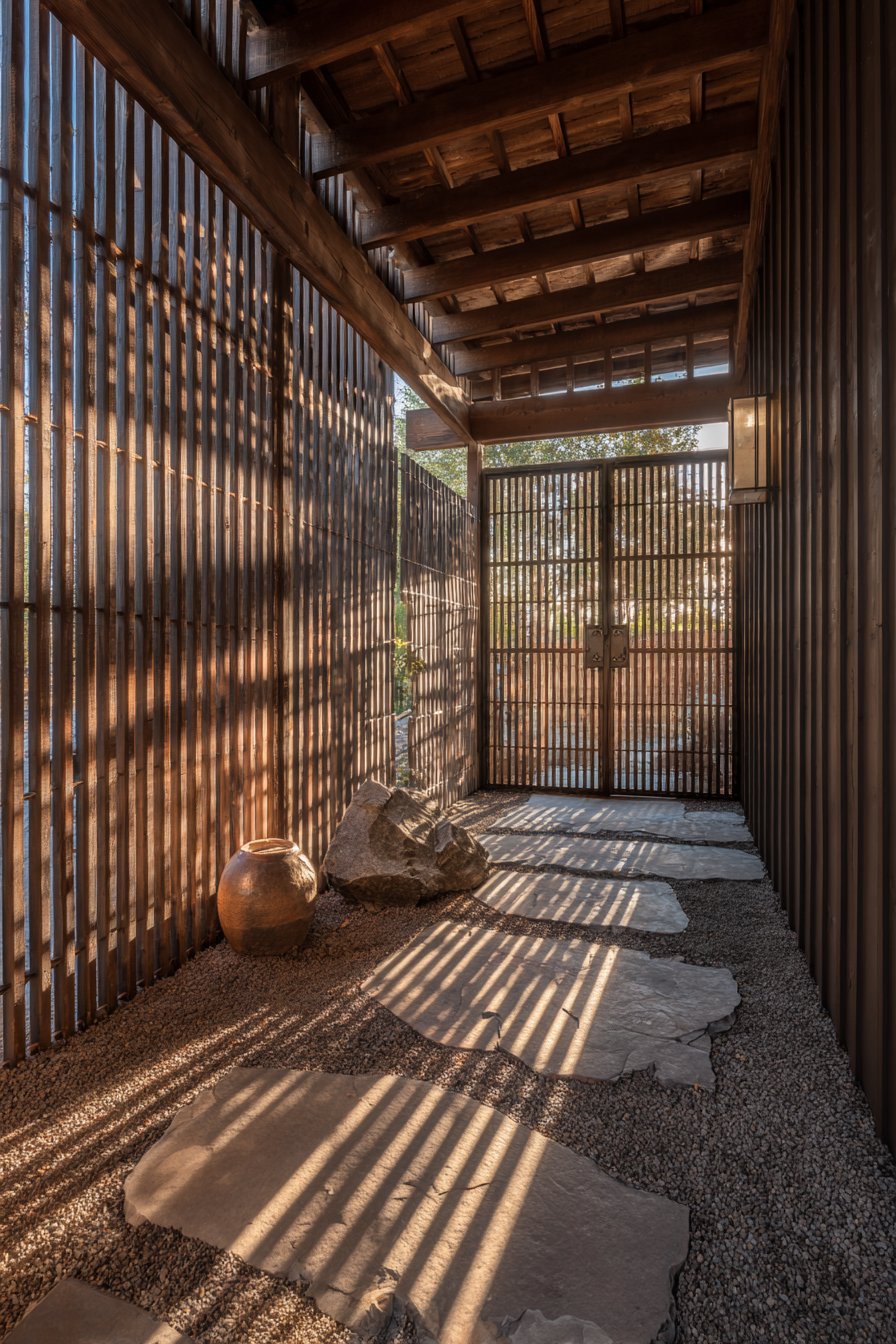
Bamboo screening provides privacy while allowing filtered light penetration. The natural material creates gentle rustling sounds in breezes. A simple ceramic water basin with river rocks creates zen focal point. The water element adds soothing auditory dimension to the entrance.
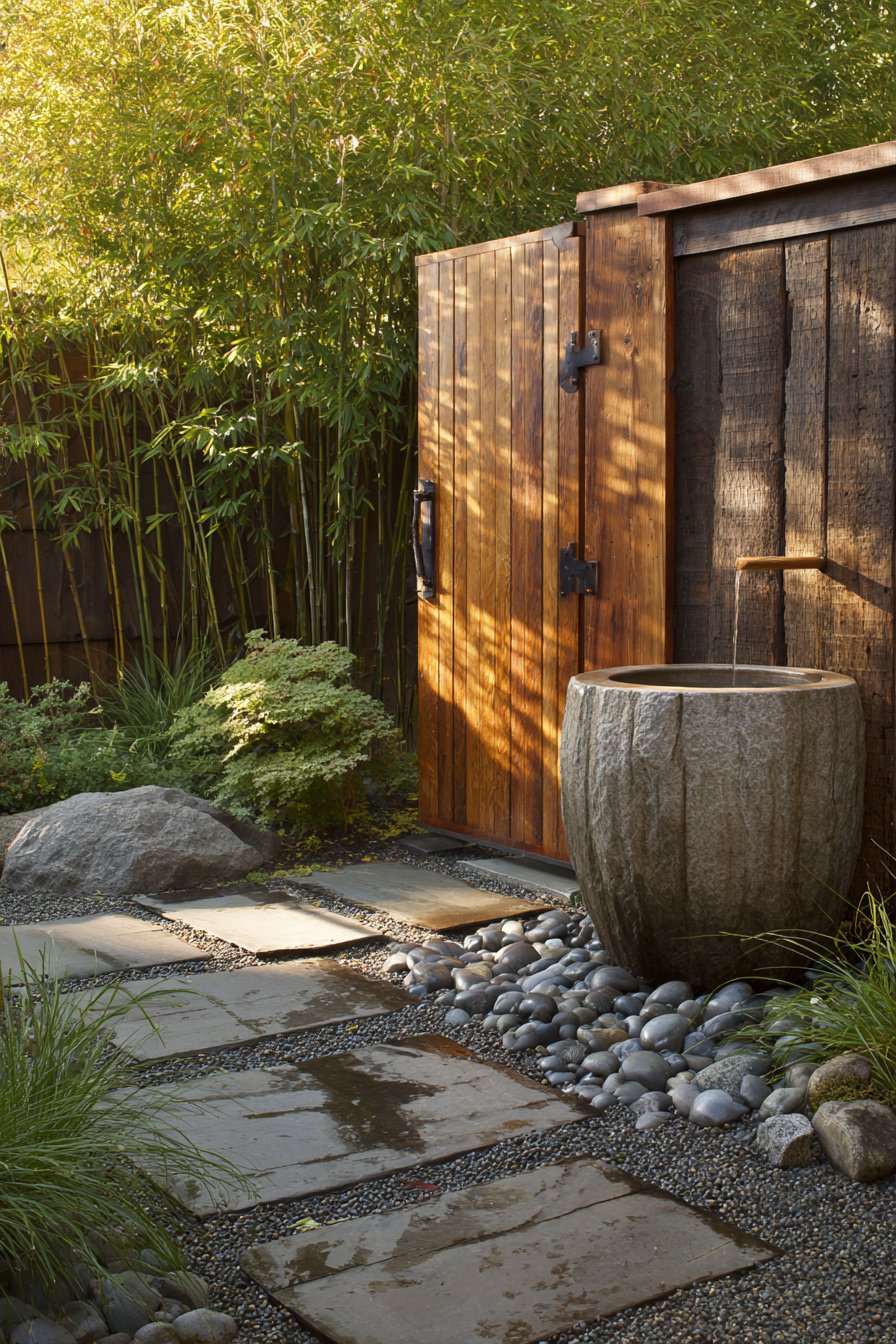
Soft morning light creates tranquil shadows across natural materials. The serene minimalist composition encourages mindful presence and calm. Natural wood grain patterns provide organic visual interest without color distraction. The Japanese-inspired aesthetic creates contemplative sanctuary feeling.
This design suits those seeking tranquility and Japanese aesthetic principles. The minimal approach emphasizes natural materials and spatial quality. Every element serves both functional and contemplative purposes simultaneously.
Key Design Tips:
- Select naturally weather-resistant woods like cedar or cypress for gates
- Commission hand-forged iron hardware from artisan metalworkers
- Set irregular flagstones with contemplative spacing between stones
- Plant bamboo in contained beds to prevent invasive spreading
- Incorporate water elements for auditory and visual focal points
- Maintain minimalist aesthetic by limiting decorative elements deliberately
14. Industrial Exposed Brick and Steel
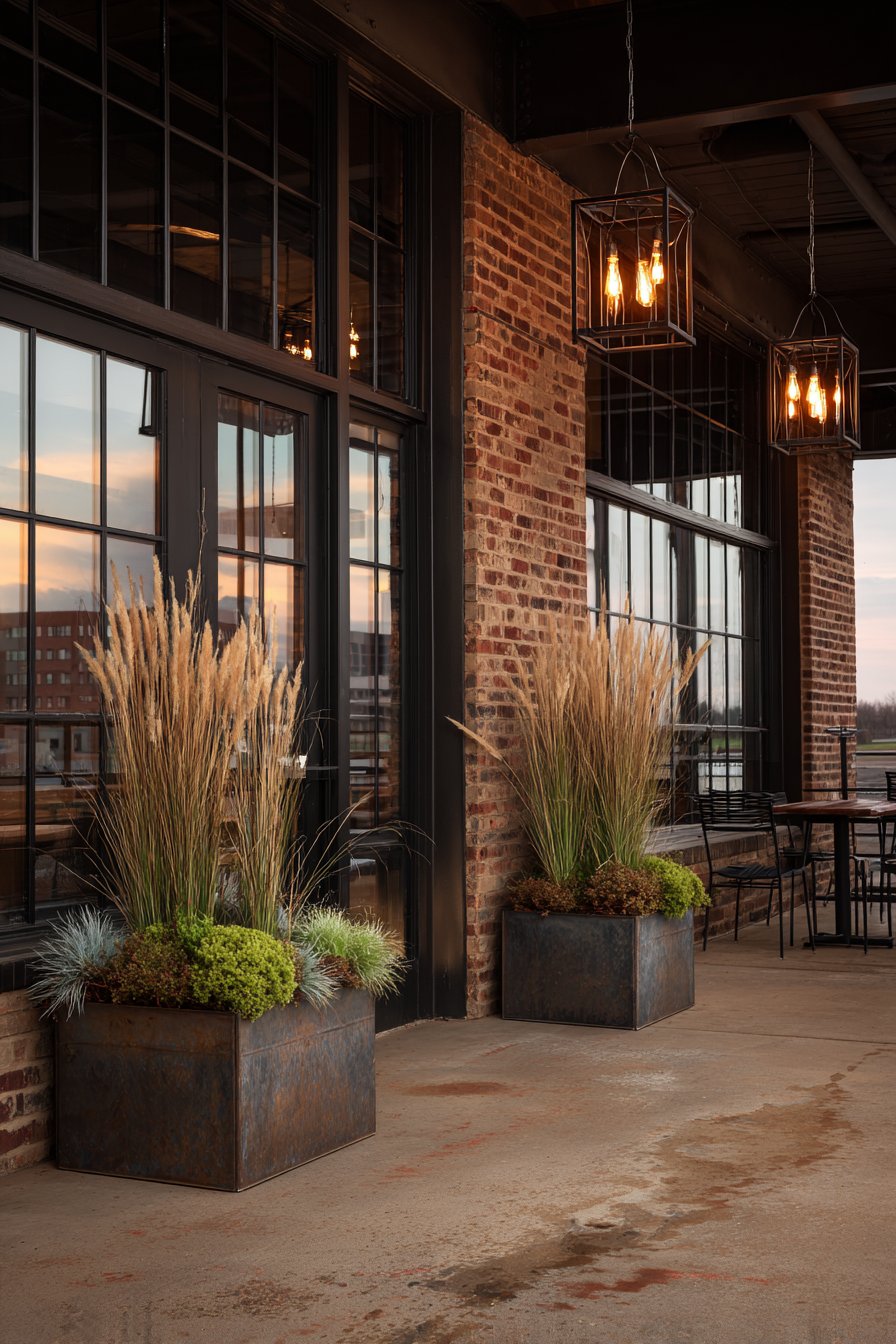
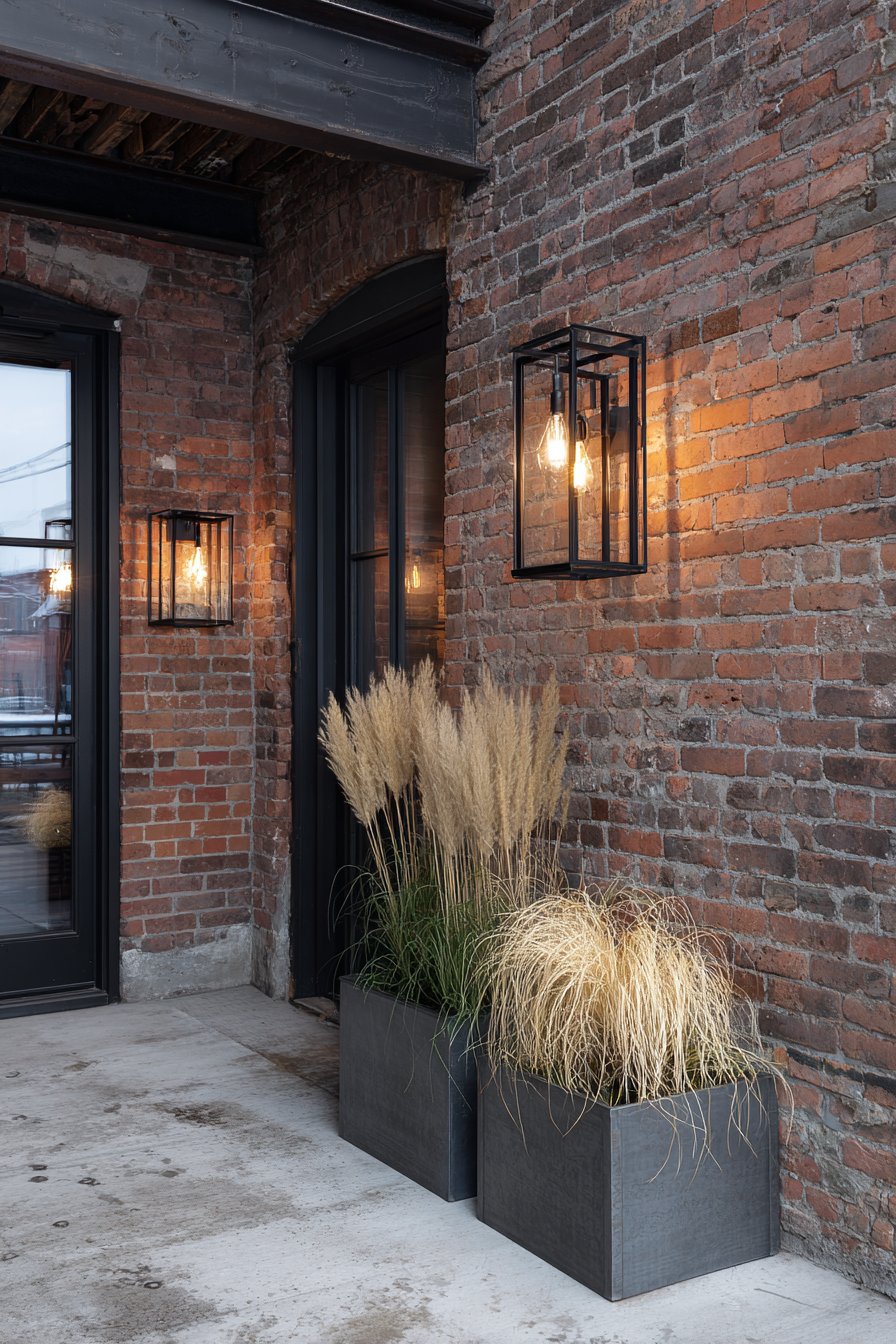
Exposed brick walls showcase industrial character with raw material honesty. The brick displays natural color variations and weathering patterns. Black steel-framed glass doors create contemporary contrast against historic brick. Weathered concrete flooring shows natural aging patterns and surface character. The patina develops authentically through use and exposure.
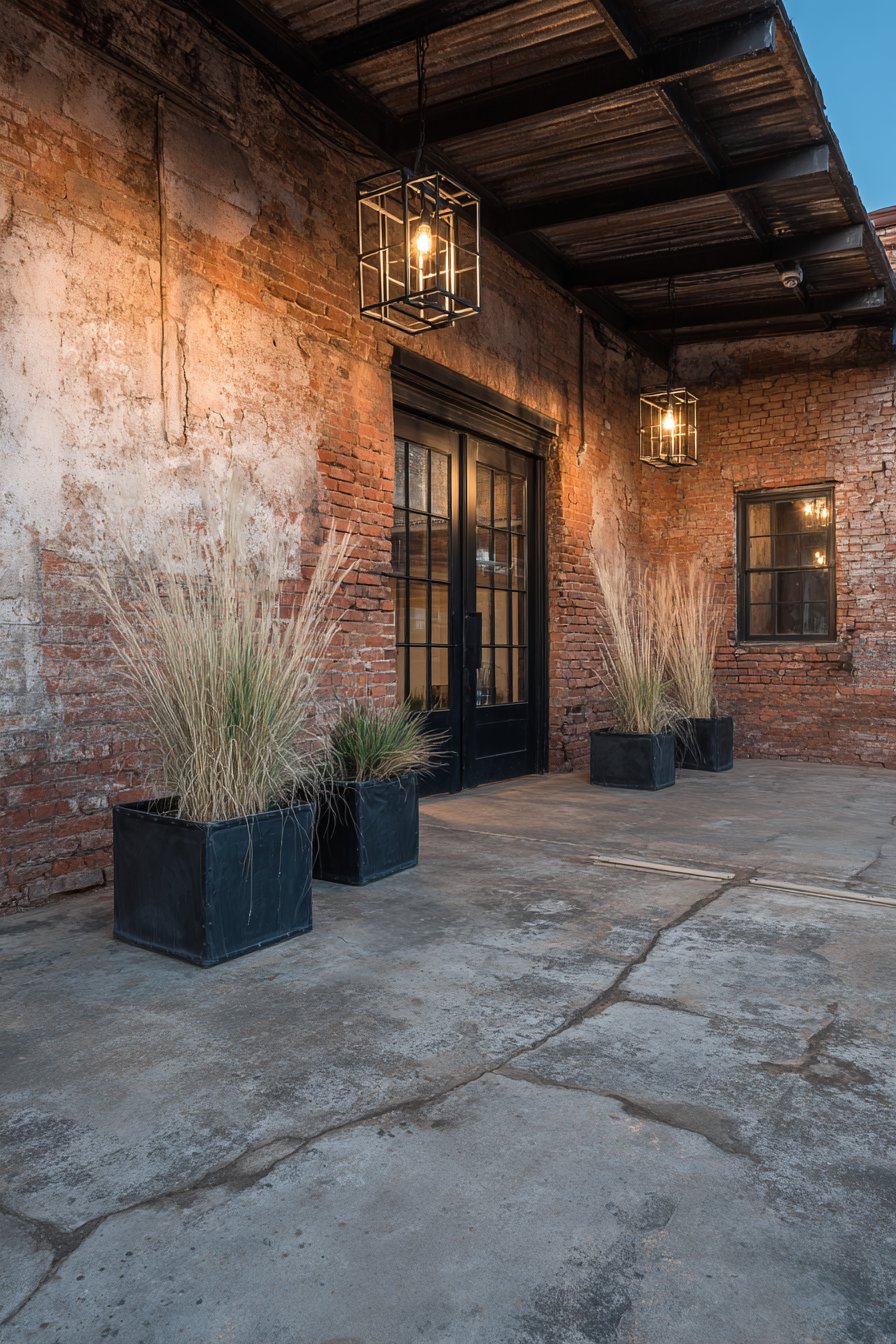
Galvanized metal planters contain ornamental grasses and architectural plants. The industrial containers reinforce the utilitarian aesthetic throughout. Edison bulb fixtures in black metal cages provide ambient illumination. The vintage-style lighting references early industrial electrical installations.
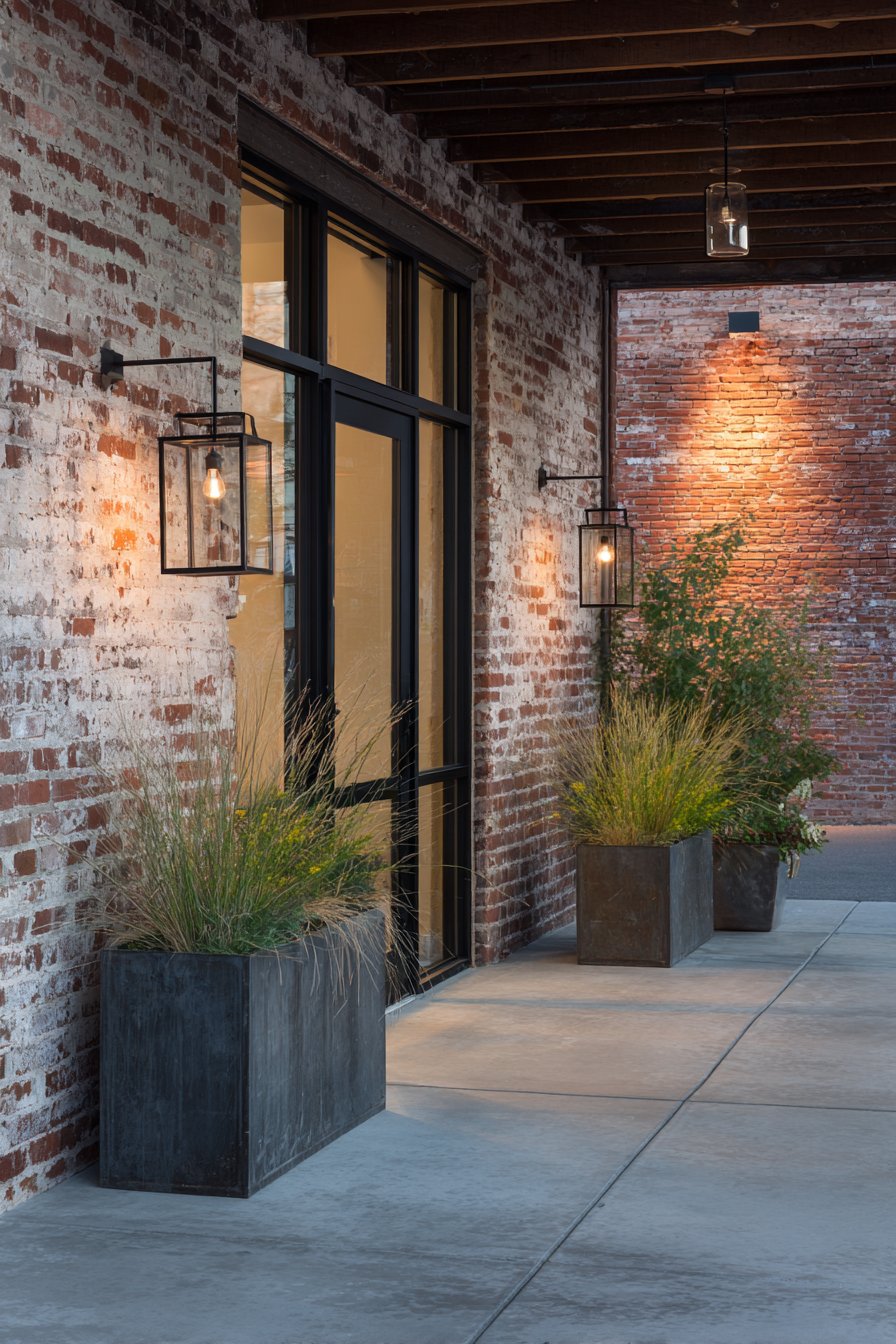
Evening blue hour photography captures warm artificial lighting against cool twilight. The contrast emphasizes raw material textures and urban character. Exposed construction elements become celebrated design features rather than hidden. The industrial aesthetic embraces authentic materials showing their true nature.
This design appeals to urban loft dwellers and industrial aesthetic enthusiasts. The raw materials create honest unpretentious character. The style works particularly well with warehouse conversions and contemporary urban homes.
Key Design Tips:
- Preserve exposed brick with breathable sealants allowing moisture movement
- Install steel-framed glass doors with thermal breaks for energy efficiency
- Allow concrete to weather naturally or seal for easier maintenance
- Choose galvanized metal containers for authentic industrial character
- Install Edison bulb fixtures using LED bulbs for energy efficiency
- Embrace weathering and patina as authentic industrial aesthetic elements
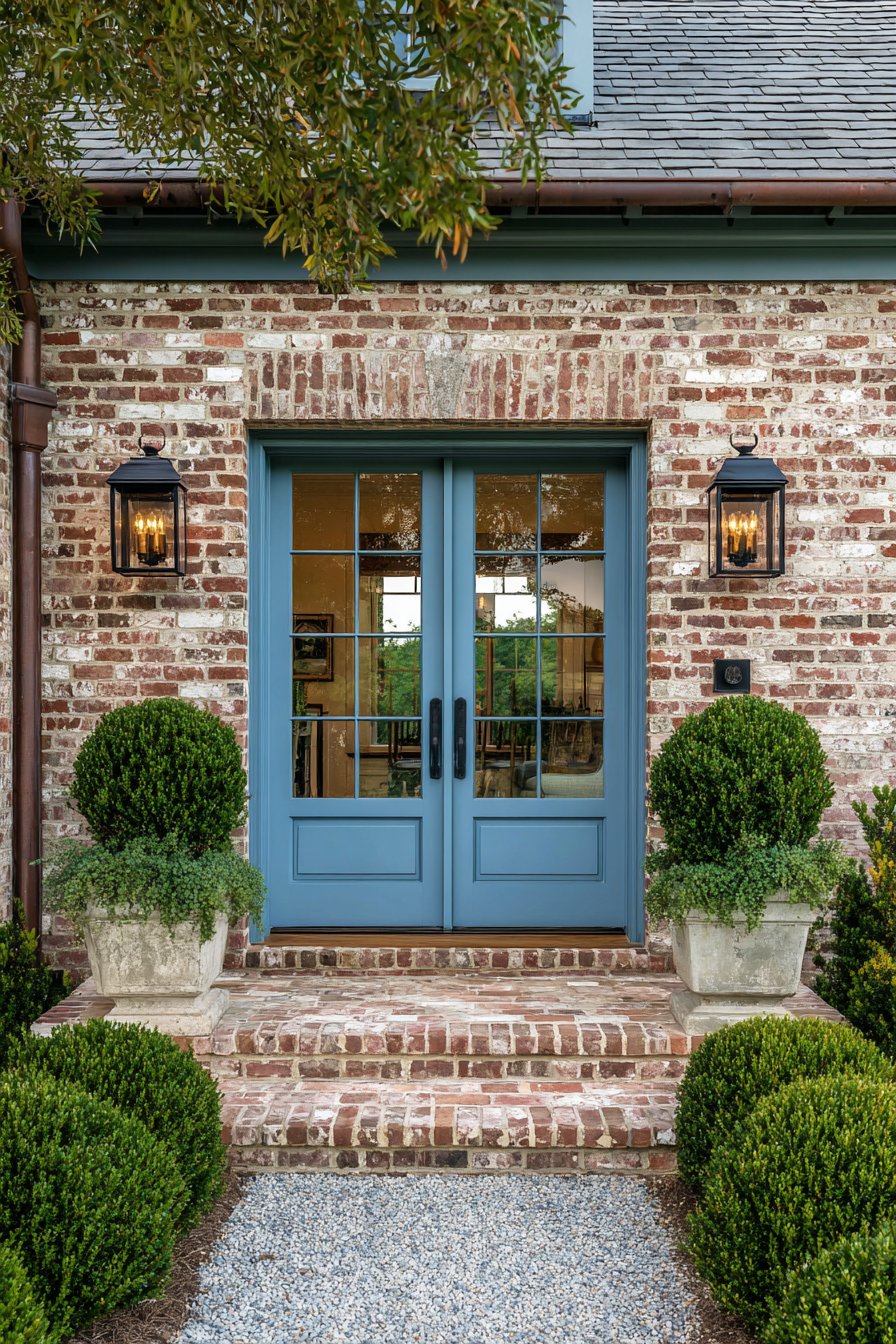
15. French Country Limestone and Lavender
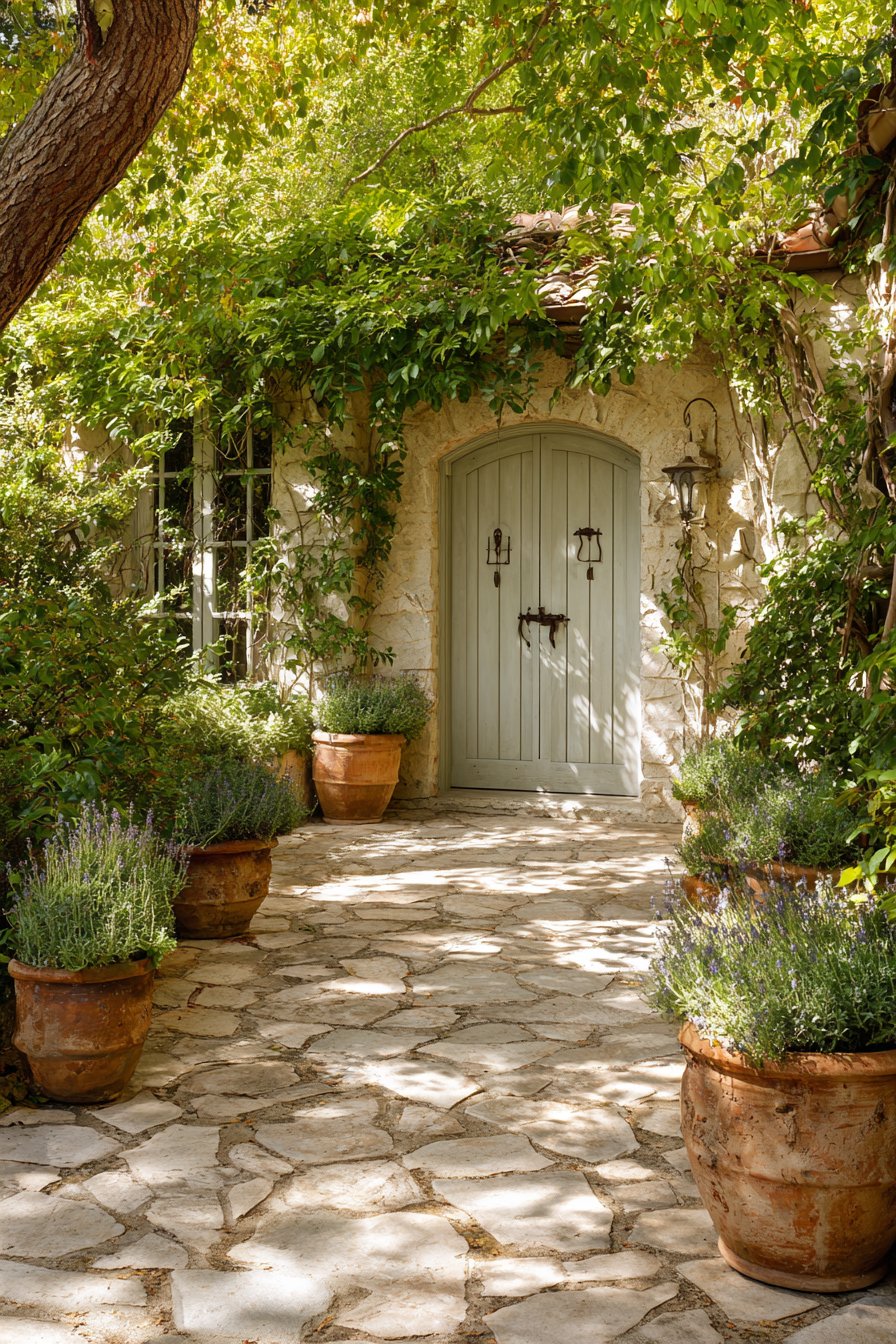
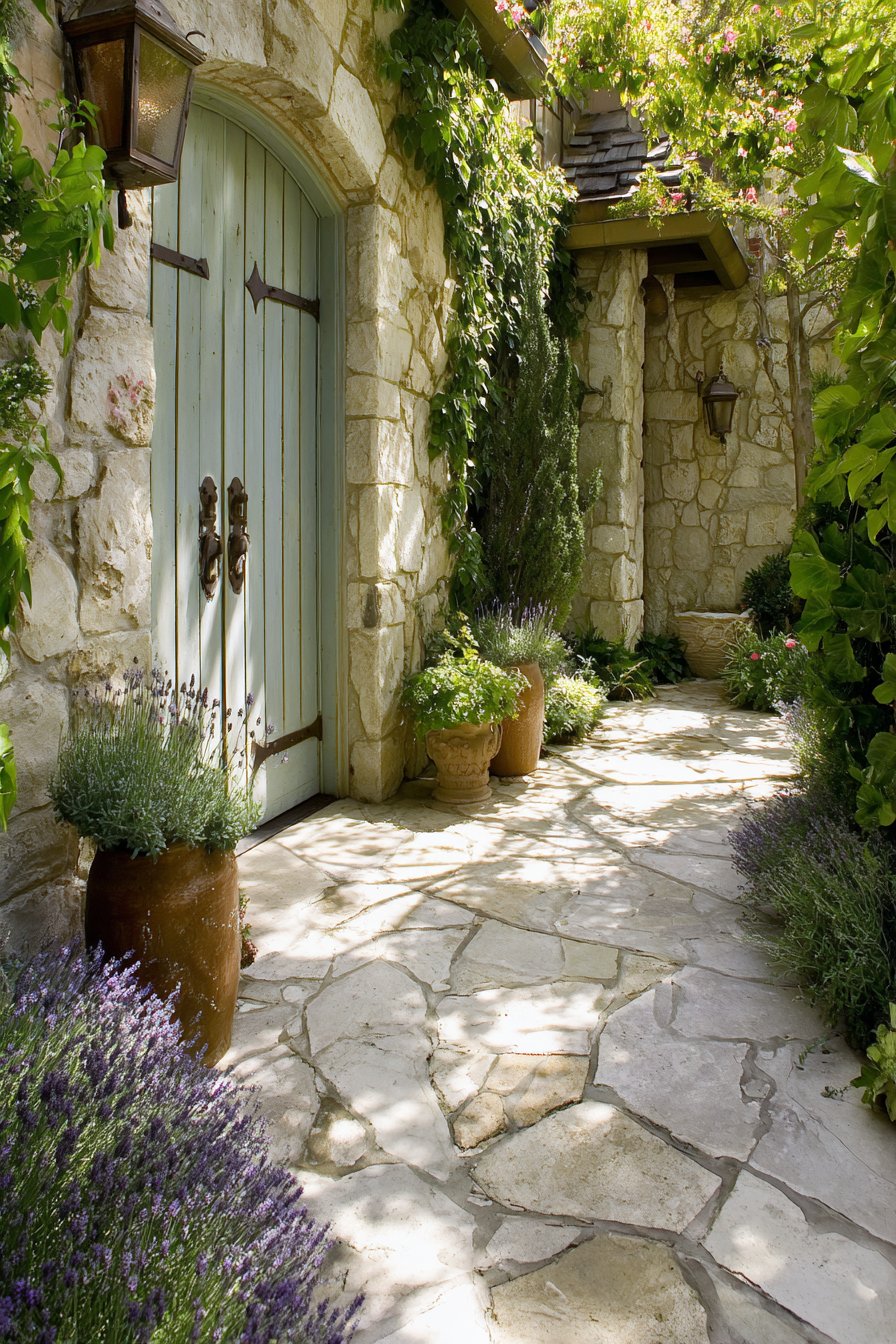
Limestone pavers with irregular edges create French country foundation character. Natural color variations add visual interest across the stone surface. A painted wooden door in soft grey-blue demonstrates provincial color sensibility. Wrought iron strap hinges add authentic period hardware details. The door finish references traditional French painted furniture.
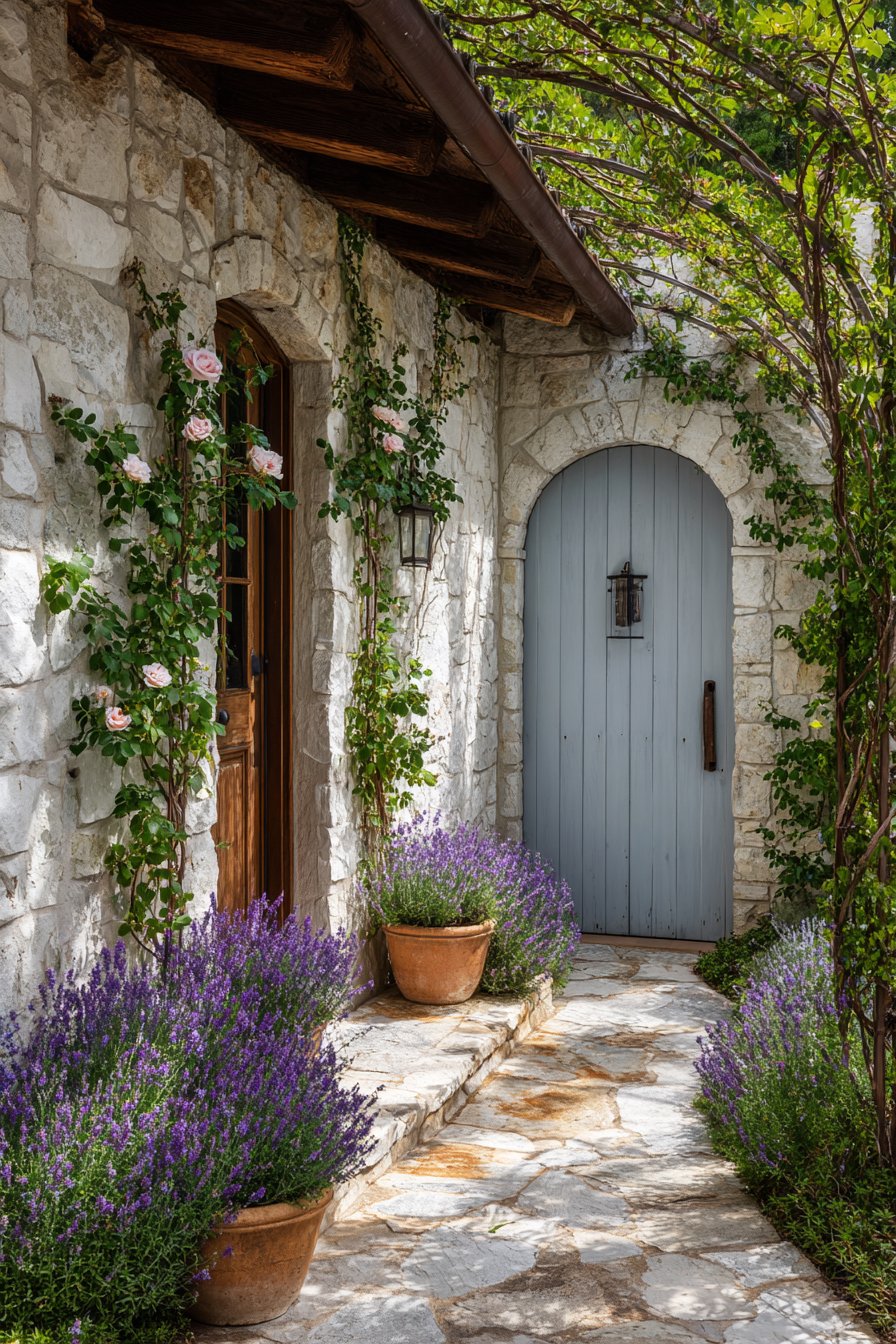
Lavender plants in aged terracotta pots line the approach pathway. The aromatic plants release fragrance when brushed by passing visitors. Climbing roses frame an arched trellis creating romantic vertical element. Afternoon light filters through foliage creating dappled shadow patterns. The romantic lighting creates French countryside atmosphere.
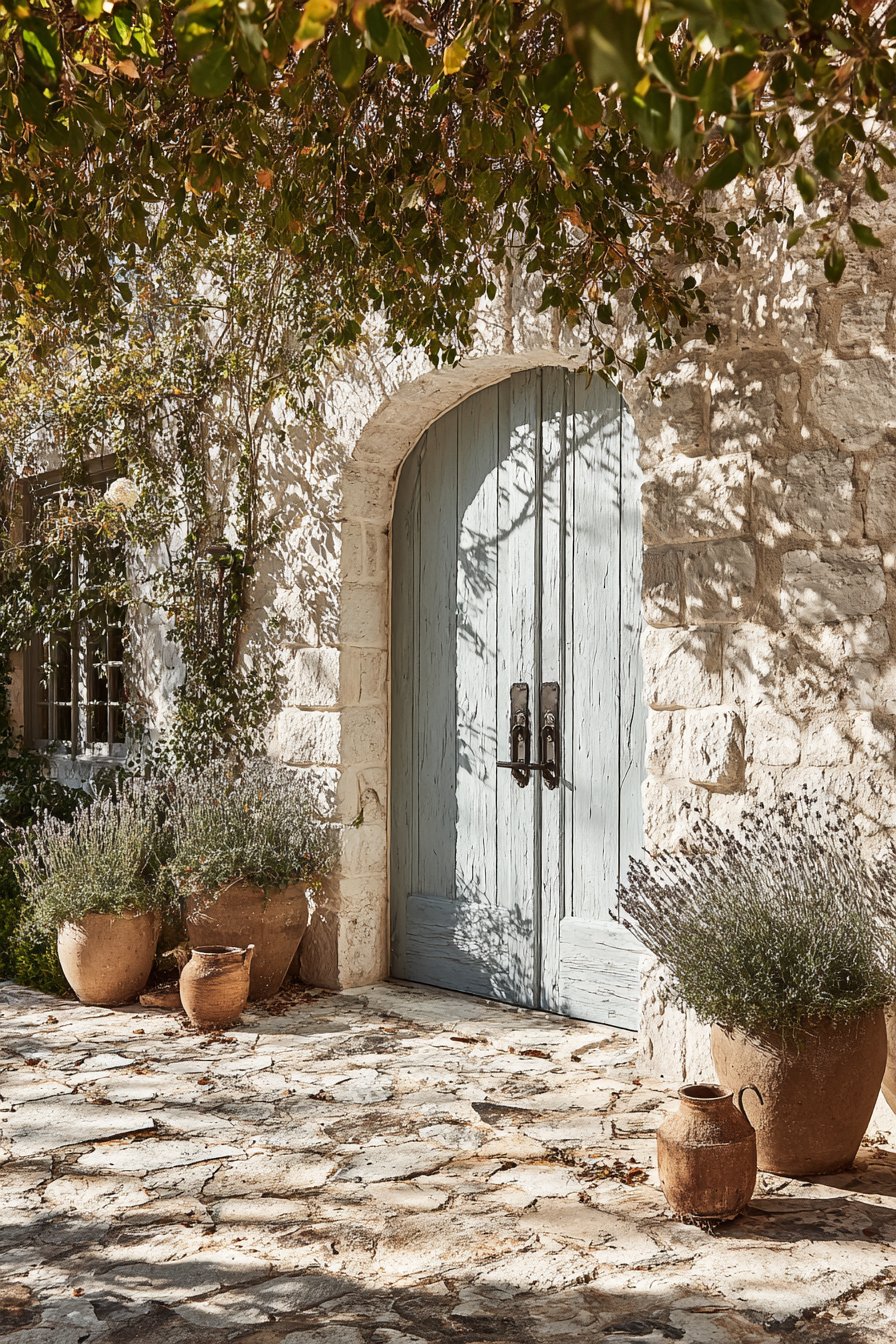
The elegant yet informal character defines French country styling. Weathered stone texture and aged wood patina add authentic provincial feeling. Living plant materials soften architectural elements with organic forms. The collected aesthetic feels evolved over time rather than instantly designed.
This design transports visitors to French provincial countryside settings. The combination of stone, aged wood, and lavender creates sensory richness. The romantic aesthetic appeals to Francophiles and romantic design enthusiasts.
Key Design Tips:
- Source limestone pavers with irregular edges for authentic character
- Paint doors in soft grey-blue tones using chalky finish paints
- Install wrought iron strap hinges for period-appropriate hardware details
- Plant lavender in well-draining soil with full sun exposure
- Train climbing roses on sturdy arched trellis structures
- Maintain aged terracotta pots or artificially age new containers
16. Tropical Teak and Palm Canopy
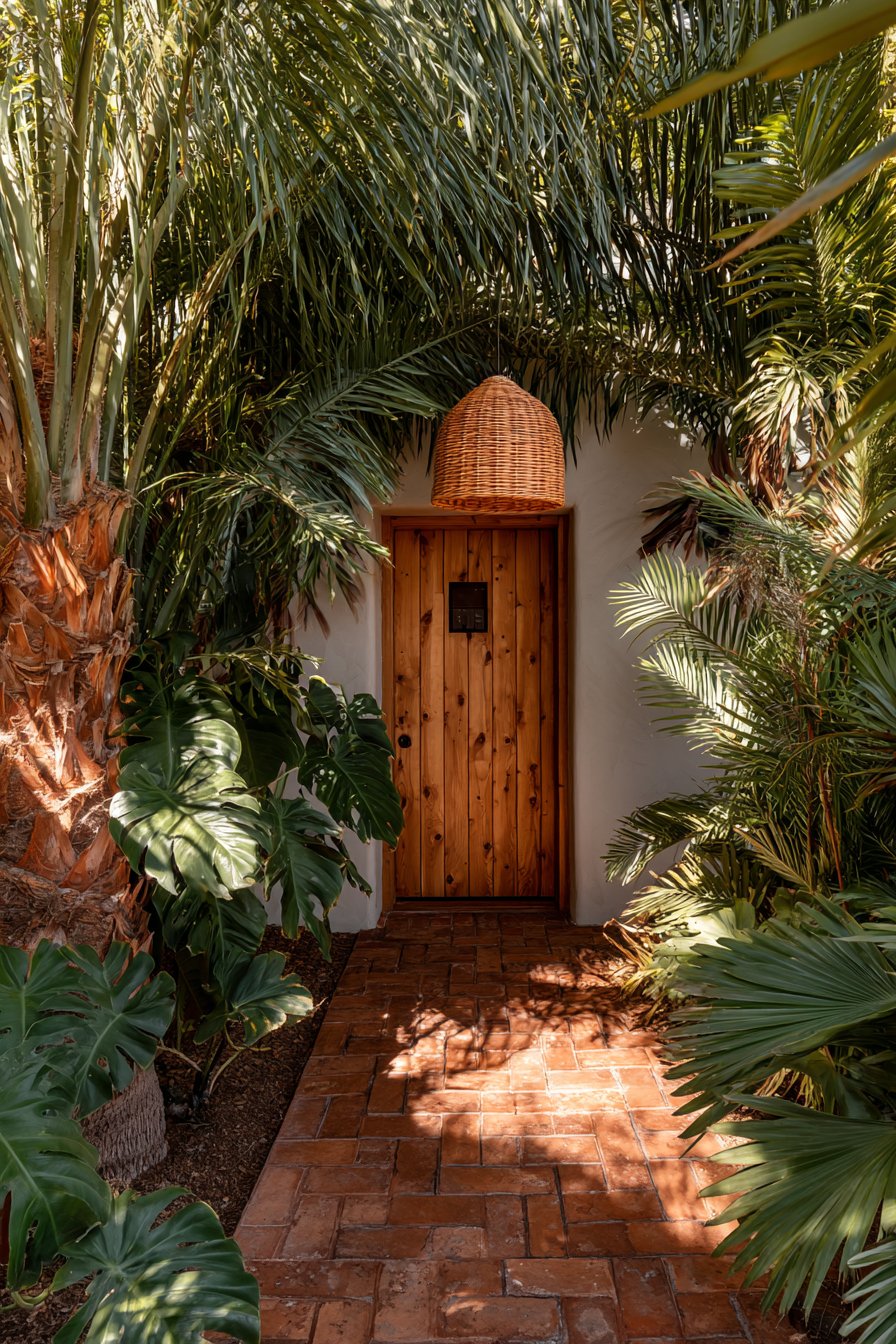
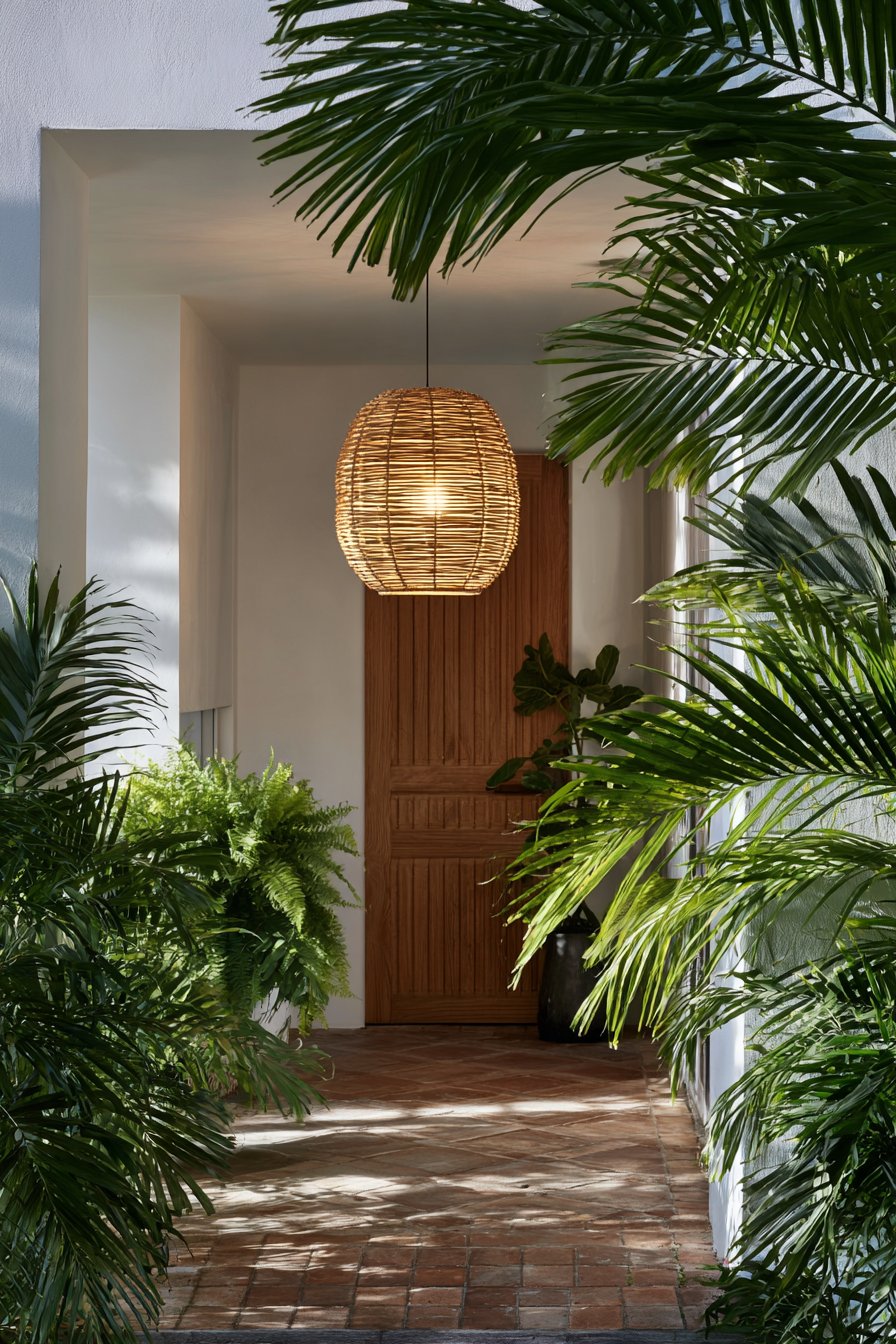
Lush palm fronds and bird of paradise plants create jungle canopy atmosphere. The tropical plantings provide natural shade and exotic visual character. A natural teak door shows silver-grey weathering from sun exposure. The aged wood demonstrates how quality materials develop beautiful patina. Woven rattan pendant light fixture provides ambient tropical glow.
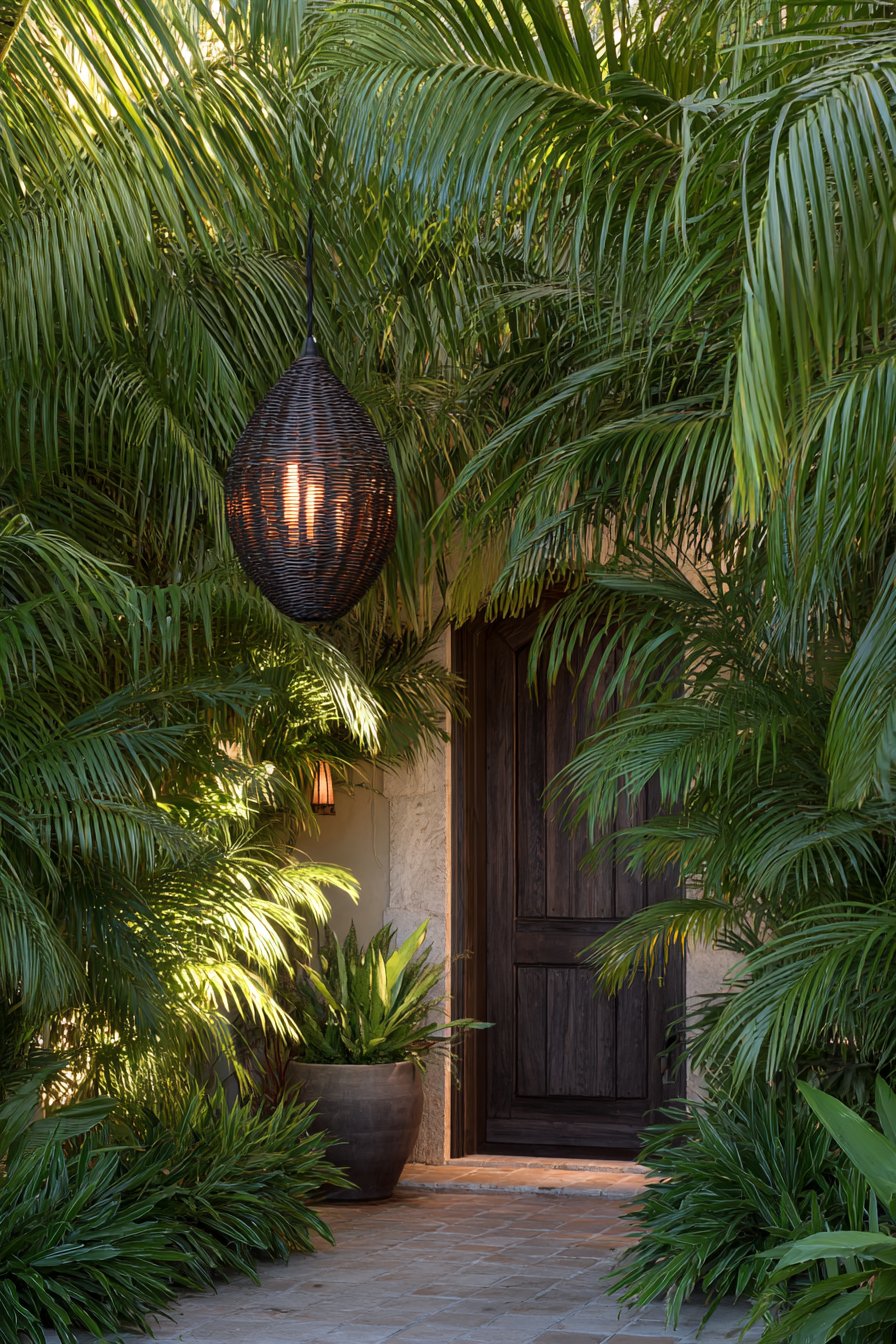
Saltillo tile flooring in warm terracotta tones shows natural color variations. The handmade tiles display slight irregularities adding authentic character. Golden hour light filters through palm leaves creating dramatic silhouettes. Backlight emphasizes exotic plant textures and translucent leaf structures. Rich wood grain becomes visible in raking light conditions.
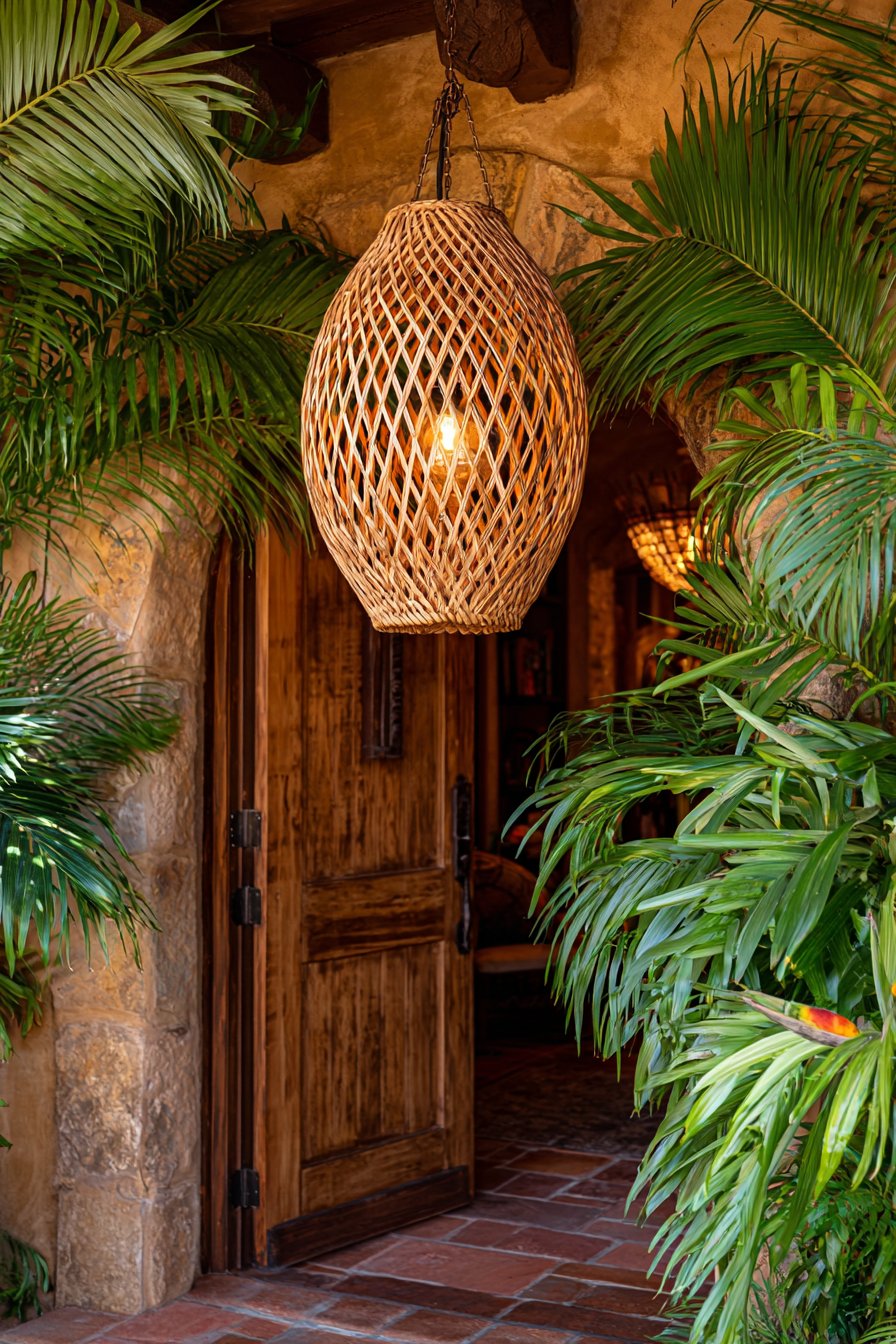
The tropical aesthetic creates vacation-like daily experience at home. Exotic plantings transform ordinary entrances into destination experiences. The natural materials reference tropical resort design bringing luxury home. The style works particularly well in warm humid climates with appropriate plants.
Key Design Tips:
- Select teak doors for superior weather resistance in humid climates
- Allow teak to weather naturally developing silver-grey patina over time
- Plant tropical species appropriate for your specific climate zone
- Install woven rattan fixtures in protected areas avoiding direct weather
- Choose handmade Saltillo tiles for authentic tropical character
- Maintain tropical plantings with appropriate water and fertilization
17. Craftsman Stone Column and Mission Details
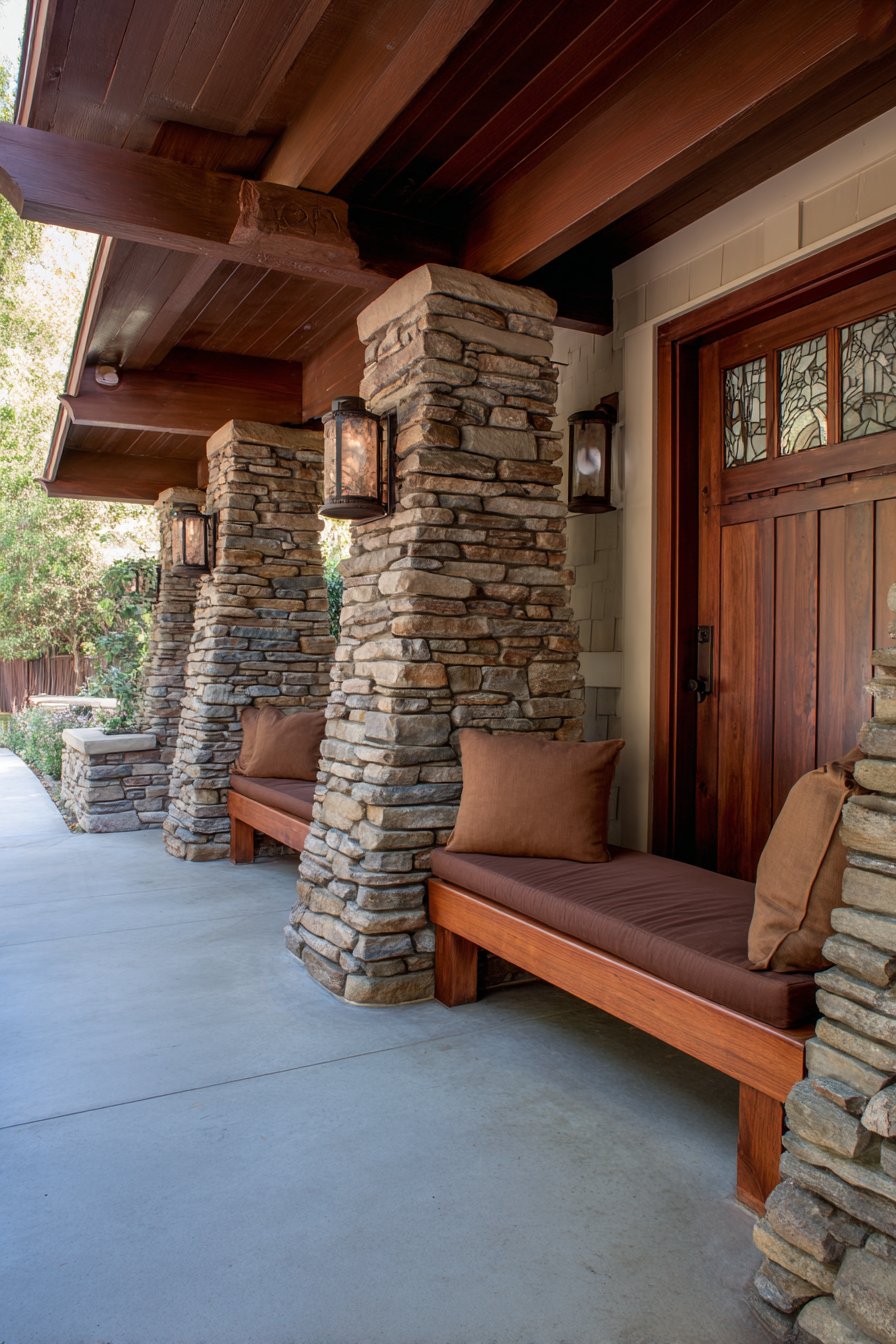
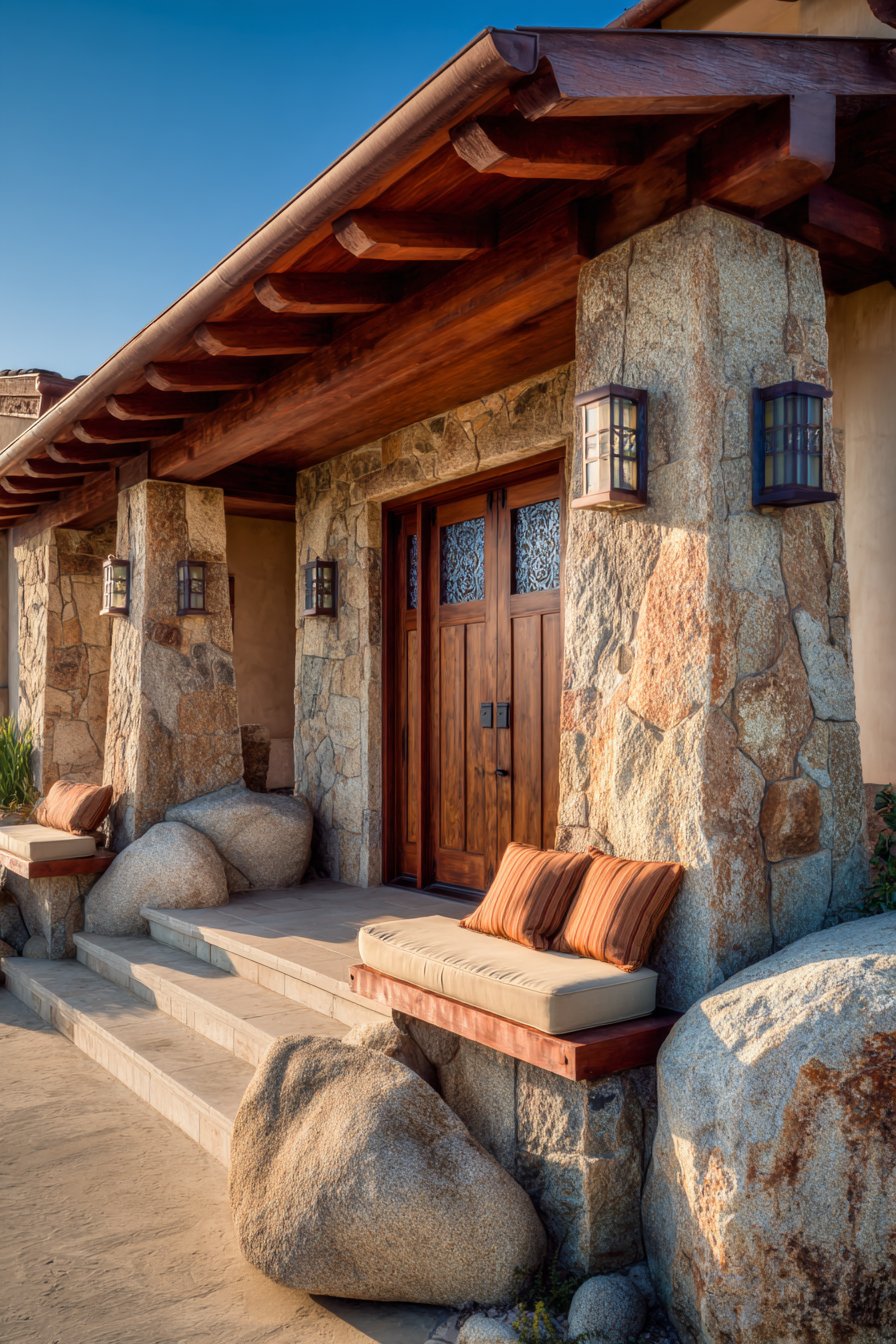
Tapered stone columns demonstrate quintessential craftsman architectural character. The substantial columns support low-pitched roof overhangs with visible rafters. Natural river rock accents column bases adding textural detail. Mission-style lanterns in copper finish provide period-appropriate illumination. The fixtures reference Arts and Crafts movement design principles.
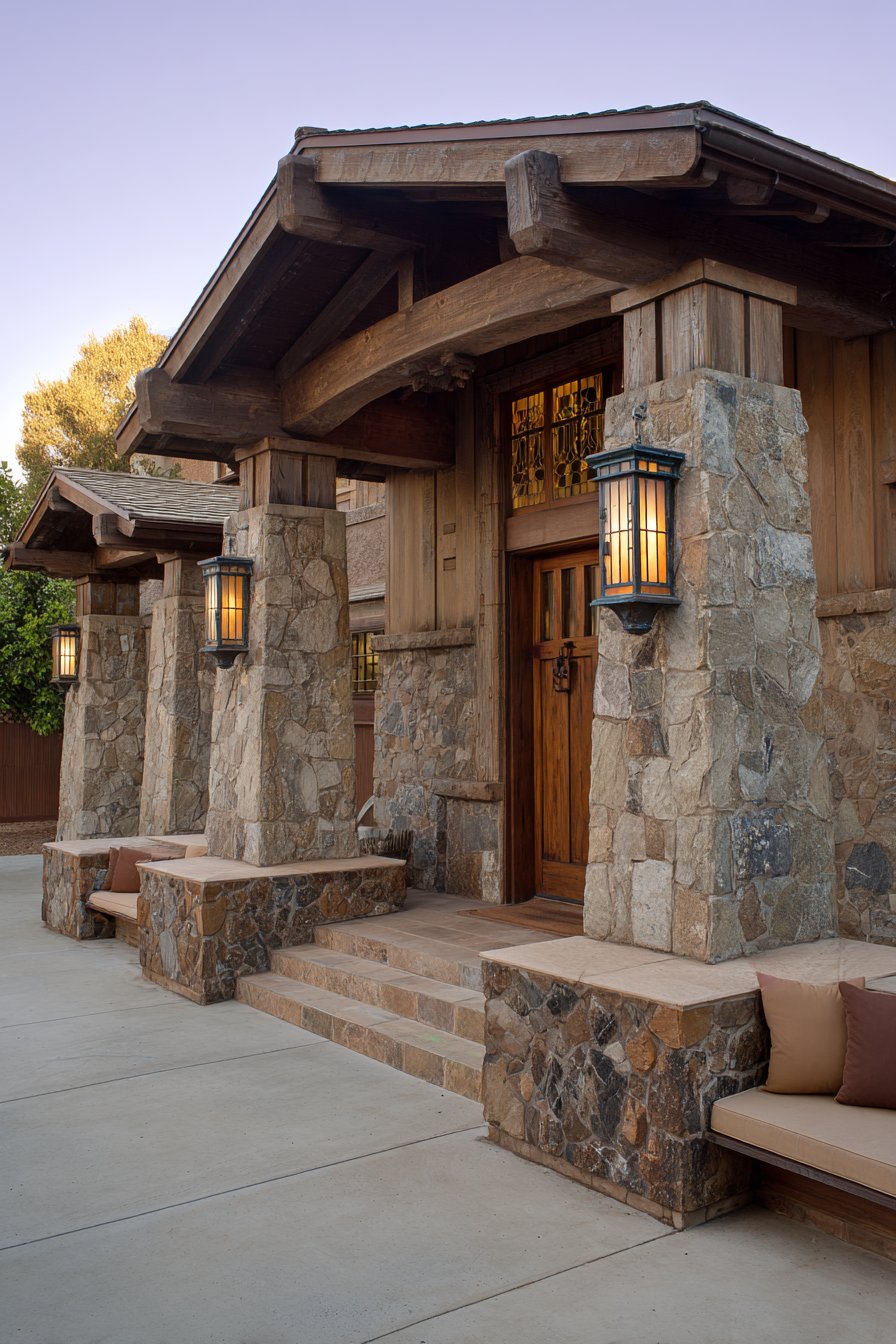
A substantial wooden door displays quartersawn oak grain patterns. The wood selection demonstrates craftsman emphasis on material quality. Decorative glass panels add light penetration and artistic detail. Built-in benches with simple cushions flank the entrance symmetrically. Earth-toned fabrics complement natural material palette throughout.
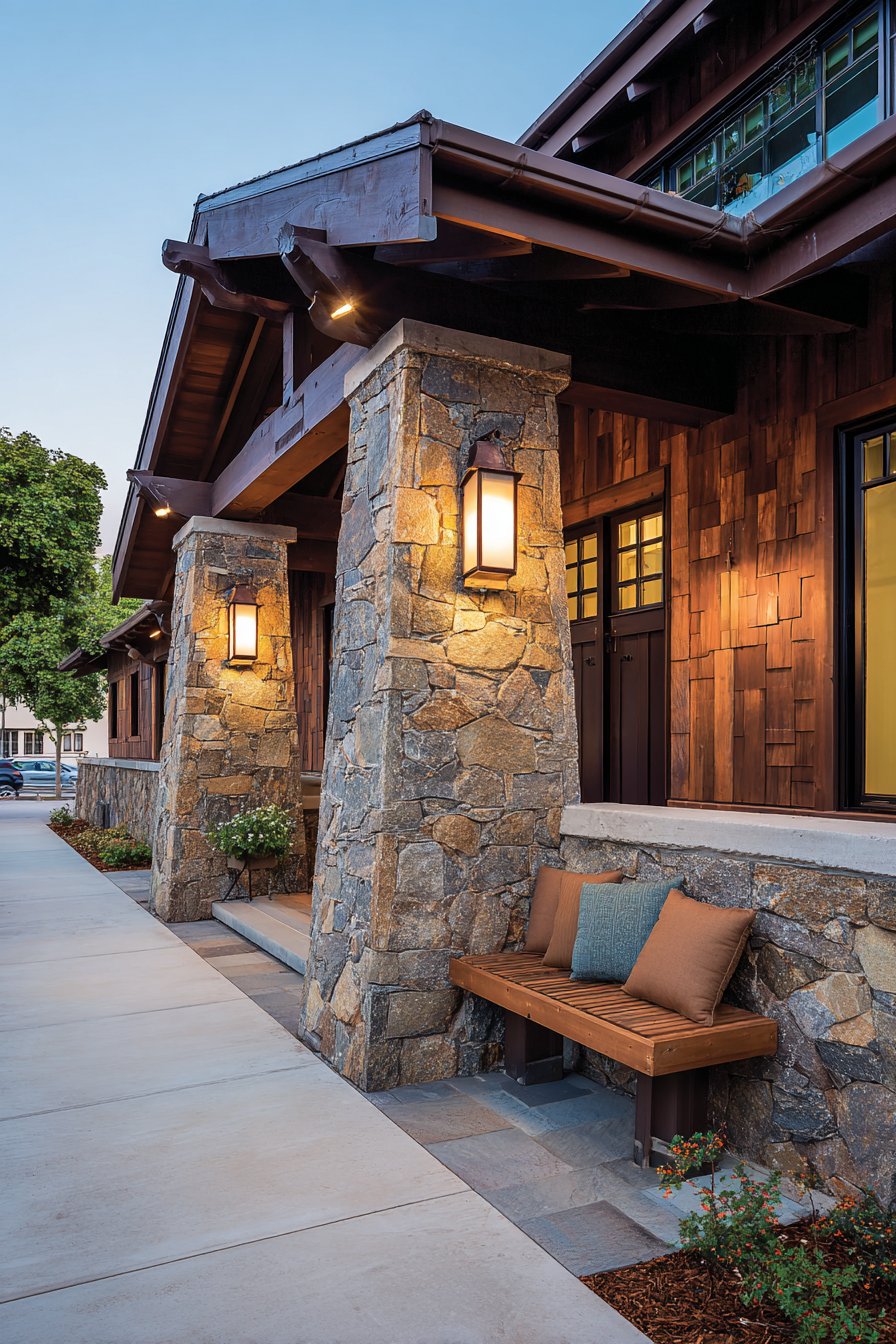
Afternoon light captures the horizontal emphasis defining craftsman design. Natural material palette becomes evident in balanced photographic exposure. Stone texture variations and wood grain patterns reward close observation. The craftsmanship quality demonstrates attention to material authenticity and proper joinery.
This design celebrates American craftsman architectural heritage. The substantial materials and honest construction create lasting quality. The style particularly suits bungalow architecture and period home restorations.
Key Design Tips:
- Build tapered stone columns using natural stacked stone techniques
- Accent column bases with river rock for authentic craftsman detailing
- Select quartersawn oak doors displaying distinctive ray flake patterns
- Install mission-style copper lighting fixtures with appropriate patina
- Build integrated benches as permanent architectural features
- Choose earth-tone cushion fabrics coordinating with natural material palette
18. Bohemian Carved Door and Macramé
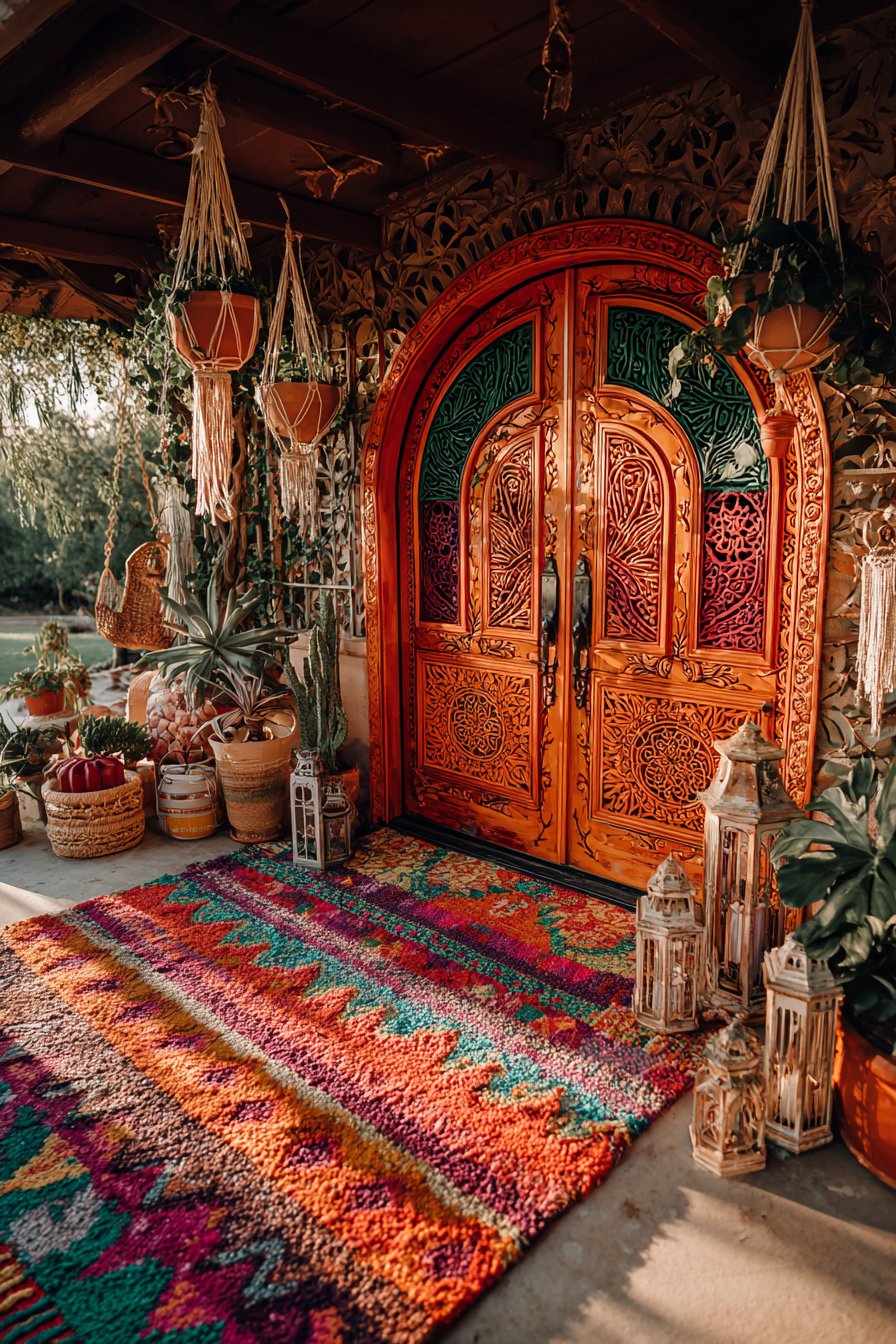
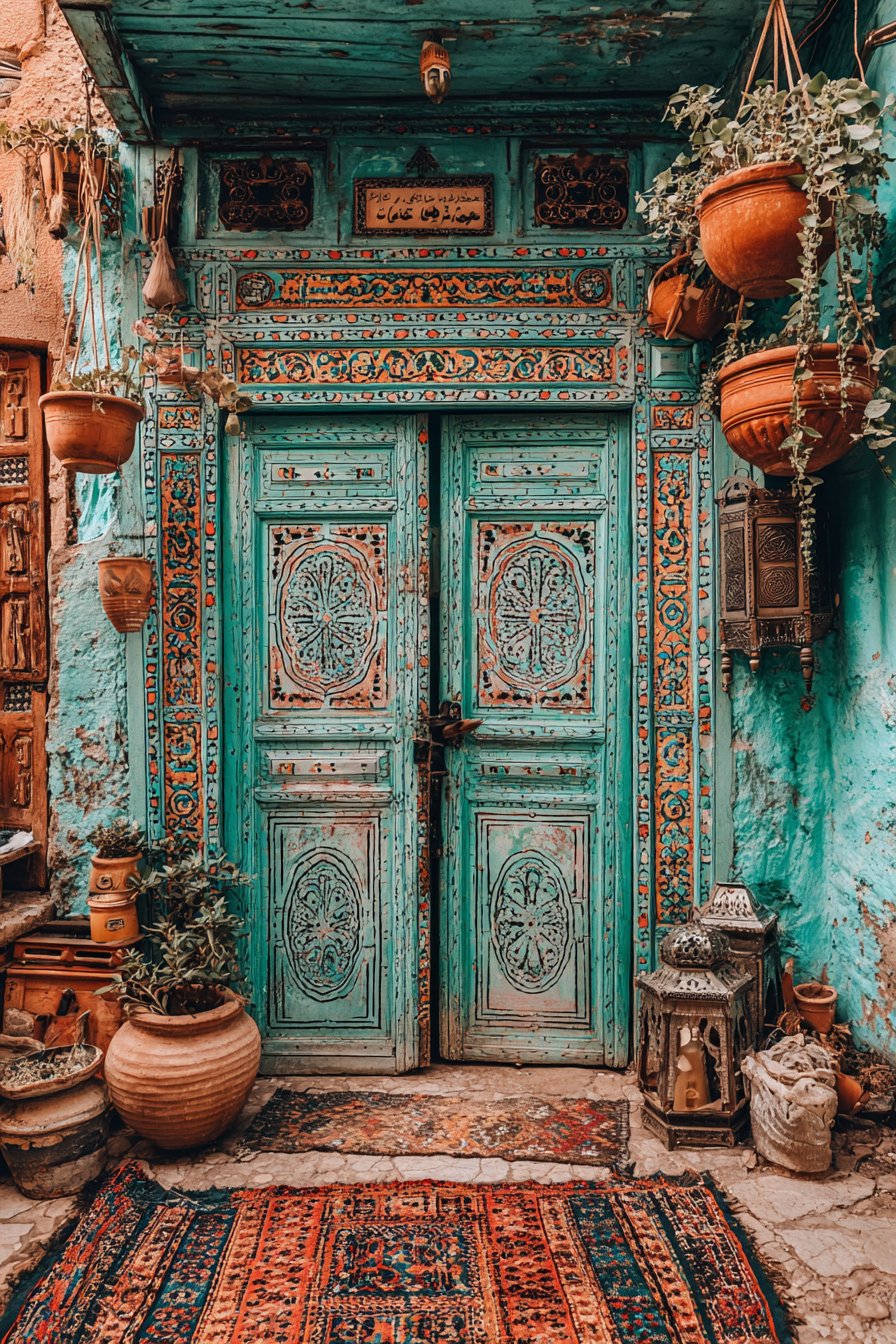
A carved wooden door features intricate patterns painted in turquoise and coral. The vibrant colors demonstrate bohemian confidence and artistic expression. The decorative carving adds dimensional texture and artisan craftsmanship. Macramé plant hangers suspend terracotta pots at varying heights. Trailing pothos and string of pearls cascade creating living curtain effects.
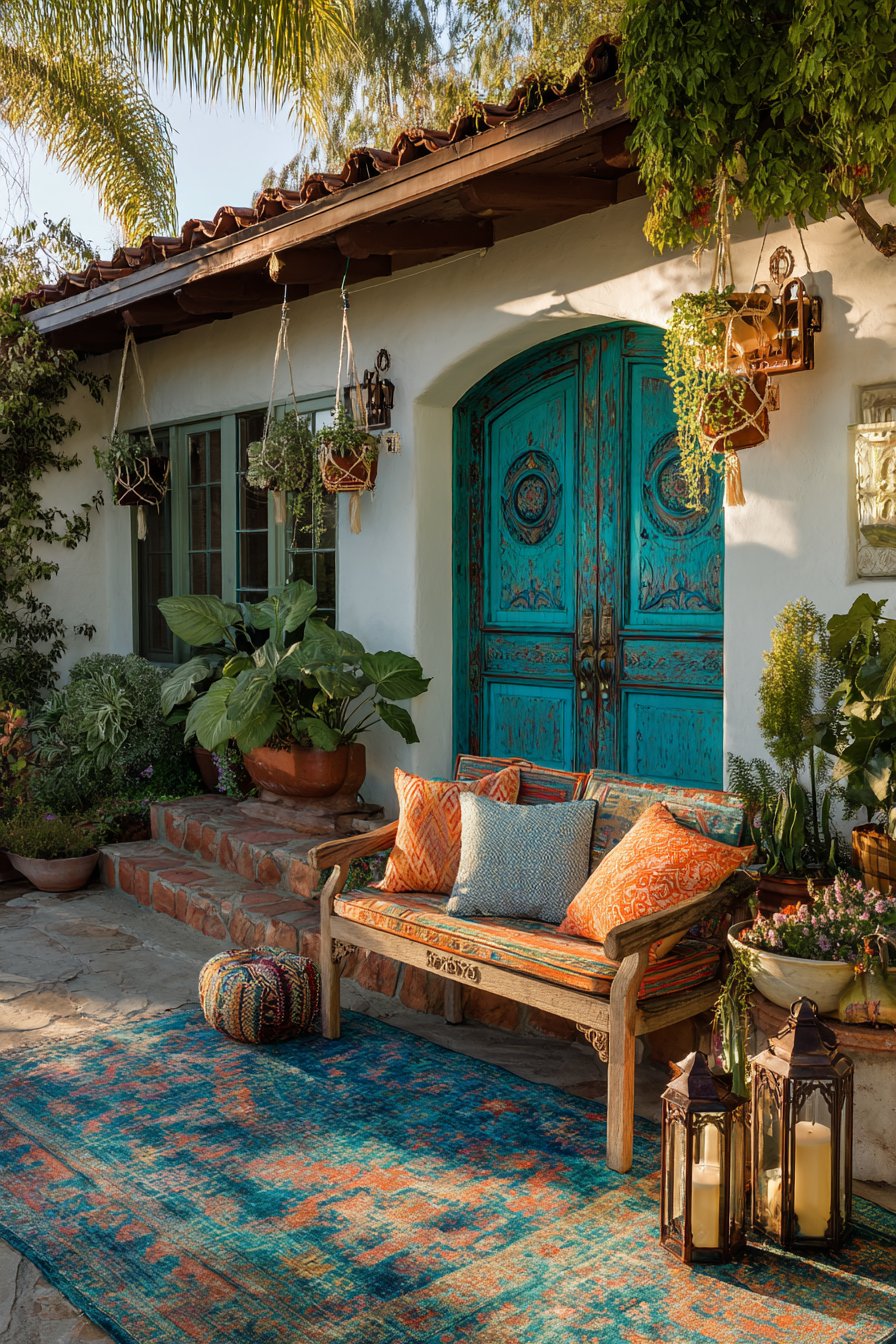
A colorful patterned outdoor rug layers over concrete creating warmth. The textile addition softens hard architectural surfaces significantly. Mismatched vintage lanterns and candle holders add eclectic collected charm. Each piece tells individual story contributing to overall layered aesthetic.
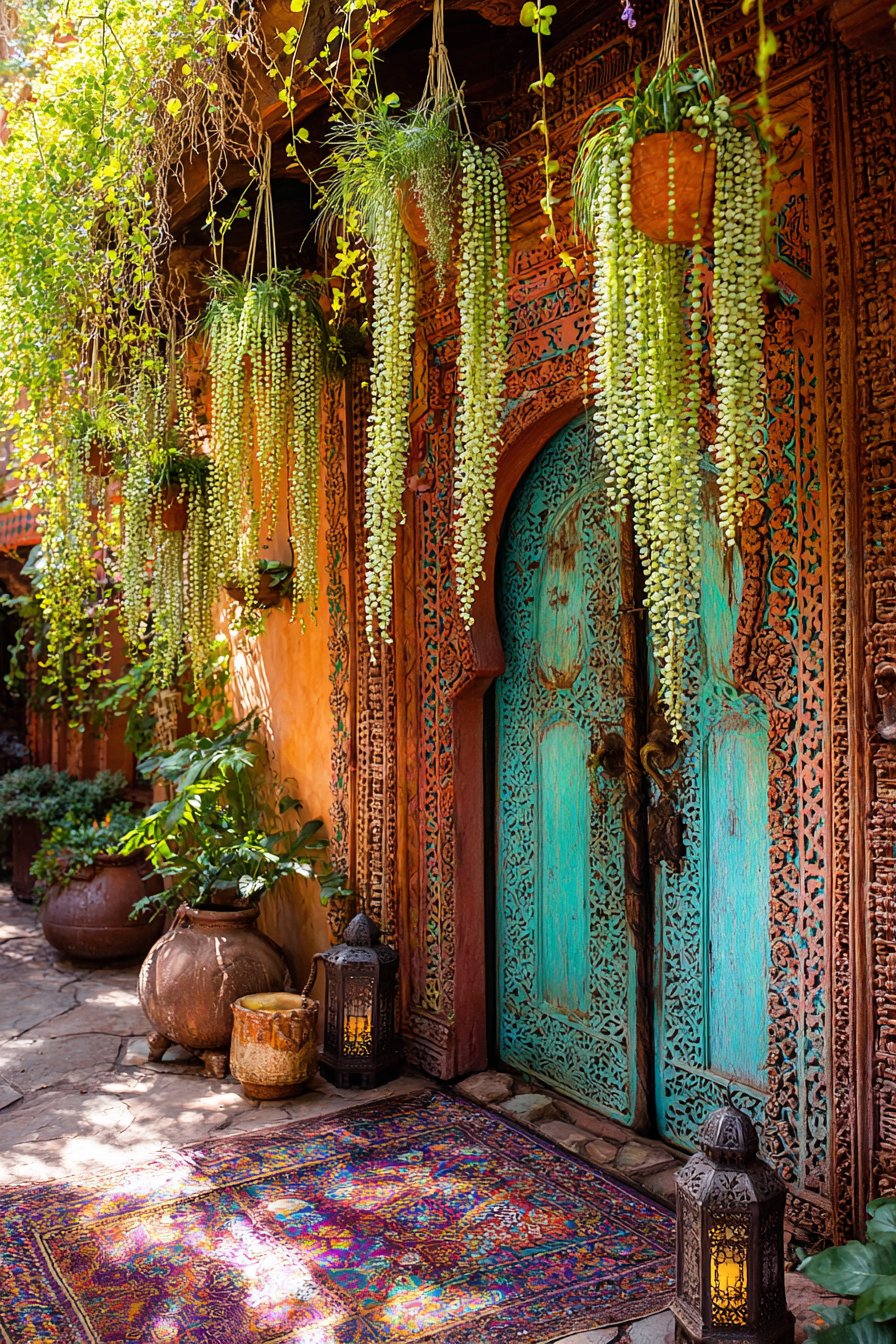
Natural diffused lighting brings out vivid colors without harsh shadows. Soft illumination creates welcoming glow across collected elements. The layered collected aesthetic celebrates personal expression and artistic freedom. Pattern mixing demonstrates confident design sensibility and creative courage.
This design appeals to free-spirited individuals embracing eclectic aesthetics. The bohemian style encourages self-expression through collected meaningful objects. The approach values handcrafted elements and global artisan traditions.
Key Design Tips:
- Paint carved doors using exterior-grade paints in bold vibrant colors
- Create macramé plant hangers using weather-resistant cord materials
- Layer outdoor rugs over concrete for color and texture
- Collect vintage lanterns from flea markets and antique sources
- Mix patterns confidently using consistent color palette threads
- Maintain carved wood doors with periodic cleaning and paint touch-ups
19. Mid-Century Teak and Brass Geometry
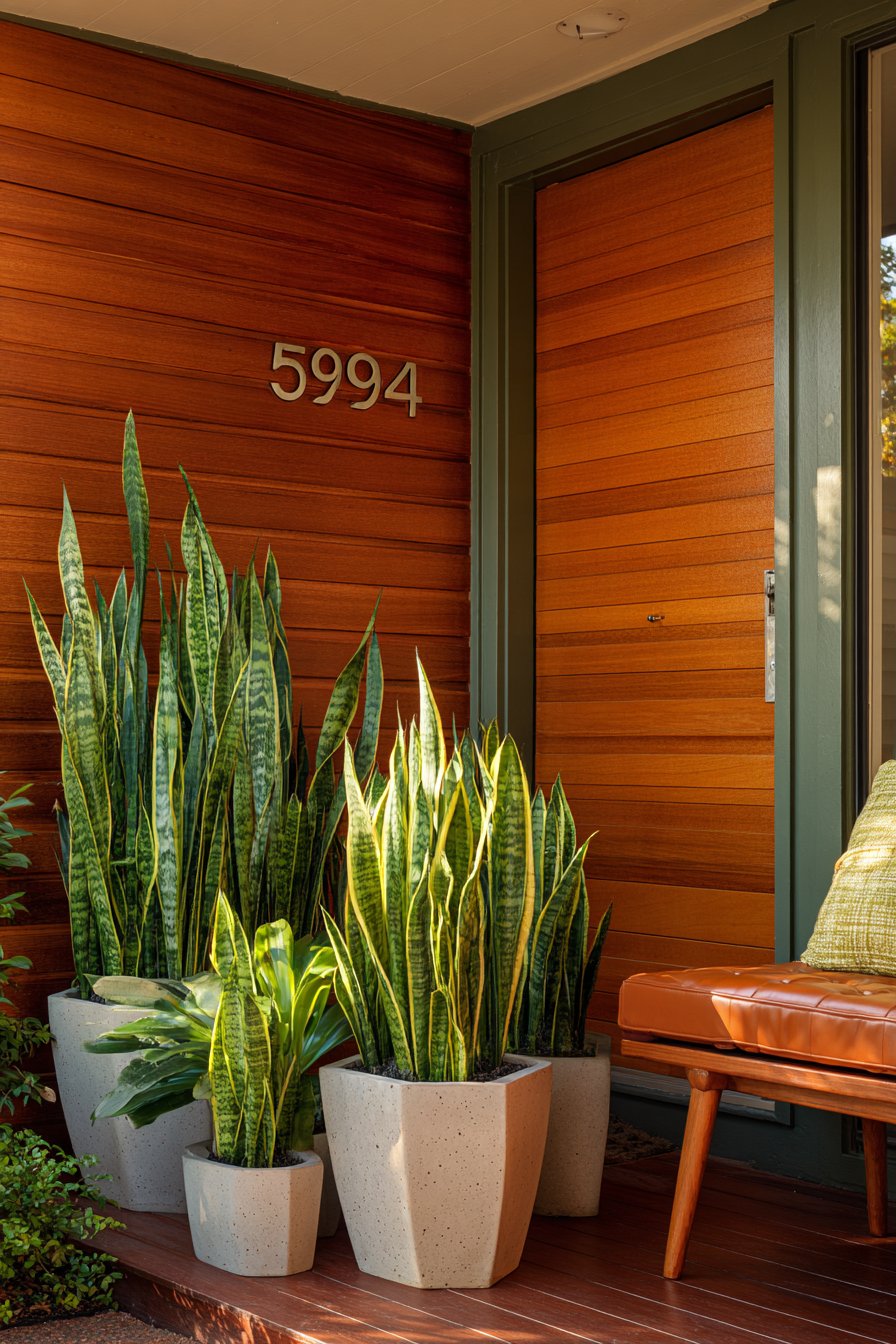
A teak wood door features horizontal grooves and sleek brass hardware. The clean lines reference mid-century modern design principles. Geometric concrete planters in angular forms demonstrate period-appropriate styling. Snake plants and rubber trees provide architectural foliage forms. House numbers in brass mid-century font mount on wood-clad accent walls.
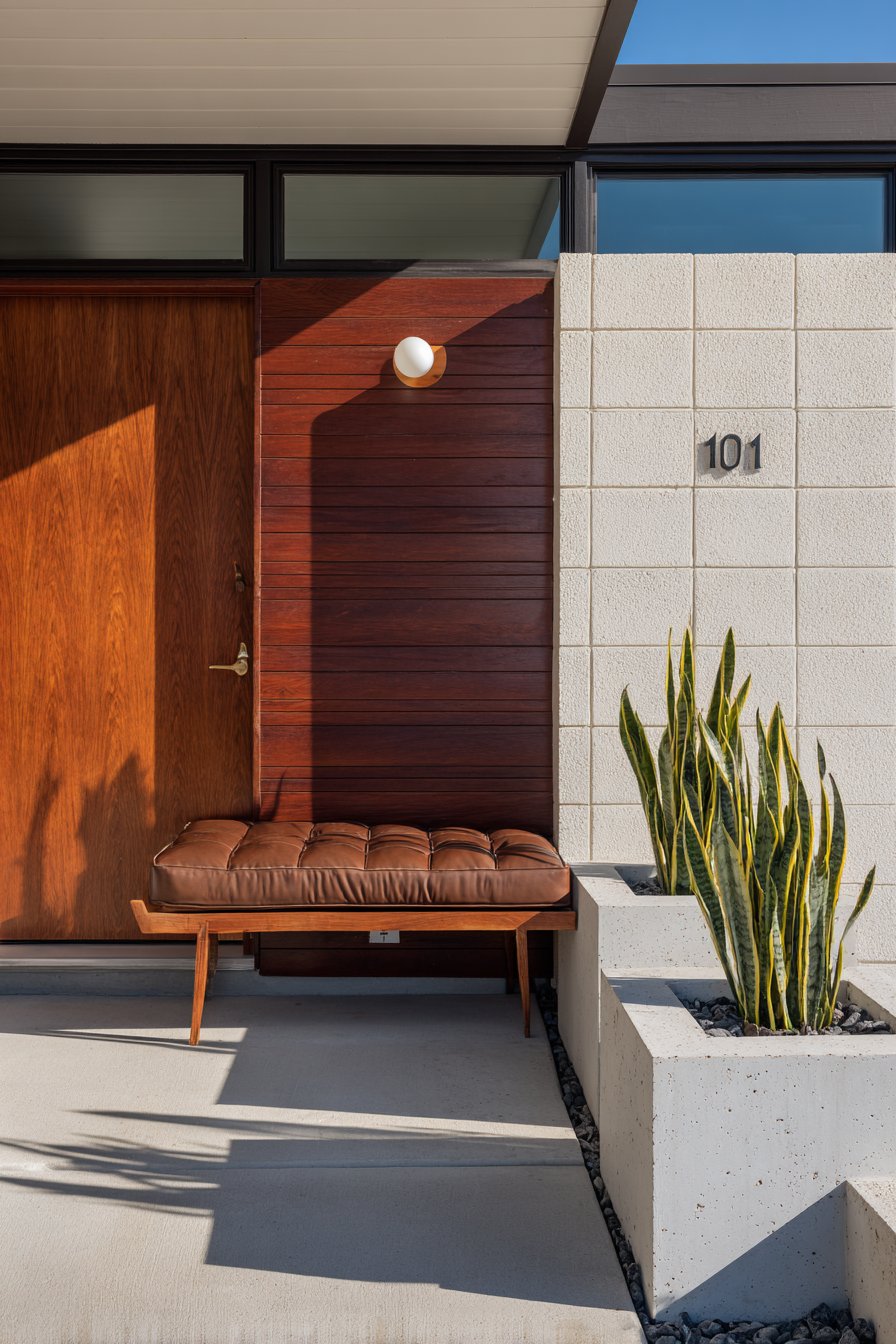
A Danish modern-inspired bench in walnut with leather cushion provides seating. The furniture demonstrates characteristic mid-century proportions and materials. Morning light showcases clean lines and warm wood tones beautifully. Balanced exposure emphasizes retro-modern aesthetic and period materials. Authentic period-appropriate forms create cohesive design statement.
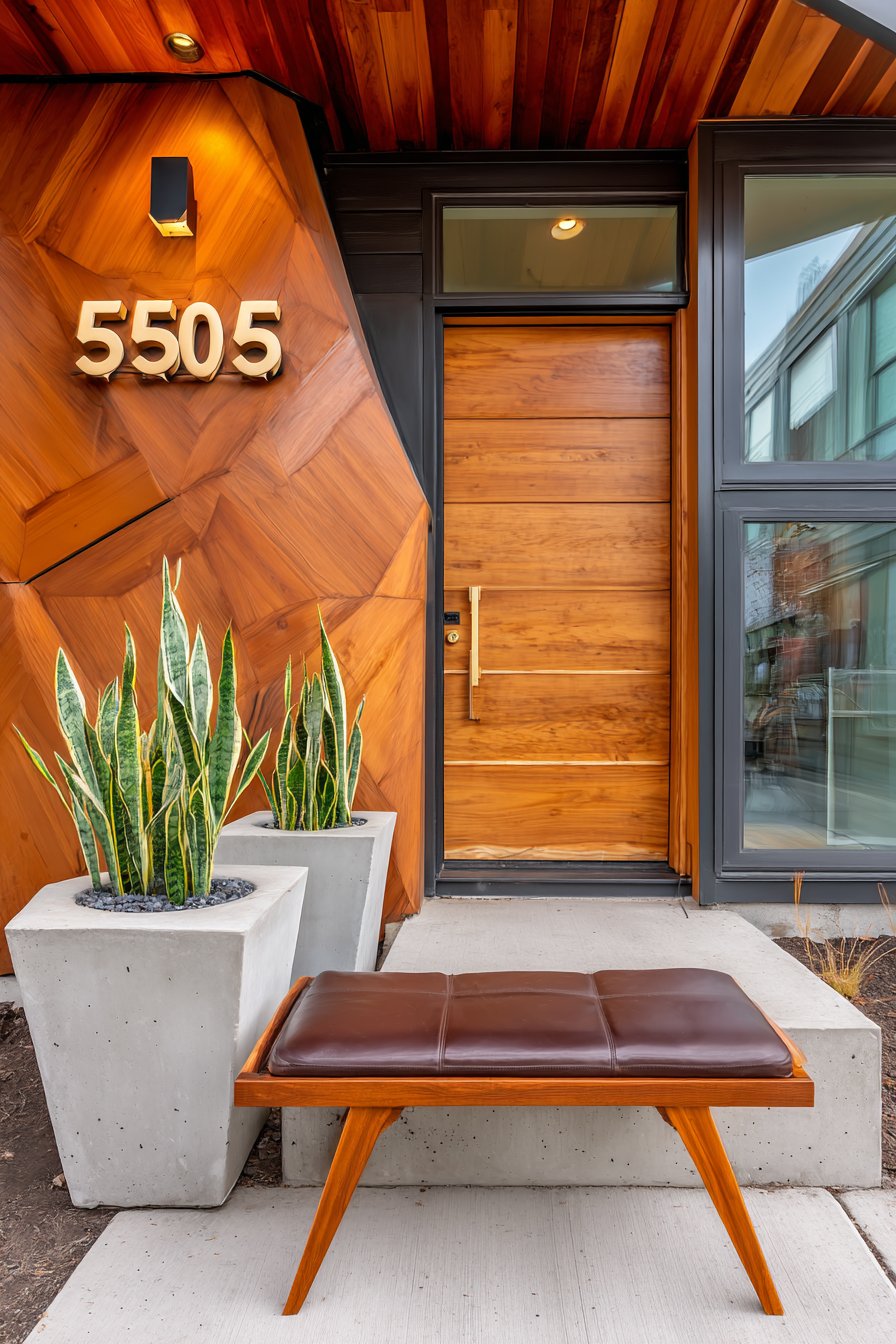
This design celebrates mid-century modern design heritage and aesthetic. The warm woods and brass metals create sophisticated material palette. The style particularly suits ranch homes and mid-century architecture. Period authenticity requires attention to proportions and material selections.
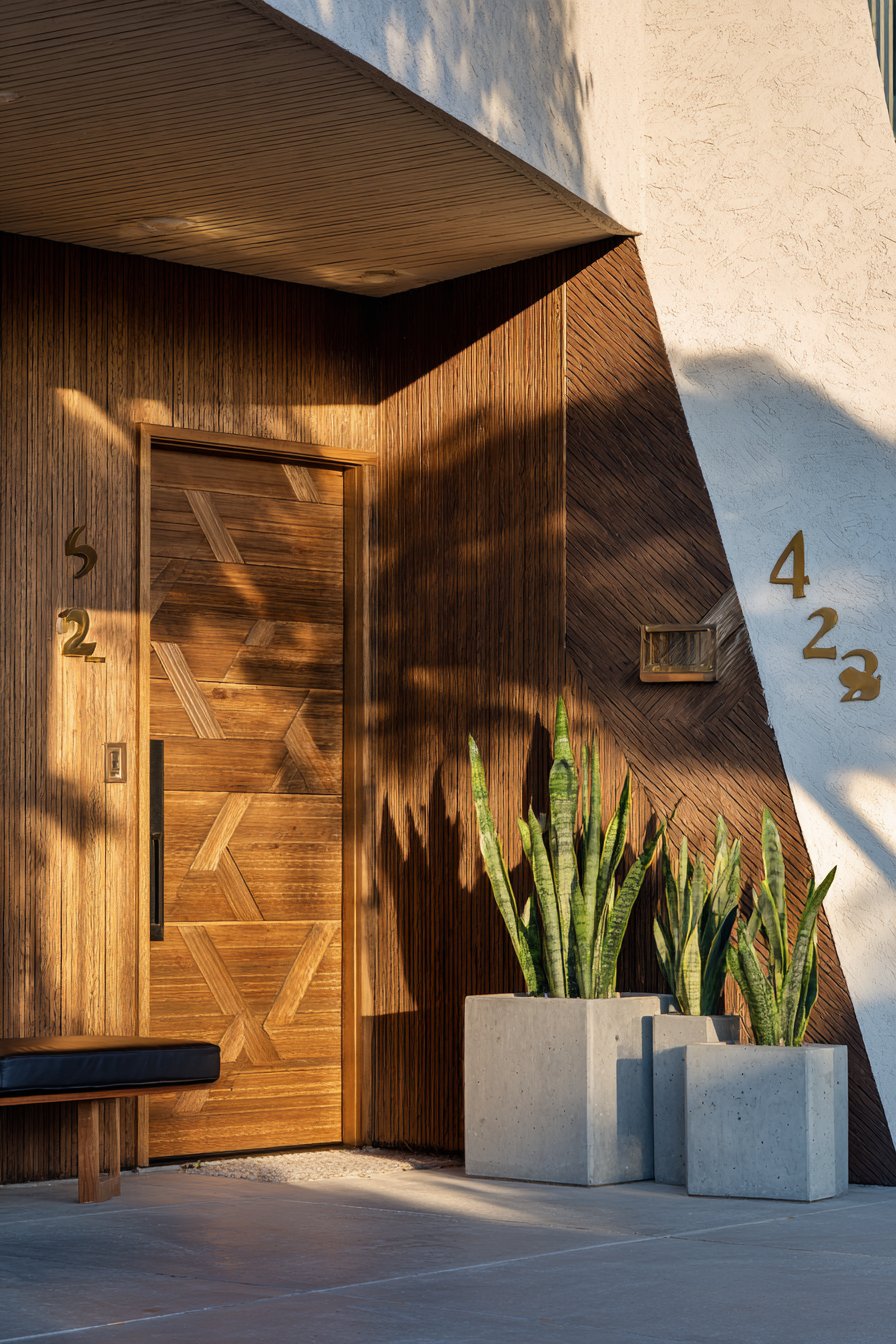
Key Design Tips:
- Select teak doors with horizontal groove patterns for period authenticity
- Install brass hardware with simple geometric forms avoiding ornamentation
- Choose geometric angular planters in concrete or ceramic materials
- Plant architectural specimens like snake plants for sculptural forms
- Source authentic mid-century furniture or quality reproductions
- Maintain wood finishes with oil treatments preserving natural appearance
20. Mountain Cabin Log and Antler Rustic
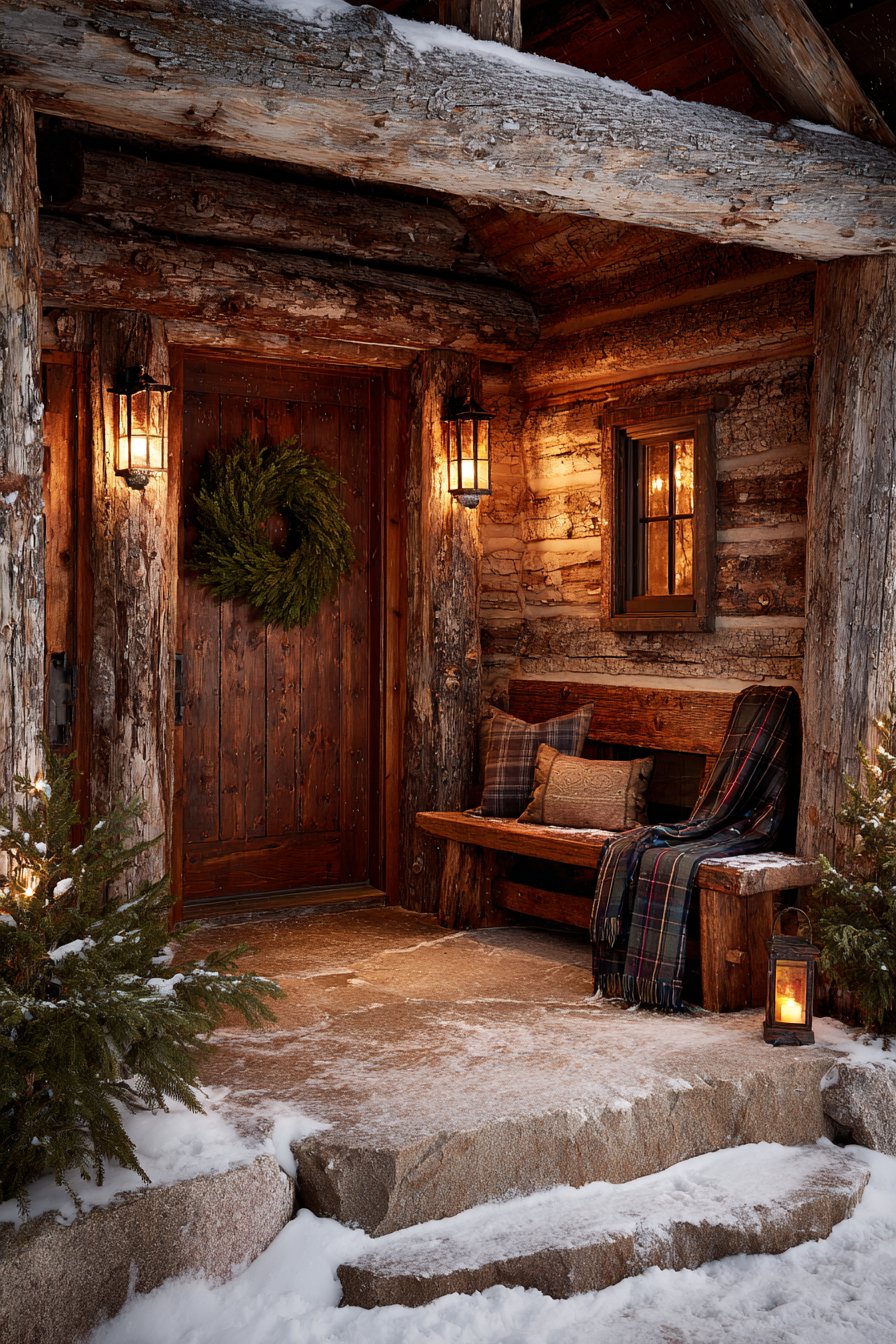
Rough-hewn log construction creates authentic mountain cabin character. The substantial timbers demonstrate pioneer building traditions and craftsmanship. A heavy timber door features hand-forged iron hardware with nail heads. Antler-motif light fixtures cast warm ambient glow across entrance. River rock foundation and steps show natural weathering and patina.
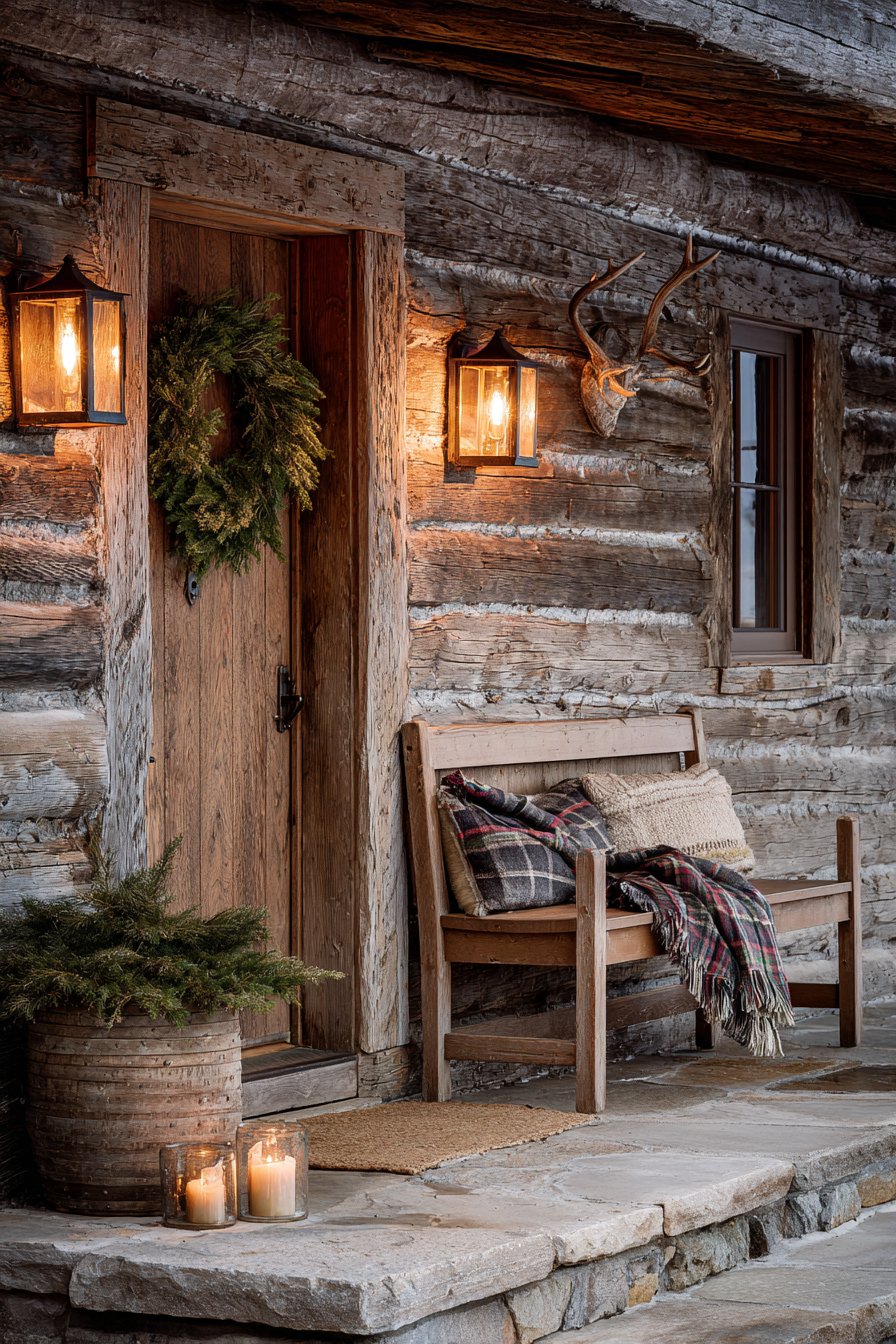
Evergreen wreaths and pine bough arrangements add seasonal mountain decoration. A weathered wooden bench holds plaid wool blankets inviting visitors. Early evening photography captures warm interior lighting spilling onto porch. The inviting contrast with cool mountain air creates welcoming atmosphere. Authentic log texture and natural stone variations demonstrate rustic material character.
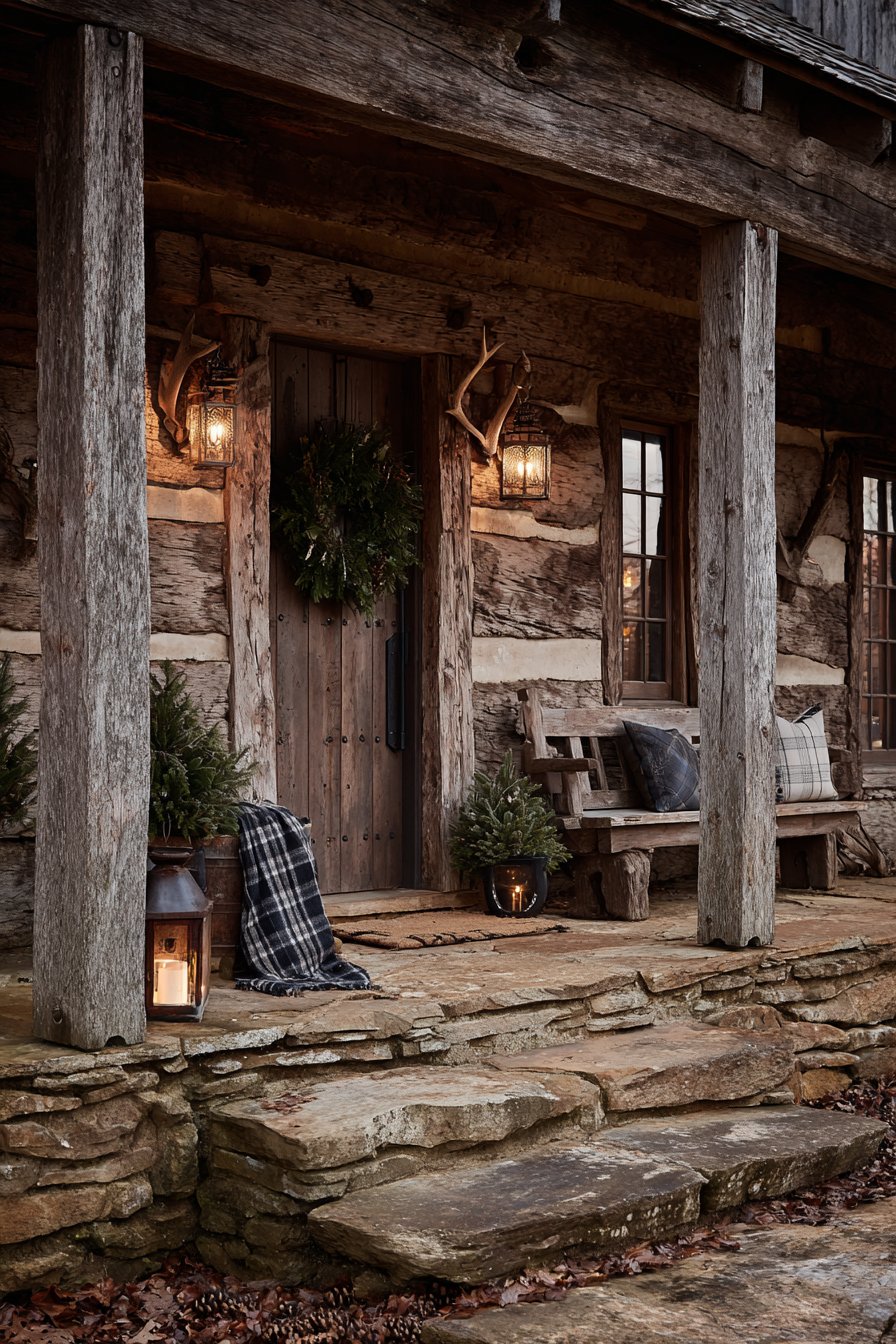
This design celebrates mountain lodge and cabin architectural traditions. The substantial materials create shelter feeling appropriate for mountain settings. Natural materials reference surrounding forest landscapes bringing outside elements inside. The rustic aesthetic embraces imperfection and natural material character.
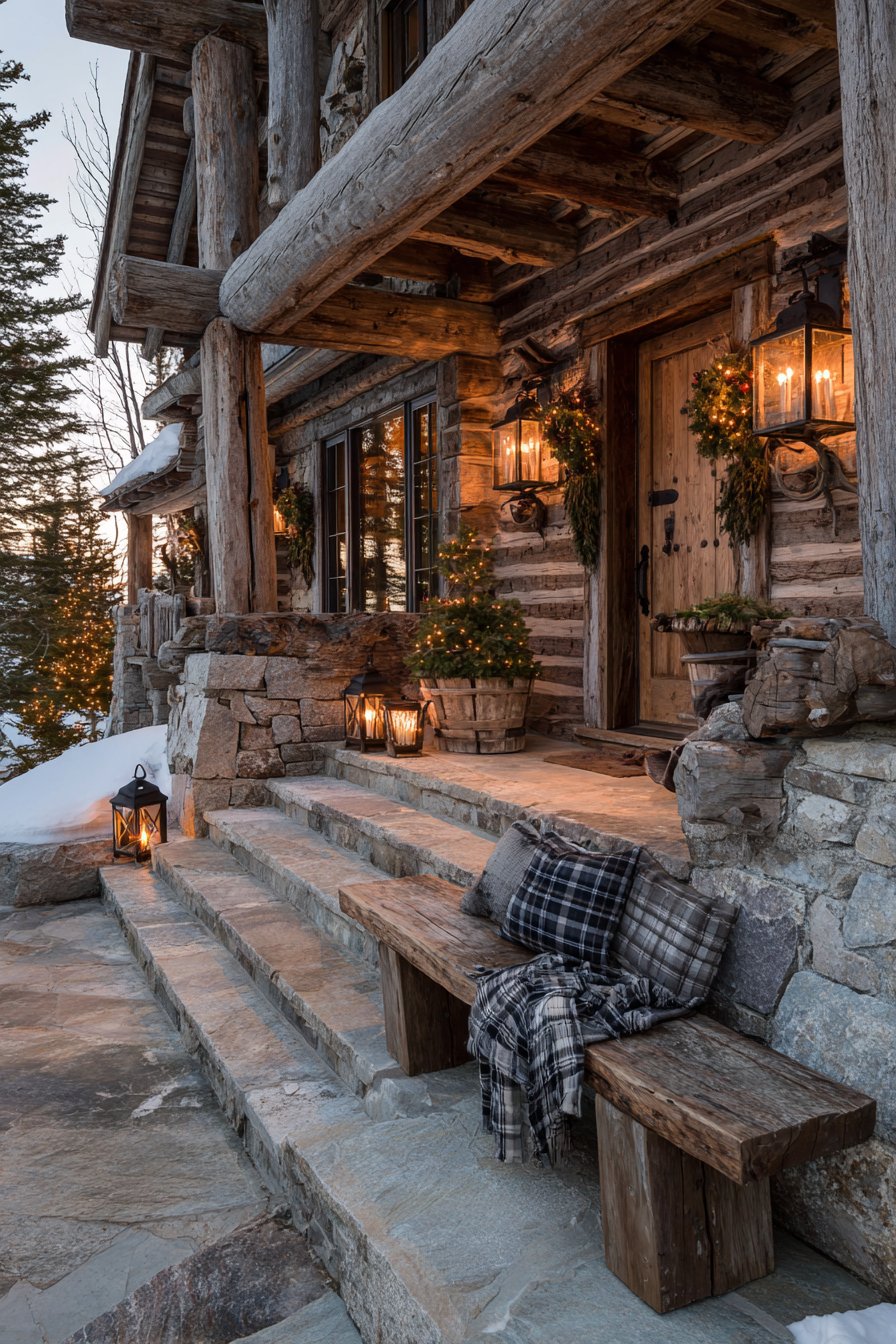
Key Design Tips:
- Preserve log construction with appropriate wood treatments and chinking
- Install heavy timber doors scaled appropriately for log construction
- Commission hand-forged iron hardware from artisan blacksmiths
- Select antler fixtures or motifs appropriate for mountain settings
- Build foundations using natural river rock stacked traditionally
- Decorate seasonally with natural evergreen materials from property
Why These Outdoor Entryway Designs Are the Best
These outdoor entryway designs represent exceptional approaches to creating welcoming first impressions. Each concept demonstrates thoughtful consideration of materials, architectural context, and personal style expression. The designs showcase versatility accommodating different home styles from traditional to contemporary aesthetics.
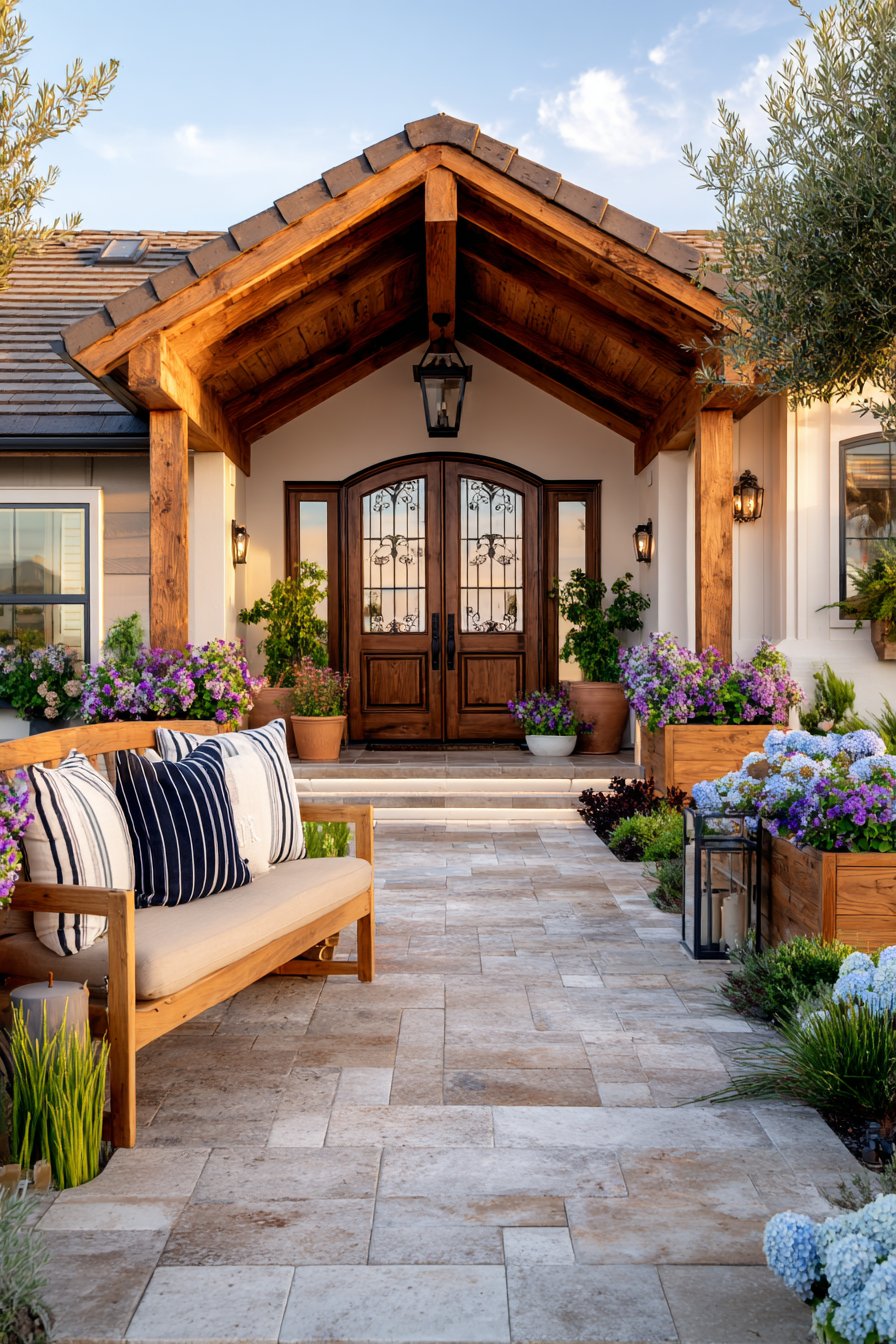
Natural materials feature prominently across these concepts because they age gracefully over time. Wood, stone, metal, and living plants develop character through weathering and seasonal changes. These authentic materials create depth impossible to achieve with synthetic alternatives. Quality material investments provide long-term value exceeding initial costs.
The color theory applications span neutral foundations to bold accent choices. Neutral palettes create versatile backgrounds allowing seasonal decoration flexibility. Strategic color placement through doors, cushions, or plantings adds personality without overwhelming. Understanding how natural light interacts with colors throughout the day informs successful selections.
Architectural style considerations ensure entryway designs complement existing home architecture. Traditional homes benefit from symmetrical arrangements and historic material references. Contemporary residences showcase clean lines and minimal embellishment. The most successful designs respect architectural context while expressing personal preferences.
Lighting layers combine natural daylight with ambient artificial illumination. Proper lighting extends entryway functionality into evening hours safely. Fixture selections coordinate with overall design aesthetic and architectural period. Quality lighting investments enhance security while creating welcoming atmospheres after dark.
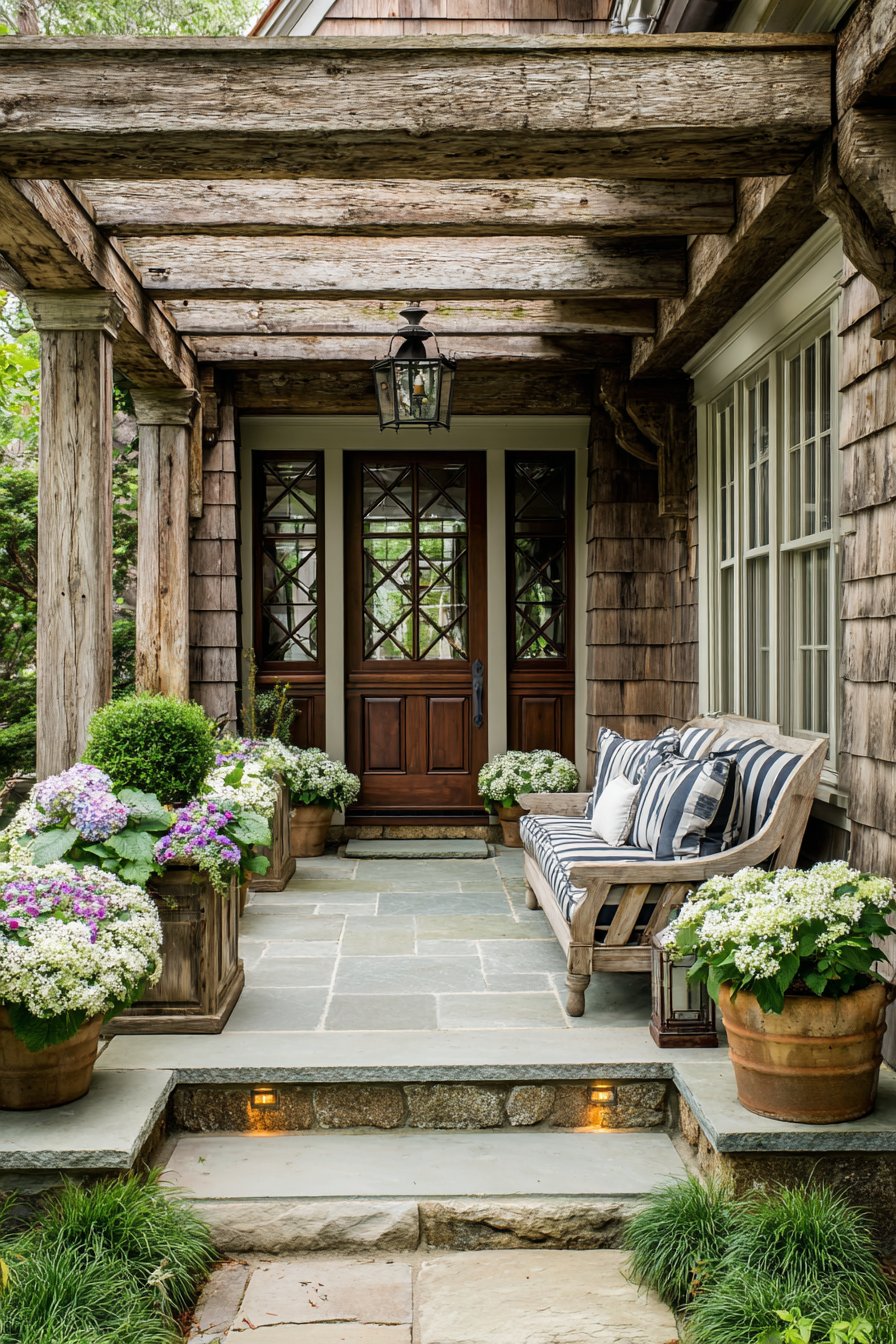
Spatial considerations address both functionality and aesthetic appeal simultaneously. Entry sequences guide visitors naturally from public sidewalks to private thresholds. Plant arrangements provide privacy screening without creating unwelcoming barriers. Seating options create pause points encouraging lingering and conversation.
Sustainability emerges through material longevity and appropriate plant selections. Quality construction reduces replacement needs over property ownership timeframes. Native and adapted plantings thrive with minimal irrigation and maintenance. These environmentally responsible choices align beauty with ecological consideration.
Conclusion
These outdoor entryway designs demonstrate that first impressions result from thoughtful material choices and design execution. The key takeaways include investing in quality natural materials that age beautifully. Coordinate architectural styles with existing home context for cohesive curb appeal. Layer lighting for functionality and ambiance, extending usability into evening hours.
Successful outdoor entryways balance aesthetic appeal with practical functionality and durability. Start planning by assessing your home’s architectural style and personal preferences. Consider climate conditions and maintenance commitments when selecting materials and plantings. Your welcoming outdoor entryway awaits creation through careful planning and quality implementation.