


Creating a modern pastel bedroom transforms your personal sanctuary into a haven of tranquility and style. This design approach combines contemporary aesthetics with soft, soothing color palettes. The result is a space that feels both refreshing and deeply relaxing.
Modern pastel bedrooms have surged in popularity for their versatility and timeless appeal. These designs move beyond traditional notions of pastel colors being purely feminine or childlike. Instead, they embrace sophisticated color combinations and sleek contemporary furnishings. The gentle hues create calming environments perfect for rest and rejuvenation.
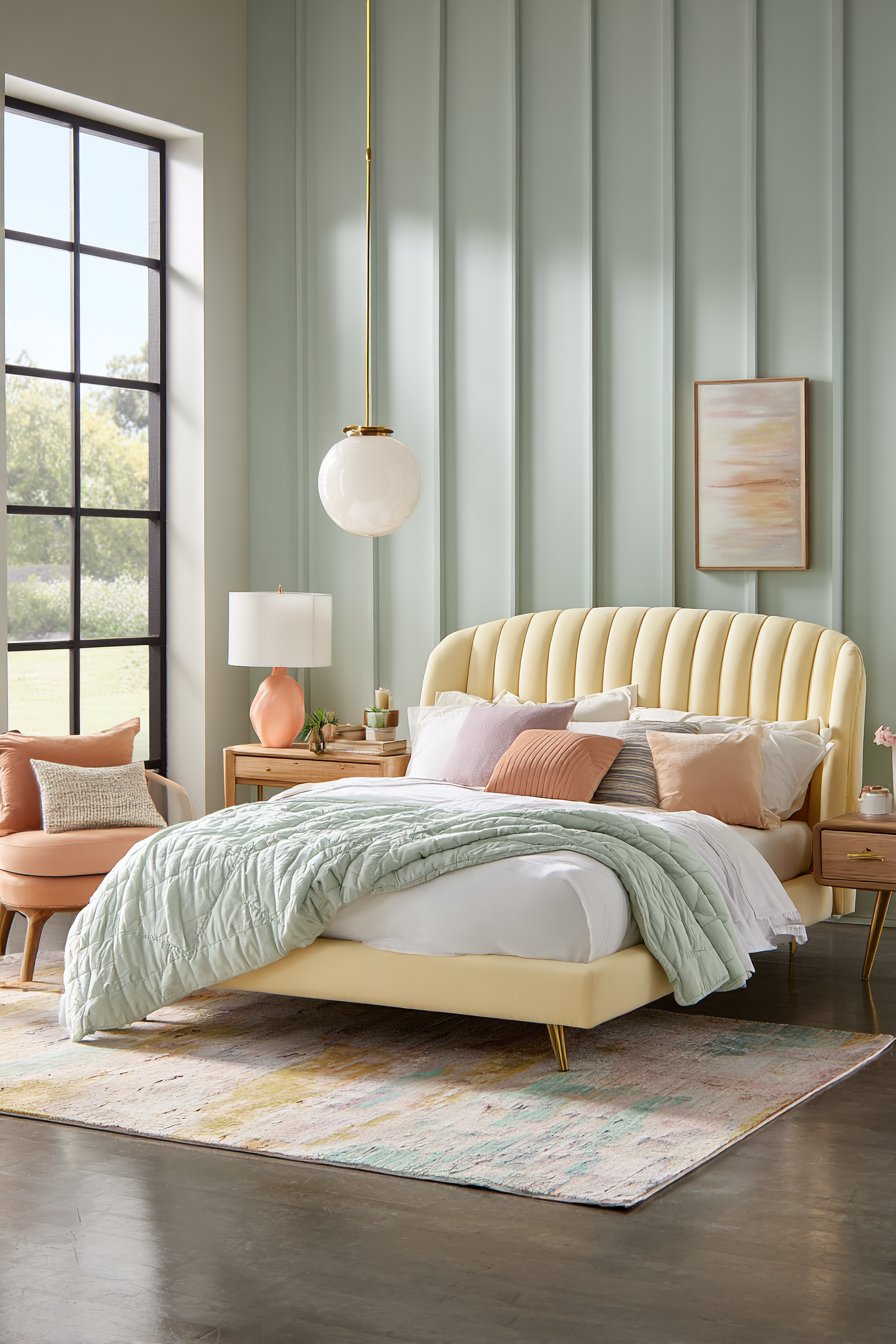
The beauty of modern pastel design lies in its adaptability to various personal styles. Whether you prefer minimalist simplicity or layered luxury, pastel tones provide the perfect foundation. Each design concept in this article showcases unique approaches to incorporating soft colors. From statement furniture pieces to architectural details, these ideas demonstrate the transformative power of thoughtful color selection.
1. Blush Pink Velvet Platform Bed Sanctuary
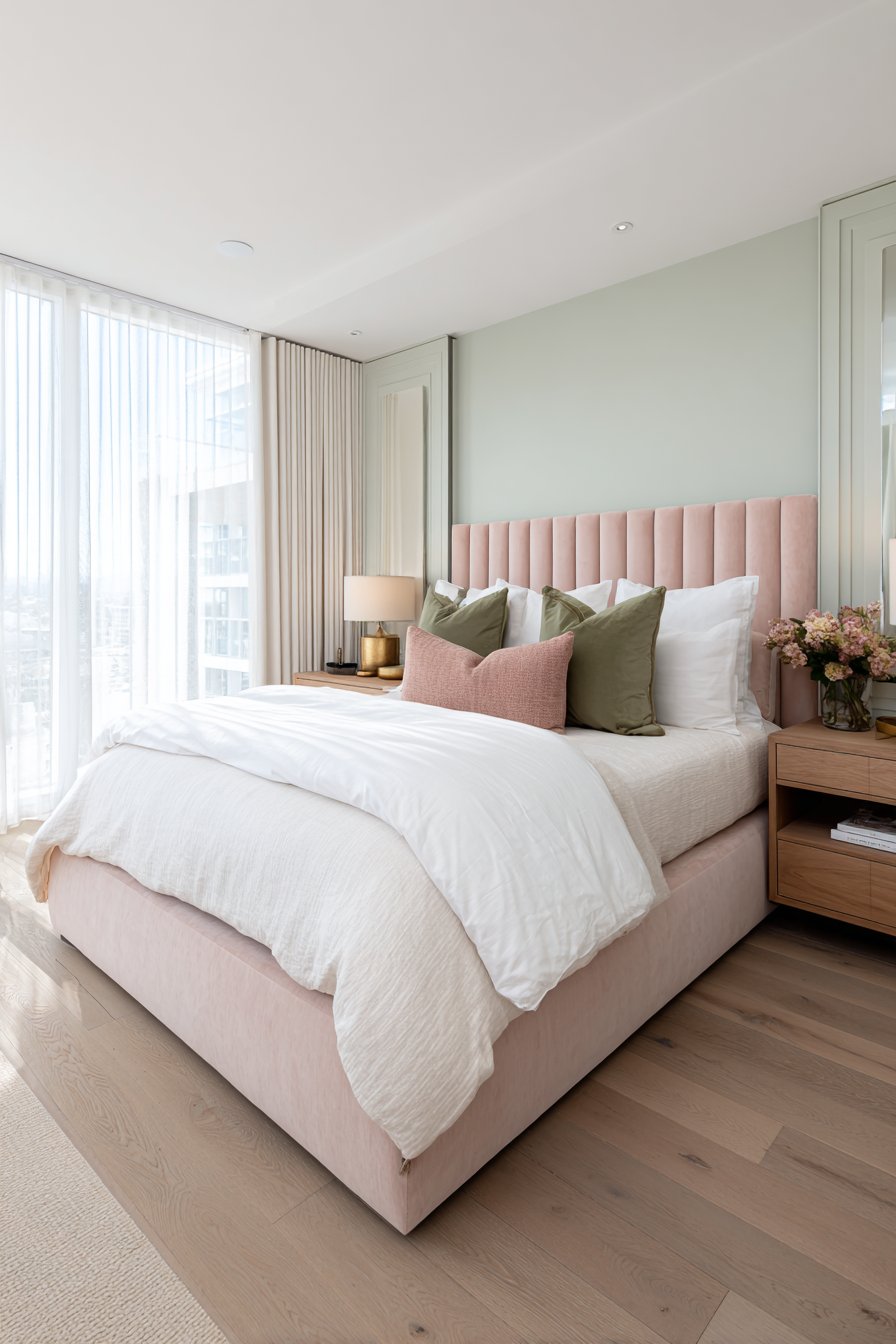
A serene bedroom emerges through the combination of soft blush pink and natural materials. The low-profile upholstered platform bed features a luxurious velvet headboard that becomes the room’s focal point. Crisp white linen bedding creates beautiful contrast against the pink backdrop. Light oak floating nightstands flank the bed with elegant simplicity.
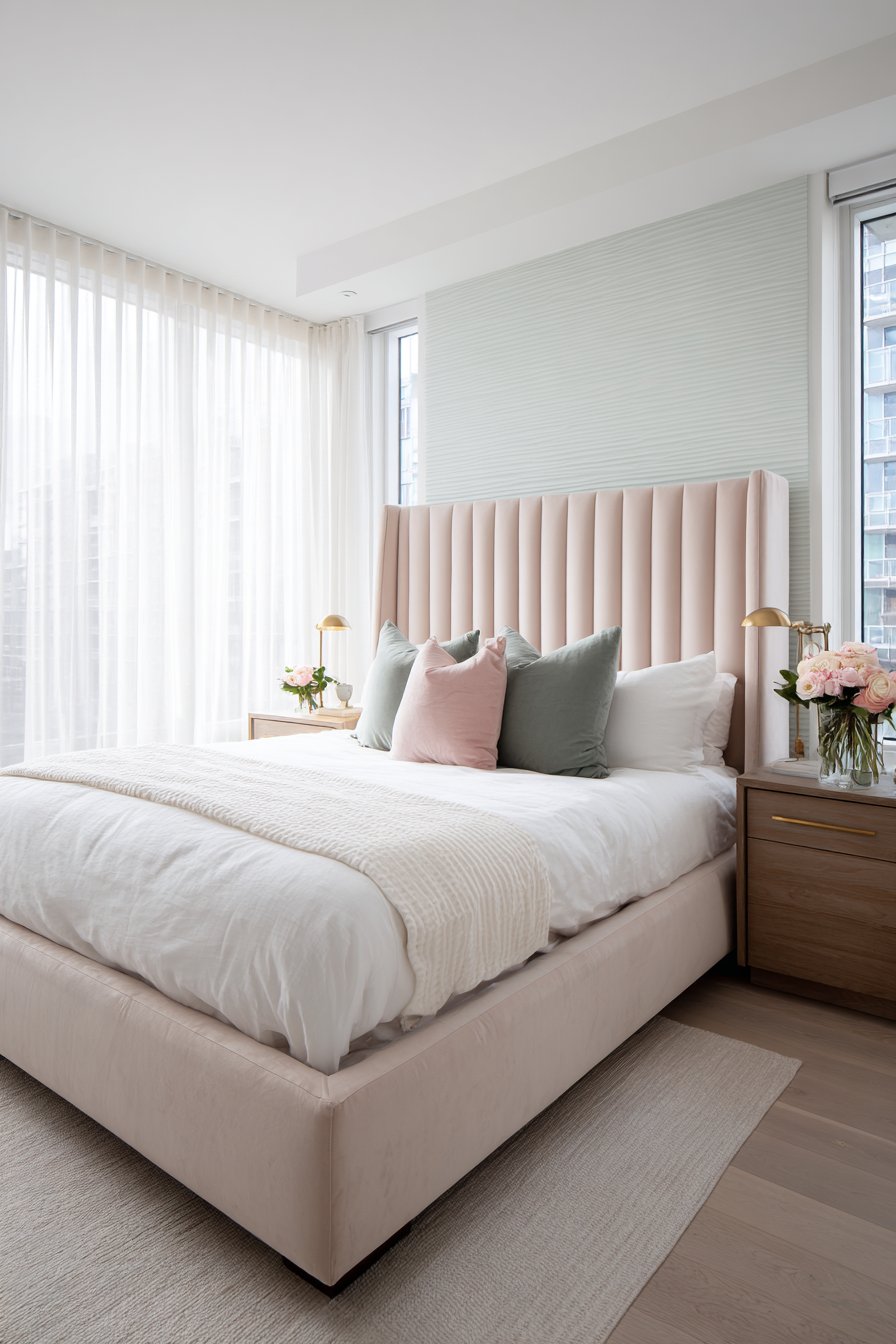
The accent wall behind the bed showcases a gentle mint green paint finish. This unexpected color pairing creates visual interest without overwhelming the senses. Subtle texture in the wall treatment adds dimensional depth. The combination of blush and mint demonstrates how pastels can create sophisticated adult spaces.
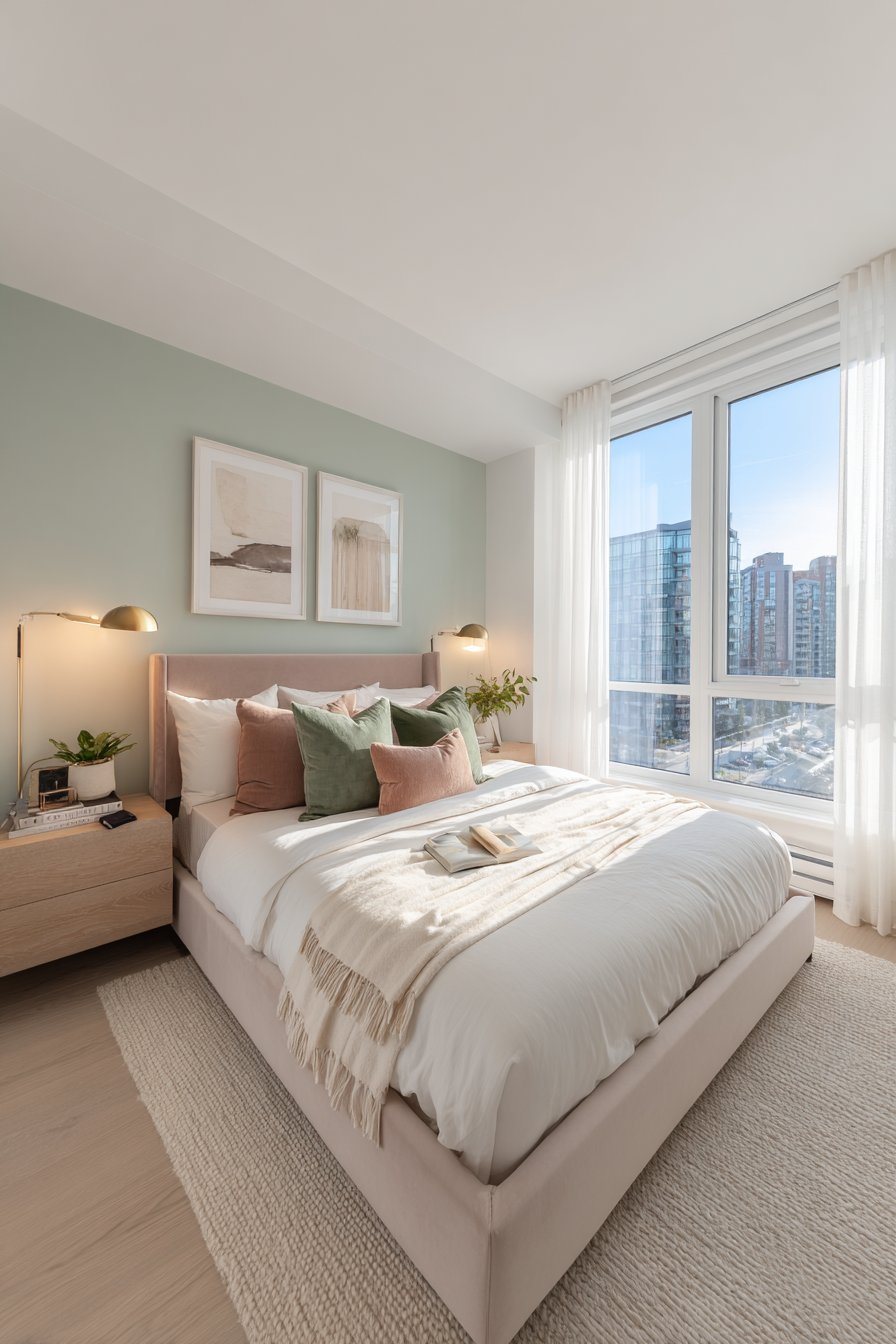
Natural morning light streams through sheer white curtains throughout the day. This illumination highlights the delicate color variations in the space. Pale ash hardwood flooring grounds the design with natural warmth. Brushed brass table lamps provide warm ambient lighting during evening hours.
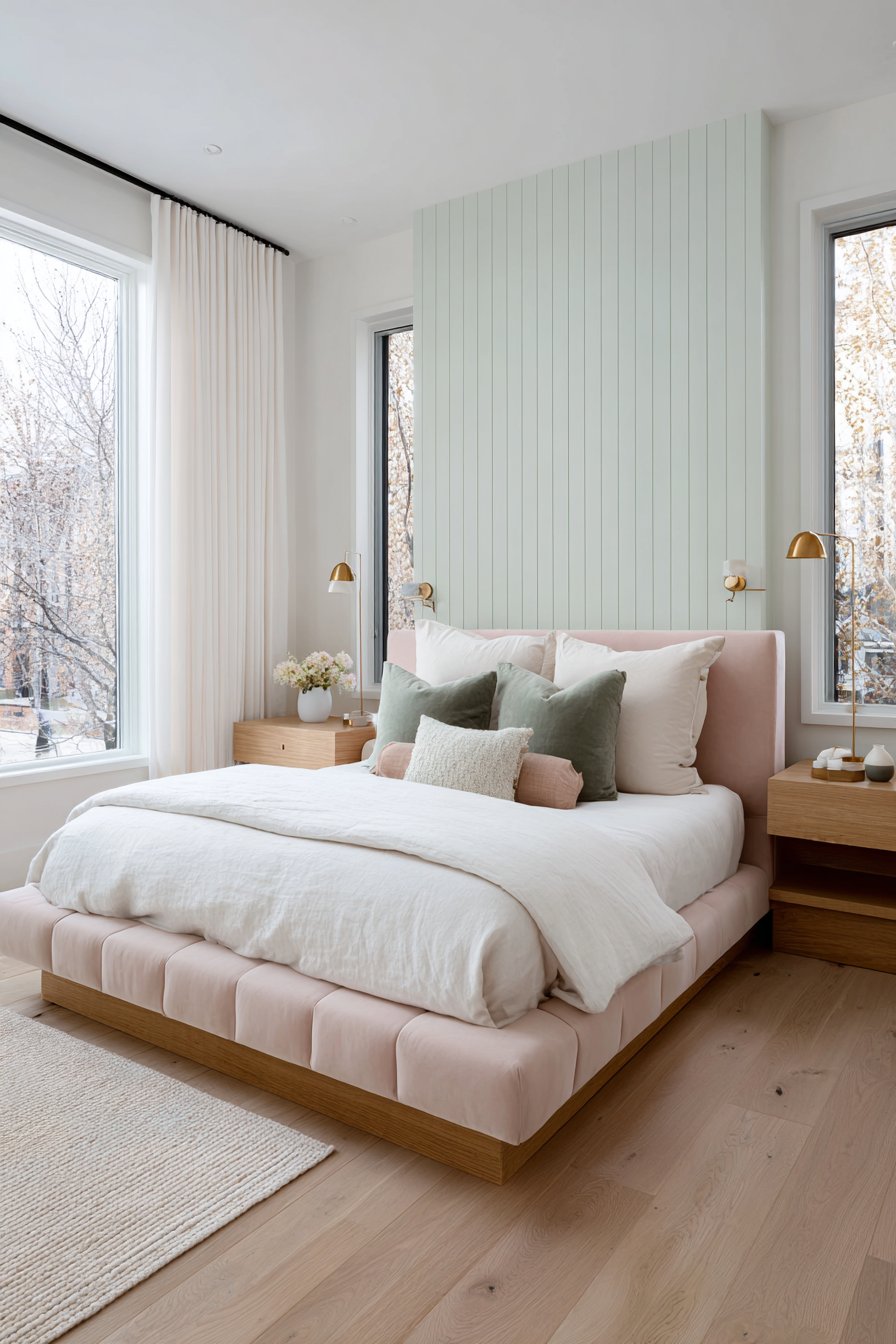
The overall atmosphere achieves perfect balance between contemporary style and cozy comfort. Each material choice supports the serene aesthetic while maintaining practical functionality. The velvet headboard offers tactile luxury that invites relaxation. Clean lines and minimal accessories prevent visual clutter.
Key Design Tips:
- Choose velvet upholstery in pastel tones for luxurious texture and sophisticated color
- Pair blush pink with mint green for unexpected freshness
- Install floating nightstands to maintain visual lightness and modern appeal
- Use sheer curtains to maximize natural light while maintaining privacy
- Select brushed brass fixtures for warm metallic accents that complement pastels
- Keep bedding crisp and simple to let the headboard shine
- Add pale hardwood flooring for natural warmth without heaviness
2. Powder Blue Workspace Integration
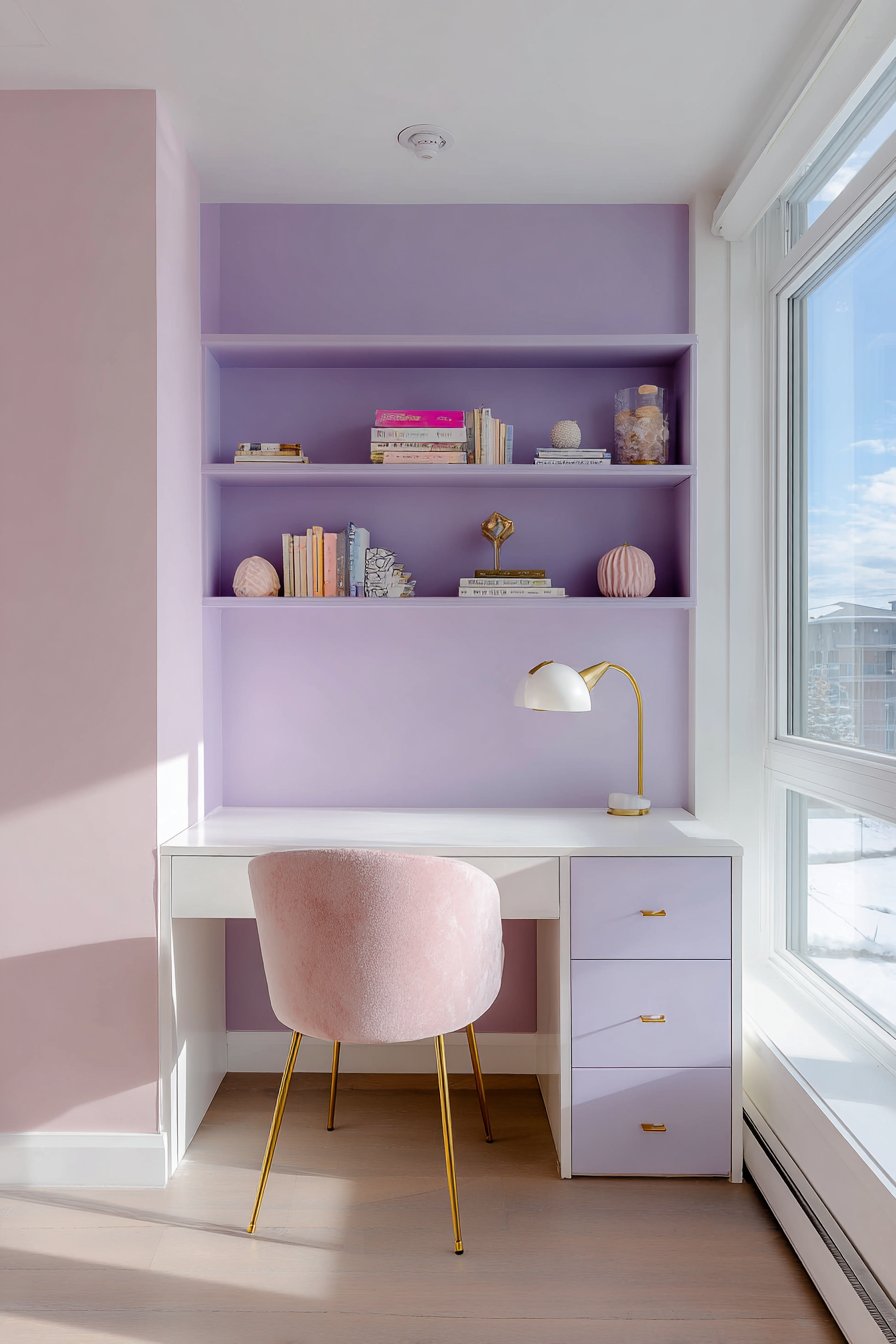
A dedicated workspace corner seamlessly integrates into the bedroom environment. The sleek white lacquered desk features powder blue drawer fronts that introduce gentle color. Gold hairpin legs provide modern industrial contrast. An ergonomic blush pink upholstered task chair combines comfort with aesthetic appeal.
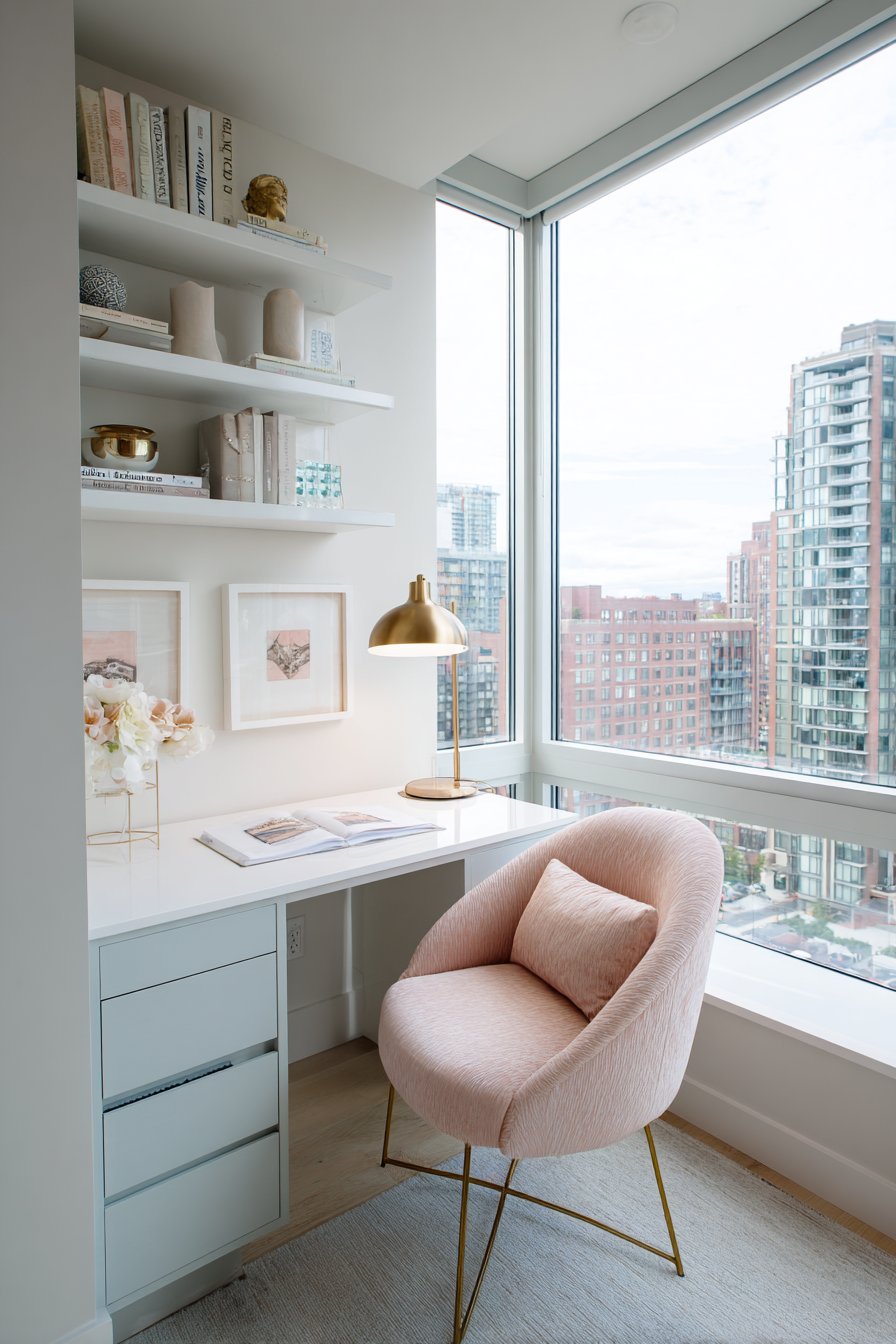
Open shelving above the desk displays books and decorative objects thoughtfully. Each item coordinates with the room’s pastel color scheme. The soft lavender accent wall behind the workspace creates a dedicated zone. This color differentiation helps separate work from rest areas psychologically.
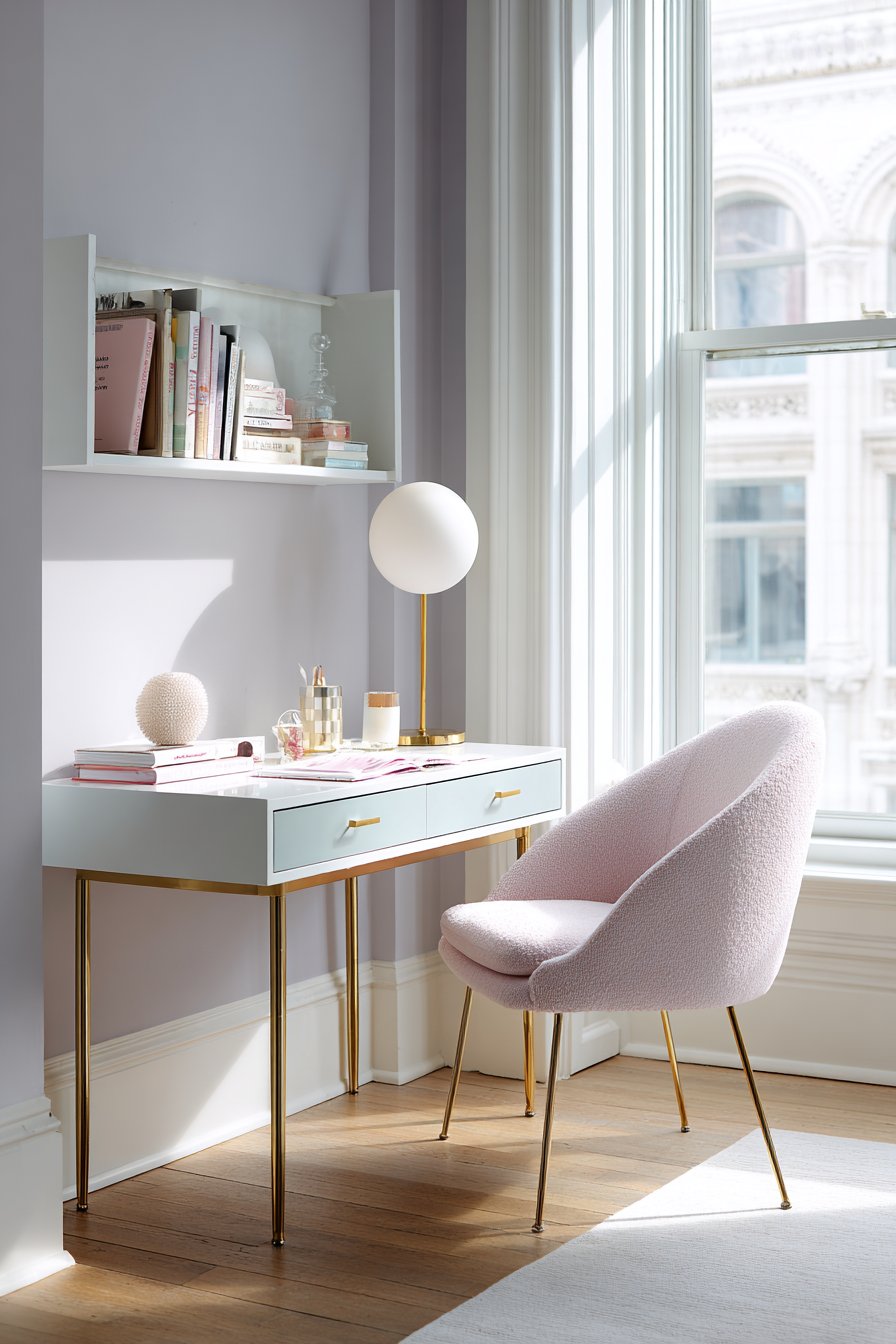
A contemporary brass desk lamp with white shade provides focused task lighting. Natural daylight from an adjacent window supplements artificial lighting beautifully. The workspace maintains functionality without sacrificing the bedroom’s peaceful atmosphere. Storage solutions keep the area organized and clutter-free.
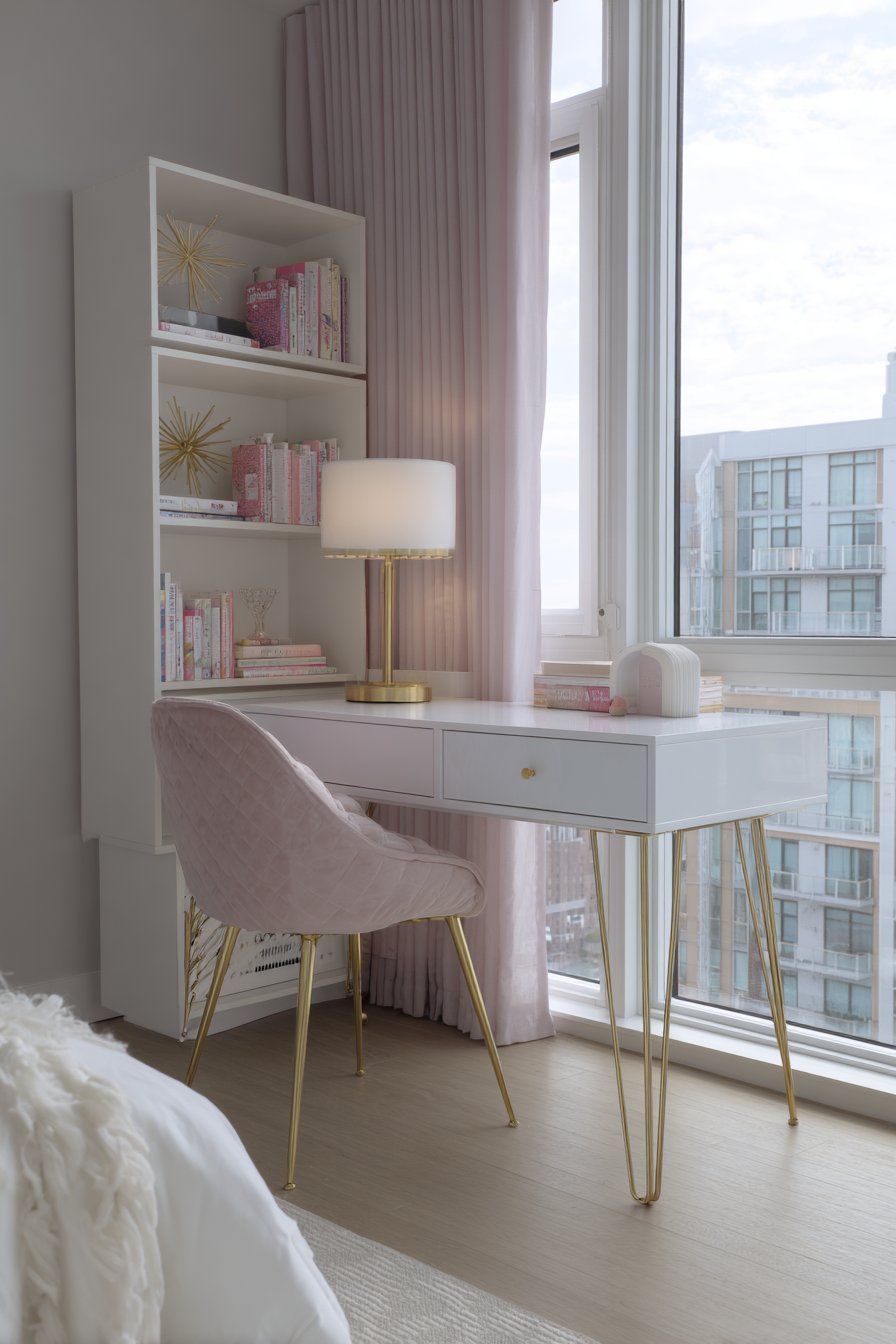
The integration of a workspace demonstrates how modern bedrooms serve multiple purposes. The pastel color scheme maintains consistency throughout different functional zones. Thoughtful furniture selection ensures each piece serves its purpose while contributing to overall design. The result is a productive workspace that doesn’t disrupt bedroom tranquility.
Key Design Tips:
- Select furniture with pastel accent colors rather than full pastel pieces
- Use different wall colors to define separate functional zones
- Choose ergonomic seating that matches your color palette
- Install adequate task lighting alongside natural light sources
- Keep workspace surfaces minimal to maintain bedroom serenity
- Add brass or gold accents for contemporary sophistication
- Incorporate open shelving for display and practical storage
3. Peach Ceiling with Geometric Molding
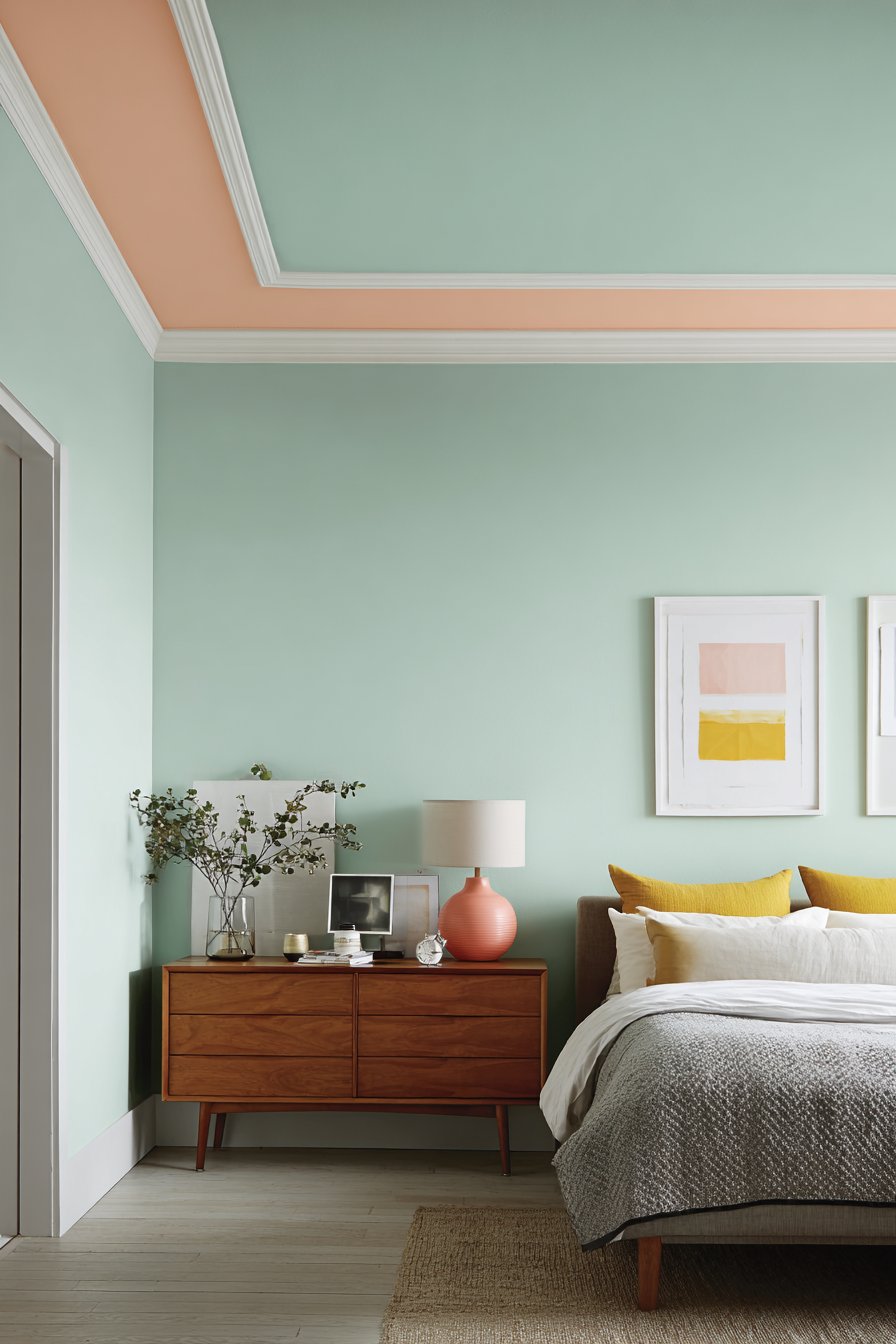
Unexpected color placement creates dramatic impact in this innovative bedroom design. A soft peach tone covers the ceiling with contemporary white geometric molding. This upward color draws the eye and makes the room feel larger. Pale sage green walls below create a soothing two-tone effect.
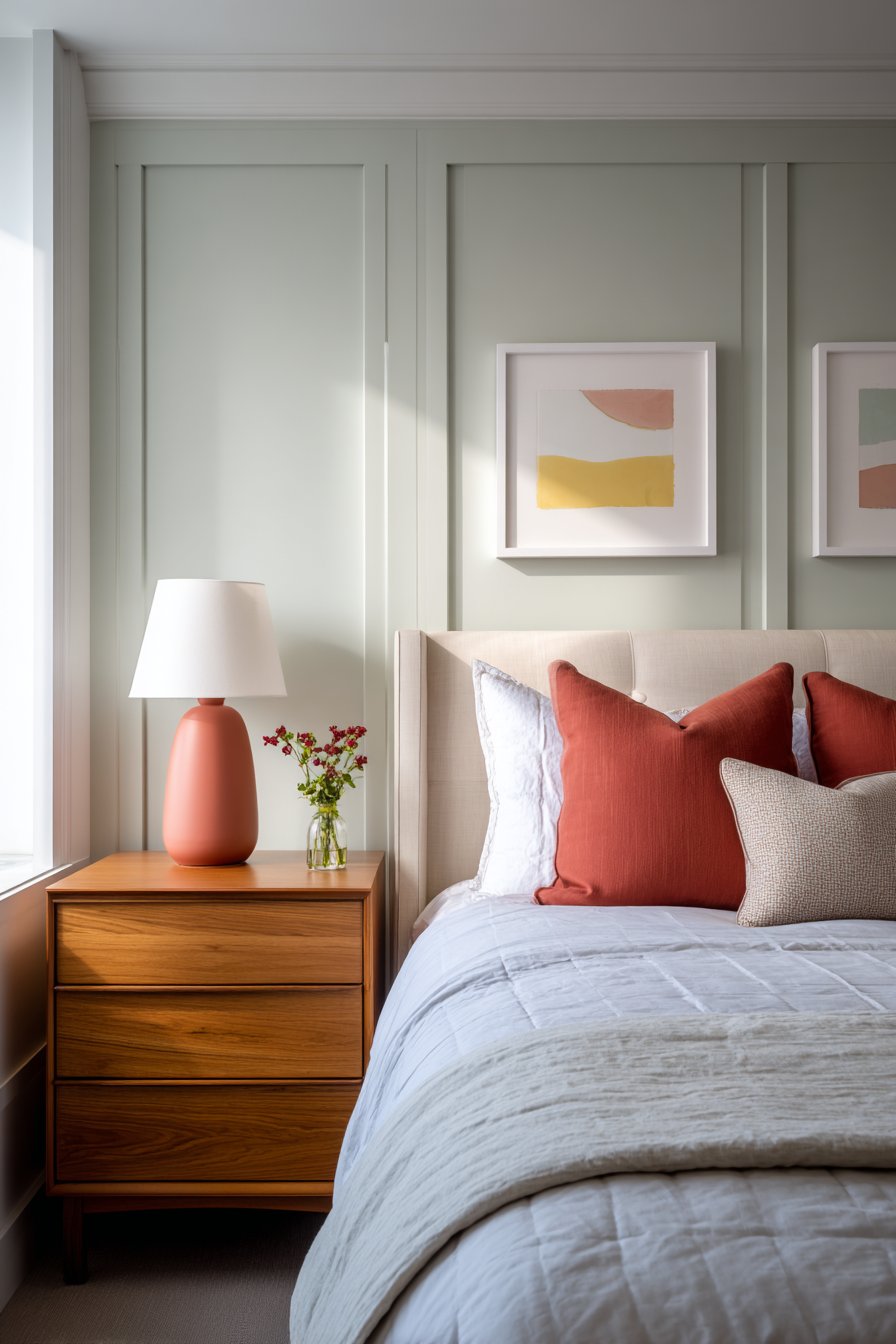
The architectural detail of the ceiling treatment adds visual interest without overwhelming. White geometric molding provides crisp contrast against the peach background. This combination demonstrates how pastels work beautifully in modern architectural applications. The effect feels fresh rather than traditional or dated.
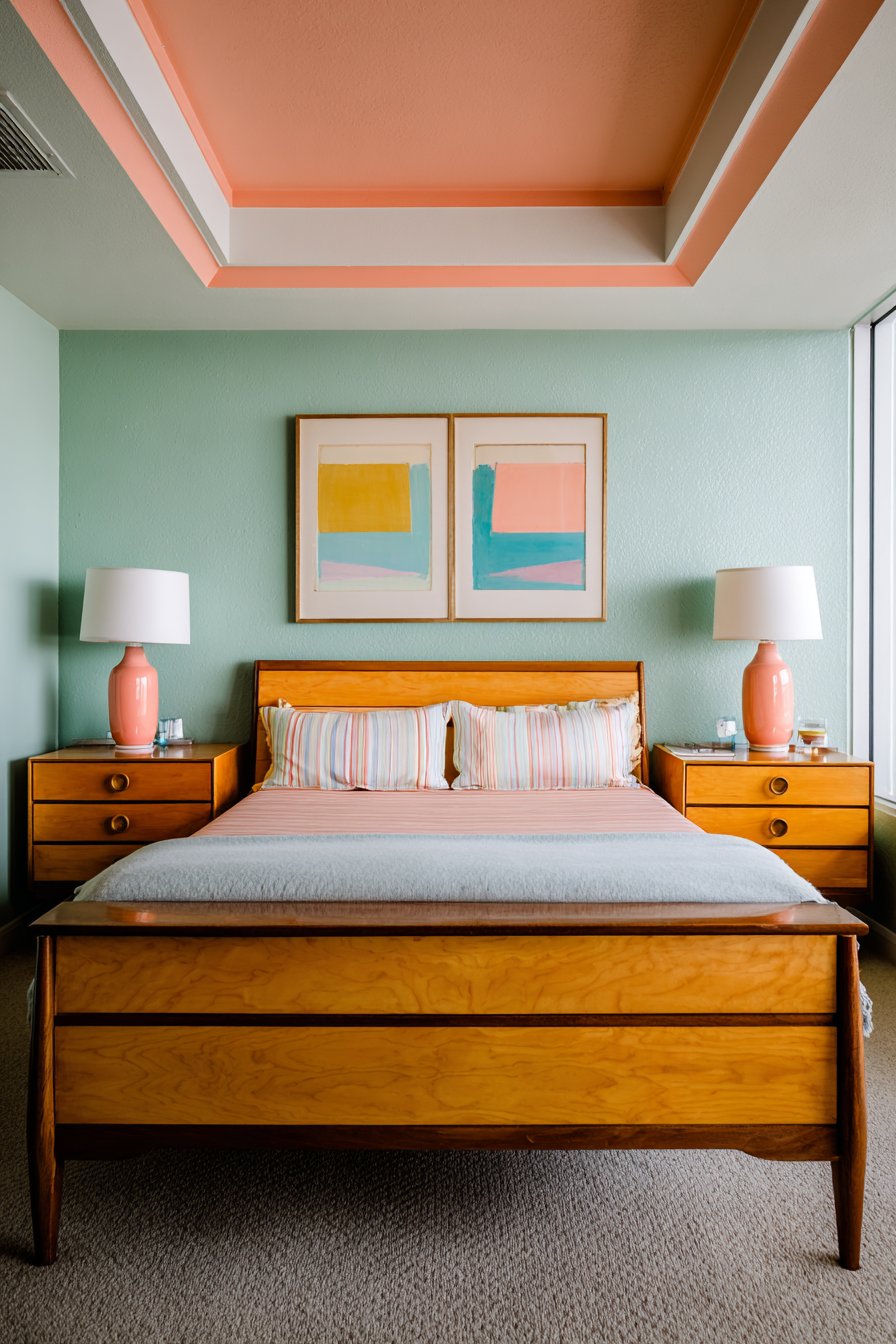
A mid-century modern dresser in natural walnut sits against the sage walls. Ceramic table lamps in muted coral finish tie the color scheme together. Abstract artwork in pastel hues hangs above in simple white frames. Each element supports the room’s cohesive color story.
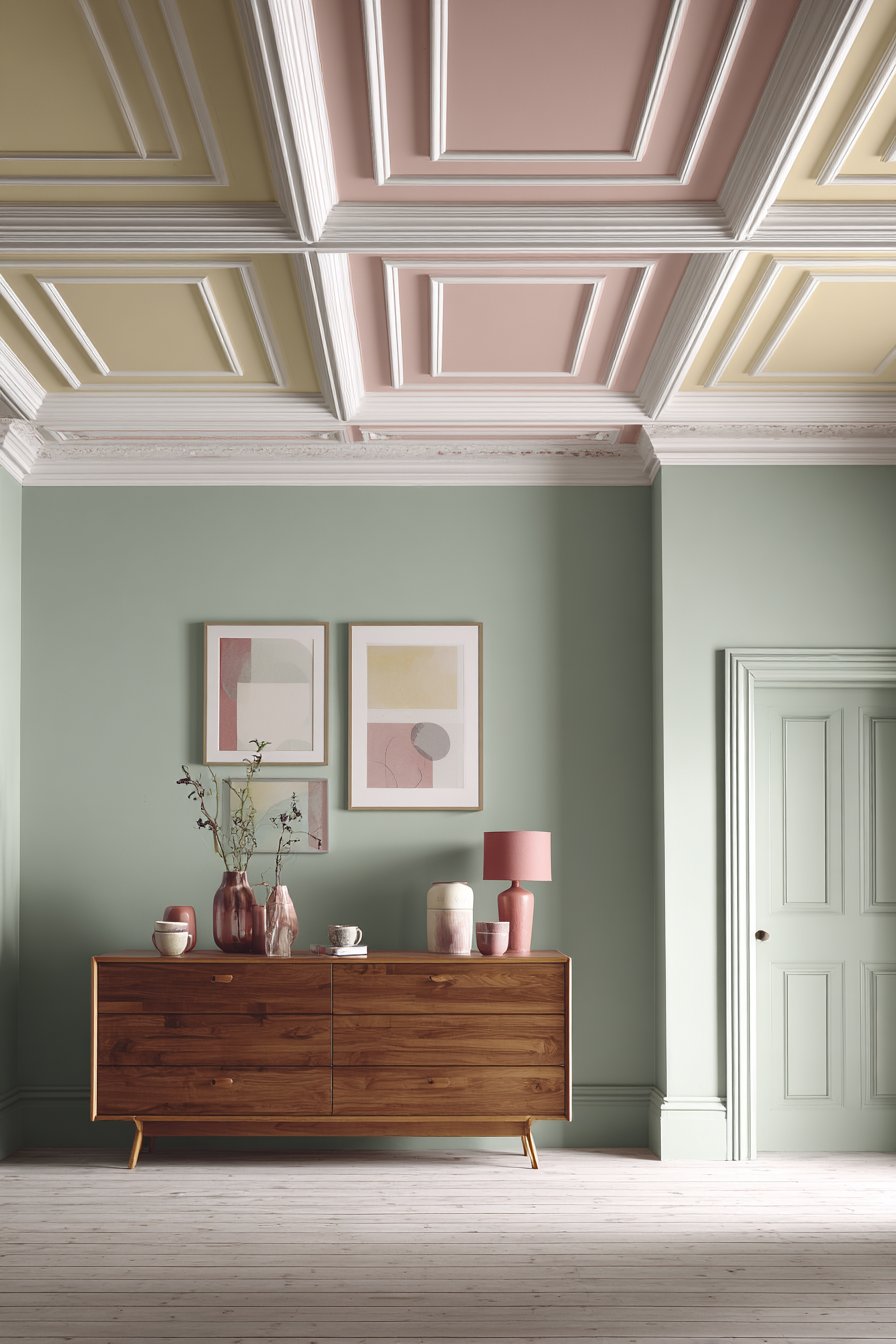
Strategic placement of recessed lighting emphasizes the ceiling’s architectural features. Soft diffused lighting creates subtle shadows that define the geometric patterns. The vertical dimension receives proper attention in this thoughtful design. The result is a bedroom that feels spatially interesting and visually dynamic.
Key Design Tips:
- Paint ceilings in pastel tones to add unexpected color and visual height
- Add geometric molding for architectural interest and contemporary style
- Create two-tone walls using complementary pastel shades
- Use recessed lighting to highlight ceiling details and create ambiance
- Select mid-century furniture for timeless modern appeal
- Coordinate accessories with ceiling and wall colors
- Keep artwork simple to avoid competing with architectural features
4. Lilac Velvet Reading Nook
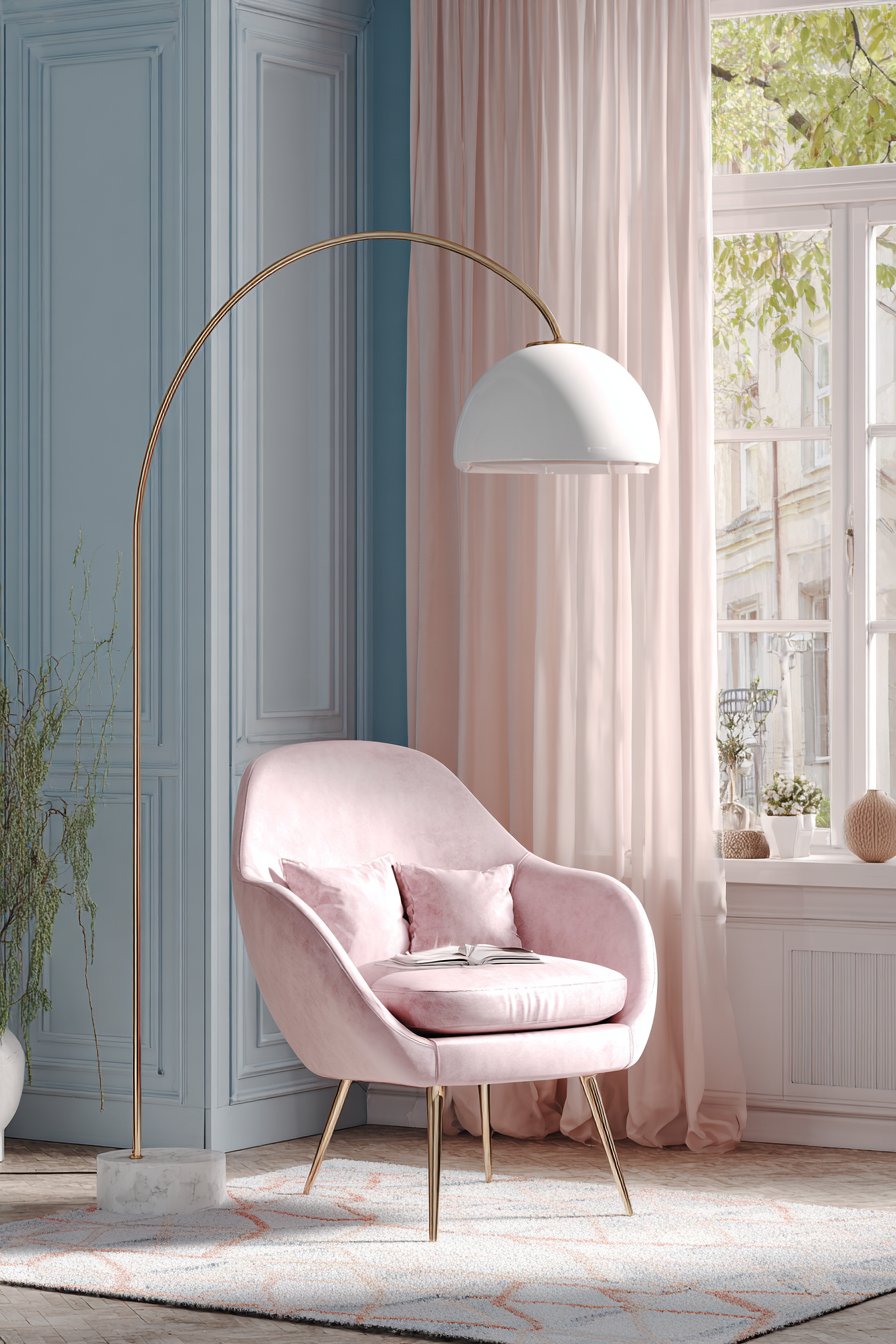
A cozy reading corner transforms unused space into a functional retreat. The contemporary accent chair features soft lilac velvet upholstery that invites relaxation. A plush area rug in coordinating pastel geometric patterns anchors the space. Mint, peach, and cream tones create visual harmony.
The reading nook is positioned strategically near a large window for natural illumination. Flowing sheer curtains in pale blush pink filter harsh sunlight gently. A sleek arc floor lamp with white marble base provides reading light. The brushed brass finish adds contemporary elegance to the functional piece.
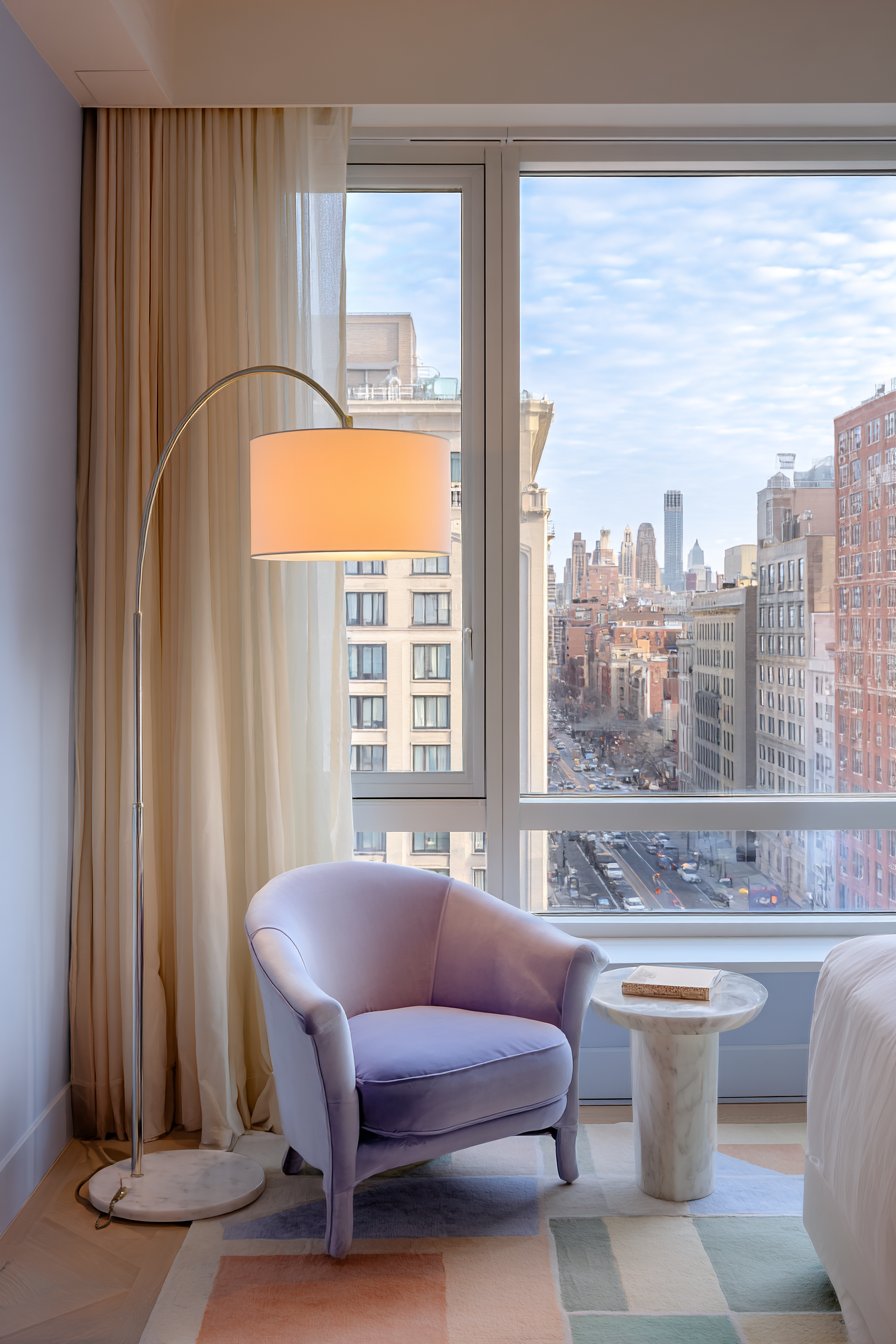
Powder blue walls surrounding the nook create a calming backdrop. The color choice supports reading and relaxation without causing eye strain. The overall composition feels intentional yet effortless. Each element serves both aesthetic and practical purposes perfectly.
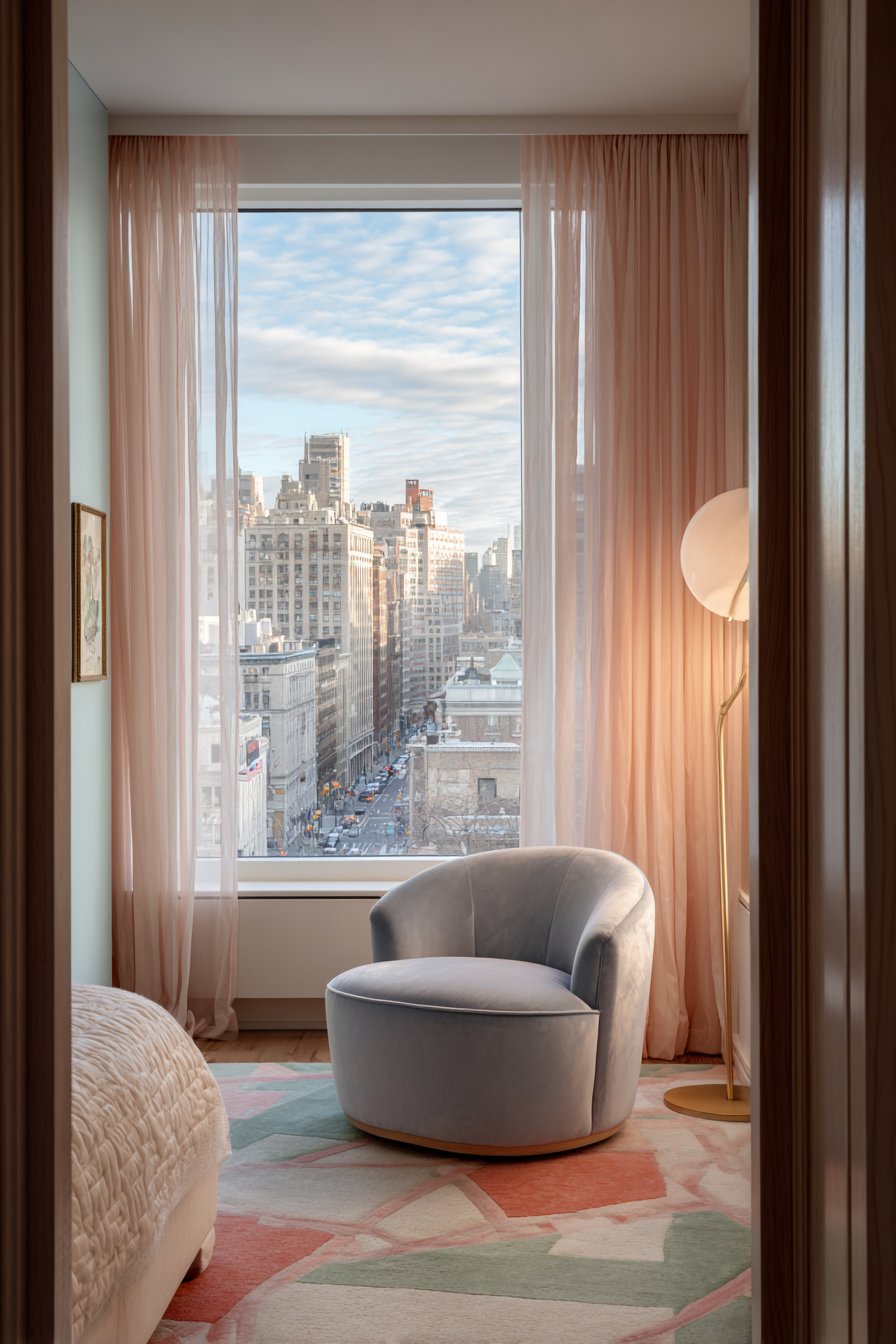
Natural light creates a luminous atmosphere throughout the day. Professional attention to lighting layering ensures the space functions well at all hours. The velvet chair fabric adds tactile luxury that enhances comfort. Thoughtful textile selection contributes to the room’s overall sensory experience.
Key Design Tips:
- Position reading nooks near windows for natural light access
- Choose velvet upholstery for luxury and comfort in seating
- Layer lighting with both floor lamps and natural sources
- Select area rugs with geometric patterns in coordinating pastels
- Use sheer curtains to control light without blocking it completely
- Add marble accents through lamp bases or side tables
- Create dedicated zones for specific activities within larger spaces
5. Seafoam Green Floor-to-Ceiling Headboard
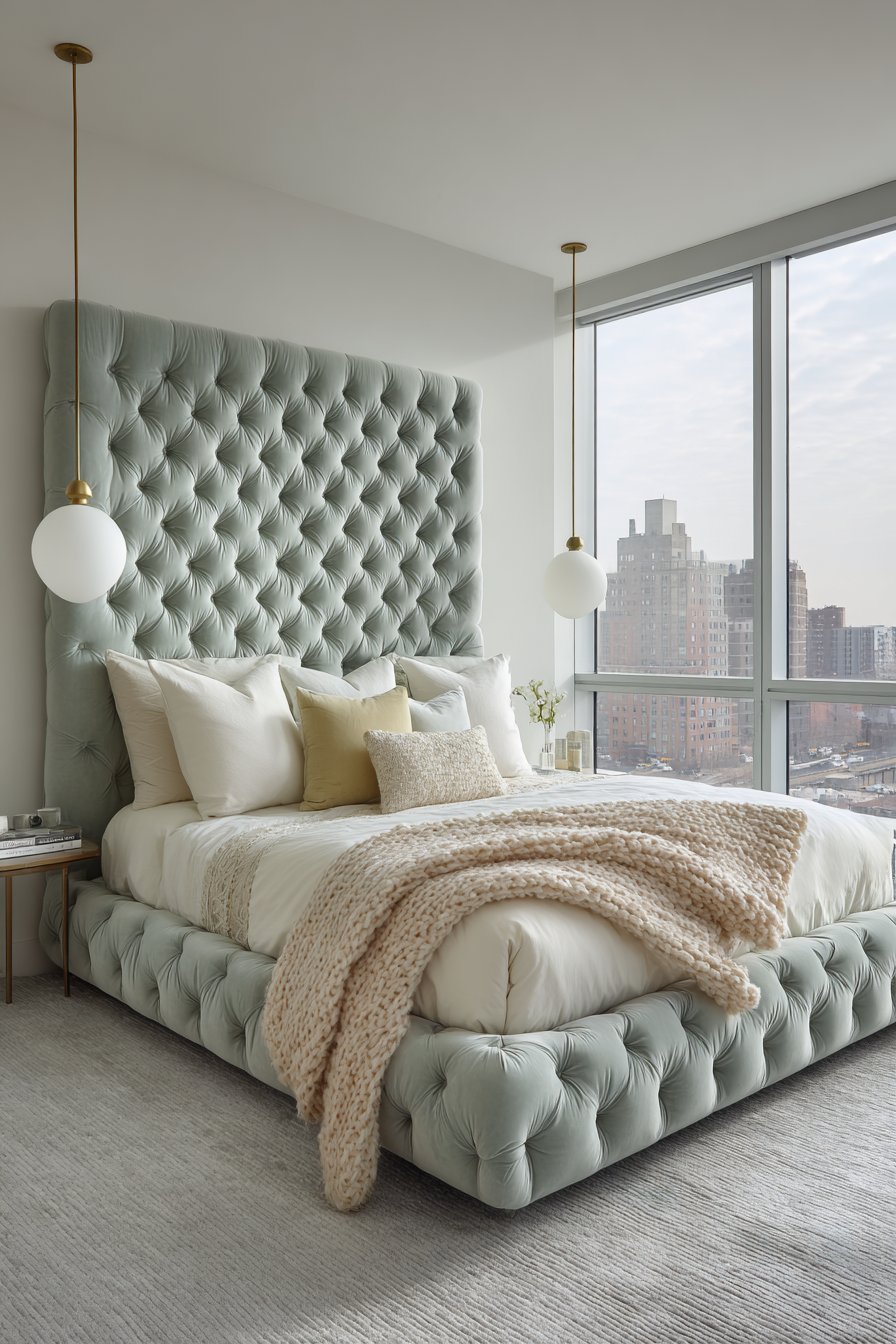
A dramatic tufted headboard extends from floor to ceiling as the ultimate focal point. Seafoam green velvet creates luxurious texture and bold color presence. The scale of this feature demands attention while maintaining bedroom serenity. Layered bedding in whites and creams provides neutral contrast.
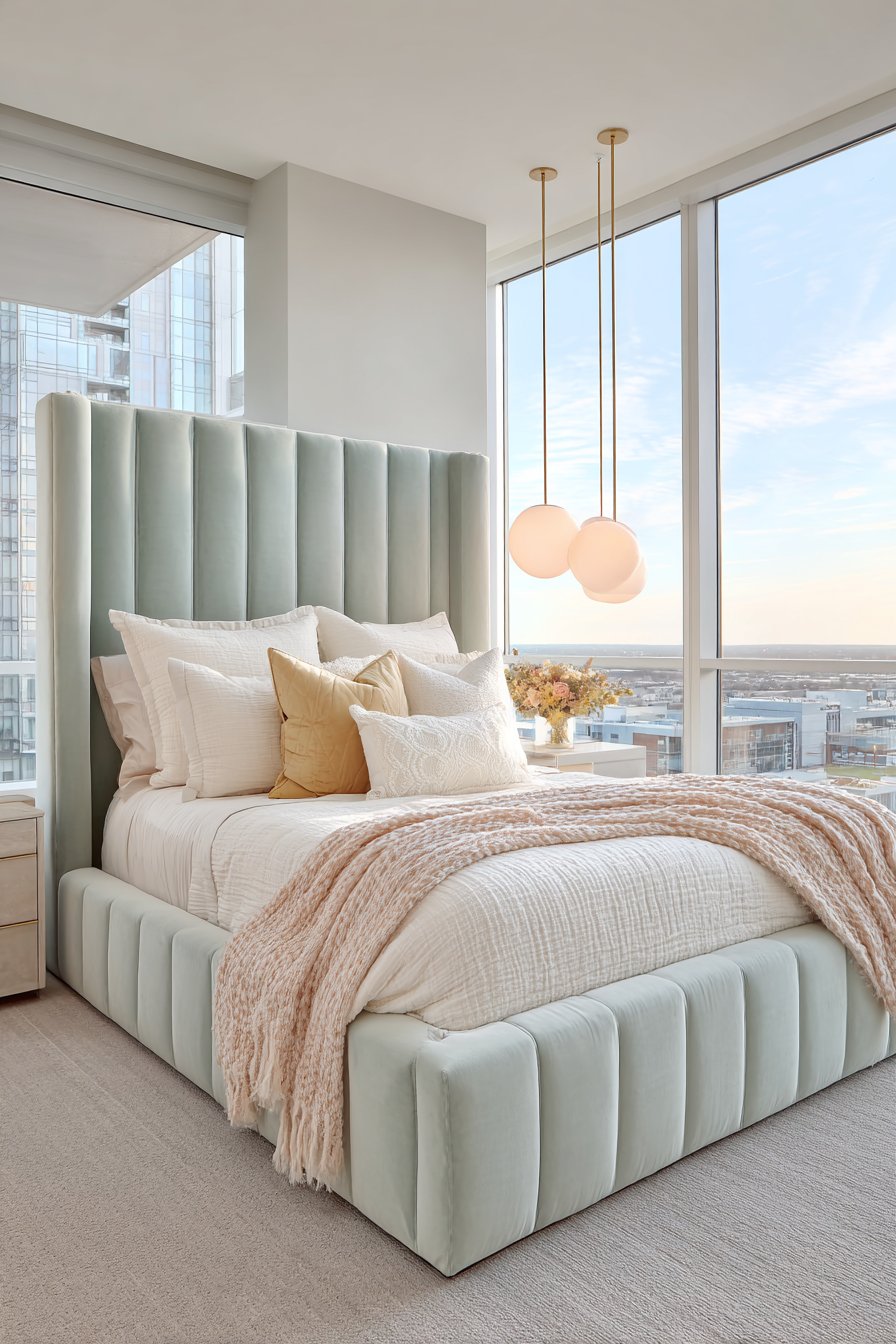
Textured throw blankets in soft peach and pale yellow add warmth without overwhelming. The neutral base allows accent colors to introduce variety and interest. Matching pendant lights with frosted glass globes hang on either side. Brass hardware ties the lighting fixtures into the overall design scheme.
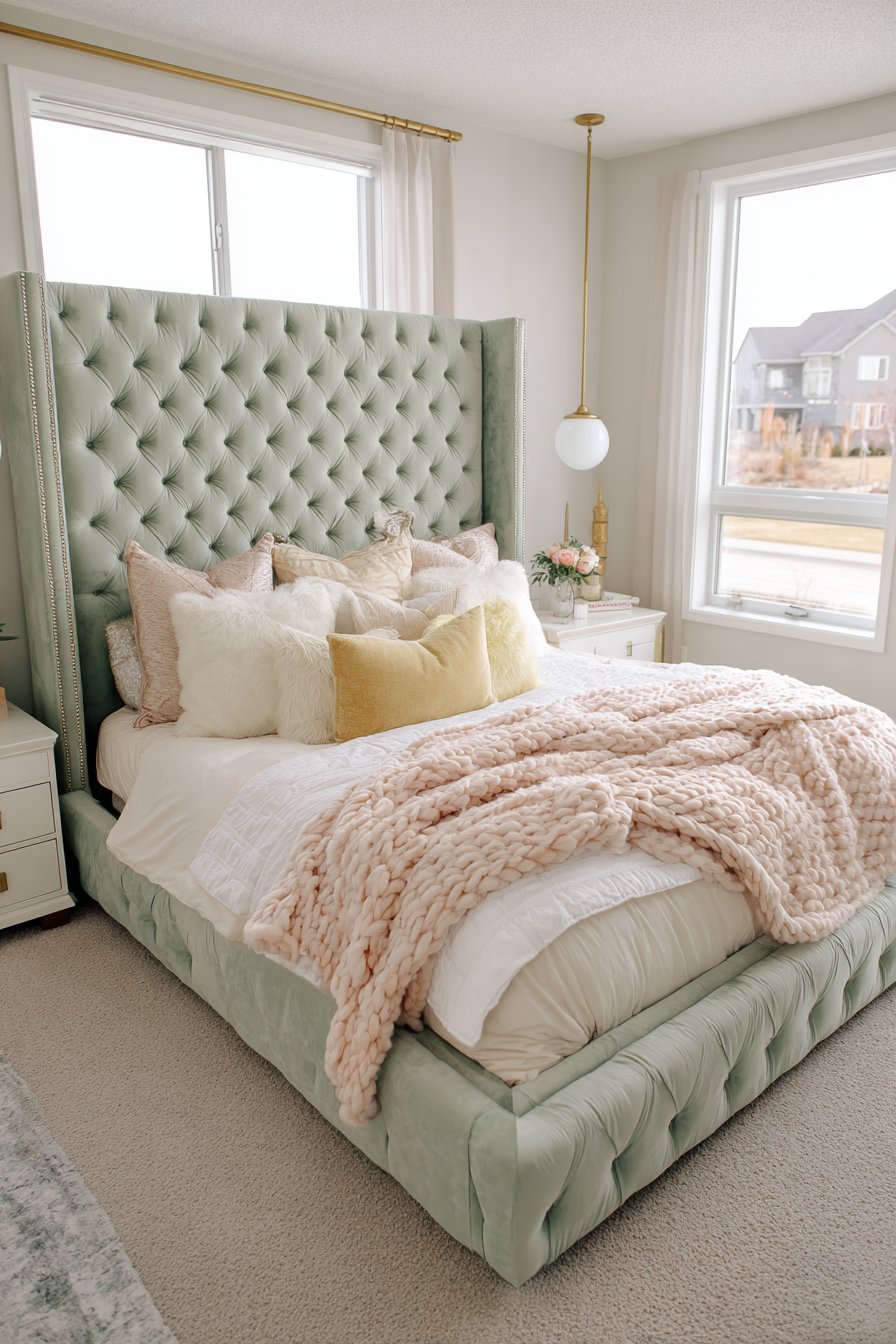
Light gray carpet provides underfoot softness and acoustic comfort. The subtle texture adds another layer to the room’s sensory experience. The carpet’s neutral tone allows the dramatic headboard to command full attention. This foundational element supports rather than competes with statement pieces.
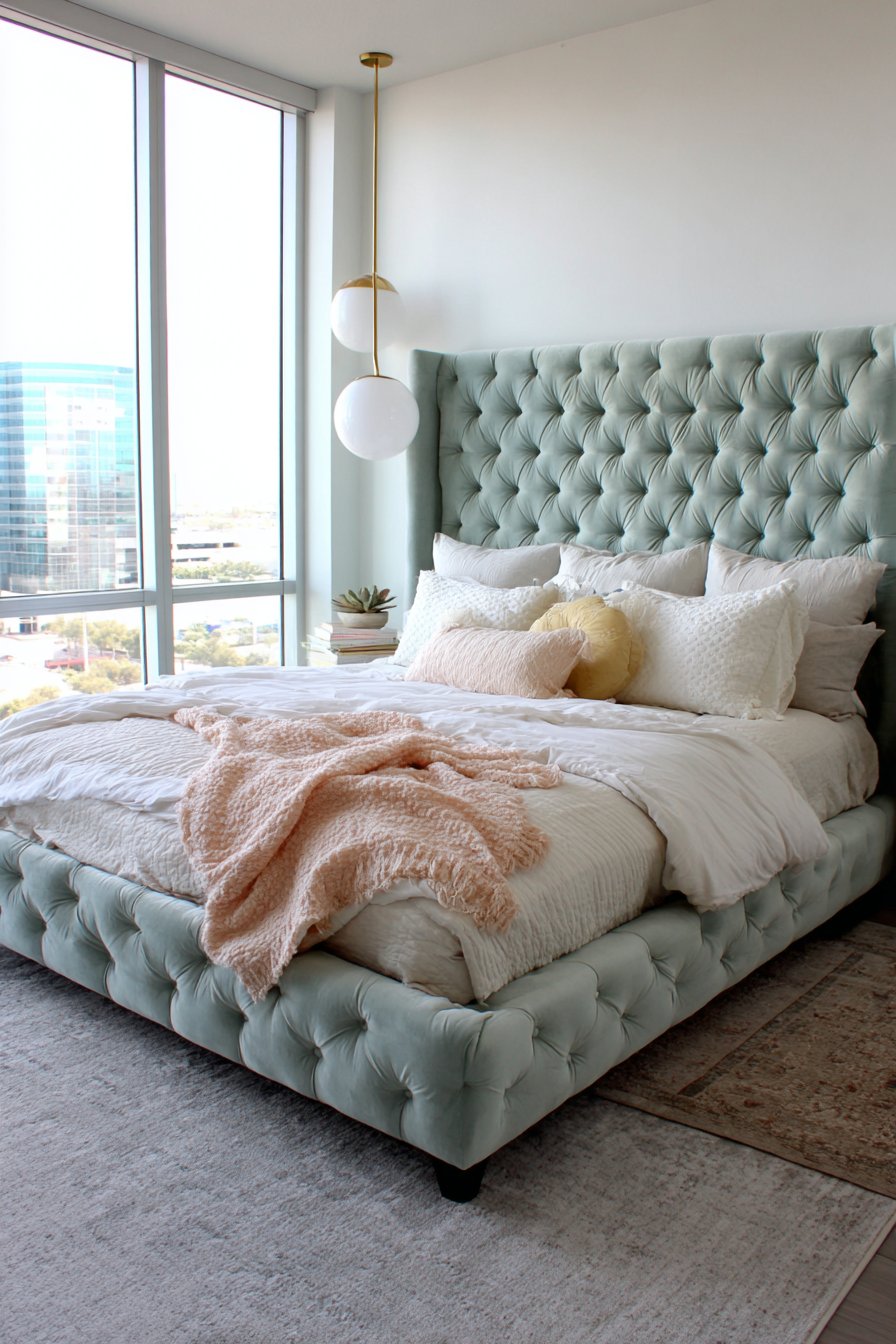
The full height of the headboard creates an architectural impact typically reserved for permanent installations. Yet the furniture-based approach allows flexibility for future changes. Wide-angle perspectives reveal how the vertical emphasis affects spatial perception. Natural window light creates gentle highlights across the varied pastel textiles.
Key Design Tips:
- Use floor-to-ceiling headboards to create dramatic architectural presence
- Choose velvet for tufted headboards to maximize textural impact
- Keep bedding neutral when featuring bold colored headboards
- Add coordinating pendant lights for symmetry and function
- Layer textured throws in complementary pastel tones
- Install light carpet for acoustic softness and neutral grounding
- Consider vertical scale to make standard ceiling heights feel taller
6. Color-Blocked Built-In Storage
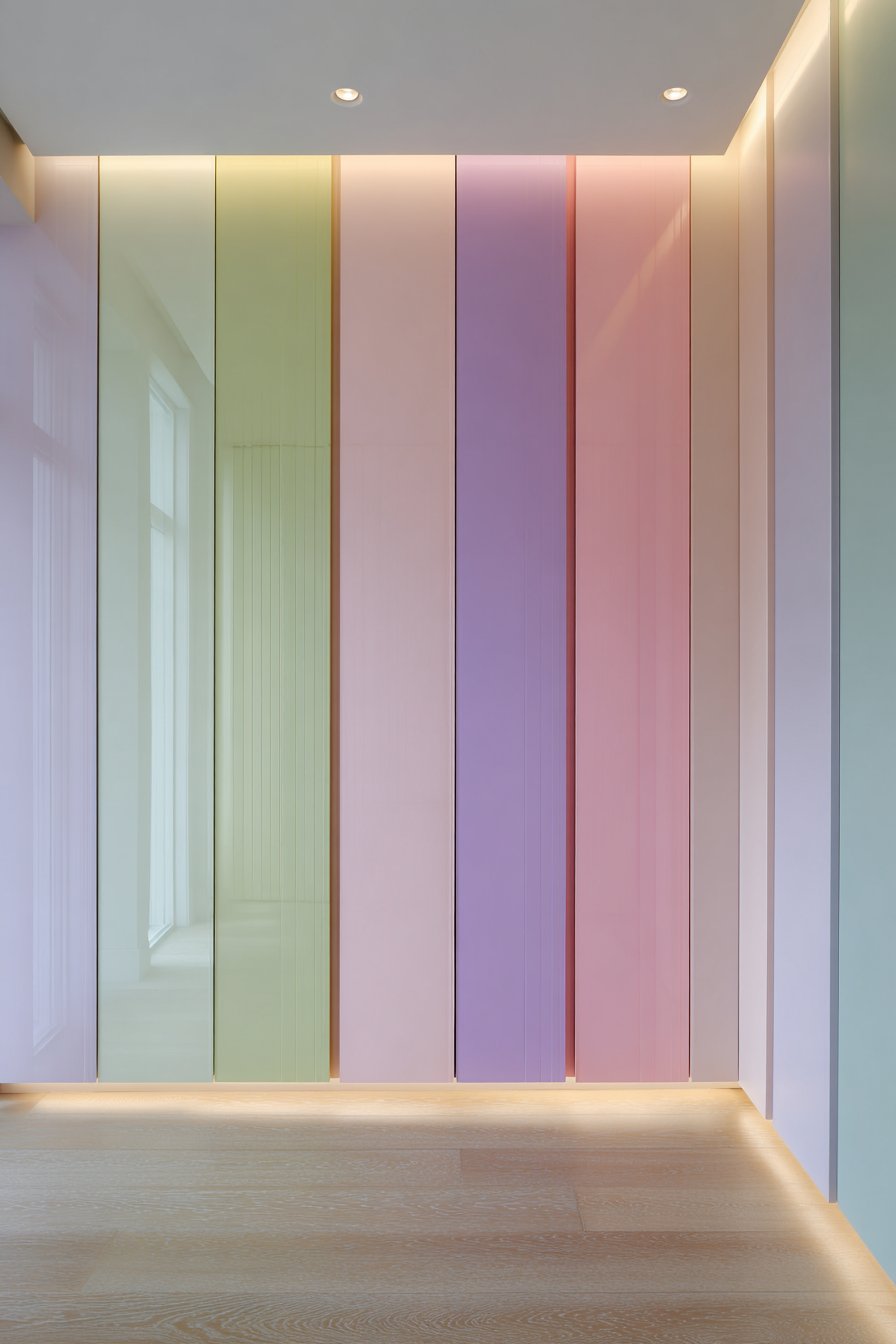
Innovative storage solutions combine functionality with artistic color expression. Built-in cabinets feature handleless doors in alternating pastel tones. Mint green, blush pink, and soft lavender create a playful yet sophisticated effect. The matte finish maintains contemporary appeal while showcasing the color blocking.
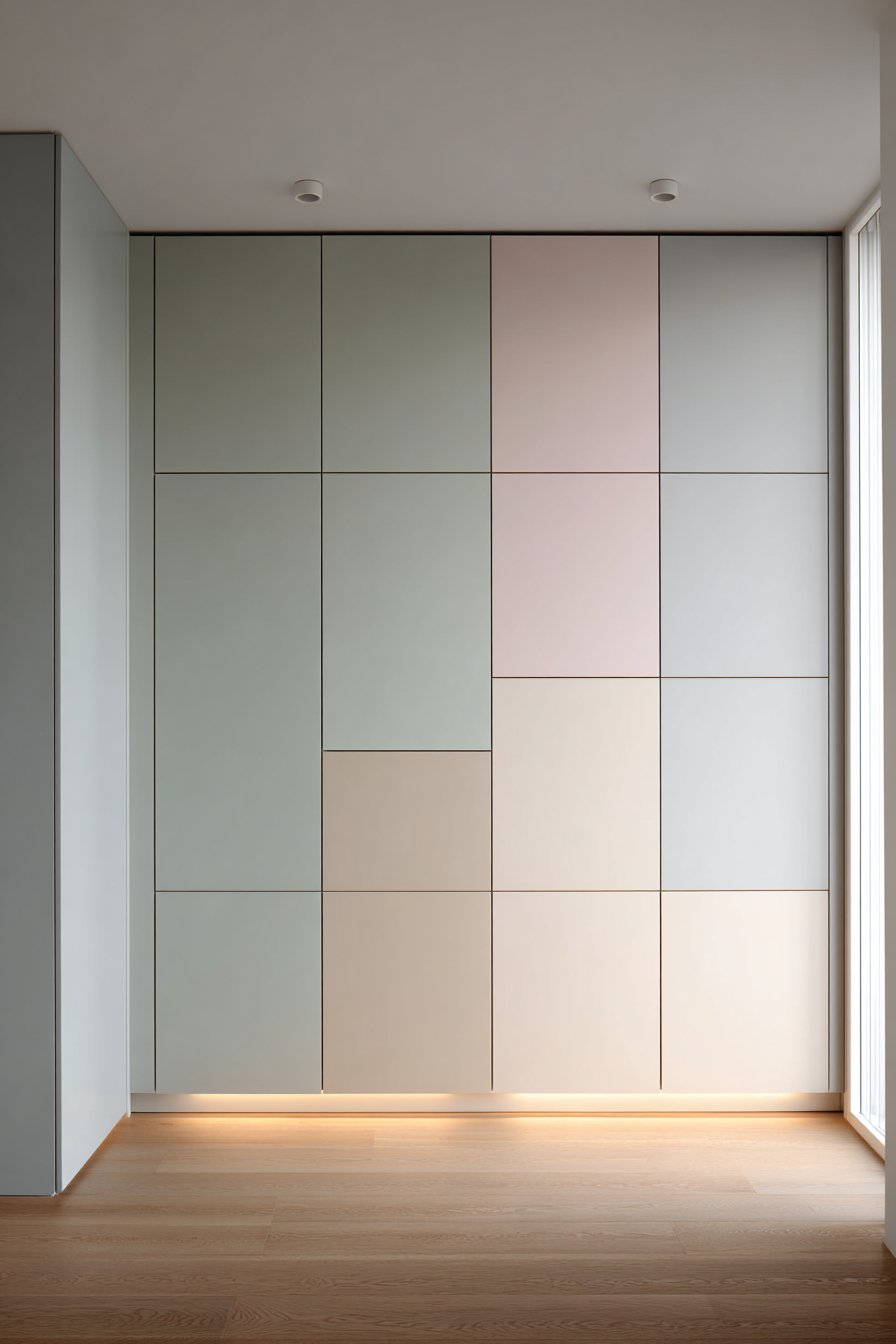
The cabinetry extends along one full wall, maximizing storage capacity efficiently. Integrated lighting strips highlight the clean lines and color transitions. Light oak flooring grounds the colorful wall while maintaining overall airiness. The storage wall becomes a functional art installation in itself.
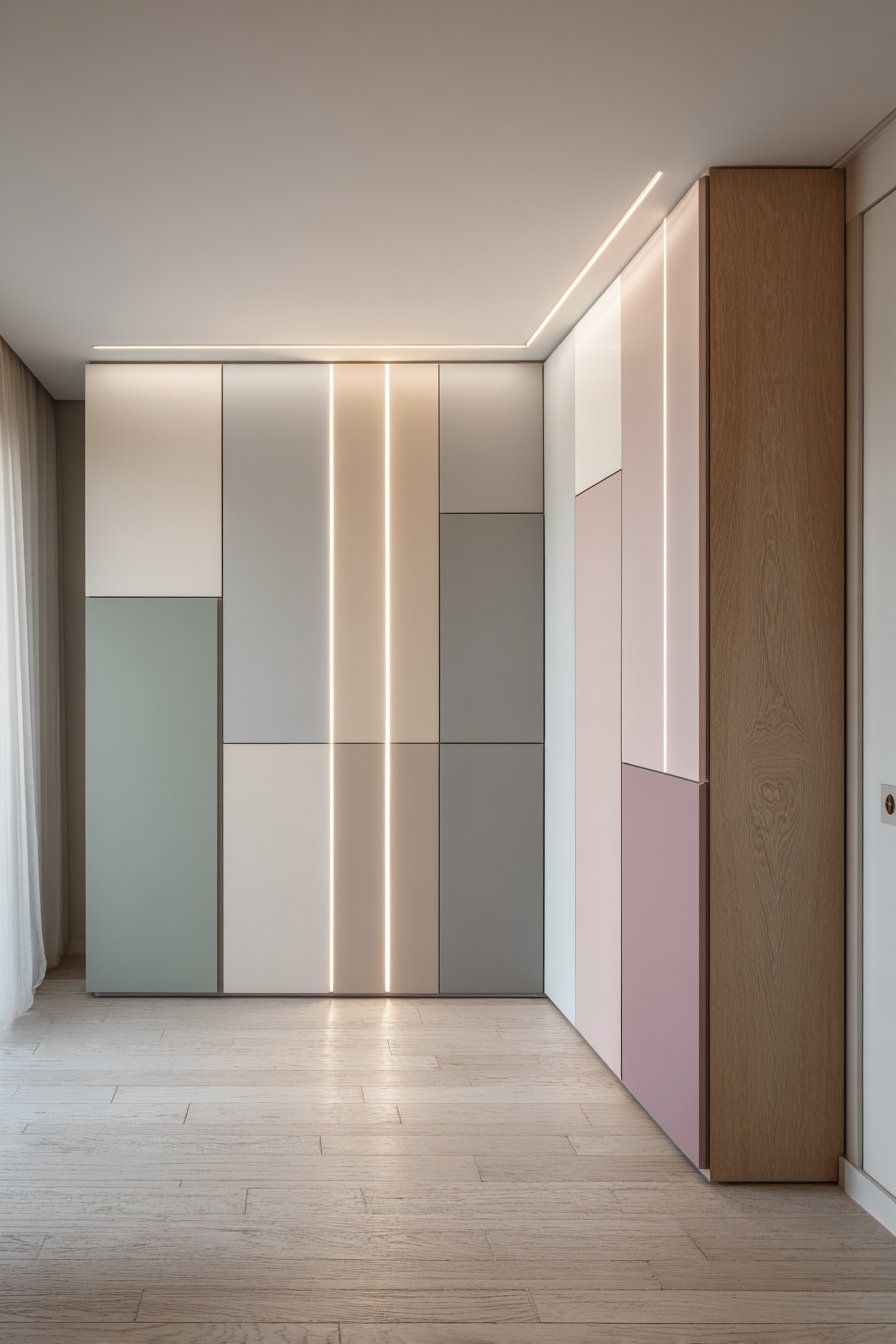
Recessed LED lighting creates subtle shadows that define each pastel-colored section. This illumination technique adds depth and dimension to flat cabinet surfaces. The lighting serves both practical and aesthetic purposes simultaneously. Professional installation ensures seamless integration of electrical and cabinetry elements.
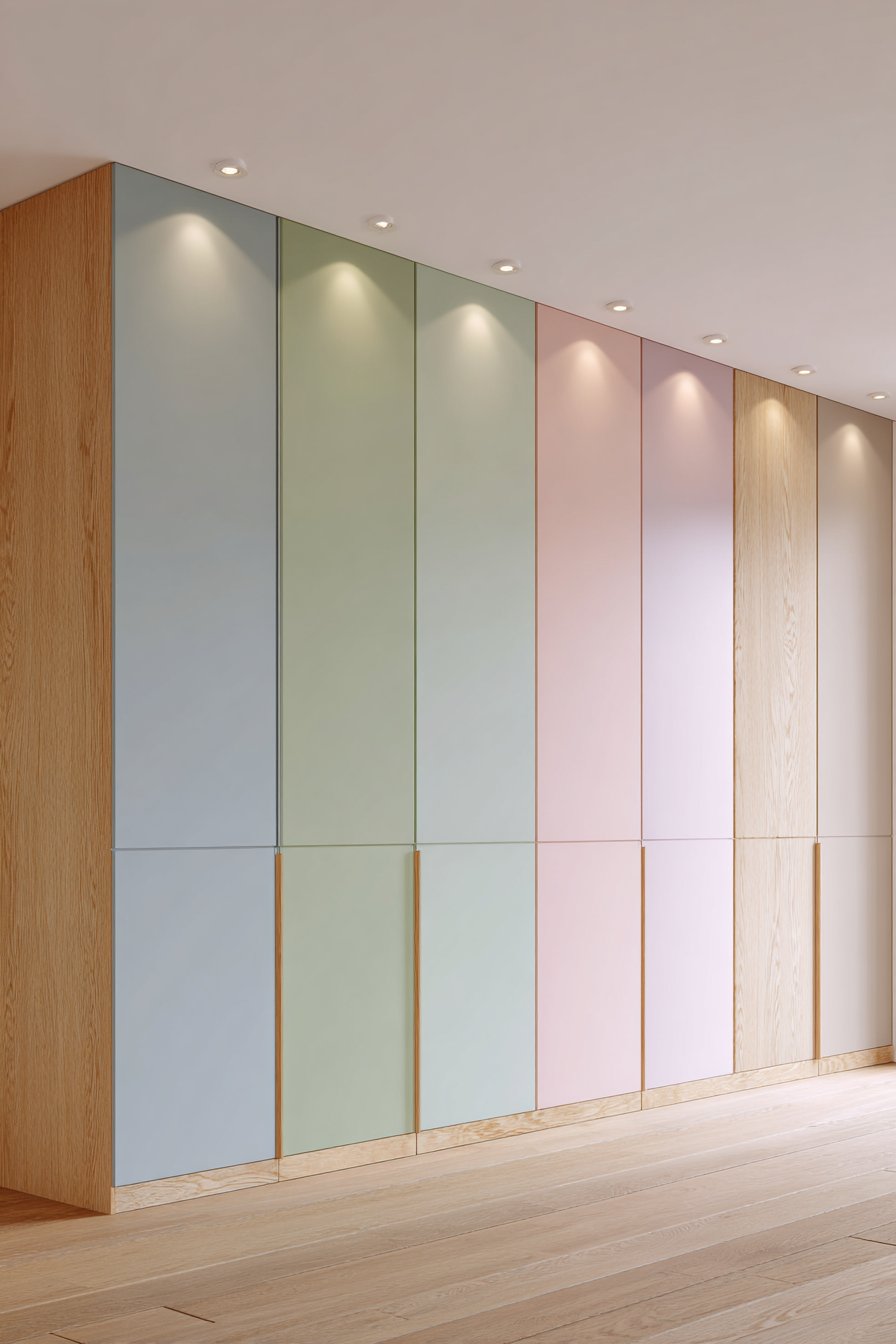
The handleless design maintains sleek contemporary lines throughout the storage system. Touch-latch mechanisms provide easy access without visual hardware clutter. This approach keeps focus on the color blocking rather than functional elements. The result demonstrates how practical storage can serve as design feature.
Key Design Tips:
- Use color-blocked cabinetry to add personality to storage walls
- Choose handleless designs for contemporary minimalist appeal
- Install integrated LED lighting to highlight architectural features
- Select matte finishes for sophisticated pastel color presentation
- Extend built-ins along full walls to maximize storage capacity
- Use light flooring to balance colorful upper installations
- Consider touch-latch mechanisms for hardware-free clean lines
7. Butter Yellow Channel-Tufted Elegance
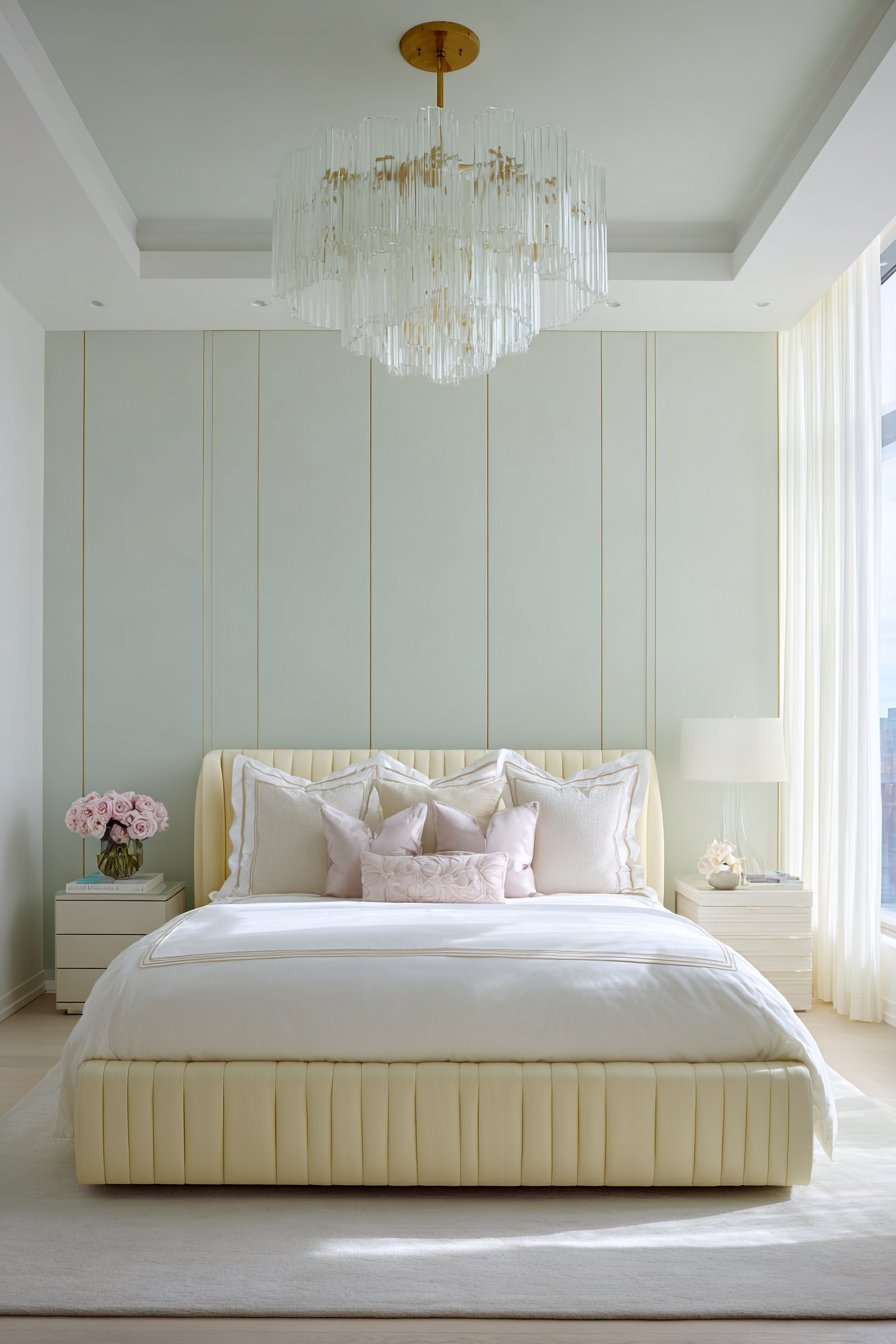
Soft butter yellow upholstery creates unexpected warmth in this sophisticated bedroom. The channel-tufted bed frame features vertical lines that add visual interest. Crisp white bedding with delicate embroidered details provides refined contrast. The embroidery incorporates pale blue and pink for subtle color coordination.
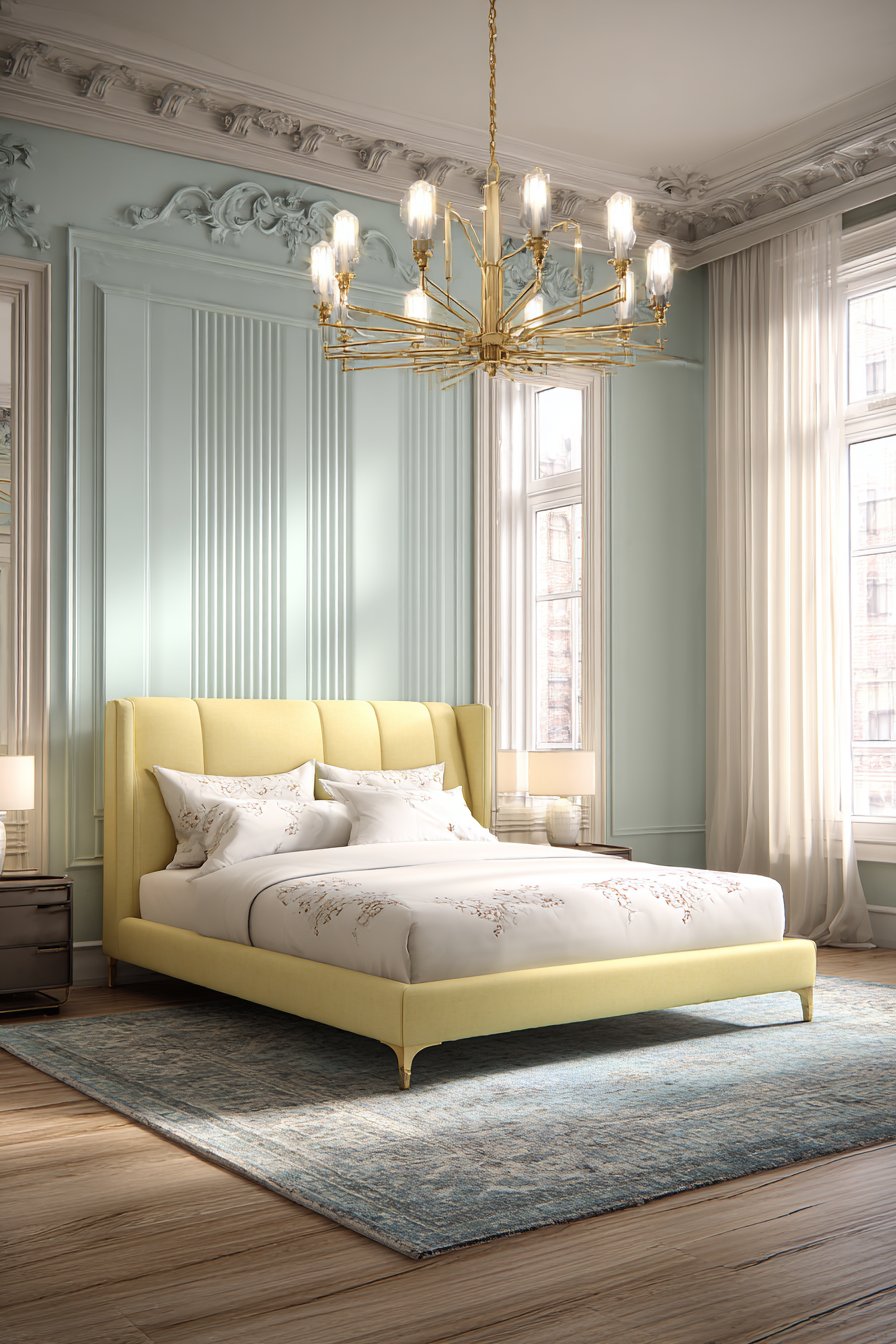
A contemporary chandelier hangs centered above the bed as an elegant focal point. The brass frame with frosted glass elements combines industrial and romantic aesthetics. This lighting fixture provides both ambient illumination and sculptural beauty. The scale matches the room’s proportions perfectly.
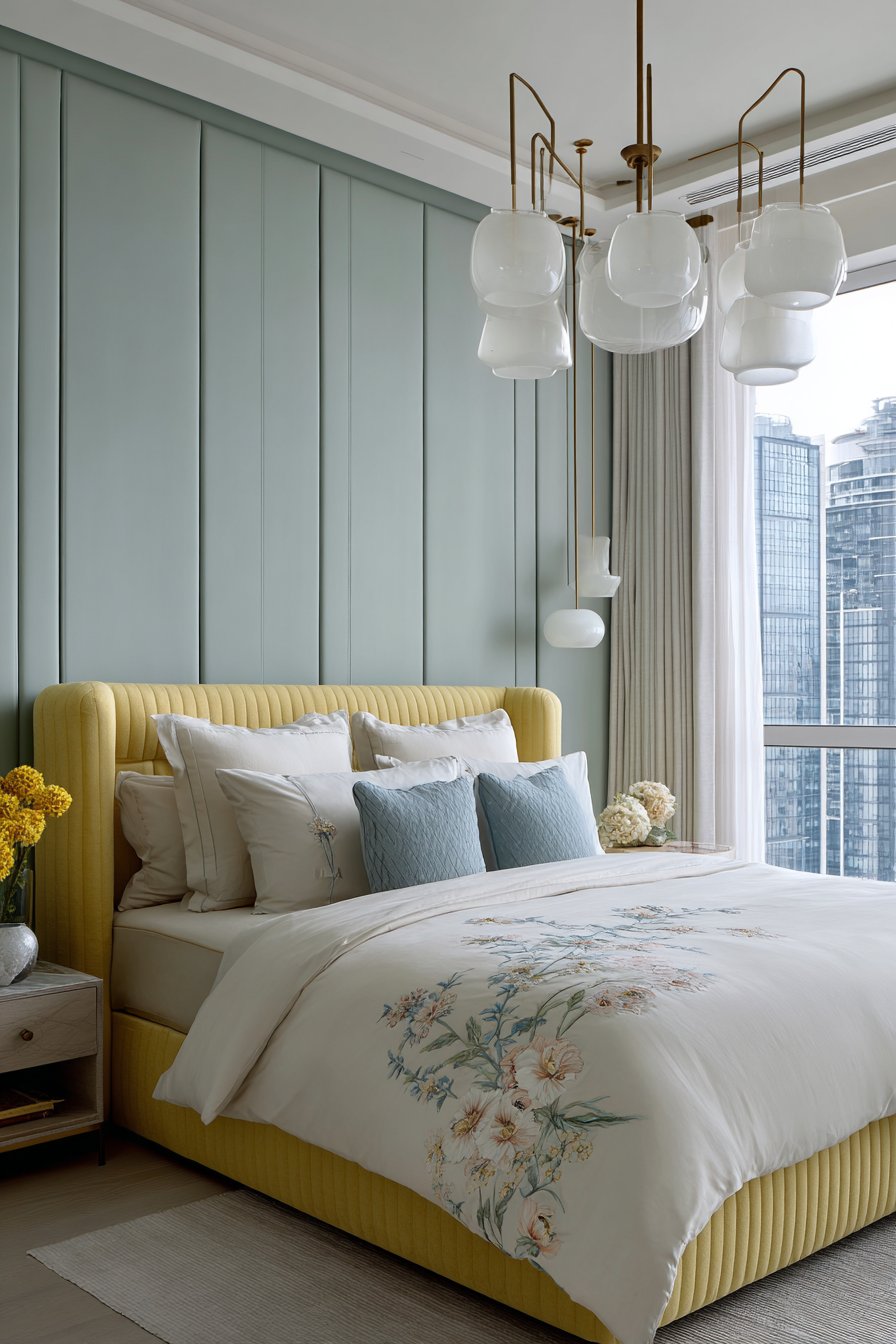
The walls showcase the palest shade of mint with smooth matte finish. One accent wall features vertical paneling painted in slightly deeper sage tone. This subtle variation creates depth without dramatic contrast. The paneling adds architectural interest to an otherwise simple wall surface.
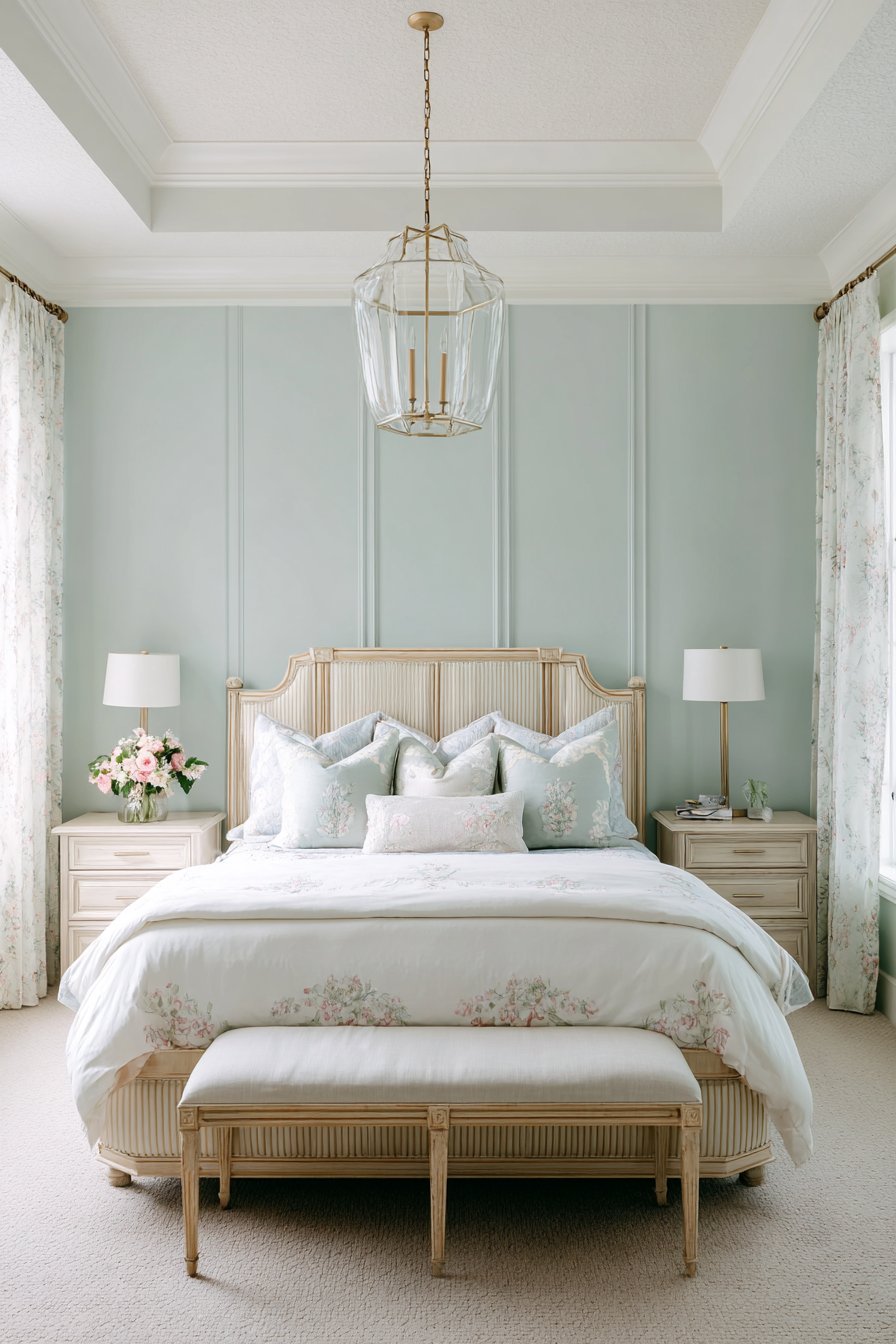
Natural lighting from sheer-curtained windows creates an ethereal quality throughout the space. The room’s symmetry contributes to its peaceful, balanced atmosphere. Each design element receives careful consideration for proportion and placement. The overall effect achieves sophisticated elegance through restraint and refinement.
Key Design Tips:
- Select butter yellow for warmth without overwhelming brightness
- Choose channel-tufted designs for textural interest and contemporary style
- Add delicate embroidered details to simple white bedding
- Install statement chandeliers scaled appropriately for room size
- Create accent walls with vertical paneling for subtle dimension
- Use sheer curtains to maximize ethereal natural lighting
- Maintain symmetry in furniture placement for balanced composition
8. High-Gloss Vanity with Pink Quartz
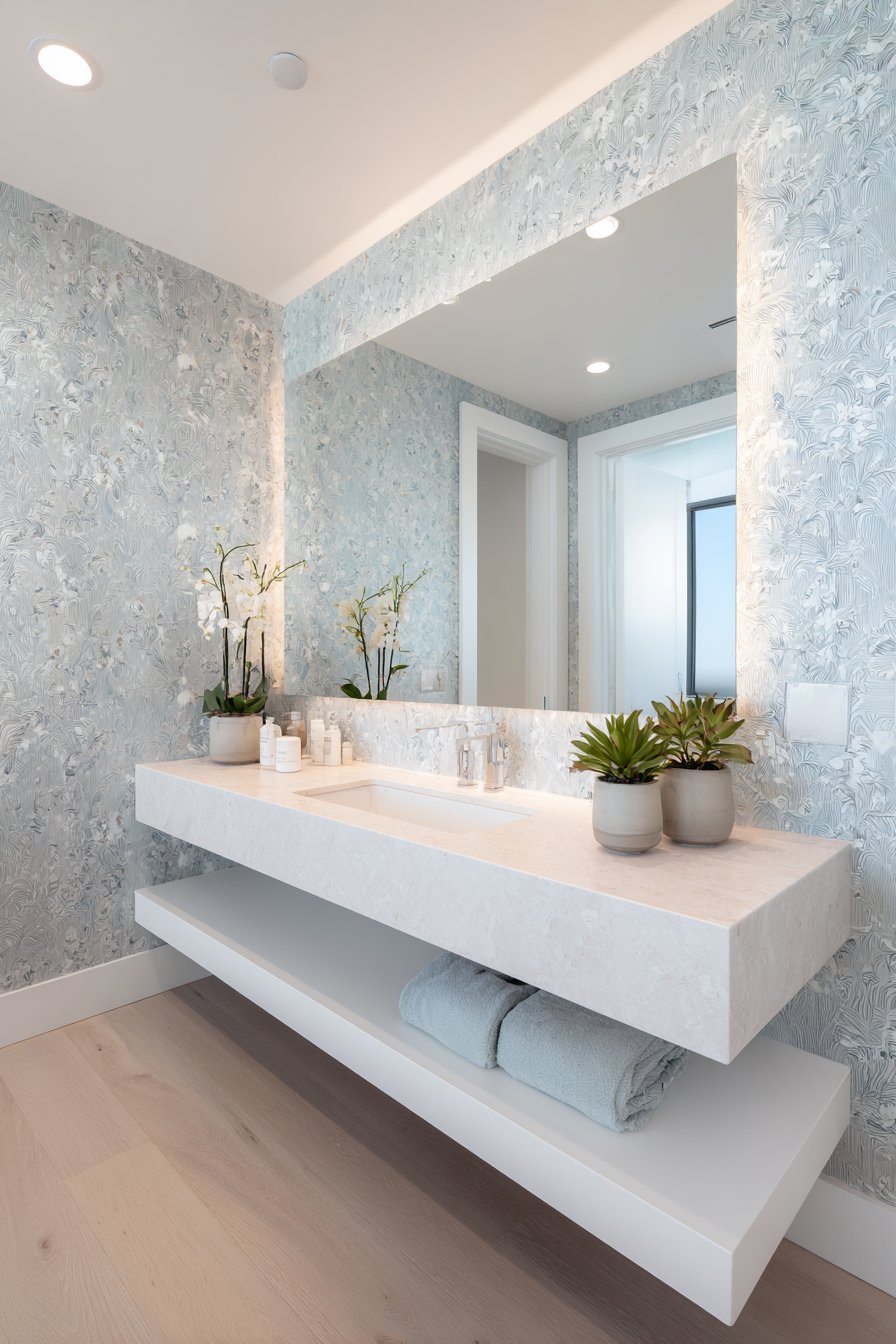
A sleek floating vanity creates a functional beauty station within the bedroom. High-gloss white lacquer reflects light and maintains contemporary aesthetics. The pale pink quartz countertop provides subtle color accent and luxurious material quality. A large frameless mirror above expands visual space effectively.
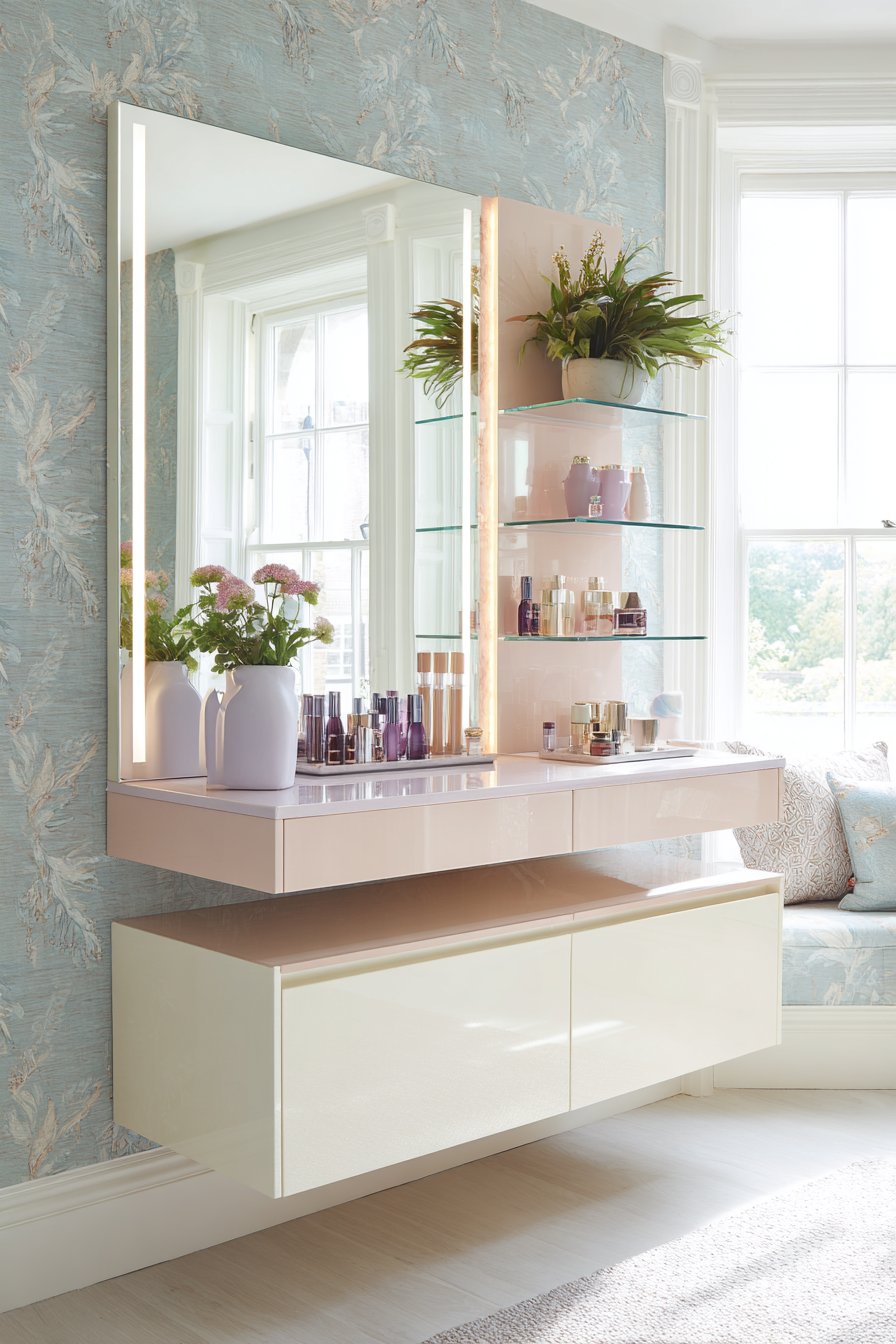
Open shelving to the side displays beauty products and plants in coordinated containers. Ceramic pots in lavender, peach, and mint glazes continue the pastel theme. Small integrated LED lighting illuminates the mirror perimeter for practical grooming tasks. The lighting creates professional-quality illumination without harsh shadows.
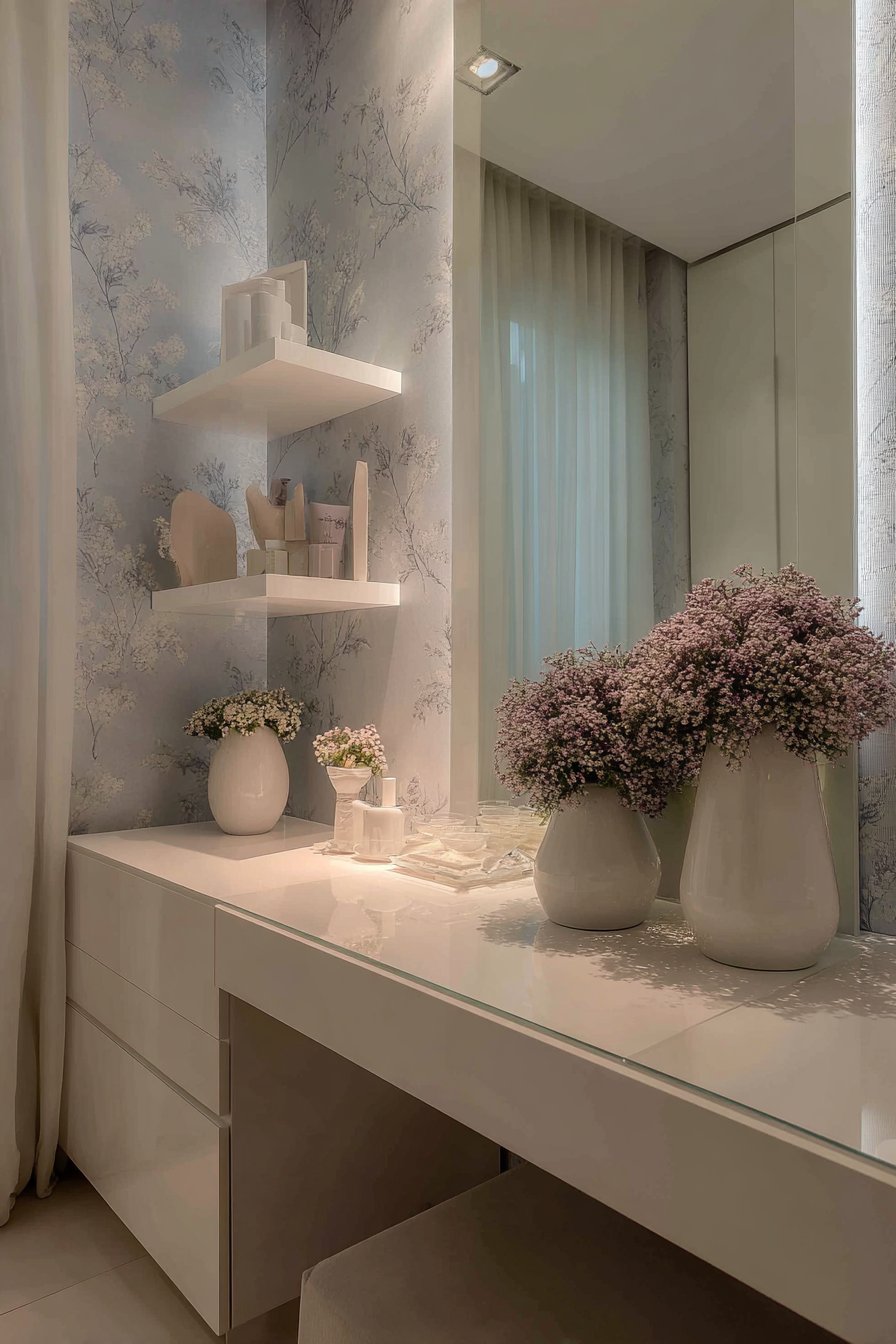
Textured wallpaper in soft gray-blue covers the surrounding walls with delicate botanical patterns. The pattern adds visual interest without overwhelming the clean vanity design. The wallpaper choice demonstrates how to incorporate pattern subtly in modern spaces. Scale and color selection prevent the pattern from competing with other elements.
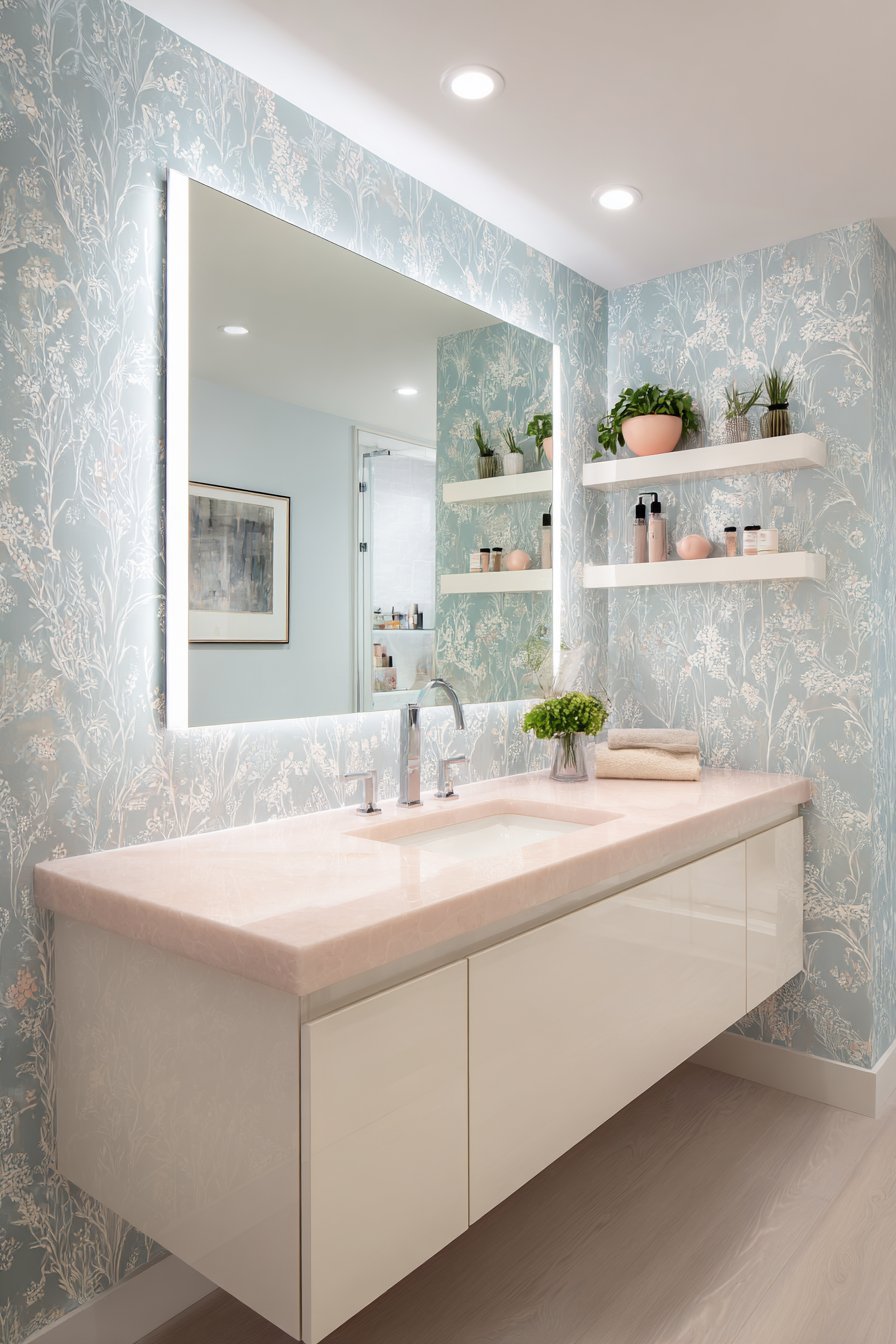
The floating installation maintains floor space visibility for enhanced spaciousness. This mounting technique suits modern aesthetics while providing practical storage below. Natural light emphasizes material finishes and pastel color harmony throughout the vanity area. Professional design attention ensures every detail contributes to overall cohesion.
Key Design Tips:
- Install floating vanities to maximize visual floor space
- Choose pink quartz countertops for durability and subtle color
- Use frameless mirrors to create seamless contemporary look
- Add integrated LED lighting around mirrors for optimal grooming illumination
- Display products in color-coordinated ceramic containers
- Select textured wallpaper with small-scale botanical patterns
- Maintain high-gloss finishes for light reflection and easy cleaning
9. Layered Window Treatment Sophistication
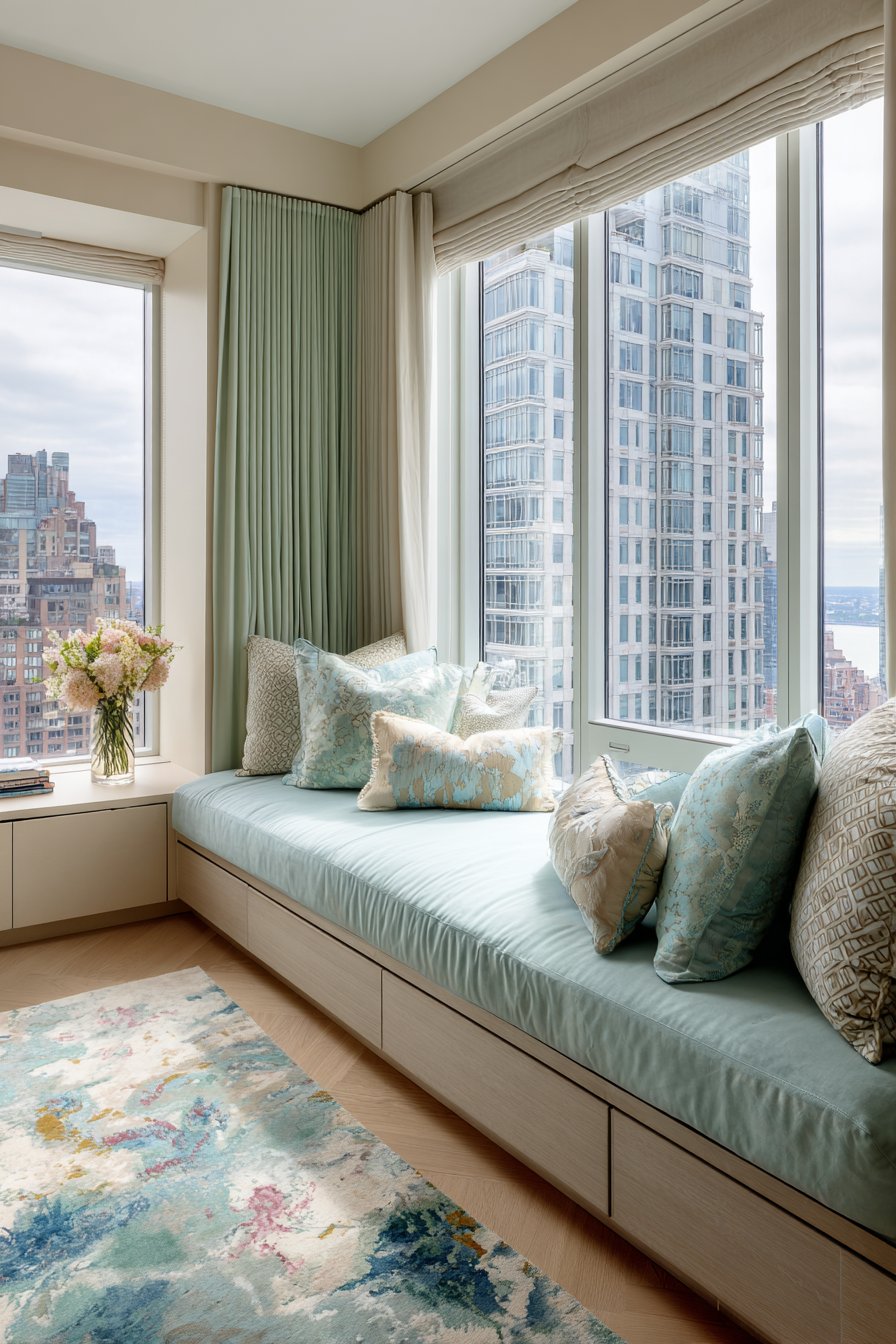
Thoughtful window treatments demonstrate how layering creates depth and functionality. Motorized roller shades in sheer pale apricot fabric provide the first layer. Flowing linen curtains in soft sage green add textural richness. The combination allows precise light control throughout the day.
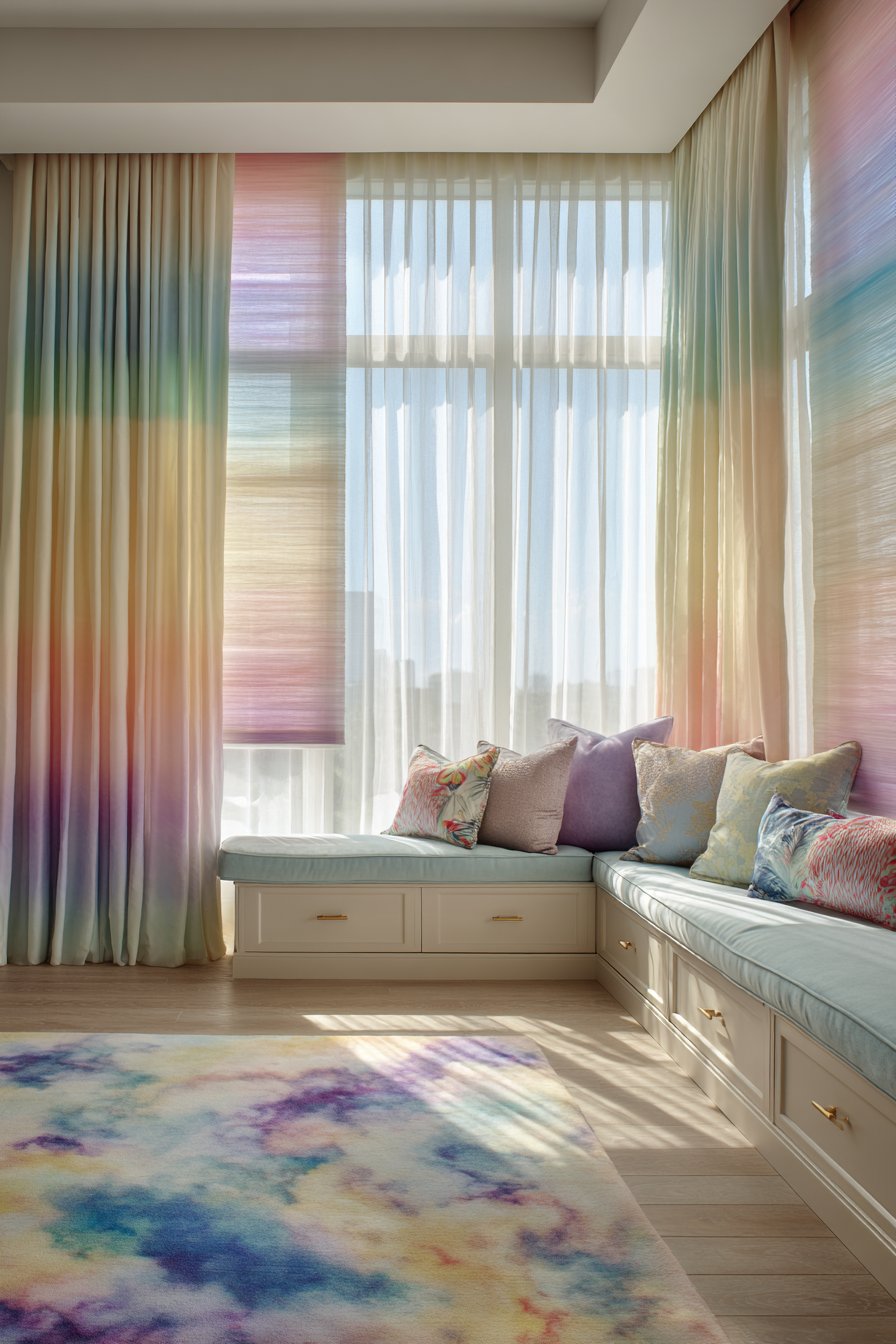
The window wall features pale oak hardwood flooring that transitions seamlessly. A plush area rug in an abstract watercolor pattern provides comfort and color. Blues, pinks, and yellows blend in the rug’s artistic design. The pattern adds visual interest without overwhelming the serene palette.
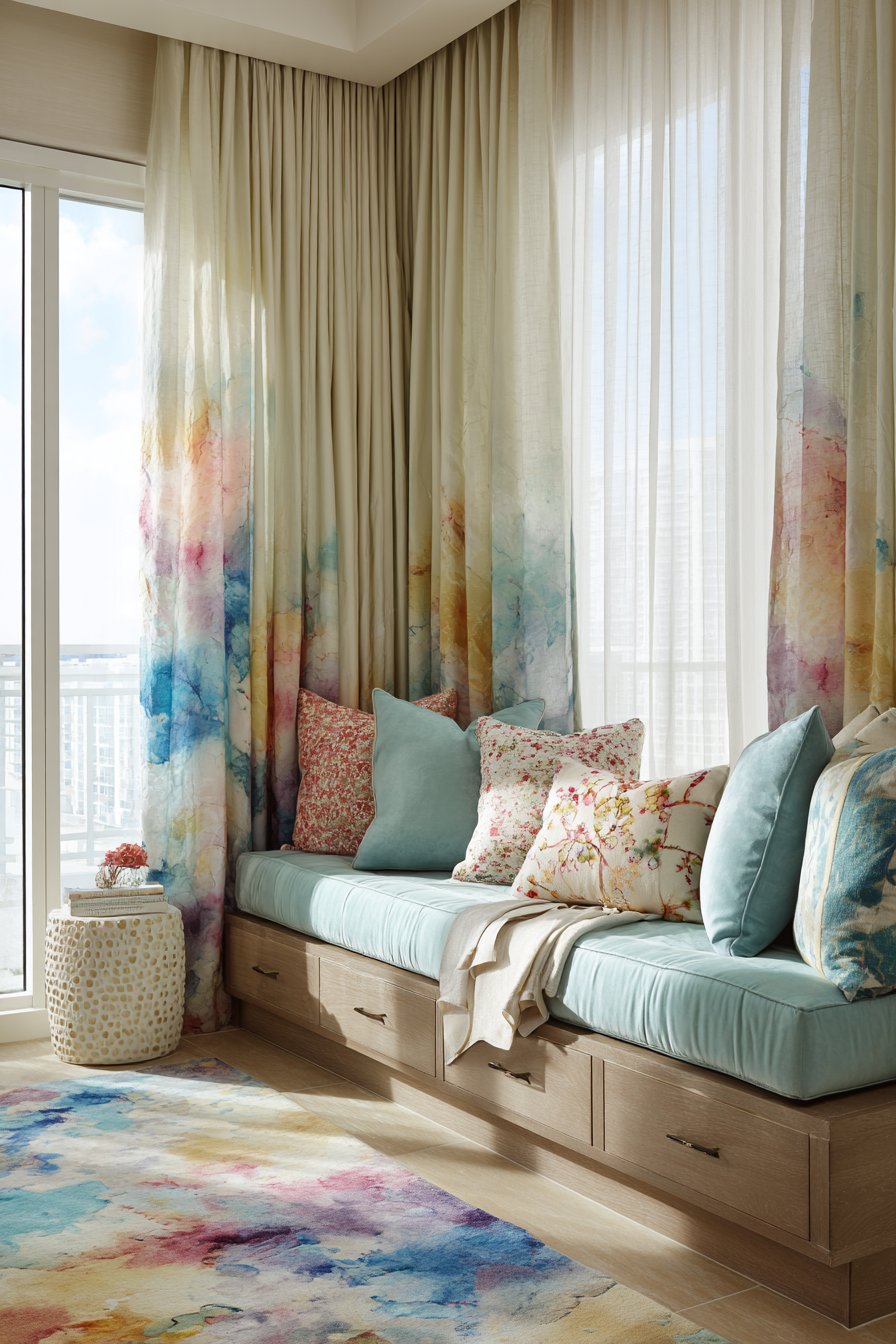
A low-profile window seat with built-in storage beneath maximizes space functionality. Cushions upholstered in powder blue performance fabric offer durability and comfort. Throw pillows in mixed pastel solids and patterns create inviting texture. The window seat transforms unused space into valuable real estate.
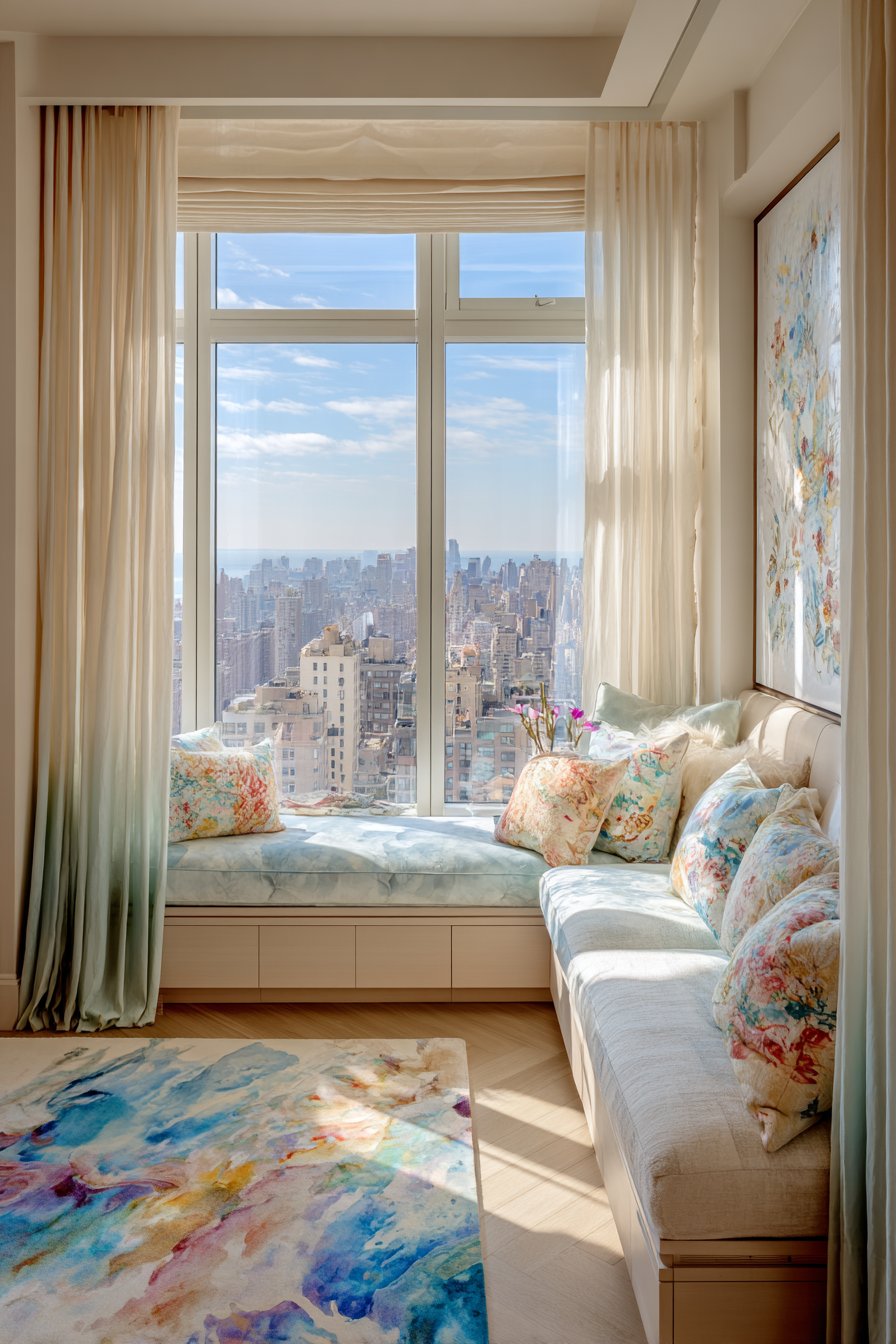
Morning light filters through the layered treatments creating luminous color effects. The sheer apricot shade casts warm glows across interior surfaces. This lighting quality changes throughout the day as sunlight angles shift. The dynamic nature keeps the space feeling alive and connected to outdoors.
Key Design Tips:
- Layer window treatments for light control and textural depth
- Use motorized shades for convenient adjustment throughout the day
- Select watercolor pattern rugs for artistic interest in soft palettes
- Build window seats with storage to maximize space functionality
- Choose performance fabrics for high-use seating areas
- Mix solid and patterned pillows for visual variety
- Consider how sheer fabrics filter natural light for color effects
10. Curated Gallery Wall Display
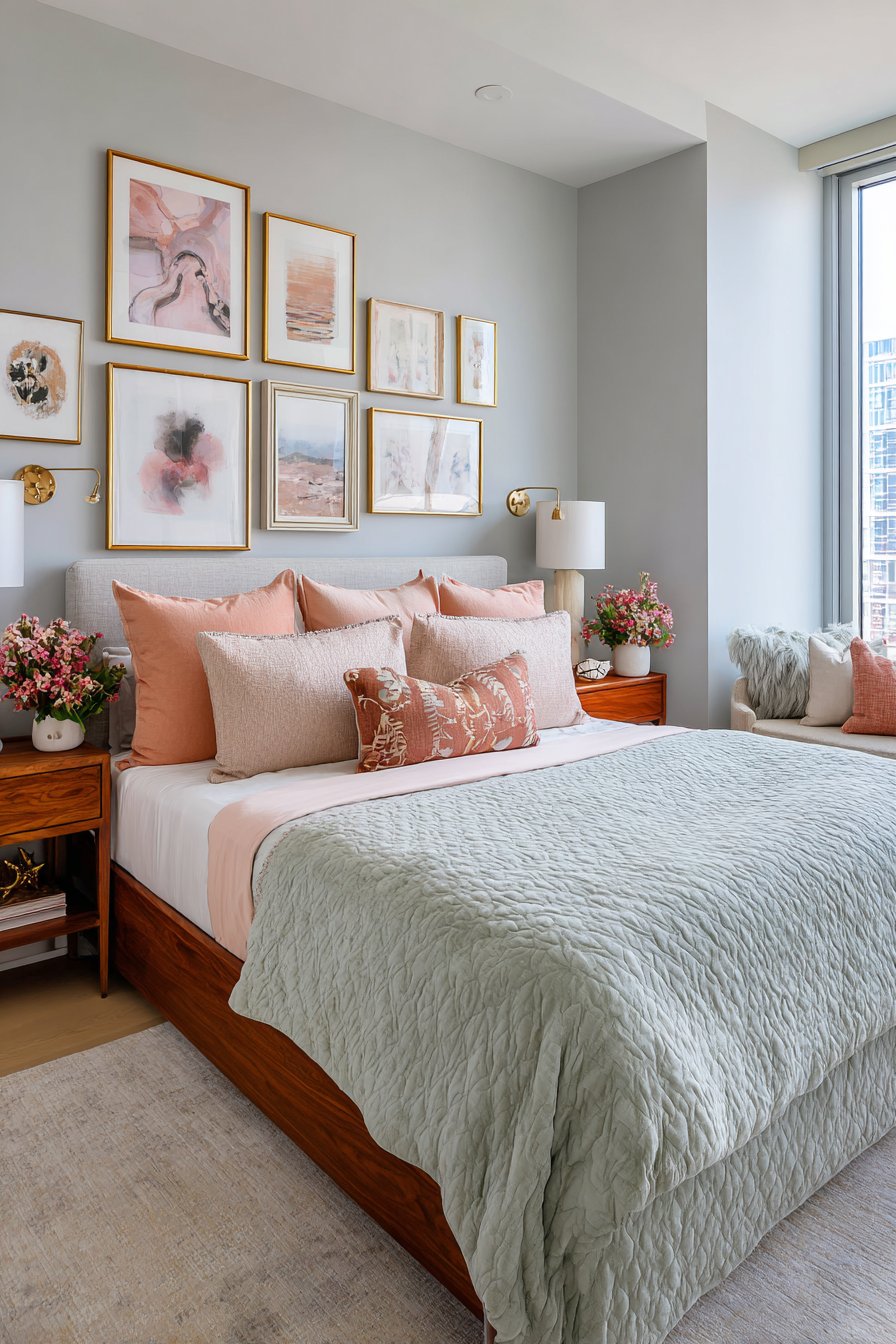
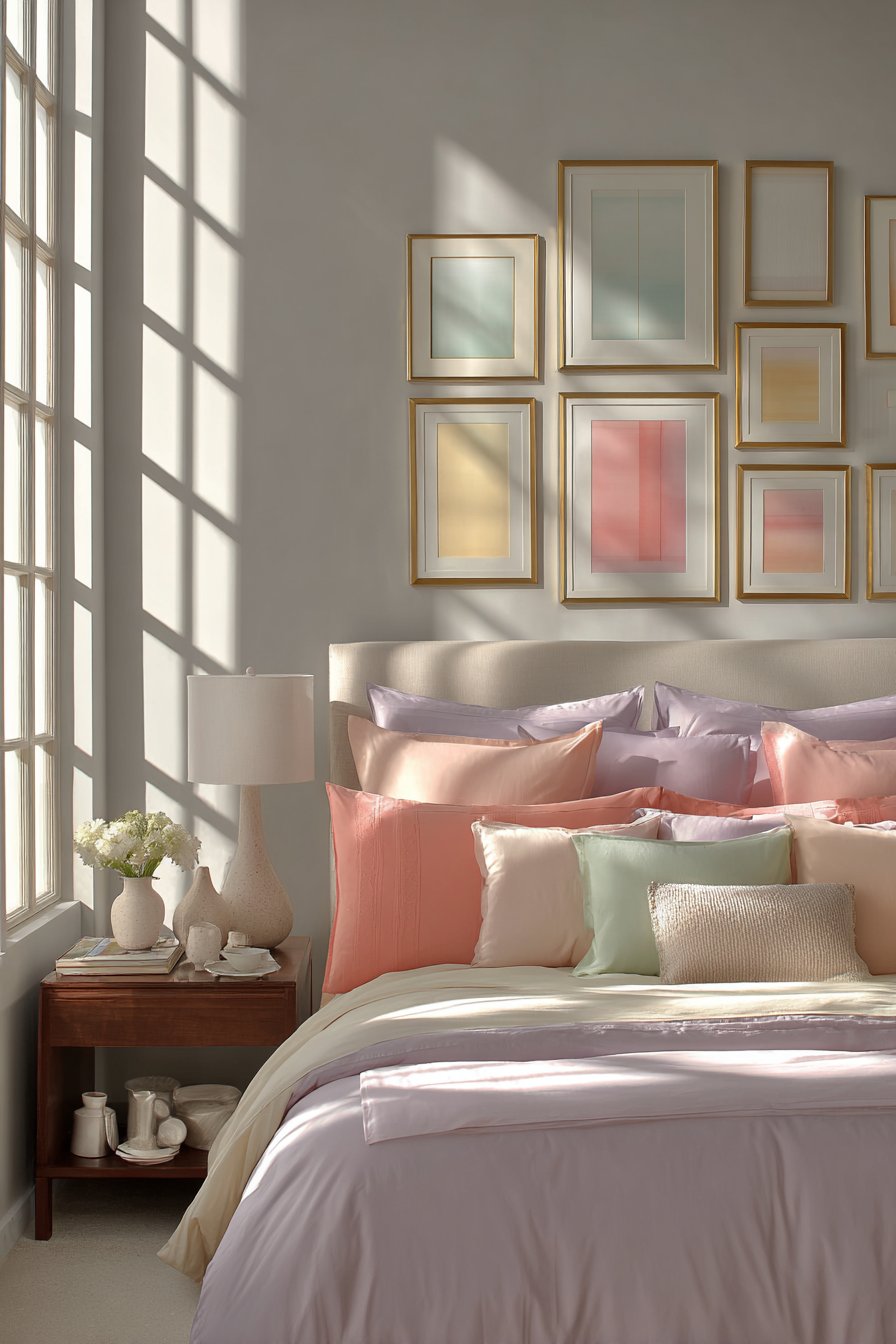
A thoughtfully arranged gallery wall creates personalized artistic impact. Various sized frames in brushed brass and white finishes display abstract art prints. The artwork features a coordinating pastel palette of blush pink, mint green, soft coral, and pale lavender. The palest shade of warm gray wall color provides subtle contrast.
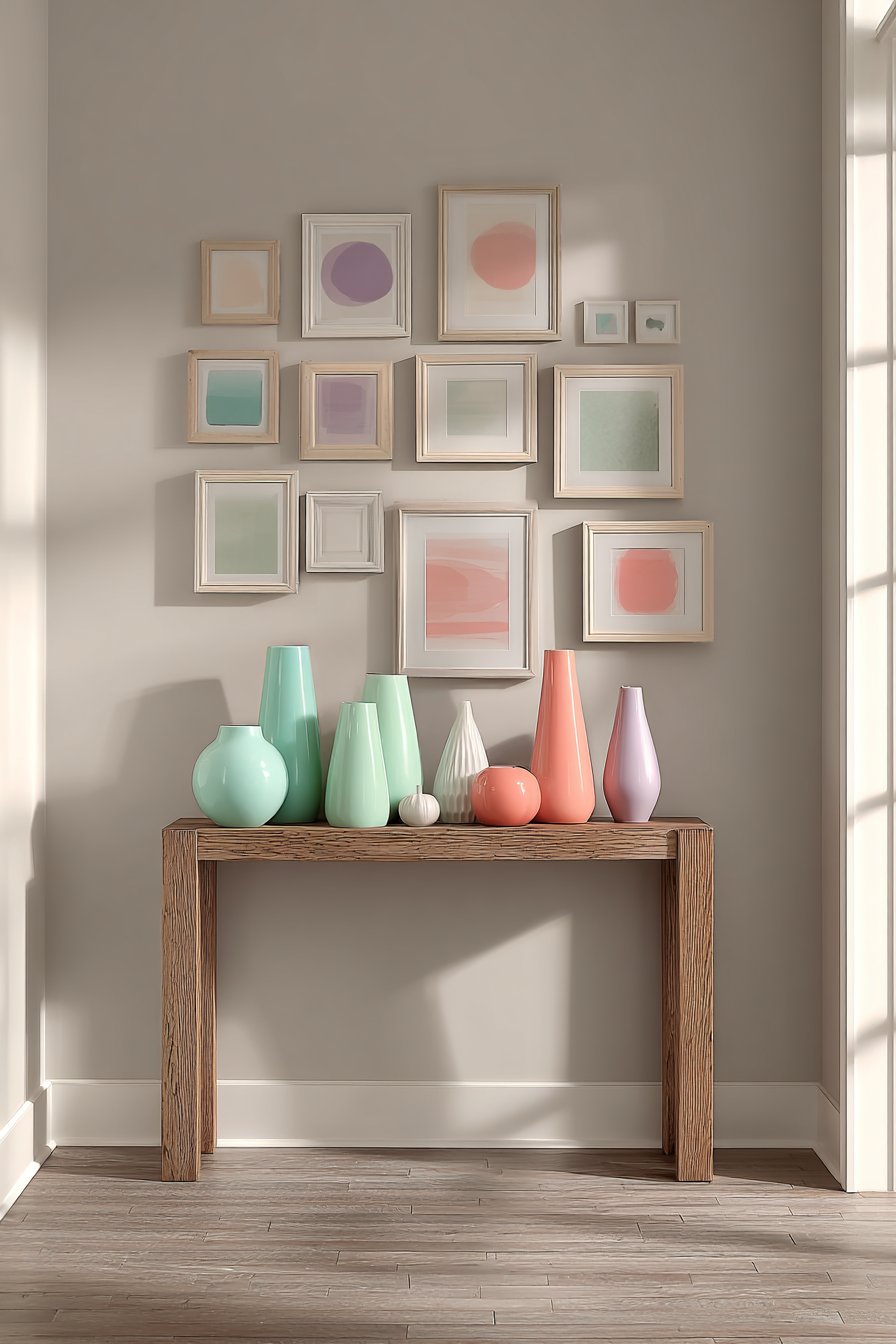
Below the gallery wall, a narrow console table in light walnut displays decorative objects. Ceramic vases and accessories in complementary pastel tones continue the color story. The console grounds the wall arrangement while providing functional surface space. Each displayed object receives careful selection for color and form.
Natural side lighting creates dimensional shadows that give depth to the gallery display. The shadows change throughout the day as light angles shift. This dynamic quality keeps the wall arrangement visually interesting. Professional attention to lighting placement ensures optimal presentation at all hours.
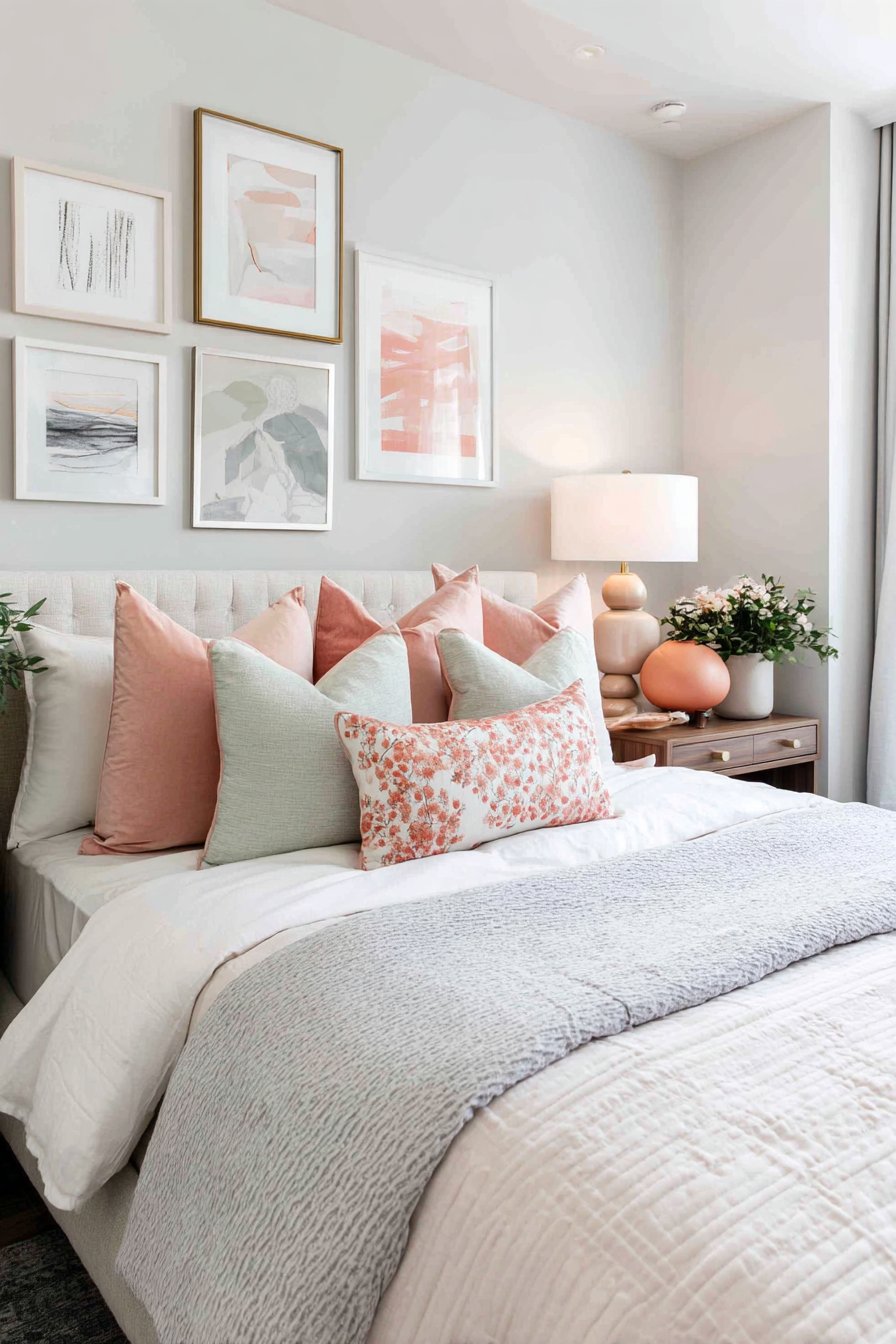
The curated arrangement demonstrates how to personalize modern spaces without cluttering. Each frame and artwork contributes to the overall composition deliberately. Spacing between frames follows professional gallery standards for visual balance. The result feels collected and intentional rather than randomly assembled.
Key Design Tips:
- Mix frame finishes in brass and white for contemporary variety
- Curate artwork with coordinating color palettes for cohesion
- Use warm gray walls to provide subtle contrast for displays
- Add console tables below gallery walls for grounding and function
- Consider natural lighting angles when positioning wall art
- Follow professional spacing standards for balanced arrangements
- Select decorative objects that continue the color story
11. Luxurious Textile Layering
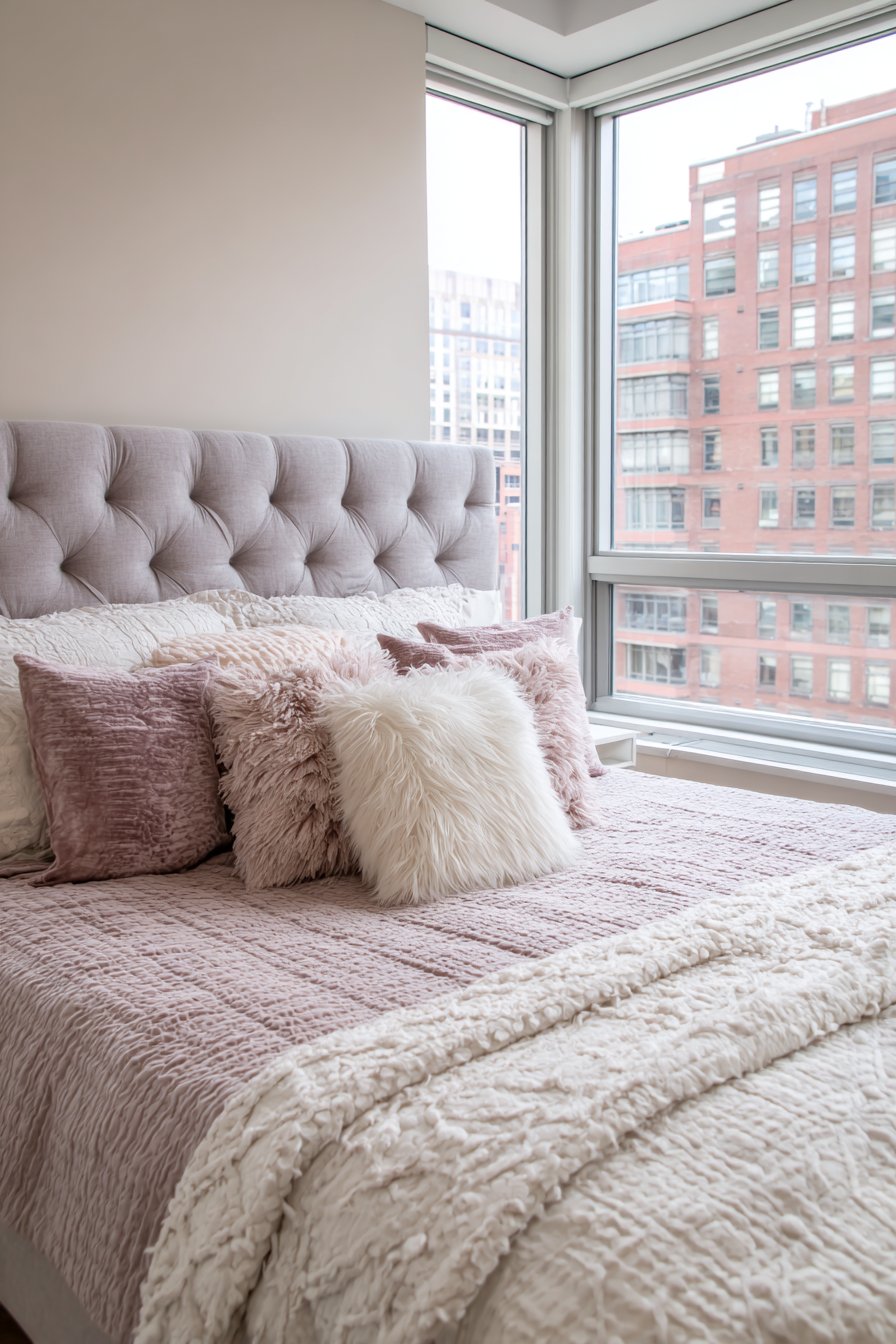
Dramatic textile layering creates rich sensory experiences through varied materials and colors. The bed features multiple throw blankets in different pastel textures. Waffle-weave cotton in mint provides casual comfort. Velvet in dusty rose adds luxurious softness. Linen in pale yellow offers breathable natural beauty. Faux fur in cream contributes cozy warmth.
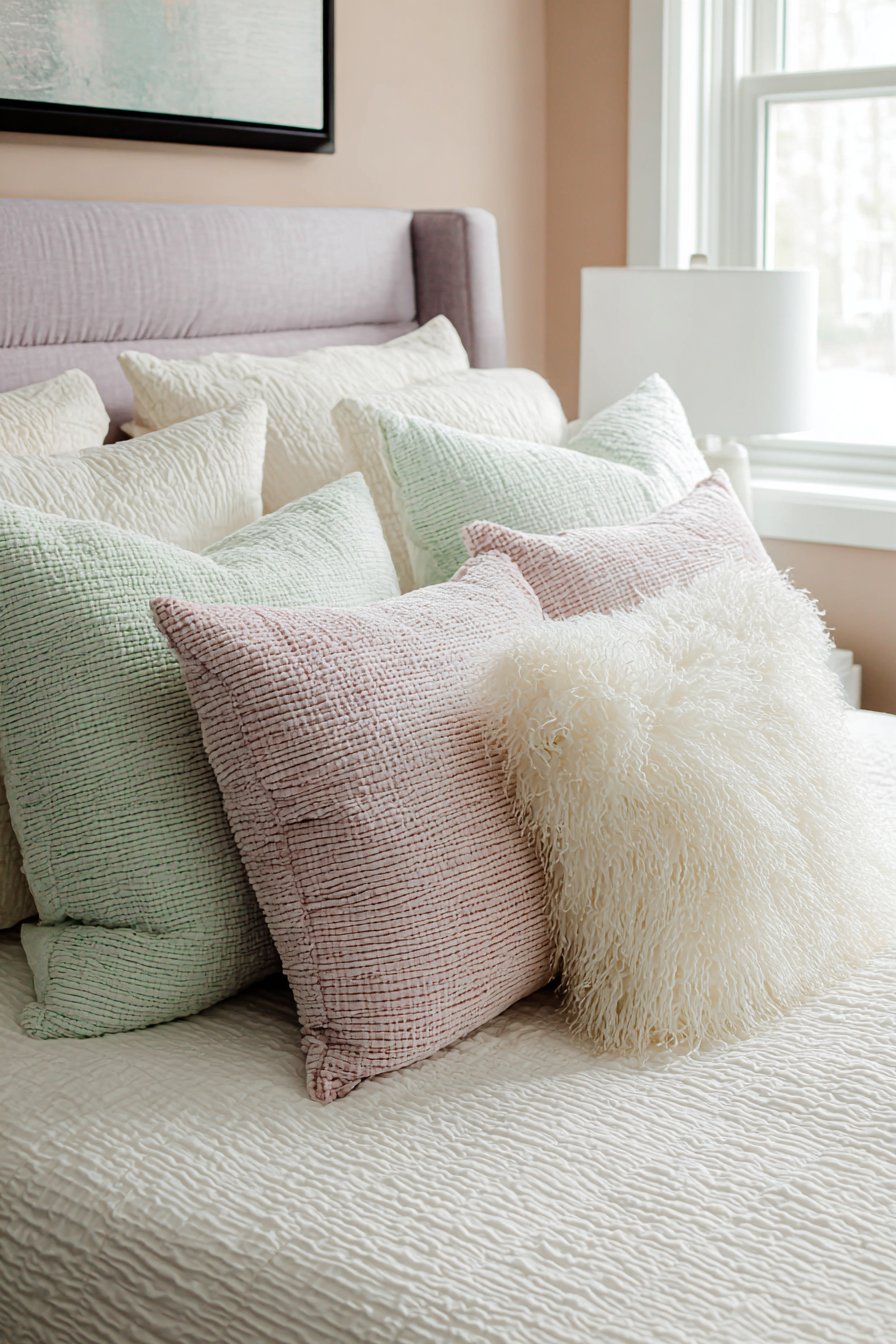
The upholstered headboard in soft lavender linen provides a neutral backdrop. This restraint allows the layered textiles to shine as the main attraction. Walls painted in barely-there peach create warmth without competing for attention. The subtle wall color supports rather than dominates the textile display.
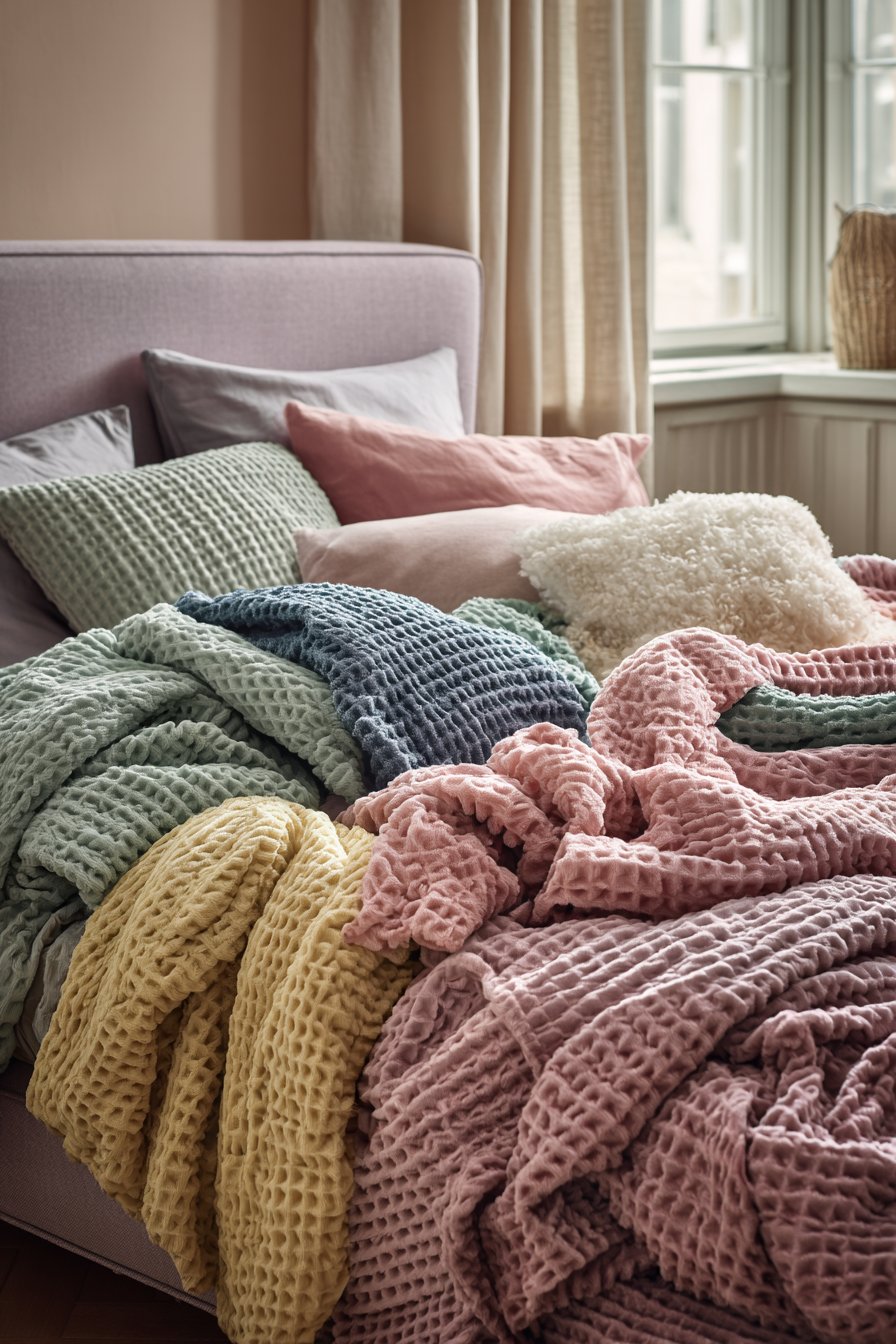
Professional photography captures how natural window light highlights varied textures. Each textile reflects and absorbs light differently based on its material properties. The velvet shows depth through light and shadow. The waffle-weave creates interesting surface patterns. These textural variations create visual richness.
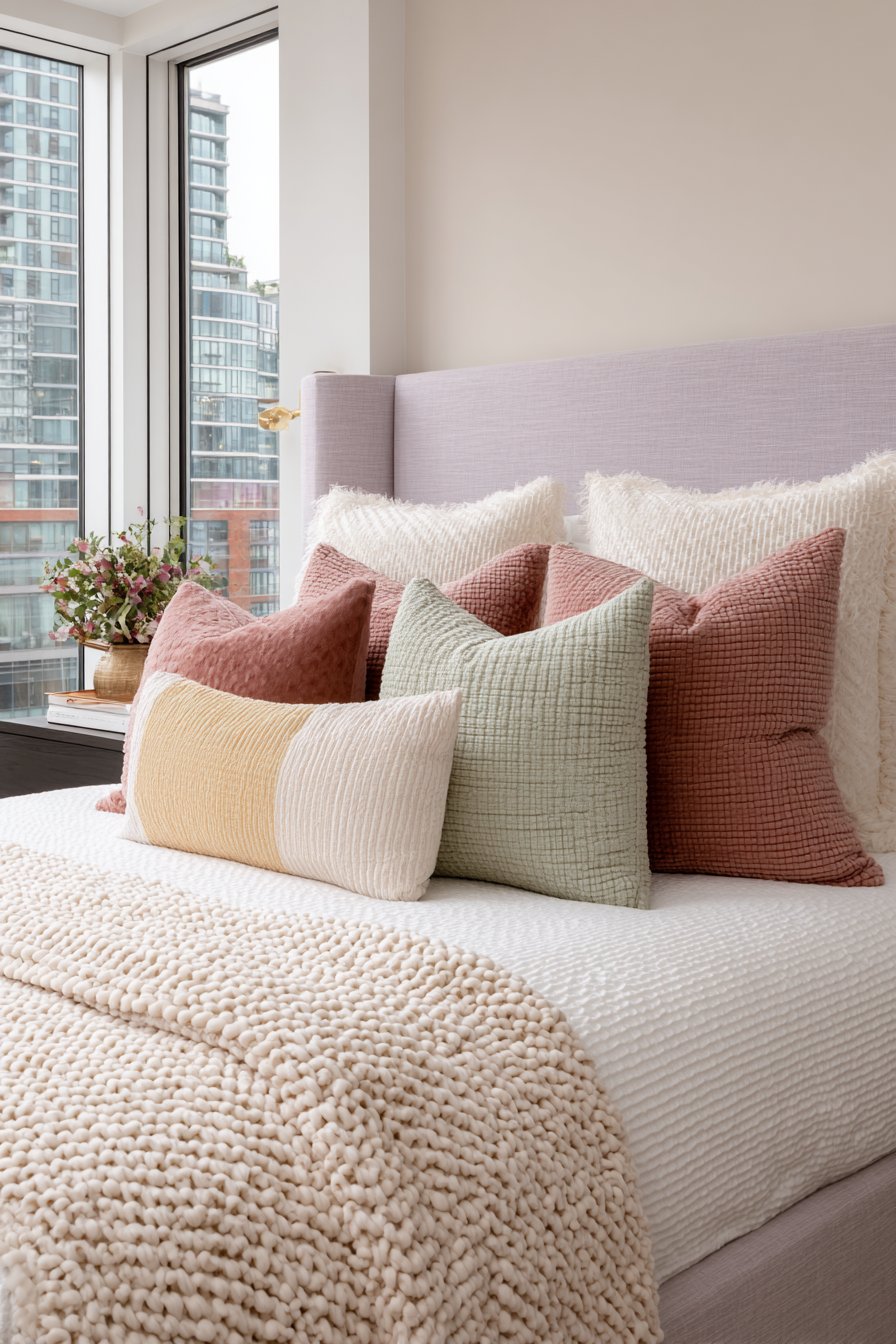
The layering technique demonstrates how to add personality through textiles affordably. Blankets and pillows offer flexibility for seasonal changes or mood shifts. This approach allows easy updates without major investments. The result achieves designer sophistication through thoughtful textile curation.
Key Design Tips:
- Layer multiple throw blankets in different textures and pastels
- Include waffle-weave, velvet, linen, and faux fur for variety
- Use neutral headboards when featuring busy textile arrangements
- Paint walls in barely-there tones to support rather than compete
- Position beds near windows to highlight textile textures naturally
- Change textile layers seasonally for freshness and variety
- Mix weights and materials for visual and tactile interest
12. Brass Four-Poster with Gauzy Canopy
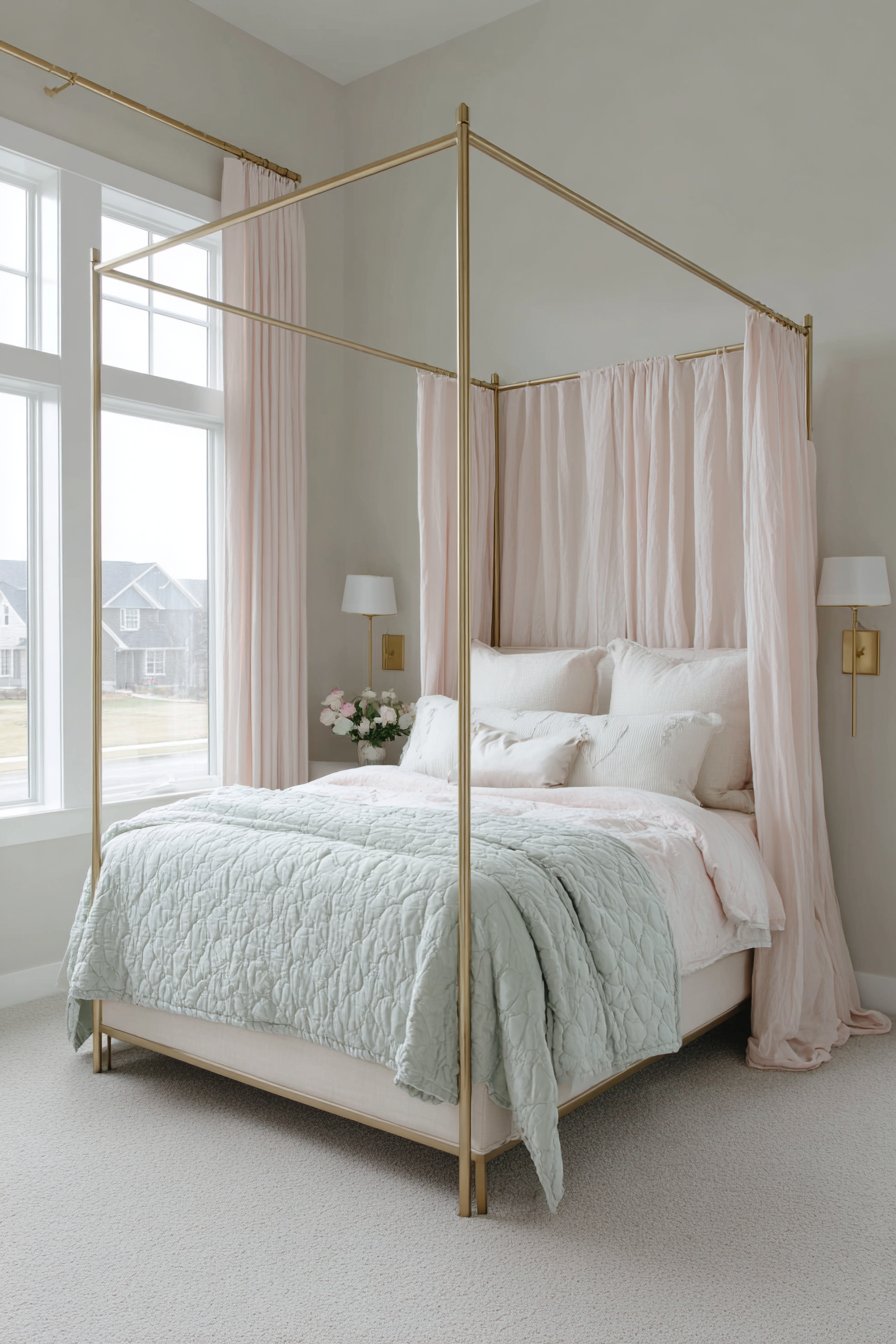
A contemporary four-poster bed frame in brushed brass creates romantic drama. Gauzy canopy curtains in soft blush pink filter light and create an ethereal atmosphere. The sheer fabric provides privacy suggestion without heavy enclosure. Crisp white bed linens with quilted coverlet in pale seafoam green maintain freshness.
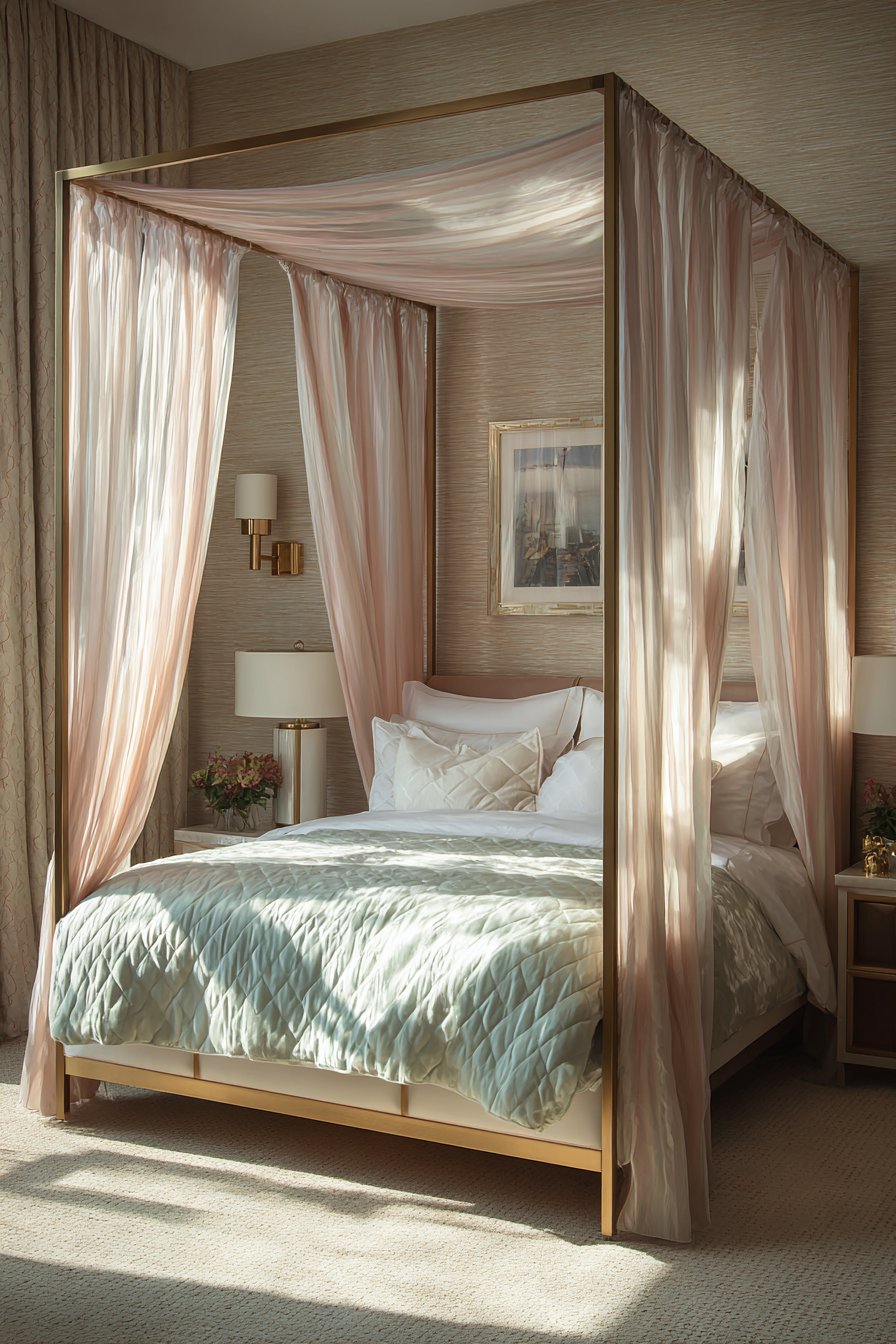
Matching brass wall sconces with white linen shades flank the bed symmetrically. The coordinated finish creates cohesive metal presence throughout the space. Grasscloth wallpaper in natural tone with subtle texture covers the surrounding walls. The wallpaper adds organic warmth and sophisticated texture simultaneously.
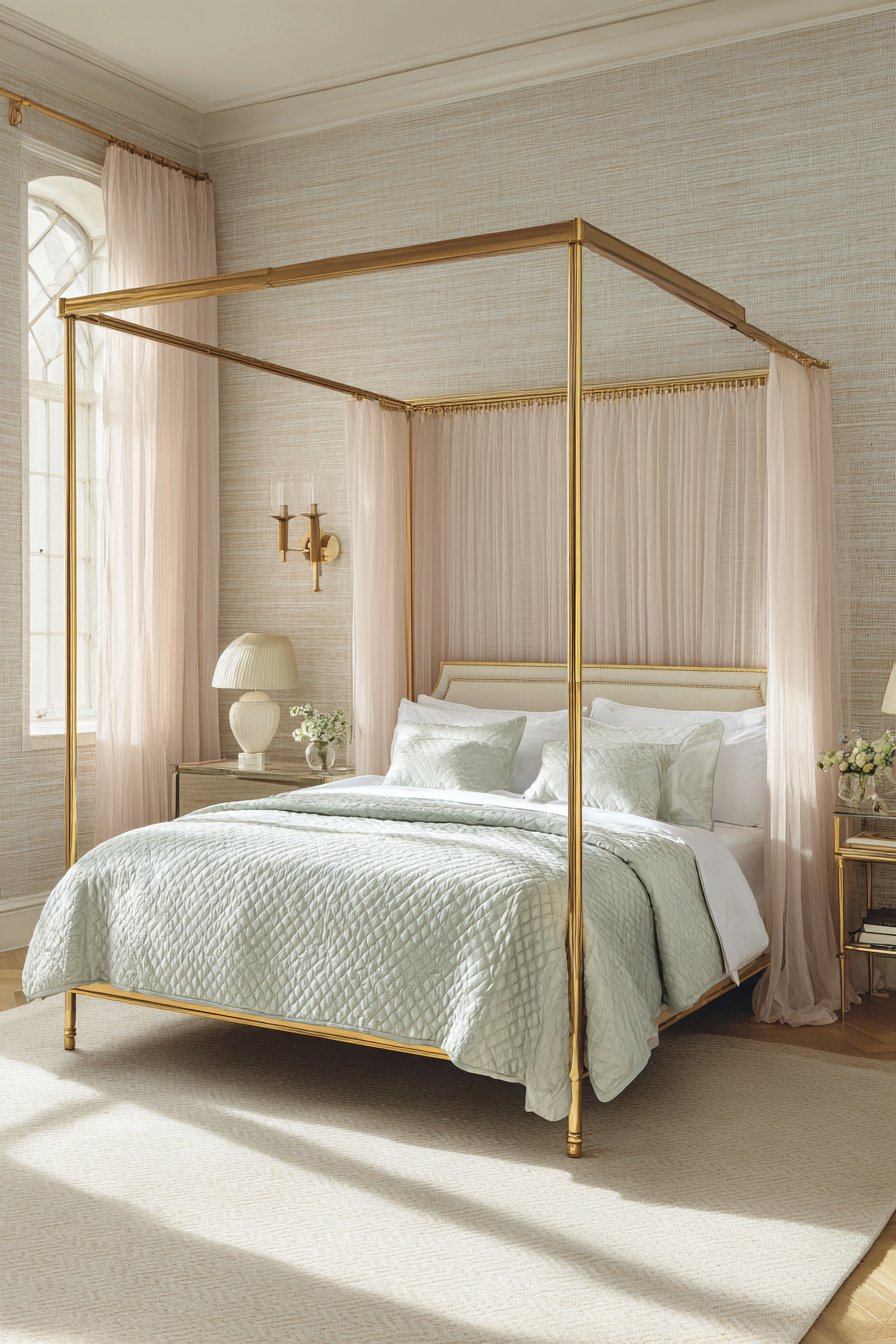
The bed’s vertical drama draws eyes upward and emphasizes ceiling height. The four-poster structure frames the sleeping area as a distinct zone. This framing creates psychological comfort and spatial definition. The brass finish reflects light beautifully throughout the day.
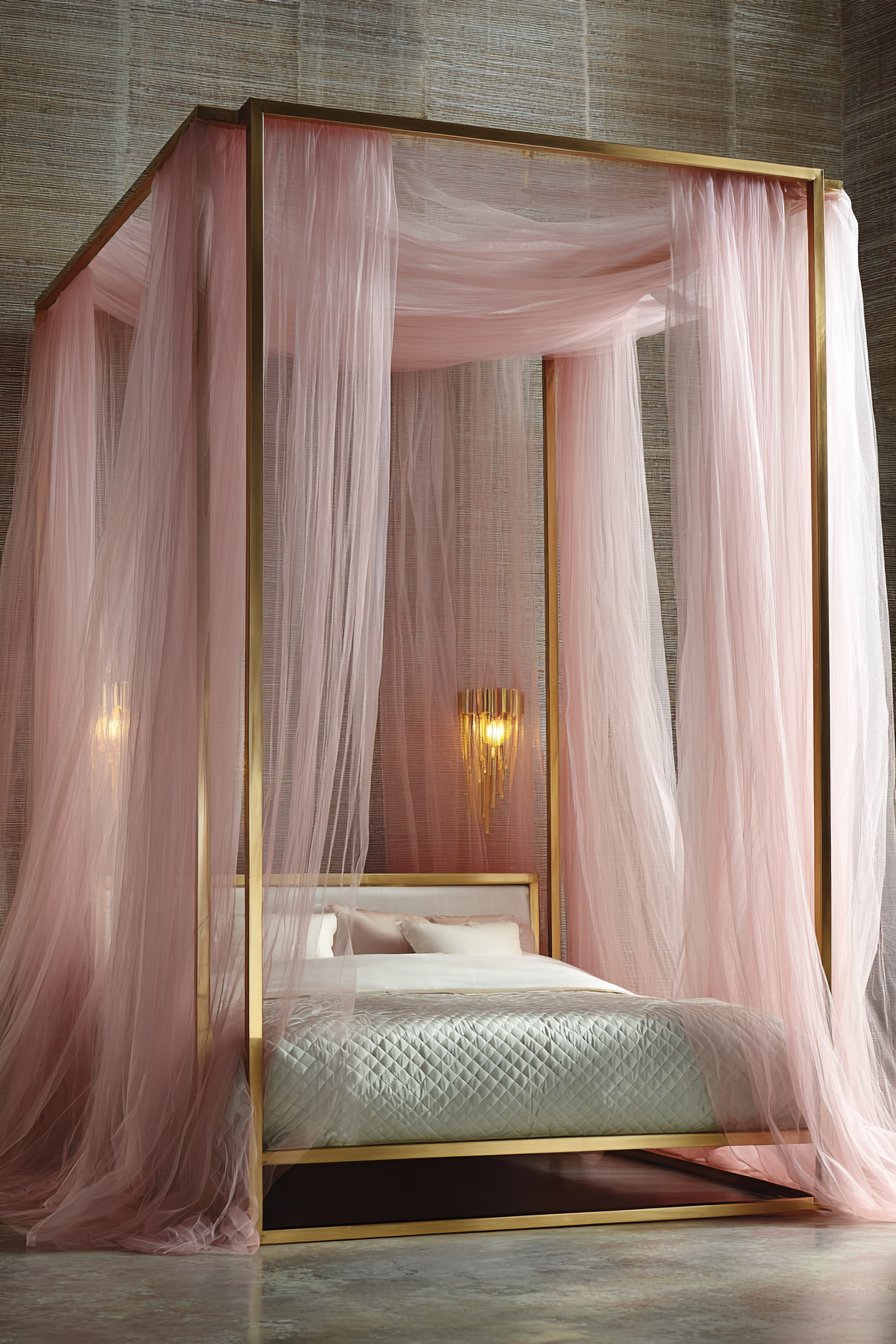
Professional photography captures how sheer fabric filters and diffuses light. The canopy creates soft shadows and gentle light effects across bedding. Natural lighting from nearby windows complements the canopy’s light-filtering properties. The combination achieves romantic ambiance without sacrificing modern sensibilities.
Key Design Tips:
- Use brass four-poster frames for contemporary romantic impact
- Add gauzy canopy curtains for ethereal light filtering effects
- Choose crisp white linens to balance romantic canopy treatments
- Install matching brass sconces for cohesive metal presence
- Apply grasscloth wallpaper for natural texture and warmth
- Consider how canopies frame sleeping areas as distinct zones
- Balance romantic elements with contemporary furniture lines
13. Ombre Wall Gradient Technique
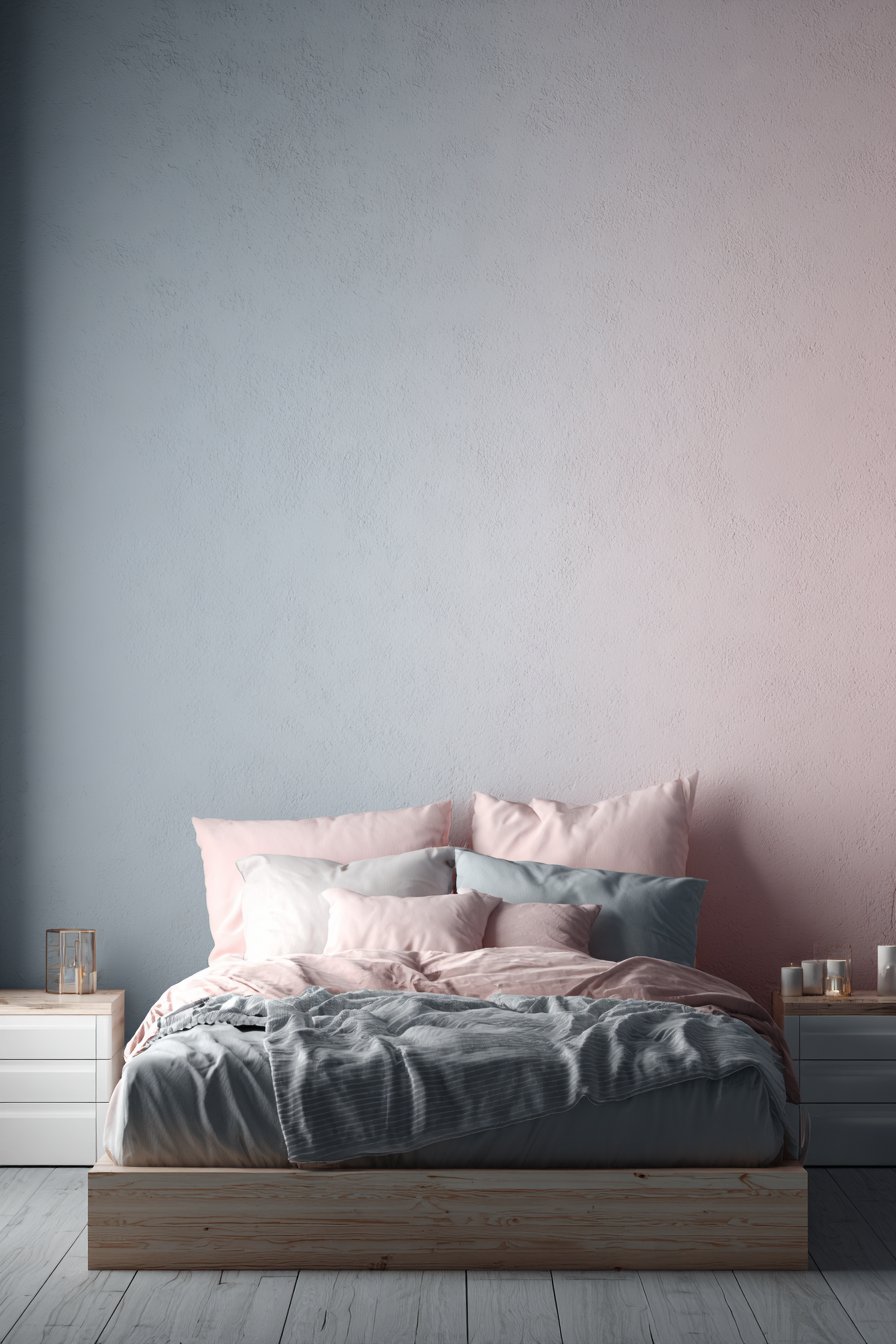
Sophisticated color transition creates stunning visual impact through ombre paint application. Three walls showcase a gradual color shift from pale lavender at ceiling to soft periwinkle at floor. The technique requires professional skill for seamless tonal transitions. Contemporary furniture in white lacquer and natural oak provides clean contrast.
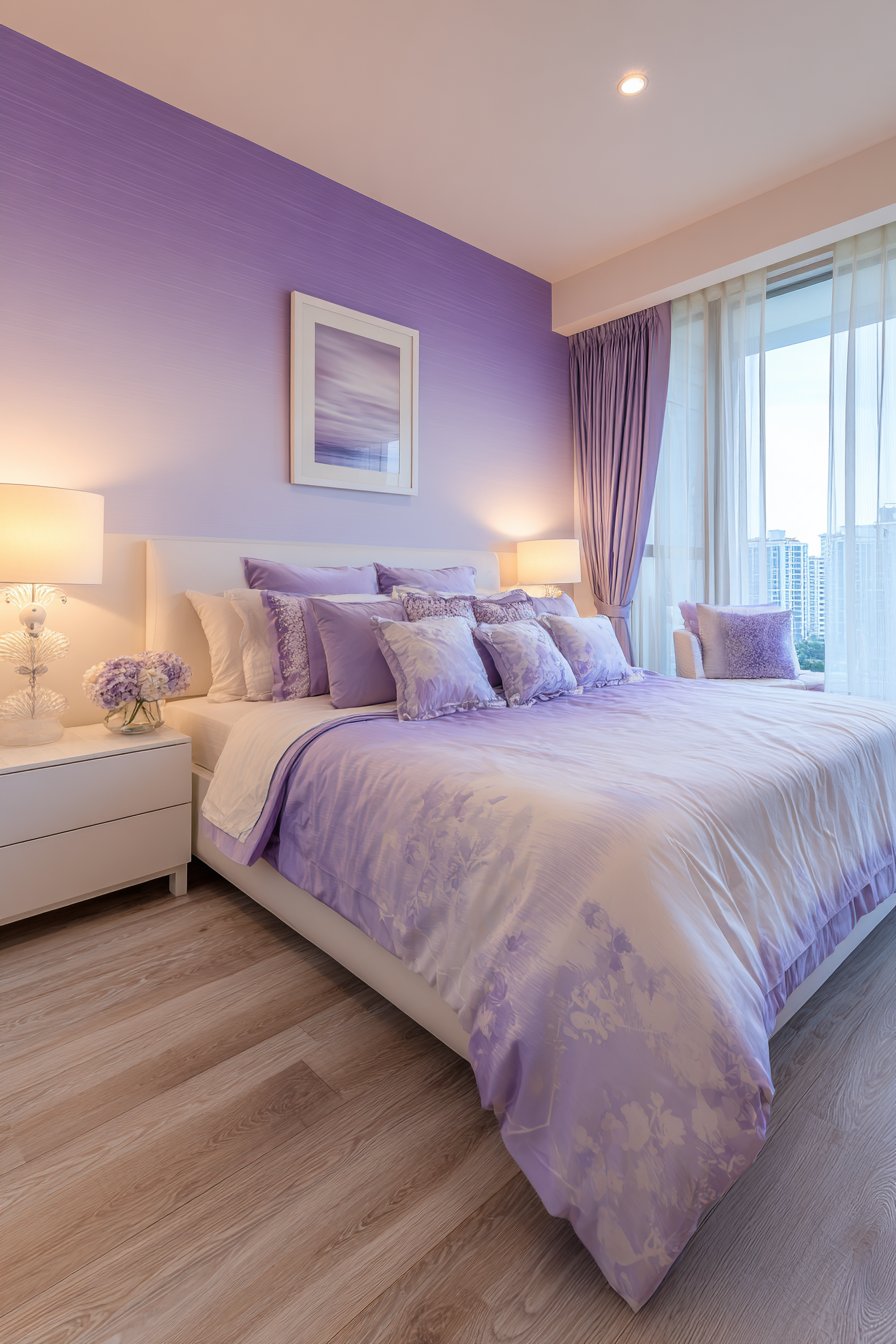
A modern platform bed with integrated side tables features pastel bedding layers. The bedding shades complement the wall treatment beautifully. Each textile selection considers the room’s overall color gradient. The furniture maintains simplicity to let the walls become the primary feature.
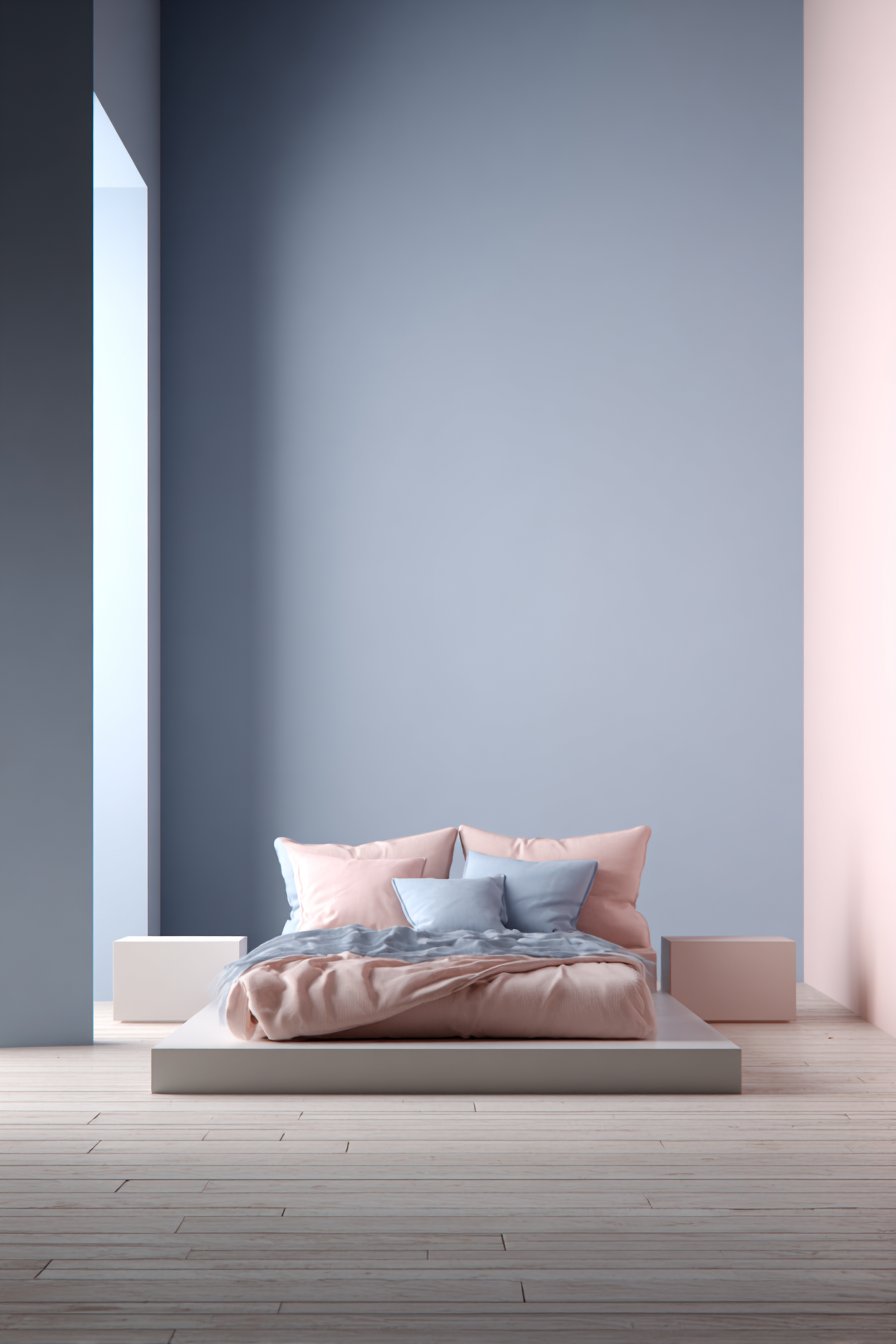
Professional photography captures the full room height and the gradient effect comprehensively. Even natural lighting reveals the subtle tonal shifts in paint application. The ombre technique demonstrates how color can create architectural interest affordably. No structural changes achieve this dramatic transformation effect.
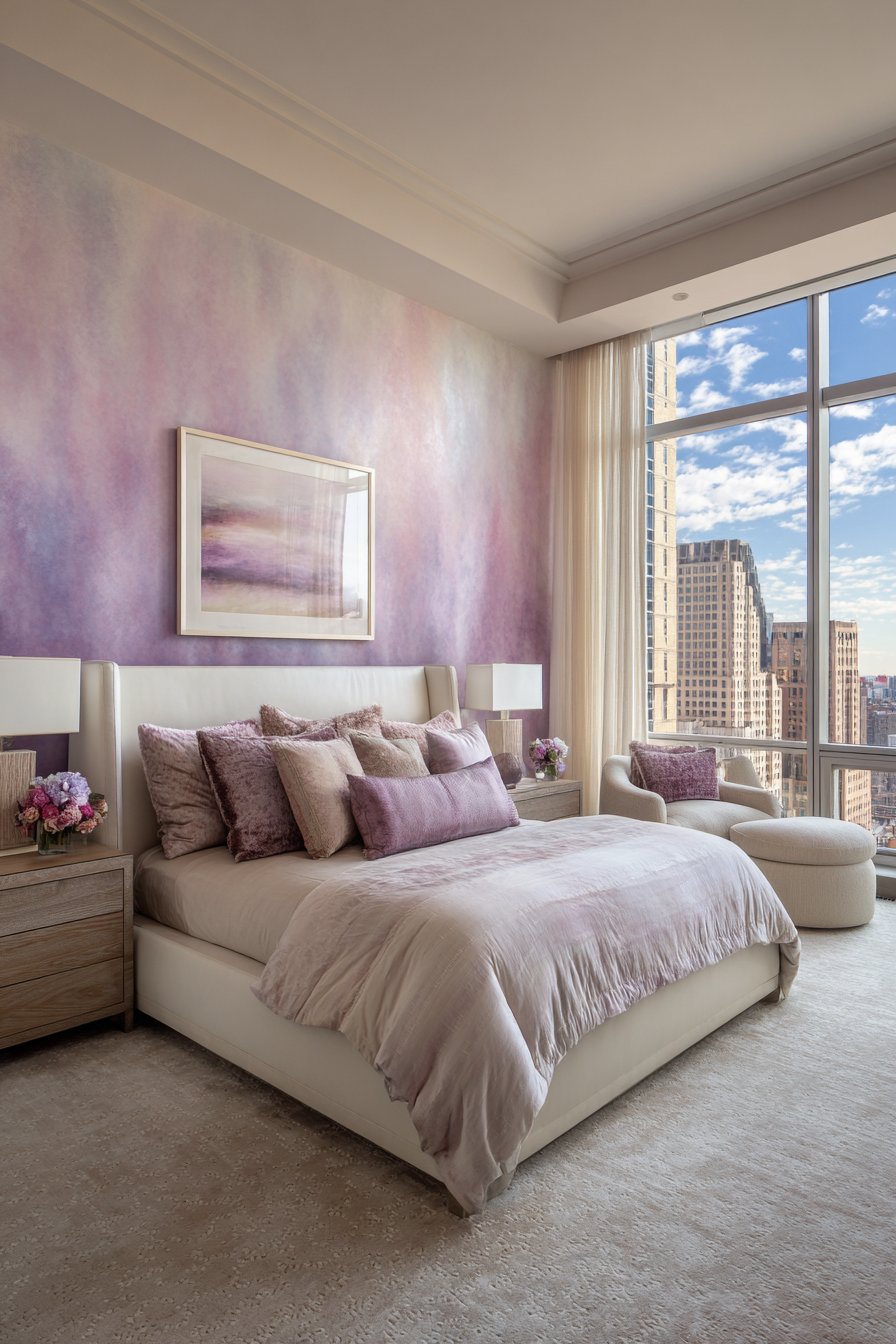
The gradient creates sense of height by drawing eyes from floor to ceiling. The lighter tones at the top make ceilings feel higher. The deeper floor tones ground the space psychologically. This technique particularly benefits rooms with standard ceiling heights.
Key Design Tips:
- Hire professionals for seamless ombre paint application
- Choose colors within same family for smooth transitions
- Keep furniture simple when walls feature dramatic color effects
- Select bedding that complements the gradient color range
- Use even lighting to reveal subtle tonal shifts properly
- Consider how gradients affect perceived ceiling height
- Apply ombre to three walls while keeping the fourth neutral
14. Styled Nightstand Vignette
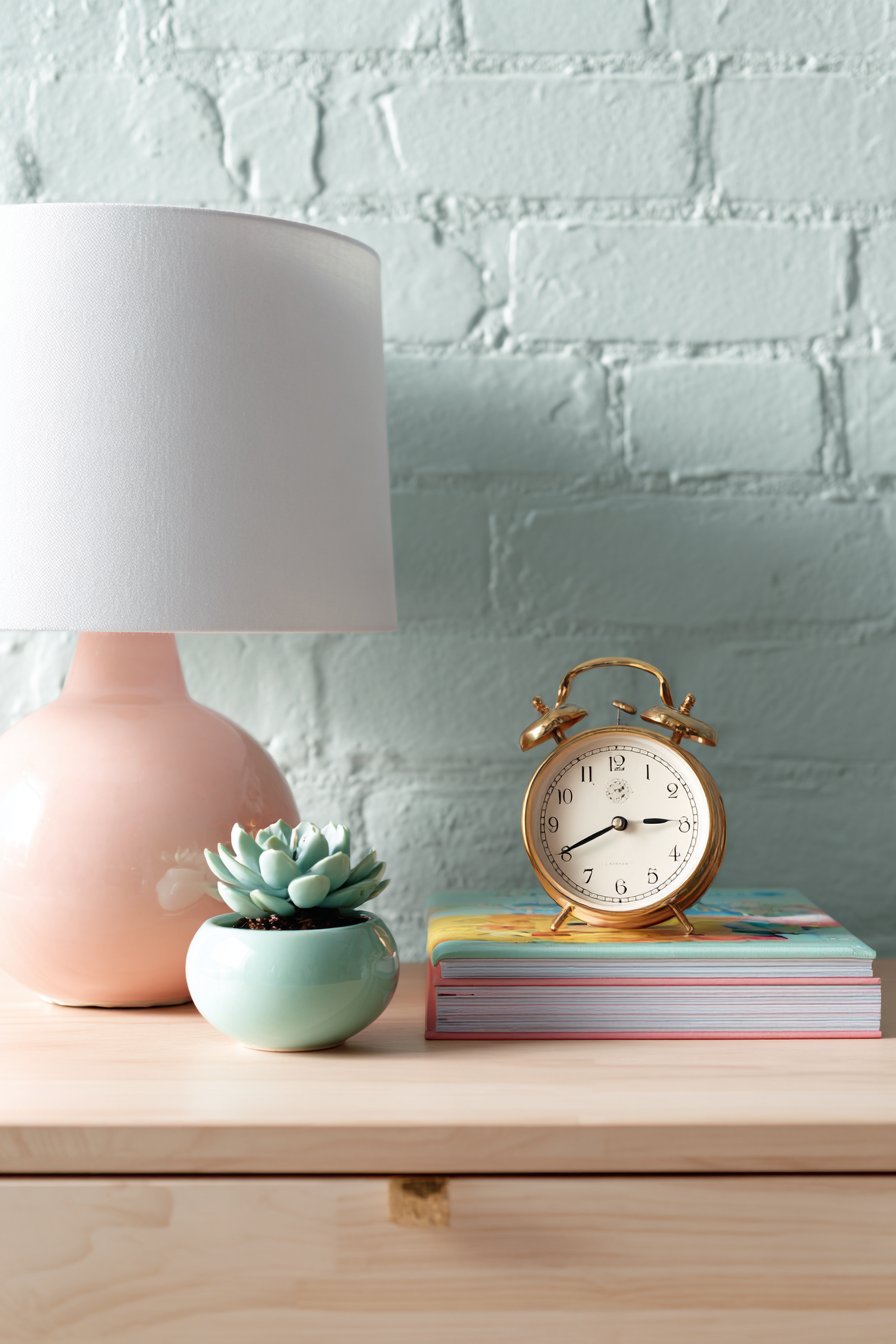
Careful curation transforms functional surfaces into beautiful displays. A contemporary table lamp features a ceramic base glazed in soft coral. The white drum shade provides practical illumination while maintaining clean aesthetics. Light oak nightstand surface offers warm natural backdrop for styled objects.
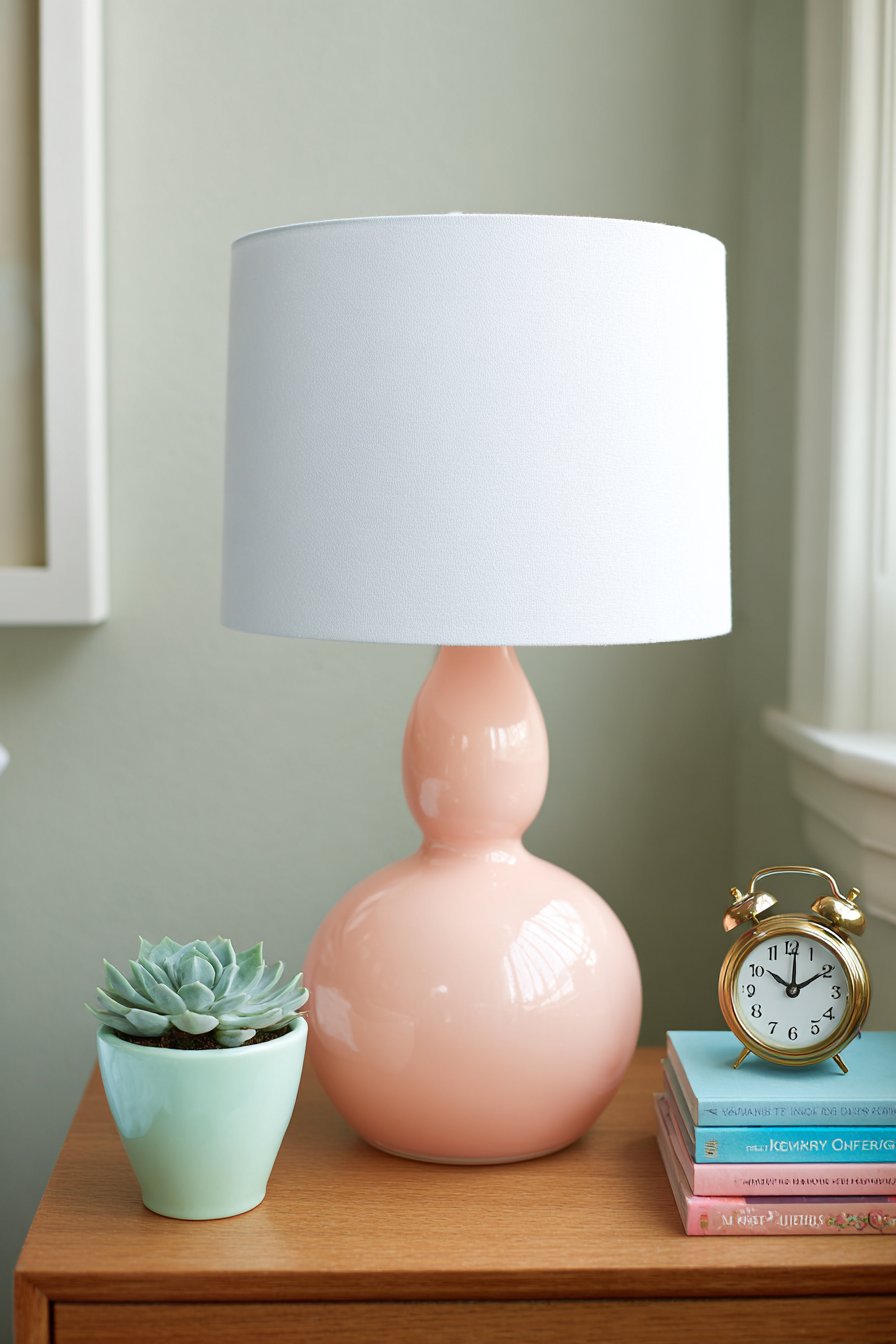
A small succulent in mint green ceramic pot adds living element. The plant brings organic shape and natural color to the arrangement. A vintage-inspired brass alarm clock contributes functional elegance. Art books with pastel-colored spines provide color and intellectual suggestion. Each item receives deliberate selection and placement.
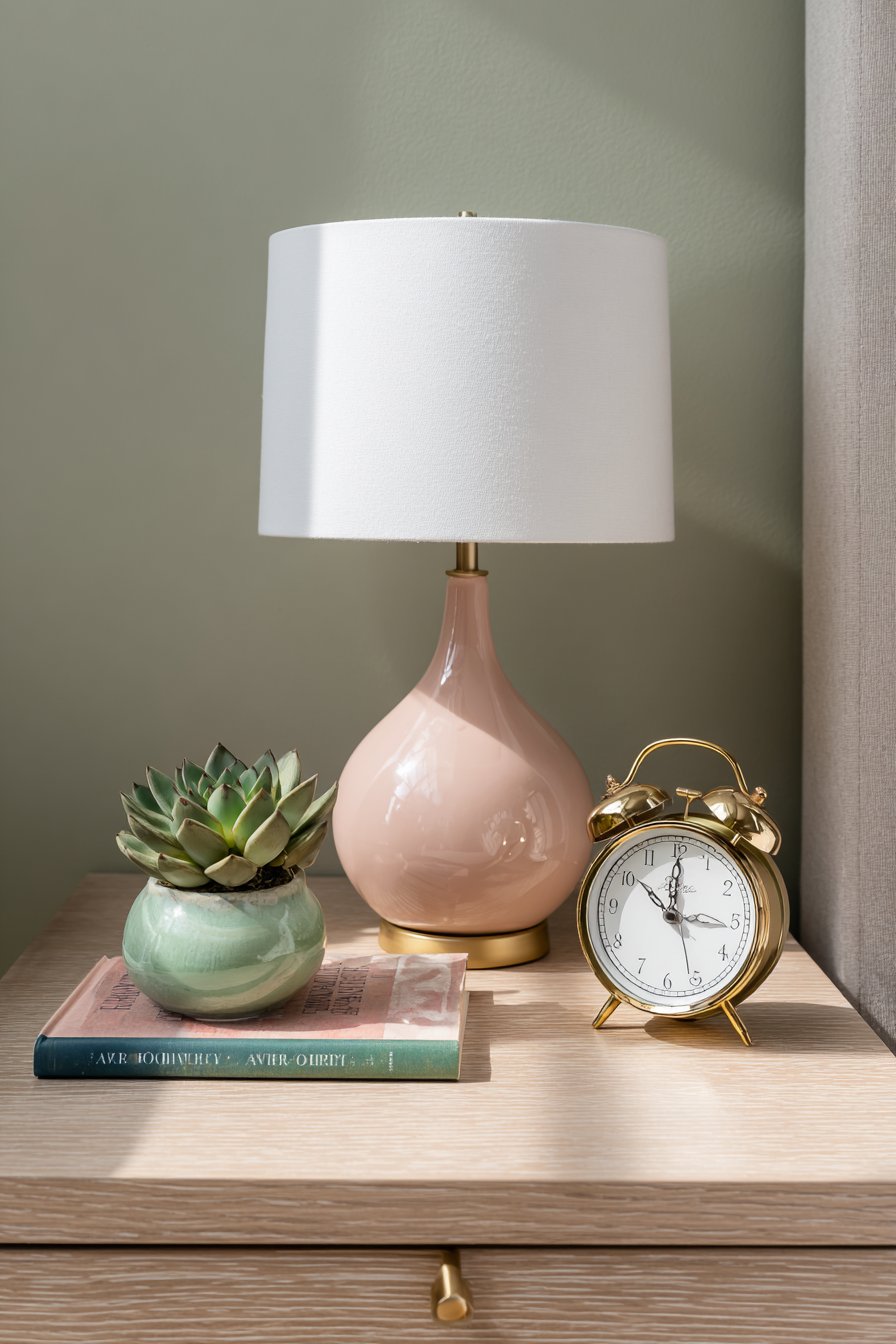
The wall section behind shows pale sage paint with visible brush texture. This subtle texture adds depth without pattern distraction. Natural light creates soft highlights on varied materials and surfaces. The combination of ceramic, brass, plant material, and wood creates rich material dialogue.
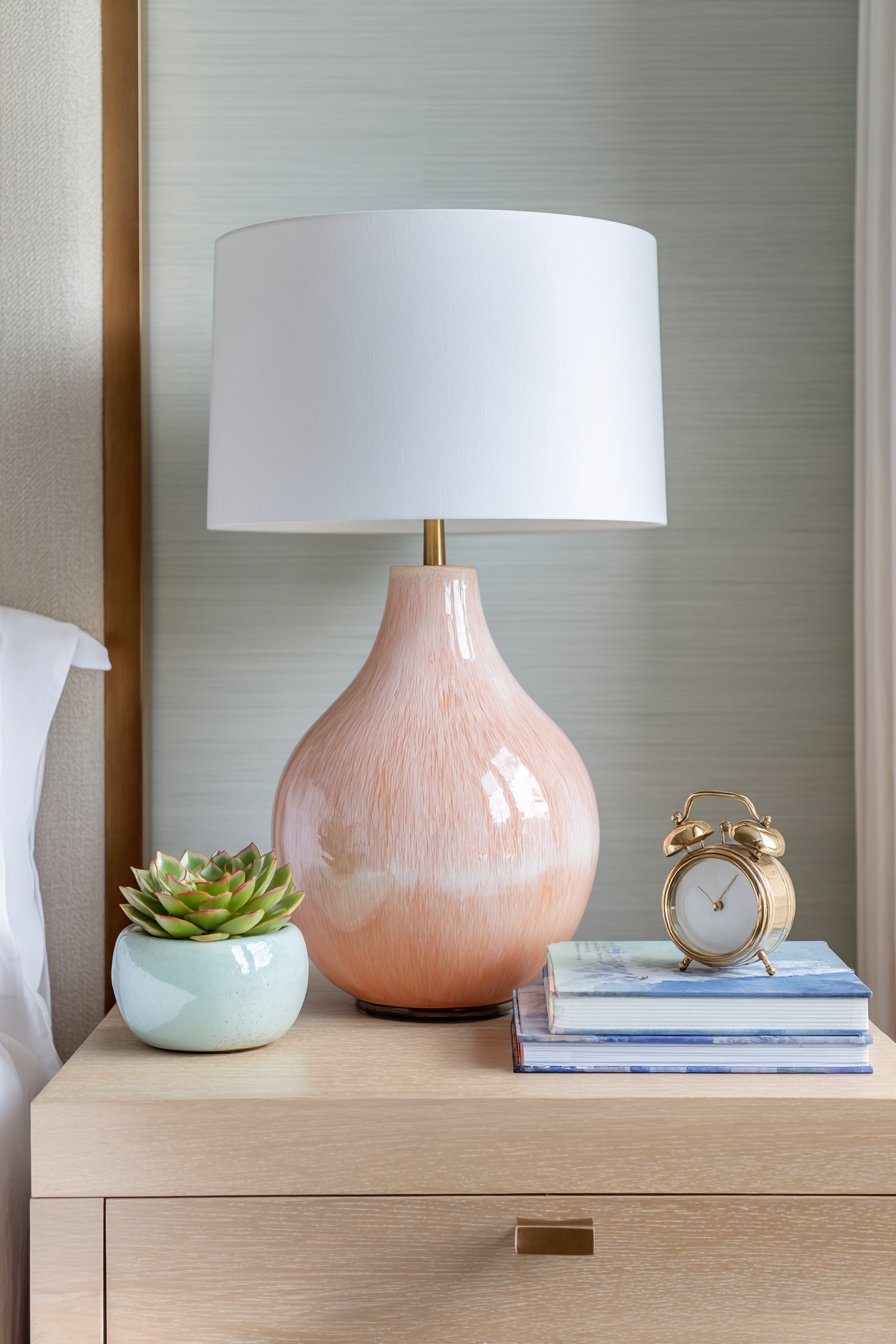
Professional macro-style photography captures the carefully curated arrangement intimately. This close perspective reveals details often overlooked in wider shots. The vignette demonstrates how small-scale styling contributes to overall room impact. Attention to these details separates amateur from professional design execution.
Key Design Tips:
- Curate nightstand displays with intention rather than random placement
- Include living plants for organic shapes and natural color
- Mix materials like ceramic, brass, wood, and paper for richness
- Choose lamp bases in pastel glazes for color coordination
- Add functional items like clocks that also serve aesthetic purposes
- Consider book spine colors when selecting display volumes
- Use macro perspectives to appreciate small-scale styling details
15. Three-Dimensional Geometric Paneling
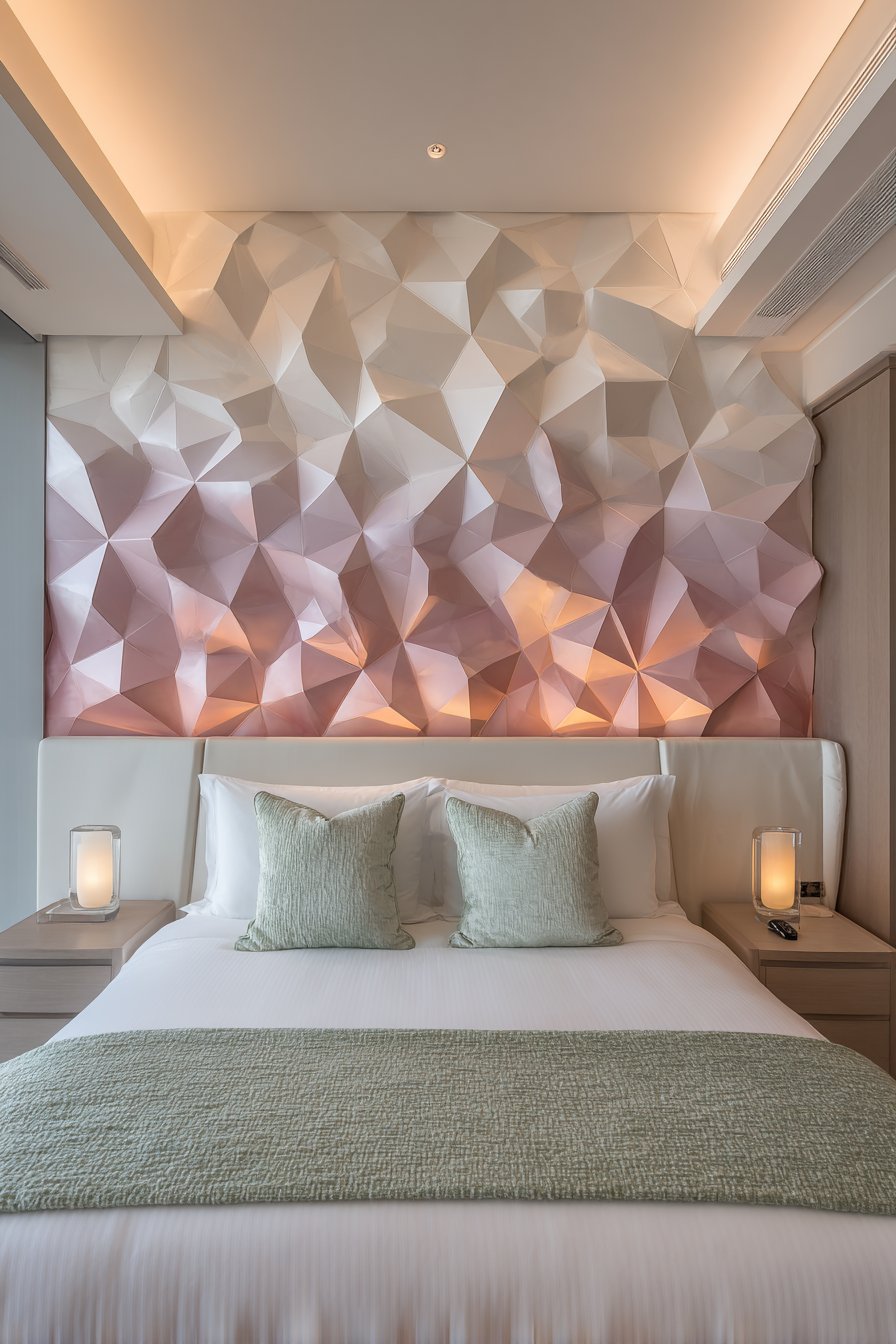
Innovative wall treatment creates architectural interest through geometric relief. Three-dimensional wood paneling features graduating pastel tones vertically. Soft pink at top transitions through peach in middle to pale coral at bottom. The color graduation creates subtle visual movement and depth.
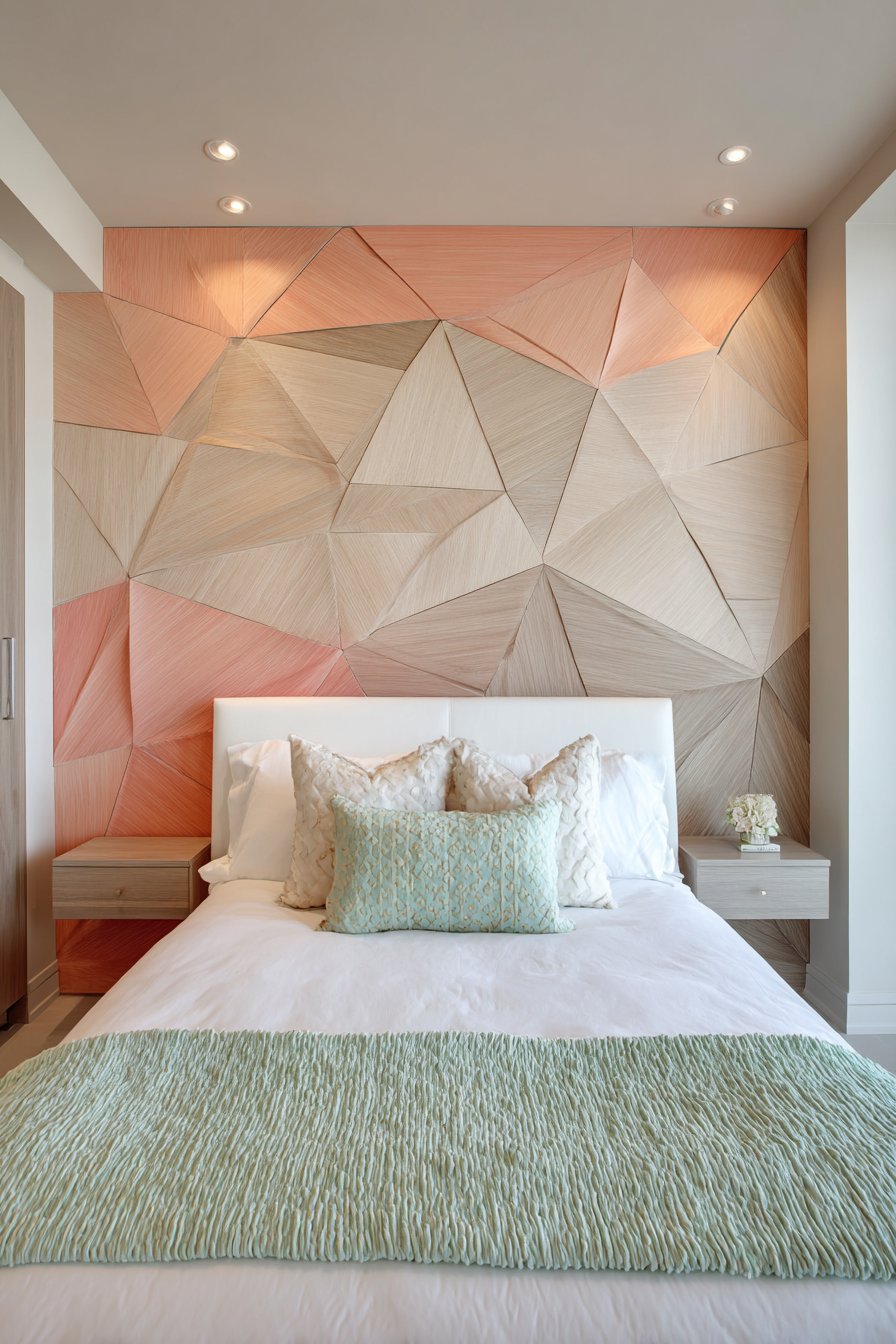
A streamlined bed with white upholstered headboard centers against this feature wall. The neutral headboard allows the architectural wall to command attention. Minimal bedding in crisp white maintains simplicity. One textured throw in complementary mint green adds controlled color accent.
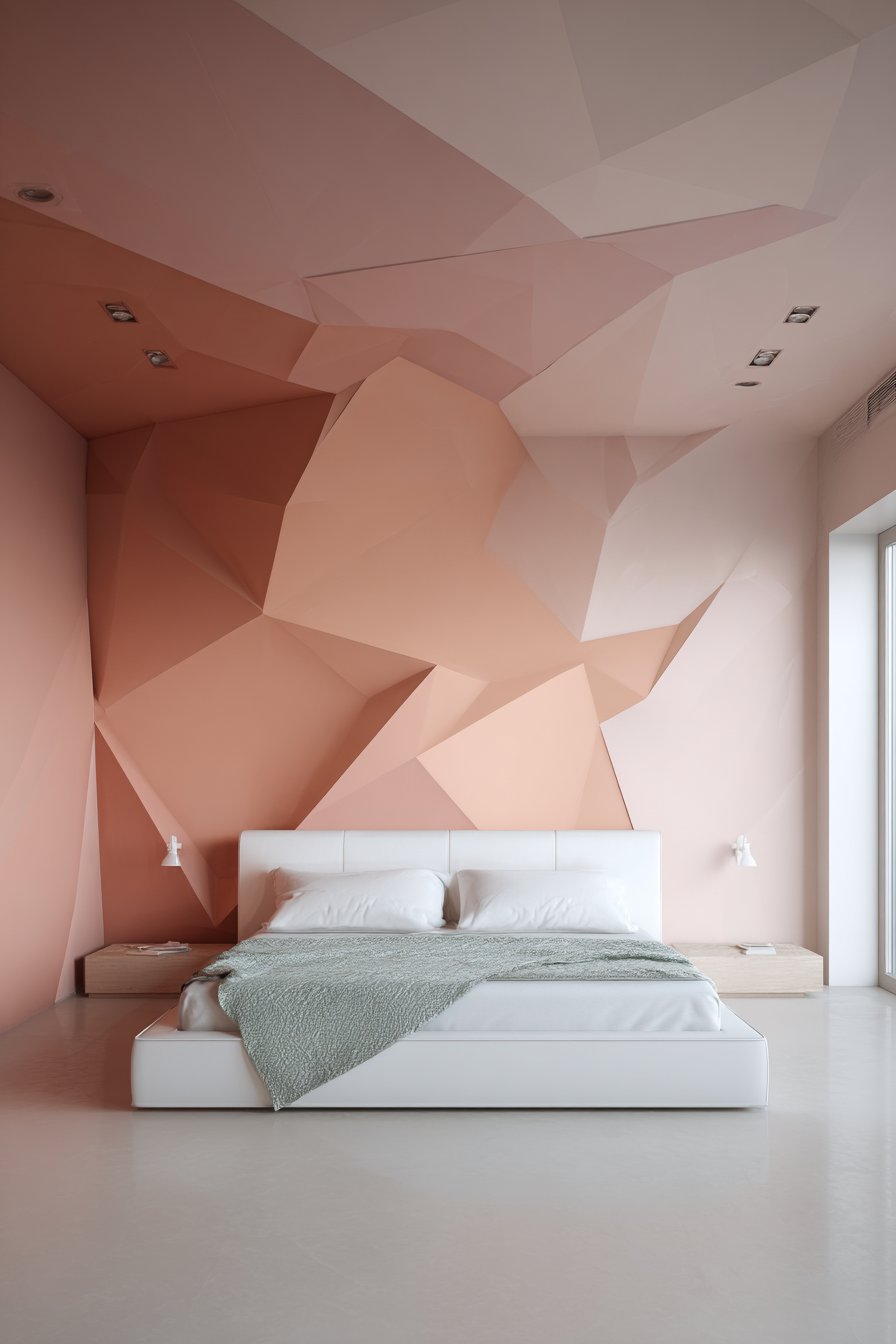
Strategic placement of recessed lighting creates shadows, emphasizing geometric relief. The lighting design considers how shadows define the three-dimensional elements. This attention to light and shadow transforms flat surfaces into sculptural features. The effect changes throughout the day with natural lighting shifts.
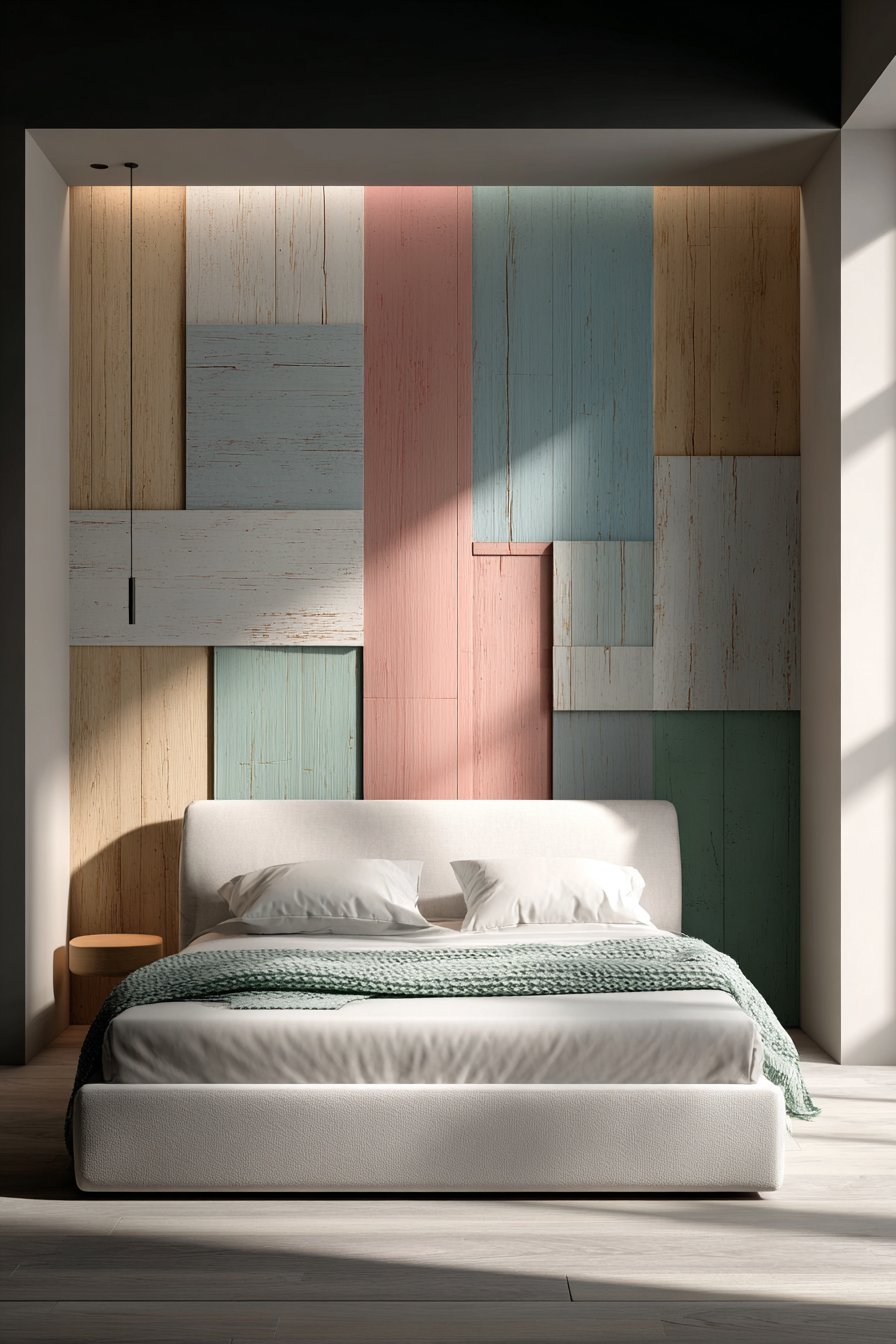
The architectural wall detail demonstrates how to add interest without permanent structural changes. The paneling installs over existing walls relatively easily. This approach offers dramatic impact with reasonable investment. The result achieves custom architectural character affordably.
Key Design Tips:
- Install three-dimensional paneling for architectural depth and interest
- Use graduating pastel tones vertically for subtle color movement
- Center neutral furniture against decorative feature walls
- Add recessed lighting to emphasize geometric relief through shadows
- Keep bedding minimal when walls provide visual interest
- Consider how natural and artificial lighting affects three-dimensional features
- Choose matte paint finishes for a sophisticated pantel presentation
16. Floor-to-Ceiling Closet System
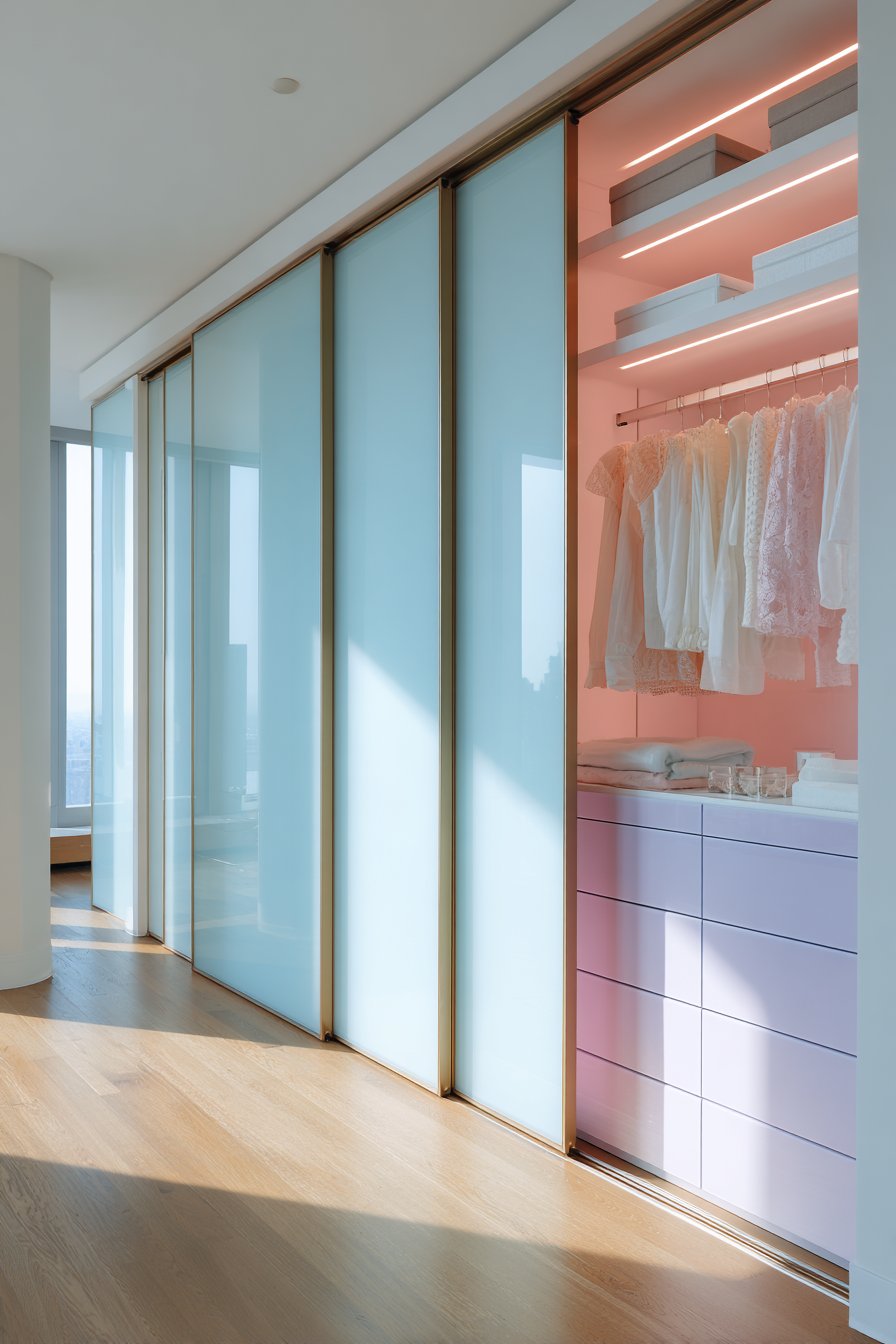
Practical luxury emerges through sophisticated storage design. Frosted glass sliding doors with brushed aluminum frames span one full wall. Soft internal LED lighting reveals organized clothing in pastel tones. The translucent quality creates visual interest while concealing contents partially.
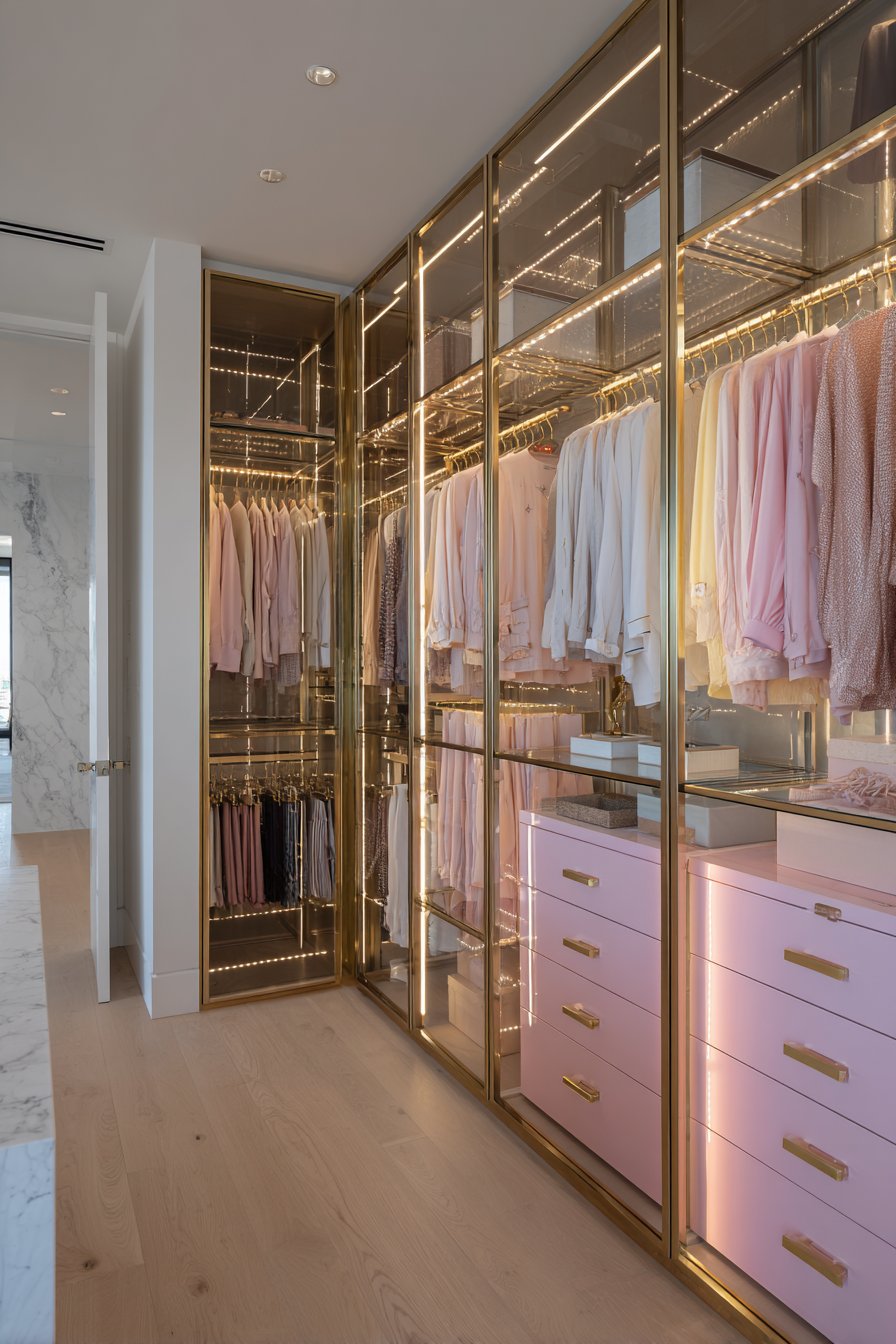
Integrated drawers in pale pink, mint, and lavender lacquer finishes provide color pops. These colorful elements add personality to functional storage systems. Natural light oak flooring continues throughout for visual flow. The flooring choice maintains warmth while supporting the closet’s contemporary aesthetics.
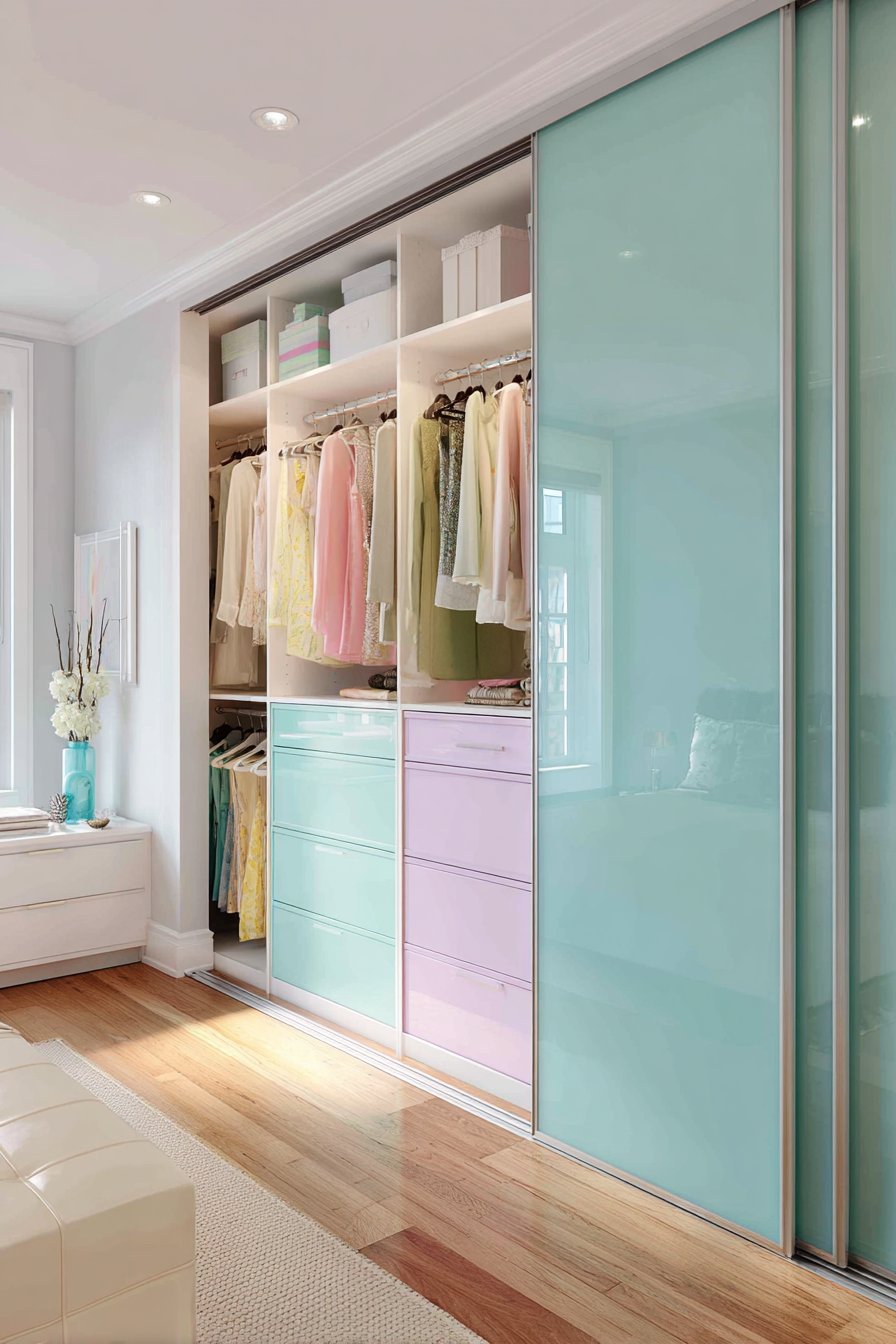
Professional photography captures both the frosted glass quality and the glimpsed interior. Balanced exposure shows the translucent material properties effectively. The lighting inside creates soft glow through the frosted panels. This internal illumination adds ambient lighting to the overall bedroom.
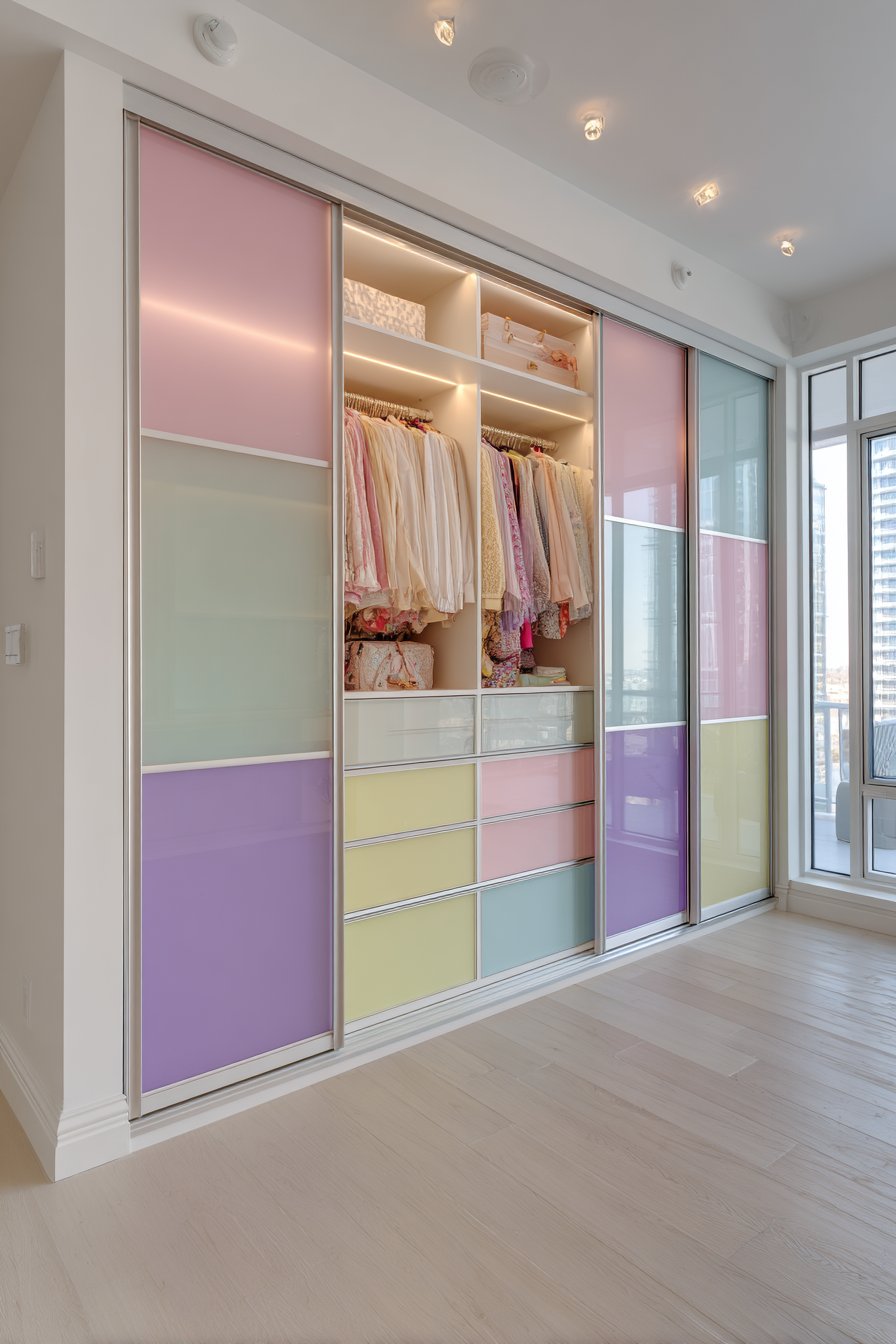
The floor-to-ceiling scale maximizes vertical storage capacity fully. This approach uses often-wasted upper wall space productively. The sliding mechanism saves floor space compared to hinged doors. Modern hardware ensures smooth operation and contemporary appearance simultaneously.
Key Design Tips:
- Use frosted glass doors for visual interest with partial concealment
- Install floor-to-ceiling systems to maximize vertical storage capacity
- Add internal LED lighting for function and ambient glow
- Include colored drawer fronts for personality in organized systems
- Choose sliding mechanisms to save floor space over hinged doors
- Select brushed aluminum frames for contemporary hardware finish
- Organize closet contents by color for visual appeal through frosted glass
17. Watercolor Area Rug Anchor
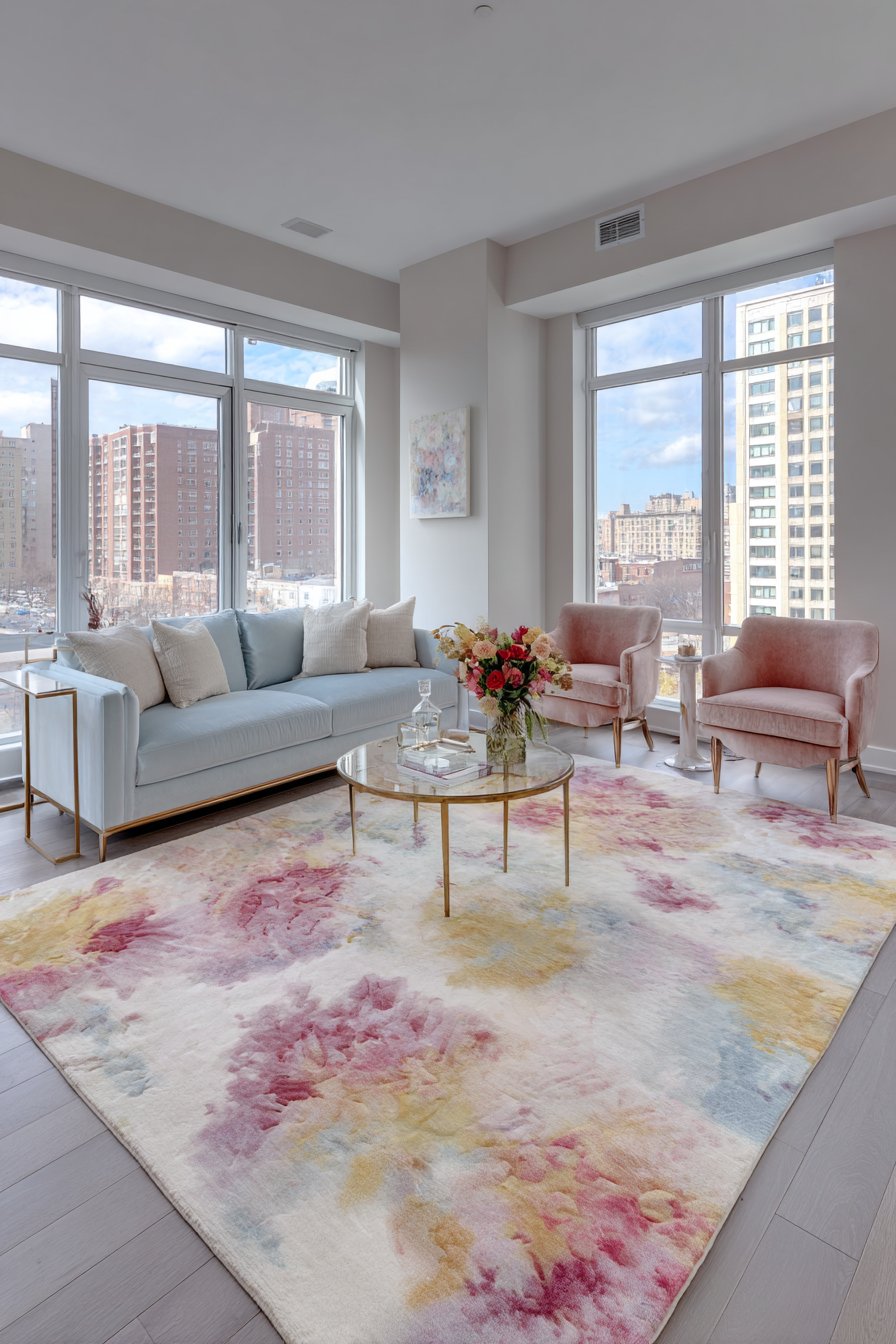
A plush area rug serves as both functional foundation and an artistic element. Hand-tufted wool construction provides luxury and durability simultaneously. The abstract watercolor-inspired pattern features soft shades throughout. Pink, blue, yellow, and mint blend against cream background artistically.
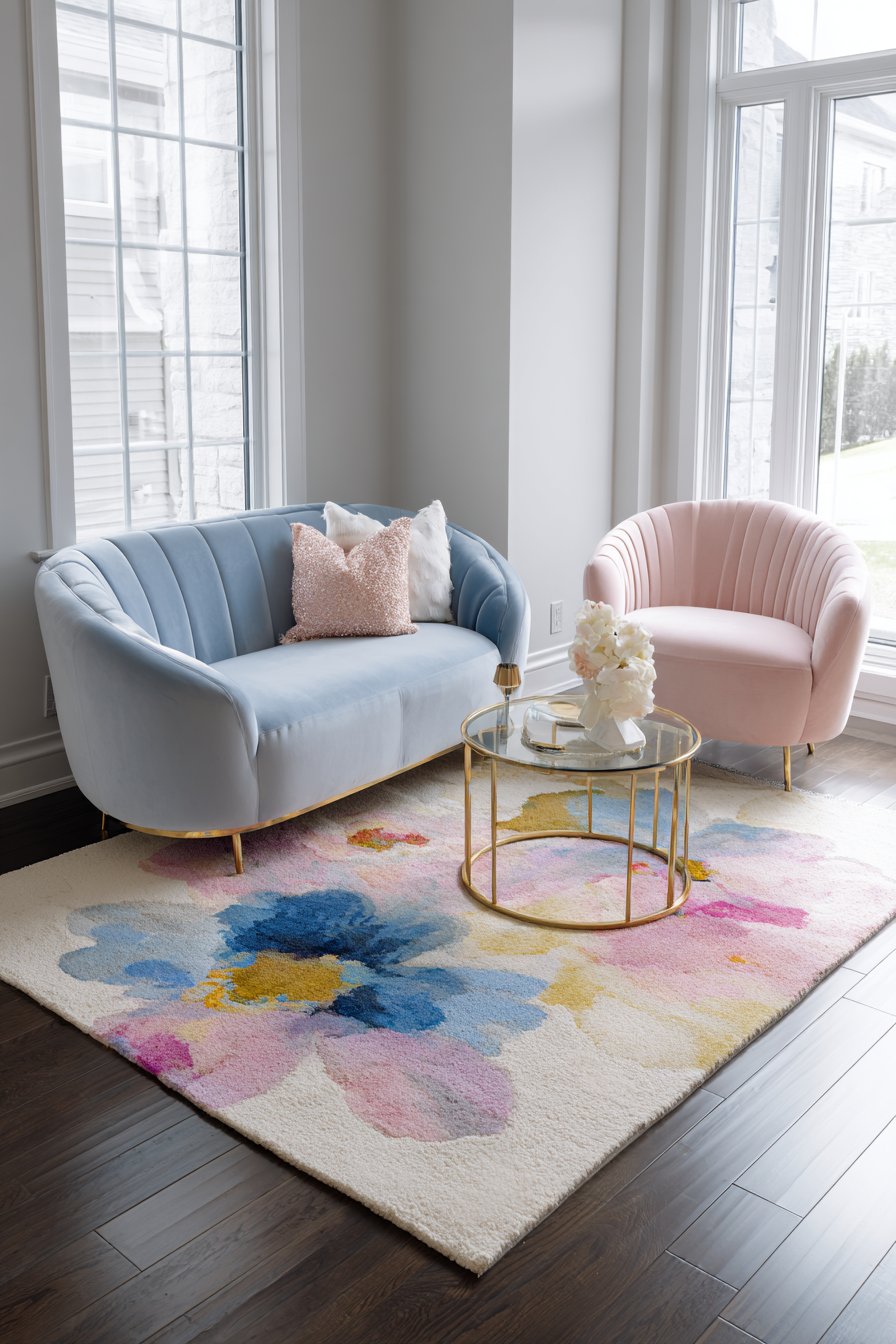
The rug anchors a seating area with contemporary loveseat in powder blue velvet. Two accent chairs in blush pink linen complete the furniture grouping. A round brass and glass coffee table centers the arrangement delicately. Pale gray walls and large windows with natural light surround the seating zone.
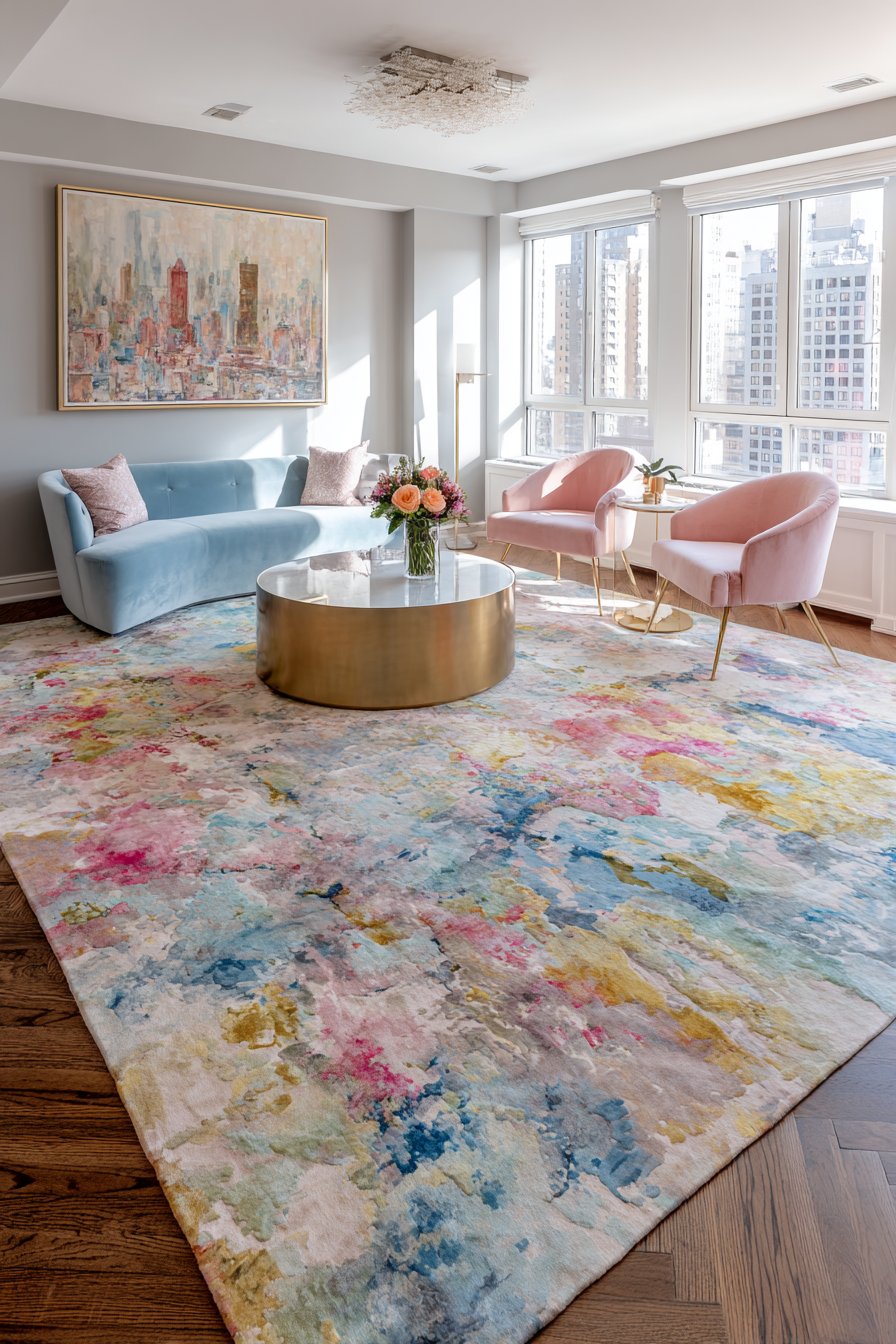
The rug’s artistic pattern unifies disparate furniture pieces through color coordination. Each furniture color appears somewhere in the rug’s design. This technique creates cohesion in mixed furniture arrangements. The watercolor effect adds softness appropriate for bedroom environments.
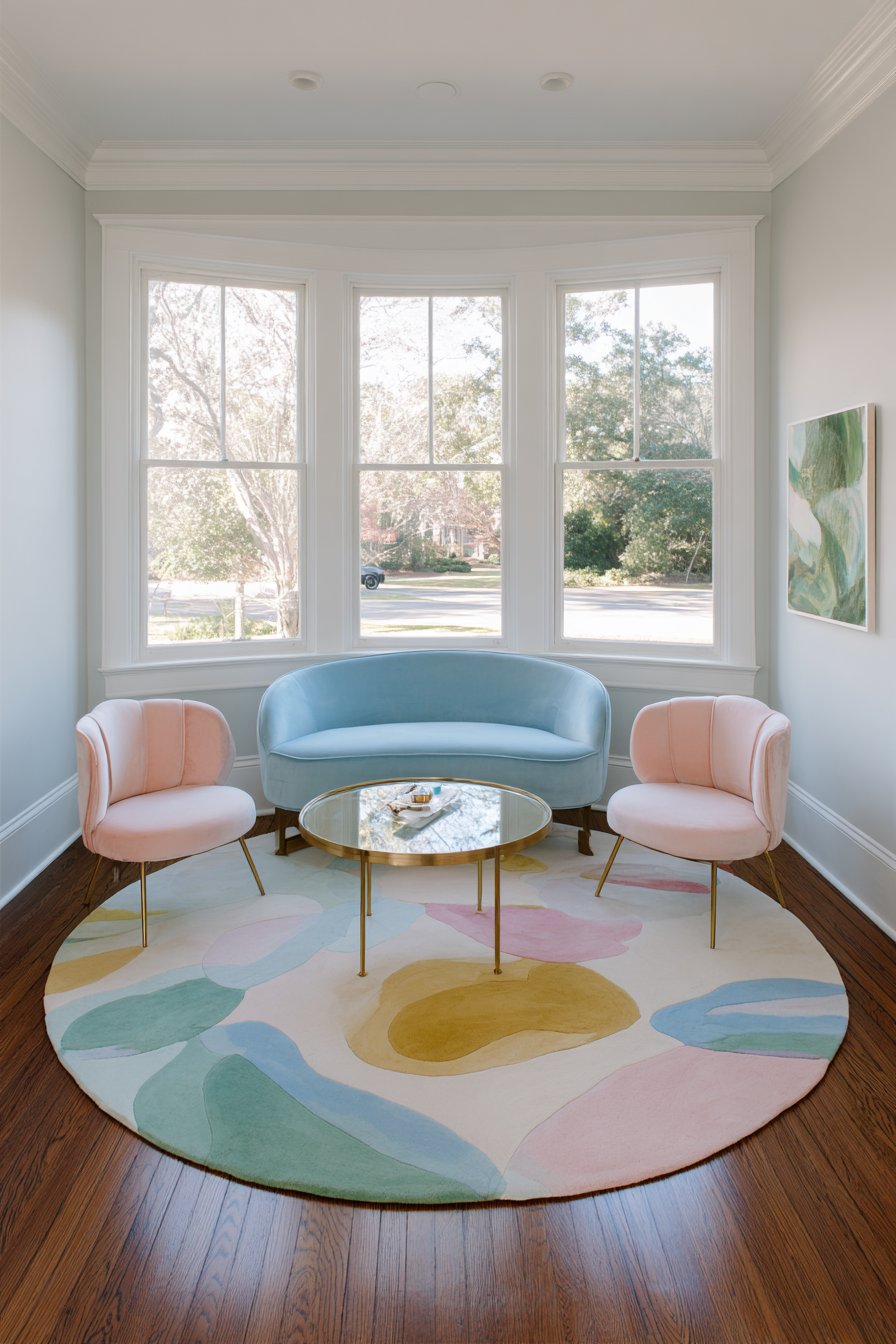
Professional wide-angle photography captures the full seating arrangement comprehensively. The perspective shows how the rug defines the zone on hardwood floor. Natural light from windows illuminates the space evenly. The overall composition demonstrates successful furniture arrangement principles effectively.
Key Design Tips:
- Choose hand-tufted wool rugs for luxury and durability
- Use watercolor patterns for artistic interest in soft palettes
- Anchor seating areas with rugs that unify furniture colors
- Create conversation groupings with loveseats and accent chairs
- Add round coffee tables for visual softness in angular rooms
- Position seating areas near windows for natural lighting access
- Select rug colors that coordinate with all furniture pieces
18. Hand-Blown Glass Pendant Lighting
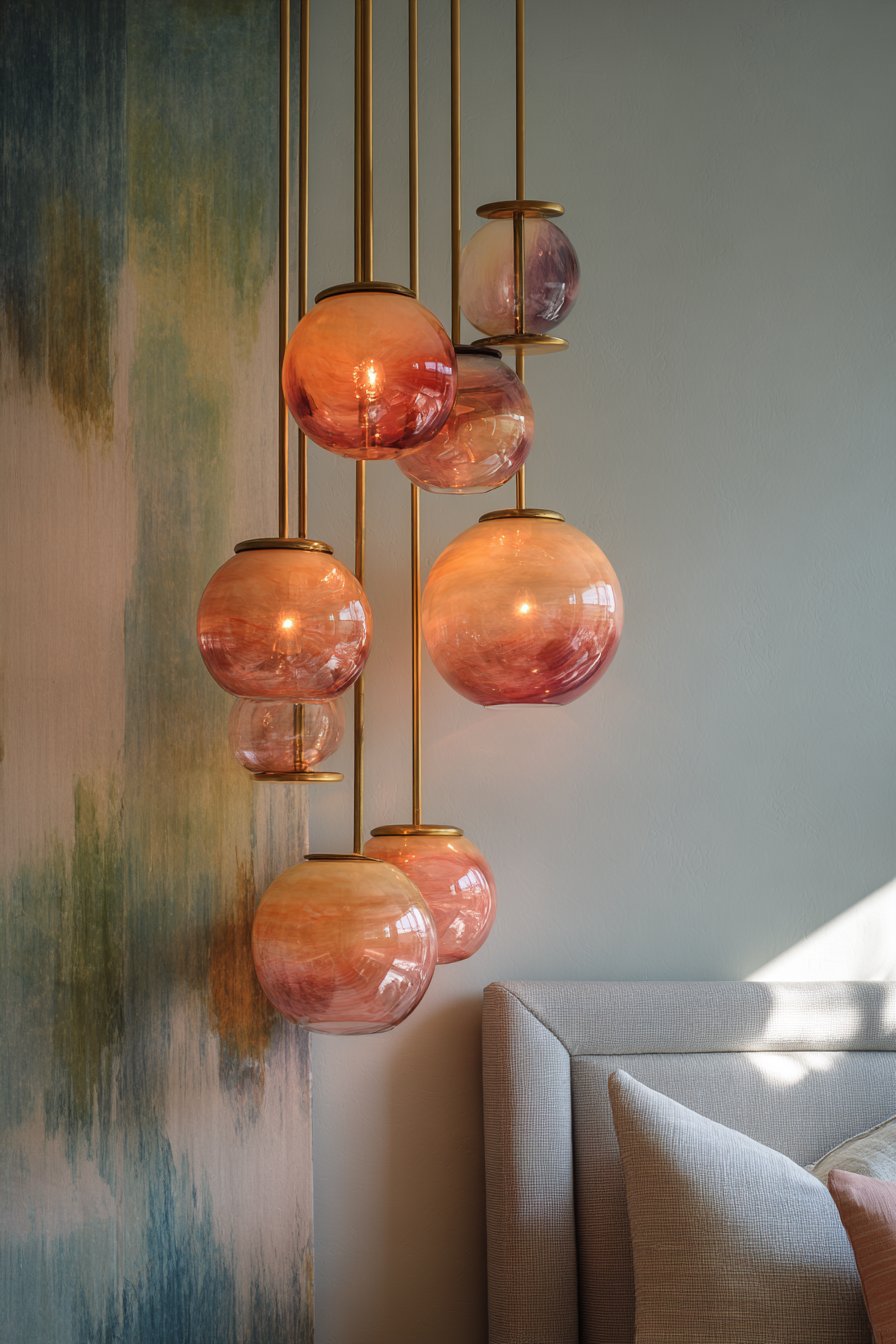
Contemporary pendant lighting serves as sculptural art and functional illumination. Hand-blown glass globes in soft coral tone hang from ceiling-mounted brass rods. The pendants suspend at asymmetric heights for dynamic visual interest. They flank an upholstered headboard in pale gray-blue linen elegantly.
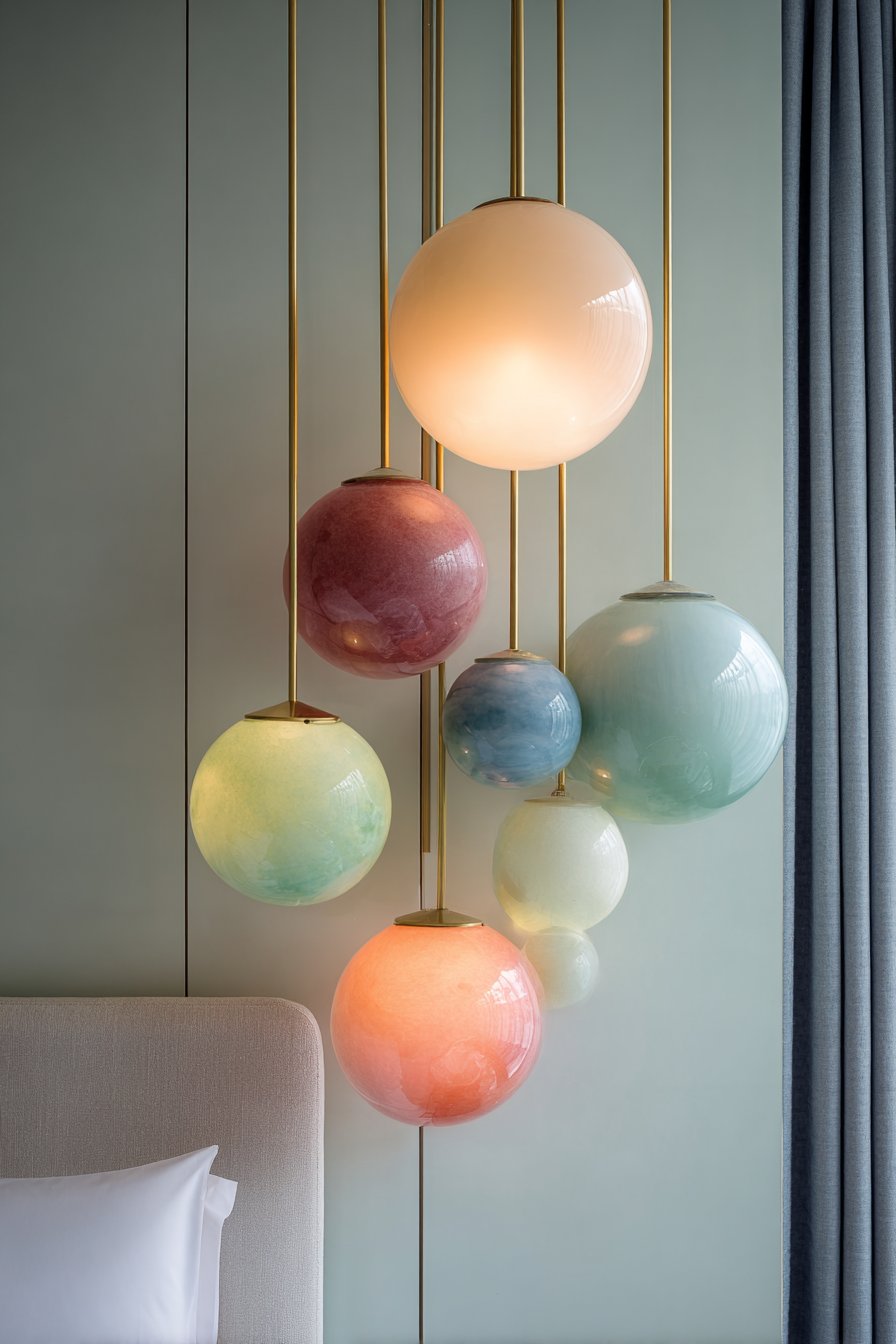
The walls feature subtle vertical striping in tonal variations of mint and sage. This paint technique creates dimension without bold pattern introduction. The striping effect remains sophisticated and contemporary rather than traditional. Professional execution ensures even spacing and color transitions throughout.
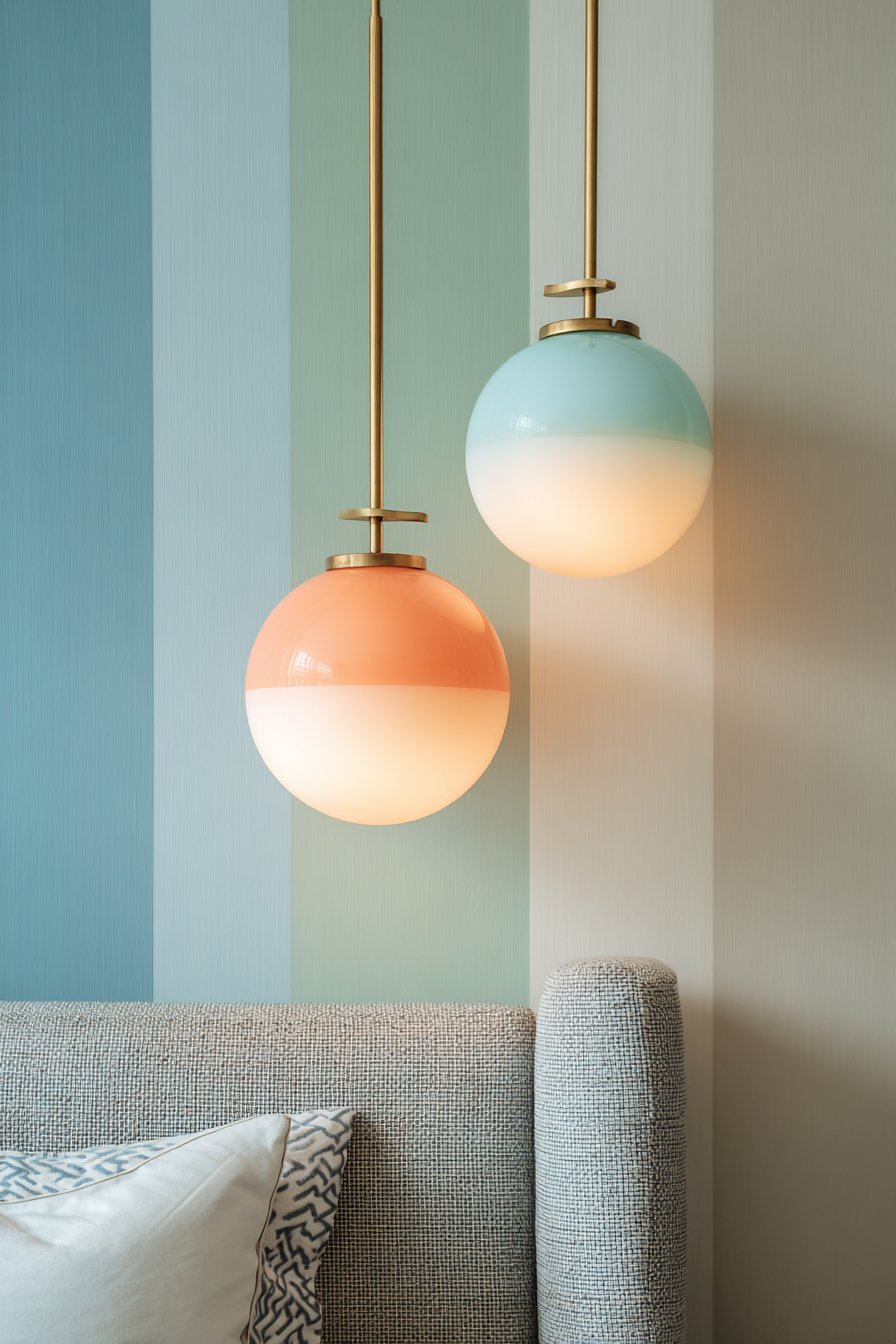
Balanced exposure photography shows both the ambient glow from within glass and natural daylight. The dual lighting sources create layered illumination throughout the day. Glass pendants become focal points both lit and unlit. The coral color coordinates with other pastel elements thoughtfully.
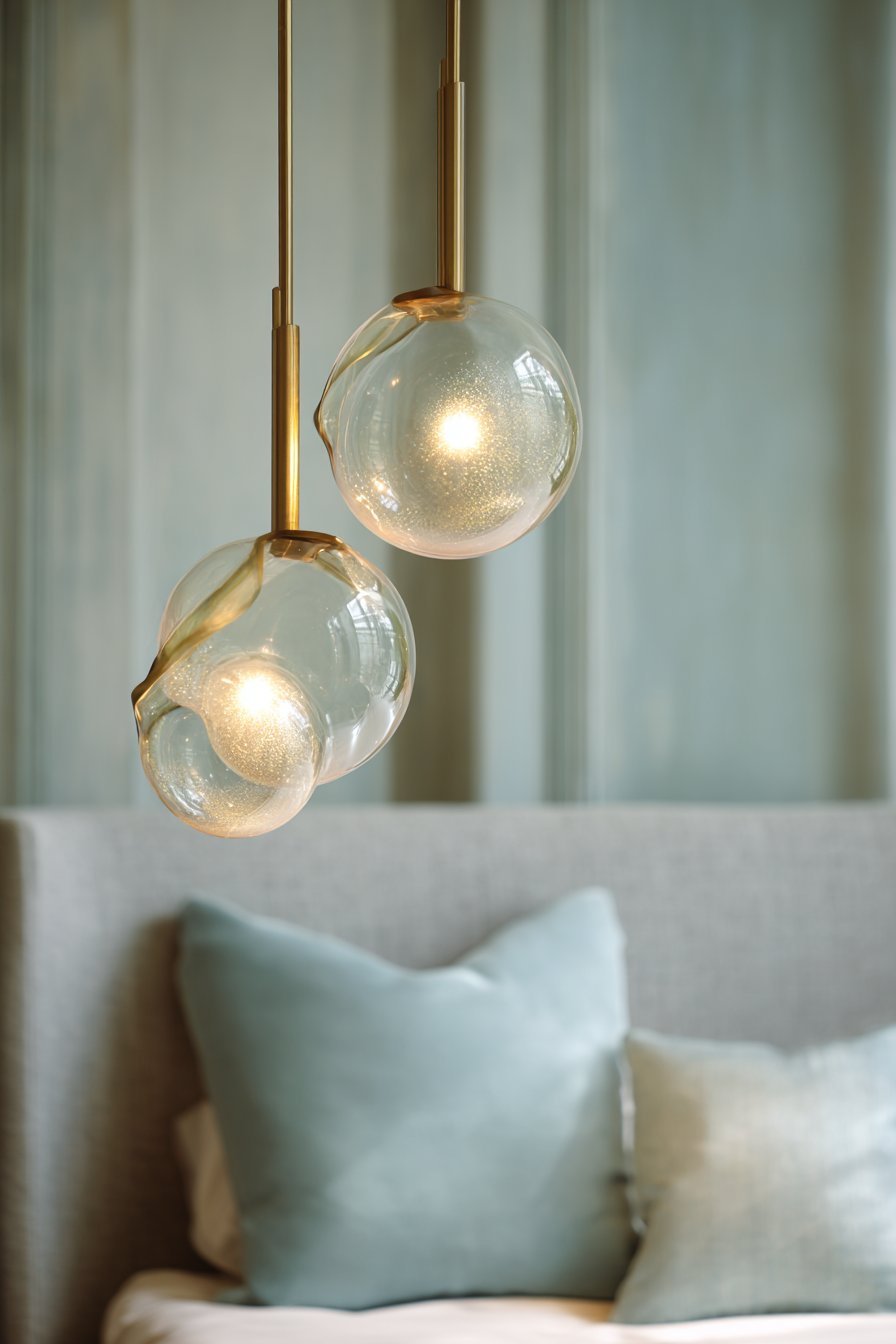
The asymmetric heights demonstrate contemporary design confidence. Traditional symmetry gives way to more dynamic compositions. The varying heights create visual movement and modern sophistication. This approach particularly suits spaces with varying ceiling heights or angles.
Key Design Tips:
- Choose hand-blown glass pendants for artisanal quality and uniqueness
- Hang pendants at asymmetric heights for contemporary visual interest
- Select coral or other pastel tones for colored glass elements
- Use vertical striping paint techniques for subtle wall dimension
- Balance pendant glow and natural daylight in photography and planning
- Coordinate pendant colors with other pastel elements throughout room
- Consider how glass fixtures function as sculpture when unlit
19. Inviting Window Seat Haven
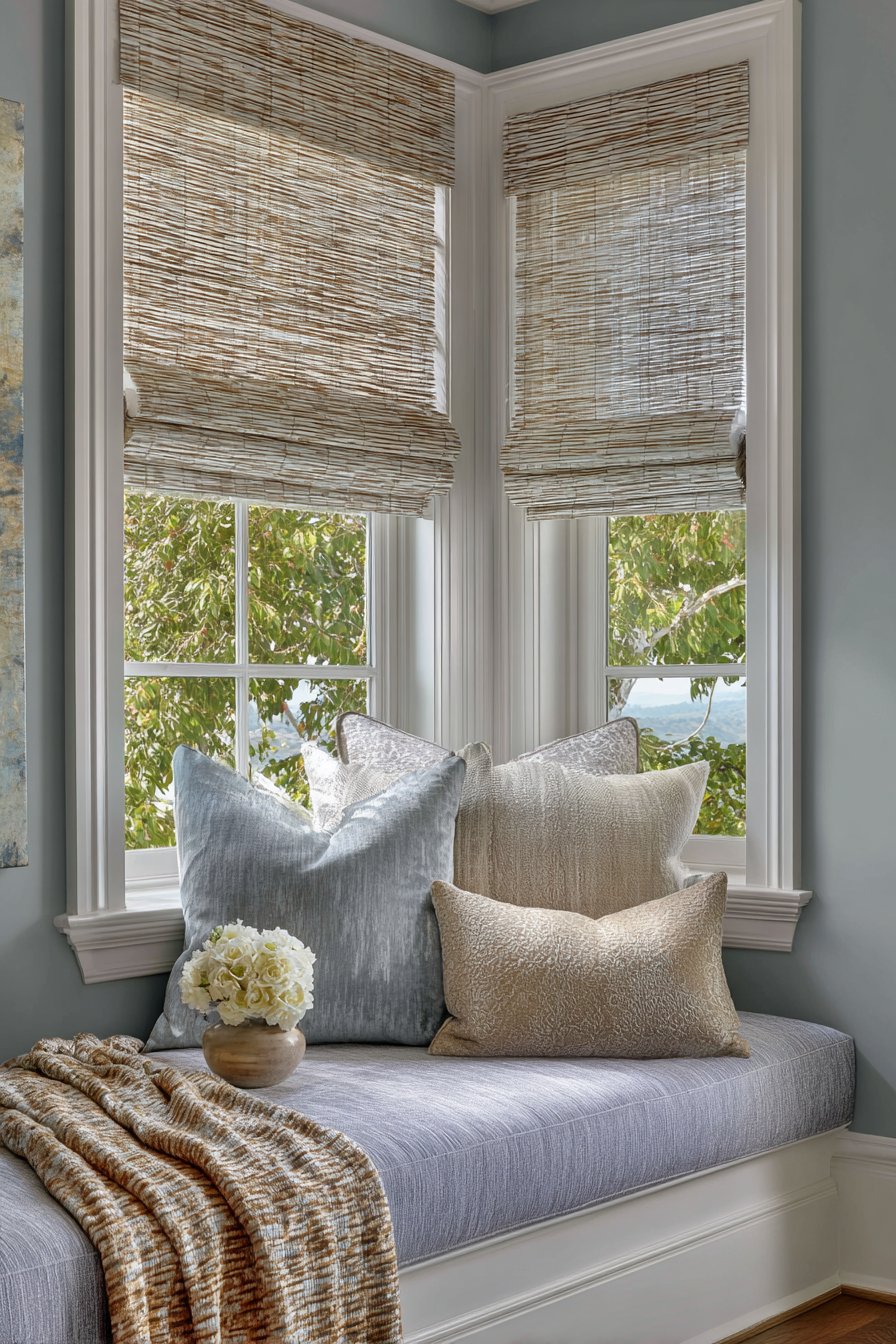
A built-in window seat transforms architectural features into functional comfort zones. The cushioned bench features performance fabric upholstery in soft lilac tone. Multiple throw pillows in varied pastel shades create inviting texture. Velvet, linen, and cotton fabrics provide tactile variety and visual richness.
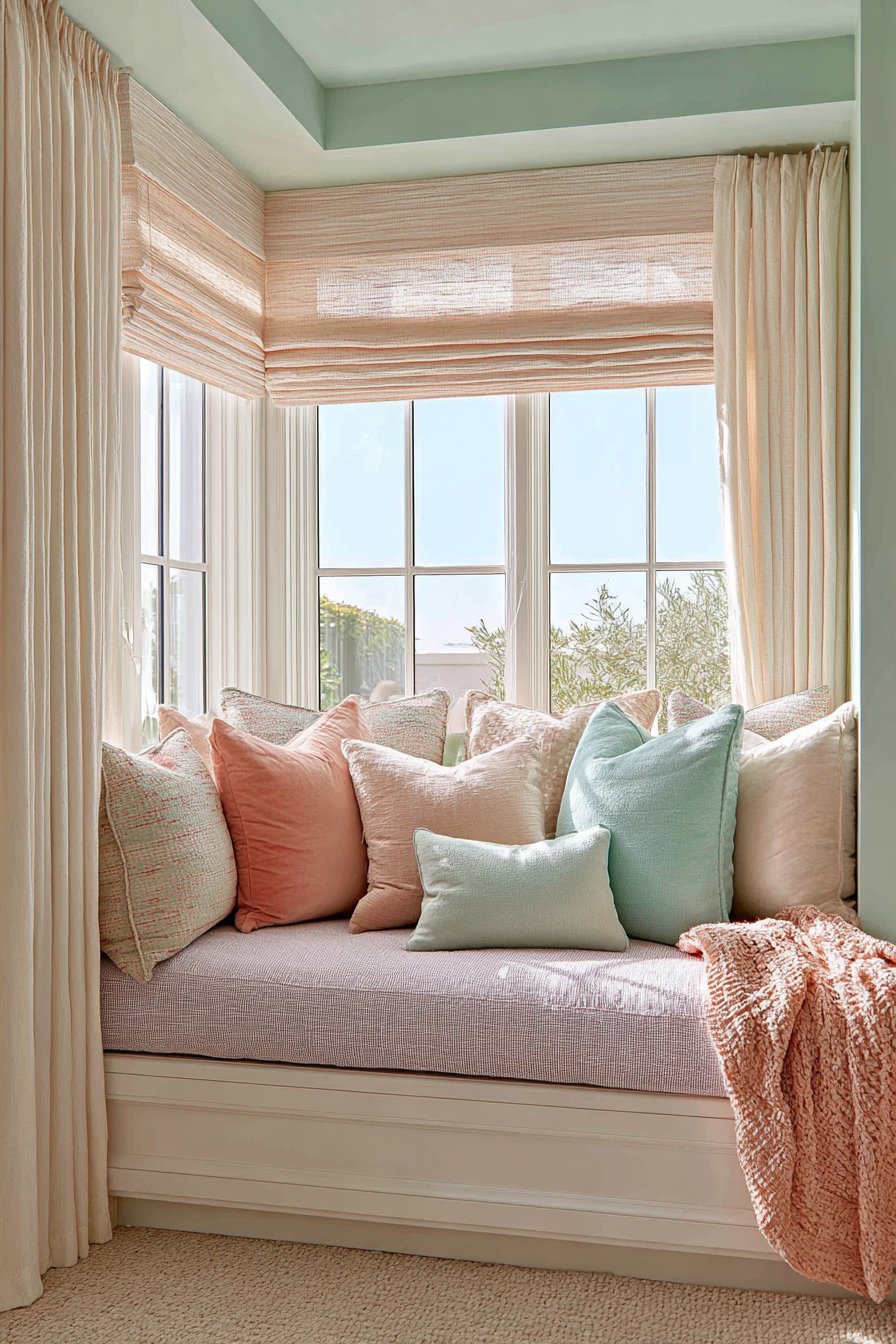
The window frame and surrounding trim paint in crisp white provides clean contrast. This white framing highlights the window as an architectural feature. Sheer roman shades in pale peach filter natural light beautifully. Adjacent walls show painted finish in barely-there mint green. The coordinated colors maintain overall room harmony.
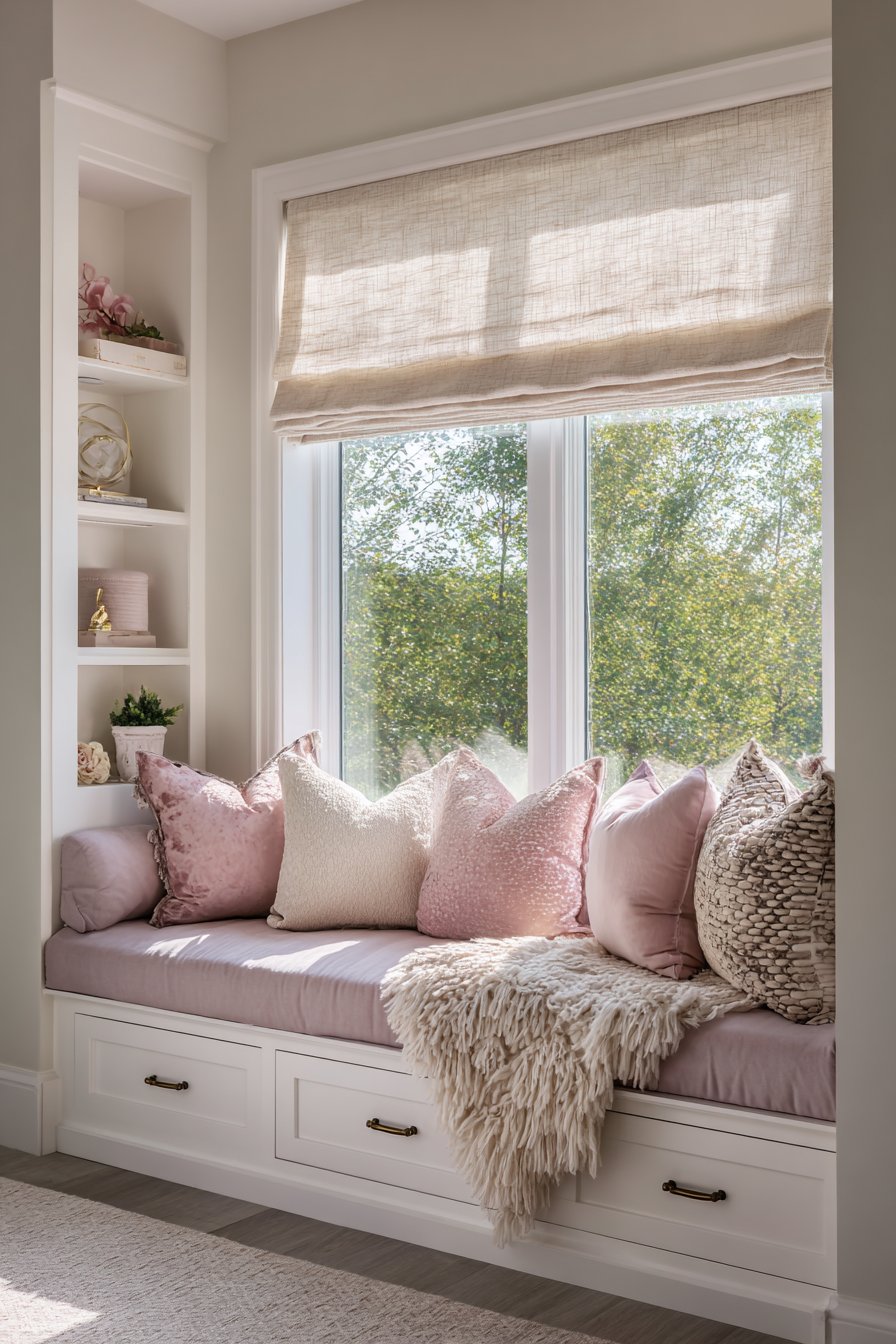
Natural lighting emphasizes fabric textures and layered pillow arrangements realistically. Each textile shows its unique properties under natural illumination. The window seat becomes a destination within the room for reading or relaxation. Built-in storage beneath provides practical functionality without visual clutter.
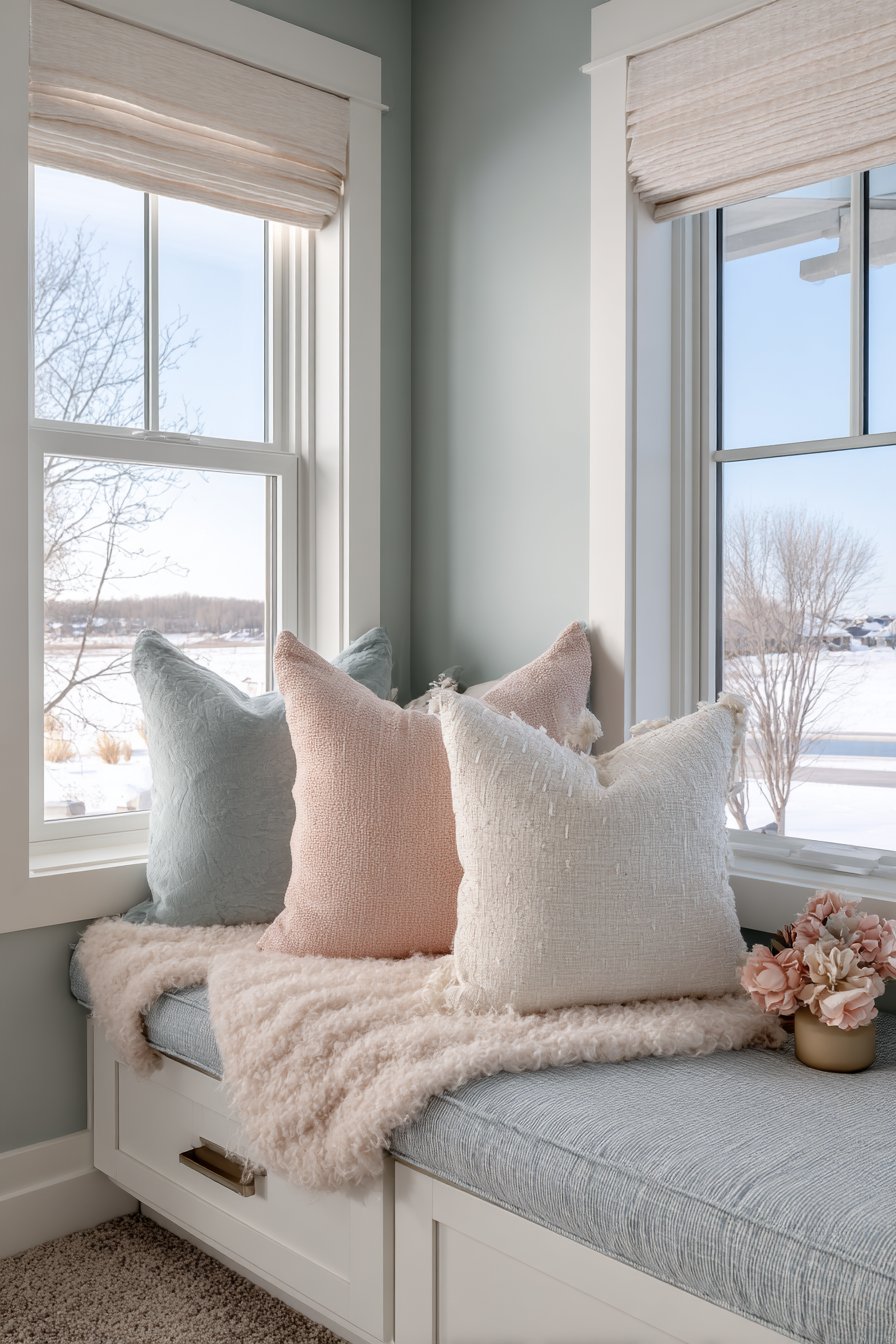
The window seat demonstrates how to maximize existing architectural features creatively. Windows become more than light sources through thoughtful design additions. The transformation requires minimal structural changes but provides significant functional gains. The result adds value through both aesthetics and practicality.
Key Design Tips:
- Build window seats with cushioned benches for comfortable lounging
- Choose performance fabrics for durability in high-use areas
- Layer multiple throw pillows in varied pastel shades and textures
- Paint window trim white to highlight architectural features
- Add sheer roman shades for adjustable natural light control
- Include built-in storage beneath seating for practical functionality
- Position seating to maximize natural light for reading and relaxation
20. Sculptural Curved Headboard Statement
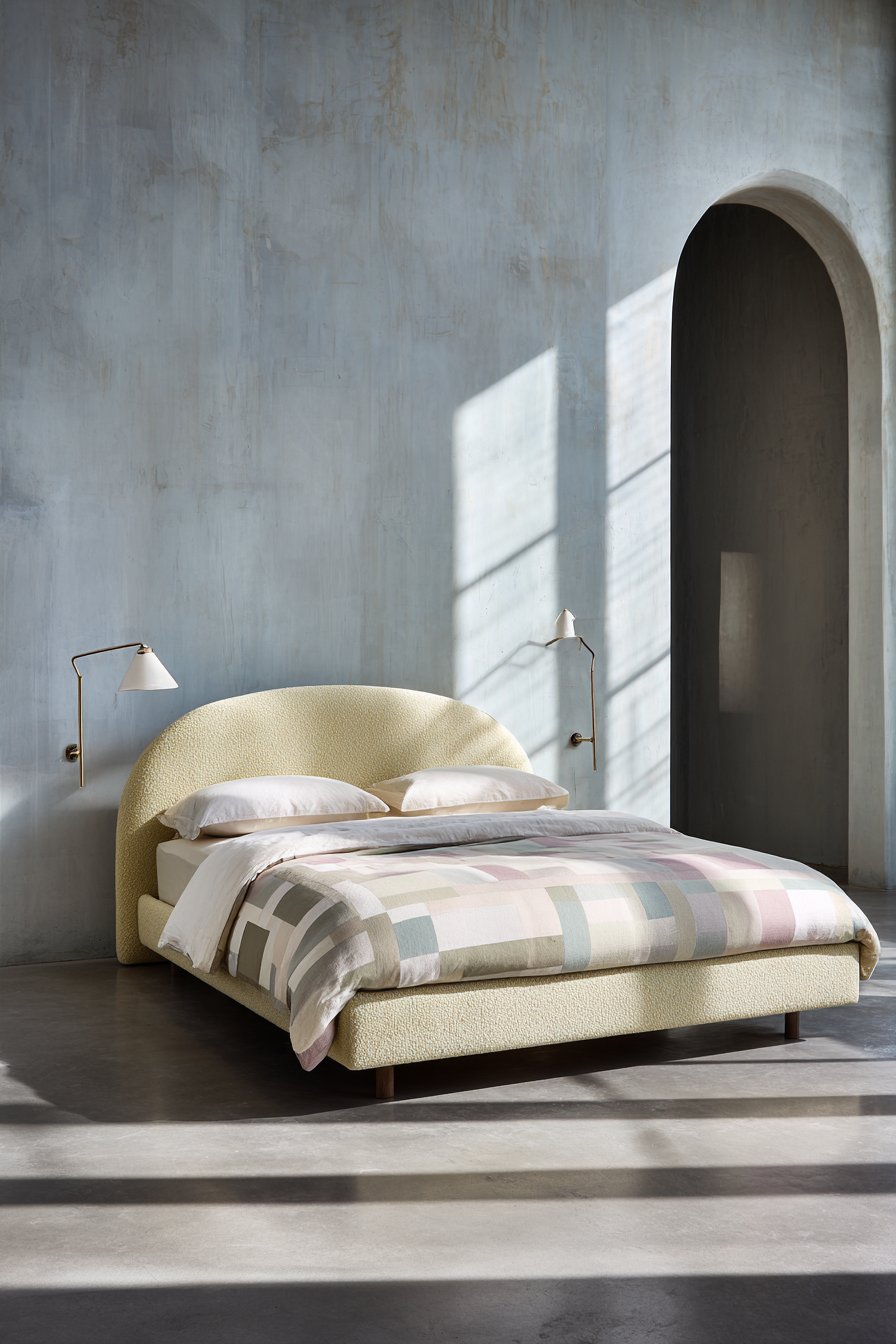
An oversized curved headboard creates stunning sculptural focal point. Bouclé fabric in soft butter yellow provides tactile interest and warm color. The curved form adds architectural softness to rectangular room geometry. The scale demands attention while maintaining bedroom serenity through gentle color choice.
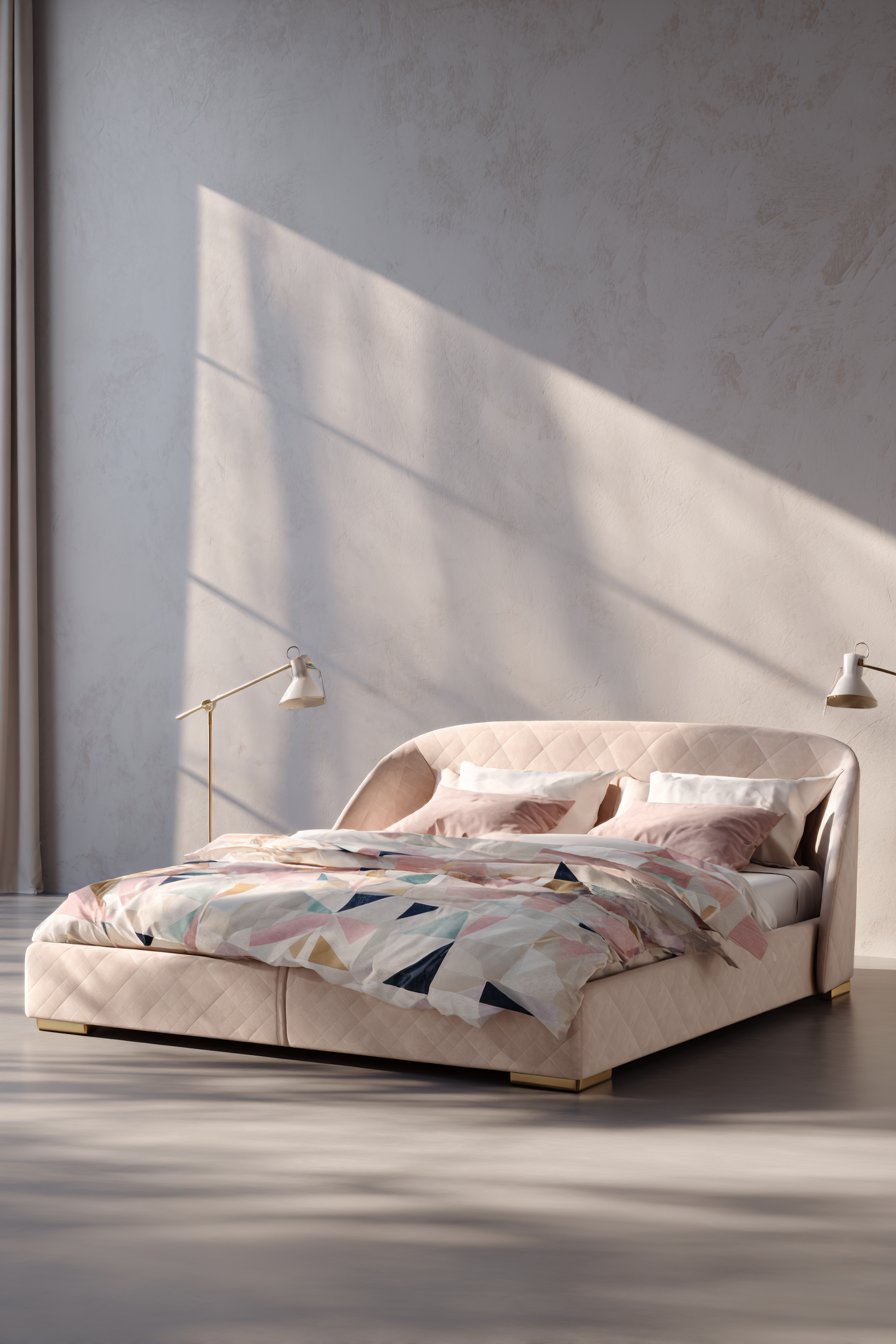
Organic cotton bedding in white maintains freshness and purity. A lightweight quilt features a geometric pattern incorporating pale pink, mint, and gray. Modern brass sconces with articulating arms provide reading light functionally. The white shades maintain brightness while the brass coordinates with other metal finishes.
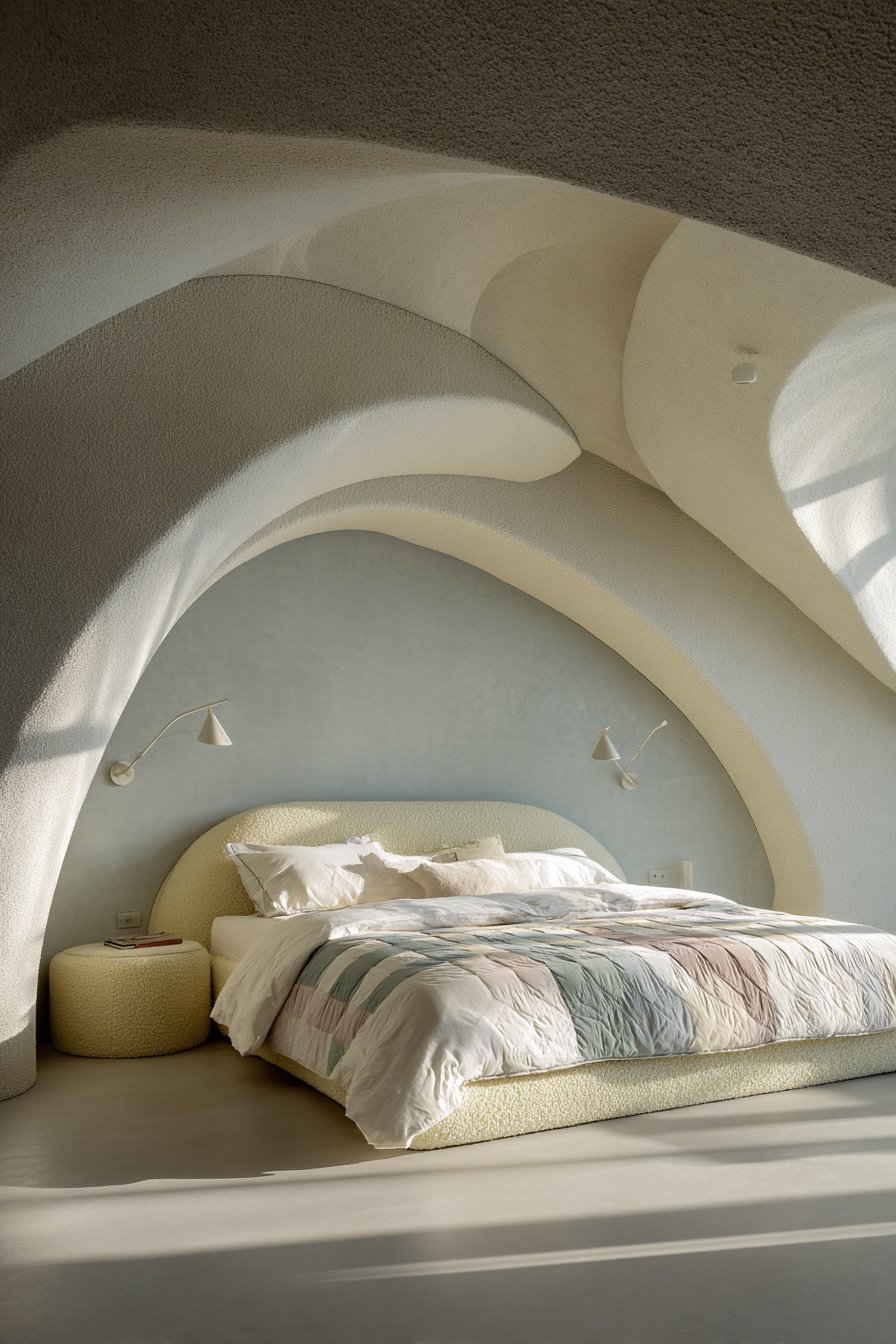
Walls painted in the palest shade of gray-blue provide subtle backdrop. The smooth matte finish allows the textured headboard to shine. Natural lighting emphasizes the bouclé fabric’s tactile quality beautifully. Soft shadows define the headboard’s sculptural form throughout the day.
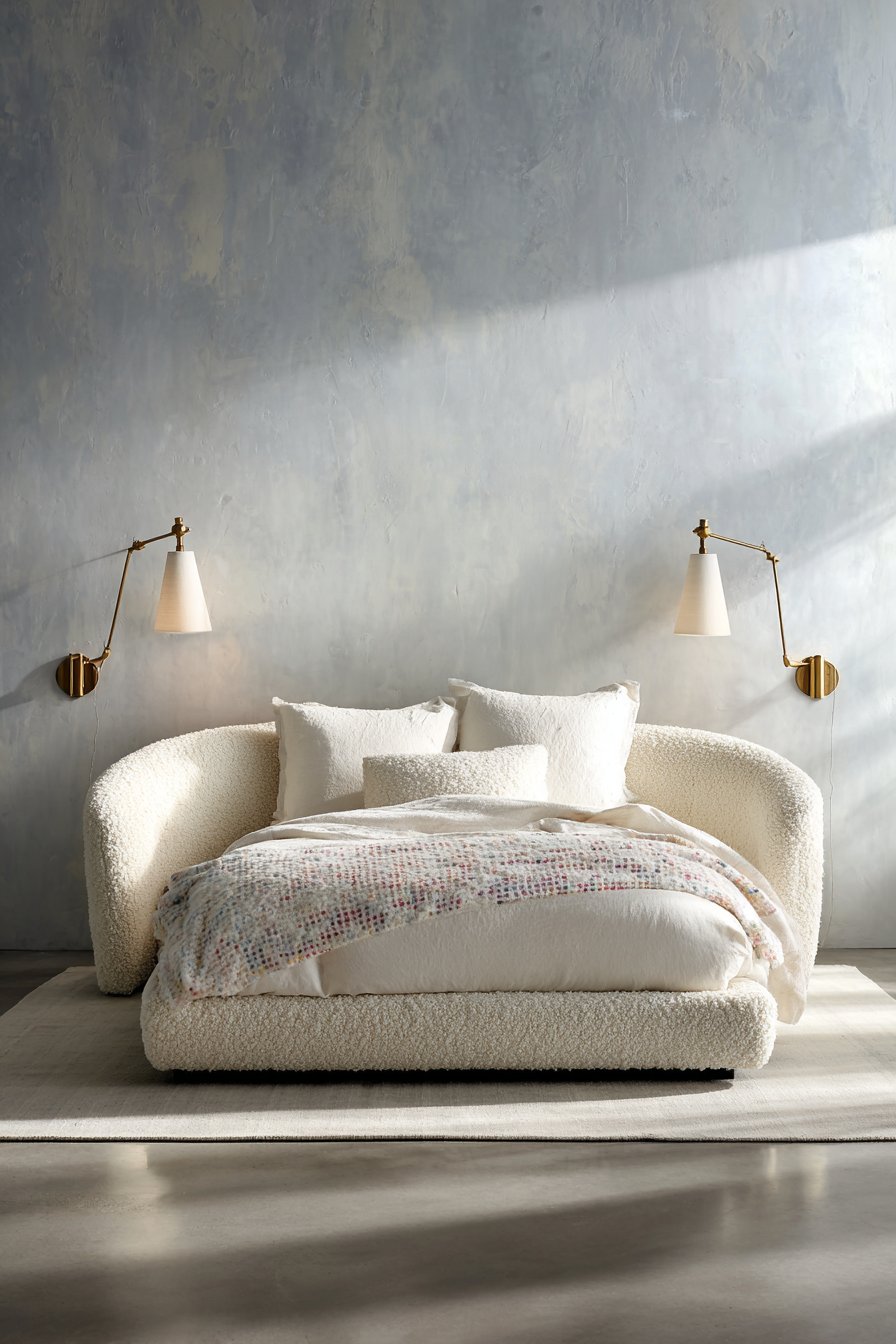
Professional wide-angle photography captures the dramatic headboard scale accurately. The perspective shows overall room proportion and spatial relationships. The curved form demonstrates how organic shapes soften modern minimalist spaces. This approach adds personality without pattern or excessive decoration.
Key Design Tips:
- Choose oversized curved headboards for dramatic sculptural impact
- Select bouclé fabric for distinctive texture and contemporary appeal
- Use butter yellow for warmth without overwhelming brightness
- Keep bedding simple when headboards provide visual interest
- Add articulating sconces for adjustable reading light
- Paint walls in pale neutral tones to support bold furniture
- Consider how curved forms soften rectangular room architecture
Why These Modern Pastel Bedroom Designs Are the Best
These modern pastel bedroom designs represent sophisticated approaches to creating serene personal sanctuaries. Each concept demonstrates thoughtful integration of contemporary aesthetics with calming color palettes. The designs showcase remarkable versatility that accommodates diverse personal styles and practical needs.
The incorporation of pastel tones provides psychological benefits supported by color theory research. Soft hues reduce visual stress and promote relaxation essential for sleep environments. These colors work equally well in minimalist and maximalist interpretations. The flexibility allows personal expression while maintaining foundational serenity.
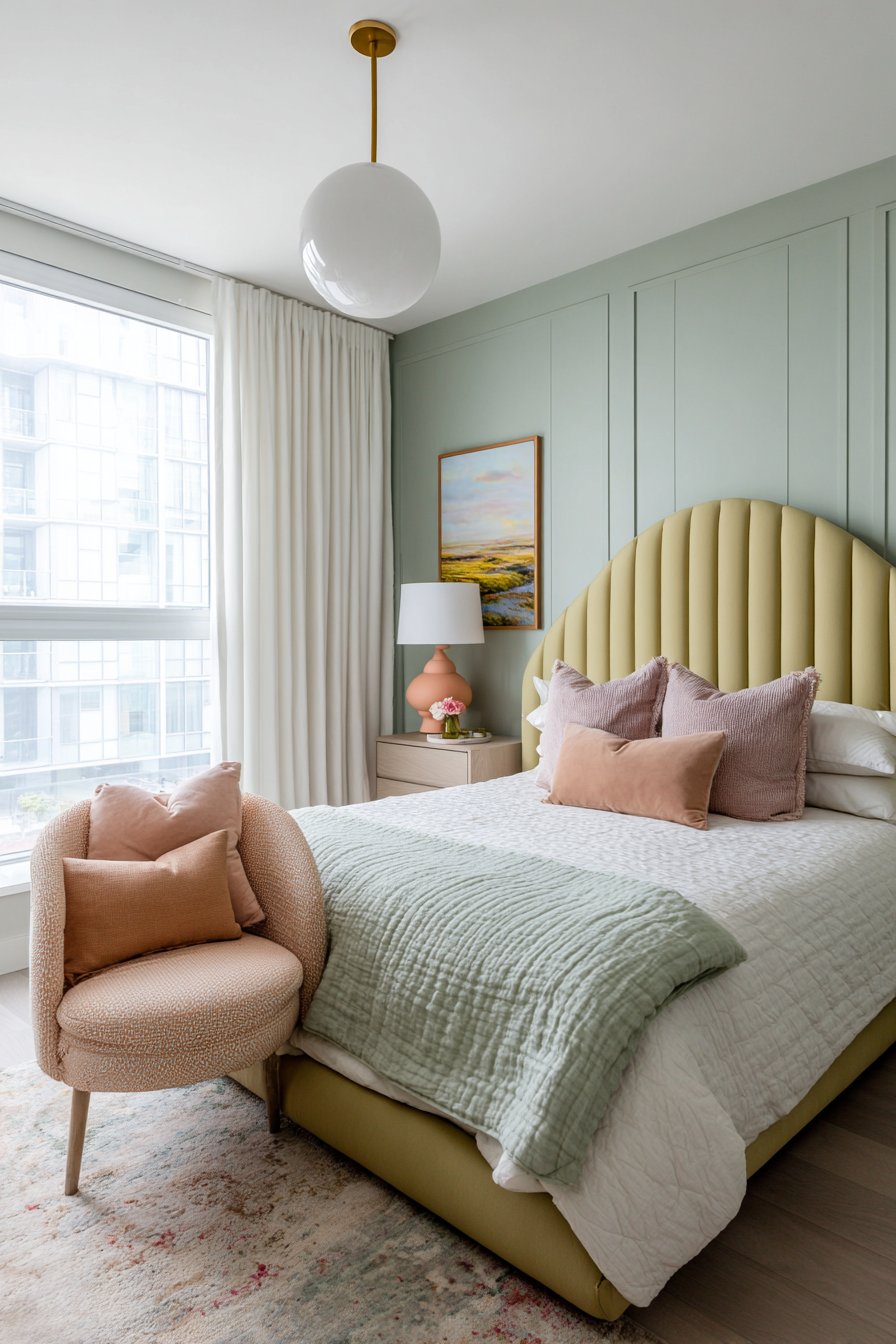
Material quality emerges as a consistent theme across all featured designs. Natural materials like linen, velvet, bouclé, and wood create authentic luxury that synthetic alternatives cannot replicate. These materials age gracefully and provide superior tactile experiences. The emphasis on quality over quantity aligns with sustainable design principles.
The featured approaches address practical considerations, including spatial constraints and functionality. Built-in storage solutions maximize space efficiency in smaller bedrooms. Multi-functional furniture like window seats and integrated workspaces serve modern living patterns. These practical elements integrate seamlessly with aesthetic goals.
Contemporary design principles guide furniture selection and spatial planning throughout. Clean lines and geometric forms create visual order that supports peaceful environments. The balance between statement pieces and restrained elements prevents visual overwhelm. Each design demonstrates how to layer interest through texture, material, and subtle color variation.
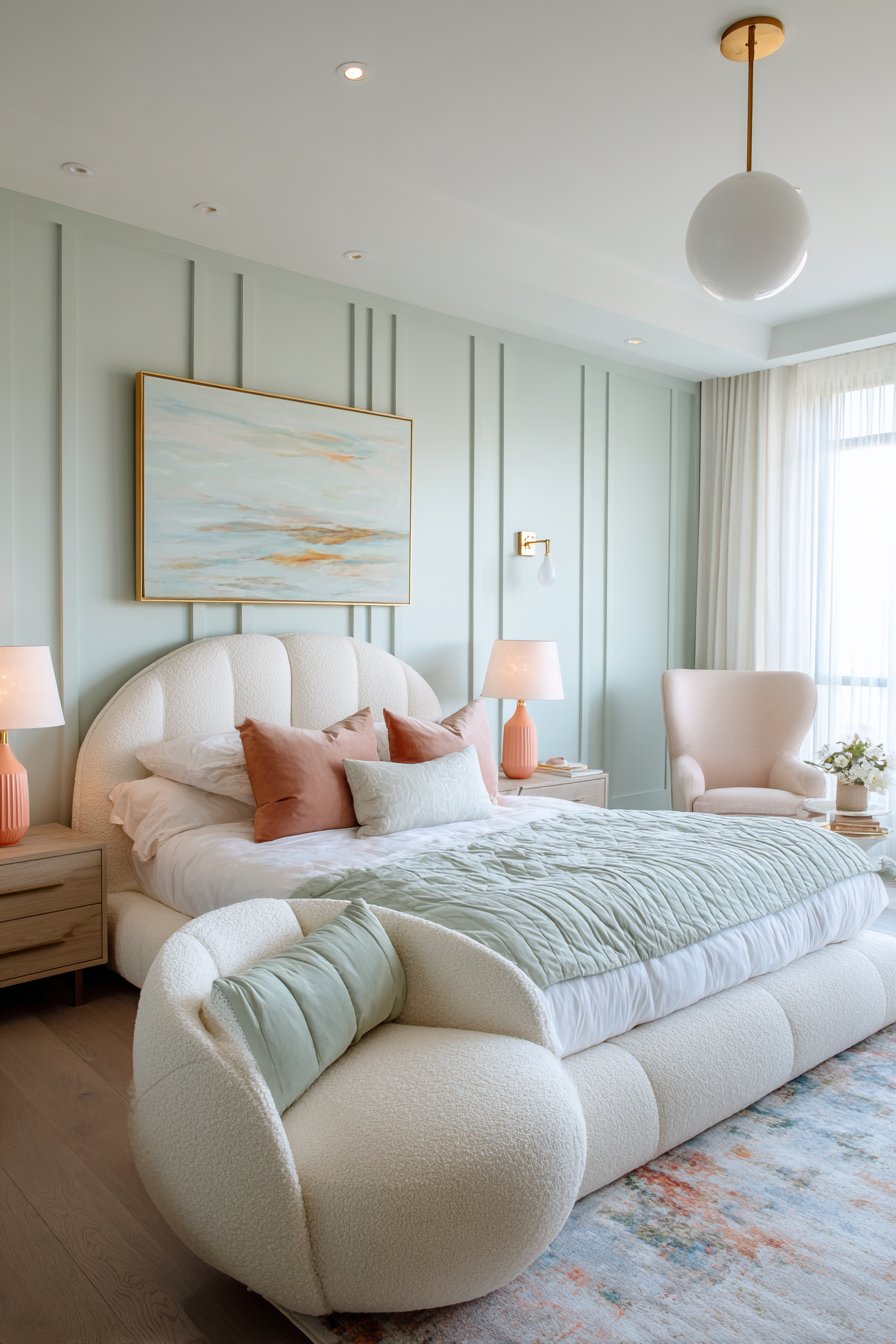
Lighting strategies prove essential to successful pastel bedroom implementation. Natural light enhances soft colors beautifully while artificial lighting creates ambiance. The featured designs incorporate multiple light sources at varying heights. This layering provides functional illumination while supporting the overall aesthetic vision.
The longevity of these design approaches stems from their foundation in timeless principles. While trends come and go, quality materials and thoughtful color application remain relevant. These bedrooms will age gracefully without feeling dated quickly. The investment in proper execution pays dividends through years of enjoyment.
Conclusion
These modern pastel bedroom designs demonstrate that contemporary style and soothing colors create perfect partnerships. The key takeaways emphasize quality materials, thoughtful color selection, and functional beauty. Each featured approach offers actionable inspiration for transforming personal spaces into serene retreats.
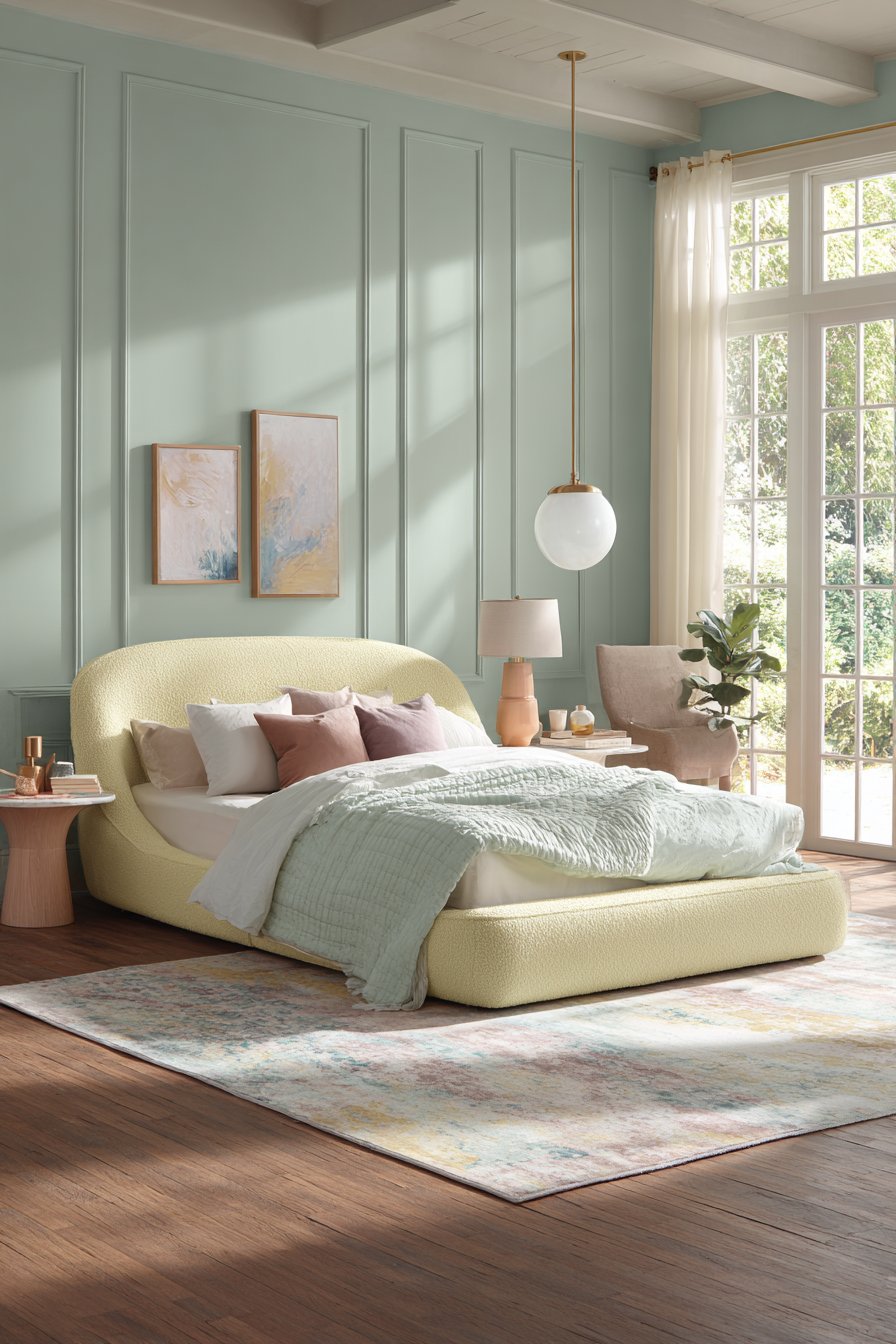
Successful implementation begins with understanding your personal preferences and practical needs. Start with one anchor piece like a statement headboard or quality bedding. Build your palette around that foundation gradually. Remember that authentic materials and proper lighting will elevate any design significantly.
Your dream modern pastel bedroom awaits creation through thoughtful planning and careful execution. These designs prove that sophistication and serenity coexist beautifully in contemporary spaces. Embrace the transformative power of soft colors and quality materials to create your personal sanctuary.
