


Creating a minimalist living room transforms your home into a sanctuary of calm. This design philosophy celebrates simplicity and intentional living. The approach removes visual clutter while maintaining warmth and functionality.
Minimalist living rooms have become increasingly popular as people seek peaceful retreats from busy lives. The style emphasizes quality over quantity in every design decision. Each piece serves a purpose while contributing to overall aesthetic harmony. Natural materials, neutral palettes, and thoughtful spatial planning create environments that feel both sophisticated and welcoming.
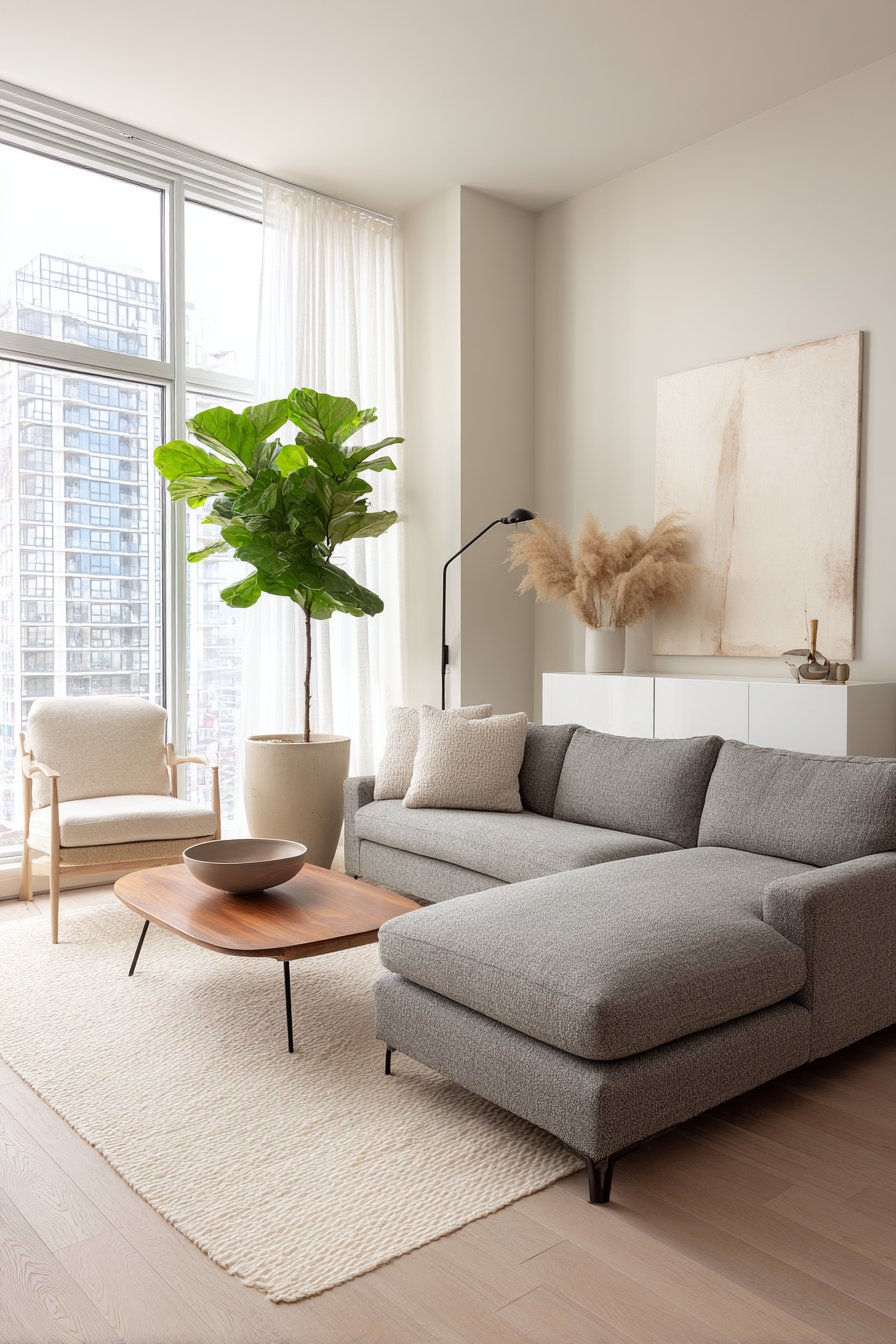
This article explores twenty distinctive minimalist living room concepts. From streamlined seating arrangements to innovative storage solutions, each design demonstrates core minimalist principles. The variety ensures you’ll find inspiration regardless of your space size or personal style preferences.
1. Grey Linen Seating with Sculptural Simplicity
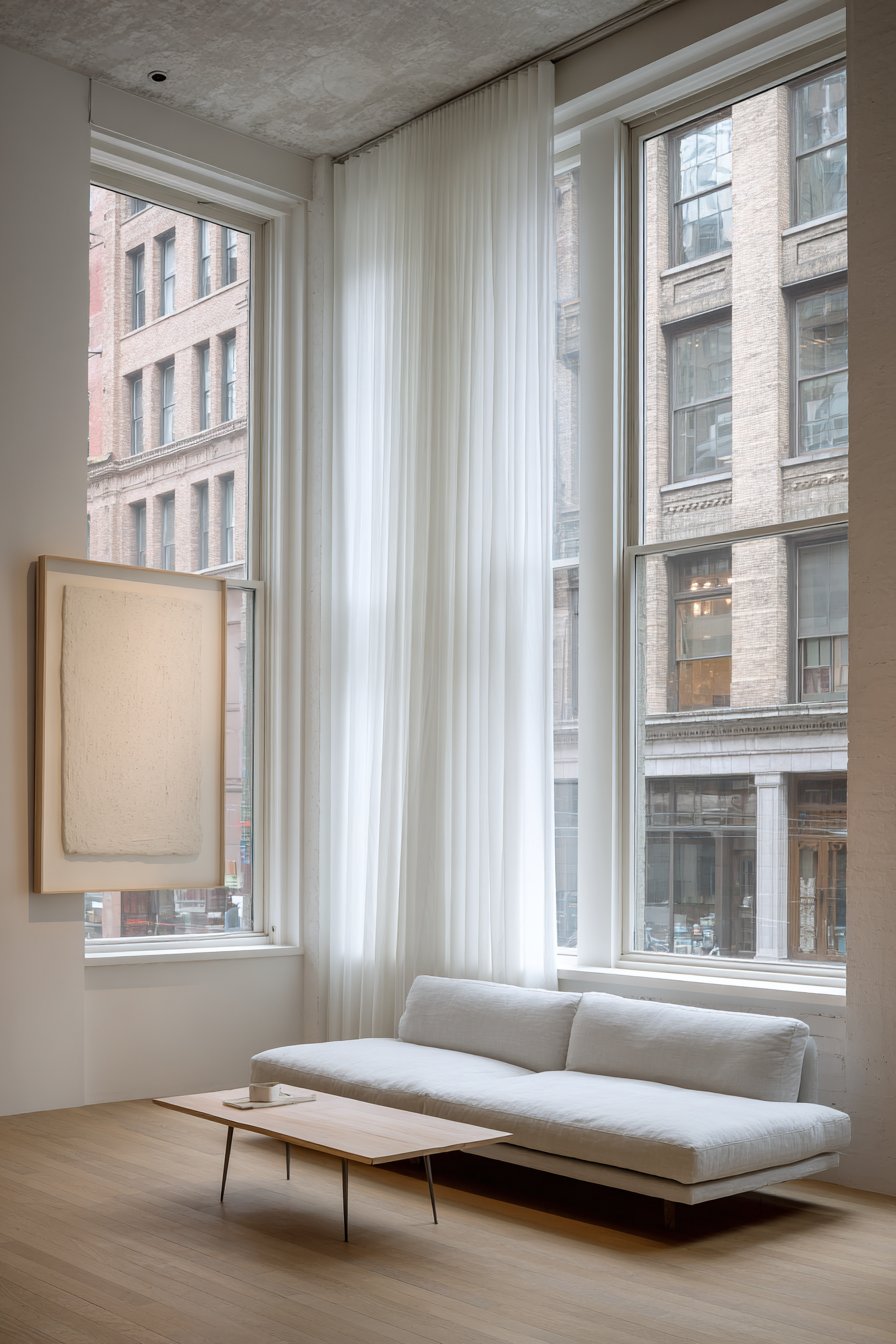
A low-profile sofa in grey linen anchors this pristine minimalist living room. Clean lines define every element of the piece. The sofa sits against white walls that amplify natural light. A white oak coffee table with hairpin legs centers the conversation area on light ash flooring.
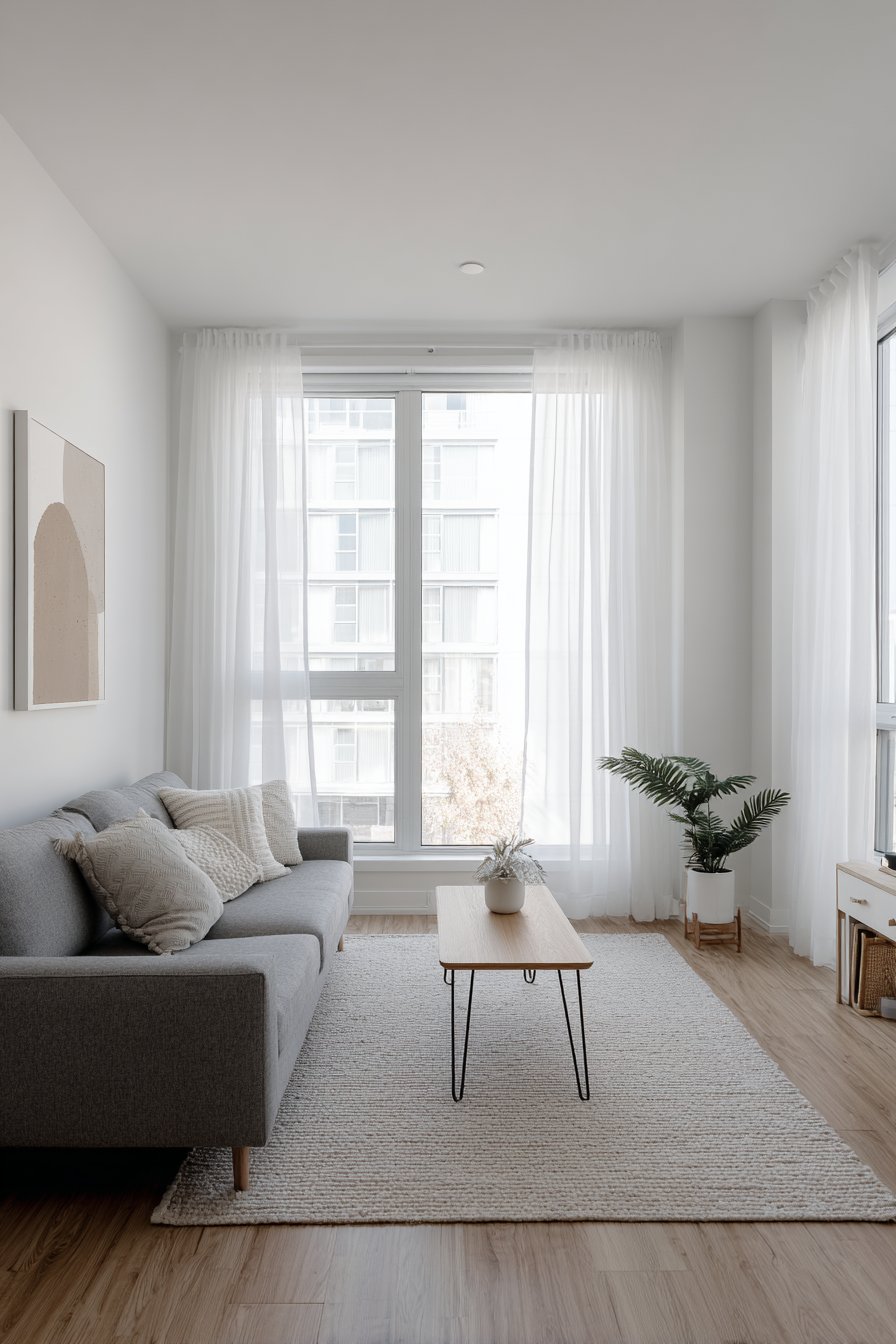
The furniture placement demonstrates restraint and intentionality. Wide circulation paths surround each piece. This creates breathing room that enhances the peaceful atmosphere. A single large-scale abstract artwork in earth tones provides the focal point. The muted colors complement rather than compete with the neutral foundation.
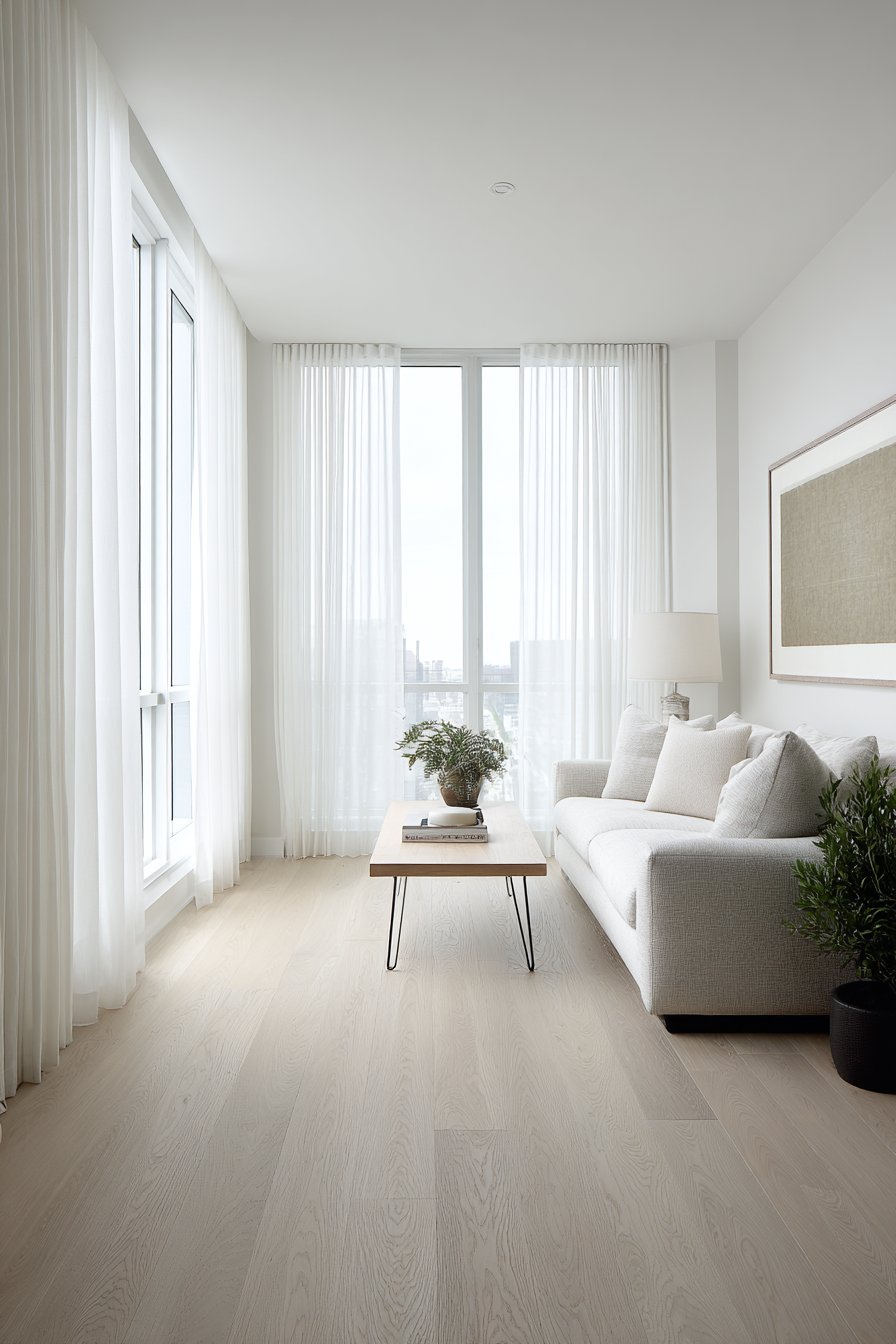
Floor-to-ceiling sheer curtains frame expansive windows beautifully. The white fabric diffuses harsh sunlight into gentle illumination. Natural light becomes a design element itself. The interplay between sunlight and shadow highlights subtle texture variations. These details emerge in the linen upholstery and oak grain patterns.
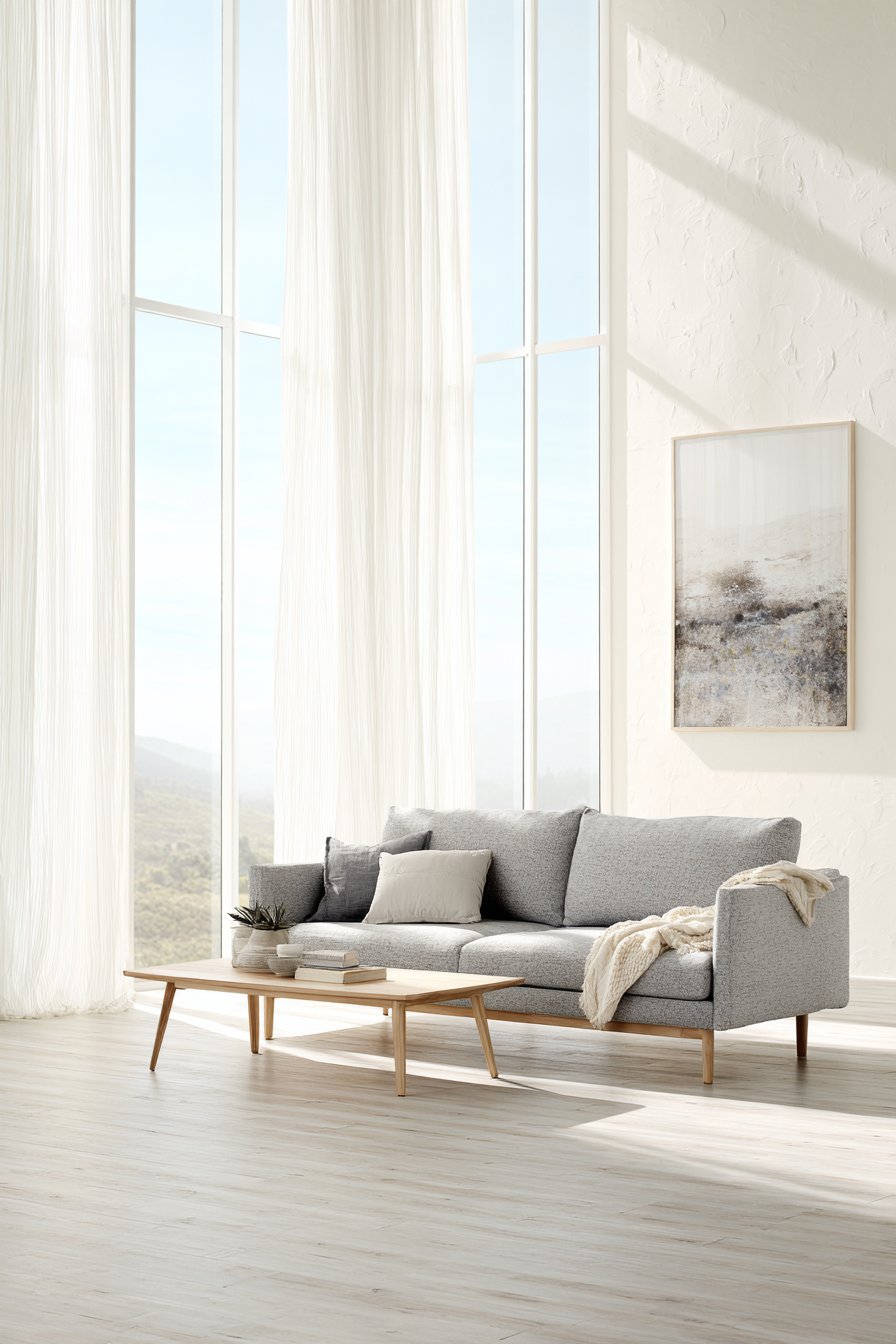
The color palette relies on warm neutrals rather than stark whites. This prevents the space from feeling cold or institutional. Grey tones have depth and complexity. The ash flooring adds warmth through natural wood character. Together, these choices create serenity without sacrificing comfort.
Key Design Tips:
- Select low-profile furniture to maintain visual openness and enhance spatial flow
- Choose natural fabrics like linen for texture without pattern complexity
- Limit artwork to one large statement piece rather than multiple smaller items
- Use sheer curtains to control light while maintaining connection to outdoors
- Invest in quality hardwood flooring as a neutral foundation for all design choices
2. Corner Reading Nook with Organic Elements
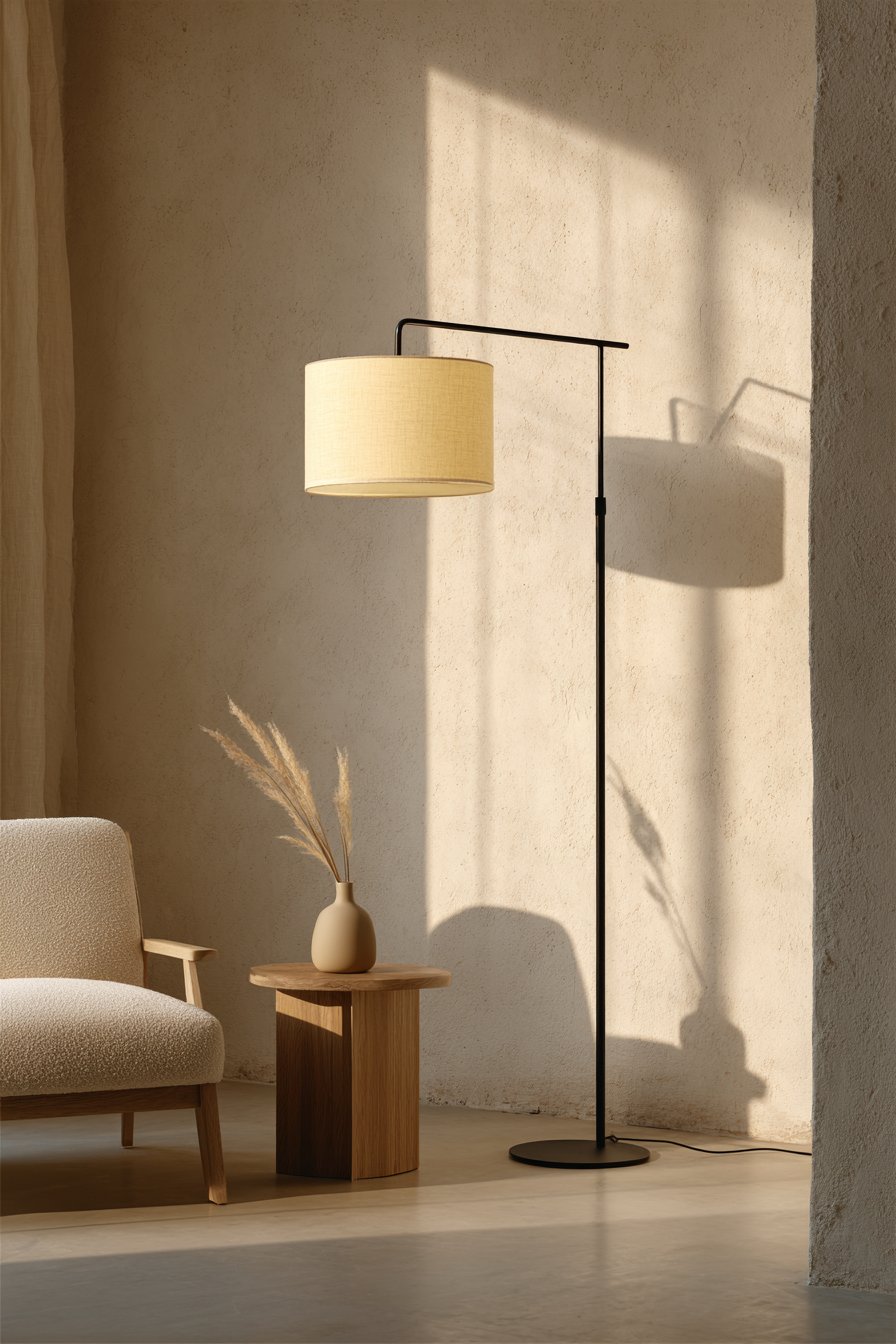
This minimalist corner showcases the power of careful placement. A single sculptural floor lamp stands beside a streamlined reading chair. The matte black metal frame contrasts beautifully with its linen drum shade. Natural oatmeal fabric upholsters the chair in understated elegance.
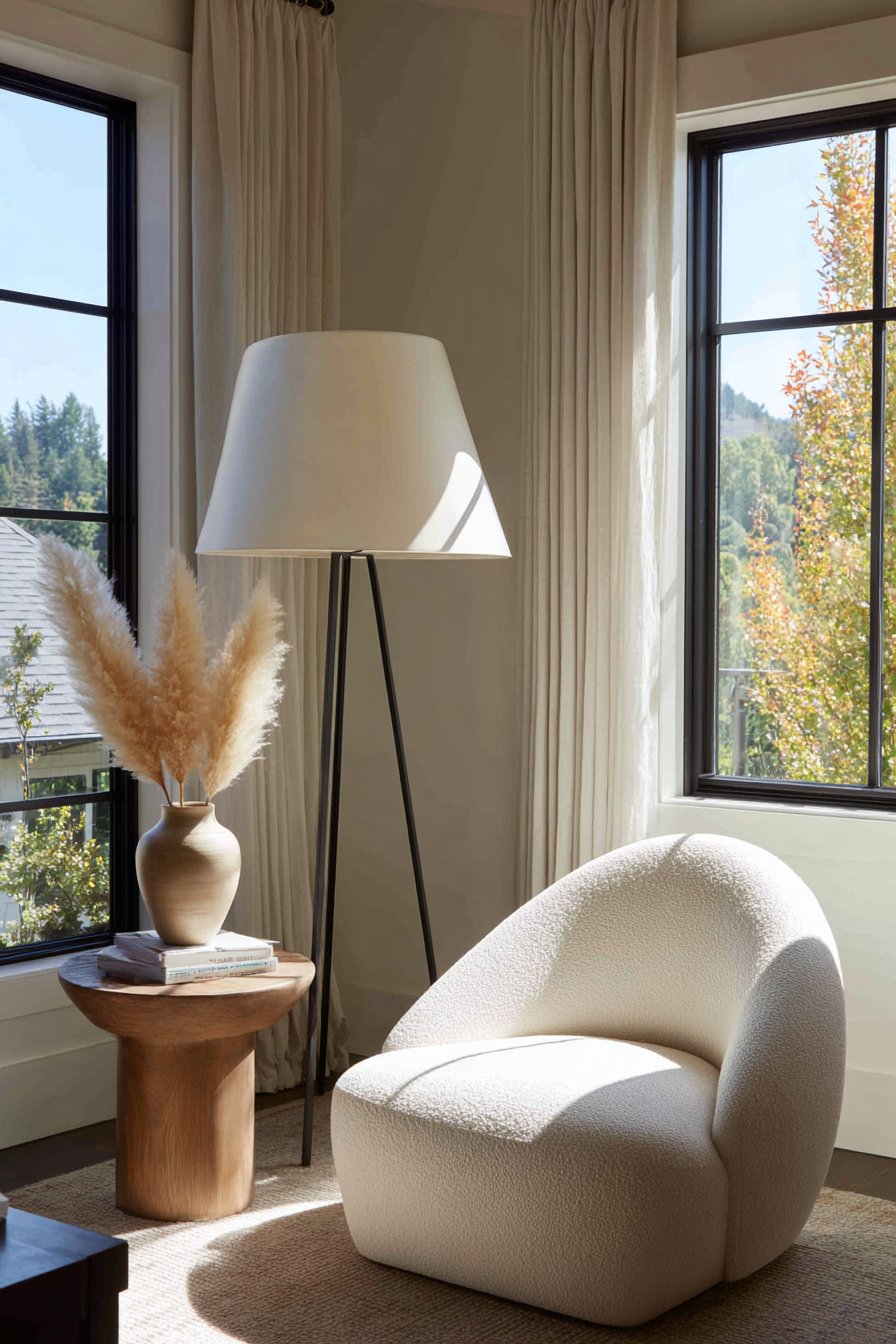
Negative space defines this design approach. The generous emptiness emphasizes each selected element. A small side table in light walnut holds minimal decoration. Three dried pampas grass stems rise from a ceramic vase. This single organic element softens the geometric forms.
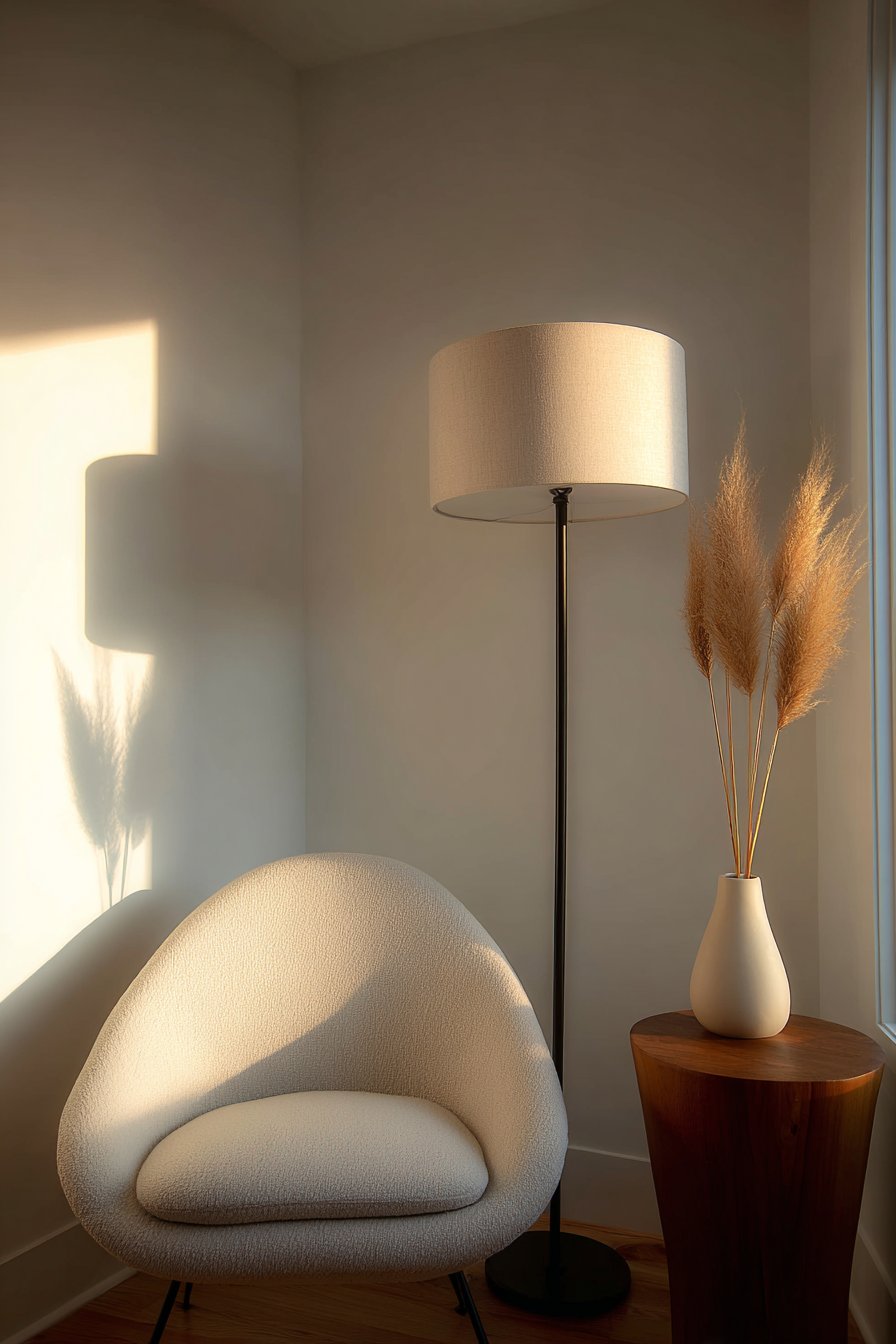
Morning light creates gentle shadows that dance across surfaces. The shadows add visual interest without permanent decoration. Natural illumination changes throughout the day. This creates an ever-shifting display that rewards quiet observation.
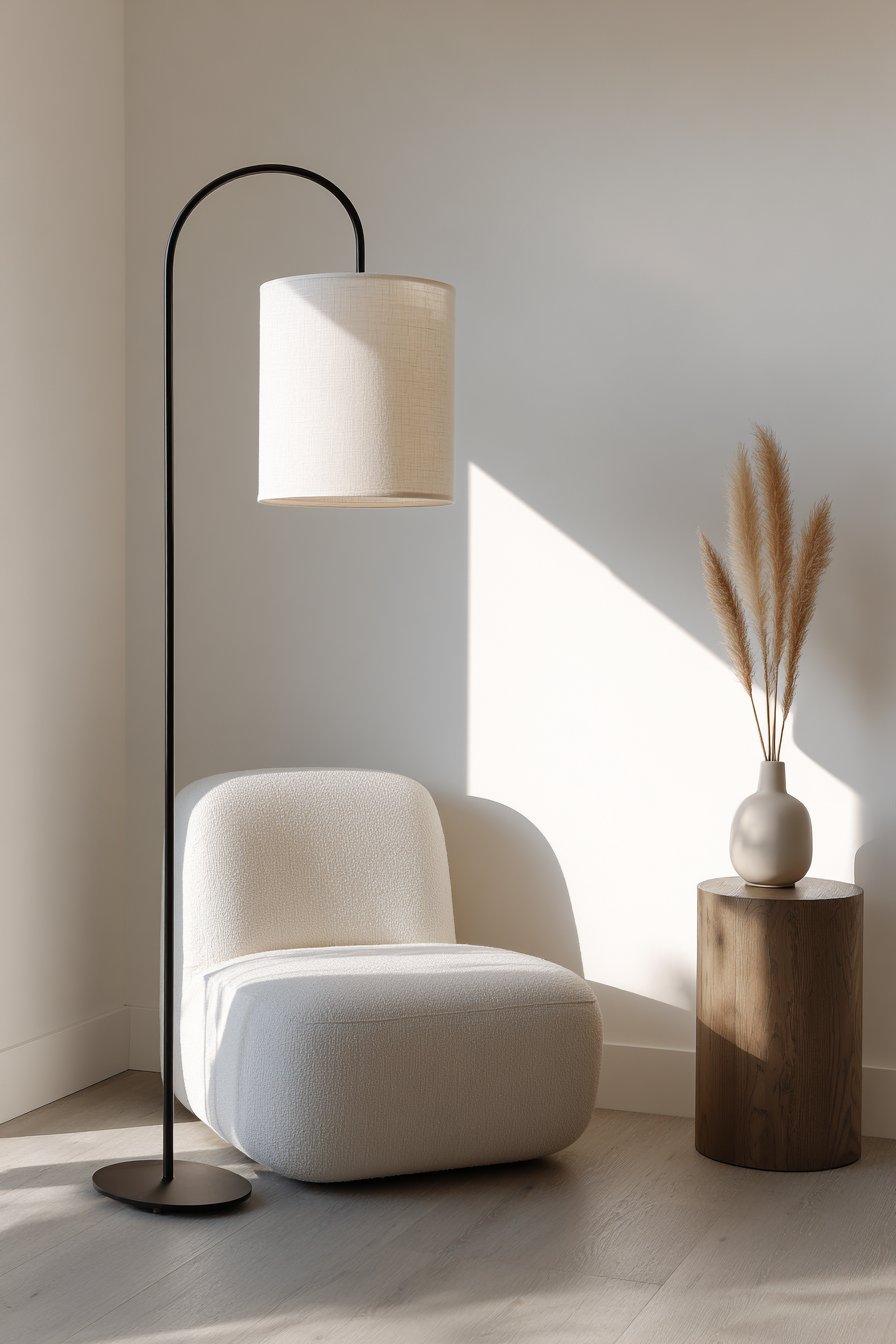
The furniture proportions suit human scale perfectly. The reading chair invites relaxation without overwhelming the space. The floor lamp provides task lighting at an appropriate height. The side table offers functionality without visual weight. Every dimension serves comfort and practicality.
Key Design Tips:
- Position furniture to capture natural light at optimal reading times
- Choose sculptural lighting fixtures that serve as functional art pieces
- Limit decorative accessories to single organic elements like dried botanicals
- Select side tables with visible grain patterns for subtle visual interest
- Maintain generous negative space around furniture to emphasize intentionality
3. Floating Media Console with Seamless Integration
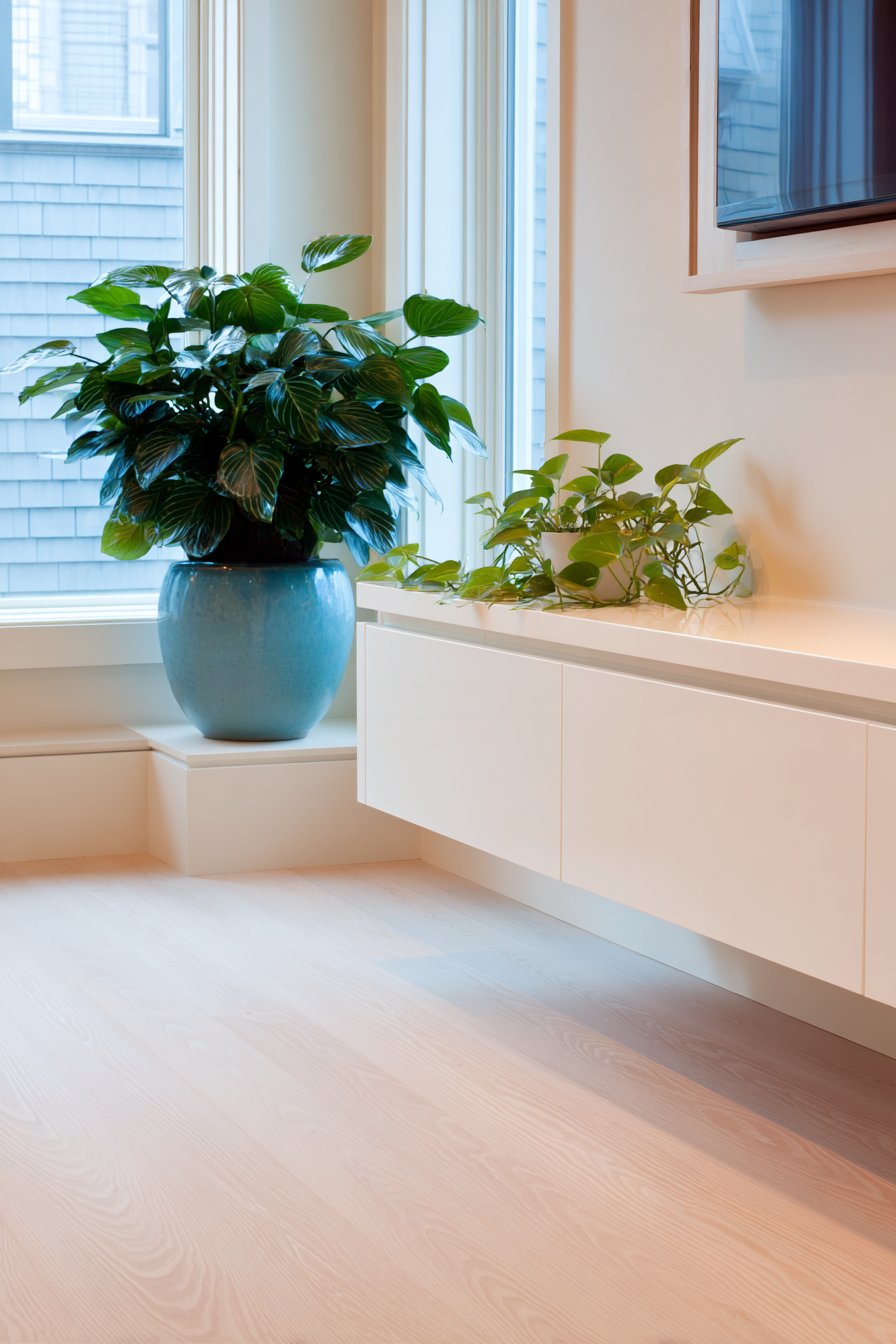
A wall-mounted media console demonstrates minimalist storage excellence. The white lacquer finish spans eight feet horizontally. Clean lines create visual continuity across the length. Push-to-open drawers eliminate visible hardware completely.
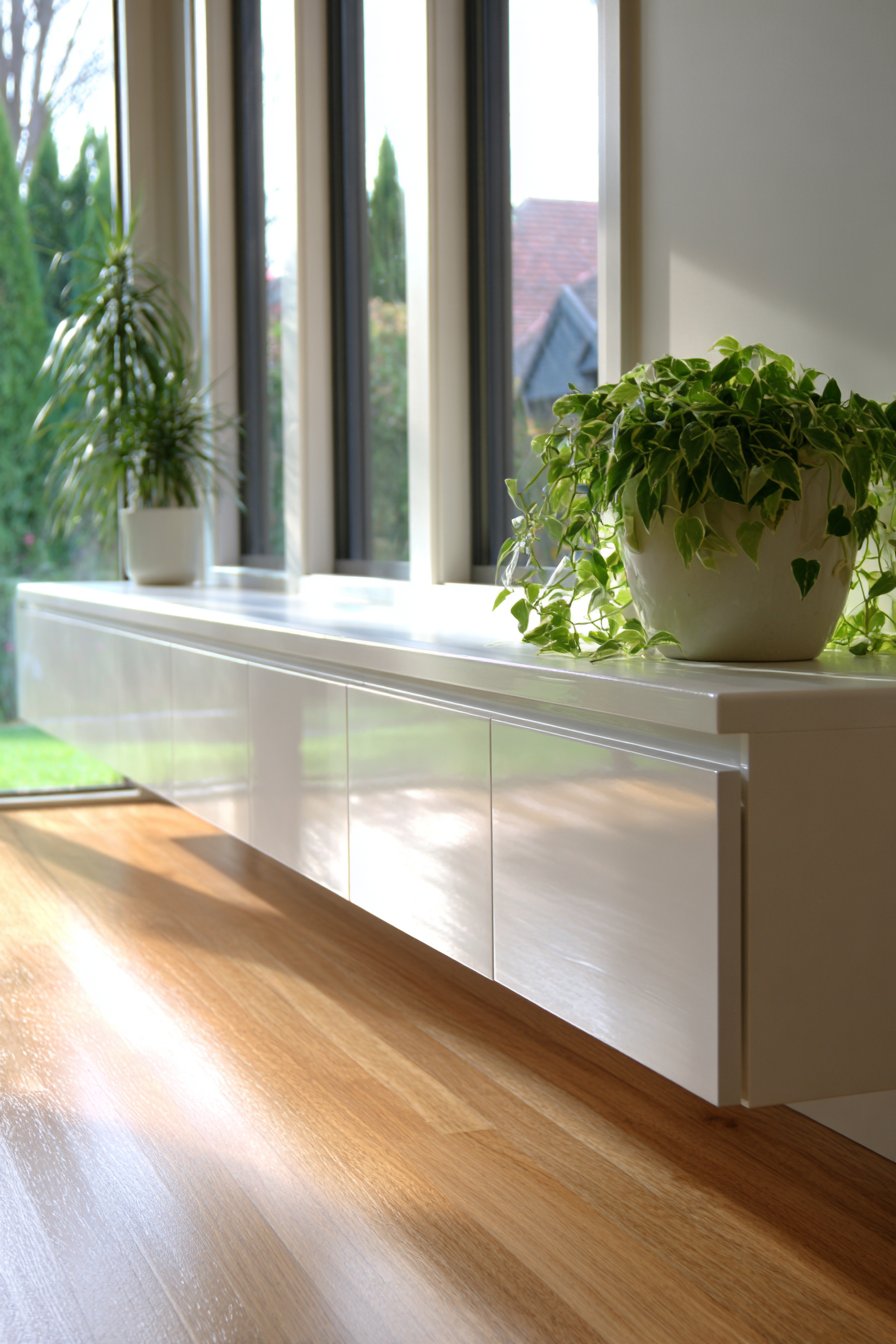
The floating installation creates literal and visual lightness. Pale oak flooring extends uninterrupted beneath the console. This continuity makes the room feel more spacious. The console appears to hover weightlessly. Cable management systems hide completely within the wall structure.
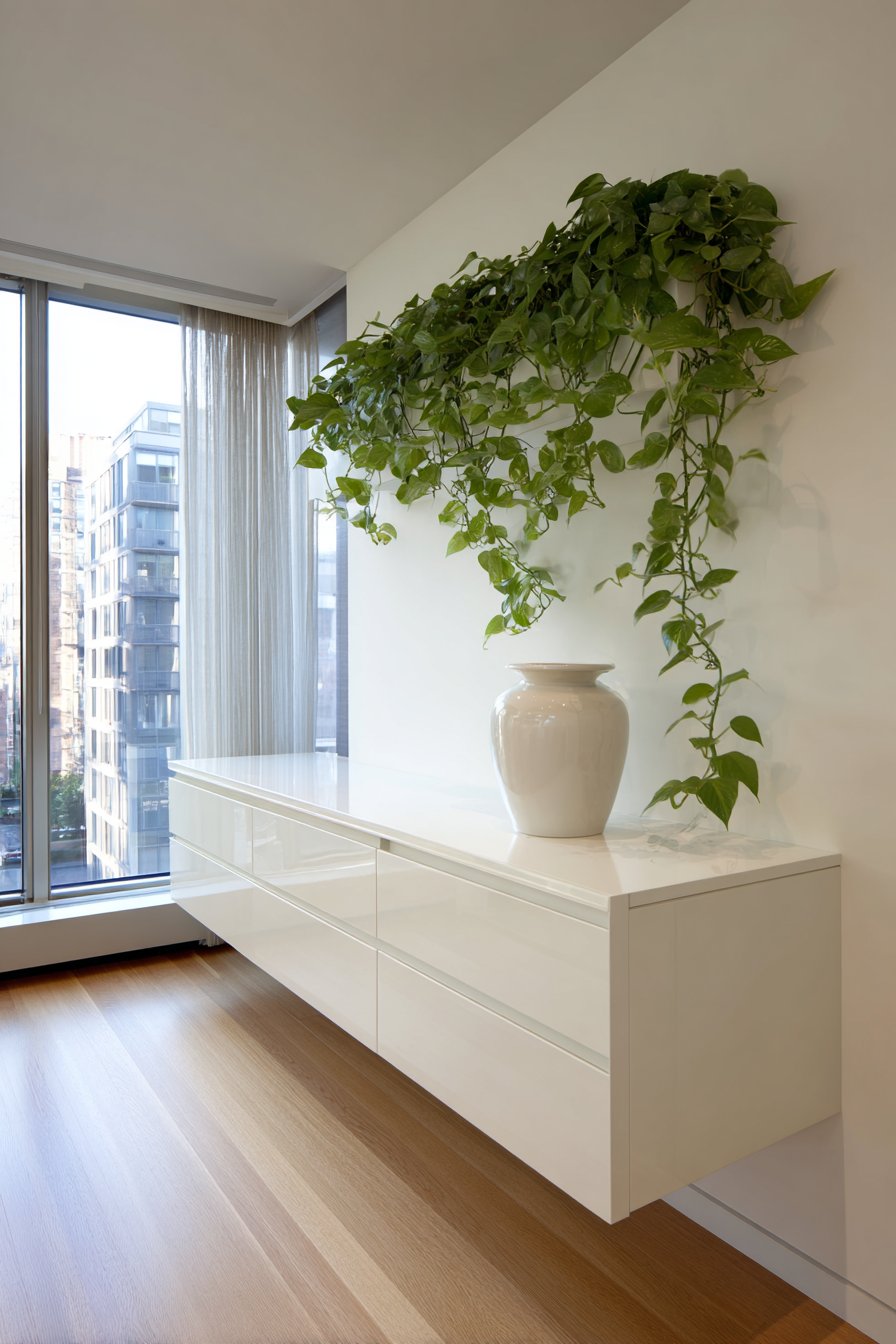
A single trailing pothos plant provides the only decoration. The simple ceramic pot matches the white palette. Green foliage introduces life without clutter. The plant’s organic form contrasts with geometric precision elsewhere.
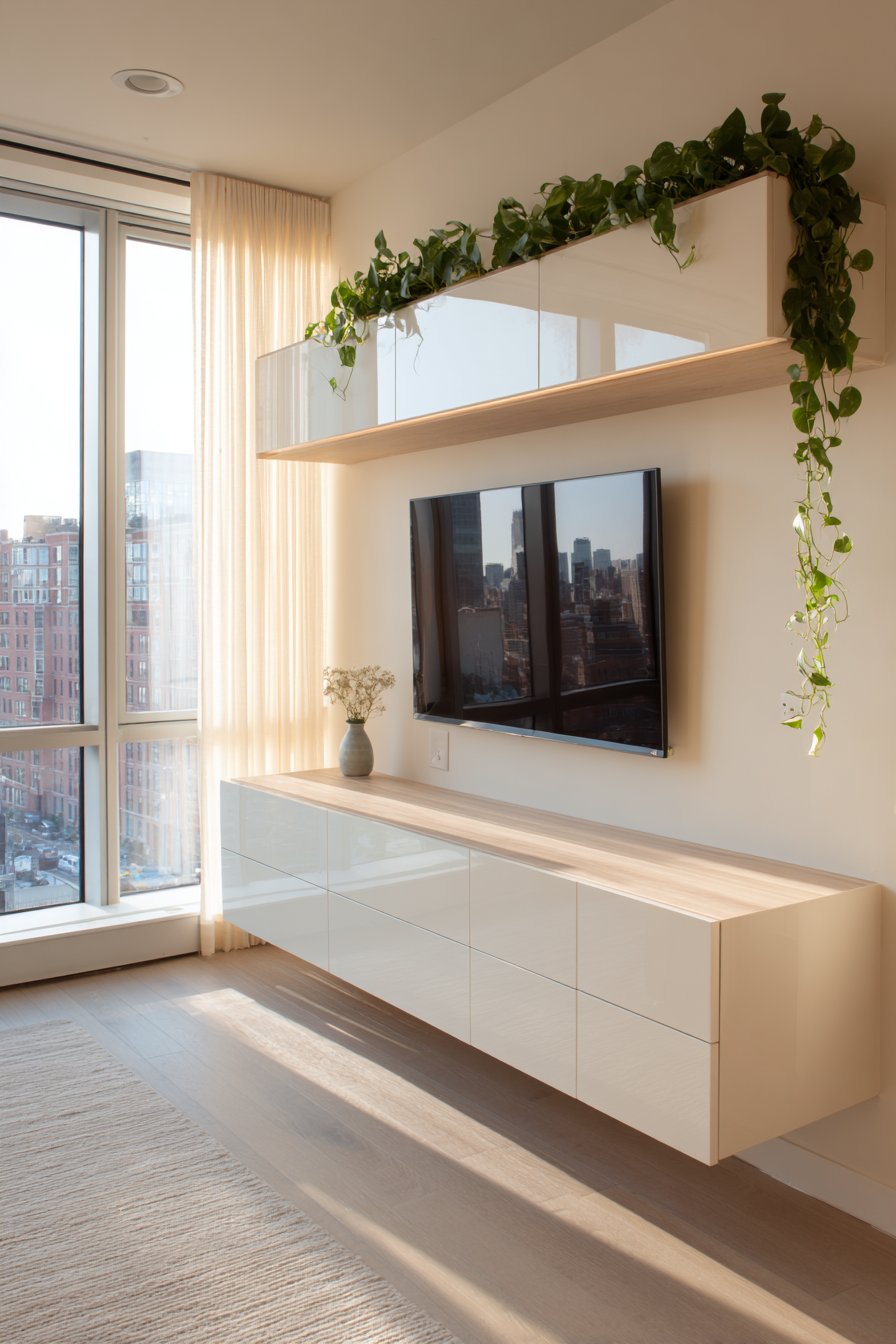
Soft natural light from adjacent windows highlights the seamless construction. Quality craftsmanship becomes apparent in perfect joint details. The lacquer finish reflects light subtly. This creates depth within the monochromatic scheme.
Key Design Tips:
- Install floating consoles to maximize floor space visibility
- Choose push-to-open mechanisms for completely handleless aesthetics
- Plan cable management during installation for truly clean results
- Limit console decoration to one living plant for organic contrast
- Select white or neutral finishes that blend with wall colors
4. Modular Sectional with Flexible Seating
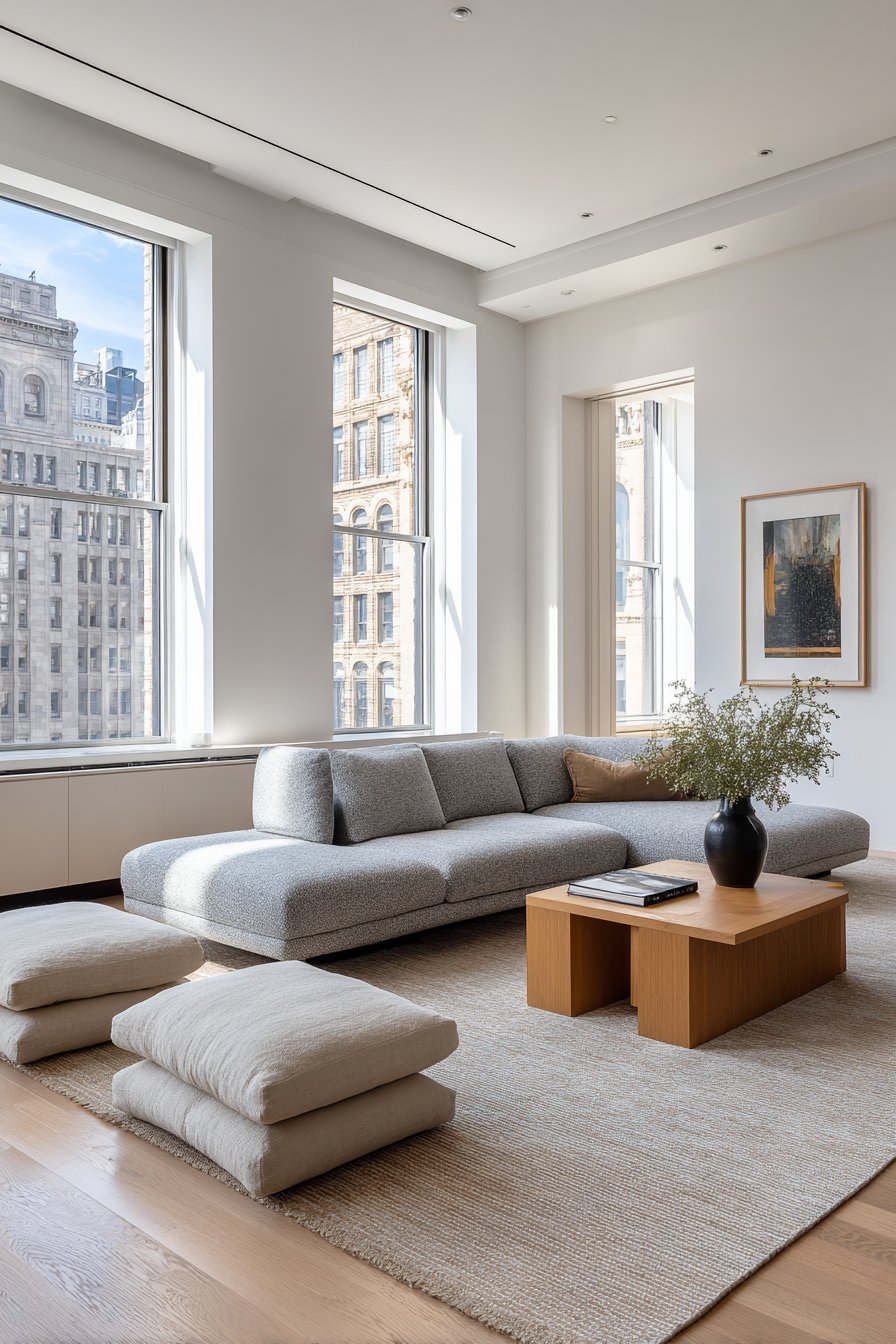
This seating arrangement balances comfort with minimalist principles. A modular sectional in dove grey features low arms and simple block feet. Textured fabric adds tactile interest without pattern. Two matching floor cushions provide flexible additional seating options.
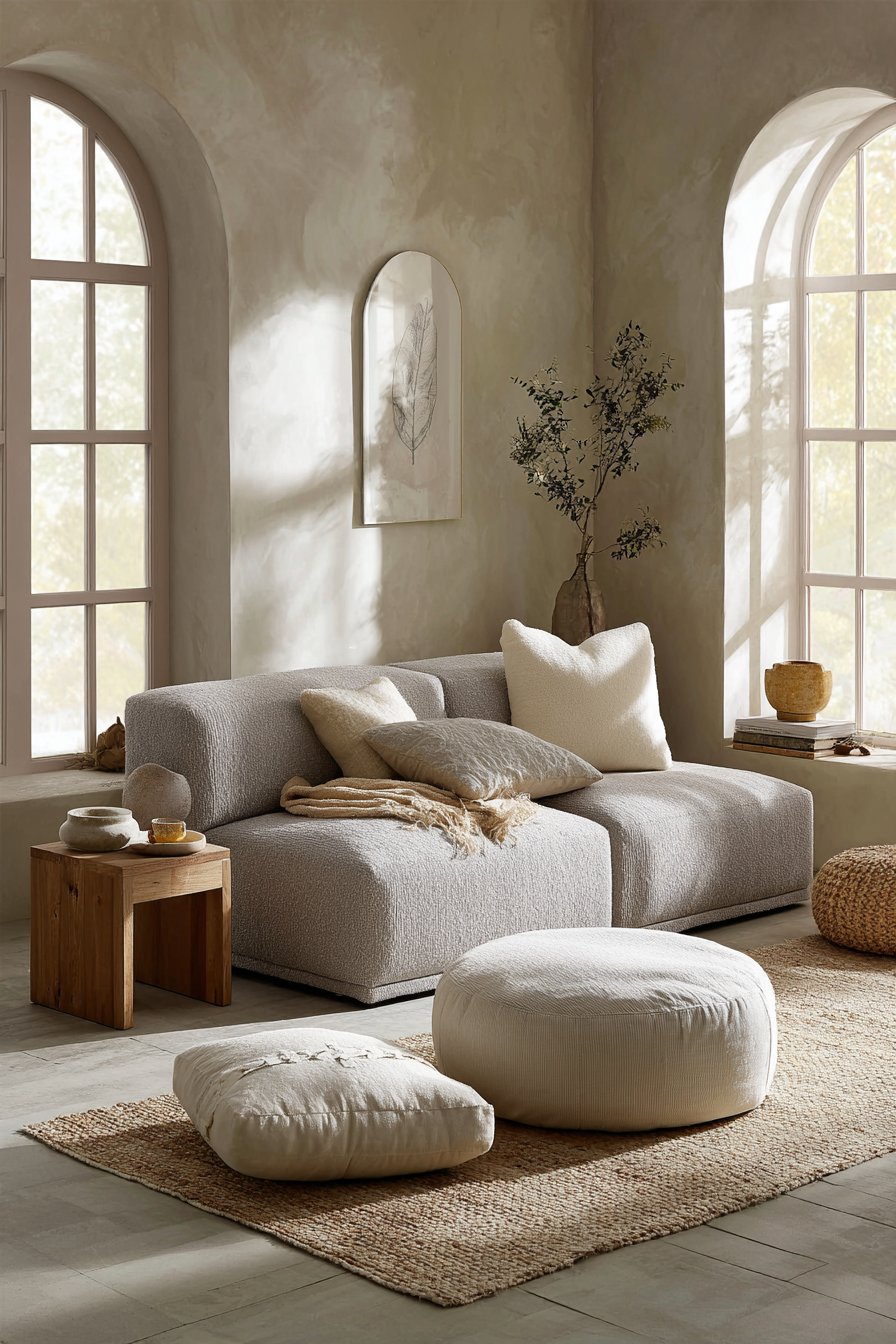
A large jute area rug defines the conversation zone clearly. The natural fiber adds warmth through subtle texture. The rug grounds the furniture while maintaining neutral harmony. Generous clearance surrounds all pieces. At least three feet of space ensures easy movement.
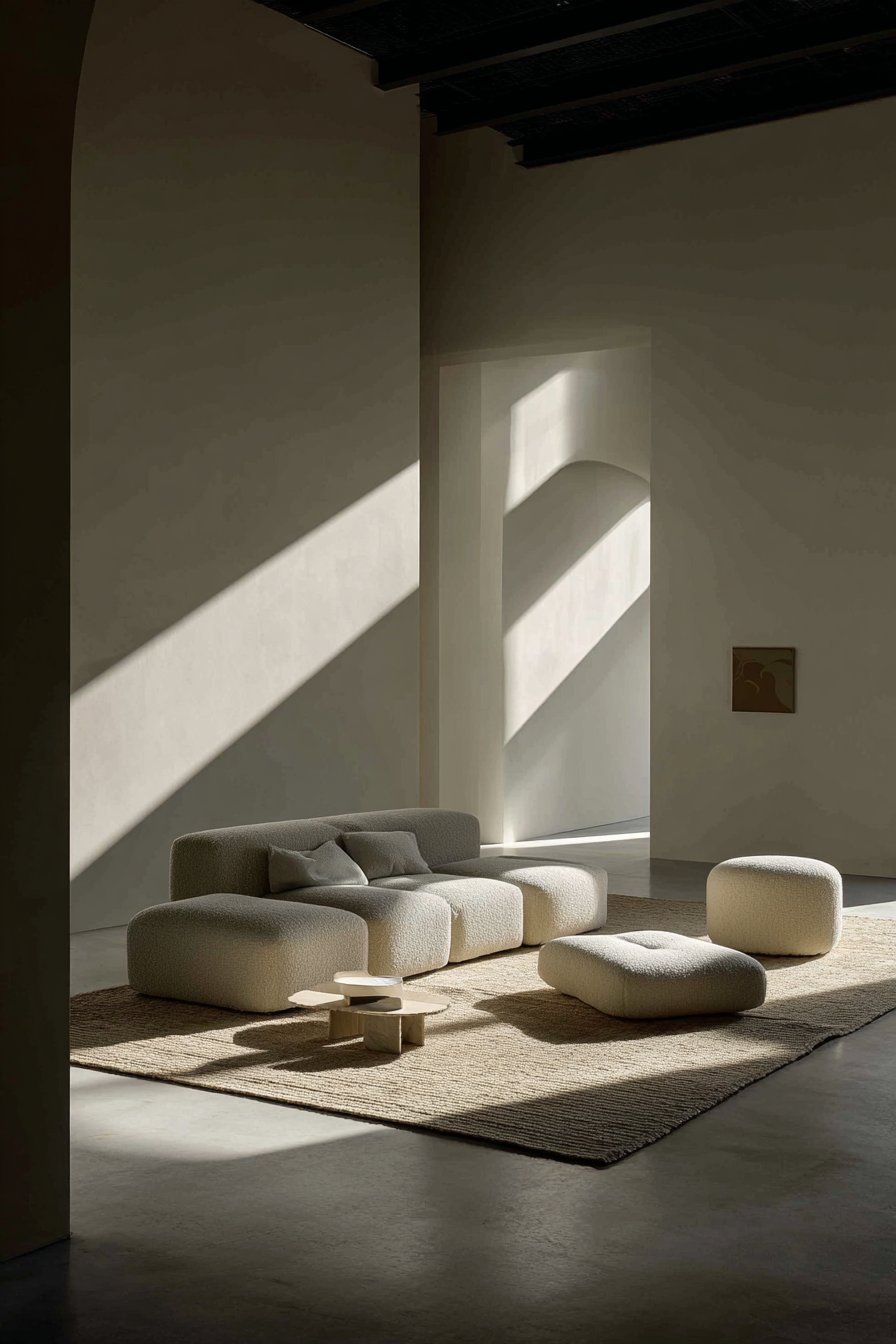
Afternoon sunlight streams through unadorned windows. The natural light creates calm atmosphere throughout. Shadows emphasize the sofa’s simple geometric forms. The dove grey fabric shows dimension in changing light.
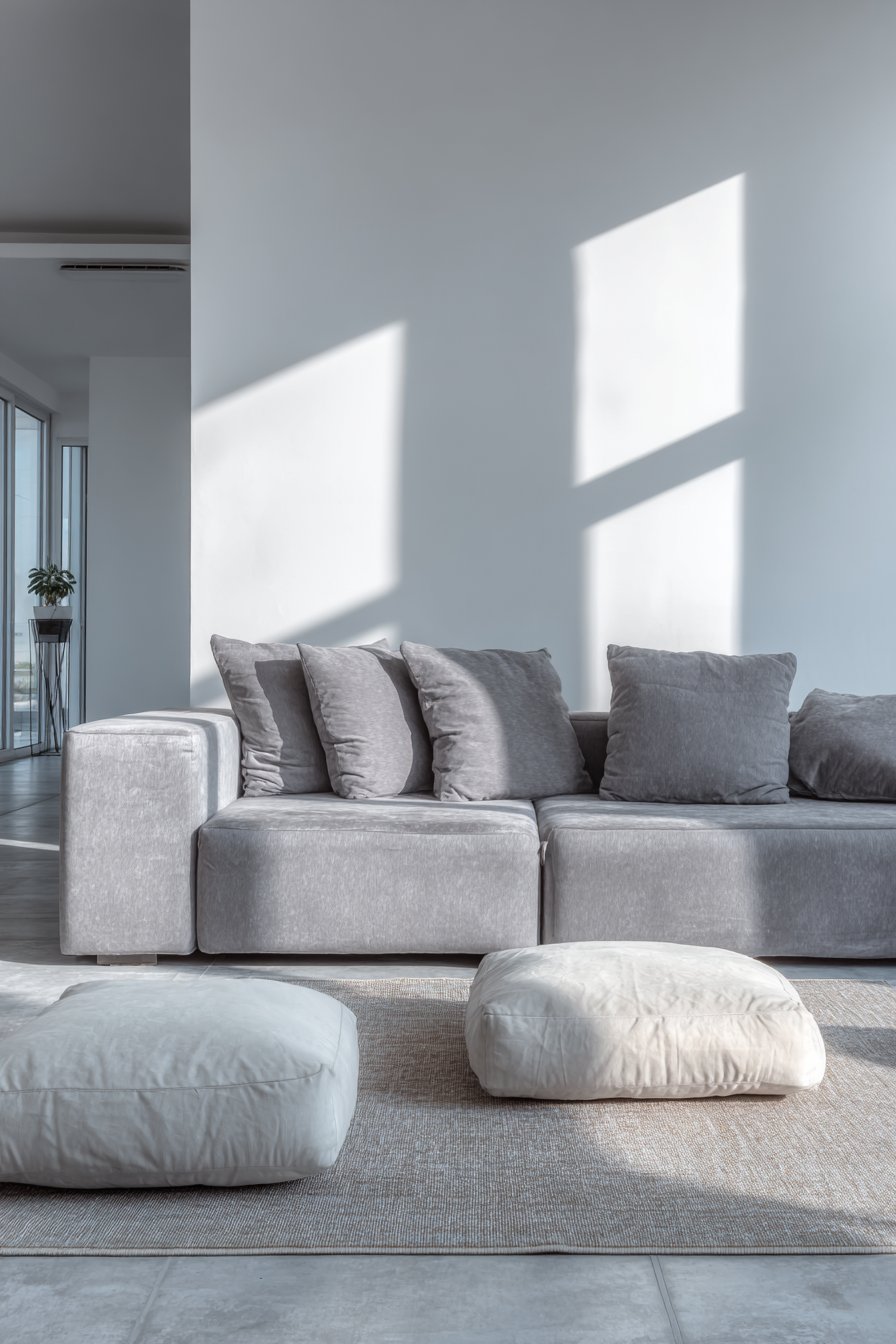
The modular design allows future reconfiguration. Pieces can adapt to different spatial needs. This flexibility makes minimalist design practical long-term. The investment serves changing life circumstances.
Key Design Tips:
- Choose modular sectionals for adaptability in minimalist spaces
- Maintain minimum three-foot clearance around furniture for comfortable circulation
- Select textured solid fabrics that add interest without visual noise
- Use natural fiber rugs to define zones while adding organic warmth
- Consider floor cushions for flexible seating that stores easily
5. Floating Shelf Display with Intentional Curation
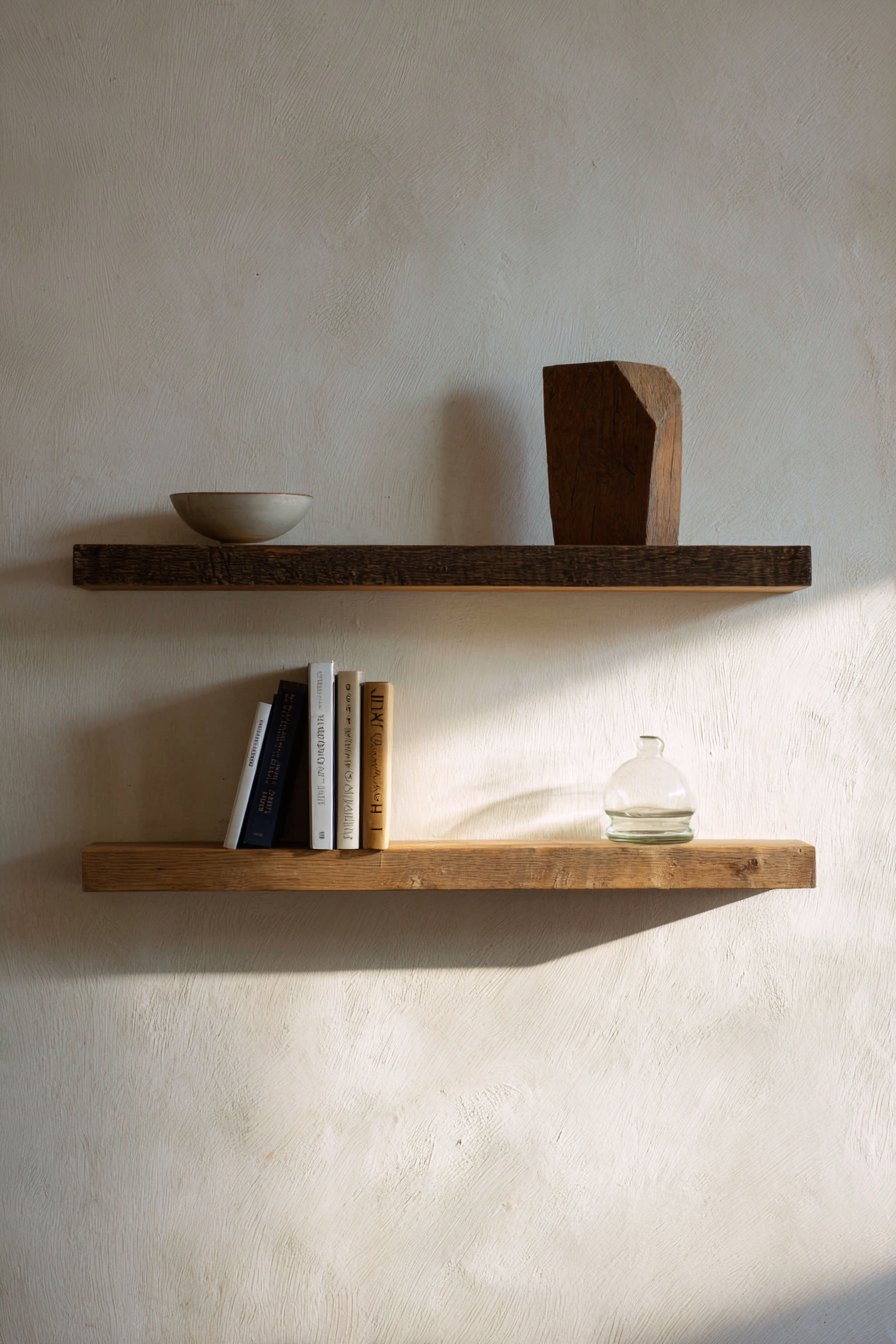
A single floating shelf demonstrates minimalist display principles. The solid white oak measures seventy-two inches long and two inches thick. Five carefully curated objects rest on the surface. A small ceramic bowl, two vertical art books, a sculptural wooden object, and a glass vase create composition.
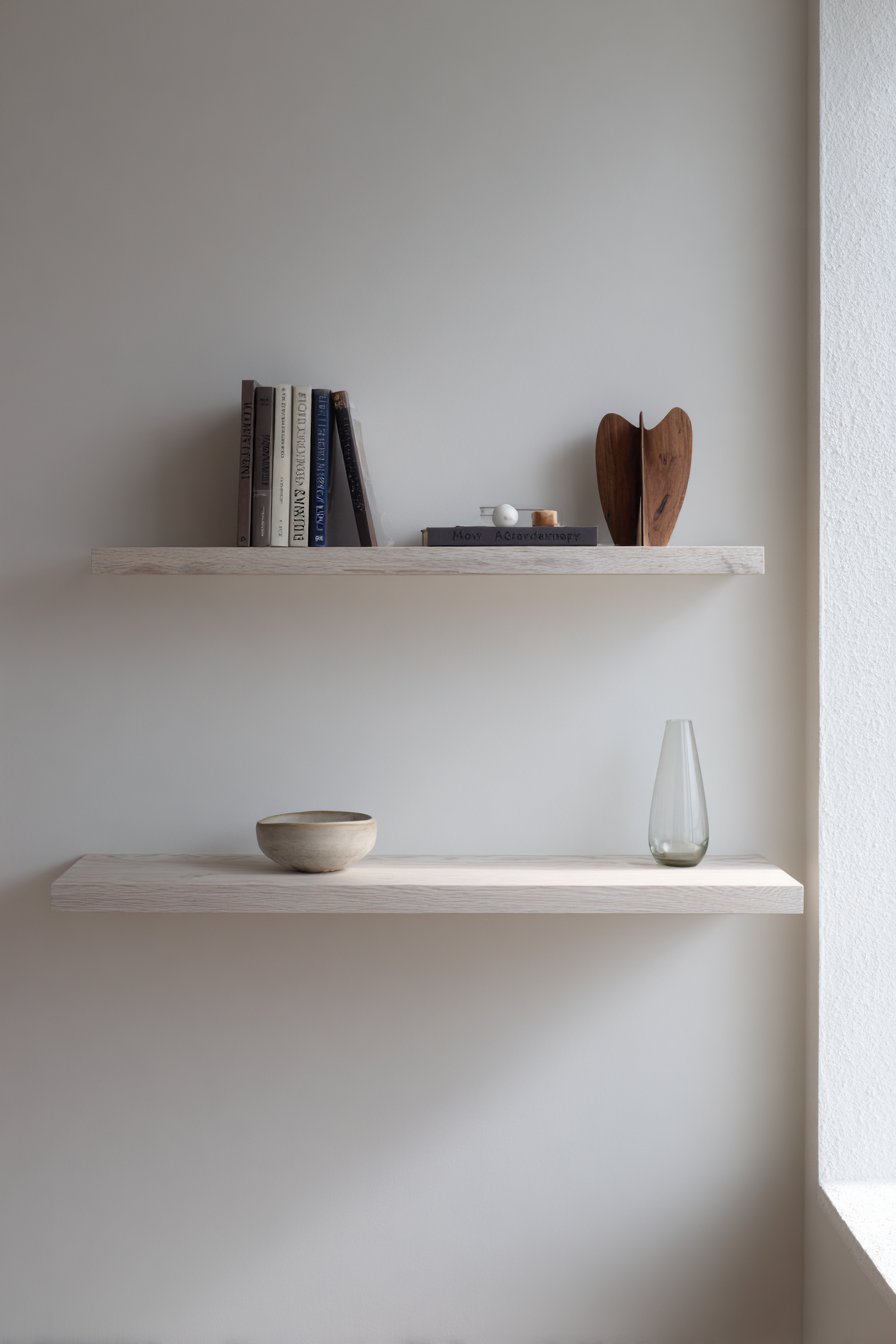
The white plaster wall provides essential breathing room. Significant negative space surrounds each displayed item. This prevents visual crowding. The arrangement follows asymmetrical balance principles. Objects relate to each other while maintaining independence.
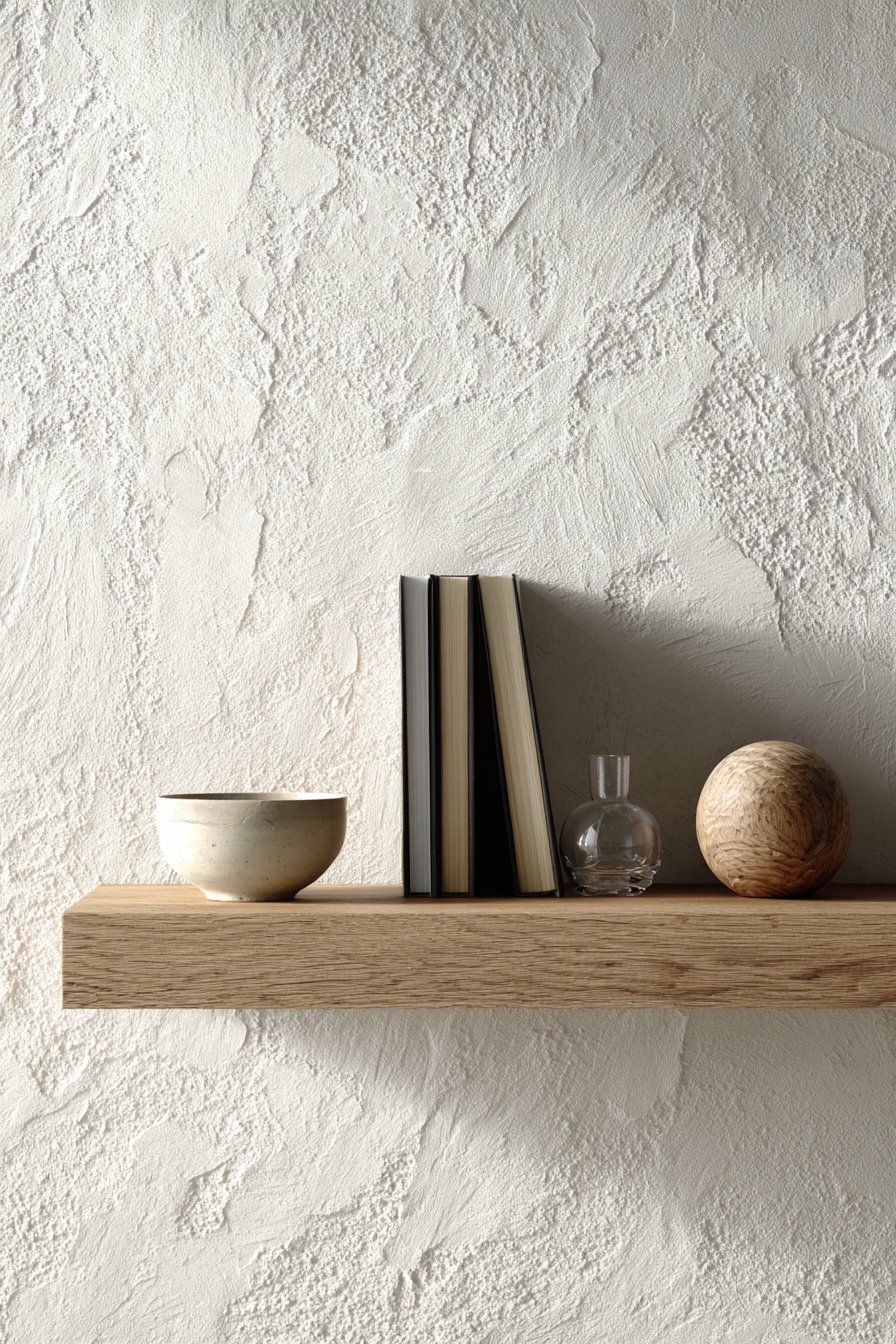
Natural side lighting emphasizes the oak grain pattern beautifully. Shadows create depth and dimension. The wood’s natural character becomes the artwork itself. The lighting direction changes throughout the day. This creates subtle variations in how objects appear.
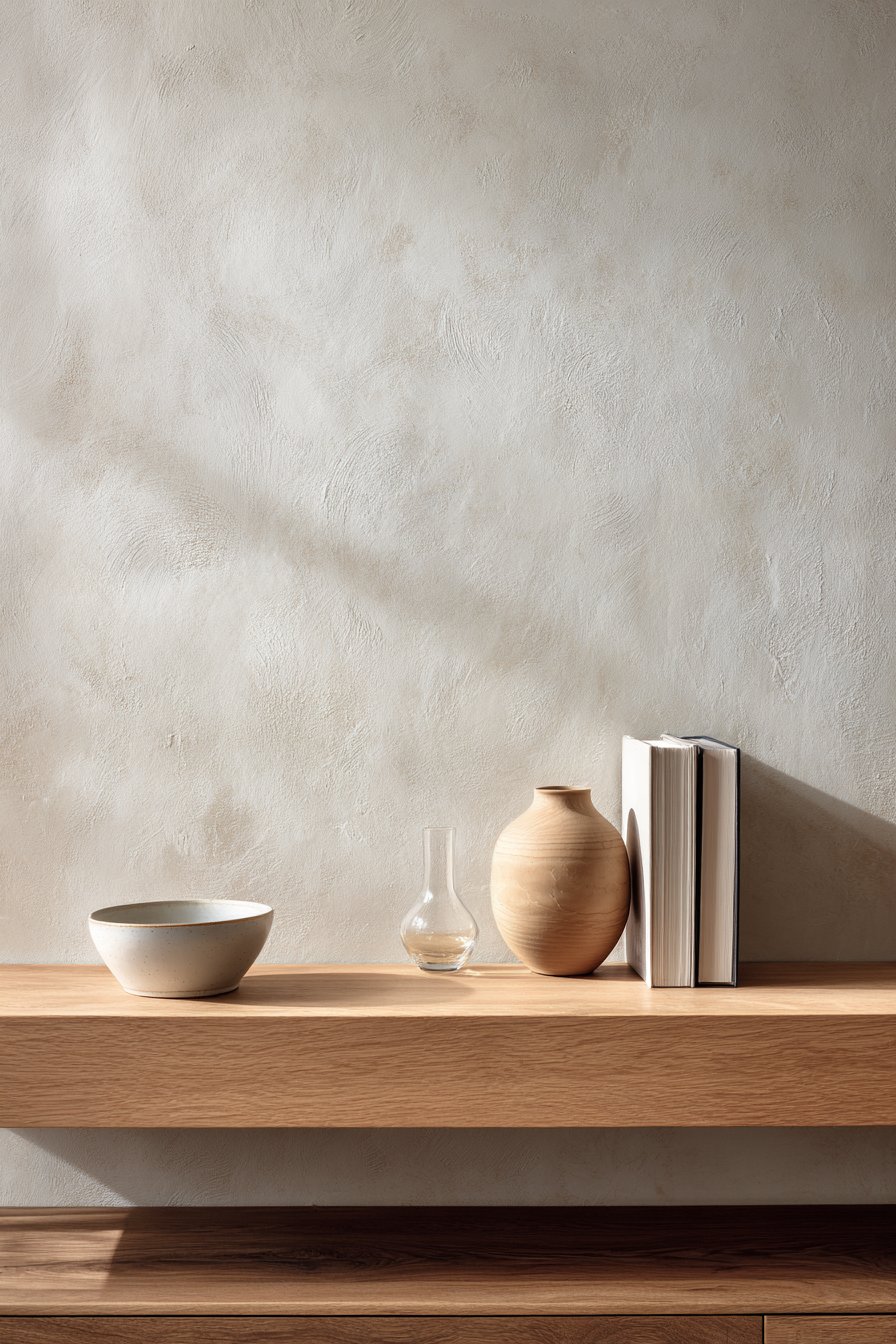
The five-object limit requires thoughtful selection. Each piece must justify its presence. This curation process connects minimalism with intentional living. The display reflects personal values and aesthetic preferences.
Key Design Tips:
- Limit floating shelf displays to five or fewer carefully chosen objects
- Select items with varying heights and forms for visual rhythm
- Position shelving where natural side lighting creates dimensional shadows
- Maintain generous negative space equal to or greater than the object size
- Choose solid wood shelving to showcase natural grain as design element
6. Fireplace Wall with Functional Focus
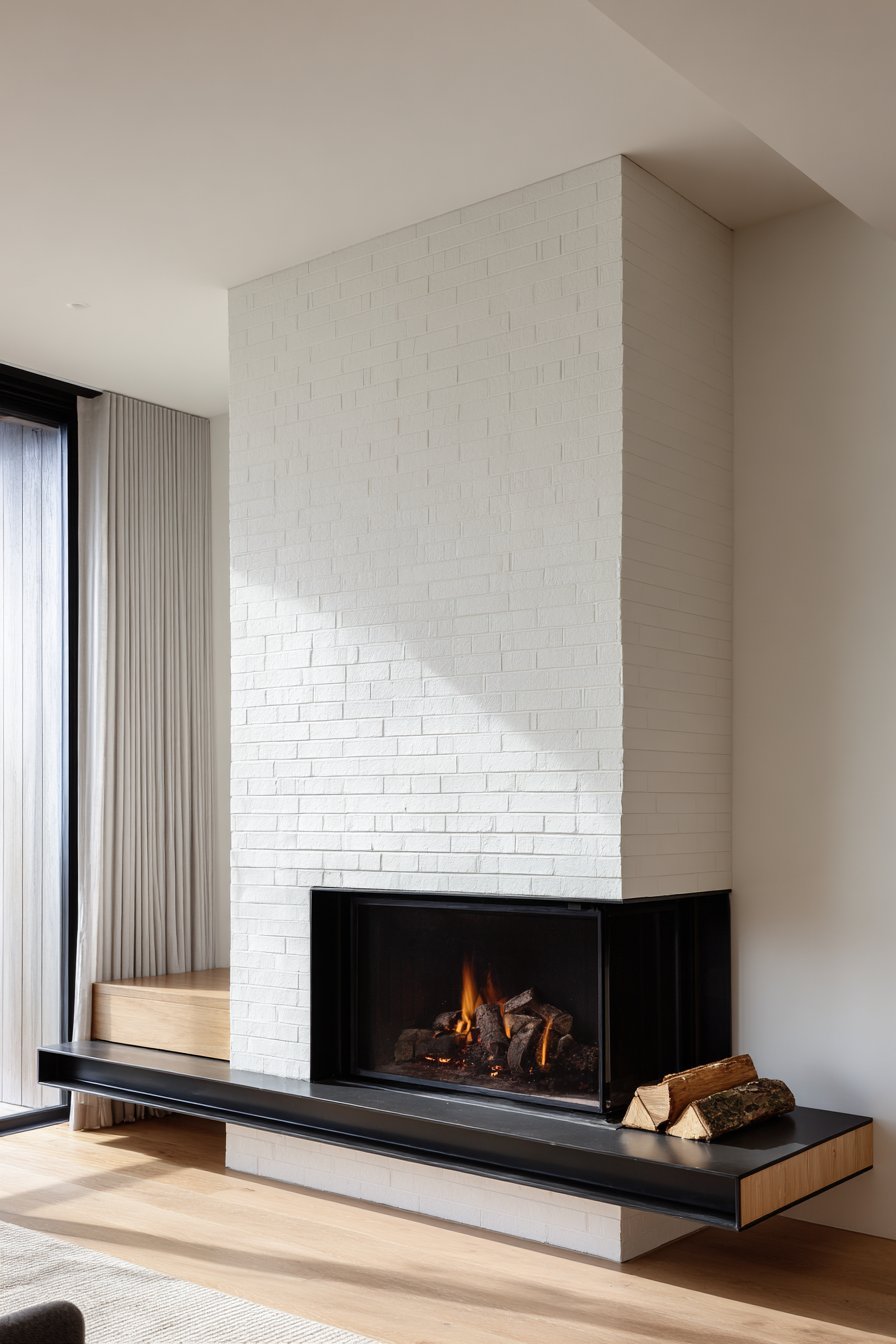
This fireplace wall exemplifies minimalist heating design. A clean-lined gas insert features simple black steel surround. The surround sits flush with white painted brick. No mantel interrupts the smooth wall plane. Decorative elements are completely absent.
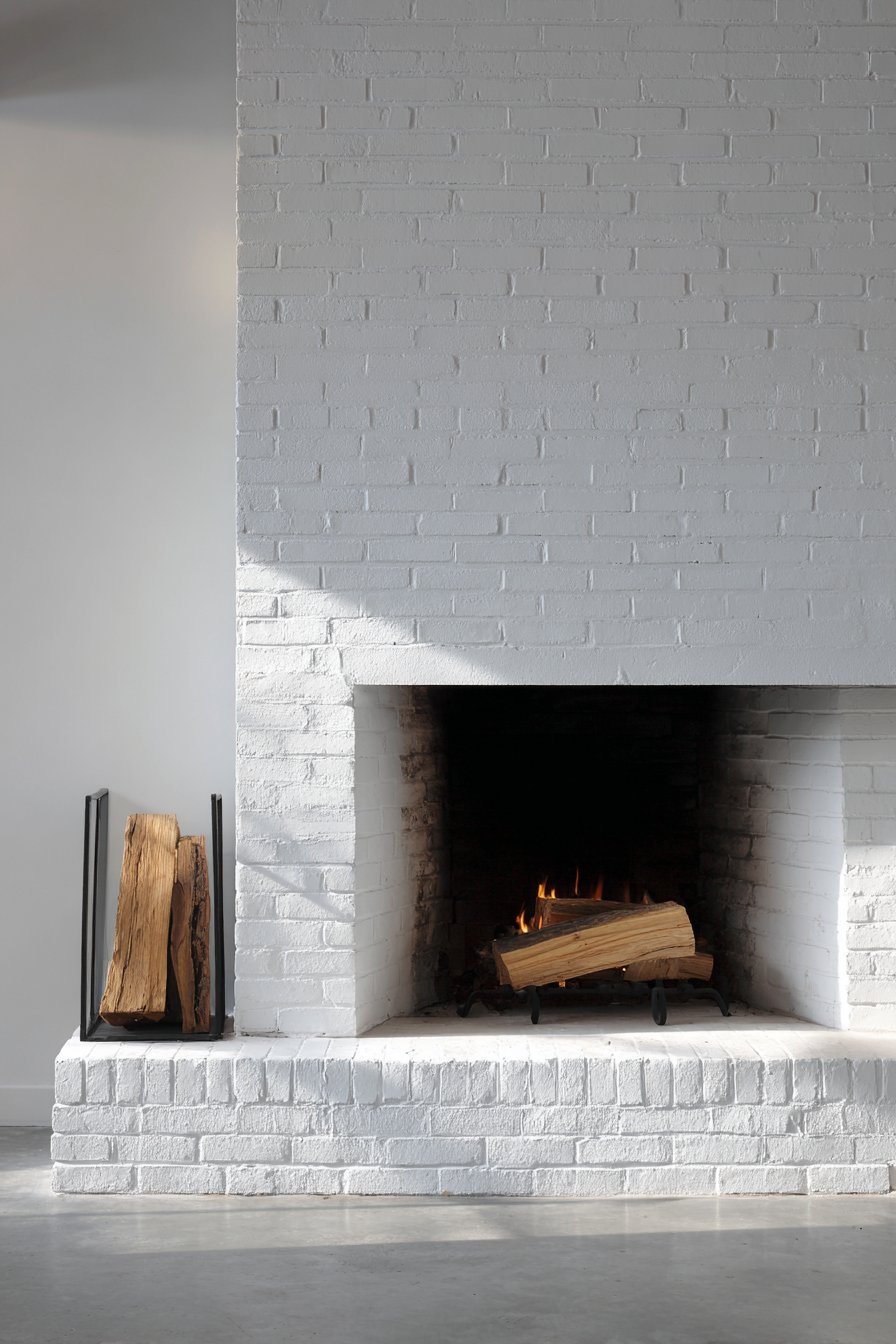
A single piece of split oak firewood sits in minimal steel holder. This functional element provides visual interest. The holder’s simple geometric form complements the fireplace surround. White walls remain completely bare around the focal point.
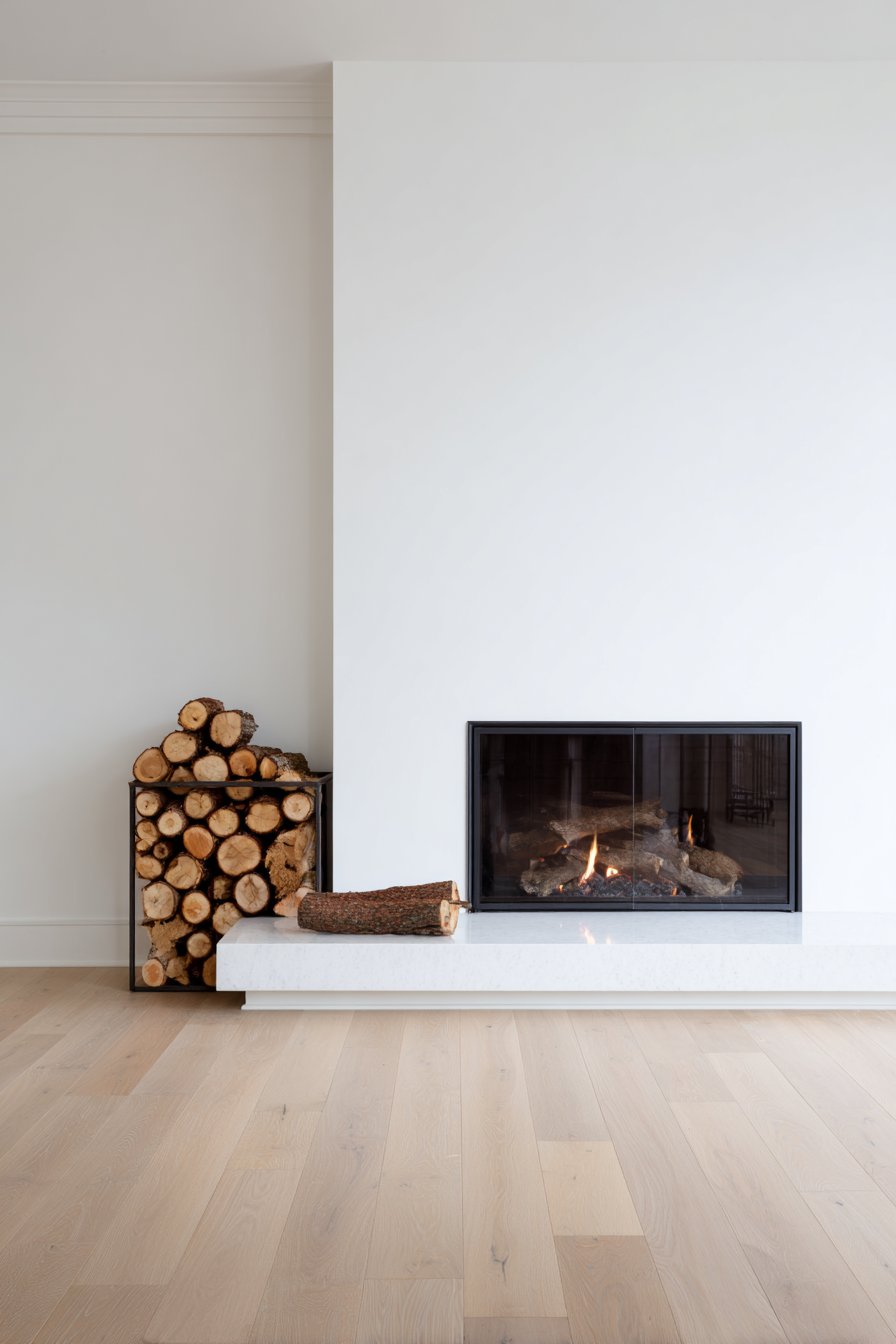
Soft natural lighting creates subtle texture on painted brick. The texture emerges from material honesty rather than applied decoration. The brick’s pattern provides inherent visual interest. White paint unifies while revealing underlying structure.
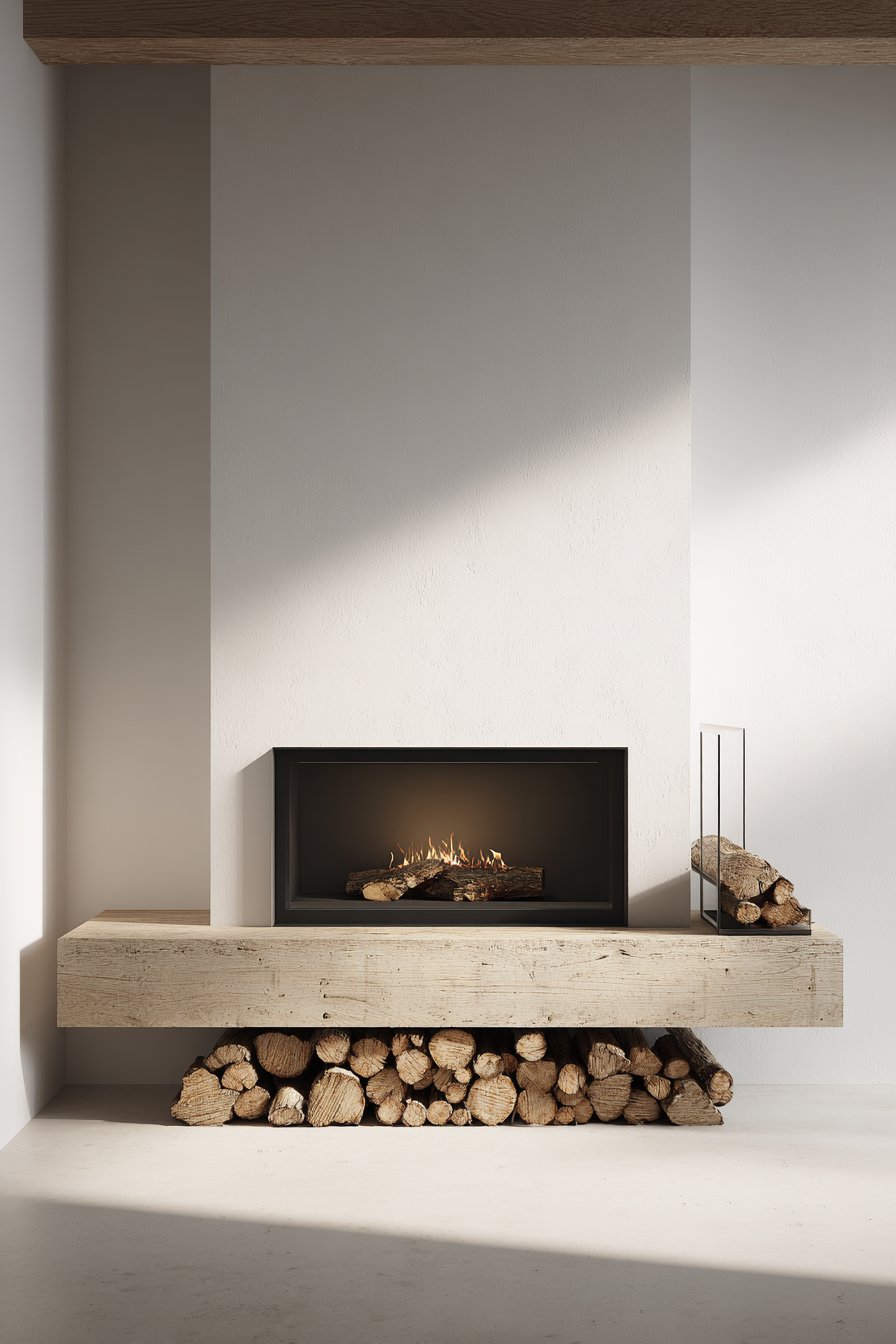
The fireplace serves as functional focal point without embellishment. The flame itself becomes the decoration. This approach aligns perfectly with minimalist philosophy. Essential elements receive attention while excess disappears.
Key Design Tips:
- Choose flush-mount fireplace surrounds that integrate seamlessly with walls
- Eliminate mantels unless necessary for structural or functional reasons
- Paint brick in warm white to maintain texture while creating cohesion
- Use minimal log holders with simple geometric forms
- Let the fire itself provide visual interest rather than decorative accessories
7. Layered Window Treatments with Light Control
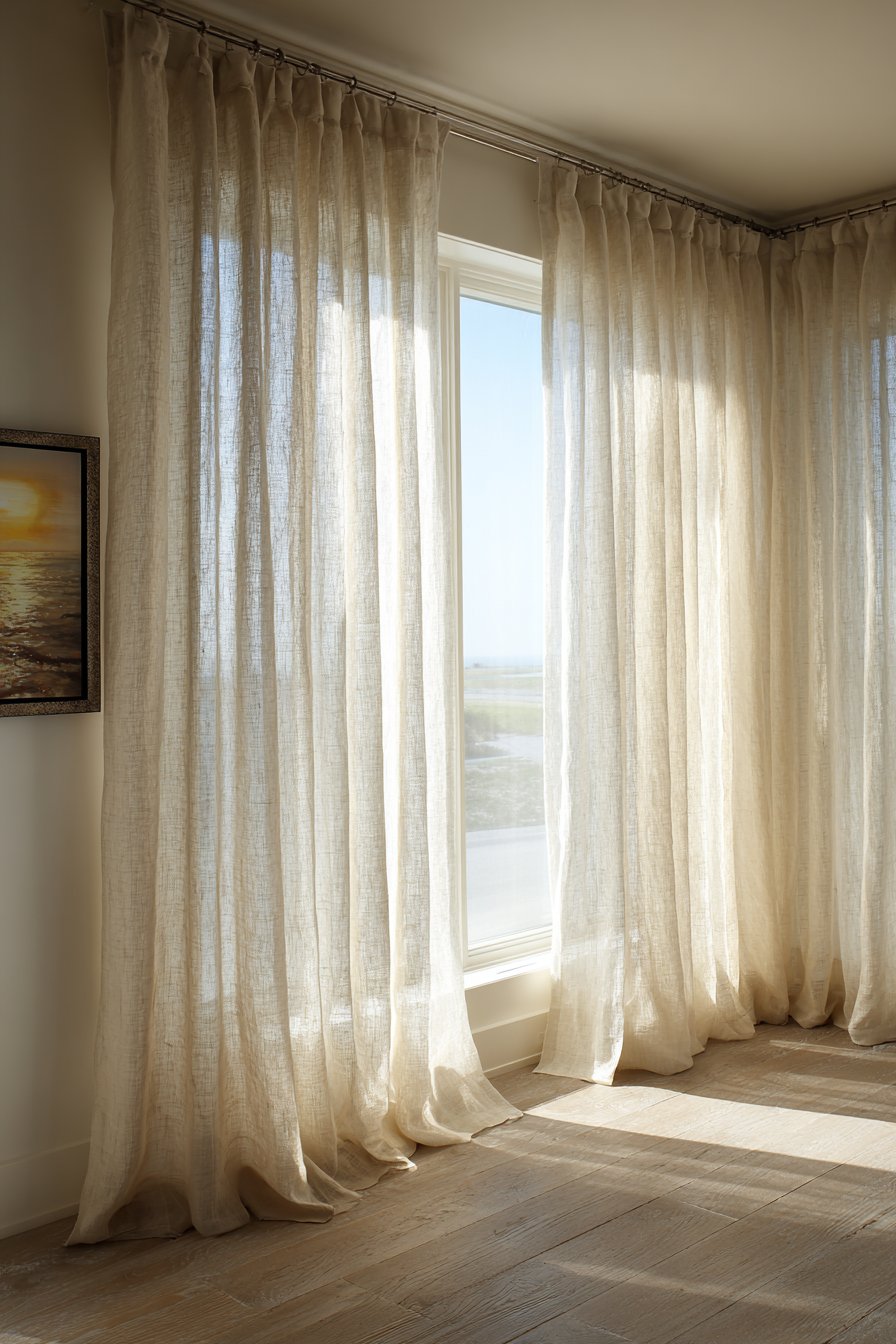
Floor-to-ceiling linen panels demonstrate elegant simplicity. Natural linen in warm white hangs from concealed track systems. No visible hardware interrupts the clean lines. The fabric drapes straight to the floor with simple hemmed edges.
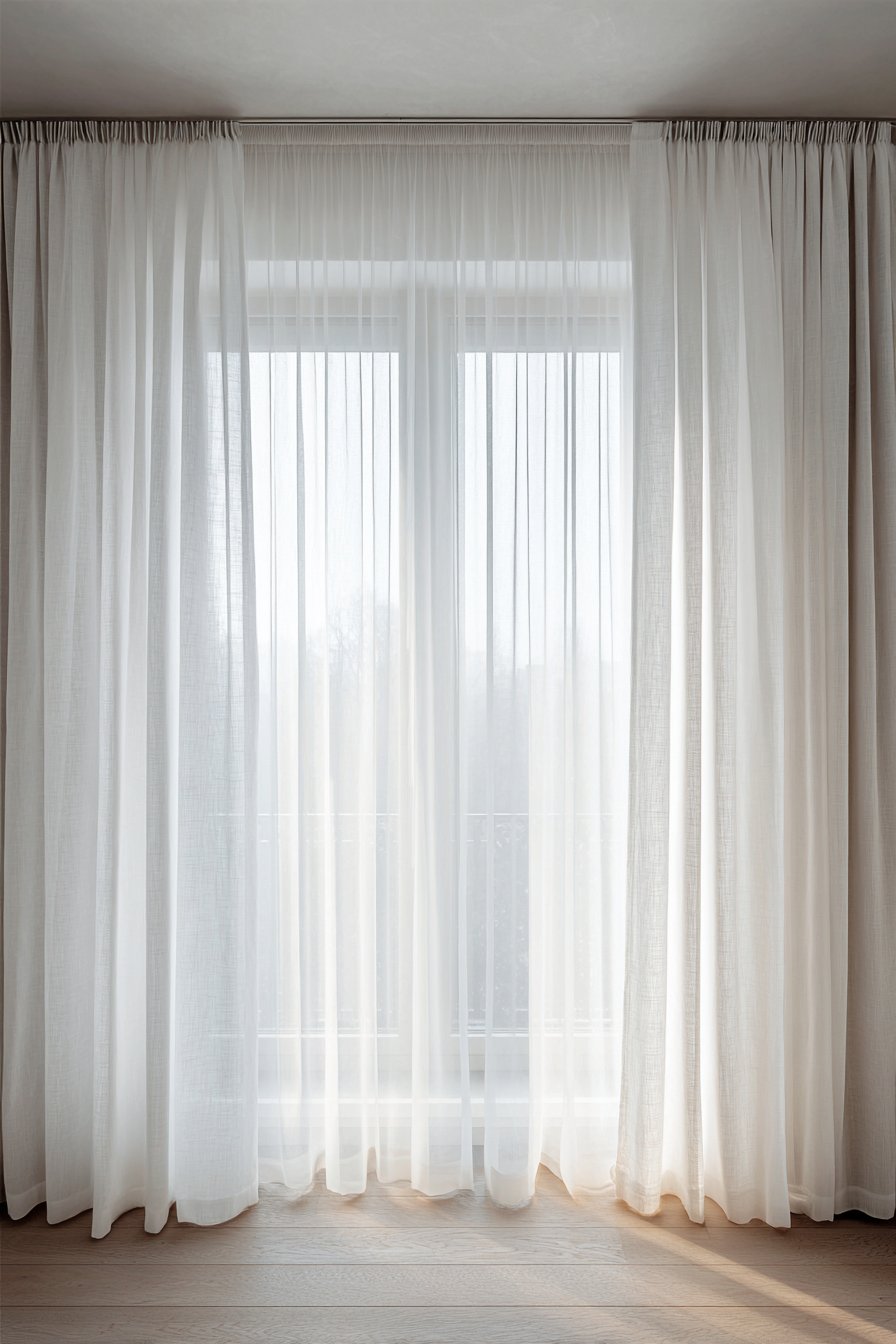
Behind the sheers, roller blinds provide practical light control. The matching neutral fabric coordinates perfectly. This layered approach offers flexibility. The sheers diffuse harsh sunlight beautifully. The blinds block light completely when needed.
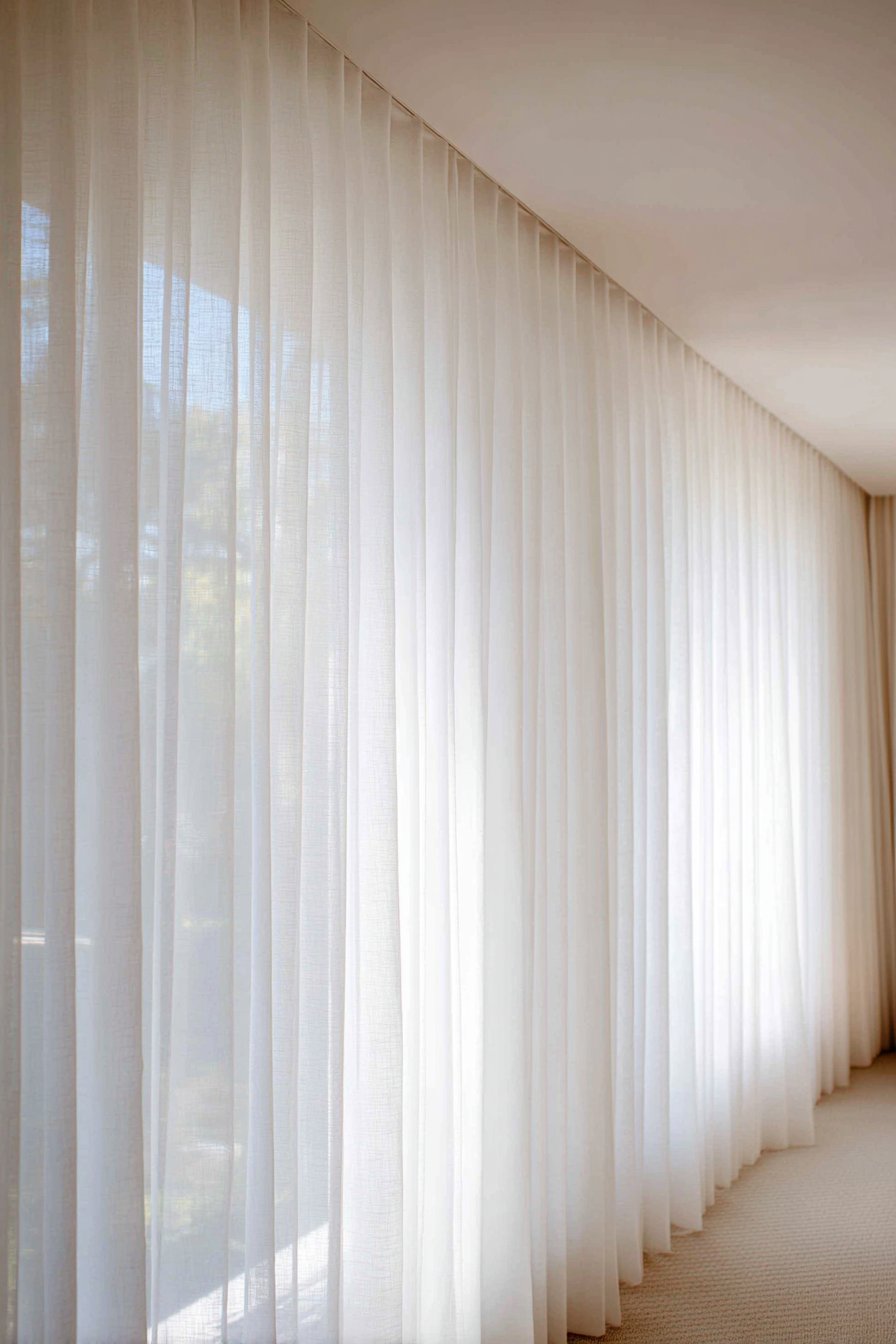
Soft morning light filters through the linen layers. A luminous glow fills the space. The fabric’s natural texture becomes visible in transmitted light. Simple materials create sophisticated results. No tiebacks or embellishments distract from pure form.
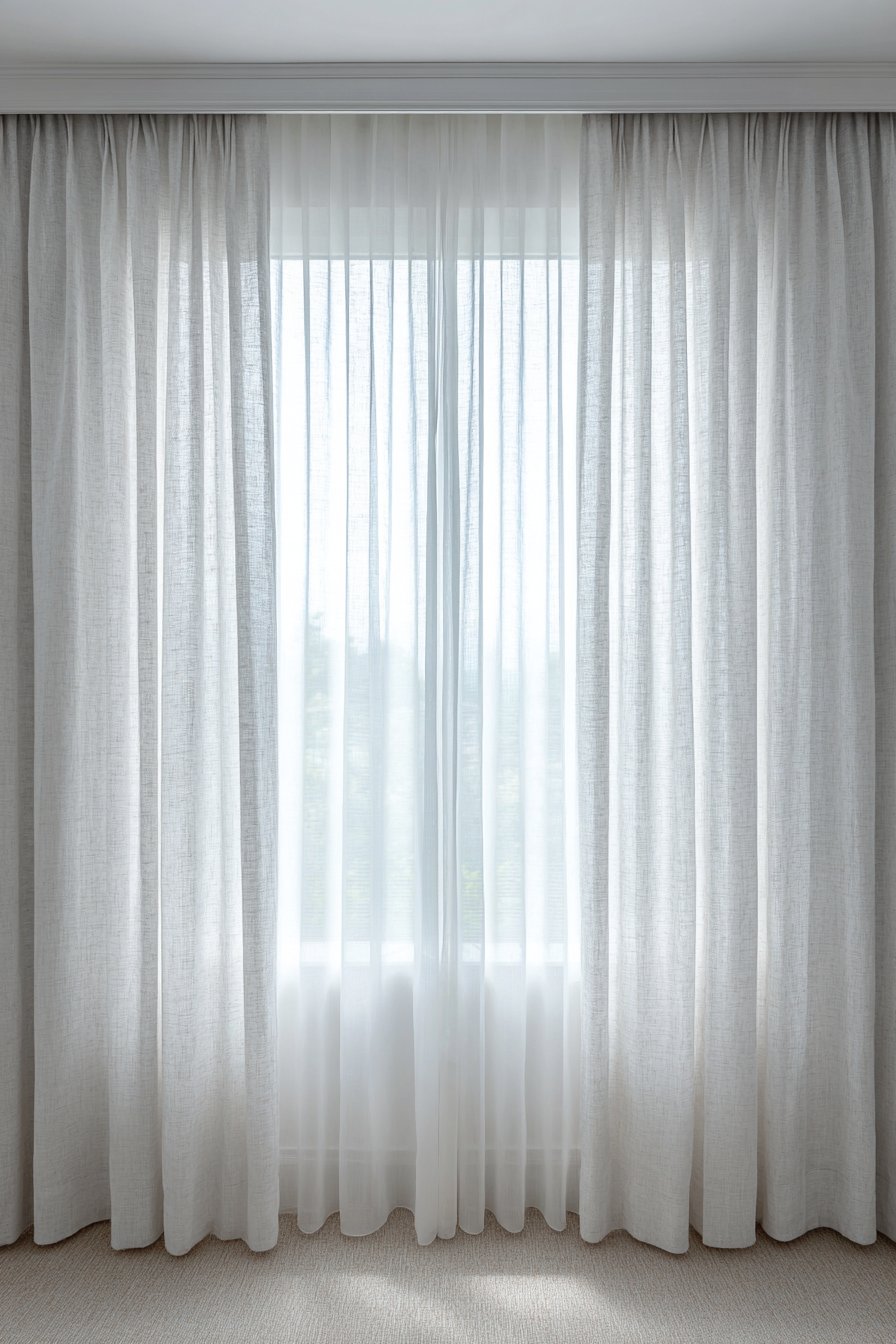
The concealed track system maintains visual calm. Hardware disappears from view completely. This detail requires planning during installation. The investment creates lasting clean aesthetics.
Key Design Tips:
- Install concealed track systems for truly handleless window treatments
- Layer sheers with blackout blinds for flexible light control options
- Choose natural linen in warm white rather than stark white
- Hem panels to just touch the floor without pooling or breaking
- Avoid all tiebacks, trim, or decorative hardware for cleanest results
8. Coffee Table Vignette with Minimal Styling
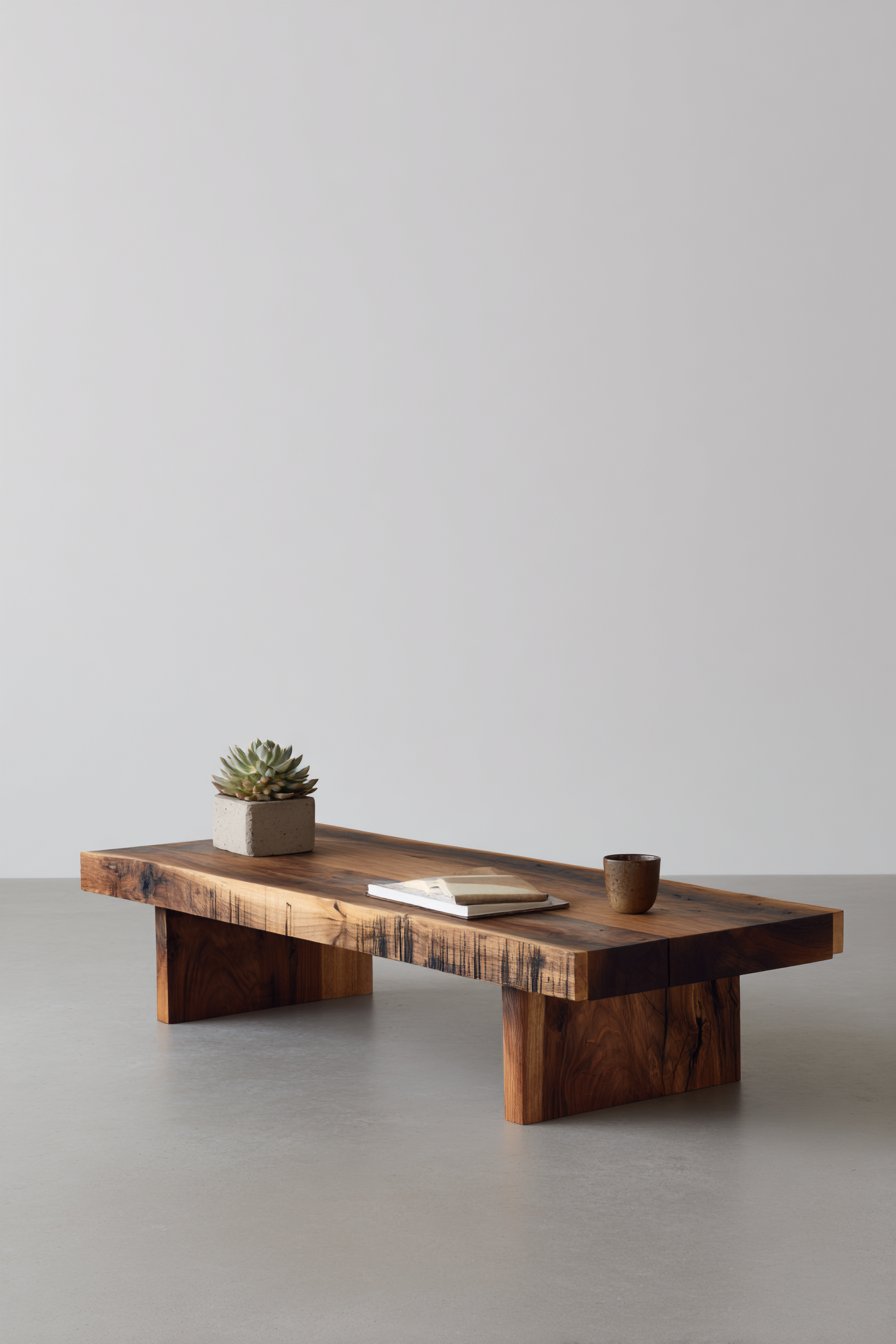
This coffee table demonstrates restraint in styling. A low rectangular table in solid walnut showcases visible grain. Simple chamfered edges add subtle detail. The surface displays only three carefully chosen items.
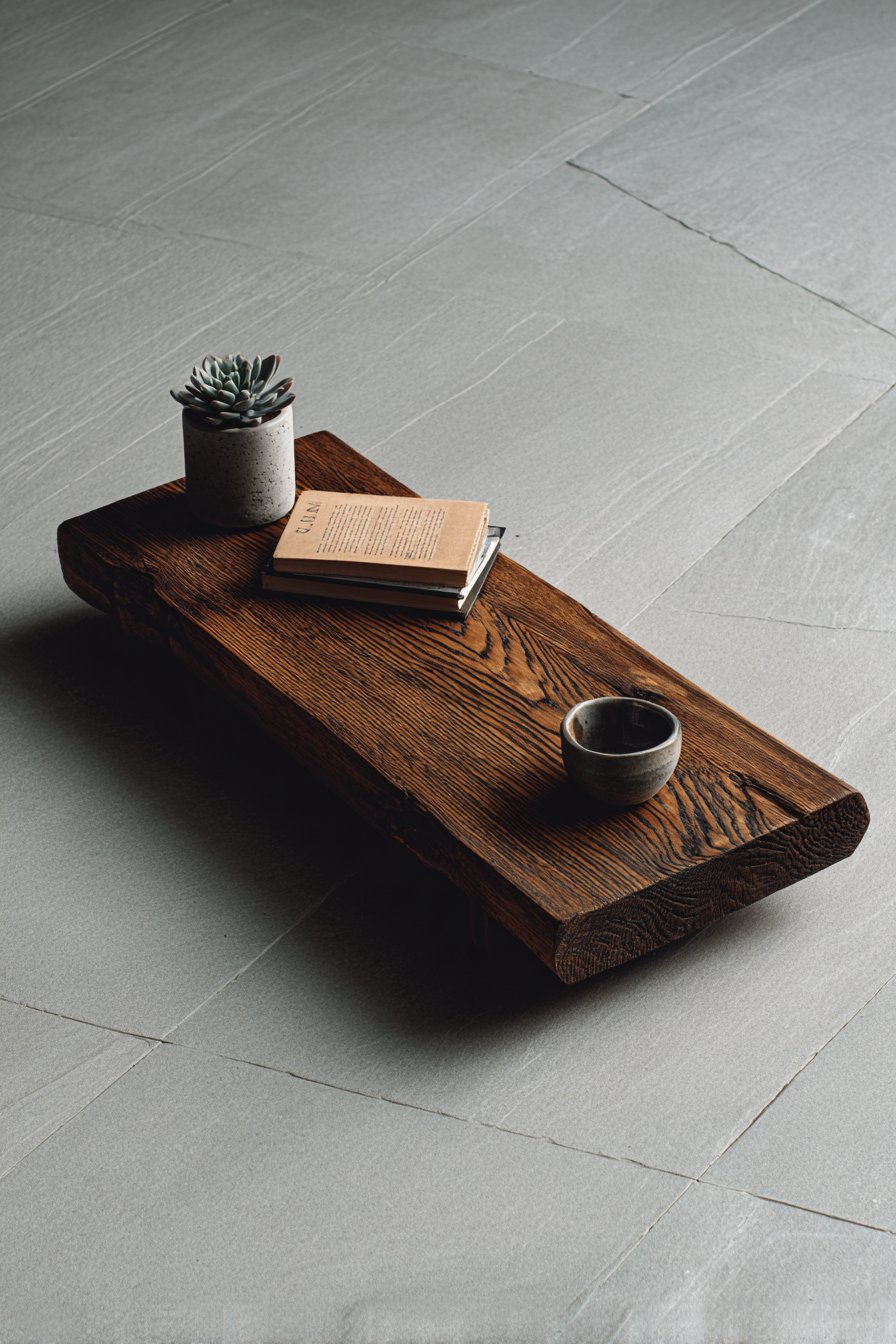
A small concrete planter holds a single succulent. A hardcover book rests nearby. A handmade ceramic cup completes the arrangement. The asymmetrical placement creates visual interest. Surrounding surface remains completely clear.
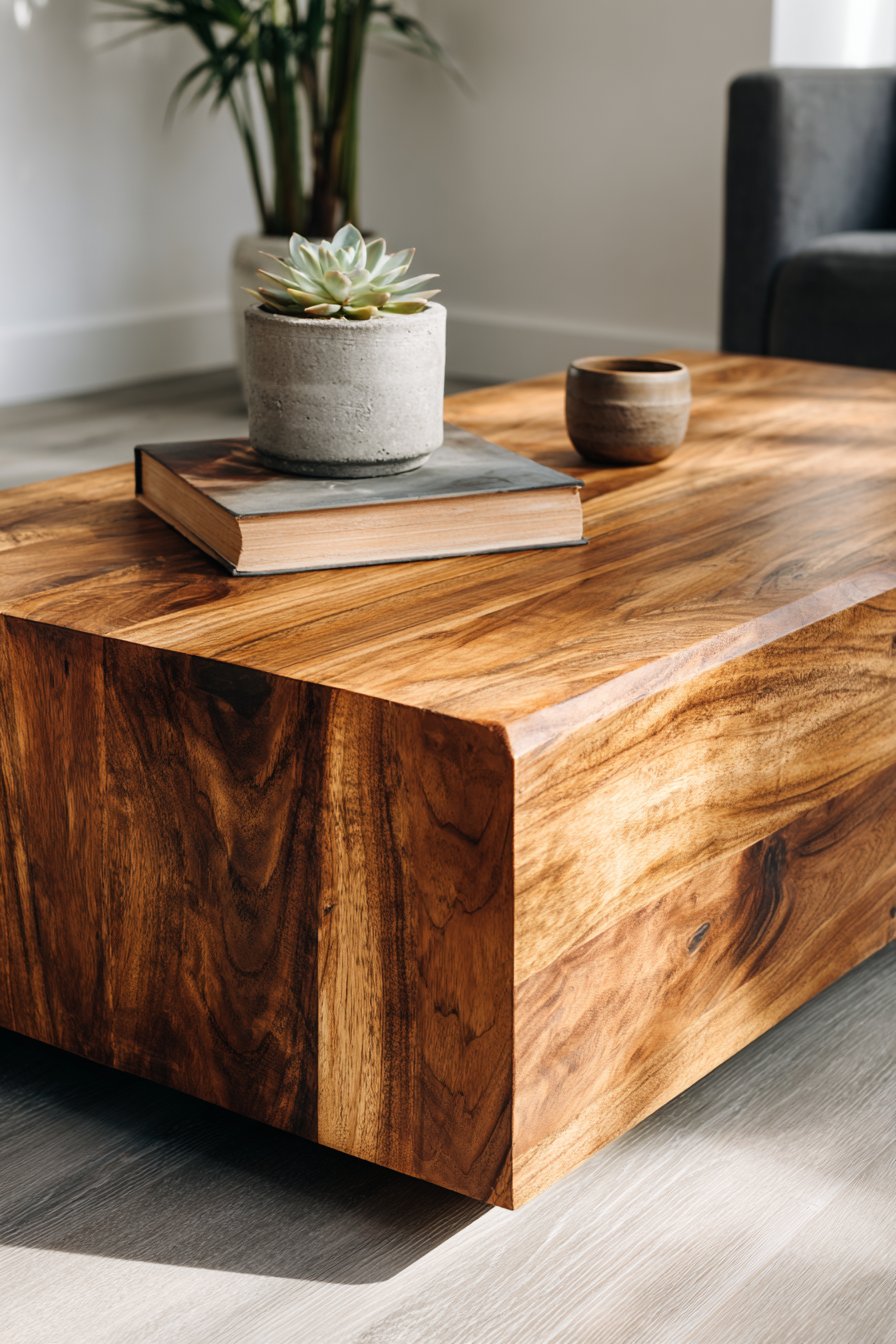
Natural overhead lighting highlights the walnut’s warm tones. The wood grain patterns provide organic decoration. Light grey flooring creates tonal contrast. The color relationship enhances both materials.
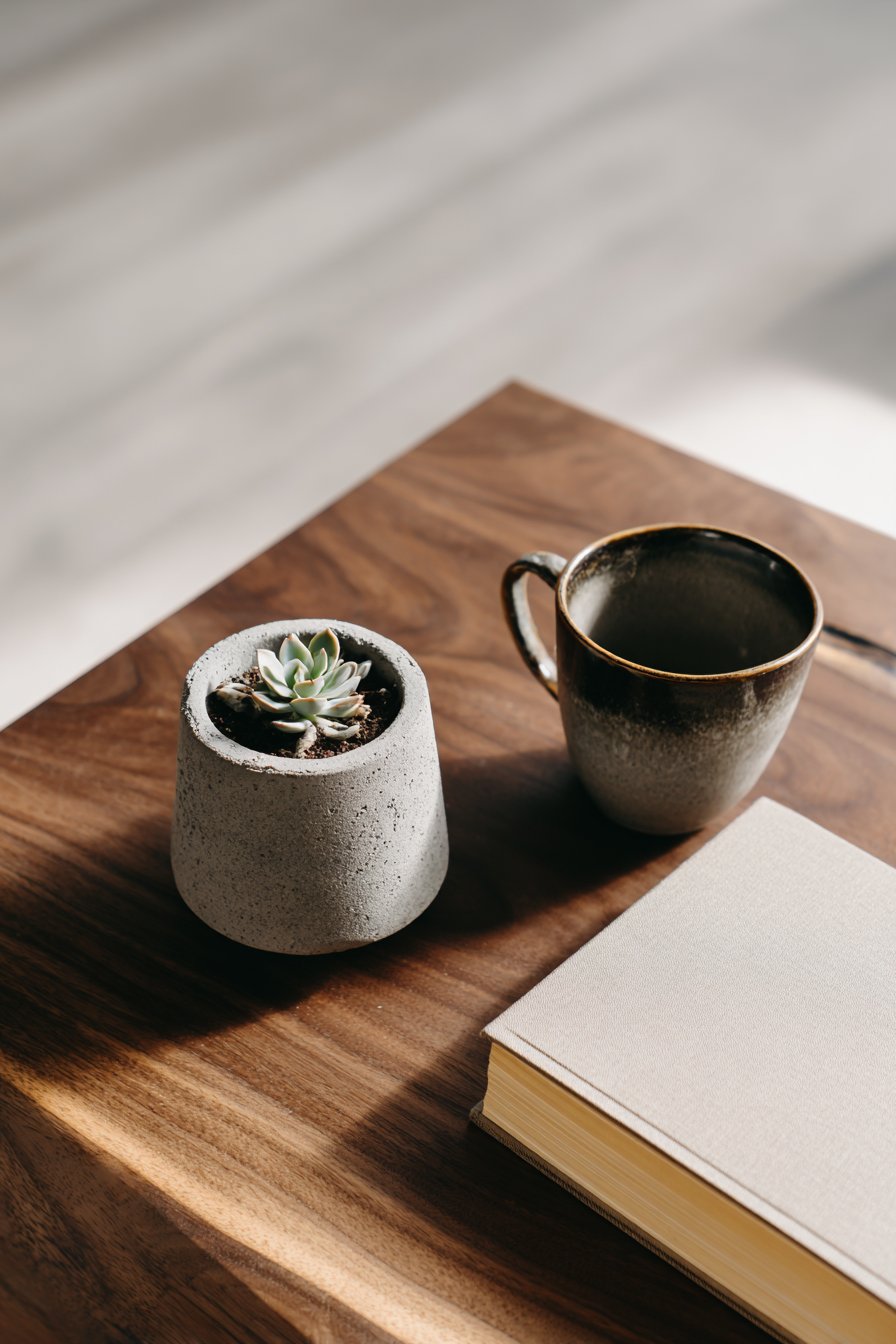
Each displayed object serves purpose beyond decoration. The book invites reading. The cup suggests coffee moments. The succulent brings life indoors. This functional beauty defines minimalist styling.
Key Design Tips:
- Limit coffee table displays to three objects maximum
- Choose items with varying heights and materials for subtle contrast
- Select pieces that serve function alongside aesthetic appeal
- Arrange asymmetrically rather than centering all elements
- Keep seventy-five percent of surface clear for practical use
9. Built-In Storage with Seamless Cabinetry
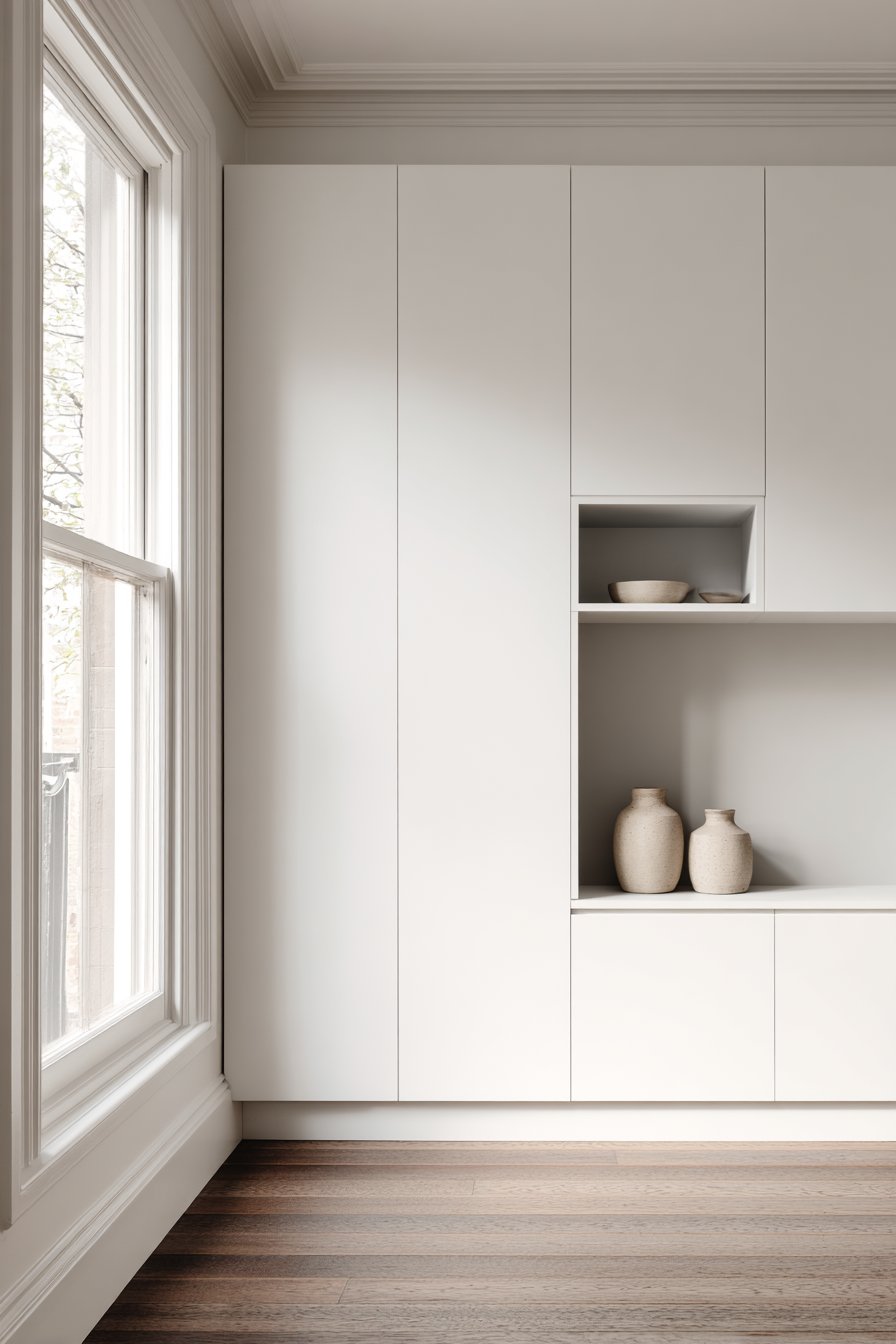
Floor-to-ceiling built-in cabinets demonstrate storage excellence. Matte white finish creates seamless appearance. Push-to-open mechanisms eliminate all visible handles. The cabinetry spans one entire wall vertically and horizontally.
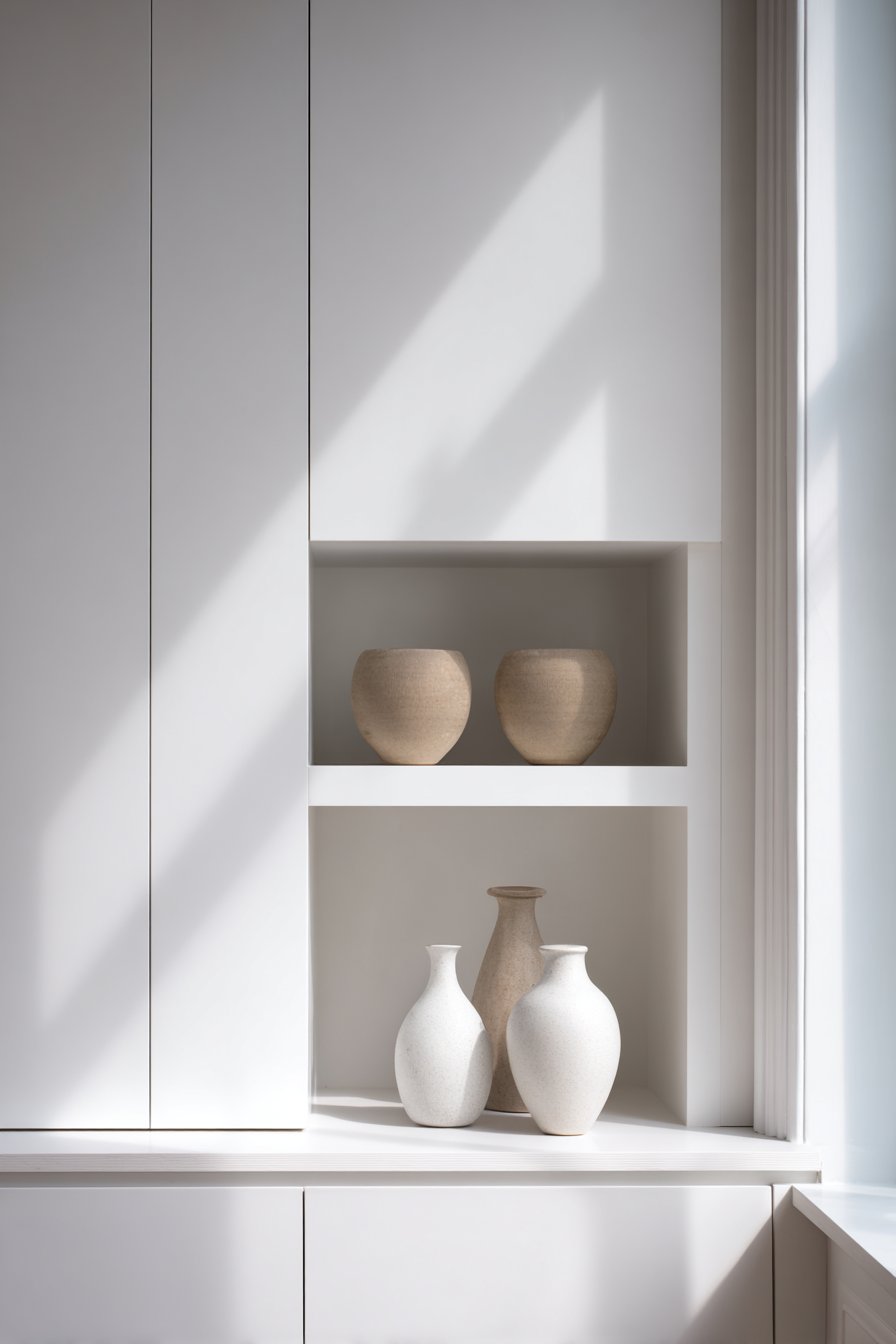
Subtle vertical grain patterns add texture to laminate surfaces. A single open cubby at eye level breaks the expanse. Three neutral-toned ceramic vessels display in this opening. The limited display prevents visual clutter.
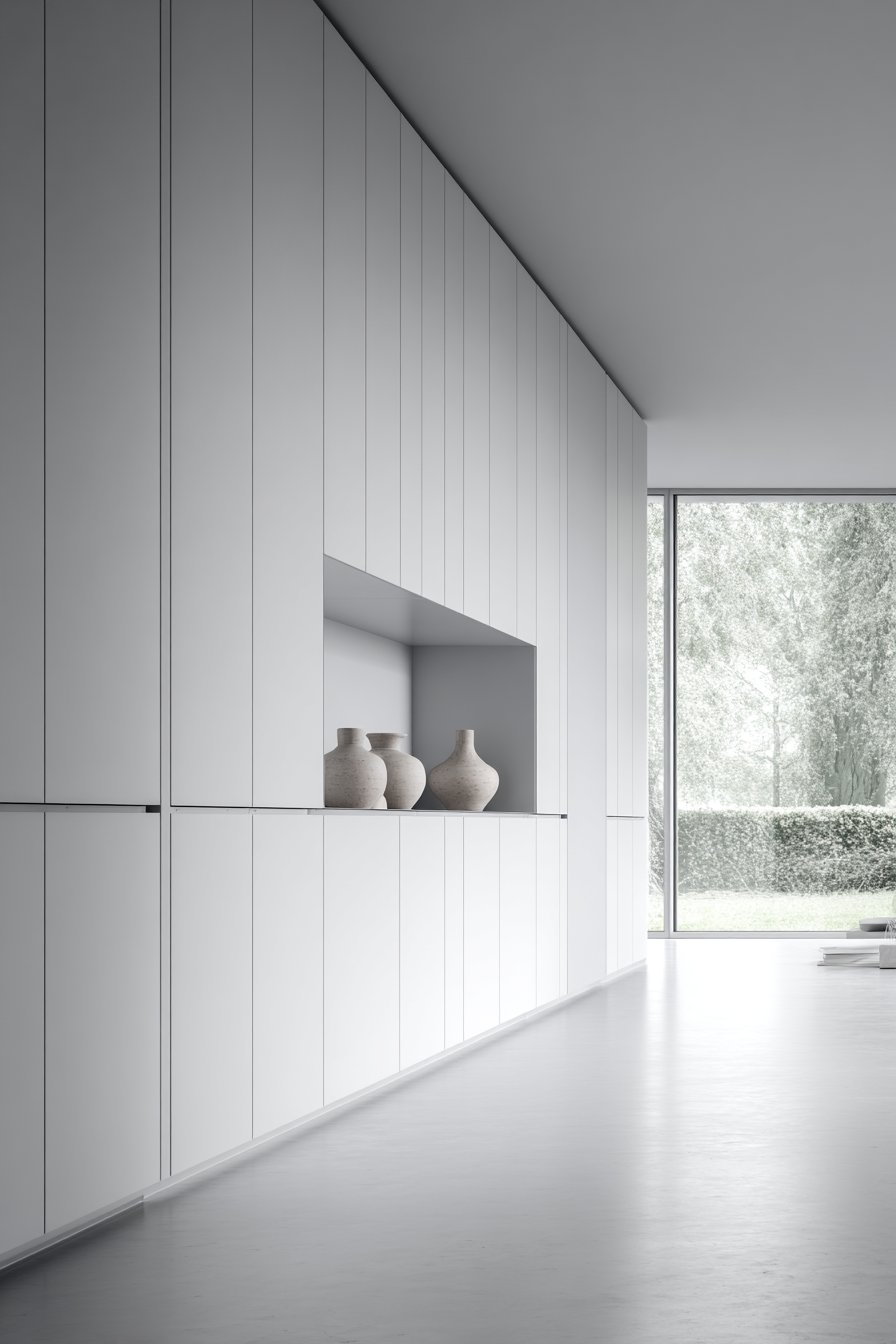
Clean lines and handleless design maintain visual calm. The white finish blends with surrounding walls. The cabinetry appears as an architectural element rather than furniture. This integration exemplifies minimalist built-in principles.
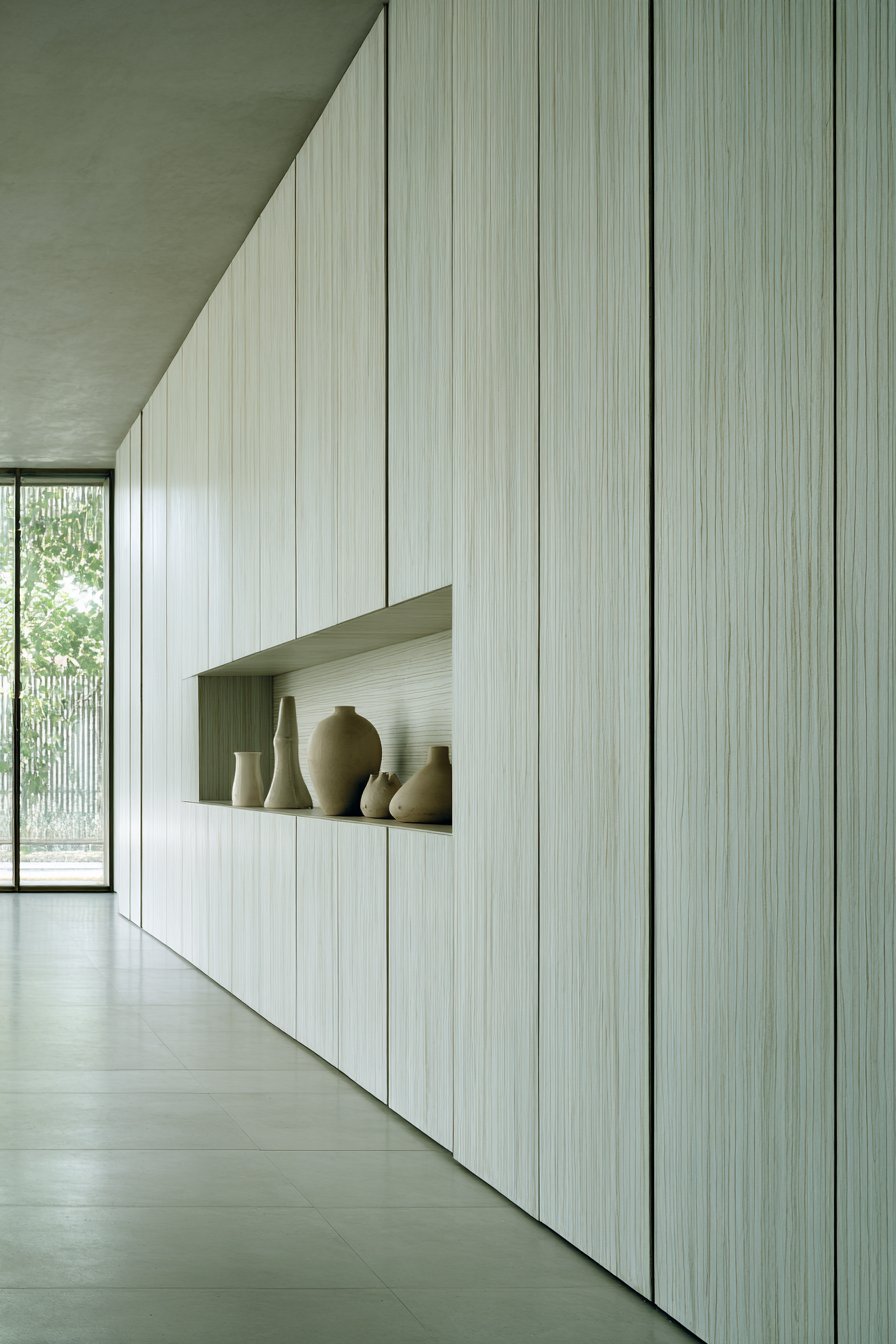
Soft diffused daylight from adjacent windows emphasizes smooth surfaces. The lighting reveals quality craftsmanship. Perfect joints and flush doors demonstrate attention to detail. The investment creates lasting value.
Key Design Tips:
- Design built-ins that span floor to ceiling for maximum storage capacity
- Choose push-to-open mechanisms for completely handleless aesthetics
- Include one open display area to break expansive cabinet runs
- Match cabinet finish to wall color for seamless integration
- Invest in quality construction for perfect joints and smooth operation
10. Armchair Conversation Area with Natural Materials
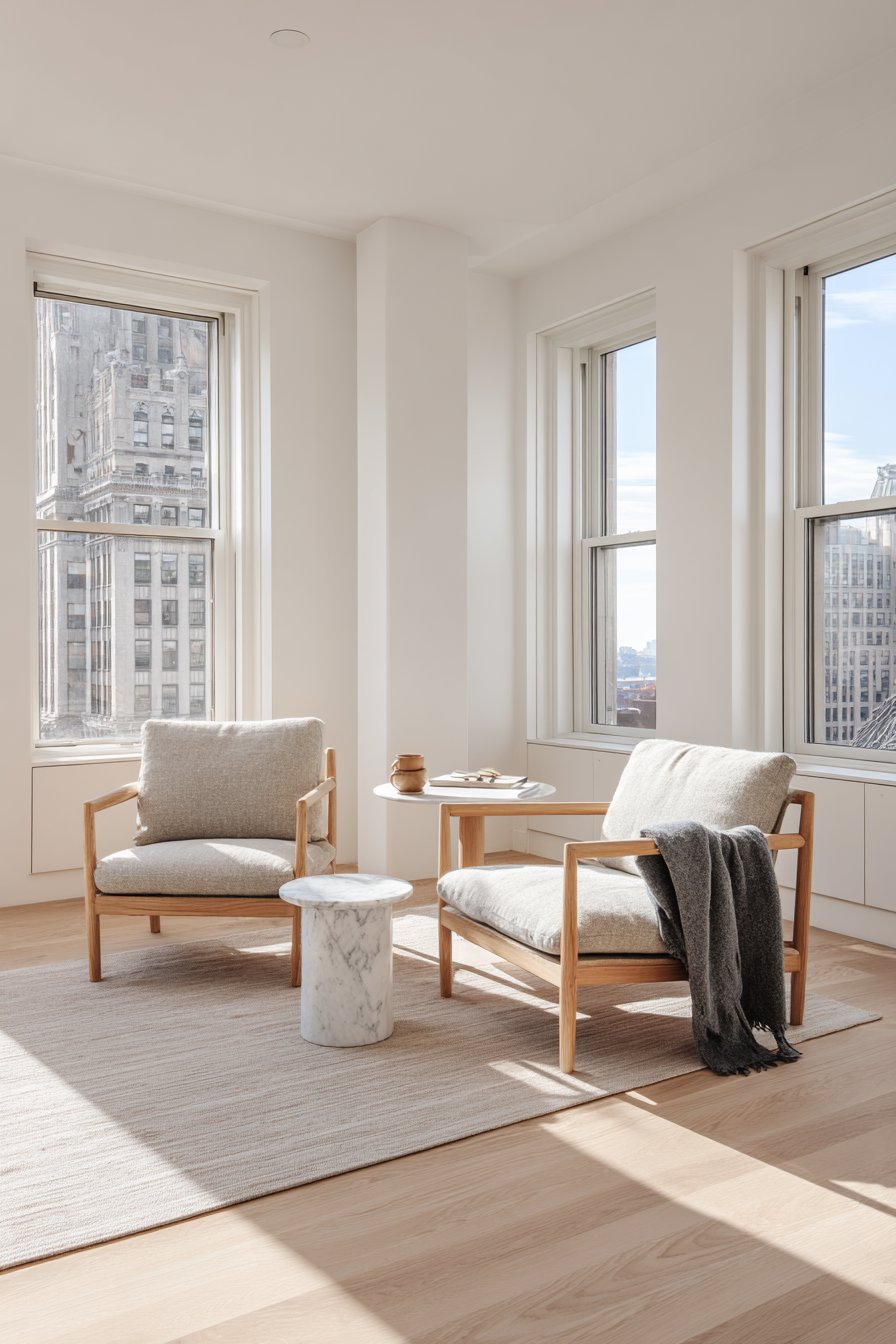
Two matching armchairs create intimate conversation space. Natural canvas upholstery features exposed light oak frames. Simple cushioned seats provide comfort without bulk. The chairs face each other across small round table.
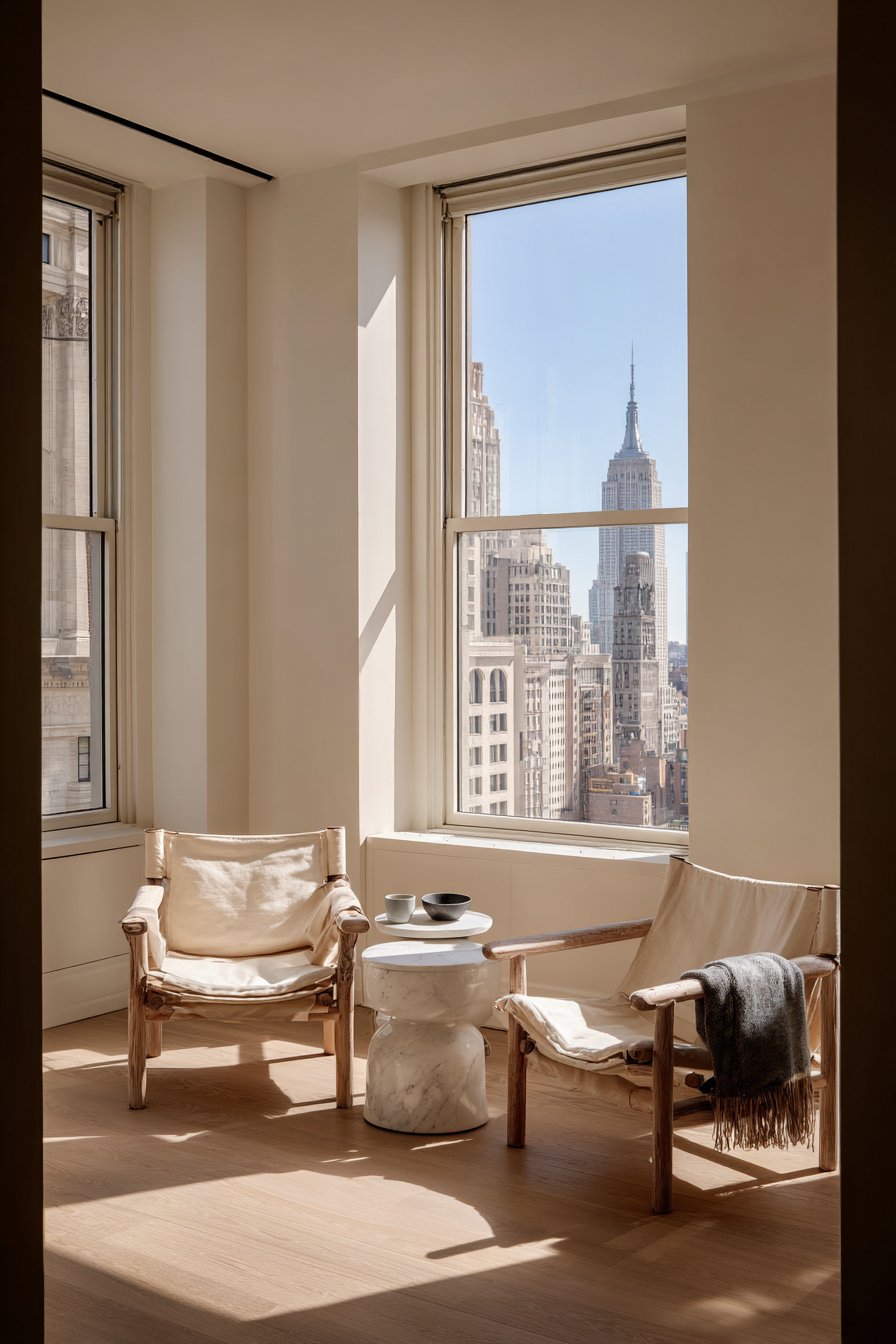
The side table combines white powder-coated steel with marble top. The mixed materials add subtle interest. A single wool throw in charcoal grey drapes over one chair arm. This provides warmth and texture.
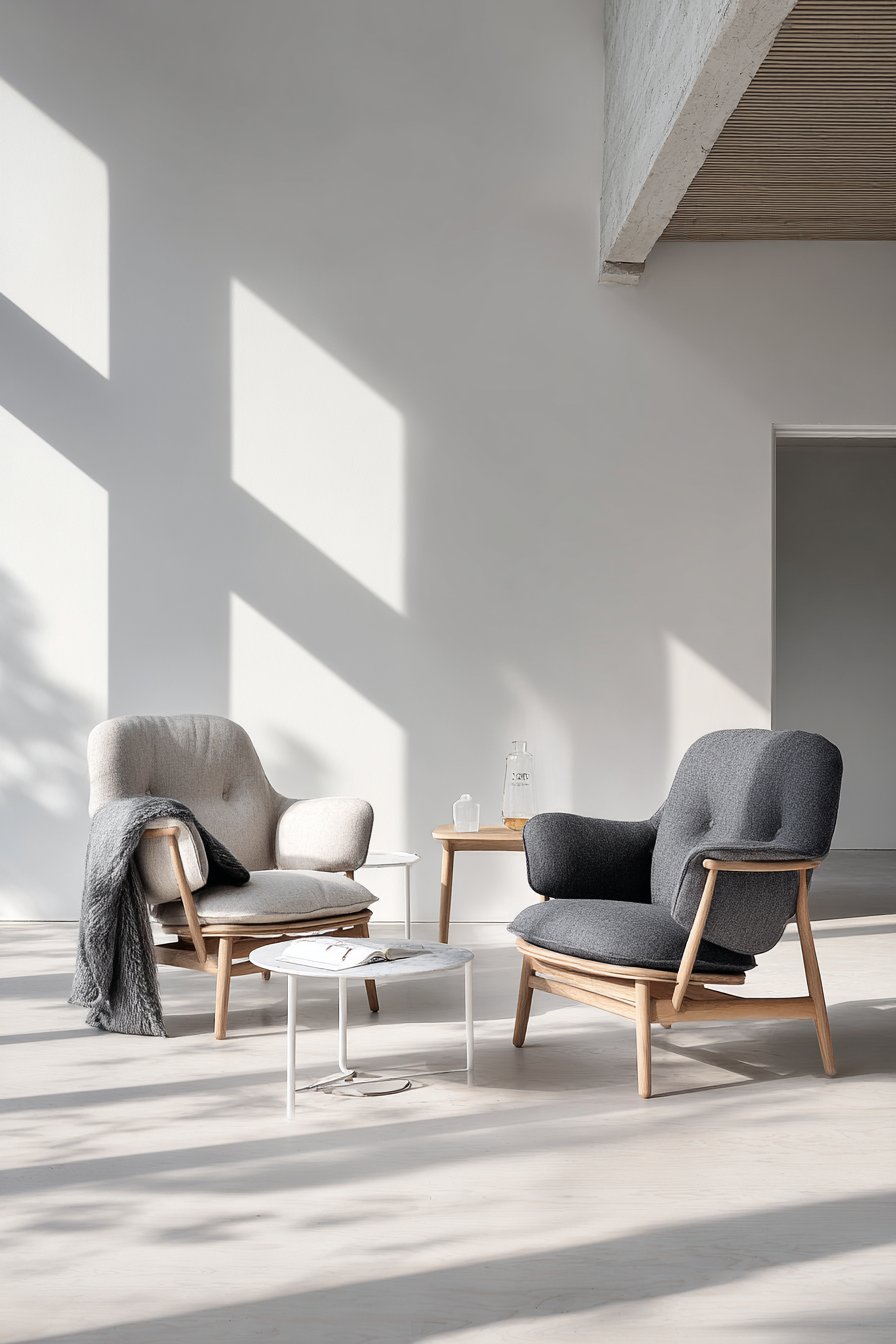
Pale ash flooring extends throughout without area rug. The wood’s natural beauty needs no covering. Natural light from tall windows creates clean shadows. The shadows emphasize furniture’s simple forms.
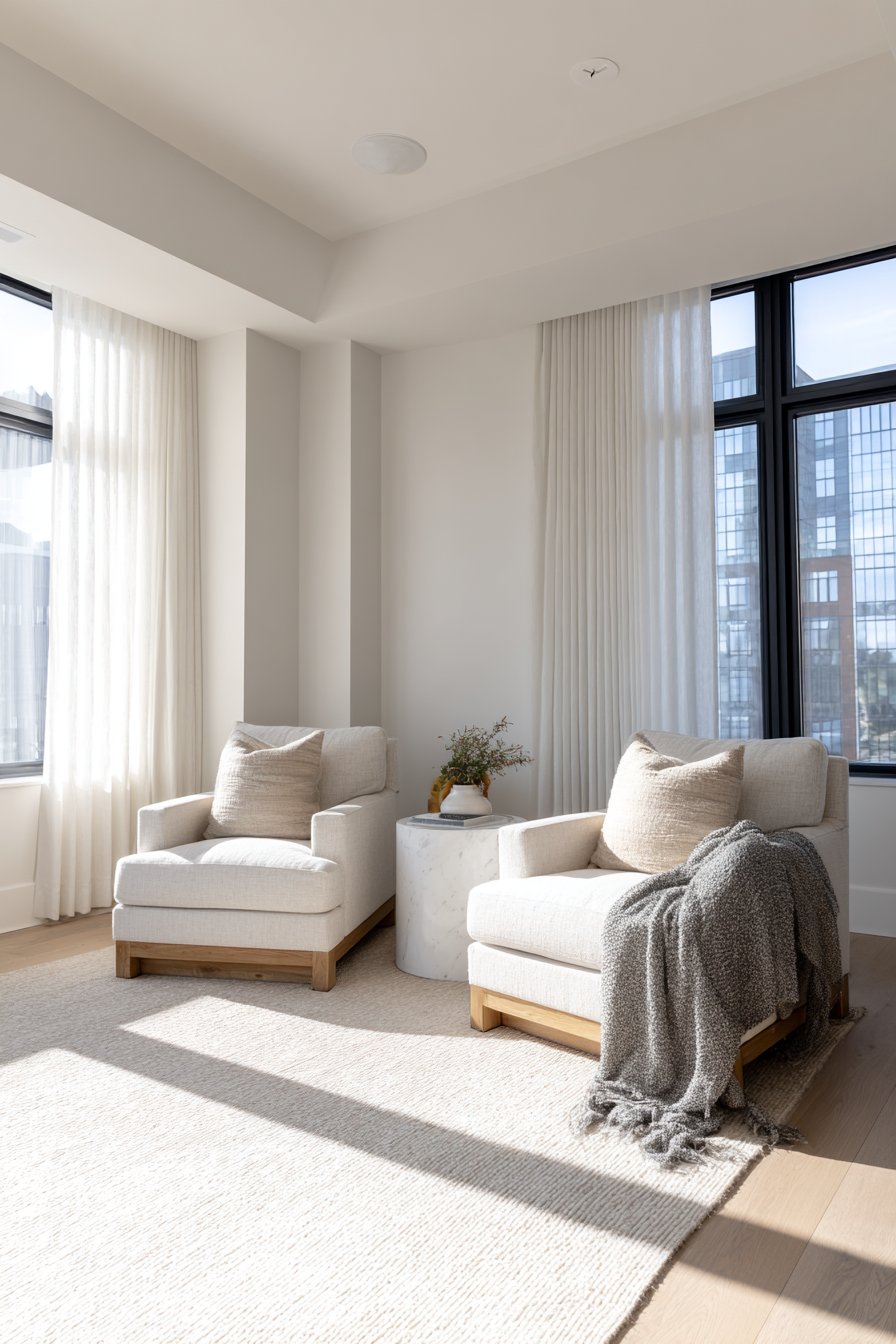
The conversation arrangement encourages face-to-face interaction. The setup feels intimate yet uncluttered. Quality materials ensure lasting beauty. The oak frames will develop patina over time.
Key Design Tips:
- Position chairs facing each other to create intimate conversation zones
- Choose frames with exposed wood for warmth in minimalist spaces
- Select small round side tables that take minimal visual space
- Add single textile accent like throw for subtle color and texture
- Skip area rugs when flooring quality justifies showcasing natural wood
11. Textured Plaster Accent Wall
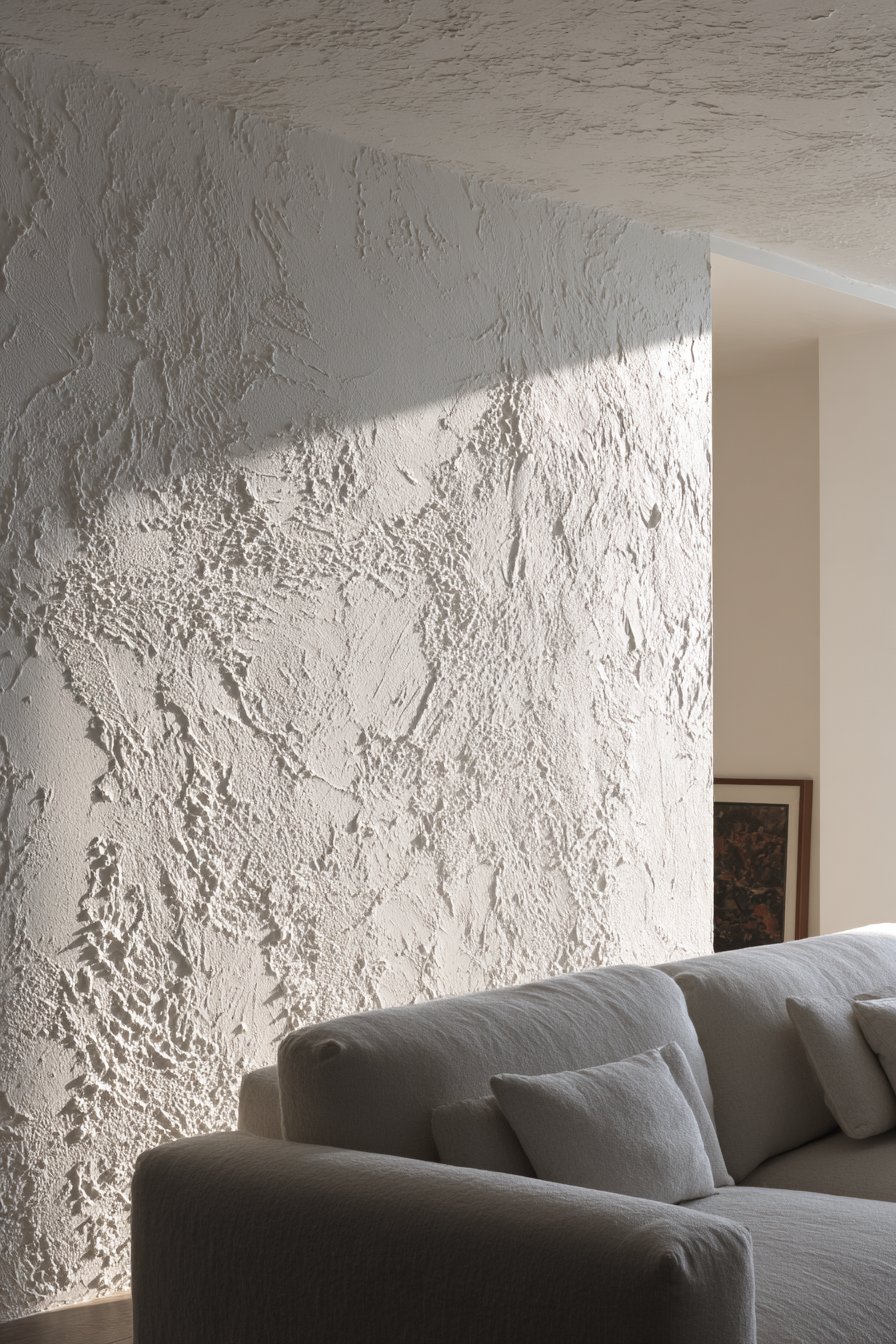
A warm grey textured plaster wall adds material interest. Subtle trowel marks remain visible in the finish. The wall displays no artwork or decoration. Natural shadows cast by window light create patterns.
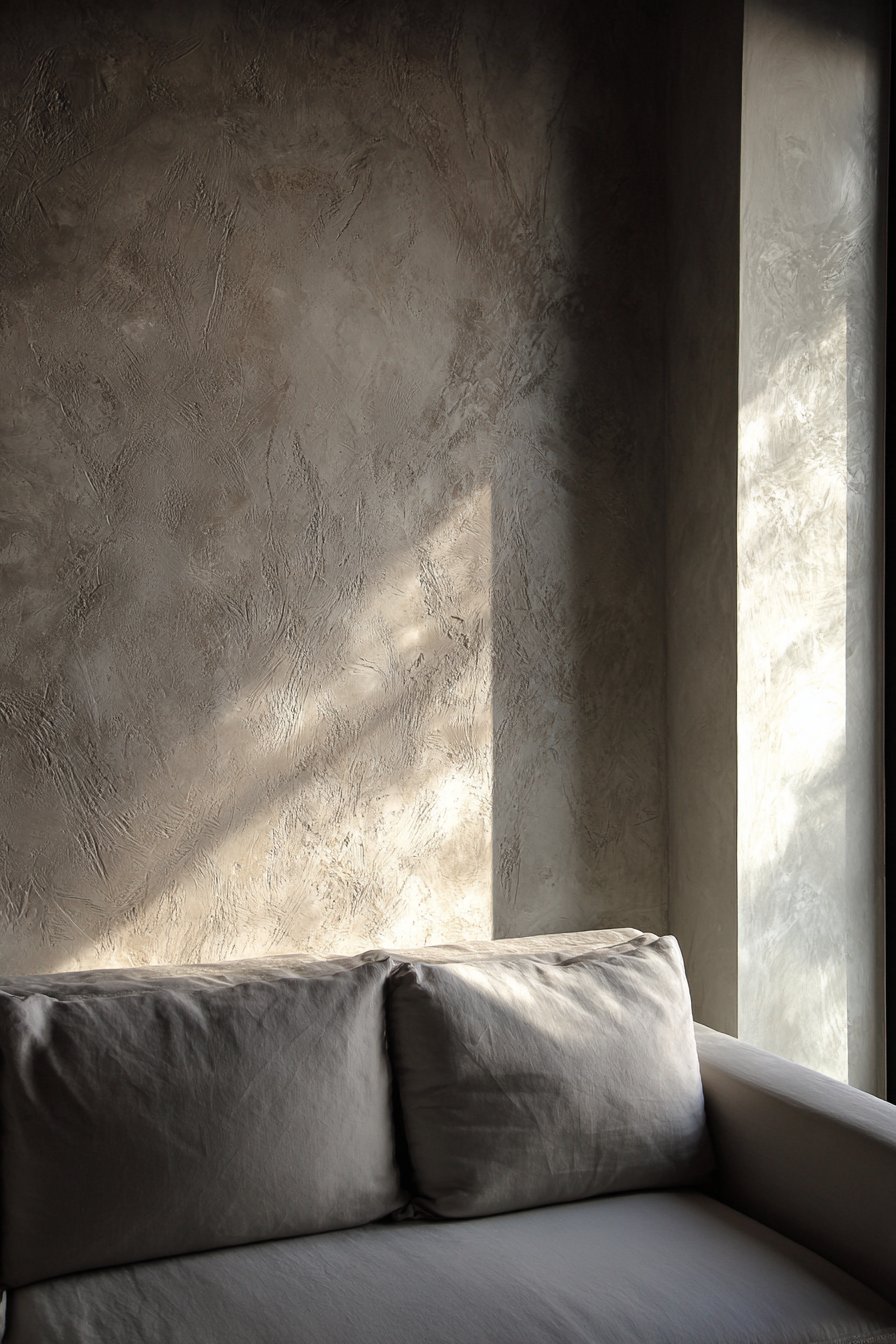
Adjacent walls in pure white create gentle tonal contrast. The grey adds depth without overwhelming. The textured surface provides tactile interest. Visual clutter remains absent throughout.
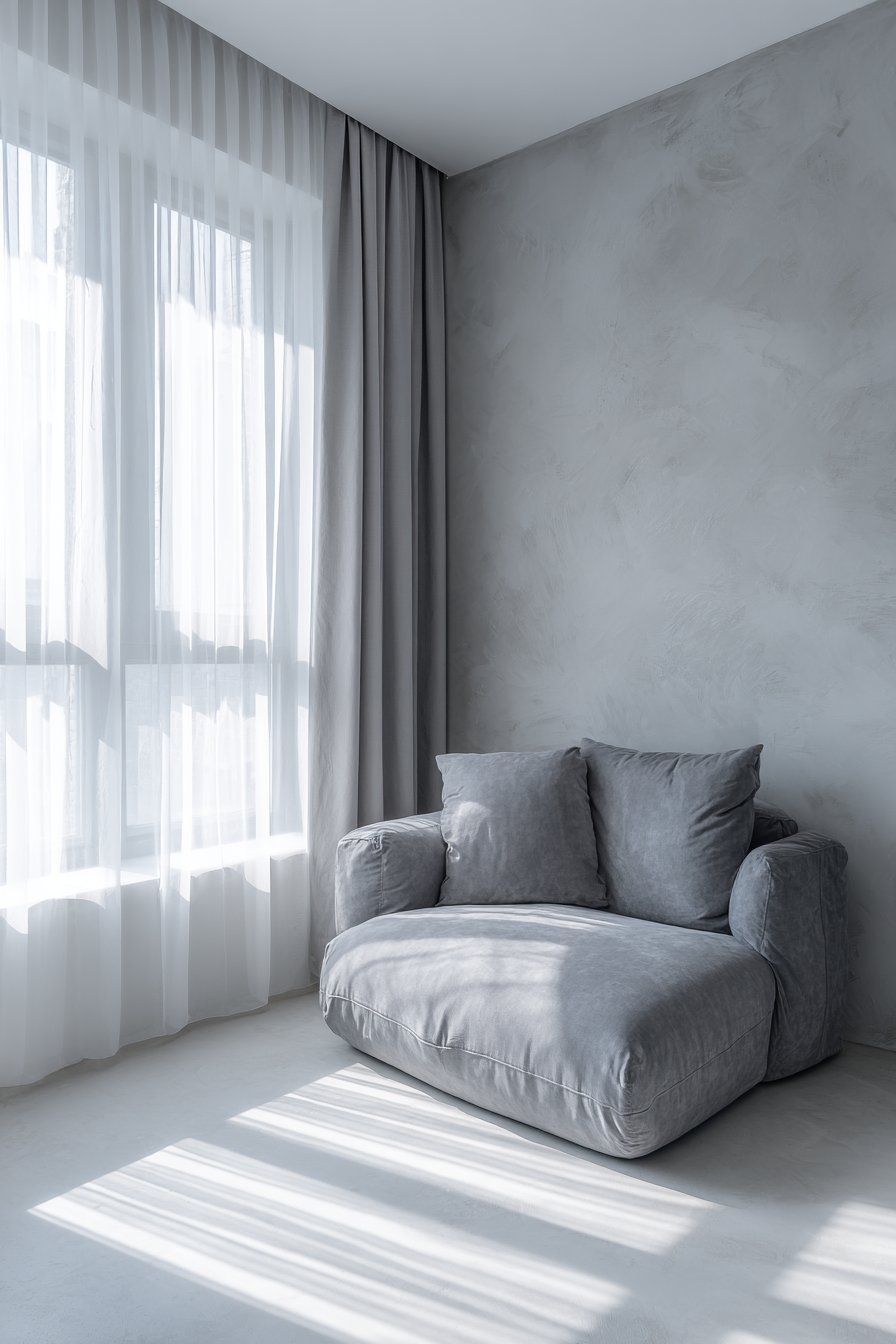
A simple grey sofa sits several feet from the textured wall. This distance allows the appreciation of material texture. Soft afternoon light rakes across the surface. The plaster’s organic variation becomes highlighted.
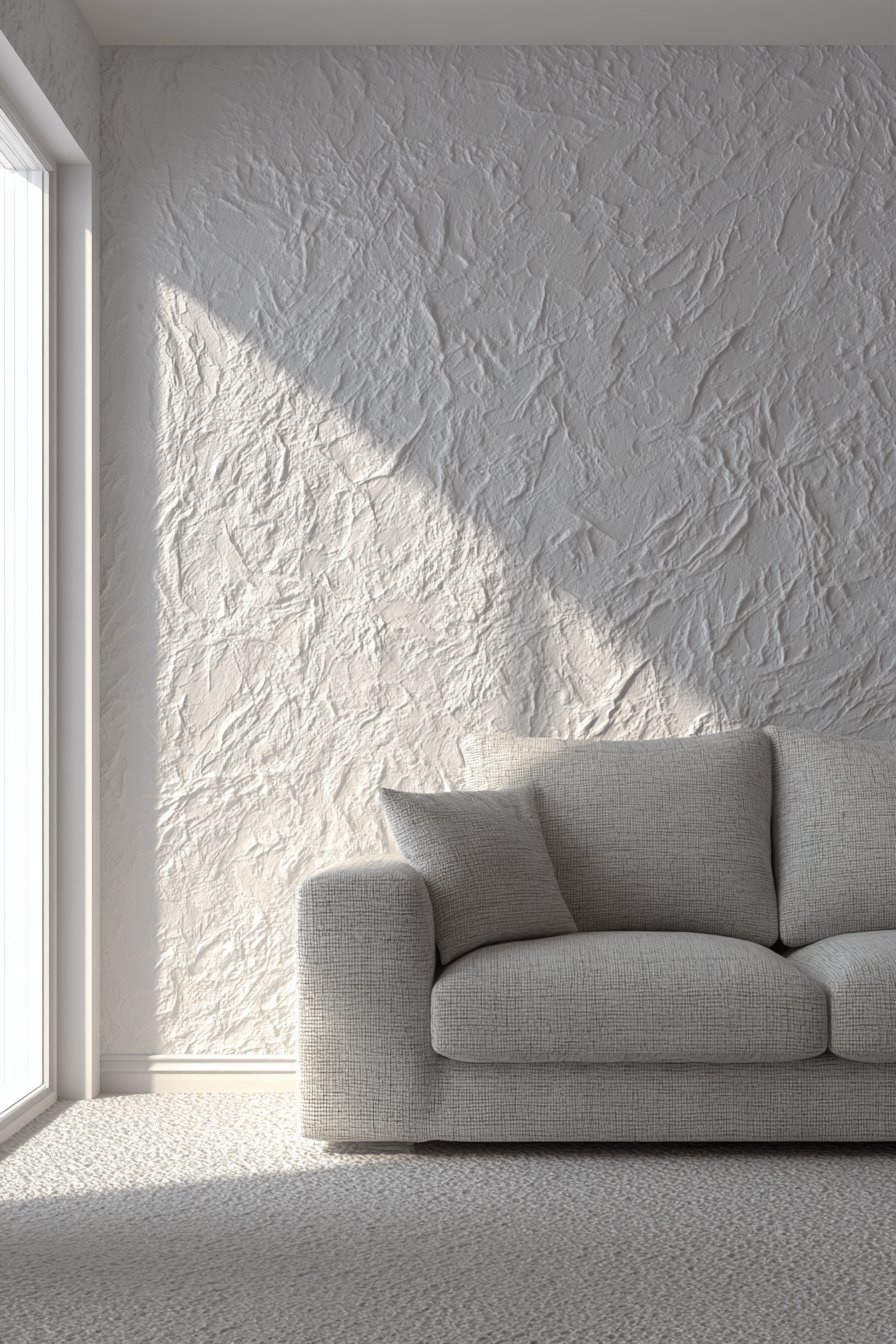
The textured plaster represents minimalist material honesty. The wall finish itself becomes the decoration. This approach eliminates need for artwork. The space feels complete through material quality alone.
Key Design Tips:
- Apply textured plaster with visible trowel marks for organic interest
- Choose warm grey tones rather than cool for inviting atmosphere
- Position furniture away from textured walls to allow appreciation
- Use raking light to emphasize texture and create shadow patterns
- Let material texture replace artwork and decorative objects
12. Sculptural Plant as Living Focal Point
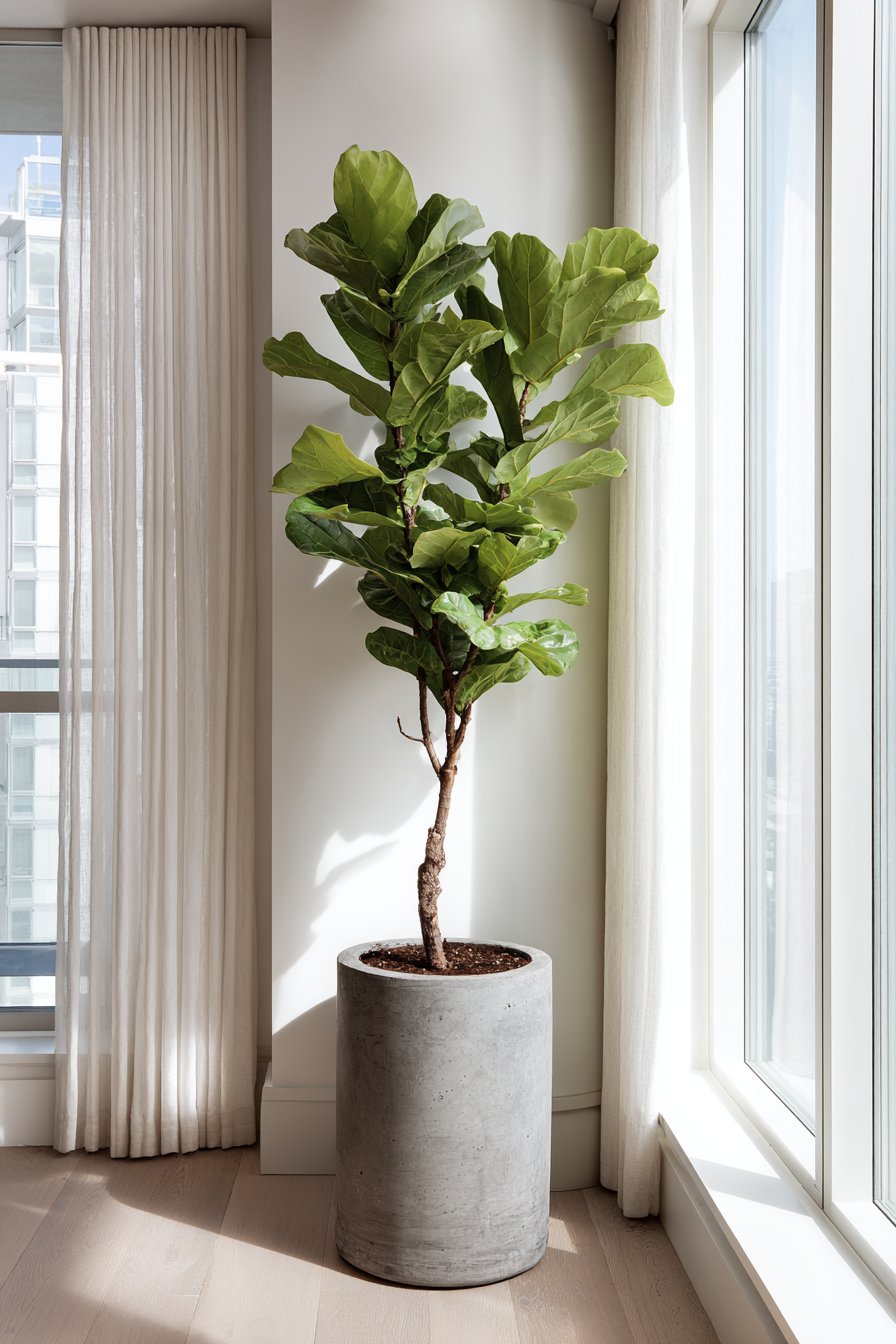
A single large fiddle leaf fig commands attention. The tree stands in simple cylindrical concrete planter. Positioned in bright corner near floor-to-ceiling windows. The plant’s sculptural form serves as only decorative element.
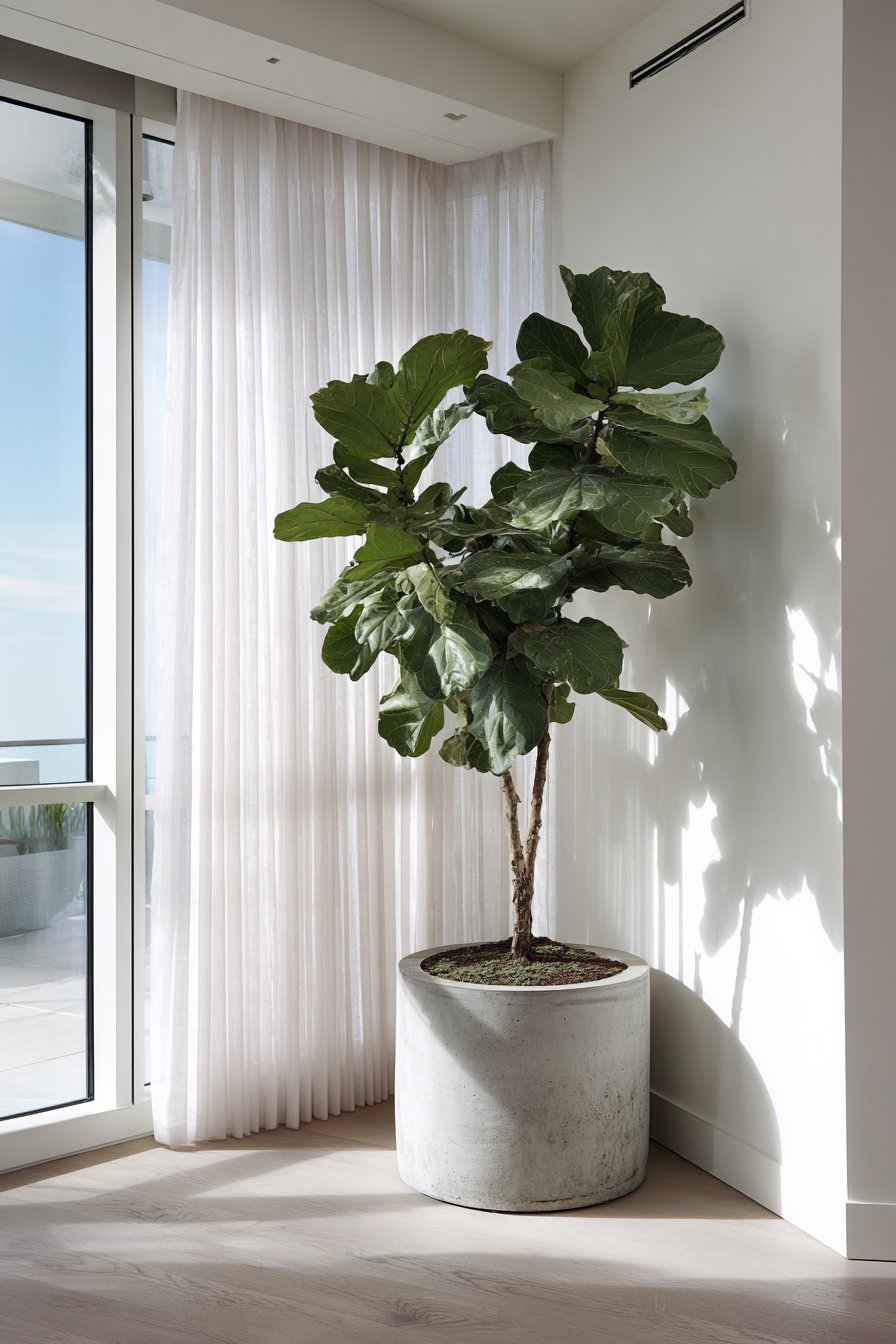
White walls and light wood flooring provide neutral backdrop. The background emphasizes the plant’s organic shapes. Natural sunlight streams through sheer curtains. Dappled shadows dance on the wall behind.
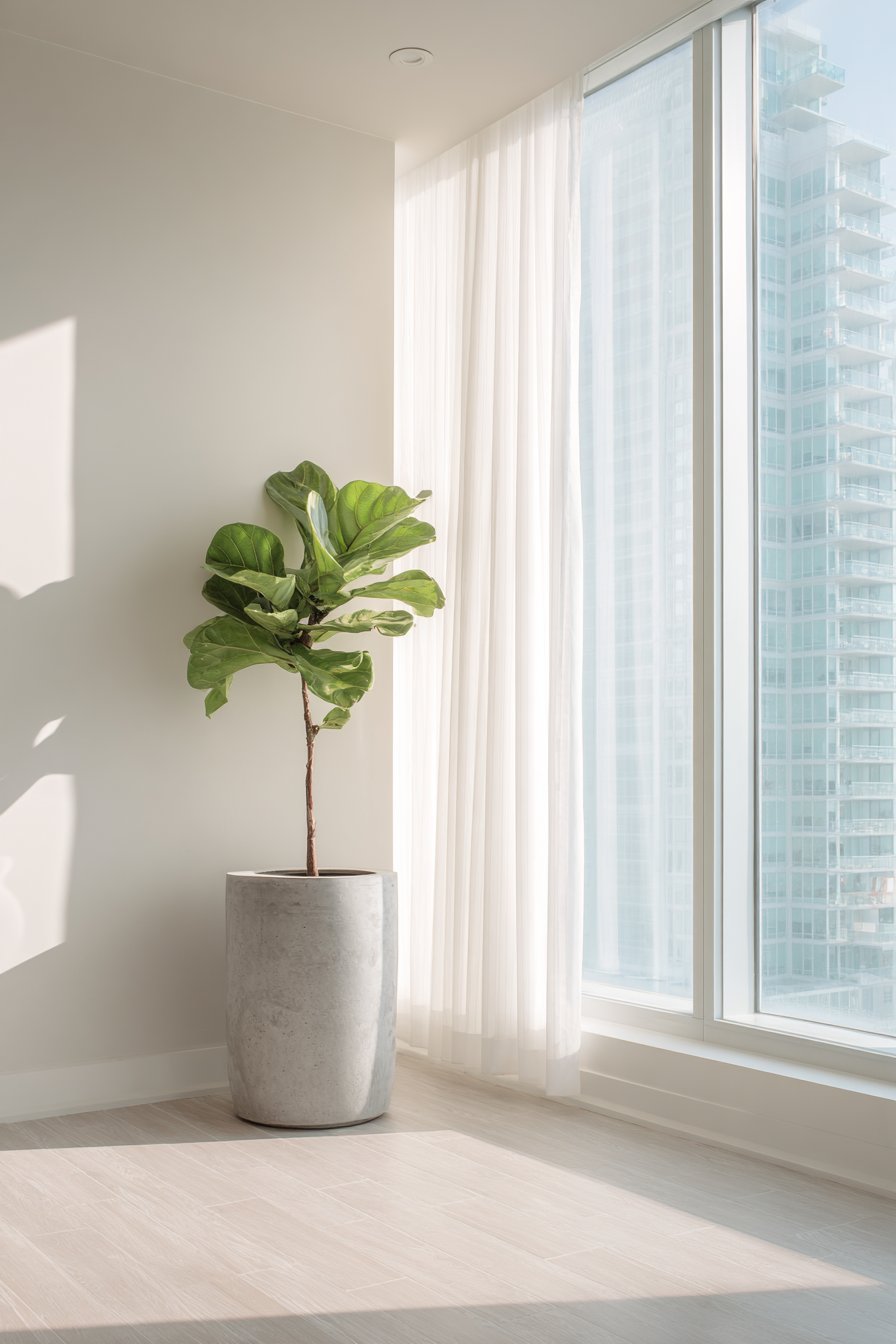
Generous negative space surrounds the plant completely. This highlights its architectural quality. The single specimen makes stronger statement than multiple smaller plants. The scale creates drama within minimalist framework.
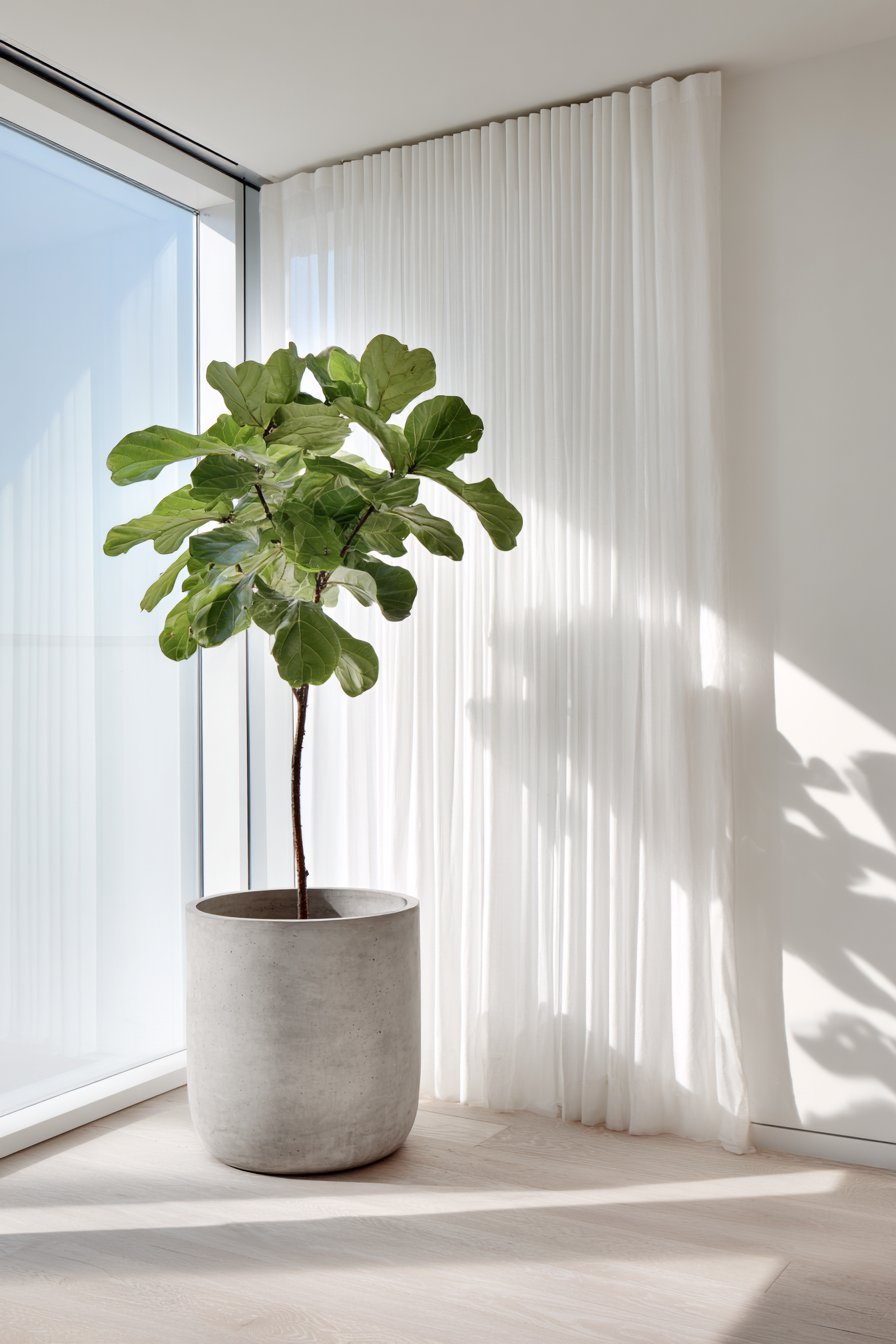
The living element softens geometric precision elsewhere. The organic forms contrast with straight lines. The plant changes seasonally. This natural variation prevents static appearance.
Key Design Tips:
- Choose single large specimen plant rather than multiple small ones
- Position near bright windows with sheer diffusion for optimal growth
- Use simple geometric planters in concrete or ceramic
- Maintain generous clearance around plants to emphasize sculptural form
- Select architectural plants like fiddle leaf fig or monstera
13. Pendant Lighting with Pure Geometry
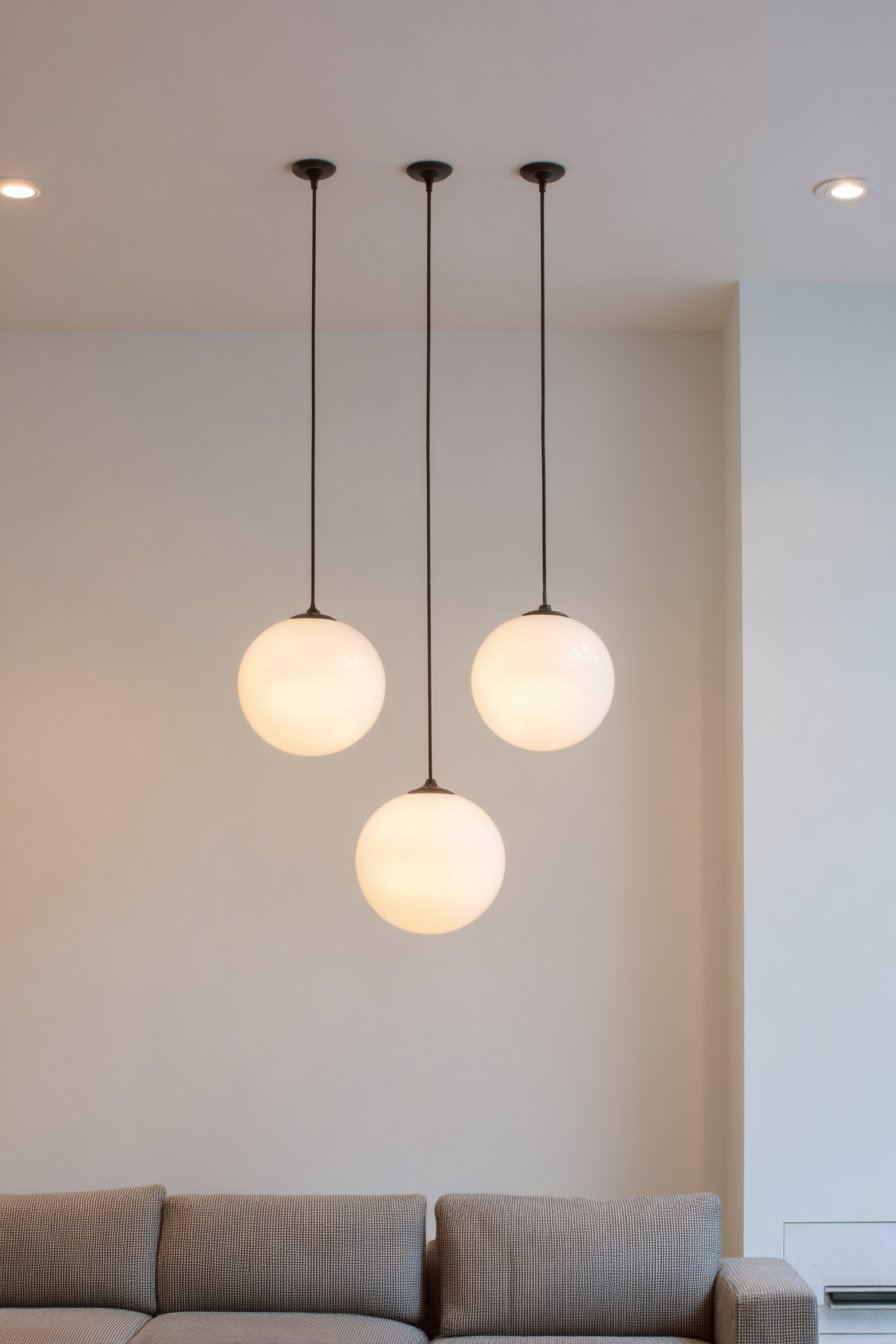
Three simple pendant lights hang at staggered heights. Hand-blown milk glass shades diffuse light beautifully. Matte black cords provide subtle contrast. The fixtures illuminate seating area below.
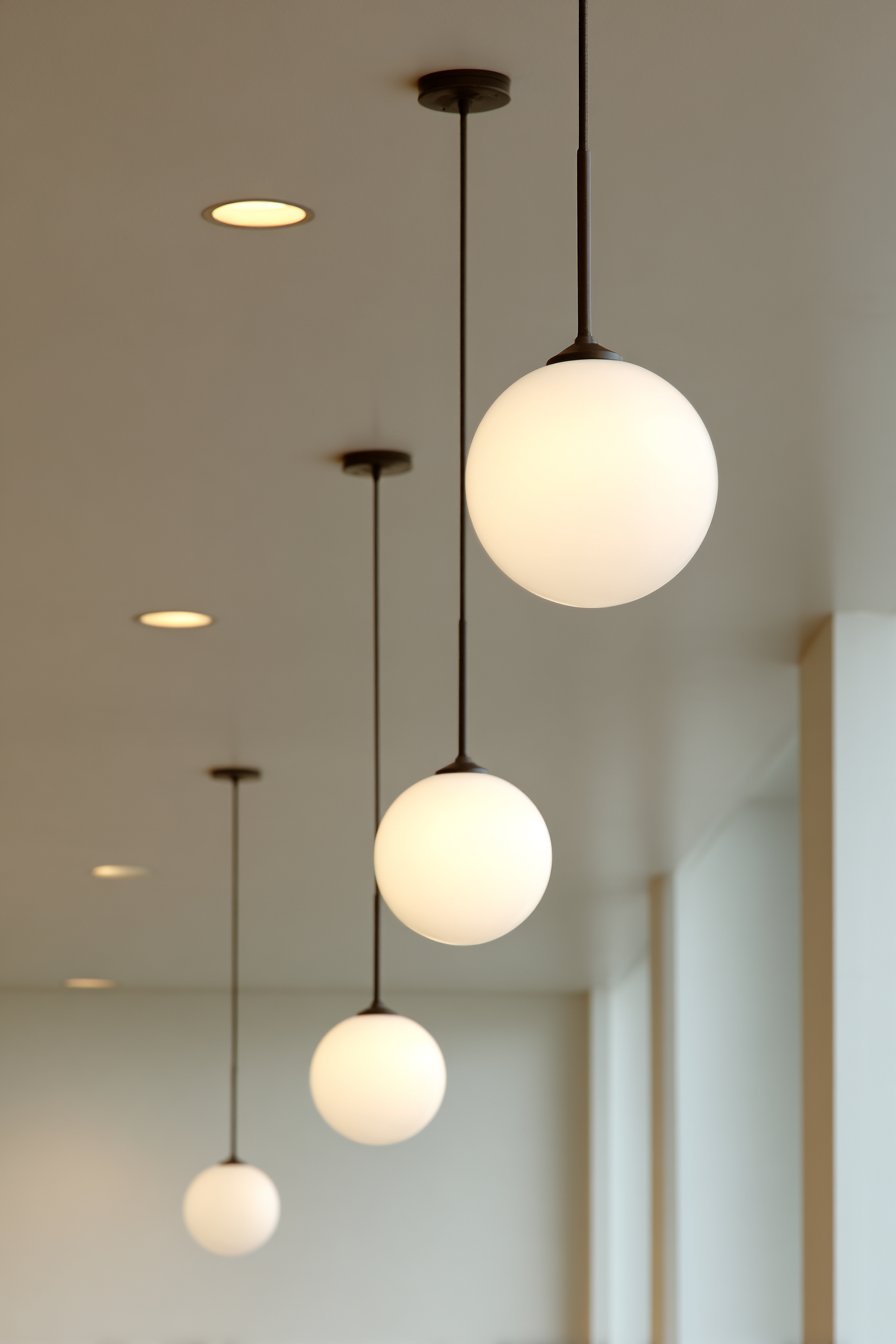
The pendants provide warm ambient illumination. No decorative embellishment distracts from function. White ceiling and walls maintain clean lines. Recessed electrical boxes hide installation details.
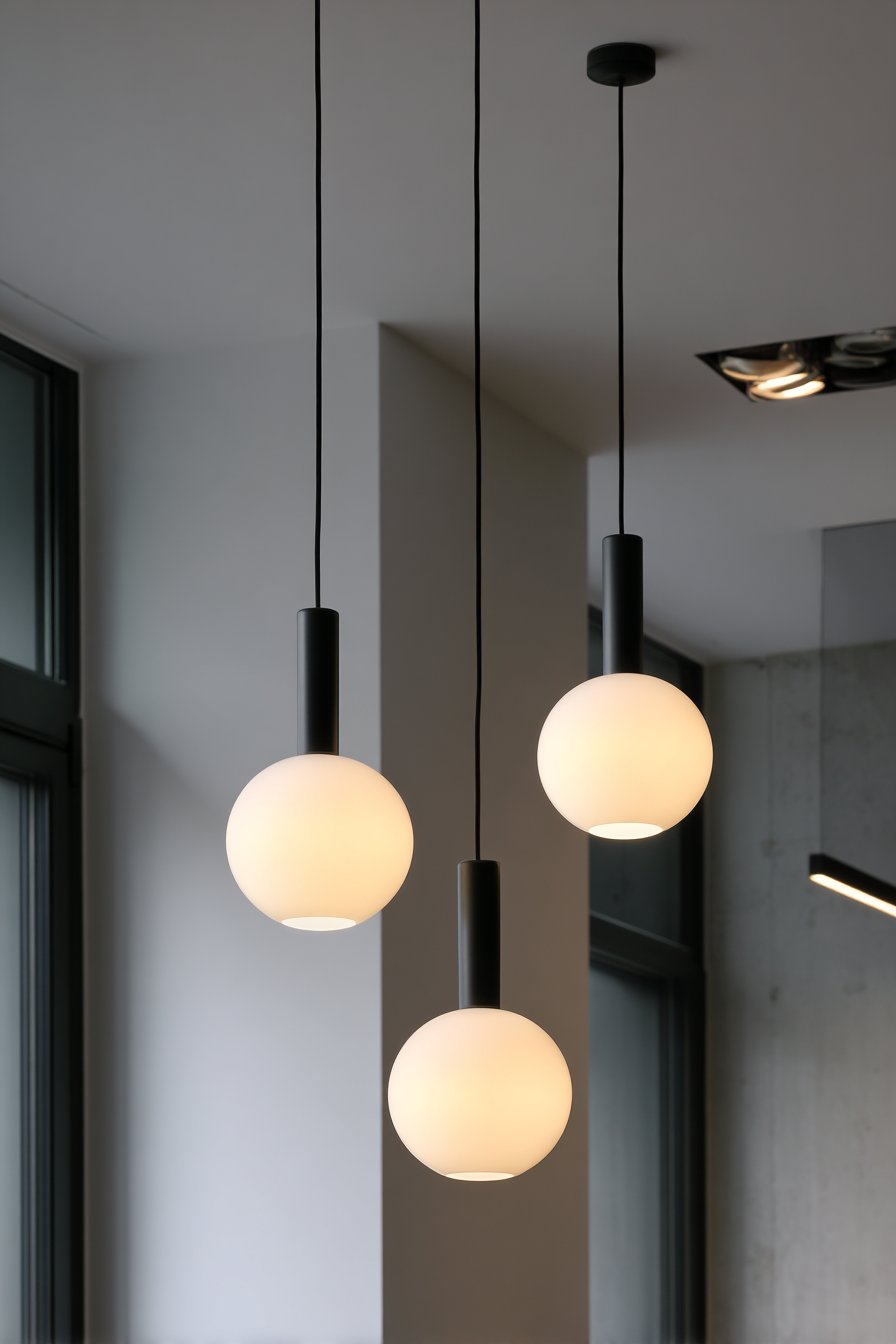
The spherical forms create interest through pure geometry. The staggered heights add visual rhythm. Evening lighting enhances minimalist ambiance. The fixtures demonstrate form following function.
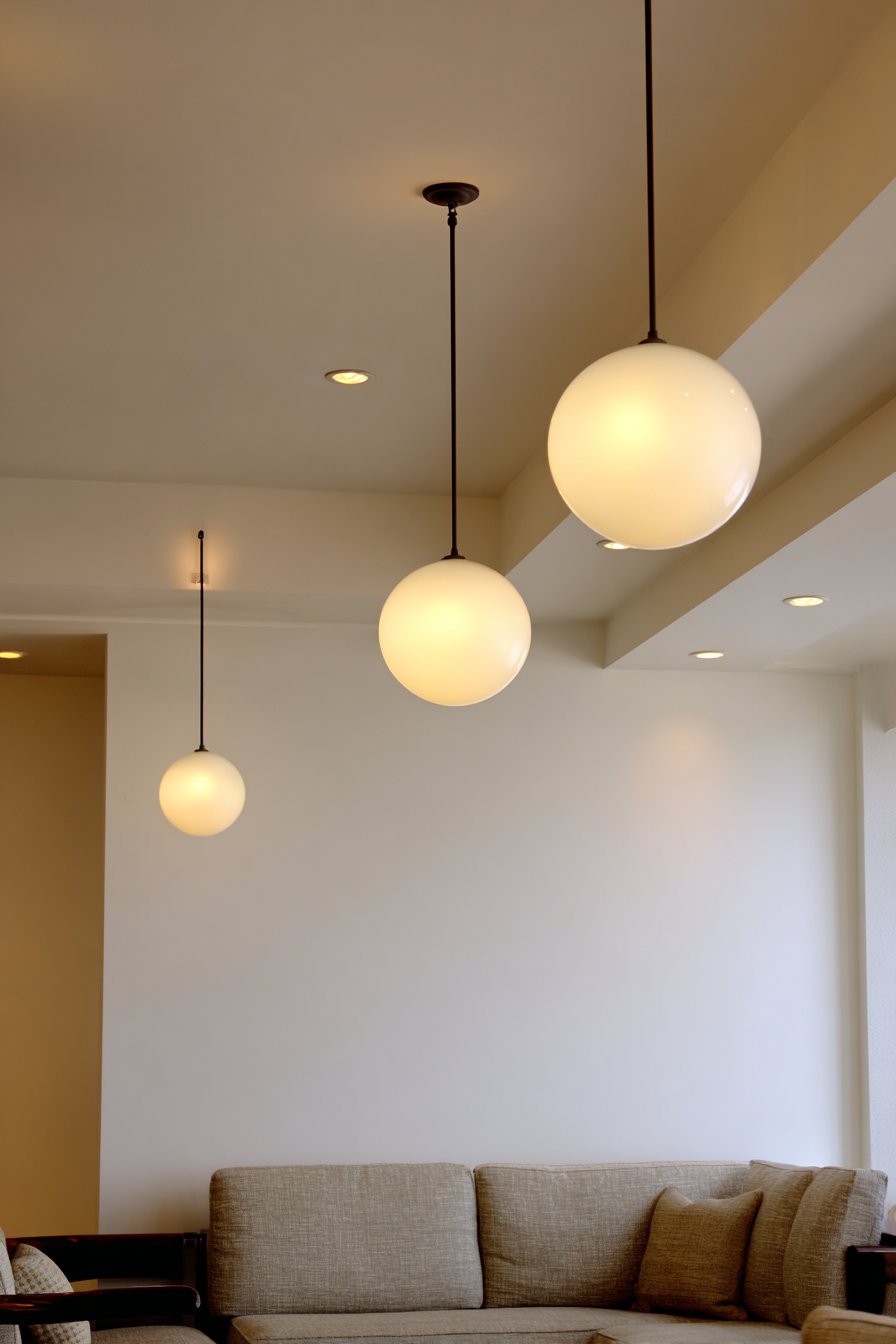
The milk glass shades emit soft, even light. The quality of illumination matters as much as fixture design. Warm light temperature creates welcoming atmosphere. The lighting serves practical and aesthetic purposes equally.
Key Design Tips:
- Choose pendant lights with simple geometric forms without embellishment
- Stagger heights for visual interest while maintaining clean aesthetic
- Select milk glass or similar materials for soft, diffused light quality
- Use matte black cords for subtle contrast against white ceilings
- Install recessed junction boxes to hide all electrical connections
14. Natural Wool Rug with Subtle Texture
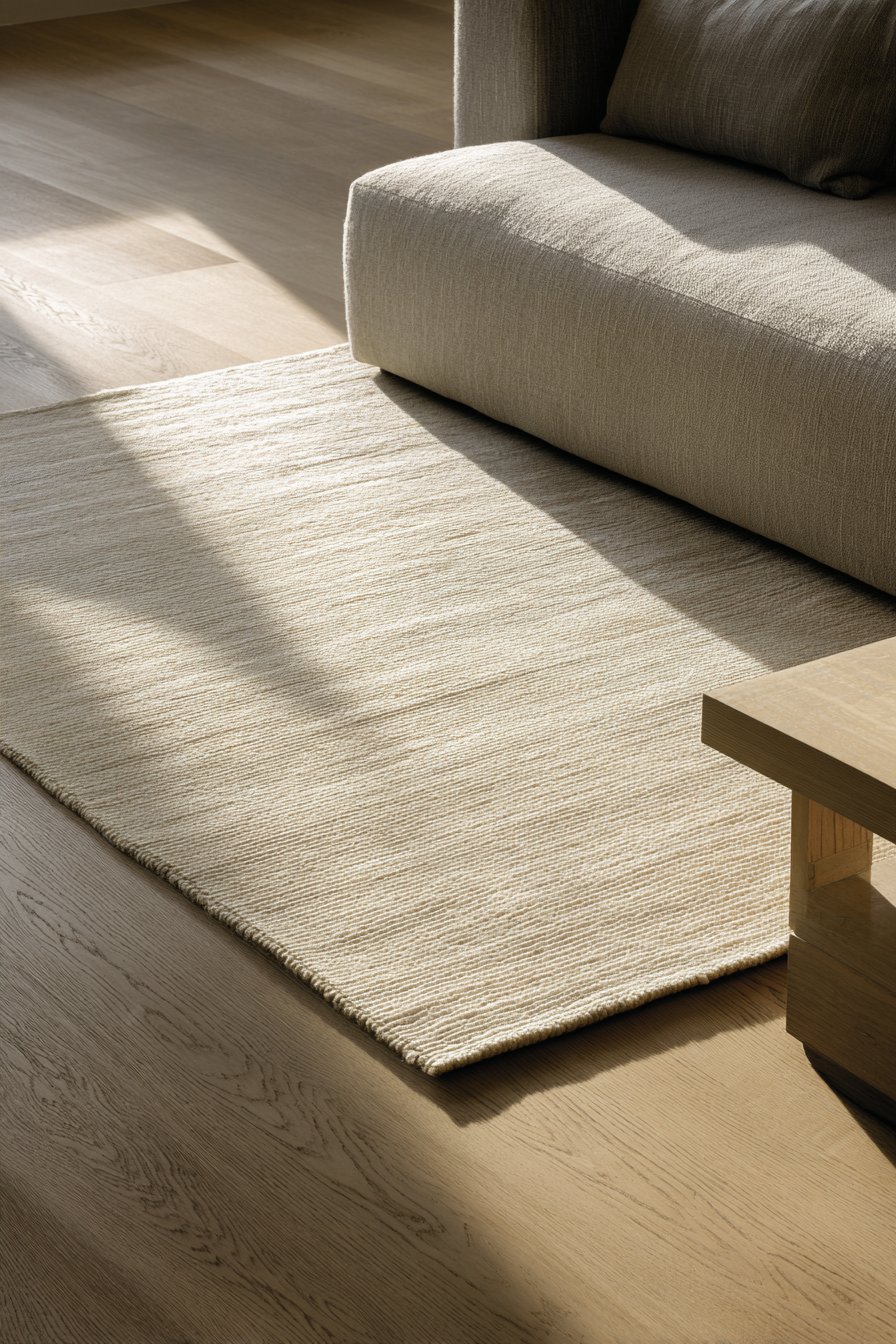
A large wool area rug anchors the seating arrangement. Undyed natural cream showcases fiber’s organic variation. Subtle texture emerges from wool’s natural character. A simple border in slightly darker natural wool defines edges.
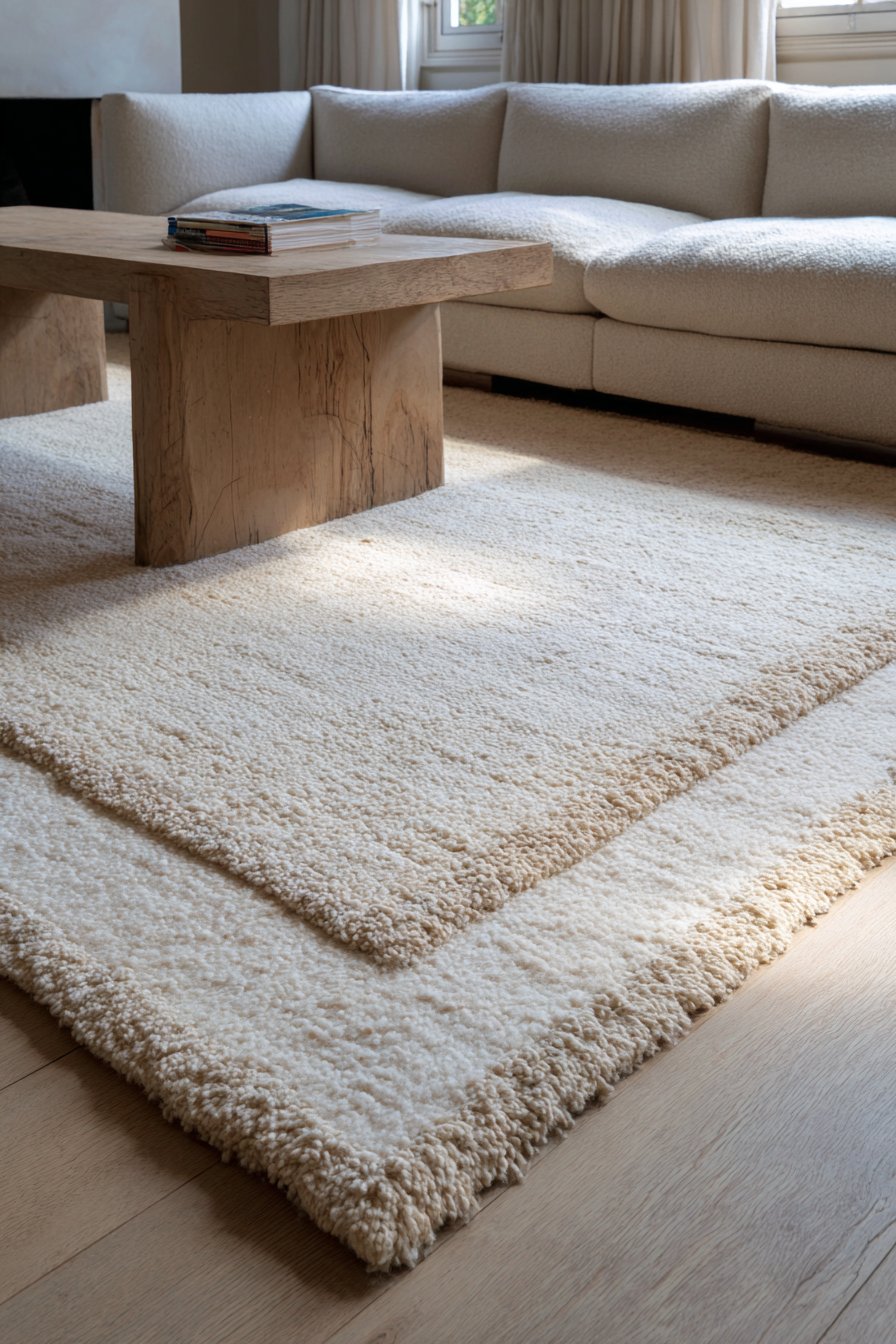
Pale oak flooring visible around rug’s perimeter creates layered neutrals. The rug grounds furniture while adding warmth. A low grey sofa and white oak coffee table rest on surface. Generous margins prevent crowded appearance.
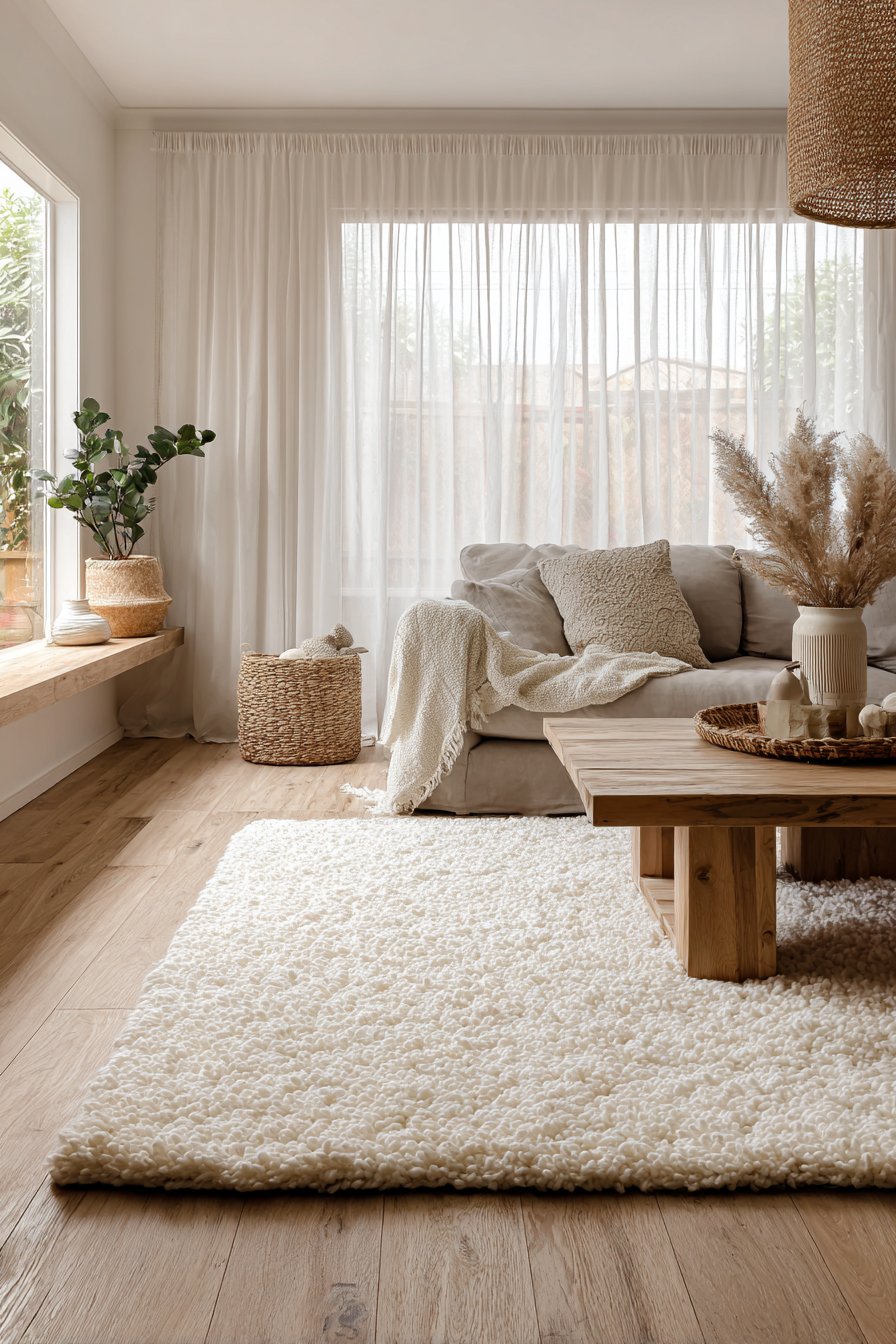
Soft natural lighting reveals wool’s organic texture. Slight color variation adds depth. The natural fibers age beautifully over time. Quality materials justify the investment.
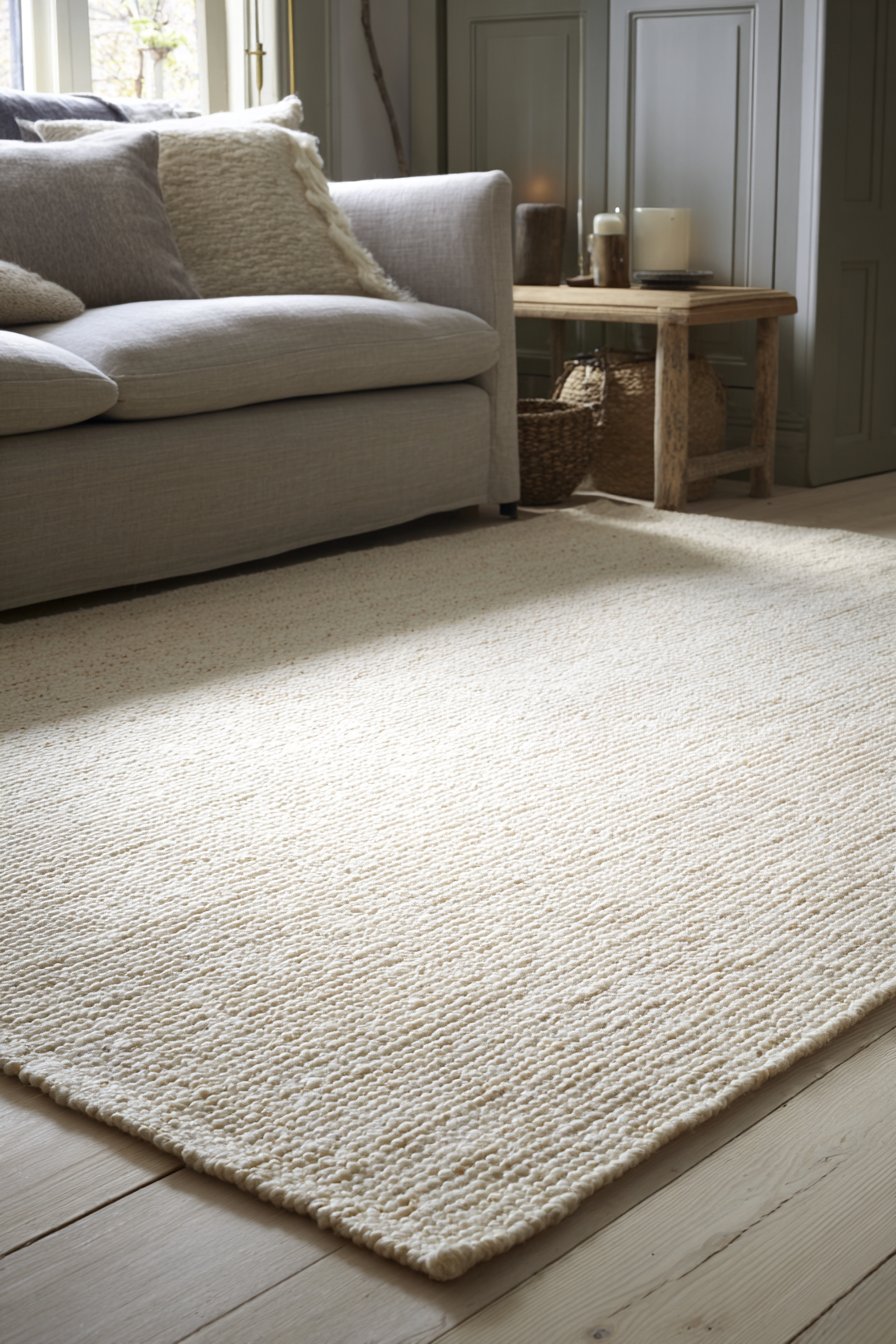
The undyed wool represents a sustainable choice. Natural colors eliminate chemical dye processes. The textile adds warmth without introducing pattern. The approach maintains minimalist visual calm.
Key Design Tips:
- Choose undyed natural wool for sustainable minimalist textile choices
- Select rugs with simple border details rather than complex patterns
- Ensure generous margins around furniture placed on rug surface
- Layer neutral tones through flooring and textile color relationships
- Invest in quality natural fibers that develop character over time
15. Statement Lounge Chair in Premium Materials
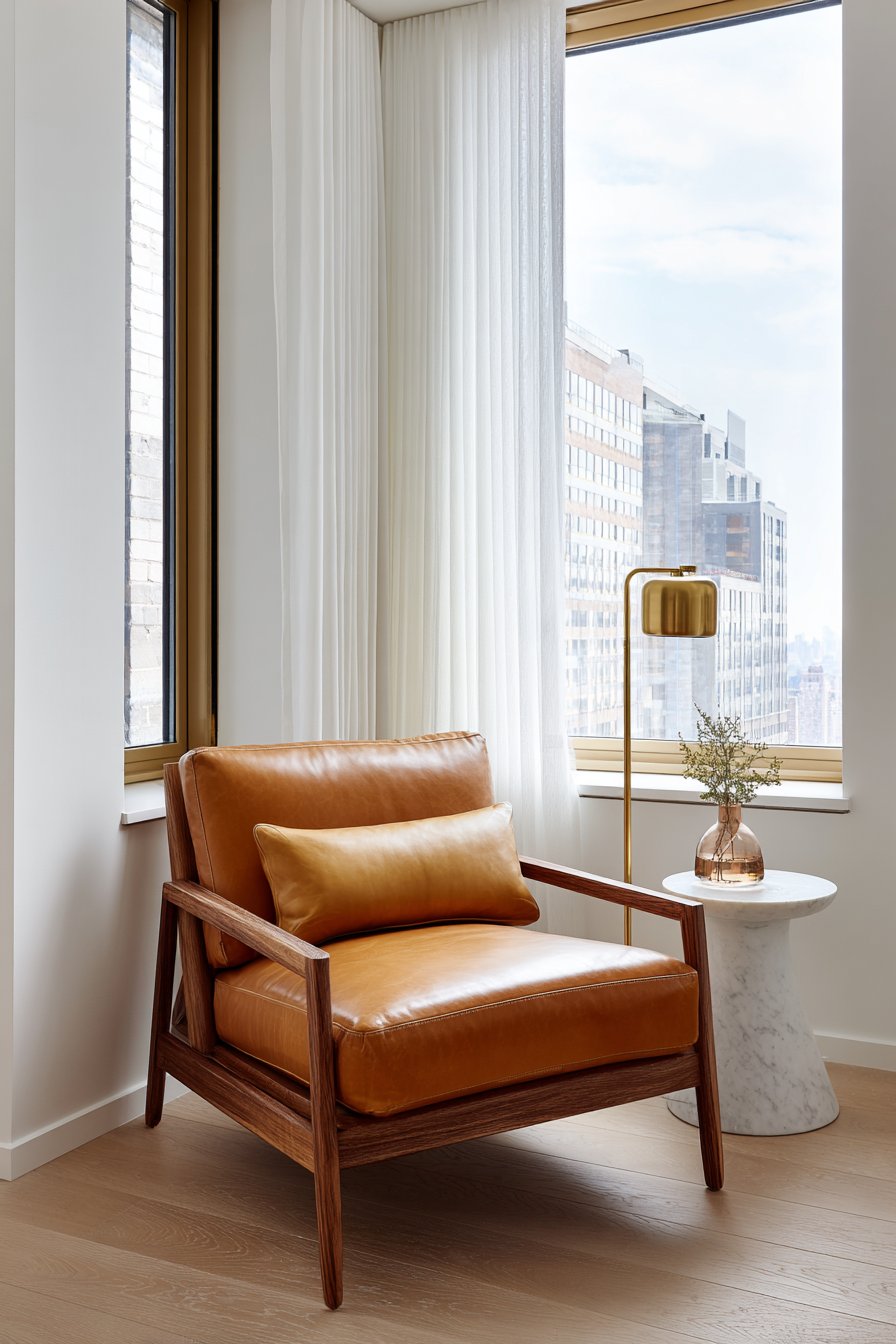
A single mid-century inspired lounge chair creates focal point. Cognac leather upholstery develops beautiful patina. Exposed walnut frame showcases quality craftsmanship. Simple cushion construction prioritizes comfort and form.
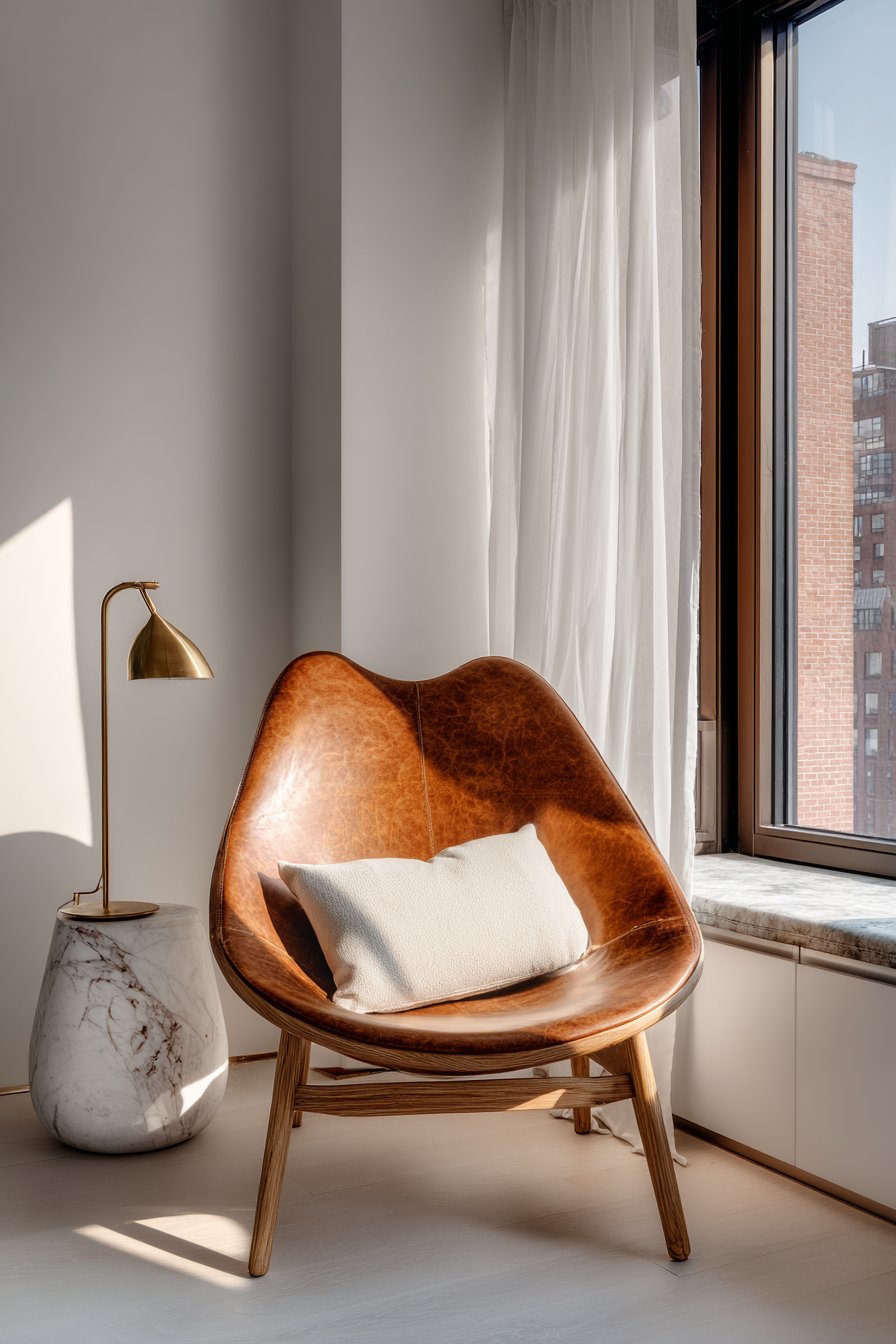
The chair sits alone near window with white sheer curtains. Positioned at an angle for reading and relaxation. A small round side table in white marble holds task lamp. The brass stem lamp provides focused illumination.
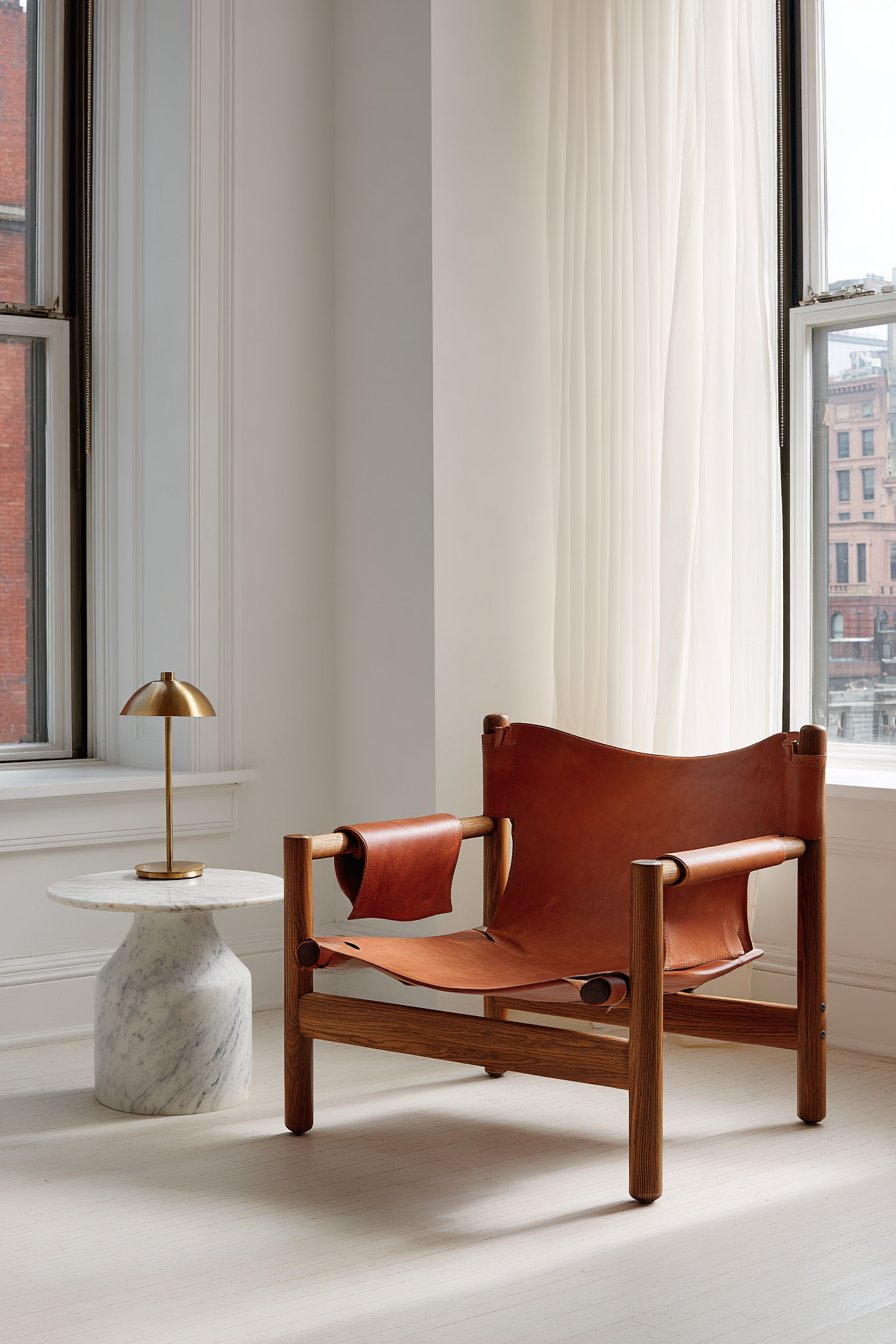
Surrounding space remains open with white walls and light flooring. Natural afternoon light highlights leather’s warm tones. The wood grain details become apparent in direct sunlight. Quality materials justify their prominence.
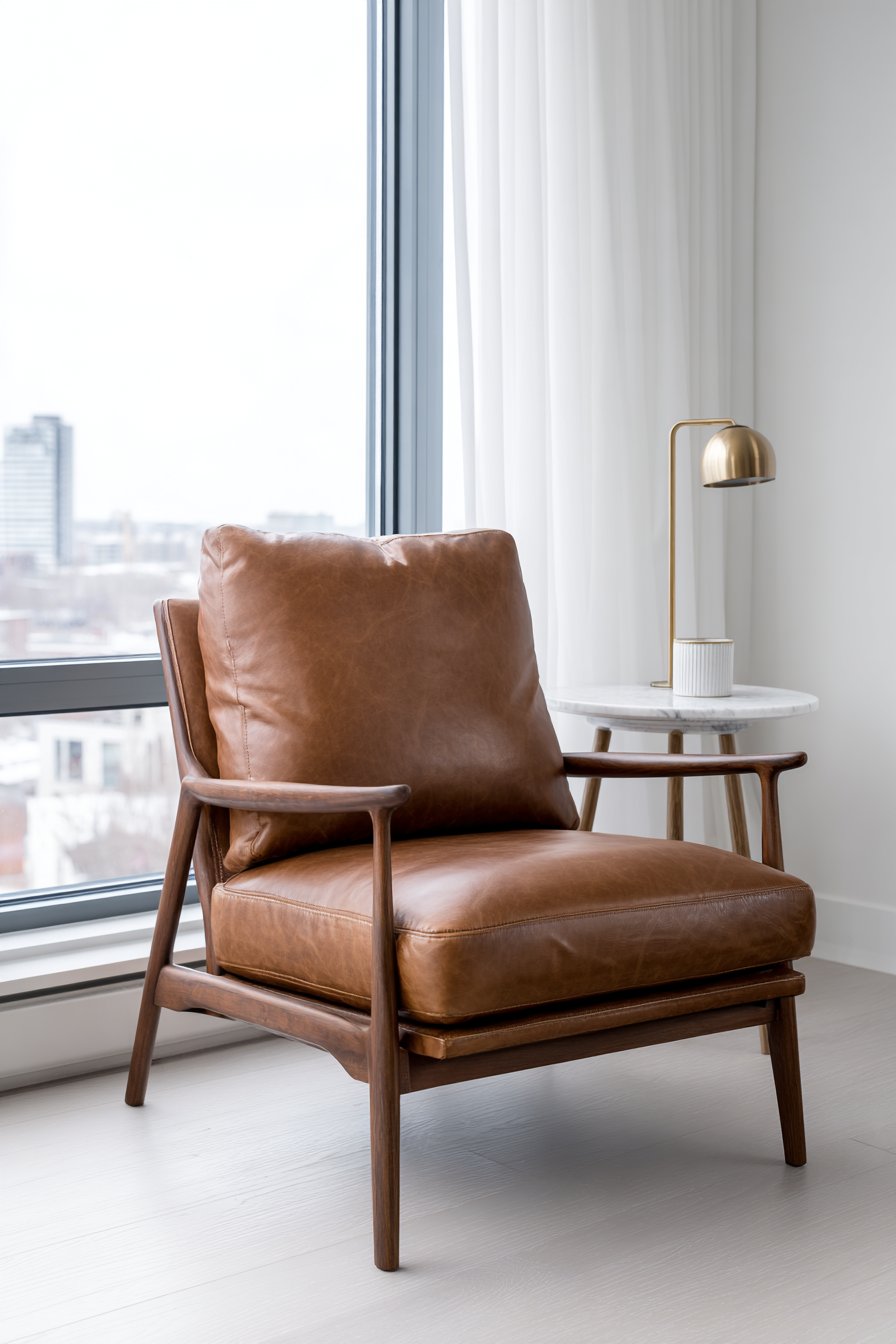
The single statement piece demonstrates minimalist quality-over-quantity philosophy. One excellent chair outperforms multiple mediocre pieces. The investment provides lasting beauty and comfort. Materials age gracefully rather than deteriorating.
Key Design Tips:
- Invest in single statement pieces rather than multiple lesser items
- Choose natural leather that develops patina and character over time
- Position chairs at angles rather than parallel to walls for visual interest
- Pair with simple side tables in complementary premium materials
- Select exposed wood frames that showcase grain patterns and craftsmanship
16. Floor-to-Ceiling Window Wall Architecture
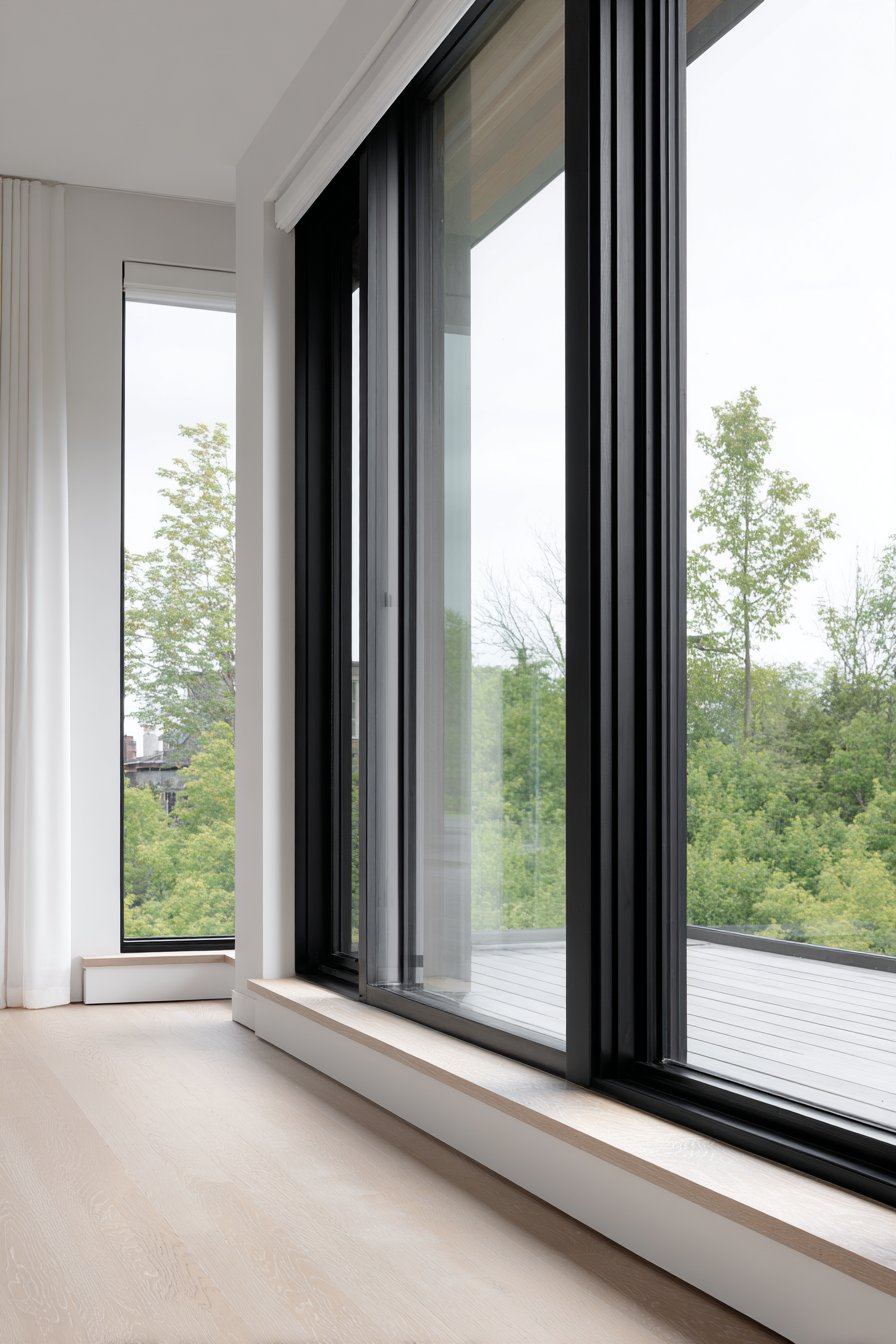
A floor-to-ceiling window wall maximizes natural light. Slim black aluminum frames create grid pattern. Large glass panes minimize visual interruption. The window wall overlooks greenery outside.
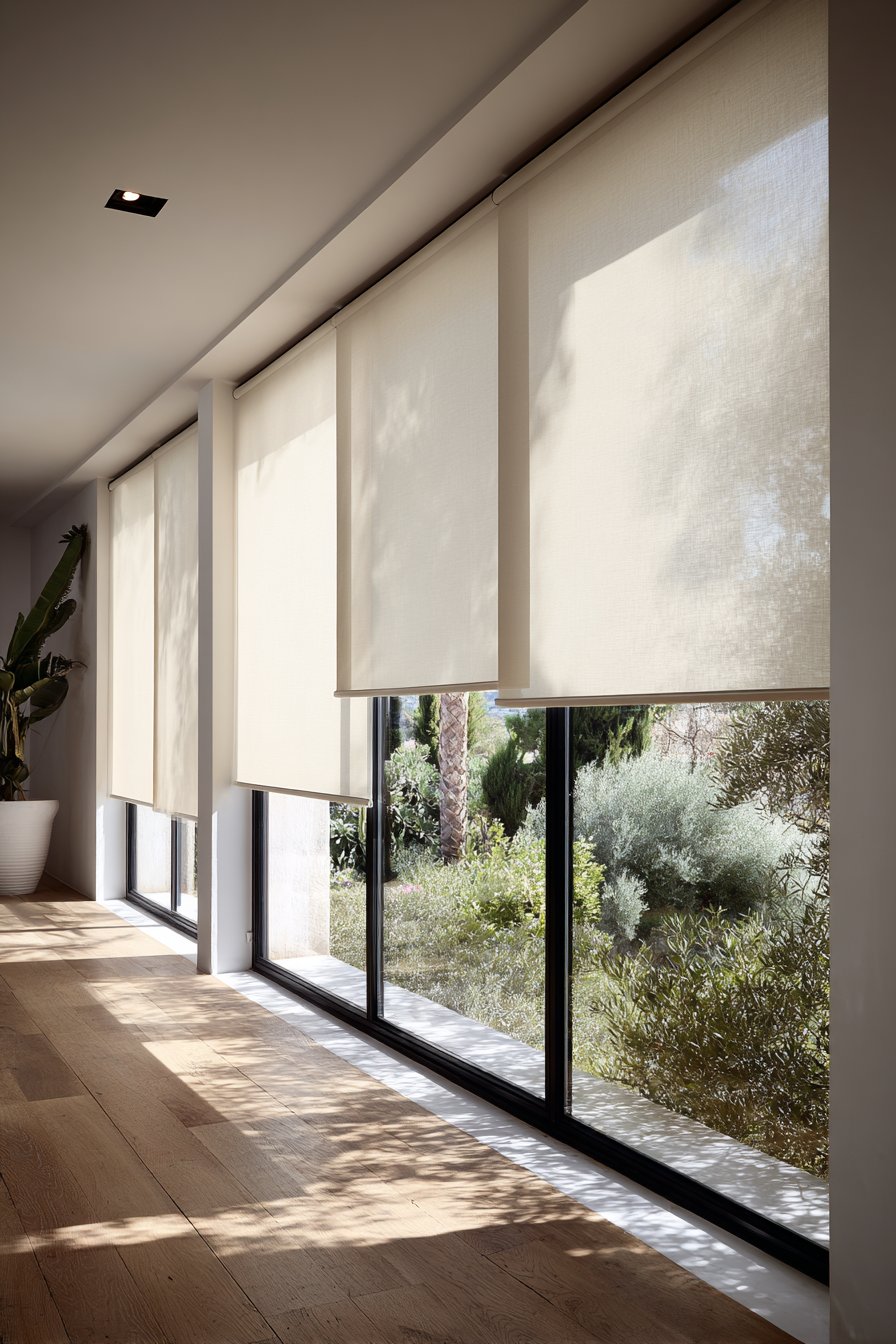
Simple white roller shades mount inside frames. They provide sun control without decorative elements. The shades disappear when raised completely. Light oak flooring meets window base cleanly.
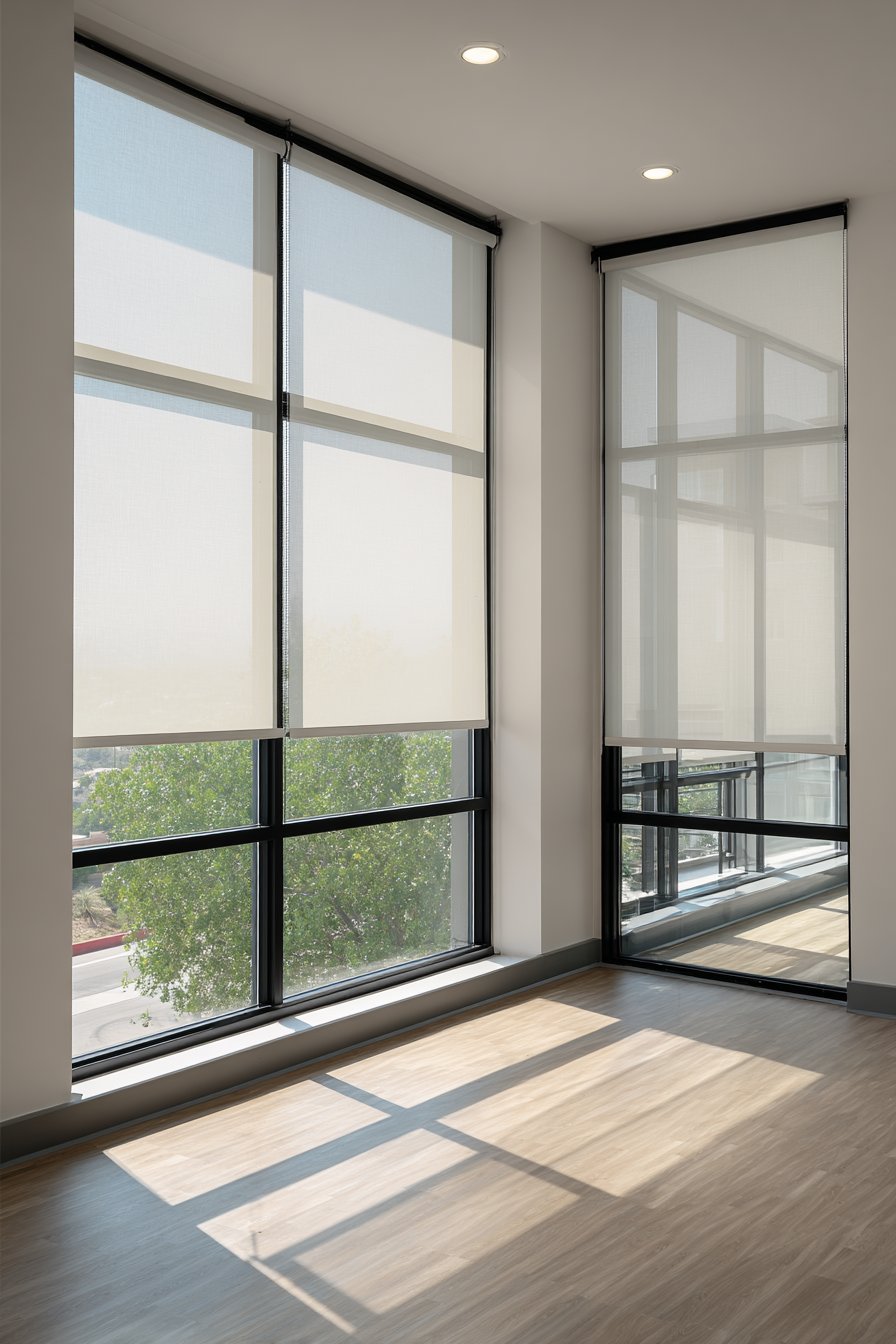
Natural light floods the space throughout the day. The bright, open atmosphere feels expansive. The window functions as design feature itself. The view connects the interior to nature seamlessly.
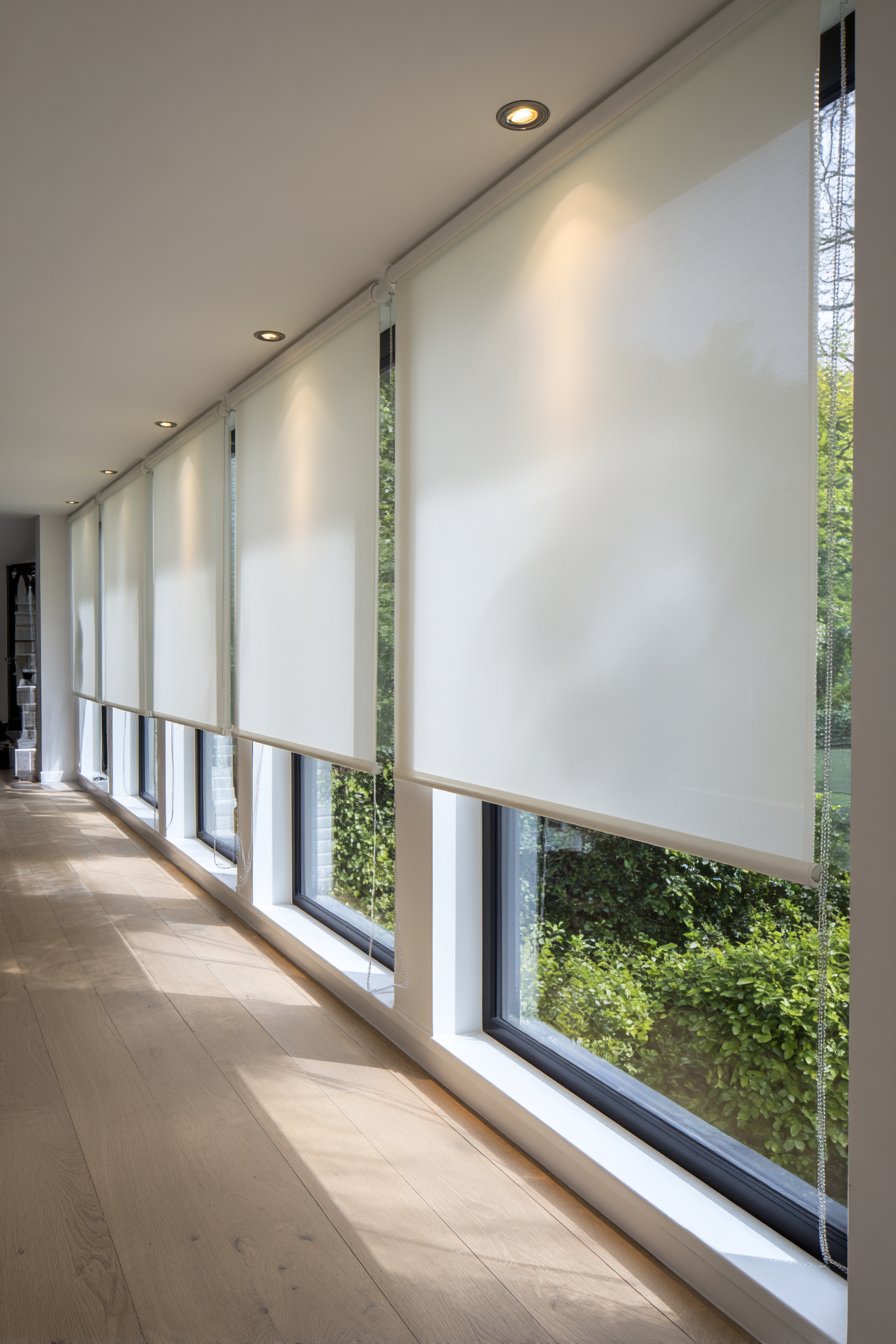
The black frames add definition without heaviness. The slim profile maintains clean lines. Quality glazing provides insulation and sound dampening. The investment enhances comfort alongside aesthetics.
Key Design Tips:
- Choose slim aluminum frames in black for modern definition
- Maximize glass pane size to minimize frame visual interruption
- Install roller shades inside frames for cleanest appearance
- Select windows that connect to attractive outdoor views
- Ensure quality glazing for thermal efficiency and sound control
17. Built-In Bench with Integrated Storage
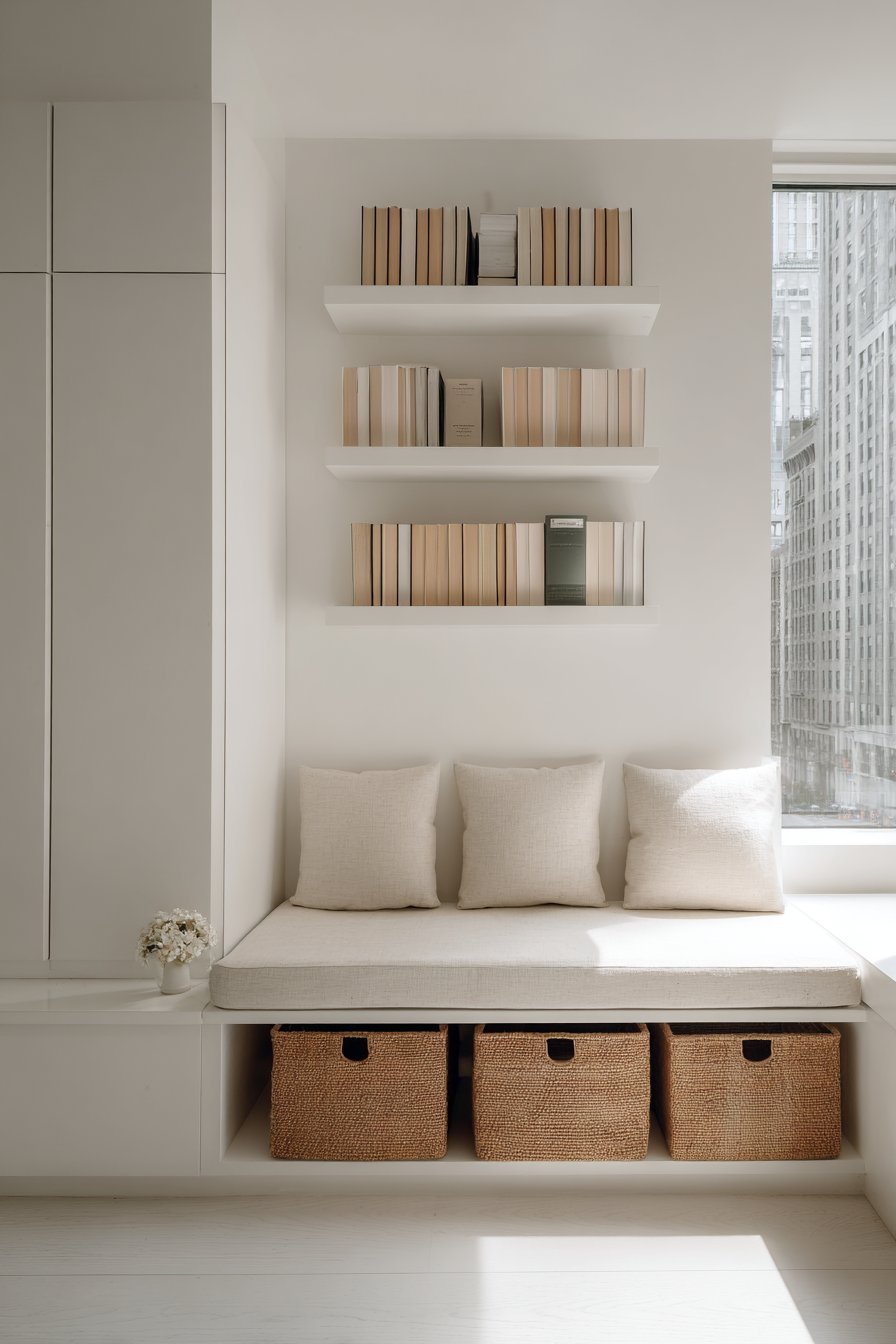
A corner built-in bench combines seating and storage. Simple white-painted plywood construction keeps costs reasonable. A thin cushion in natural linen adds comfort. Open shelving above displays six books vertically.
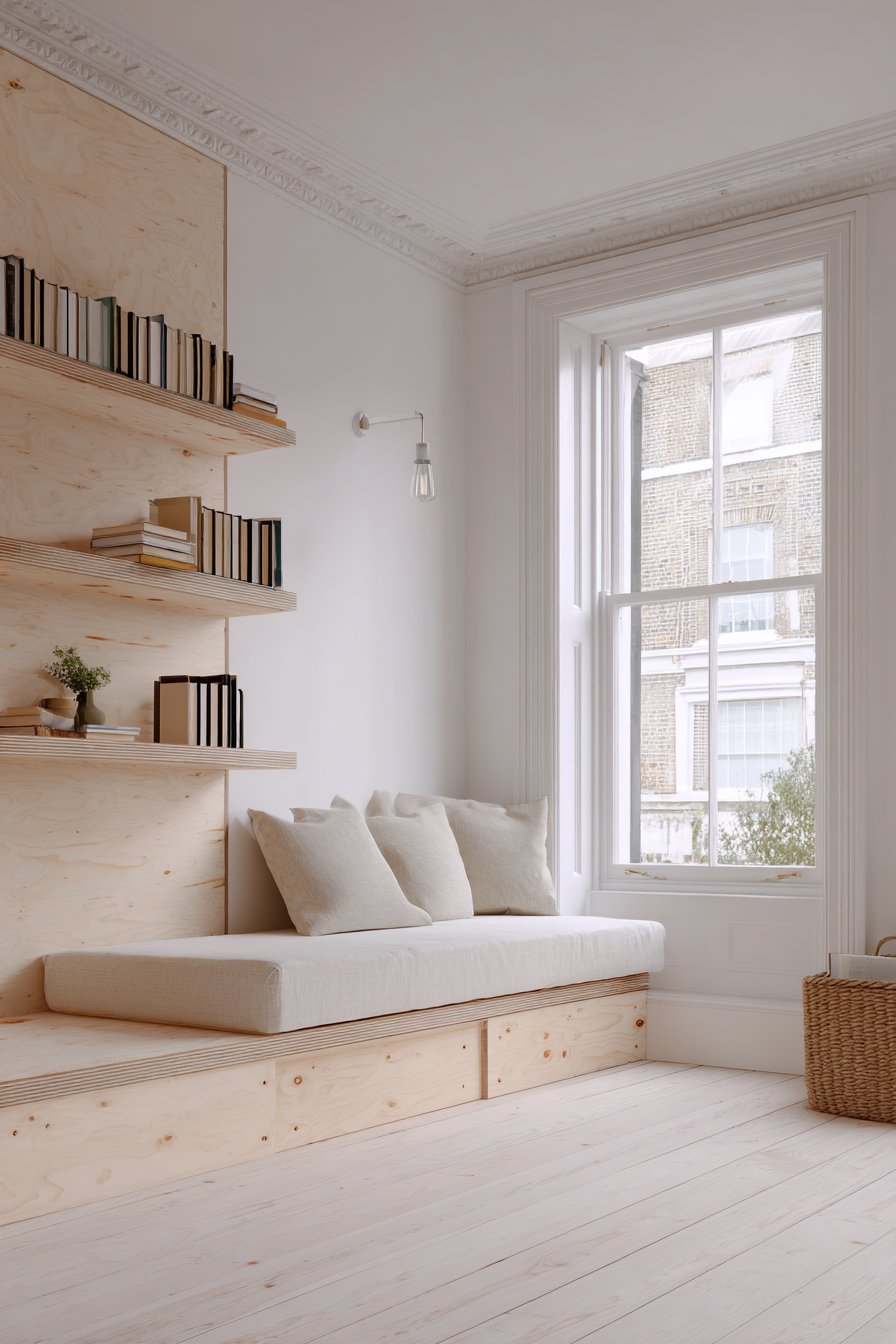
The bench provides practical storage below. Lift-up seat reveals organized baskets inside. White walls and pale wood flooring maintain visual continuity. Natural side lighting from adjacent windows illuminates the nook.
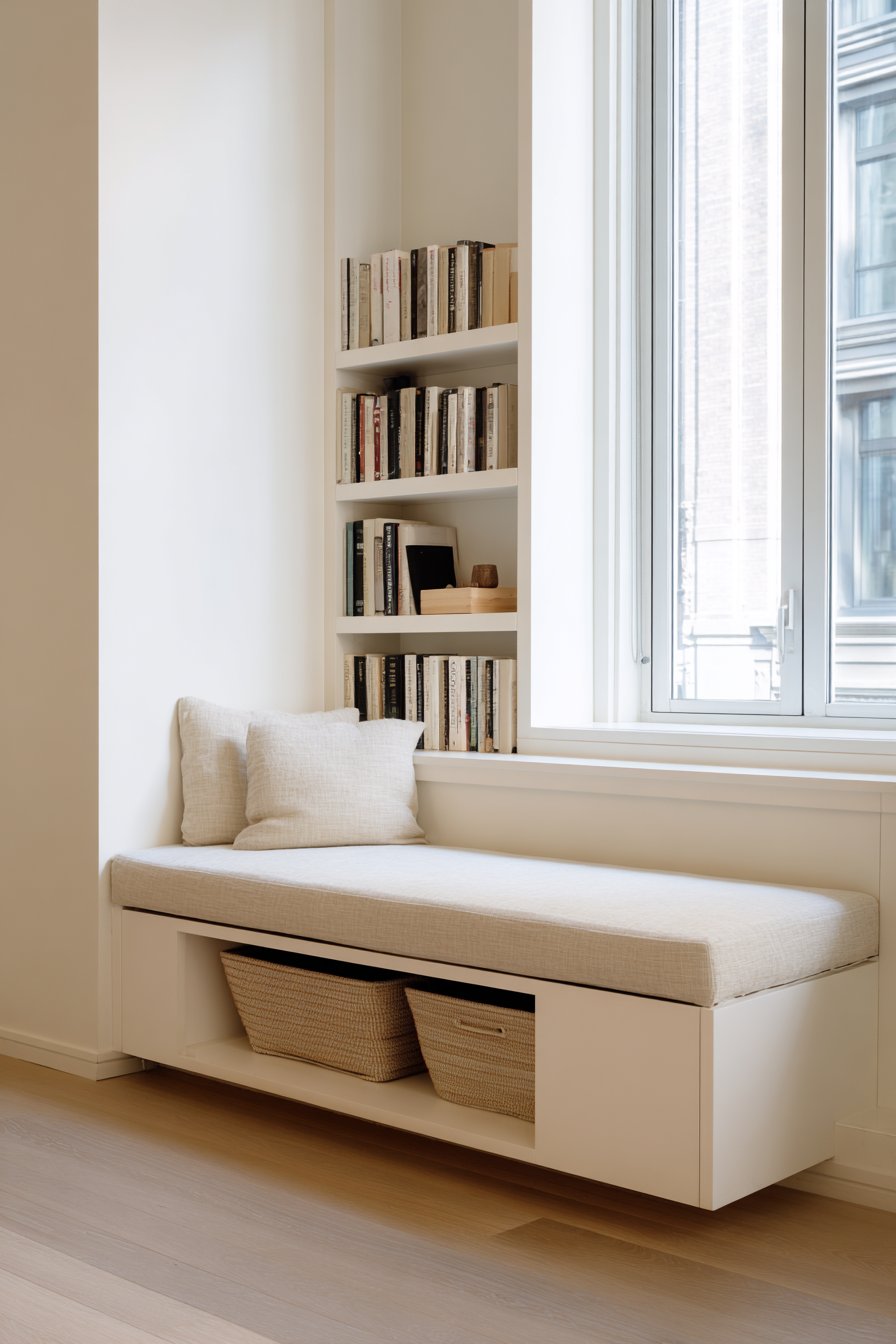
The functional reading nook serves multiple purposes. Seating, storage, and display integrate seamlessly. The built-in approach maximizes space efficiency. The design demonstrates practical minimalism.
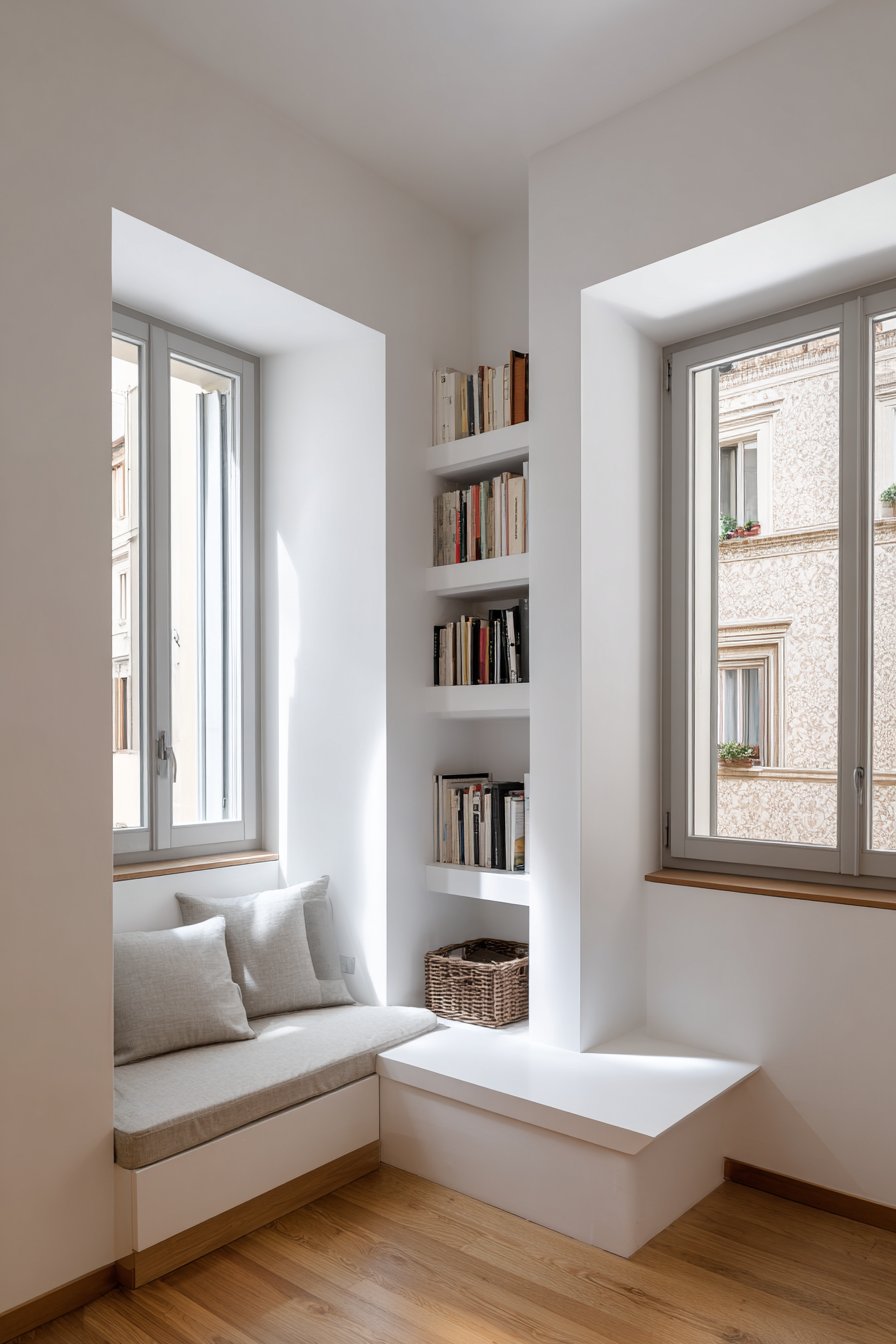
Book spines face outward in neutral colors. The limited display prevents visual clutter. The shelving holds only what fits comfortably. Restraint prevents the nook from appearing crowded.
Key Design Tips:
- Design built-in benches with lift-up storage for hidden organization
- Use white-painted plywood for budget-friendly minimalist construction
- Add thin cushions in natural fabrics for comfort without bulk
- Include open shelving for vertical book display with spines showing
- Position near windows to create functional reading nooks with natural light
18. Monochromatic Warm Neutral Palette
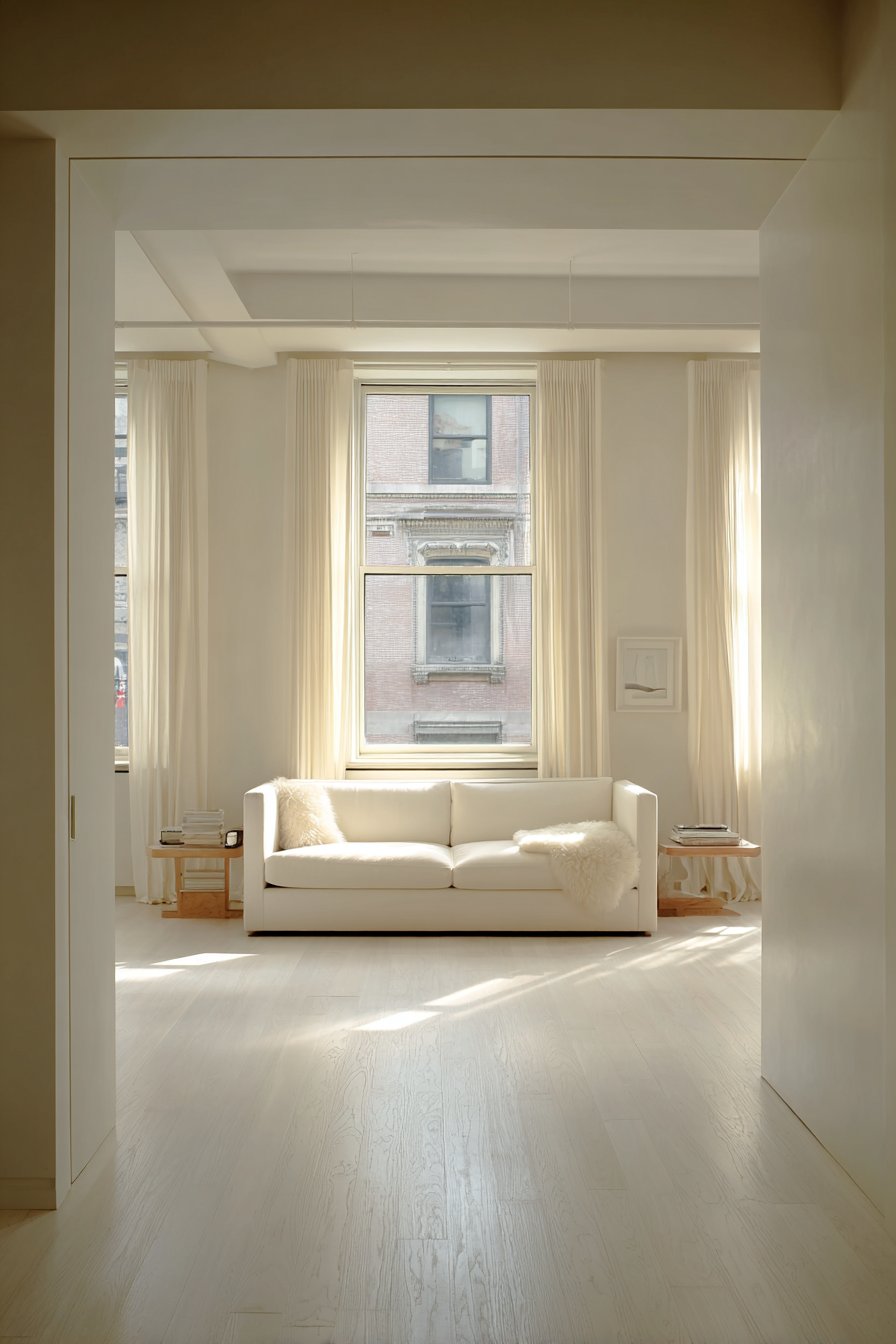
This space demonstrates monochromatic color mastery. Warm whites and natural woods create tonal harmony. A cream wool sofa with simple rolled arms centers the room. White oak side tables flank with visible grain patterns.
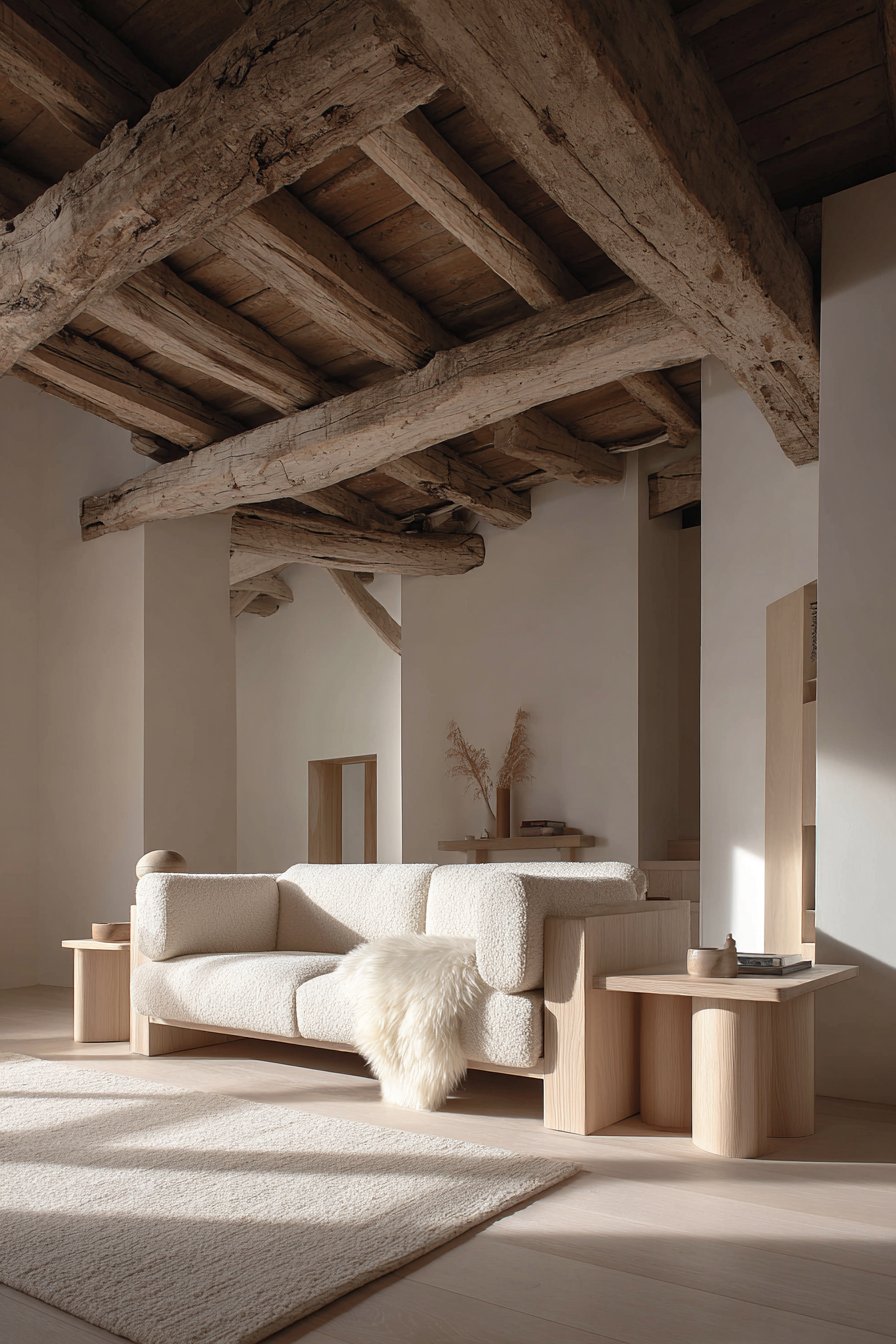
Walls in warm white plaster reflect soft natural light. A single sheepskin throw adds subtle texture variation. Pale ash flooring completes the cohesive scheme. Morning light creates gentle shadows.
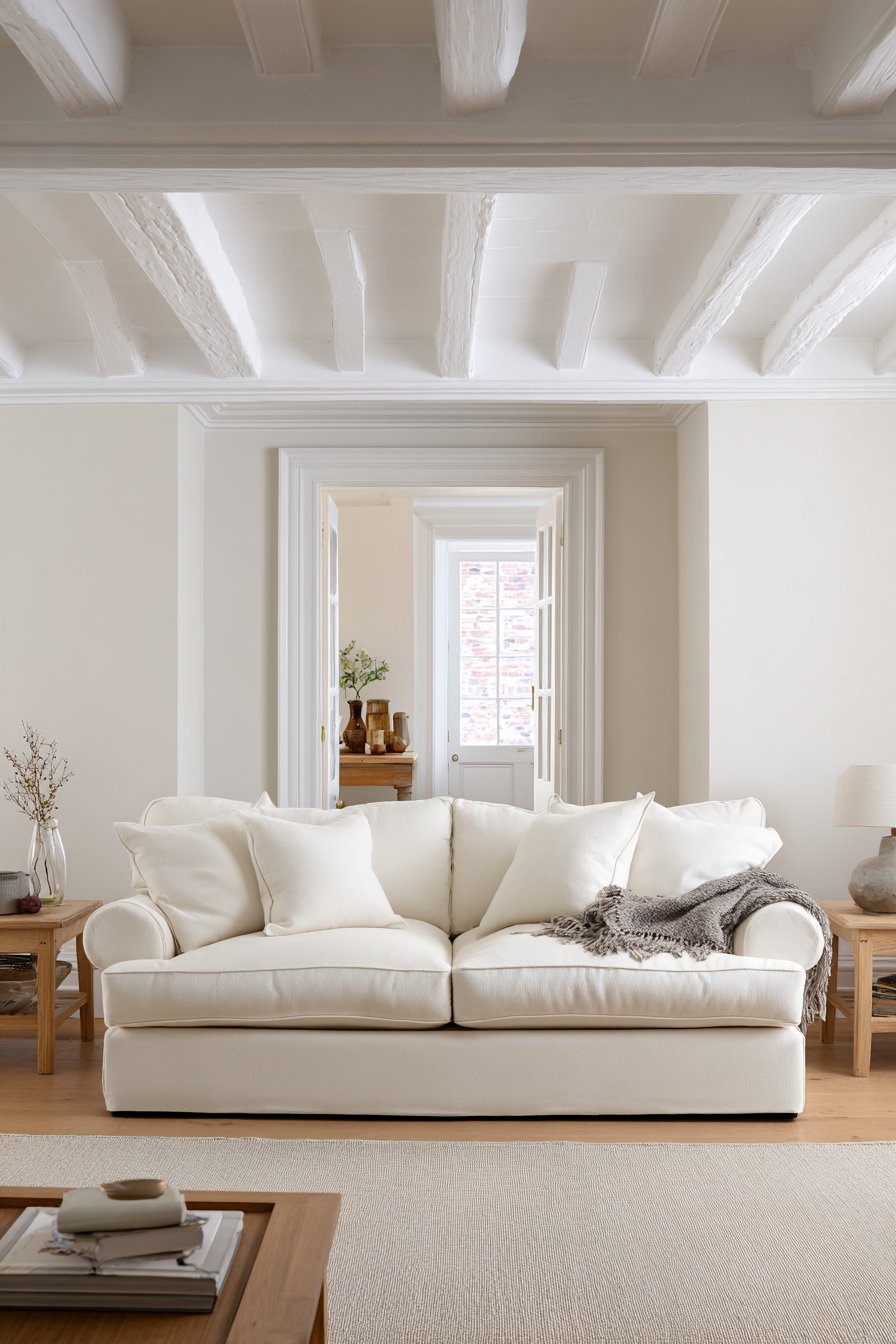
The color palette achieves interest through subtle variation. Multiple shades of white and cream layer beautifully. Natural wood tones add warmth throughout. No bold colors interrupt the serene foundation.
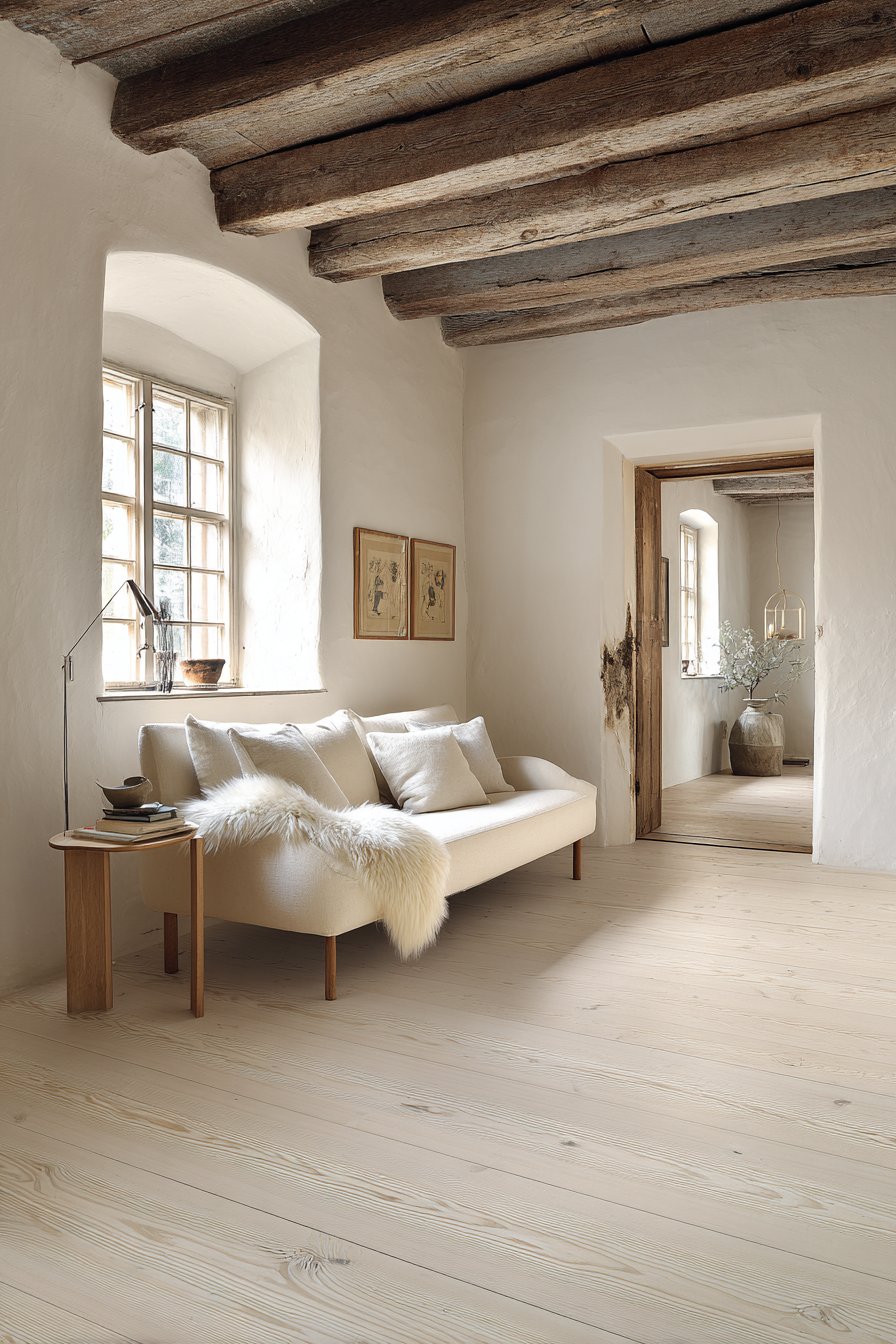
Material textures provide visual interest in absence of color contrast. The wool, wood, plaster, and sheepskin each contribute unique texture. The layered neutrals create sophisticated depth. The space feels calm without appearing flat.
Key Design Tips:
- Layer multiple warm white and cream tones for dimensional neutrality
- Introduce natural wood tones as warm accent within neutral palette
- Use varying textures in similar colors to prevent flat appearance
- Select warm white plaster rather than stark white for inviting quality
- Add single textural accent like sheepskin for tactile interest
19. Recessed Media Alcove with Technology Integration
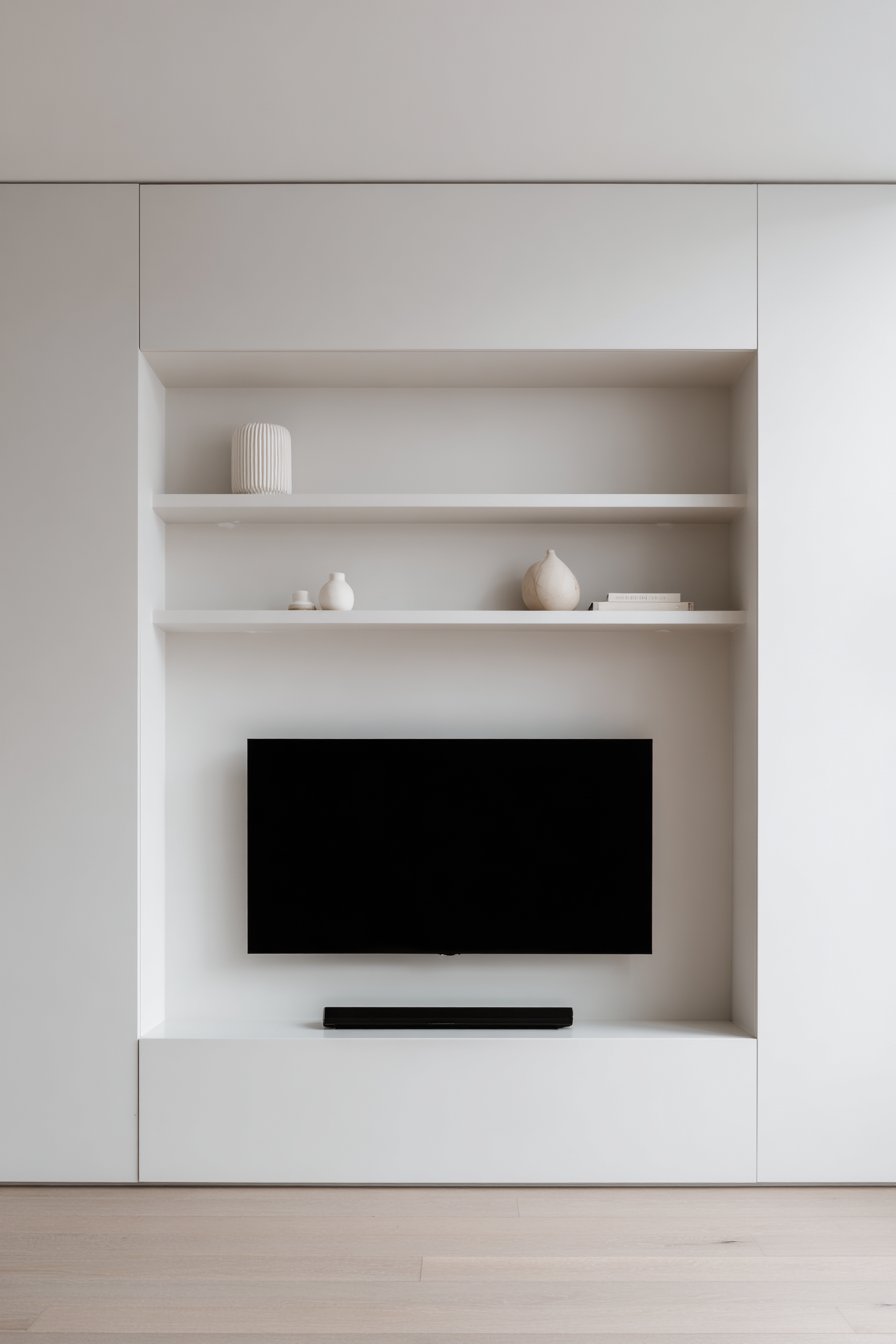
A recessed alcove houses entertainment technology discreetly. Painted in same matte white as surrounding walls. Wall-mounted television has all cables concealed within wall structure. Simple white floating shelves flank on either side.
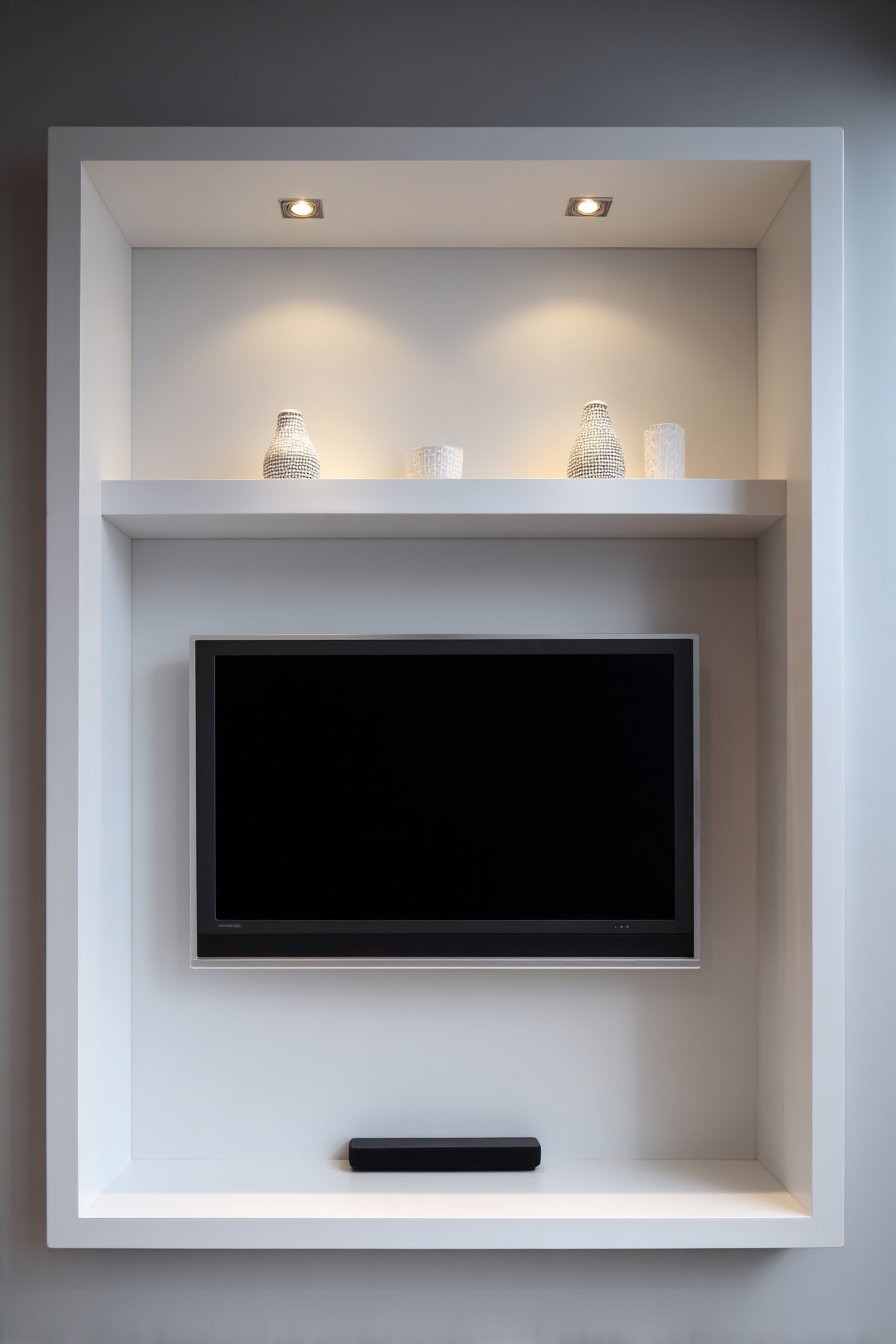
The shelves hold minimal sound bar and two small ceramic objects. No additional entertainment equipment appears visible. The alcove’s depth creates subtle shadows. These shadows define space without additional framing.
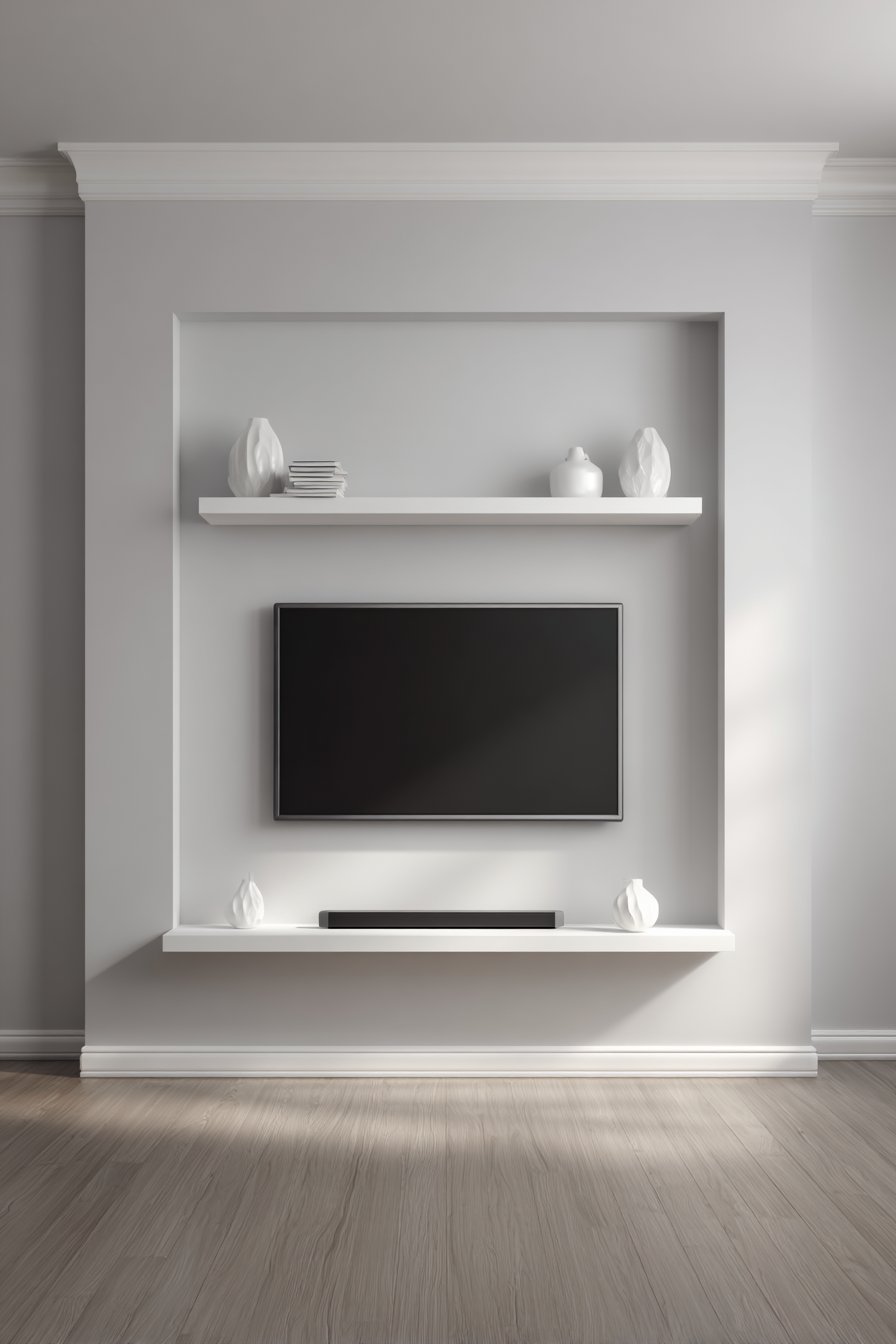
Natural and recessed lighting provide balanced illumination. The lighting doesn’t compete with screen when active. The technology integrates seamlessly into uncluttered design. Function doesn’t compromise aesthetic principles.
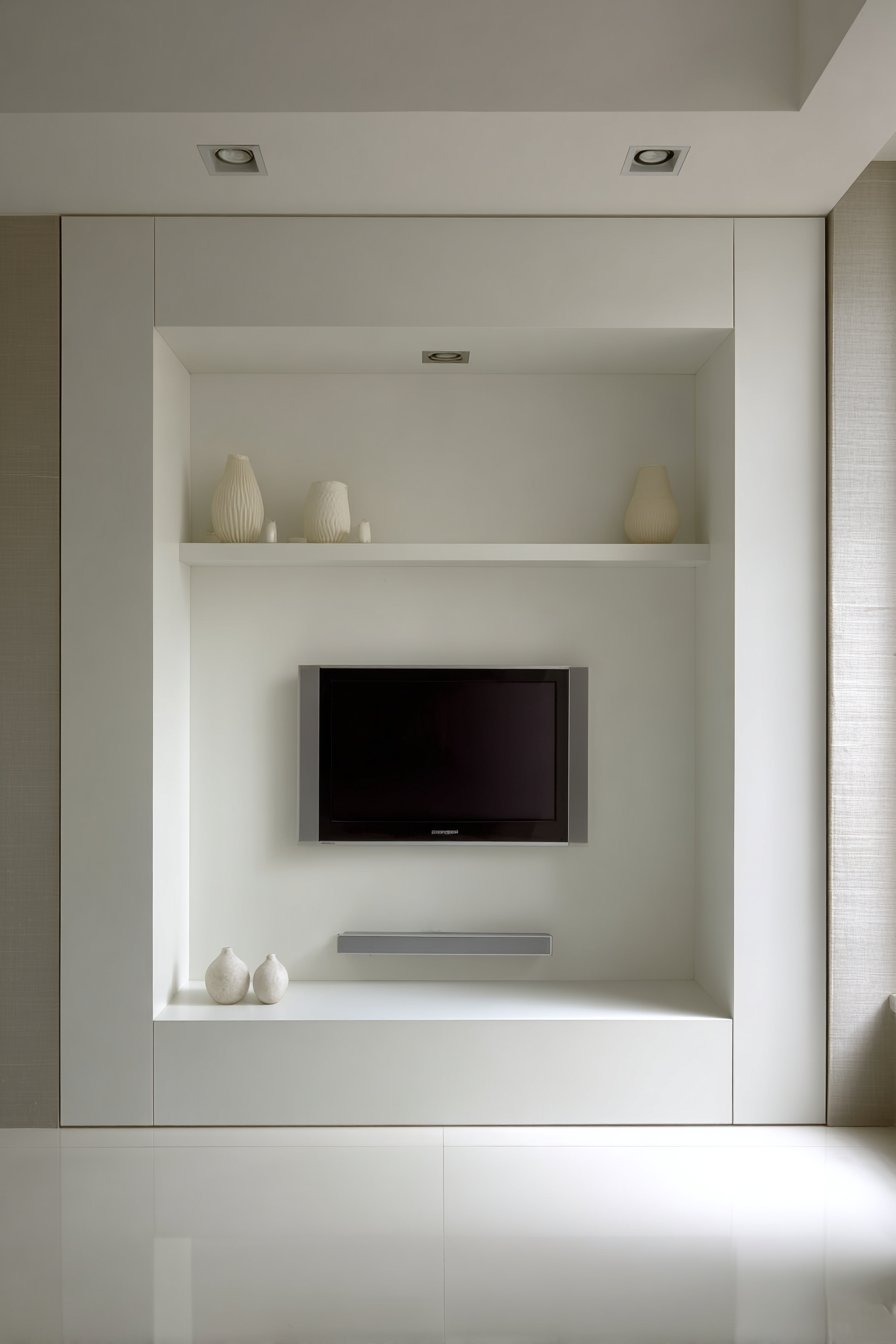
The concealed cables require planning during construction or renovation. The investment creates lasting clean results. The approach demonstrates how minimalism accommodates modern technology. Essential devices integrate without dominating visually.
Key Design Tips:
- Create recessed alcoves for television mounting to add depth
- Conceal all cables within walls during installation for clean results
- Paint the alcove interior the same color as the surrounding walls
- Add minimal floating shelves for equipment with concealed wire management
- Limit alcove decoration to two or three small neutral objects
20. Complete Minimalist Living Room Composition
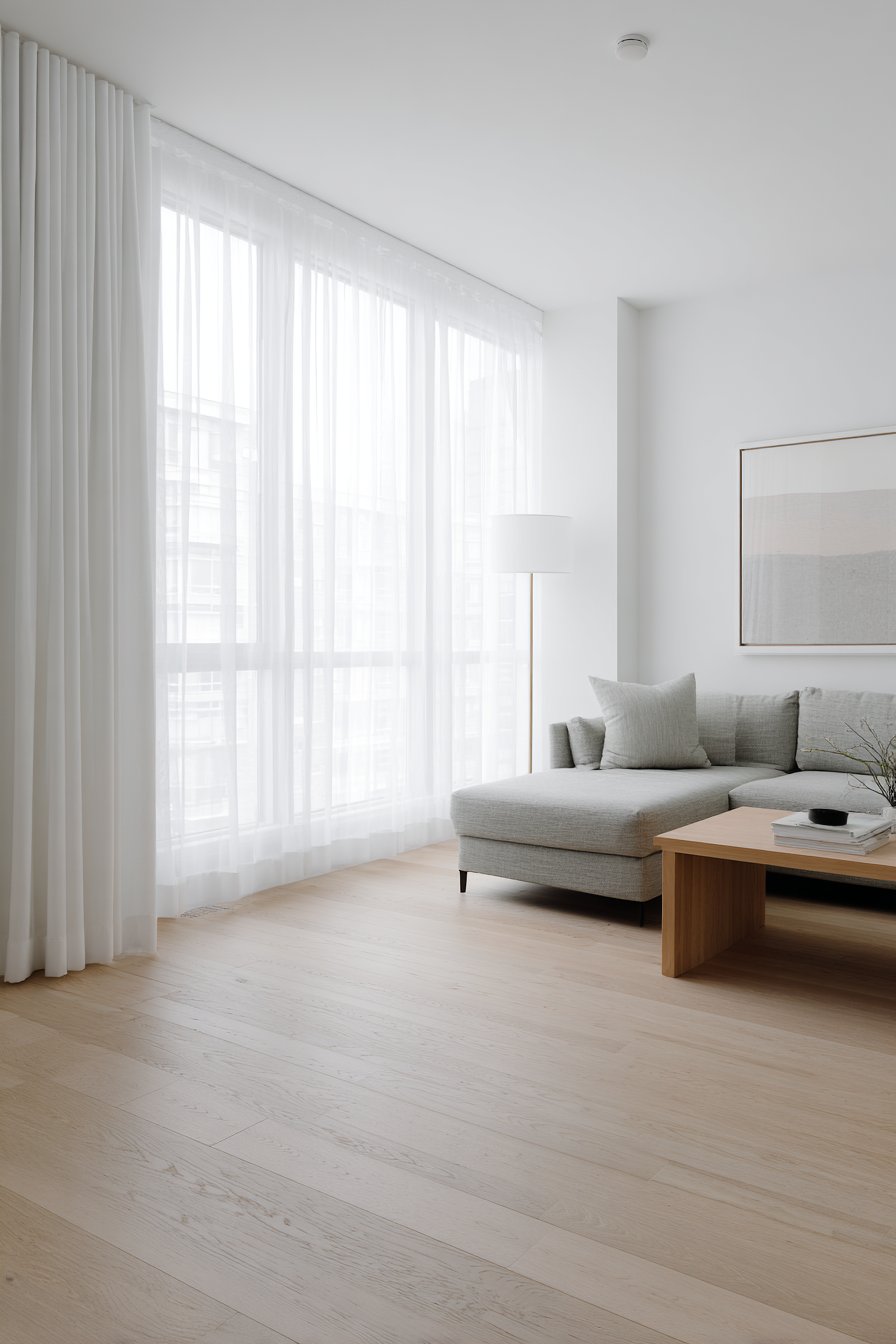
This full-room view demonstrates complete minimalist principles. A simple grey sectional sofa, white oak coffee table, and single floor lamp comprise seating area. One large abstract artwork in muted tones hangs on main wall. Floor-to-ceiling windows with sheer white curtains fill space with natural light.
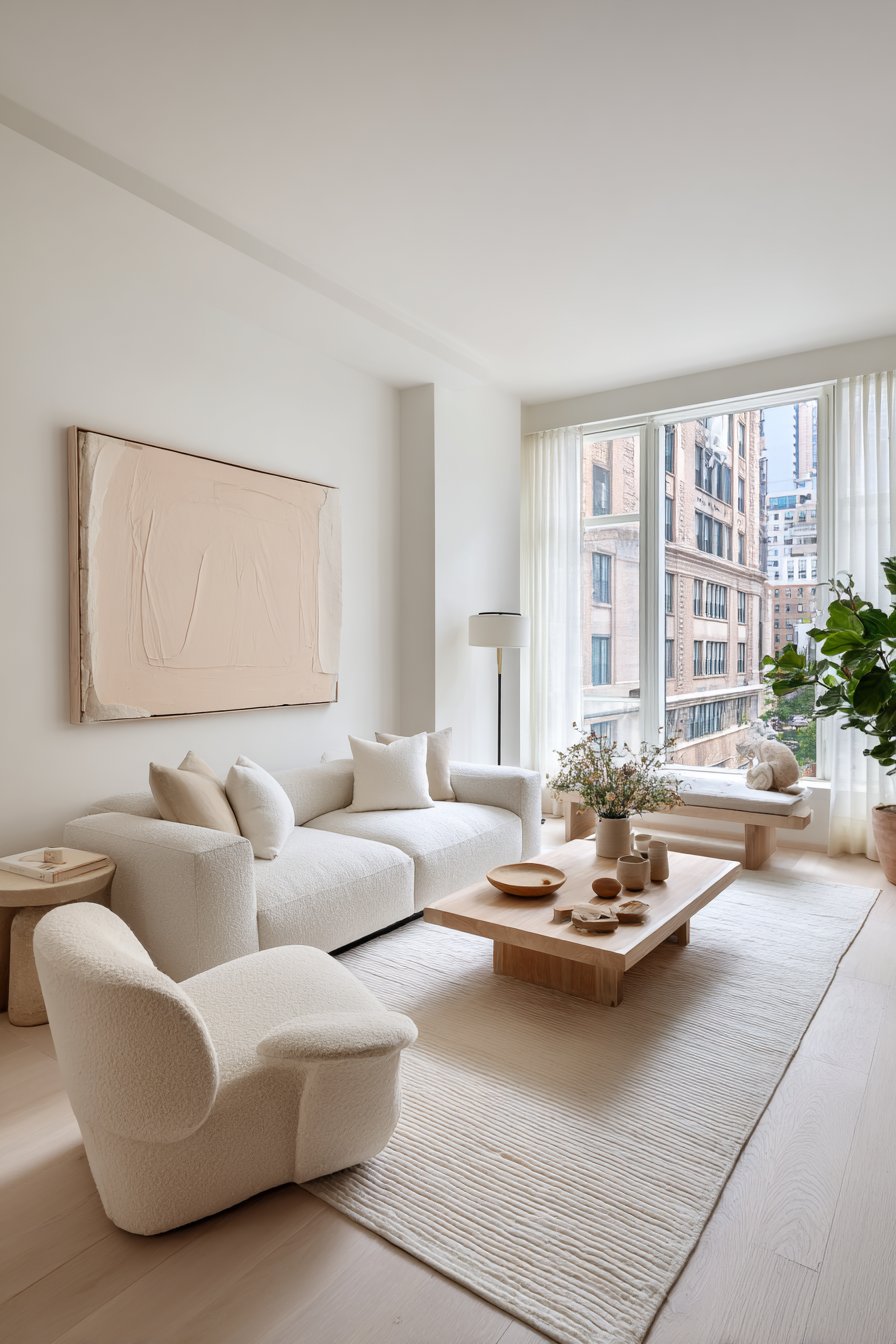
Pale hardwood flooring extends throughout uninterrupted. White walls remain largely bare with significant negative space. The room demonstrates functional minimalism. Everything needed exists without superfluity.
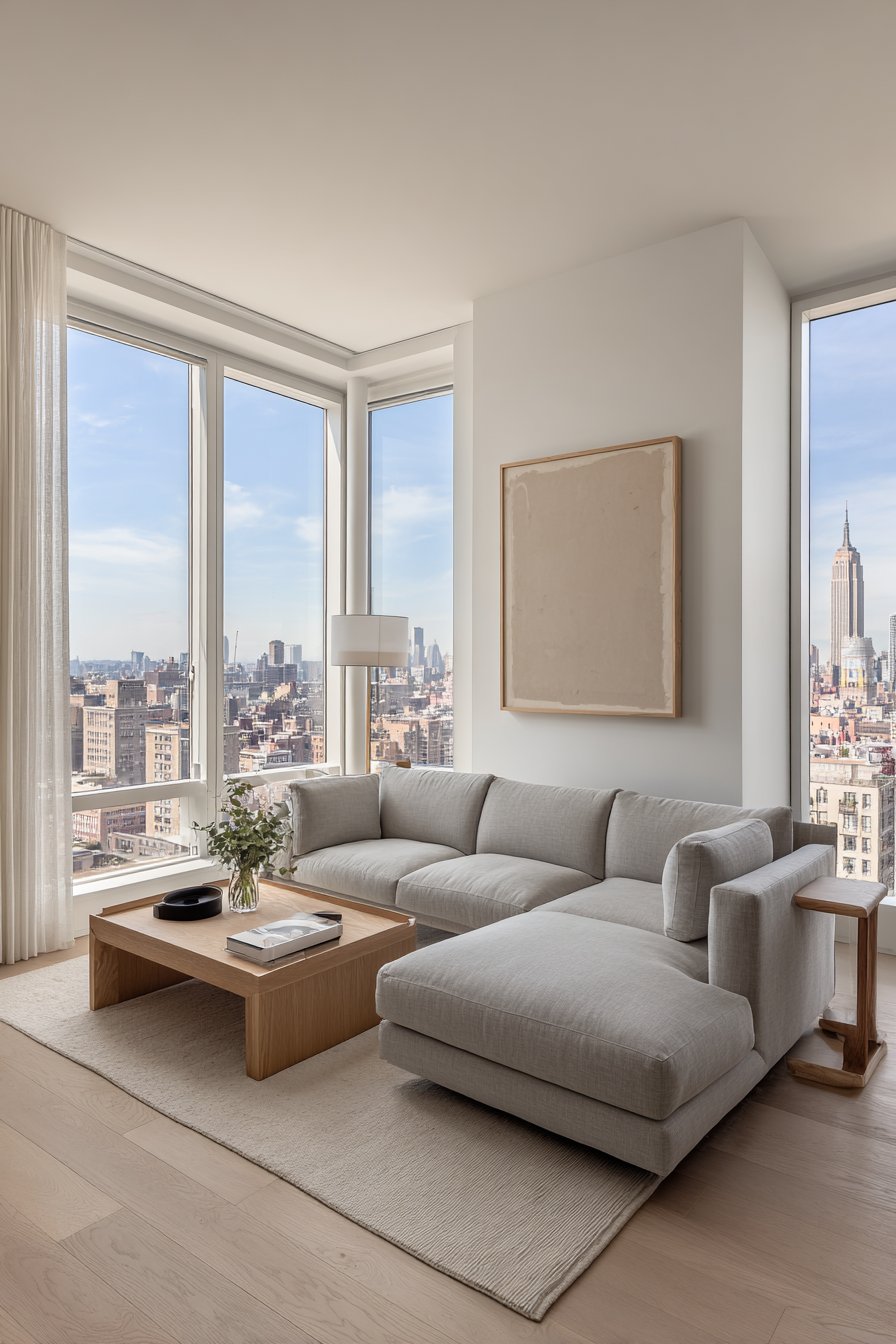
Intentional furniture placement creates generous circulation areas. Movement through space flows naturally. The layout serves daily living comfortably. The design proves minimalism supports rather than restricts lifestyle.
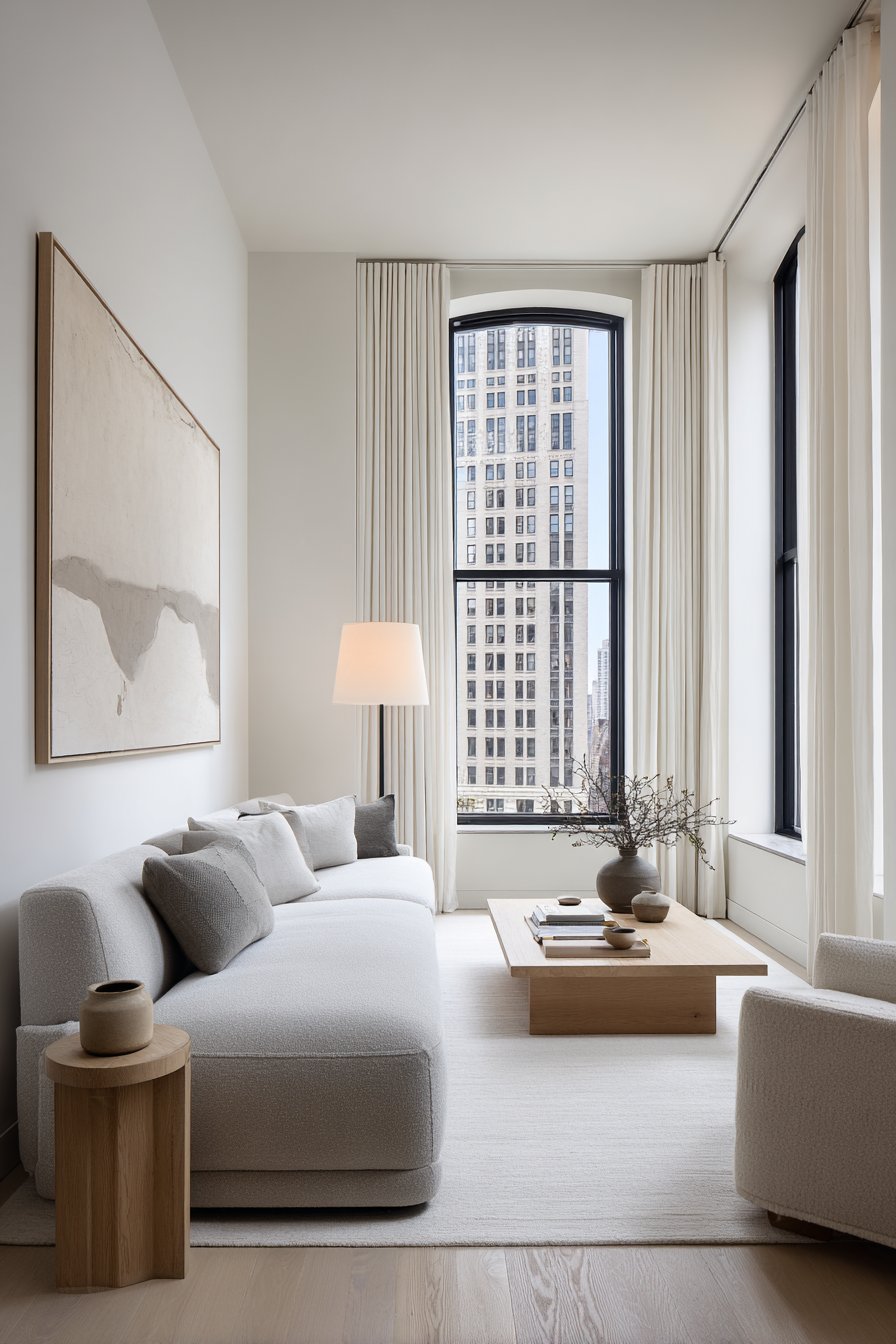
Natural light distribution changes throughout the day. Morning sun creates different atmosphere than afternoon glow. The neutral palette responds beautifully to shifting light. The space feels alive despite restraint.
Key Design Tips:
- Plan furniture layouts with generous three-foot minimum circulation paths
- Limit seating area to essential pieces: sofa, coffee table, lighting
- Maintain significant negative wall space rather than filling with artwork
- Choose floor-to-ceiling window treatments for maximum light and height
- Ensure cohesive flooring throughout for visual continuity and spaciousness
Why These Minimalist Living Room Designs Are the Best
These minimalist living room concepts represent the finest approaches to creating serene, functional spaces. Each design demonstrates thoughtful material selection and intentional spatial planning. The emphasis on quality over quantity ensures lasting value and timeless appeal.
The designs showcase versatility across different room sizes and architectural styles. Small spaces benefit from visual expansion through negative space principles. Larger rooms gain sophistication through restraint rather than excess. The minimalist approach adapts to various budgets by prioritizing fewer, better pieces over abundant, mediocre furnishings.
Natural materials form the foundation of successful minimalist design. Solid wood, natural stone, linen, wool, and leather develop character through aging. These authentic materials contrast sharply with synthetic alternatives that simply deteriorate. The investment in quality pays dividends through decades of beauty.
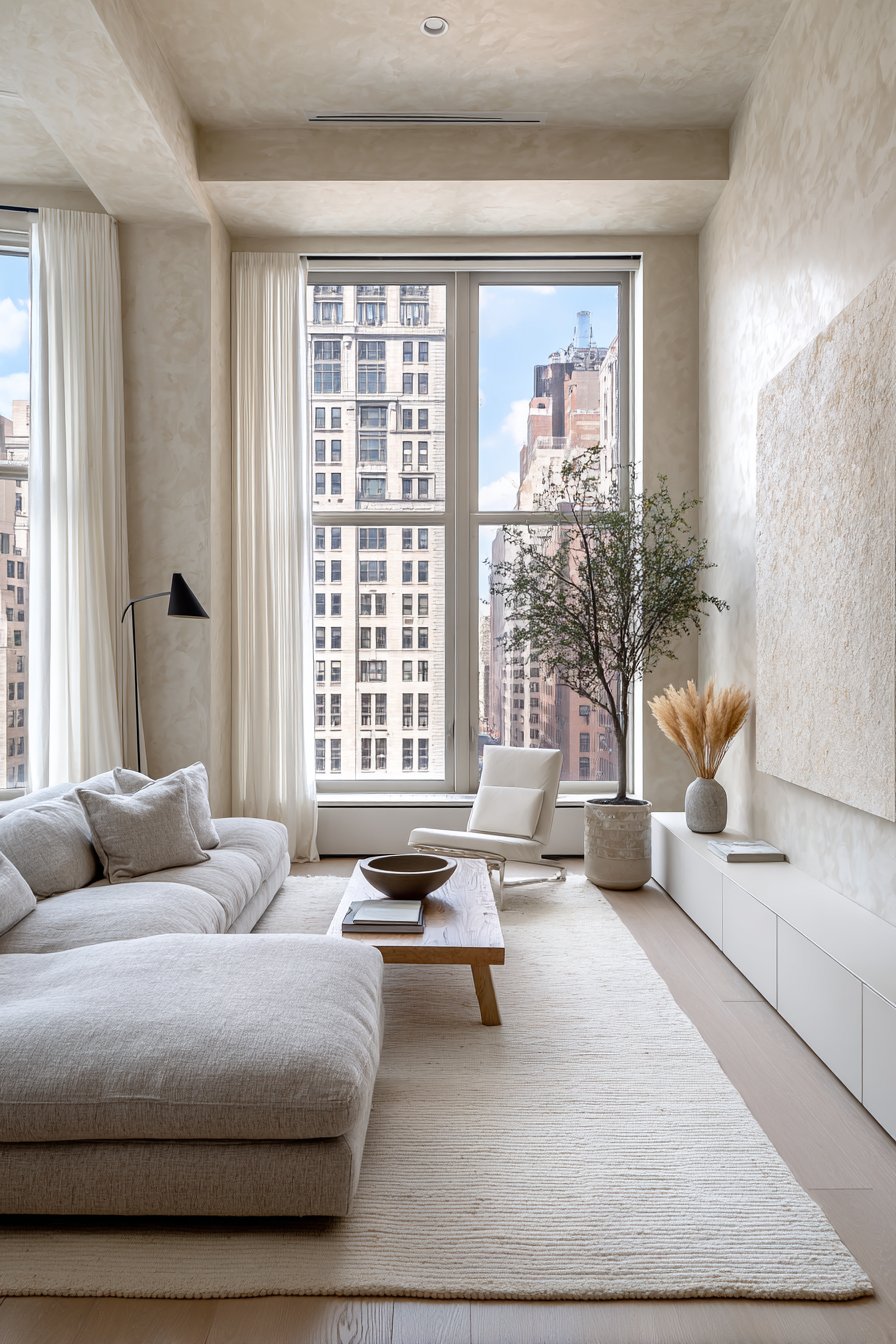
Color theory principles guide the neutral palettes featured throughout. Warm whites prevent coldness while maintaining visual calm. Natural wood tones add essential warmth without introducing pattern or visual noise. The layered neutrals create sophisticated depth that bold colors cannot achieve in minimalist contexts.
Functional considerations receive equal attention to aesthetic concerns. Built-in storage solutions conceal clutter behind clean facades. Flexible furniture arrangements adapt to changing needs. Technology integration happens seamlessly through thoughtful planning. The designs prove minimalism supports real life rather than existing as impractical styling.
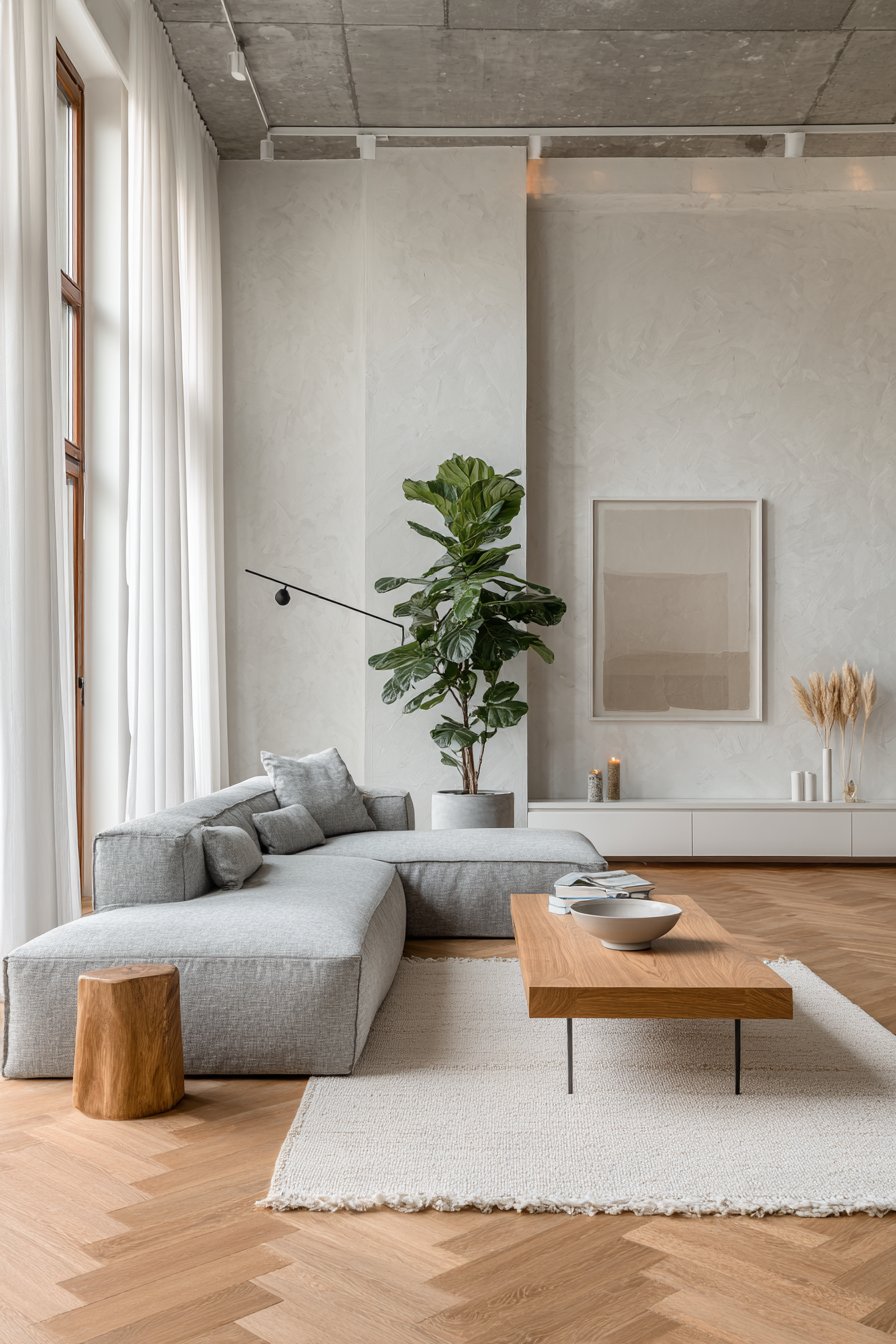
Lighting strategies combine natural and artificial sources thoughtfully. Large windows maximize daylight while maintaining privacy through sheer treatments. Simple pendant fixtures and sculptural floor lamps provide focused illumination. The layered approach creates ambiance throughout daily cycles.
Spatial planning ensures comfortable circulation and uncluttered sight lines. Three-foot minimum clearances around furniture pieces prevent cramped feelings. Generous negative space allows each selected piece to receive proper appreciation. The breathing room creates psychological calm alongside physical comfort.
Sustainability emerges naturally from minimalist principles. Fewer, better pieces reduce consumption and waste. Quality materials last generations rather than seasons. The timeless aesthetics resist trend-driven replacement cycles. These designs demonstrate environmental responsibility through thoughtful restraint.
Conclusion
These twenty minimalist living room designs illustrate how restraint creates powerful beauty. The key principles include intentional furniture selection, quality natural materials, and generous negative space. Each concept demonstrates that minimalism enhances rather than restricts comfortable living.
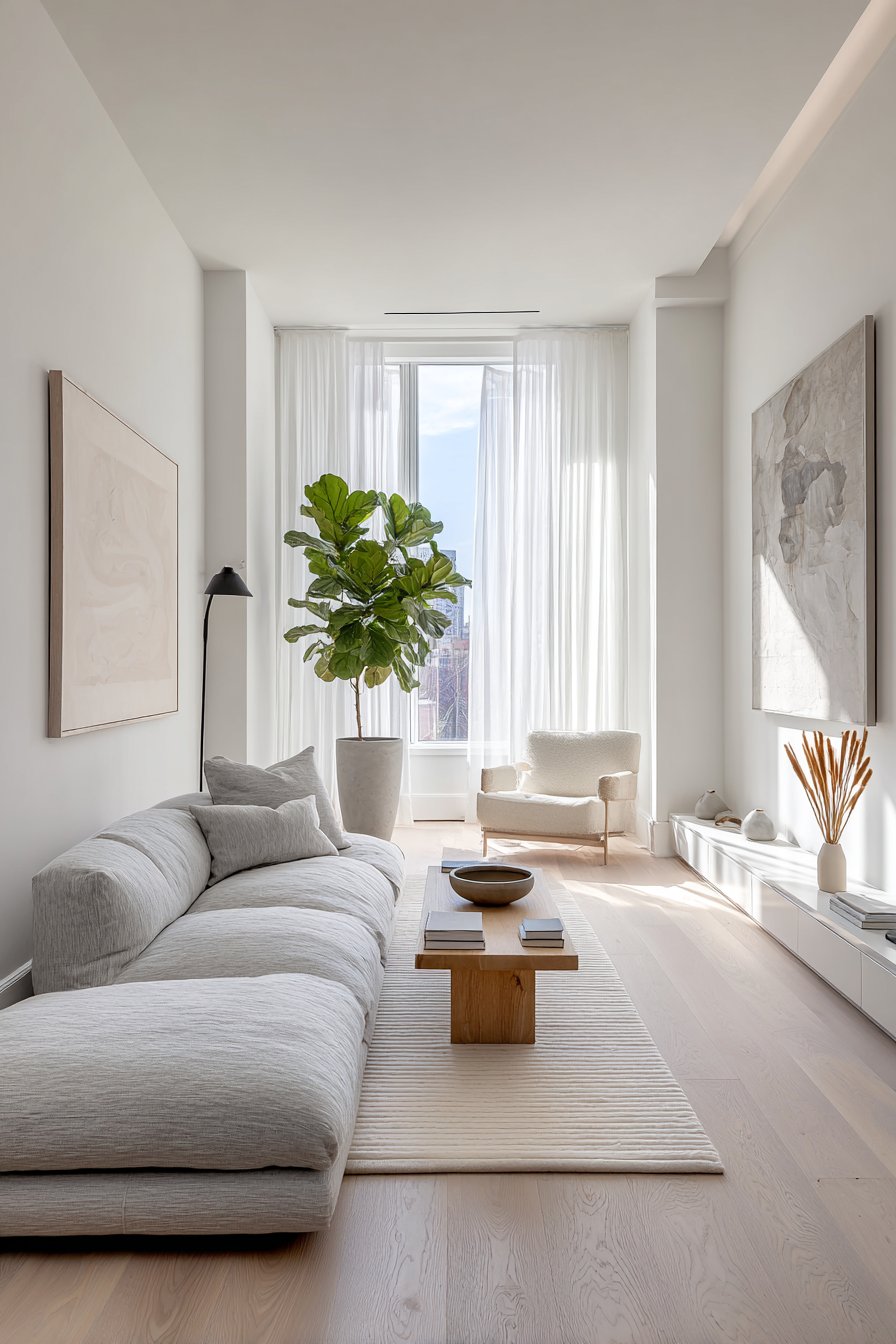
Successful minimalist design requires thoughtful planning and disciplined editing. Start by removing excess before adding carefully chosen pieces. Invest in quality items that serve both functional and aesthetic purposes. Layer neutral tones and natural textures to prevent stark coldness.
Your minimalist living room journey begins with honest assessment of needs versus wants. Edit ruthlessly while maintaining warmth through material choices. The serene, uncluttered space you create will provide lasting refuge from chaotic modern life. Begin transforming your living room into a peaceful sanctuary today.
