


Minimalist living rooms embody simplicity and clean lines, but they can sometimes feel cold or unwelcoming. The beauty of minimalism lies in its intentional choices and uncluttered spaces. However, creating a warm and inviting atmosphere within this aesthetic requires thoughtful design decisions that balance restraint with comfort.
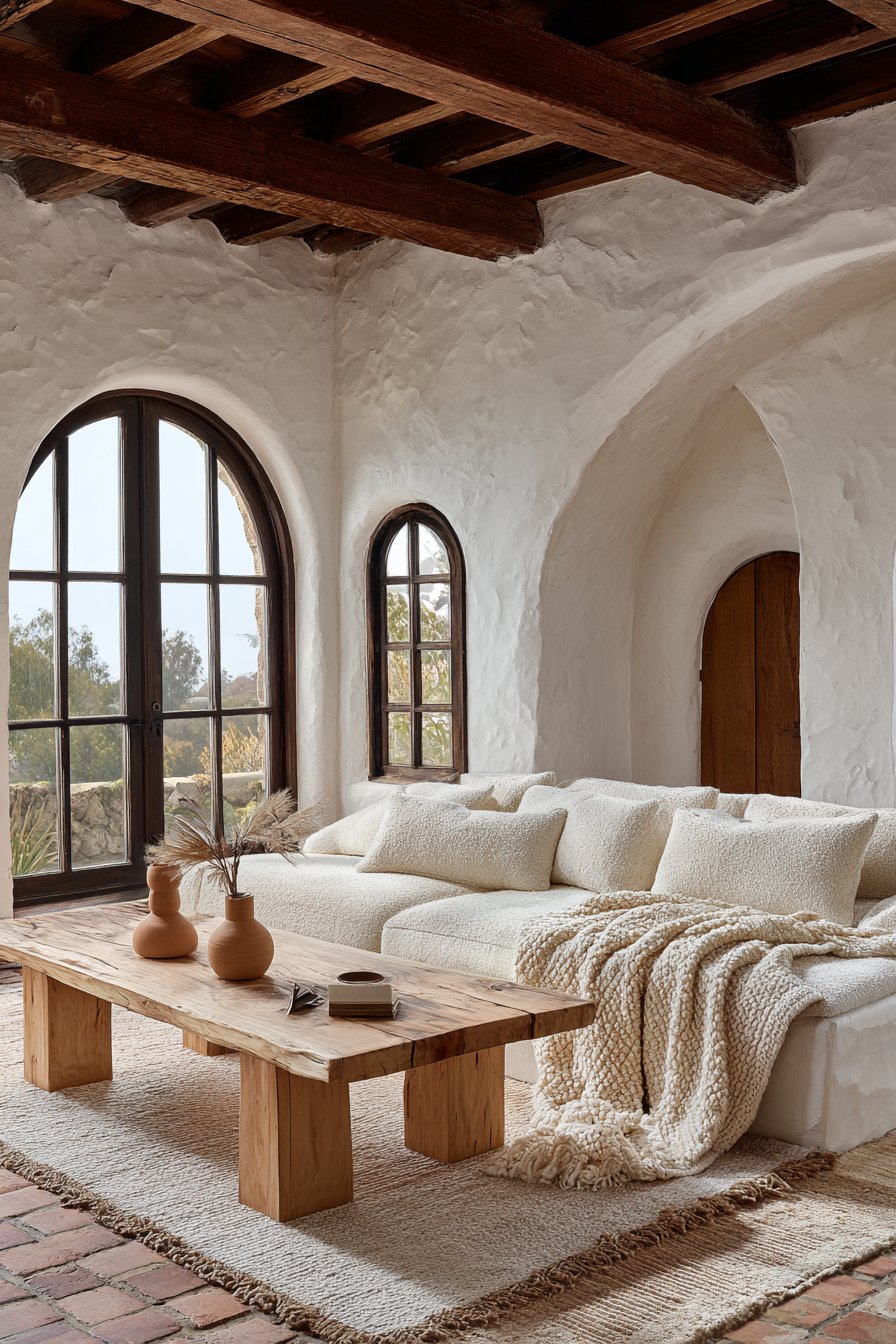
Many homeowners struggle to make their minimalist spaces feel cozy without compromising the essential principles of the style. The key is understanding that warmth doesn’t mean clutter. Instead, it comes from carefully selected textures, strategic color choices, and purposeful decorative elements. This article explores seven proven methods to infuse warmth into your minimalist living room while maintaining its signature clean aesthetic.
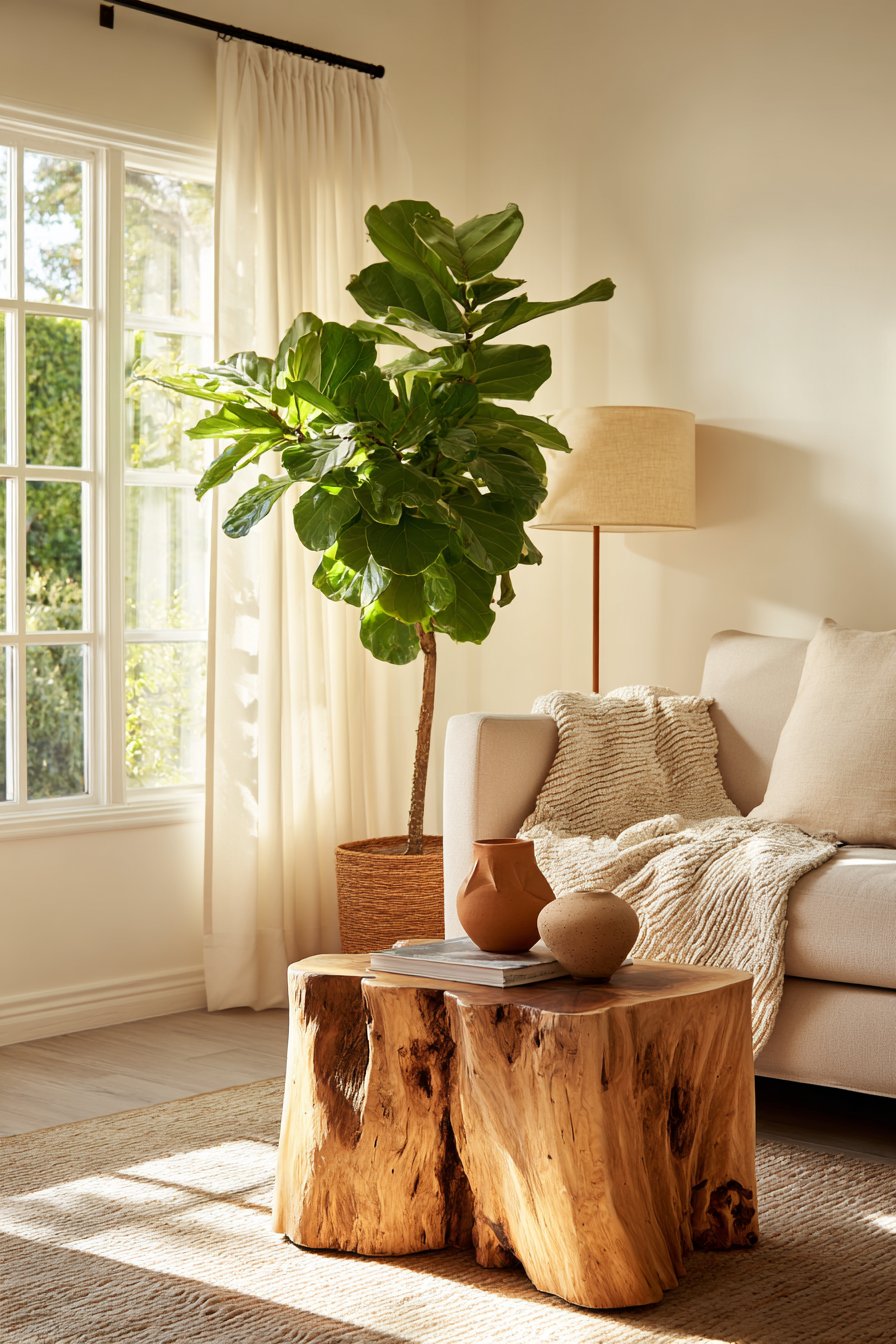
Whether you’re designing from scratch or refreshing an existing space, these techniques will help you create a room that feels both serene and welcoming. Each approach focuses on practical applications that respect minimalist values while adding layers of comfort and personality to your home.
1. Layer Natural Textures Throughout the Space
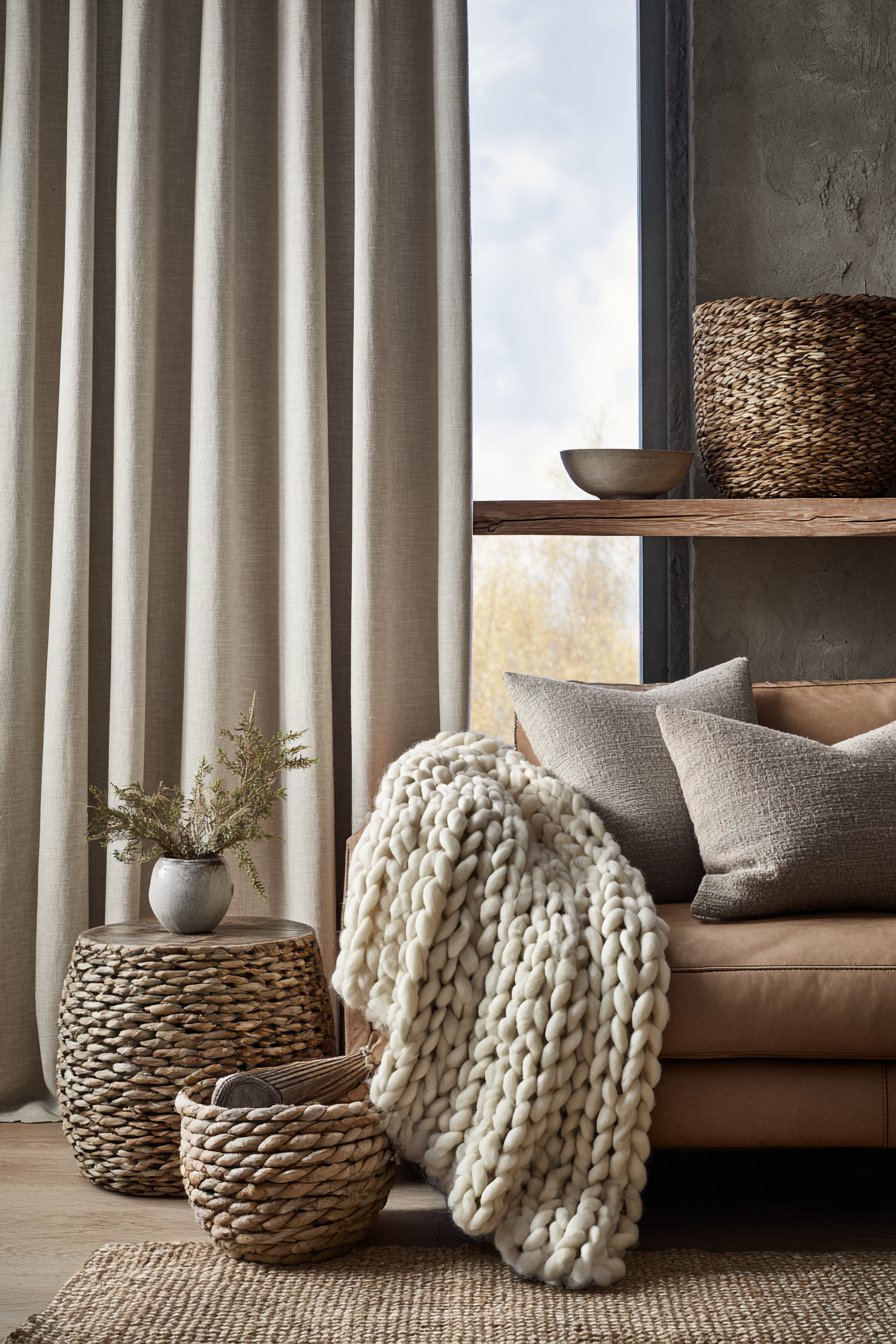
Texture plays a crucial role in creating visual and tactile warmth in minimalist interiors. Without the distraction of excessive decor, textural elements become focal points that add depth and interest. Natural materials like wool, linen, and jute bring organic softness that counterbalances hard surfaces found in minimal designs.
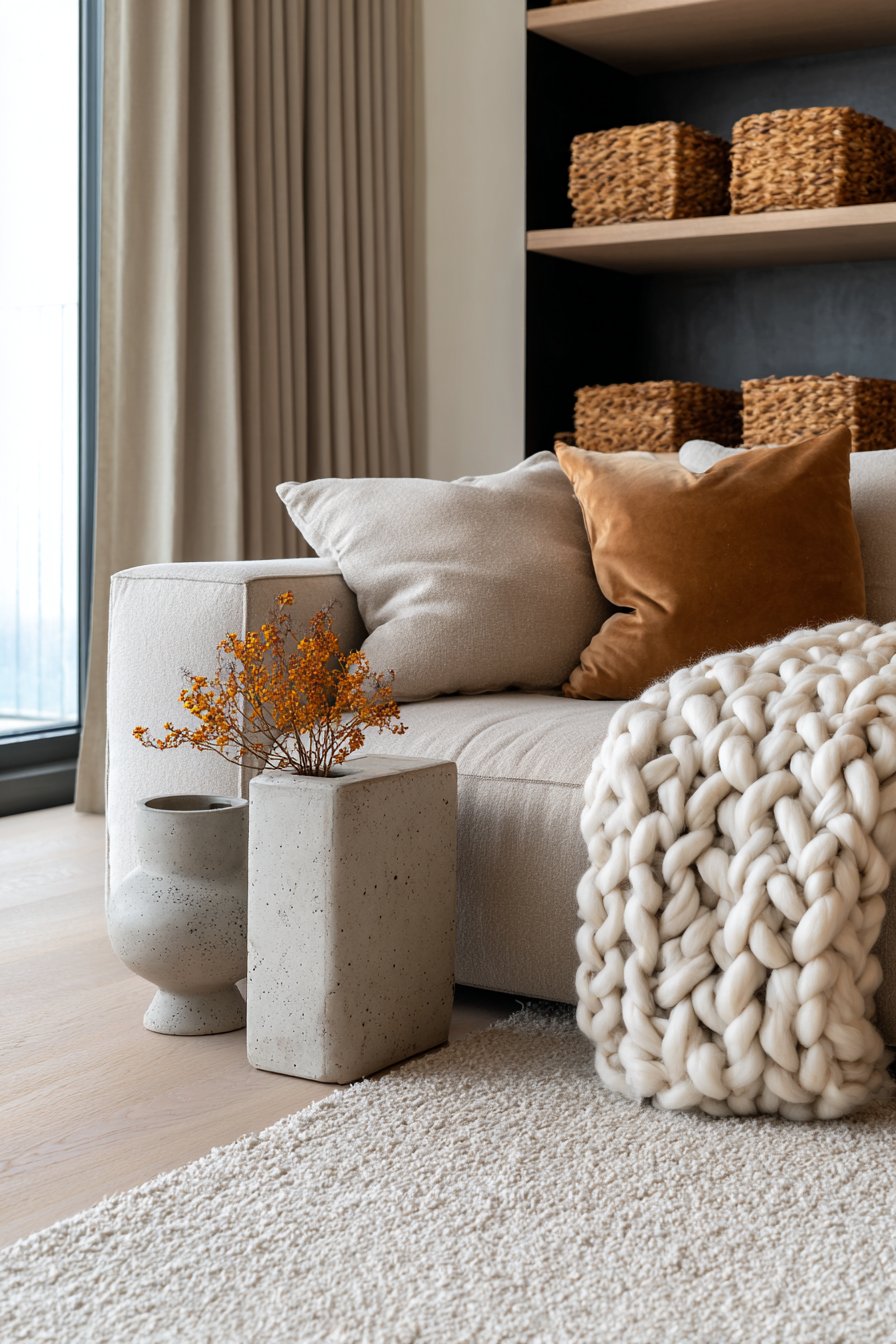
Consider incorporating multiple textures within a limited color palette to maintain cohesion. A chunky knit throw draped over a leather sofa creates contrast while staying neutral. Woven baskets serve dual purposes as storage solutions and decorative accents. These layered textures invite touch and create a sensory richness that makes the space feel lived-in and comfortable.
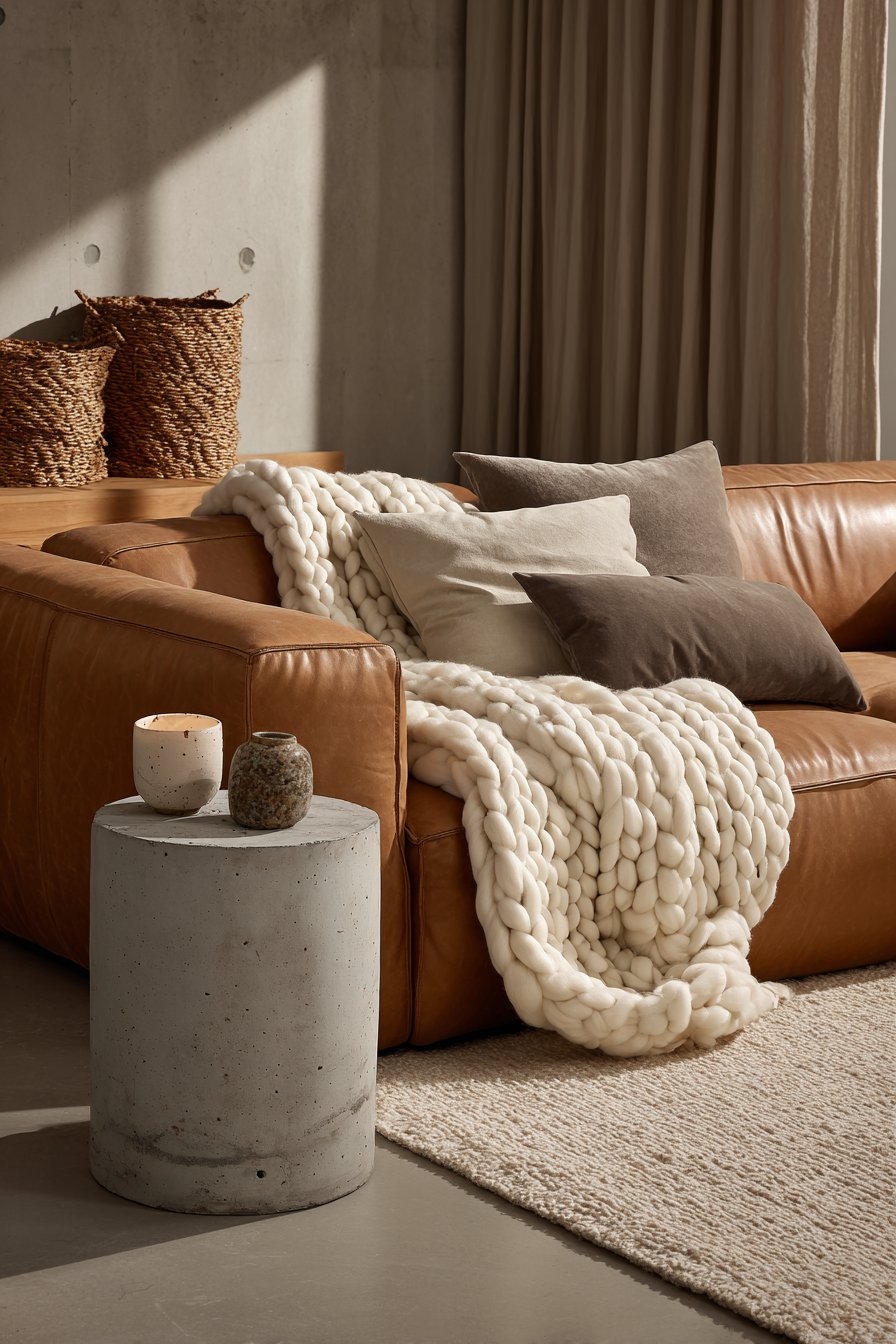
The strategic placement of textured elements guides the eye through the room naturally. Focus on areas where people gather, such as seating zones and coffee table arrangements. Quality over quantity remains the guiding principle—choose fewer pieces with exceptional texture rather than filling the space with mediocre options.
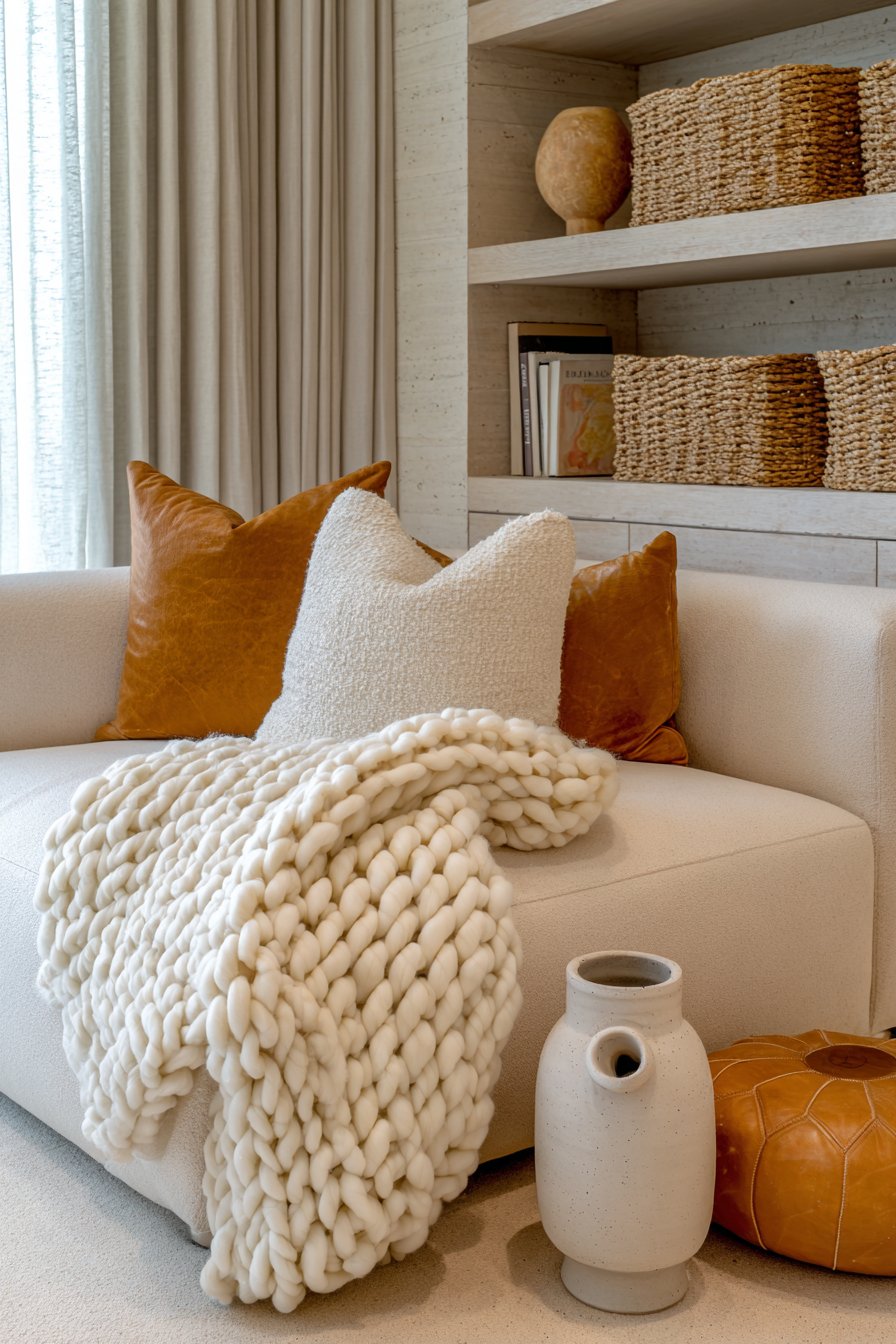
- Mix smooth and rough textures like velvet cushions with rattan furniture
- Add a chunky wool area rug to soften hard flooring
- Incorporate linen curtains for subtle texture at windows
- Use natural fiber baskets for stylish storage
- Layer different throw blankets in complementary neutral tones
- Include tactile elements like ceramic or wooden accessories
2. Introduce Warm Wood Tones and Natural Materials
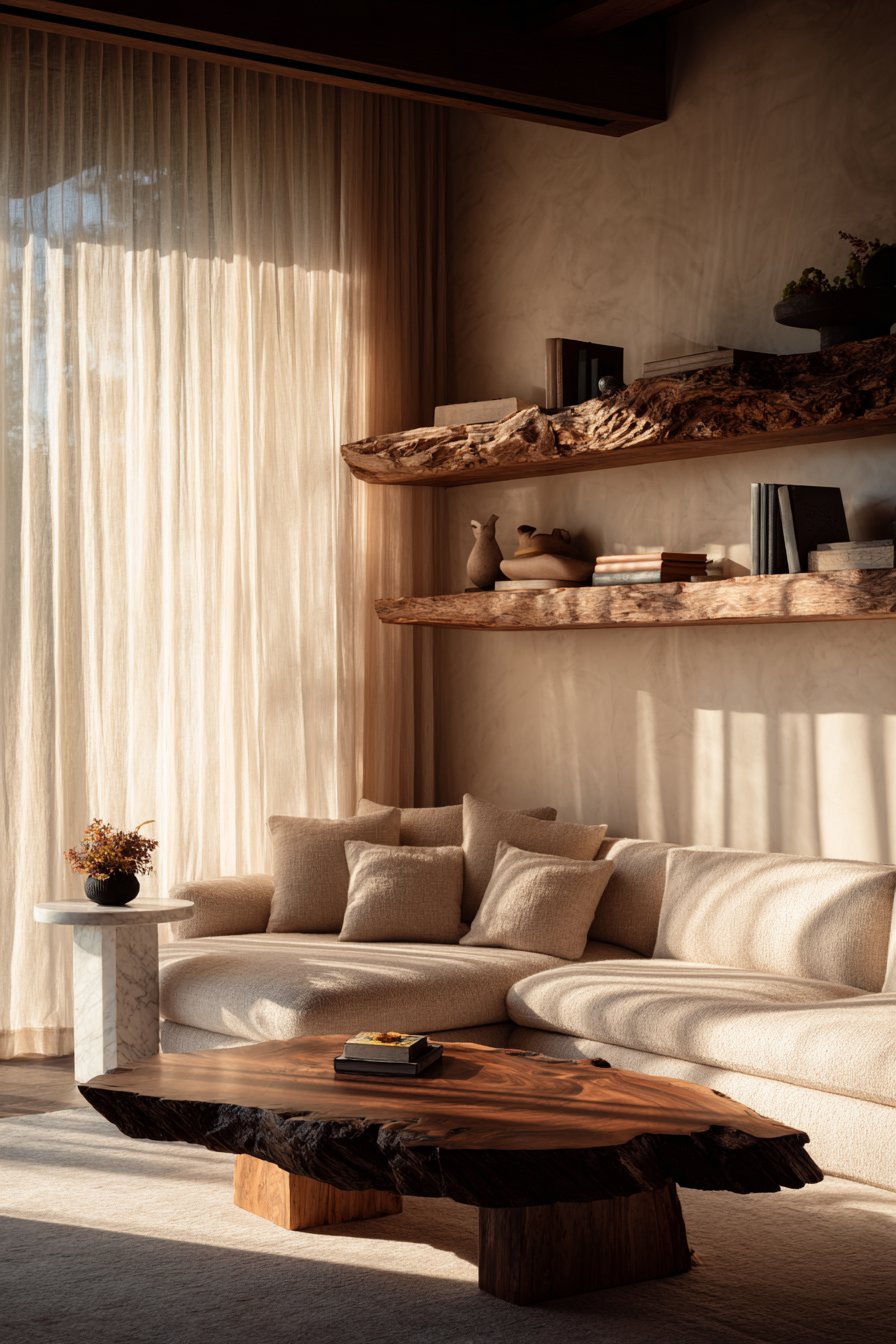
Wood brings an inherent warmth that’s irreplaceable in interior design. In minimalist living rooms, wooden elements serve as anchoring features that ground the space. Whether through furniture pieces, flooring, or accent details, wood adds organic character without visual clutter.
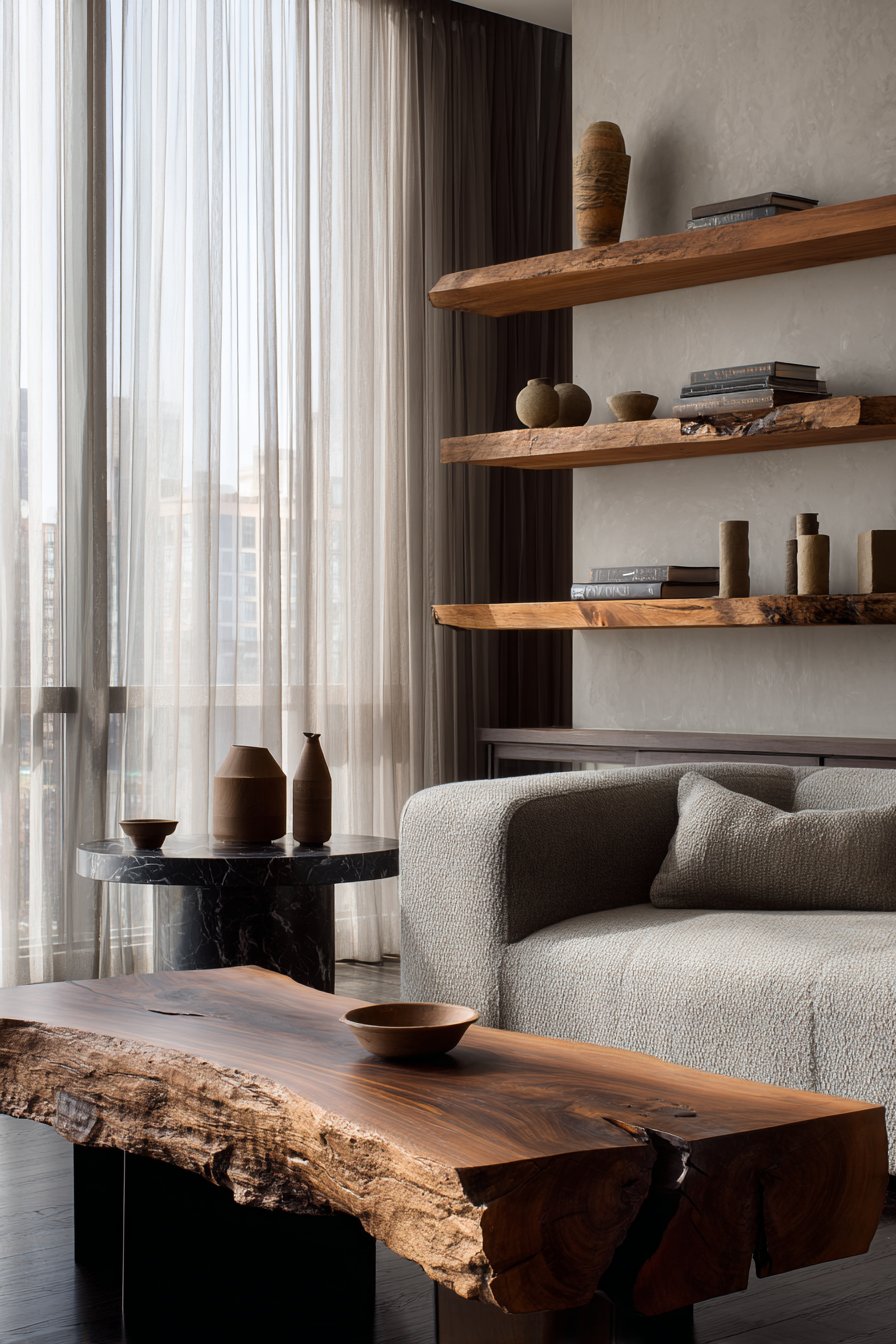
Choose wood finishes that complement your overall palette. Lighter woods like oak or ash create Scandinavian-inspired warmth, while walnut or teak bring richer, deeper tones. The grain patterns and natural variations in wood provide visual interest that maintains engagement without overwhelming the senses.
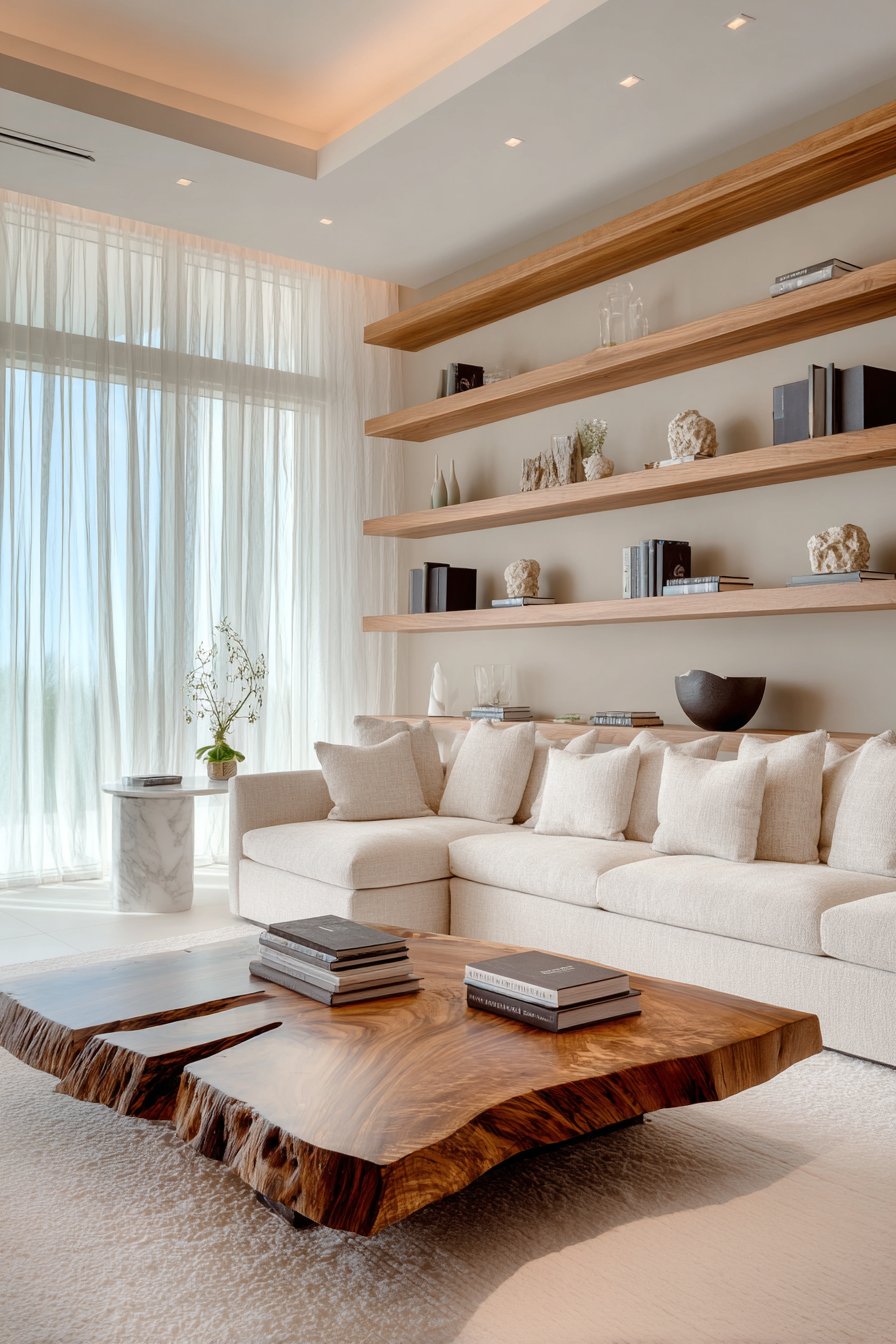
Balance is essential when incorporating wood into minimalist spaces. A statement wooden coffee table can anchor the room, while floating shelves add functionality without bulk. Consider the finish carefully—matte or oil-rubbed finishes feel warmer than high-gloss alternatives. Natural materials beyond wood, such as stone or marble, add complementary earthiness to the design.
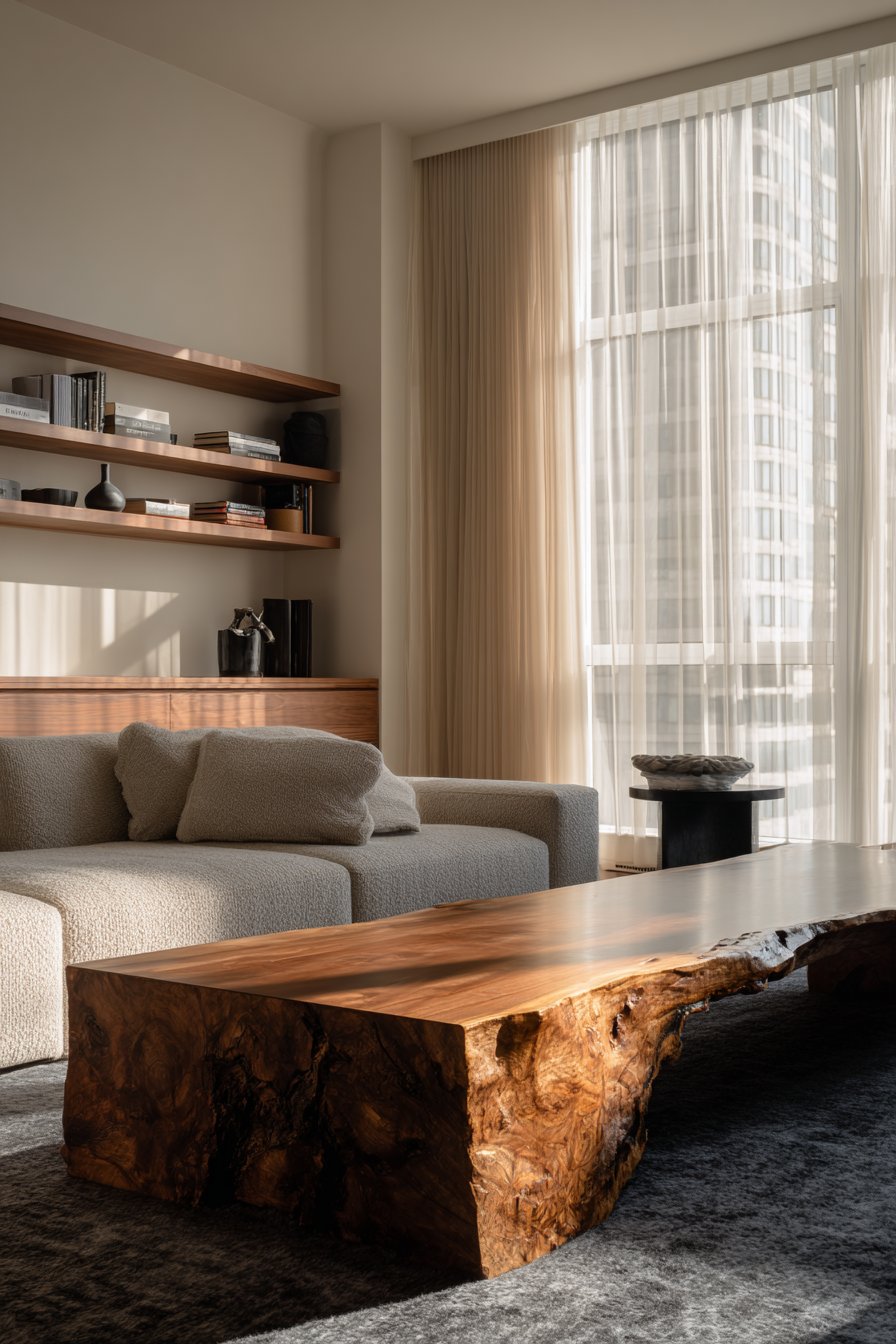
- Select furniture with visible wood grain for character
- Install wooden floating shelves for display without clutter
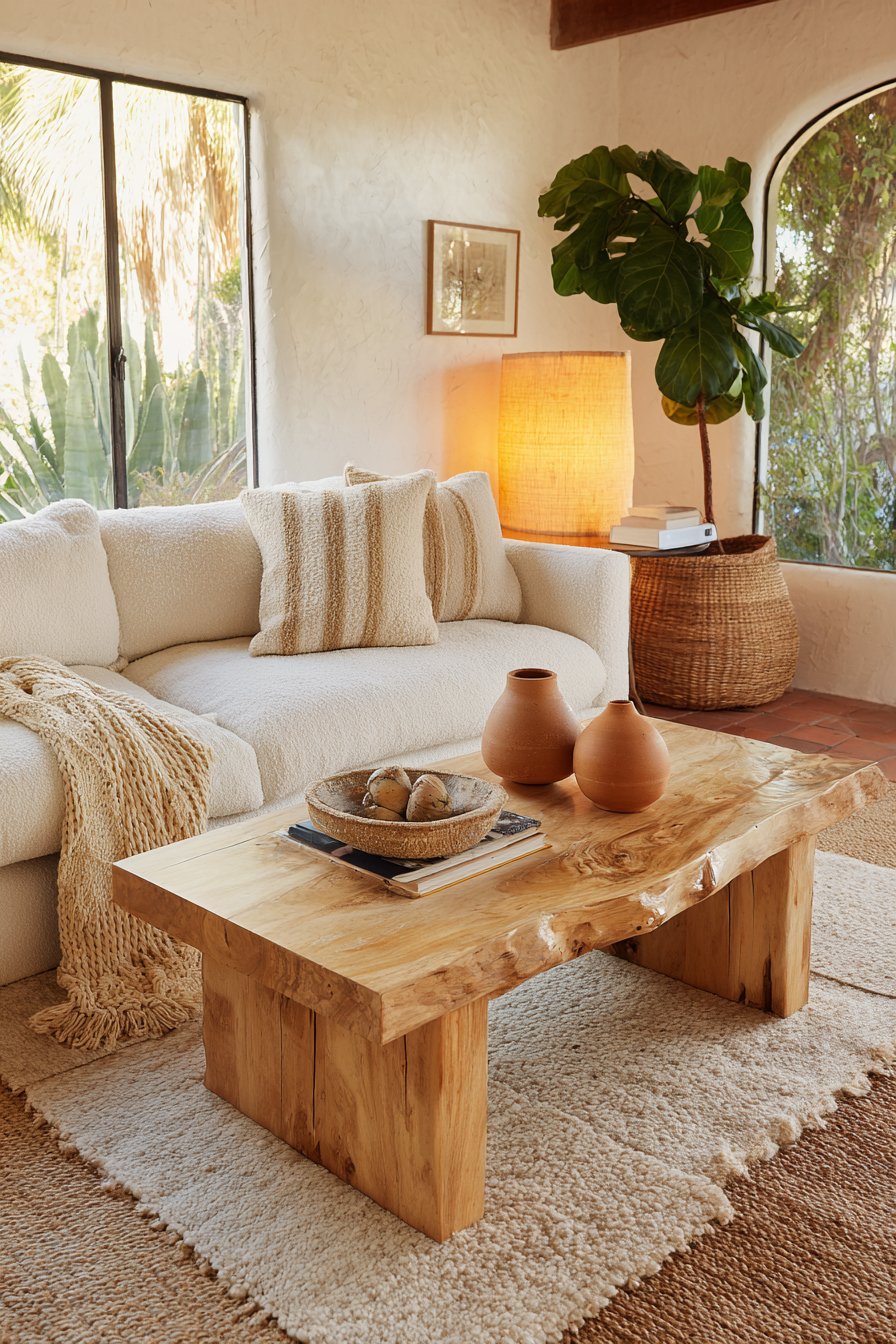
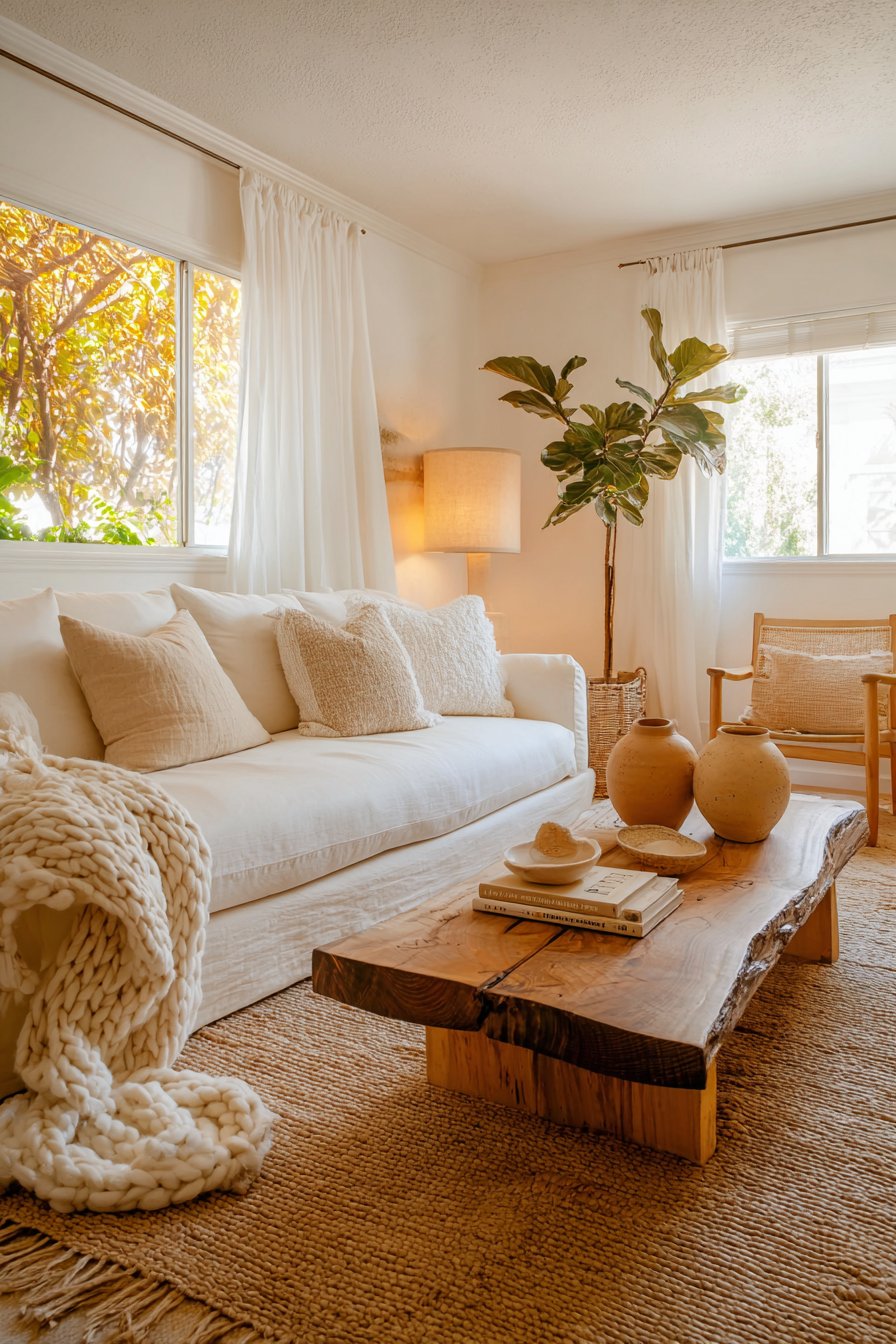
- Add a live-edge coffee table as a focal point
- Use wooden picture frames for cohesive art display
- Incorporate wooden accent pieces like bowls or trays
- Consider wood-look flooring if updating surfaces
3. Add Soft, Ambient Lighting Layers
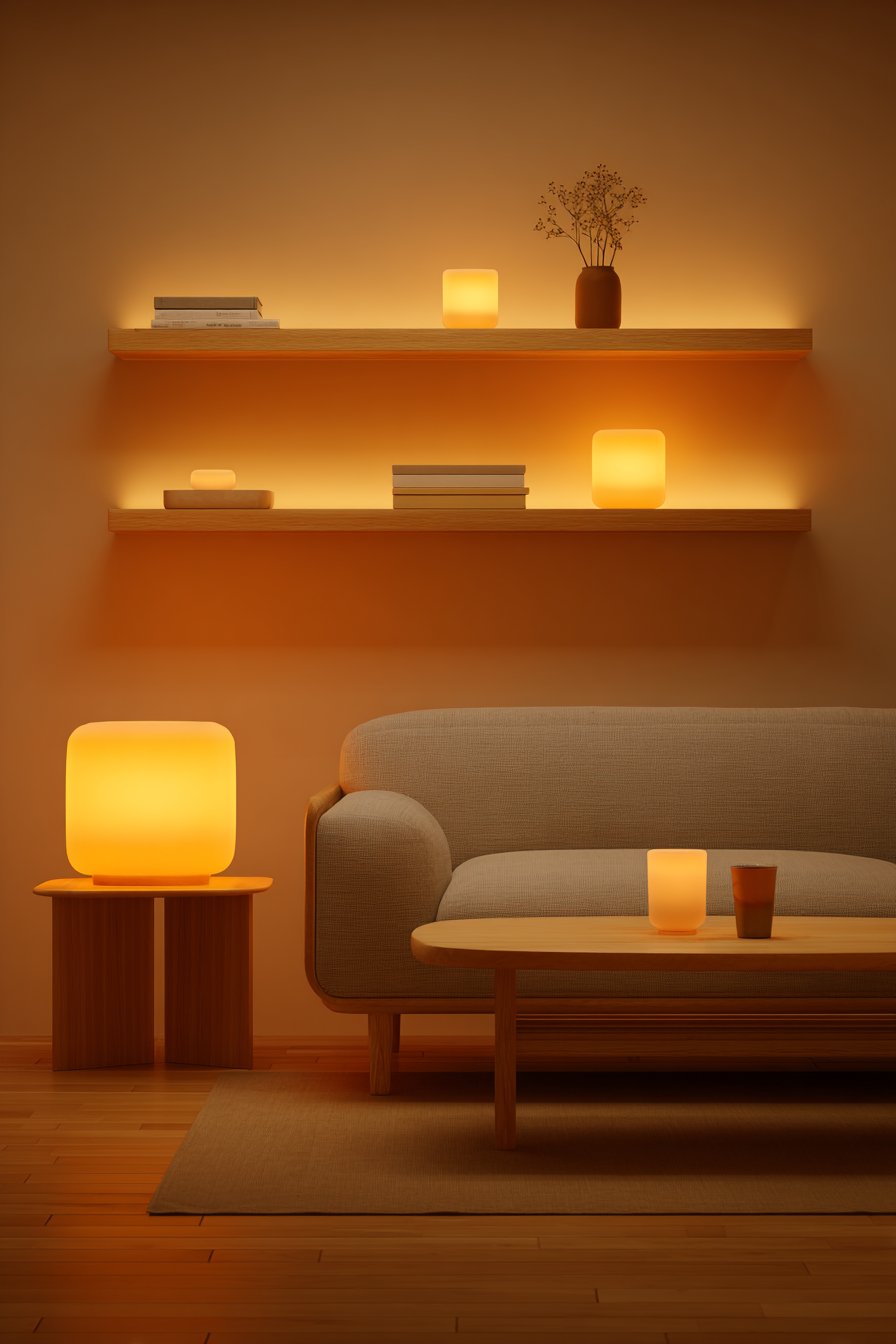
Lighting transforms the emotional temperature of any space dramatically. Minimalist rooms often rely on natural light, but thoughtful artificial lighting creates warmth after dark. Multiple light sources at different heights produce depth and prevent the stark appearance that single overhead fixtures create.
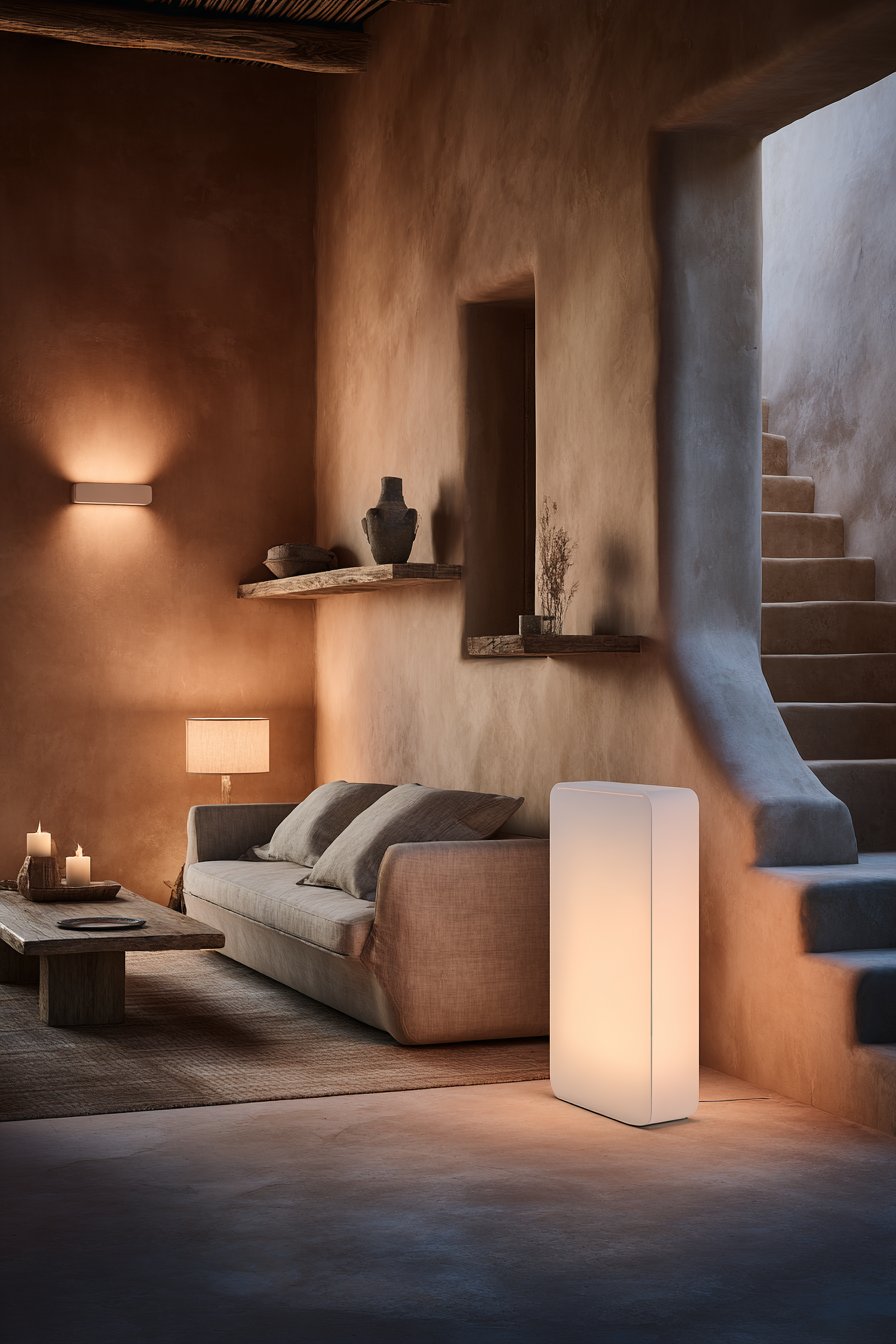
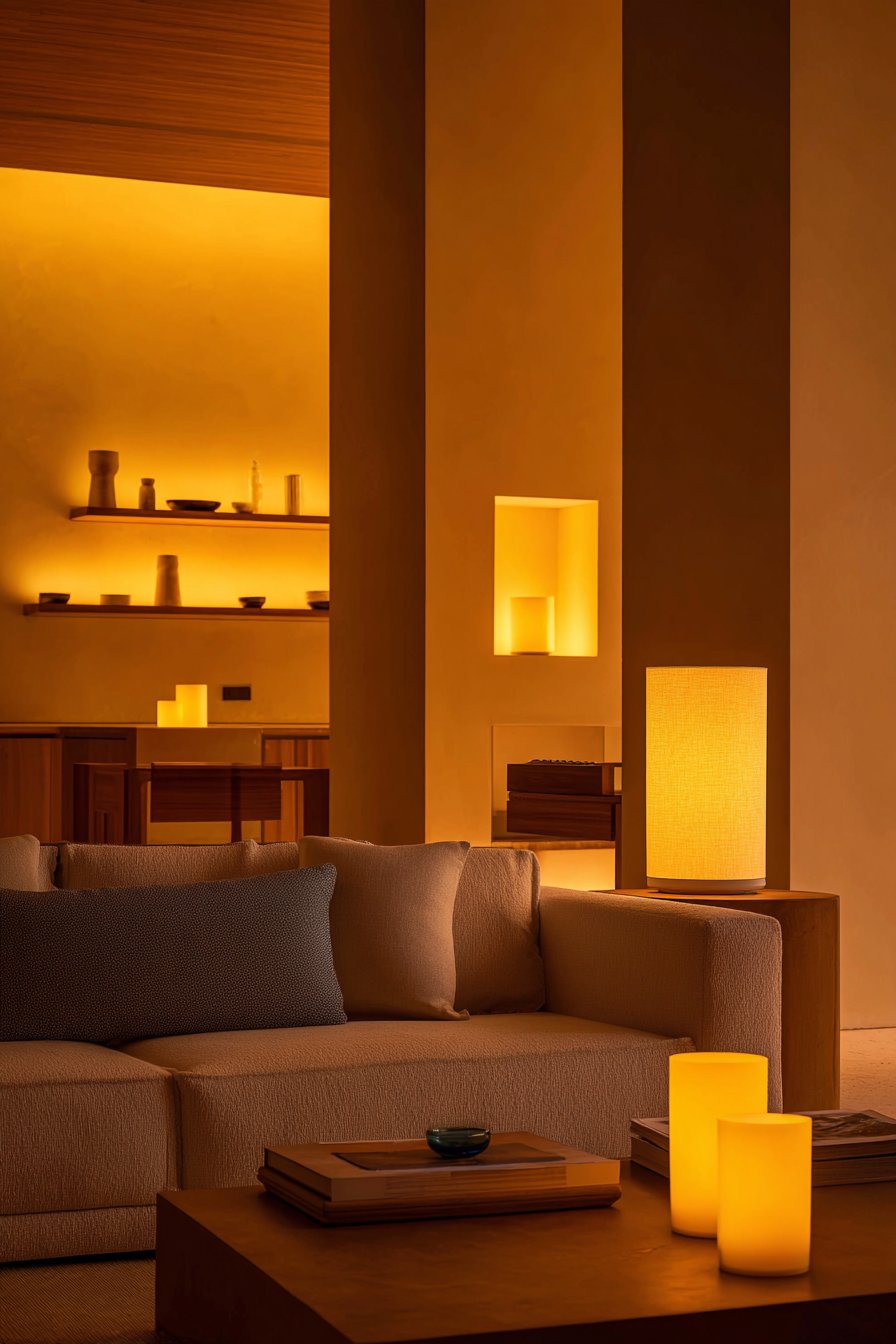
Warm-toned bulbs between 2700K and 3000K mimic the golden quality of natural sunset light. This color temperature makes spaces feel inherently cozier than cool white alternatives. Dimmable fixtures offer flexibility to adjust brightness according to time and mood, allowing you to create intimate atmospheres when desired.
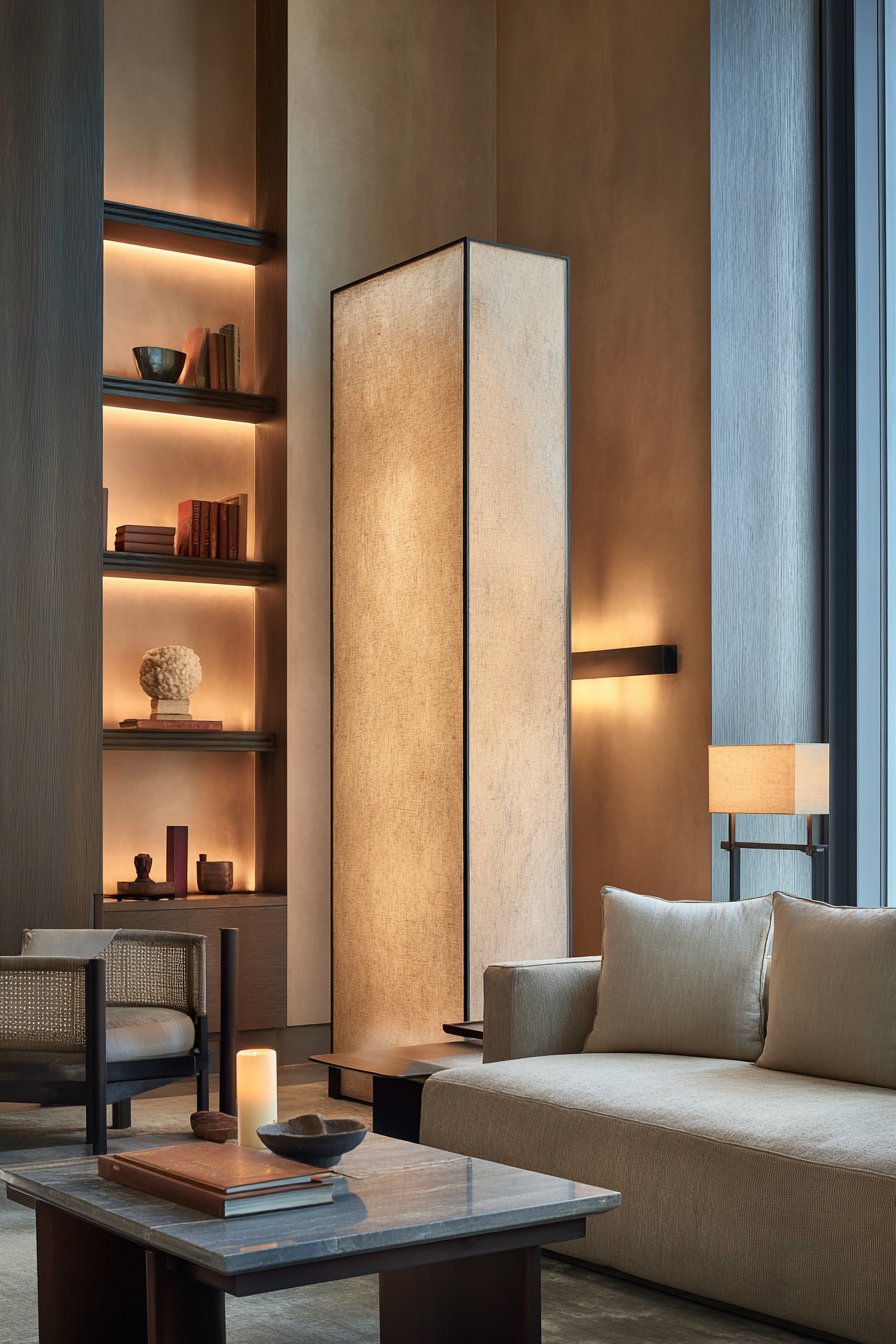
Layer your lighting with floor lamps, table lamps, and subtle accent lighting. Wall sconces create ambient glow without taking floor space. Hidden LED strips under floating furniture add a soft wash of light that makes the room feel warmer. The goal is eliminating harsh shadows while maintaining the clean aesthetic that defines minimalism.
- Install dimmer switches on all light fixtures
- Use warm white bulbs exclusively throughout the room
- Add a floor lamp beside seating areas for reading light
- Incorporate table lamps with fabric shades for diffused glow
- Consider LED strip lighting under shelving or furniture
- Use candles for occasional ambient warmth and atmosphere
4. Incorporate Warm Neutral and Earth-Tone Accents
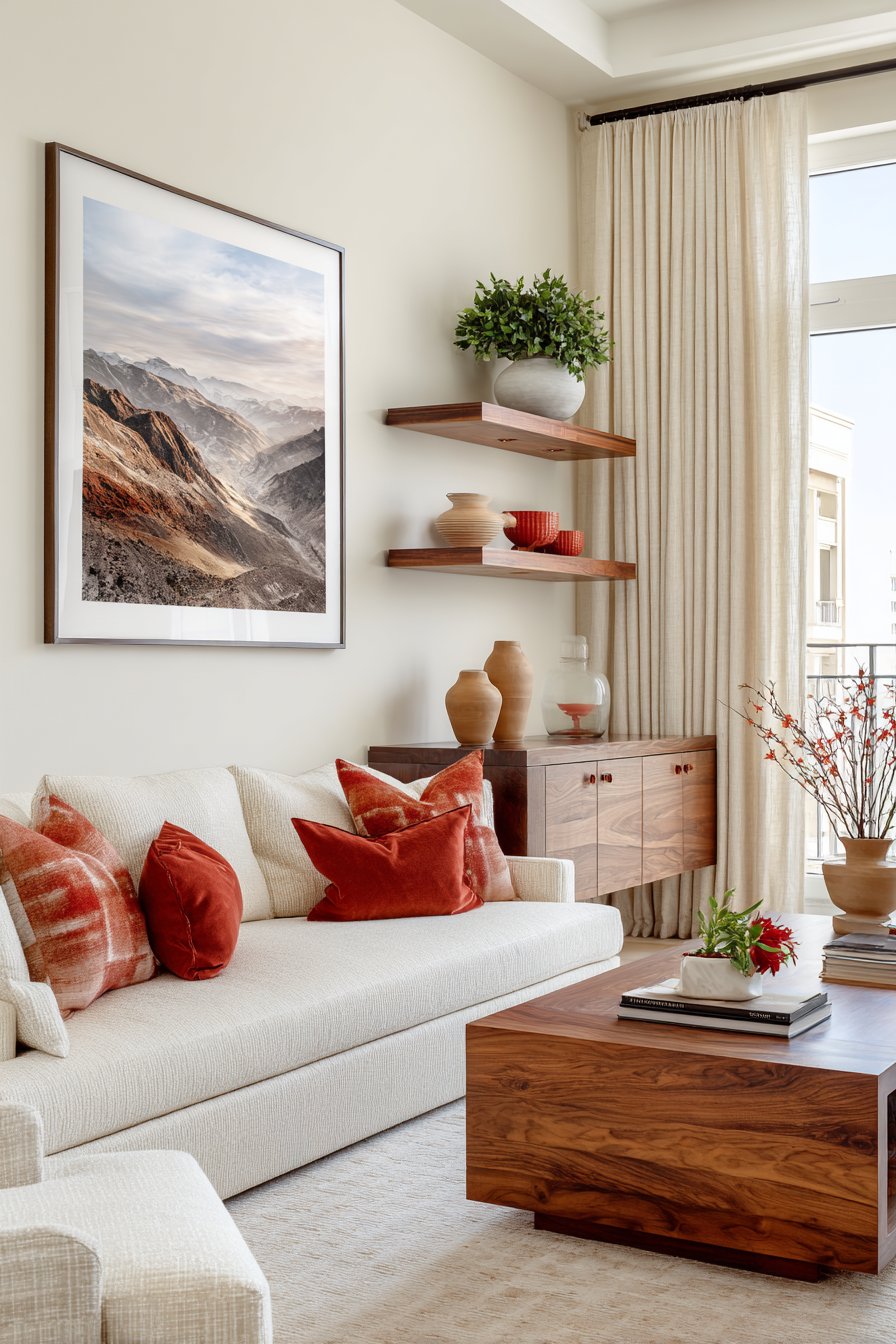
Color psychology significantly impacts how warm or cool a space feels. While minimalist design often defaults to stark white, incorporating warm neutrals immediately increases coziness. Shades like cream, beige, warm gray, and taupe create a softer foundation than pure white walls.
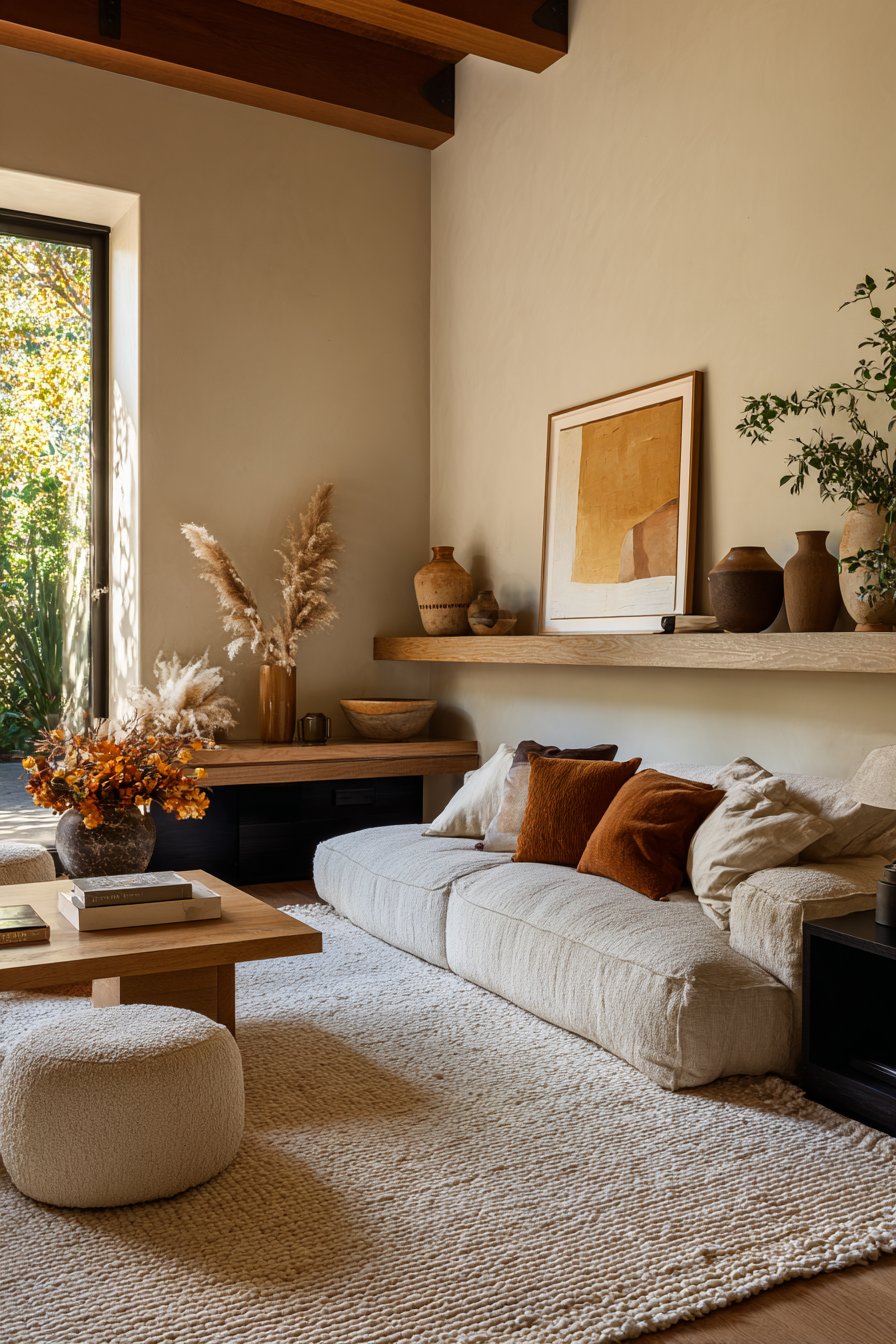
Earth tones derived from nature—terracotta, ochre, rust, and warm browns—add instant warmth as accent colors. These hues don’t require large commitments; even small doses through cushions, art, or decorative objects make noticeable differences. The 70-20-10 rule works well here: 70% neutral base, 20% warm secondary color, 10% accent.
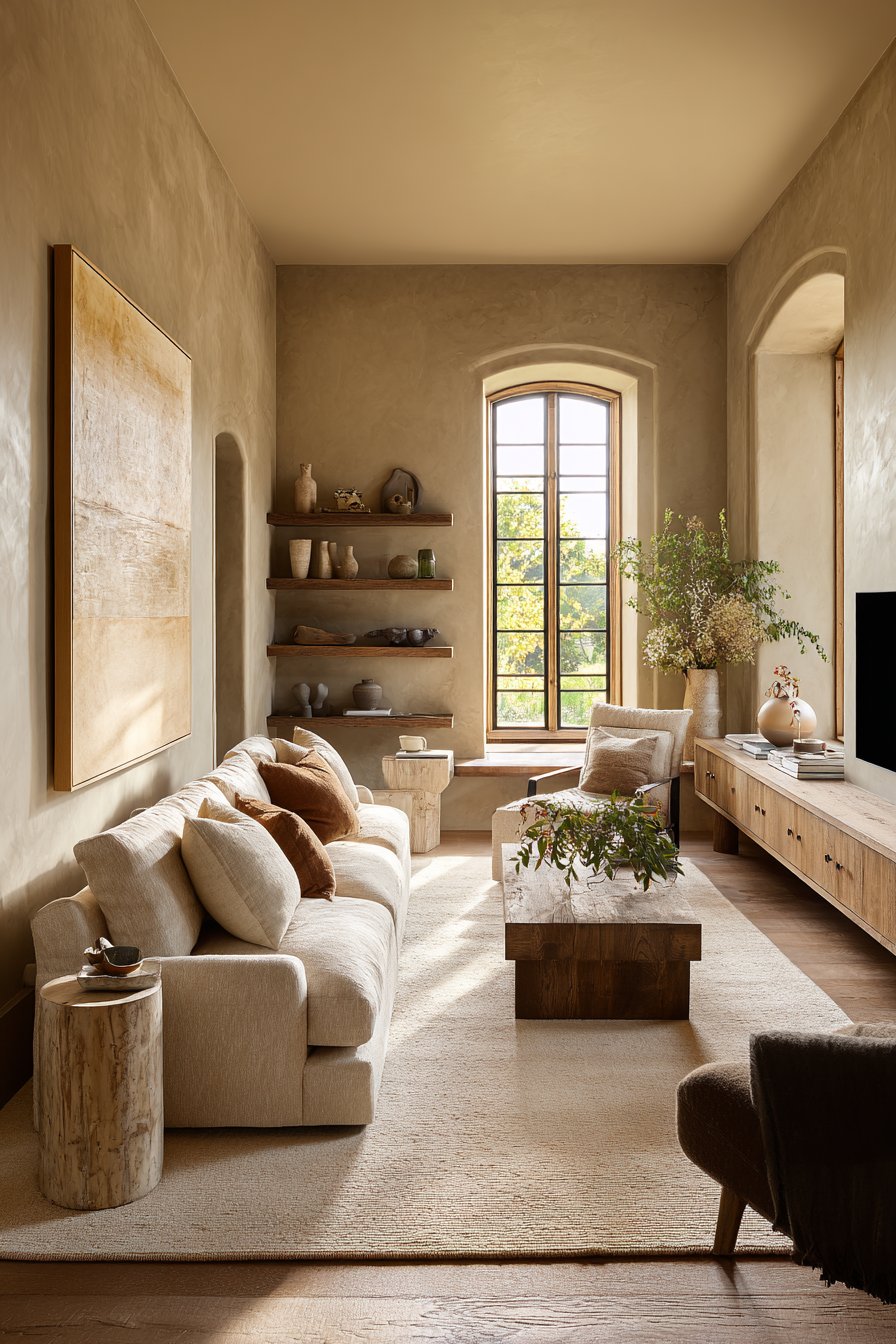
Avoid the temptation to add too many colors. Minimalism thrives on restraint and repetition. Select two or three warm tones and repeat them throughout the space in different forms. This creates visual harmony while maintaining the uncluttered aesthetic. Warm whites on walls paired with natural wood and terracotta accents exemplify this balanced approach.
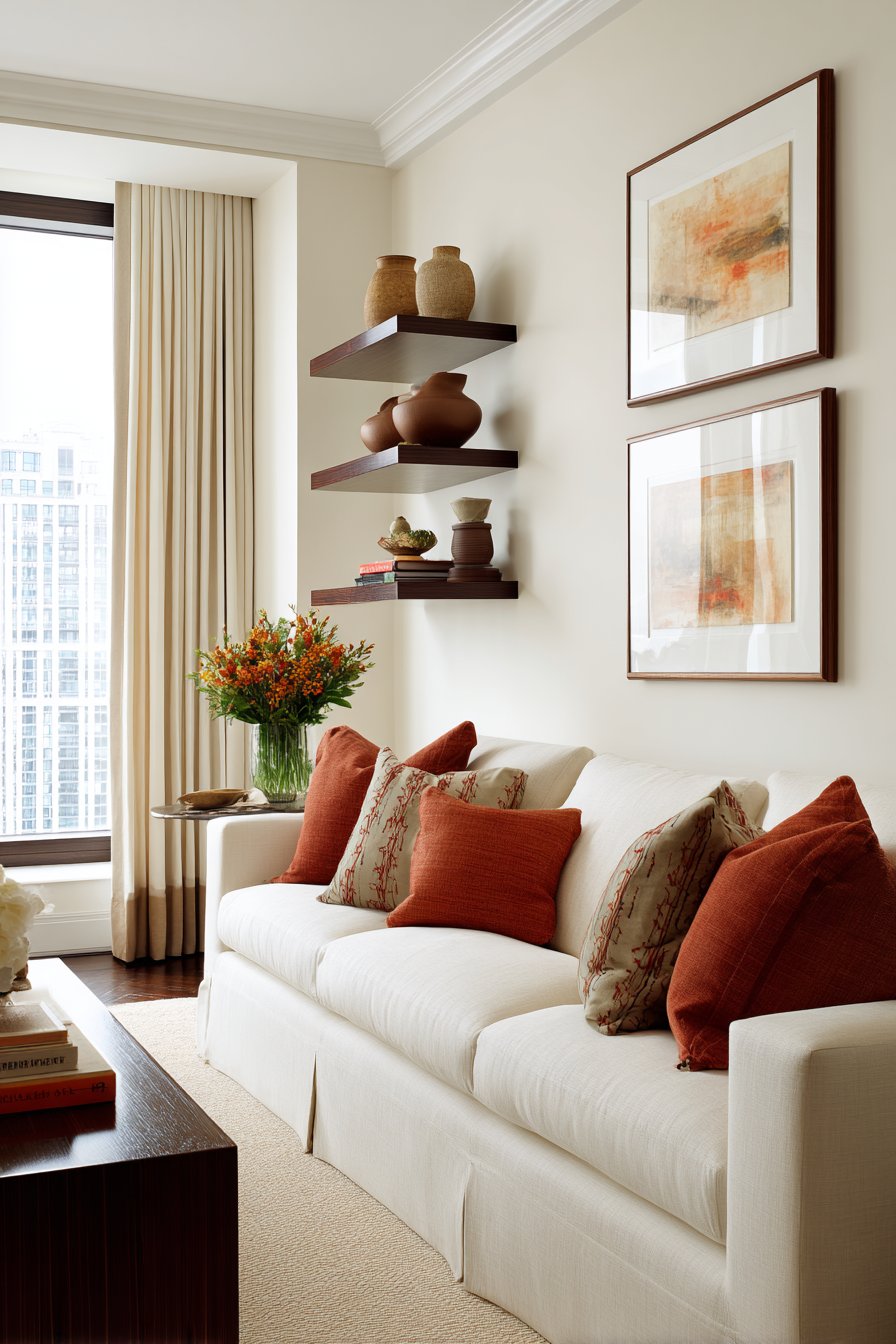
- Paint walls in warm white or greige instead of stark white
- Add terracotta or rust-colored throw pillows
- Incorporate warm-toned artwork or photography
- Use beige or cream area rugs as foundation pieces
- Select pottery or vases in earth-tone glazes
- Choose upholstery in warm neutral fabrics like linen or wool
5. Display Carefully Curated Personal Items and Art
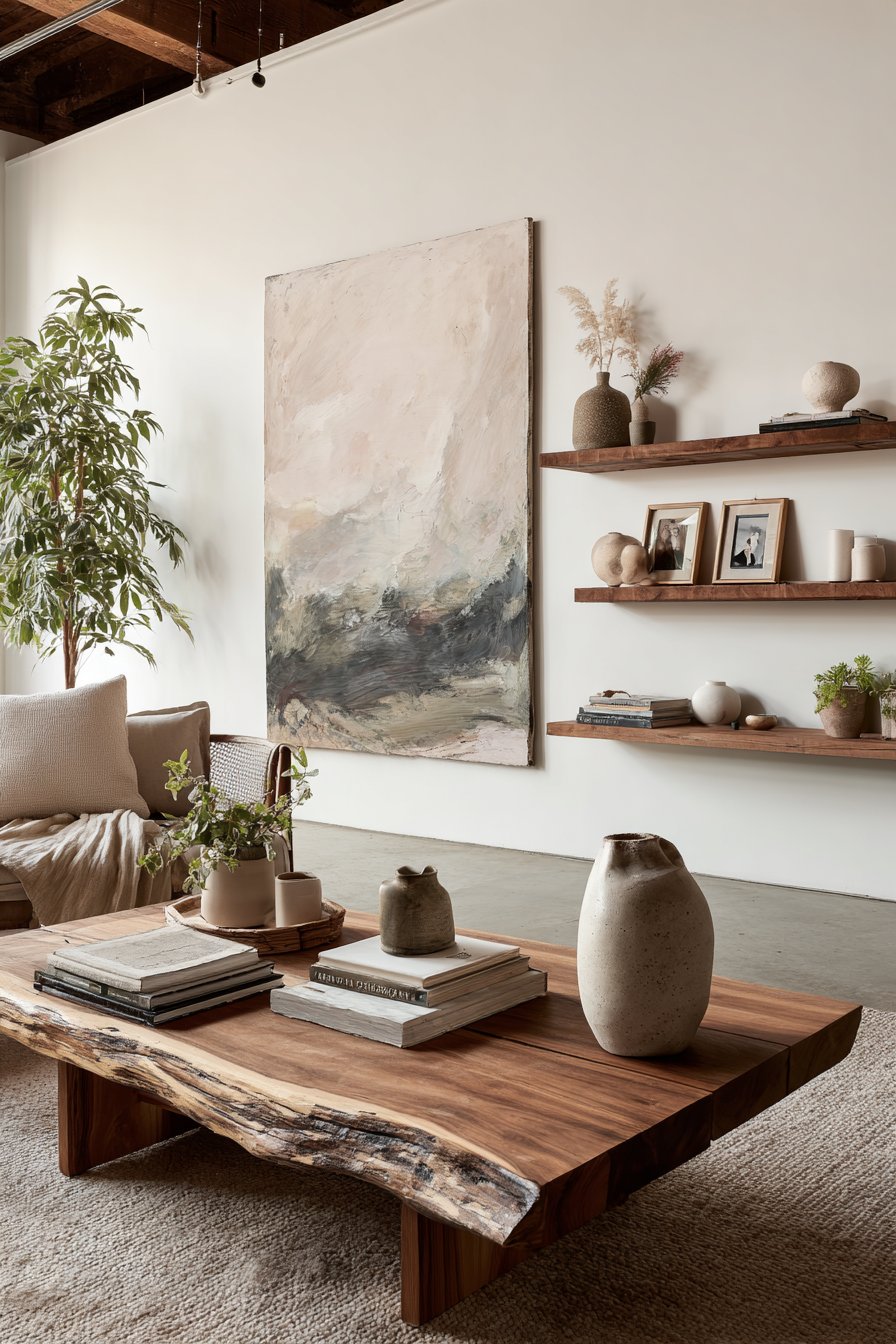
Minimalism doesn’t mean eliminating personality and warmth. Strategic display of meaningful items makes spaces feel inhabited and loved. The key is intentional curation—each displayed object should earn its place through beauty, function, or emotional significance.
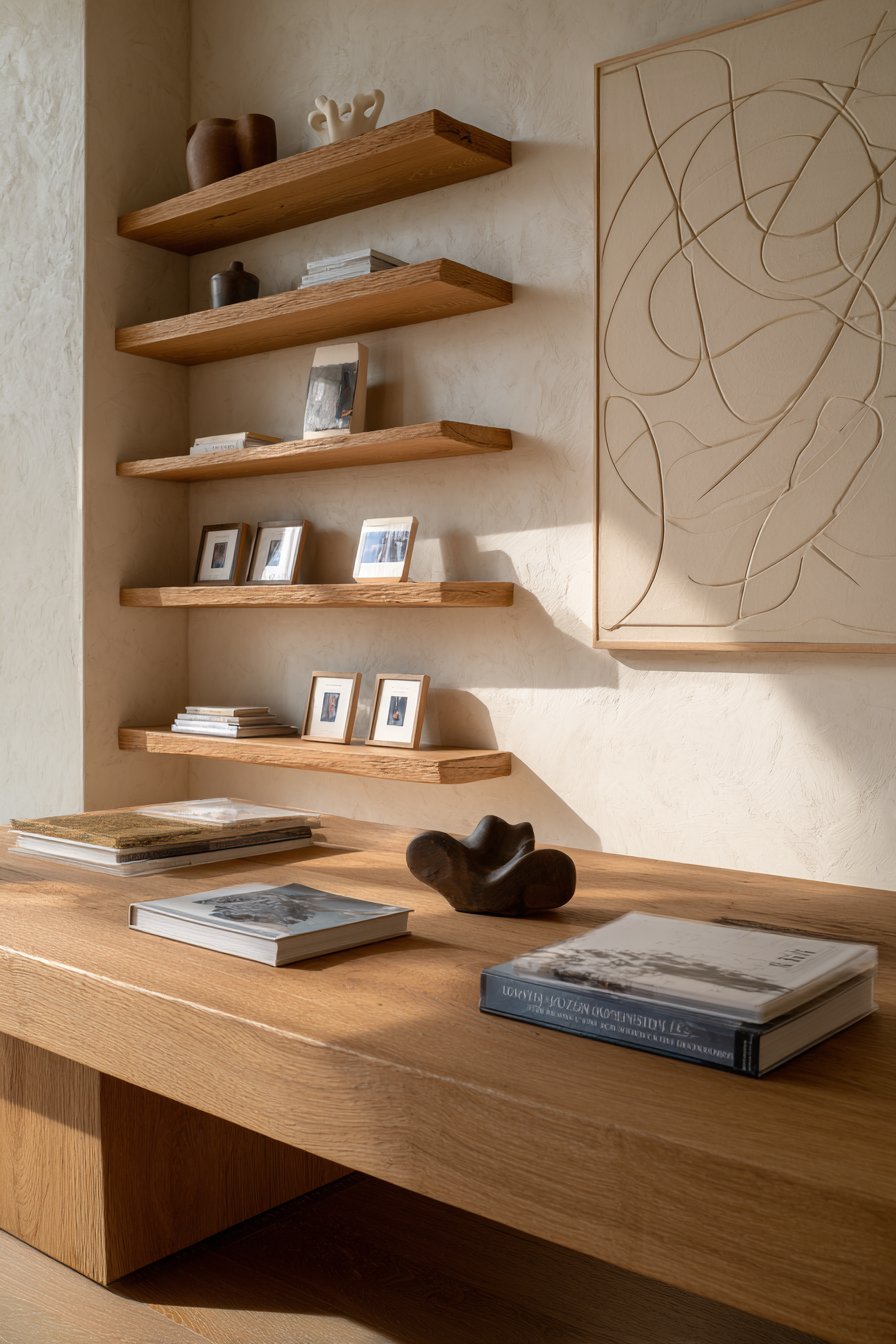
Artwork provides visual warmth while maintaining clean walls. Large-scale pieces make bold statements without clutter. Photography featuring warm tones, natural landscapes, or abstract designs in earthy colors reinforces the cozy atmosphere. Gallery-style arrangements of smaller pieces can work if they’re thoughtfully composed with consistent framing.
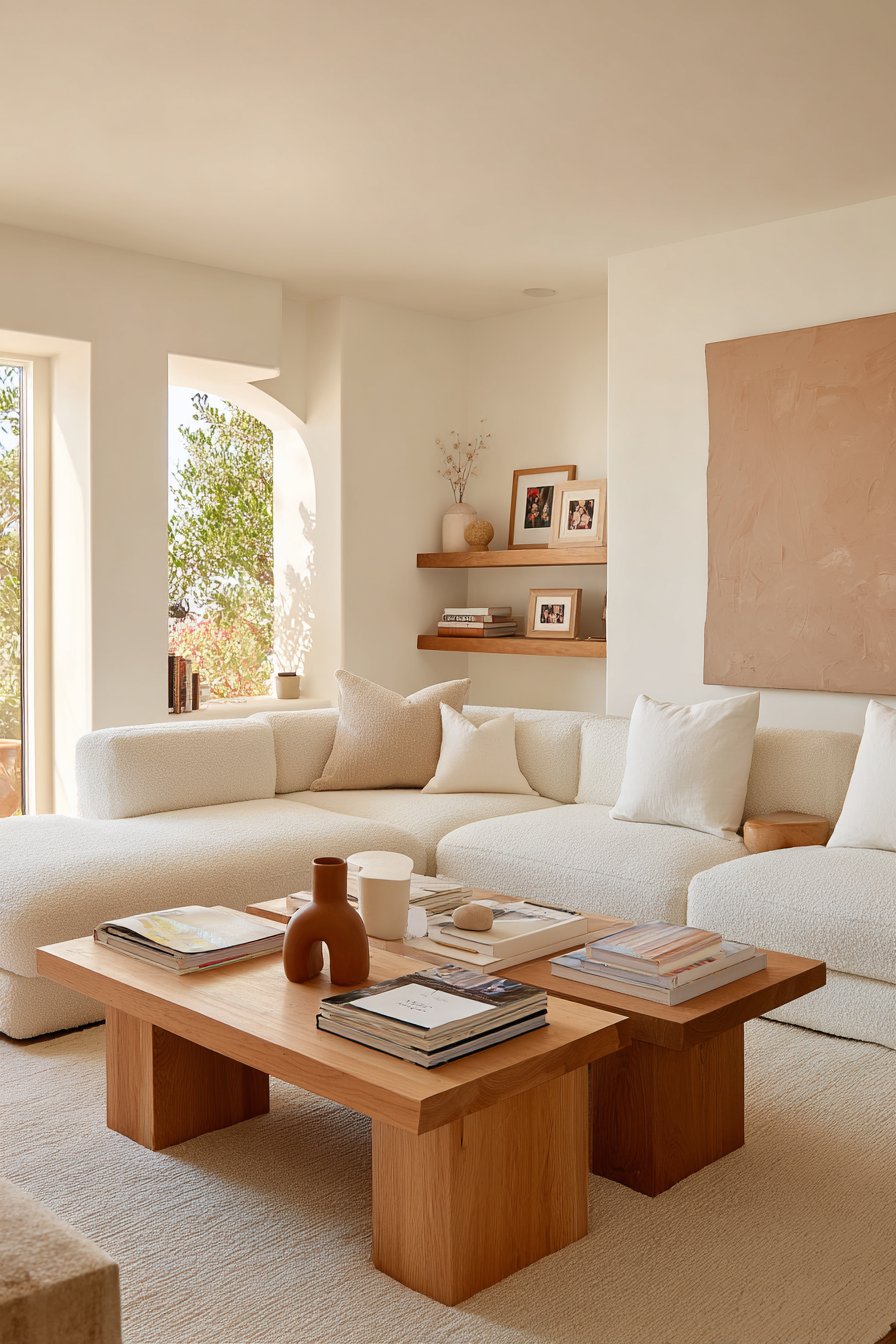
Personal items like books, ceramics, or travel mementos add human connection to the space. Display them on floating shelves or in glass-front cabinets to maintain order. Rotate displayed items seasonally to keep the space fresh and dynamic. Remember that negative space remains crucial—leave breathing room around each item.
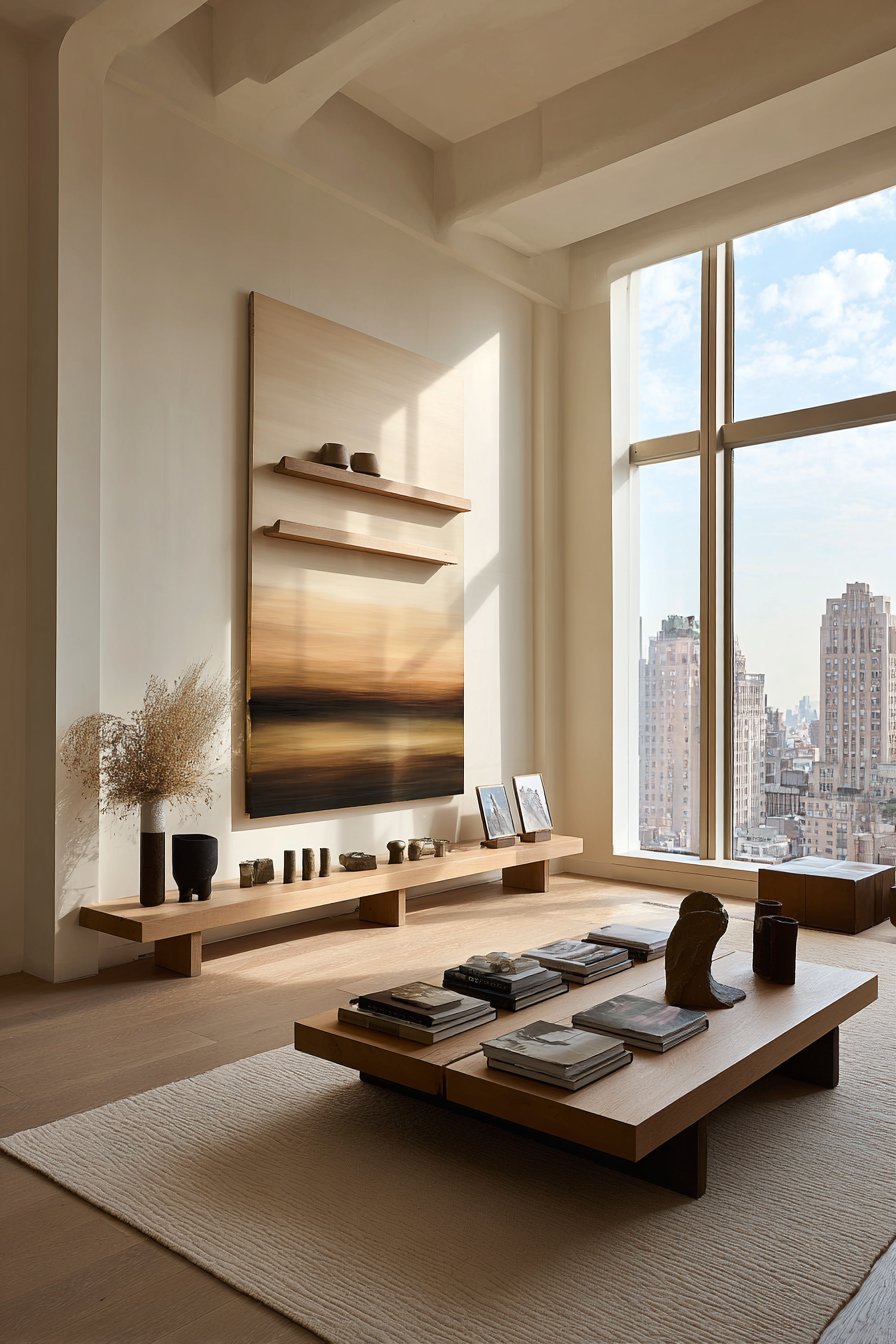
- Create a focal wall with large-scale artwork in warm tones
- Display 3-5 carefully chosen books on the coffee table
- Use floating shelves to showcase 2-3 special objects per shelf
- Incorporate personal photography in matching frames
- Add a single statement sculpture or ceramic piece
- Keep surfaces mostly clear with only intentional decorative items
6. Introduce Plants and Natural Greenery
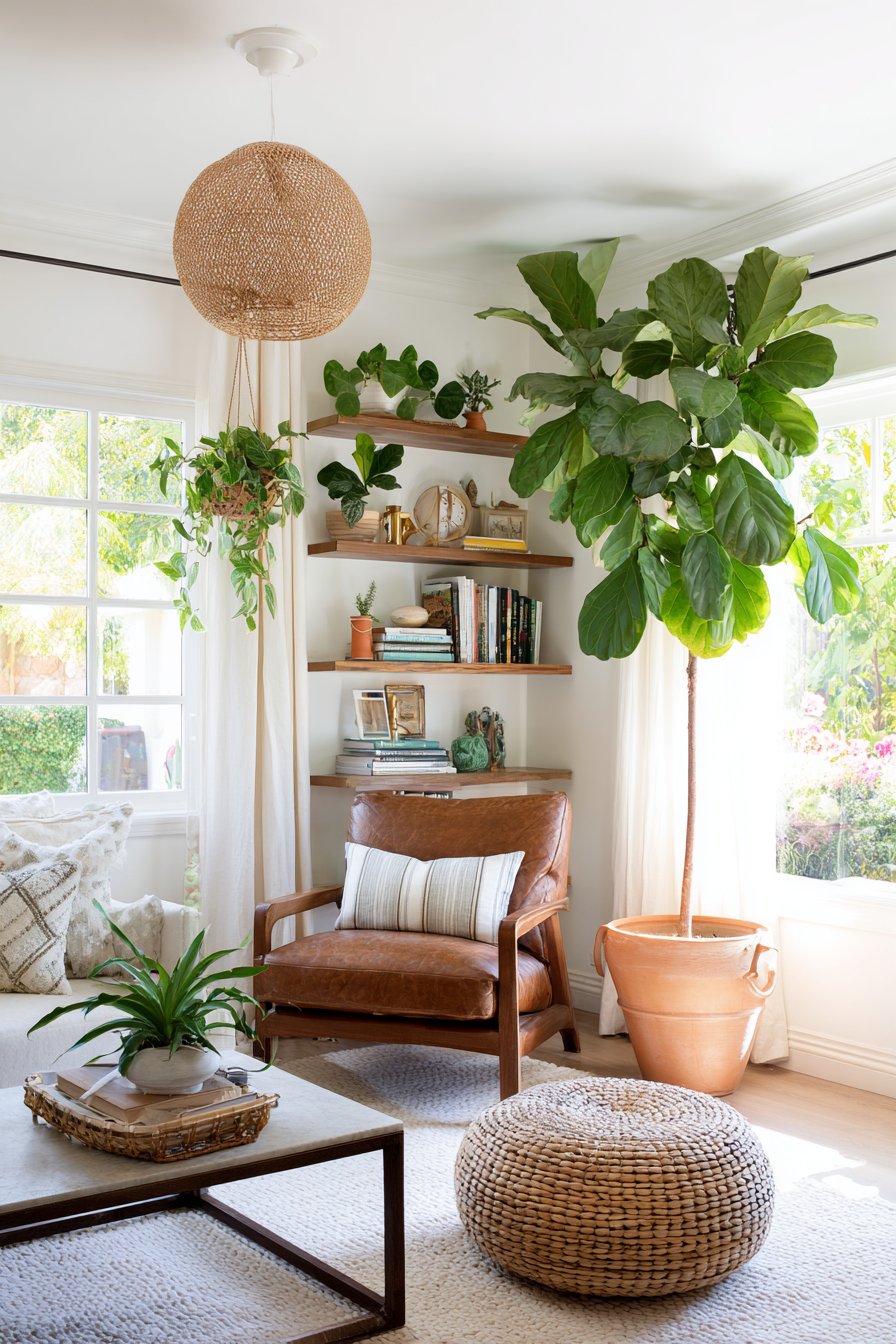
Living plants bring undeniable warmth and vitality to minimalist spaces. Beyond aesthetics, they improve air quality and create psychological comfort. The organic shapes of plants contrast beautifully against the geometric precision of minimal design, softening the overall aesthetic.
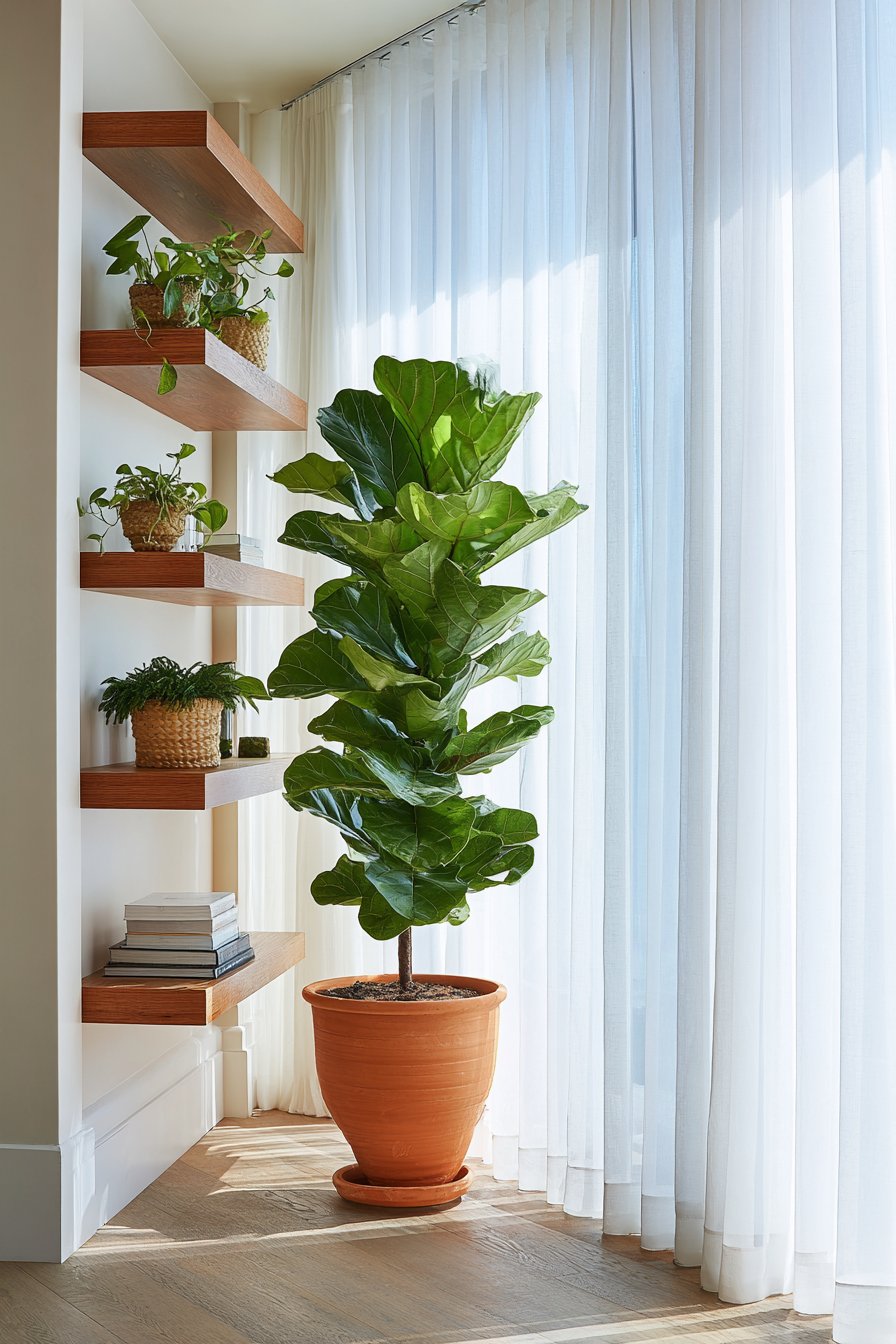
Select plants that suit your lifestyle and light conditions. Low-maintenance varieties like snake plants, pothos, or fiddle leaf figs thrive indoors. Larger floor plants make architectural statements without requiring multiple items. Smaller plants grouped on shelves or side tables add warmth at various heights throughout the room.
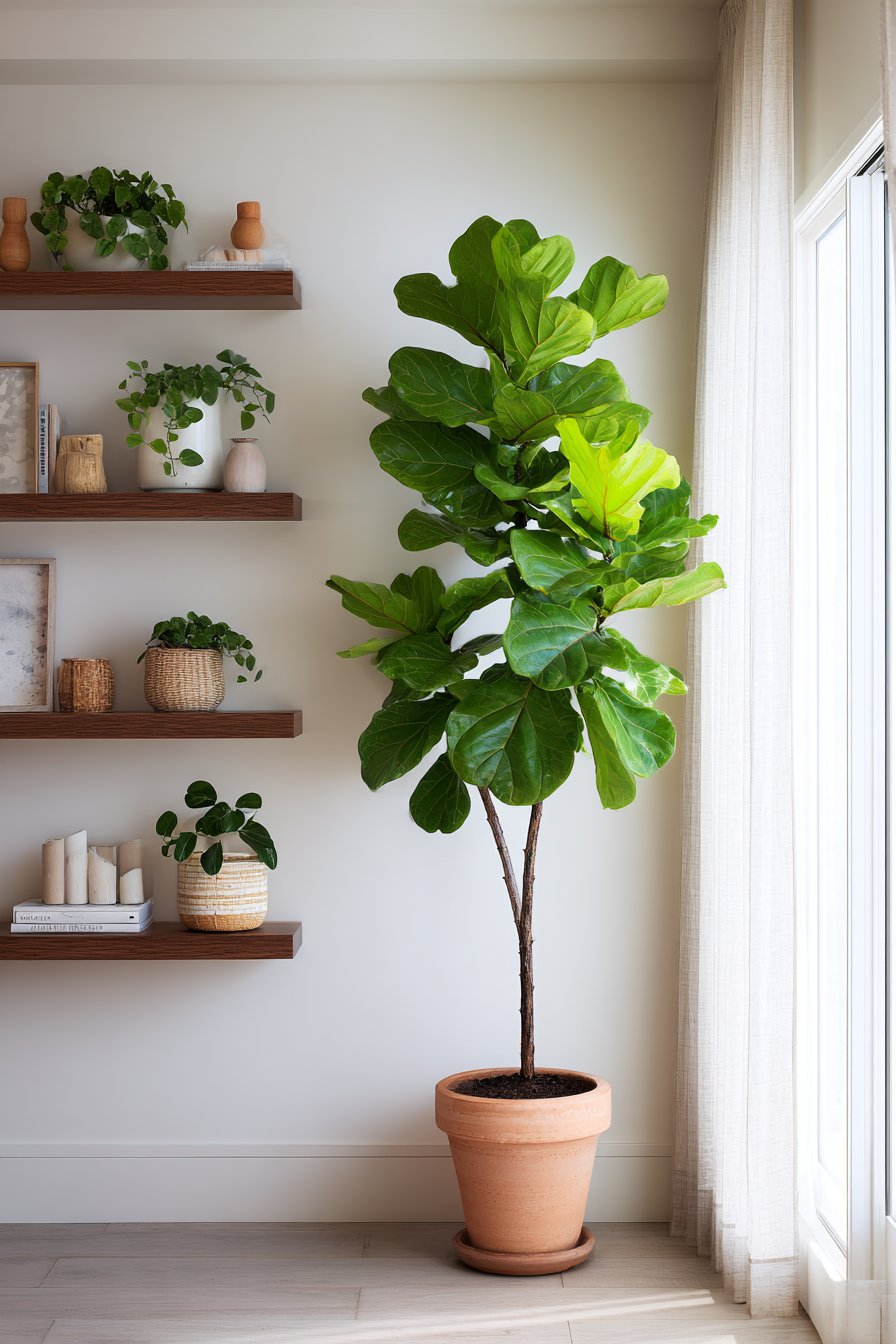
Keep planters simple and cohesive with your color scheme. White, black, terracotta, or natural basket planters complement minimalist interiors. The greenery provides enough visual interest without competing patterns or colors in containers. Consider plant stands to add height variation and create dynamic arrangements while maintaining floor clarity.
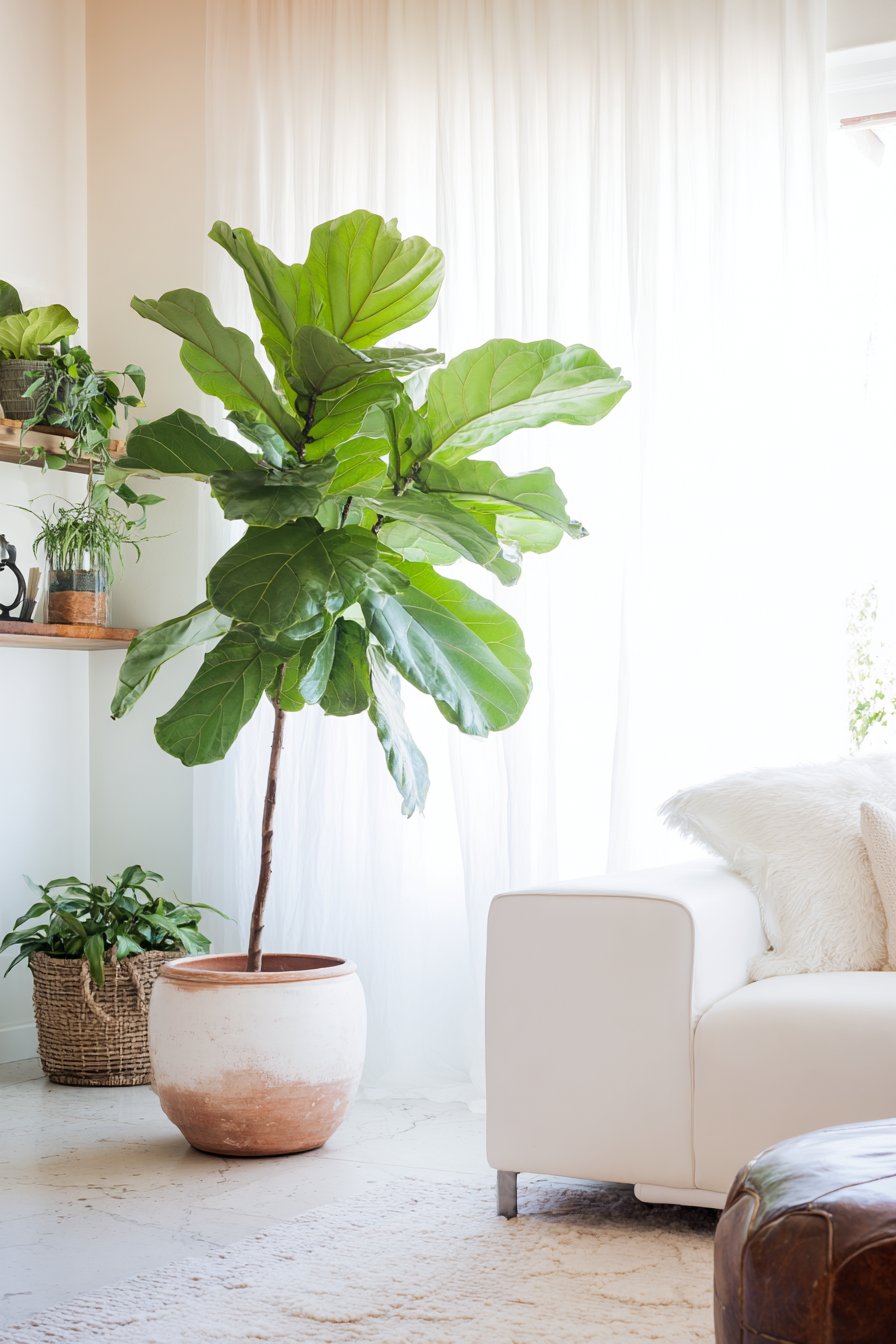
- Add a large floor plant like a fiddle leaf fig in a corner
- Group 3-5 small plants on floating shelves or windowsills
- Use matching planters for visual cohesion
- Incorporate hanging plants to utilize vertical space
- Choose plants with varying textures and leaf shapes
- Maintain plants regularly to keep them looking healthy and vibrant
7. Use Soft Textiles and Comfortable Fabrics
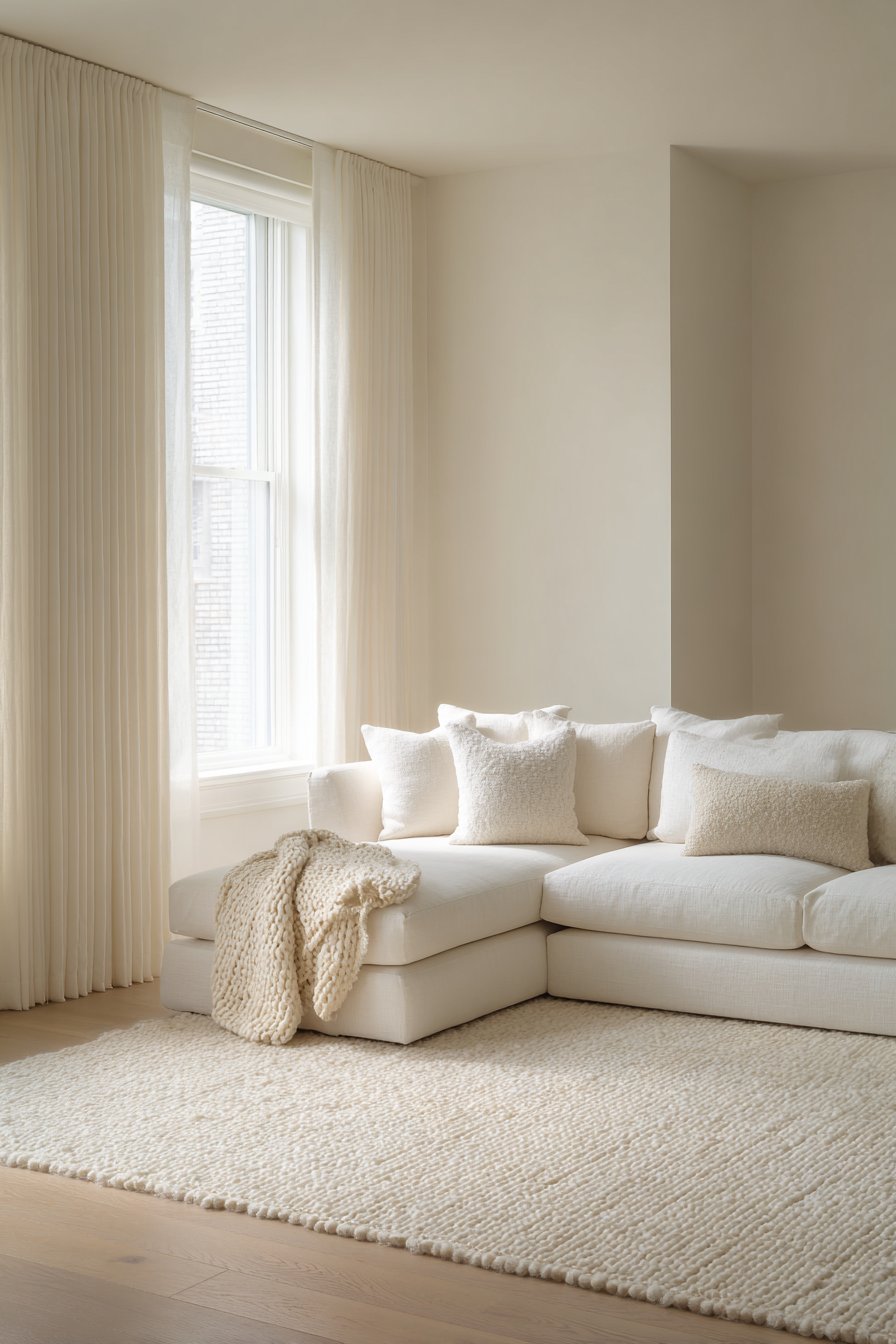
Fabric choices dramatically impact how welcoming and comfortable a room feels. Minimalist spaces often feature hard surfaces, so introducing soft textiles creates essential tactile warmth. Strategic placement of cushions, throws, and rugs transforms austere spaces into inviting sanctuaries.
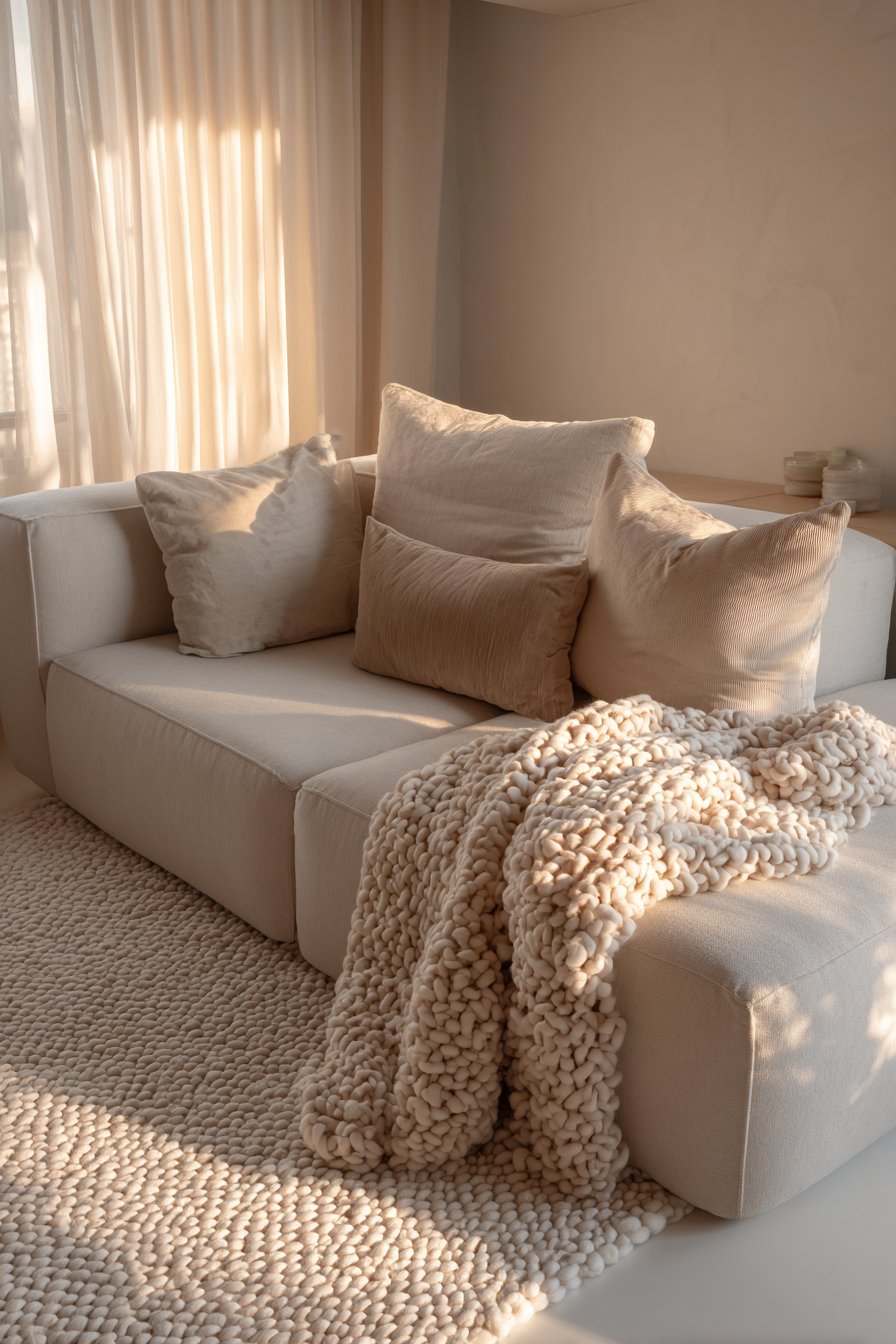
Area rugs define seating zones while adding acoustic softness that absorbs sound. Natural fiber rugs like wool or jute feel warmer than synthetic alternatives. Layer rugs if desired, but maintain the streamlined aesthetic by choosing complementary neutral tones. Rug size matters—too small appears disconnected, while properly sized rugs anchor furniture groupings effectively.
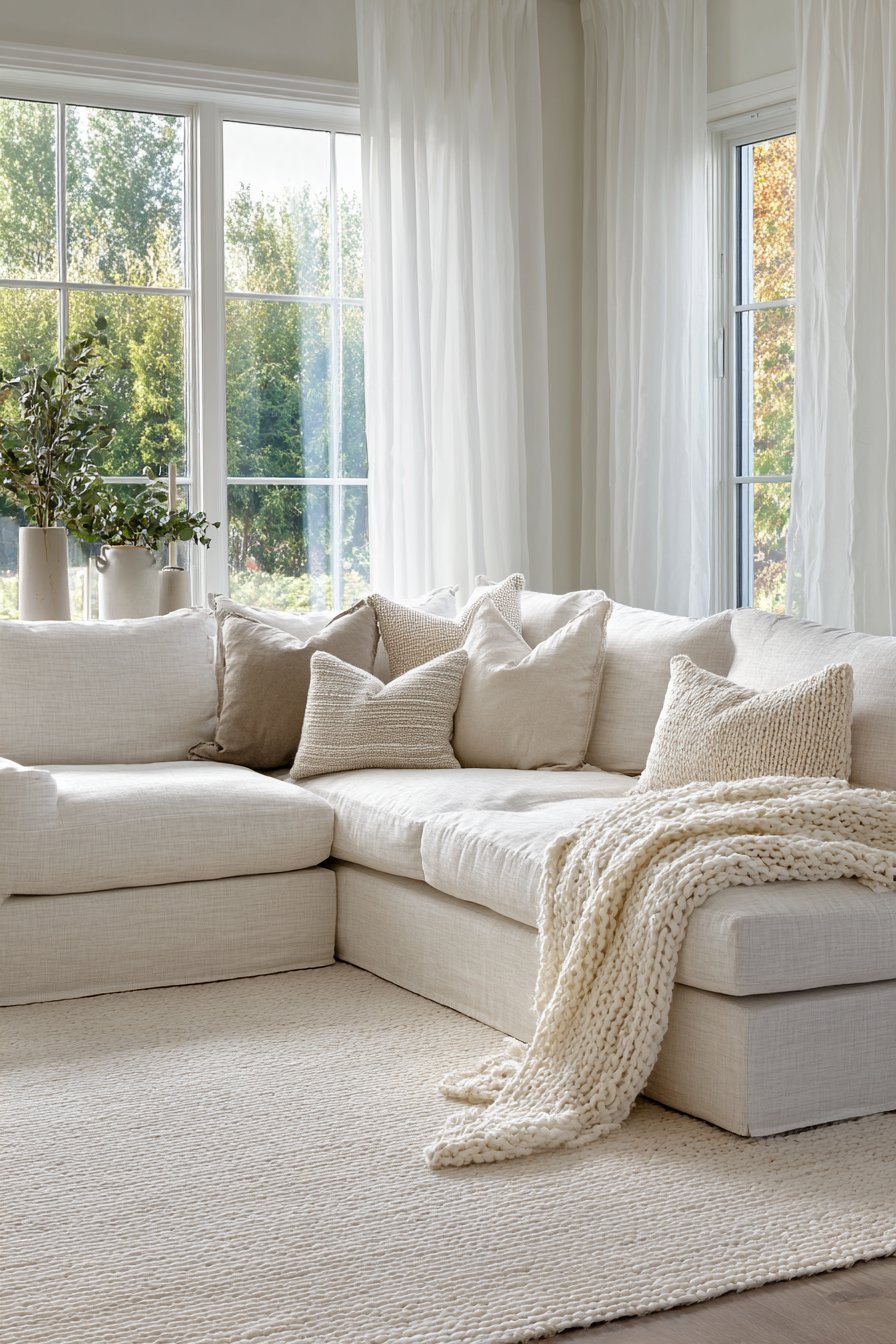
Cushions and throws offer easy opportunities to introduce texture and warmth. Mix sizes and shapes while maintaining color restraint. A few well-chosen cushions feel more intentional than excessive pillow piles. Drape a chunky knit throw over the sofa arm for casual warmth that’s always accessible. Choose natural fabrics like cotton, linen, and wool that feel good against skin.
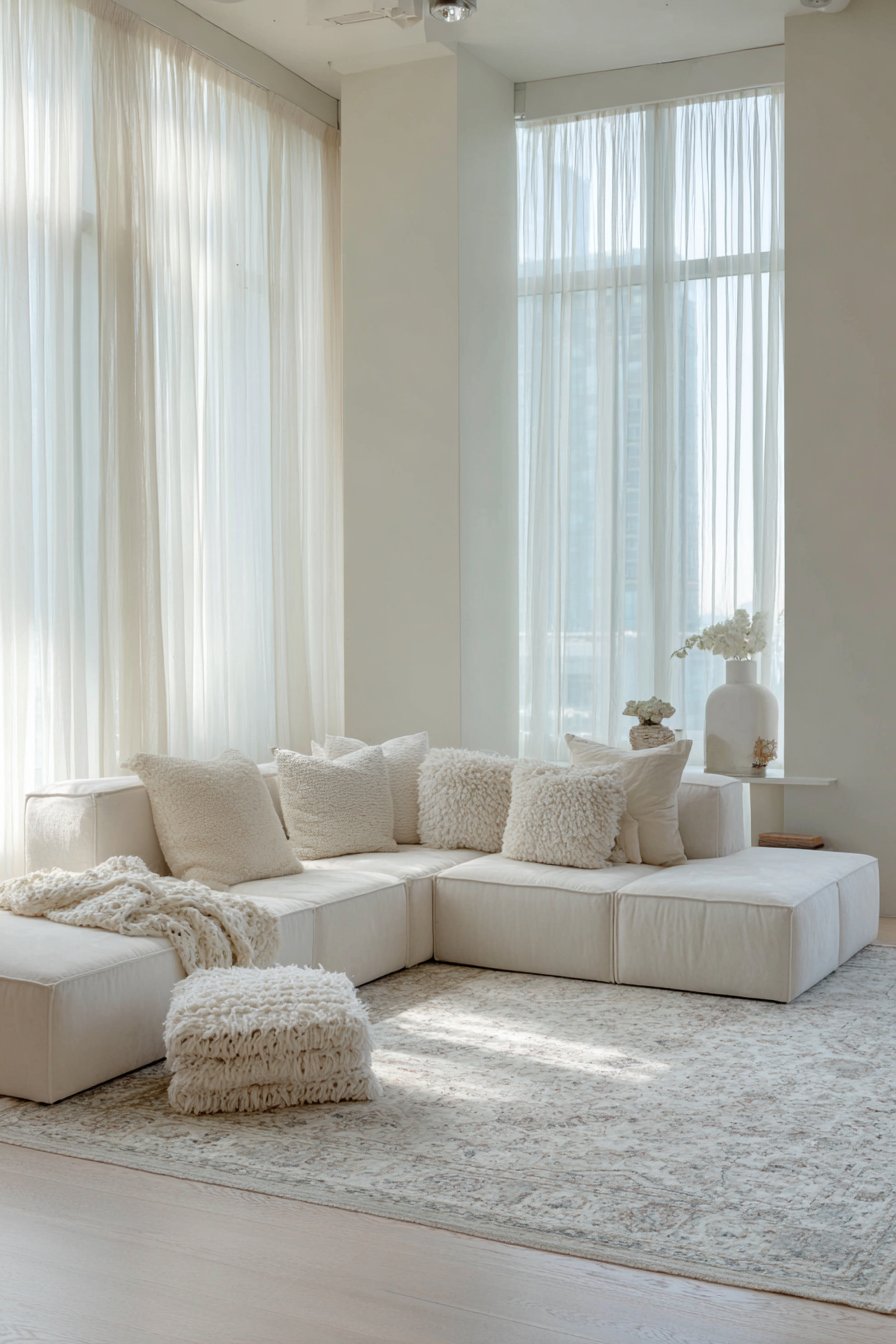
- Layer a large area rug under main seating furniture
- Add 3-5 cushions per sofa in varying sizes
- Keep one throw blanket accessible on each seating piece
- Choose natural fabrics over synthetic materials
- Select cushion covers in warm textures like velvet or linen
- Maintain a cohesive color story across all soft furnishings
Conclusion
Warming up a minimalist living room requires thoughtful intention rather than excessive additions. Each element should serve multiple purposes—adding warmth while respecting the clean aesthetic that defines minimalism. The techniques outlined here prove that comfort and simplicity coexist beautifully when approached with care.
Start by implementing one or two strategies that resonate most with your space and lifestyle. Notice how small changes dramatically impact the room’s atmosphere. Remember that minimalism celebrates quality and purpose, so every addition should feel meaningful. Your living room can be both minimal and inviting, proving that warmth comes from intention, not abundance. Embrace these ideas and create a space that truly feels like home.
