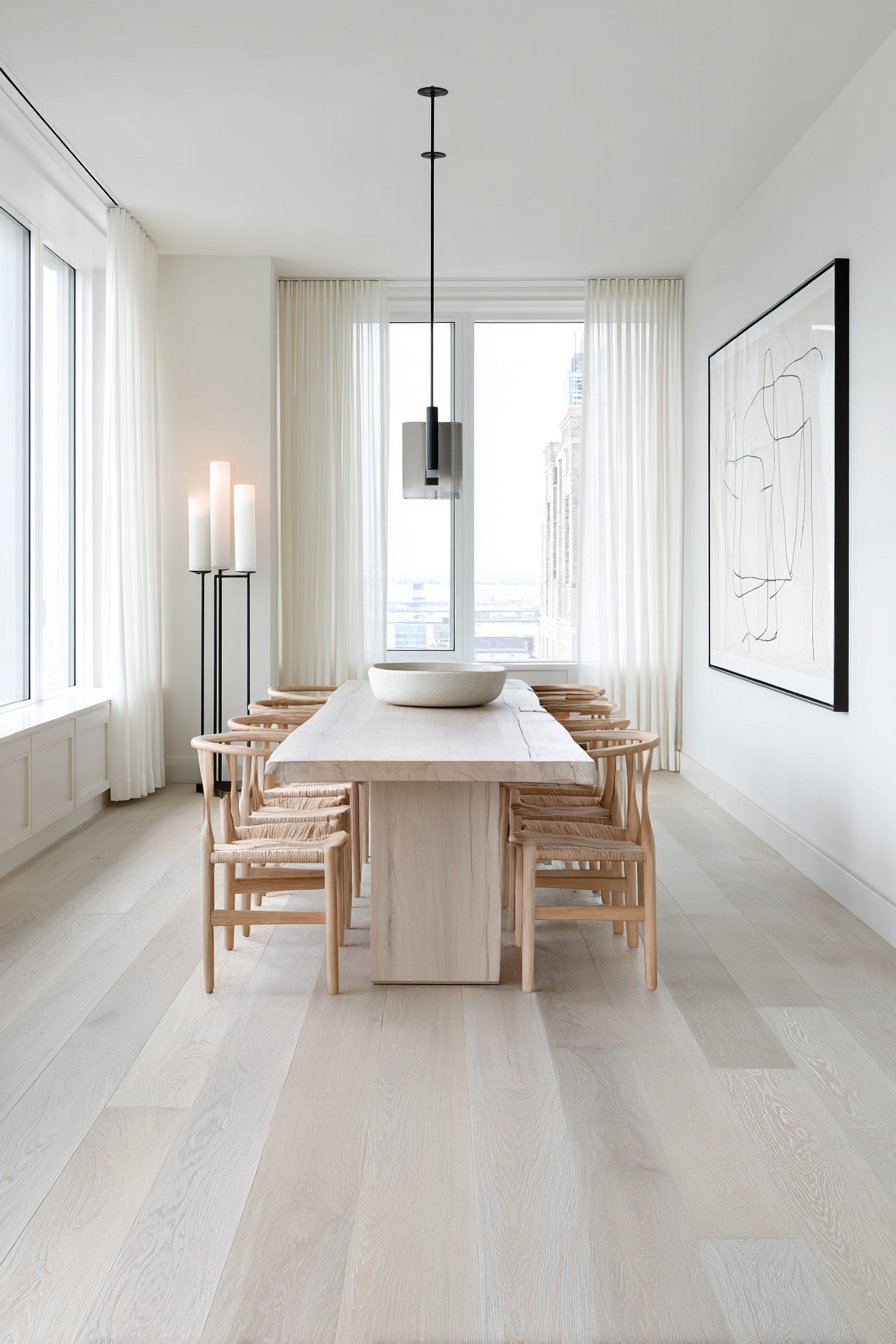


Minimal dining rooms embody the philosophy that less is truly more. These spaces celebrate clean lines, functional beauty, and intentional design choices. The result creates environments where quality materials and thoughtful curation take center stage.
The minimal aesthetic has transformed modern interior design over recent decades. This approach strips away unnecessary elements to reveal essential beauty. Simple forms, natural materials, and abundant light define these serene spaces. Each piece serves a purpose while contributing to overall visual harmony.
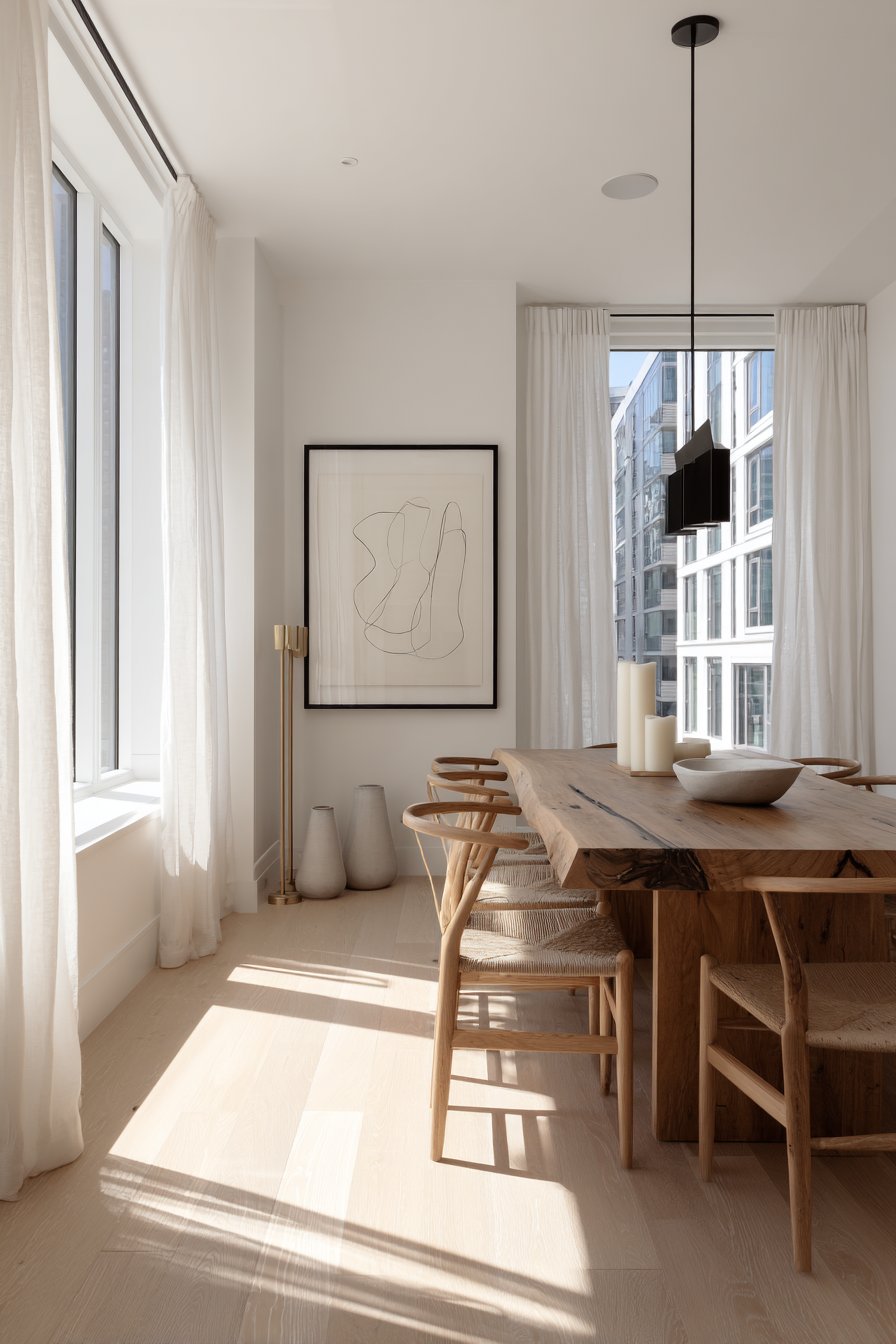
This article explores twenty distinctive minimal dining room concepts. From Scandinavian-inspired simplicity to industrial restraint, each design demonstrates unique approaches to minimal living. Whether you prefer warm woods or cool concrete, transparent materials or solid forms, these ideas showcase the versatility of minimal design principles.
1. Warm Walnut and Natural Oak Harmony
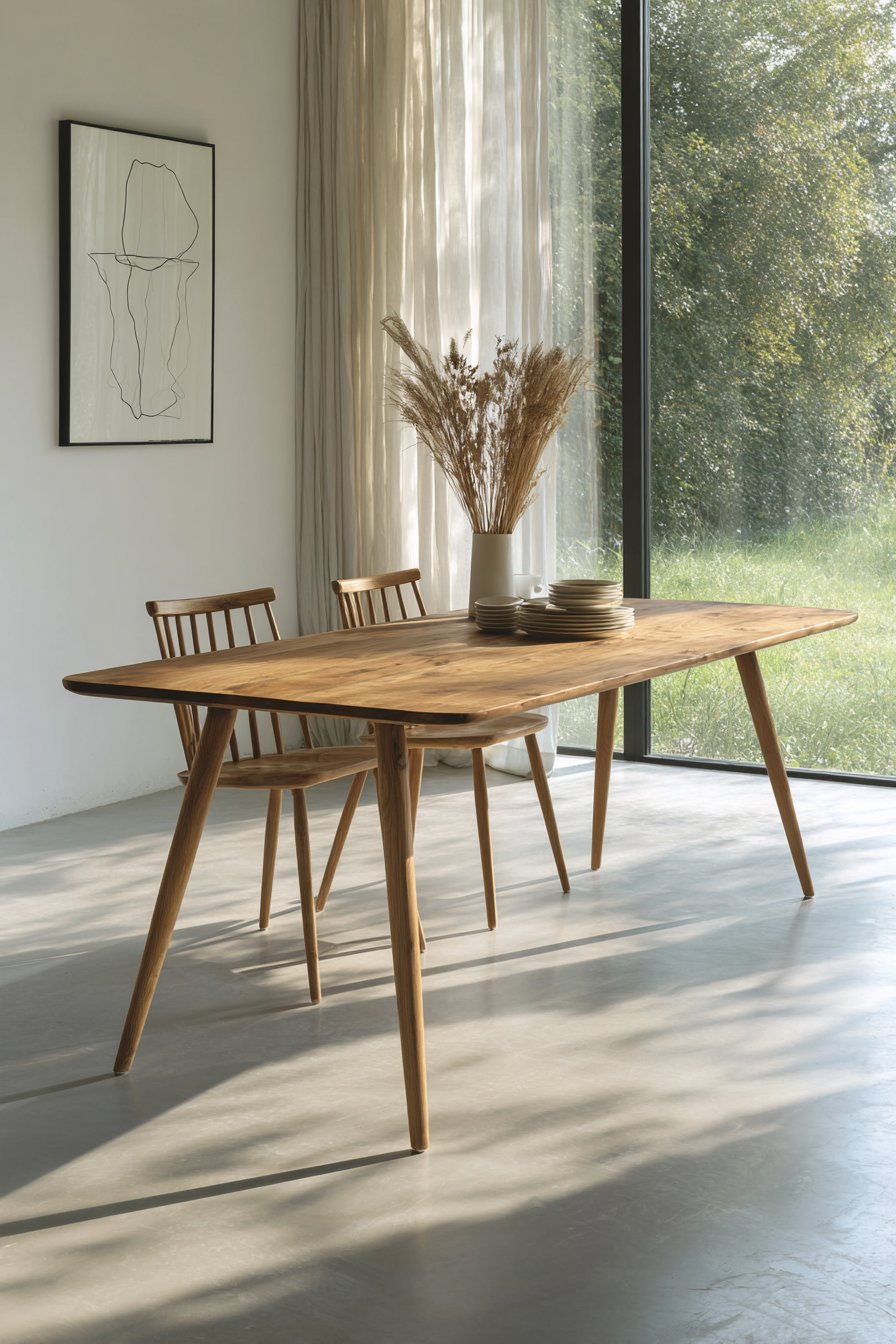
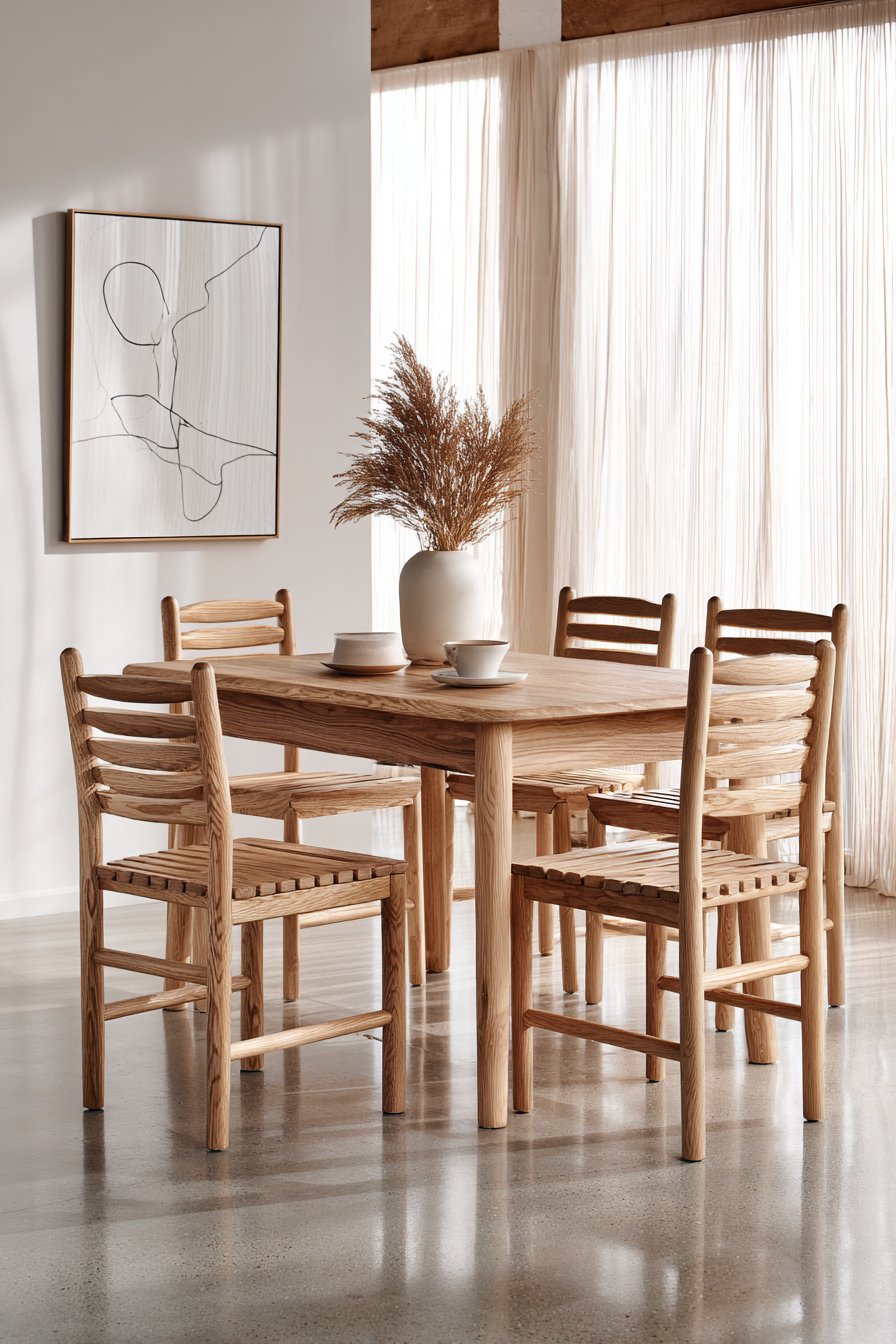
This minimal dining room centers on a solid walnut table with clean-lined tapered legs. The natural wood grain provides organic visual interest without excessive decoration. Four simple ladder-back chairs in natural oak finish surround the table. Their straightforward construction exemplifies functional beauty.
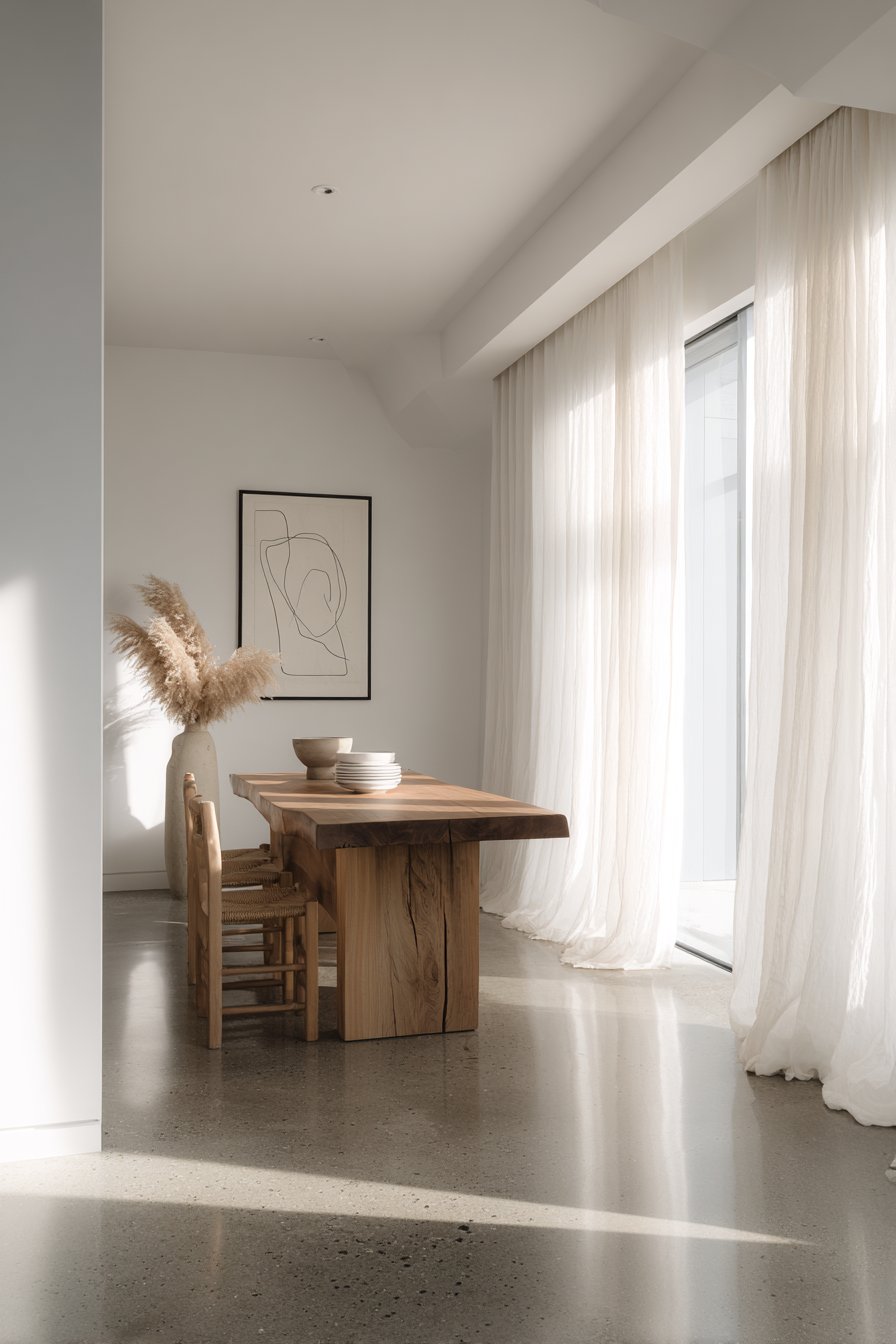
The table setting demonstrates restraint through understated white ceramic dinnerware. A single sculptural ceramic vase holds dried pampas grass. This lone decorative element provides texture and height. The arrangement proves that one carefully chosen piece creates more impact than multiple competing elements.
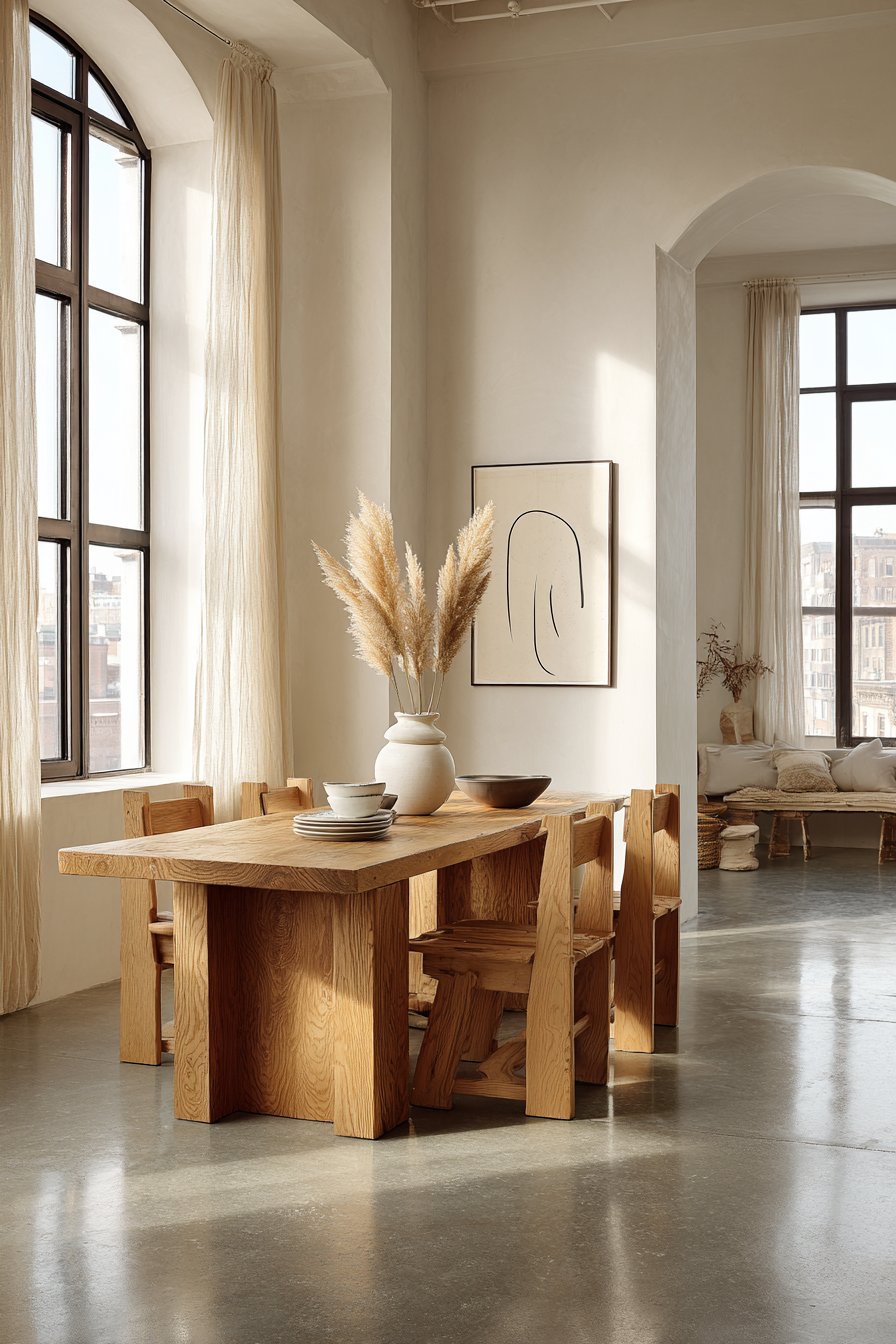
Walls painted in warm white create a neutral backdrop. One statement piece of abstract line art in a black frame provides focused visual interest. The polished concrete flooring reflects soft natural light streaming through floor-to-ceiling windows. Sheer linen curtains filter the light beautifully while maintaining transparency.
Key Design Tips:
- Select solid wood furniture with visible grain patterns for natural interest
- Limit decorative objects to one or two carefully chosen pieces
- Use white ceramics to maintain clean visual continuity
- Install sheer curtains to filter light while preserving openness
- Choose polished concrete for durable, reflective flooring
2. Light Ash and Transparent Acrylic Openness
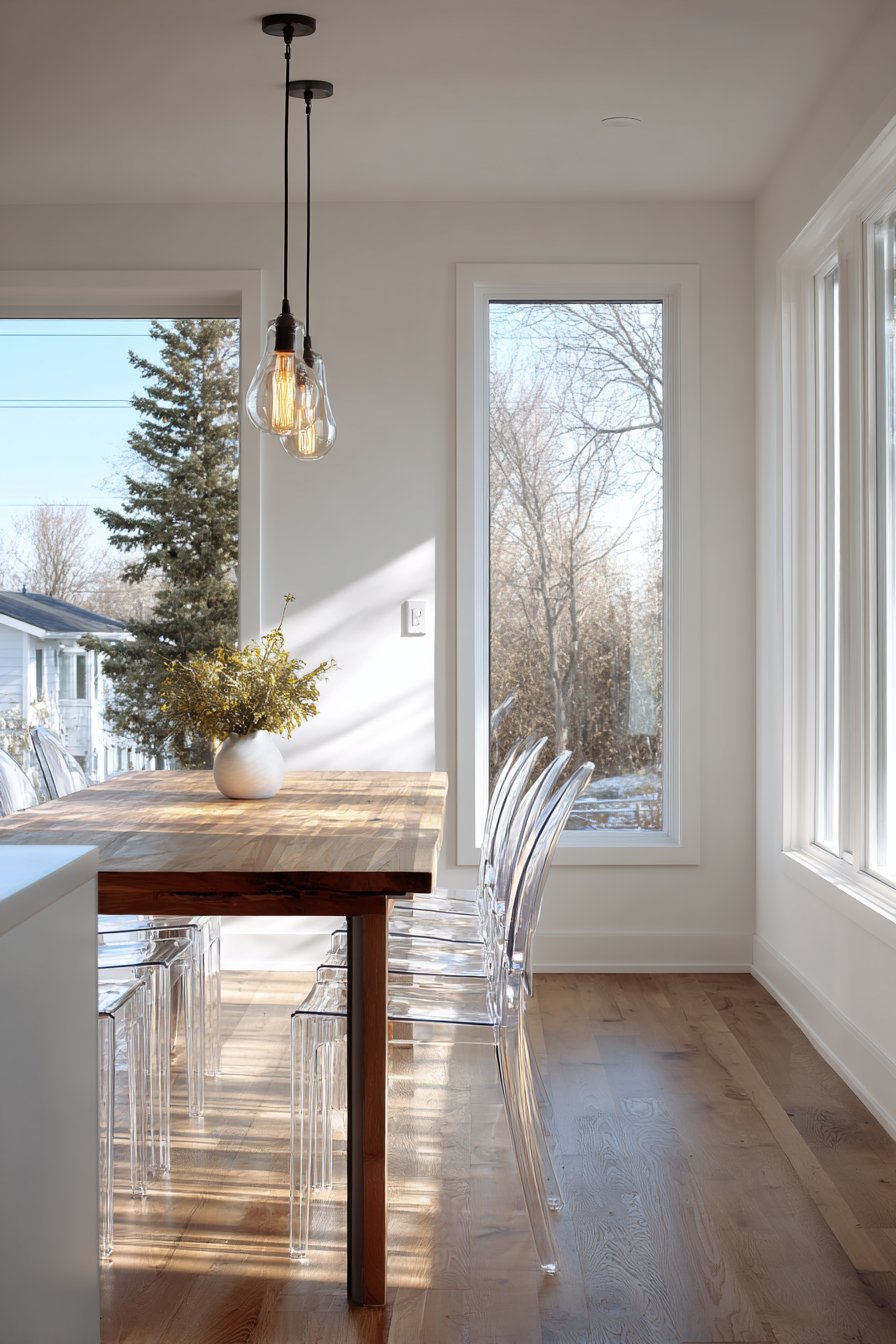
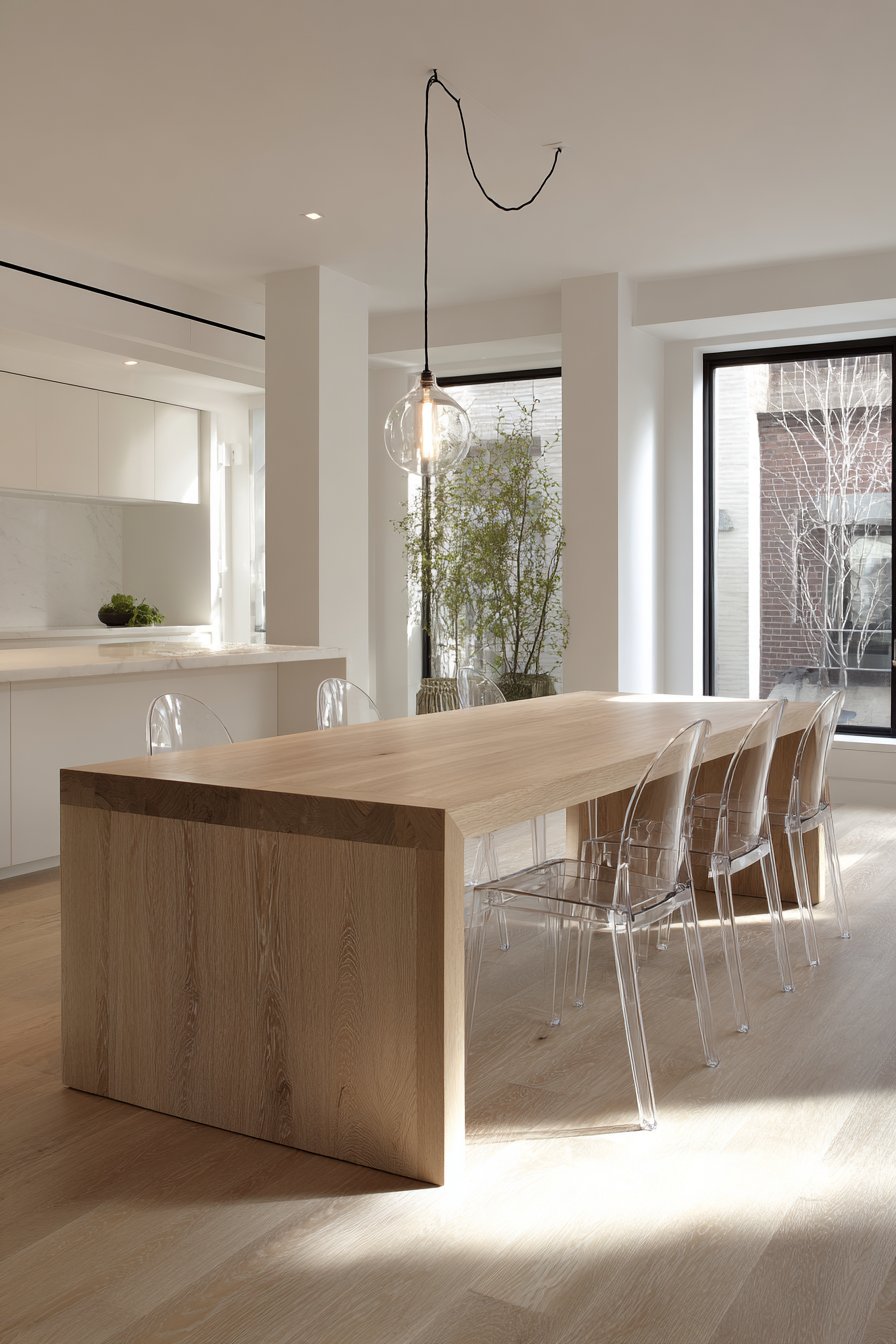
A sleek rectangular table in light ash wood anchors this minimal dining space. The pale wood tone keeps the room feeling airy and bright. Ghost-style transparent acrylic chairs surround the table. These chairs maintain visual openness by virtually disappearing into the space.
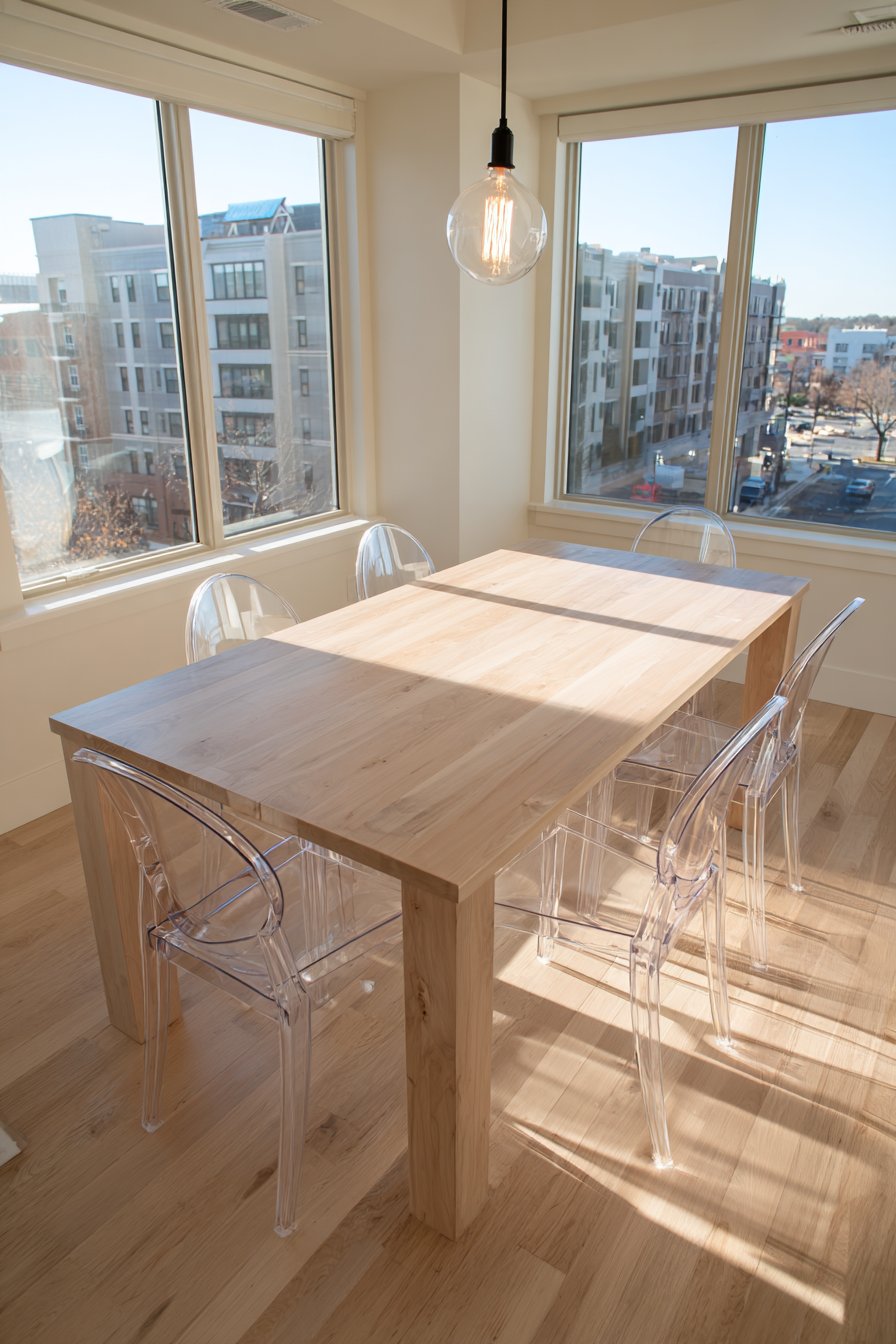
A simple pendant light hangs centered above the table. The black cord and exposed Edison bulb provide industrial minimalism. This lighting choice adds character without overwhelming the clean aesthetic. The exposed bulb creates warm ambient glow during evening meals.
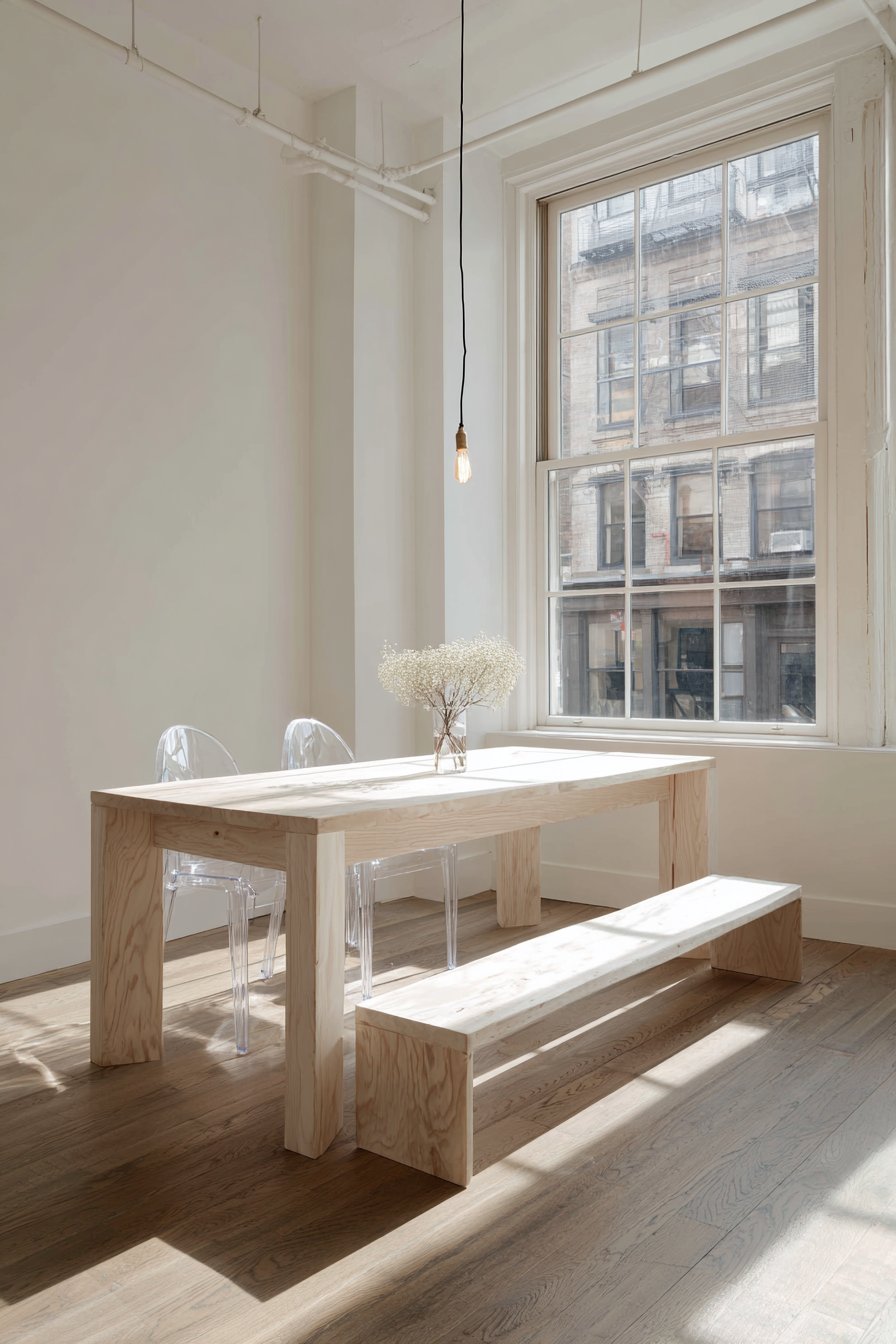
White oak hardwood flooring runs throughout the space. Plain white walls feature no additional decoration. Natural morning light creates soft shadows that emphasize the table’s clean geometric form. The interplay of light and shadow becomes the room’s primary decoration.
Key Design Tips:
- Use transparent furniture to maintain spatial flow
- Incorporate exposed Edison bulbs for warm industrial character
- Let natural shadows create dynamic visual interest
- Choose light wood tones to maximize brightness
- Keep walls completely bare for maximum simplicity
3. Round White Pedestal and Eames-Style Seating
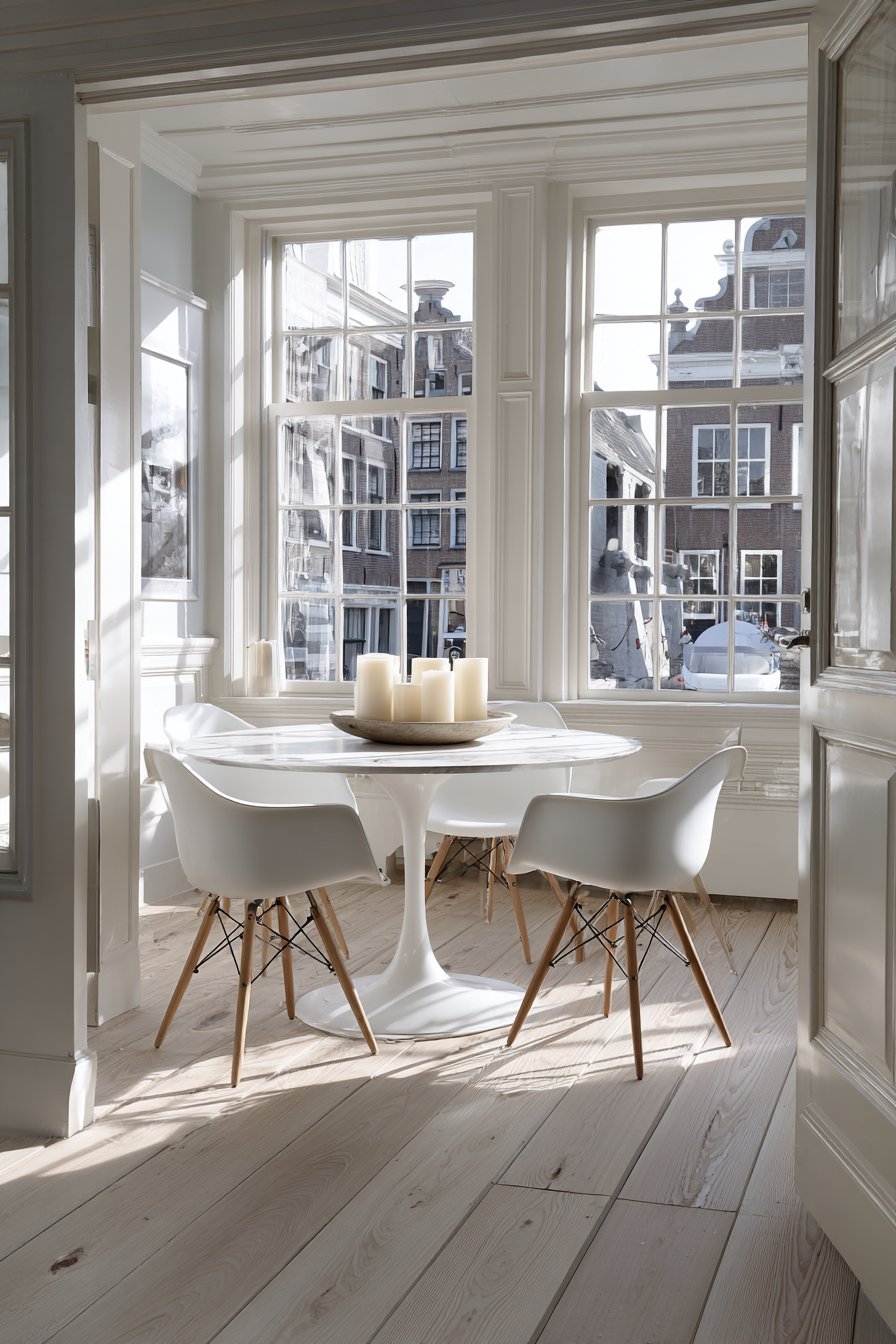
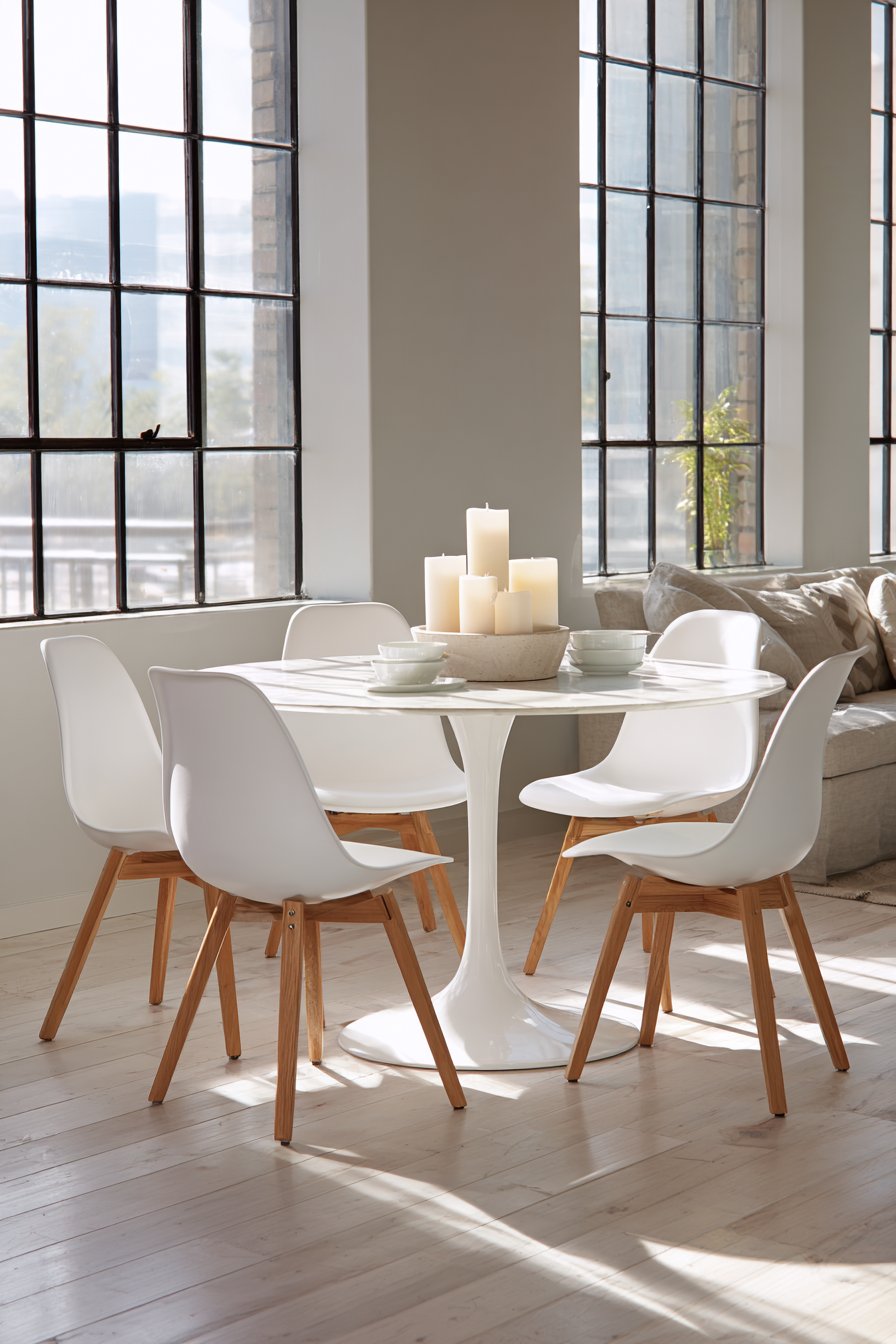
This minimal dining room features a round pedestal table in matte white. The single central base creates sculptural interest while maximizing leg room. Four Eames-style molded plastic chairs with natural wood legs provide comfortable seating. Their iconic design brings mid-century modern sensibility.
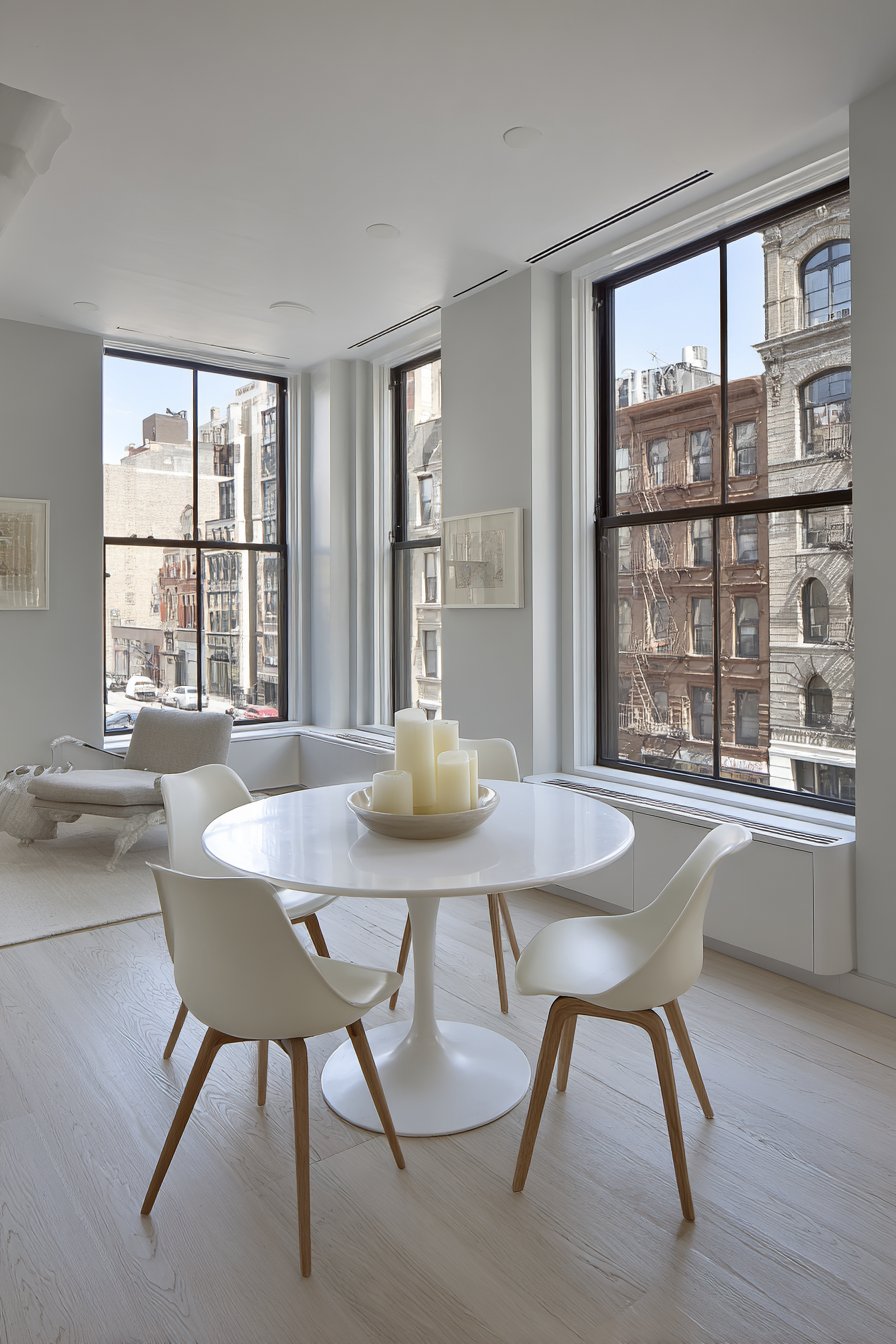
The only decorative element is a low ceramic bowl containing three white pillar candles. This simple arrangement maintains the monochromatic palette while adding soft illumination potential. The candles provide warmth during evening dining without visual clutter.
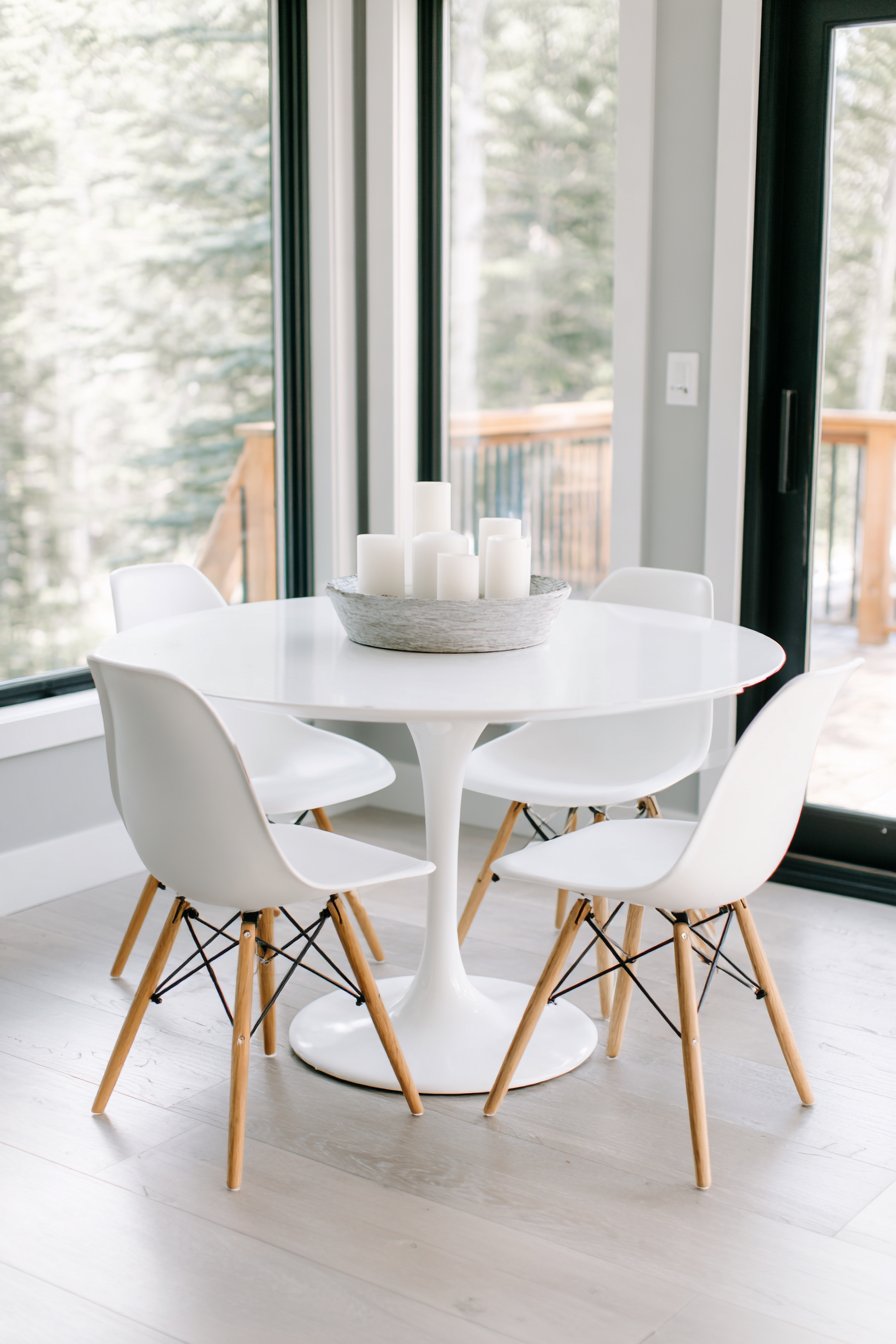
Whitewashed wooden floorboards run throughout the space. Soft grey walls complement the predominantly white palette. Large windows with minimal black metal frames allow abundant natural daylight to flood the space. The black frames provide crisp contrast against white walls.
Key Design Tips:
- Choose pedestal tables to maximize under-table space
- Incorporate mid-century modern chairs for timeless appeal
- Use candles for ambient lighting without permanent fixtures
- Paint floorboards white to enhance brightness
- Select window frames in black for architectural definition
4. Industrial Concrete and Light Maple Contrast
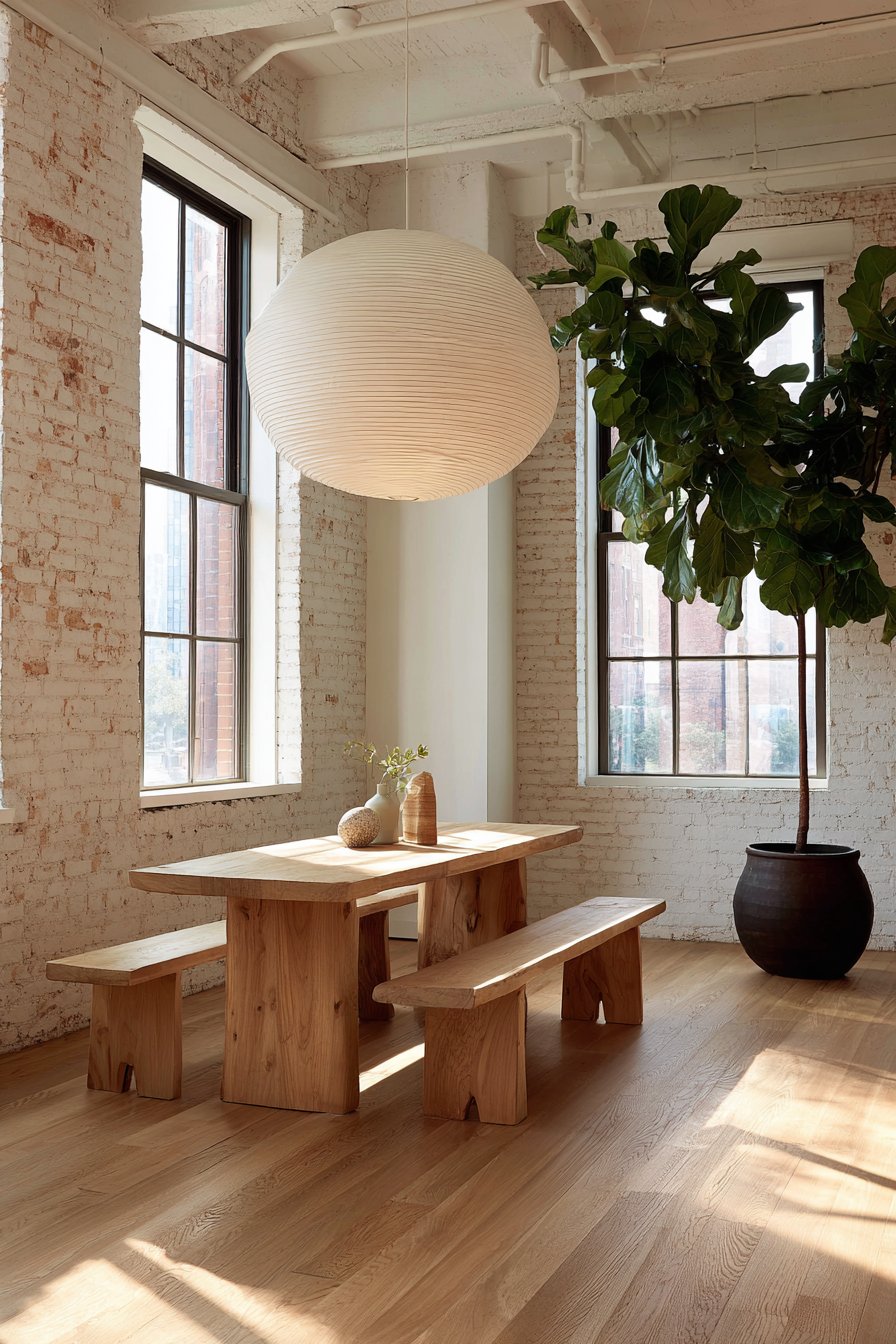
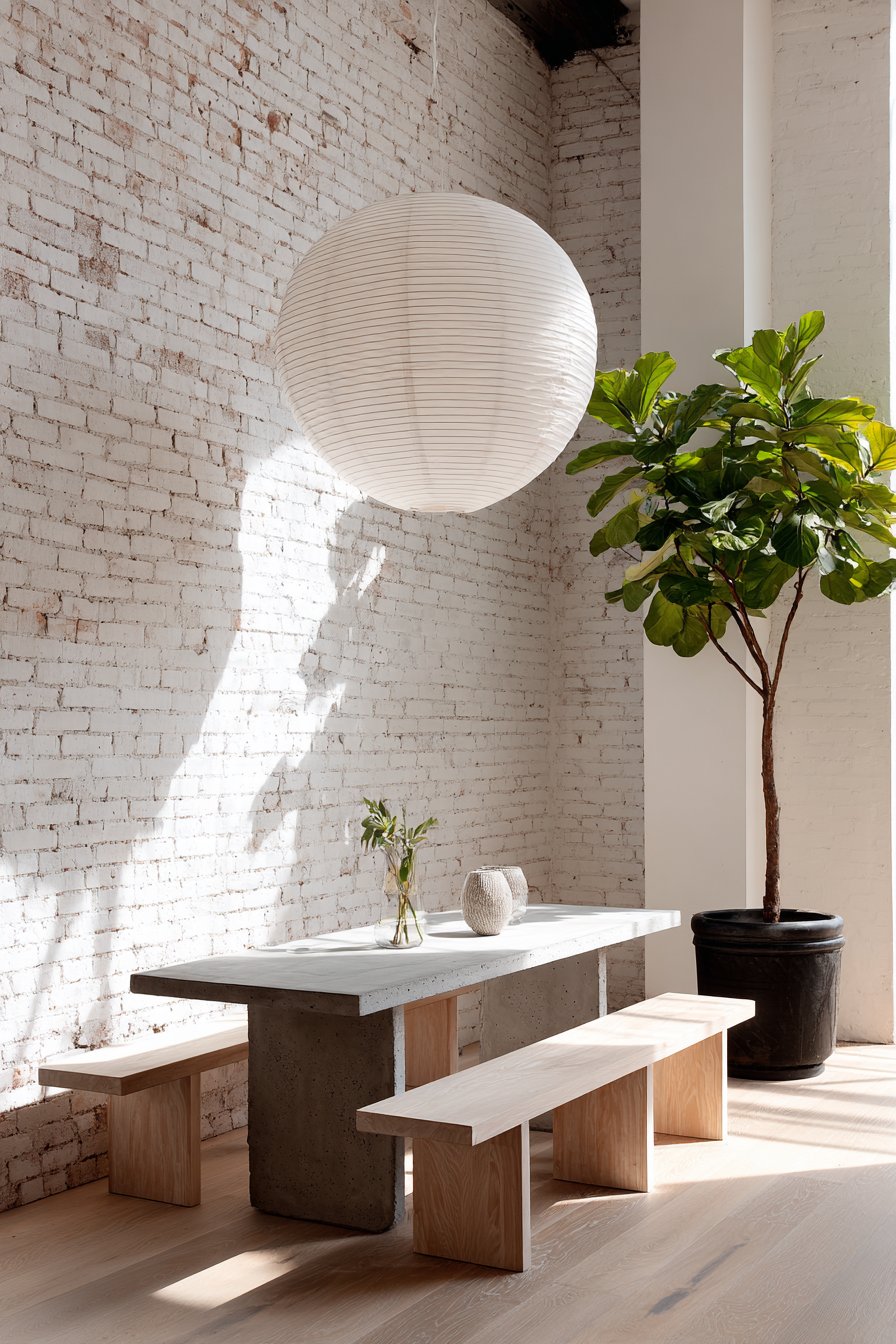
A custom-built concrete dining table dominates this minimal dining area. The raw industrial texture provides tactile interest and visual weight. Simple backless benches in light maple wood flank both sides. The contrast between smooth wood and rough concrete creates dynamic tension.
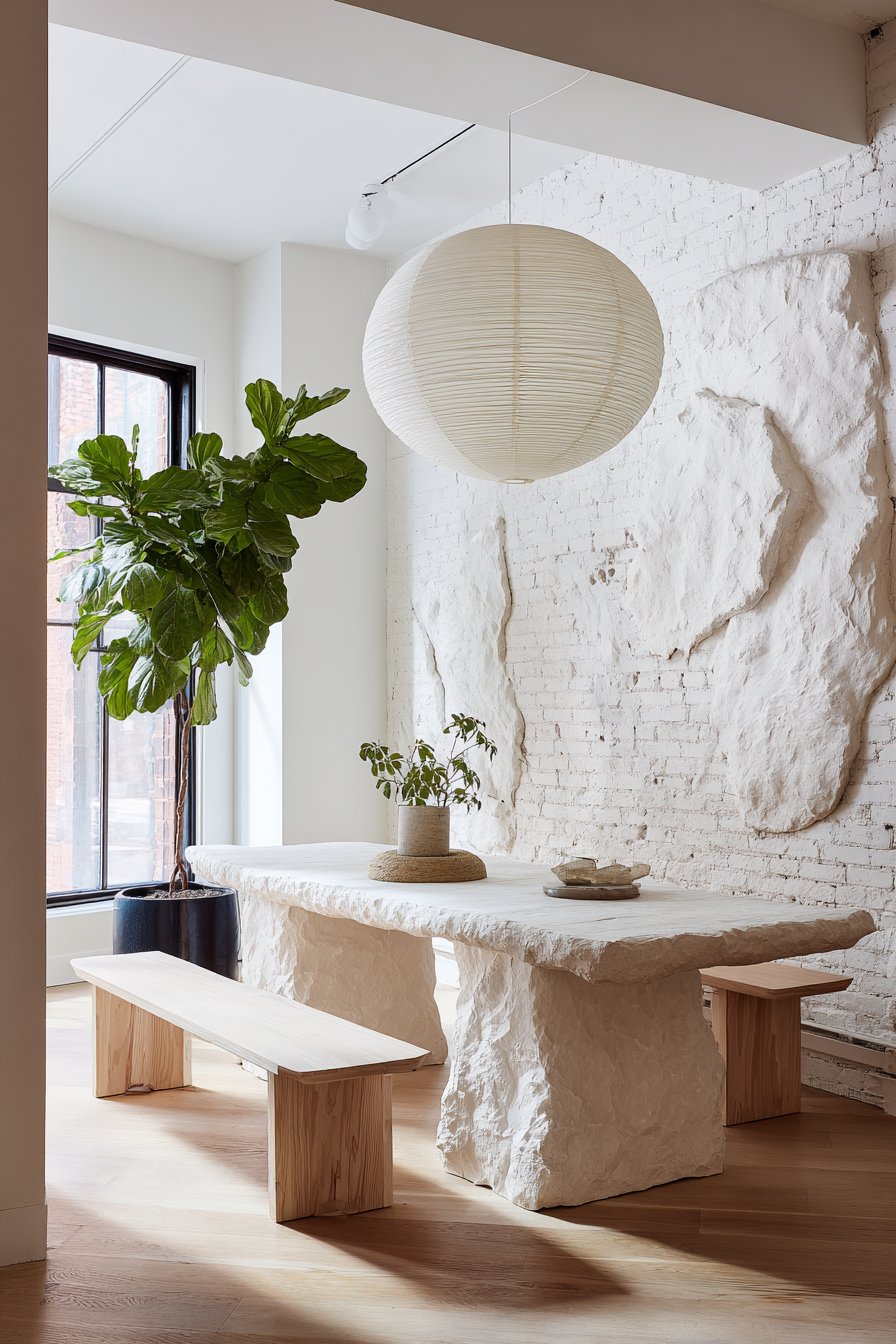
A single oversized paper lantern pendant provides soft ambient lighting. The spherical form floats above the table like a glowing moon. Exposed white brick walls remain deliberately bare. This architectural feature adds texture without requiring additional decoration.
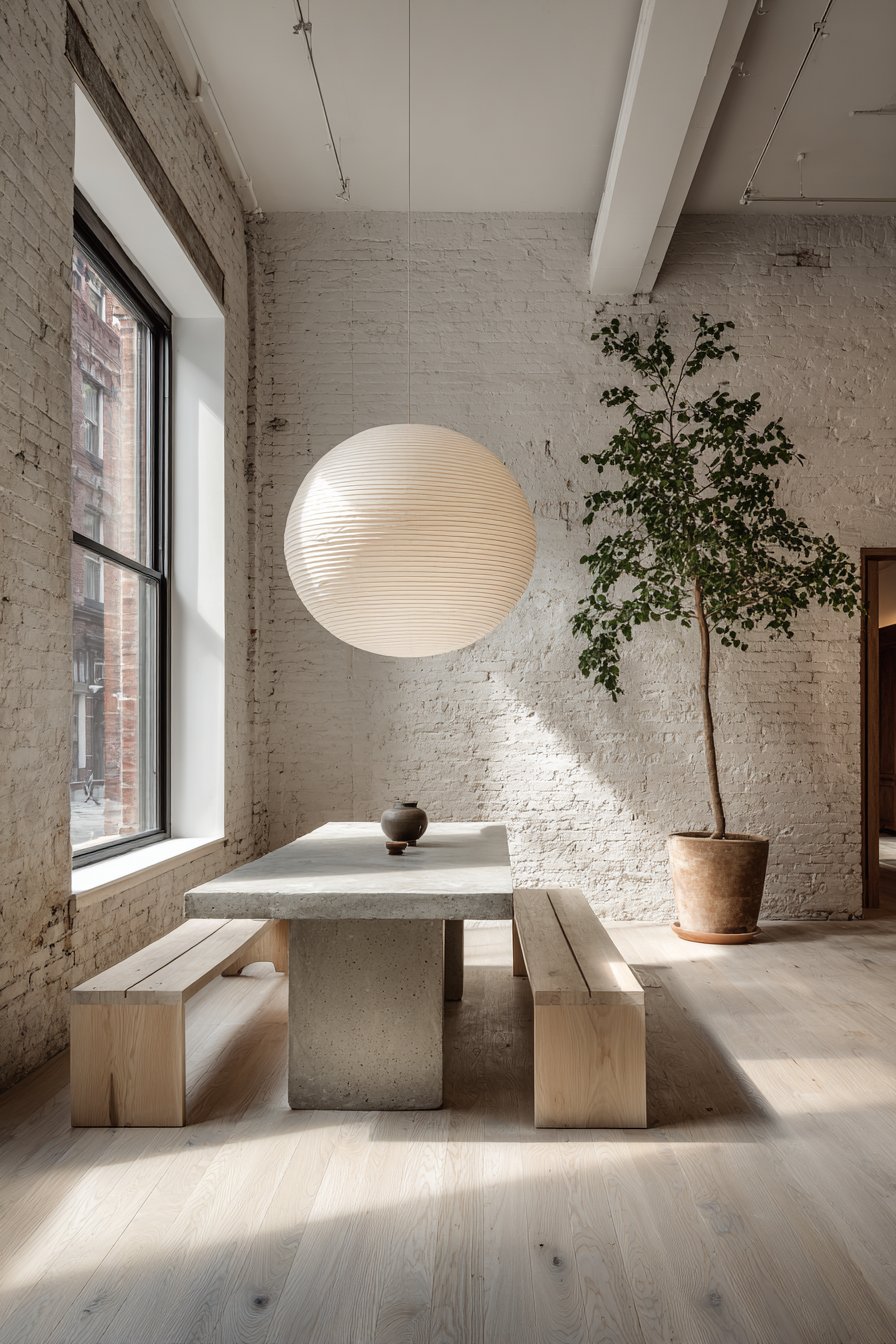
Wide-plank white oak flooring grounds the space in natural warmth. One tall potted fiddle leaf fig tree stands in the corner. This single plant brings life and vertical interest to the otherwise austere space. The large leaves create organic shapes against geometric backgrounds.
Key Design Tips:
- Mix industrial materials with natural wood for balance
- Use oversized pendant lights as sculptural elements
- Leave architectural features like brick exposed
- Incorporate one large plant for organic contrast
- Choose backless benches for streamlined profiles
5. Pale Blonde Oak and Wire-Frame Sophistication
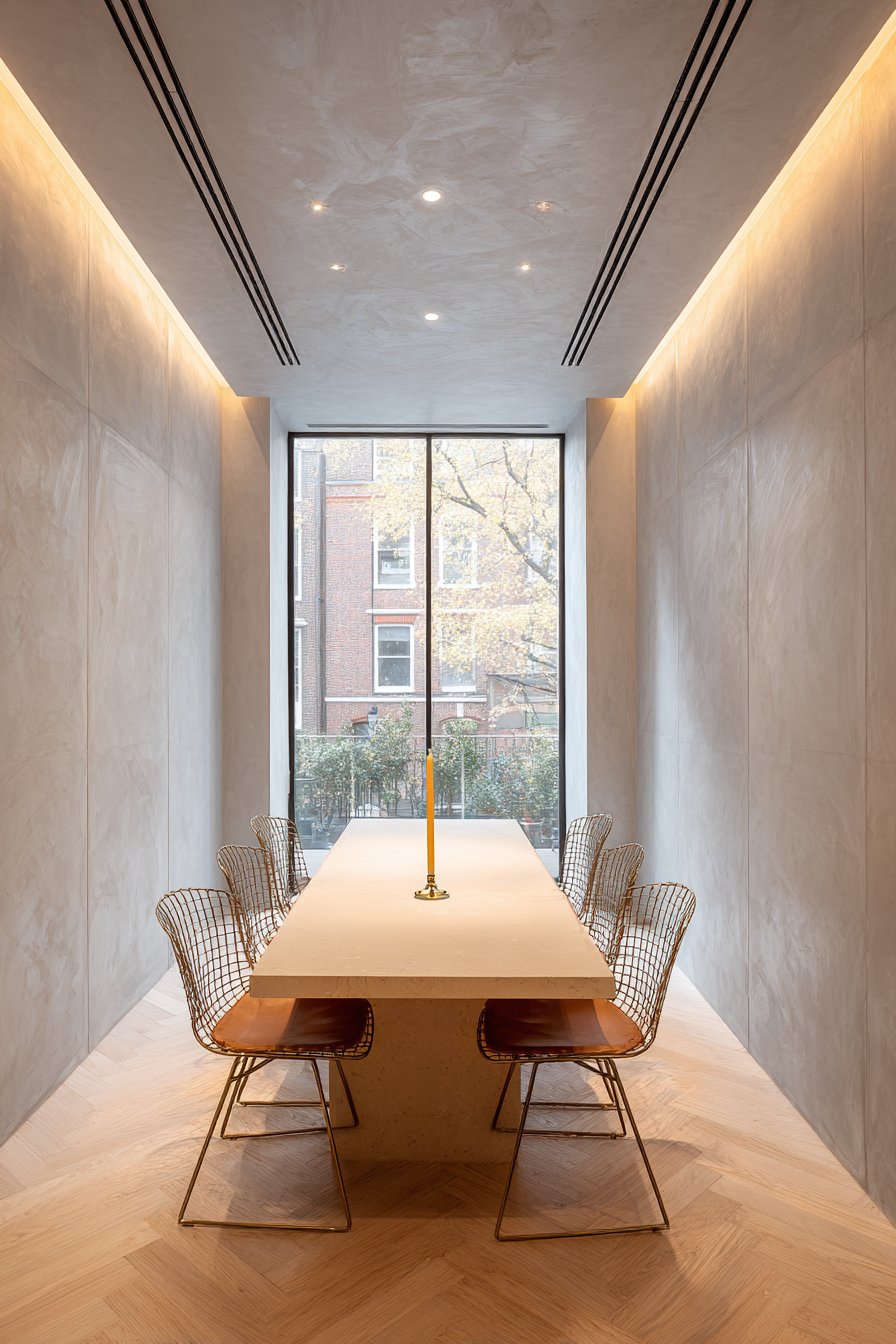
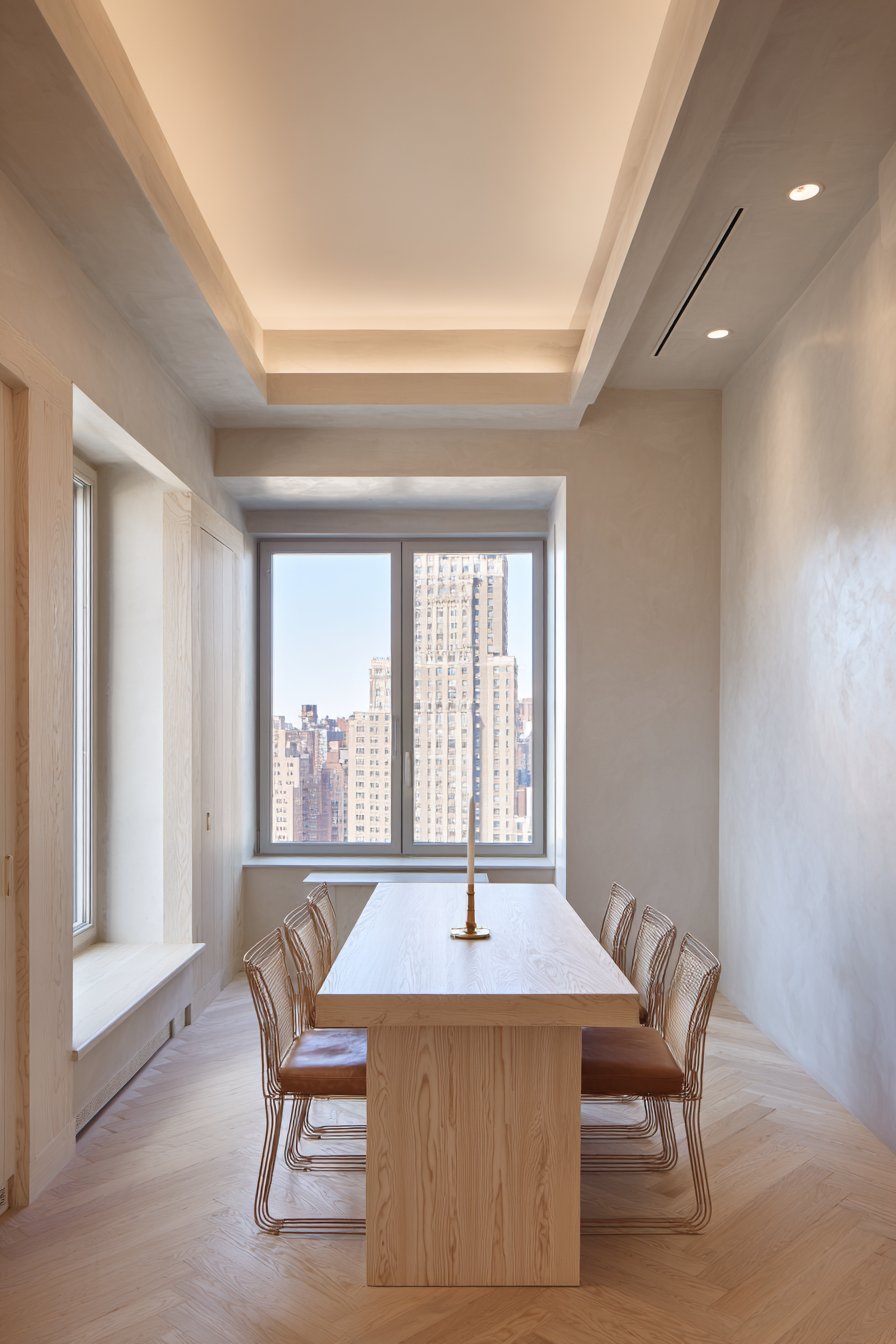
This minimal dining room features a narrow rectangular table in pale blonde oak. The streamlined proportions suit intimate gatherings perfectly. Six wire-frame dining chairs with leather seat cushions in cognac provide comfortable seating. The combination of metal frames and leather adds refined texture.
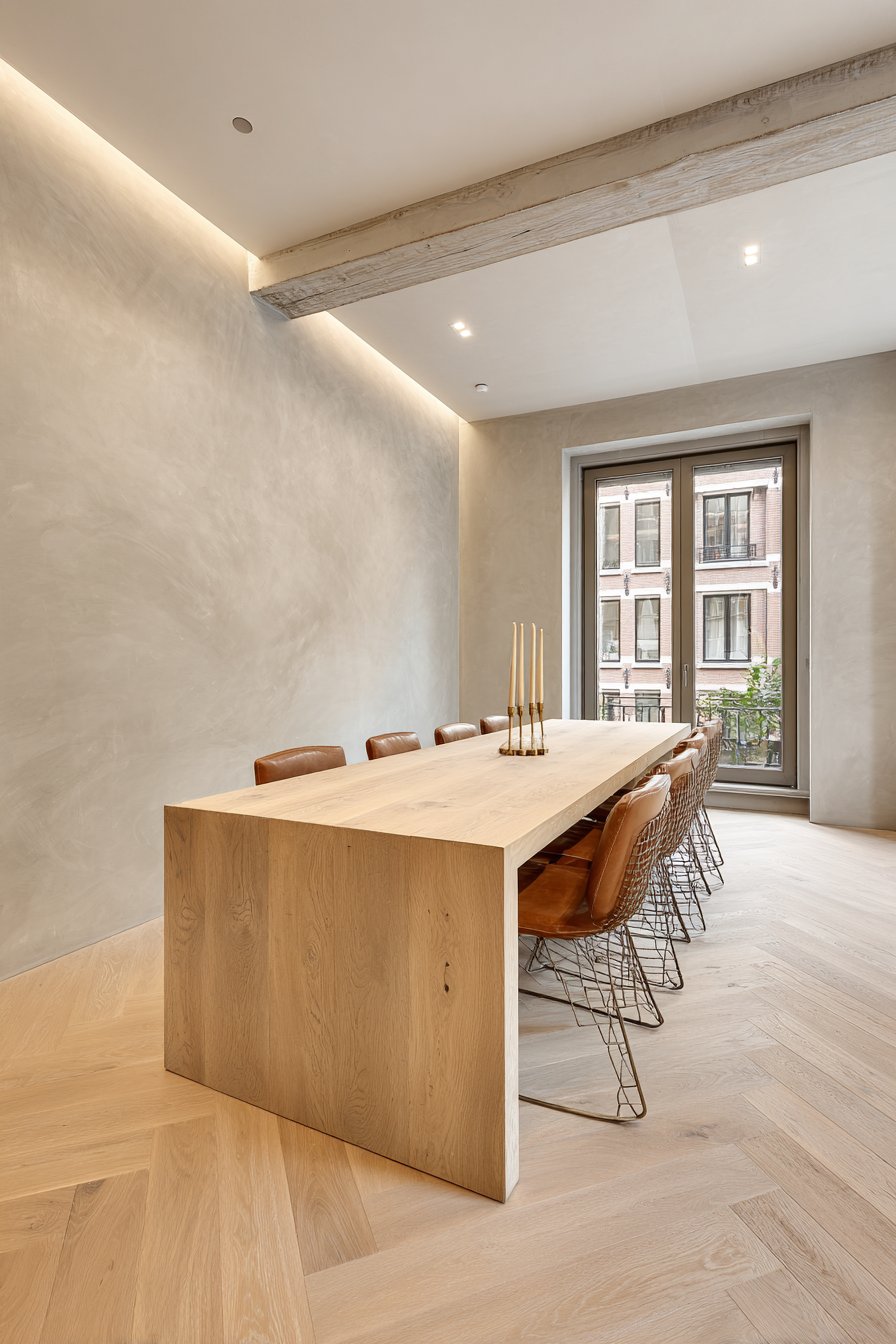
The table surface remains completely clear except for a single brass candlestick holder. This solitary object demonstrates the power of restraint. The brass finish introduces warm metallic notes to the predominantly neutral palette.
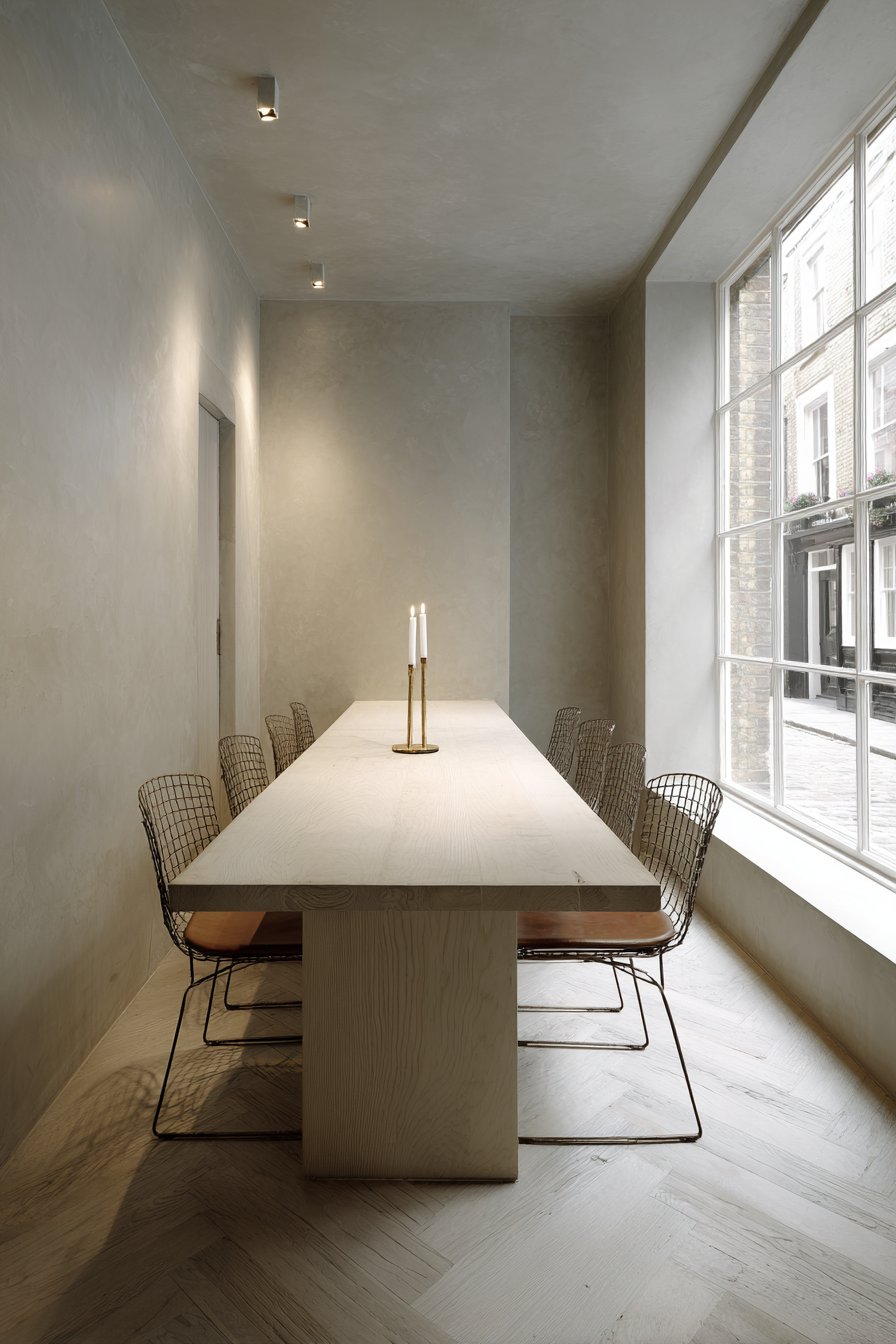
Walls finished in light grey plaster show subtle texture. Herringbone-patterned white oak flooring adds understated visual interest beneath. Recessed ceiling lighting provides even illumination throughout. A large window brings in natural light to complement artificial sources.
Key Design Tips:
- Choose wire-frame chairs to maintain visual lightness
- Add leather cushions for comfort and textural contrast
- Use herringbone patterns for subtle floor interest
- Install recessed lighting for unobtrusive illumination
- Incorporate single metallic objects as accent pieces
6. Glass-Top Transparency with Sculptural Wood Base
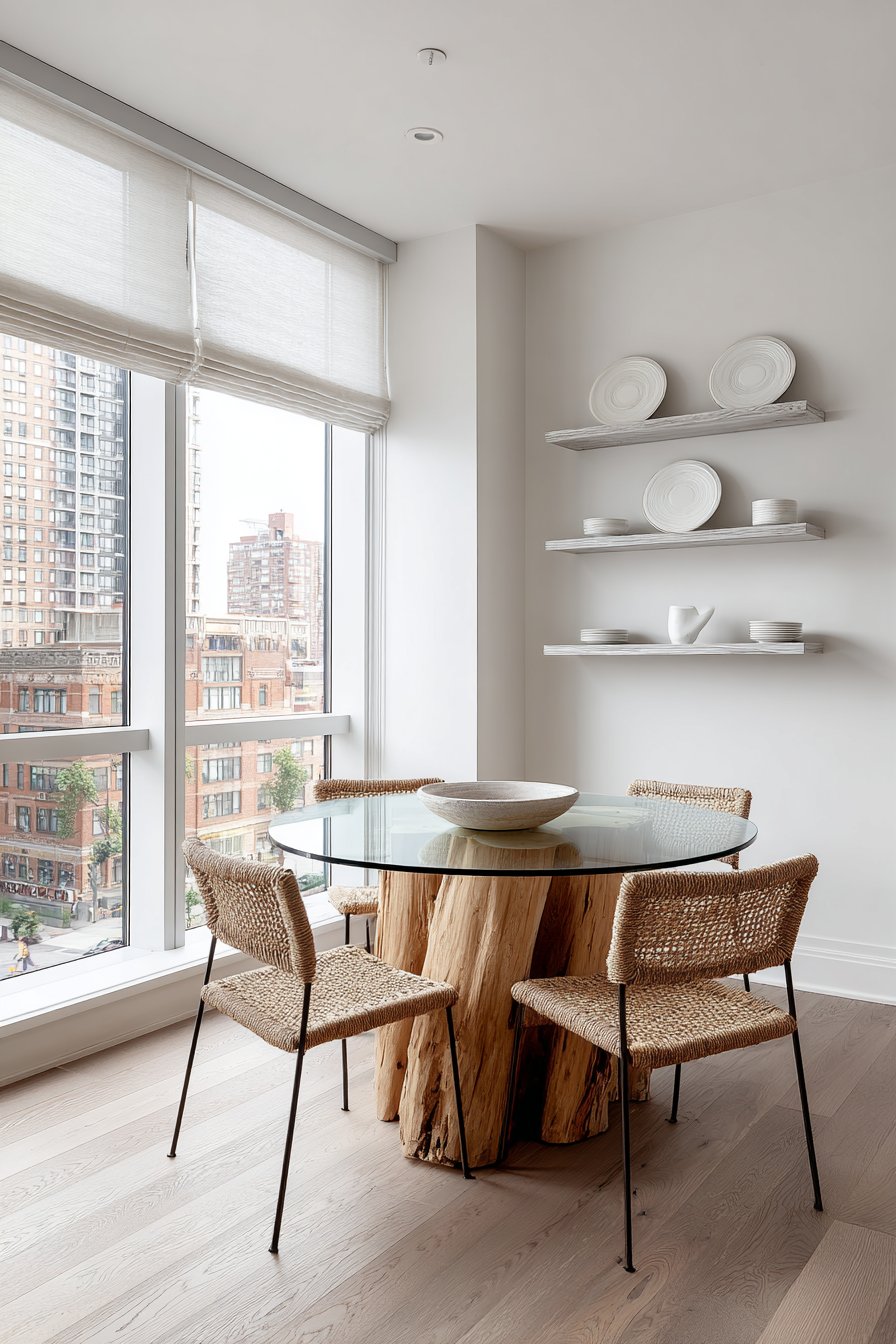
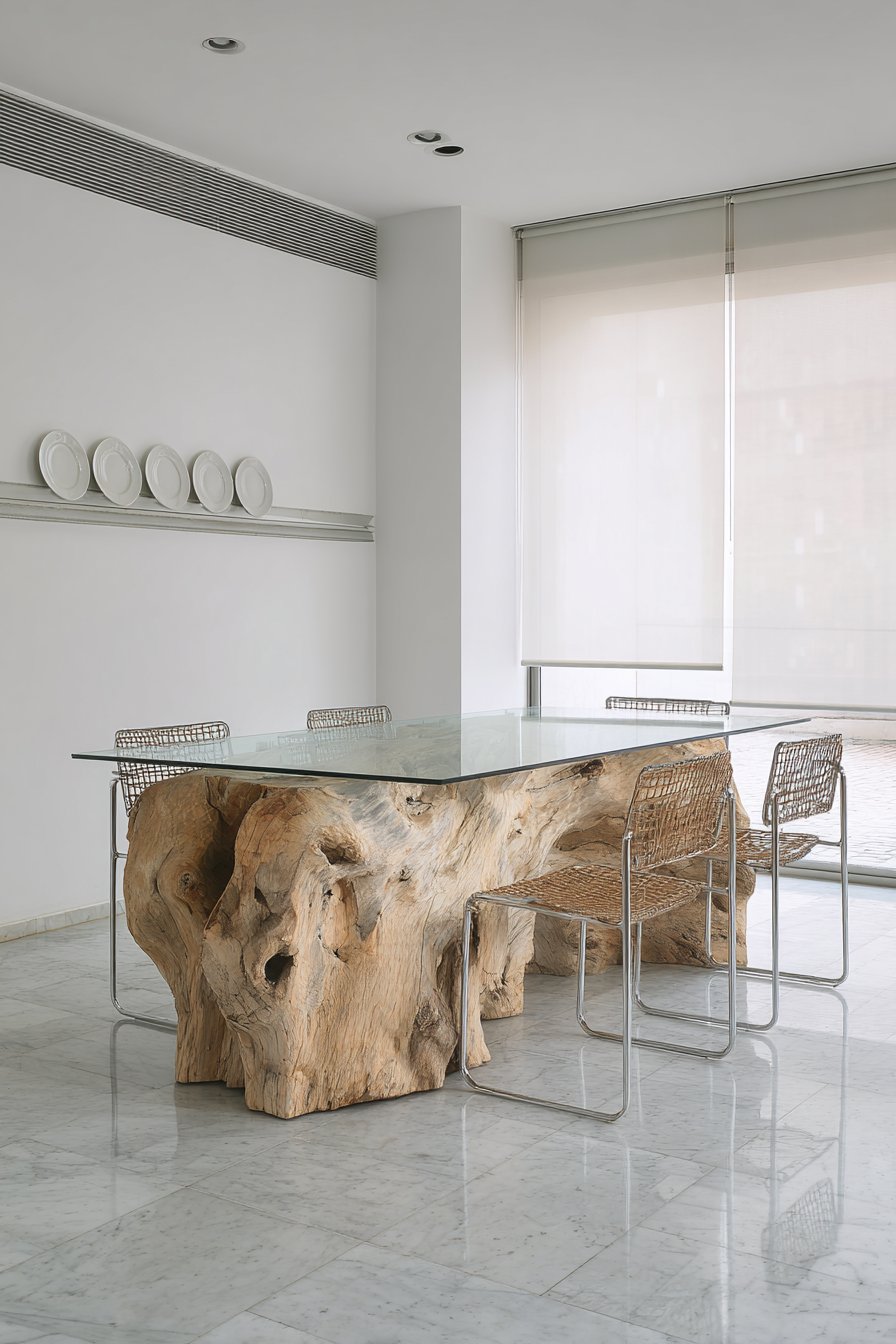
A glass-top dining table creates spatial flow in this minimal dining space. The transparent surface seems to float above a sculptural single-piece wooden base. The natural teak base provides organic form and visual anchor. Four minimalist metal chairs with woven natural fiber seats complete the seating.
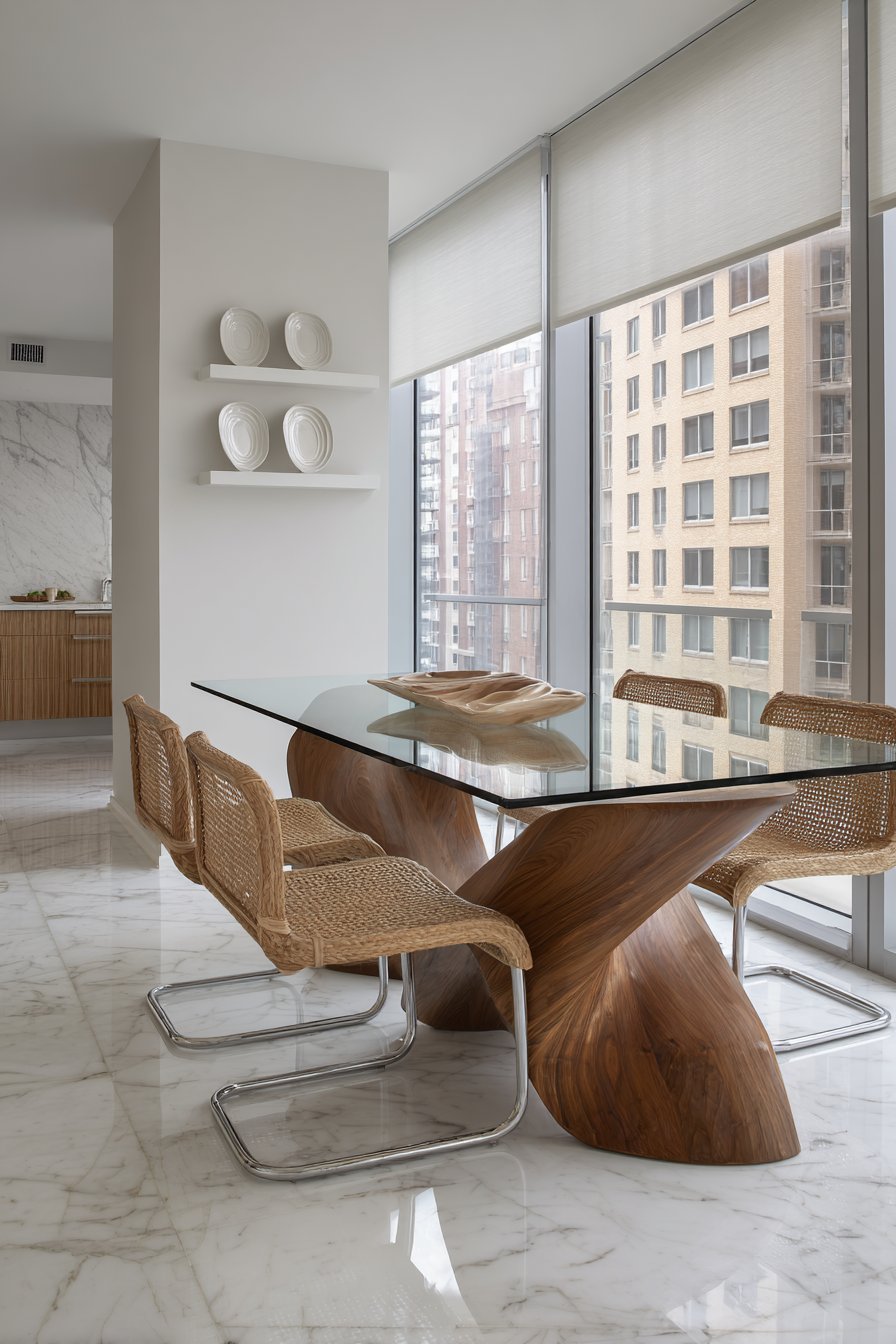
Polished white marble flooring creates luxurious foundation. Stark white walls feature one floating shelf displaying three identical white porcelain plates. This unexpected wall art demonstrates creative minimalism. The repetition creates rhythm within simplicity.
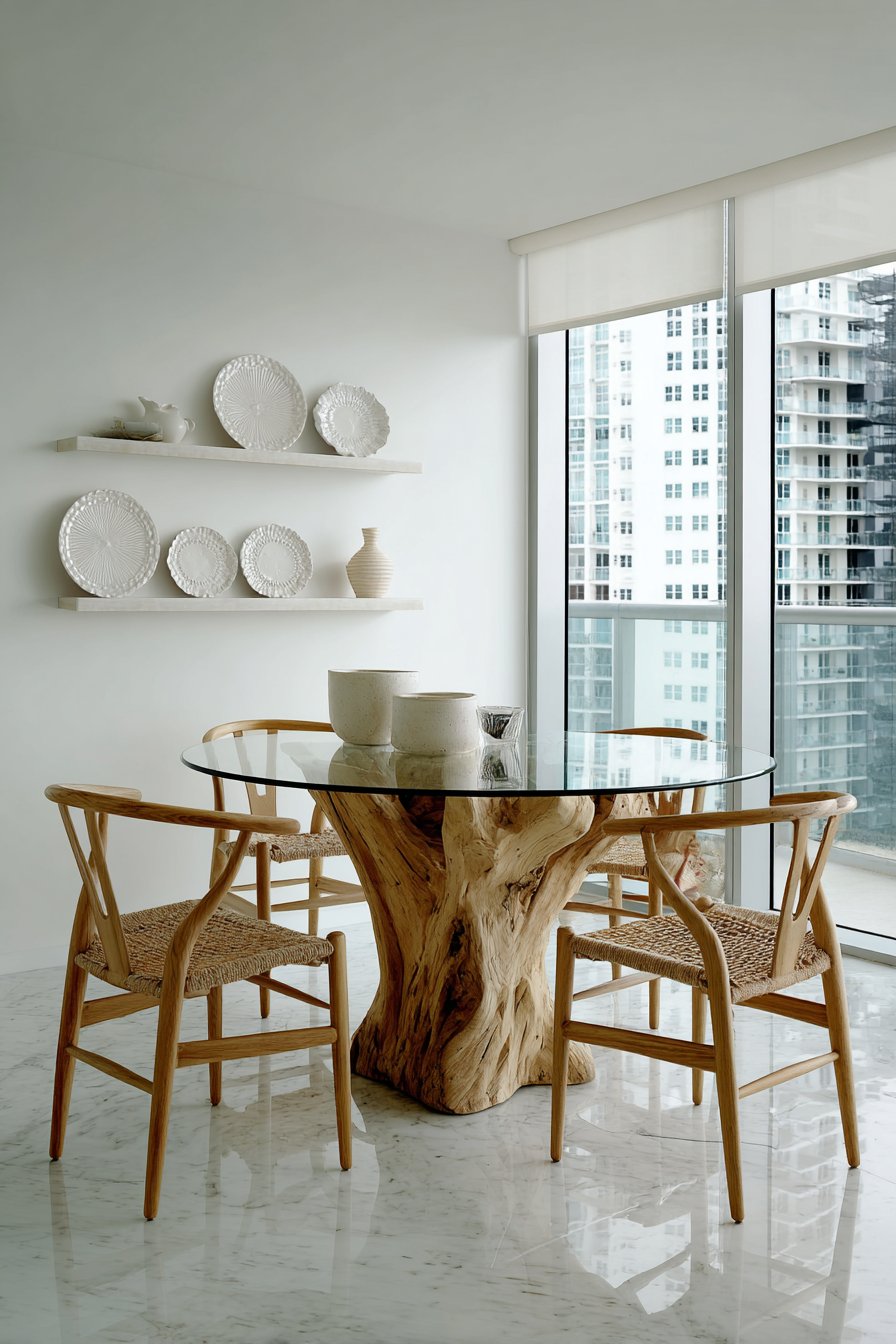
Floor-to-ceiling windows with white roller shades control natural light. The shades filter harsh sunlight while maintaining brightness. The glass table maintains transparency that preserves the room’s open feeling. The wooden base becomes the primary decorative element through its sculptural form.
Key Design Tips:
- Use glass tabletops to maintain spatial transparency
- Choose sculptural wood bases as functional art
- Display identical objects in series for visual rhythm
- Install roller shades for adjustable light control
- Select marble flooring for timeless luxury
7. Live-Edge Black Walnut Drama
This minimal dining room showcases a live-edge table in black walnut. The natural wood characteristics and organic edges provide dramatic focal point. Simple upholstered dining chairs in natural linen fabric offer comfortable seating. The exposed wooden legs connect back to the table’s organic origins.
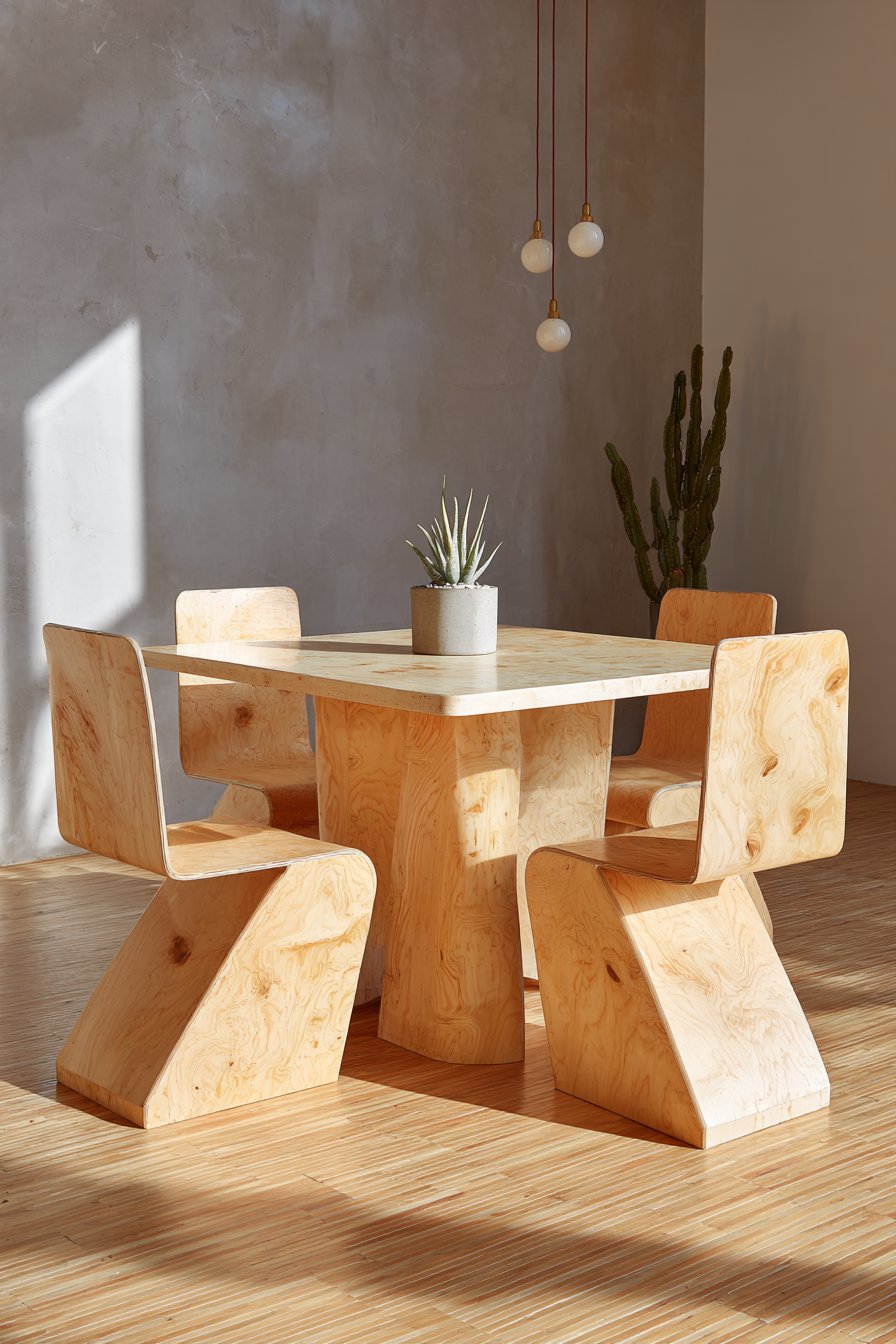
A single linear LED pendant in matte black hangs precisely centered above. The simple fixture provides functional lighting without competing for attention. Light grey walls meet pale oak flooring in wide planks. This neutral backdrop allows the dramatic table to command focus.
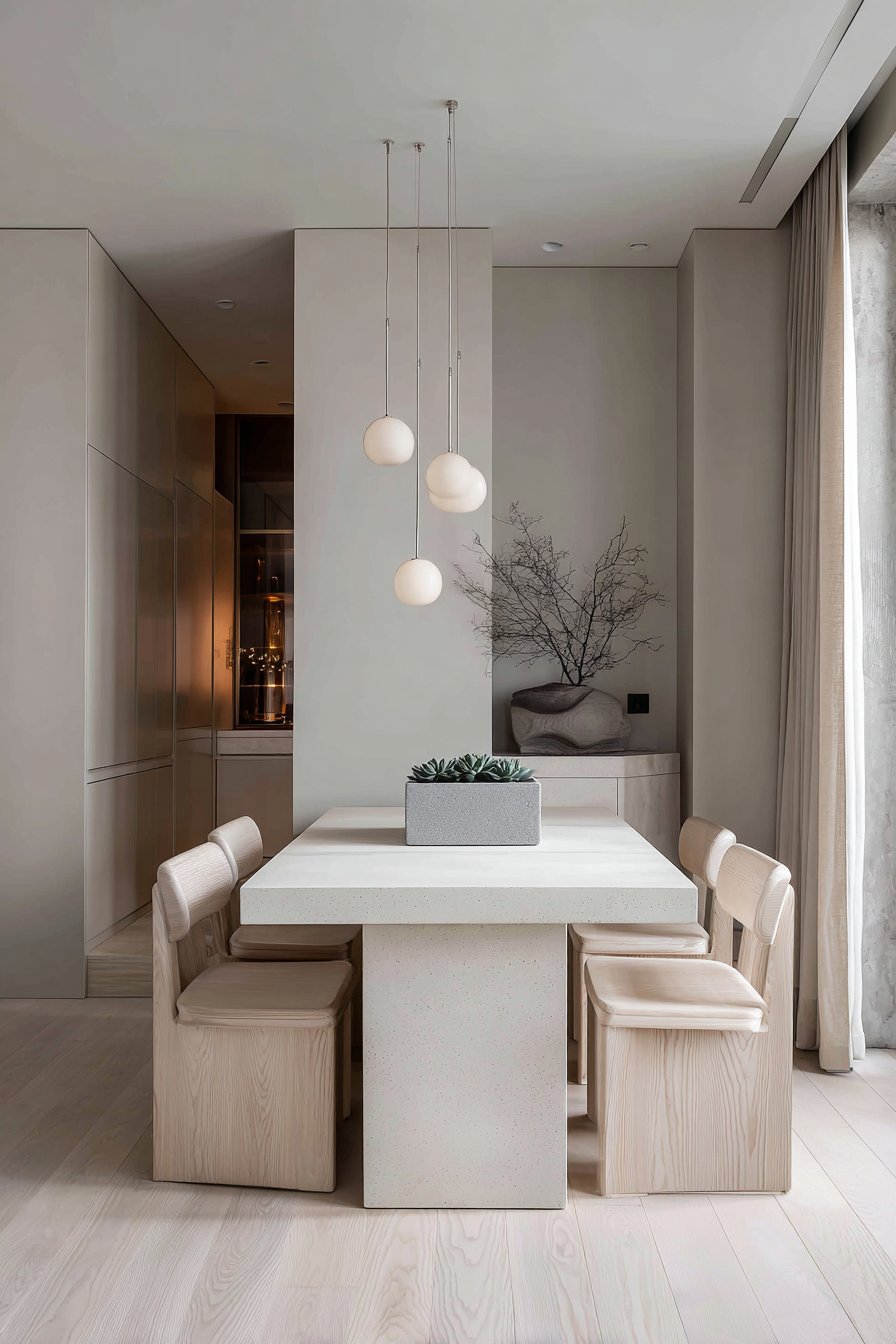
One large-scale black and white photographic print serves as sole wall decoration. The thin black frame maintains minimal aesthetic. Natural light from adjacent windows creates gentle shadows. These shadows emphasize the material authenticity and organic forms throughout.
Key Design Tips:
- Showcase live-edge wood for organic character
- Keep upholstery neutral to highlight wood tones
- Use linear LED pendants for clean modern lighting
- Display large-scale photography for artistic impact
- Let natural shadows enhance material textures
8. White Lacquer Square with Molded Plywood
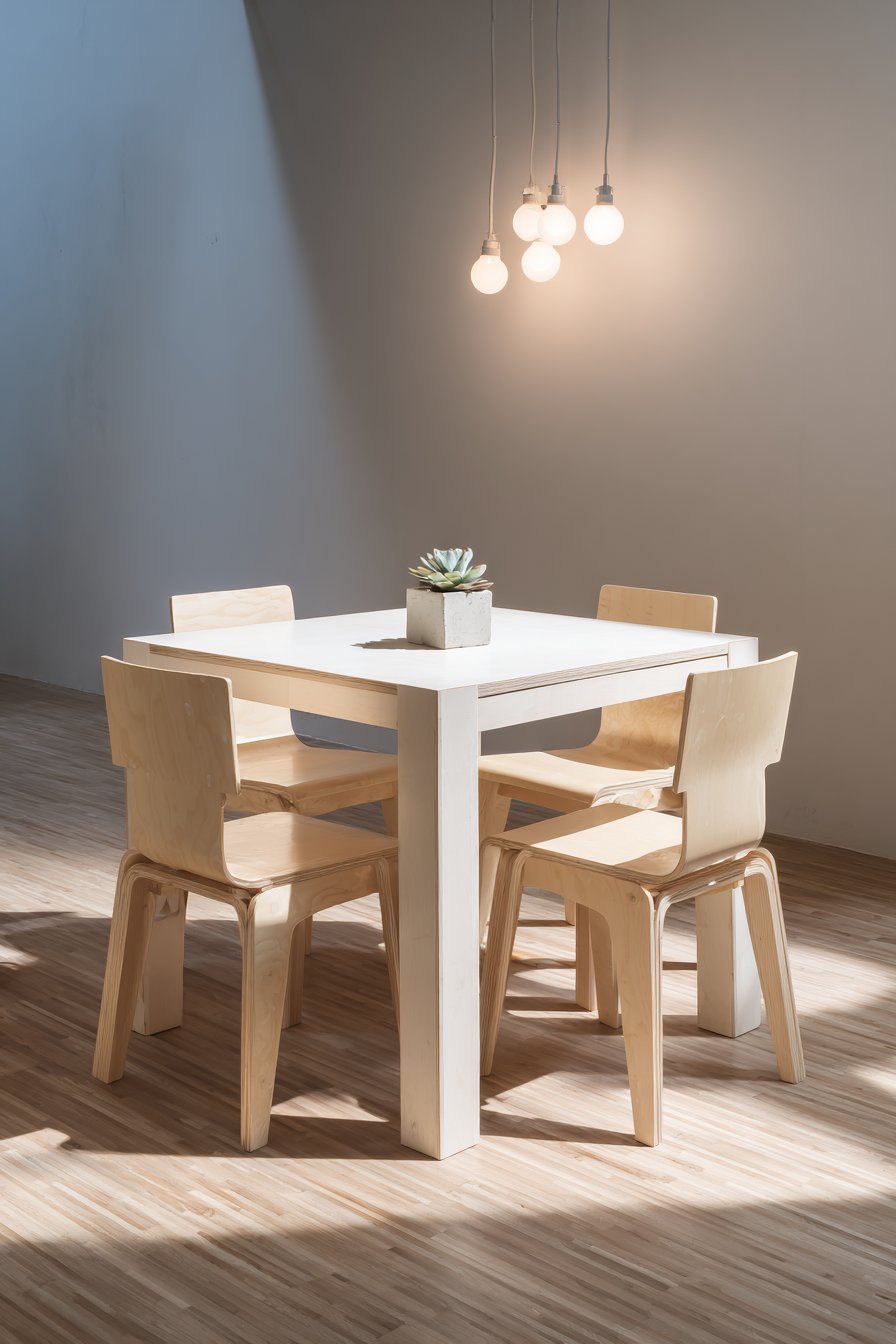
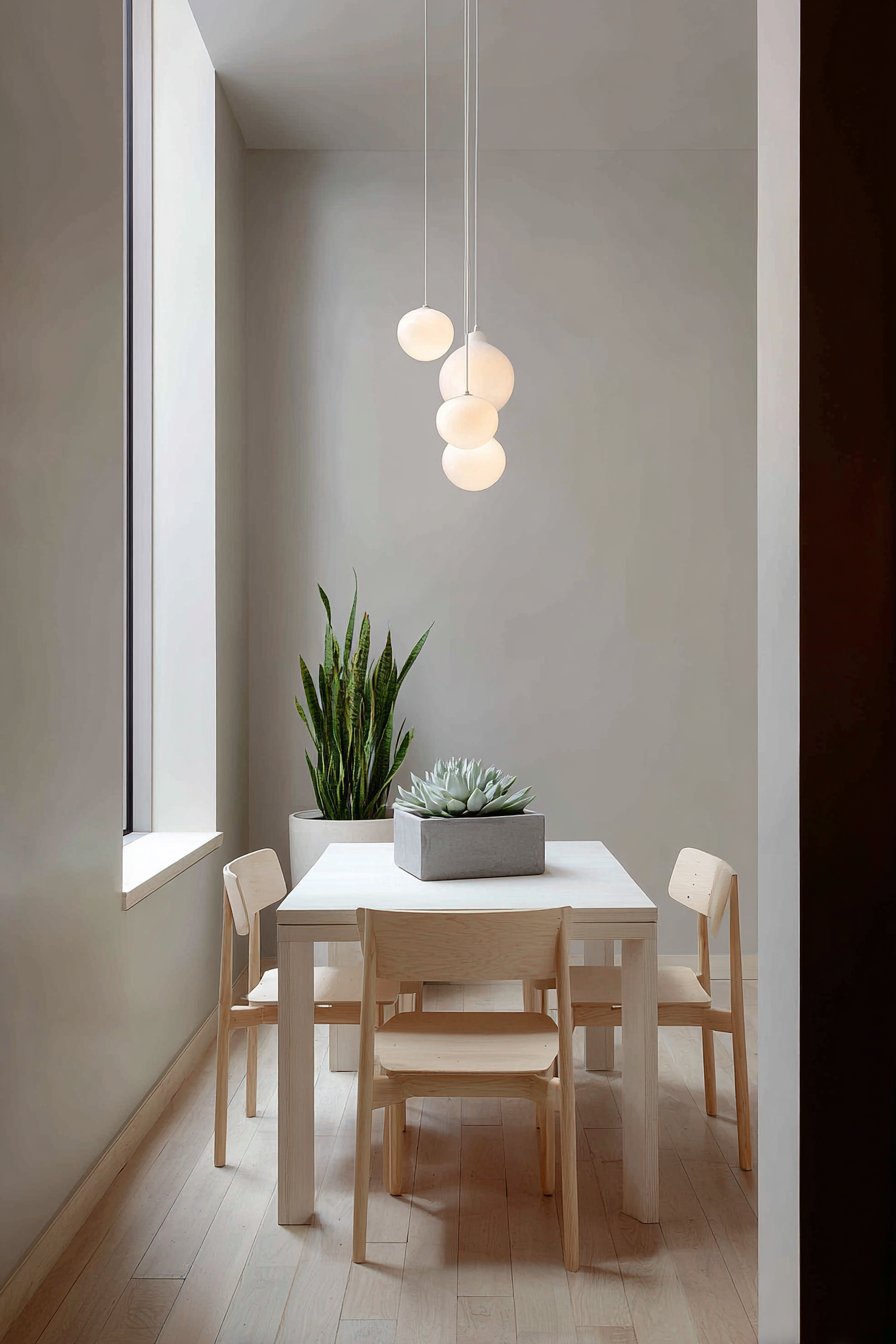
A square dining table in white lacquer anchors this minimal dining area. The hidden extension mechanism maintains clean lines while providing flexibility. Four sculptural molded plywood chairs in natural birch provide ergonomic seating. Their curved forms add organic softness to geometric surroundings.
The tabletop displays only a simple geometric concrete planter. A single succulent grows within this minimalist container. Walls painted in soft warm grey create subtle backdrop. Light bamboo flooring runs throughout creating delicate linear texture.
Three simple globe pendants in frosted glass hang at varying heights. This cluster arrangement provides balanced illumination across the square table. The frosted glass diffuses light gently throughout the space. Natural daylight supplements the artificial lighting beautifully.
Key Design Tips:
- Choose tables with hidden extension mechanisms
- Use molded plywood for ergonomic comfort
- Display single succulents in concrete planters
- Hang pendant lights in clusters at varied heights
- Select bamboo flooring for sustainable texture
9. Oval Tulip-Style Monochromatic Elegance
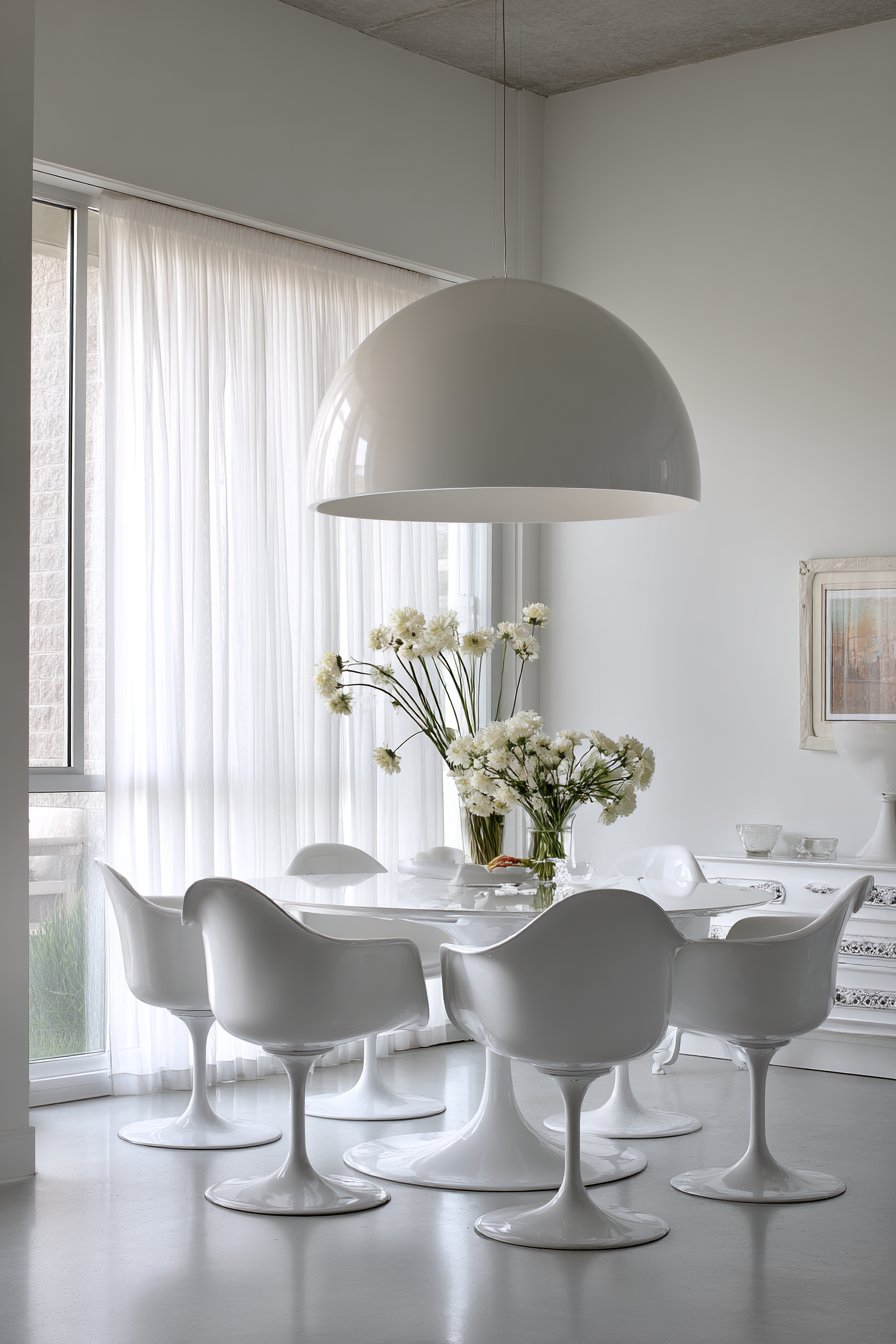
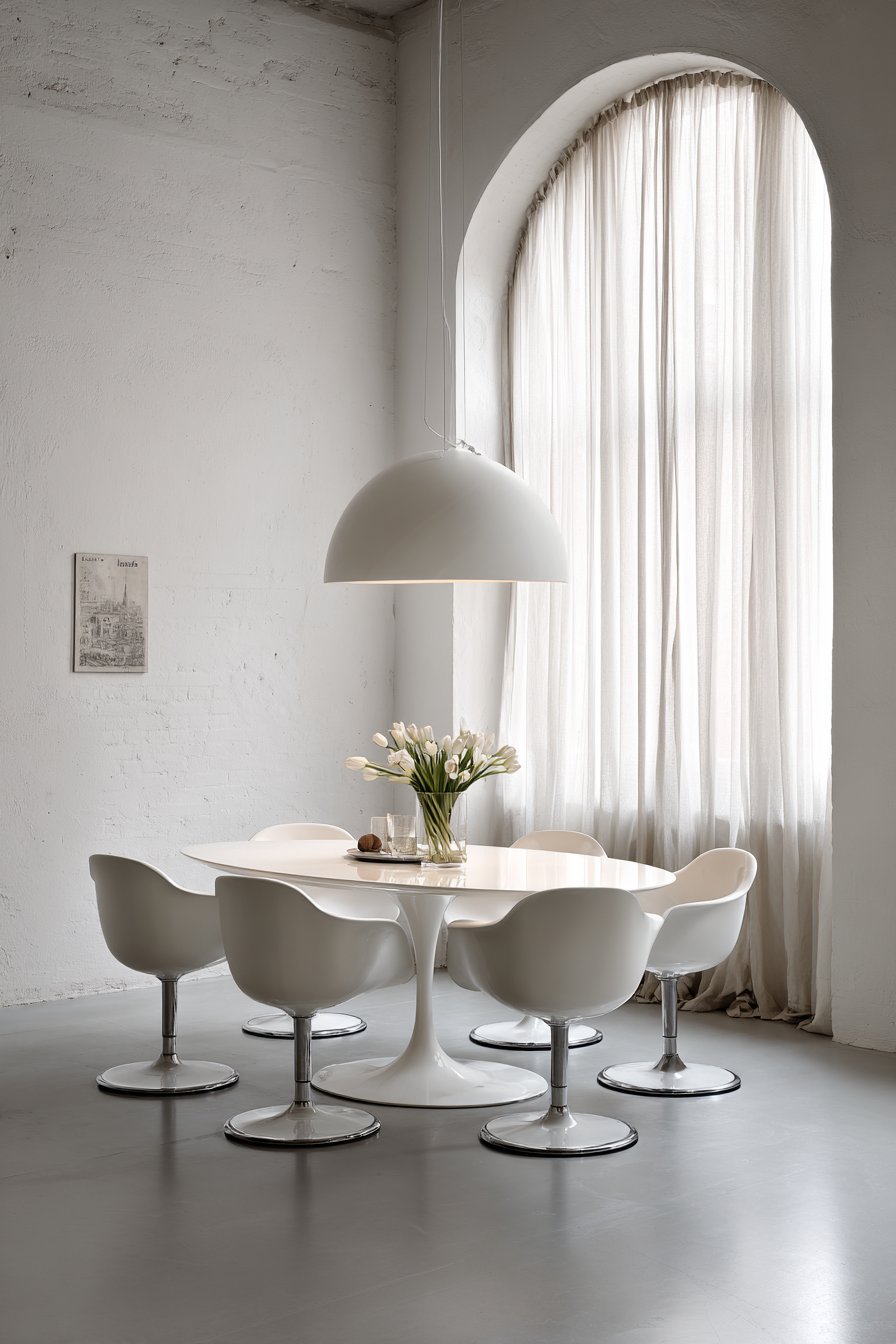
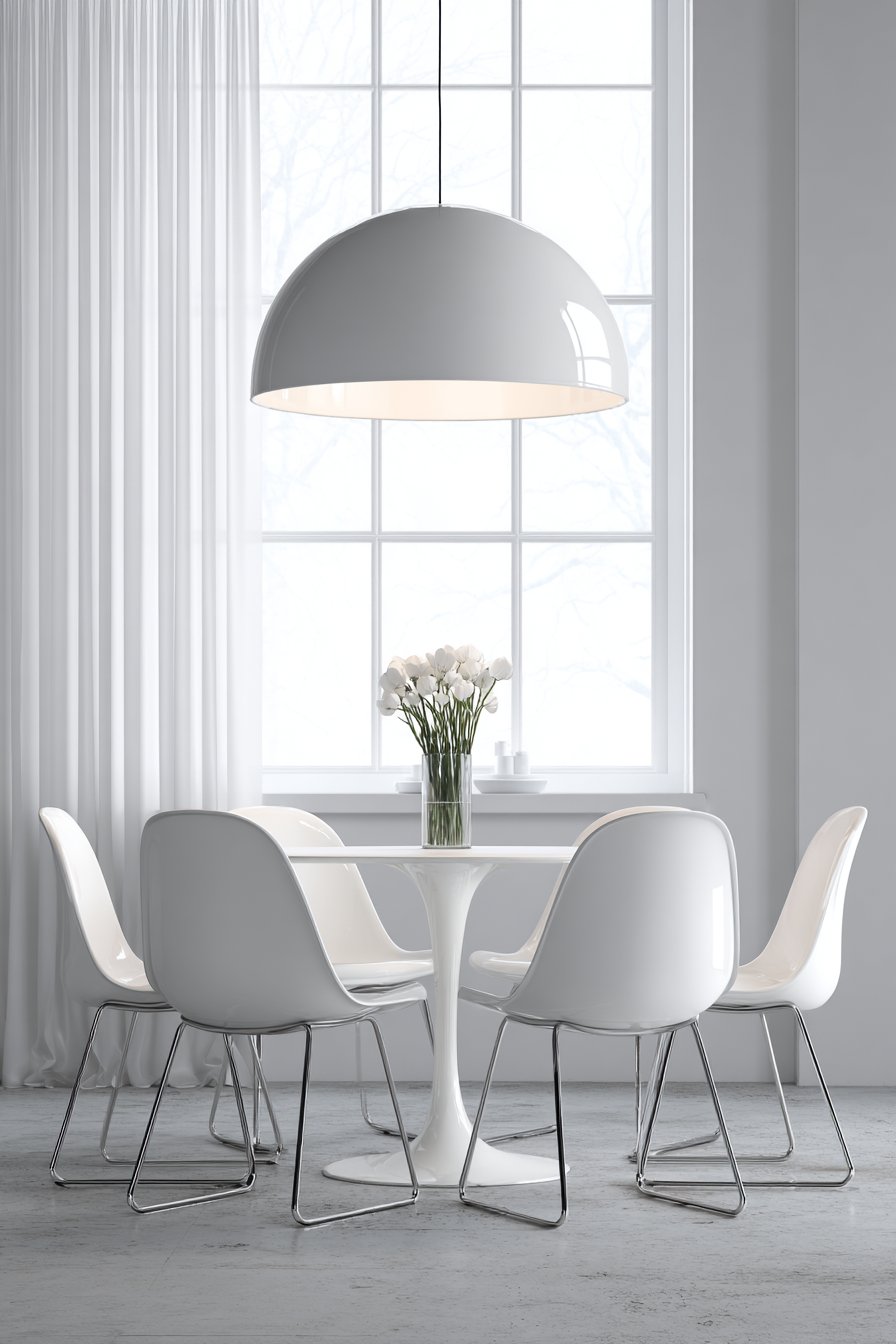
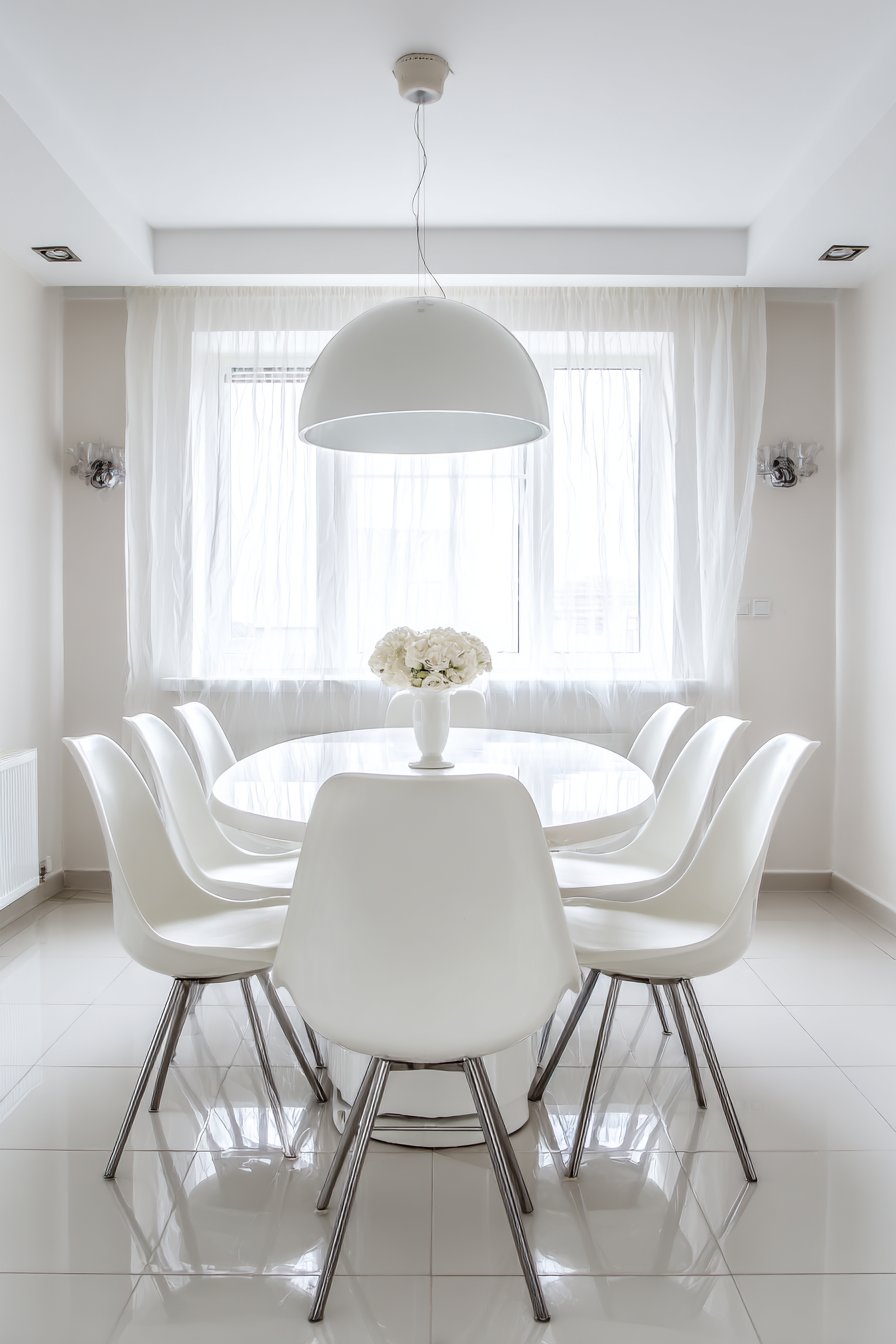
This minimal dining room centers on an oval tulip-style table. The white glossy finish reflects light throughout the space. Six side chairs feature molded white plastic seats on chrome pedestal bases. The monochromatic scheme creates cohesive visual unity.
Plain white walls provide serene backdrop throughout. Polished light grey concrete flooring adds subtle tonal variation. One dramatic floor-to-ceiling window with sheer white drapery filters natural light. The vertical emphasis draws eyes upward while maintaining softness.
A single oversized dome pendant in matte white provides ambient lighting. The smooth surface continues the monochromatic theme. Natural light reveals subtle variations in white tones throughout. Surface textures become visible through careful observation of light play.
Key Design Tips:
- Create monochromatic schemes with tonal variations
- Use glossy surfaces to reflect and multiply light
- Choose chrome accents for subtle metallic contrast
- Install oversized pendants for dramatic scale
- Filter natural light through sheer drapery
10. Reclaimed Grey Wood with Eclectic White Chairs
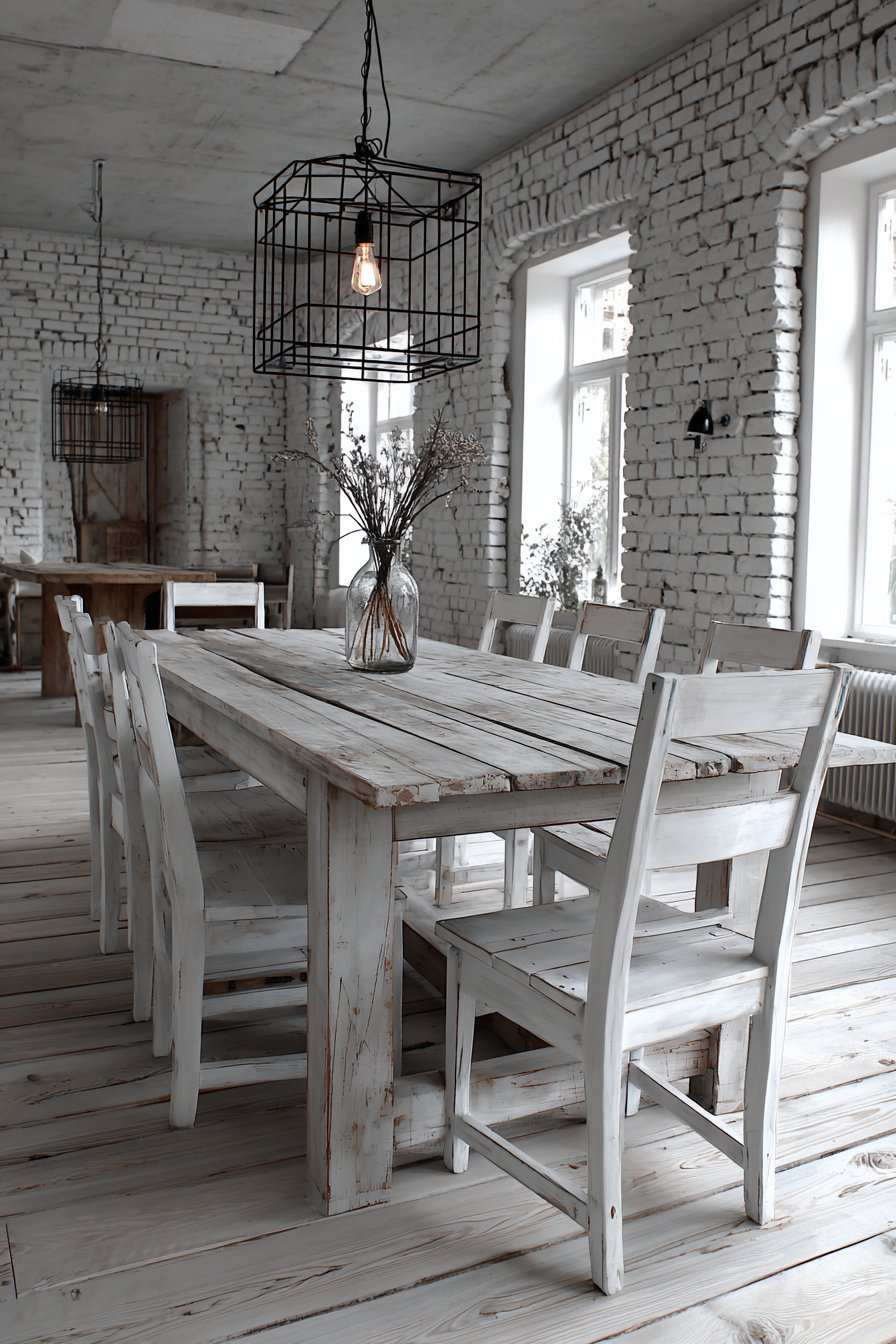
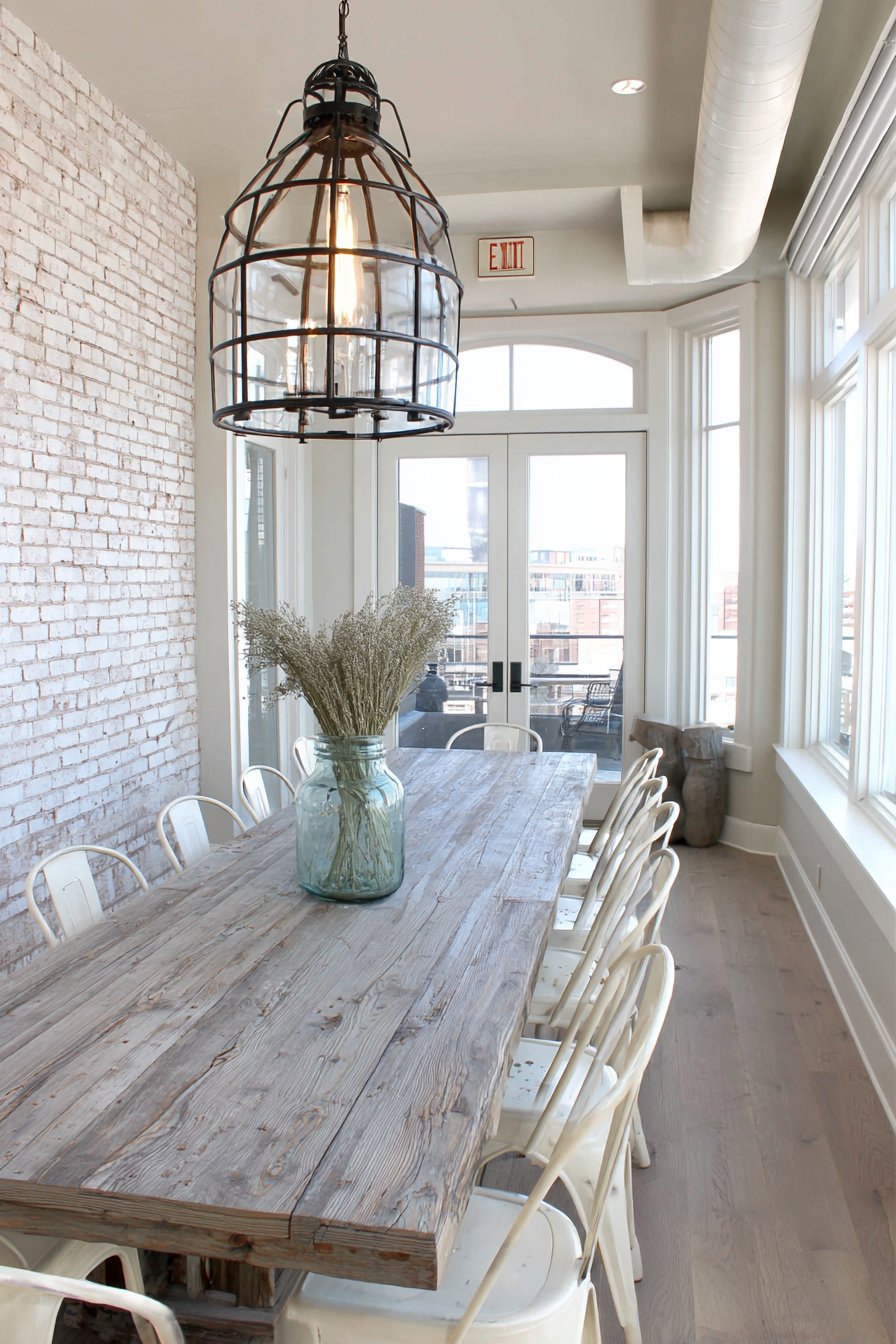
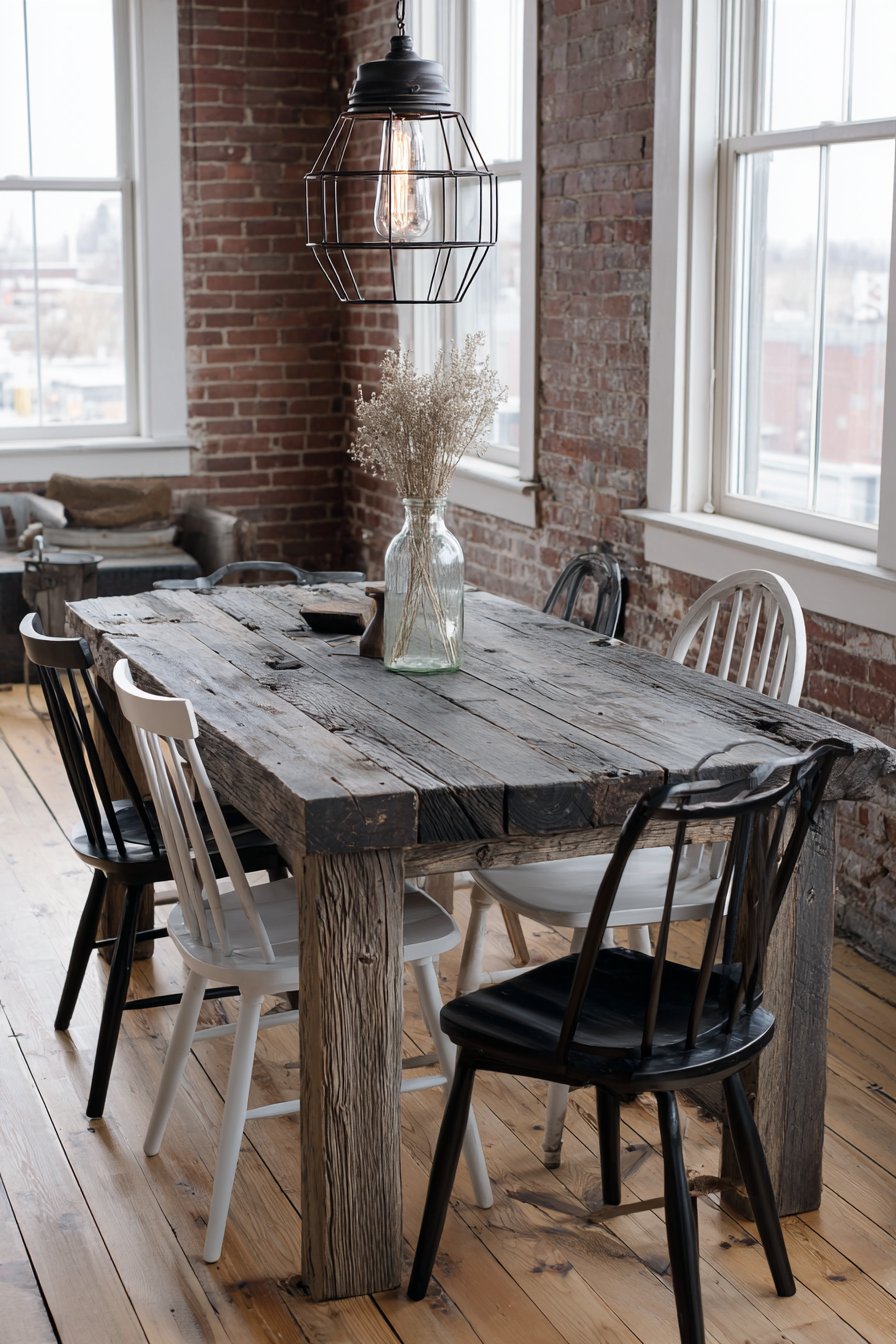
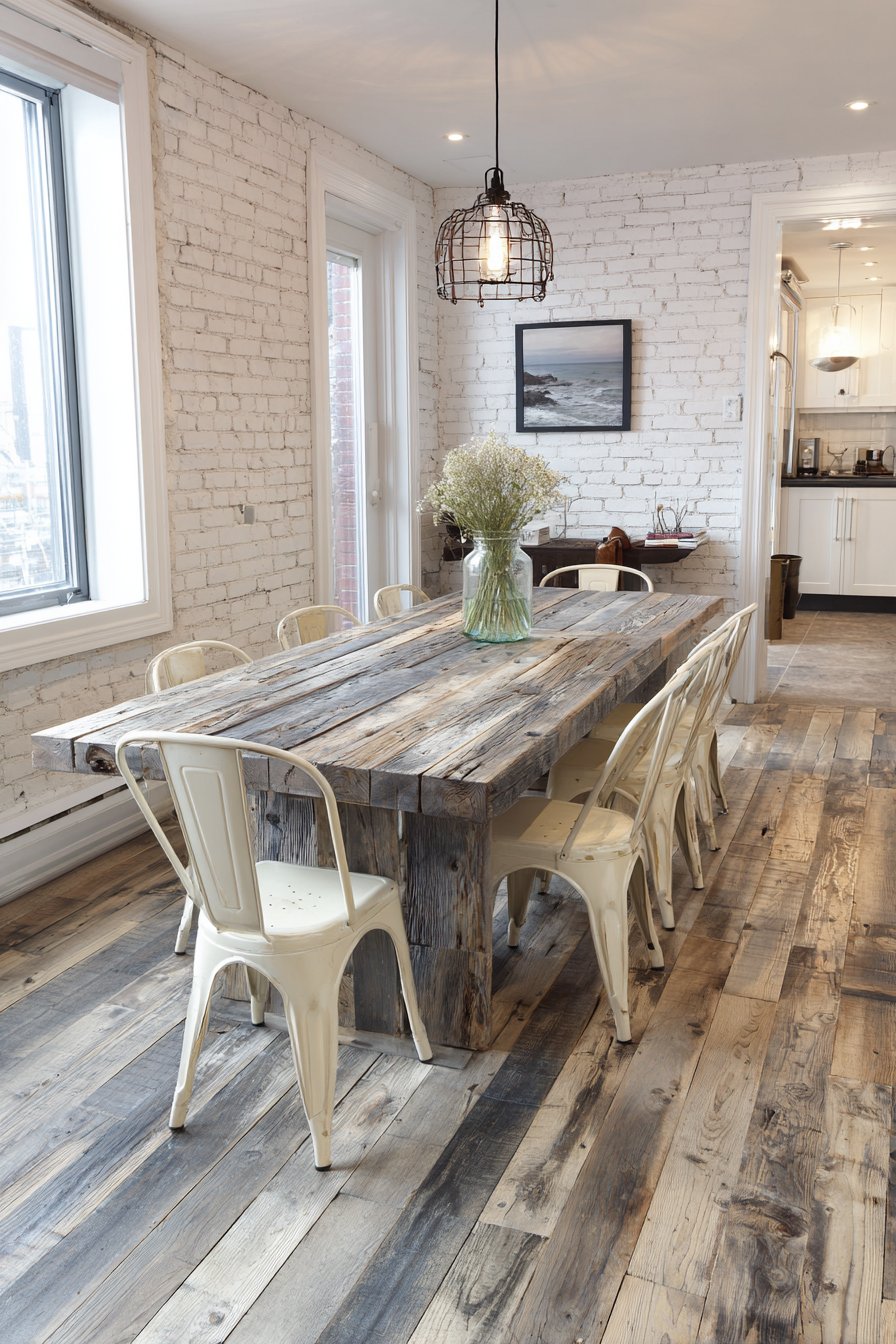
This minimal dining space features rustic reclaimed wood in weathered grey finish. The farm table brings character through authentic patina and age. Mismatched vintage wooden chairs painted in matte white create eclectic simplicity. The combination proves minimal doesn’t require matchy-matchy perfection.
A single vintage glass bottle holds wild grasses on the table. This simple arrangement brings nature indoors without formality. Whitewashed brick walls provide textural backdrop while maintaining light atmosphere. The exposed brick adds architectural interest without additional decoration.
Wide plank pine flooring in natural finish adds warmth underfoot. An industrial-style pendant with black metal cage hangs above. The exposed bulb provides practical lighting with vintage character. This space demonstrates how minimal aesthetic accommodates authentic materials and thoughtful restraint.
Key Design Tips:
- Mix vintage pieces for collected-over-time appeal
- Paint mismatched chairs uniform color for cohesion
- Use reclaimed materials for character and sustainability
- Display natural elements in vintage containers
- Whitewash brick to lighten while preserving texture
11. Dark Walnut Extendable with Grey Linen
A sleek extendable dining table in dark walnut provides sophisticated foundation. Integrated metal legs maintain clean lines without traditional table aprons. Eight upholstered parsons chairs in soft grey linen offer comfortable seating. The clean straight lines exemplify minimal restraint.
The table remains unadorned except for a low rectangular planter. Three small succulents arranged in asymmetric composition provide living decoration. Smooth white walls meet medium-toned oak flooring. The neutral backdrop allows quality materials to shine.
Two identical rectangular pendant lights with white fabric shades hang in alignment. The perfect symmetry provides balanced illumination across the extended table length. Natural light from large windows supplements artificial lighting. The combination creates even illumination throughout the day.
Key Design Tips:
- Choose extendable tables for flexibility
- Upholster parsons chairs for comfortable minimalism
- Arrange succulents asymmetrically for visual interest
- Use paired pendant lights for symmetrical balance
- Select medium wood tones for warmth without heaviness
12. Floating Wall-Mounted Innovation
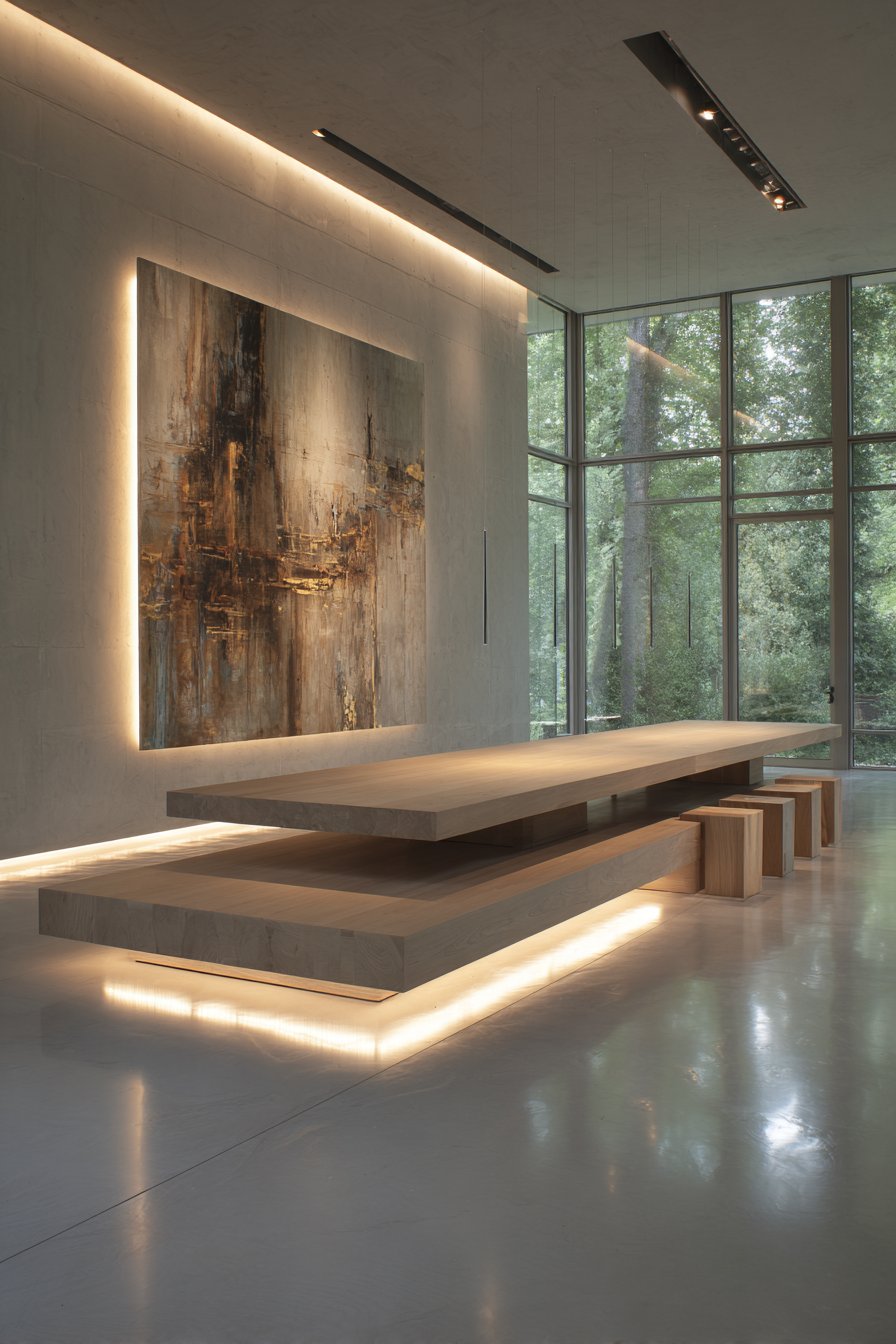
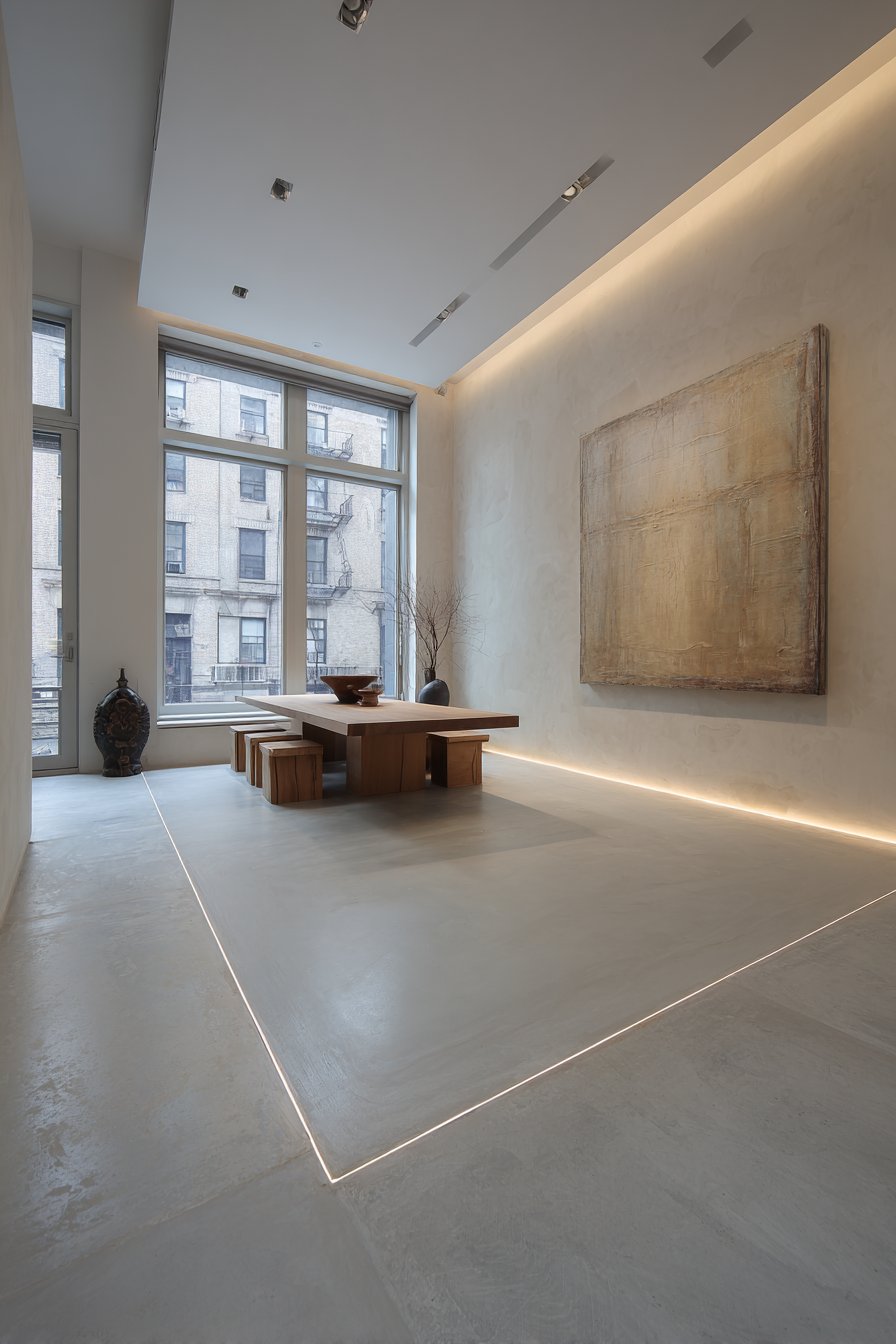
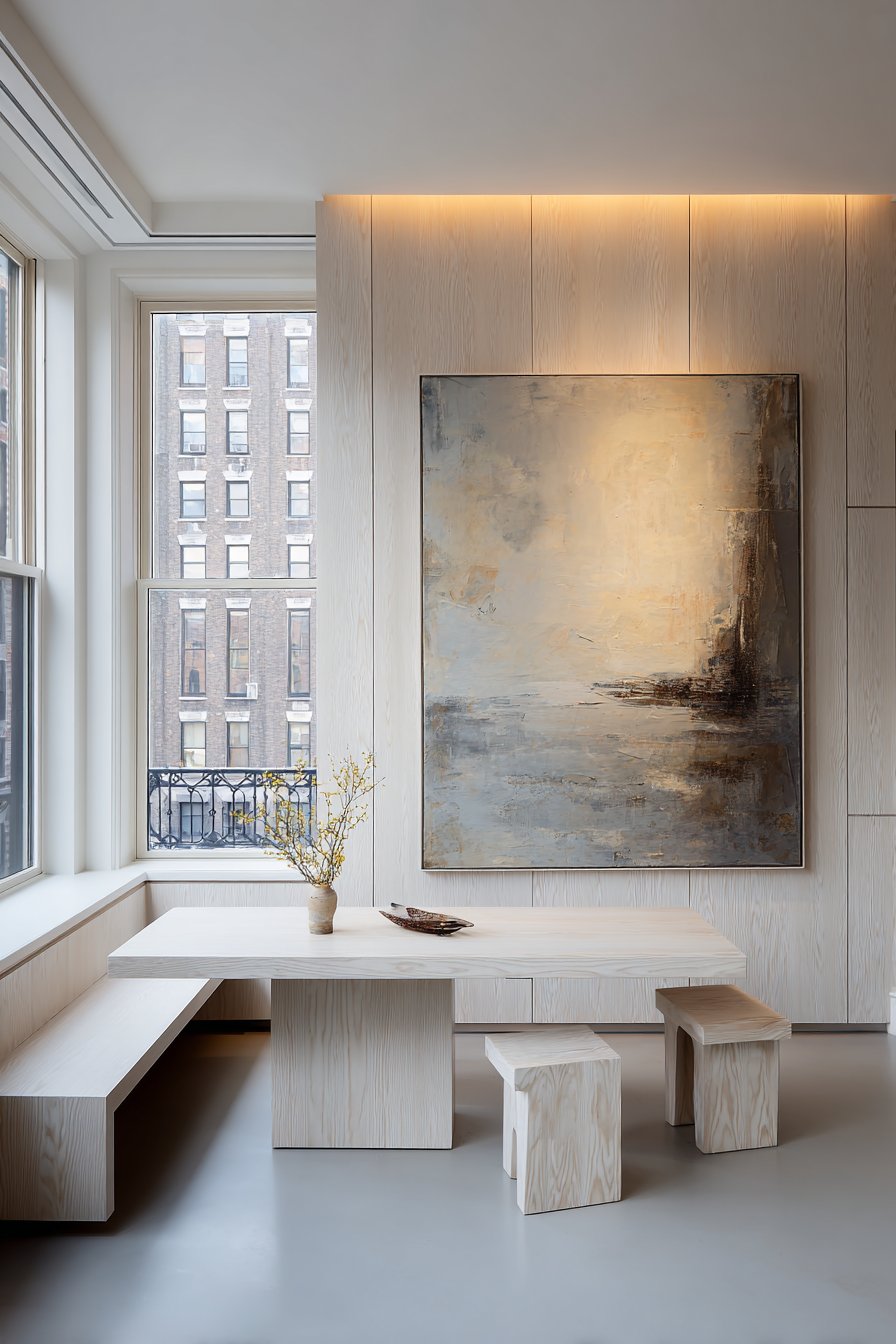
This minimal dining area features custom floating table in solid white oak. The innovative design appears to emerge directly from the wall. Hidden brackets provide structural support while maintaining visual magic. Backless stools in matching wood complete the streamlined seating.
The windowless wall features integrated LED strip lighting. This subtle illumination creates ambient glow without visible fixtures. Polished concrete flooring in light grey extends throughout. One large abstract painting in muted earth tones provides controlled color accent.
The floating element creates remarkable visual lightness. The space-saving design suits modern small-space living perfectly. The honest materials and functional stability demonstrate that minimal design serves practical needs. Innovation and beauty combine in this memorable dining solution.
Key Design Tips:
- Use floating elements for space-saving elegance
- Install integrated LED strips for hidden lighting
- Choose backless stools for streamlined profiles
- Display single large artworks for focal interest
- Specify polished concrete for modern durability
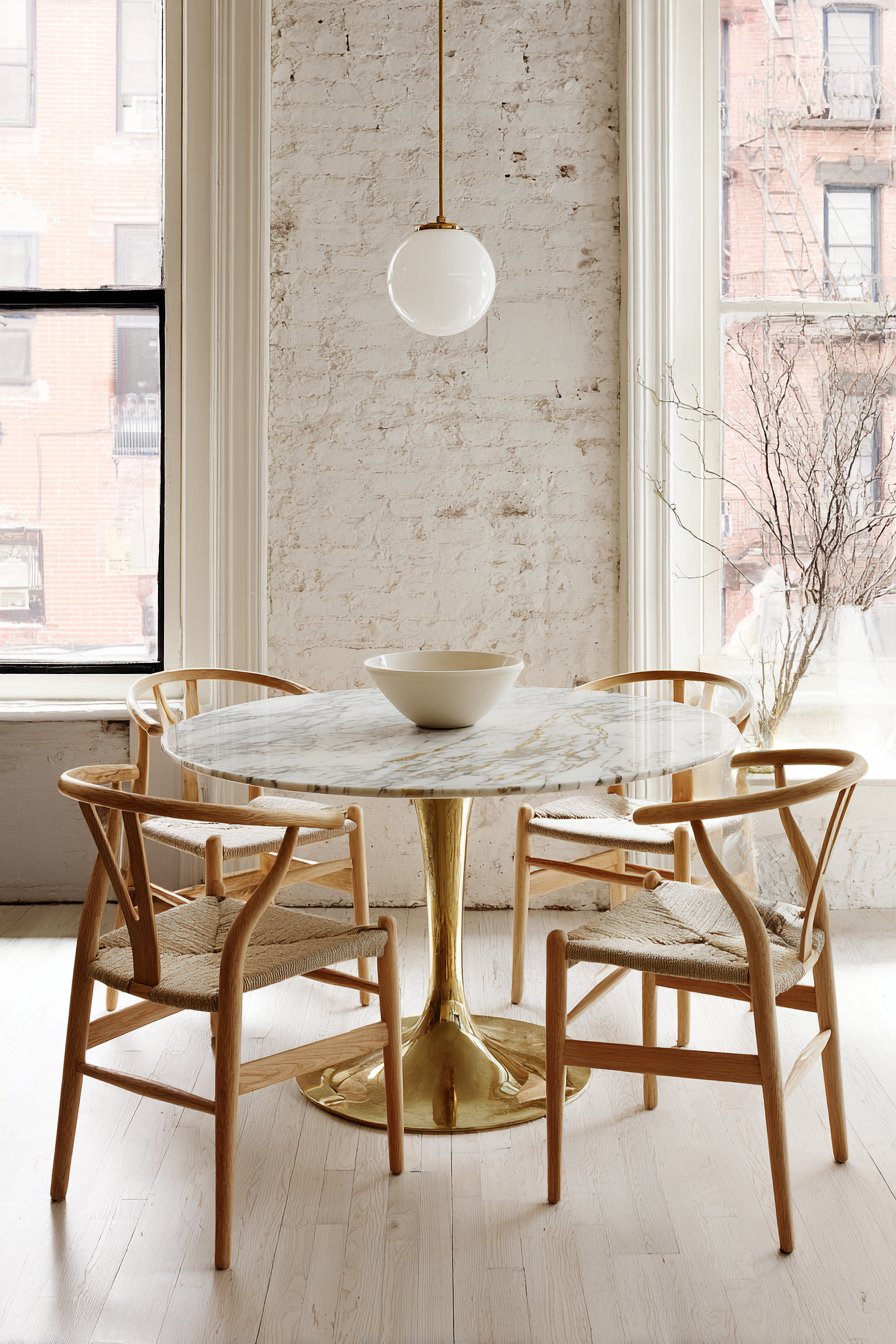
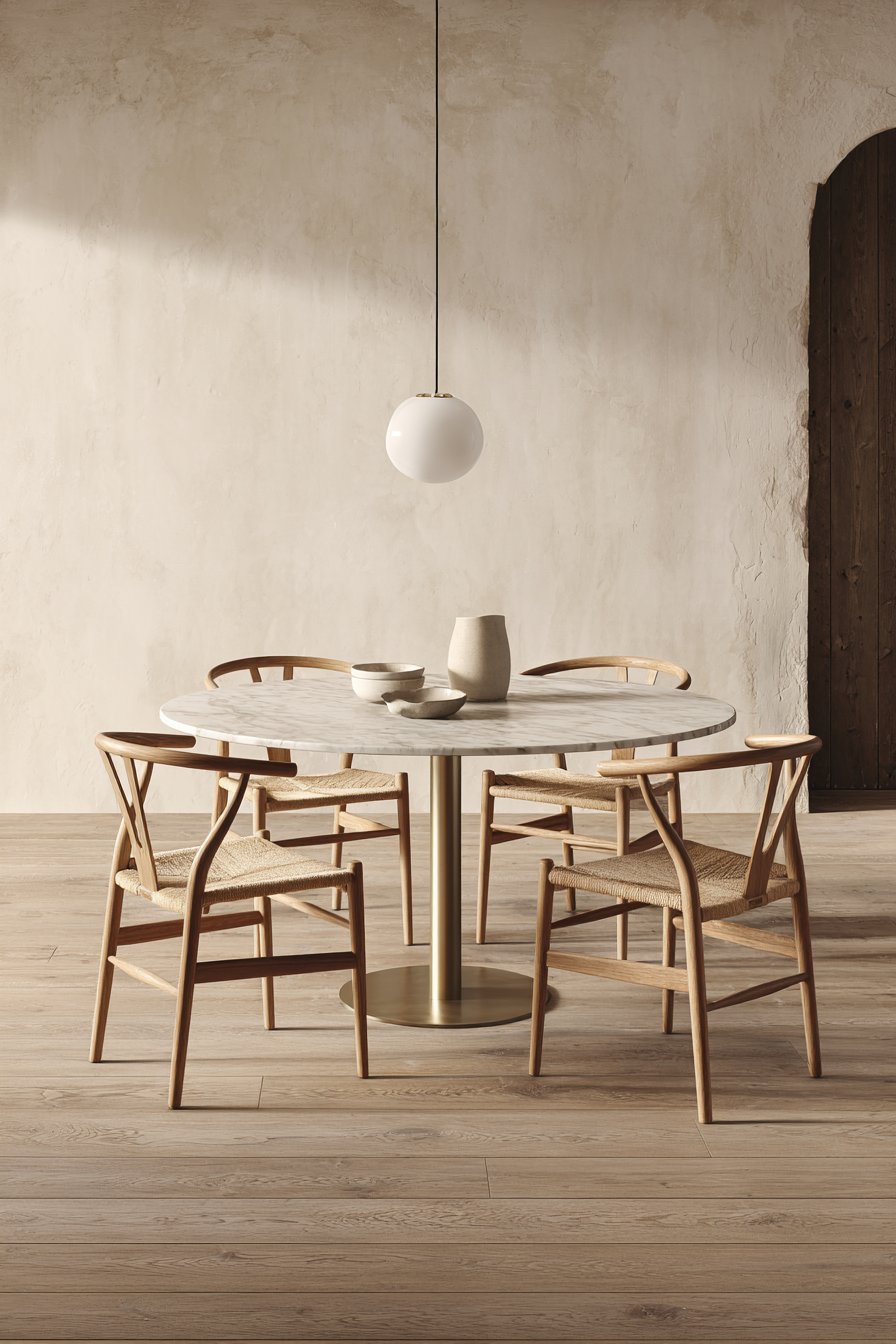
13. Circular Marble with Brass Pedestal
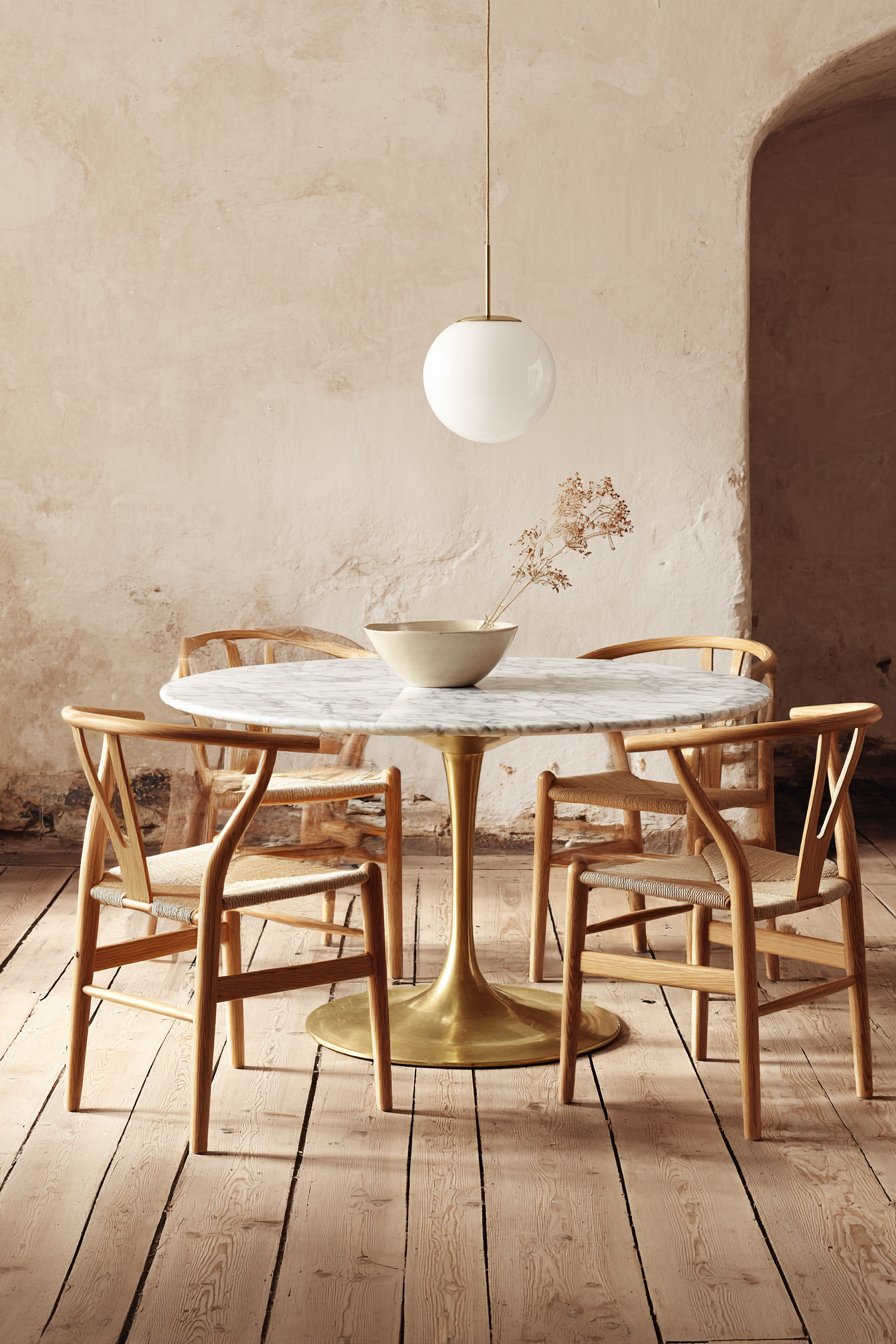
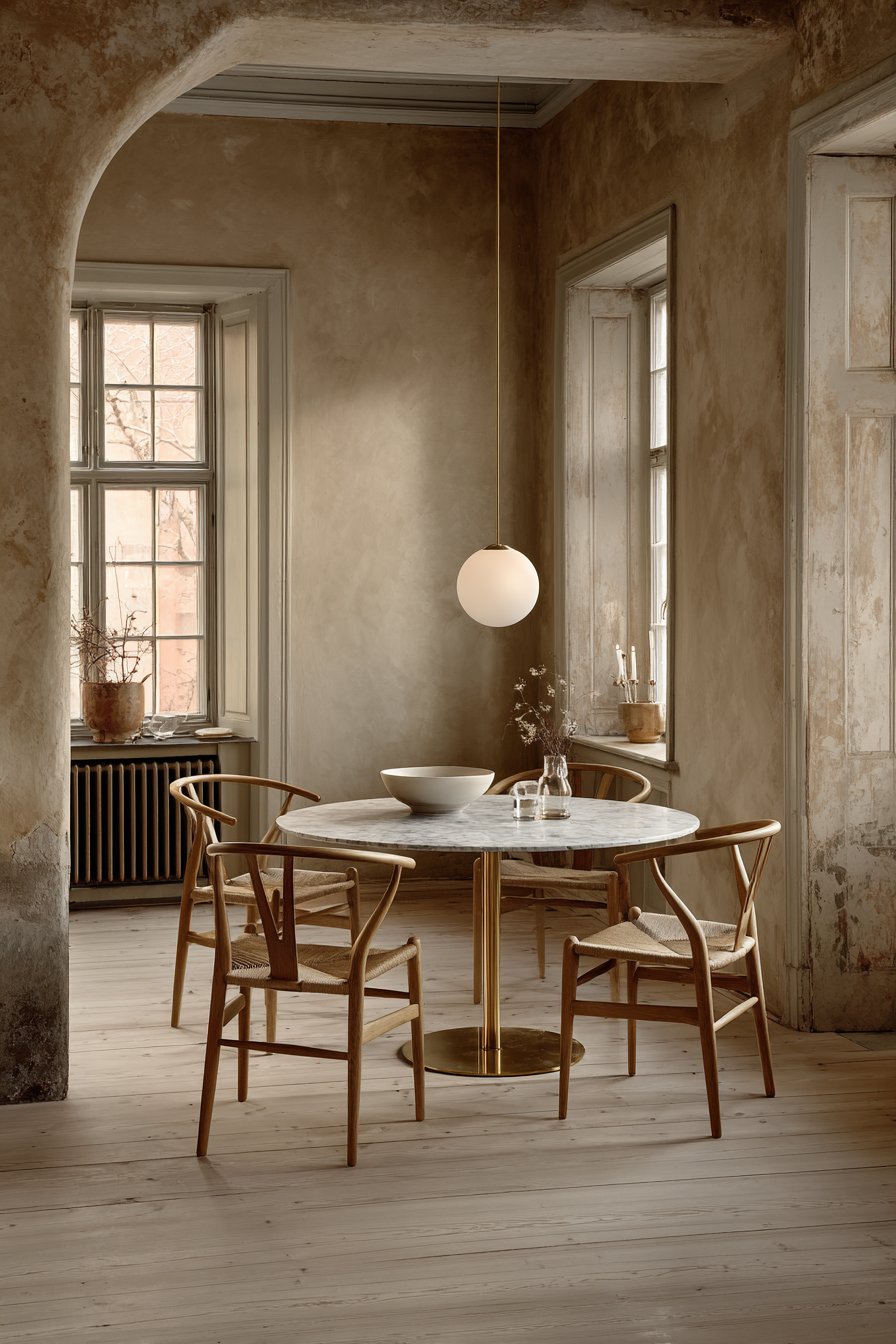
A circular marble-top dining table creates elegant centerpiece. The solid brass pedestal base provides warm metallic foundation. Four wishbone-style chairs in natural oak surround the table. The woven paper cord seats add handcrafted texture and comfort.
The table displays a single handcrafted ceramic bowl in matte white glaze. This simple vessel demonstrates appreciation for artisan craftsmanship. Walls finished in warm off-white show subtle texture in natural light. Wide plank white oak flooring with matte finish runs throughout.
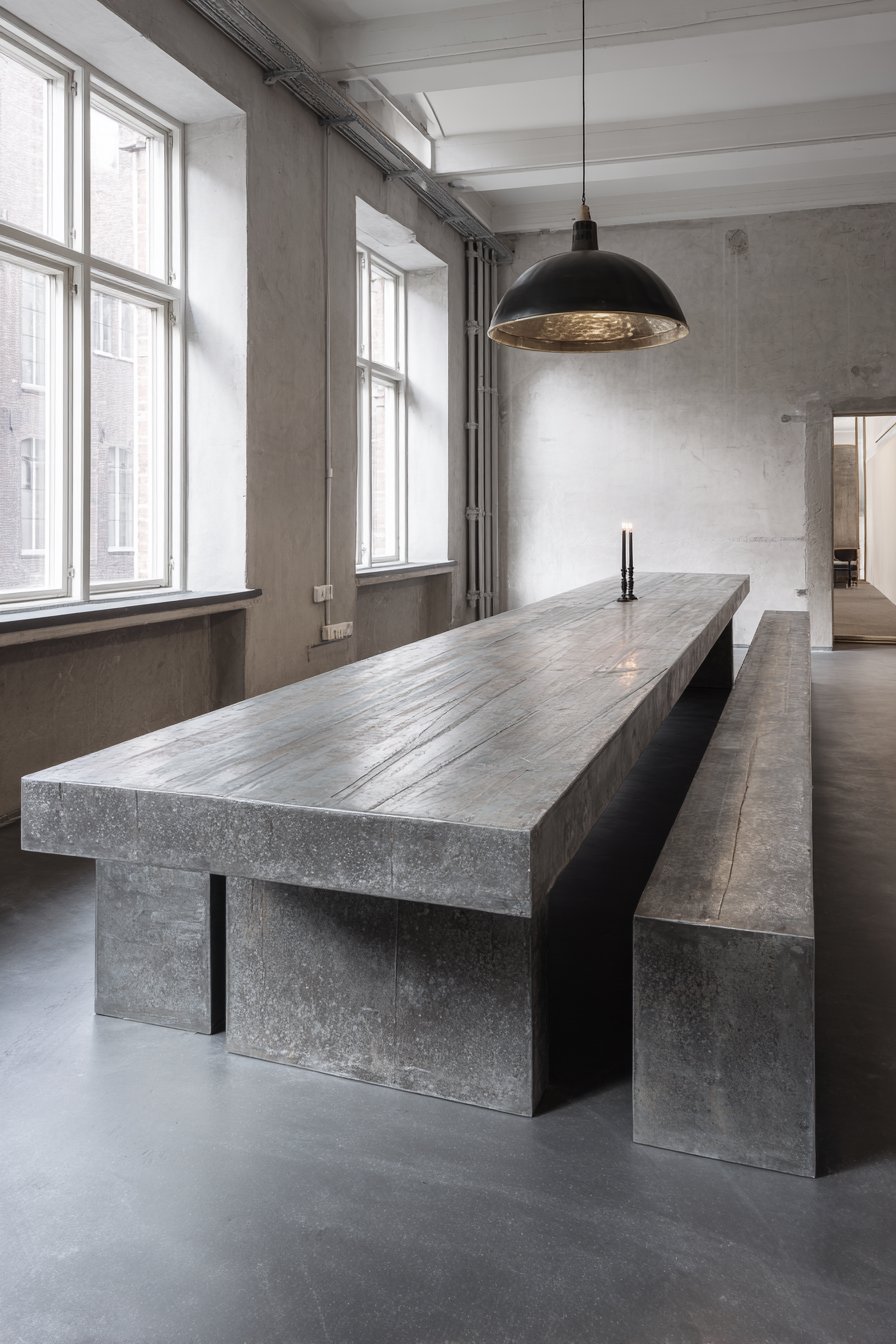
A simple pendant light with opal glass globe provides soft downward illumination. The translucent quality diffuses light beautifully across the marble surface. The tactile quality of natural materials creates sensory richness. Timeless design elements ensure lasting appeal beyond temporary trends.
Key Design Tips:
- Invest in marble tops for lasting luxury
- Choose brass pedestals for warm metallic elegance
- Select wishbone chairs for iconic Danish design
- Display handcrafted ceramics to celebrate artisans
- Use opal glass for soft light diffusion
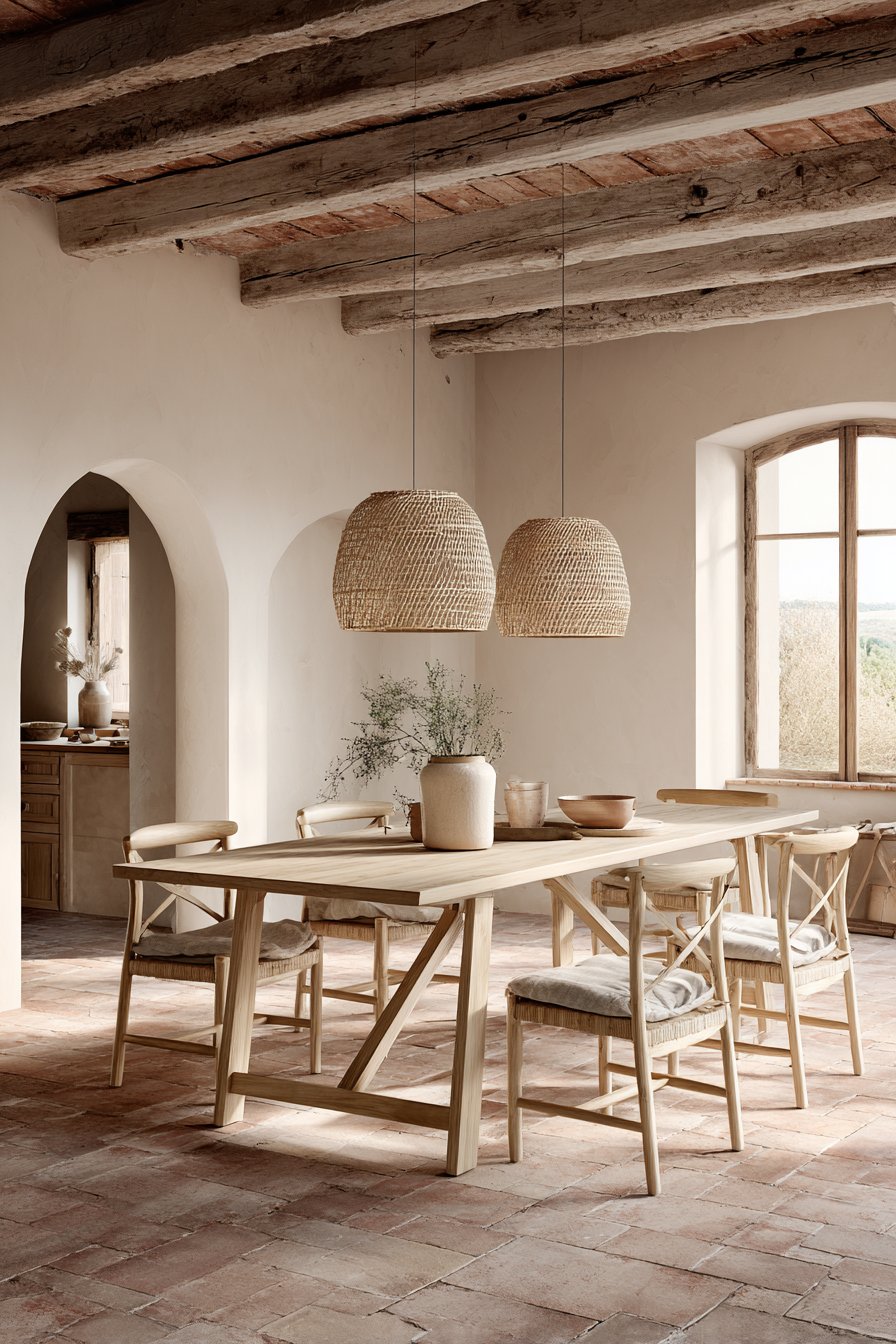
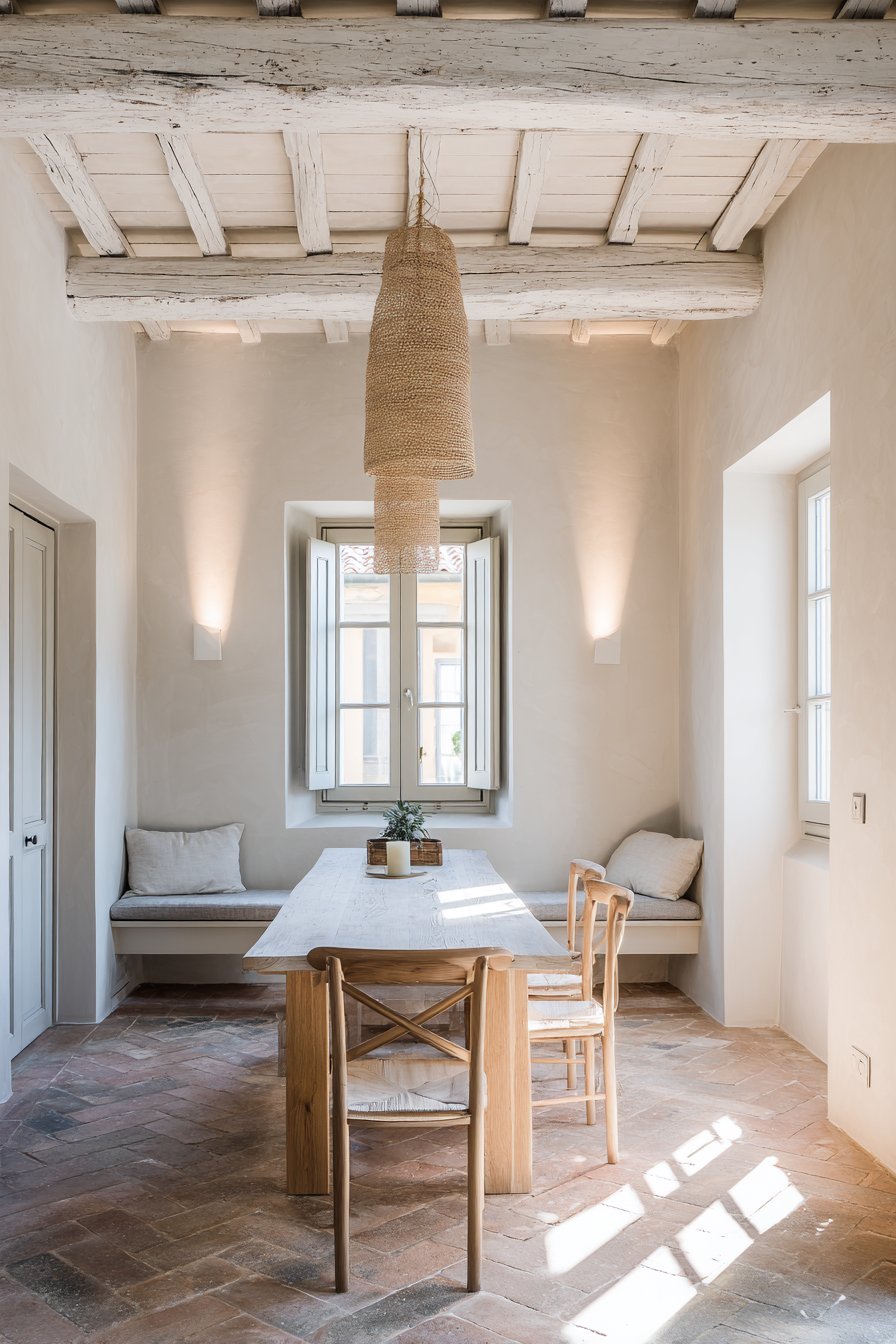
14. Trestle-Style Ash with Mediterranean Warmth
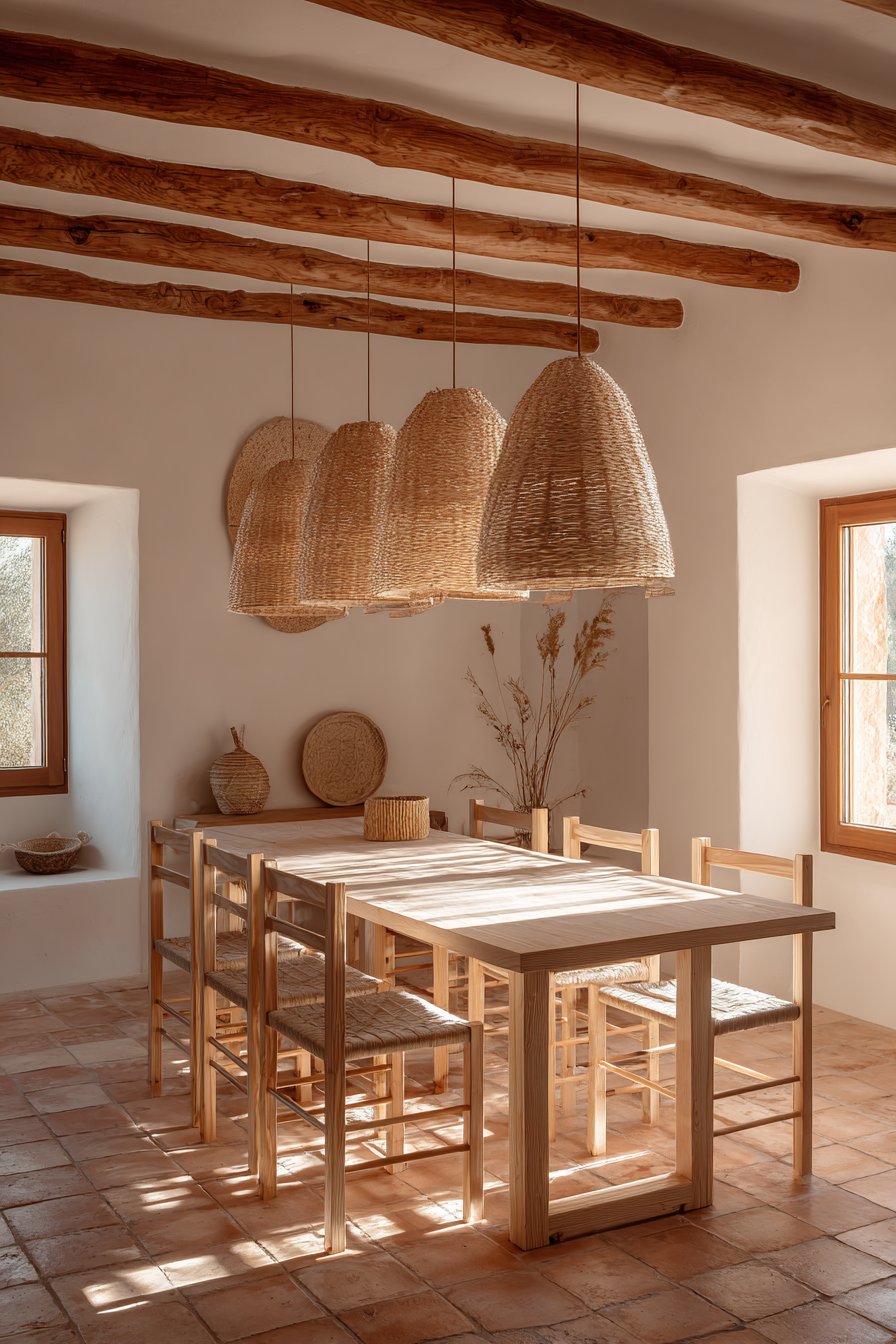
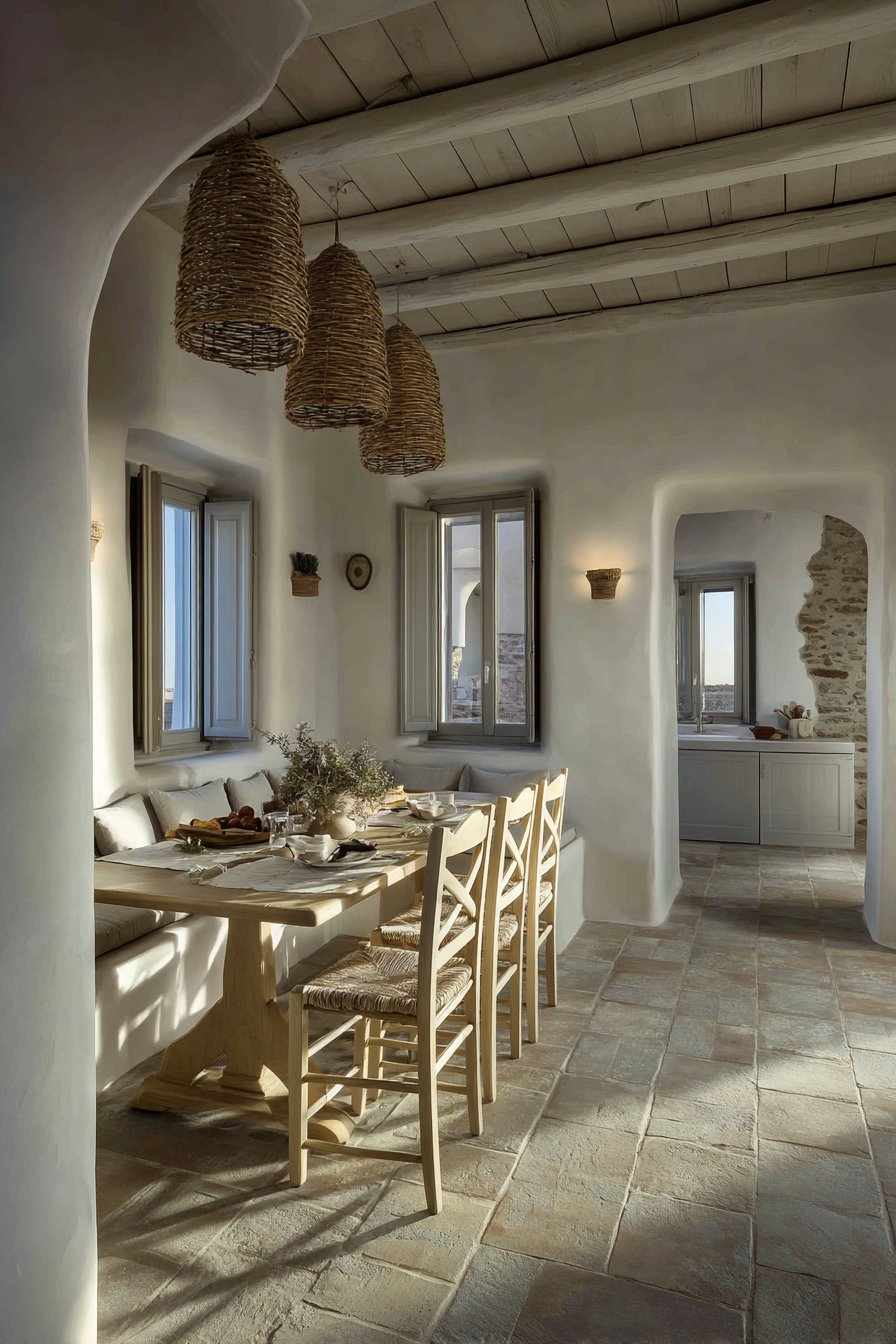
This minimal dining space features trestle-style table in light ash. Visible joinery details celebrate honest construction and natural wood movement. Six simple cross-back chairs in matching ash provide comfortable seating. Natural linen seat cushions add softness and texture.
Exposed ceiling beams painted white create architectural interest overhead. Walls in soft greige provide warm neutral backdrop. Terracotta tile flooring in large format adds subtle warmth. The Mediterranean influence brings earthiness to minimal aesthetic.
Three identical woven pendant lights in natural seagrass hang in a row. The organic materials complement the wood tones beautifully. Golden hour light streams through windows during late afternoon. This warm natural illumination highlights honest materials and visible craftsmanship throughout.
Key Design Tips:
- Showcase visible joinery as decorative detail
- Use terracotta tiles for Mediterranean warmth
- Hang organic woven pendants for textural interest
- Paint ceiling beams white to lighten overhead
- Add linen cushions for comfort and softness
15. Industrial Zinc-Top with Raw Steel
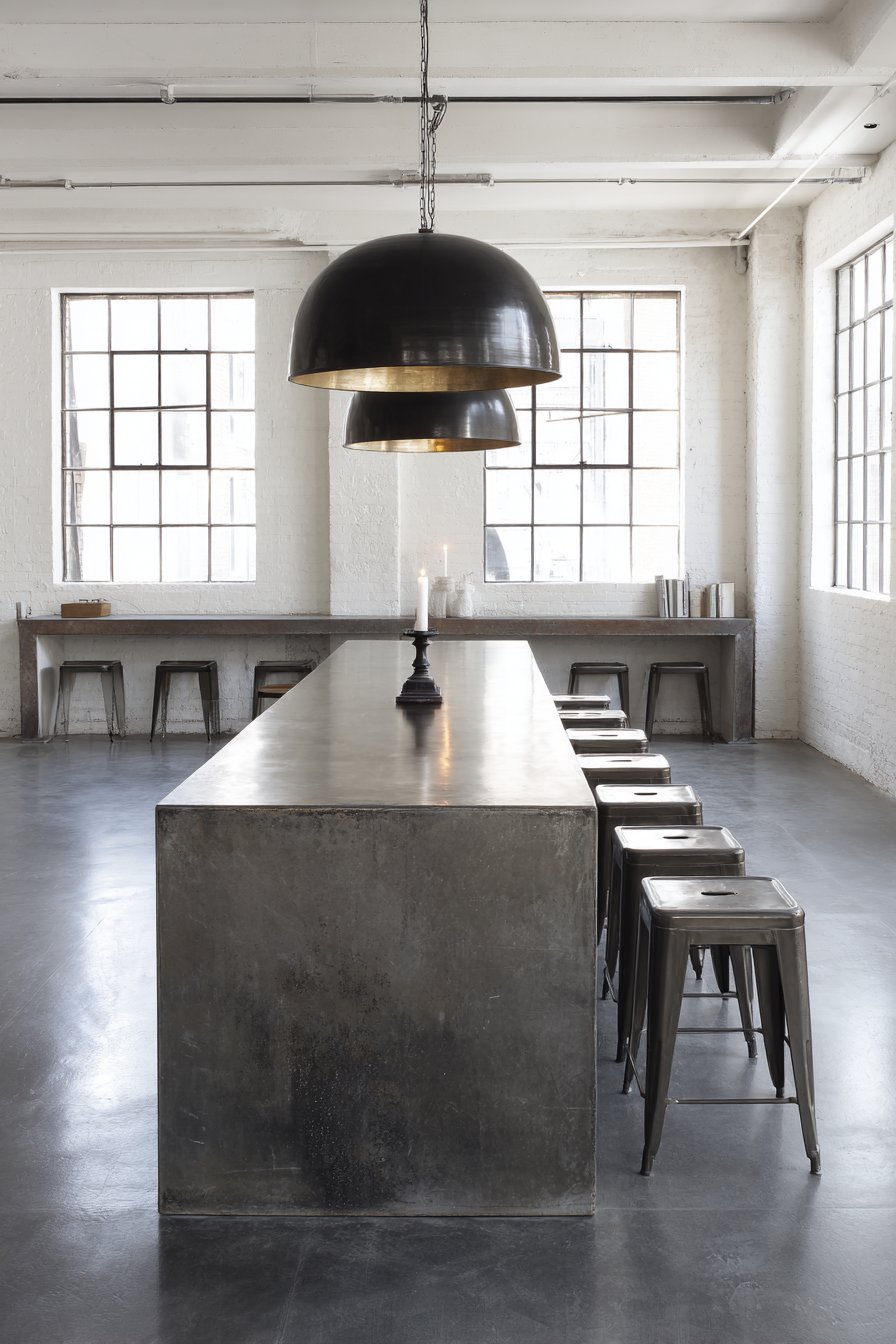
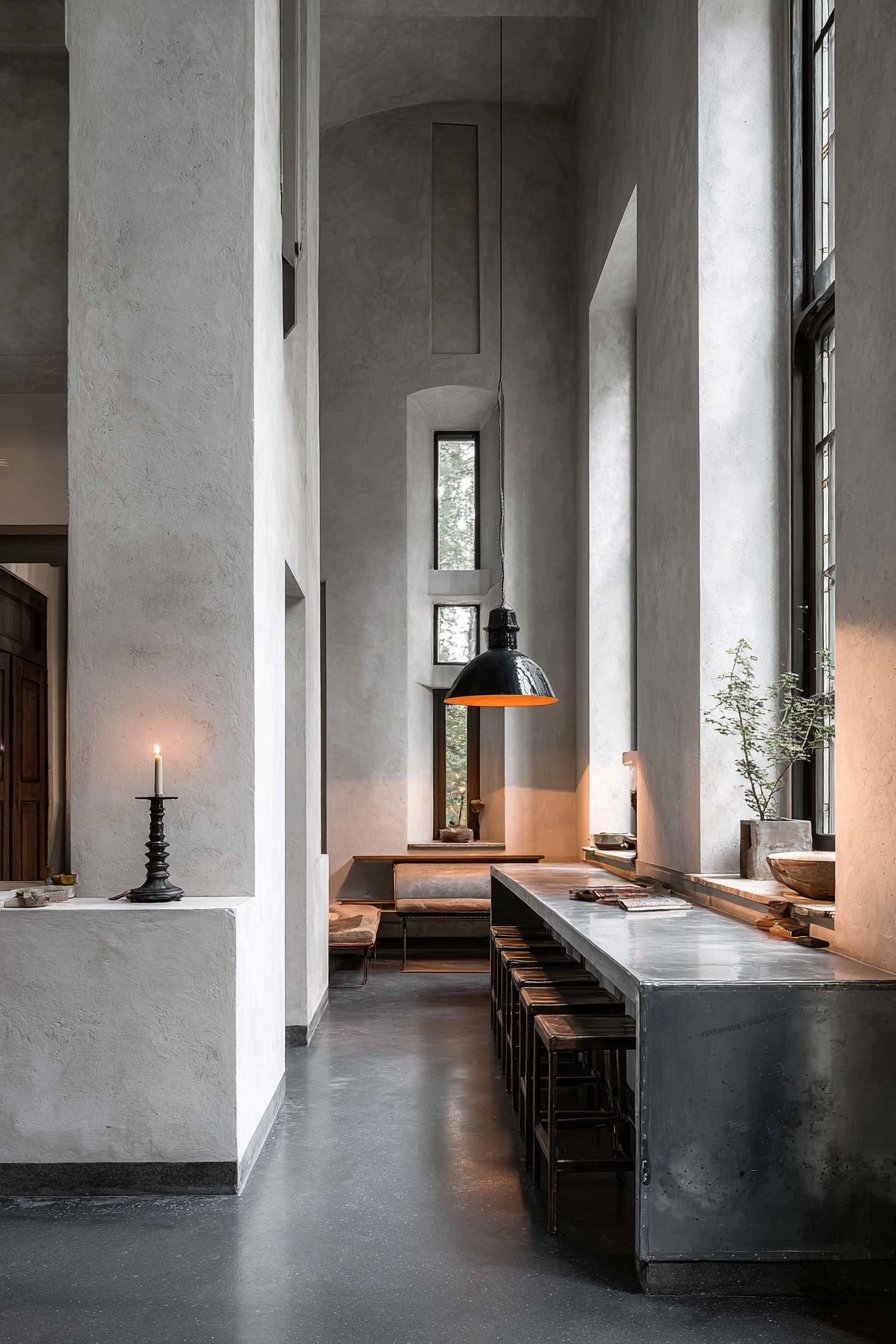
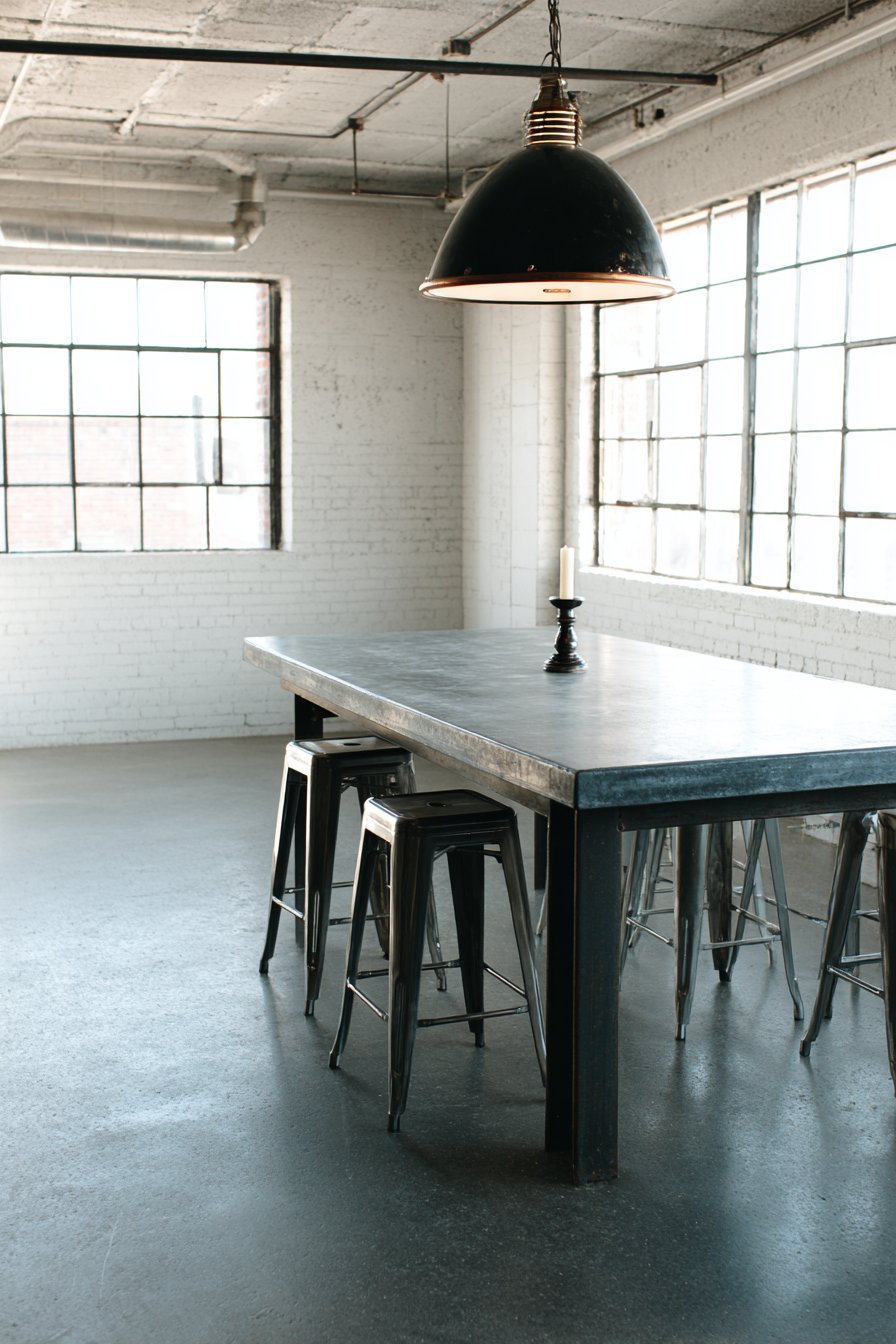
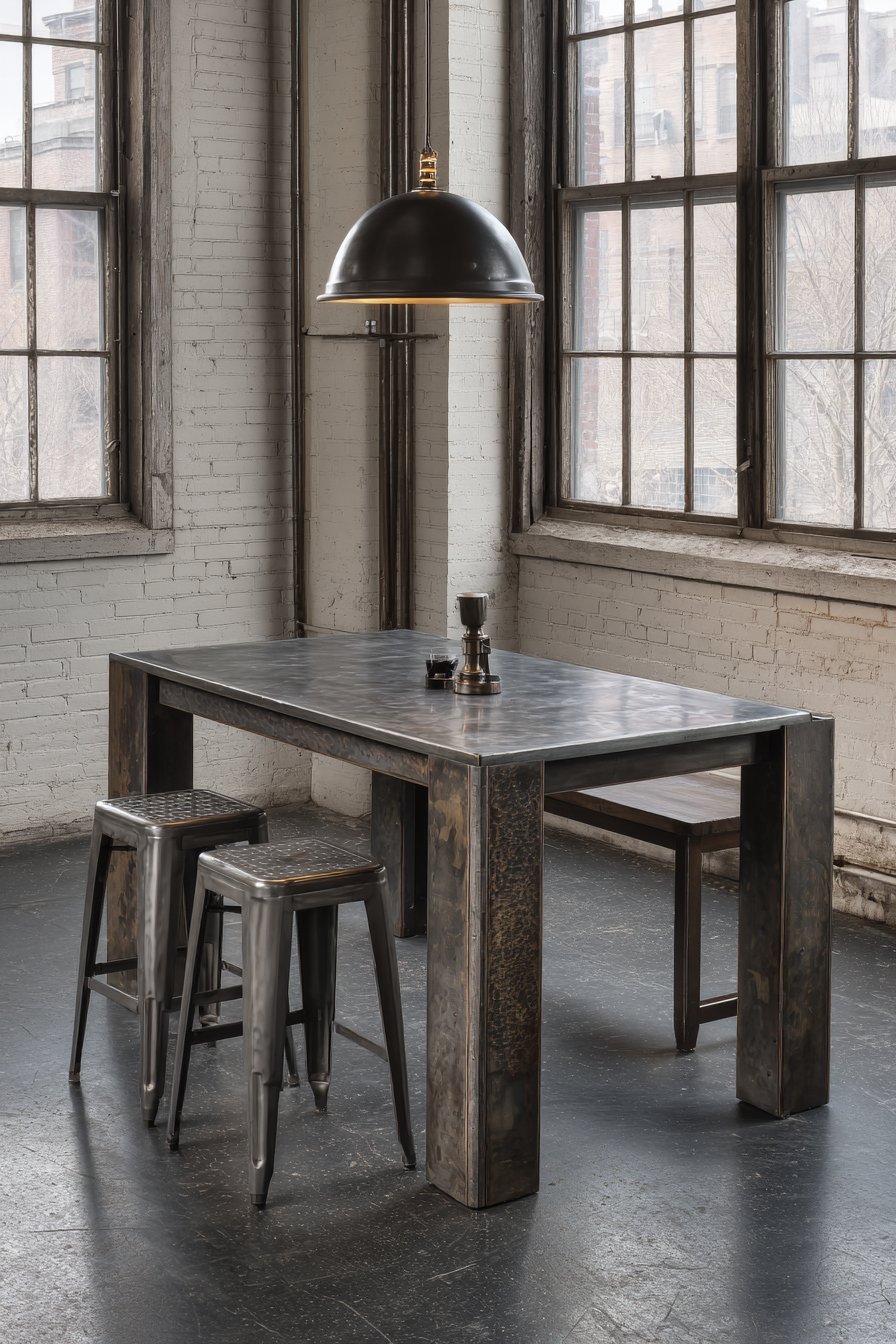
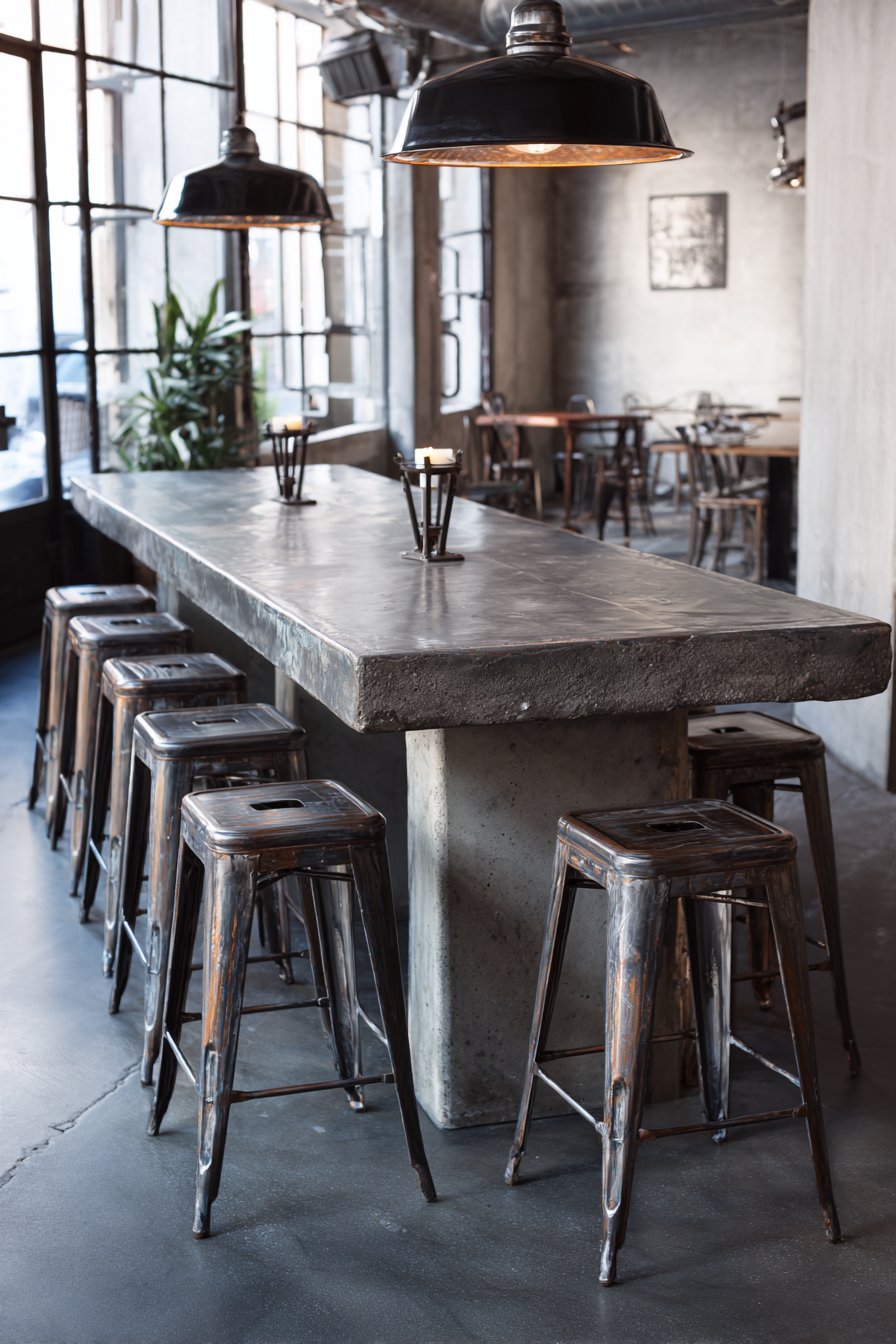
A rectangular zinc-topped table shows natural patina and age characteristics. The living finish develops character over time through use. Industrial metal stools with minimal backs provide seating in raw steel finish. The honest materials celebrate industrial heritage without artifice.
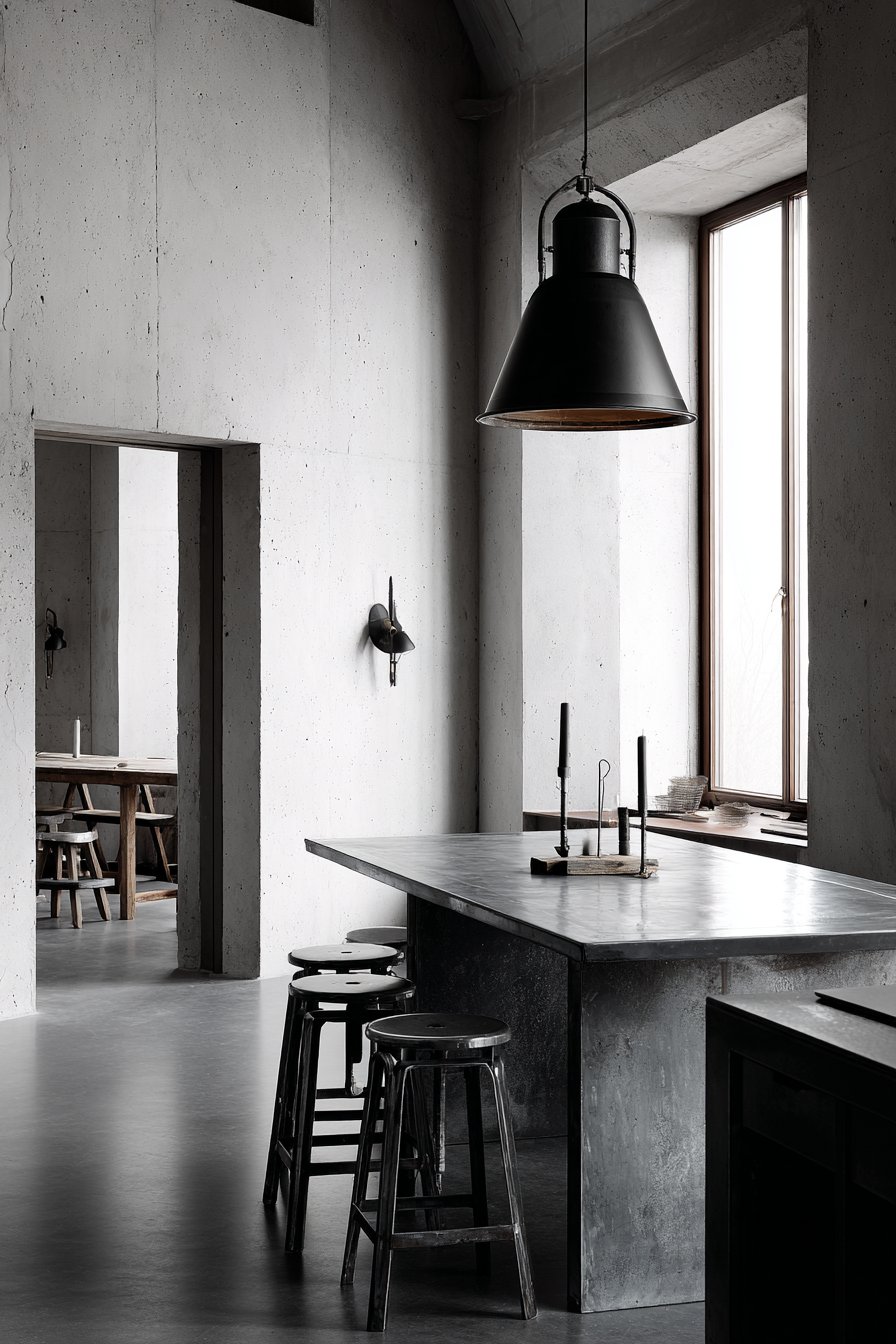
The table features a single architectural candle holder in blackened iron. This sculptural object provides focal point without clutter. Walls finished in smooth white concrete create monochromatic industrial backdrop. Polished dark grey concrete flooring extends the industrial aesthetic.
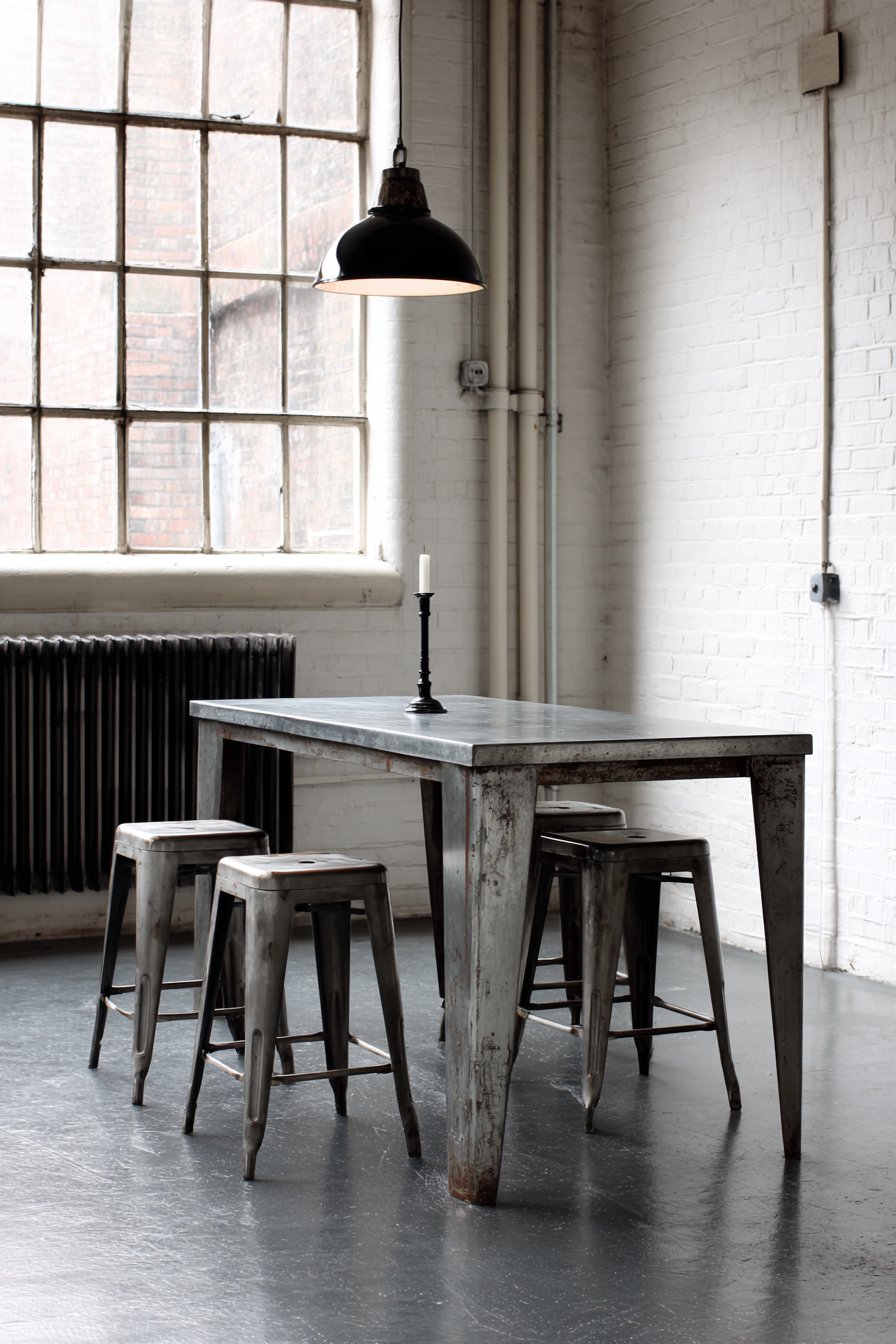
One large factory-style pendant with black enamel shade hangs above. The brass interior reflects light downward warmly. Natural light from tall windows balances the industrial materials. The combination creates space where function and beauty merge seamlessly.
Key Design Tips:
- Choose zinc tops for patina that improves with age
- Use raw steel for authentic industrial character
- Display architectural metalwork as sculpture
- Finish walls in smooth concrete for modern edge
- Select factory pendants with brass interiors
16. Compact Teak Console Conversion
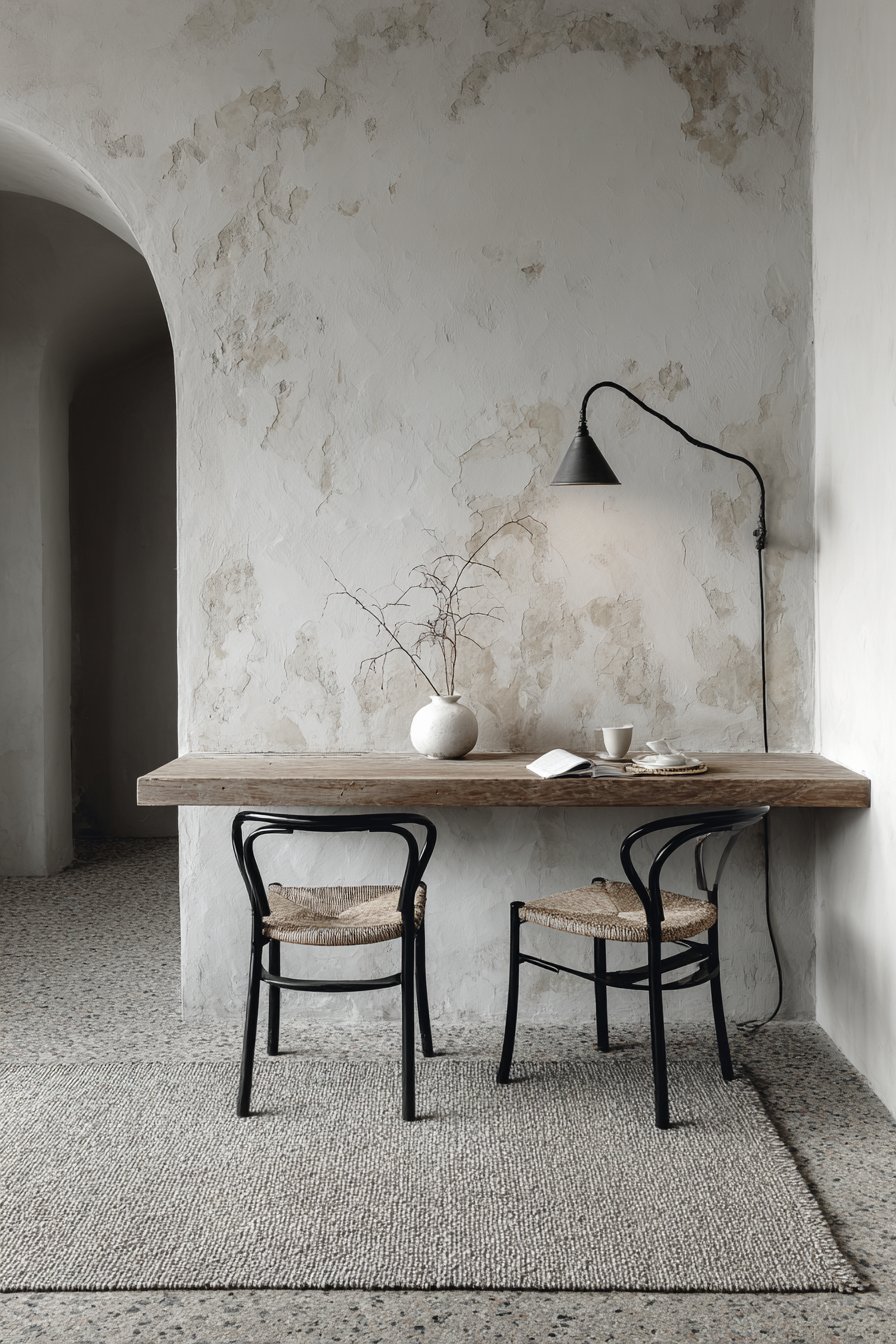
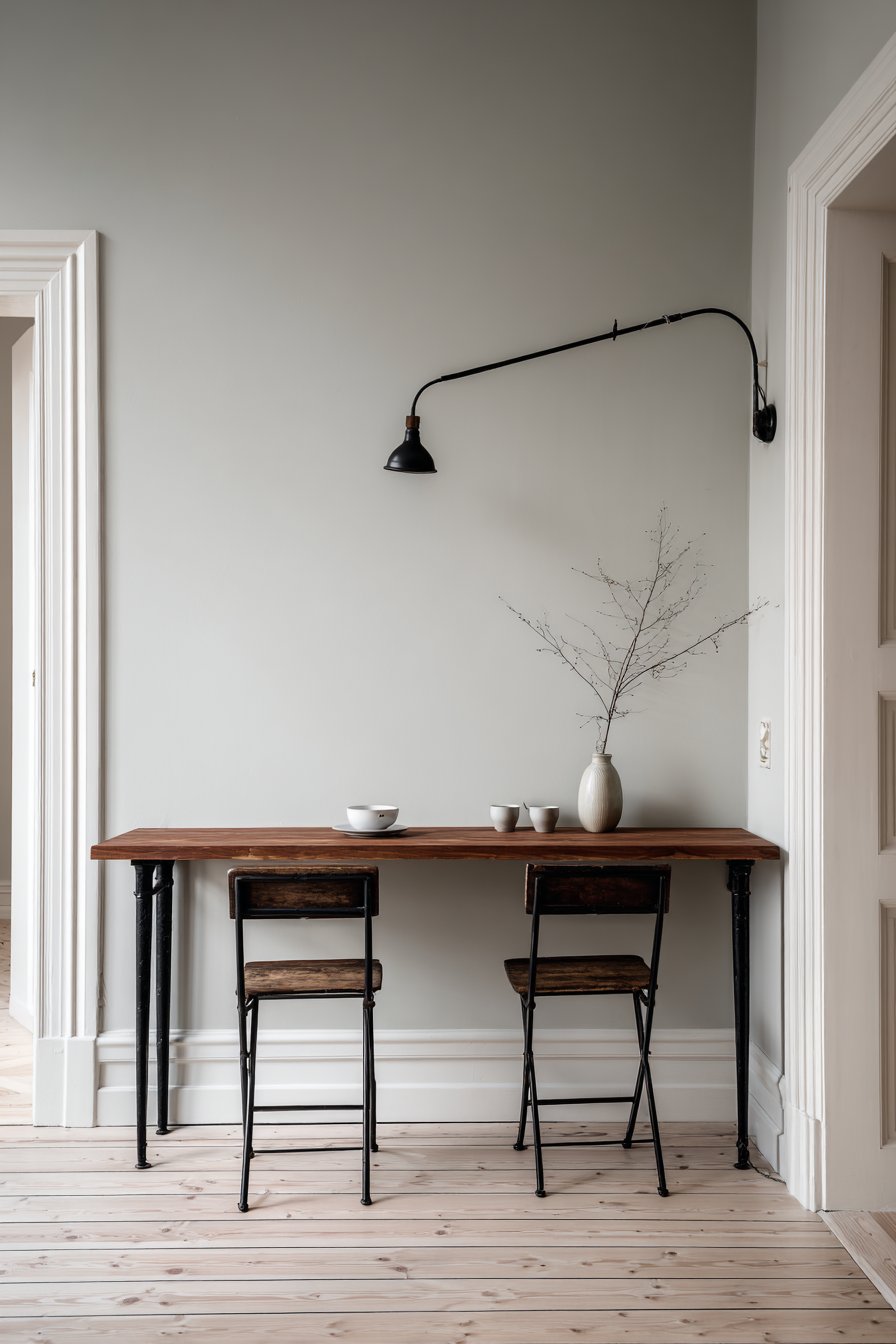
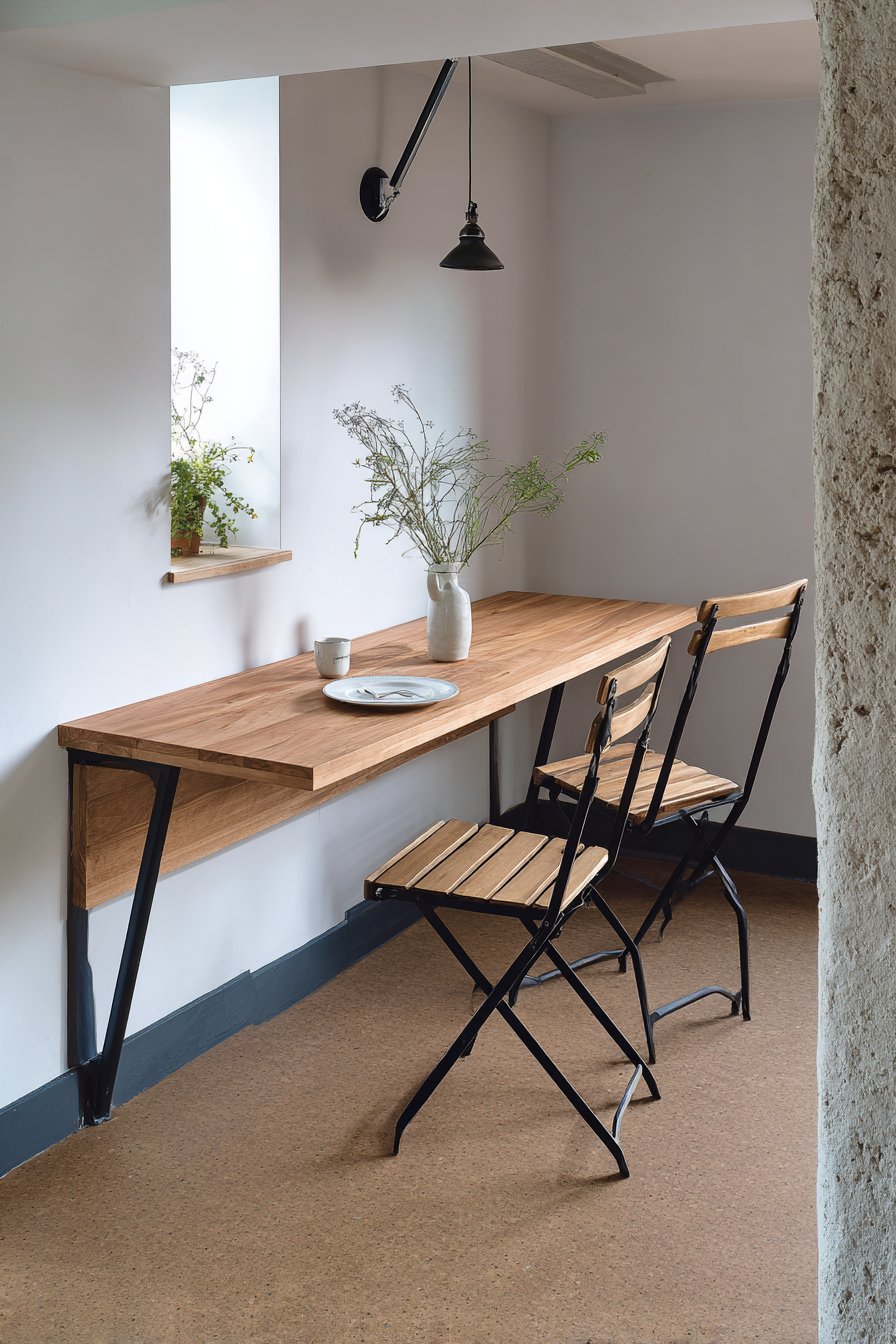
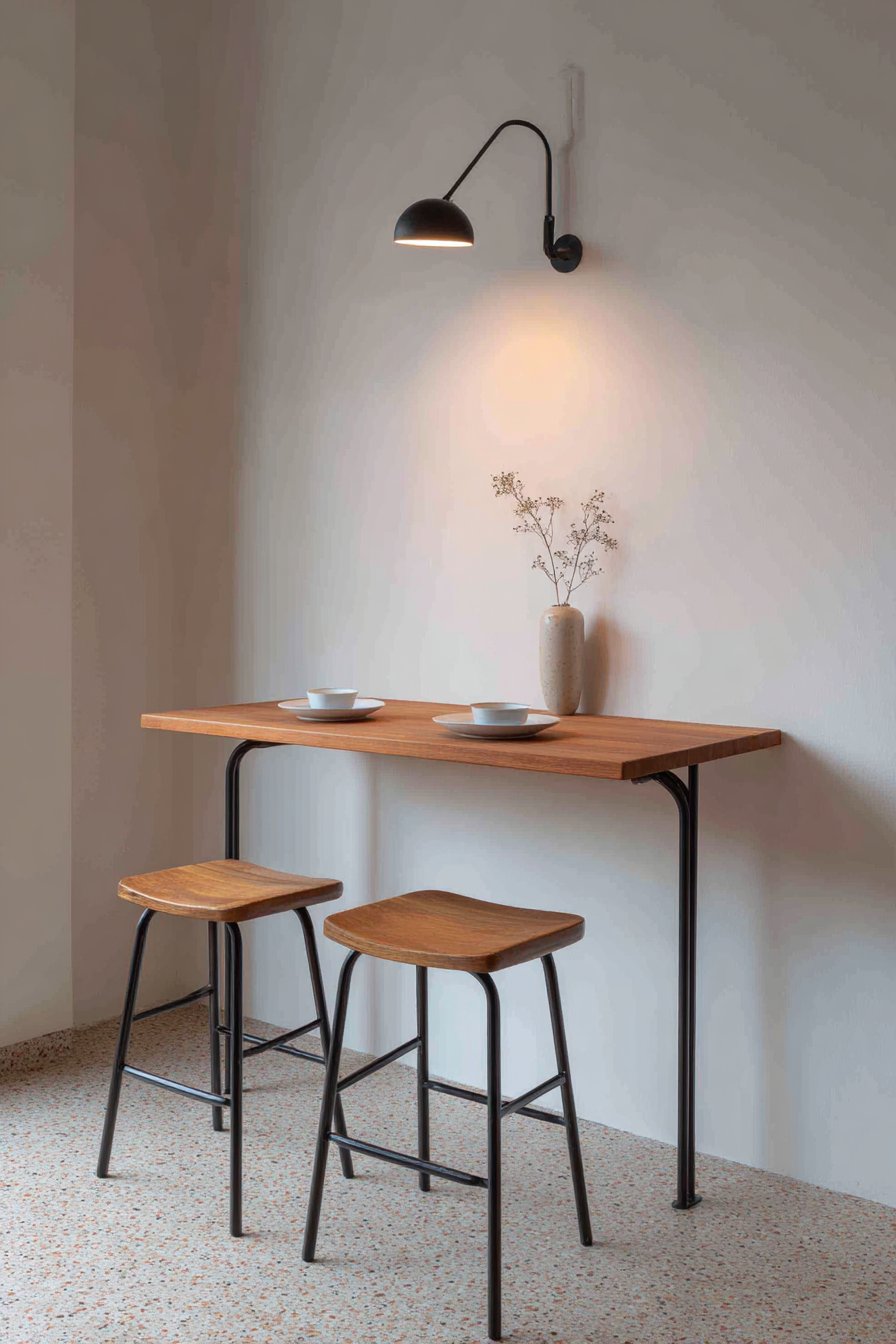
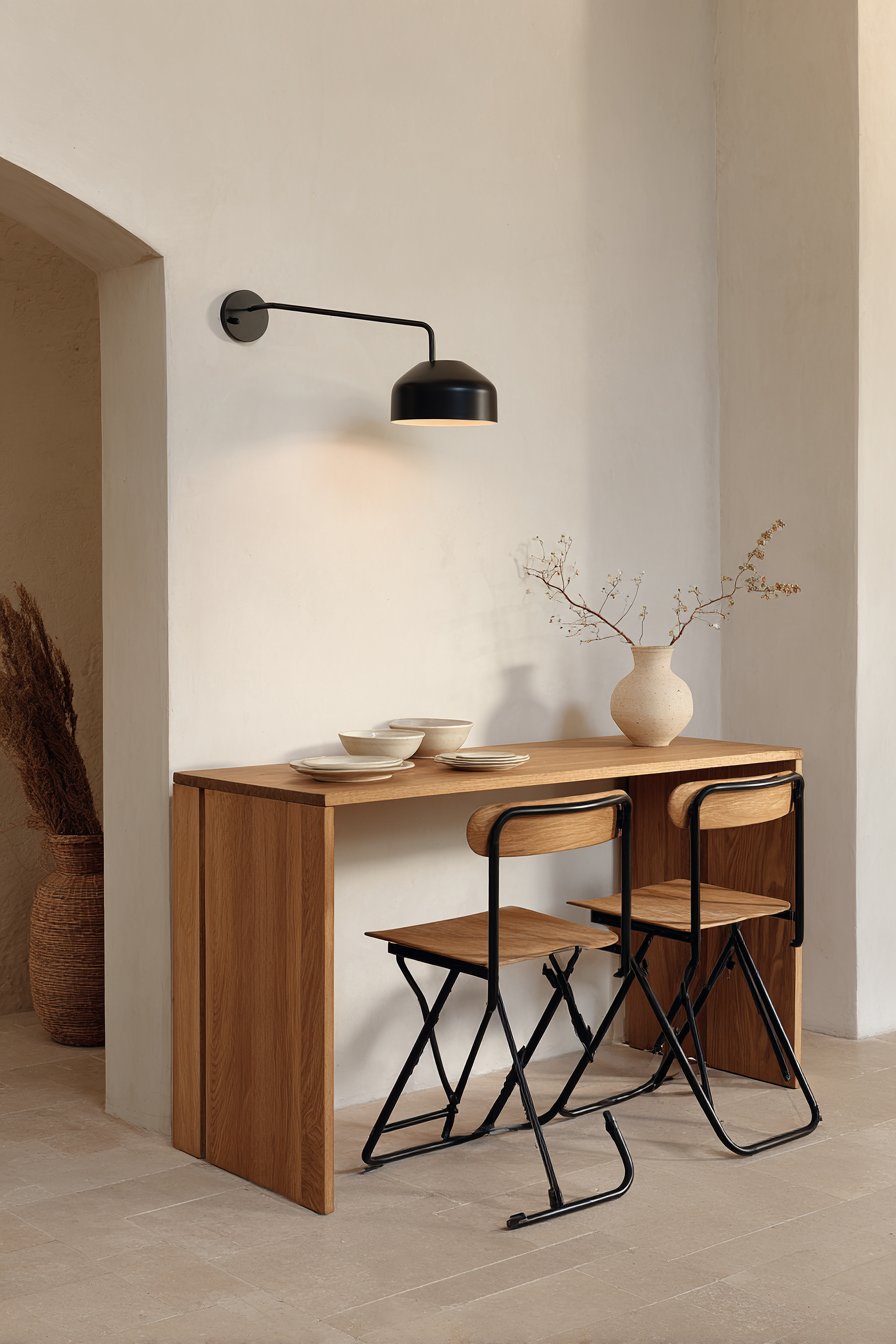
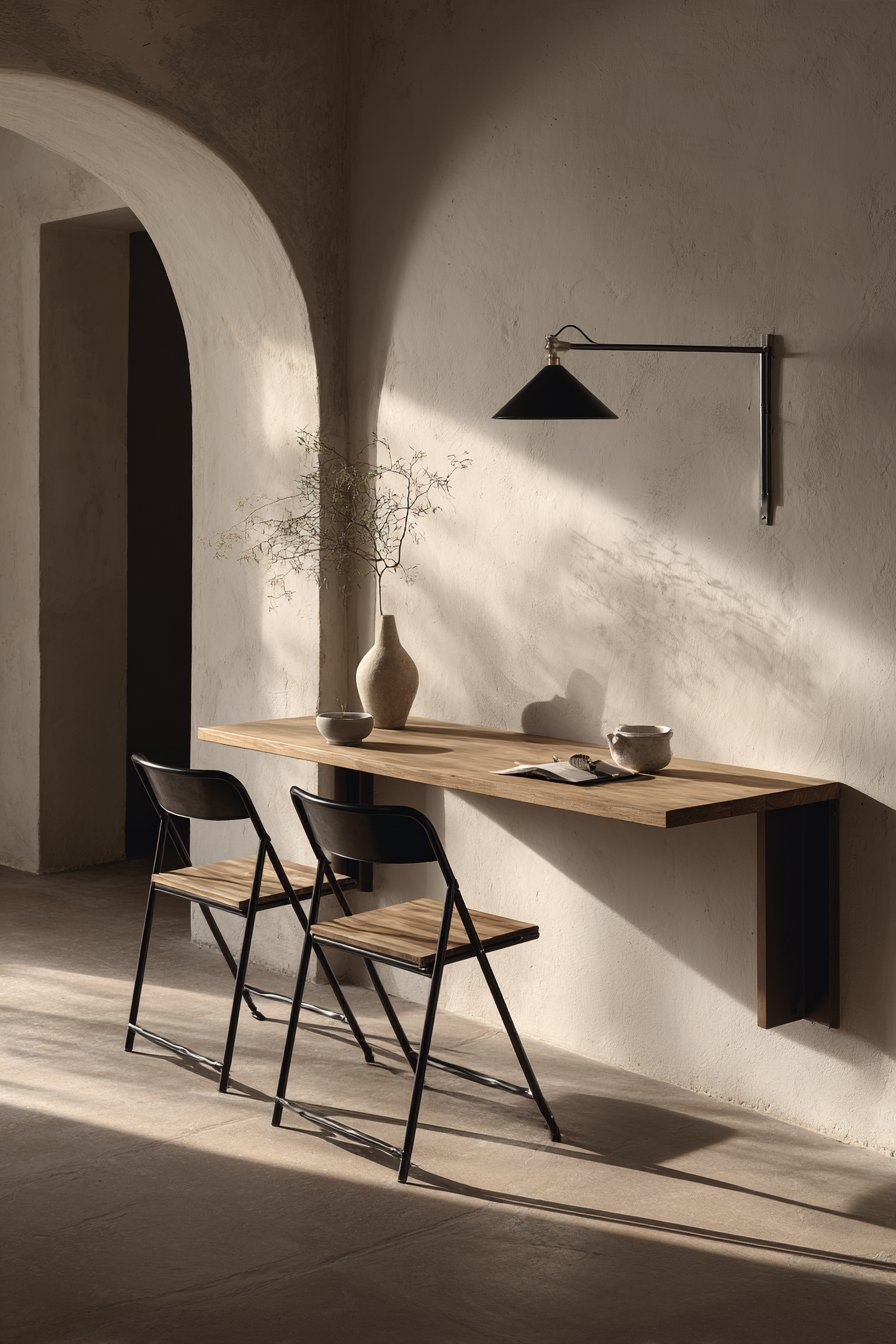
This minimal dining area features narrow console table in solid teak. The versatile piece converts for dining use in small spaces. Two simple folding chairs in black metal with wooden seats store nearby. The space-efficient solution demonstrates minimal design’s practical adaptability.
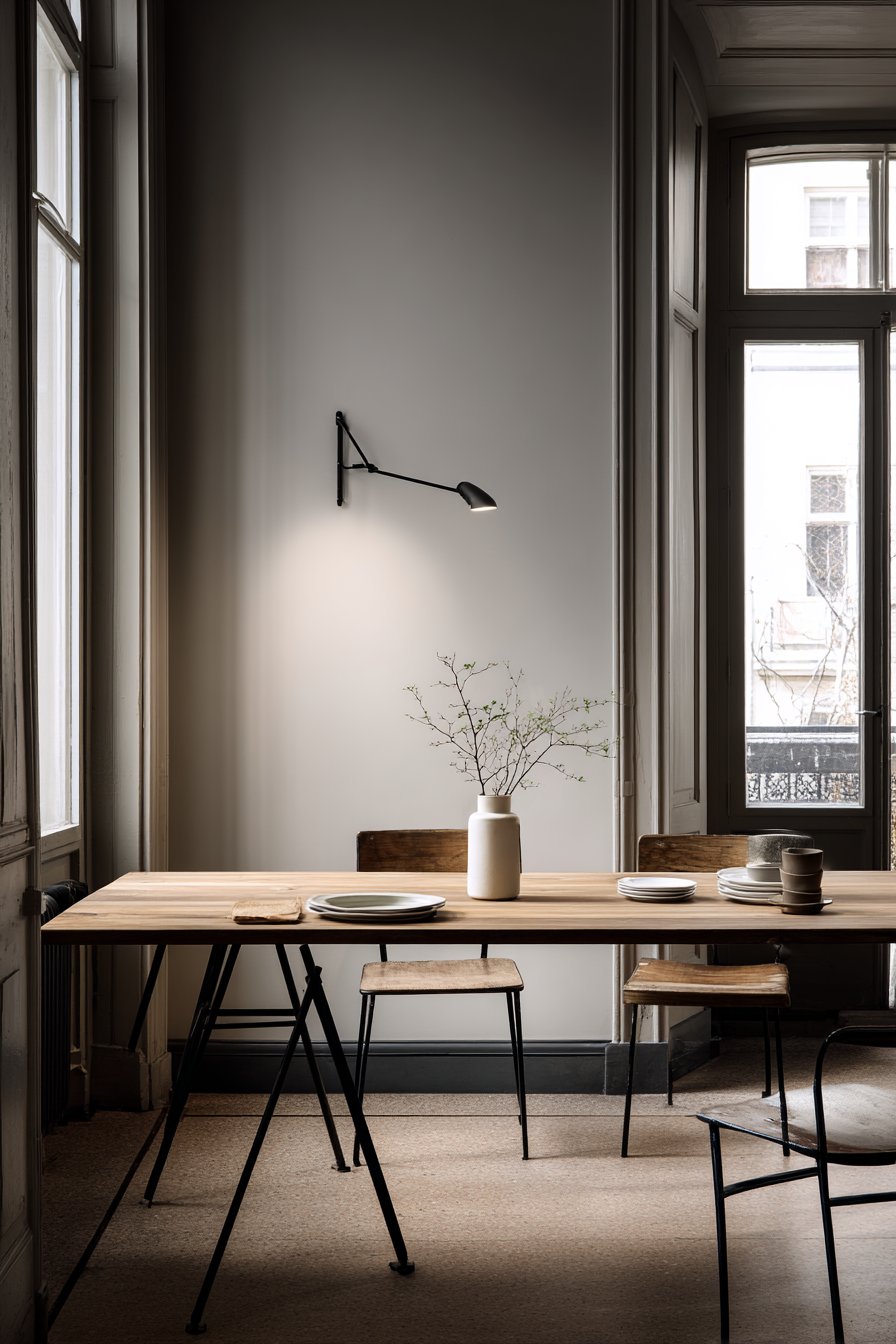
The table displays only essential items during use. A small ceramic vase holds a single branch for natural accent. Two place settings in white stoneware maintain clean simplicity. Light grey walls meet natural cork flooring below. The cork provides subtle texture and warmth underfoot.
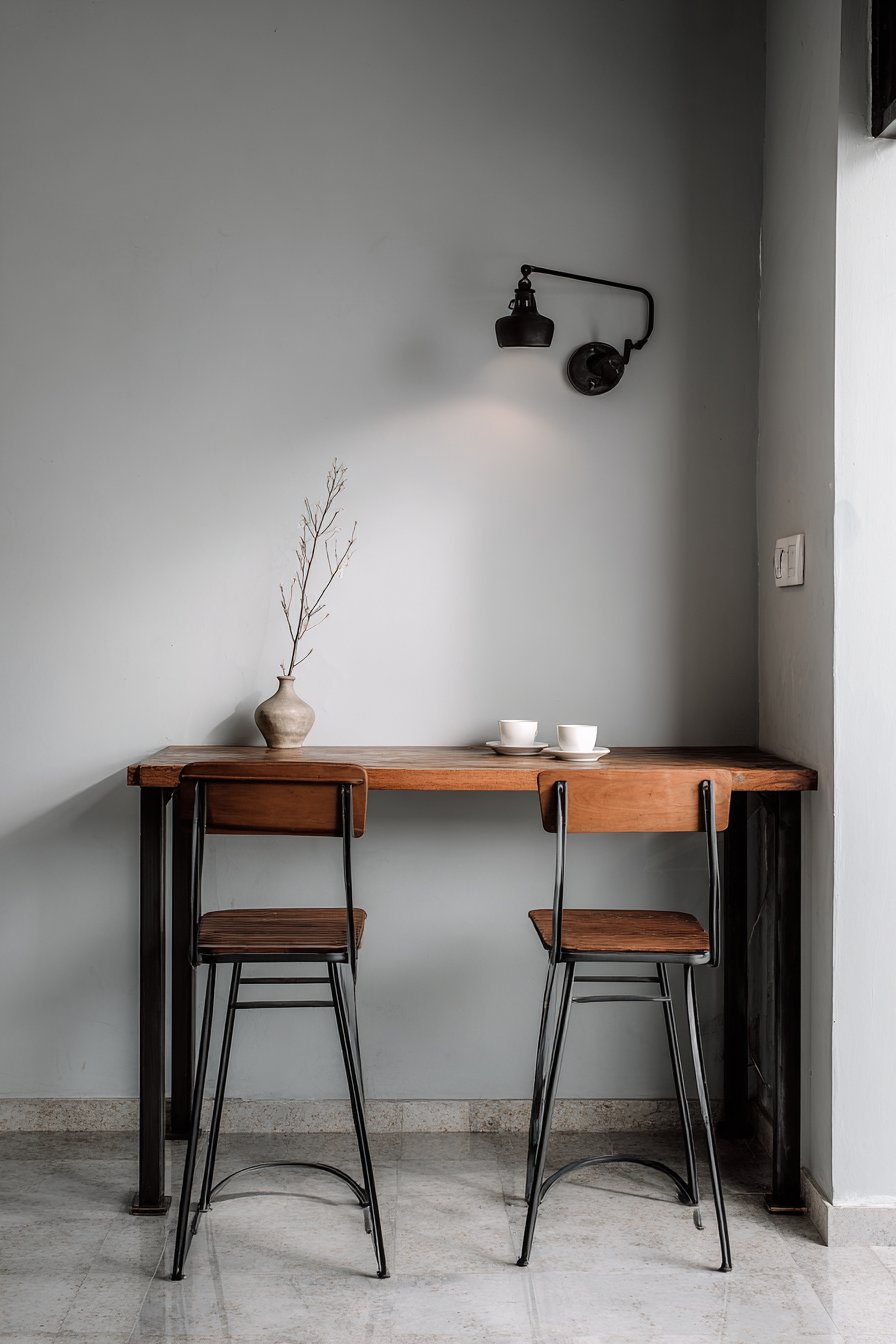
One articulating wall-mounted lamp in matte black serves as task lighting. The adjustable arm directs light precisely where needed. Natural morning light supplements the focused task illumination. This setup proves minimal design adapts beautifully to small-space living constraints.
Key Design Tips:
- Convert console tables for multi-functional use
- Use folding chairs for flexible space management
- Install articulating lamps for adjustable lighting
- Choose cork flooring for sustainable warmth
- Display single branches for natural simplicity
17. Boat-Shaped Walnut with Woven Rush Seats
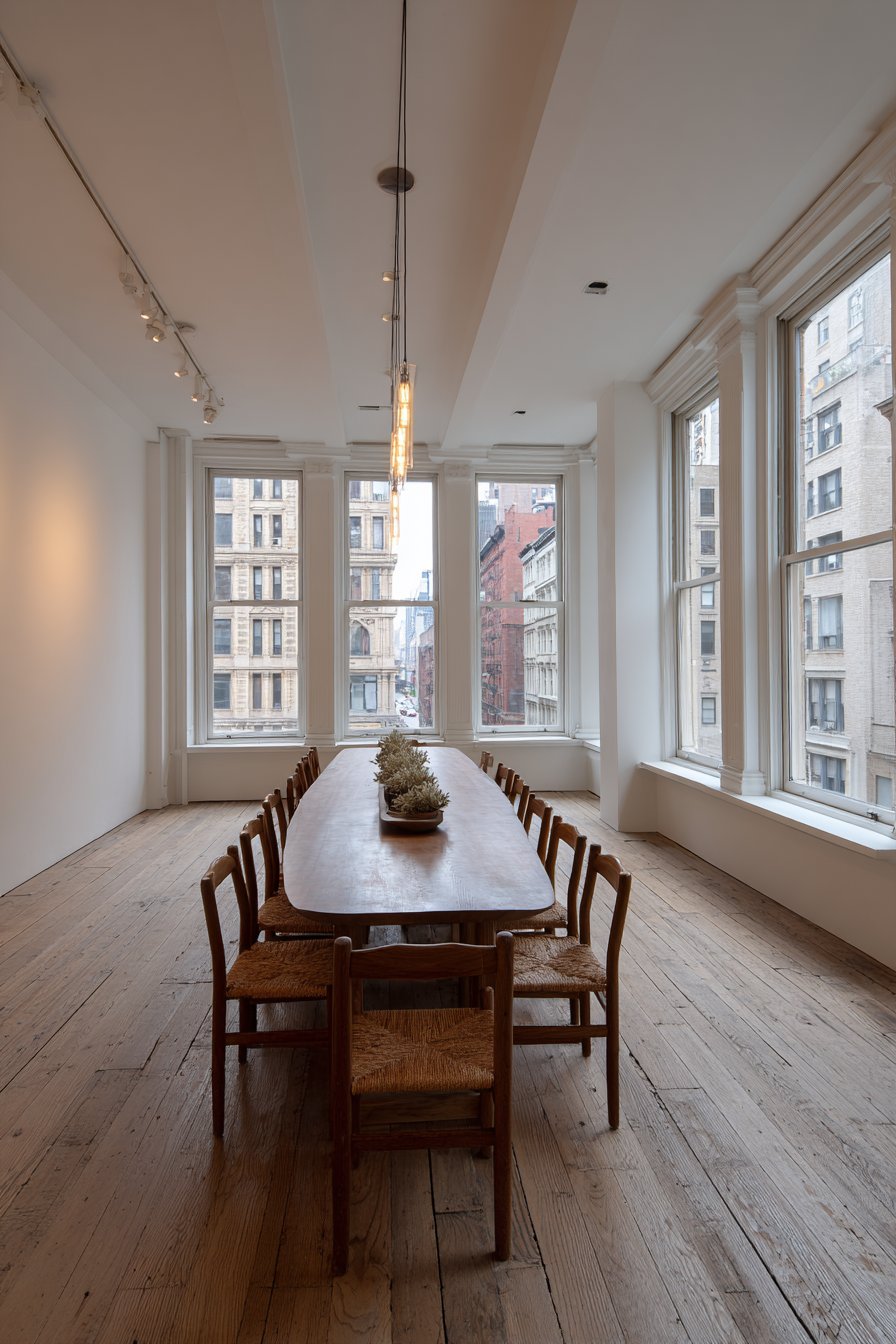
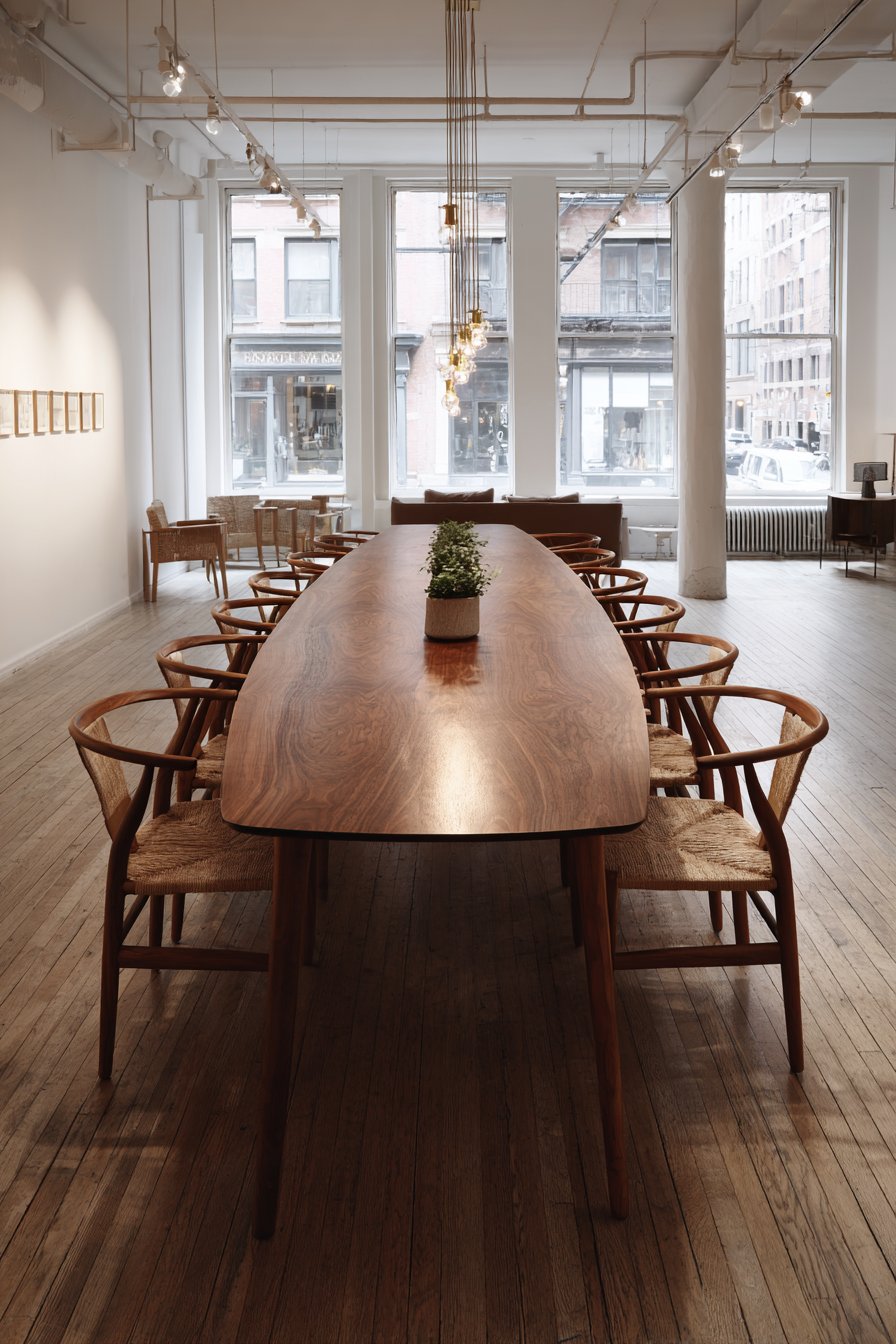
This minimal dining room centers on boat-shaped table in oiled walnut. The tapered legs and subtle grain pattern create refined presence. Ten ladder-back chairs in matching walnut surround the generous table. Woven rush seats add traditional handcraft texture and comfort.
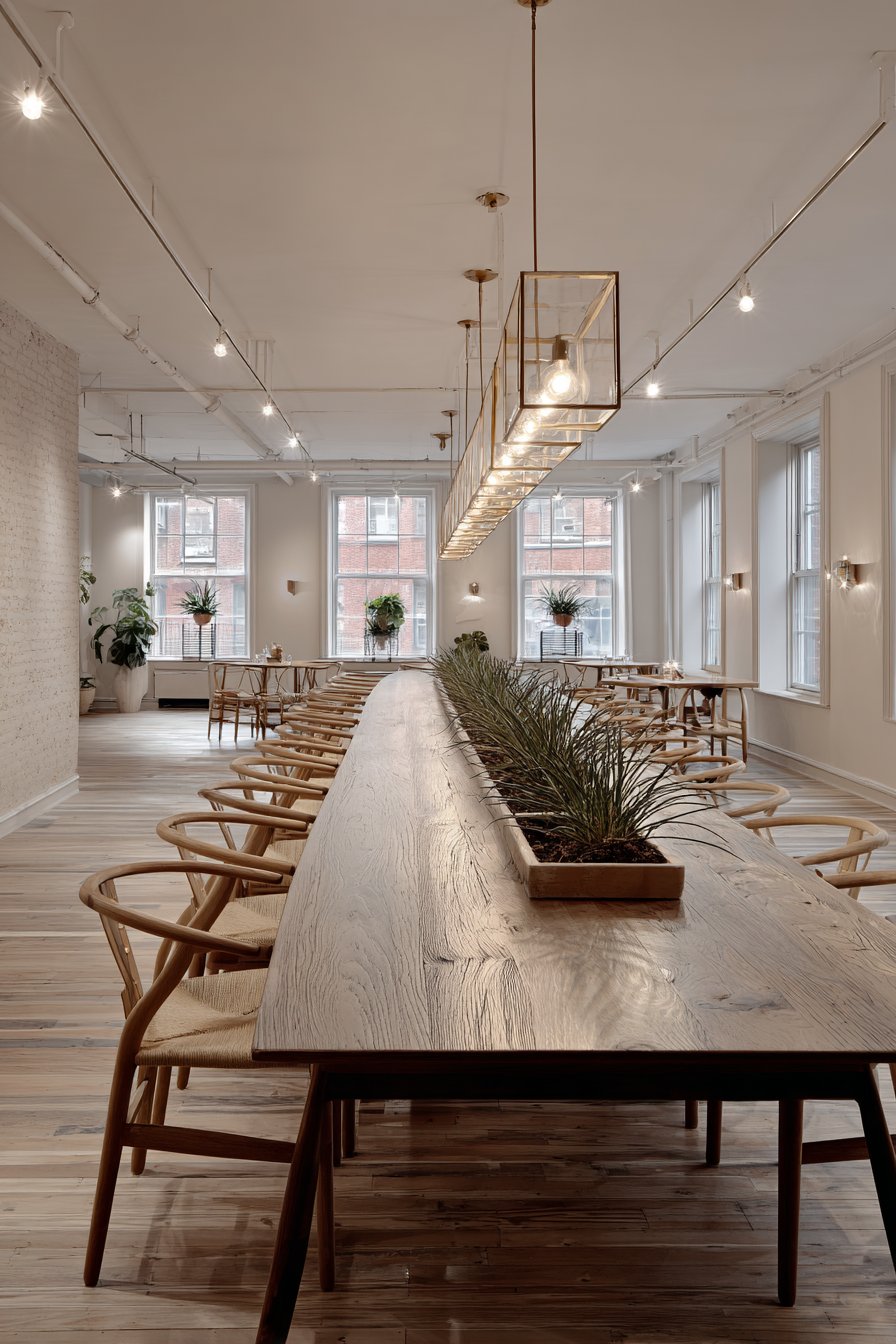
The expansive table remains bare except for one element. A long narrow ceramic trough planter holds architectural air plants. These sculptural plants require minimal maintenance while providing living interest. Smooth plaster walls in warm white create serene backdrop.
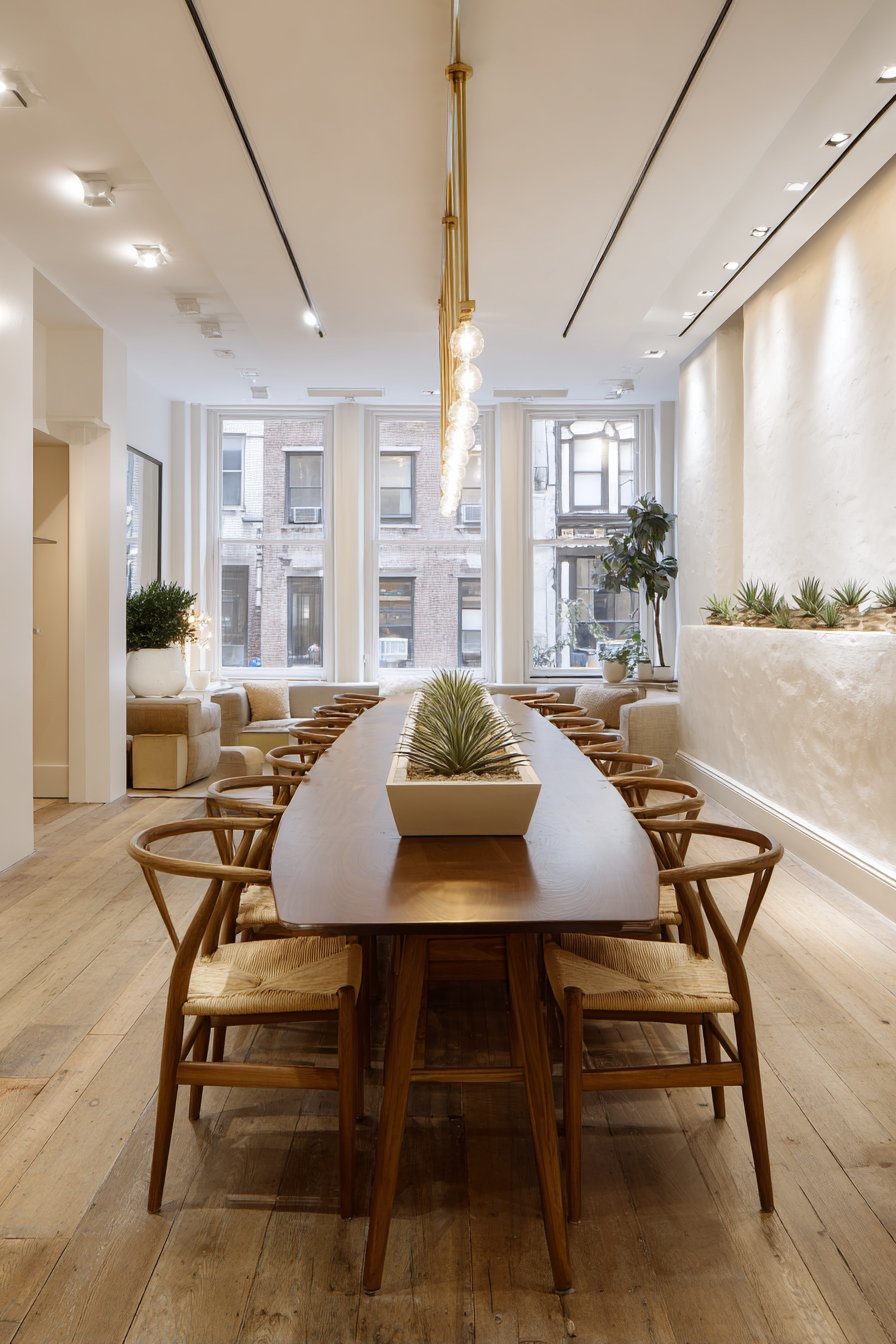
Wide-plank reclaimed oak flooring in medium tone grounds the design. A linear chandelier spans the table length overhead. The simple rectangular metal frame holds exposed Edison bulbs. Natural light from multiple windows creates even illumination throughout. Quality craftsmanship shines in every carefully chosen detail.
Key Design Tips:
- Select boat-shaped tables for elegant proportions
- Use rush seats for traditional handcraft appeal
- Display air plants for low-maintenance greenery
- Install linear chandeliers for long table coverage
- Choose reclaimed oak for character and sustainability
18. Drop-Leaf White Pine Flexibility
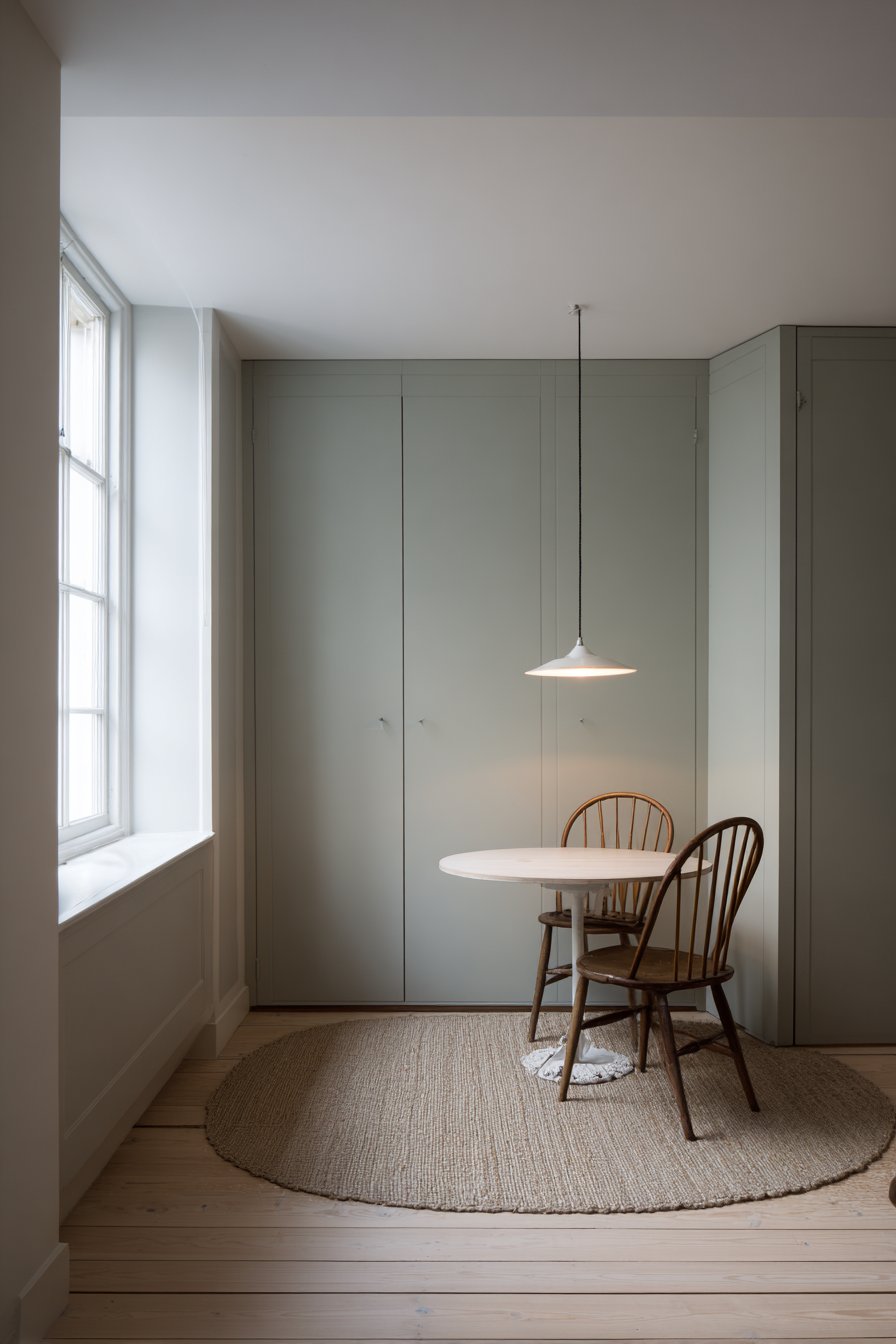
A drop-leaf table in white-painted pine stays compact against the wall. The smallest configuration maximizes floor space daily. Two bentwood chairs in natural finish flank the table. Their curved backs provide ergonomic comfort and visual softness.
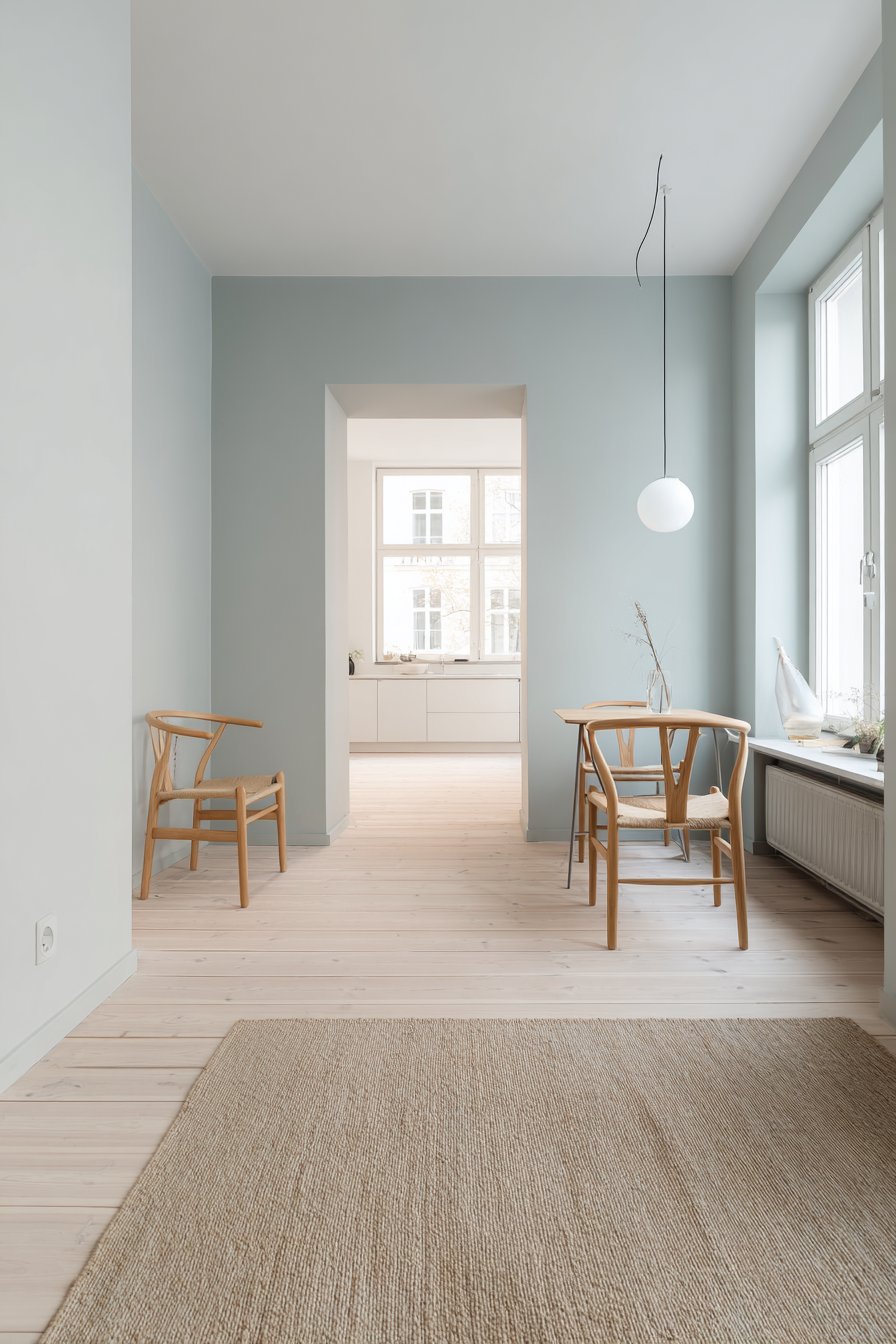
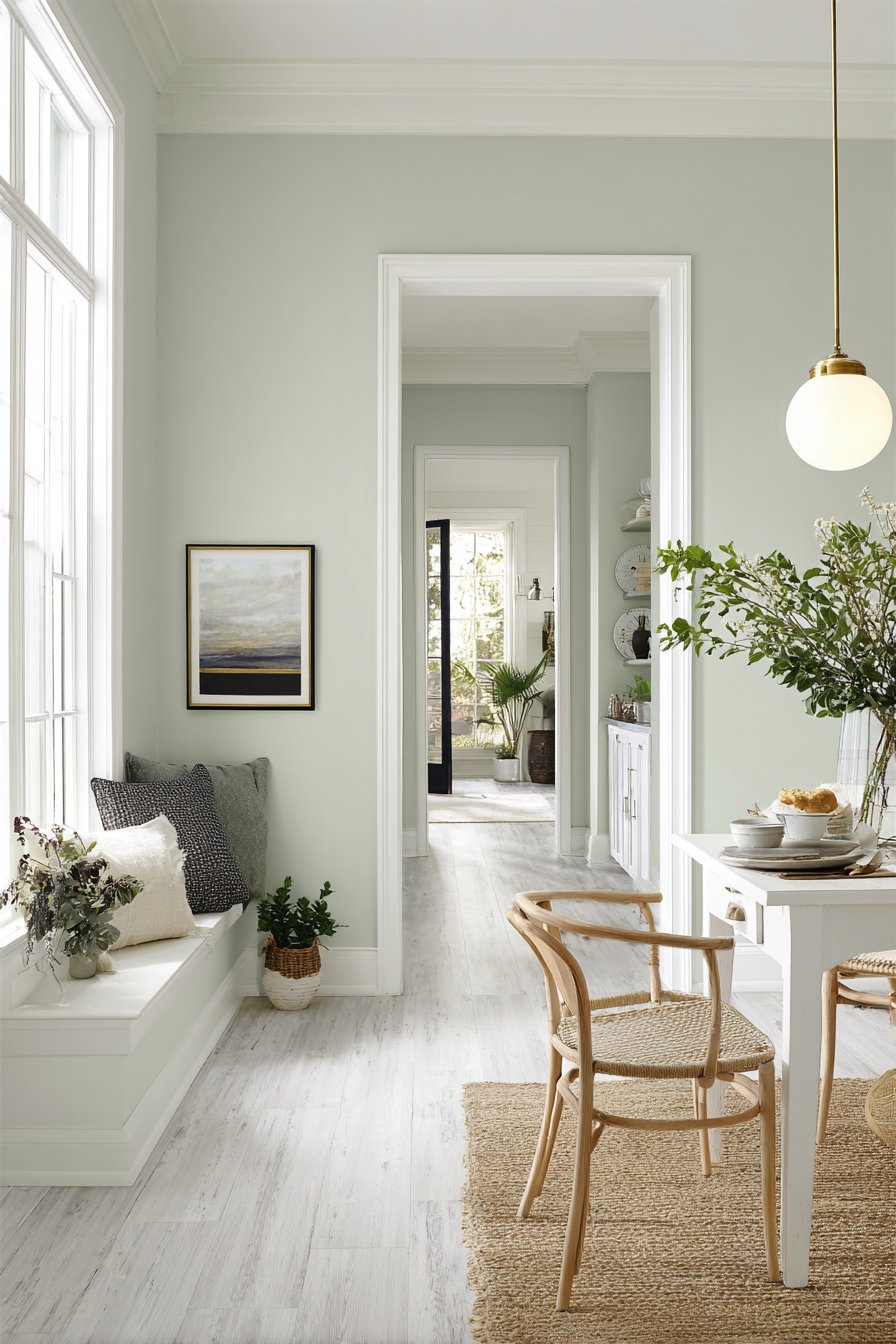
When needed, the table expands to accommodate guests. This flexibility demonstrates minimal design’s practical intelligence. Walls painted in soft sage green provide subtle color. The hue maintains minimalist sensibility while adding personality.
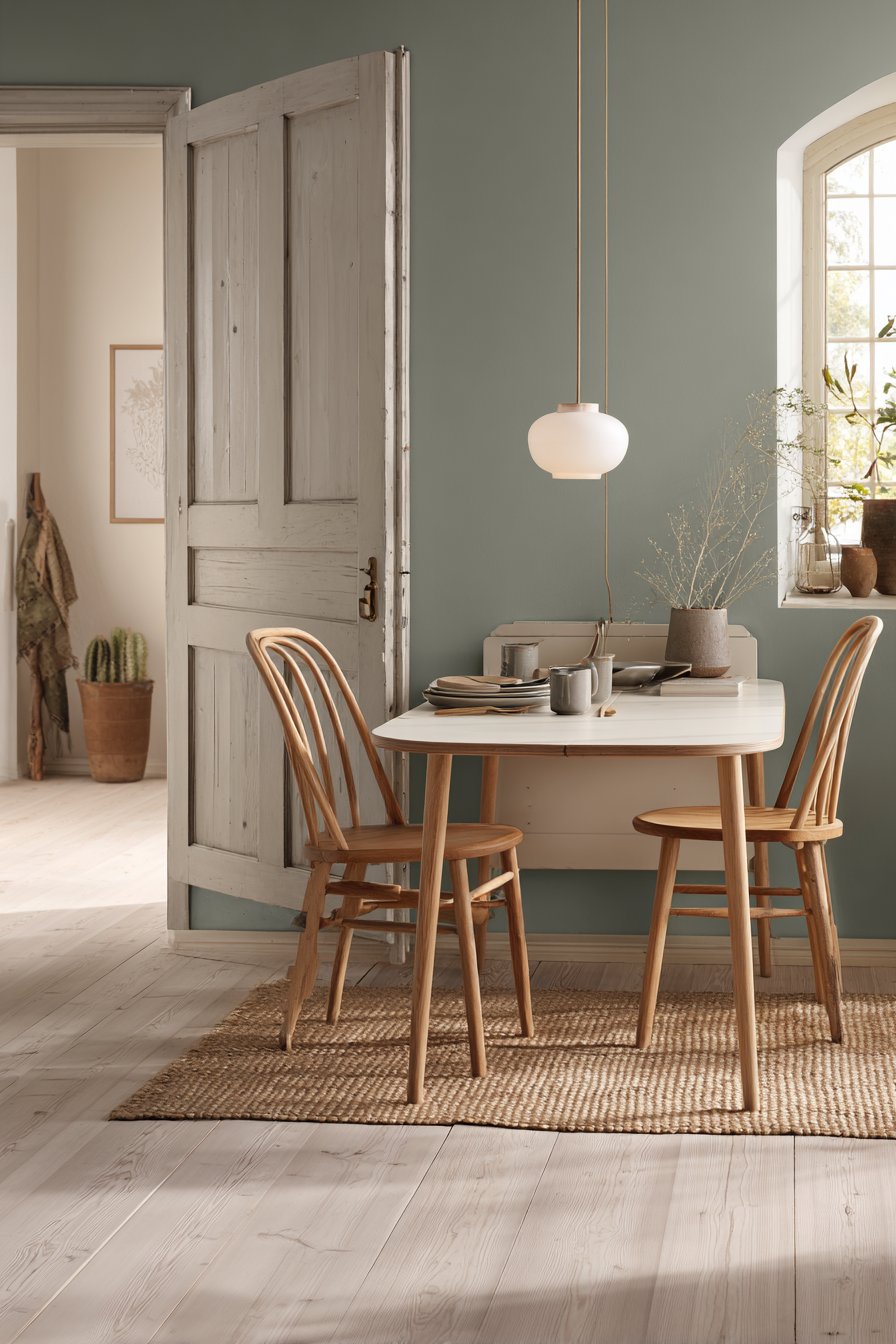
Natural jute rug defines the dining zone on white oak flooring. One simple pendant with milk glass shade hangs on adjustable cord. The modest setup accommodates real-life space constraints gracefully. Minimal design principles create functional beauty regardless of square footage limitations.
Key Design Tips:
- Use drop-leaf tables for expandable flexibility
- Choose bentwood chairs for ergonomic curves
- Add subtle wall color while maintaining restraint
- Define zones with natural fiber rugs
- Install pendants on adjustable cords for versatility
19. Book-Matched Walnut Waterfall Edge Luxury
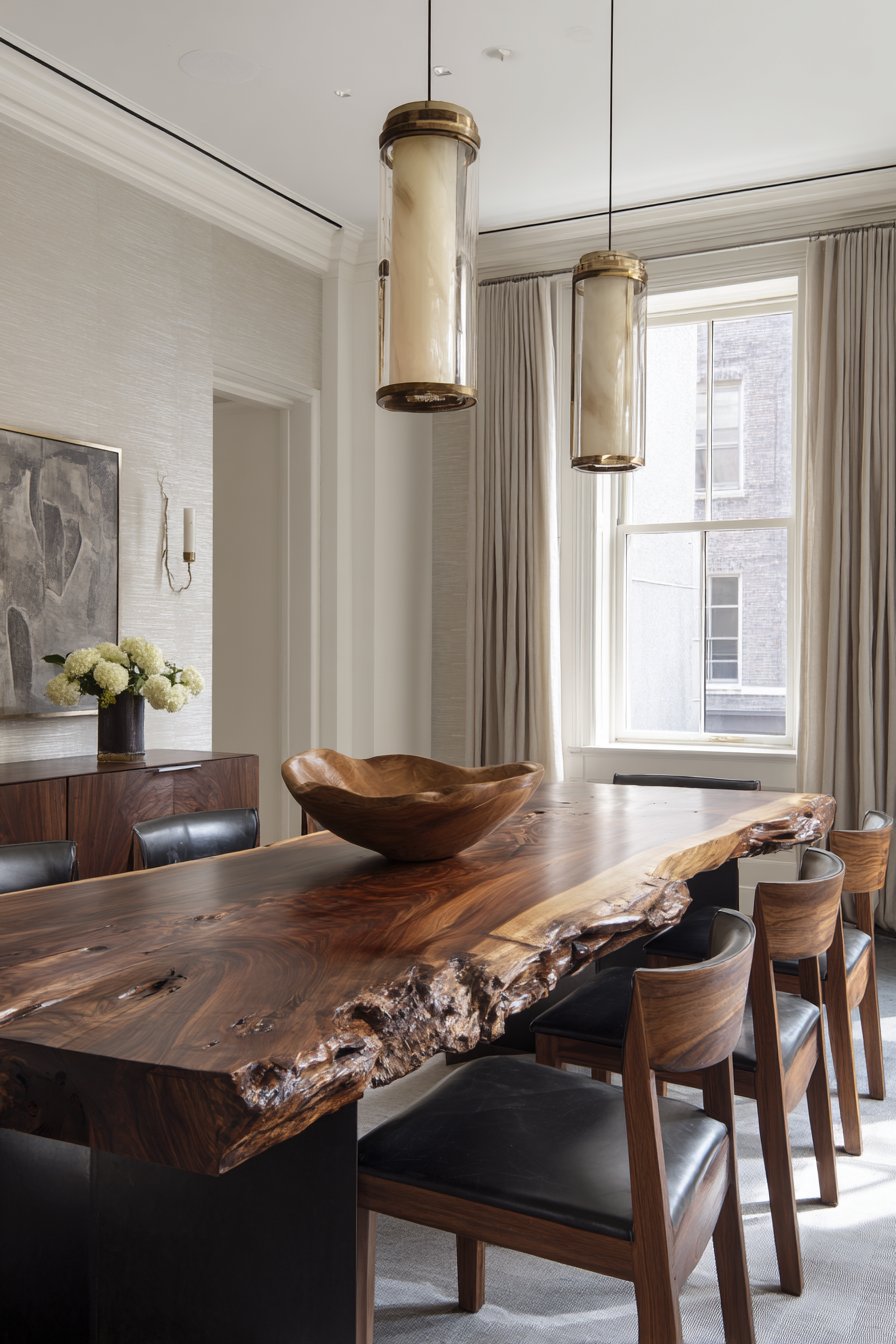
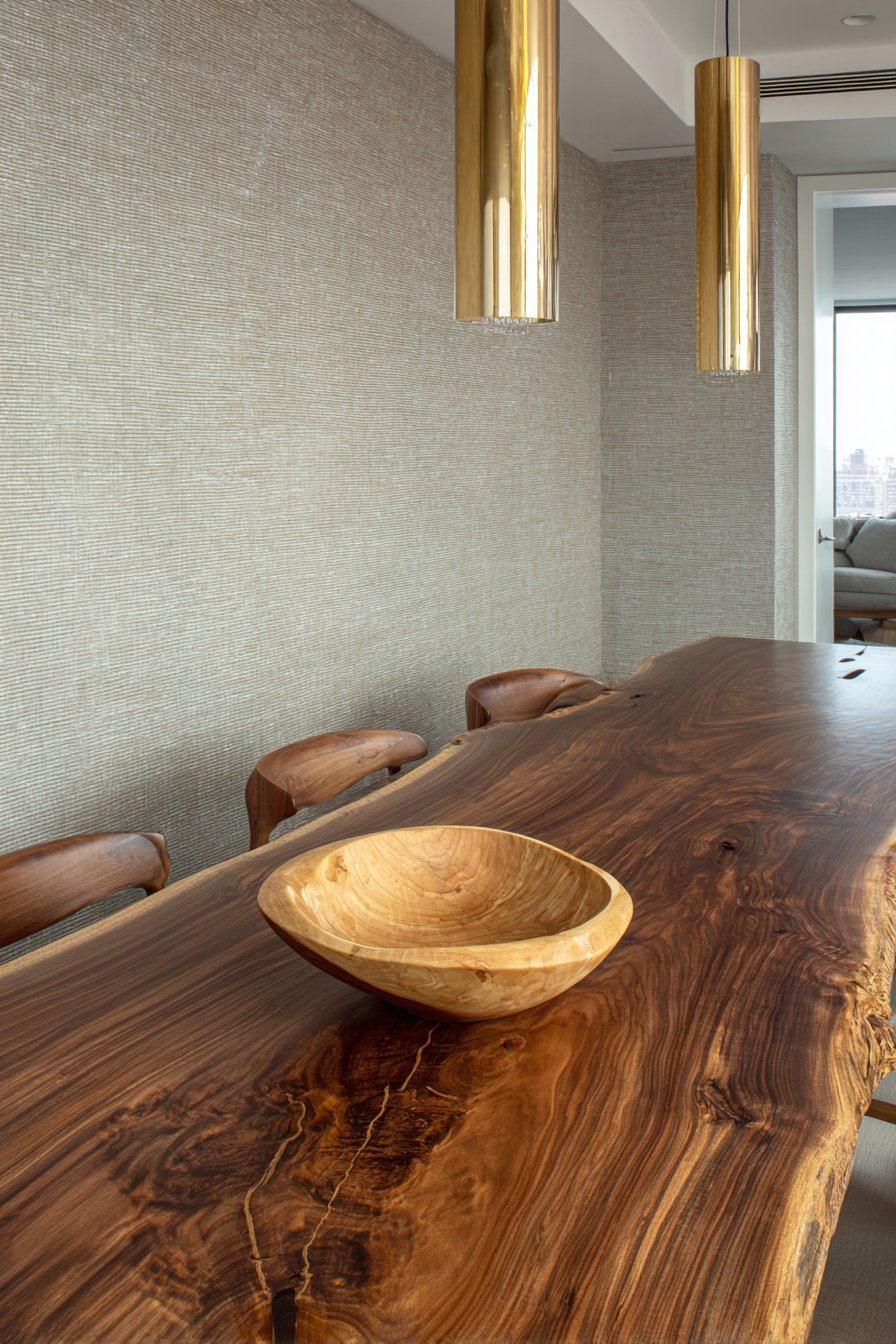
This minimal dining room features custom dining table with book-matched black walnut top. The dramatic grain pattern creates natural artwork across the surface. Waterfall edge detail showcases the wood’s beauty from all angles. Powder-coated steel legs in matte black provide industrial contrast.
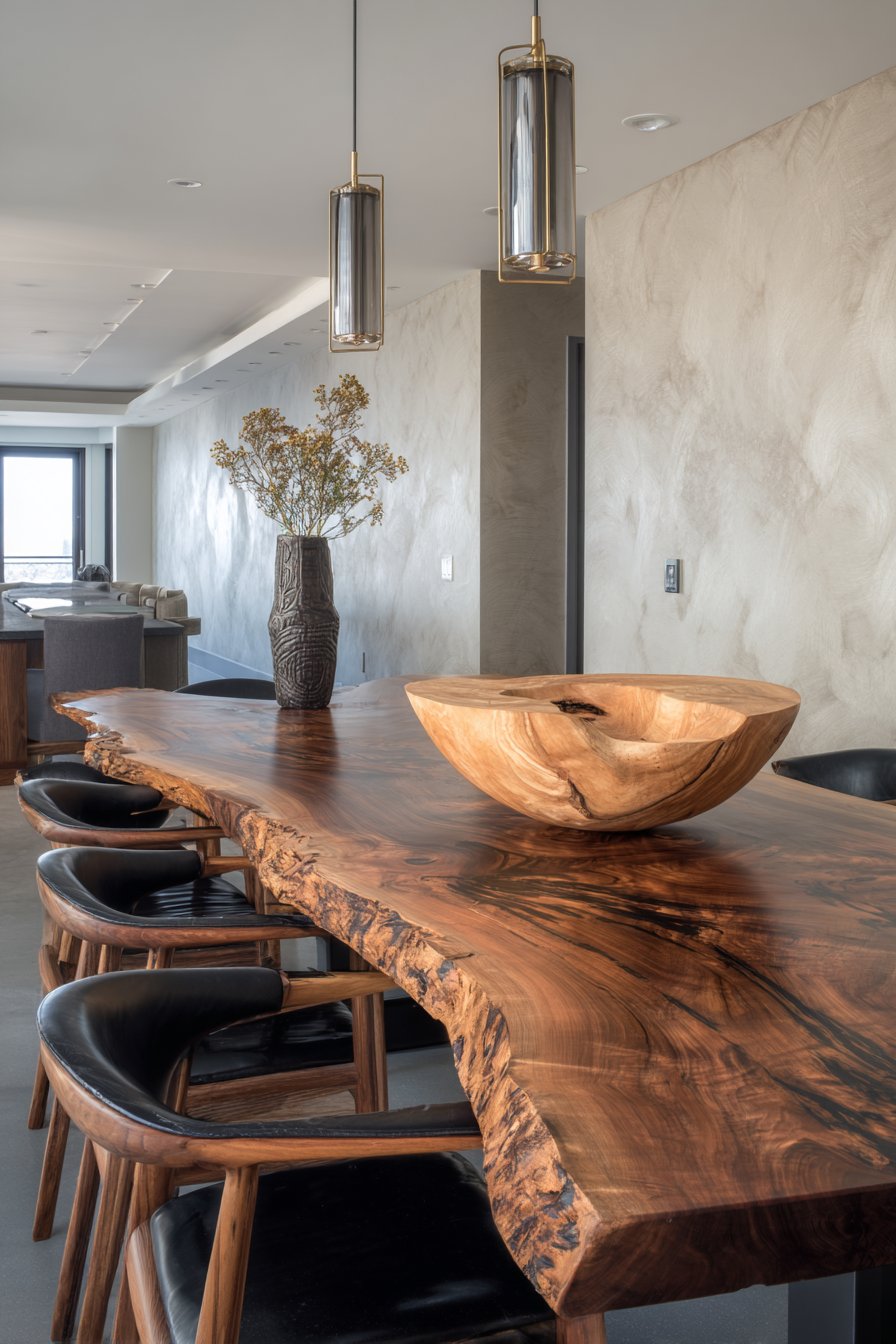
Six low-profile dining chairs with black leather upholstery offer comfortable seating. Oak frames peek through maintaining connection to natural materials. A single sculptural wooden bowl in contrasting light maple sits on the table. The simple form becomes jewelry against the dark wood.
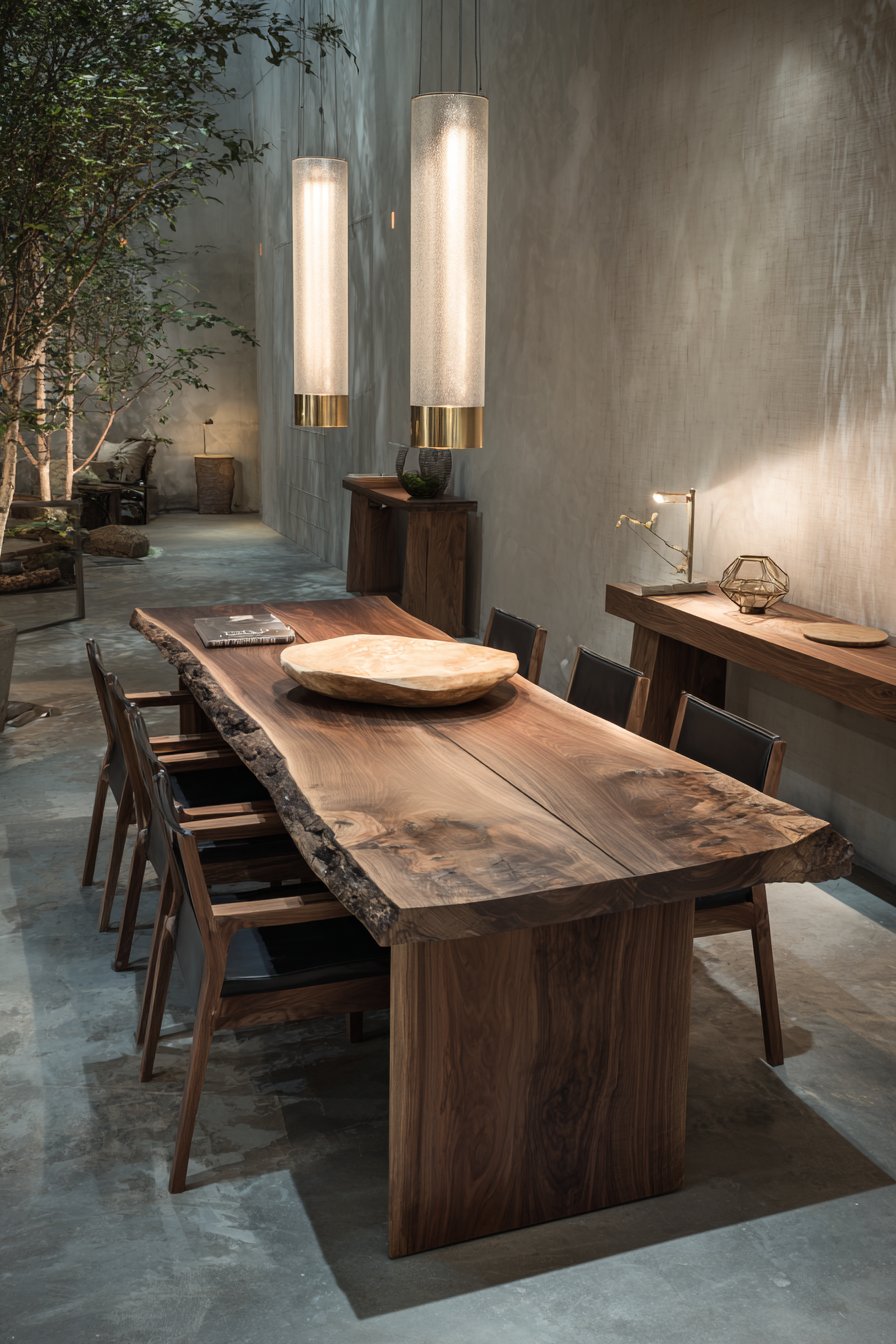
Walls covered in natural grasscloth wallpaper add neutral texture. Polished concrete flooring in charcoal grey creates refined backdrop. Two cylindrical pendant lights in brushed brass hang above. Frosted glass diffusers soften the light beautifully. This space proves minimal design accommodates rich materials and subtle luxury.
Key Design Tips:
- Showcase book-matched wood for dramatic effect
- Detail waterfall edges to highlight premium materials
- Use black leather for sophisticated comfort
- Cover walls in grasscloth for natural texture
- Select brushed brass for warm metallic accents
20. Gate-Leg Maple Multi-Functional Adaptability
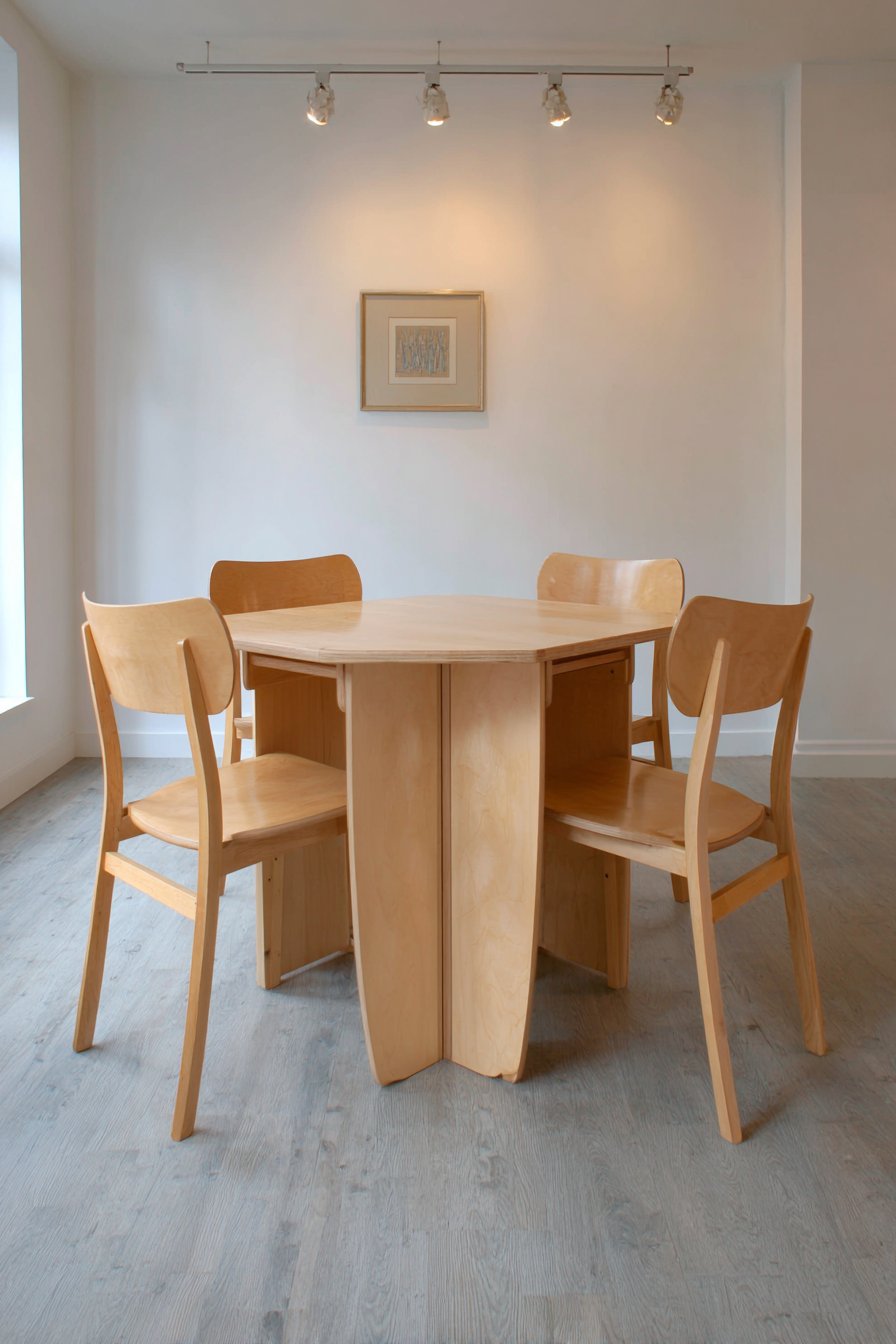
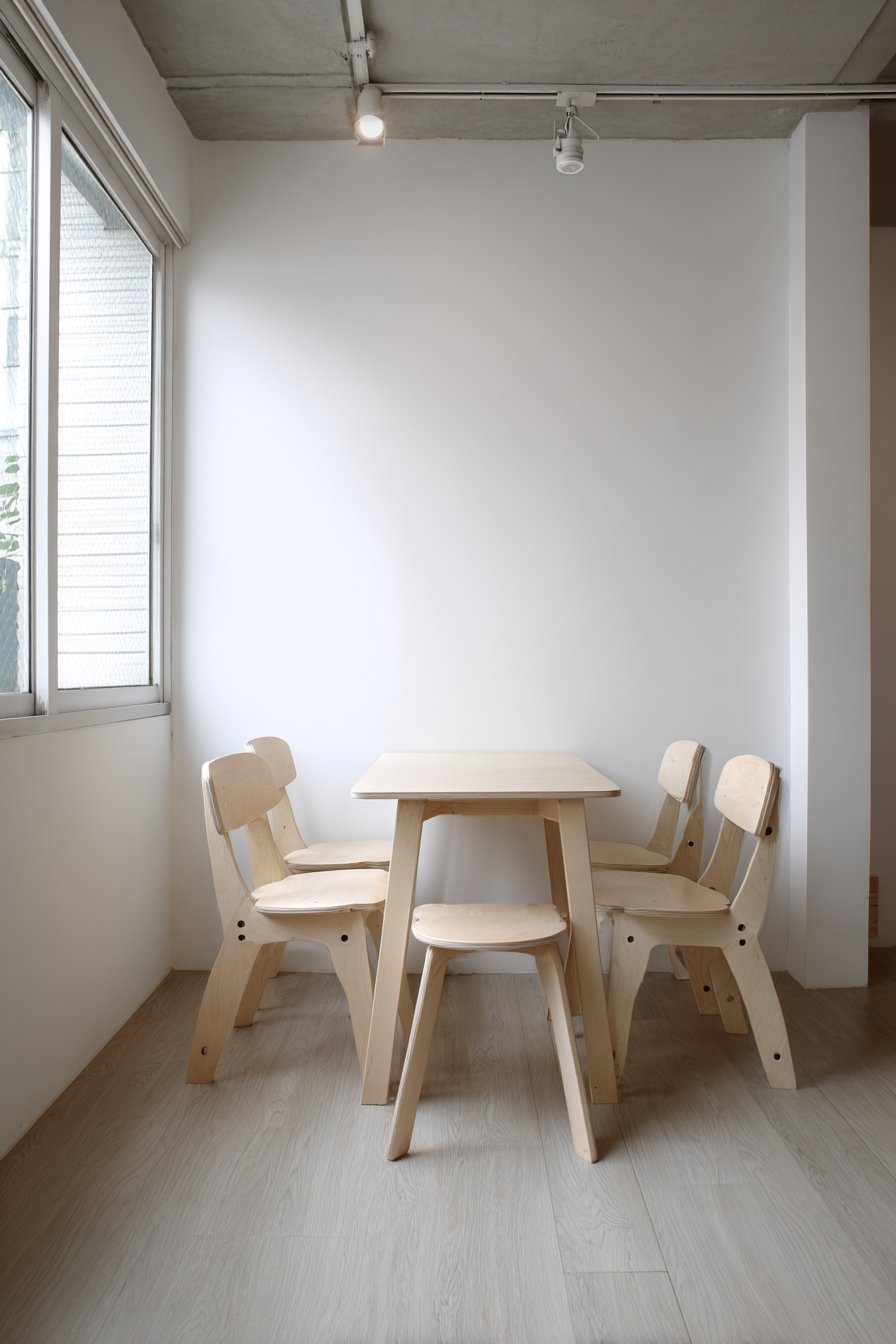
This minimal dining area features gate-leg table in natural maple. The ingenious design folds completely flat when not in use. Four stackable chairs in matching wood store efficiently. The compact setup suits multi-functional spaces perfectly.
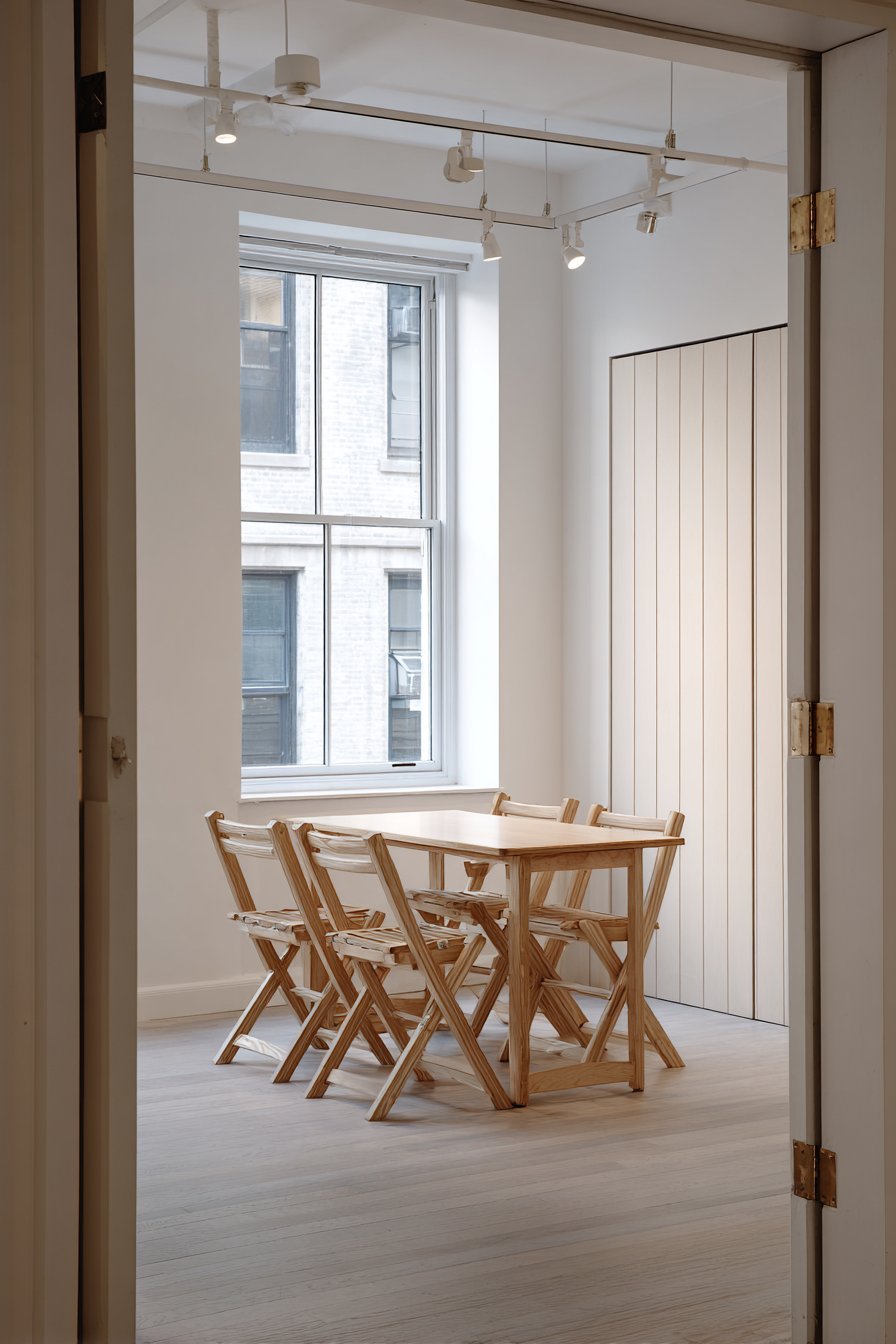
The practical transformation allows the dining area to share room with other activities. Plain white walls and light grey laminate flooring maintain neutral simplicity. A simple track lighting system provides adjustable illumination. The flexible configuration directs light where currently needed.
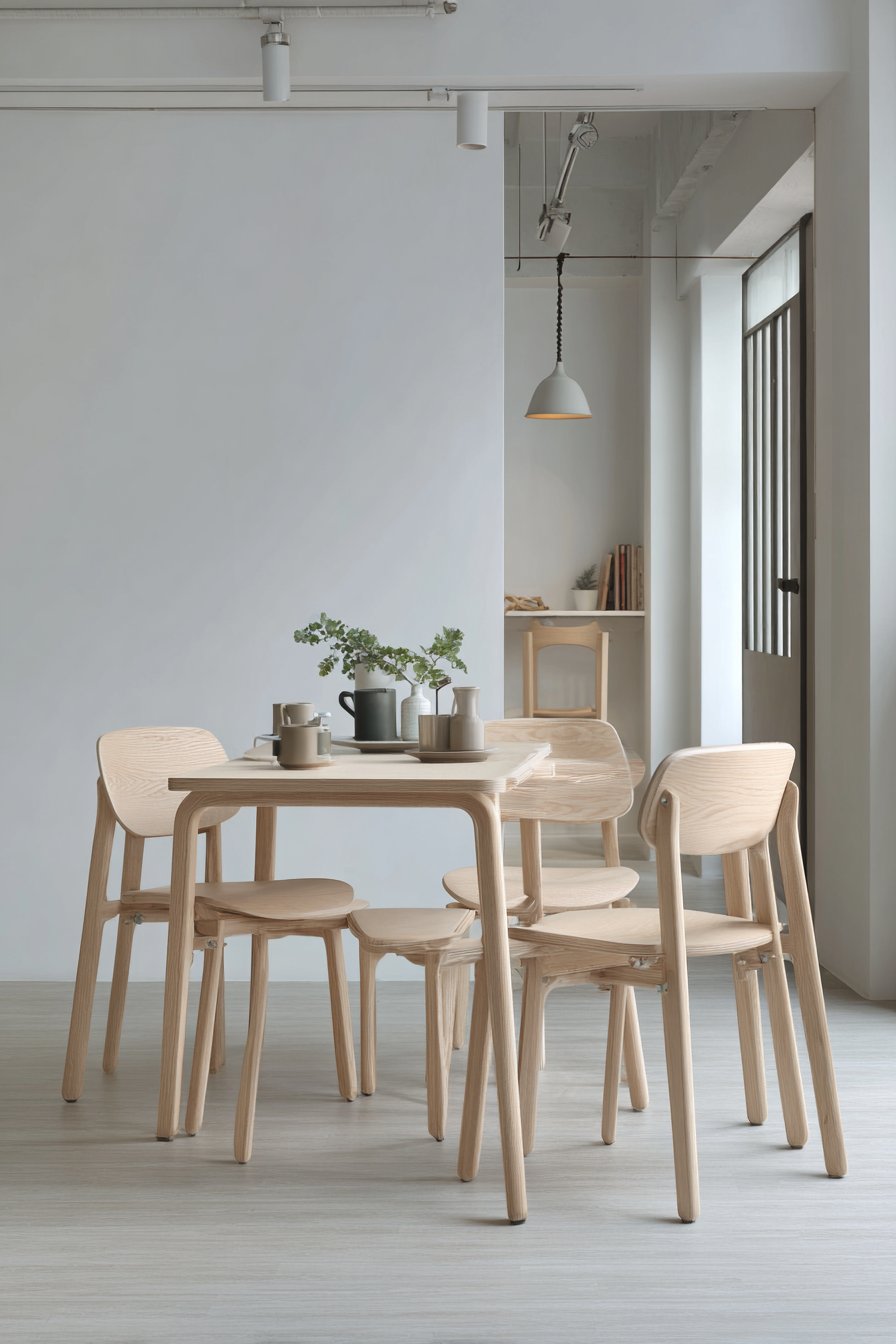
This setup demonstrates minimalist principles of essentialism beautifully. Adaptability creates functional beauty in contemporary living. Limited space becomes opportunity rather than constraint. Thoughtful design choices maximize utility without sacrificing aesthetic integrity.
Key Design Tips:
- Choose gate-leg tables for maximum space efficiency
- Use stackable chairs for convenient storage
- Install track lighting for adjustable illumination
- Select laminate flooring for practical durability
- Design multi-functional spaces with flexibility priority
Why These Minimal Dining Room Designs Are the Best
These minimal dining room designs represent the finest approaches to creating serene, functional spaces. Each concept demonstrates how intentional restraint produces powerful results. The designs prove that minimal aesthetics accommodate diverse preferences from industrial edge to Scandinavian warmth.
The incorporation of quality natural materials ensures lasting beauty and durability. Solid wood tables, authentic leather, natural linen, and honest metals age gracefully. These materials develop character over time rather than deteriorating. The investment in quality pieces pays dividends through decades of use.
Color theory applications show sophisticated understanding throughout these designs. Monochromatic schemes create calm unity while tonal variations add depth. Neutral foundations allow natural material colors to shine. Strategic accent colors appear sparingly but meaningfully when included.
Spatial considerations address real-world living constraints elegantly. Compact solutions like drop-leaf and gate-leg tables serve small spaces. Transparent furniture maintains visual flow in tight quarters. Floating elements maximize floor space while creating architectural interest.
Lighting strategies combine natural and artificial sources thoughtfully. Pendant lights provide focused task illumination above dining surfaces. Recessed fixtures offer even ambient light without visual clutter. Natural daylight through sheer curtains maintains connection to outdoor rhythms.
The minimal approach emphasizes multi-functional flexibility for modern living. Extendable tables accommodate varying guest numbers. Convertible console tables serve dual purposes. This adaptability proves essential in contemporary homes where space serves multiple functions.
Sustainability emerges naturally through quality material choices and timeless design. Reclaimed wood reduces environmental impact while adding character. Durable construction methods ensure pieces last generations. The minimal aesthetic resists trend-driven obsolescence through classic forms.
Conclusion
These minimal dining room designs demonstrate that simplicity requires sophisticated understanding of materials, proportions, and spatial relationships. The key takeaways include investing in quality natural materials, embracing functional flexibility, and practicing intentional restraint. Each carefully chosen element contributes meaningfully to the overall composition.
Successful minimal design balances aesthetic purity with practical livability. Start by editing existing spaces to reveal essential elements. Choose one quality piece over multiple mediocre options. Your journey toward minimal dining begins with thoughtful consideration of what truly serves your needs and brings lasting joy.