


The living room serves as the heart of every home. It’s where families gather, guests are welcomed, and memories are created. A thoughtfully designed living room balances aesthetic beauty with practical functionality. The right decorating choices can transform this essential space into a sanctuary that reflects your personal style.
Interior design for living rooms has evolved to embrace diverse aesthetics and lifestyles. From minimalist Scandinavian simplicity to maximalist bohemian abundance, each approach offers unique benefits. Modern homeowners seek spaces that accommodate daily life while showcasing their design sensibilities. The versatility of contemporary living room design allows for endless creative possibilities.
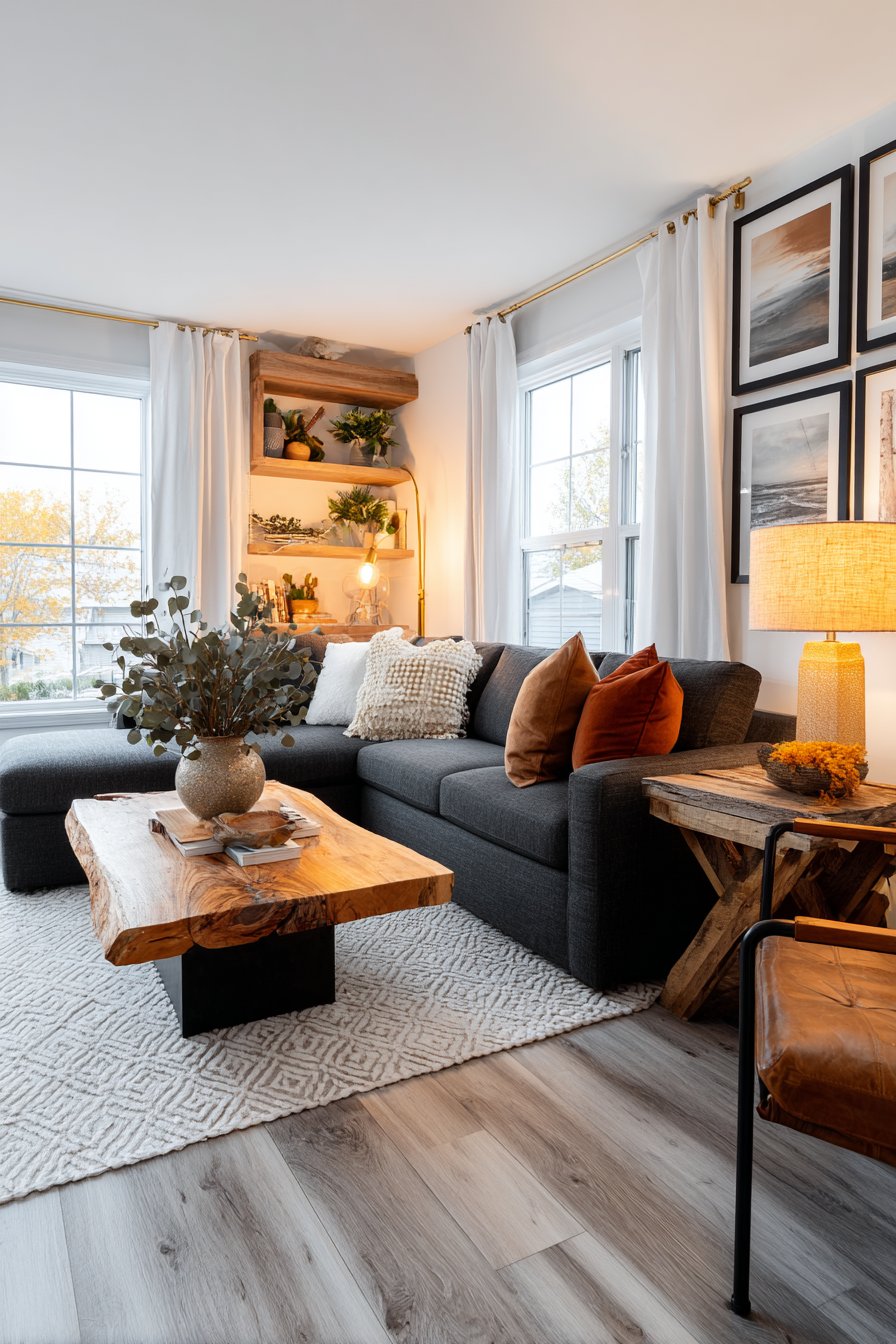
This comprehensive guide explores twenty distinctive living room decorating ideas. Each concept demonstrates different materials, color palettes, and spatial arrangements. Whether you prefer coastal tranquility, industrial edge, or traditional elegance, these designs provide actionable inspiration. The following ideas cater to various budgets, space constraints, and lifestyle needs while maintaining sophisticated design principles.
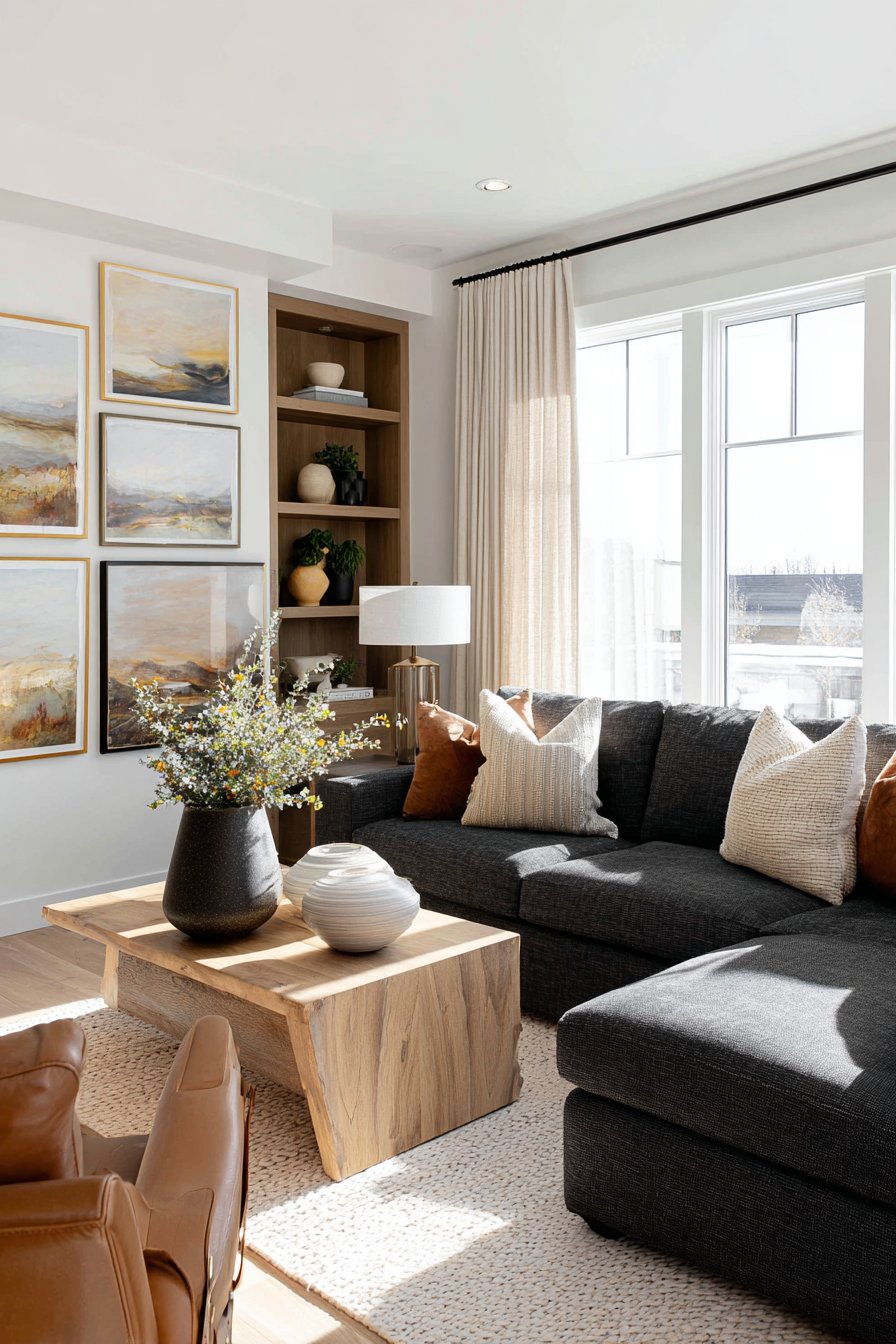
1. Sophisticated Charcoal and Natural Oak Elegance
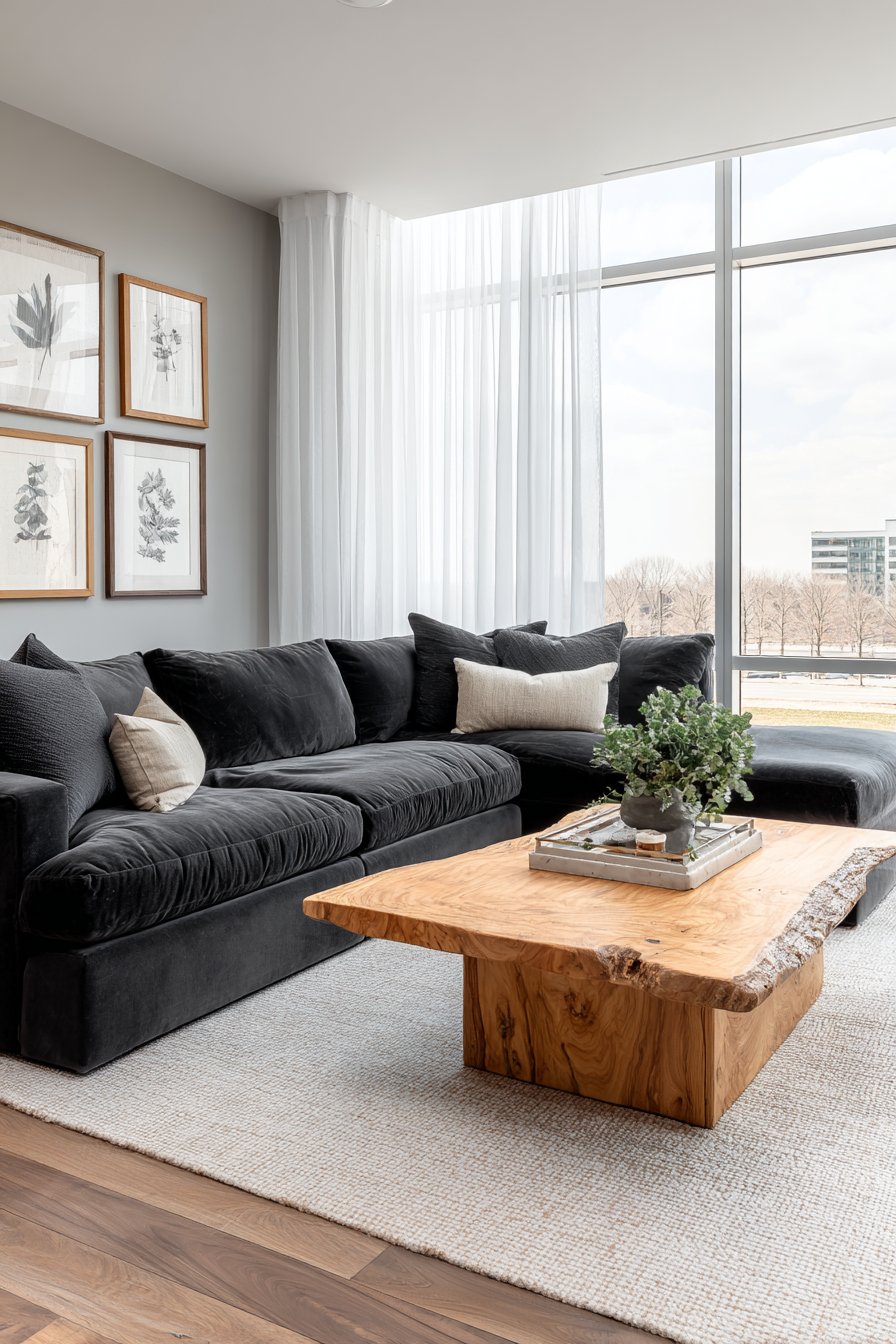
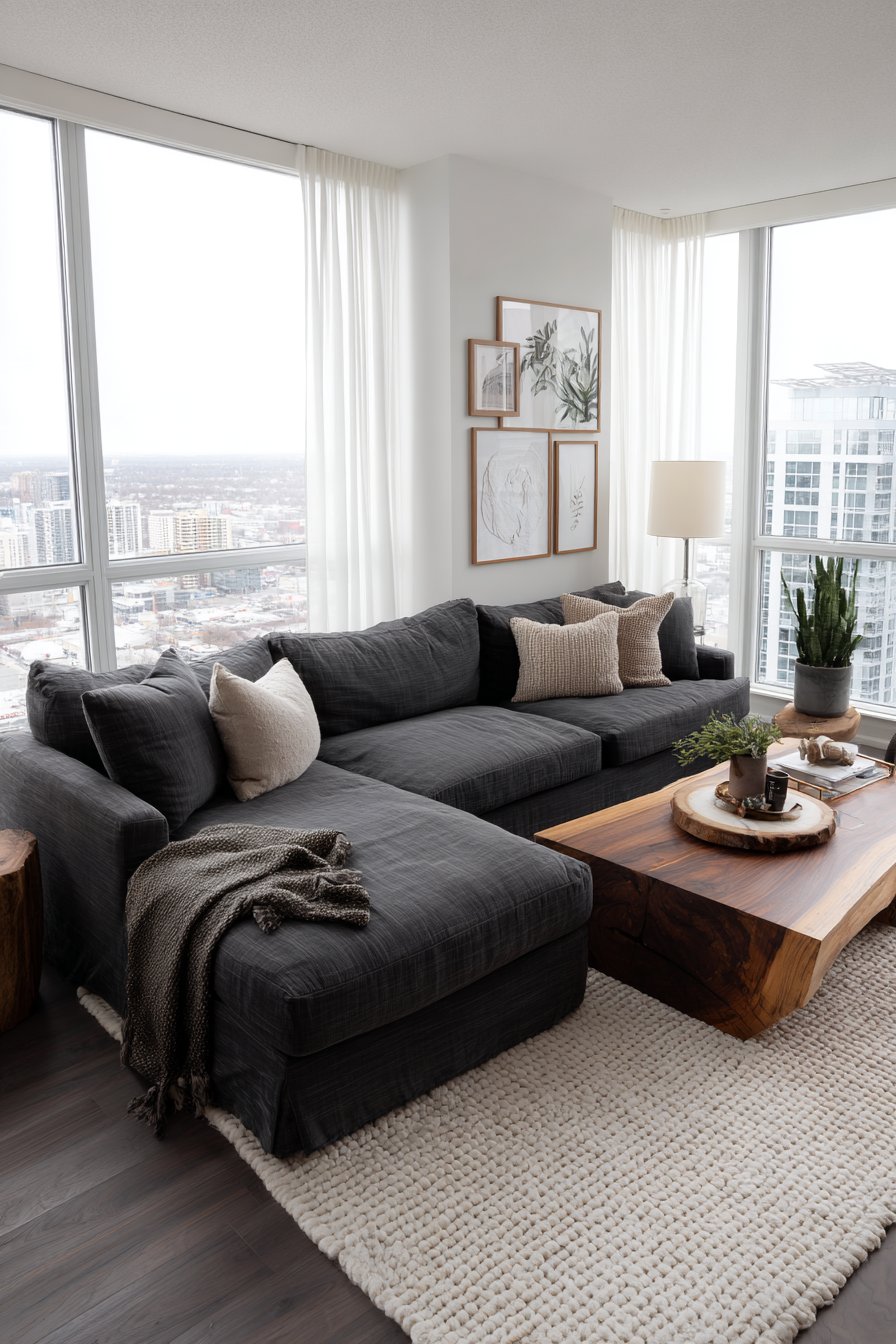
This sophisticated living room centers around a plush charcoal grey sectional sofa. Deep cushions provide exceptional comfort for extended lounging. The linen upholstery offers durability with refined texture. A natural oak coffee table with live edge detail anchors the seating arrangement. The organic wood edge celebrates nature’s imperfect beauty.
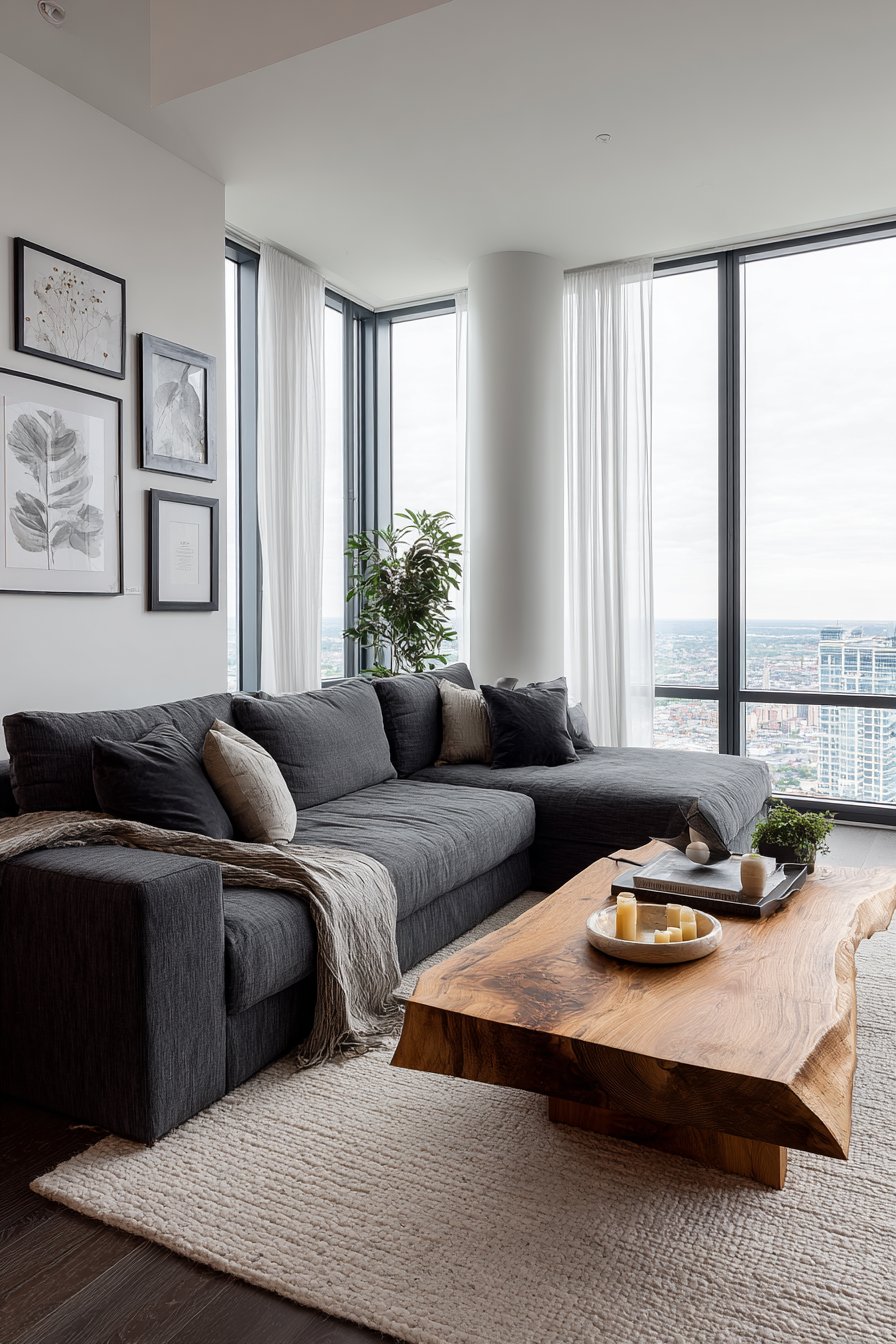
The gallery wall behind the sofa creates visual drama. Mixed frame styles combine matte black and natural wood finishes. Abstract art pieces alternate with botanical prints. This curated collection adds personality without overwhelming the space. The arrangement demonstrates how art elevates interior design beyond basic furniture placement.
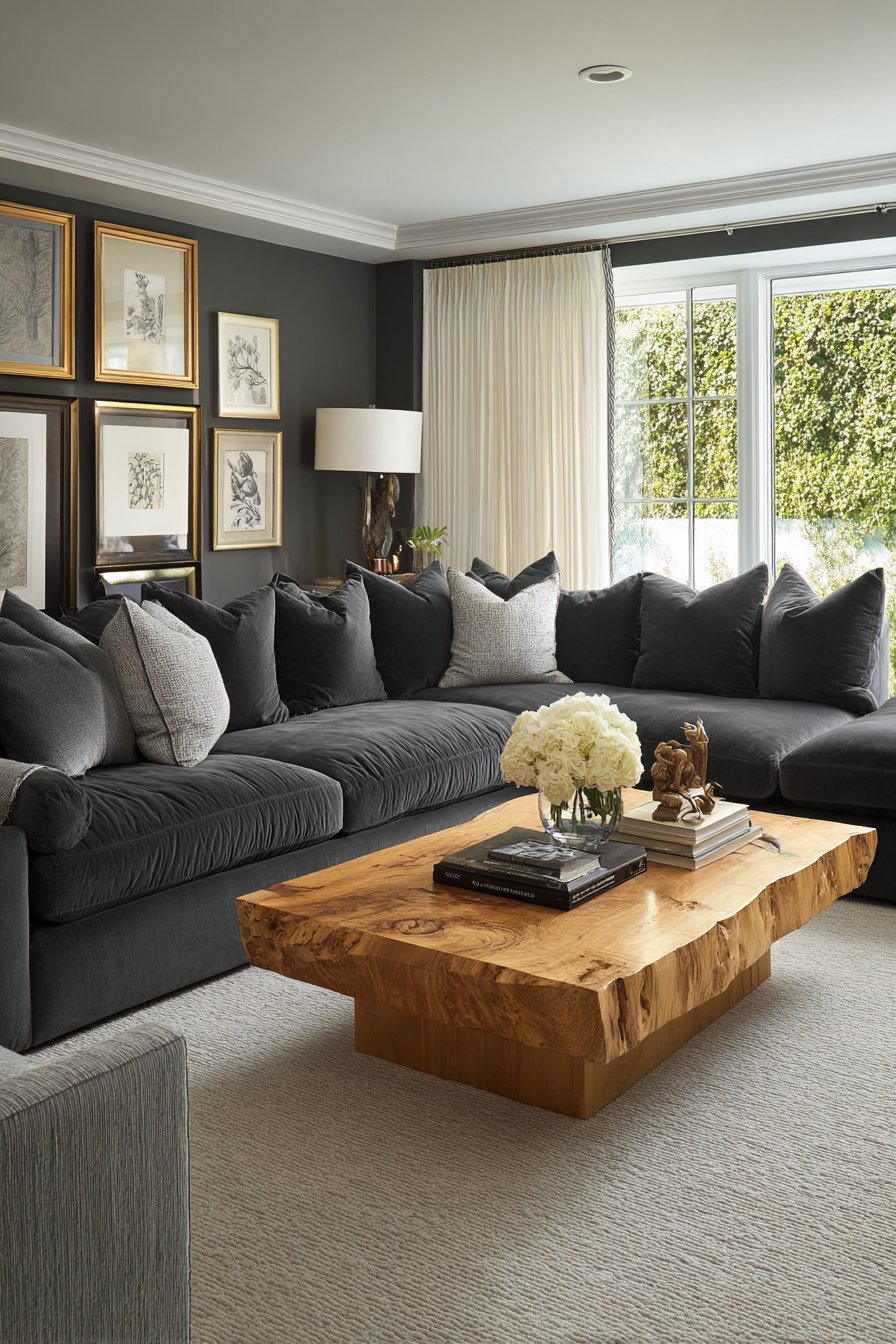
Floor-to-ceiling windows flood the room with natural daylight. Sheer white curtains filter harsh sunlight while maintaining brightness. The textured wool area rug in cream and grey tones grounds the seating area. Layered textures create depth and visual interest throughout the space. Each material contributes to the cohesive design narrative.
Key Design Tips:
- Select deep-cushioned sectionals for maximum comfort and modern appeal
- Incorporate live edge wood pieces to bring organic elements indoors
- Create gallery walls with mixed frame finishes for dynamic visual interest
- Layer different textures like wool, linen, and wood for dimensional design
- Use sheer curtains to maximize natural light while maintaining privacy
- Choose neutral color palettes that allow flexibility in accent color changes
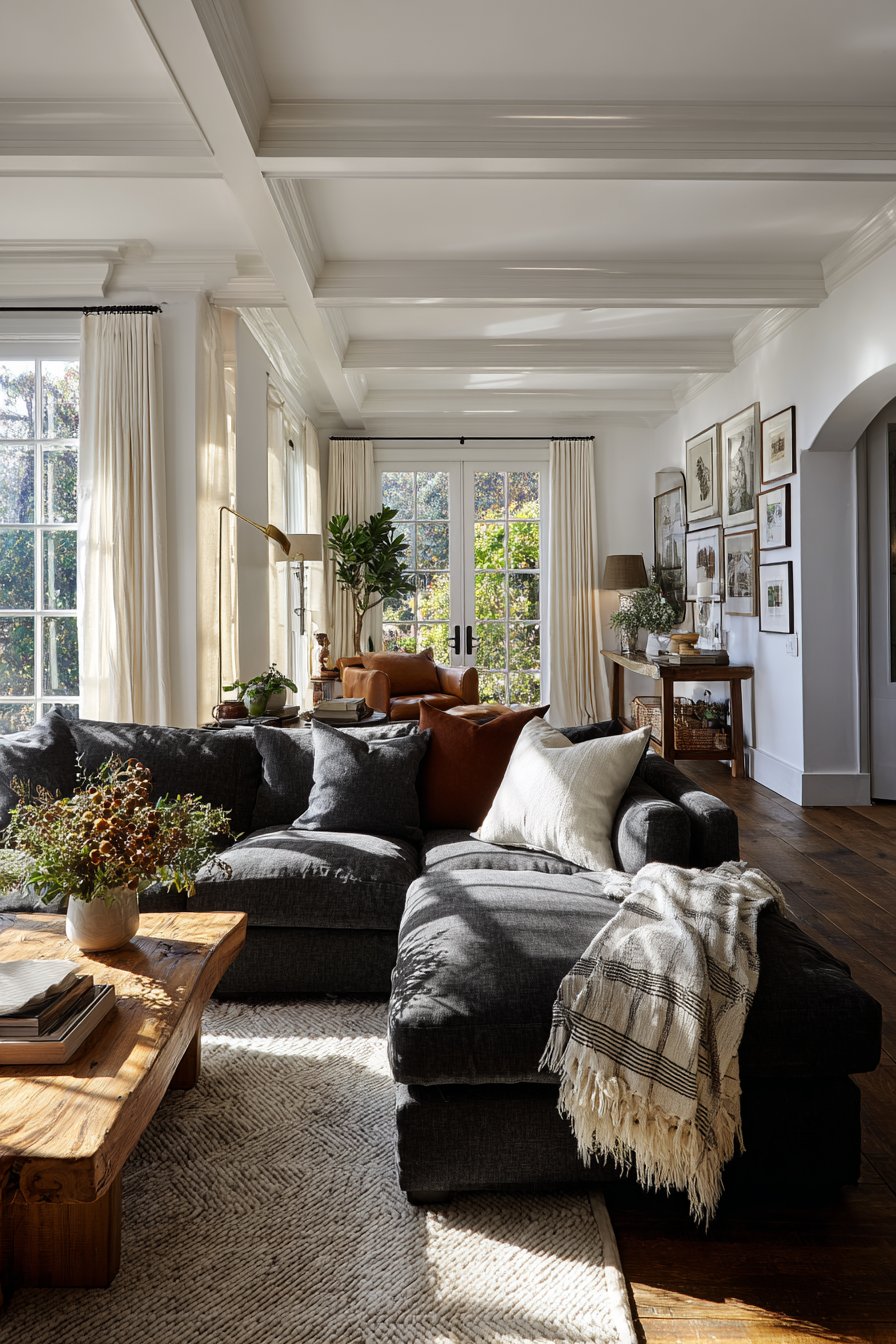
2. Cozy Vintage Leather Corner Retreat
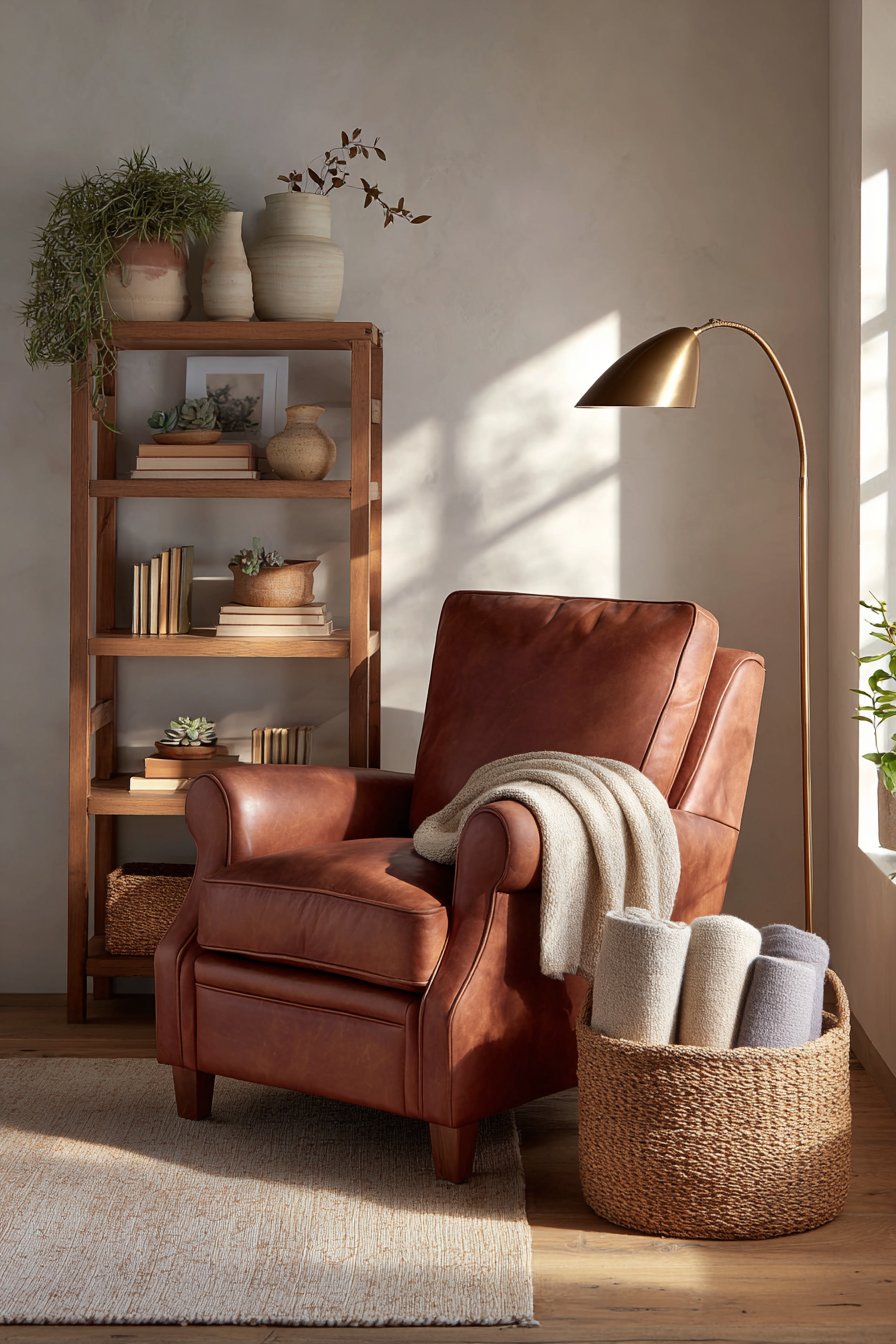
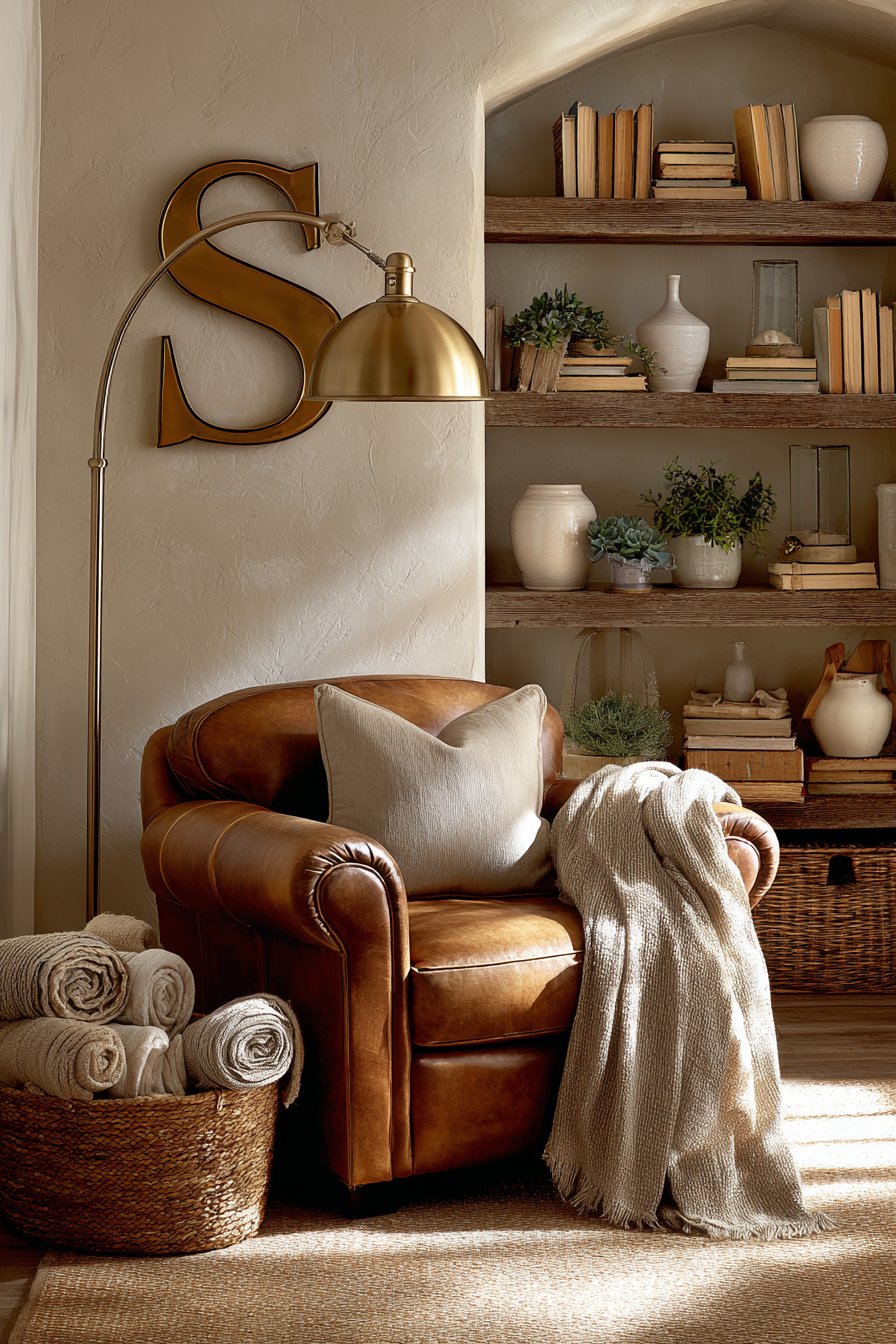
A vintage leather armchair in cognac brown creates an intimate reading corner. The aged leather develops rich patina over time. A tall arc floor lamp with brass finish provides focused task lighting. The adjustable arm positions light exactly where needed. This functional element doubles as sculptural art.
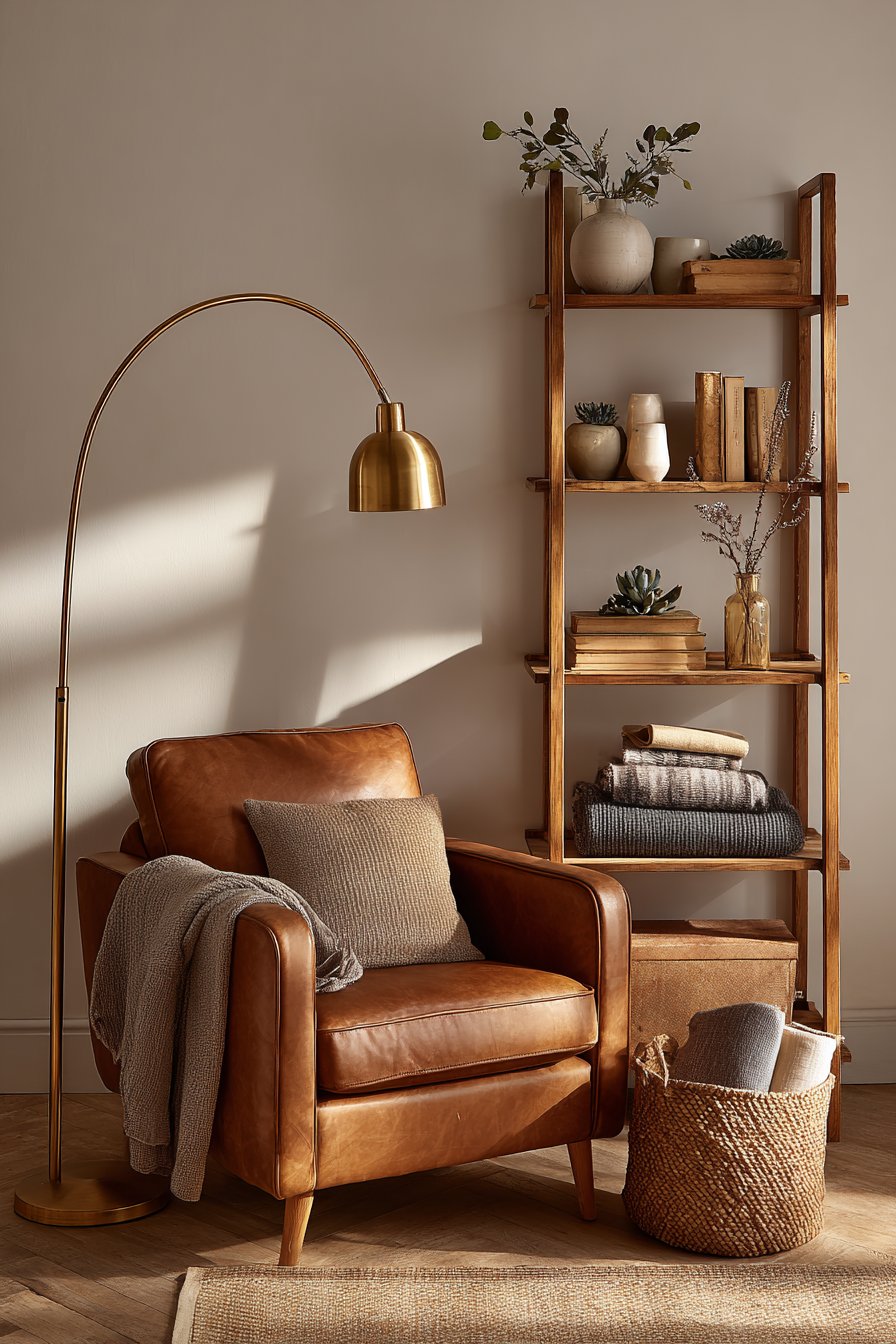
A handwoven jute basket holds rolled blankets in neutral tones. The natural fiber adds textural warmth to the space. Adjacent open wooden shelving displays carefully curated items. Ceramic vases in earth tones complement hardcover books. Small potted succulents introduce living elements that purify air.
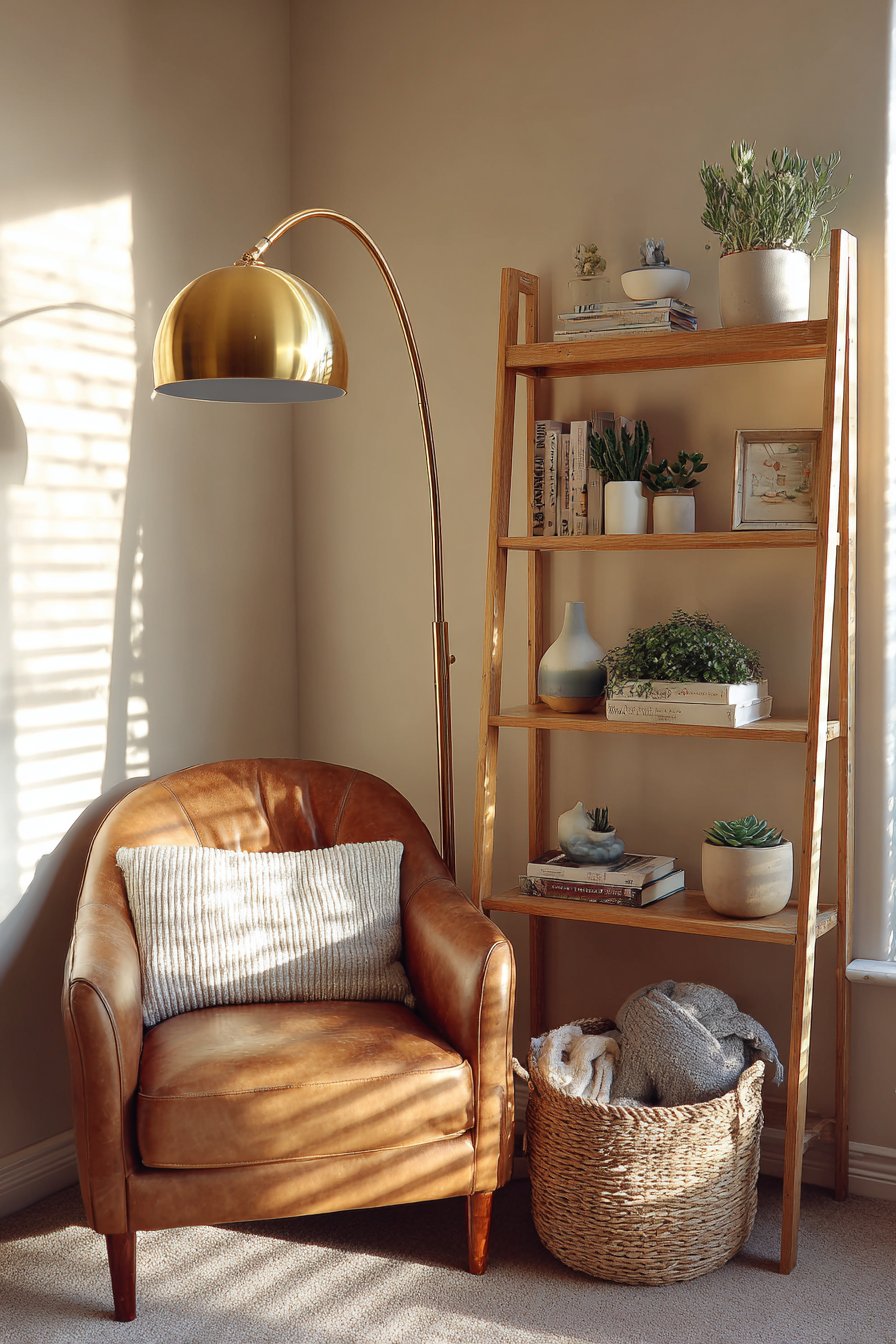
Warm afternoon light creates subtle shadows across the leather. These shadows emphasize the lived-in quality that makes spaces feel authentic. The corner arrangement maximizes the underutilized space effectively. Every element serves both practical and aesthetic purposes. This design proves that small zones create significant impact.
Key Design Tips:
- Invest in quality leather furniture that improves with age
- Position arc lamps to provide adjustable task lighting for reading areas
- Use natural fiber baskets for practical storage that enhances design
- Display collections on open shelving with intentional spacing and grouping
- Add living plants to improve air quality and bring nature indoors
- Create dedicated corner zones for specific activities like reading or relaxing
3. Modern Farmhouse White and Sage Serenity
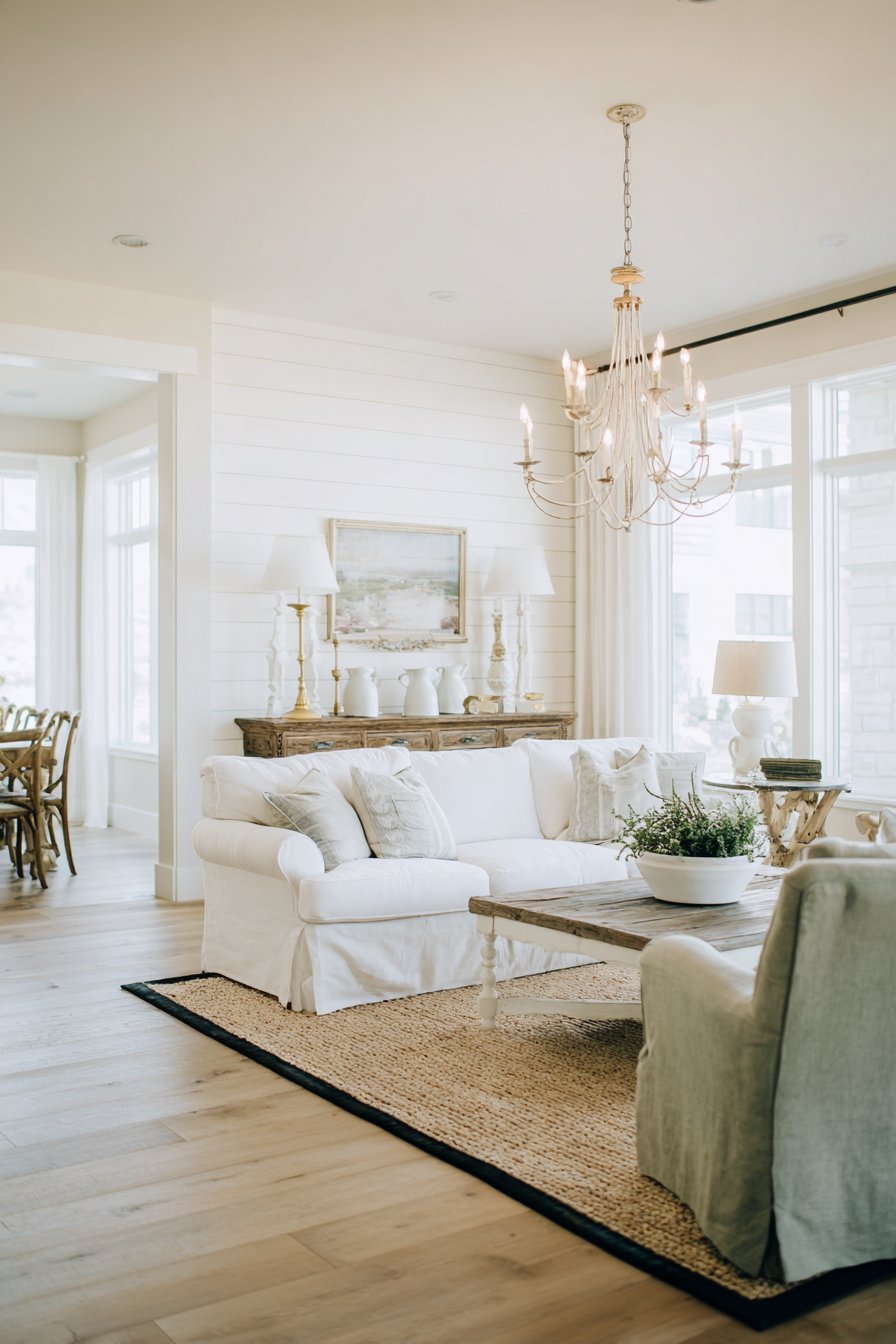
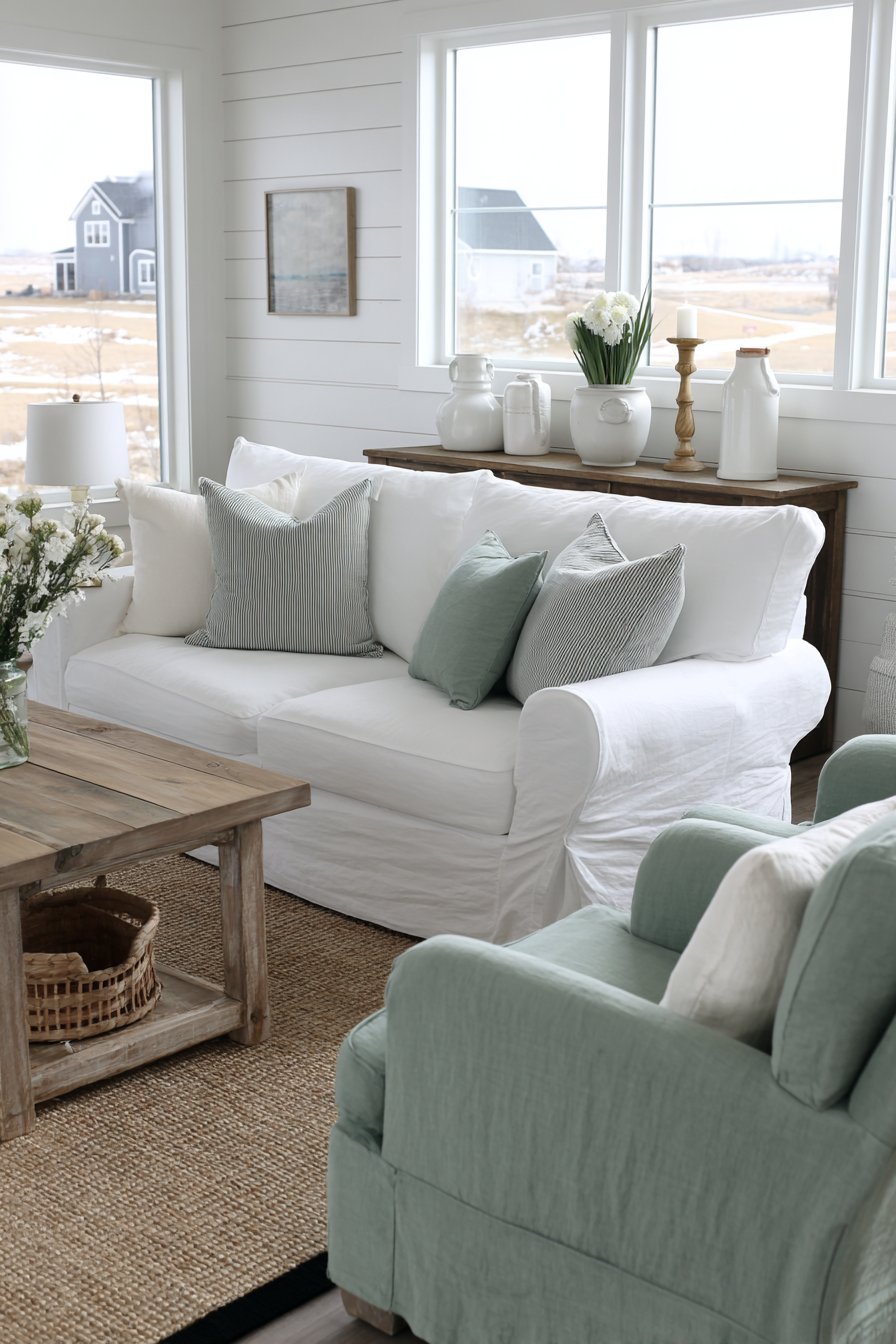
The modern farmhouse aesthetic combines contemporary comfort with rustic charm. A white slipcovered sofa with rolled arms provides timeless appeal. Two upholstered accent chairs in soft sage green linen flank the sofa. The symmetrical arrangement creates formal balance with casual materials. Slipcovered furniture offers practical washability for family living.
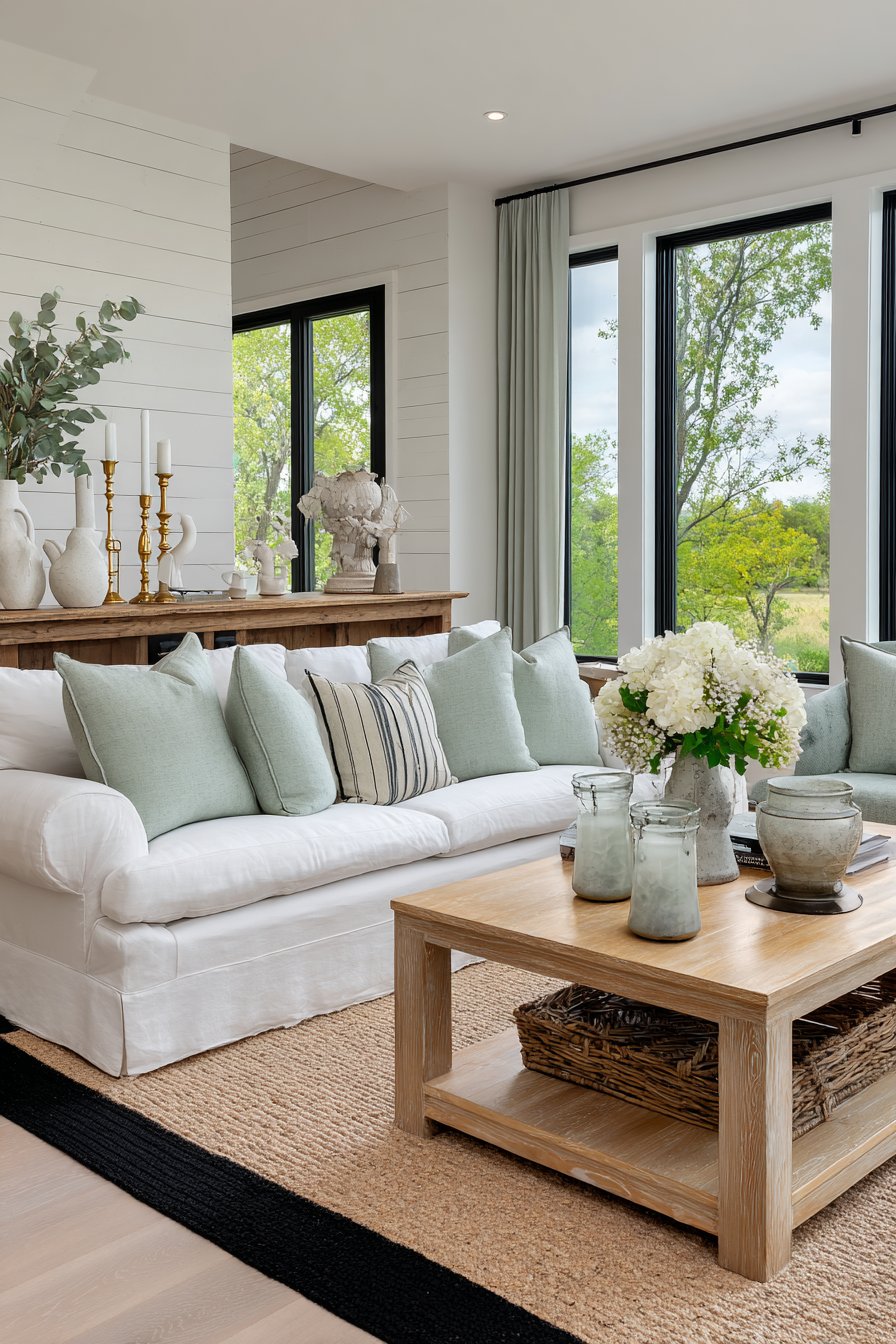
A reclaimed wood console table behind the sofa adds character. Vintage brass candlesticks provide vertical interest and warm metallic accents. A collection of white ceramic pitchers displays farmhouse simplicity. The shiplap accent wall painted in warm white adds textural dimension. This architectural detail references agricultural building traditions.
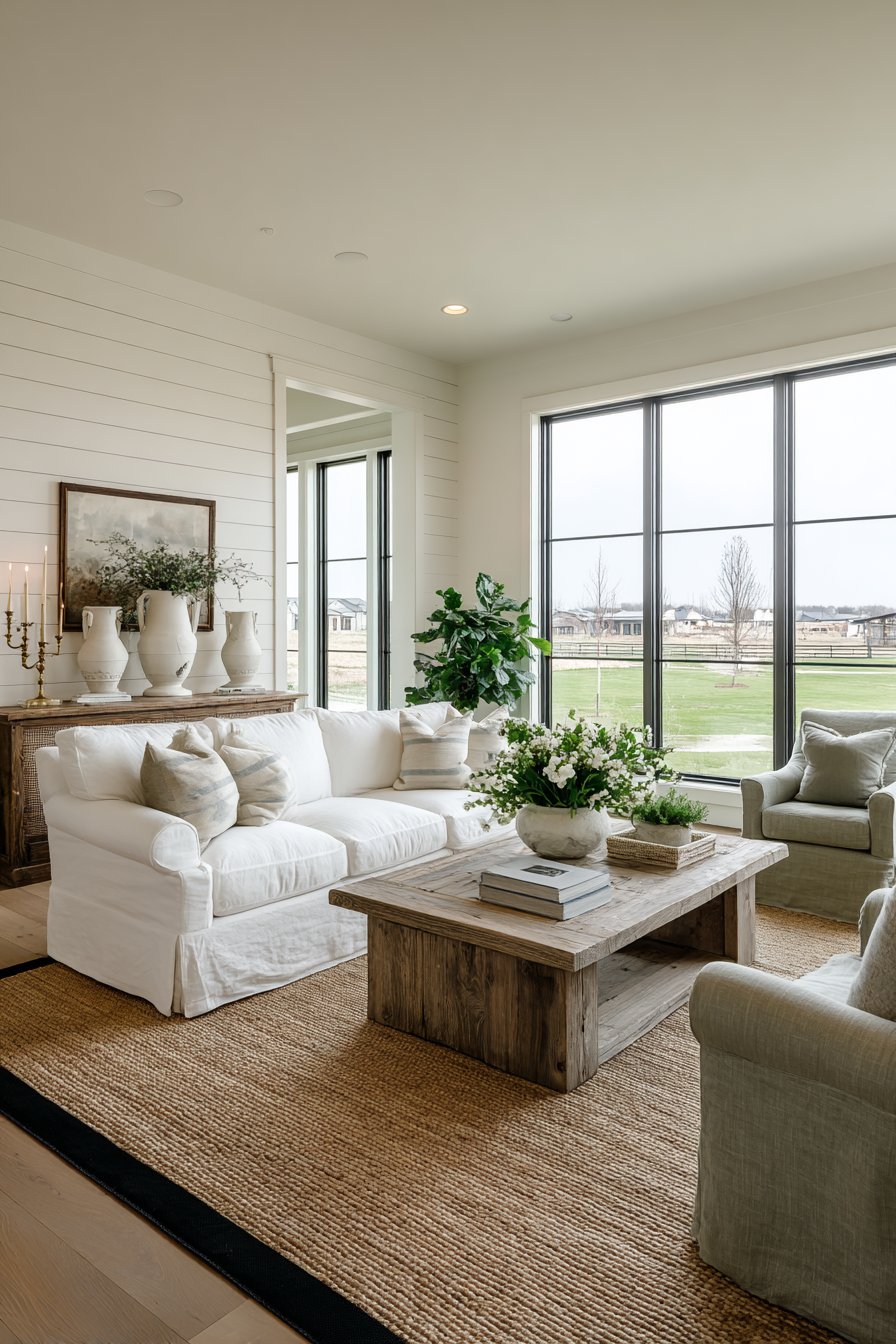
A sisal rug with black border defines the seating area. The natural fiber withstands heavy foot traffic while maintaining beauty. Large windows frame the space with abundant natural morning light. The bright, airy atmosphere promotes relaxation and comfort. This design successfully balances rustic elements with contemporary sensibilities.
Key Design Tips:
- Choose slipcovered furniture for easy maintenance in active households
- Incorporate reclaimed wood pieces for authentic farmhouse character
- Create symmetrical seating arrangements for formal yet welcoming layouts
- Add shiplap accent walls for textural interest and architectural detail
- Select natural fiber rugs that combine durability with organic aesthetics
- Display vintage accessories in curated collections for cohesive styling
4. Bohemian Jewel-Toned Textile Paradise
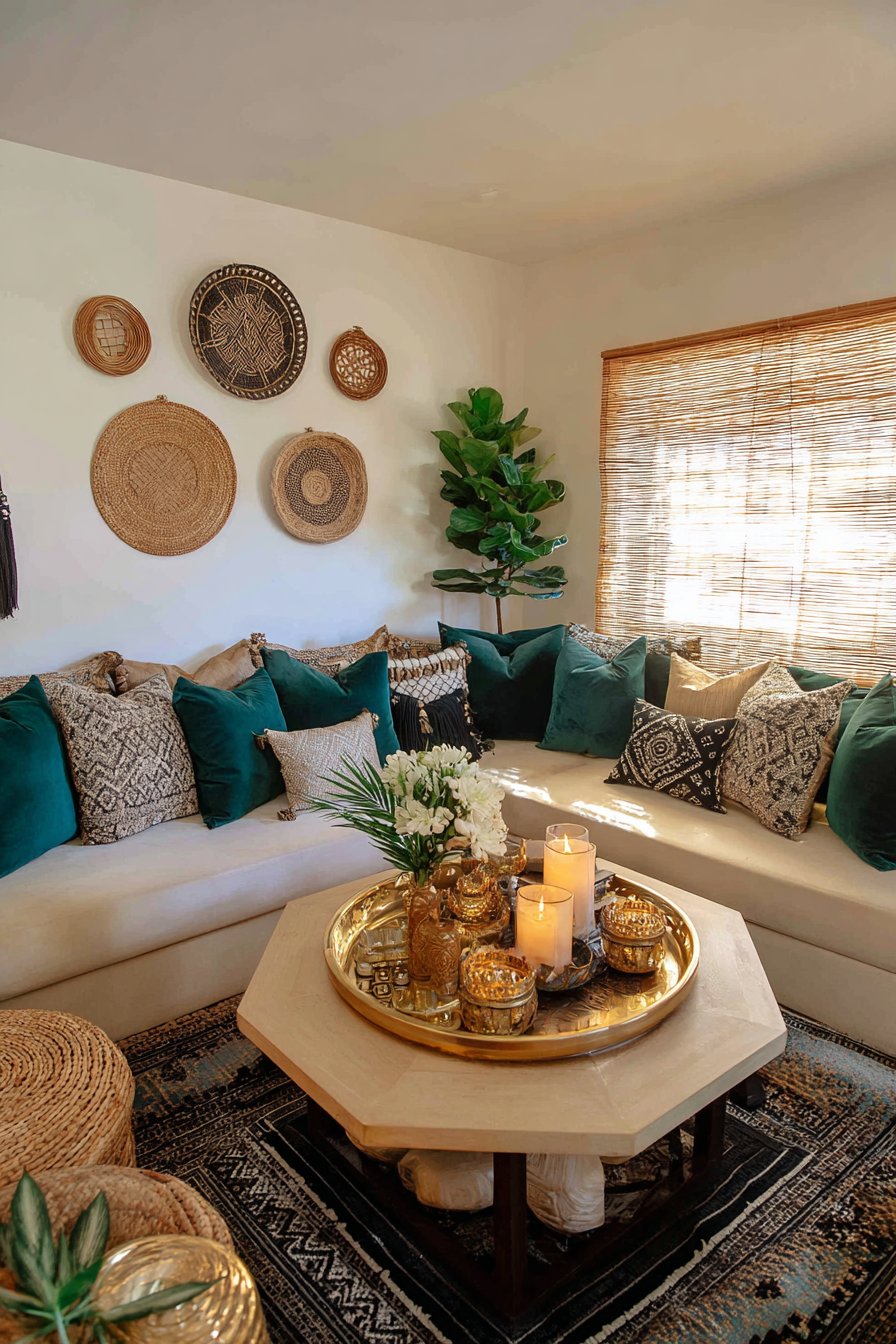
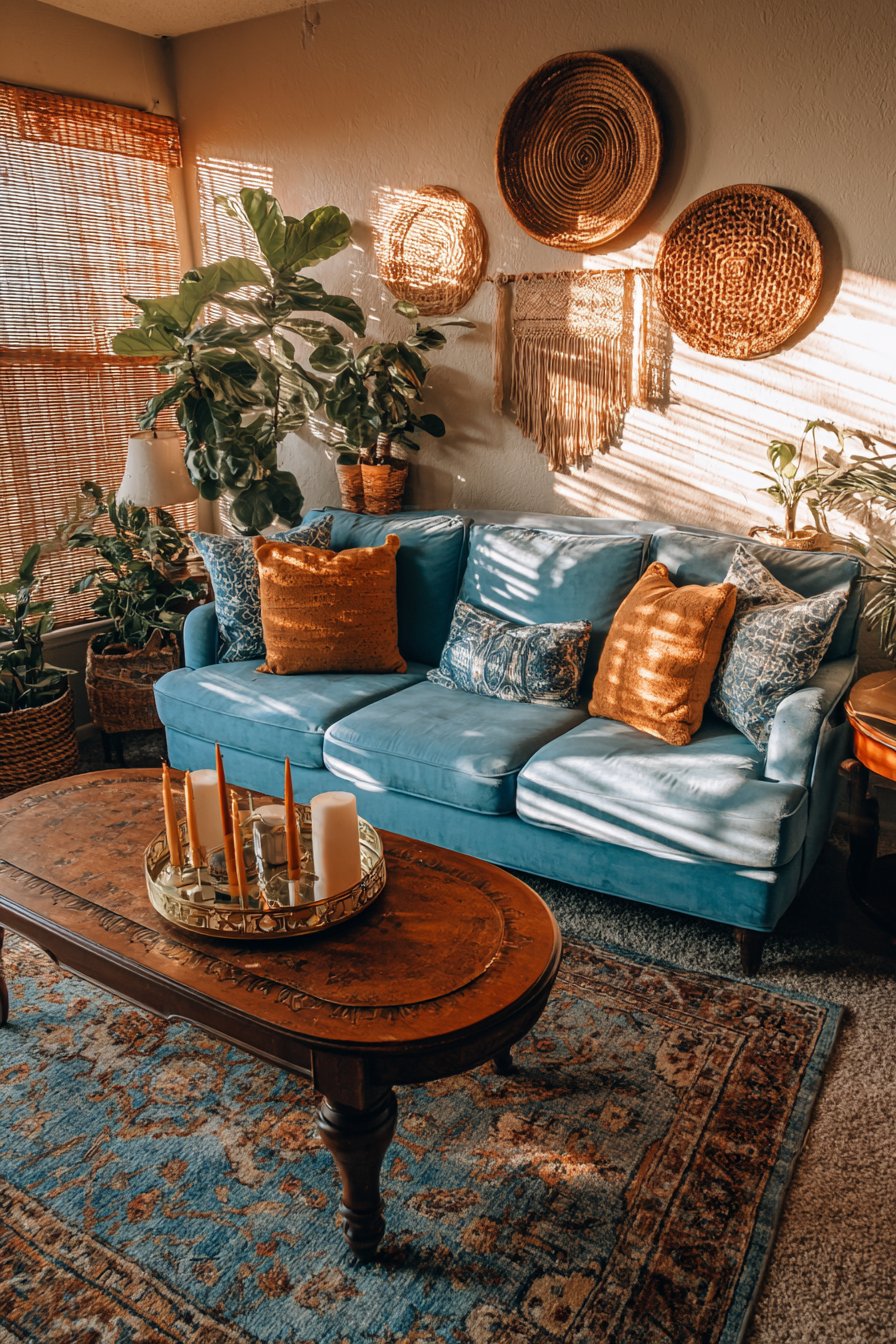
This bohemian-inspired living room celebrates color and pattern fearlessly. A low-profile sofa features jewel-toned velvet cushions in emerald and sapphire. Multiple patterned throw pillows layer florals, geometrics, and global prints. The abundant textile mix creates visual richness and comfort. Each pattern tells its own cultural story.
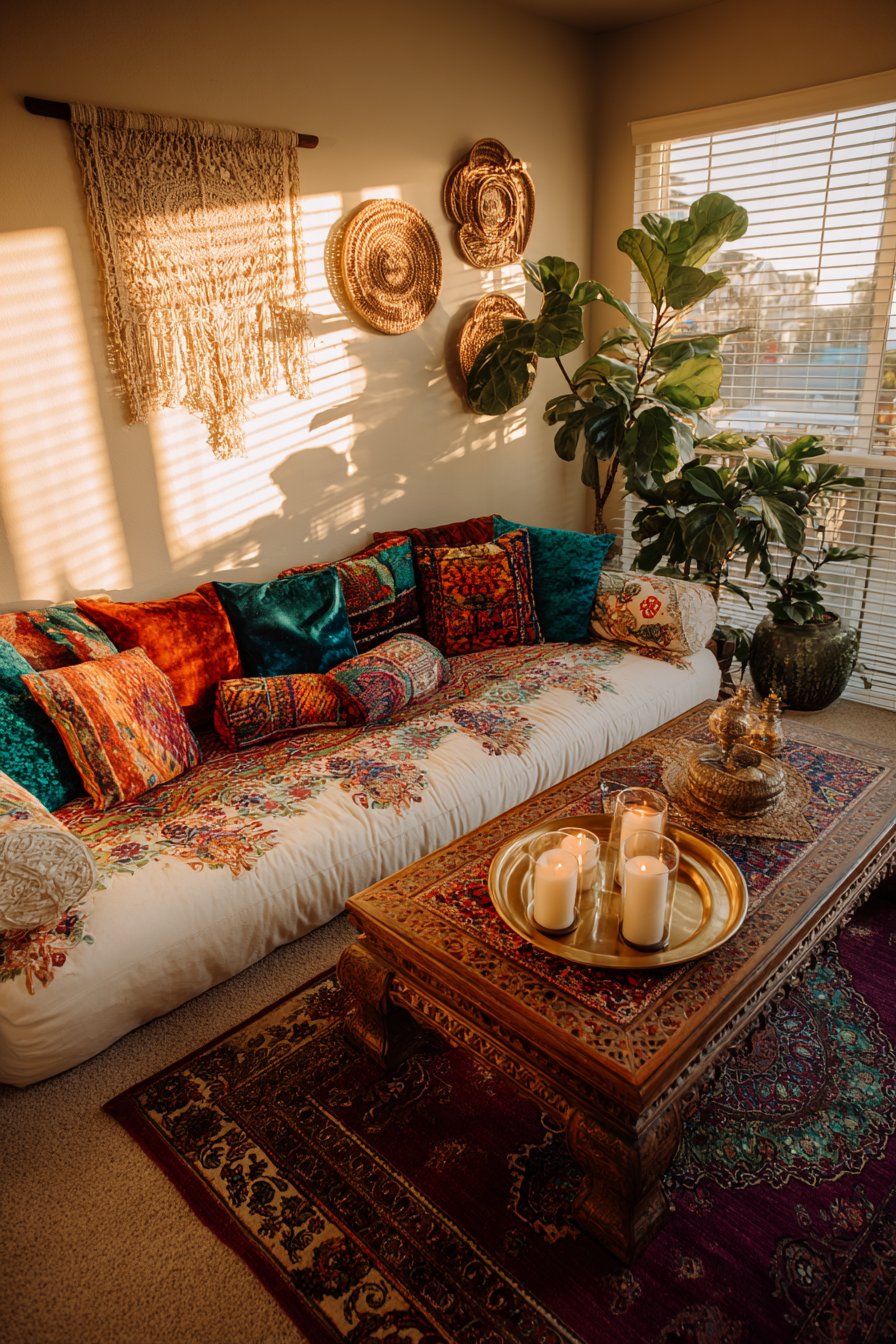
Multiple woven wall hangings in macramé and rattan create vertical interest. These handcrafted pieces add artisanal quality to the space. A carved wooden coffee table with glass top displays treasured items. The brass tray arrangement holds candles that provide ambient evening lighting. A vintage kilim runner adds another layer of global textile tradition.
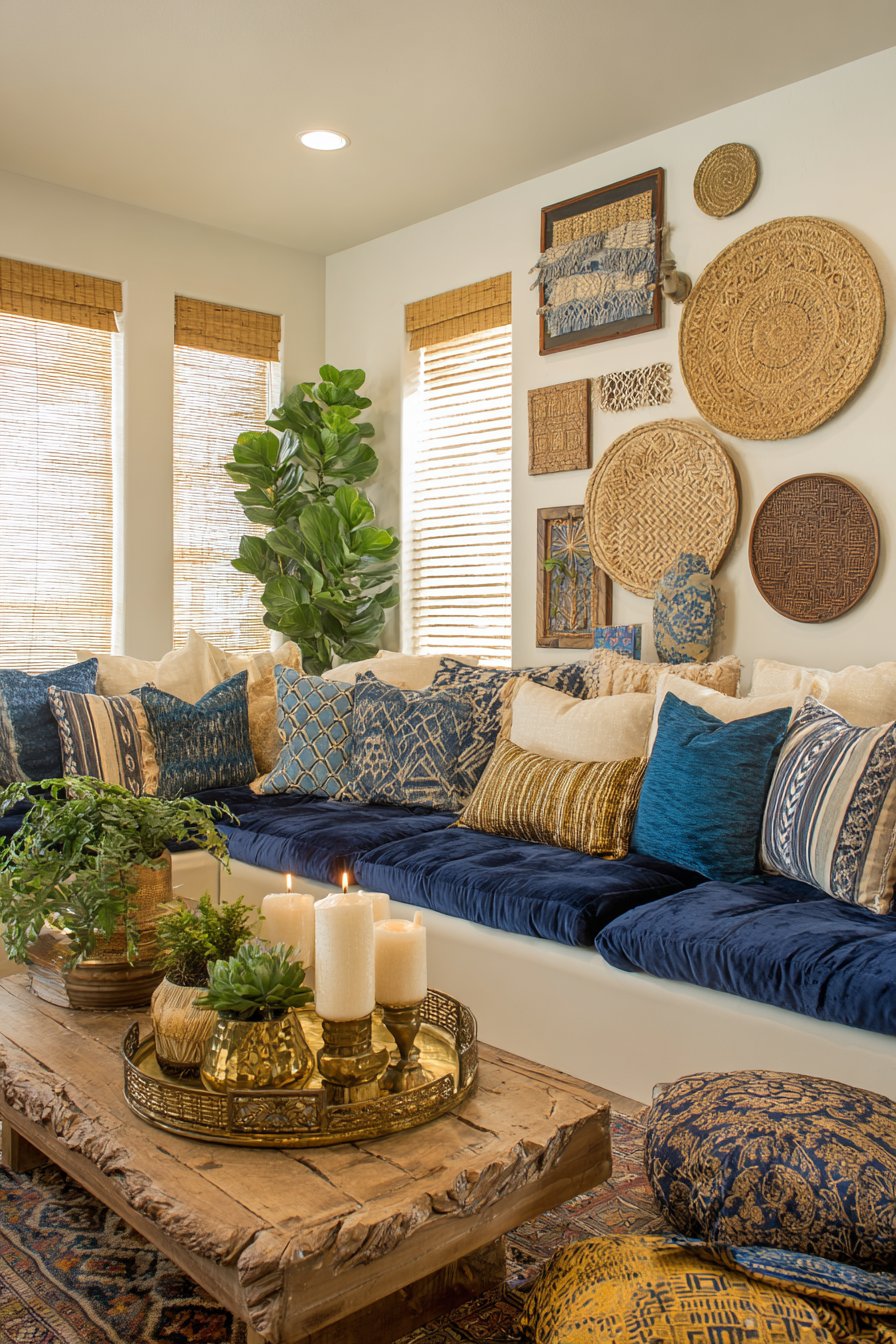
Potted fiddle leaf fig and monstera plants flank the seating area. Living greenery brings vitality and improves indoor air quality. Golden hour sunlight filters through bamboo blinds. Warm patterns cast across the space enhance the bohemian atmosphere. This design embraces the collected-over-time aesthetic that makes spaces feel personal.
Key Design Tips:
- Mix jewel-toned textiles for rich, layered visual interest
- Incorporate handcrafted elements like macramé for artisanal character
- Display global textiles and vintage finds that tell personal stories
- Add abundant living plants to create jungle-like bohemian atmosphere
- Use bamboo blinds to filter light and add natural material texture
- Layer patterns confidently by varying scale and maintaining color cohesion
5. Minimalist Scandinavian Light and Restraint
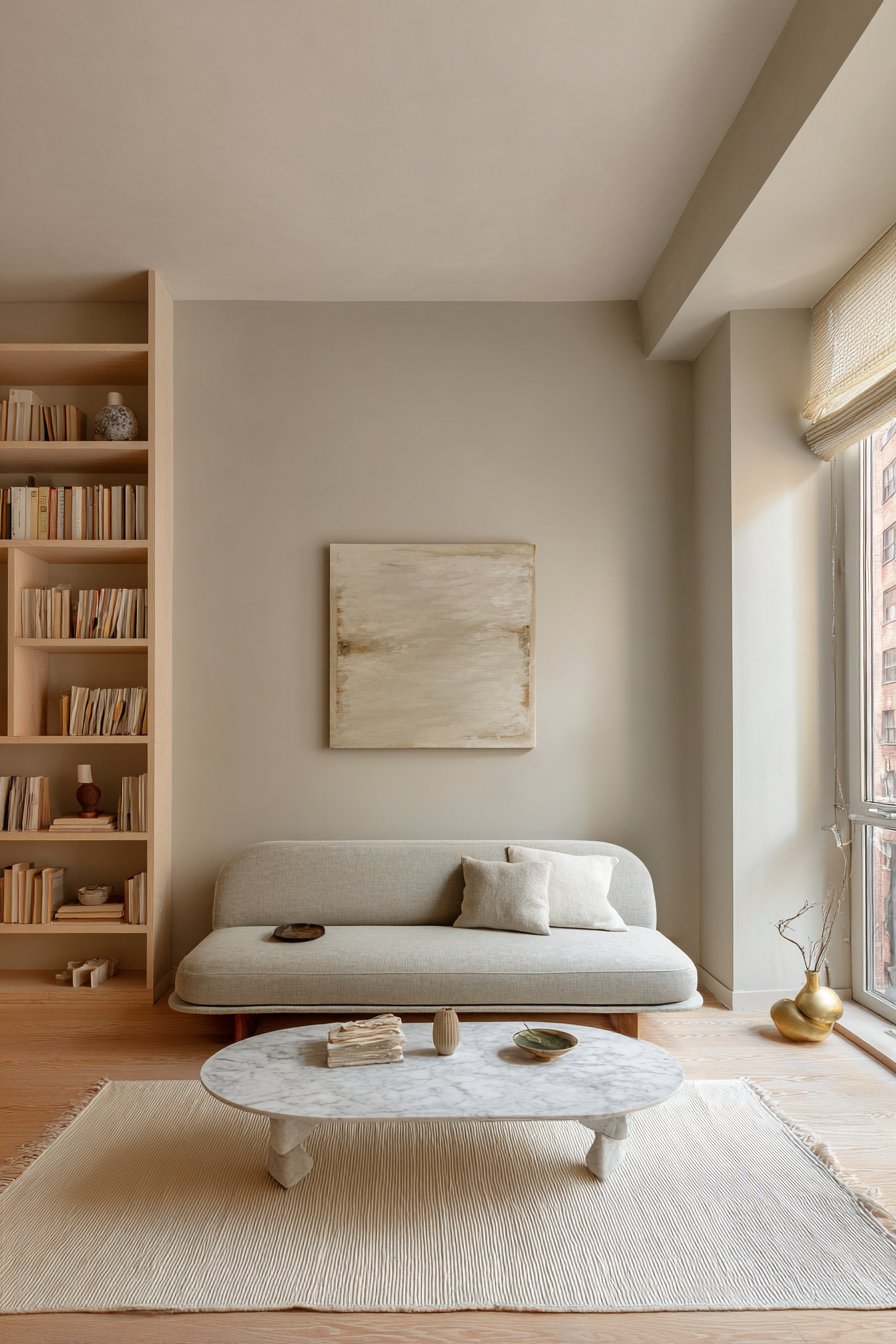
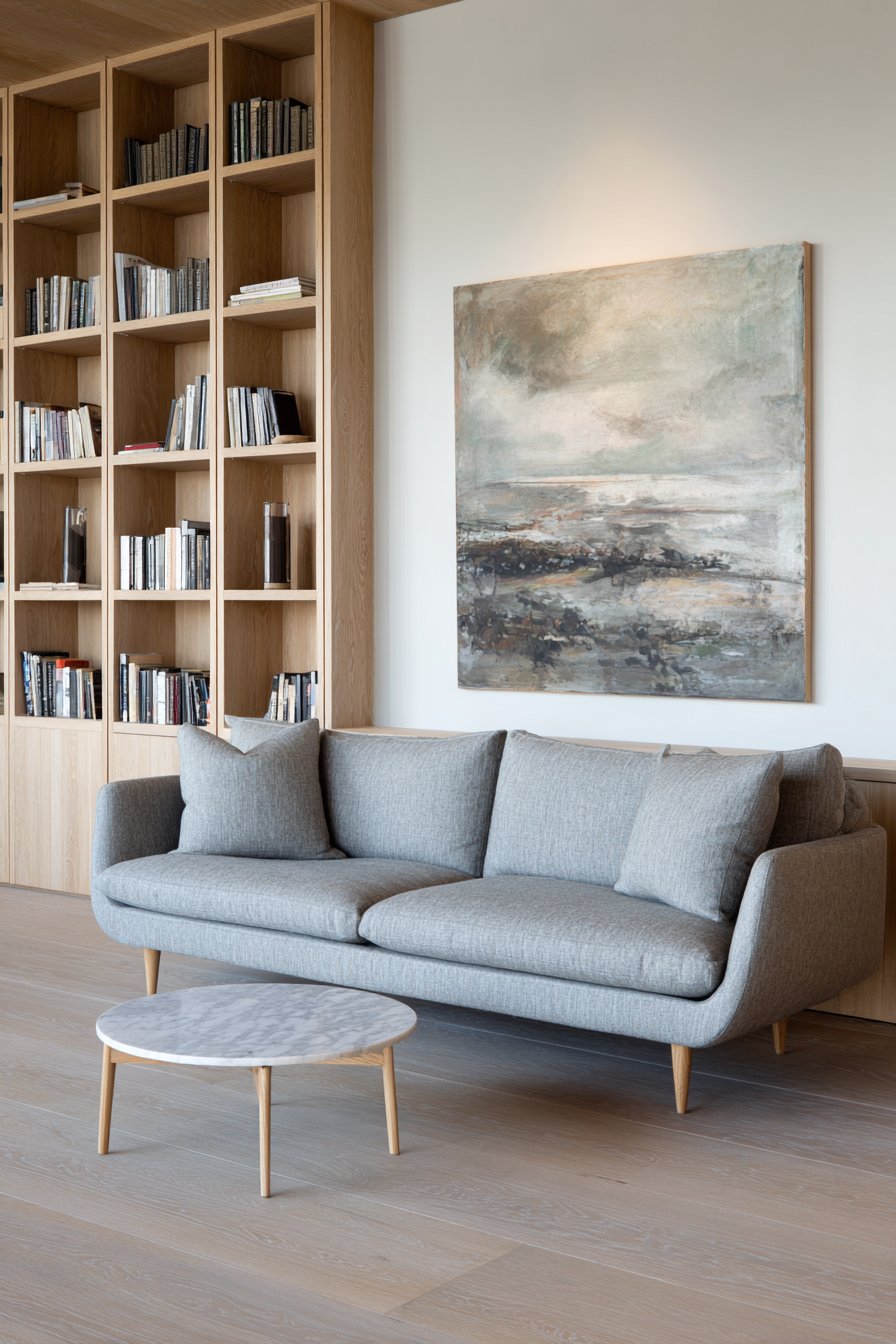
Minimalist Scandinavian design emphasizes functionality and simplicity. A streamlined grey sofa features tapered wooden legs. The clean-lined silhouette eliminates visual clutter. A simple round marble coffee table provides elegant surface space. The natural stone veining adds subtle organic pattern.
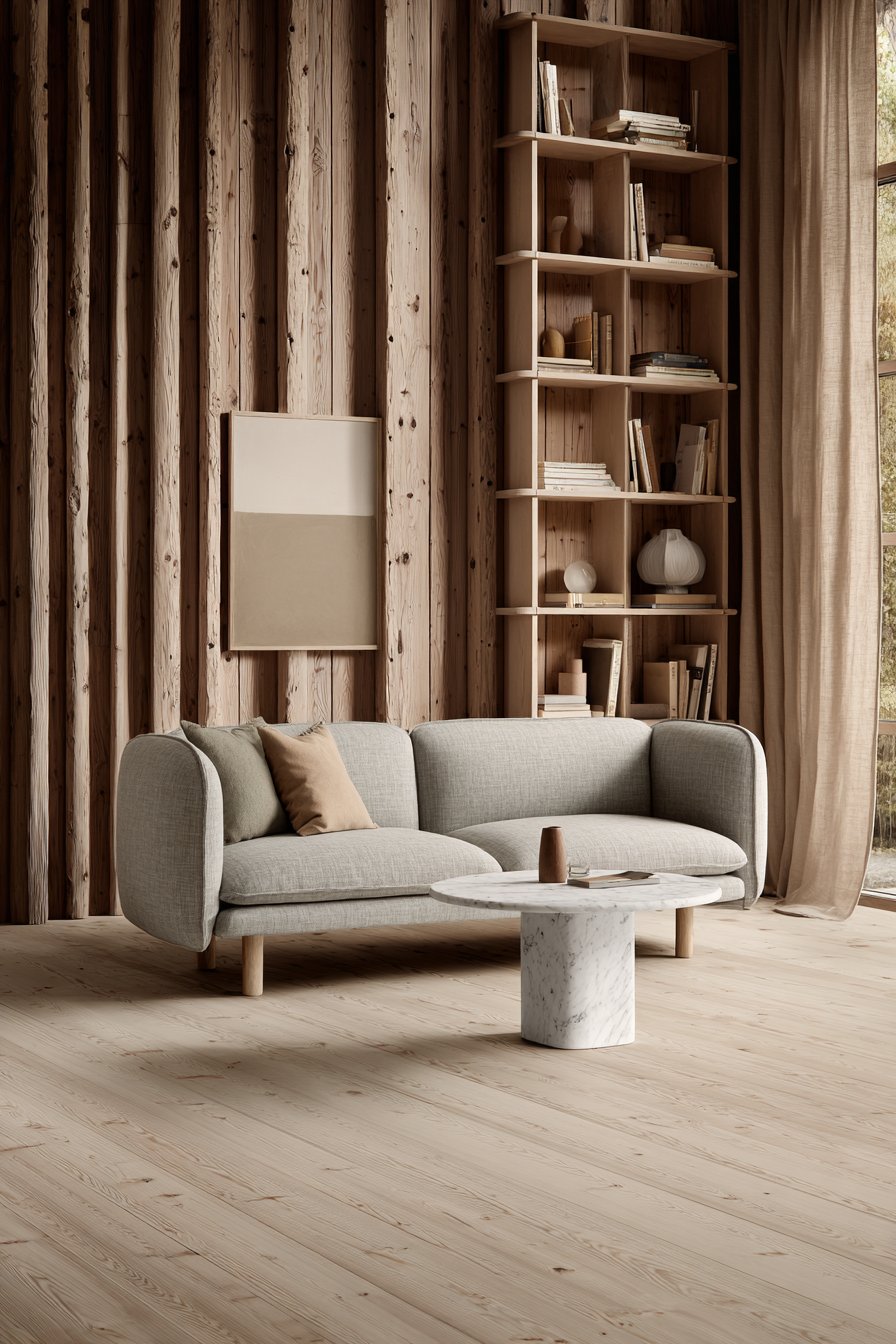
The wall showcases a single large-scale abstract painting. Muted earth tones complement the neutral color scheme. A floor-to-ceiling built-in bookshelf in light oak displays carefully arranged items. Books align precisely with minimal decorative objects. This intentional curation demonstrates “lagom” – the Swedish concept of just enough.
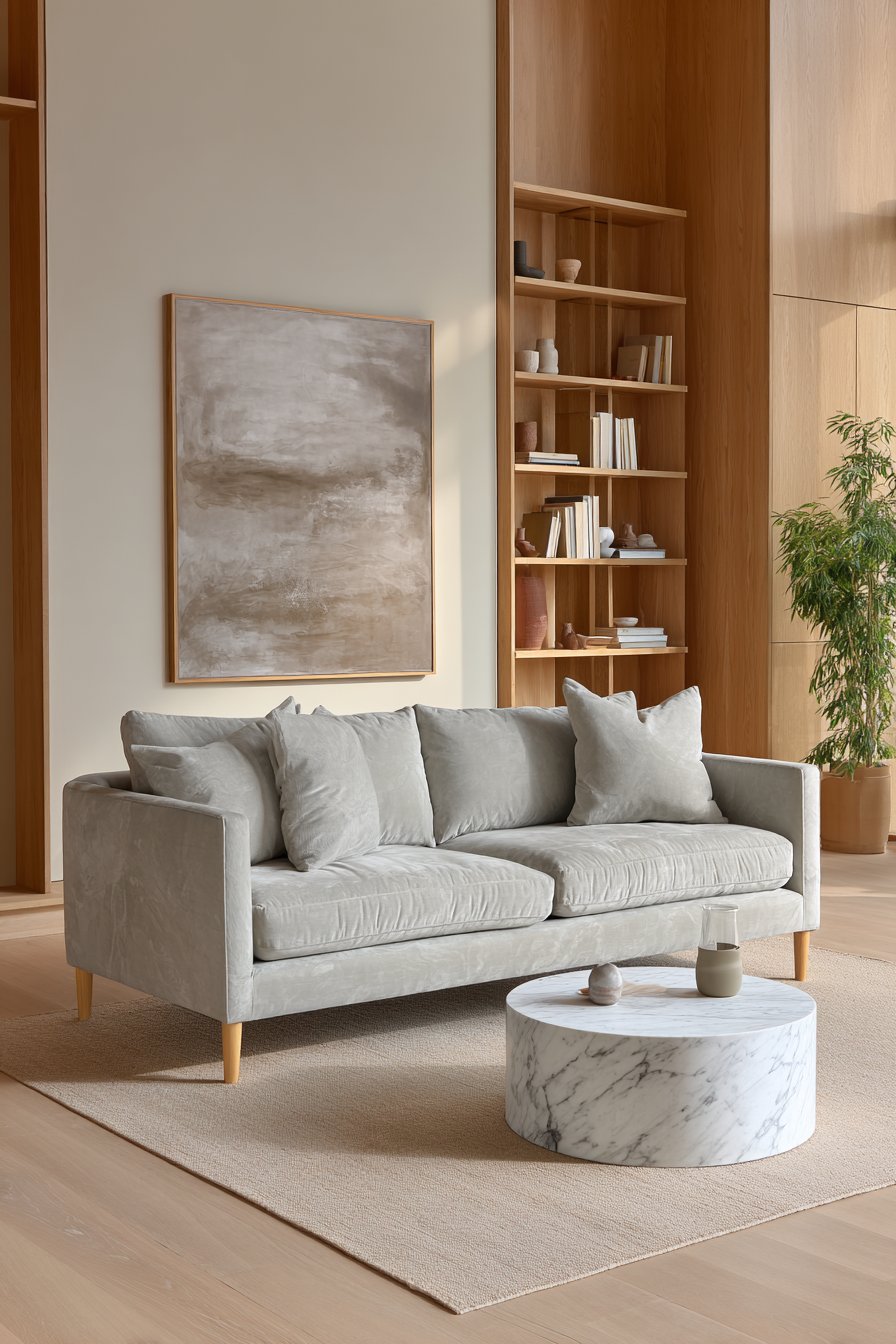
Natural fiber roman shades filter soft daylight without heavy drapery. Light oak flooring extends throughout creating seamless visual flow. The design celebrates negative space as essential design element. Every piece serves specific purpose without excess. This approach creates calming environments that reduce visual stress.
Key Design Tips:
- Select furniture with clean lines and exposed wooden legs
- Limit decorative objects to create essential breathing room
- Choose one large-scale art piece rather than multiple small items
- Install floor-to-ceiling storage to maximize vertical space efficiently
- Use natural materials like oak, linen, and marble for timeless appeal
- Embrace negative space as intentional design element for calm aesthetics
6. Traditional Navy Velvet and Persian Elegance
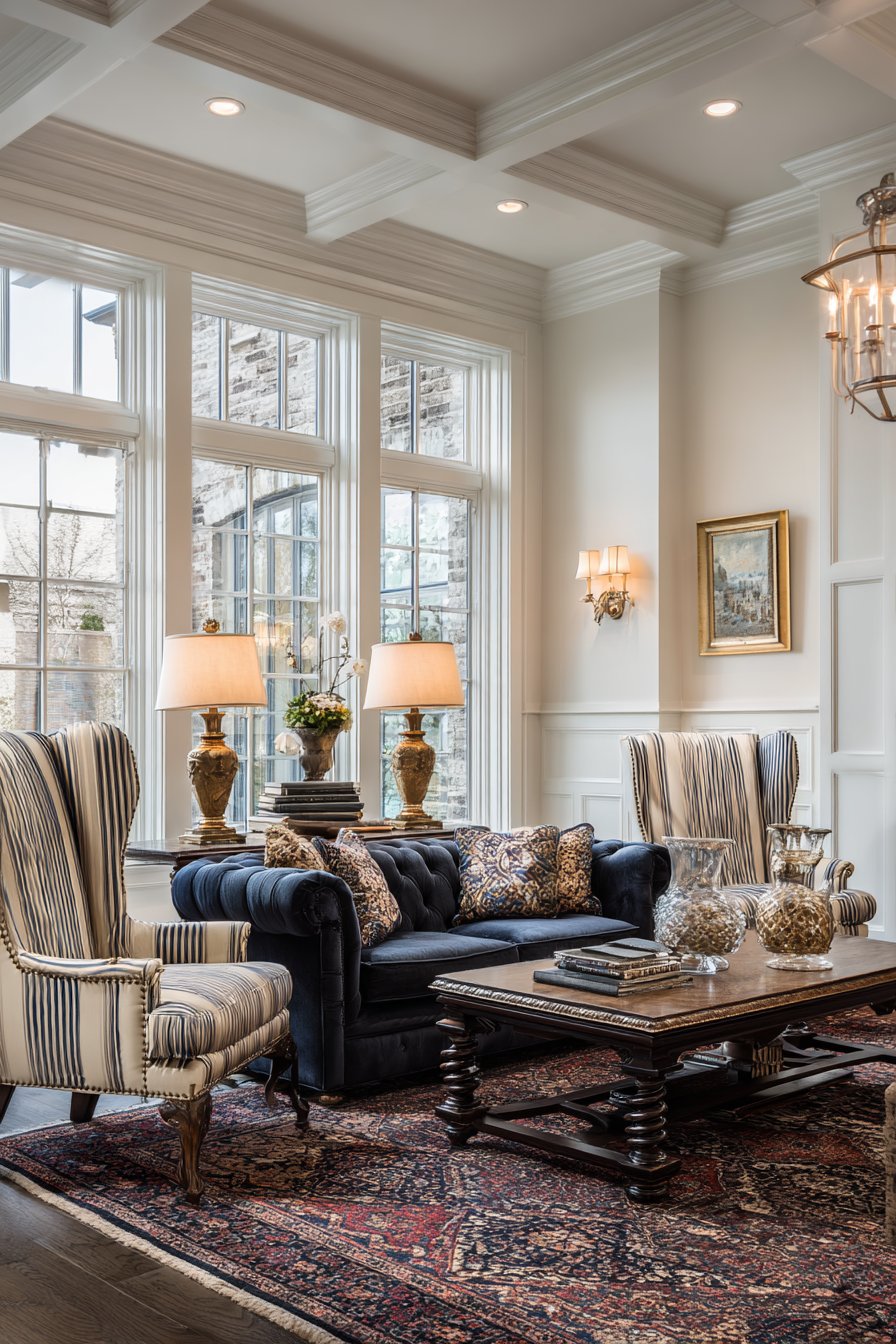
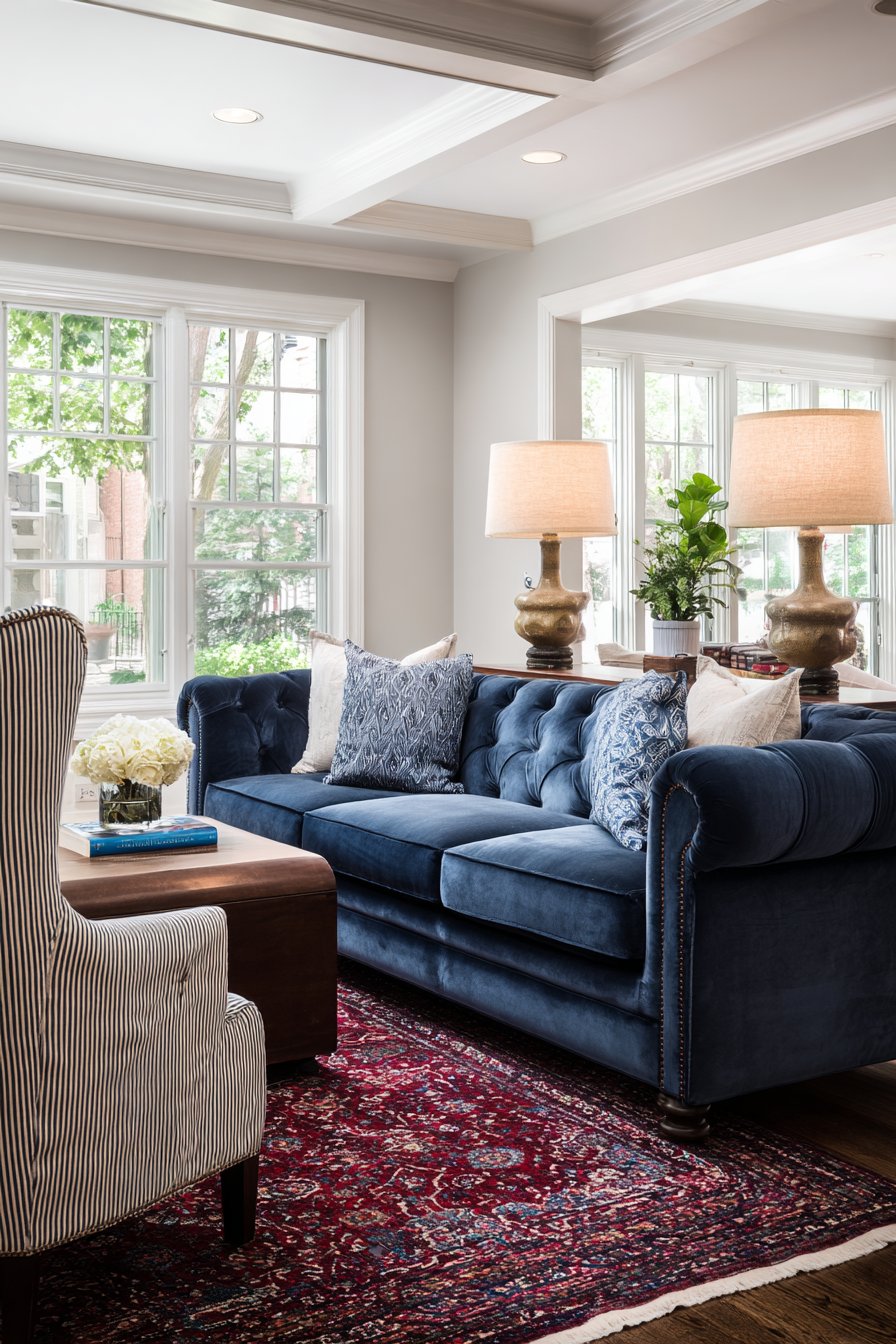
Traditional design honors classical furniture forms and rich materials. A tufted Chesterfield sofa in deep navy velvet commands attention. The button tufting technique showcases upholstery craftsmanship. Two wingback chairs upholstered in cream and blue striped fabric provide additional seating. The formal arrangement encourages conversation and interaction.
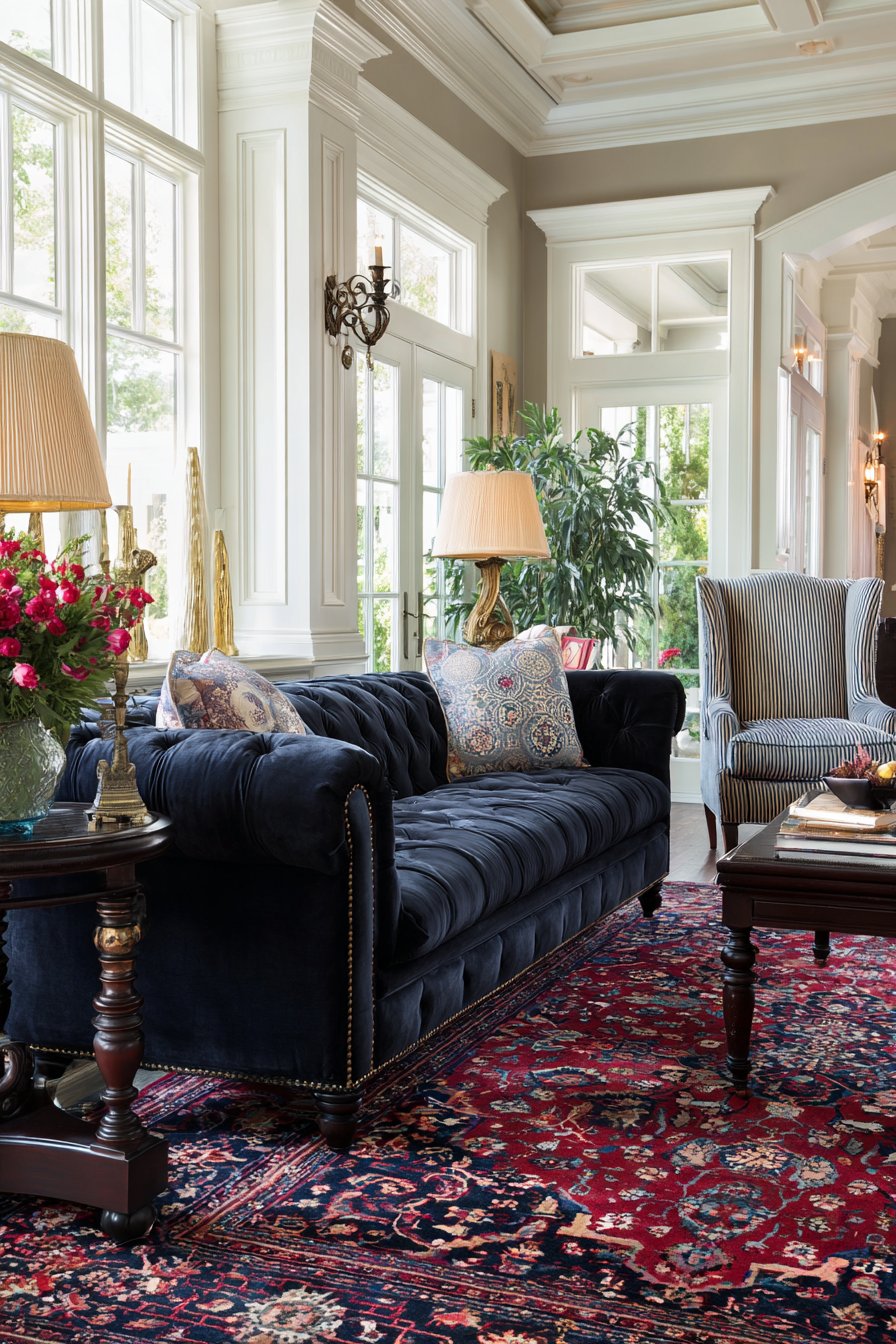
An ornate Persian rug in burgundy and navy anchors the furniture arrangement. The intricate pattern adds historical depth and artistic value. Dark wood side tables with turned legs display antique brass lamps. Cream silk shades soften the lighting quality. Crown molding and wainscoting painted in soft white provide architectural detail.
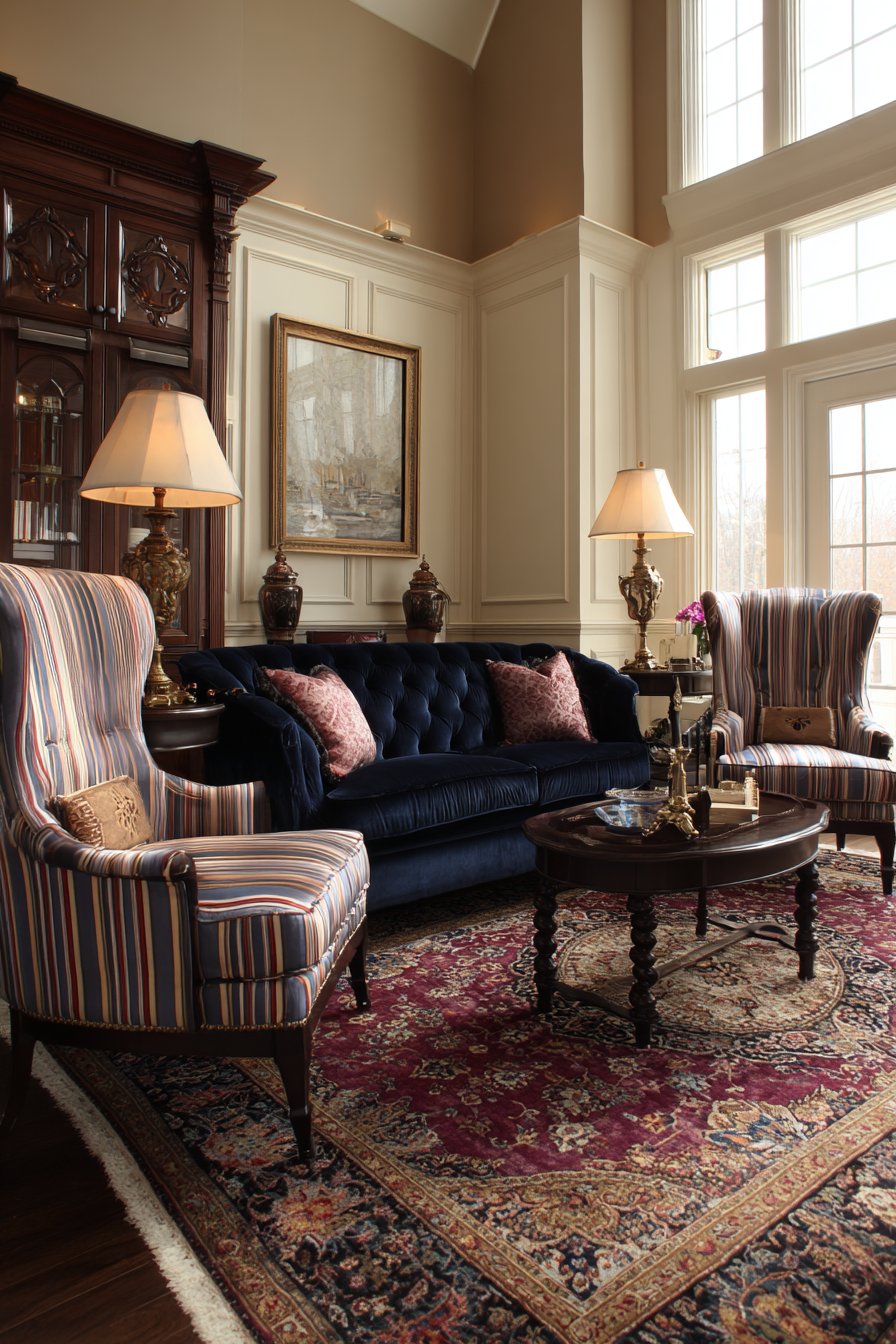
Natural light from tall windows illuminates the rich textures. The traditional palette creates sophisticated atmosphere without feeling stuffy. This design proves that classical elements remain relevant in contemporary homes. Quality craftsmanship and timeless materials ensure lasting appeal. The formal balance creates sense of established permanence.
Key Design Tips:
- Invest in quality upholstered pieces with traditional details like tufting
- Layer Persian or Oriental rugs for pattern, color, and historical depth
- Incorporate architectural details like crown molding and wainscoting
- Select wood furniture with turned legs and classical proportions
- Use silk lamp shades to soften and diffuse artificial lighting
- Arrange furniture in conversation-friendly symmetrical groupings
7. Coastal Driftwood and Natural Linen Breeziness
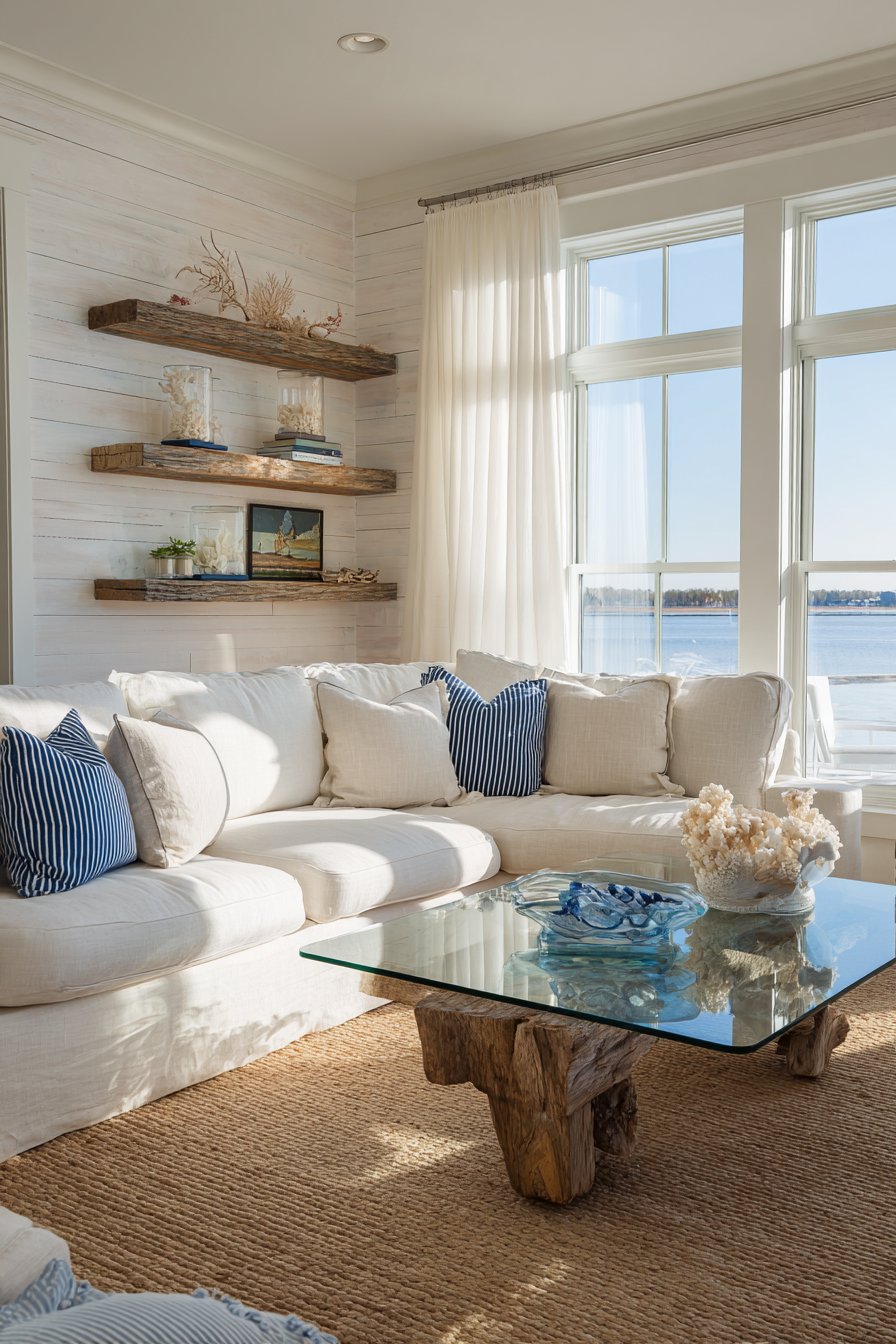
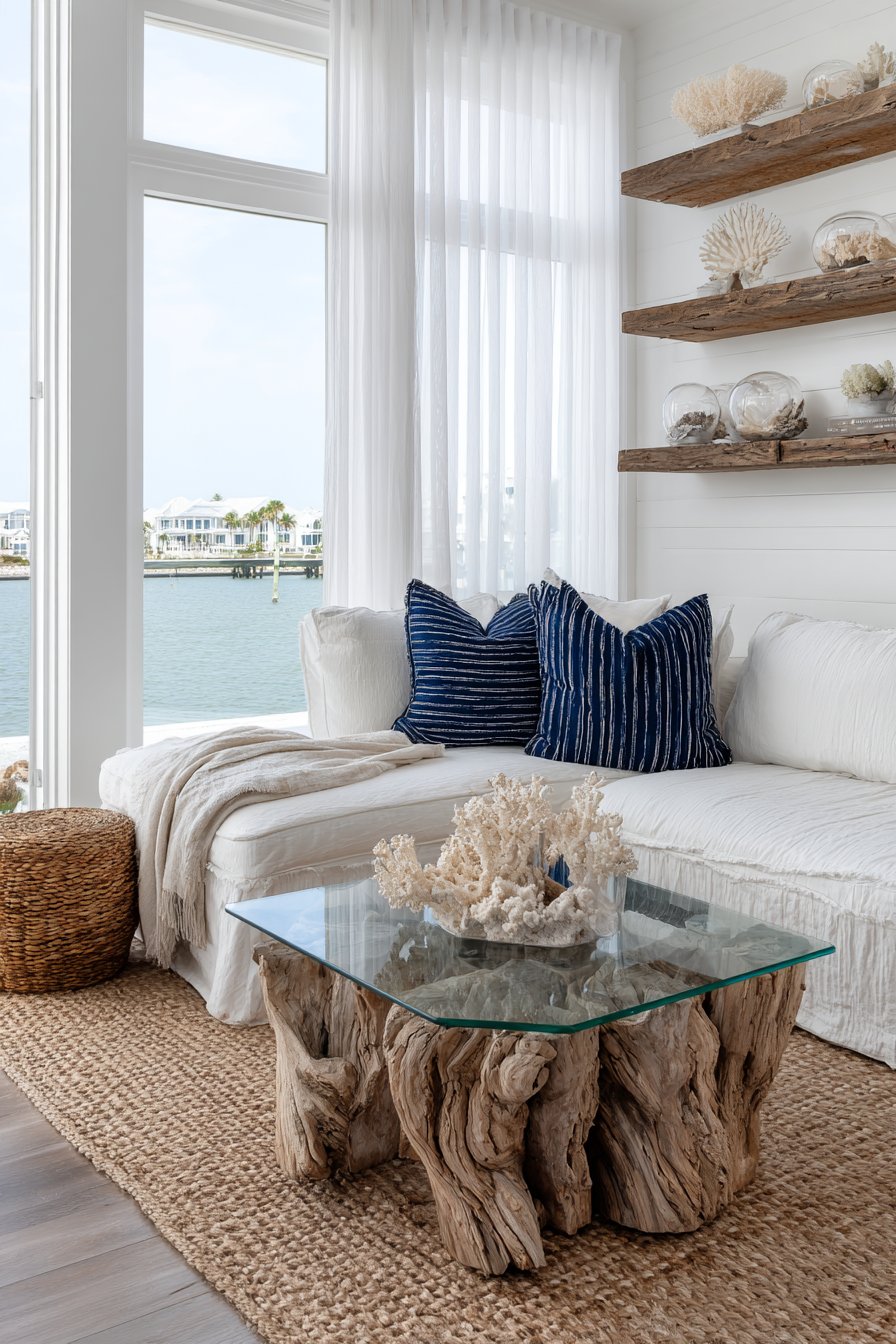
Coastal design captures the relaxed atmosphere of seaside living. A slipcovered sectional in natural linen features loose, relaxed cushions. The casual construction invites comfortable lounging. A driftwood coffee table with glass top centers the space. The weathered wood brings ocean-worn texture indoors.
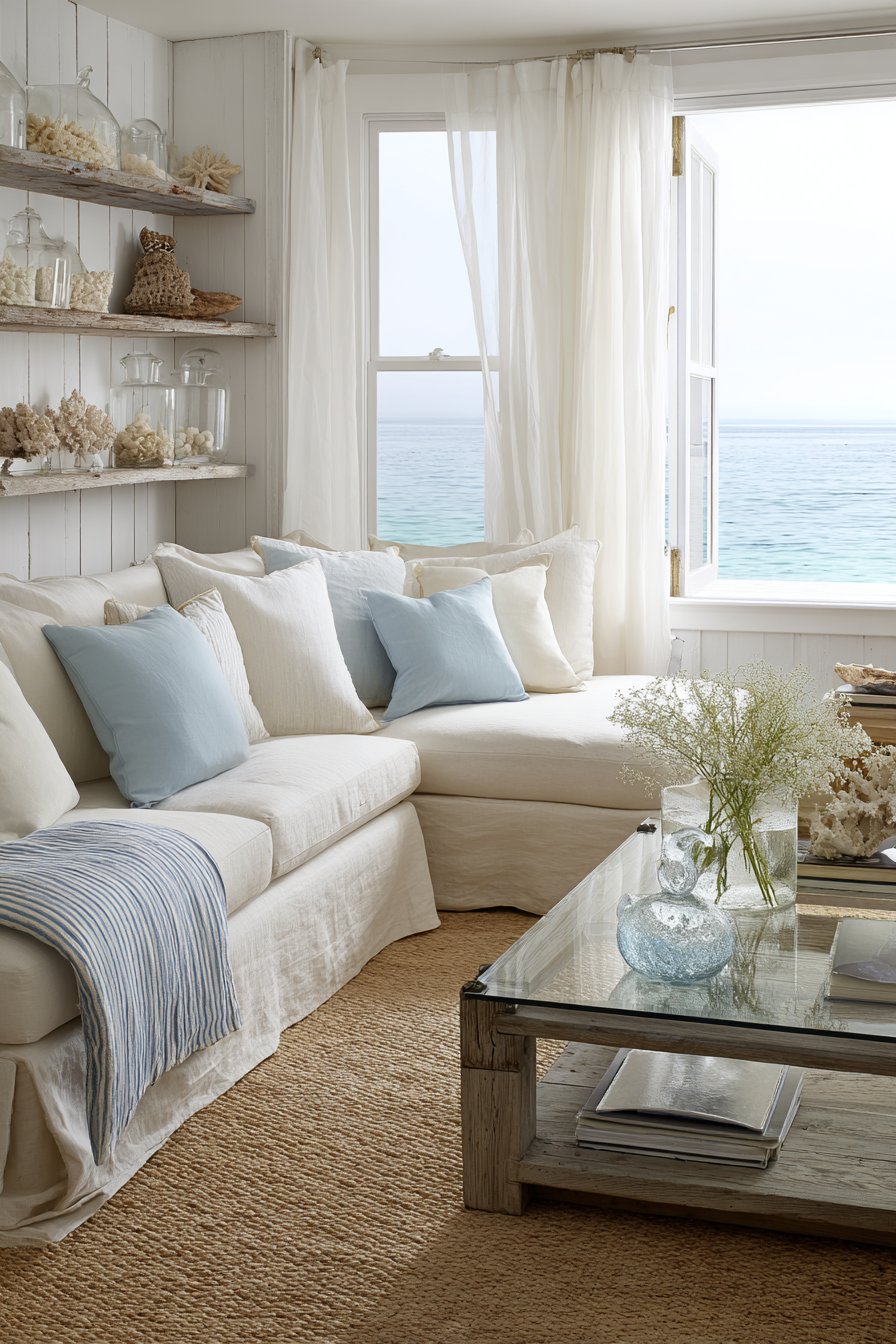
Navy and white striped throw pillows add nautical reference. The classic pattern evokes maritime tradition without cliché. Whitewashed shiplap walls provide subtle texture and light reflection. A collection of coral specimens and sea glass displays on floating shelves. These organic treasures celebrate coastal natural history.
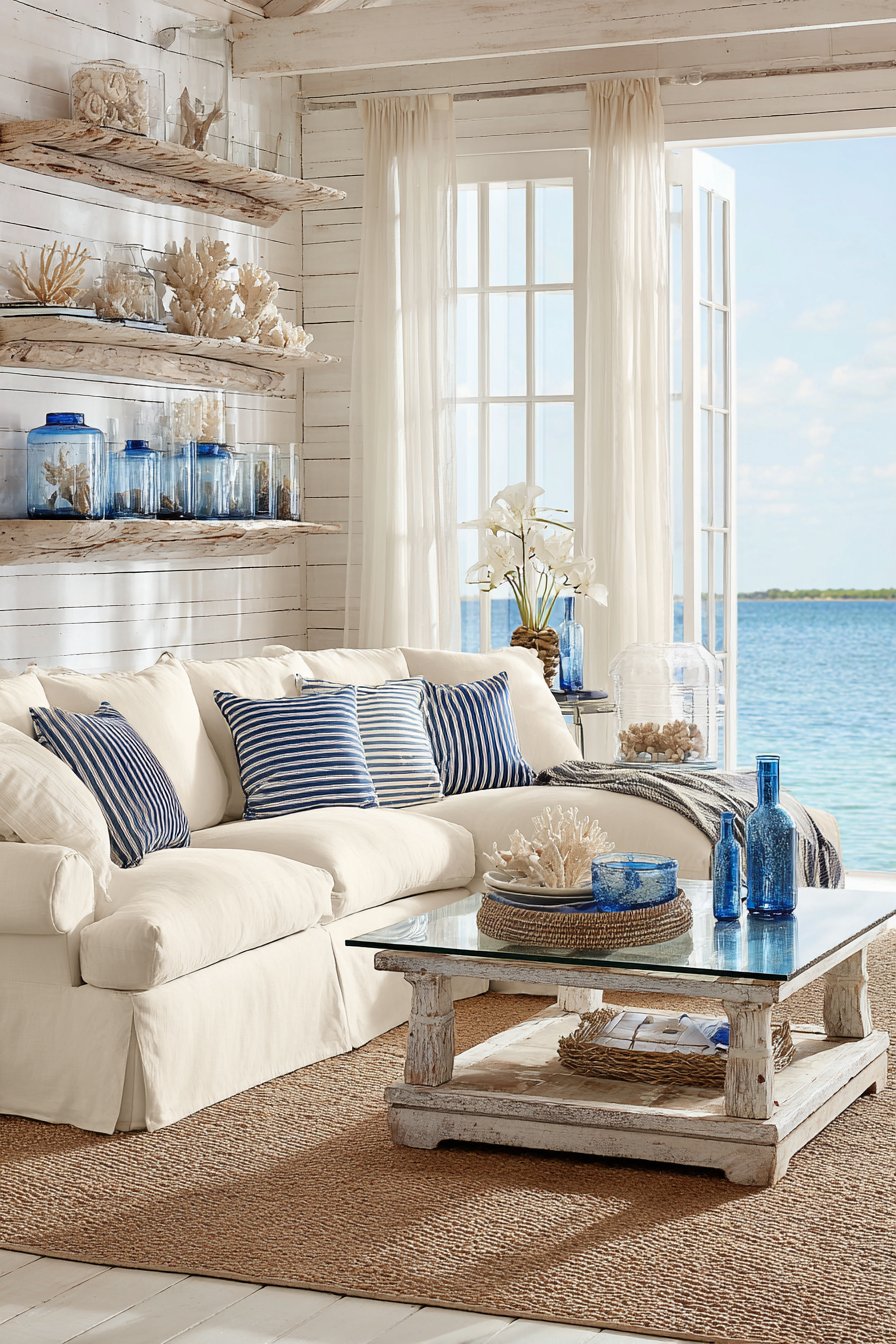
Sheer white curtains frame windows overlooking water views. The minimal window treatment maximizes natural light and view access. Soft diffused daylight creates airy atmosphere throughout the day. The braided jute rug adds natural fiber warmth underfoot. This design demonstrates how coastal aesthetics work beyond beachfront properties.
Key Design Tips:
- Choose slipcovered furniture in natural linen for relaxed coastal feel
- Incorporate driftwood and weathered wood pieces for authentic texture
- Display collected shells, coral, and sea glass as natural accessories
- Use whitewashed finishes to enhance light reflection and brightness
- Select navy and white striped patterns for classic nautical reference
- Maximize natural light with sheer curtains and minimal window treatments
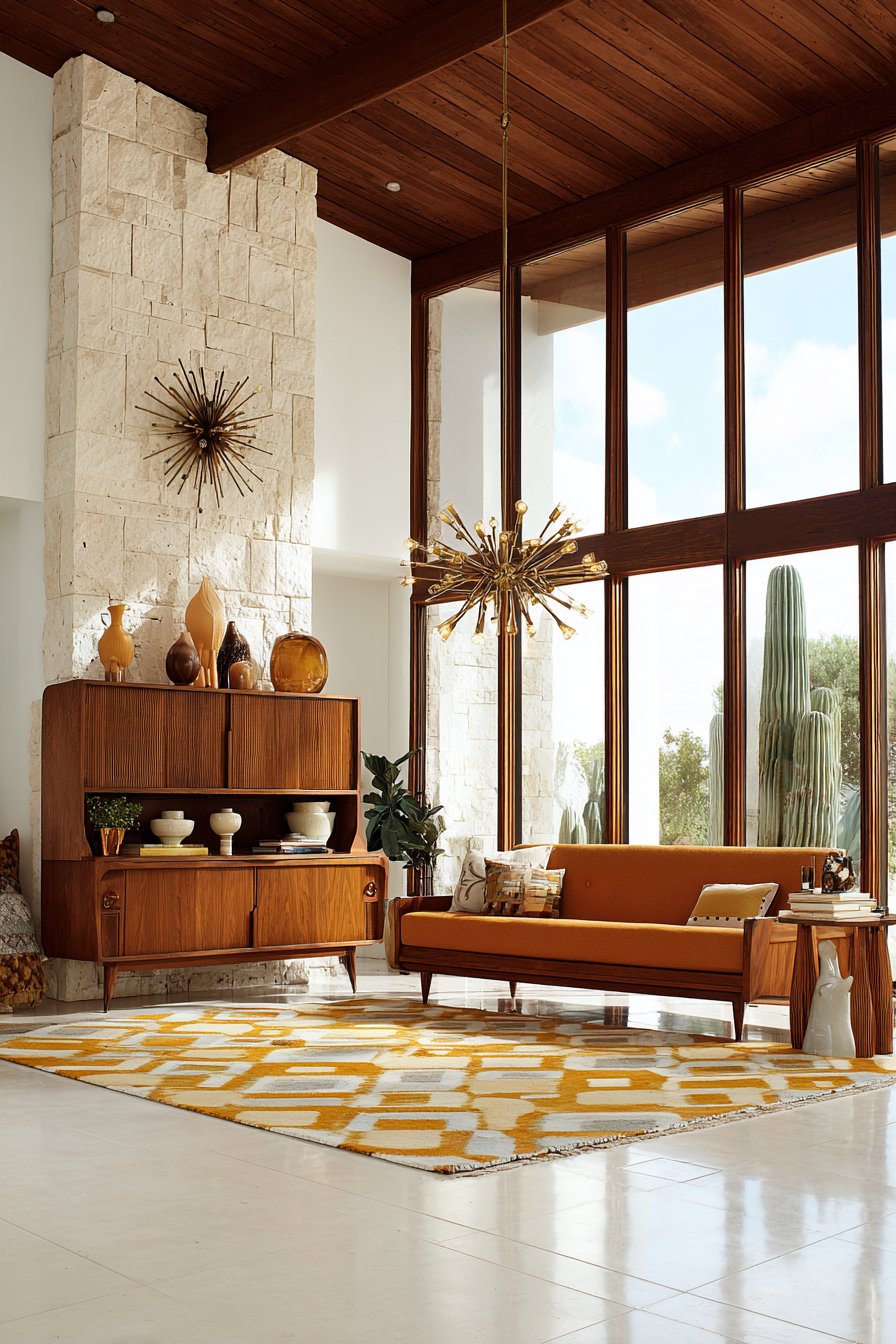
8. Mid-Century Modern Teak and Burnt Orange Warmth
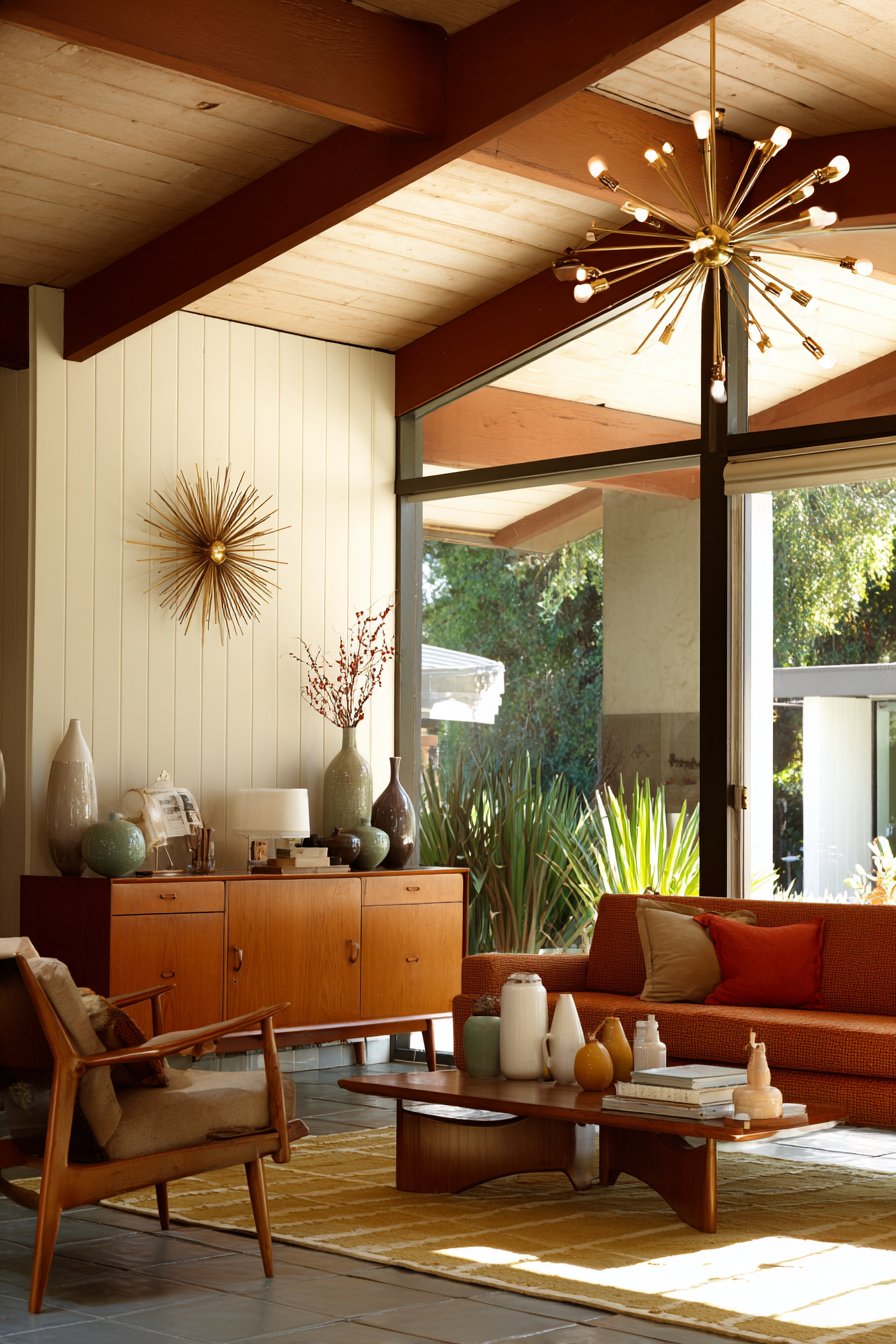
Mid-century modern design celebrates 1950s and 1960s furniture innovation. An iconic teak credenza with tapered legs displays ceramic vessels. The warm wood grain adds natural beauty. A low-profile sofa in burnt orange fabric makes bold statement. Wooden armrests showcase period-appropriate joinery details.
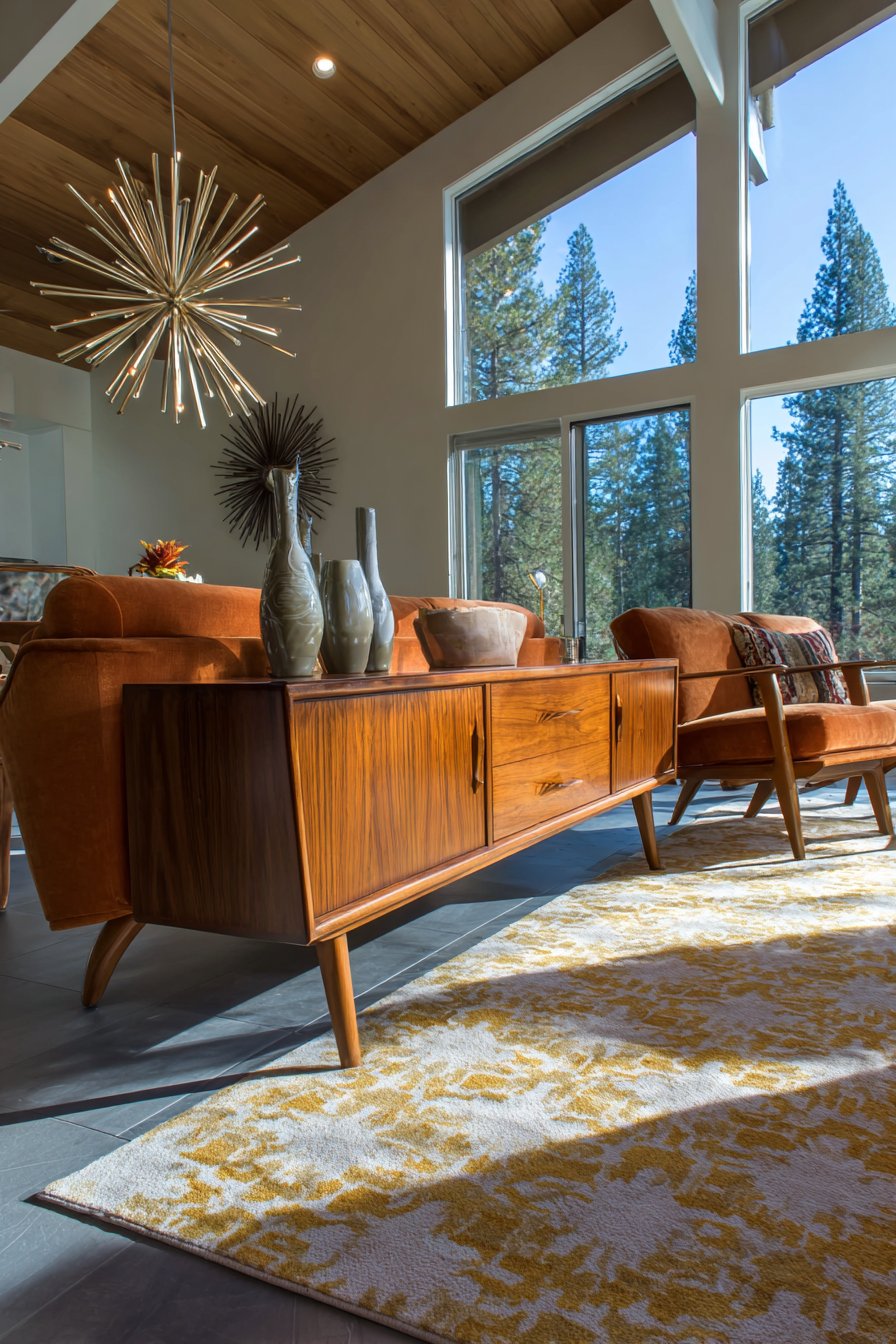
Two molded plywood lounge chairs provide additional seating. The curved forms demonstrate manufacturing innovation of the era. A geometric wool rug in mustard and grey grounds the arrangement. The angular pattern complements organic furniture curves. A starburst wall clock and brass sputnik chandelier provide period-appropriate accents.
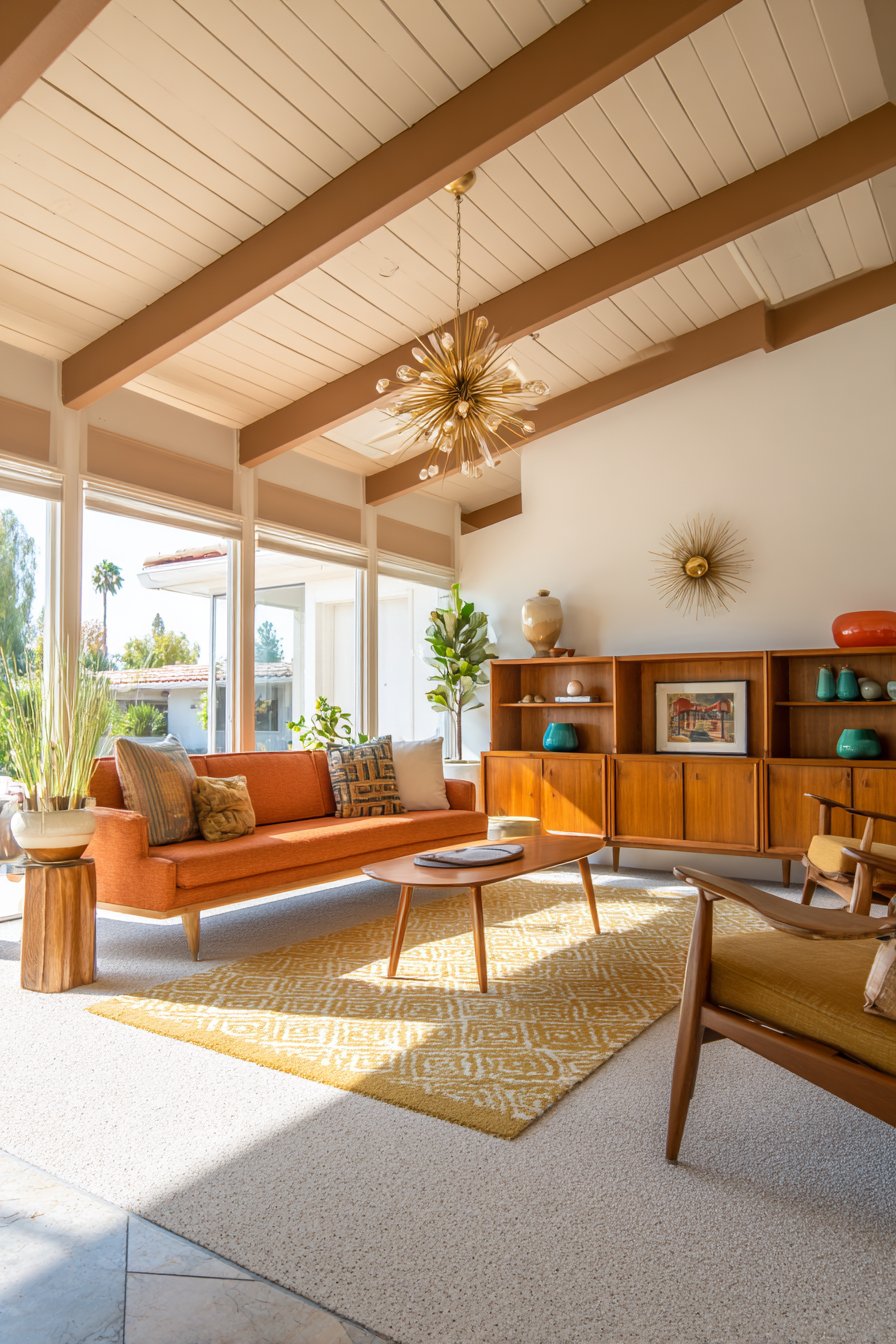
Large windows with minimal treatments flood the space with natural light. The open approach emphasizes connection to outdoors. This design requires authentic vintage pieces or quality reproductions. The warm wood tones create inviting atmosphere. Mid-century modern remains popular for its timeless functionality and optimistic aesthetics.
Key Design Tips:
- Select authentic teak furniture with tapered legs and visible joinery
- Incorporate bold accent colors like burnt orange or mustard yellow
- Choose molded plywood chairs that showcase mid-century manufacturing innovation
- Add period-specific accessories like starburst clocks and sputnik lighting
- Use geometric patterns in rugs and textiles for angular visual interest
- Maximize natural light with large windows and minimal window treatments
9. Industrial Loft Exposed Brick and Leather Edge
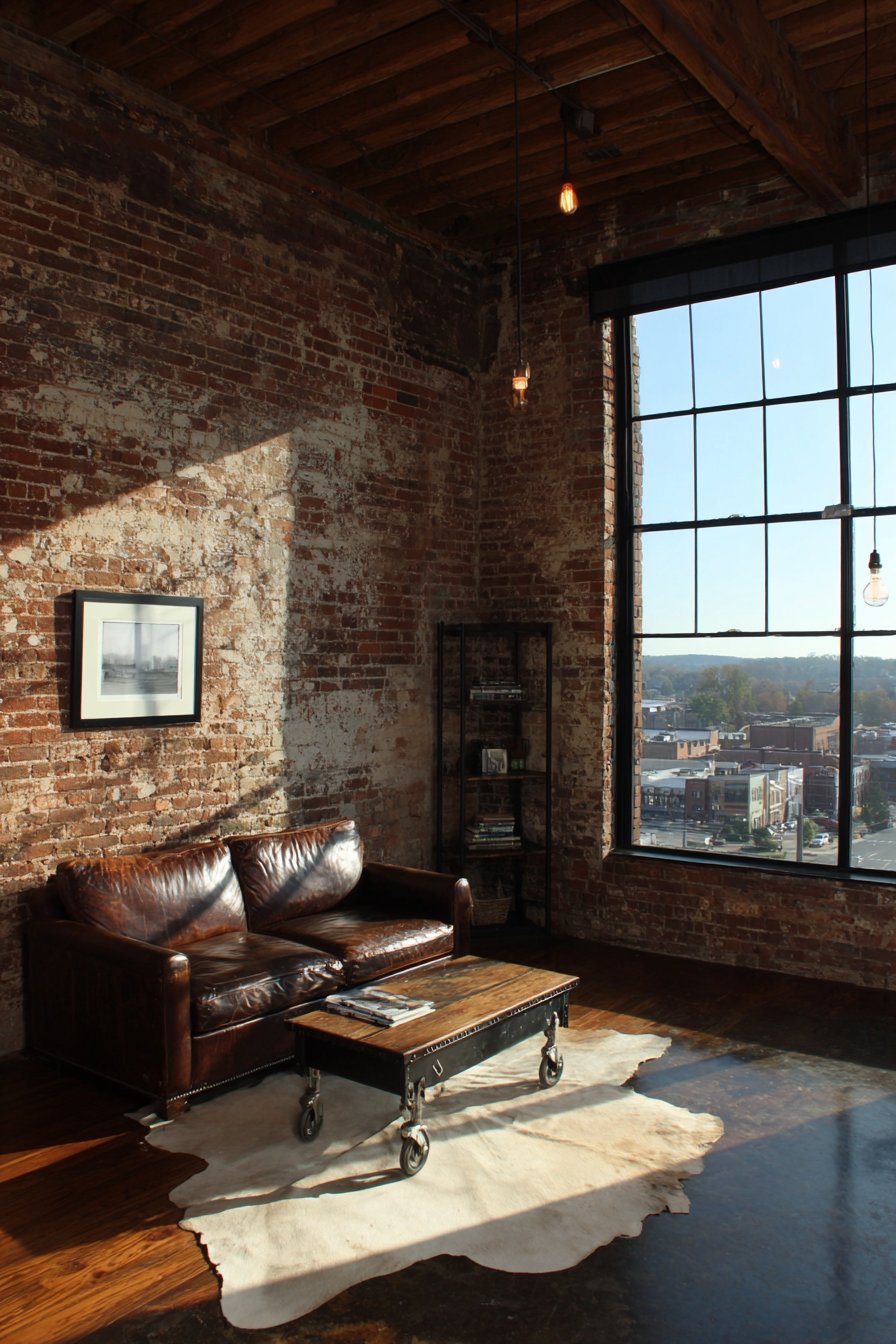
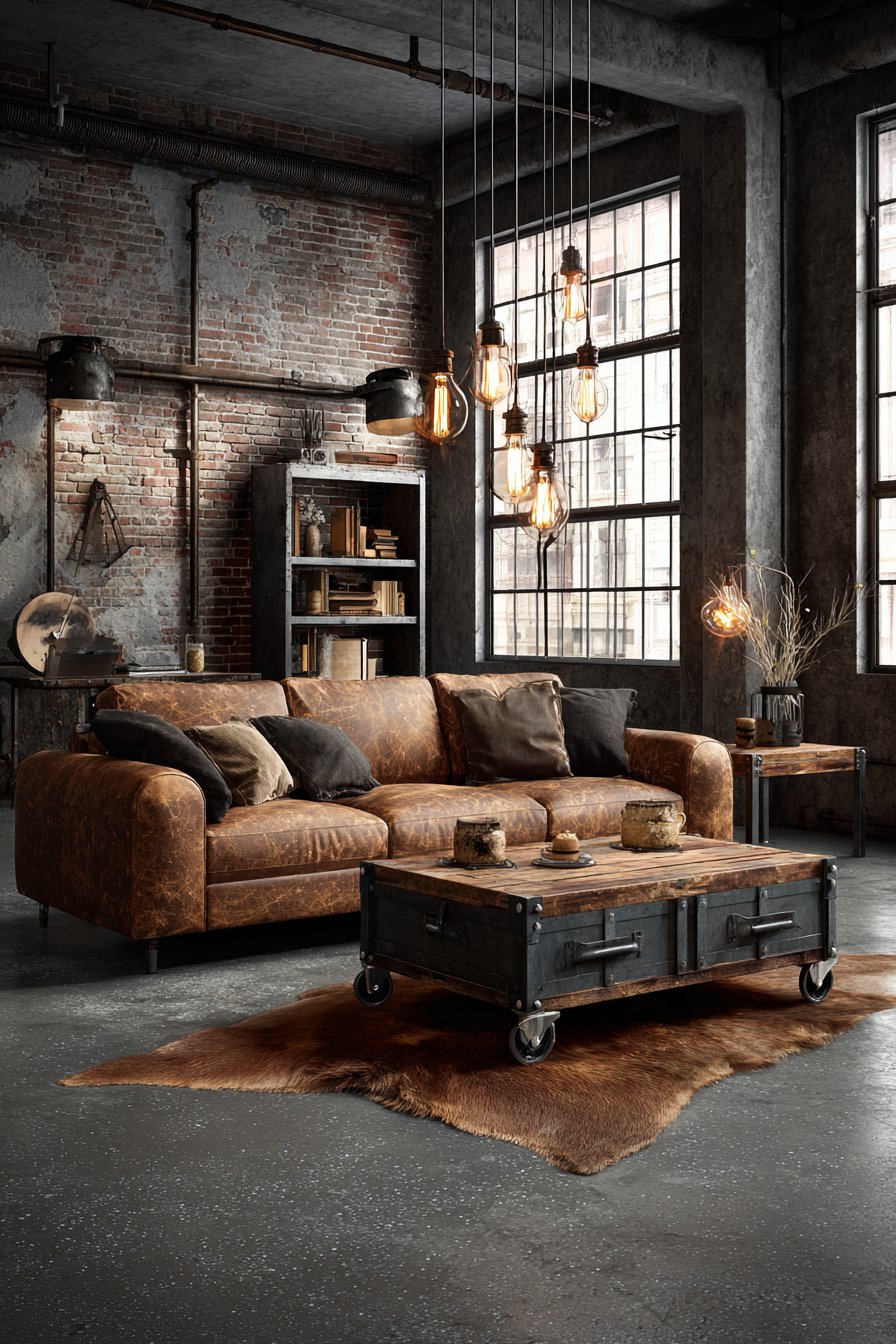
Industrial design celebrates raw materials and manufacturing aesthetics. An exposed brick wall provides textured backdrop. The distressed brown leather sofa develops character through use. A metal and wood coffee table with visible weld marks serves as centerpiece. Industrial casters add mobile functionality and visual interest.
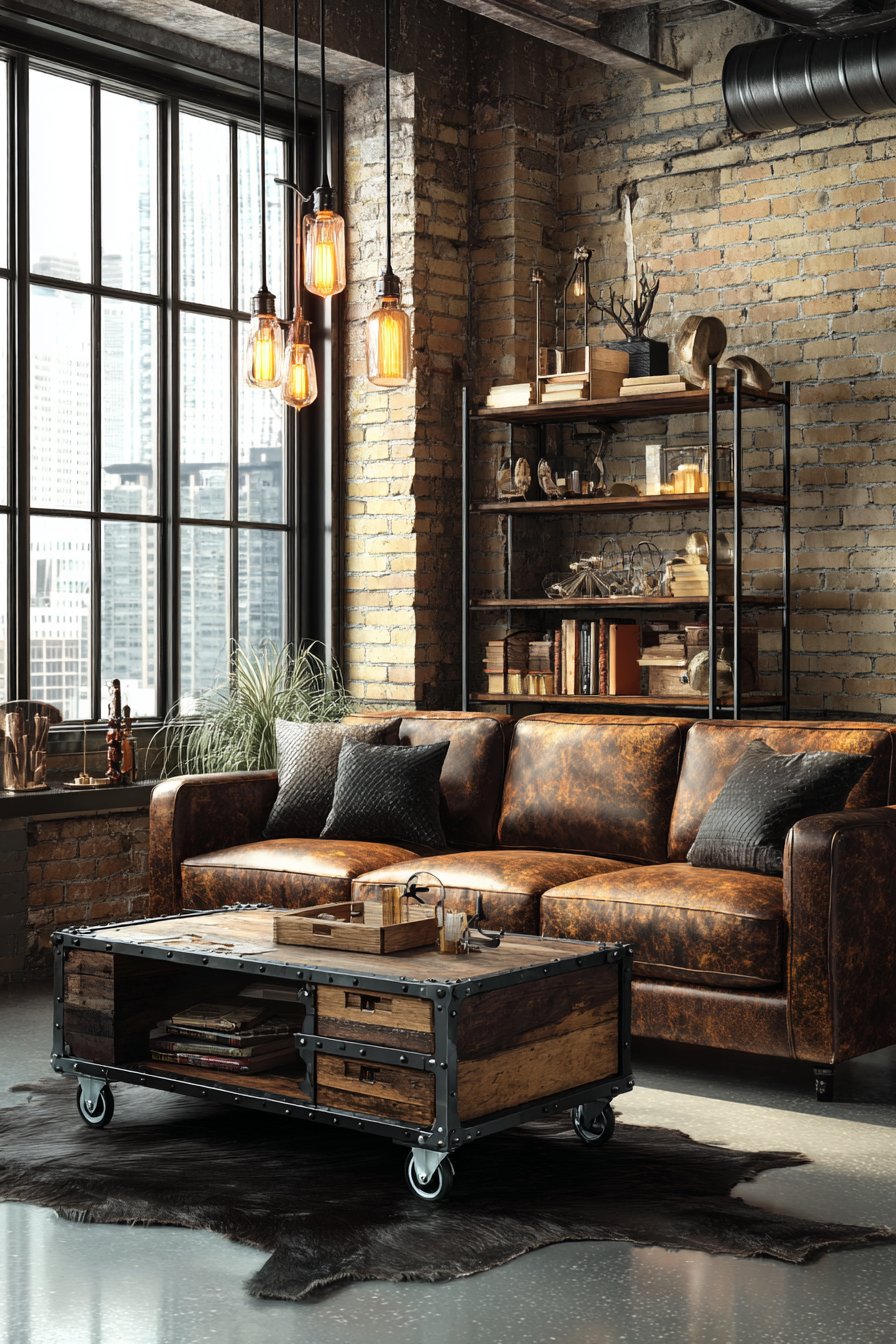
Black metal pipe shelving displays books and vintage factory finds. The functional hardware becomes decorative element. Edison bulb pendant lights hang from exposed ceiling beams. The visible filaments create warm ambient glow. A cowhide rug adds warmth to polished concrete floors.
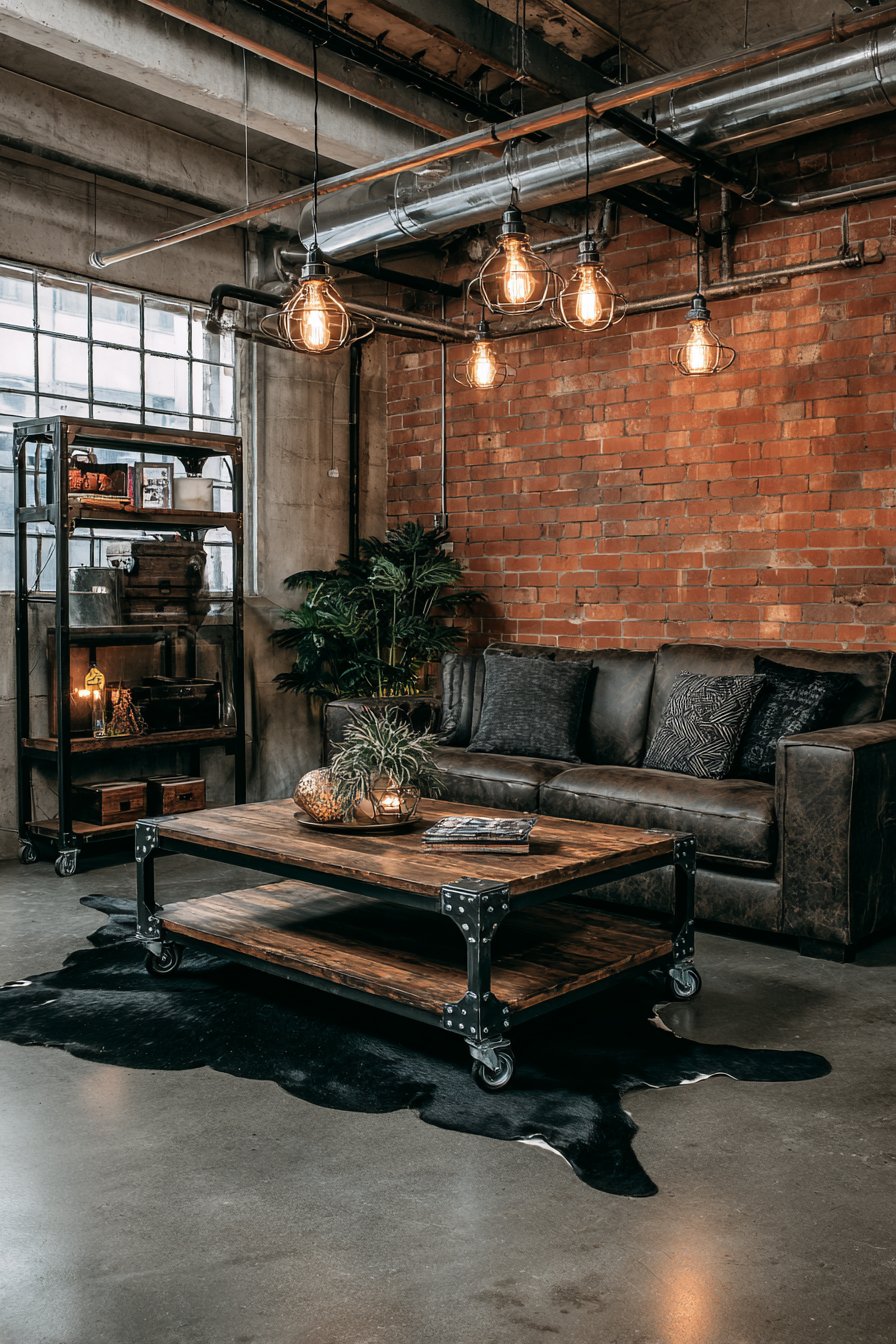
Large steel-framed windows allow abundant natural light. The industrial glazing system references factory architecture. This design works particularly well in converted loft spaces. However, industrial elements integrate successfully into traditional homes too. The raw materials and urban edge create masculine sophistication.
Key Design Tips:
- Expose brick walls to reveal architectural history and texture
- Select leather furniture that develops patina and character over time
- Incorporate metal and wood combinations with visible construction details
- Use pipe shelving for functional storage with industrial aesthetic appeal
- Install Edison bulb lighting for warm glow and vintage industrial character
- Add cowhide rugs to soften hard surfaces like concrete floors
10. Small Apartment Smart Storage Solutions
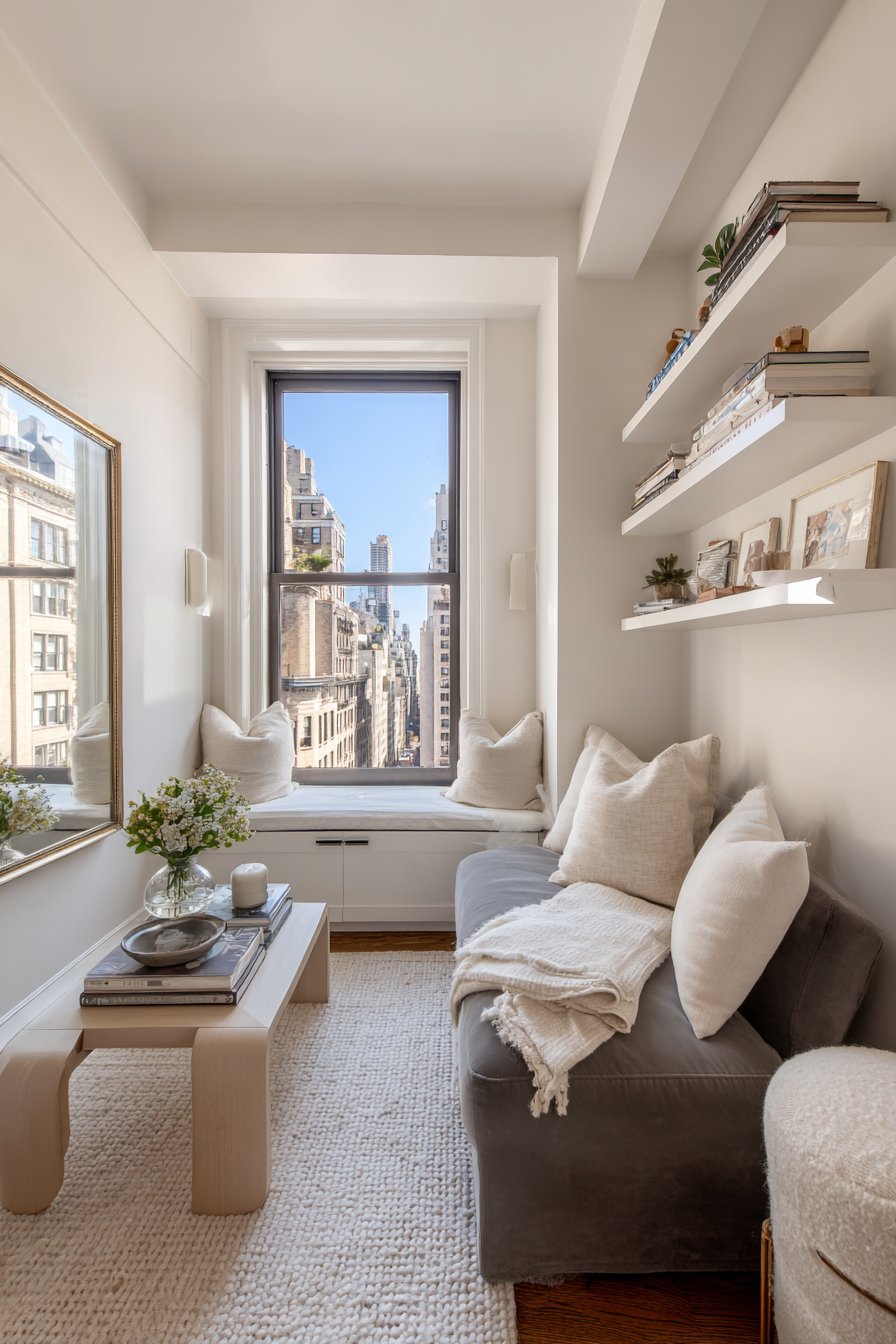
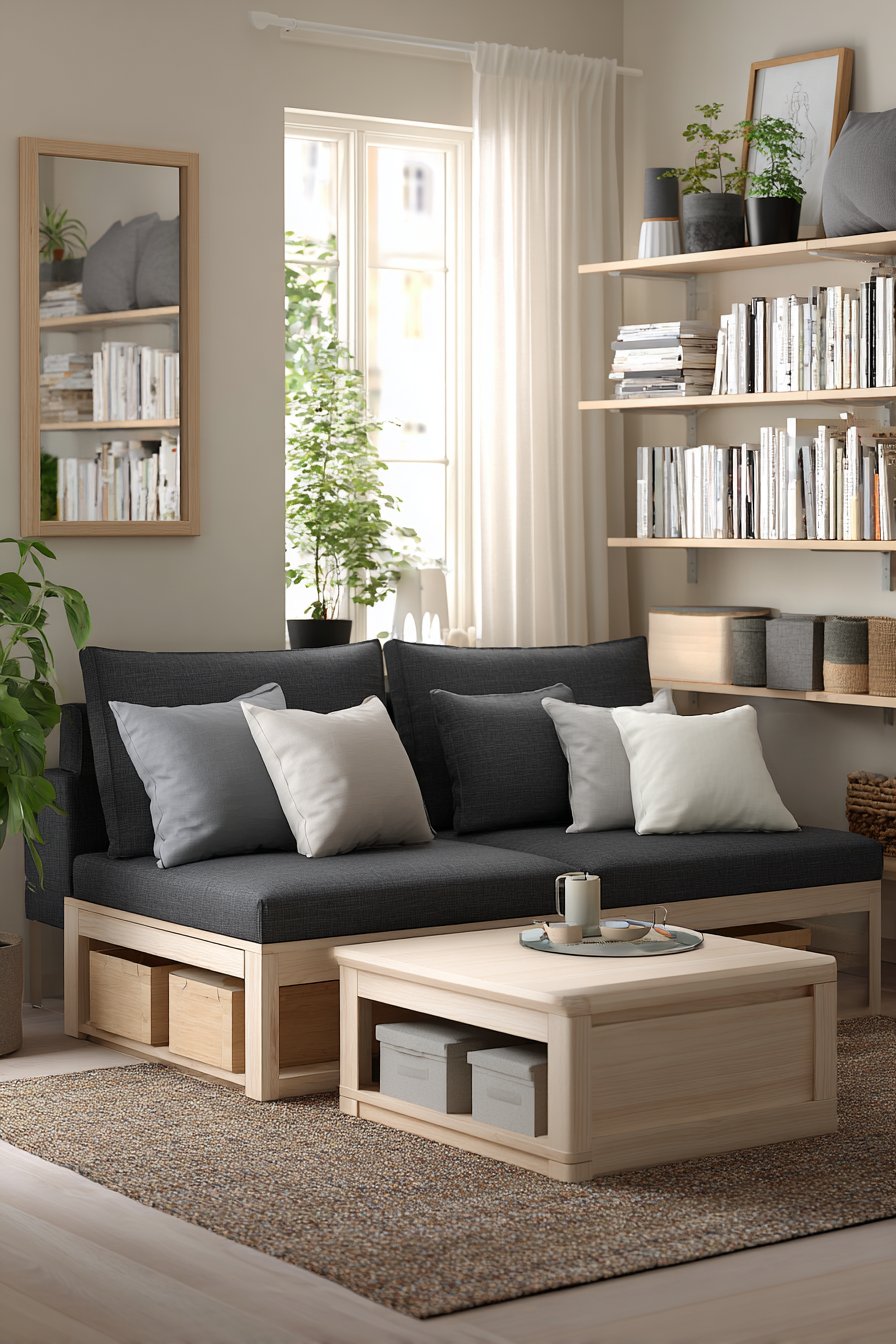
Small apartment living requires strategic space planning. A compact loveseat in charcoal grey features built-in storage compartments underneath. The dual-purpose design maximizes limited square footage. A nesting coffee table set in light wood provides flexible surface space. The tables separate when needed or stack when not in use.
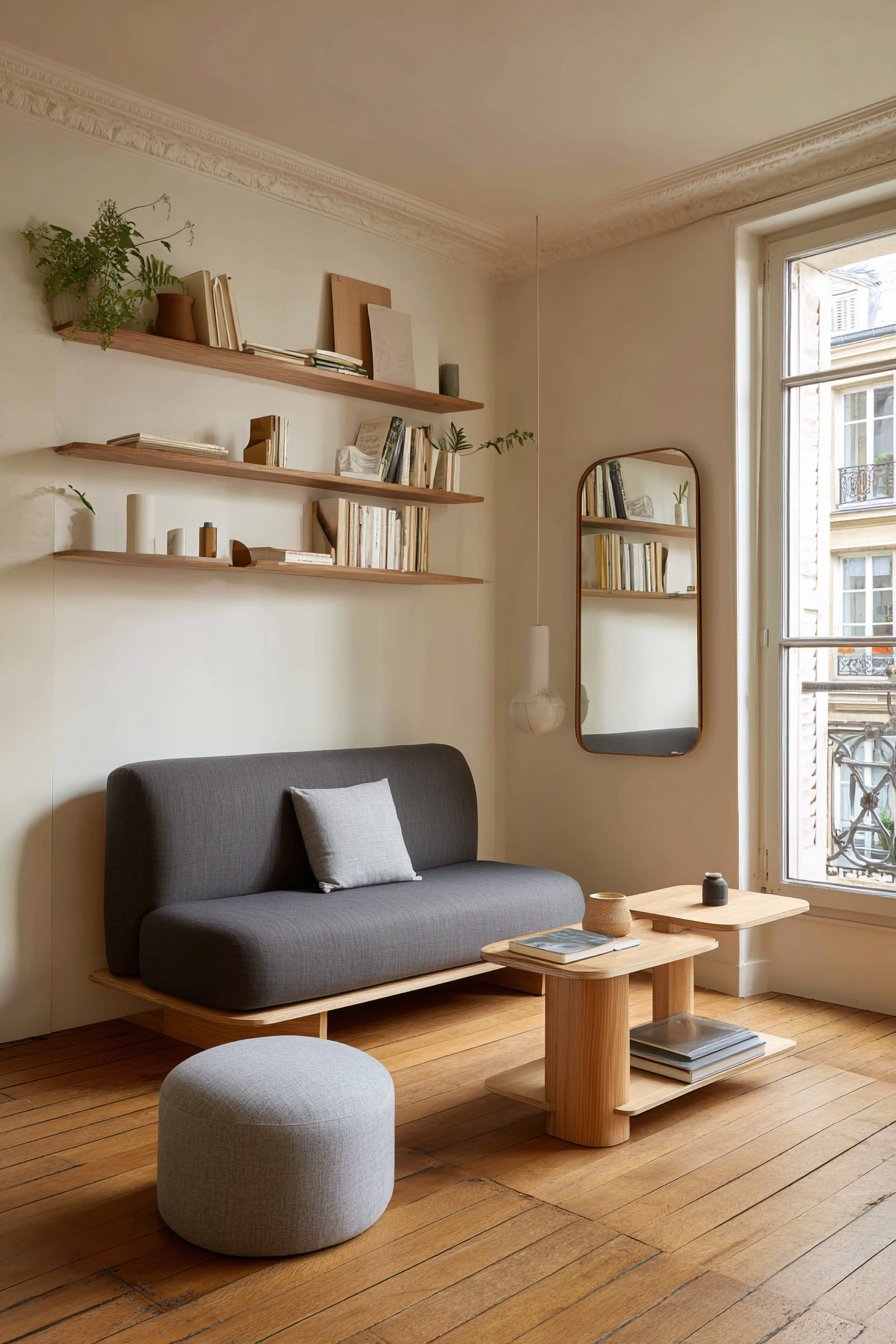
Floating wall-mounted shelves in alternating lengths display books and plants. The vertical arrangement conserves precious floor space. A large mirror with simple frame leans against the wall. The reflection enhances perceived room size significantly. A multi-functional ottoman with hidden storage serves as extra seating.
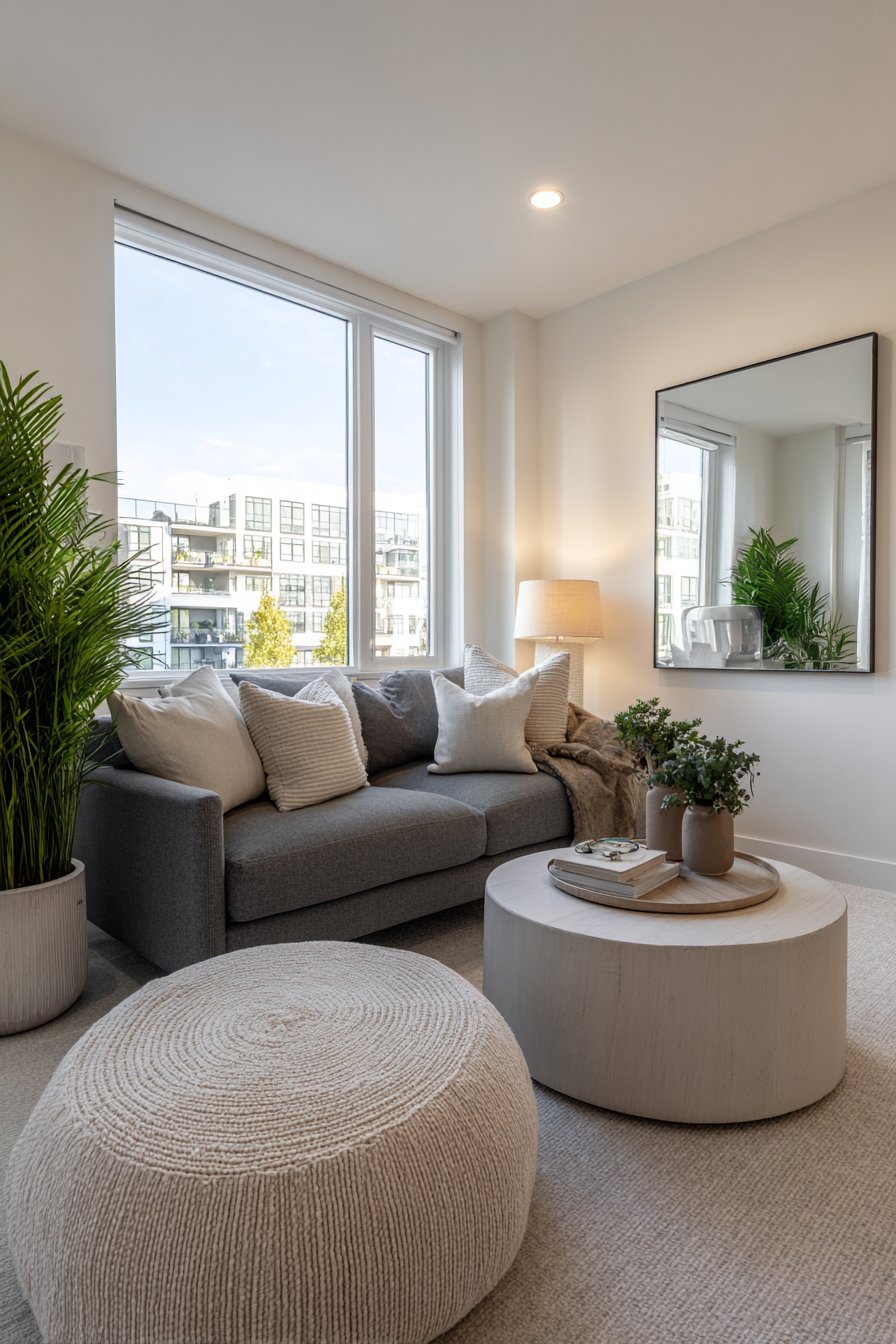
Soft natural light from a single window illuminates the efficient layout. Strategic furniture placement maximizes flow and function. This design proves small spaces can feel comfortable without cramped atmosphere. Every piece serves multiple purposes. Smart planning creates livable spaces in compact footprints.
Key Design Tips:
- Choose multi-functional furniture with built-in storage capabilities
- Use nesting tables that provide flexibility in small spaces
- Install floating shelves to maximize vertical storage without consuming floor space
- Position mirrors strategically to enhance natural light and perceived size
- Select ottomans with hidden storage for extra seating and organization
- Limit furniture pieces to essential items with dual purposes
11. Transitional Grey Linen and Acrylic Sophistication
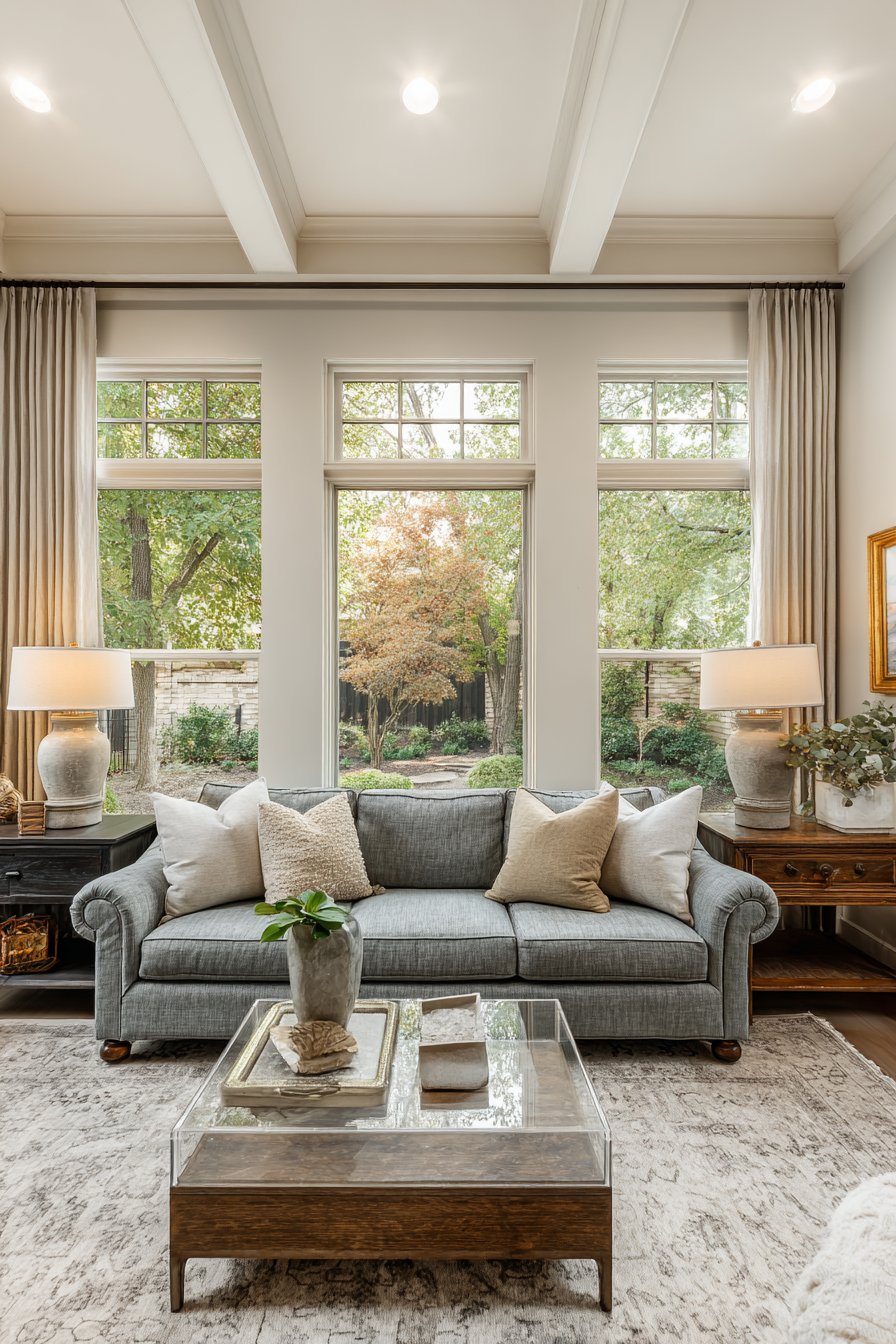
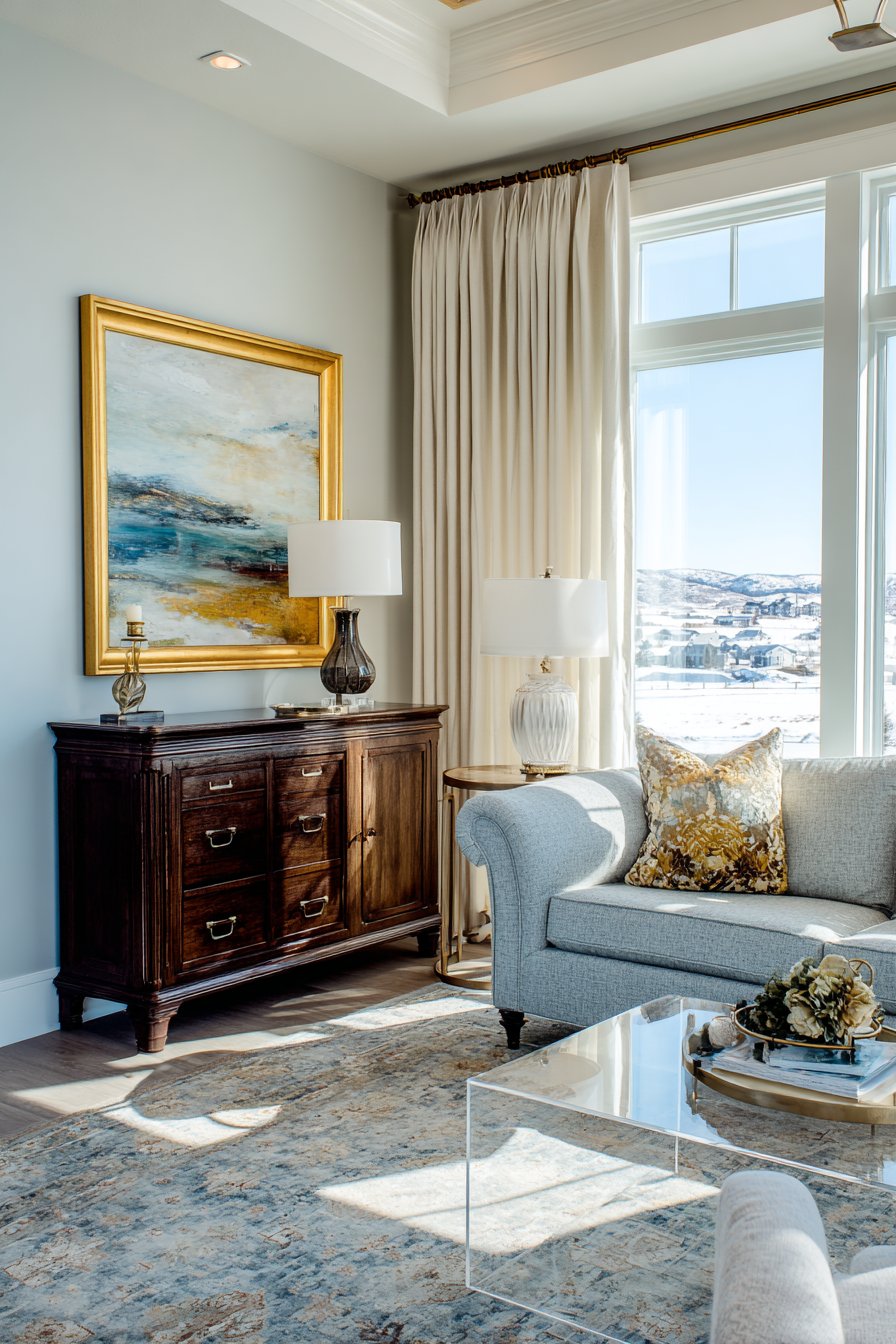
Transitional design bridges traditional and contemporary aesthetics. A rolled-arm sofa in soft grey linen maintains classic form. A modern acrylic coffee table adds contemporary transparency. The clear material appears lightweight and allows visual flow. Abstract artwork in gold frame hangs above traditional wood console.
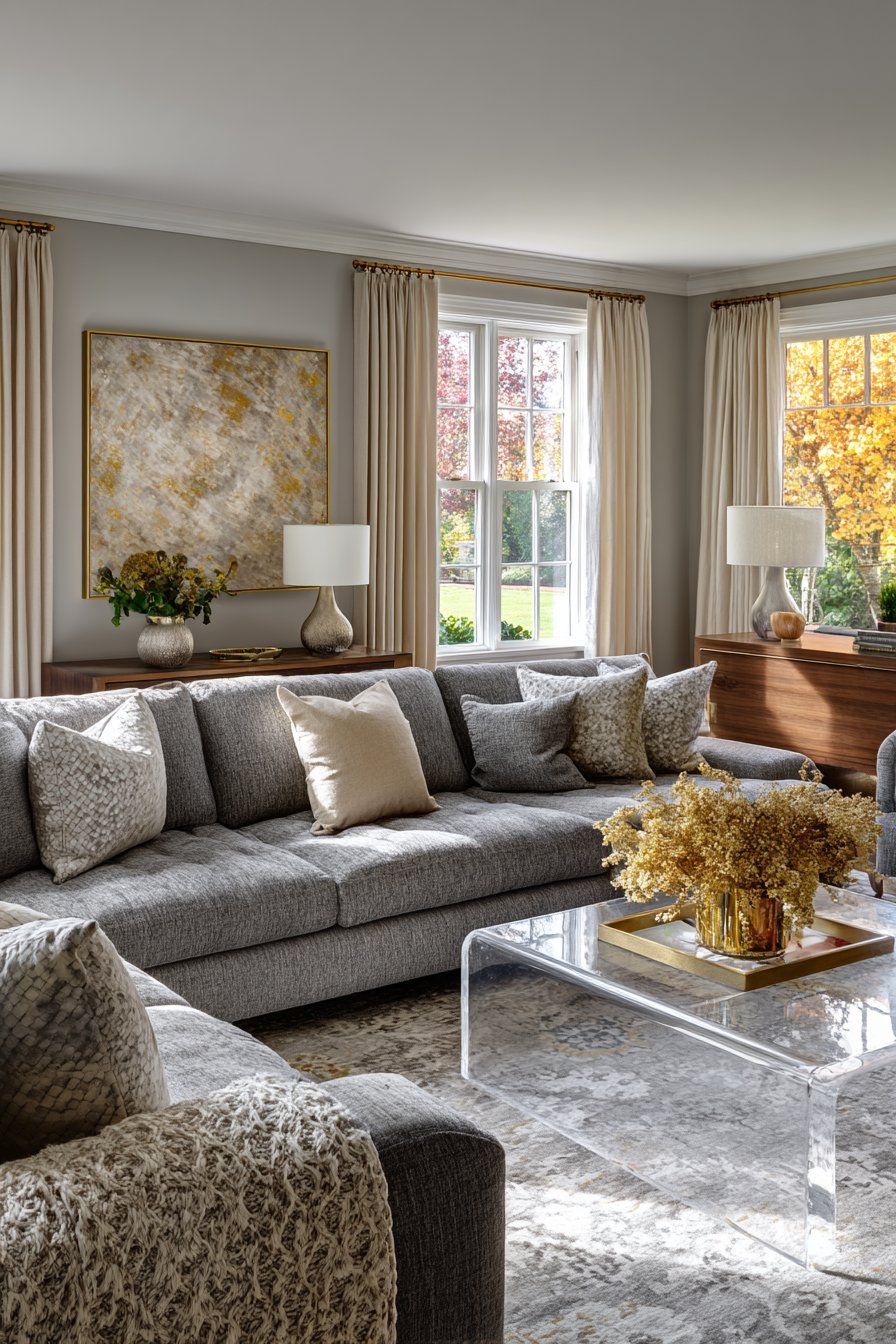
The console features contemporary clean lines despite traditional material. Table lamps combine classic urn bases with modern drum shades. This mixing of eras creates sophisticated layered look. Curtains in natural linen with subtle texture frame windows. An area rug combines traditional medallion pattern with updated grey and cream palette.
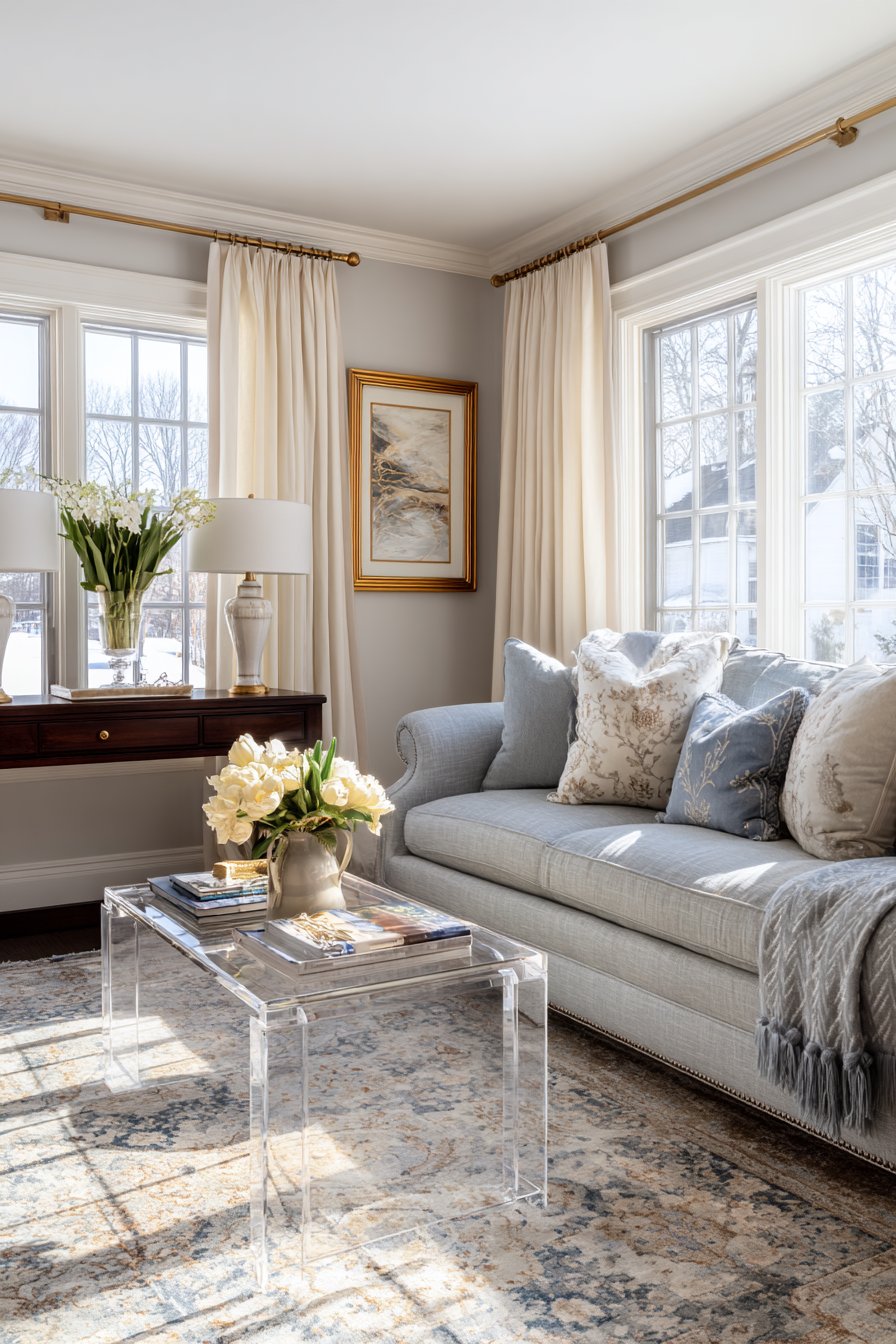
Balanced natural lighting through multiple windows creates even illumination. The transitional approach appeals to those who appreciate both traditional and contemporary design. This versatile style adapts to changing preferences over time. The neutral foundation allows easy accent color updates. Transitional design offers timeless appeal without period-specific constraints.
Key Design Tips:
- Mix traditional furniture forms with contemporary materials like acrylic
- Combine classic patterns with updated neutral color palettes
- Select lamps that blend traditional bases with modern shades
- Use natural linen for timeless window treatments and upholstery
- Choose grey as foundational neutral that works with multiple styles
- Create balanced lighting through multiple window sources
12. Family-Friendly Performance Fabric and Hidden Storage
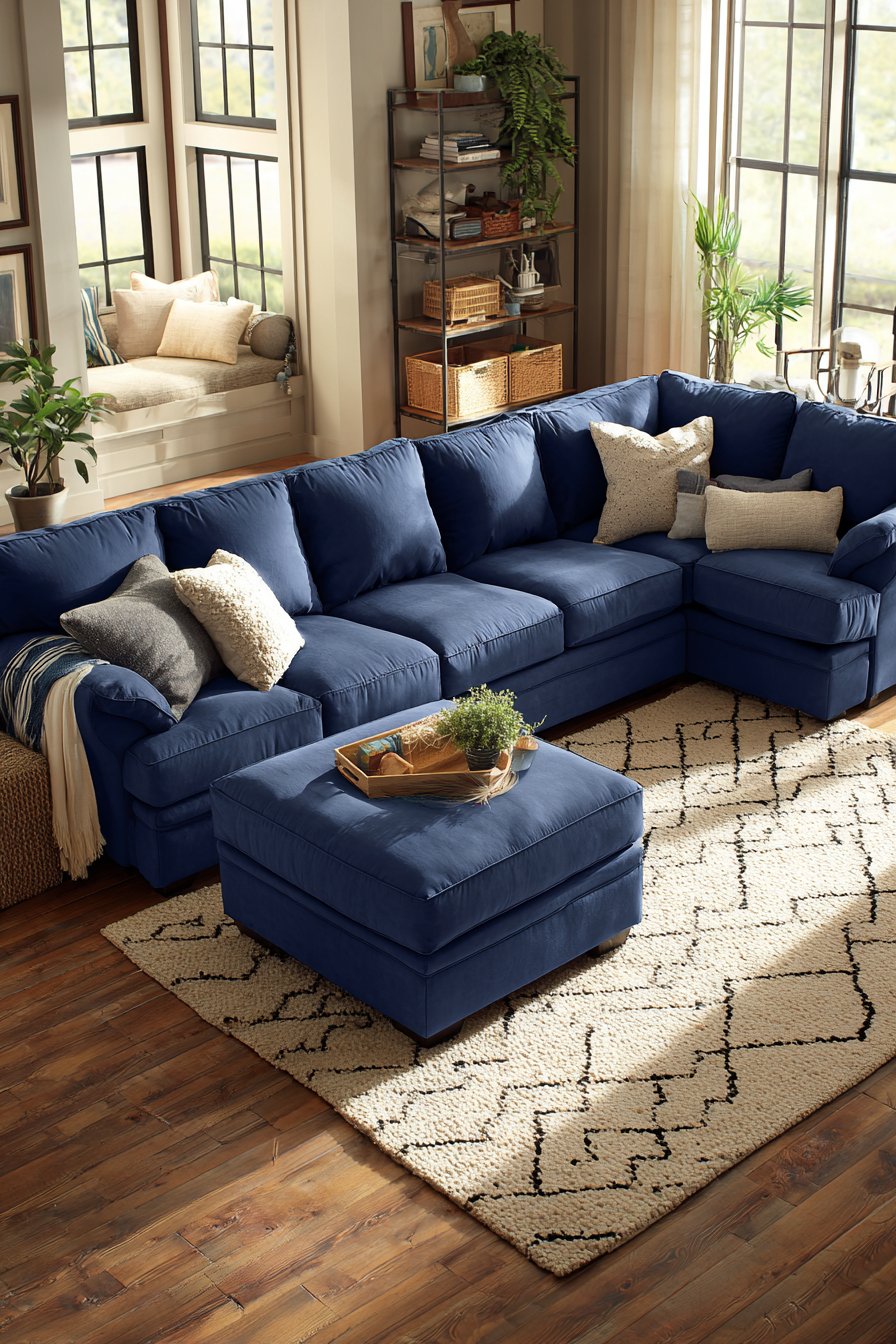
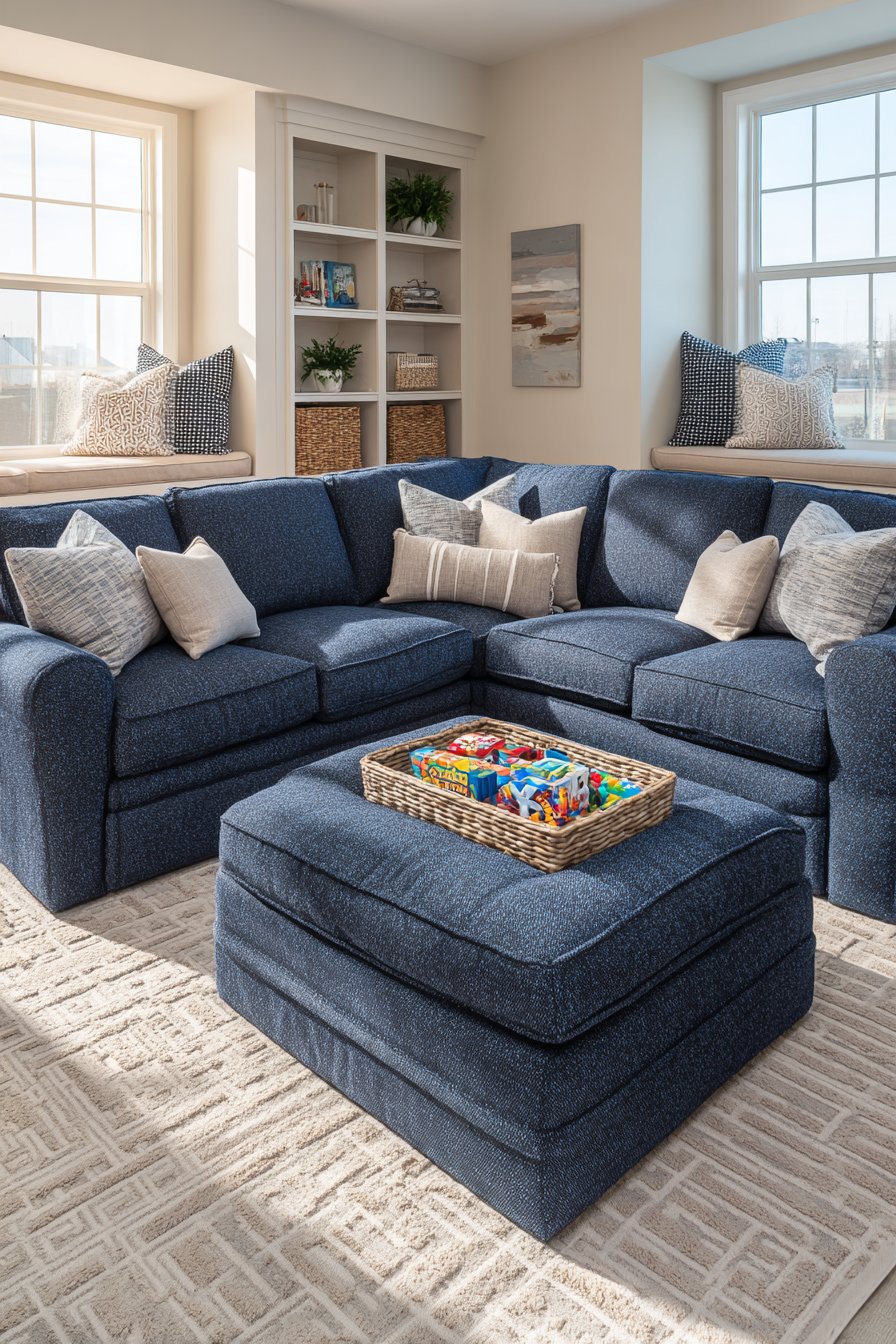
Family-friendly design prioritizes durability without sacrificing style. A performance fabric sectional in deep blue features stain-resistant coating. The durable material withstands spills and daily wear. A washable area rug in geometric pattern adds visual interest. The easy-care approach accommodates active household needs.
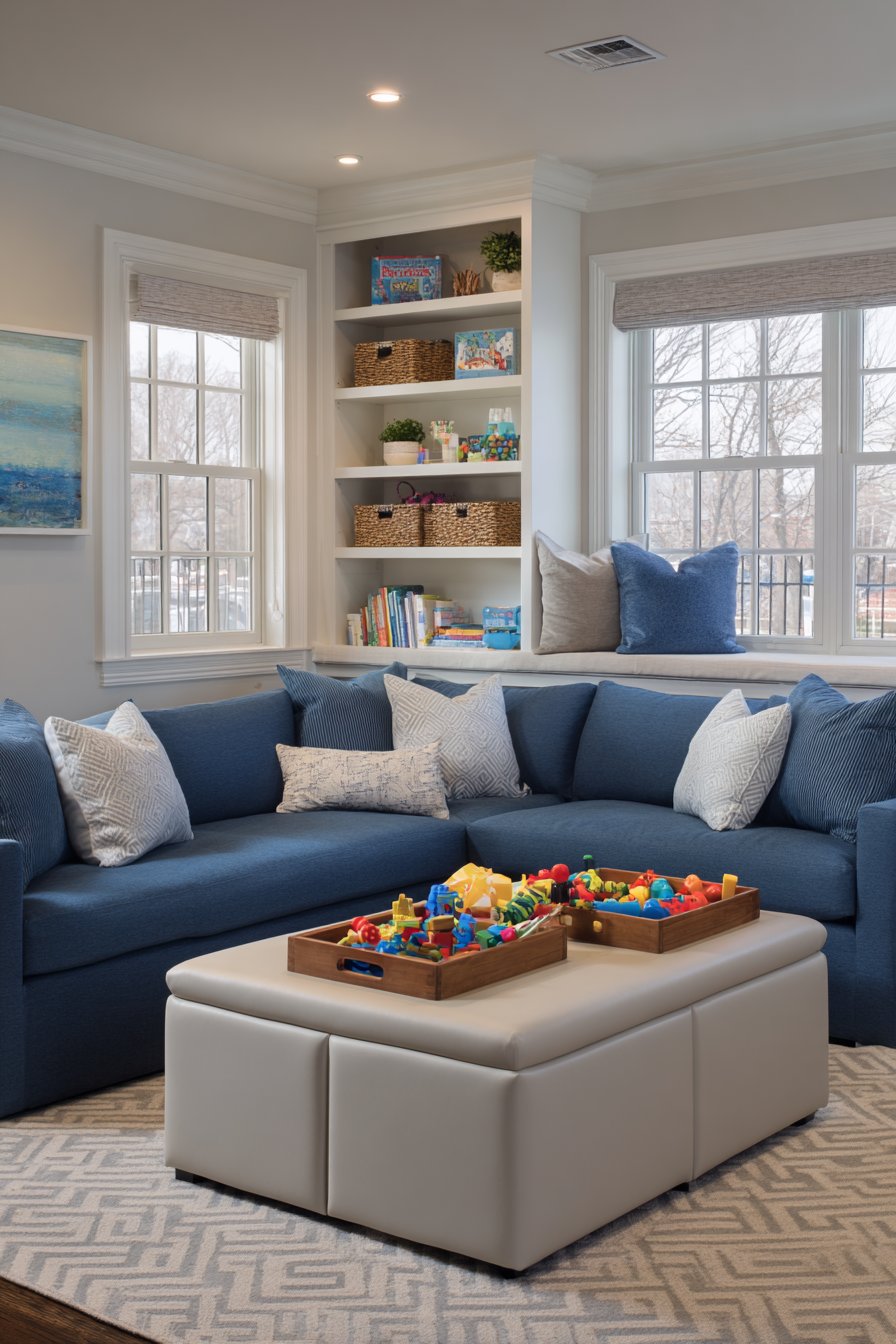
An ottoman coffee table with padded top provides safe surface. Hidden storage compartments hold toys and blankets. A built-in window seat with lift-top storage creates reading nook. Open shelving at child height displays books accessibly. Baskets organize toys while maintaining aesthetic appeal.
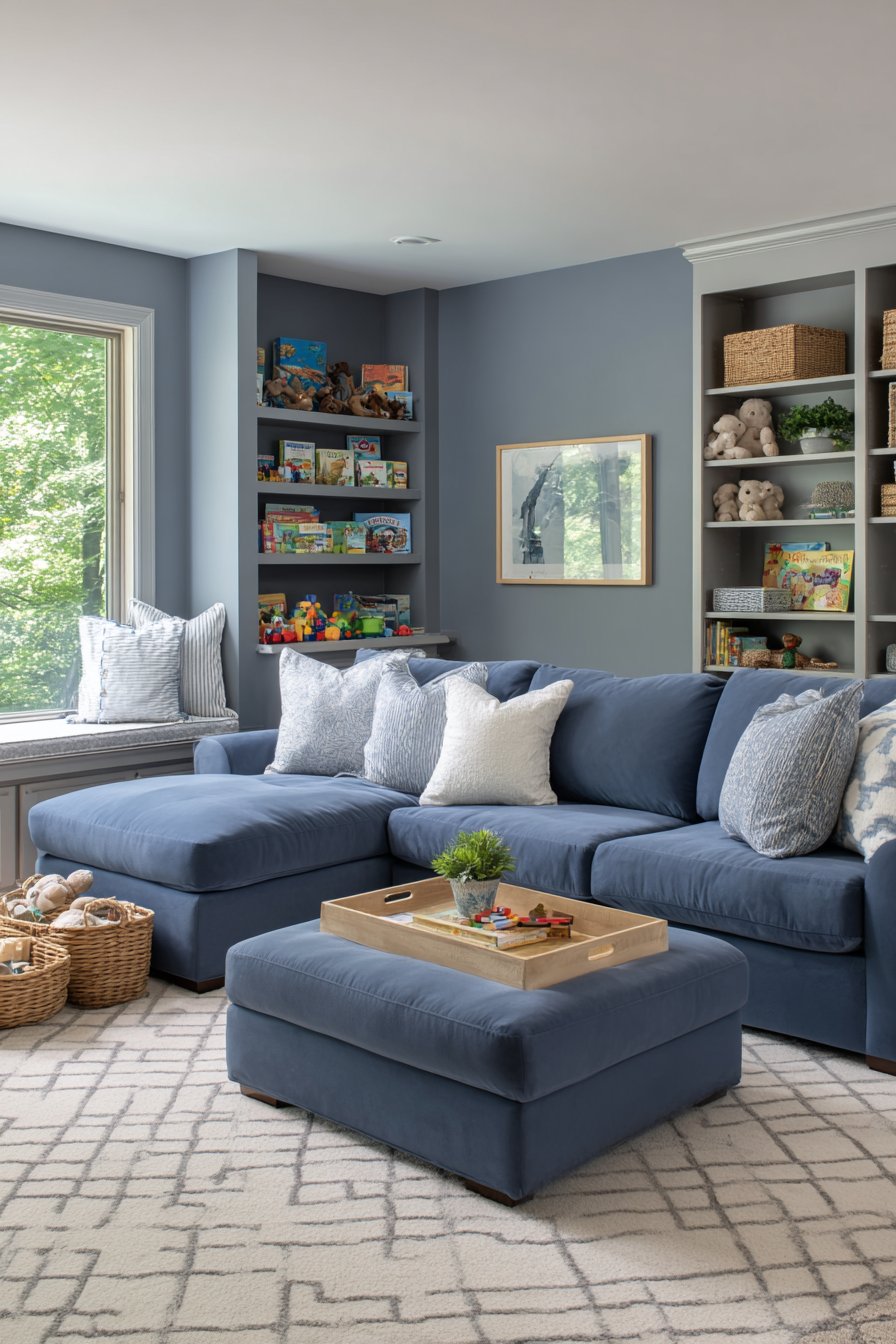
Soft furniture corners and secured bookshelves demonstrate safety considerations. Natural afternoon light creates warm, inviting atmosphere. This design proves that family-friendly spaces can maintain sophisticated aesthetics. Practical solutions integrate seamlessly into beautiful design. Active households benefit from thoughtful planning and durable materials.
Key Design Tips:
- Choose performance fabrics with stain-resistant treatments for durability
- Install window seats with lift-top storage for multi-functional use
- Place open shelving at child height to encourage independence
- Use washable area rugs that withstand heavy traffic and spills
- Select ottomans with hidden storage to organize toys discreetly
- Ensure all furniture has soft corners and secure heavy pieces to walls
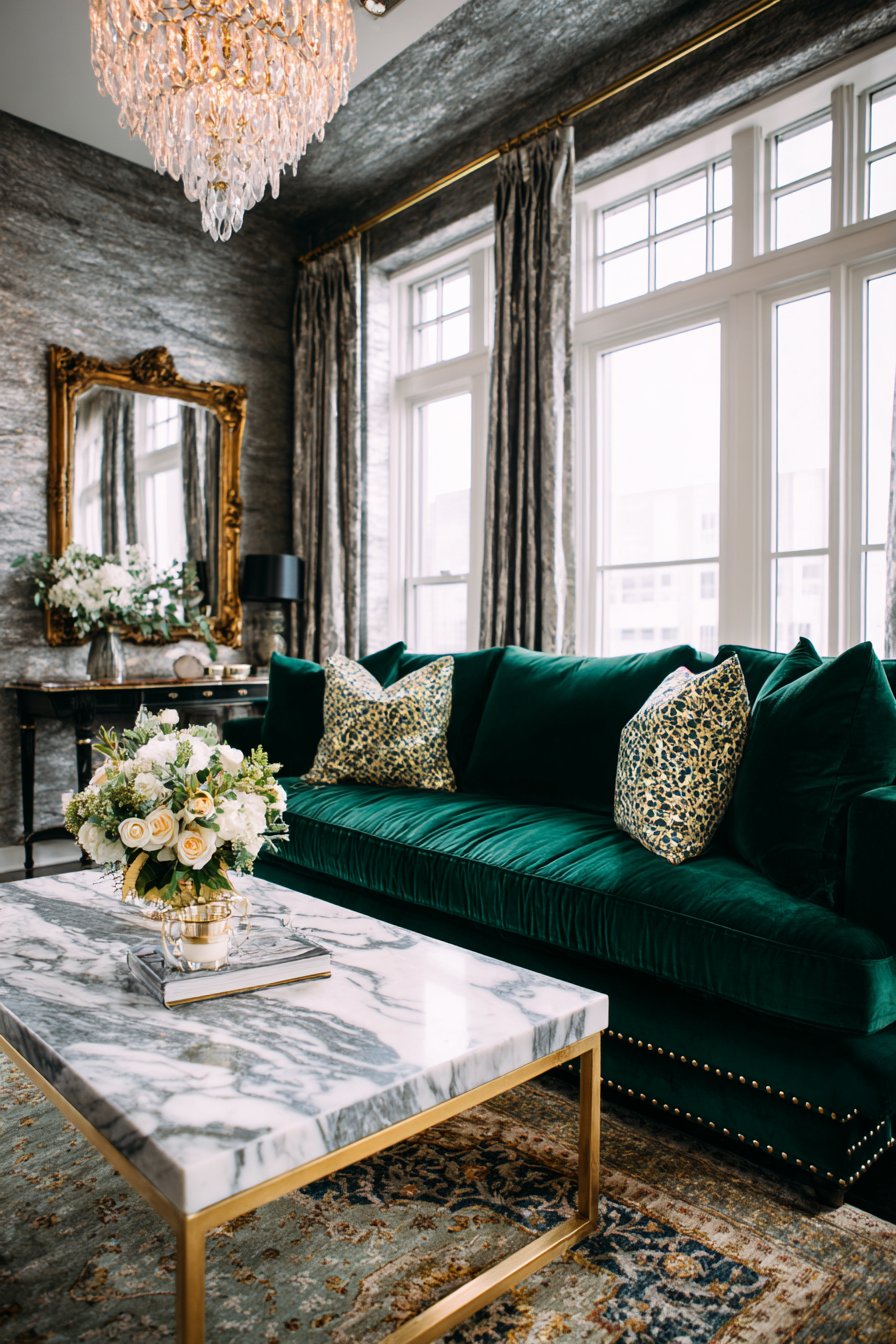
13. Luxe Emerald Velvet and Calacatta Marble Opulence
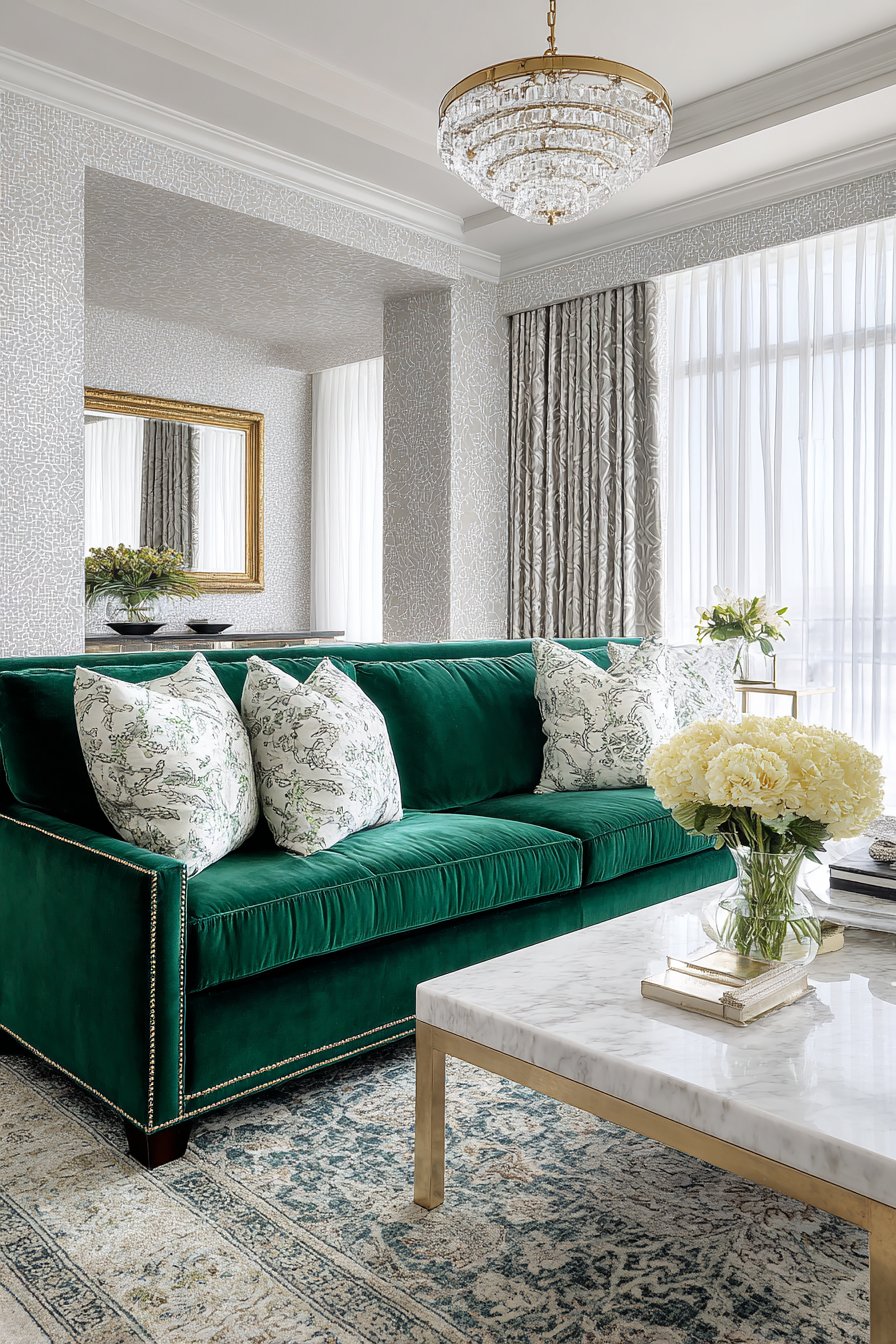
Luxe design celebrates premium materials and refined craftsmanship. A velvet sofa in rich emerald green features brass nail head trim. Down-filled cushions provide exceptional comfort and quality. A marble coffee table with gold-veined Calacatta marble makes dramatic statement. The luxury stone elevates the entire space.
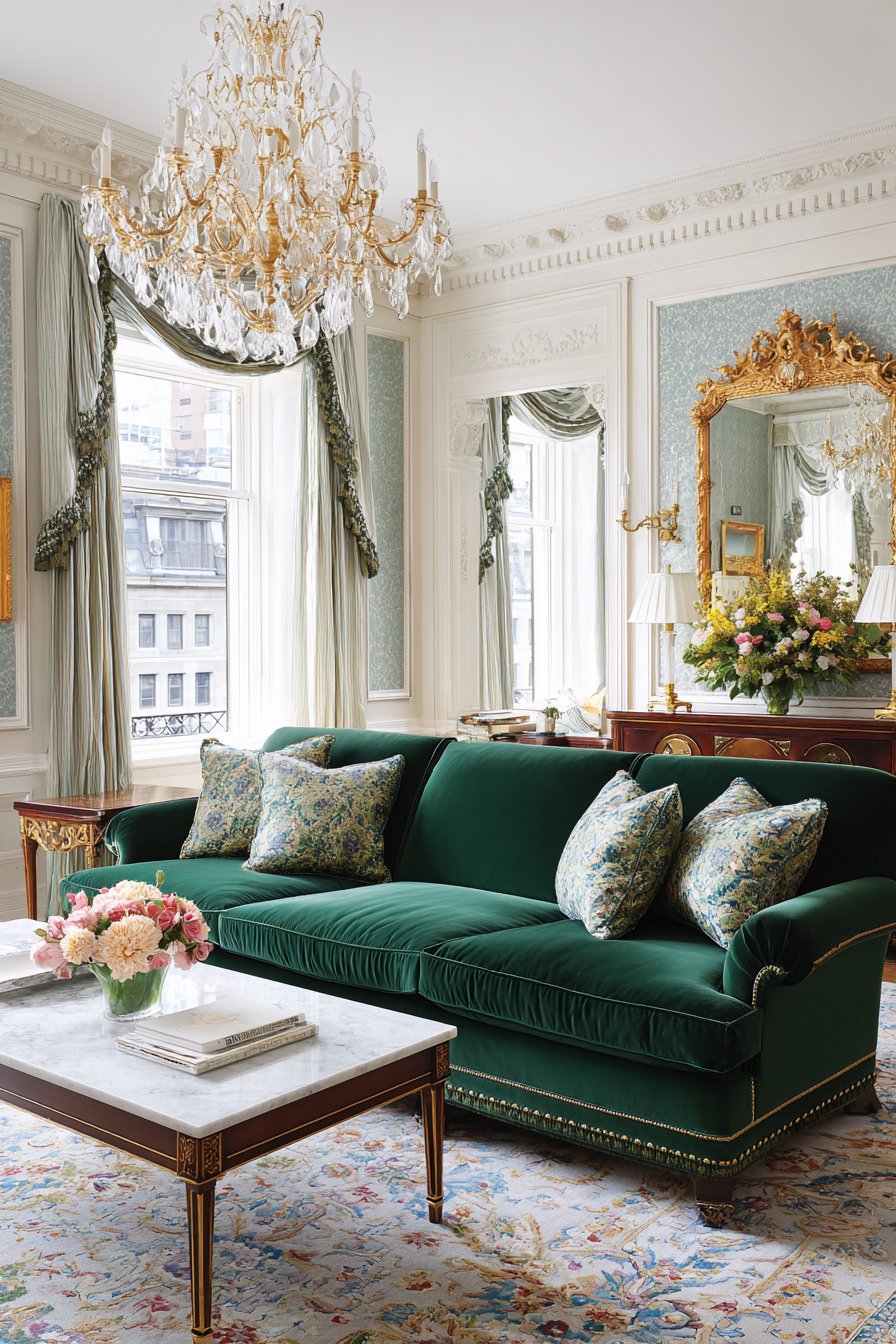
A hand-knotted silk rug displays an intricate Persian pattern. The fine craftsmanship represents significant investment in quality. A crystal chandelier with brass accents provides ambient lighting. Grasscloth wallpaper in metallic silver adds subtle texture. Custom draperies in silk dupioni feature contrast banding and decorative tassels.
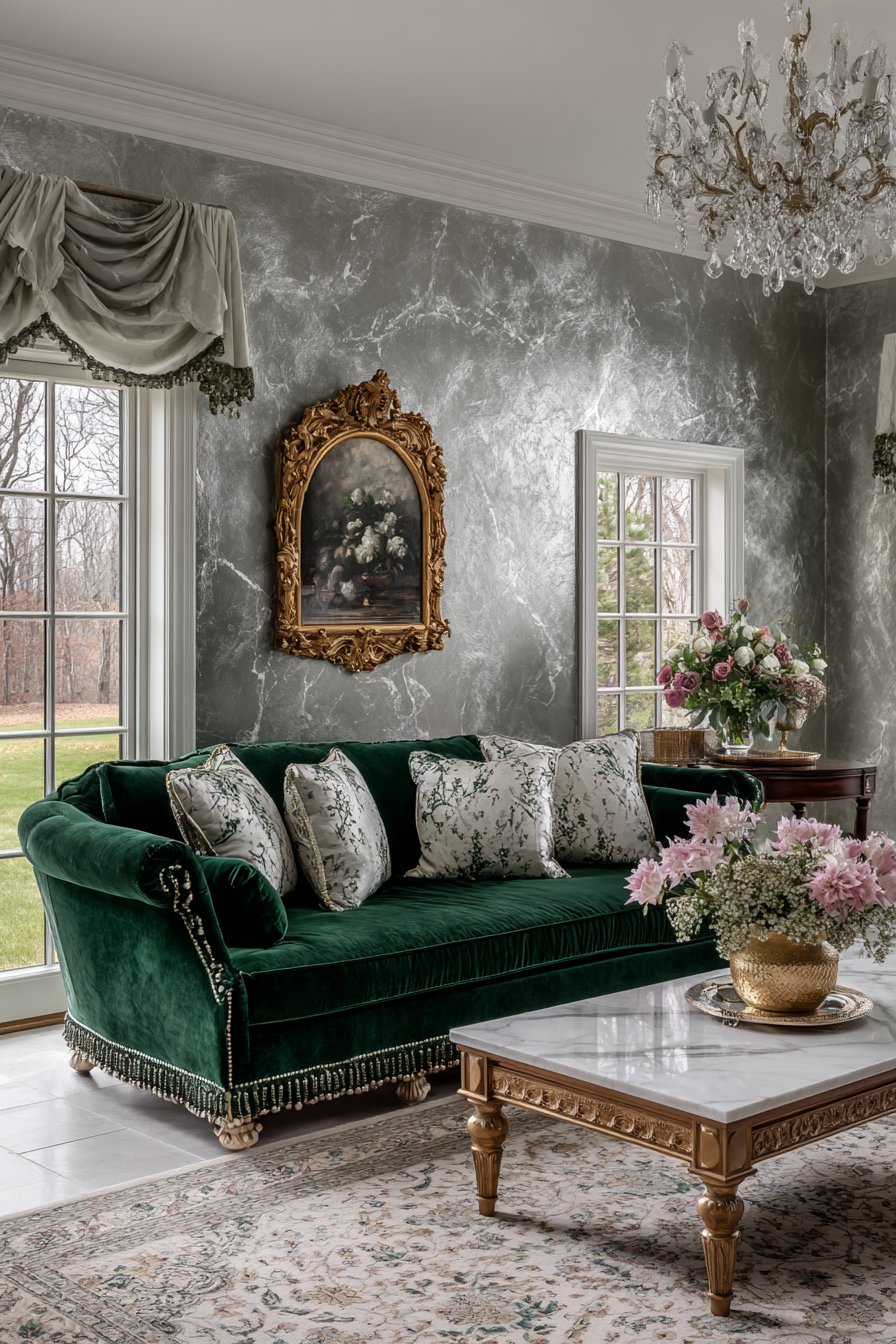
An antique gold mirror reflects light throughout the space. Fresh flower arrangements complete the elegant composition. This design demonstrates how premium materials create lasting luxury. The sophisticated palette combines jewel tones with metallic accents. Luxe interiors require investment but deliver timeless elegance.
Key Design Tips:
- Invest in premium velvet upholstery with down-filled cushions
- Select marble with dramatic veining for statement coffee tables
- Choose hand-knotted silk rugs for ultimate luxury and craftsmanship
- Install crystal chandeliers with brass finishes for elegant lighting
- Add grasscloth or metallic wallpaper for subtle textural interest
- Commission custom draperies with quality fabrics and detailed trim work
14. Rustic Cabin Stone Fireplace and Buffalo Check Comfort
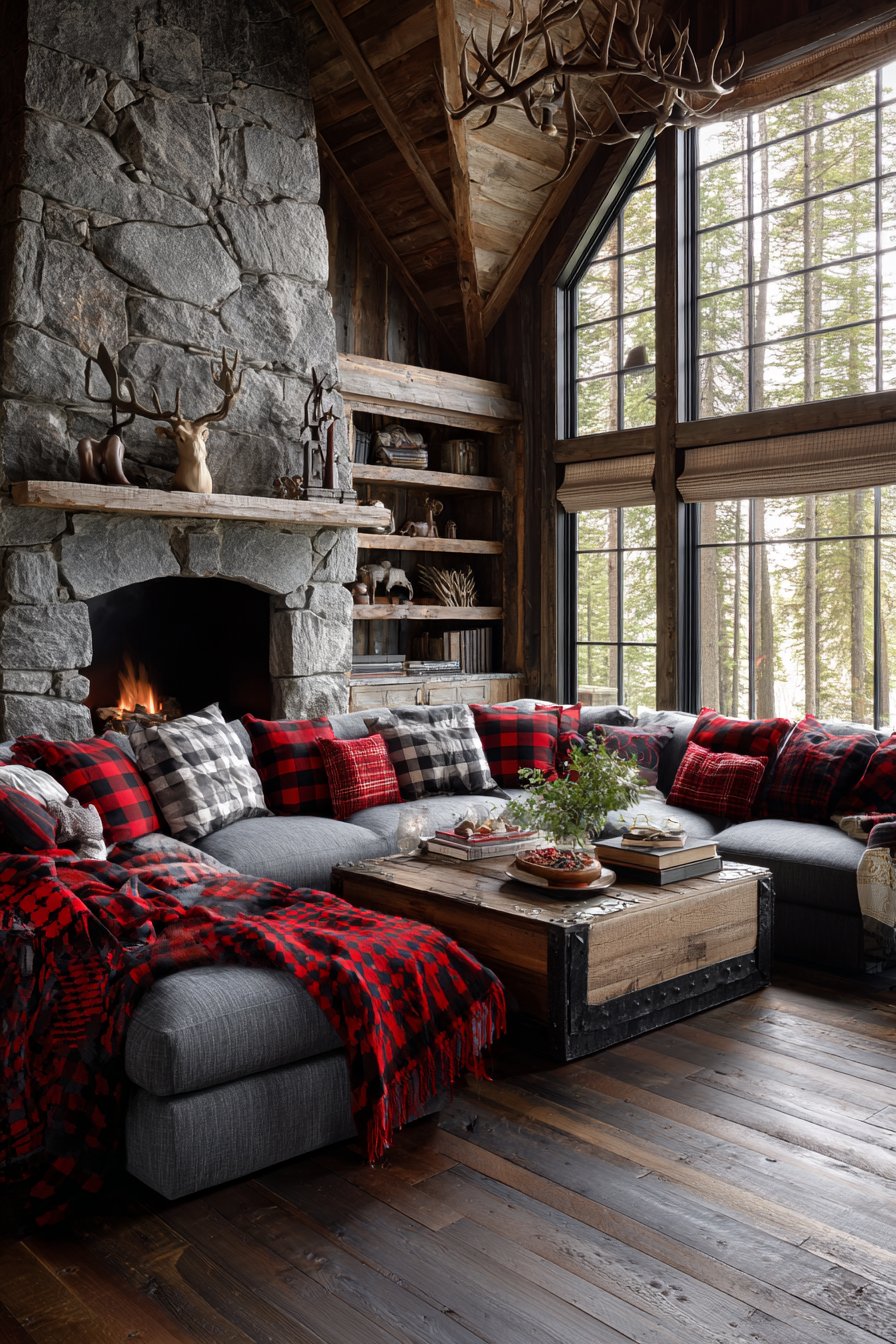
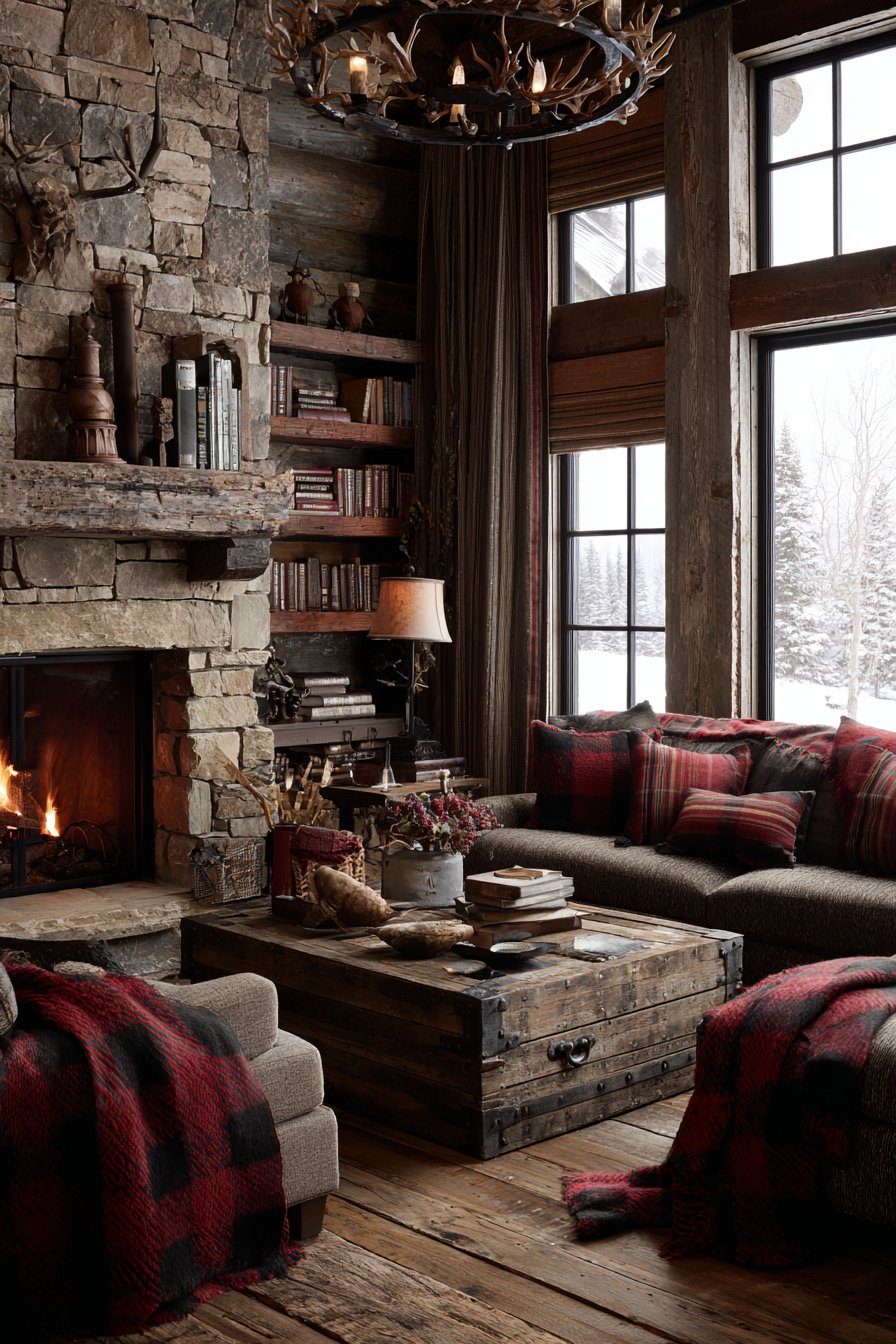
Rustic cabin design embraces natural materials and cozy textures. A stone fireplace serves as focal point with commanding presence. Built-in shelving flanking the fireplace displays vintage books and wooden decoys. An oversized sectional in buffalo check fabric provides ample seating. The classic pattern references outdoor heritage and tradition.
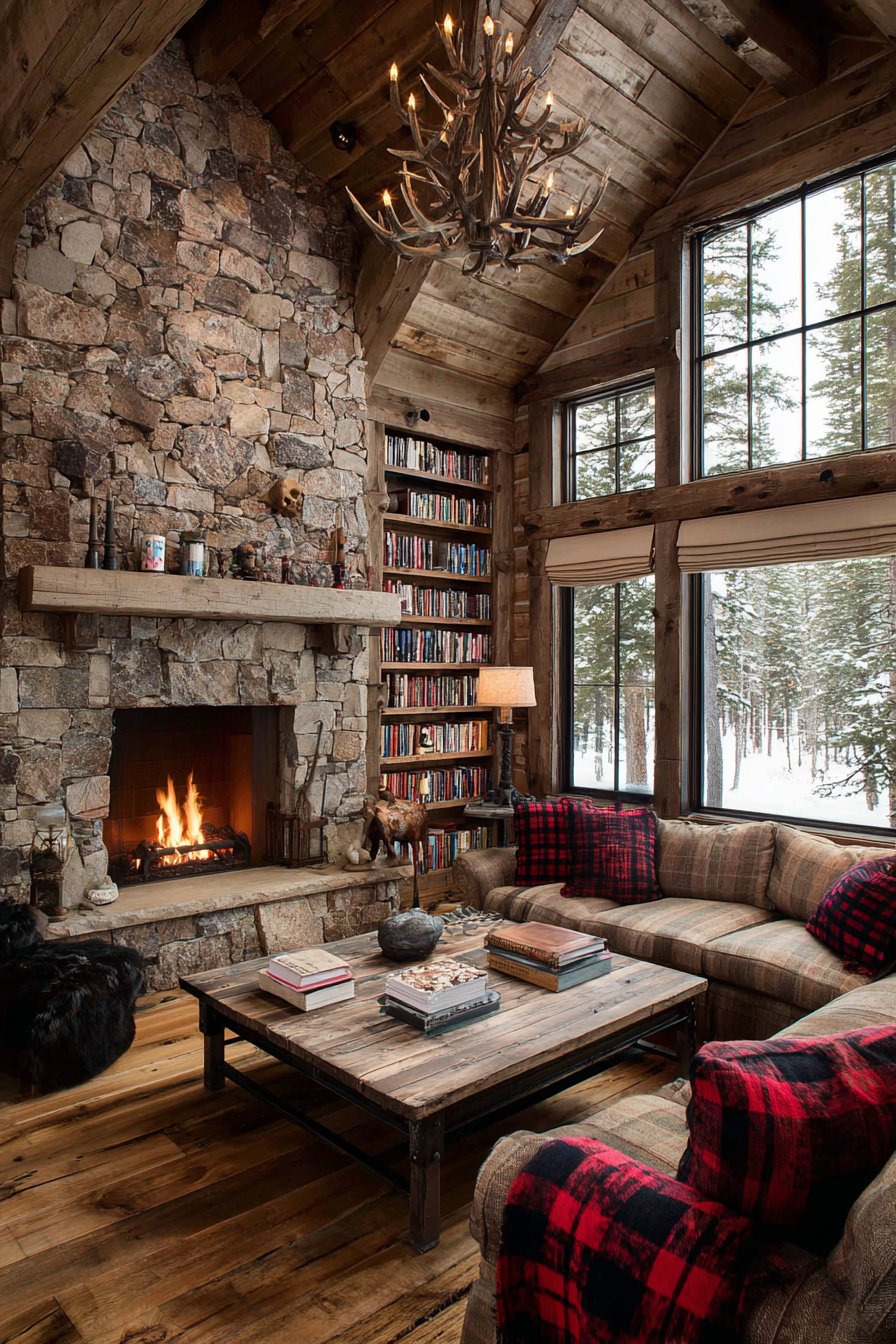
A reclaimed barn wood coffee table with iron hardware shows authentic wear. The weathered surface tells stories of previous life. Wool plaid throw blankets in red and black drape over furniture. An antler chandelier and wrought iron wall sconces provide ambient lighting. Wide plank pine flooring displays natural variations and knots.
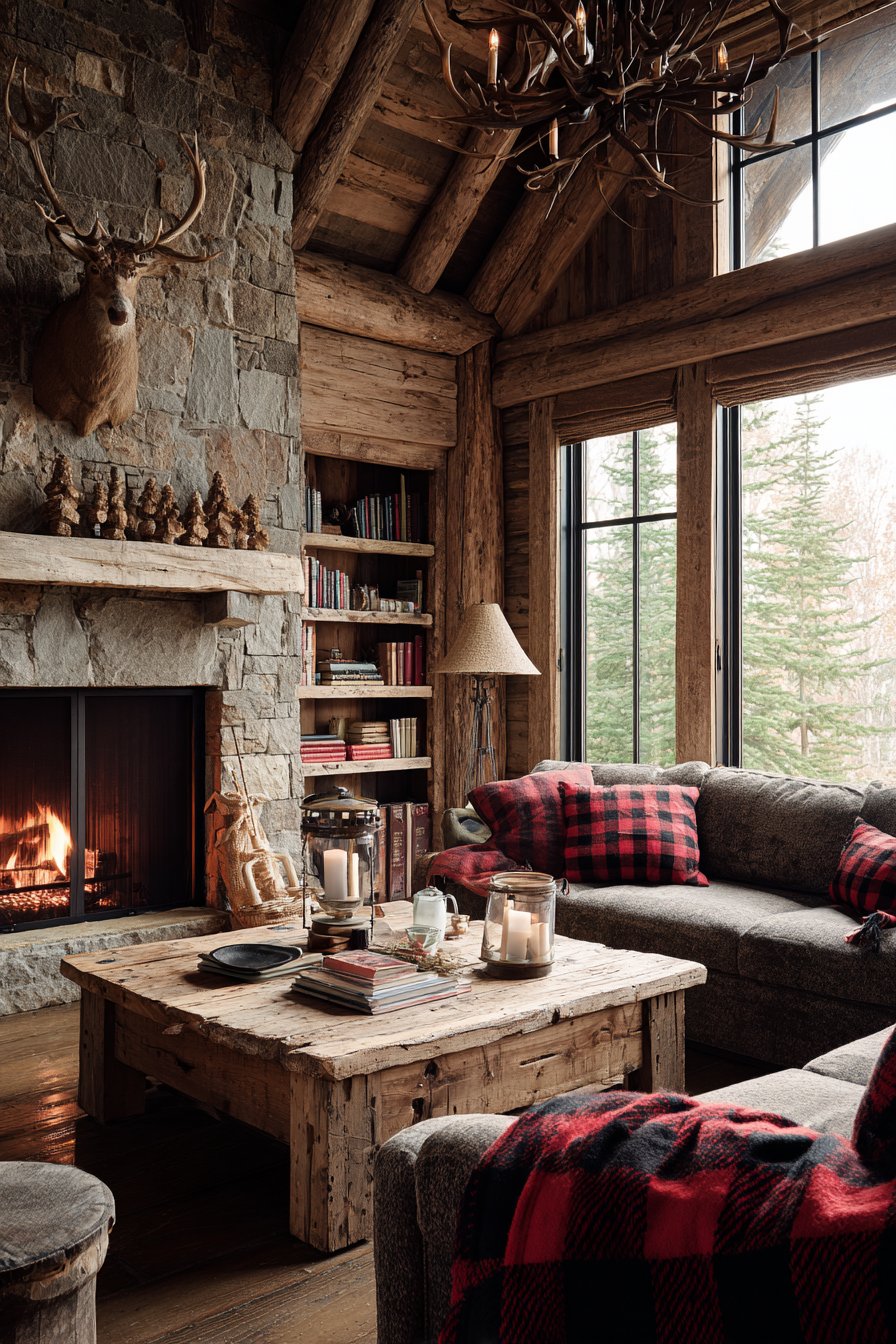
Large windows frame forest views with simple burlap roman shades. The minimal window treatment emphasizes outdoor connection. This design creates warm, lodge-inspired atmosphere. The natural materials and cozy textures invite relaxation. Rustic cabin style works in mountain homes and countryside settings equally well.
Key Design Tips:
- Install stone fireplaces as commanding focal points in rustic spaces
- Choose buffalo check and plaid patterns for classic cabin atmosphere
- Select reclaimed barn wood furniture with visible wear and character
- Add wool throw blankets for warmth and textural comfort
- Use antler chandeliers and wrought iron fixtures for rustic lighting
- Frame nature views with minimal window treatments that emphasize outdoors
15. Eclectic Maximalist Pattern and Color Abundance
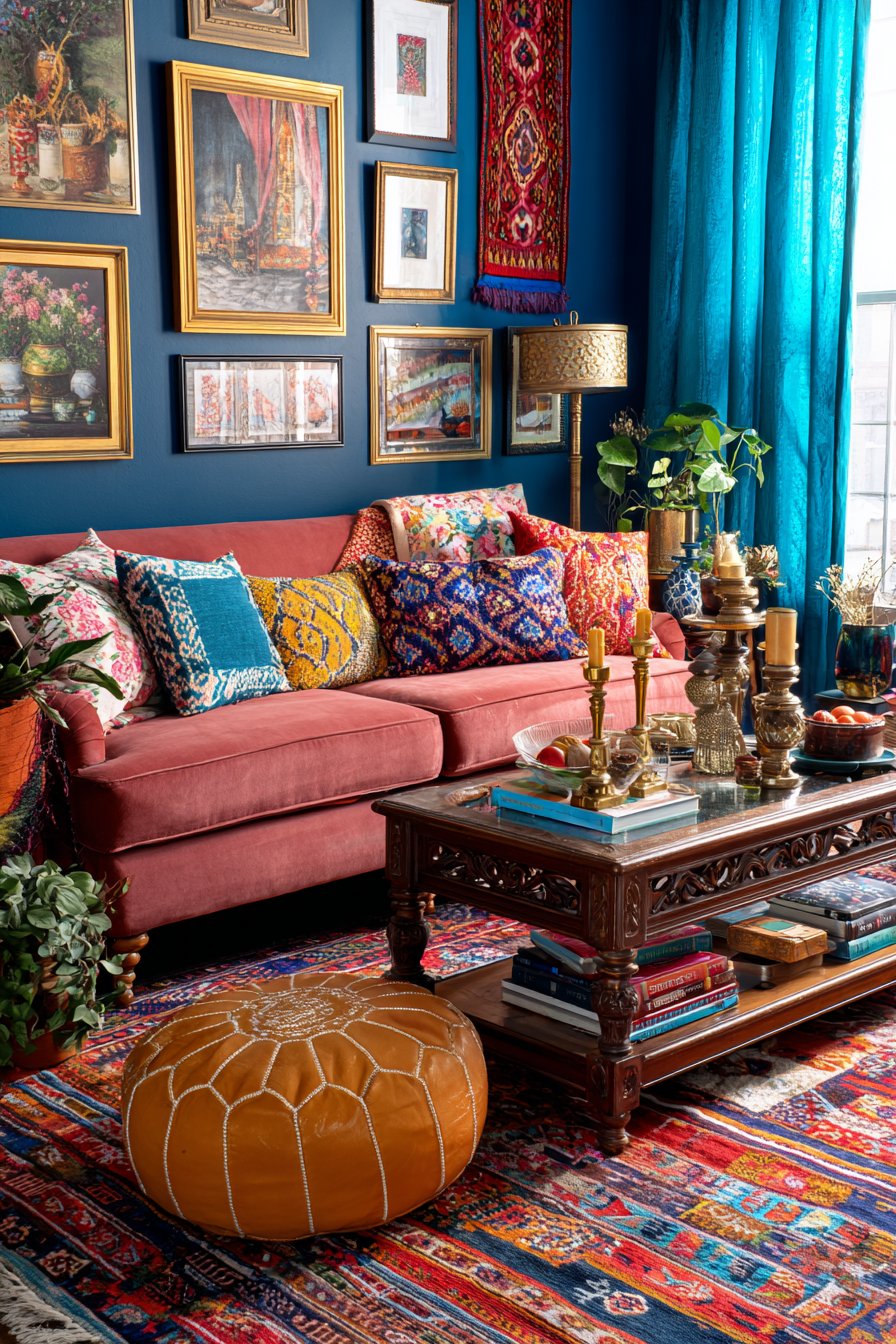
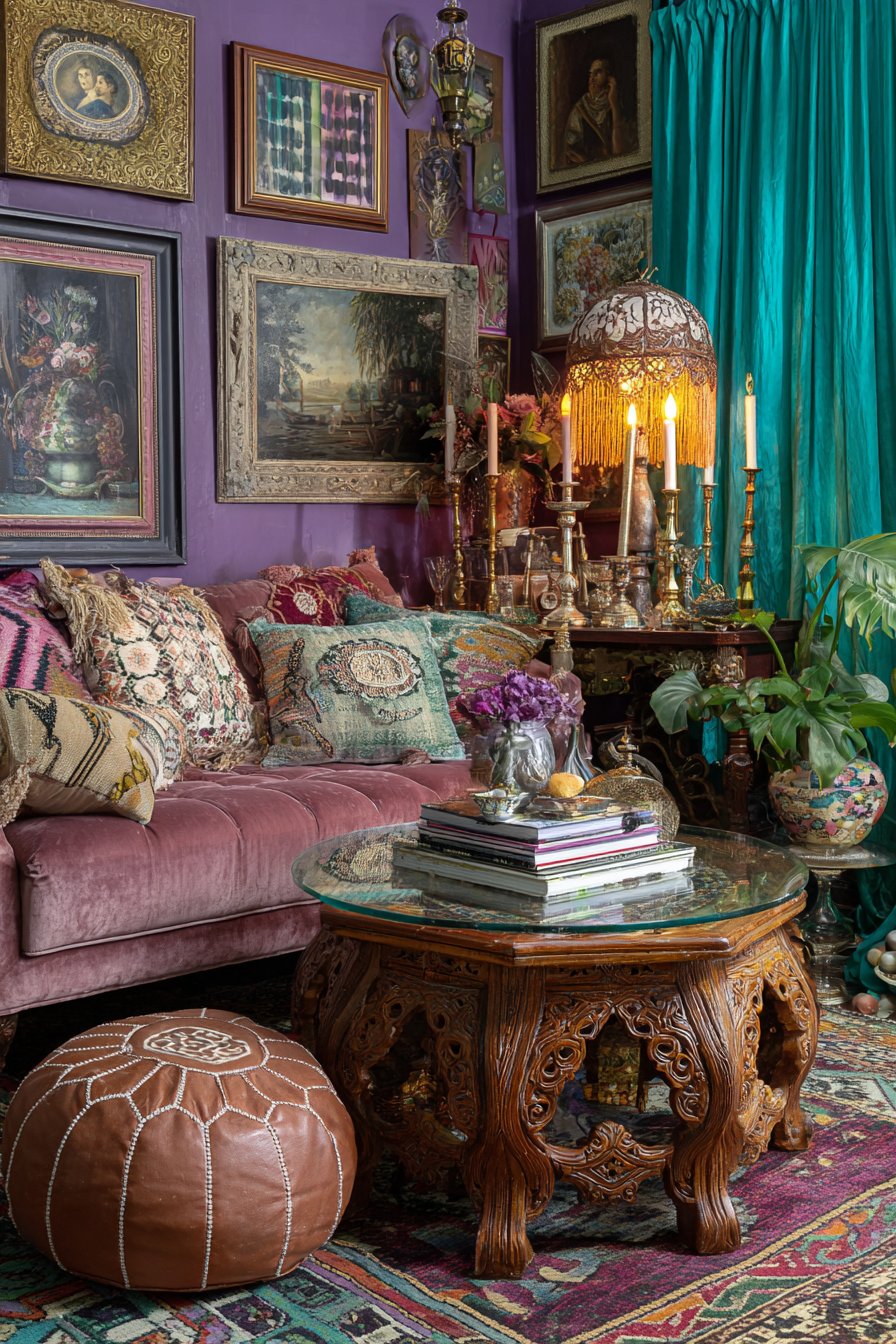
Eclectic maximalist design celebrates abundance and personal collection. A vintage velvet sofa in dusty rose anchors the space. Multiple patterned throw pillows mix florals, geometrics, and global prints. The confident pattern mixing creates visual richness. An ornate carved wood coffee table with glass top displays art books.
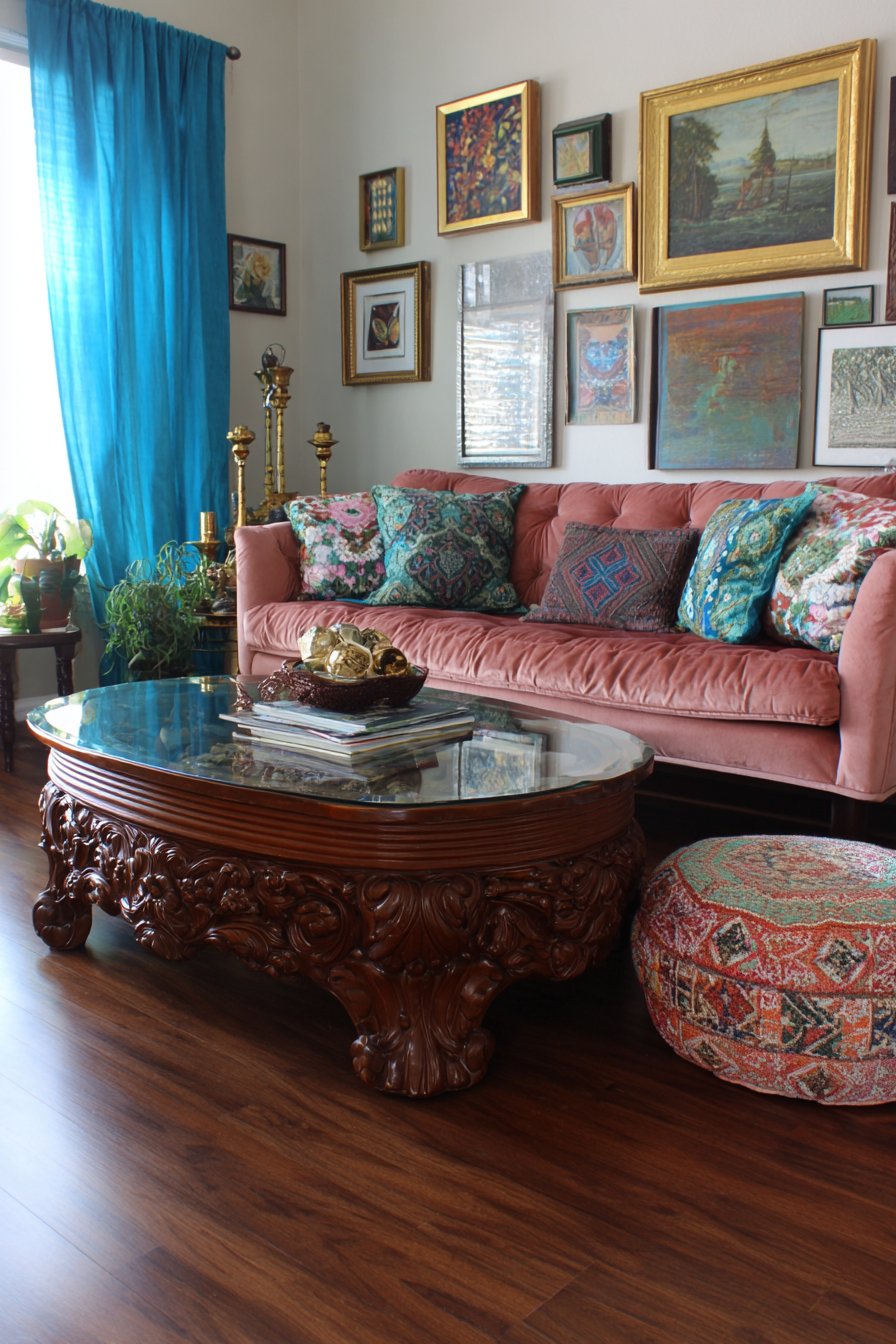
The gallery wall combines vintage oil paintings, modern prints, and textile art. Mismatched frames add to the collected aesthetic. A Moroccan pouf and Turkish kilim rug introduce global elements. Floor lamp with fringed shade provides warm ambient lighting. A collection of brass candlesticks in varying heights creates visual rhythm.
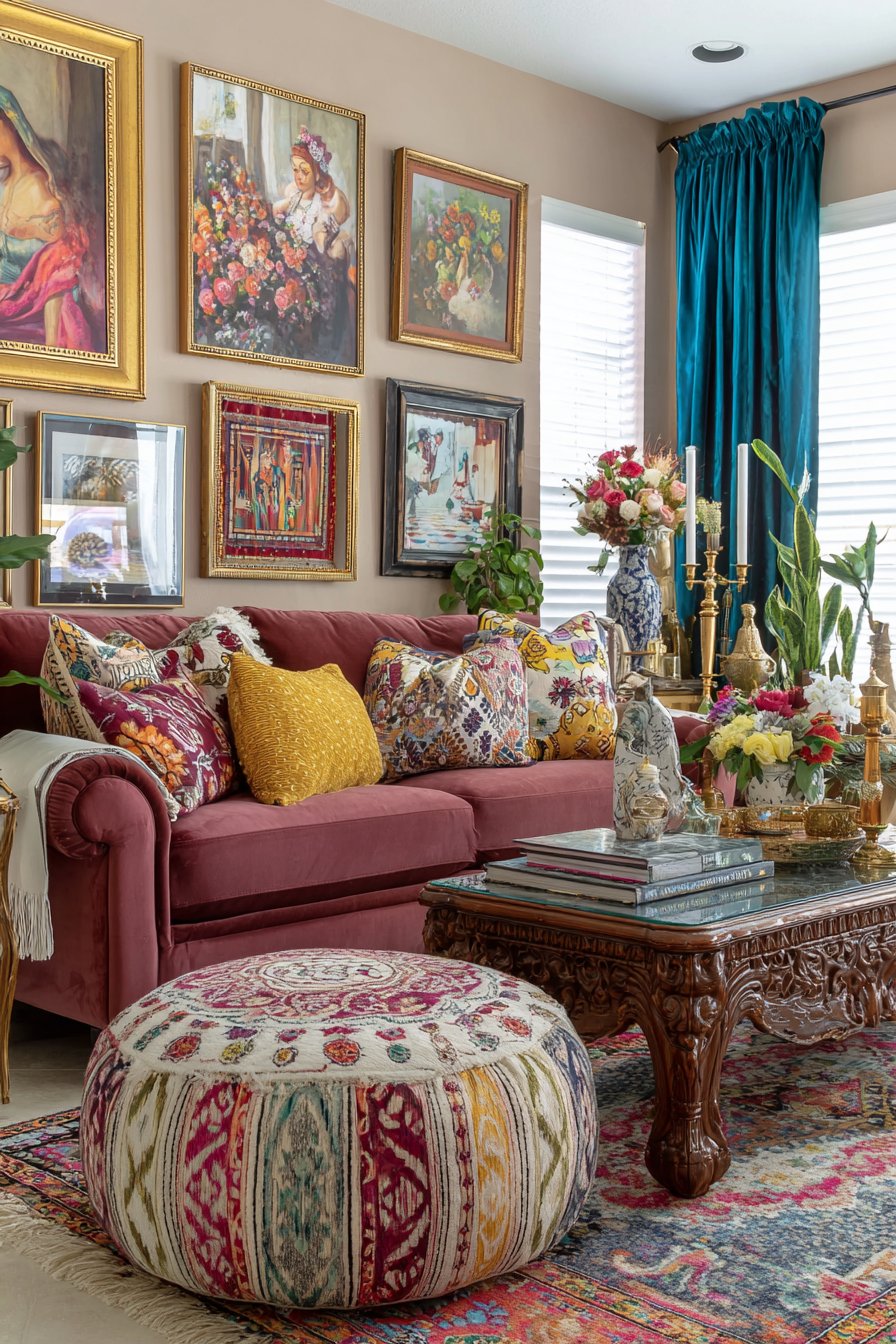
Jewel-toned curtains in peacock blue silk add dramatic color. This design embraces the collected-over-time aesthetic. Every piece tells story and reflects personal taste. The layered approach takes years to achieve authentically. Bold choices create memorable spaces full of personality.
Key Design Tips:
- Mix multiple patterns confidently by maintaining color cohesion
- Create gallery walls with varied frame styles and art types
- Incorporate global textiles like kilims and Moroccan poufs
- Layer jewel tones throughout space for rich color palette
- Display collections of similar items like brass candlesticks in groups
- Embrace collected-over-time aesthetic rather than matching furniture sets
16. Contemporary White Gloss and Chrome Technology Integration
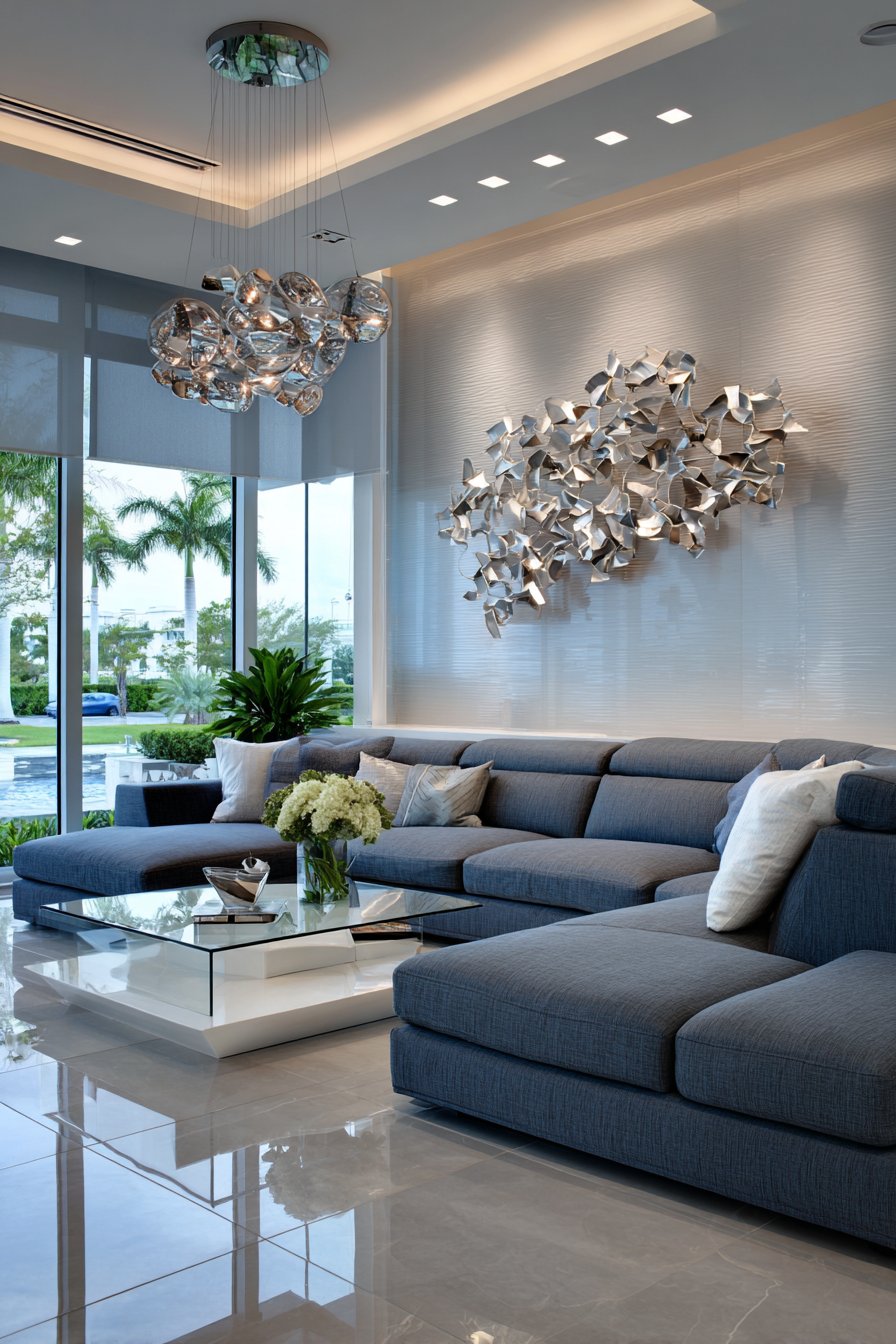
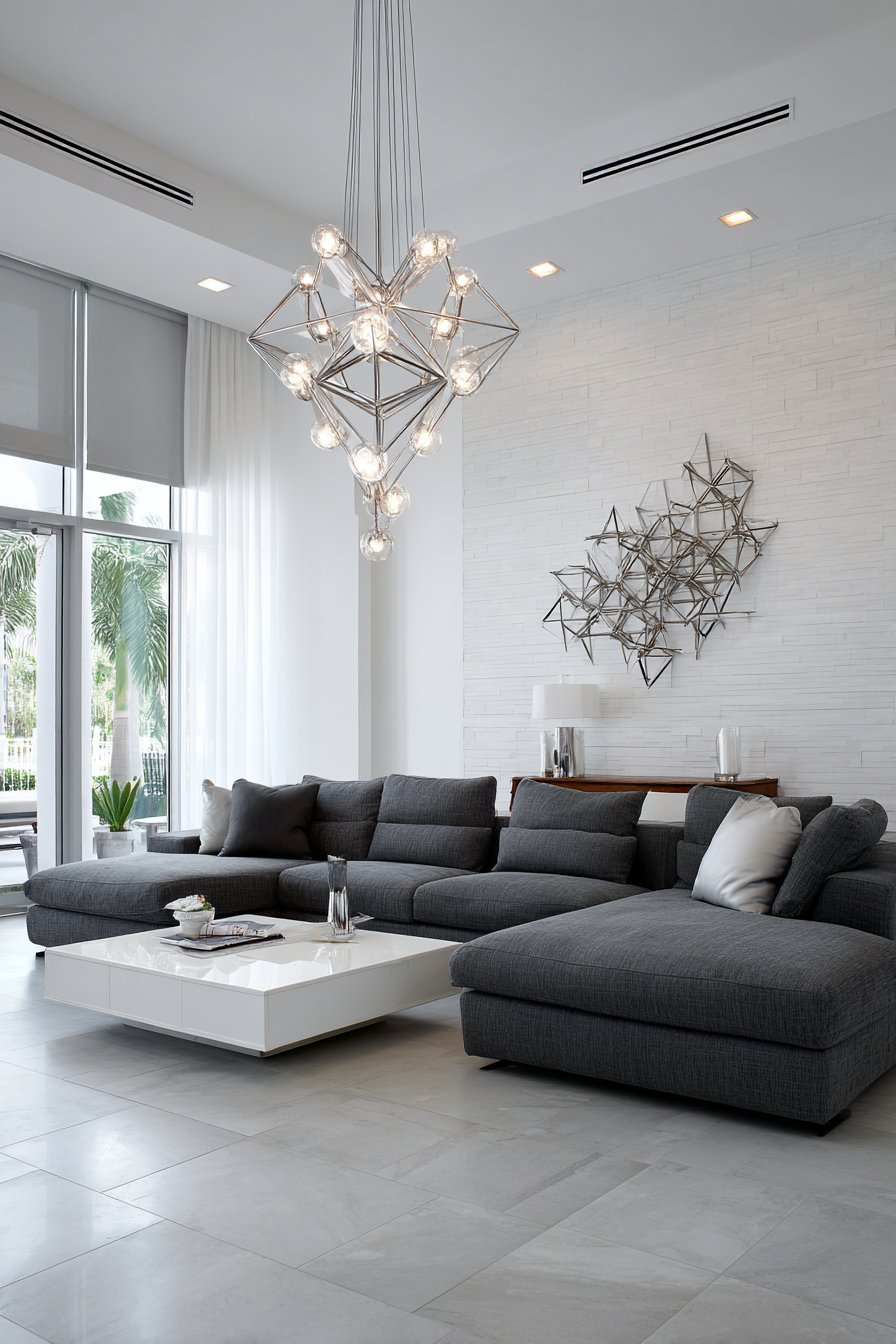
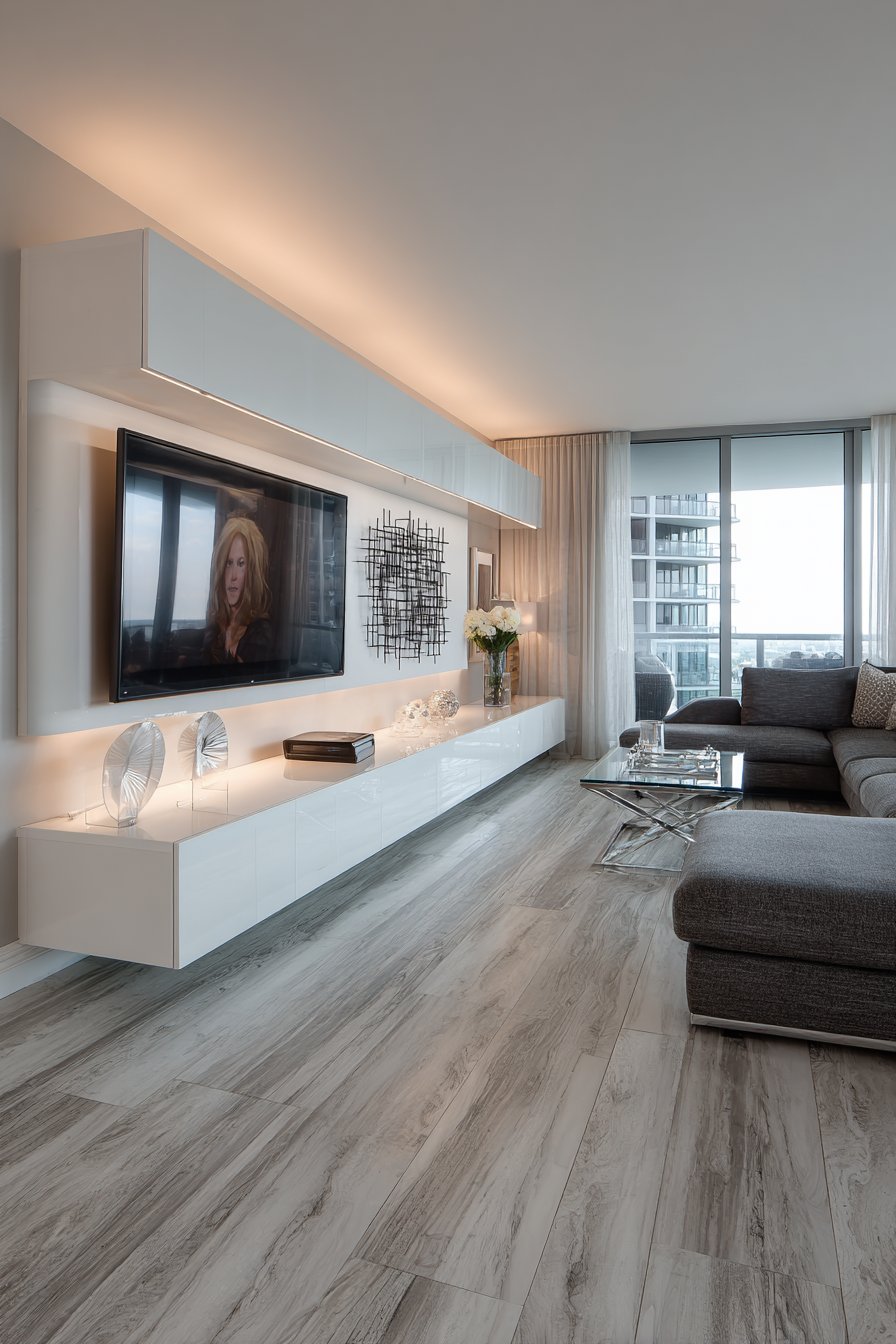
Contemporary design emphasizes clean lines and integrated technology. A floating media console in high-gloss white features integrated LED lighting. Cable management systems maintain clean appearance. A modular sectional sofa in charcoal grey includes adjustable headrests. USB charging ports integrate into furniture for modern convenience.
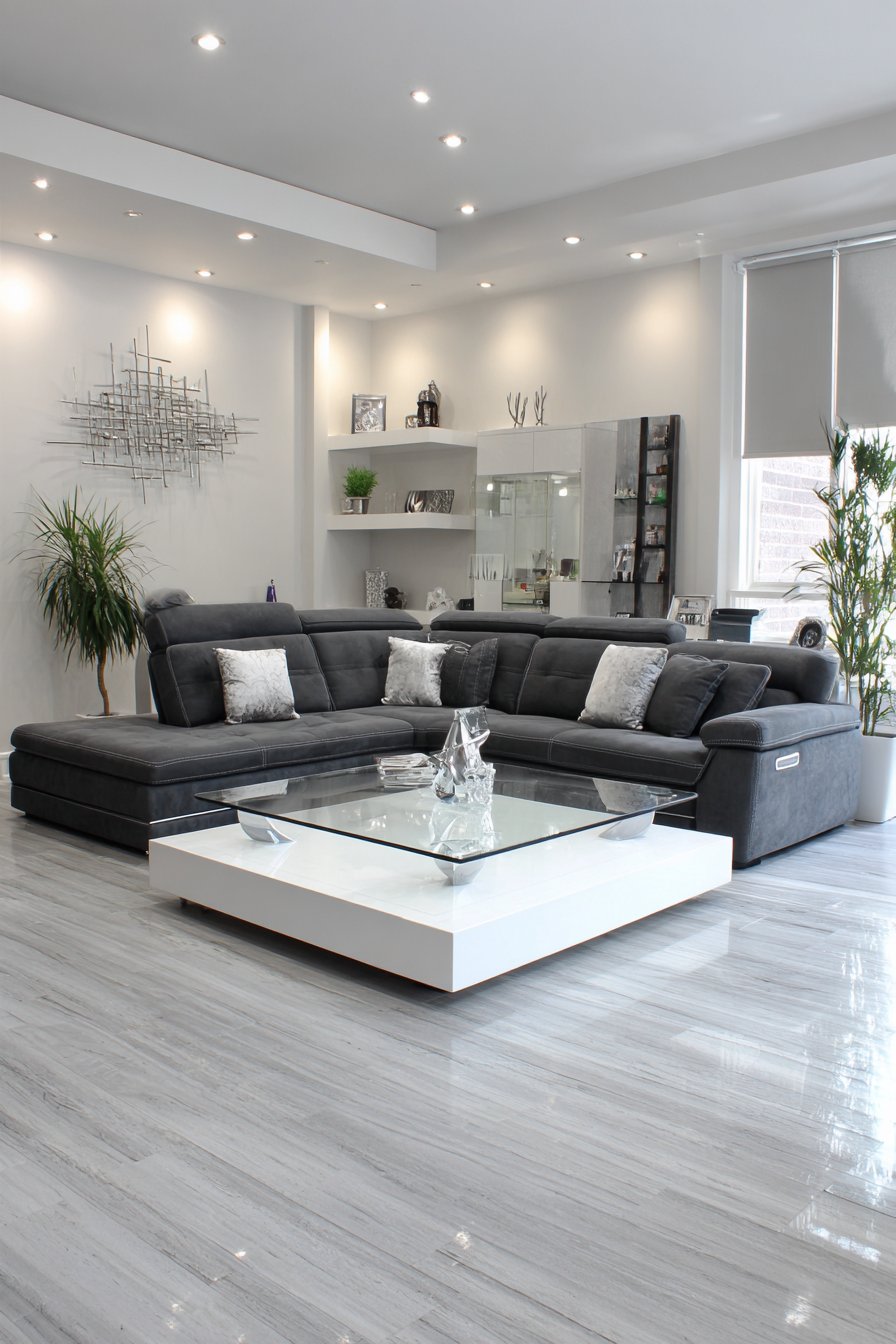
A glass and chrome coffee table with a geometric base provides transparent surface. Abstract metal wall sculpture creates focal point above console. Motorized roller shades in light-filtering fabric provide automated light control. Porcelain tile flooring in large format grey planks minimizes grout lines. Recessed lighting with dimmer controls offers adjustable ambiance.
This design appeals to technology-focused homeowners. The sleek aesthetic requires minimal maintenance and cleaning. Contemporary spaces feel fresh and current. The integration of technology enhances daily living. Modern functionality combines with sophisticated aesthetics.
Key Design Tips:
- Choose floating furniture to create visual lightness and easy cleaning
- Integrate technology features like USB ports into furniture design
- Select modular sectionals with adjustable components for flexibility
- Install motorized window treatments for convenient light control
- Use large format tiles to minimize grout lines and maintenance
- Add recessed lighting with dimmers for adjustable ambiance control
17. Dedicated Reading Nook Deep Leather and Literary Comfort
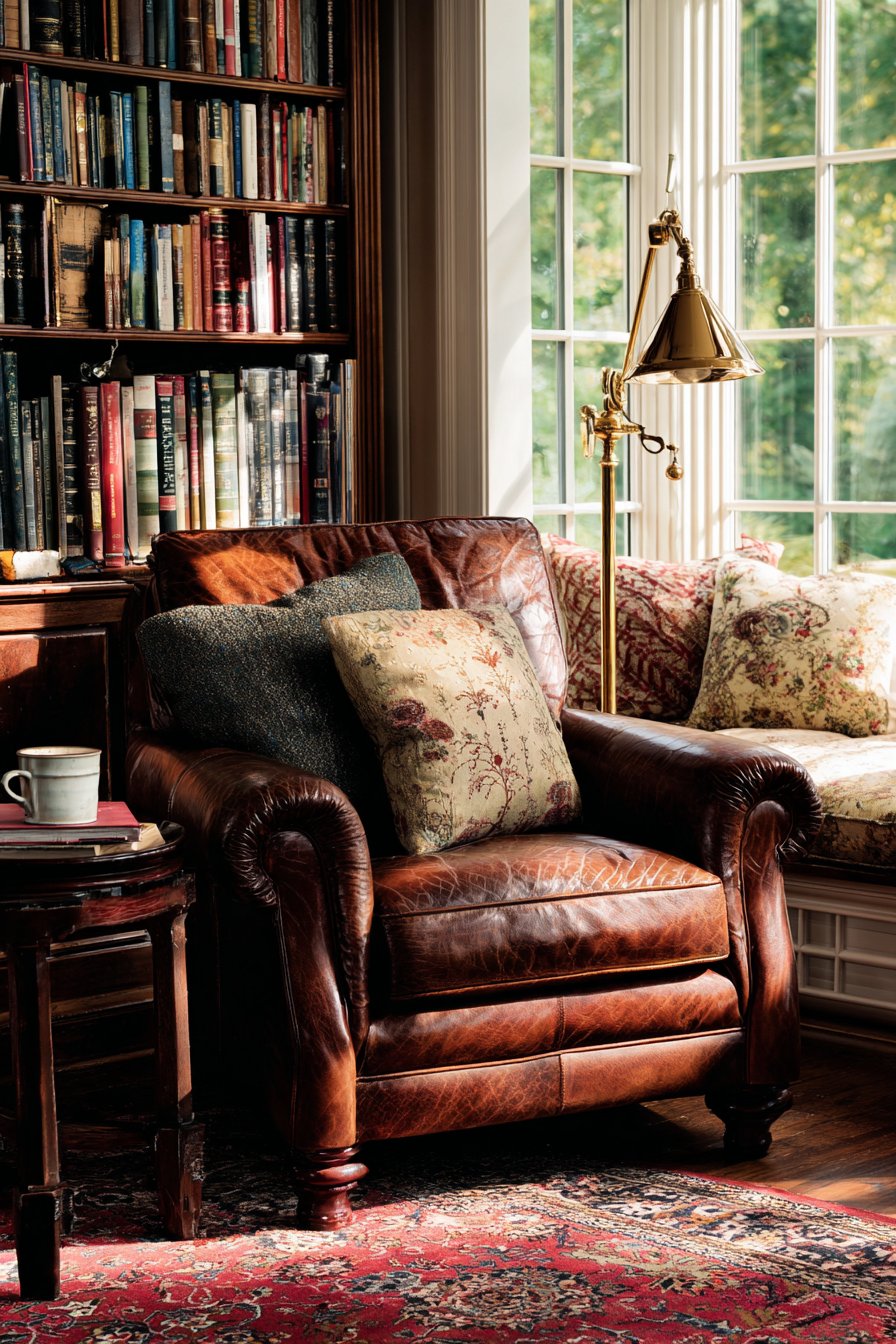
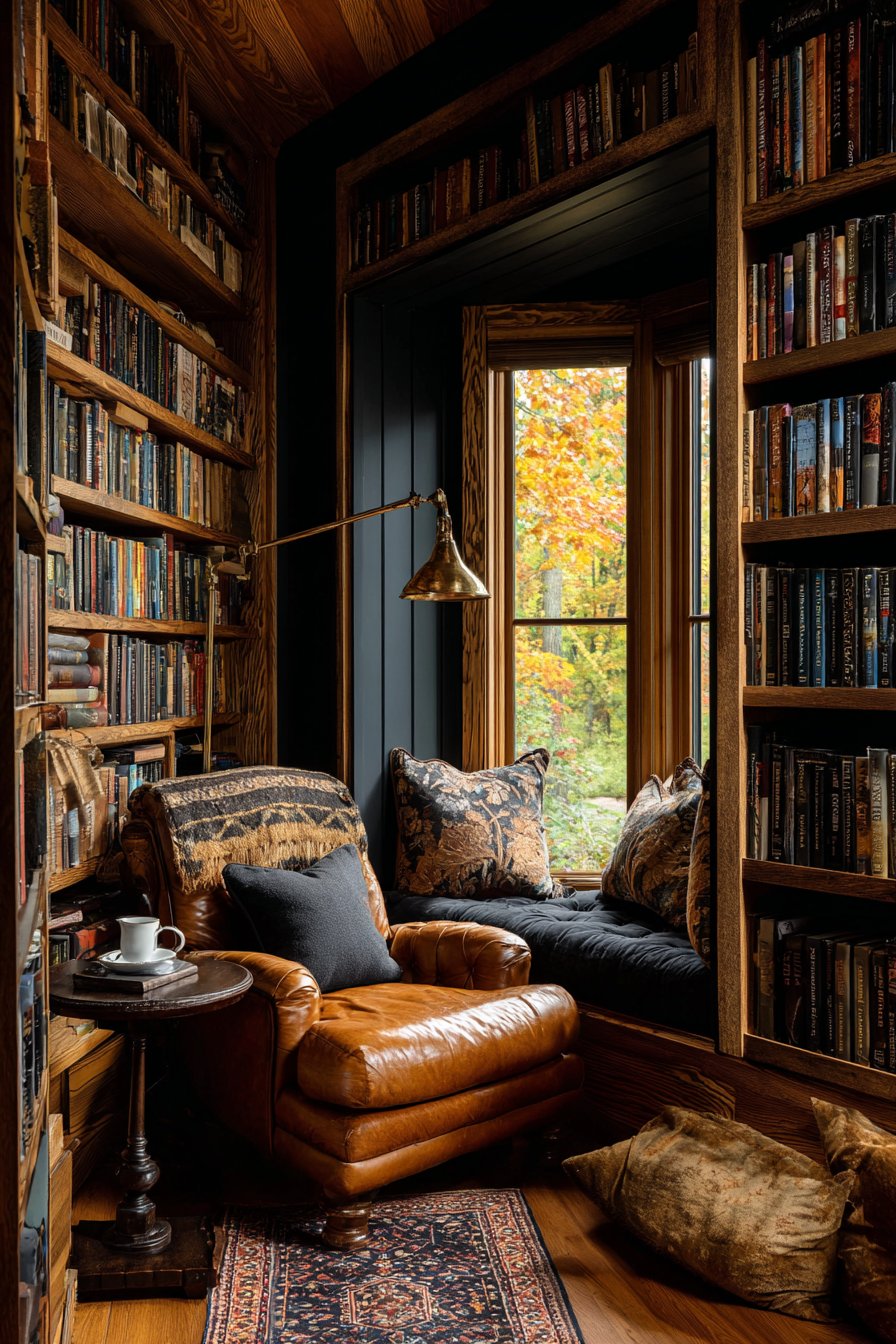
Creating dedicated zones within living rooms enhances functionality. A deep cushioned armchair upholstered in worn leather provides reading comfort. A tall wooden bookshelf filled with books creates literary backdrop. An adjustable brass pharmacy floor lamp provides task lighting. The classic design offers perfect reading illumination.
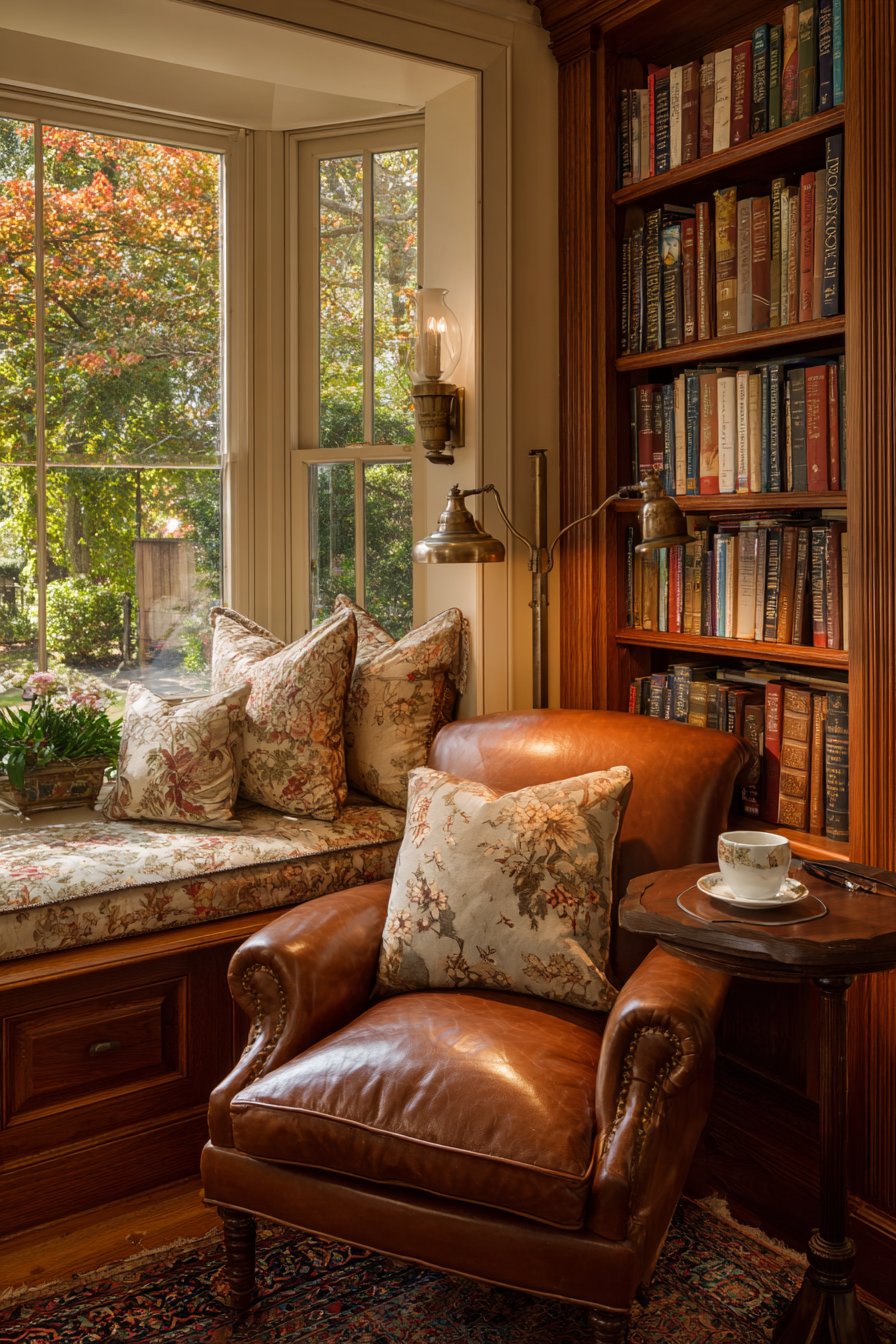
A small walnut side table holds reading essentials. Vintage Persian runner rug adds warmth and pattern. A large window with cushioned seat built into alcove offers an alternative reading spot. Throw pillows in faded florals add soft comfort. Natural afternoon light perfect for reading fills the space.
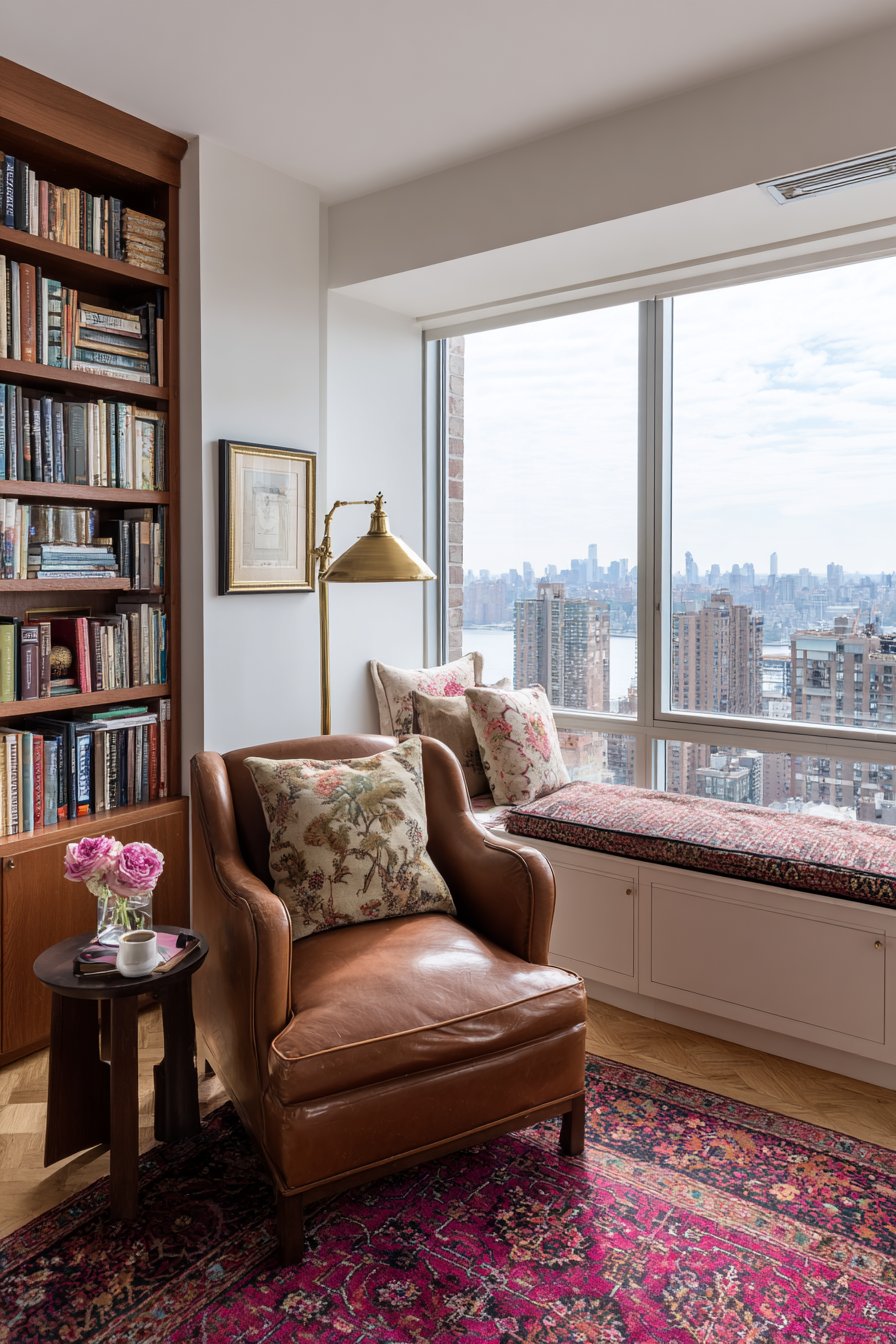
This intimate corner demonstrates activity-specific zone creation. Book lovers appreciate dedicated literary spaces. The worn leather and vintage textiles create comfortable atmosphere. Reading nooks add character to larger living rooms. Dedicated zones improve room functionality significantly.
Key Design Tips:
- Create dedicated reading nooks with comfortable deep-seated chairs
- Install adjustable task lighting like pharmacy lamps for proper illumination
- Fill bookshelves with actual books rather than decorative objects
- Add window seats with cushions for alternative reading locations
- Use vintage Persian runners to define reading zones with warmth
- Include small side tables within arm’s reach for beverages and books
18. Neutral Monochromatic Layered Texture and Tonal Variations
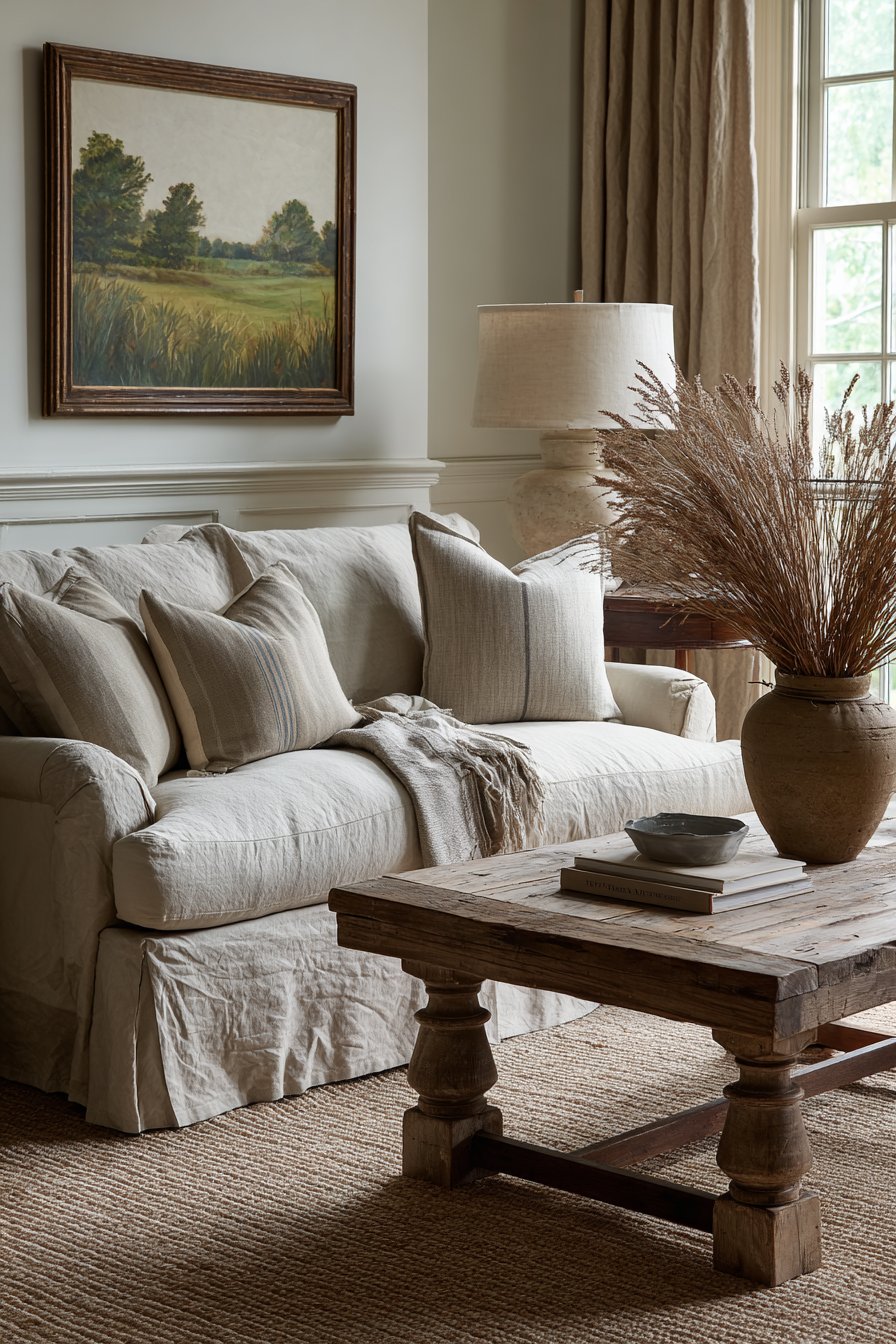
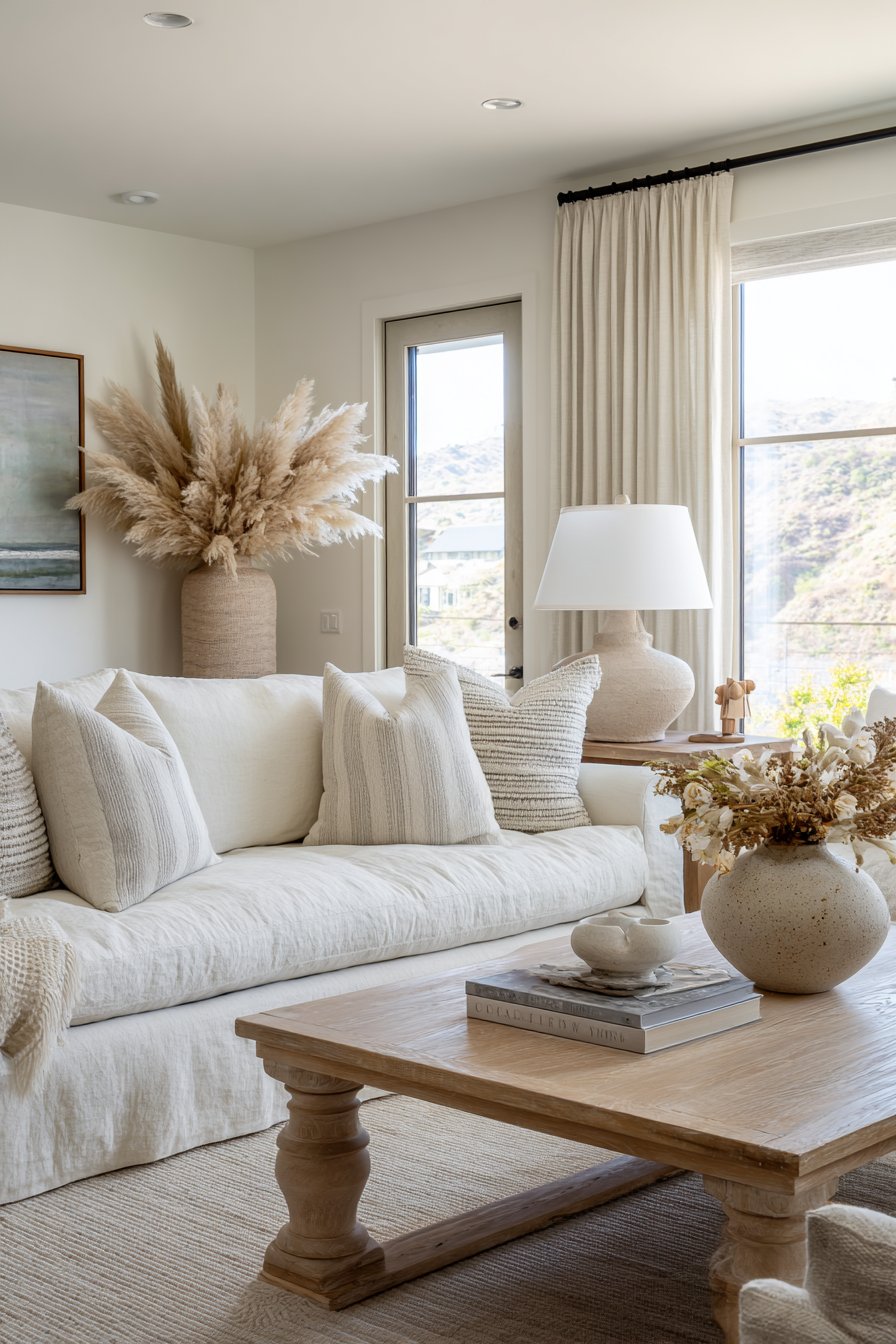
Neutral monochromatic design relies on texture and tonal variation. Layered shades of cream, beige, and taupe create sophisticated palette. A linen sofa with loose slipcover and down cushions anchors the space. Bleached oak coffee table with chunky turned legs adds substantial presence. Walls painted in warm white with lime wash finish show subtle texture.
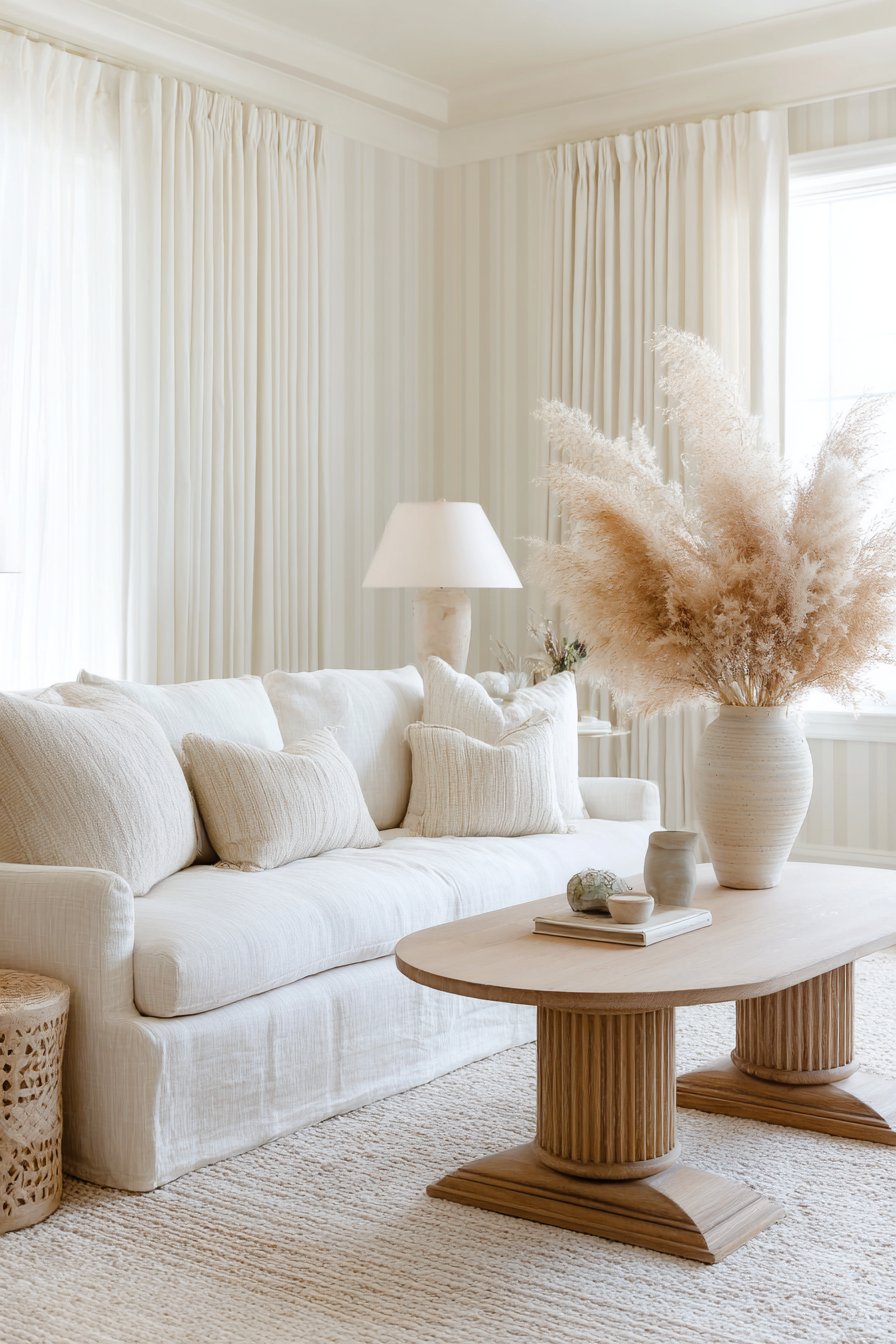
Natural fiber curtains in unbleached linen filter soft light. A wool area rug in oatmeal with subtle stripe detail grounds the space. Ceramic table lamps with linen shades maintain tonal consistency. Dried pampas grass in oversized floor vase adds organic element. Soft morning light through sheer curtains creates ethereal quality.
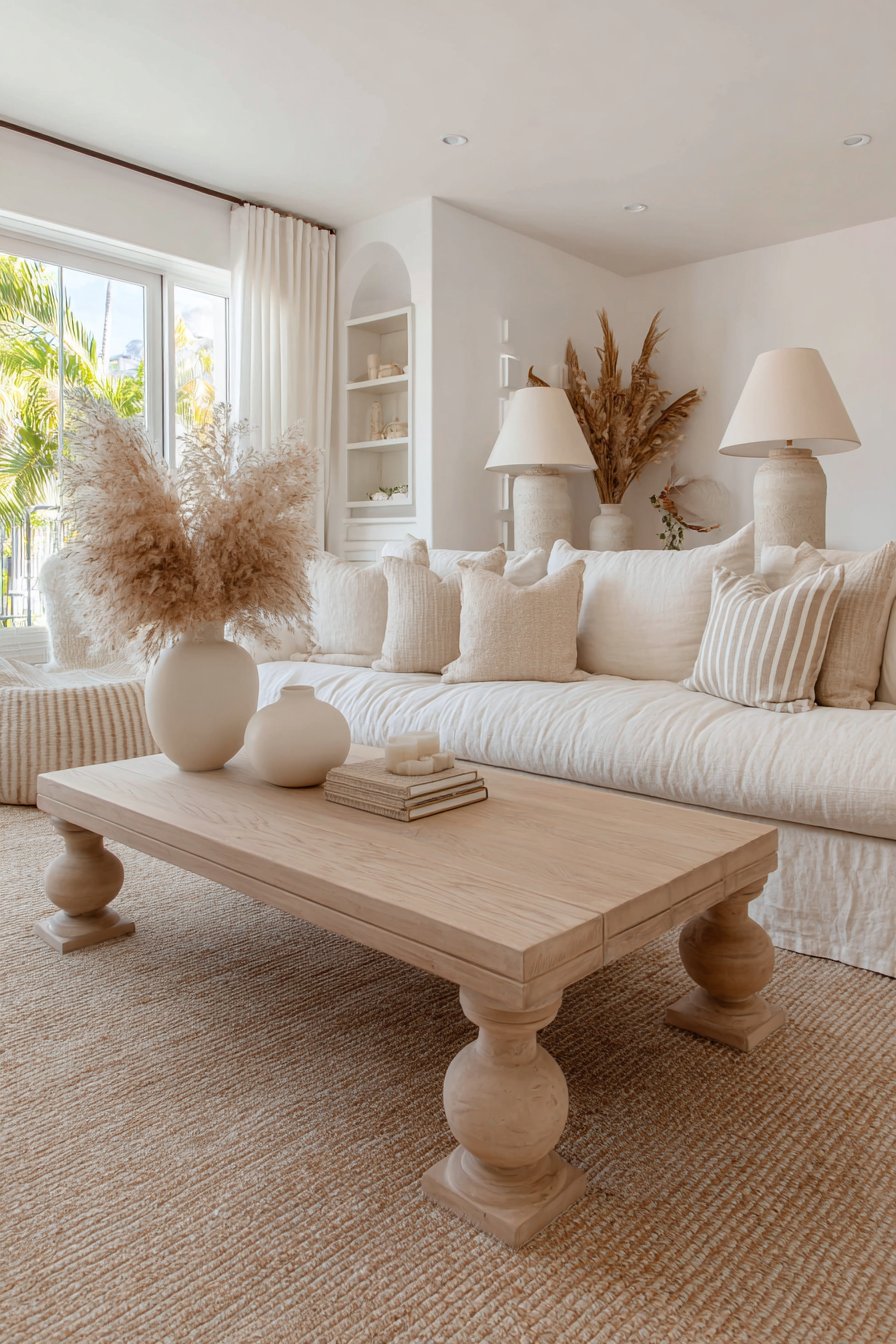
This design demonstrates how neutrals create serene environments. The lack of color allows texture to dominate. Tonal variations prevent monotony and add depth. The natural materials age beautifully over time. Monochromatic spaces feel calm and sophisticated.
Key Design Tips:
- Layer multiple neutral tones to create depth without color
- Focus on varied textures like linen, wool, oak, and ceramic
- Use lime wash paint finishes for subtle textural wall interest
- Select natural fiber materials that age beautifully over time
- Add organic elements like dried grasses for living texture
- Filter natural light through sheer curtains for soft ethereal quality
19. Colorful Coral and Teal Bold Energy Expression
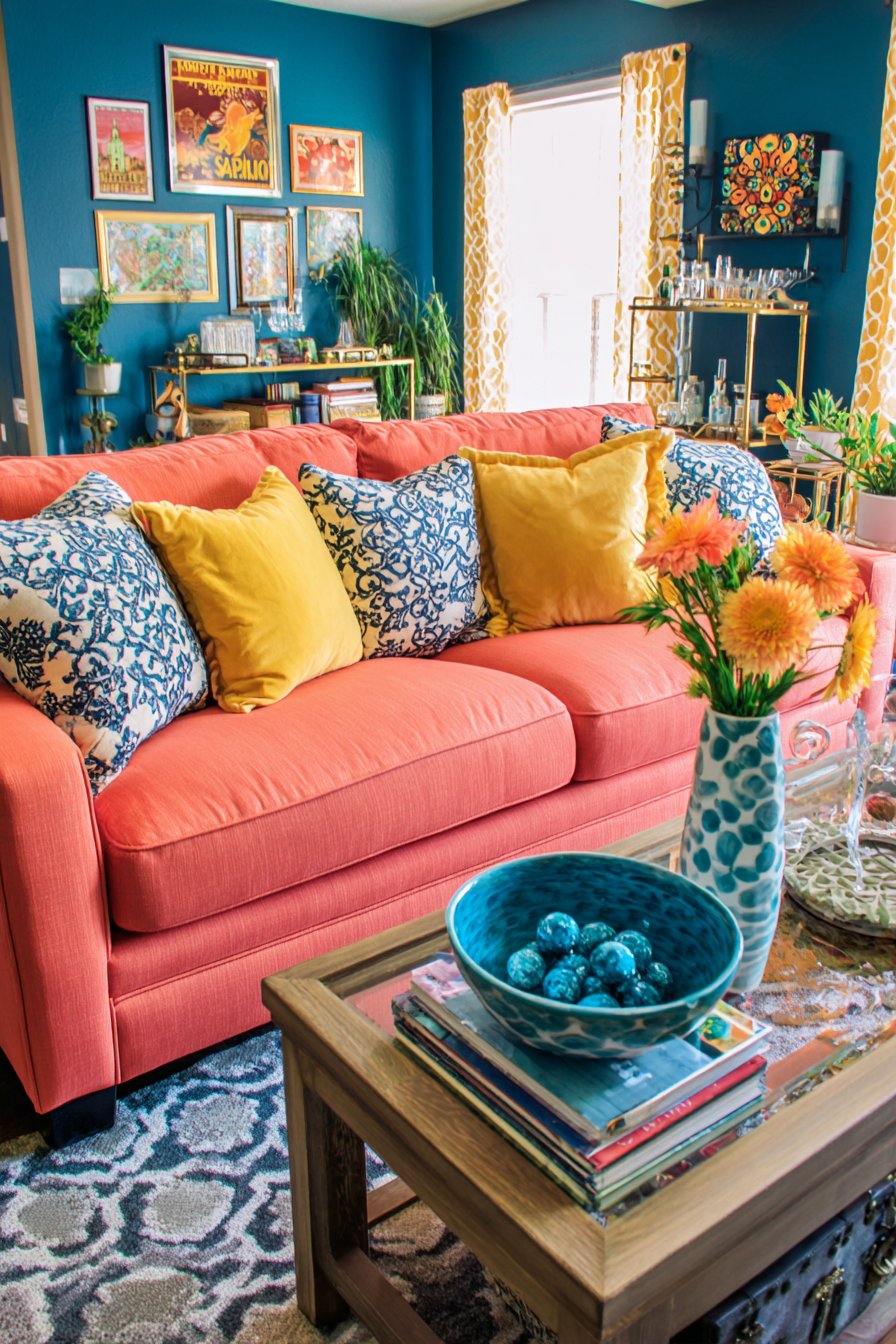
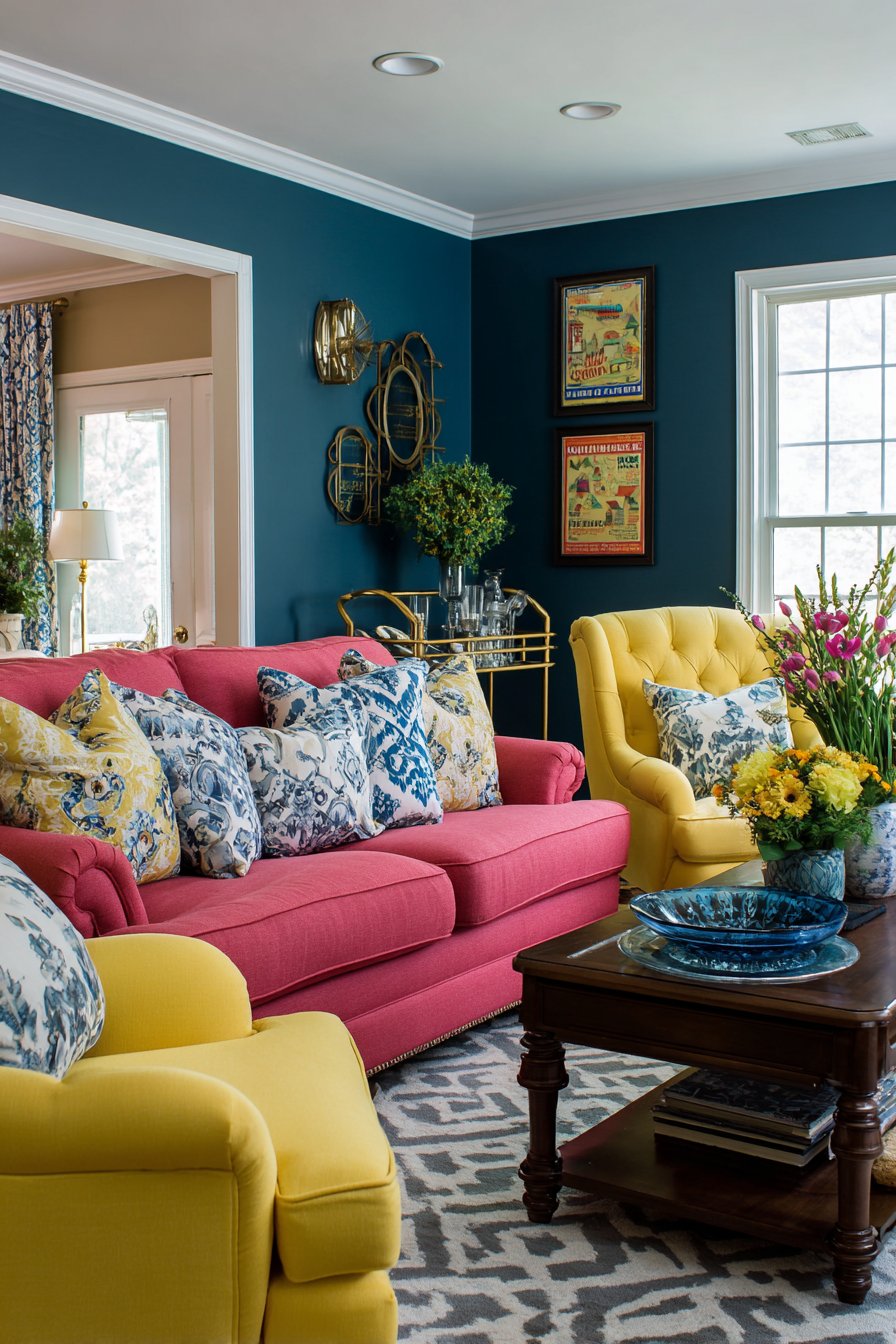
Colorful design brings energy and personality to living spaces. A sofa upholstered in vibrant coral fabric makes bold statement. Accent chairs in sunny yellow linen add additional color impact. A gallery wall displays vintage travel posters in coordinating frames. The colorful graphics enhance the energetic atmosphere.
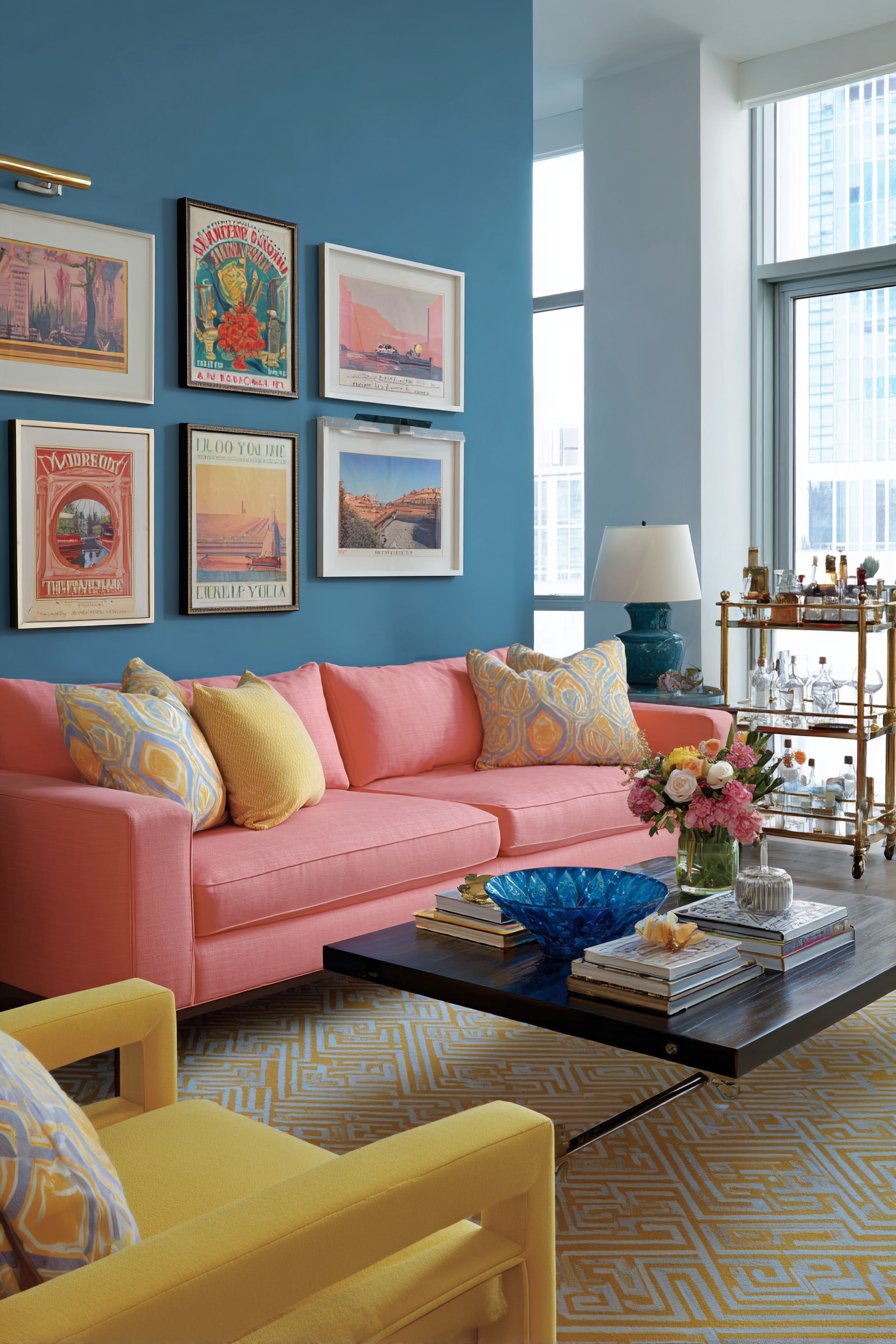
A painted accent wall in deep teal provides bold backdrop. The coffee table styled with art books and cobalt blue bowl. Fresh flowers add natural color variation. A geometric patterned rug incorporates all room colors. The unified palette creates cohesion despite bold choices. A brass bar cart with glassware adds functional glamour.
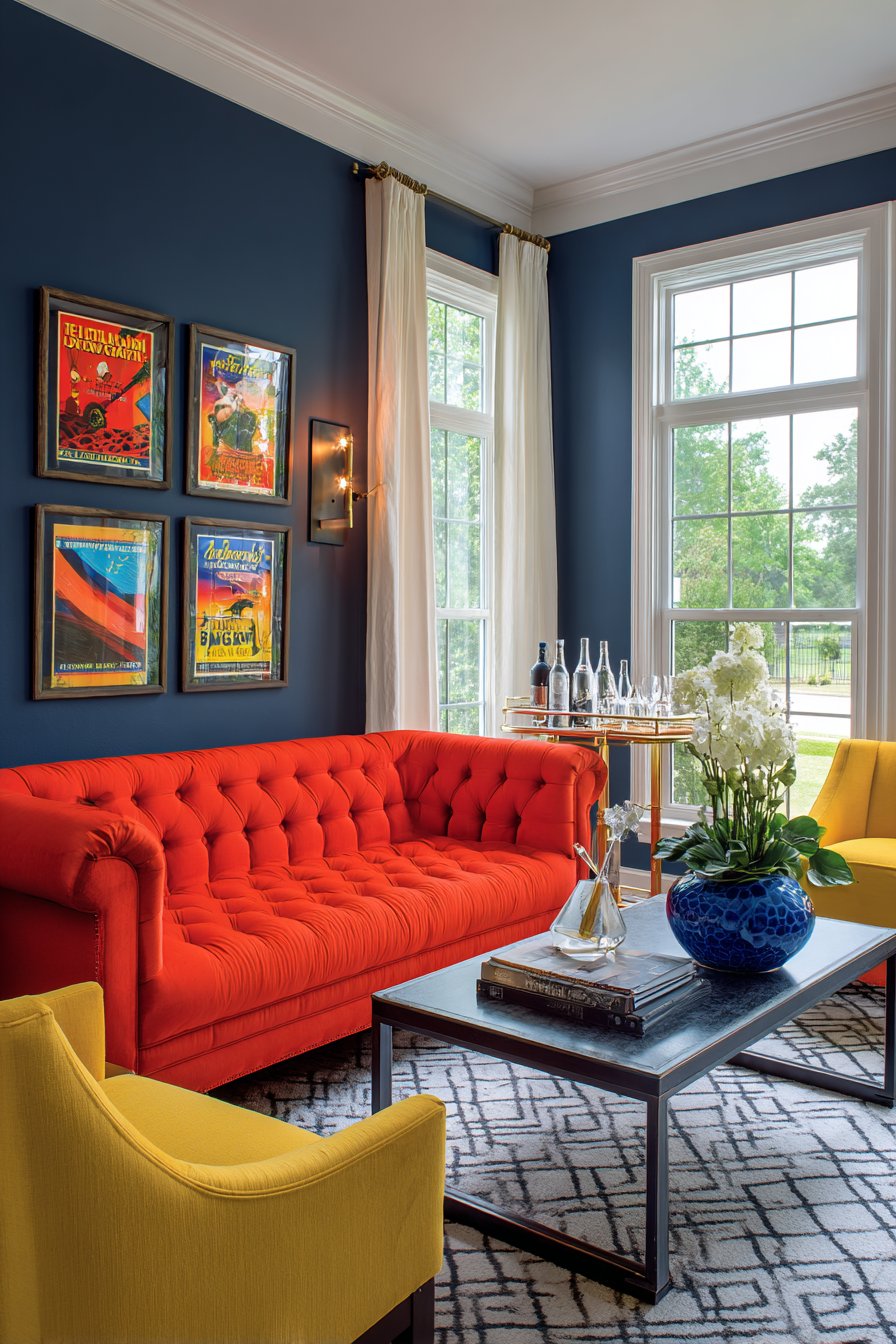
Natural light enhances the saturated hues throughout the day. This design appeals to confident homeowners who embrace color. The energetic atmosphere feels joyful and welcoming. Bold color choices create memorable spaces. Colorful interiors express personality unapologetically.
Key Design Tips:
- Choose bold upholstery colors like coral and yellow for statement pieces
- Create accent walls in deep colors like teal for dramatic backdrop
- Use geometric rugs that incorporate multiple room colors for cohesion
- Display vintage travel posters for colorful graphic art
- Add brass accessories to warm up cool color palettes
- Ensure natural light enhances rather than washes out saturated colors
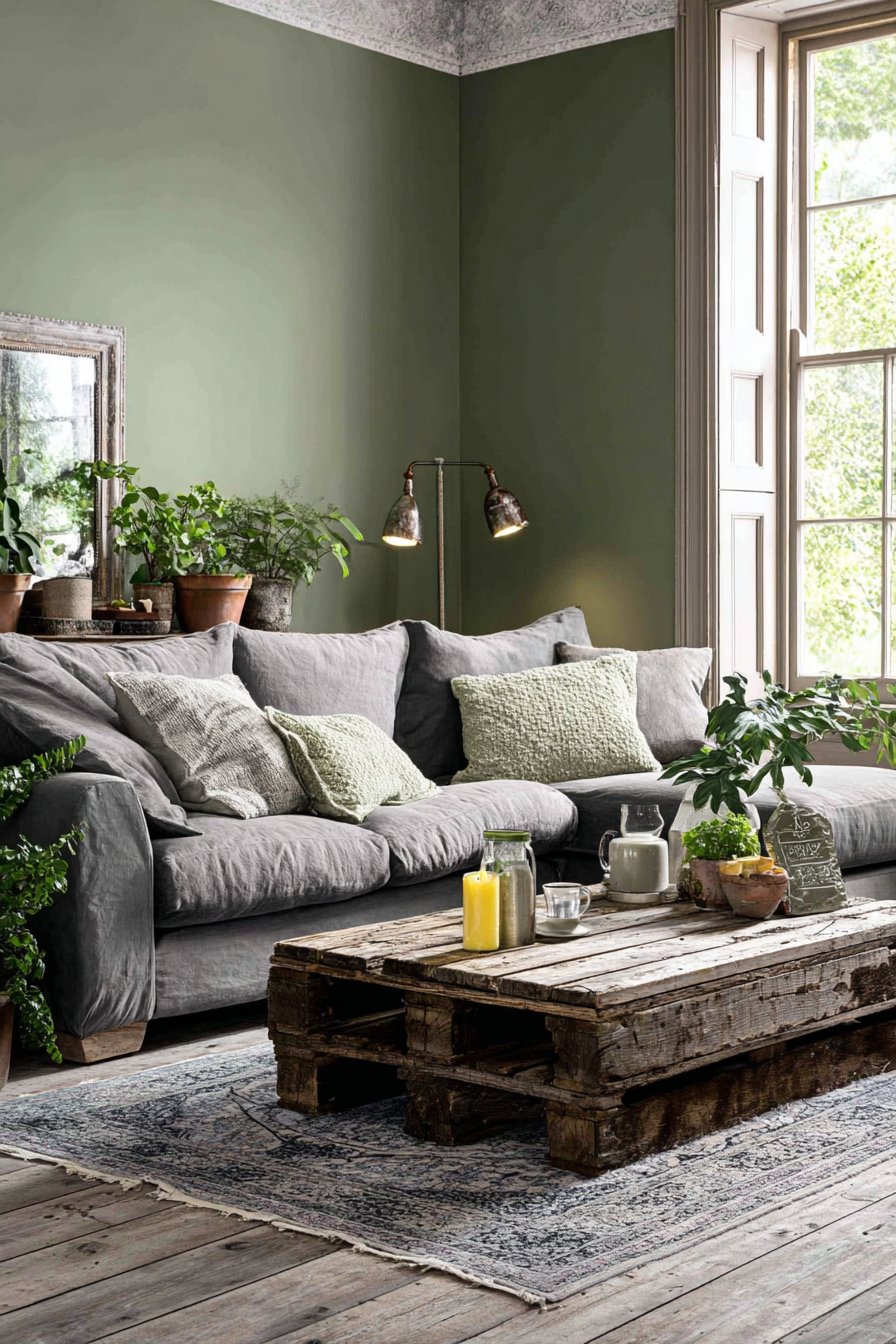
20. Sustainable Reclaimed Railway Sleepers and Organic Materials
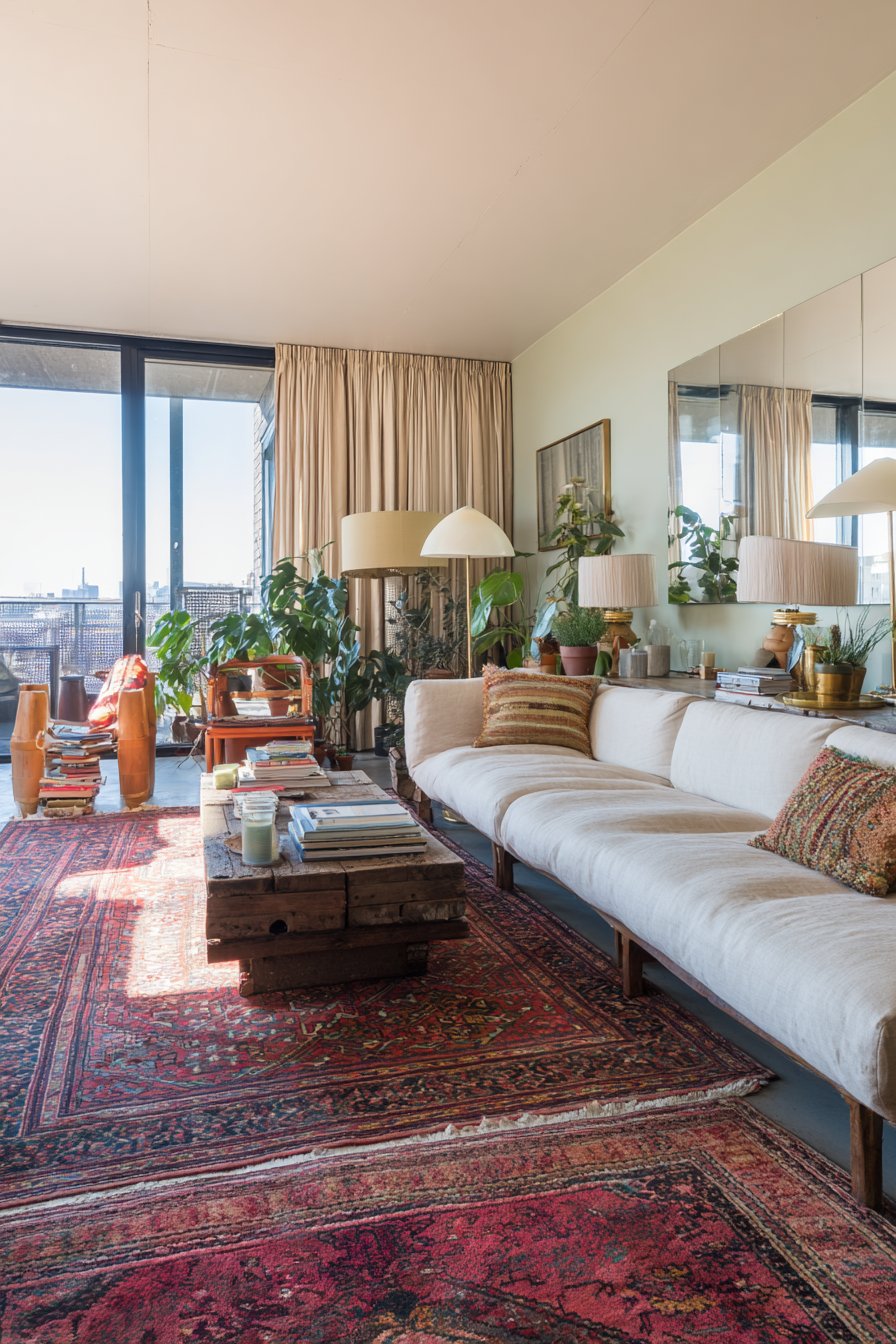
Sustainable design prioritizes environmental responsibility and ethical sourcing. Furniture features FSC-certified wood frames with organic cotton upholstery. A coffee table constructed from salvaged railway sleepers shows visible age. The reclaimed material adds character while reducing waste. A vintage Persian rug sourced from estate sale adds history.
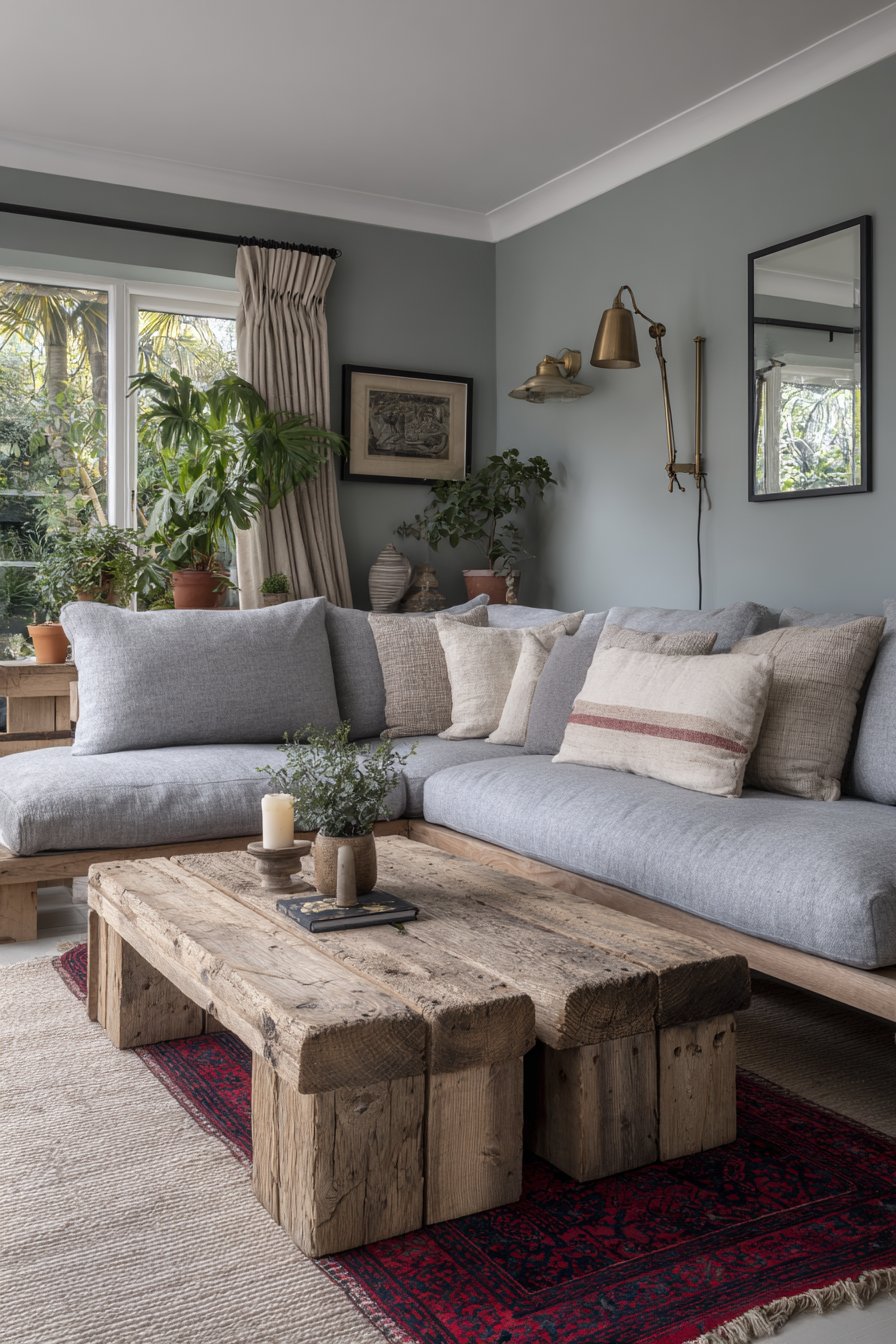
Walls painted with zero-VOC paint in soft sage promote indoor air quality. Window treatments in organic linen avoid synthetic materials. Potted plants in terracotta pots improve air quality naturally. Thrifted brass lamps refurbished with LED bulbs combine vintage style with energy efficiency. Natural light maximized through strategic mirror placement.
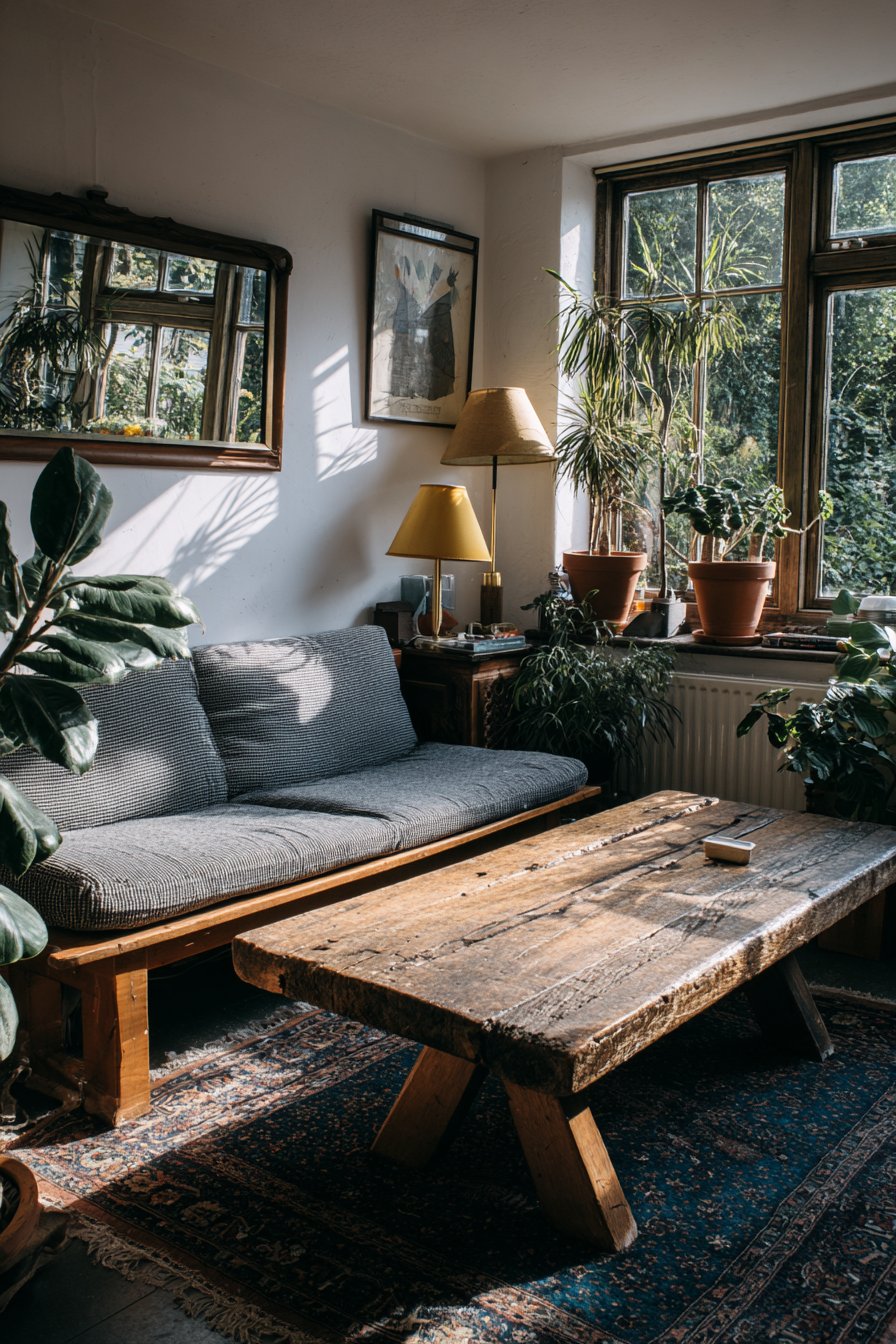
This design demonstrates how sustainability creates stylish spaces. The eco-conscious choices don’t compromise aesthetic appeal. Vintage and reclaimed materials add unique character. Sustainable living rooms reduce environmental impact. Responsible design choices benefit both homeowners and planet.
Key Design Tips:
- Choose FSC-certified wood and organic cotton for responsible sourcing
- Incorporate reclaimed materials like railway sleepers for character and sustainability
- Source vintage rugs from estate sales to extend product lifecycle
- Use zero-VOC paints to improve indoor air quality
- Refurbish thrifted lighting with LED bulbs for energy efficiency
- Add living plants to naturally improve indoor air quality
Why These Living Room Decorating Ideas Are the Best
These living room designs represent comprehensive approaches to creating functional, beautiful spaces. Each concept demonstrates different aesthetic directions while maintaining design fundamentals. The variety ensures homeowners find inspiration regardless of personal style preferences or spatial constraints.
The designs showcase versatile material palettes from luxurious marble and velvet to sustainable reclaimed wood. This range accommodates different budgets while maintaining quality standards. Natural materials like wood, linen, and leather age gracefully, providing lasting value. Synthetic alternatives often deteriorate rather than develop character over time.
Color theory plays crucial role in successful living room design. Neutral palettes provide timeless foundations that accommodate changing tastes. Bold color applications create energetic personalities for confident homeowners. The designs demonstrate how color impacts mood and spatial perception significantly.
Spatial considerations address real-world challenges including small apartments and open-concept layouts. Multi-functional furniture maximizes limited square footage effectively. Dedicated activity zones within larger spaces improve overall functionality. Strategic furniture placement enhances traffic flow and conversation arrangements.
Lighting strategies combine natural daylight with layered artificial sources. The designs show how proper illumination enhances materials and creates ambiance. Adjustable lighting accommodates different activities and times of day. Quality lighting transforms mediocre spaces into exceptional environments.
Sustainability emerges as important consideration in contemporary design. Vintage pieces, reclaimed materials, and responsible sourcing reduce environmental impact. Durable natural materials last generations rather than years. Quality investment pieces prove more economical than frequent replacement of inferior products.
The versatility of these approaches allows adaptation to changing needs. Transitional designs bridge traditional and contemporary aesthetics successfully. Modular furniture systems adapt to different configurations. Neutral foundations support evolving accent color preferences over time.
Conclusion
These twenty living room decorating ideas demonstrate the remarkable diversity available in contemporary interior design. From minimalist Scandinavian restraint to maximalist bohemian abundance, each approach offers unique advantages. The key takeaways emphasize quality natural materials, thoughtful spatial planning, and personal style expression.
Successful living room design balances aesthetic aspirations with practical requirements. Consider your lifestyle needs, spatial constraints, and maintenance preferences. Start with foundational pieces in neutral tones, then layer personality through textiles and accessories. Quality investment in core furniture pays dividends through years of use.
Natural materials like solid wood, genuine leather, and natural fiber textiles provide lasting value. These materials develop character rather than deteriorate over time. Strategic lighting enhances materials and creates appropriate ambiance for different activities. Layer natural daylight with adjustable artificial sources for optimal flexibility.
Experiment confidently with these design concepts in your own home. Adapt ideas to suit your specific needs and preferences. Transform your living room into a space that truly reflects your lifestyle and aesthetic sensibilities. Your ideal living room awaits creation through thoughtful planning and inspired design choices.
