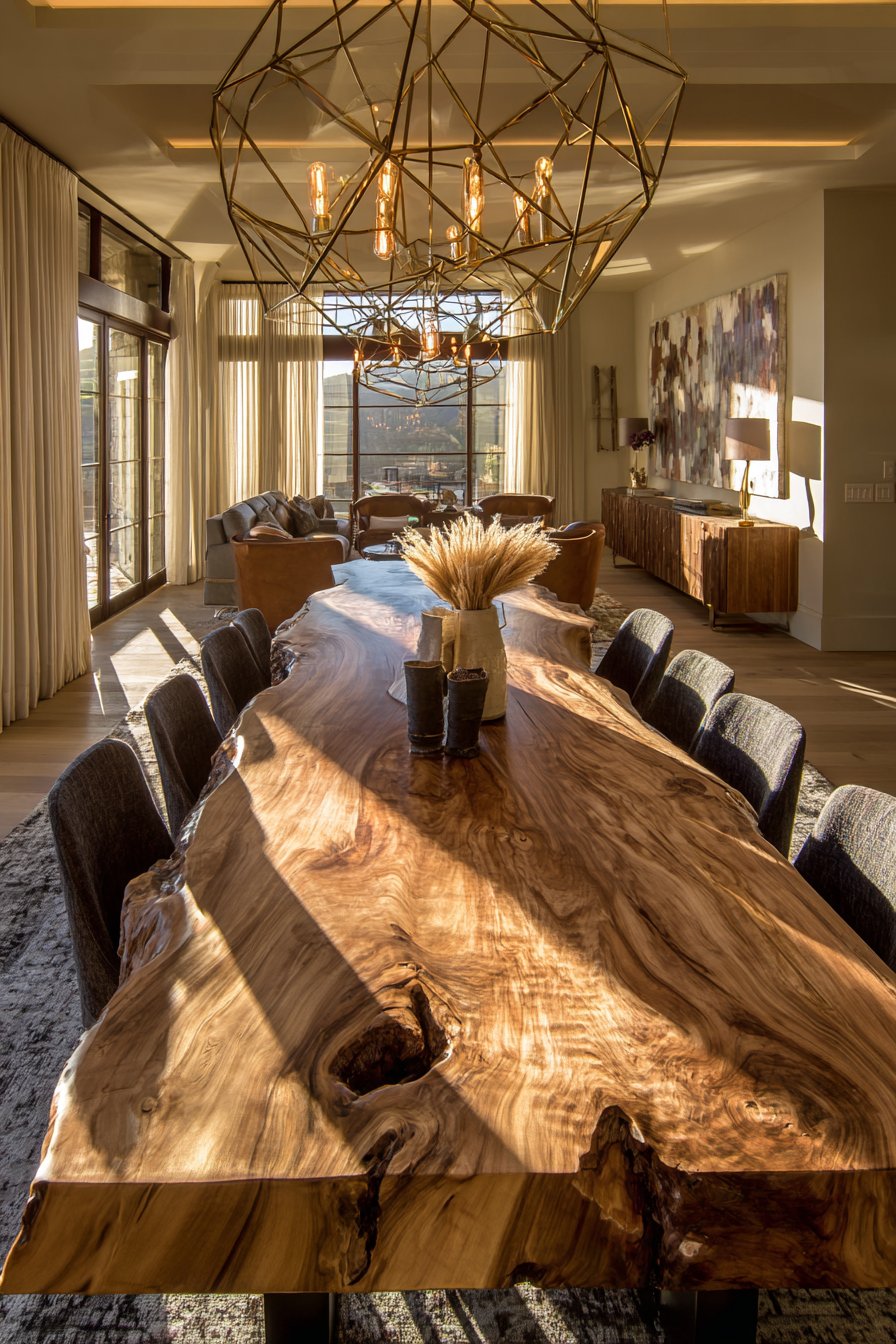


The dining table serves as the heart of every home. It’s where families gather for meals and conversations flow freely. Beyond mere functionality, the right dining table becomes a statement piece that defines your space.
Choosing the perfect dining table requires careful consideration of multiple factors. Material selection, size proportions, and design aesthetics all play crucial roles. The table must balance visual appeal with practical durability for daily use.
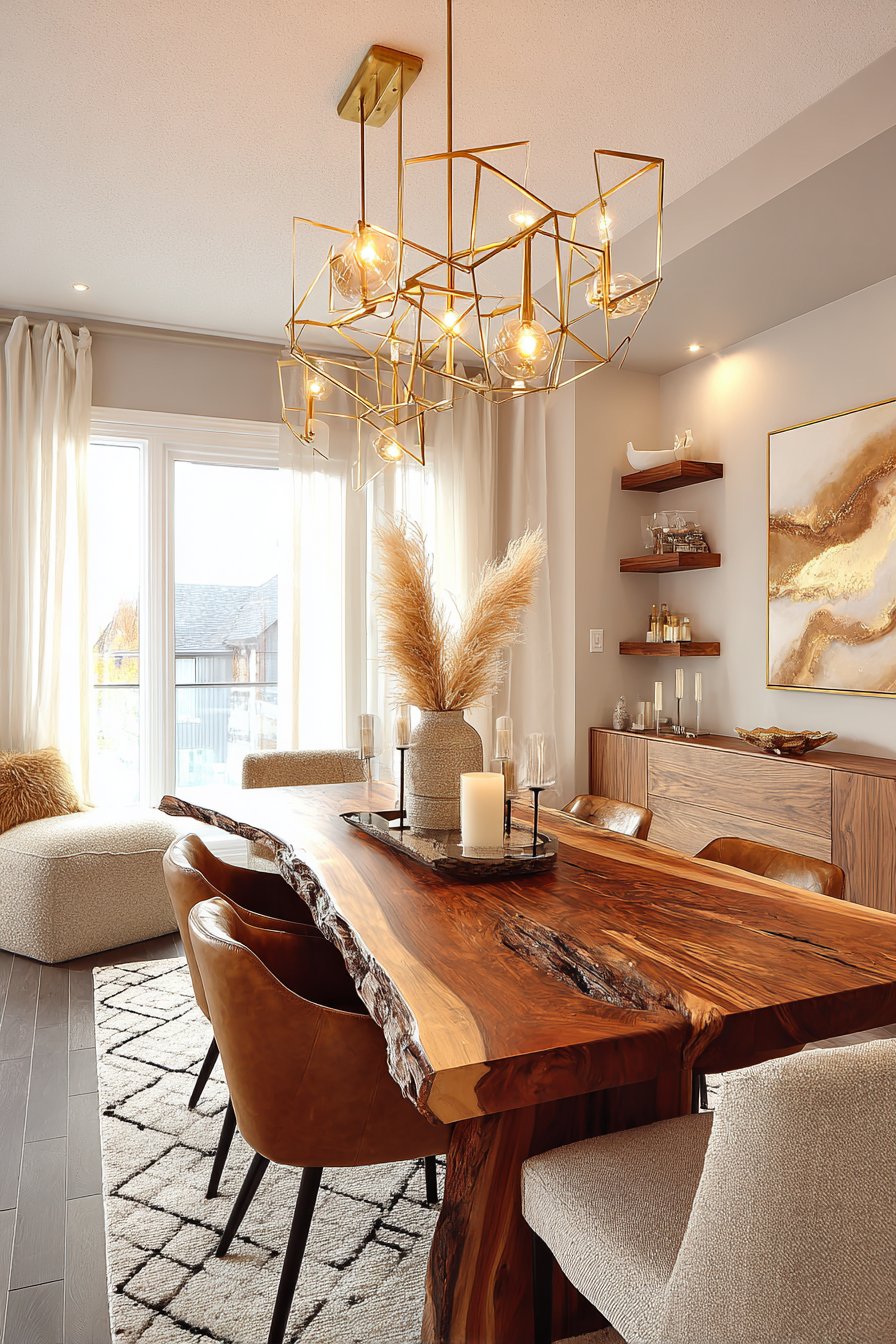
This comprehensive guide explores twenty distinctive dining table designs. From modern minimalism to rustic farmhouse charm, each concept offers unique character. These designs cater to various lifestyles, spatial constraints, and aesthetic preferences. Whether you’re furnishing a compact apartment or a spacious formal dining room, you’ll discover inspiring solutions.
1. Modern Live-Edge Walnut with Industrial Accents
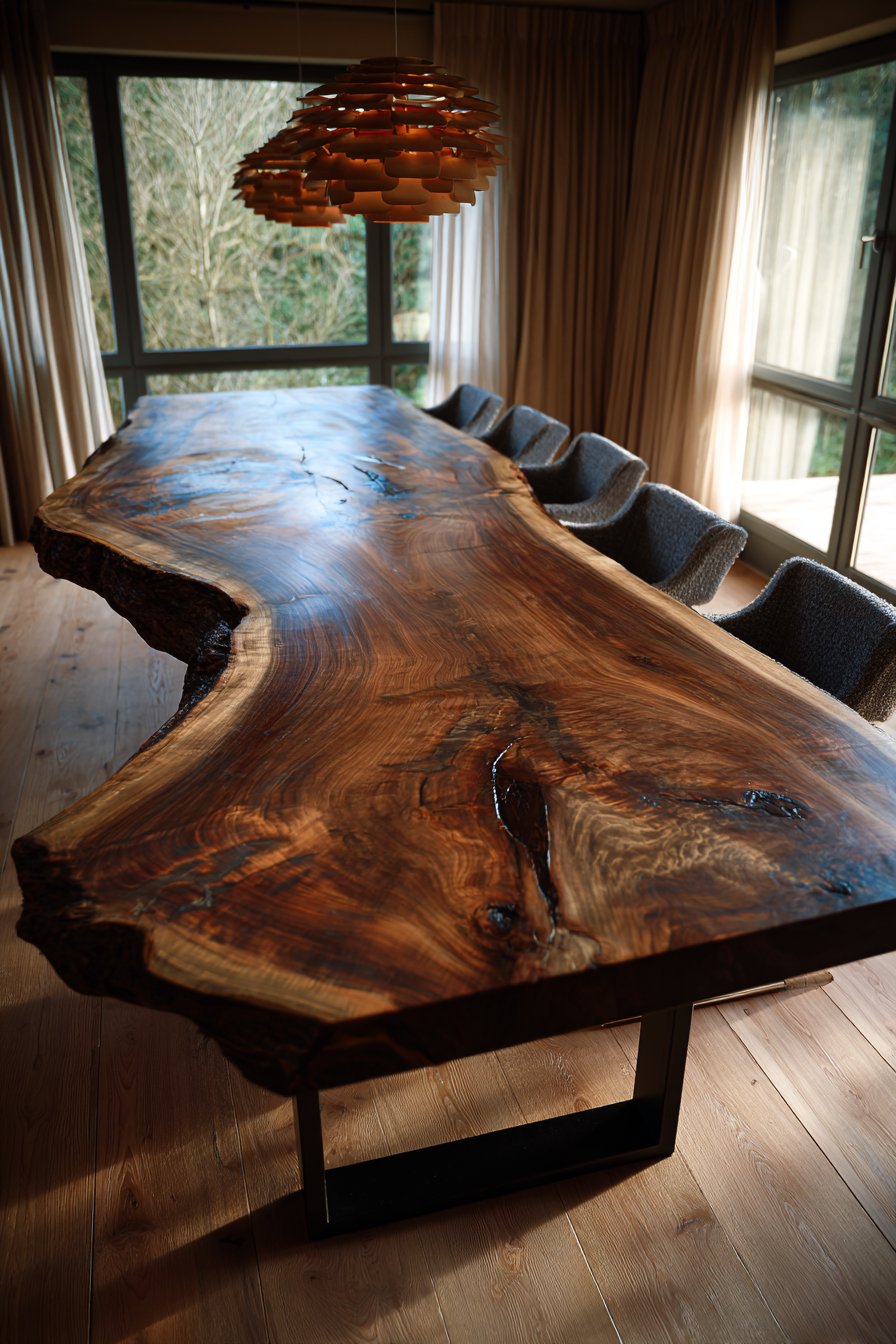
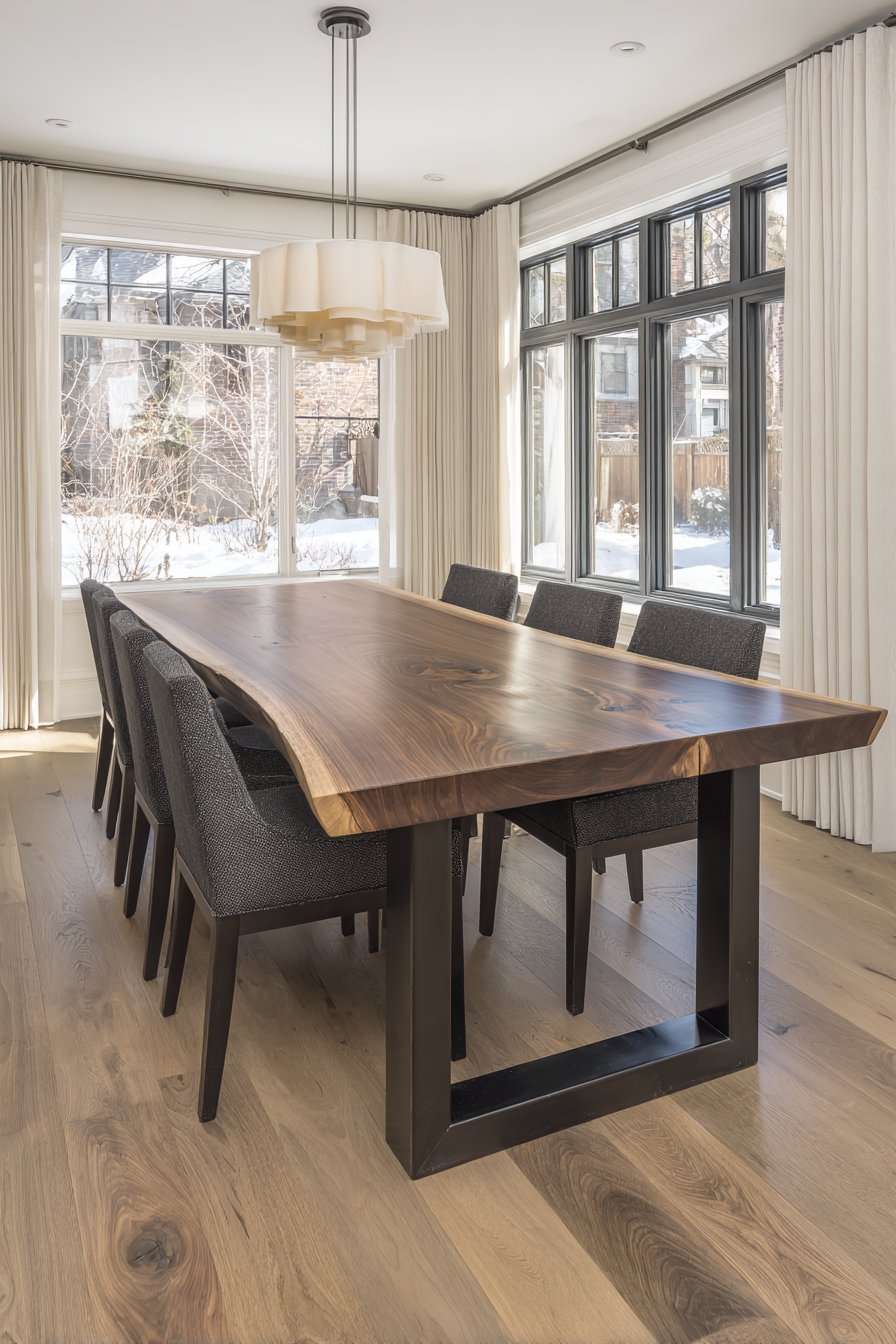
A live-edge walnut dining table creates an immediate focal point in any dining room. The natural grain patterns flow organically across the surface. Subtle color variations add depth and visual interest. Matte black metal legs provide geometric contrast to the organic wood form.
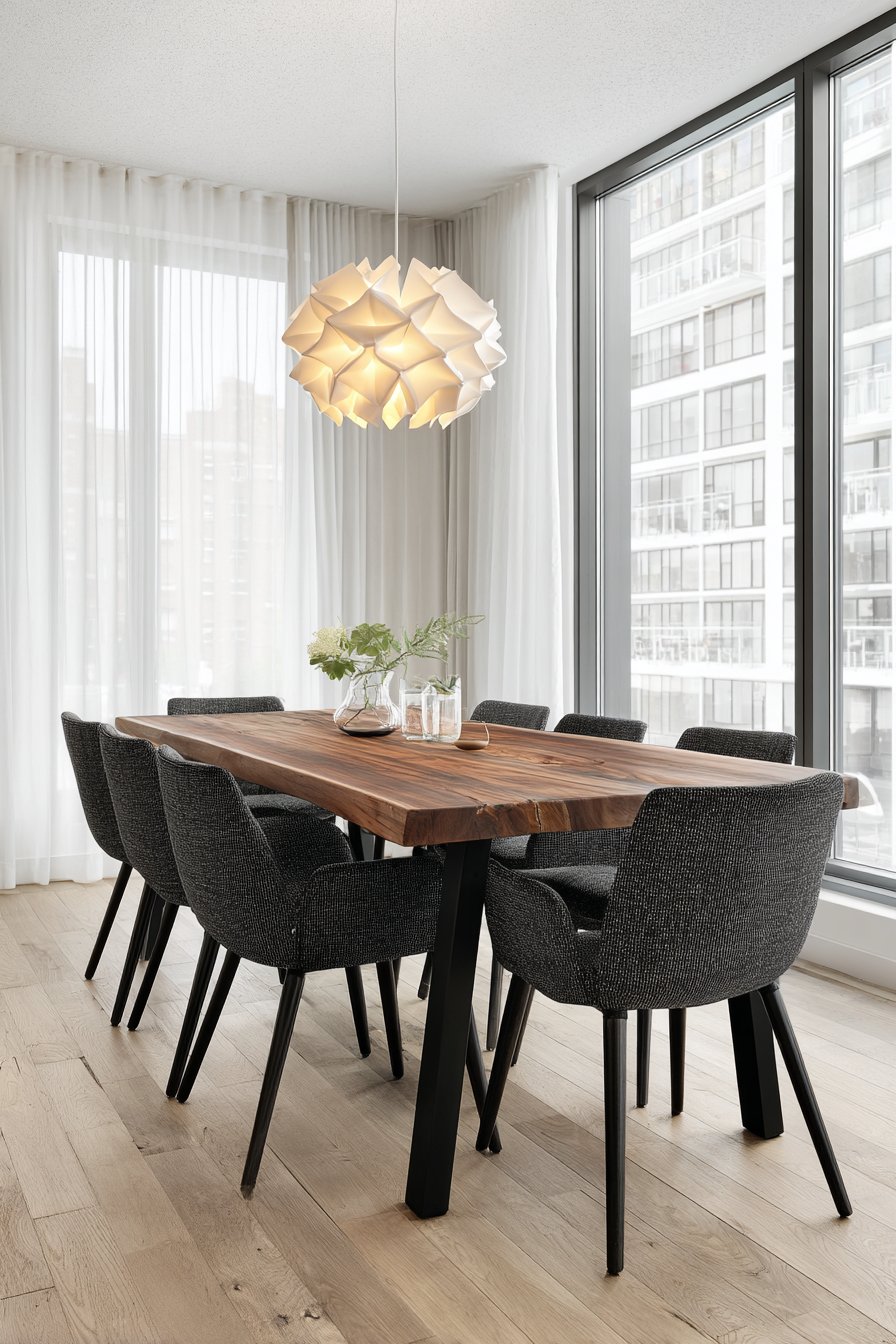
Six contemporary chairs upholstered in charcoal fabric surround the table comfortably. The seating arrangement allows for intimate conversations and shared meals. Light oak hardwood flooring extends throughout the space. This creates subtle warmth beneath the dramatic table.
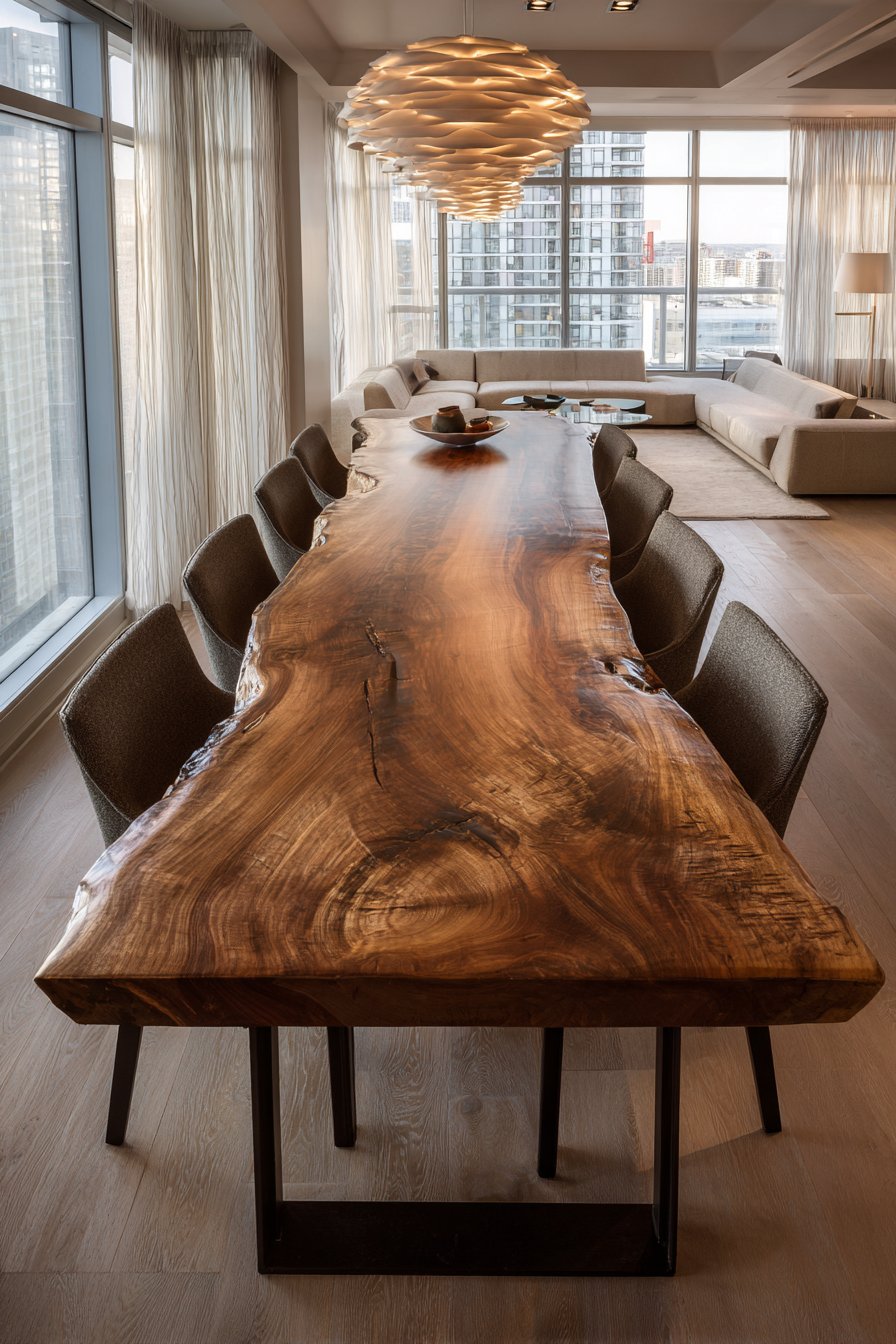
The sculptural pendant light fixture hangs at perfect height above the table. Warm ambient illumination highlights the wood’s natural beauty. Large windows frame the space with soft natural daylight. Sheer linen curtains filter the light gently across surfaces.
This design celebrates the intersection of natural and industrial aesthetics. The live edge preserves the tree’s original form and character. Metal legs anchor the organic element with modern structural clarity. Together these materials create sophisticated balance.
Key Design Tips:
- Select live-edge slabs with dramatic grain patterns for maximum visual impact
- Position pendant lights 30-36 inches above the table surface for optimal illumination
- Choose metal leg finishes that complement other hardware in the room
- Maintain the wood with food-safe oil to preserve natural color and protect against moisture
- Balance the organic table with clean-lined contemporary seating to avoid visual clutter
2. Rustic Farmhouse Reclaimed Barn Wood
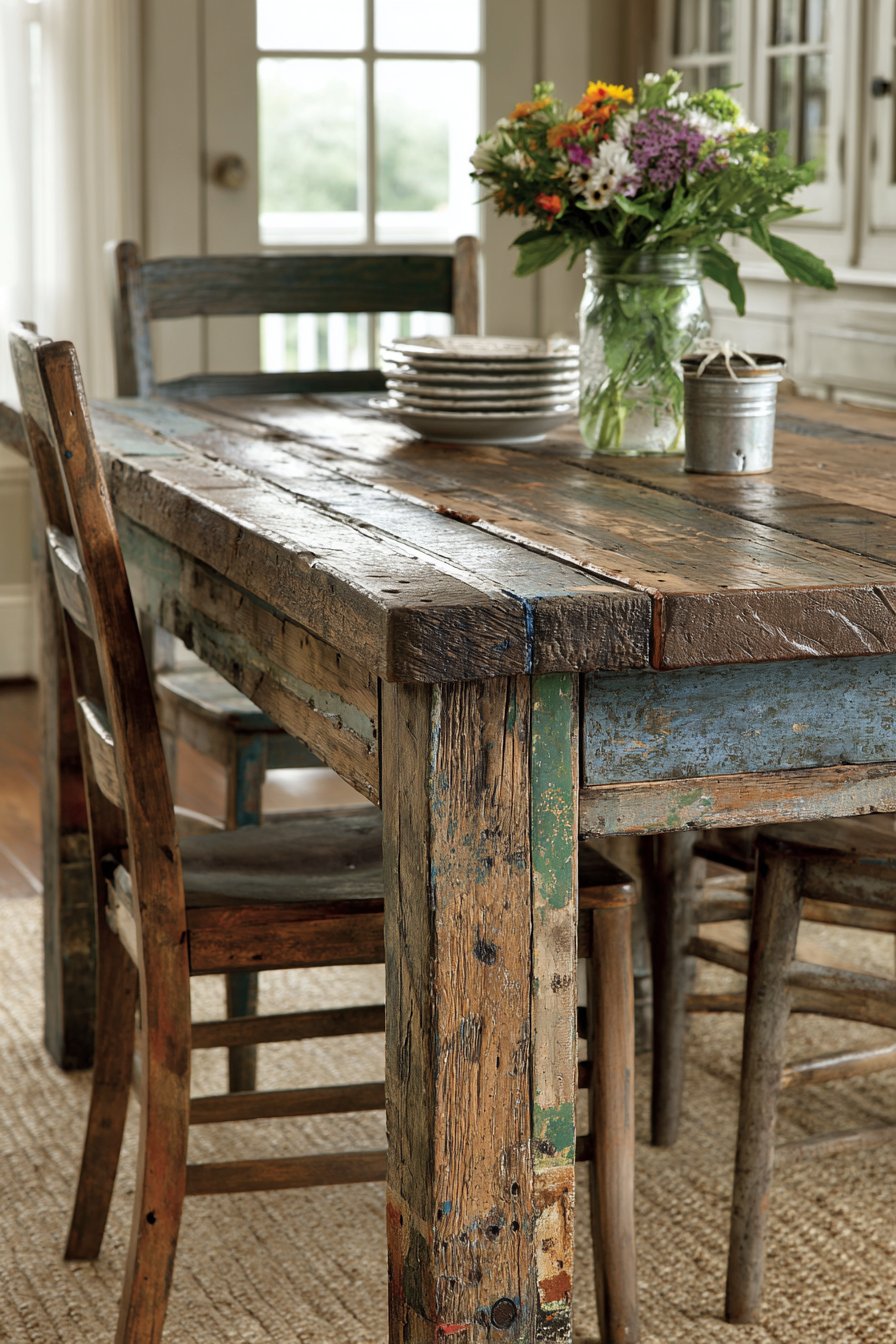
Reclaimed barn wood brings authentic history into your dining space. Visible knots and weathering marks tell stories of decades past. The patina develops naturally over years of exposure and use. This character cannot be replicated with new materials.
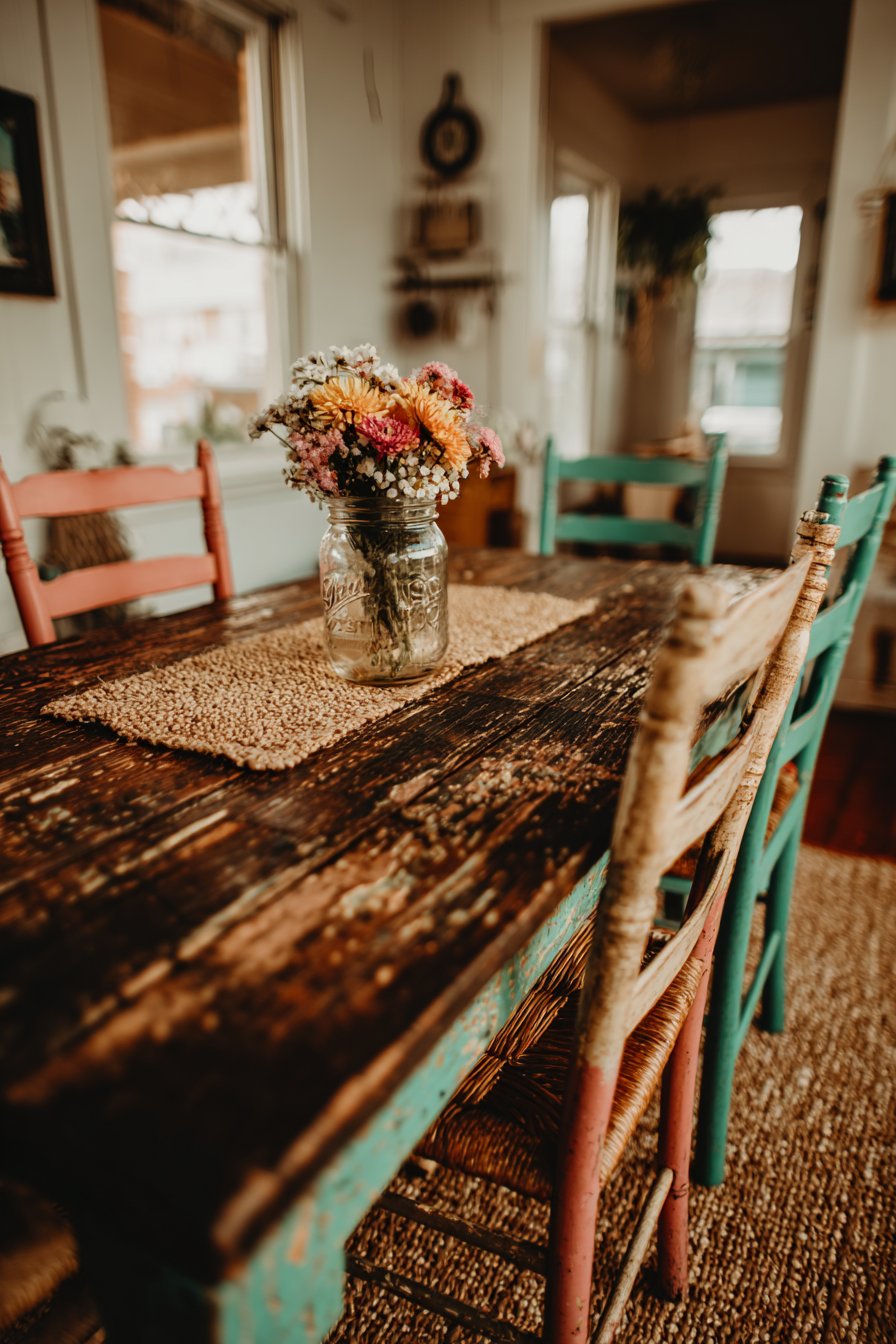
Mismatched vintage wooden chairs create charming eclectic seating arrangements. Each chair carries its own history and unique personality. Distressed paint finishes add layers of visual texture. A woven jute rug anchors the ensemble with natural fiber warmth.
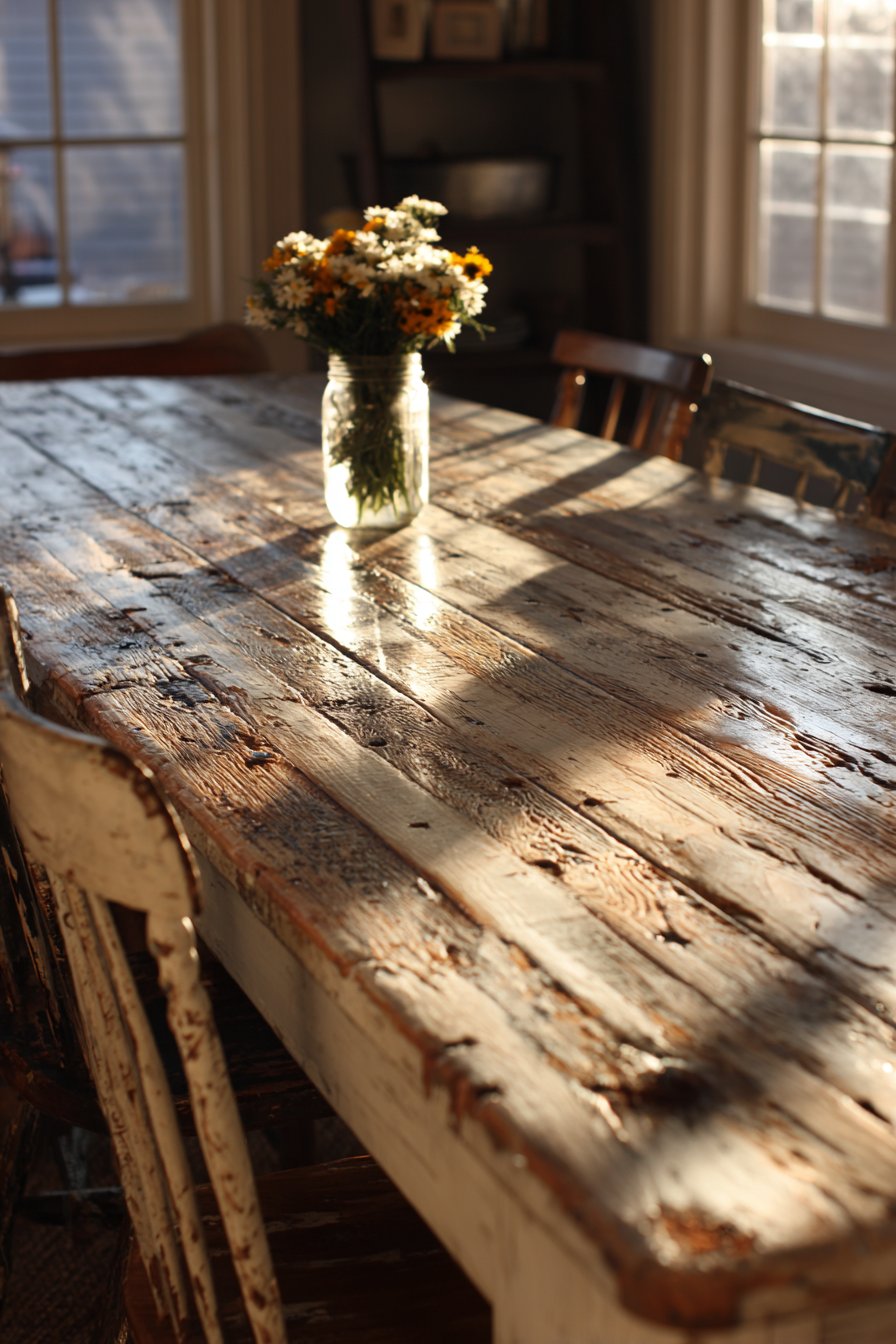
The mason jar centerpiece filled with fresh wildflowers adds organic simplicity. Natural morning light streams through nearby windows creating soft shadows. These shadows accentuate every texture in the weathered wood surface. The overall effect feels authentically lived-in and welcoming.
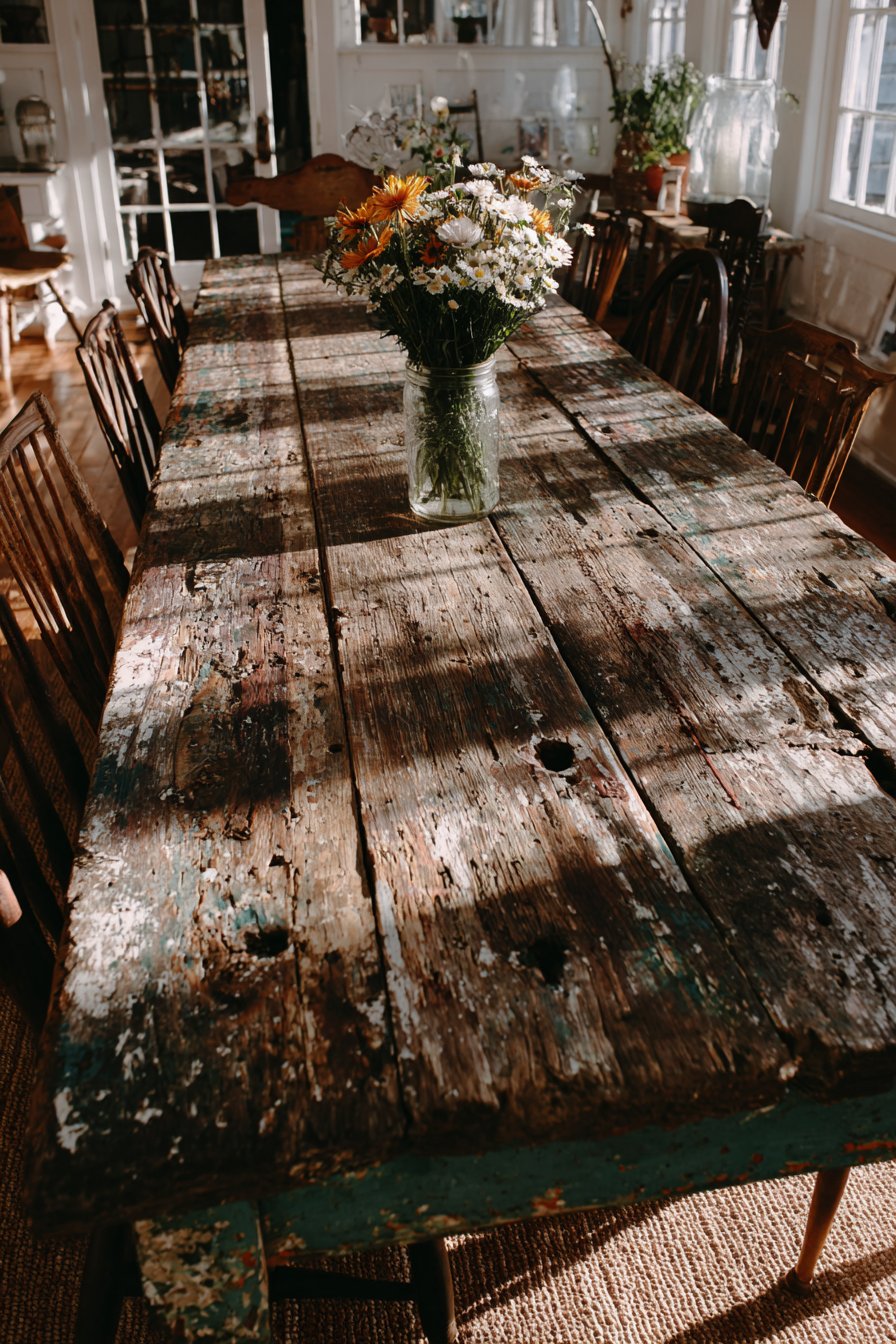
This farmhouse aesthetic prioritizes comfort over formality. The worn wood surface welcomes daily use without worry about new scratches. Each gathering adds to the table’s ongoing story. The design embraces imperfection as beauty rather than flaw.
Key Design Tips:
- Source reclaimed wood from reputable suppliers who verify structural integrity
- Embrace imperfections like knots and nail holes as character-adding features
- Mix chair styles intentionally rather than accidentally for cohesive eclecticism
- Seal reclaimed wood properly to prevent splinters while maintaining rustic appearance
- Layer natural textures through jute rugs and linen textiles for an authentic farmhouse feel
3. Sleek Glass-Top Contemporary Elegance
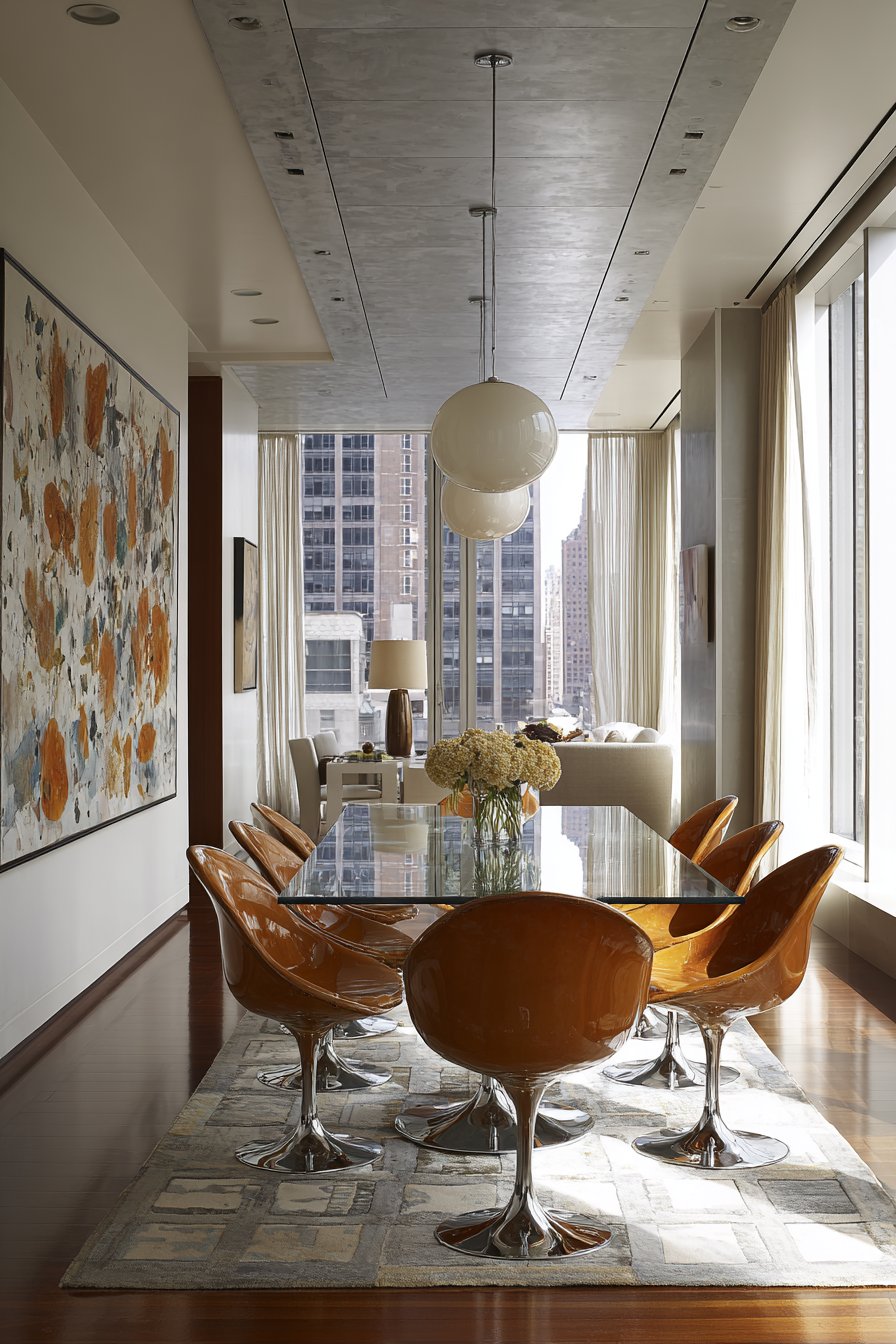
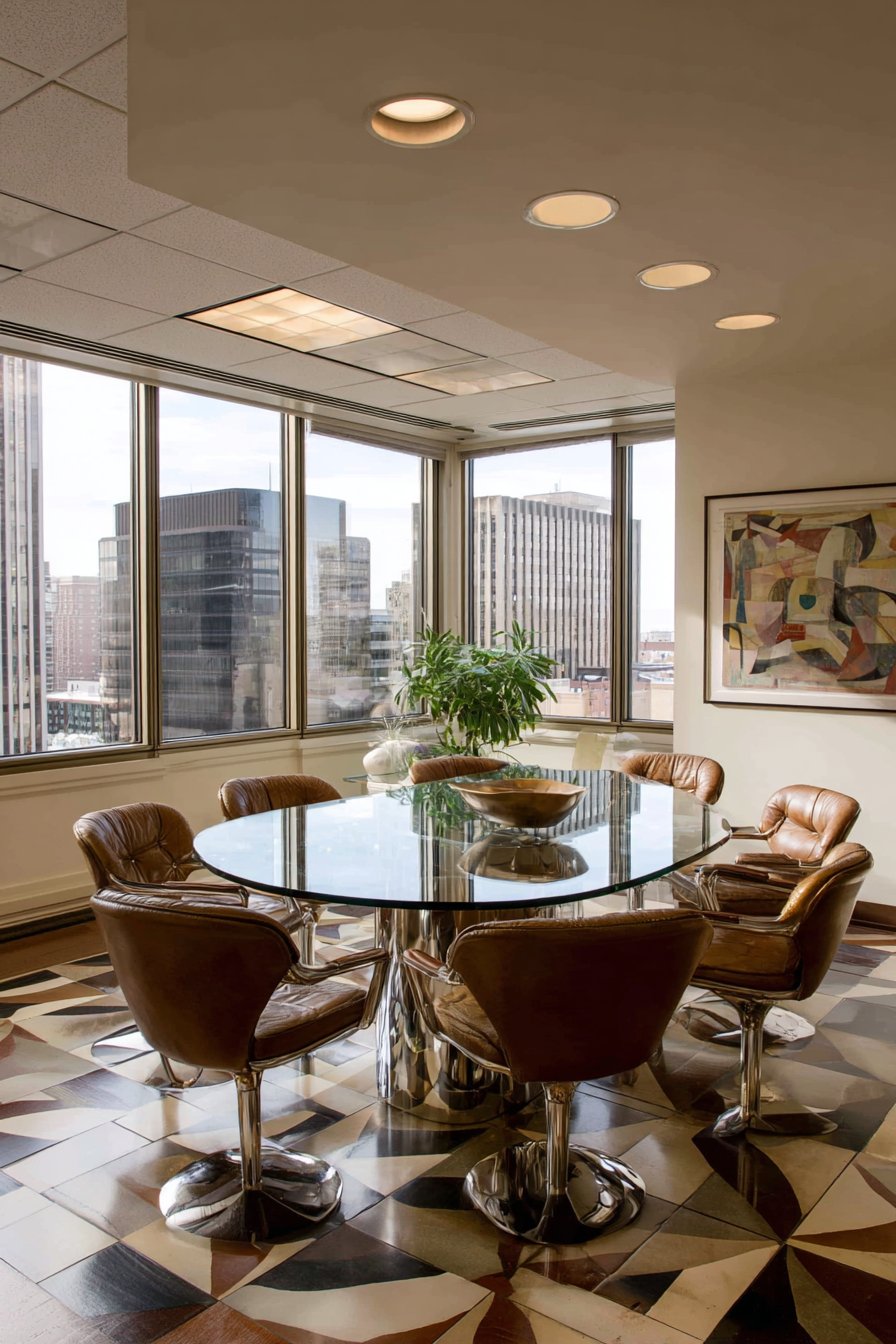
The transparent glass tabletop creates remarkable visual lightness in dining spaces. Light passes through the surface unobstructed. The polished chrome pedestal base reflects ambient illumination beautifully. This design maintains openness while providing substantial dining surface.
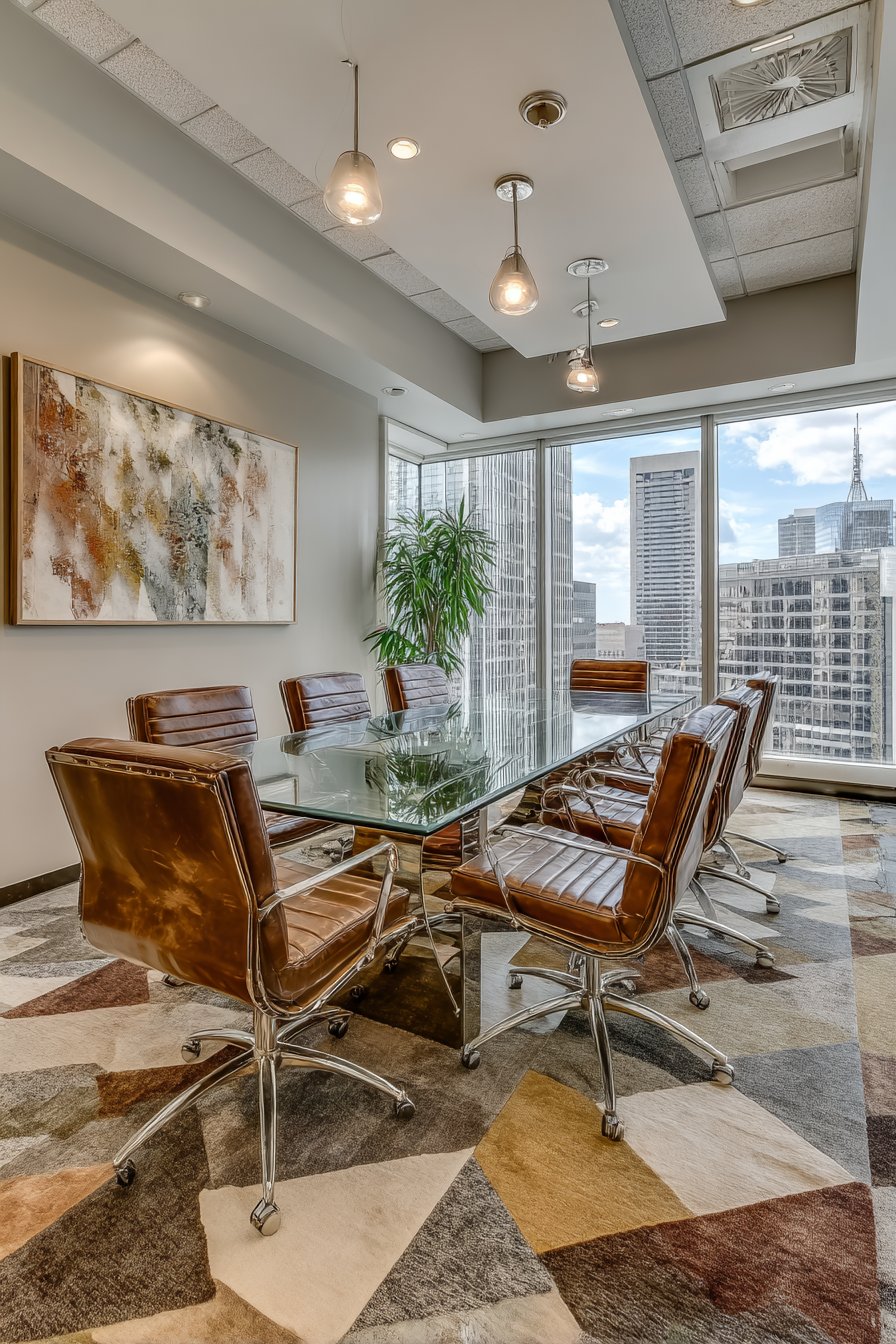
Eight mid-century modern chairs feature cognac leather upholstery. The leather shows natural grain and develops character with use. Visible wear patterns add authenticity rather than diminishing appearance. A geometric wool rug in neutral tones grounds the transparent table.
Contemporary abstract artwork hangs on the adjacent wall in complementary colors. Recessed ceiling lights combine with natural daylight for balanced illumination. The glass surface captures and reflects light throughout the day. This creates ever-changing visual effects as lighting conditions shift.
The transparent table works exceptionally well in smaller spaces. It provides full dining functionality without visual weight. The reflective surfaces amplify available light making rooms feel more spacious. This design proves that modern sophistication can feel warm and inviting.
Key Design Tips:
- Choose tempered glass for safety and durability in high-use dining areas
- Clean glass surfaces with microfiber cloths to avoid streaking
- Position rug boundaries to extend at least 24 inches beyond chairs when pulled out
- Balance transparency with substantial seating pieces to prevent floating appearance
- Use placemats and table runners to add color without obscuring glass beauty
4. Traditional Mahogany with Formal Elegance
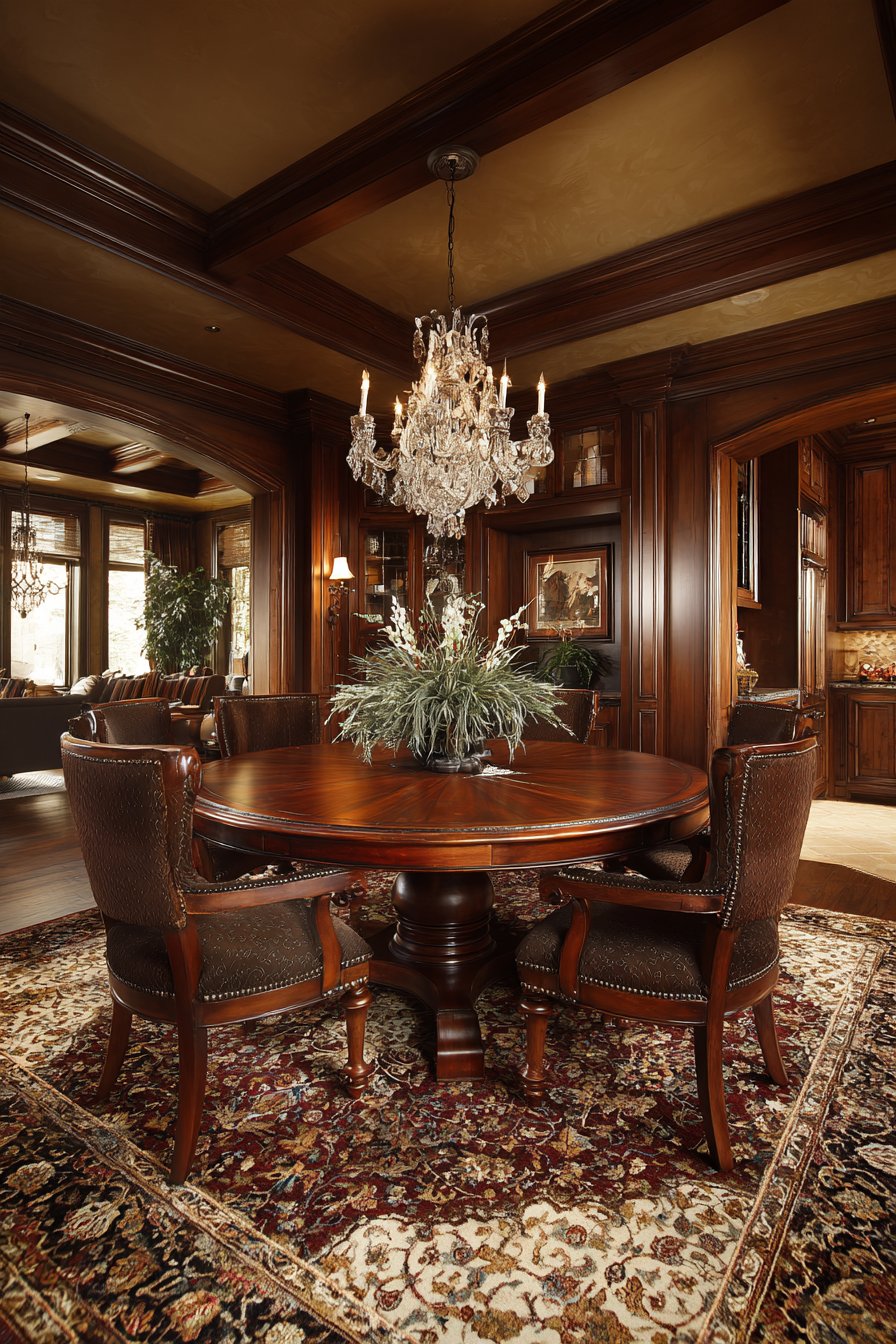
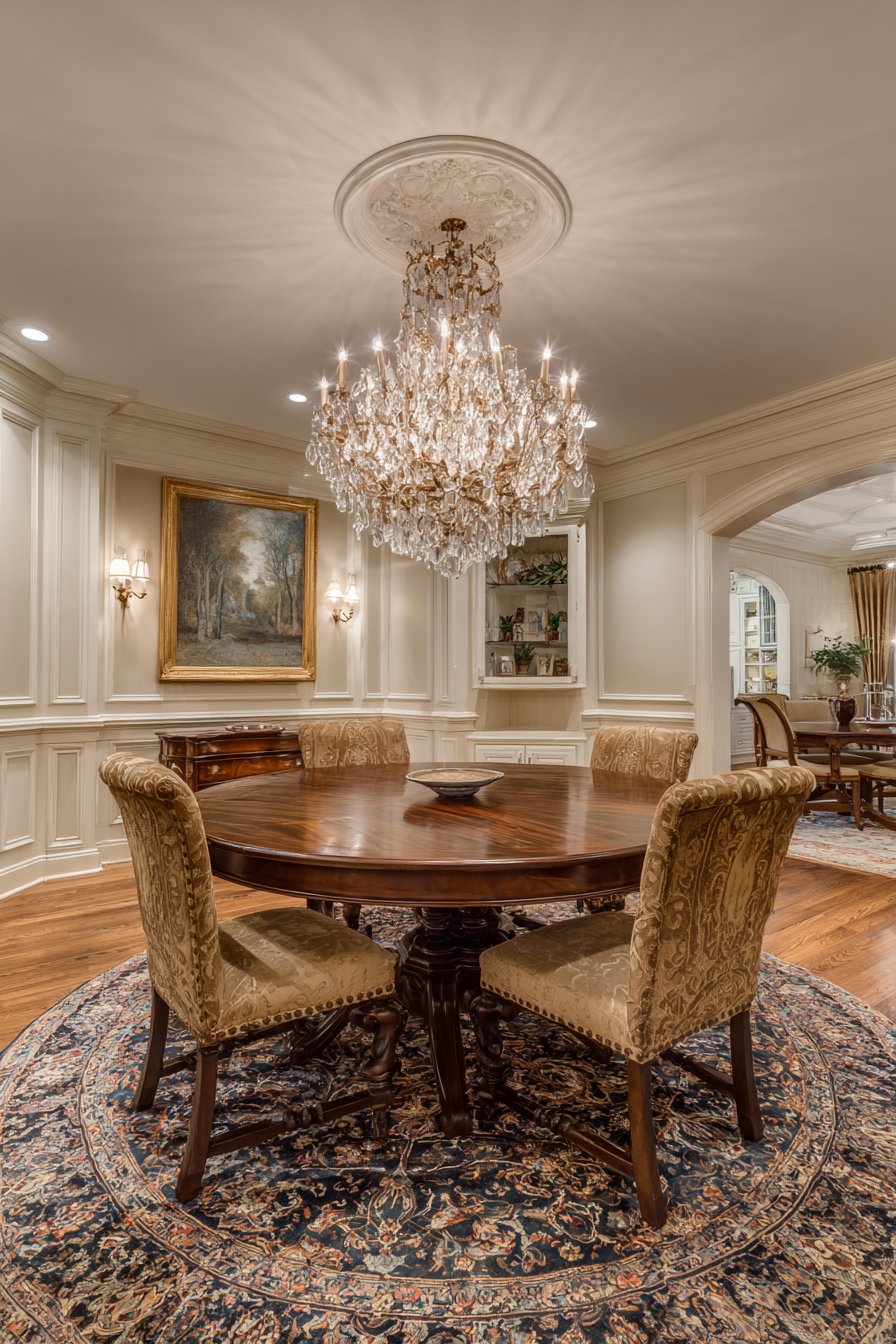
Rich mahogany wood displays hand-rubbed finish that glows with subtle luster. The wood grain variations create natural interest across the round pedestal surface. Six traditional upholstered chairs feature turned wooden legs and nailhead trim detail. This combination exudes timeless sophistication.
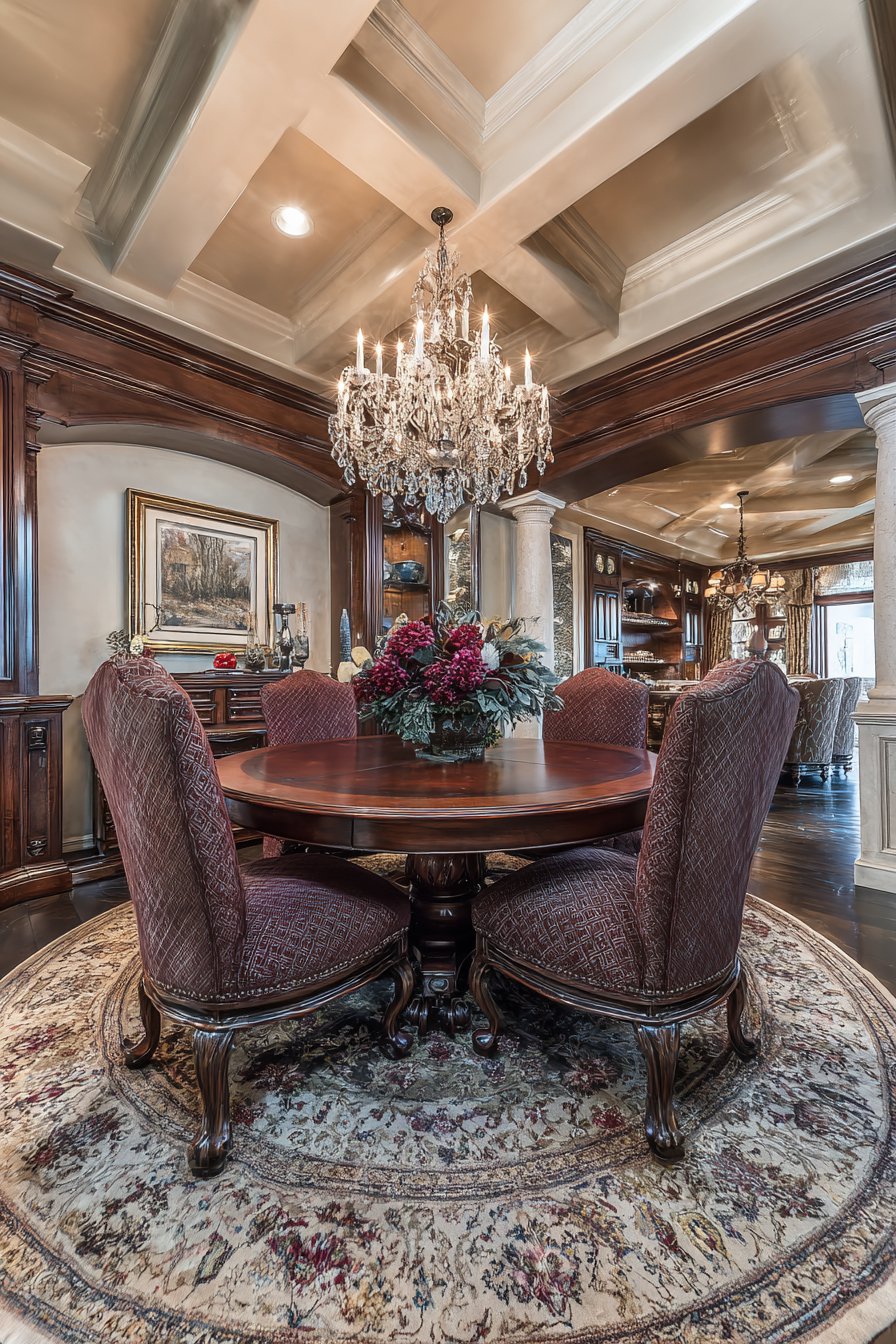
An ornate crystal chandelier provides elegant overhead illumination. The crystals catch light and cast prismatic patterns across the table. The dining set centers perfectly on a Persian-style area rug. Intricate patterns in deep jewel tones complement the wood’s richness.
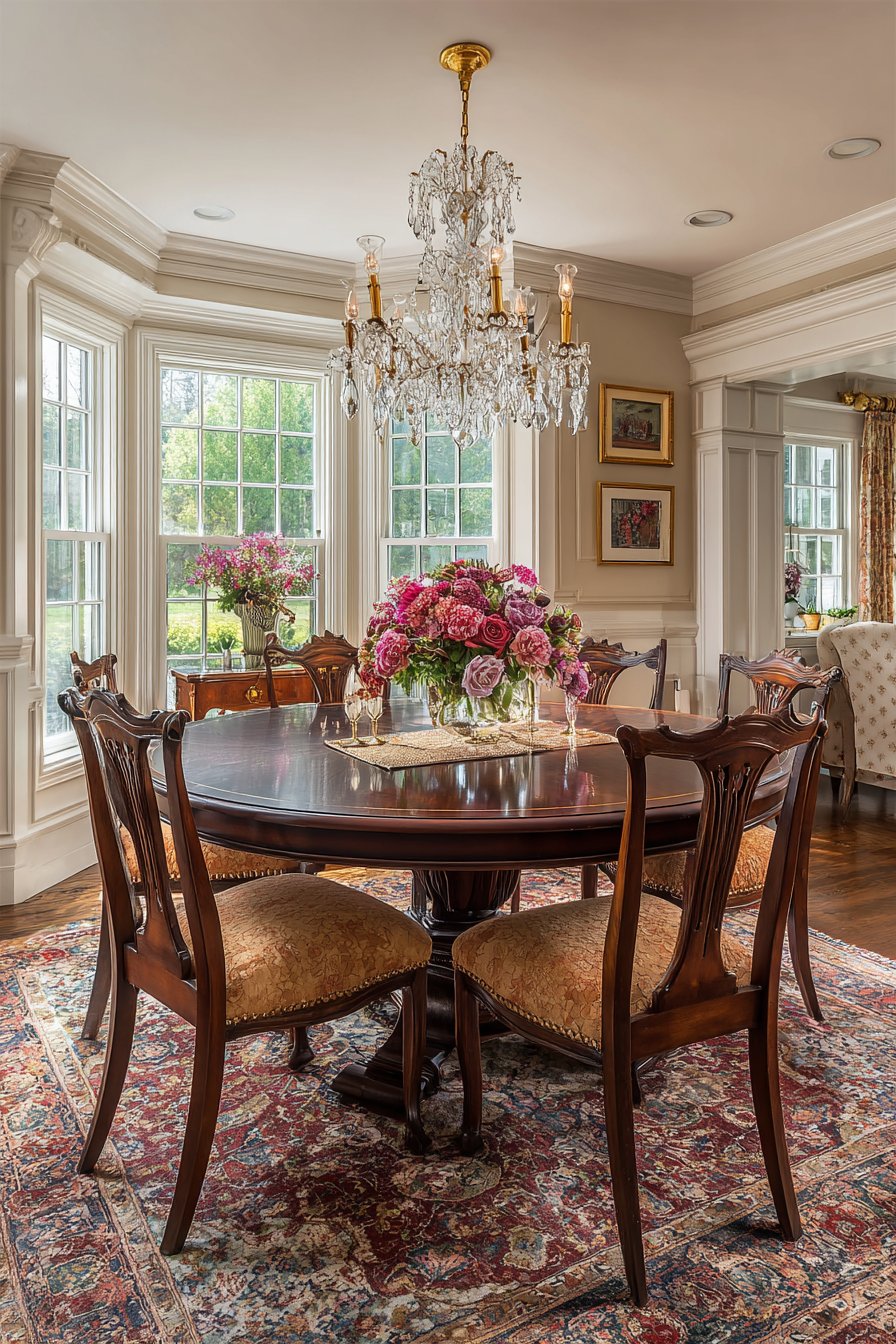
Crown molding and wainscoting frame the formal dining room architecturally. These classical elements enhance the traditional aesthetic cohesively. Professional craftsmanship shows in every detail from wood joinery to upholstery finishing. The room feels refined without appearing stuffy or unapproachable.
Traditional mahogany furniture represents investment in lasting quality. The wood darkens beautifully over decades developing deeper patina. Regular maintenance preserves the finish for generations. This design appeals to those who value heritage and craftsmanship.
Key Design Tips:
- Apply quality furniture wax monthly to maintain the hand-rubbed finish
- Position the chandelier with bottom approximately 30 inches above table surface
- Select upholstery fabrics with high abrasion ratings for dining chair longevity
- Layer lighting with dimmer switches to adjust ambiance for different occasions
- Protect wood surfaces with heat-resistant trivets and placemats during meals
5. Minimalist Scandinavian Blonde Ash
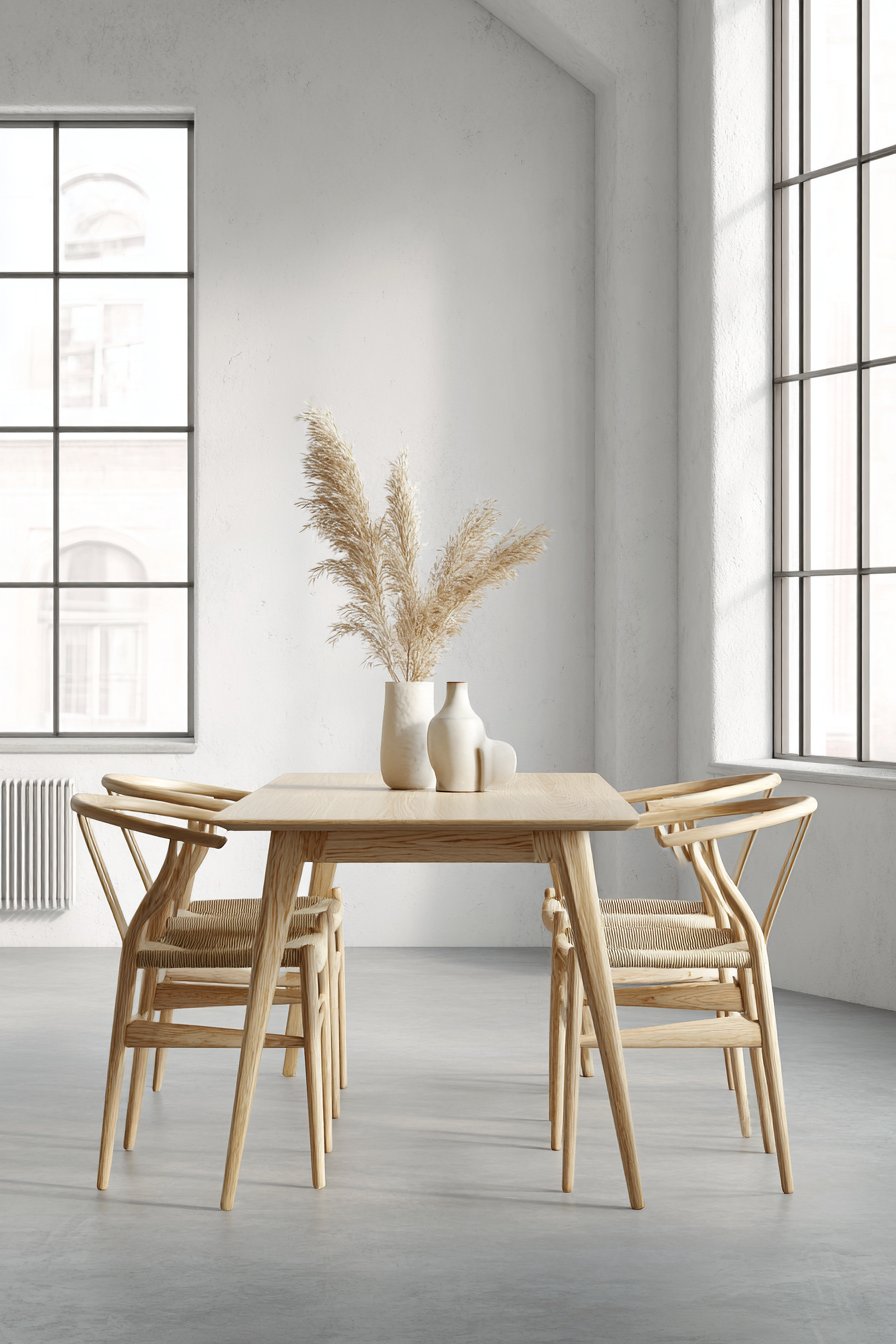
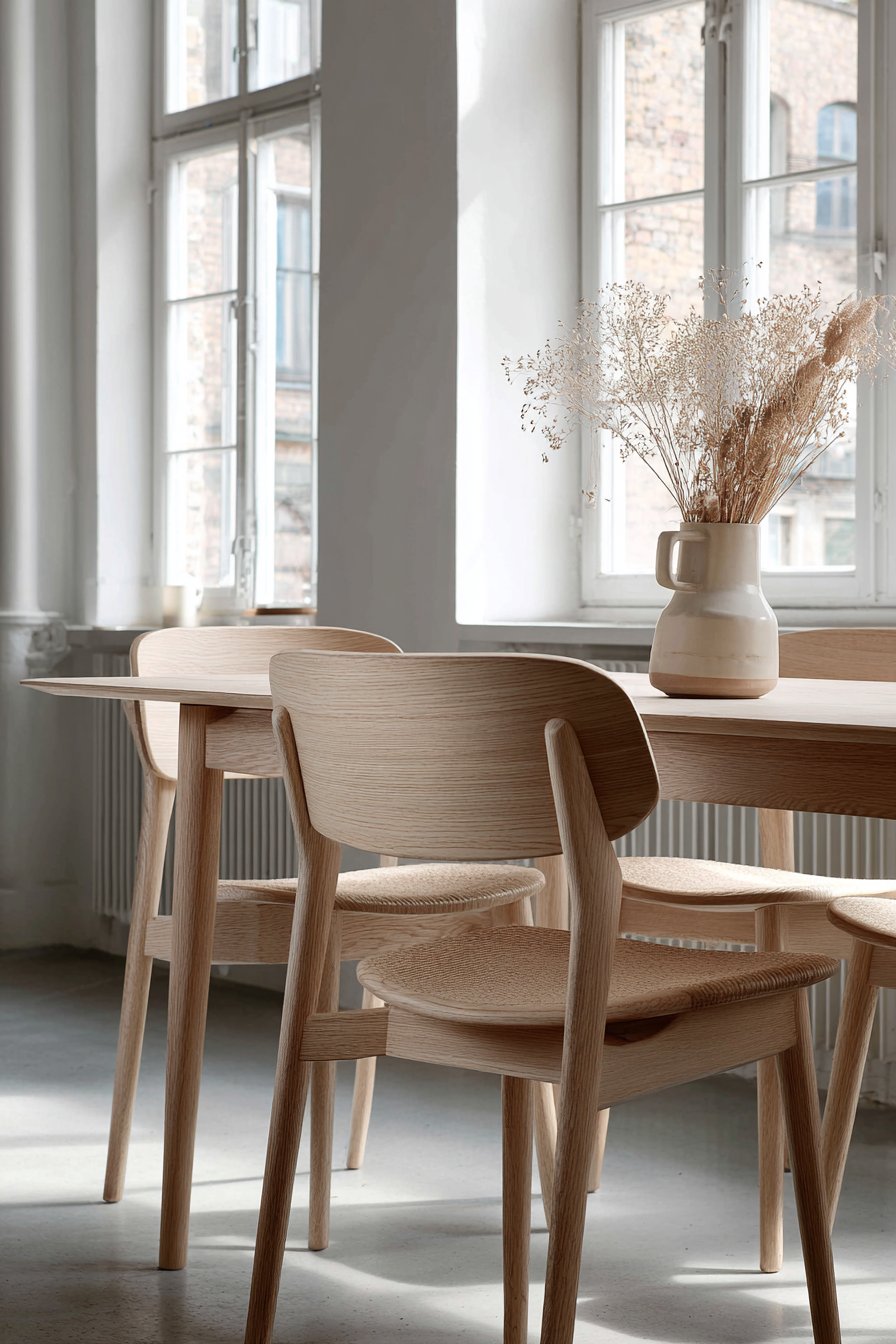
Blonde ash wood brings Nordic simplicity to contemporary dining spaces. Clean lines and tapered legs create visual lightness. Four simple wooden chairs feature organic curved backs and woven natural fiber seats. The overall effect emphasizes functional beauty over ornamentation.
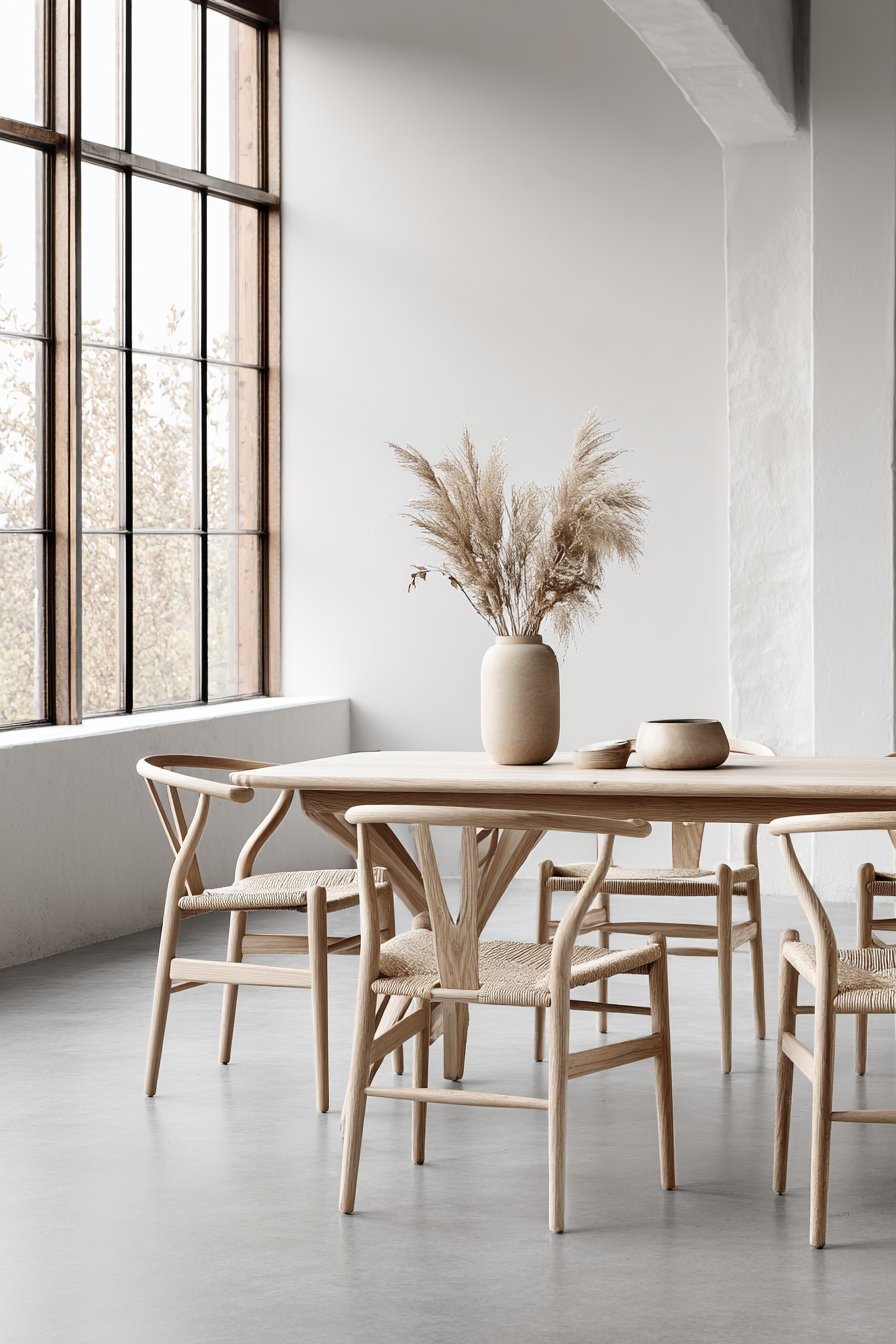
A single ceramic vase holds dried pampas grass as understated centerpiece. White walls and light grey concrete flooring emphasize uncluttered aesthetics. The minimal color palette creates serene atmosphere. Large picture windows flood the space with cool northern light.
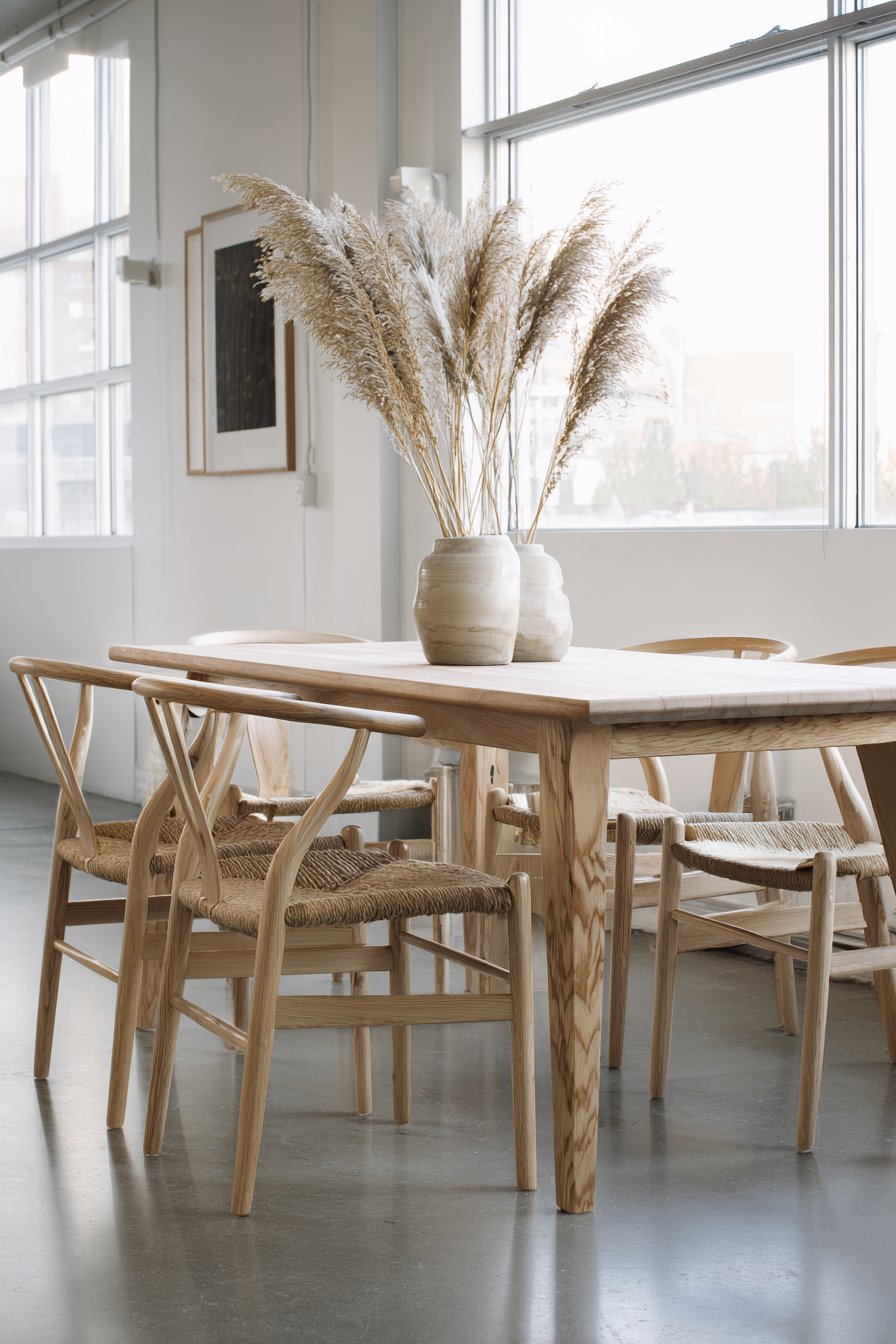
This Scandinavian approach celebrates negative space as design element. Every object serves clear purpose without excess decoration. The natural materials age gracefully developing soft patina over time. The design feels simultaneously modern and timeless.
Minimalist dining spaces offer remarkable flexibility for changing needs. The simple furniture arrangement adapts easily to different uses. The neutral palette serves as perfect backdrop for seasonal decorating. This restraint paradoxically creates freedom rather than limitation.
Key Design Tips:
- Select furniture with exposed joinery to showcase craftsmanship in simple forms
- Limit decorative objects to one or two carefully chosen pieces
- Choose light wood tones to maximize natural light reflection in the space
- Incorporate organic materials like wool, linen, and natural fiber for warmth
- Maintain clear surfaces to preserve the meditative quality of minimalist design
6. Industrial Urban Loft Character
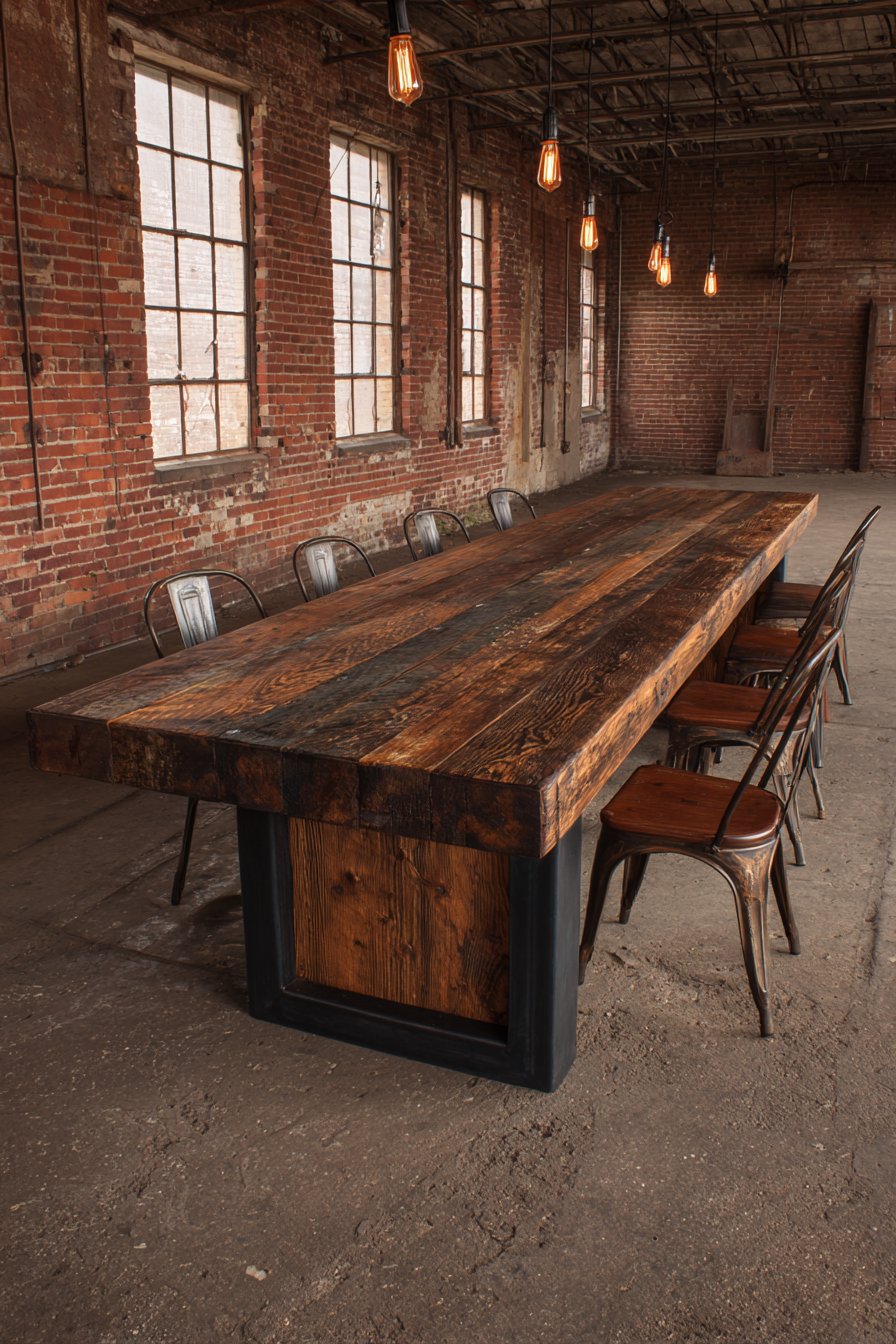
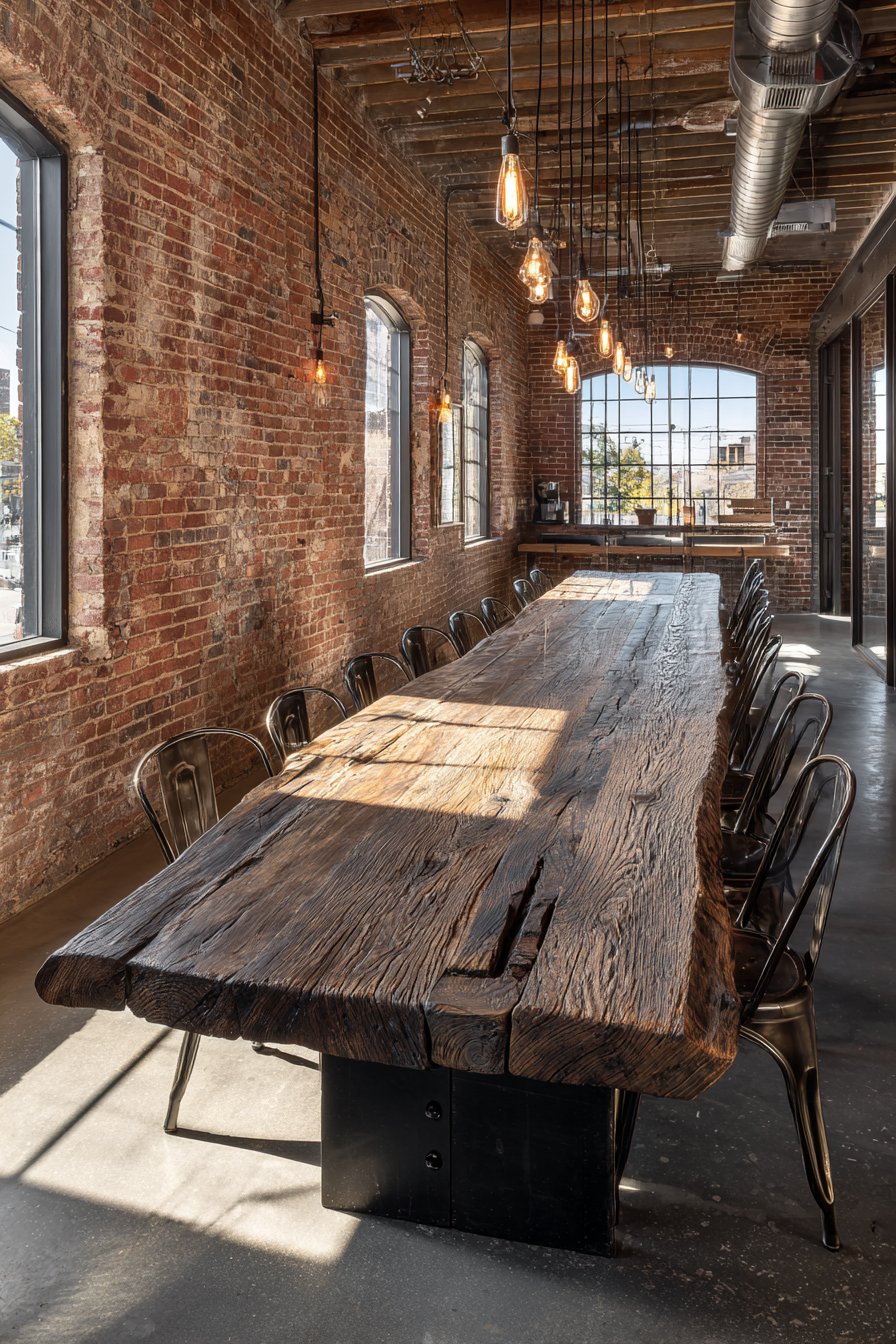
Thick reclaimed wood planks mount on raw steel I-beam base. Visible weld marks and subtle rust patina showcase authentic industrial character. Metal bistro chairs with distressed finish provide seating for six. Wooden seats soften the metal framework comfortably.
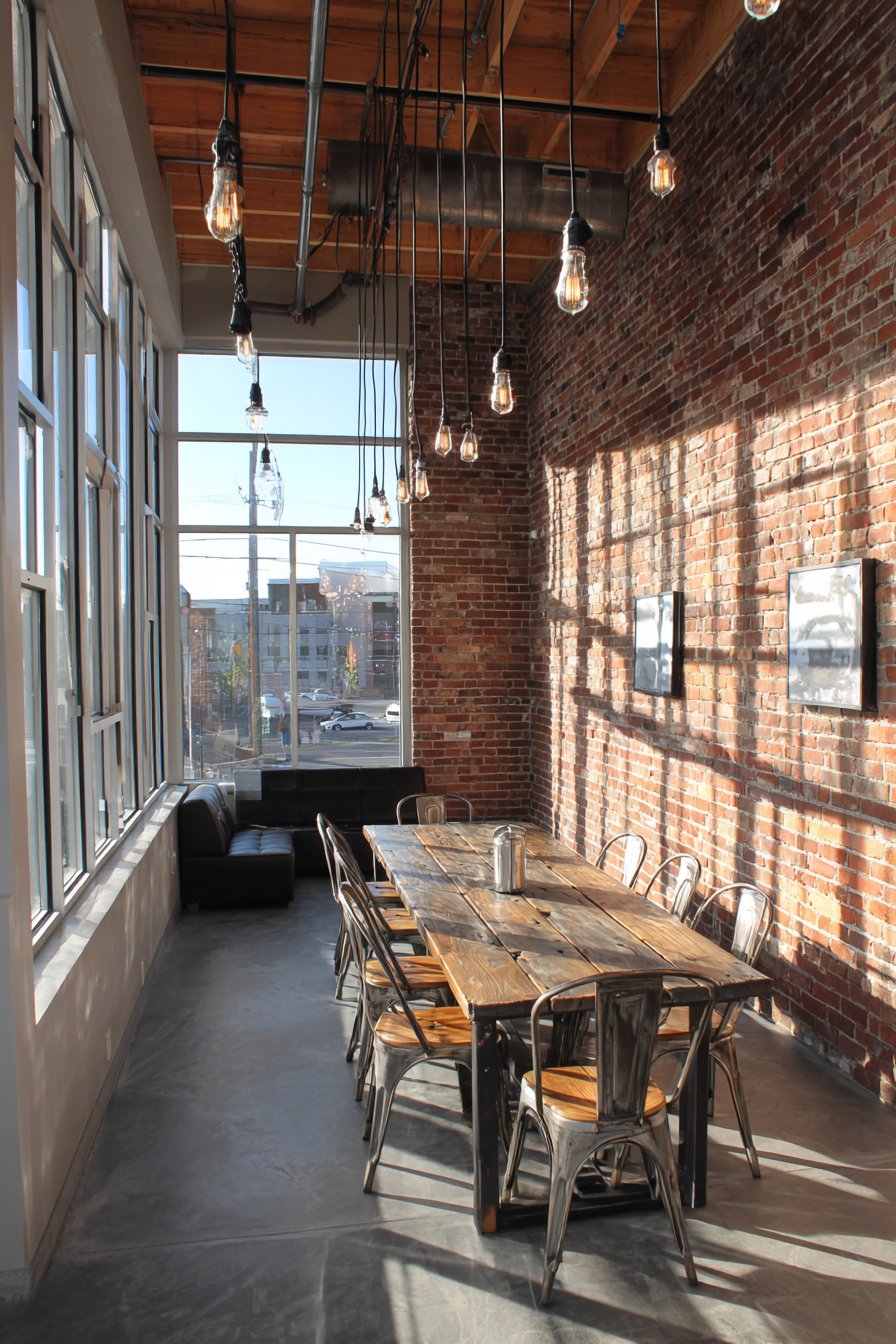
Exposed brick walls and concrete flooring enhance the urban loft aesthetic. These raw materials celebrate structural honesty without concealment. Edison bulb pendant lights hang from black cord at varied heights. The vintage-style bulbs cast warm amber glow across surfaces.
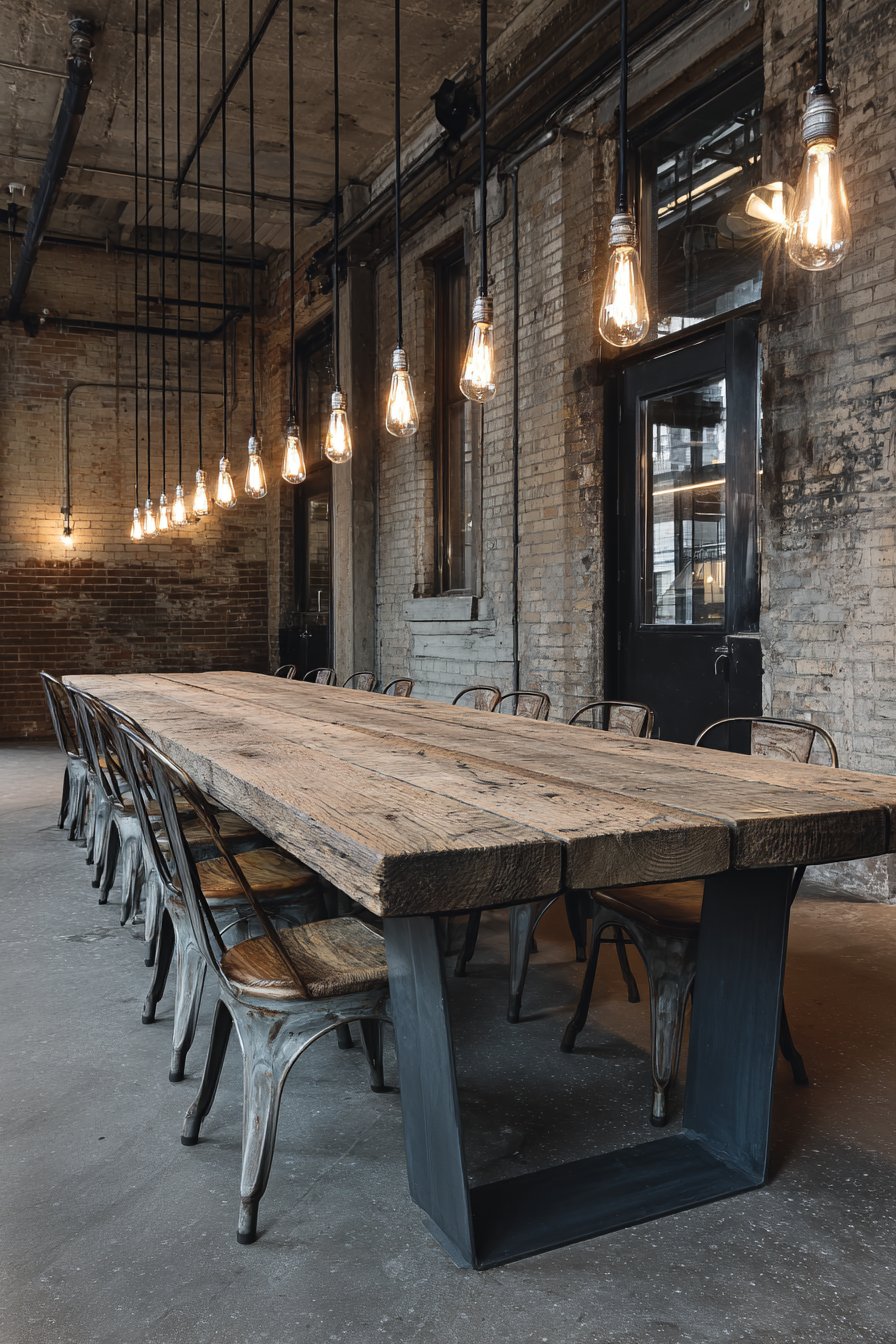
Afternoon light from factory-style windows creates dramatic shadows. The interplay of light and shadow emphasizes textural contrasts. This industrial design balances rugged materials with comfortable functionality. The space feels authentic to its warehouse origins.
Industrial style works particularly well in converted loft spaces. The design honors the building’s history while adapting for residential use. Raw materials require minimal maintenance while aging gracefully. This aesthetic appeals to those who appreciate honest material expression.
Key Design Tips:
- Seal steel elements with clear coat to control rust while maintaining patina
- Mix metal finishes intentionally rather than matching everything perfectly
- Balance hard industrial materials with soft textiles for comfortable seating
- Install dimmer switches on Edison bulbs to adjust harsh brightness when needed
- Leave some architectural elements raw to maintain authentic industrial character
7. Space-Saving Drop-Leaf Solution
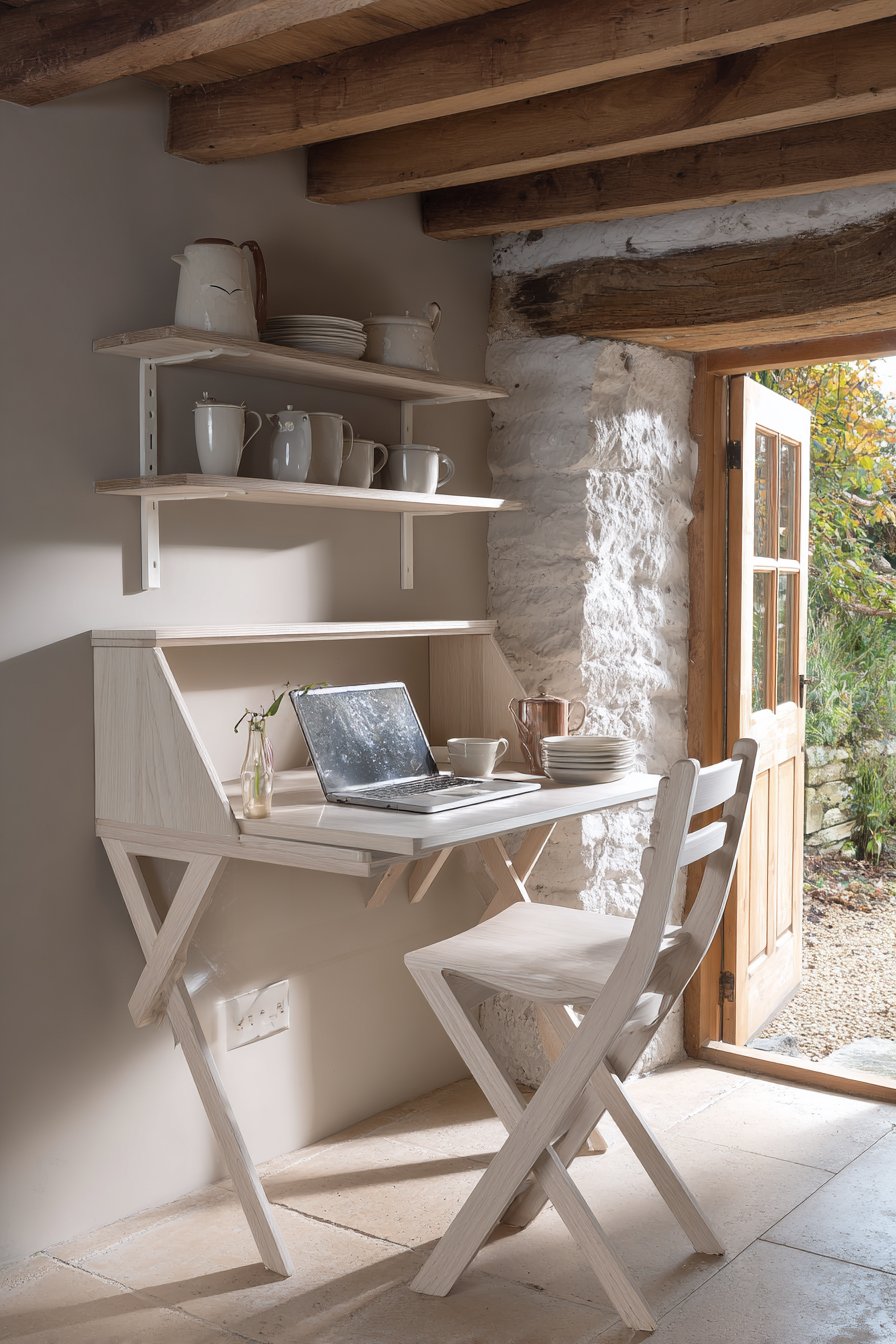
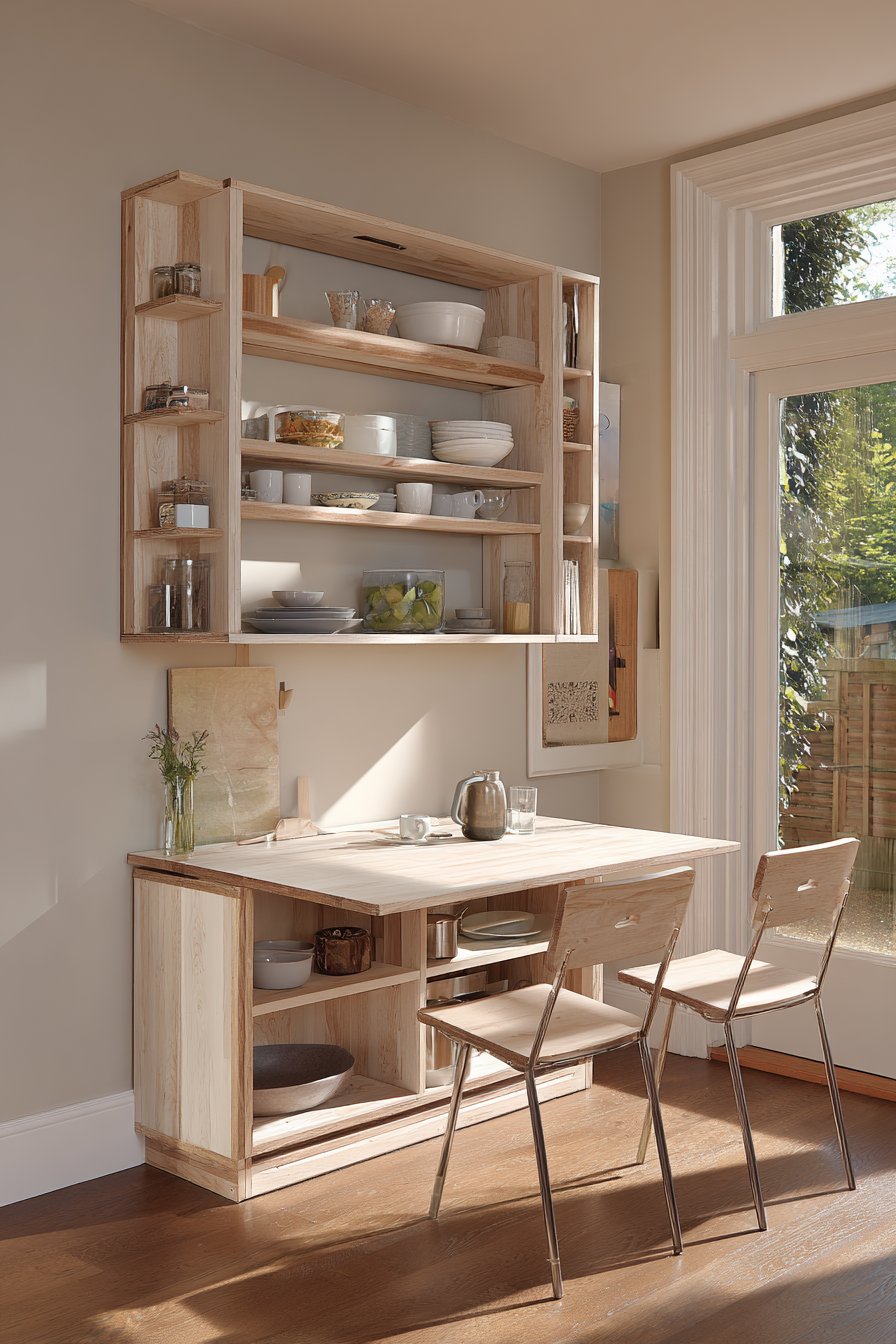
The drop-leaf design in white-washed oak provides remarkable versatility. The table expands to accommodate four guests for meals. When compact, it tucks efficiently against the wall. This transformable design maximizes limited square footage intelligently.
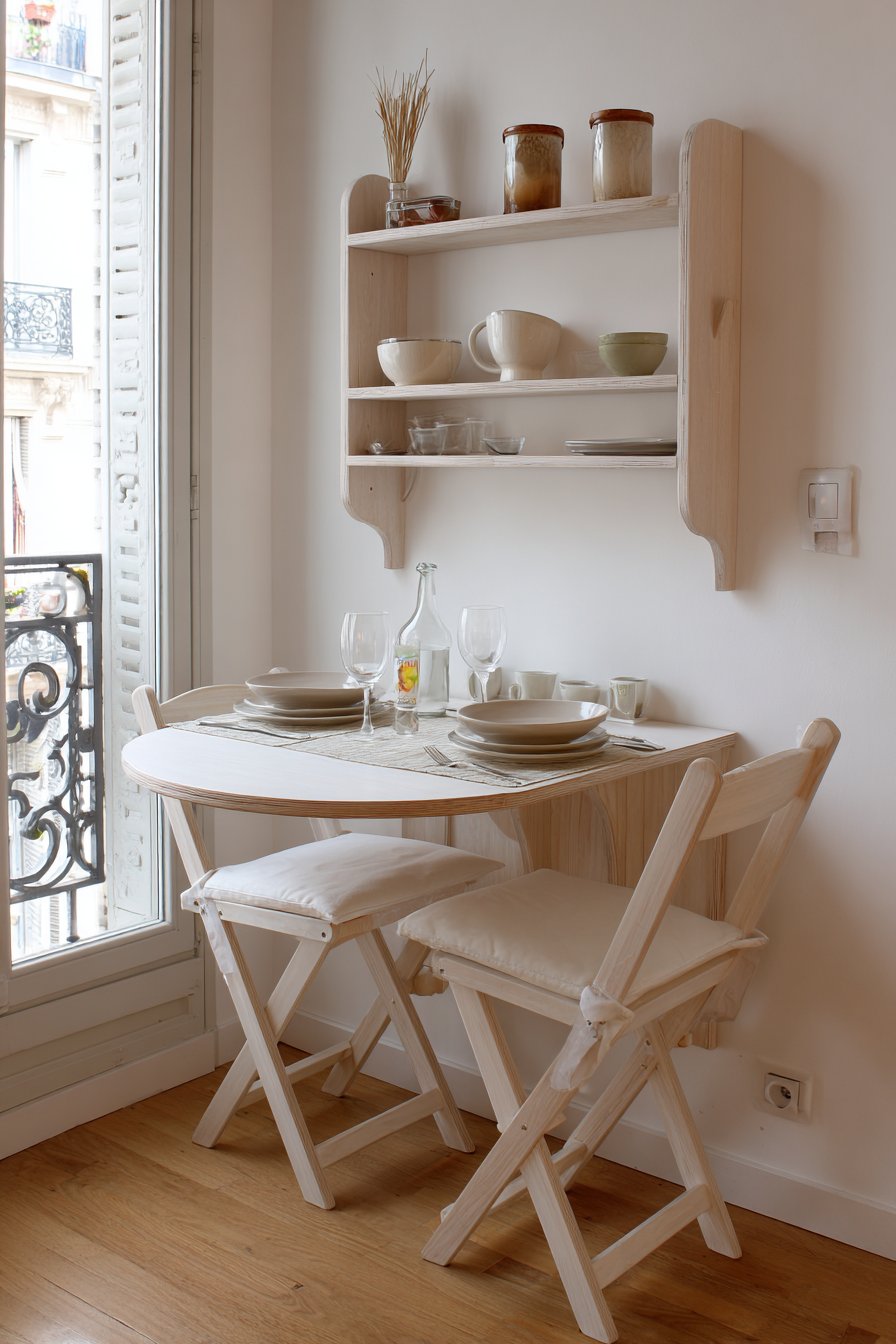
Two folding chairs with slim profiles hang nearby when not in use. Built-in floating shelves above display minimal dinnerware in coordinating tones. The vertical storage solution keeps essentials accessible without cluttering surfaces. Natural light from nearby window illuminates the efficient setup.
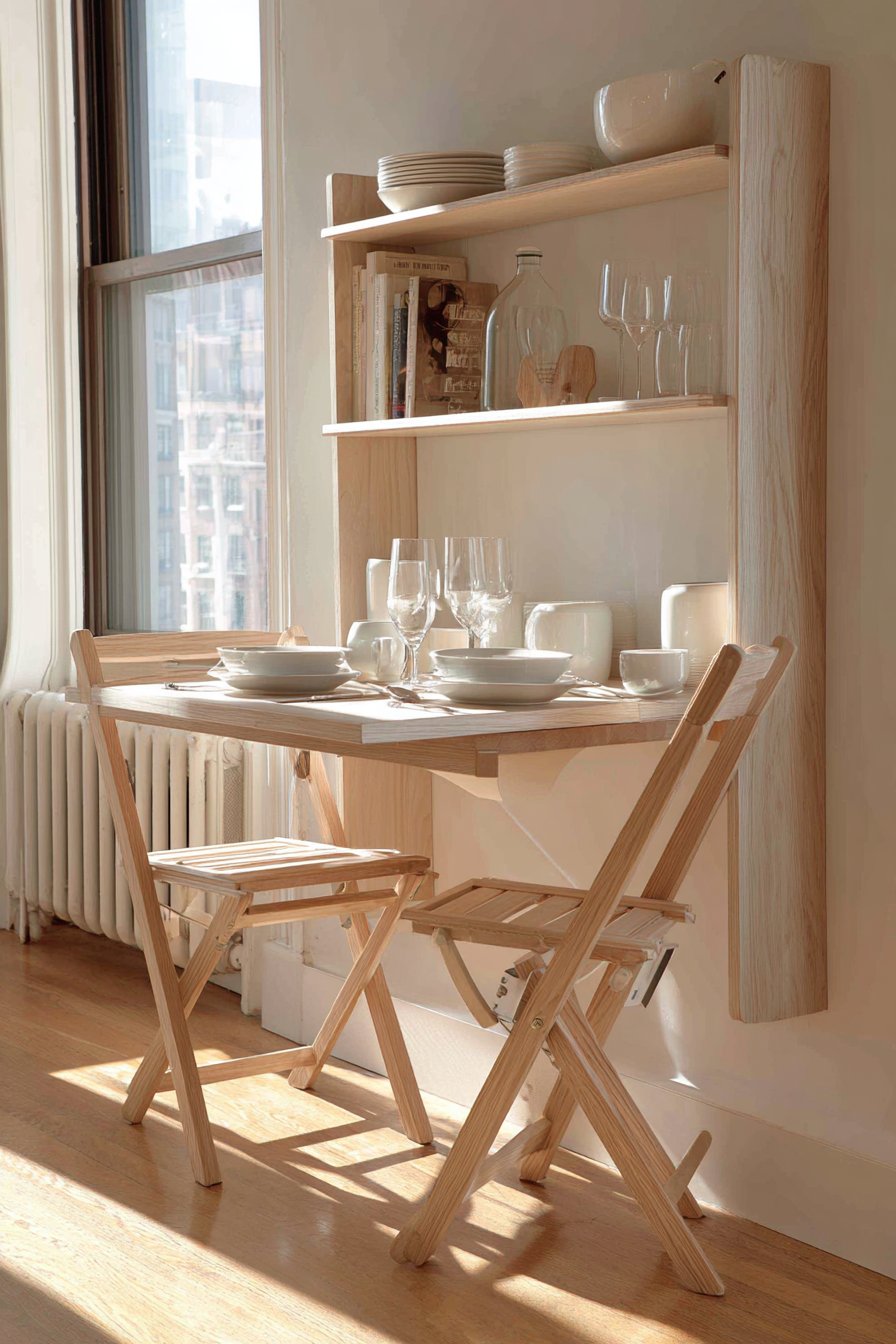
Small space living requires creative furniture solutions. This design proves that limited square footage need not mean sacrificing dining functionality. The white-washed finish keeps the compact space feeling bright and open. Every element serves multiple purposes without visual chaos.
The drop-leaf mechanism operates smoothly for easy transformation. Quality hardware ensures the table remains stable when expanded. This practical design suits urban apartments and tiny homes perfectly. It demonstrates that thoughtful design overcomes spatial constraints elegantly.
Key Design Tips:
- Test drop-leaf mechanisms thoroughly before purchasing to ensure smooth operation
- Install wall-mounted hooks at appropriate height for chair storage
- Choose light wood finishes to prevent small spaces from feeling cramped
- Maintain clear pathways around the table even in expanded position
- Incorporate multifunctional furniture throughout small spaces for cohesive efficiency
8. Luxurious Calacatta Marble Statement
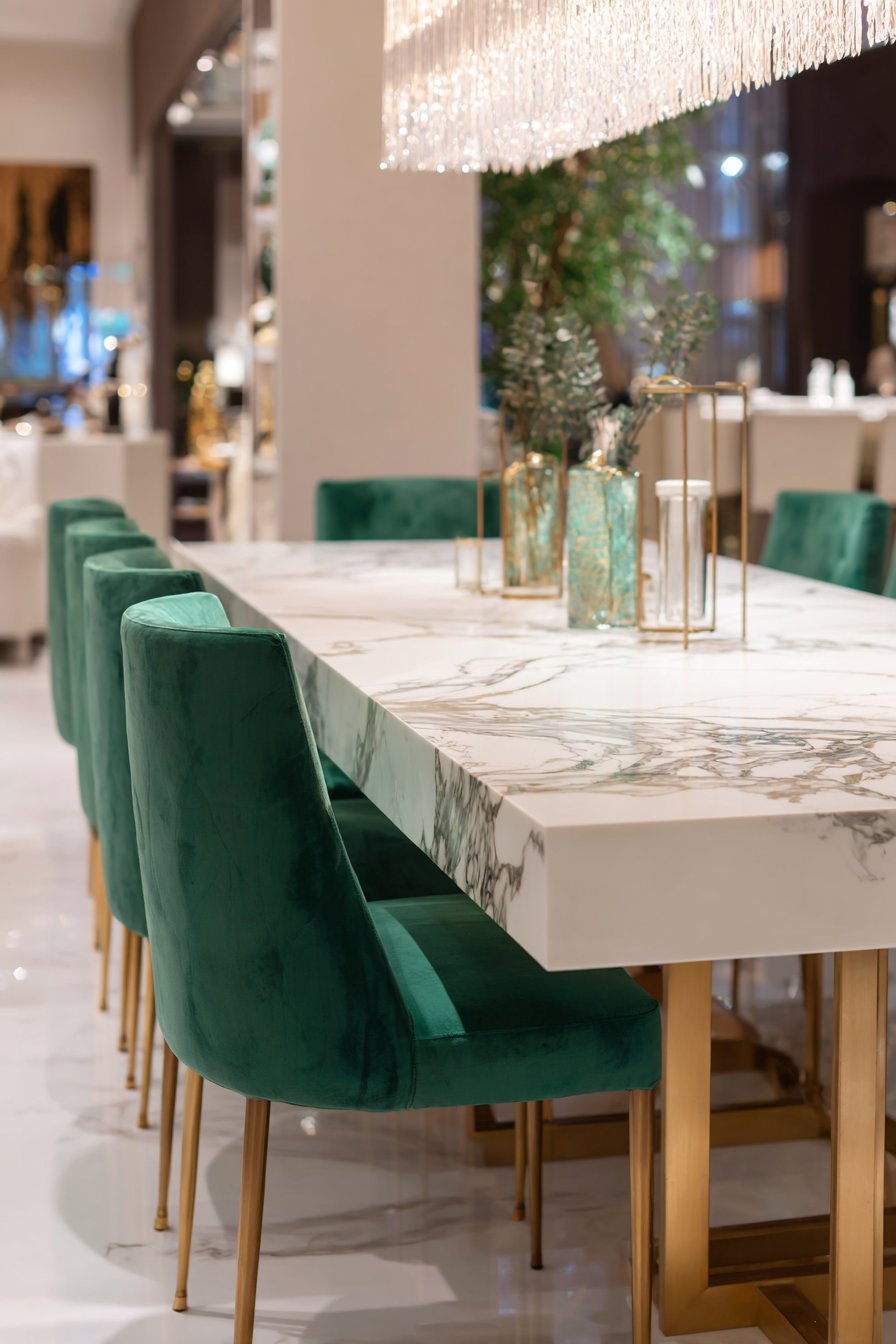
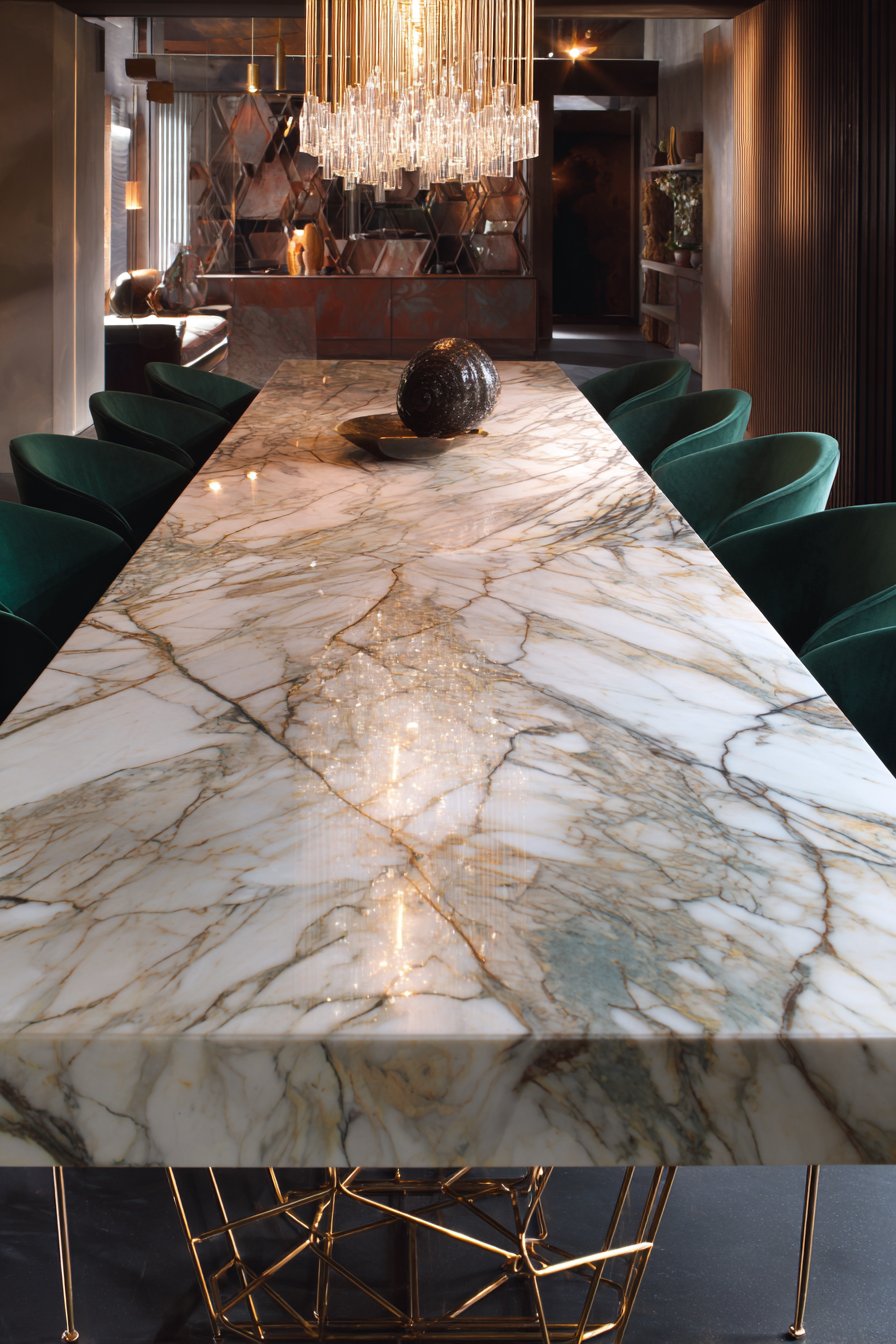
Book-matched Calacatta marble displays distinctive grey veining patterns dramatically. The top showcases nature’s artistry in stone formation. Brushed gold metal base features geometric design that elevates the marble. Ten velvet upholstered chairs in deep emerald green surround the statement table.
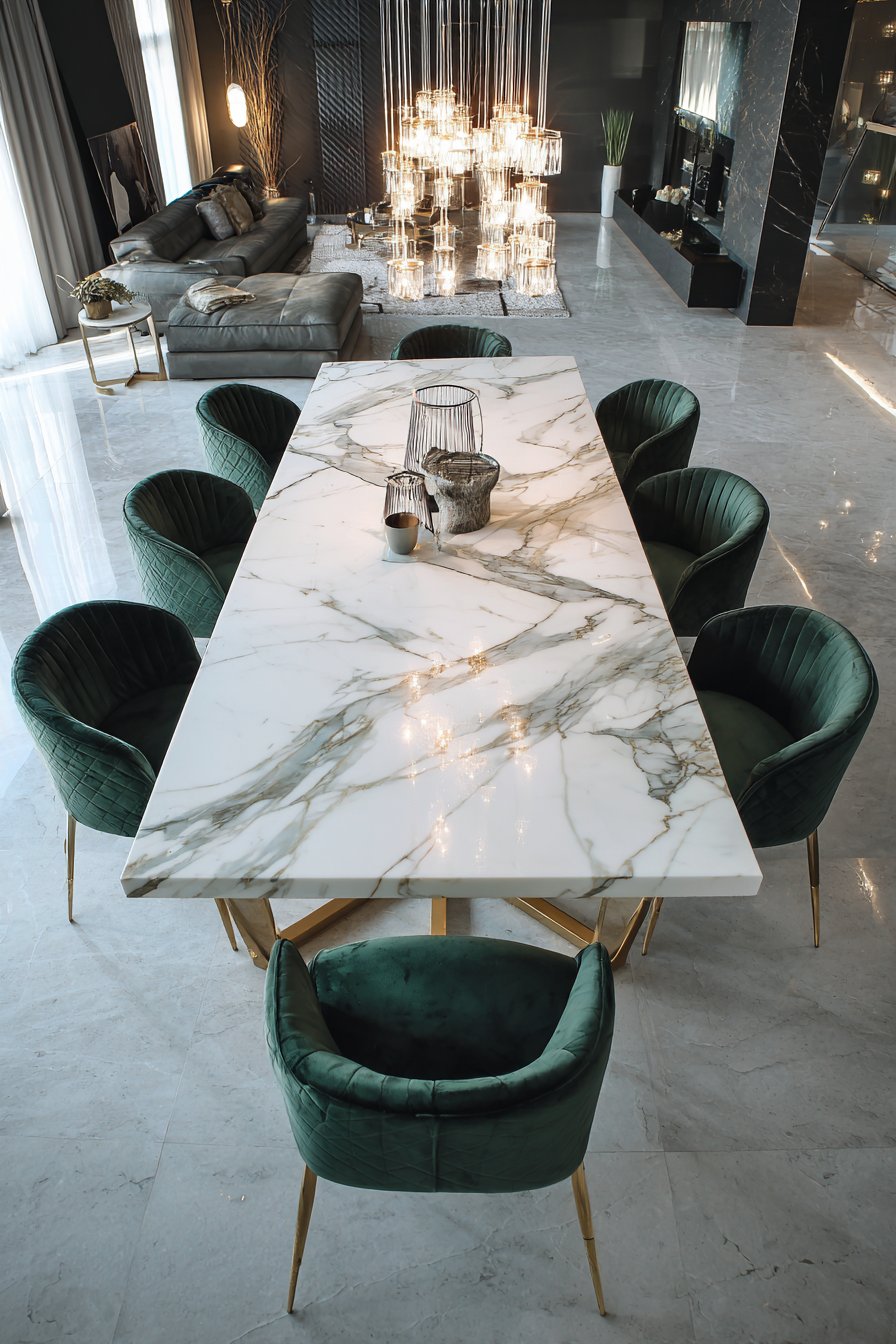
Gold-tipped chair legs echo the base finish creating cohesive metallics. A modern linear chandelier with crystal elements provides dramatic overhead lighting. The polished marble surface reflects ambient light creating subtle highlights. This combination exudes opulent sophistication.
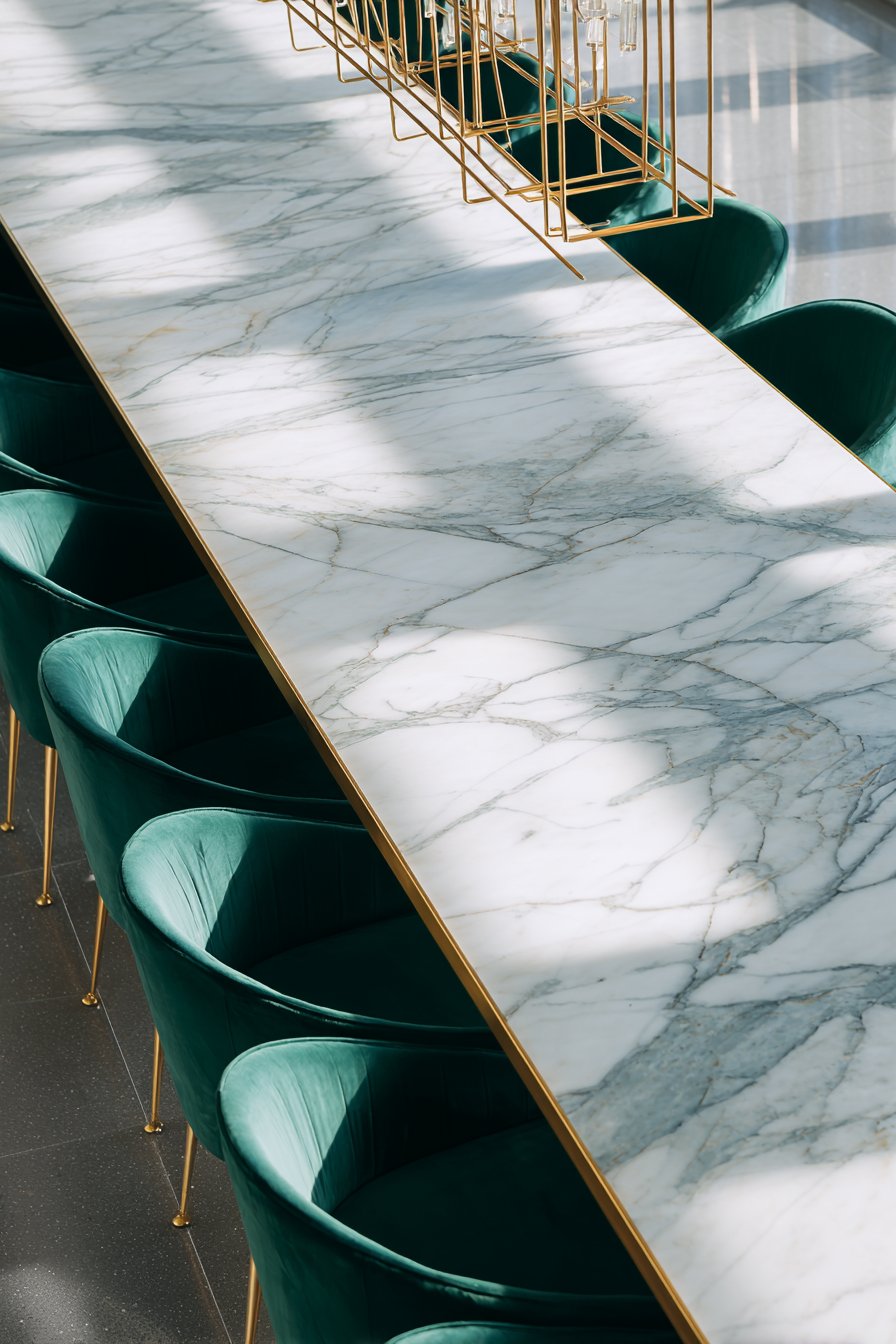
Marble requires specific maintenance but rewards with unmatched elegance. The natural stone feels cool and substantial to the touch. Each marble slab displays unique veining patterns making every table one-of-a-kind. The material’s weight and density convey quality and permanence.
This luxurious design suits formal entertaining and special occasions. The emerald velvet and gold accents create jewel-box richness. The overall effect feels glamorous without excessive ornamentation. Quality materials speak for themselves without requiring elaborate embellishment.
Key Design Tips:
- Seal marble surfaces regularly to protect against etching from acidic foods
- Use coasters and trivets religiously to prevent heat damage and staining
- Clean marble with pH-neutral cleaners specifically formulated for natural stone
- Position the chandelier to highlight the marble’s veining patterns dramatically
- Balance the cool marble with warm metallic finishes for visual warmth
9. Coastal Weathered Driftwood Serenity
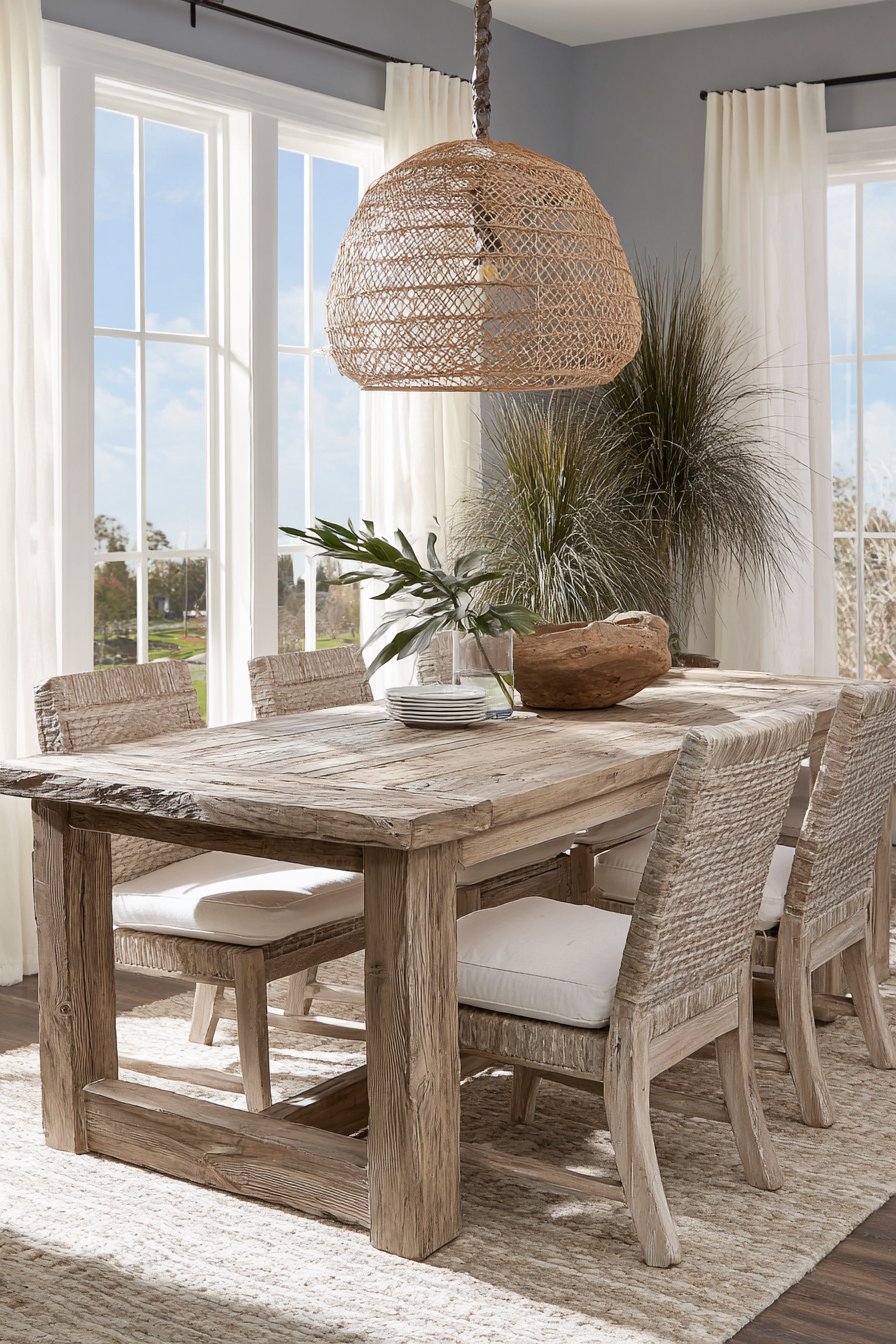
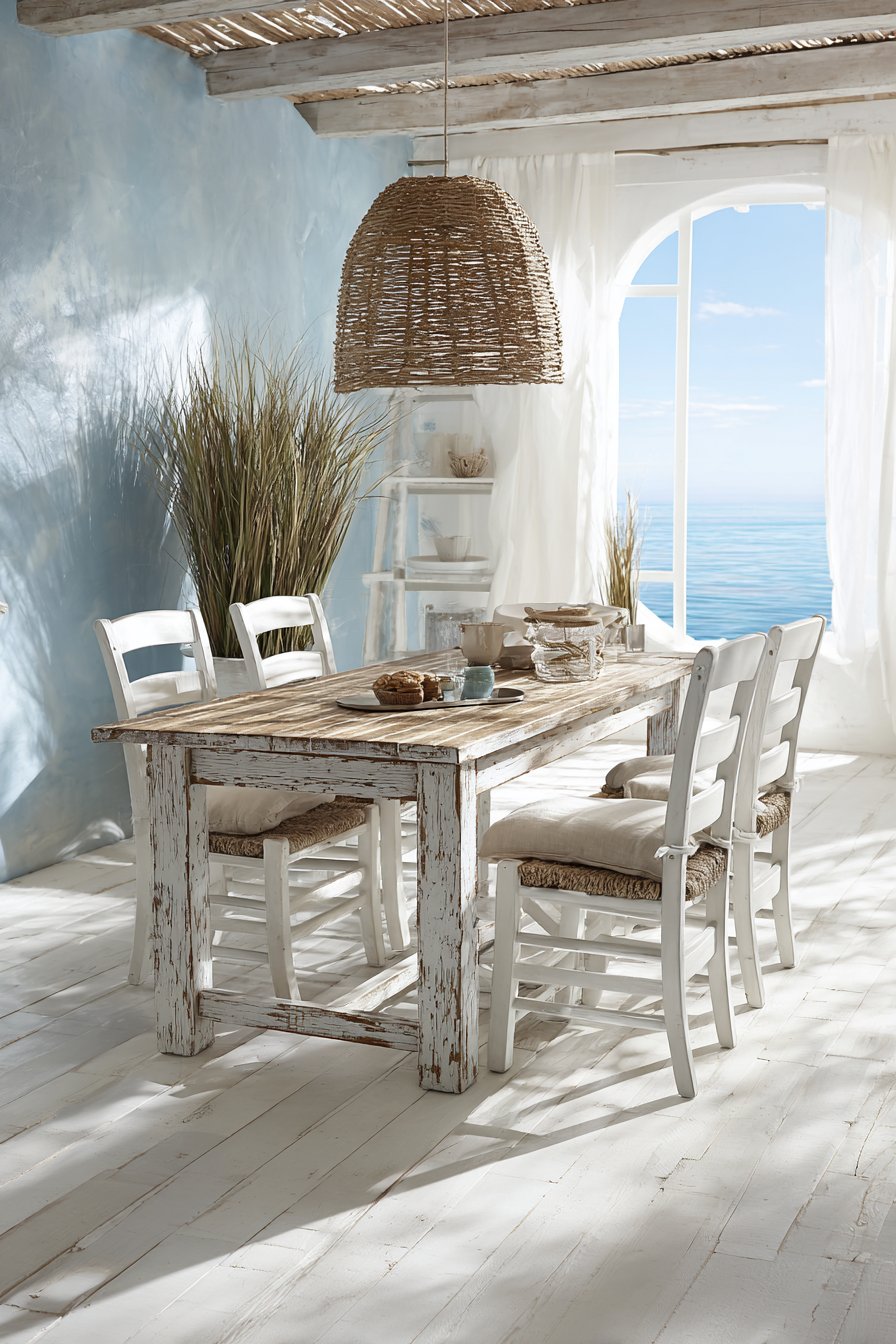
Weathered driftwood-finish pine creates breezy coastal atmosphere. The naturally distressed surface shows authentic wear patterns. White-washed ladder-back chairs with natural linen seat cushions complete the ensemble. This combination evokes seaside relaxation and casual comfort.
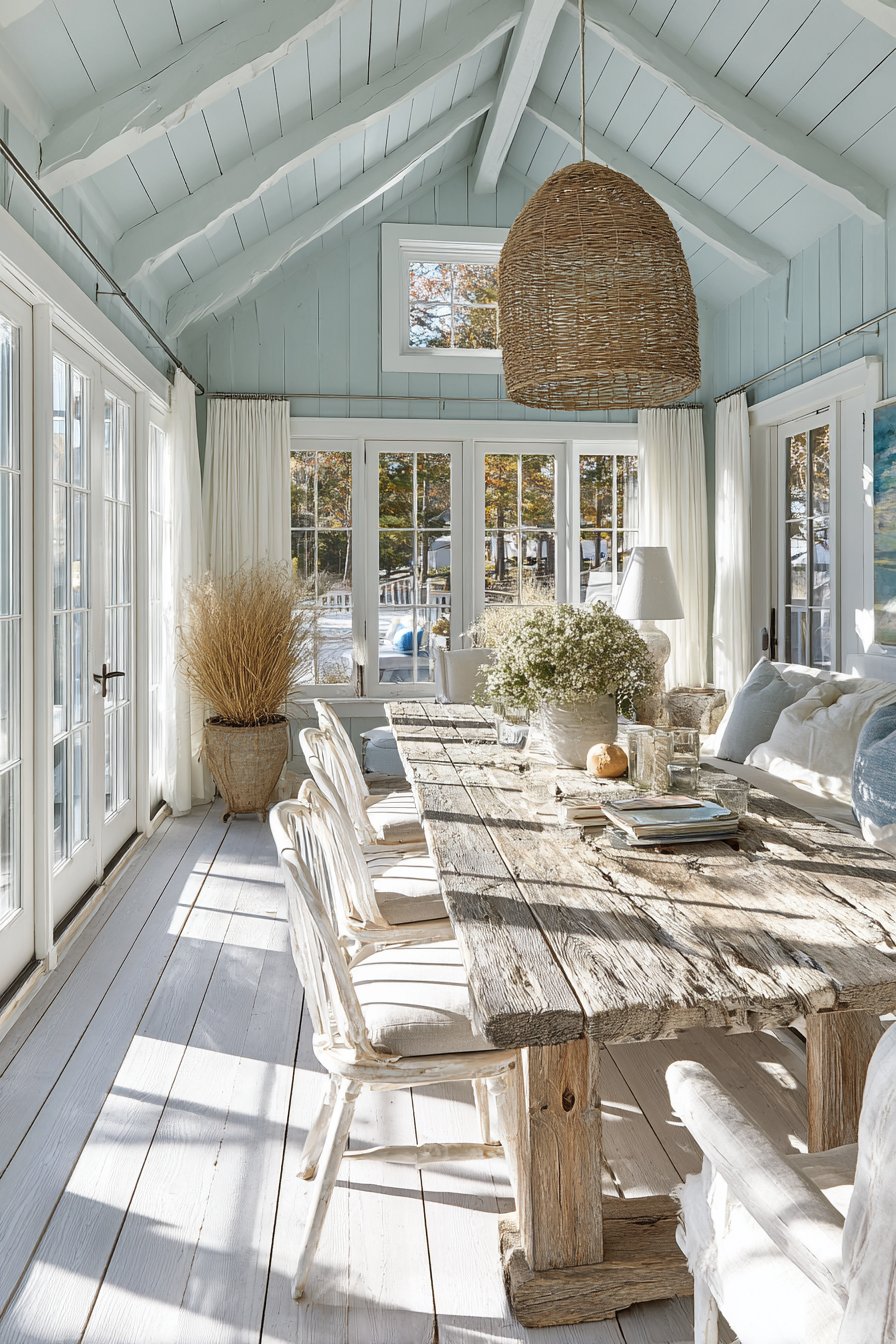
Soft blue-grey walls and whitewashed wood plank flooring create serene backdrop. Woven seagrass pendant light hangs above adding organic texture. Potted coastal grasses introduce living elements and gentle movement. Large windows with flowing white curtains allow bright natural light to flood the space.
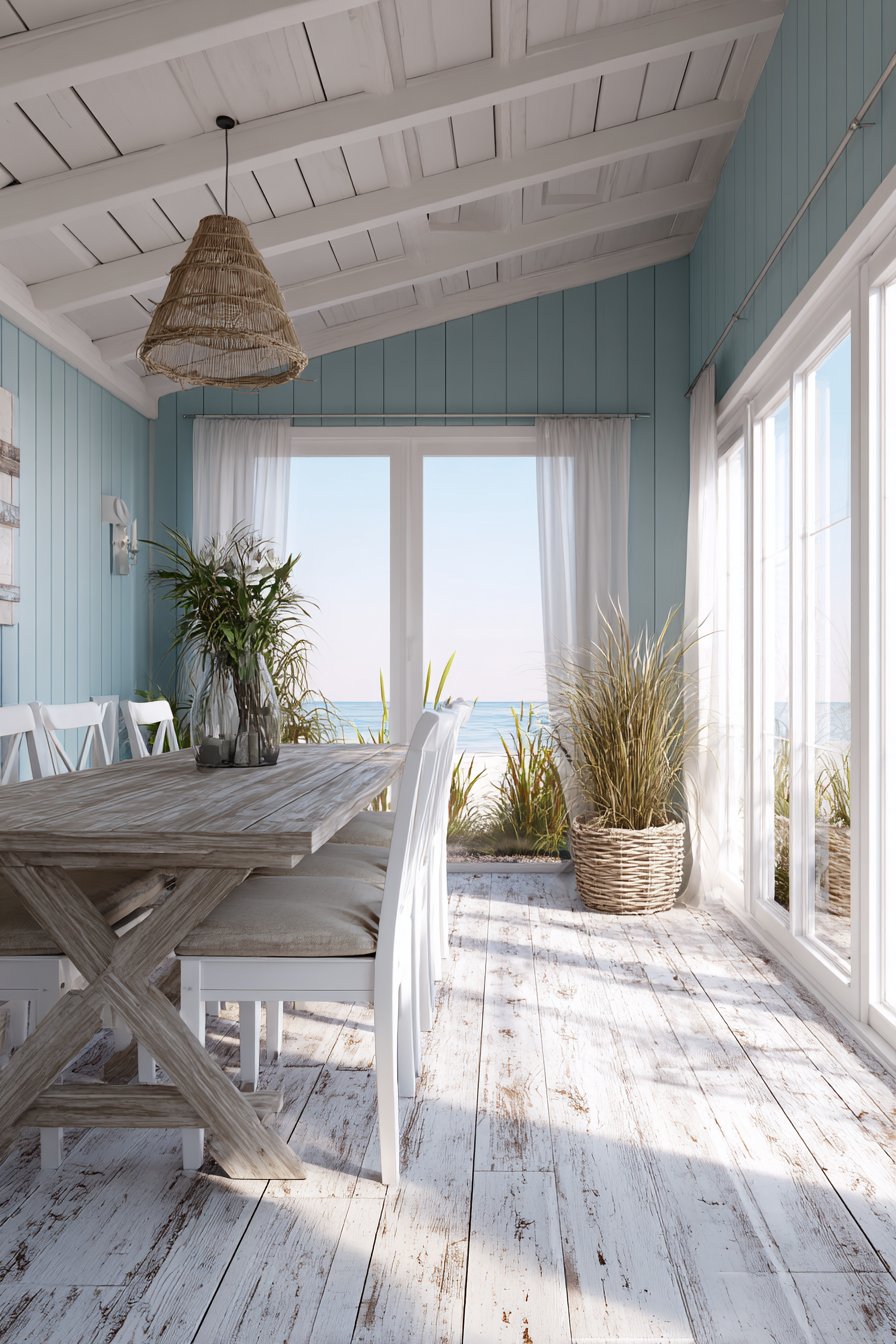
The coastal aesthetic prioritizes relaxed comfort over formal perfection. Sand-tracked floors and sun-faded finishes become part of the design story. Natural materials connect interior spaces with coastal environments outside. The overall feeling invites barefoot gatherings and casual meals.
This design style suits beach houses and coastal properties perfectly. The weathered finishes handle sandy feet and wet bathing suits gracefully. Maintenance remains minimal as additional weathering enhances rather than diminishes appearance. The palette remains consistently calming and restorative.
Key Design Tips:
- Choose wood finished with water-resistant sealers for coastal humidity protection
- Incorporate multiple shades of blue and white to avoid monotonous color schemes
- Layer natural textures through jute, seagrass, and linen for depth
- Allow natural weathering to occur rather than fighting against coastal conditions
- Keep decorative elements organic and beach-collected for authentic coastal feel
10. Versatile Extendable Honey Oak
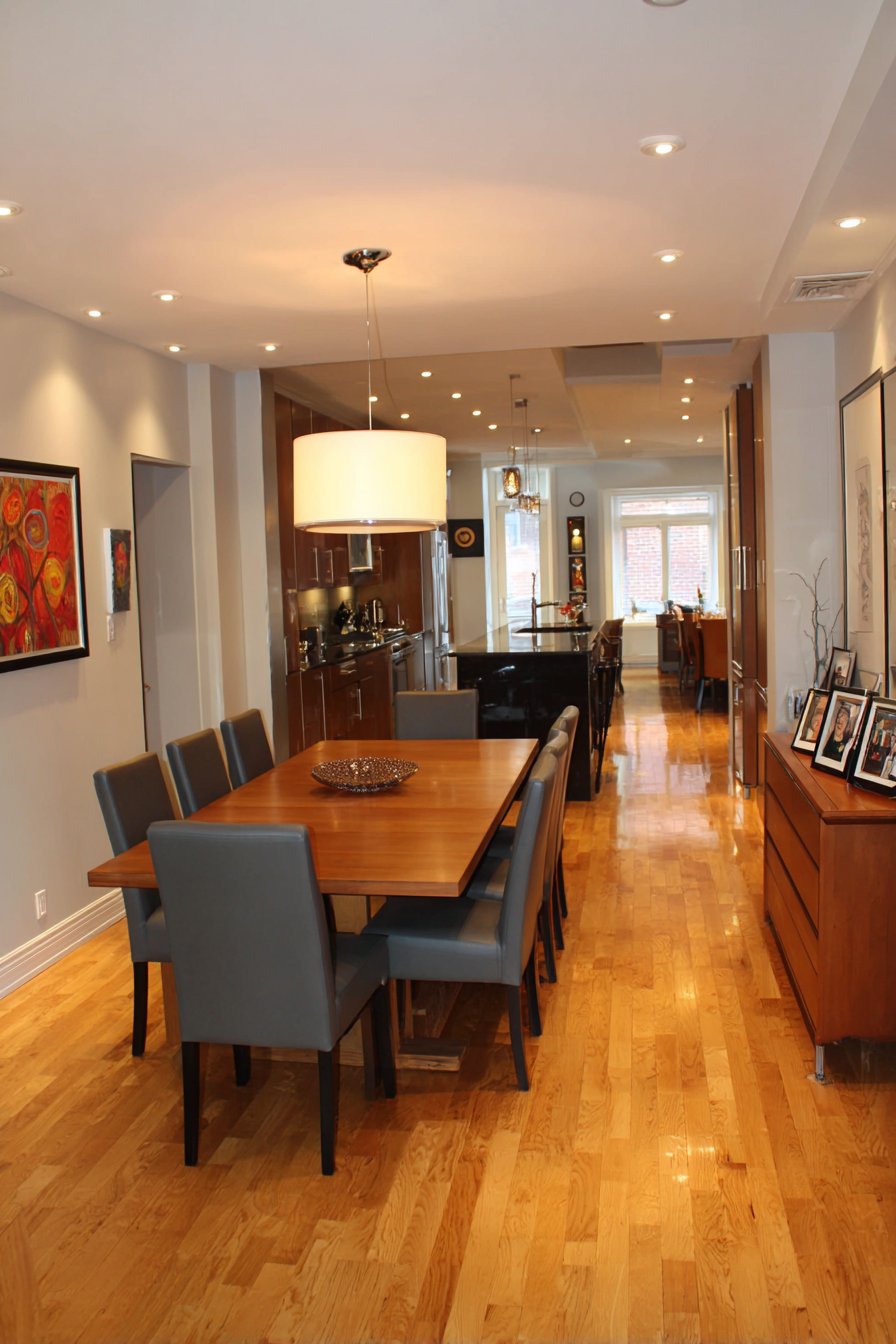
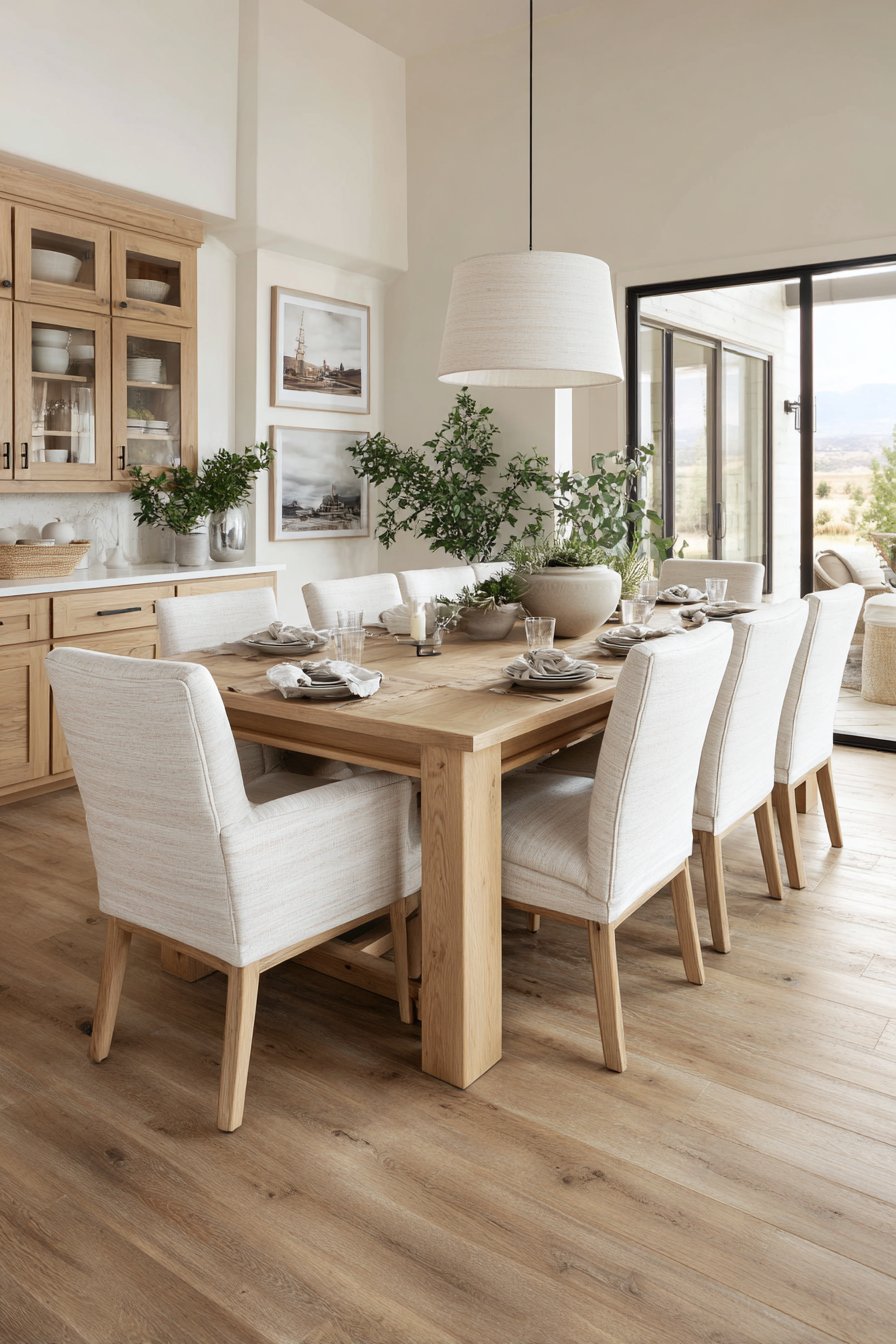
Warm honey oak features butterfly leaf mechanism for practical versatility. The table extends to accommodate different entertaining needs efficiently. Eight upholstered parsons chairs in durable performance fabric surround the table. Hardwood flooring in matching wood tone creates cohesive visual flow.
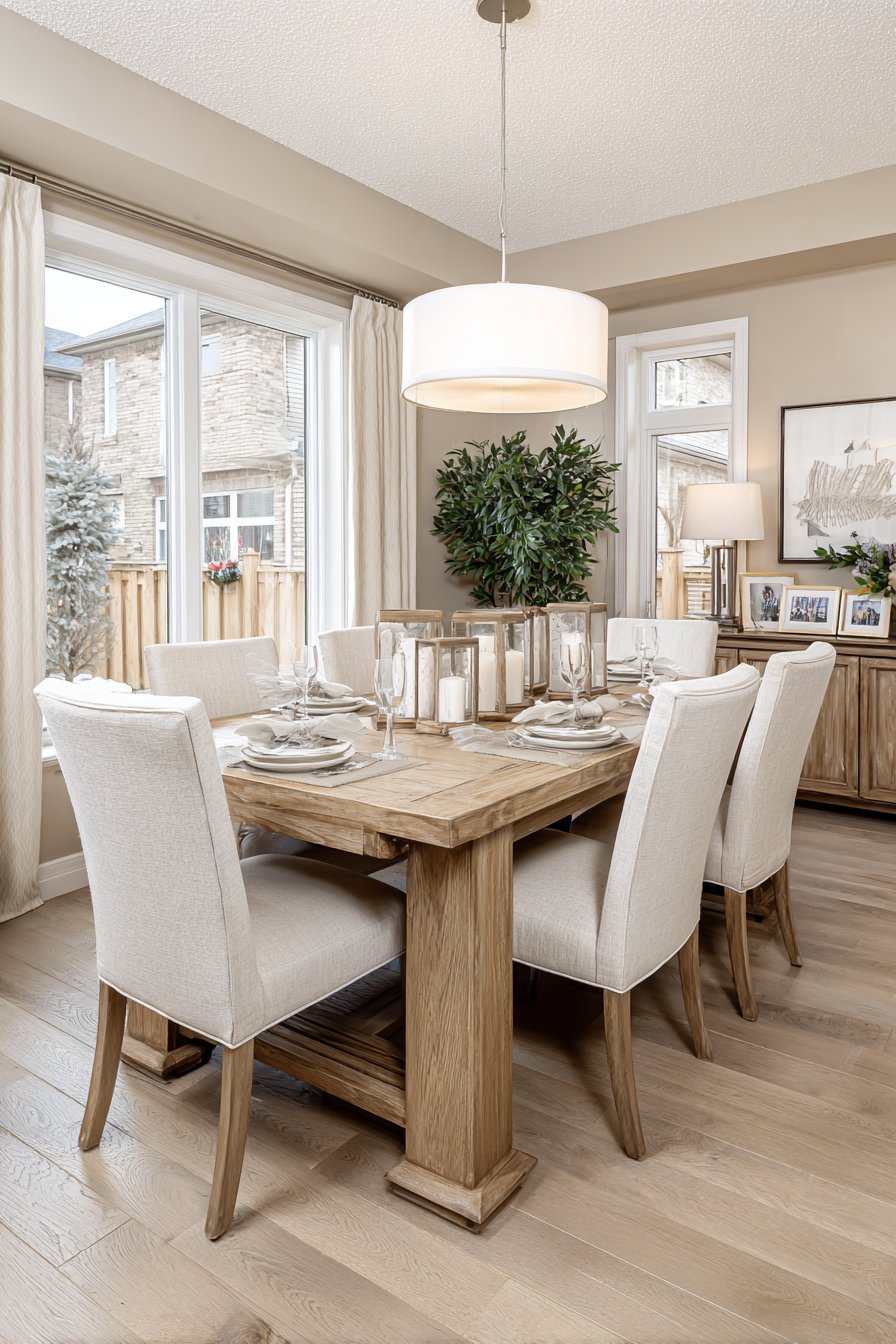
Simple drum pendant provides functional overhead lighting without competing visually. Family photos and subtle decor on nearby sideboard add personal touches. The extension mechanism operates smoothly allowing one person to adjust easily. This practical design serves growing families and frequent entertainers.
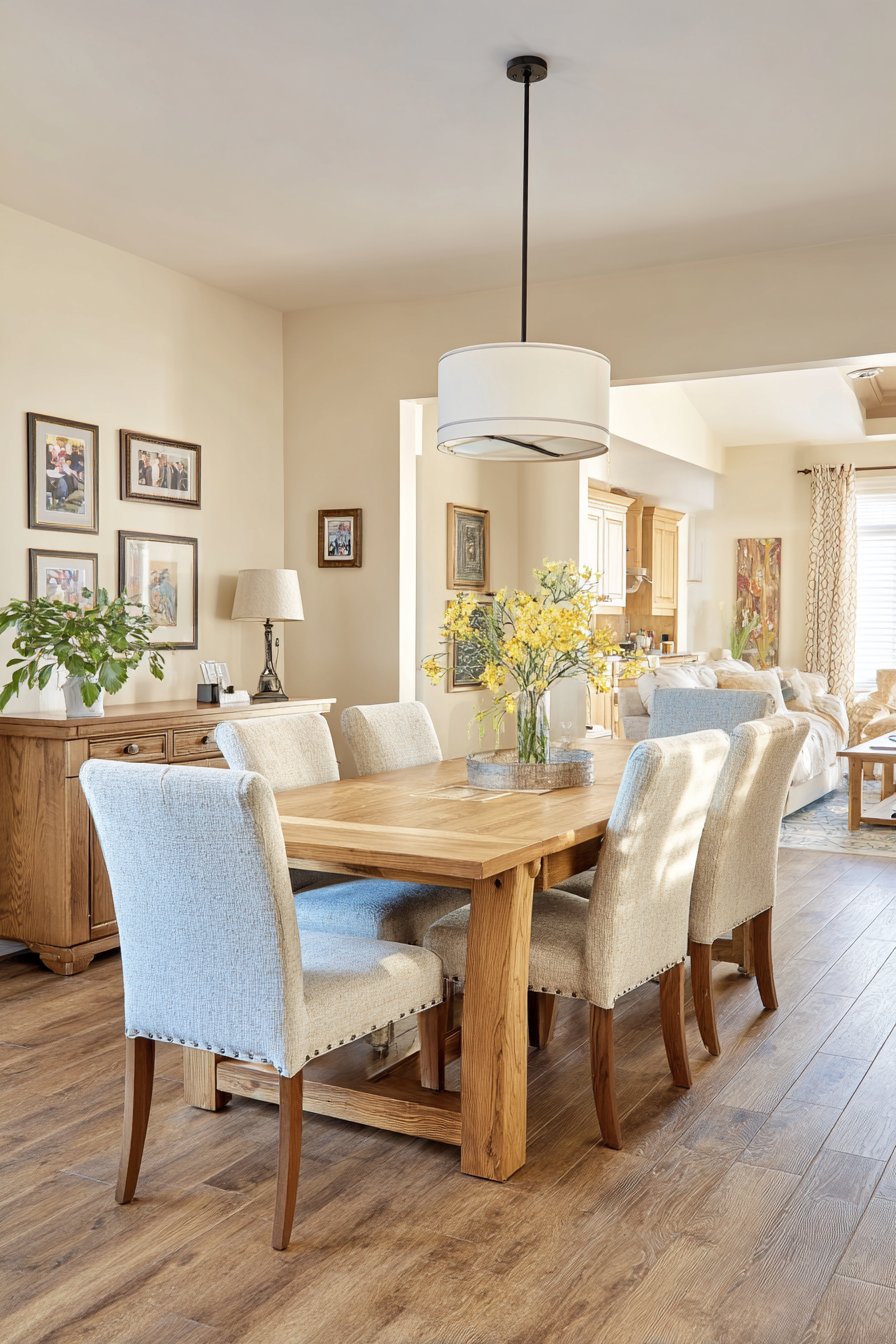
Extendable tables offer remarkable flexibility for changing needs. Daily meals require less surface area than holiday gatherings. The butterfly leaf stores internally, eliminating separate storage concerns. Quality construction ensures the mechanism operates reliably for decades.
This design proves that practical functionality can look attractive. The warm honey tone suits traditional and transitional styles equally. Performance fabrics on chairs handle daily use and occasional spills. The overall design prioritizes livability without sacrificing aesthetic appeal.
Key Design Tips:
- Test extension mechanisms repeatedly before purchase to ensure smooth operation
- Select performance fabrics with stain-resistant treatments for family-friendly durability
- Match wood tones throughout the room for cohesive design flow
- Store table pads nearby for quick protection during extended dinner parties
- Choose chairs with comfortable seat depth for extended meal conversations
11. Contemporary Concrete and Oak Fusion
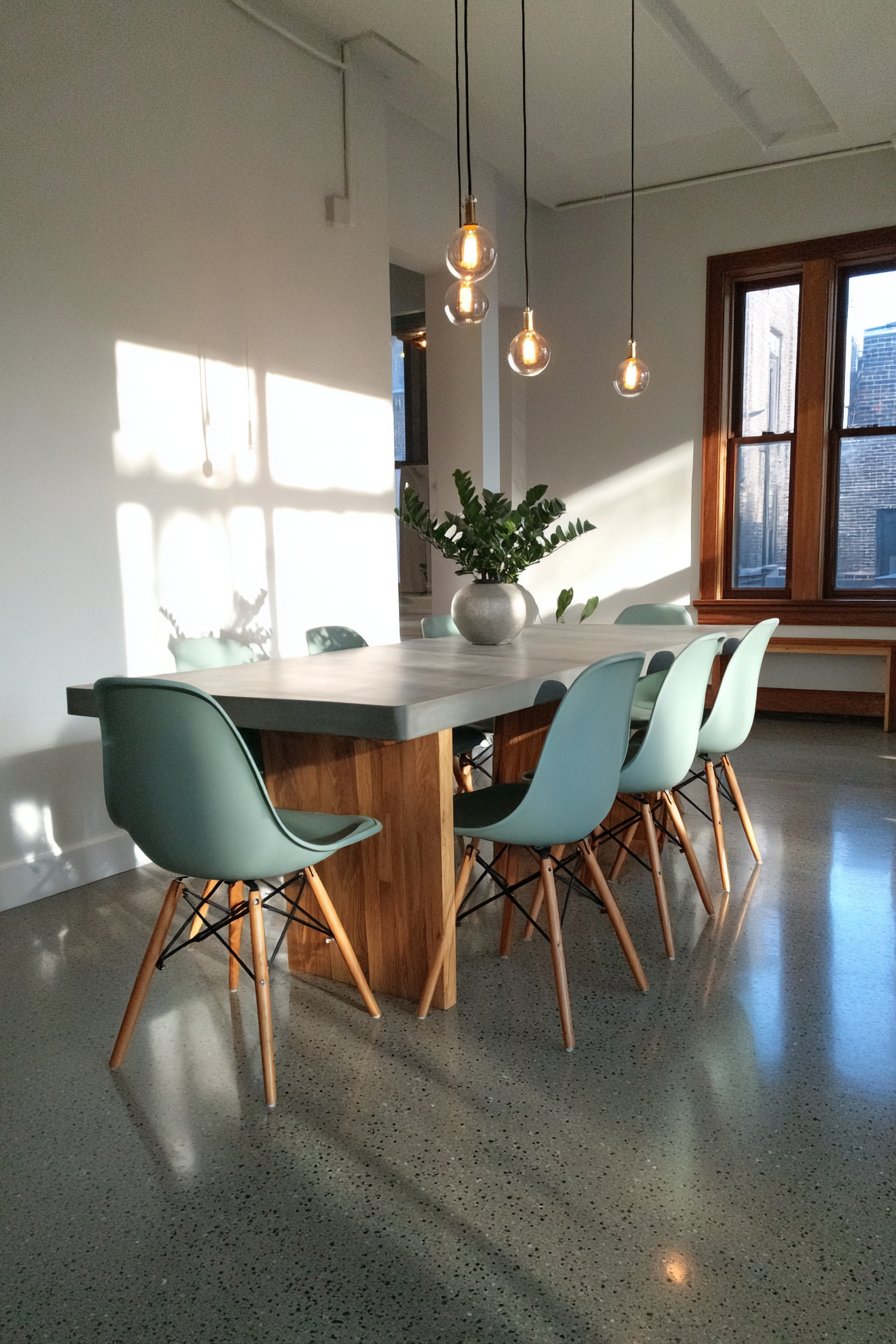
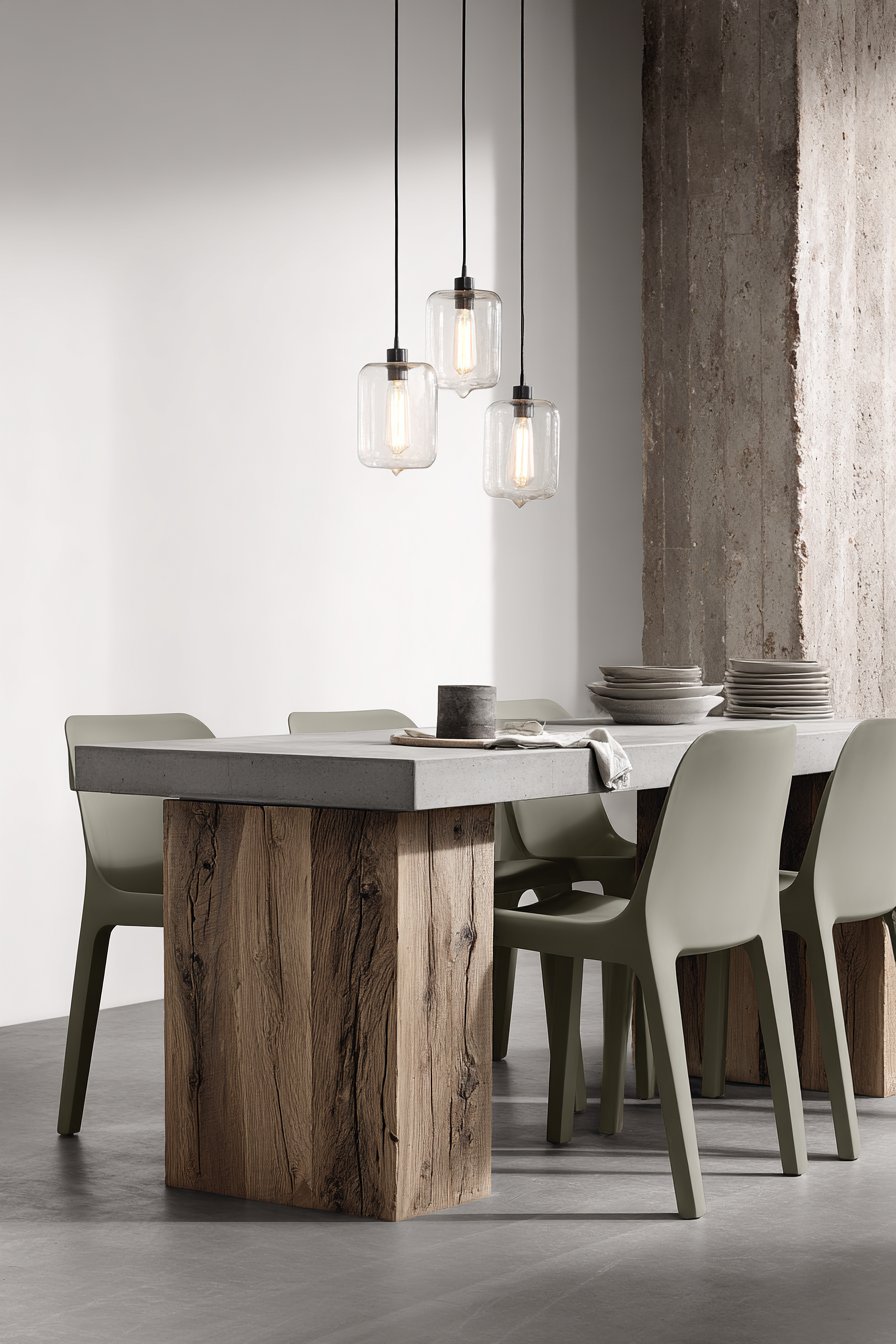
Smooth troweled concrete displays subtle grey tone variations. Slight aggregate texture adds organic interest to the industrial surface. Solid oak block legs with natural edge detail provide structural support. Six modern molded plastic chairs in muted sage green offer comfortable seating.
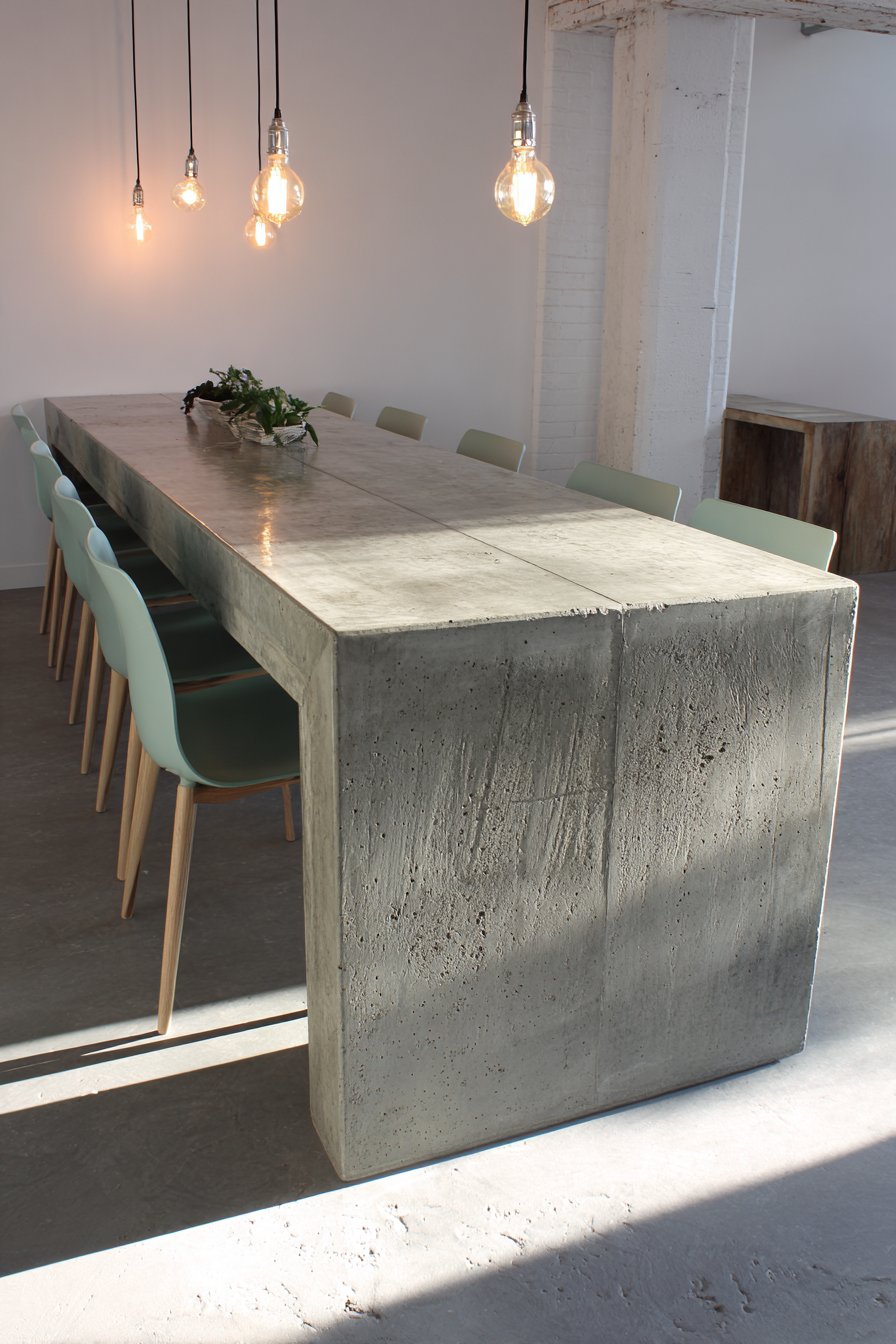
Minimalist industrial pendant lights with exposed bulbs hang above. Polished concrete flooring and white walls emphasize contemporary aesthetic. Natural afternoon light creates defined shadows highlighting concrete’s textural qualities. This fusion of materials creates sophisticated urban atmosphere.
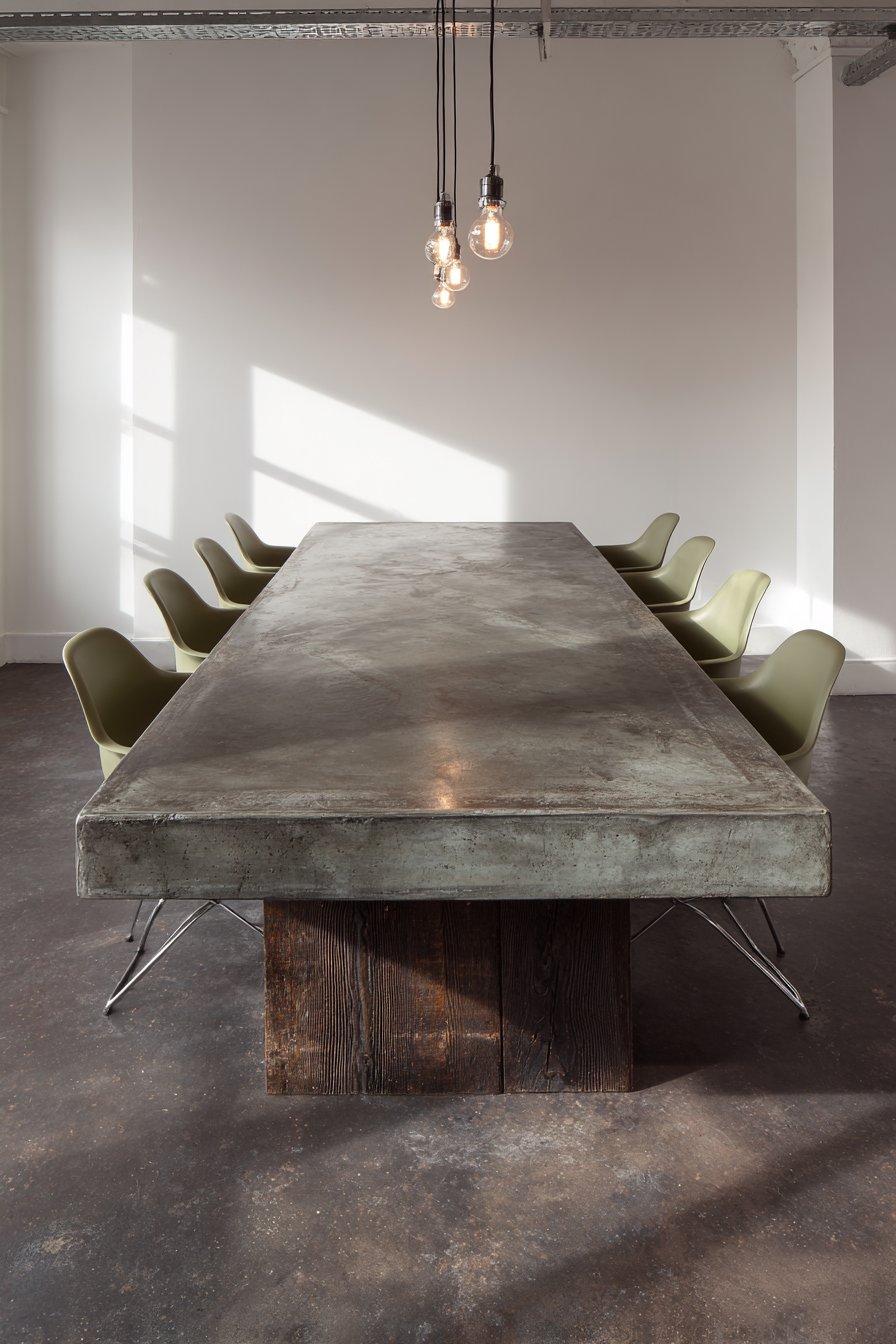
Concrete tables make bold material statements in contemporary spaces. The surface develops character through use while remaining highly durable. Concrete’s thermal mass feels cool to touch providing pleasant contrast. The material’s weight and solidity convey permanence and quality.
This design appeals to those who appreciate honest materials and modern restraint. The concrete and oak combination balances industrial and organic elements. Maintenance remains straightforward with proper sealing. The design feels current without chasing temporary trends.
Key Design Tips:
- Seal concrete surfaces with food-safe sealers to prevent staining
- Position furniture pads under legs to protect both table and flooring
- Clean concrete with mild soap and water, avoiding harsh chemicals
- Balance concrete’s coolness with warm wood tones and soft textiles
- Choose chair colors that complement rather than match the concrete exactly
12. Glamorous Art Deco Black Walnut
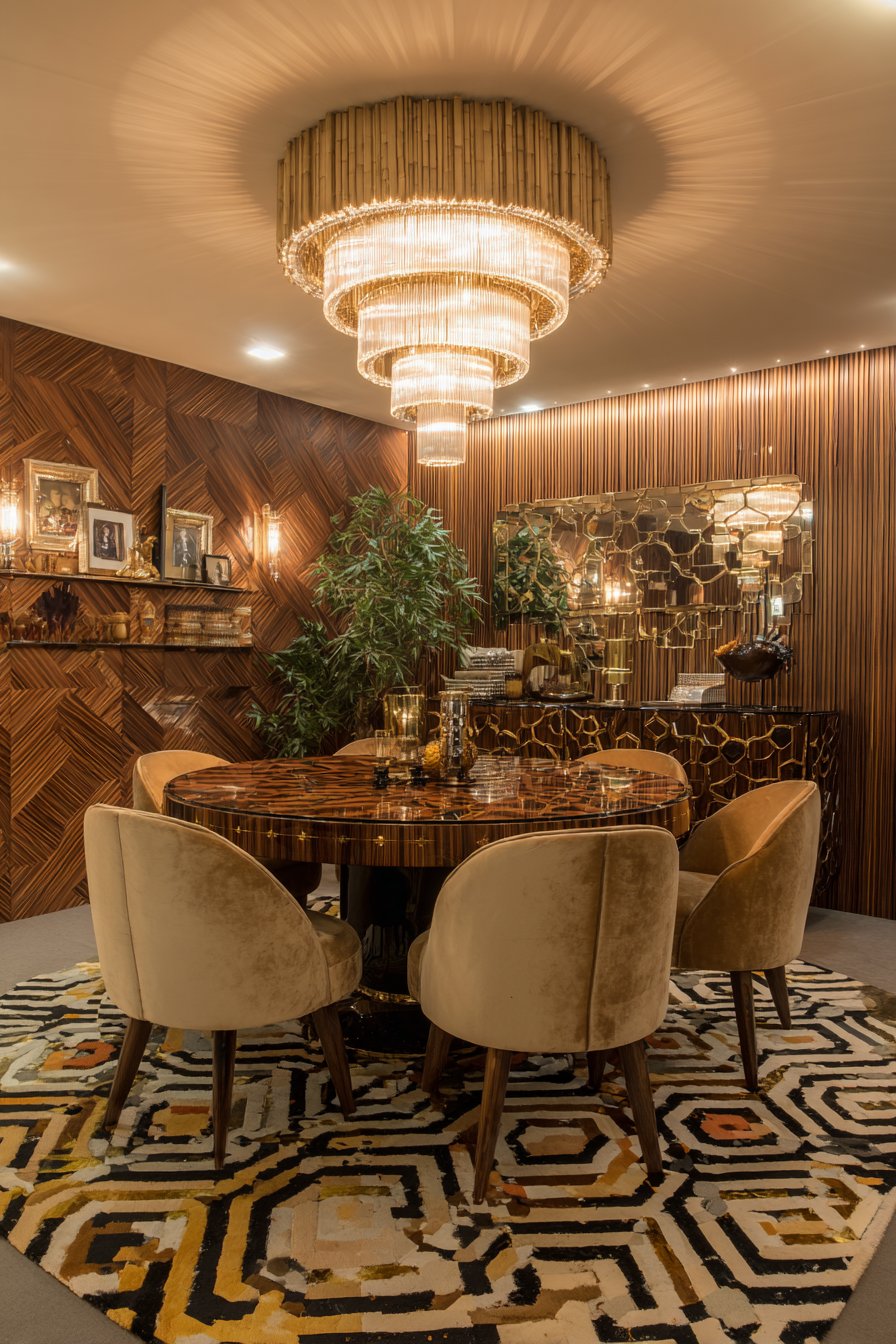
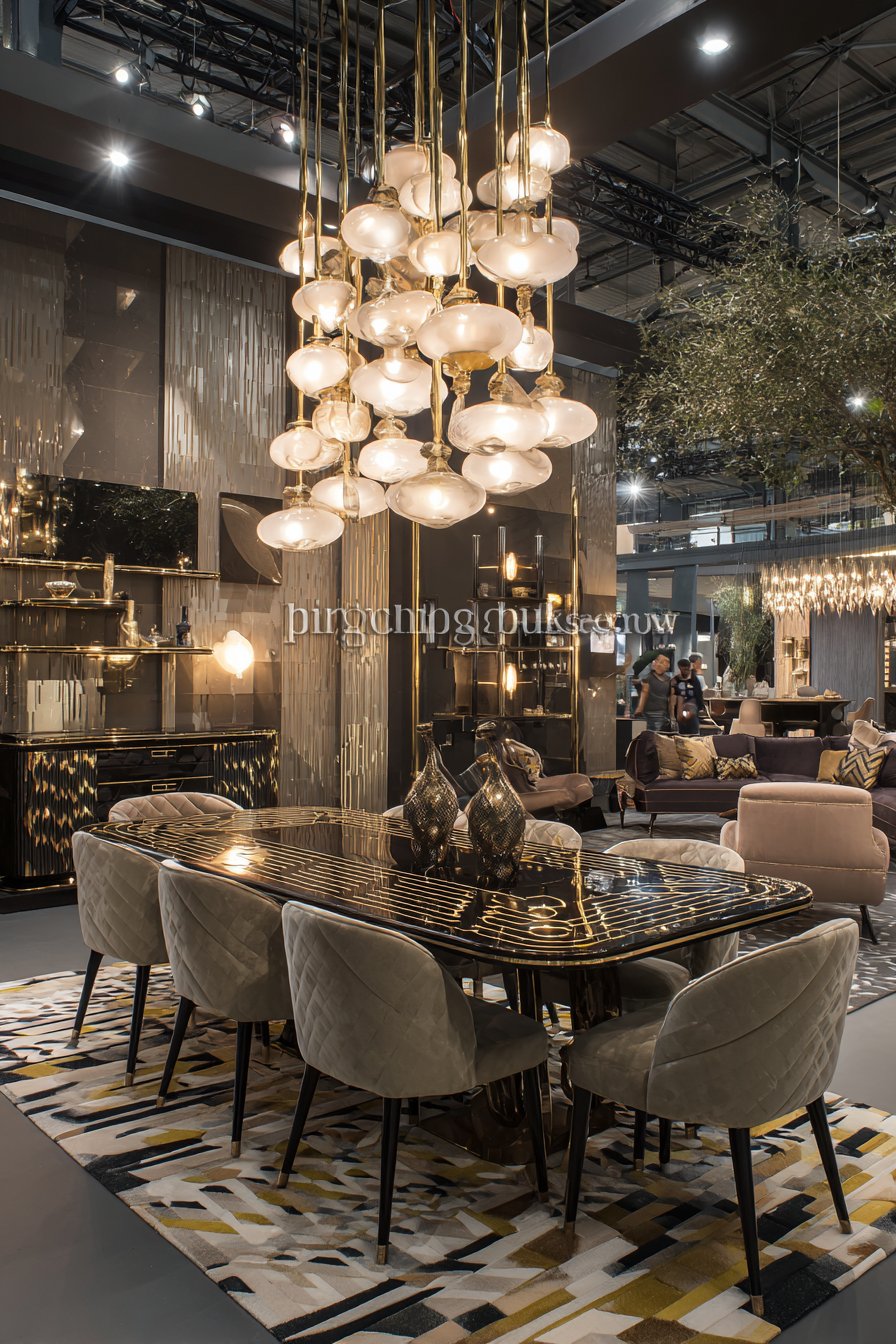
Lacquered black walnut features geometric inlay patterns in brass and mother-of-pearl. The intricate craftsmanship showcases 1920s design excellence. Six curved-back dining chairs display champagne velvet upholstery. Tapered wooden legs complete the glamorous aesthetic.
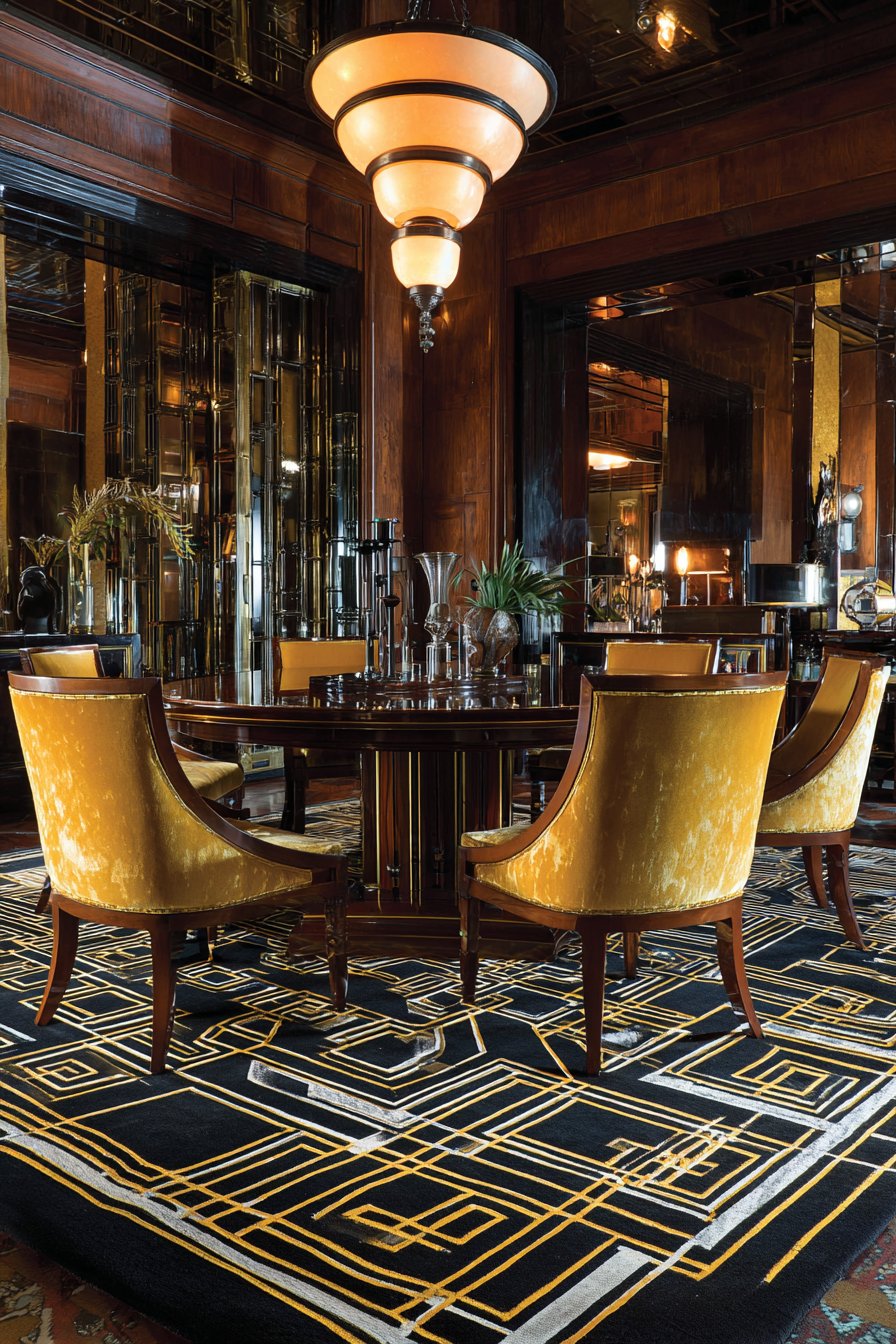
An elaborate tiered chandelier with frosted glass shades provides ambient lighting. Geometric patterned area rug in black, gold, and cream anchors the space. Every element contributes to the cohesive Art Deco aesthetic. The design celebrates luxury and artistic expression equally.
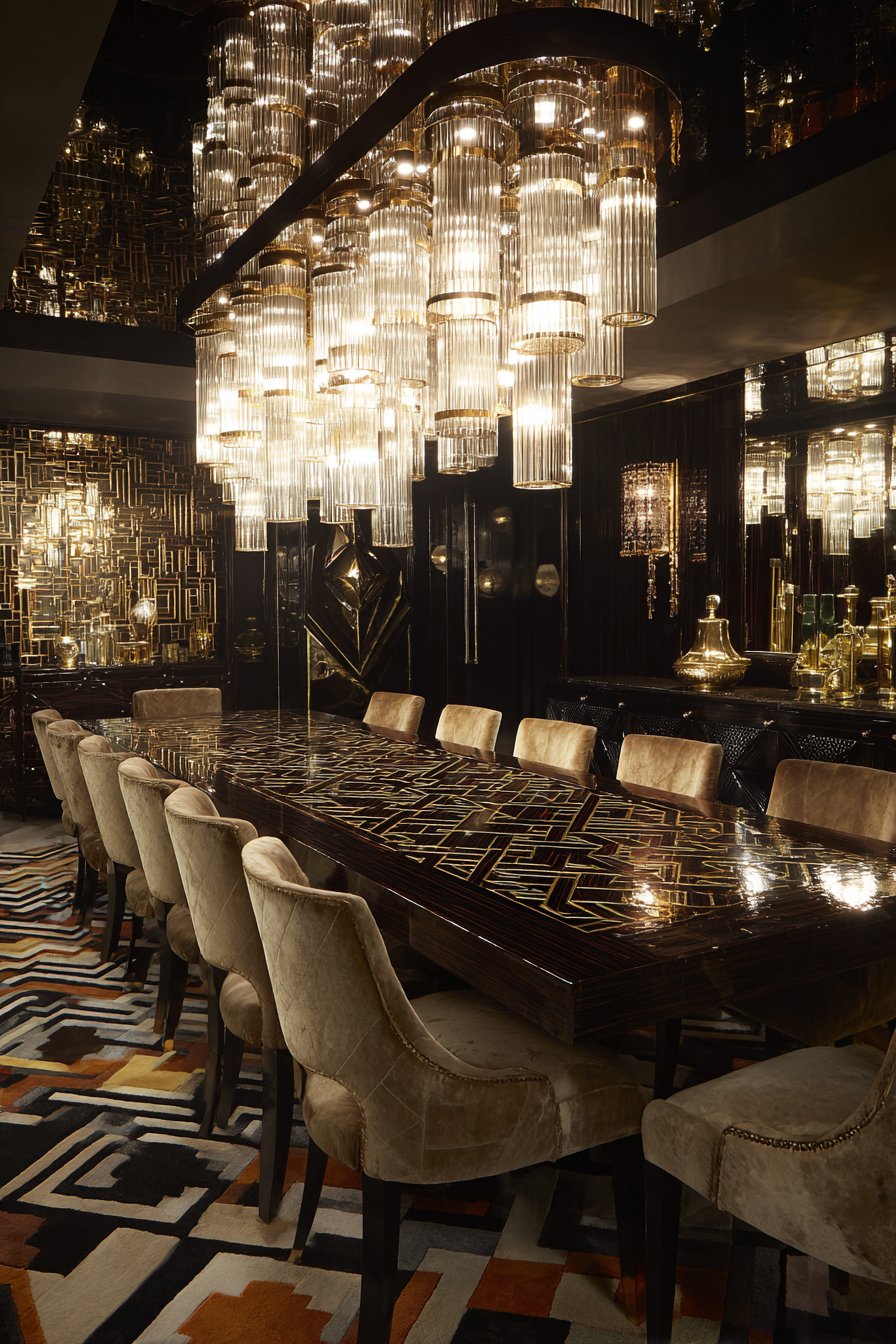
Art Deco style represents a specific historical period and design philosophy. The geometric patterns and luxurious materials defined an era. Modern interpretations maintain the glamorous essence while updating proportions. This style suits those who appreciate historical design movements.
The lacquered finish creates mirror-like surface requiring careful maintenance. The inlay work demands skilled craftsmanship rarely found today. Vintage Art Deco pieces often appreciate in value. This investment-quality furniture transcends temporary trends.
Key Design Tips:
- Protect lacquered finishes from direct sunlight to prevent fading
- Use felt pads under all decorative objects to avoid scratching
- Clean lacquer with microfiber cloths and specialized wood cleaners
- Position the chandelier as focal point coordinating with inlay patterns
- Balance ornate furniture with simpler wall treatments to avoid visual overwhelm
13. Practical Butcher Block Kitchen-Dining
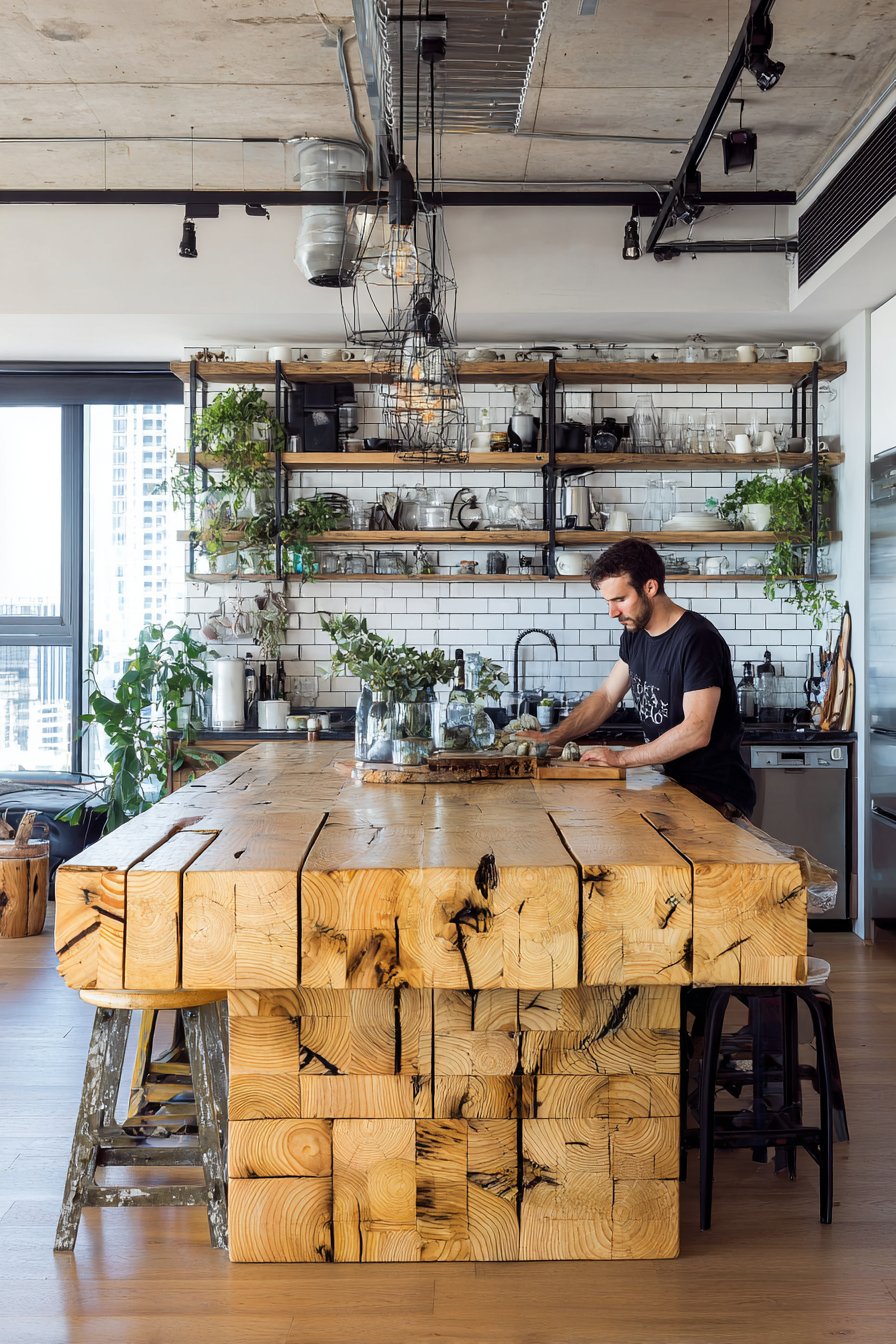
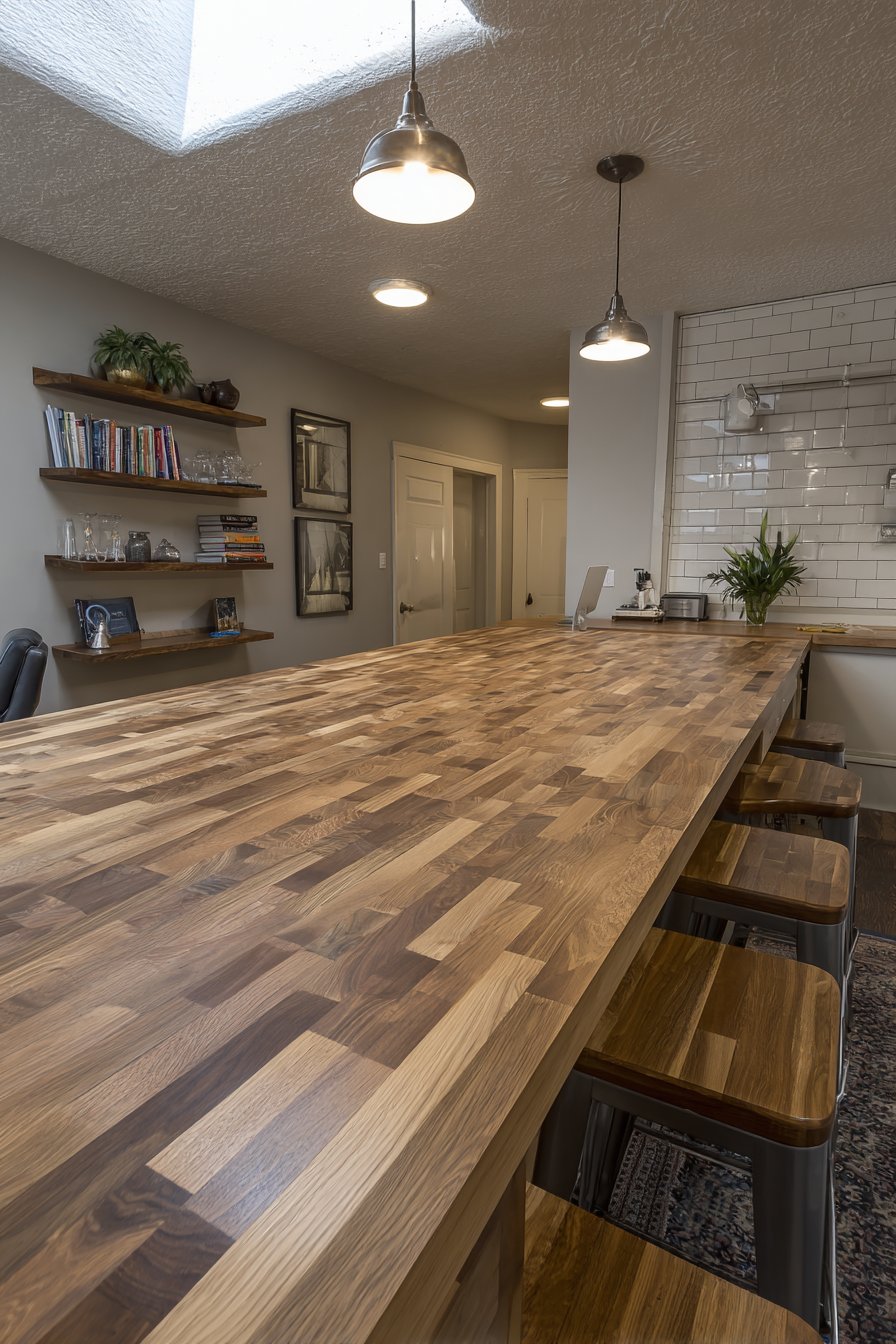
Thick maple wood strips display visible edge grain patterns. Food-safe oil finish shows natural color variations. The butcher block construction provides durable work-surface characteristics. Mixed metal and wood industrial stools offer casual seating options.
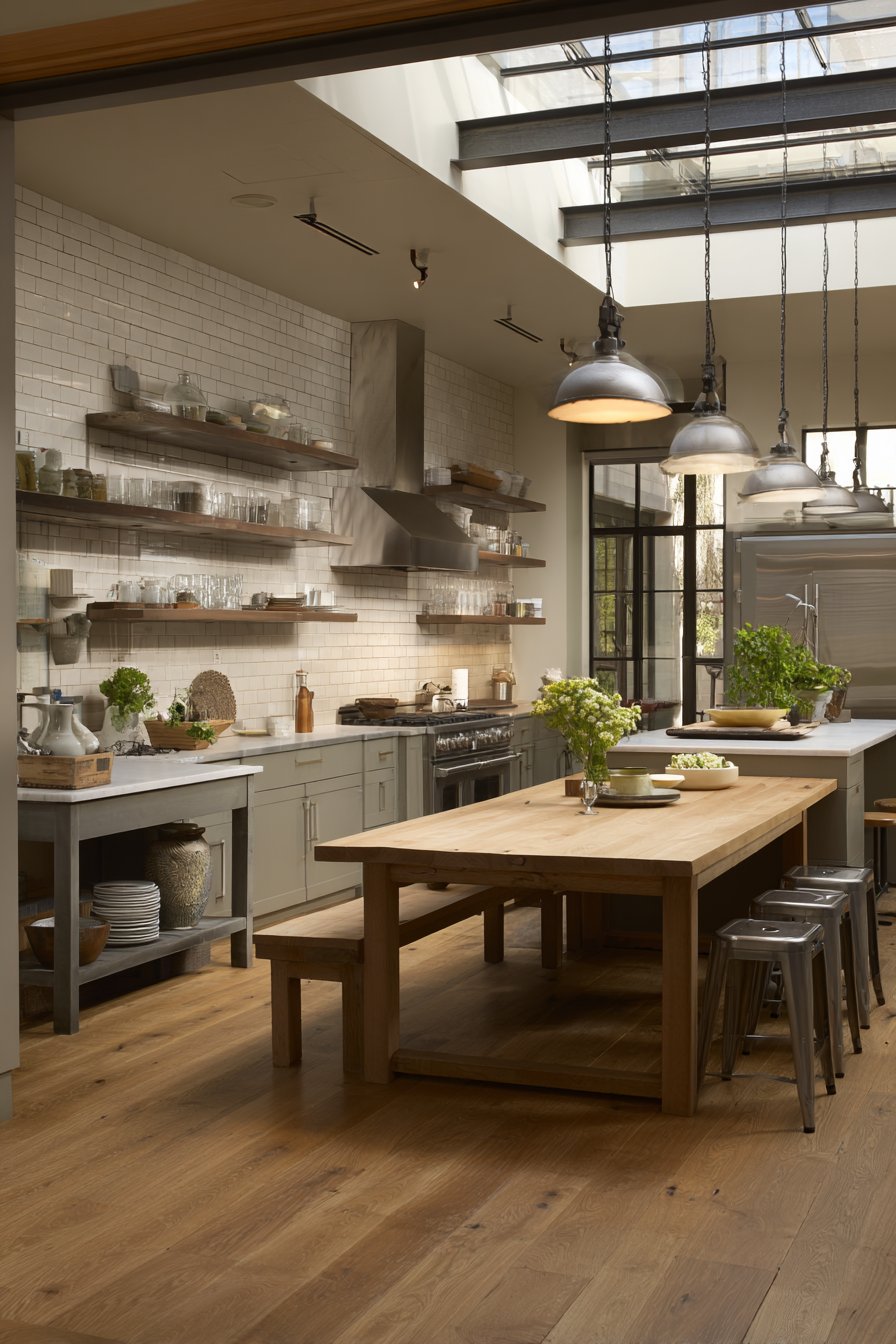
Open shelving unit nearby displays practical dinnerware and glassware. Subway tile backsplash indicates dual-purpose kitchen-dining space. Pendant lights provide task lighting for food preparation and meals. Natural light from skylight above creates even illumination throughout the day.
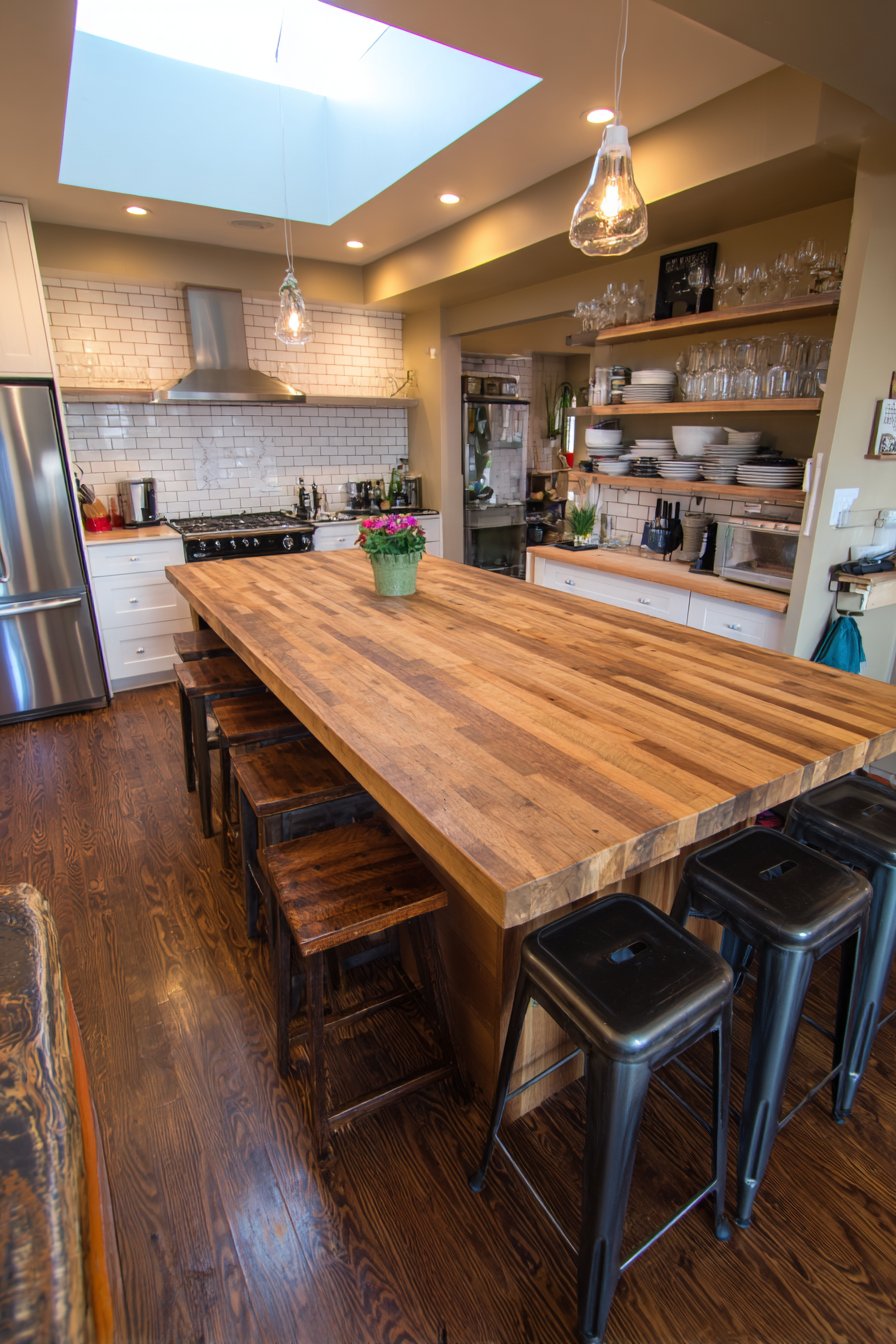
Butcher block surfaces serve multiple functions in modern homes. The material handles cutting and food preparation directly on surface. Regular oiling maintains the wood and creates water-resistant finish. The practical surface develops rich patina through daily use.
This multi-purpose design suits open-concept homes and small spaces. The table transitions seamlessly between cooking and dining functions. Industrial stools tuck completely under when not in use. The overall design prioritizes functionality without sacrificing style.
Key Design Tips:
- Oil butcher block monthly with food-safe mineral oil to prevent drying
- Sand out cuts and stains periodically to refresh the surface
- Choose end-grain construction for maximum durability under cutting activities
- Install adequate task lighting for safe food preparation on the surface
- Keep cleaning supplies readily accessible for quick sanitation between uses
14. Modern Farmhouse Trestle Grey-Washed Oak
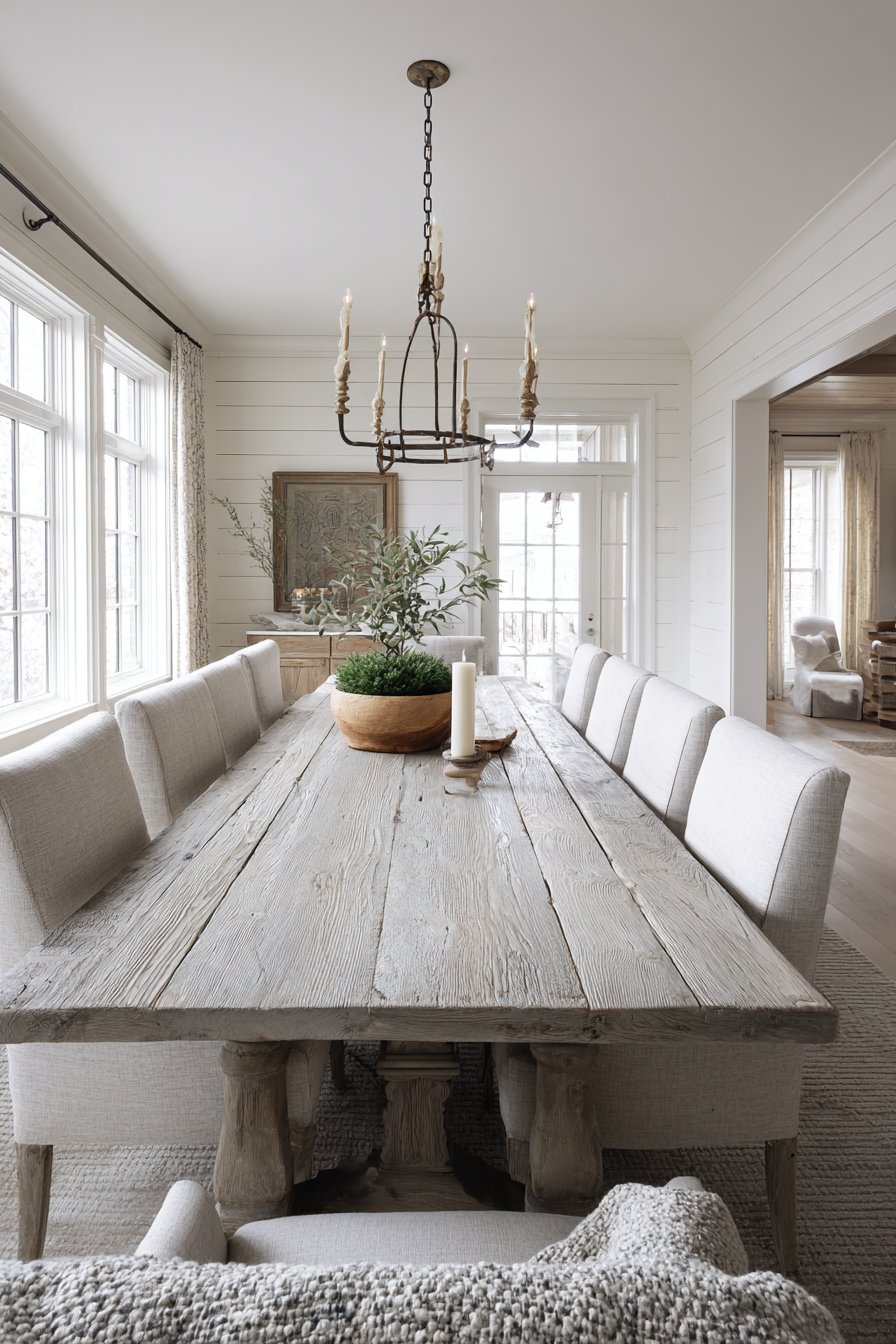
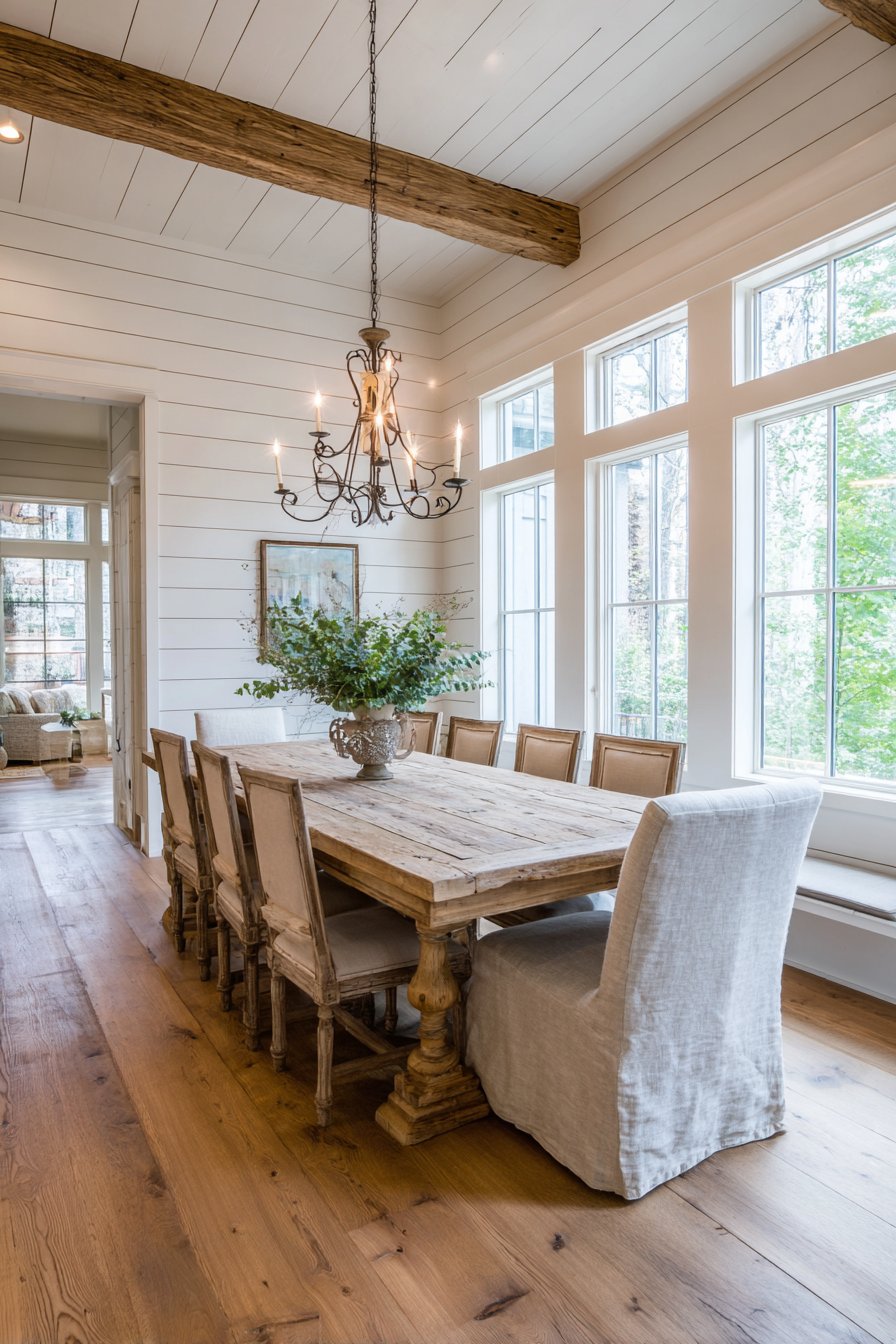
Distressed grey-washed oak displays visible wood grain and hand-hewn texture. Chunky turned legs connect via stretcher beam for structural stability. Eight upholstered dining chairs feature natural linen with wooden frames. Matching grey wash creates cohesive material palette.
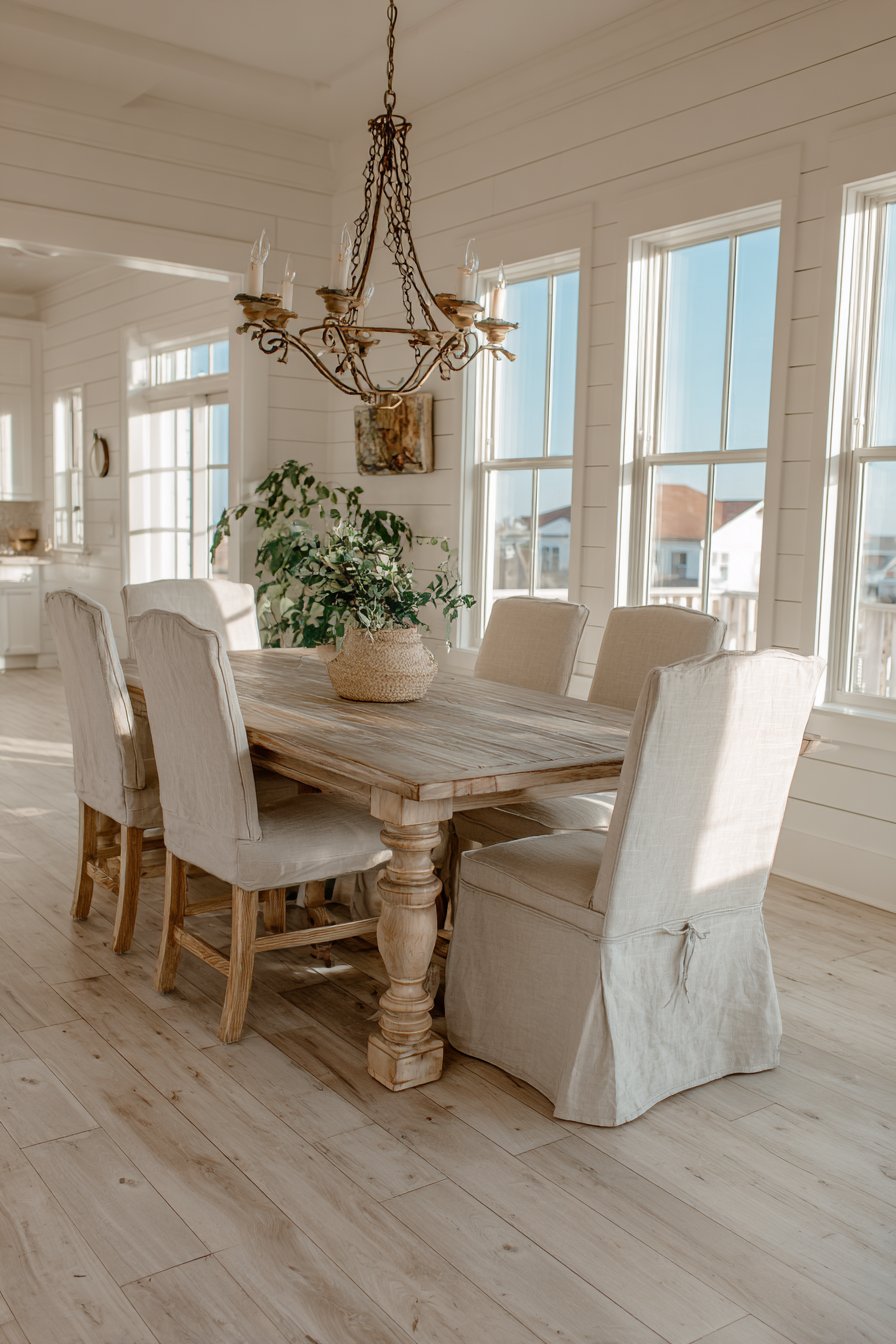
Shiplap accent wall painted soft white provides farmhouse-style backdrop. Wrought iron chandelier with candle-style lights creates rustic ambiance. Morning light through tall windows highlights the textured wood finish. The overall effect balances rustic character with modern sophistication.
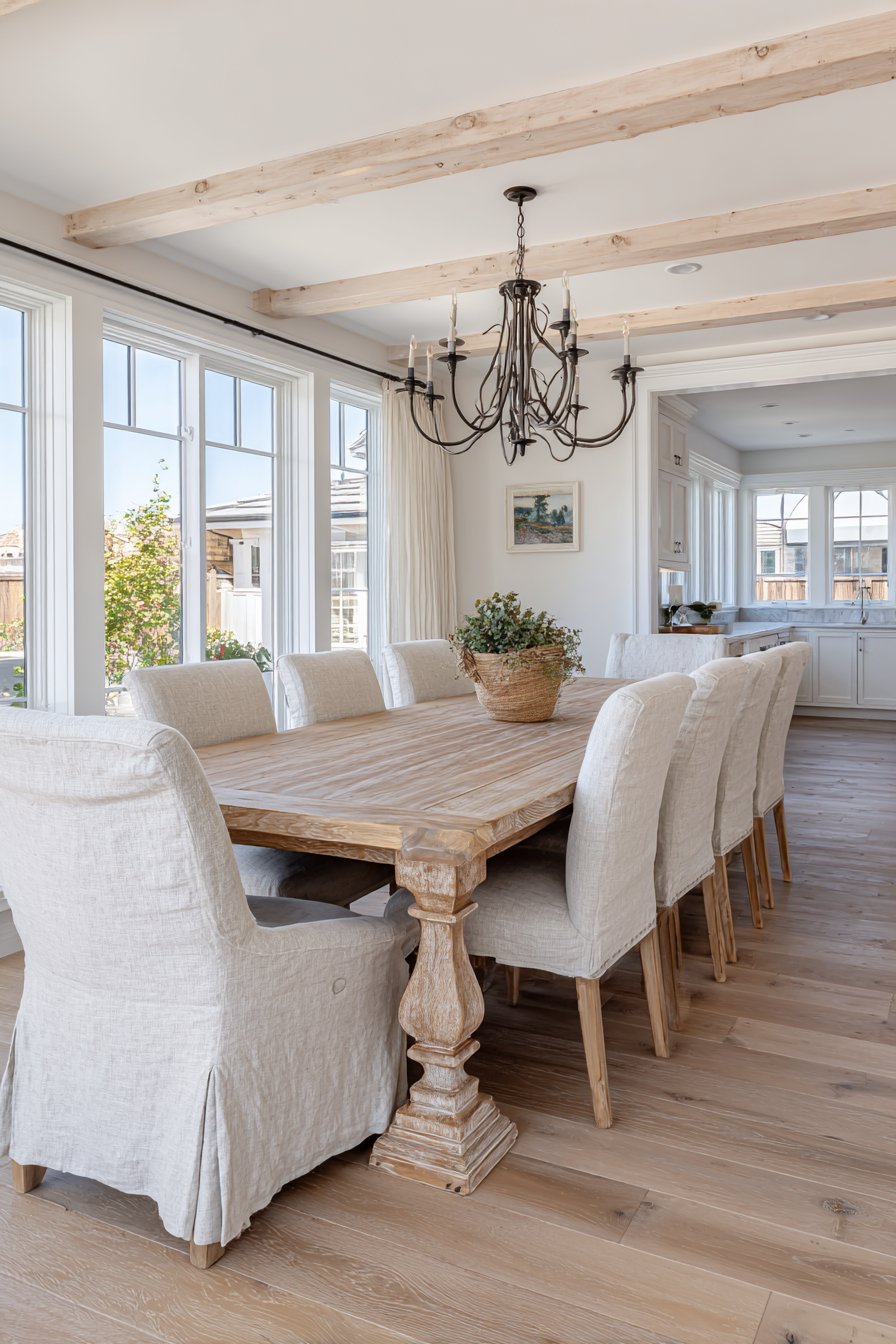
Trestle tables offer timeless design that suits multiple style directions. The stretcher beam provides structural support while adding visual interest. Grey-washed finishes update traditional farmhouse aesthetics for contemporary tastes. This design bridges traditional and modern sensibilities successfully.
Modern farmhouse style has gained enormous popularity in recent years. The aesthetic combines comfort with cleaner lines than traditional farmhouse. Natural materials remain central while finishes feel more refined. This approach appeals to broad demographic seeking livable elegance.
Key Design Tips:
- Apply grey wash in thin layers to control opacity and final tone
- Distress strategically at edges and corners where natural wear occurs
- Choose linen upholstery in neutral tones for versatile farmhouse aesthetic
- Layer lighting with chandelier supplemented by wall sconces or floor lamps
- Incorporate shiplap sparingly as an accent rather than covering entire rooms
15. Ultra-Modern High-Gloss White Waterfall
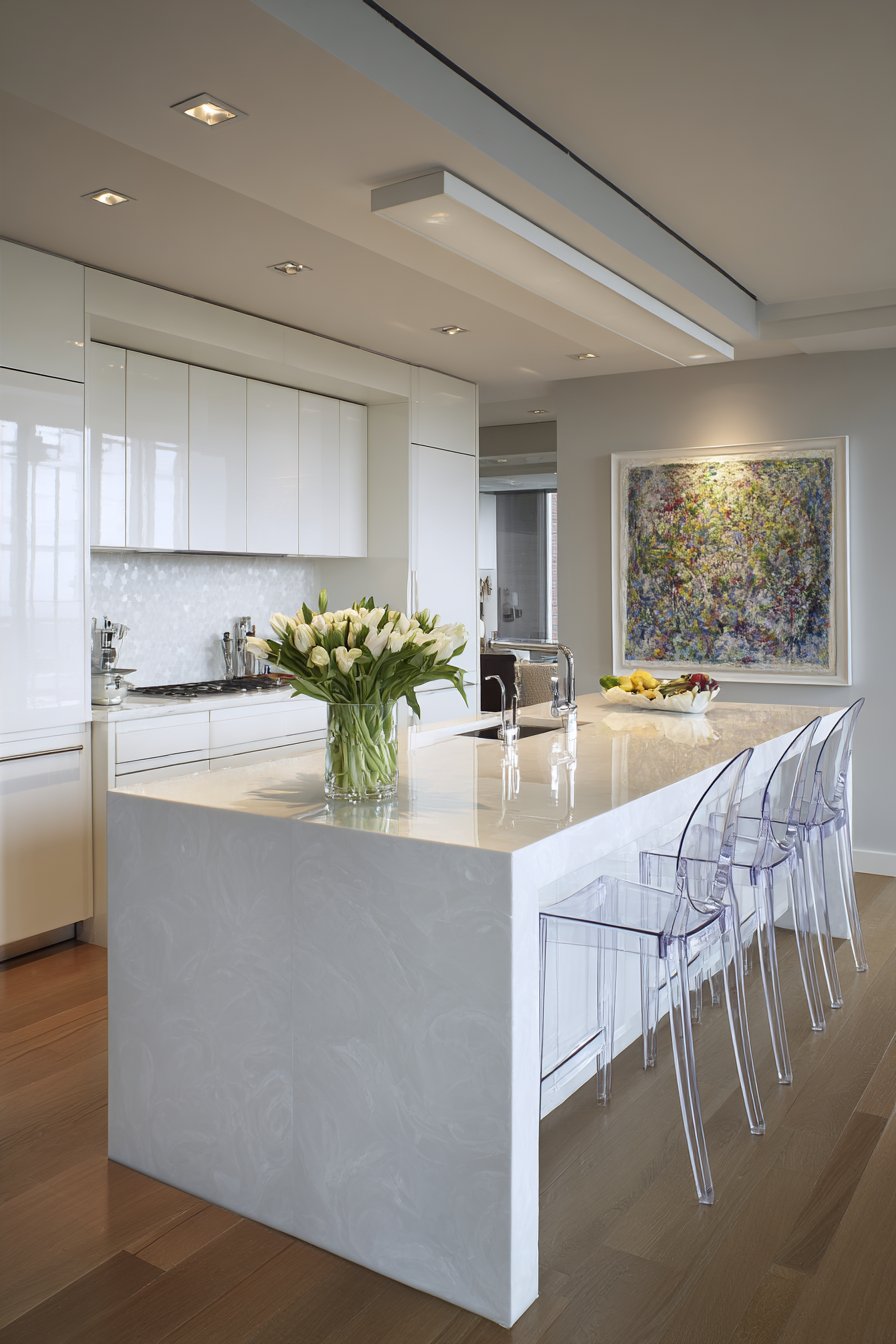
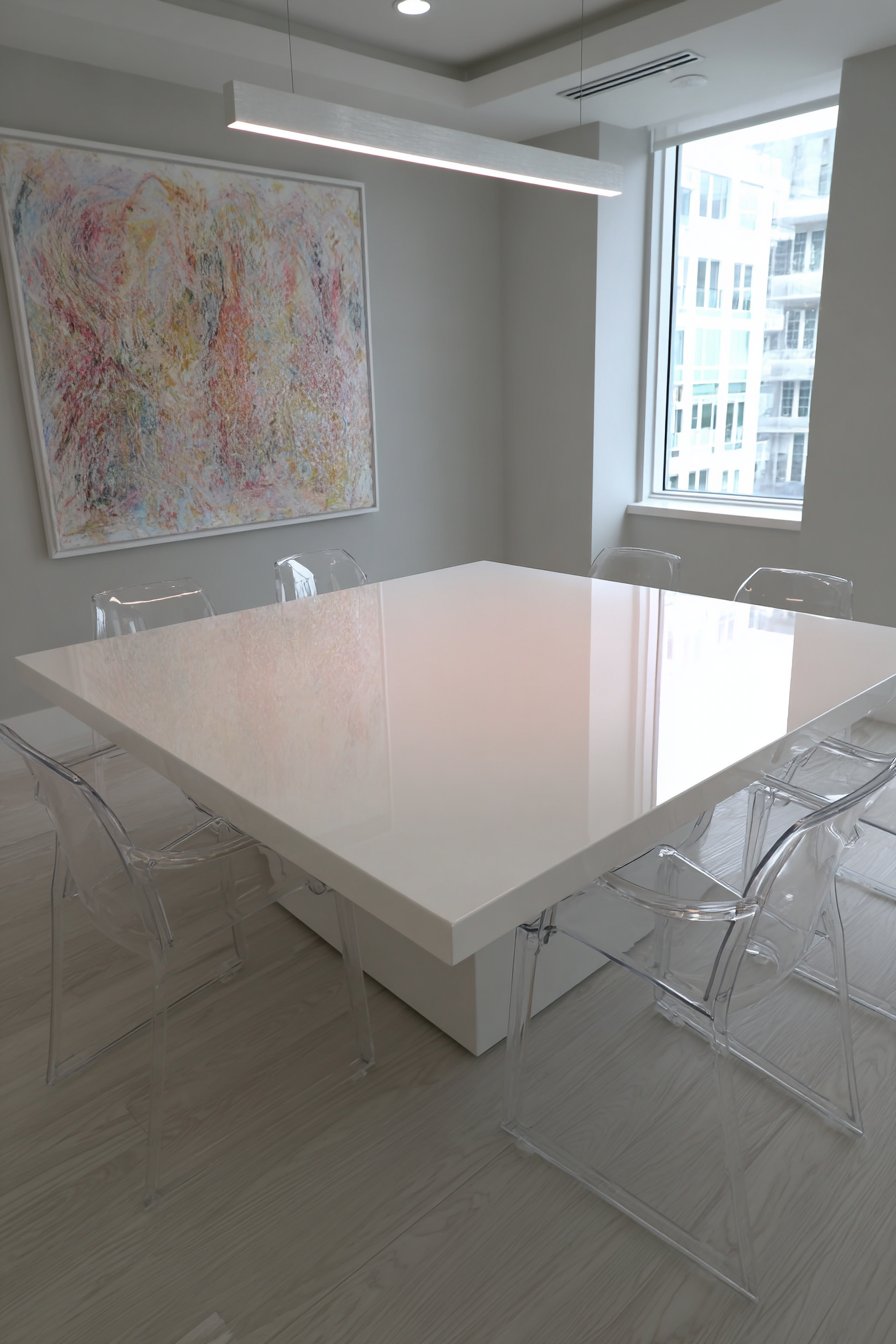
High-gloss white lacquer creates a reflective surface that amplifies light. Waterfall edge design flows seamlessly from top to floor. Four acrylic ghost chairs maintain visual lightness and spatial openness. White oak flooring and light grey walls create monochromatic palette.
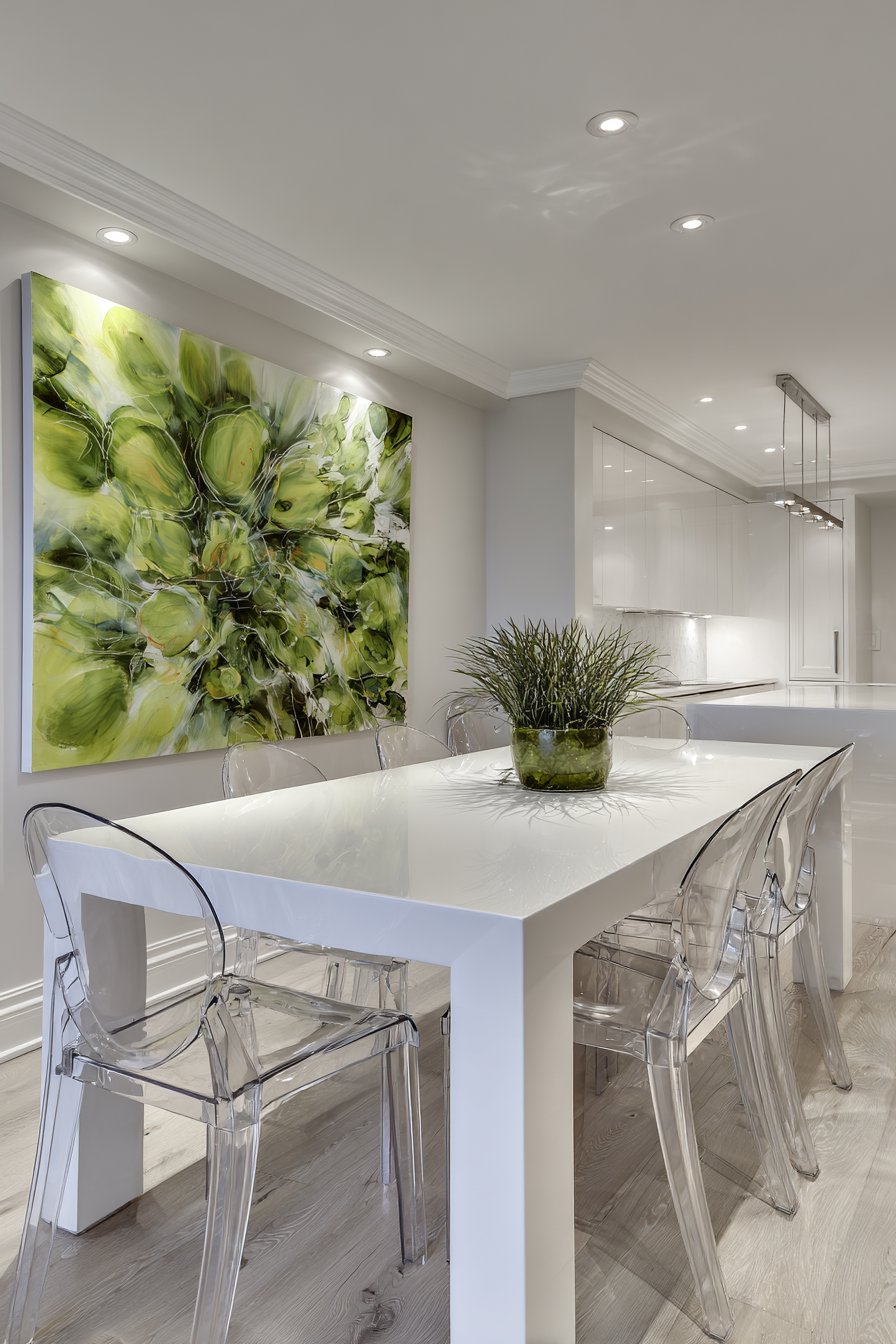
Minimalist linear LED pendant provides functional task lighting efficiently. Large format abstract artwork adds singular color accent. The transparent seating elements preserve sightlines through the space. This ultra-modern aesthetic prioritizes clean lines and spatial clarity.
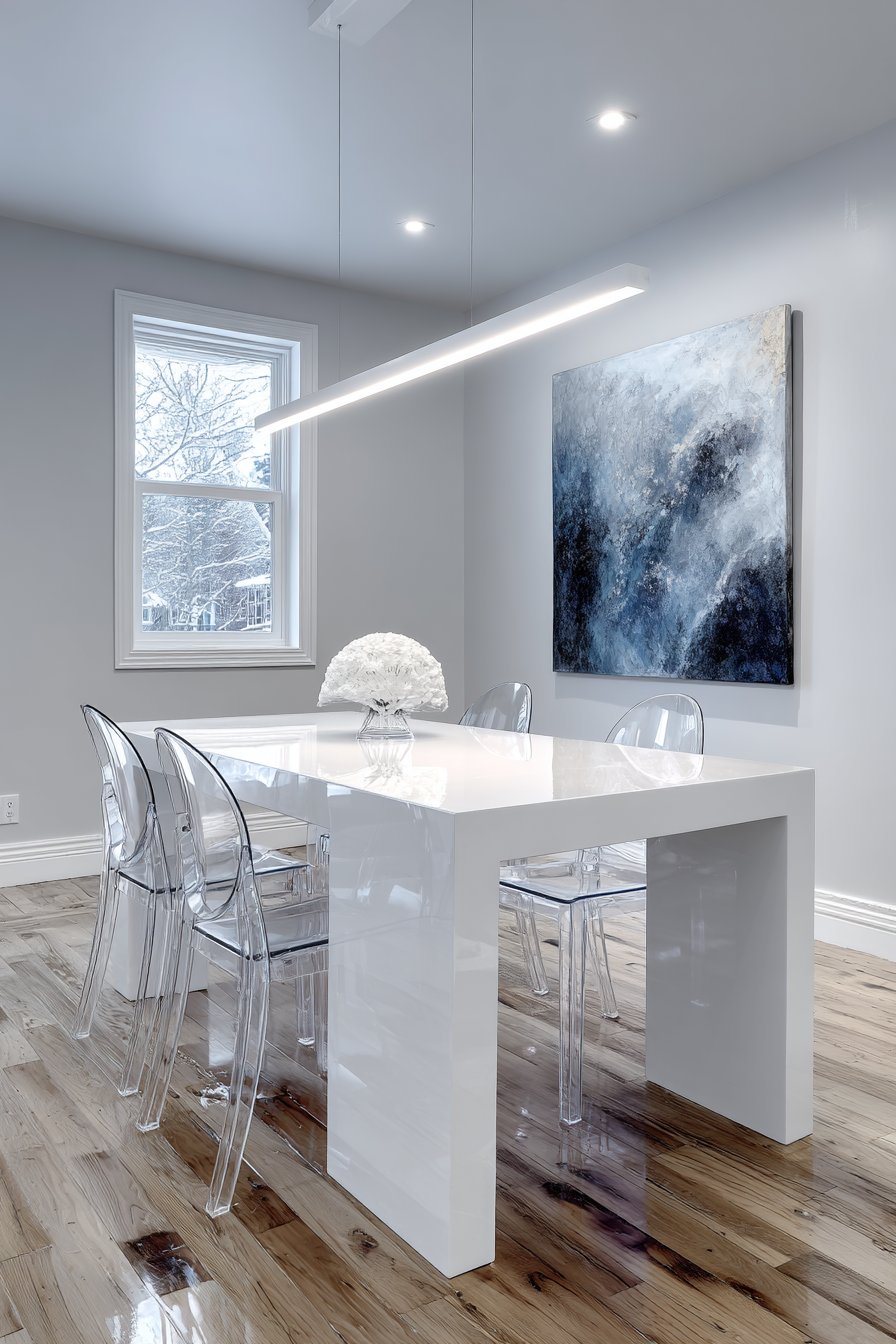
High-gloss finishes require dedicated maintenance but reward with stunning appearance. The reflective surface captures and bounces light dramatically. Waterfall edges showcase material thickness and construction quality. This design makes strong statement in contemporary interiors.
The monochromatic palette creates serene sophisticated atmosphere. Color accents can change easily without furniture replacement. Ghost chairs virtually disappear allowing furniture arrangement flexibility. This minimal approach suits those who value spatial clarity above all.
Key Design Tips:
- Clean high-gloss surfaces daily with microfiber cloths to maintain shine
- Use placemats religiously to protect against scratches and heat damage
- Position LED lighting to minimize glare on reflective surfaces
- Balance the cool palette with warm textiles and wood flooring
- Limit decorative objects to preserve the minimalist aesthetic integrity
16. Eclectic Bohemian Carved Mango Wood
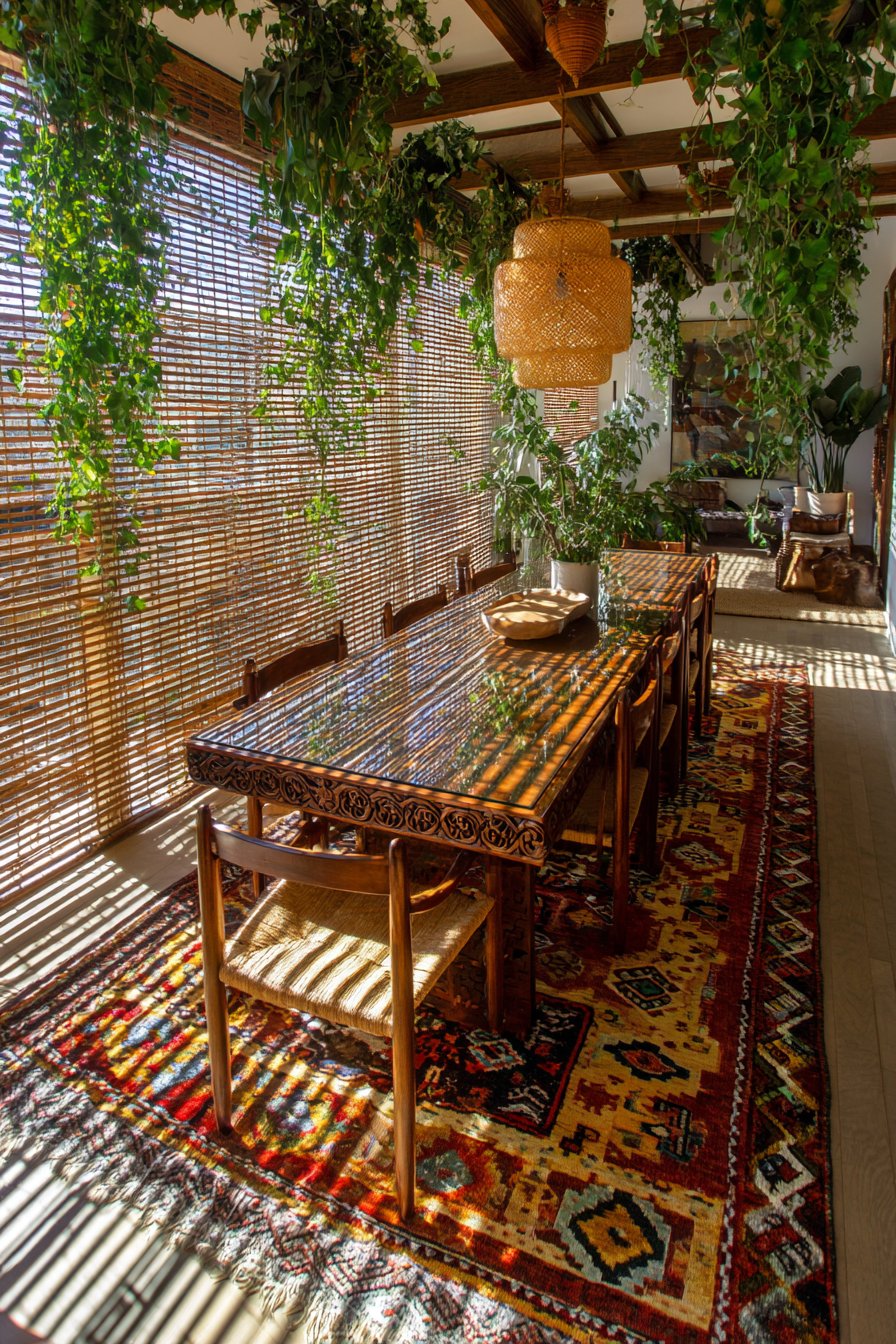
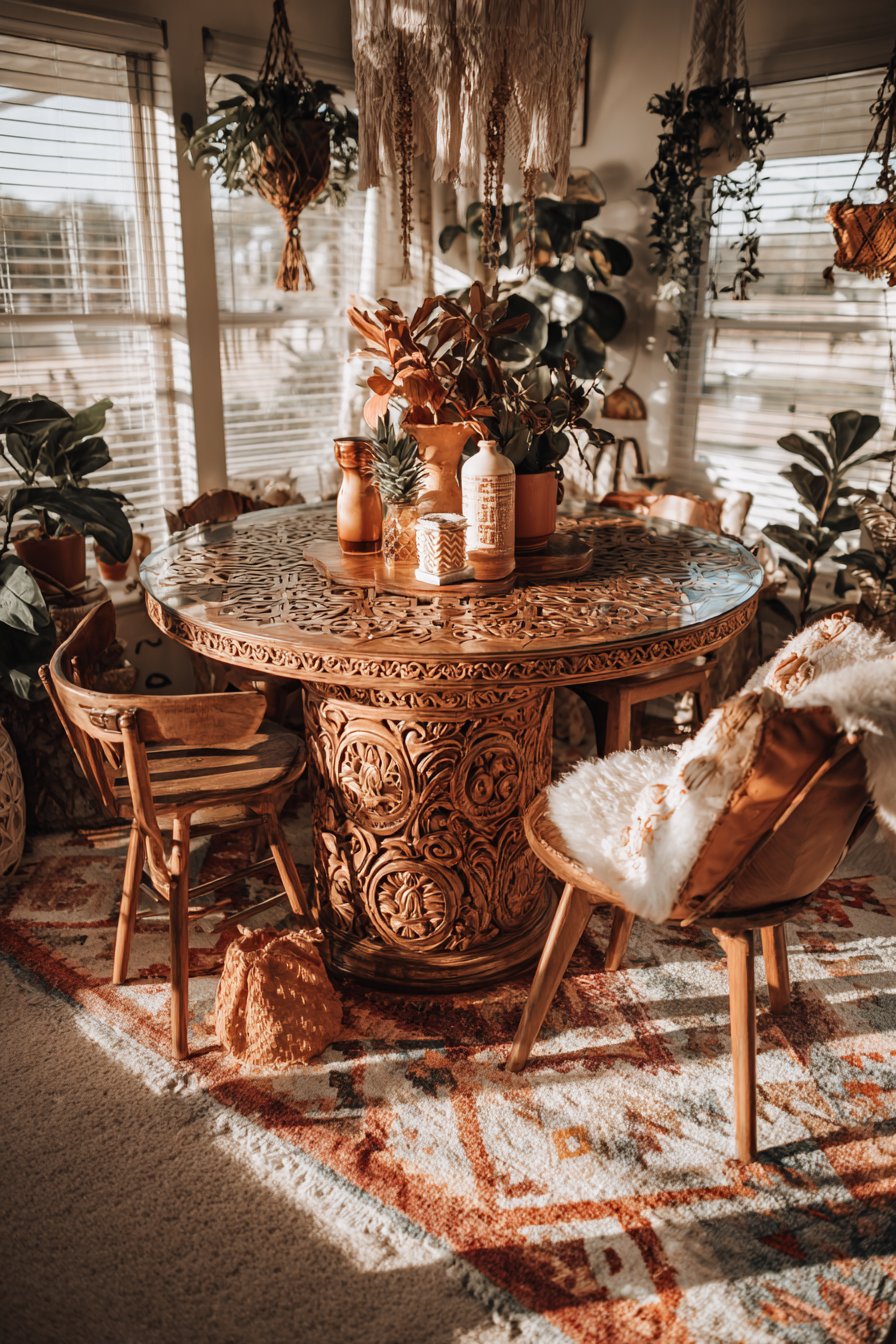
Intricately carved mango wood base displays traditional Indian motifs. Natural medium-brown stain highlights the detailed carving work. Thick glass surface showcases the carved detail underneath beautifully. Mismatched vintage chairs in various wood tones create eclectic seating.
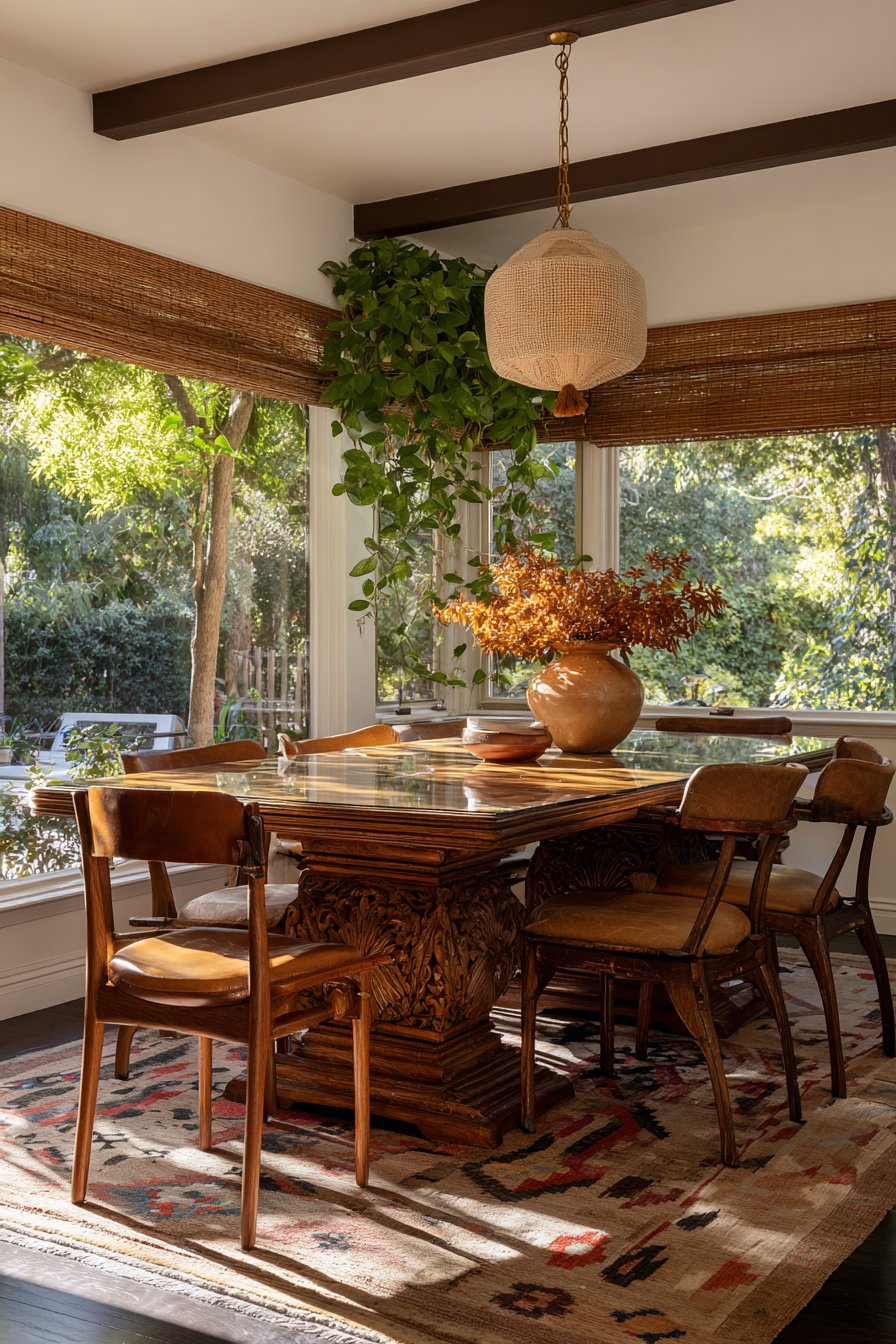
Colorful kilim rug with geometric patterns anchors the space vibrantly. Macramé pendant light and abundant hanging plants add organic texture. Natural light filters through bamboo blinds creating dappled shadows. The layered aesthetic celebrates collected pieces and cultural design elements.
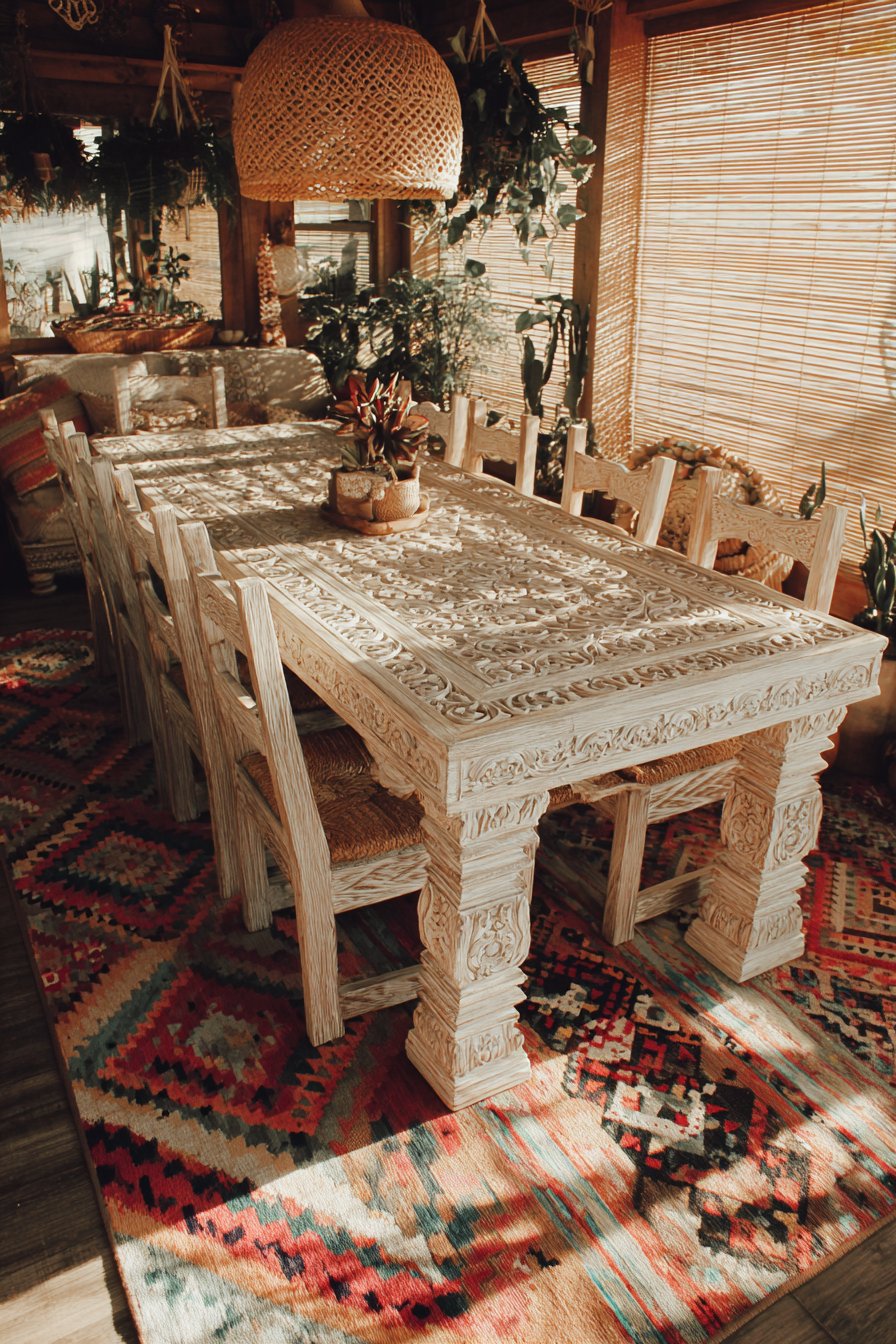
Bohemian style embraces pattern mixing and global influences fearlessly. The approach values collected pieces over matching sets. Each element contributes an individual character to the overall composition. This design philosophy celebrates creativity and personal expression.
The glass top protects the intricate carving while allowing visibility. Mango wood provides sustainable alternative to traditional hardwoods. The material carves beautifully due to its medium density. This design suits those who appreciate craftsmanship and cultural artistry.
Key Design Tips:
- Mix patterns in different scales to avoid visual chaos
- Choose carved wood from sustainable sources with proper FSC certification
- Clean glass tops frequently to maintain visibility of carved details below
- Layer textiles and plants for authentic bohemian depth and texture
- Embrace asymmetry and collected pieces rather than perfectly coordinated sets
17. Narrow Space Dark Walnut Efficiency
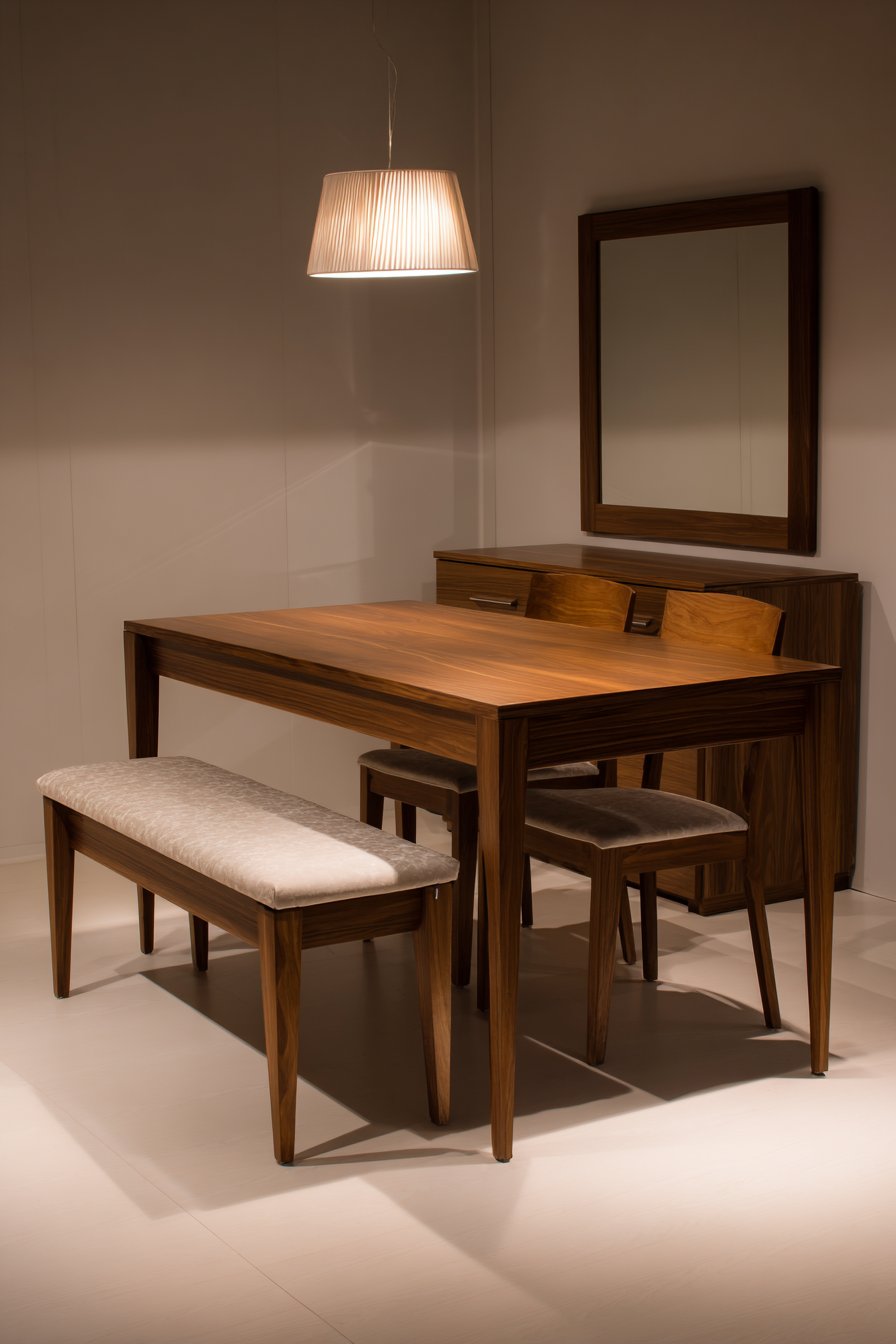
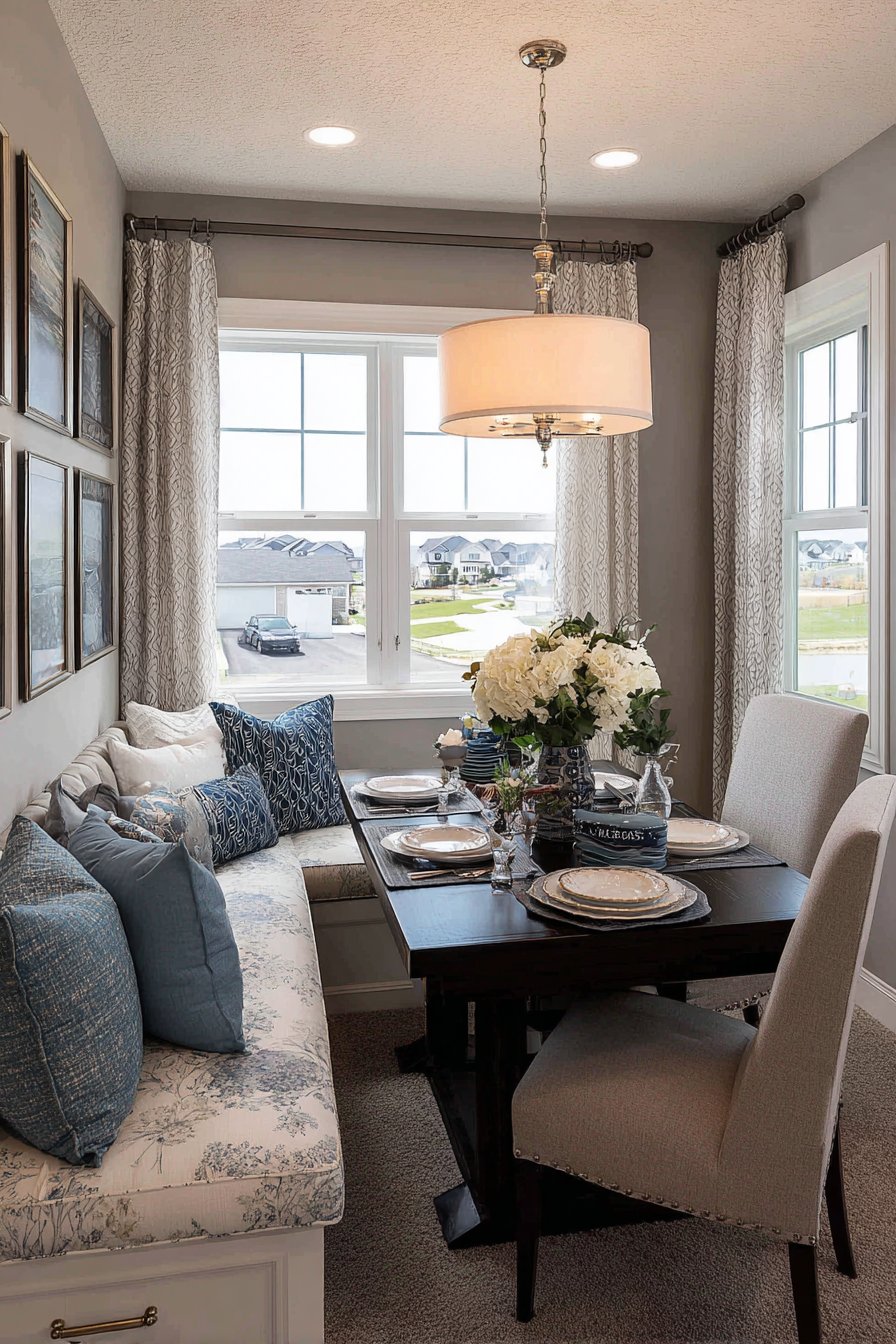
Narrow rectangular table in dark walnut suits small dining rooms perfectly. Slim tapered legs maintain visual lightness despite dark finish. Four people seat comfortably with upholstered bench on one side. Two chairs opposite provide flexible seating arrangement.
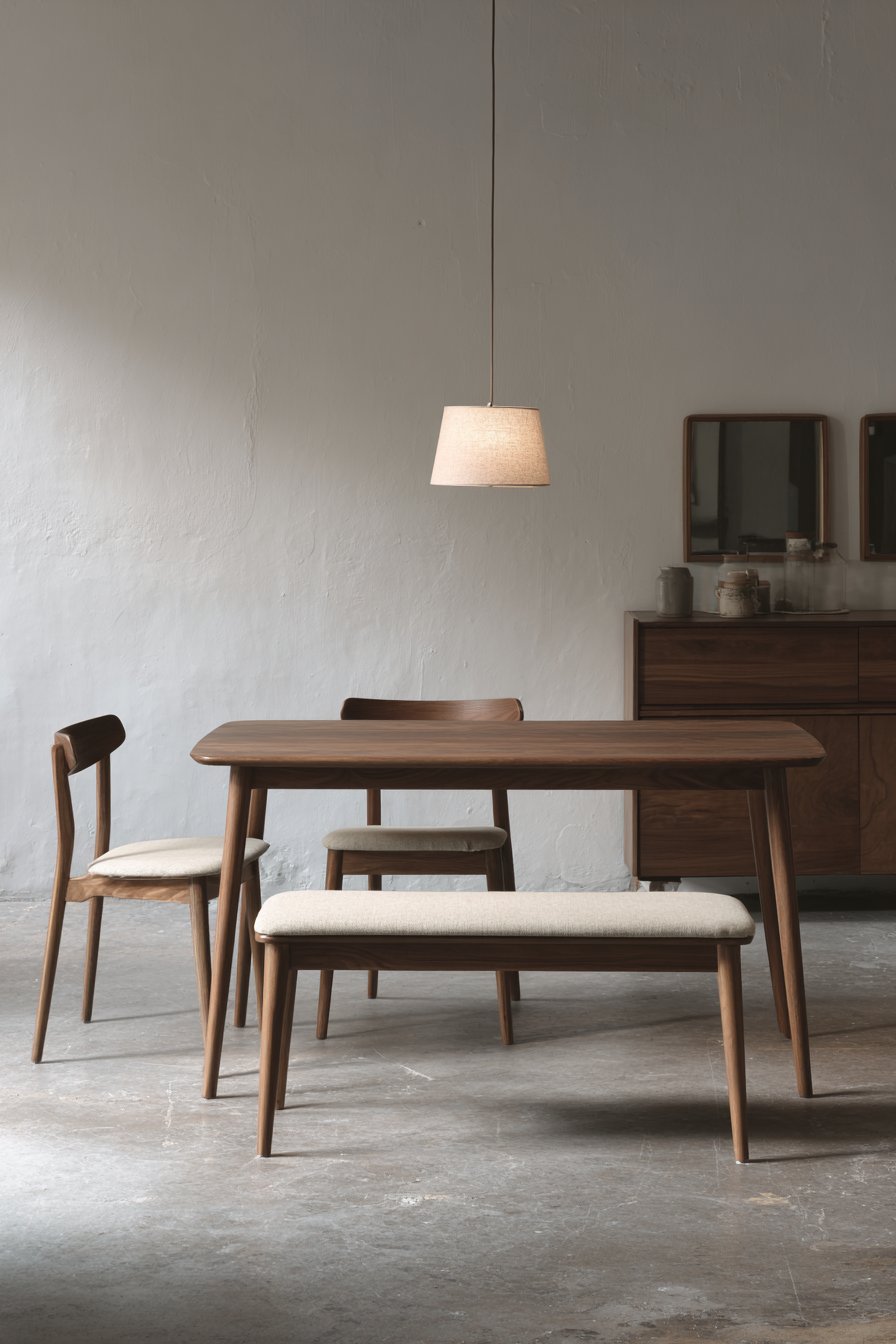
Built-in storage drawer at table end maximizes functional efficiency. Light grey walls and strategic mirror placement visually expand compact area. Single pendant light with fabric shade provides focused illumination. The design demonstrates effective small-space solutions beautifully.
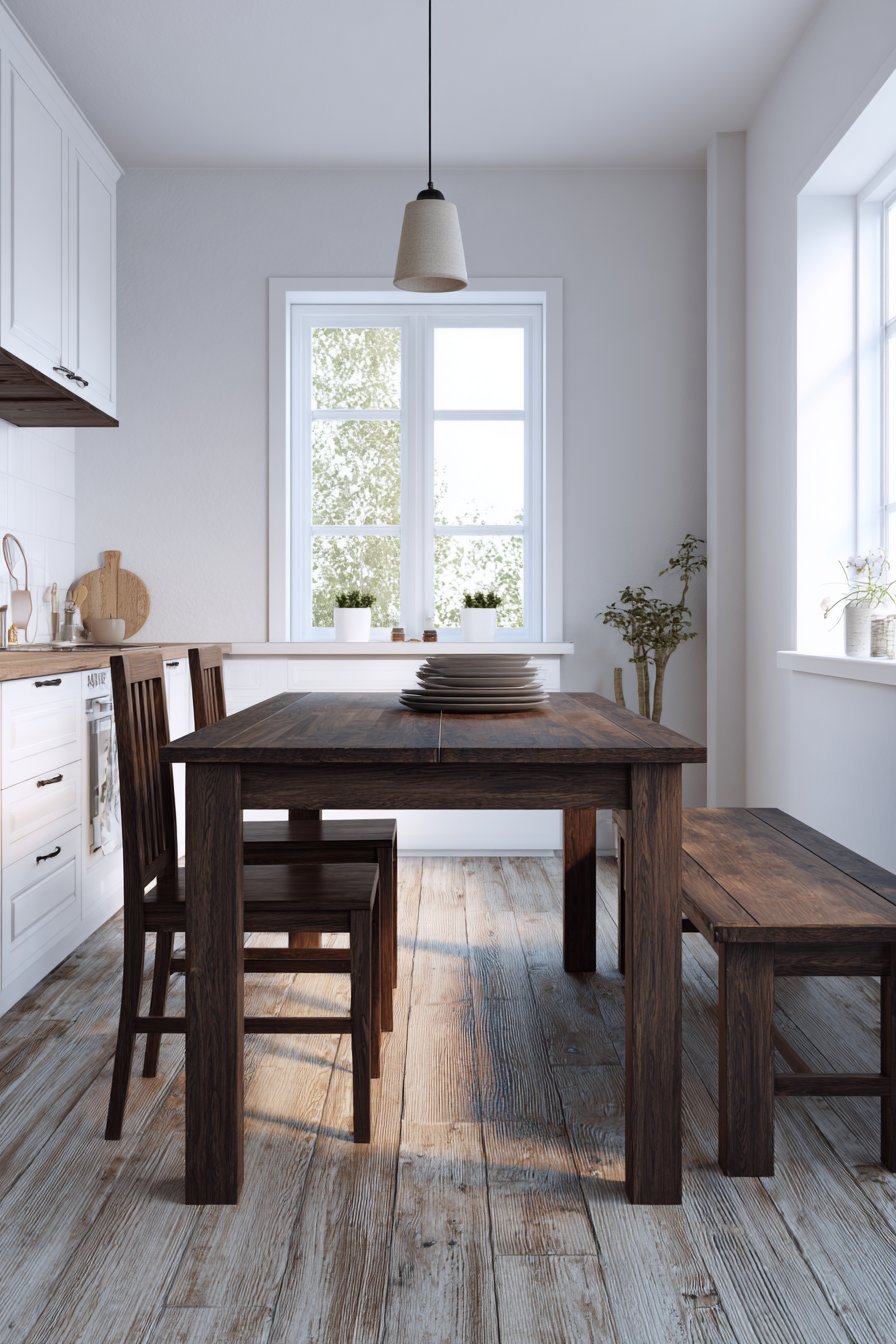
Narrow tables work well in galley-style spaces and small apartments. The rectangular proportion fits rooms where square tables waste space. Bench seating on one side accommodates more people than individual chairs. This practical approach maximizes limited square footage intelligently.
Dark wood in small spaces requires careful lighting consideration. Adequate illumination prevents the finish from making spaces feel cramped. Mirrors strategically reflect light and create depth perception. These techniques allow rich wood tones in compact areas.
Key Design Tips:
- Measure doorways carefully before purchasing furniture for small spaces
- Choose benches with hidden storage to maximize functional efficiency
- Paint walls in light colors to prevent dark furniture from overwhelming
- Install mirrors opposite windows to maximize natural light reflection
- Select pendant lights with downward focus to concentrate task lighting
18. Weather-Resistant Outdoor Teak
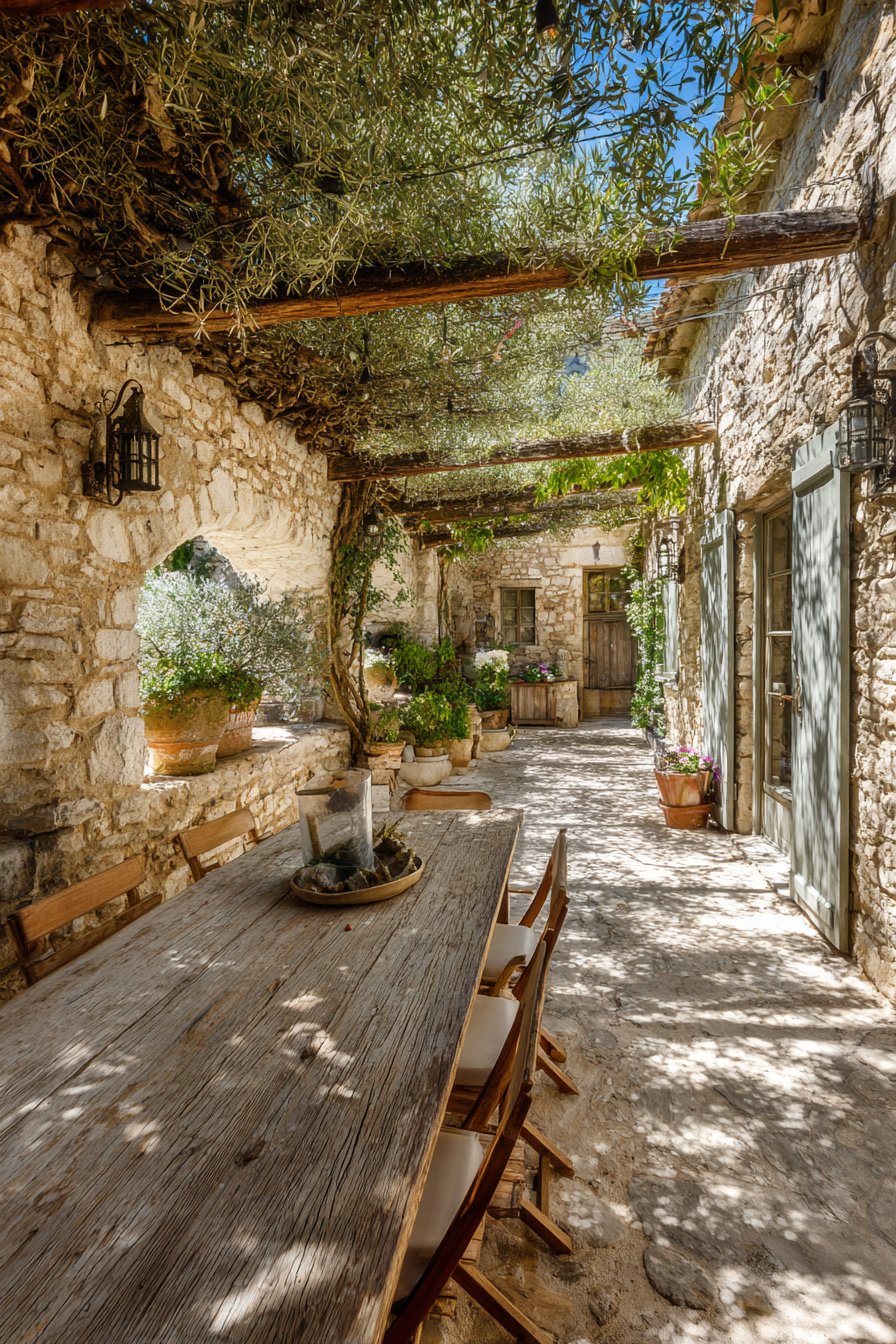
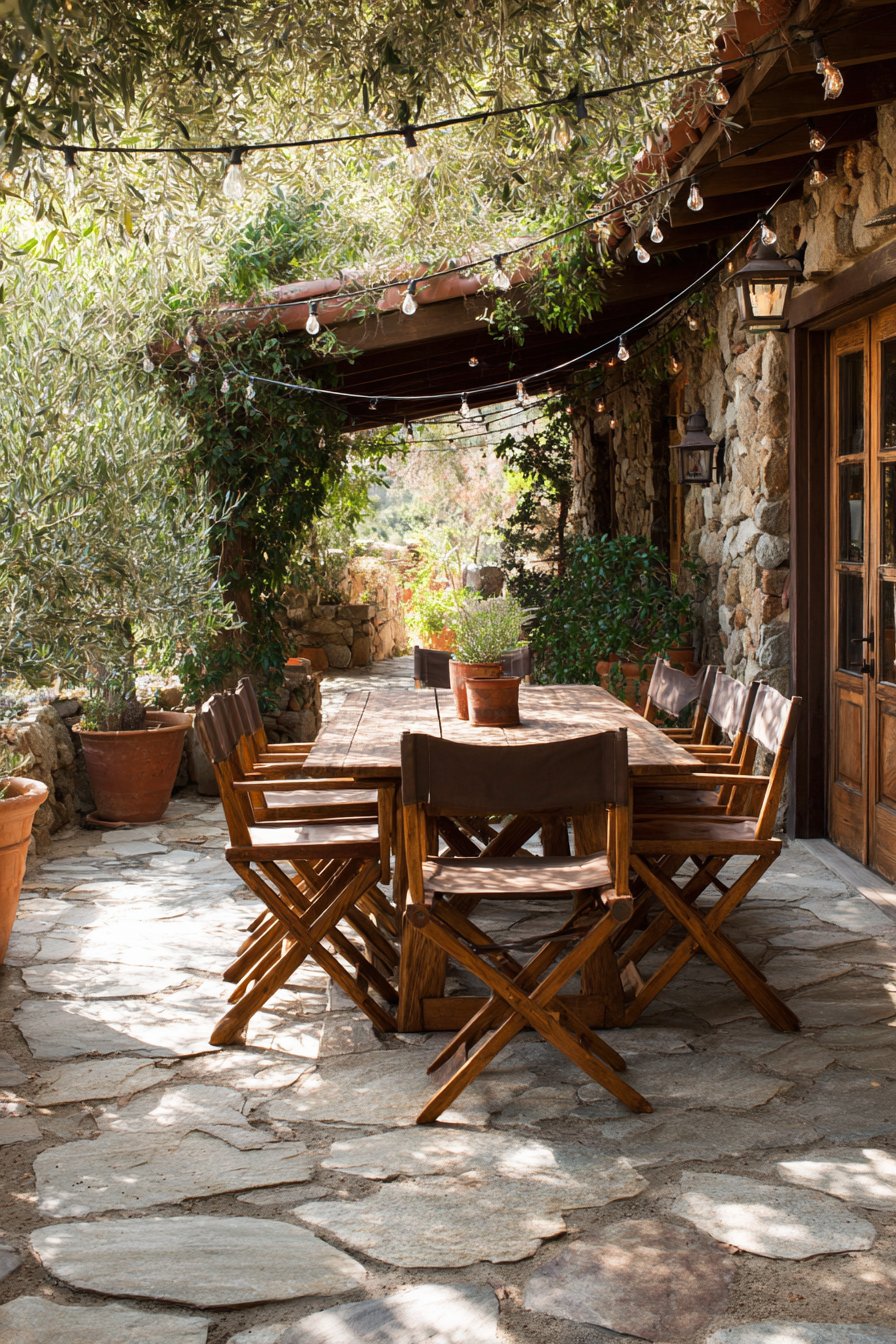
Weather-resistant teak wood displays natural grey aging patina beautifully. Visible growth rings showcase the wood’s natural character. Six folding director’s chairs with canvas seats provide portable seating. The table sits on covered patio with stone flooring.
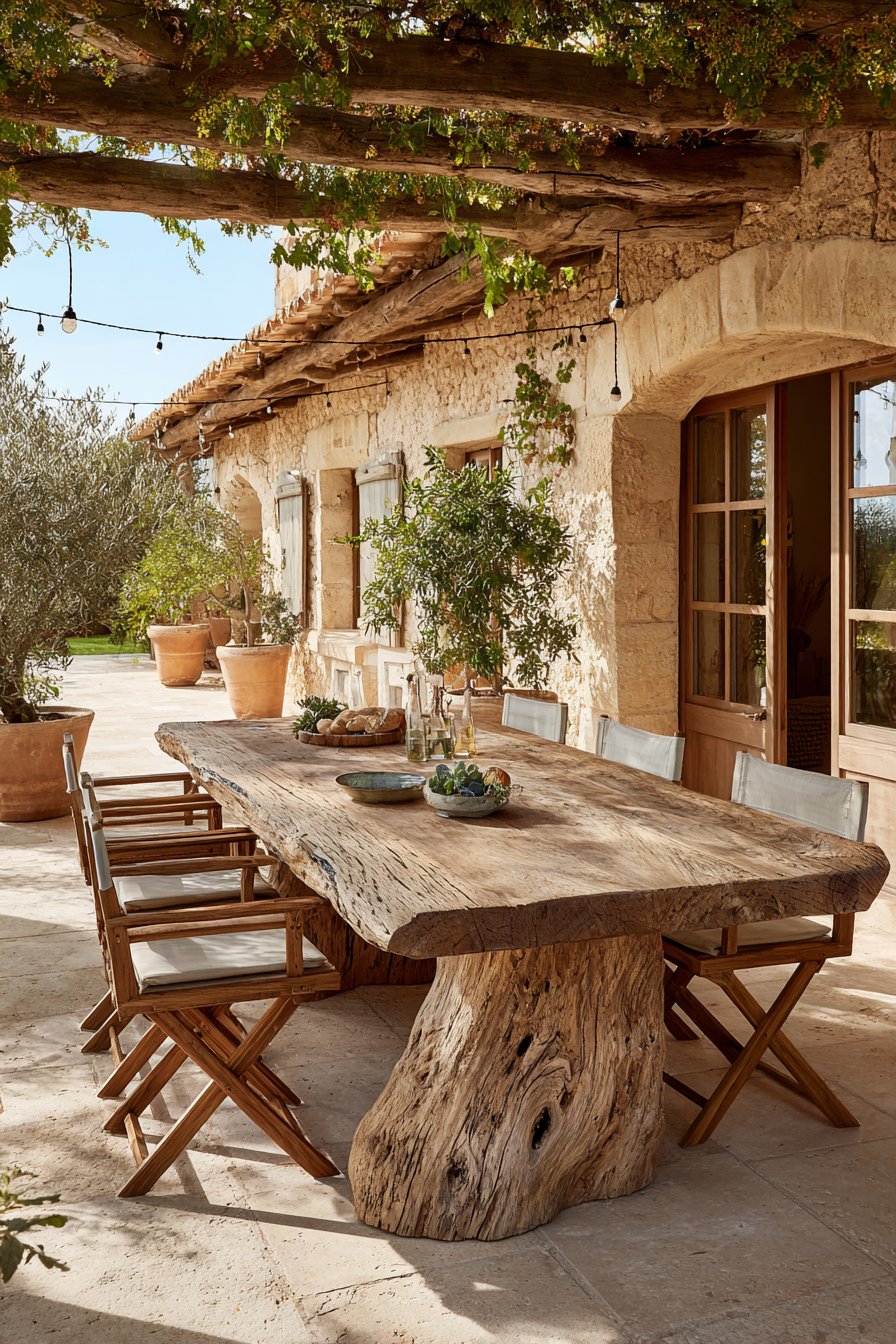
Potted olive trees provide Mediterranean ambiance and living greenery. String lights overhead create magical evening atmosphere. Natural daylight filters through climbing vines on pergola structure. The design celebrates indoor-outdoor living seamlessly.
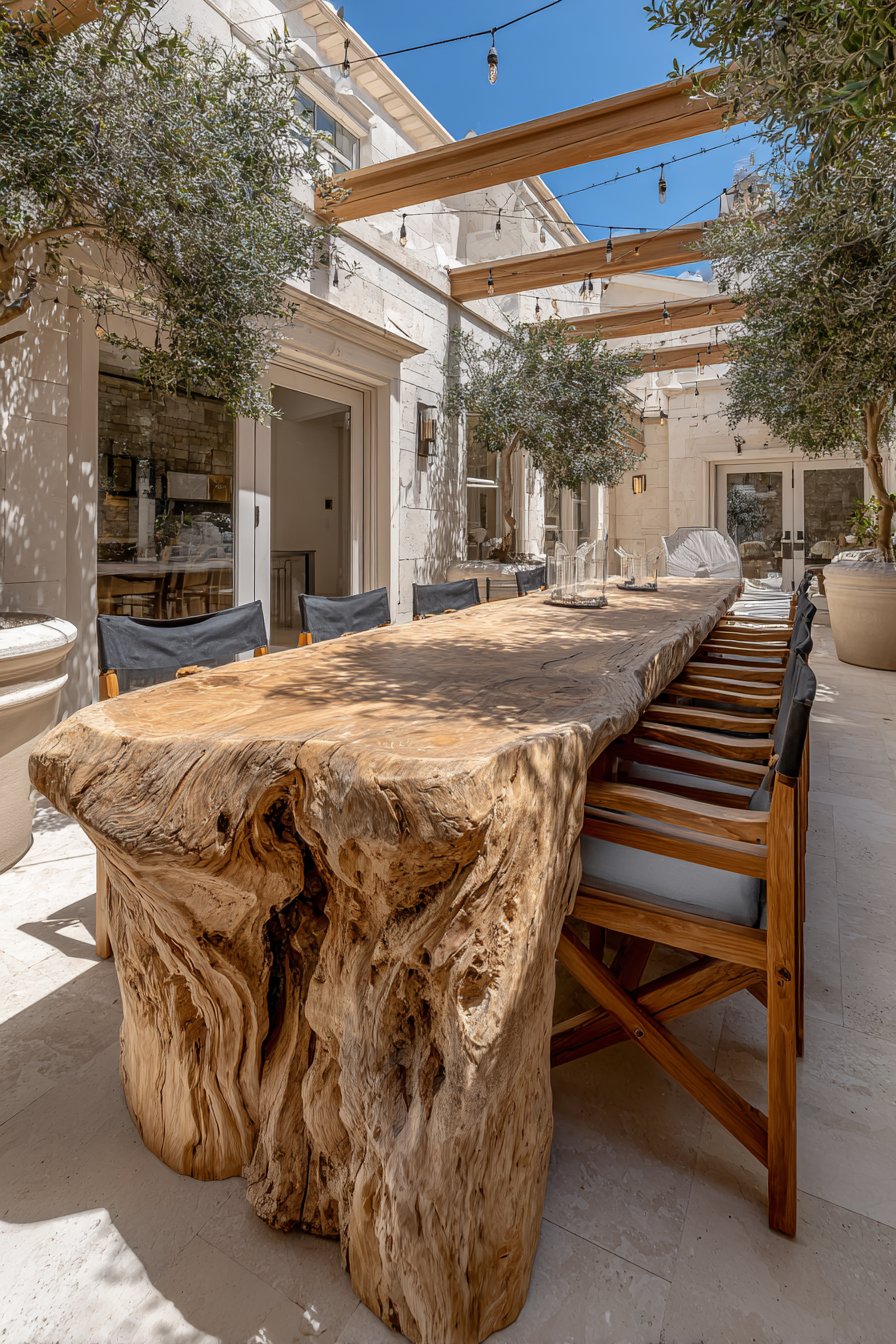
Teak naturally resists weather damage due to high oil content. The wood develops silver-grey patina when left untreated outdoors. This weathering enhances rather than diminishes the material’s beauty. Teak furniture lasts decades in outdoor environments with minimal care.
Outdoor dining spaces extend living areas into exterior environments. The covered patio provides weather protection while maintaining outdoor connection. Folding chairs store compactly when not needed. This flexibility suits seasonal use patterns and varying guest numbers.
Key Design Tips:
- Allow teak to weather naturally or apply teak oil to maintain golden color
- Clean teak annually with specialized wood cleaner to remove surface grime
- Choose folding chairs for easy storage during harsh weather conditions
- Incorporate potted plants that thrive in your specific climate zone
- Install ambient lighting on dimmers for flexible outdoor entertaining
19. Artistic Concrete Pedestal with Oak Veneer
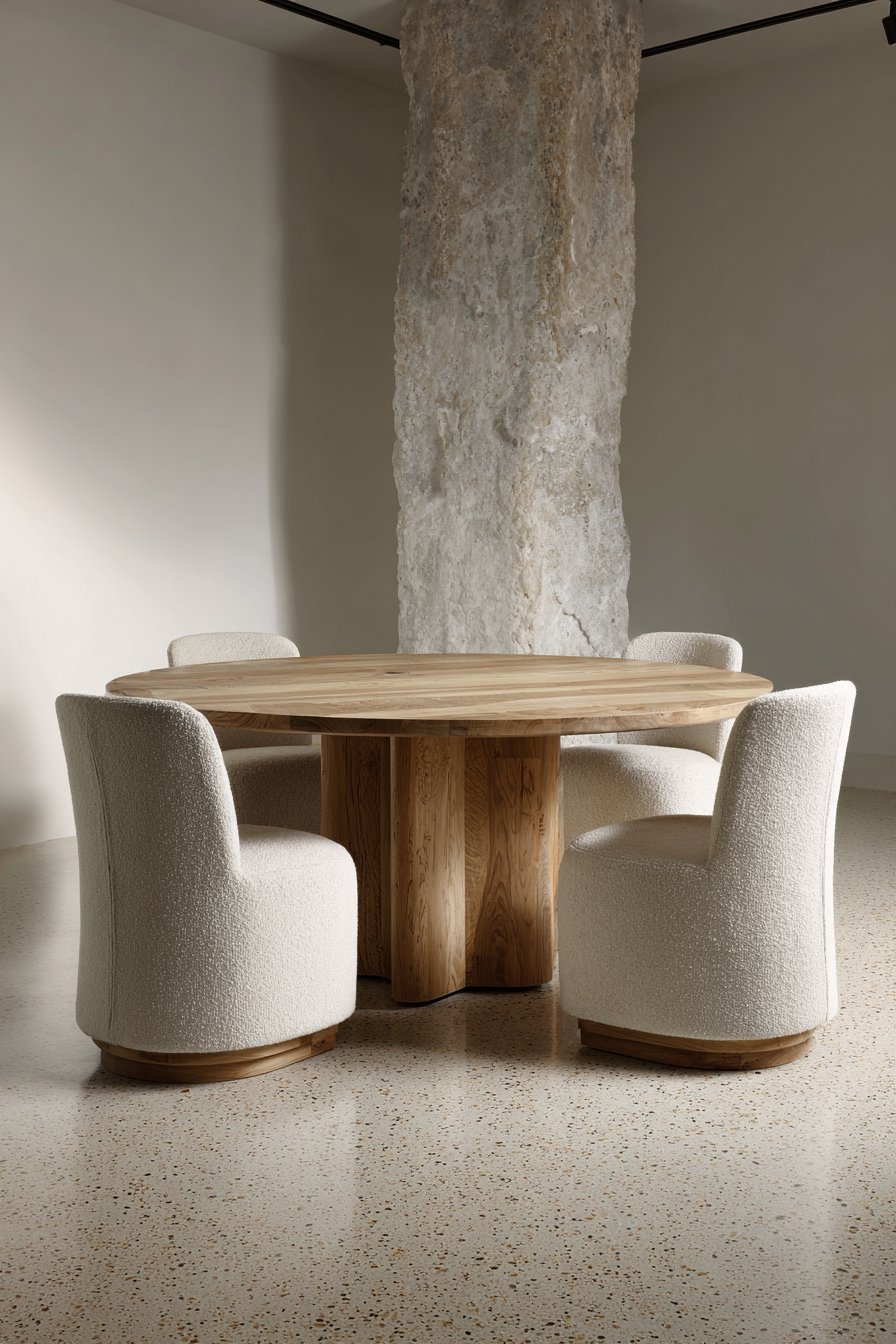
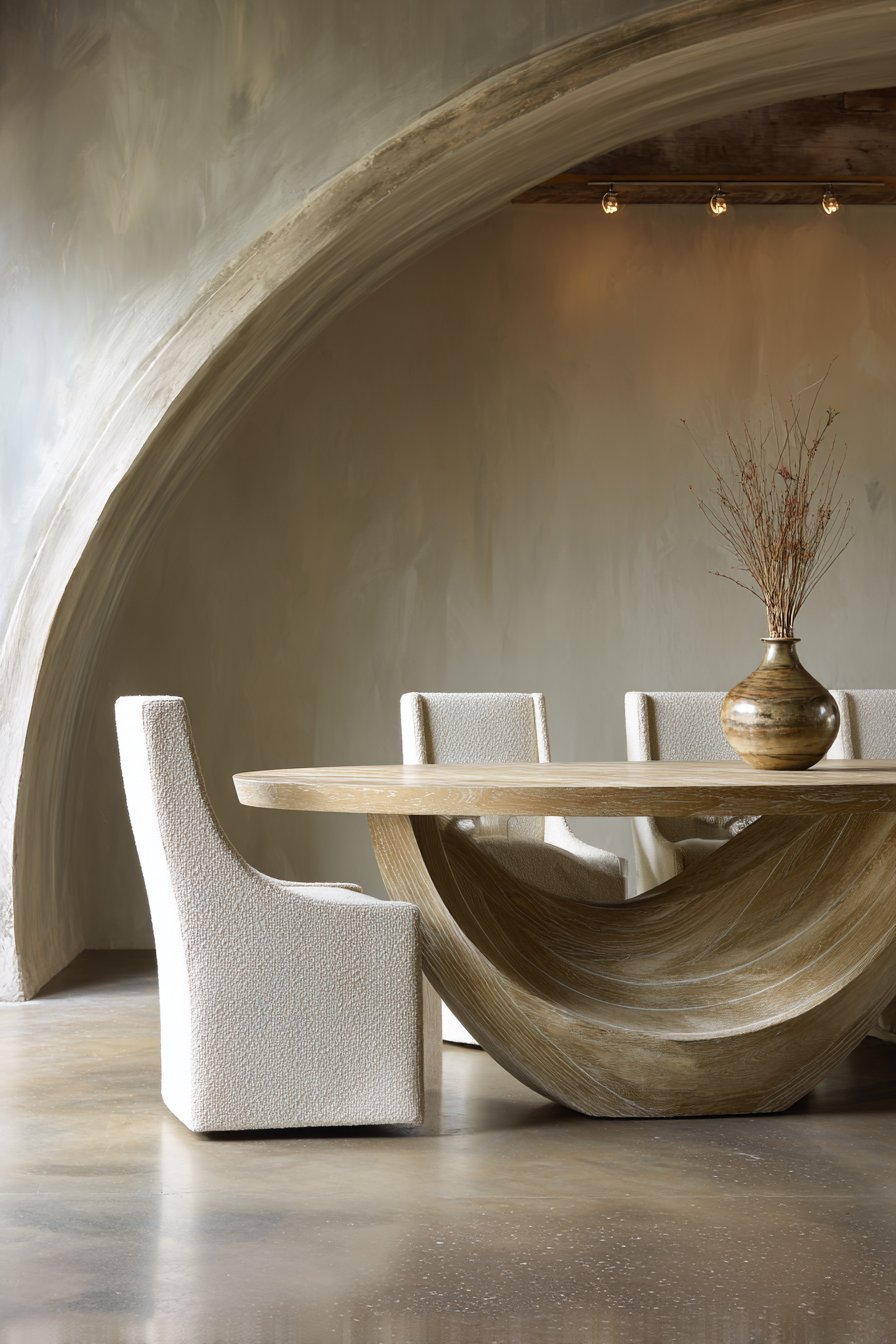
Round oak veneer top shows cathedral grain pattern beautifully. Matte natural finish preserves the wood’s organic character. Sculptural concrete pedestal base features organic curved form. Four upholstered dining chairs in textured boucle fabric provide comfortable seating.
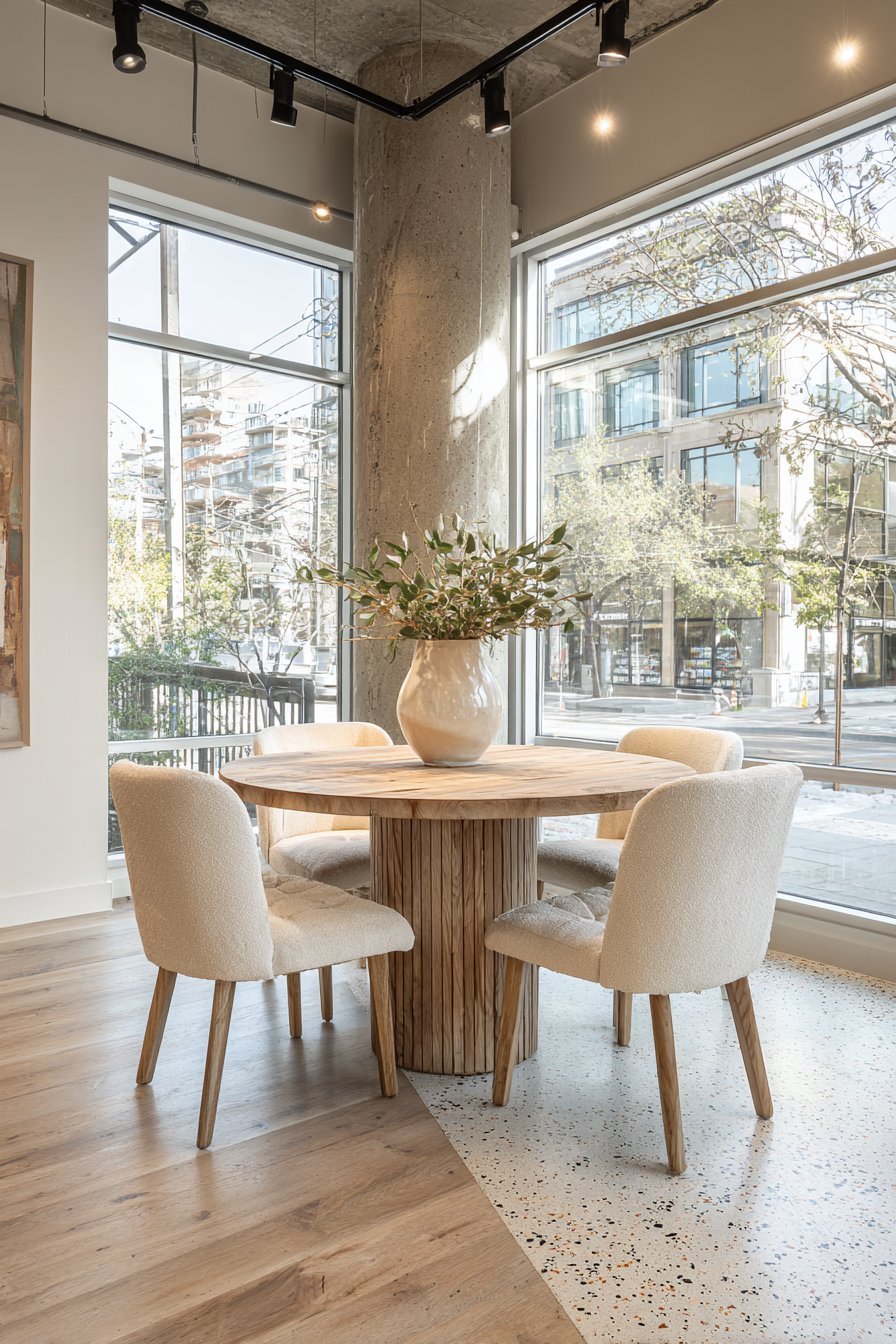
Terrazzo flooring with subtle color flecks complements the neutral palette. Adjustable track lighting allows flexible illumination angles. The design celebrates artistic intersection of natural and industrial materials. Each element contributes to the carefully curated aesthetic.
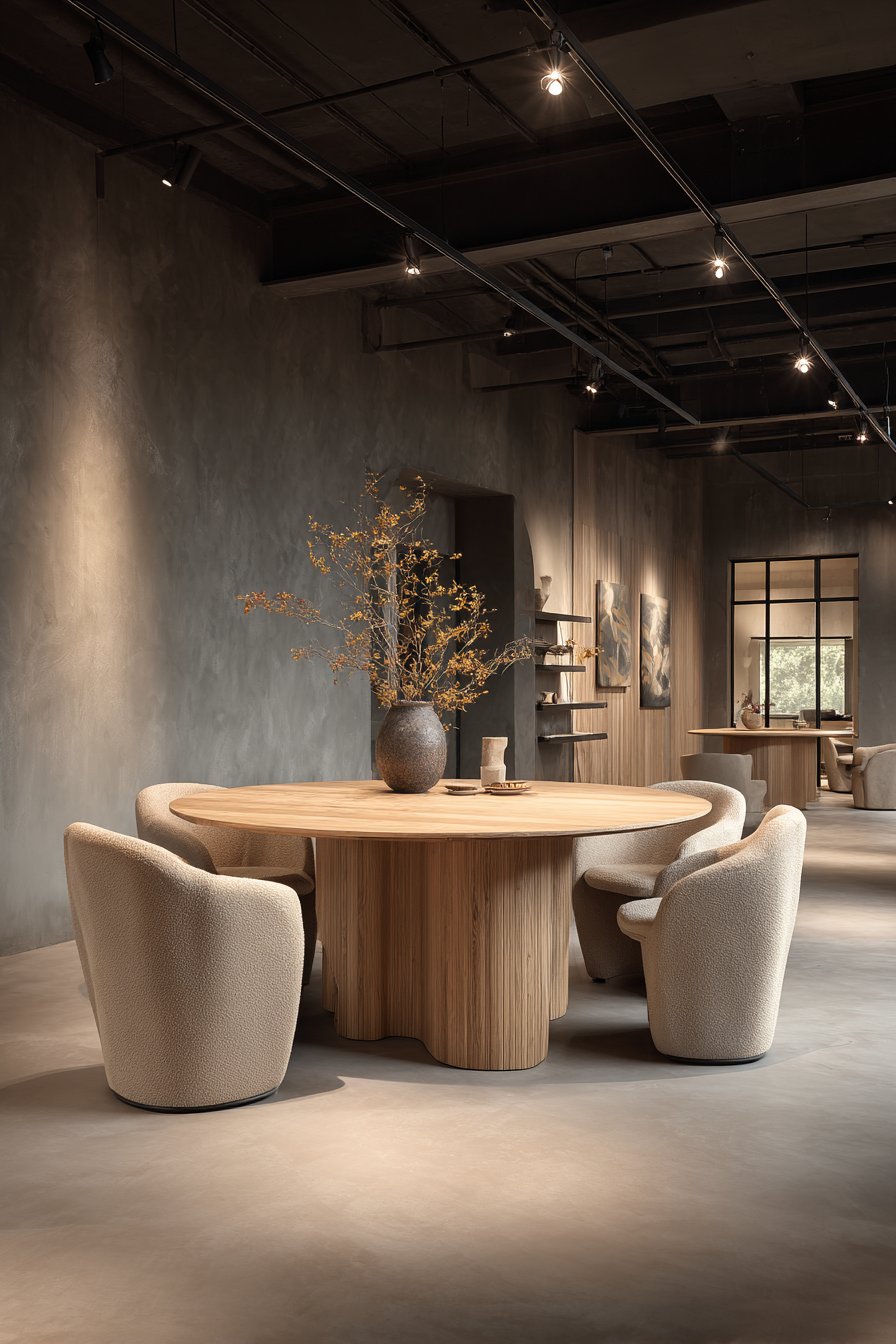
Concrete pedestals offer remarkable structural stability for round tables. The single support allows unrestricted leg room around the perimeter. Sculptural bases become art pieces beyond mere furniture. This design appeals to those who appreciate furniture as functional sculpture.
Oak veneer provides wood beauty at more accessible price points. Quality veneers display consistent grain patterns across surfaces. The round shape encourages conversation and equal participation. This combination of materials feels both artistic and approachable.
Key Design Tips:
- Select thick veneer construction for durability and longevity
- Seal concrete bases to prevent dusting and moisture absorption
- Position track lighting to highlight both concrete texture and wood grain
- Choose boucle upholstery for contemporary texture and comfortable seating
- Maintain terrazzo flooring with pH-neutral cleaners to preserve finish
20. Smart Multi-Functional Storage Integration
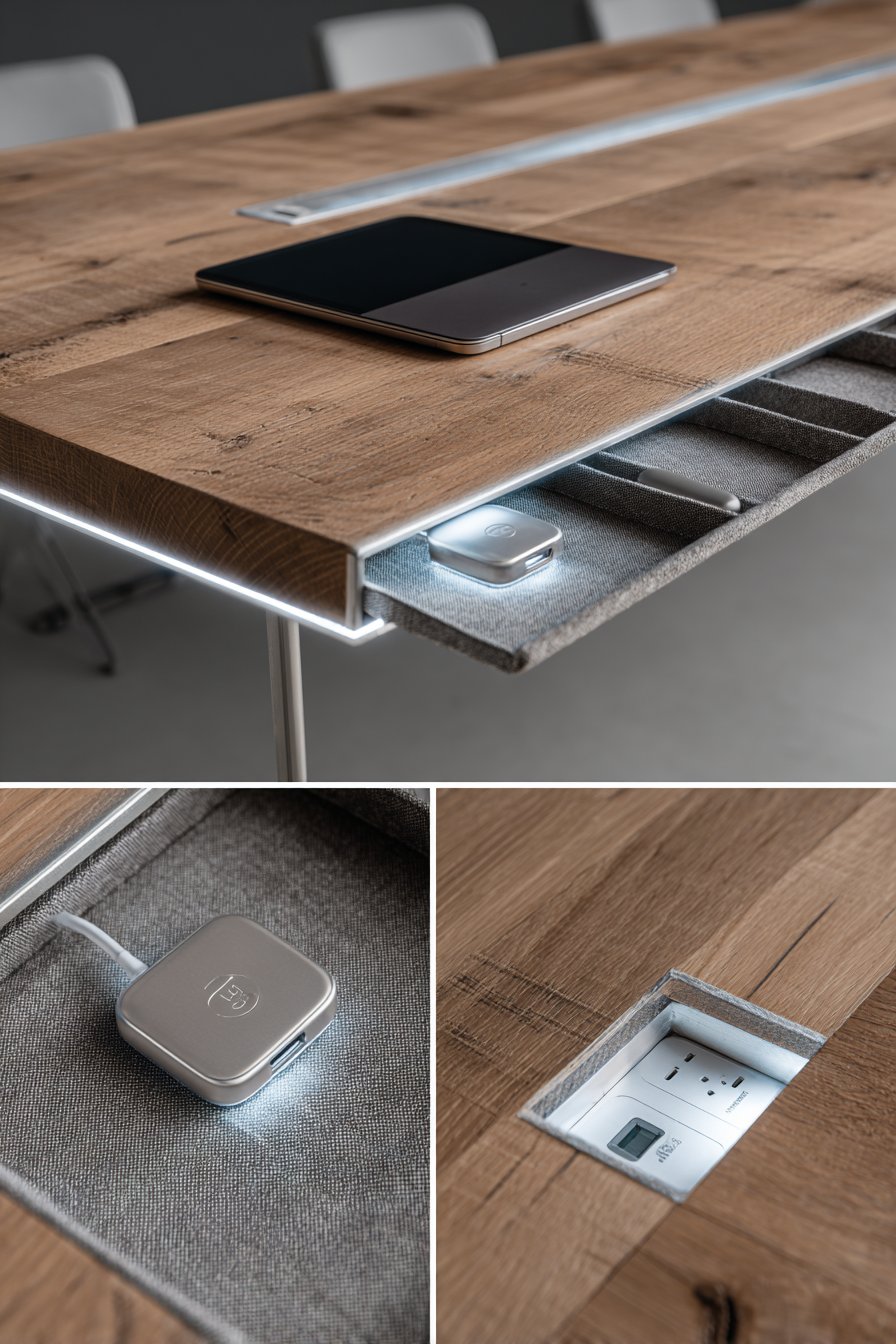
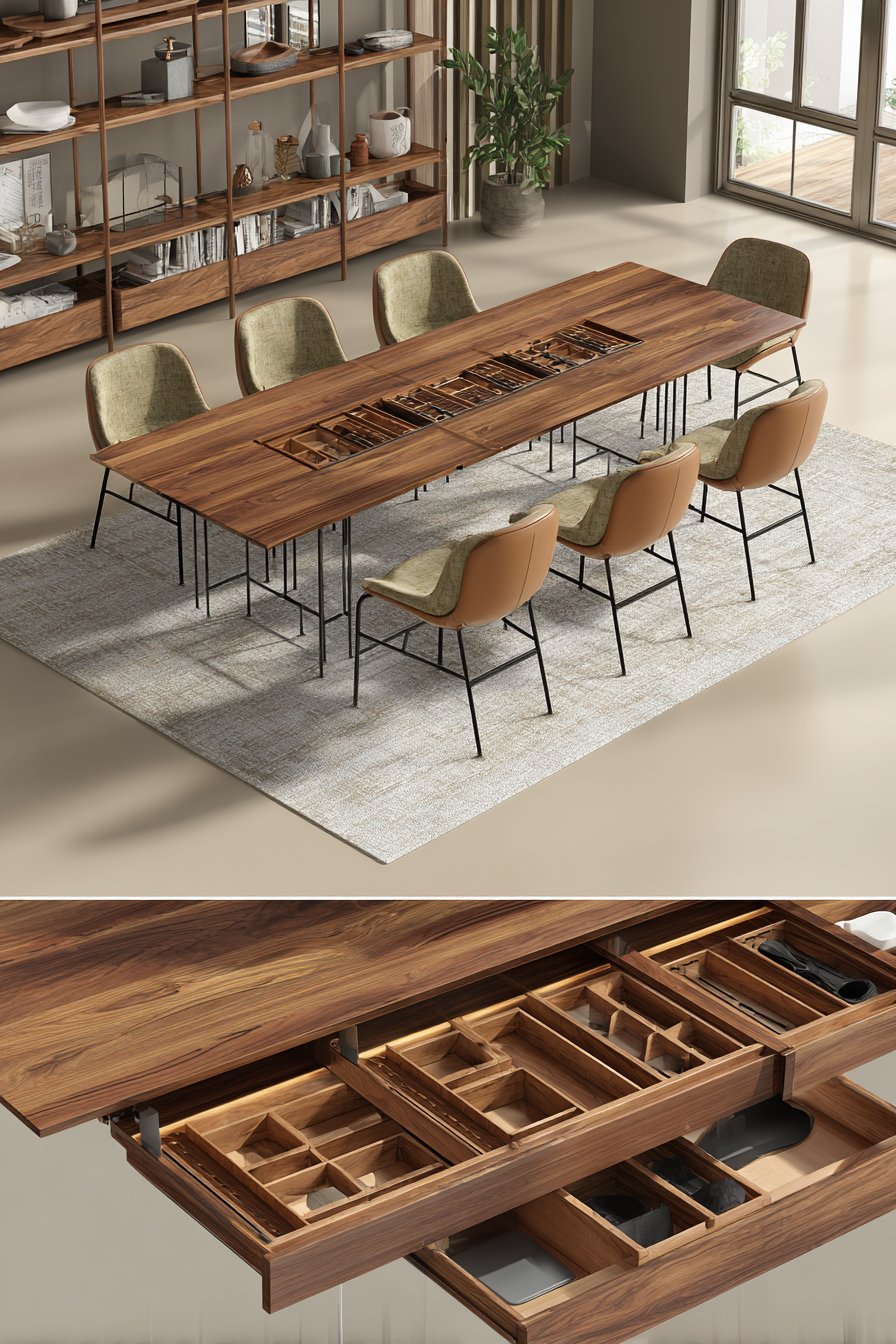
Built-in storage compartments beneath tabletop maximize functional efficiency. Engineered wood in medium oak finish provides consistent appearance. Soft-close drawers accessible from seated position store dining essentials. Six space-saving chairs feature slim metal frames and upholstered seats.
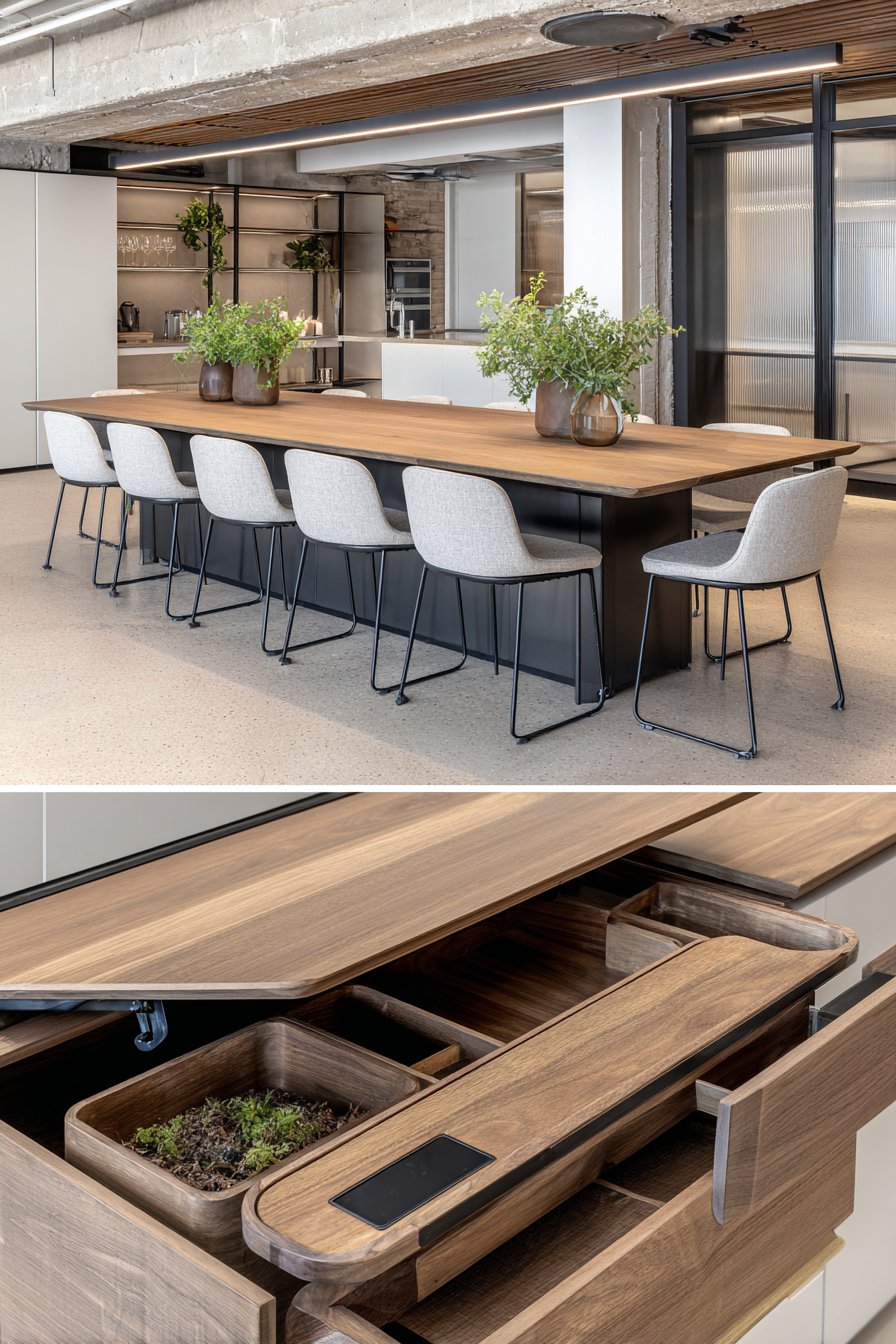
Integrated wireless charging stations accommodate modern technology needs. Cable management features keep cords organized and hidden. LED strip lighting under table edge provides ambient glow. The design represents smart furniture innovation for contemporary living.
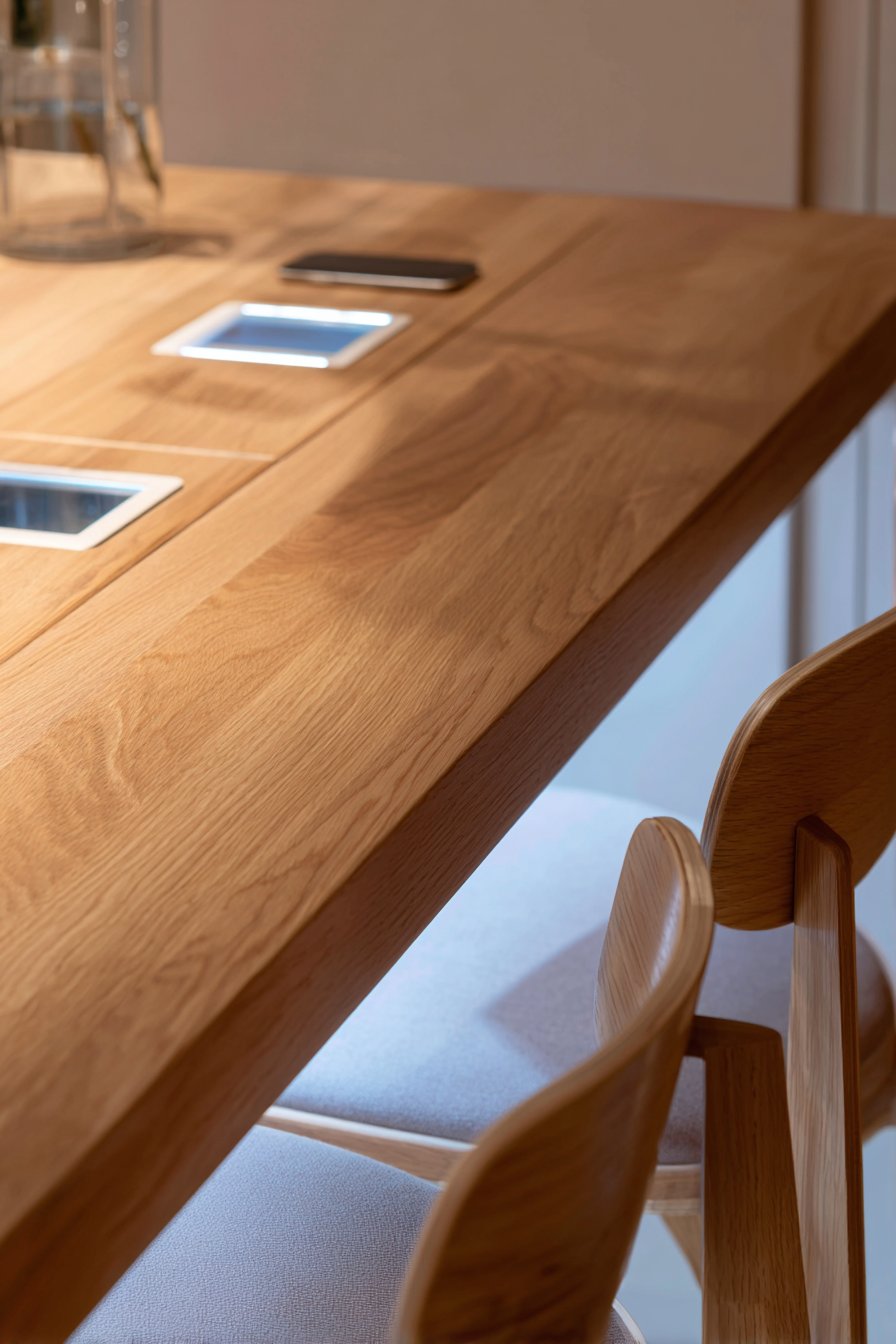
Multi-functional furniture addresses modern living challenges creatively. Storage eliminates separate credenza requirements in small spaces. Integrated technology charging prevents cord clutter across tables. These innovations enhance daily usability significantly.
Smart furniture design considers how people actually use spaces. Accessible storage from seated position eliminates mid-meal interruptions. Stain-resistant fabrics acknowledge real-world use patterns. This practical approach serves families and busy households perfectly.
Key Design Tips:
- Test all storage mechanisms thoroughly before purchasing to ensure quality
- Choose chairs that slide completely under table when storage is open
- Install adequate electrical outlets to support integrated charging features
- Select performance fabrics rated for heavy residential use
- Plan storage contents before purchase to ensure compartment sizes suit needs
Why These Dining Table Designs Are the Best
These dining table concepts represent comprehensive approaches to different spatial needs and aesthetic preferences. Each design demonstrates thoughtful material selection balanced with functional requirements. The variety ensures solutions exist for every home from compact apartments to spacious formal dining rooms.
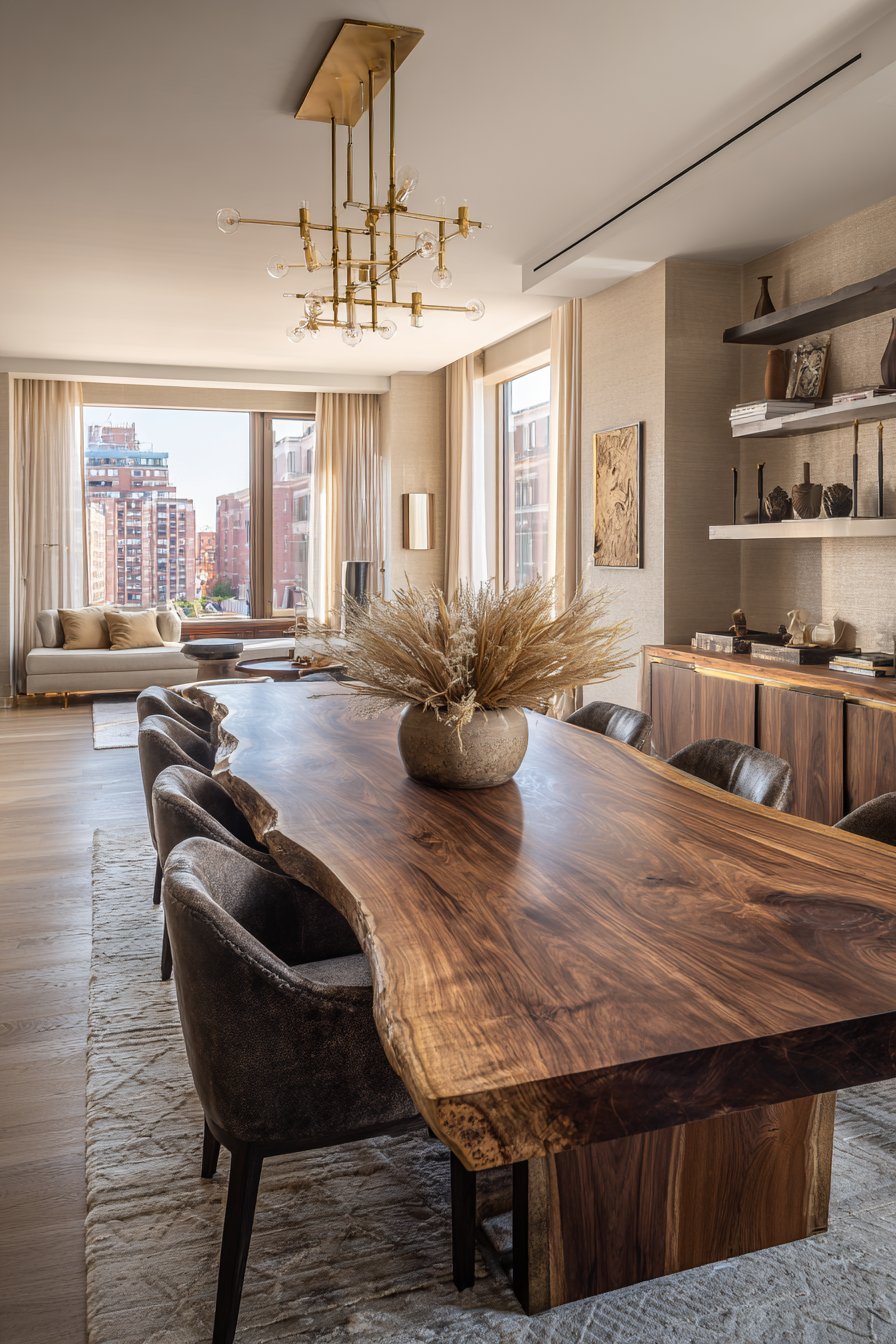
Material authenticity drives these design choices. Natural wood develops character through daily use rather than deteriorating. Quality construction ensures tables serve families for generations. Live-edge designs celebrate organic forms while industrial bases provide structural honesty. These approaches value genuine materials over synthetic alternatives.
The designs address practical considerations without sacrificing visual appeal. Extendable mechanisms accommodate changing guest numbers. Storage integration maximizes efficiency in smaller homes. Weather-resistant materials enable outdoor dining spaces. Each solution solves real problems while maintaining aesthetic integrity.
Style diversity allows personal expression through furniture selection. Traditional mahogany suits formal entertaining preferences. Minimalist Scandinavian designs create serene modern spaces. Bohemian carved wood celebrates global influences. Industrial concrete appeals to urban loft dwellers. This range acknowledges that good design exists across style spectrums.
Color theory applications enhance each concept. Neutral wood tones provide versatile foundations. Dark finishes create dramatic focal points. Light woods maximize brightness in small spaces. Strategic accent colors through seating and textiles personalize neutral bases. These principles demonstrate how color choices affect spatial perception.
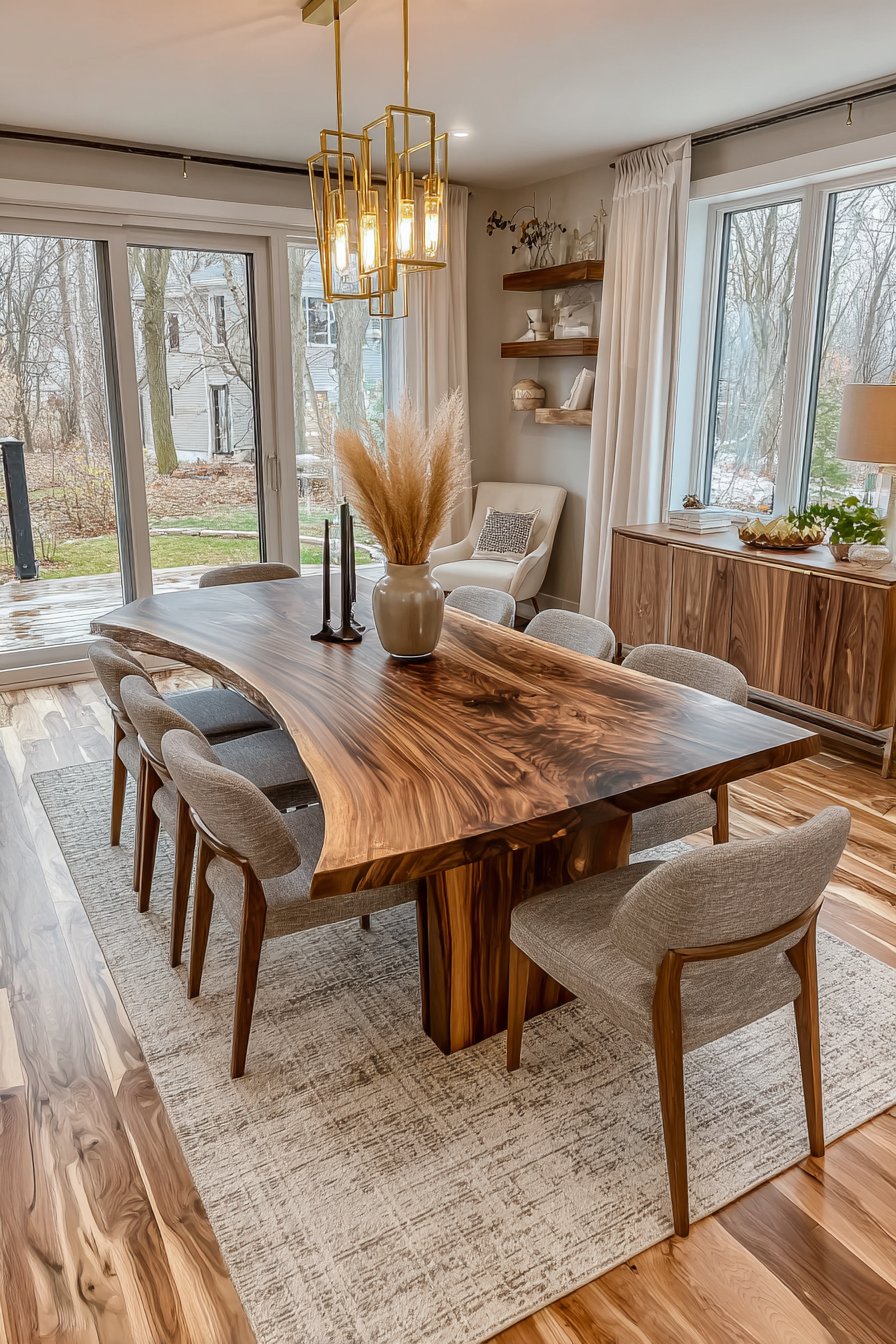
Durability considerations influence material recommendations throughout. Butcher block withstands food preparation demands. Sealed concrete resists staining and damage. Teak survives outdoor weather conditions. Performance fabrics handle daily family use. Quality construction details ensure longevity beyond temporary trend cycles.
Conclusion
These twenty dining table designs demonstrate that functional furniture can achieve remarkable aesthetic beauty. The key takeaways emphasize authentic materials, quality construction, and thoughtful design consideration. Whether choosing modern glass transparency or traditional mahogany richness, the right table transforms dining experiences.
Successful dining spaces balance visual appeal with practical functionality. Consider your specific needs regarding size, durability, and maintenance requirements. Start with quality foundation pieces that serve your lifestyle authentically. Your perfect dining table awaits through careful consideration and creative exploration.