


Selecting the perfect dining chairs can dramatically transform your dining area from ordinary to extraordinary. These essential pieces serve both functional and aesthetic purposes. The right chairs enhance comfort while expressing your personal style. They create the foundation for memorable meals and meaningful conversations with loved ones.
Dining chairs represent one of the most important furniture investments in your home. They endure daily use while setting the tone for your entire dining experience. From classic Windsor designs to contemporary molded forms, the variety of available styles seems endless. Each design approach offers unique benefits suited to different lifestyles and spatial requirements.
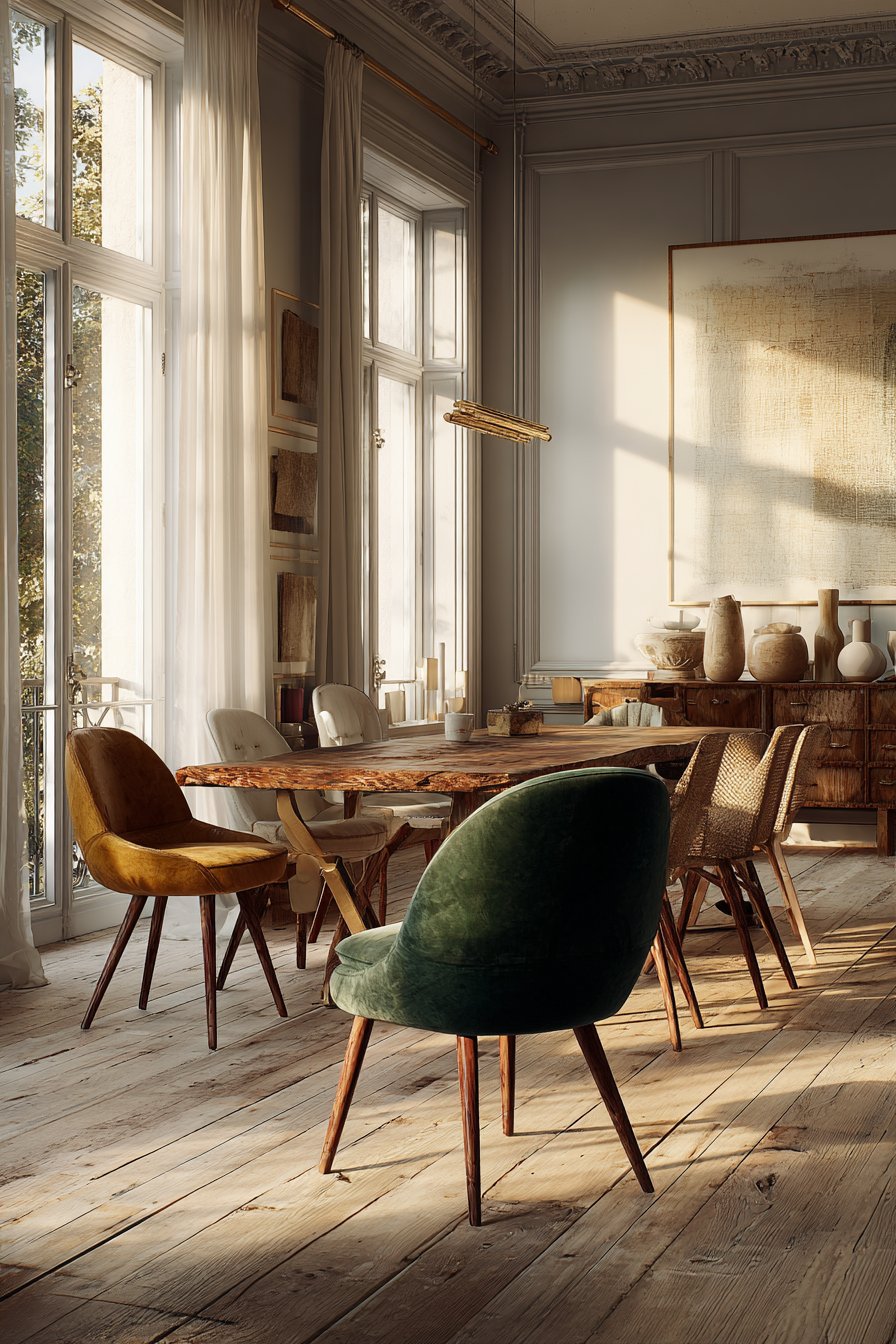
This comprehensive guide explores twenty distinctive dining chair concepts that showcase diverse materials, construction methods, and design philosophies. You’ll discover options ranging from mid-century modern elegance to rustic farmhouse charm. Each design demonstrates how thoughtful chair selection can elevate your dining room’s character and functionality. These concepts span multiple price points and aesthetic preferences to inspire your next design decision.
1. Mid-Century Modern Walnut and Burnt Orange Beauty
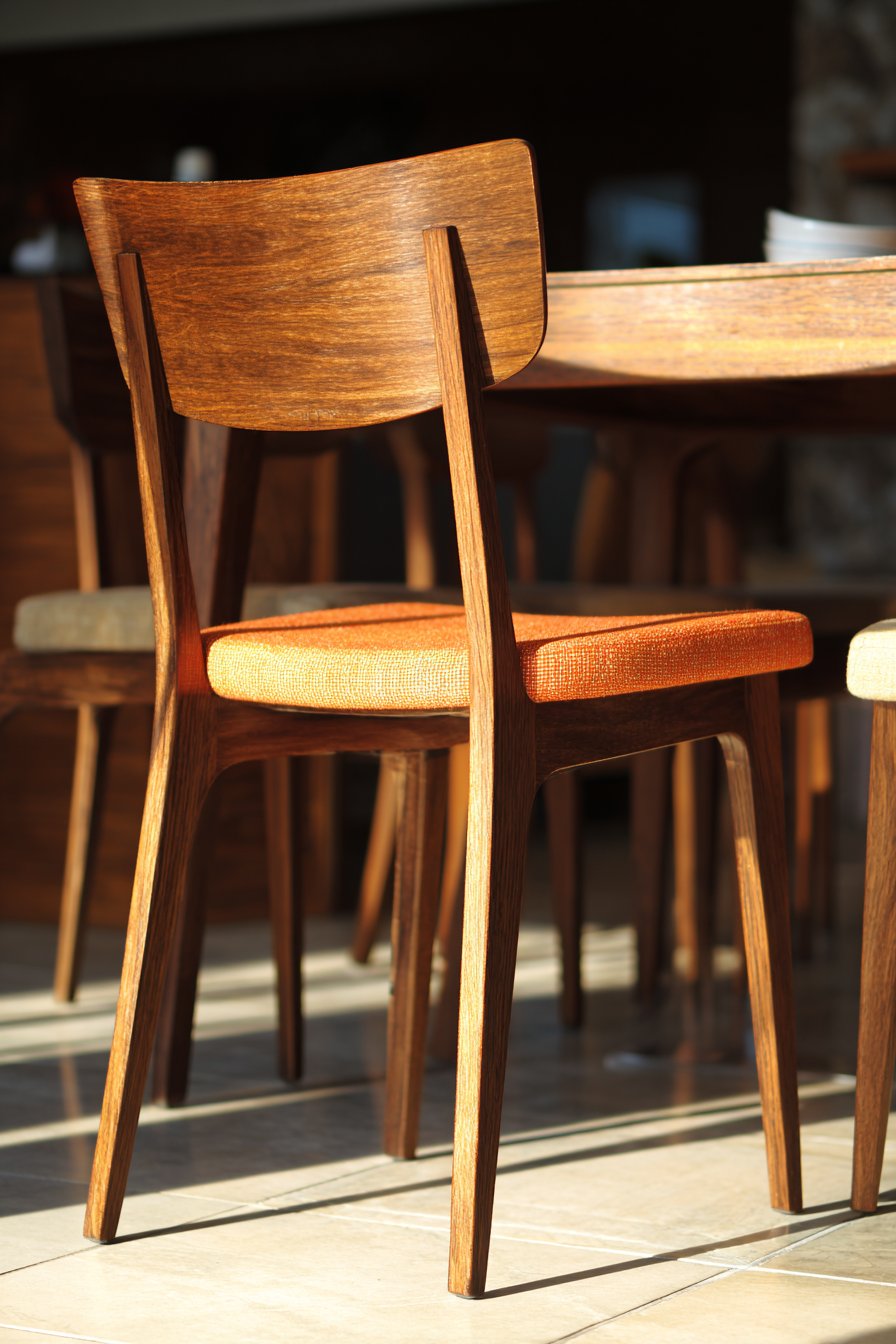
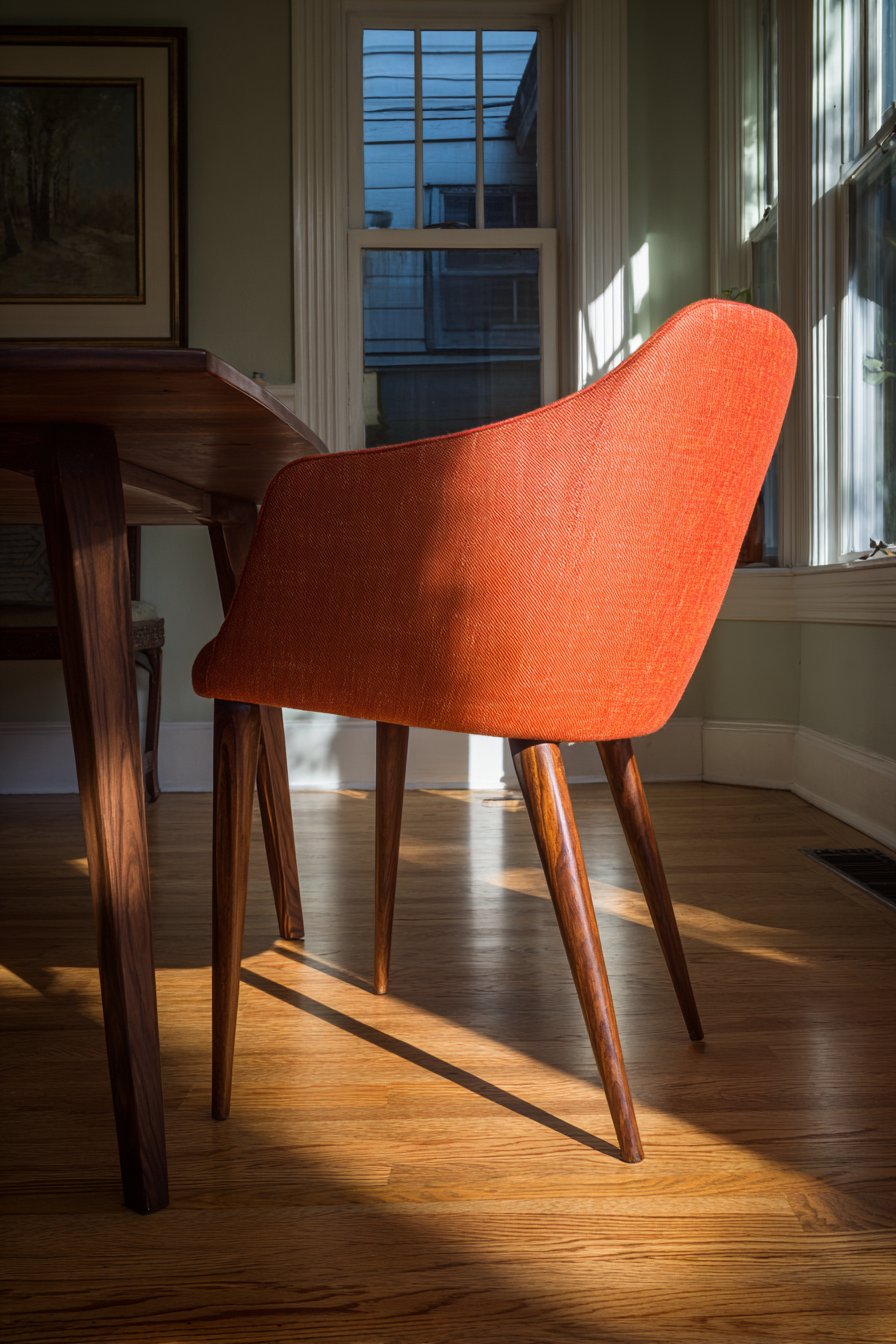
Picture a dining chair that embodies the golden age of design with tapered walnut legs and sculptural form. The warm wood finish glows beautifully in natural light. A curved backrest upholstered in textured burnt orange linen creates striking visual interest. This chair positions perfectly at a simple wooden table where morning sunlight streams through nearby windows.
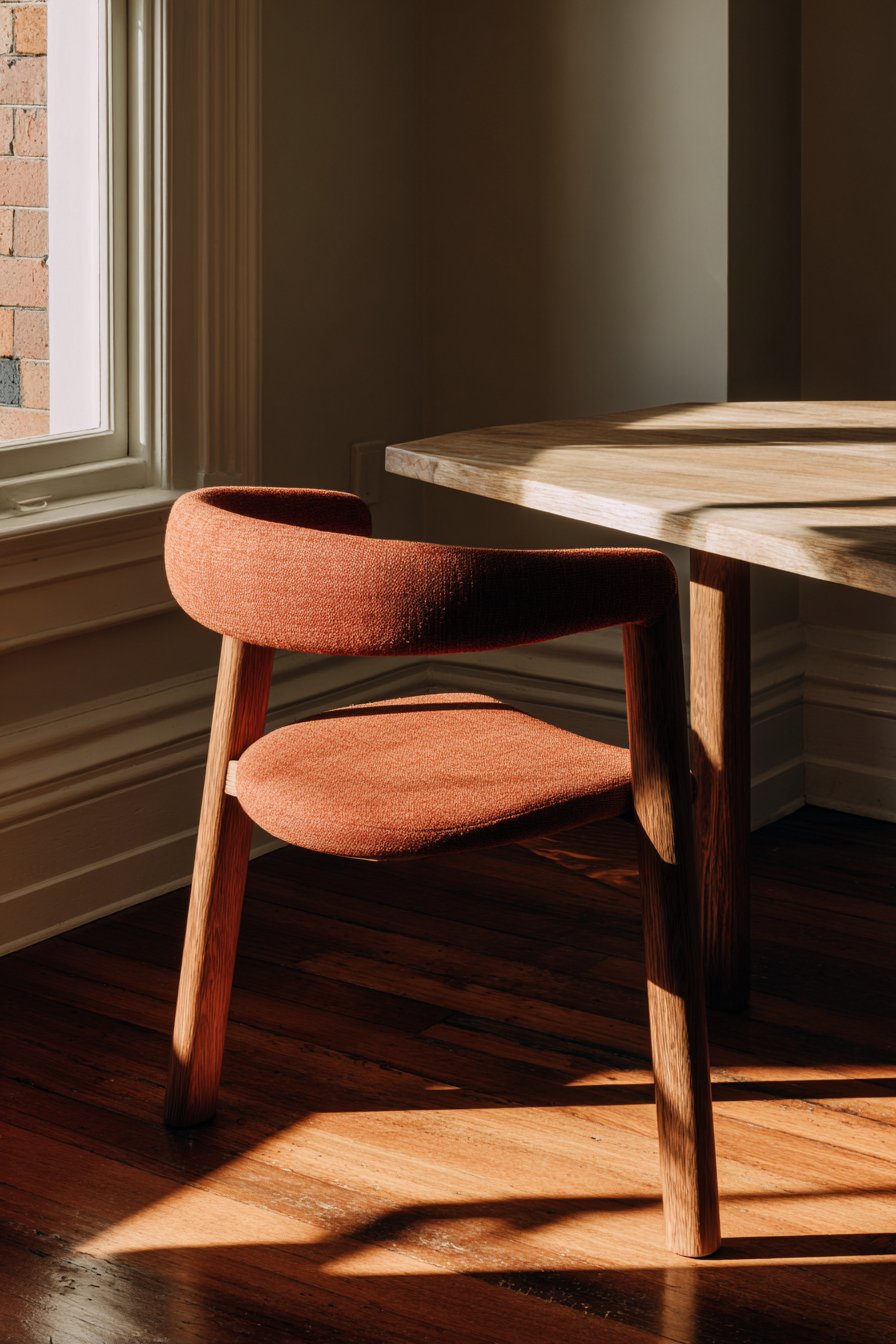
The organic shape reflects the mid-century philosophy of marrying form with function seamlessly. Tapered legs create an elegant profile that appears lightweight yet sturdy. The burnt orange upholstery adds warmth and personality to neutral dining spaces. Natural highlights dance across the wood grain as daylight shifts throughout the day.
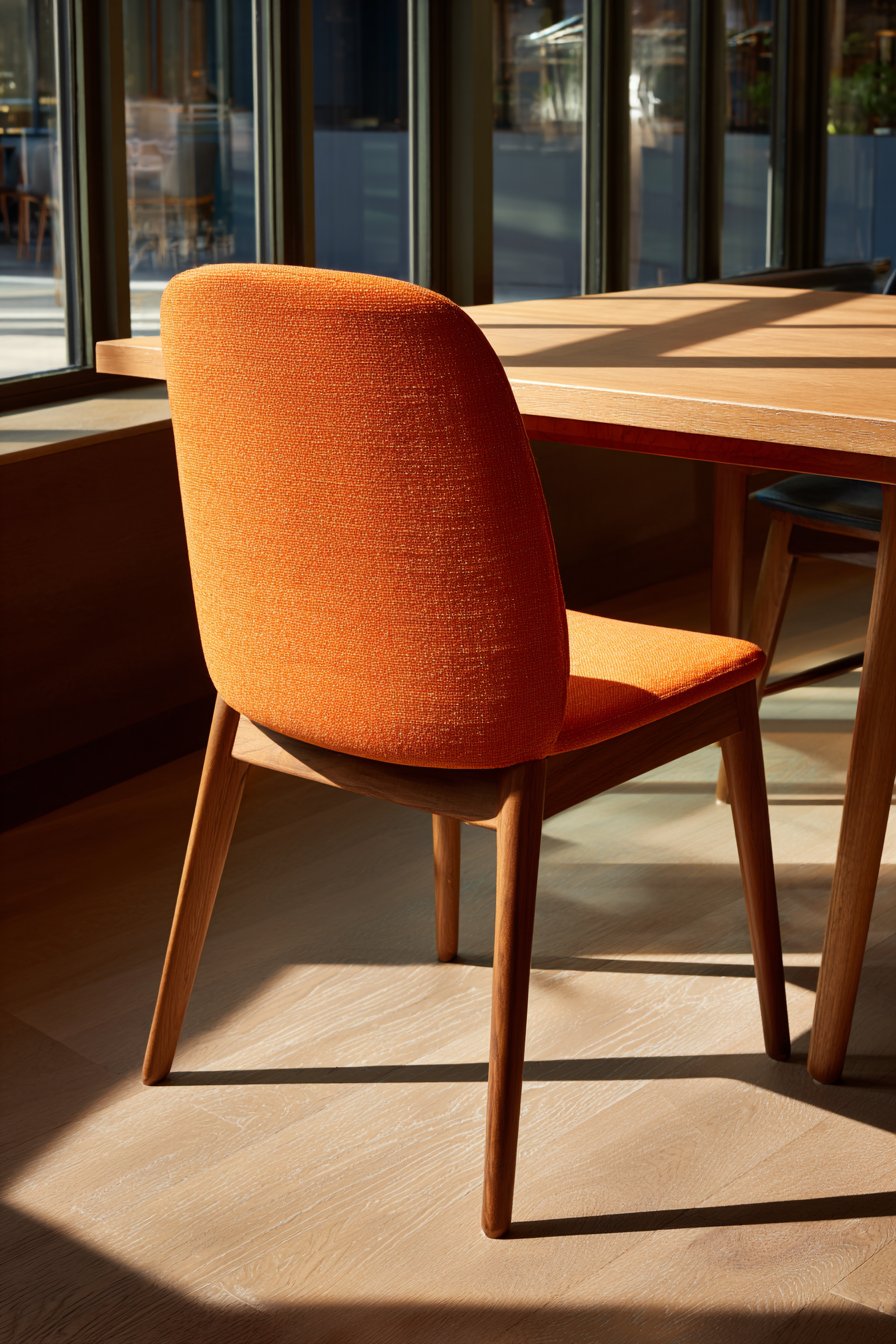
This design celebrates authentic period proportions that have endured decades of changing trends. The combination of natural walnut and vibrant linen creates textural contrast that engages the senses. The sculptural backrest provides genuine comfort while maintaining clean aesthetic lines. Shadows emphasize the chair’s three-dimensional form and thoughtful construction details.
Key Design Tips:
- Select warm walnut finishes to create inviting ambiance and timeless appeal
- Choose burnt orange or terracotta upholstery for energizing pops of color
- Ensure backrest curves provide lumbar support while maintaining sculptural beauty
- Position chairs near windows to showcase natural wood grain variations
- Maintain period-authentic proportions for genuine mid-century character
- Pair with simple wooden tables that won’t compete visually
2. Scandinavian Light Oak with Paper Cord Seats
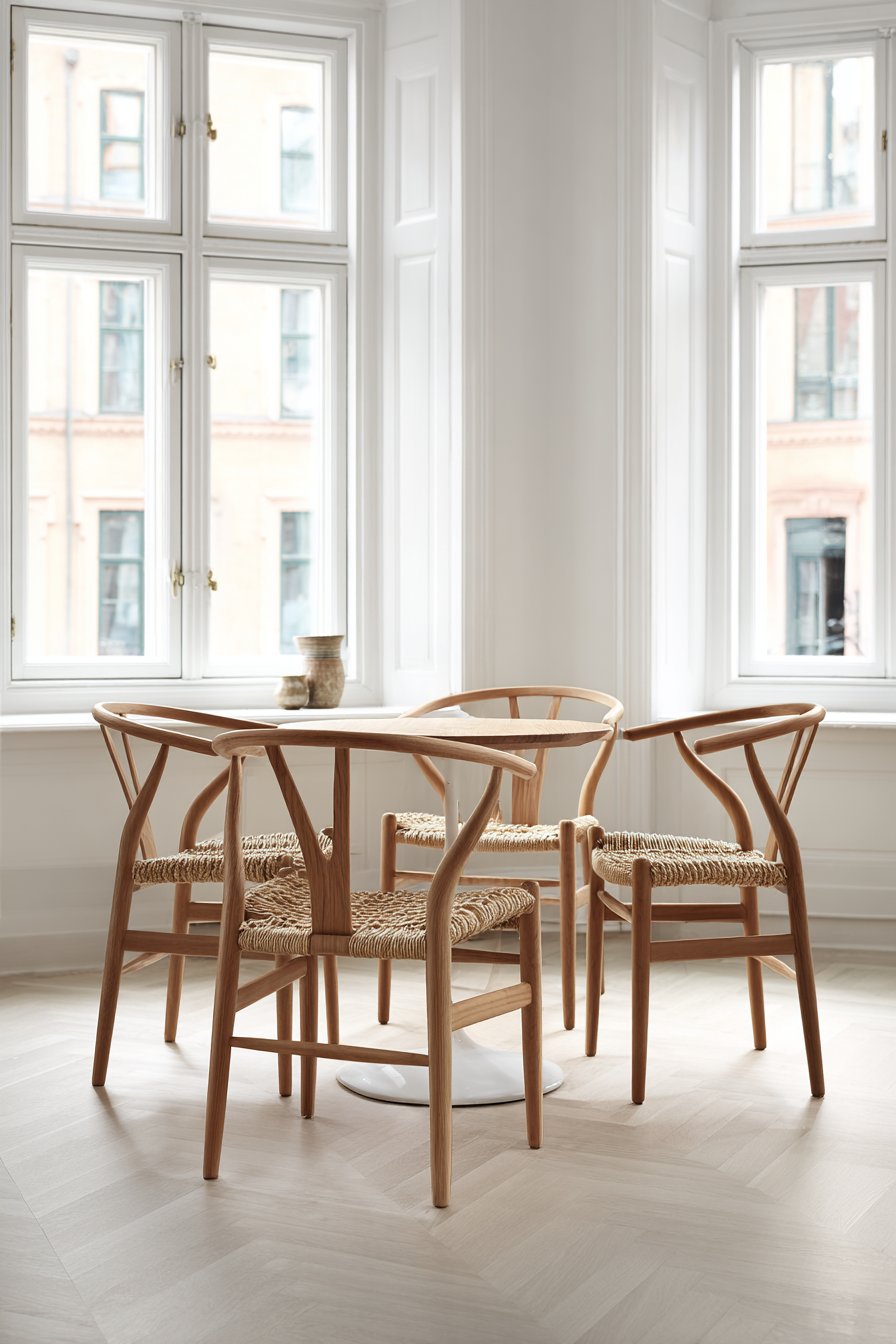
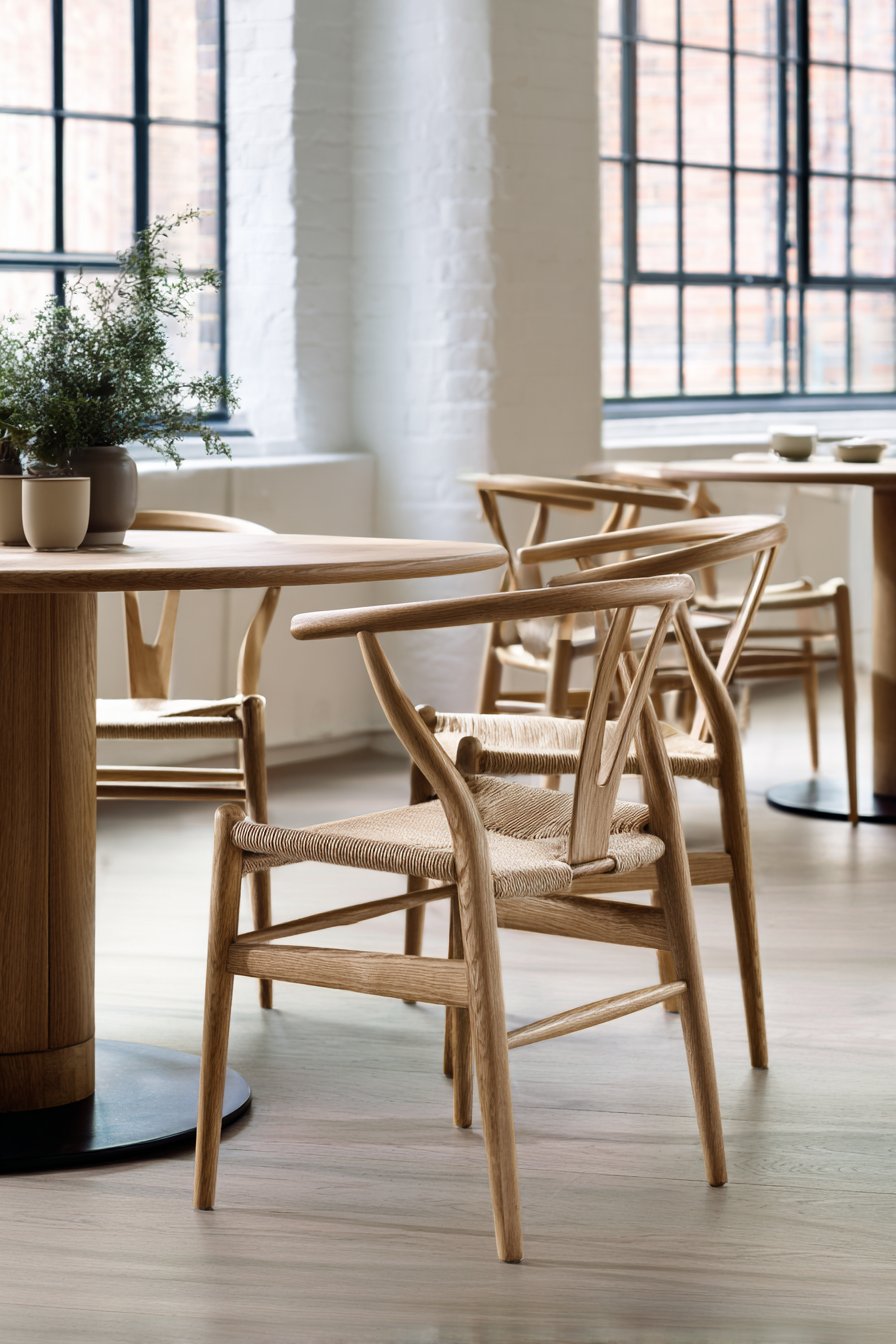
Imagine four chairs featuring light oak frames with gentle curves and hand-woven paper cord seats. Each seat displays authentic texture variations from traditional craftsmanship. The chairs gather around a round white oak table in a minimalist dining room. White walls and natural flooring enhance the serene atmosphere.
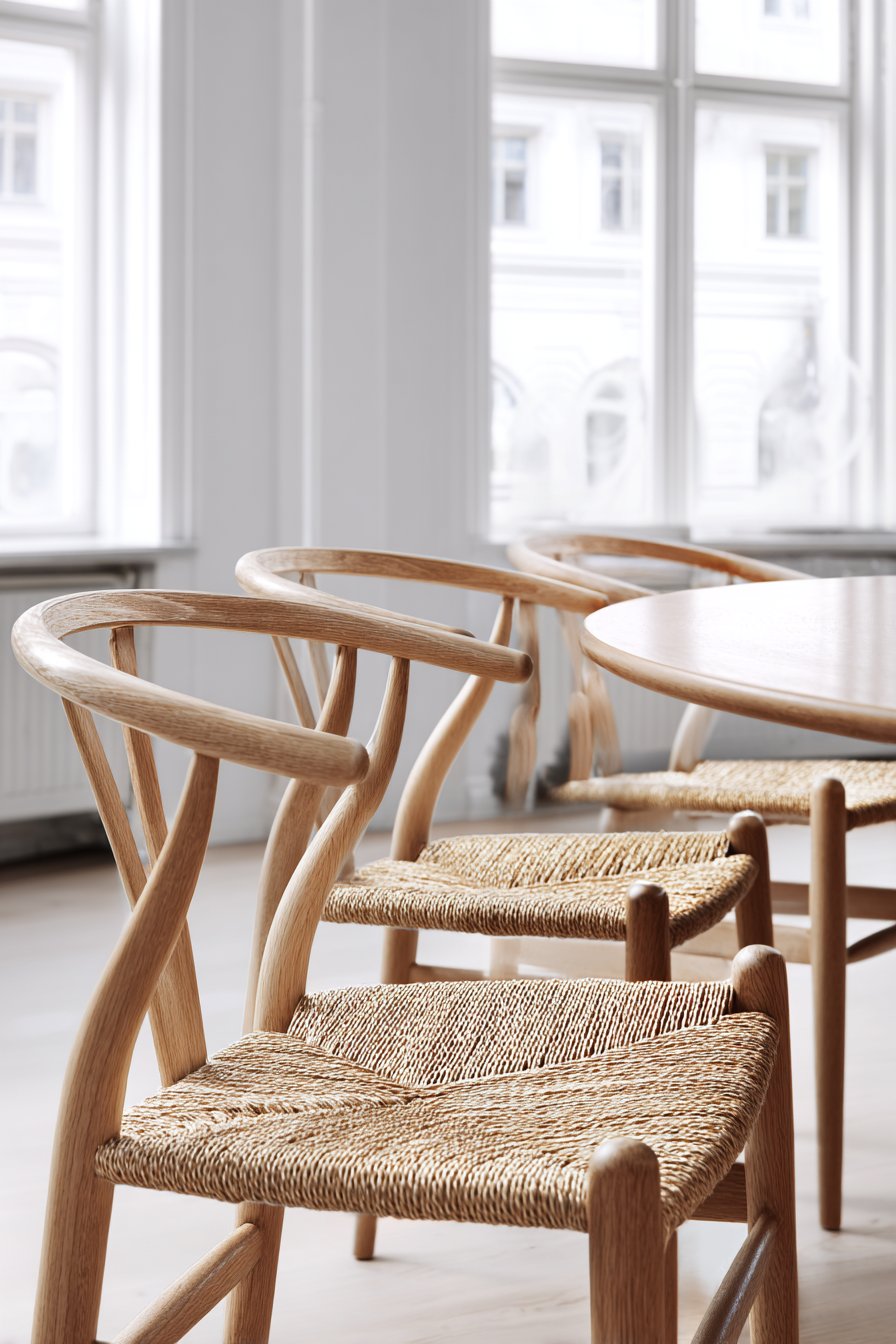
Soft diffused daylight from large windows illuminates the natural material textures beautifully. The clean lines embody Scandinavian design principles of simplicity and functionality. Paper cord seats offer surprising comfort while adding organic visual interest. The hand-woven patterns create subtle variations that celebrate artisanal production methods.
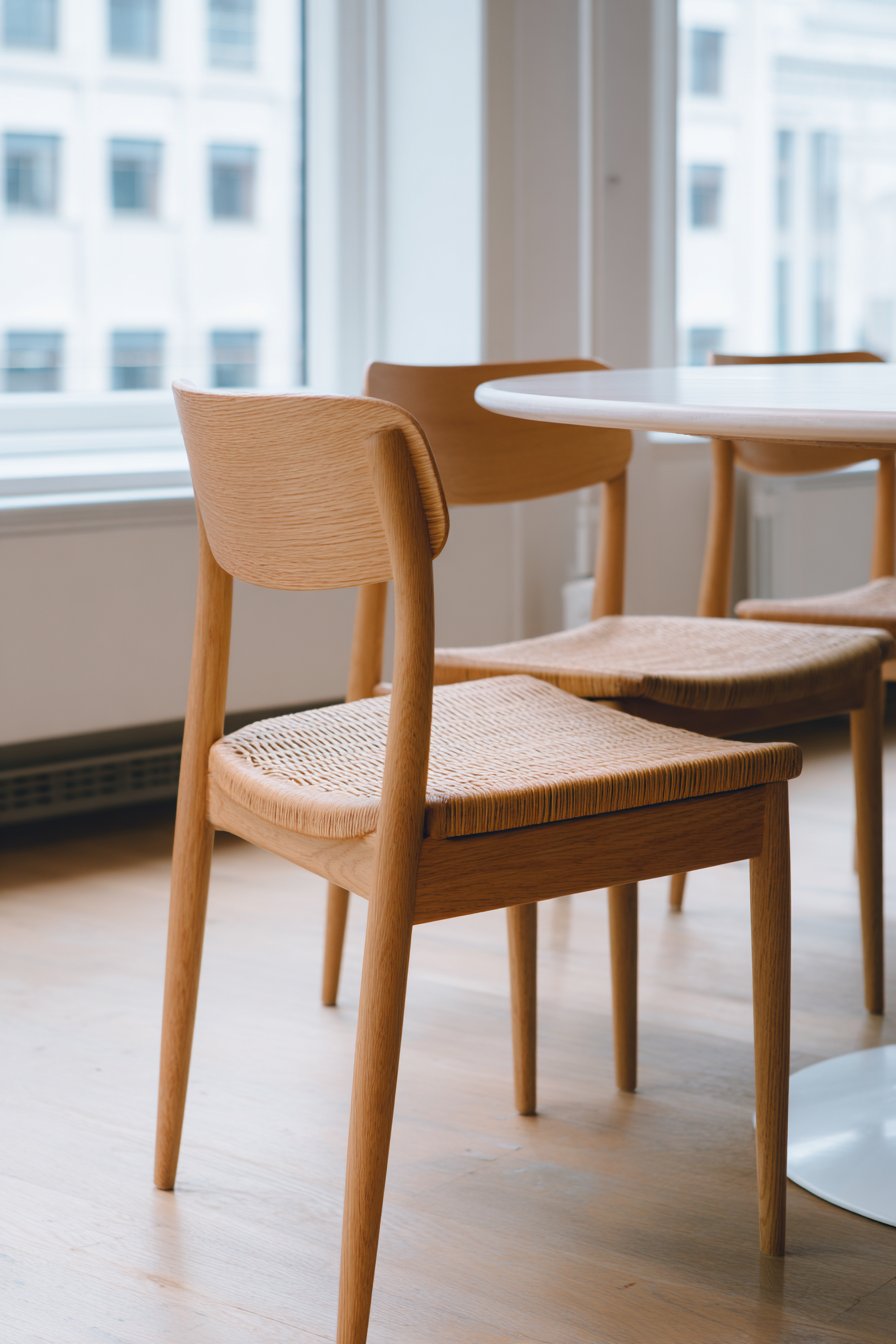
Light oak construction keeps the visual weight minimal in compact spaces. The natural finish highlights the wood’s grain patterns without overwhelming the eye. These chairs demonstrate how restraint and quality materials create enduring design solutions. The overall effect promotes calm and mindful dining experiences.
Key Design Tips:
- Choose light oak for bright, airy spaces that need visual lightness
- Embrace hand-woven paper cord for authentic Scandinavian character and comfort
- Allow natural daylight to showcase organic material textures
- Select rounded tables to complement curved chair frames
- Keep surrounding decor minimal to highlight chair craftsmanship
- Accept natural variations as signs of authentic handcrafted quality
3. Luxurious Emerald Velvet with Brass Accents
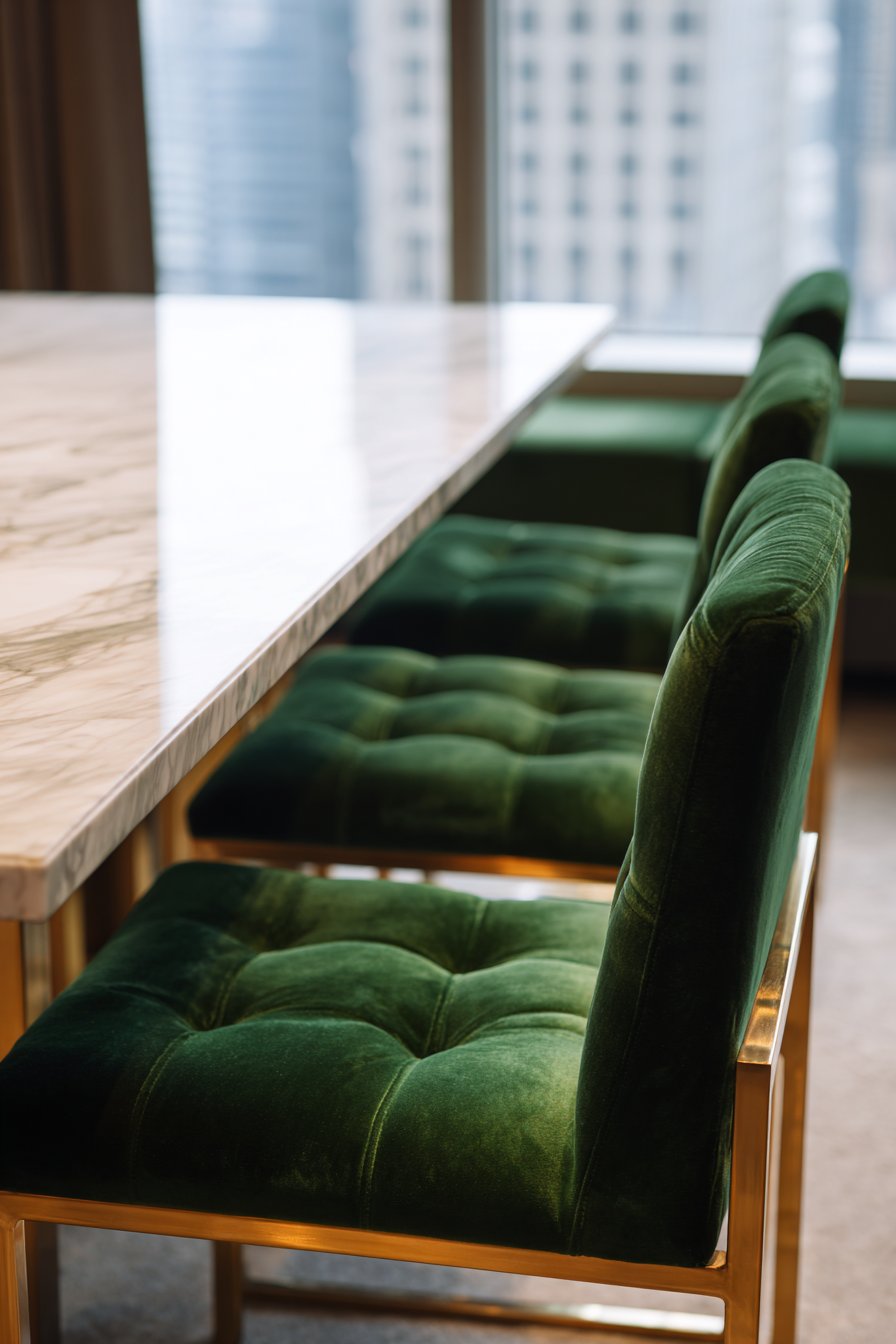
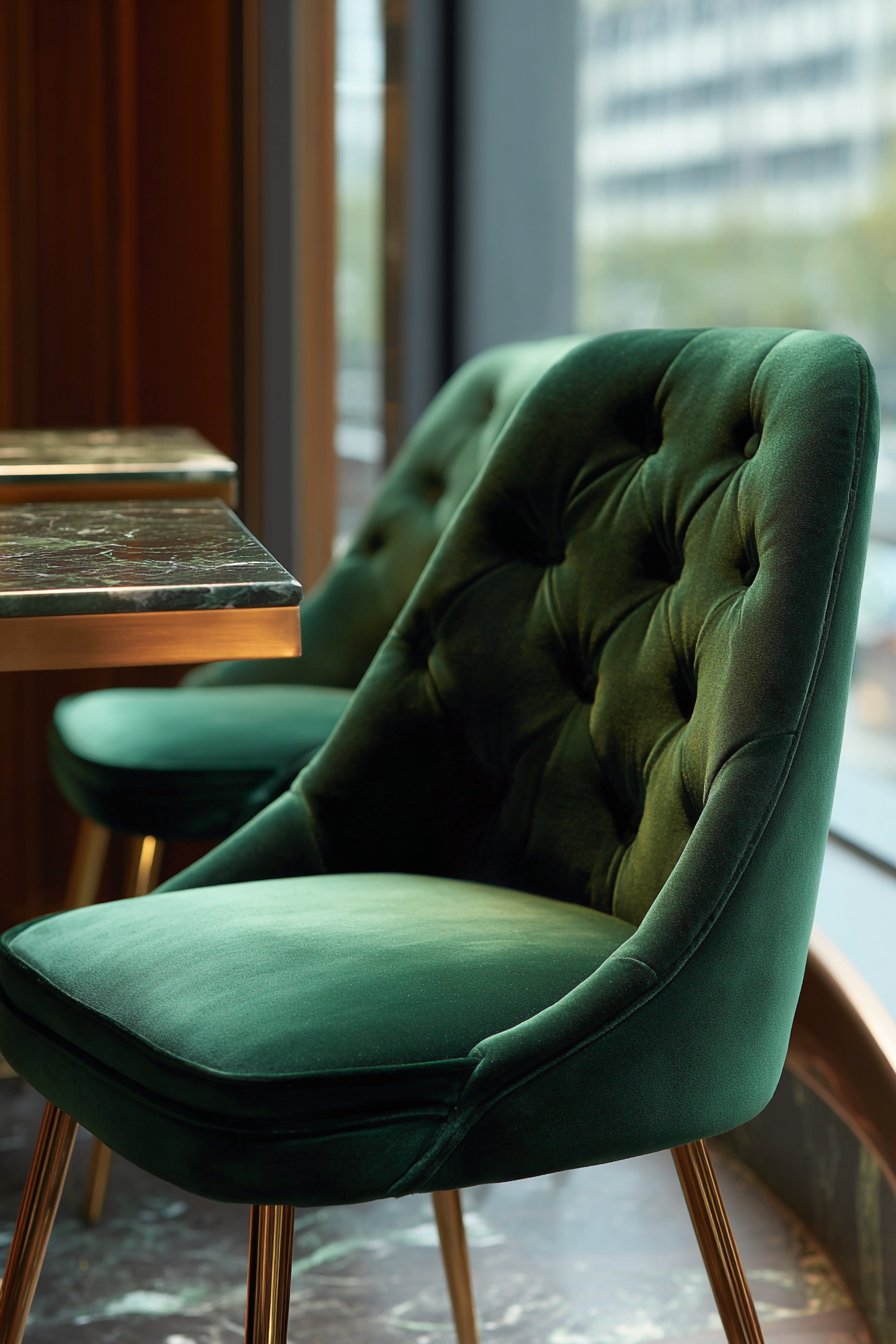
Envision an elegant chair upholstered in deep emerald green velvet with high tufted backing. Brass-finished metal legs add sophisticated glamour to the design. The chair positions at a marble-topped dining table alongside complementary pieces. Natural light creates subtle sheen variations across the sumptuous velvet fabric.
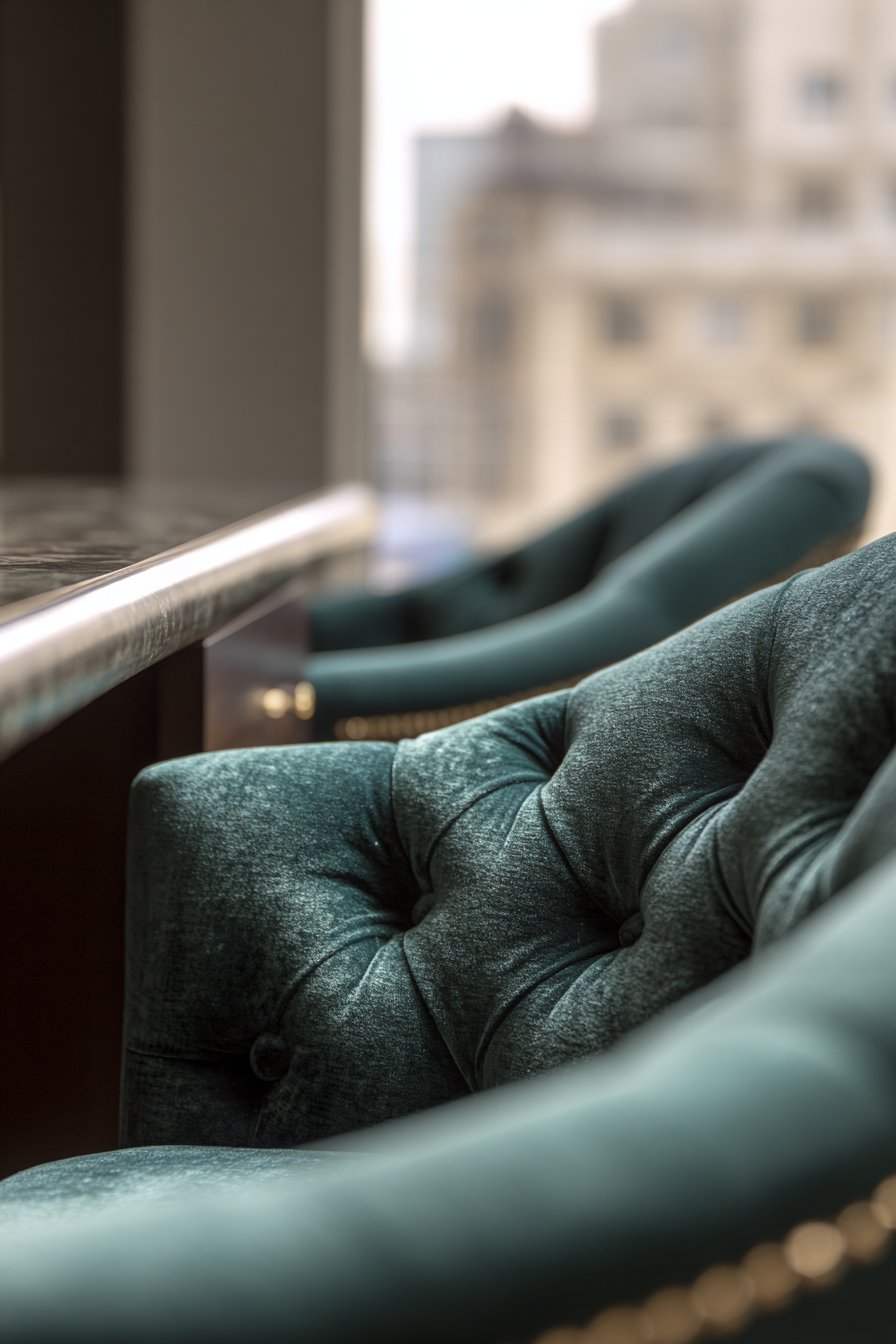
The brass legs show authentic aged patina that adds character and depth. Tufting creates dimensional texture that changes appearance from different viewing angles. This design elevates formal dining spaces with unmistakable luxury and refinement. The emerald hue brings richness without overwhelming the visual palette.
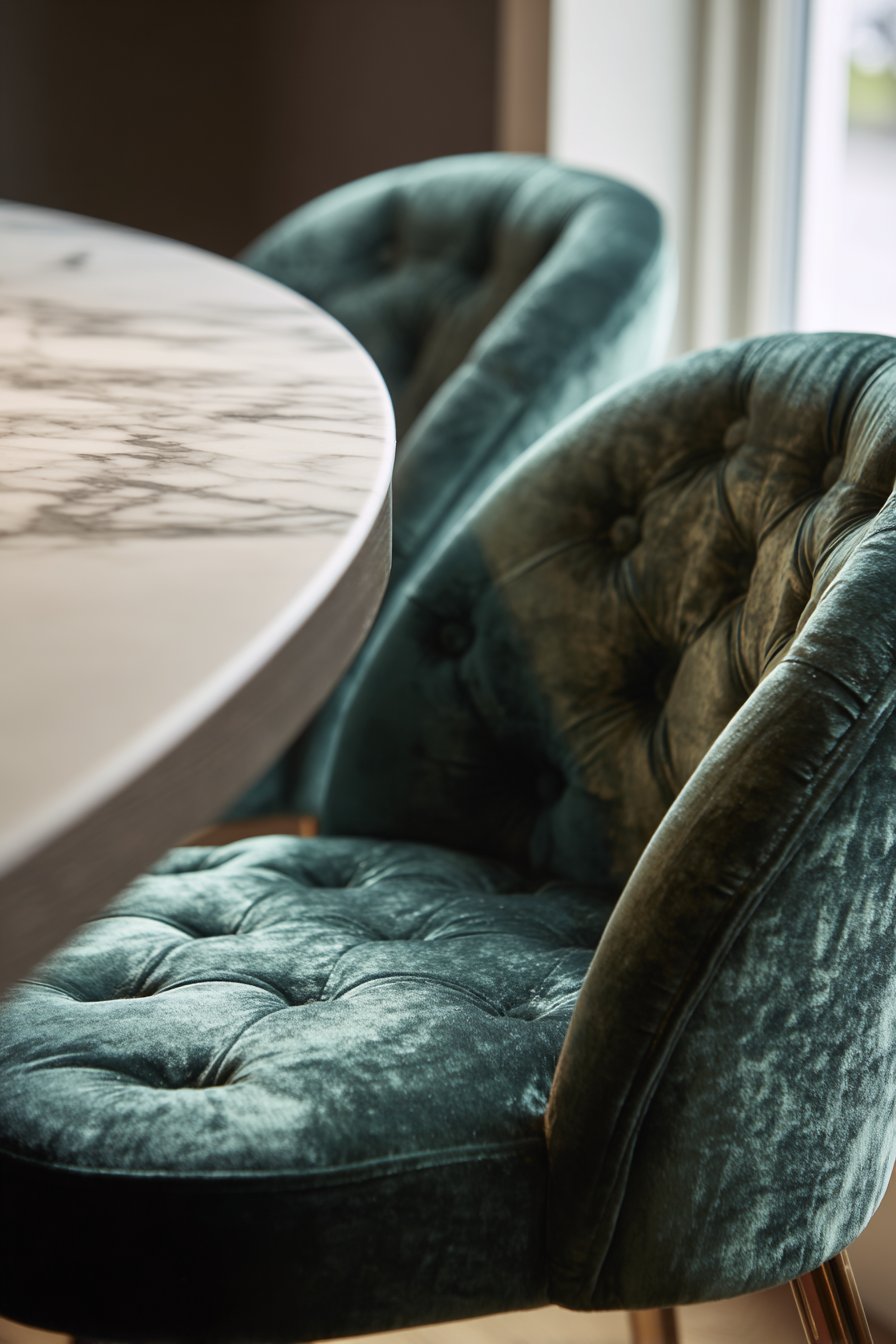
Detail-focused photography captures every nuance of the velvet’s texture and light-catching properties. The high back provides excellent support for extended dinner parties and conversations. Brass accents warm the color scheme while adding metallic interest. This chair makes a bold statement about quality and attention to detail.
Key Design Tips:
- Select jewel-tone velvets for luxurious texture and sophisticated color depth
- Choose brass or gold finishes to warm metallic accents
- Ensure tufting is properly executed for lasting comfort and appearance
- Pair with marble or stone surfaces for cohesive luxury aesthetic
- Position near natural light sources to highlight velvet’s characteristic sheen
- Limit to formal dining areas where elegance takes priority
4. Rustic Farmhouse Ladder-Back in Distressed Cream
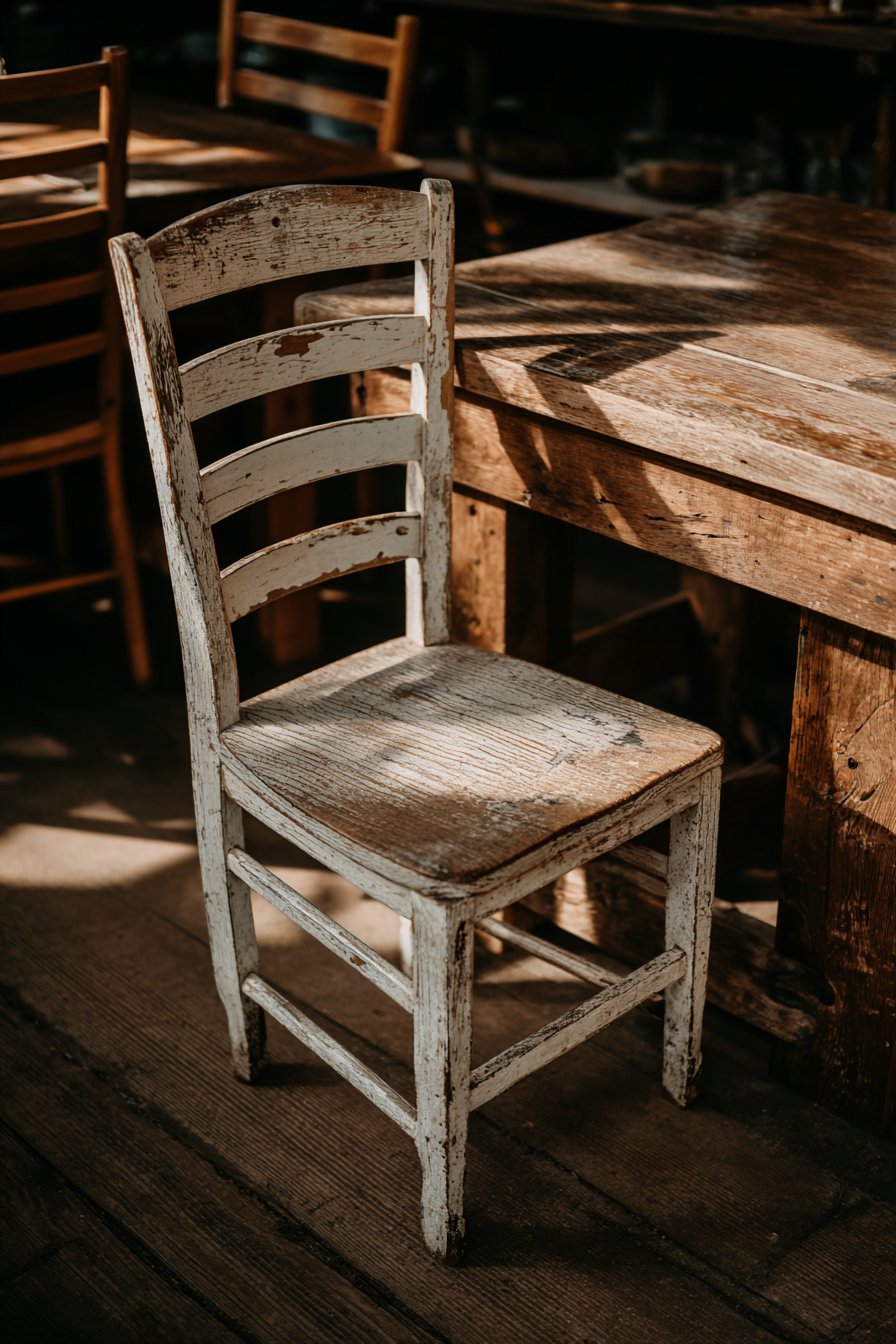
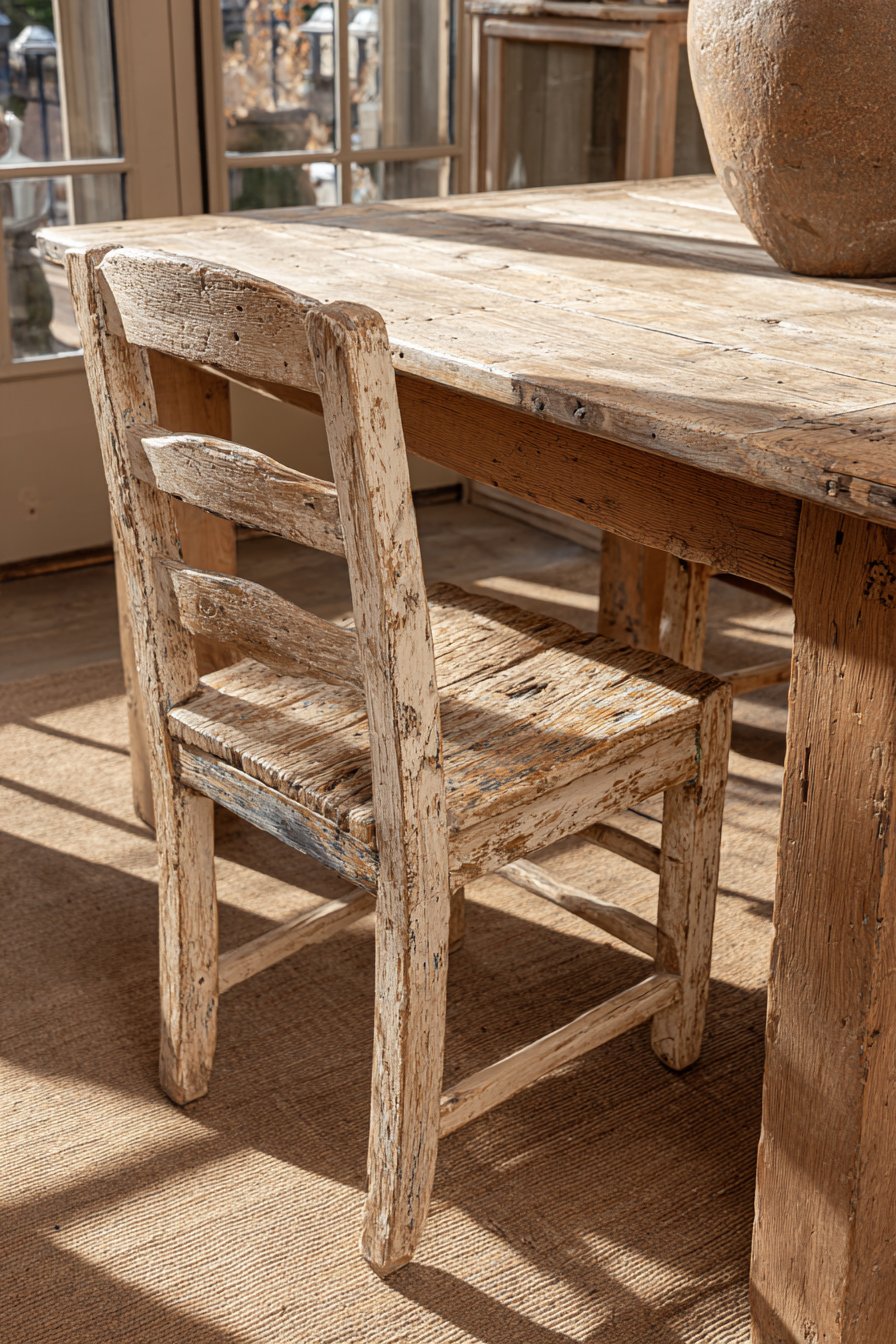
Picture a chair crafted from reclaimed pine with visible grain variations and natural knots. The traditional ladder-back design features slightly distressed paint in soft cream color. Weathering marks tell stories of authentic aging and character development. The chair sits at a chunky wooden farmhouse table bathed in warm afternoon light.
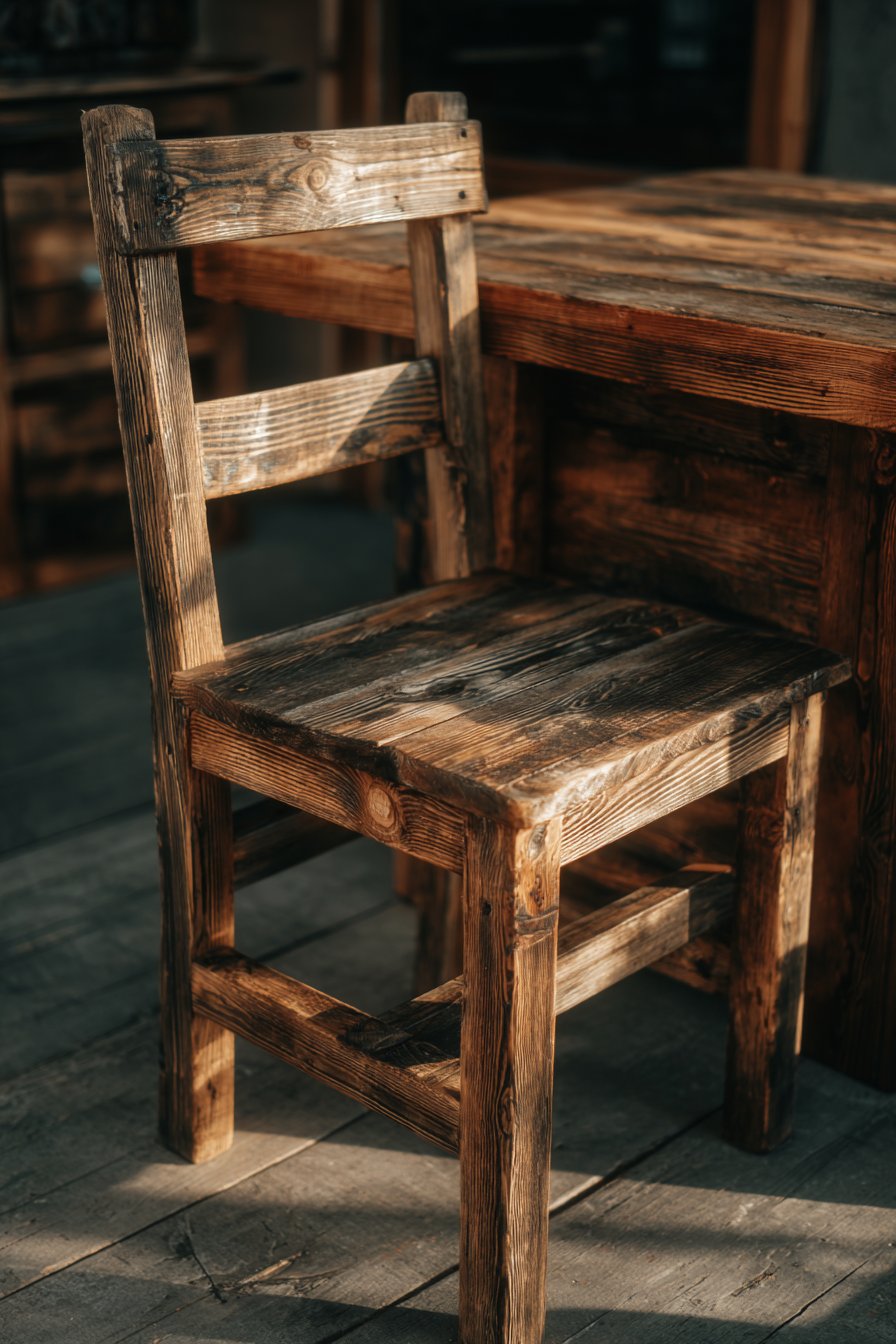
Reclaimed wood brings sustainability and history to contemporary dining spaces. The distressed finish creates approachable charm rather than precious formality. Natural knots and grain patterns ensure each chair displays unique character. Soft cream paint allows wood texture to remain visible beneath the surface.
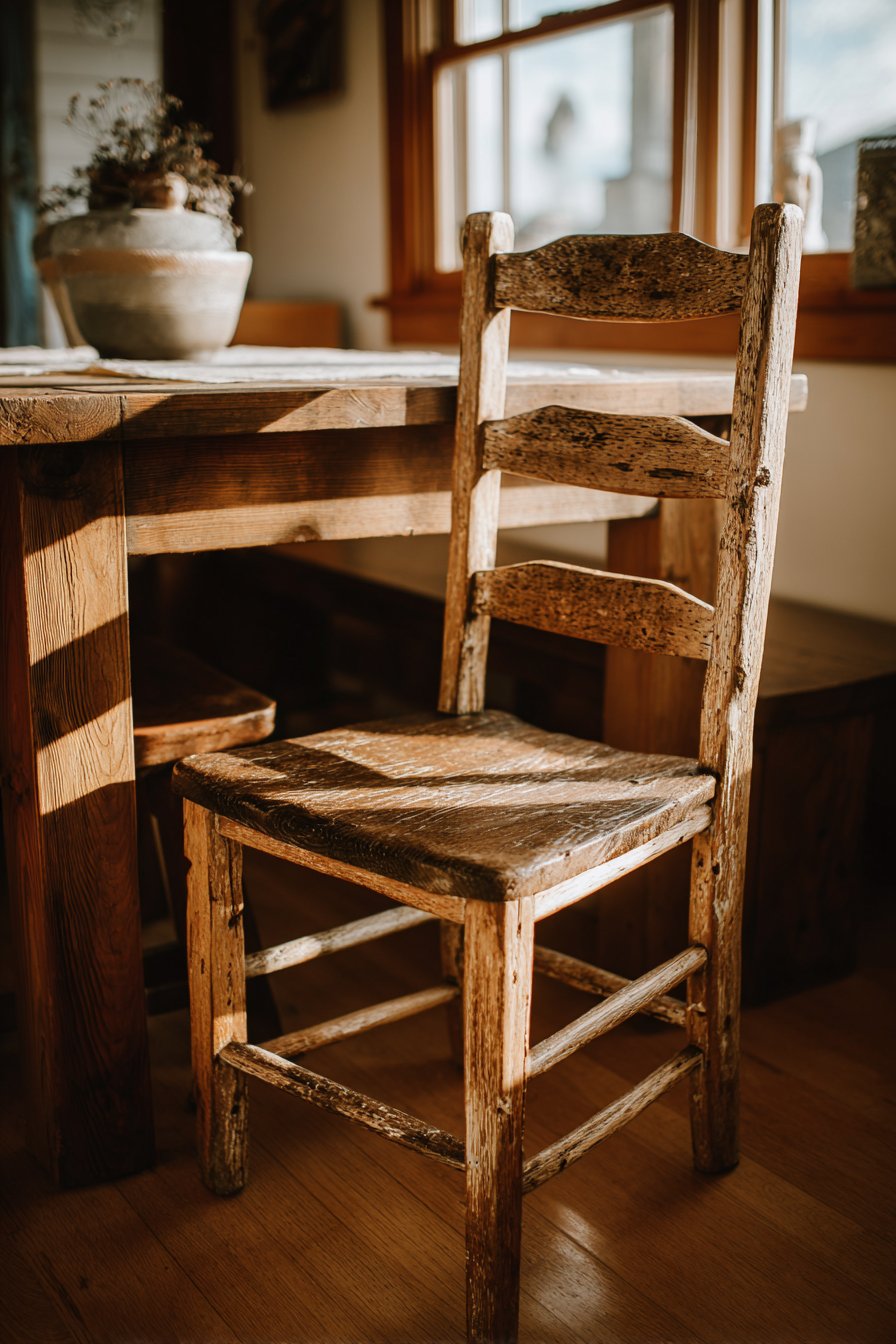
Warm afternoon light streaming through nearby windows highlights the authentic aged appearance. The ladder-back construction offers surprising comfort through its angled slats. This design proves that rustic doesn’t mean rough or uncomfortable. The practical durability suits active family dining environments perfectly.
Key Design Tips:
- Embrace reclaimed wood for sustainable choices with built-in character
- Choose distressed finishes that appear naturally aged rather than artificially treated
- Celebrate natural wood imperfections as authentic design features
- Pair with chunky farmhouse tables for cohesive rustic aesthetic
- Select cream or off-white tones that soften pure white’s harshness
- Position near windows to emphasize warm natural wood tones
5. Modern Industrial Metal and Mango Wood Combination
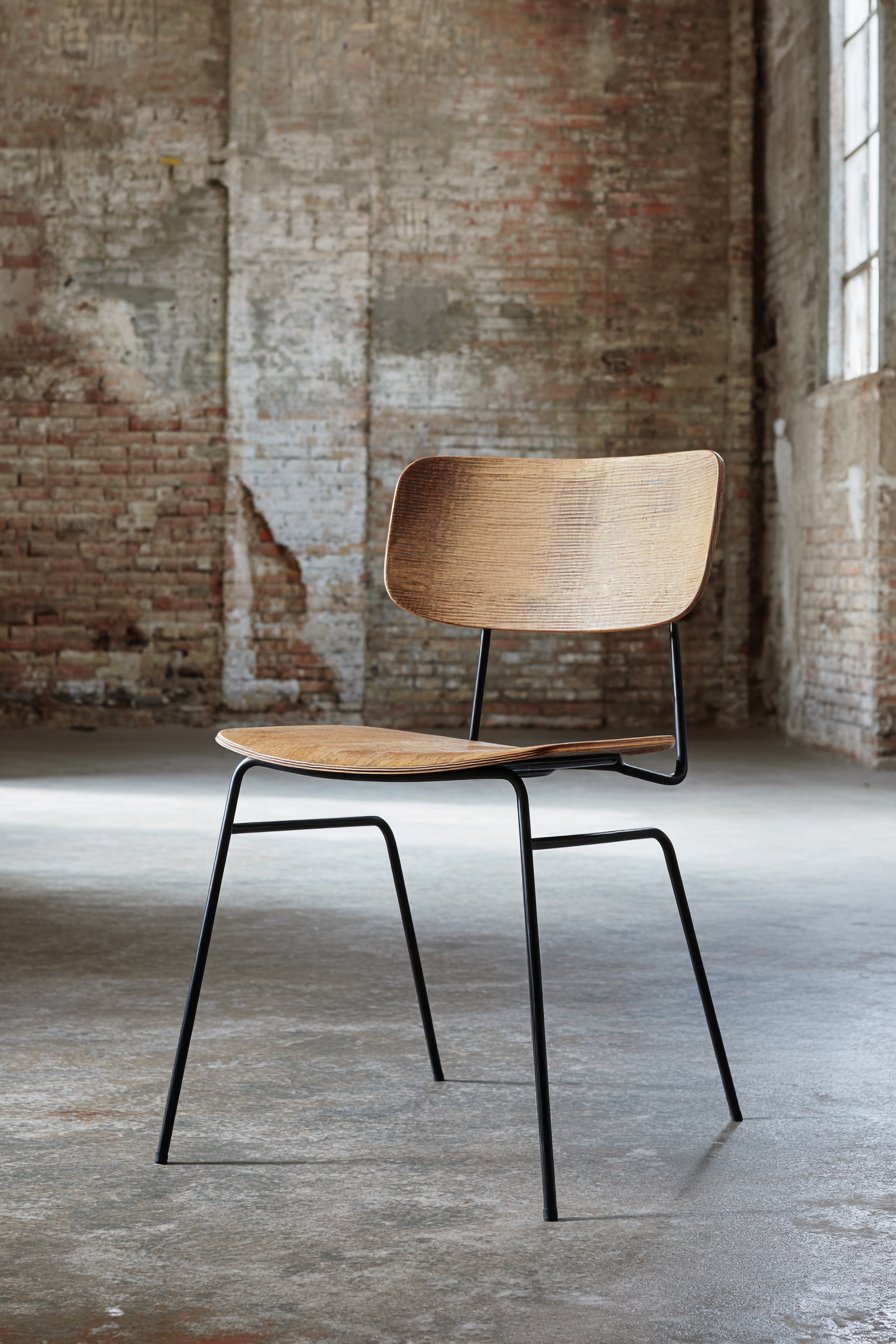
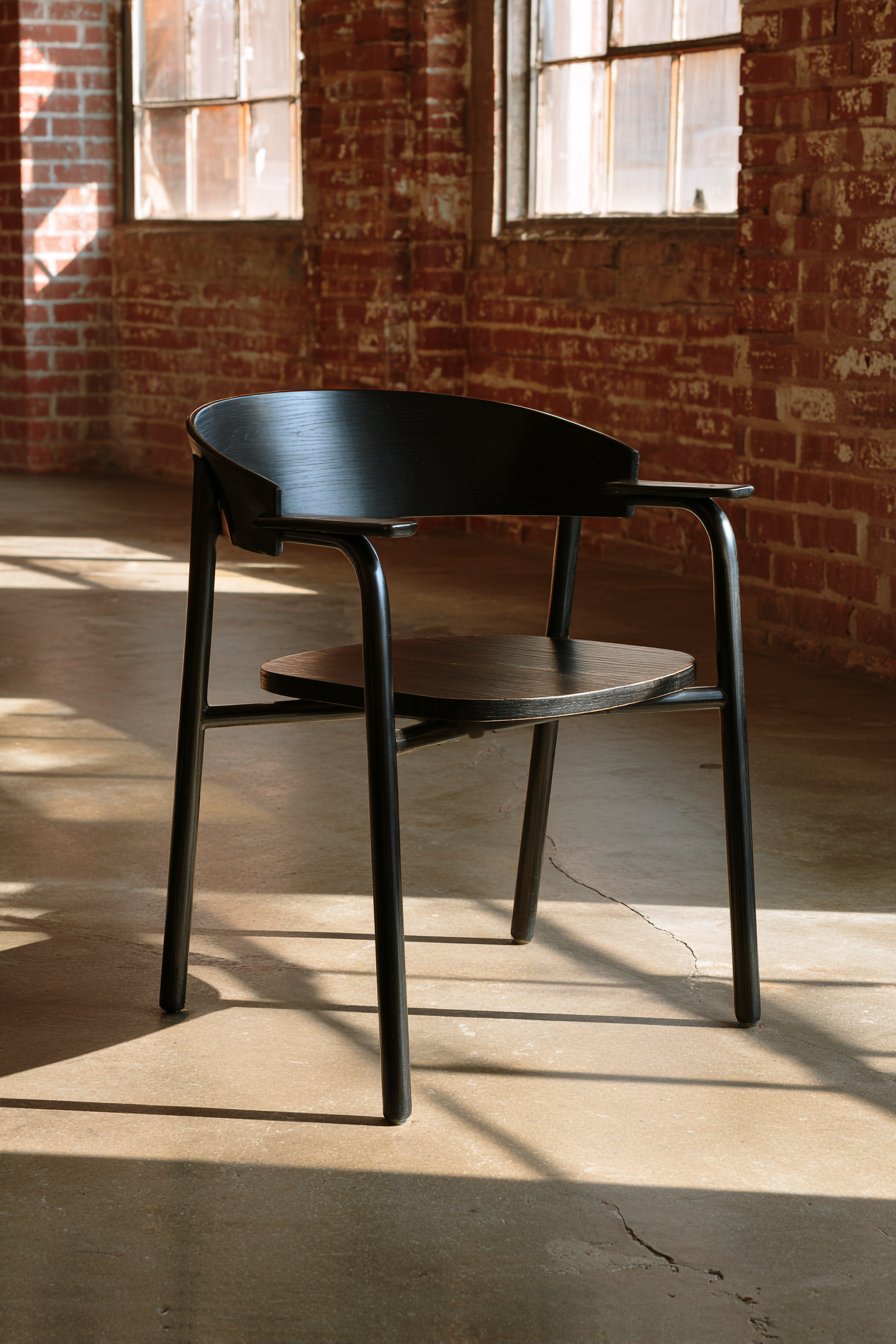
Imagine a chair combining black powder-coated metal frames with solid mango wood seats. The wood displays natural color variations and prominent grain patterns. This piece positions in a loft-style dining area with exposed brick walls. Concrete flooring amplifies the industrial aesthetic dramatically.
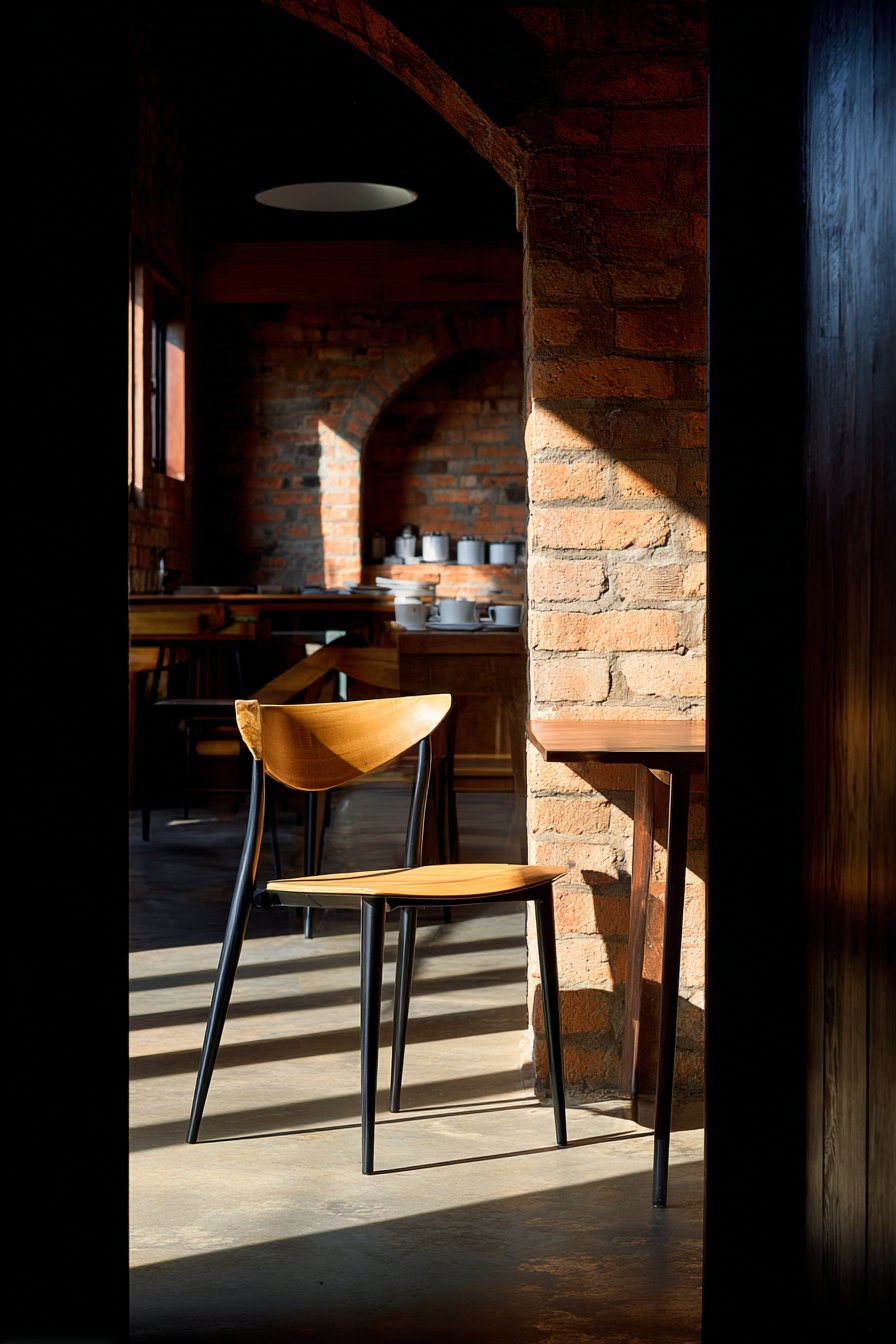
Natural warehouse-style lighting creates dramatic shadows that emphasize utilitarian design elements. The mixed materials create visual interest through textural and color contrast. Mango wood’s warmth balances the metal’s coolness for approachable industrial style. The construction celebrates honest materials and straightforward functionality.
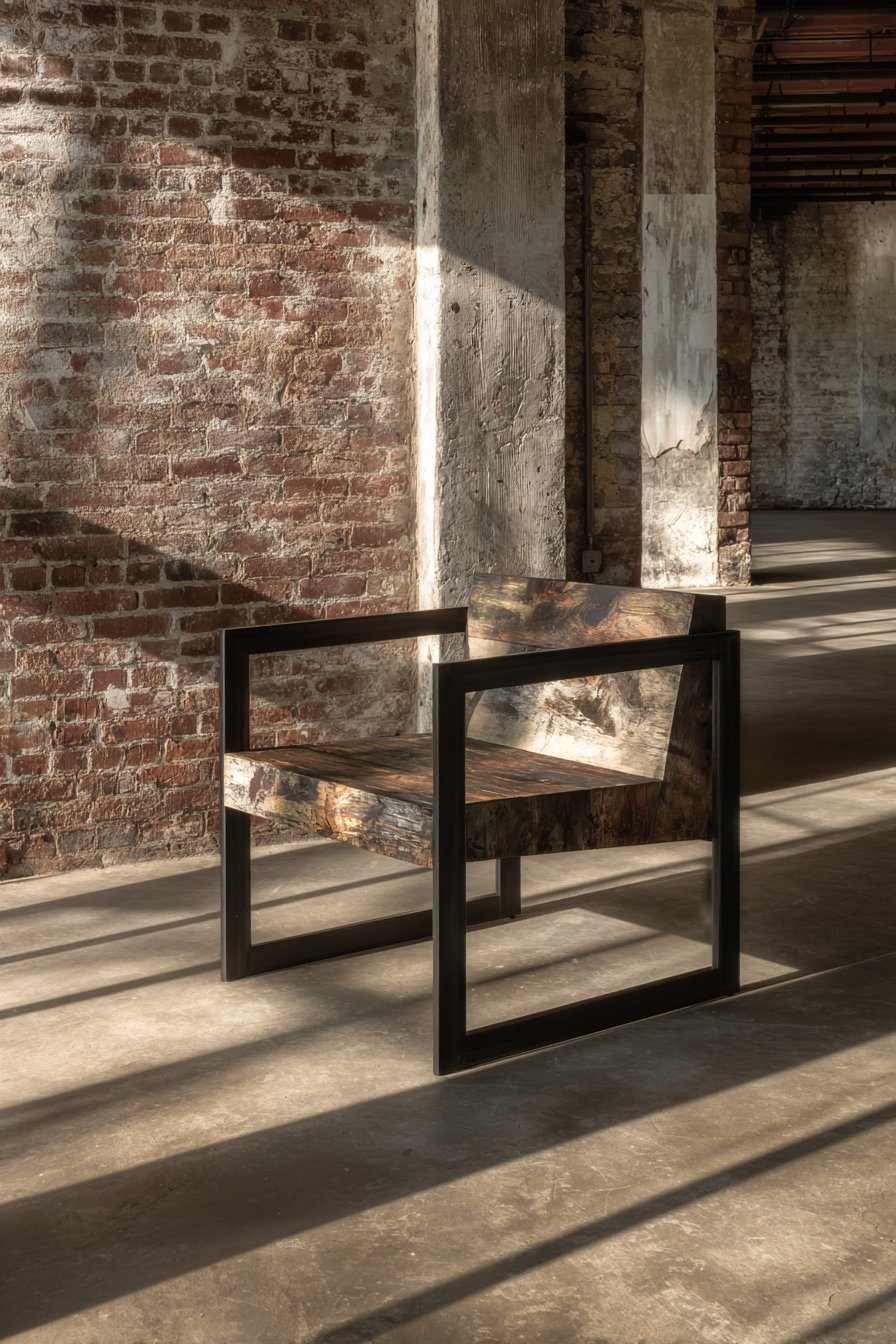
Black powder coating provides durability while maintaining sleek modern appearance. The wood seats develop beautiful patina over time with regular use. This design works equally well in urban lofts and suburban spaces seeking edge. The chair’s silhouette remains clean and uncluttered despite sturdy construction.
Key Design Tips:
- Combine metal frames with wood seats for balanced industrial aesthetic
- Choose black powder coating for durable, low-maintenance metal finishes
- Select solid wood species like mango for visible grain and natural variations
- Pair with exposed architectural elements like brick or concrete
- Embrace dramatic lighting to create sculptural shadows
- Allow wood to develop natural patina rather than constant refinishing
6. Classic Windsor in Natural Ash Wood
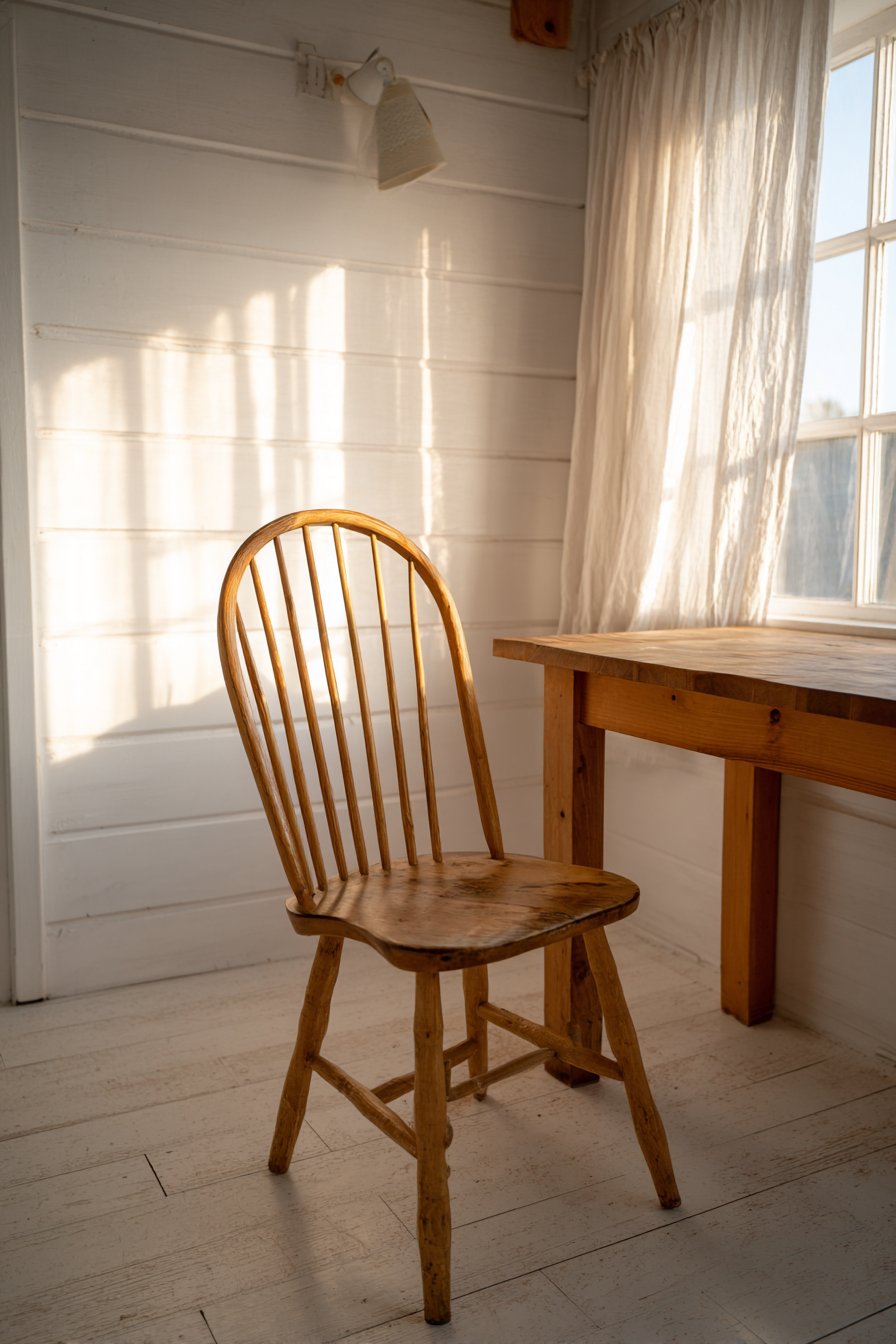
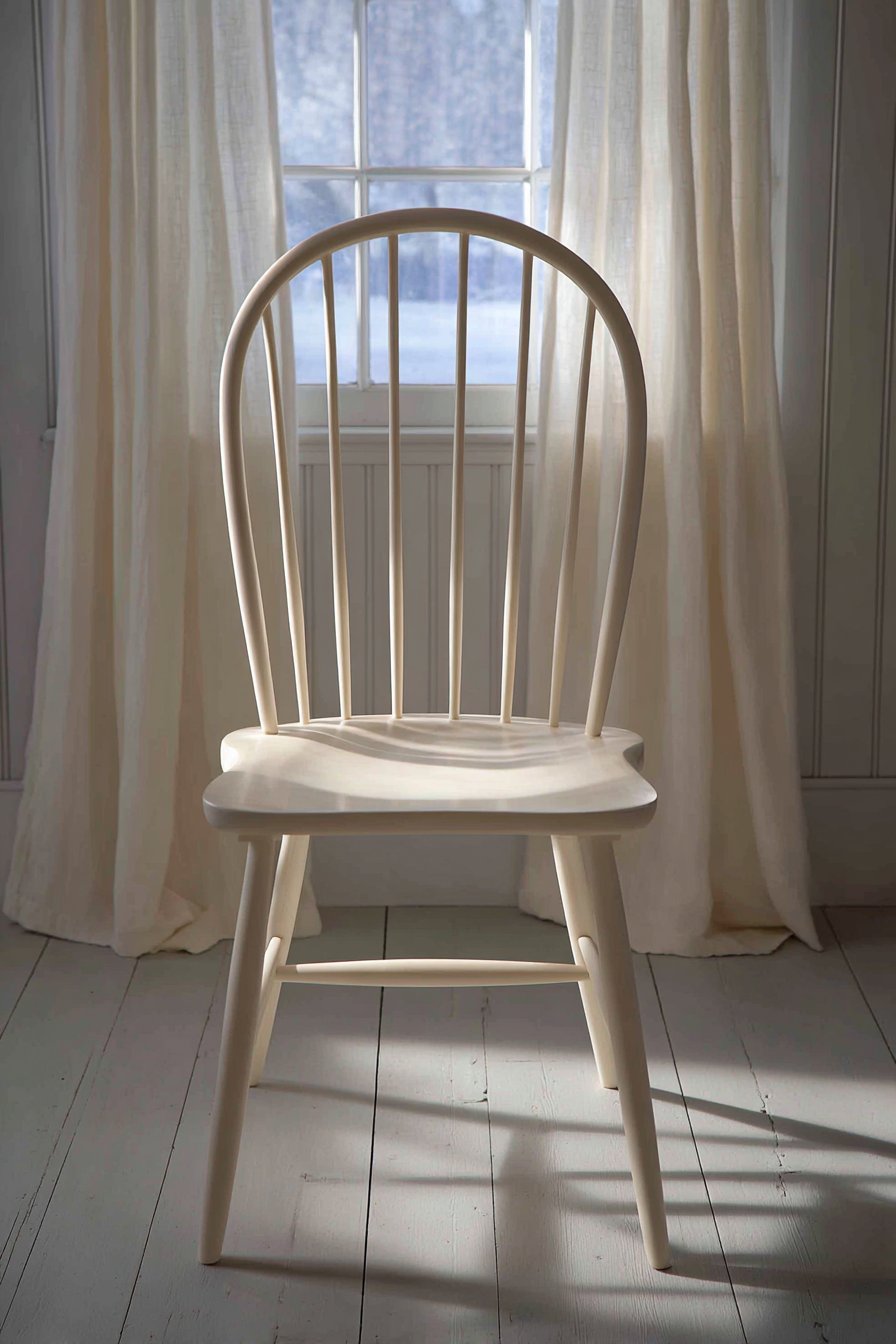
Envision a traditional Windsor chair with curved spindle back and saddle-shaped seat. Solid ash wood construction displays natural finish that highlights grain patterns. The chair positions at a simple wooden table in a cottage-style dining room. White shiplap walls create bright, fresh backdrop for classic design.
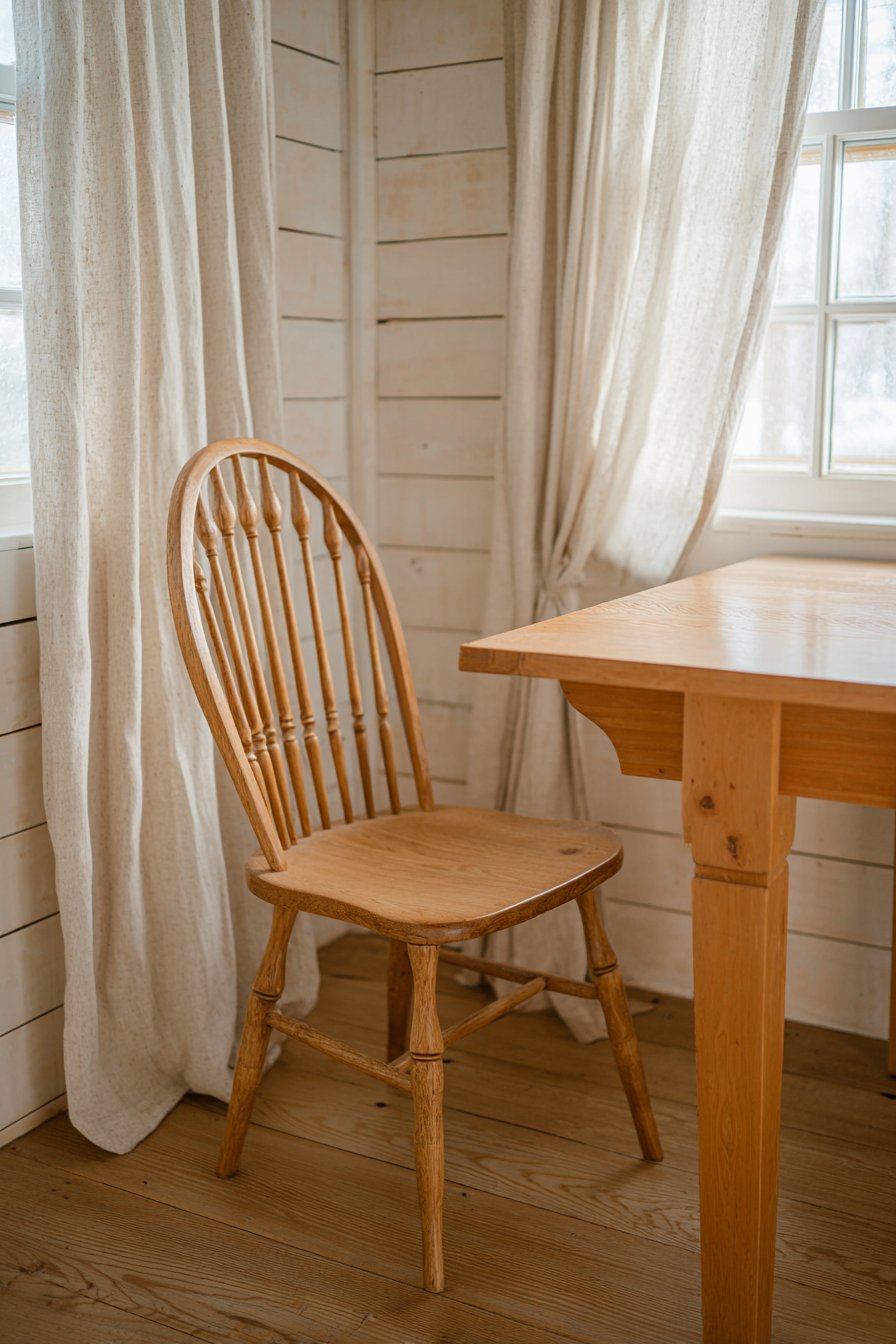
Soft morning light filters through linen curtains, illuminating time-honored craftsmanship details. The saddle seat carving provides ergonomic comfort through traditional shaping techniques. Spindles curve gracefully to support the back while maintaining visual lightness. This design represents centuries of refined proportions and functional elegance.
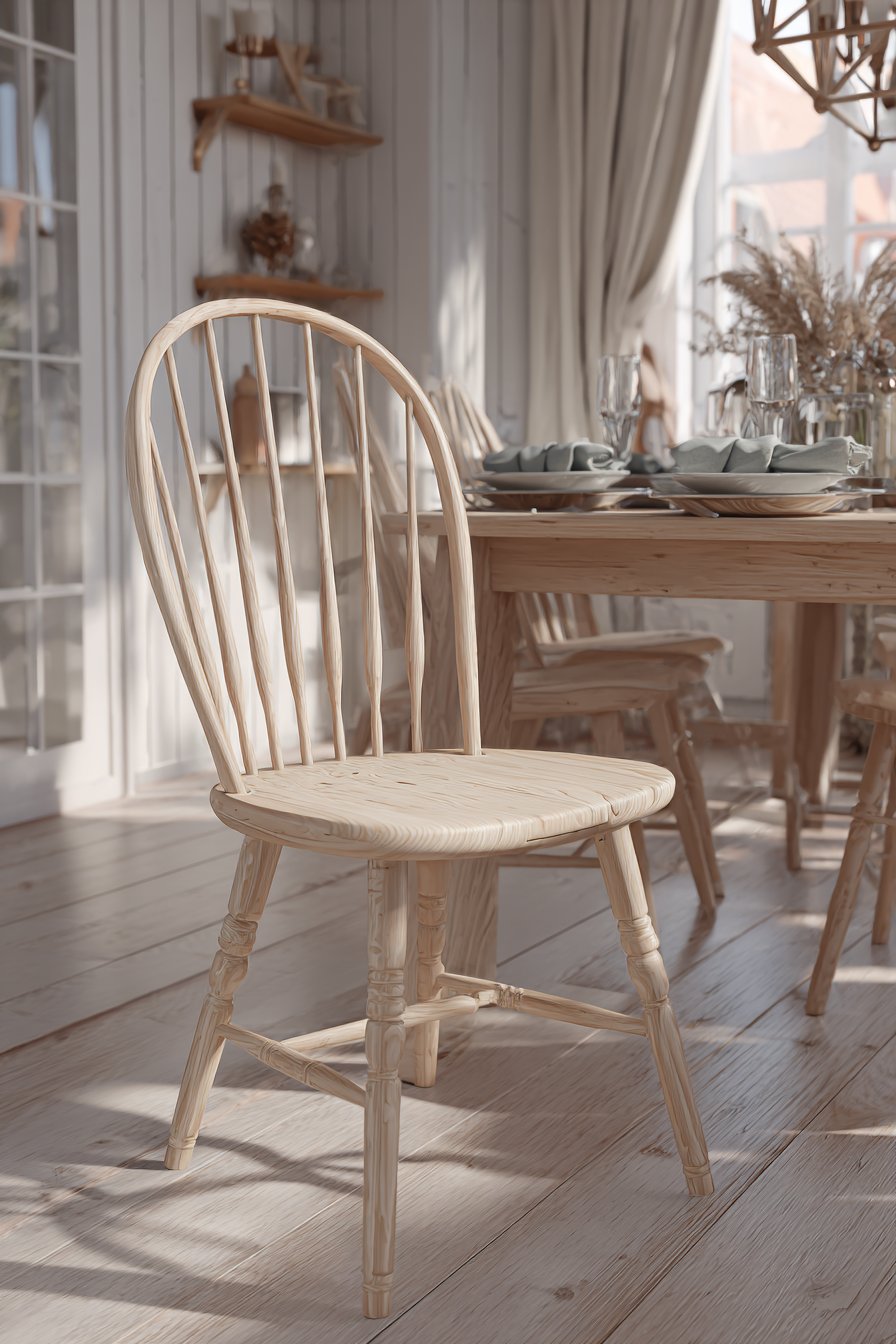
Natural ash finish allows the wood’s character to shine without competing stains. The curved lines create movement and grace despite the chair’s solid construction. This piece demonstrates how historical designs remain relevant through superior functionality. The cottage setting emphasizes the chair’s approachable, unpretentious beauty.
Key Design Tips:
- Choose solid hardwoods like ash for durable Windsor construction
- Embrace natural finishes that showcase wood grain and color variations
- Ensure saddle seats are properly carved for genuine comfort
- Pair with simple tables that don’t overshadow classic chair details
- Use in cottage or traditional settings for appropriate aesthetic context
- Appreciate historical design proportions refined over centuries
7. Contemporary Cantilever Chrome and Polymer Shell
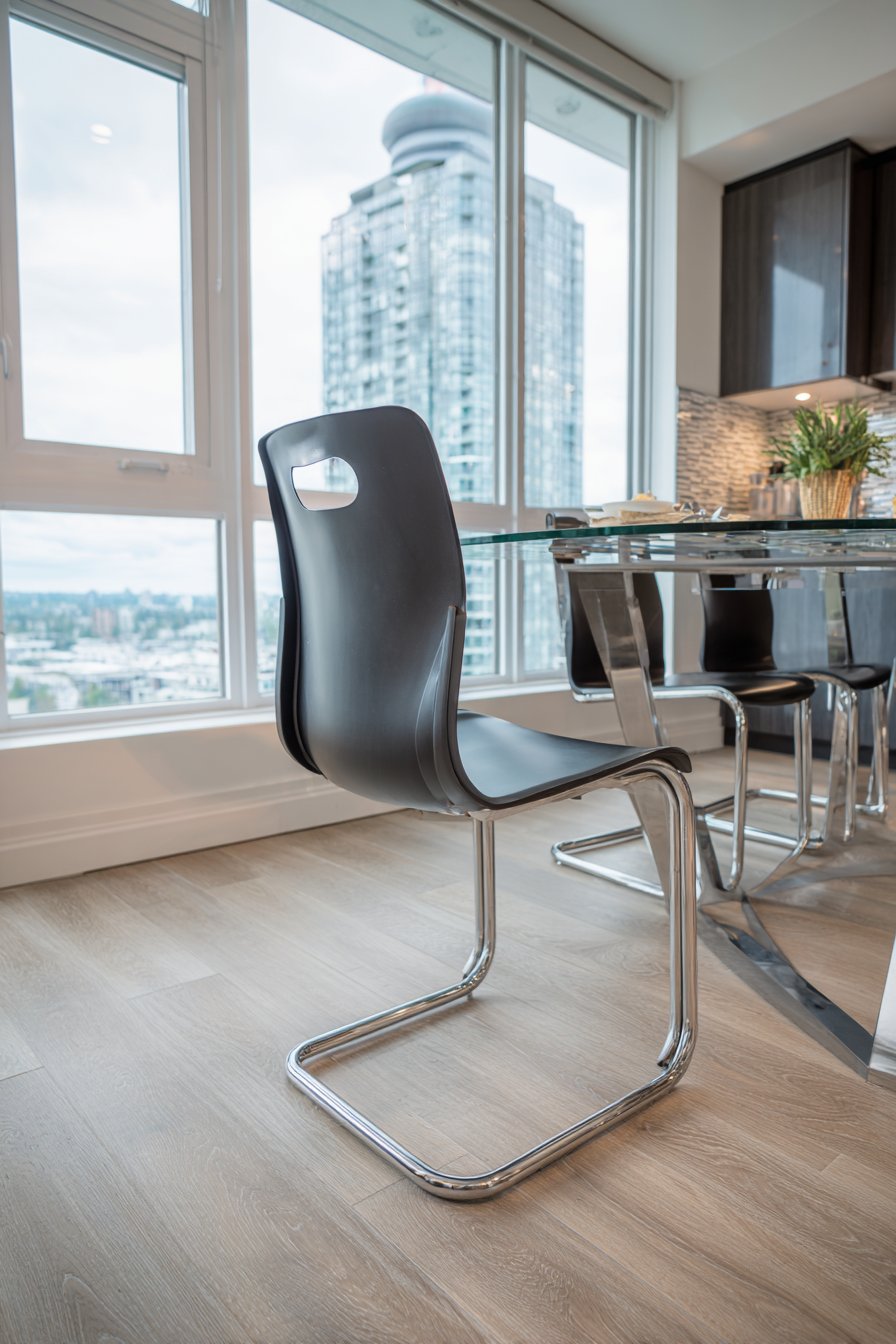
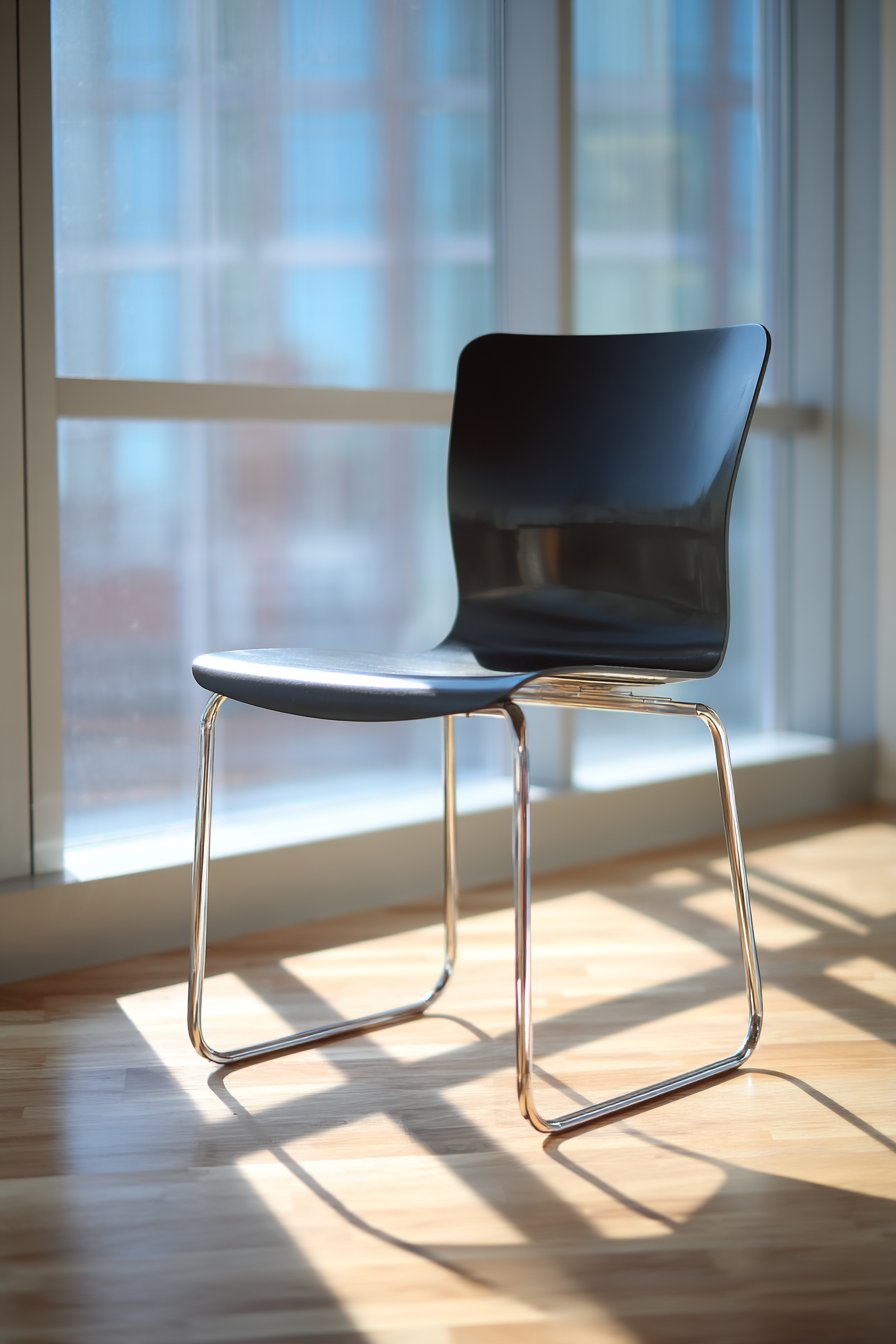
Picture a chair with sleek chrome cantilever base and molded charcoal gray shell. The modern profile creates interesting geometric shadows on light oak flooring. The chair positions at a glass-topped dining table in bright, contemporary space. Floor-to-ceiling windows flood the area with even natural lighting.
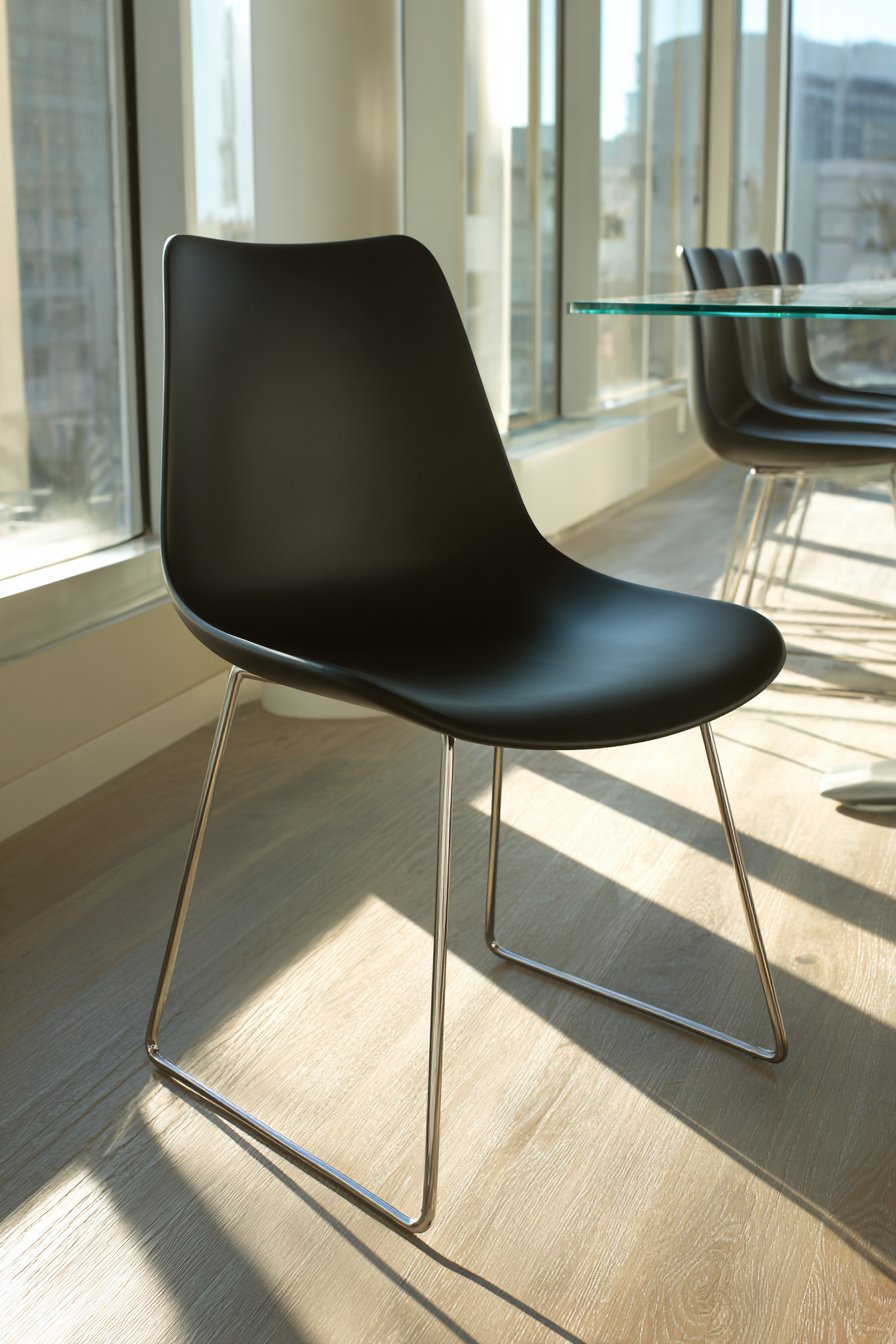
The cantilever design eliminates back legs for space-efficient, floating appearance. Molded polymer provides comfortable contouring through ergonomic three-dimensional shaping. Chrome reflects light beautifully while maintaining minimal visual weight. Matte gray finish prevents excessive glare while adding sophisticated neutrality.
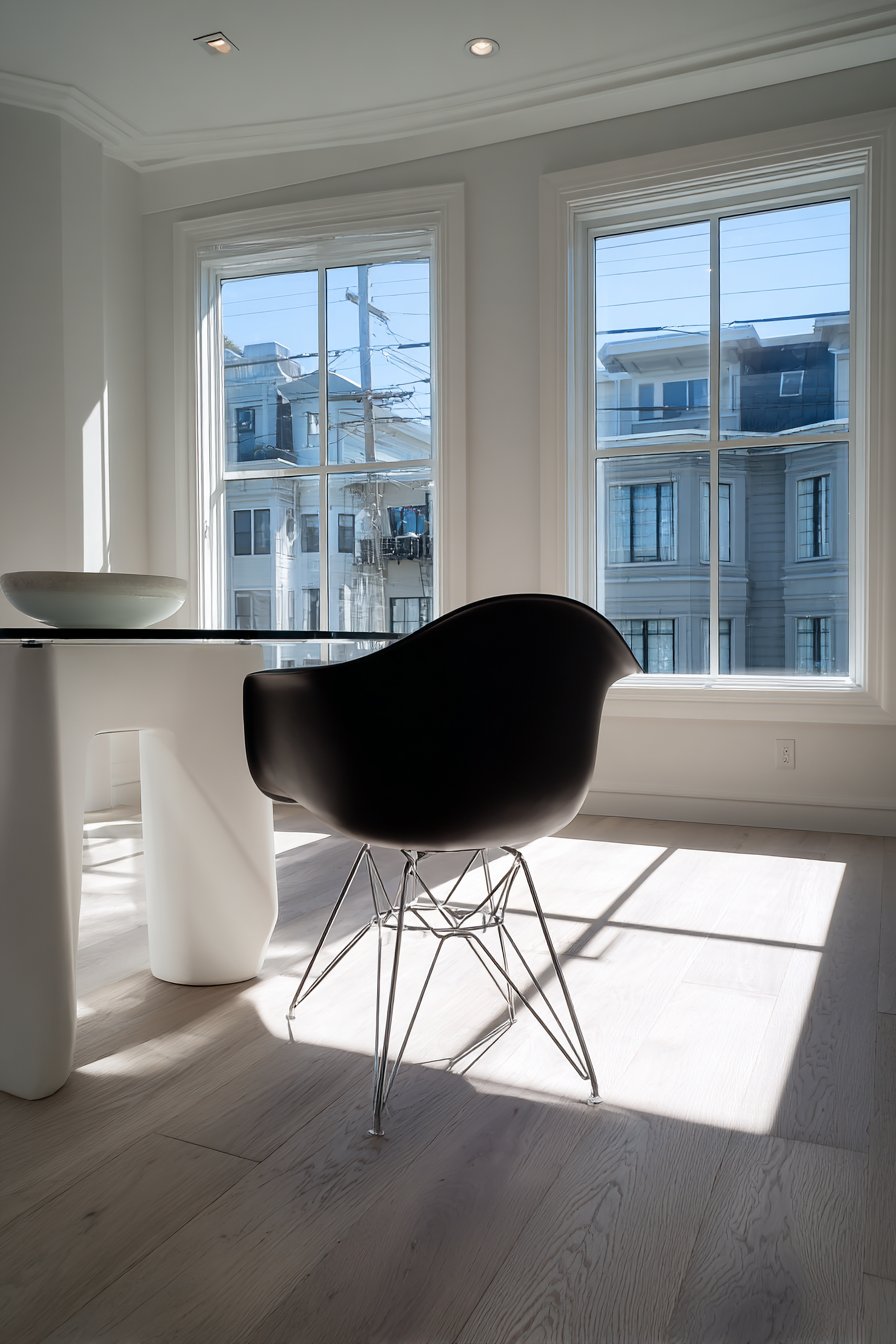
This design epitomizes modern efficiency and technological innovation in furniture manufacturing. The smooth surfaces clean easily, making this choice practical for busy households. Glass table pairing emphasizes the chair’s contemporary minimalist aesthetic. The overall effect creates dining spaces that feel open and uncluttered.
Key Design Tips:
- Select cantilever designs for modern spaces needing visual lightness
- Choose matte finishes to reduce glare while maintaining contemporary appeal
- Pair with glass or minimal tables to emphasize floating chair appearance
- Ensure molded shells provide genuine ergonomic support
- Position in spaces with abundant natural light for best effect
- Consider polymer chairs for easy maintenance and durability
8. French Country Carved Frame with Linen Upholstery
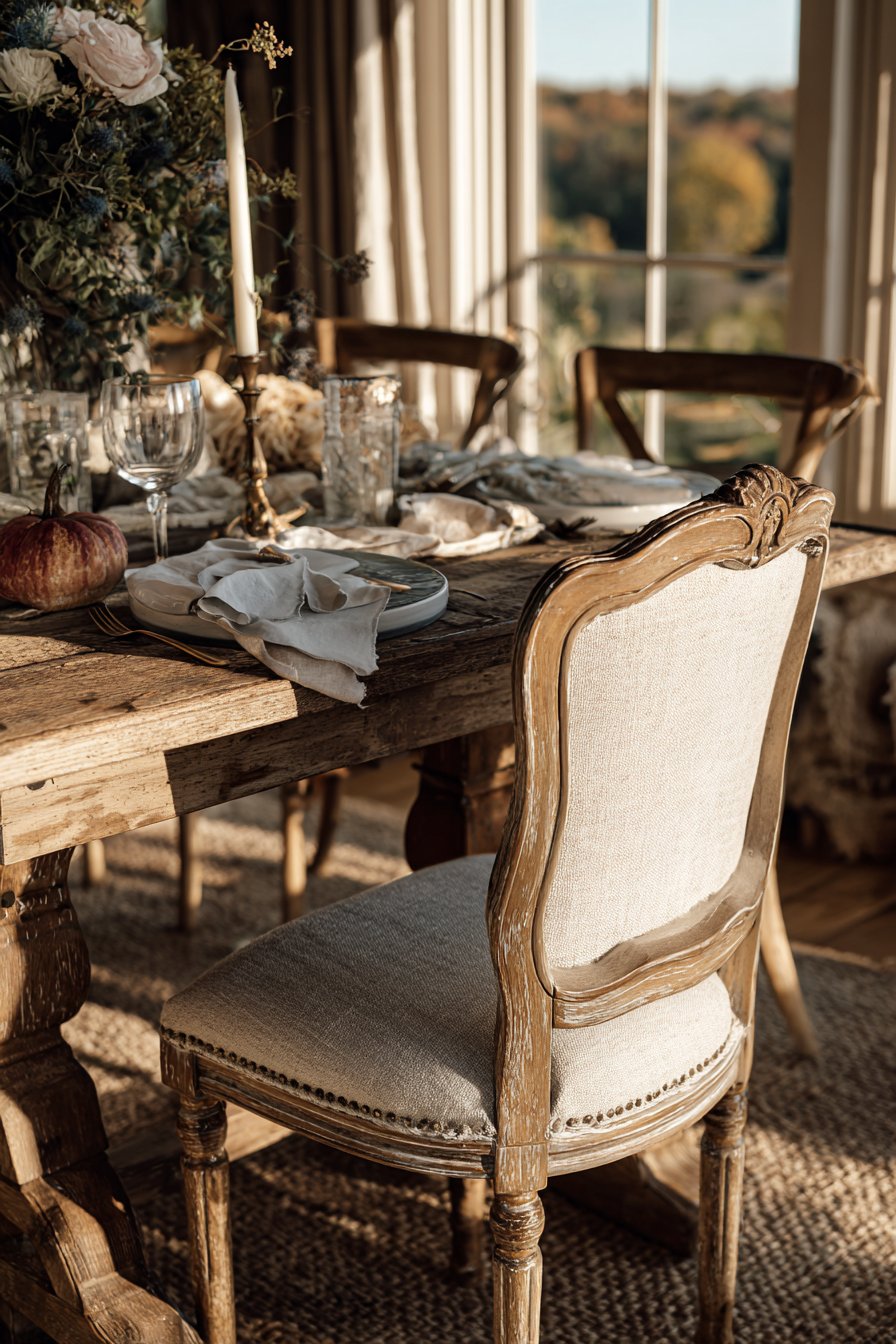
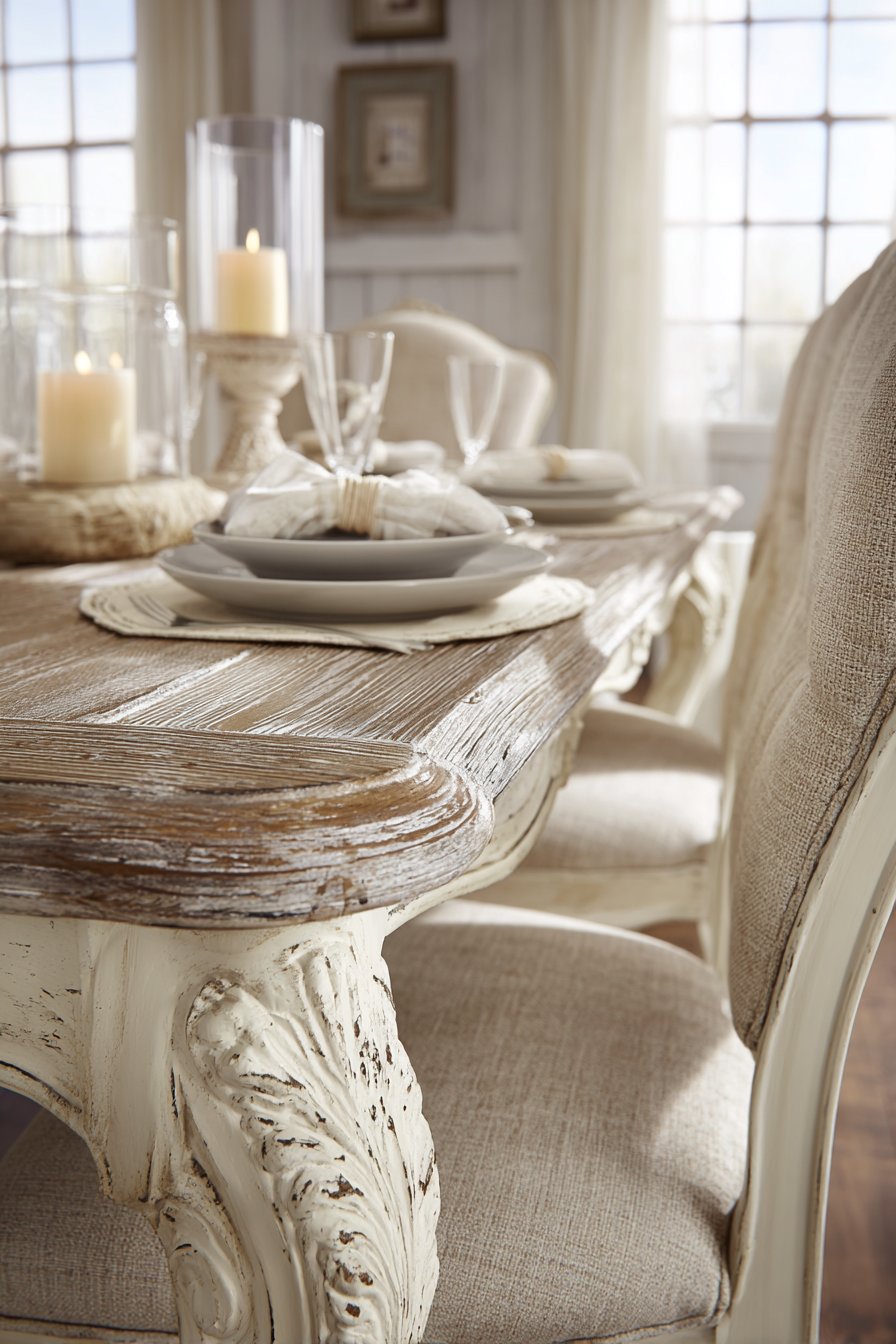
Imagine a chair featuring carved wooden frame in distressed antique white finish. Natural linen upholstery on the seat displays subtle texture and organic character. The frame shows gentle wear at edges that suggests authentic age. The chair positions at a rustic wooden table with soft afternoon light creating warmth.
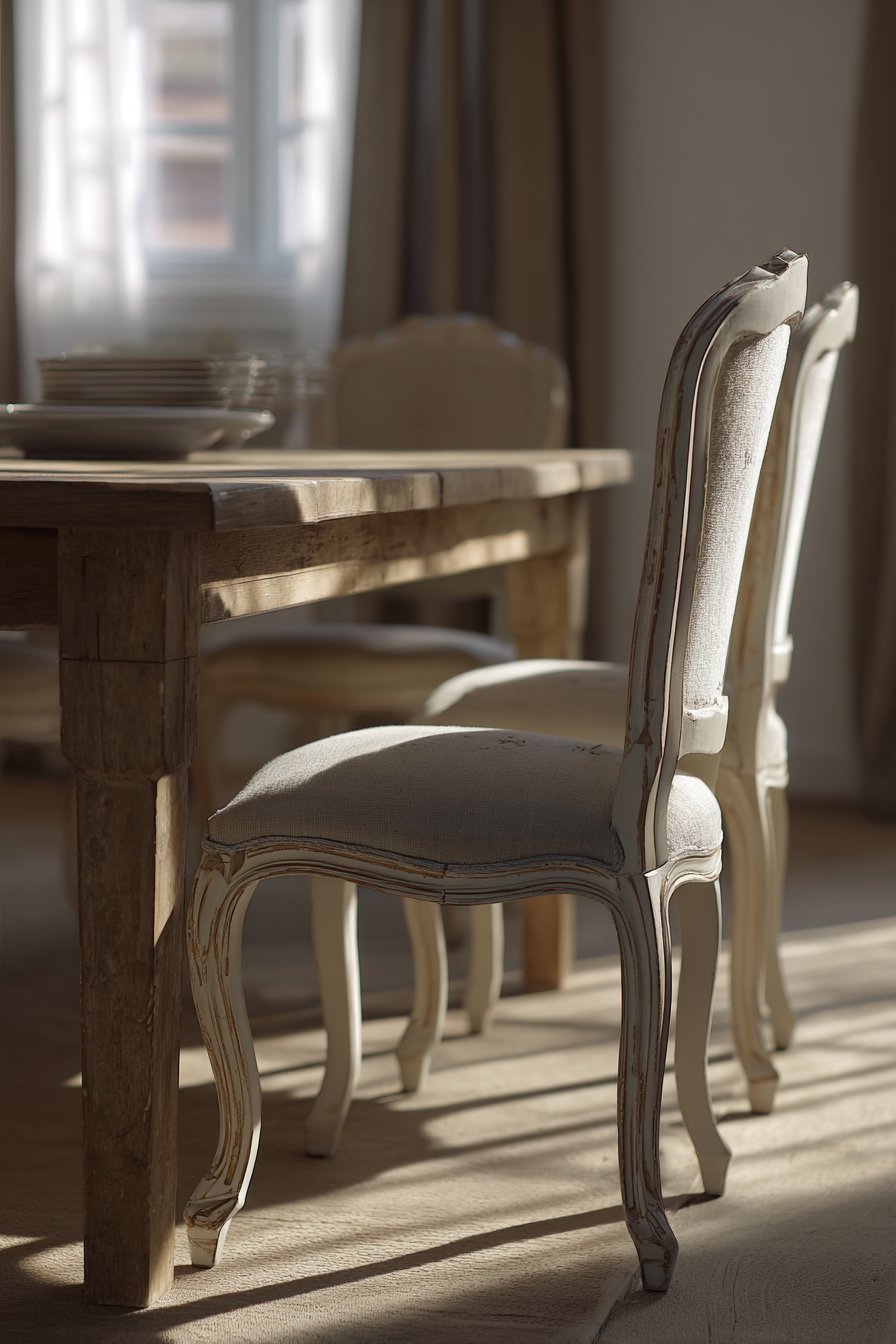
Carved details and cabriole legs showcase authentic provincial styling and craftsmanship. The antique white finish allows wood grain to peek through strategic distressing. Natural linen complements the romantic aesthetic while providing comfortable seating surface. Carved flourishes add visual interest without overwhelming the design’s gentle character.
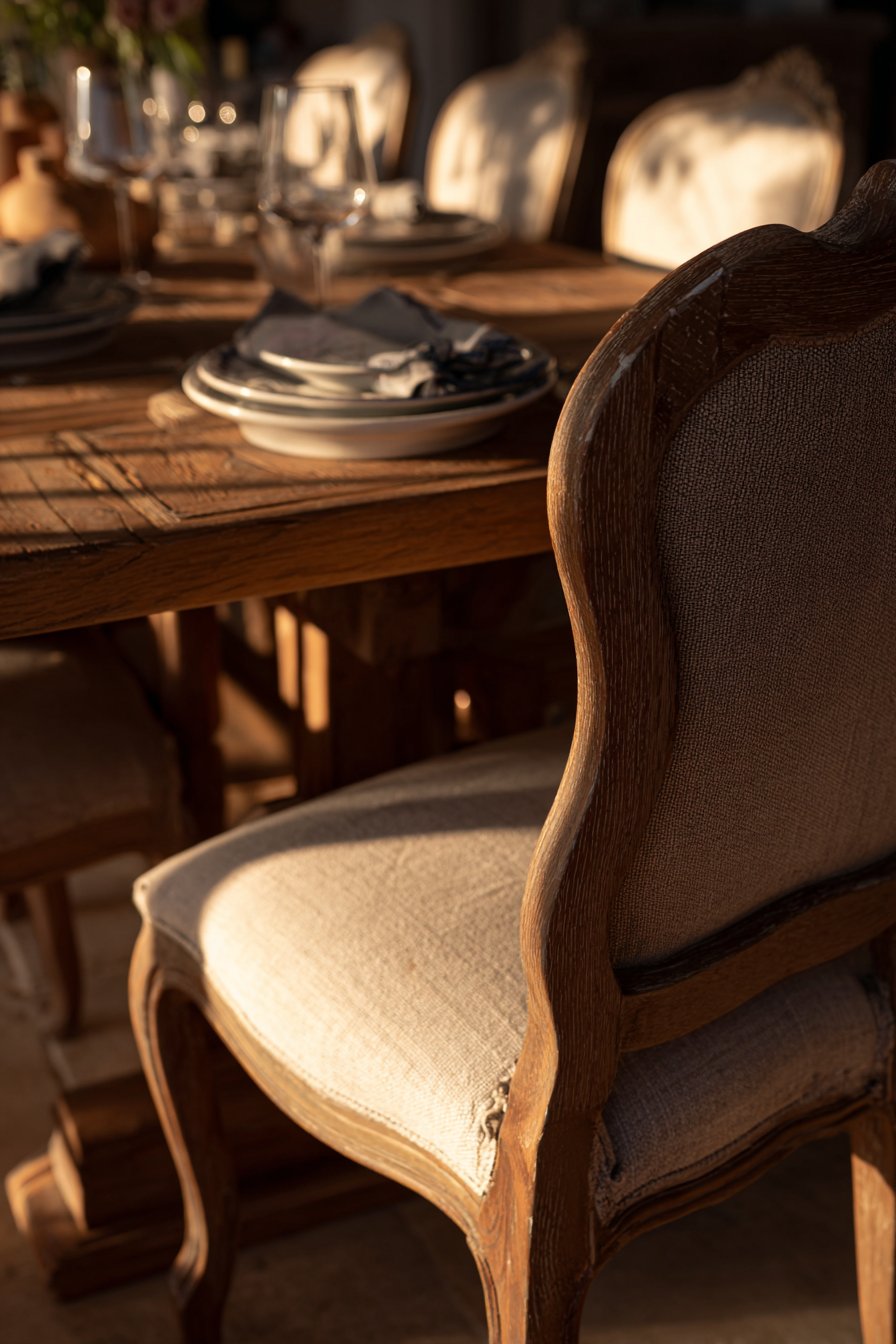
The combination of carved wood and soft linen creates tactile appeal. Afternoon light enhances the warm, inviting atmosphere perfect for leisurely meals. This design brings European country charm to diverse dining spaces. The romantic aesthetic feels welcoming rather than overly formal or stuffy.
Key Design Tips:
- Choose natural linen for authentic French country texture and appearance
- Select distressed white finishes that appear genuinely aged
- Ensure carved details reflect traditional provincial motifs
- Pair with rustic wooden tables for cohesive country aesthetic
- Position where soft natural light enhances romantic ambiance
- Embrace gentle wear patterns as character-building features
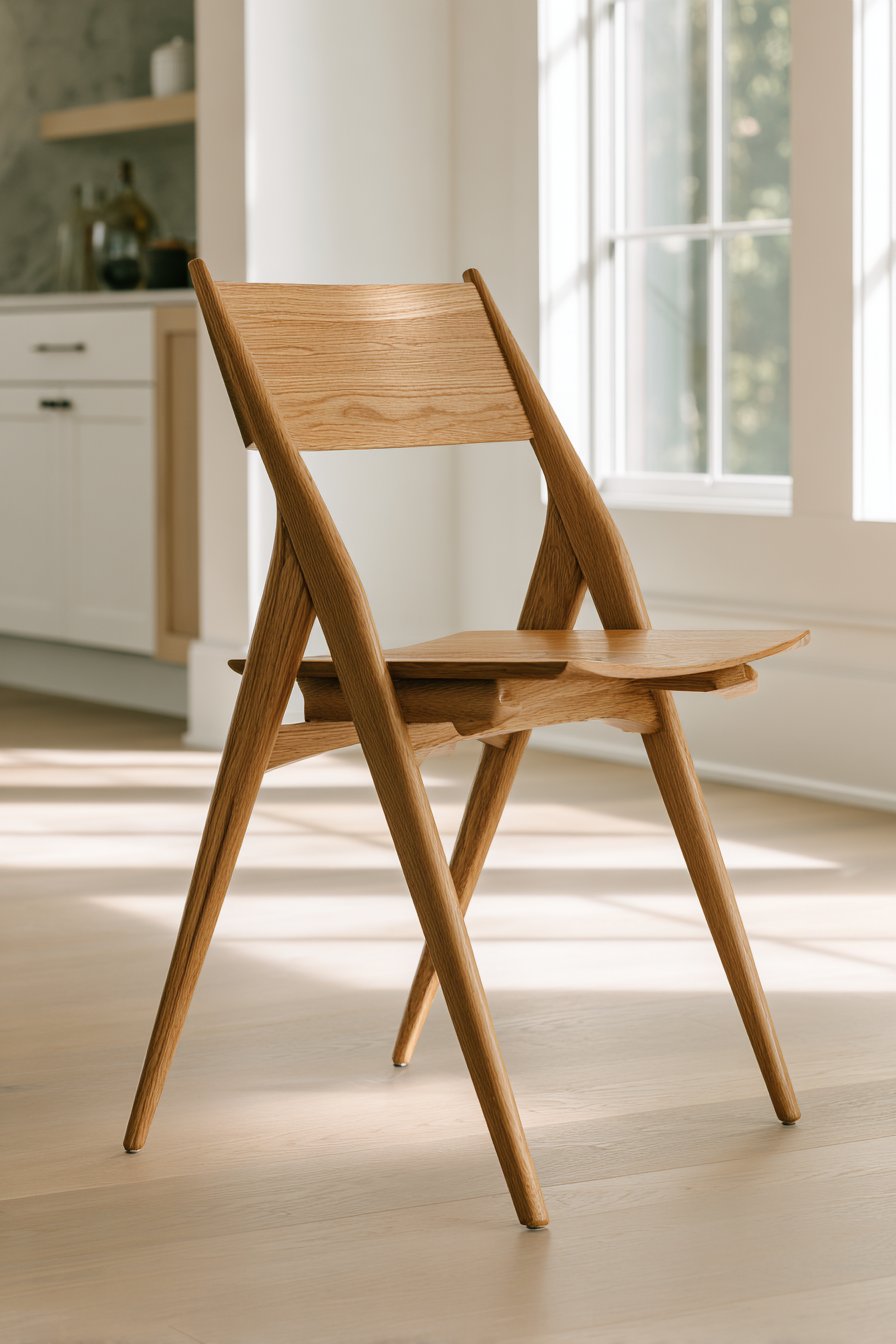
9. Minimalist Japanese-Inspired Oak with Exposed Joinery
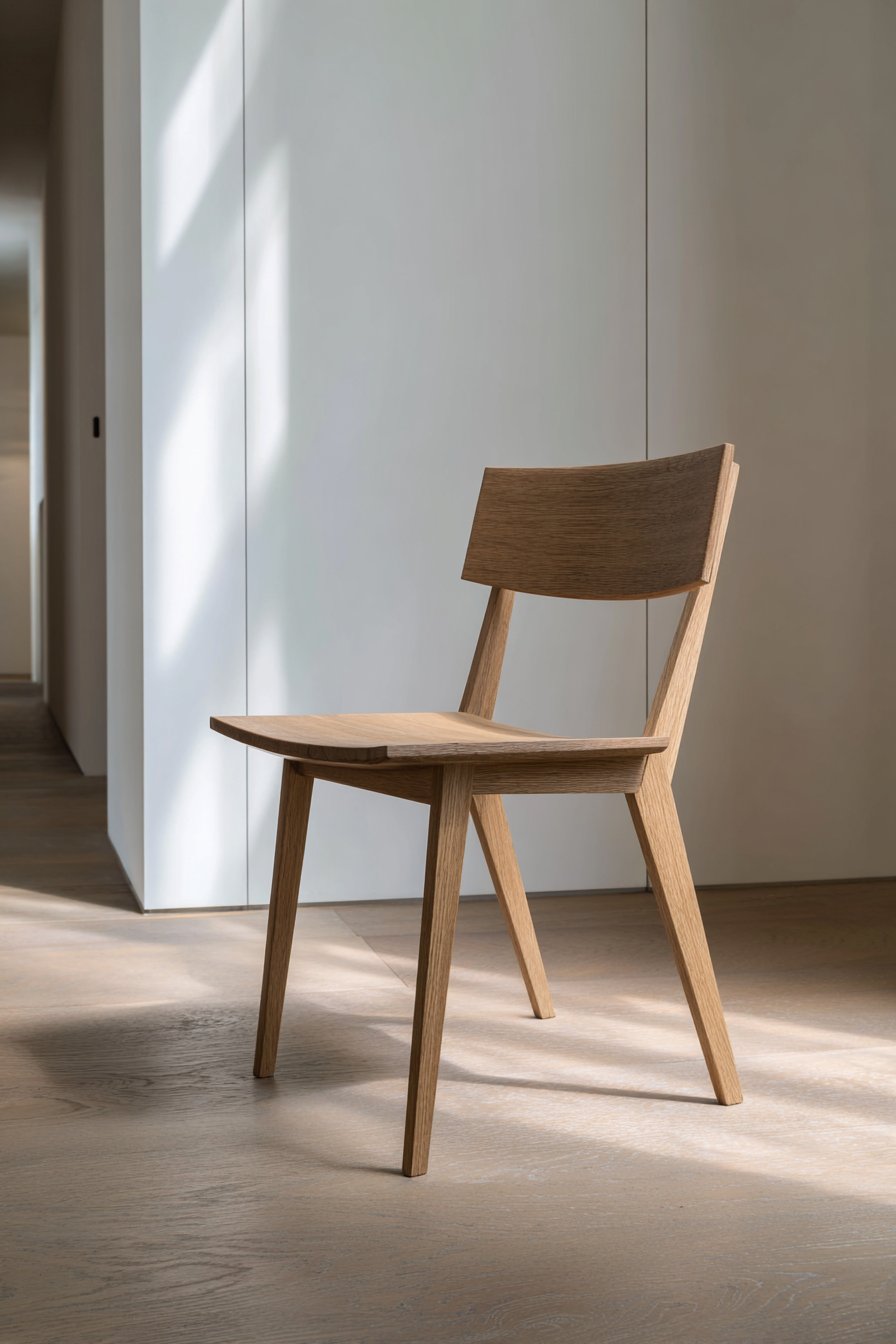
Envision a chair with solid oak construction featuring clean geometric lines. The slightly angled backrest and exposed joinery showcase Japanese-inspired craftsmanship principles. The chair positions in a serene dining space with white walls. Natural wood flooring complements the honest material expression.
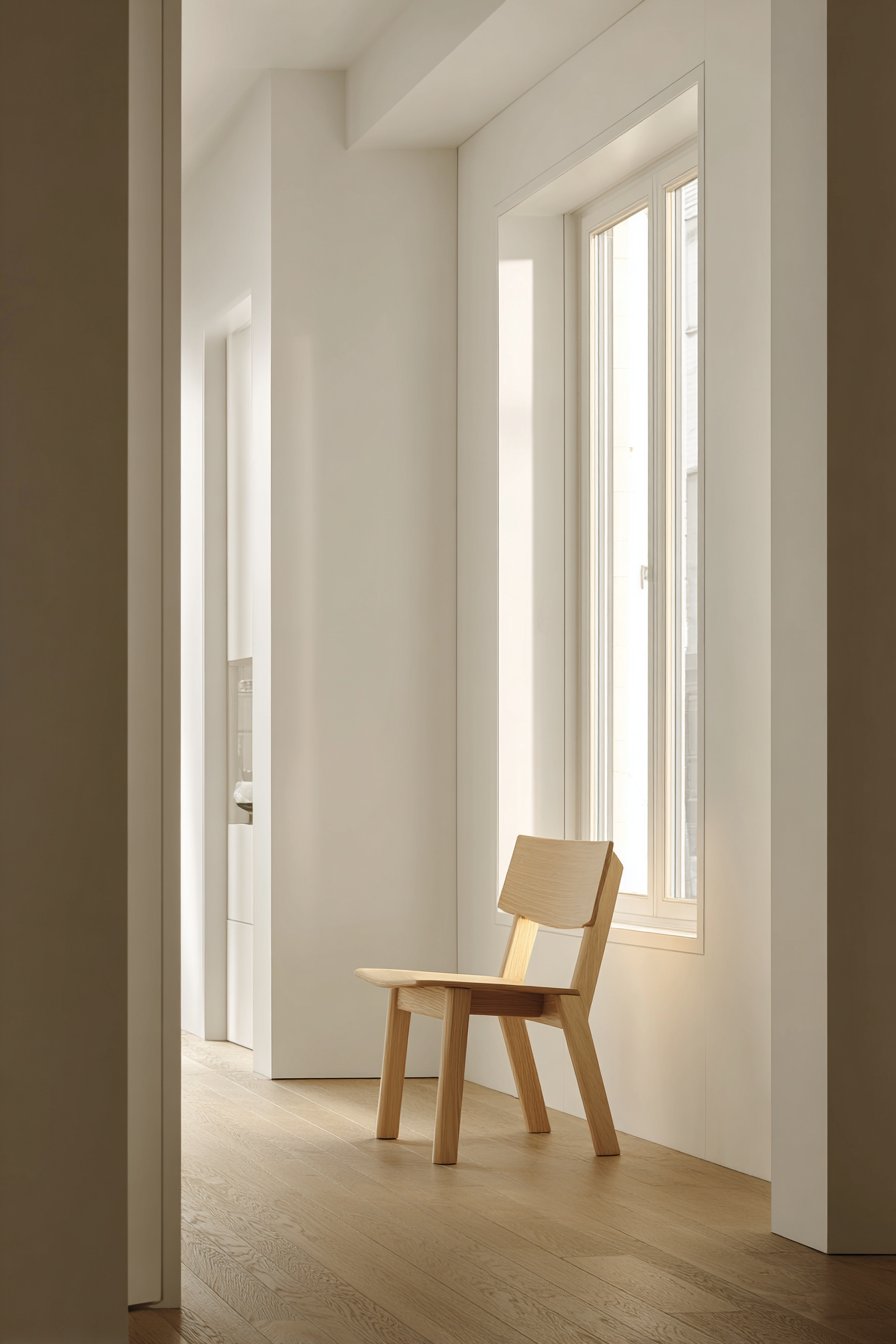
Soft diffused morning light creates subtle shadows emphasizing precise construction details. The exposed joinery celebrates traditional woodworking techniques rather than concealing them. Clean lines promote meditative simplicity and functional beauty. The angled backrest provides comfort through thoughtful ergonomic consideration.
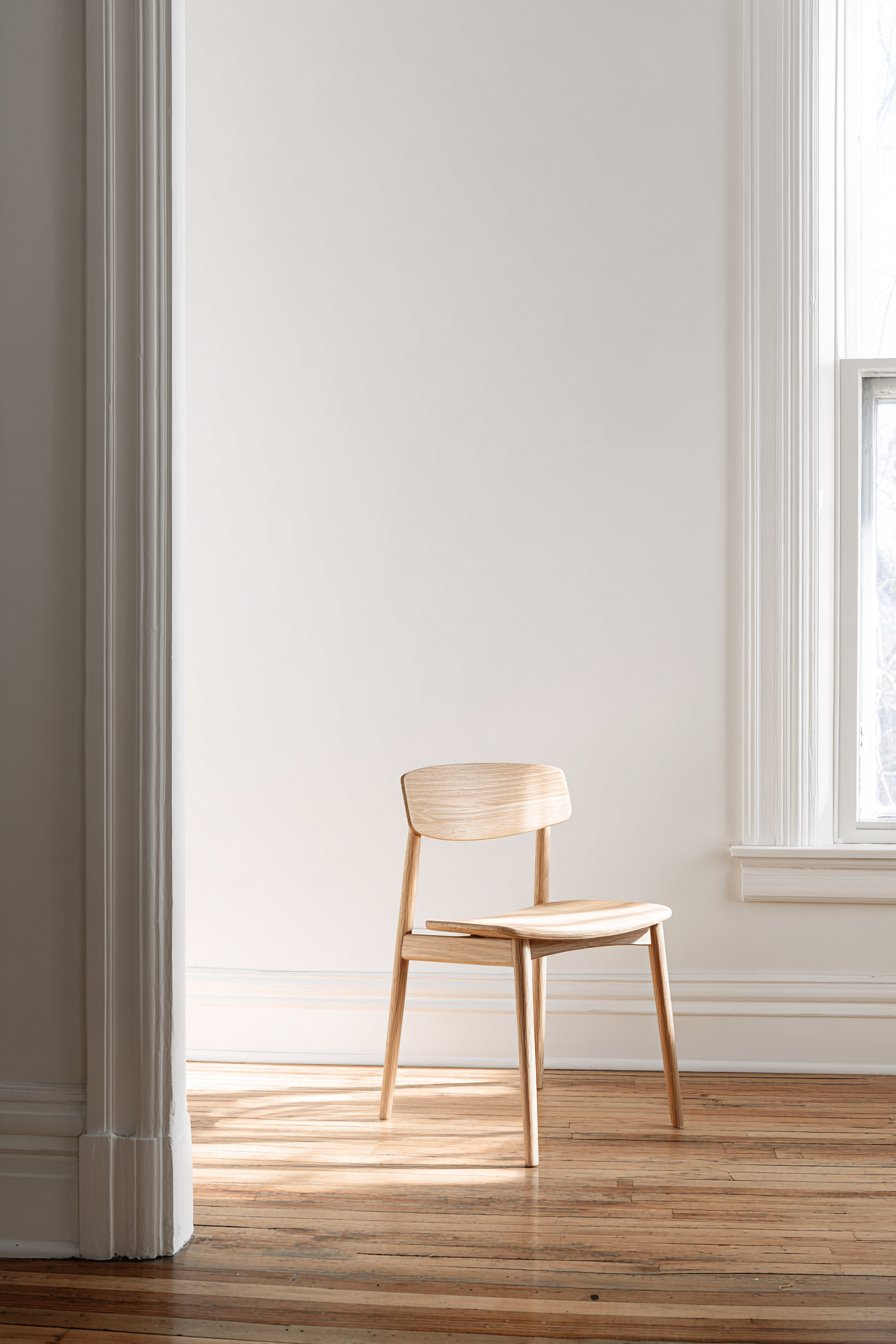
This design demonstrates how restraint and precision create powerful aesthetic impact. Natural oak ages beautifully, developing rich patina over years of use. The chair encourages mindful appreciation of material quality and craftsmanship. Wide-angle photography captures the serene atmosphere and balanced proportions.
Key Design Tips:
- Choose solid oak for durability and beautiful natural aging properties
- Celebrate exposed joinery as design feature rather than hiding connections
- Maintain clean geometric lines for authentic minimalist aesthetic
- Position in serene spaces that complement contemplative design philosophy
- Allow natural wood to develop patina without constant refinishing
- Ensure angled backrests provide genuine comfort despite minimal appearance
10. Bohemian Peacock Rattan with Natural Texture
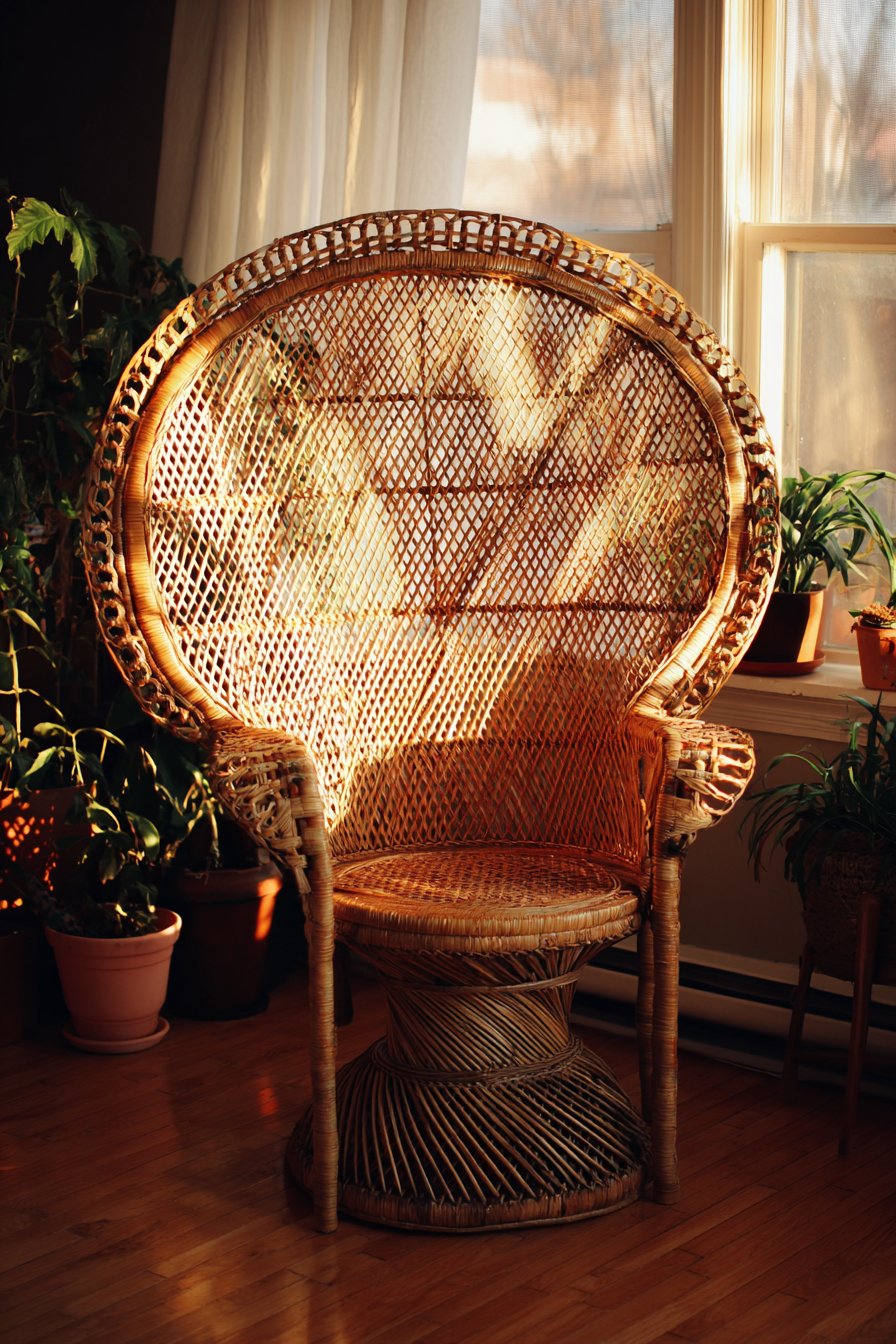
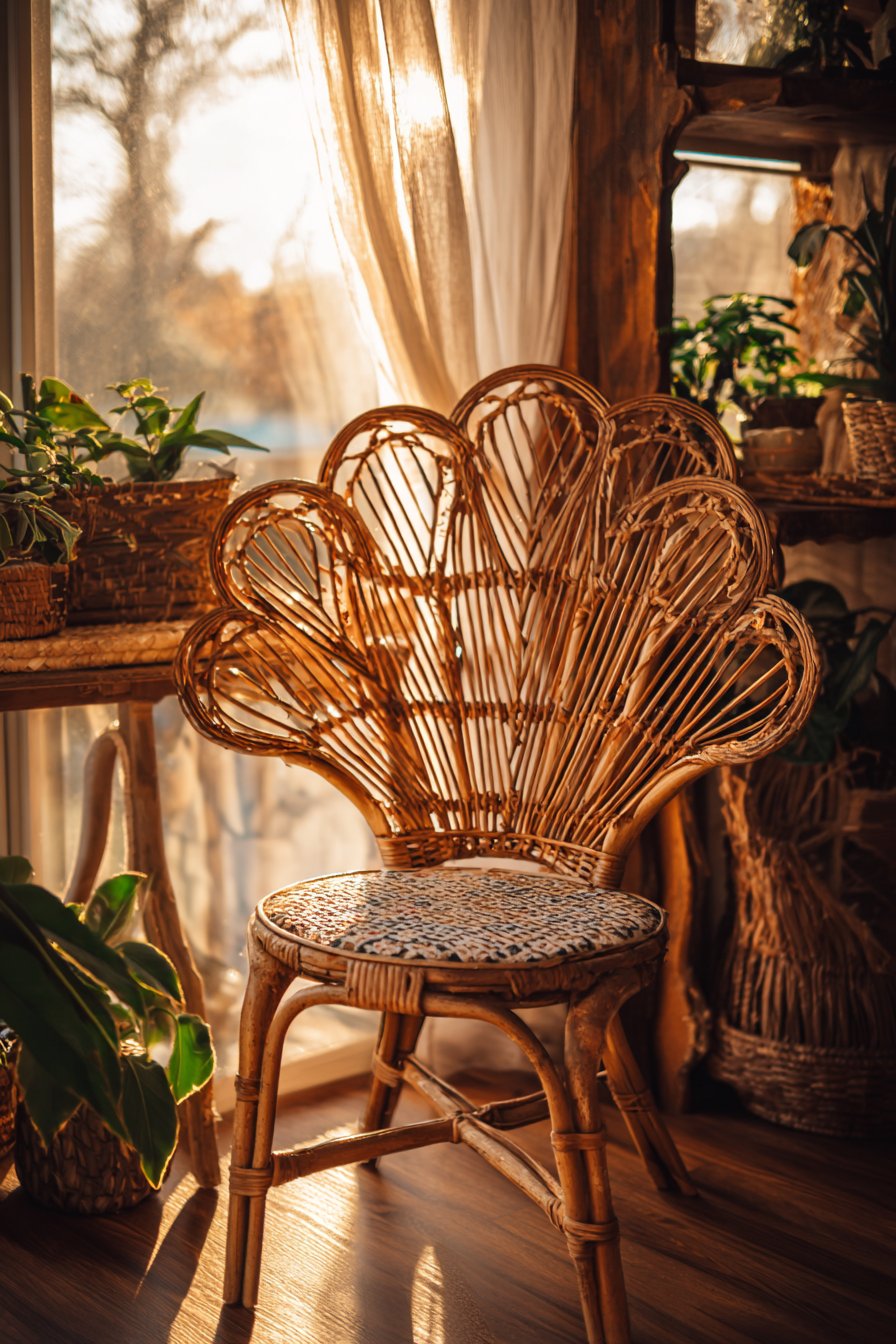
Picture a rattan chair with dramatic peacock-style fan back woven in natural material. Visible texture variations showcase authentic handcrafted construction methods. The chair pairs with a simple wooden dining table surrounded by indoor plants. Sheer curtains flow near windows providing soft, filtered light.
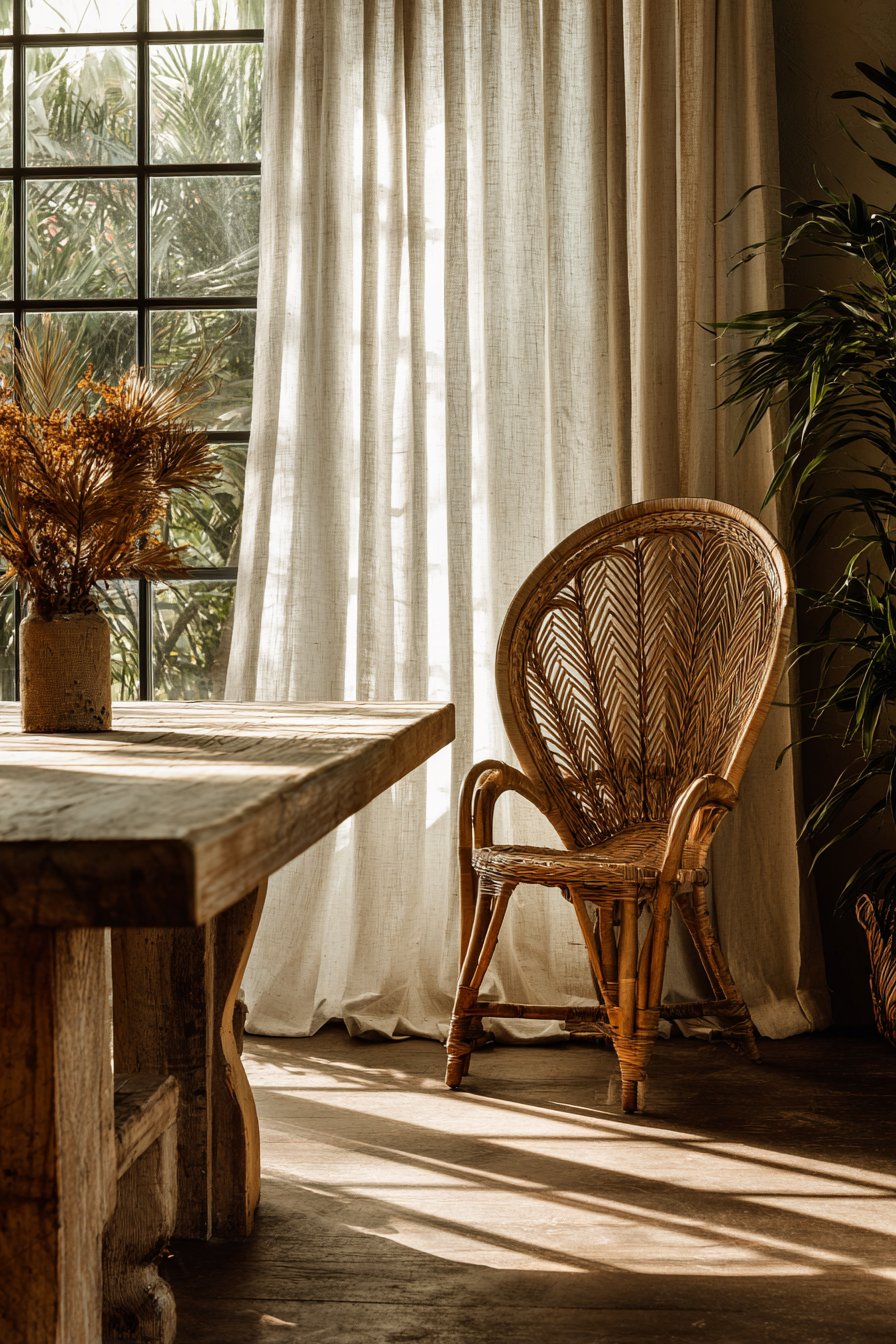
Golden hour sunlight creates beautiful patterns through the intricate woven rattan design. The organic form adds sculptural interest and artisanal quality to dining spaces. Natural rattan develops character over time while maintaining structural integrity. The fan back makes a bold statement without overwhelming the room.
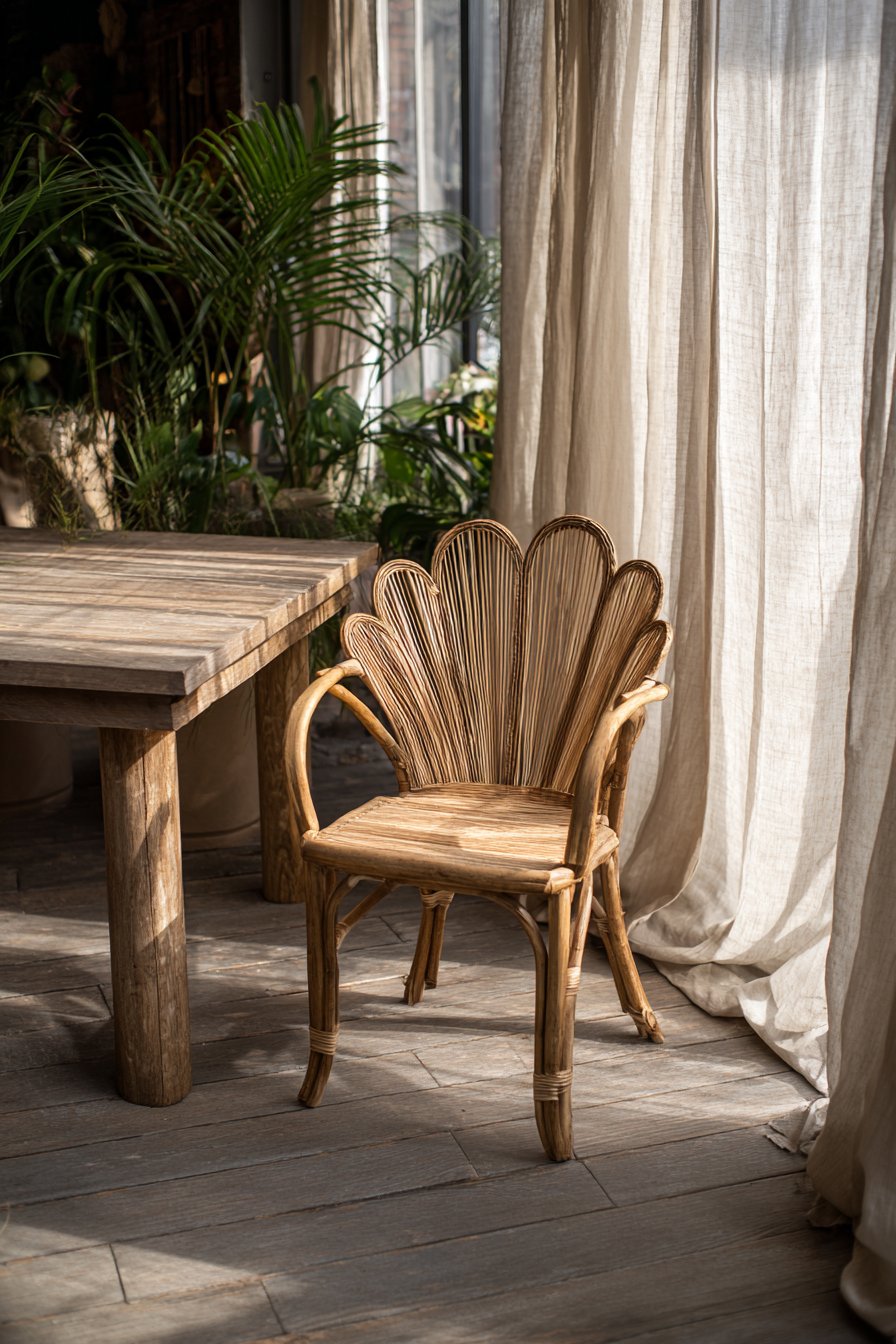
Indoor plants complement the natural material aesthetic and bohemian styling. The handcrafted quality ensures each chair possesses unique character and slight variations. This design celebrates global artisan traditions and sustainable natural materials. The relaxed eclectic style encourages casual, comfortable dining experiences.
Key Design Tips:
- Choose natural rattan for sustainable, handcrafted bohemian character
- Embrace visible texture variations as signs of authentic artisan production
- Pair with abundant plants for cohesive organic aesthetic
- Position where natural light can create patterns through woven design
- Accept slight variations between chairs as evidence of handcraft
- Use in relaxed, eclectic spaces rather than formal dining rooms
11. Cognac Leather with Solid Walnut Legs
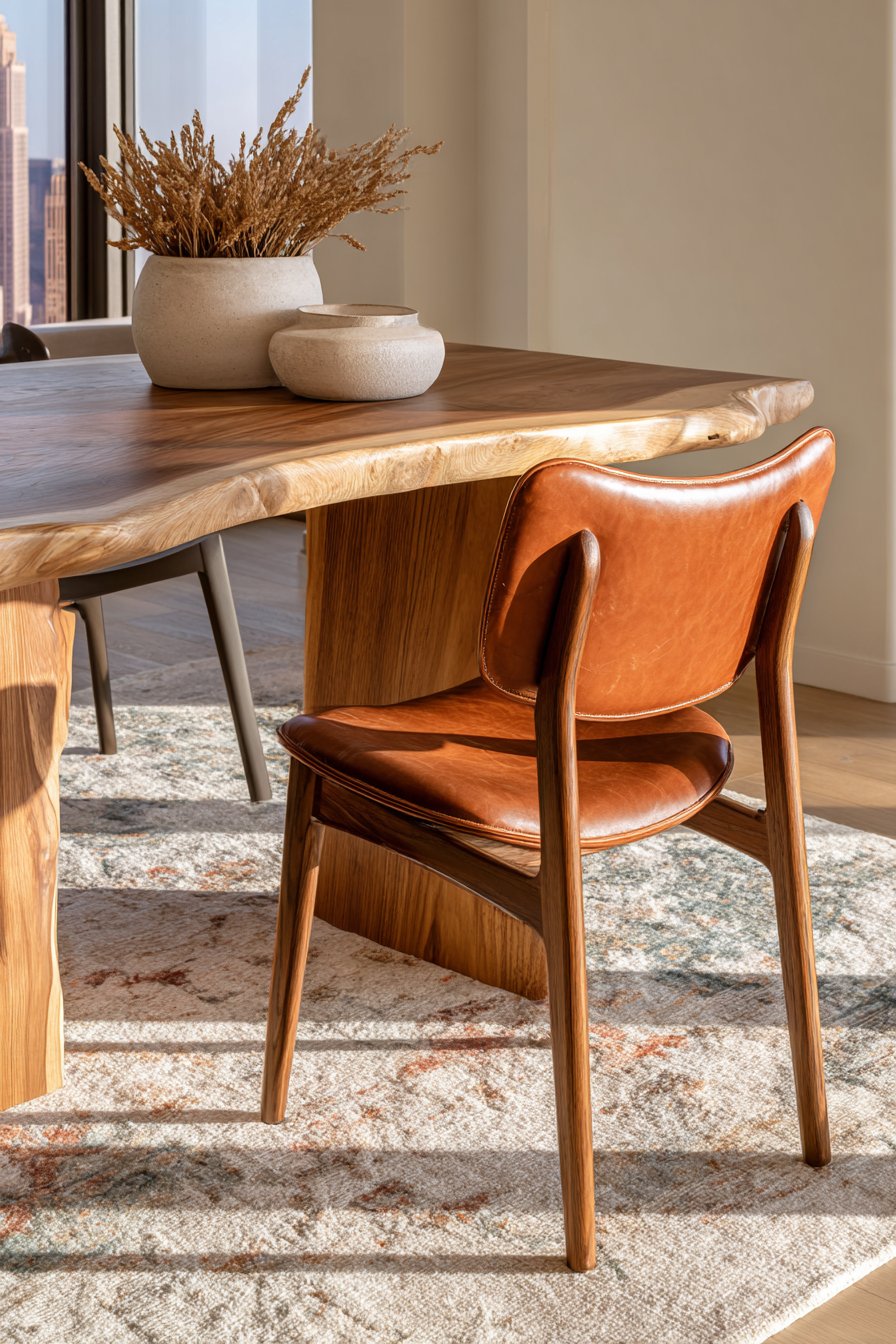
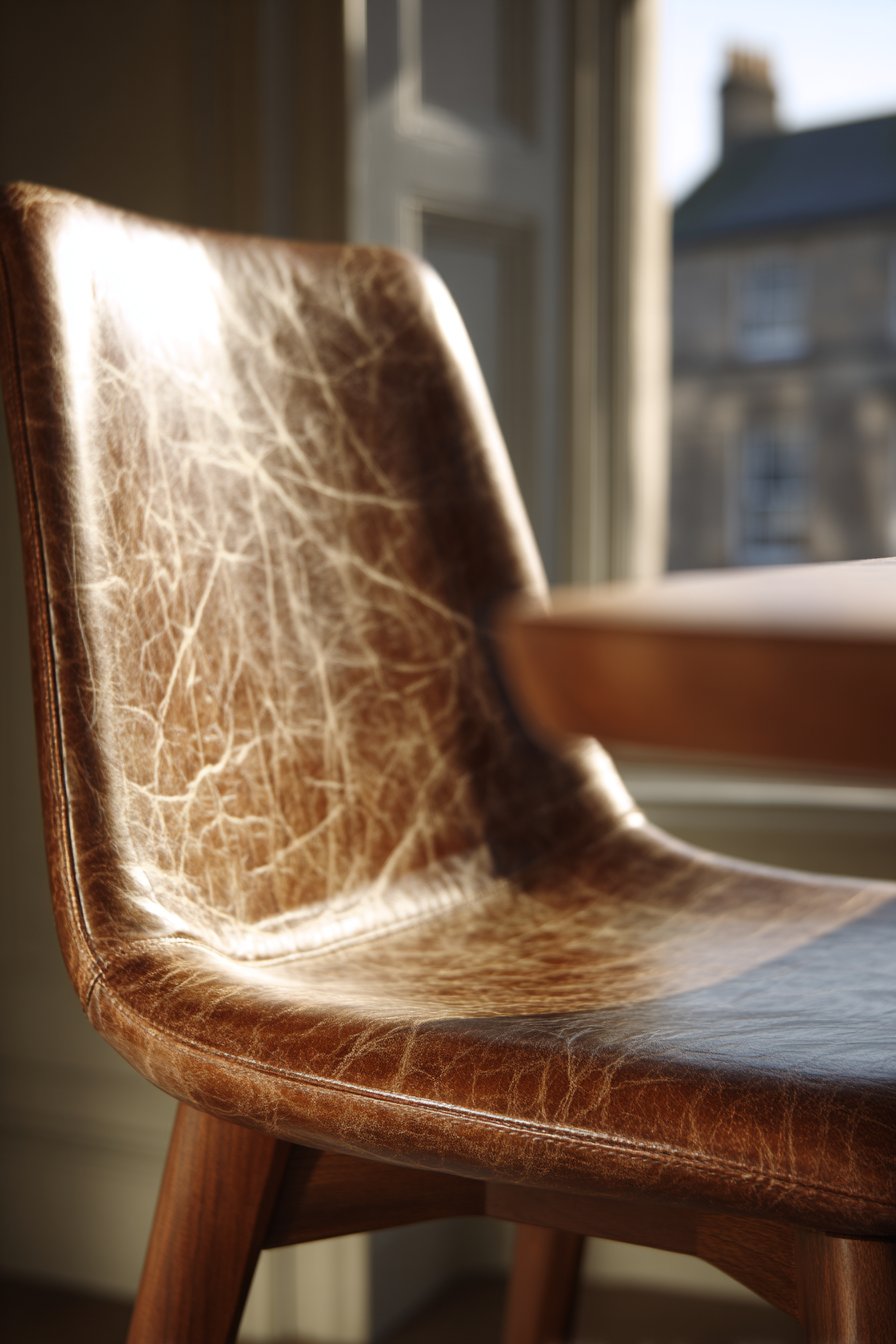
Imagine a chair featuring cognac-brown top-grain leather upholstery with natural variation marks. Solid walnut legs with oil finish display authentic wood grain characteristics. The chair positions at a live-edge dining table in a contemporary neutral space. Natural daylight creates subtle highlights across the genuine leather surface.
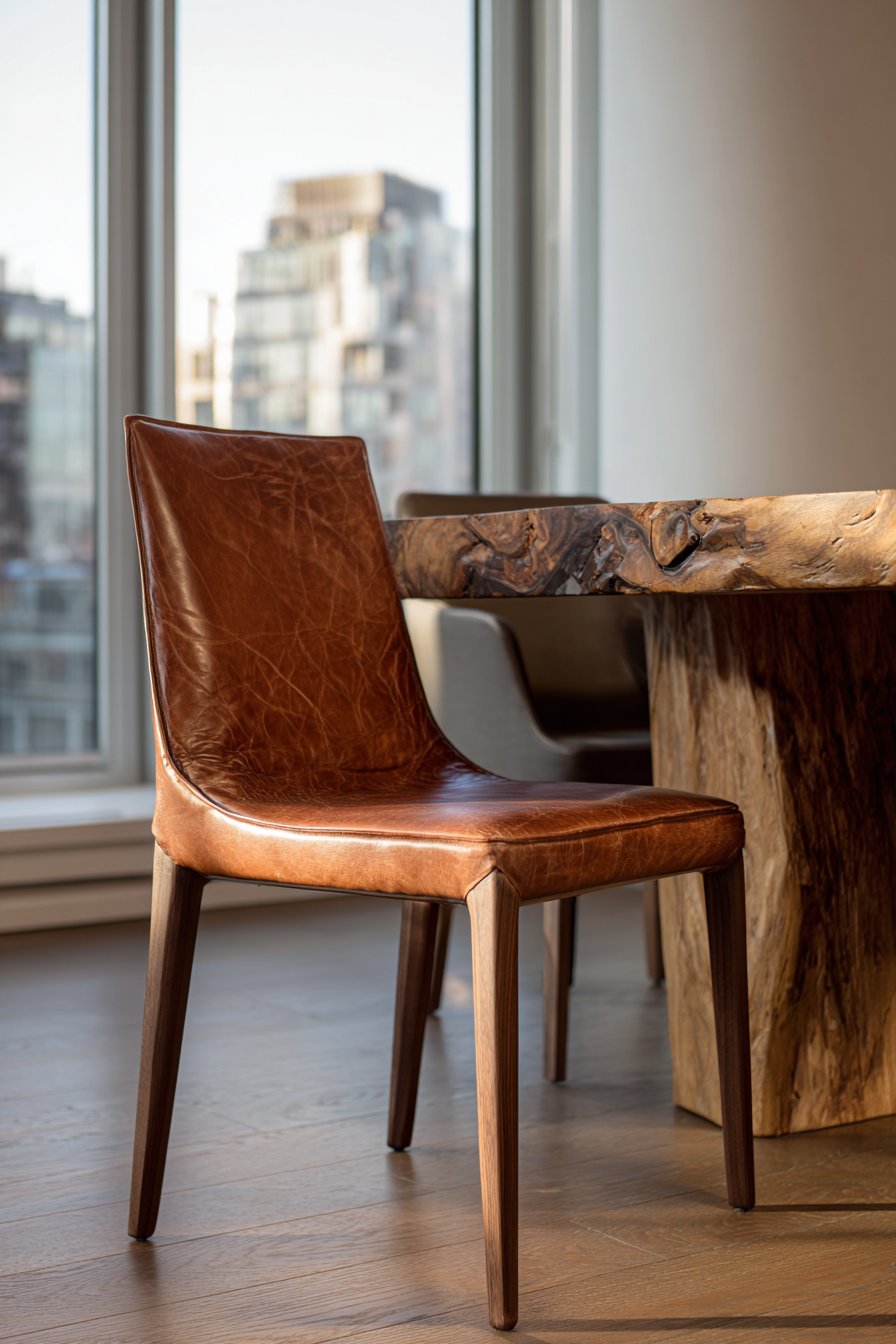
The leather’s natural variation marks prove its authentic quality and origin. Cognac tones warm the dining space while maintaining sophisticated appearance. Walnut legs ground the design with organic material that complements leather beautifully. Oil finish enhances wood grain without creating artificial sheen.
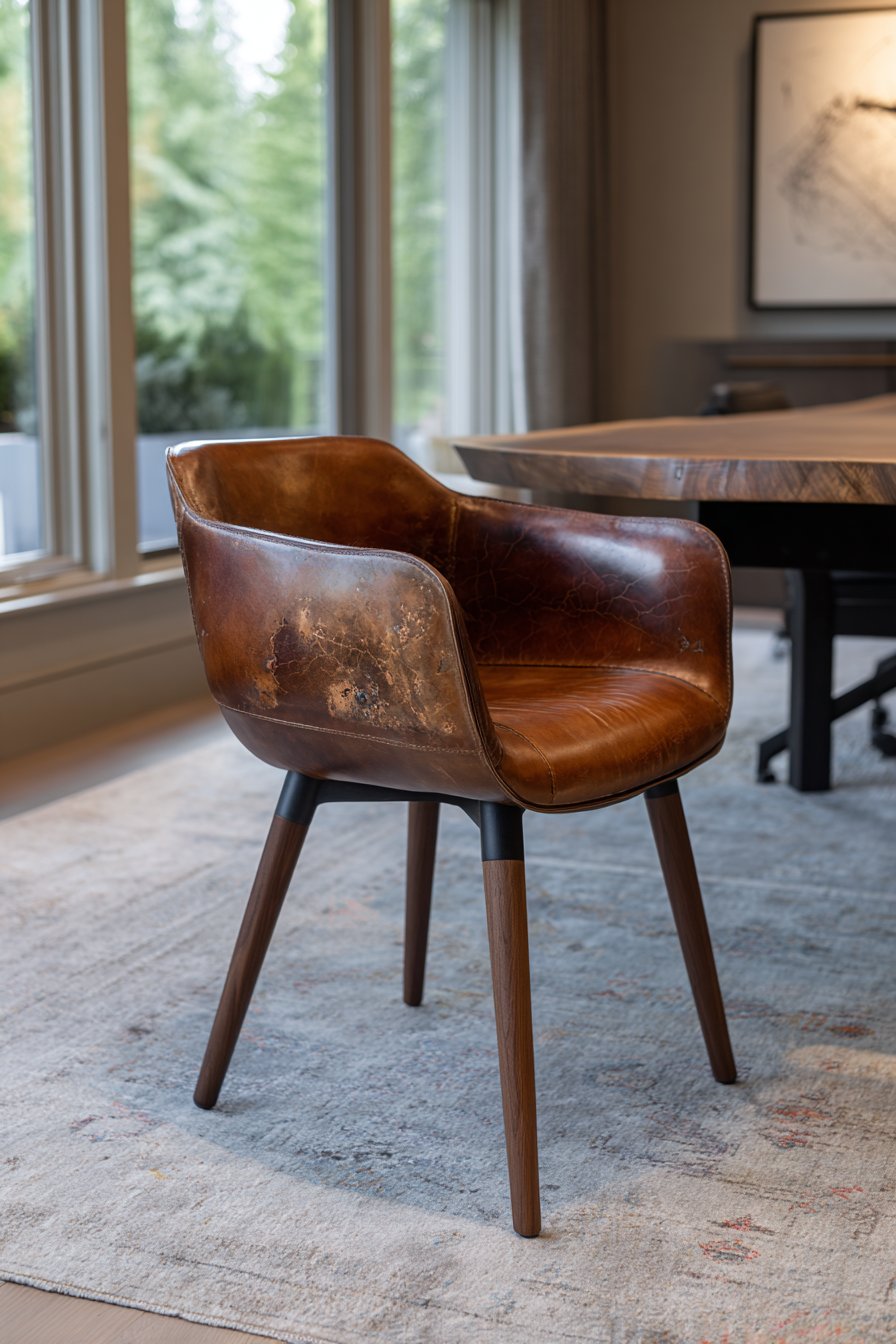
This combination of premium materials creates investment-quality furniture that improves with age. The leather develops rich patina over years of use and care. Natural daylight emphasizes the tactile qualities and honest material character. This design demonstrates how quality materials need minimal embellishment.
Key Design Tips:
- Select top-grain leather for genuine quality that develops beautiful patina
- Choose cognac or warm brown tones for inviting, sophisticated appearance
- Pair leather with solid walnut for cohesive natural material palette
- Embrace natural leather variations as signs of authentic quality
- Position where natural light highlights material textures
- Plan for leather to develop character through use rather than remaining pristine
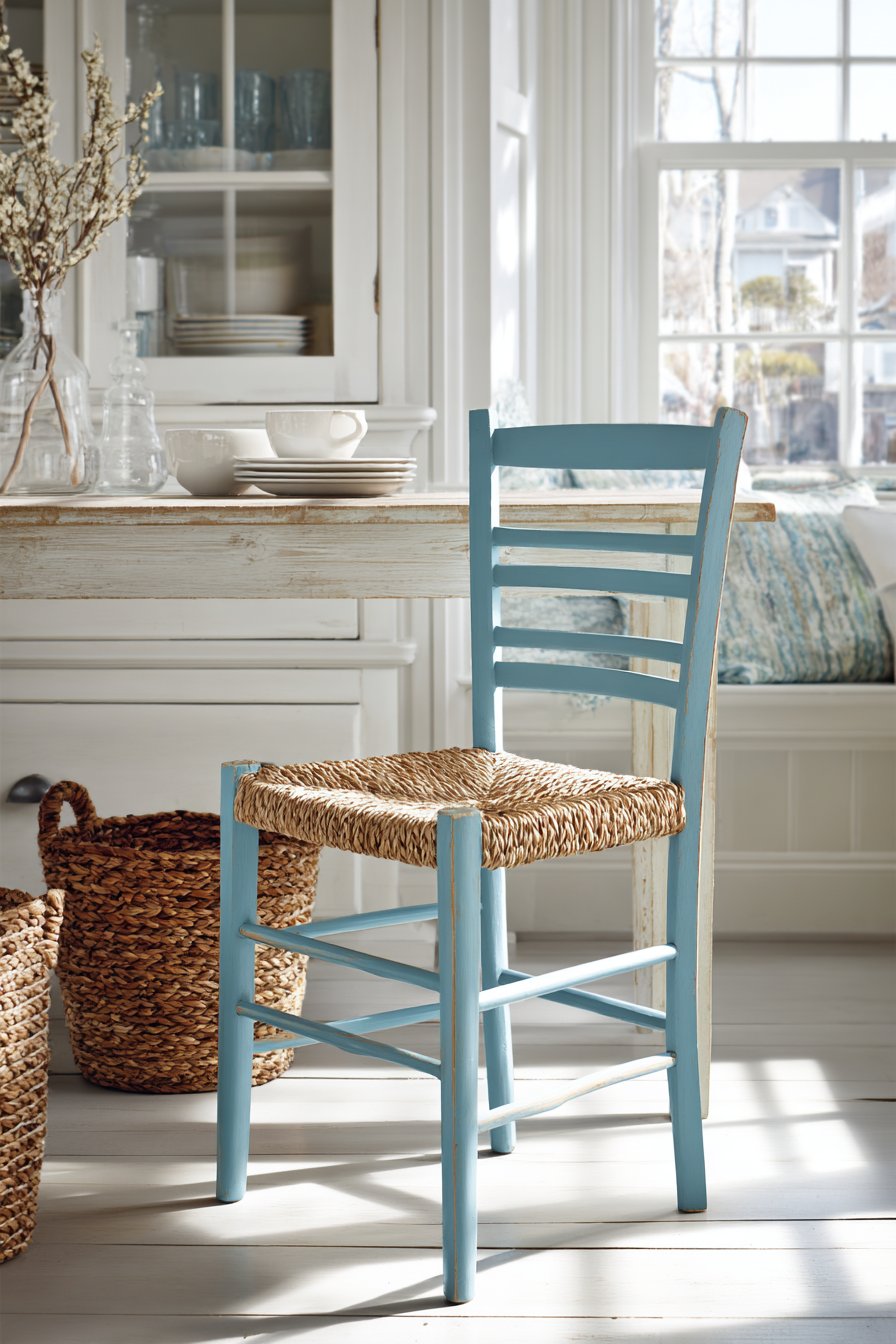
12. Coastal Weathered Blue with Rush Seat
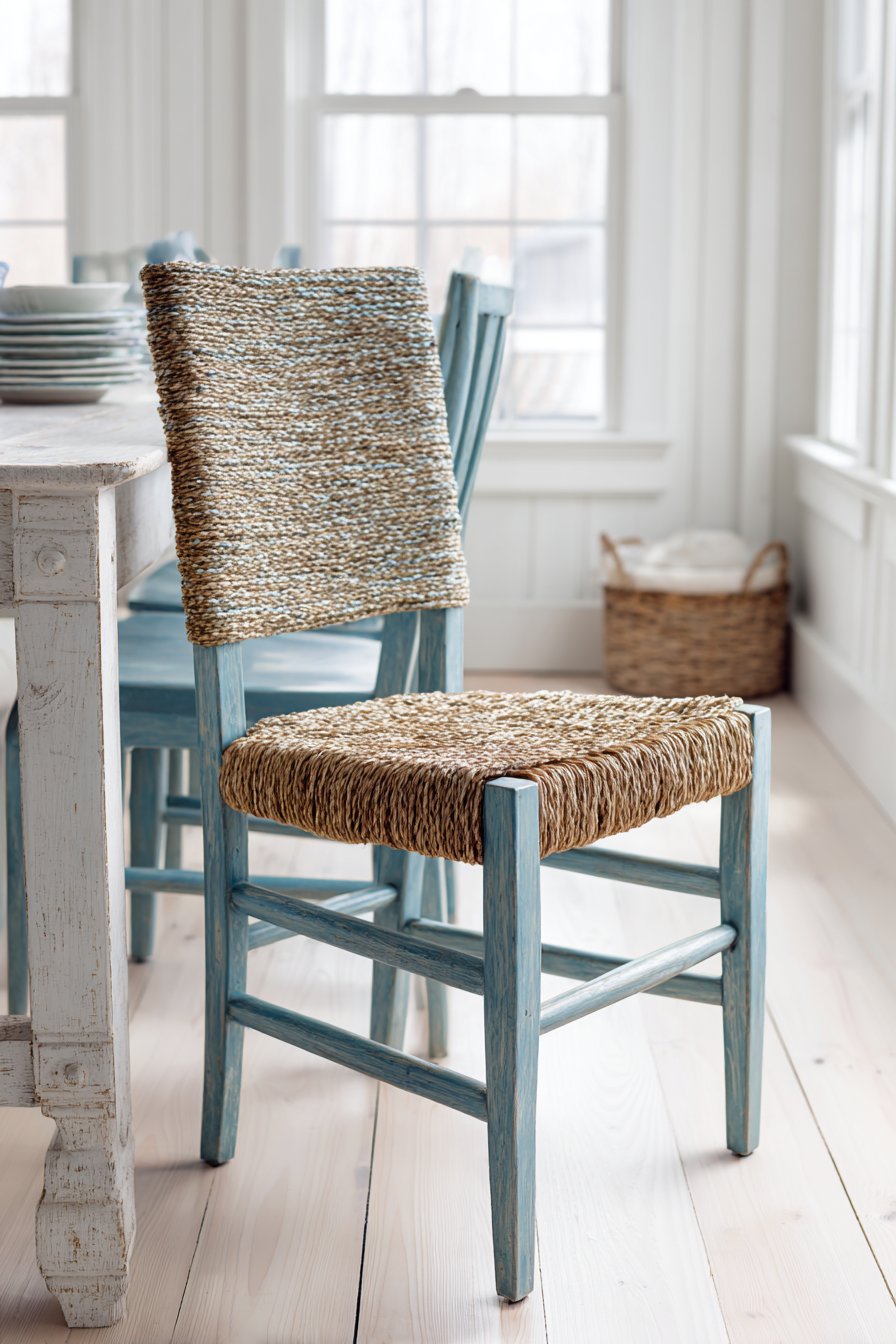
Envision a chair painted in soft weathered blue with rush seat woven in natural seagrass. The organic texture variations add handcrafted character and visual interest. The chair positions at a whitewashed wood table in bright, airy space. White beadboard walls enhance the casual beach-house aesthetic.
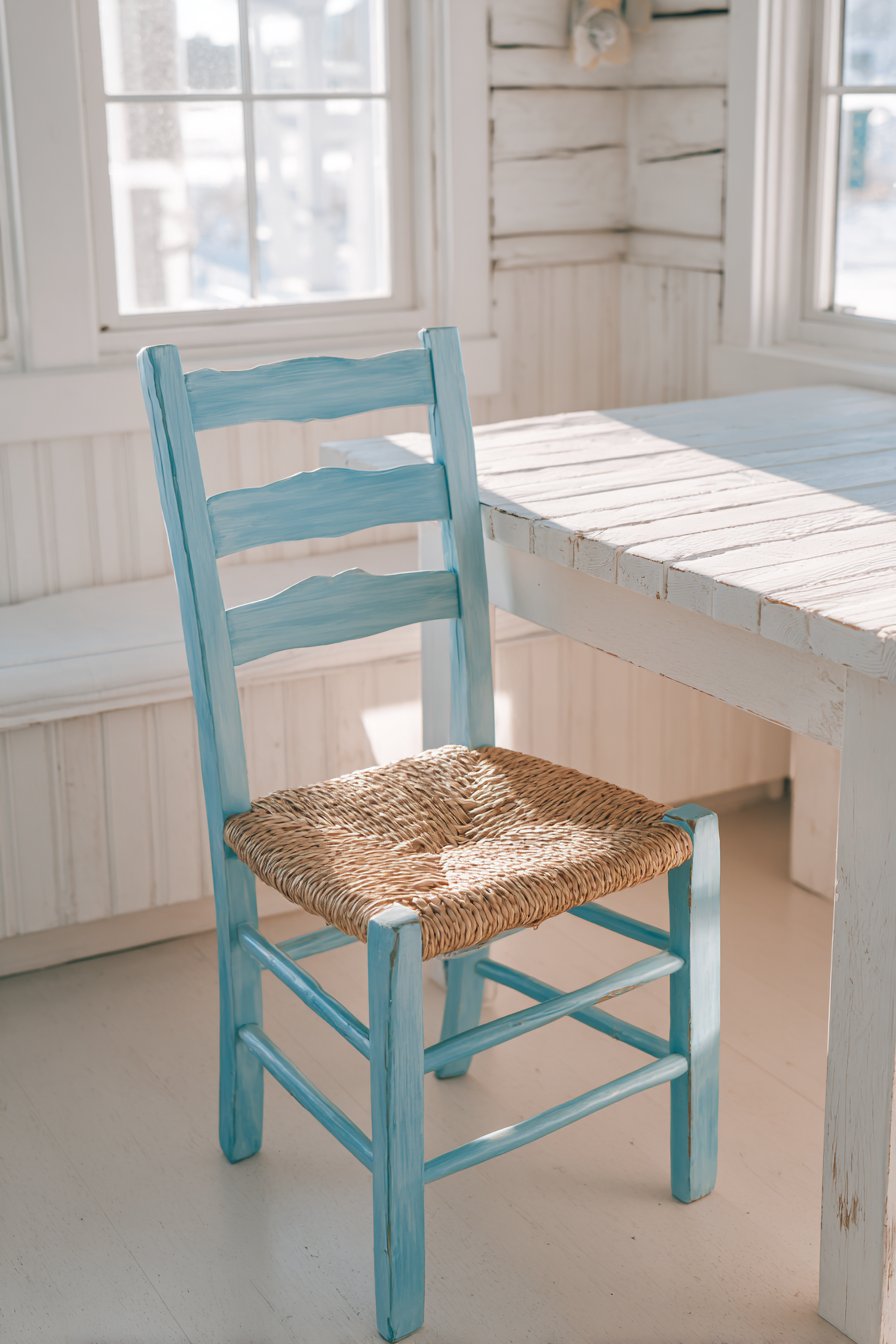
Morning light streaming through windows highlights the relaxed coastal charm. The weathered blue finish suggests gentle aging from sun and sea air. Natural seagrass provides comfortable, breathable seating surface for warm climates. Hand-woven rush seats ensure each chair displays unique textural patterns.
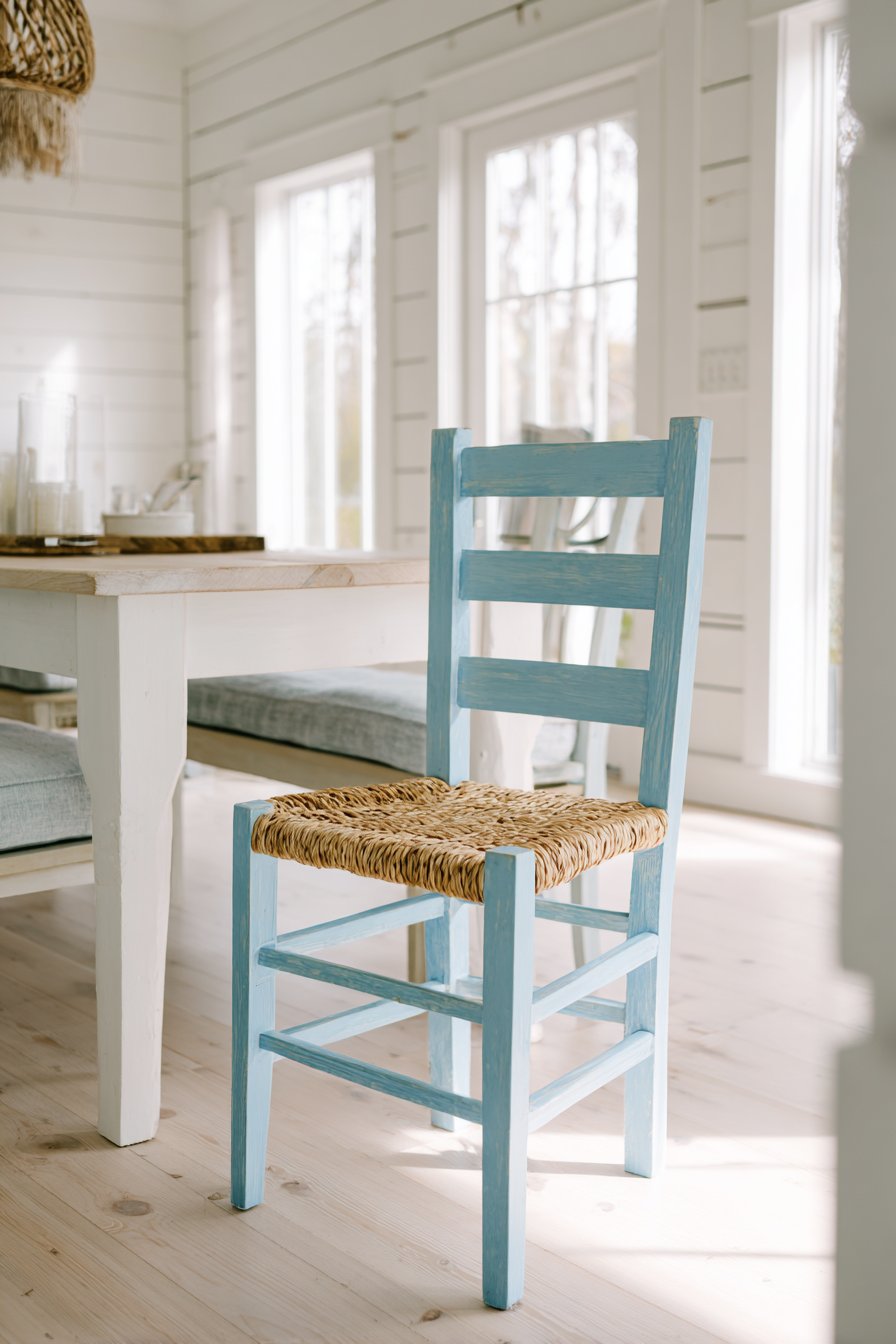
This design brings vacation home relaxation to everyday dining experiences. The durable construction withstands family use while maintaining casual elegance. Weathered paint and natural fiber seats embrace practical beauty over precious perfection. The coastal aesthetic creates spaces that feel perpetually fresh and inviting.
Key Design Tips:
- Choose soft blues that suggest natural weathering rather than fresh paint
- Select rush or seagrass seats for authentic coastal texture and breathability
- Pair with whitewashed wood for cohesive beach-house aesthetic
- Position in bright spaces with abundant natural light
- Embrace weathered finishes that appear naturally aged
- Use in casual dining areas where relaxed comfort takes priority
13. Art Deco Navy Velvet with Brass-Finished Legs
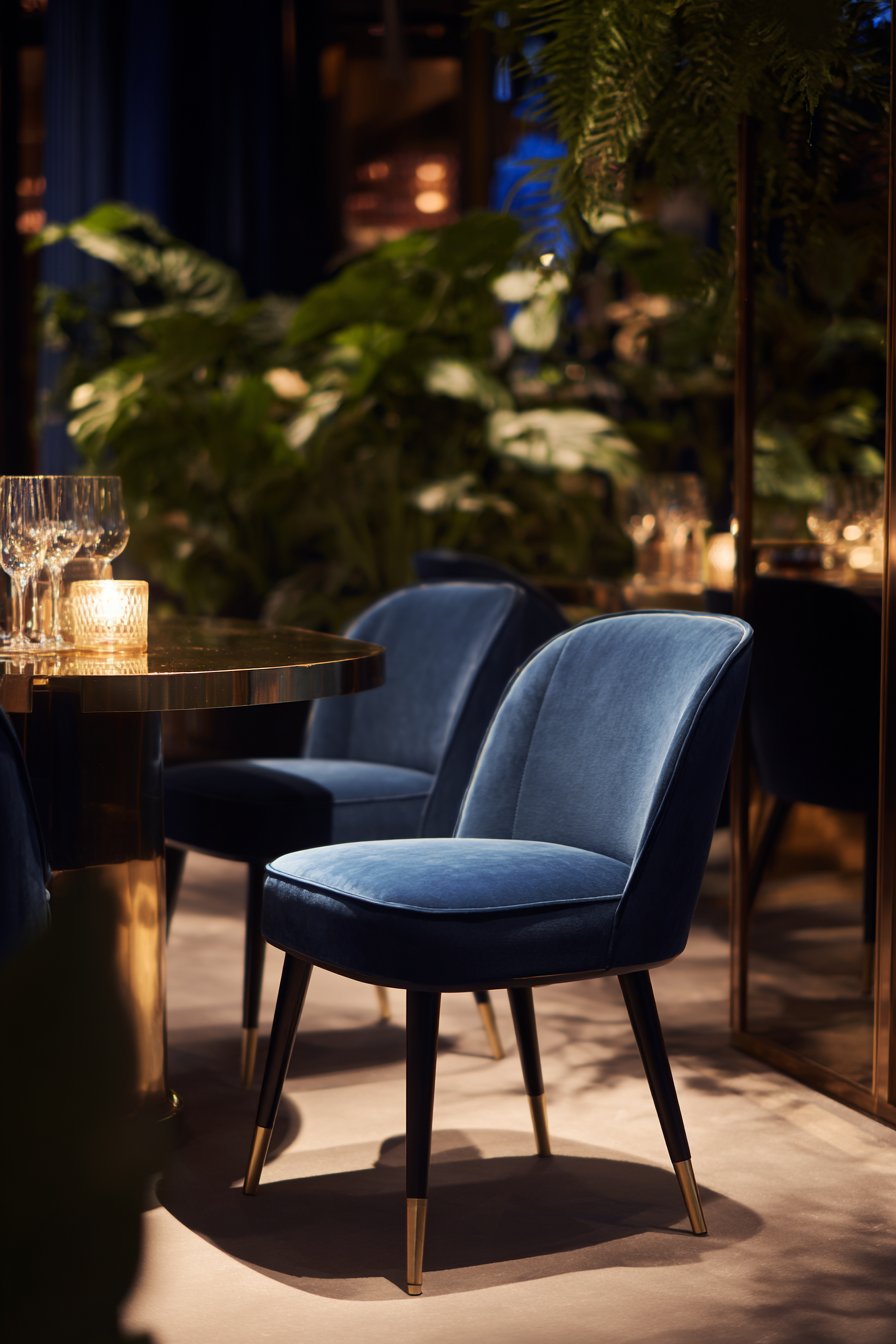
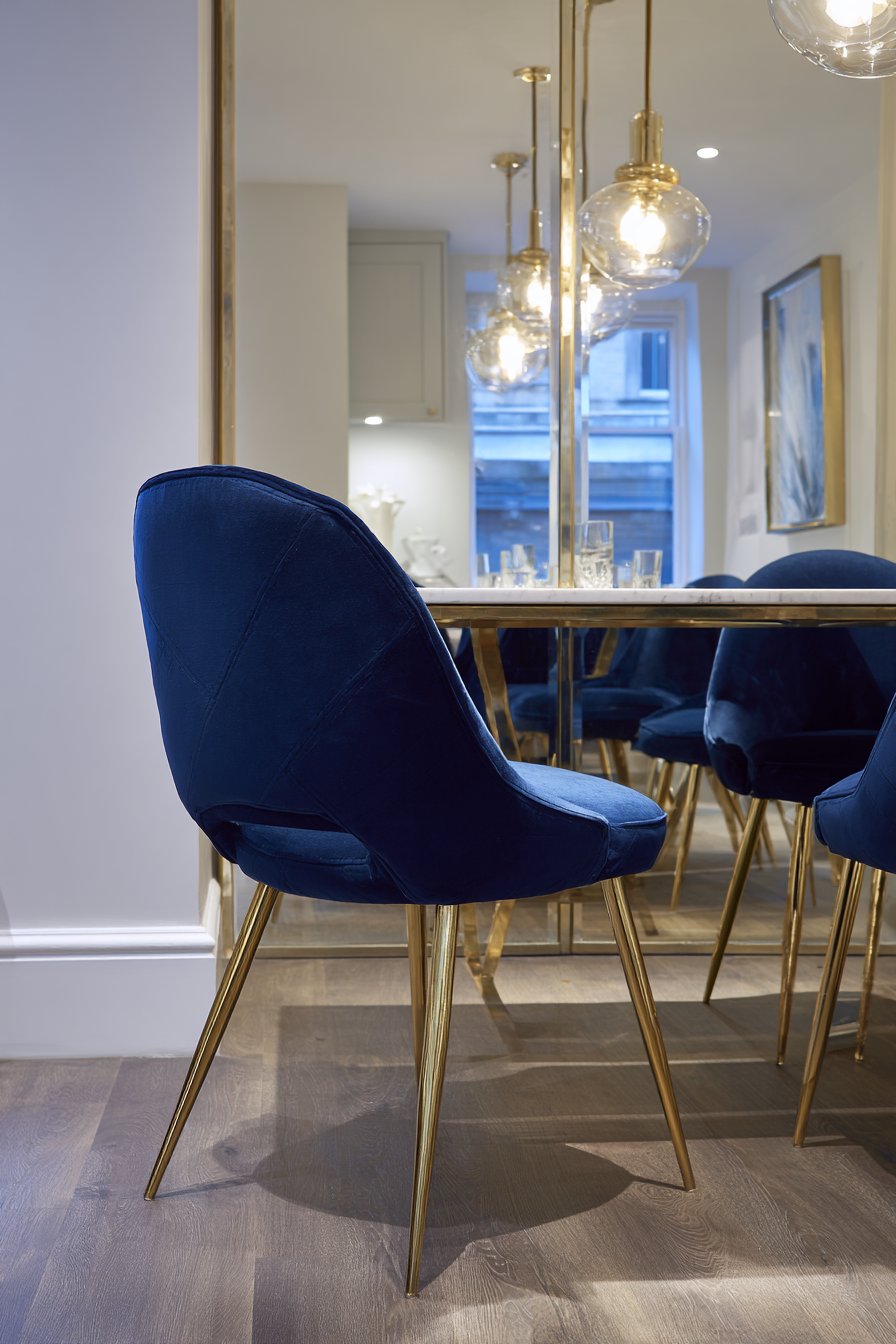
Picture a chair featuring geometric velvet upholstery in rich navy blue with subtle sheen. Brass-finished tapered legs display period-authentic Art Deco details and proportions. The chair positions at a mirrored dining table creating elegant reflections. Balanced lighting creates sophisticated ambiance throughout the space.
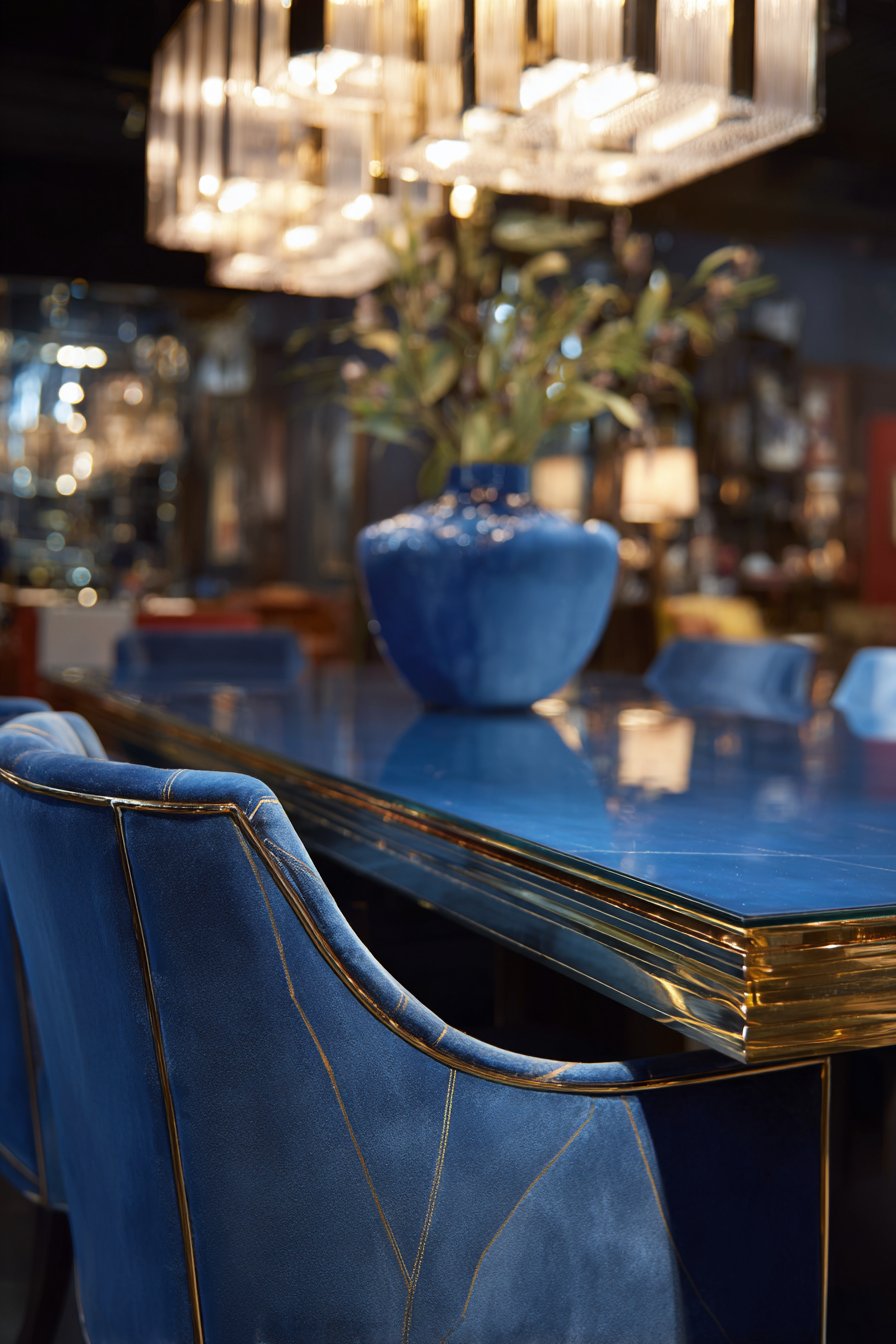
The velvet’s characteristic sheen changes appearance from different viewing angles. Geometric upholstery patterns reference the Jazz Age’s love of angular forms. Brass-finished legs add glamorous metallic accents that define the era. Tapered forms create elegant proportions suited to formal entertaining.
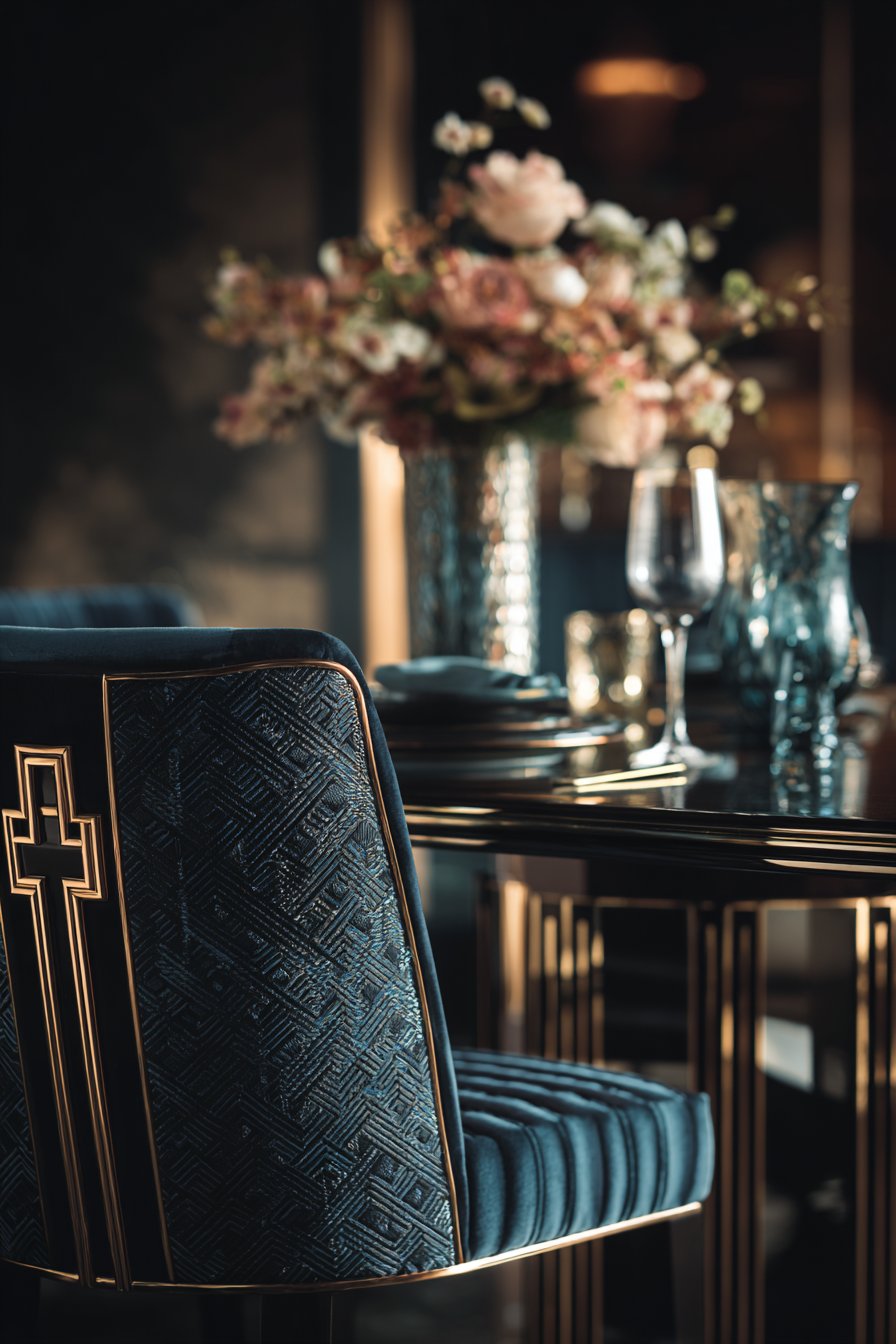
Mirrored surfaces amplify the glamorous aesthetic while expanding perceived space. The combination of rich navy and warm brass creates luxurious yet grounded palette. This design transports diners to the elegance of 1920s sophistication. Period-authentic details ensure genuine Art Deco character rather than superficial imitation.
Key Design Tips:
- Choose rich jewel tones like navy for authentic Art Deco color palette
- Select brass or gold finishes for warm metallic period accents
- Ensure geometric patterns reference angular Art Deco motifs
- Pair with mirrored or lacquered surfaces for cohesive glamorous aesthetic
- Use in formal dining spaces where sophistication is desired
- Research period details to ensure authentic rather than costume design
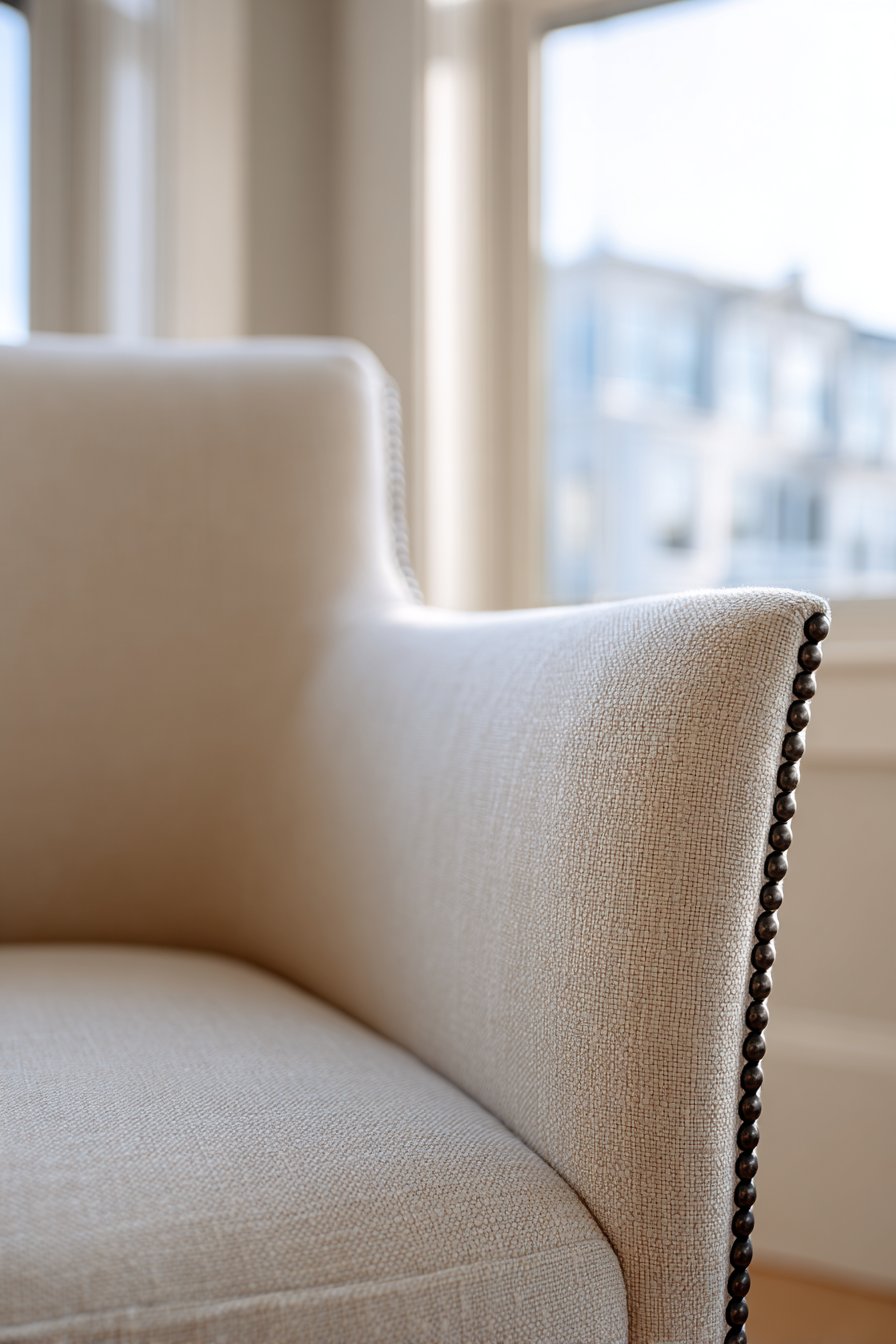
14. Transitional Beige Linen with Nailhead Trim
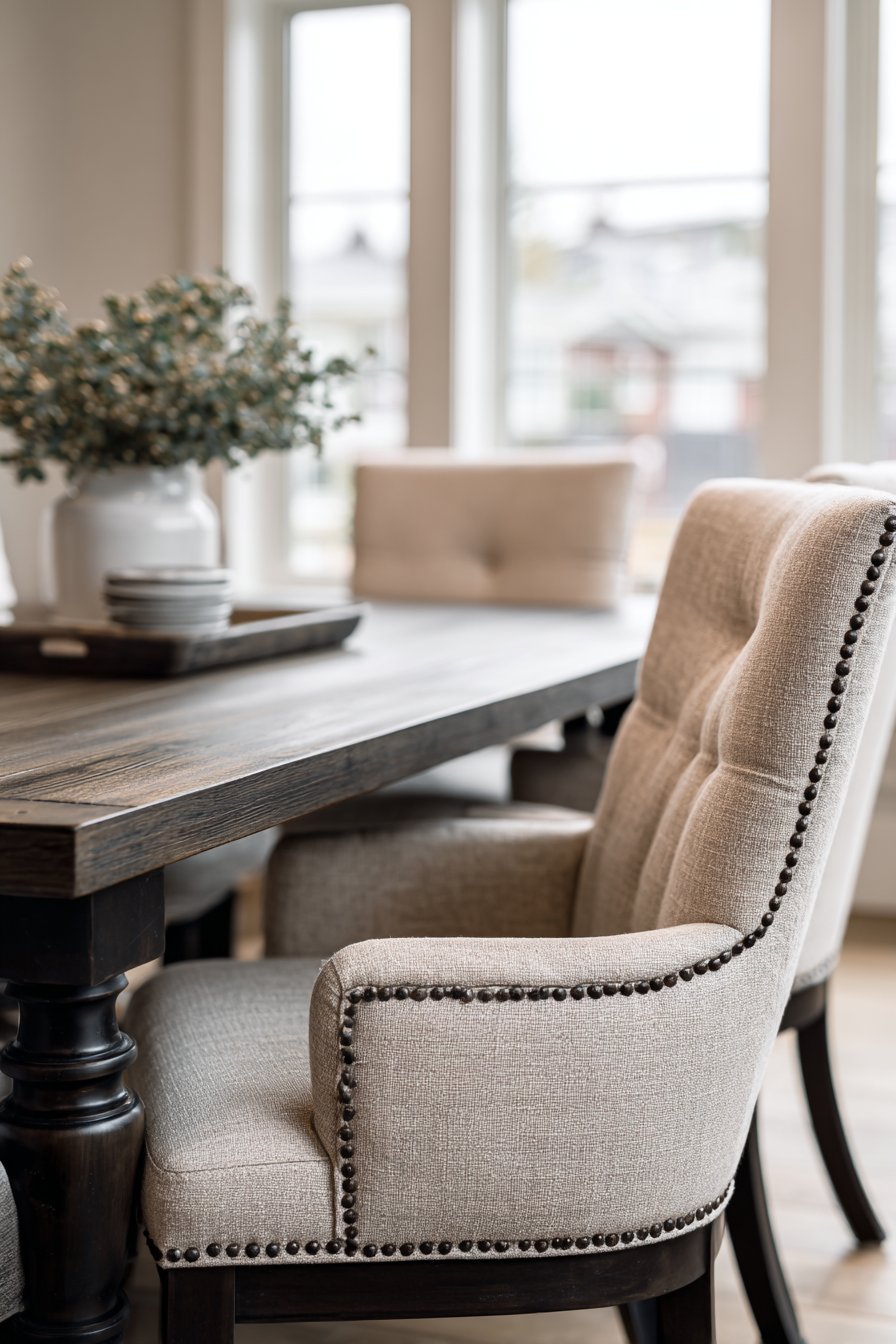
Imagine a chair upholstered in neutral beige linen with decorative nailhead trim detailing. Turned front legs in dark espresso finish provide visual grounding. The medium-height back and gentle curved arms offer comfortable support. The chair positions at a rectangular table with clean, simple lines.
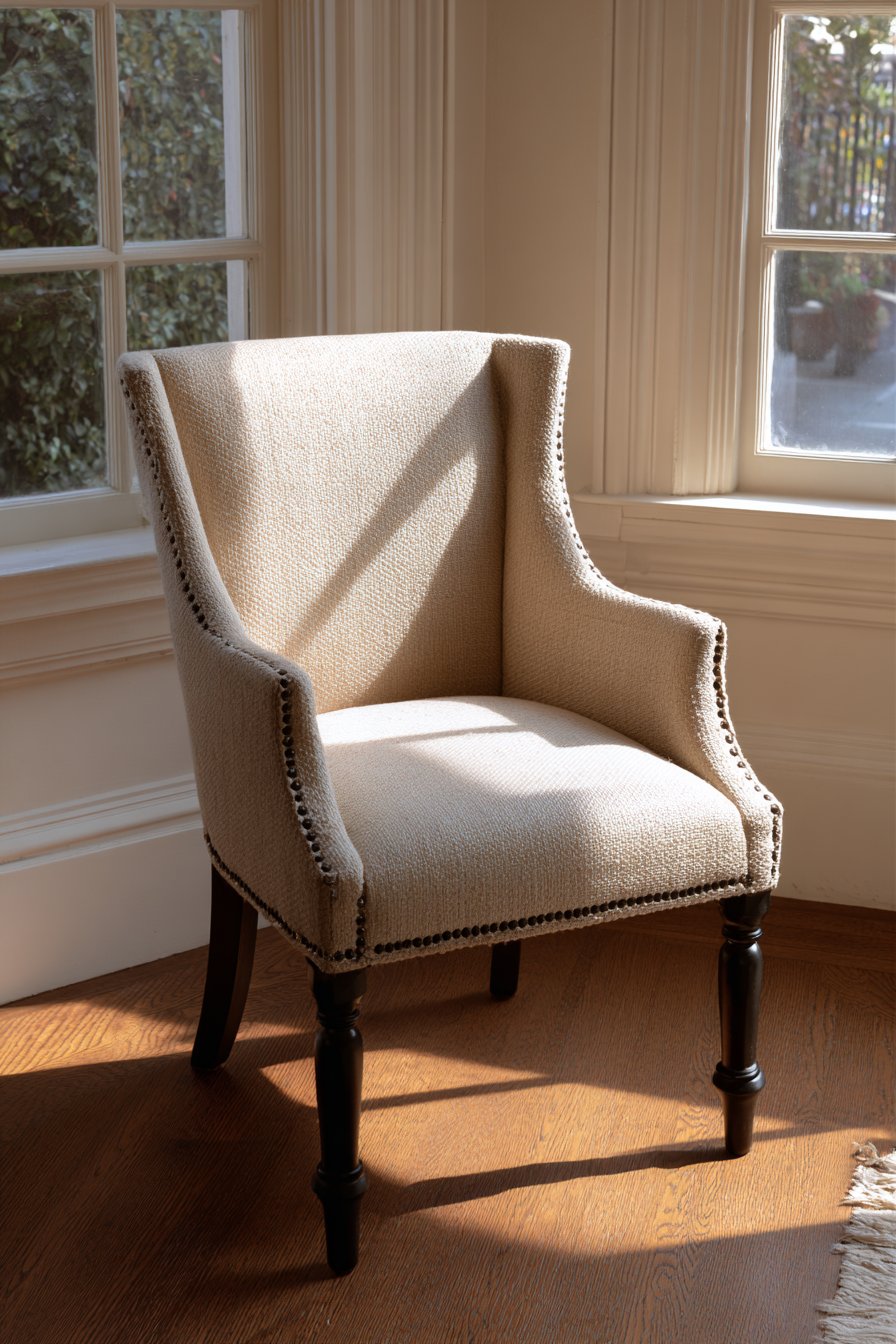
Soft afternoon light from nearby windows creates inviting warmth throughout the space. The neutral upholstery works seamlessly with diverse color schemes and decor styles. Nailhead trim adds refined detail without overwhelming the understated design. Espresso-finished legs create subtle contrast against lighter upholstery tones.
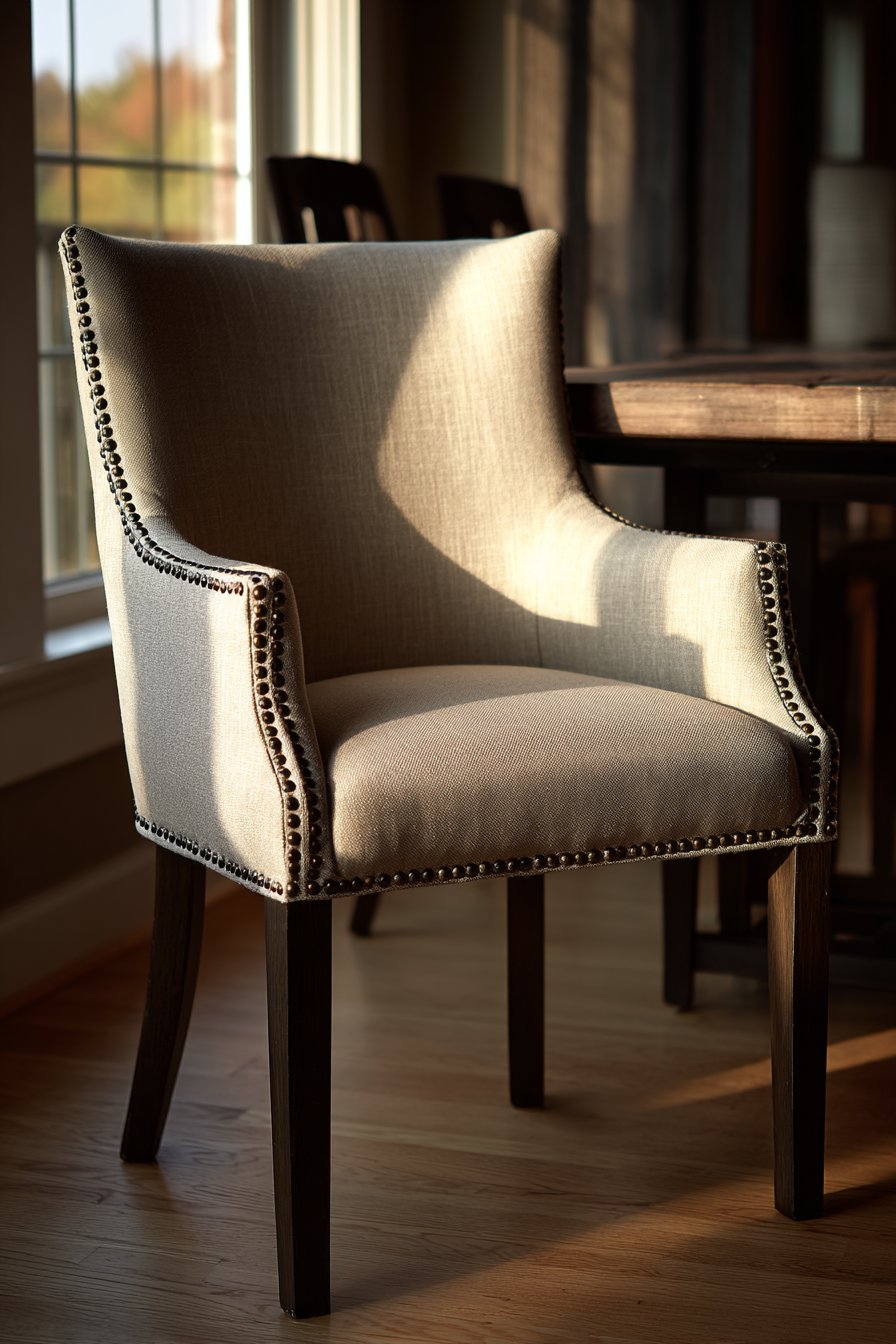
This design bridges traditional and contemporary styles with versatile appeal. The comfortable proportions suit extended dining experiences and conversation. Turned legs reference classical design while remaining appropriately scaled. The overall effect creates timeless elegance that transcends passing trends.
Key Design Tips:
- Choose neutral linens for versatile chairs that adapt to changing decor
- Add nailhead trim for refined detail and visual interest
- Pair light upholstery with darker wood legs for balanced contrast
- Ensure medium-height backs provide support without appearing bulky
- Use in spaces that need flexible styling between traditional and modern
- Select quality construction for chairs that remain beautiful through years
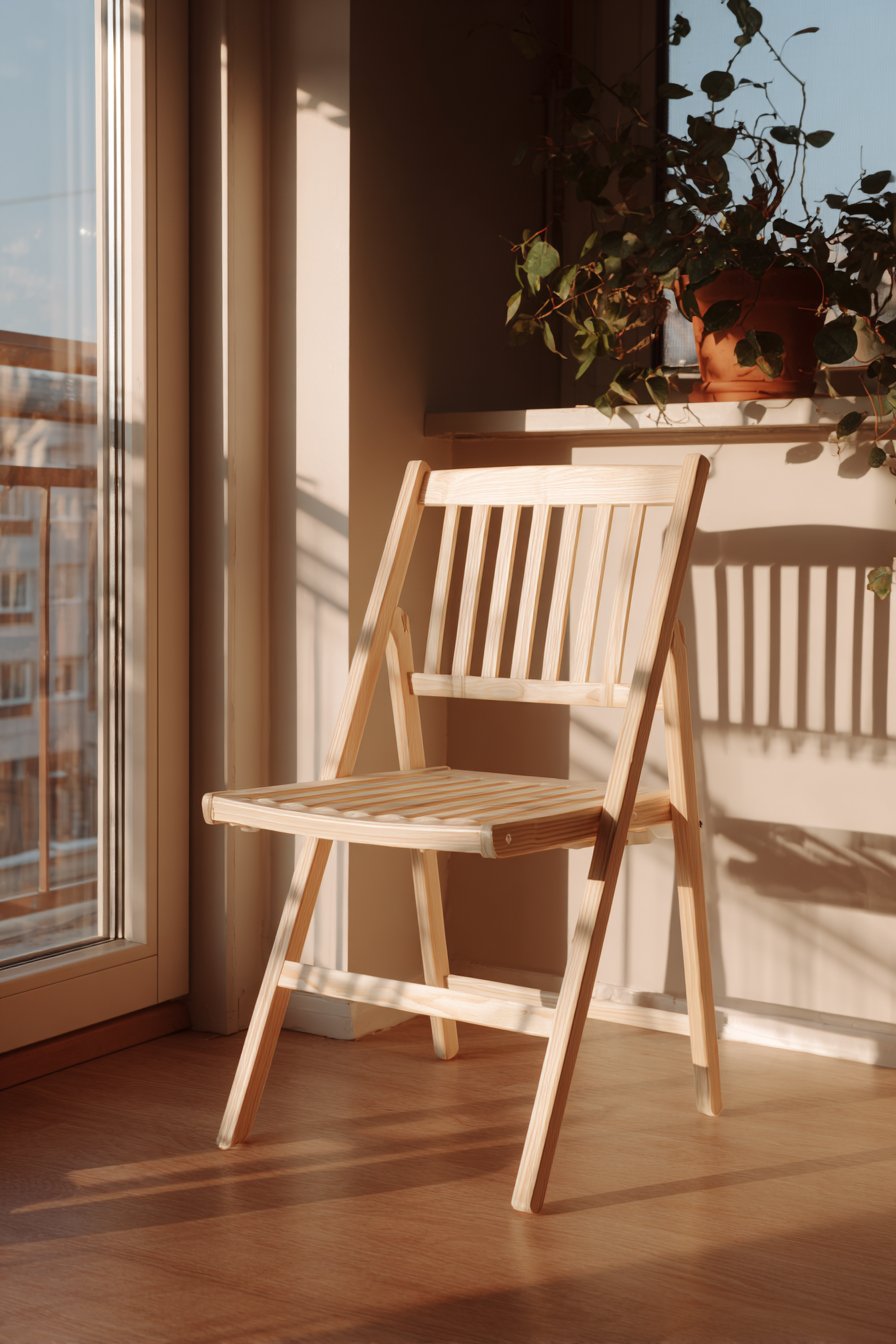
15. Space-Saving Folding Beech Wood Design
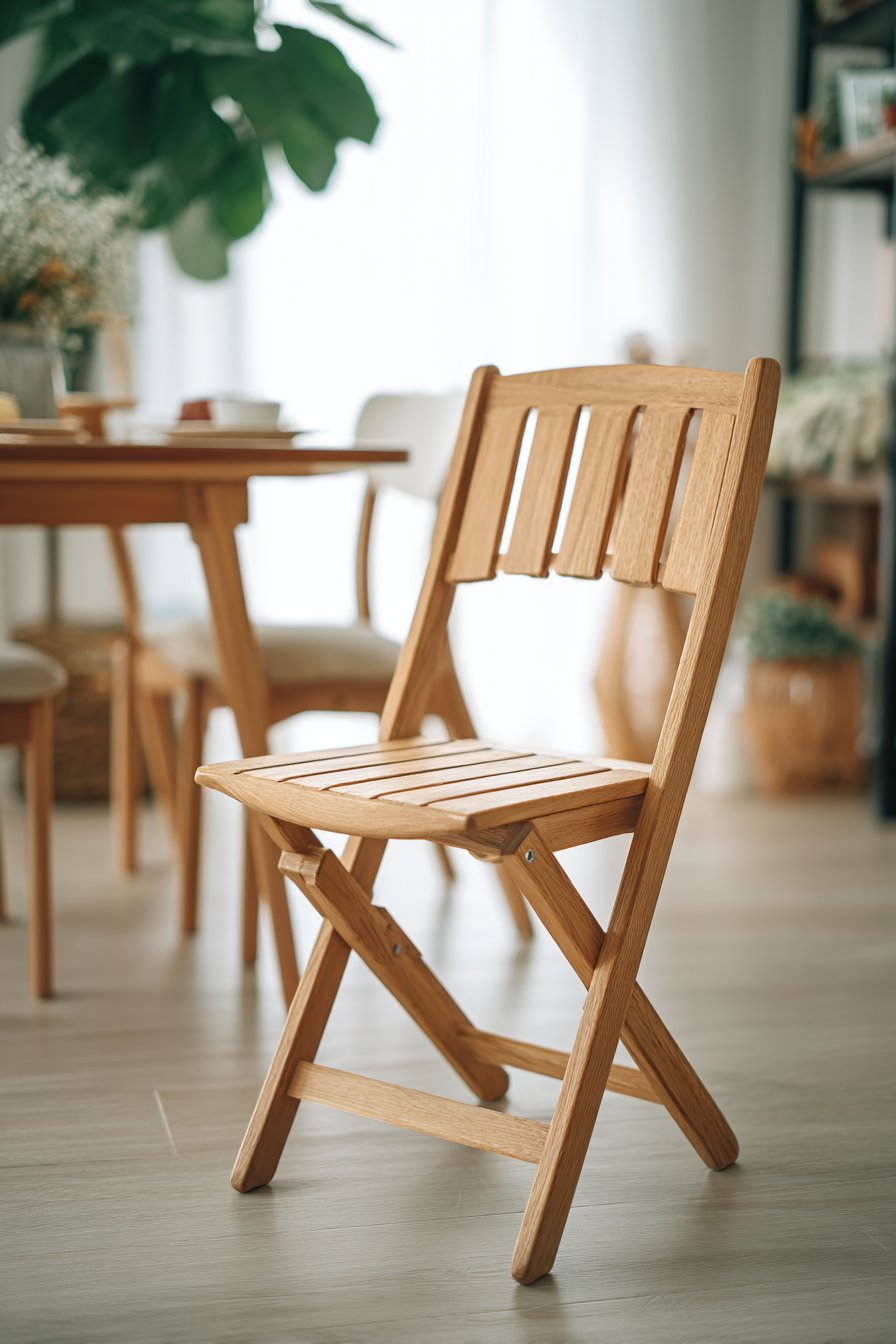
Envision a folding chair crafted from solid beech wood with natural finish. The slatted back and seat fold flat for efficient storage when not needed. The chair appears both in use at a compact dining table and folded against a wall. Natural daylight emphasizes the functional design and quality wood construction.
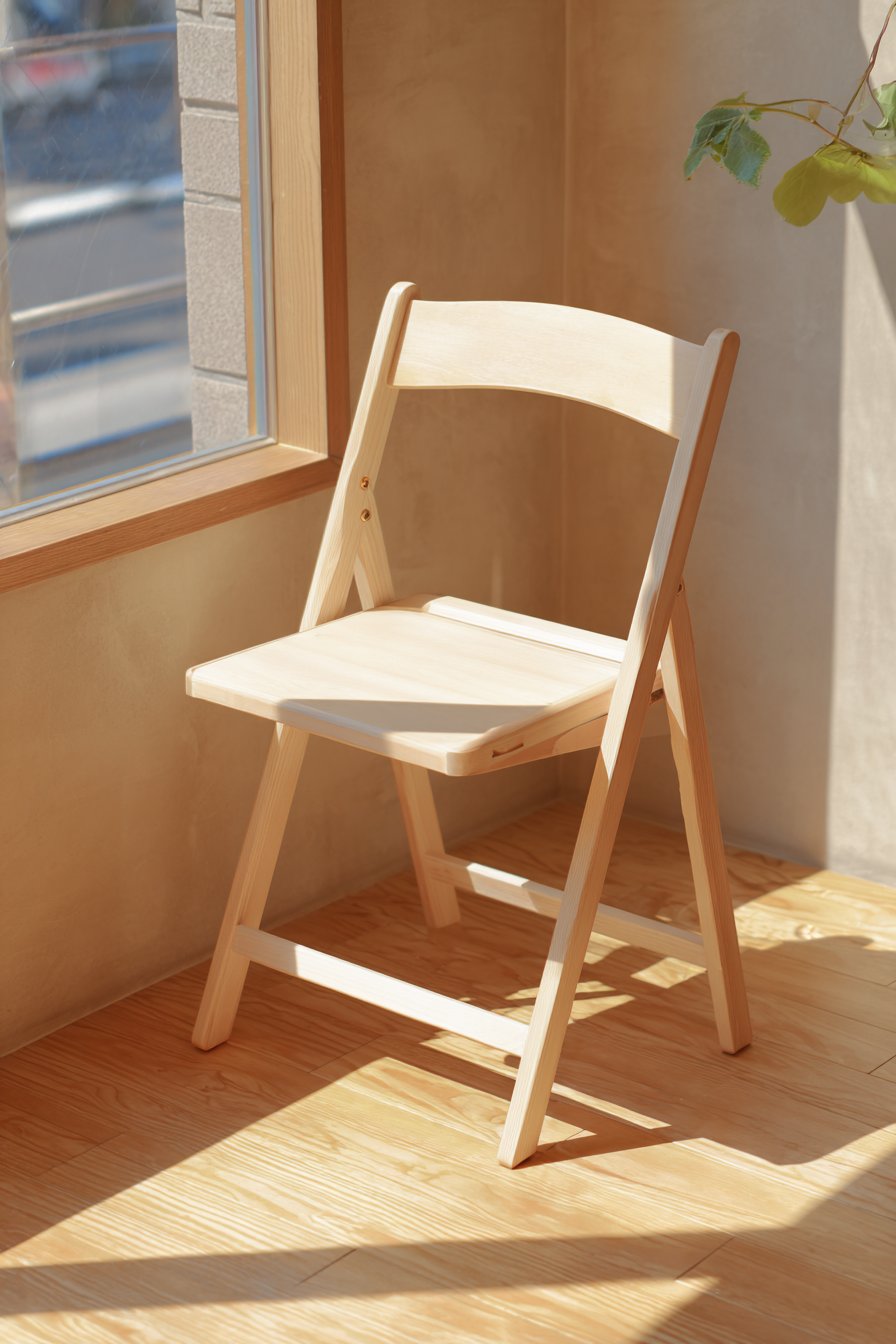
Visible grain patterns prove the solid wood construction and honest material use. The folding mechanism operates smoothly while maintaining structural stability when open. This design solves small-space challenges without compromising aesthetic quality. Beech wood provides durability that outlasts cheaper folding chair alternatives.
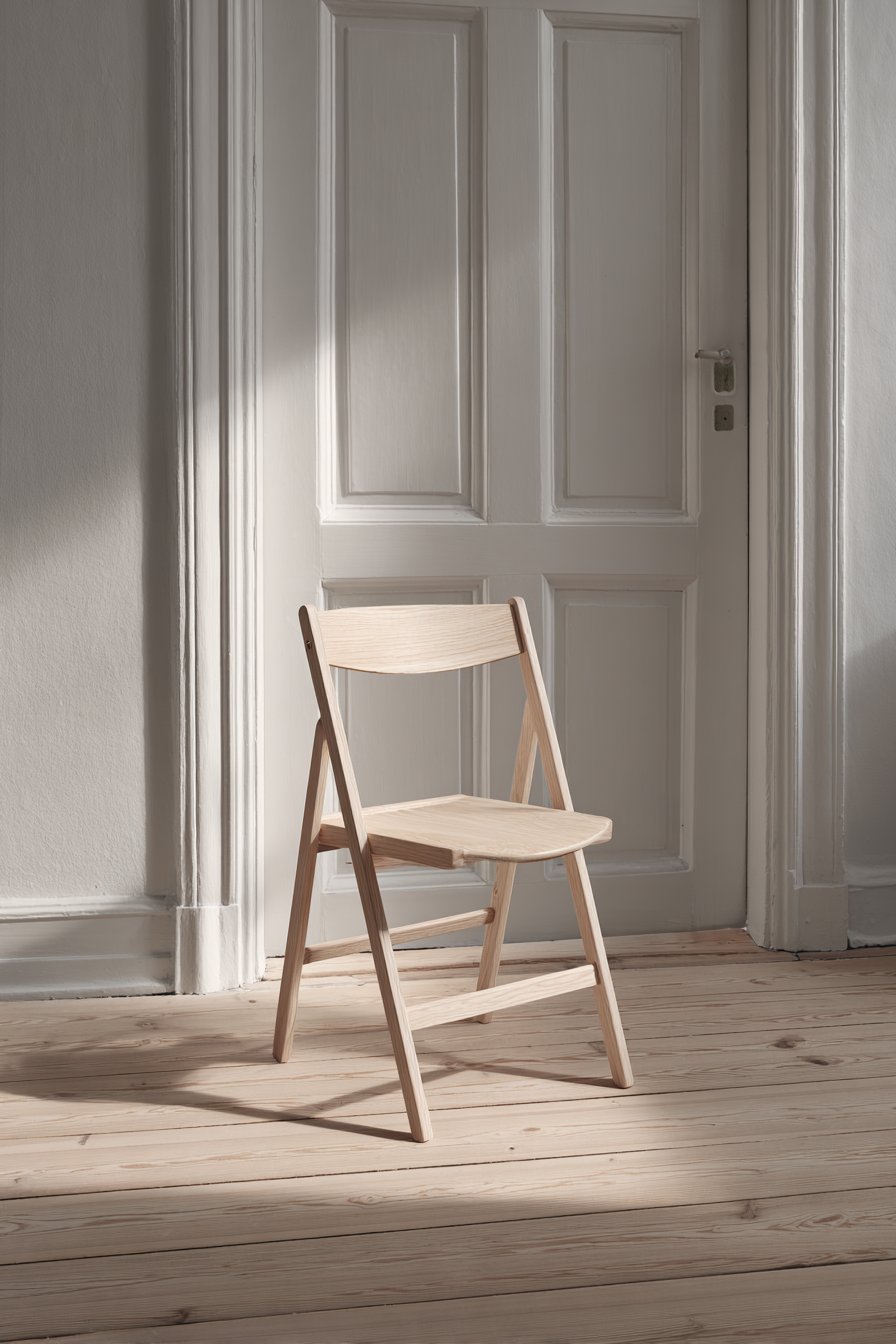
Wide-angle photography captures the chair’s practical versatility and space-efficient solutions. The natural finish ages beautifully while requiring minimal maintenance. This chair demonstrates how functional requirements can inspire elegant design solutions. Small apartment living becomes more manageable with thoughtfully designed furniture.
Key Design Tips:
- Choose solid wood folding chairs for durability and aesthetic quality
- Ensure folding mechanisms operate smoothly and lock securely when open
- Select natural finishes that age gracefully with regular use
- Store folded chairs where they remain accessible for frequent use
- Pair with compact tables designed for small-space living
- Invest in quality construction that outlasts temporary solutions
16. Contemporary Gray Velvet with Channel Tufting
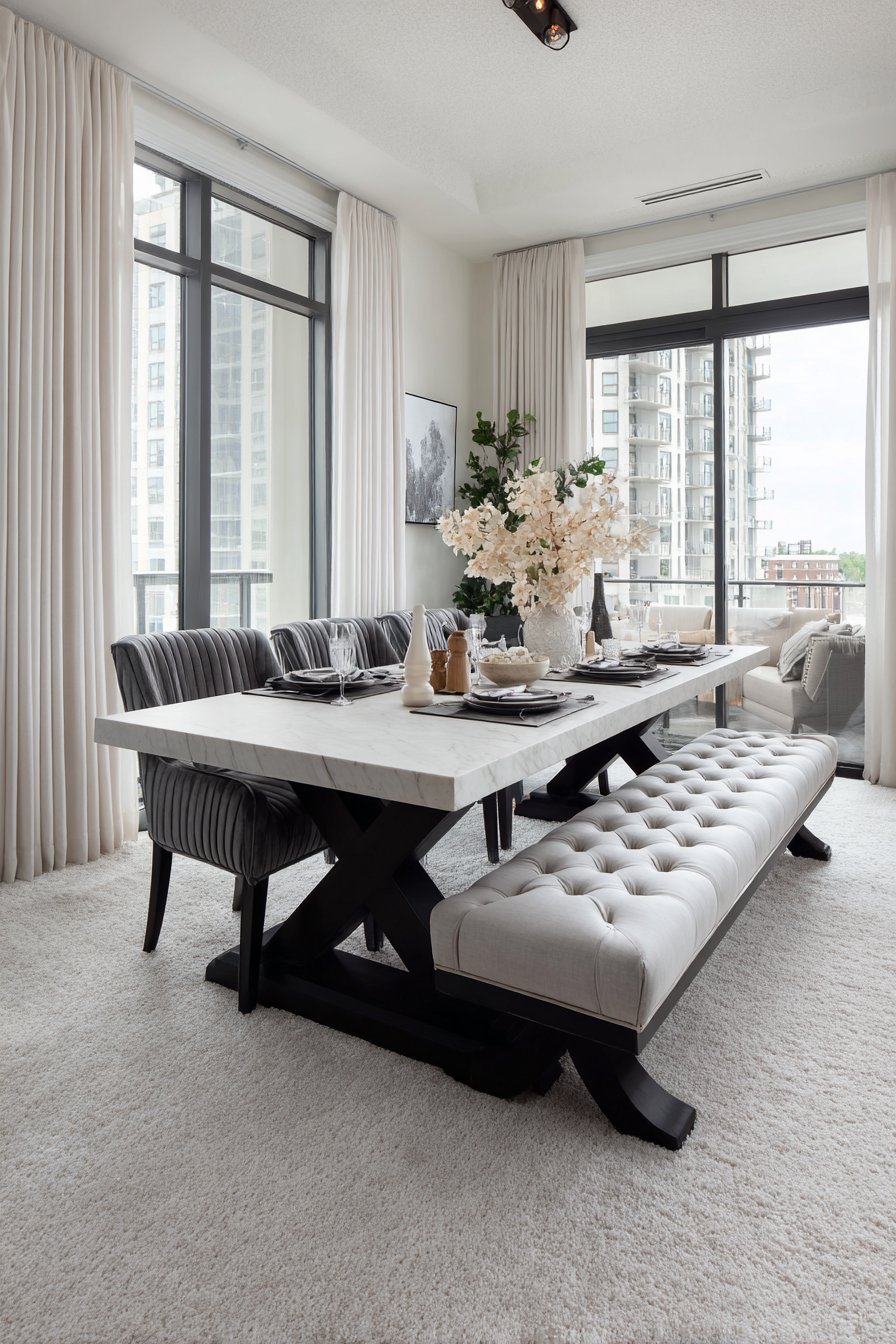
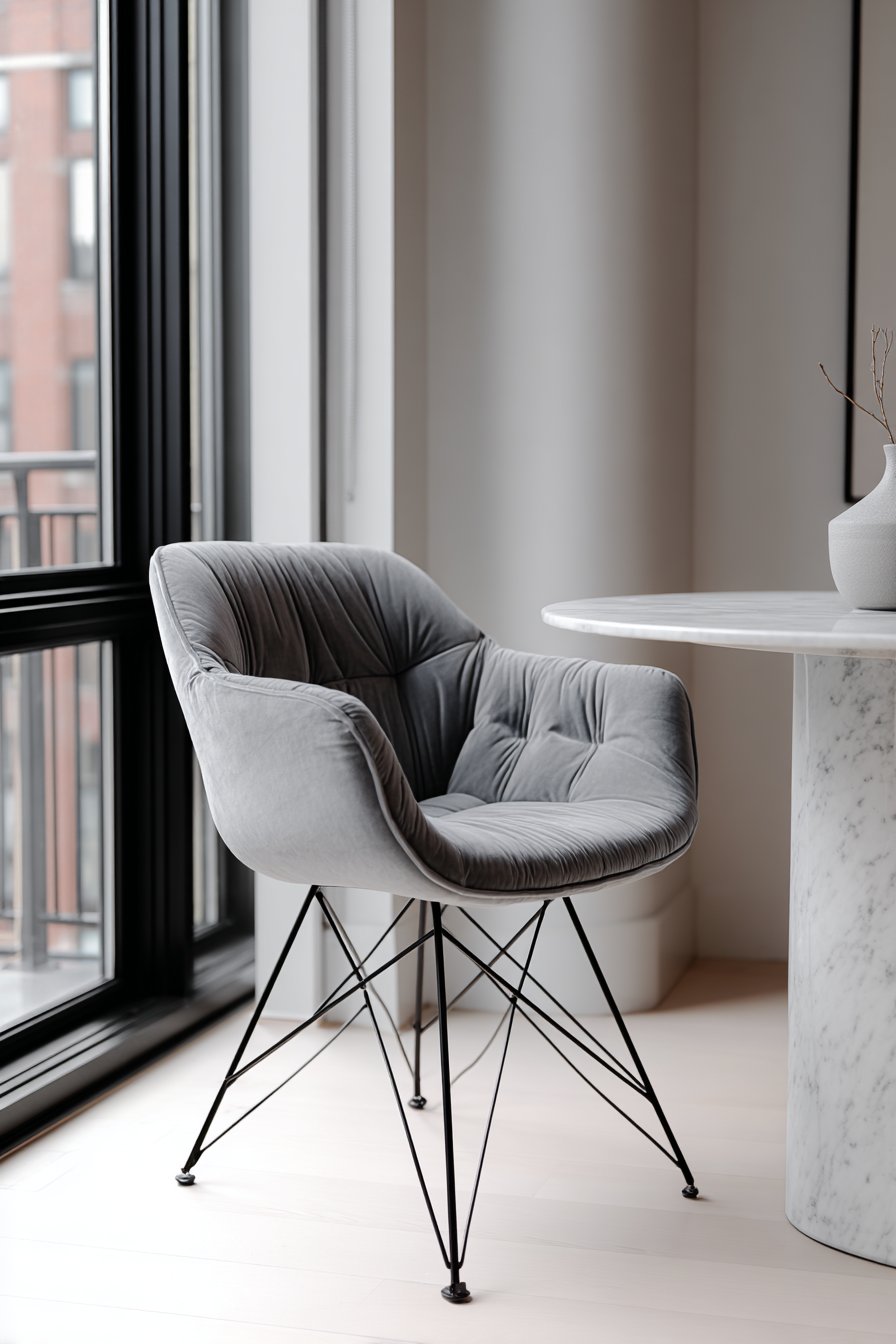
Picture a chair with deep channel tufting in soft gray velvet fabric. Matte black metal legs feature geometric cross-brace details and modern proportions. The chair positions at a marble dining table in a neutral contemporary space. Natural light from floor-to-ceiling windows creates shadows within the tufted channels.
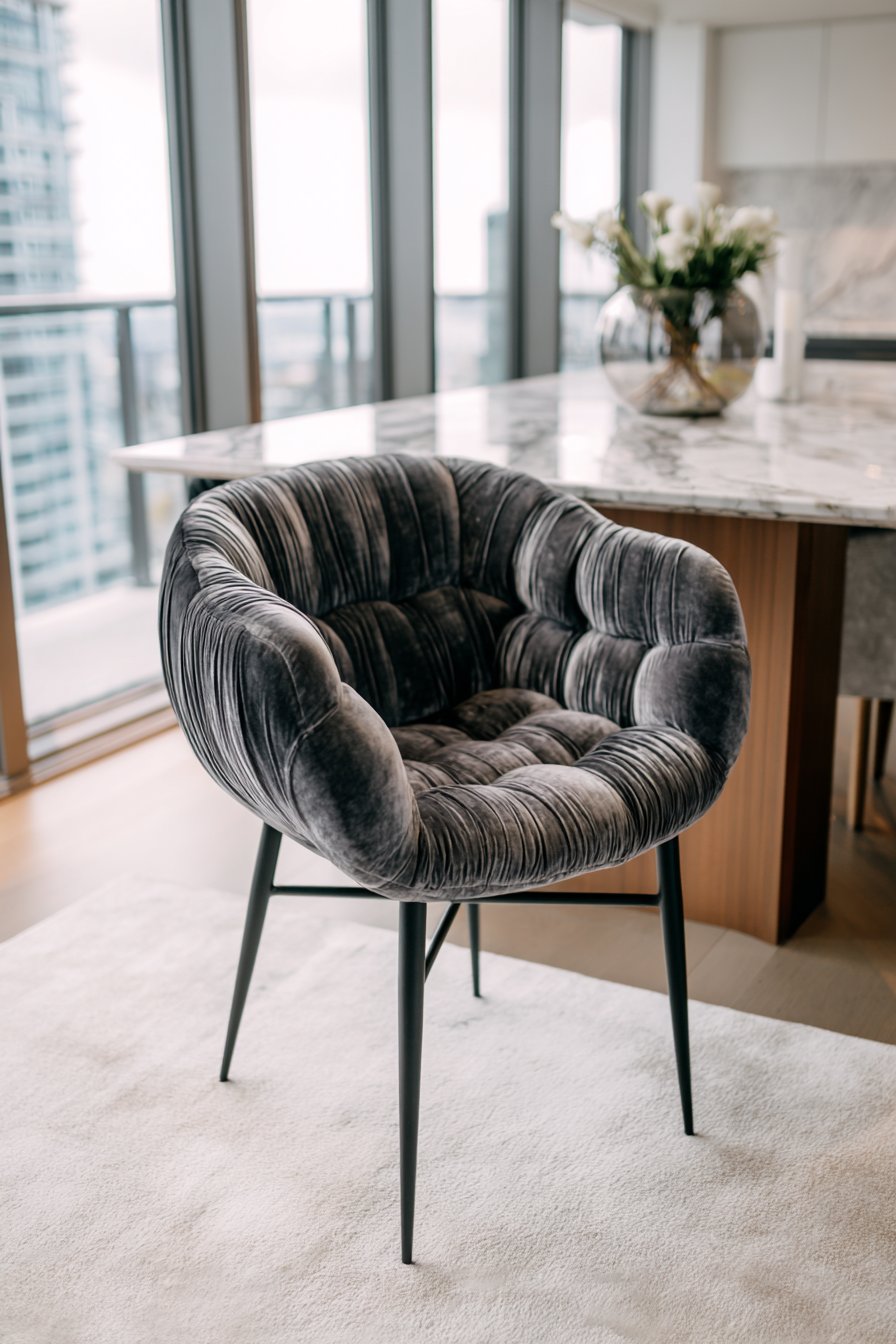
The channel tufting adds dimensional depth and sophisticated texture to neutral upholstery. Soft gray velvet provides luxurious tactile experience without excessive formality. Matte black metal creates strong visual grounding and contemporary edge. Geometric cross-bracing adds architectural interest to functional chair legs.
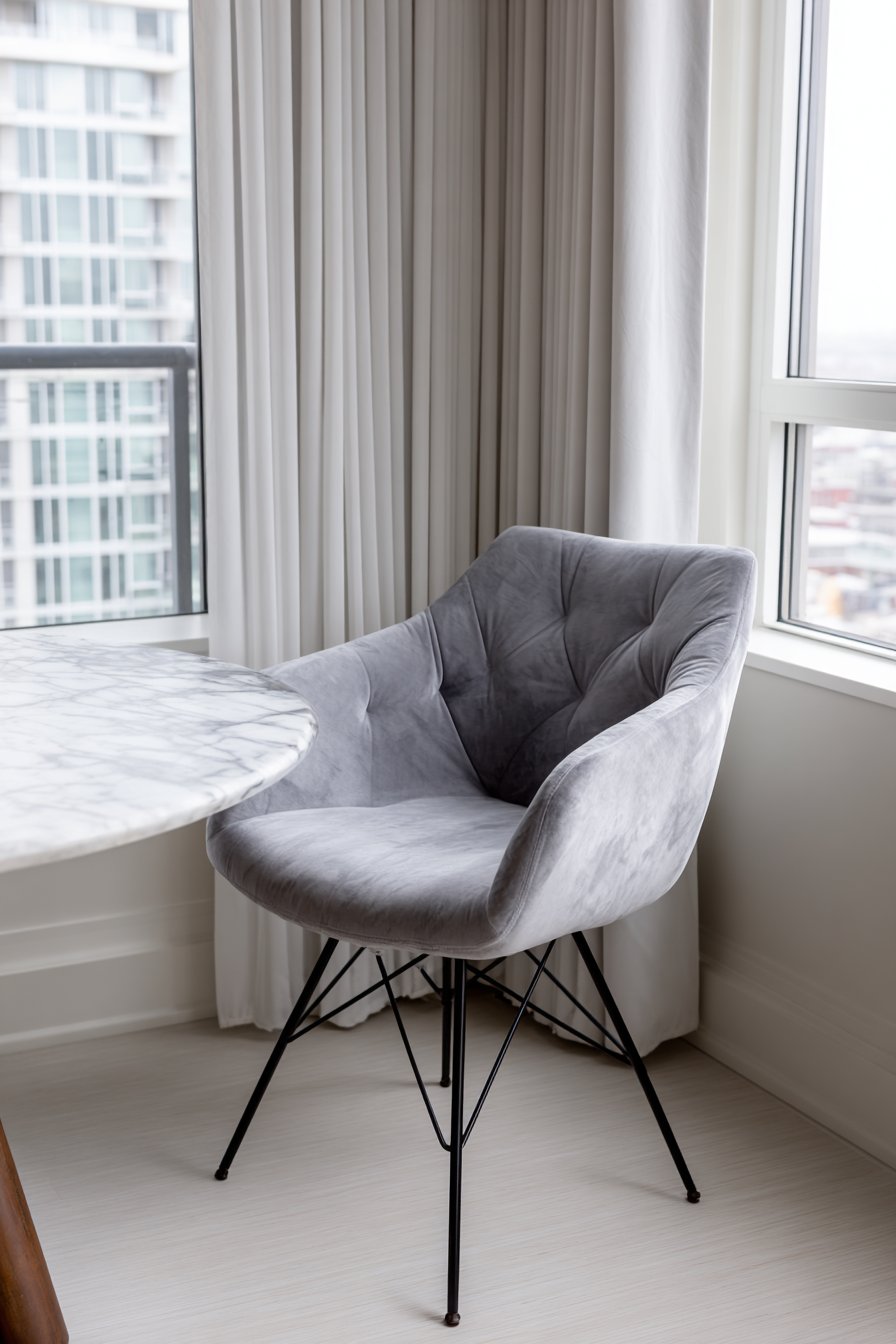
Floor-to-ceiling windows flood the space with natural light that emphasizes texture. The marble table pairing creates cohesive material palette of luxury and restraint. This design demonstrates how contemporary styling incorporates comfort and visual interest. The sophisticated material combination elevates everyday dining experiences.
Key Design Tips:
- Choose channel tufting for dimensional texture and comfortable support
- Select soft gray for versatile neutral that works with diverse palettes
- Pair velvet upholstery with matte black metal for contemporary contrast
- Ensure tufting channels are properly executed for lasting appearance
- Position where natural light can create shadow play in channels
- Use marble or stone surfaces for cohesive luxury material palette
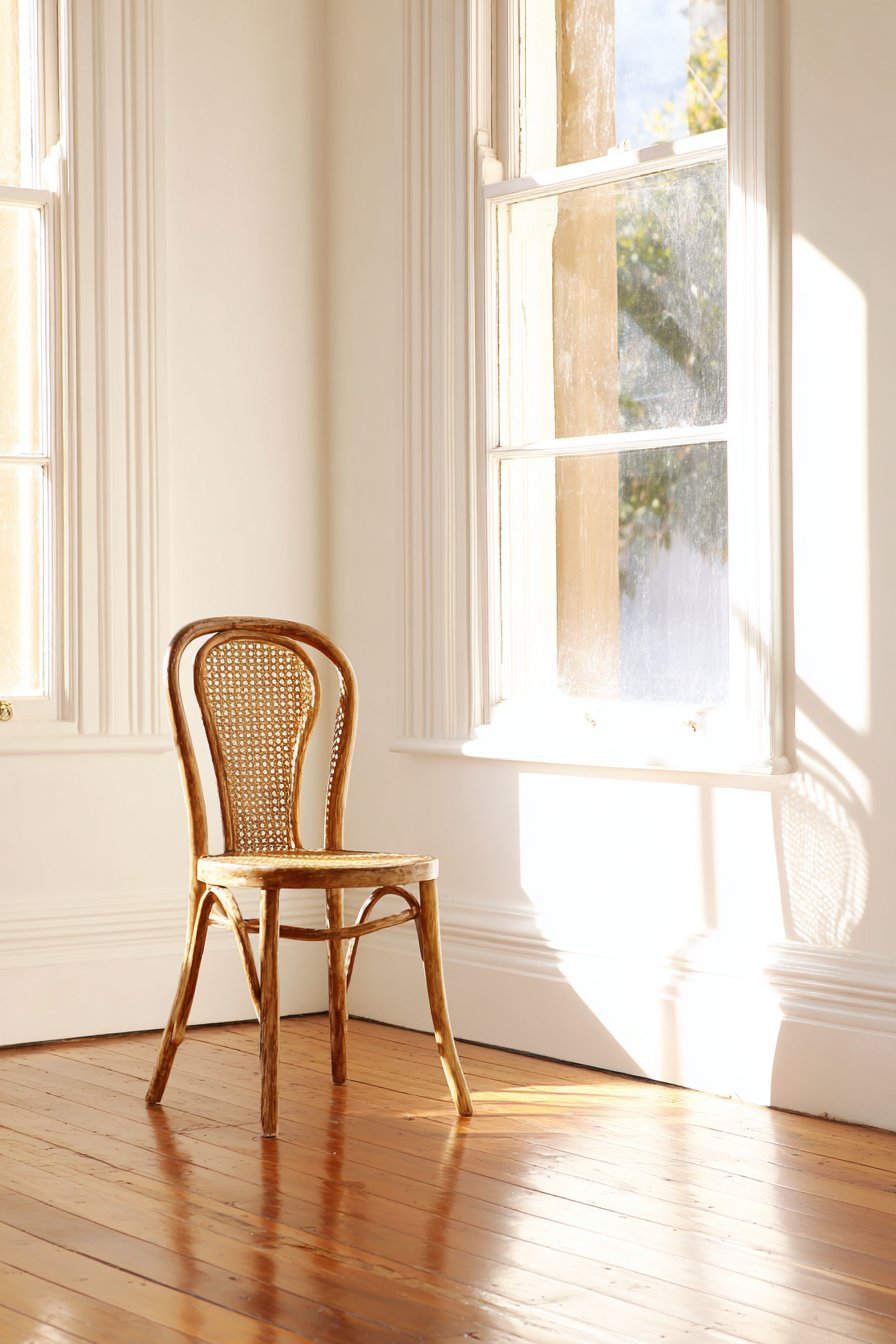
17. Vintage-Inspired Bentwood with Cane Seat
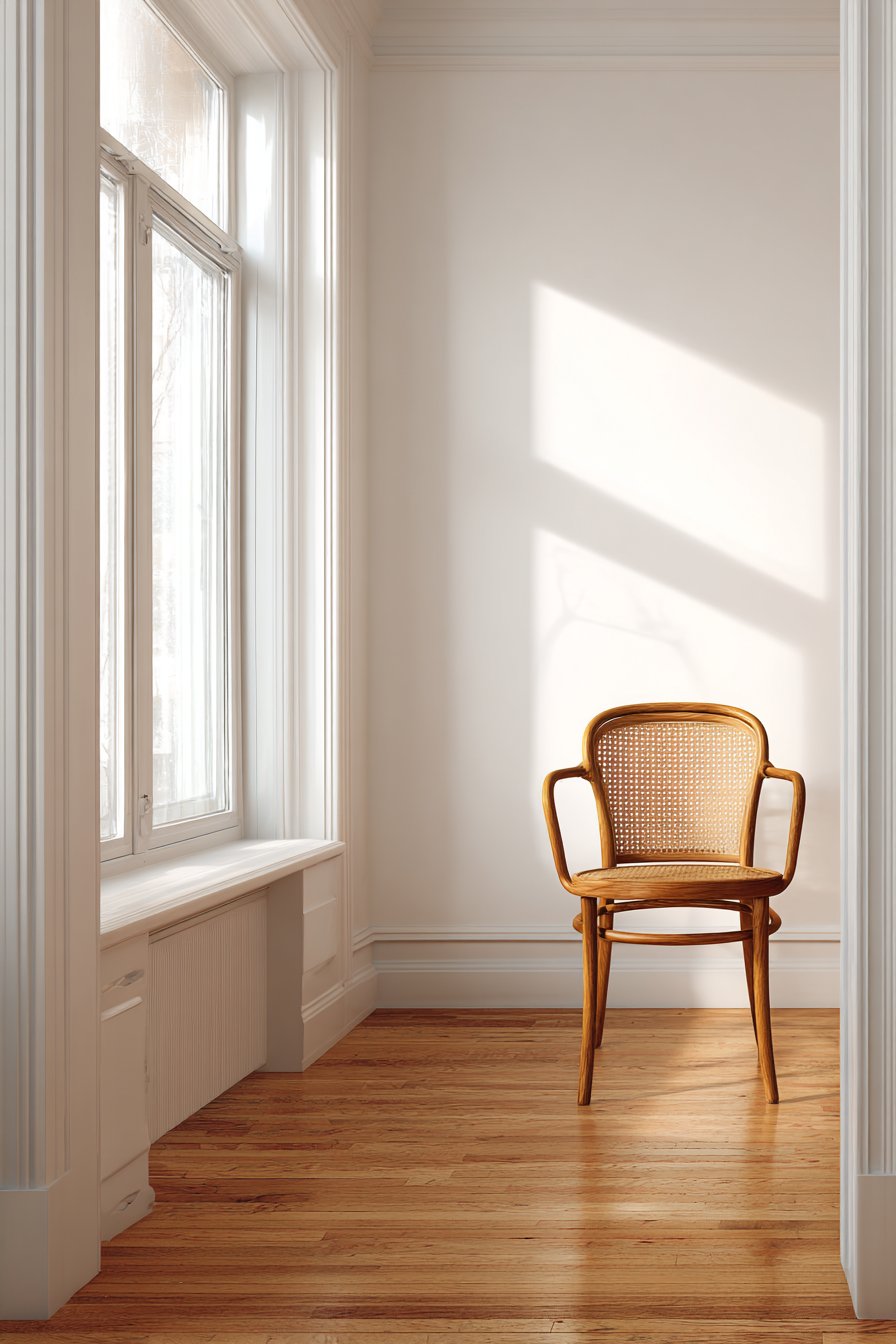
Imagine a bentwood chair with curved steam-bent beech wood frame in honey tones. Traditional cane-weaving patterns create the seat through authentic hand-weaving techniques. The chair positions in a bright dining room with hardwood floors. Natural morning light highlights the warm wood tones and intricate cane texture.
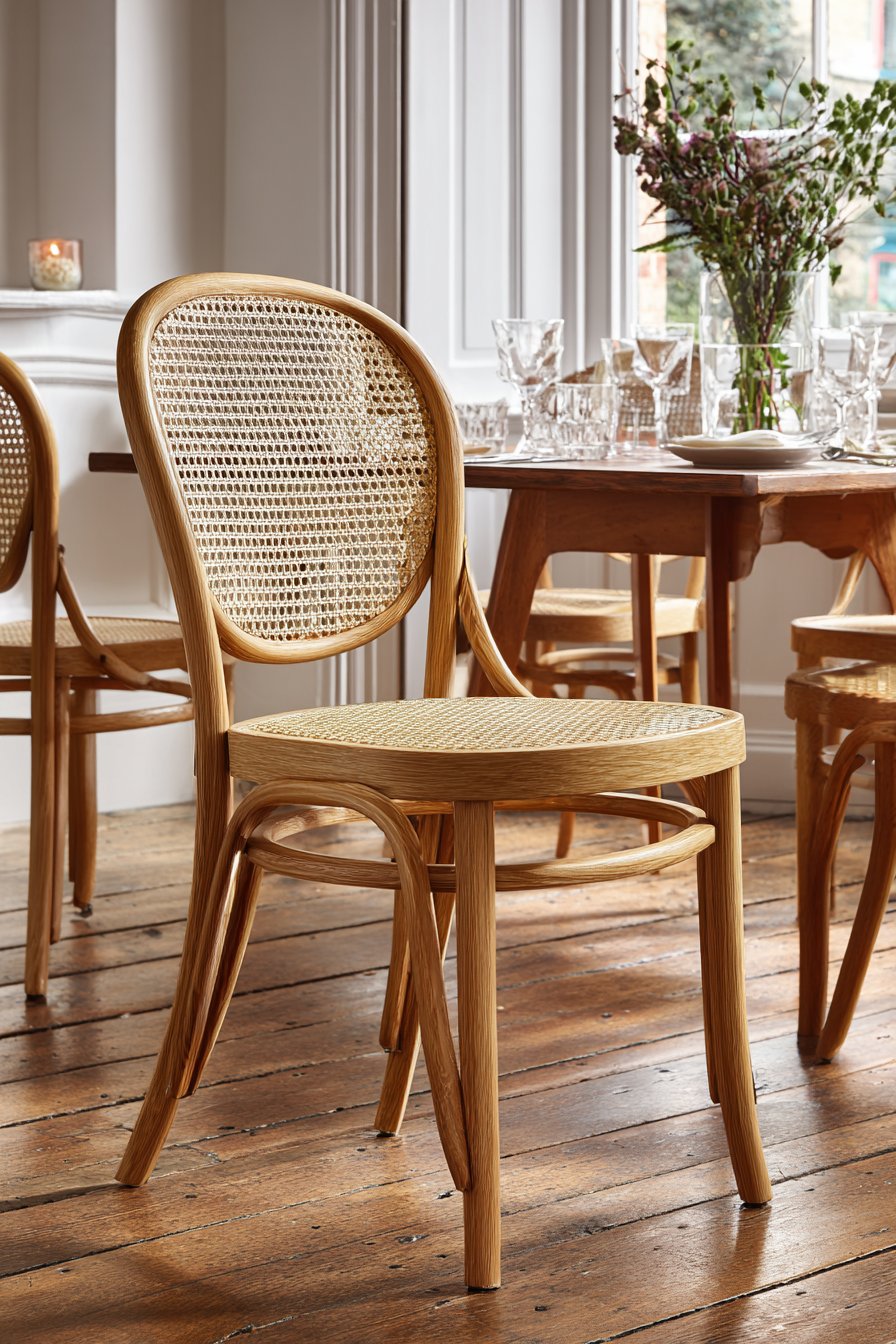
Steam-bent wood curves create organic forms that appear effortlessly graceful. The honey-toned finish brings warmth without heavy staining that obscures grain. Hand-woven cane provides breathable, comfortable seating with distinctive textural pattern. Subtle aging marks add authentic character that new furniture cannot replicate.
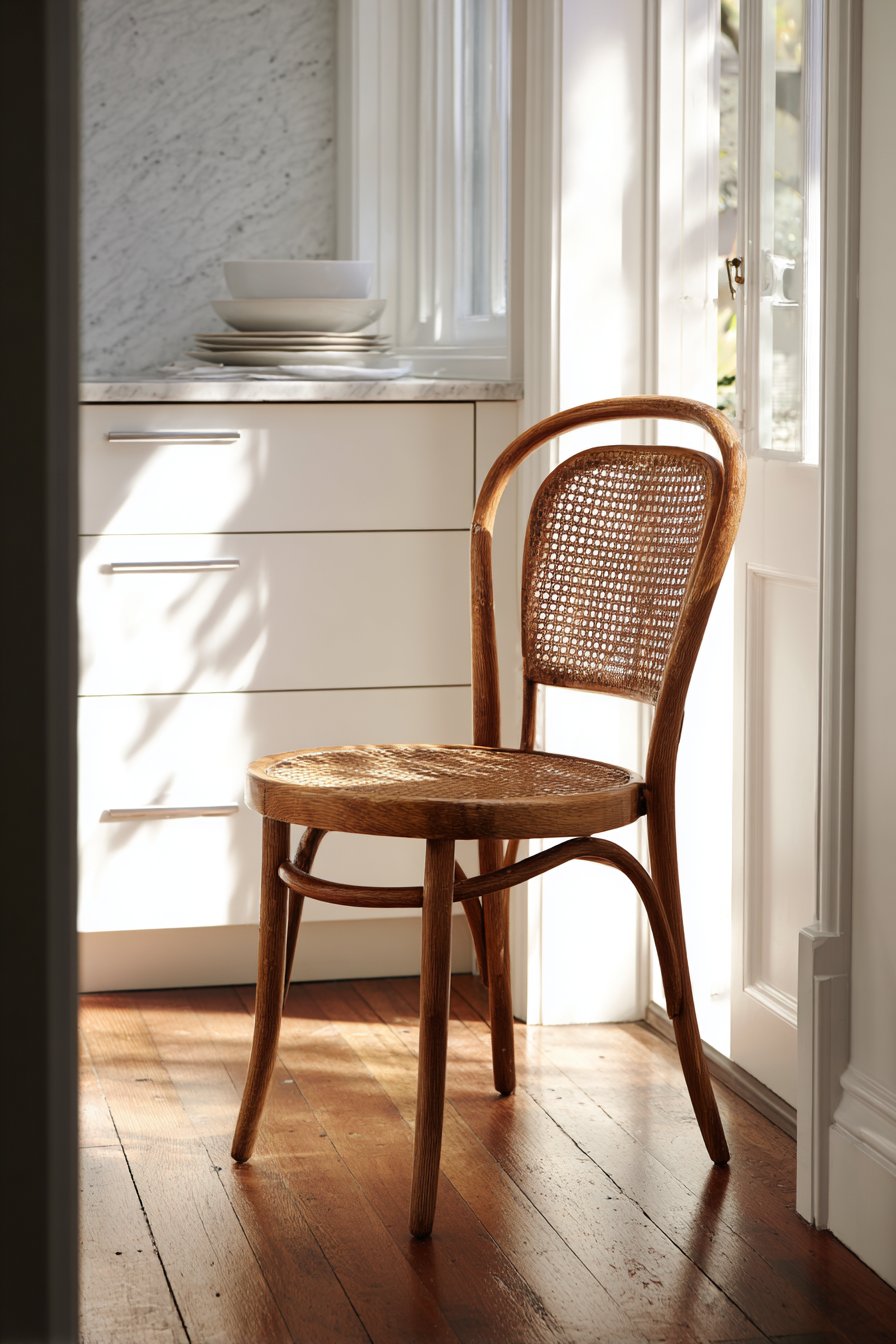
This design references classic European café aesthetics with enduring appeal. The bentwood construction technique represents innovation that remains relevant over a century later. Natural materials age beautifully while maintaining structural integrity through decades. The timeless design transcends temporary trends and changing tastes.
Key Design Tips:
- Choose steam-bent bentwood for authentic curved forms and historic technique
- Select honey or natural wood tones for warm inviting appearance
- Ensure cane seats are properly hand-woven for durability and comfort
- Embrace subtle aging as signs of authentic vintage character
- Pair with simple tables that showcase chair craftsmanship
- Use in spaces that appreciate classic European café aesthetic
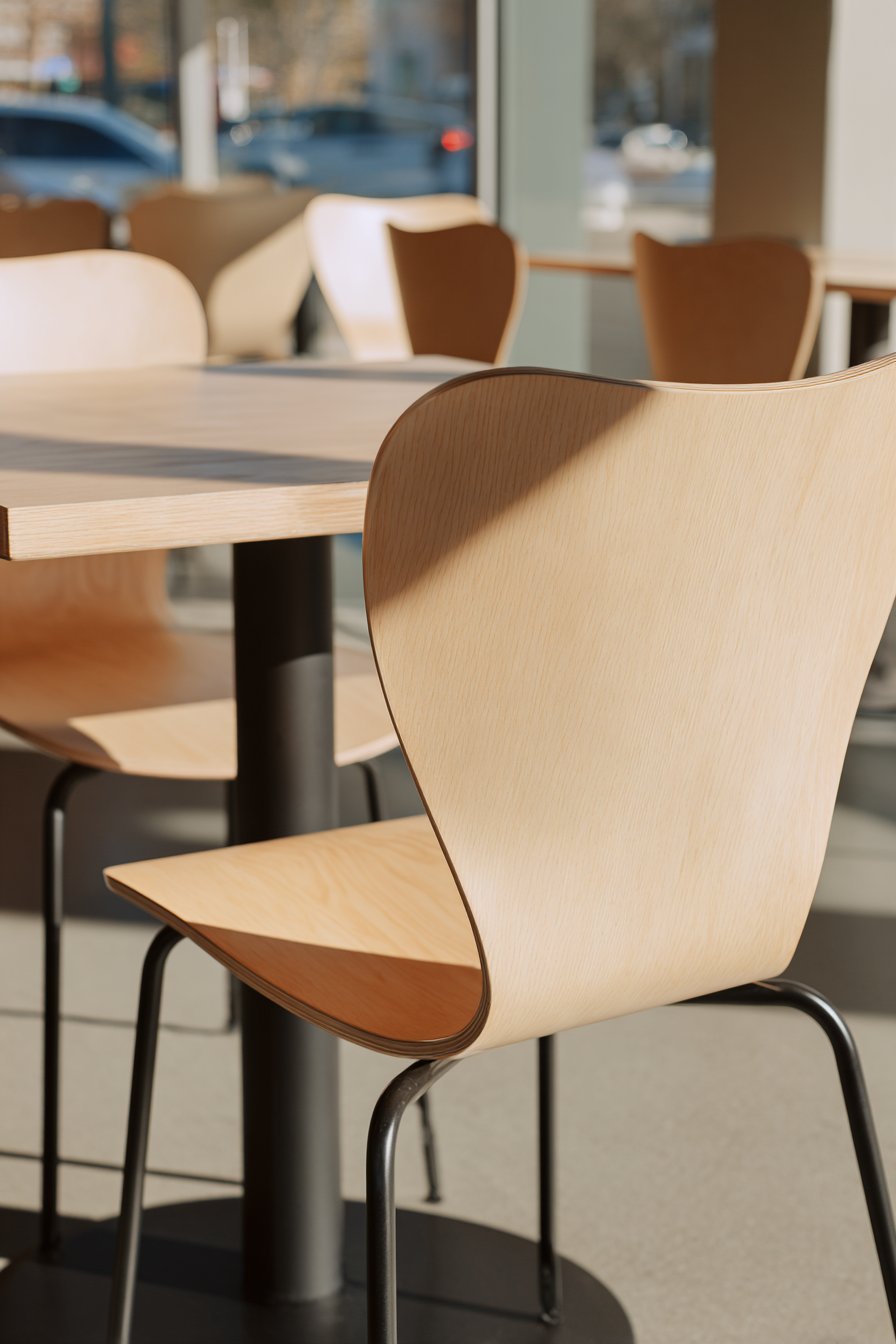
18. Modern Molded Plywood with Organic Curves
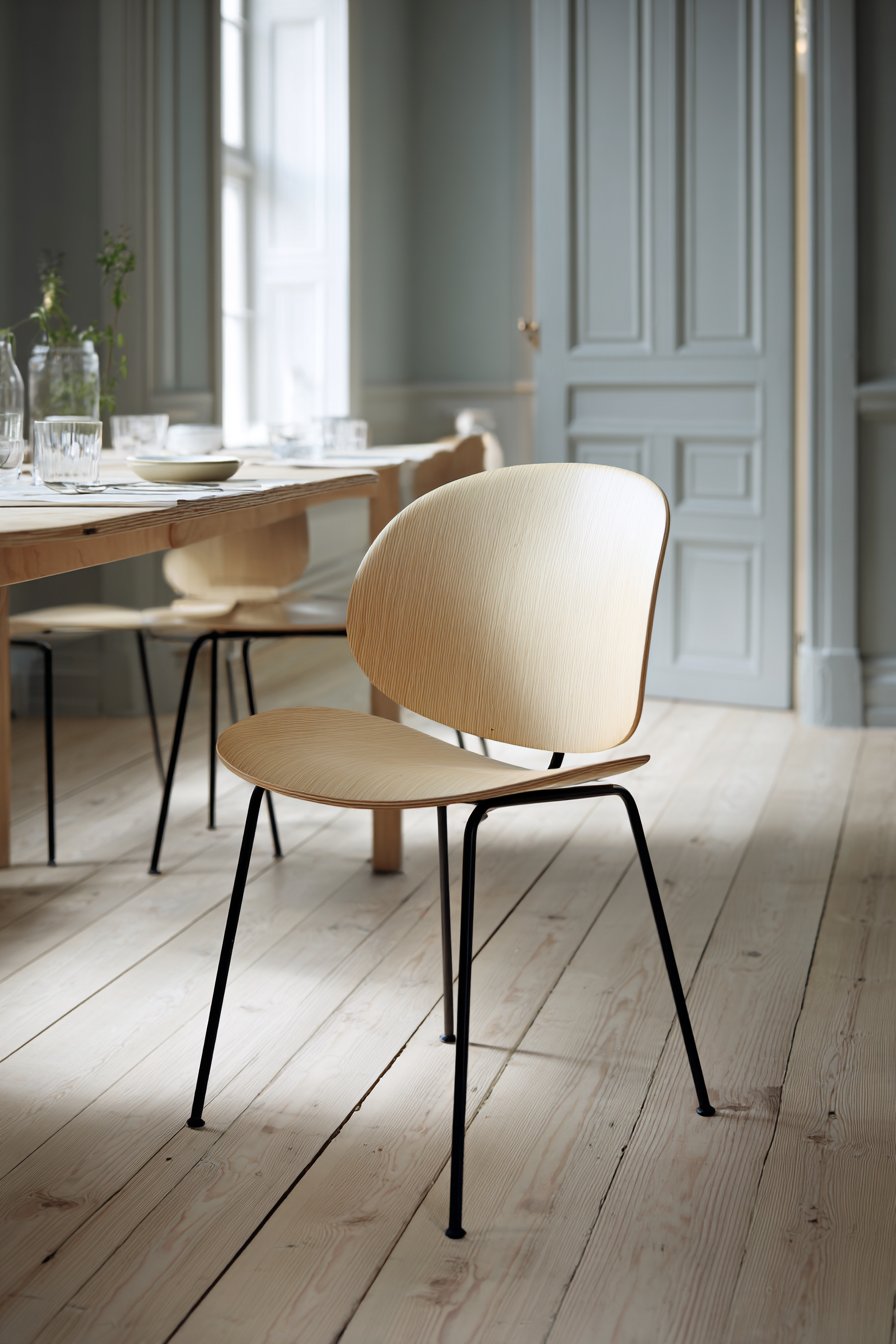
Envision a chair with molded plywood construction in natural ash veneer. The organic curved form provides ergonomic support through three-dimensional shaping. Slim powder-coated steel legs in matte black create minimal visual footprint. The chair positions at a Scandinavian-style table with matching pieces.
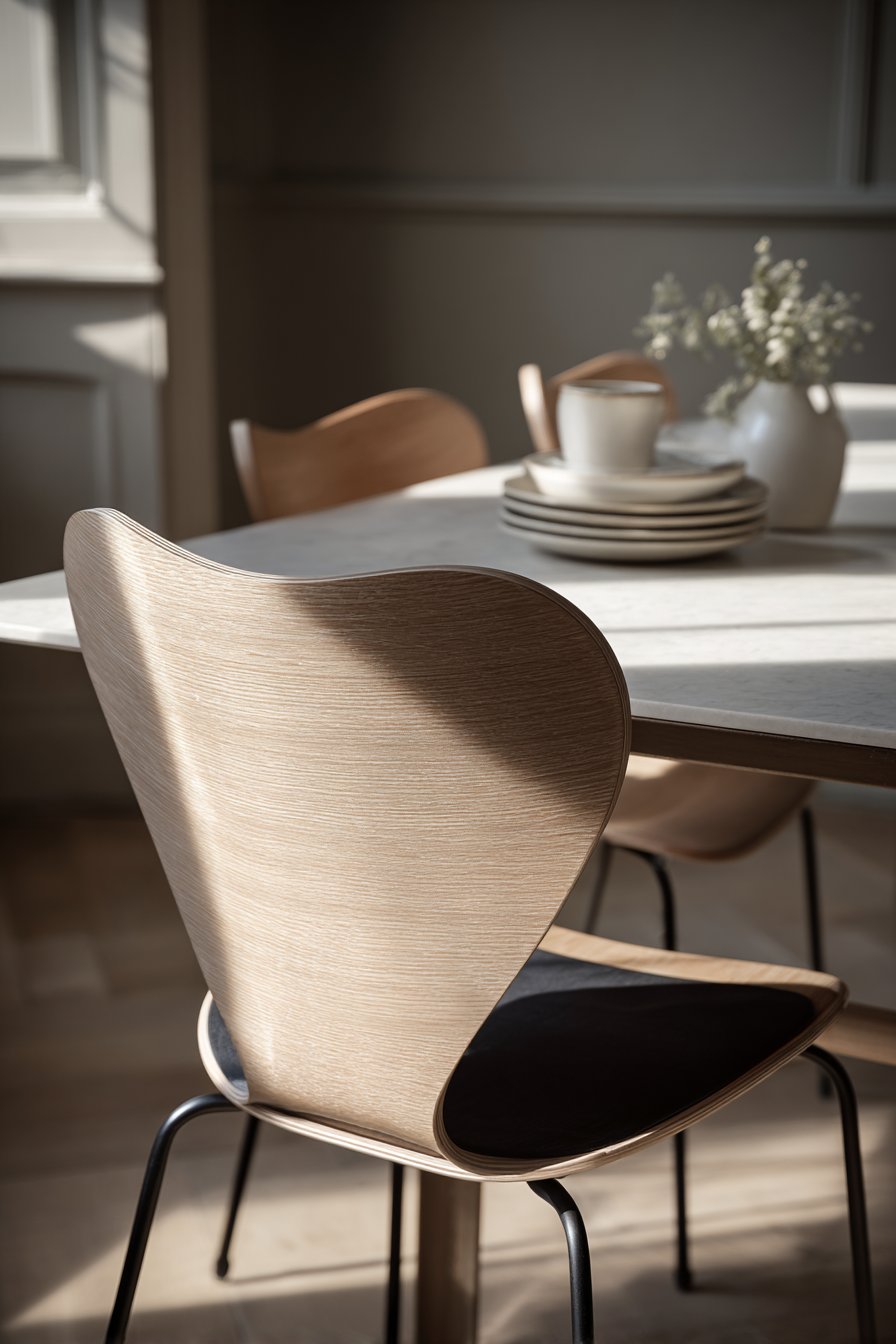
Soft diffused natural light emphasizes the chair’s sculptural quality and flowing lines. Beautiful wood grain patterns remain visible through thin veneer layers. The contoured seat demonstrates how technology enables comfortable, body-supporting forms. Matte black legs provide necessary contrast without visual heaviness.
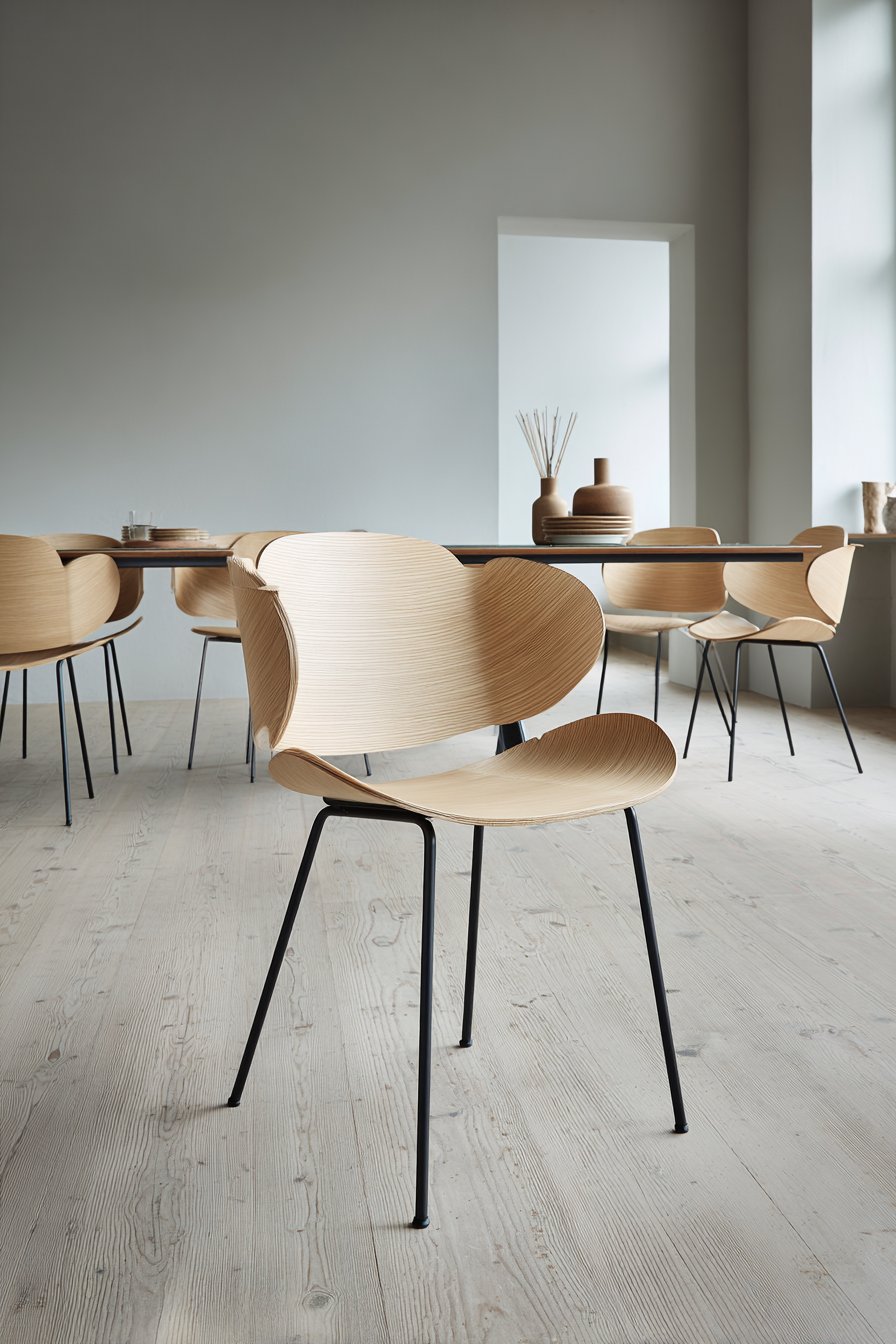
This design celebrates mid-century modern influence, adapted for contemporary functionality. The molded plywood technique creates strong, lightweight furniture from minimal material. Natural ash veneer maintains organic warmth within technological construction method. The overall effect balances innovation with approachable aesthetic appeal.
Key Design Tips:
- Choose molded plywood for lightweight strength and sculptural possibilities
- Select natural veneers that showcase wood grain beauty
- Ensure ergonomic contouring provides genuine body support
- Pair with slim metal legs to maintain visual lightness
- Position in contemporary spaces that appreciate mid-century influence
- Allow natural light to highlight organic curves and grain patterns
19. Formal Charcoal Linen with Button Tufting
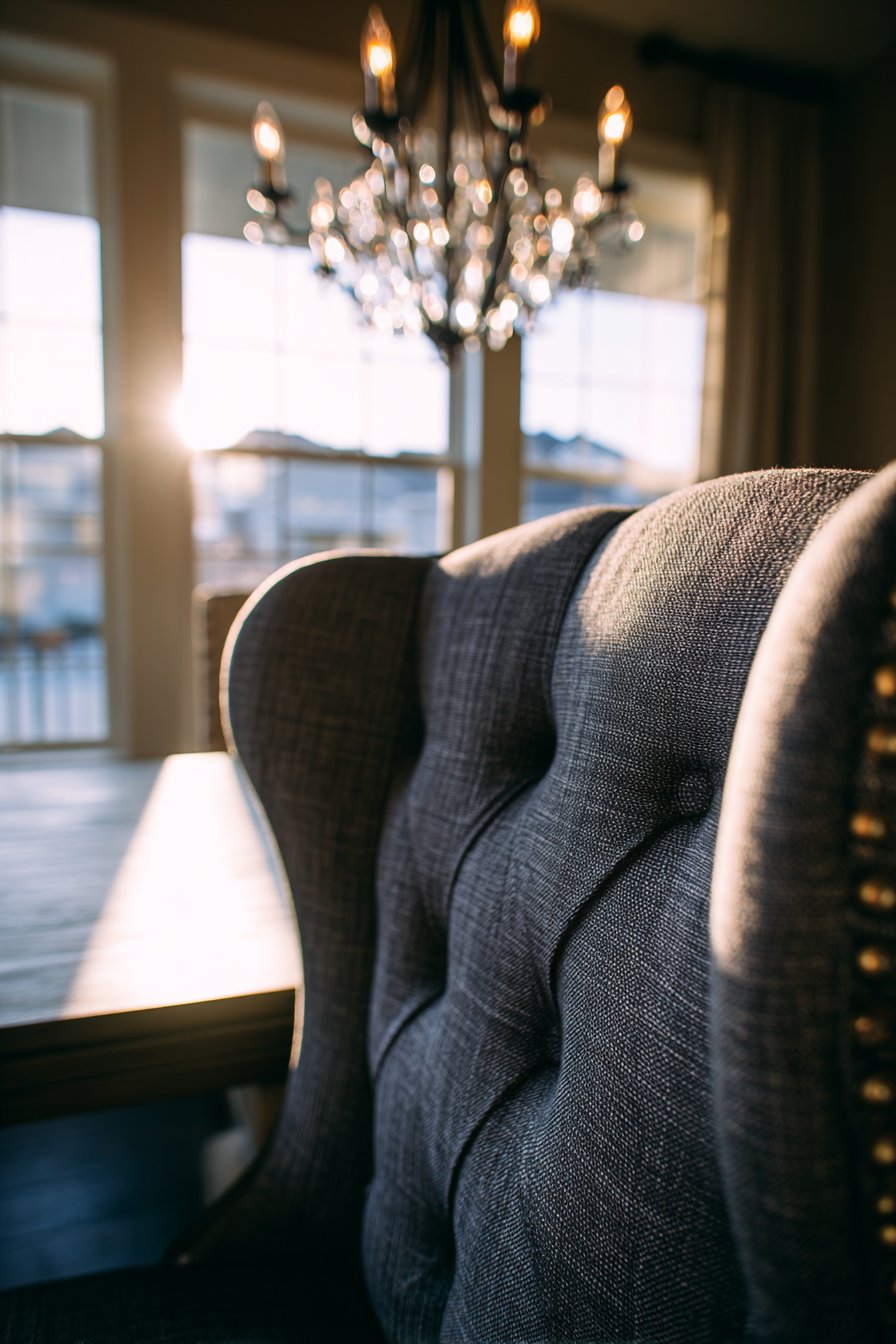
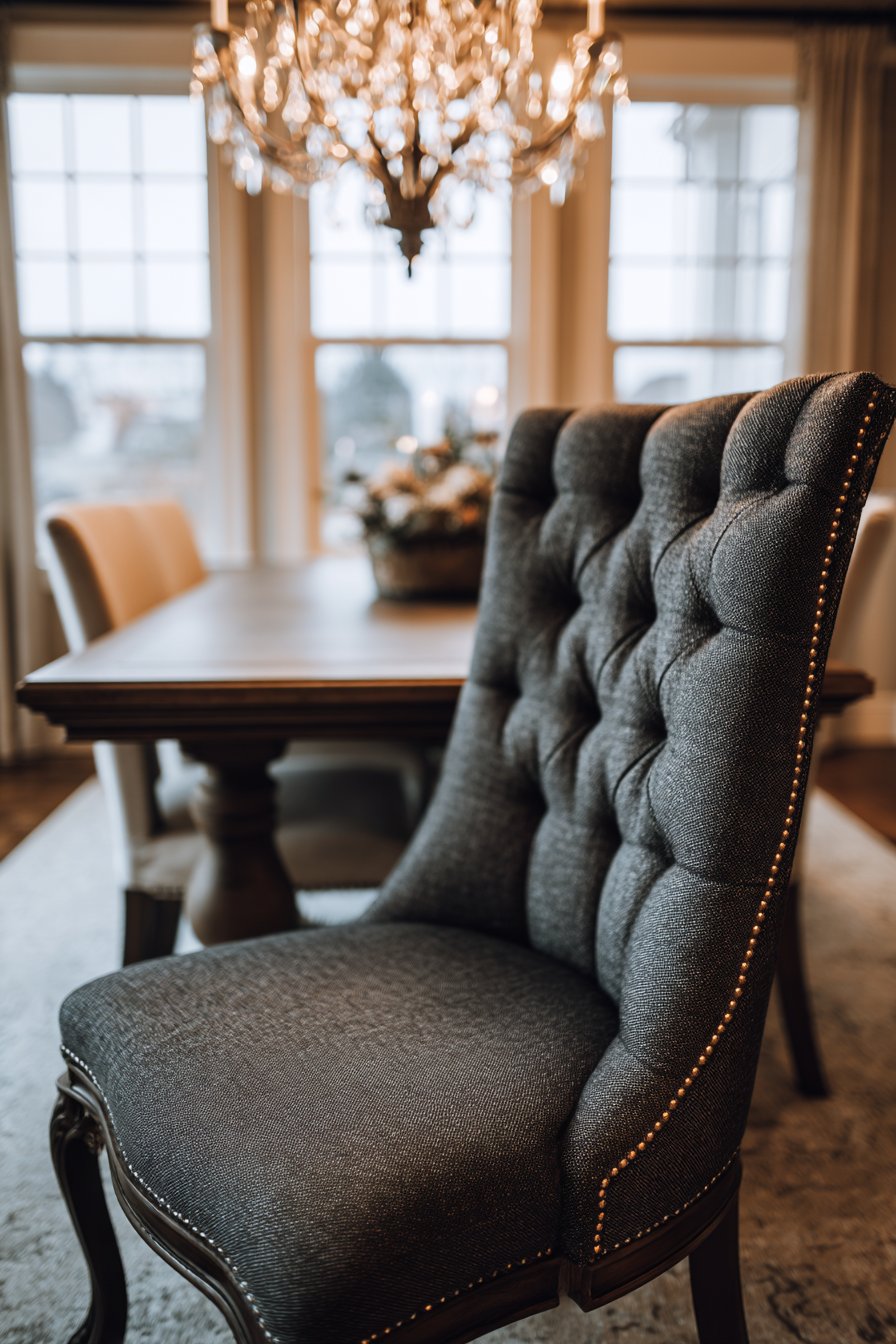
Picture a chair with tall upholstered back in rich charcoal gray linen. Button tufting and antique brass nailhead trim add refined decorative details. Dark walnut legs feature subtle carved details and traditional proportions. The chair positions at an elegant dining table beneath warm chandelier light.
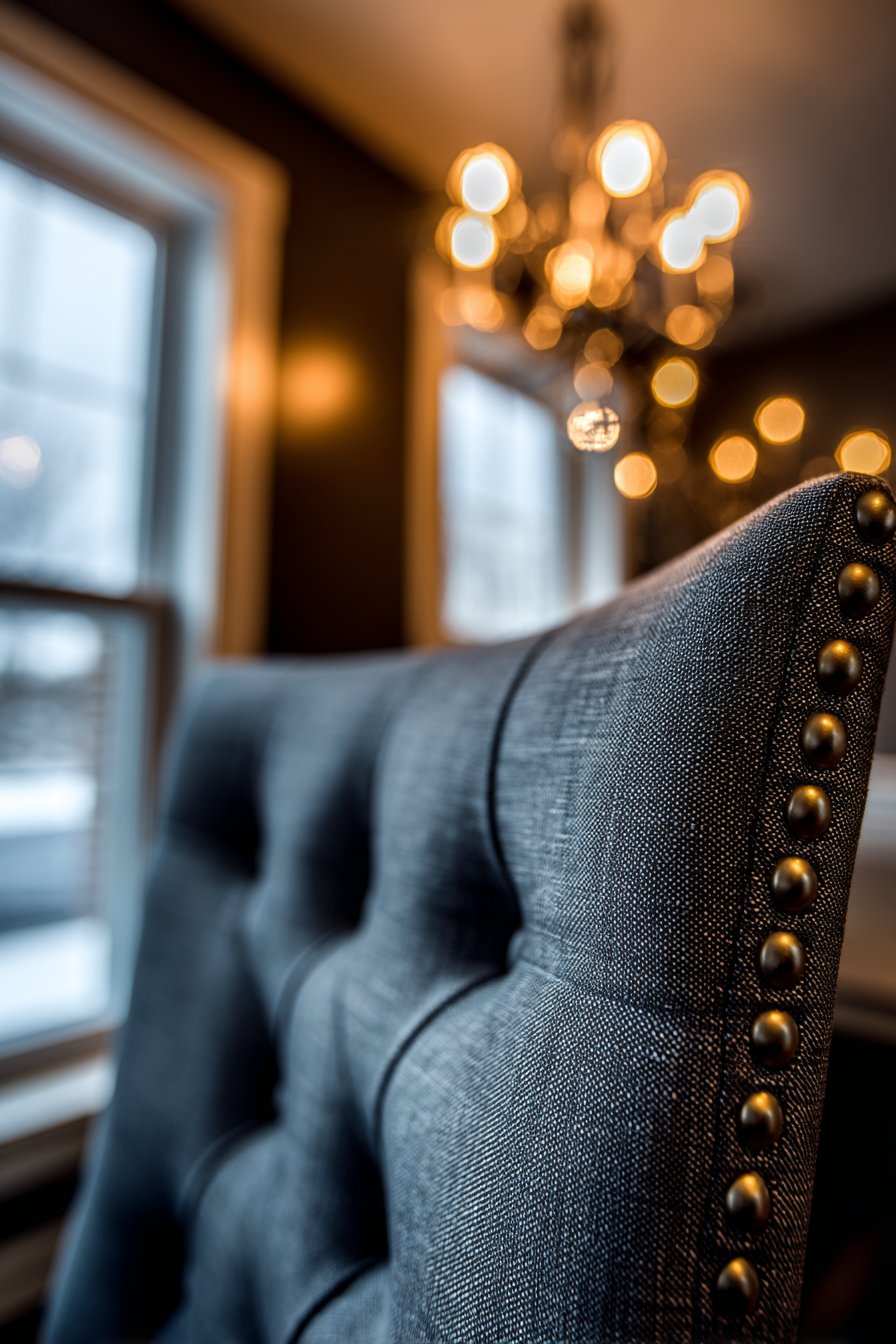
The tall back creates commanding presence suitable for formal dining occasions. Button tufting adds dimensional texture while maintaining sophisticated restraint. Antique brass nailheads provide warm metallic accents along upholstery edges. Carved walnut leg details reference classical furniture traditions appropriately.
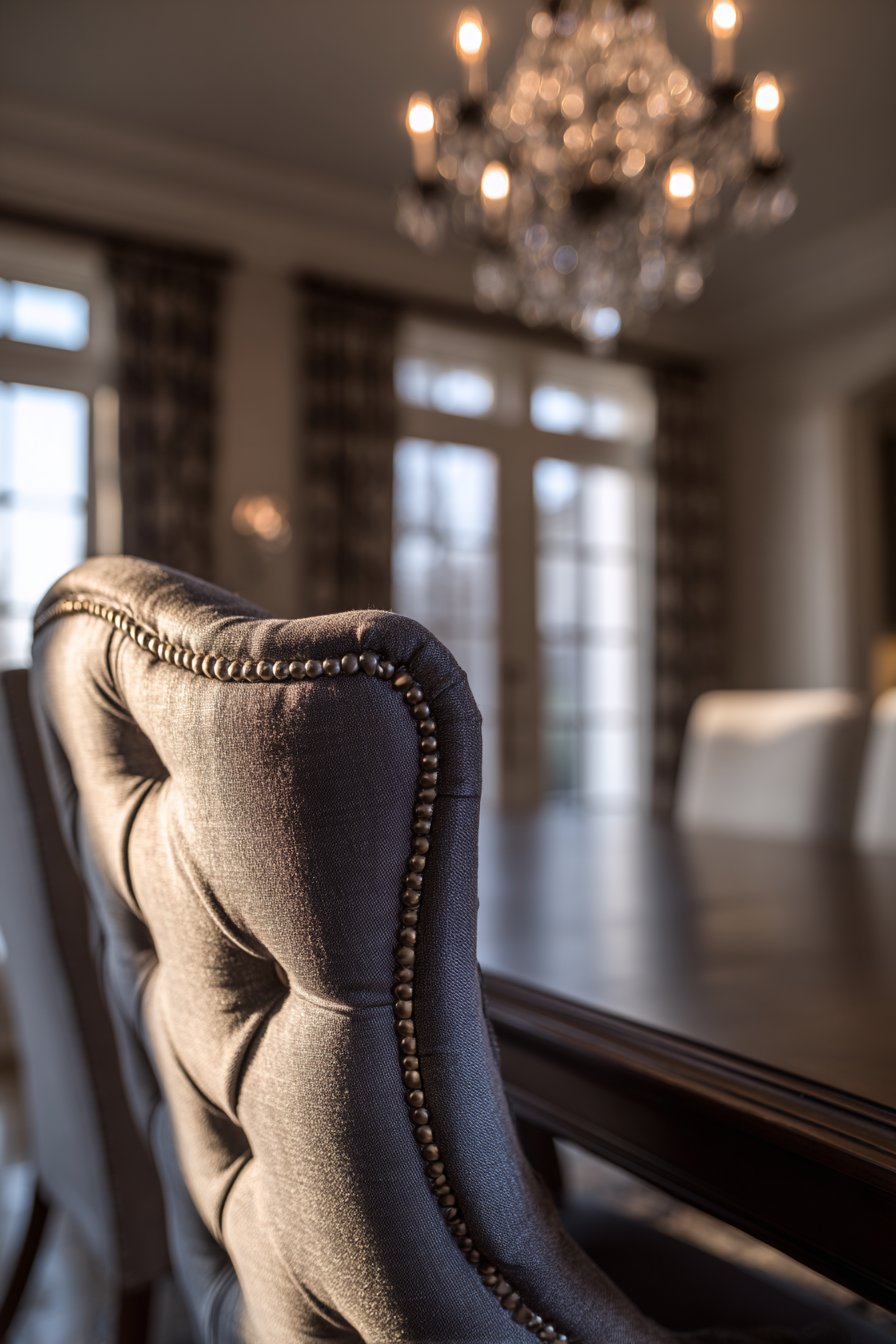
Warm chandelier light combines with natural window light for sophisticated ambiance. The charcoal gray proves more forgiving than lighter upholstery colors. This design elevates special occasions while maintaining everyday elegance. Traditional proportions create appropriate formality without appearing stuffy or pretentious.
Key Design Tips:
- Choose charcoal or deep gray for formal elegance with practical durability
- Add button tufting for refined texture and traditional styling
- Select antique brass rather than shiny new metal for warmer tones
- Ensure tall backs provide proper support for extended seated periods
- Pair with dark wood tables for cohesive formal aesthetic
- Use in dining rooms designed for entertaining and special occasions
20. Stackable Modern White with Wood Legs
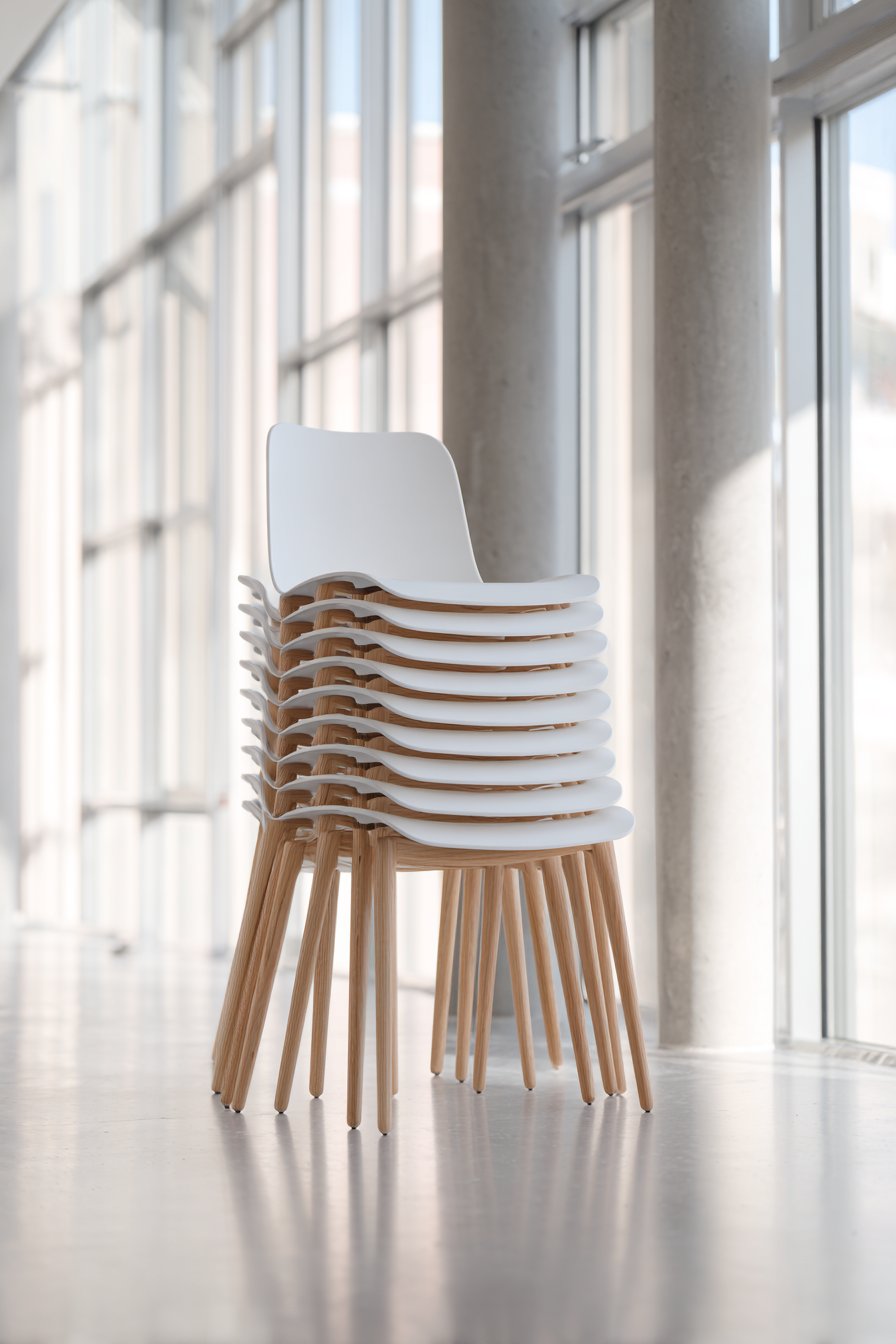
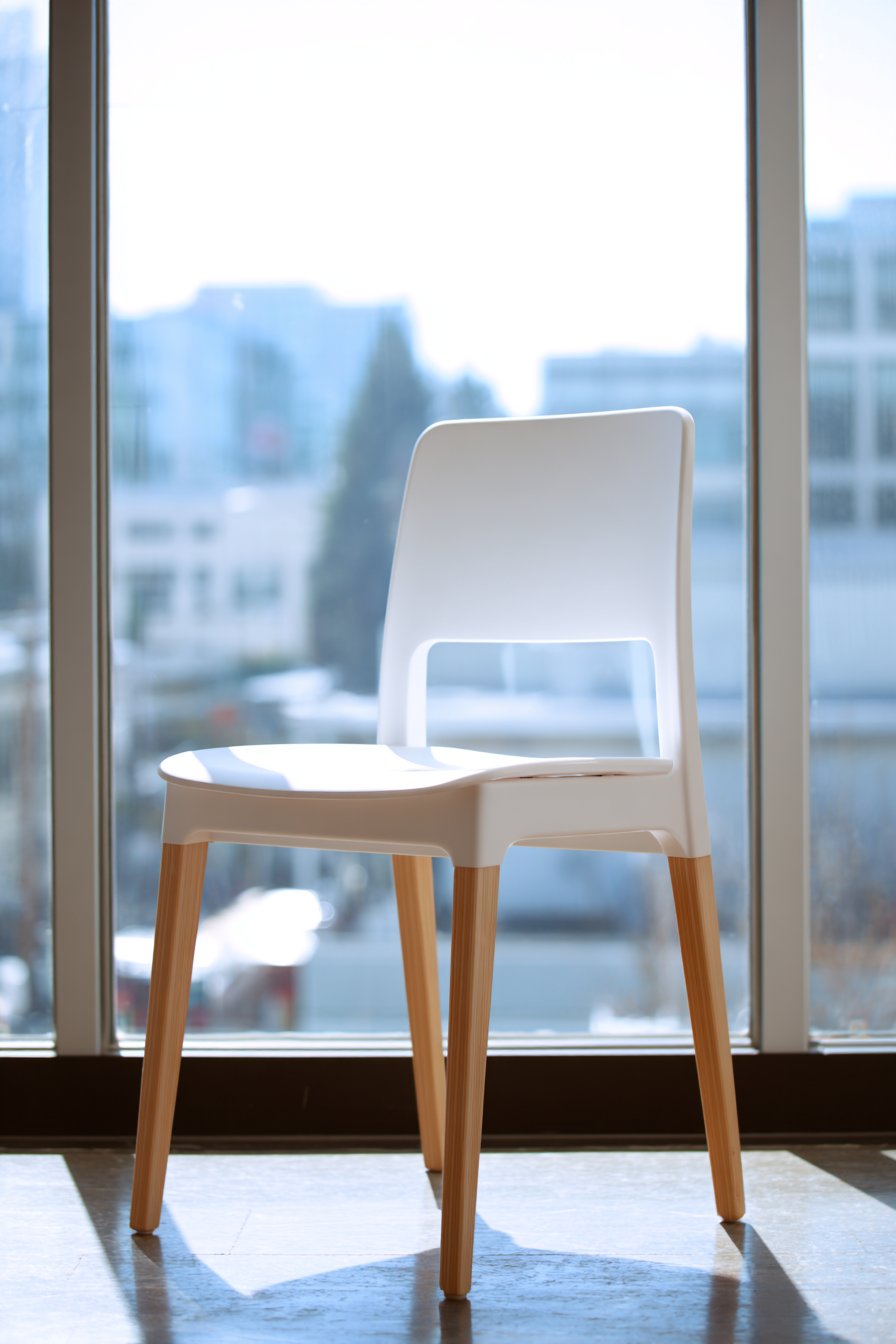
Imagine a stackable chair with injection-molded polypropylene seat and back in matte white. Natural beech wood legs display visible grain variations and honest construction. The chair demonstrates versatility shown both stacked for storage and in use. Clean natural daylight emphasizes the accessible modern aesthetic.
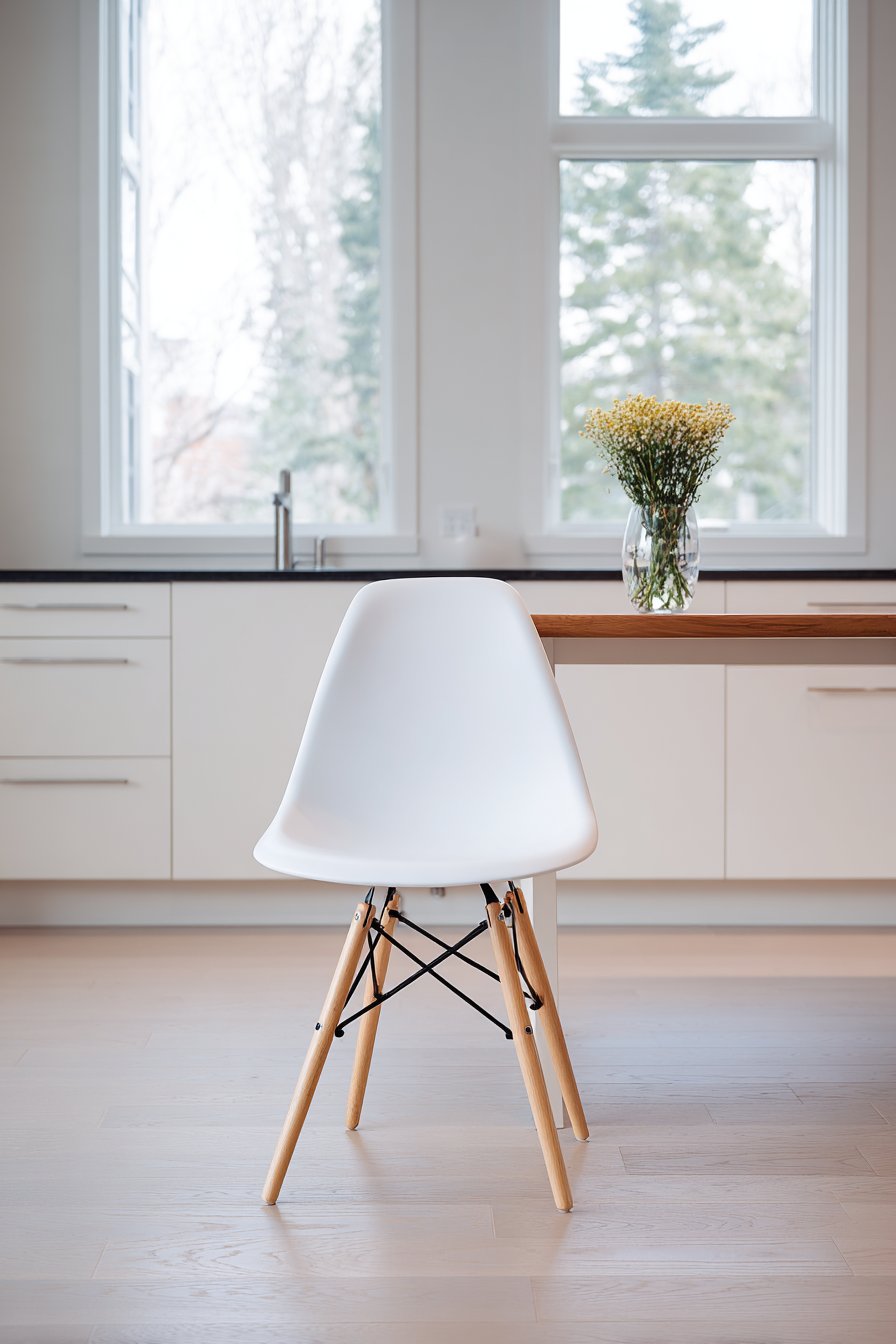
Injection molding creates consistent quality and affordable pricing for growing families. Matte white finish cleans easily while maintaining a contemporary appearance. Natural beech legs add organic warmth to synthetic seat materials. The stackable design solves storage challenges in compact dining spaces.
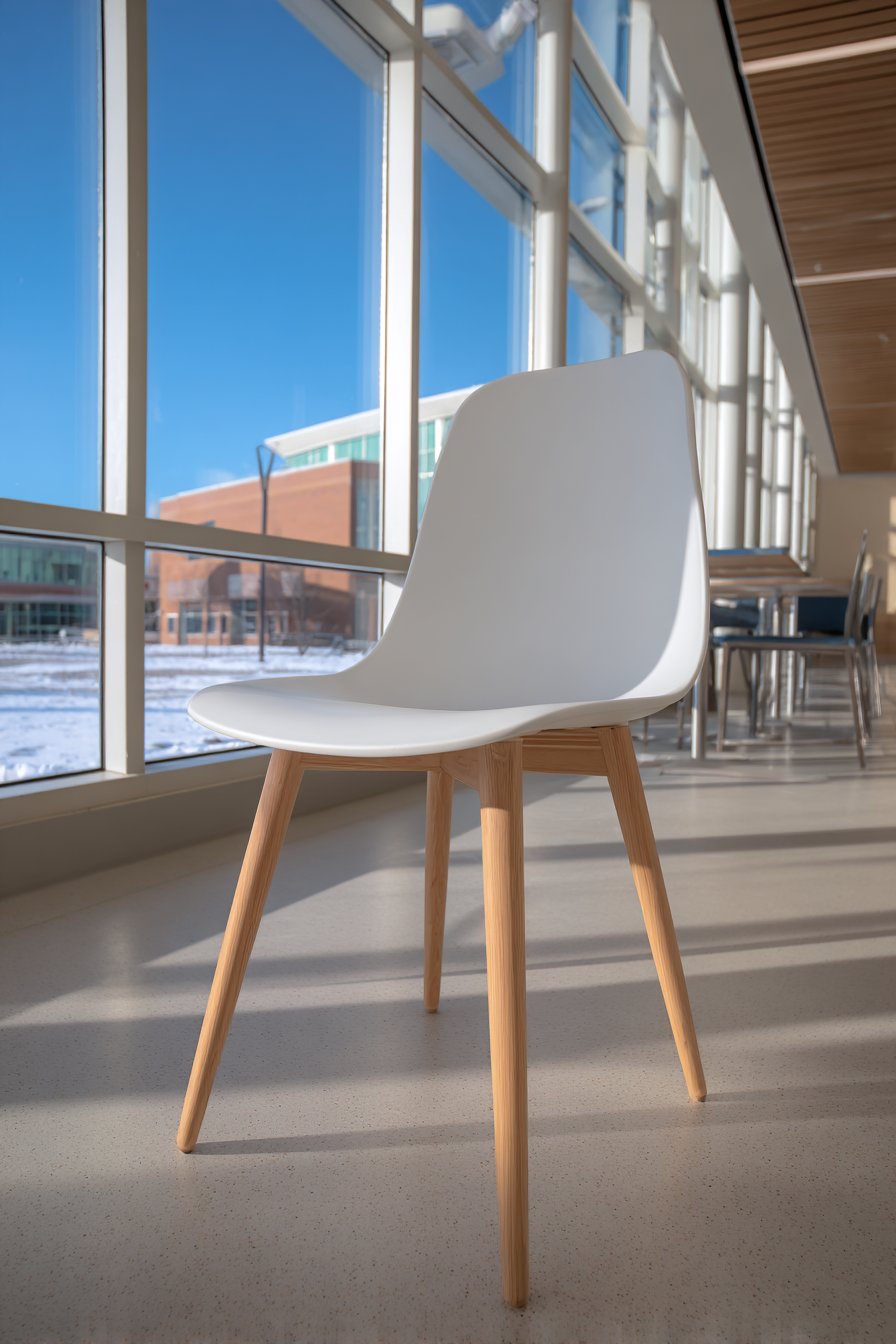
This chair represents democratic design that provides quality at accessible price points. The durable construction withstands family dining demands including active children. Wide-angle photography captures practical versatility and space-saving functionality. Modern aesthetics become available to diverse budgets without sacrificing essential quality.
Key Design Tips:
- Choose stackable designs for flexible dining spaces that host varying numbers
- Select matte finishes that resist showing marks and maintain appearance
- Pair synthetic seats with wood legs for balanced material palette
- Ensure stacking mechanism doesn’t compromise structural stability
- Position where clean lines complement contemporary space planning
- Invest in quality construction even at accessible price points
Why These Dining Chair Designs Are the Best
These dining chair designs represent the finest approaches to seating that balances comfort, durability, and aesthetic appeal. Each concept demonstrates thoughtful consideration of materials, construction methods, and spatial requirements. The variety showcases how diverse styles serve different functional needs and personal preferences.
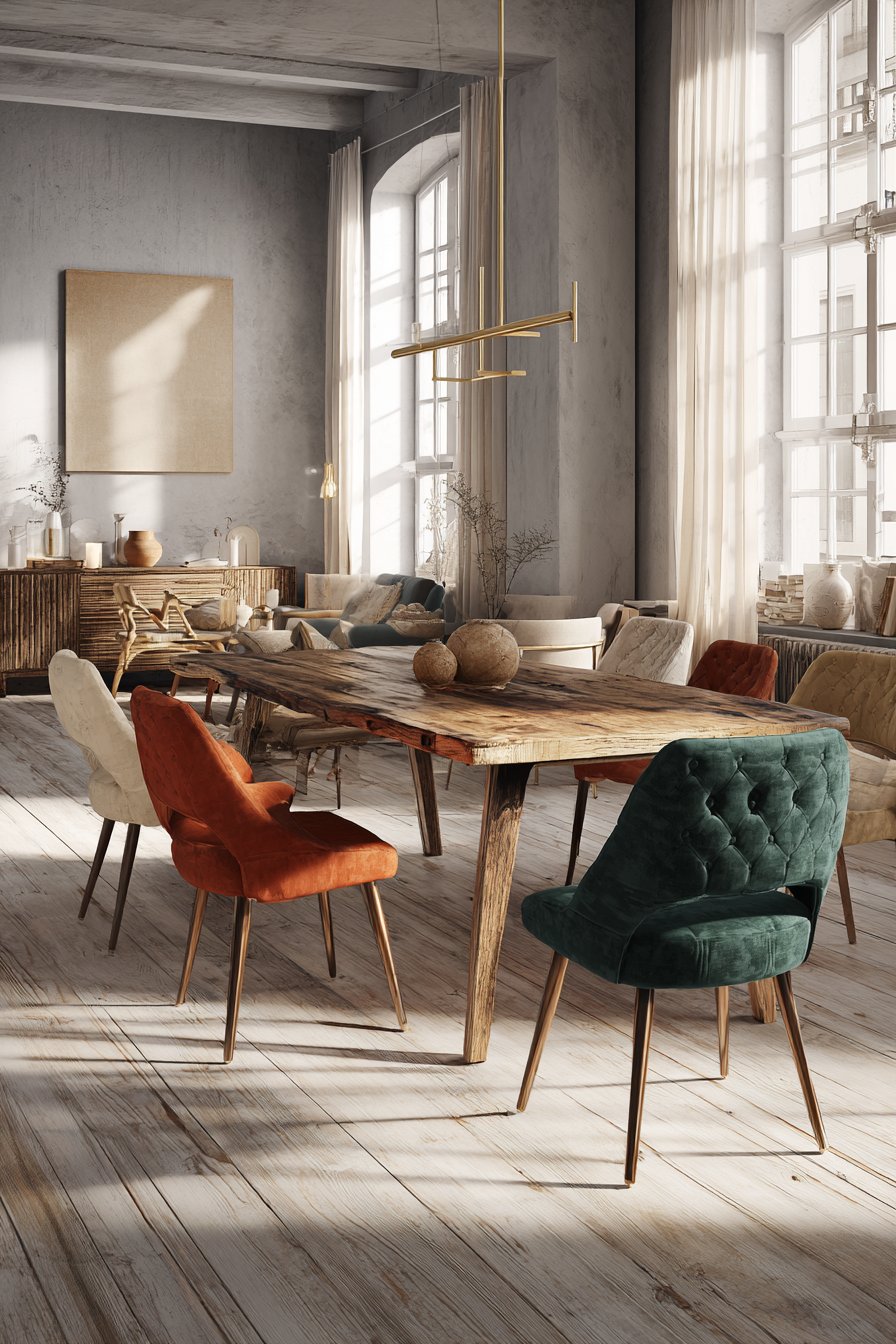
Material choices range from sustainable reclaimed wood to contemporary molded polymers, proving that quality exists across the aesthetic spectrum. Natural materials like walnut, oak, ash, and beech develop beautiful patina over time. Premium upholstery fabrics including velvet, linen, and leather provide tactile luxury. The combination of honest materials with skilled craftsmanship creates furniture that improves with age.
Color theory plays a crucial role in these successful designs. Warm wood tones create inviting atmospheres while neutral upholstery provides versatility. Bold accent colors like burnt orange, emerald green, and navy blue add personality without overwhelming spaces. Weathered finishes and distressed paint suggest authentic aging rather than artificial treatment.
Design principles like proportion, scale, and balance ensure visual harmony within dining spaces. Mid-century modern pieces demonstrate how refined proportions create timeless appeal. Industrial designs celebrate honest construction and mixed materials. Traditional styles reference centuries of refined comfort and decorative detail.
Spatial considerations adapt these designs to various room sizes and configurations. Stackable and folding chairs solve small-space challenges without sacrificing quality. Cantilever designs minimize visual footprint while providing stable seating. Slim profiles work in compact apartments while substantial frames suit spacious dining rooms.
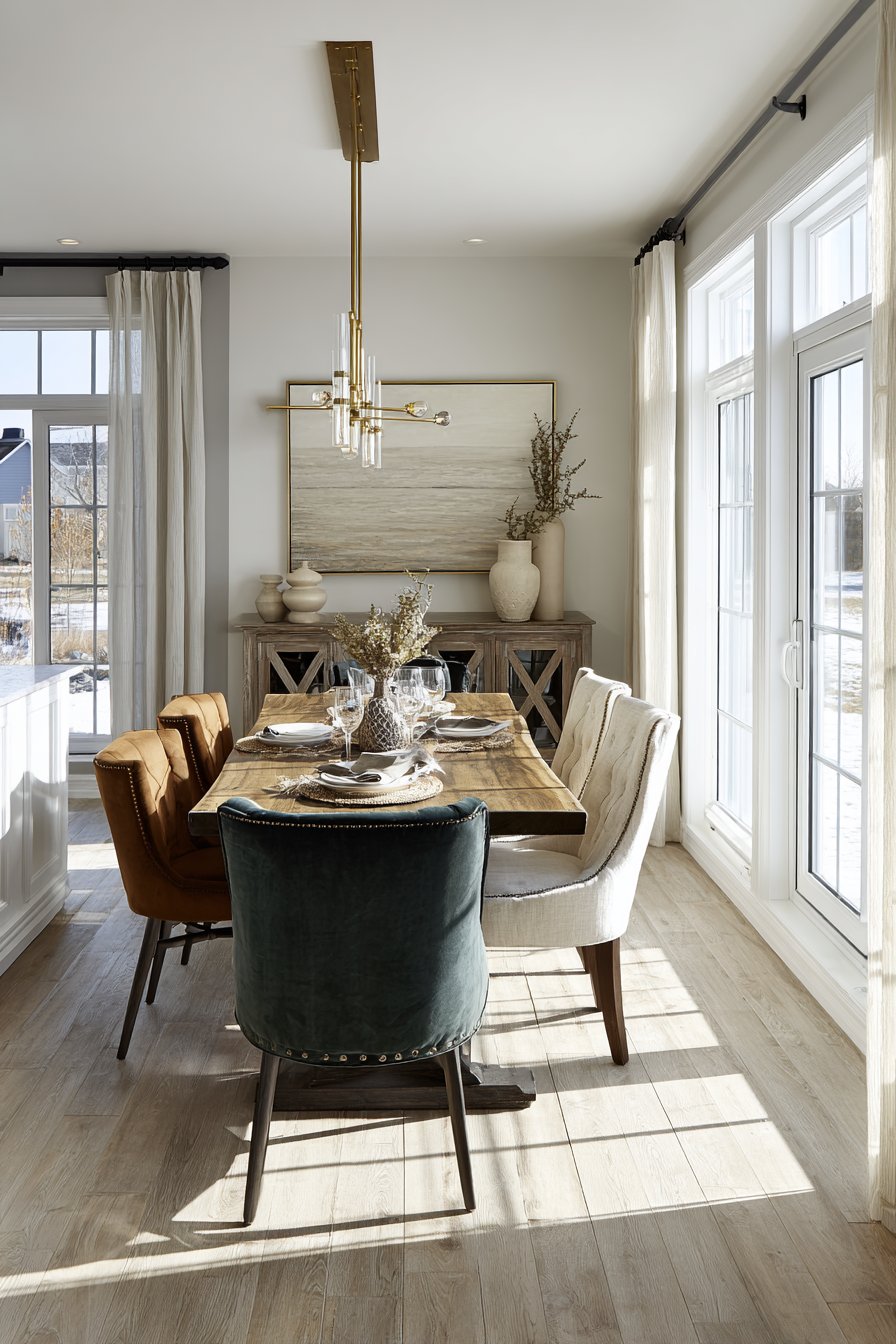
Sustainability emerges through reclaimed materials, natural fibers, and durable construction designed for decades rather than years. Quality chairs reduce waste by eliminating frequent replacement needs. Natural materials like rattan, cane, and solid wood provide renewable alternatives to synthetic options. These choices demonstrate environmental responsibility without compromising aesthetic quality.
Conclusion
These twenty dining chair designs demonstrate that thoughtful seating choices transform ordinary dining spaces into inspiring gathering places. The key takeaways include the importance of quality materials, appropriate proportions, and authentic construction methods. Successful chair selection balances immediate aesthetic appeal with long-term durability and comfort.
Each design approach offers unique advantages suited to different lifestyles, budgets, and spatial requirements. Natural materials develop character through use while synthetic options provide practical maintenance benefits. Traditional craftsmanship techniques coexist beautifully with contemporary manufacturing innovations. The diversity ensures suitable options for every design preference and functional need.
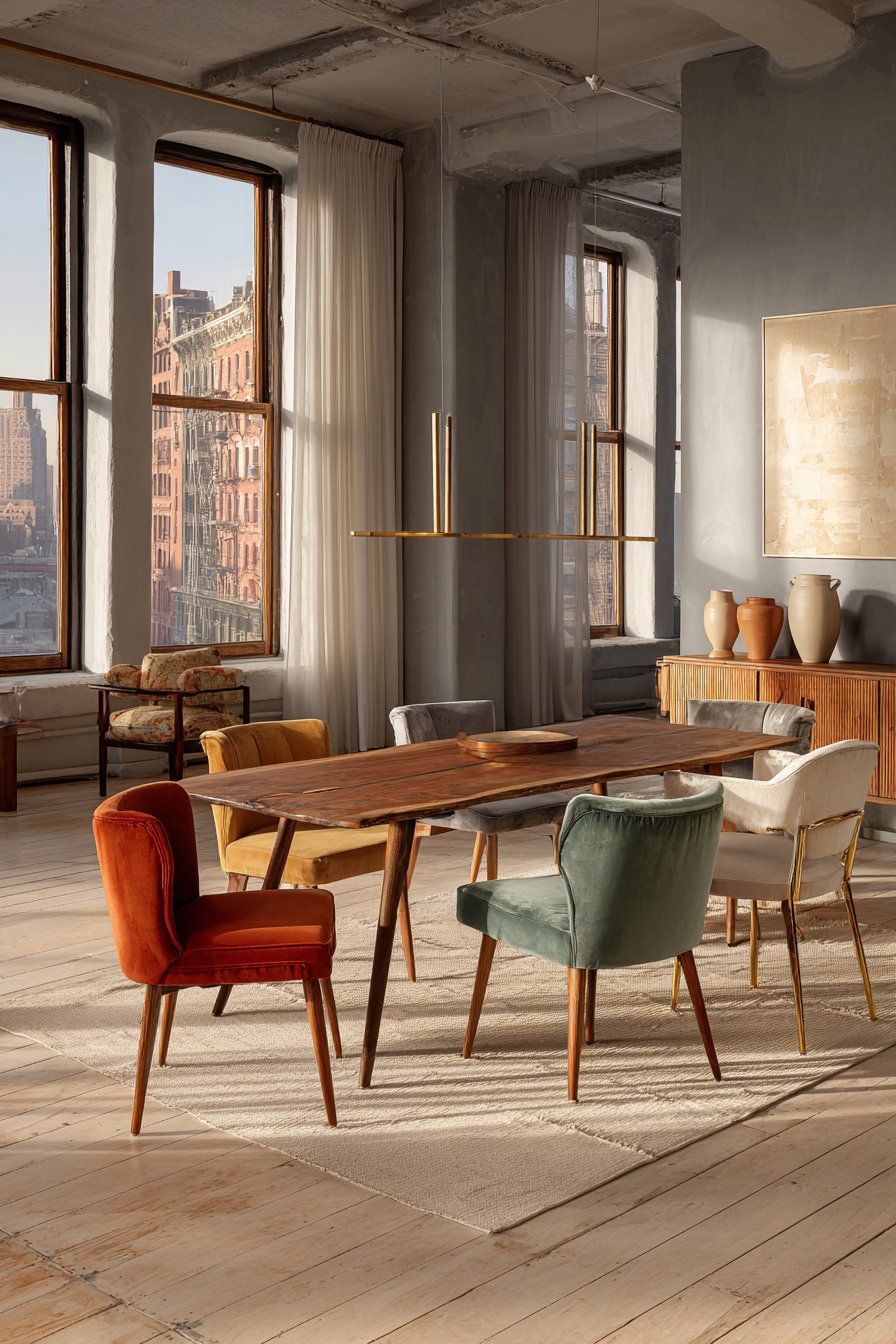
Start your dining chair journey by identifying your primary requirements regarding comfort, durability, and aesthetic style. Consider how chairs will function within your specific space constraints and usage patterns. Quality investment pieces reward thoughtful selection with years of beautiful service. Your perfect dining chairs await discovery through careful consideration of these inspiring concepts.
