


Creating a cozy minimalist living room represents the perfect balance between comfort and simplicity. This design philosophy celebrates intentional living through carefully curated spaces. The approach removes visual clutter while maintaining warmth and invitation. Natural materials, thoughtful furniture placement, and quality over quantity define this aesthetic.
Minimalism has evolved beyond stark white rooms and cold aesthetics. Today’s cozy minimalist living rooms embrace texture, warmth, and livability. These spaces prove that less can indeed be more without sacrificing comfort. The designs featured here demonstrate how restraint creates breathing room for both the eyes and the soul.
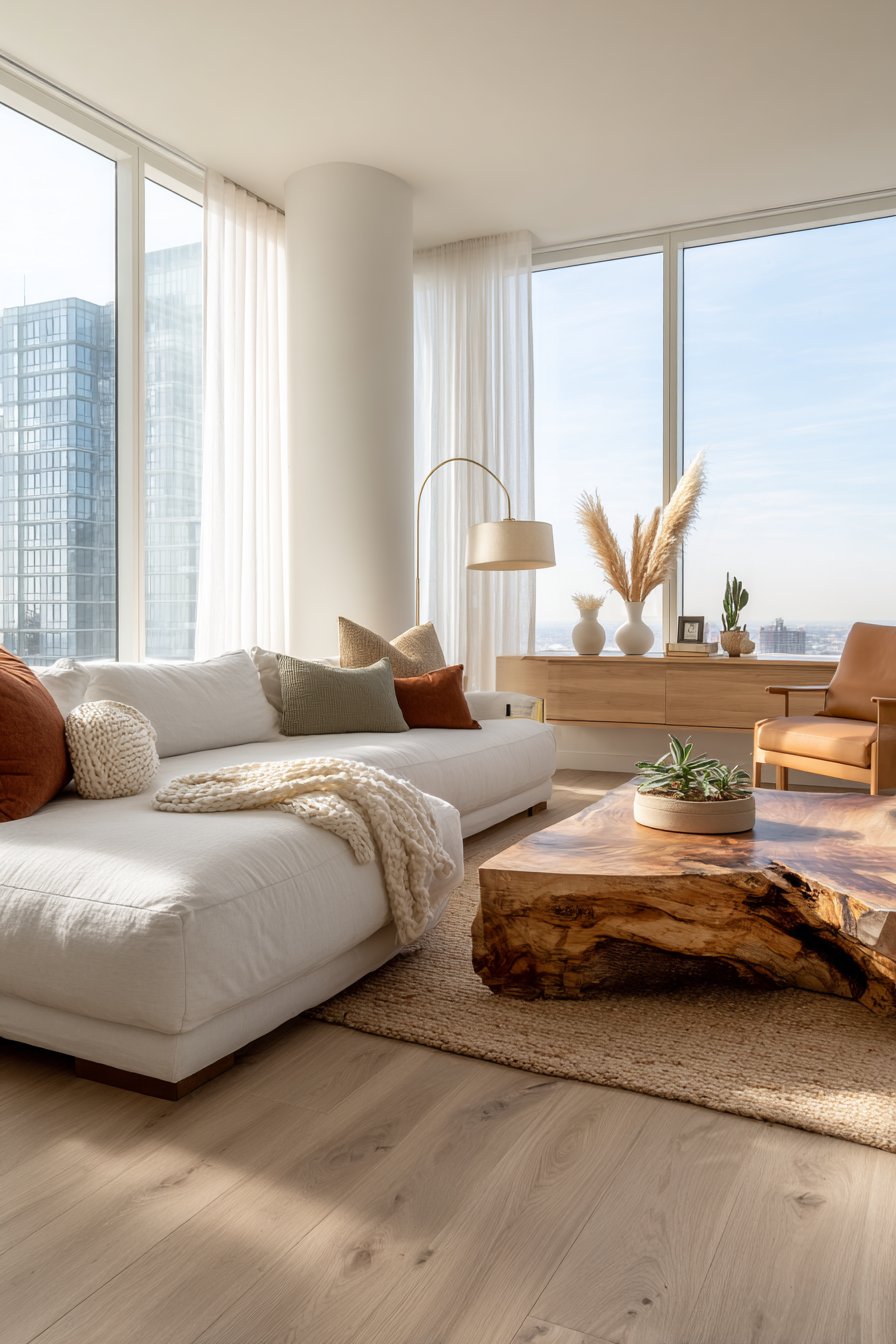
The following concepts showcase diverse interpretations of cozy minimalism. Each design maintains clean lines while incorporating elements that make spaces feel lived-in and welcoming. From Scandinavian-inspired retreats to Japanese-influenced sanctuaries, these rooms celebrate the beauty of simplicity. Natural light, organic materials, and neutral palettes create tranquil environments perfect for modern living.
1. Charcoal Linen Simplicity
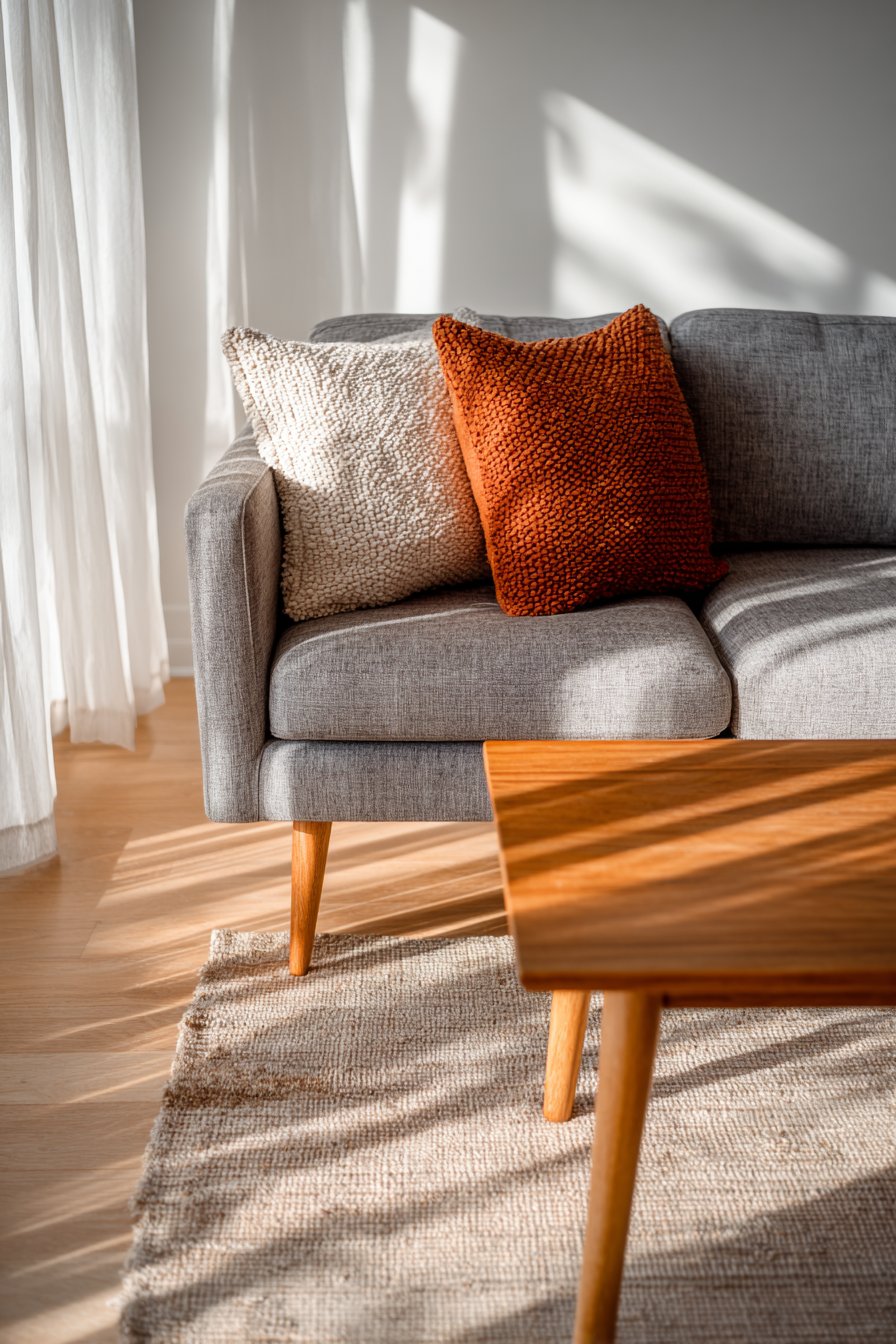
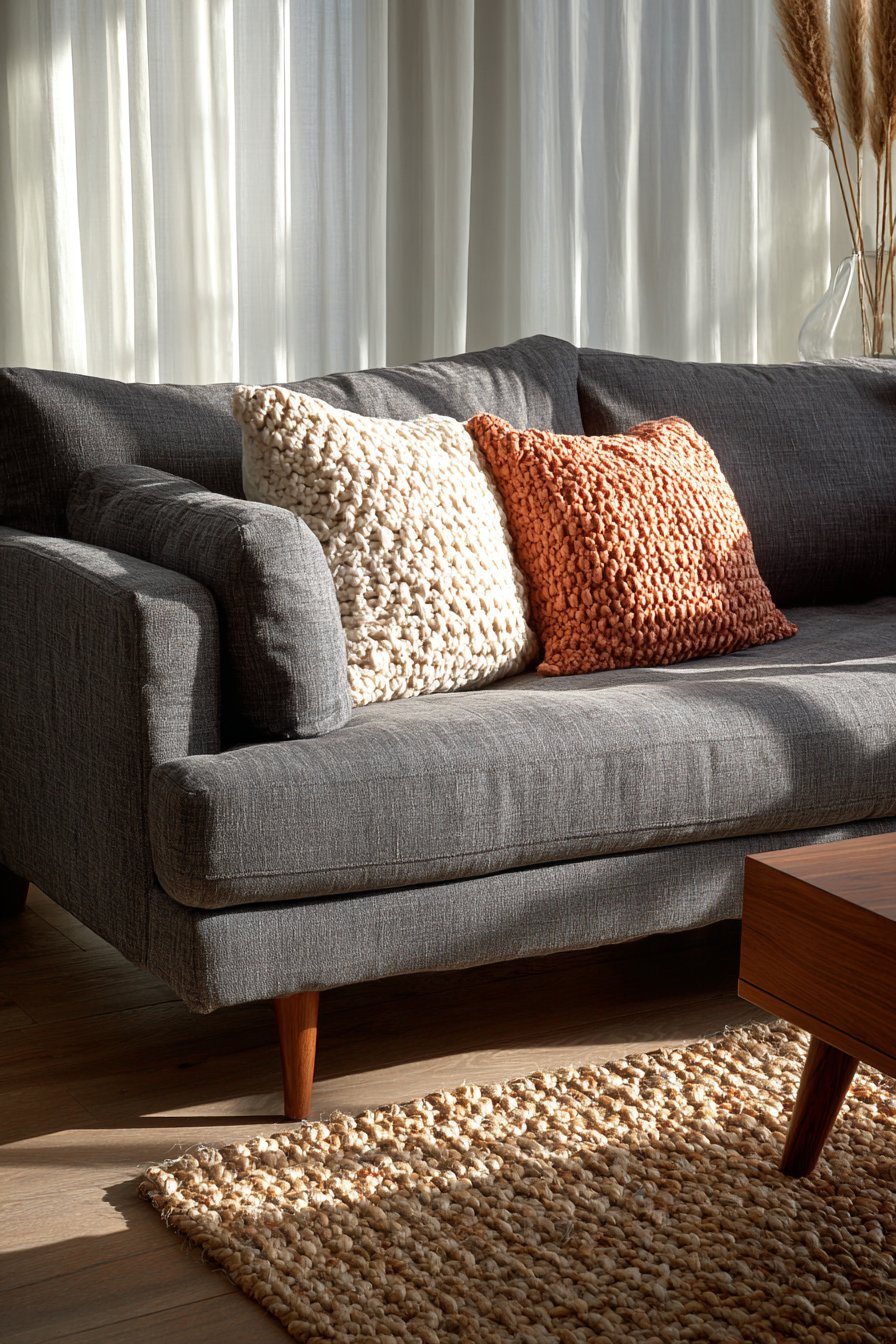
A low-profile sofa in charcoal grey linen anchors this serene space with understated elegance. The clean lines and tapered wooden legs create visual lightness despite the substantial seating. Two oversized knit throw pillows in cream and soft terracotta add textural interest without overwhelming the composition. The simple live-edge walnut coffee table brings organic beauty through its natural edge and rich wood grain.
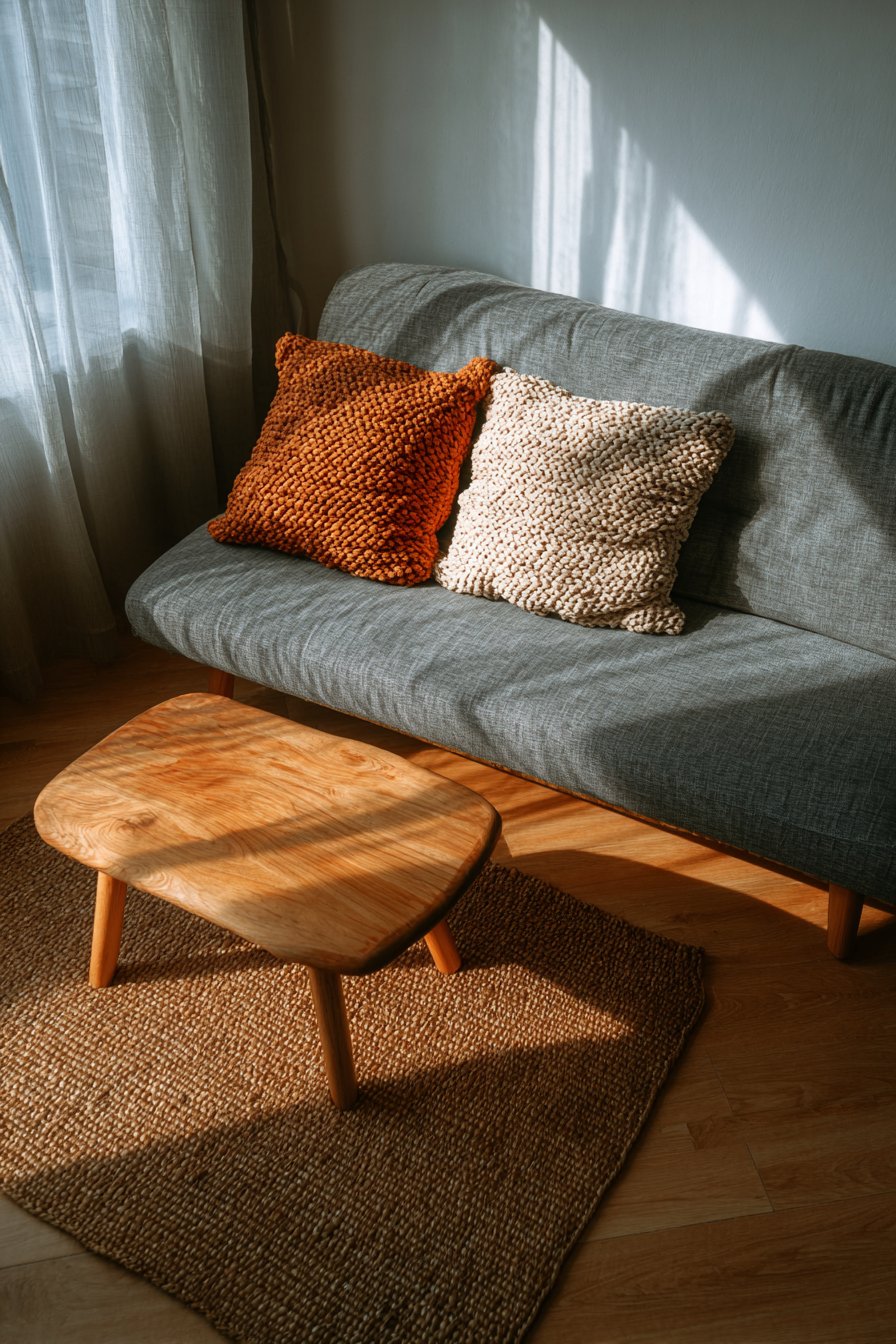
Warm afternoon sunlight filters through sheer white linen curtains, creating soft shadows across the space. The light oak hardwood flooring reflects this natural illumination beautifully. A handwoven jute rug with subtle texture variations anchors the seating area. The rug’s neutral tone complements the overall palette while adding warmth underfoot.
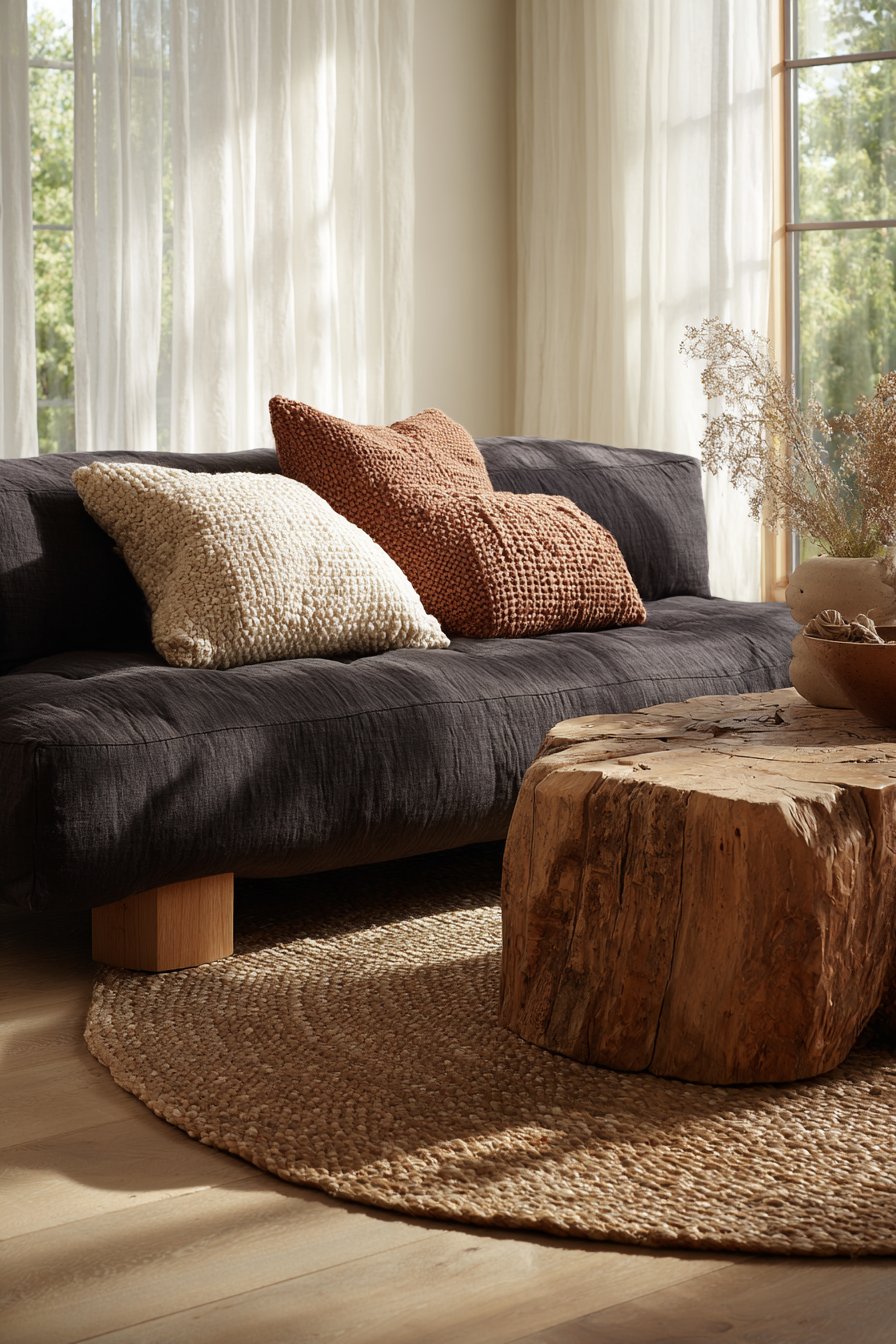
The intentional negative space in this design allows each element to breathe and be appreciated. The absence of unnecessary accessories creates a calming visual experience. The quality of materials speaks louder than quantity of objects. This approach demonstrates how restraint can amplify the beauty of carefully selected pieces.
Key Design Tips:
- Choose low-profile furniture to maintain visual openness and flow
- Invest in quality natural materials like linen, wood, and jute for lasting beauty
- Limit throw pillows to two or three in coordinating neutral tones
- Use sheer curtains to maximize natural light while maintaining privacy
- Select one statement coffee table rather than multiple small tables
- Allow negative space to remain empty for visual calm
2. Oatmeal Mid-Century Warmth
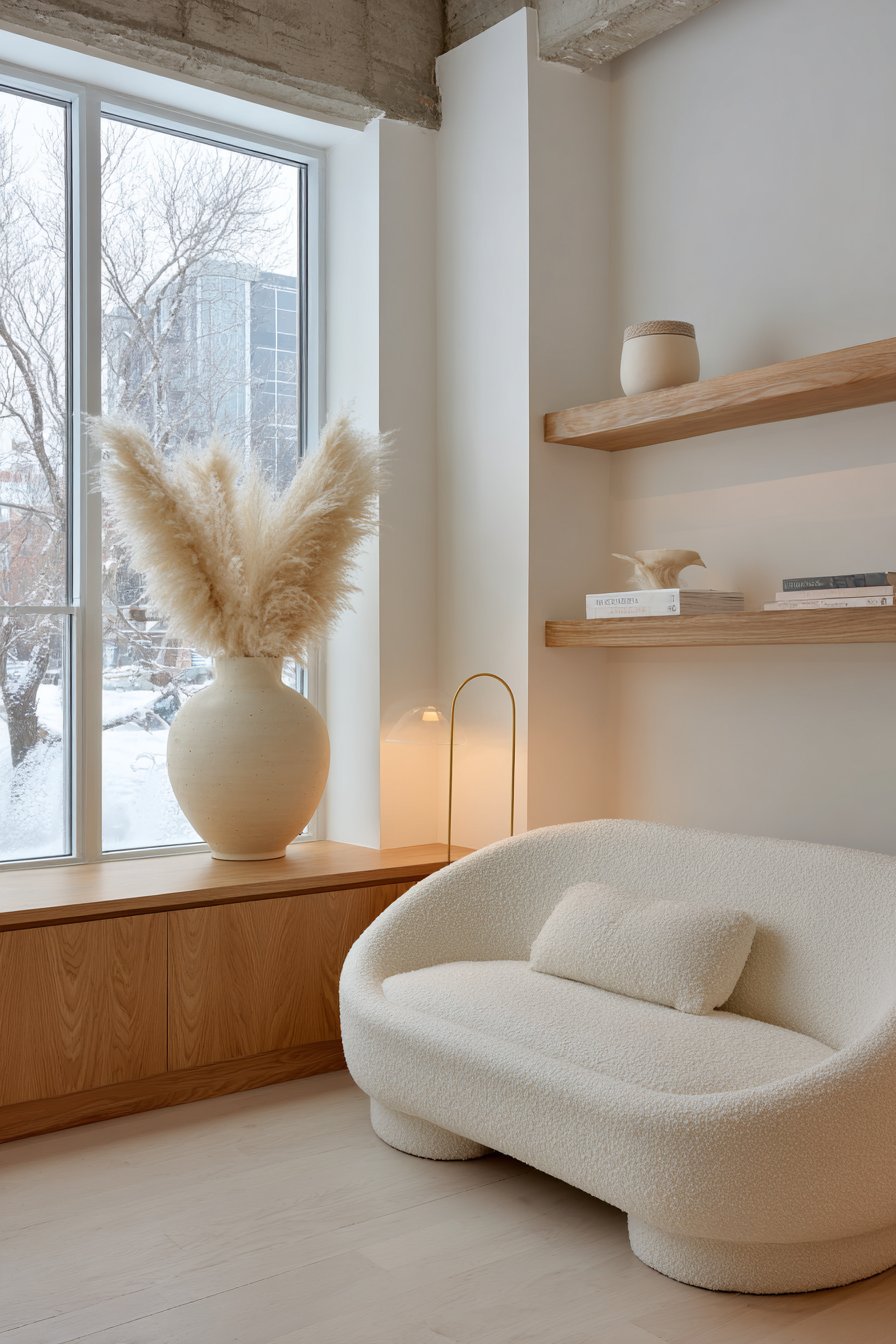
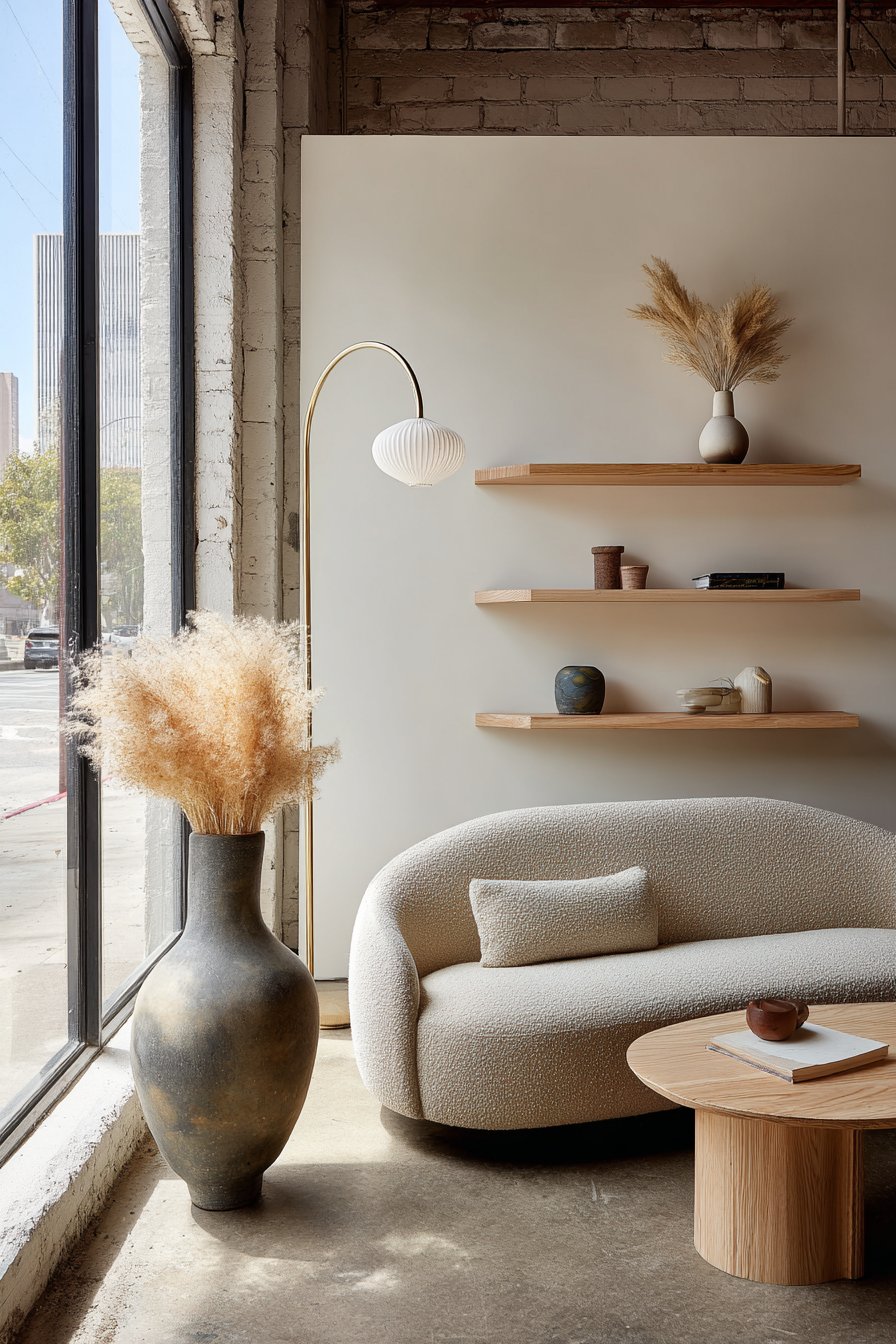
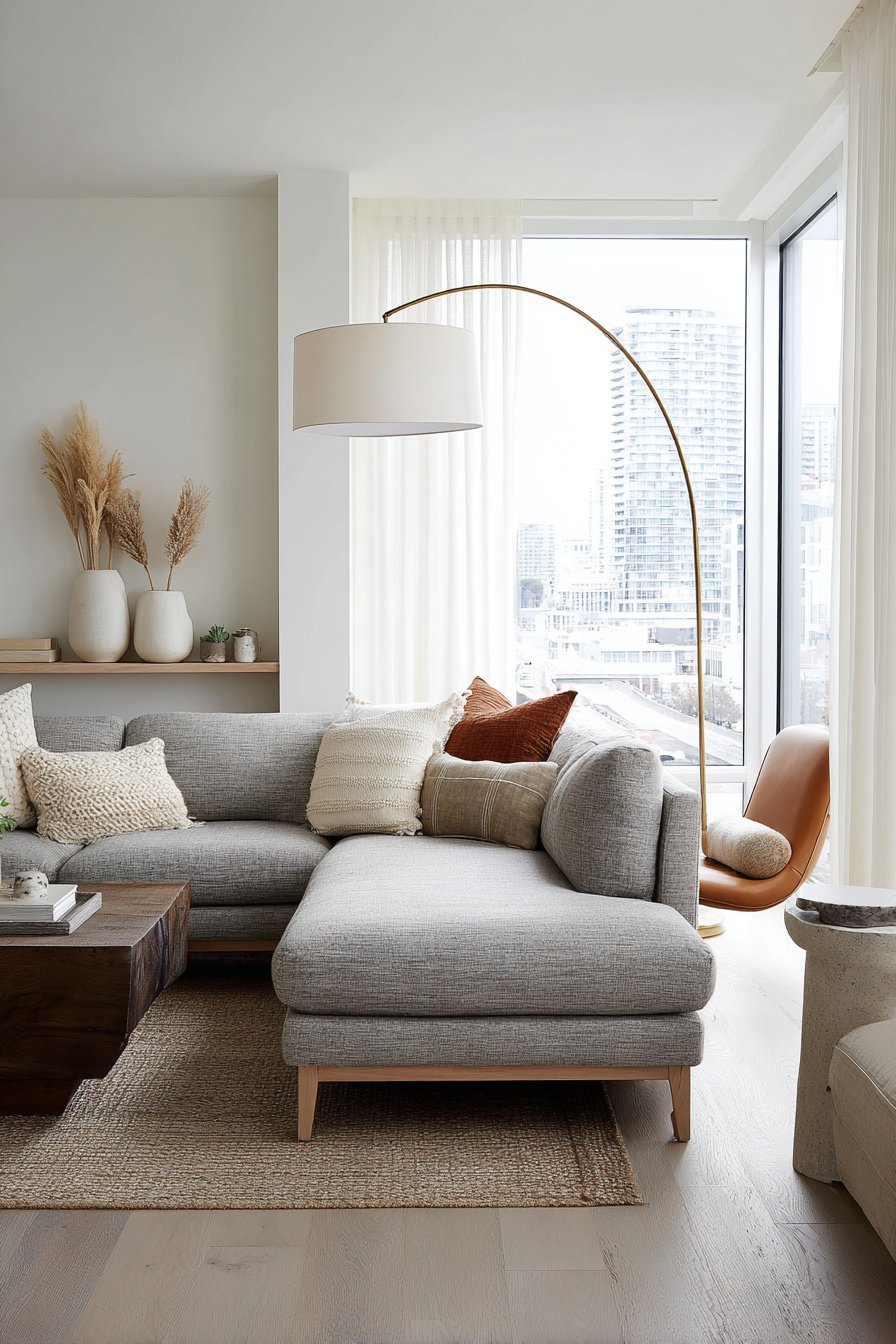
A streamlined mid-century inspired sofa in warm oatmeal fabric creates the foundation for this peaceful retreat. The sofa’s clean proportions honor classic design principles while remaining thoroughly contemporary. A single sculptural floor lamp features a brass arc and white linen shade. This elegant lighting solution provides task illumination without cluttering surfaces.
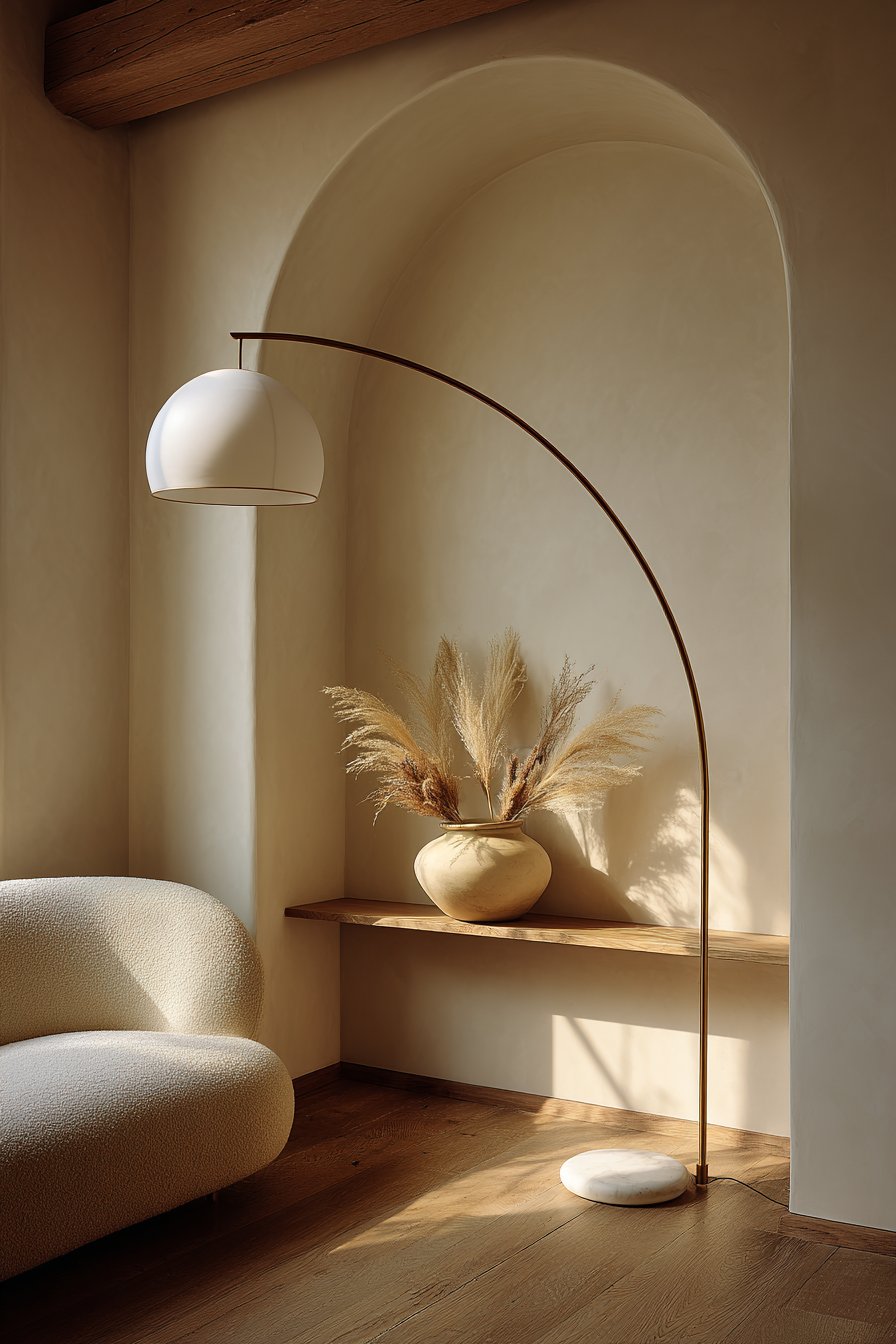
Minimal decoration defines this space’s sophisticated restraint. One large ceramic vase holds dried pampas grass on a simple floating shelf. The shelf’s natural ash wood coordinates with the room’s organic material palette. Natural morning light illuminates the space through an uncovered window. This approach celebrates unobstructed views and maximum daylight.
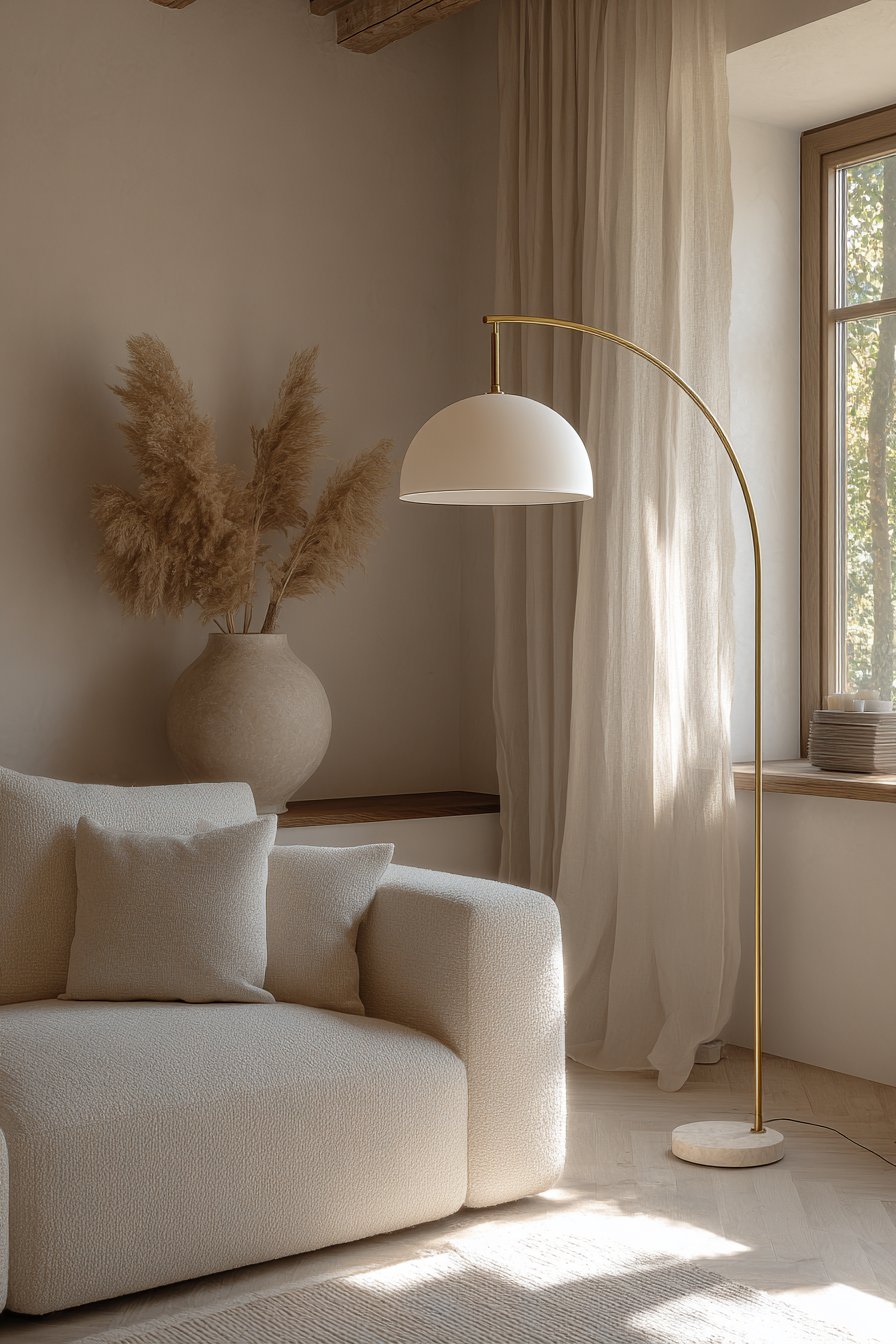
The focus on quality over quantity becomes immediately apparent in this design. Each element serves a clear purpose while contributing aesthetic value. The absence of excess allows attention to rest on beautiful forms and natural materials. This creates a meditative quality that transforms the living room into a sanctuary.
Key Design Tips:
- Select furniture with mid-century silhouettes for timeless appeal
- Use one sculptural floor lamp instead of multiple light sources
- Keep window treatments minimal or eliminate them entirely when privacy allows
- Display single statement accessories rather than collections
- Choose warm neutral fabrics like oatmeal, cream, or natural linen
- Incorporate floating shelves for storage without visual weight
3. Sage Green Modular Comfort
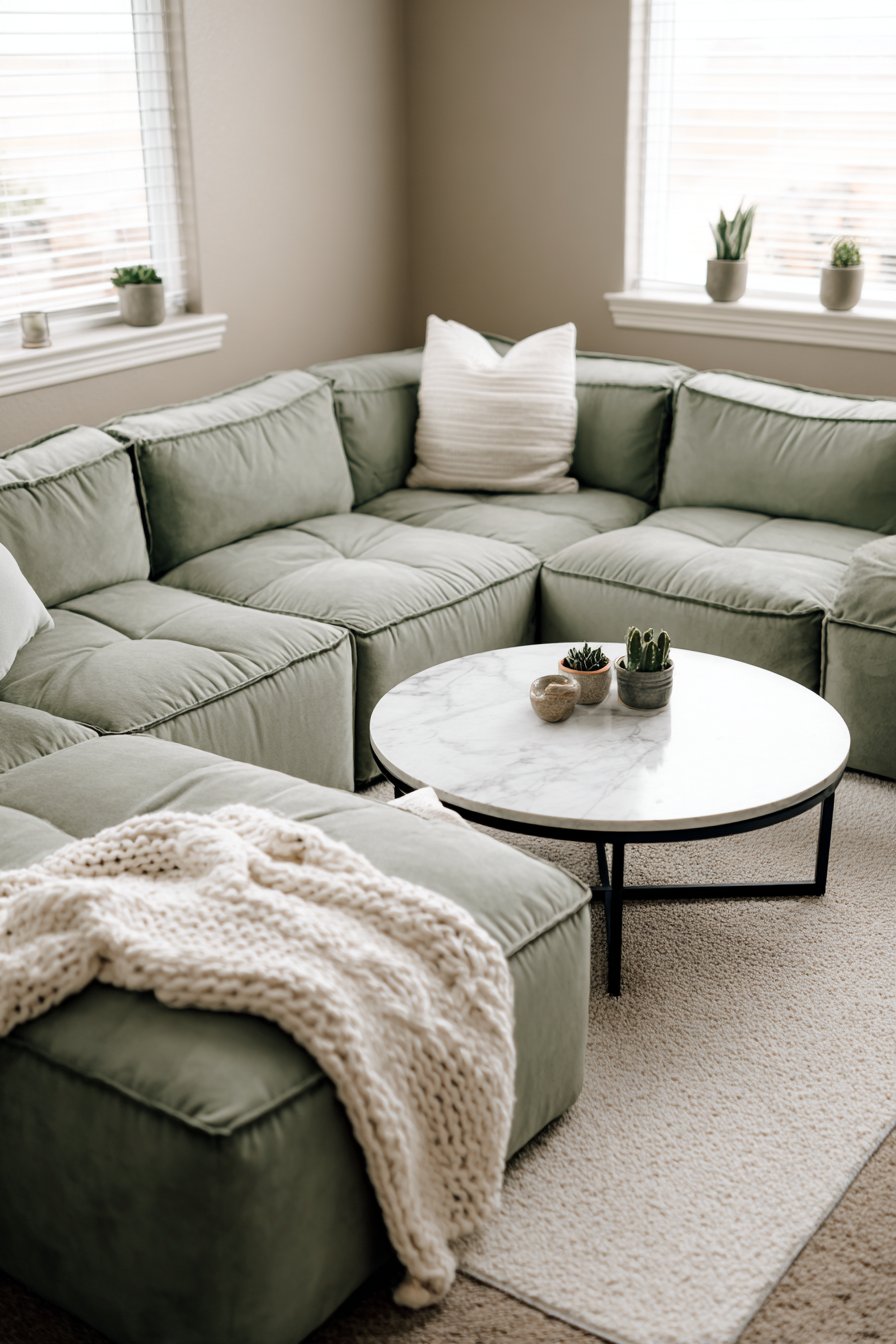
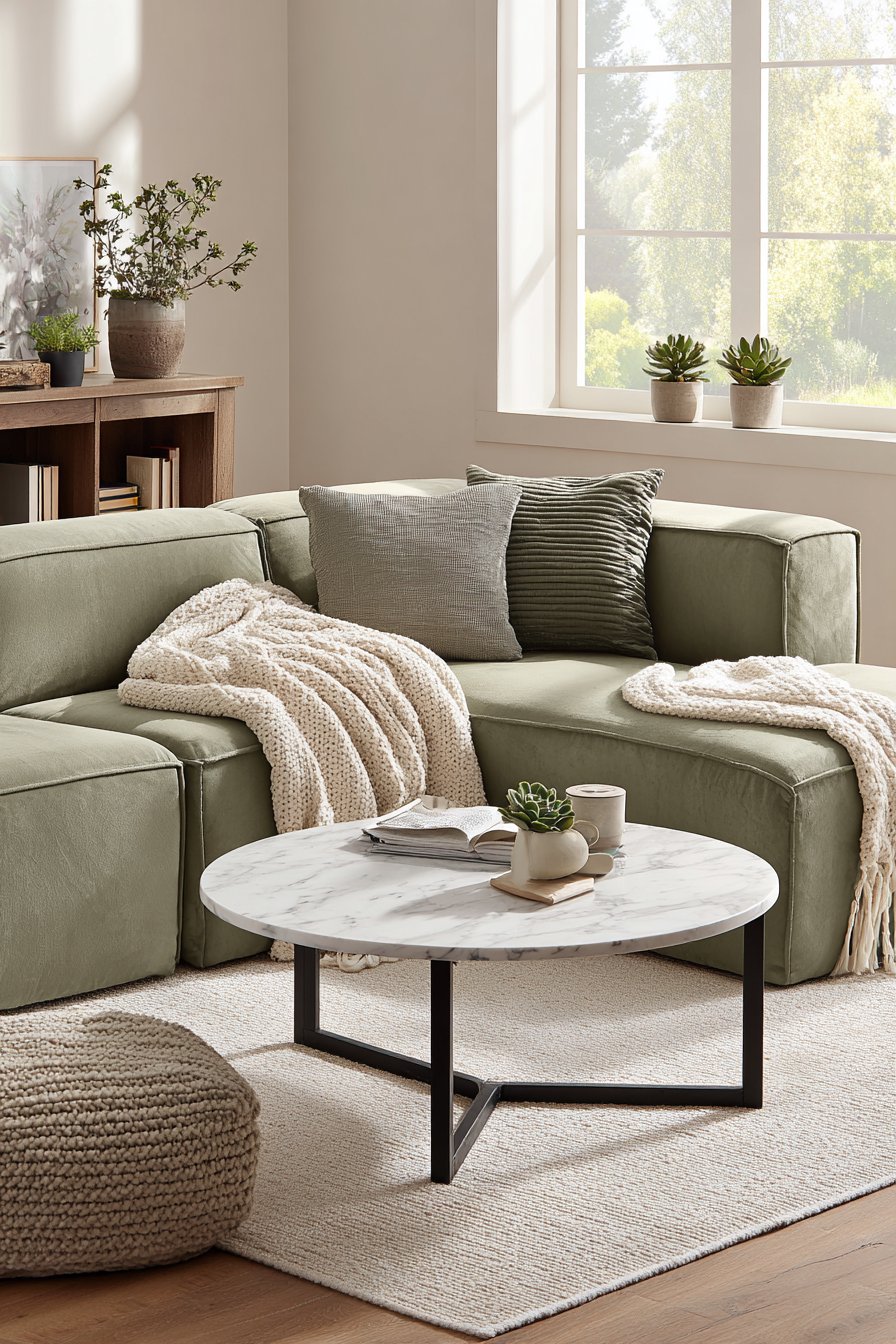
A modular sectional in soft sage green fabric arranged in an L-shape configuration balances flexibility with cohesion. The sage tone brings subtle color while maintaining the calm minimalist aesthetic. One cable knit throw blanket casually draped over the arm adds texture and invitation. The arrangement creates conversation zones without overwhelming the space.
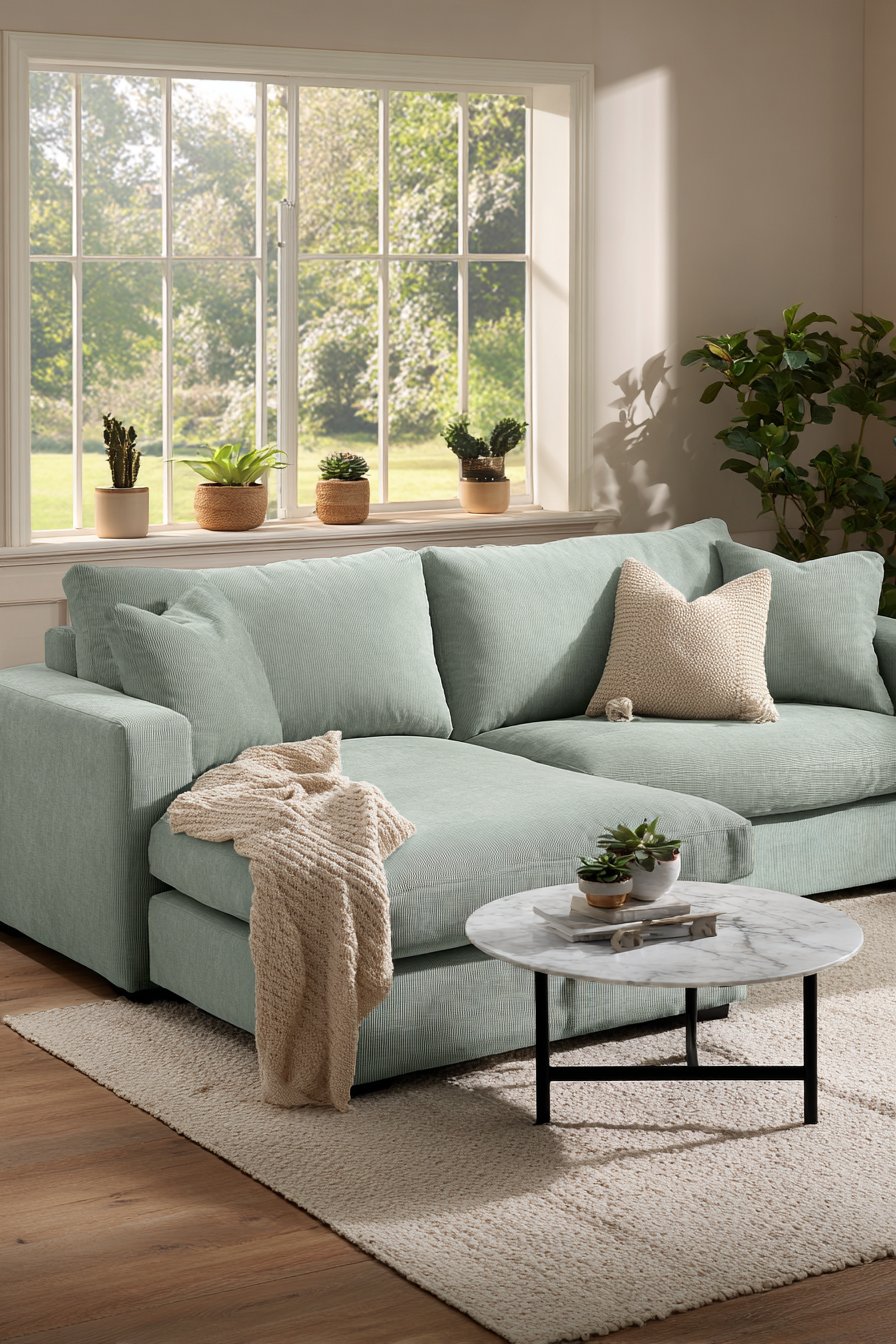
A round marble coffee table with black metal base centers the seating area elegantly. The marble’s natural veining provides organic interest that never grows tiresome. A simple wool area rug in natural ivory grounds the furniture grouping. Three small potted succulents in ceramic planters line the windowsill, bringing life without maintenance demands.
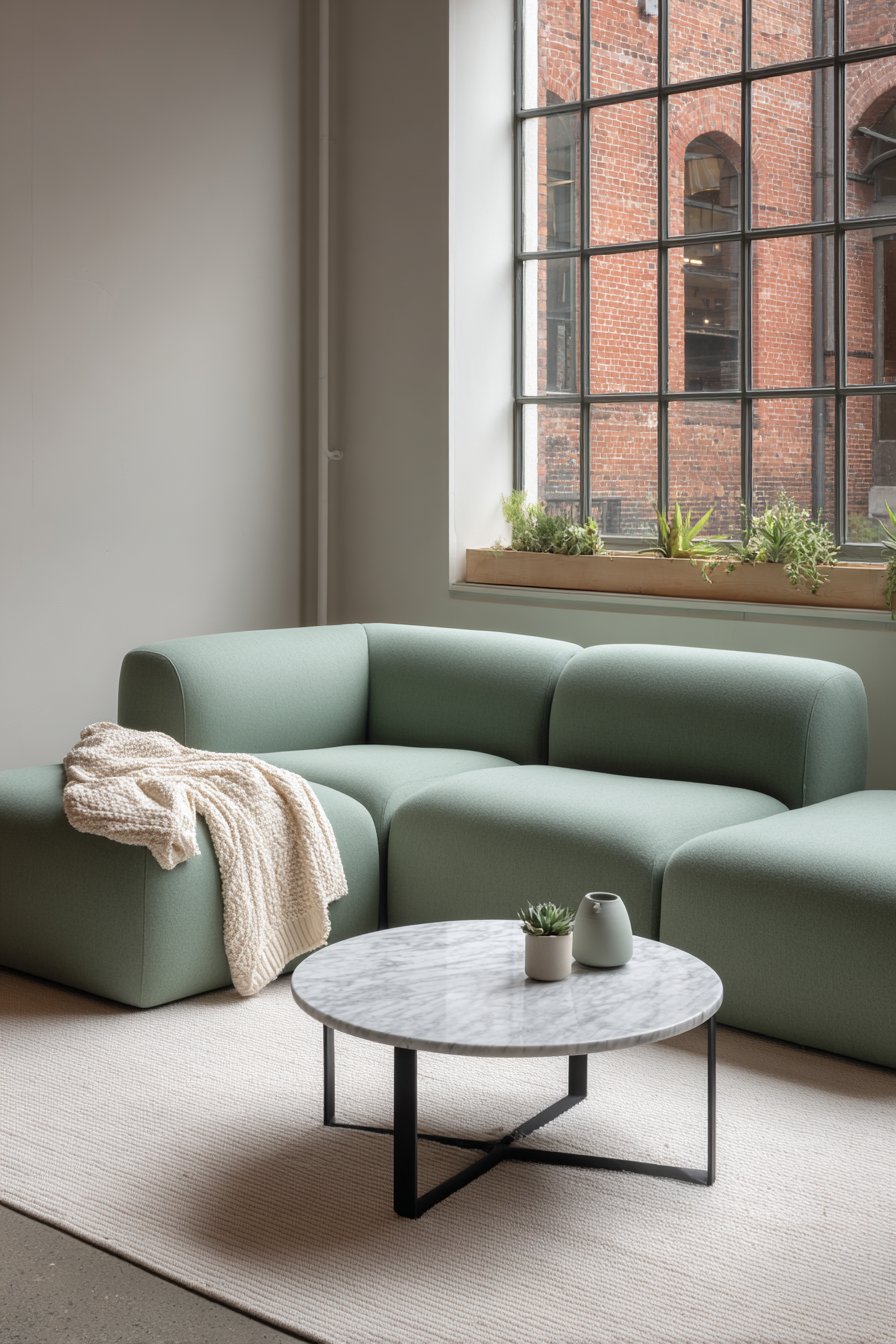
The thoughtful spatial arrangement demonstrates how modular furniture adapts to various needs and occasions. The sectional can be reconfigured as living patterns change. Natural lighting throughout the day transforms the space’s mood and atmosphere. Professional composition reveals how careful planning creates both beauty and functionality.
Key Design Tips:
- Choose modular seating for flexibility in furniture arrangement
- Introduce one accent color like sage green for subtle visual interest
- Use round tables to soften angular furniture and improve flow
- Limit plant displays to three or fewer specimens in coordinating containers
- Select natural stone surfaces for timeless luxury and easy maintenance
- Position furniture to maximize natural light from windows
4. Japanese-Inspired Tranquility
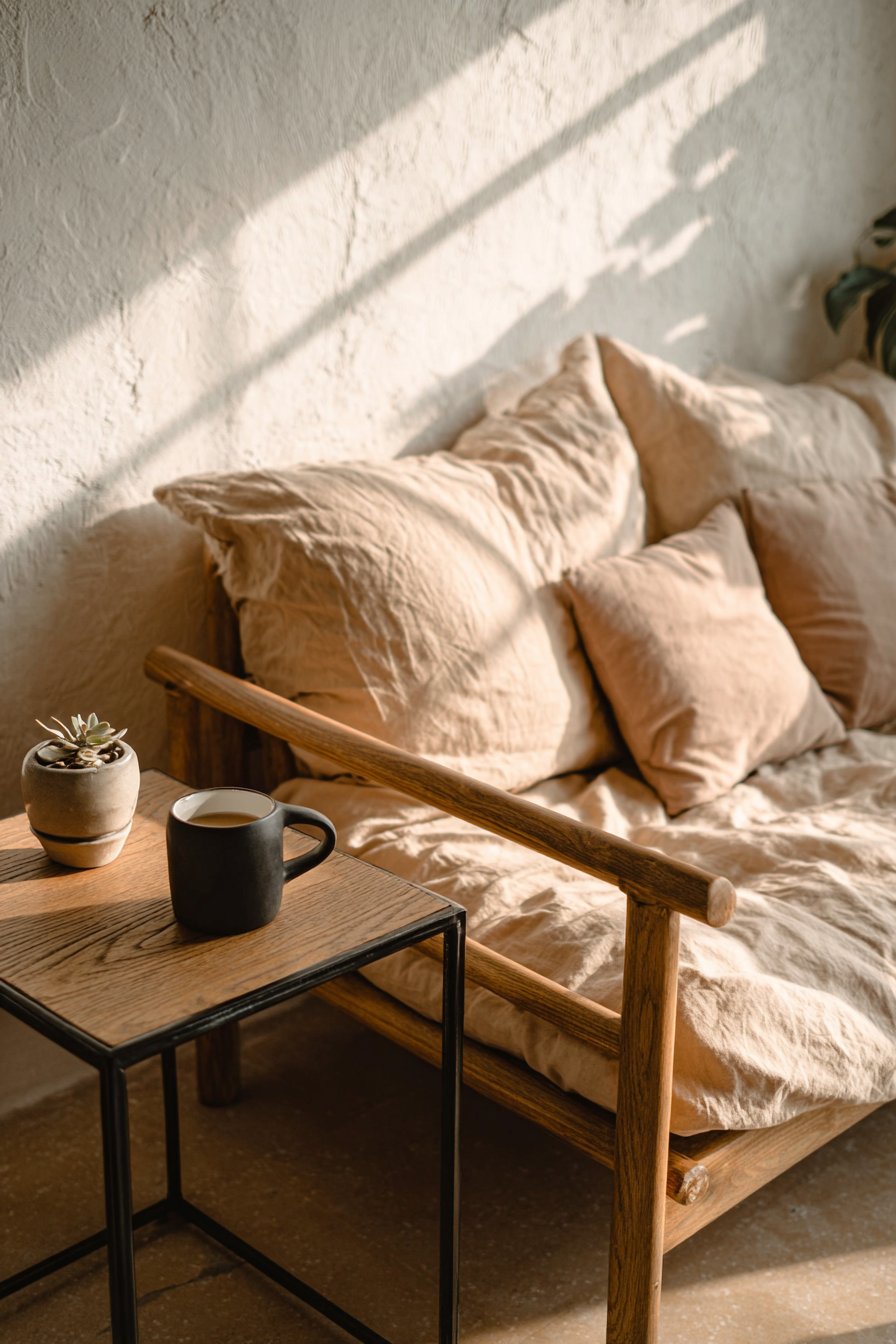
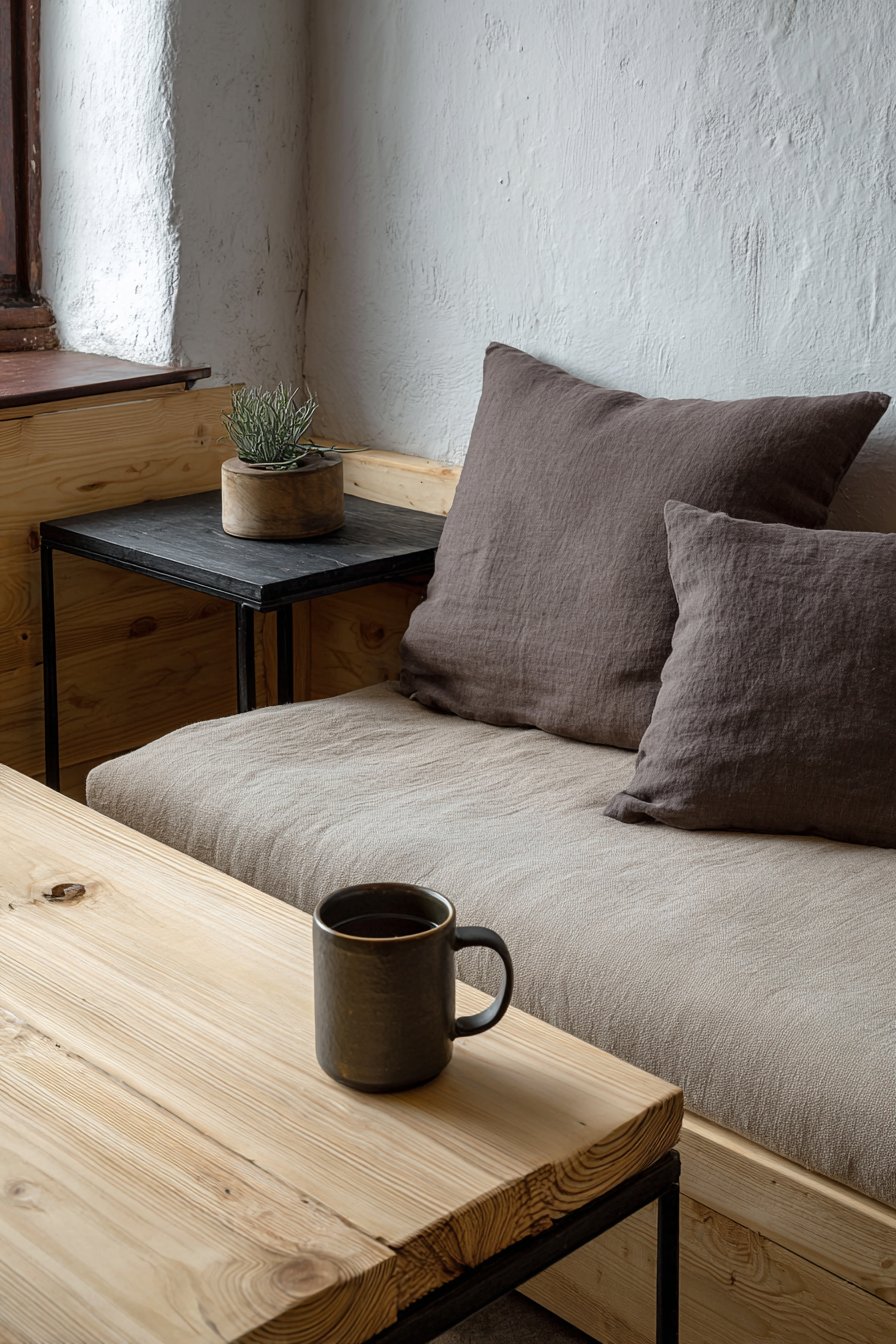
A Japanese-inspired low platform sofa with natural linen upholstery embodies zen-like simplicity. The visible wooden frame in light oak showcases craftsmanship and honest construction. Two square floor cushions in muted clay tones provide flexible additional seating. This approach to furniture emphasizes connection with the ground and mindful living.
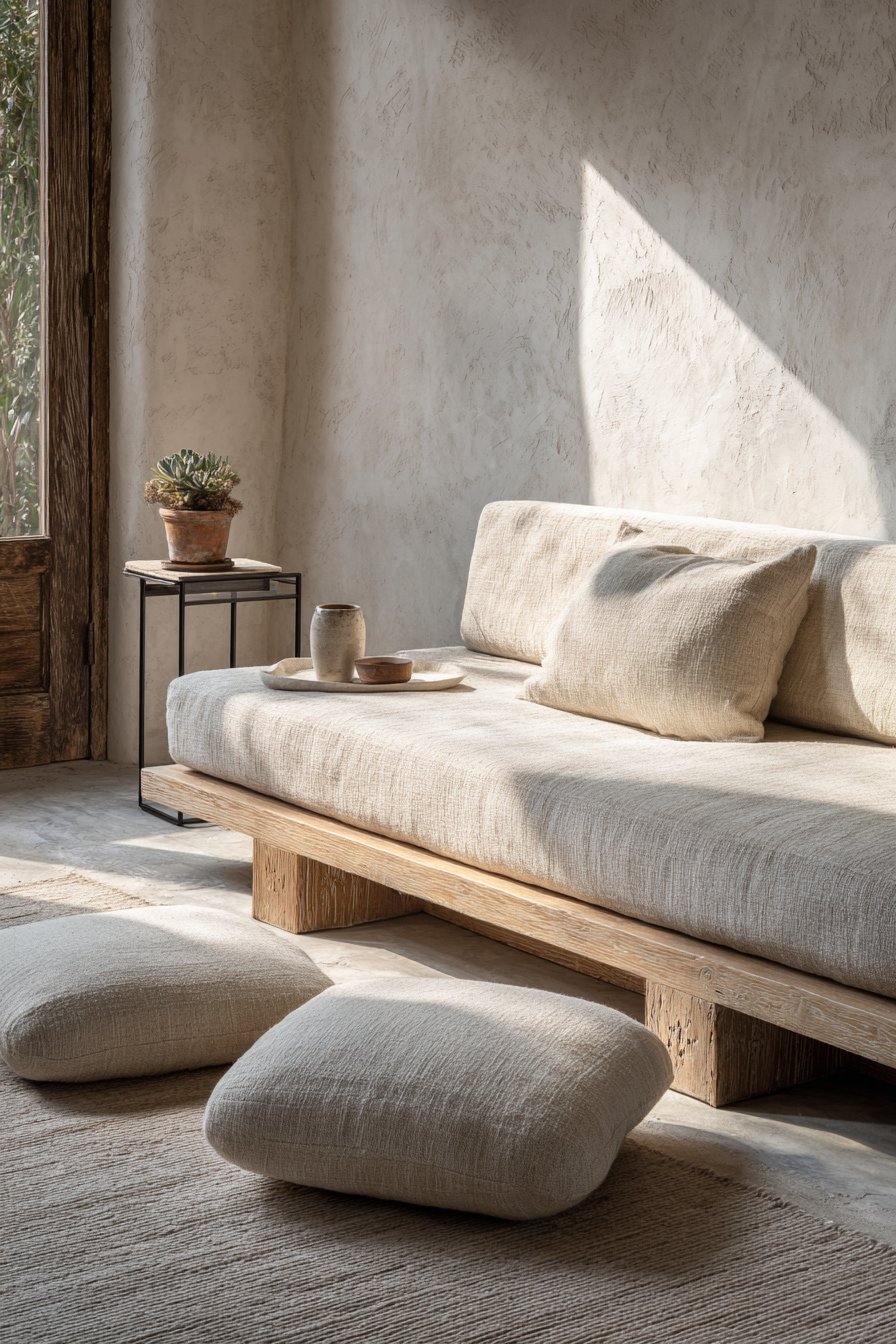
A minimalist black metal side table holds only essential items. One artisan ceramic mug and small succulent occupy the surface with intention. Whitewashed walls reflect gentle daylight from nearby windows. The soft illumination creates an atmosphere of profound calm and contemplation.
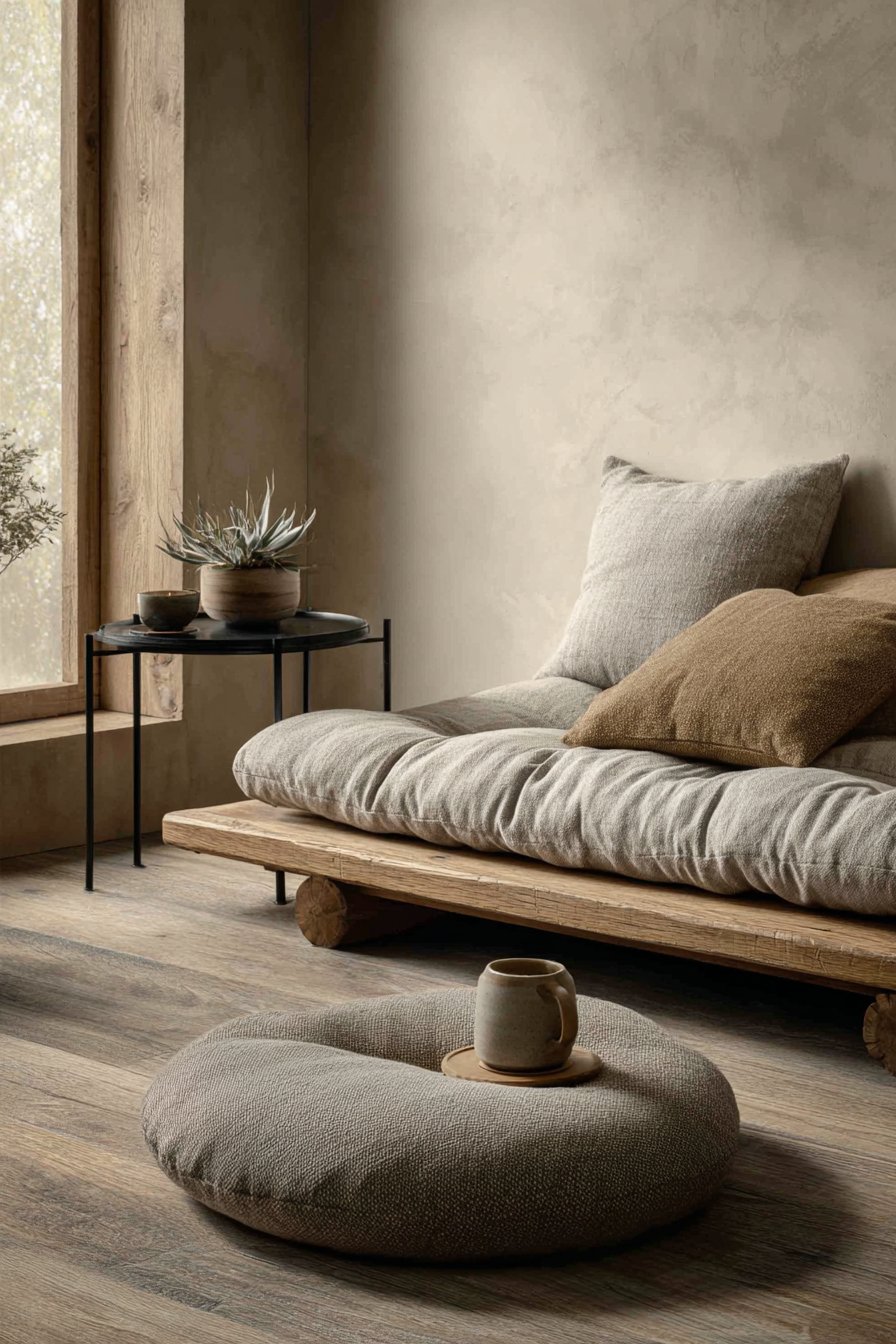
Natural textures dominate this design through careful material selection. The linen upholstery offers tactile pleasure and breathability. The light oak frame ages beautifully over time. Floor cushions connect occupants with the earth element. This holistic approach creates spaces that nourish both body and spirit.
Key Design Tips:
- Select low-profile furniture to create horizontal emphasis and grounding
- Incorporate visible wooden frames that celebrate natural materials
- Use floor cushions for flexible seating that can be stored away
- Choose whitewashed or light neutral wall colors to maximize brightness
- Display only functional items on surfaces like tables and shelves
- Embrace Japanese wabi-sabi principles that find beauty in simplicity
5. Navy Blue Contemporary Elegance
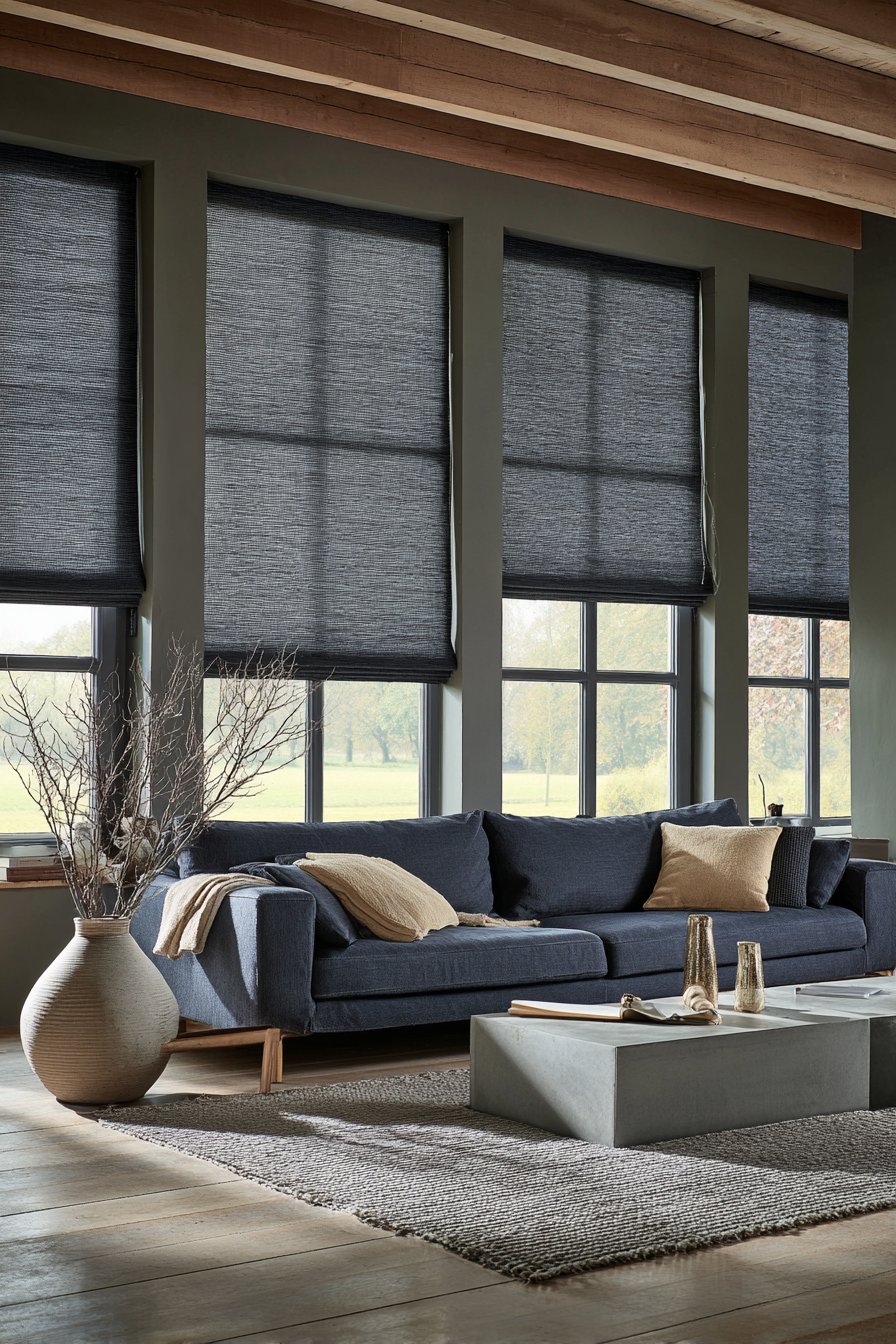
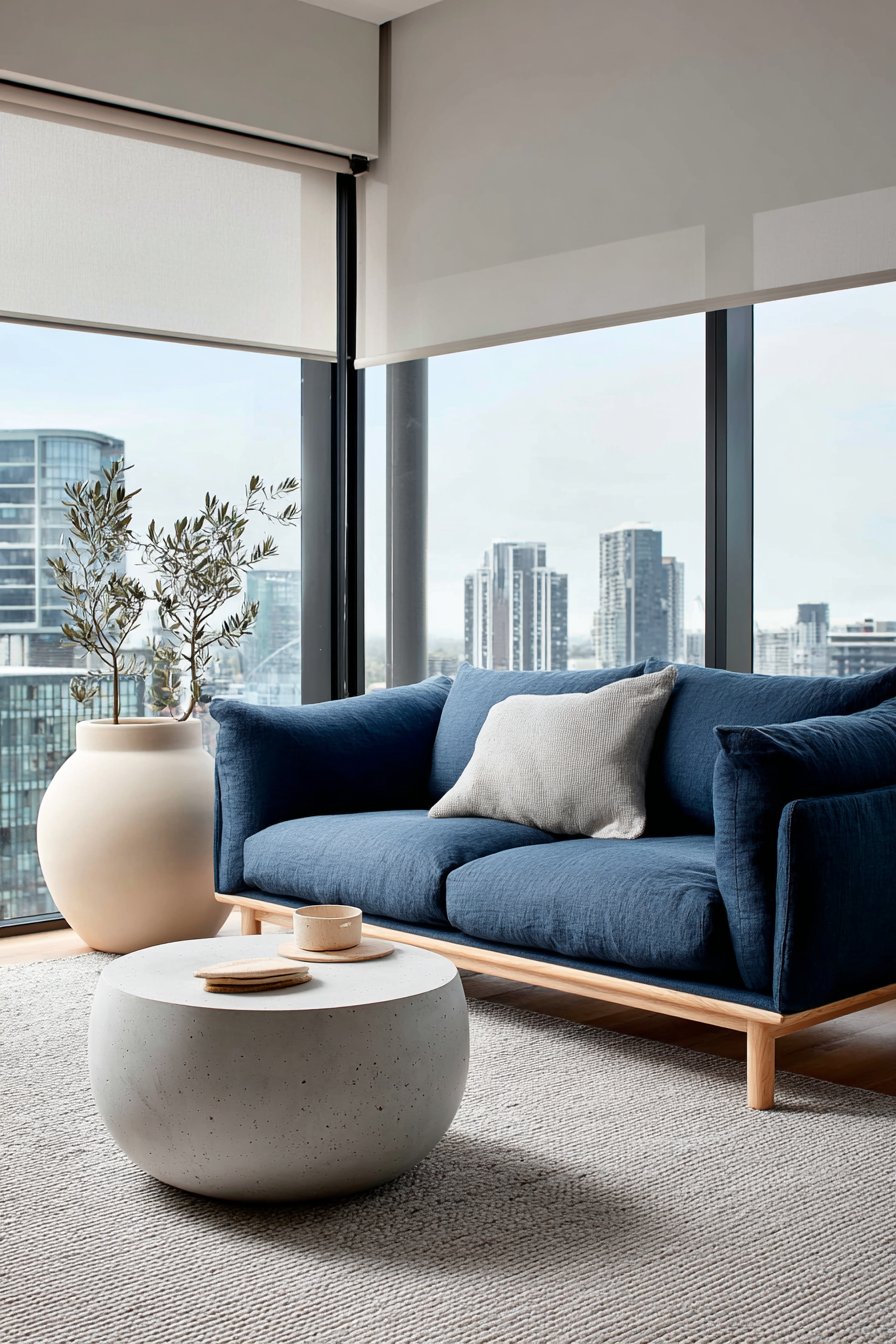
A contemporary three-seater sofa in deep navy blue linen brings sophisticated depth to this minimalist space. The rich color provides visual anchor without heaviness. Simple wooden legs in natural beech maintain lightness beneath the substantial seating. A handcrafted concrete coffee table with rounded edges adds sculptural interest through materiality.
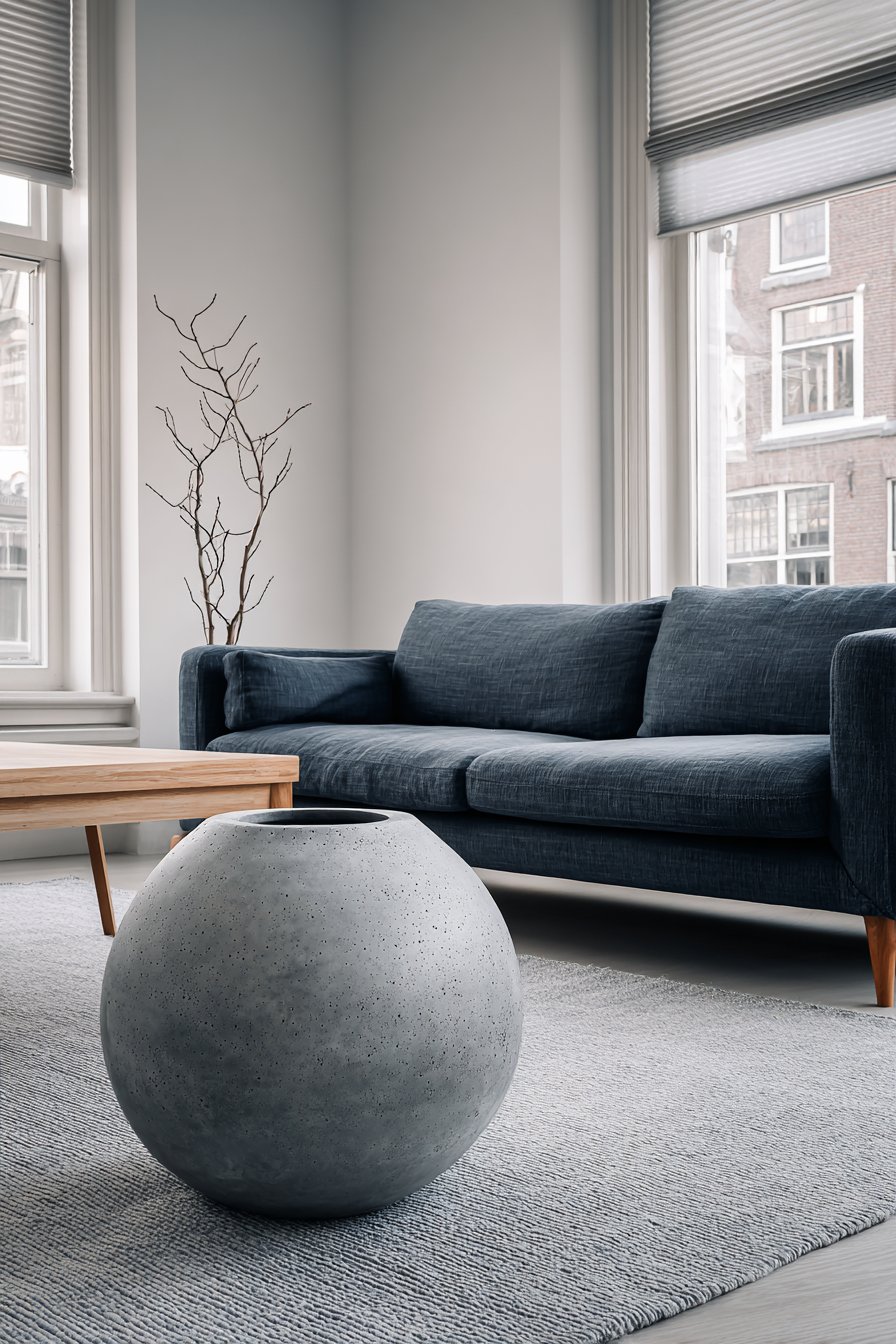
The coffee table sits on a textured wool rug in soft grey. The rug’s subtle texture provides warmth without pattern complexity. One oversized ceramic floor vase with minimalist branches creates a vertical element. The branches’ organic forms contrast beautifully with the room’s geometric furniture.
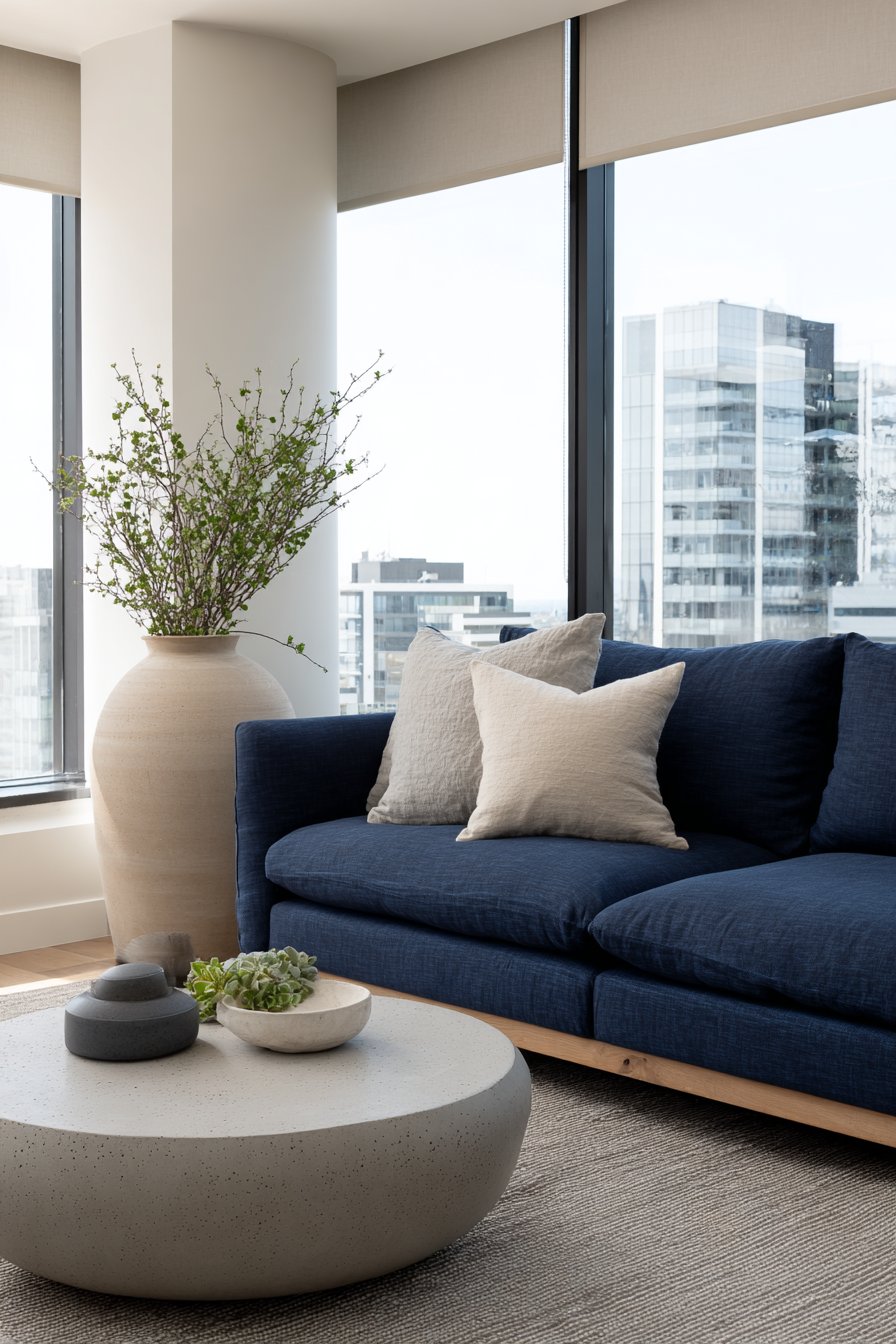
Large windows with simple roller shades in natural fabric frame abundant natural light. The shades provide privacy when needed while maintaining the clean aesthetic. The navy sofa demonstrates how one deeper color can anchor a neutral palette. This creates visual interest while preserving the overall sense of calm.
Key Design Tips:
- Introduce one deeper color like navy to anchor neutral palettes
- Choose handcrafted furniture pieces for unique character and quality
- Use concrete surfaces for industrial-minimalist appeal and durability
- Select roller shades in natural fabrics over heavy drapery
- Display tall floor vases with simple branches for vertical interest
- Combine geometric furniture with organic decorative elements
6. Caramel Leather Organic Warmth
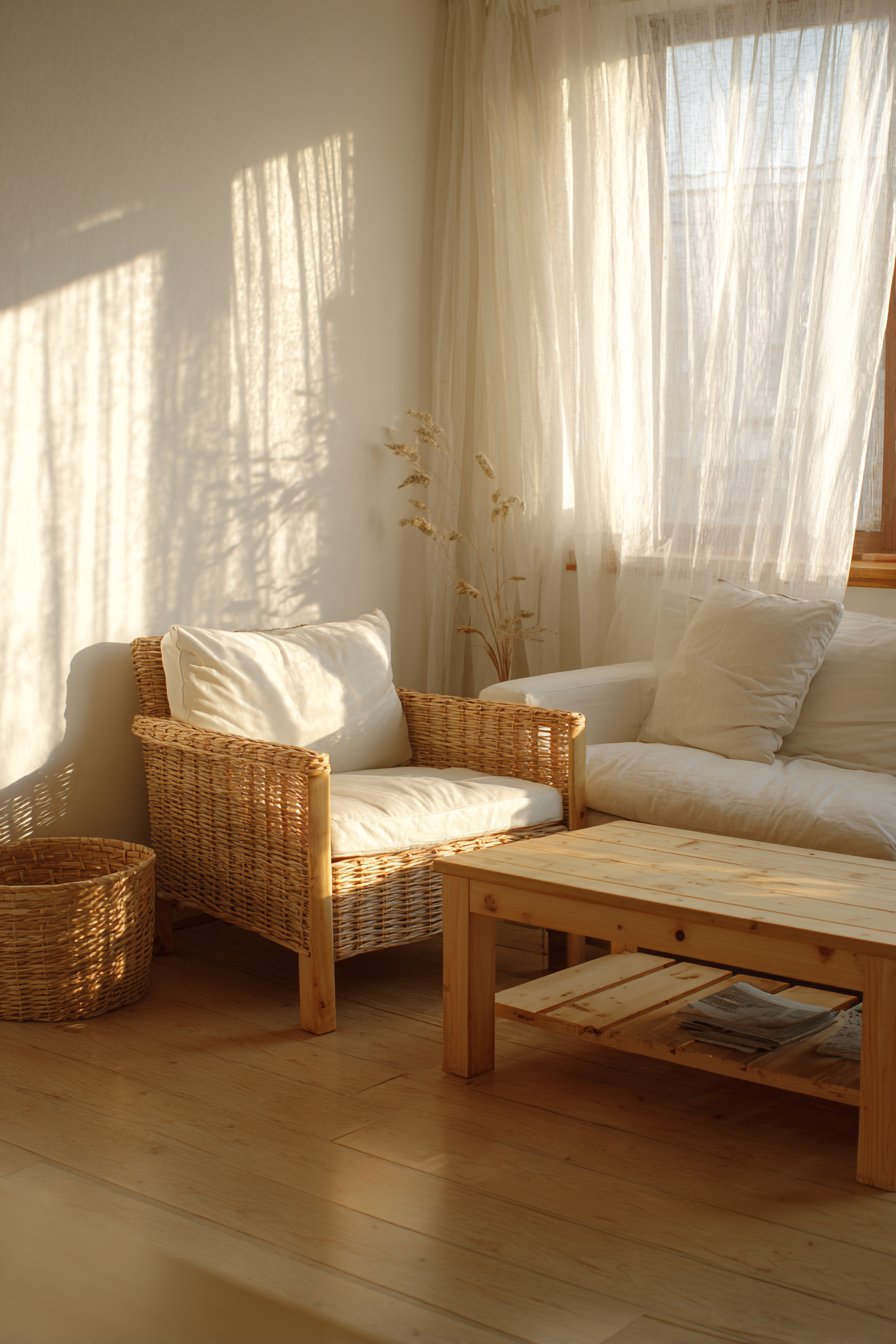
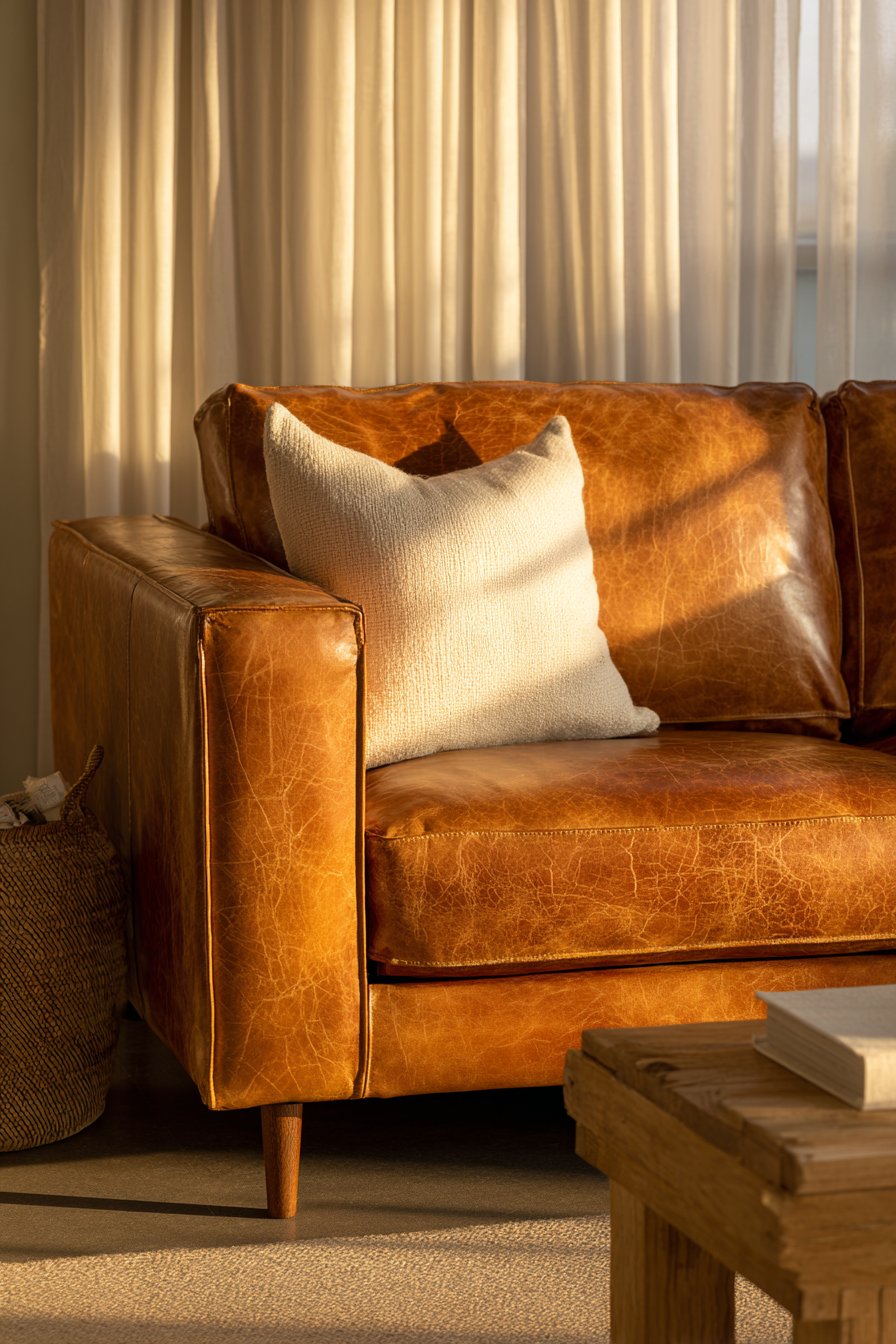
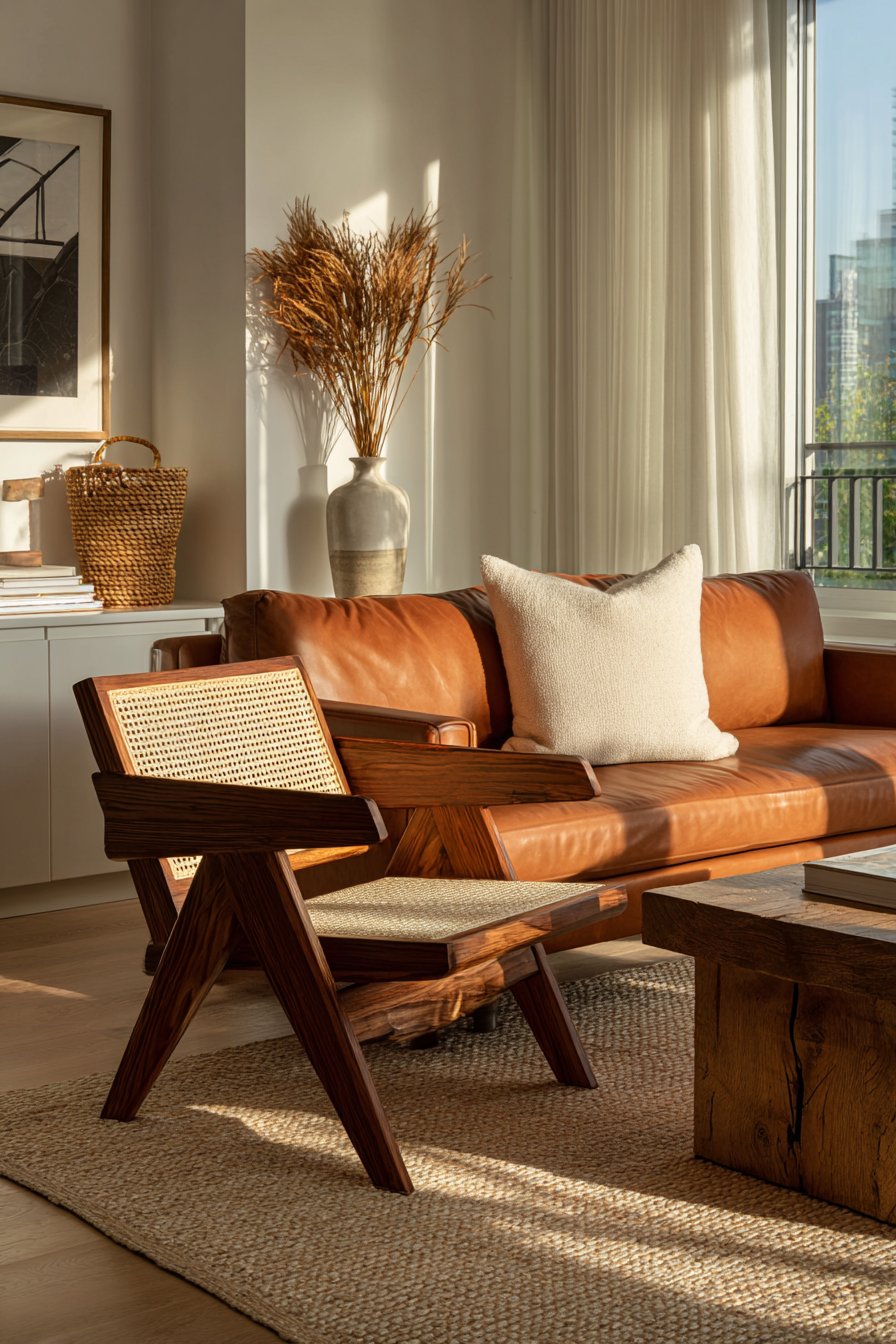
A streamlined loveseat in warm caramel leather showcases visible grain and natural patina. The leather’s authentic aging adds character that synthetic materials cannot replicate. A single woven rattan chair with cream cushion provides textural variety and additional seating. The combination creates an inviting conversation area.
A simple wooden coffee table made from reclaimed pine displays beautiful wood grain variations. Each board tells a story through knots, color shifts, and natural markings. A natural fiber basket tucked beside the sofa provides discrete storage. Golden hour sunlight streams through sheer curtains, creating warm highlights across surfaces.
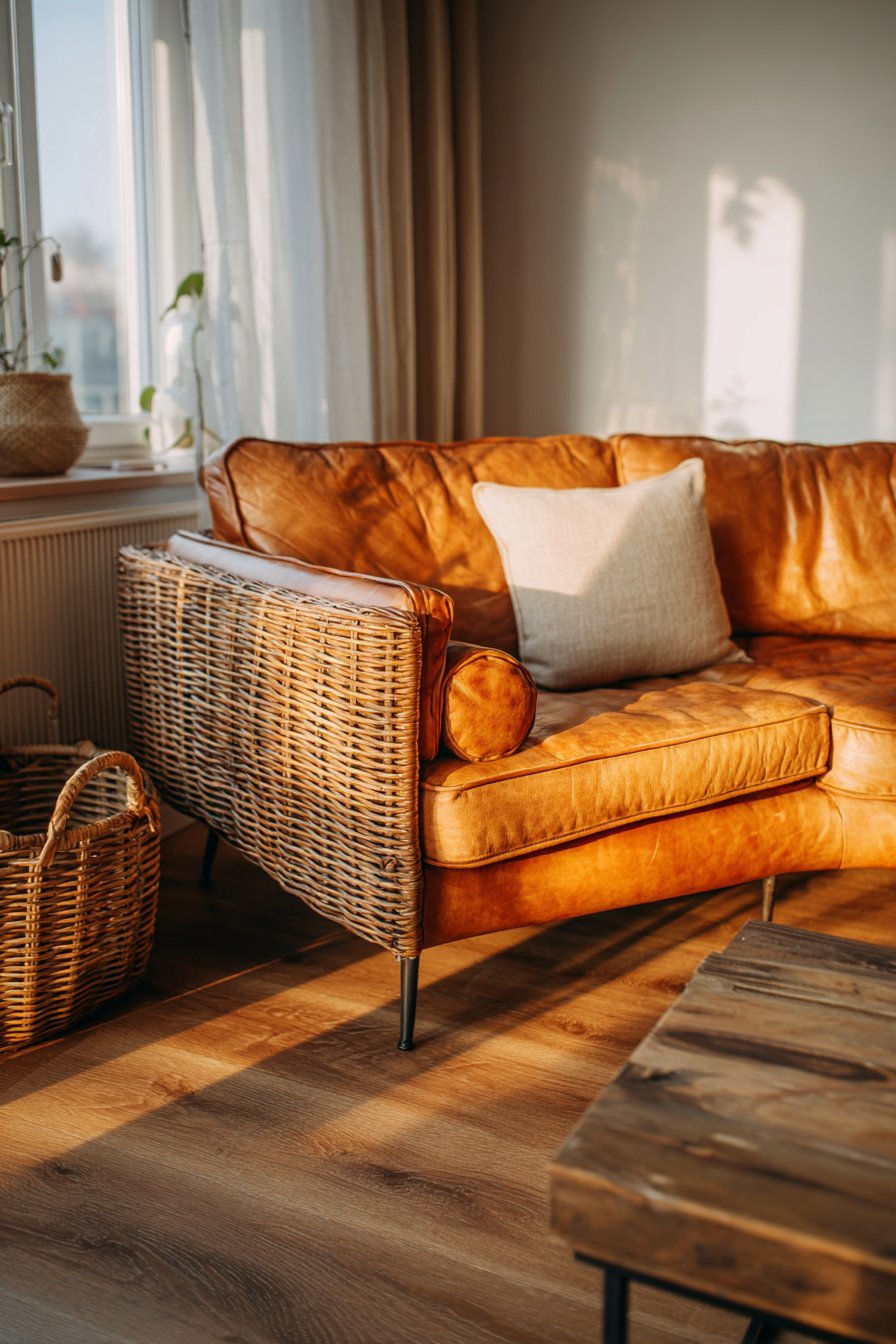
The organic warmth of this design comes from authentic materials that improve with age. The caramel leather will develop richer patina over years. The reclaimed pine carries history in every board. Natural materials create living spaces that evolve and deepen rather than deteriorate.
Key Design Tips:
- Invest in quality leather furniture that develops beautiful patina over time
- Mix materials like leather, rattan, and wood for textural richness
- Use reclaimed wood for furniture with built-in character and sustainability
- Incorporate natural fiber baskets for storage that remains visually appealing
- Position seating to capture golden hour sunlight when possible
- Choose furniture with visible grain and natural variations in tone
7. Built-In Window Seat Functionality
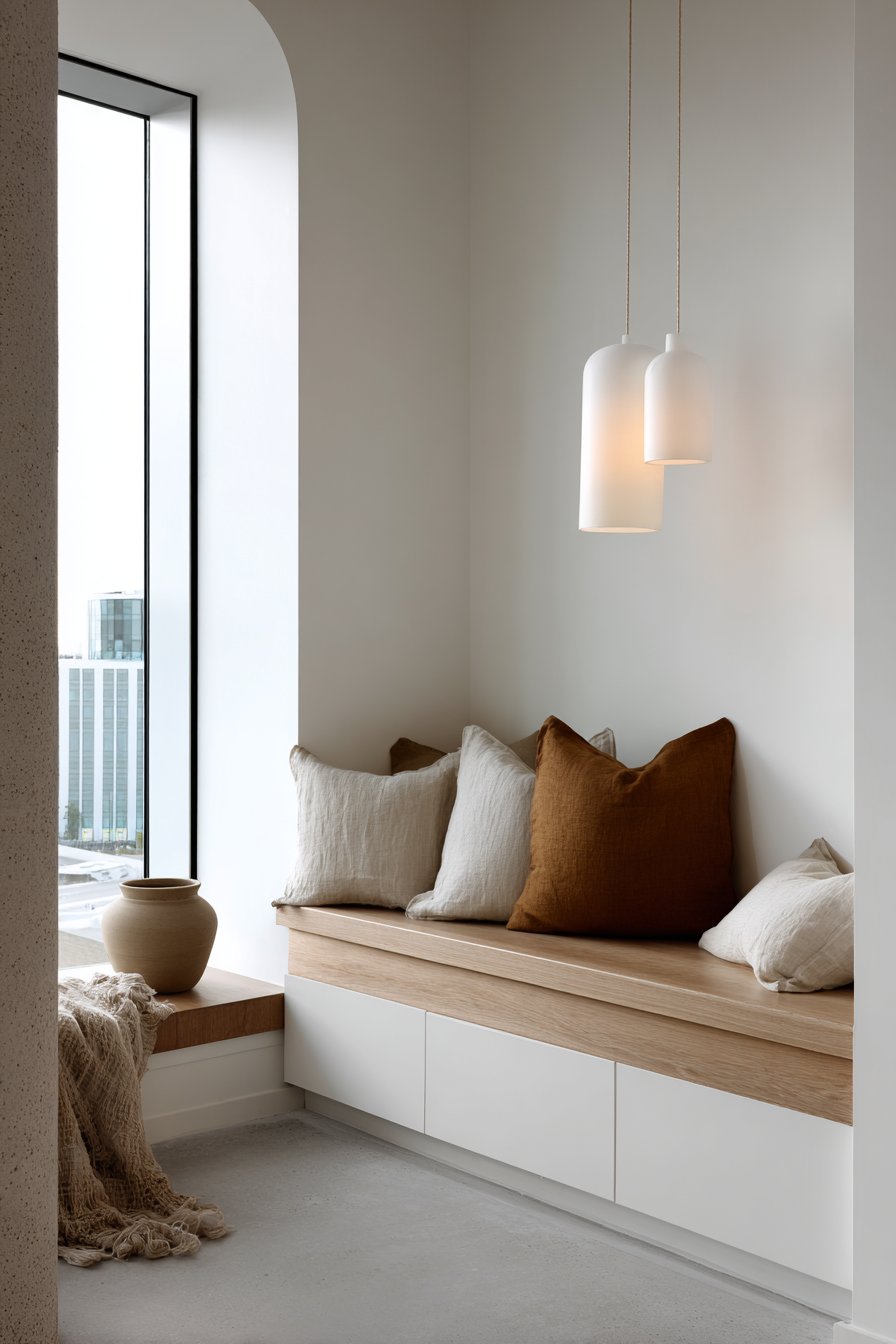
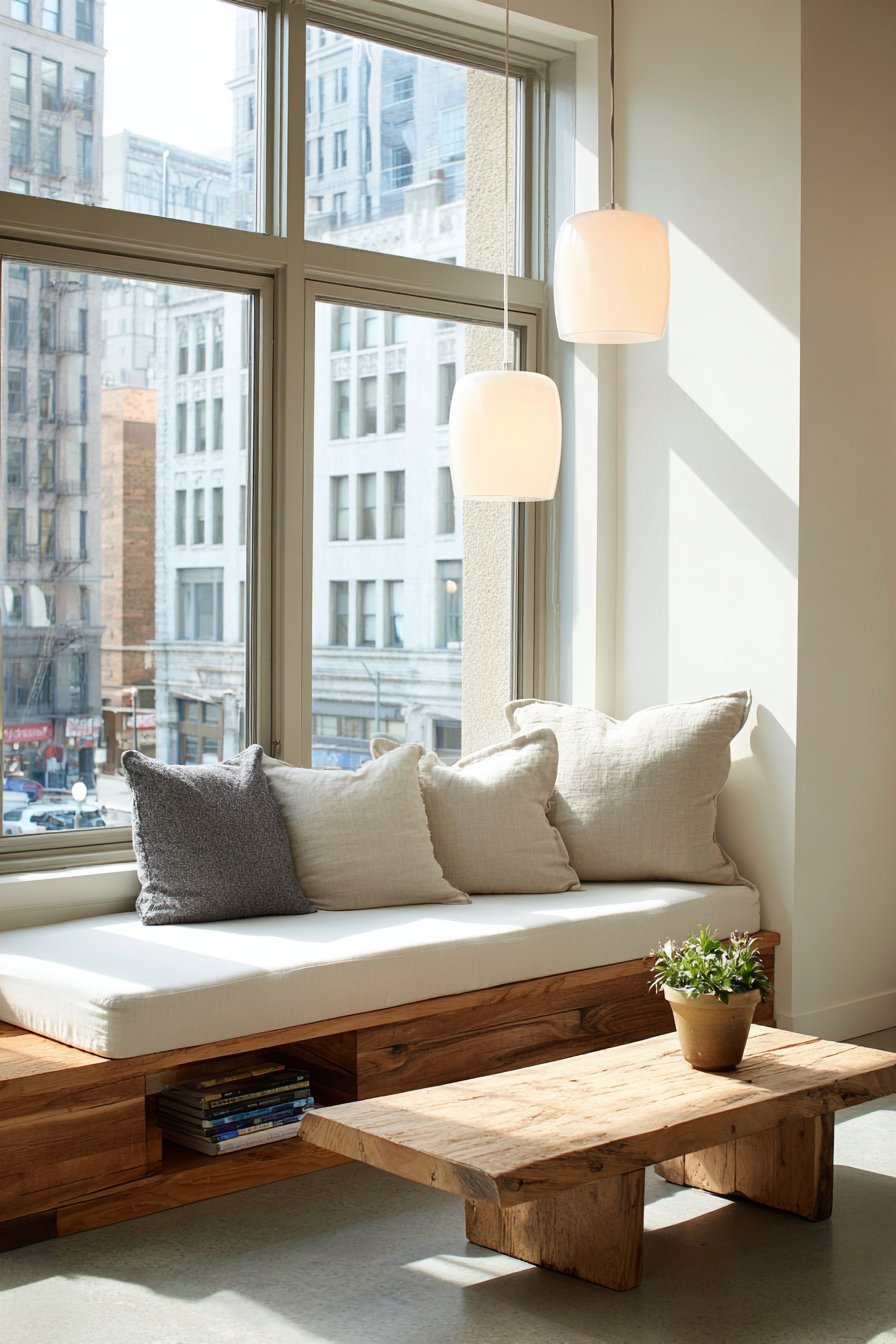
Built-in bench seating with simple cushions in natural linen creates a window seat bathed in daylight. The bench includes hidden storage beneath for practical functionality. This approach maximizes space efficiency while maintaining clean lines. A low rectangular coffee table in light ash wood complements the built-in seating.
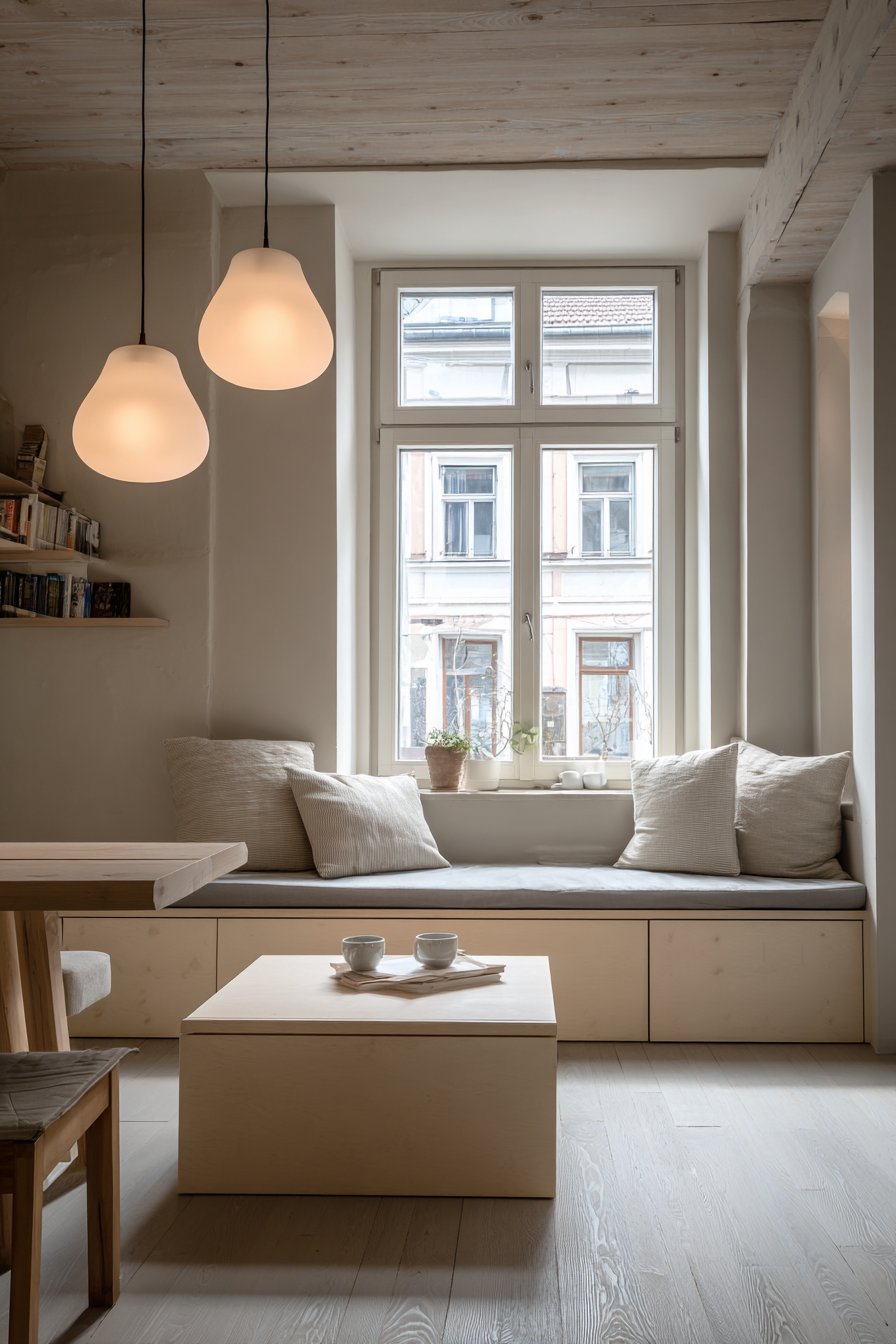
Light grey concrete flooring provides an industrial-minimalist foundation throughout the space. The concrete’s cool tone balances the warm linen cushions. Two simple pendant lights with white ceramic shades hang at different heights. The varied heights create visual interest while maintaining overall simplicity.
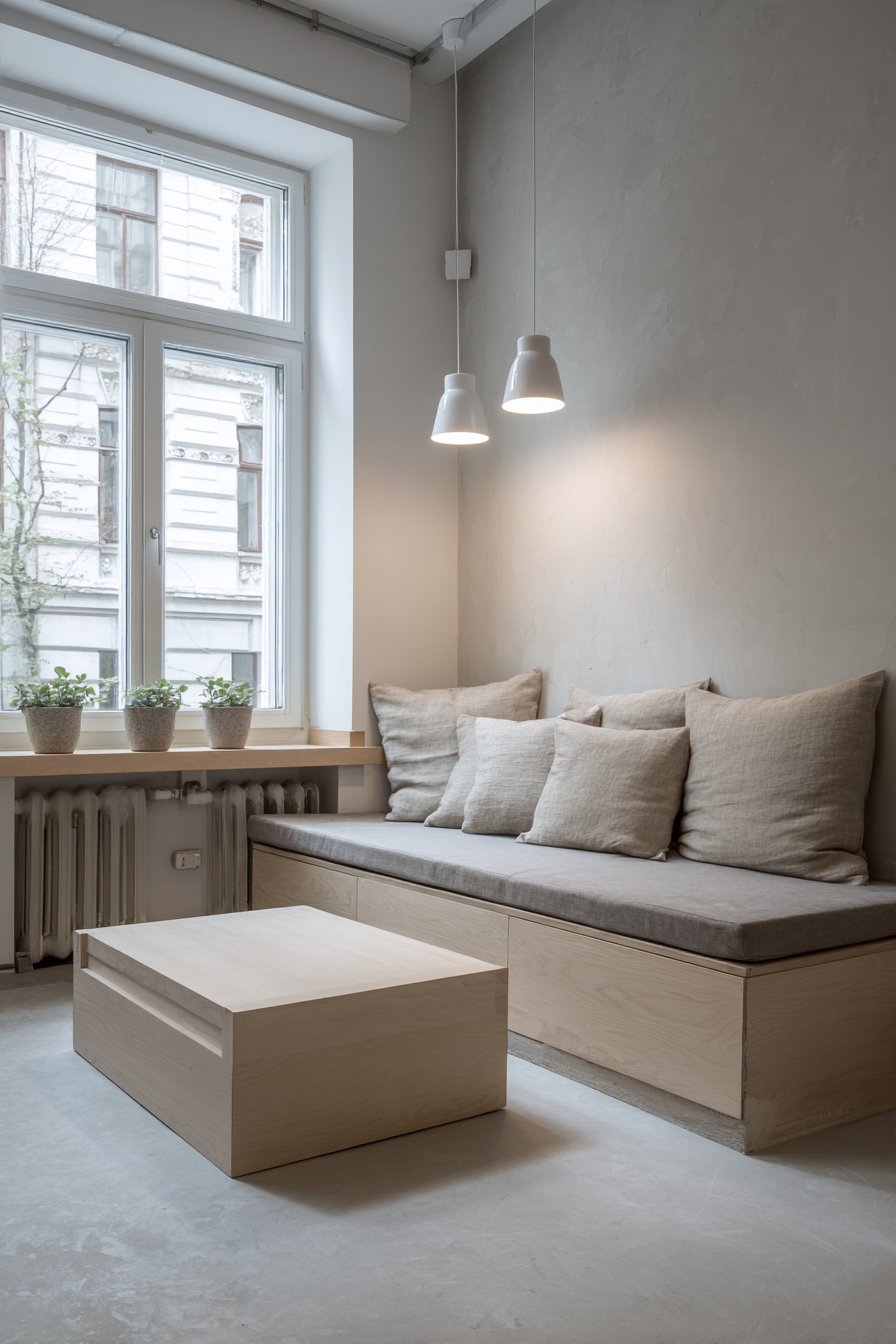
Functional simplicity defines this design’s philosophy. Every element serves multiple purposes without announcing its utility. The window seat provides seating, storage, and architectural interest. The concrete floor offers durability and minimal maintenance. This efficiency creates spaces that work harder while appearing effortless.
Key Design Tips:
- Install built-in seating to maximize space efficiency in smaller rooms
- Include hidden storage beneath benches for clutter-free organization
- Use concrete flooring for durability and modern minimalist aesthetic
- Hang pendant lights at varied heights for visual interest
- Choose light wood tones like ash to keep spaces feeling open
- Position built-in seating near windows to maximize natural light benefits
8. Charcoal Deep Comfort
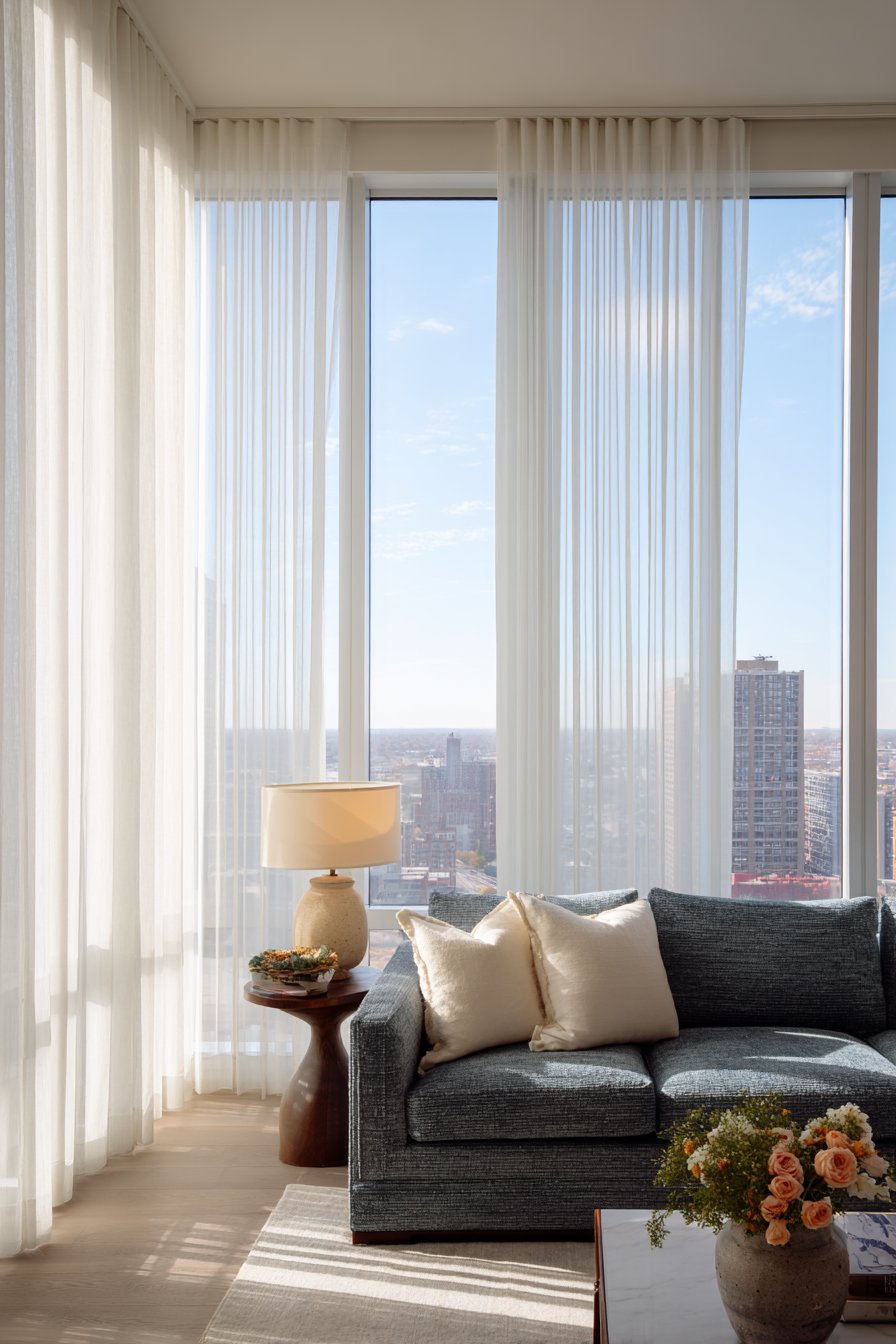
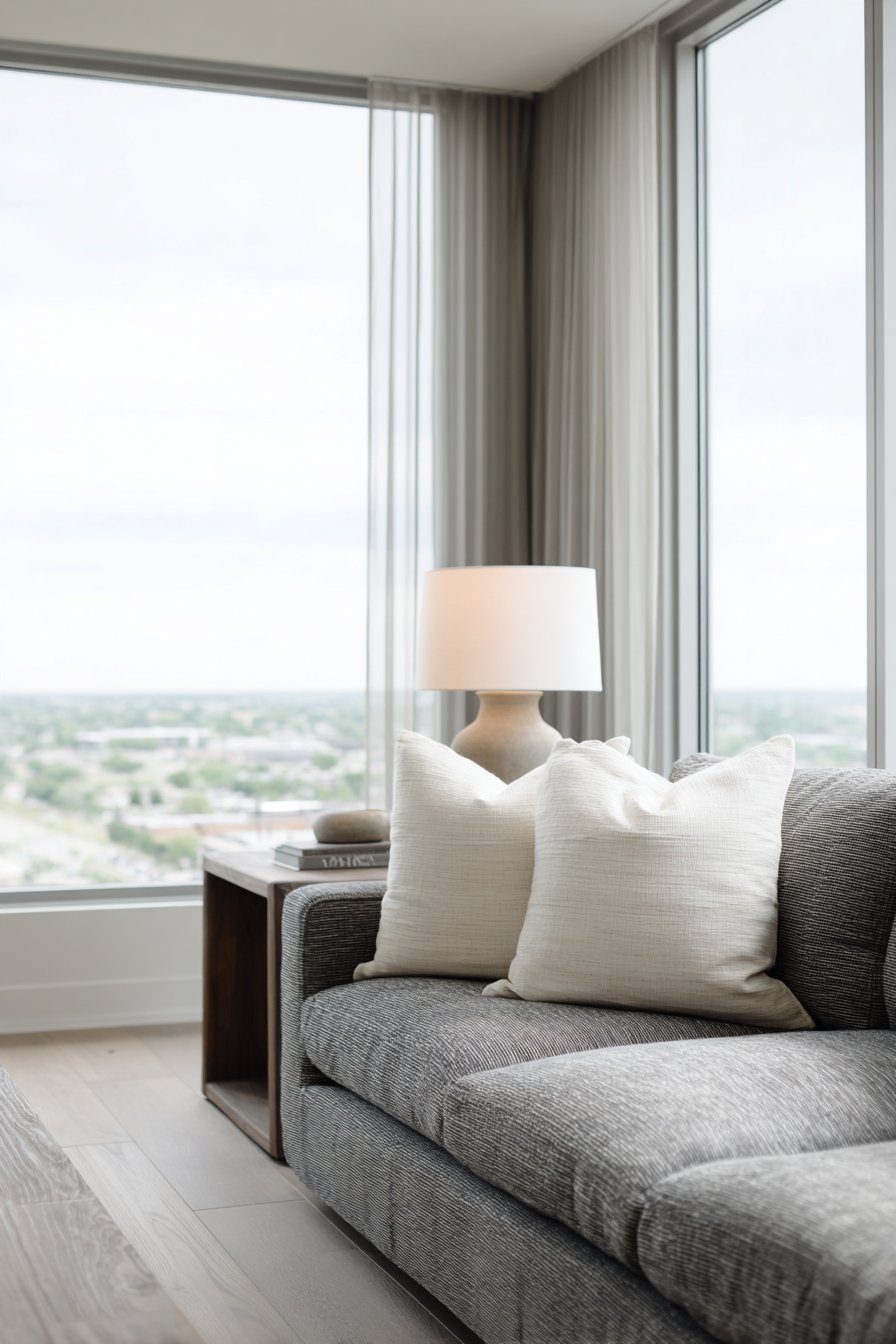
A comfortable sofa in textured charcoal fabric features deep seats and plush back cushions. The generous proportions invite relaxation without appearing bulky. Two linen pillows in cream provide soft contrast against the darker upholstery. A simple side table in solid walnut holds necessities within easy reach.
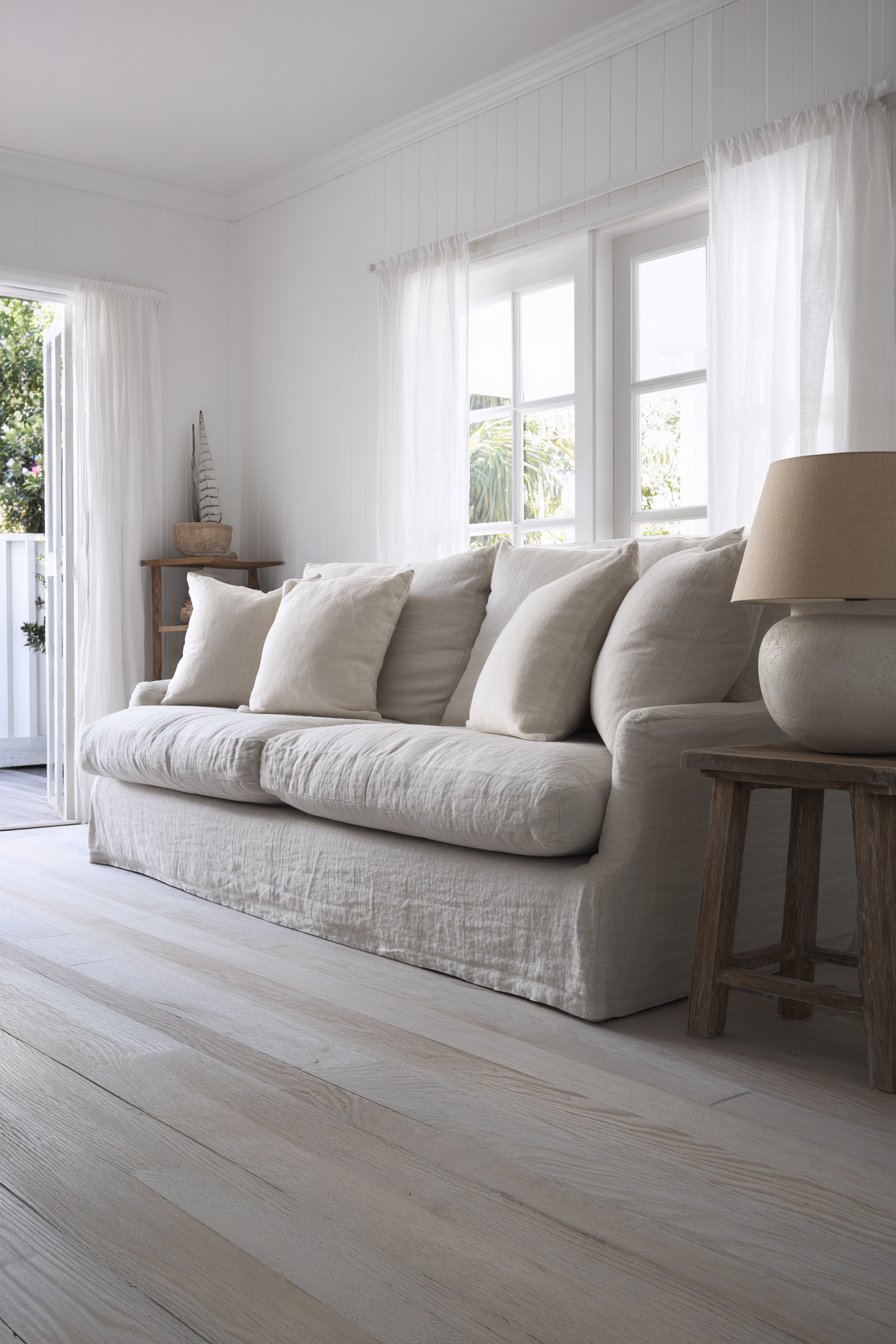
A ceramic table lamp with natural linen shade provides warm task lighting. Wide plank white oak flooring reflects soft morning light throughout the space. Floor-to-ceiling windows dressed in sheer white fabric maximize natural illumination. The spacious feel comes from thoughtful proportions and abundant light.
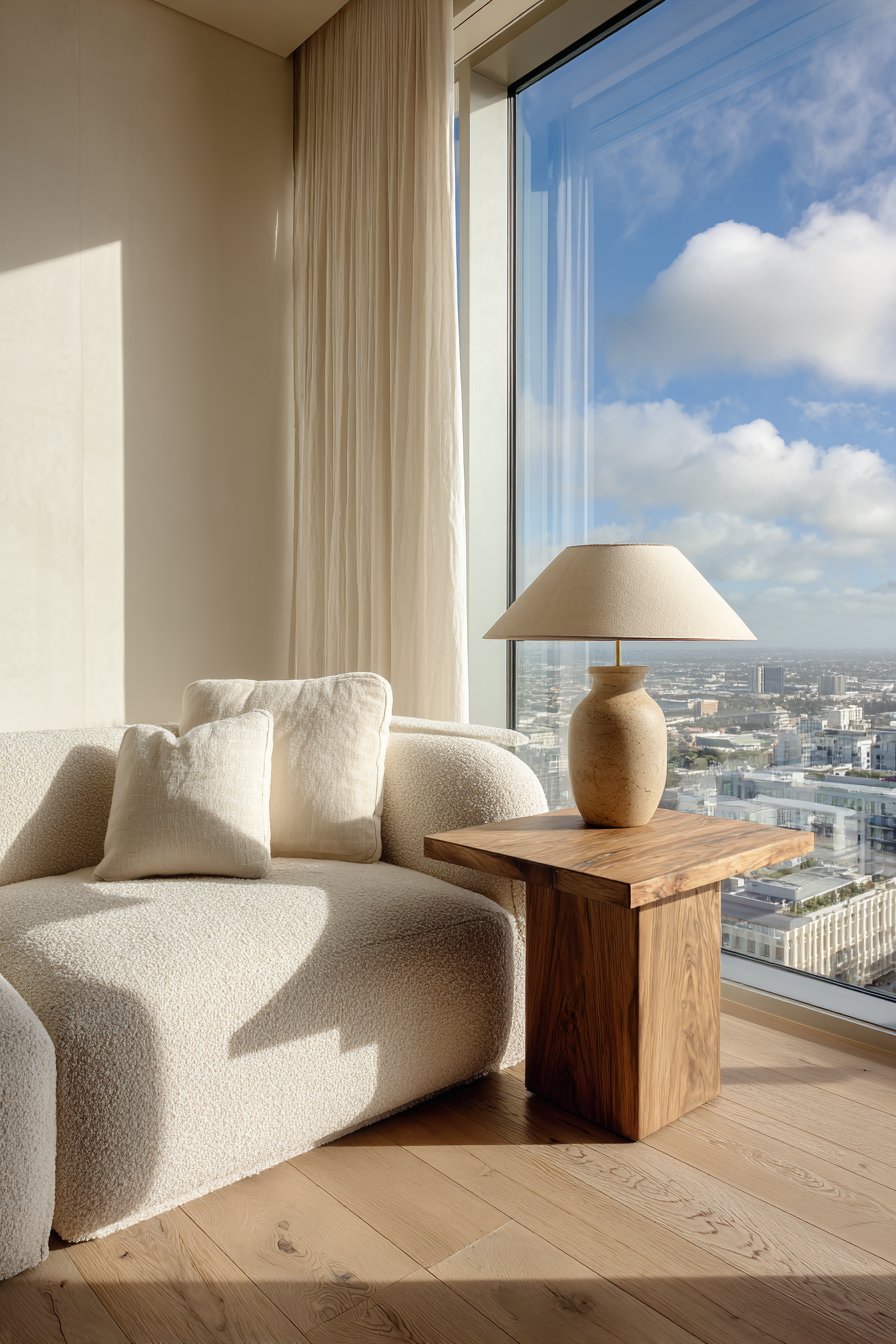
The tranquil atmosphere results from balancing comfort with restraint. Deep seating provides physical comfort for extended lounging. The minimal accessory count prevents visual overwhelm. Quality materials ensure lasting beauty and durability. This combination creates living rooms that serve daily life beautifully.
Key Design Tips:
- Choose deep-seated sofas for maximum comfort and lounging capability
- Use wide plank flooring to make rooms feel more expansive
- Install floor-to-ceiling windows when possible to maximize natural light
- Keep pillow count minimal with just two or three per sofa
- Select solid wood side tables in rich tones like walnut
- Use table lamps with natural fiber shades for warm ambient lighting
9. Grey Bouclé Texture
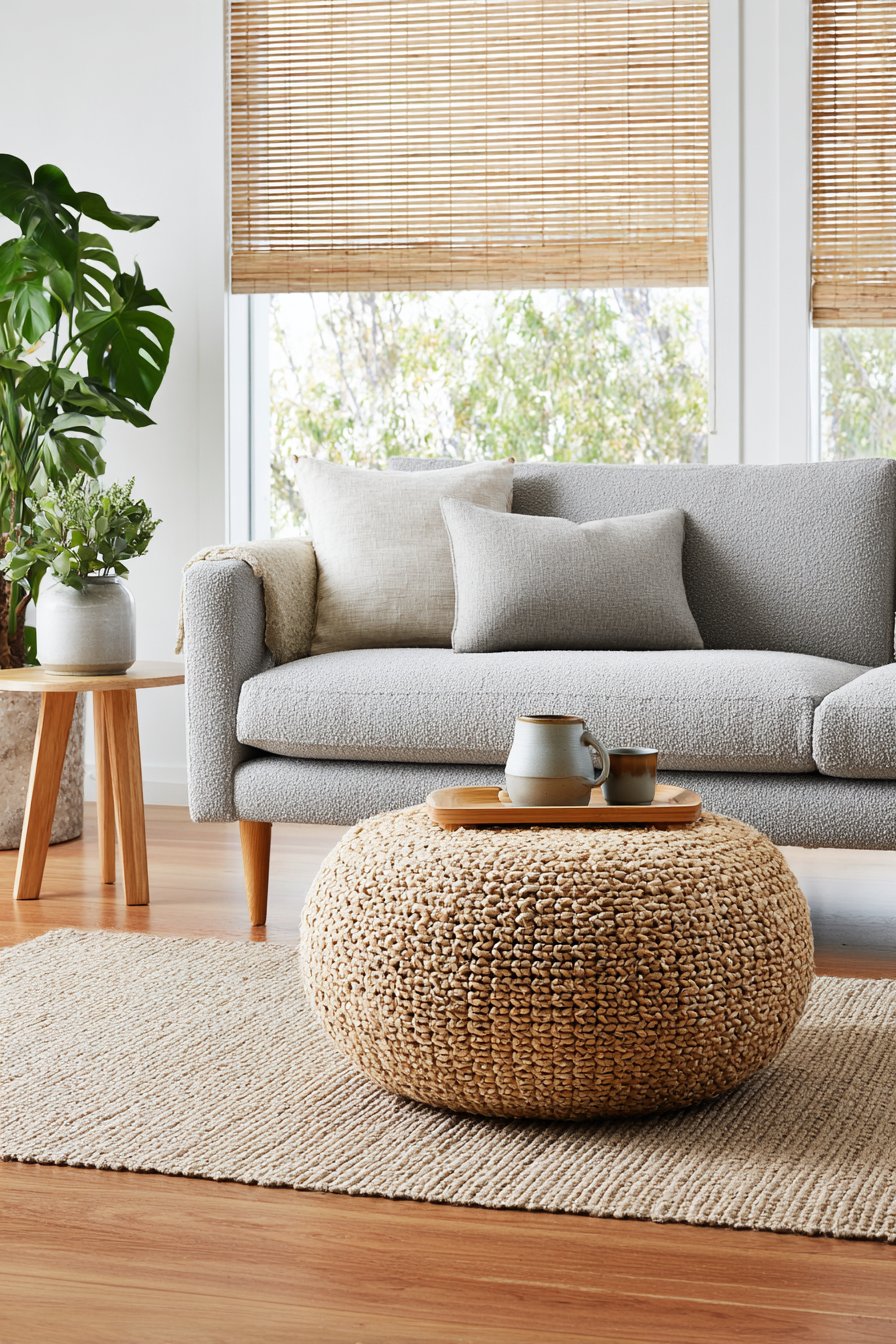
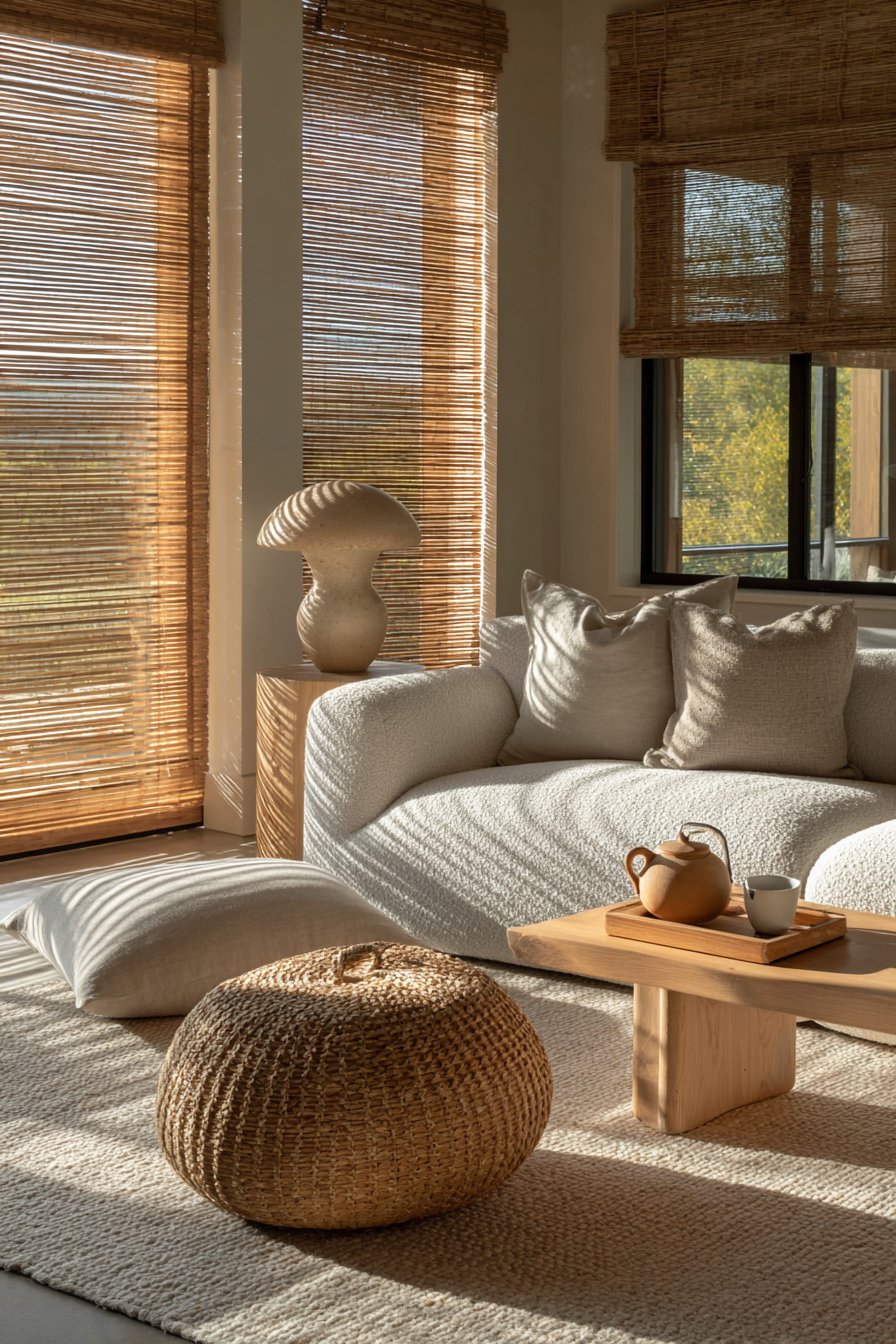
A sleek sofa in soft grey bouclé fabric features gently curved arms and solid oak legs. The bouclé’s textured surface adds visual and tactile interest to the neutral palette. A round jute pouf serves as a casual coffee table alternative. The pouf’s natural fiber brings organic warmth to the contemporary design.
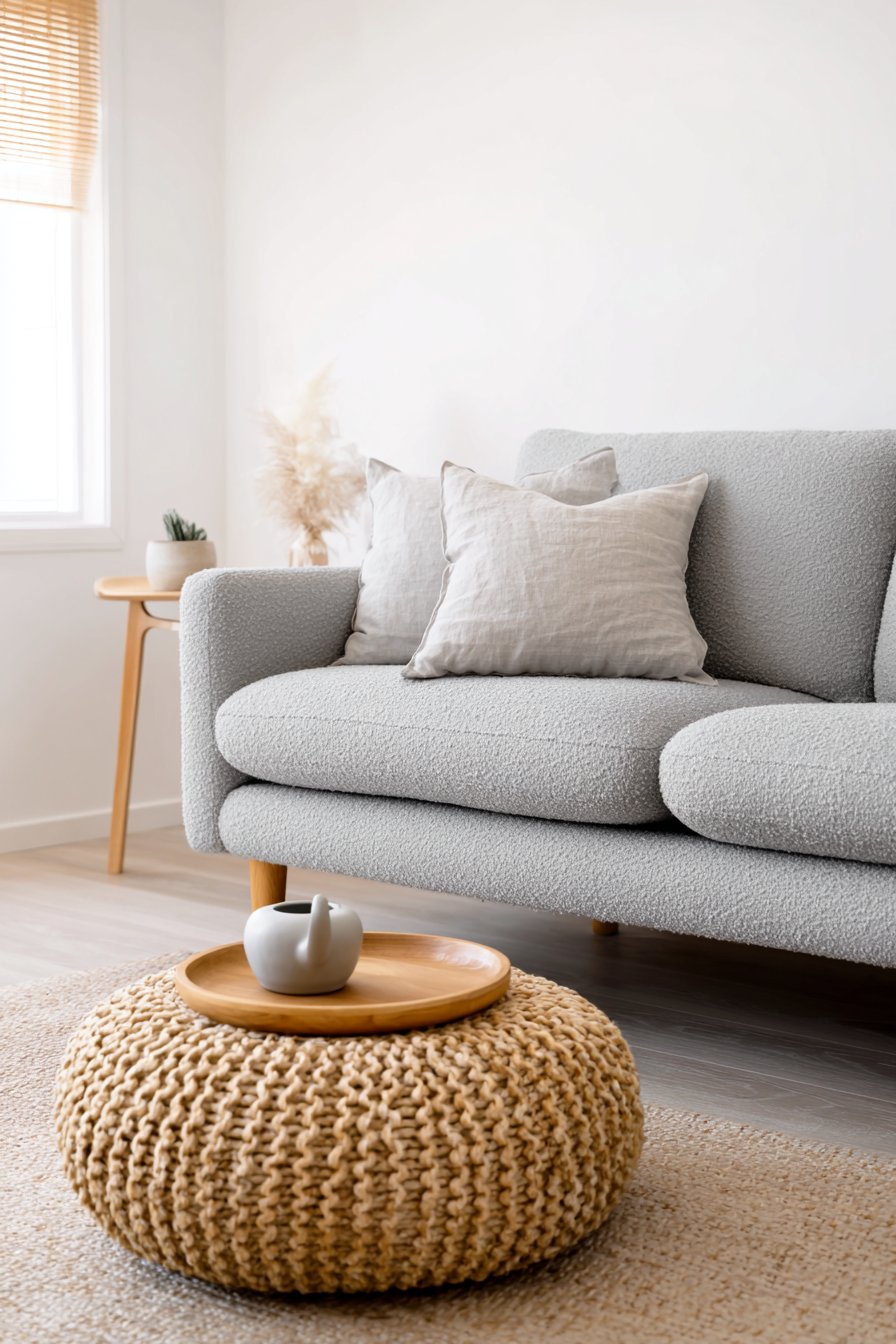
A simple wooden tray atop the pouf holds a ceramic teapot and creates a defined surface. One oversized floor pillow in natural linen provides flexible seating options. Natural light filters through bamboo roller shades, creating subtle horizontal shadow patterns. These shadows animate the space throughout the day.
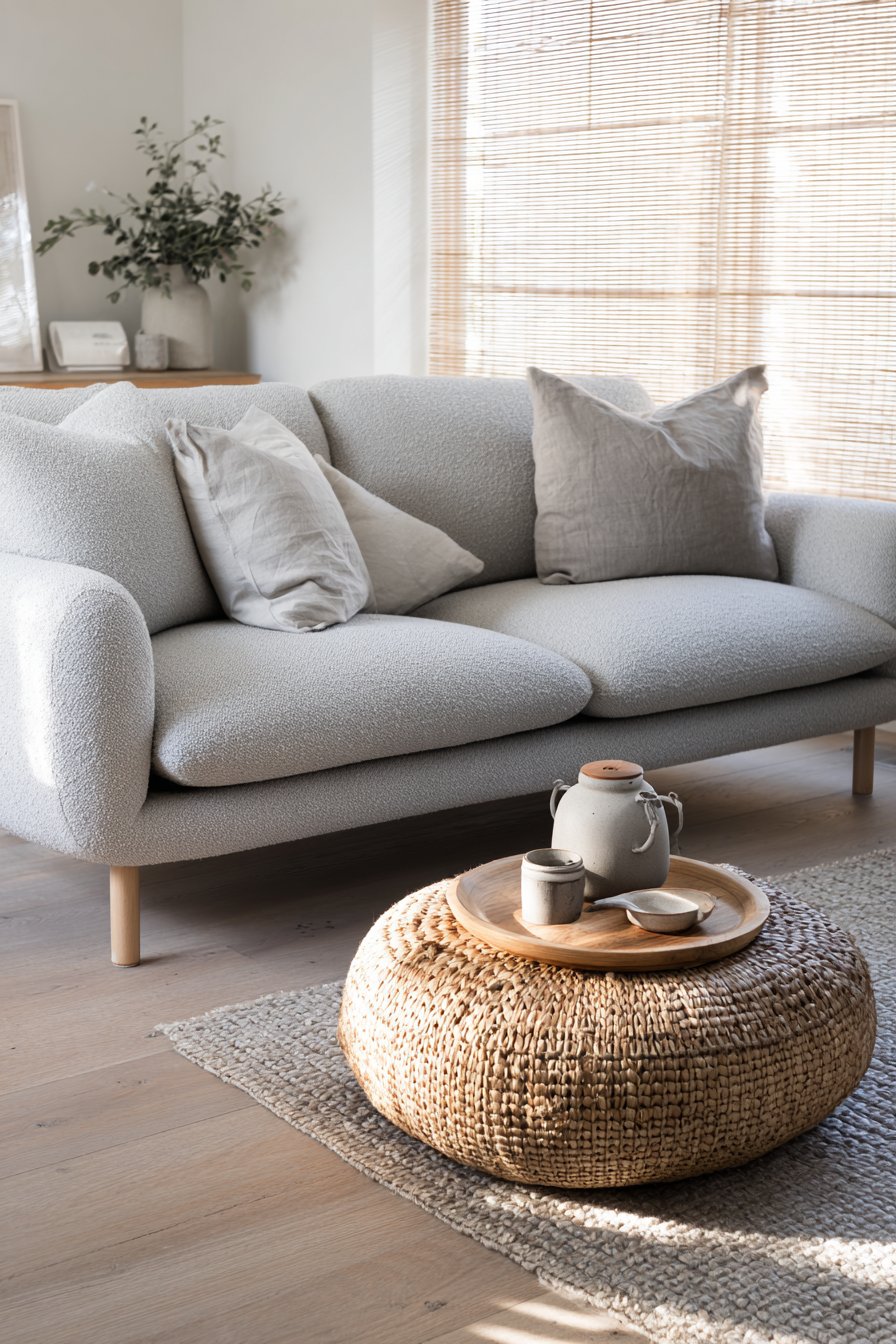
Texture-rich simplicity defines this design’s sophisticated approach. The bouclé fabric invites touch while maintaining clean lines. The jute pouf brings handcrafted quality to functional furniture. Multiple textures prevent the neutral palette from feeling flat. This layering creates depth without visual complexity.
Key Design Tips:
- Use bouclé fabric for textural interest within neutral color schemes
- Substitute traditional coffee tables with flexible poufs or ottomans
- Layer natural textures like jute, linen, and oak for visual depth
- Install bamboo shades for natural light filtration with organic appeal
- Include floor pillows for casual flexible seating arrangements
- Choose curved furniture silhouettes to soften geometric spaces
10. Terracotta Platform Style
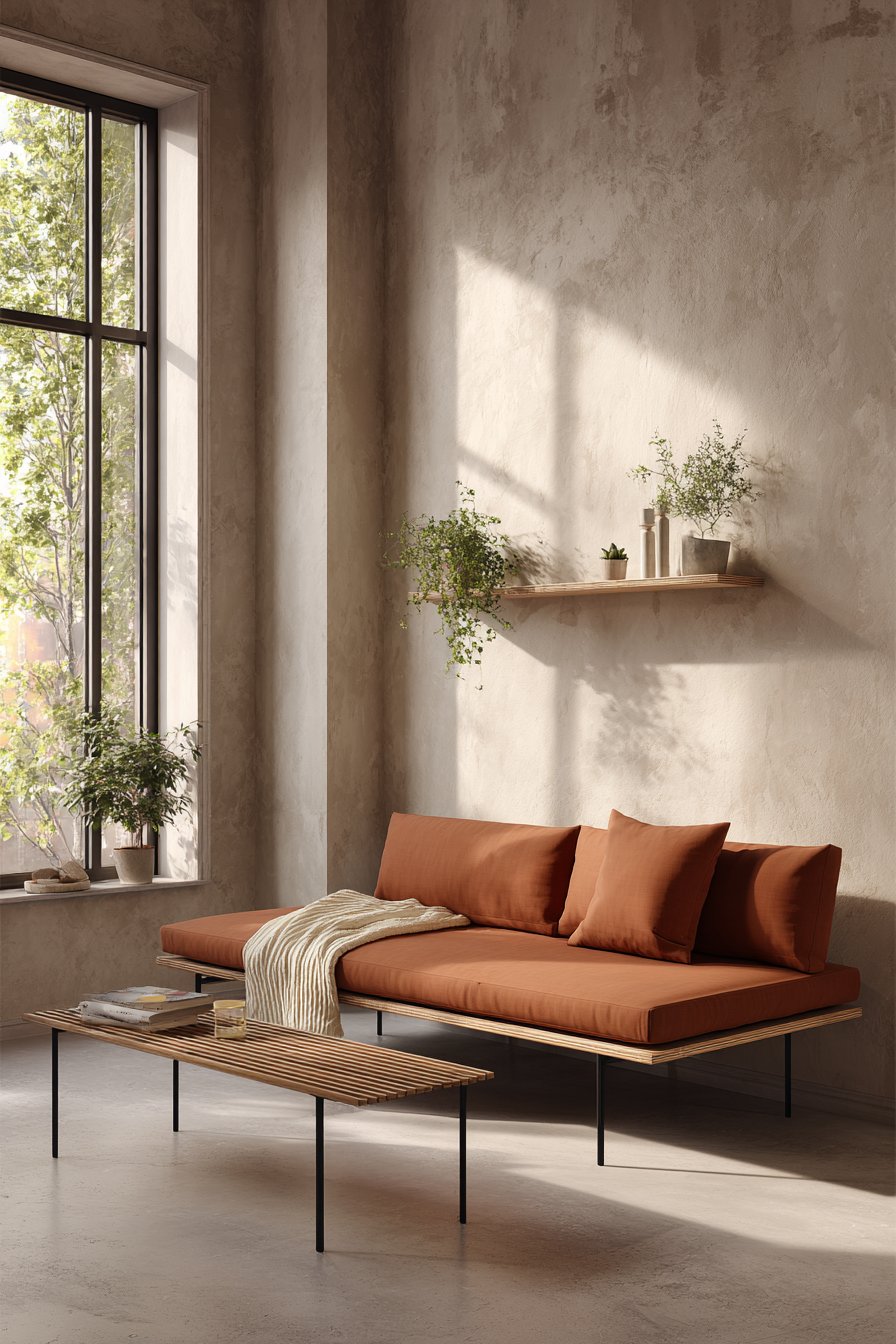
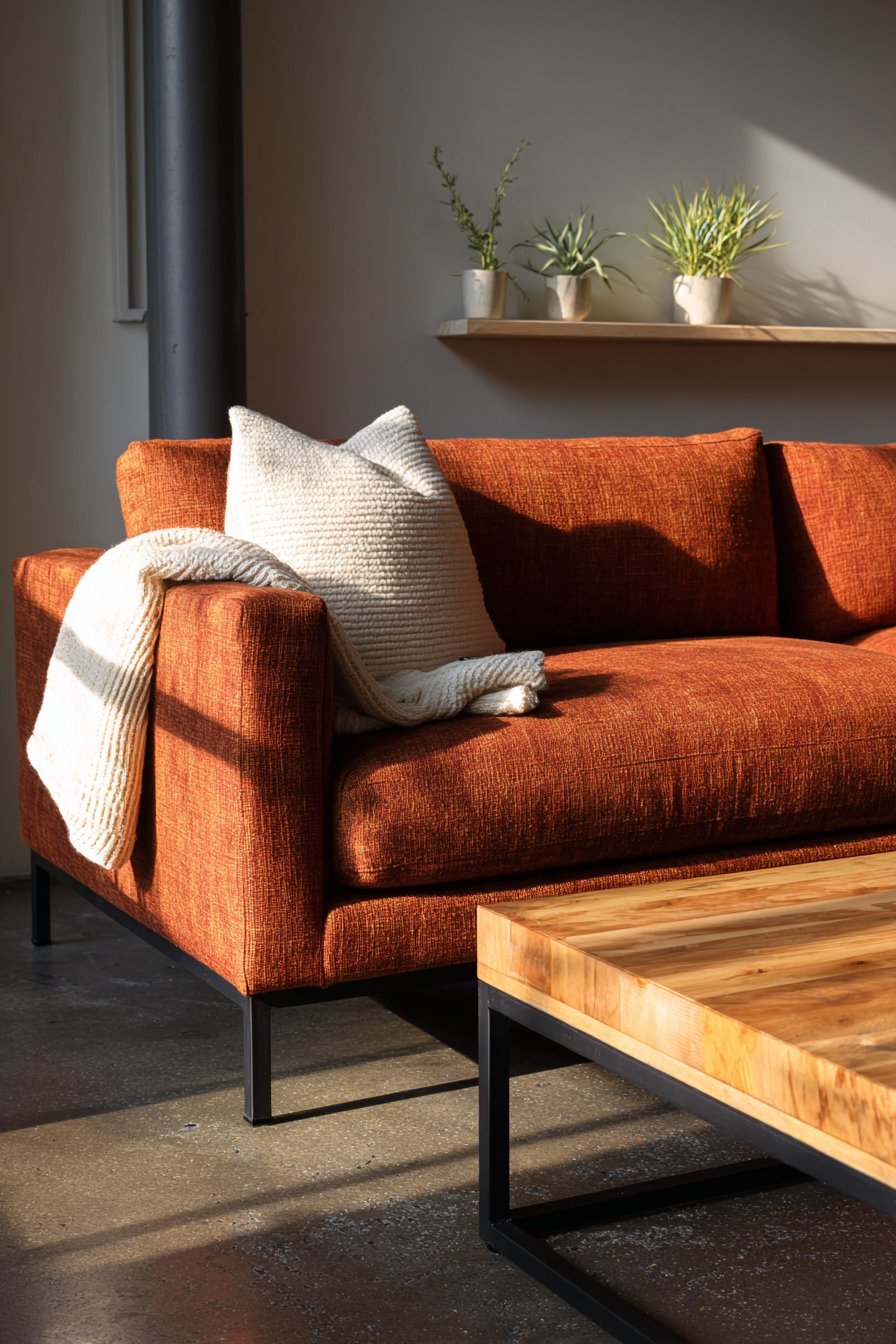
A platform-style sofa in warm terracotta linen brings earthy color to this minimalist space. The low profile and straight lines maintain contemporary clean aesthetics. A single knit throw in cream wool provides textural softness against the linen. The warm tone creates invitation without overwhelming the serene atmosphere.
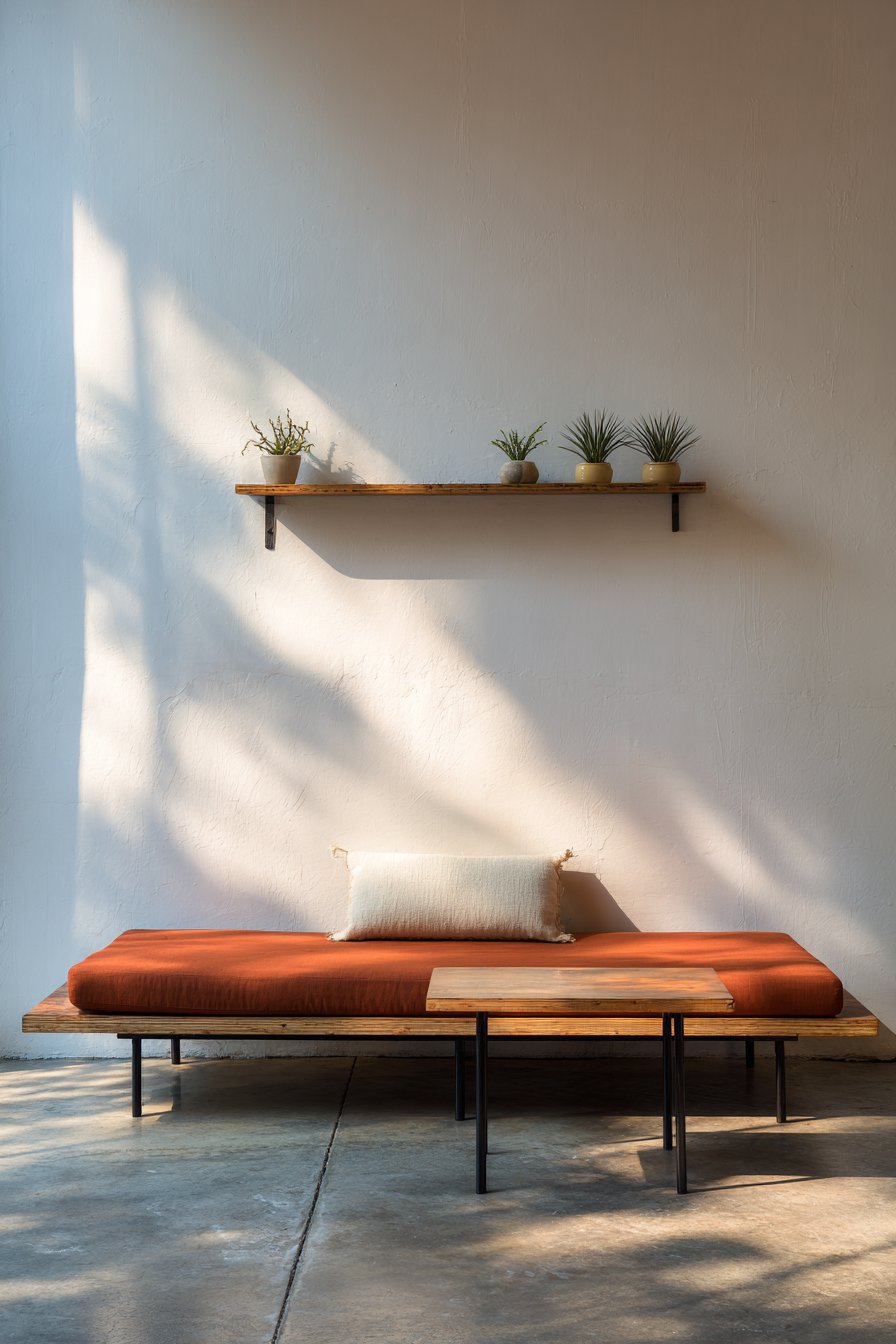
A minimalist coffee table with thin black metal frame and natural wood top sits on polished concrete flooring. The table’s delicate frame appears to float above the ground. Three small air plants in ceramic holders line a simple floating shelf. The minimal plant display brings life without maintenance demands.
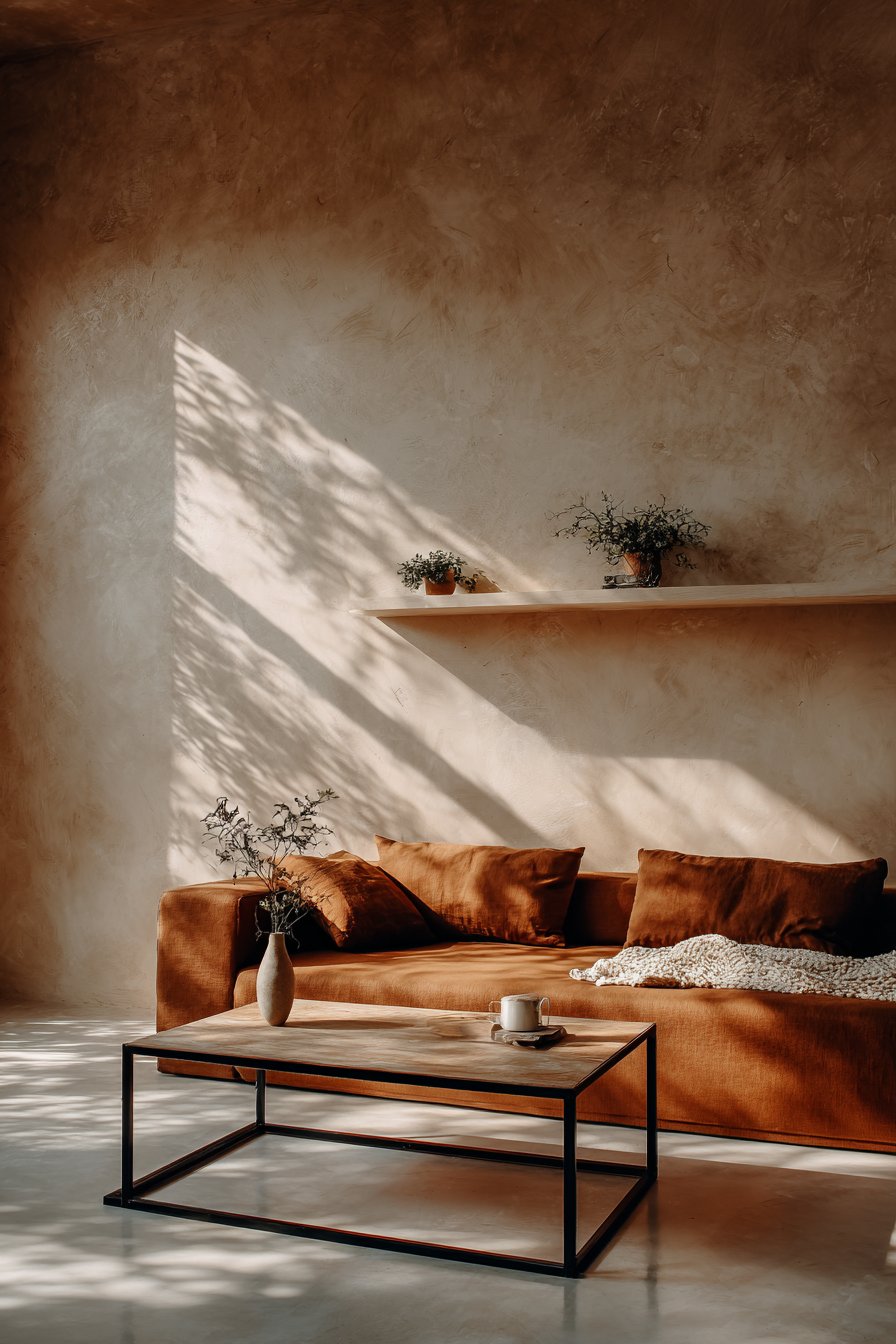
Soft afternoon light creates gentle shadows that emphasize the room’s clean geometry. The terracotta sofa becomes a warm focal point within the neutral space. The combination of warm and cool tones creates balanced visual temperature. This careful calibration prevents the room from feeling either cold or overwhelming.
Key Design Tips:
- Introduce warm earth tones like terracotta for cozy minimalist appeal
- Choose platform-style furniture with low profiles for modern aesthetics
- Use thin metal frames on tables to maintain visual lightness
- Display air plants for living greenery with minimal care requirements
- Install floating shelves for display without visual heaviness
- Balance warm furniture colors with cool flooring materials
11. Beige Sectional Airiness
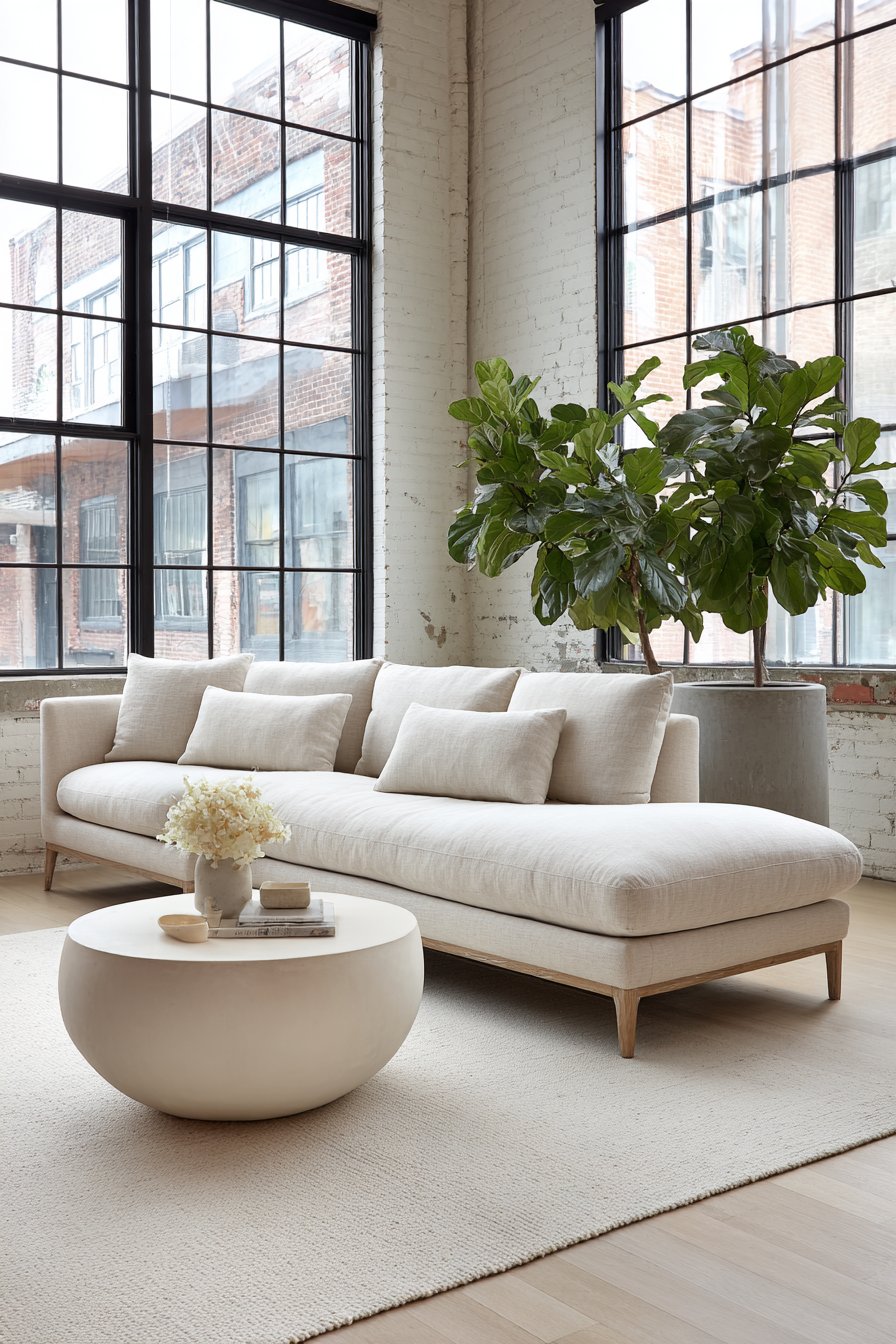
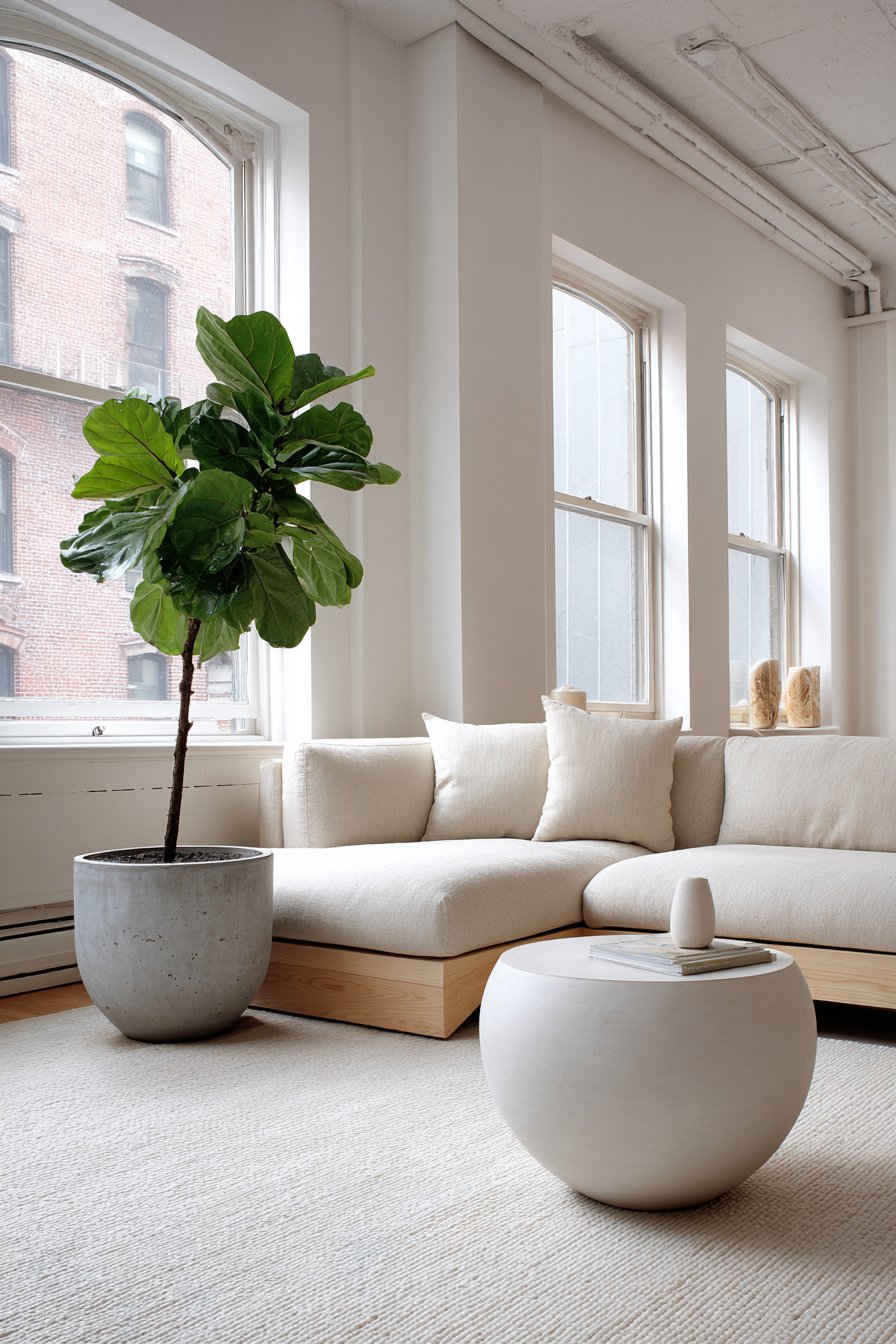
A comfortable sectional in natural beige linen features simple cushions and visible wooden base. The light maple base adds warmth while maintaining the airy aesthetic. A handcrafted ceramic coffee table in matte white glaze provides an organic centerpiece. The table’s sculptural form elevates it beyond mere functionality.
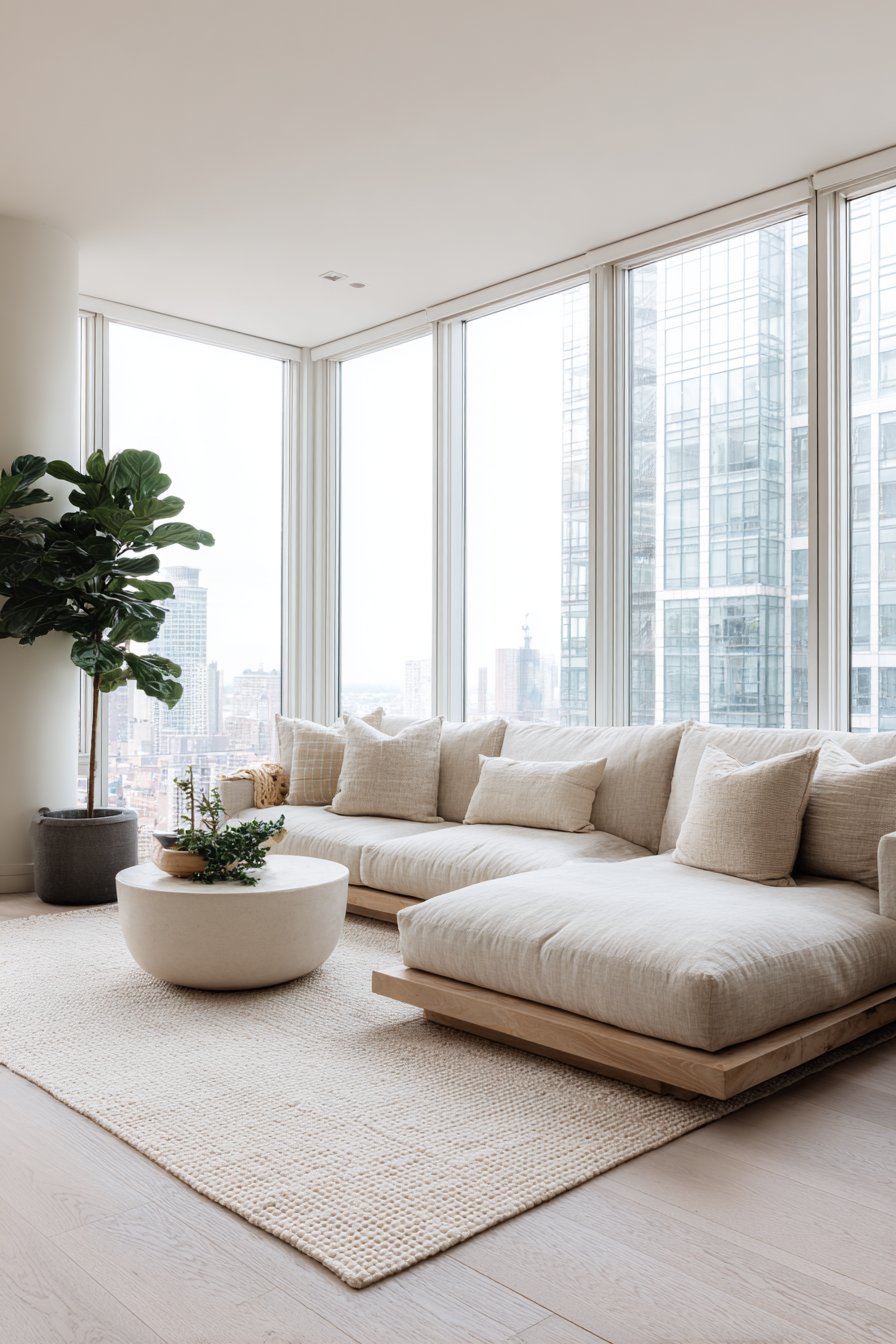
A simple cotton dhurrie rug in ivory grounds the seating area with soft texture. One potted fiddle leaf fig in a minimalist concrete planter adds dramatic vertical interest. Large windows without treatments allow maximum natural light to flood the space. The abundant illumination eliminates the need for daytime artificial lighting.
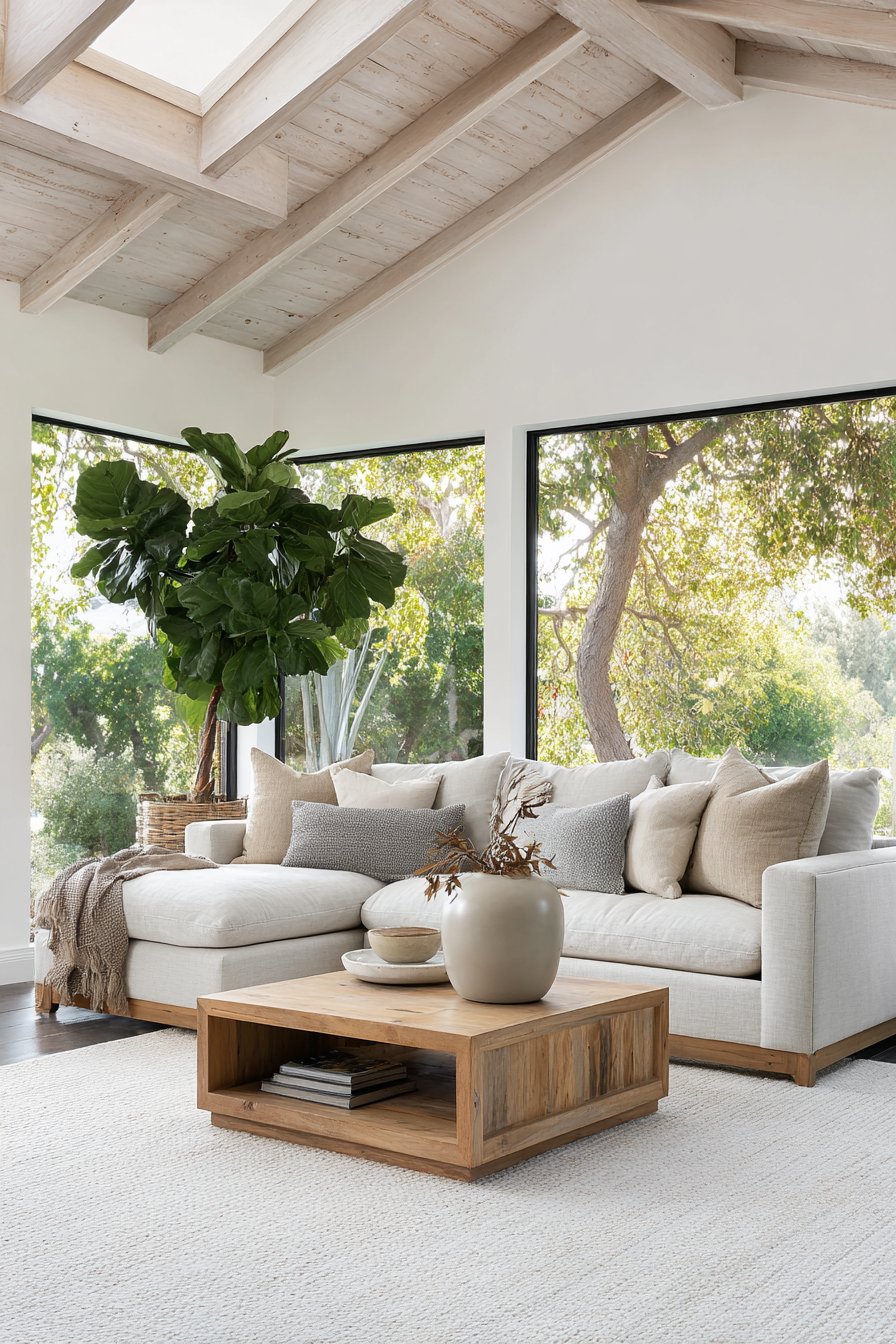
Airy openness characterizes this design’s generous spirit. The untreated windows celebrate views and daylight. The beige linen blends seamlessly with natural light. The single large plant creates impact without cluttering surfaces. This approach demonstrates confidence in simplicity’s power.
Key Design Tips:
- Leave windows untreated when privacy and light control allow
- Choose furniture with exposed wooden bases to reduce visual weight
- Use handcrafted ceramic tables as sculptural focal points
- Select cotton dhurrie rugs for affordable natural fiber options
- Display one large dramatic plant rather than multiple small ones
- Keep sectionals in light neutral tones to maintain airiness
12. Chocolate Leather Understated Elegance
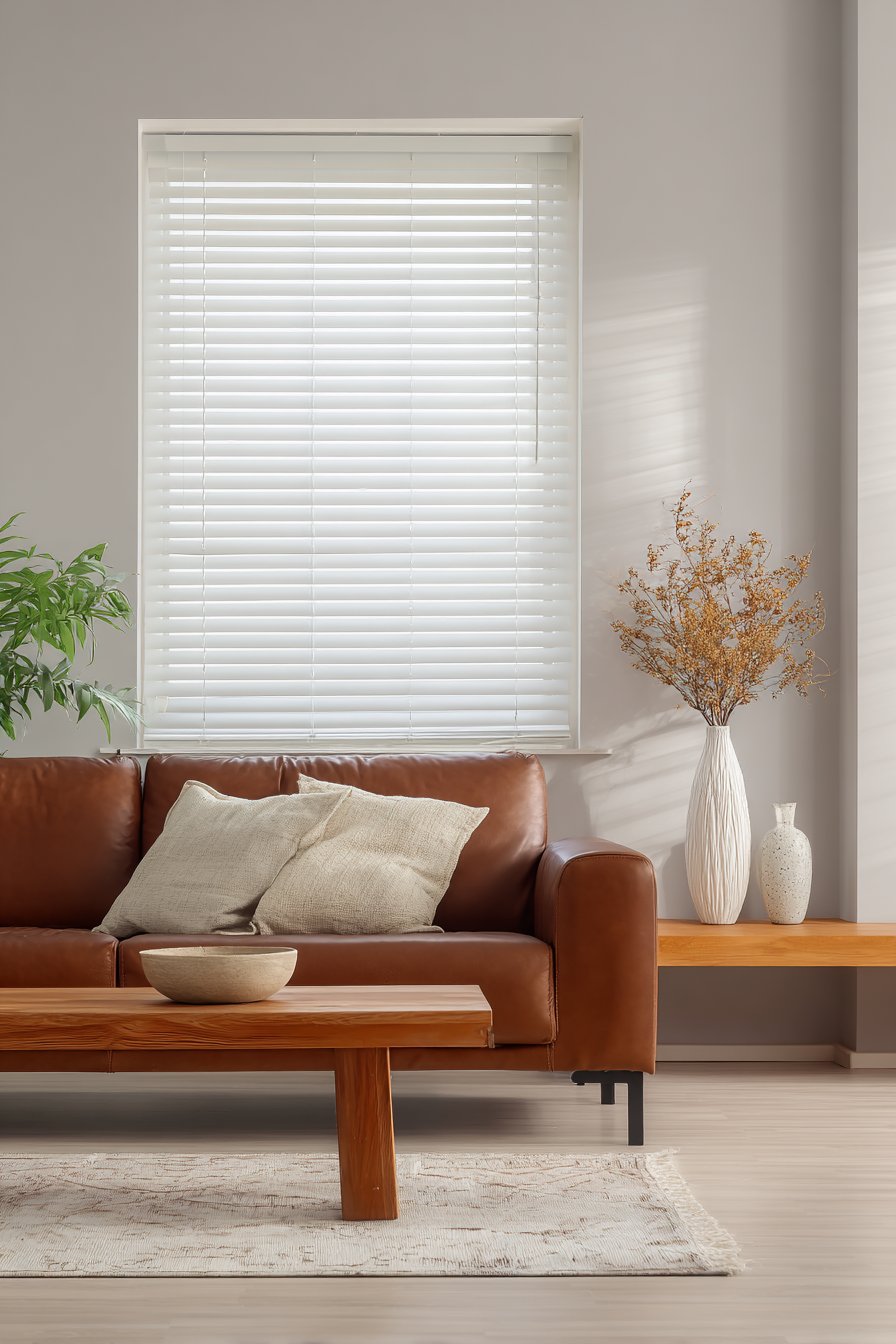
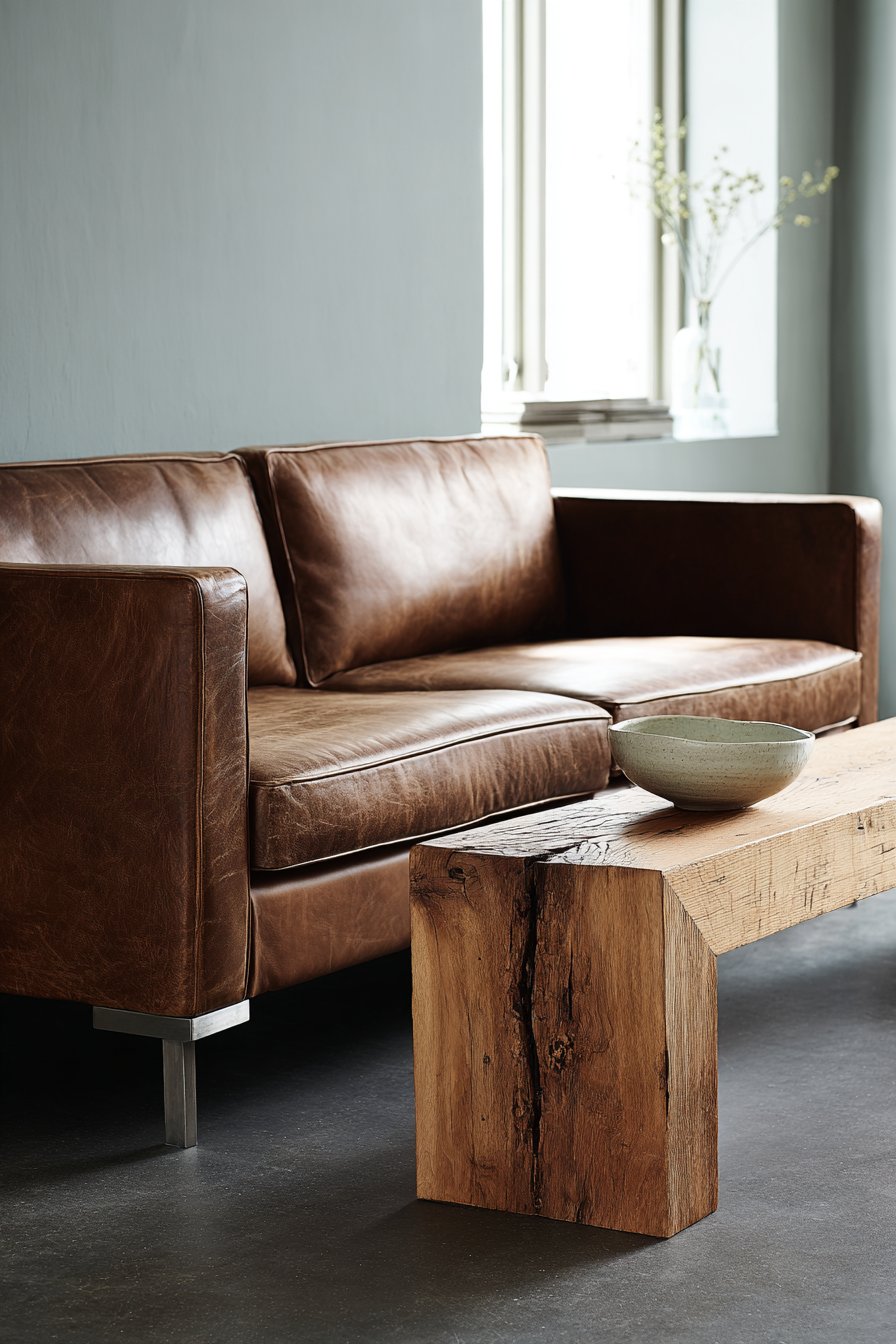
A streamlined two-seater sofa in rich chocolate brown leather showcases natural aging characteristics. The leather’s authentic patina tells stories of use and time. Simple metal legs maintain contemporary appeal beneath classic upholstery. A minimal wooden bench made from solid teak serves dual purpose as coffee table.
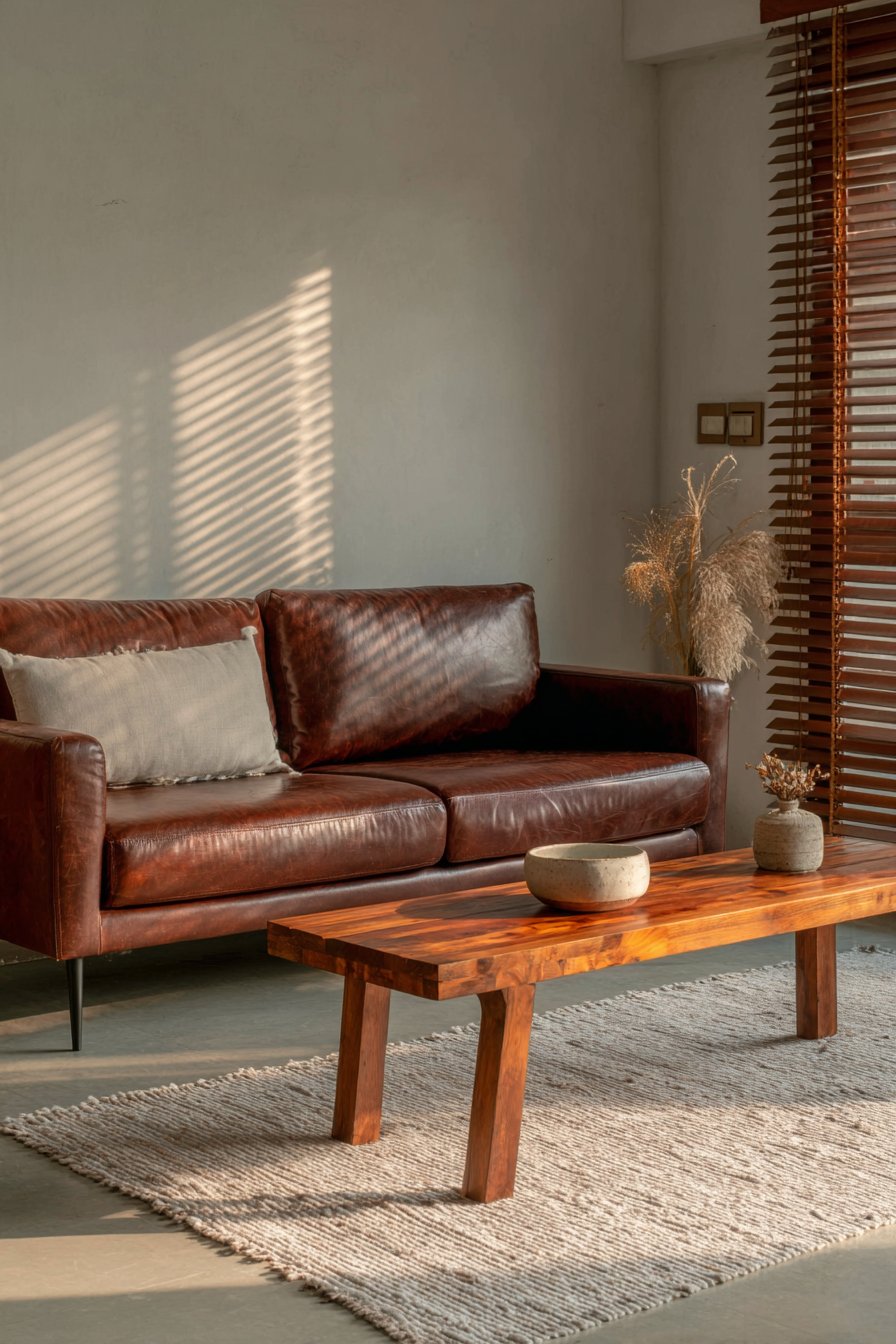
The teak bench’s rich honey tone complements the chocolate leather beautifully. A single handmade ceramic bowl tops the bench with simple elegance. Light grey walls reflect diffused morning light from nearby windows. Simple white Roman shades provide privacy without overwhelming the architecture.
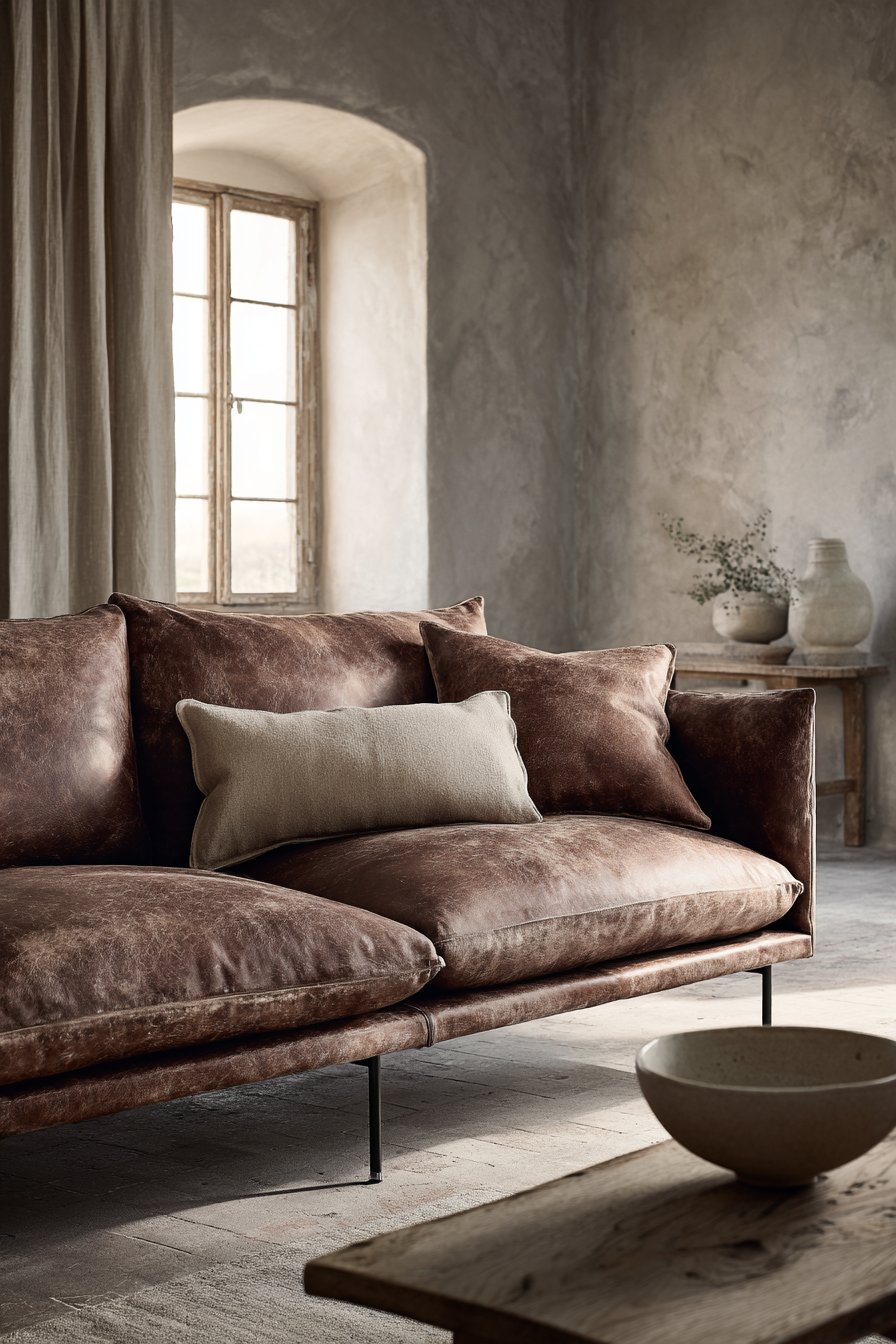
Understated elegance pervades this carefully composed space. Quality materials speak through their inherent beauty rather than ornate details. The chocolate leather brings masculine warmth without heaviness. The teak bench’s solid construction promises decades of service. This investment in quality creates rooms that transcend trends.
Key Design Tips:
- Choose quality leather in rich tones like chocolate for timeless appeal
- Use wooden benches as versatile coffee table alternatives
- Select solid tropical hardwoods like teak for durability and beauty
- Paint walls in light grey for sophisticated neutral backgrounds
- Display single handcrafted pieces rather than multiple accessories
- Combine warm furniture tones with cool wall colors for balance
13. Japanese Low-Profile Zen
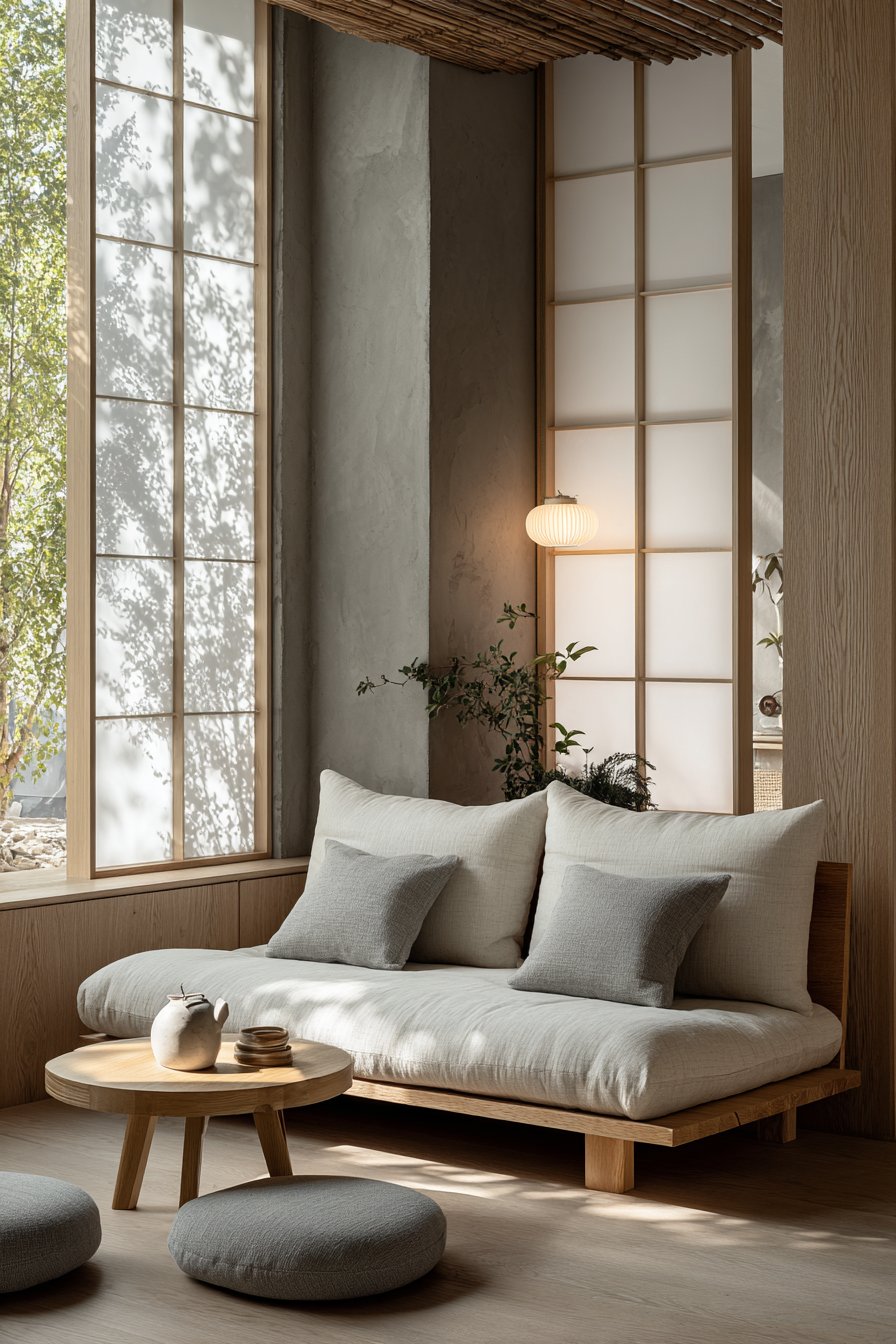
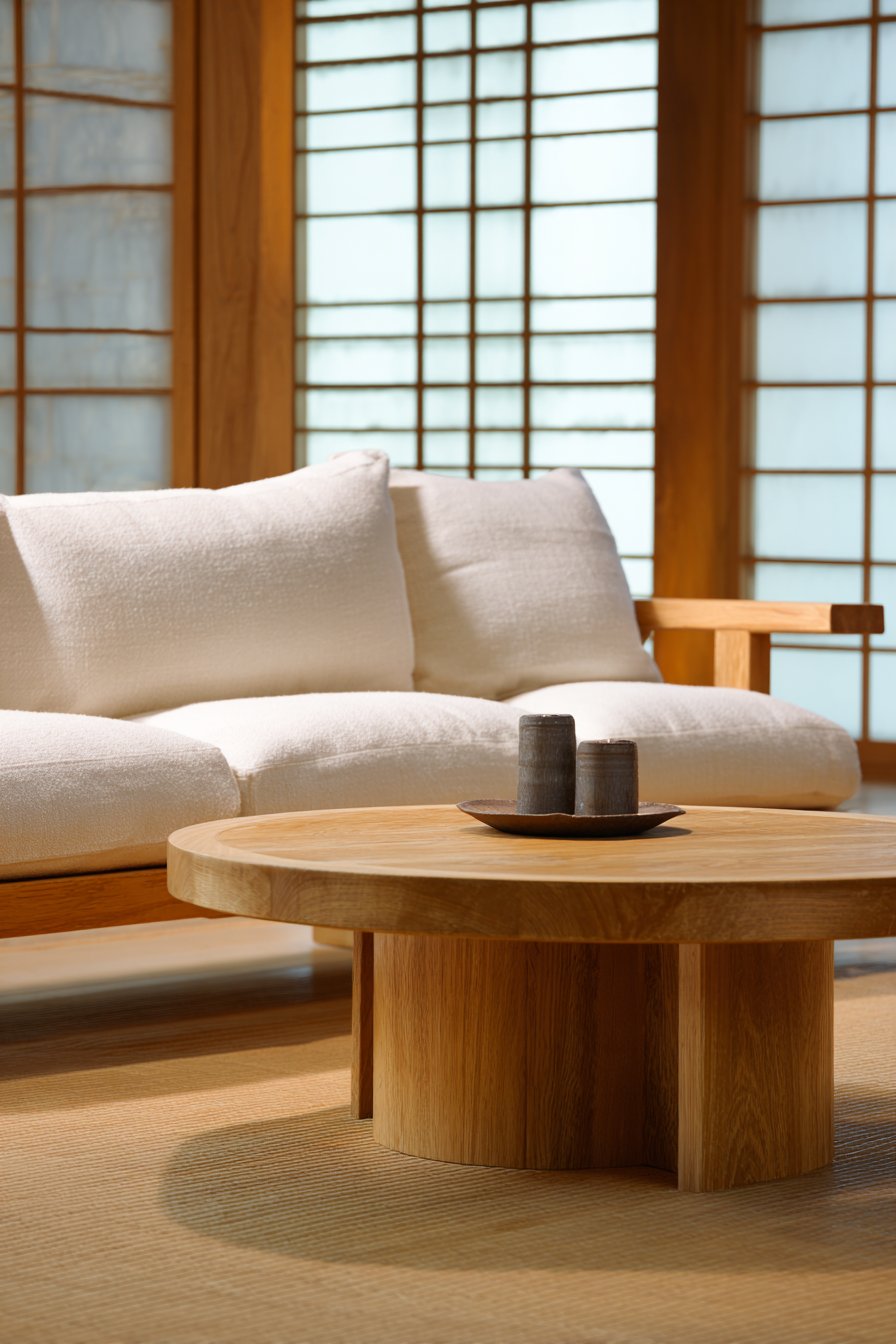
A low Japanese-style sofa in natural oatmeal cotton features wooden armrests in light oak. The design emphasizes horizontal lines and connection with the ground. Two floor cushions in soft grey linen provide additional casual seating. The cushions can be arranged flexibly or stored away completely.
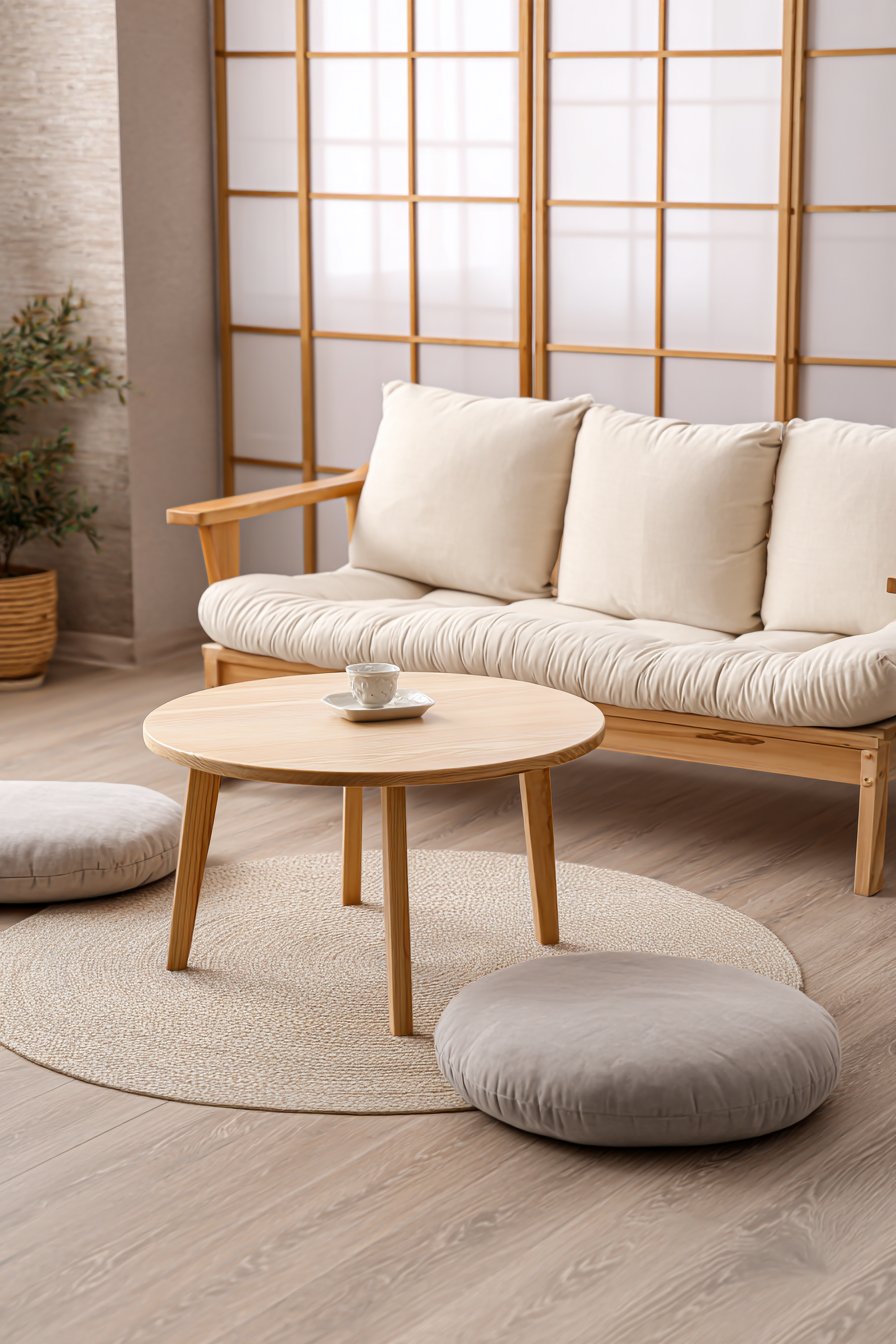
A simple round coffee table in natural bamboo sits on tatami-style matting. The bamboo’s organic rings and natural color add subtle interest. Shoji screen-inspired window panels filter gentle daylight throughout the space. The diffused light creates even illumination without harsh shadows.
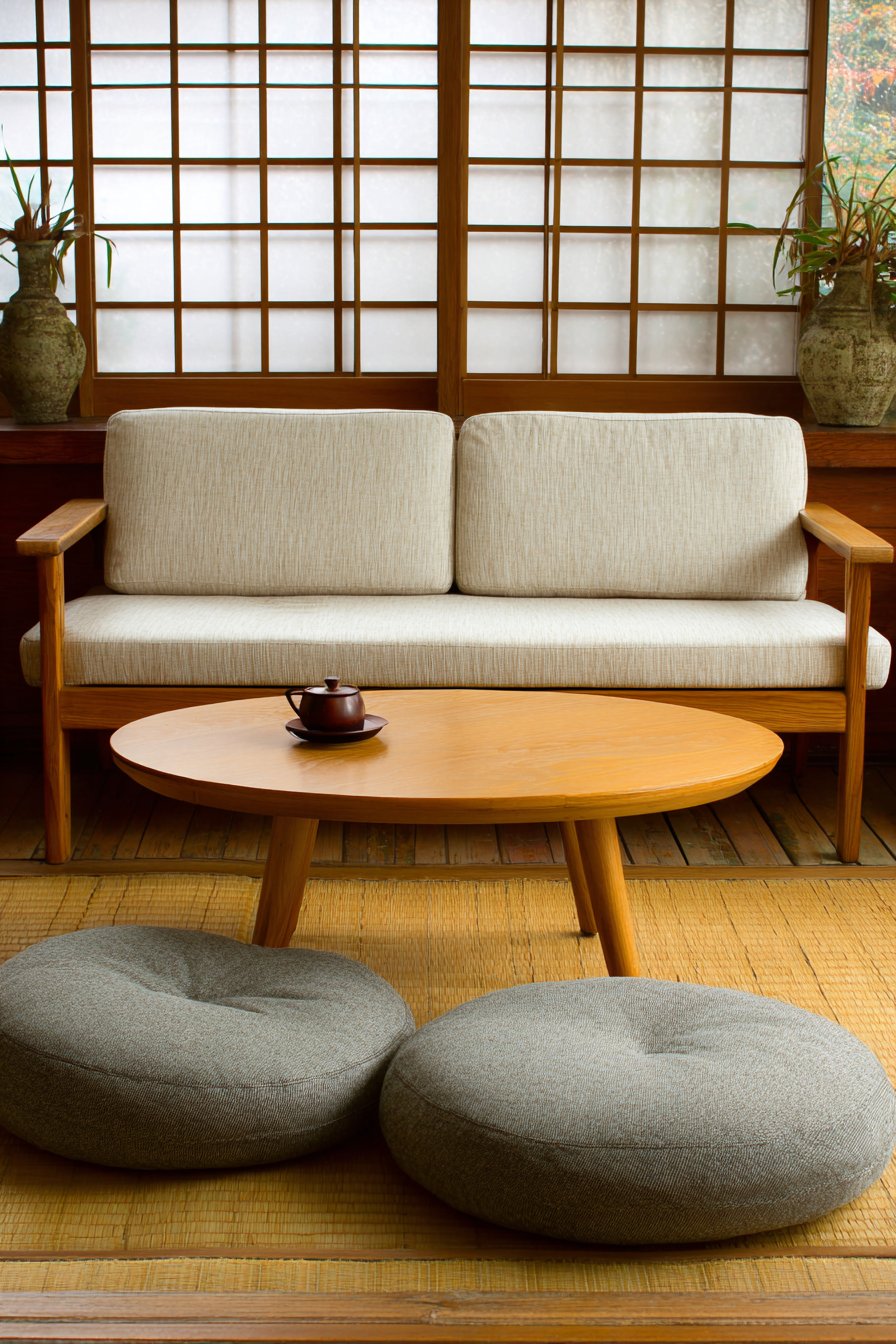
Zen-like tranquility emerges from this design’s mindful simplicity. Every element contributes to the peaceful atmosphere. The low furniture encourages grounded presence and mindful living. The natural materials age gracefully over time. This approach creates sanctuaries from modern life’s overwhelming pace.
Key Design Tips:
- Embrace low-profile furniture for Japanese-inspired zen aesthetics
- Use tatami-style matting for authentic texture and cultural reference
- Install shoji screen-inspired panels for filtered natural light
- Choose bamboo furniture for sustainable beauty and natural appeal
- Incorporate floor cushions for flexible casual seating arrangements
- Select oatmeal and grey tones for calming neutral palettes
14. Sand Modular Practicality
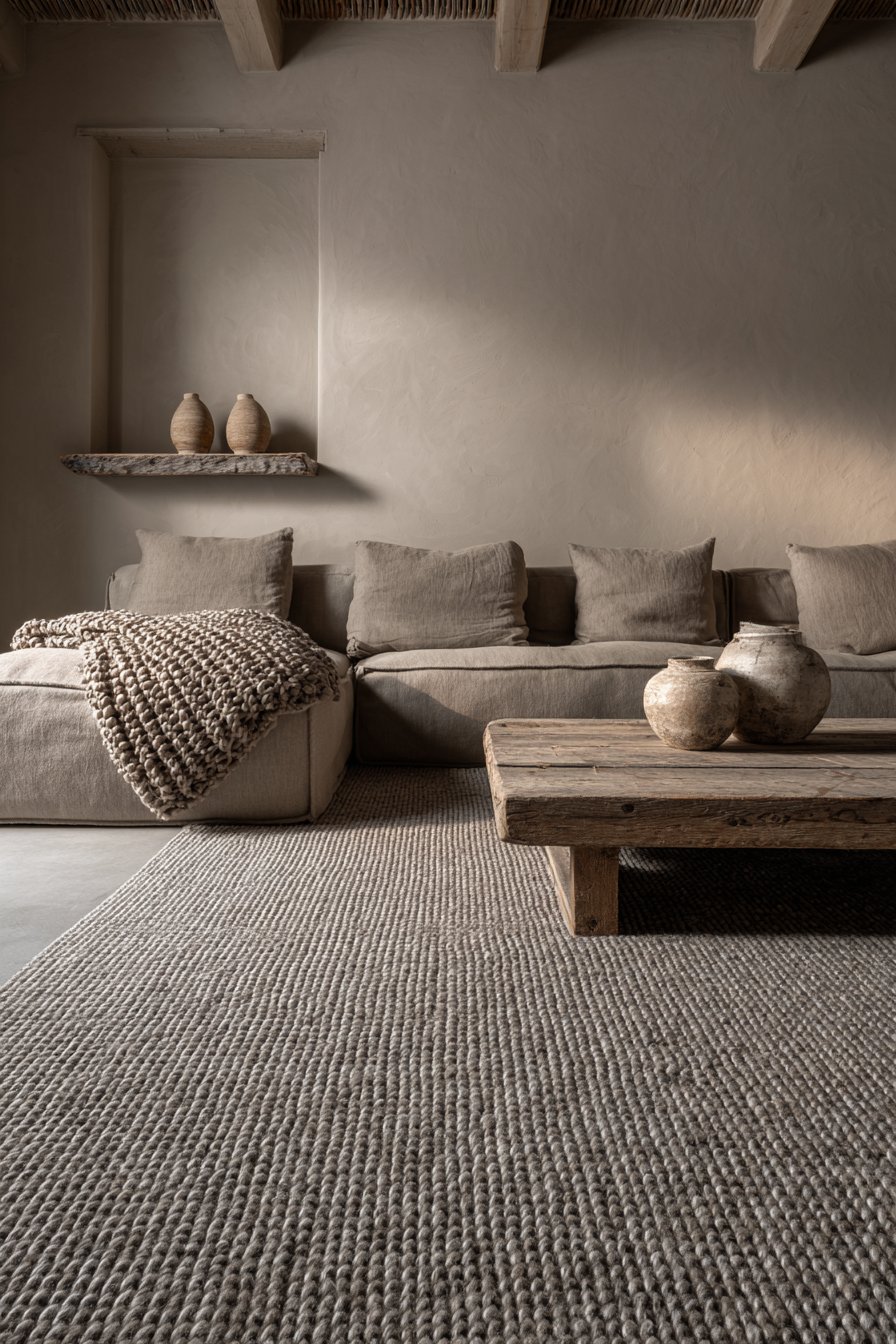
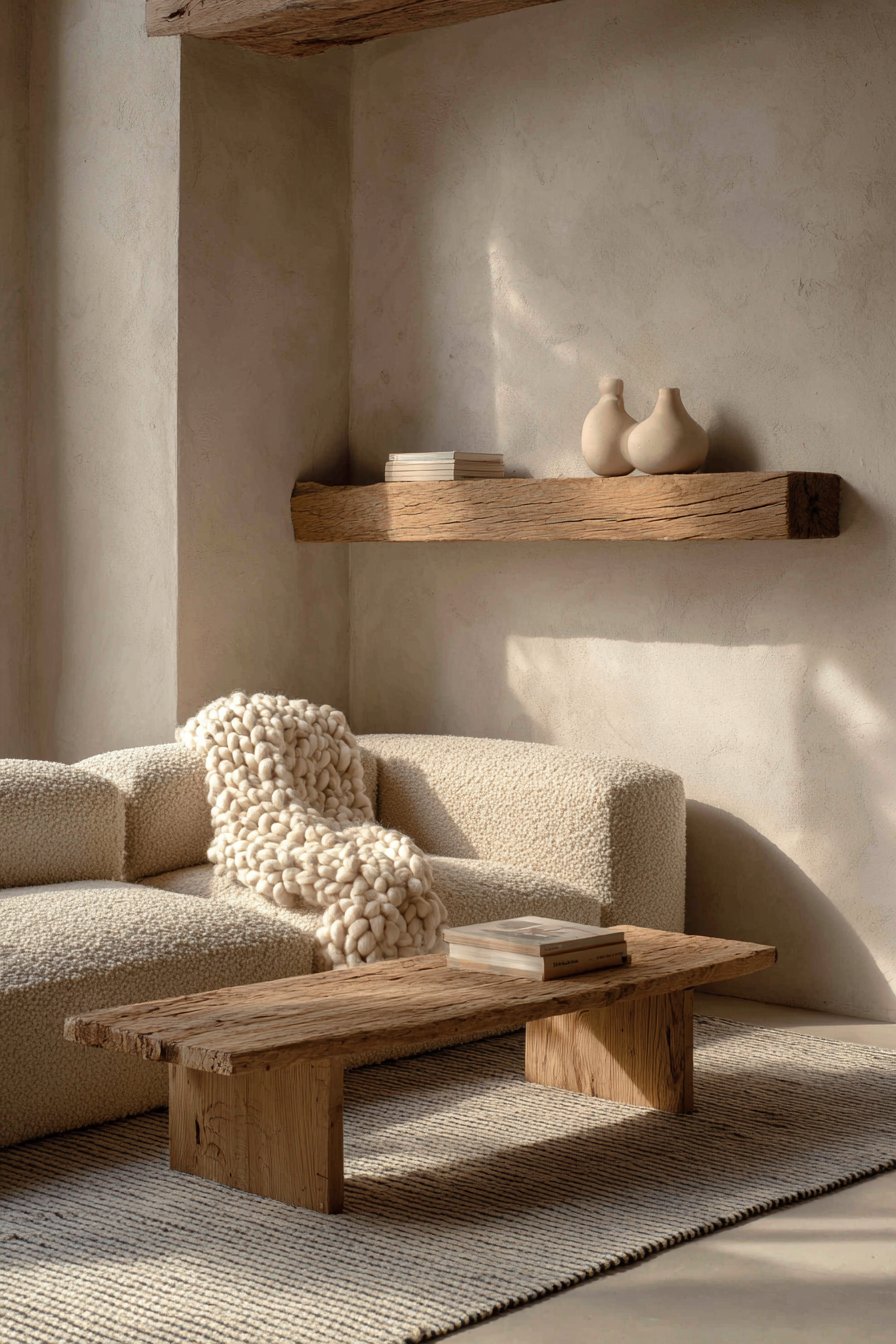
A modular sofa in textured sand-colored fabric is arranged in simple L-configuration. The neutral tone works with various color schemes and seasonal changes. One chunky knit blanket in natural wool adds cozy texture. The modular design adapts as living needs evolve over time.
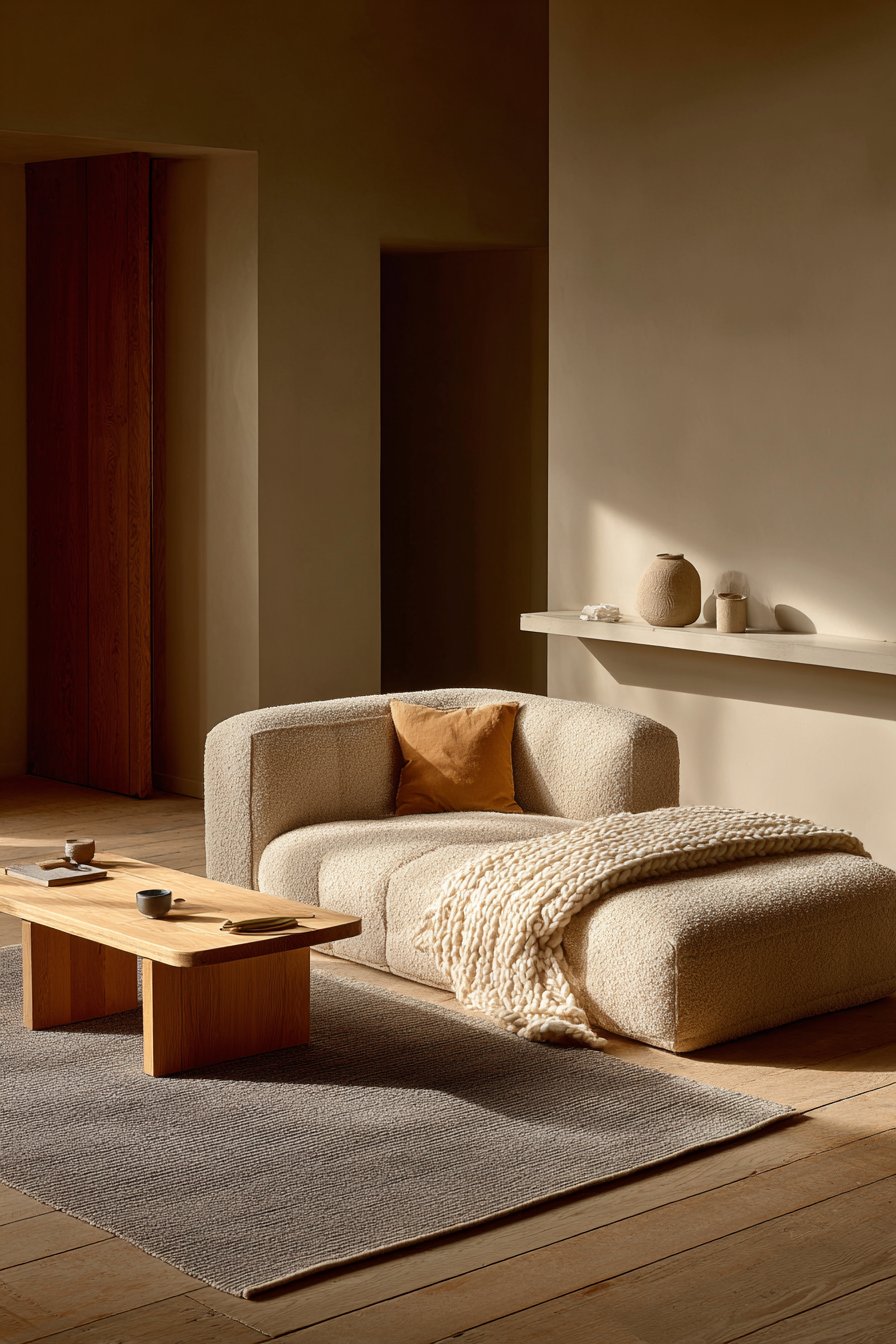
A minimalist coffee table with hairpin legs and reclaimed wood top brings industrial-vintage fusion. The hairpin legs provide structural interest with minimal material. A simple flat-weave rug in warm grey anchors the furniture grouping. Two small sculptural ceramic objects on a floating shelf provide subtle decoration.
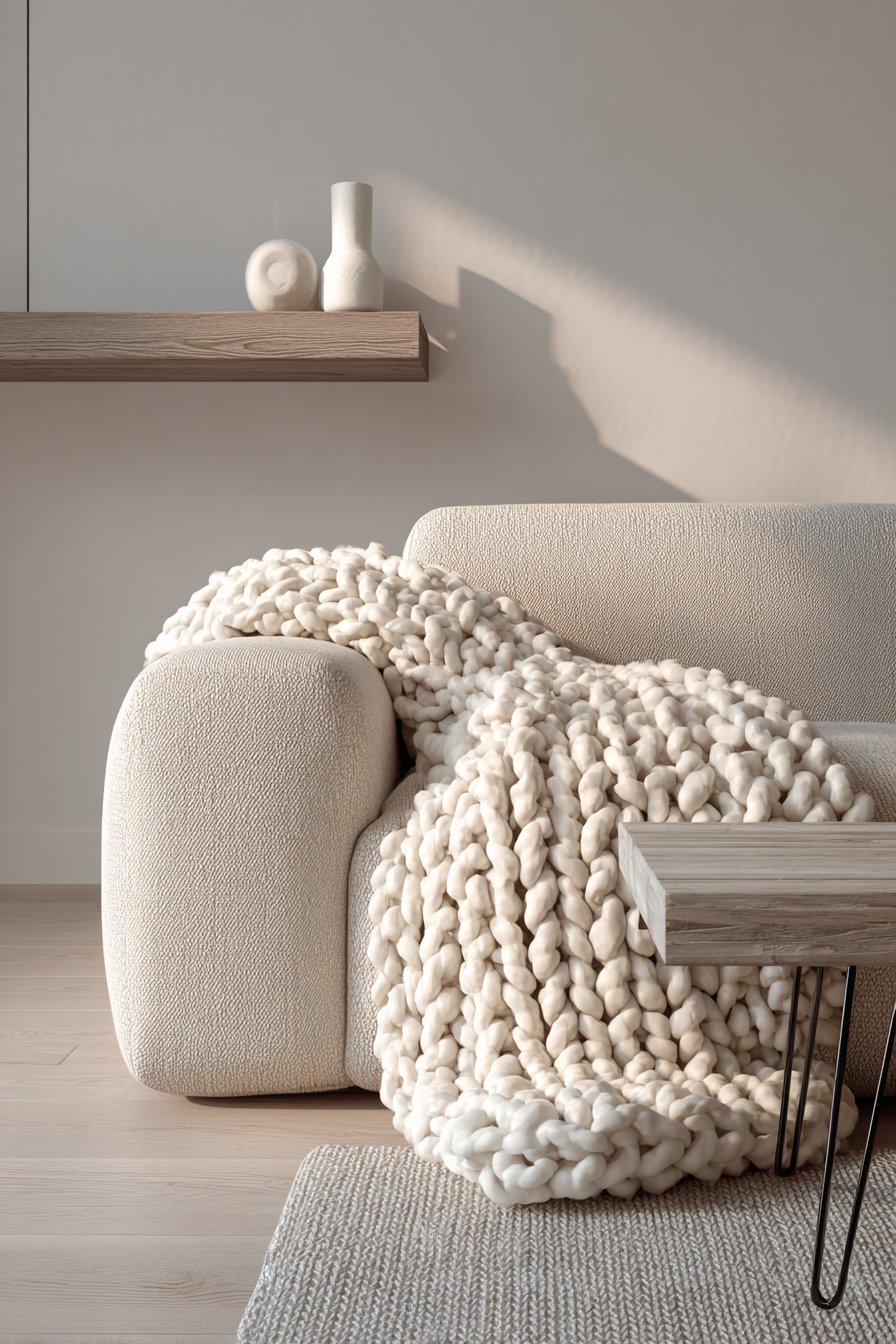
Functional comfort guides this practical design approach. The modular sofa reconfigures for different activities and gatherings. The reclaimed wood table brings sustainability and character. Natural afternoon light creates soft highlights that change throughout the day. This flexibility supports modern living’s diverse needs.
Key Design Tips:
- Choose modular sofas for maximum flexibility and reconfiguration options
- Use hairpin legs on tables for an industrial-minimalist character
- Combine reclaimed wood with modern metal for contemporary vintage style
- Select flat-weave rugs for easy maintenance and minimalist appeal
- Display two or three small objects rather than large collections
- Opt for sand and warm grey tones for versatile neutral palettes
15. Sage Velvet Sophistication
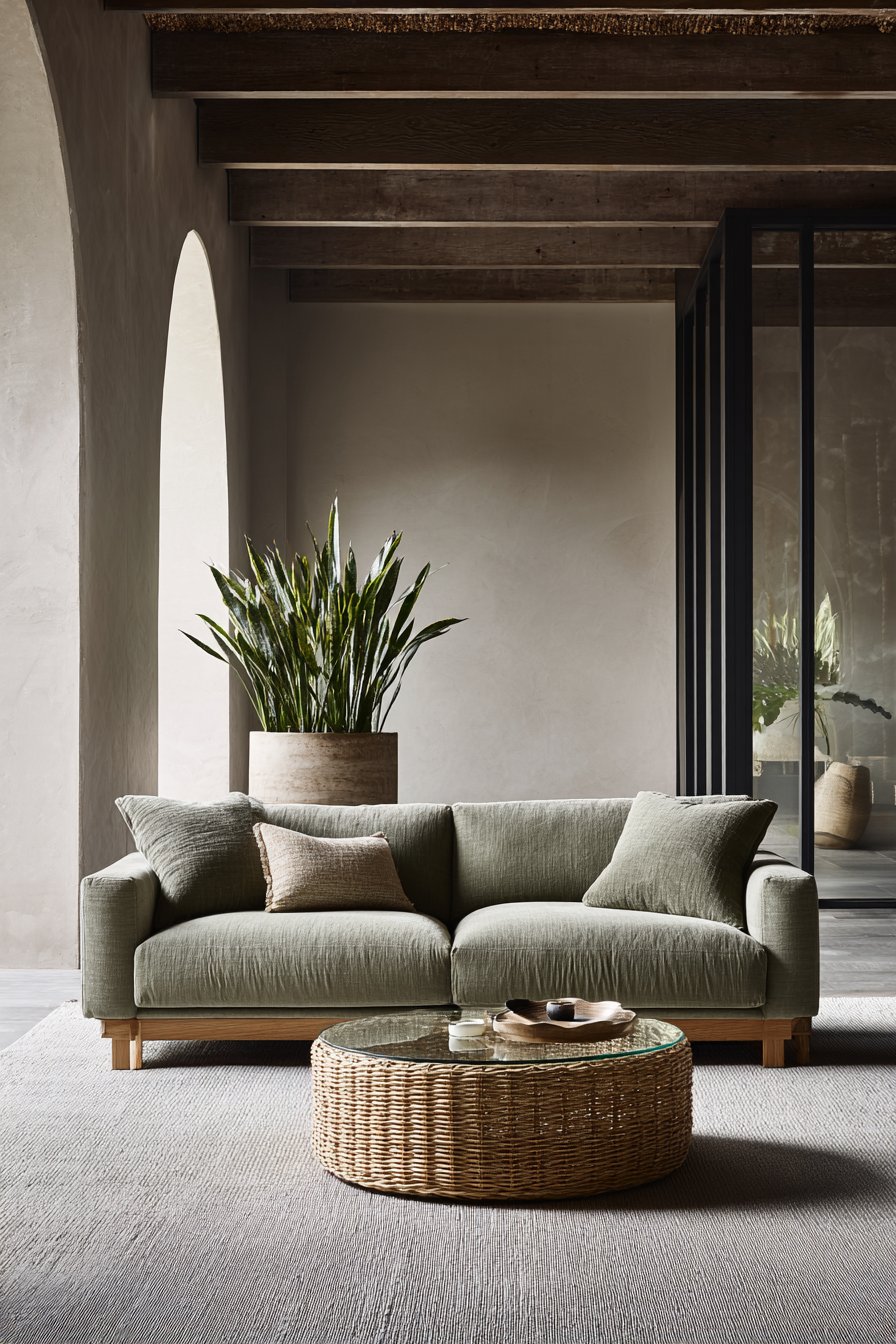
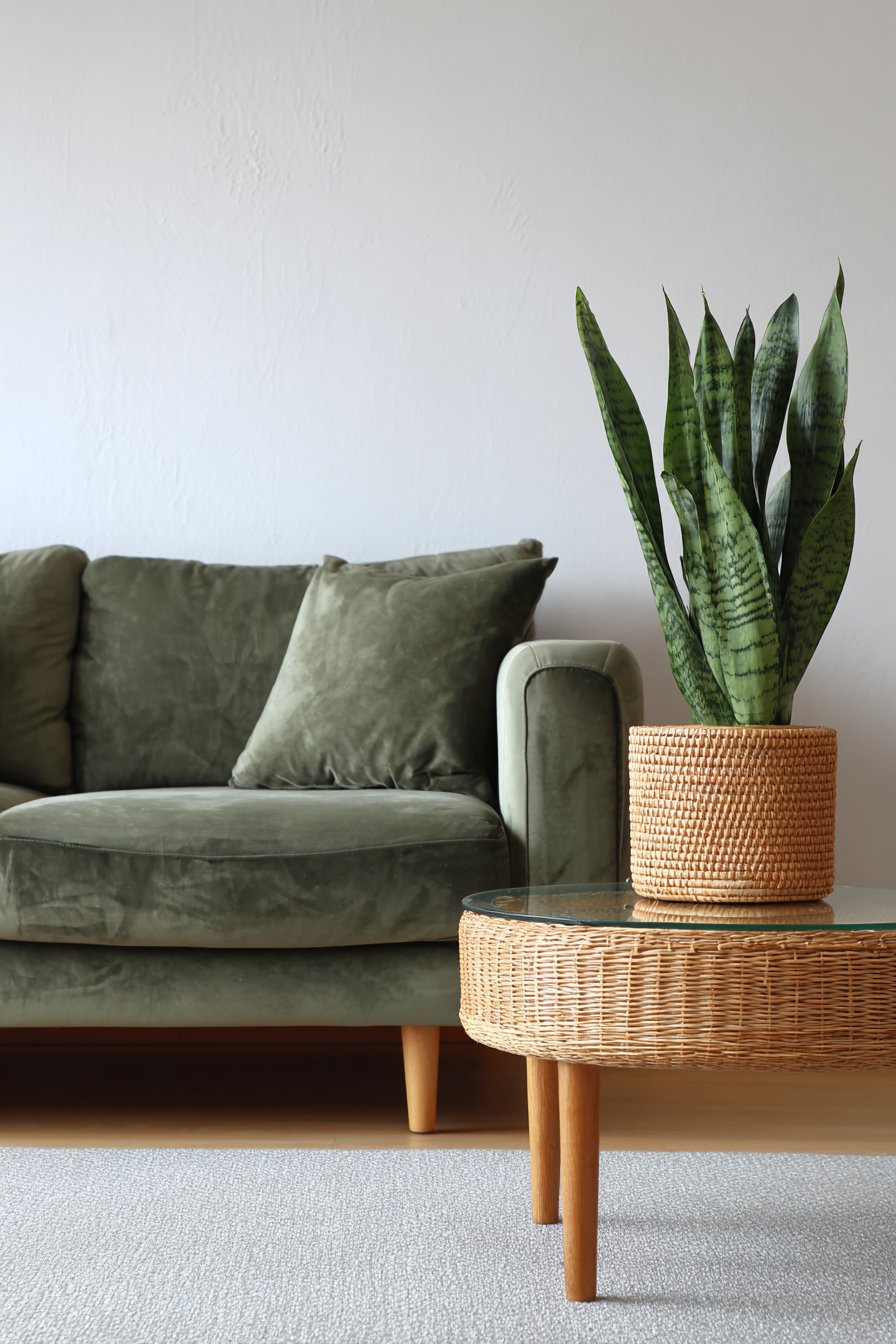
A contemporary sofa in muted sage green velvet brings sophisticated color to this refined space. The velvet’s subtle sheen catches and reflects light beautifully. Clean proportions and exposed wooden feet in walnut maintain minimalist discipline. A simple drum-style coffee table in natural rattan with glass top centers the composition.
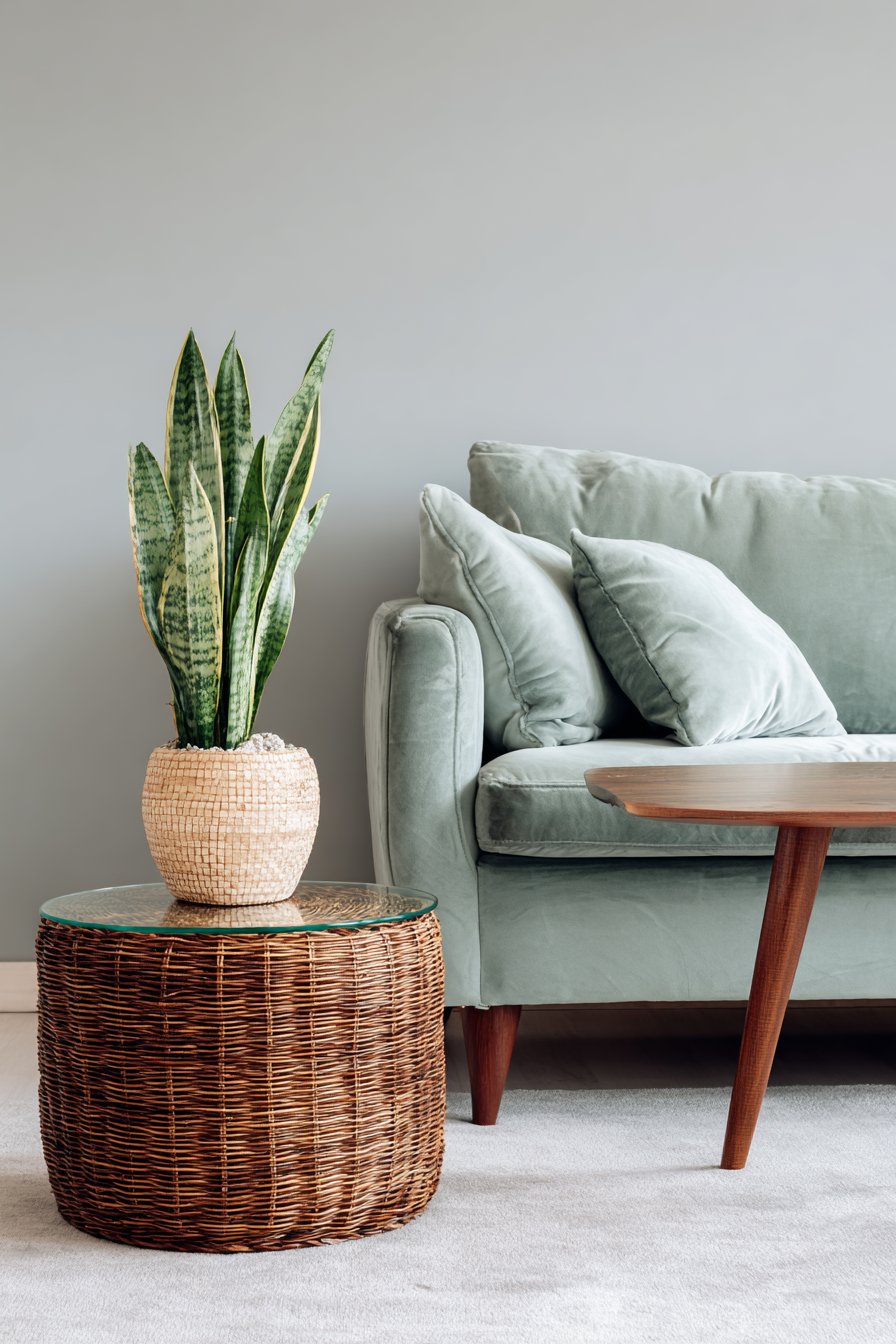
The rattan’s organic texture contrasts elegantly with the smooth velvet upholstery. Light grey carpeting provides soft foundation throughout the room. One large potted snake plant in a ceramic planter adds organic texture and air-purifying benefits. Recessed lighting combined with natural window light creates balanced illumination throughout the day.
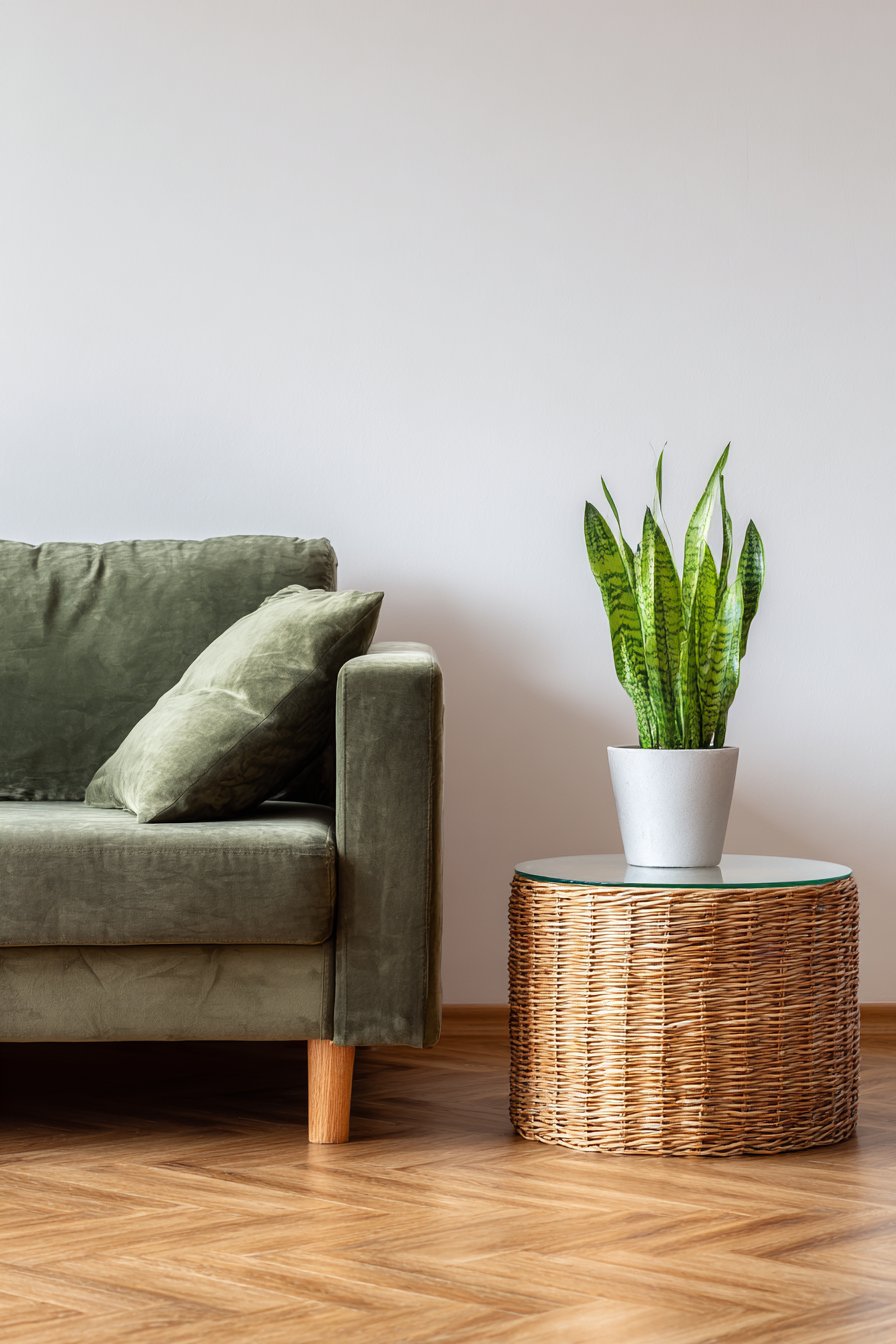
Sophisticated simplicity characterizes this design’s refined restraint. The sage velvet adds luxury without ostentation. The rattan table brings handcrafted quality to contemporary design. The single dramatic plant creates impact through scale rather than quantity. This approach demonstrates how less truly becomes more.
Key Design Tips:
- Introduce velvet upholstery for tactile luxury and subtle sheen
- Choose muted accent colors like sage green for sophisticated palettes
- Use rattan furniture with glass tops for organic-modern fusion
- Select snake plants for dramatic form and low maintenance needs
- Install recessed lighting to maintain clean ceiling lines
- Combine natural and artificial light sources for layered illumination
16. Flax Linen Daybed Serenity
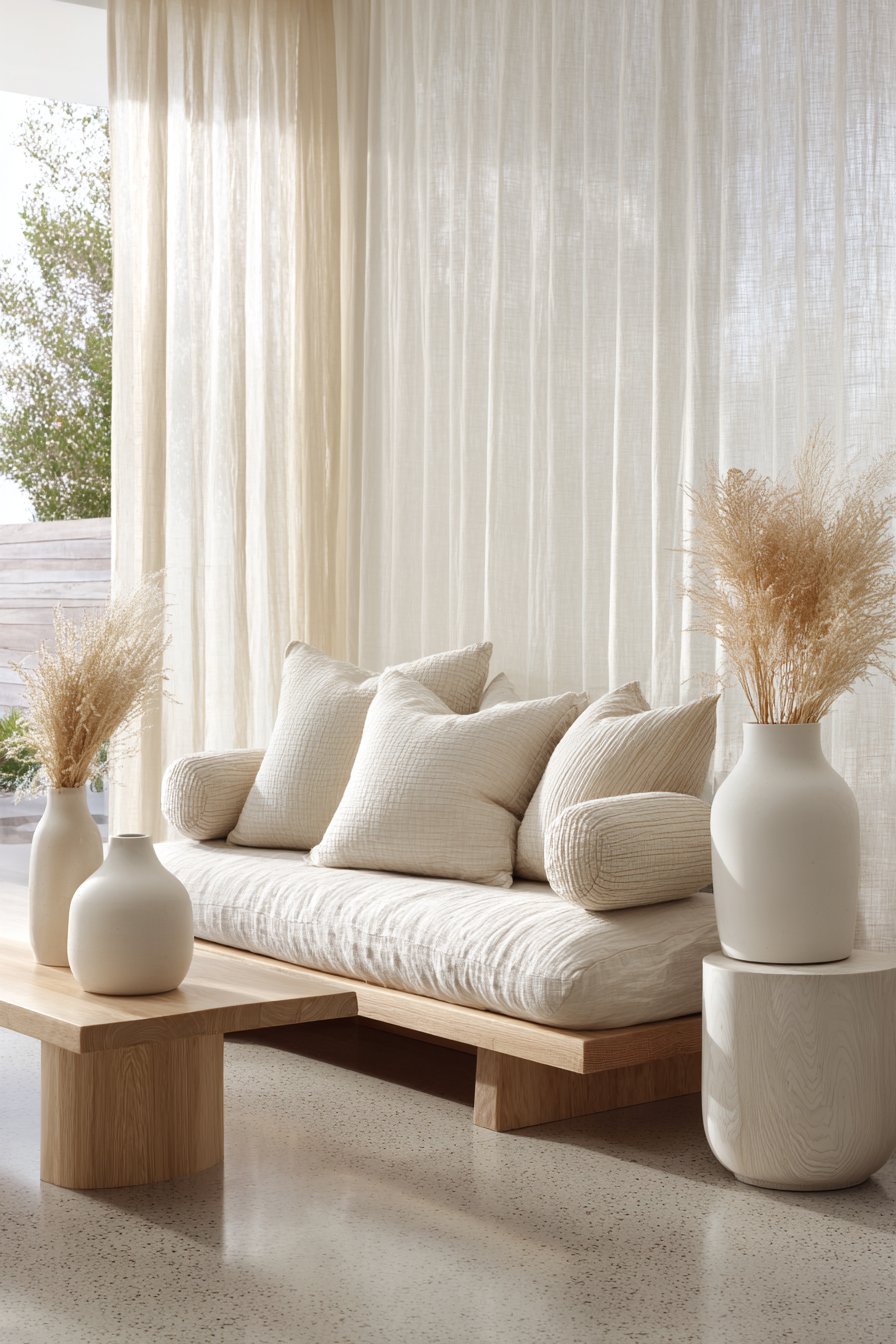
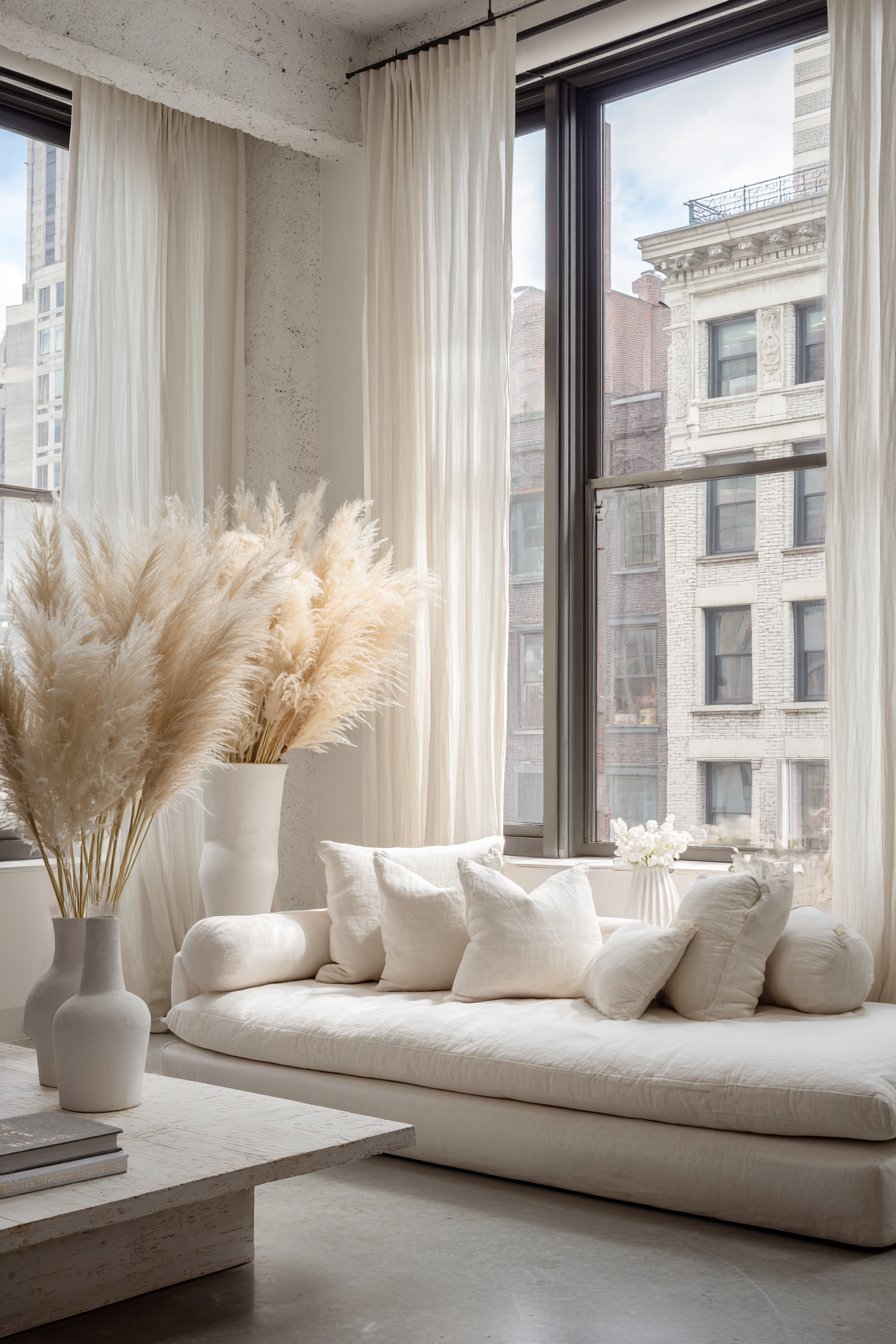
A comfortable daybed-style sofa in natural flax linen features multiple bolster pillows. The pillows in coordinating neutral tones create comfortable support for lounging. A low square coffee table in light ash wood with visible grain anchors the space. Polished concrete flooring provides an industrial-minimalist foundation.
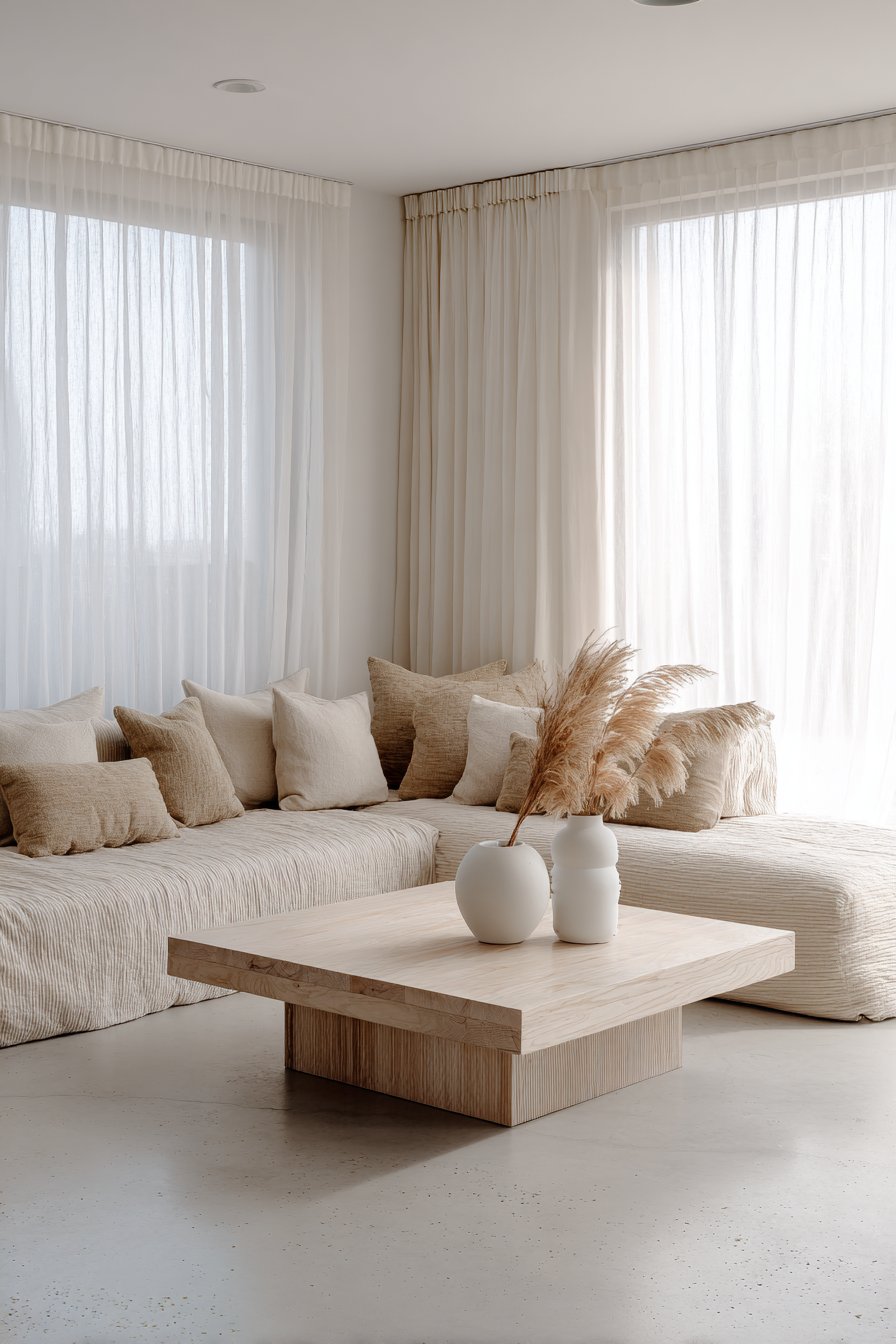
Simple white ceramic vases of varying heights hold minimal dried grasses. The varied heights create visual rhythm without complexity. Large windows with sheer linen panels allow soft diffused natural light throughout the day. The abundant light transforms the space’s character from morning through evening.
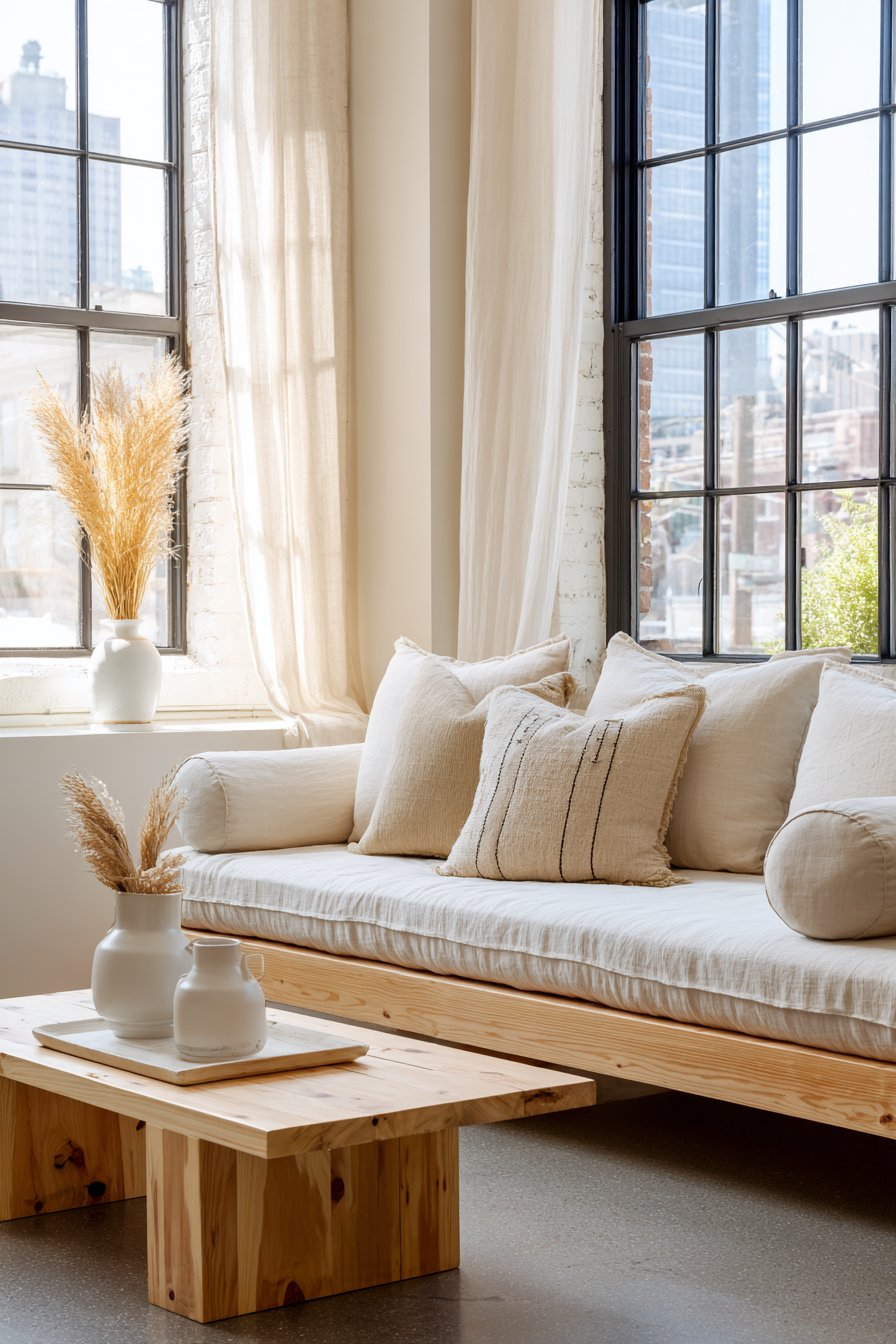
Inviting serenity emerges from this design’s peaceful composition. The daybed encourages afternoon napping and relaxed reading. The dried grasses bring nature indoors without demanding care. The concrete floor’s cool surface balances the warm textiles. This combination creates spaces for genuine rest and restoration.
Key Design Tips:
- Use daybed-style sofas for versatile seating and lounging options
- Include multiple bolster pillows for comfortable back support
- Display dried grasses in varying heights for natural vertical interest
- Choose polished concrete for durable low-maintenance flooring
- Install sheer linen curtains for soft diffused natural lighting
- Select light ash wood furniture to maintain bright airy atmosphere
17. Grey Wool Three-Seater Balance
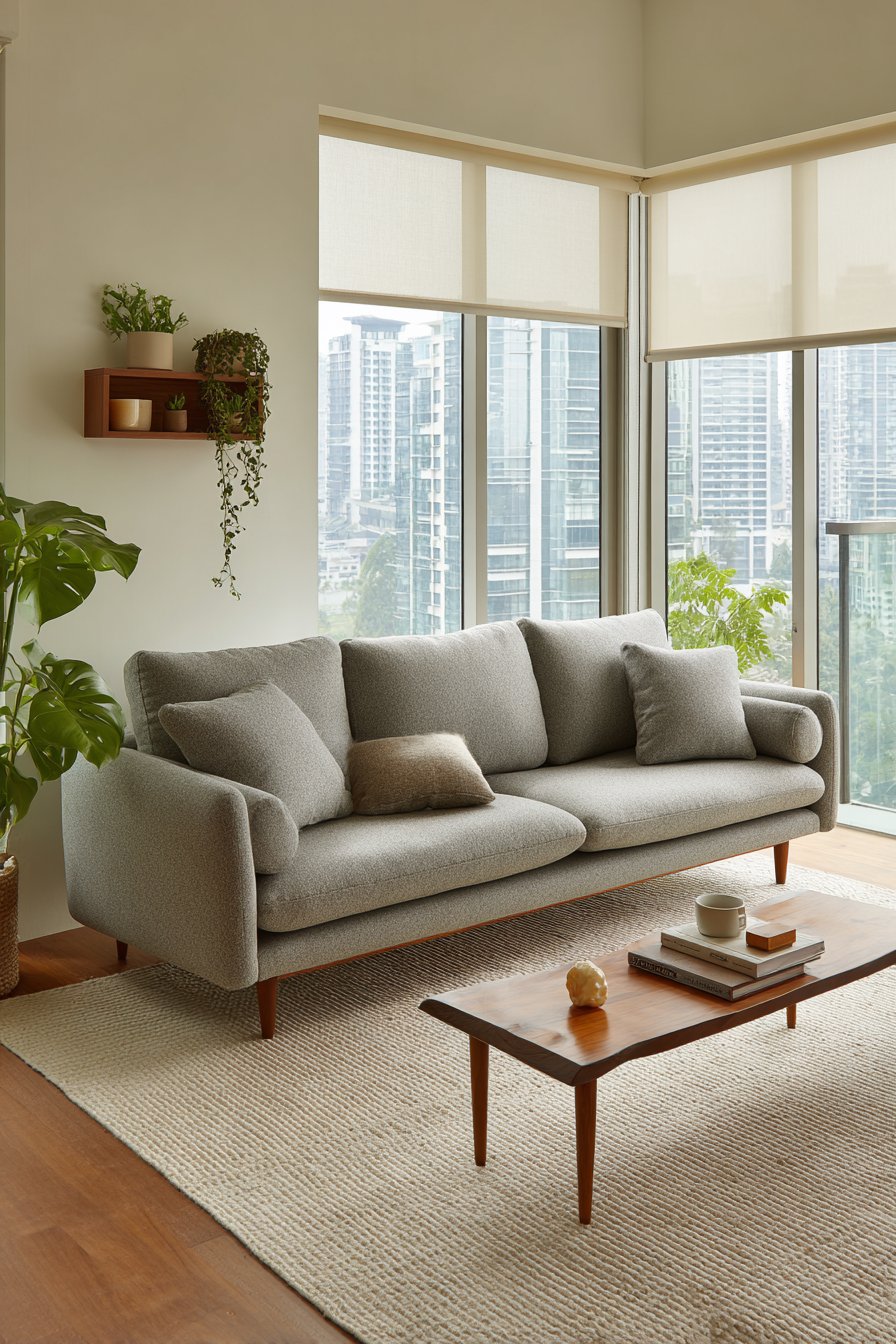
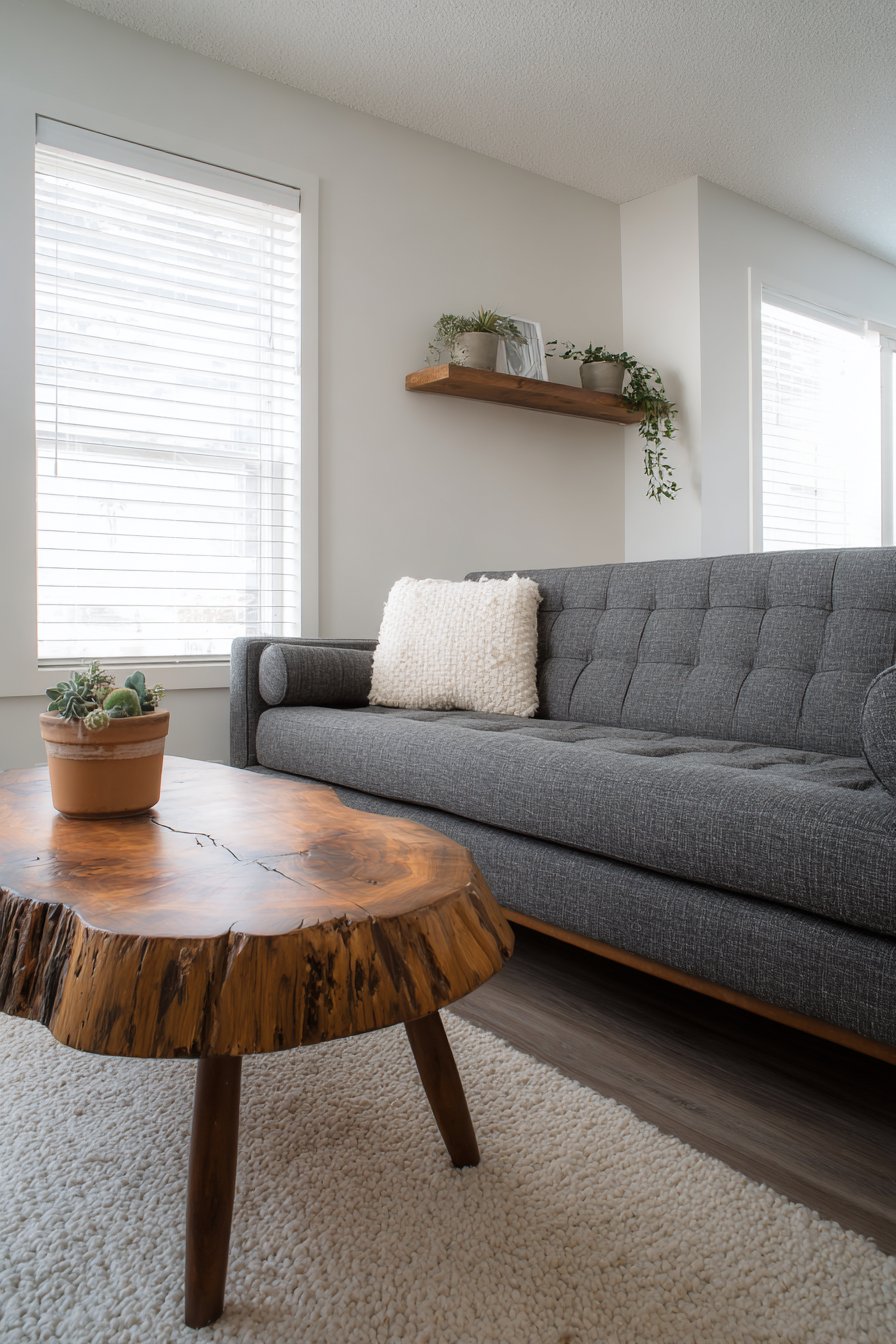
A sleek three-seater sofa in warm grey wool blend fabric features slightly angled arms. The tapered walnut legs add mid-century character to contemporary design. A minimal coffee table made from single slab of live-edge maple celebrates natural beauty. The tree’s original edge remains visible and cherished.
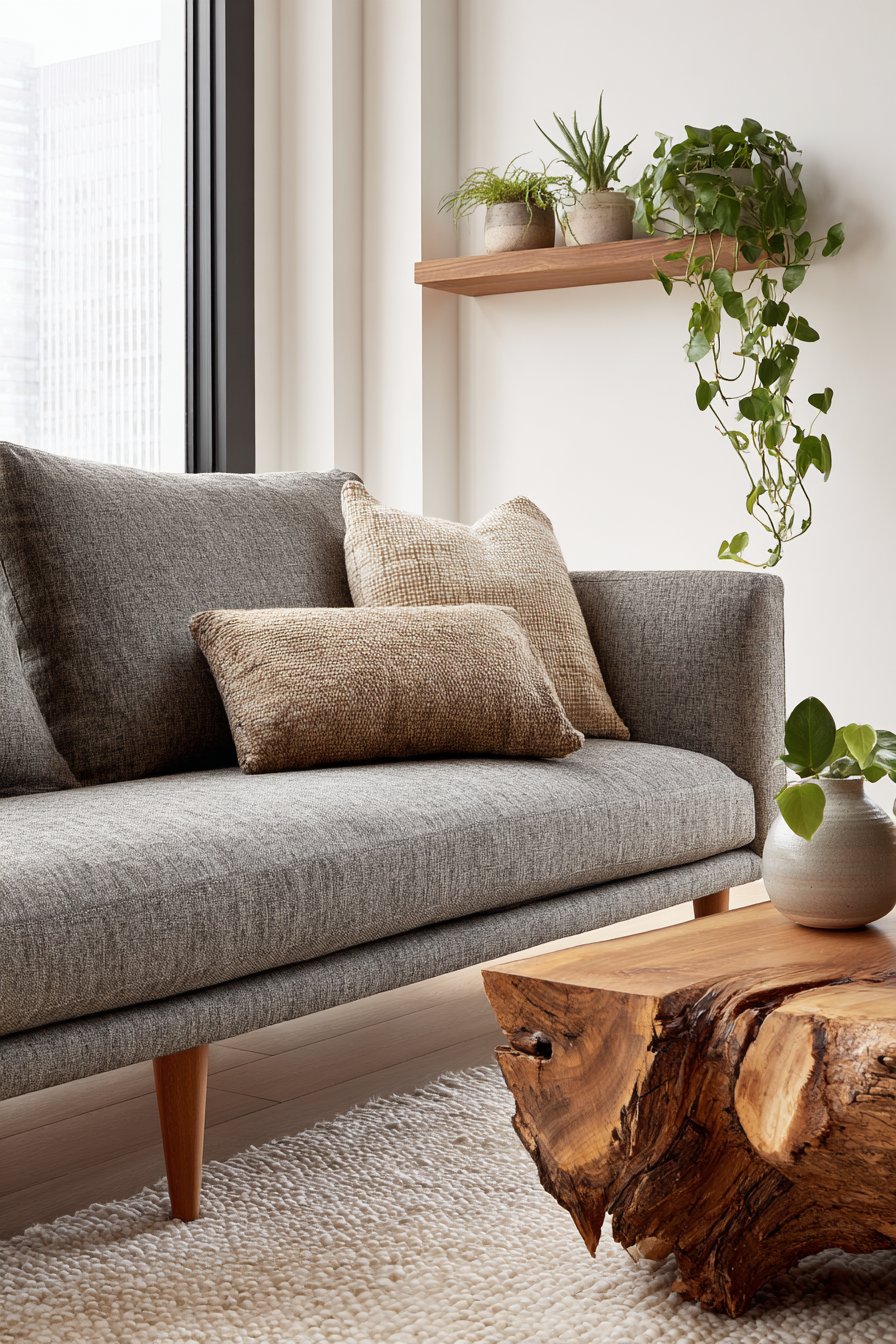
A textured wool rug in cream grounds the seating area with softness. One wall-mounted wooden shelf holds three small ceramic planters with trailing pothos. The cascading plants add living movement to the composed space. Natural morning light streams through simple roller blinds.
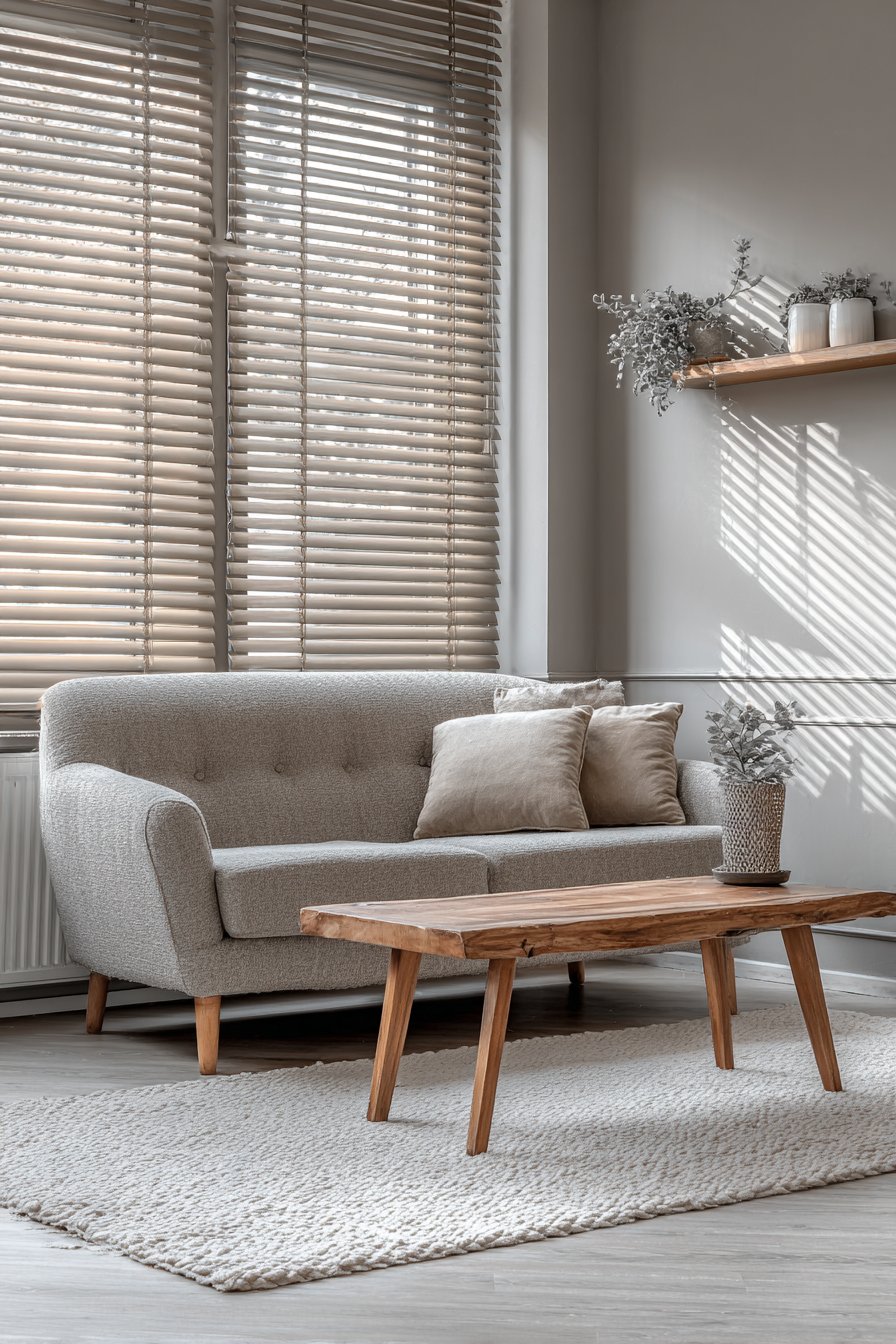
Balance between form and function defines this thoughtful design. The angled arms provide comfortable support while maintaining clean lines. The live-edge table brings organic irregularity to geometric furniture. The trailing plants soften hard architectural elements. This equilibrium creates rooms that feel both beautiful and livable.
Key Design Tips:
- Choose wool blend upholstery for durability and natural comfort
- Use live-edge wood slabs as coffee tables for organic focal points
- Install wall-mounted shelves to display plants without floor clutter
- Select trailing plants like pothos for softening vertical surfaces
- Opt for warm grey tones that bridge cool and warm color temperatures
- Combine mid-century details with contemporary silhouettes
18. Blush Pink Gentle Warmth
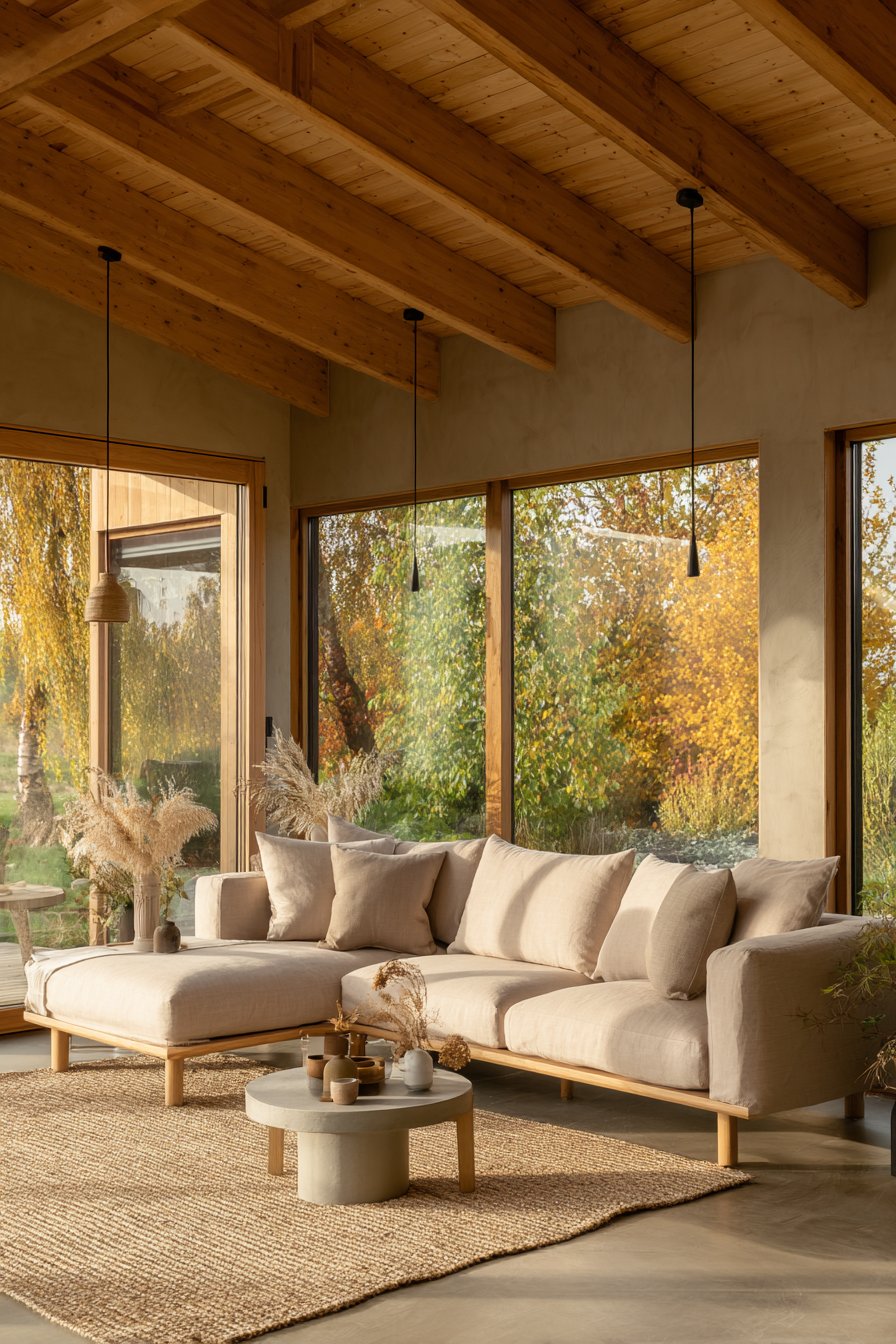
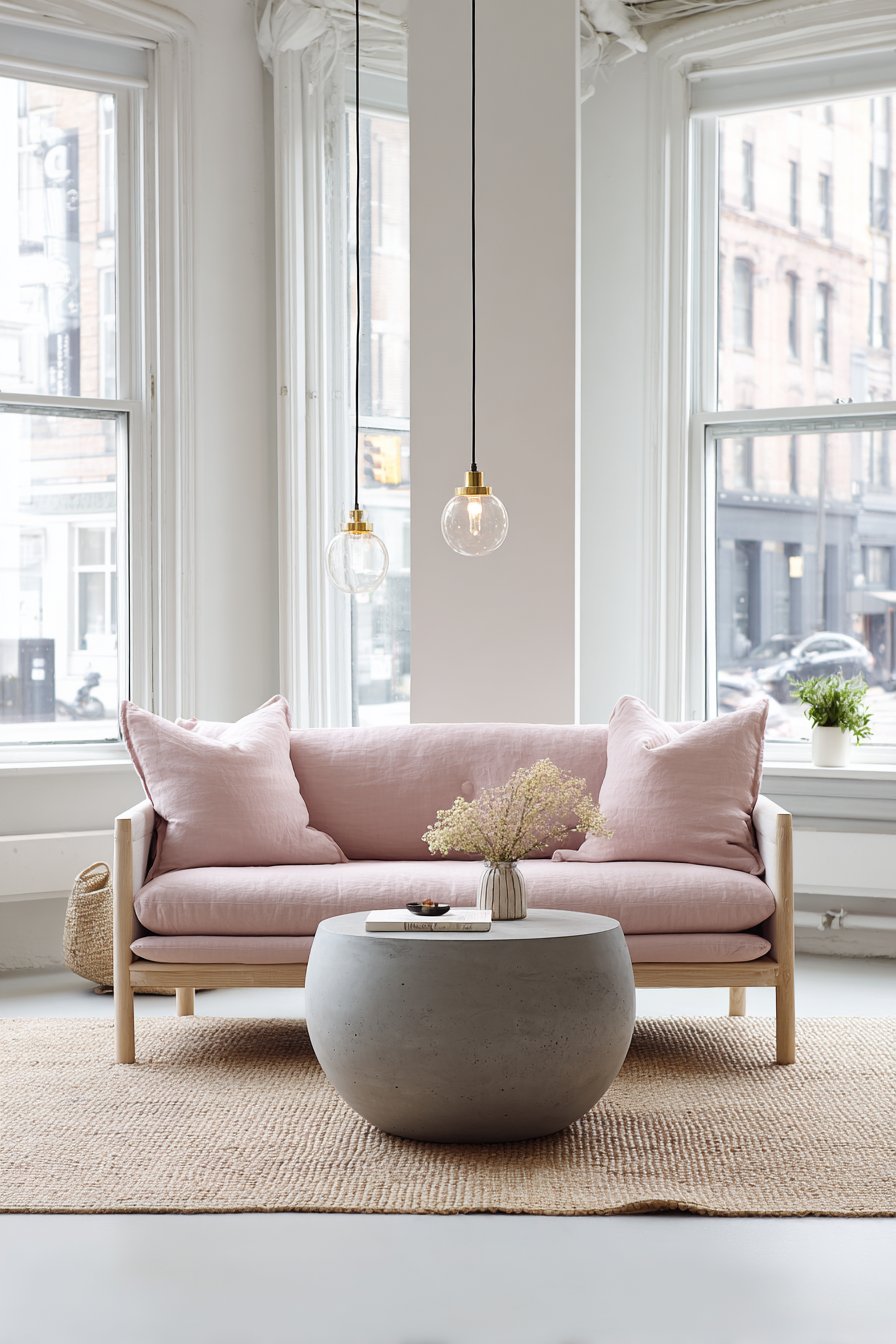
A low-profile sofa in soft blush pink linen features simple cushions and an exposed wooden frame. The natural oak frame’s visibility celebrates honest construction. A round concrete coffee table with smooth finish provides material contrast. A handwoven jute rug adds organic texture beneath.
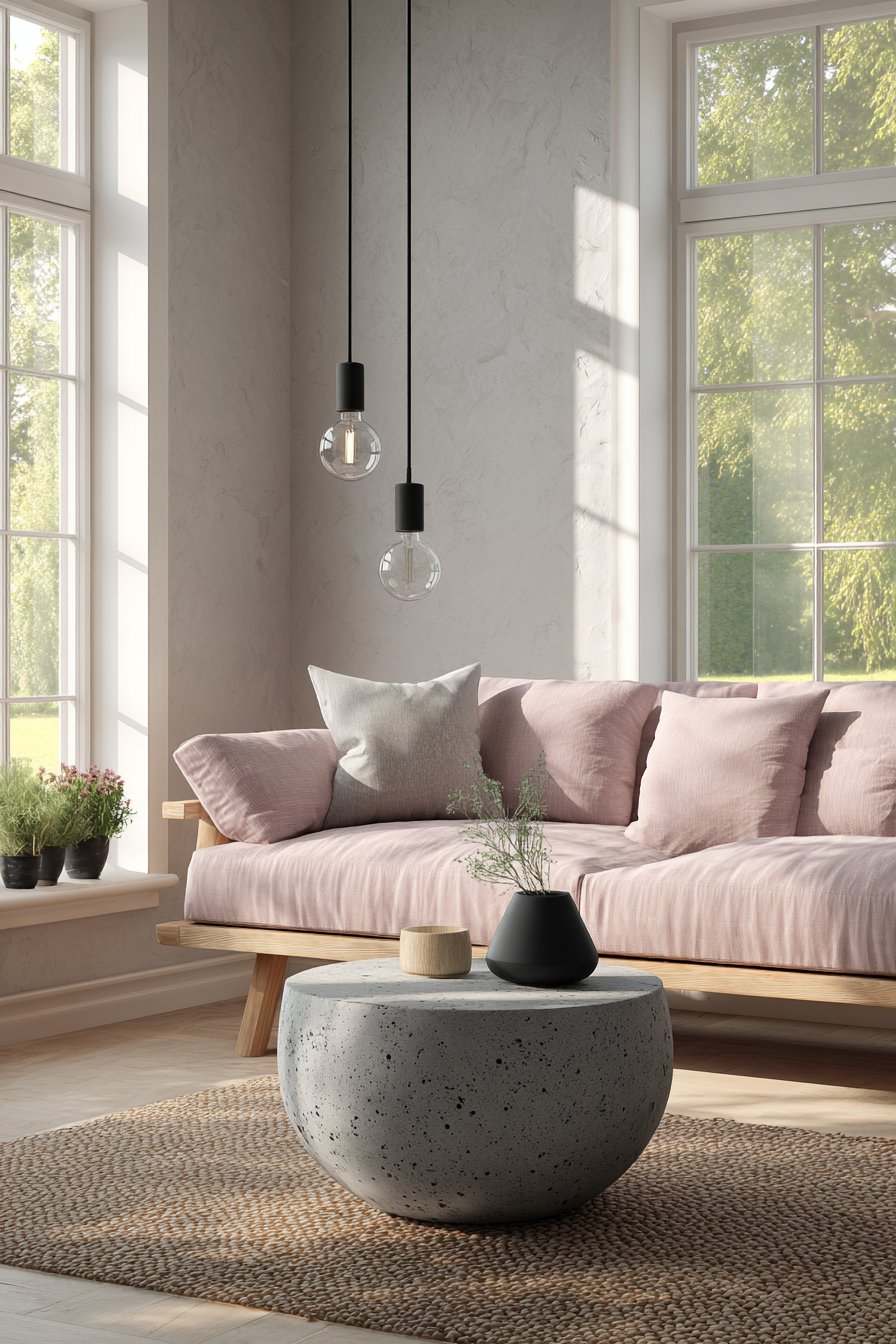
Two simple pendant lights with black cords and brass fixtures hang at different heights. The varied heights create visual interest without overwhelming the space. Large windows allow abundant natural light to highlight the subtle color palette. The blush pink gains depth and dimension as light changes throughout the day.
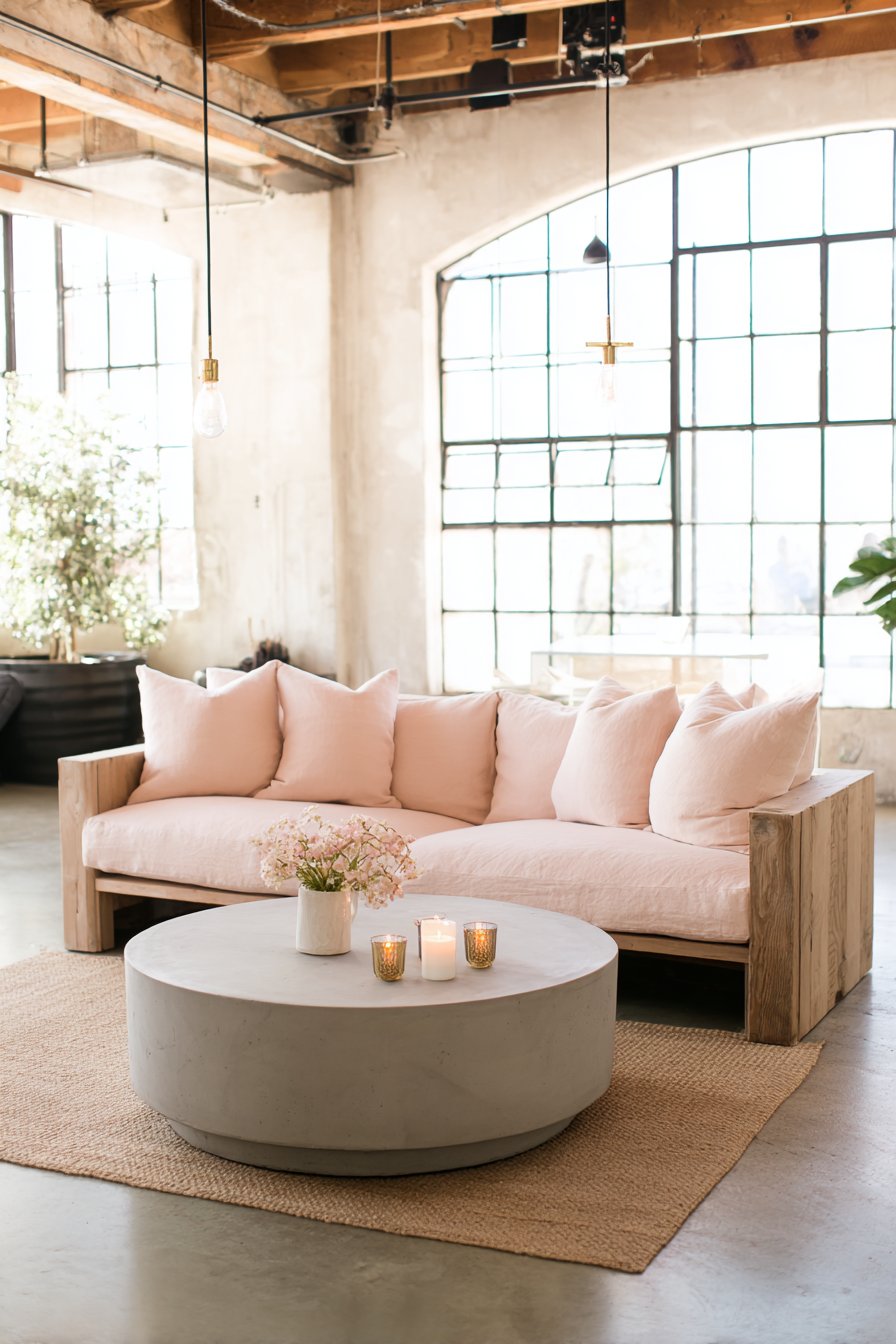
Gentle warmth characterizes this design’s approachable sophistication. The blush tone brings femininity without sweetness. The concrete table grounds the soft color with industrial strength. The jute rug adds natural texture that bridges materials. This careful balance creates universally appealing spaces.
Key Design Tips:
- Introduce soft blush pink for warm minimalist color schemes
- Expose wooden furniture frames to celebrate construction honesty
- Use concrete tables to ground softer colors with industrial weight
- Hang pendant lights at varied heights for layered visual interest
- Choose brass light fixtures for warm metallic accents
- Maximize natural light to reveal subtle color nuances
19. Compact Charcoal Efficiency
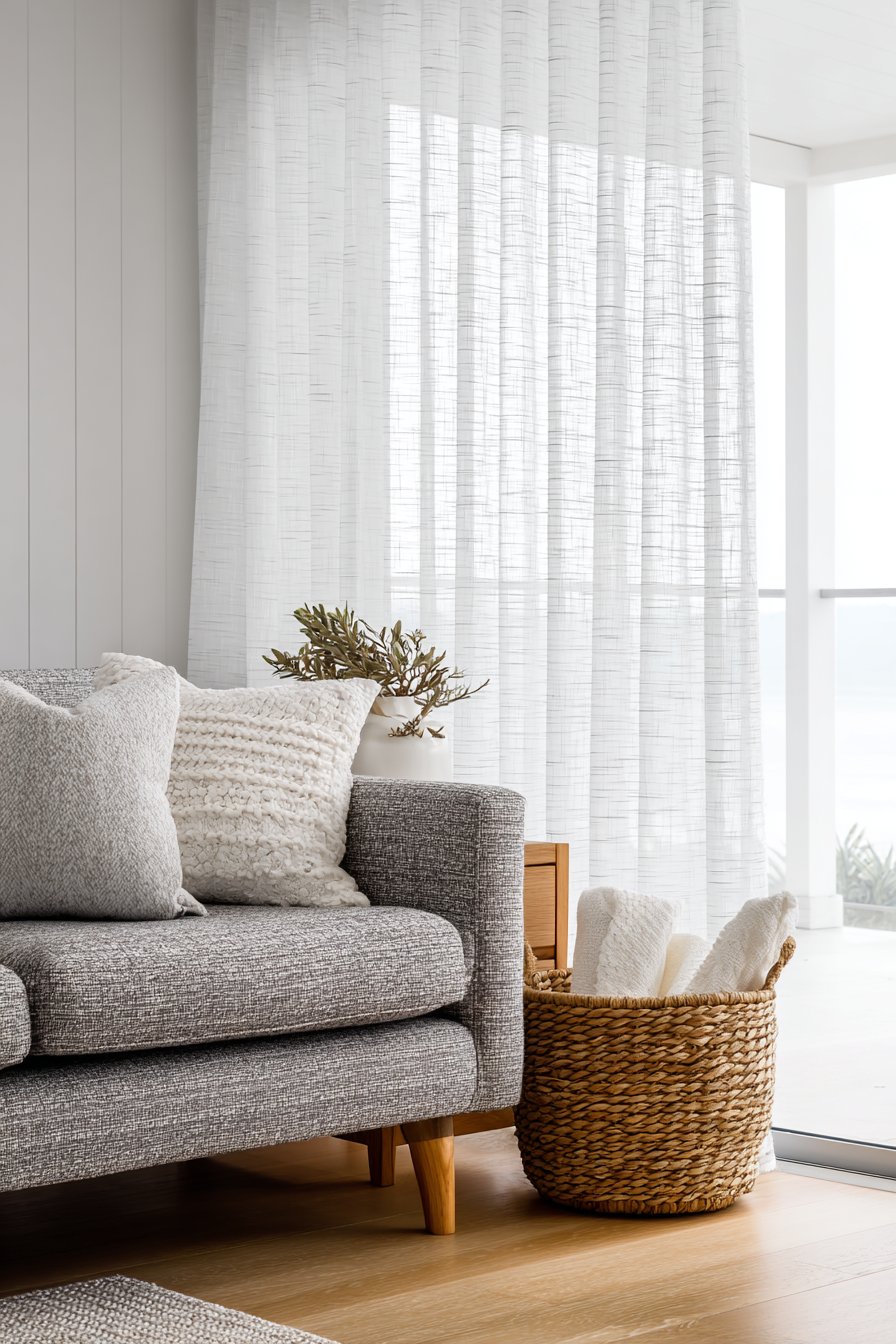
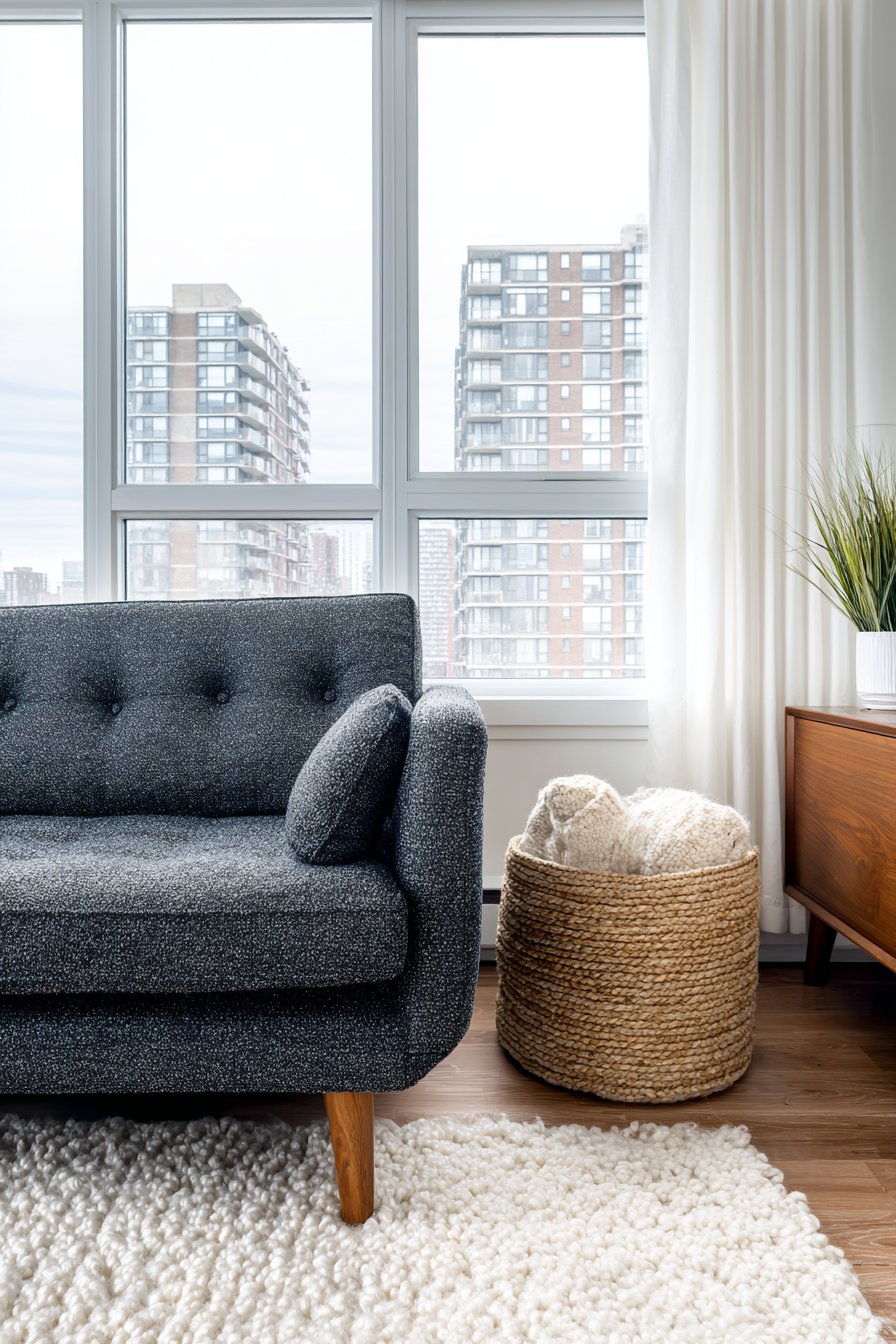
A compact loveseat in textured charcoal grey fabric features high-quality cushioning. Simple wooden legs maintain contemporary minimalist aesthetics. A minimal side table in solid walnut with single drawer provides discrete storage. One oversized woven basket holds rolled blankets beside the sofa.
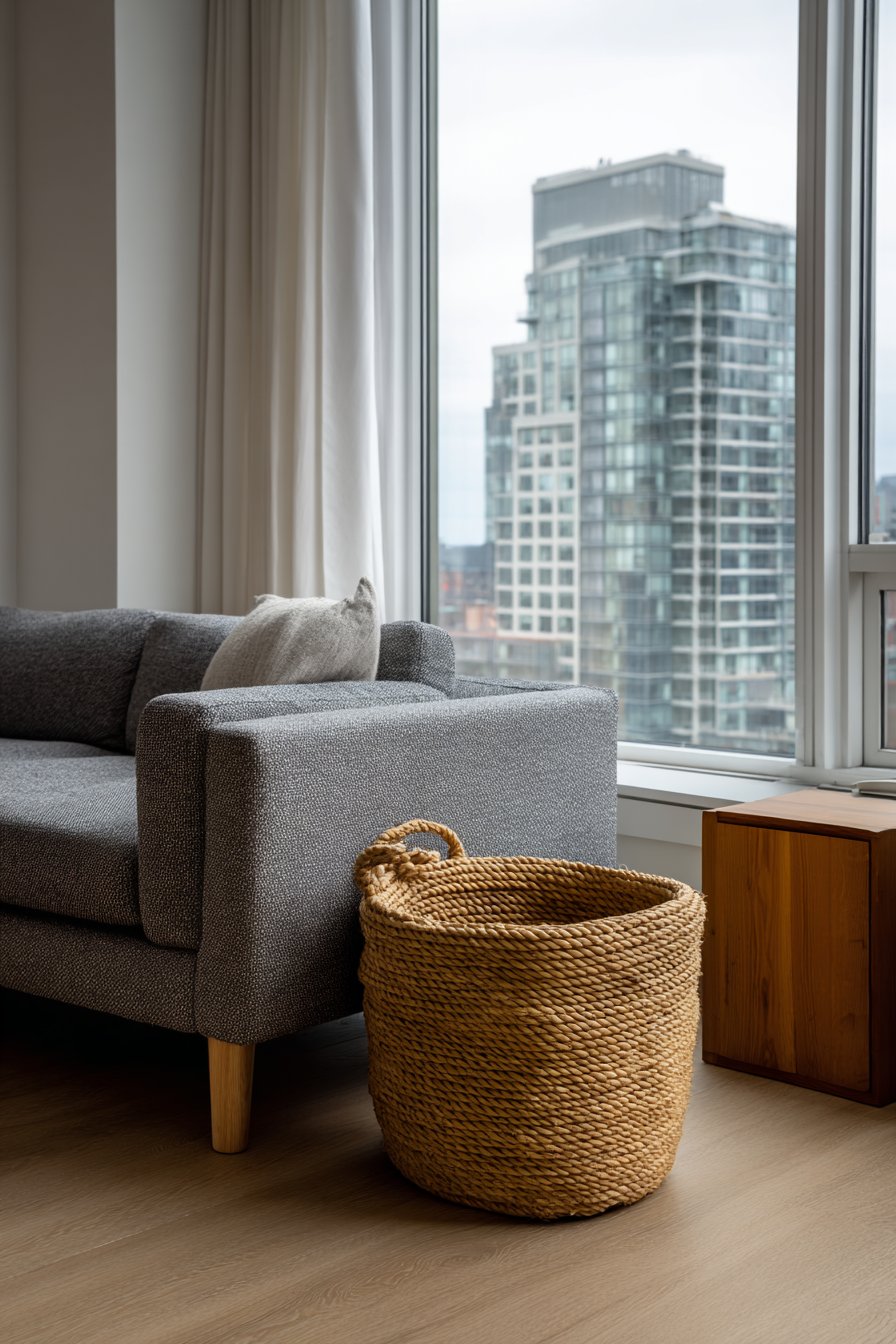
Floor-to-ceiling windows with simple white curtains create a backdrop of natural light. The abundant illumination makes the compact space feel generous. Soft diffused lighting emphasizes the efficient use of space and thoughtful material selection. Every element serves clear purpose without wasted square footage.
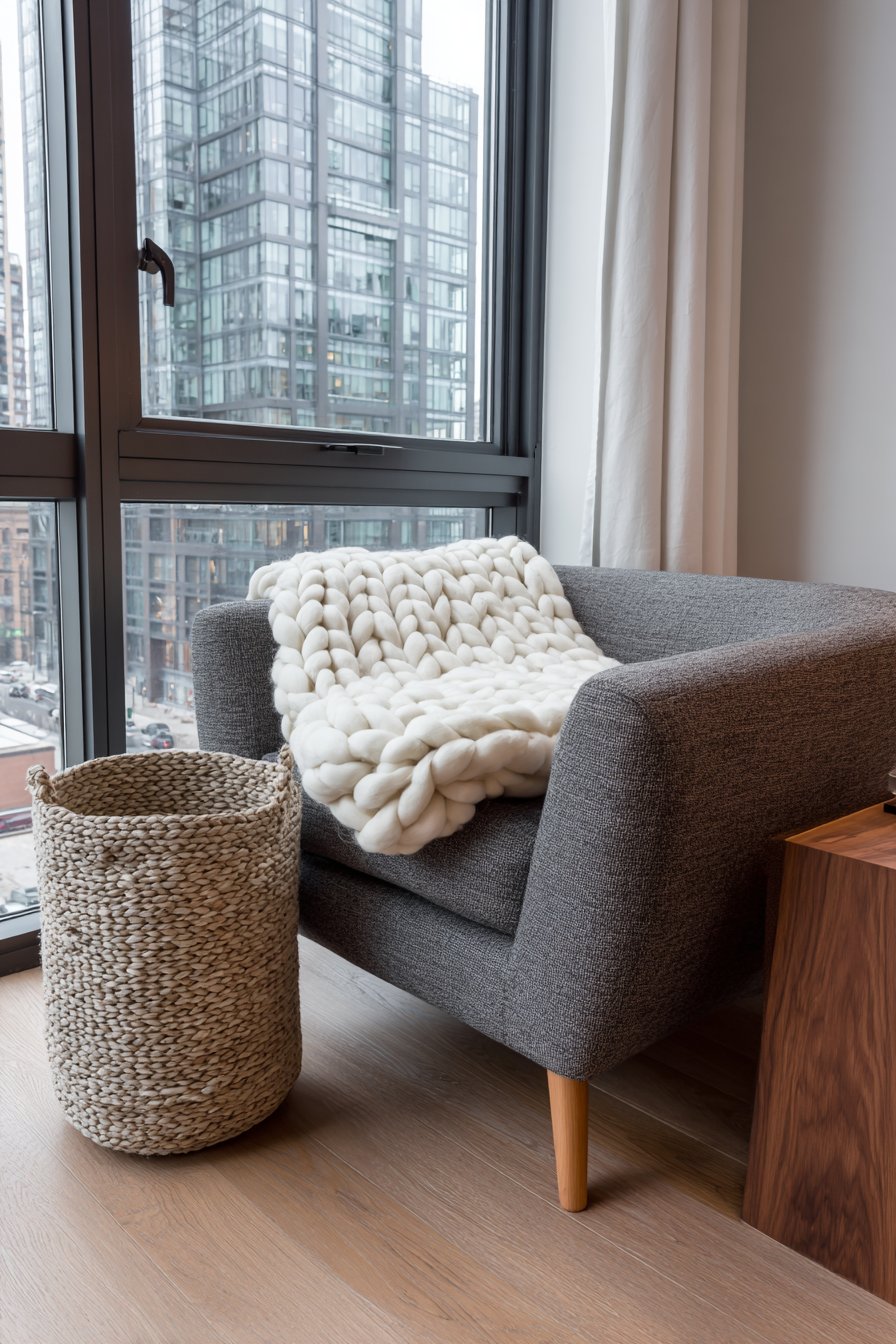
Efficient use of space guides this practical design approach. The compact loveseat provides full functionality in limited area. The side table drawer hides clutter from view. The woven basket stores blankets attractively. This efficiency demonstrates how small spaces can live large through smart planning.
Key Design Tips:
- Choose compact loveseats for small living rooms without sacrificing comfort
- Use side tables with drawers for hidden storage and surface space
- Store blankets in decorative baskets for accessible, cozy additions
- Install floor-to-ceiling curtains to create height illusion
- Select textured fabrics to add interest within neutral color schemes
- Maximize natural light in compact spaces to prevent cramped feelings
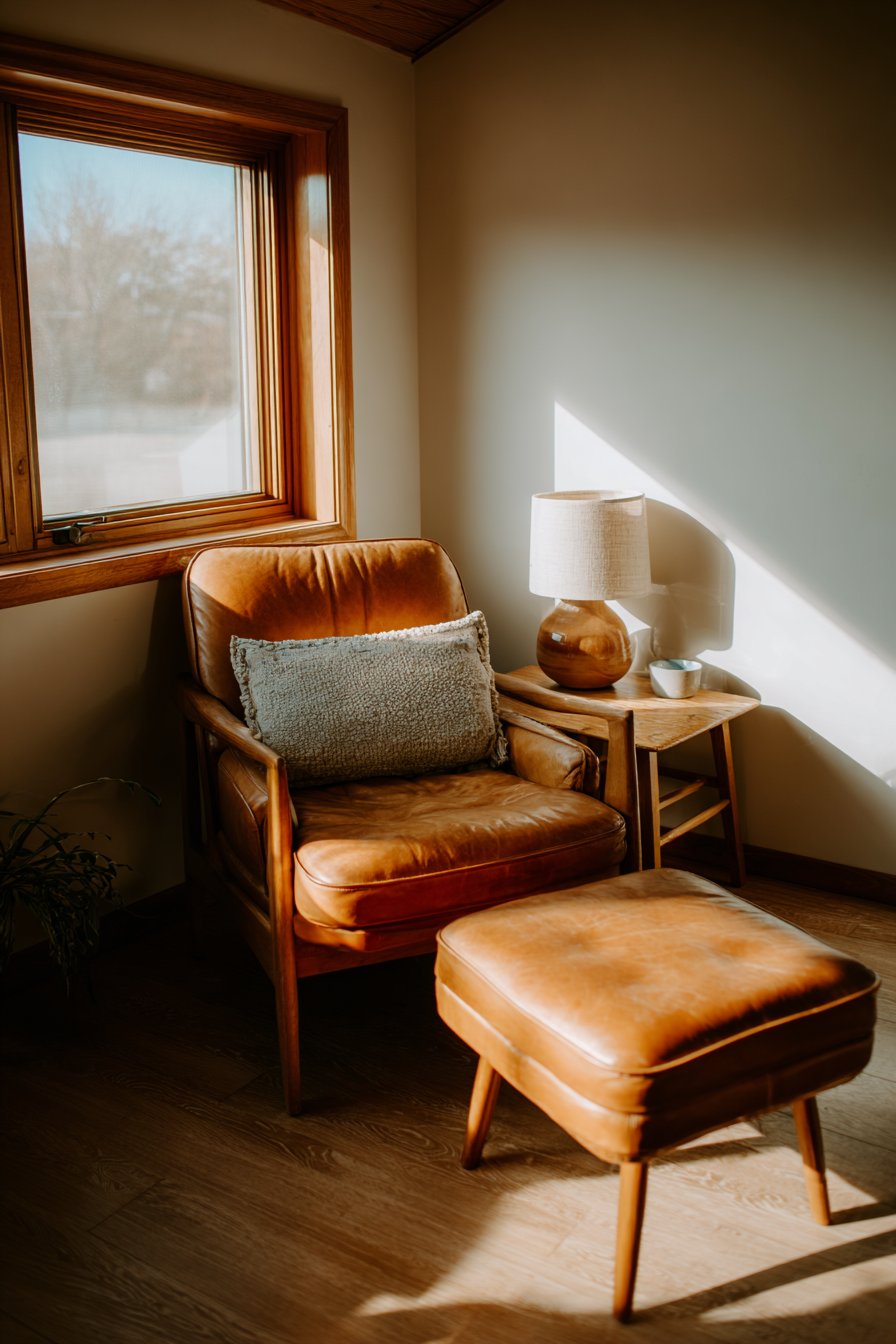
20. Caramel Reading Nook Intimacy
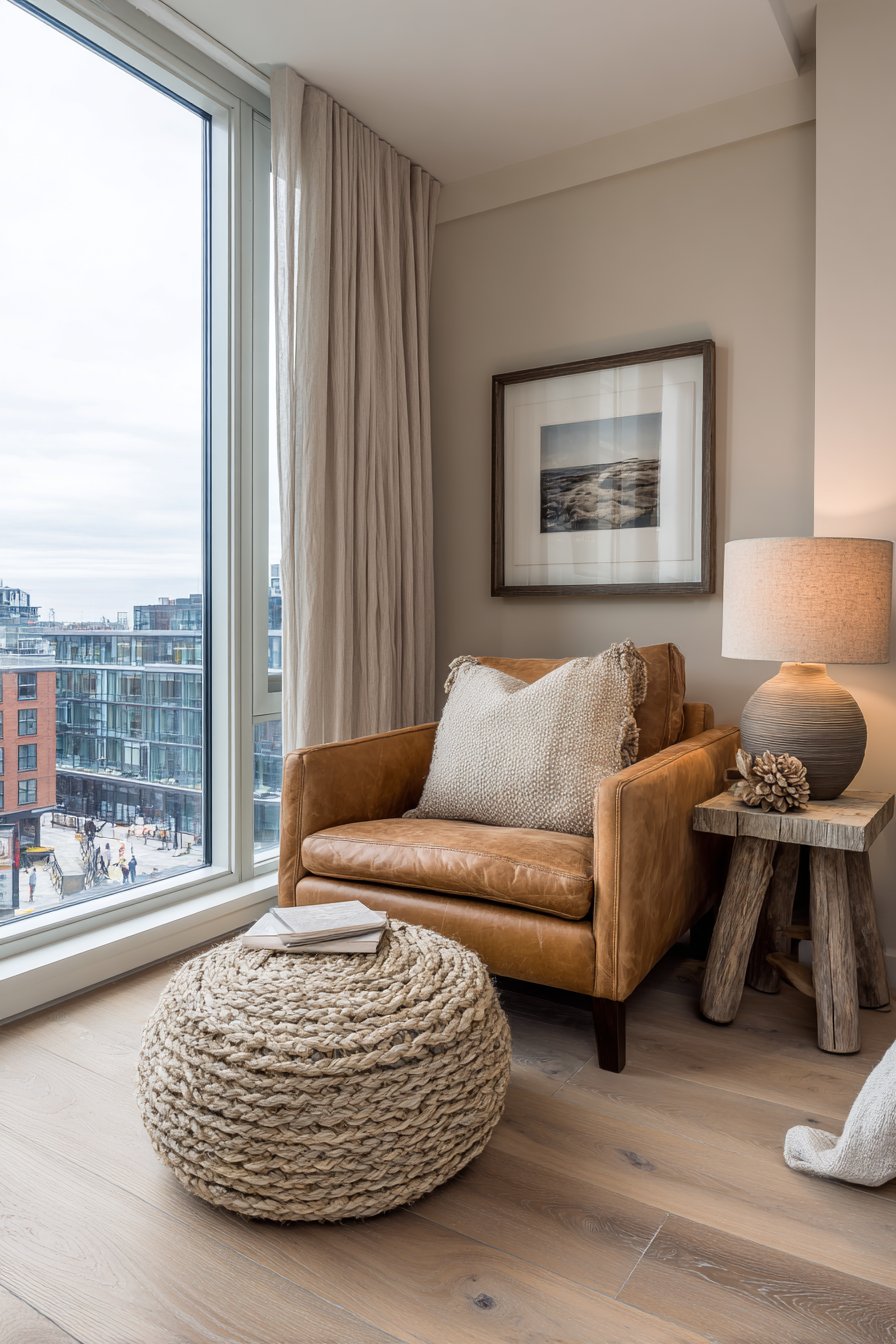
A comfortable reading corner features a single armchair in warm caramel leather. The leather shows visible grain and natural wear that adds character. A simple wooden side table holds essential items within reach. A ceramic lamp with linen shade provides warm focused lighting.
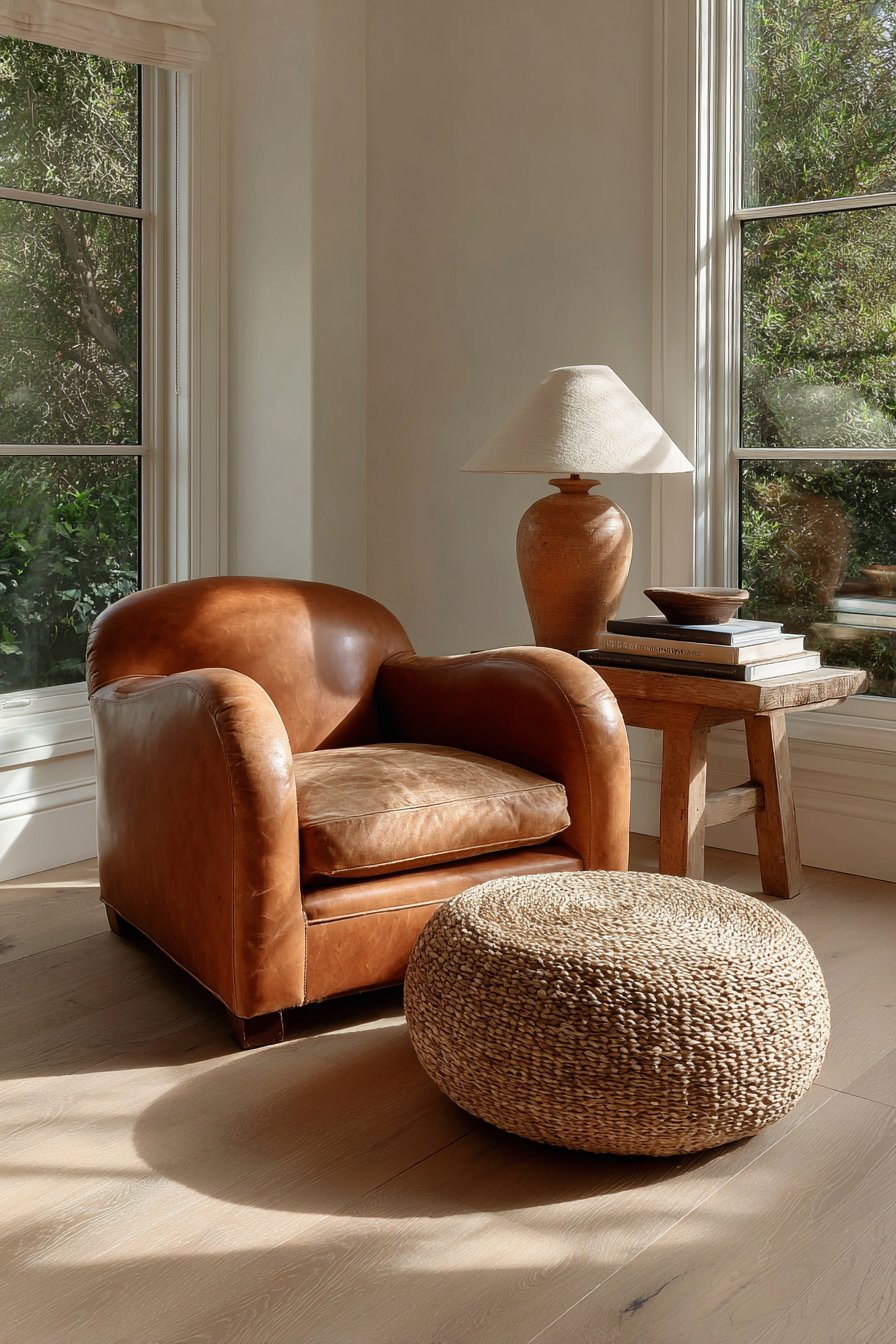
A small round ottoman in natural jute fabric serves as a comfortable footrest. Natural light from a nearby window creates soft shadows across light oak flooring. The intimate scale creates cozy refuge within the larger living room. This vignette demonstrates how minimalism applies to smaller zones.
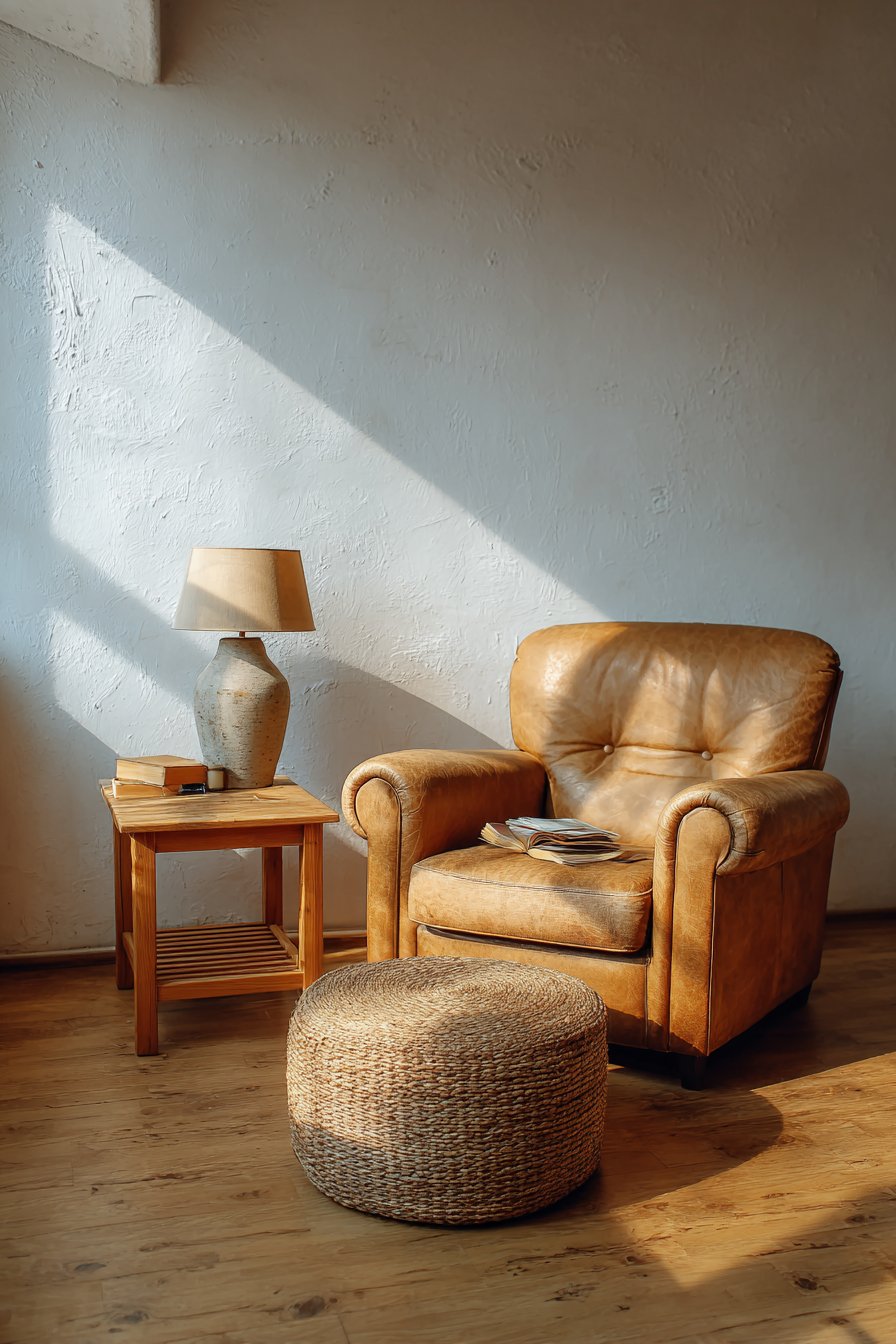
Intimate comfort emerges from this carefully composed reading corner. The caramel leather invites hours of comfortable reading. The jute ottoman provides support without visual weight. Natural and artificial light combine for perfect reading conditions. This approach shows how minimalist principles scale to any space size.
Key Design Tips:
- Create dedicated reading corners for focused relaxation zones
- Use caramel leather armchairs for warm inviting seating
- Include footrests or ottomans for comfortable extended sitting
- Position reading chairs near windows for natural daylight
- Add table lamps with warm bulbs for comfortable evening reading
- Choose round ottomans to soften angular furniture arrangements
Why These Cozy Minimalist Living Room Designs Are the Best
These cozy minimalist living room designs represent thoughtful approaches to contemporary living. Each concept demonstrates how restraint creates beauty rather than diminishes it. The designs balance aesthetic appeal with genuine functionality for daily life.
Natural materials form the foundation of successful minimalist spaces. Quality linen, solid hardwoods, natural stone, and authentic leather age gracefully over decades. These materials develop character through use rather than deteriorating like synthetic alternatives. The investment in quality pays dividends through longevity and timeless appeal.
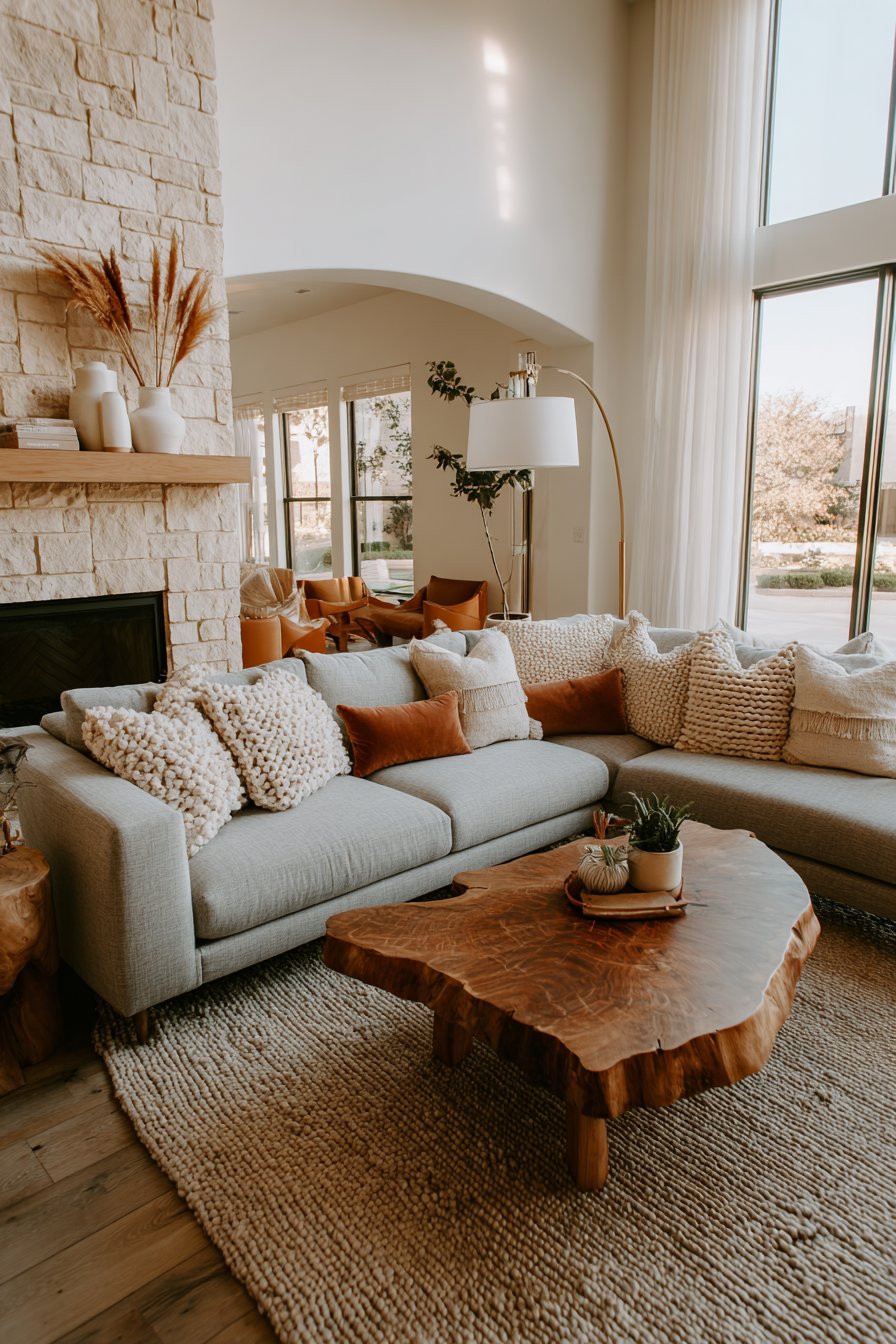
The versatility of minimalist design adapts to various home styles and personal preferences. Scandinavian influences bring light woods and white palettes. Japanese aesthetics emphasize low profiles and zen tranquility. Industrial touches introduce concrete and metal elements. Contemporary approaches celebrate clean lines and sophisticated neutrals. This diversity proves minimalism accommodates personal expression within its disciplined framework.
Color theory guides these designs’ sophisticated palettes. Warm neutrals like oatmeal, sand, and caramel create an invitation. Cool greys and whites provide fresh backgrounds. Accent colors like sage green, navy blue, and terracotta add depth without overwhelming. The layering of similar tones creates visual interest through subtle variation rather than dramatic contrast.
Spatial considerations address both generous and compact living rooms. Low-profile furniture maintains sight lines and creates openness. Modular pieces adapt as needs change. Built-in elements maximize functionality in smaller footprints. Multi-purpose furniture serves various needs efficiently. These solutions demonstrate how minimalist principles enhance spaces of any size.
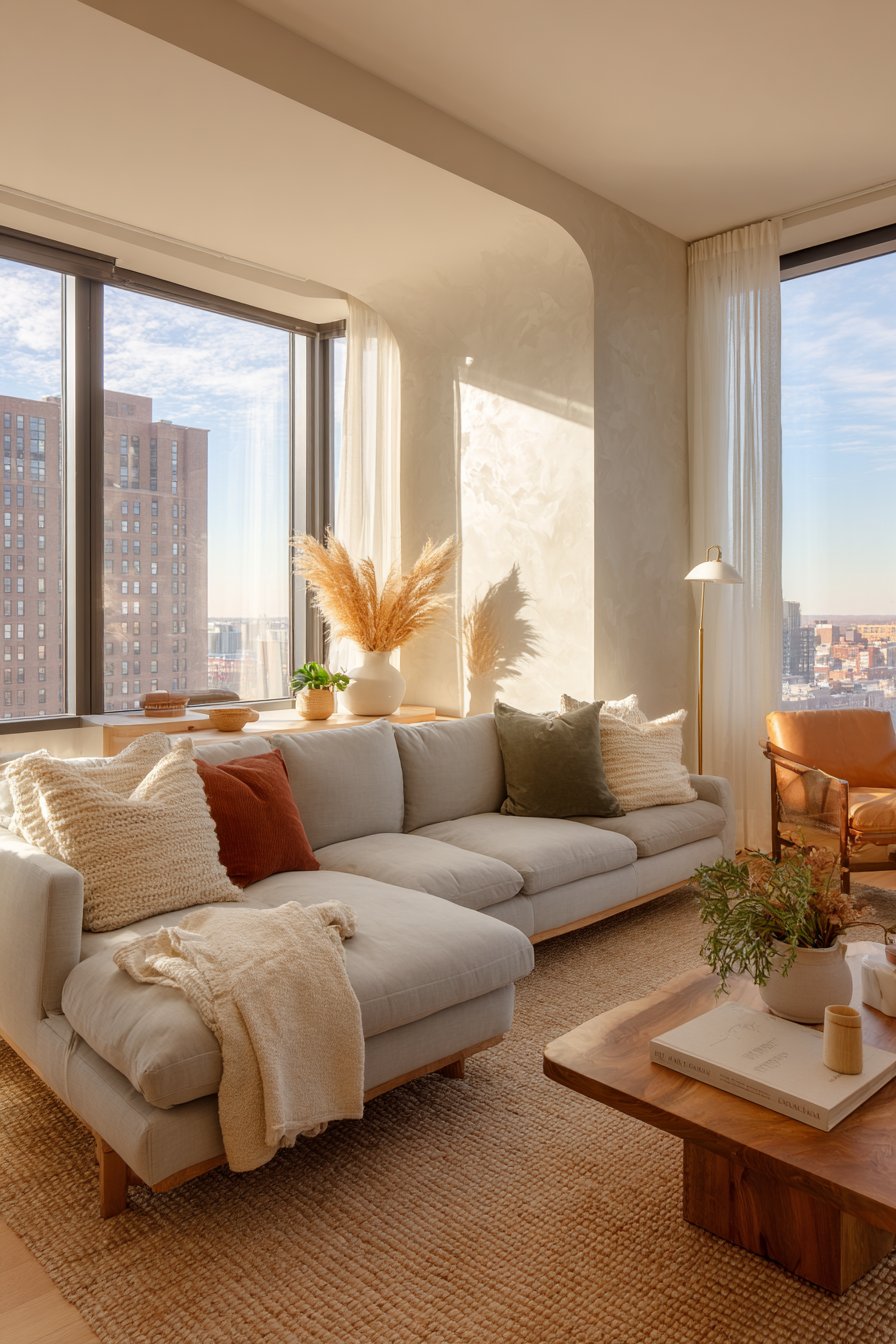
Sustainability emerges naturally from minimalist philosophy. Quality pieces purchased once replace disposable furniture bought repeatedly. Natural materials biodegrade at end of life. Timeless designs transcend trends and avoid premature obsolescence. This approach reduces consumption while creating more beautiful living environments.
The practical benefits extend beyond aesthetics into daily living. Fewer possessions mean less cleaning and organizing. Intentional purchases prevent impulse buying and clutter accumulation. Open spaces reduce visual stress and promote mental clarity. These tangible advantages explain minimalism’s growing appeal beyond mere design trends.
Conclusion
These cozy minimalist living room designs demonstrate that simplicity and comfort coexist beautifully. The key principles include investing in quality natural materials, embracing intentional negative space, and selecting versatile furniture with clean lines. Each design proves that fewer possessions create more peaceful living environments.
Successful cozy minimalism balances restraint with warmth through natural materials and thoughtful lighting. Start your transformation by removing unnecessary items and identifying pieces that truly serve your life. Choose one quality sofa in natural fiber upholstery. Add a simple coffee table in solid wood. Layer in soft textiles like wool rugs and linen curtains. Your serene minimalist sanctuary awaits through patient curation and mindful choices.
