


Creating a children’s bedroom requires balancing functionality with imagination. These spaces must serve as sleep sanctuaries, play areas, and study zones. The right design grows with your child through different developmental stages.
Children’s bedrooms present unique design challenges that reward creative solutions. Unlike adult spaces, these rooms must accommodate rapidly changing needs and interests. Thoughtful design creates environments that foster independence, creativity, and healthy development. From shared sibling spaces to themed retreats, each approach offers distinct advantages.
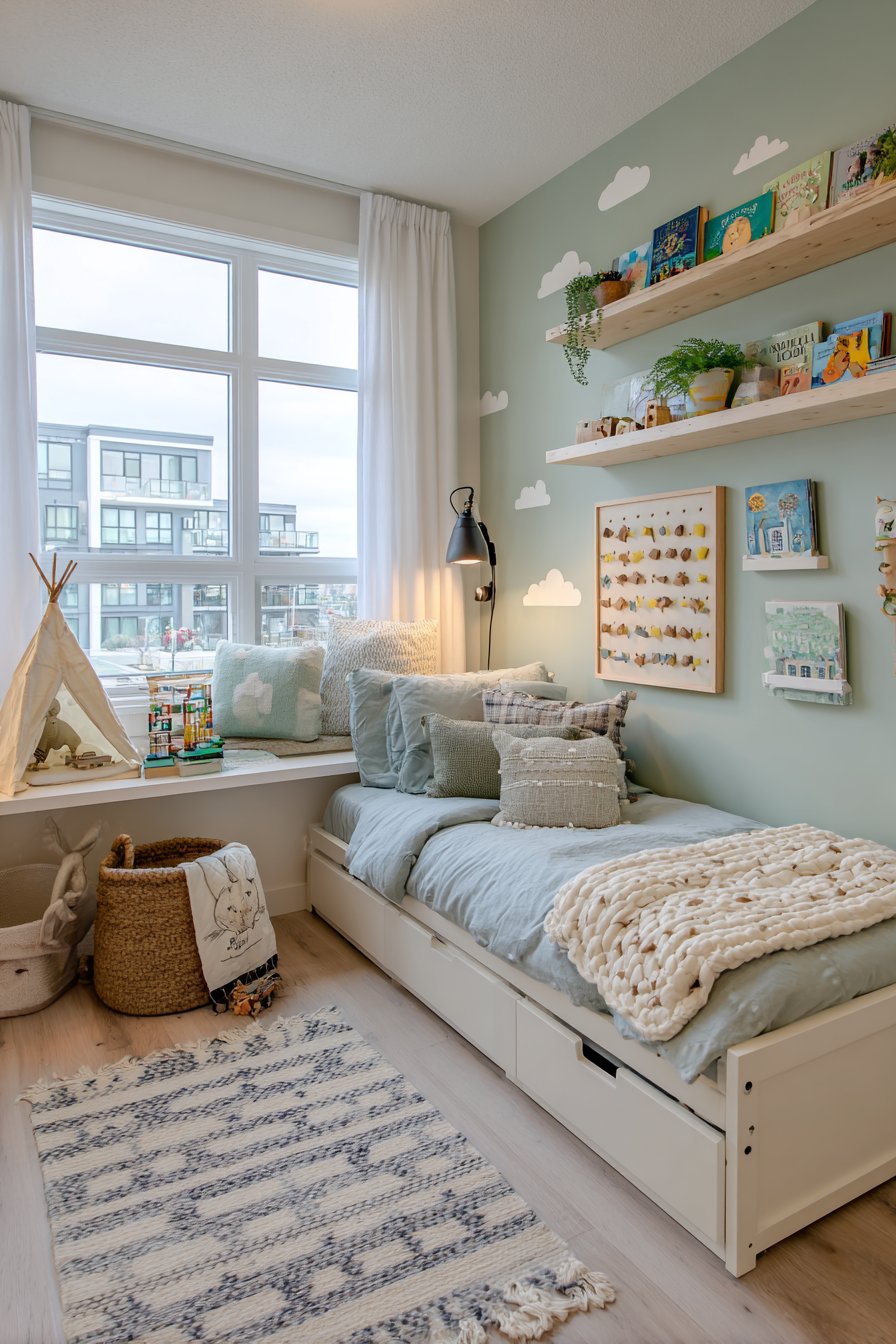
This collection showcases twenty diverse children’s bedroom designs. Each concept demonstrates how intentional choices in color, furniture, and layout create magical yet practical spaces. Whether you prefer minimalist Scandinavian simplicity or whimsical bohemian charm, these ideas provide inspiration for every style preference.
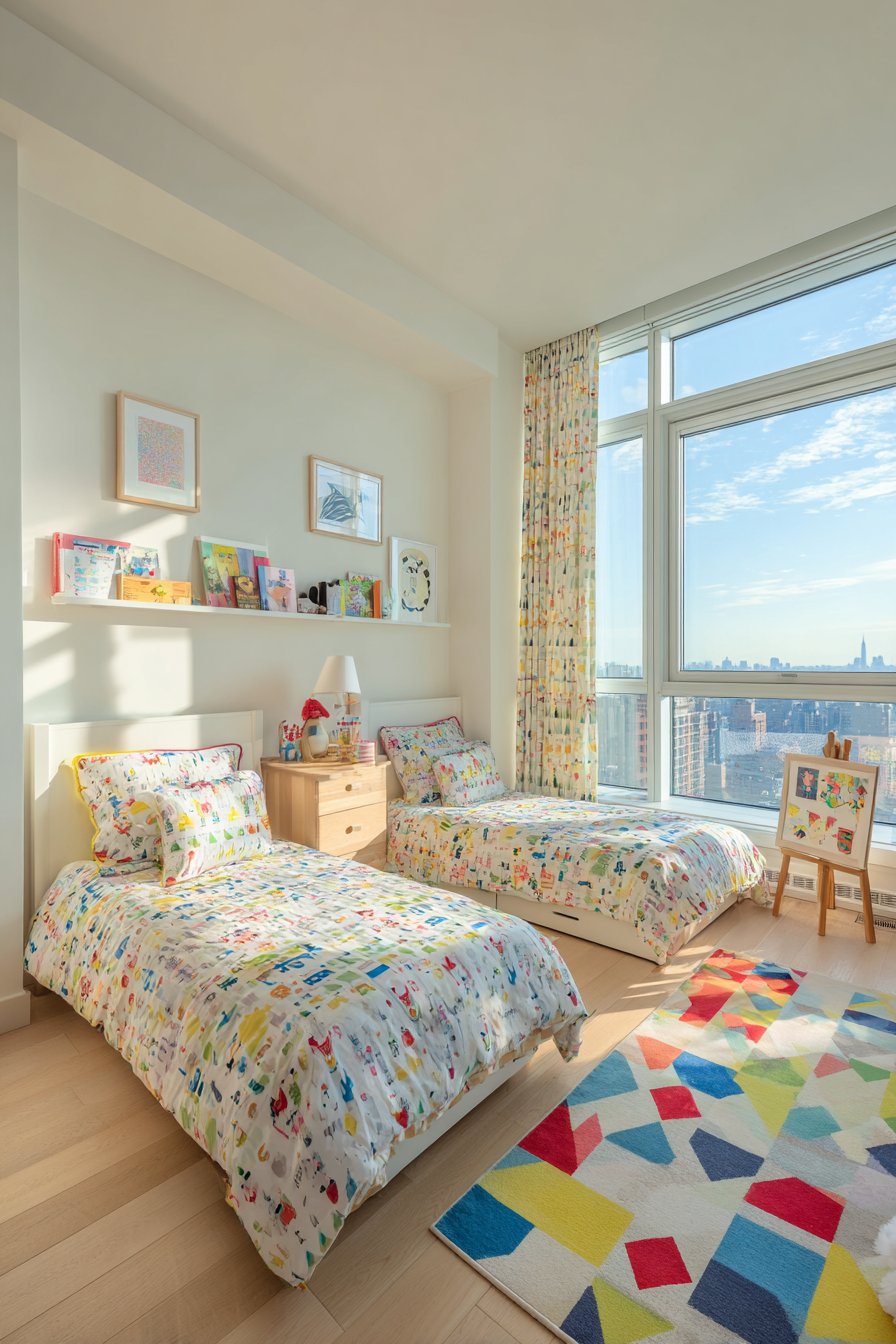
1. Bright and Cheerful Twin Bedroom
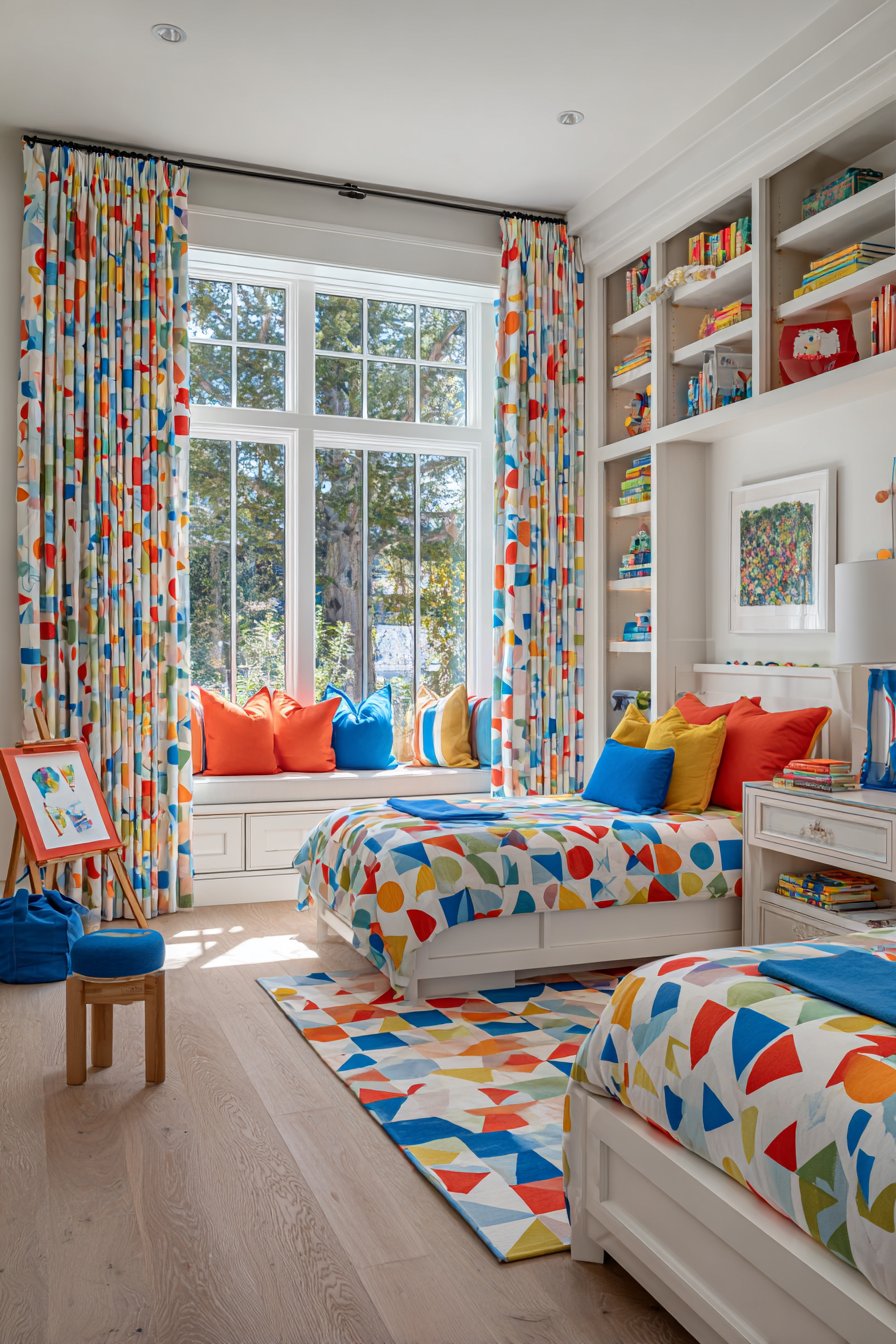
Picture a sun-filled room where twin beds create perfect symmetry against crisp white walls. Colorful bedding in primary colors brings vibrant energy without overwhelming the space. A shared nightstand between the beds holds a gentle lamp and beloved storybooks. This arrangement promotes equality while encouraging bedtime reading rituals.
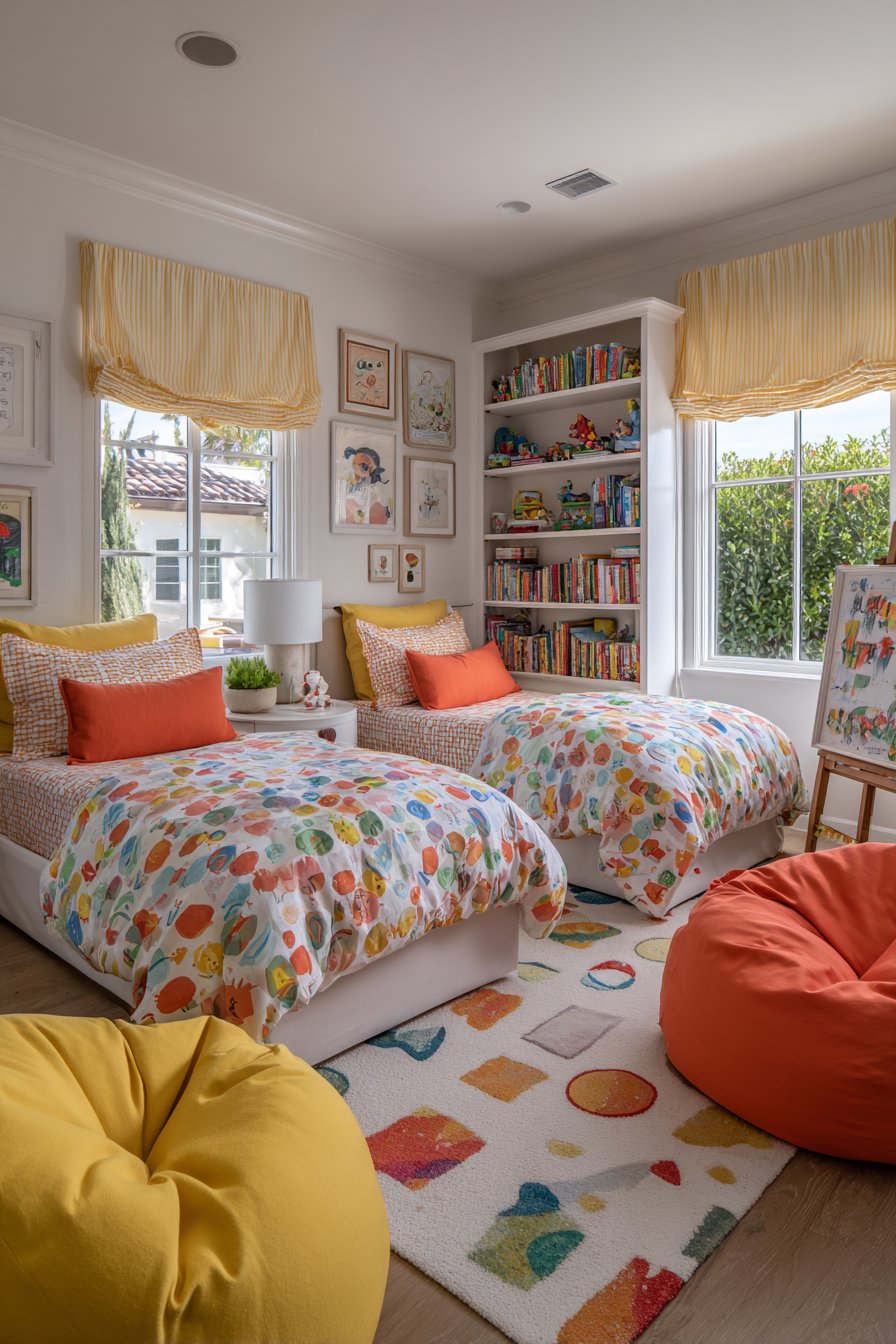
The reading nook near the large window becomes the room’s heart. Bean bag chairs invite comfortable lounging for afternoon reading sessions. Light-filtering curtains soften natural light while maintaining brightness throughout the day. Natural oak flooring provides warmth and durability against daily activities.
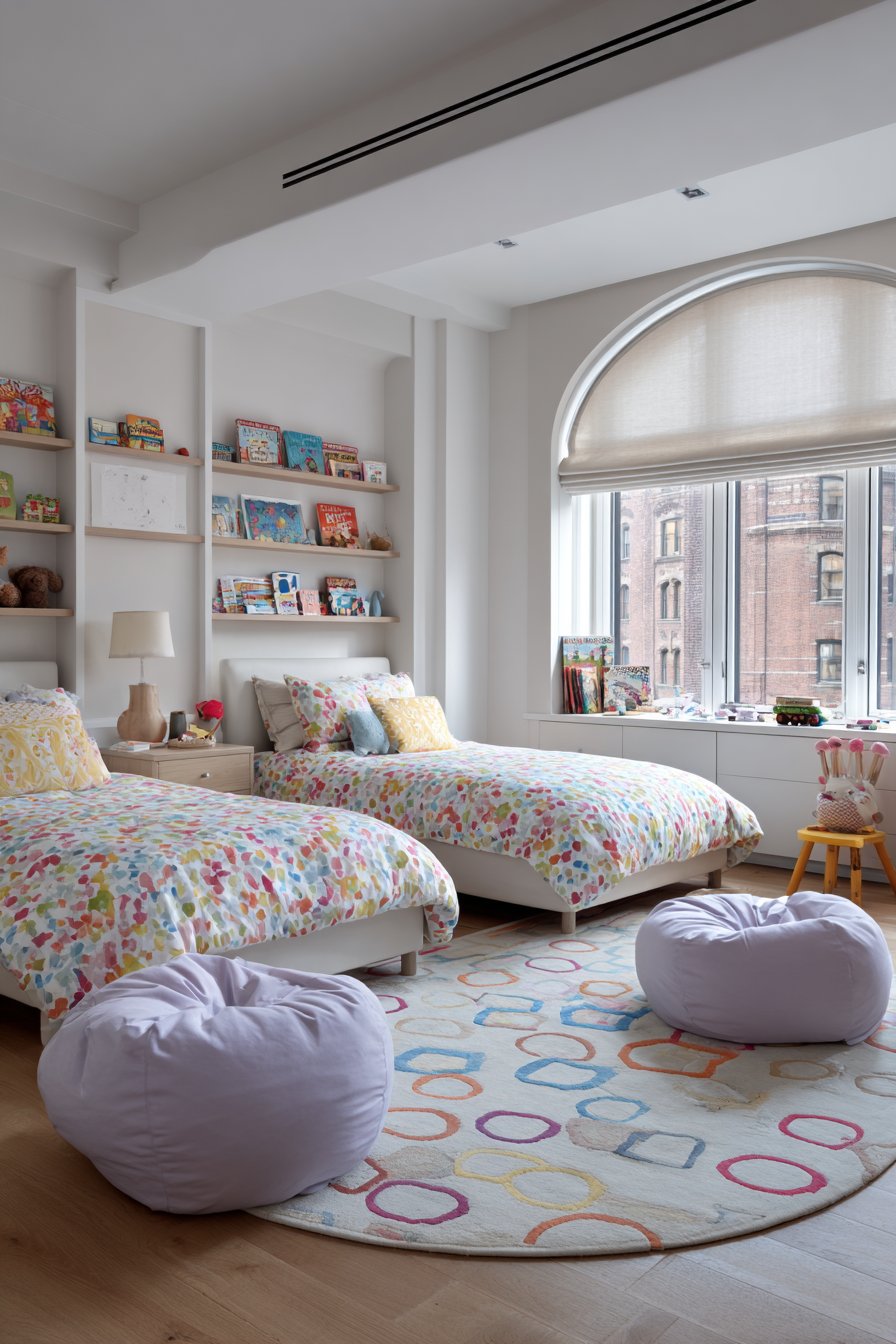
Storage solutions integrate seamlessly into the cheerful aesthetic. Open shelving displays toys and books in organized fashion. A small art easel in the corner encourages creative expression. The playful geometric area rug defines the central play zone. Morning light streaming through windows highlights the functional yet joyful atmosphere.
Key Design Tips:
- Position twin beds symmetrically to create visual balance and fairness
- Include a dedicated reading nook with comfortable seating near natural light
- Use colorful bedding as changeable accent pieces against neutral walls
- Install open shelving at accessible heights for independence
- Choose durable oak flooring that withstands active play
2. Space-Maximizing Loft Bed Design
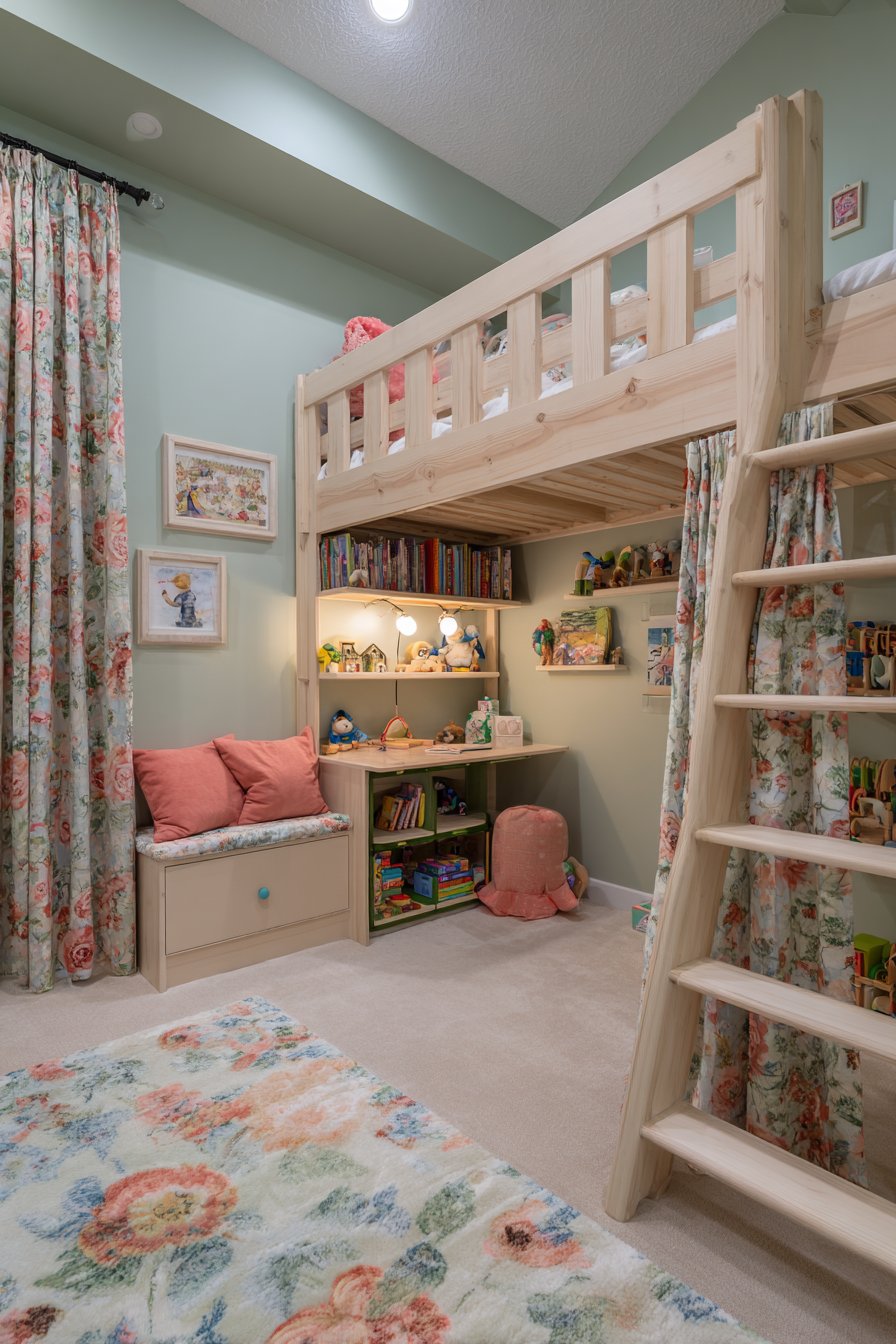
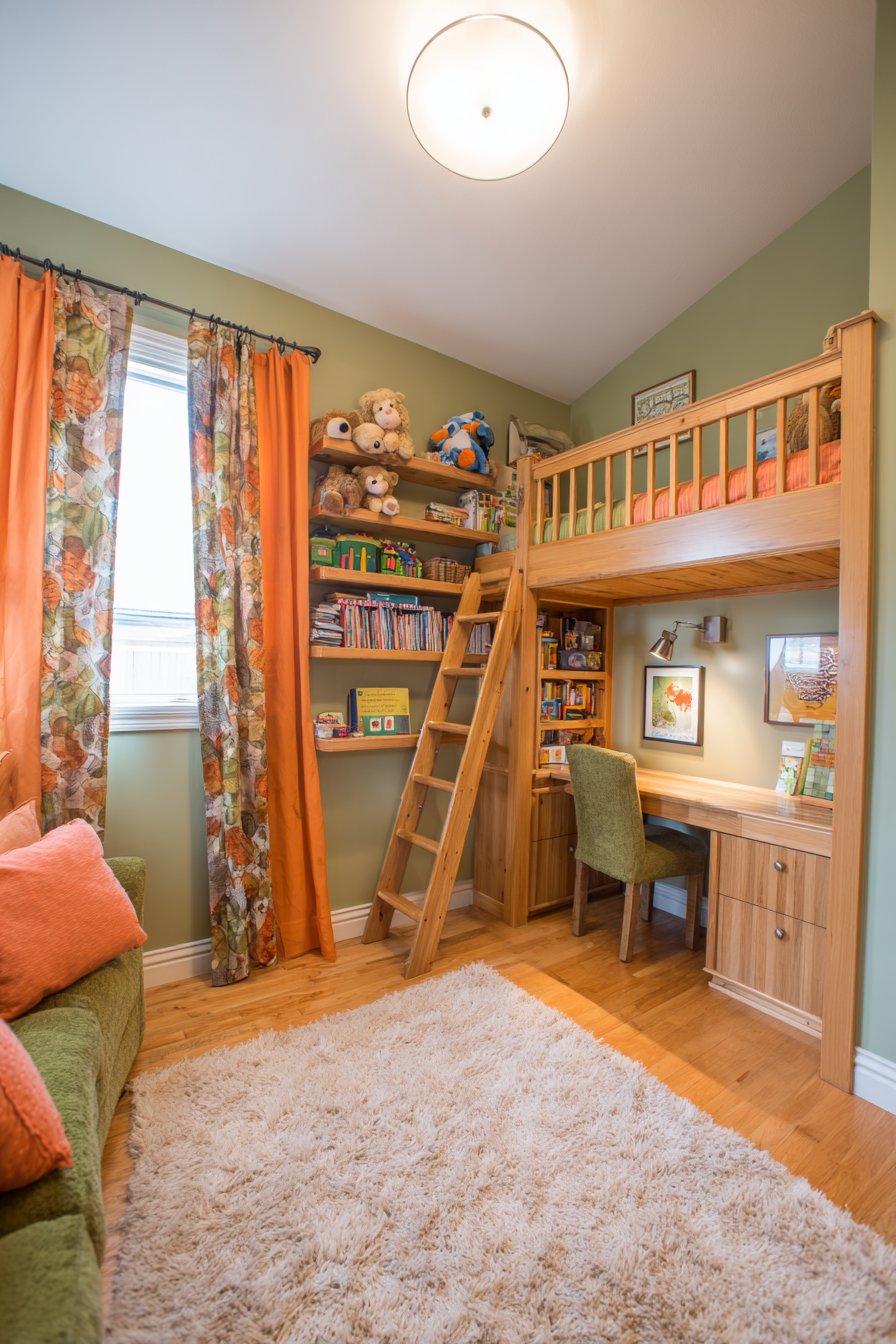
The custom-built loft bed transforms vertical space into multifunctional zones. Natural wood construction provides sturdy durability while maintaining warm aesthetic appeal. The integrated desk underneath creates a dedicated homework station. Task lighting ensures proper illumination for focused studying.
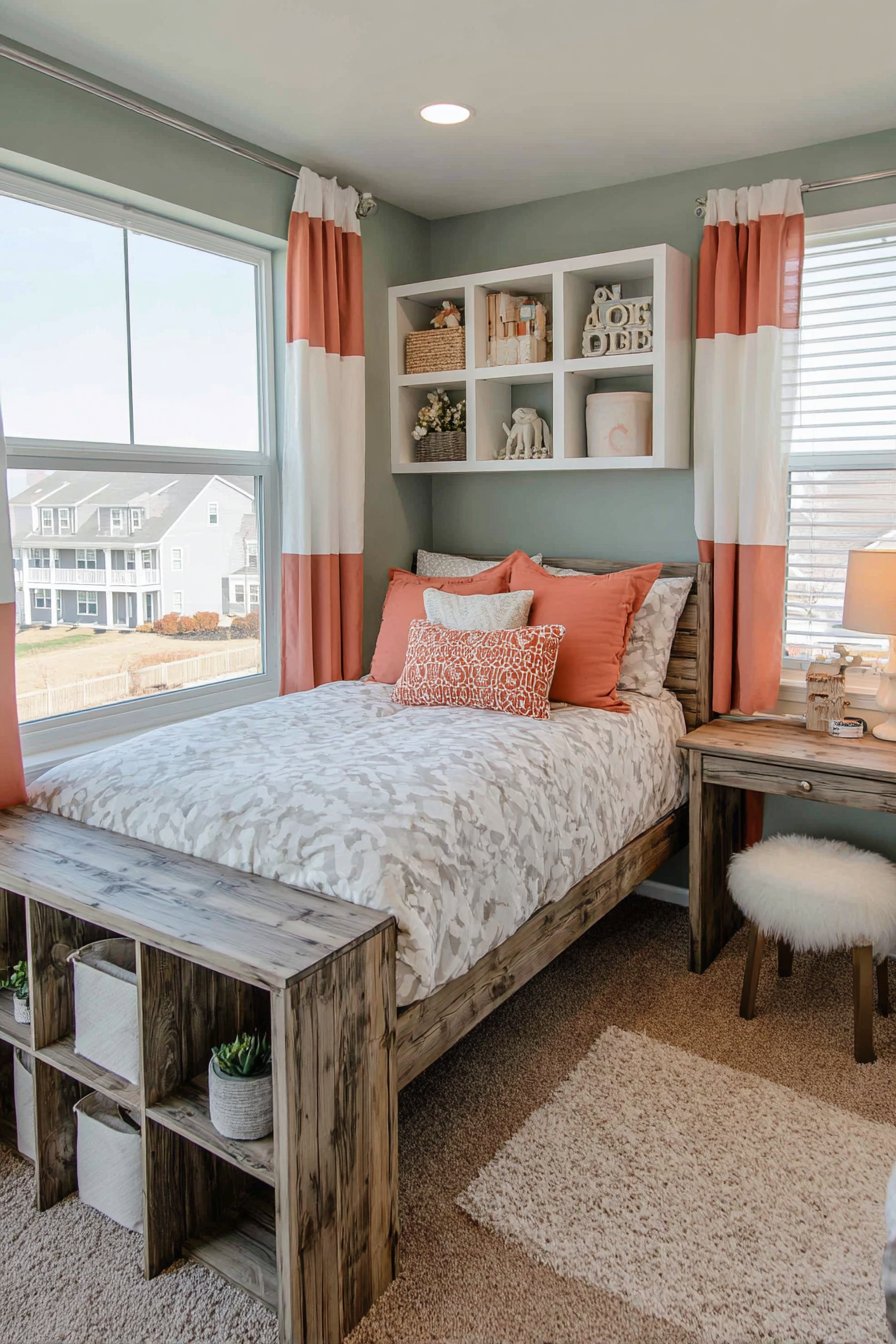
Organized storage cubbies keep school supplies within easy reach. This arrangement teaches organizational skills through accessible design. The elevated sleeping area feels special while freeing valuable floor space below. Wall-mounted shelving displays favorite books and treasured toys.
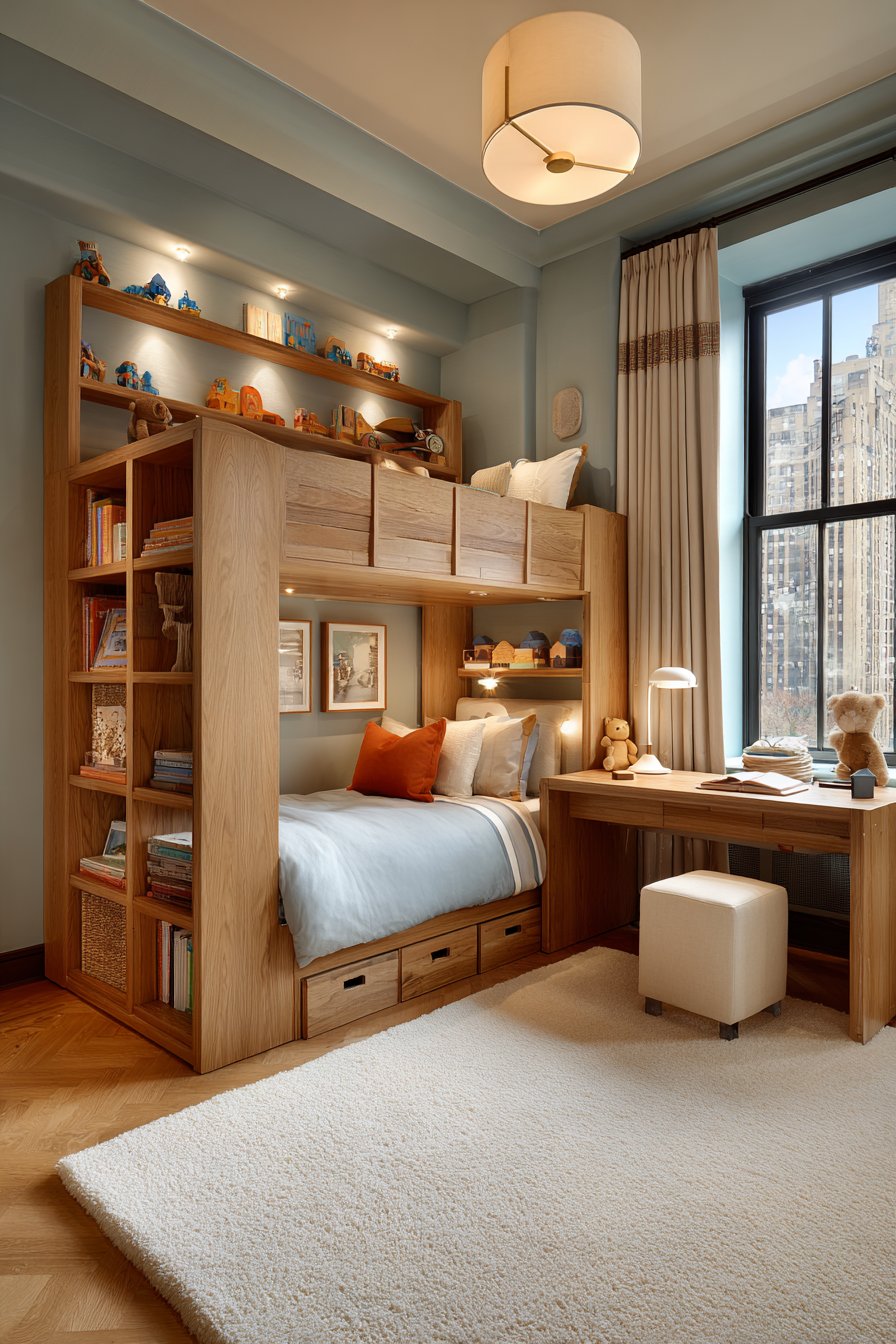
Soft sage green walls complement natural wood tones beautifully. Coral accents in throw pillows and curtains add cheerful personality. The plush area rug defines the play zone beneath the loft. This vertical approach proves especially effective for smaller rooms. Balanced exposure captures how thoughtful design maximizes limited square footage.
Key Design Tips:
- Build loft beds with solid construction for safety and longevity
- Create dedicated work zones underneath elevated sleeping areas
- Use coordinating color palettes to unify separated functional zones
- Install proper task lighting at desk areas for homework
- Add wall-mounted storage to preserve precious floor space
3. Whimsical Mountain Mural Retreat
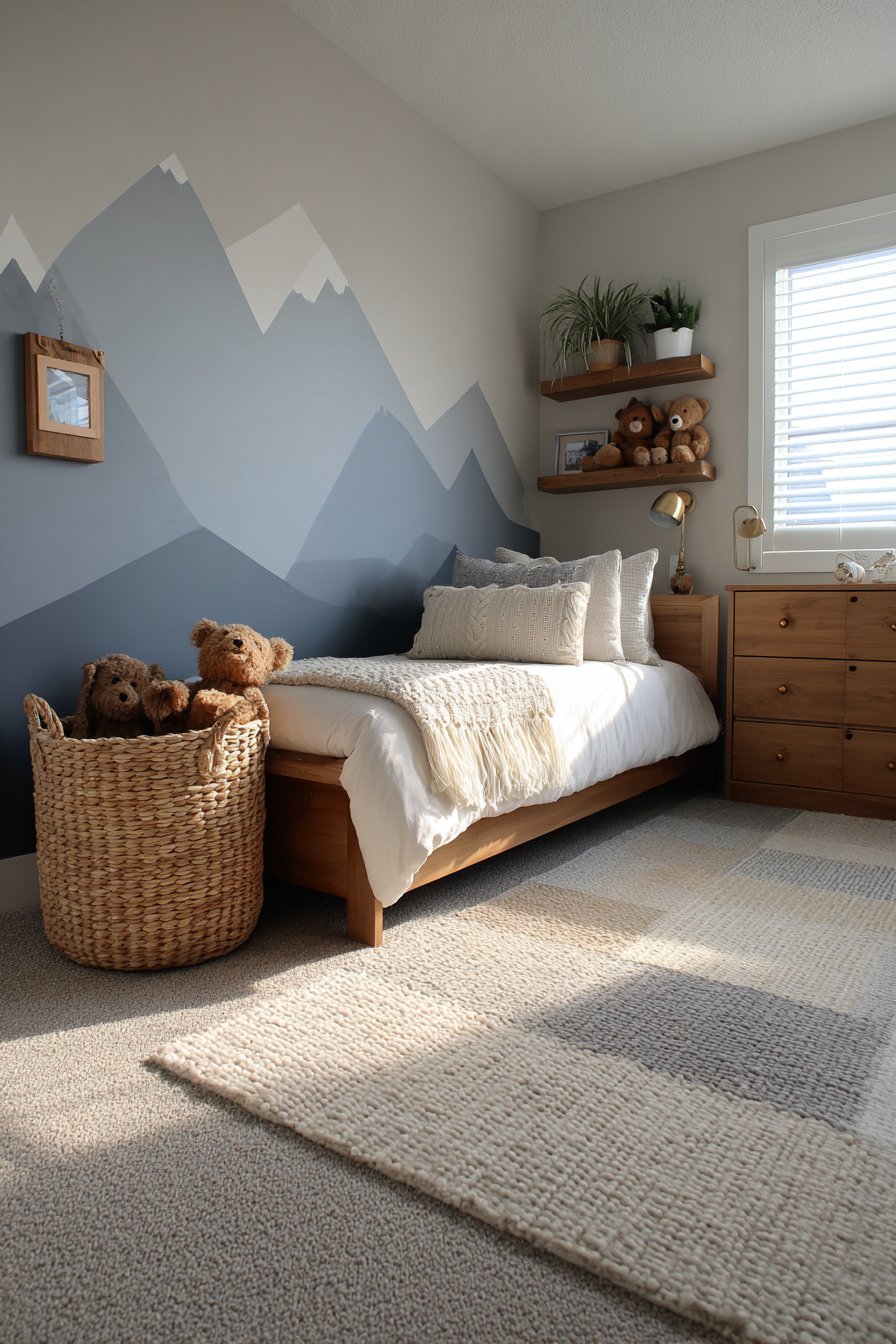
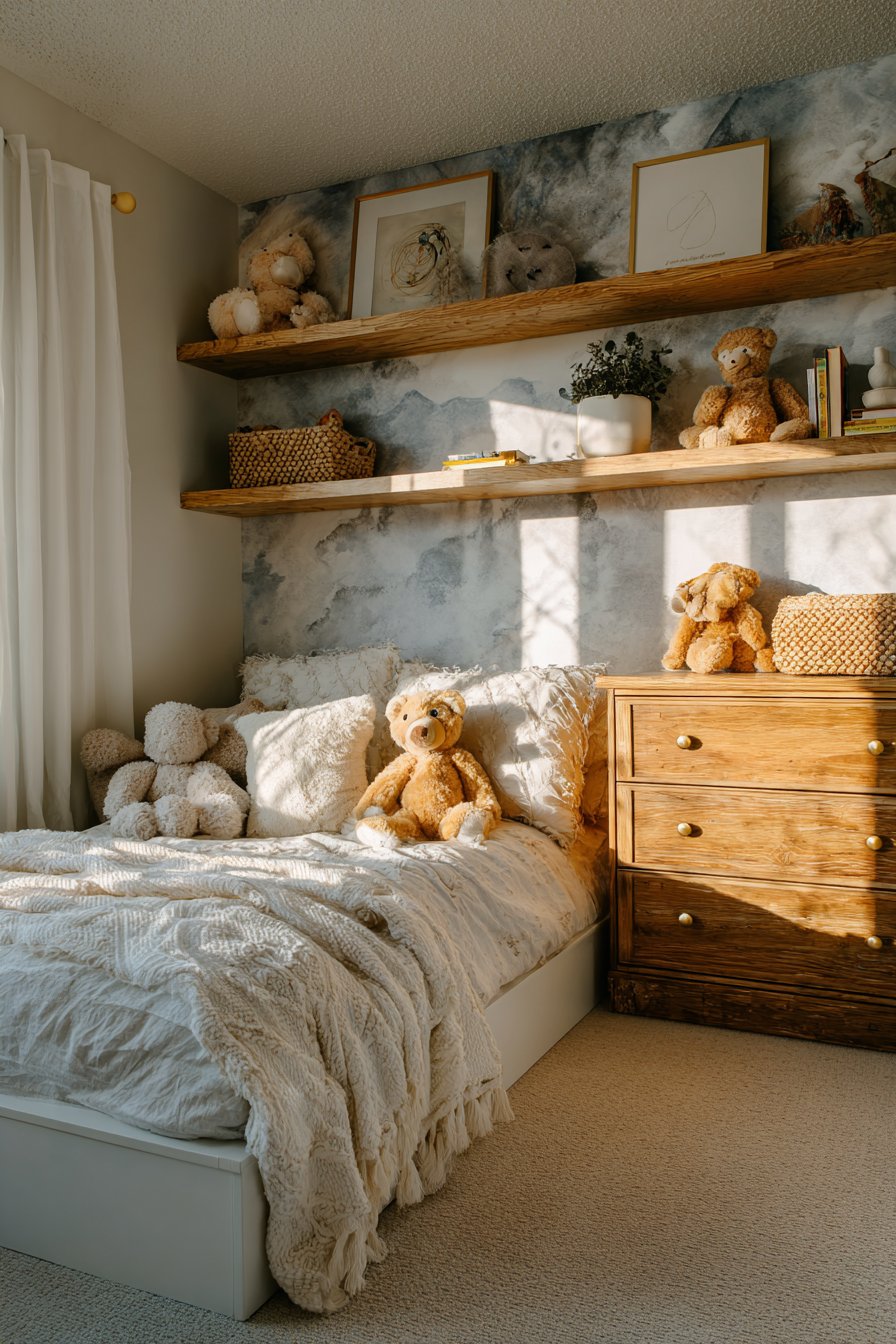
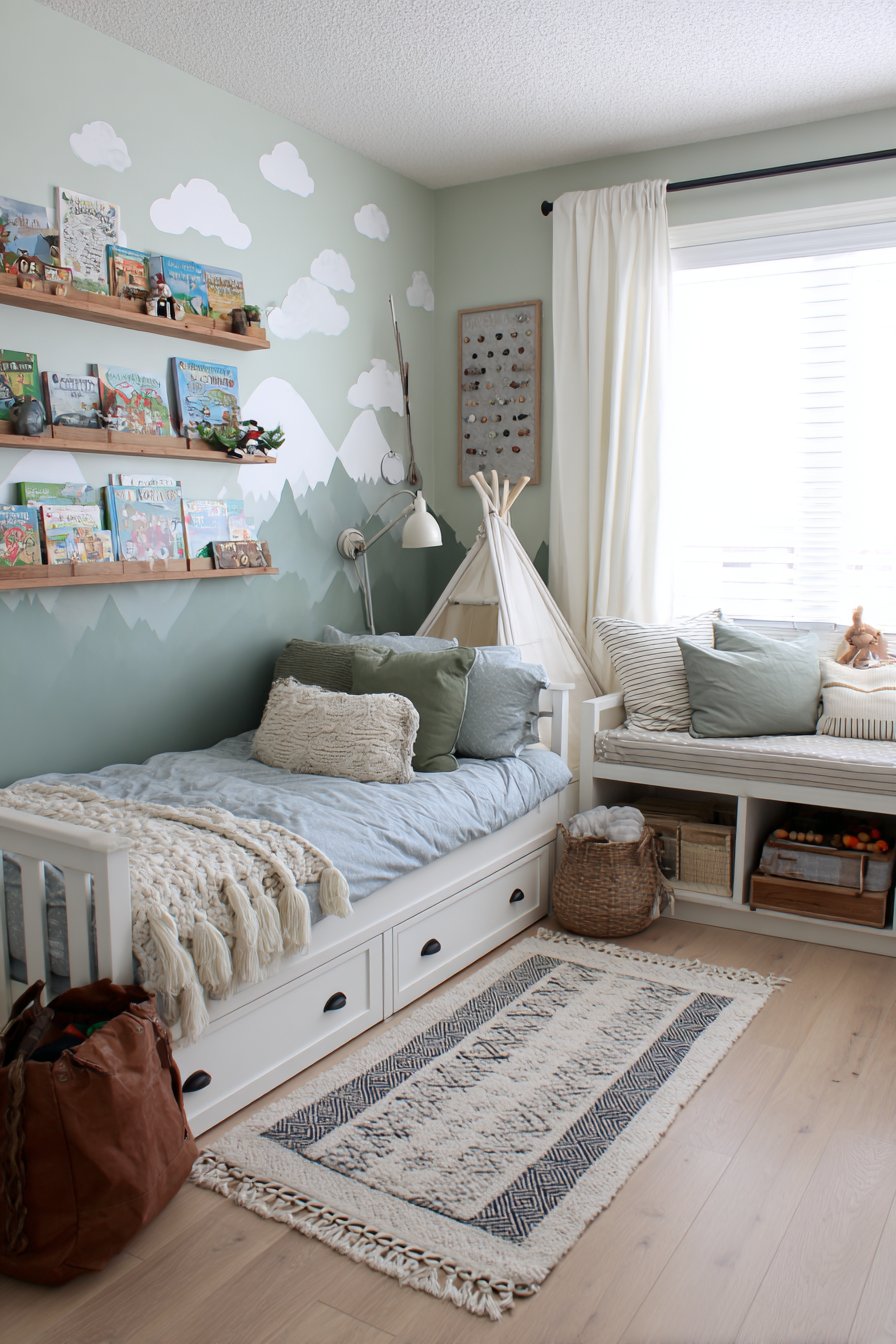
The hand-painted mountain mural creates an immersive focal point. Muted blues and greys establish a calming atmosphere perfect for restful sleep. The low-profile platform bed sits against this artistic backdrop. White bedding with textured throw blankets adds subtle visual interest.
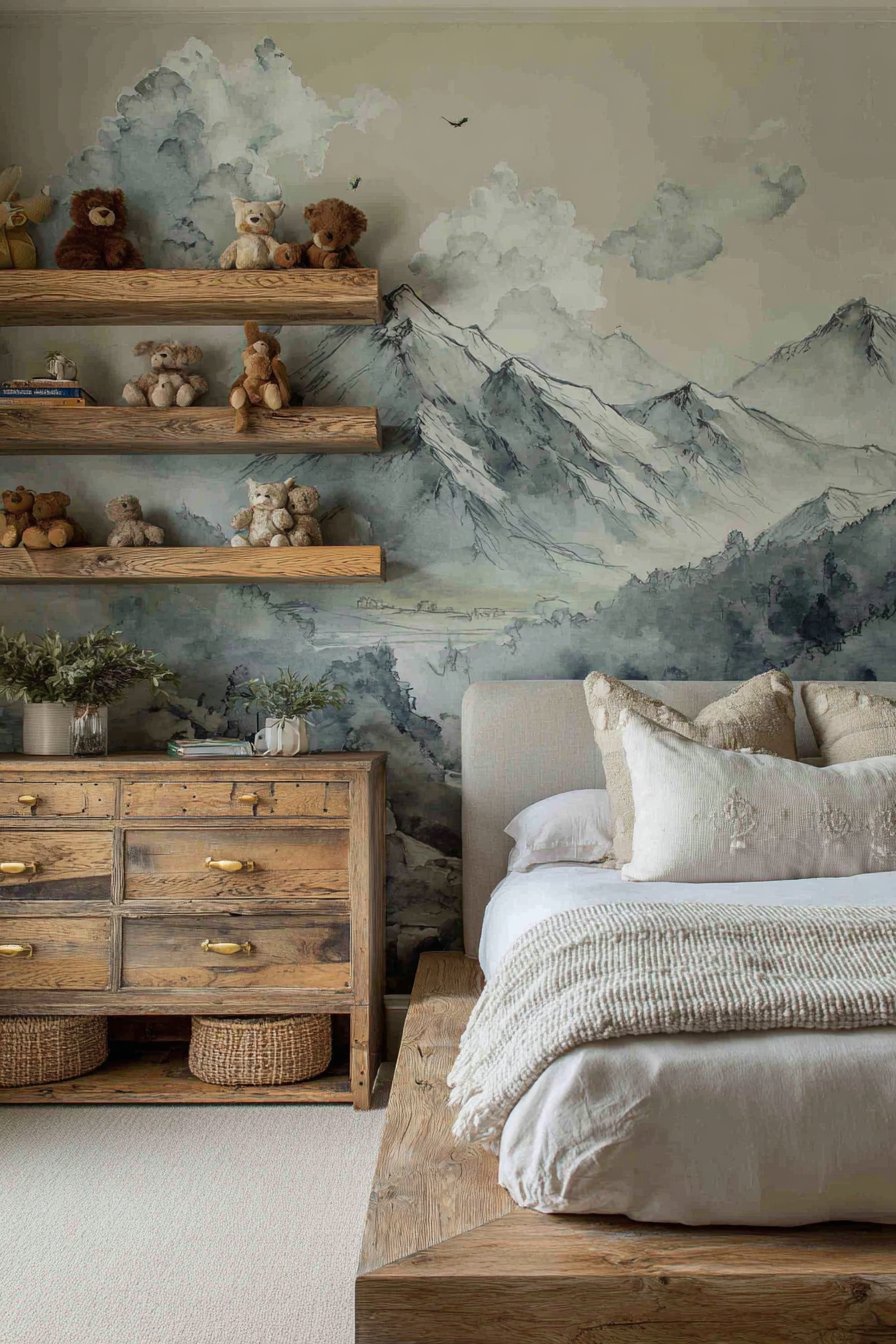
Natural wood floating shelves display curated stuffed animals and small plants. This arrangement keeps beloved items visible without creating clutter. The vintage-inspired wooden dresser features brass hardware that adds timeless elegance. Woven baskets tucked under the bed provide hidden storage.
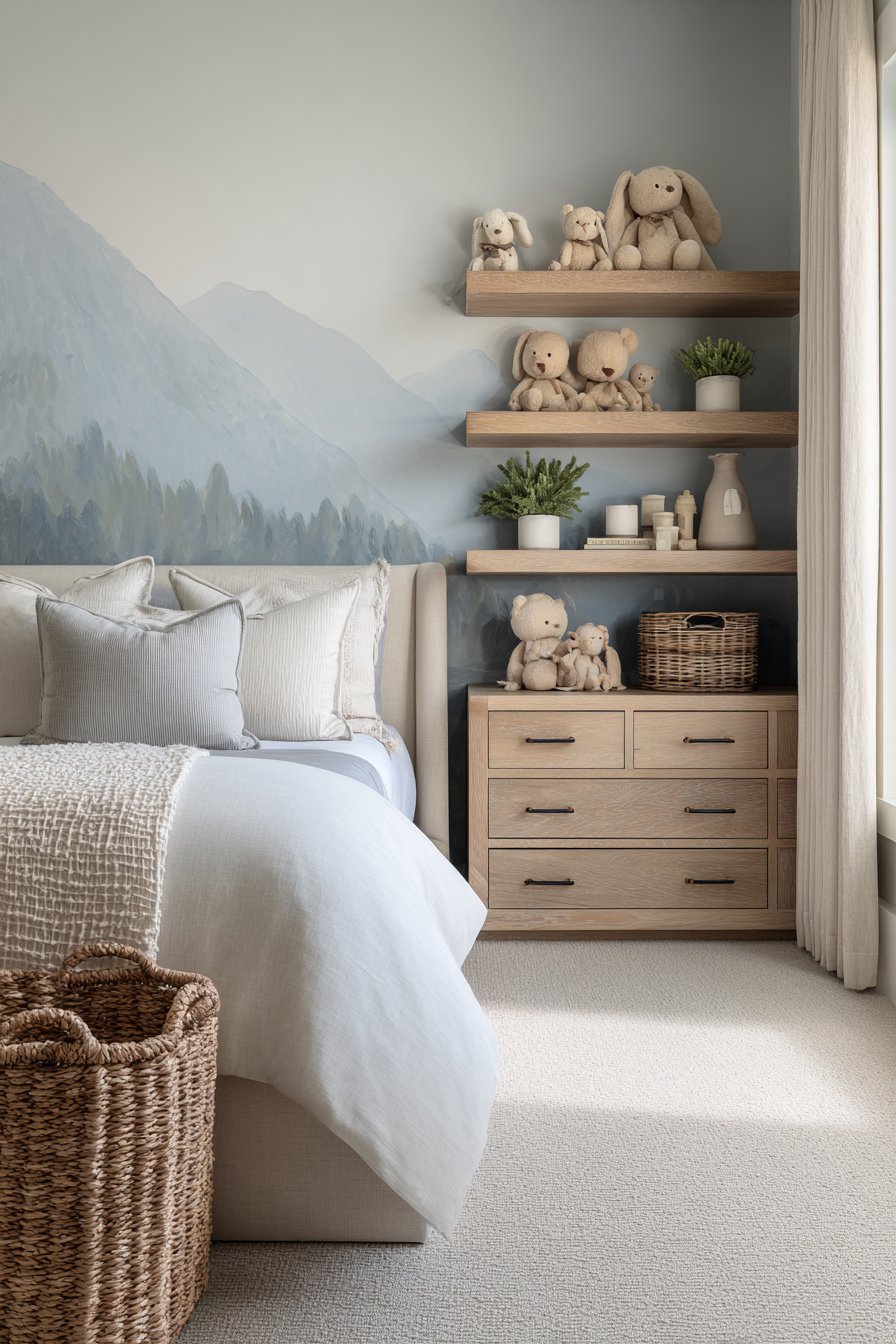
Afternoon light creates gentle shadows that enhance the mural’s dimensionality. The overall effect balances imagination with tranquility. This design proves particularly effective for sensitive children who need calming environments. The nature-inspired theme connects indoor spaces with outdoor beauty.
Key Design Tips:
- Commission custom murals or use quality wall decals for statement walls
- Keep bedding simple to let artistic walls remain the focal point
- Incorporate natural materials through wood furniture and woven textiles
- Use floating shelves to display without overwhelming the space
- Add under-bed storage to maximize every square inch
4. Classic Nautical Theme Bedroom
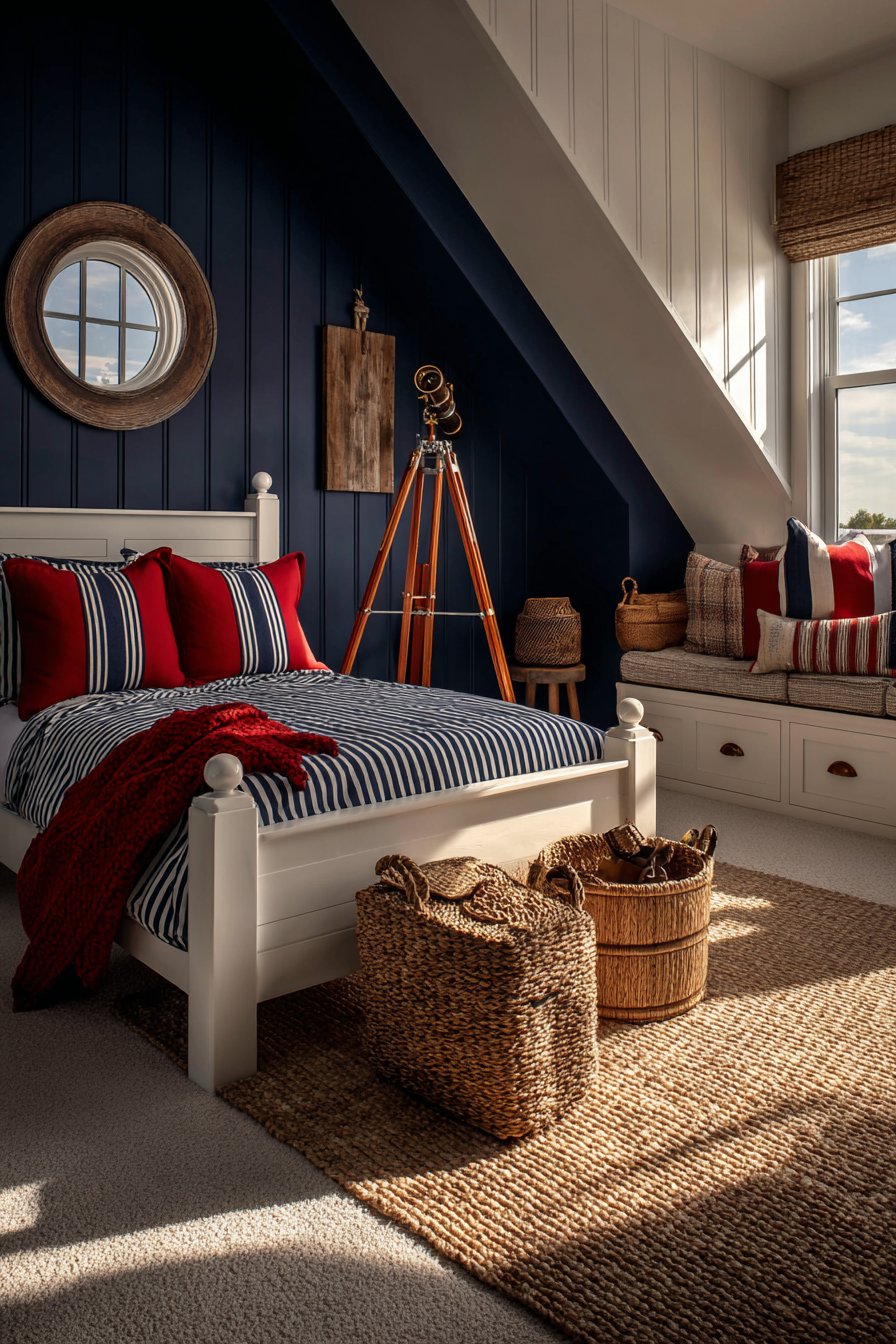
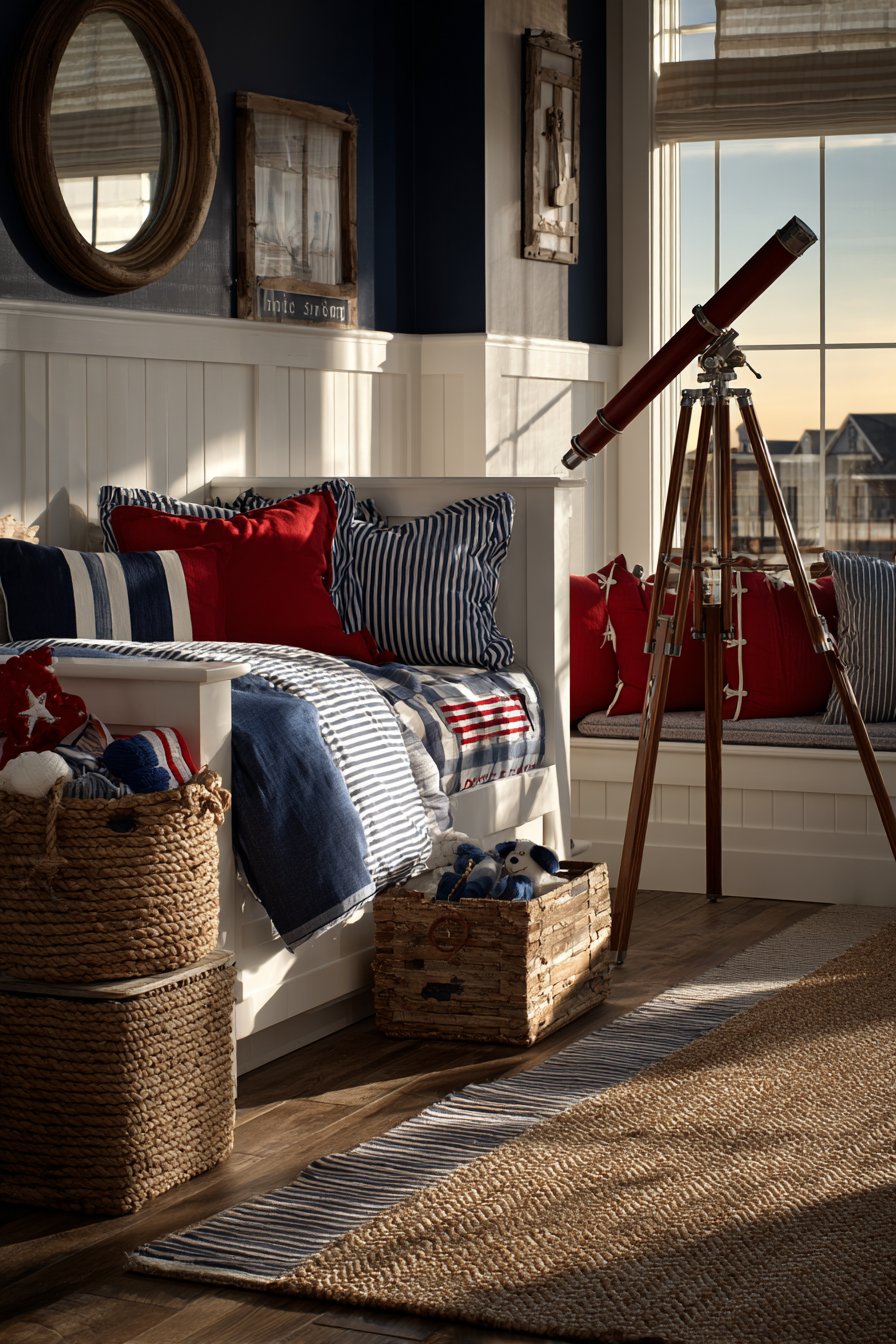
Navy blue accent walls contrast beautifully against white shiplap wainscoting. This classic combination creates crisp maritime atmosphere. The wooden bed frame painted in white holds navy and white striped bedding. Red accent pillows add traditional nautical color pops.
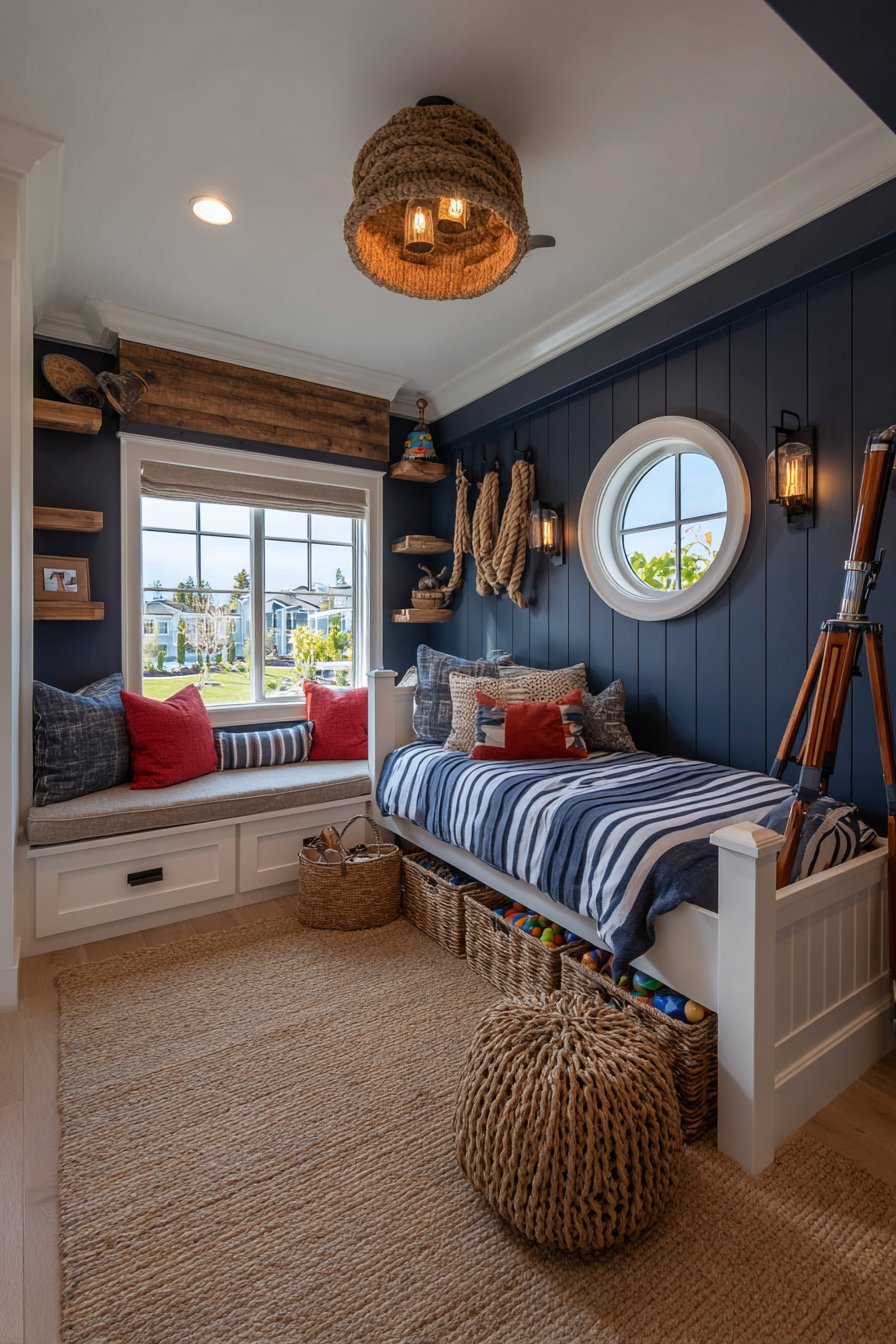
A telescope on wooden tripod encourages curiosity about the natural world. The porthole-style mirror reinforces the maritime theme with authentic detail. Built-in bench seating provides comfortable perching spots. Storage underneath the bench keeps toys organized and accessible.
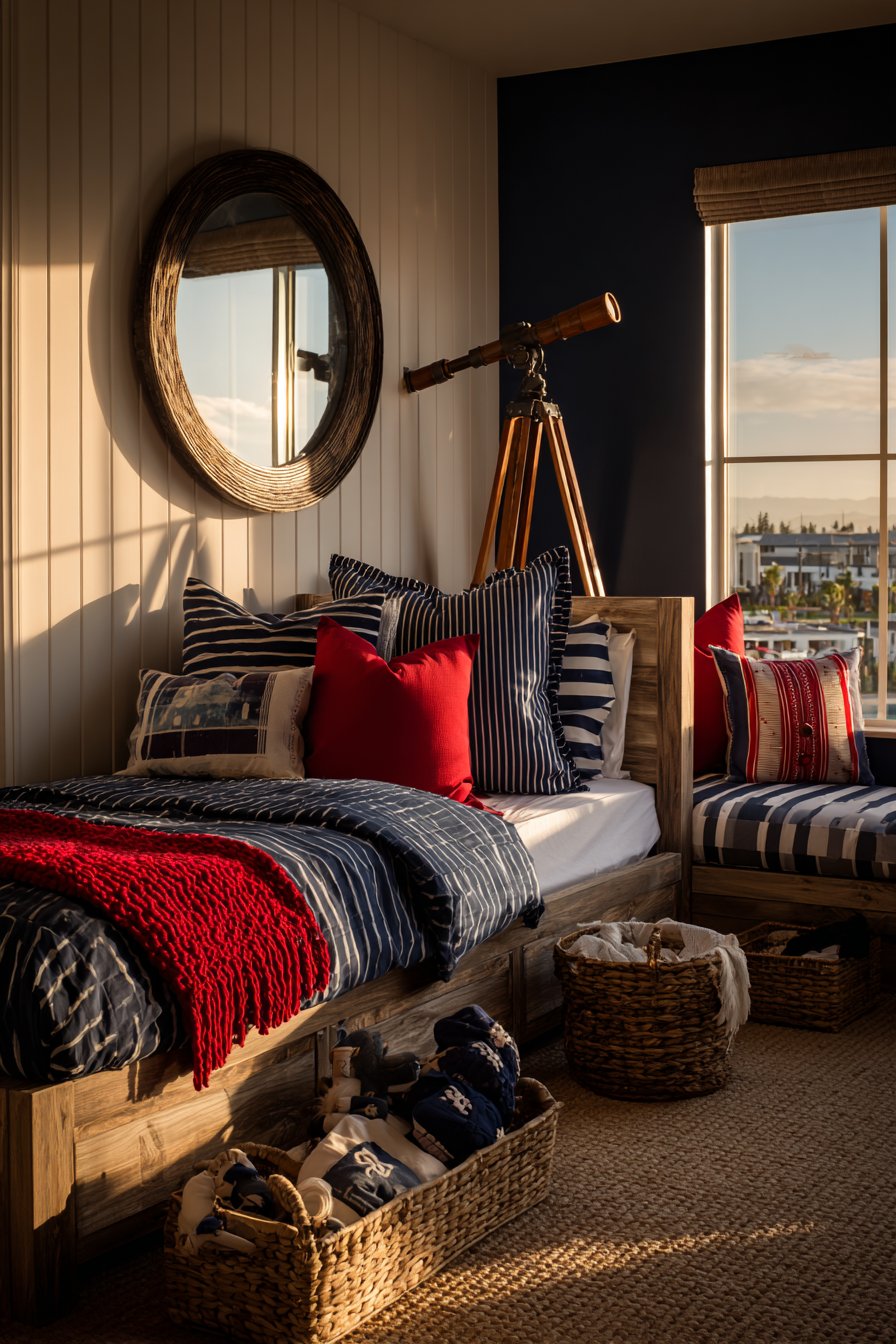
Rope-wrapped baskets add textural interest while maintaining the coastal aesthetic. Natural jute rugs anchor the space with organic warmth. Golden hour light emphasizes the cohesive theme throughout the room. This timeless design grows with children through various developmental stages.
Key Design Tips:
- Use classic color combinations that remain appealing over time
- Incorporate functional storage within decorative elements like benches
- Add theme-appropriate educational items like telescopes or globes
- Choose durable materials that withstand moisture and wear
- Install built-in solutions to maximize storage efficiency
5. Minimalist Scandinavian Simplicity
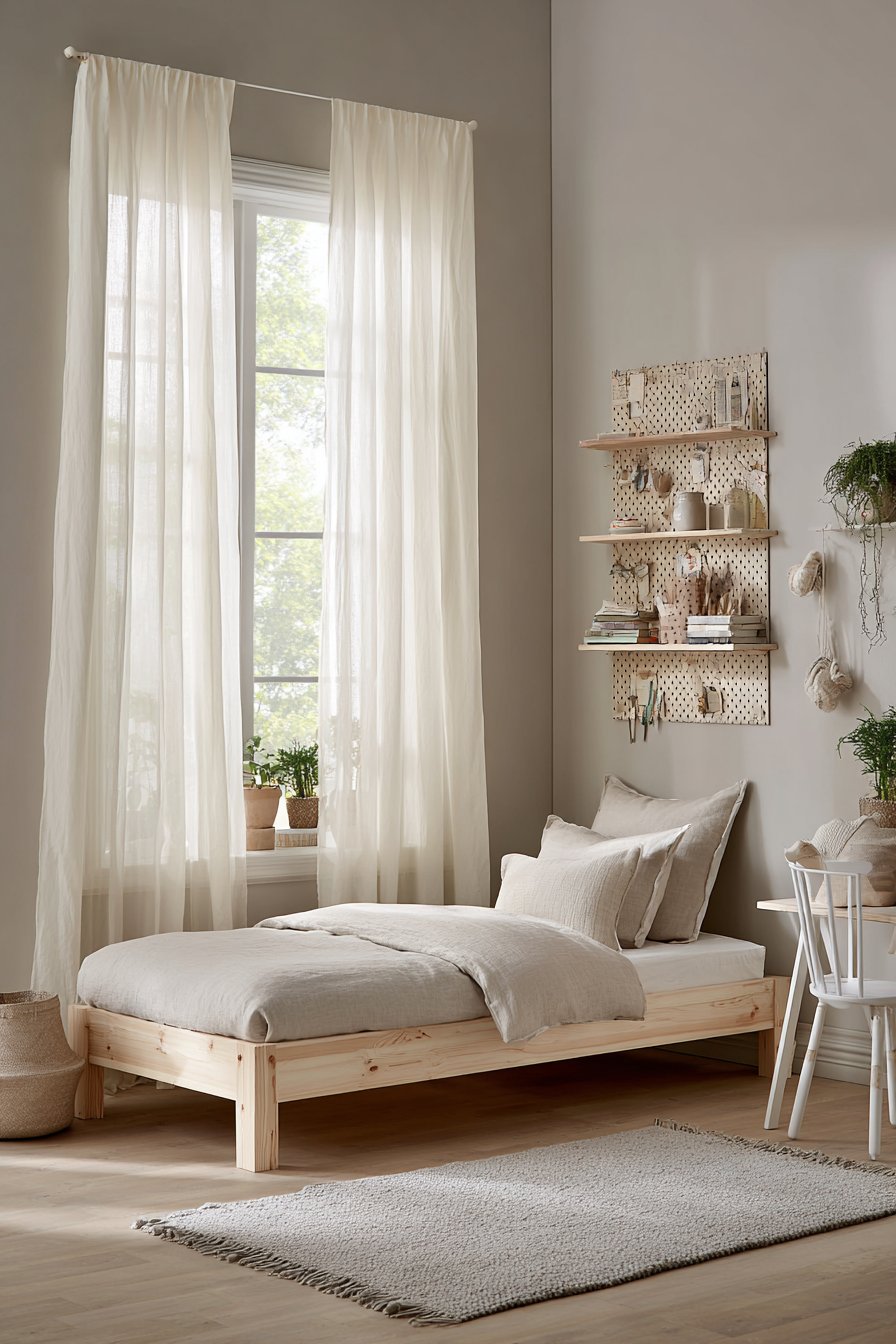
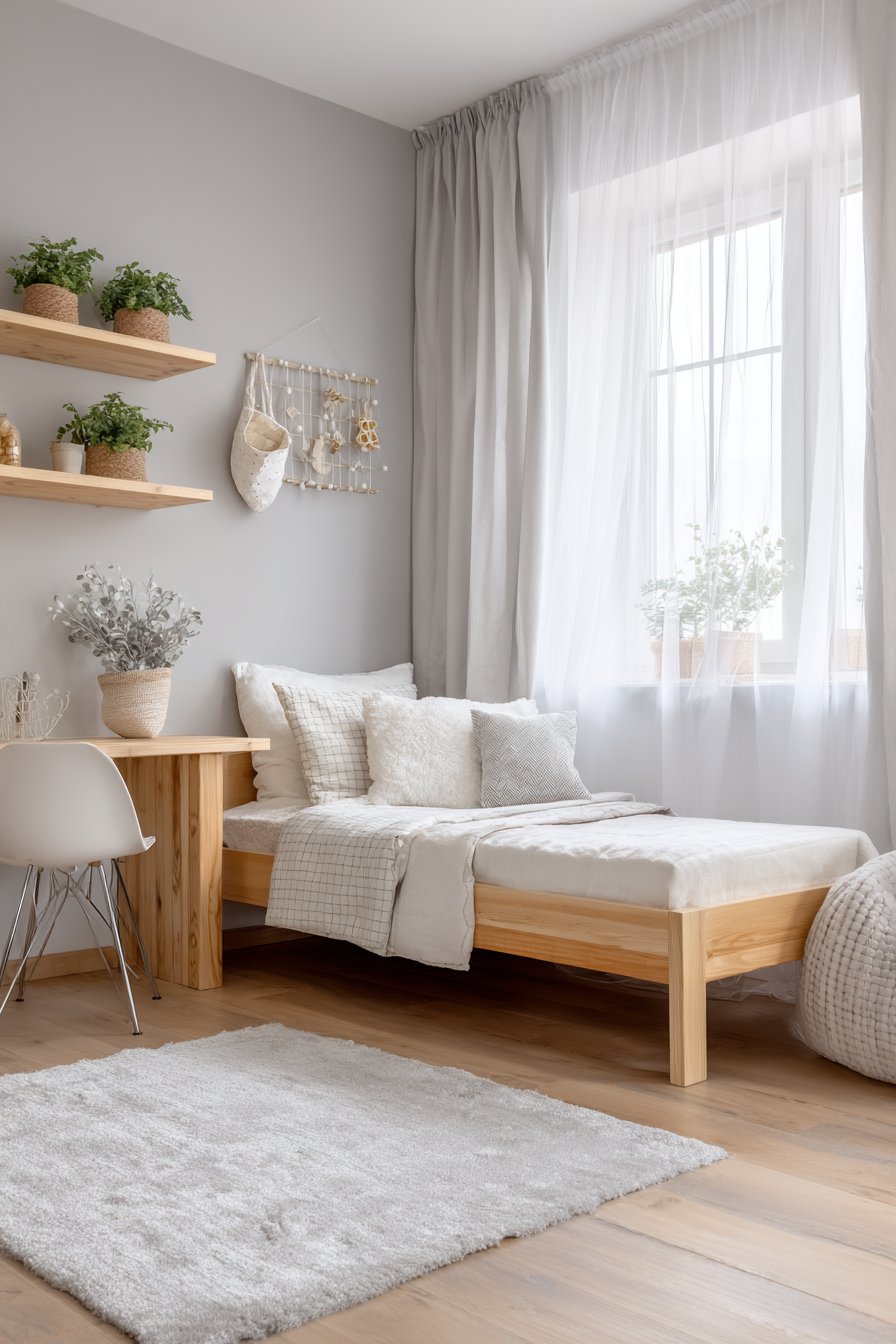
Light grey walls create a serene backdrop for minimalist white furniture. The simple wooden bed frame features natural finish that celebrates material beauty. Neutral linen bedding with subtle patterns maintains the understated aesthetic. This approach proves particularly calming for overstimulated children.
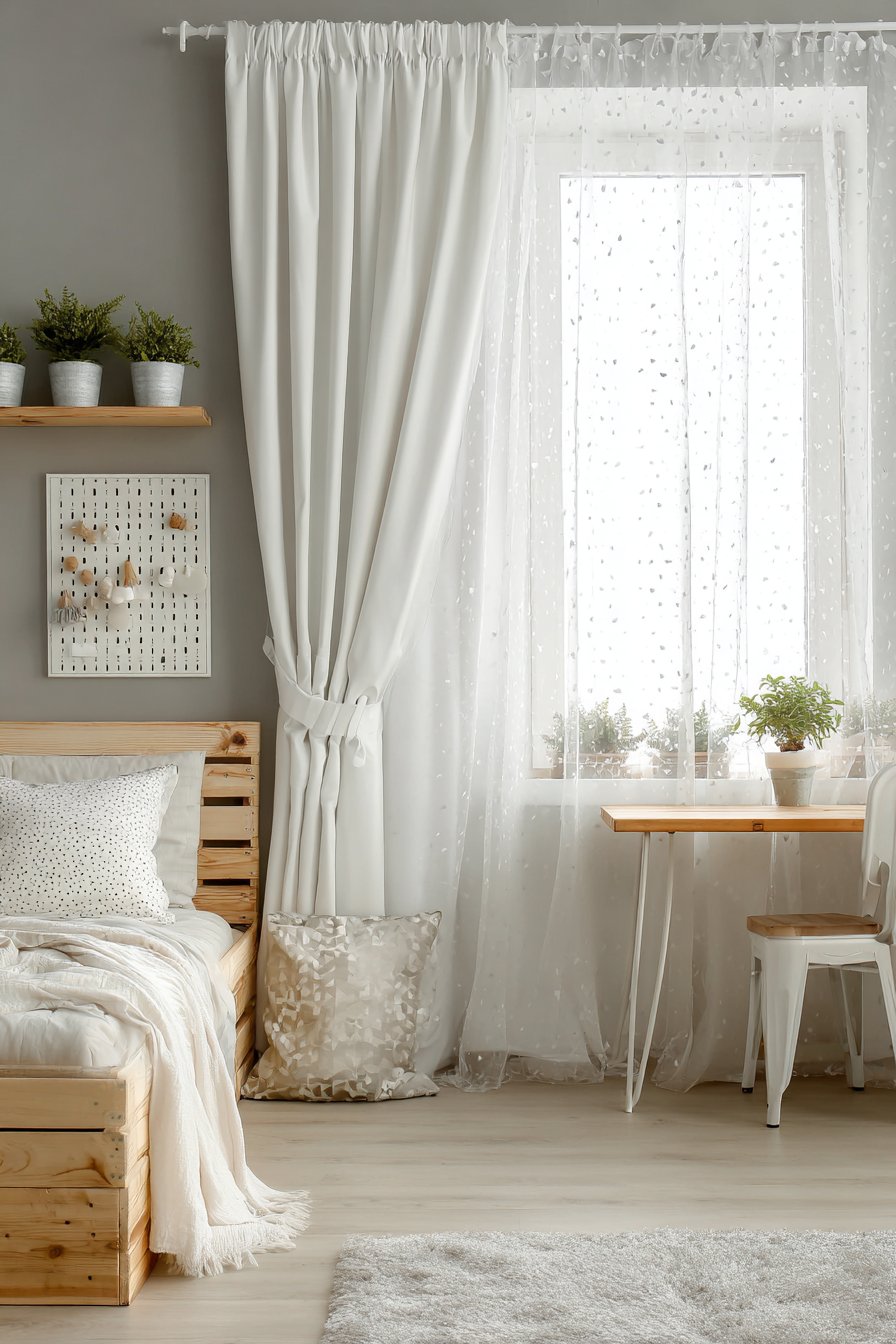
Wall-mounted pegboard provides flexible storage that adapts to changing needs. Bags, hats, and small treasures hang within easy reach. The compact writing desk with hairpin legs maximizes functionality without visual heaviness. Sheer white curtains filter light while maintaining privacy.
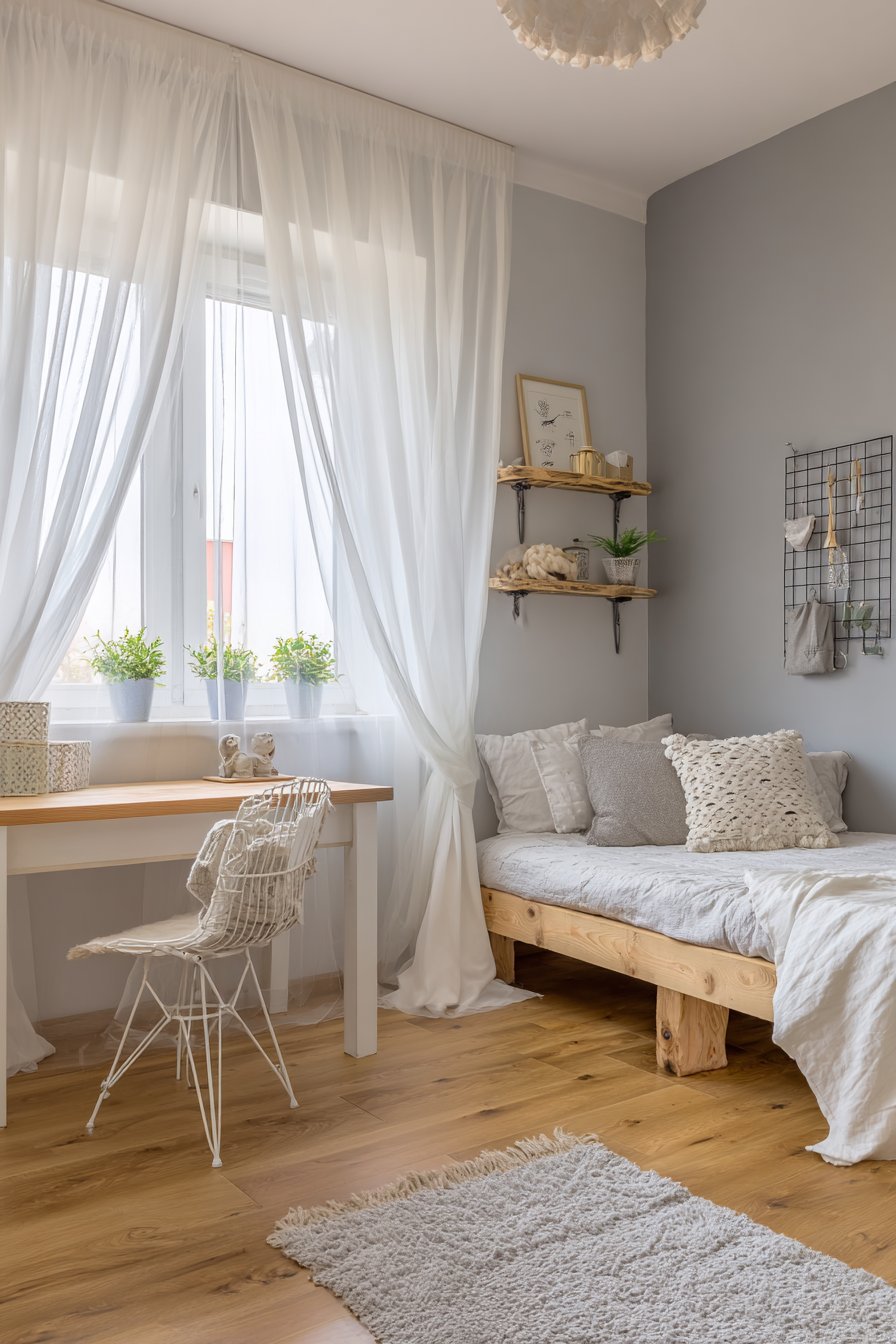
Small potted plants add life and teach responsibility through care routines. Light oak flooring and soft wool rugs complete the natural palette. The clutter-free environment promotes focus and peaceful sleep. This Scandinavian approach demonstrates that less truly can be more.
Key Design Tips:
- Choose quality over quantity with fewer but better furniture pieces
- Install flexible storage systems that adapt as needs change
- Maintain neutral palettes that create calm environments
- Incorporate natural materials for warmth within minimalism
- Add plants to introduce life without clutter
6. Vibrant Yellow Accent Wall Energy
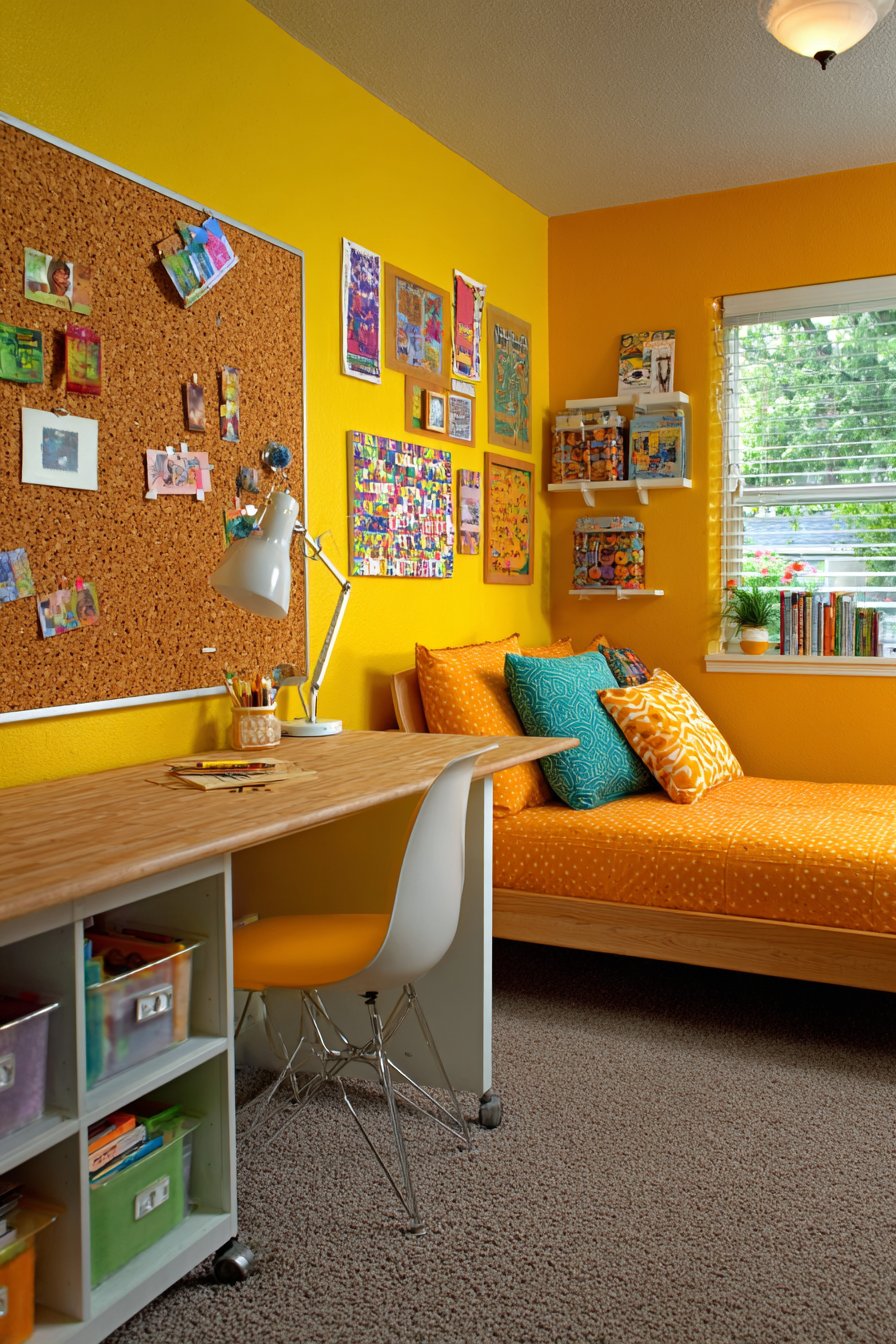
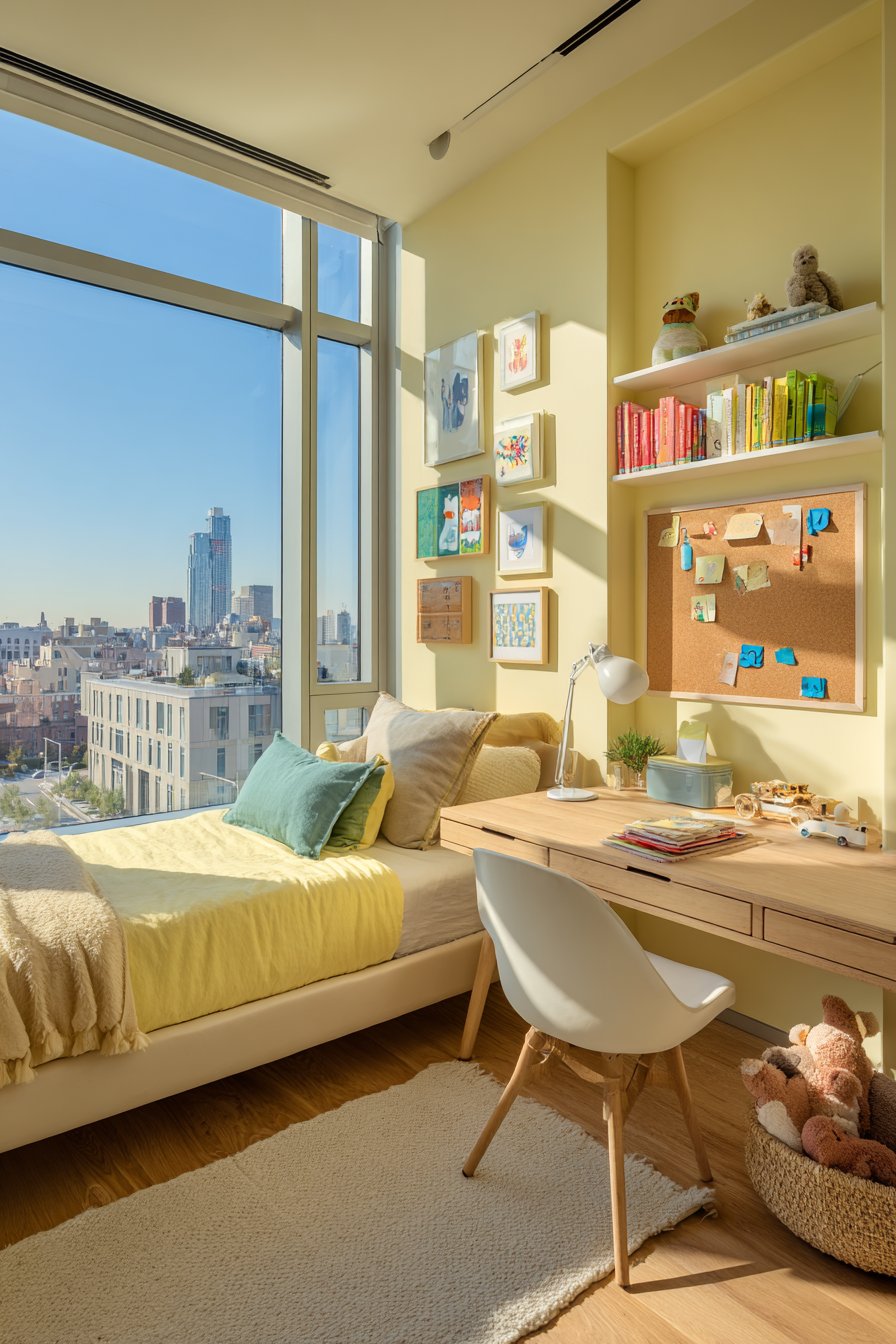
Bold sunny yellow walls inject immediate cheerfulness into the space. White furniture prevents the bright color from overwhelming. A colorful artwork gallery adds personality and creative inspiration. The mid-century modern bed frame brings retro charm.
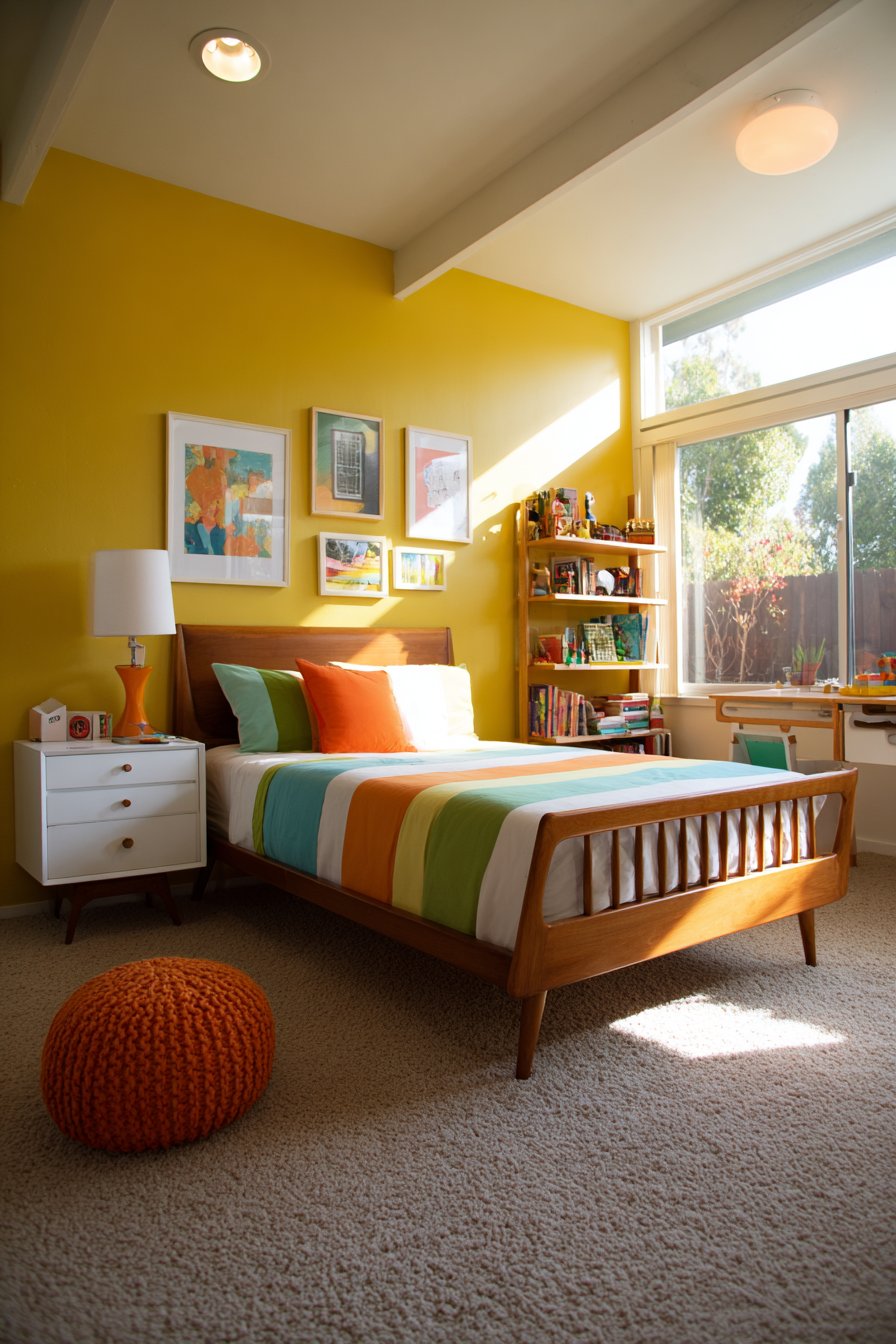
Coordinating yellows, teals, and oranges create a harmonious color story. The vintage wooden desk refinished in white serves dual purposes. It provides homework station functionality while adding character. Modern task lighting ensures proper illumination for studying.
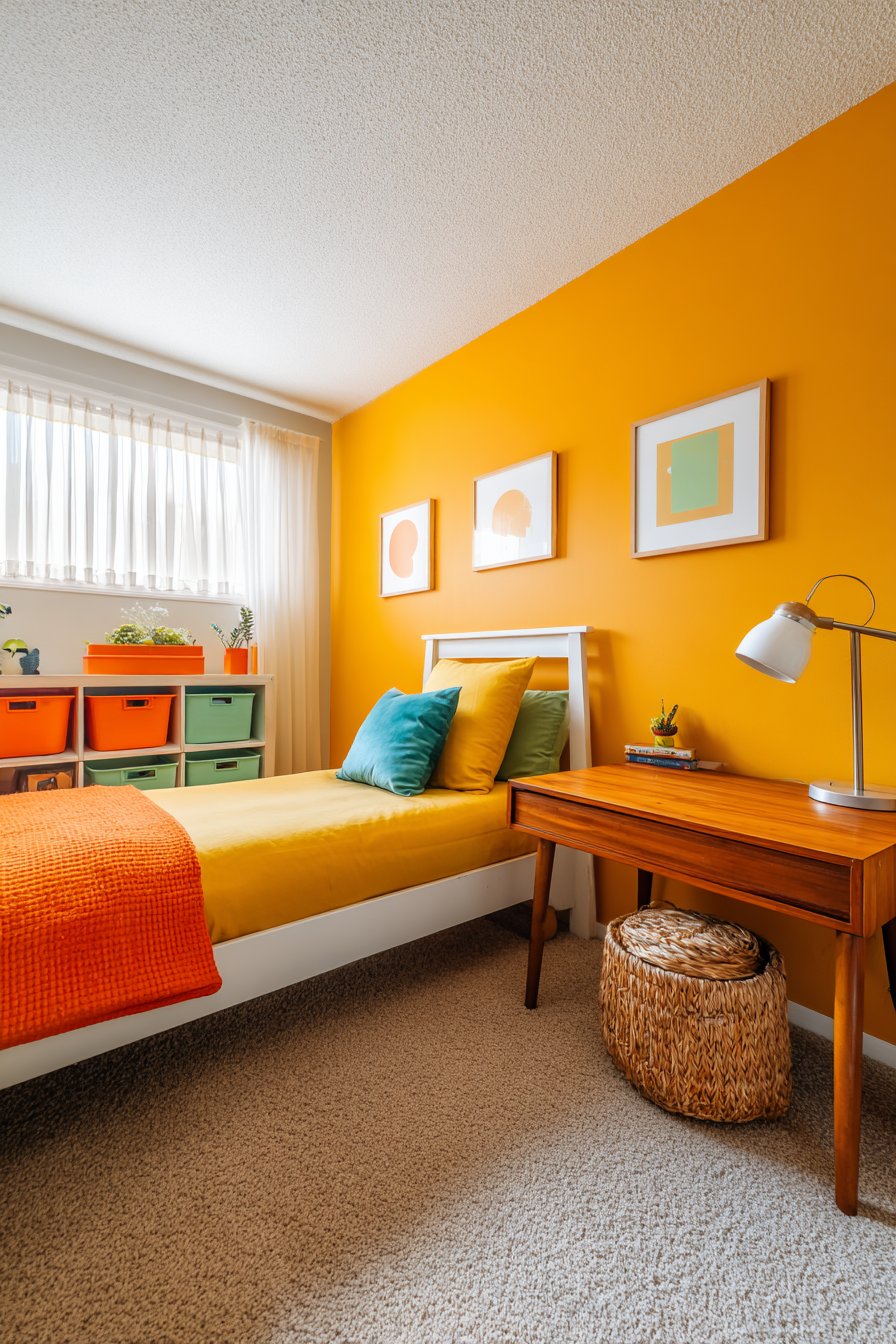
Rainbow-colored storage bins organize toys while adding playful design elements. Cork boards and magnetic boards provide creative display opportunities. This arrangement encourages self-expression and personal curation. Natural lighting balances the bold color choices throughout the space.
Key Design Tips:
- Use bold accent walls as changeable color without full commitment
- Coordinate multiple colors through intentional palette planning
- Refinish vintage furniture for character with modern functionality
- Create dedicated display areas for rotating artwork
- Organize with color-coded storage systems
7. Smart Shared Sibling Space
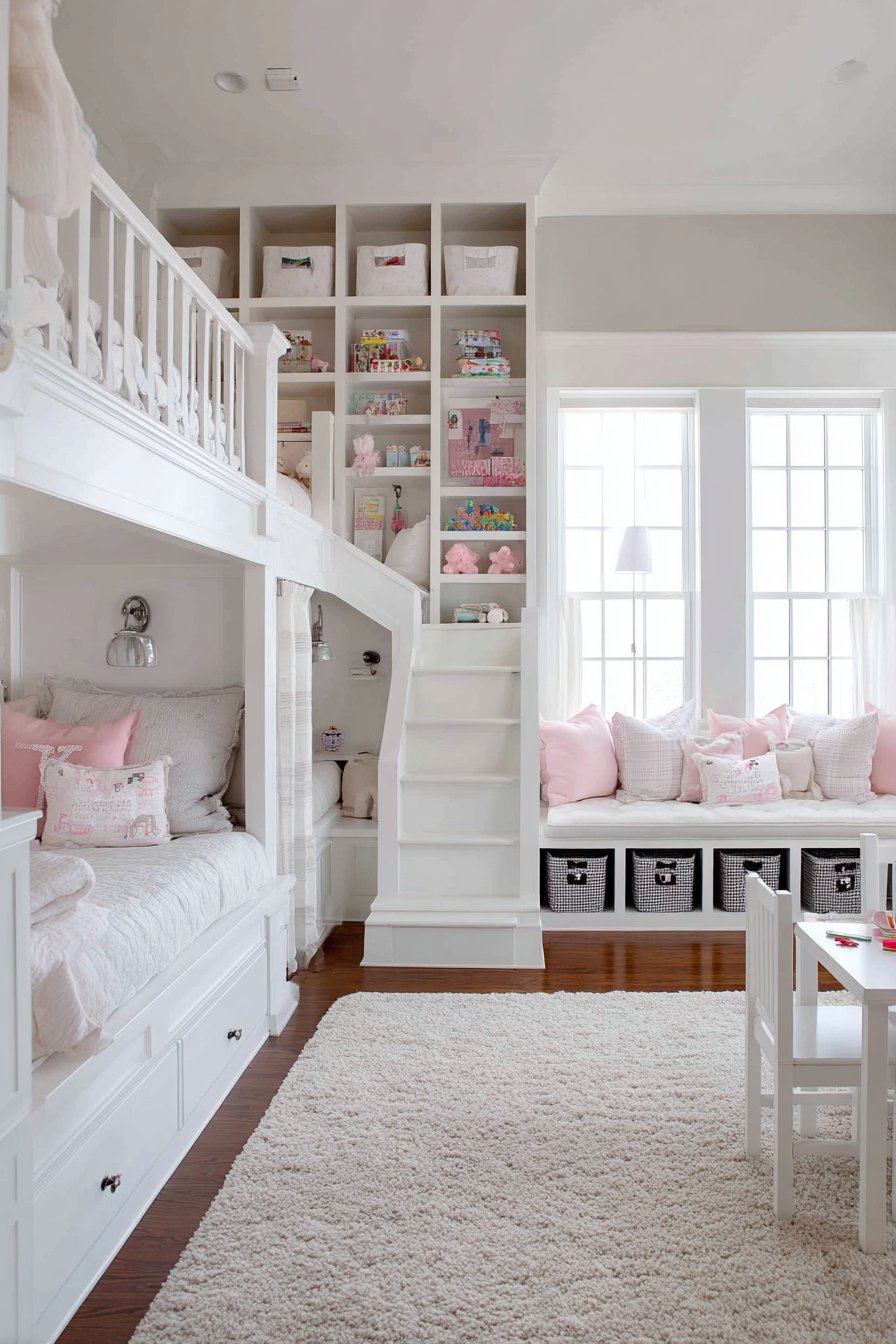
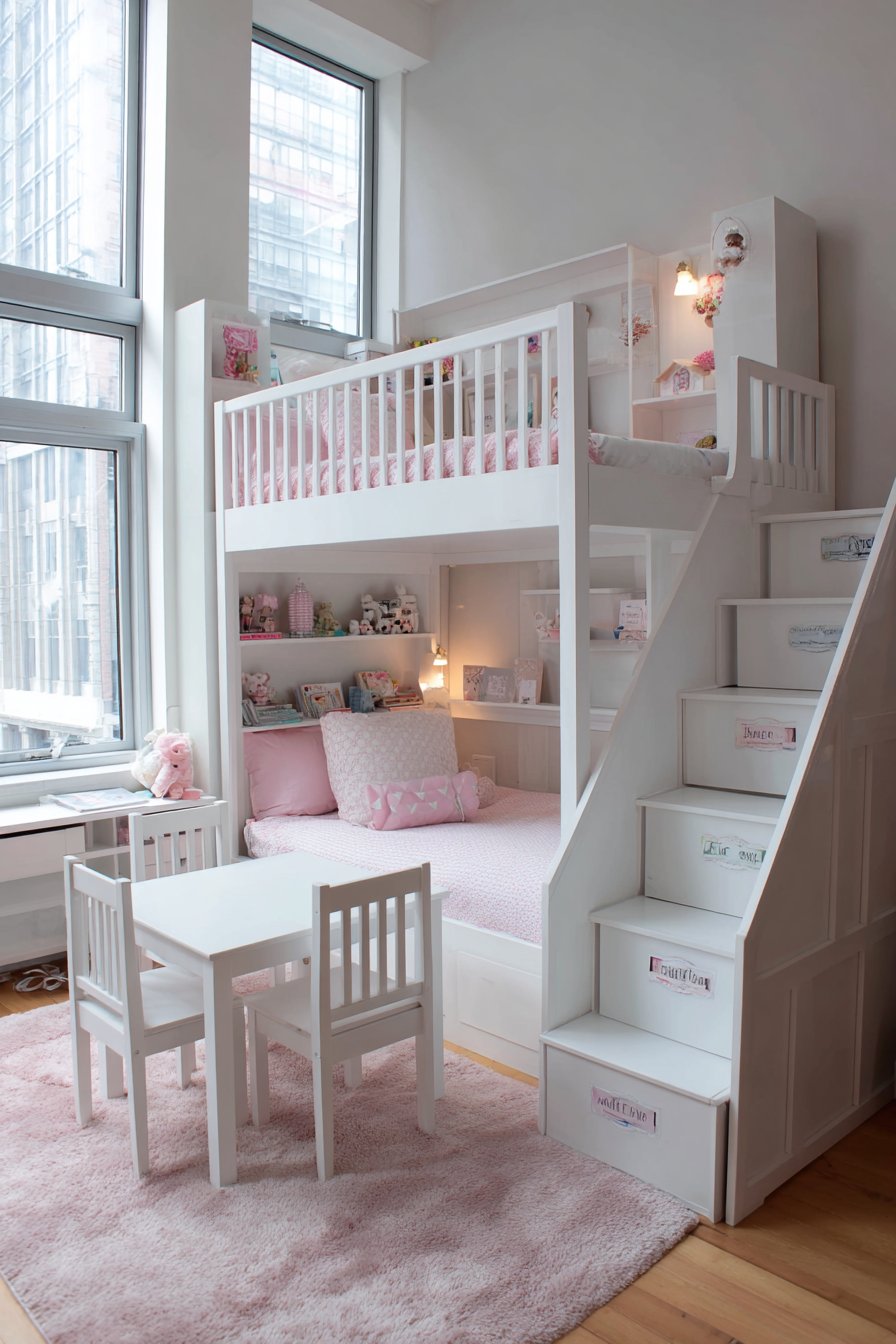
Built-in storage drawers in the bunk bed staircase maximize efficiency. Each sleeping level includes personal reading lights and small shelves. This arrangement respects individual needs within shared quarters. Soft blush pink and grey create sophisticated yet playful atmosphere.
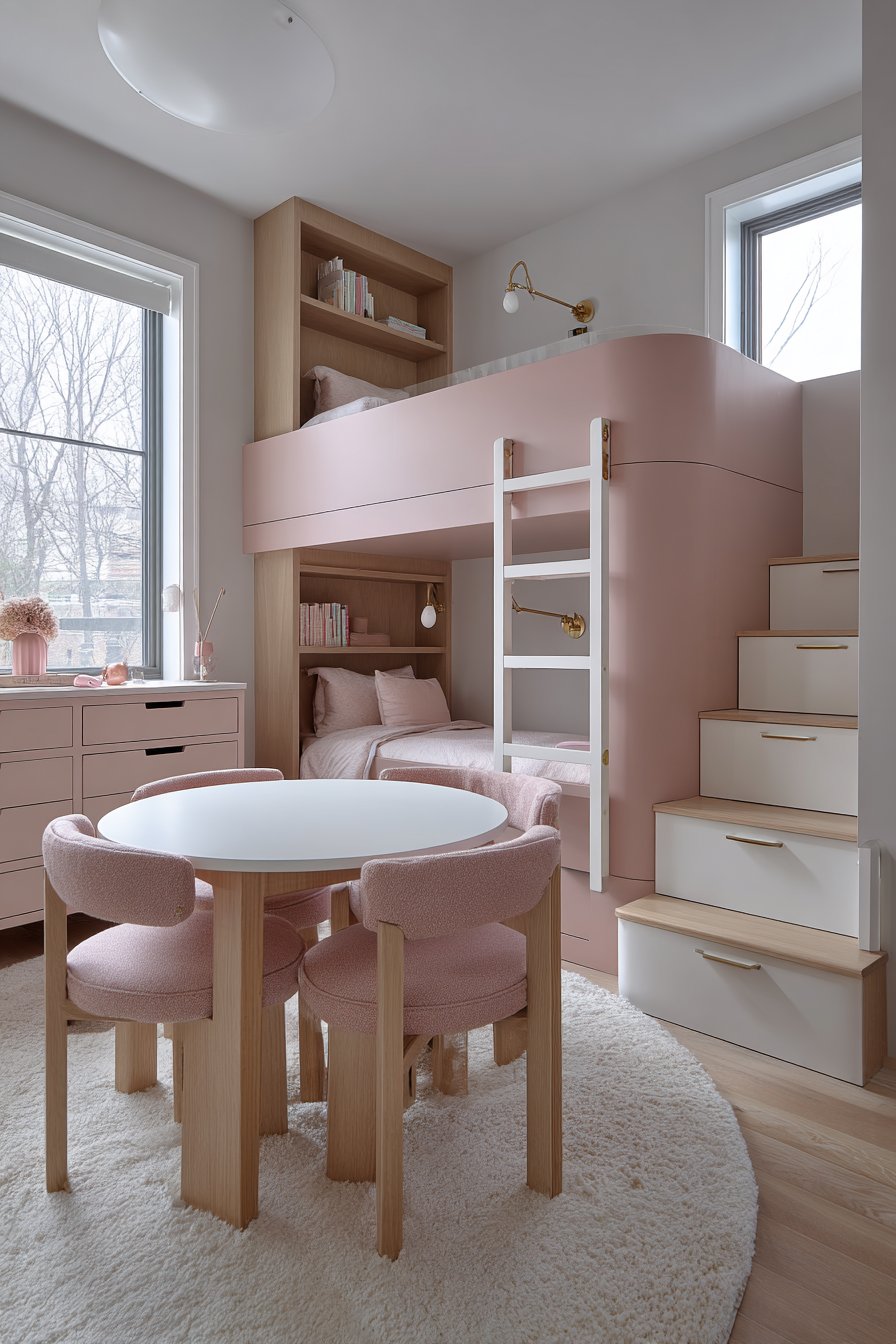
Individual storage cubbies labeled with names establish personal territories. This detail reduces conflicts over belongings and encourages responsibility. The shared play table with comfortable chairs promotes cooperative activities. A plush area rug defines the communal zone.
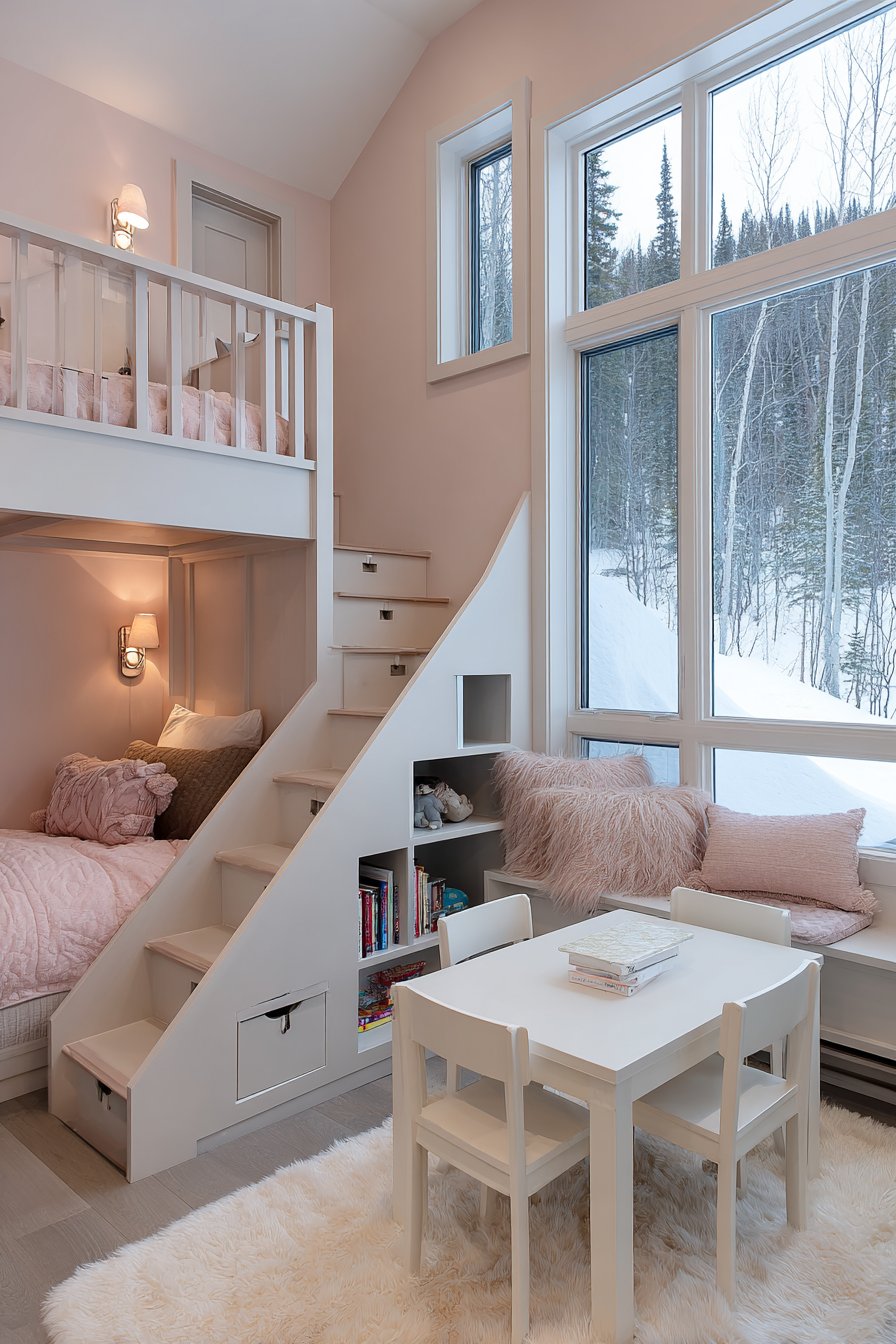
Natural light from double windows illuminates the entire space evenly. Smart space planning ensures fair division of personal areas. This approach teaches sharing while respecting individual identity. The design grows with siblings through different developmental phases.
Key Design Tips:
- Incorporate storage within functional elements like stairs
- Provide personal spaces even within shared rooms
- Use labels to establish clear ownership boundaries
- Create communal zones that encourage positive interaction
- Choose sophisticated color palettes that age well
8. Peaceful Woodland Theme Sanctuary
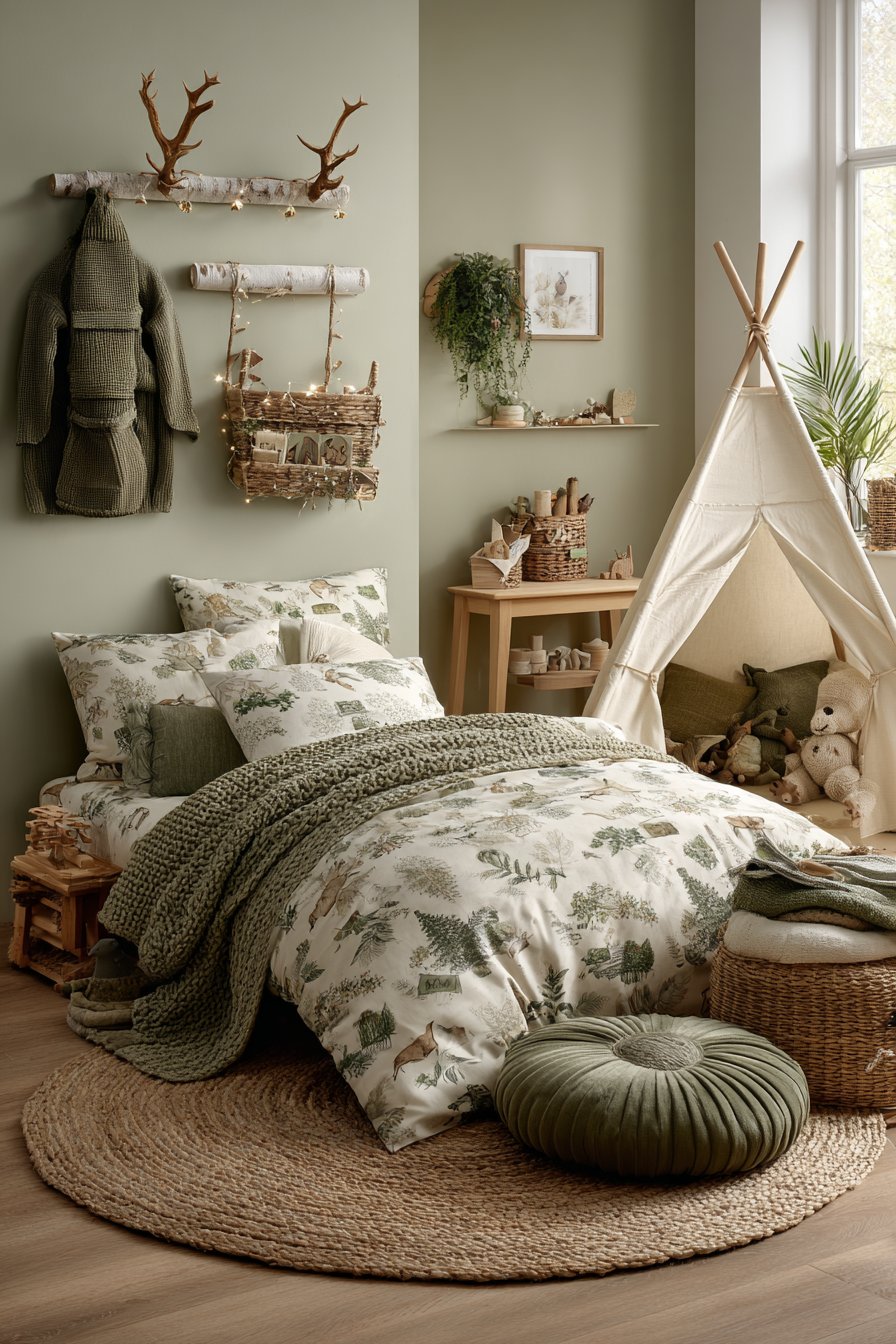
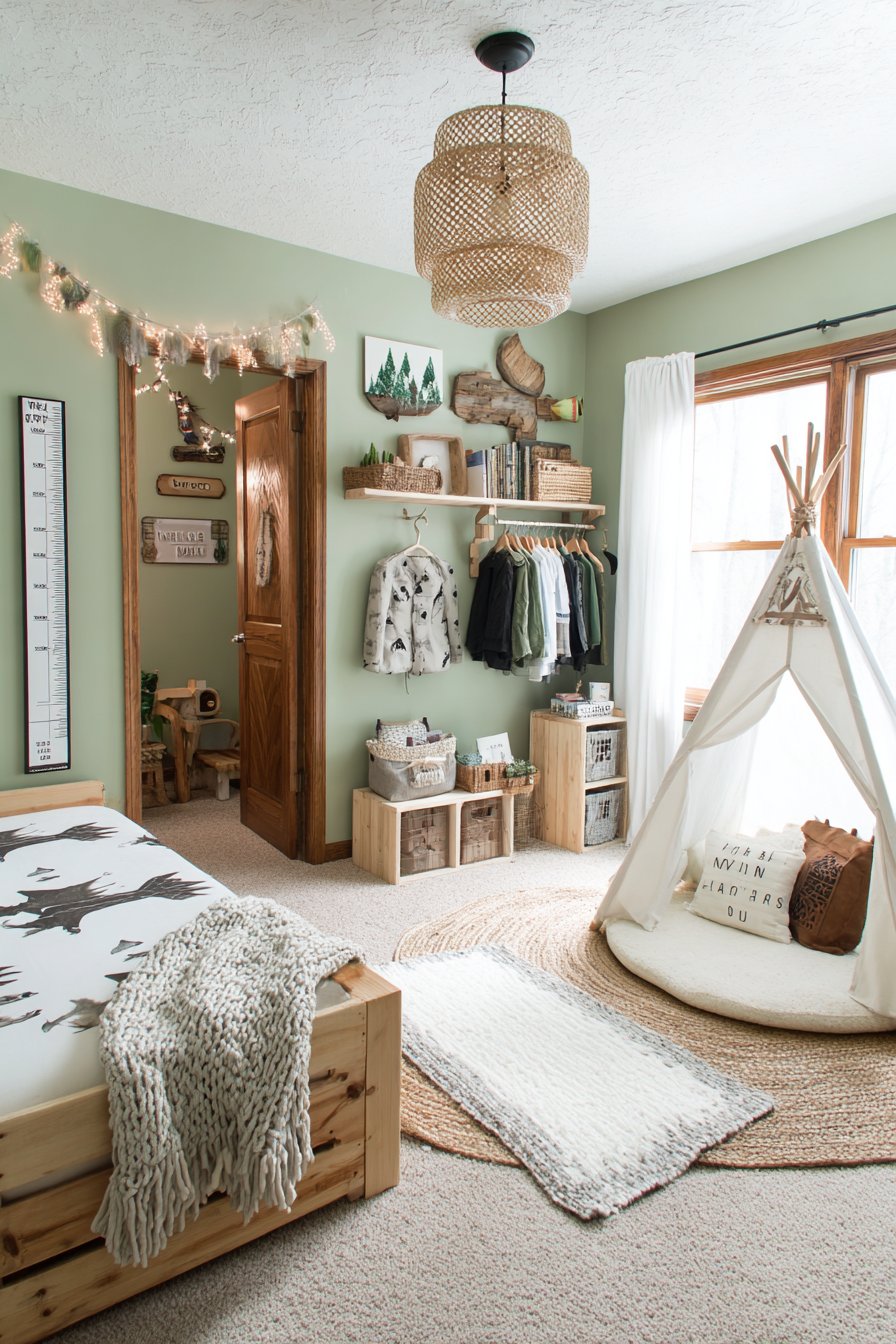
Soft green walls establish nature-connected atmosphere throughout the room. The teepee reading nook with string lights creates magical retreat space. Forest animal print bedding brings the woodland theme to sleeping areas. Knit throw blankets add textural warmth.
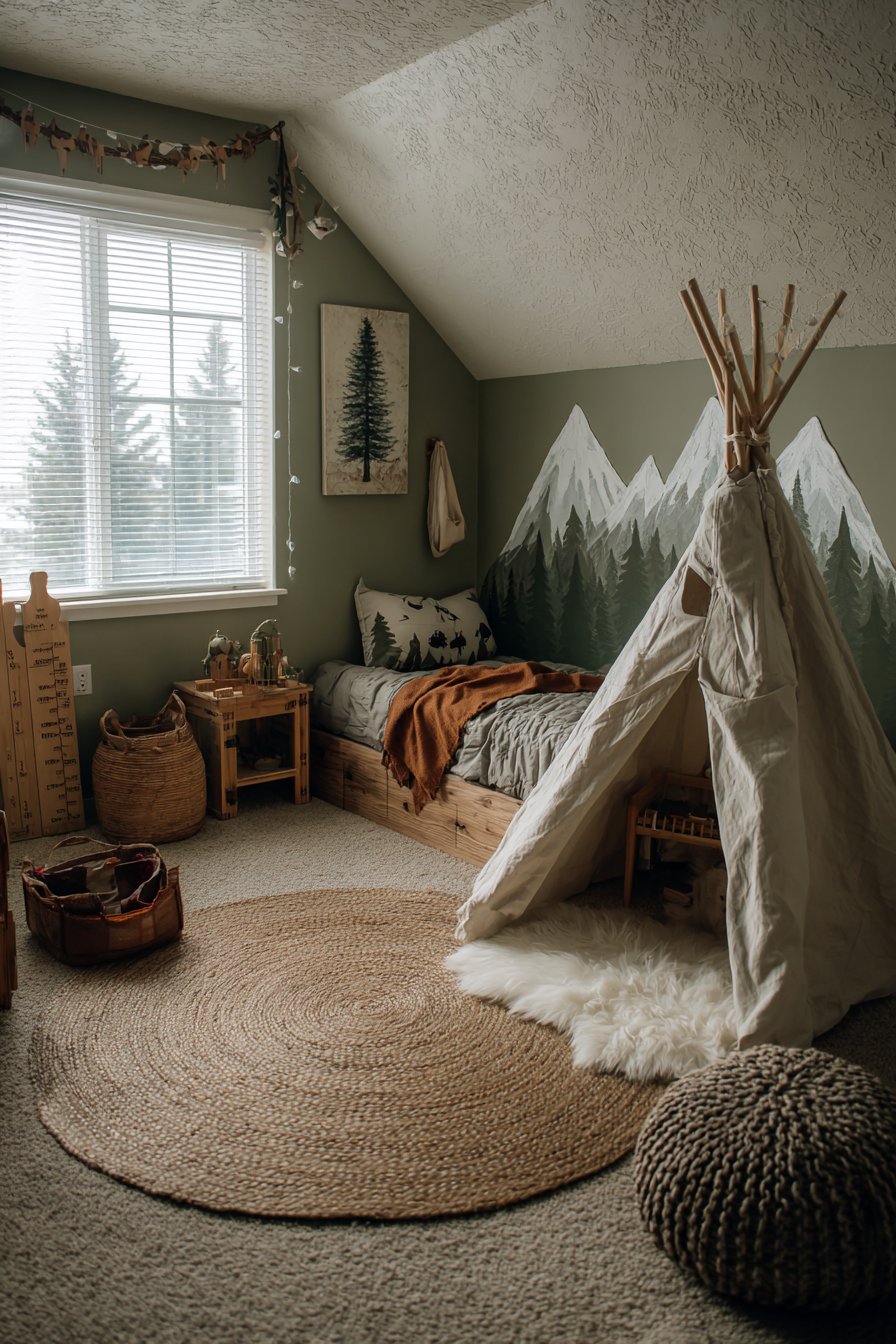
Branch-like wall hooks hold jackets and bags with natural aesthetic. Wooden crates painted soft white organize toys while maintaining organic feel. A growth chart tree decal tracks physical development over years. Natural fiber rugs and wood furniture enhance the biophilic design.
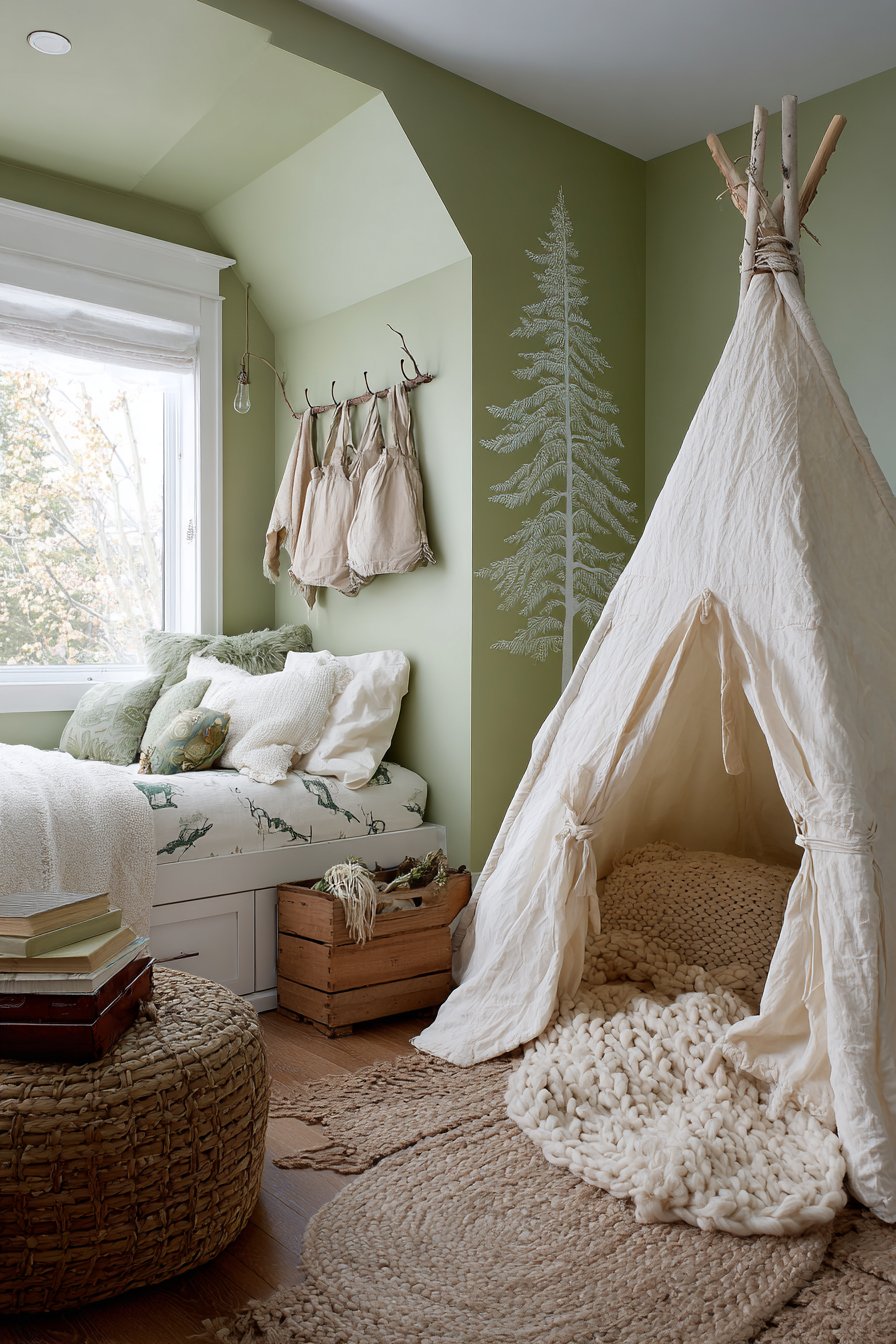
Diffused natural lighting creates peaceful ambiance perfect for sensitive children. The nature-inspired theme reduces screen time by encouraging imaginative forest play. This design fosters environmental awareness from young ages. Organic materials throughout promote healthier indoor air quality.
Key Design Tips:
- Choose nature-inspired themes that promote calm and connection
- Create cozy retreat spaces like teepees for quiet time
- Use natural materials for healthier indoor environments
- Incorporate growth tracking elements for milestone celebration
- Add soft lighting for peaceful bedtime routines
9. Athletic Sport Theme Organization
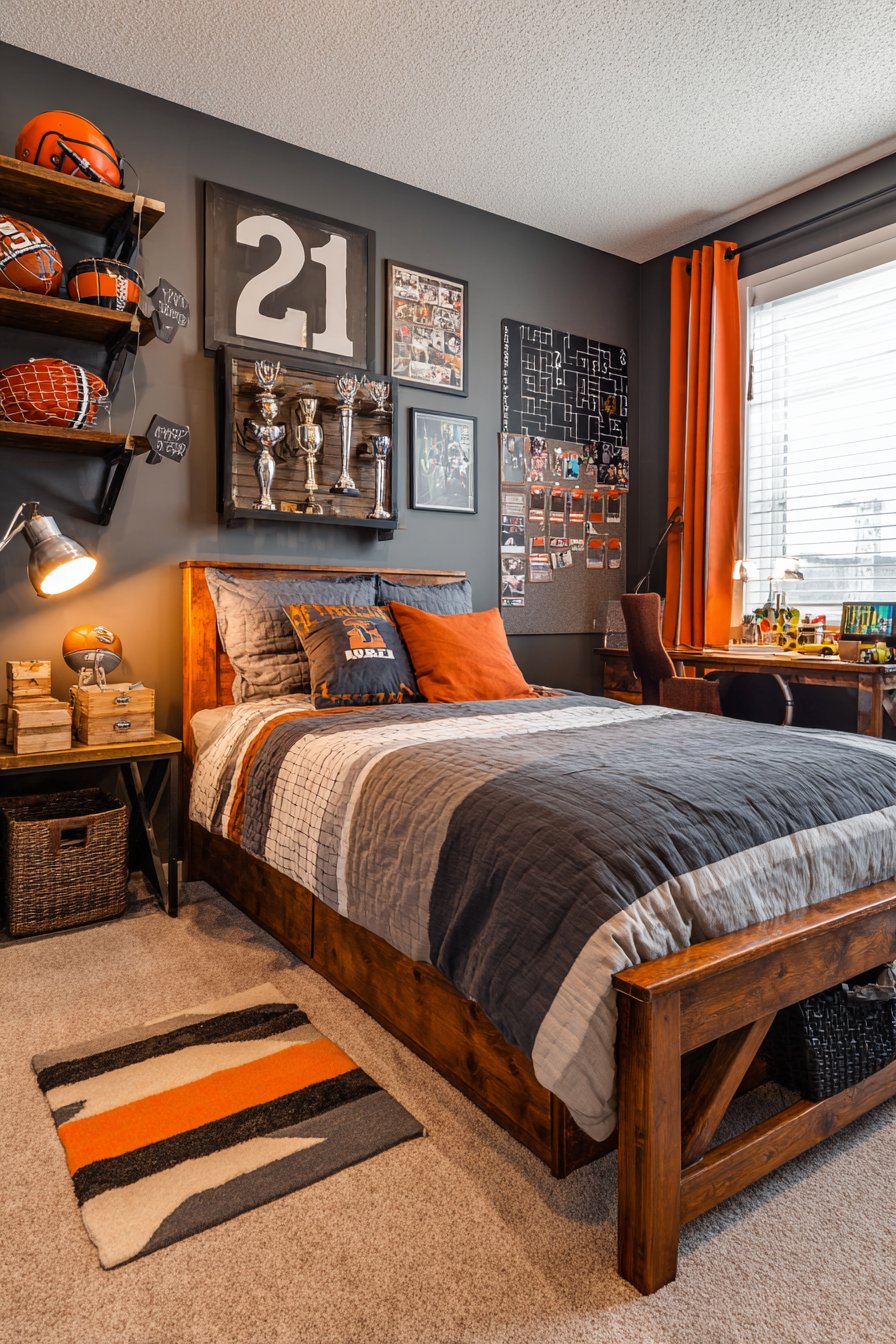
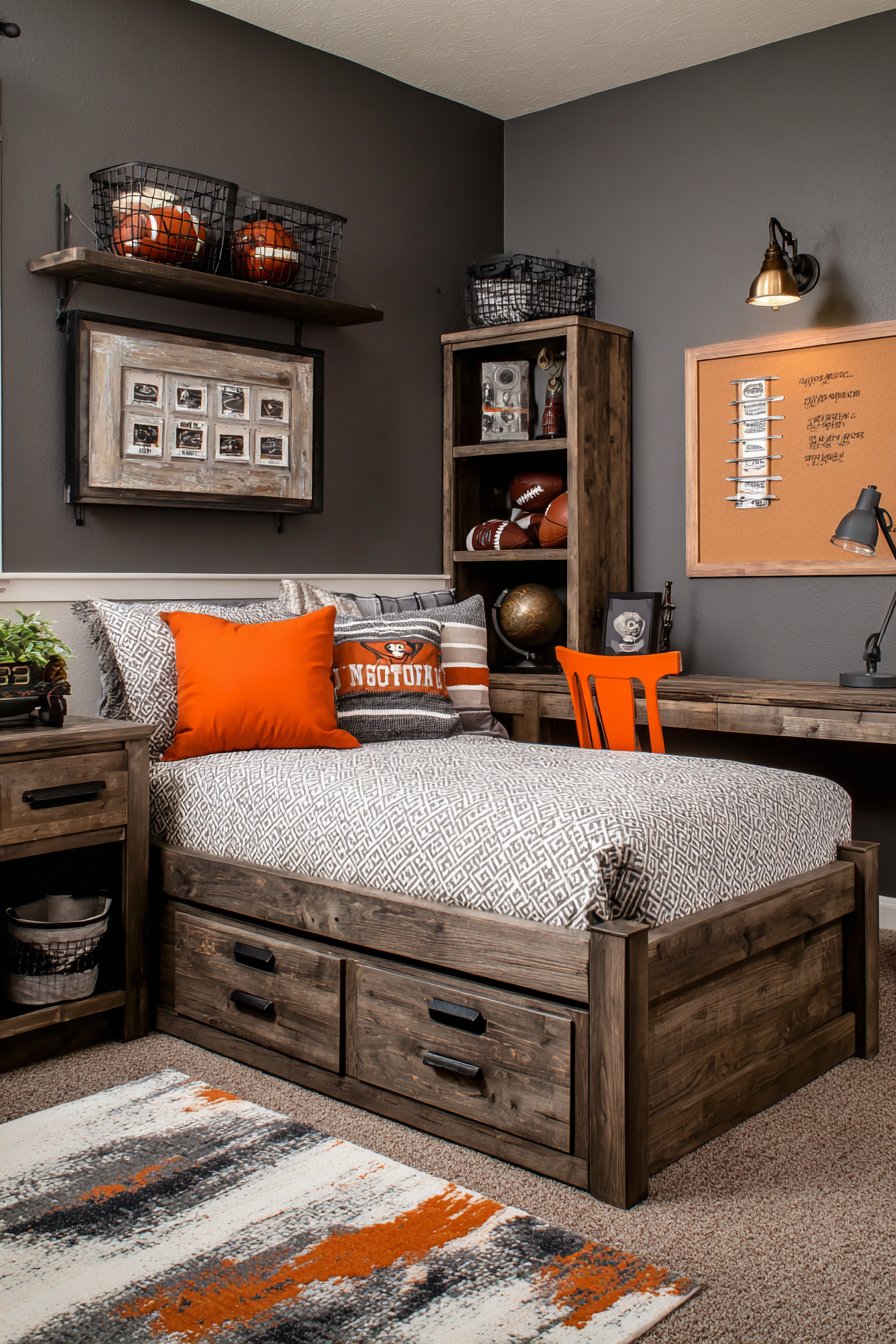
Deep grey walls with white trim create sophisticated masculine backdrop. Bold orange accents prevent the space from feeling too serious. The sturdy wooden bed includes storage drawers underneath. Geometric pattern bedding maintains visual interest without childish themes.
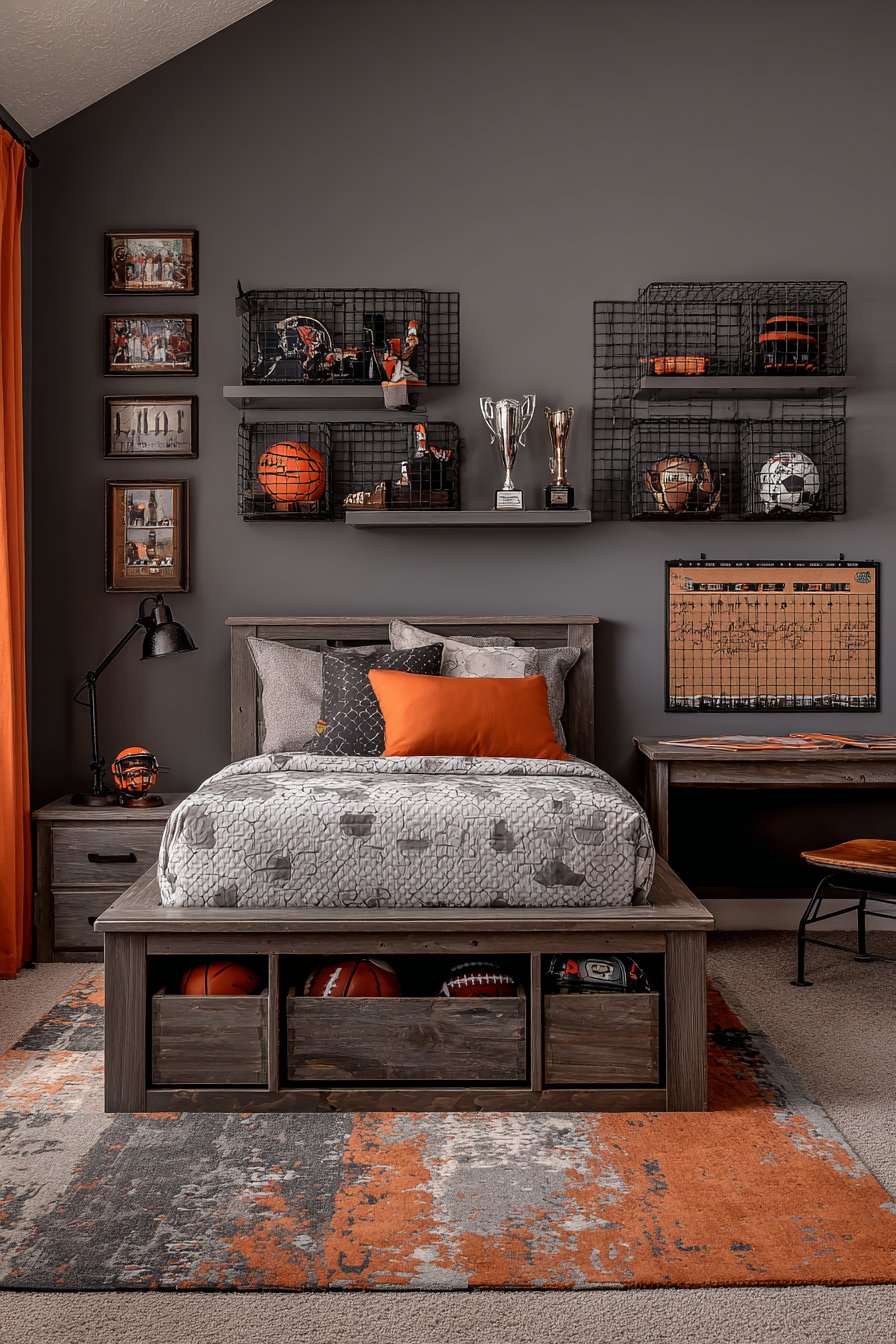
Wall-mounted shelving displays trophy collections and organized sports equipment. Mesh baskets keep gear accessible yet tidy. A cork board timeline tracks achievements and future goals. This arrangement celebrates accomplishments while encouraging continued effort.
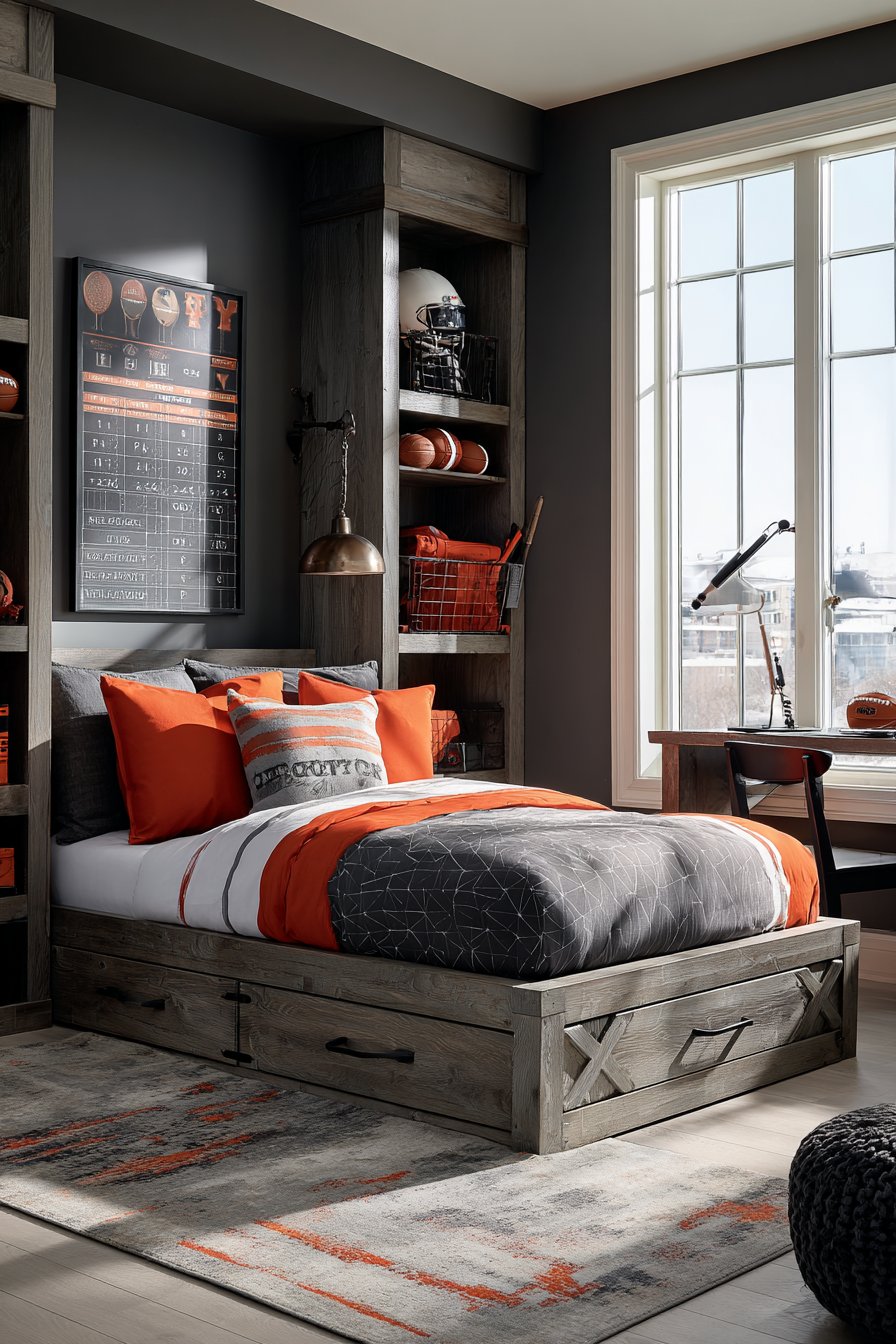
The industrial-style desk lamp provides focused task lighting. An abstract pattern area rug defines the central space. This organized approach grows with children into teenage years. The design respects athletic interests while maintaining bedroom functionality.
Key Design Tips:
- Use sophisticated color palettes that transition through ages
- Display achievements to build confidence and motivation
- Organize sports equipment with dedicated storage solutions
- Include goal-tracking systems for personal development
- Choose timeless patterns over character-specific themes
10. Creative Art Studio Bedroom
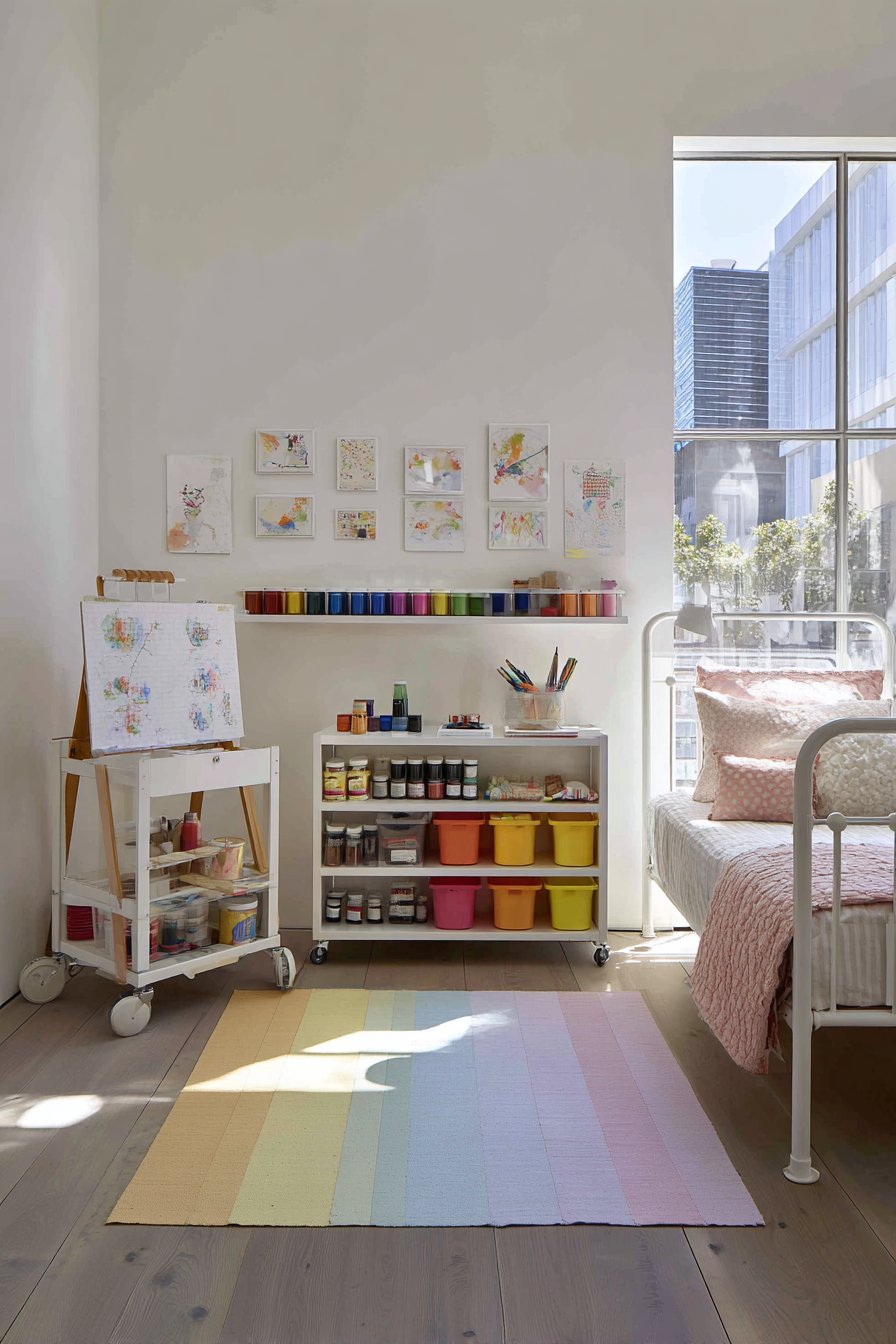
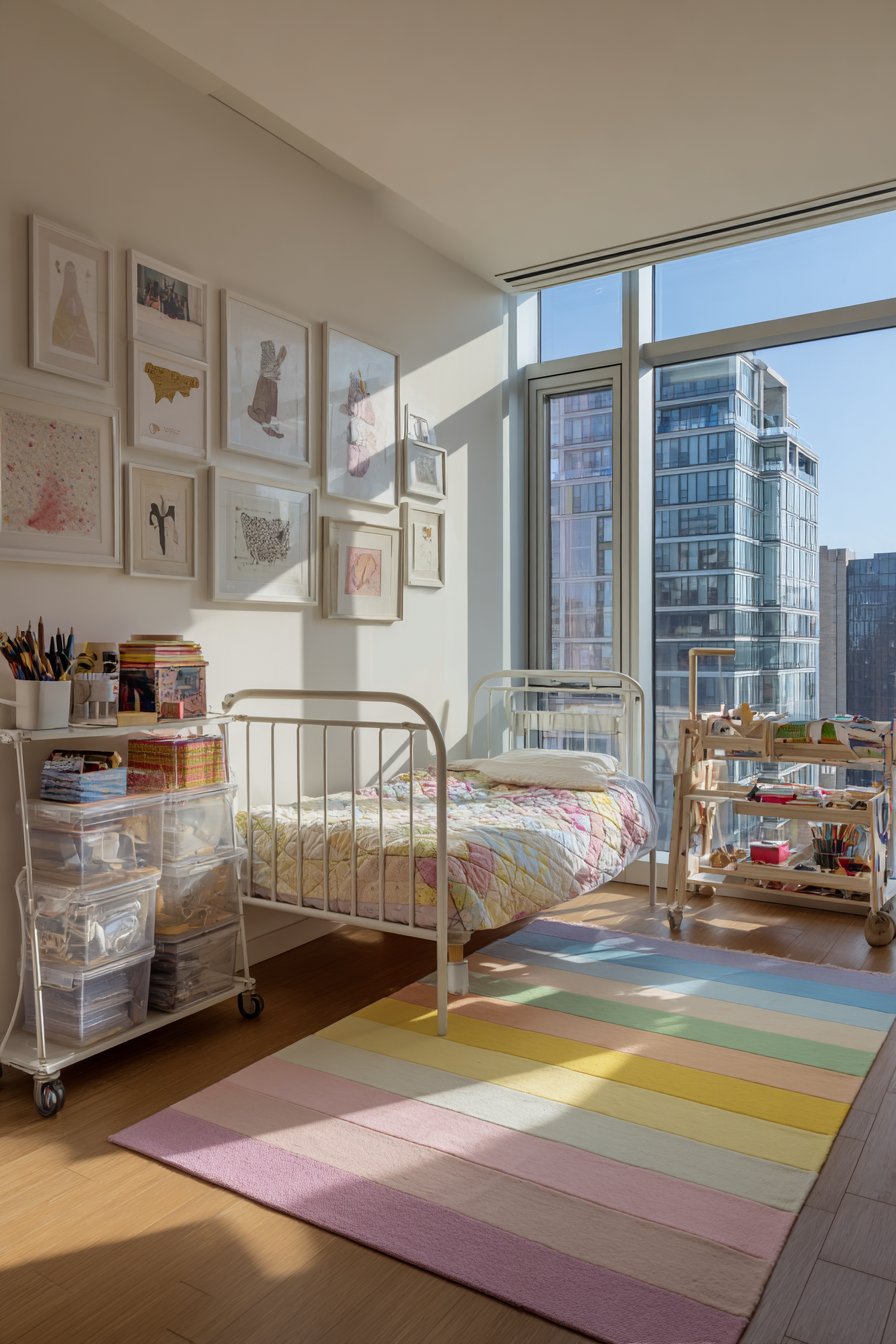
The dedicated creation station features kid-height easel and mobile supply cart. Project drying racks accommodate ongoing artistic endeavors. Gallery walls display rotating artwork in simple frames. This arrangement celebrates creativity as ongoing process.
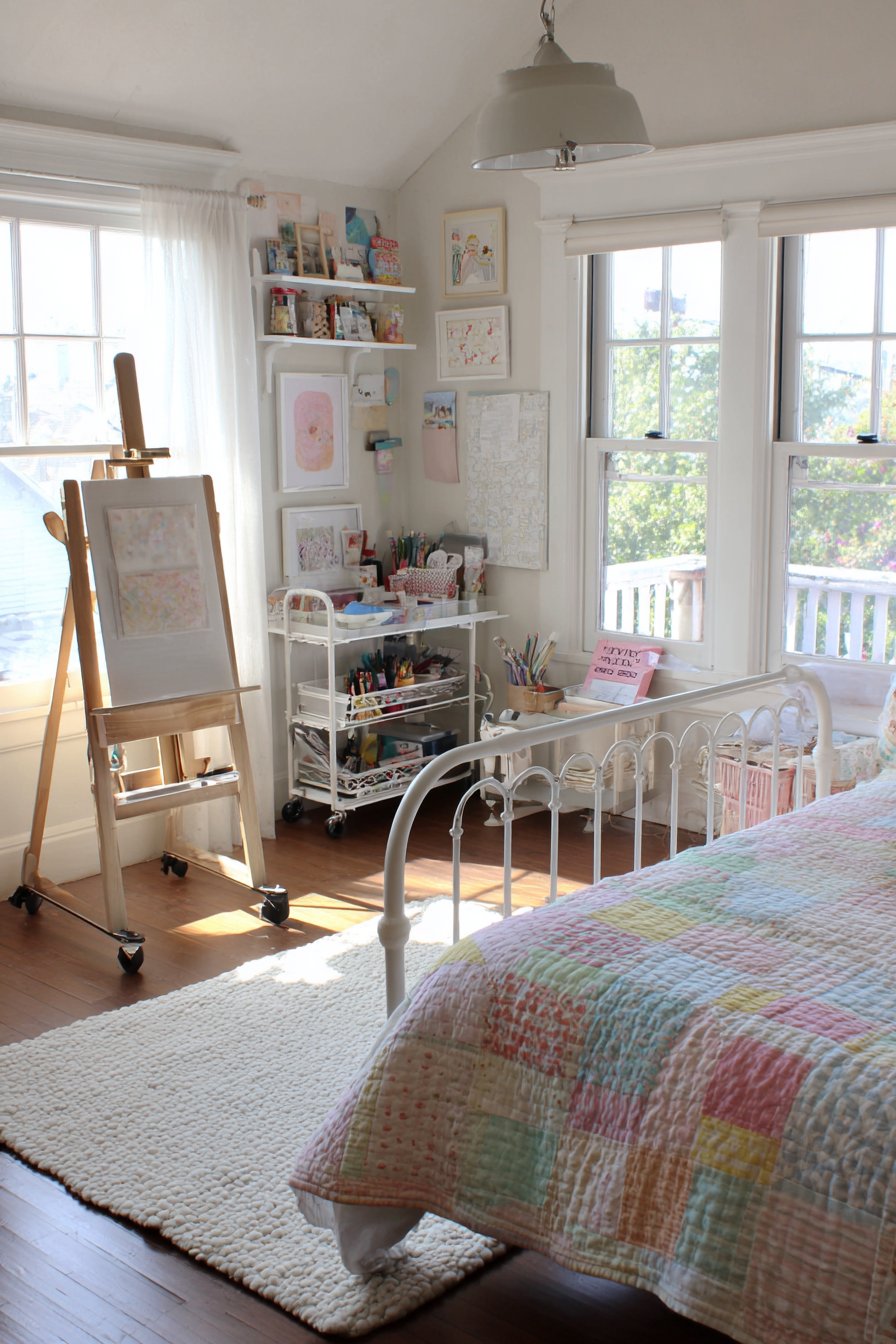
The sleeping area maintains simplicity with white metal frame and colorful quilt. Rainbow gradient shelving organizes craft supplies in clear containers. Visibility encourages material use and simplifies cleanup. Drop cloth rugs protect flooring from creative messes.
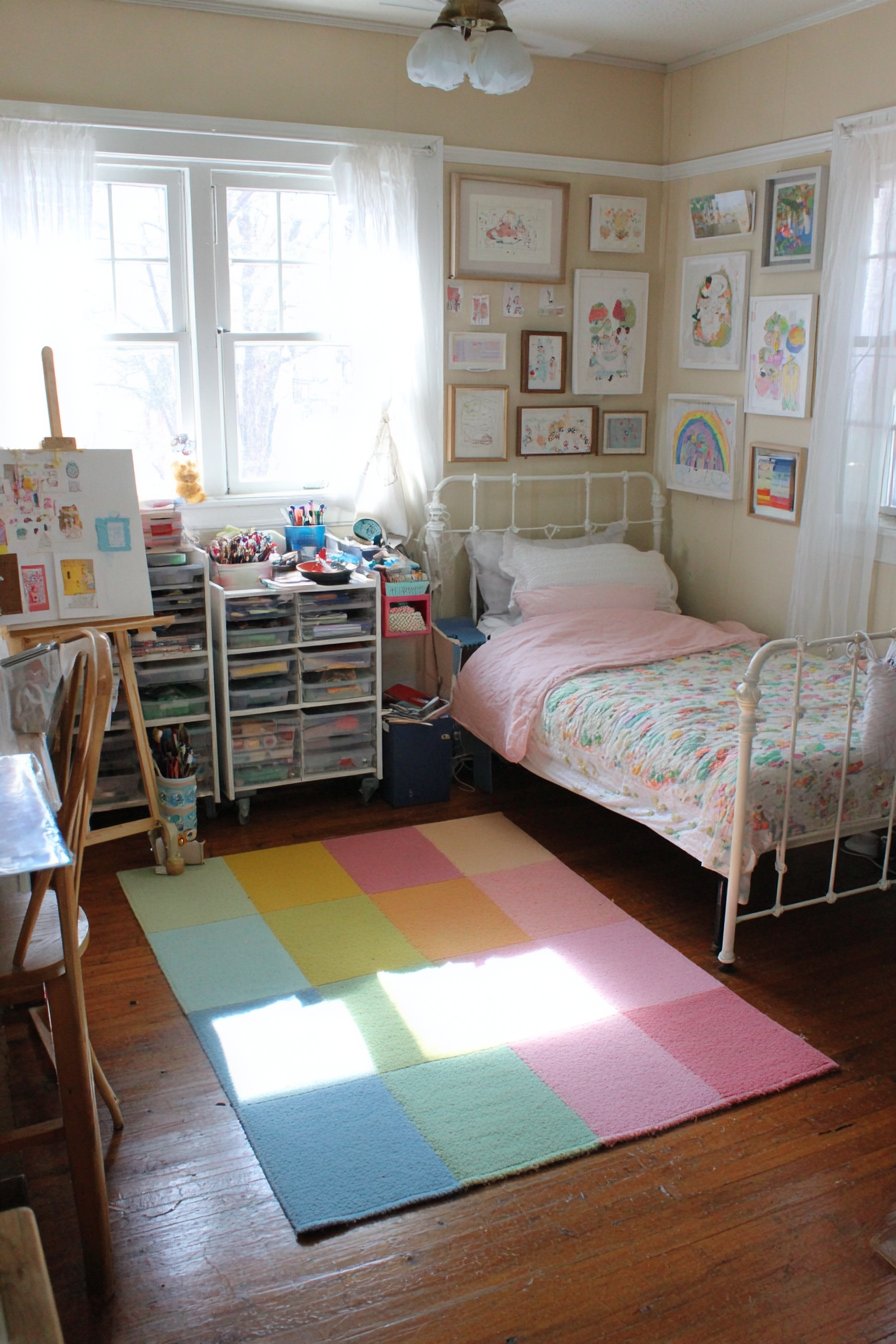
Large windows provide excellent natural light for art creation. Functional zoning separates creative and sleep spaces effectively. This design nurtures artistic development through dedicated, well-equipped areas. The setup grows with increasingly sophisticated art techniques.
Key Design Tips:
- Create dedicated zones for different activities within single rooms
- Install adjustable display systems for rotating artwork
- Use clear storage containers for visibility and accessibility
- Protect flooring in creative areas with washable coverings
- Maximize natural lighting for art creation spaces
11. Sophisticated Princess Theme Design
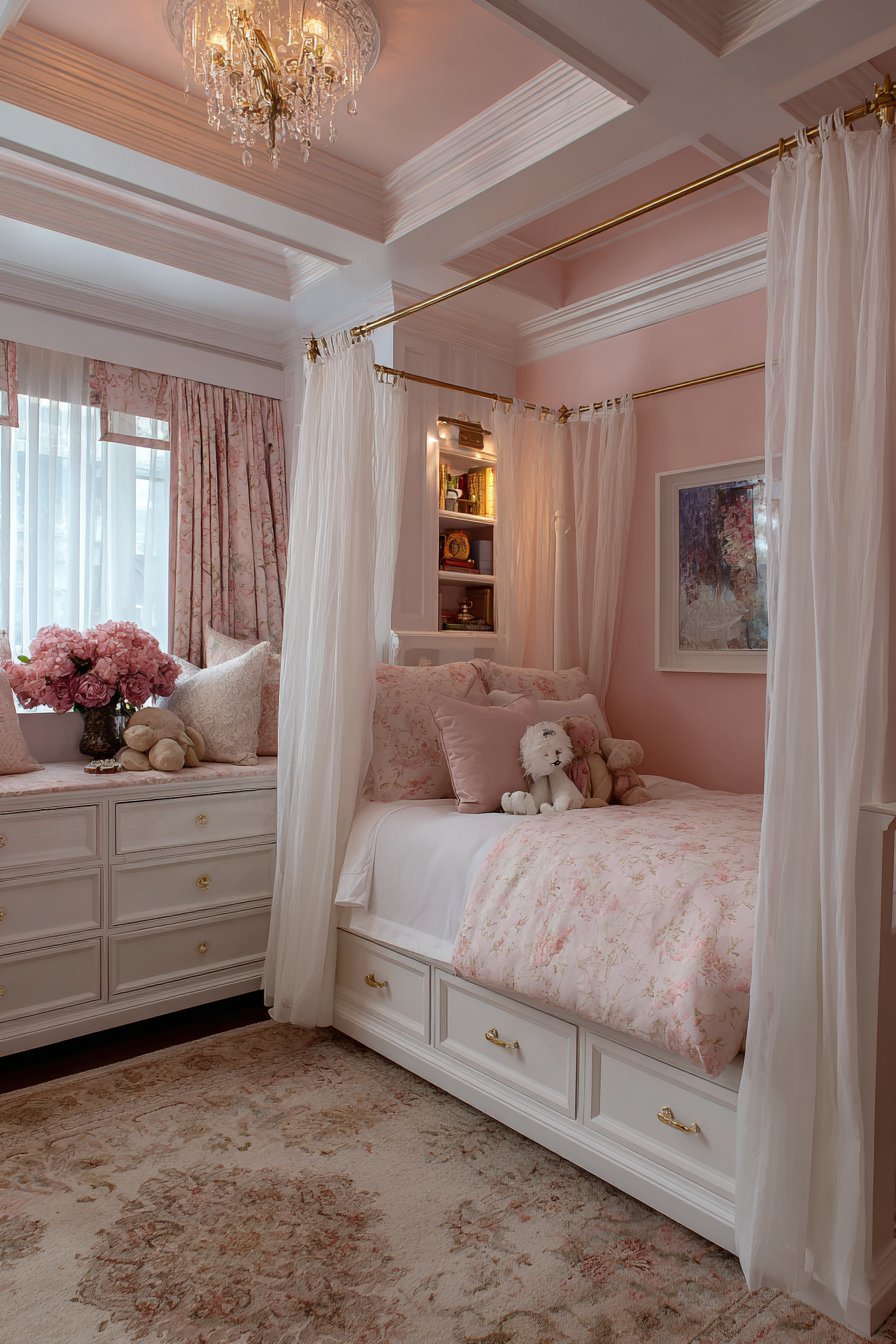
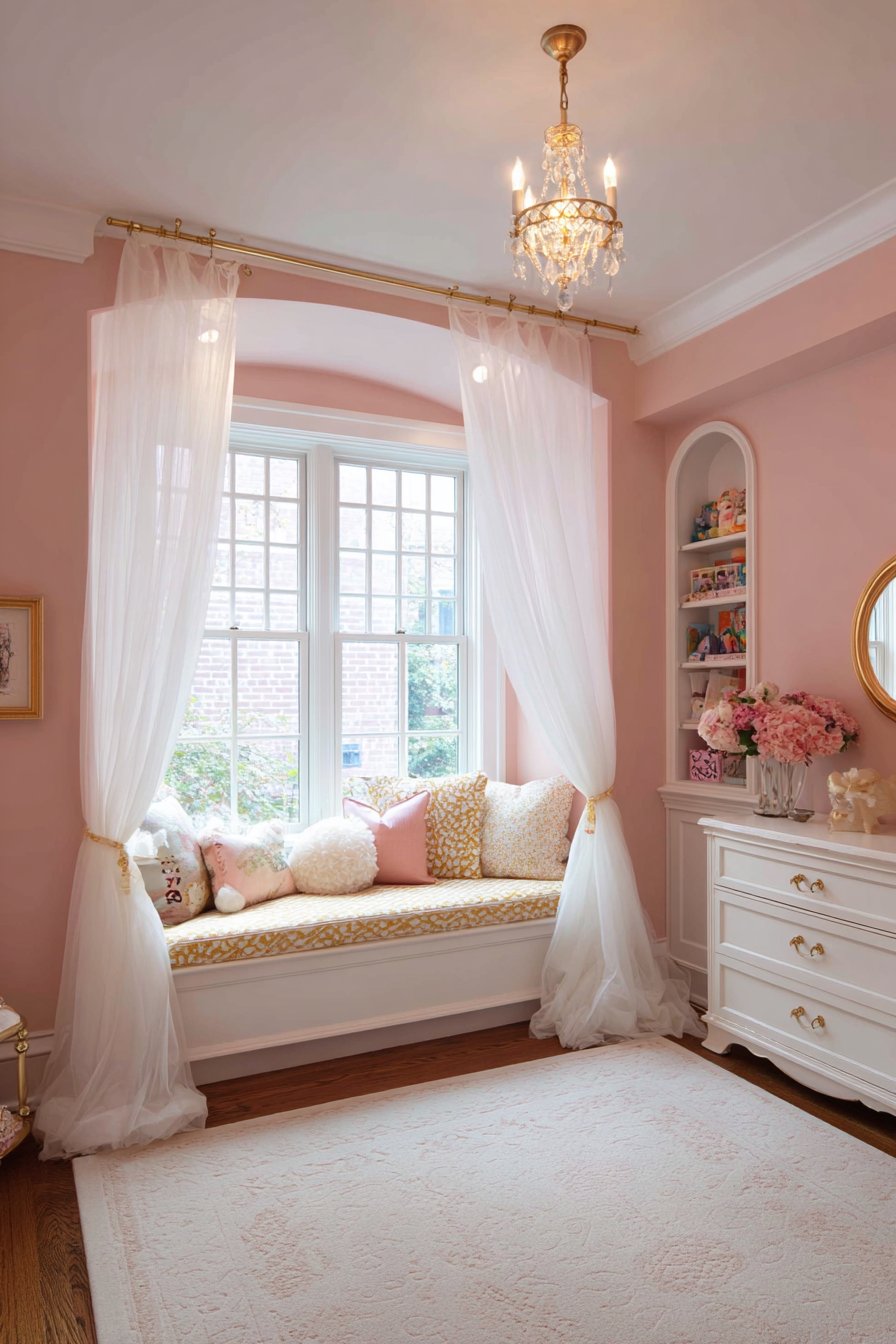
Soft blush pink walls create romantic atmosphere without overwhelming sweetness. White furniture maintains sophisticated foundation throughout. Gold accent touches add subtle glamour. The canopy bed with sheer white curtains creates enchanting sleeping space.
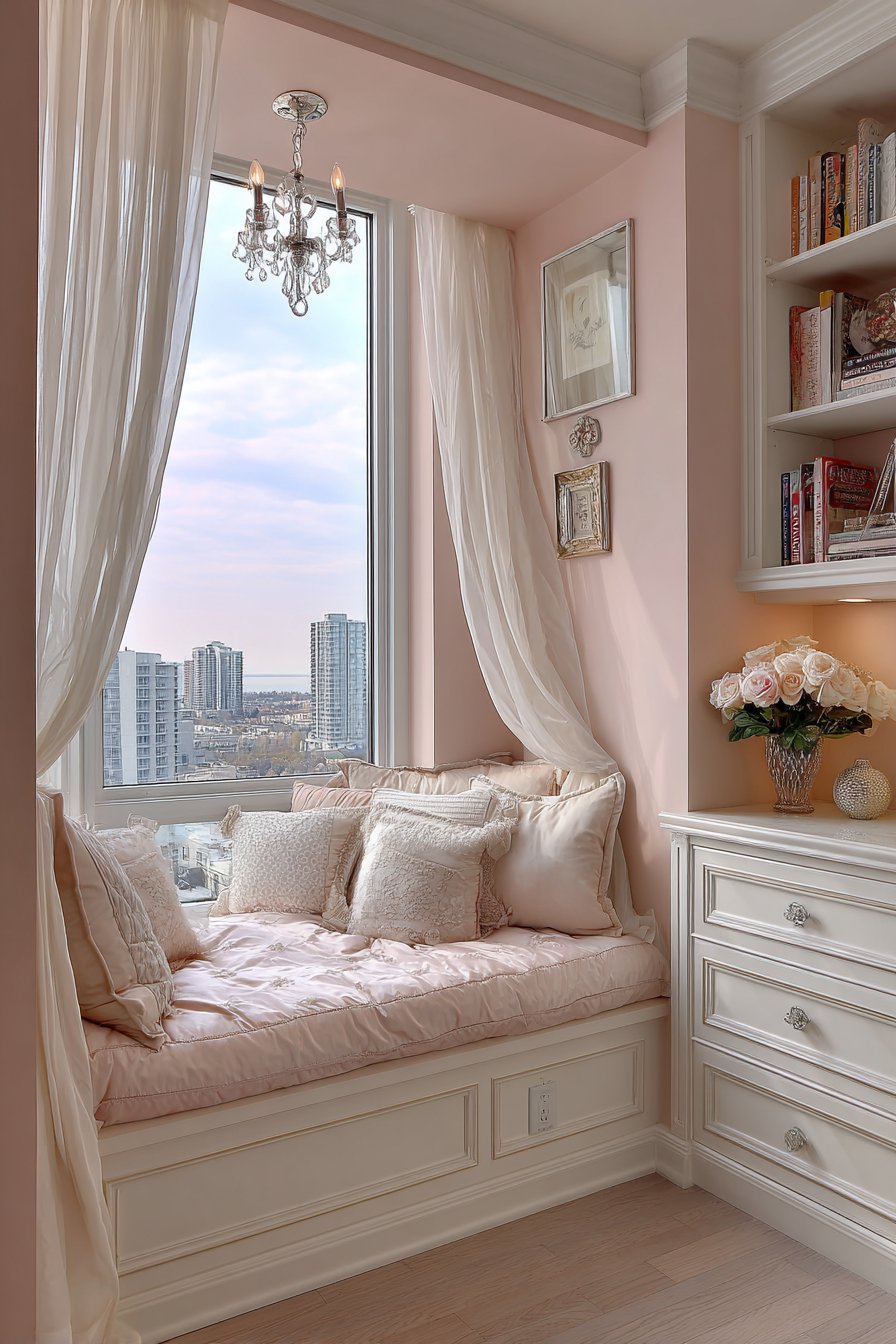
The vintage-inspired dresser with mirror provides functional dress-up area. Window seats with cushions and pillows offer reading nooks. Hidden storage beneath the seat maintains clutter-free appearance. A small chandelier adds elegant lighting.
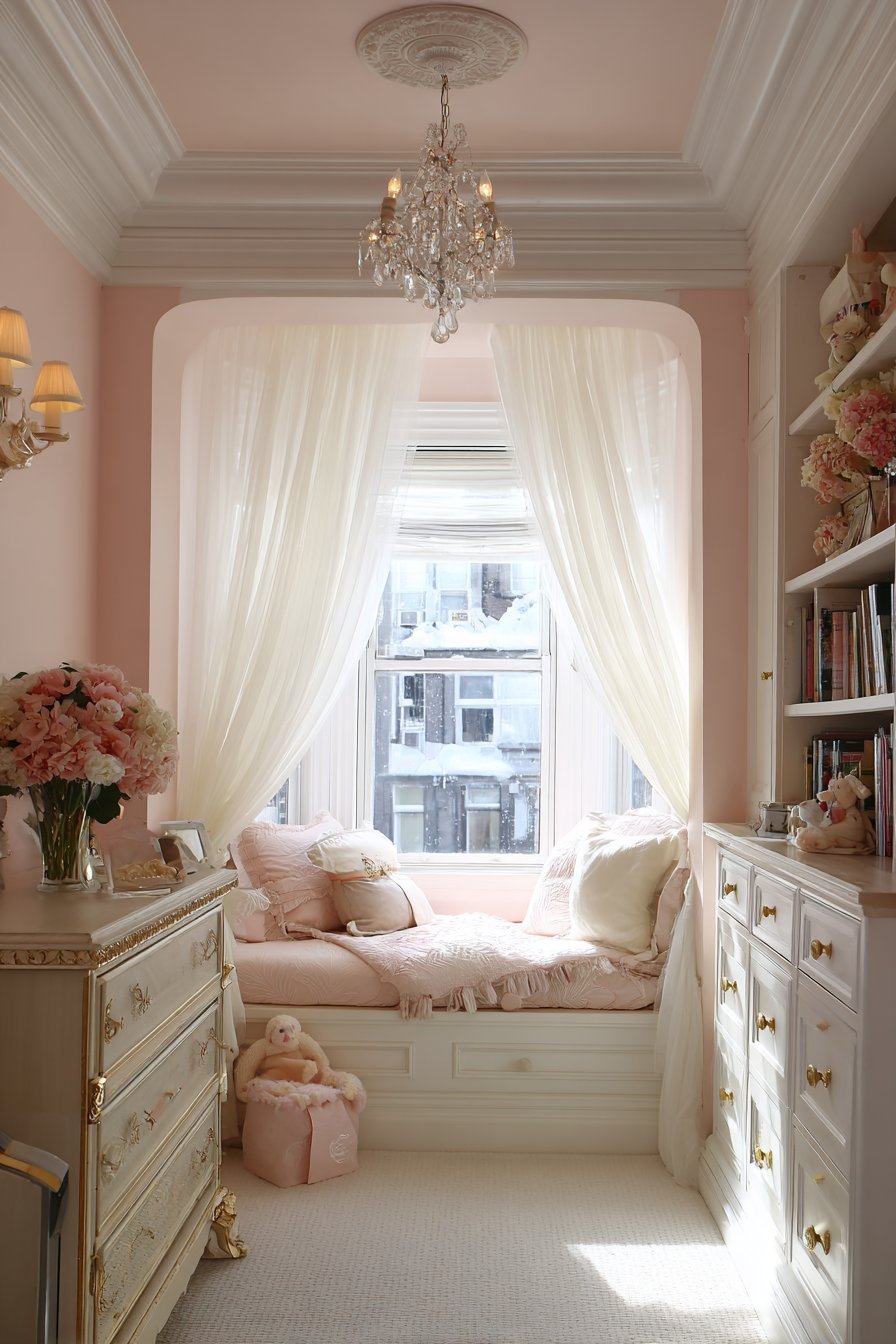
This restrained approach to princess themes maintains timeless appeal. The design grows with children without requiring complete redesigns. Soft lighting enhances the magical atmosphere during evening hours. The balance between whimsy and maturity proves particularly effective.
Key Design Tips:
- Execute themed designs with sophistication and restraint
- Choose timeless elements that grow with changing preferences
- Add glamorous touches through lighting and hardware
- Create multifunctional furniture like window seats with storage
- Maintain gender-neutral base that adapts to evolving tastes
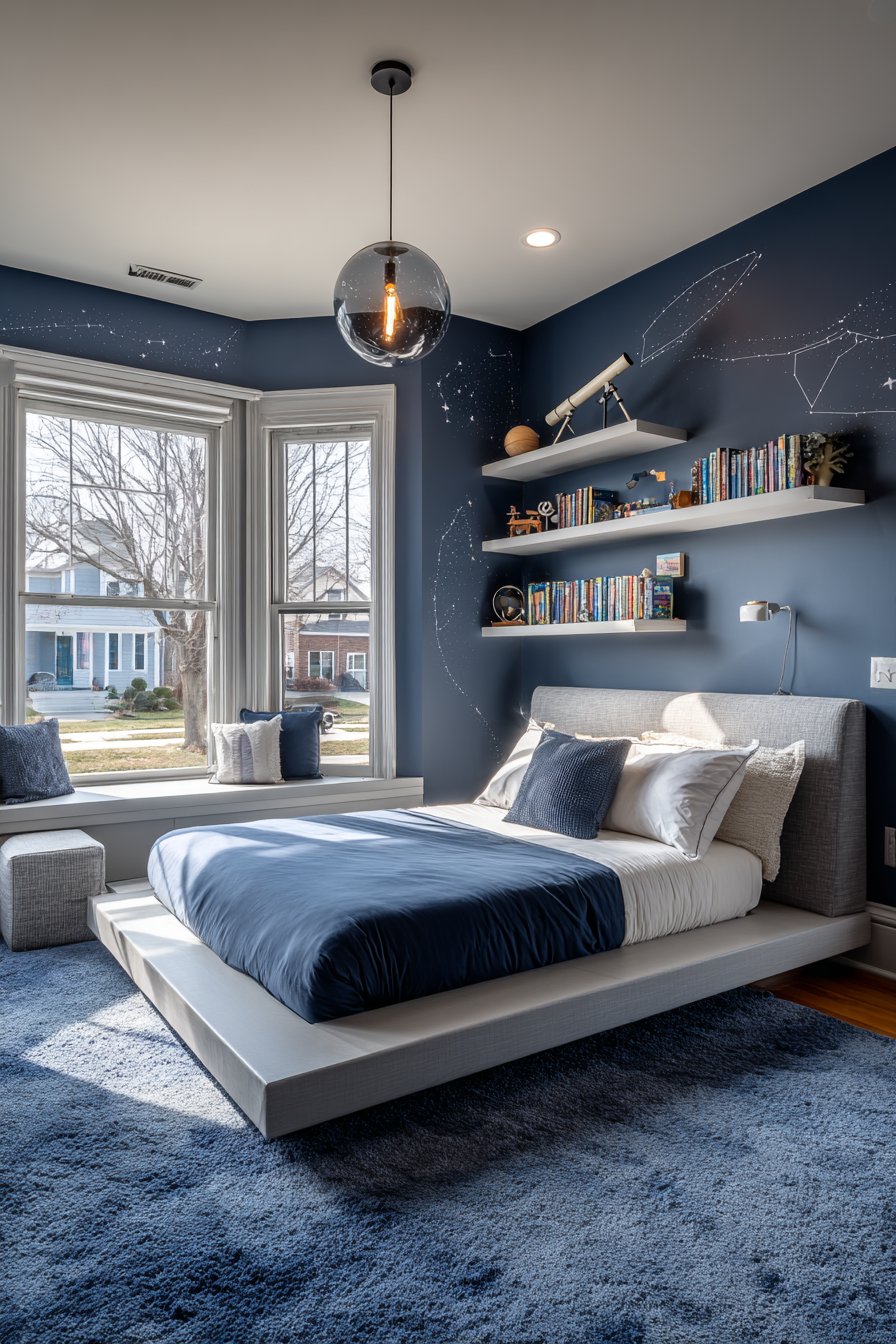
12. Immersive Space Theme Bedroom
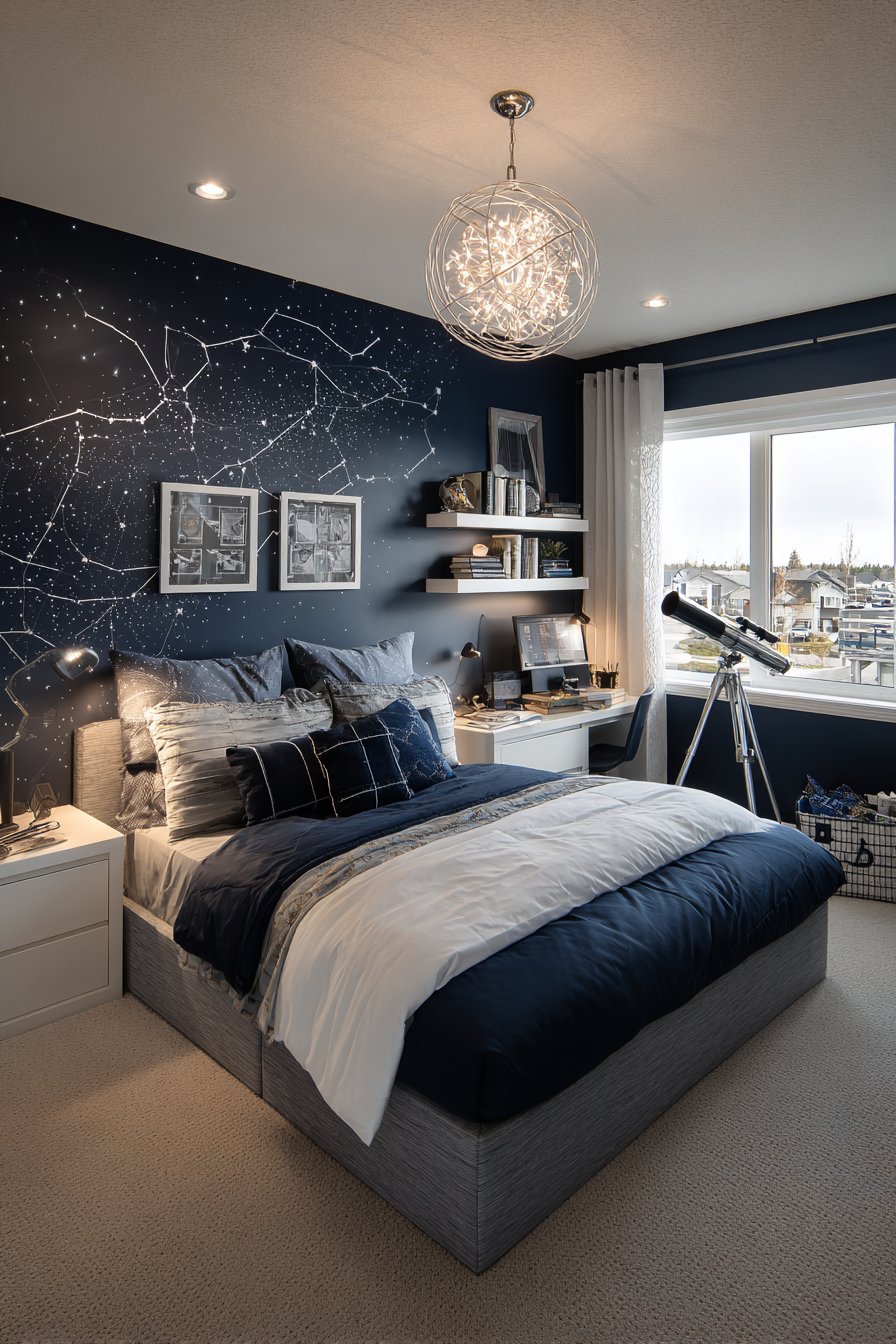
Deep navy walls create cosmic backdrop for celestial adventures. Glow-in-the-dark constellation decals add nighttime magic. The modern platform bed features grey upholstered headboard. Navy, white, and silver bedding coordinates perfectly.
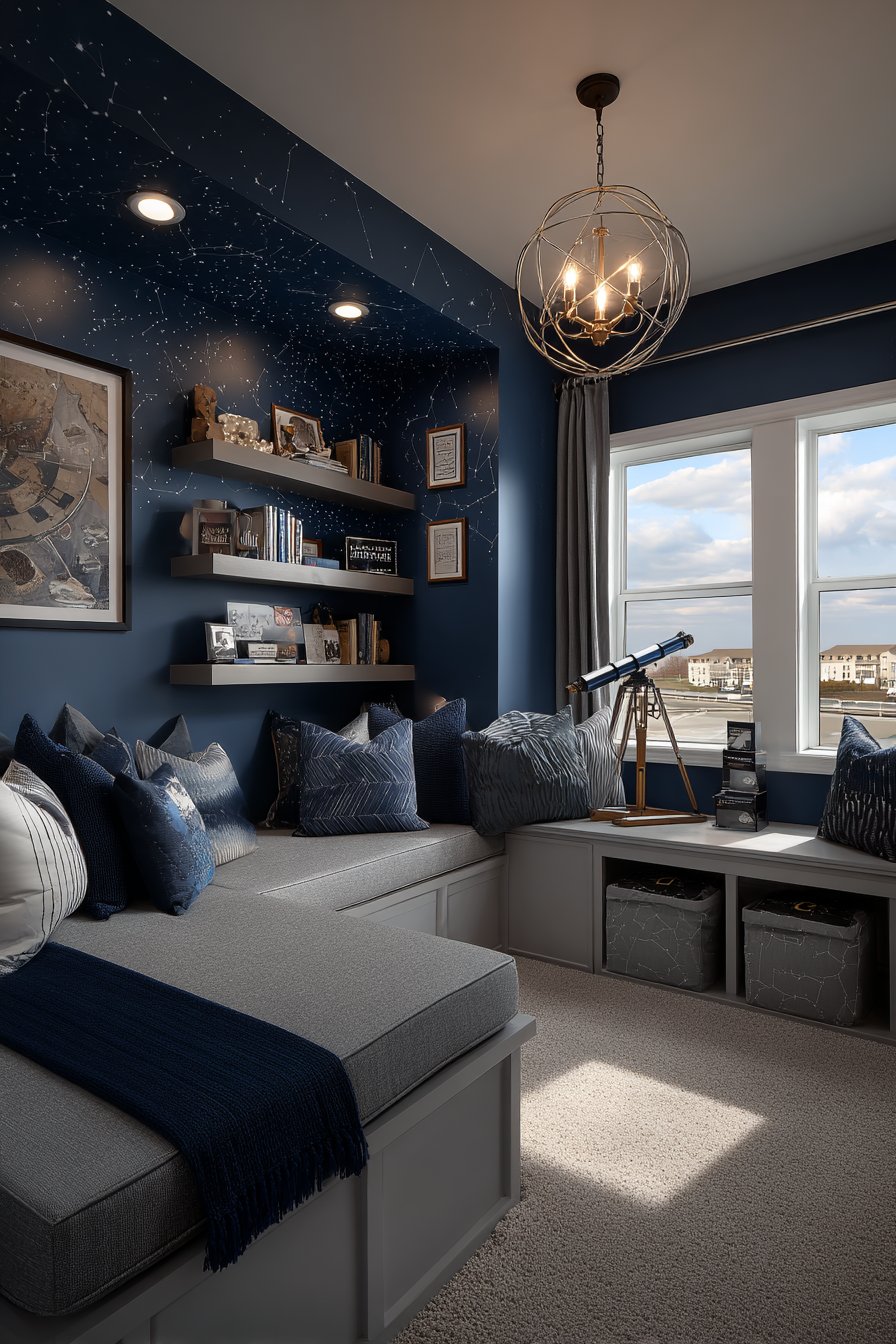
Floating shelves arranged like orbiting planets display books and models. The globe pendant light resembles a distant planet. A telescope positioned near windows encourages real stargazing. Silver storage bins maintain organized appearance.
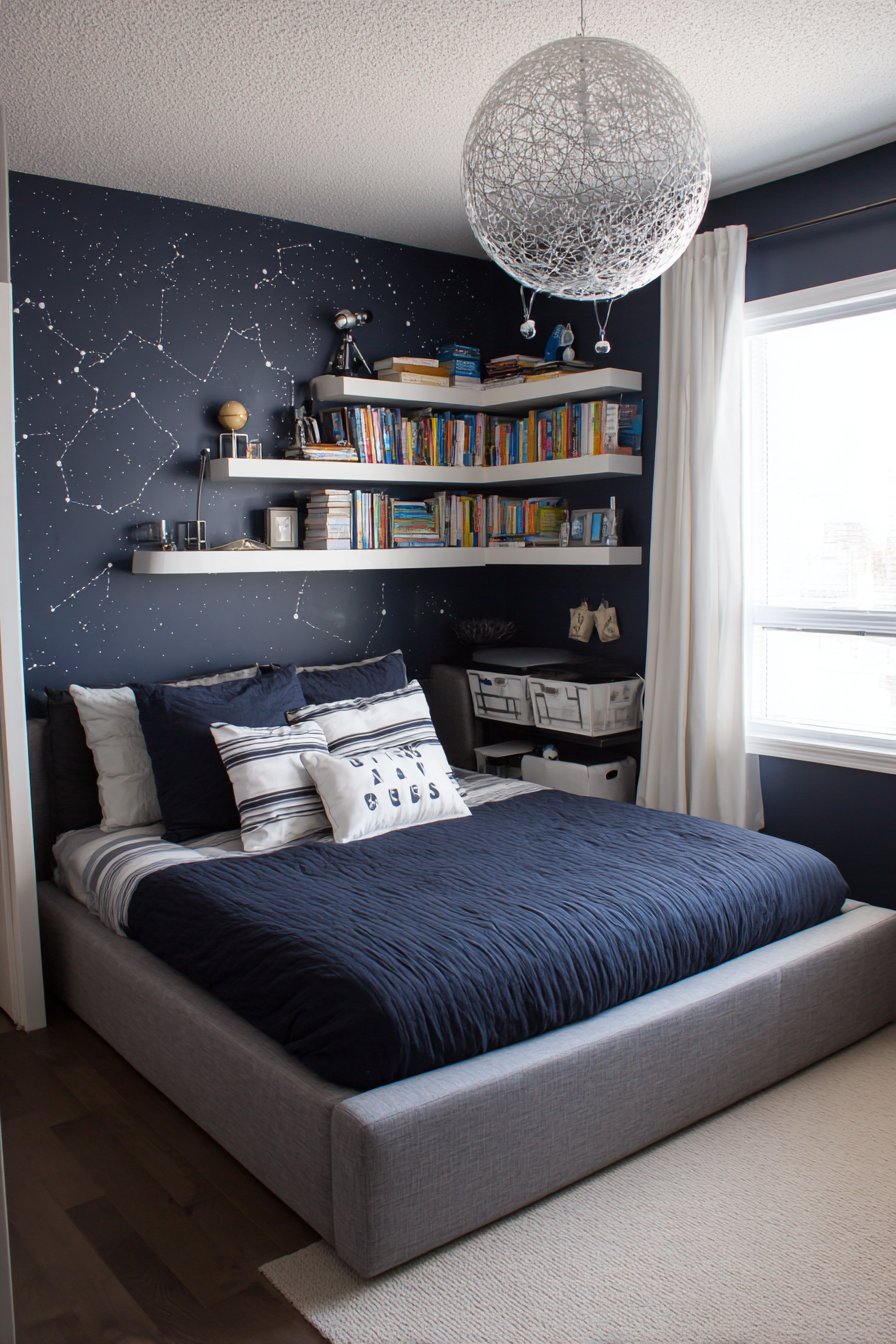
White furniture prevents the dark walls from feeling oppressive. The immersive theme captures imagination while maintaining practical functionality. This design combines educational elements with decorative appeal. Wide-angle photography reveals the thoughtful balance between theme and livability.
Key Design Tips:
- Use dark colors strategically without making spaces feel small
- Incorporate educational elements within decorative themes
- Add interactive features like telescopes for engagement
- Balance immersive themes with practical furniture choices
- Include nighttime elements like glow decals for magic
13. Montessori-Inspired Independence Design
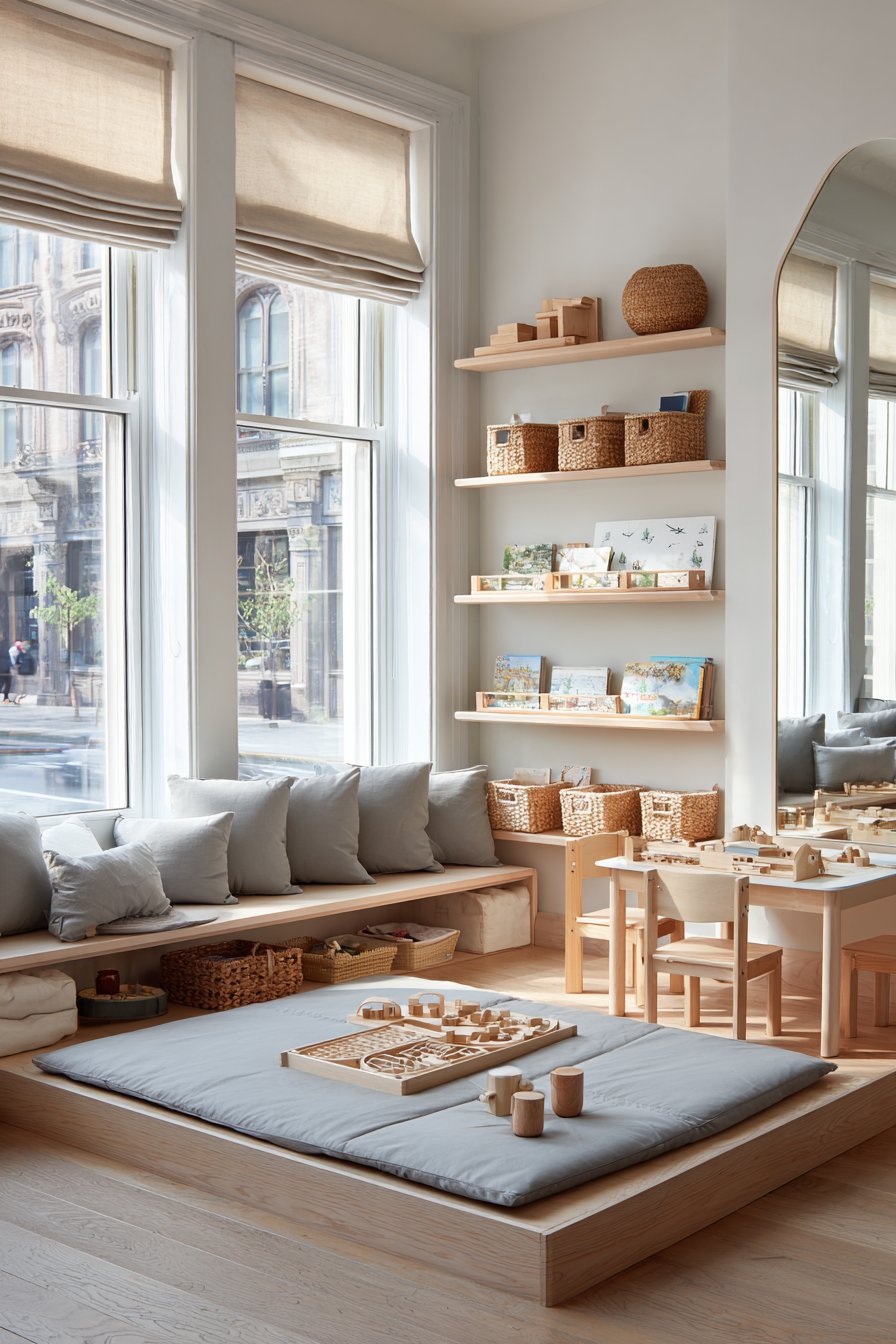
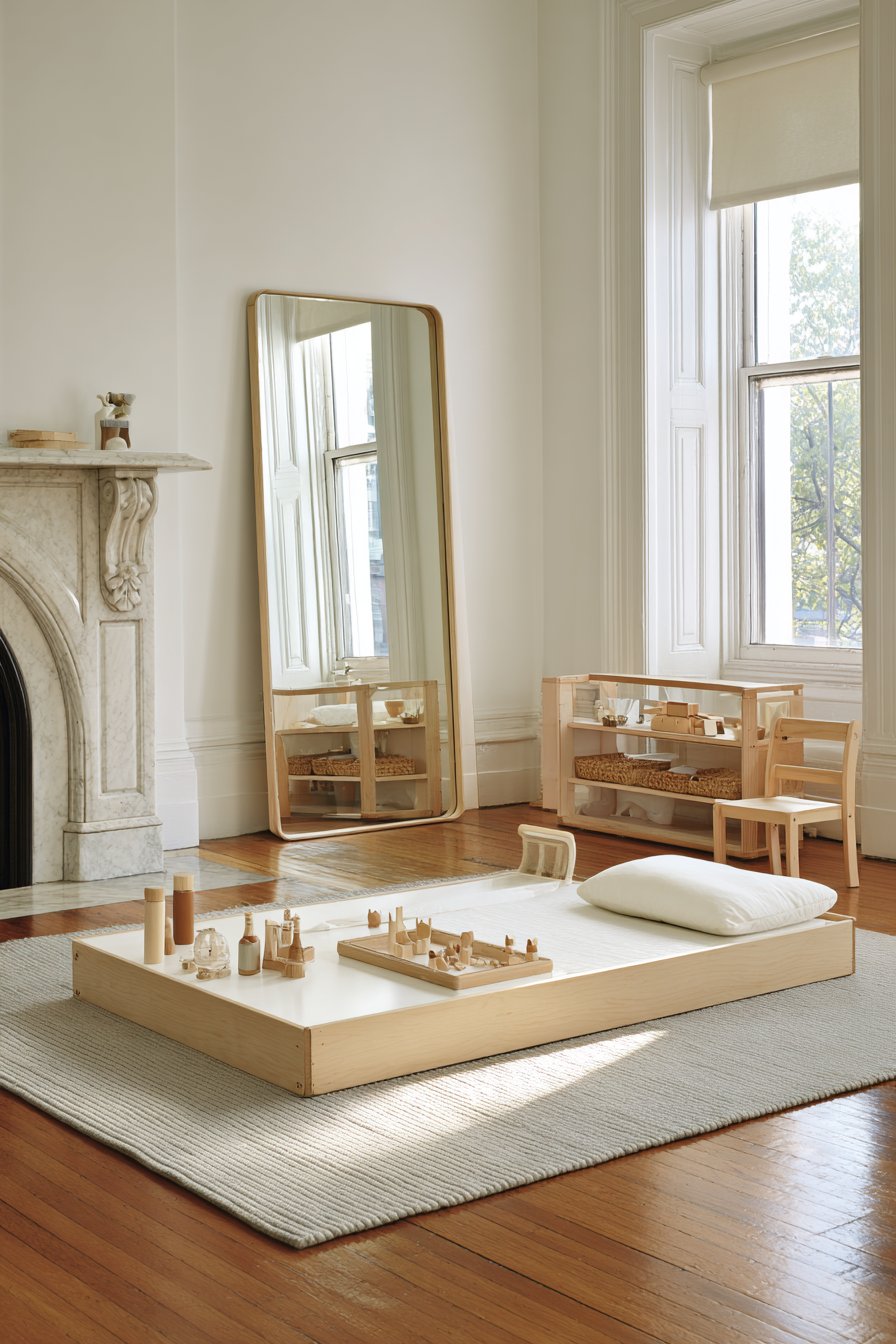
The floor bed on low platform allows independent access from toddlerhood. Open toy shelving at child height promotes self-directed play. Organized baskets and trays teach categorization and responsibility. Full-length mirrors mounted safely encourage self-awareness.
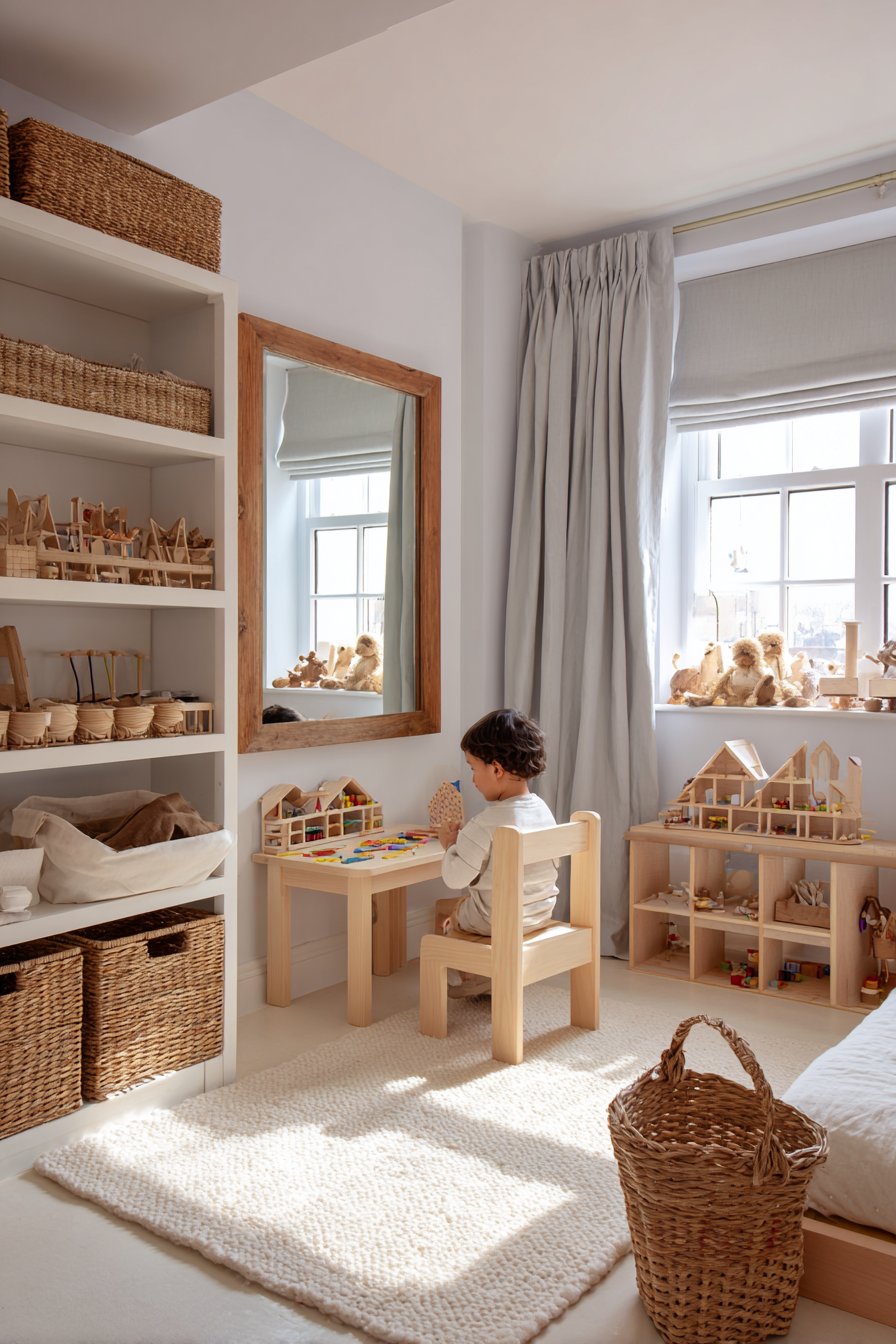
Small tables and chairs provide appropriately sized workspaces. Neutral color palettes create calm environments that reduce overstimulation. Everything within child’s reach promotes independence and confidence. Natural light floods through simple roman shades.
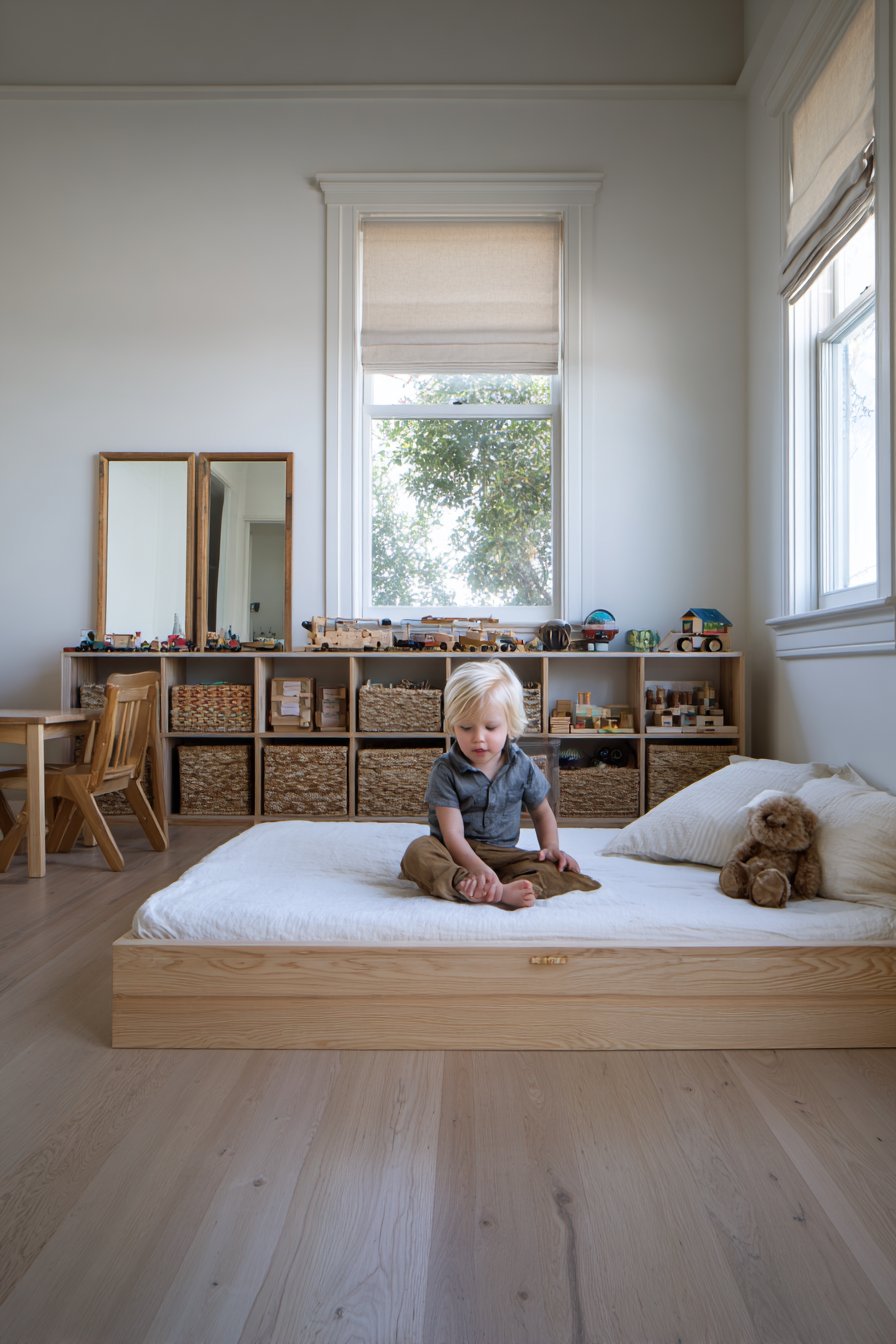
This developmental approach prioritizes child capabilities over adult convenience. The intentional simplicity supports focus and concentration. Safe mirror placement aids self-care skill development. The design philosophy extends beyond aesthetics into child development support.
Key Design Tips:
- Lower furniture heights to child scale for independence
- Organize toys in accessible, categorized storage systems
- Create calm environments through neutral color choices
- Install safety-mounted mirrors for self-awareness development
- Choose child-sized furniture for appropriate ergonomics
14. Charming Vintage Character Bedroom
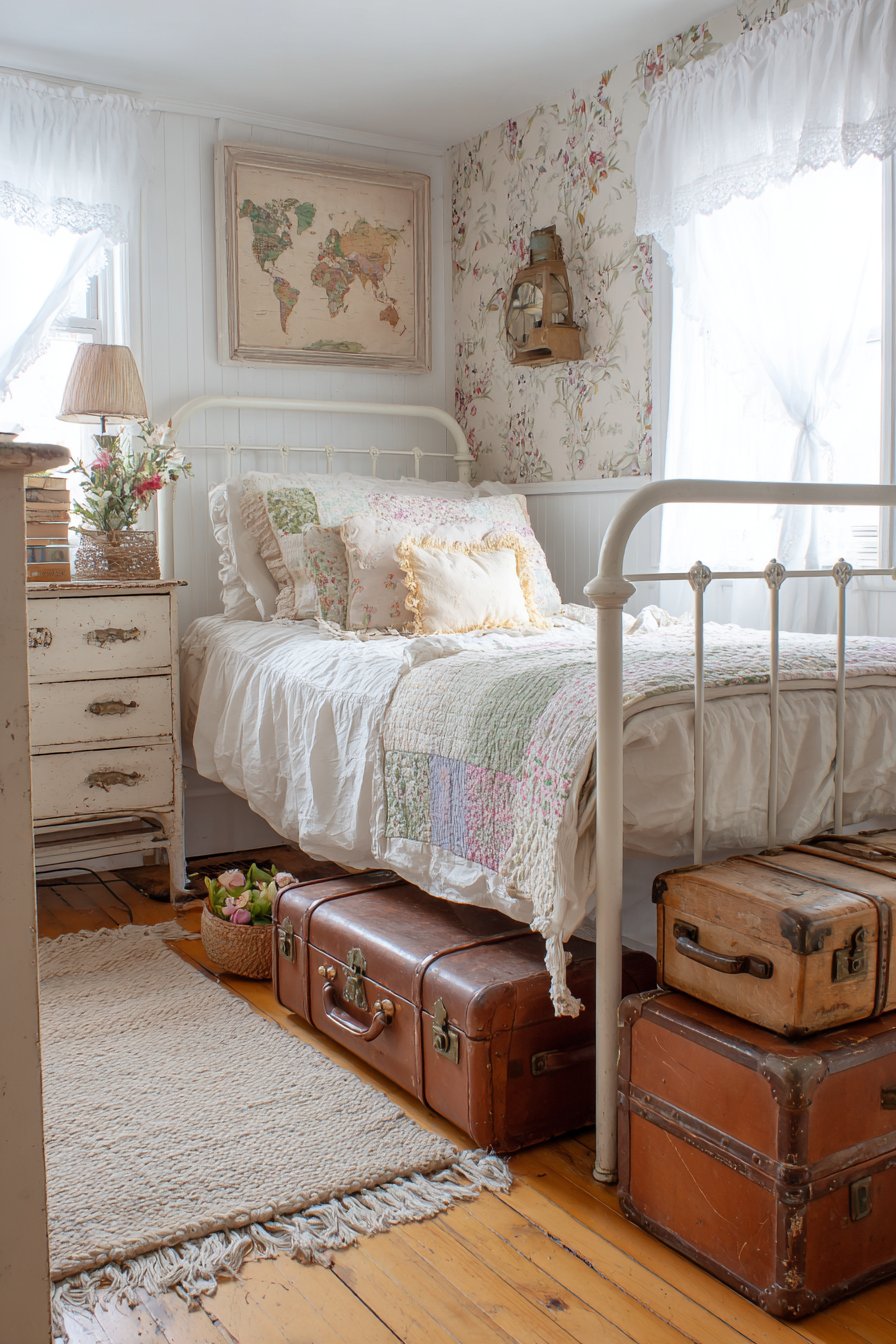
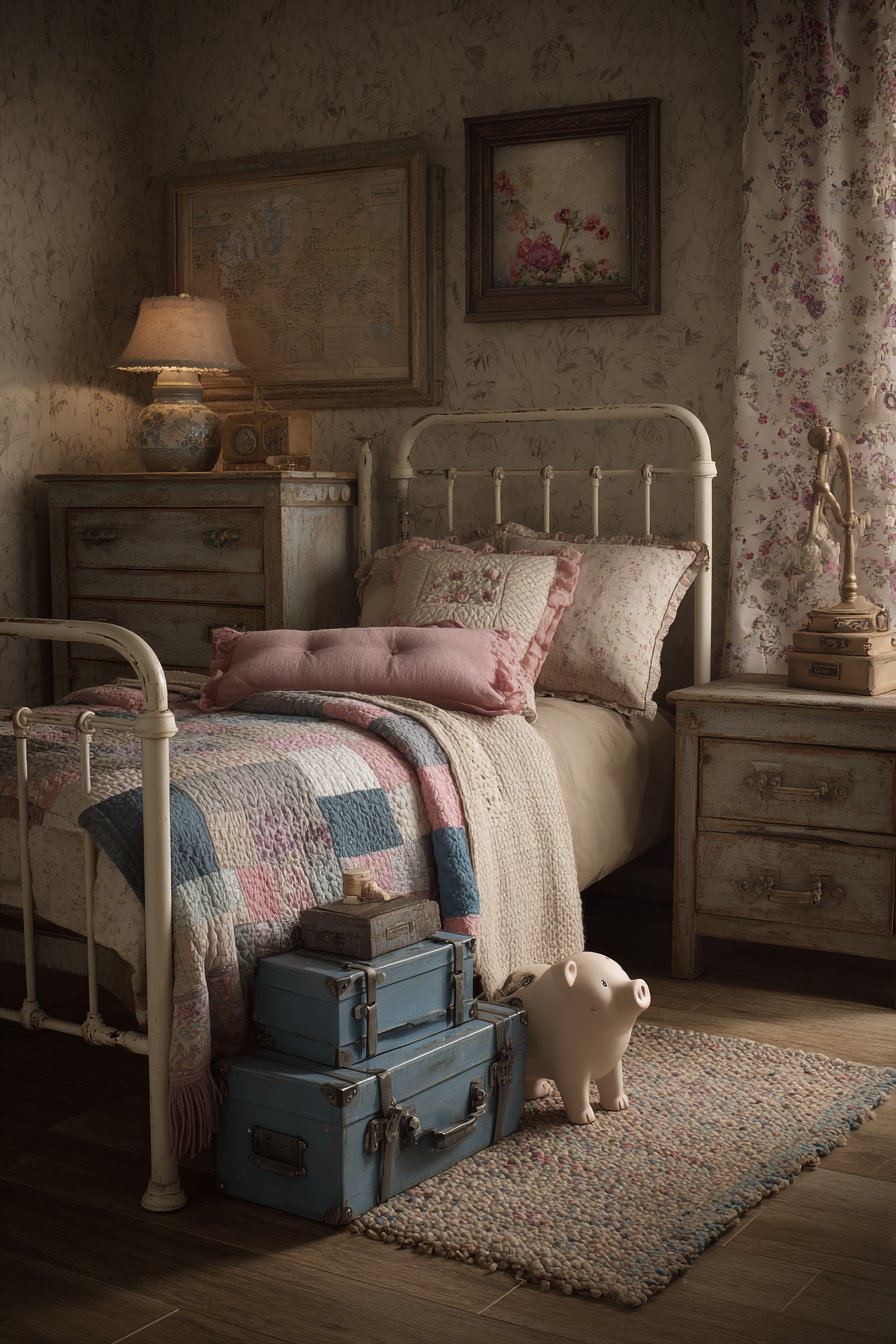
An antique iron bed frame painted white with distressed finish anchors the space. Patchwork quilts in soft pastels create heirloom quality. Embroidered pillows add handcrafted charm. The restored wooden dresser retains original hardware.
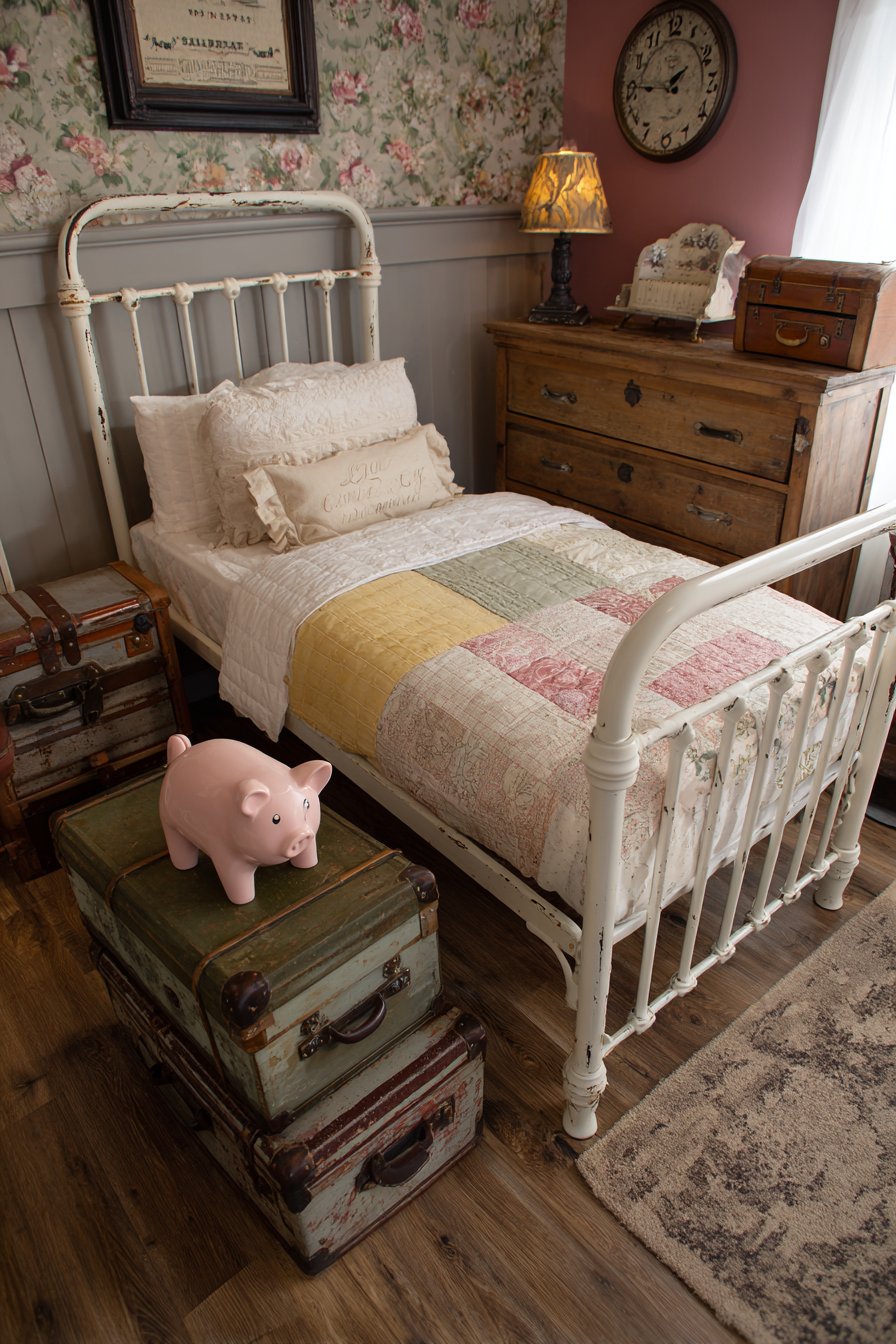
Vintage suitcases stacked in corners add character while storing seasonal items. Floral wallpaper on accent walls complements solid painted surfaces. Rag rugs in coordinating colors cover refinished wood floors. Antique desk lamps and ceramic banks add authentic touches.
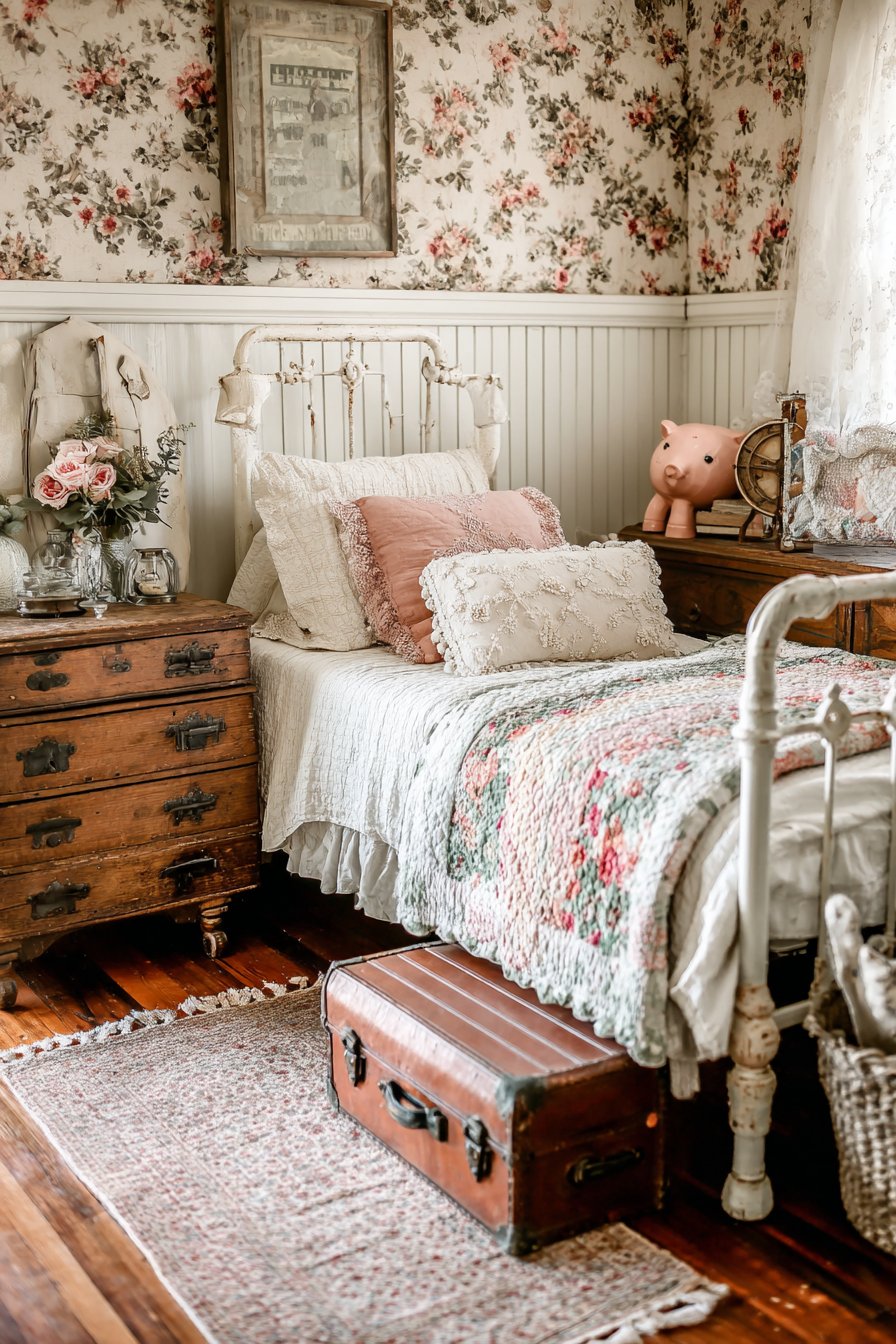
Warm natural lighting enhances the nostalgic charm throughout. This timeless quality creates rooms that feel collected over generations. The vintage approach teaches appreciation for quality and history. Each piece tells stories that new furniture cannot replicate.
Key Design Tips:
- Source authentic vintage pieces from estate sales and antique shops
- Refinish old furniture rather than buying new when possible
- Mix vintage textiles like quilts and embroidered linens
- Use wallpaper selectively on accent walls for impact
- Choose lighting and accessories that reinforce period aesthetic
15. Smart Murphy Bed Minimalism
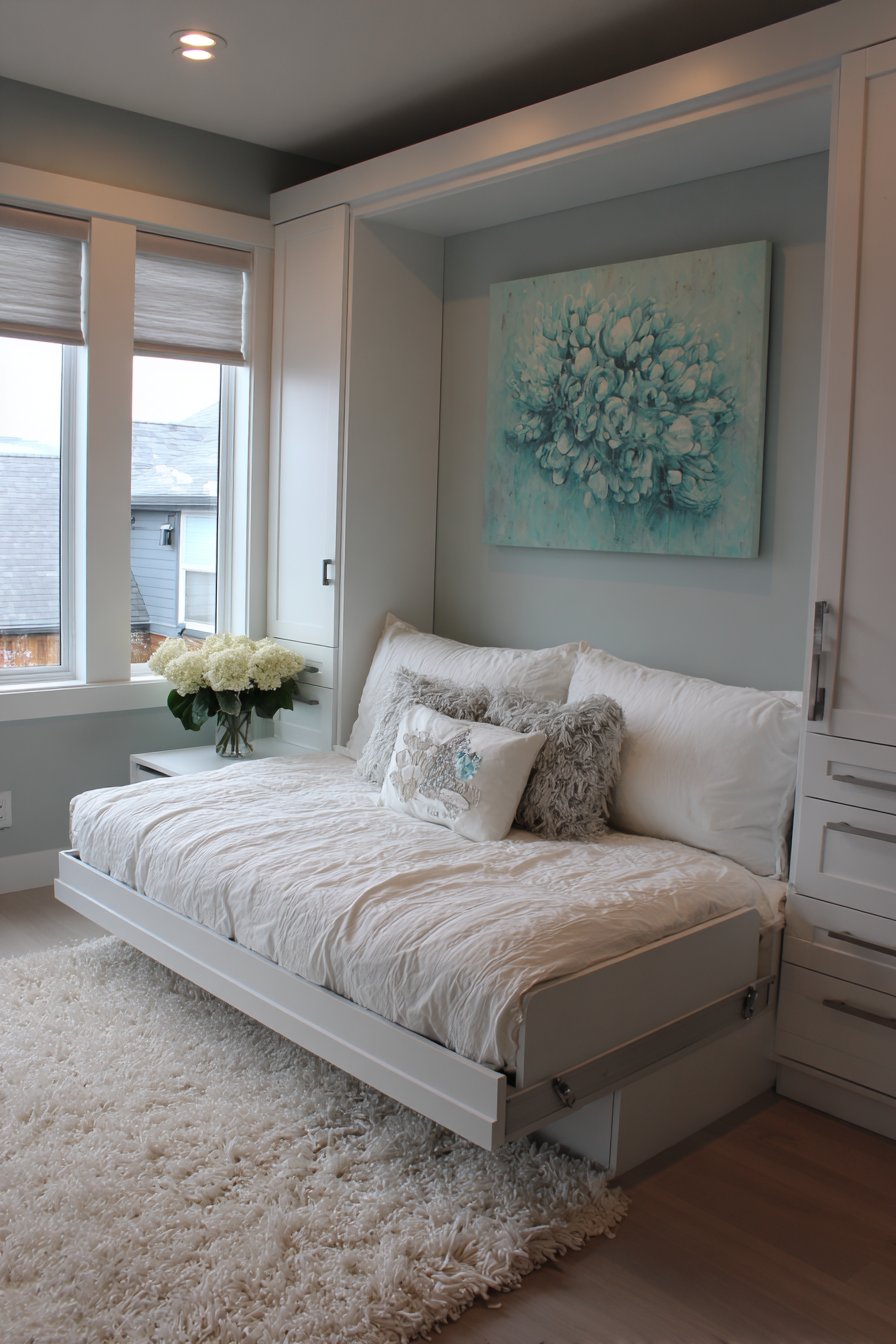
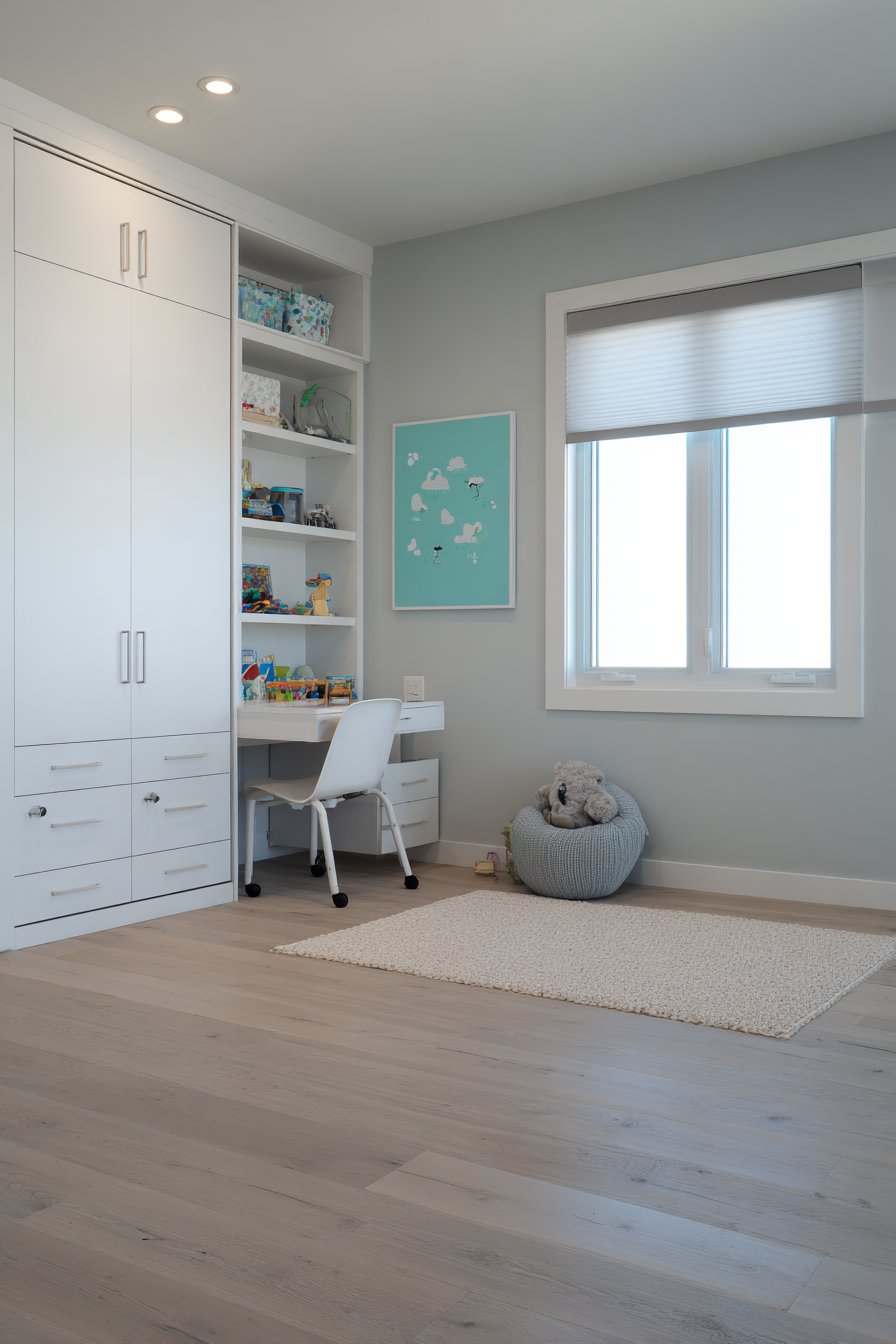
Clean-lined white furniture against soft grey walls creates serene backdrop. The Murphy bed with integrated desk folds up during daytime. This transformation creates dedicated play space when sleeping area isn’t needed. Closed storage cabinets eliminate visual clutter.
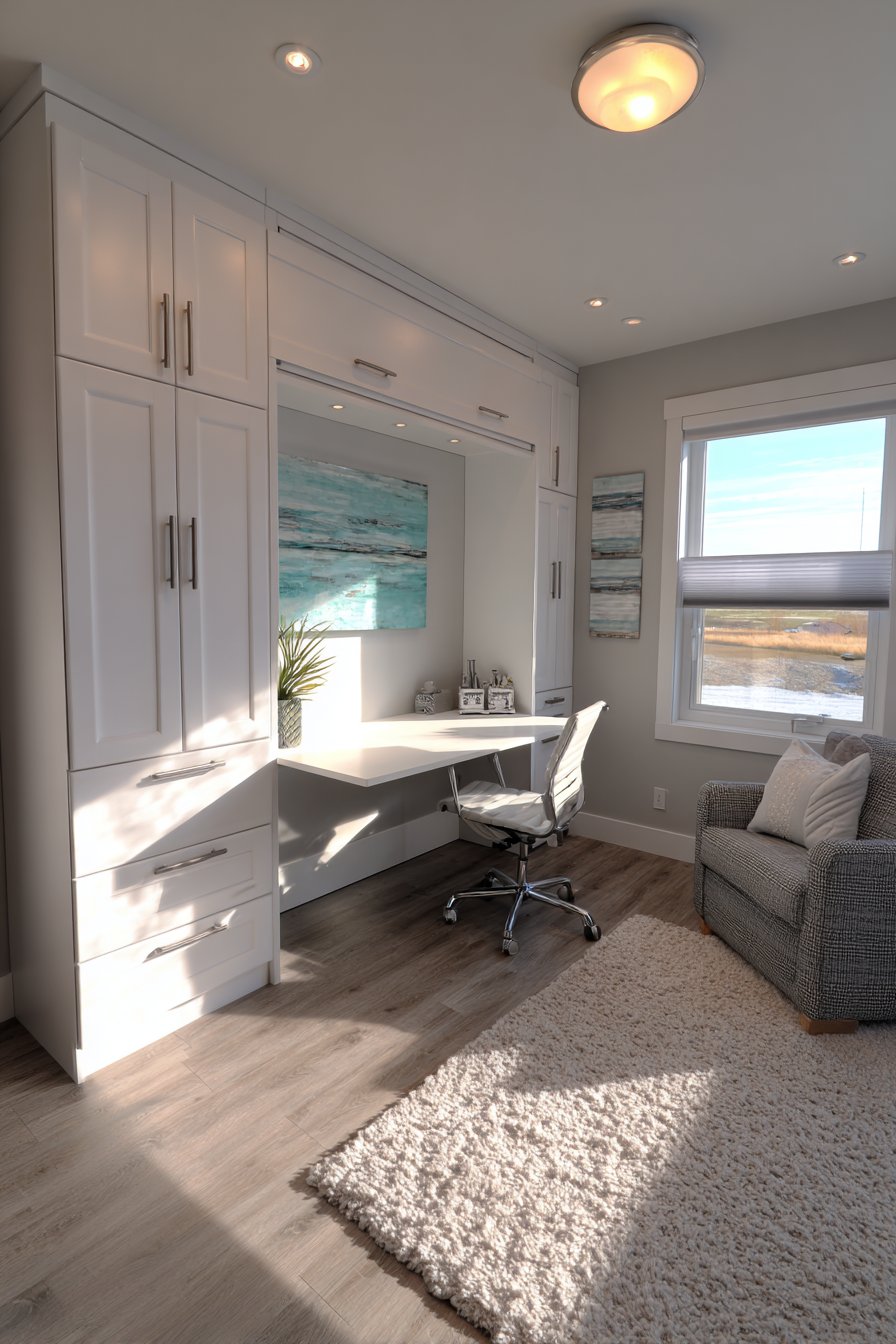
Single statement art pieces provide color pops in muted teal. Under-bed storage drawers on wheels maximize space efficiency. Simple roller shades maintain streamlined window treatments. Light wood flooring and neutral wool rugs complete the palette.
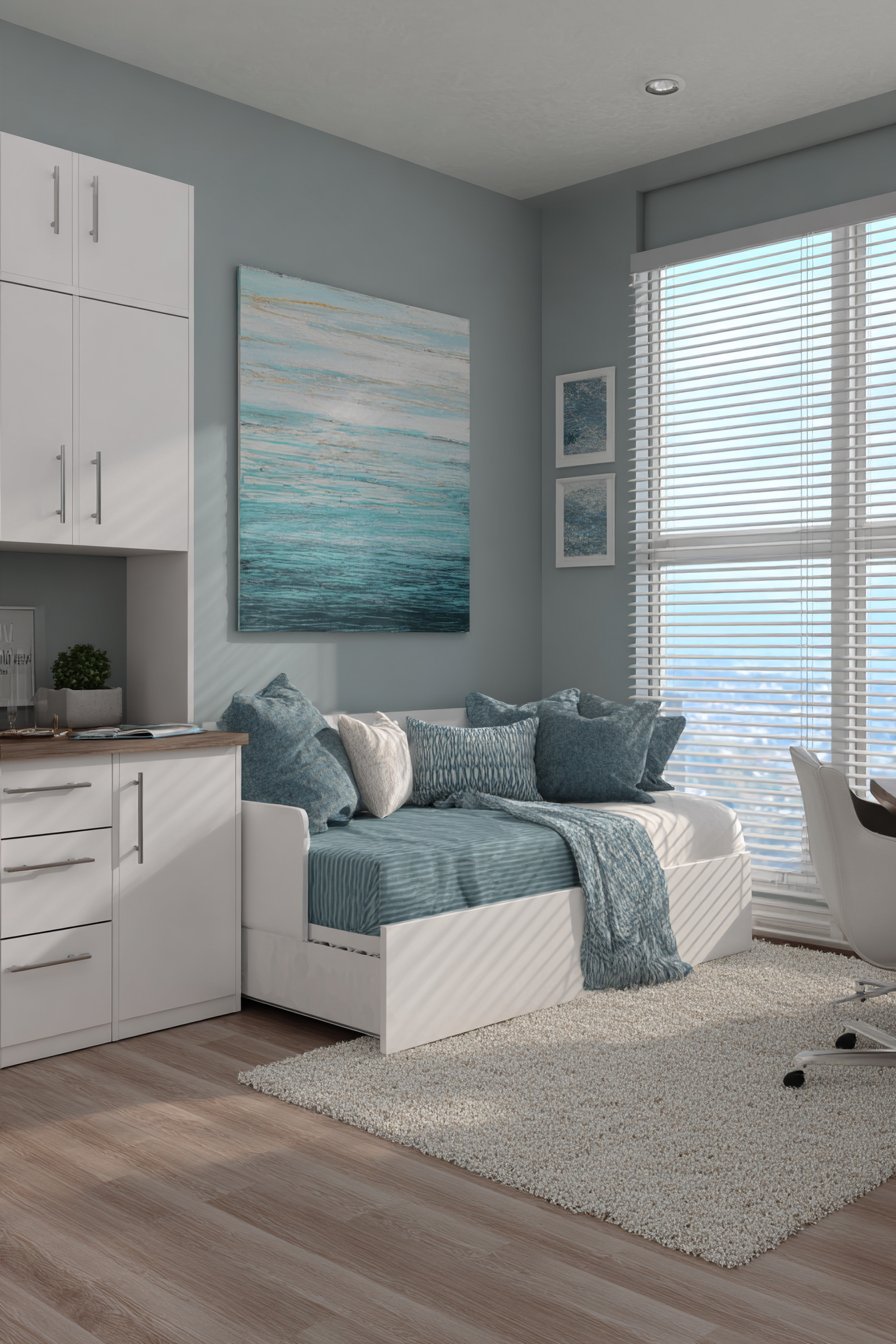
This modern minimalist approach proves perfect for small spaces. Smart space utilization demonstrates that limited square footage needn’t limit functionality. The calming aesthetic reduces visual noise that can overwhelm children. Every element serves multiple purposes efficiently.
Key Design Tips:
- Install Murphy beds in small spaces for maximum flexibility
- Choose furniture that serves multiple functions
- Maintain minimal color palettes for visual calm
- Use closed storage to hide toys and maintain clean lines
- Add single statement pieces rather than multiple small decorations
16. Relaxed Bohemian Eclectic Style
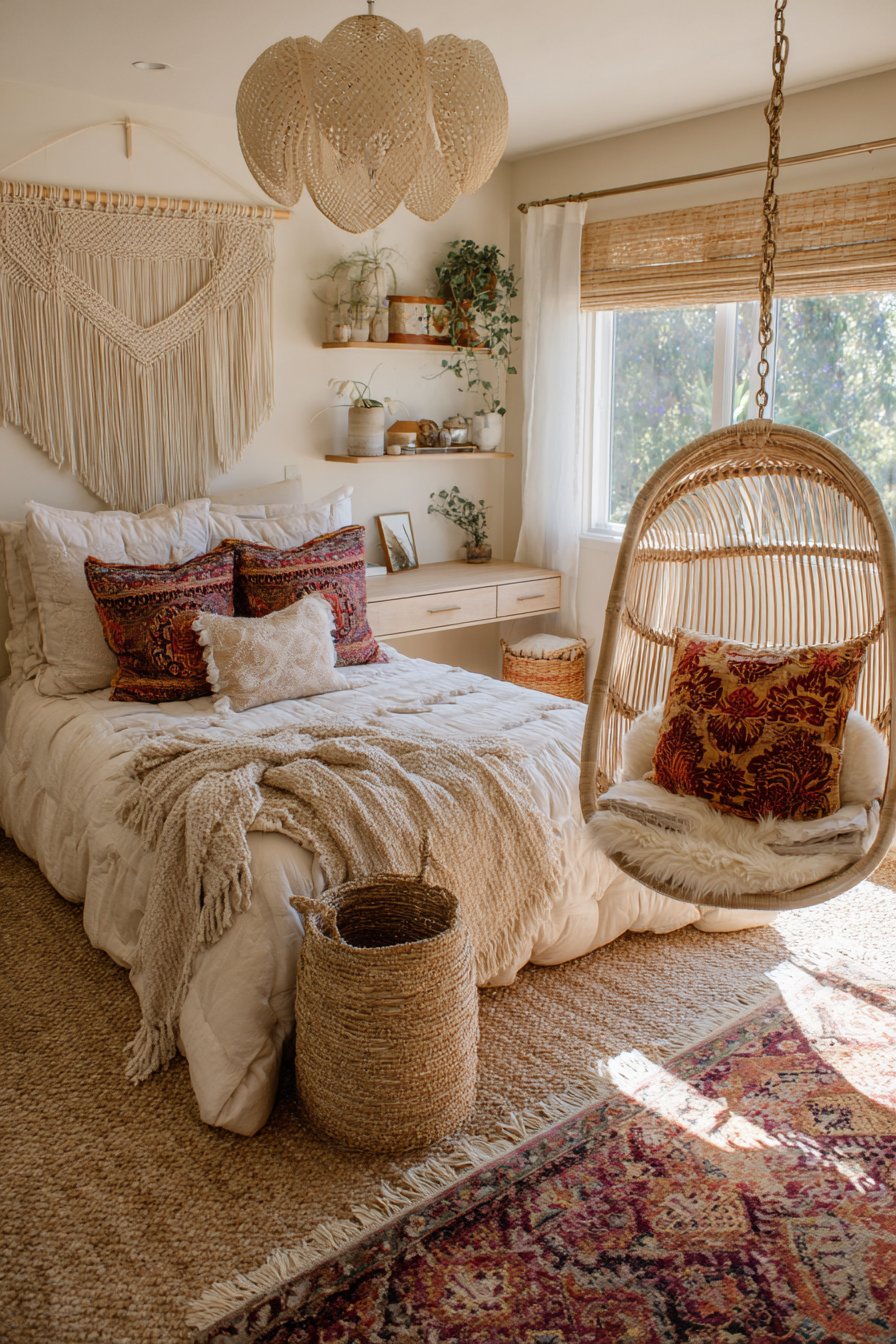
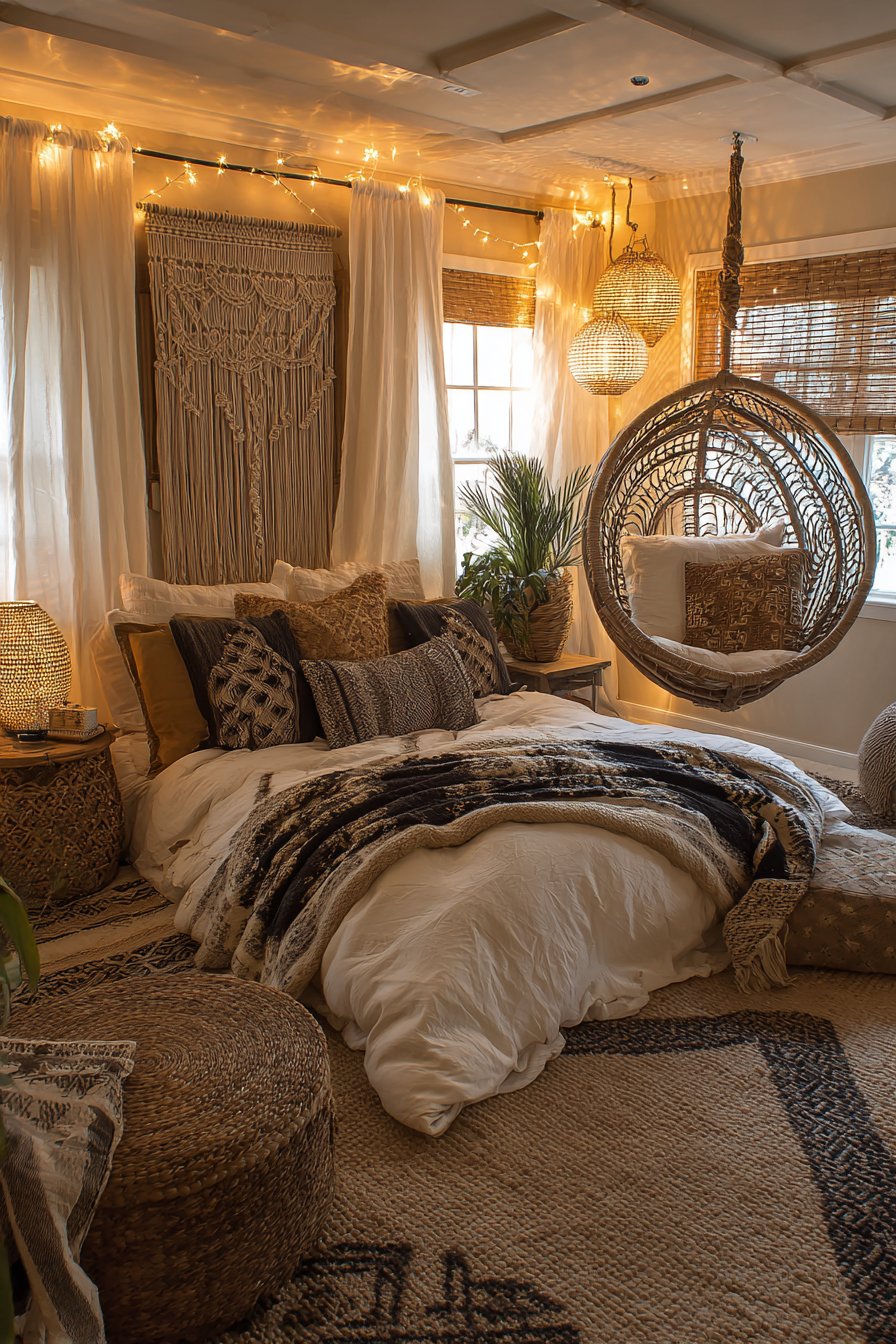
Macrame wall hangings above low-profile beds create textural focal points. Mixed patterned pillows and textured blankets layer beautifully. Rattan hanging chairs provide cozy reading spots. Woven baskets in various sizes offer flexible storage solutions.
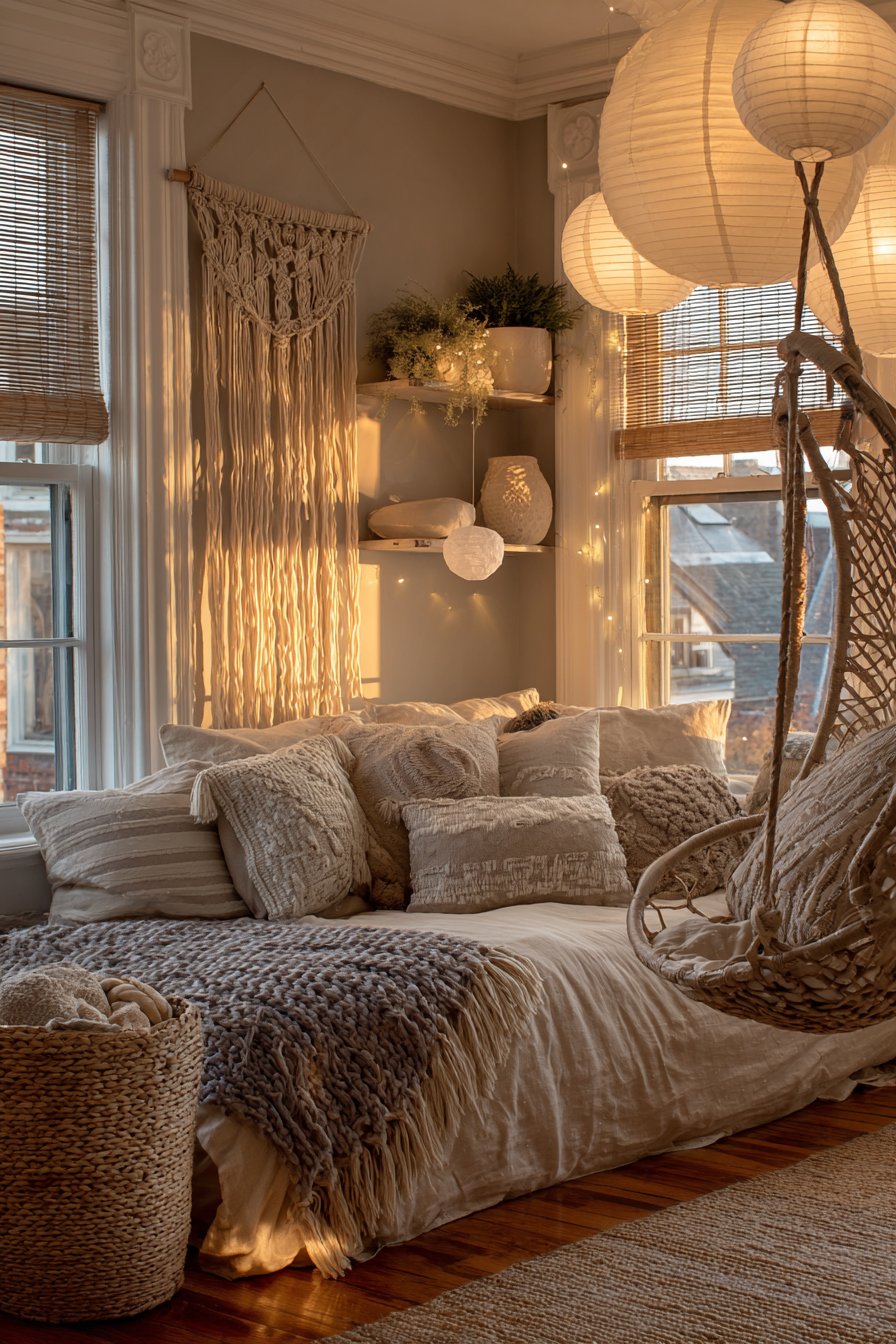
Plants on floating shelves add life and teach caretaking responsibilities. Vintage kilim rugs layer over natural jute rugs. This creates warmth and pattern underfoot. String lights and paper lanterns provide soft ambient lighting.
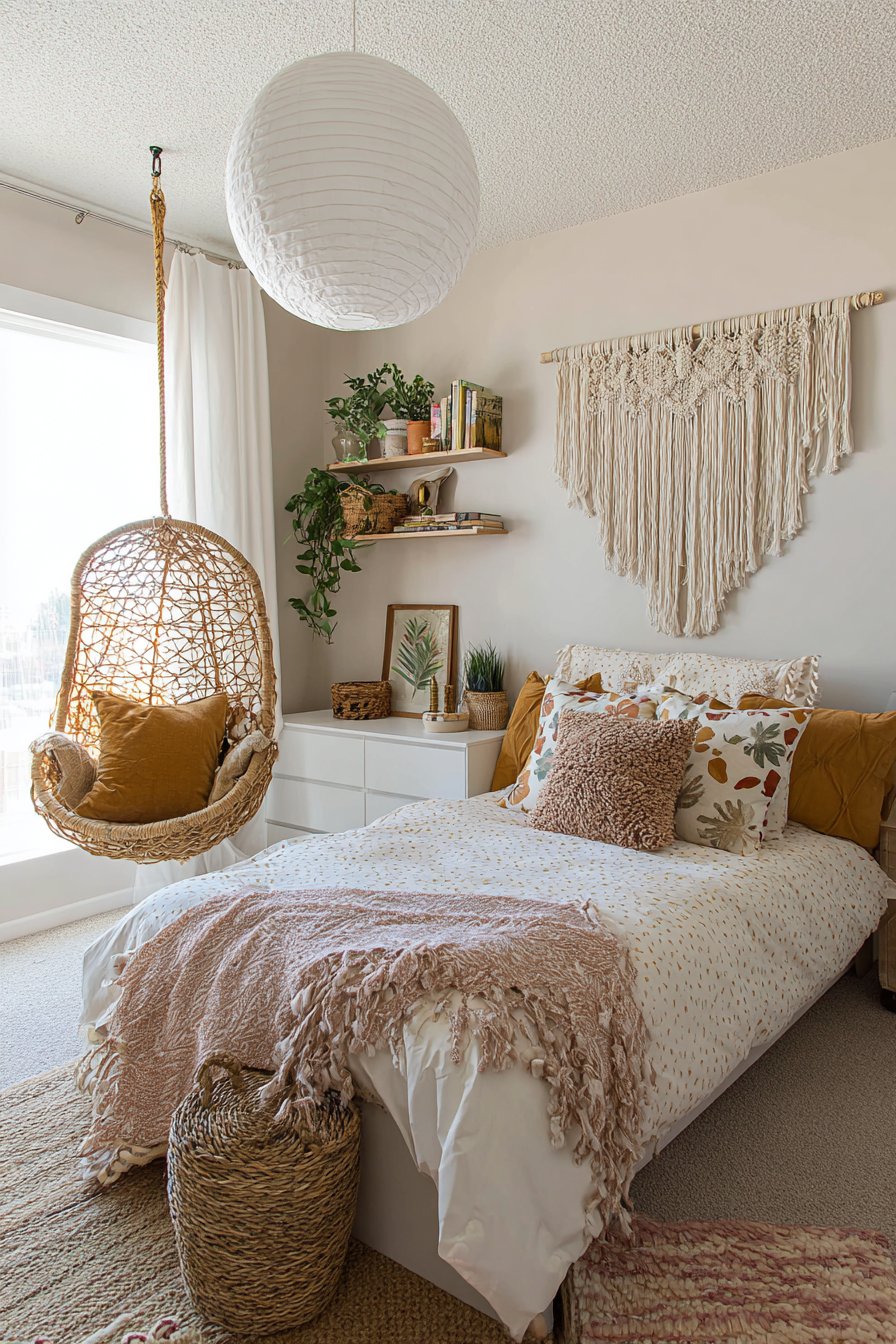
Natural wood furniture and bamboo roman shades complete organic feel. The relaxed eclectic approach feels both free-spirited and cozy. Golden hour lighting captures the inviting atmosphere perfectly. This design celebrates personal expression and comfort equally.
Key Design Tips:
- Layer multiple textile patterns for bohemian richness
- Incorporate natural materials like rattan and bamboo
- Add plants for life and air purification
- Use flexible storage like baskets that move easily
- Create ambient lighting with string lights and lanterns
17. Sophisticated Safari Adventure Room
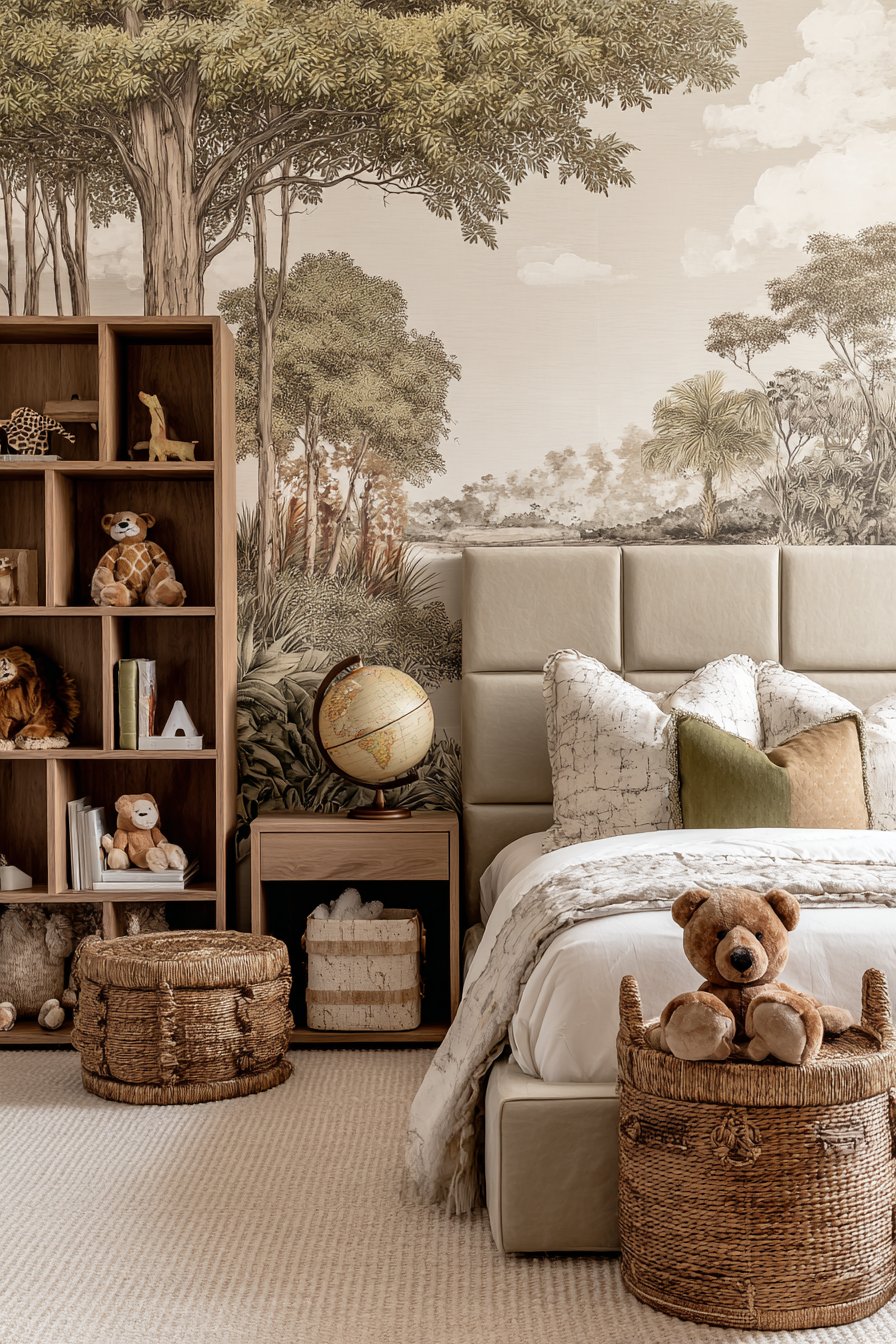
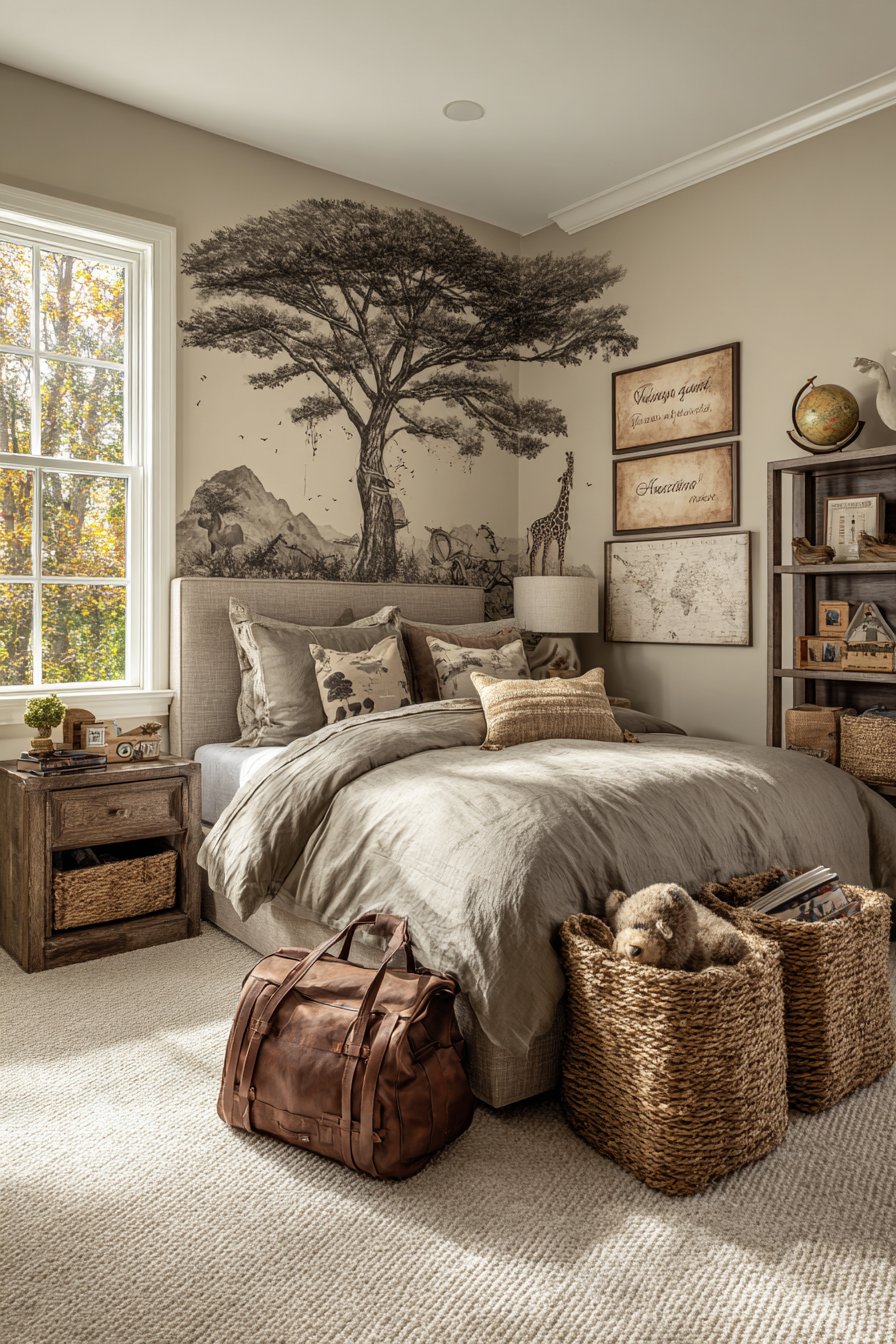
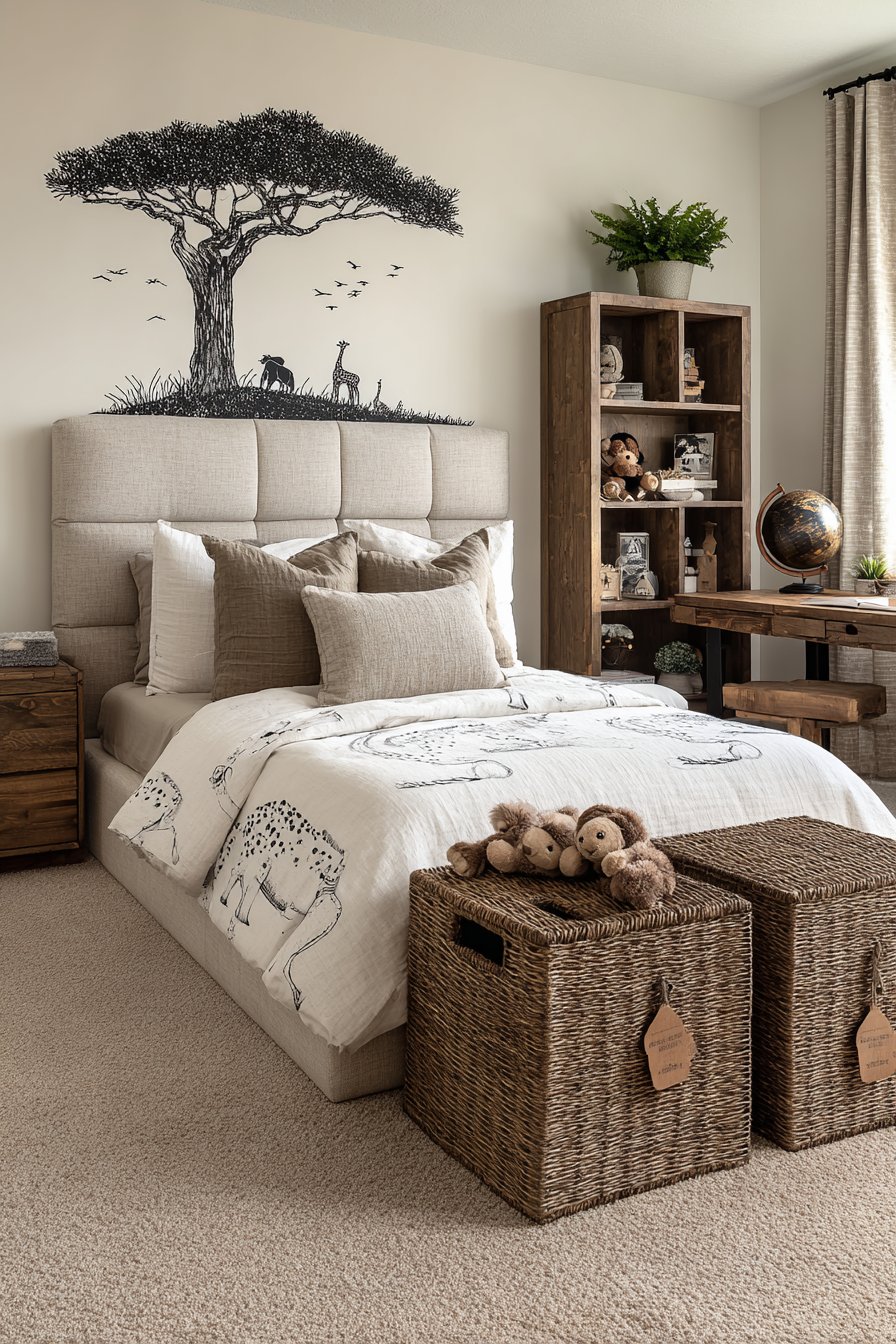
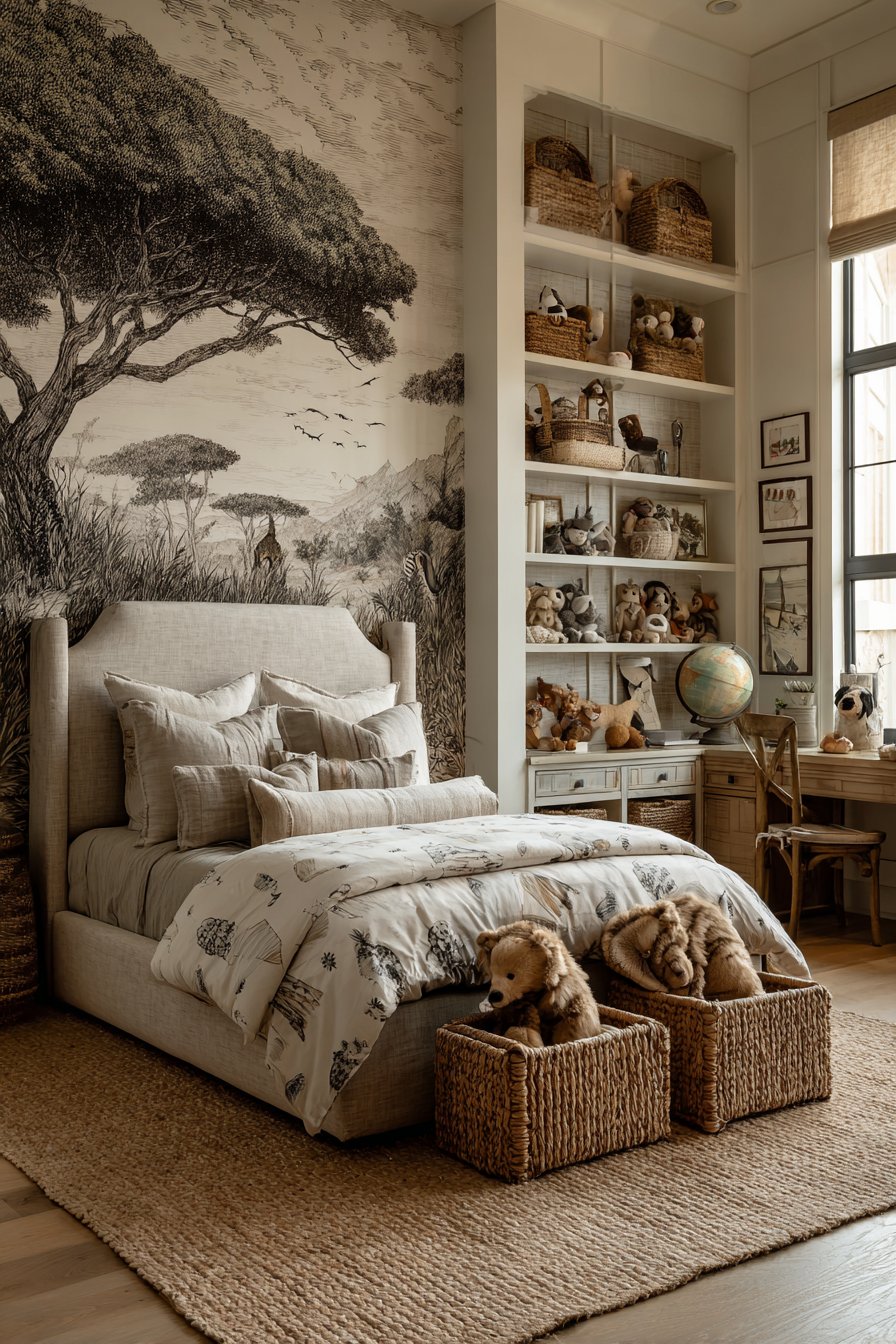
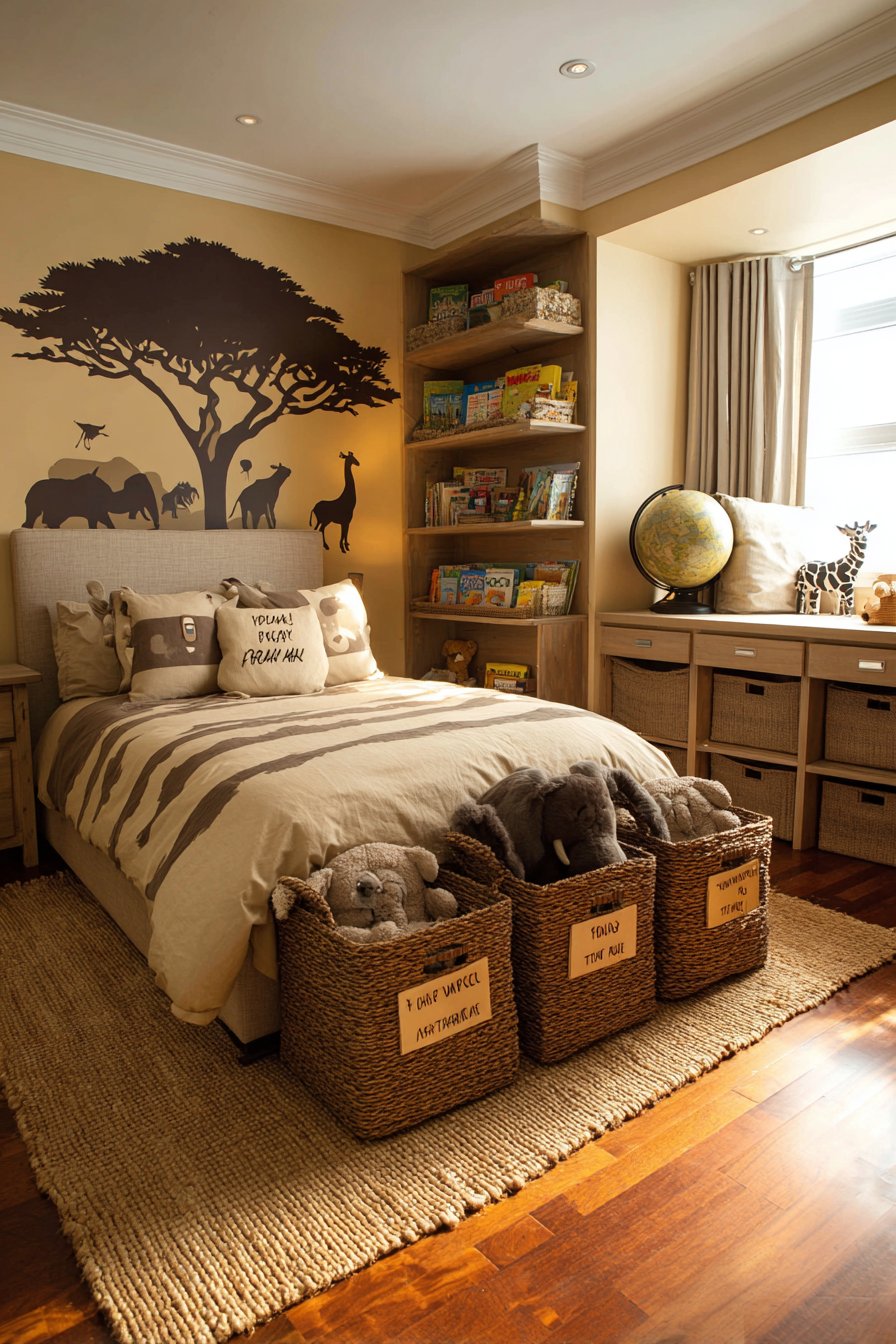
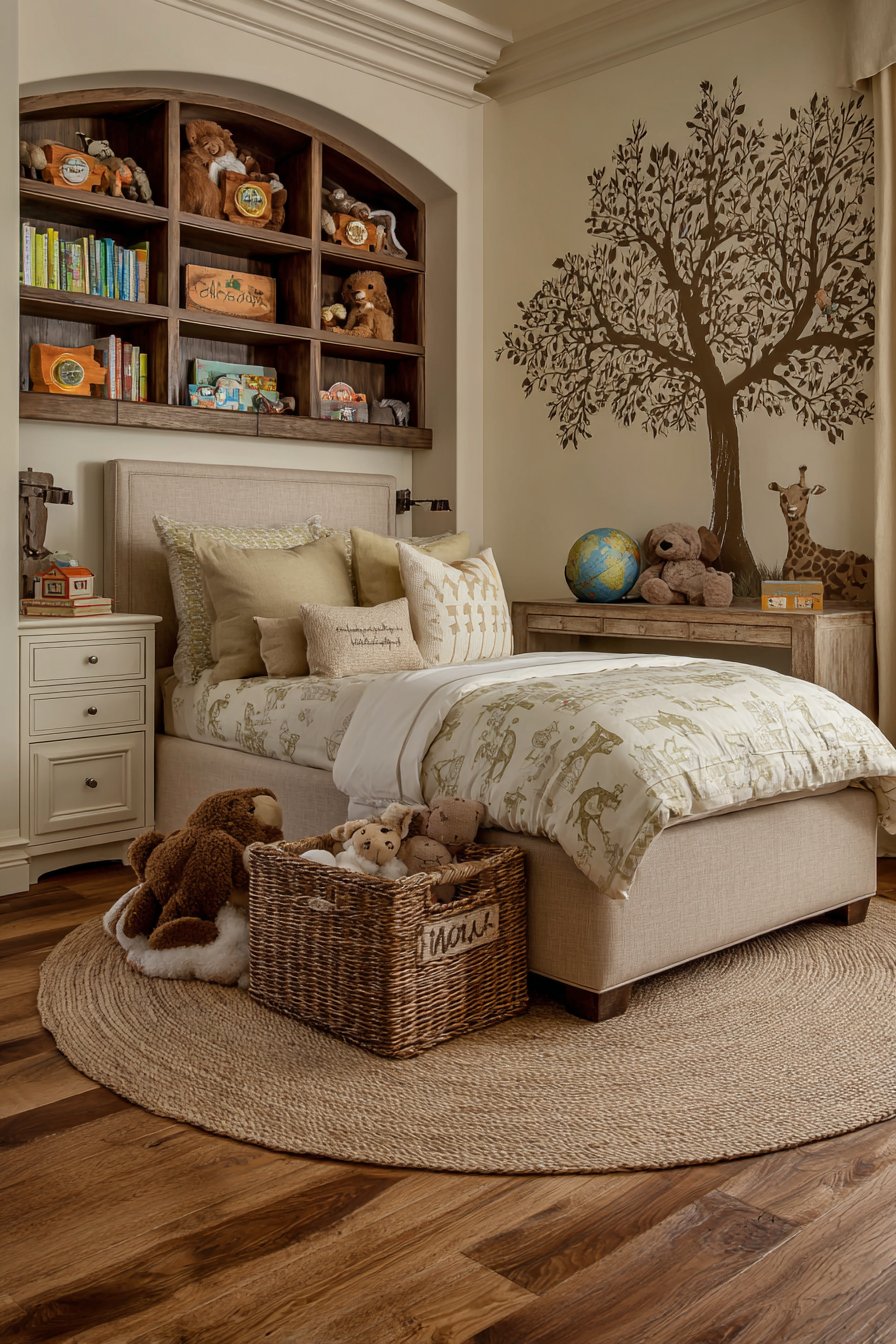
Warm neutral palettes of tans, browns, and soft greens establish refined base. The upholstered linen headboard brings soft sophistication. Subtle animal print accents avoid cartoonish interpretations. Large wall decals of African trees create focal points.
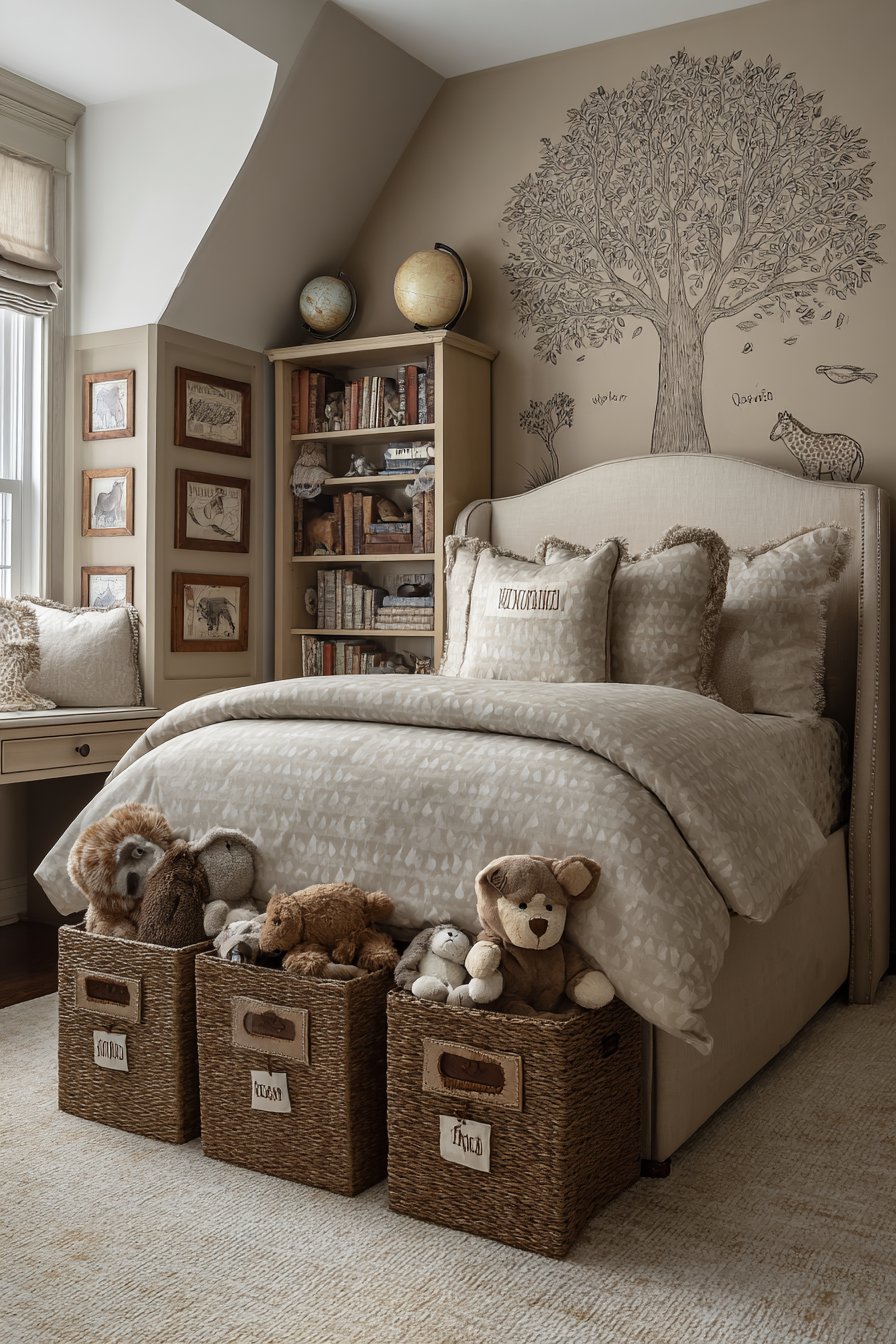
Wicker storage baskets labeled with animal tags organize toys playfully. Natural fiber rugs anchor the adventurous space. Wooden bookshelves styled with adventure-themed books encourage exploration. A globe on the desk promotes geographic learning.
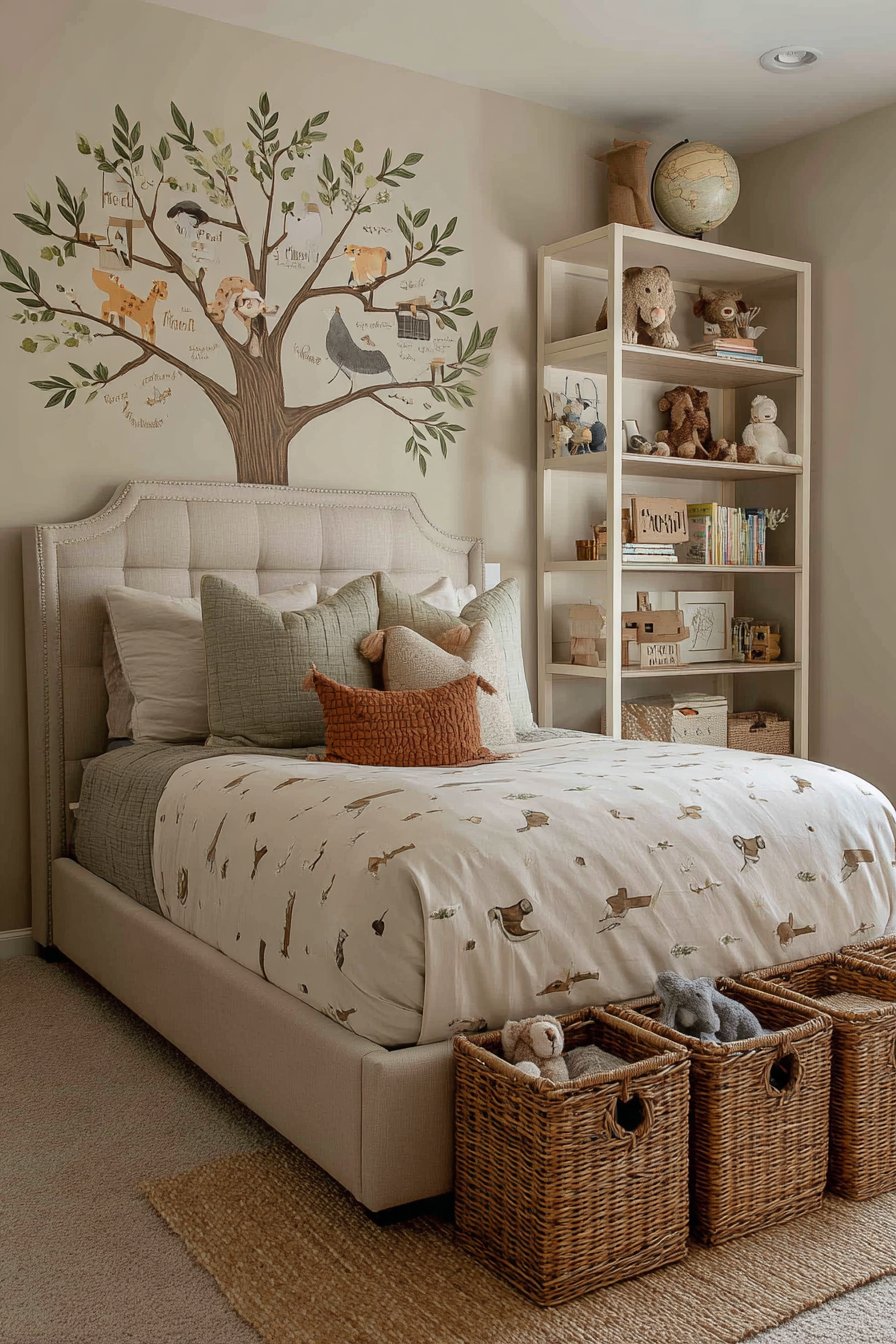
The sophisticated color choices balance playfulness with refinement. This approach allows the safari theme to grow with children. Professional photography captures adventurous spirit within tasteful execution. The design inspires curiosity about natural world and distant places.
Key Design Tips:
- Choose sophisticated neutrals over bright primary colors
- Use subtle themed accents rather than overwhelming graphics
- Incorporate educational elements like globes and maps
- Select natural materials that reinforce safari aesthetic
- Create layered textures through various woven elements
18. Music-Focused Practice Space
Acoustic foam panels arrange decoratively for sound dampening and visual interest. Keyboard and guitar stands provide proper instrument storage. Shelving displays music books, awards, and sound systems. The deep purple duvet features geometric patterns.
Comfortable desk chairs support long practice sessions and homework time. Area rugs with soundwave pattern designs reinforce the musical theme. Adjustable wall-mounted music stands accommodate various instruments. Wide-angle photography captures dedication to passion within functional bedroom.
This specialized design supports specific interests while maintaining livability. Proper instrument storage protects valuable equipment. Sound dampening respects household harmony during practice. The room grows with increasing musical sophistication over years.
Key Design Tips:
- Add acoustic treatment that’s both functional and decorative
- Provide proper storage and stands for instruments
- Create dedicated practice areas separate from sleeping zones
- Include comfortable seating for extended practice sessions
- Display achievements to encourage continued dedication
19. Adaptable Transitional Teen Design
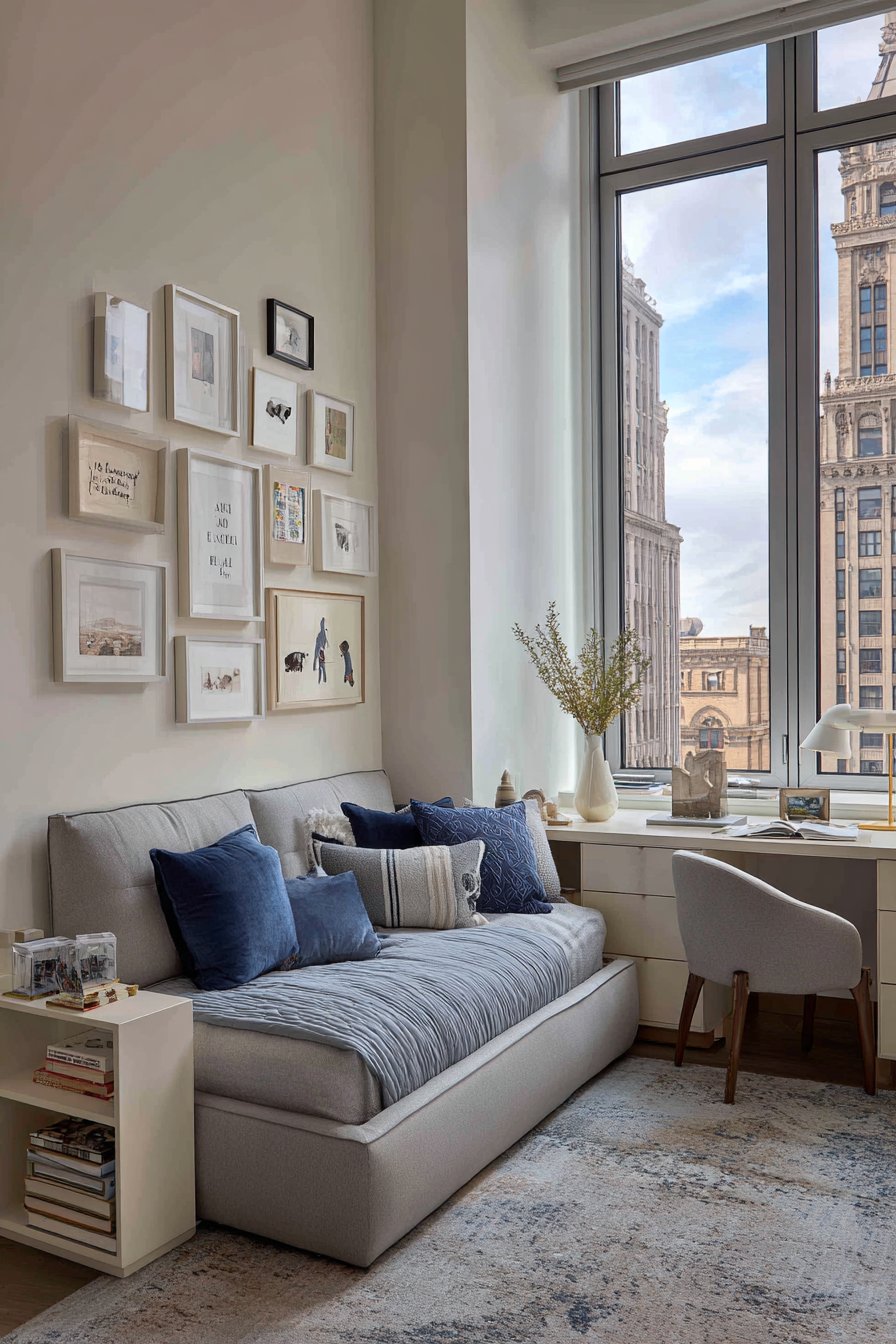
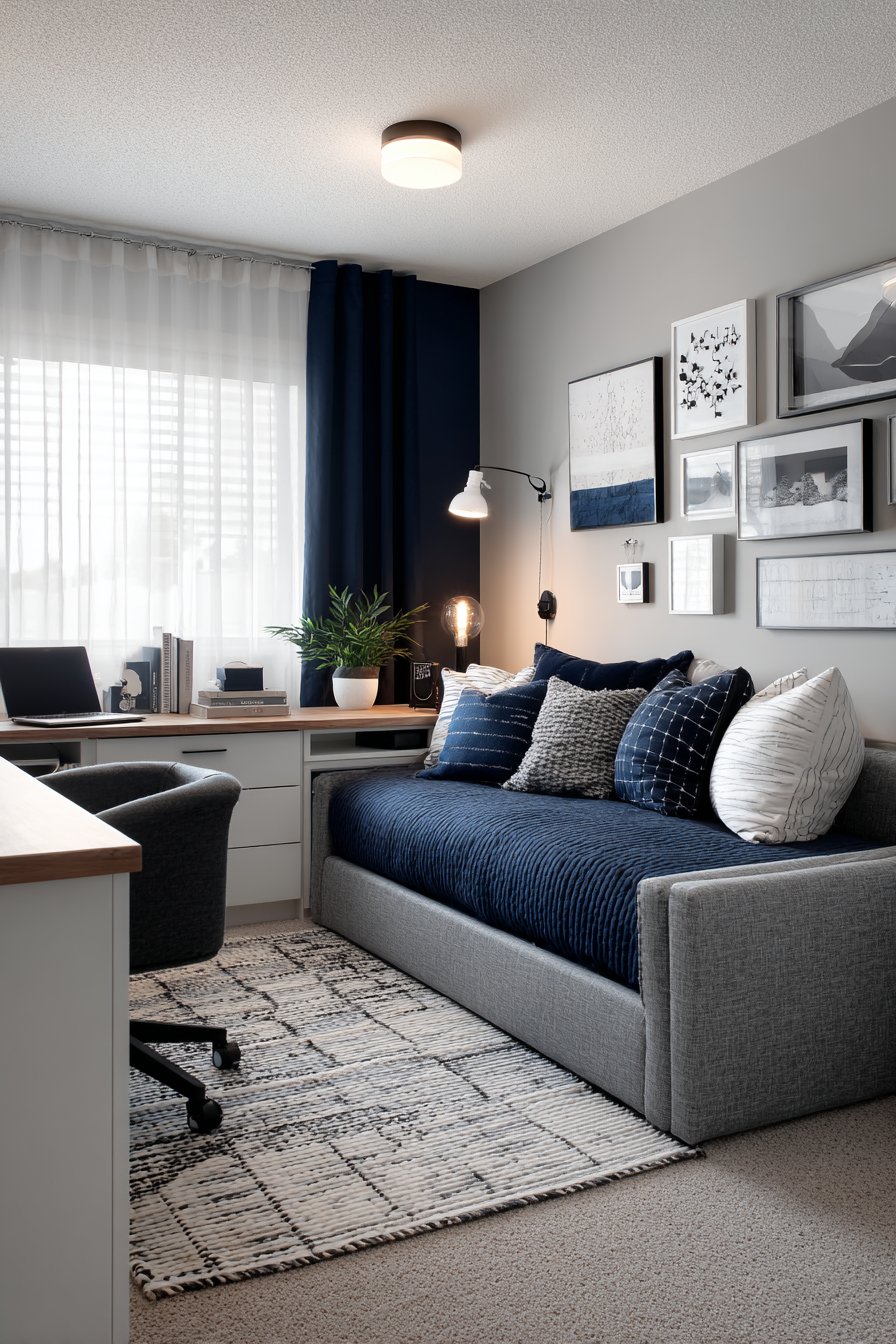
Neutral grey upholstered beds work across many developmental stages. Modular storage systems reconfigure as needs evolve. Gallery walls with mixed frame sizes allow easy artwork updates. Desk areas with proper task lighting support increasing homework demands.
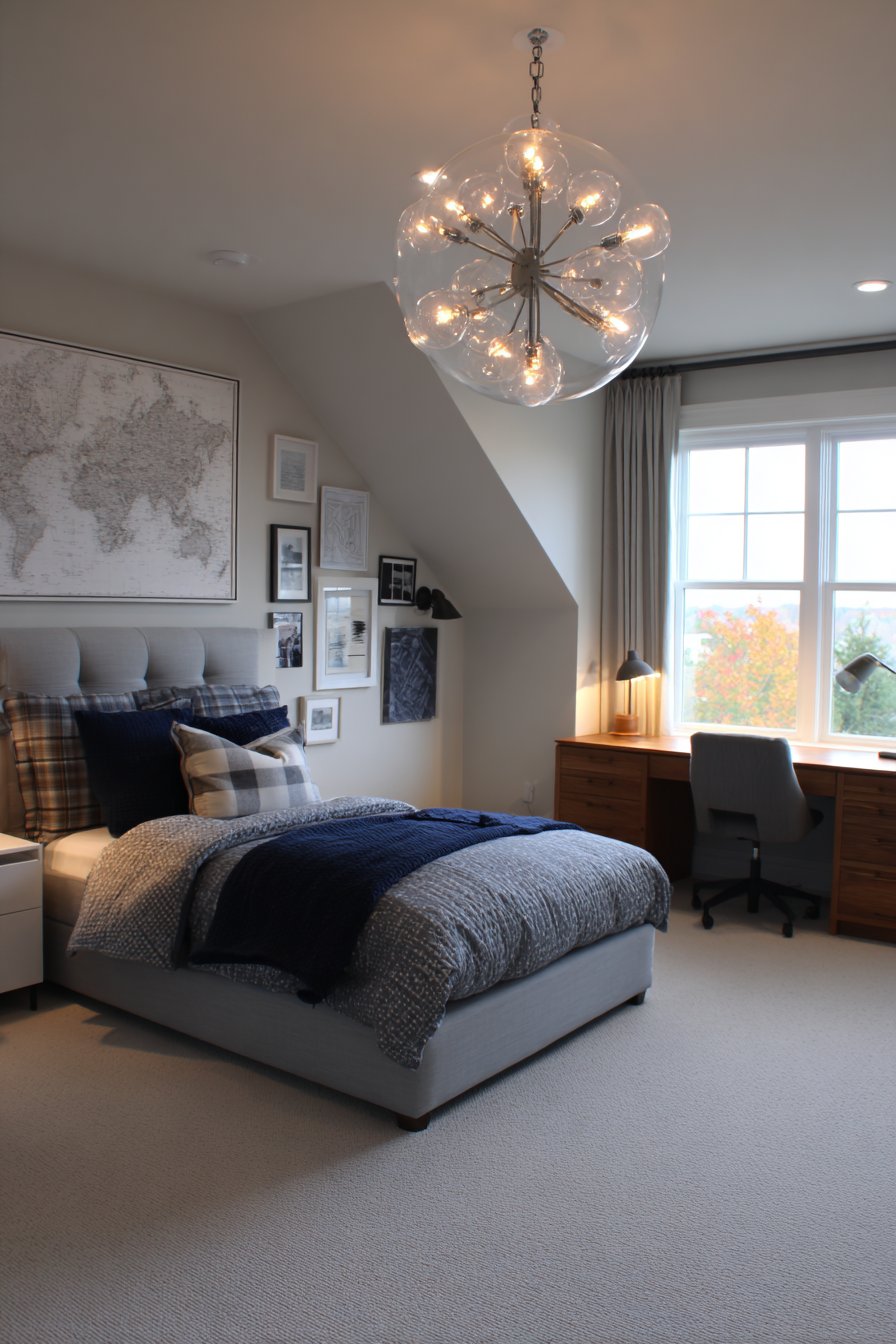
The color palette of navy, white, and natural wood maintains sophistication. Classic window treatments remain relevant through changing preferences. This forward-thinking approach minimizes complete redesign needs. The design respects children’s maturing tastes and independence.
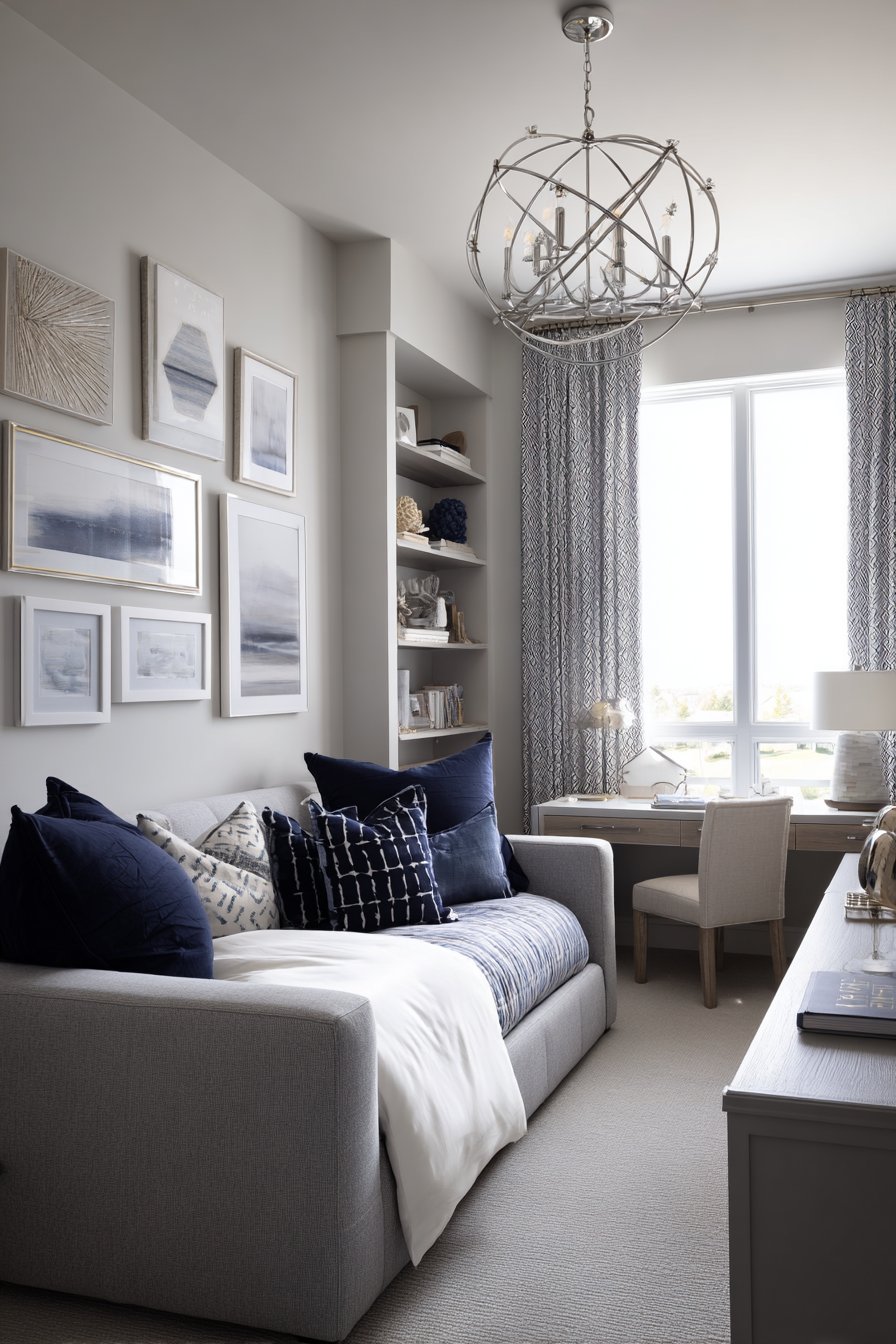
Balanced lighting demonstrates thoughtful planning for long-term use. Quality furniture justifies investment through extended lifespan. The room transitions smoothly from childhood through teenage years. This practical approach saves money while respecting growing autonomy.
Key Design Tips:
- Choose neutral furniture that works across age ranges
- Install modular systems that adapt to changing needs
- Use sophisticated palettes that mature with children
- Create flexible display areas for evolving interests
- Invest in quality pieces that justify higher initial costs
20. Literary Sanctuary Reading Haven
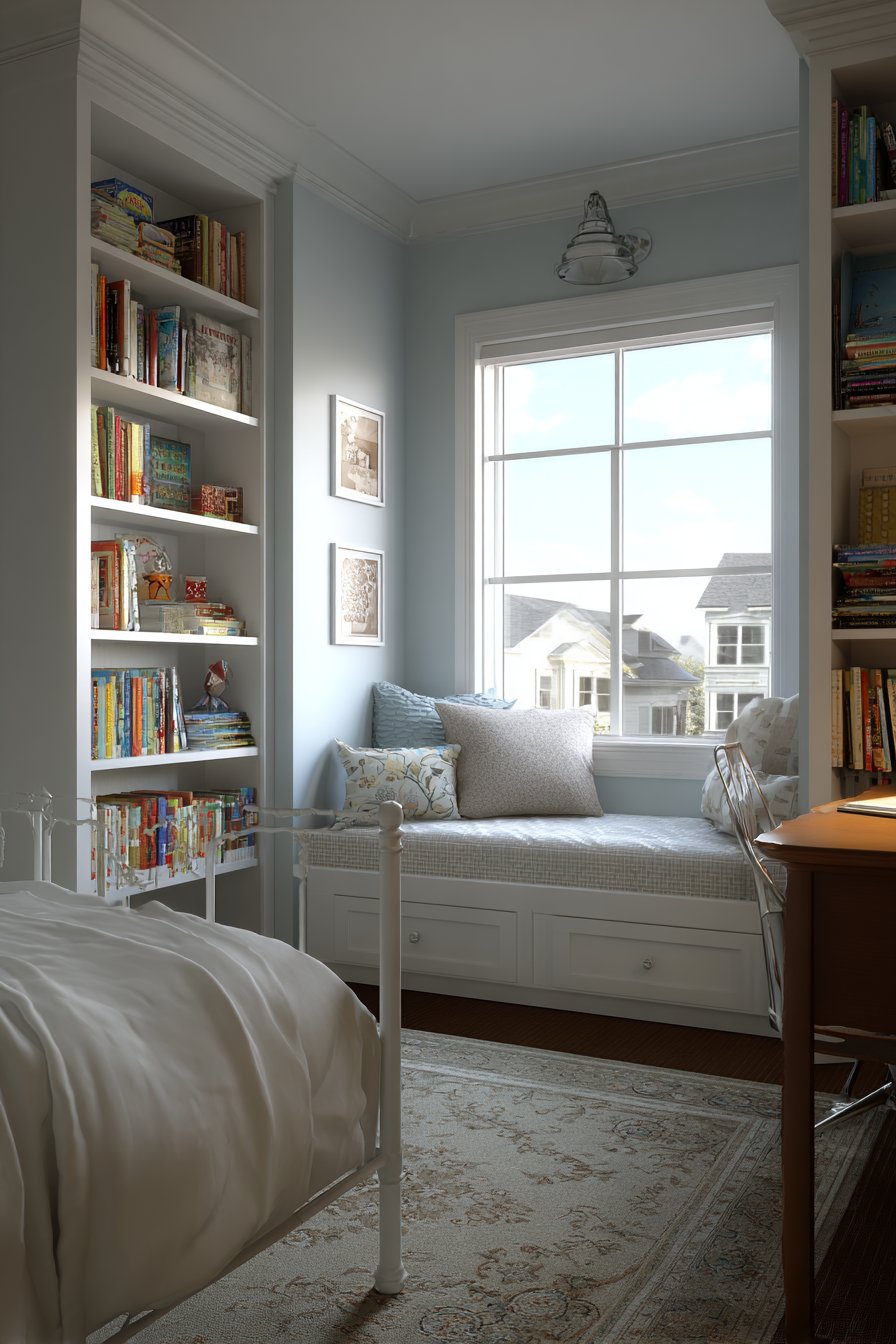
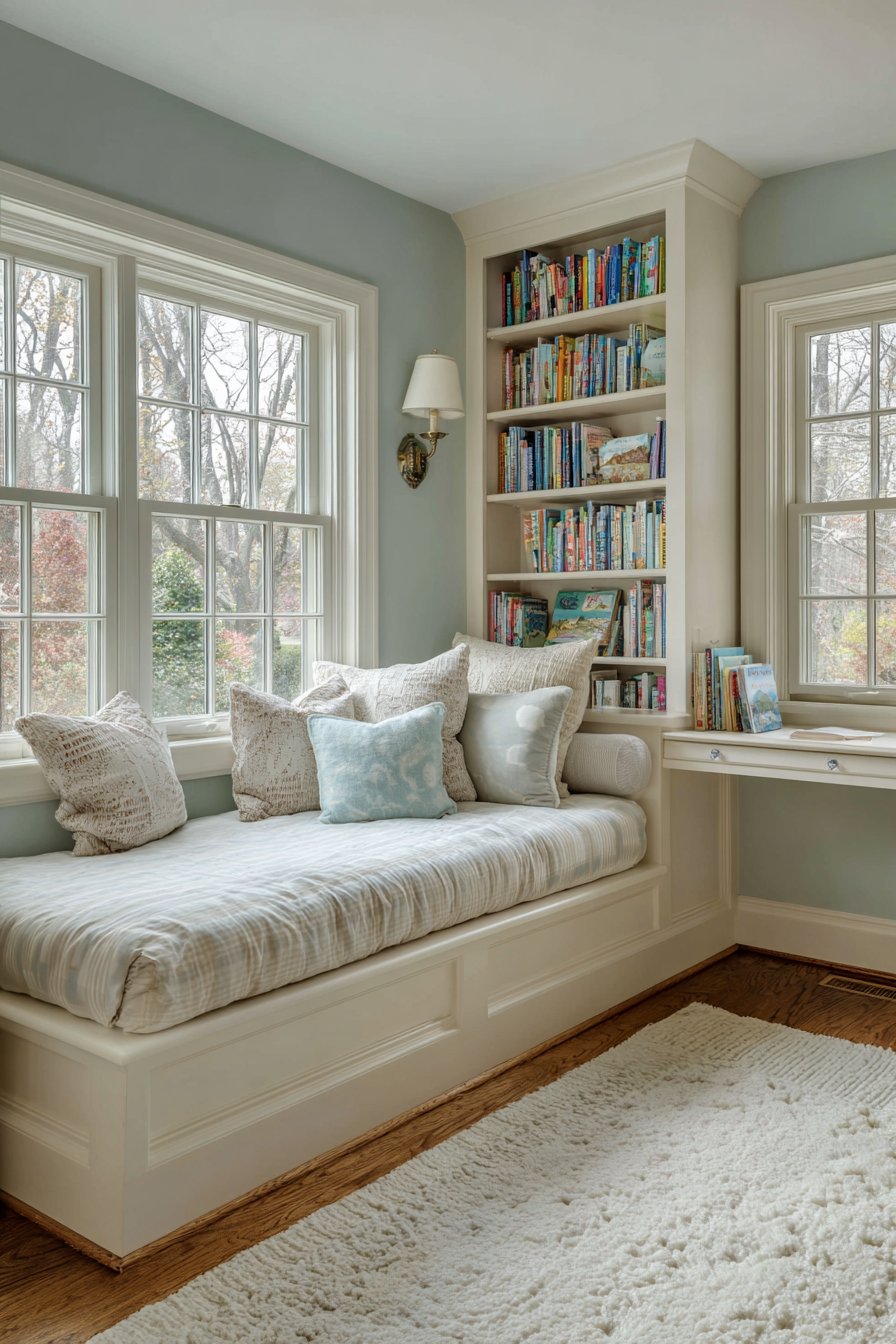
Built-in window seats feature deep cushions and throw pillows. Integrated bookshelf storage flanks both sides of the cozy nook. Reading lights mounted above provide perfect illumination. The simple white metal bed frame maintains focus on literary elements.
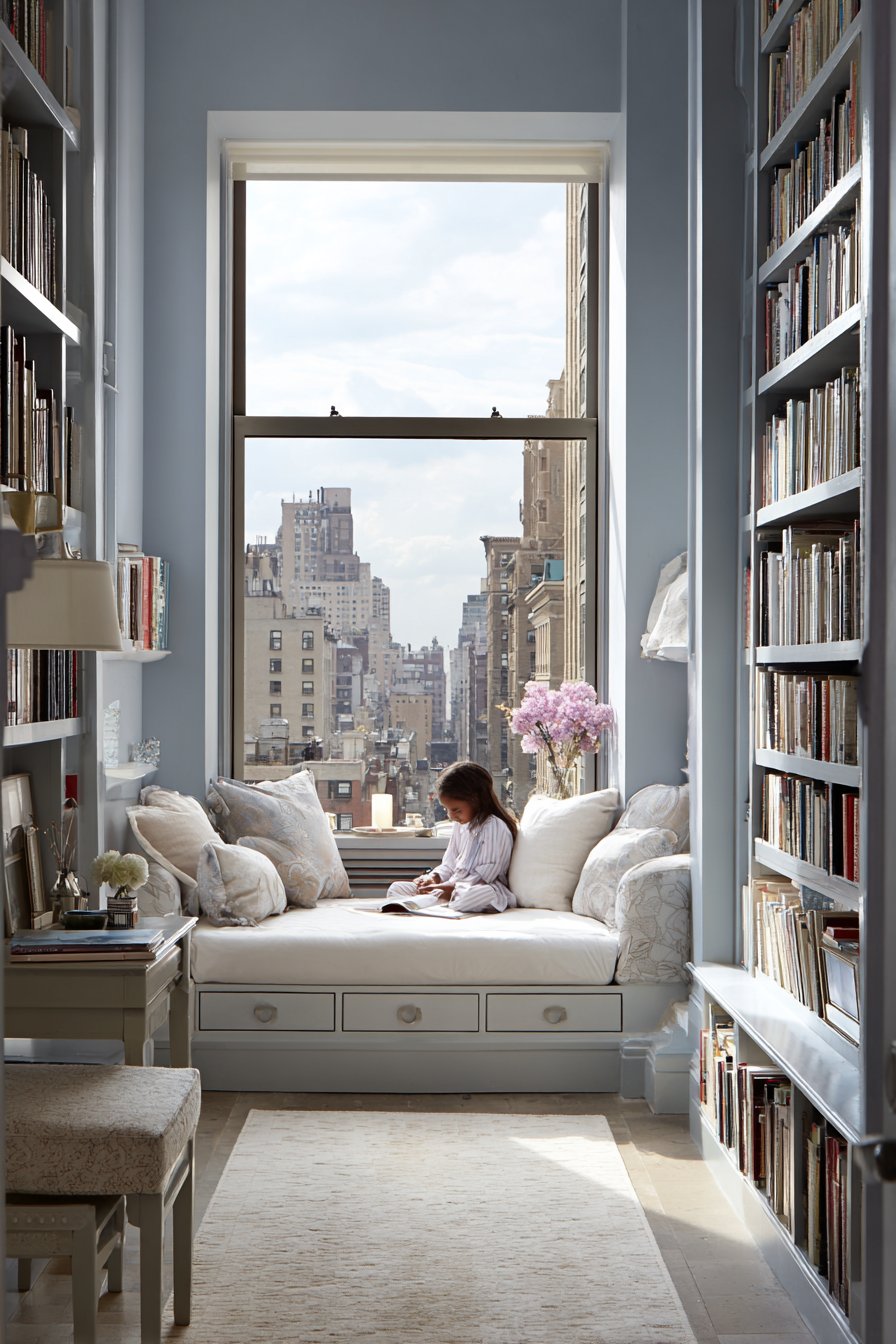
Additional freestanding bookshelves organize by reading level. This system encourages progressive skill development. Small writing desks inspire journaling and creative writing. Soft area rugs define quiet reading spaces.
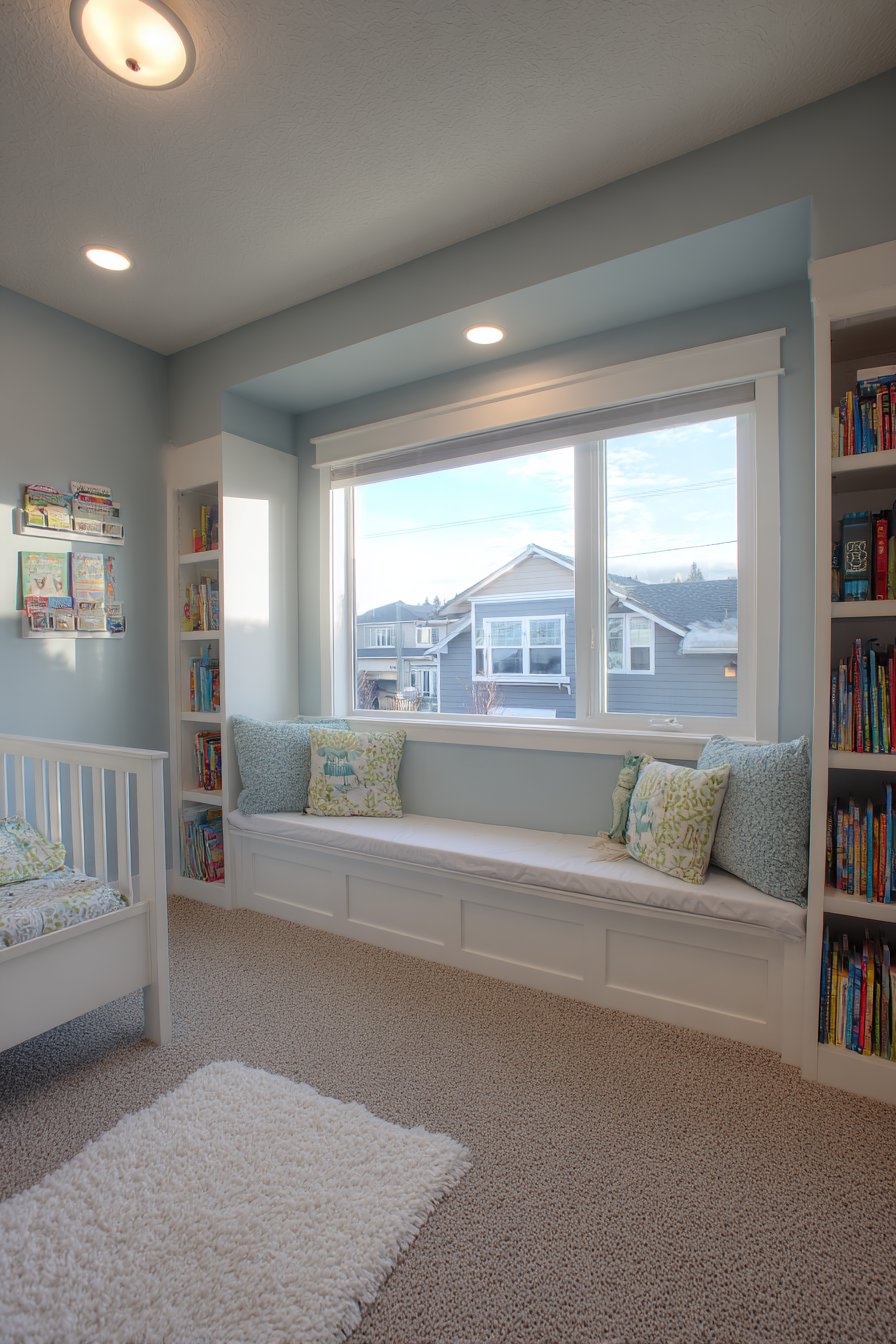
Soft blue-grey walls create calming backdrop for concentration. Natural light from windows illuminates pages perfectly. The literary sanctuary atmosphere nurtures reading love and quiet time. This design prioritizes intellectual development alongside physical comfort.
Key Design Tips:
- Create dedicated reading nooks with proper lighting and comfort
- Organize books by level to encourage reading progression
- Add writing spaces to complement reading activities
- Use calming colors that promote focus and concentration
- Maximize natural lighting near reading areas
Why These Children Bedroom Designs Are the Best
These twenty children’s bedroom designs represent exceptional approaches to creating functional, beautiful spaces for growing kids. Each concept demonstrates thoughtful consideration of developmental needs alongside aesthetic appeal. The versatility across these designs accommodates diverse personalities, interests, and family situations.
The incorporation of flexible storage solutions addresses the ever-changing nature of childhood belongings. As kids grow, their possessions evolve from toys to books to technology. Smart storage systems adapt rather than require replacement. Built-in solutions maximize limited square footage while teaching organizational skills.
Color choices throughout these designs balance stimulation with calm. Bright primary colors energize creative play areas. Soft neutrals promote restful sleep and focus for homework. The strategic use of accent walls allows bold expression without overwhelming small spaces. Natural materials like wood, linen, and wool create healthier environments while aging beautifully.
Themed designs executed with sophistication grow with children through developmental stages. Safari adventures, nautical elements, and woodland retreats maintain appeal longer than character-specific decorations. Educational components like telescopes, globes, and music equipment integrate learning into living spaces naturally.
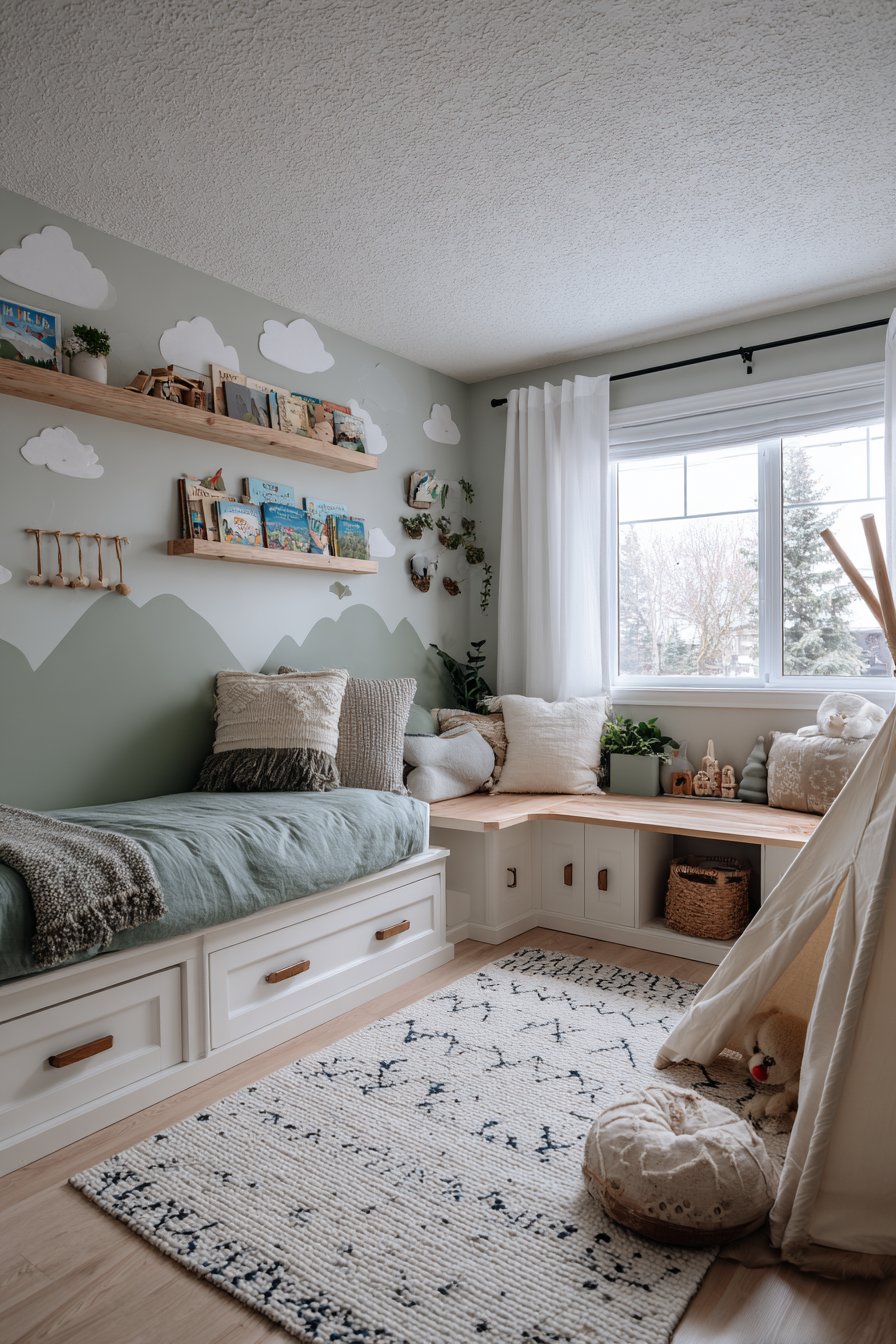
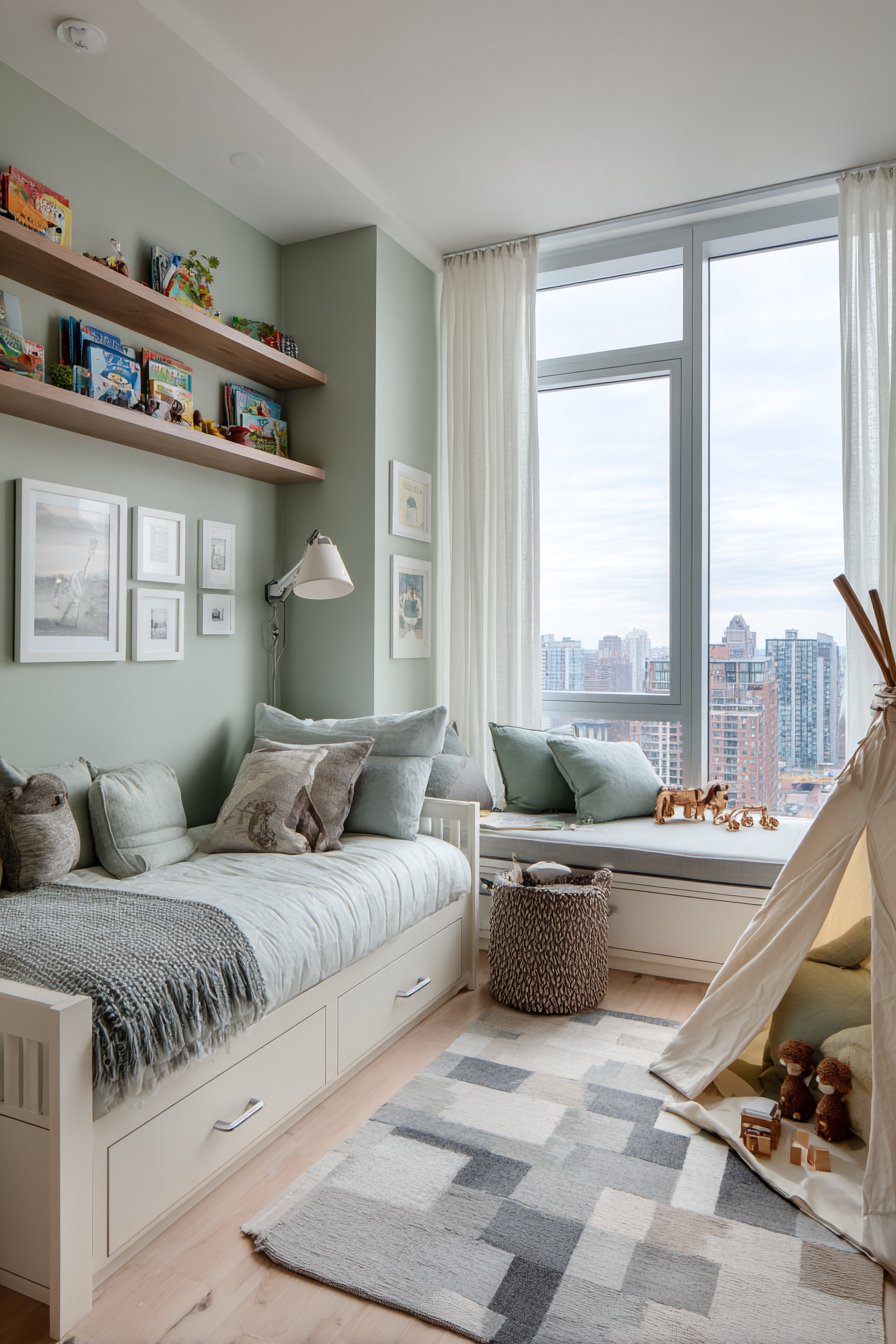
Spatial planning proves crucial in children’s rooms serving multiple functions. Dedicated zones for sleeping, studying, and playing create structure without rigid separation. Loft beds and Murphy beds maximize vertical space in smaller rooms. Window seats and built-in benches add seating without sacrificing floor space.
The emphasis on natural light and proper task lighting supports both physical health and academic success. Large windows reduce eye strain and support circadian rhythms. Adjustable lighting accommodates various activities throughout the day. These lighting strategies prove essential for children’s developing eyes.
Safety considerations integrate seamlessly into beautiful design throughout these concepts. Low-profile beds suit younger children. Sturdy construction ensures durability against active play. Non-toxic materials and proper ventilation create healthier indoor environments. These practical elements never compromise aesthetic quality.
Conclusion
These children’s bedroom designs demonstrate that functional spaces can inspire imagination while supporting healthy development. The key takeaways include the importance of flexible storage, adaptable furniture, and thoughtful color choices. Quality materials combined with smart spatial planning create rooms that grow with your child.
Successful children’s bedroom design balances present needs with future growth. Start by identifying your child’s current interests and developmental stage. Consider which elements will remain relevant as they mature. Your dream children’s bedroom awaits creation through thoughtful planning and creative expression.
