


A black sofa stands as one of the most versatile foundation pieces in interior design. This timeless furniture choice transcends trends and adapts seamlessly to countless decorating styles. Whether you’re embracing minimalist aesthetics or crafting a bold maximalist space, a black sofa provides the perfect neutral anchor for your living room vision.
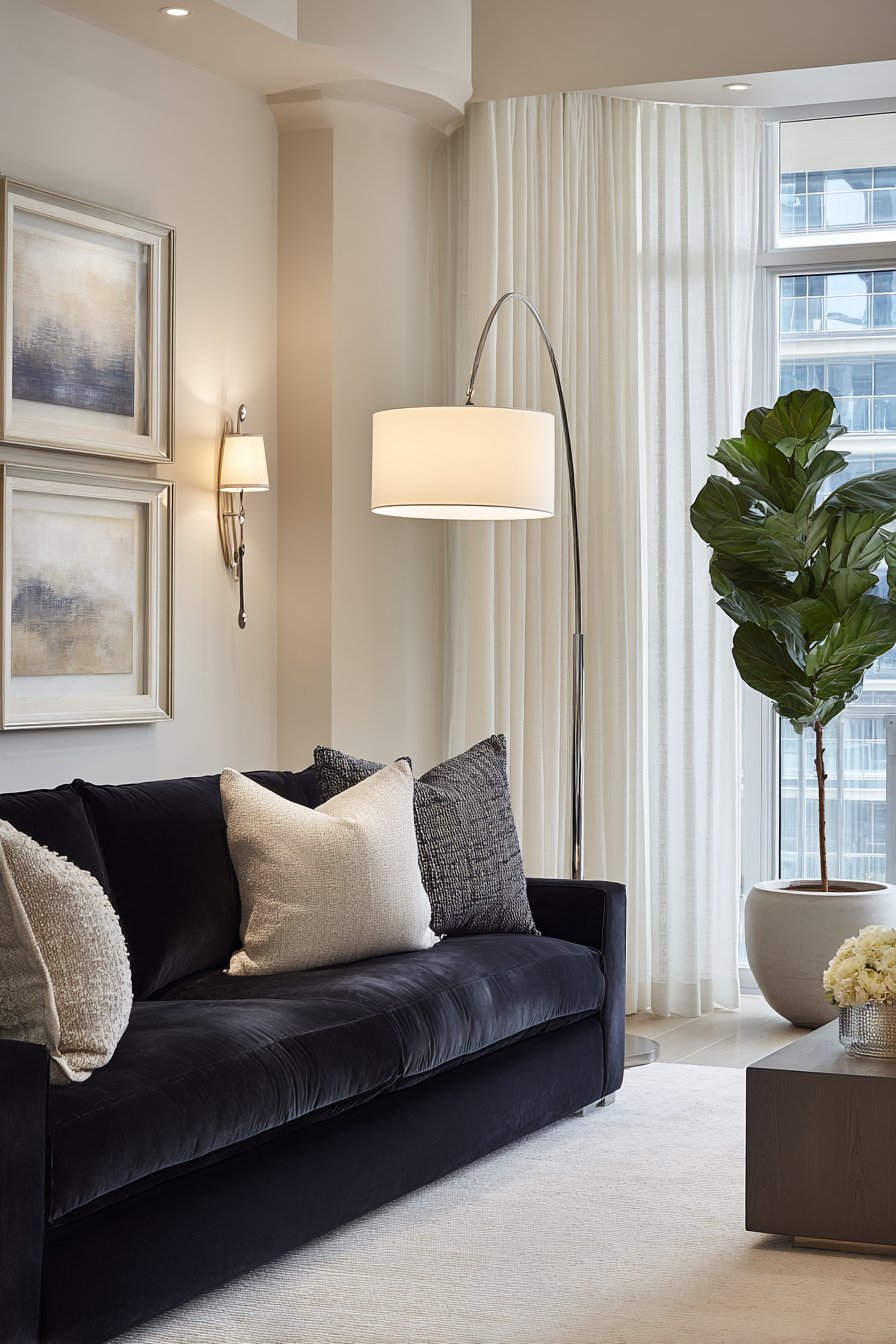
Interior design revolves around creating spaces that reflect individual personalities while maintaining functional beauty. A black sofa offers unique styling opportunities that cater to both conservative and adventurous design preferences. The dramatic depth of black upholstery creates visual weight without overwhelming a space, making it an ideal choice for rooms of any size.
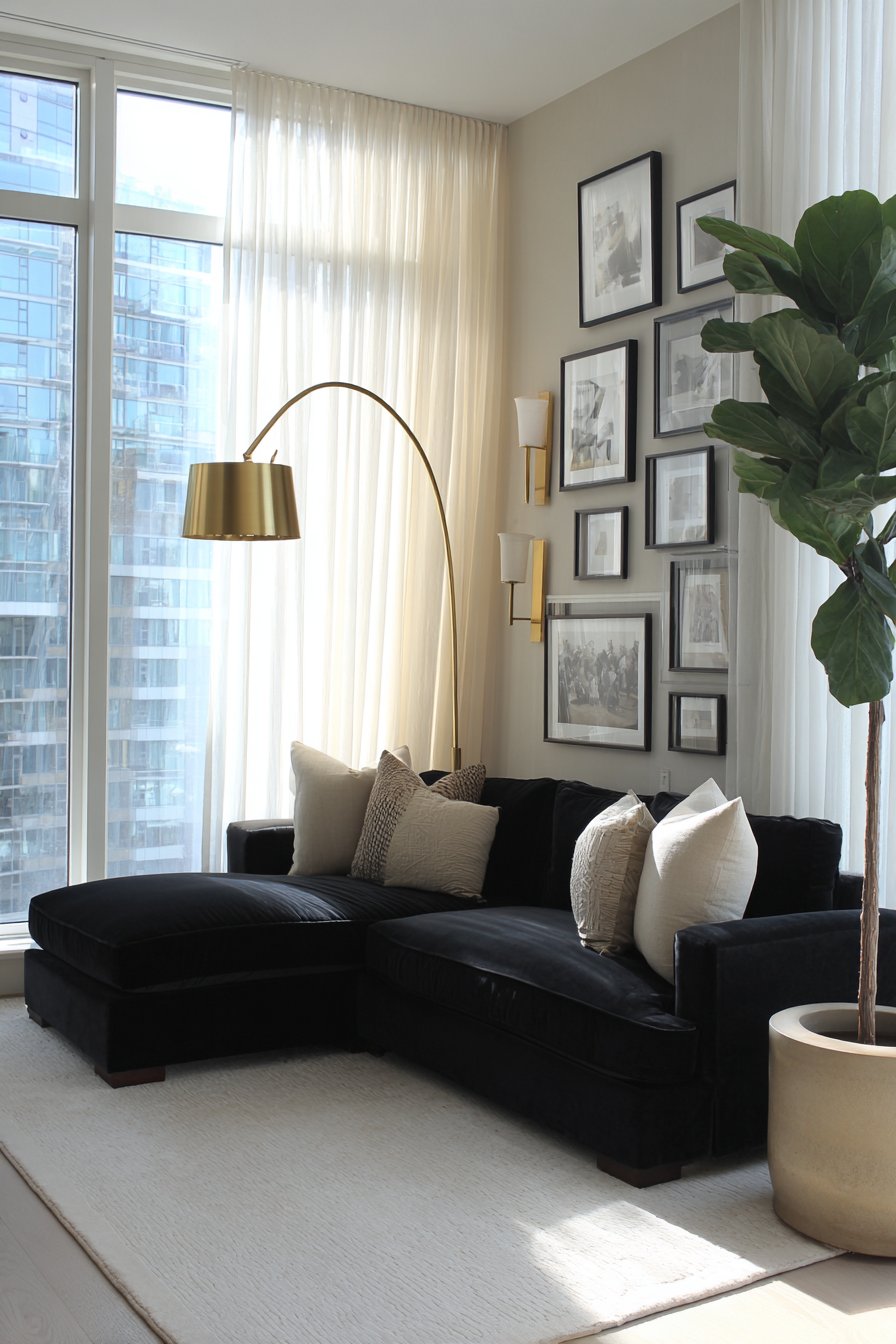
This article explores six proven strategies for styling your black sofa to achieve professional-looking results. From texture layering techniques to strategic color placement, these tips will transform your living room into a cohesive, inviting environment that showcases your personal style with confidence.
1. Layer Textures for Visual Interest
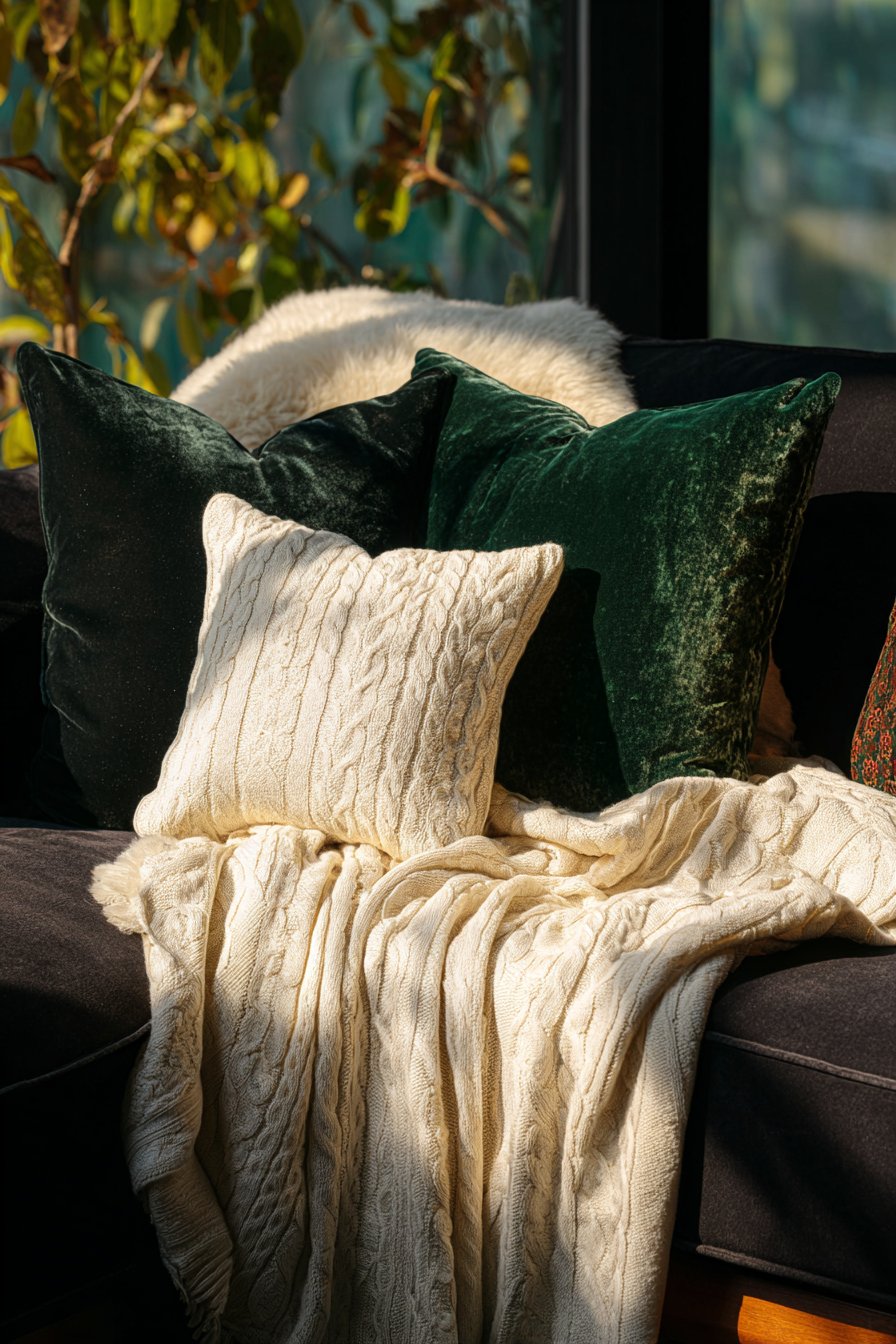
The success of styling a black sofa hinges on your ability to create dimensional contrast through varied textures. Black absorbs light differently than other colors, making textural variety essential to prevent your seating area from appearing flat or lifeless. Without proper layering, a black sofa can fade into the background or dominate too heavily.
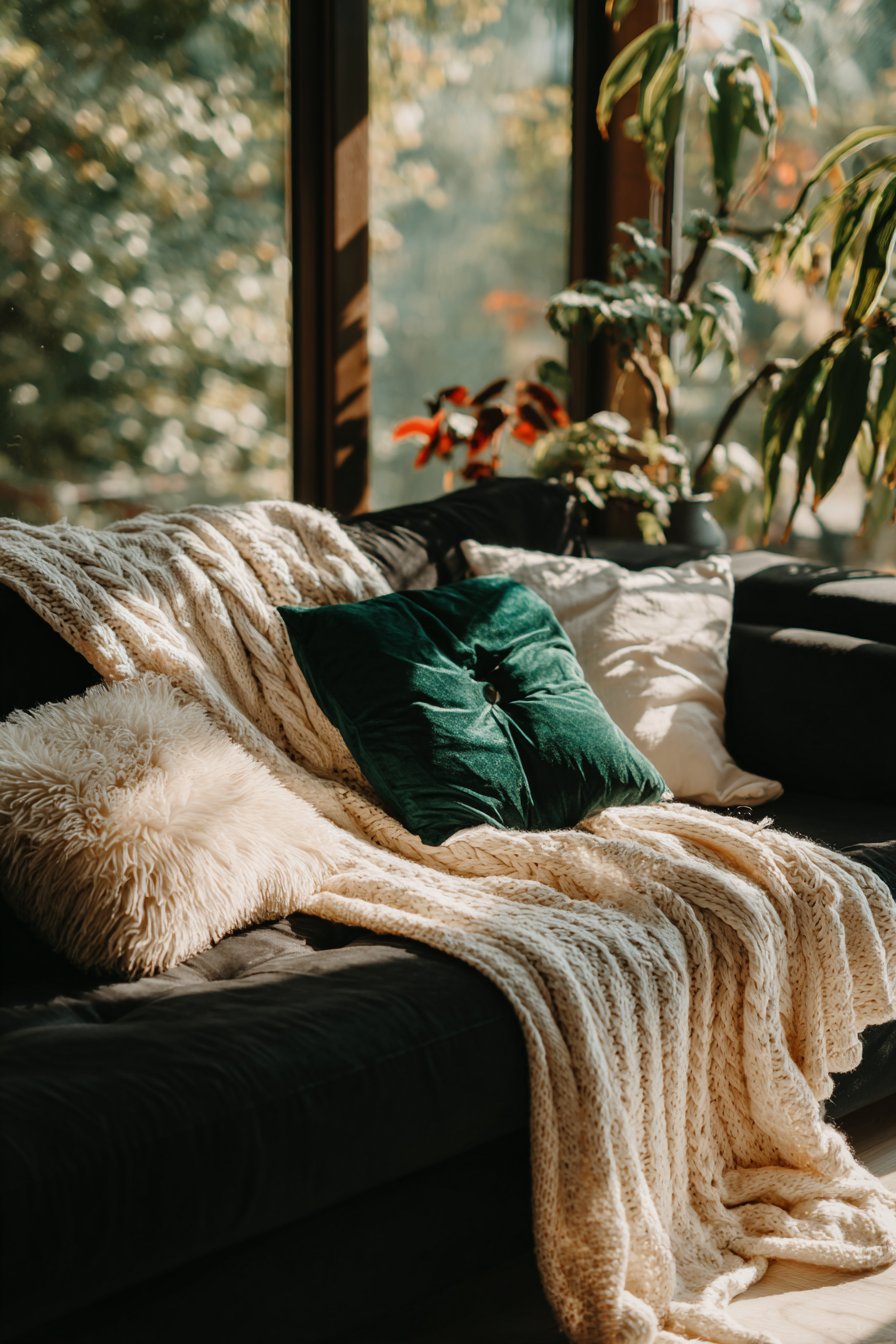
Begin with throw pillows in diverse fabrics like velvet, linen, and faux fur. These materials catch light differently, creating subtle shadows and highlights that add depth to your sofa. Consider mixing smooth silk cushions with chunky knit throws to maximize tactile appeal. The interplay between rough and refined textures prevents visual monotony while inviting physical interaction with your space.
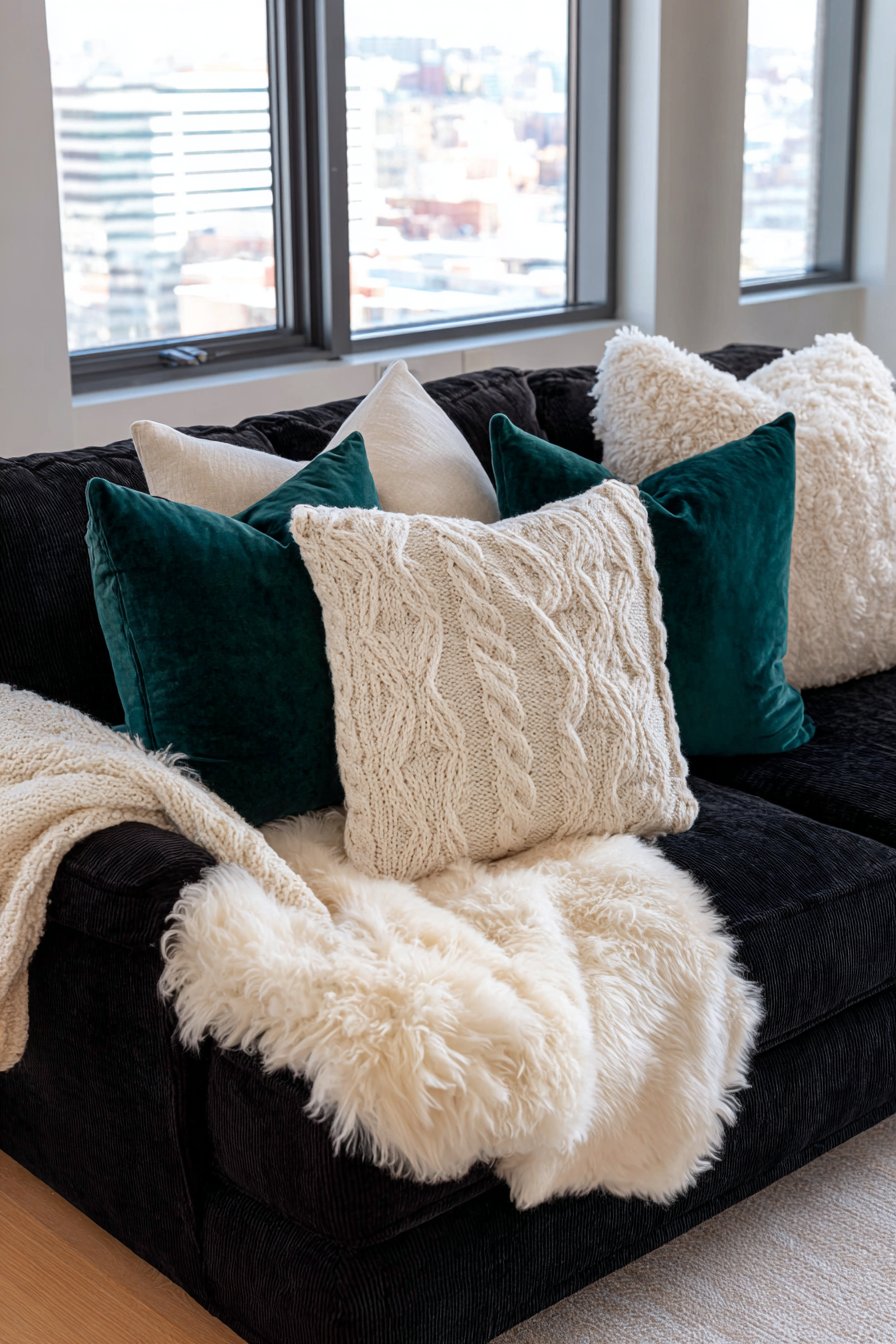
Incorporate a textured throw blanket in complementary tones to soften the sofa’s angular lines. Waffle weave, cable knit, or bouclé fabrics work exceptionally well against black upholstery. These elements not only enhance comfort but also create visual stopping points that guide the eye across your furniture arrangement naturally.
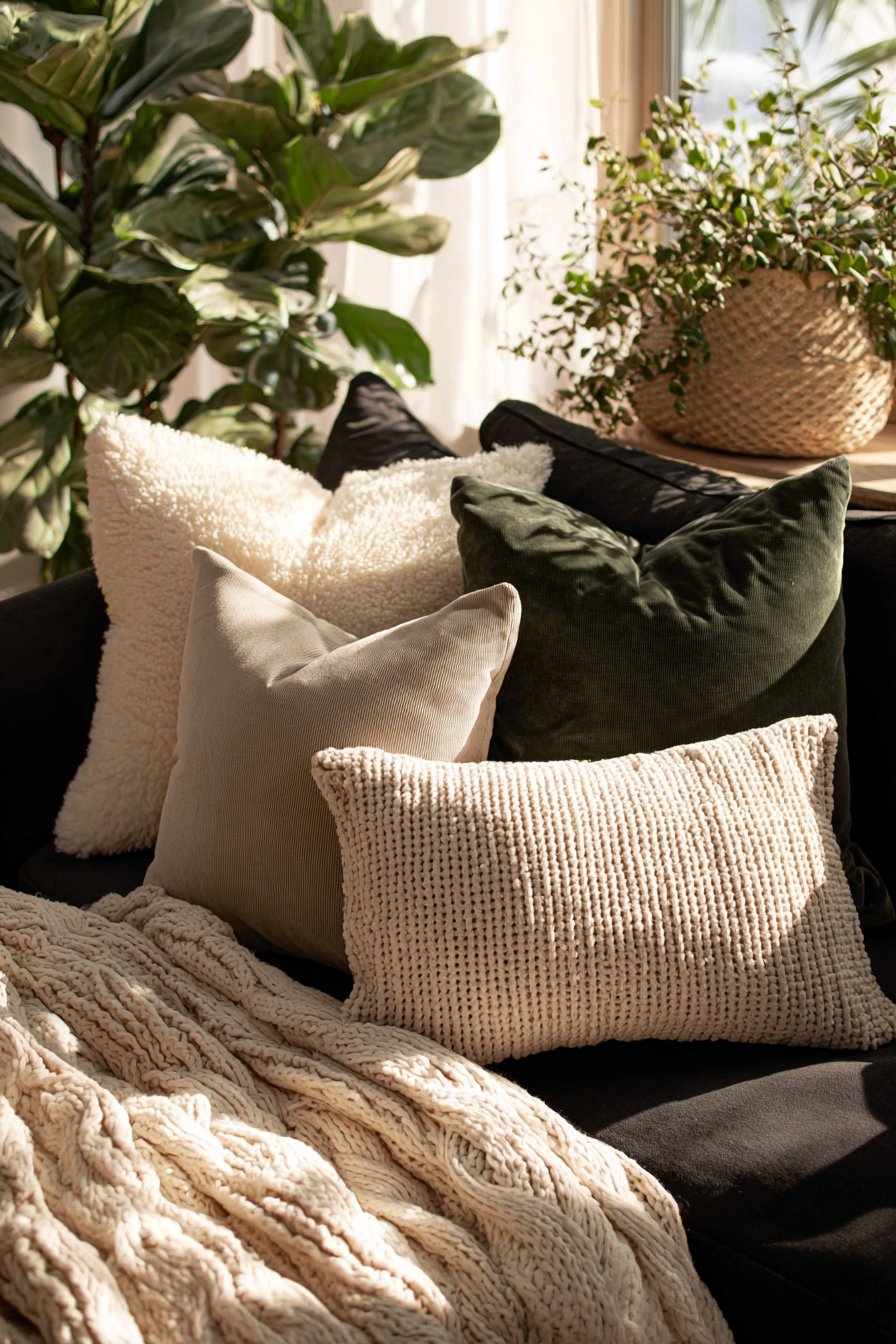
- Mix at least three different fabric textures in your pillow selection
- Choose throws with visible weave patterns or raised surface details
- Add a leather or suede accent pillow for unexpected contrast
- Layer a faux sheepskin over one arm for cozy sophistication
- Consider metallic thread accents in throw pillows for subtle shimmer
- Rotate seasonal textures like chunky knits in winter and light linens in summer
2. Embrace Bold Color Accents
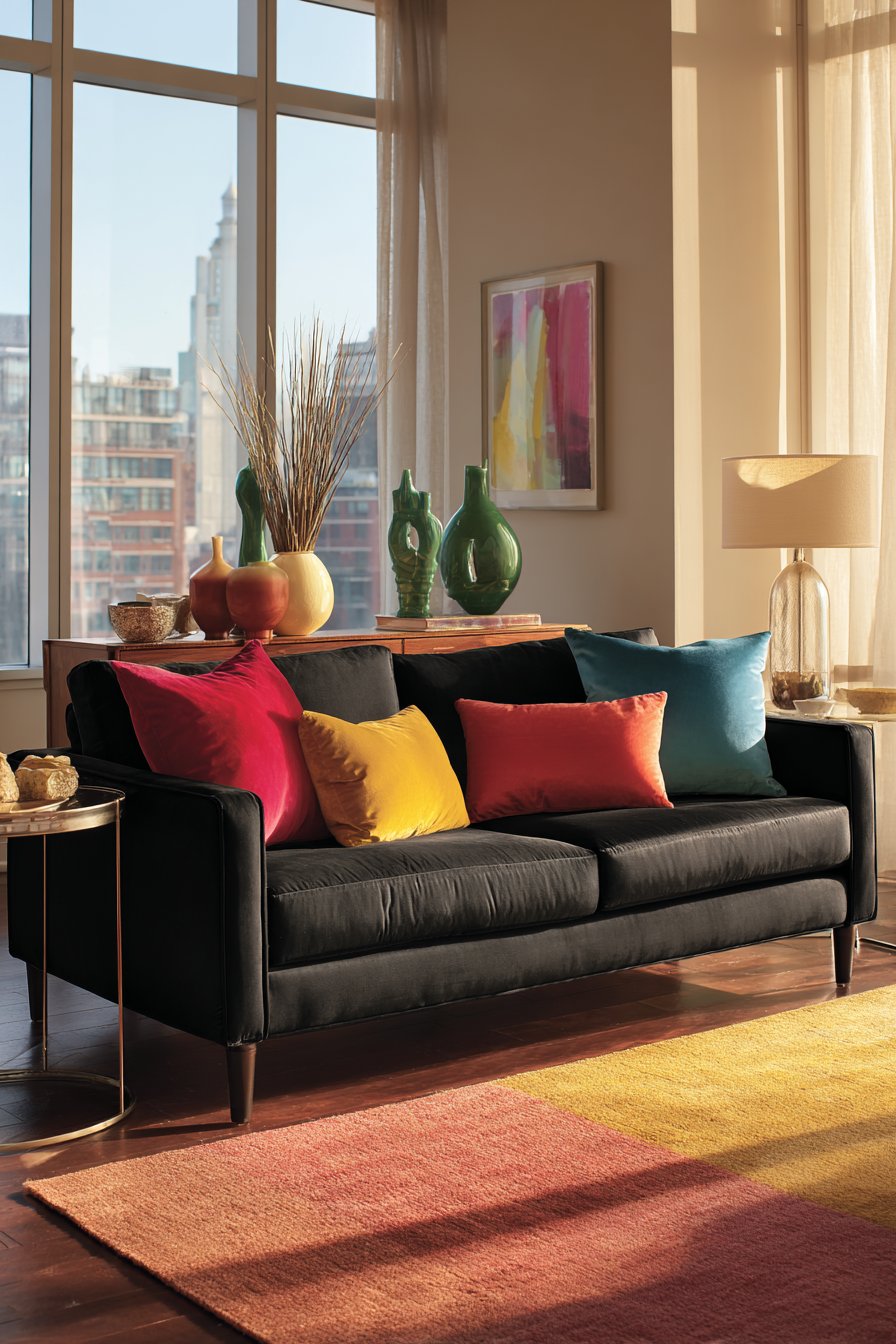
Black serves as the ultimate color amplifier in interior design, making vibrant hues appear more saturated and impactful. Your black sofa creates a dramatic backdrop that allows colorful accessories to truly shine without competing for attention. This neutral foundation gives you unlimited freedom to experiment with seasonal colors or trending palettes.
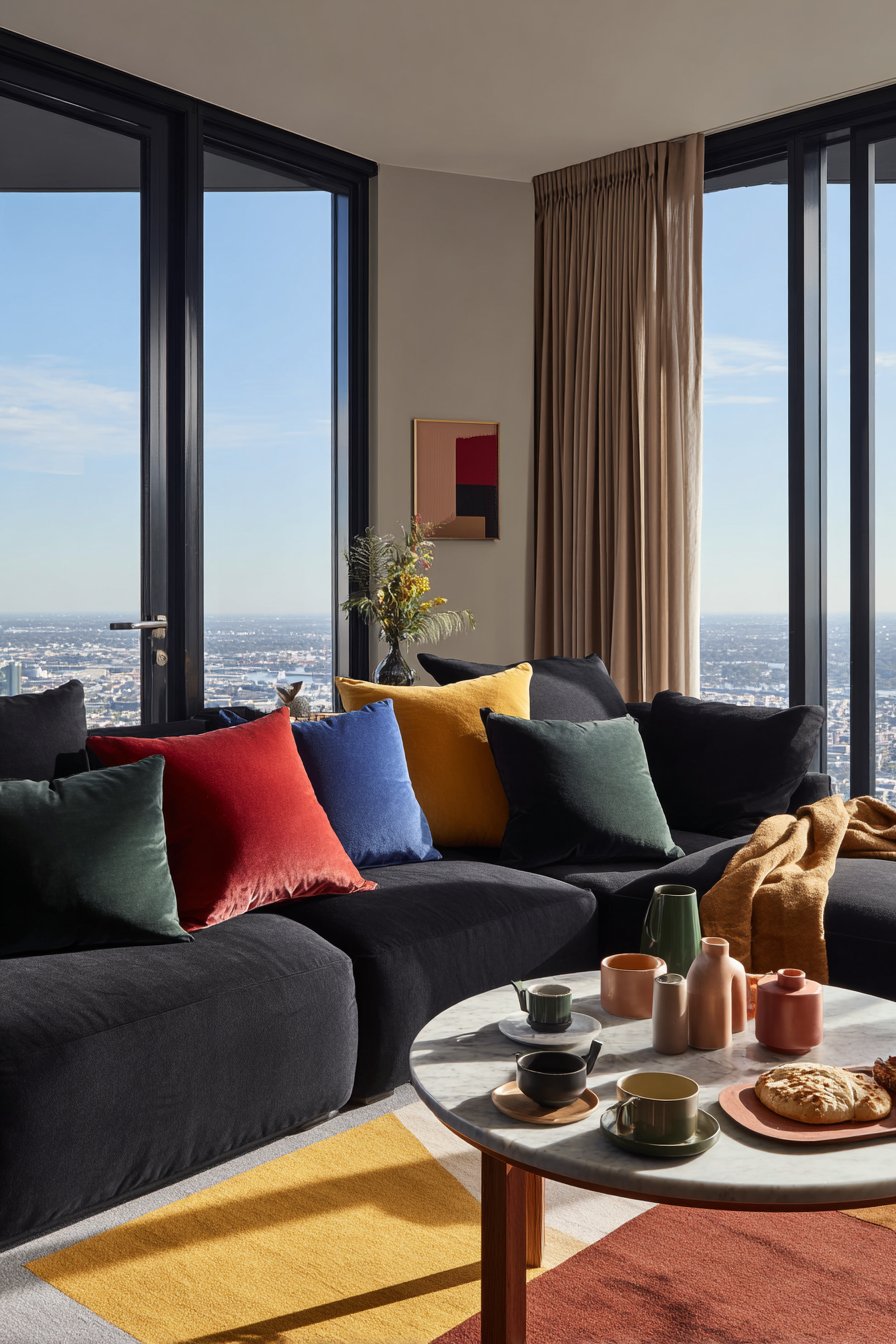
Jewel tones like emerald green, sapphire blue, and ruby red create luxurious contrast against black upholstery. These rich colors add sophistication while preventing your space from feeling overly dark or heavy. For a more subtle approach, incorporate warm earth tones like terracotta, mustard yellow, or burnt sienna that complement black’s depth without overwhelming it.
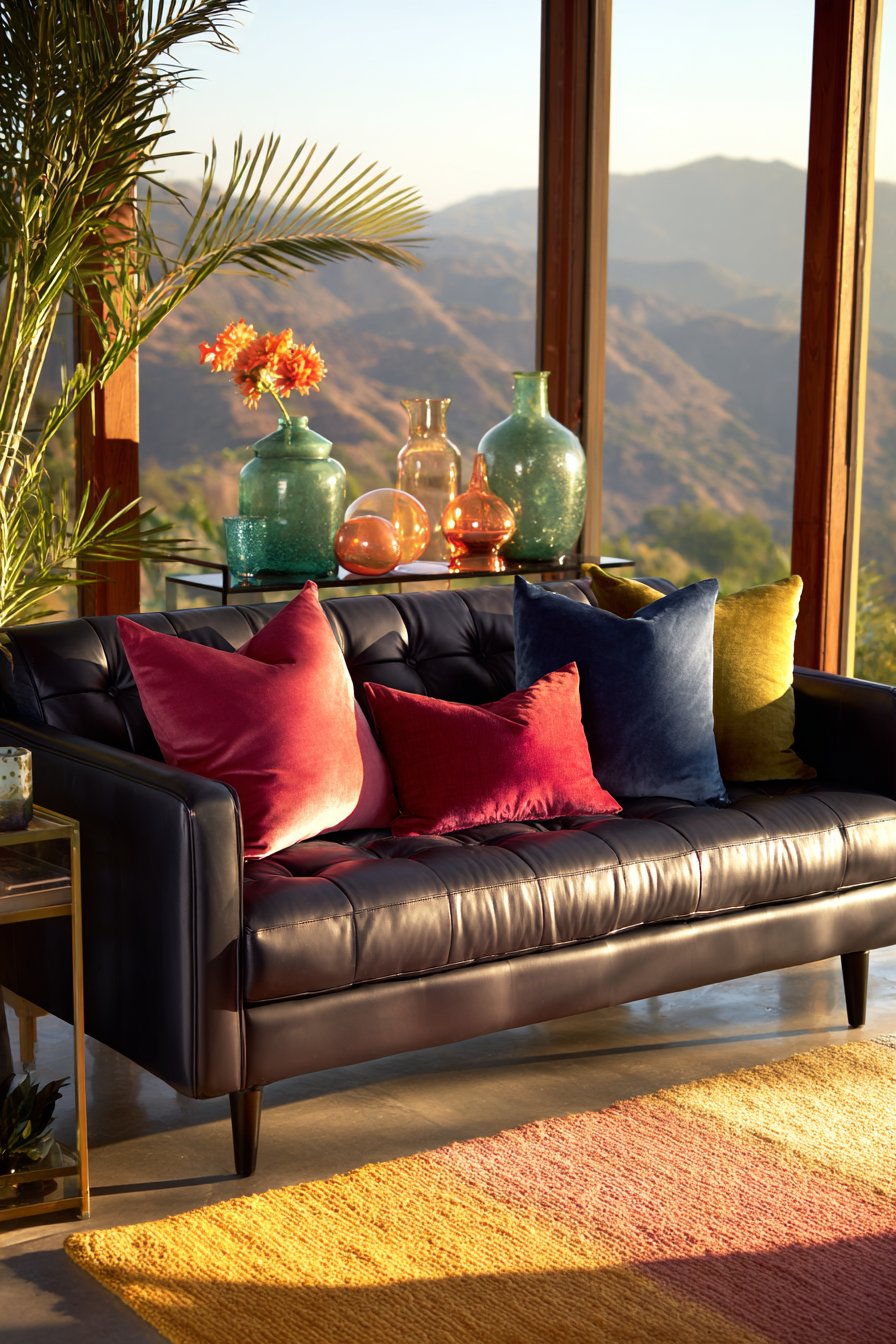
Don’t shy away from combining multiple accent colors simultaneously. A black sofa unifies eclectic color schemes that might clash against lighter furniture. Try pairing coral and navy pillows, or mix blush pink with forest green for unexpected harmony. The key is maintaining balanced distribution throughout your living room to avoid creating visual hotspots.
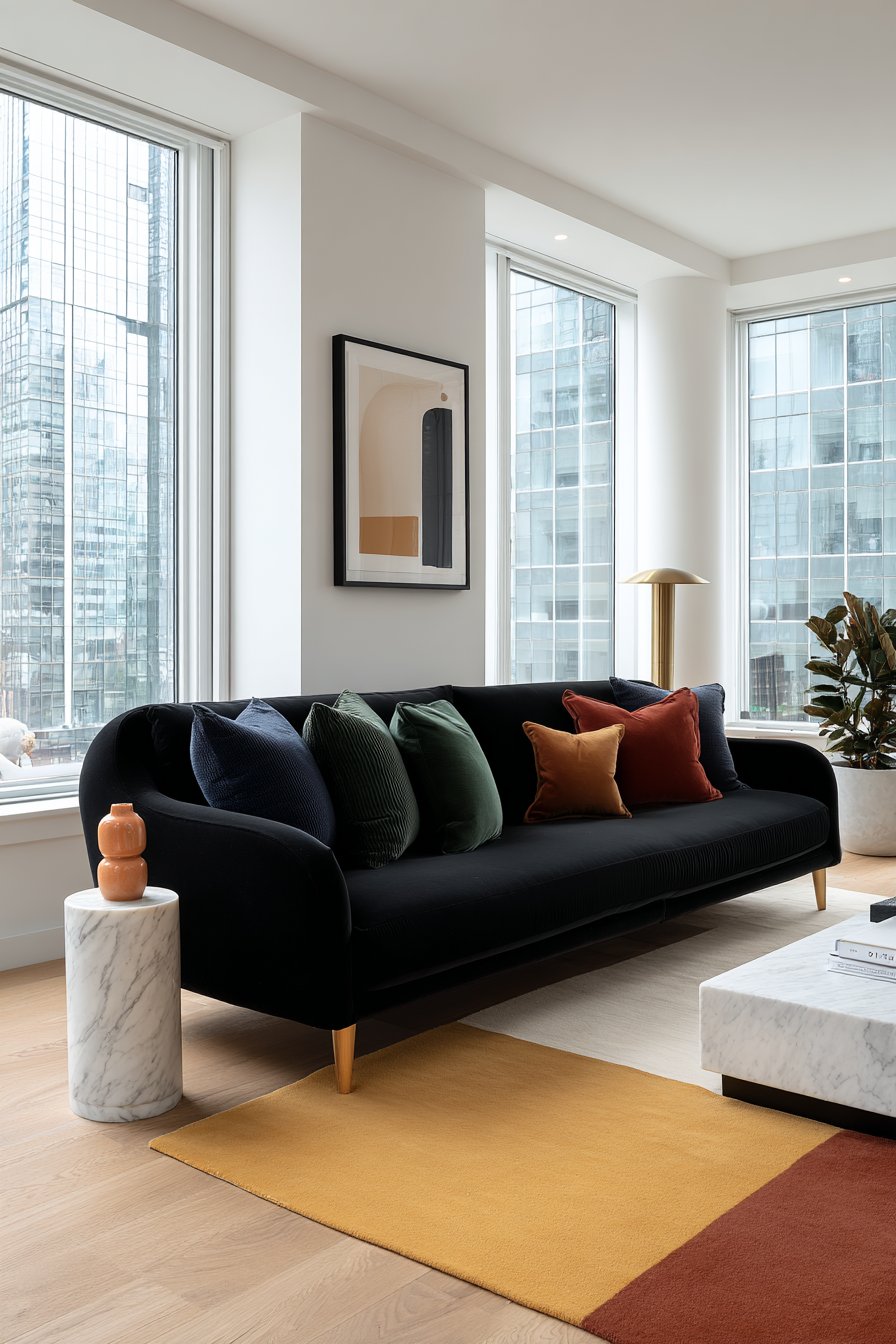
- Select two or three primary accent colors for cohesion
- Use the 60-30-10 rule with black as your 60 percent base
- Incorporate accent colors through pillows, artwork, and decorative objects
- Add a colorful area rug to anchor your black sofa visually
- Consider seasonal color rotations to refresh your space affordably
- Test color combinations with temporary accessories before committing
3. Balance with Lighter Elements
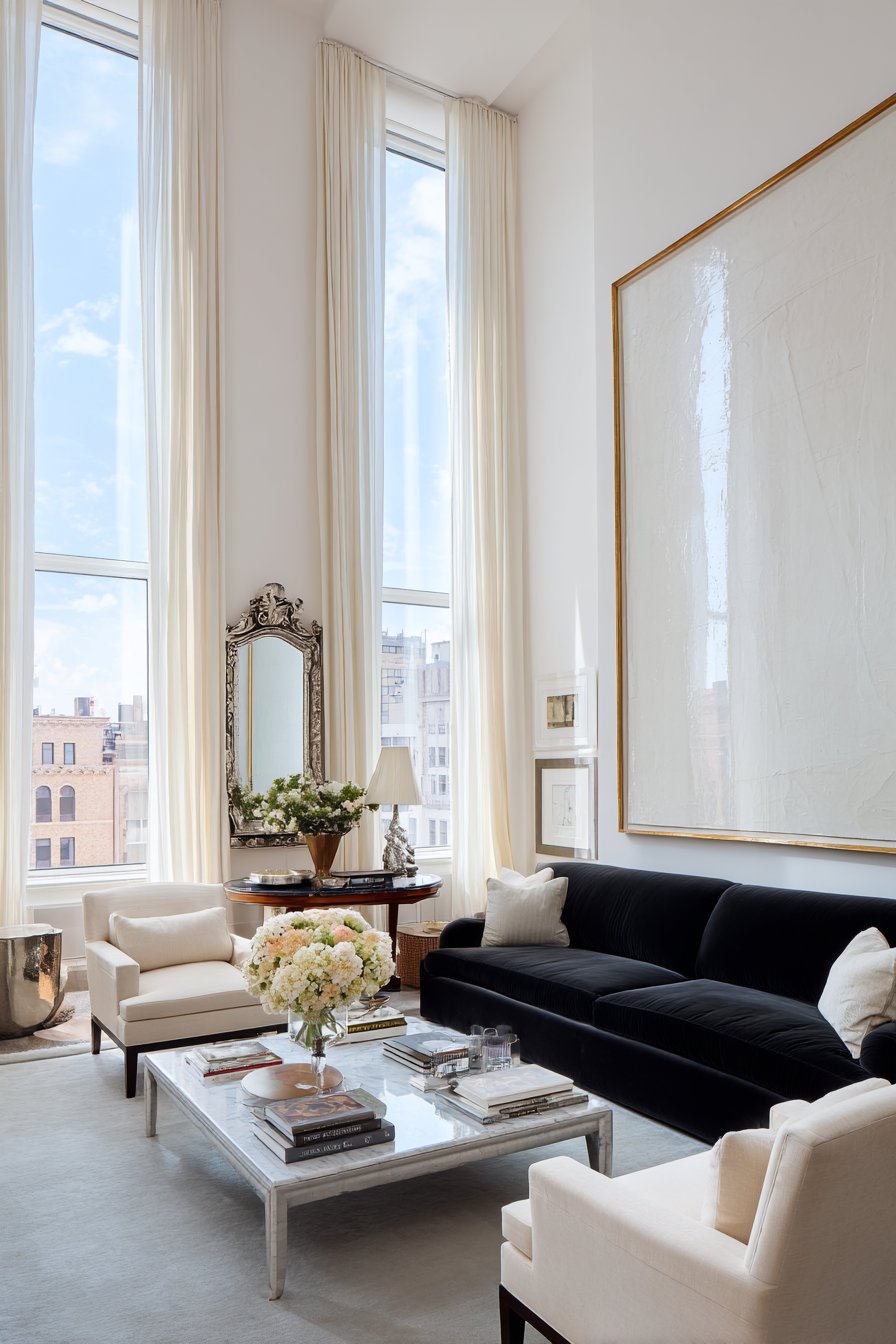
Preventing your living room from appearing cave-like requires strategic placement of lighter contrasting elements around your black sofa. This balance creates visual breathing room and ensures your space feels welcoming rather than oppressive. The goal is achieving harmonious equilibrium where dark and light elements complement each other seamlessly.
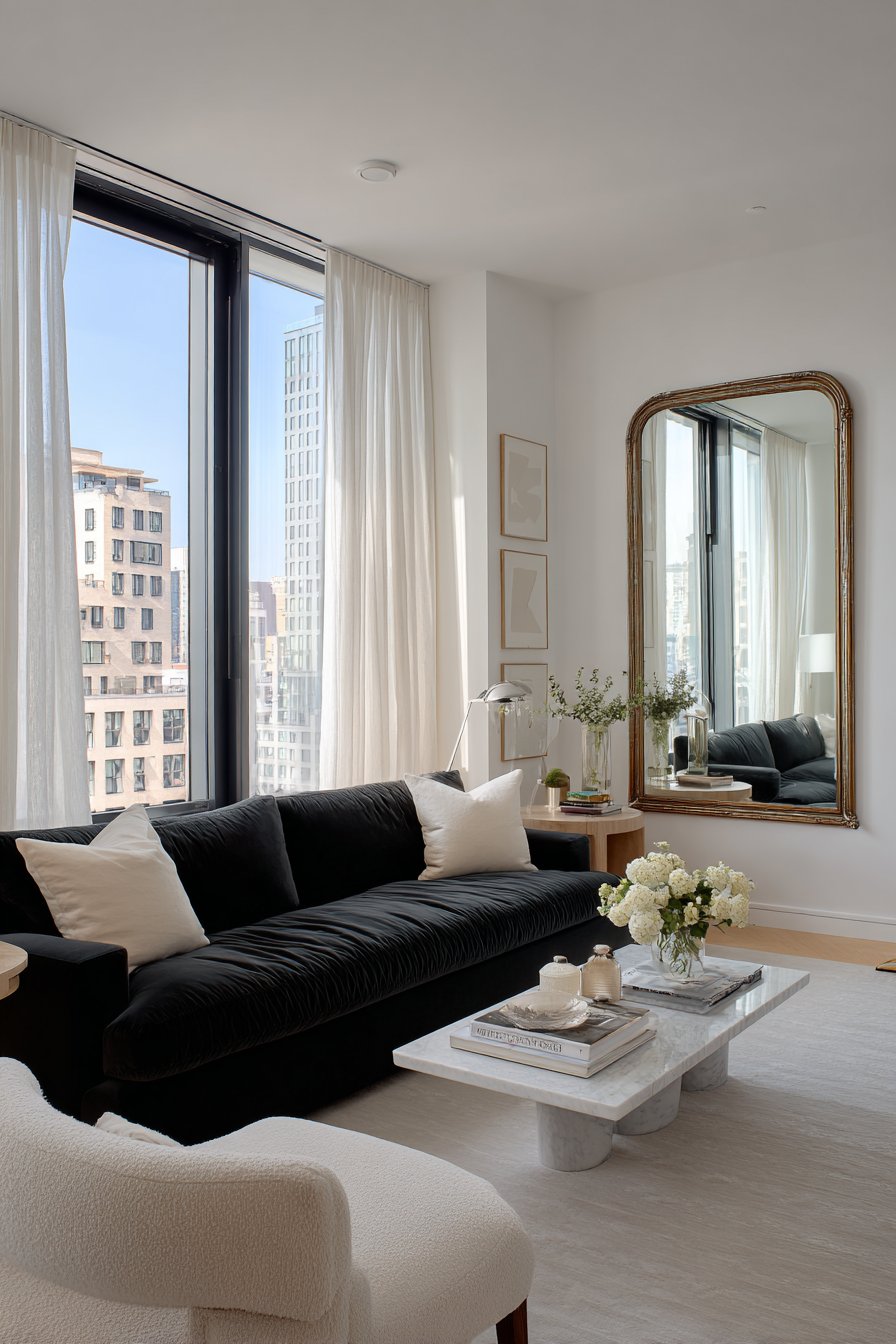
Position light-colored furniture pieces adjacent to your black sofa, such as a white coffee table or cream-colored accent chairs. These lighter elements create necessary contrast while maintaining the sophisticated aesthetic black upholstery provides. Consider adding a pale area rug beneath your seating arrangement to ground the space and reflect natural light upward.
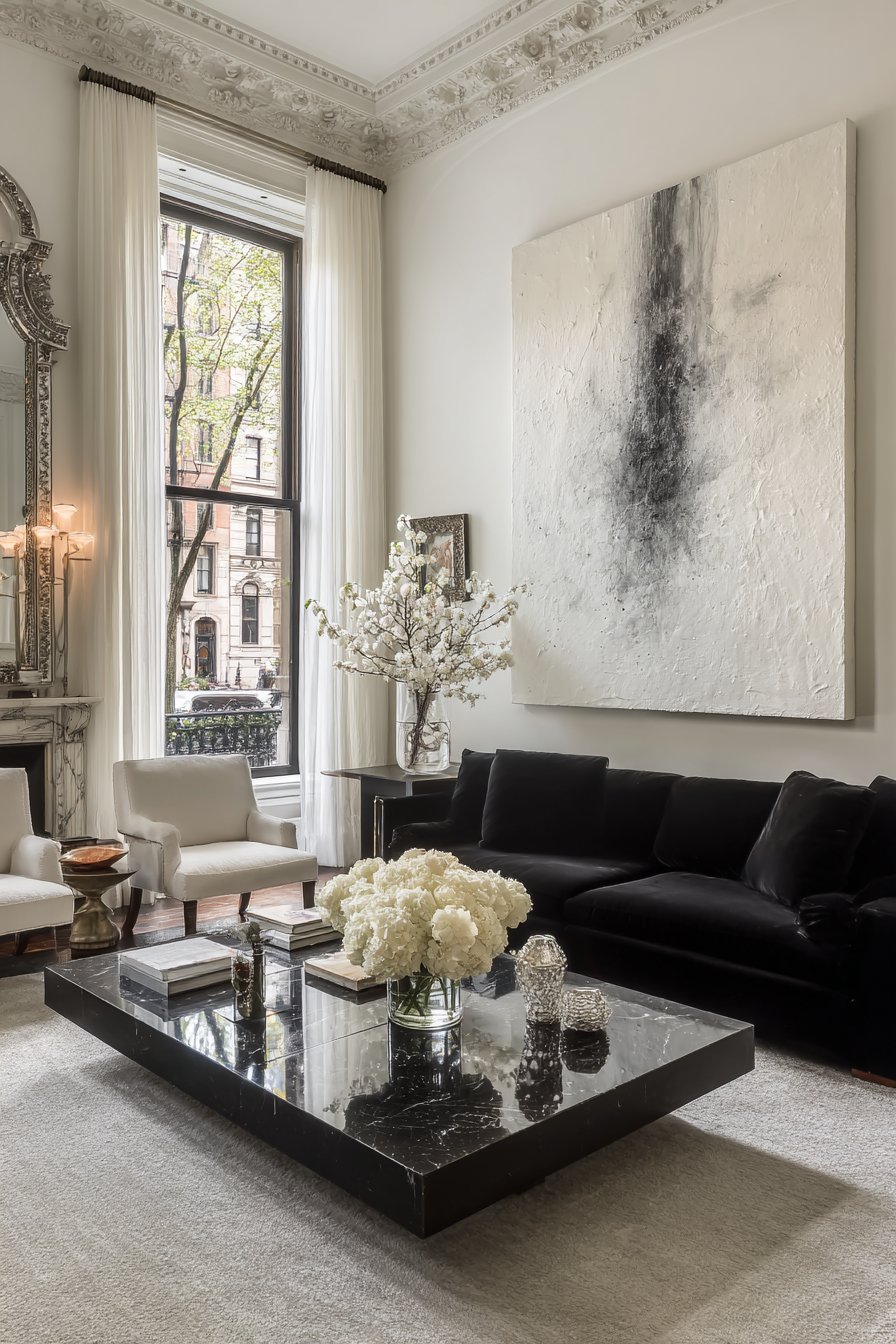
Wall treatments play a crucial role in balancing dark furniture. If repainting isn’t feasible, incorporate large-scale artwork with lighter backgrounds or add white floating shelves above your sofa. These vertical elements draw the eye upward and prevent the visual weight of your black sofa from anchoring too heavily at ground level.
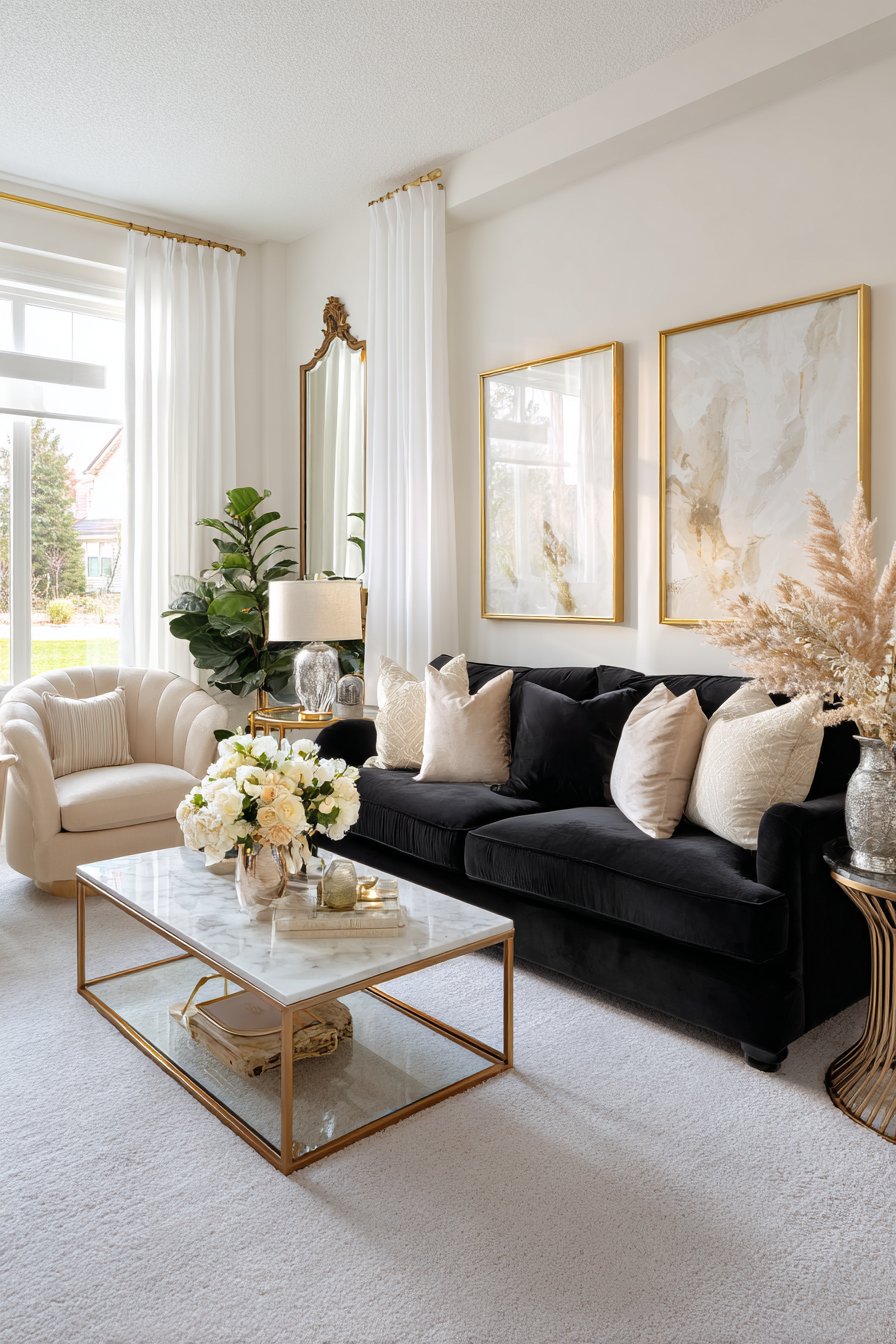
- Paint walls in soft whites, grays, or pastels to maximize light reflection
- Choose white or light wood coffee tables and side tables
- Add metallic accents in silver, gold, or brass for luminous contrast
- Hang mirrors opposite windows to multiply natural light
- Select light-colored curtains or blinds that allow sunlight penetration
- Incorporate glass or lucite furniture pieces for airy transparency
4. Define Space with Strategic Lighting
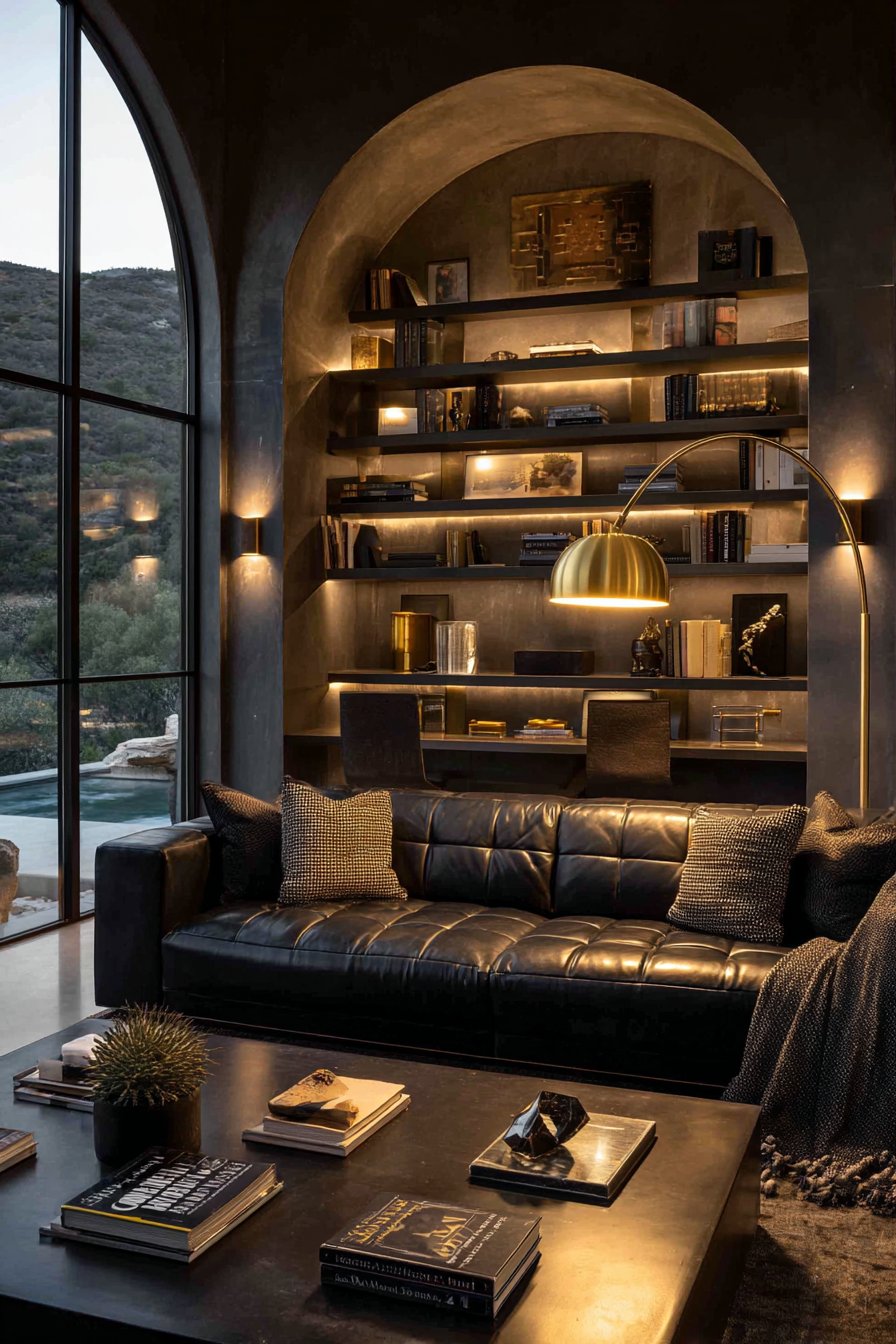
Proper illumination transforms how your black sofa integrates within your living room’s overall ambiance. Black upholstery absorbs ambient light, making dedicated lighting layers essential for preventing your seating area from becoming a visual black hole. Strategic lighting placement enhances both functionality and aesthetic appeal simultaneously.
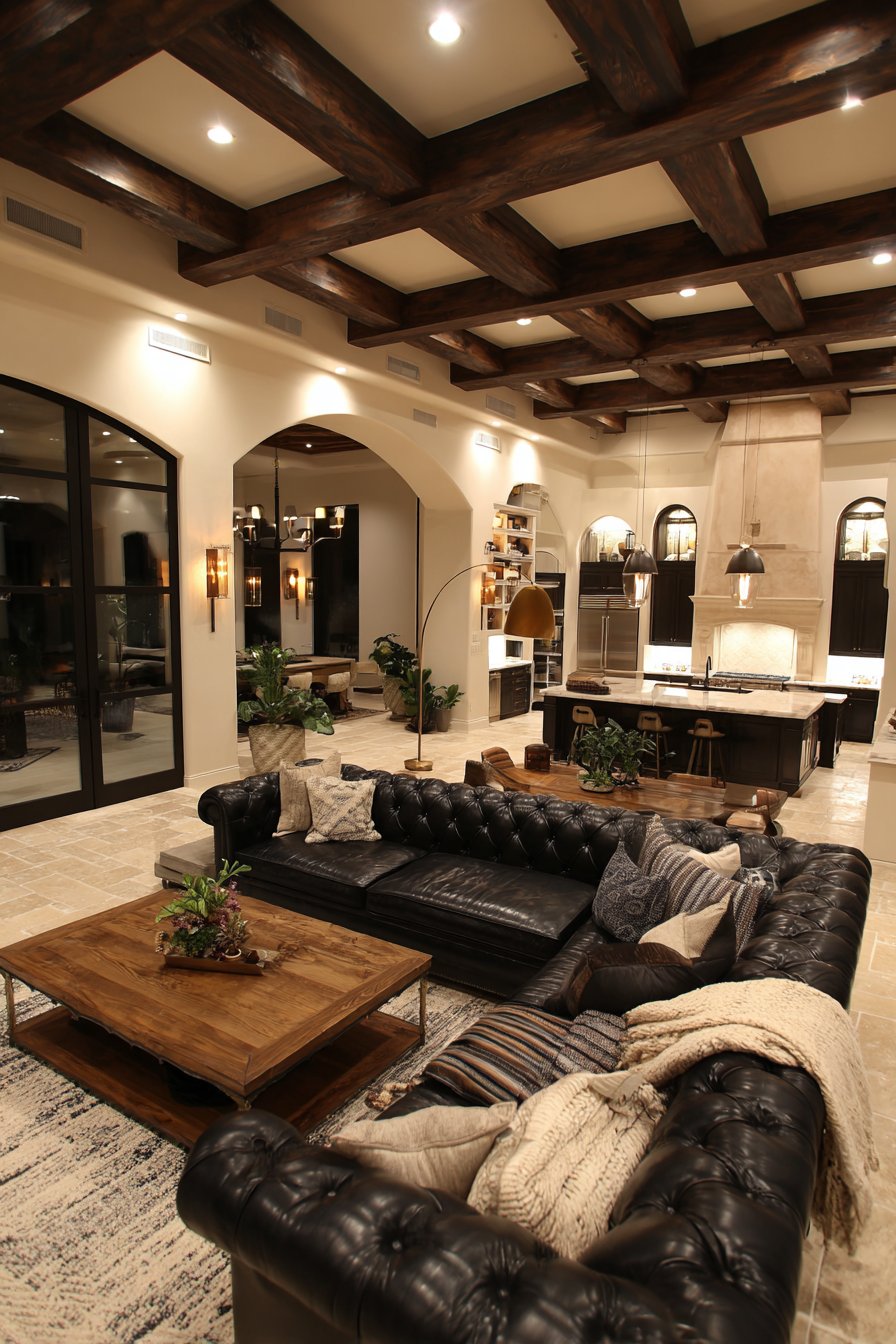
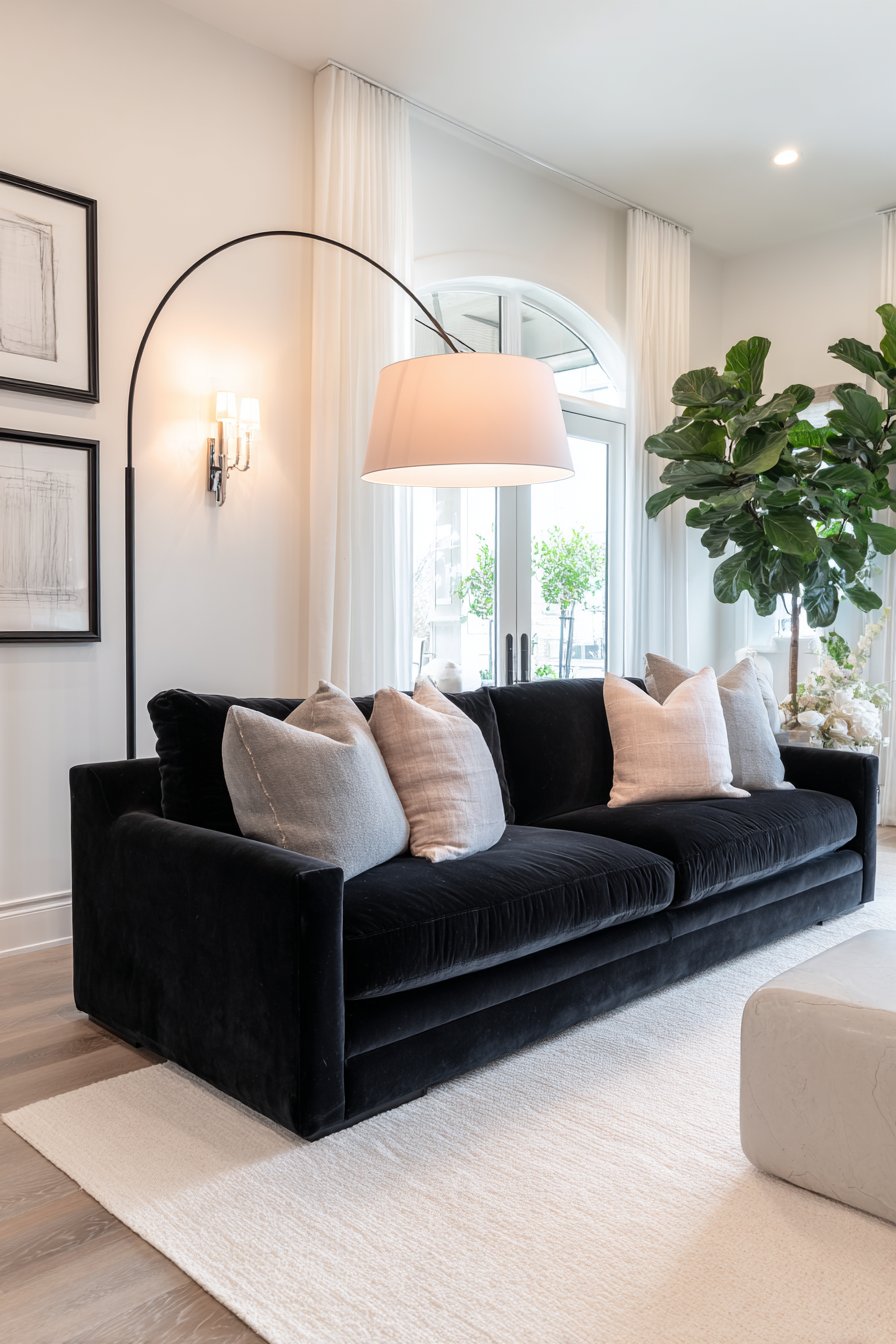
Install a statement floor lamp beside your sofa to create focused task lighting for reading while adding sculptural interest. Arc floor lamps work particularly well, casting light across the sofa’s surface and highlighting textural details in your throw pillows and blankets. Consider dimmable options that allow you to adjust intensity based on time of day and activity.
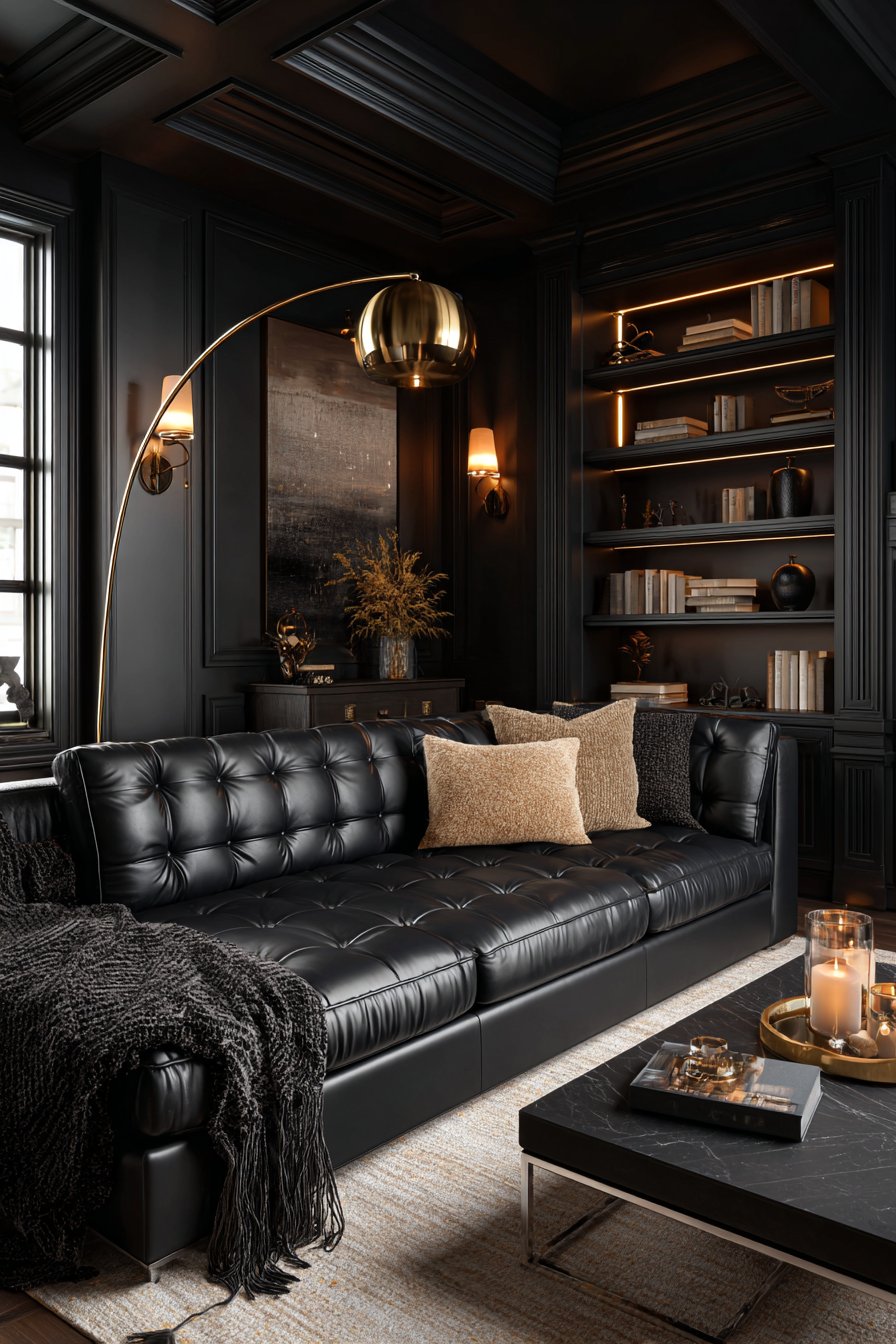
Add ambient lighting layers through ceiling fixtures, wall sconces, or LED strip lighting behind floating shelves. These indirect light sources create depth and prevent harsh shadows that can make black furniture appear too stark. Table lamps on side tables provide intimate illumination that makes your seating area feel inviting during evening hours.
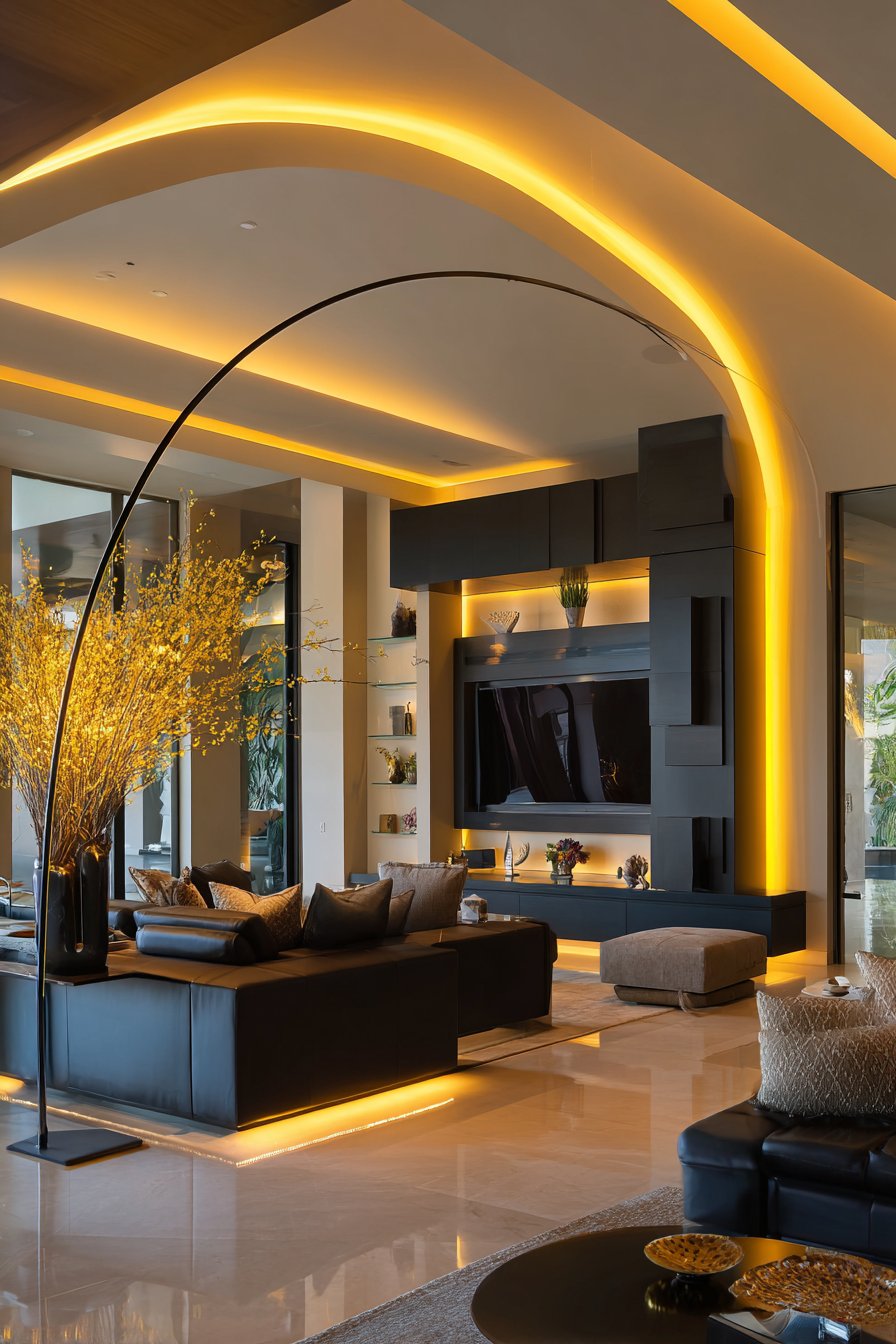
- Place at least three different light sources in your living room
- Use warm white bulbs (2700-3000K) for cozy atmosphere
- Install dimmer switches for flexible lighting control
- Position floor lamps to highlight sofa textures and details
- Add picture lights above artwork near your black sofa
- Consider smart bulbs that adjust color temperature throughout the day
5. Anchor with Complementary Flooring
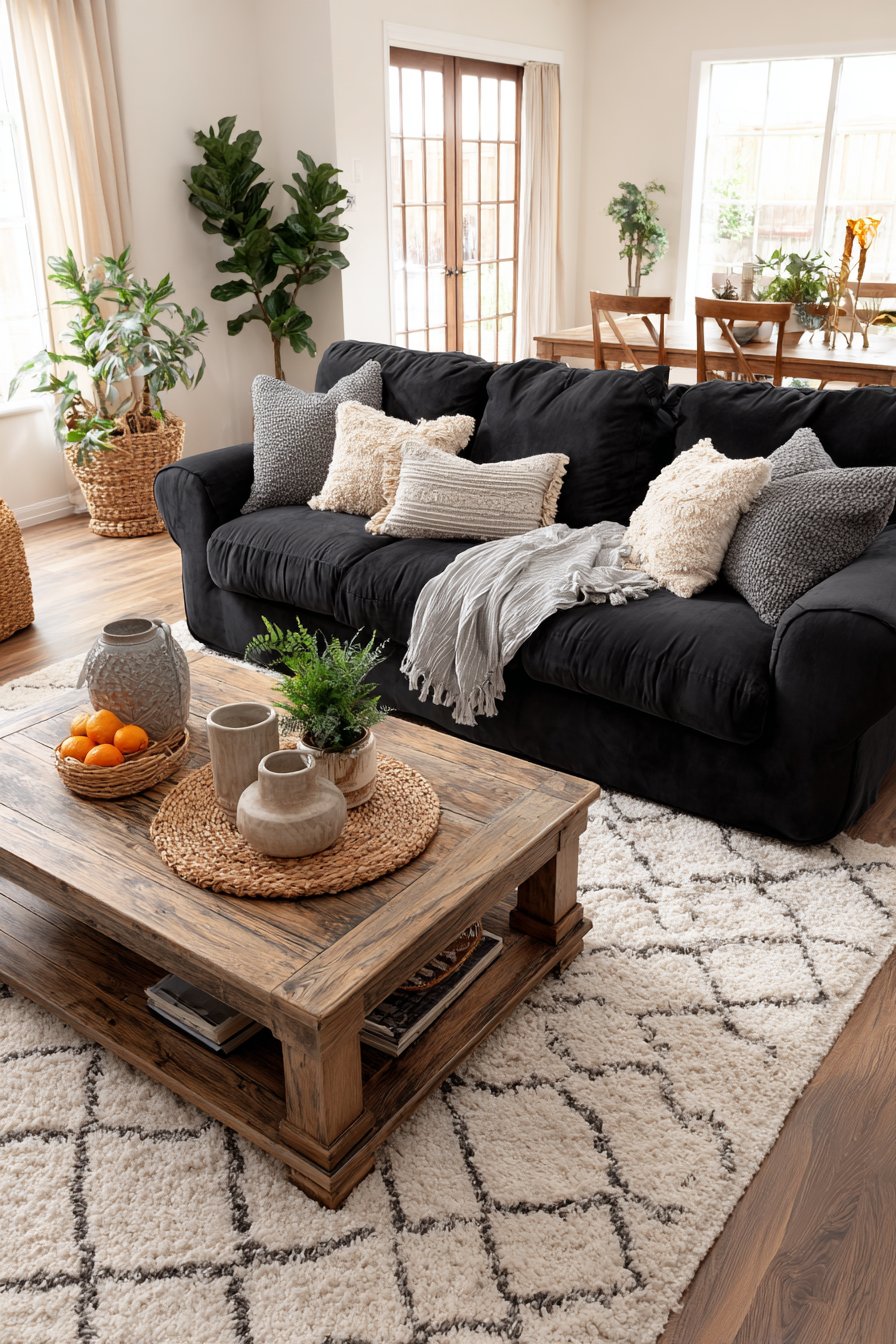
The relationship between your black sofa and flooring creates the foundational color story of your living room. Thoughtful flooring choices prevent your space from tilting too dark while providing necessary visual grounding. Whether you have hardwood, tile, or carpet, strategic use of area rugs can transform how your black sofa integrates with the floor.
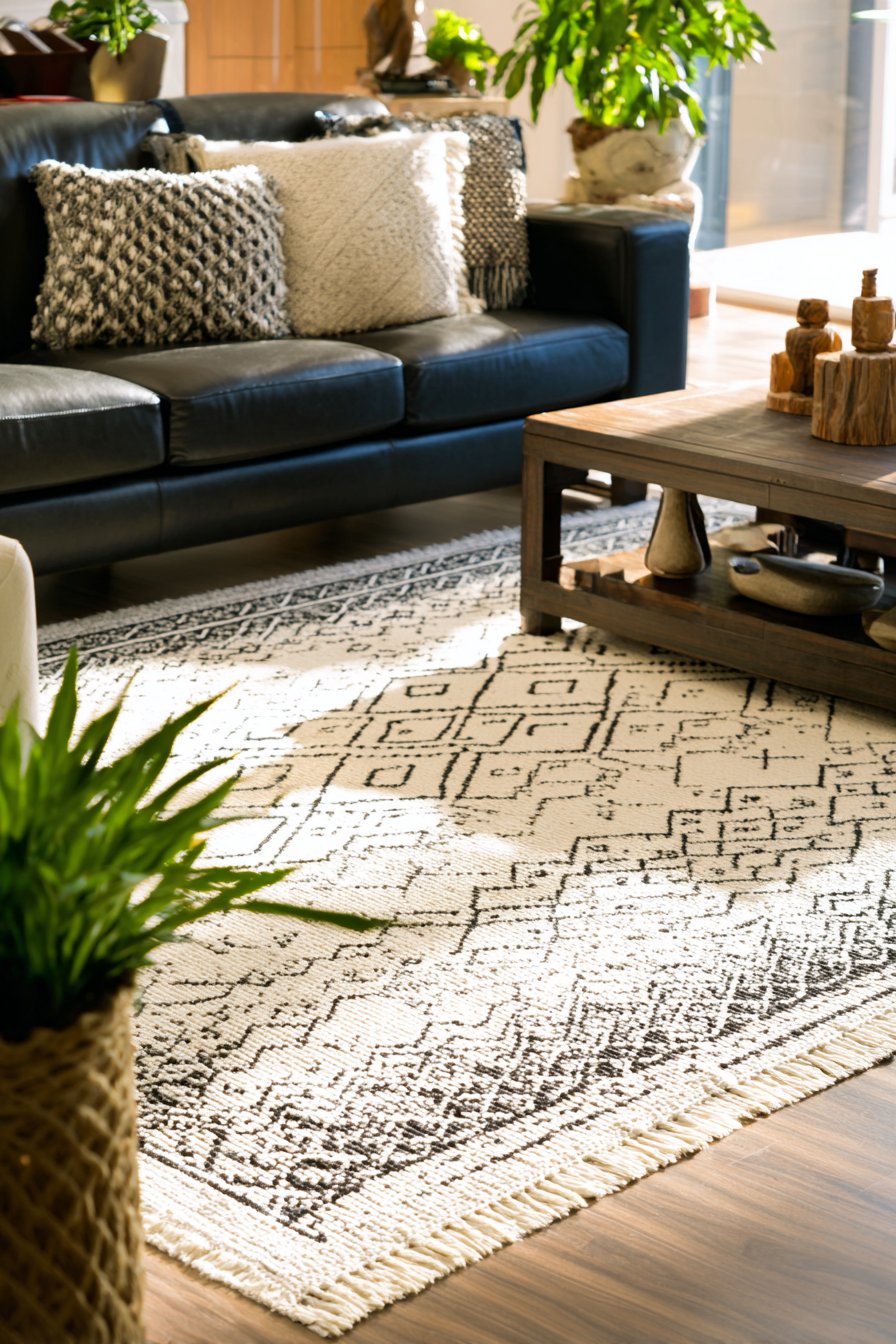
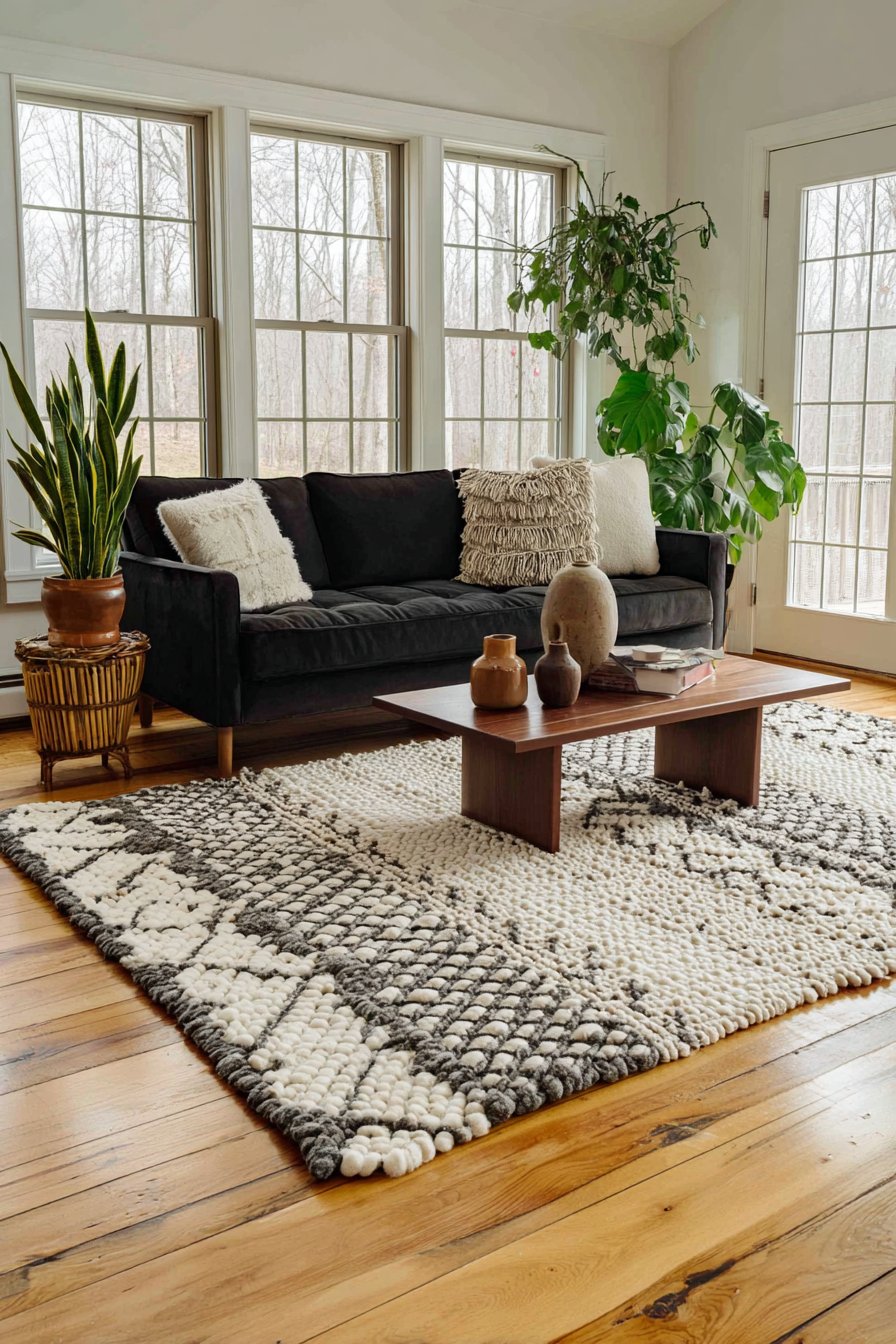
Light or medium-toned area rugs create essential separation between dark upholstery and flooring. Choose patterns that incorporate both dark and light elements to bridge the gap between your sofa and surrounding space. Geometric patterns, subtle stripes, or organic motifs work well without competing with your sofa’s solid presence.
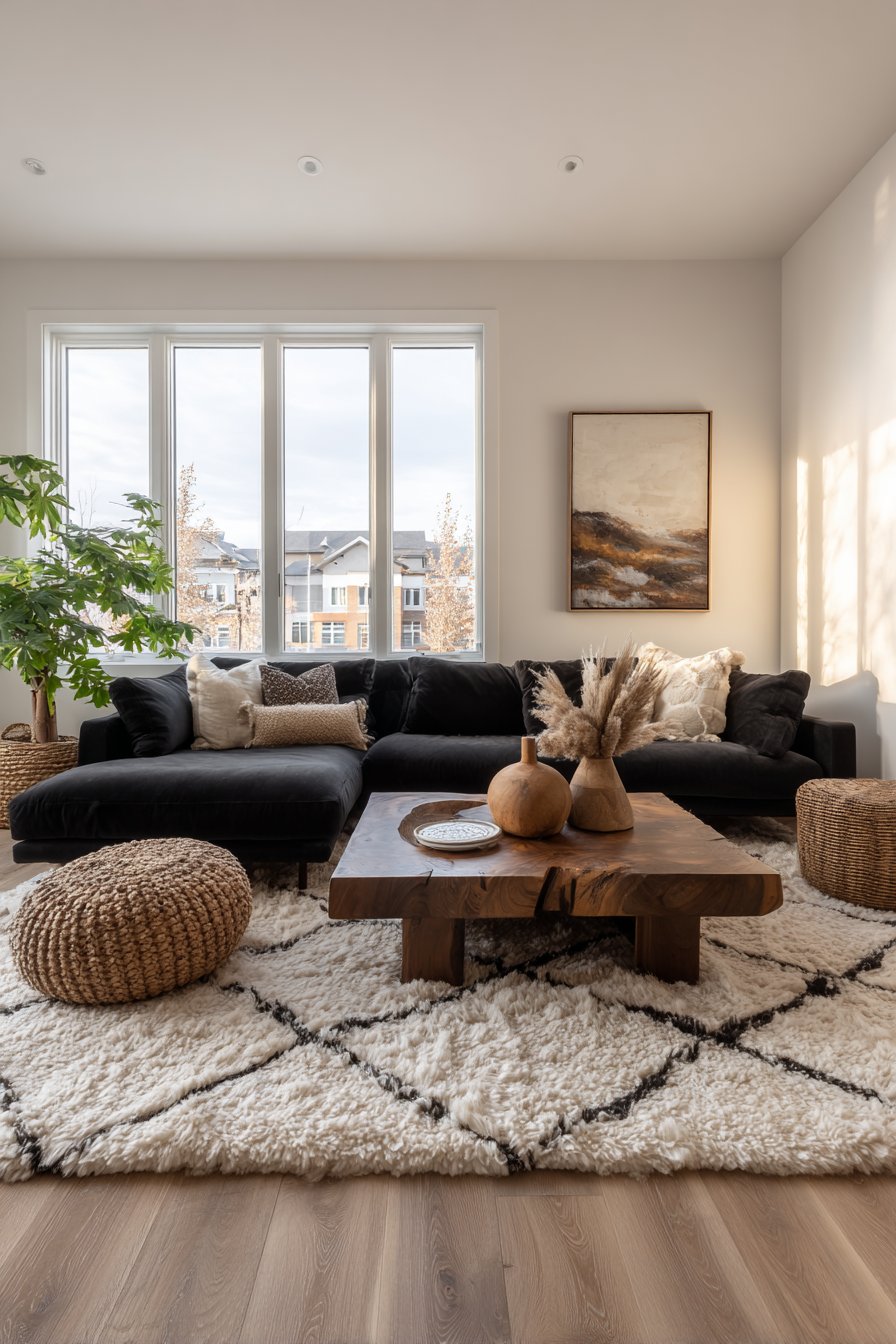
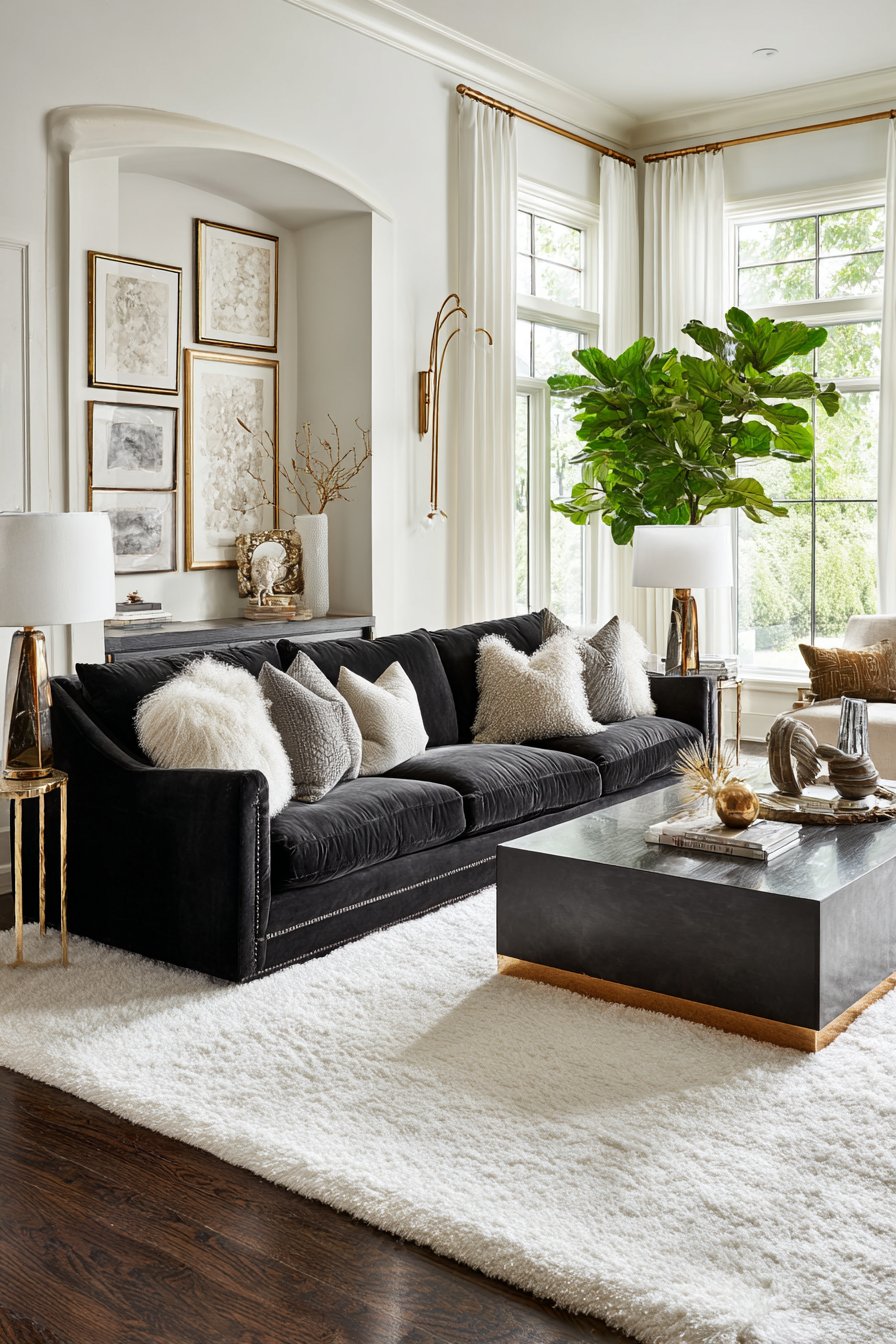
Consider the rug’s texture as carefully as its color. A high-pile shag rug in cream or gray adds luxurious softness while creating strong contrast with sleek black leather or linen upholstery. For formal spaces, opt for low-pile flatweaves in sophisticated patterns that add interest without overwhelming. The rug should extend at least 18 inches beyond your sofa on all sides for proper proportions.
- Measure your seating area before selecting rug dimensions
- Choose rugs that extend under at least the front legs of furniture
- Layer smaller accent rugs over larger neutral bases for depth
- Select colors that appear elsewhere in your room for cohesion
- Consider durable, stain-resistant materials for high-traffic areas
- Rotate rugs seasonally to refresh your space affordably
6. Style the Surrounding Architecture
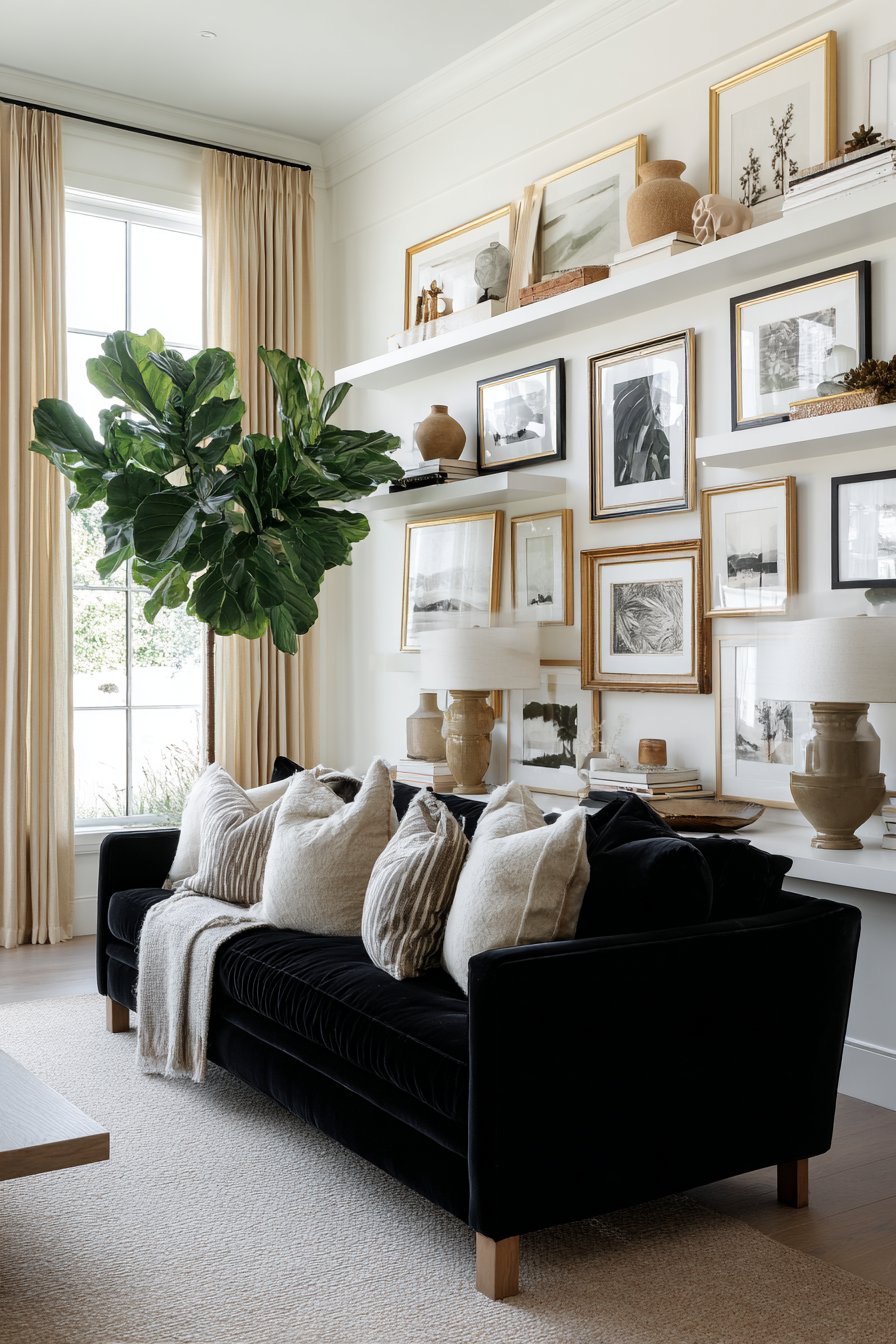
Your black sofa doesn’t exist in isolation—the architectural elements surrounding it significantly impact its visual effectiveness. Styling nearby walls, windows, and built-ins creates a cohesive environment where your sofa feels intentionally placed rather than randomly positioned. This holistic approach elevates your entire living room design.
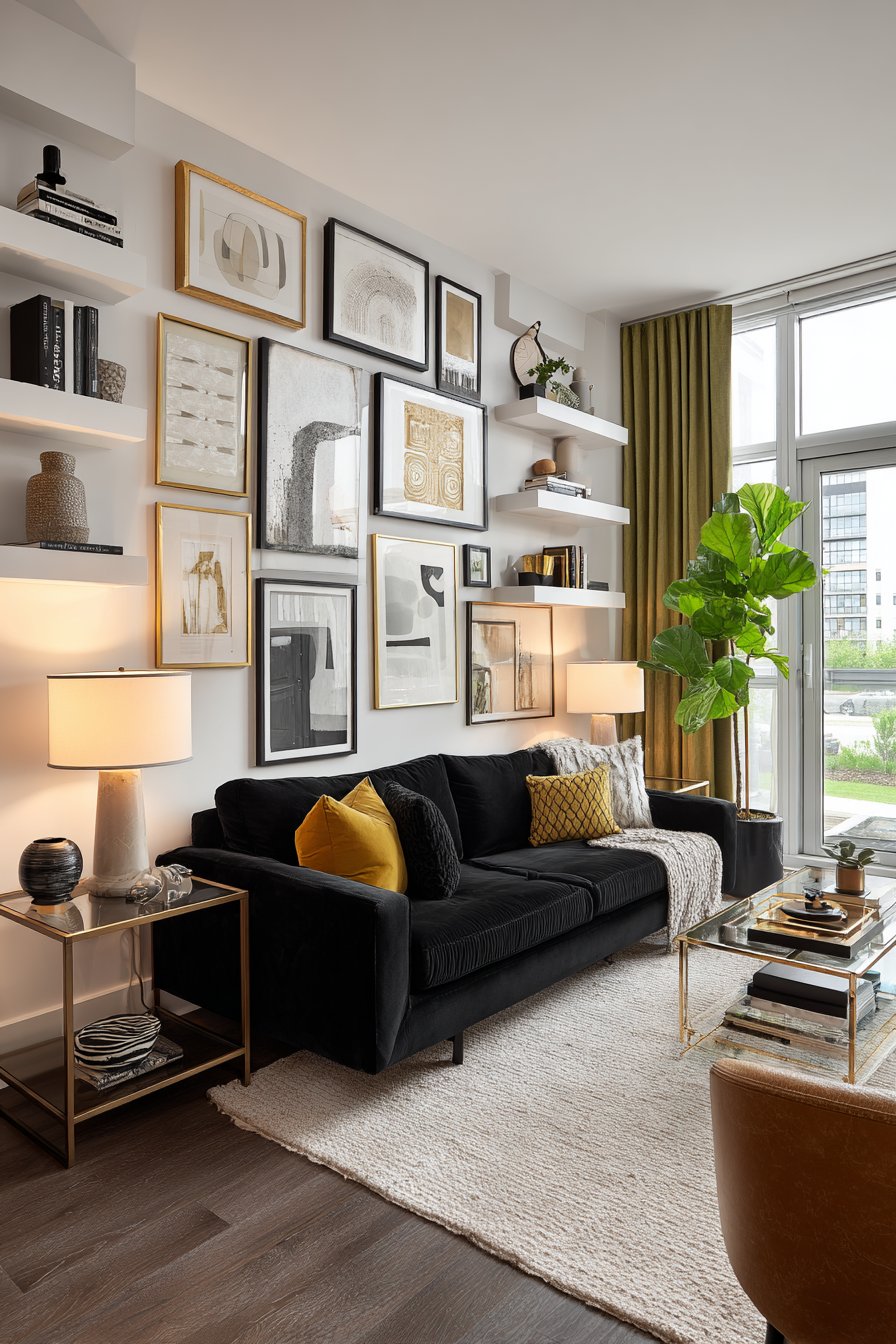
Create a gallery wall above your sofa using varied frame styles and artwork that incorporates both dark and light tones. This vertical element balances your sofa’s horizontal mass while adding personality and visual interest. Keep artwork proportions in mind—pieces should collectively span roughly two-thirds of your sofa’s width for proper scale.
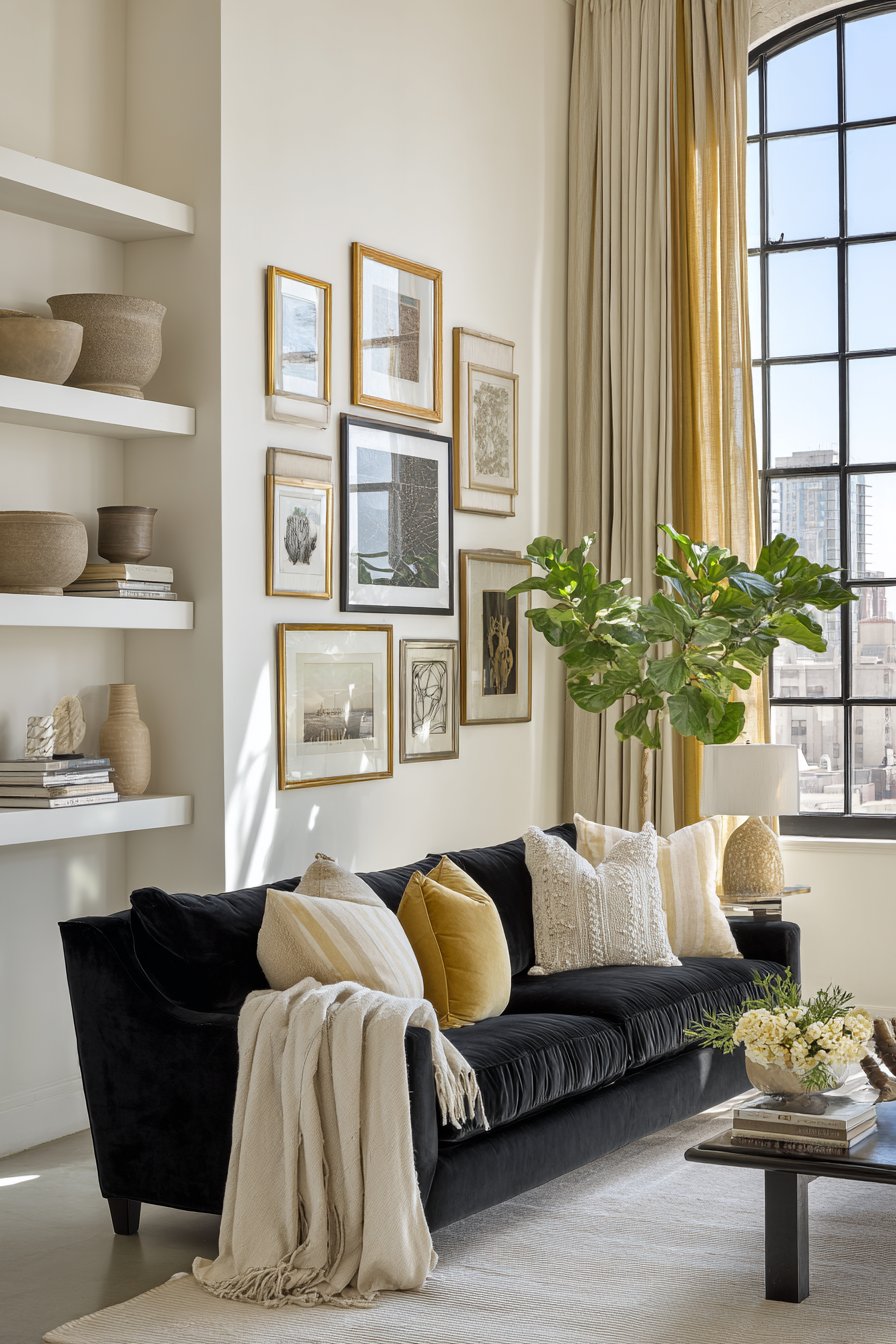
Window treatments near your black sofa require careful consideration. Heavy dark curtains can create excessive visual weight, while sheer white panels provide necessary lightness without sacrificing privacy. For a balanced approach, try layered window treatments with light sheers behind darker outer panels that can be drawn back during daylight hours.
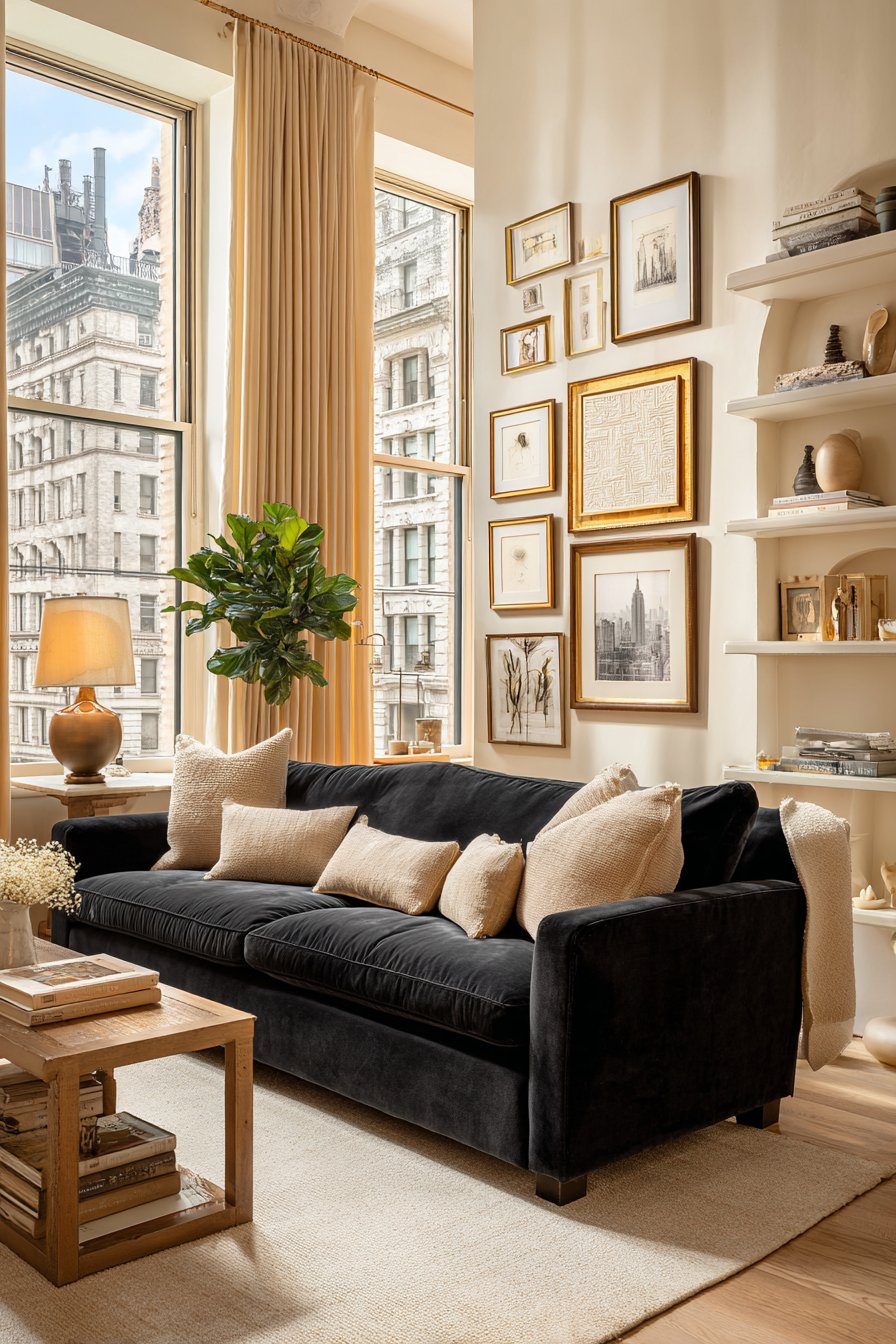
- Hang artwork 6-12 inches above sofa back for proper placement
- Use odd numbers of decorative objects on nearby surfaces
- Add tall plants beside your sofa for organic vertical interest
- Style built-in shelving with mix of books and decorative objects
- Keep window sills clear or minimally decorated to maximize light
- Consider removable wallpaper behind sofa as affordable accent wall
Conclusion
Styling a black sofa successfully requires understanding how this dramatic centerpiece interacts with surrounding elements. By implementing these six strategies—layering textures, embracing color, balancing with light elements, optimizing lighting, choosing complementary flooring, and styling architecture—you’ll create a living room that feels both sophisticated and inviting.
Remember that interior design is inherently personal and experimental. Use these guidelines as your foundation, but don’t hesitate to trust your instincts and make bold choices that reflect your unique style. Your black sofa offers endless possibilities for creative expression, so embrace the journey of discovering what makes your space truly feel like home.
