


The Coastal Grandmother aesthetic has emerged as one of the most sought-after interior design trends, capturing hearts with its effortless elegance and timeless appeal. This design philosophy embraces a sophisticated simplicity that combines coastal living with refined comfort, creating spaces that feel both luxurious and lived-in. The trend celebrates natural materials, neutral palettes, and an unhurried approach to life that resonates with those seeking sanctuary from modern chaos.
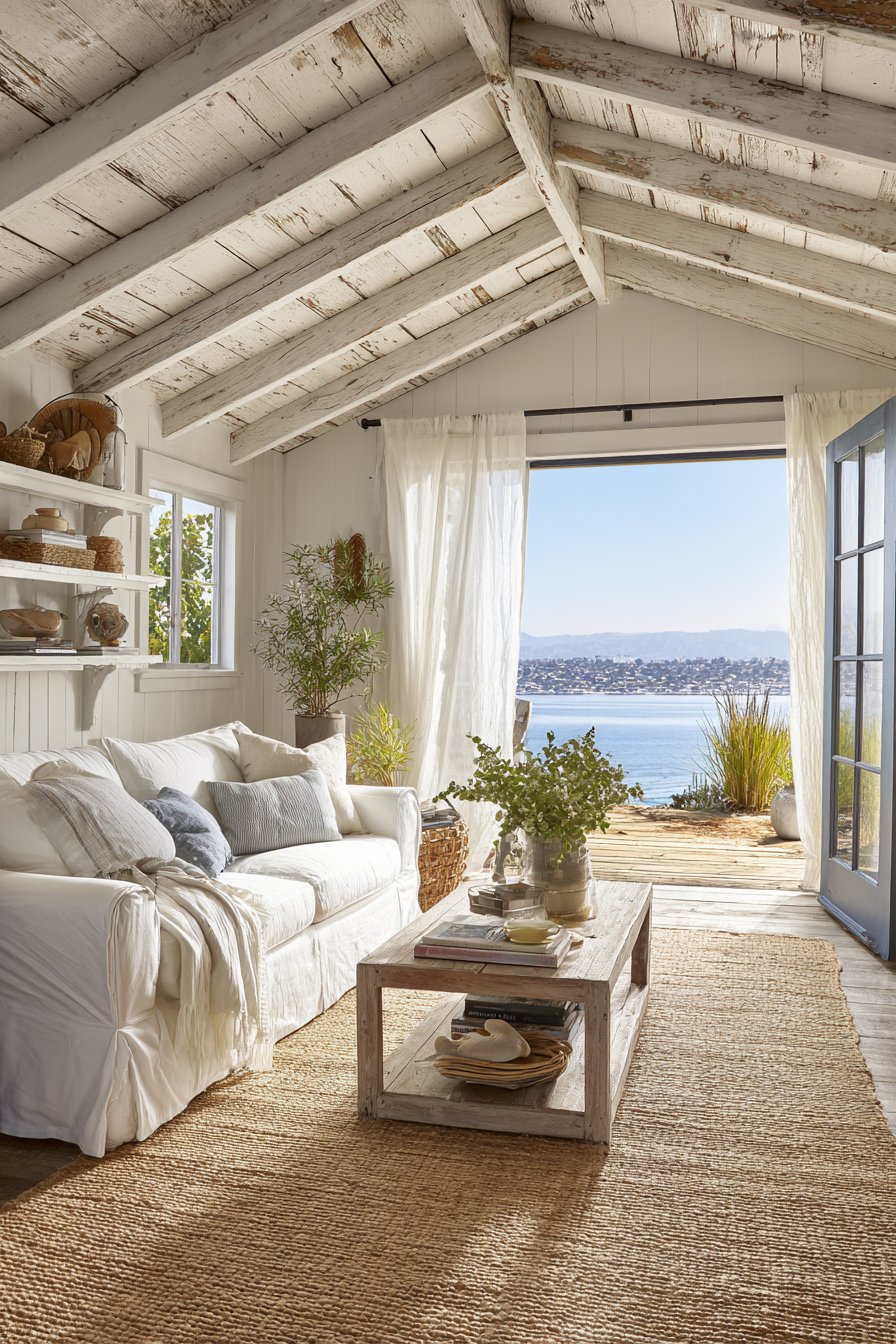
Thoughtful interior design transforms houses into homes by reflecting personal values and lifestyle preferences. The Coastal Grandmother style particularly appeals to those who appreciate quality over quantity and find beauty in understated elegance. This aesthetic isn’t about age—it’s about embracing a mindset of refined relaxation where every element serves both function and beauty. Whether you’re decorating a beachside cottage or an urban apartment, these principles create spaces that welcome, comfort, and inspire.
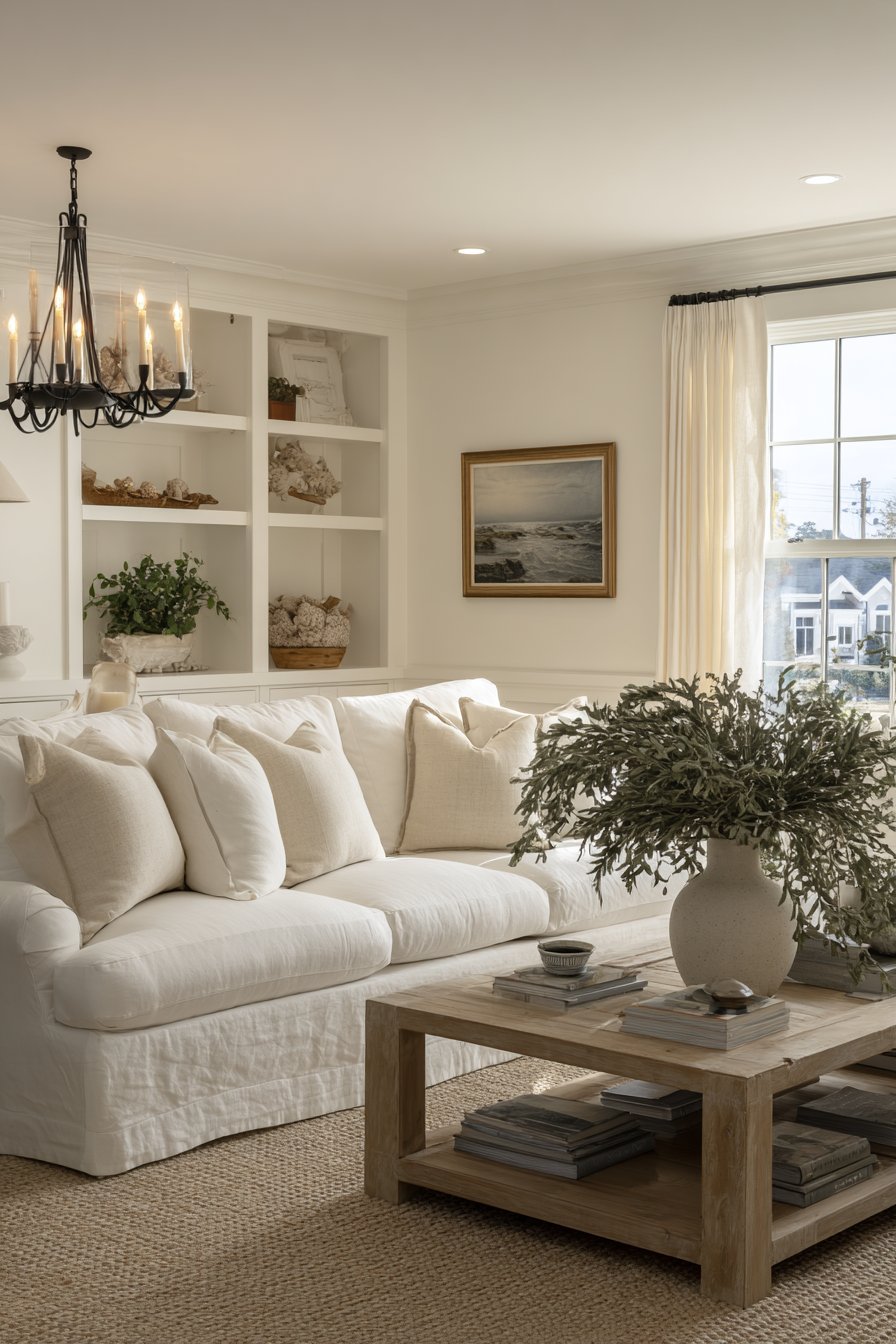
Throughout this article, we’ll explore the essential elements that define this captivating trend. From color palettes to fabric choices, furniture selection to decorative accents, you’ll discover how to incorporate coastal grandmother charm into your home. These insights will help you create environments that exude timeless sophistication while maintaining the warmth and authenticity that make spaces truly special.
1. Embracing the Neutral Color Foundation
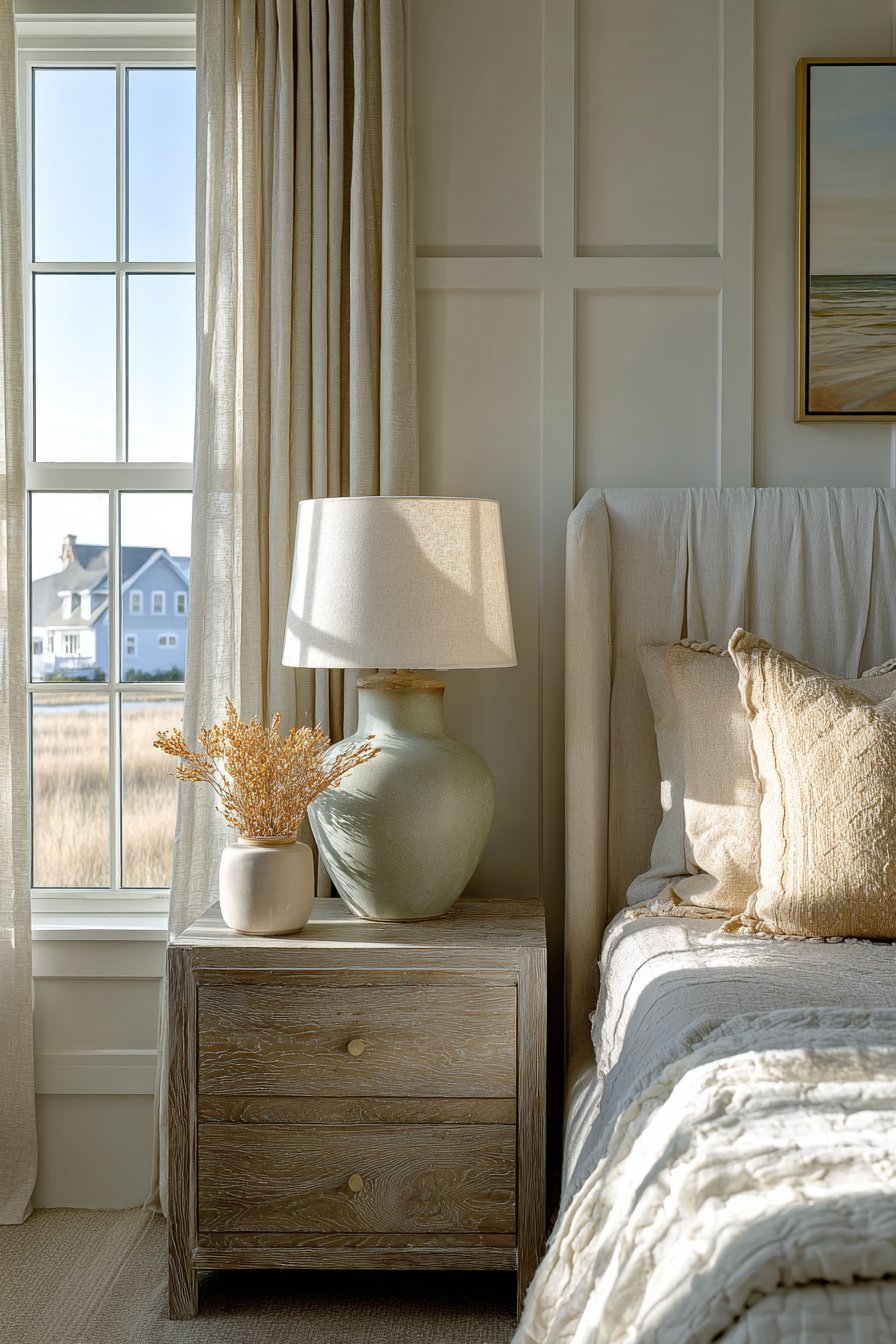
The color palette forms the backbone of Coastal Grandmother design, focusing on soft, natural hues that evoke seaside serenity. Think creamy whites, warm beiges, soft grays, and gentle taupes that create a calming backdrop for daily life. These colors reflect natural light beautifully, making spaces feel larger and more open. The absence of bold, jarring colors promotes visual tranquility and allows architectural details and natural textures to shine.
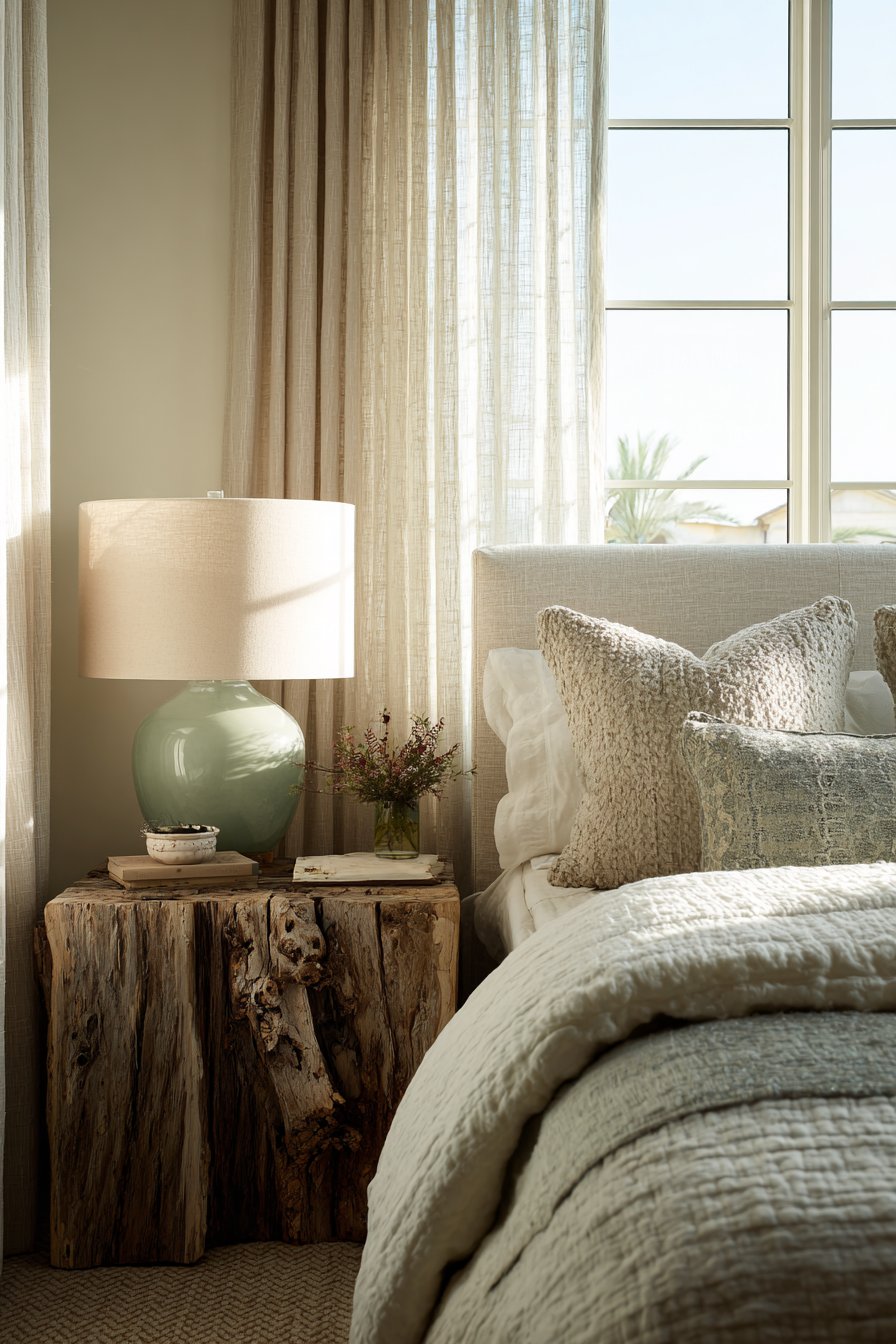
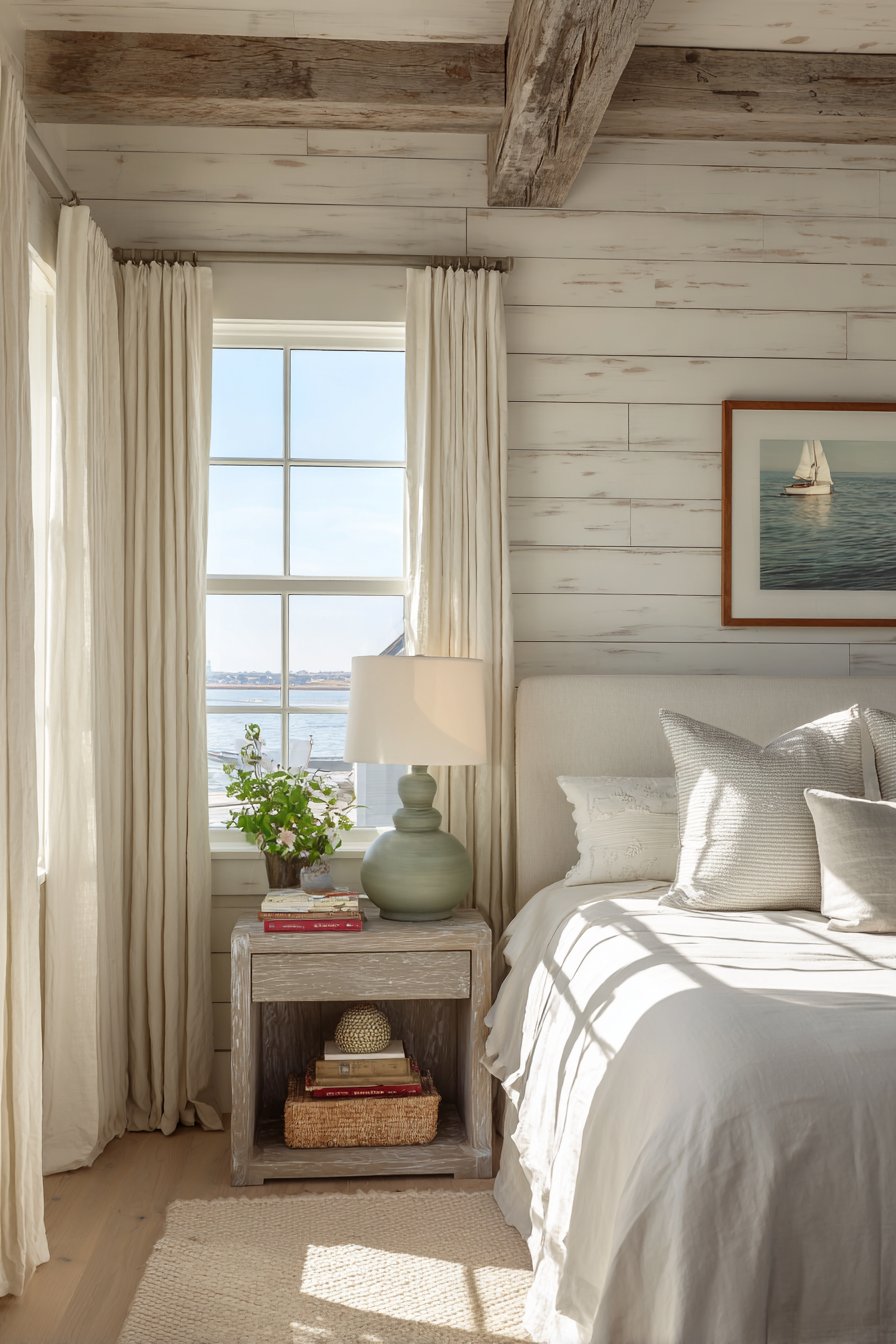
Layering different shades of neutral creates sophisticated depth without overwhelming the senses. Consider pairing ivory walls with linen curtains in oatmeal and furniture in weathered driftwood tones. This monochromatic approach feels cohesive and intentional while remaining infinitely versatile. Accents of blue-gray or sage green can reference the ocean and coastal vegetation without disrupting the peaceful atmosphere.
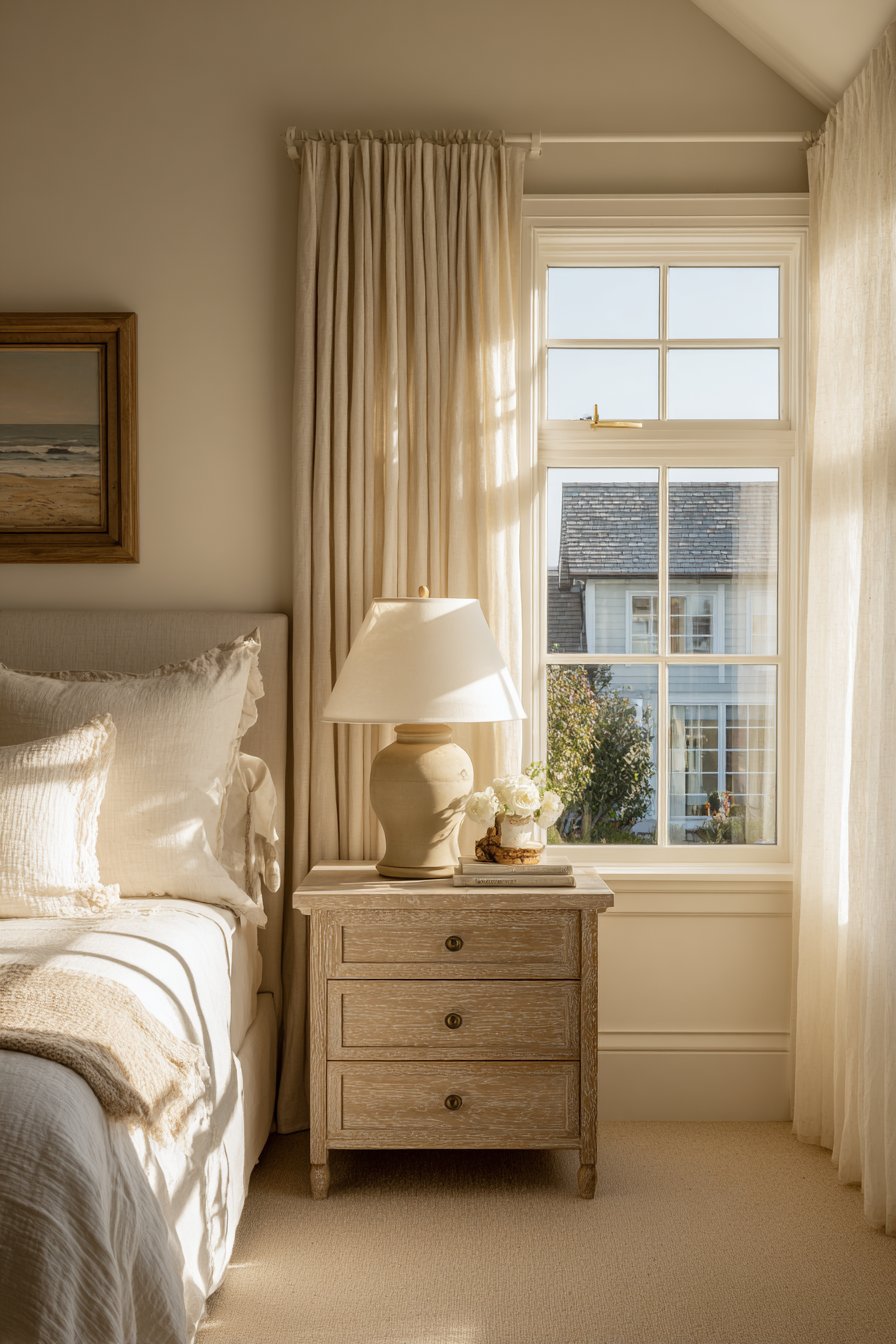
The beauty of neutral palettes lies in their timeless versatility. Unlike trendy colors that date quickly, these classic hues remain relevant across decades. They provide flexibility for seasonal updates through accessories and allow your personal style to evolve without requiring complete redesigns.
- Choose warm whites over stark white for a softer appearance
- Layer three to five neutral shades for visual interest
- Test paint colors in different lighting conditions throughout the day
- Use darker neutrals sparingly as grounding elements
- Consider texture as important as color for depth
- Reference nature’s palette from beaches and coastal landscapes
2. Investing in Natural Fiber Textiles
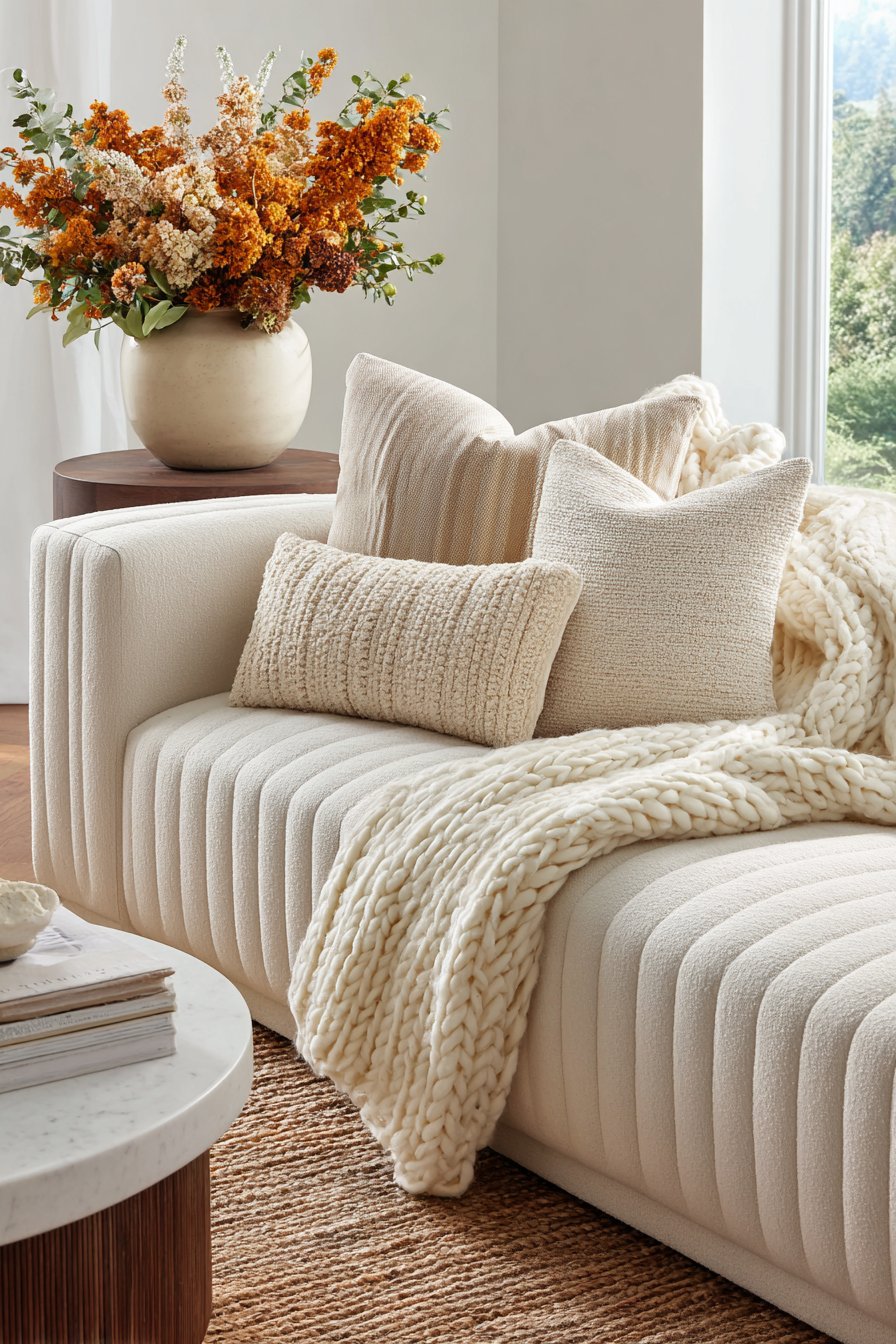
Natural fabrics define the tactile experience of Coastal Grandmother interiors, prioritizing comfort and quality over synthetic alternatives. Linen, cotton, wool, and jute bring organic texture that improves with age and use. These materials breathe naturally, regulate temperature, and develop a beautiful patina over time. The slightly rumpled appearance of lived-in linen epitomizes the aesthetic’s relaxed elegance perfectly.
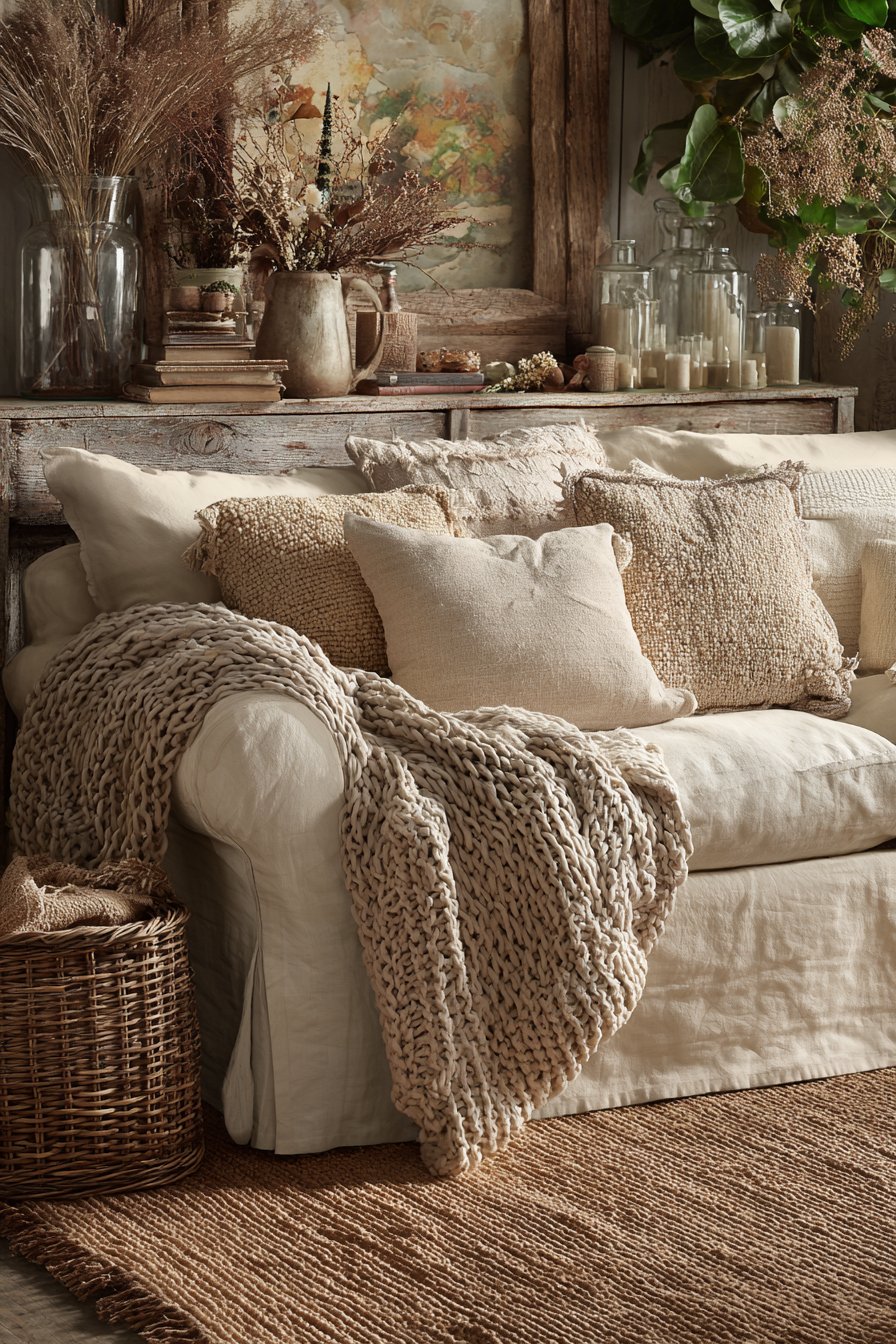
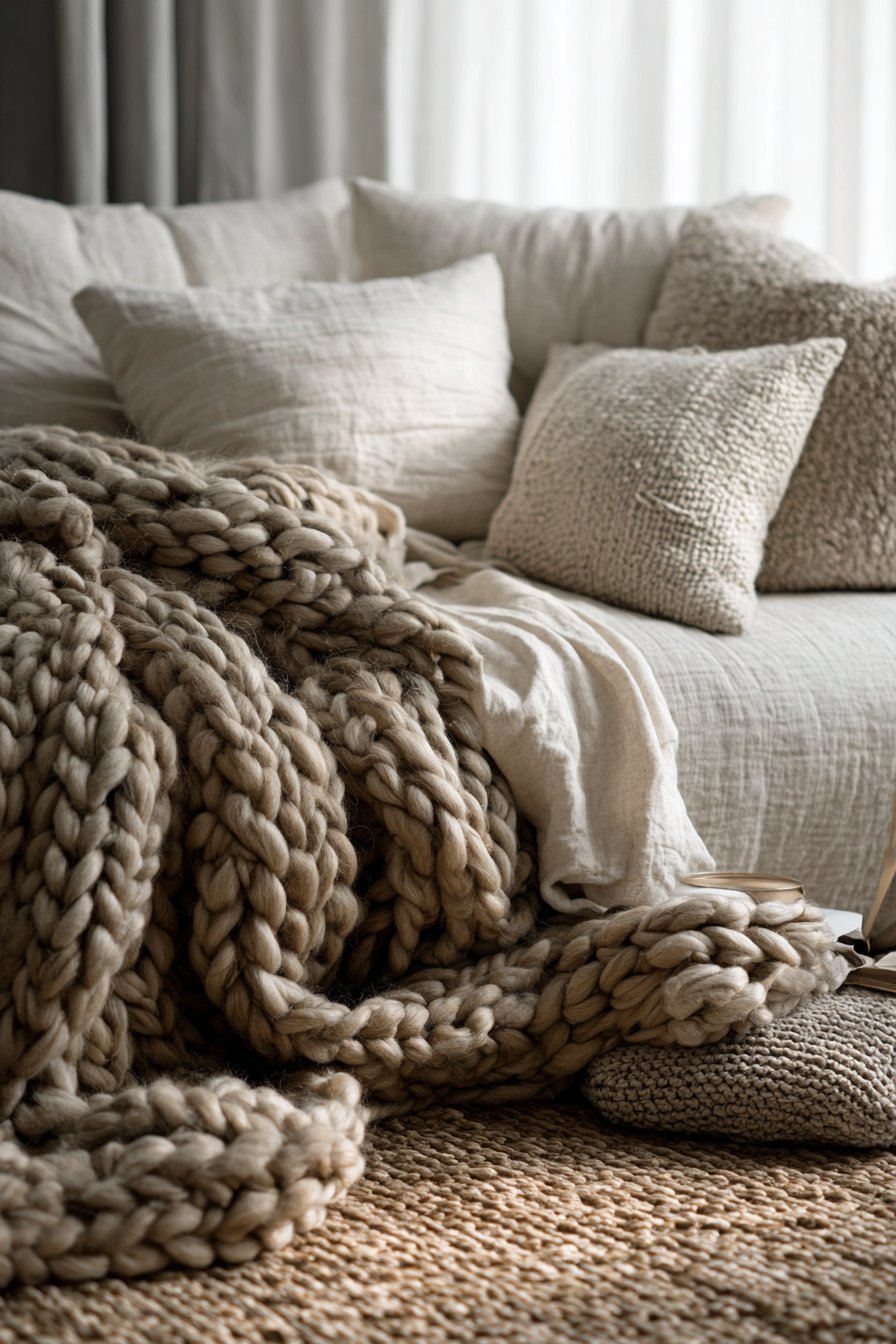
Choose heavyweight linen for upholstery that withstands daily use while maintaining sophisticated appearance. Cotton slipcovers offer practical elegance, allowing for easy cleaning while softening furniture lines. Wool throws and jute rugs add dimensional texture underfoot and provide warmth during cooler months. These natural materials connect indoor spaces to the natural world, reinforcing the coastal theme authentically.
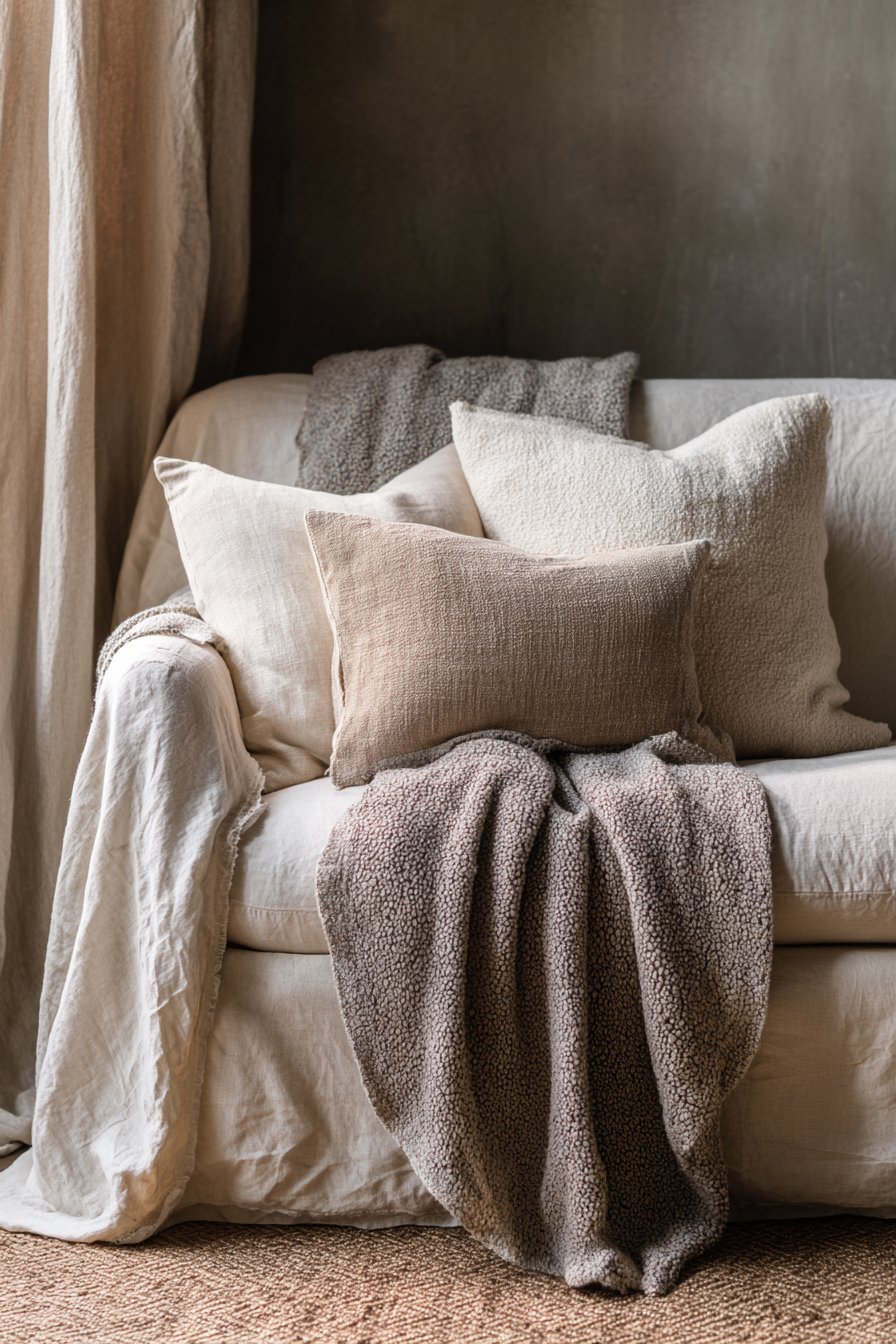
Mixing different natural fibers creates layered interest without requiring pattern or color variation. The interplay between smooth cotton, nubby linen, and coarse jute provides visual and tactile richness. This approach feels curated rather than matched, suggesting spaces evolved organically over time.
- Select pre-washed linen for softer, more relaxed draping
- Choose natural, undyed fabrics when possible for authentic appeal
- Layer lightweight and heavyweight textiles for seasonal flexibility
- Embrace natural wrinkles as part of the aesthetic
- Invest in quality over quantity for longer-lasting beauty
- Consider sustainable and organic fabric options for eco-conscious design
3. Selecting Timeless Furniture Pieces
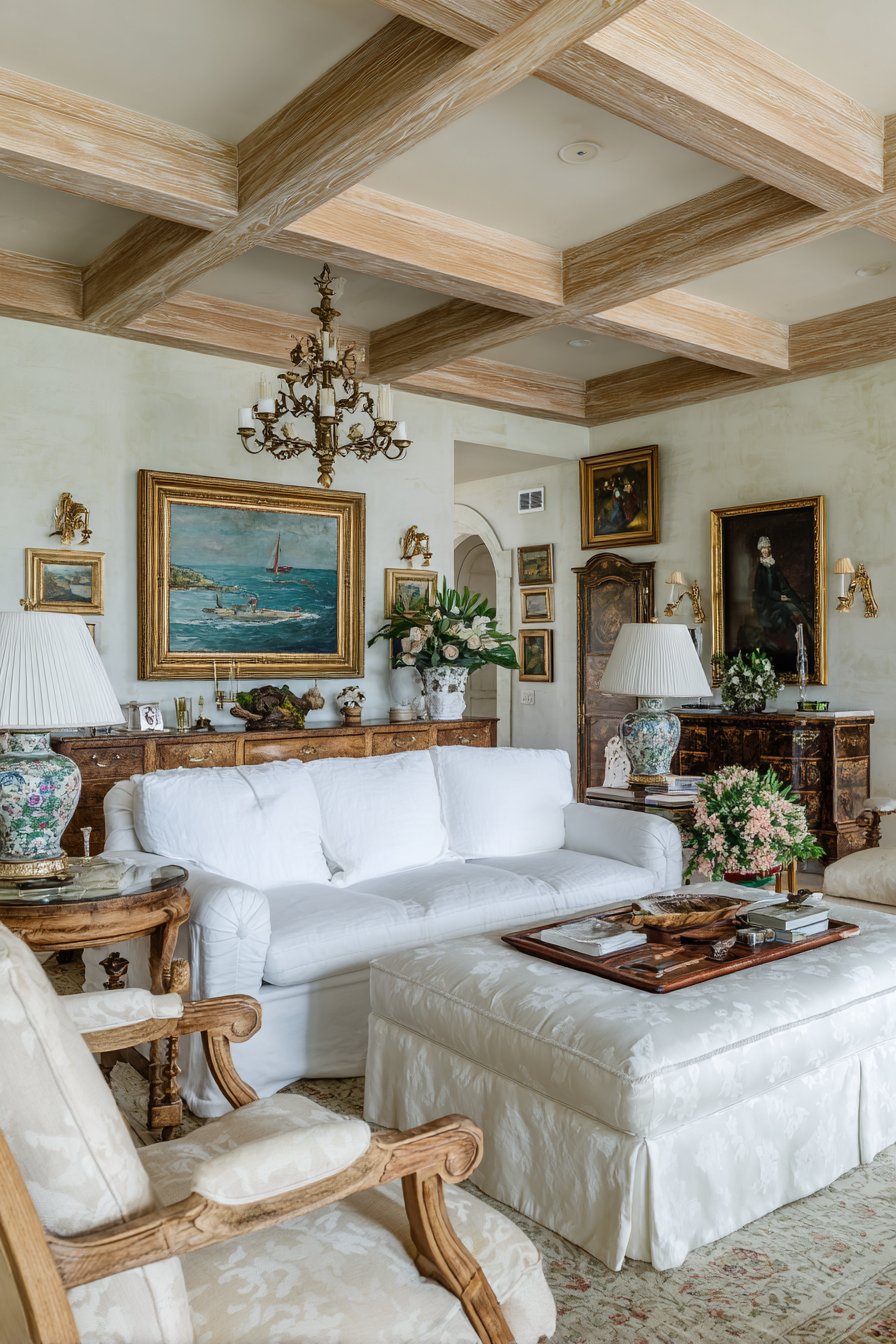
Furniture selection in Coastal Grandmother style emphasizes classic silhouettes with comfortable proportions and quality construction. Avoid trendy shapes that date quickly in favor of traditional forms that have proven their appeal across generations. Upholstered pieces feature deep seats, rolled arms, and neutral slipcovers that invite relaxation. Wood furniture showcases natural grain patterns in lighter finishes that reference driftwood and bleached timber.
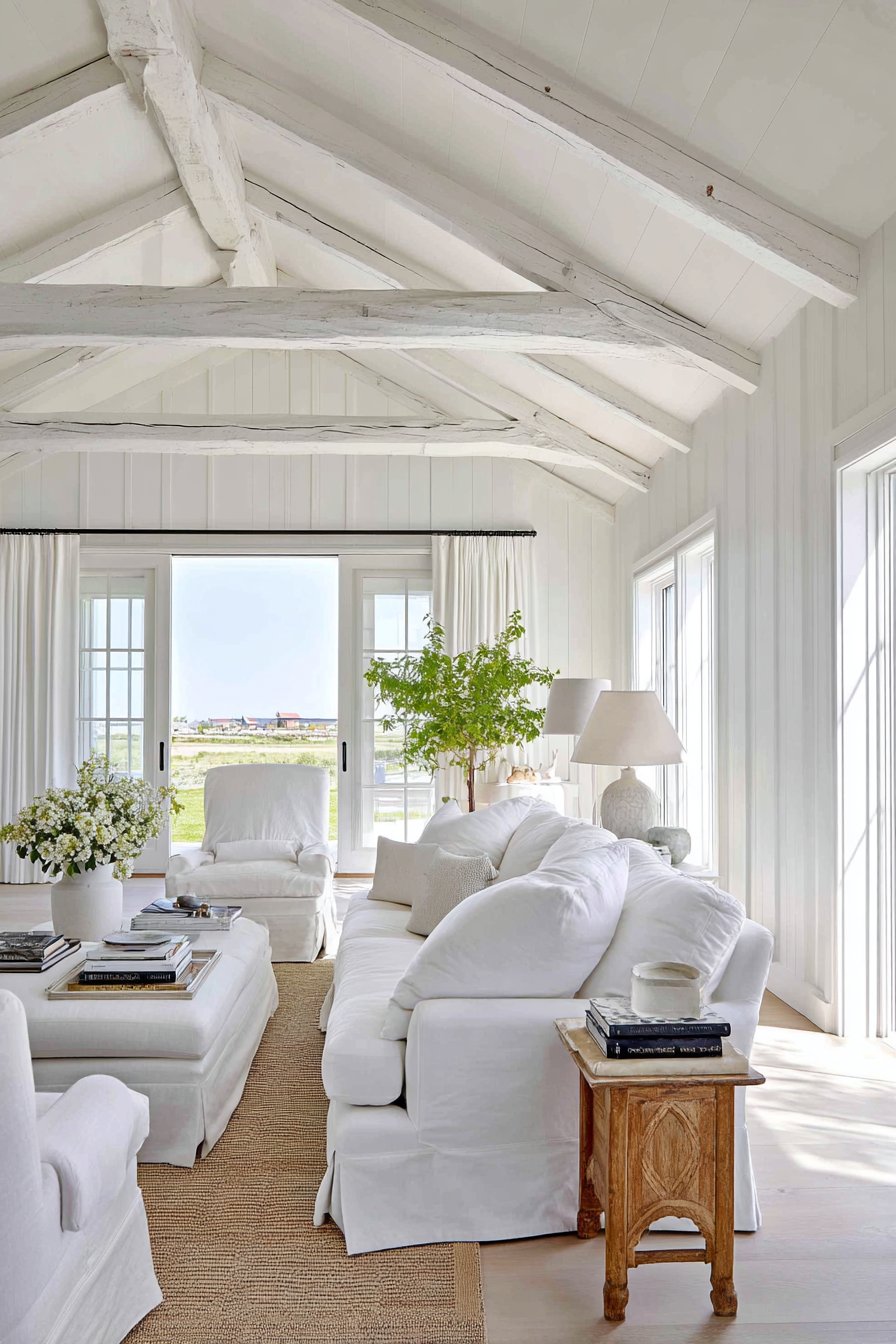
The key is choosing pieces that feel substantial yet graceful, avoiding both heavy ornate styles and ultra-modern minimalism. Skirted sofas, slipcovered dining chairs, and generous coffee tables provide the perfect balance of elegance and ease. Antique and vintage pieces integrate beautifully, adding character and history that new furniture cannot replicate. These treasured finds tell stories and create authentic, collected-over-time aesthetics.
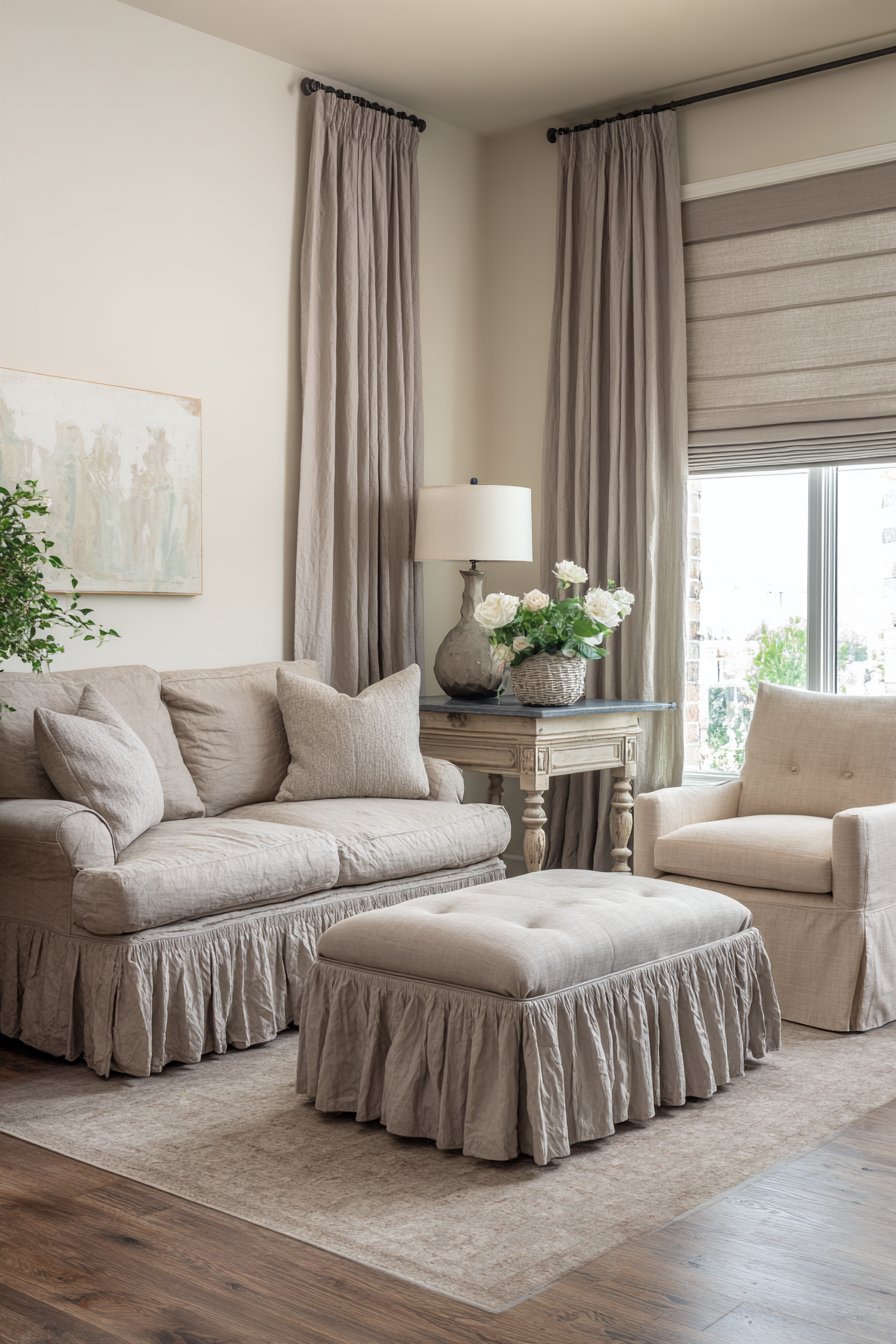
Functionality remains paramount even as aesthetics take center stage. Storage solutions hide clutter while maintaining beautiful facades. Multi-functional pieces like ottomans with hidden storage or console tables that serve multiple purposes maximize practical elegance. Every piece should serve a purpose while contributing to the overall visual harmony.
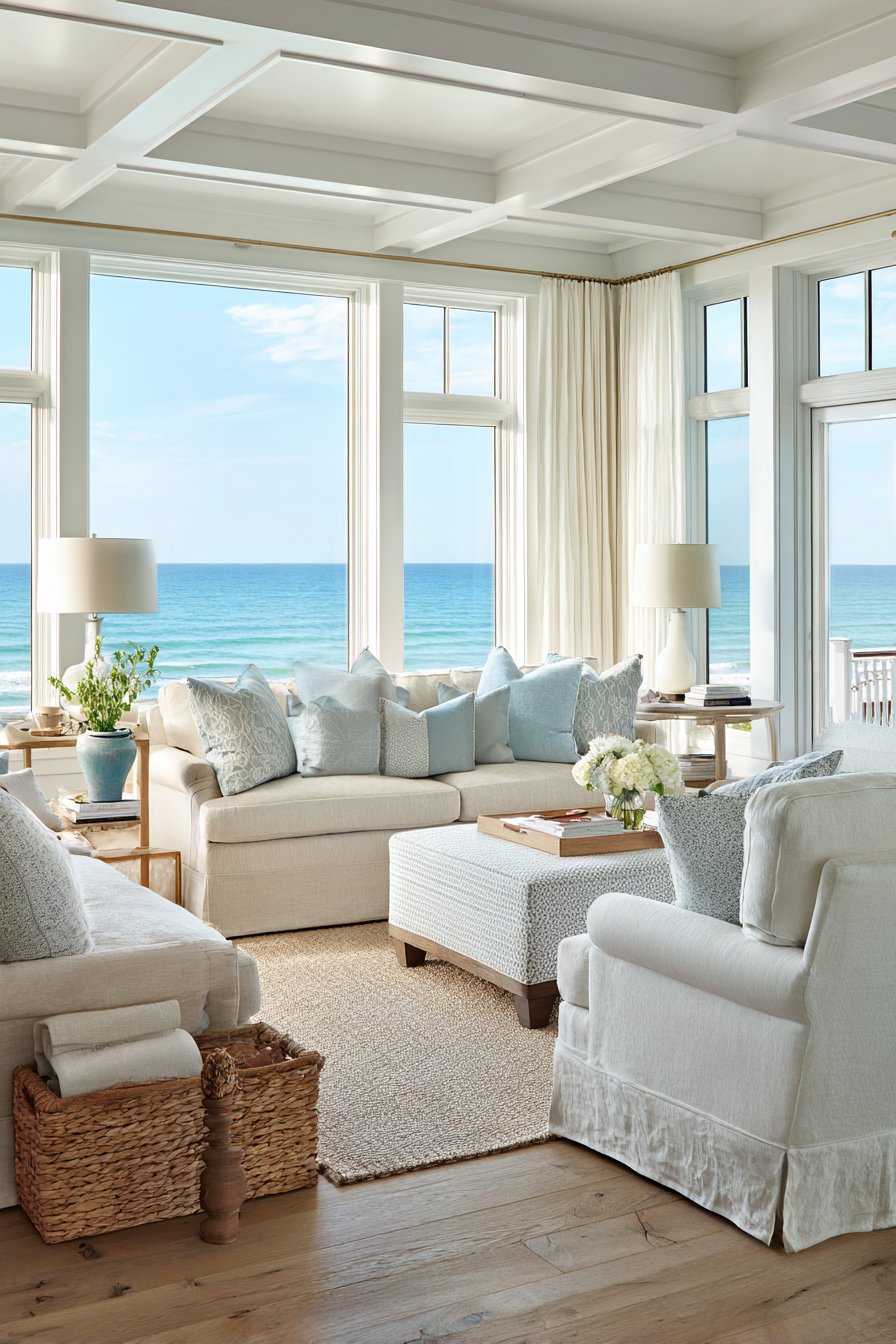
- Choose sofas and chairs with removable, washable slipcovers
- Look for furniture with turned legs and classic proportions
- Select wood tones in white oak, ash, or bleached finishes
- Invest in quality construction that lasts for decades
- Mix antique finds with new pieces for authentic character
- Prioritize comfort alongside aesthetics for livable luxury
4. Incorporating Natural Elements and Organic Shapes
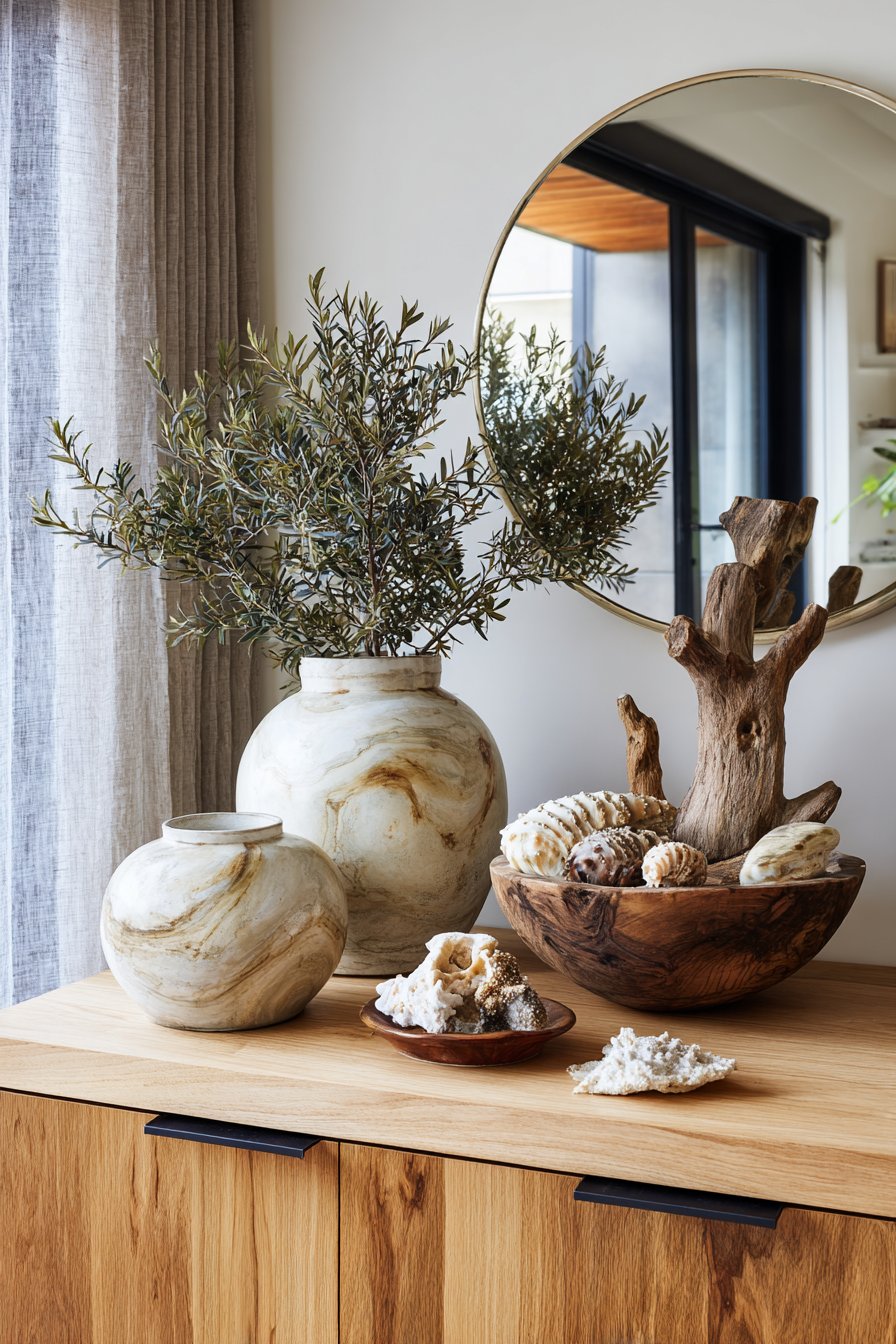
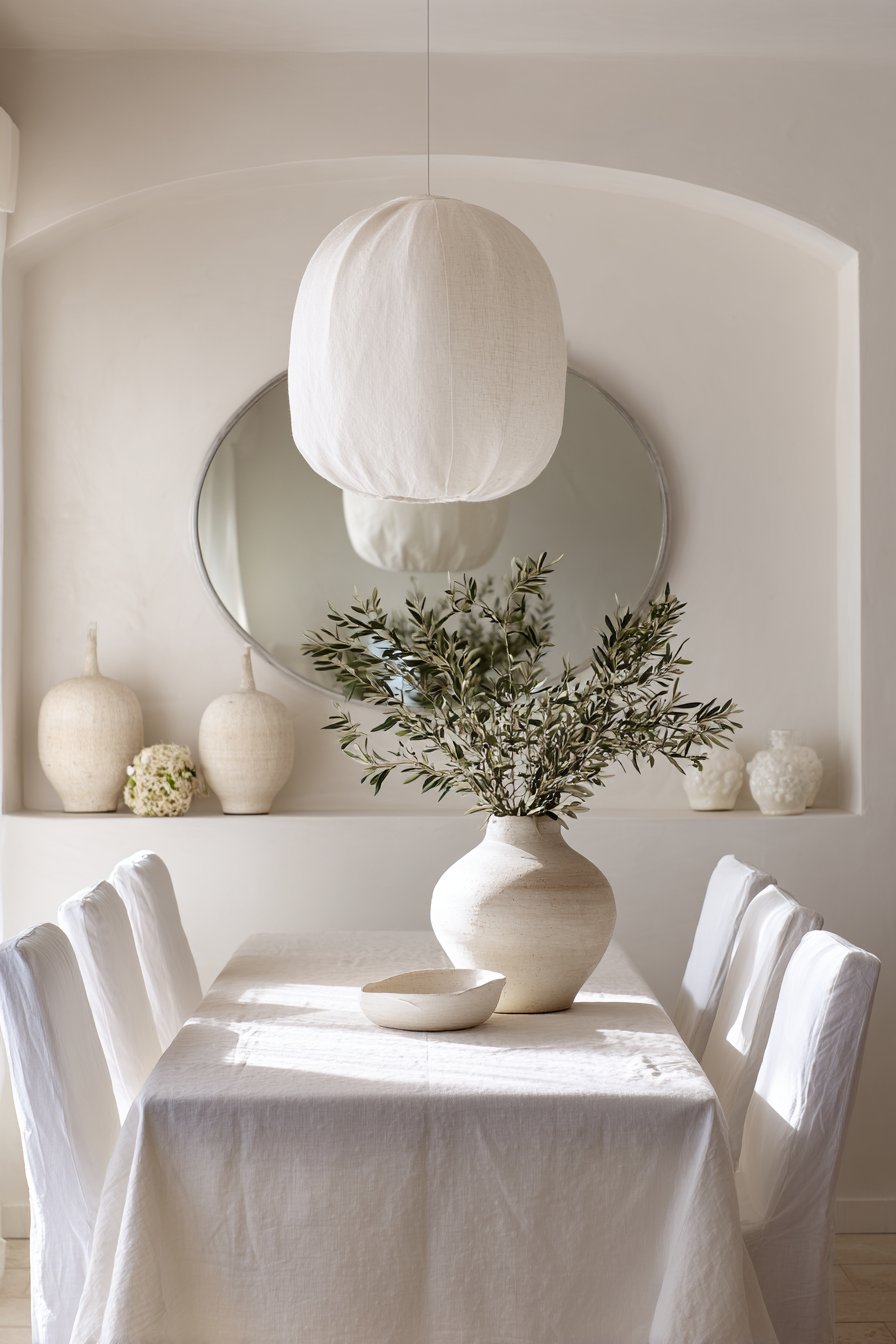
Natural elements bring the outdoors inside, creating seamless connections between interior spaces and coastal environments. Fresh flowers in simple arrangements, potted plants, and collected branches add living beauty that changes with seasons. These organic touches inject life and freshness into neutral spaces without overwhelming the restrained palette. The imperfect beauty of natural forms contrasts beautifully with architectural lines.
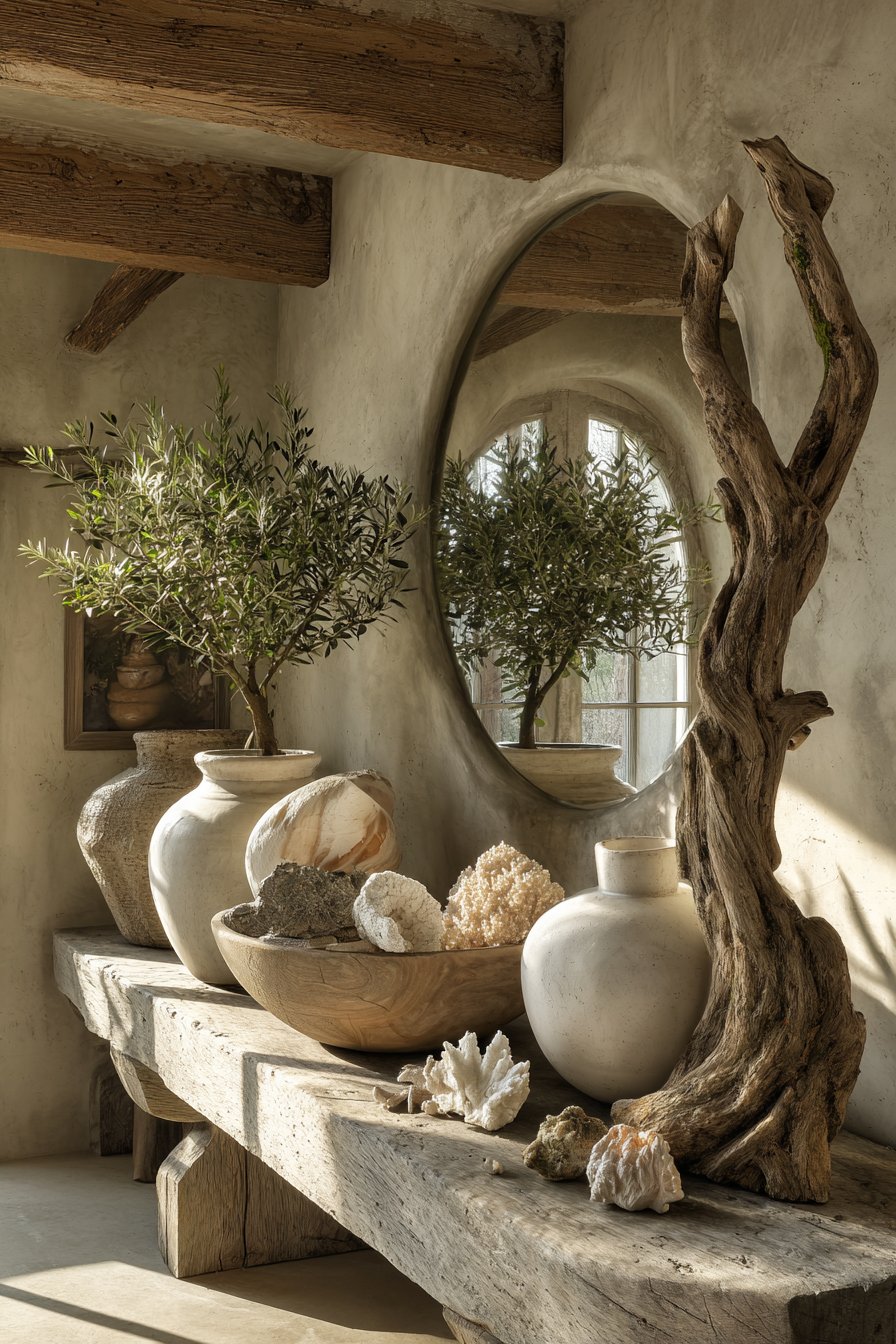
Decorative objects sourced from nature—shells, driftwood, stones, coral—serve as sculptural elements that reference coastal living authentically. Display these treasures simply in bowls, on shelves, or as standalone pieces rather than creating themed vignettes. The goal is understated elegance, not literal beach themes. Natural wood bowls, stone vessels, and woven baskets provide both function and organic beauty.
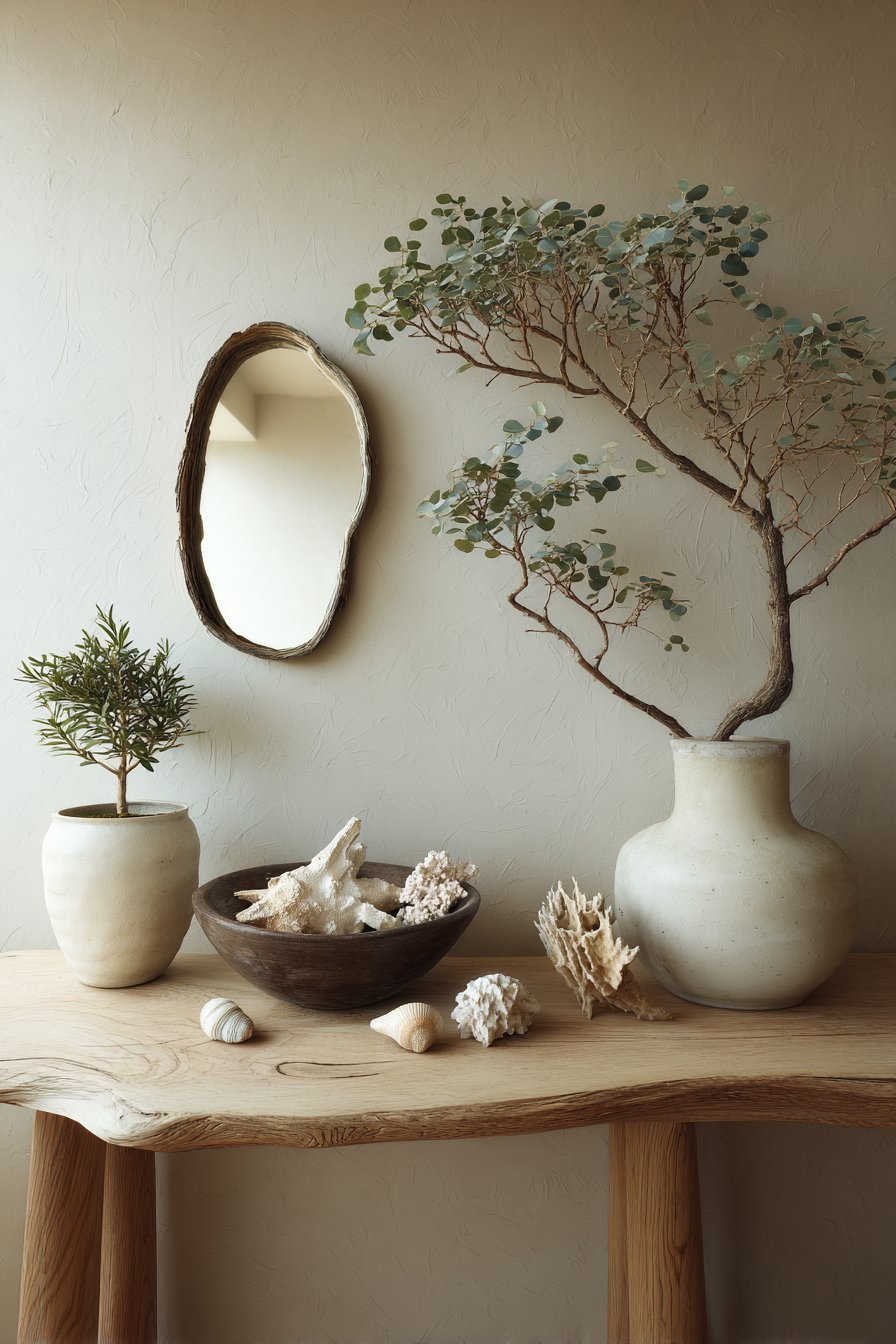
Organic shapes in furniture and decor soften spaces dominated by architectural rectangles. Rounded edges on tables, curved chair backs, and oval mirrors create gentle visual flow. These softer forms feel more welcoming than sharp angles while maintaining sophistication. The interplay between organic and geometric shapes creates dynamic visual interest.
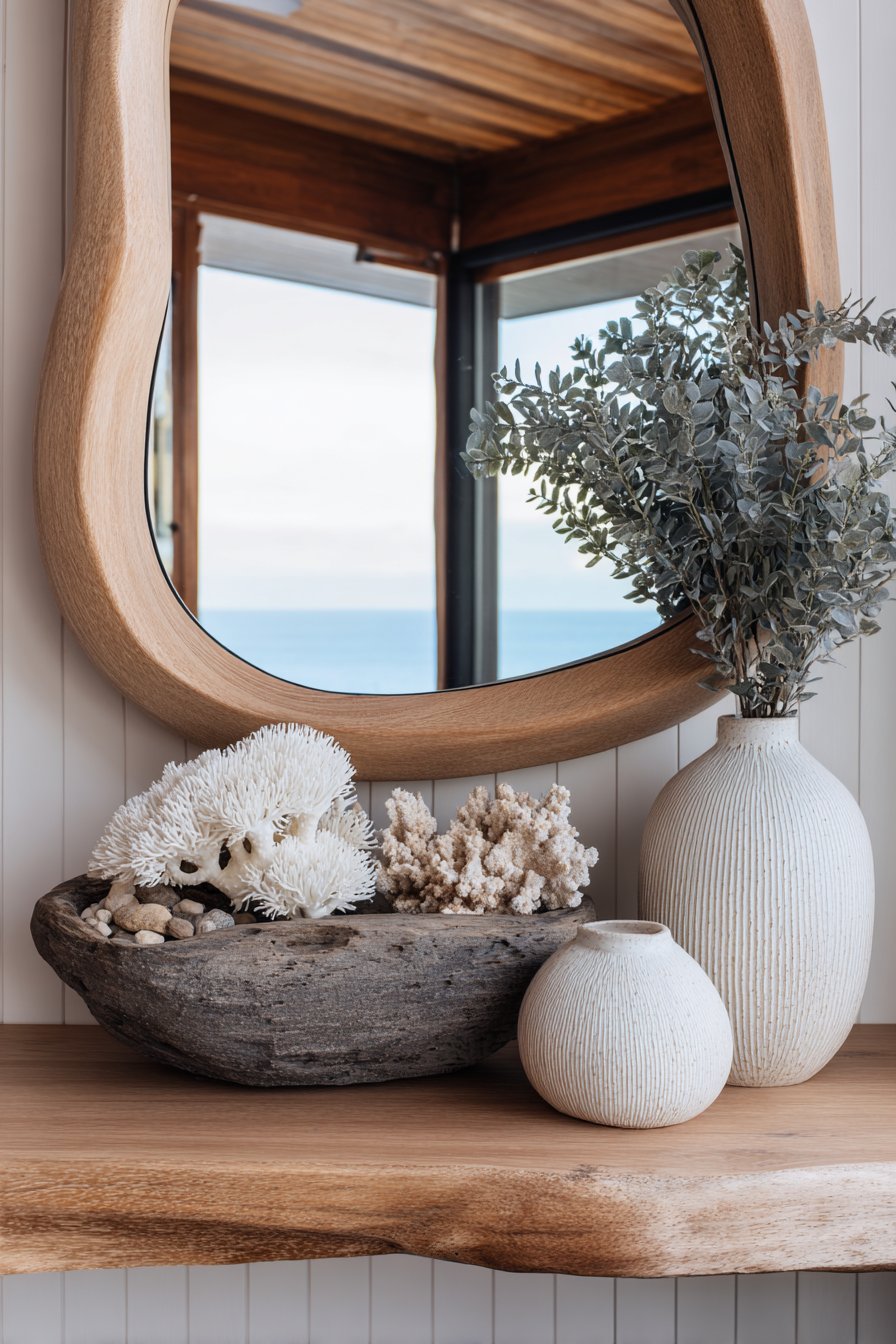
- Display fresh eucalyptus or olive branches in tall vases
- Collect interesting shells and stones during beach walks
- Choose handmade ceramics with organic, irregular shapes
- Incorporate live plants like fiddle leaf figs or olive trees
- Use natural wood cutting boards and bowls as decorative elements
- Select artwork featuring botanical or coastal landscape subjects
5. Creating Layers Through Thoughtful Styling
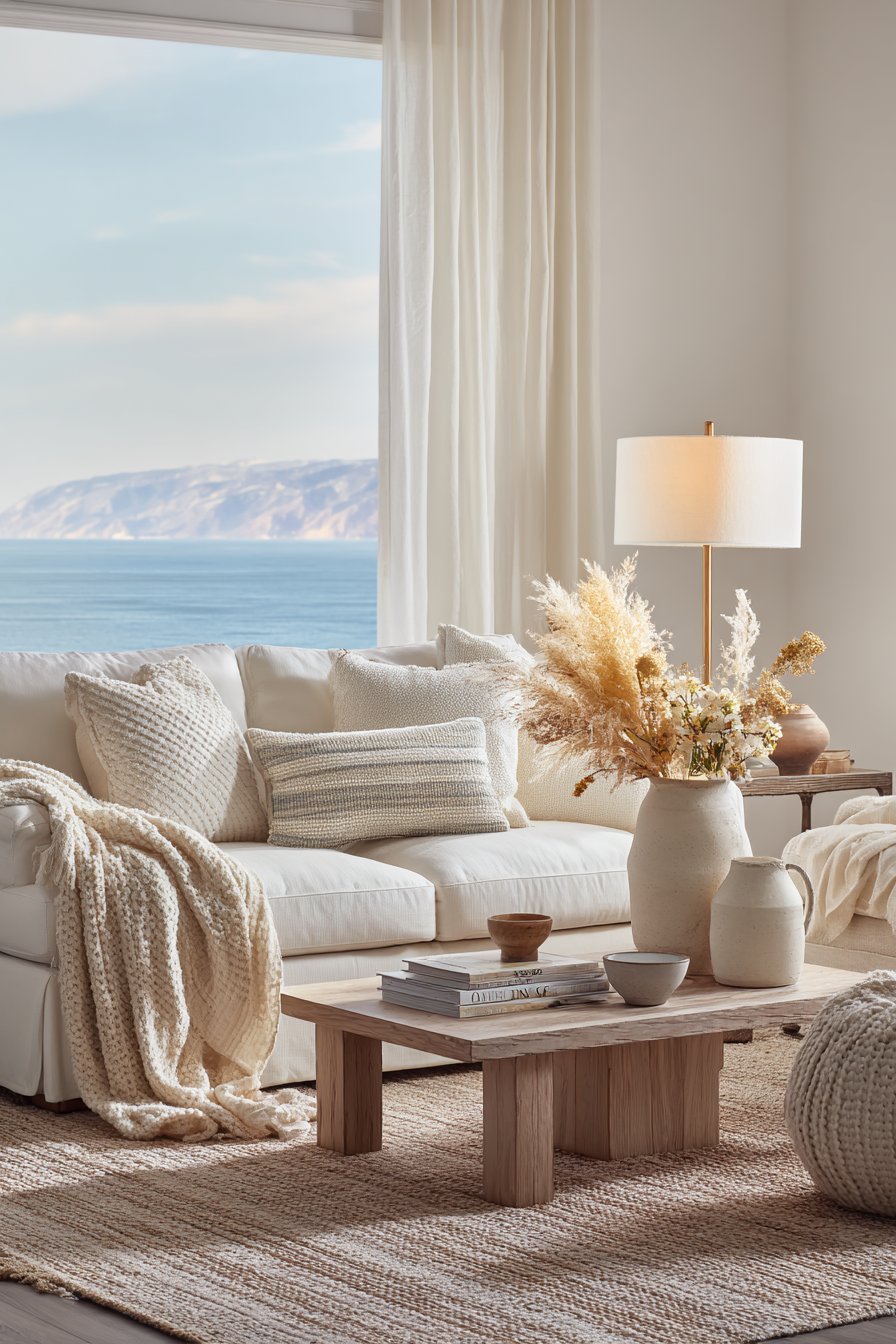
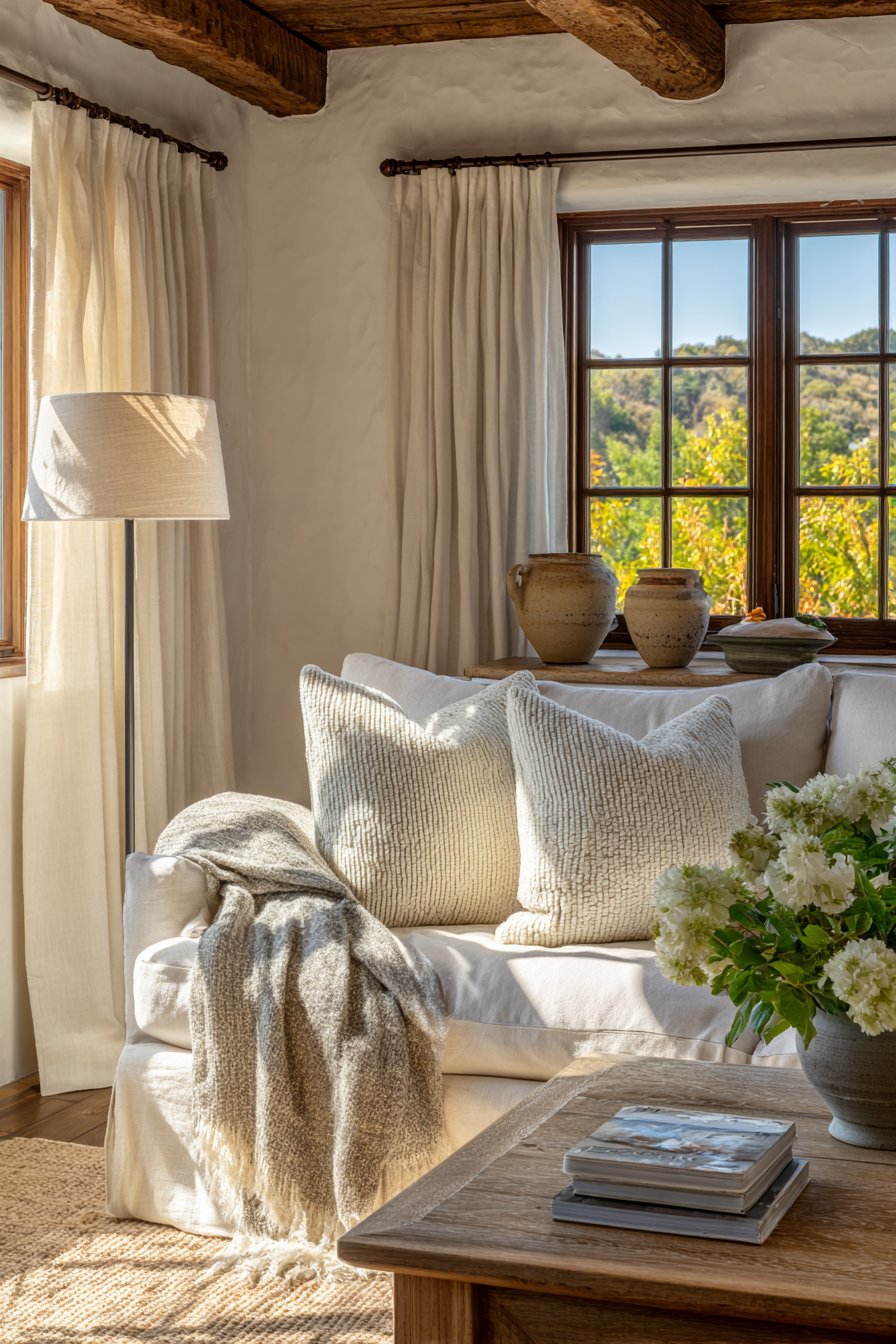
Layered styling distinguishes professionally designed spaces from flat, one-dimensional rooms by creating depth and visual interest. In Coastal Grandmother interiors, layering occurs through textiles, lighting, and accessories that build upon the neutral foundation. Throw pillows in varying sizes and textures, draped blankets, and stacked books create lived-in comfort. Each layer should feel intentional yet effortless.
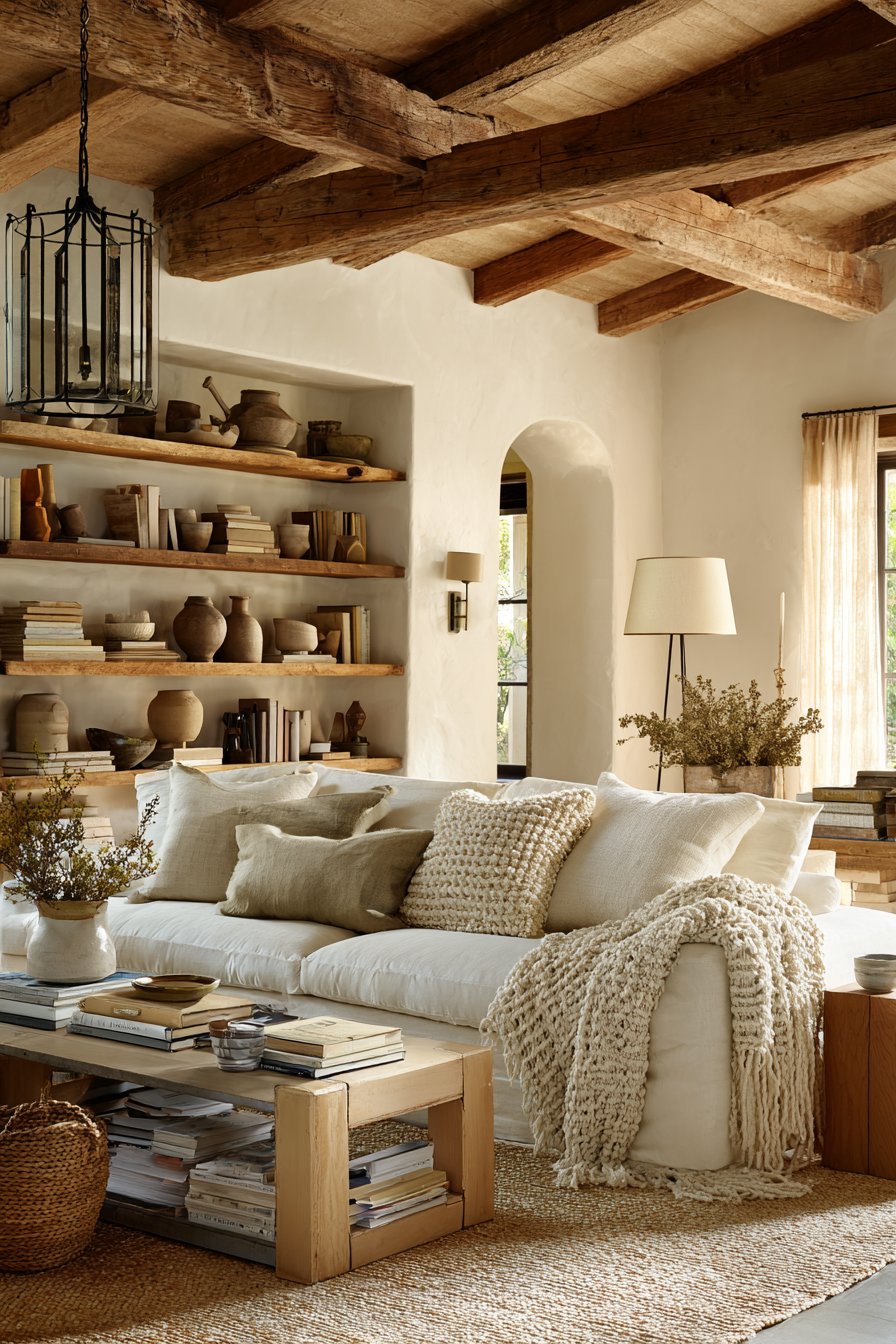
Lighting layers prove equally important, combining ambient, task, and accent lighting for functionality and atmosphere. Table lamps with linen shades, architectural floor lamps, and natural light filtered through sheer curtains create warm, inviting illumination. Avoid harsh overhead lighting that flattens spaces. Multiple light sources at different heights establish dimensional warmth throughout rooms.
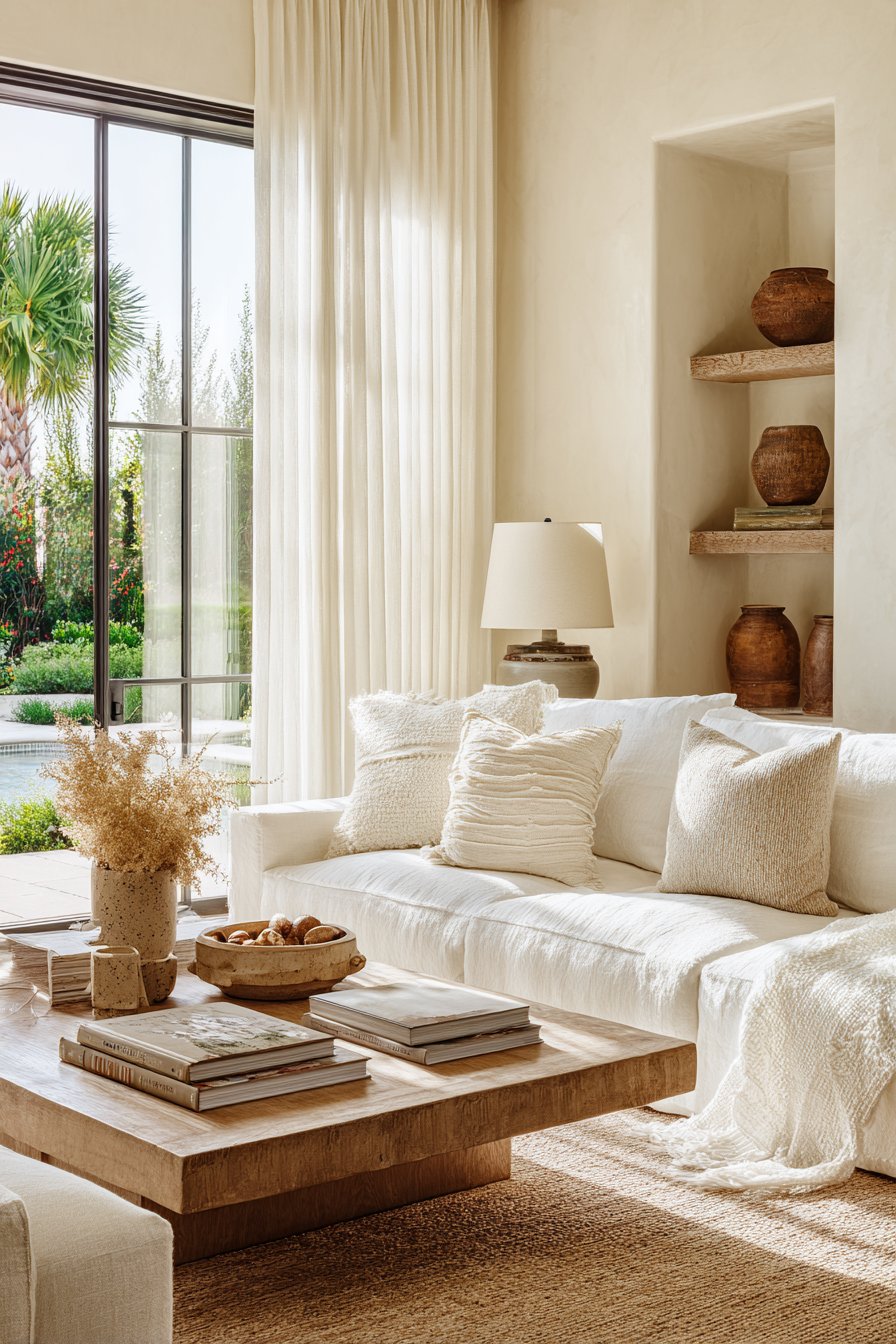
Accessory layers tell personal stories through carefully curated collections. Rather than matching sets, group items by color, material, or theme for cohesive yet interesting displays. Books with beautiful spines, vintage silver pieces, and pottery collections add personality without clutter. The key is editing ruthlessly—less truly is more in achieving refined elegance.
- Use odd numbers when grouping decorative objects
- Vary heights in accessory arrangements for visual flow
- Layer rugs for added texture and warmth
- Mix matte and subtle sheen finishes for depth
- Display meaningful items rather than purely decorative pieces
- Edit collections seasonally to maintain fresh perspectives
6. Achieving Effortless Elegance Through Restraint
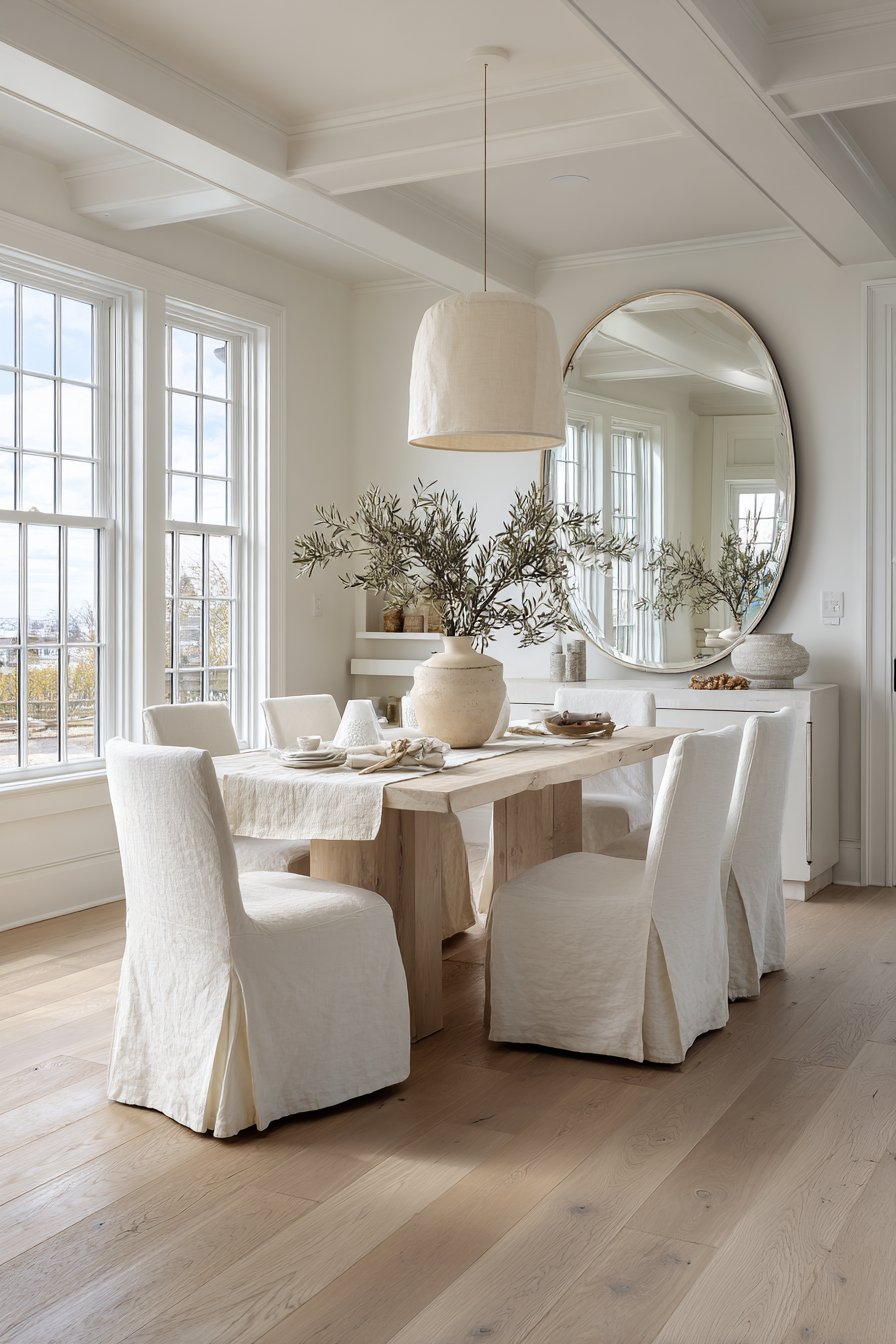
Restraint and editing separate true Coastal Grandmother style from cluttered spaces attempting the aesthetic. This approach requires discipline and confidence to leave surfaces relatively clear and resist over-decorating. Empty space becomes a design element itself, allowing featured pieces to breathe and make stronger statements. The “less is more” philosophy creates calm, sophisticated environments.
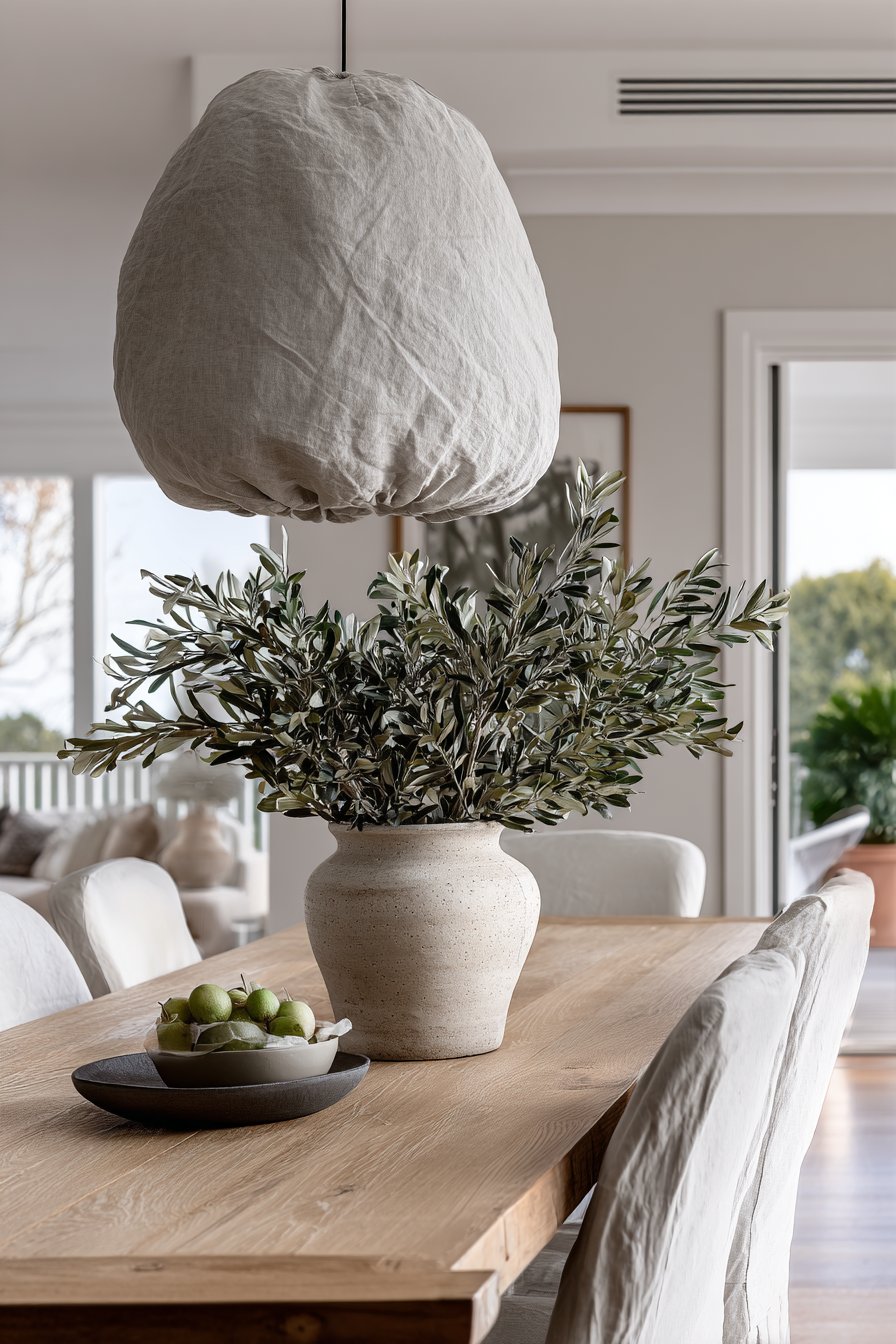
Quality always trumps quantity in this aesthetic, making investment in fewer, better pieces essential. One beautiful vintage mirror makes more impact than multiple mediocre alternatives. This selective approach extends to all design elements—from furniture to artwork to accessories. Each item earns its place through beauty, function, or meaning, preferably combining all three.
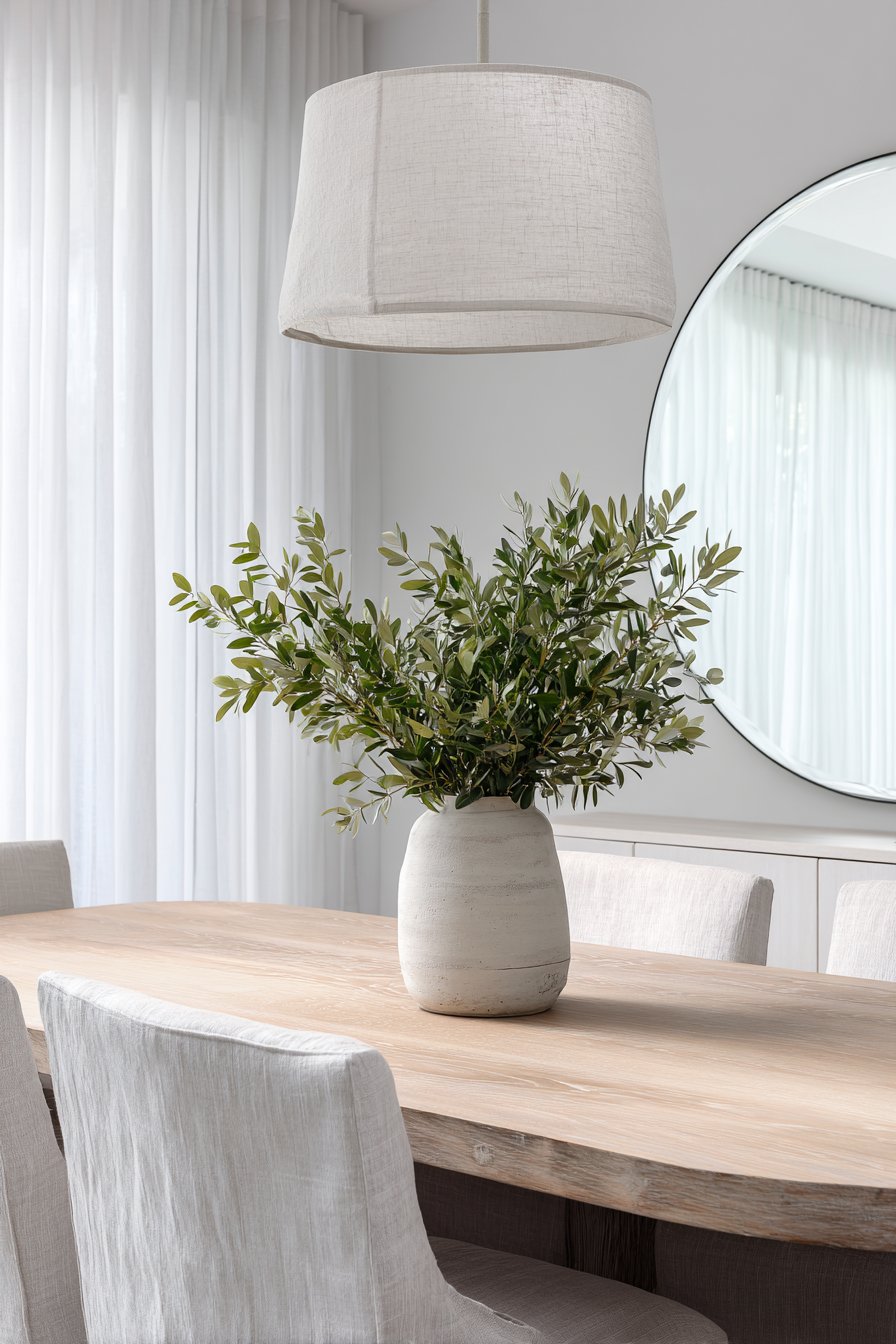
The ultimate goal is creating spaces that feel collected rather than decorated, suggesting thoughtful curation over time rather than instant makeovers. This authentic approach requires patience but yields timeless results that improve with age. Rooms should feel inviting and comfortable, never precious or untouchable, reflecting the relaxed luxury at this trend’s heart.
- Remove one item for every new addition to maintain balance
- Choose statement pieces that anchor rooms rather than filling space
- Leave countertops and surfaces mostly clear for visual peace
- Invest savings from not buying quantity into higher quality
- Allow rooms to evolve naturally rather than decorating completely at once
- Trust negative space to enhance rather than diminish your design
Conclusion
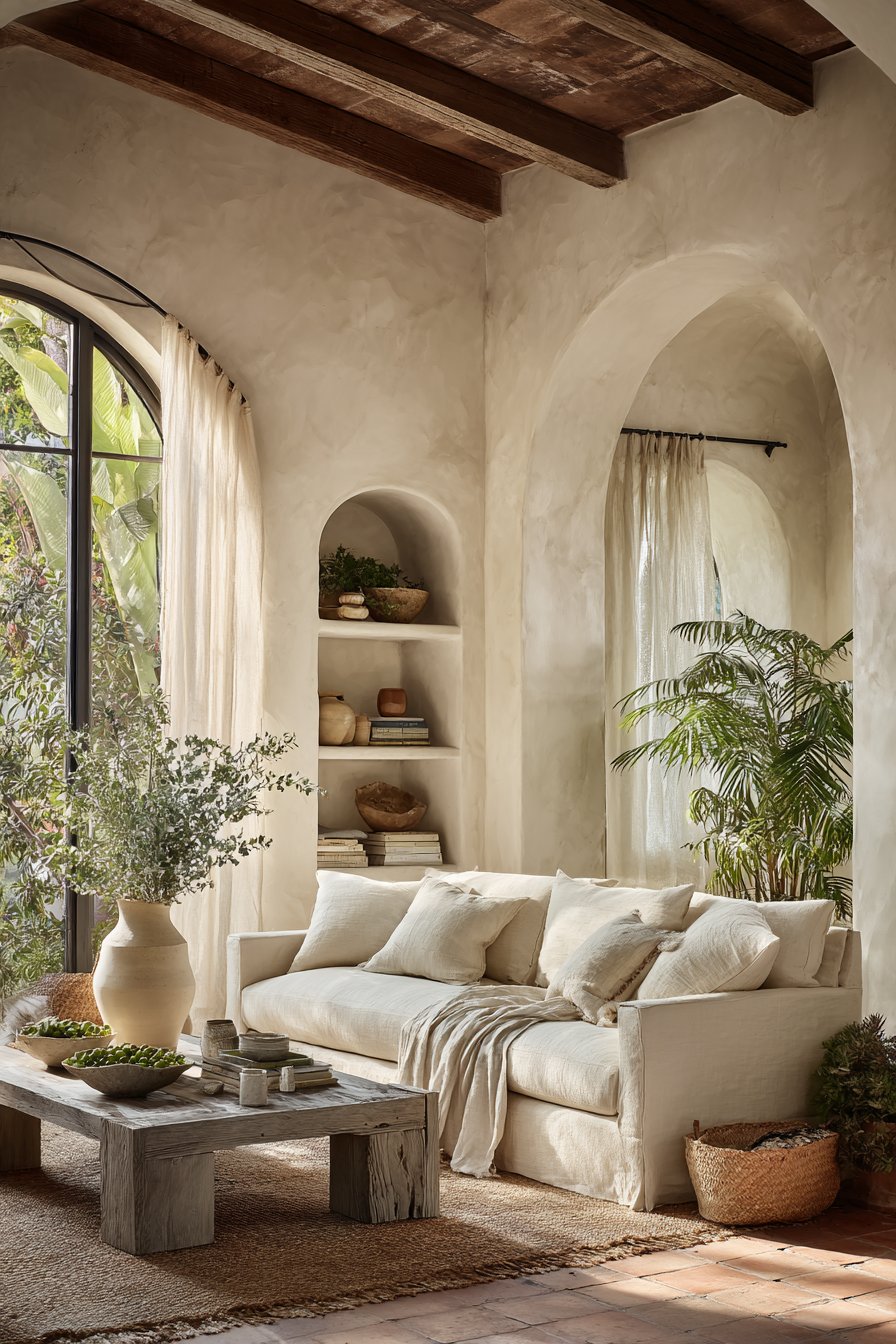
The Coastal Grandmother aesthetic offers a refreshing alternative to trend-driven design, celebrating timeless elegance and intentional simplicity. By embracing neutral palettes, natural materials, classic furniture, and thoughtful restraint, you create spaces that transcend fleeting fashions. These principles work in any home, regardless of proximity to actual coastlines, because they’re ultimately about mindset and values rather than literal location.
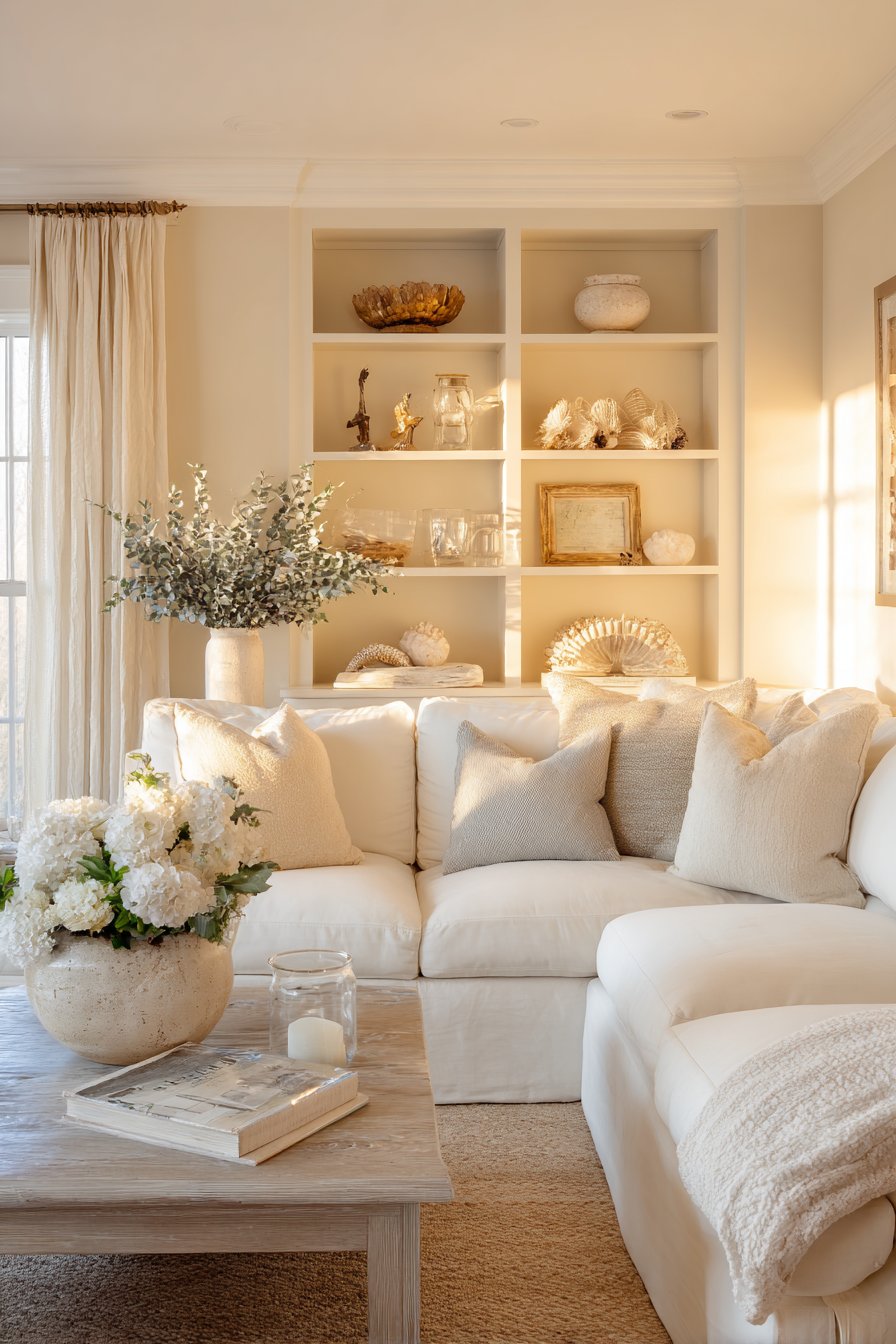
Start implementing these ideas gradually, focusing on quality investments and editing existing belongings with fresh perspective. Your home should reflect your personal journey and aesthetic evolution, not magazine perfection. Embrace the beauty of imperfection, the comfort of natural materials, and the peace of uncluttered spaces. The result will be rooms that welcome you home with relaxed luxury and timeless sophistication that endures for years to come.
