


The Dark Academia aesthetic has transcended its viral TikTok origins to become a legitimate interior design movement captivating homeowners worldwide. This moody, intellectual style celebrates classical education, vintage libraries, and the romanticism of scholarly pursuits. What began as curated social media content has evolved into a sophisticated design philosophy that transforms ordinary spaces into havens of contemplation and creativity.
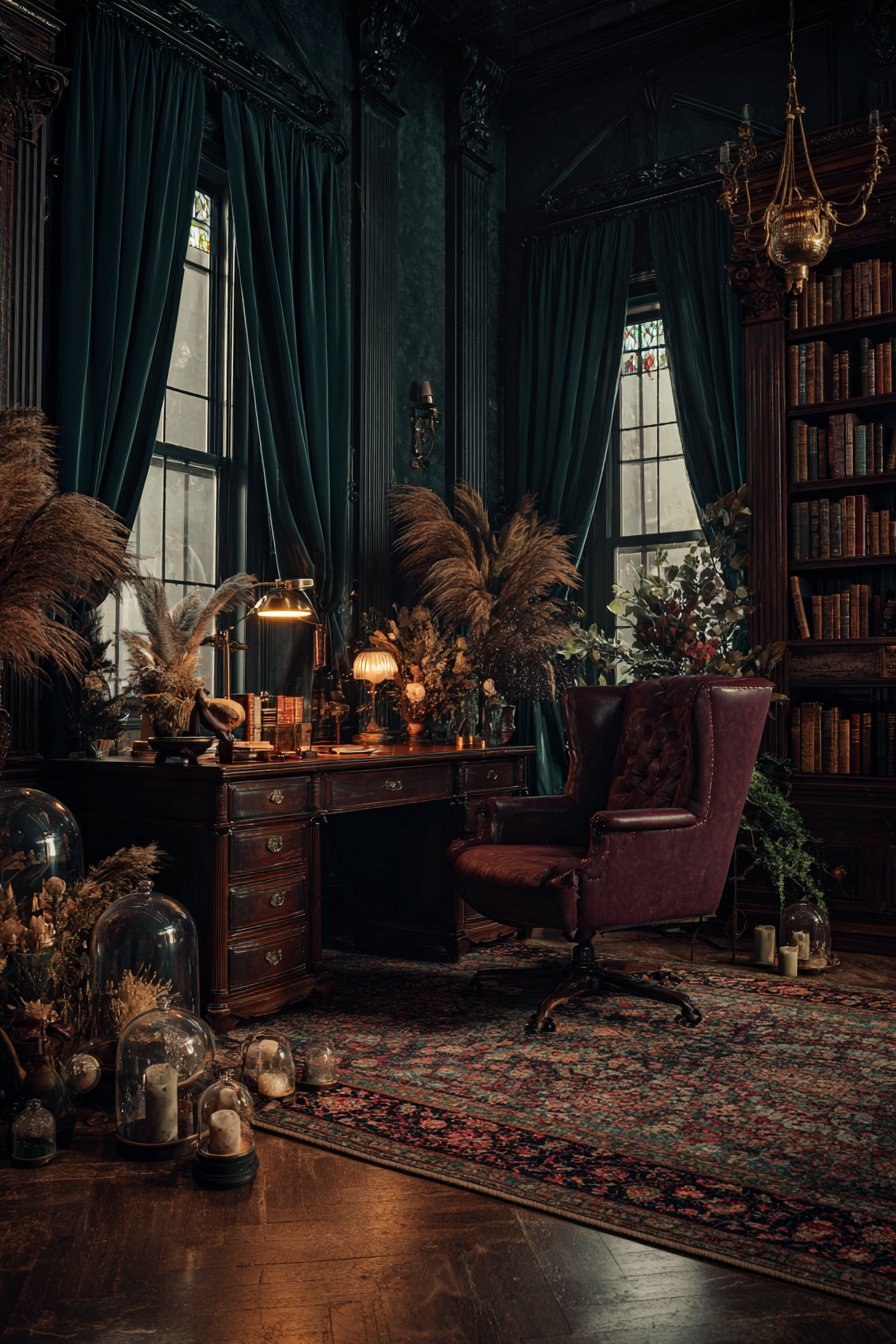
Thoughtful interior design goes beyond mere decoration—it shapes how we live, work, and think within our spaces. The Dark Academia style particularly resonates with individuals who value intellectual pursuits and appreciate the timeless beauty of traditional academia. This aesthetic offers a unique alternative to minimalist trends, embracing richness, depth, and a sense of history that creates truly inspiring environments.
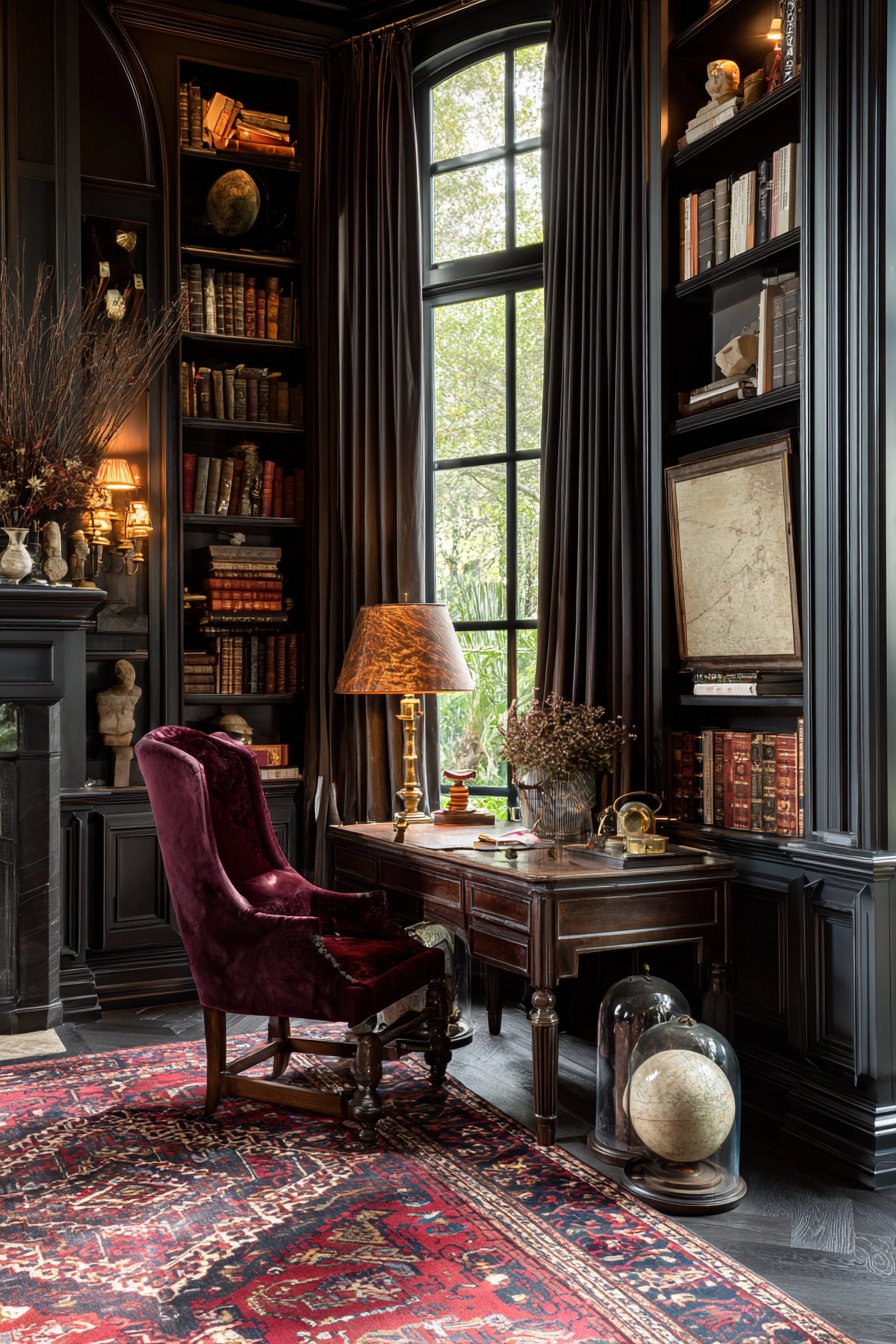
From rich color palettes to carefully curated book collections, this article explores how to bring the Dark Academia aesthetic into real homes. We’ll cover practical implementation strategies that balance atmospheric ambiance with everyday functionality, ensuring your space feels both aspirational and livable.
1. Understanding the Core Color Palette
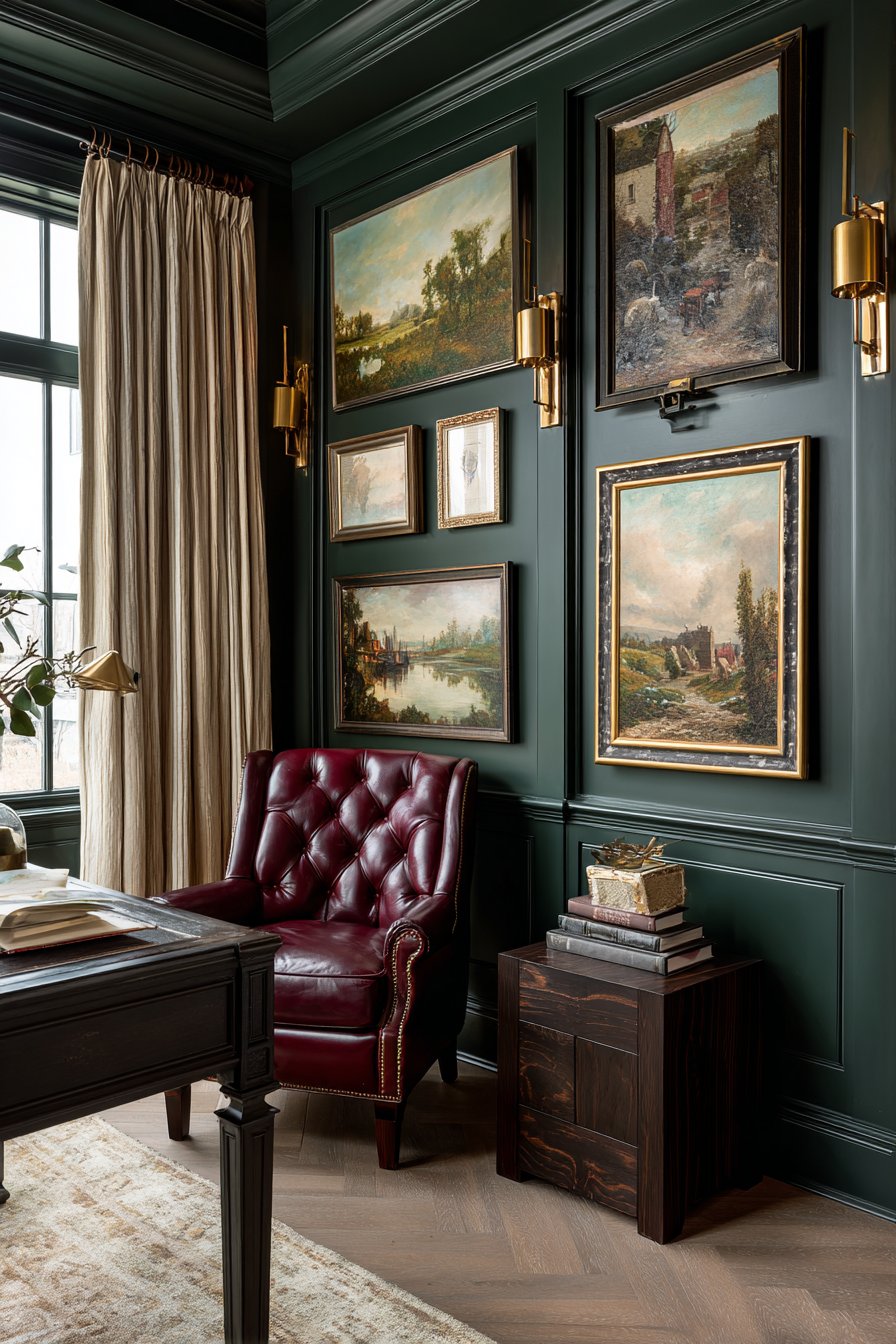
The foundation of Dark Academia lies in its deliberately moody color scheme that evokes old university libraries and vintage study halls. Deep browns, forest greens, burgundy, and charcoal create an enveloping atmosphere that encourages focus and contemplation. These colors work together to establish a sophisticated backdrop that makes other design elements shine.
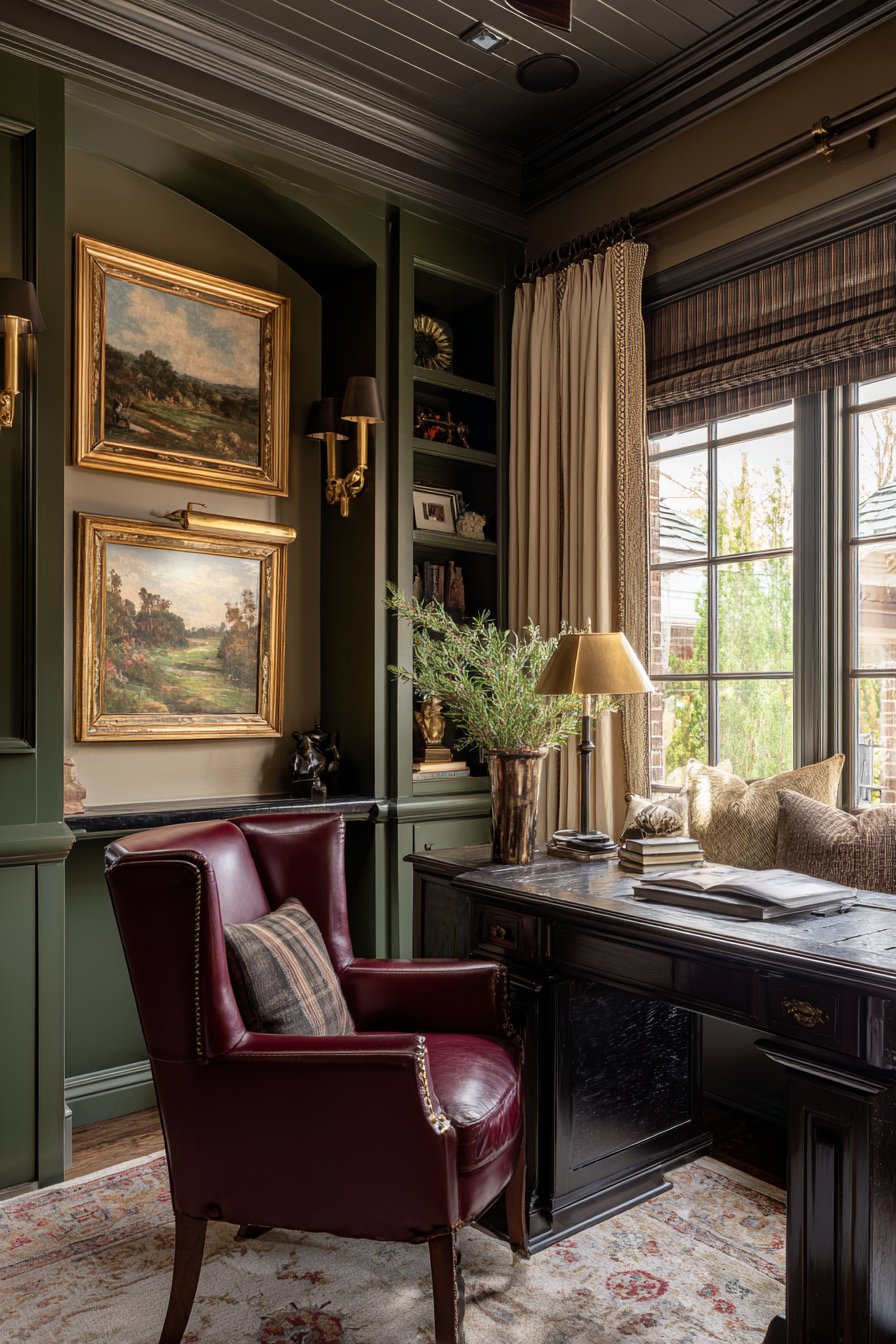
Contrary to popular belief, dark colors don’t necessarily make spaces feel smaller—they create visual depth and intimacy. The key is balancing these rich hues with adequate lighting and strategic color placement. Accent walls in deep green or burgundy can anchor a room while maintaining breathability through complementary neutral tones.
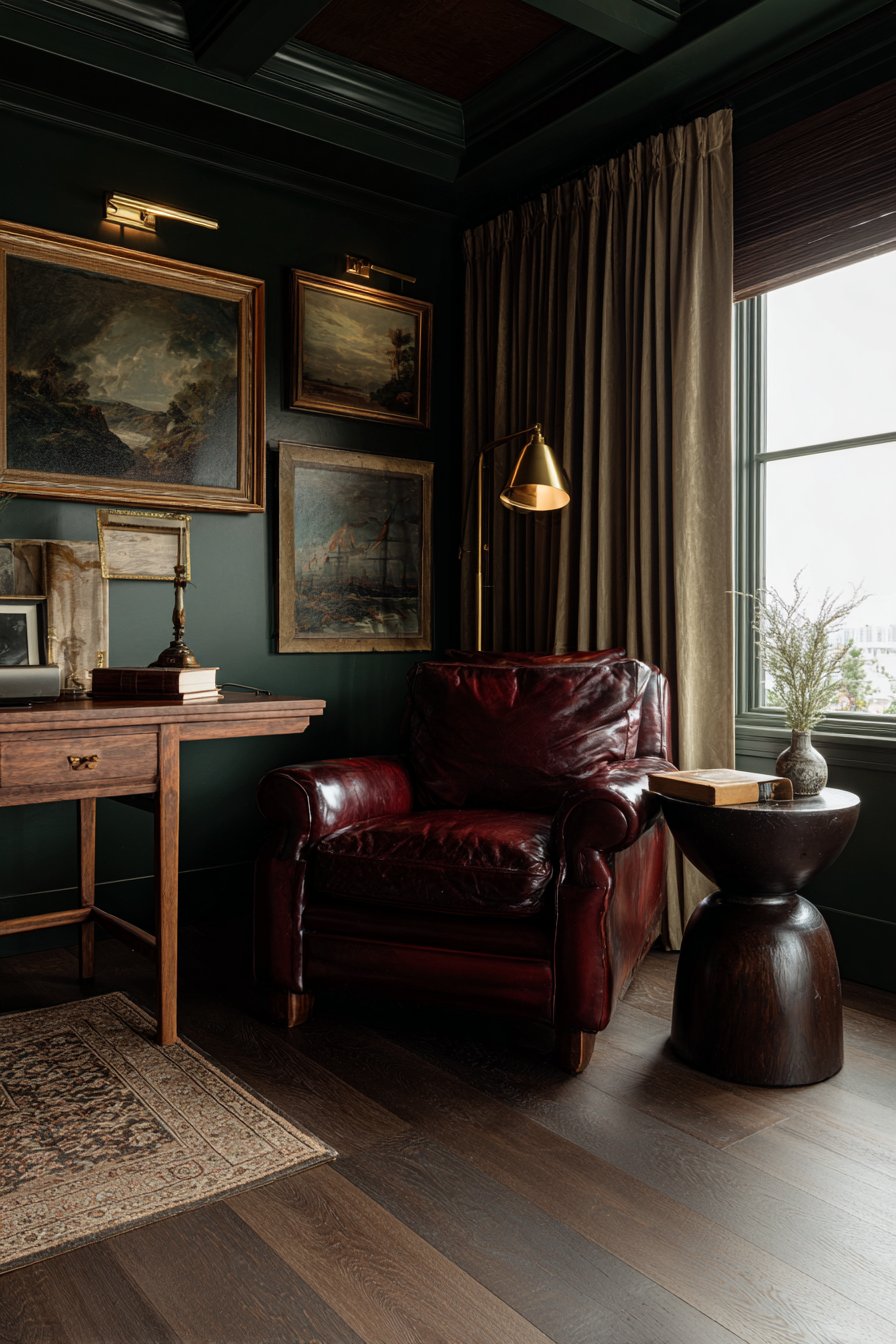
Start with one dominant dark shade and layer in two or three complementary colors for visual interest. Consider how natural light interacts with your chosen palette throughout the day. Test paint samples in different lighting conditions before committing to ensure the mood aligns with your vision.
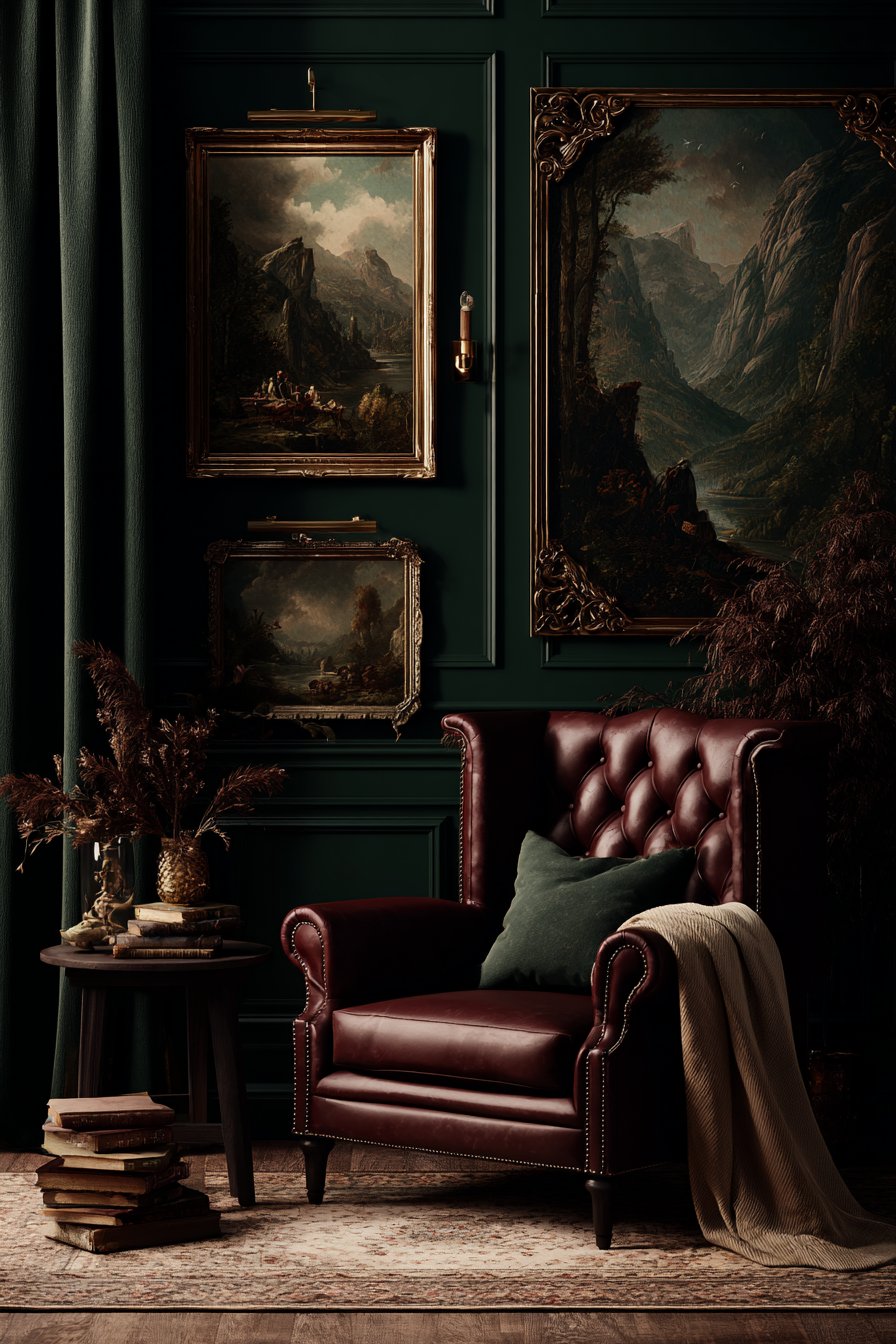
- Choose matte or eggshell finishes for walls to enhance the vintage aesthetic
- Use burgundy or forest green as accent colors on one focal wall
- Incorporate cream or beige as secondary neutrals to prevent overwhelming darkness
- Consider charcoal gray for ceilings to create a cocooning effect
- Layer different shades of the same color family for depth
- Test colors in both natural and artificial lighting before final selection
2. Curating an Authentic Book Collection Display
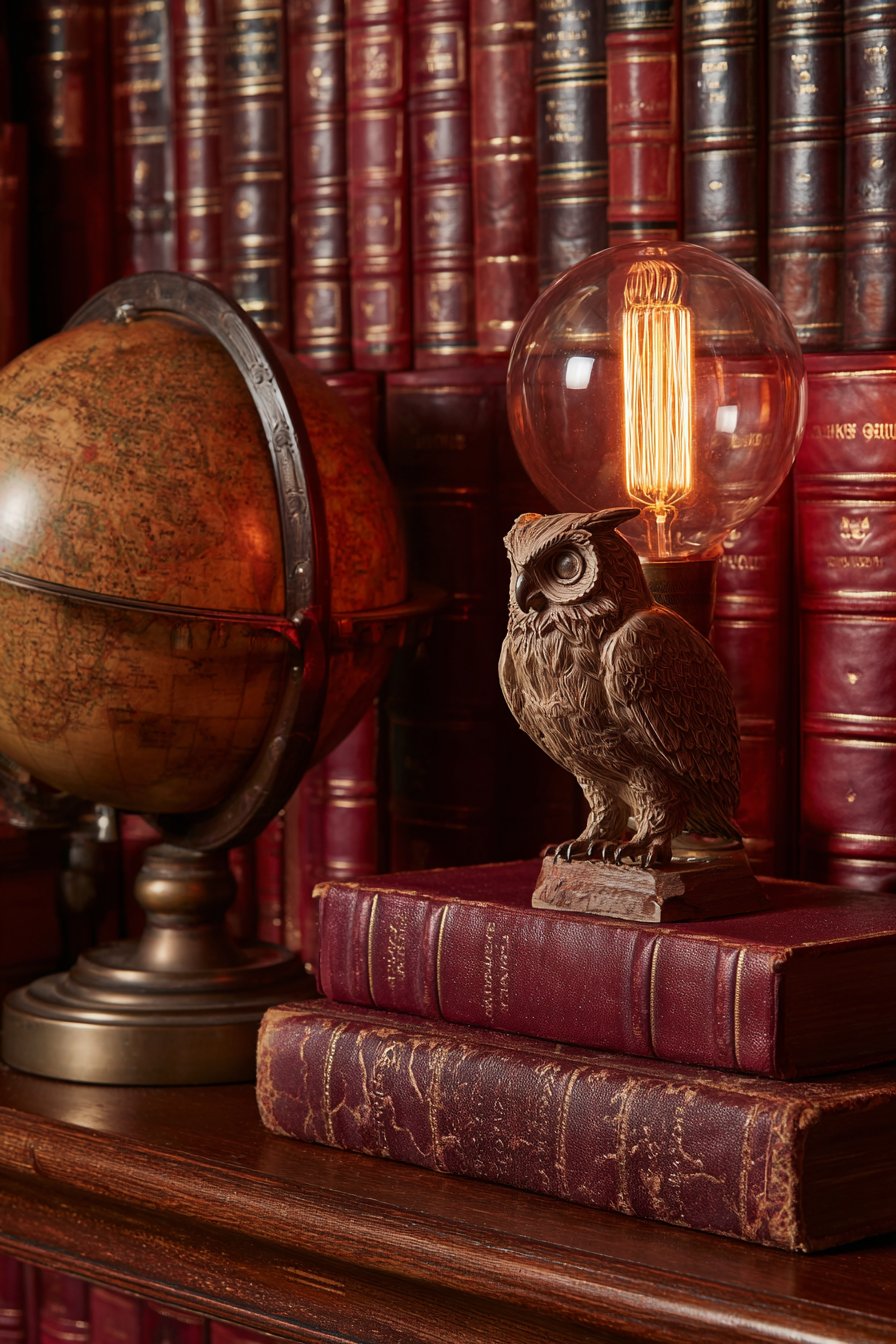
Books are the cornerstone element of any Dark Academia space, serving both functional and decorative purposes. A well-styled bookshelf tells a story about intellectual curiosity and personal interests. The presentation matters as much as the content—vintage hardcovers with aged spines create instant visual impact and authenticity.
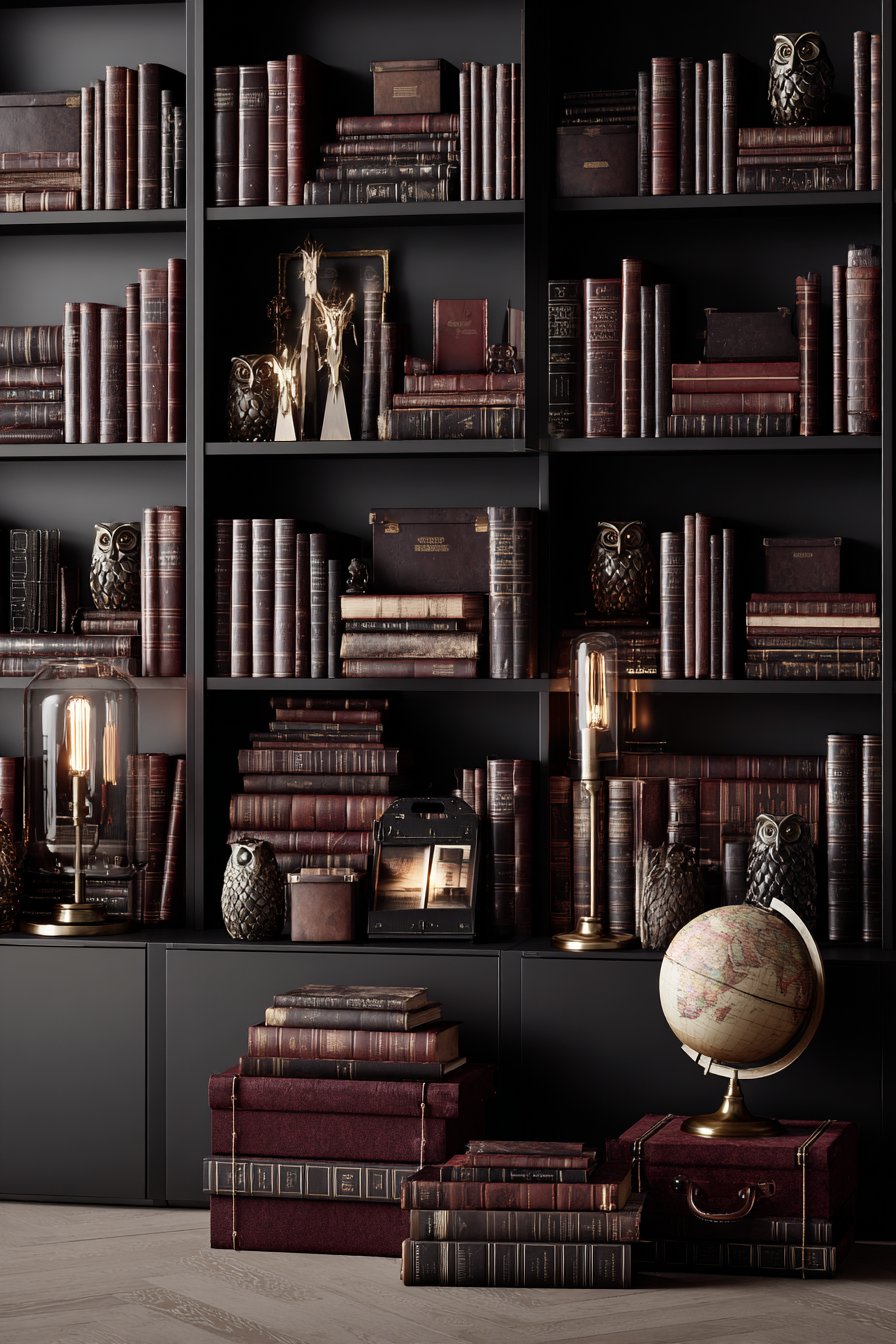
Arrange books both vertically and horizontally to create visual rhythm and provide surfaces for decorative objects. Mix old and new volumes, prioritizing leather-bound editions, classic literature, and academic texts when possible. Don’t feel pressured to fill every shelf—strategic gaps allow for curated vignettes featuring globes, specimen jars, or vintage cameras.
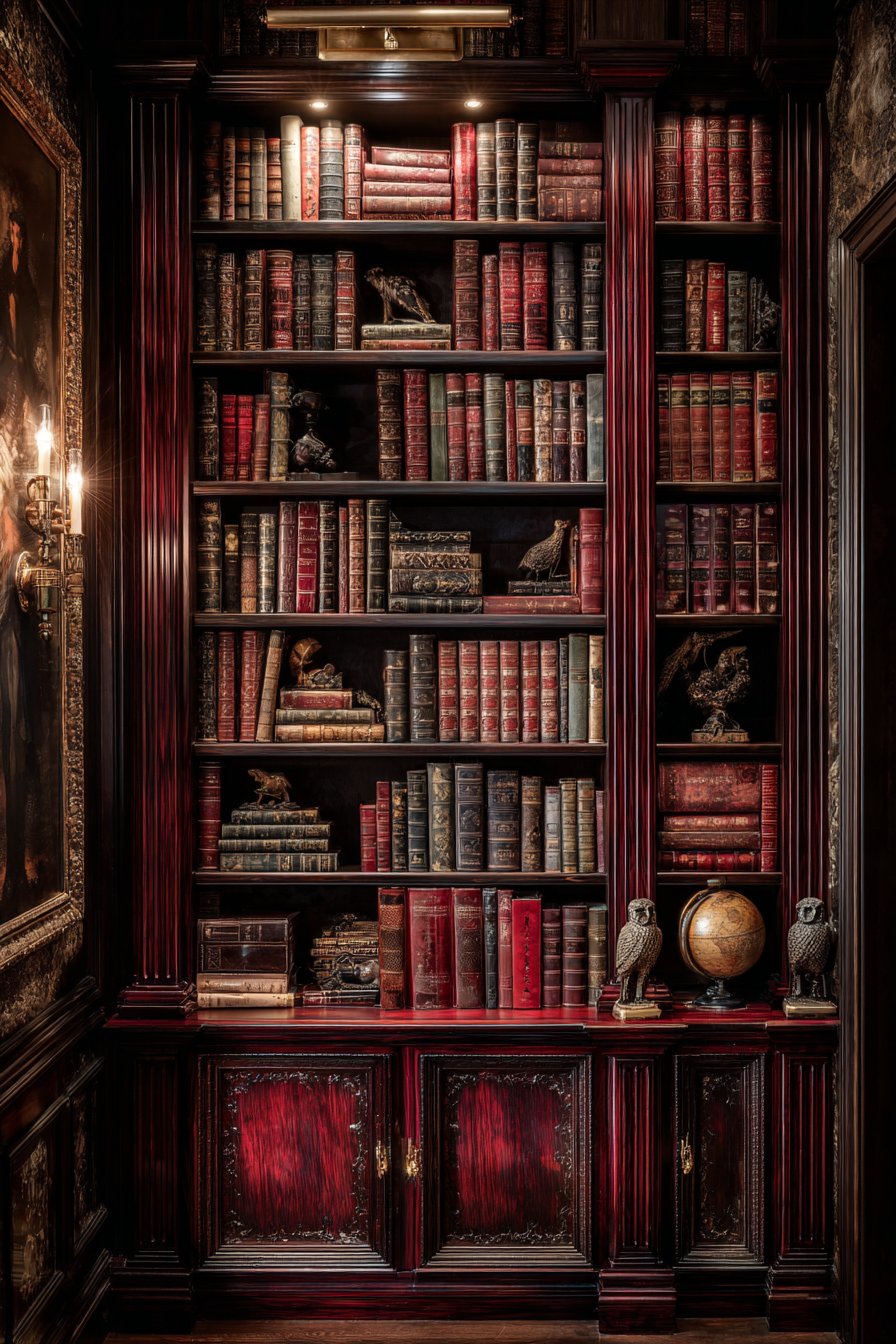
Thrift stores, estate sales, and online marketplaces offer affordable sources for building your collection. Focus on classic authors like Oscar Wilde, the Brontë sisters, and F. Scott Fitzgerald. Even inexpensive editions contribute to the overall aesthetic when grouped thoughtfully together.
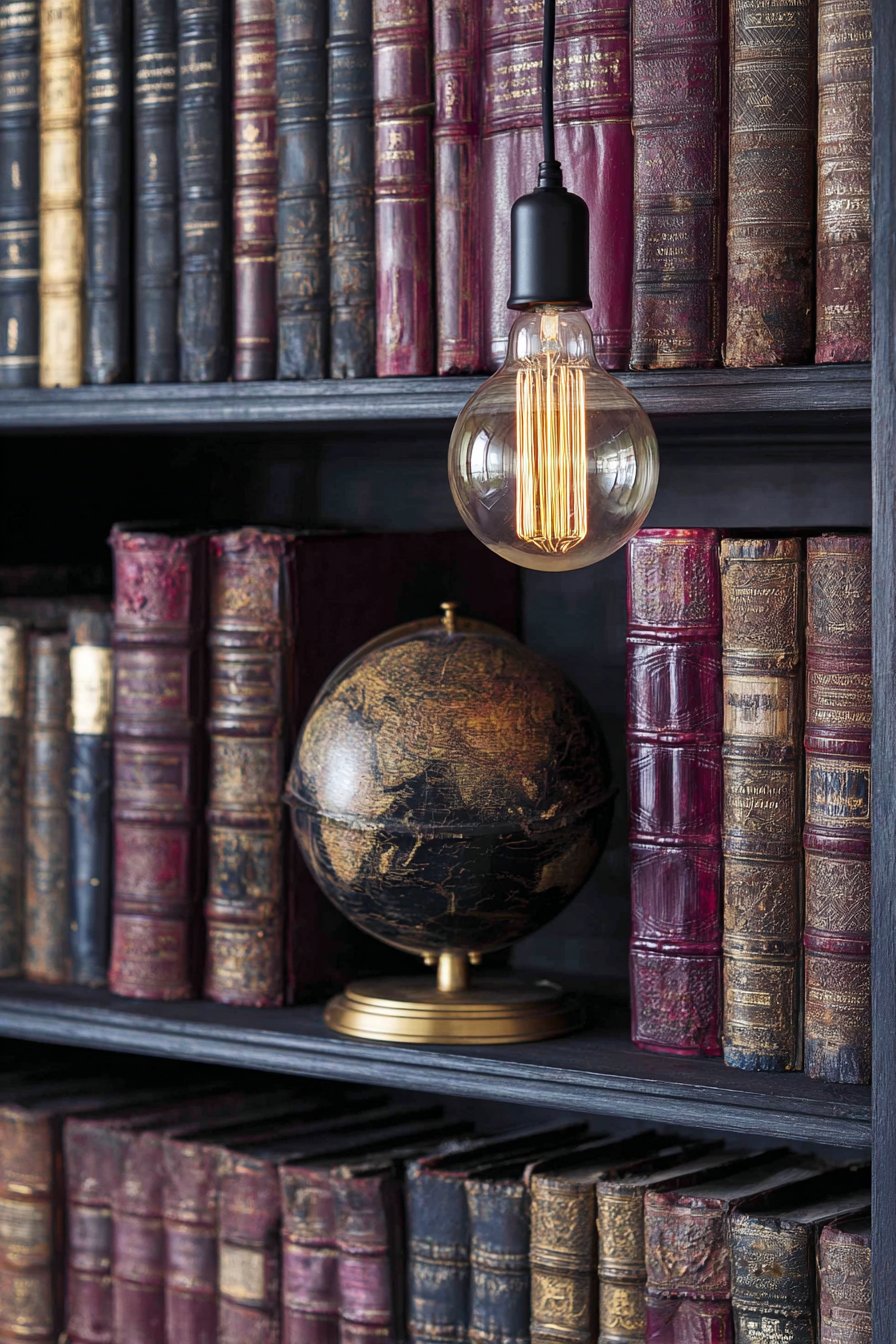
- Group books by color for a cohesive, Instagram-worthy look
- Stack larger coffee table books horizontally as display bases
- Incorporate vintage bookends shaped like owls, lions, or classical busts
- Leave intentional gaps between book groups for decorative objects
- Mix leather-bound volumes with cloth-covered antique editions
- Display books with spines facing both inward and outward for visual interest
3. Mastering Atmospheric Lighting Techniques
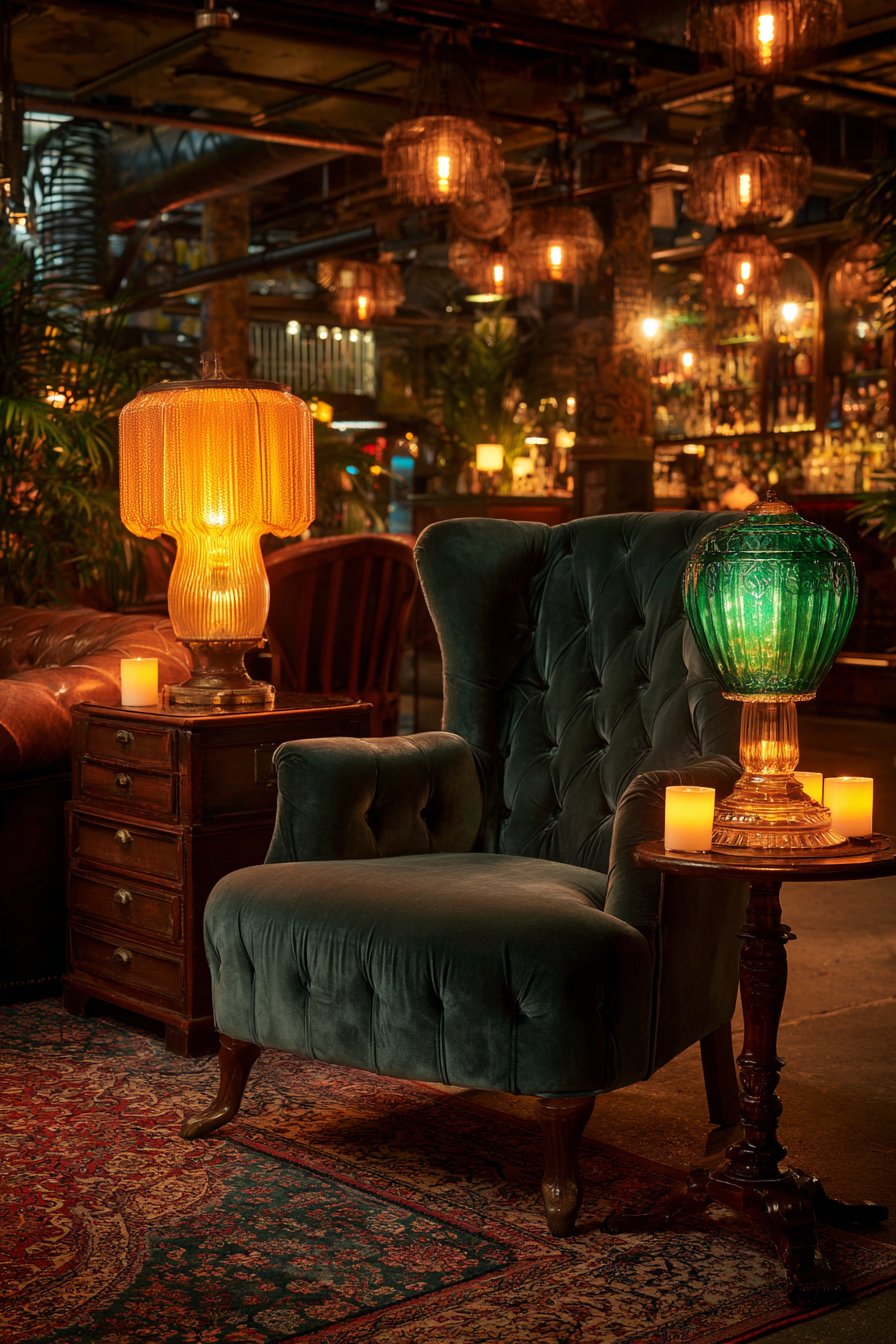
Lighting transforms Dark Academia spaces from merely dark to romantically moody and inviting. The goal is creating pools of warm, golden light rather than harsh overhead illumination. Layered lighting using multiple sources at different heights mimics the ambiance of historic libraries and studies.
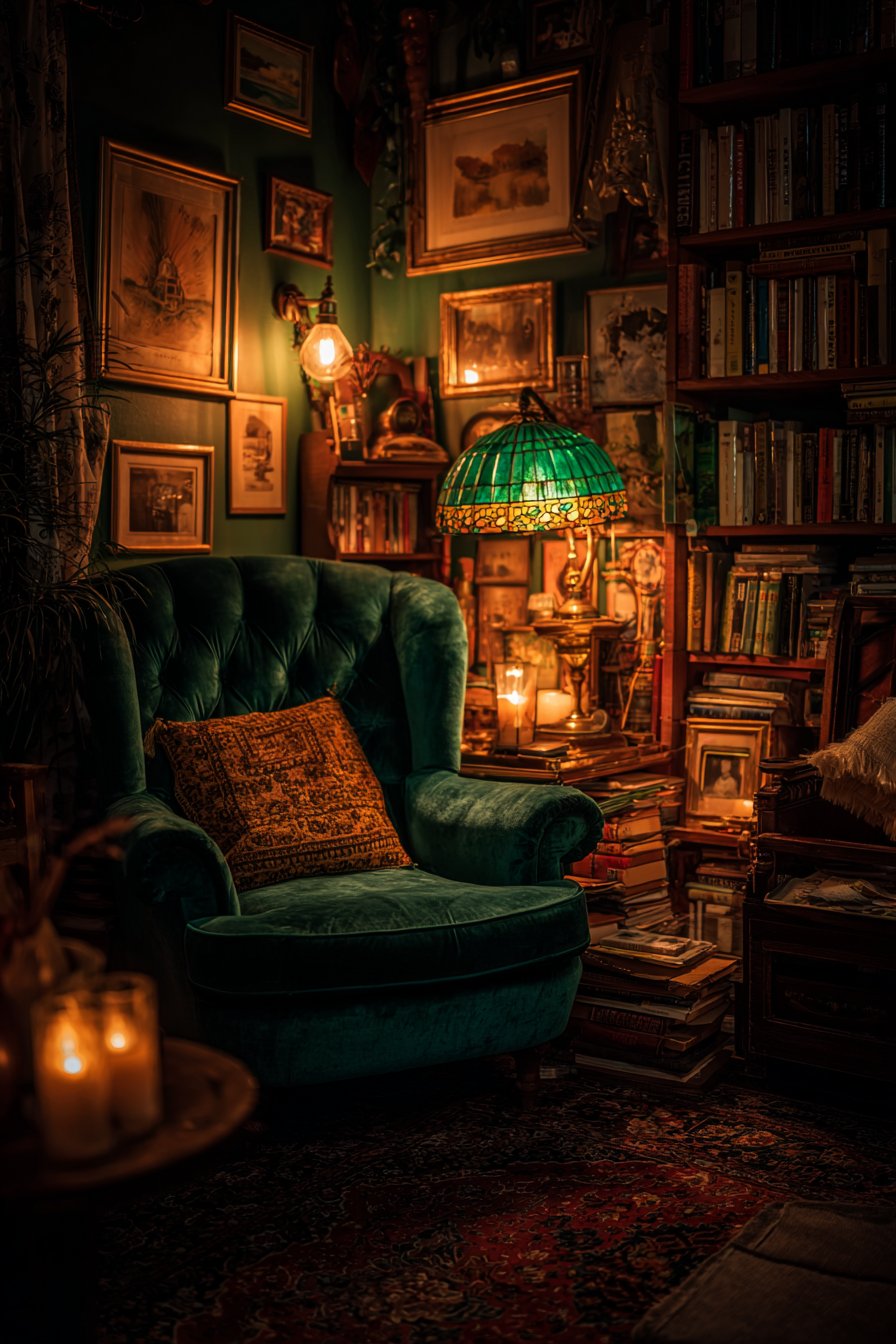
Table lamps with brass or bronze finishes provide essential task lighting while contributing to the aesthetic. Banker’s lamps with green glass shades are iconic Dark Academia pieces that offer both function and style. Avoid cool-toned LED bulbs—opt for warm white or Edison-style bulbs that cast a golden, vintage glow.
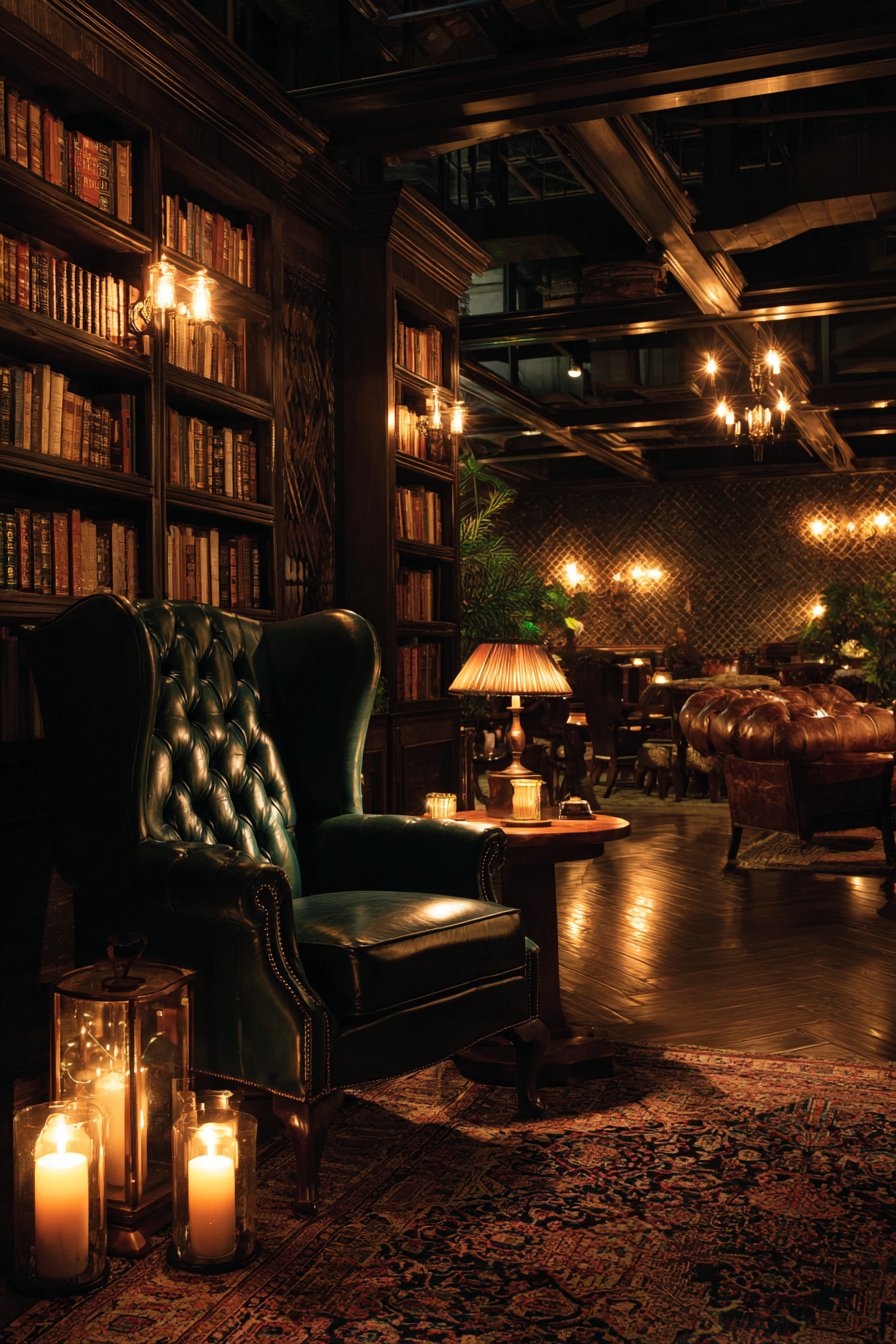
Candlelight adds authentic atmosphere but requires safety precautions in book-filled spaces. LED candles offer a practical alternative that still provides flickering warmth without fire risk. Position lighting sources to highlight specific features like artwork, bookcases, or reading nooks while leaving other areas in shadow.
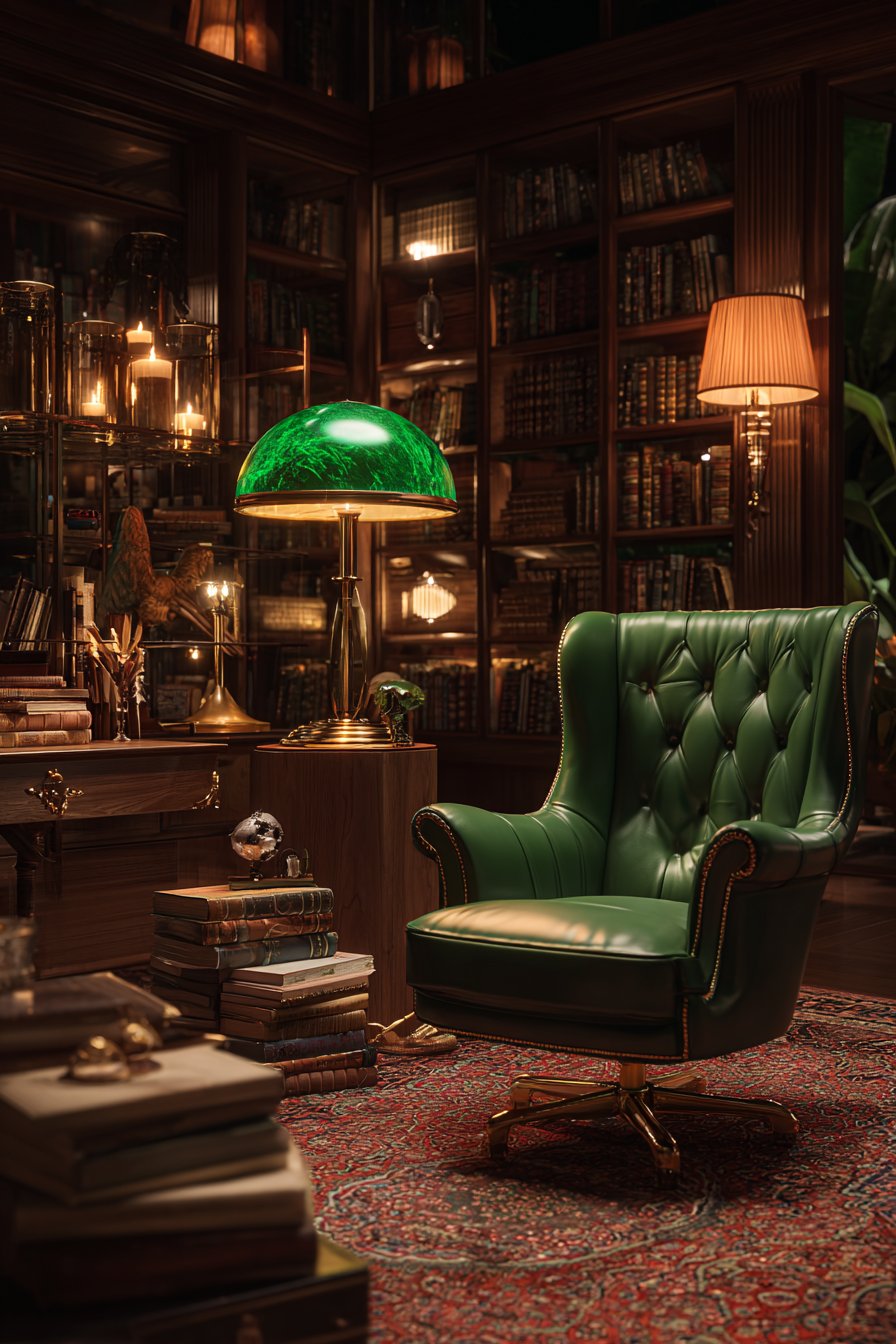
- Install dimmer switches to control ambiance throughout the day
- Choose lamp shades in dark green, amber, or burgundy fabric
- Position floor lamps in room corners to create ambient lighting pools
- Use 2700K-3000K color temperature bulbs for warm, golden light
- Layer three types of lighting: ambient, task, and accent
- Incorporate vintage-style Edison bulbs in exposed fixtures for authenticity
4. Selecting Furniture with Scholarly Character
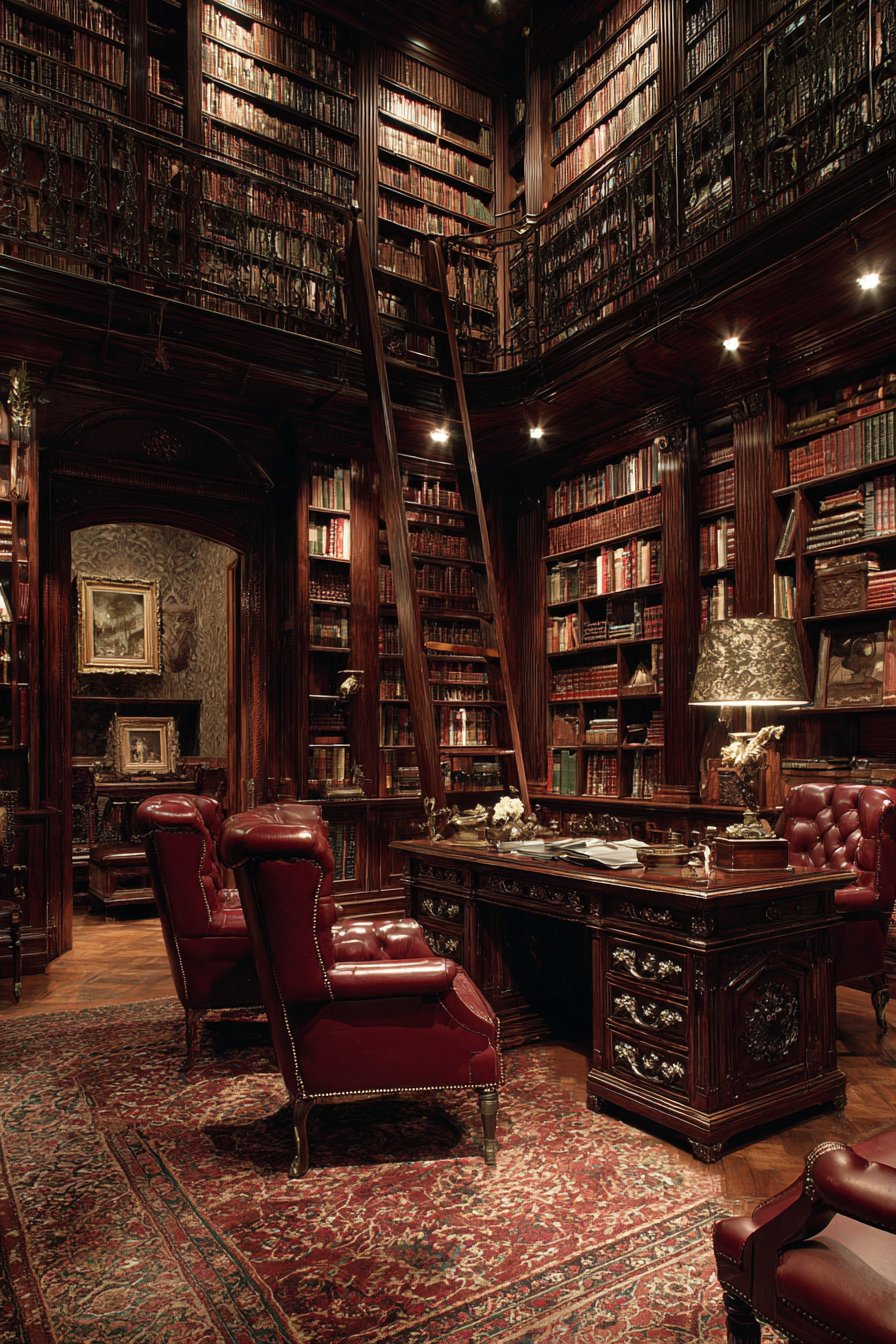
Dark Academia furniture emphasizes classic silhouettes and rich wood tones that suggest longevity and craftsmanship. Seek pieces with carved details, turned legs, and substantial presence. Leather furniture in deep brown or oxblood develops beautiful patina over time, enhancing the vintage aesthetic.
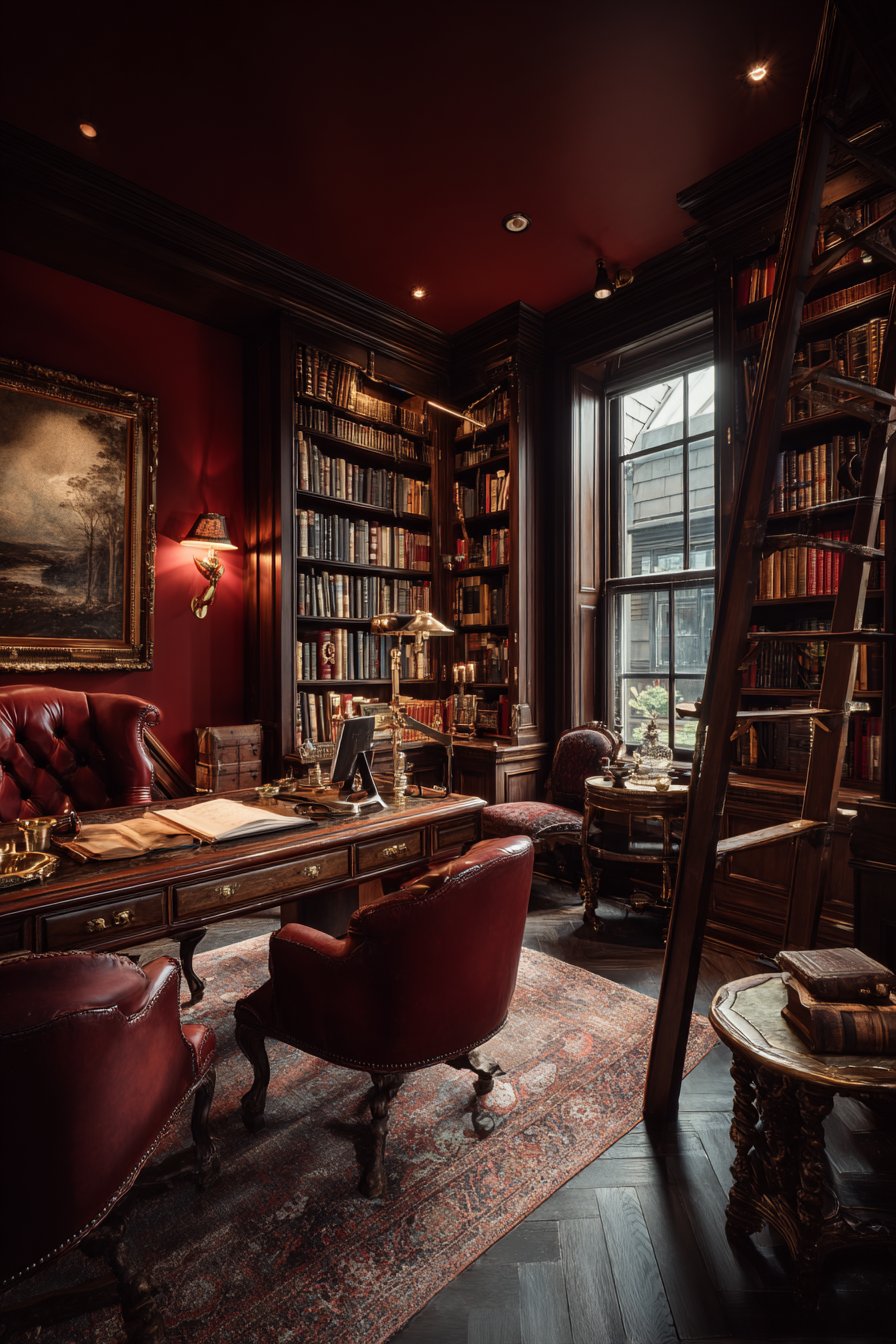
A substantial wooden desk serves as the room’s focal point and functional centerpiece for scholarly pursuits. Look for pieces with drawers, compartments, and writing surfaces that encourage productivity. Wingback chairs upholstered in leather or velvet provide comfortable reading spots while reinforcing the academic atmosphere.
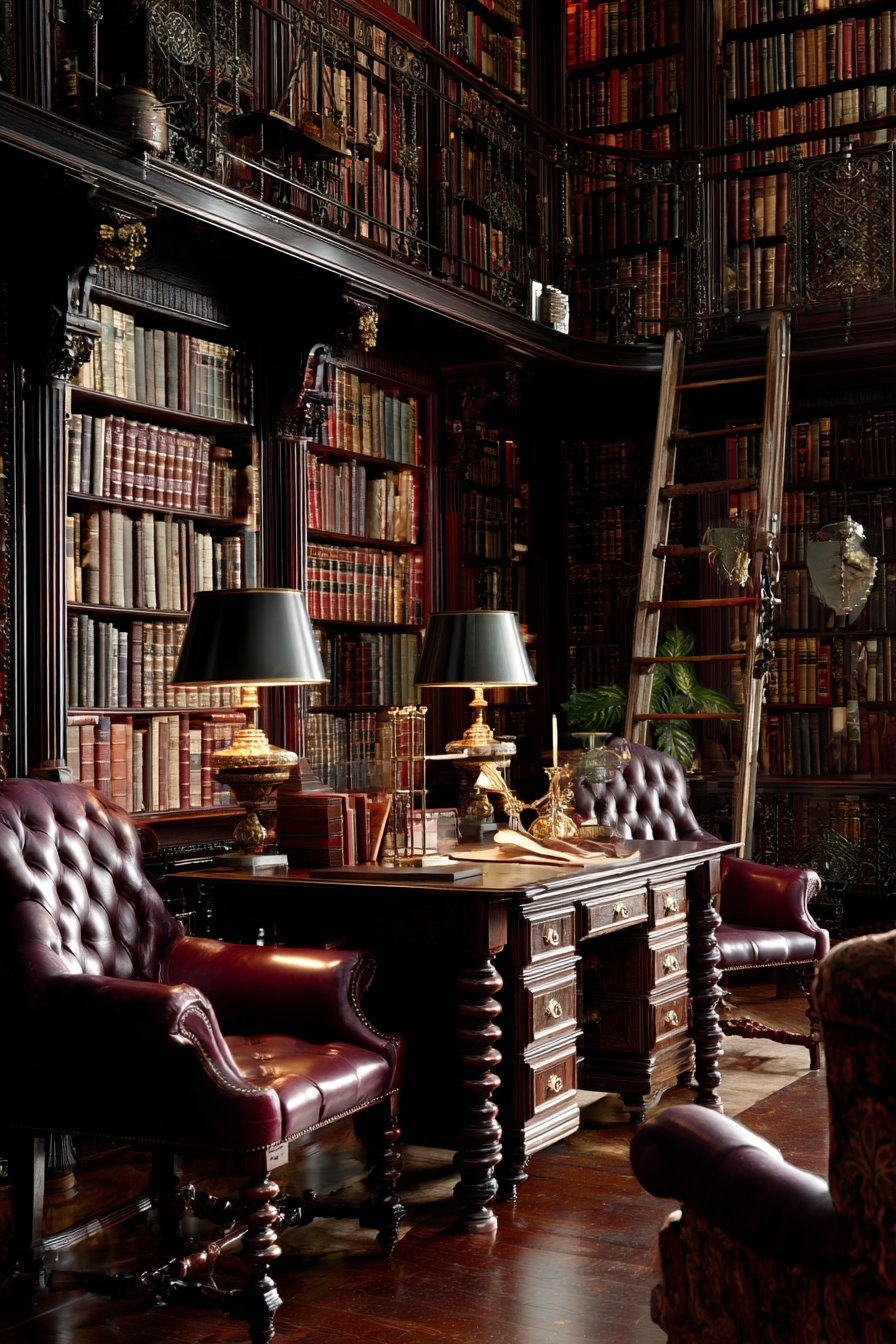
Mixing furniture periods creates collected-over-time authenticity rather than a showroom appearance. Combine Victorian, Edwardian, and mid-century pieces that share similar wood tones and formality levels. Estate sales and antique shops offer affordable alternatives to expensive reproduction furniture.
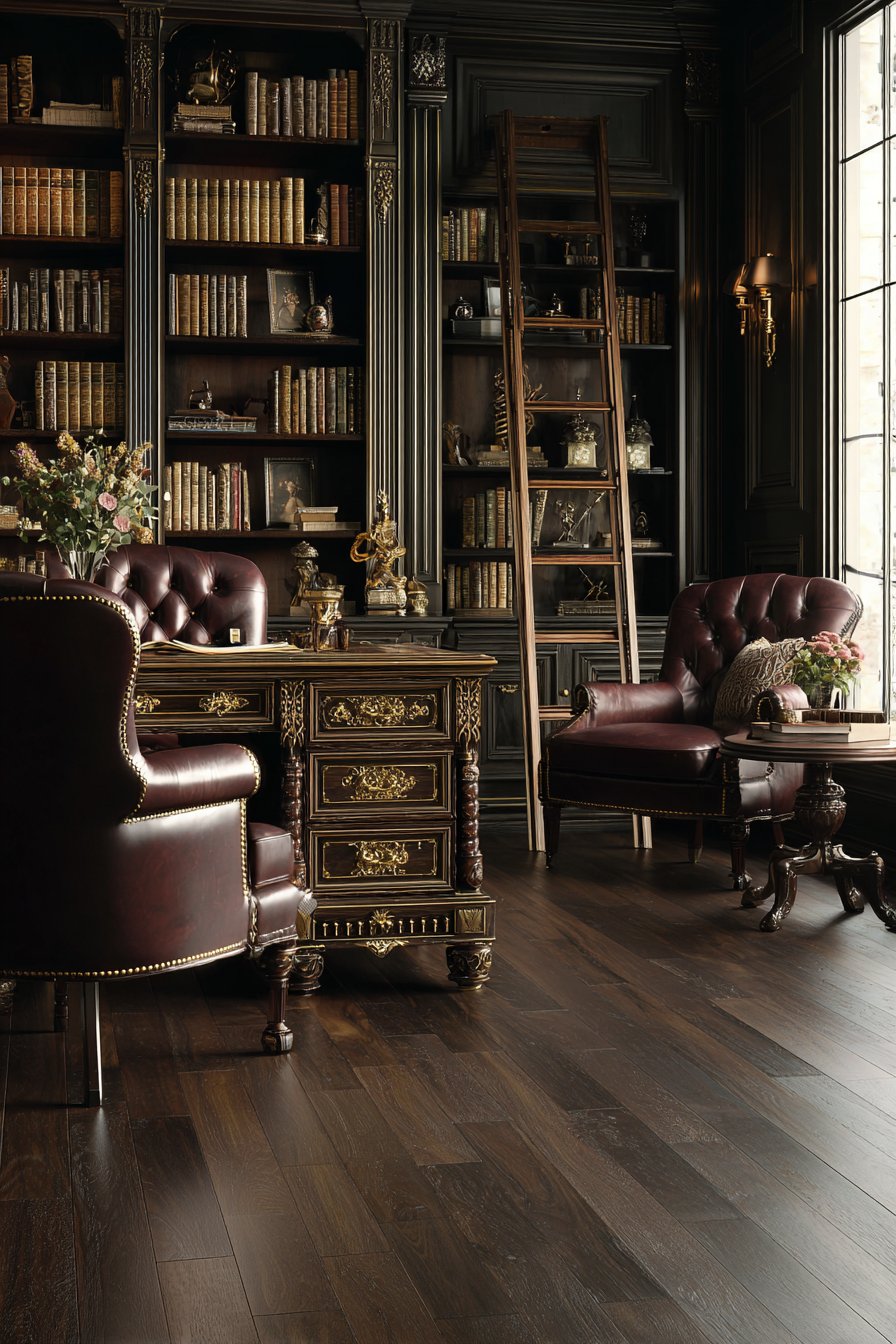
- Prioritize solid wood pieces in walnut, mahogany, or cherry finishes
- Choose furniture with visible joinery and craftsmanship details
- Incorporate at least one leather piece for authentic texture
- Select seating with high backs and substantial frames
- Add a vintage wooden ladder for accessing high shelves
- Mix antique finds with quality reproductions for budget balance
5. Incorporating Academic and Natural Artifacts
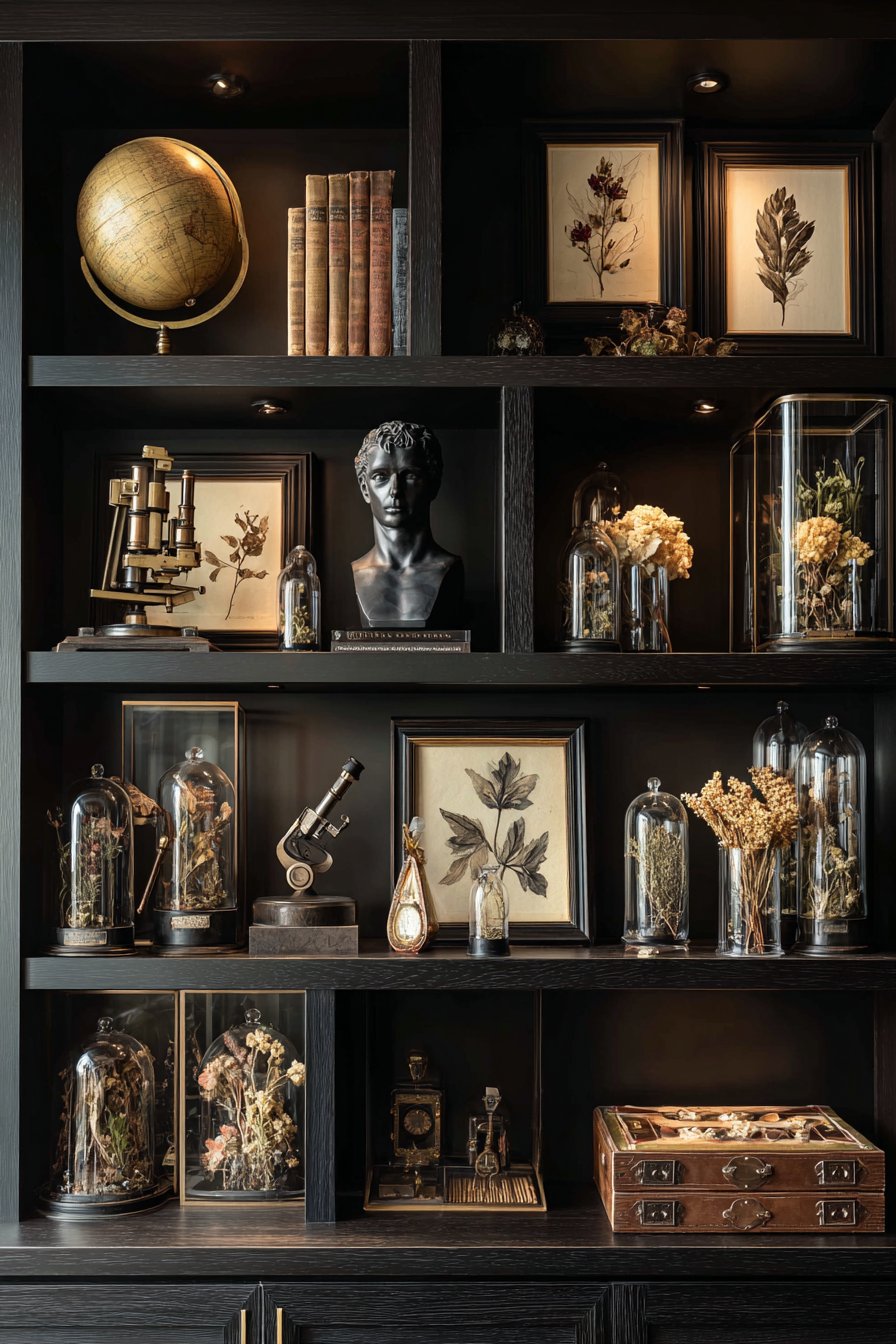
The intellectual curiosity central to Dark Academia extends to decorative objects that suggest scholarly interests. Vintage globes, antique maps, and framed botanical prints transform walls into cabinet of curiosities displays. These pieces add personality while reinforcing the aesthetic’s educational foundation.
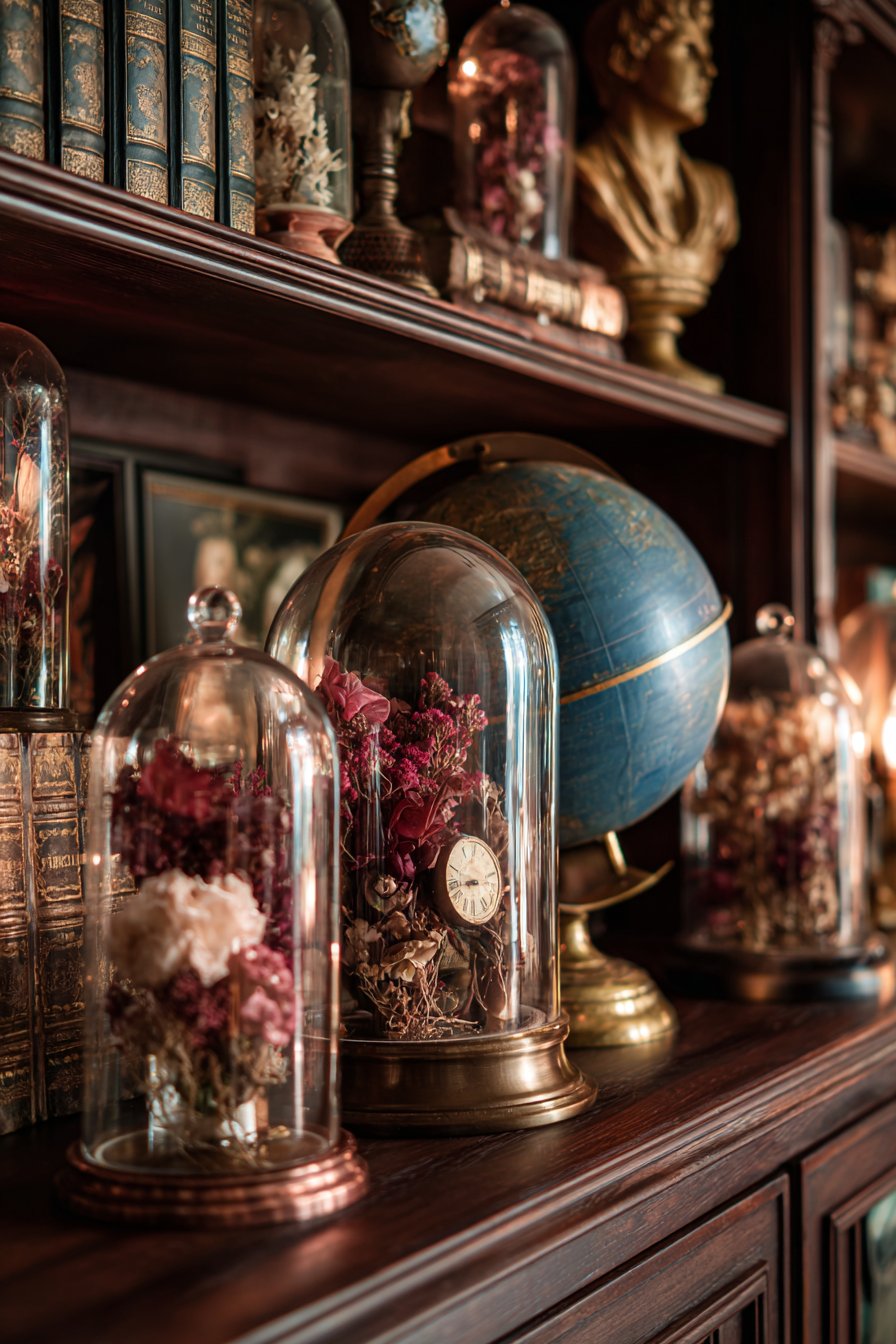
Natural specimens like preserved insects, dried botanicals, and mineral collections bridge the gap between Victorian naturalism and modern design. Display these items in glass cloches, shadow boxes, or vintage specimen jars. Skulls, antlers, and taxidermy appeal to some while feeling excessive to others—choose what resonates personally.
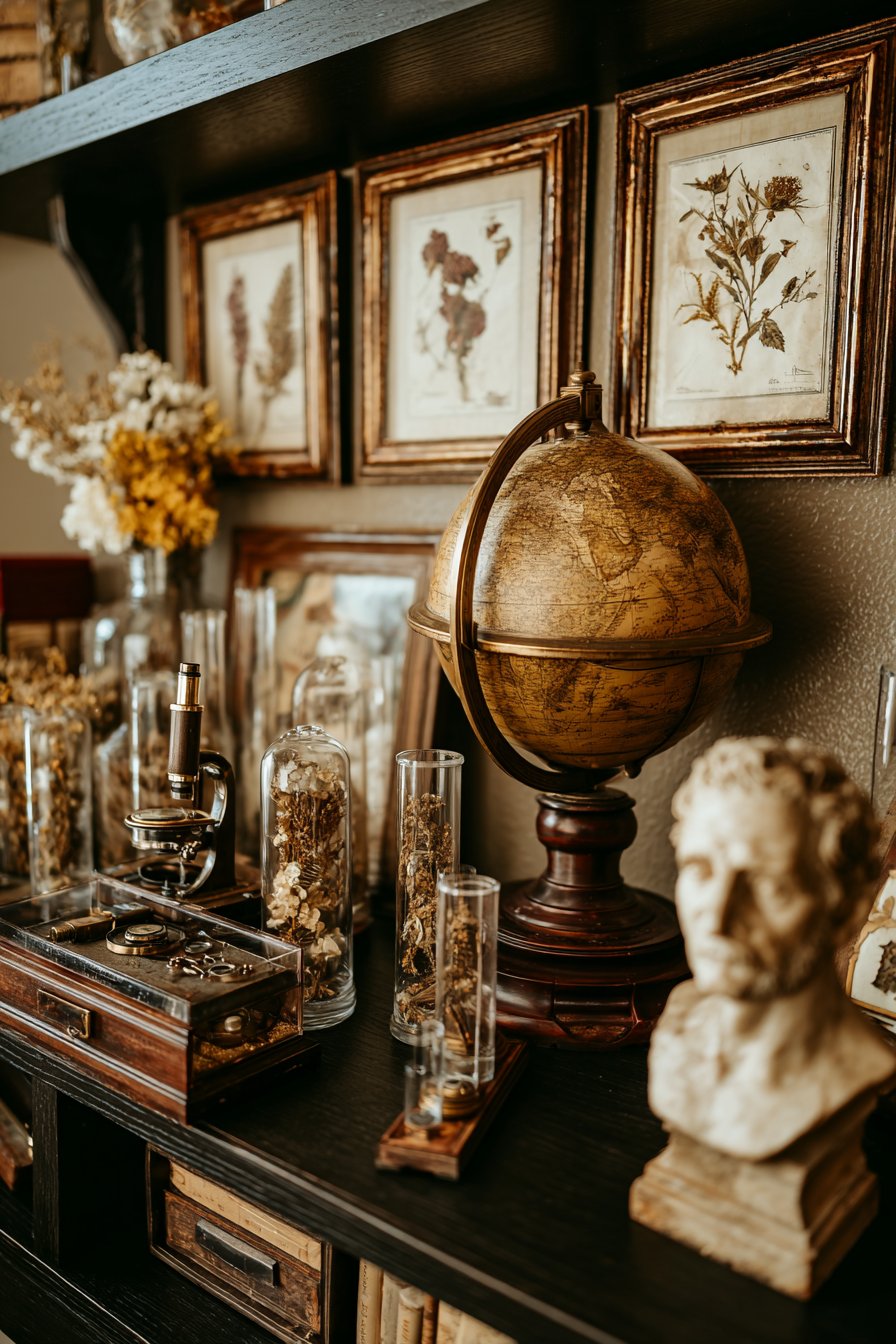
Vintage scientific instruments including microscopes, telescopes, and brass compasses serve as sculptural elements even when nonfunctional. These objects add three-dimensional interest to shelves and desktops. Flea markets often yield affordable pieces that contribute historical intrigue without breaking budgets.
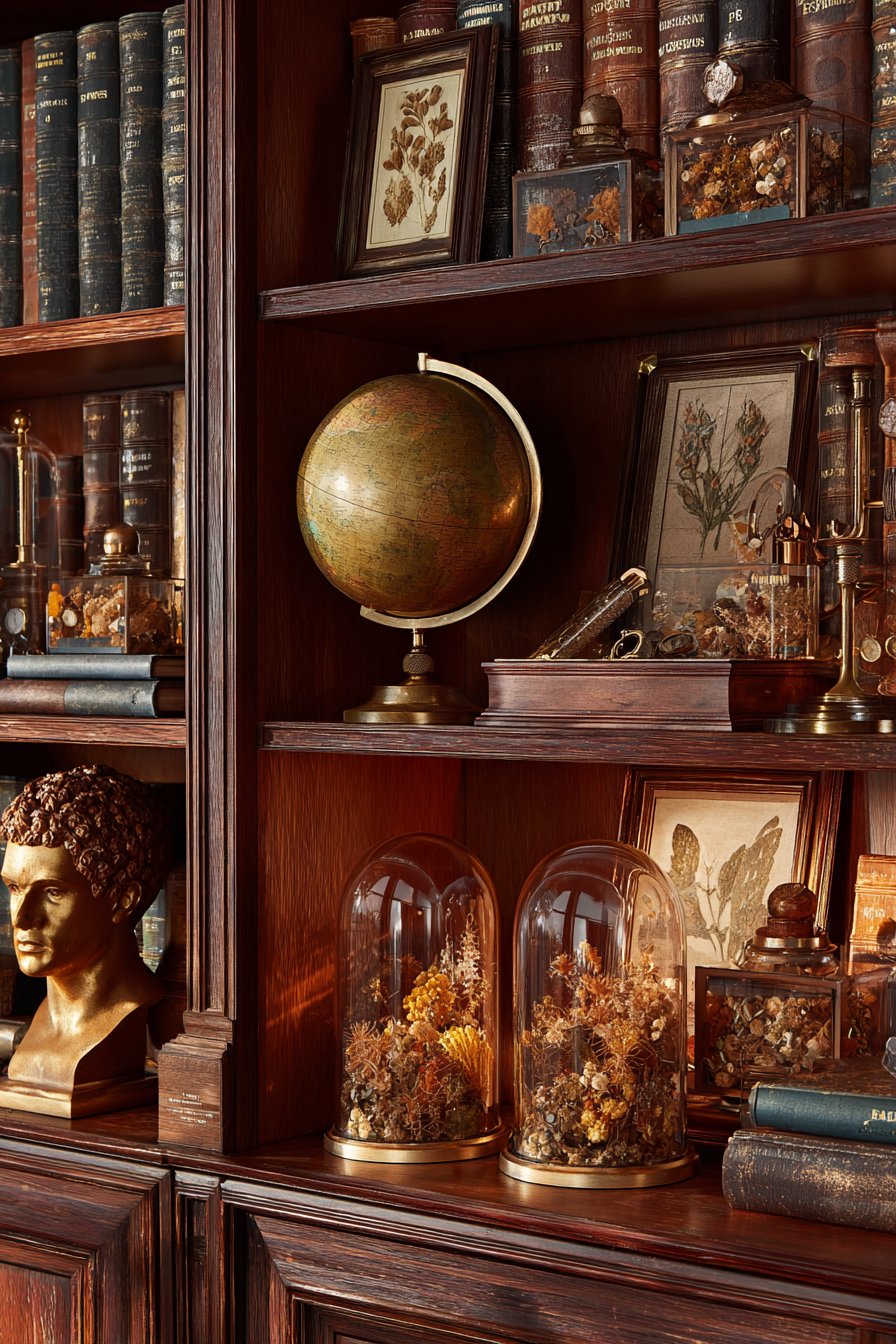
- Frame vintage botanical or anatomical illustrations in dark wood frames
- Display a large antique globe as a statement piece
- Arrange dried flowers in vintage glass bottles or laboratory beakers
- Incorporate brass or bronze sculpture busts of classical figures
- Use vintage suitcases and trunks as both storage and display surfaces
- Create shadow box displays featuring vintage keys, watches, or writing implements
6. Textiles and Textures for Comfort and Ambiance
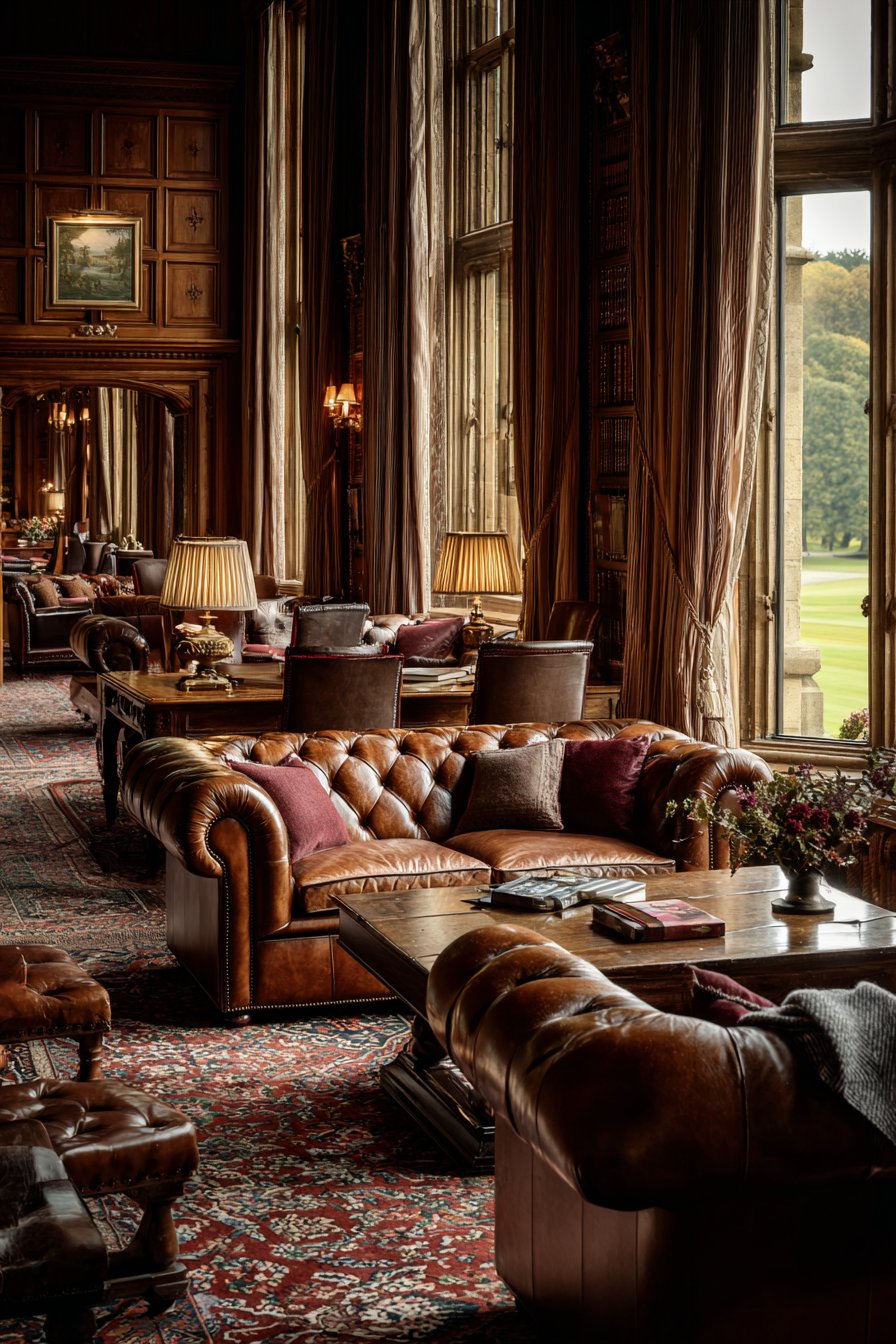
While Dark Academia emphasizes visual drama, tactile comfort ensures spaces remain livable and inviting. Layer rich fabrics including velvet, wool, and leather to create sensory depth. Throws and pillows in jewel tones soften seating areas while maintaining the sophisticated color palette.
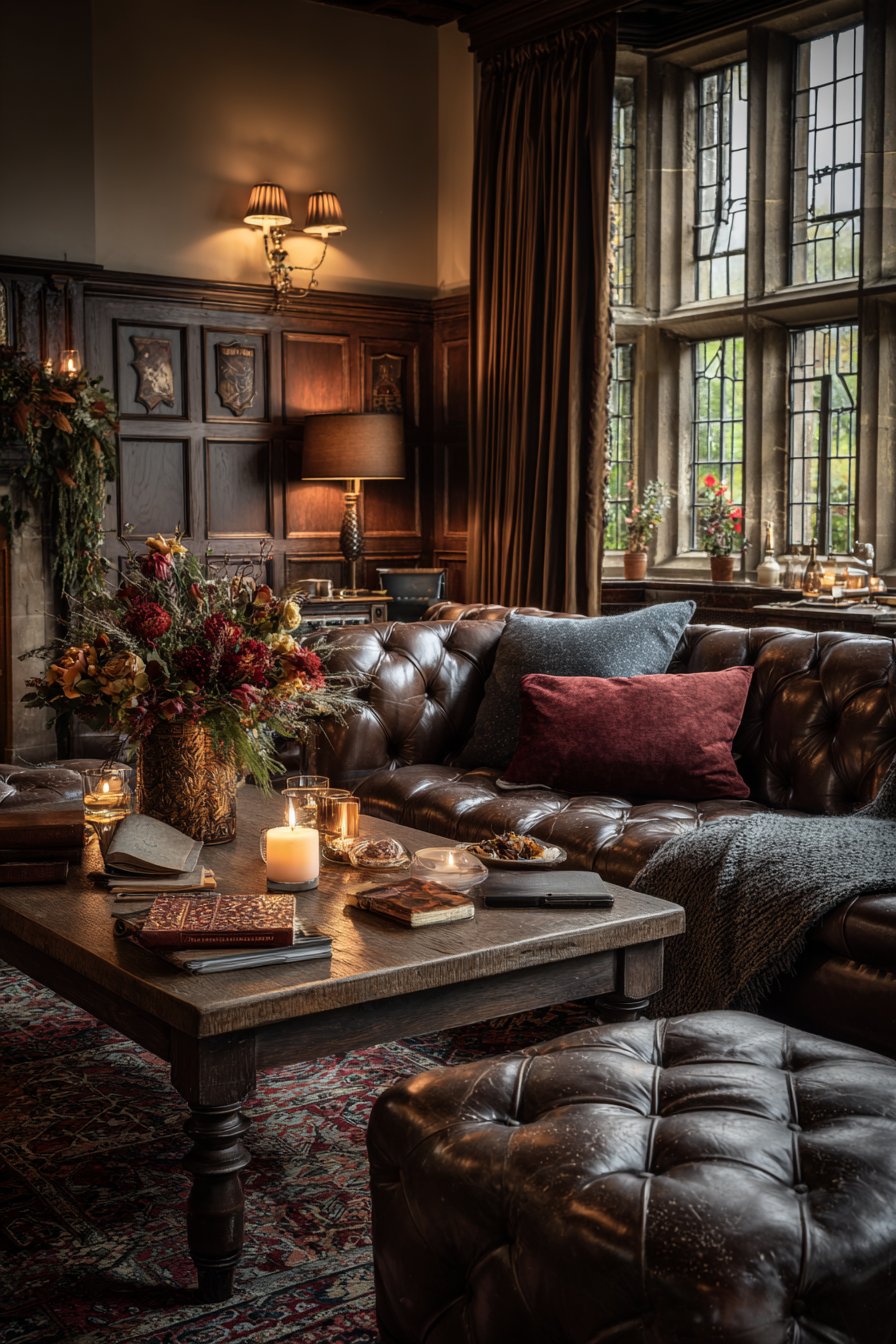
Heavy drapes in velvet or thick cotton serve both practical and aesthetic functions, controlling light while adding architectural drama. Floor-length curtains in deep colors frame windows like artwork and improve room acoustics. Persian or Oriental rugs anchor seating areas with intricate patterns that feel collected and timeless.
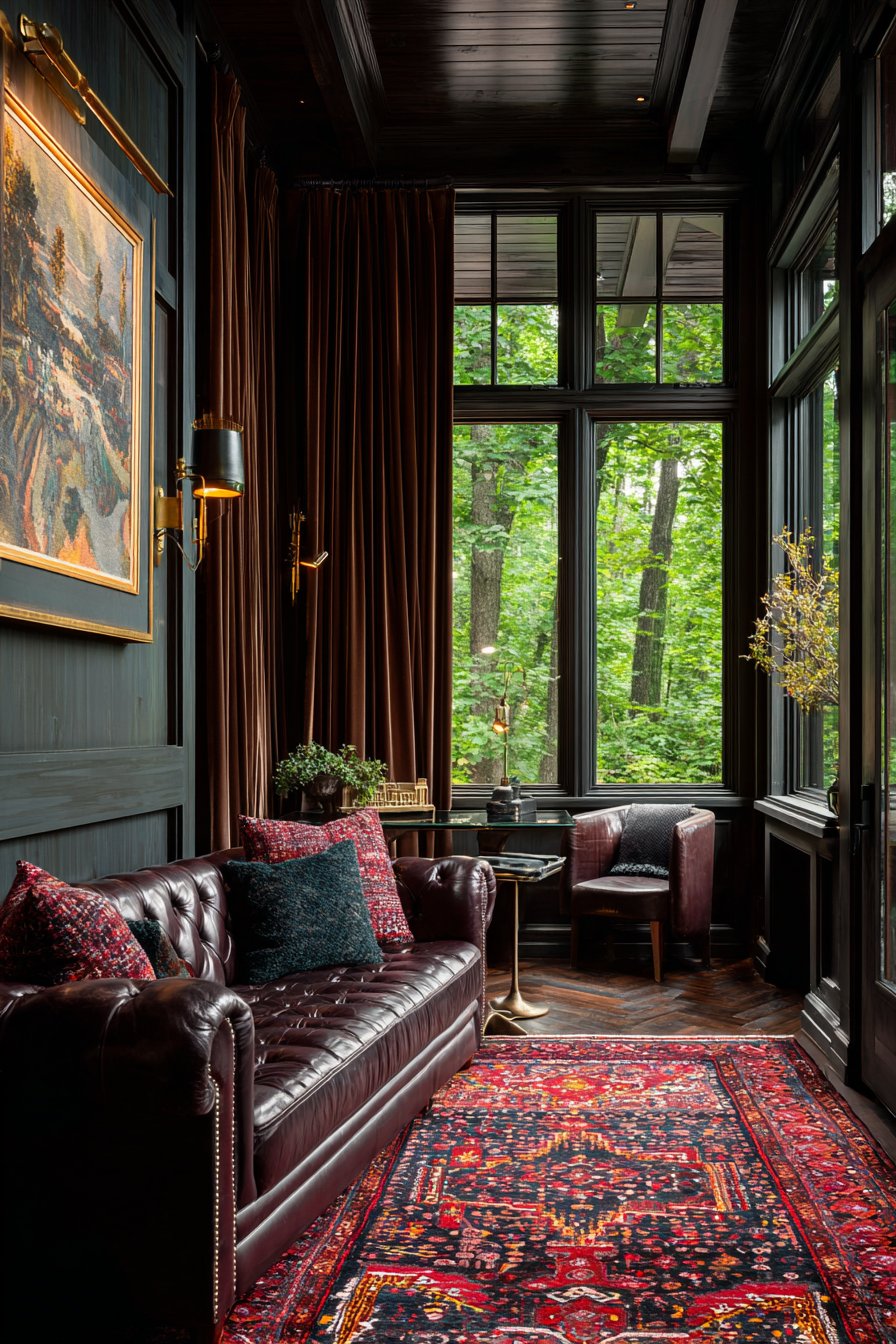
Texture variation prevents dark spaces from feeling flat or one-dimensional. Combine smooth leather with nubby wool, polished wood with rough stone, and matte walls with glossy accents. This interplay creates visual interest even within a limited color palette.
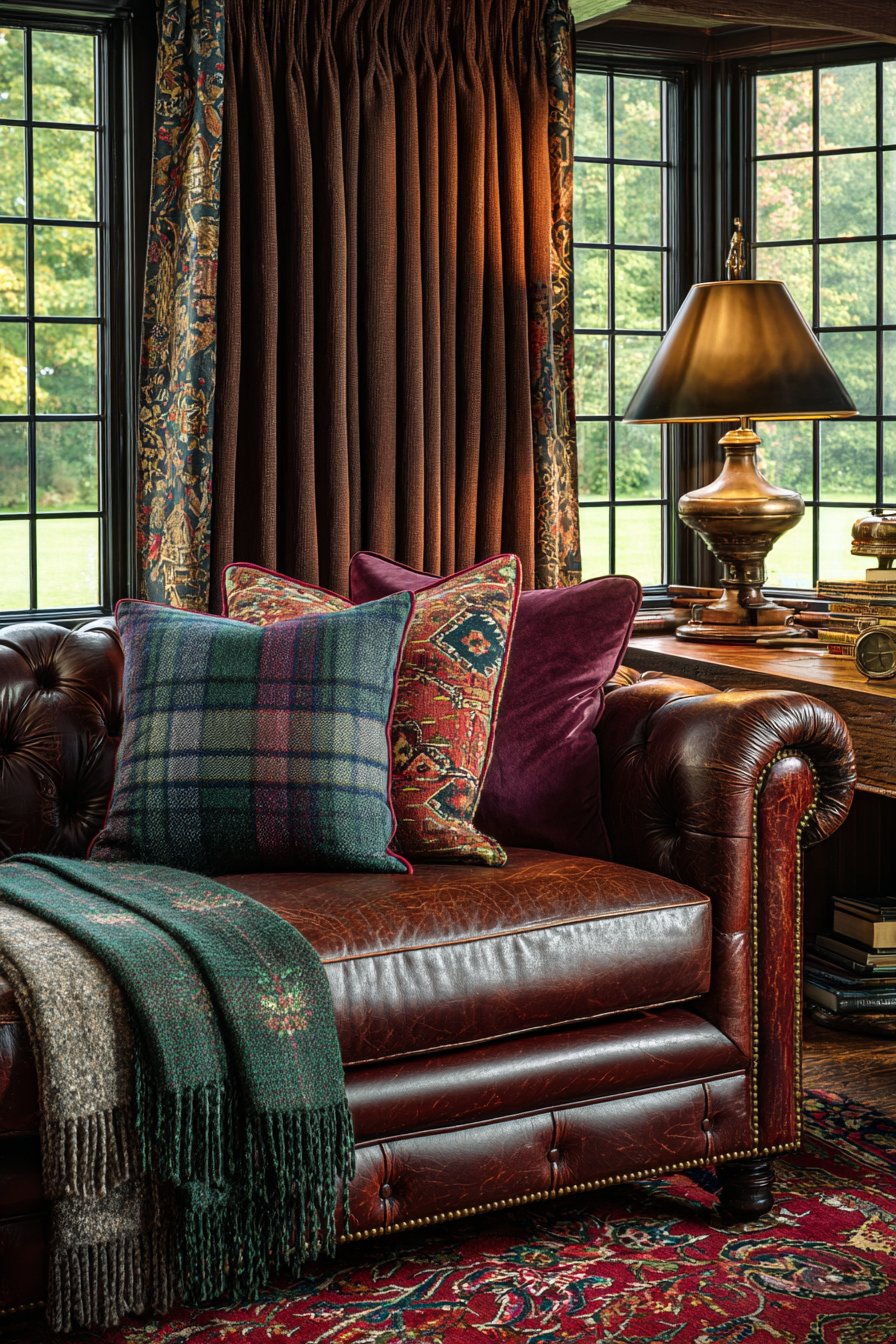
- Choose velvet throw pillows in burgundy, forest green, or navy
- Layer wool or faux fur throws over leather furniture
- Hang floor-length velvet curtains in chocolate brown or deep green
- Select Persian-style rugs with jewel-tone patterns
- Add quilted or tufted upholstery for dimensional interest
- Incorporate linen or cotton tablecloths with subtle texture
Conclusion
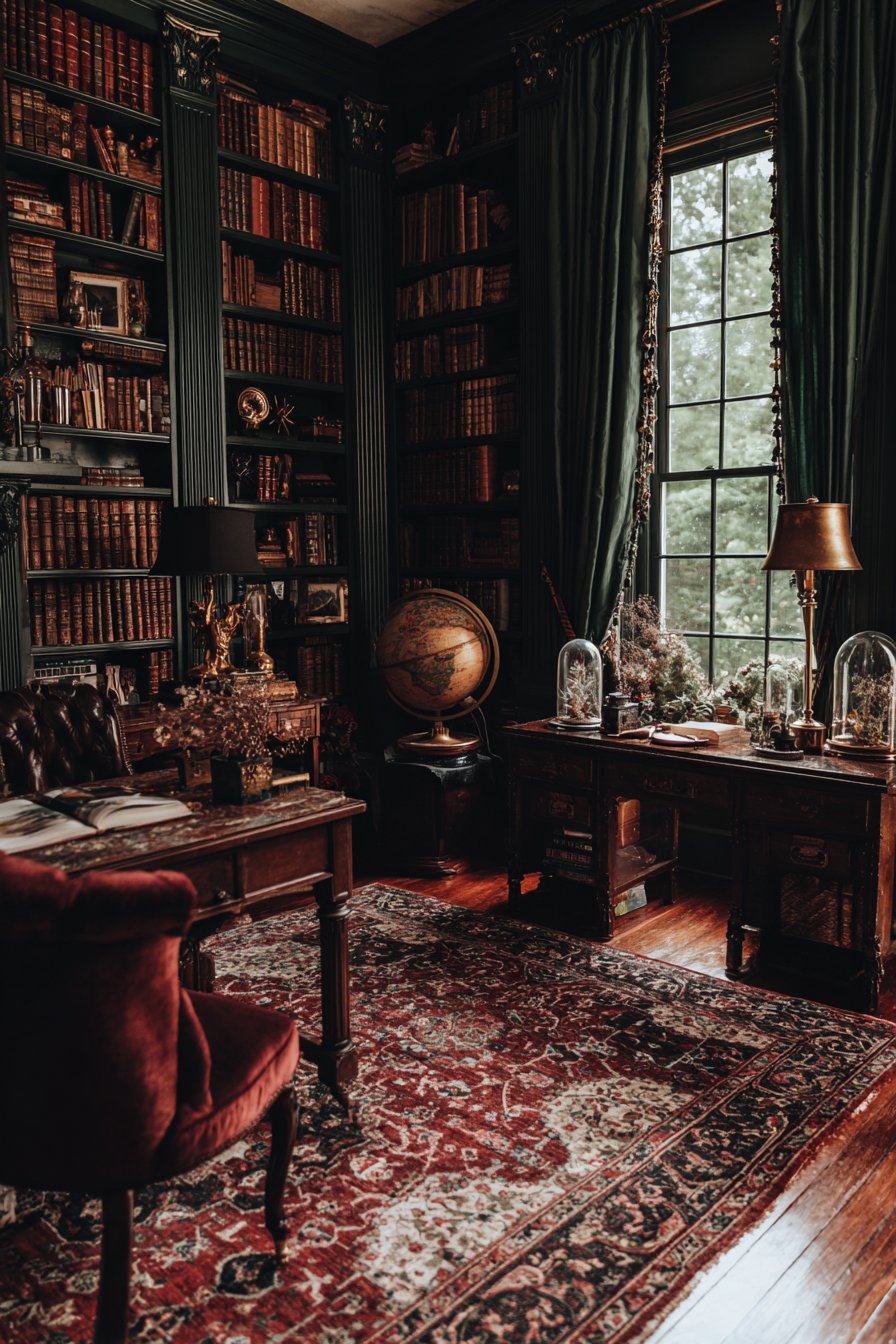
Bringing the Dark Academia aesthetic from screen to reality requires thoughtful planning and intentional curation rather than rushed purchasing. Start with foundational elements like color and lighting, then gradually build your collection of books, furniture, and artifacts. The beauty of this style lies in its lived-in quality—imperfection and gradual accumulation enhance rather than detract from authenticity.
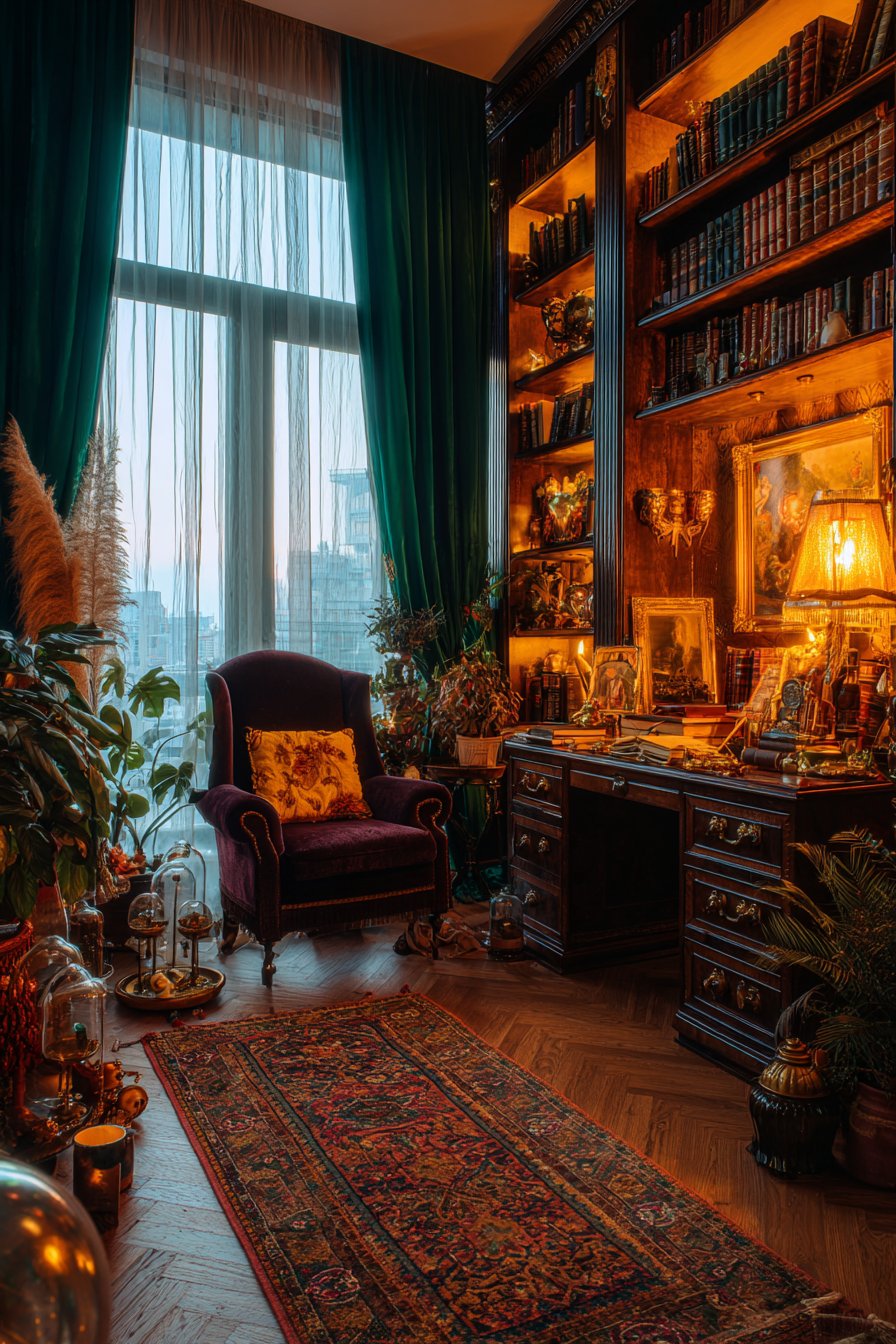
Remember that Dark Academia celebrates intellectual pursuits and personal passion above trend-chasing perfection. Let your genuine interests guide your choices, whether that means highlighting poetry collections, scientific instruments, or classical art. Your space should inspire contemplation, creativity, and comfort while reflecting your unique interpretation of this richly atmospheric aesthetic.
