


Creating a relaxing bedroom transforms your personal space into a peaceful sanctuary. This design approach prioritizes comfort, tranquility, and visual calm. The right combination of colors, textures, and lighting can dramatically improve sleep quality and overall wellbeing.
Relaxing bedrooms have become essential in our fast-paced modern lives. They offer a refuge from daily stress and digital overload. These thoughtfully designed spaces promote rest and rejuvenation through carefully selected materials and soothing aesthetics.
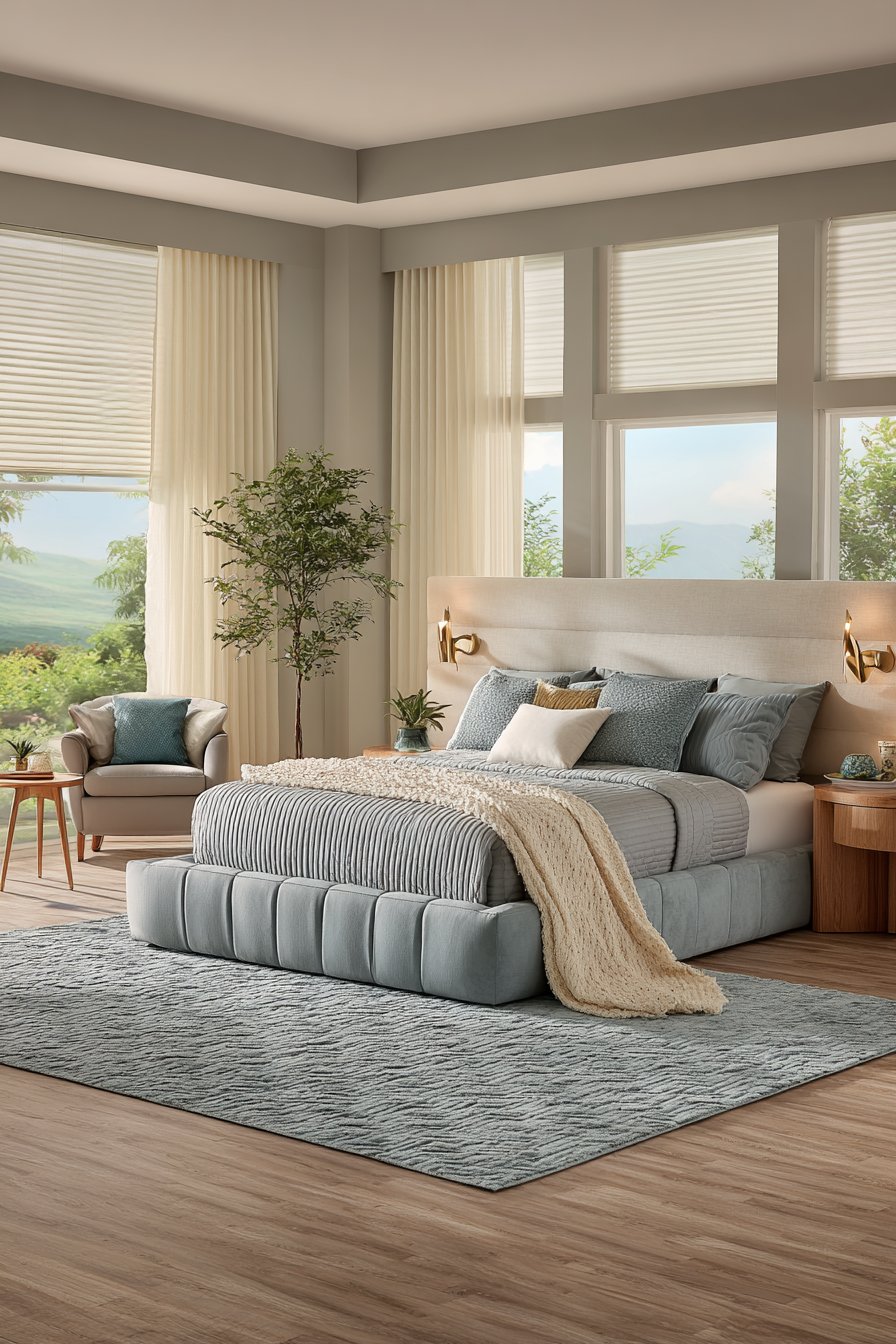
The concepts explored in this article showcase diverse approaches to bedroom serenity. From minimalist Scandinavian simplicity to warm monochromatic elegance, each design demonstrates unique pathways to creating calm. Whether you prefer soft neutrals, gentle blues, or nature-inspired greens, these ideas provide inspiration for every personal style and budget level.
1. Dove Grey Linen Retreat
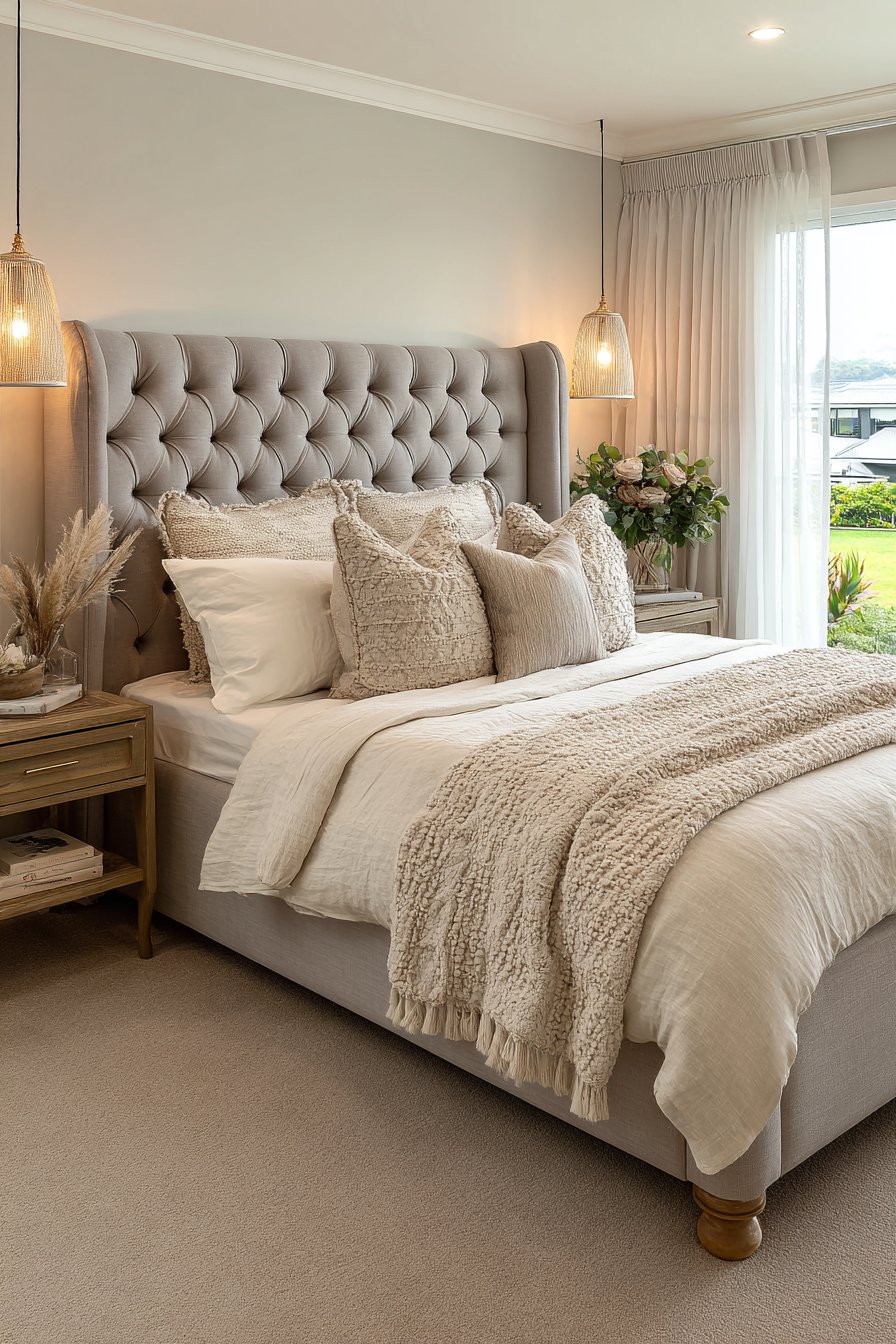
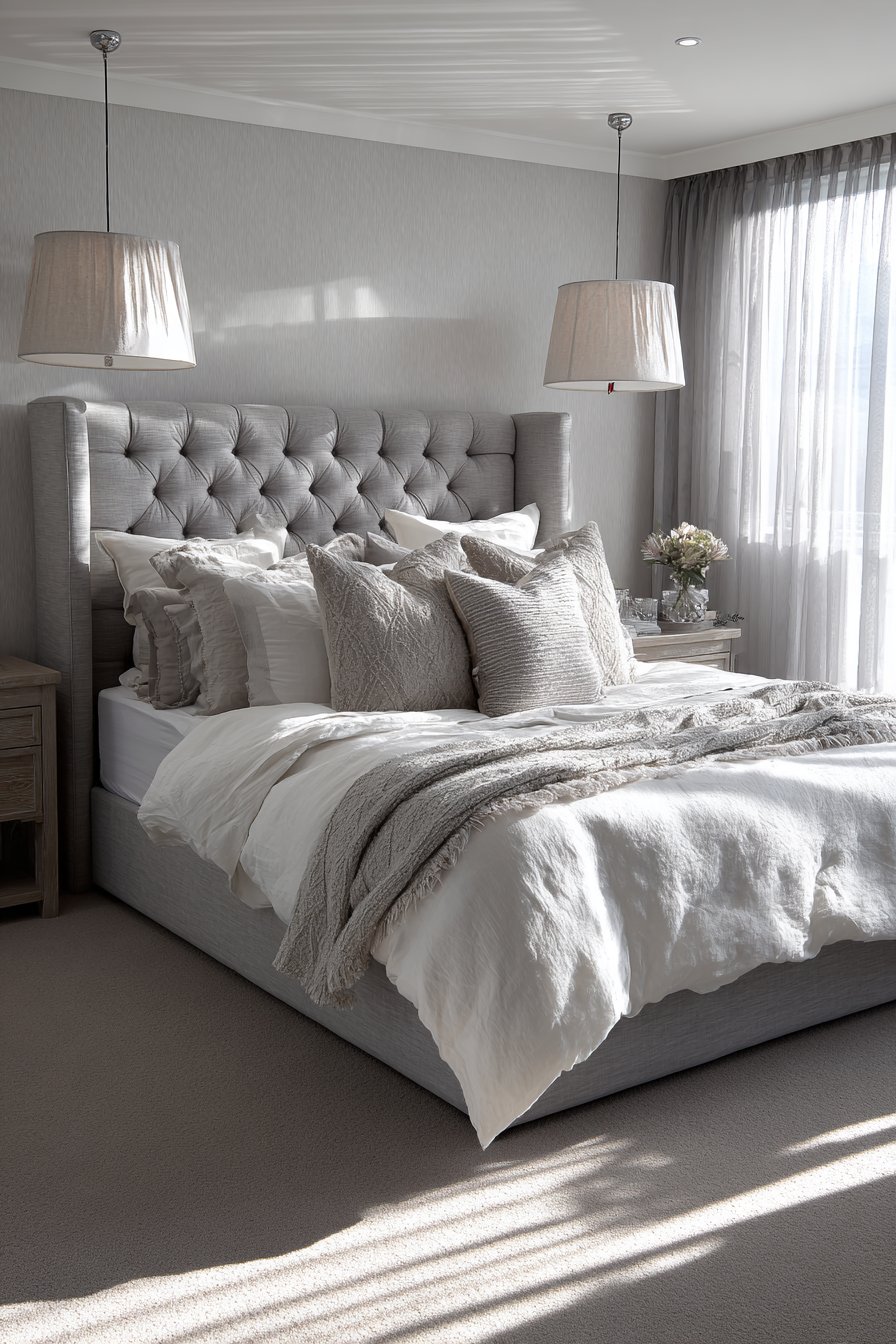
A plush upholstered headboard in soft dove grey linen anchors this serene bedroom. Gentle tufting details add subtle visual interest without overwhelming the space. The bed becomes an inviting focal point with its carefully layered textiles. Crisp white cotton sheets provide the foundation for comfort. A lightweight linen duvet in natural oatmeal adds warmth and texture.
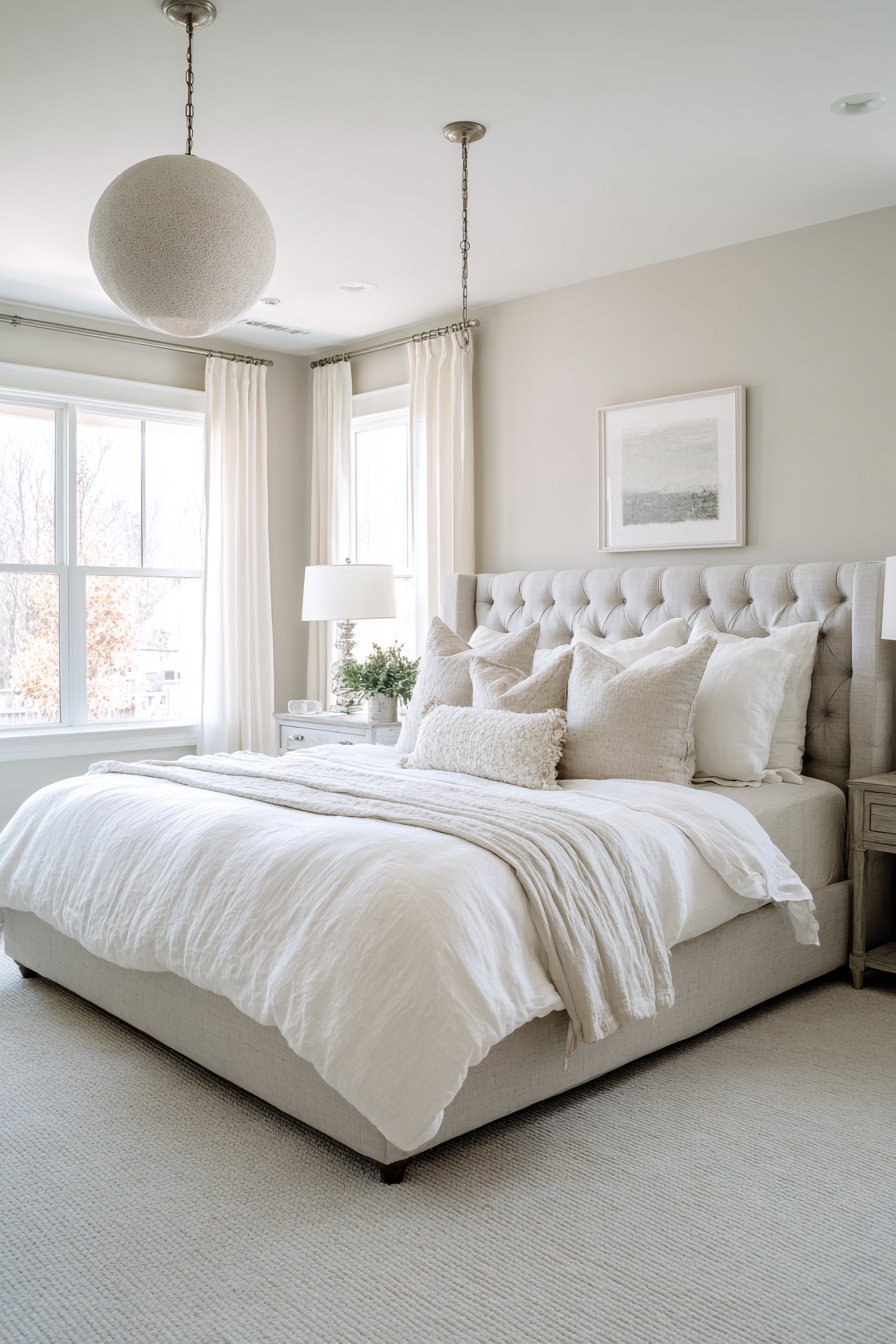
The bedding arrangement showcases the power of layering in neutral palettes. Textured throw pillows in calming neutrals create visual depth and physical comfort. Each pillow contributes a different tactile quality. Two simple pendant lights hang on either side of the bed. Their fabric shades cast warm ambient glow throughout the evening hours.
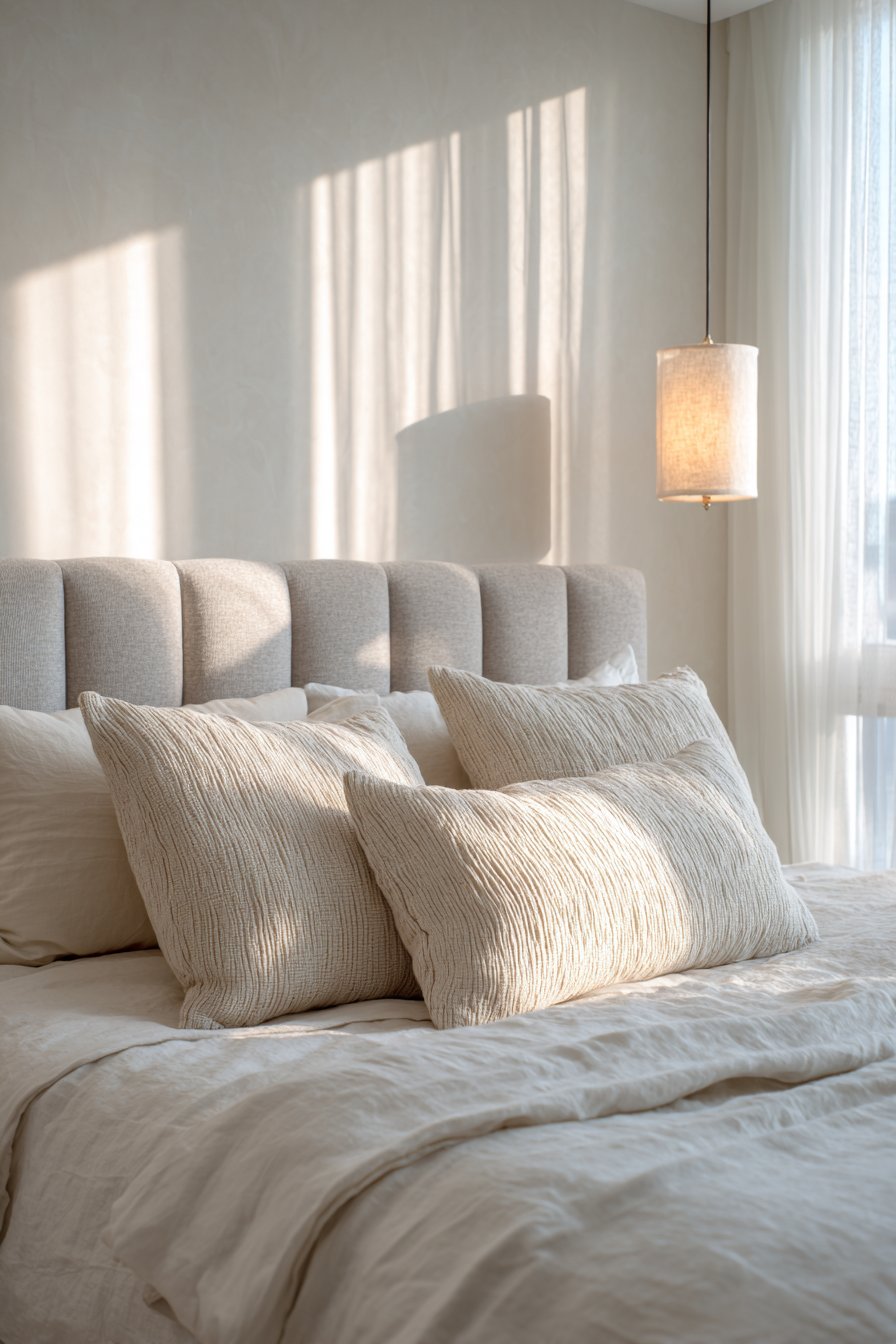
Morning light filters through sheer curtains with ethereal beauty. The soft illumination highlights inviting textures across the bedding. Gentle shadows create dimension without harsh contrast. This interplay between natural light and textile layers establishes the room’s peaceful character. The overall effect feels both sophisticated and approachable.
Key Design Tips:
- Layer multiple shades of neutral textiles for visual richness without color chaos
- Choose natural fiber fabrics like linen and cotton for breathability and comfort
- Position pendant lights at proper reading height beside the bed
- Install sheer curtains to diffuse harsh sunlight while maintaining privacy
- Select a substantial headboard to anchor the bed as the room’s focal point
2. Window Nook Reading Haven
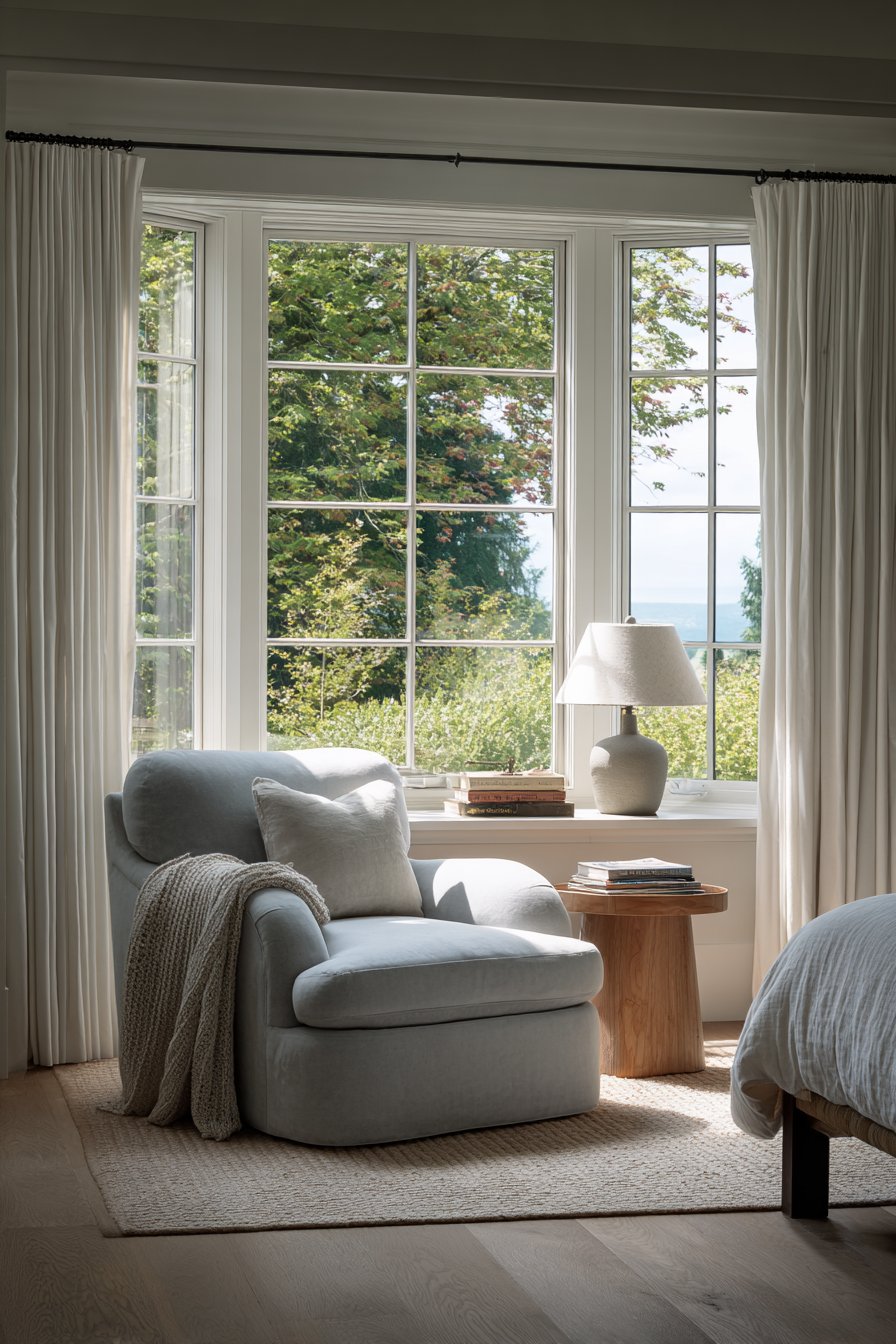
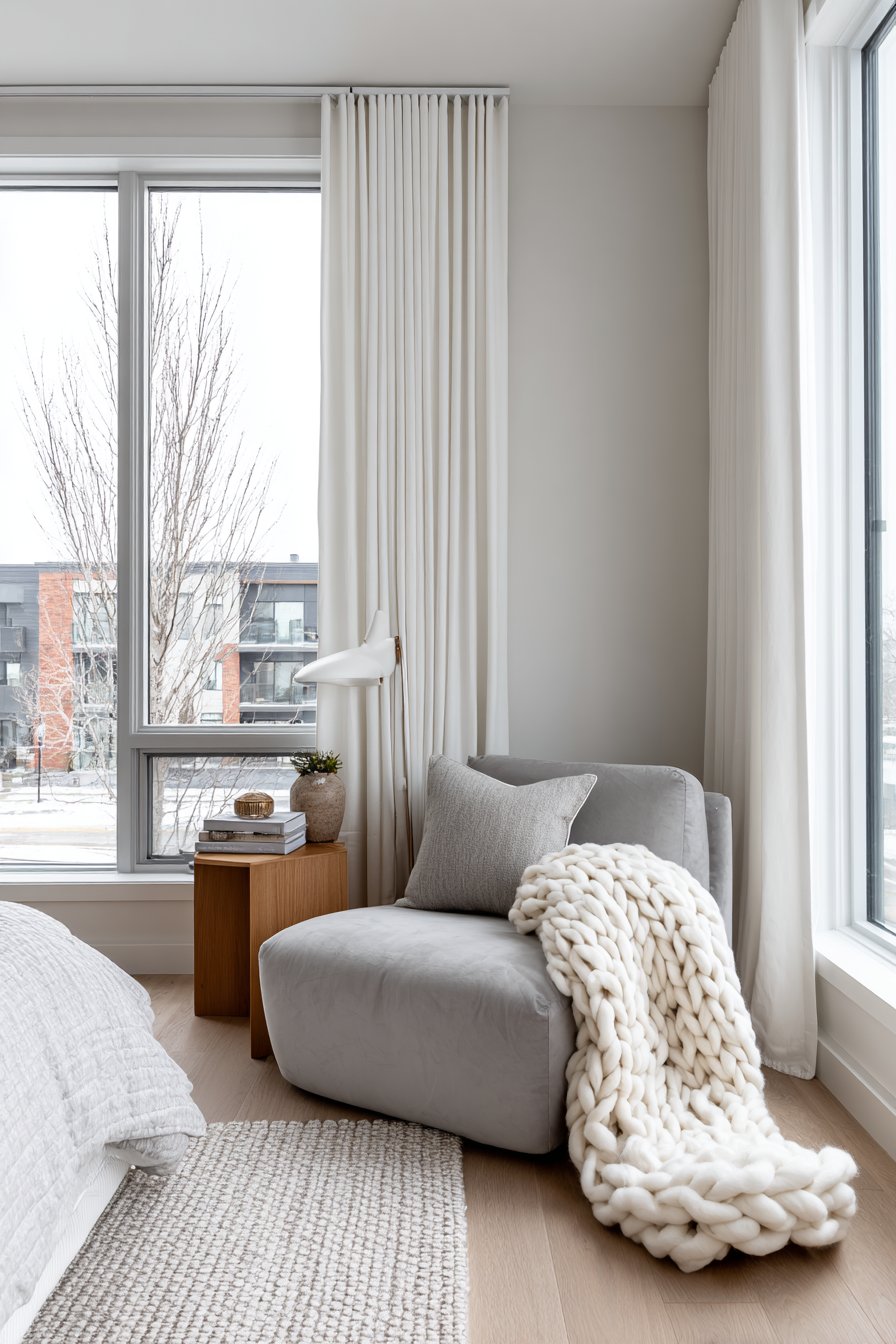
A comfortable oversized armchair upholstered in soft grey velvet creates the perfect reading retreat. The chair sits positioned near a large window with billowing white linen curtains. Natural light floods this cozy corner throughout the day. A simple wooden side table holds essential reading companions. A small ceramic lamp provides focused light for evening reading sessions.
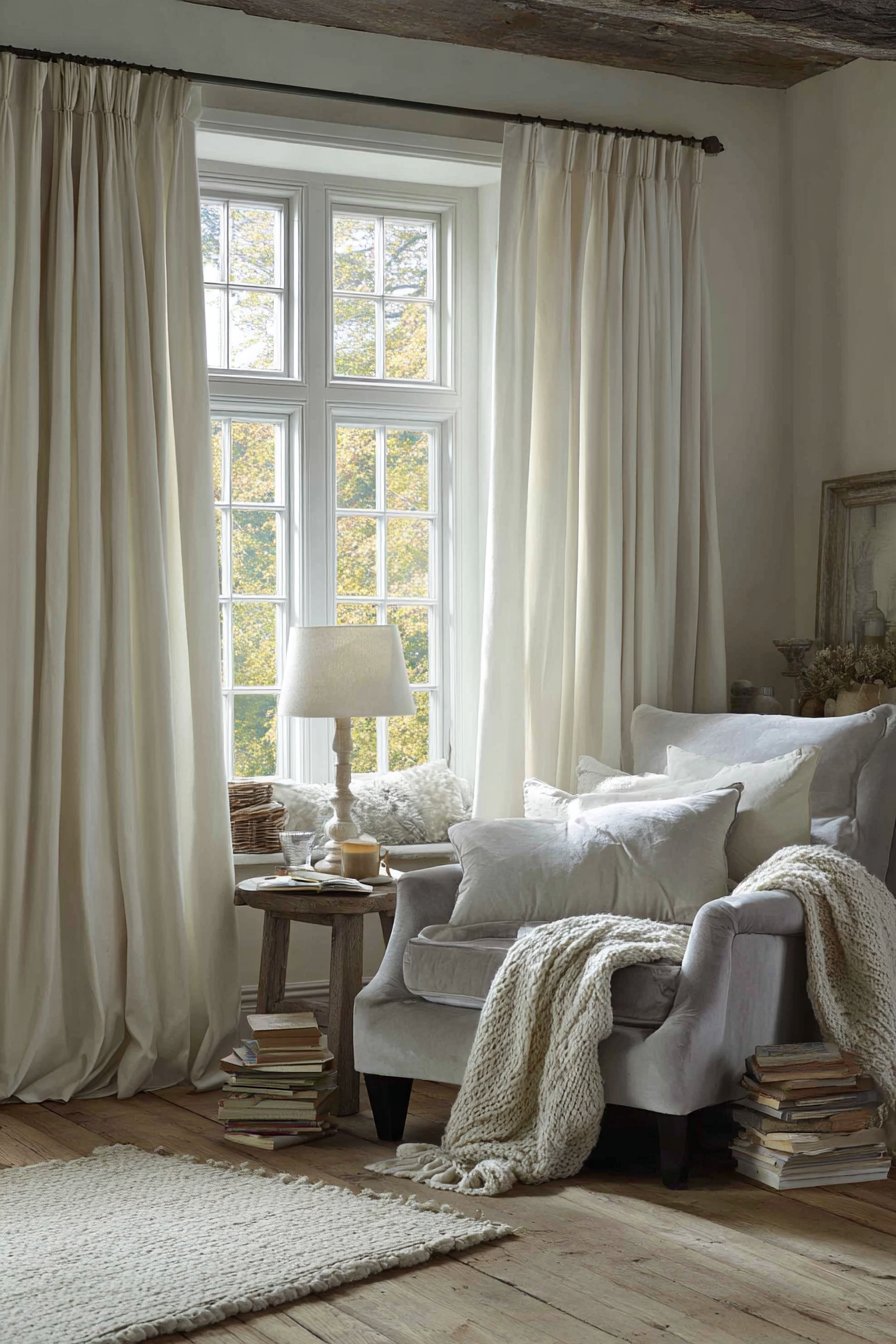
The stack of books on the table adds personality and purpose to the space. A chunky knit throw blanket drapes casually over the chair arm. This practical addition invites immediate use and relaxation. Natural oak flooring adds warmth beneath the seating area. A small wool area rug defines the nook as a distinct zone within the bedroom.
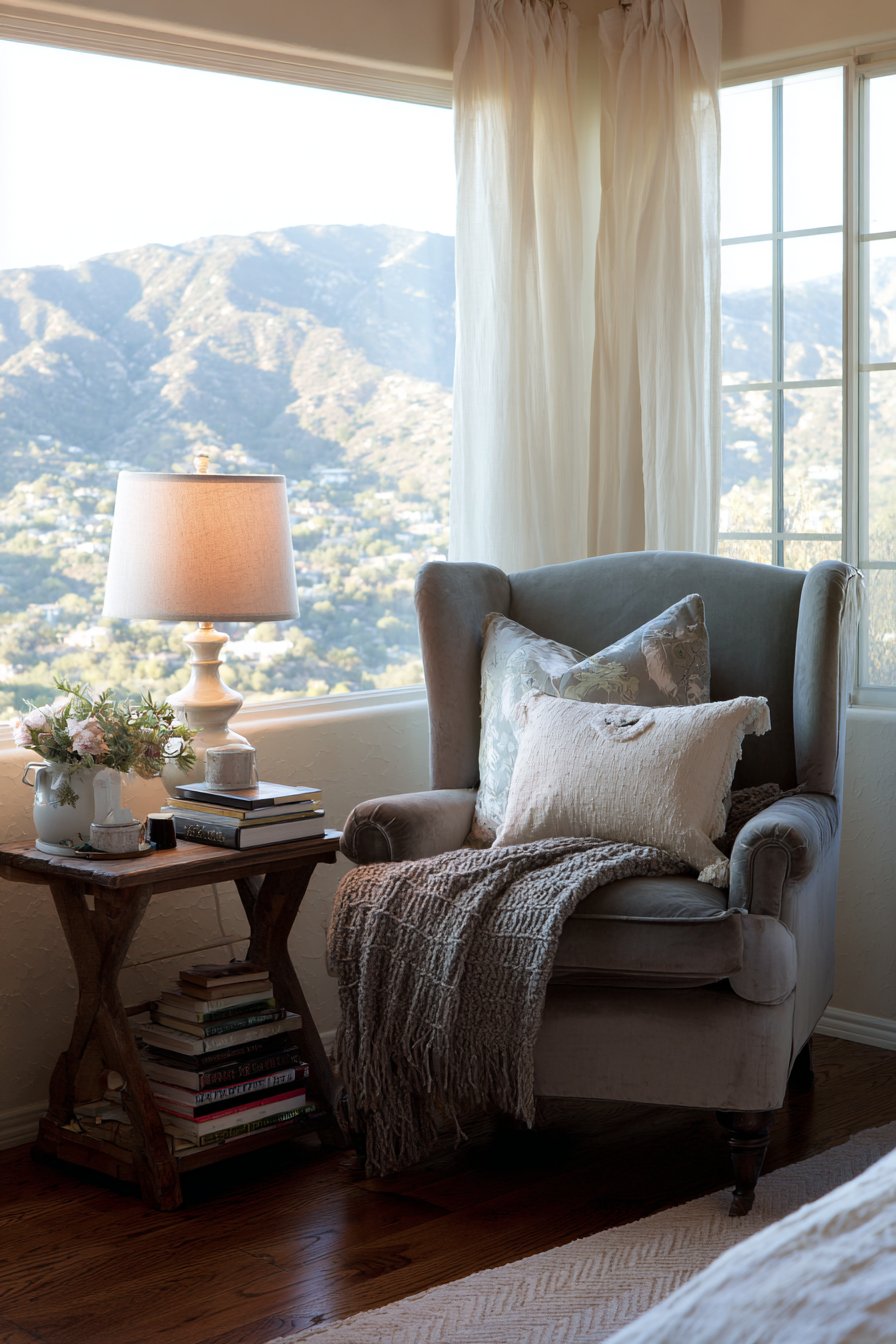
The textile choices in this space demonstrate thoughtful material selection. Soft grey velvet provides luxurious comfort against the skin. White linen curtains offer lightweight privacy and light control. The chunky knit throw introduces another texture layer. These varied materials create tactile interest while maintaining visual calm. The afternoon sunlight brings all these elements together in peaceful harmony.
Key Design Tips:
- Position reading chairs near windows to maximize natural daylight
- Choose oversized seating for ultimate comfort during extended reading sessions
- Add a dedicated side table at appropriate height for books and beverages
- Layer multiple light sources for reading flexibility throughout the day
- Define the nook with a small area rug to create spatial separation
3. Sage Green Minimalist Sanctuary
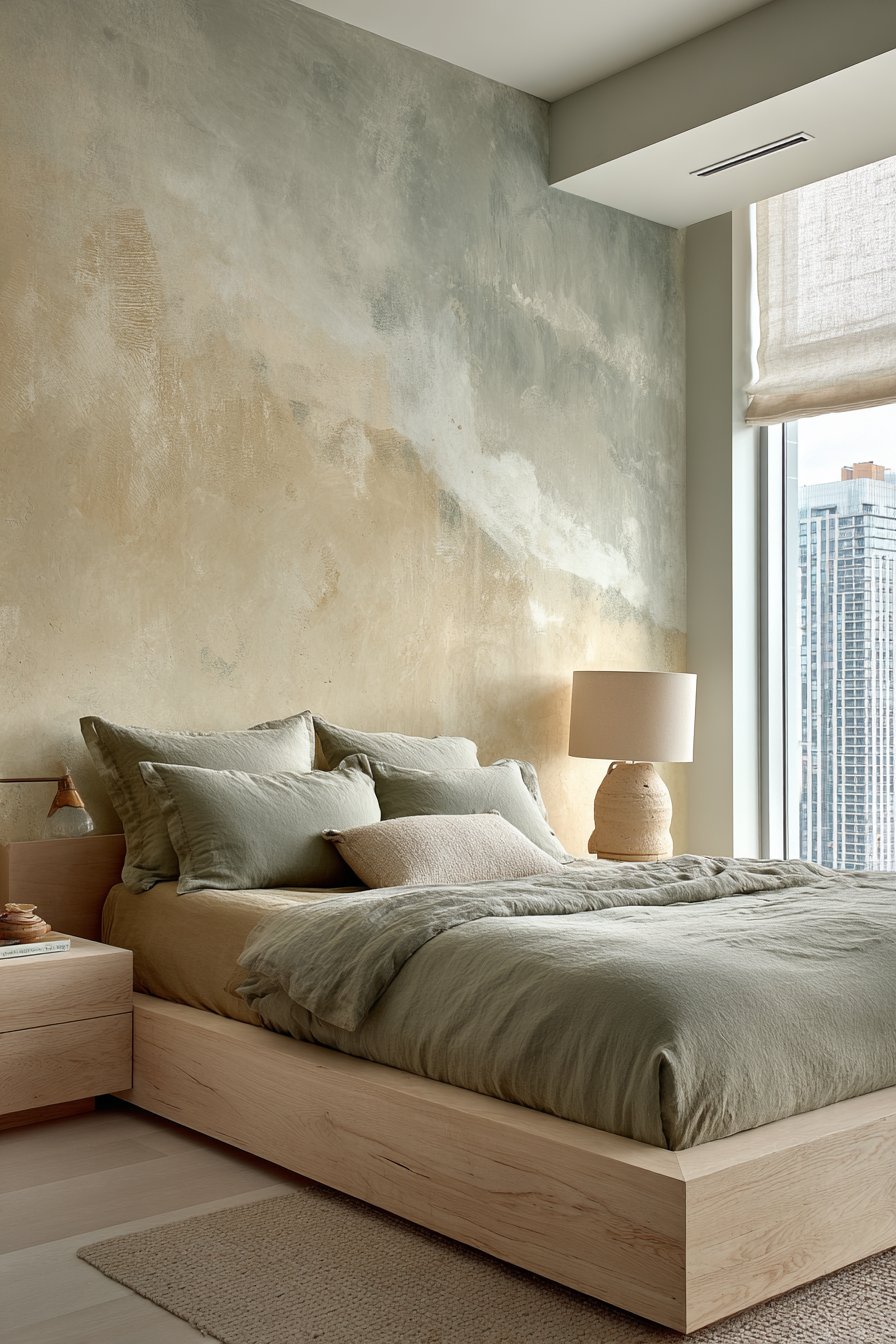
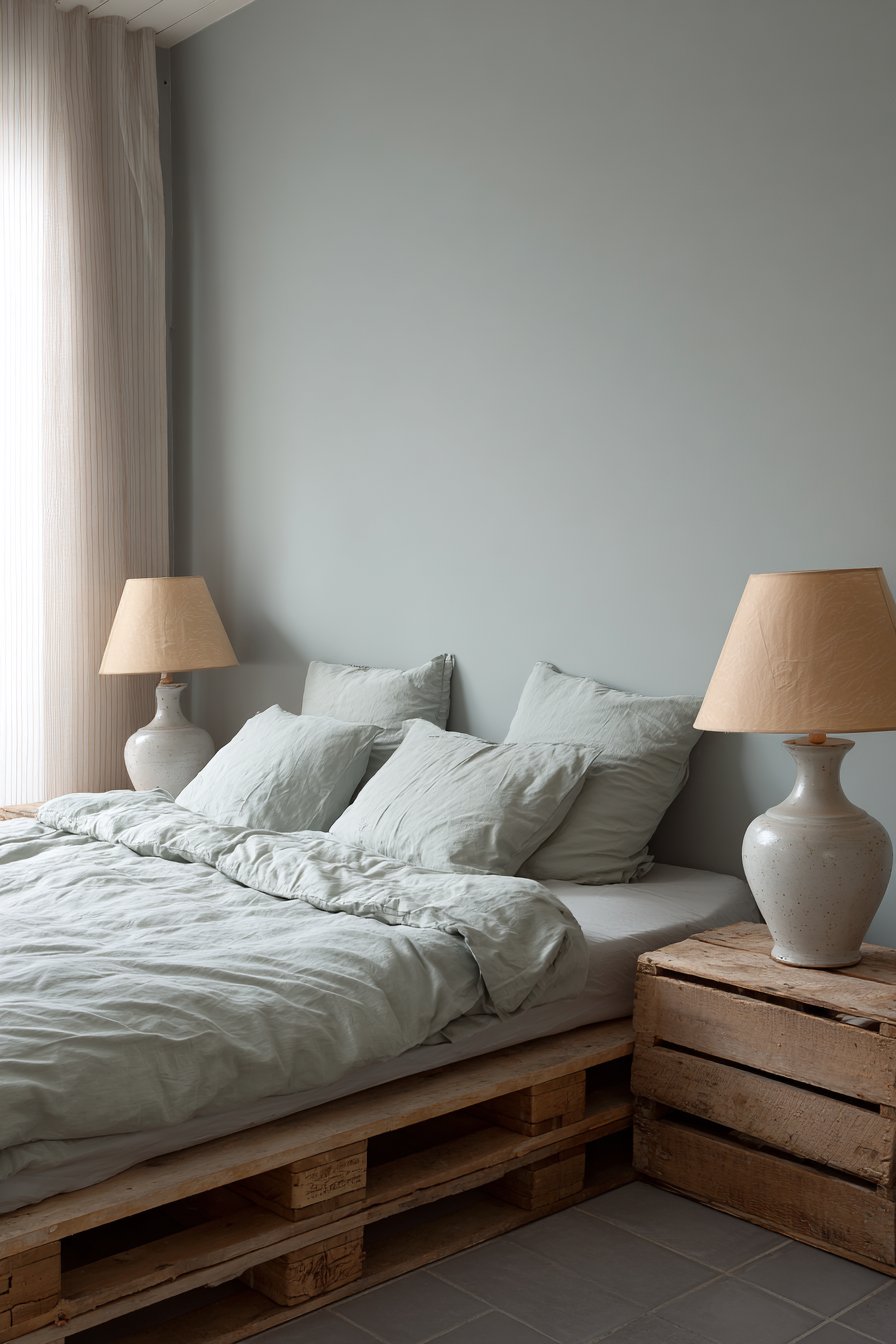
A low-profile platform bed in light natural wood establishes this room’s minimalist foundation. The simple frame showcases honest material beauty without unnecessary ornamentation. Organic cotton bedding in muted sage green tones brings nature indoors. The calming color choice promotes relaxation and mental clarity. A simple painted accent wall in warm greige creates subtle depth.
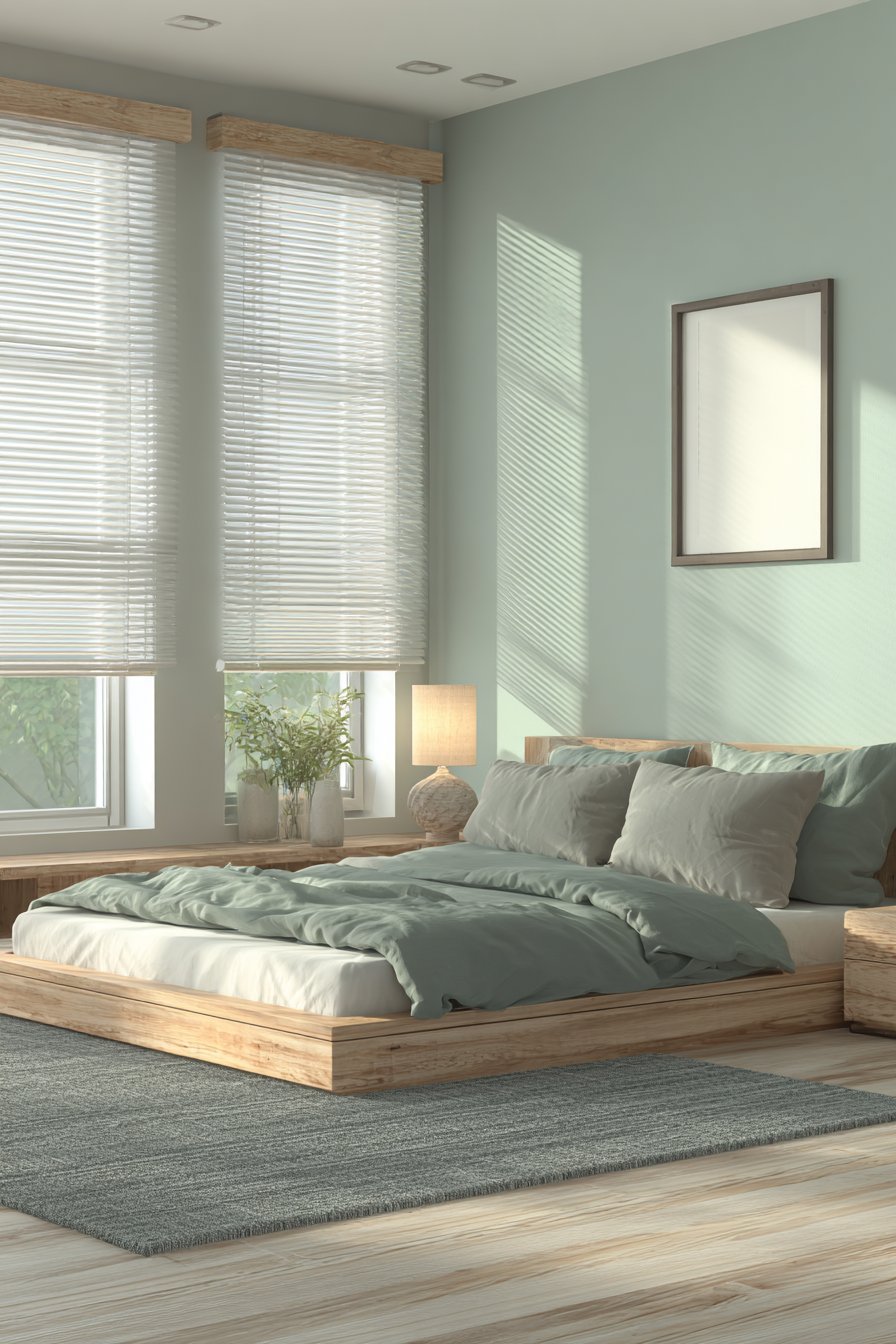
The color strategy demonstrates sophisticated restraint and intentionality. Warm greige behind the bed adds dimension without overwhelming the senses. The sage green bedding provides gentle color interest. Together these hues create a cohesive, tranquil environment. Ceramic table lamps with linen shades provide soft bedside illumination. Their simple forms complement the minimalist aesthetic perfectly.
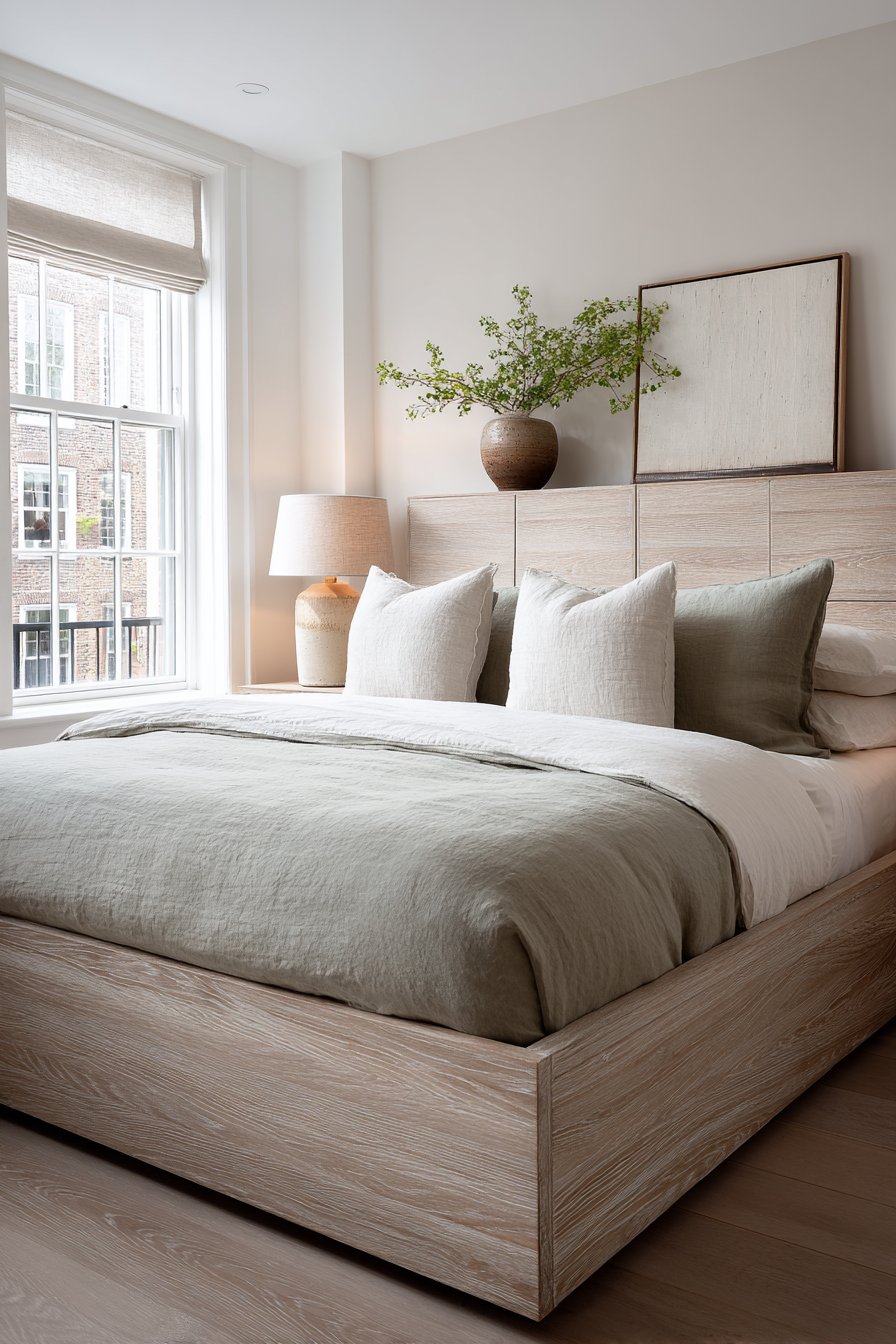
Sheer roller blinds filter natural light throughout the day. The diffused glow eliminates harsh shadows and bright spots. This creates even, peaceful illumination that changes subtly with the sun’s movement. The overall effect feels meditative and grounding. Every element serves a purpose while contributing to the room’s serene atmosphere.
Key Design Tips:
- Select low-profile furniture to create visual spaciousness and breathing room
- Use organic cotton bedding for comfort and environmental responsibility
- Paint accent walls in complementary neutral tones for subtle dimension
- Choose sheer window treatments to maintain natural light while ensuring privacy
- Limit color palette to two or three coordinating shades for visual calm
4. Ethereal Canopy Dream
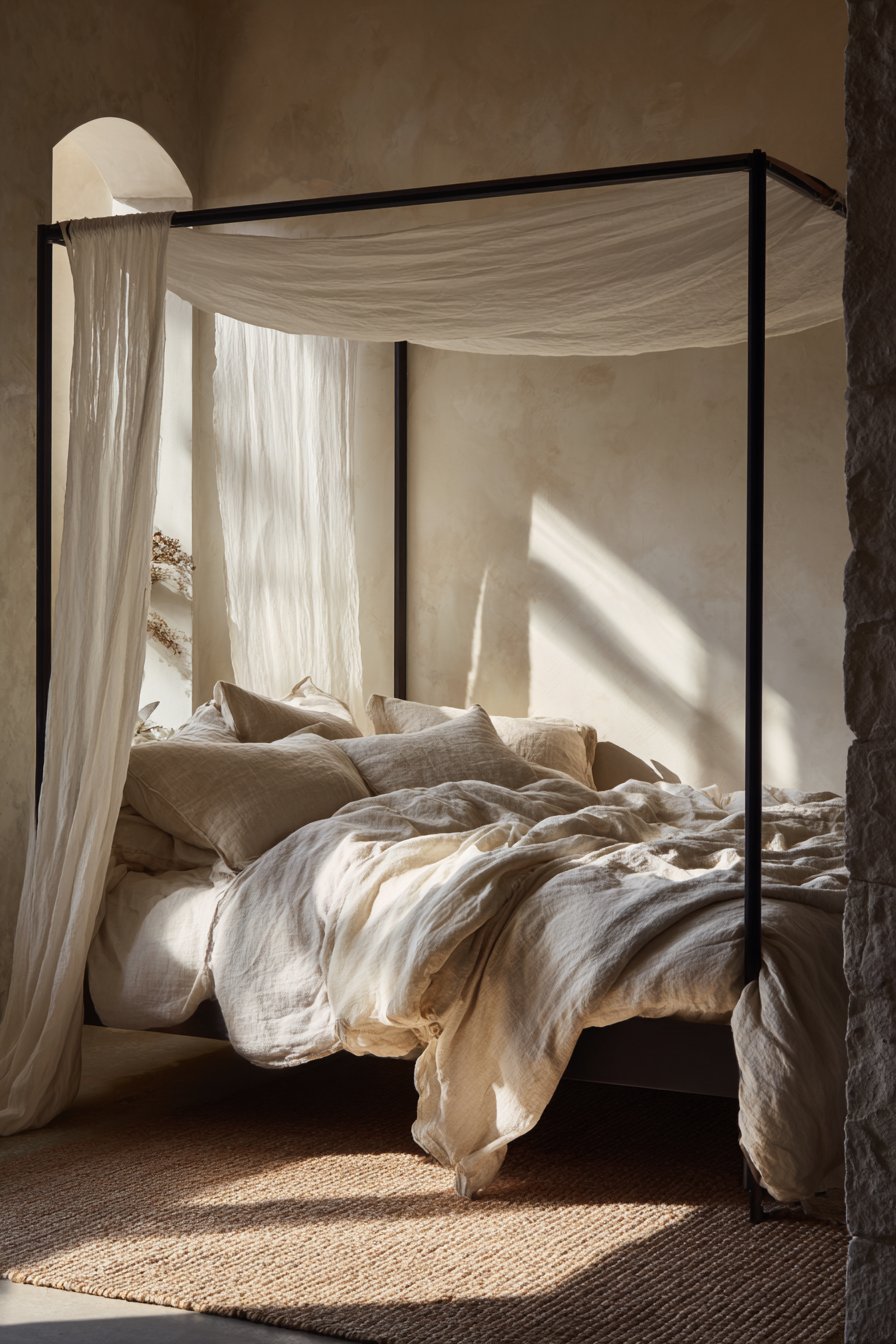
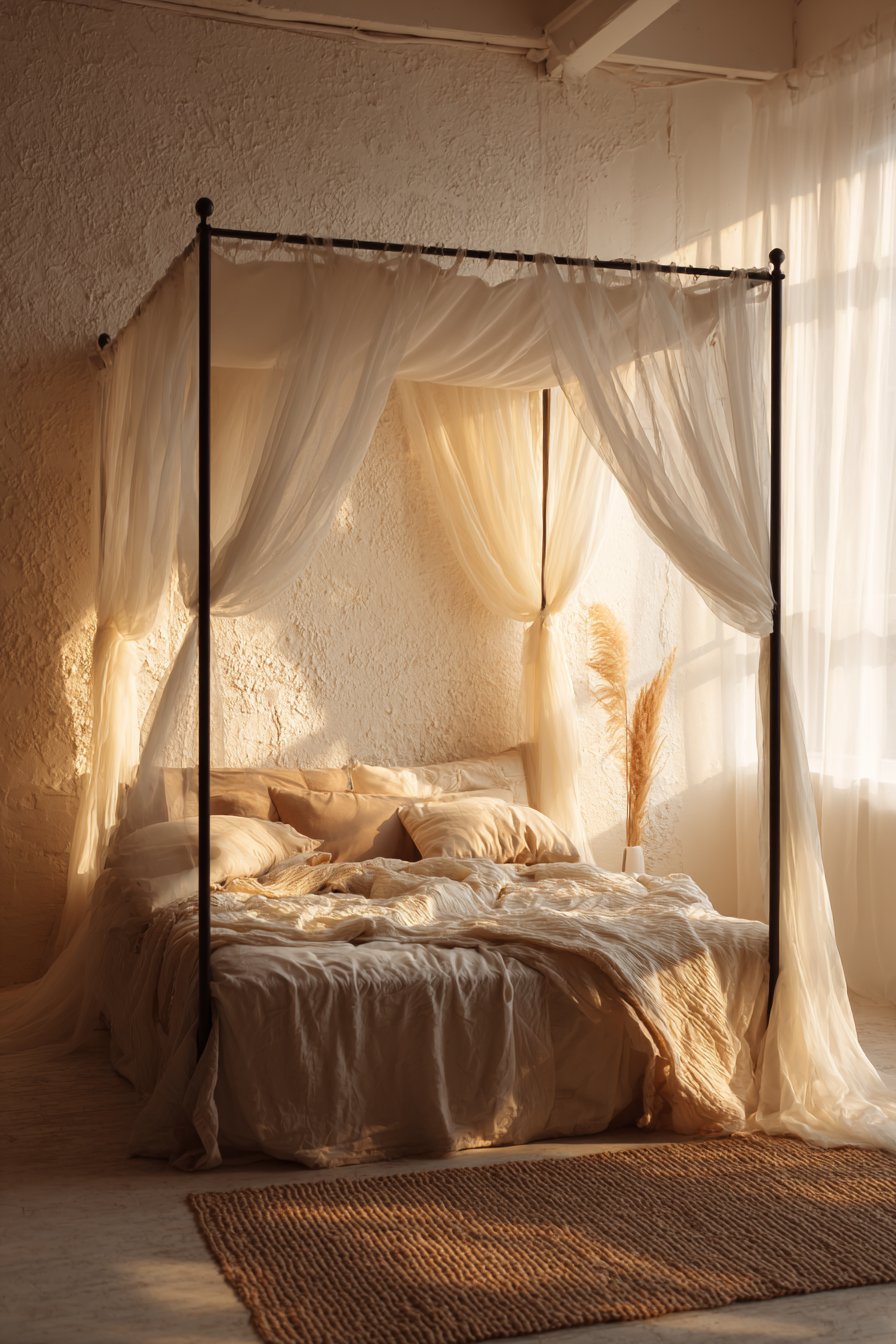
A canopy bed frame in simple black metal provides elegant structure. Sheer white muslin fabric drapes loosely across the top rail. The flowing fabric creates a dreamlike atmosphere without blocking light or air circulation. Layers of white and cream bedding establish the foundation. A vintage-washed linen duvet adds character and softness.
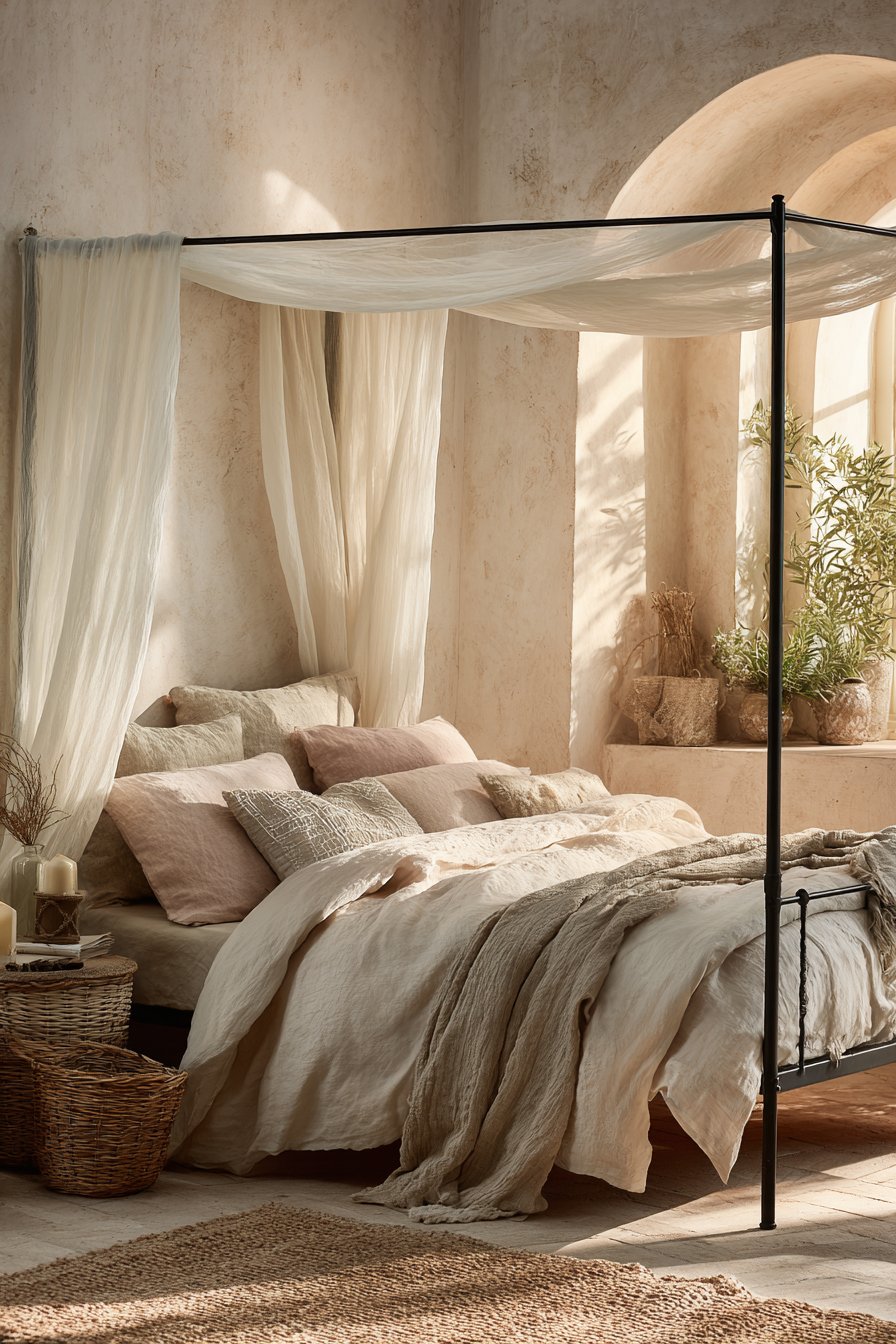
The walls wear soft warm white paint with subtle texture. This backdrop allows the canopy to become the room’s focal point. A sisal area rug grounds the space beneath the bed. The natural fiber adds organic texture and earthy warmth. Natural light from a nearby window creates gentle highlights on the flowing fabric. The muslin catches and diffuses light beautifully throughout the day.
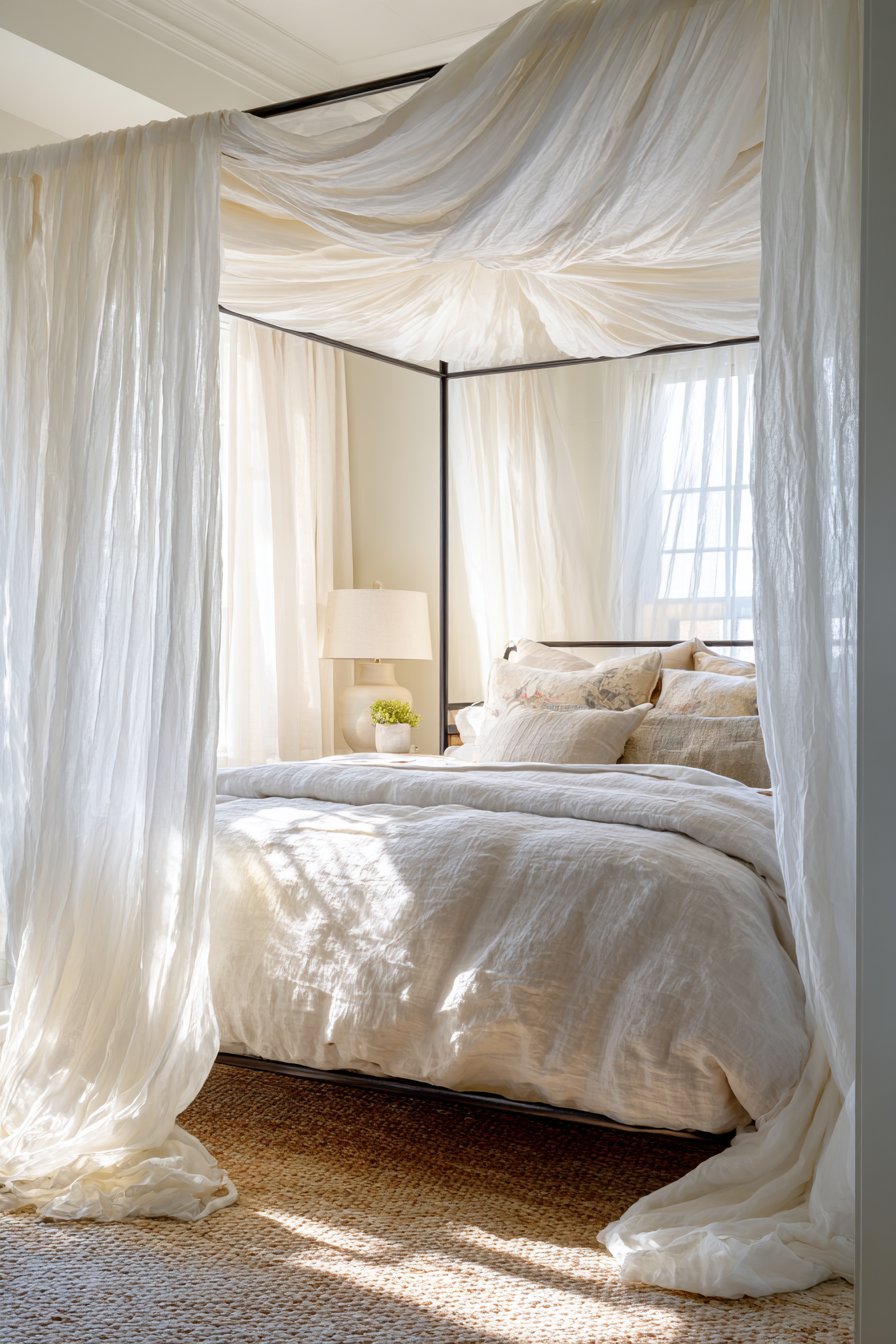
The layered textiles demonstrate the power of monochromatic design. Different whites and creams create depth through texture rather than color. Each fabric catches light differently. The result feels airy and peaceful rather than stark. This approach proves that simple color palettes can yield sophisticated results.
Key Design Tips:
- Choose lightweight fabrics for canopy draping to maintain airiness
- Layer whites and creams in varied textures for visual interest
- Use natural fiber rugs to add warmth without color competition
- Position the bed near windows to maximize natural light on fabrics
- Select simple metal frames that provide structure without visual weight
5. Built-In Window Seat Comfort
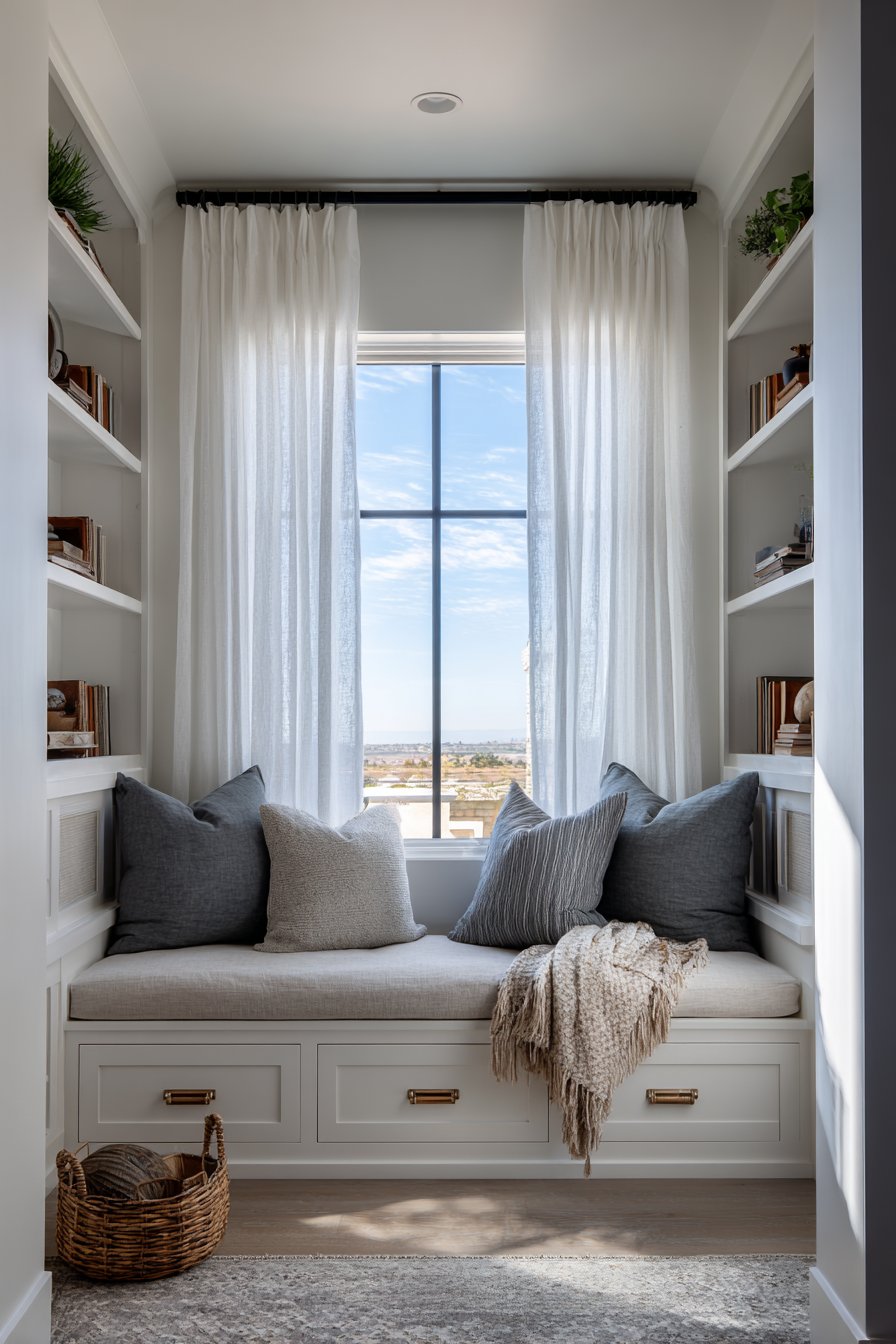
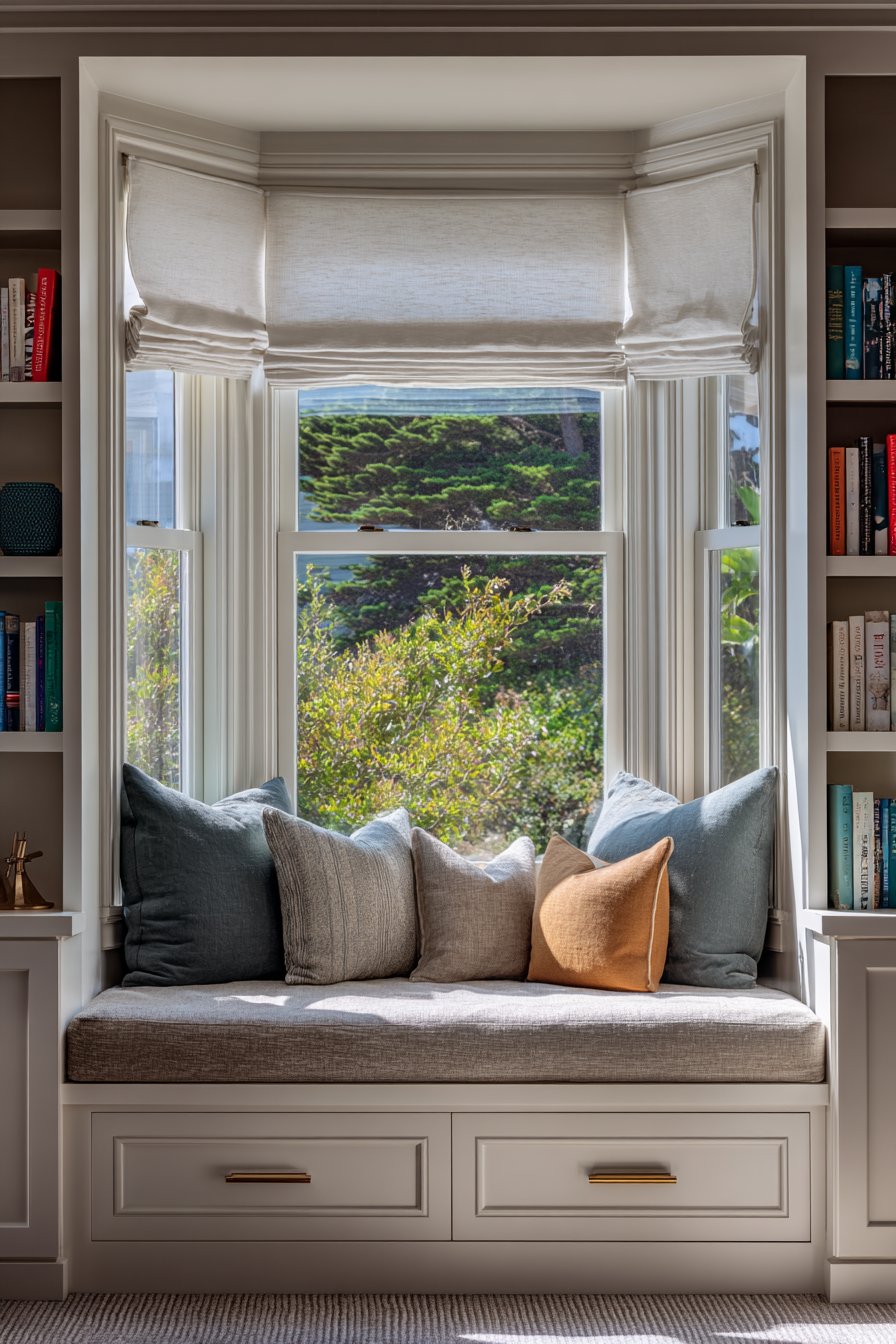
A built-in window seat transforms this bedroom into a multifunctional retreat. Deep cushions upholstered in natural linen create comfortable seating. An array of soft throw pillows in muted blues and greys invites relaxation. The window seat includes hidden storage beneath with simple brass pulls. This practical feature maximizes space efficiency beautifully.
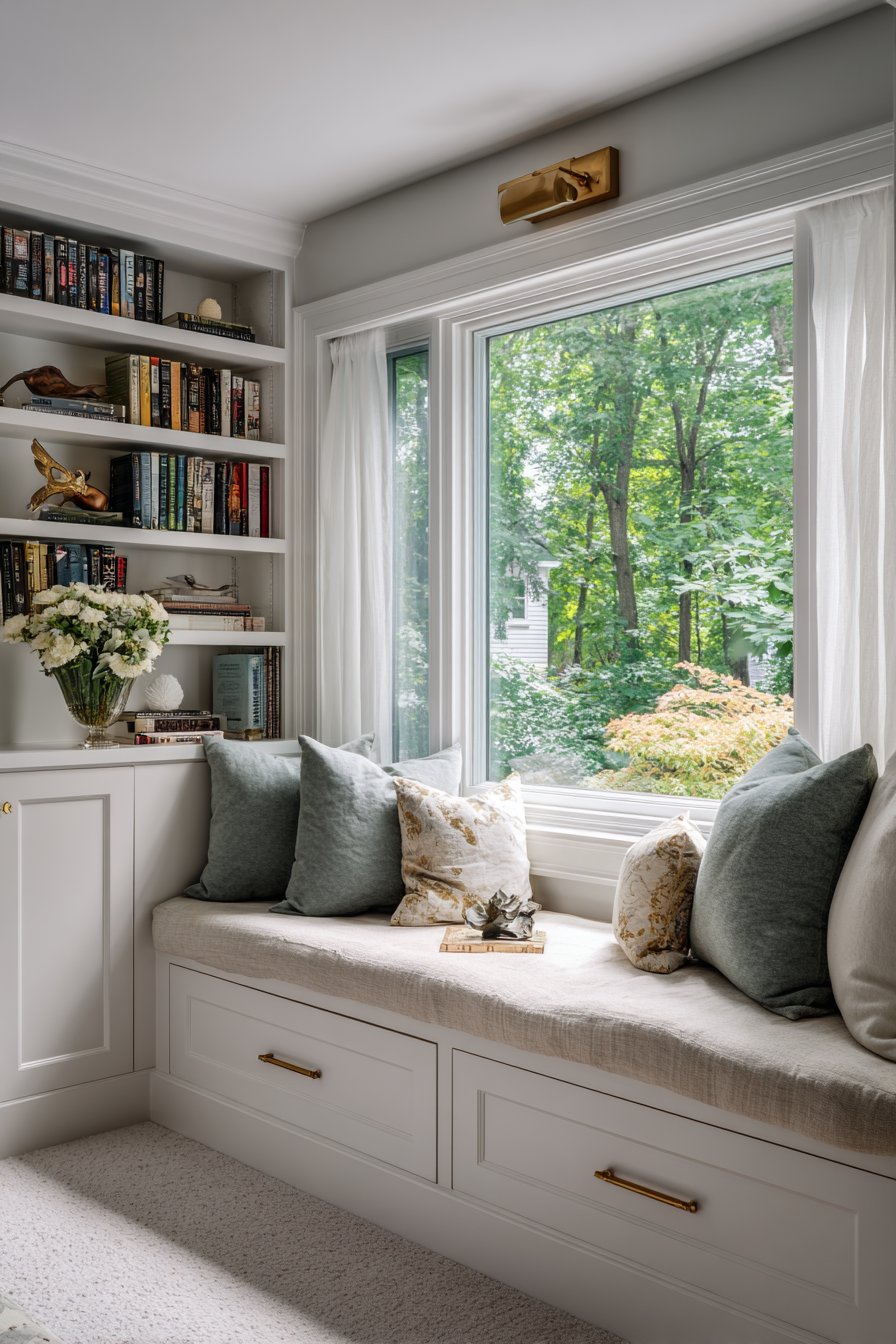
White painted built-in shelving flanks the window on both sides. The shelves display a curated selection of books and minimal decorative objects. This thoughtful arrangement combines function with aesthetic appeal. Sheer white curtains frame the window elegantly. They allow diffused natural light to illuminate the peaceful nook throughout the day.
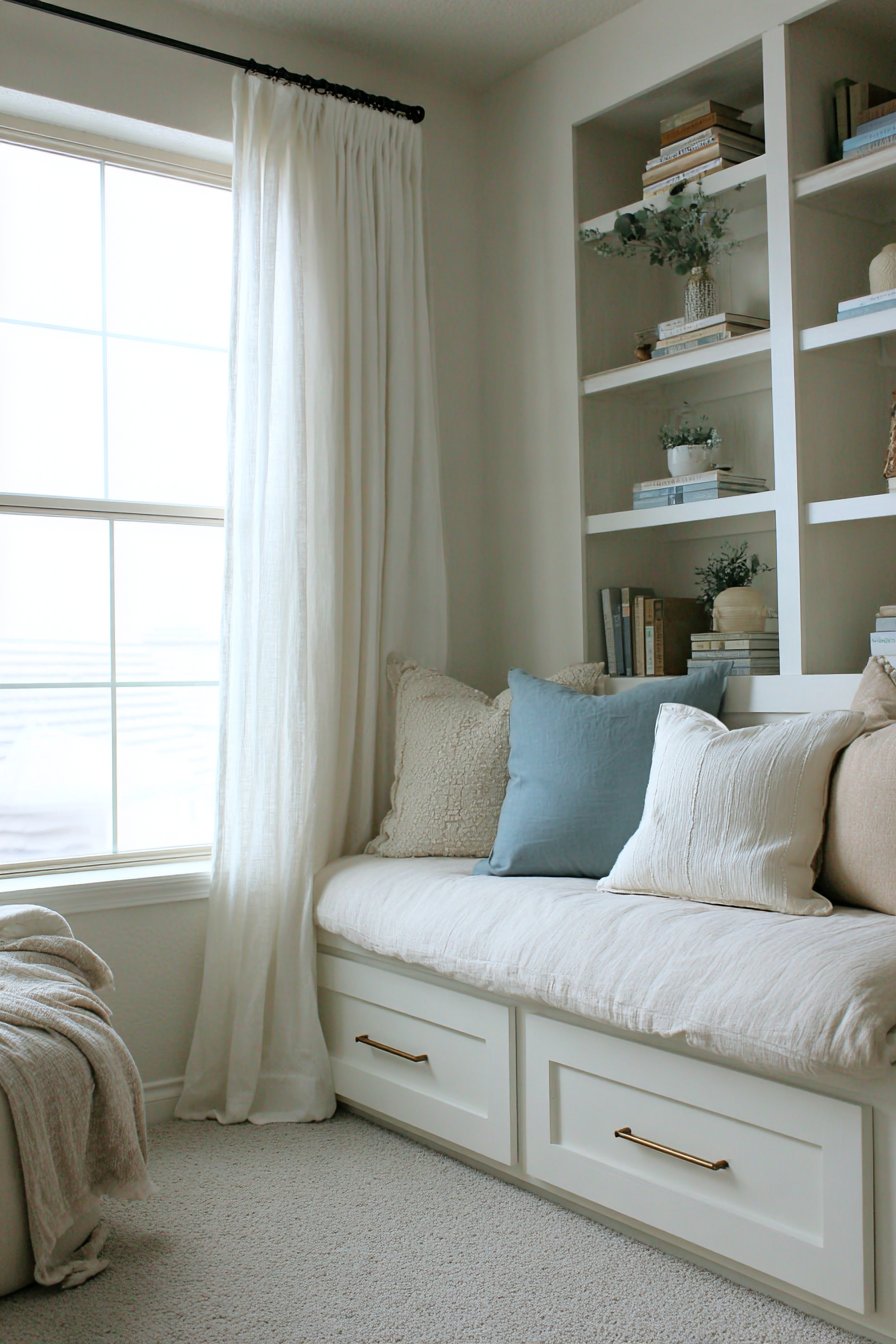
The color palette demonstrates restraint and sophistication. Muted blues and greys create calm without feeling cold. Natural linen adds warmth and organic texture. White painted millwork provides crisp contrast and architectural interest. The overall composition balances softness with structure perfectly.
Key Design Tips:
- Incorporate built-in storage to maximize bedroom functionality
- Choose linen upholstery for durability and natural beauty
- Frame windows with sheer curtains for light control and softness
- Display books and objects in curated arrangements rather than cluttered groupings
- Use coordinating pillow colors to tie the nook to the overall room palette
6. Blue-Grey Enveloping Calm
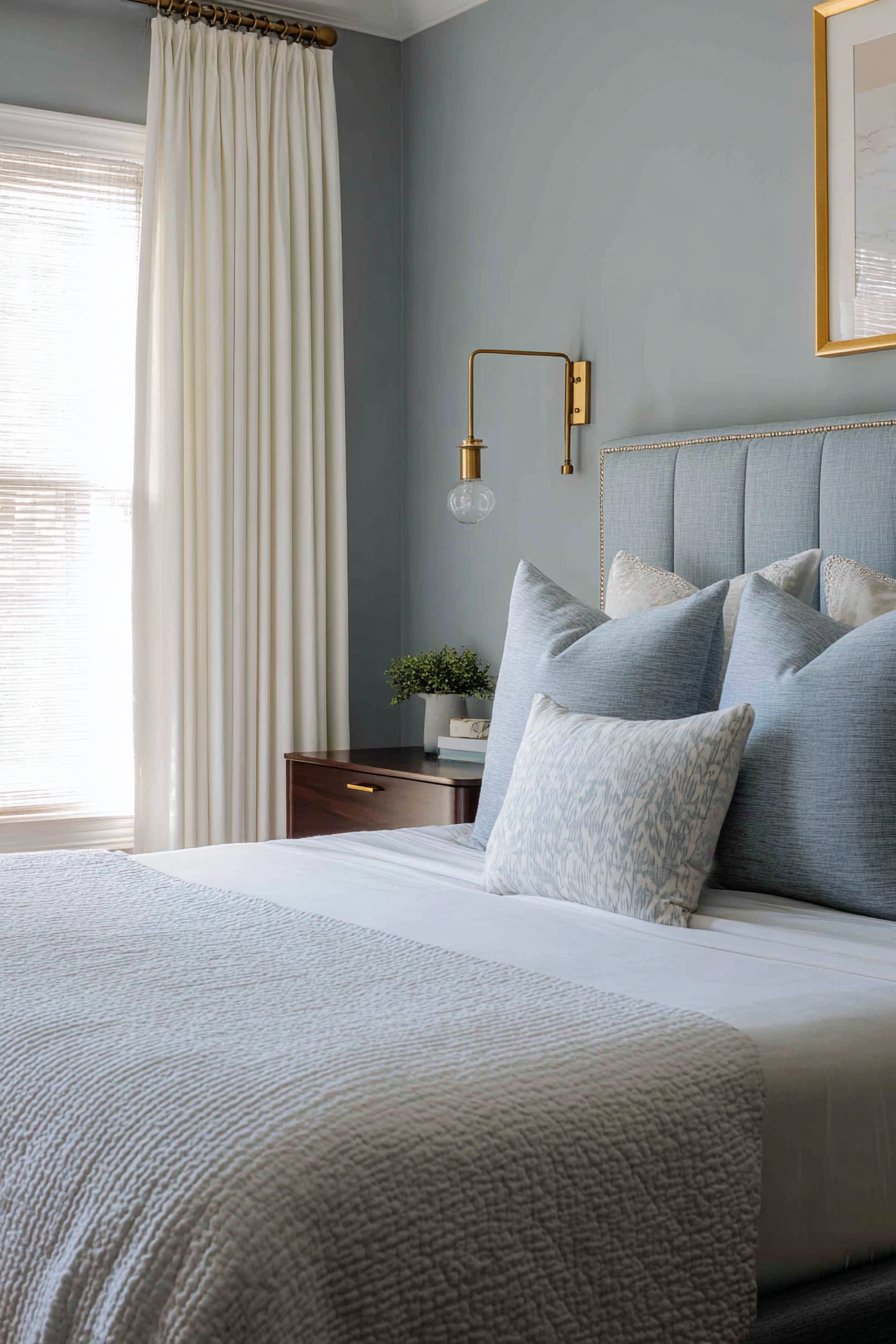
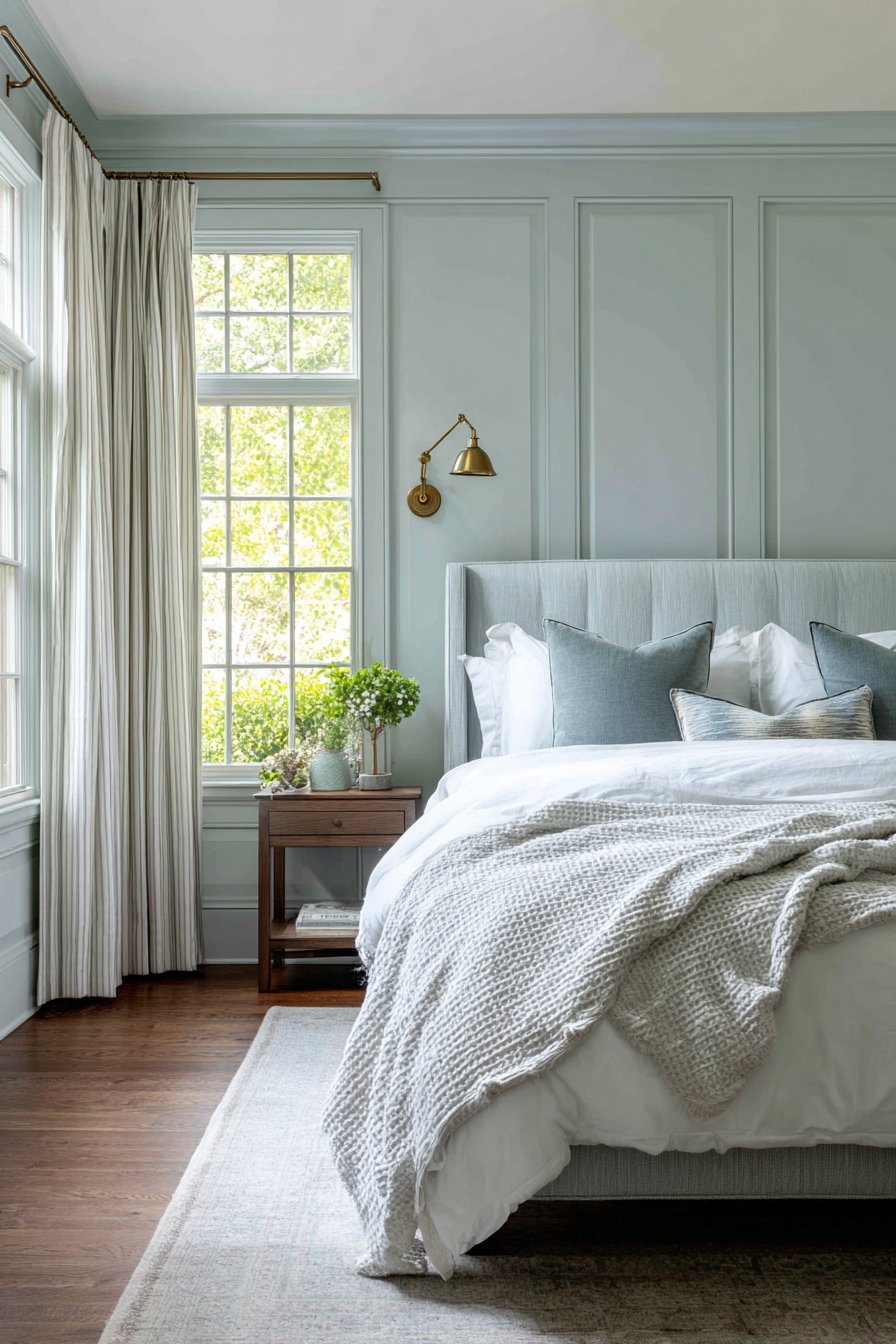
Walls painted in soft blue-grey create an enveloping atmosphere of tranquility. This color choice wraps the entire room in peaceful energy. An upholstered headboard in coordinating blue linen features simple channel tufting. The subtle detail adds visual interest without disrupting the calm aesthetic. White percale sheets provide crisp contrast against the blue tones.
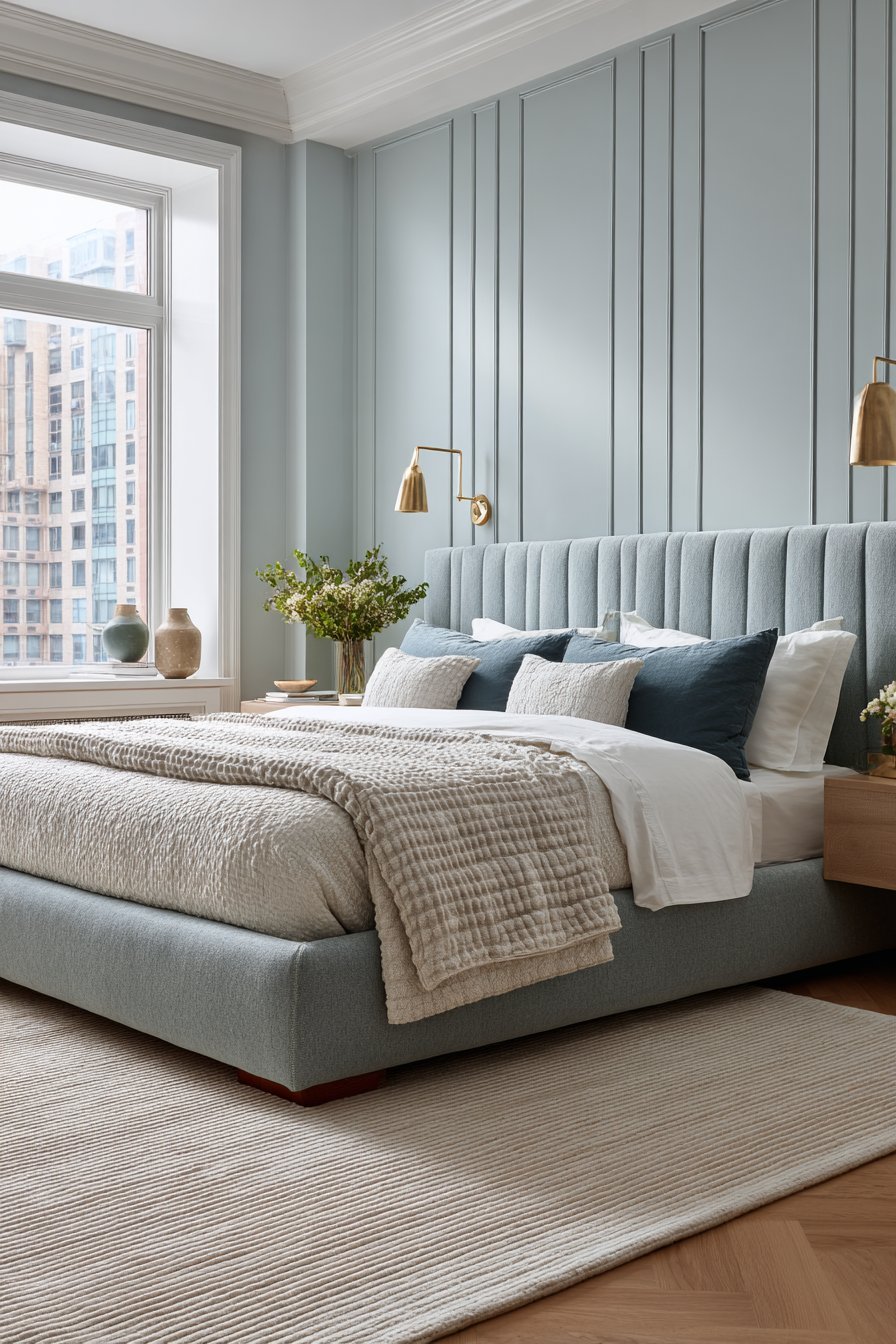
The bedding layers showcase thoughtful textile selection. A textured waffle-weave blanket in pale grey adds dimensional interest. Euro pillows in various blue tones create a cohesive color story. Each shade relates harmoniously to the wall color. Two simple wall-mounted swing-arm reading lights feature brass finish. Their adjustable arms provide functional flexibility for bedside reading.
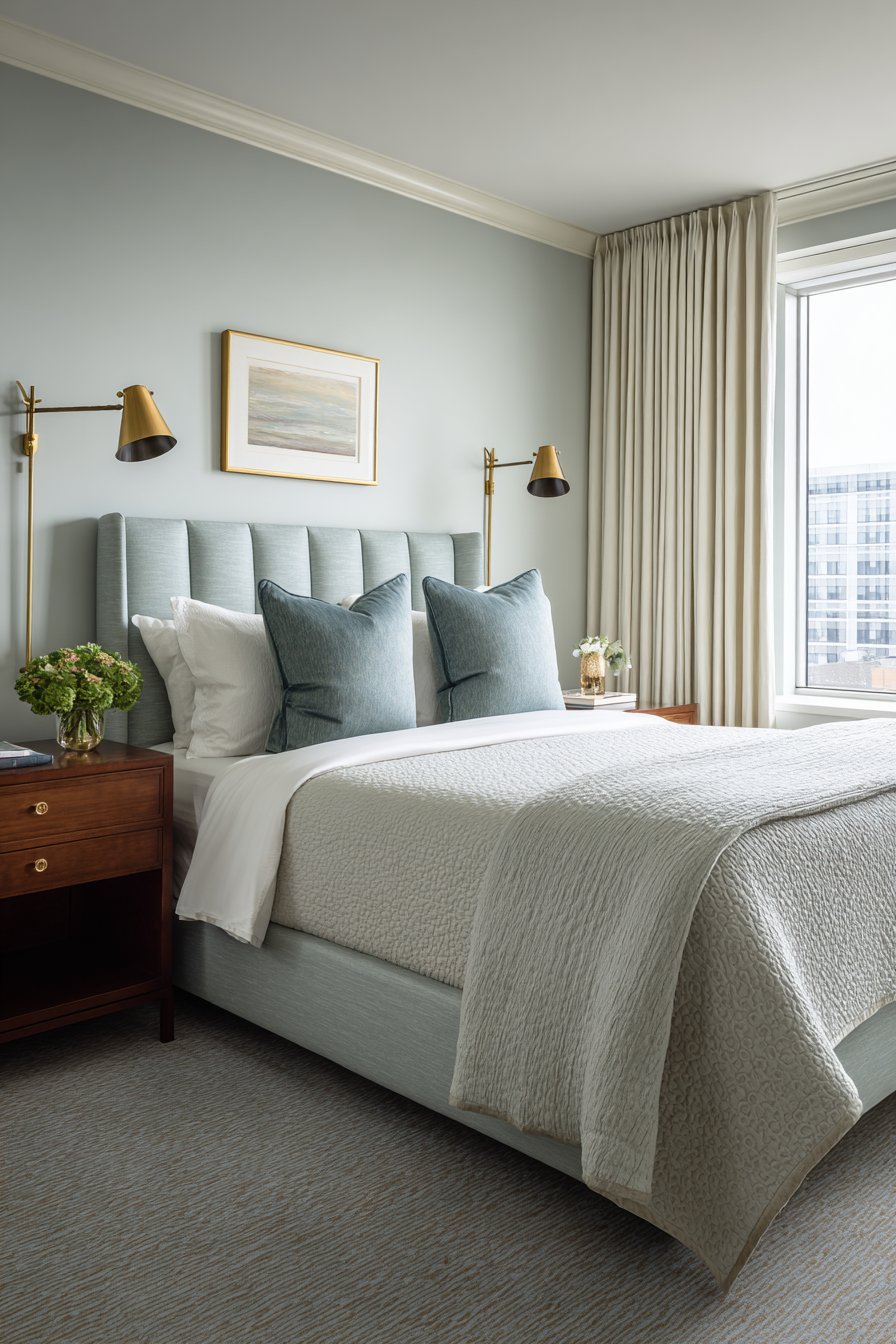
Morning light reveals subtle variations throughout the blue palette. Different sheens and textures catch light in unique ways. The waffle-weave blanket creates shadow and highlight. Smooth percale reflects light differently than textured linen. These subtle differences create visual richness within the cohesive color scheme.
Key Design Tips:
- Paint walls in enveloping colors to create cocoon-like comfort
- Layer multiple shades of one color family for sophisticated depth
- Choose adjustable reading lights for functional bedside illumination
- Mix textile textures within the same color palette for visual interest
- Use white accents to prevent monochromatic schemes from feeling heavy
7. Japanese-Inspired Zen Simplicity
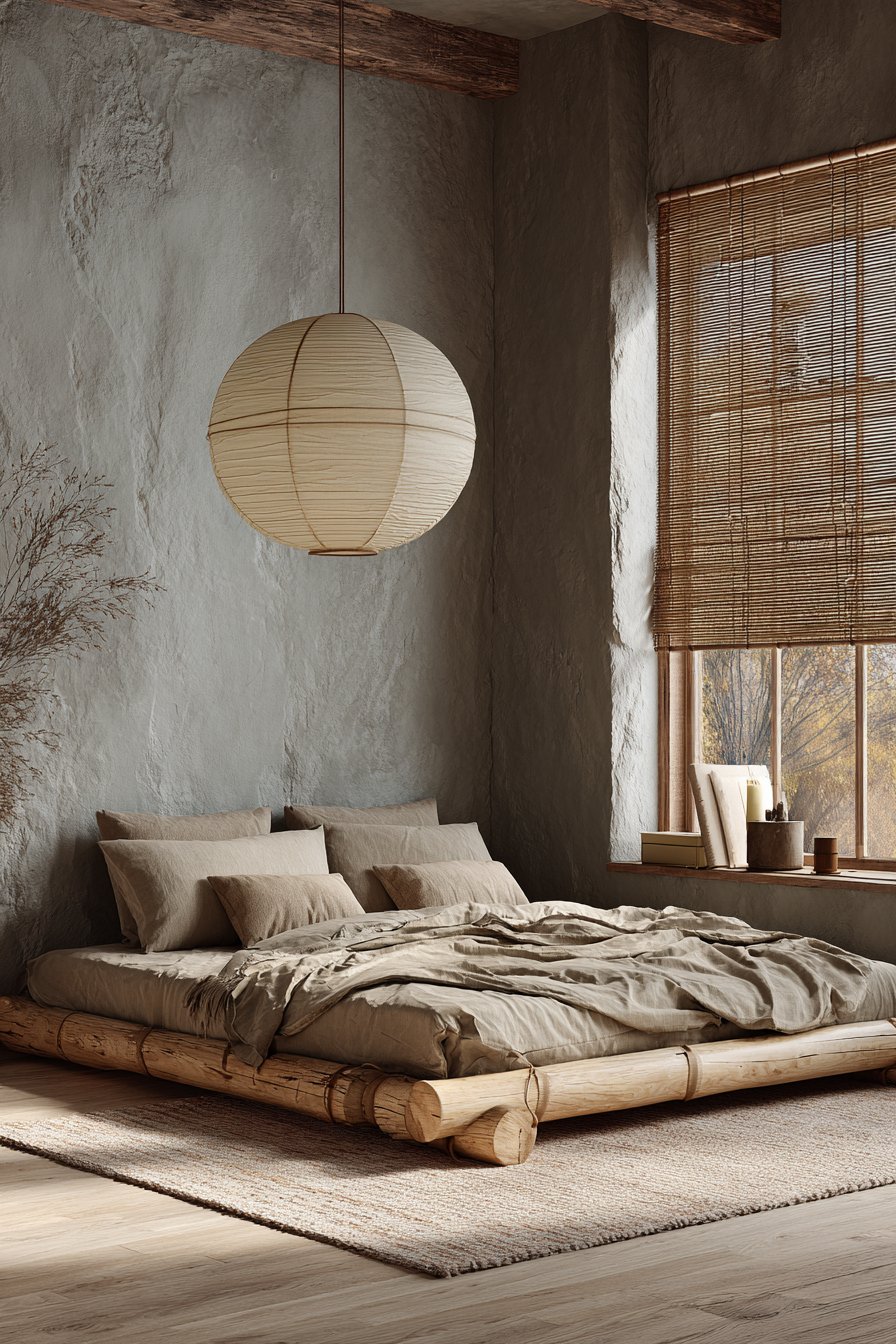
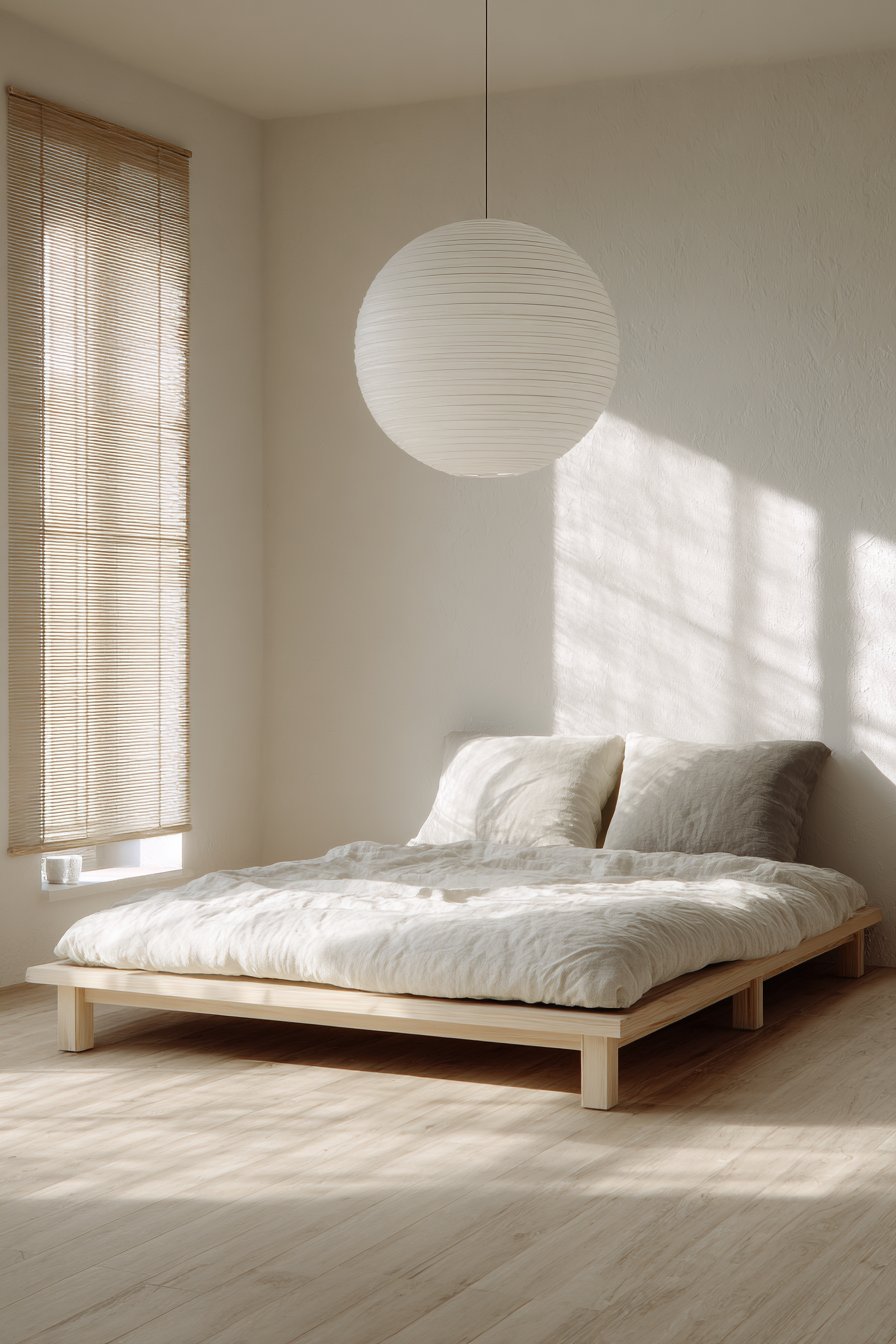
A low platform bed in light ash wood embodies Japanese design principles. Clean simple lines create visual peace and spatial clarity. The bed sits low to the ground in traditional style. Organic cotton bedding in natural undyed tones honors authentic material beauty. A simple paper pendant light hangs centered above the bed. It casts soft diffused illumination throughout the space.
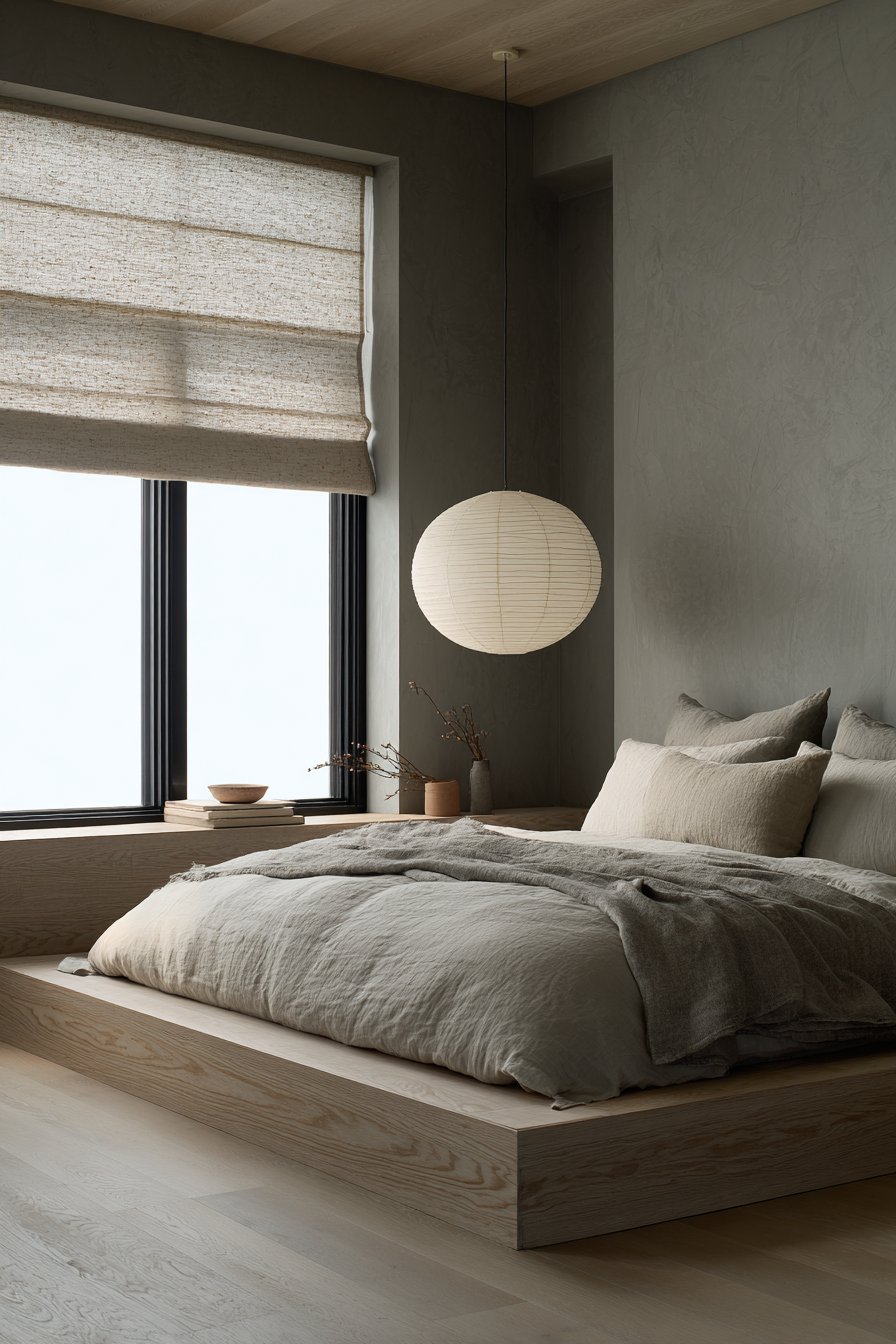
Pale bamboo roman shades cover the window with natural elegance. They filter daylight into gentle ambient light that changes throughout the day. Light oak flooring contributes warmth without visual complexity. Minimal decoration creates an uncluttered, meditative environment. Every element serves a clear purpose within the space.
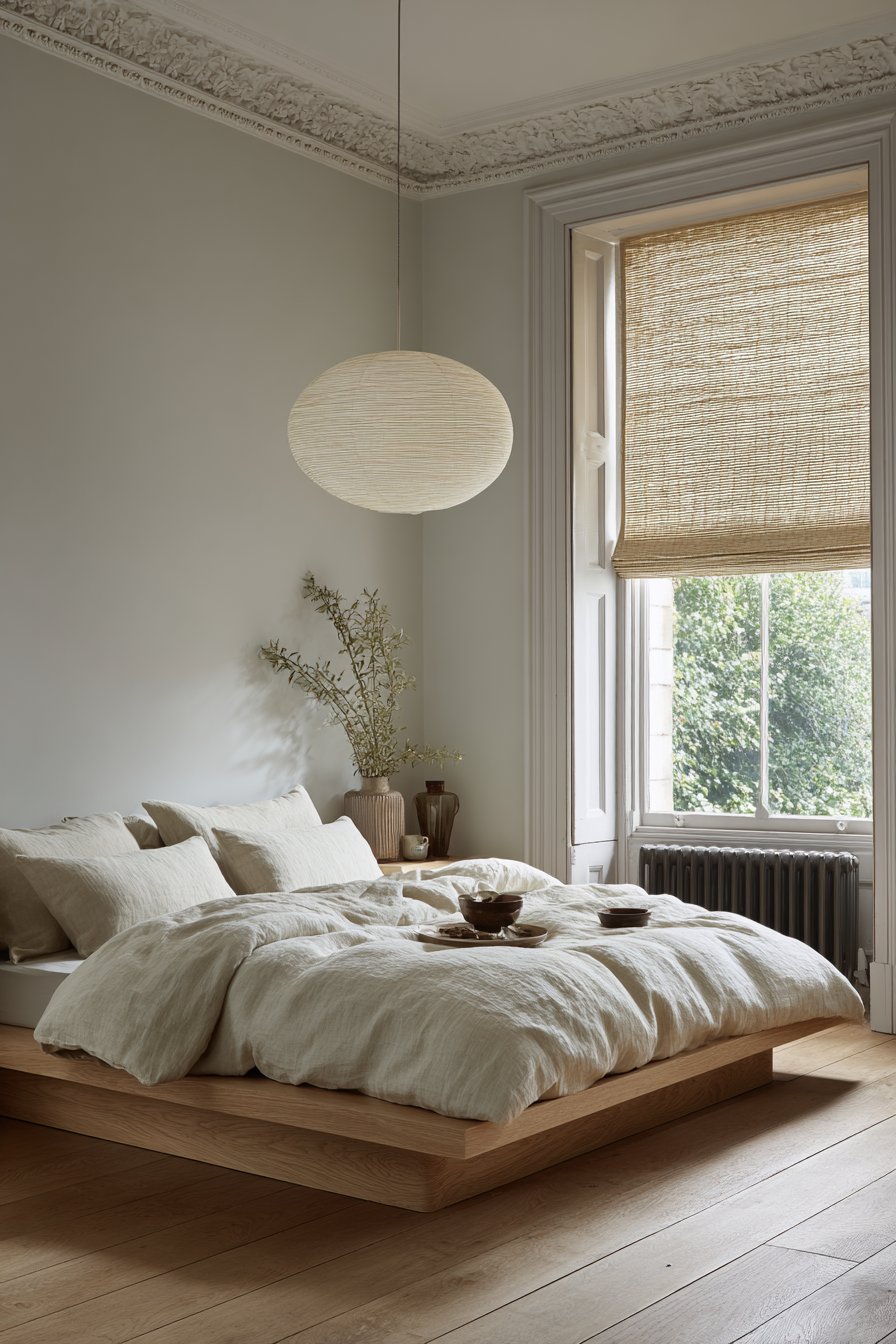
The design demonstrates the power of restraint and intentionality. Absence of unnecessary objects creates mental clarity. Natural materials connect the space to the outside world. The honest treatment of wood, cotton, and bamboo celebrates their inherent qualities. This approach creates profound peace through simplicity rather than excess.
Key Design Tips:
- Choose low platform beds to create a traditional Japanese aesthetic
- Use natural undyed textiles to celebrate authentic material beauty
- Install paper pendant lights for soft, diffused ambient illumination
- Select bamboo window treatments for natural light filtering
- Embrace minimalism by removing all non-essential decorative objects
8. Blush Pink Romantic Softness
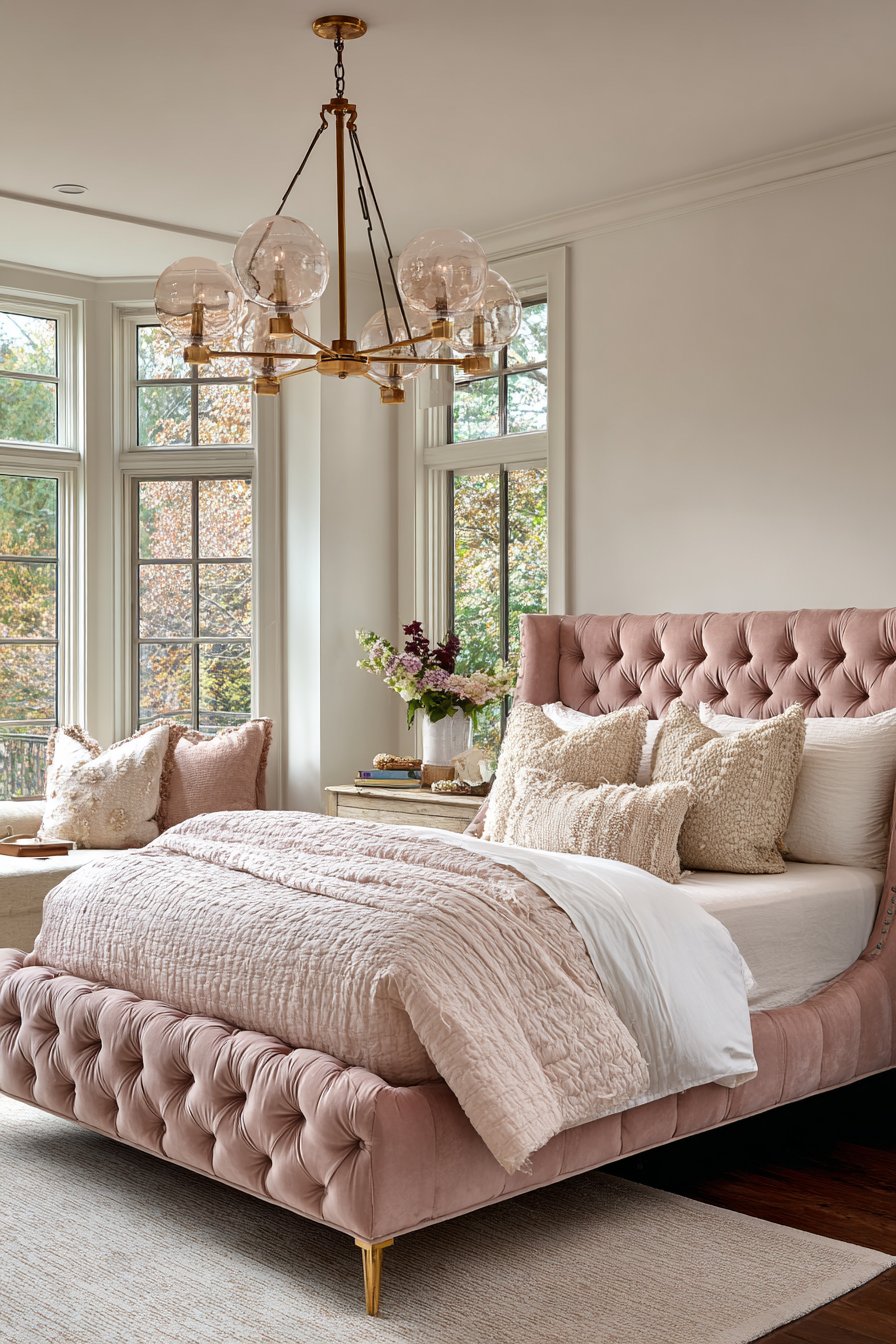
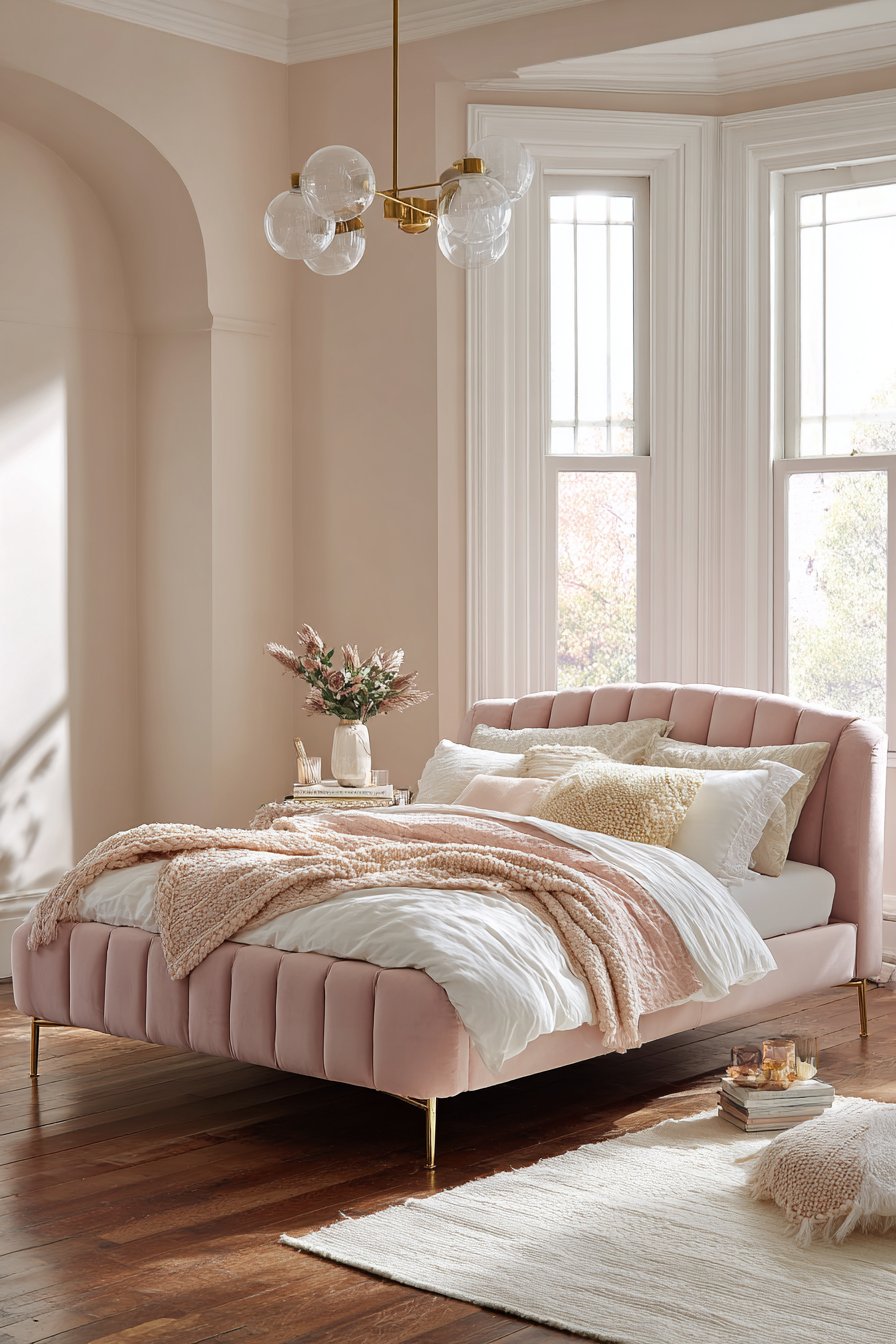
A tufted upholstered bed frame in soft blush pink velvet creates romantic elegance. Gentle curves and brass legs add refined details without fussiness. White linen sheets provide fresh contrast against the pink velvet. A quilted cotton coverlet in pale pink adds textural dimension. The mix of textured pillows in rose and cream tones completes the layered bedding.
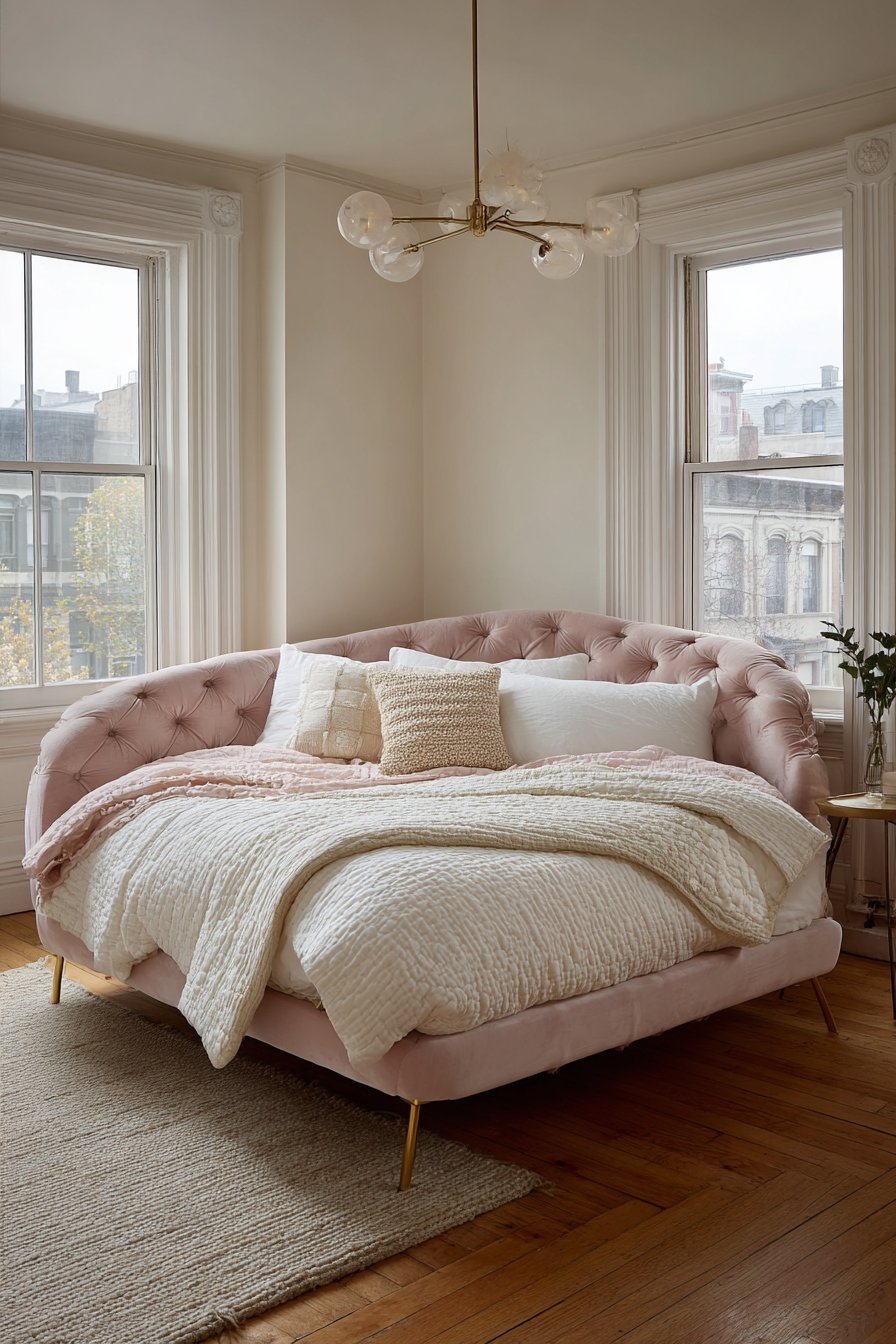
A vintage-style brass chandelier with frosted glass globes provides ambient lighting. The fixture adds elegance while maintaining the soft romantic mood. Walls wear warm off-white paint with subtle peachy undertones. This color choice complements the blush bedding beautifully. Natural light from a bay window creates a soft glow throughout the room.
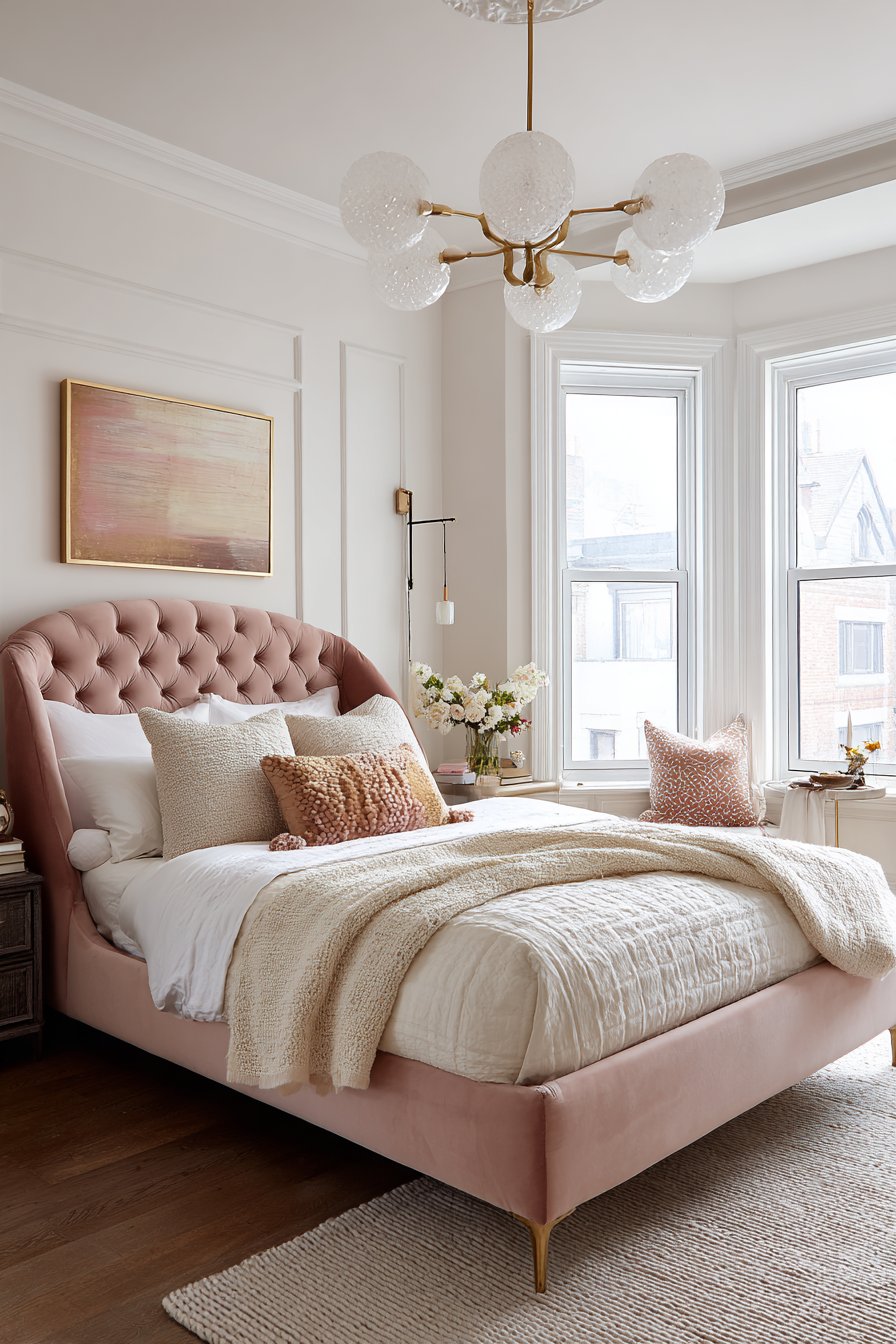
The color palette demonstrates how pink can create sophisticated calm. The blush tone feels mature rather than juvenile. Cream and white accents prevent the pink from overwhelming. Brass hardware and lighting add warmth and subtle glamour. Together these elements create a space that feels both romantic and restful.
Key Design Tips:
- Choose dusty blush tones rather than bright pinks for sophisticated calm
- Mix velvet and linen textures for luxurious yet breathable comfort
- Add brass accents to warm up pink color schemes
- Layer multiple shades of pink and cream for dimensional interest
- Use frosted glass lighting to maintain soft ambient illumination
9. Whitewashed Wood Texture Sanctuary
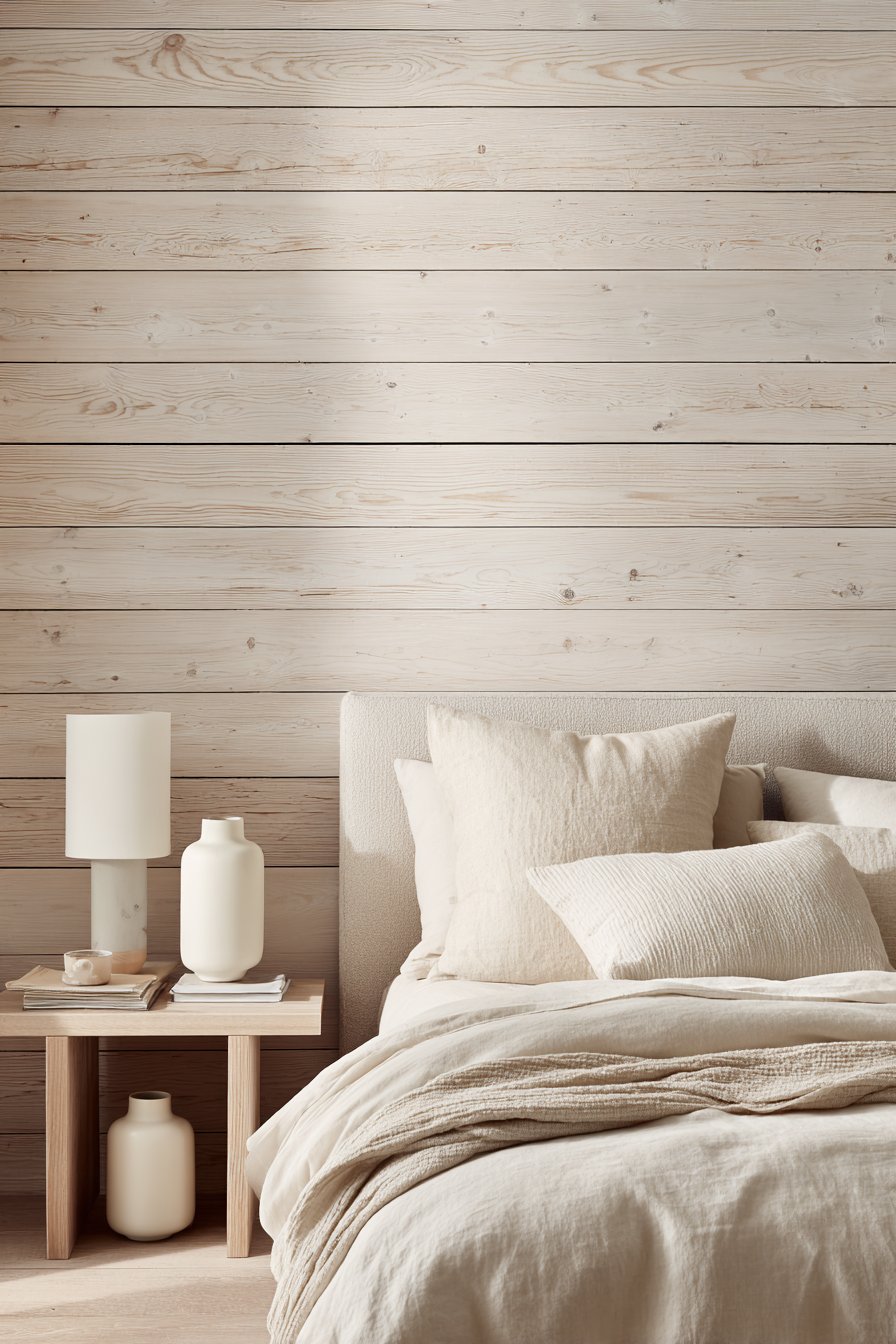
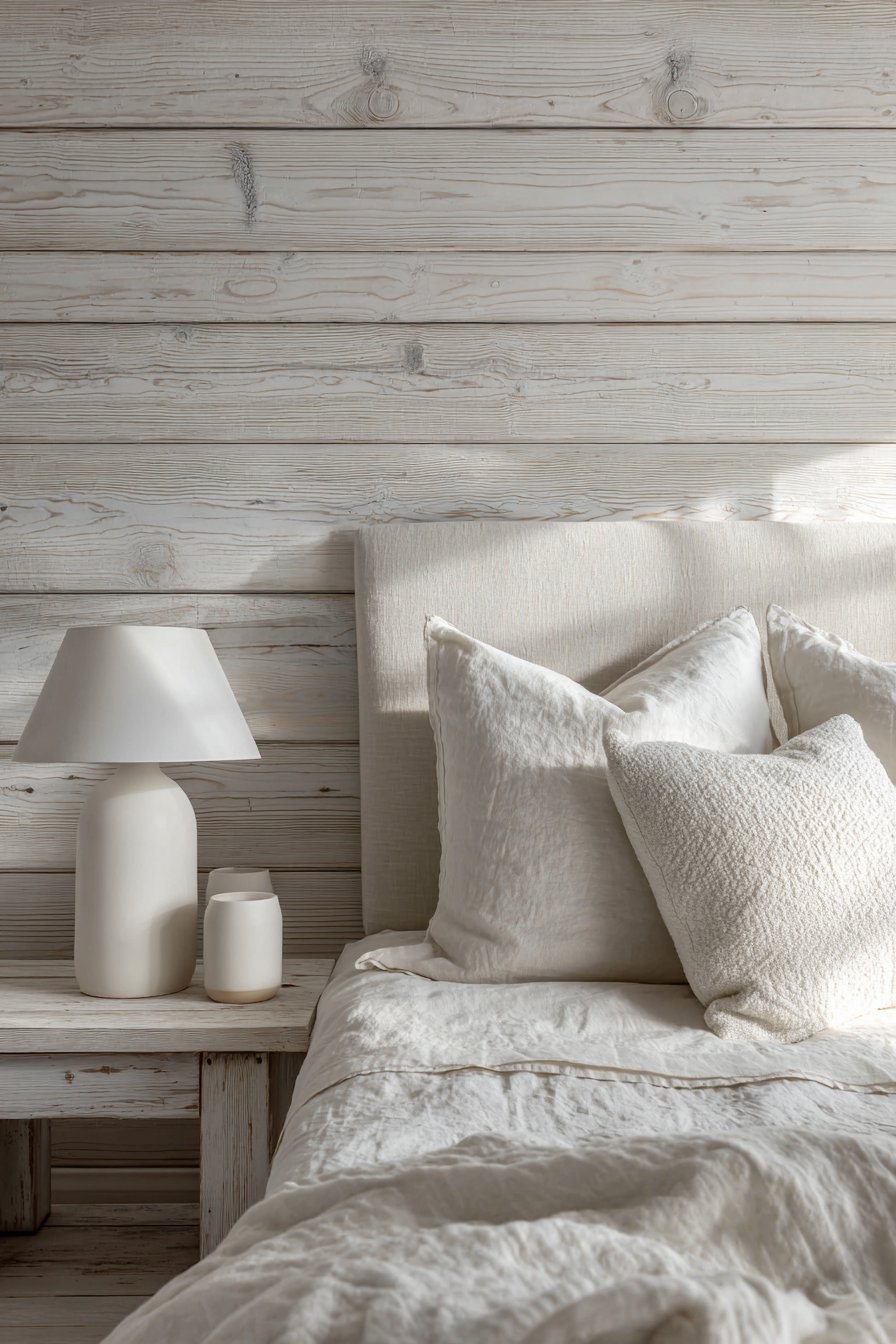
A feature wall of horizontal wood planking in whitewashed pine adds texture without overwhelming. The wood grain remains visible beneath the white finish. This creates subtle visual interest while maintaining brightness. A simple upholstered headboard in natural oatmeal linen sits against the textured wall. The neutral fabric allows the wood wall to remain the focal point.
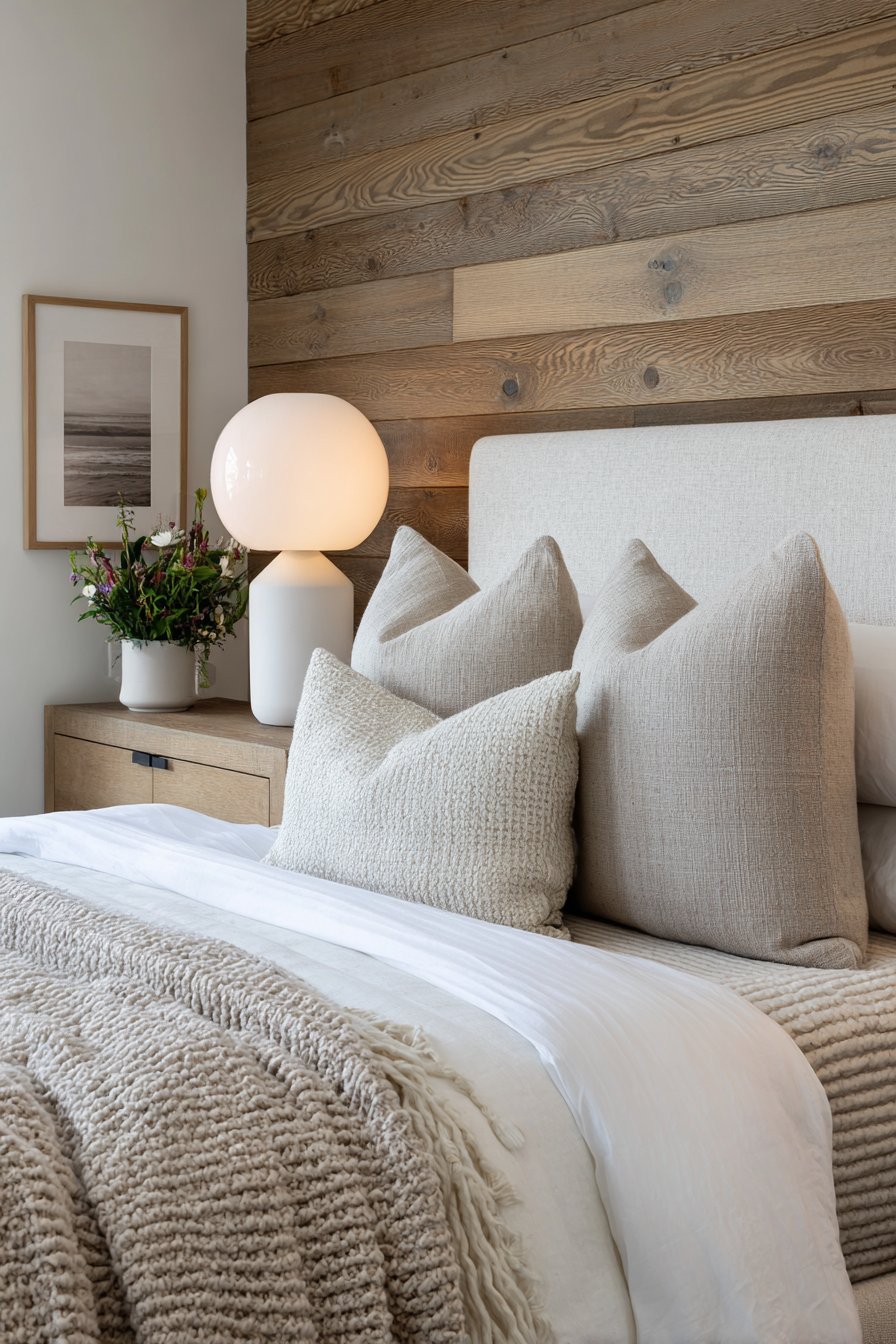
Bedding layers in various whites and creams demonstrate monochromatic sophistication. Smooth cotton provides cool comfort. Nubby linen adds organic texture. Soft velvet introduces luxurious tactile quality. Each textile catches light differently throughout the day. Two modern ceramic table lamps in matte white provide warm bedside lighting. Their simple forms complement the clean aesthetic perfectly.
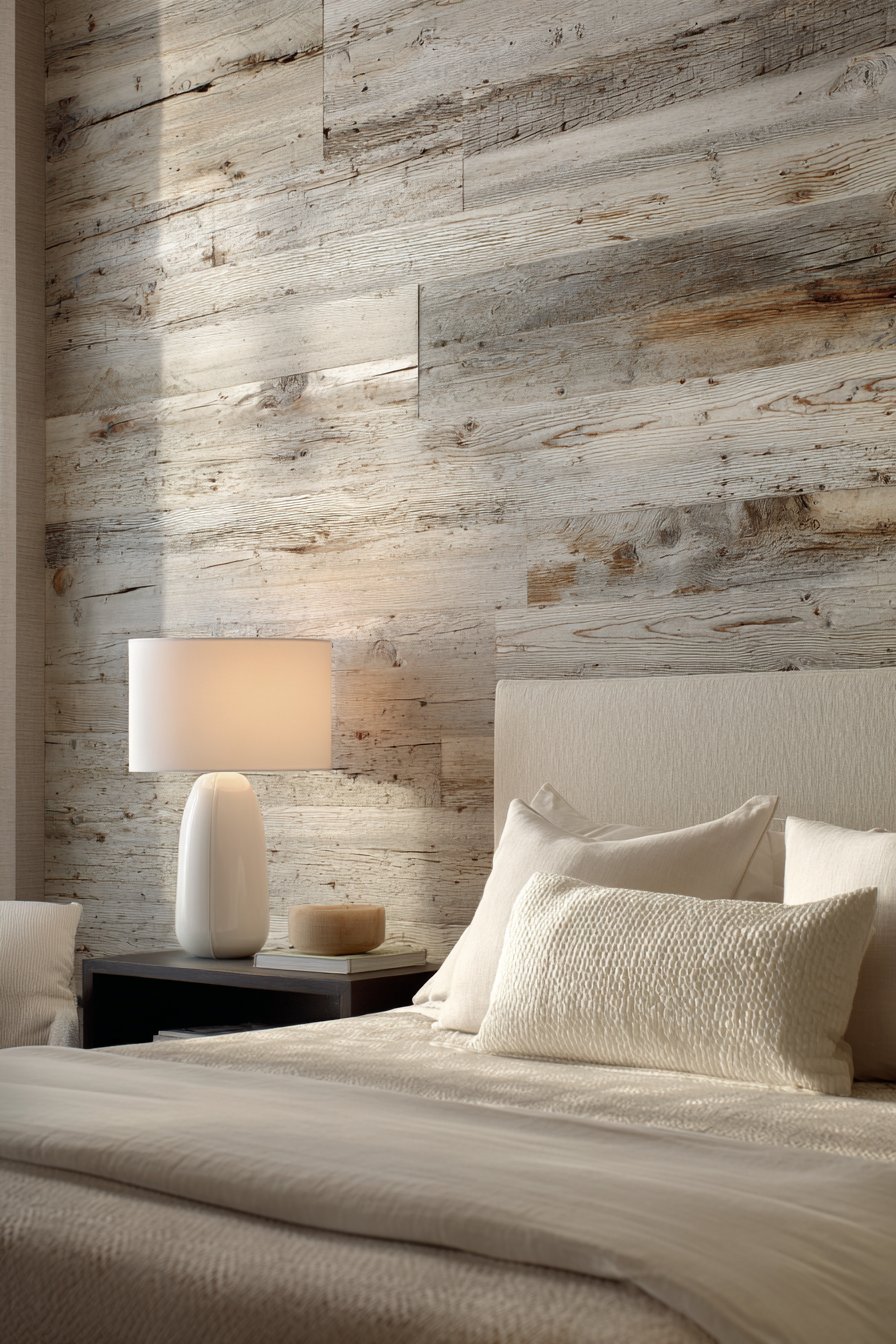
The whitewashed wood creates architectural interest without color competition. Natural light emphasizes the wood grain texture beautifully. Shadows and highlights play across the planking throughout the day. The textile variations add depth within the serene monochromatic palette. This approach proves that texture can create richness without color.
Key Design Tips:
- Install horizontal wood planking to add texture while maintaining brightness
- Whitewash wood to preserve grain visibility while lightening the space
- Layer textiles in varied textures within the same color family
- Choose matte ceramic lamps to avoid reflective glare
- Let natural light emphasize wood grain and textile texture throughout the day
10. Layered Linen Cocoon
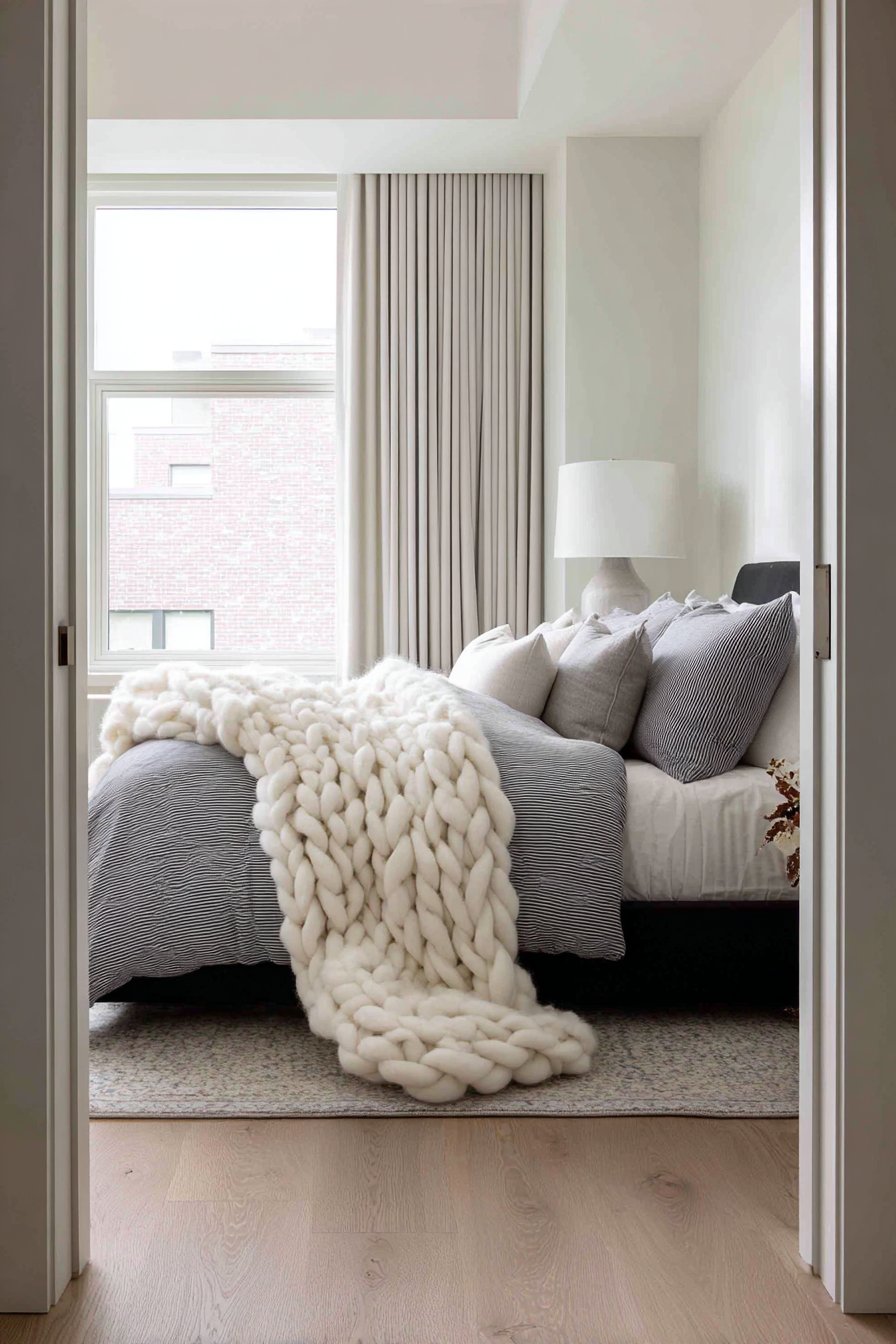
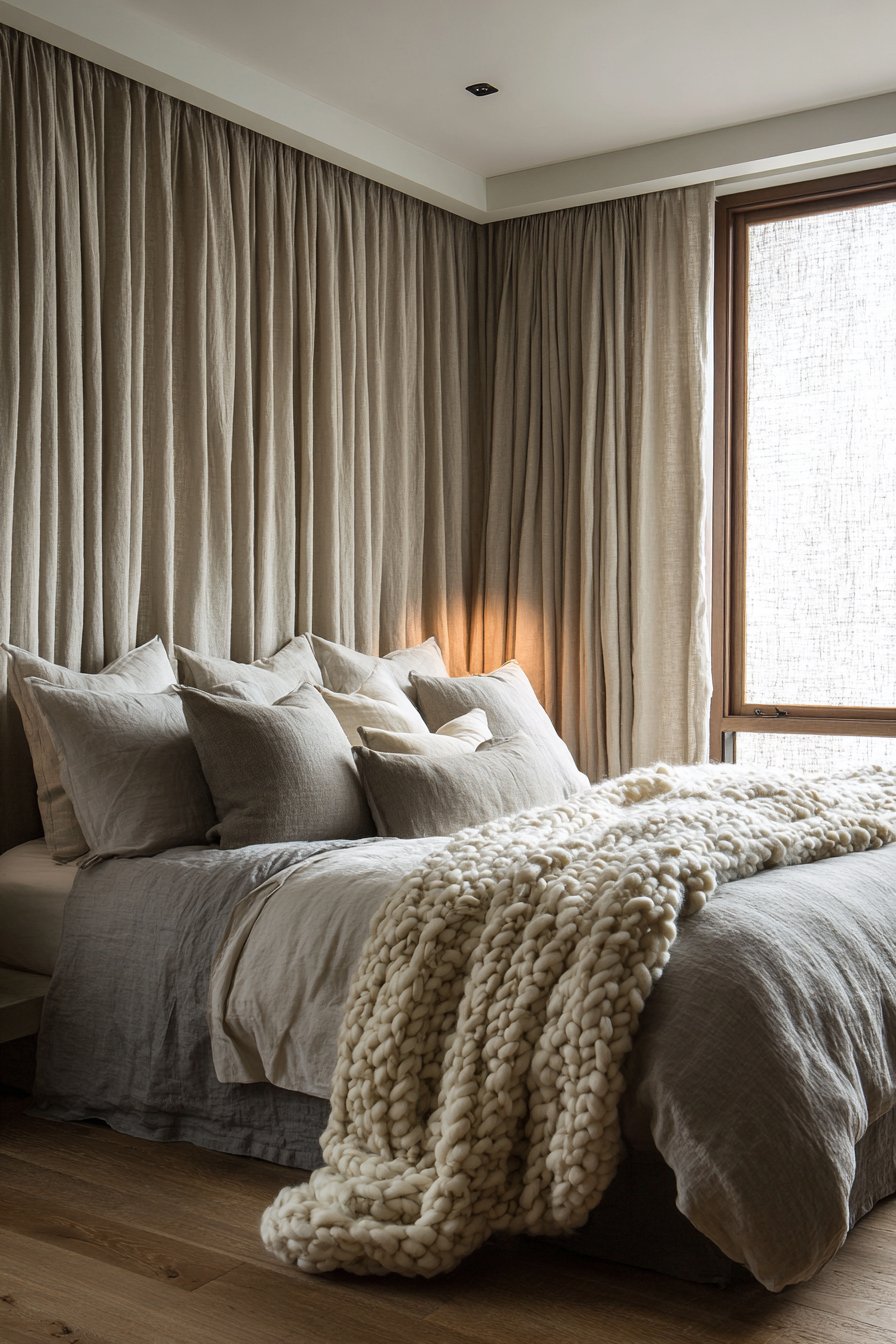
Blackout curtains in heavy natural linen hang from simple brass rods. They pool slightly on the oak floor in luxurious fashion. The curtains frame a sleeping area designed for ultimate rest. A low upholstered bed in charcoal grey linen provides sophisticated comfort. Multiple pillows in varying sizes create an inviting arrangement.
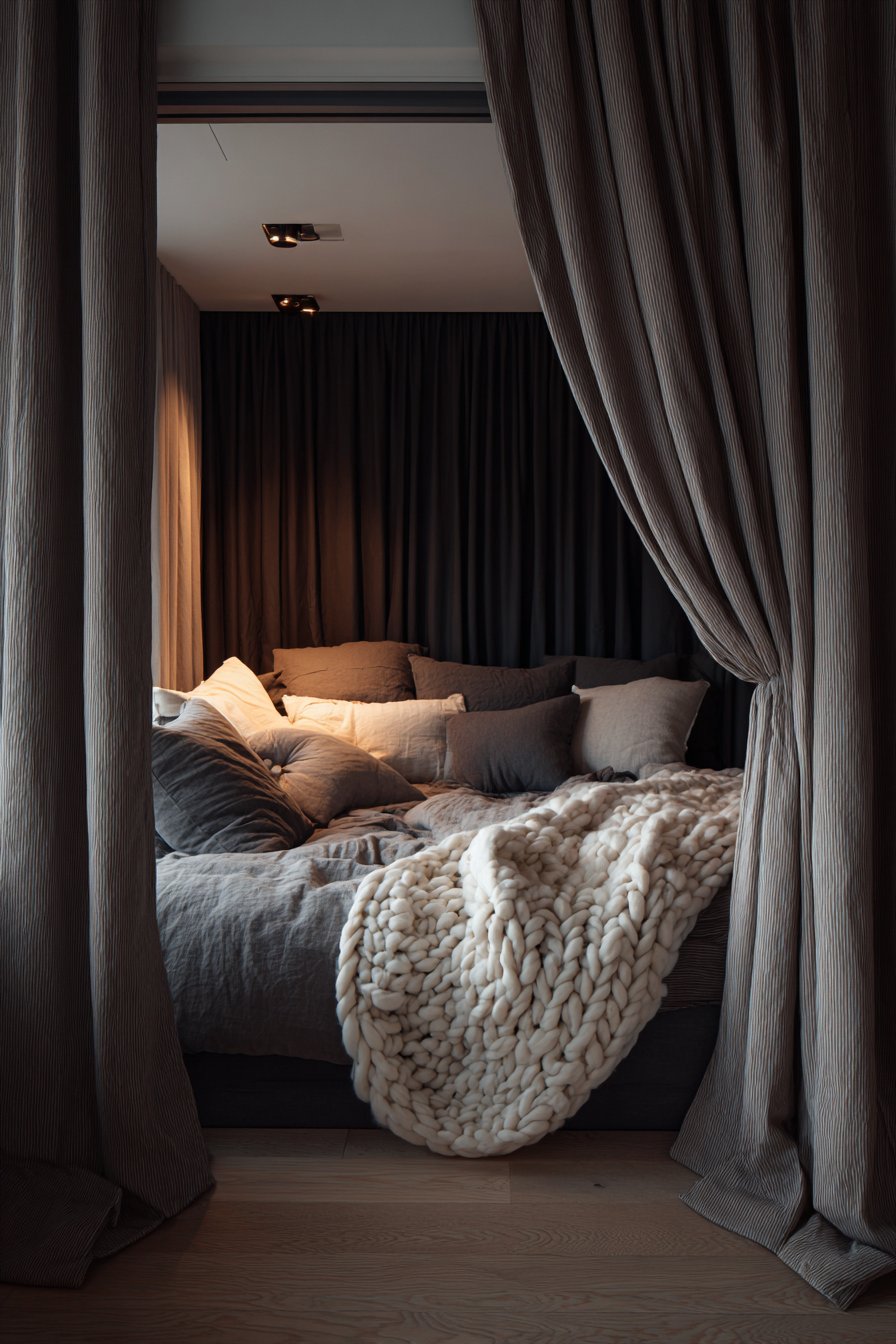
The pillow collection demonstrates thoughtful color curation. Shades of grey, taupe, and white create cohesive variety. A chunky cable-knit throw blanket in cream adds cozy texture. The blanket drapes casually across the bed. Soft recessed lighting creates gentle ambient illumination throughout the evening. The controlled lighting supports the cocoon-like atmosphere.
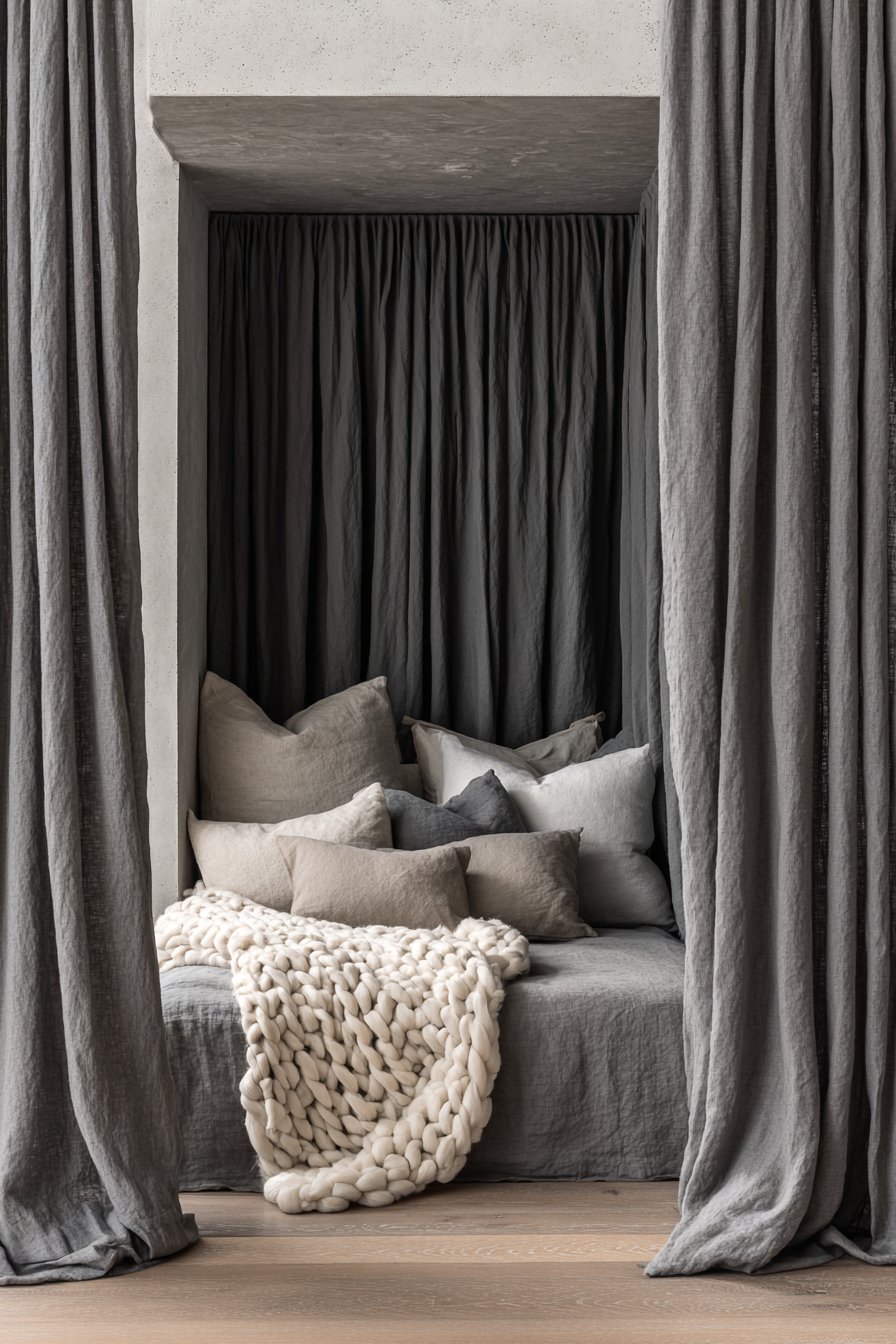
The layered textiles work together to create sanctuary from the outside world. Heavy linen curtains block unwanted light and sound. Abundant pillows invite immediate relaxation. The cable-knit throw adds visual and physical warmth. Charcoal grey provides grounding without feeling heavy. This space demonstrates how layering creates both comfort and calm.
Key Design Tips:
- Invest in blackout curtains for complete light control and better sleep
- Allow curtains to pool slightly on the floor for a luxurious appearance
- Layer multiple pillow sizes in coordinating neutral tones
- Add chunky knit throws for instant cozy texture
- Use recessed lighting to avoid visual clutter from lamps
11. Wall-to-Wall Upholstered Elegance
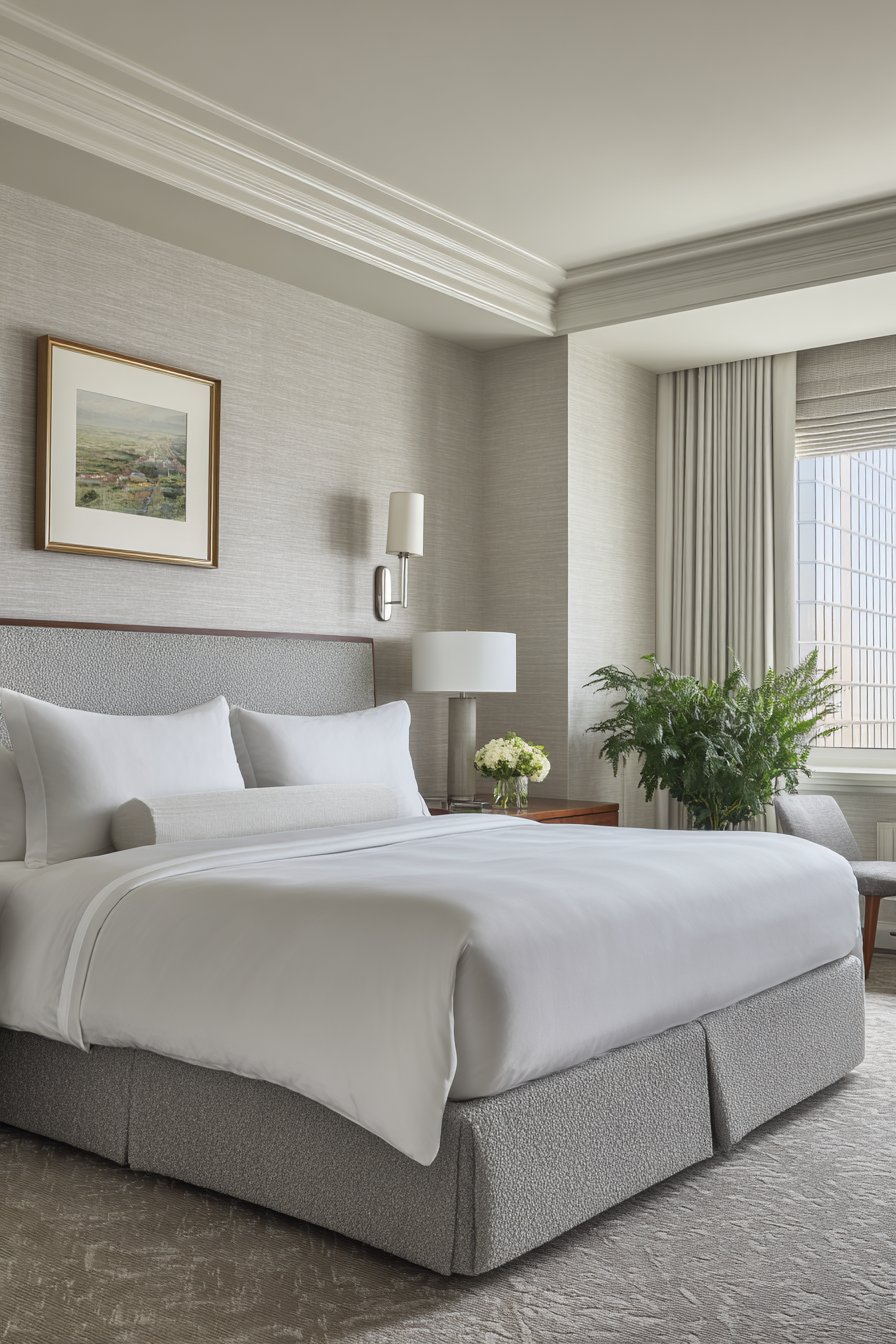
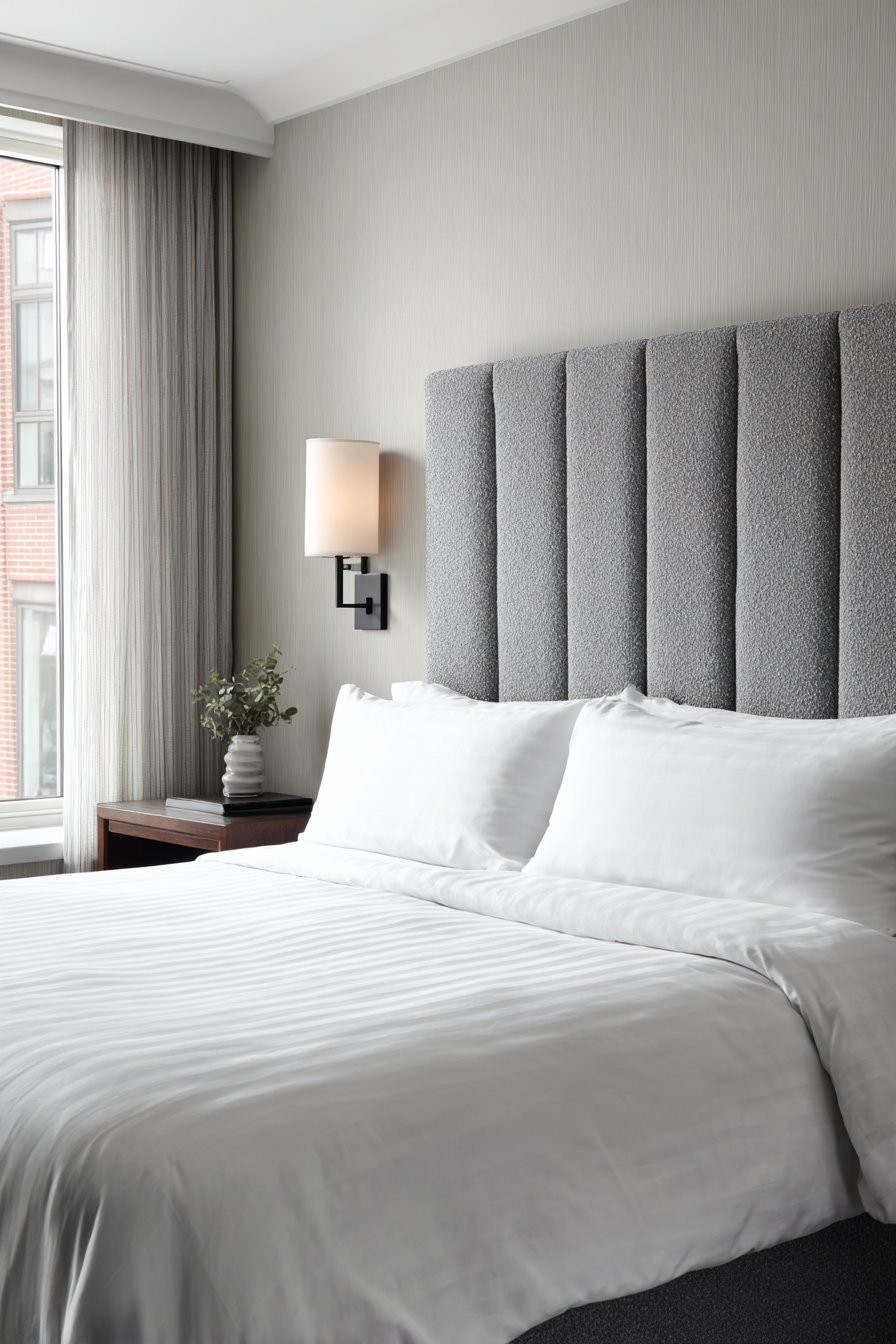
A statement upholstered headboard extends wall-to-wall in soft grey bouclé fabric. The subtle texture variation creates visual interest across the entire wall. This architectural element transforms the bedroom into a sophisticated retreat. The bed features hotel-style white bedding with crisp hospital corners. A tailored bed skirt adds polished finishing detail.
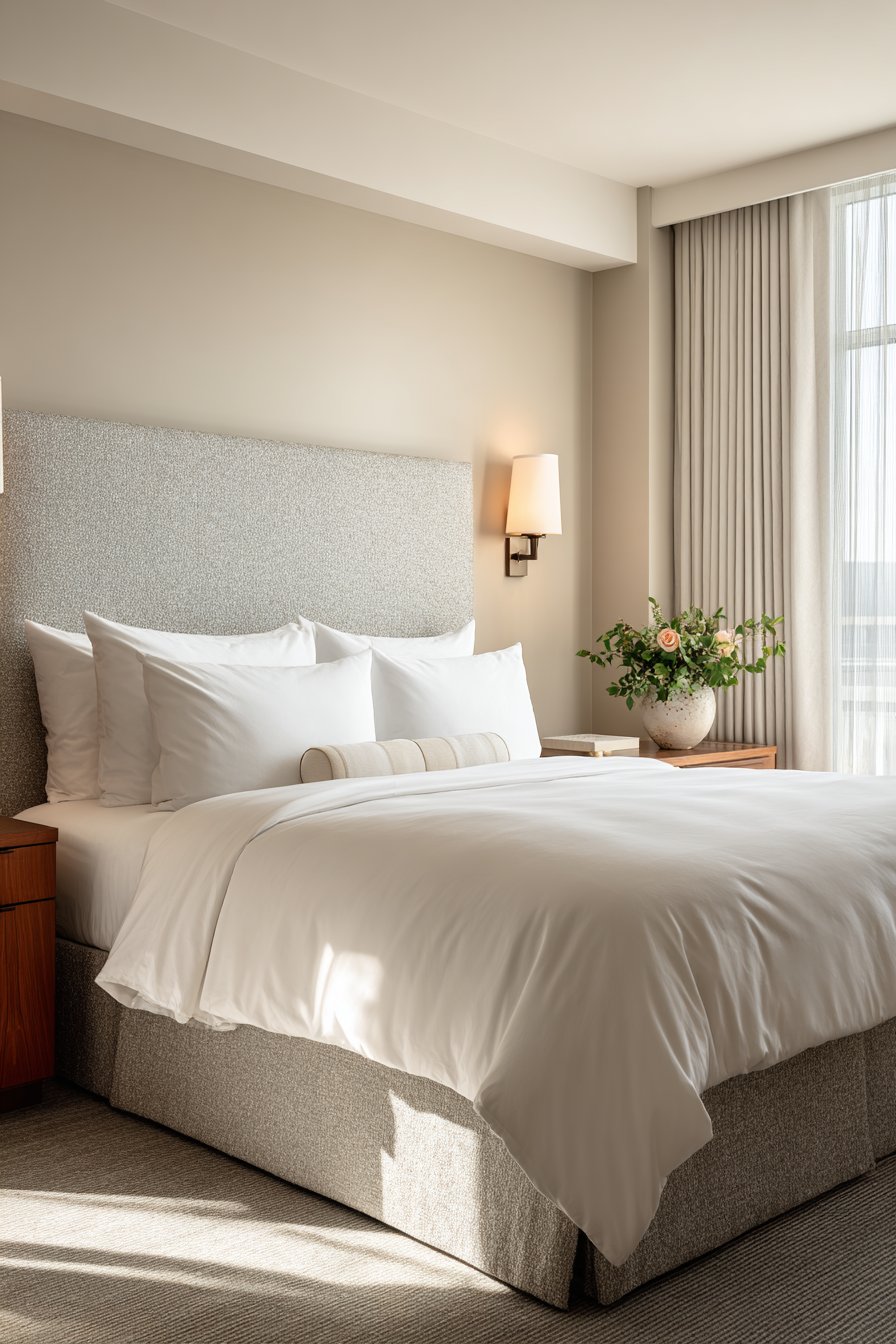
Simple nickel wall sconces with white linen shades flank the headboard symmetrically. They provide focused reading light without requiring nightstand space. Walls wear warm, greige paint that complements the grey headboard beautifully. Light filtering cellular shades diffuse incoming sunlight throughout the day. The even illumination maintains the room’s peaceful character.
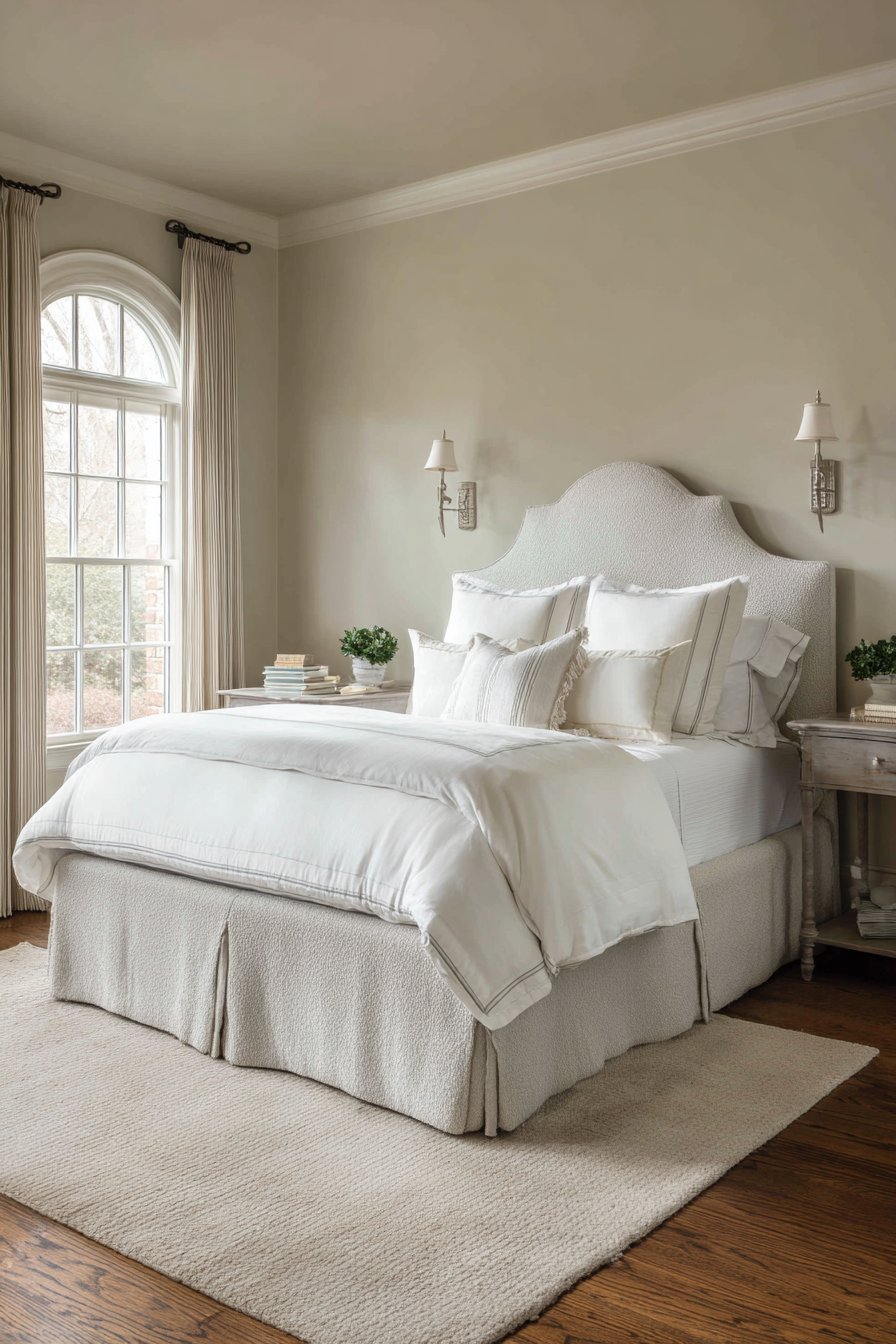
The upholstered wall demonstrates commitment to comfort and luxury. The bouclé fabric adds soundproofing qualities in addition to beauty. The wall-to-wall installation creates architectural presence. White bedding against grey fabric provides clean contrast. This design proves that simple elements executed beautifully create lasting impact.
Key Design Tips:
- Extend headboards wall-to-wall to create architectural drama
- Choose bouclé fabrics for subtle texture and acoustic benefits
- Use crisp white bedding against colored upholstery for clean contrast
- Install wall sconces to save valuable nightstand surface space
- Select light-filtering shades to maintain even, peaceful illumination
12. Nature-Inspired Green Sanctuary
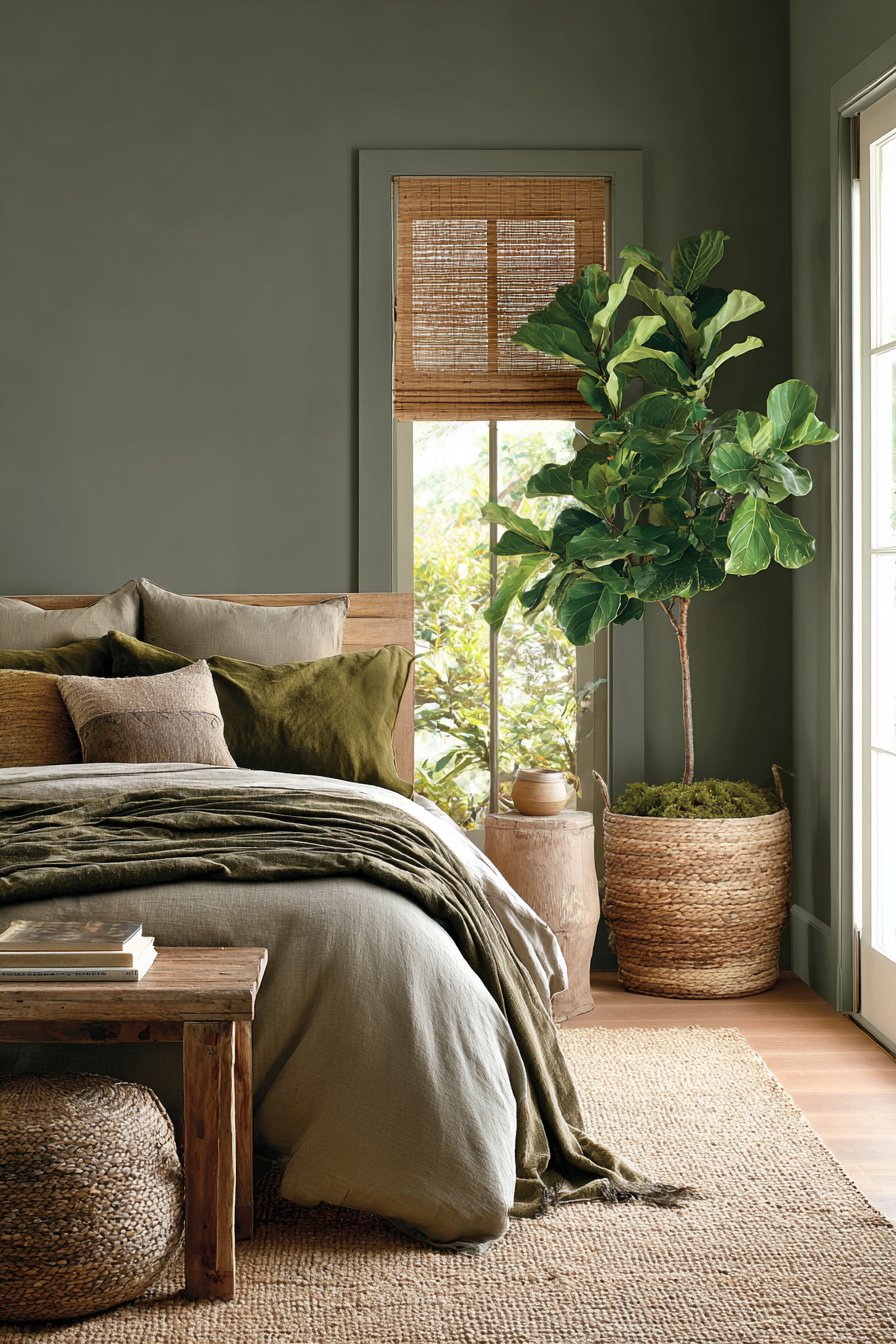
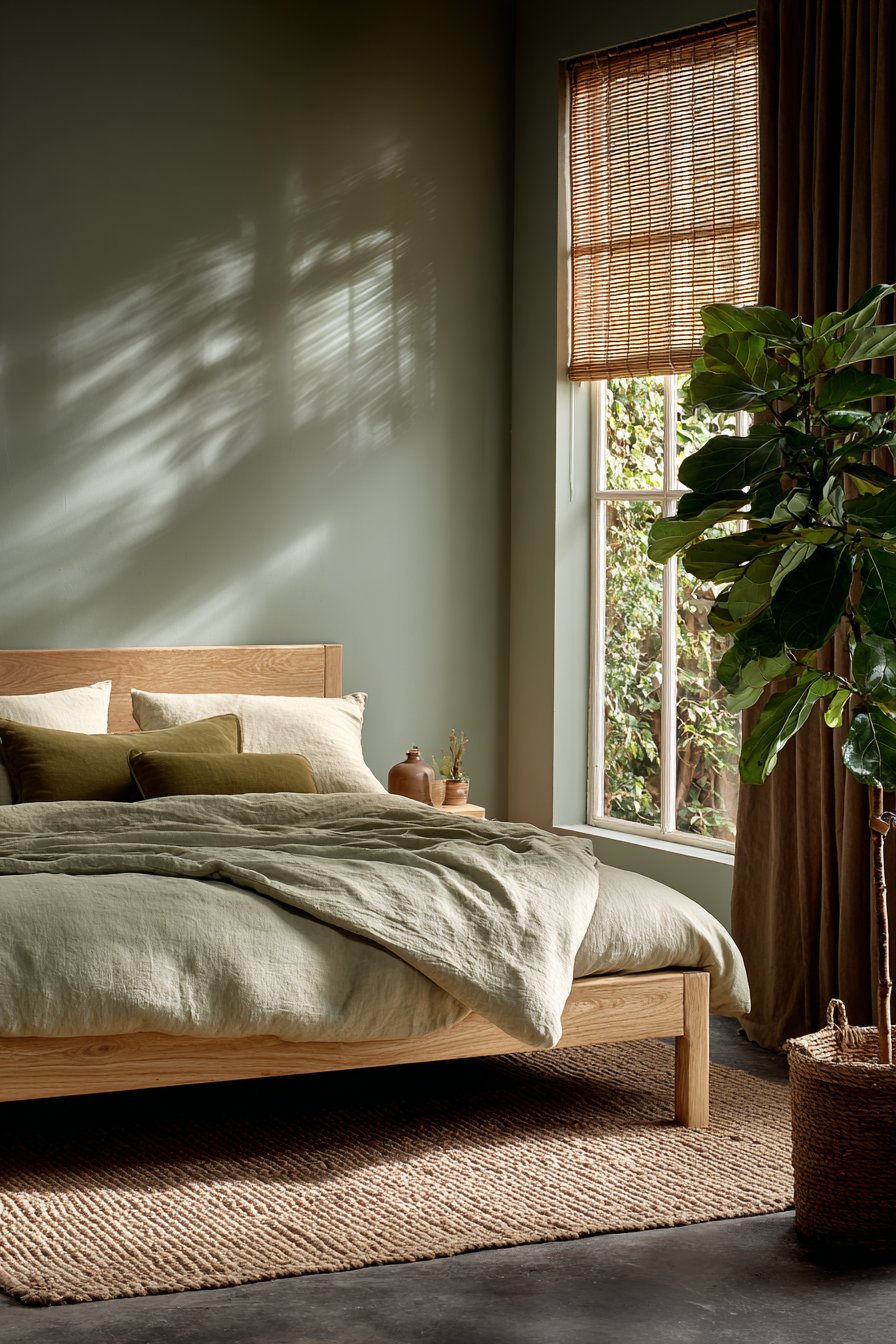
Sage green painted walls create an immediate connection to nature. Natural wood furniture in light oak complements the green beautifully. A simple bed frame showcases the honest material quality. Bedding layers in various greens create a cohesive nature-inspired palette. Eucalyptus sheets provide the foundation. A forest green linen duvet adds depth. Olive velvet throw pillows introduce luxurious texture.
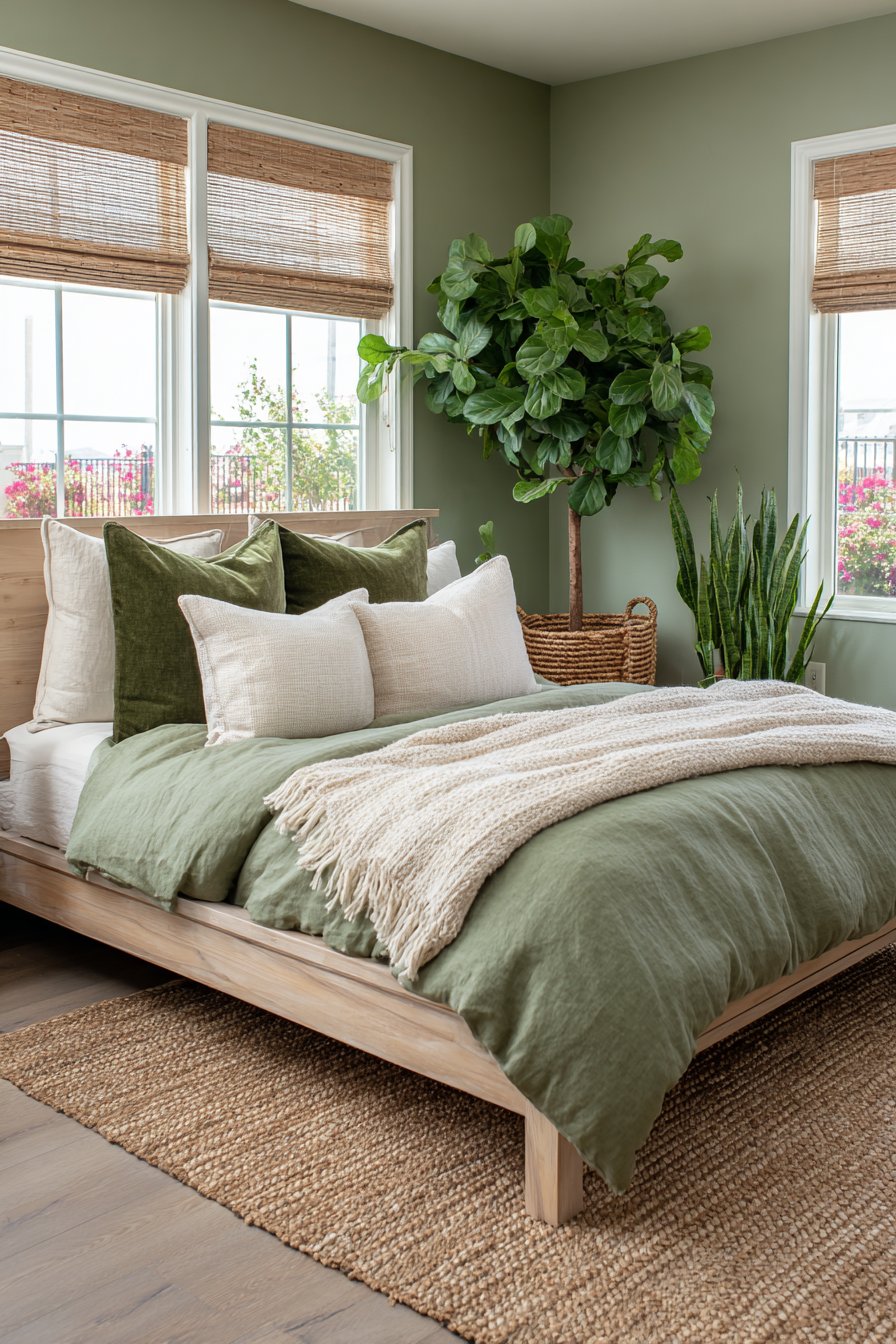
A live potted fiddle leaf fig stands in the corner near the window. The plant brings authentic biophilic design to the space. A jute area rug adds organic texture underfoot. The natural fiber connects the room to earth elements. Morning light streams through bamboo roman shades creating dappled patterns. The filtered light mimics being beneath a forest canopy.
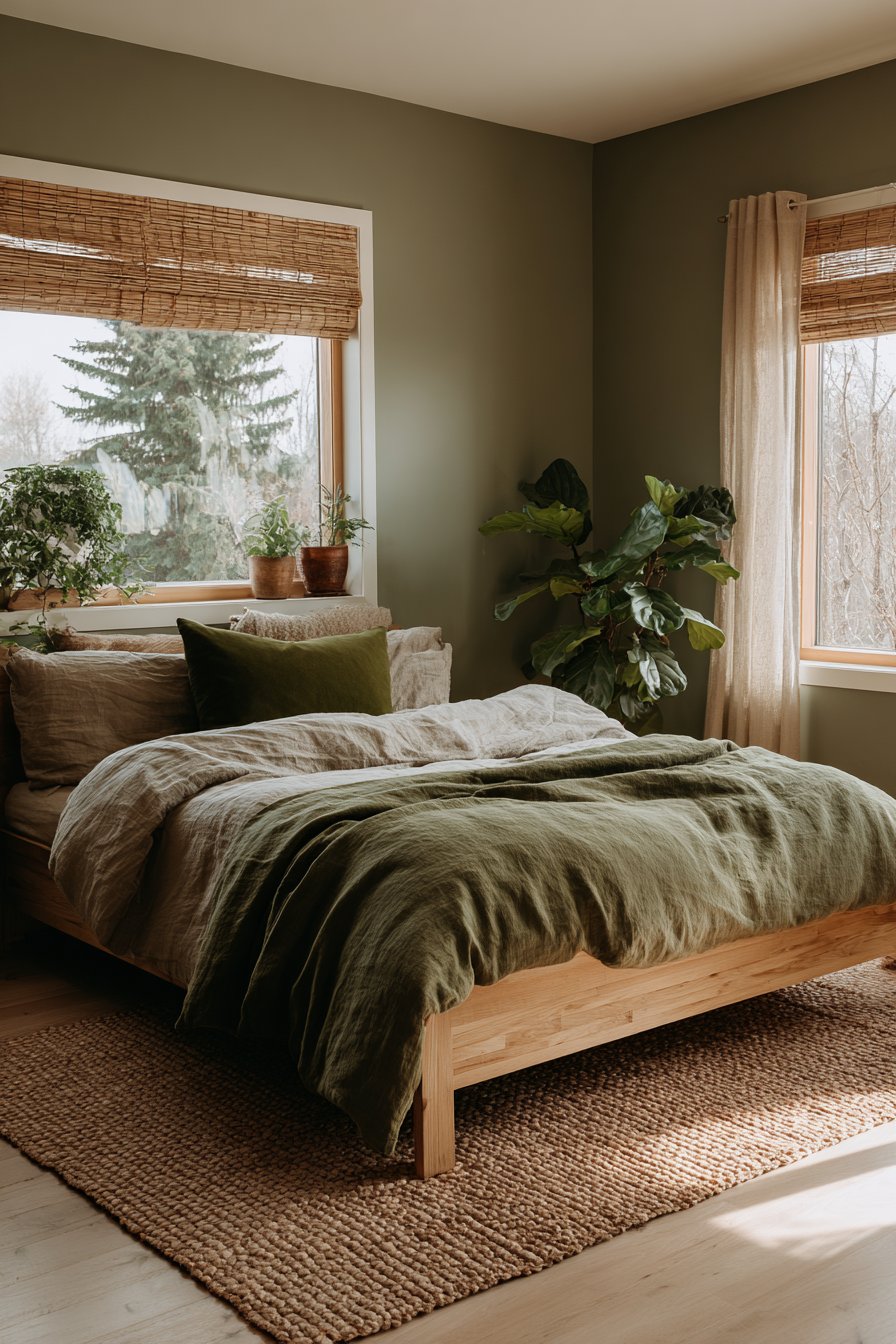
The green color palette demonstrates the calming power of nature-inspired hues. Each shade of green works harmoniously with the others. The variation prevents monotony while maintaining cohesion. Natural materials like oak, jute, and bamboo reinforce the connection to the natural world. This space proves that biophilic design creates measurable relaxation.
Key Design Tips:
- Paint walls in nature-inspired greens to promote calm and wellbeing
- Layer multiple green shades in bedding for dimensional interest
- Add live plants to bring authentic biophilic elements indoors
- Choose natural fiber rugs like jute to reinforce organic connections
- Use bamboo window treatments for natural light filtering and sustainability
13. Built-In Upholstered Niche
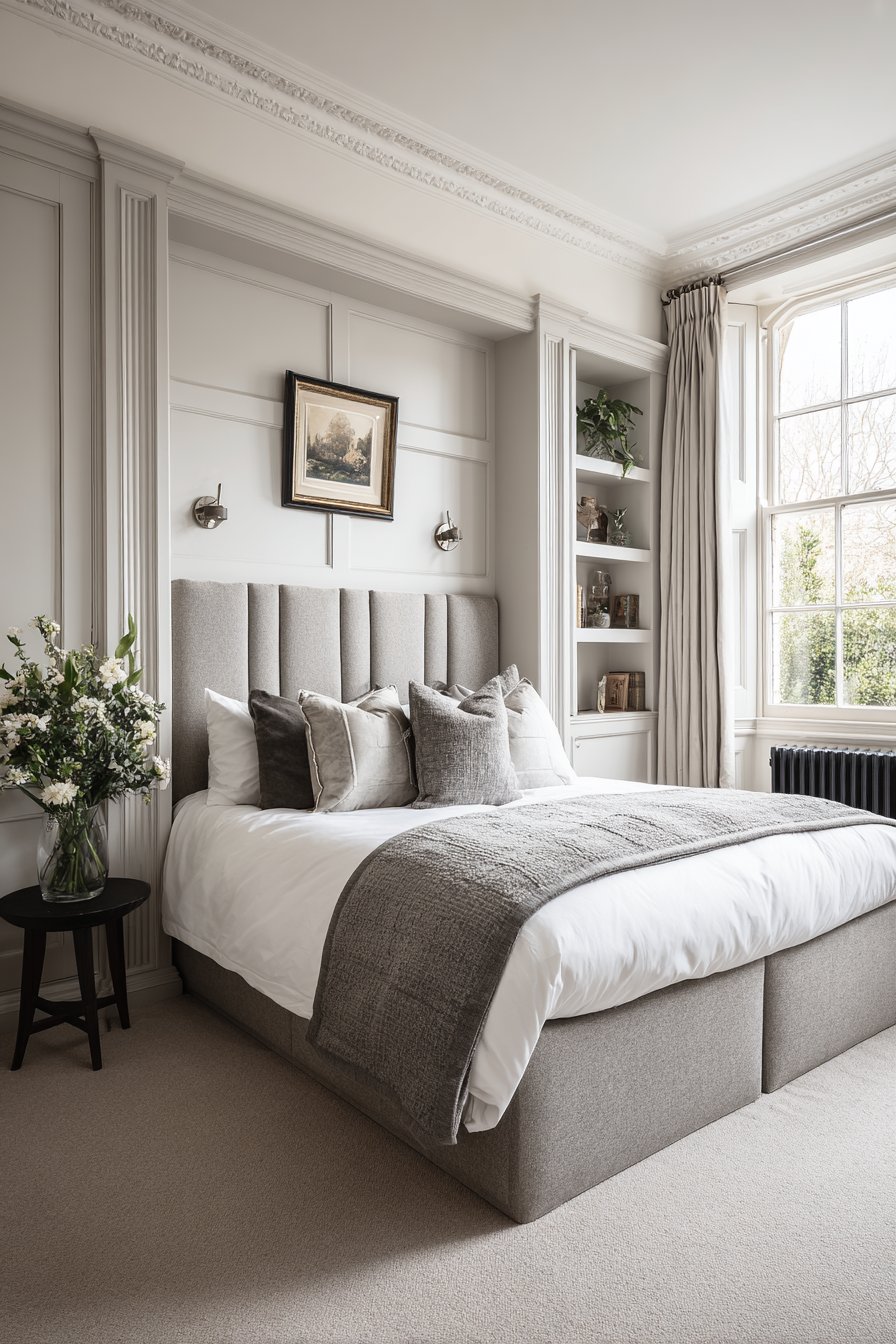
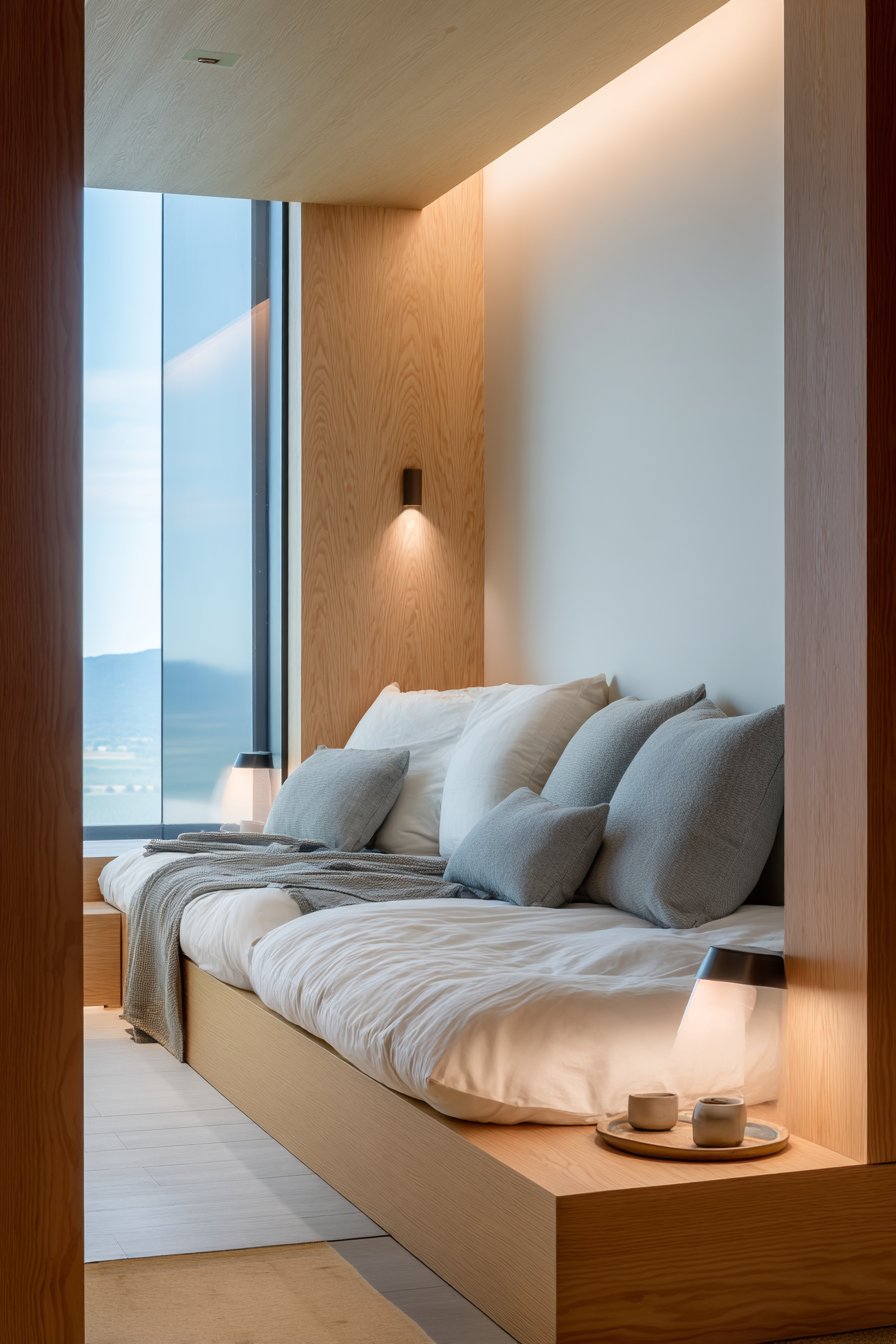
A built-in upholstered niche surrounds the bed, creating enveloping comfort. The niche features soft grey linen upholstery from floor to ceiling. Integrated reading lights eliminate the need for bedside lamps. Small floating shelves provide practical storage within arm’s reach. The bed sits within this architectural embrace, dressed in white and grey bedding.
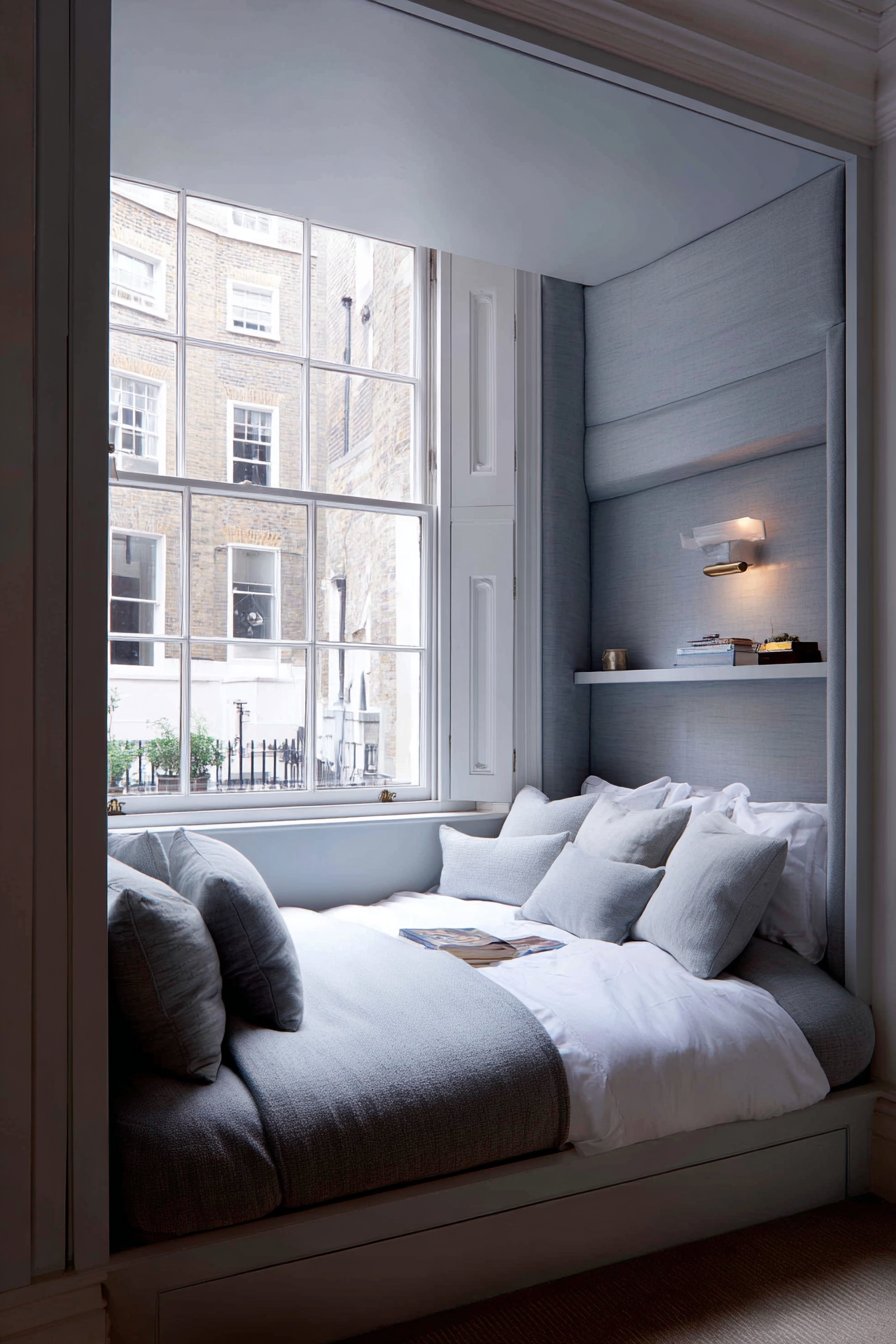
Multiple layers of pillows create an inviting sleeping arrangement. The remaining walls wear warm white paint providing brightness. A large window opposite the bed provides natural light throughout the day. The window placement ensures the niche doesn’t feel cave-like. Instead, it creates a perfect balance between enclosure and openness.
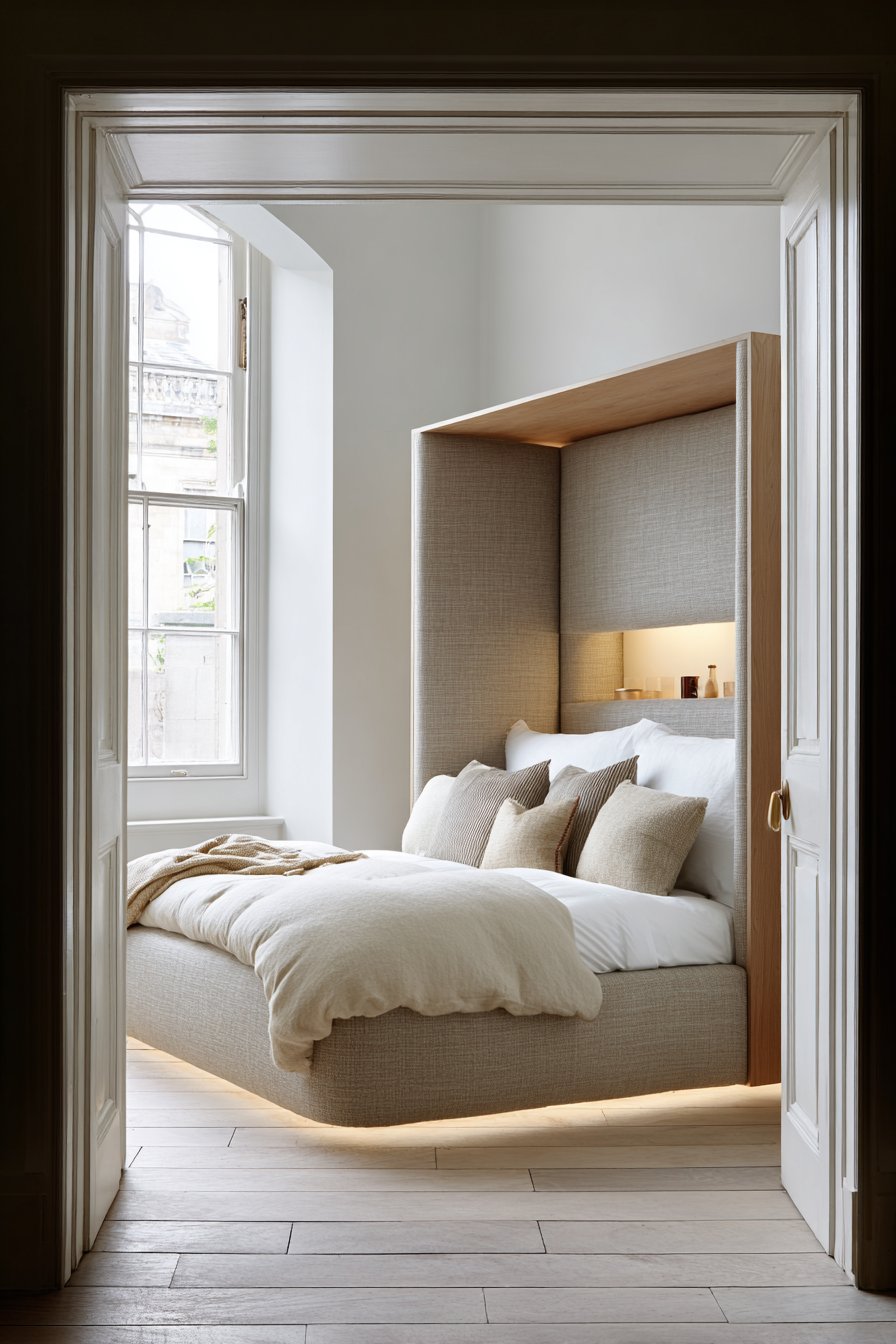
The built-in niche demonstrates how architecture can enhance comfort. The upholstered surfaces provide visual and acoustic softness. The integrated lighting eliminates bedside table clutter. Floating shelves offer function without visual weight. This thoughtful design creates a custom sleeping experience that feels both special and practical.
Key Design Tips:
- Build upholstered niches to create cocoon-like sleeping environments
- Integrate lighting directly into built-ins to save surface space
- Add floating shelves for accessible storage without visual bulk
- Position windows opposite enclosed sleeping areas to maintain brightness
- Use soft grey upholstery to create calm without feeling cold
14. Textured White Minimalism
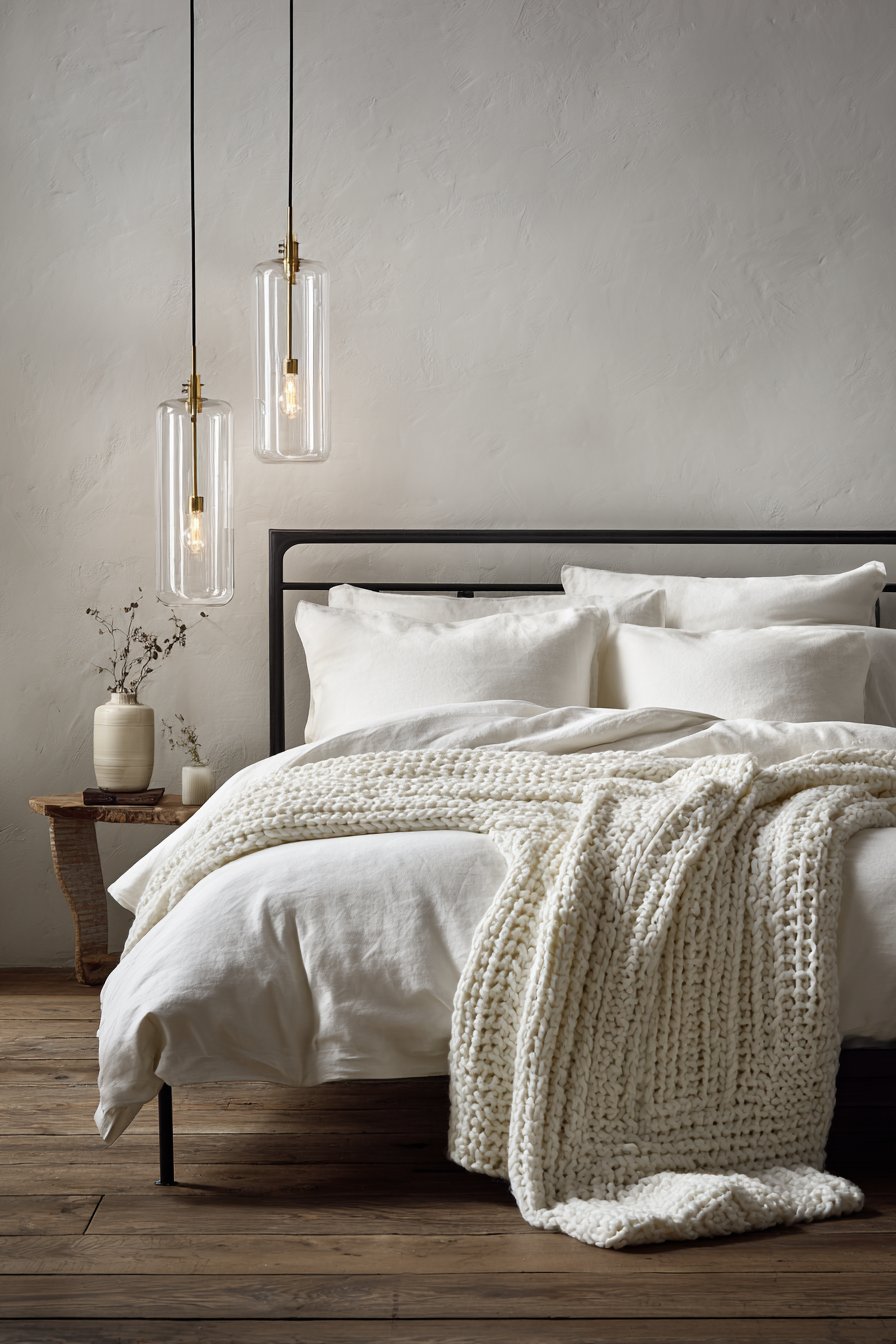
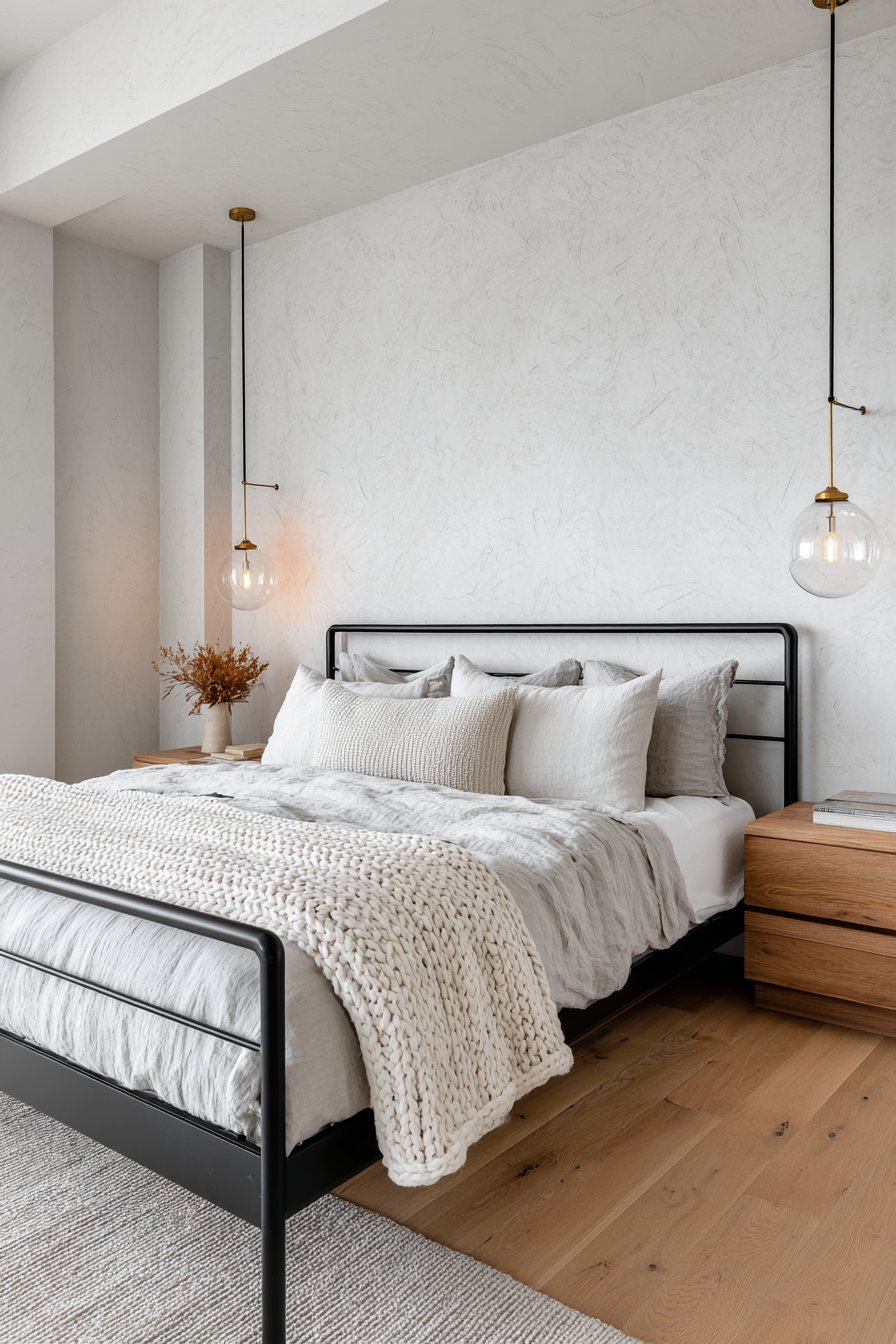
A simple iron bed frame in matte black provides clean structure. The minimal frame allows the bedding to become the focal point. All-white organic cotton bedding demonstrates the beauty of texture variation. Smooth percale sheets offer cool comfort. A chunky cable-knit throw adds dimensional interest. Linen euro shams introduce a subtle organic texture.
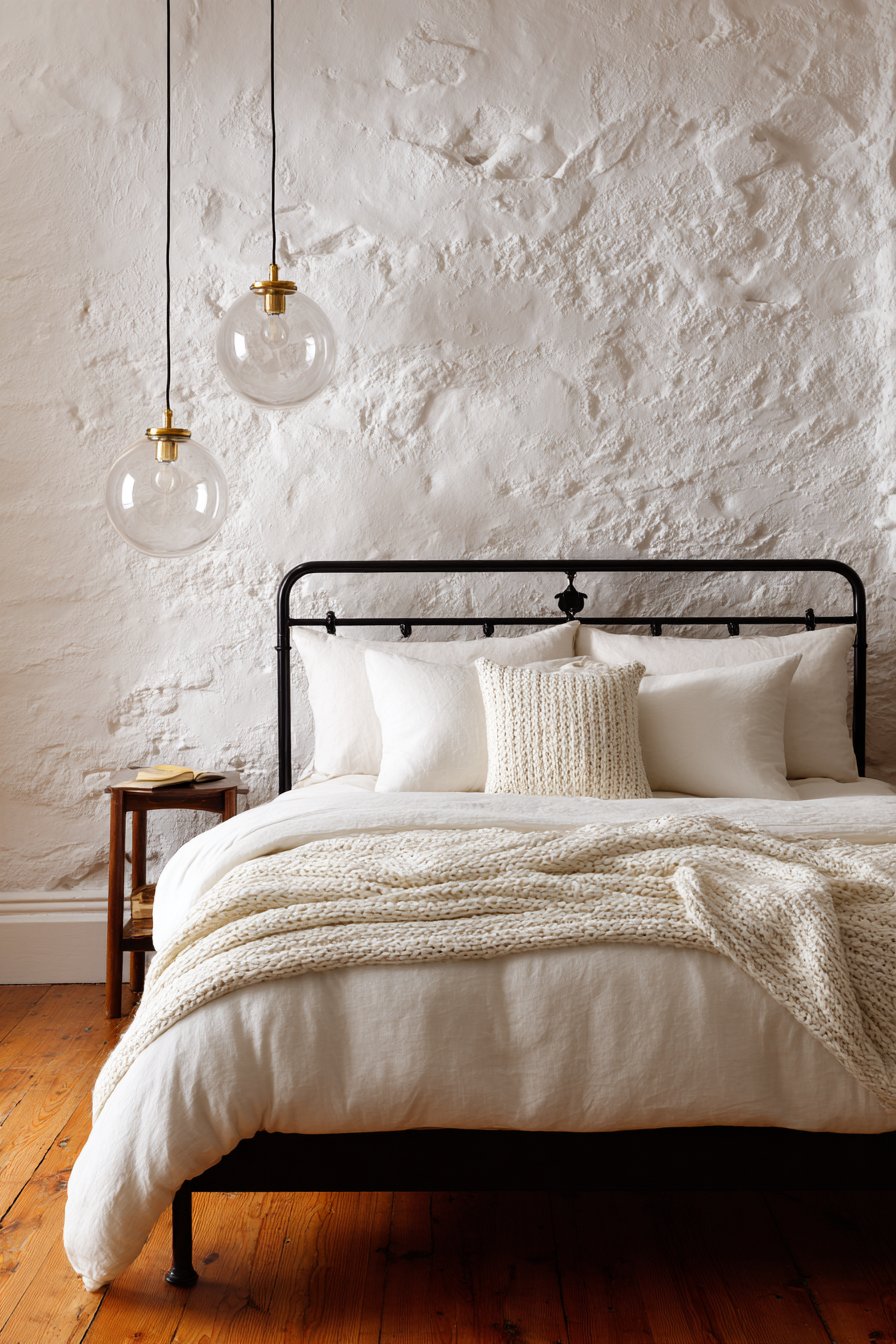
Walls feature warm white limewash paint with subtle texture and variation. The limewash creates depth that flat paint cannot achieve. Two modern glass pendant lights with brass hardware hang as bedside lighting. Their transparent bodies maintain visual lightness. Wide oak floorboards add natural warmth beneath the minimal furnishings.
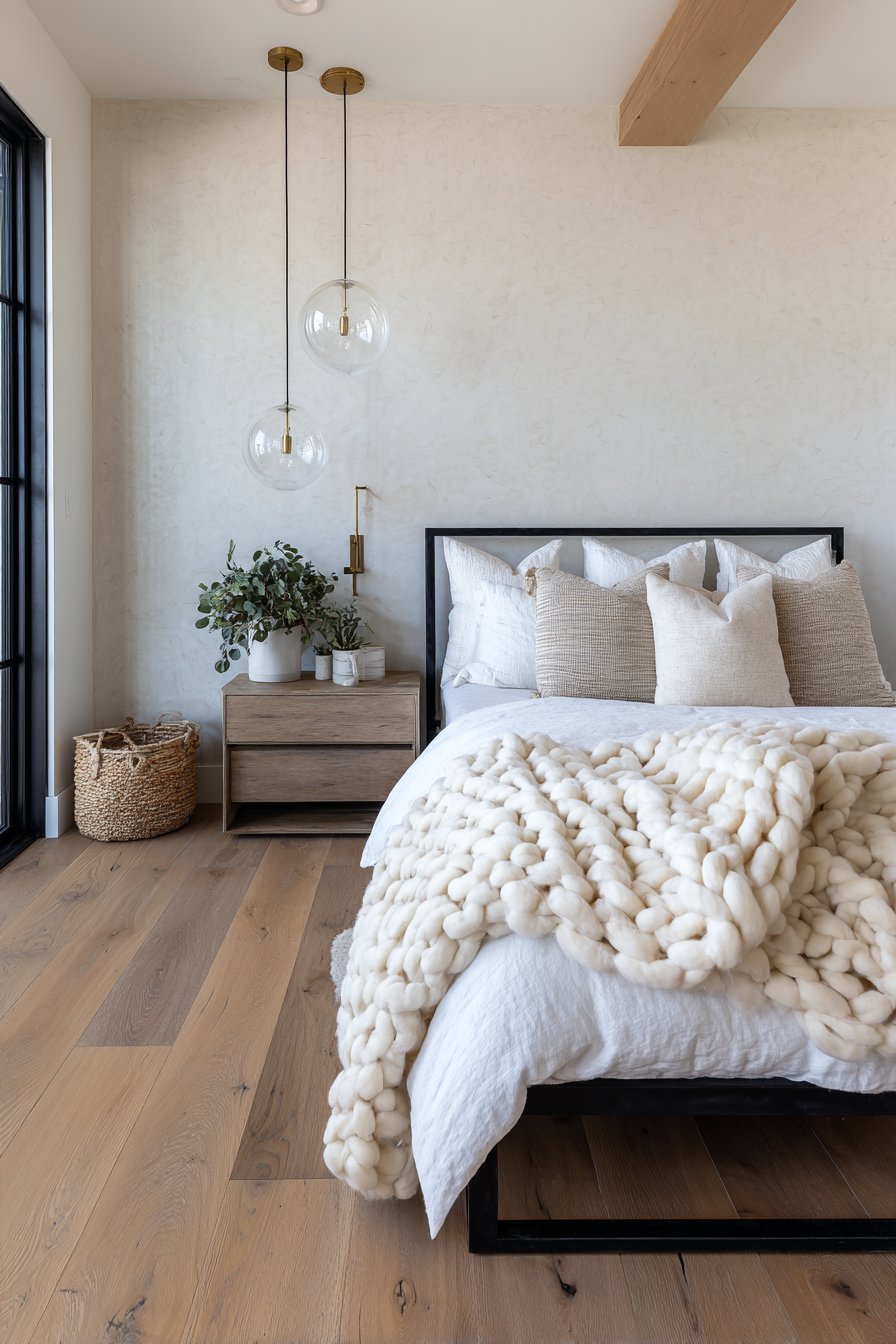
The edited simplicity demonstrates restraint and intentionality. Each element serves a clear purpose. The white textural variations create richness without color. Natural materials like cotton, linen, oak, and limewash connect the space to honest craftsmanship. This approach creates profound peace through careful curation rather than abundance.
Key Design Tips:
- Choose simple metal bed frames to let textured bedding shine
- Layer white textiles in varied textures for sophisticated depth
- Use limewash paint to add subtle texture and organic variation
- Hang glass pendant lights to provide function without visual weight
- Select wide plank flooring to add warmth beneath minimal furnishings
15. Wrapped in Warm Neutrals
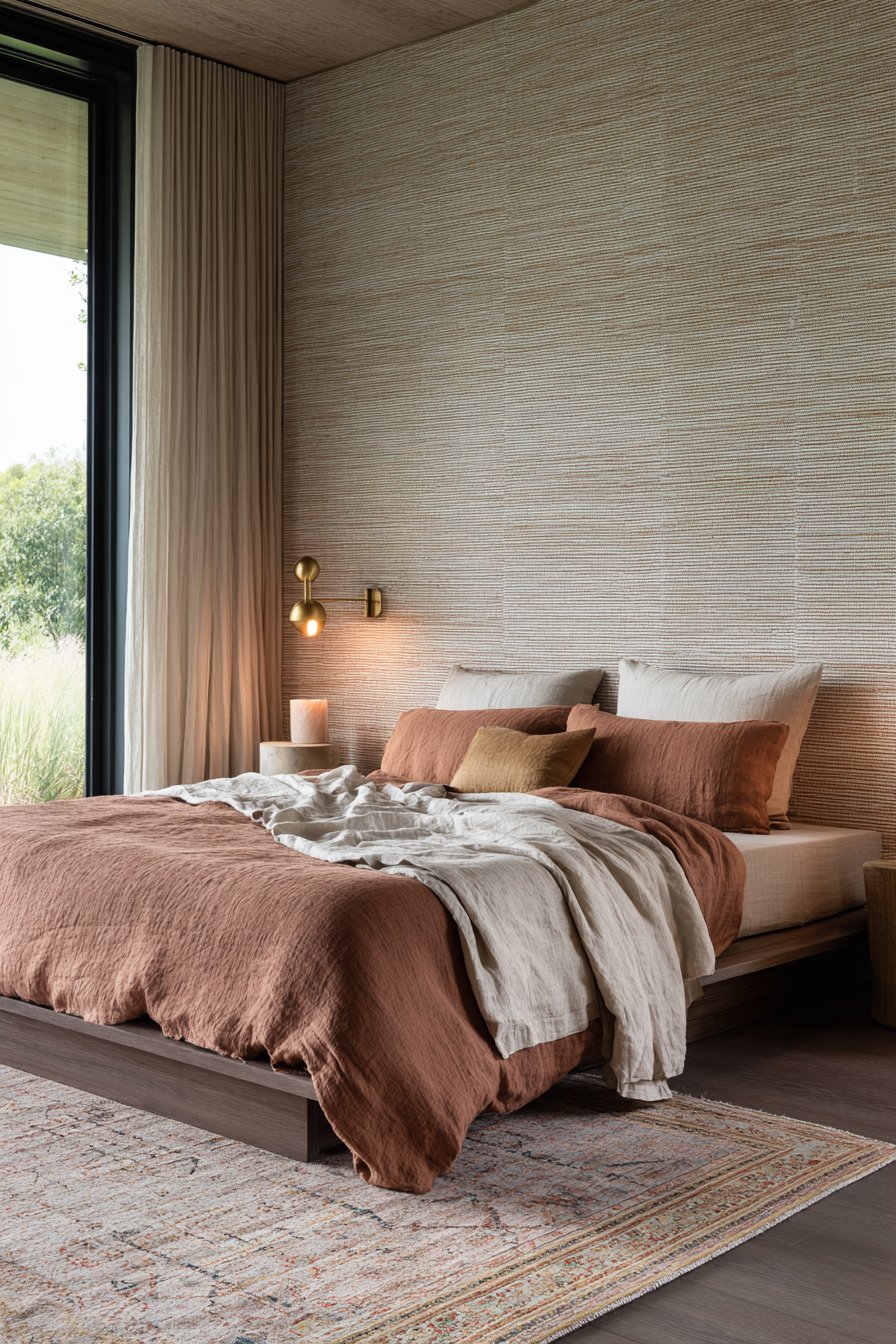
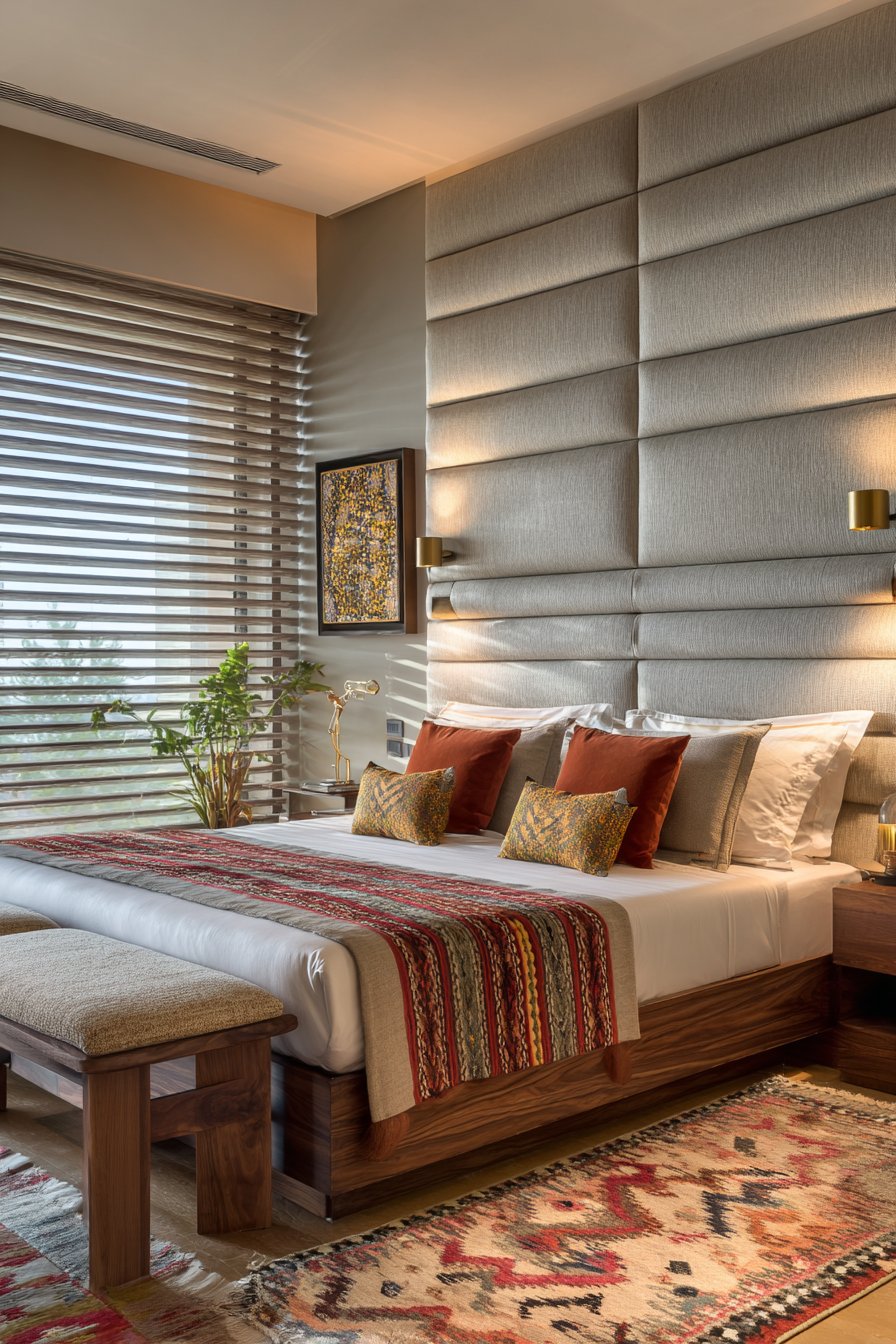
A custom padded fabric wall panel in soft caramel linen extends from floor to ceiling. The wall-to-wall installation creates an embracing backdrop for the bed. A simple wood frame in walnut provides structure and warmth. Bedding in complementary warm tones includes terracotta, rust, and cream. These earthy colors create grounding comfort.
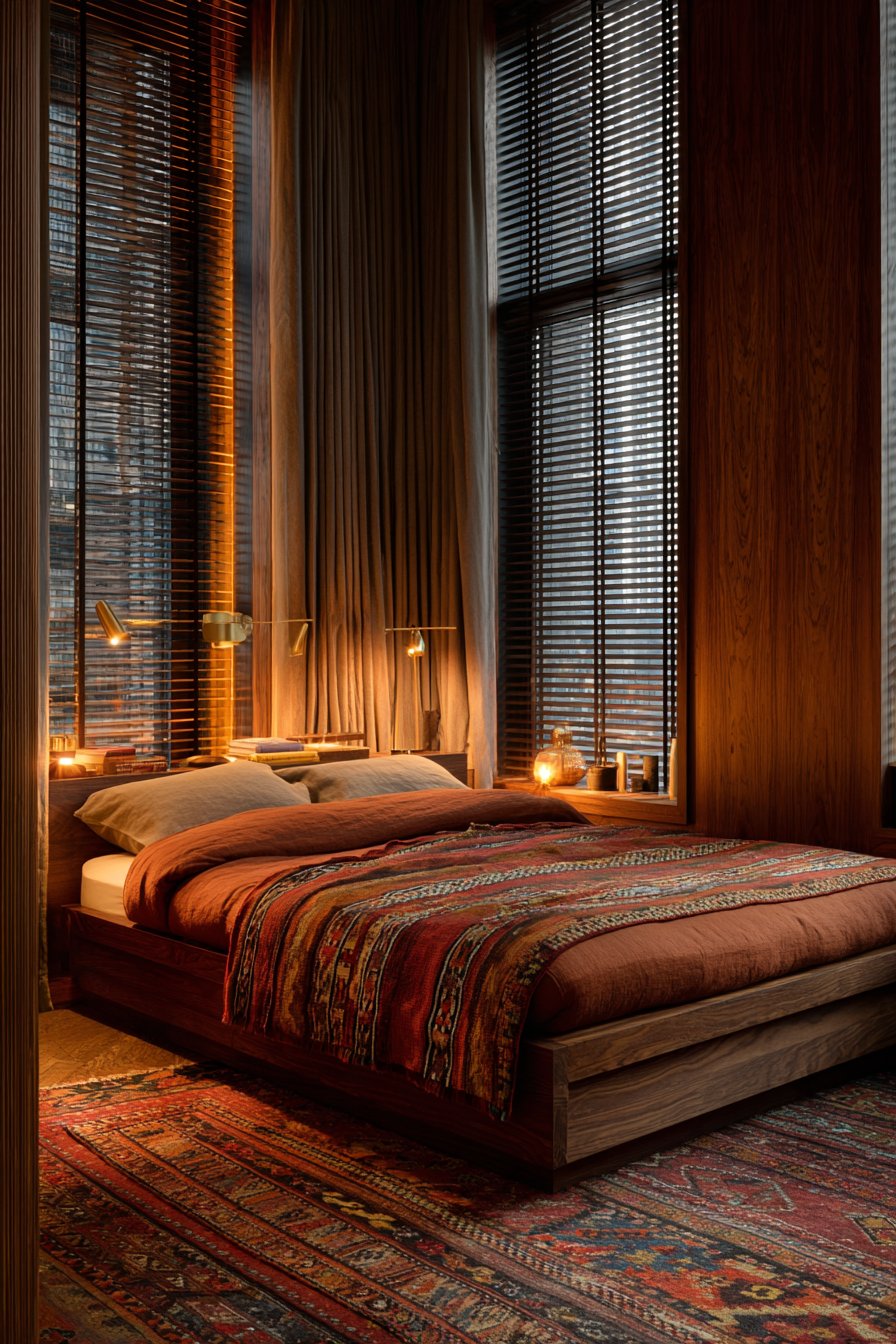
Brass wall-mounted reading lights provide focused task lighting. Their warm metal finish complements the caramel and terracotta tones beautifully. A vintage wool rug in faded geometric pattern grounds the space. The rug’s muted colors tie all the warm tones together. Natural light filtered through matchstick blinds creates warm ambient glow throughout the day.
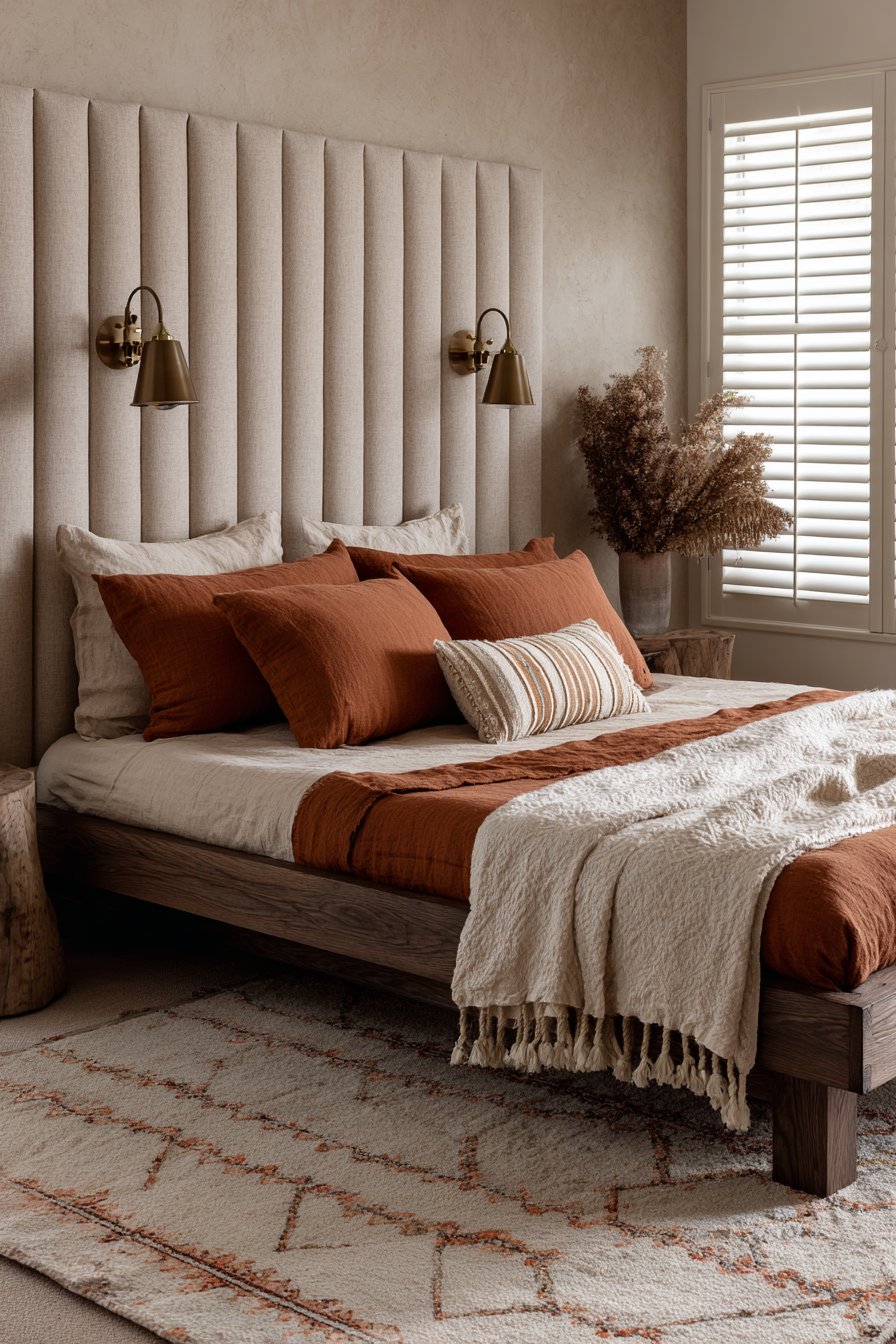
The warm neutral palette demonstrates how color temperature affects mood. These warm tones create immediate coziness and comfort. The layered warm colors work together harmoniously. Caramel, terracotta, rust, and walnut all share similar undertones. This thoughtful color selection creates a cohesive, wrapped feeling that promotes deep relaxation.
Key Design Tips:
- Install floor-to-ceiling fabric panels for enveloping comfort
- Choose warm neutral tones to create immediate coziness
- Use brass fixtures to complement warm color palettes
- Layer vintage rugs for character and color cohesion
- Filter light through natural woven blinds to enhance warm glow
16. Scandinavian Simplicity
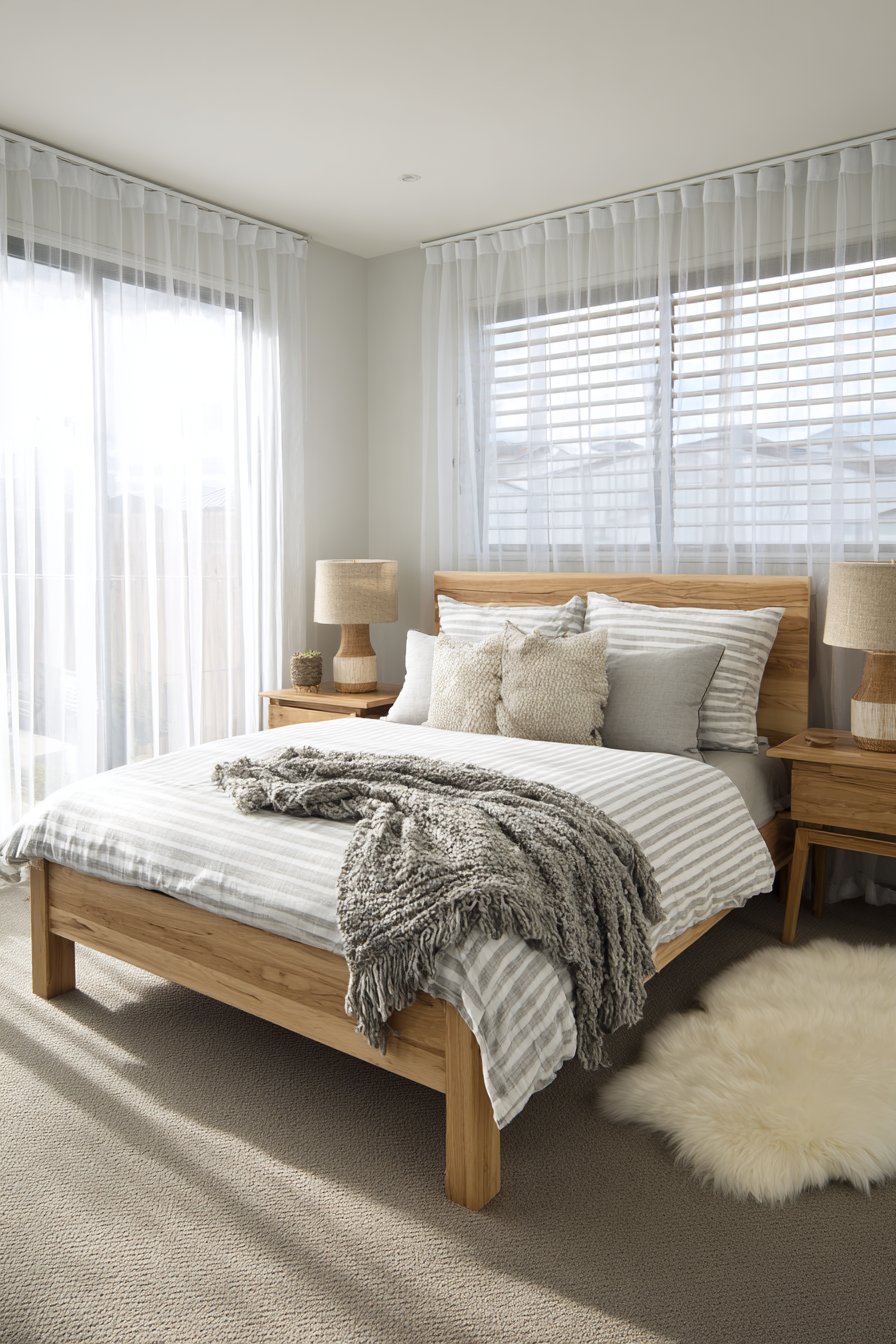
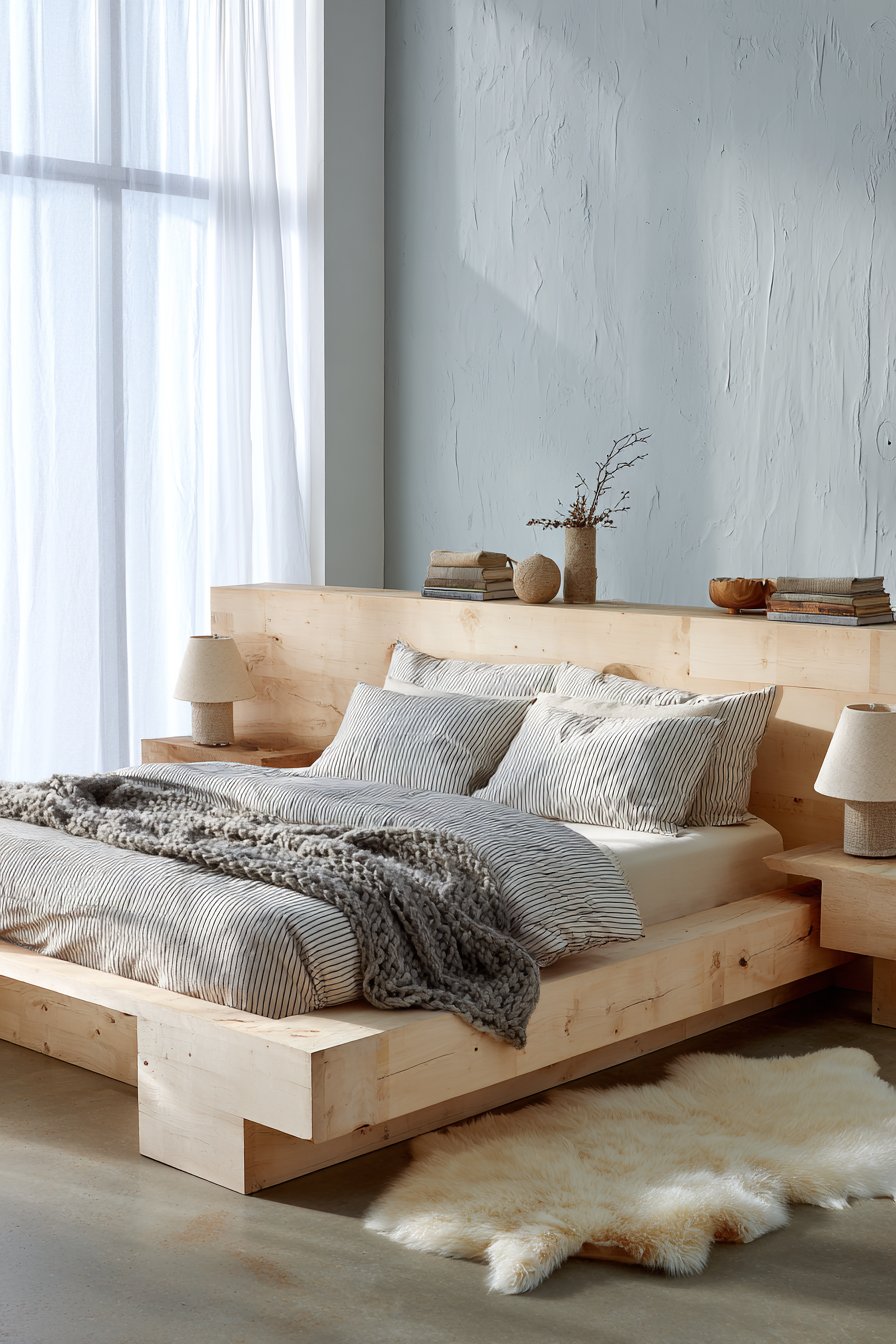
A simple platform bed in light birch wood embodies Nordic design principles. The clean lines and light wood create visual breathing room. Grey and white striped linen duvet provides subtle pattern interest. White cotton sheets ensure crisp comfort. A chunky grey wool throw folds neatly at the foot of the bed.
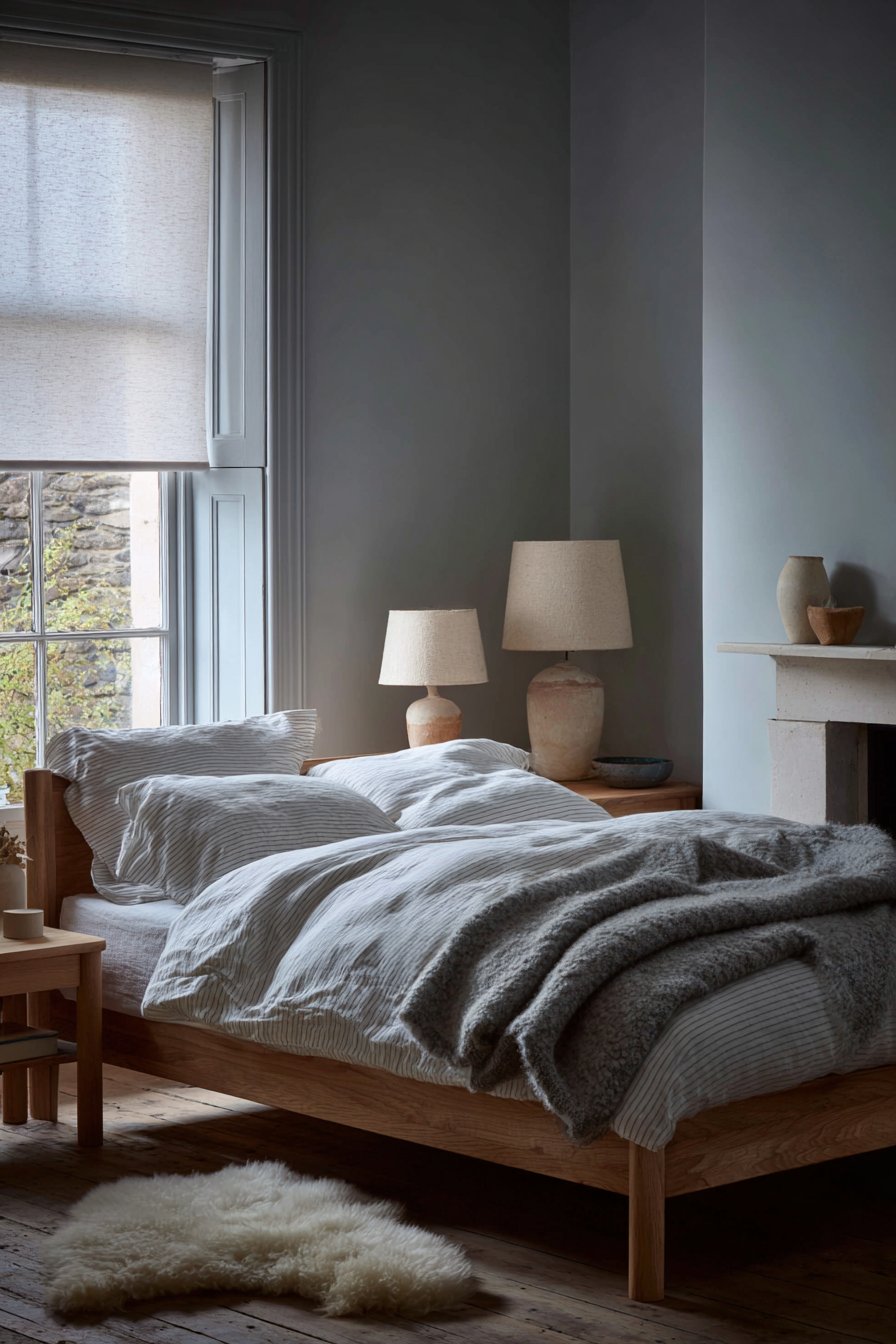
Two simple wooden nightstands in matching birch hold essential items. Ceramic lamps with linen shades provide warm bedside lighting. Walls wear pale grey-blue paint that feels calm and spacious. Sheer white curtains layer over simple roller blinds. This combination allows flexible light control while maintaining airiness. A small sheepskin rug beside the bed adds softness underfoot.
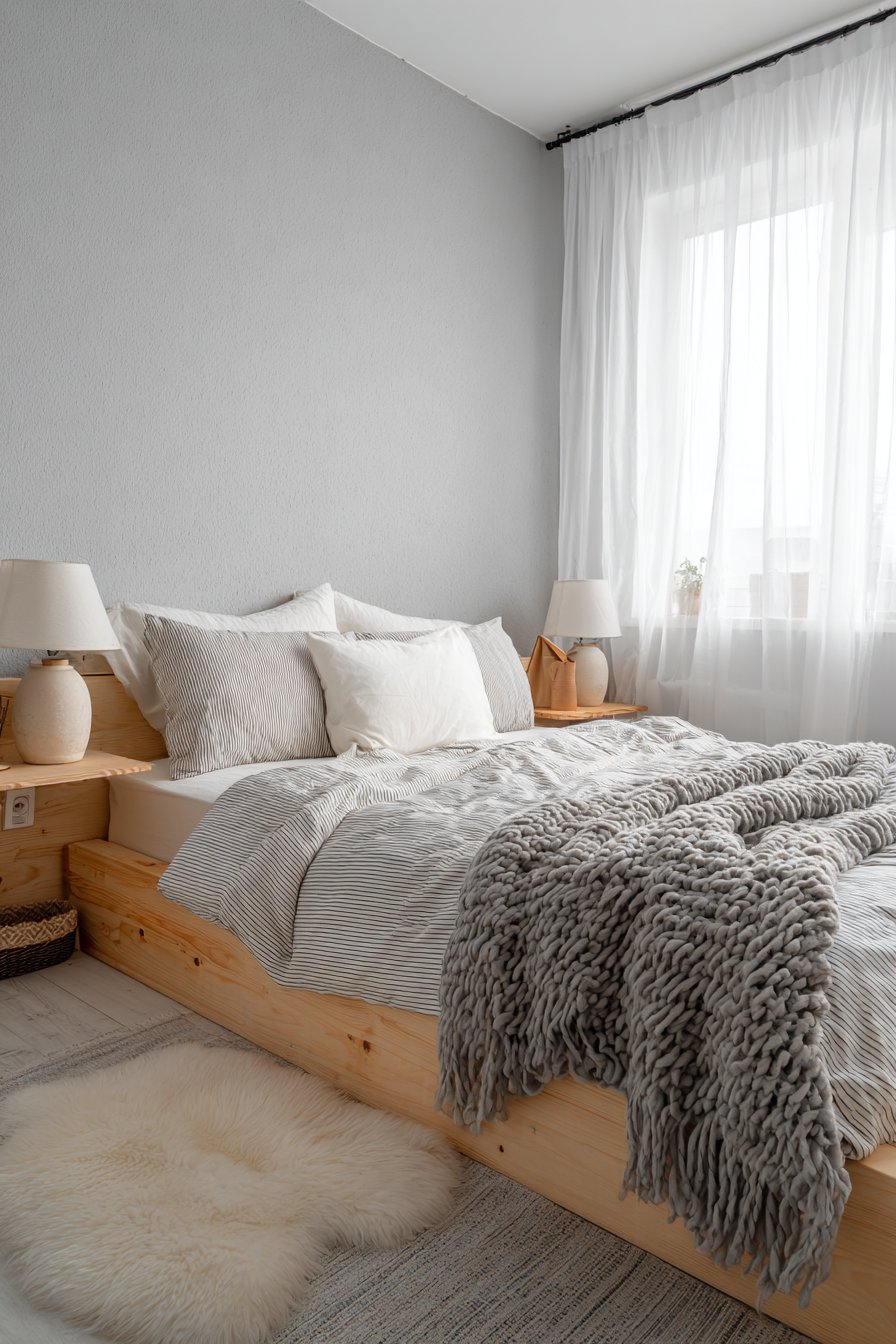
The Scandinavian approach demonstrates the beauty of functional simplicity. Every item serves a purpose. Light colors maximize brightness in northern climates. Natural materials like birch, linen, and wool create warmth. The minimal aesthetic prevents visual clutter. This design philosophy creates calm through intentional restraint and honest materials.
Key Design Tips:
- Choose light wood furniture to maximize brightness and spaciousness
- Use grey-blue wall colors to create calm Scandinavian atmosphere
- Layer curtains over blinds for flexible light and privacy control
- Add natural sheepskin for softness and authentic Nordic texture
- Embrace functional simplicity by including only essential items
17. Layered Window Treatment Sophistication
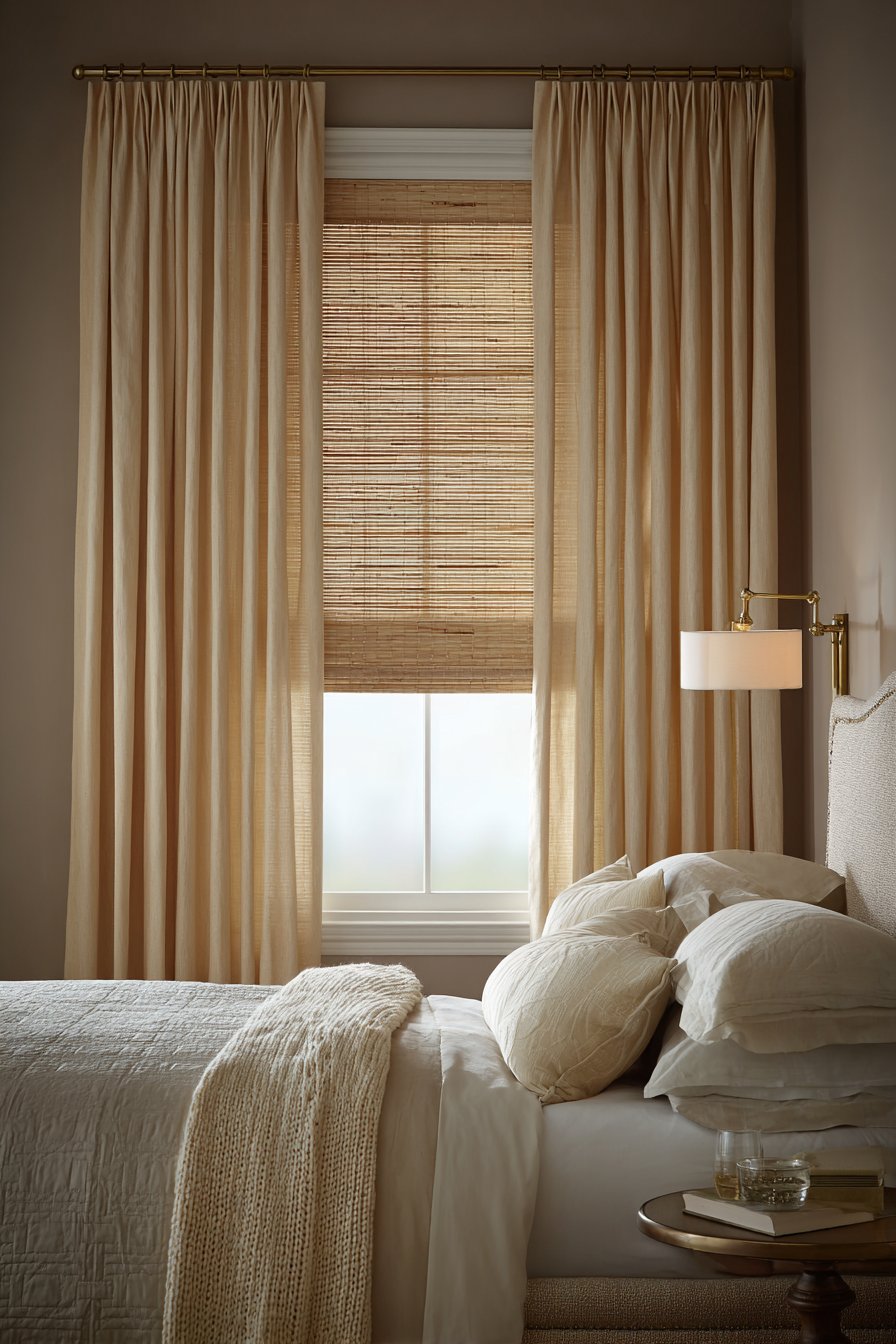
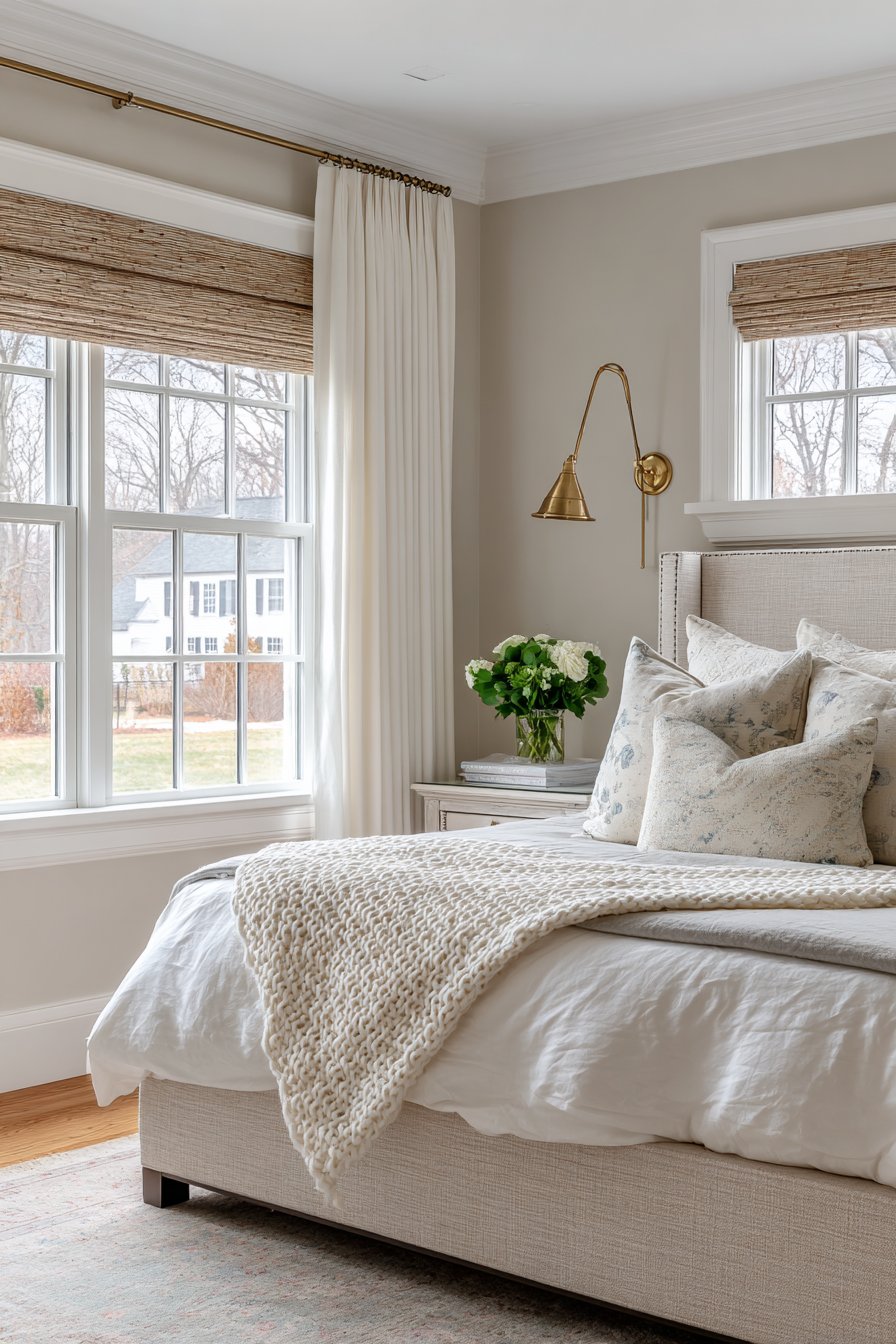
Bamboo roman shades provide the foundation for light filtering. Floor-length linen curtains in soft white layer over the shades. This combination offers flexibility for privacy and light control. The textured basketweave fabric headboard in natural beige adds organic interest. White bedding layers create crisp contrast against the textured headboard.
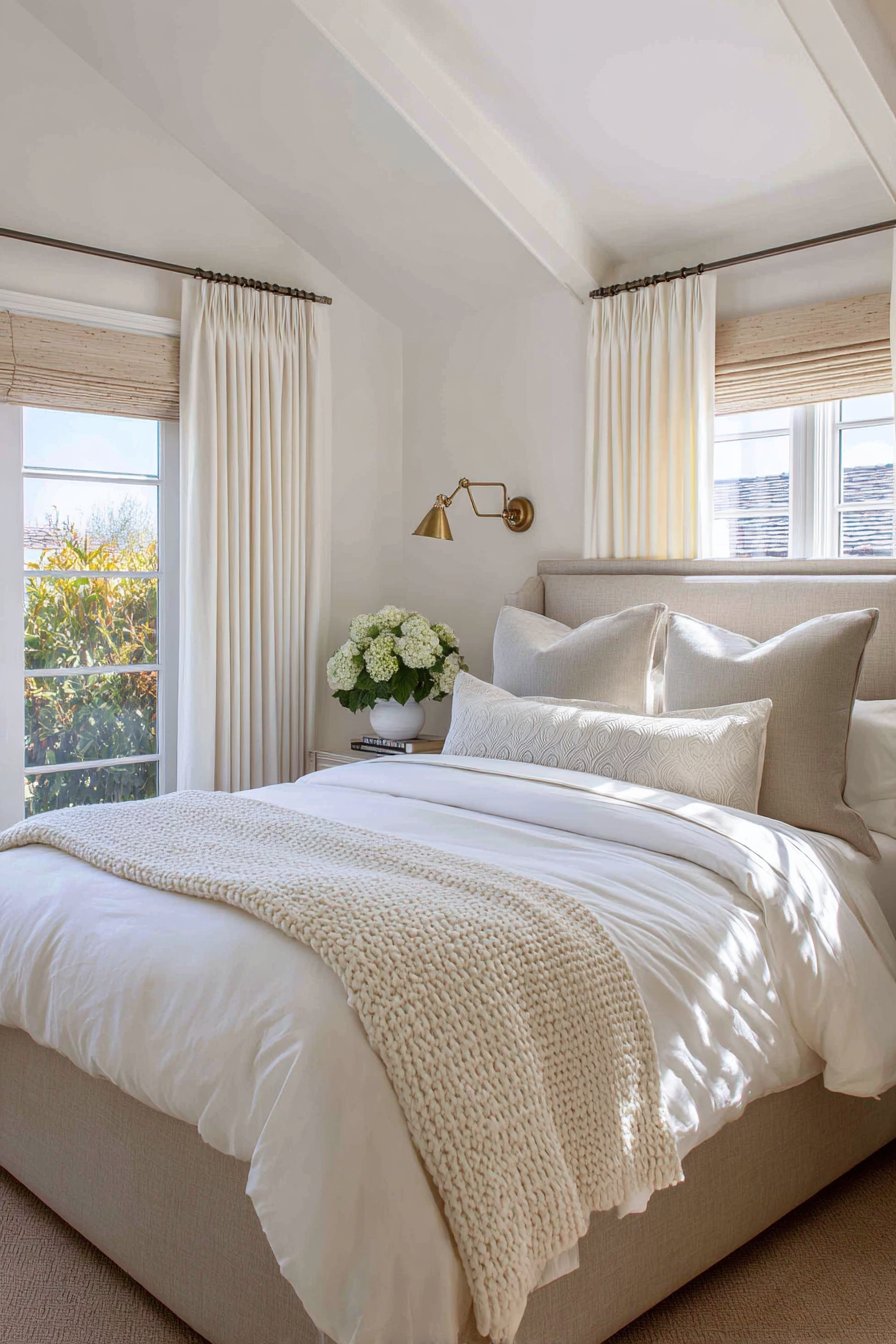
A cream knit throw blanket adds cozy finishing touch. Two swing-arm wall sconces in brushed brass flank the headboard. Their adjustable arms provide a customizable reading light. The brass finish adds warmth to the neutral palette. The layered window treatments demonstrate sophisticated approach to light management.
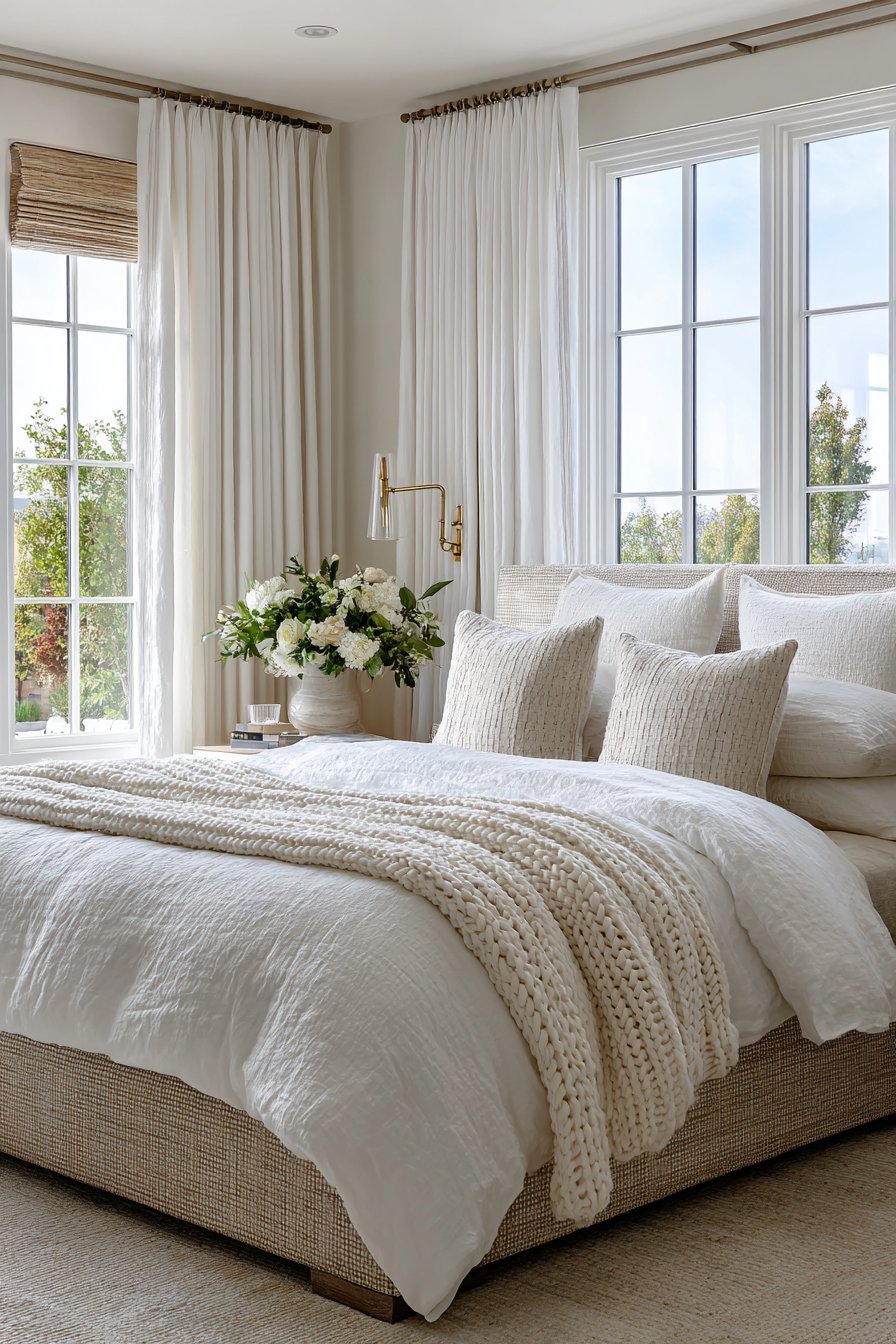
The combination of bamboo and linen creates both function and beauty. Bamboo shades filter harsh sunlight gently. Linen curtains add softness and sound absorption. Together they provide complete control over the room’s lighting environment. This flexibility allows the space to adapt throughout the day and year.
Key Design Tips:
- Layer roman shades under curtains for maximum light control and flexibility
- Choose bamboo shades for natural light filtering and sustainability
- Use linen curtains to add softness and acoustic dampening
- Install swing-arm sconces for an adjustable reading light
- Select basketweave textiles to add subtle organic texture
18. Monochromatic Taupe Elegance
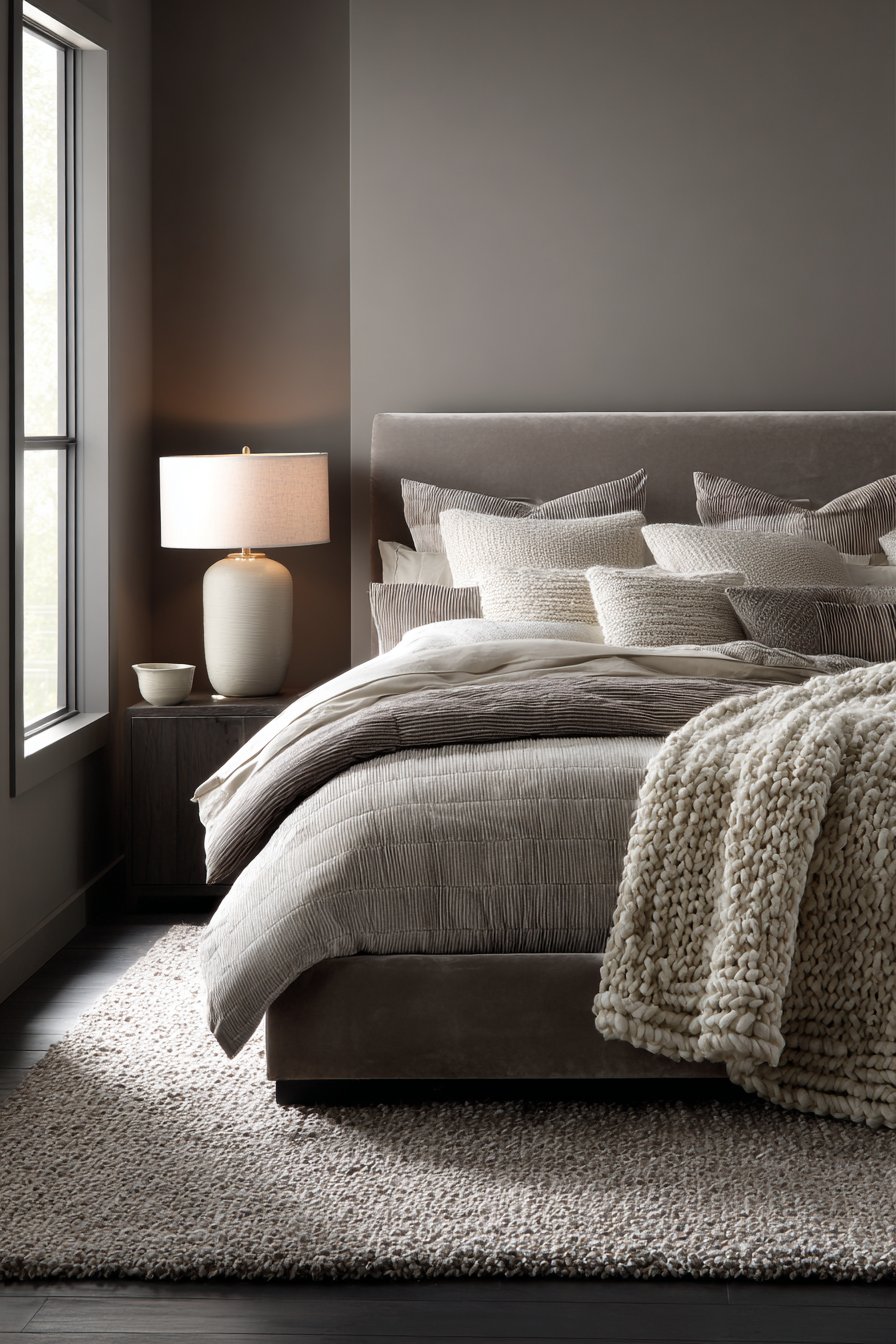
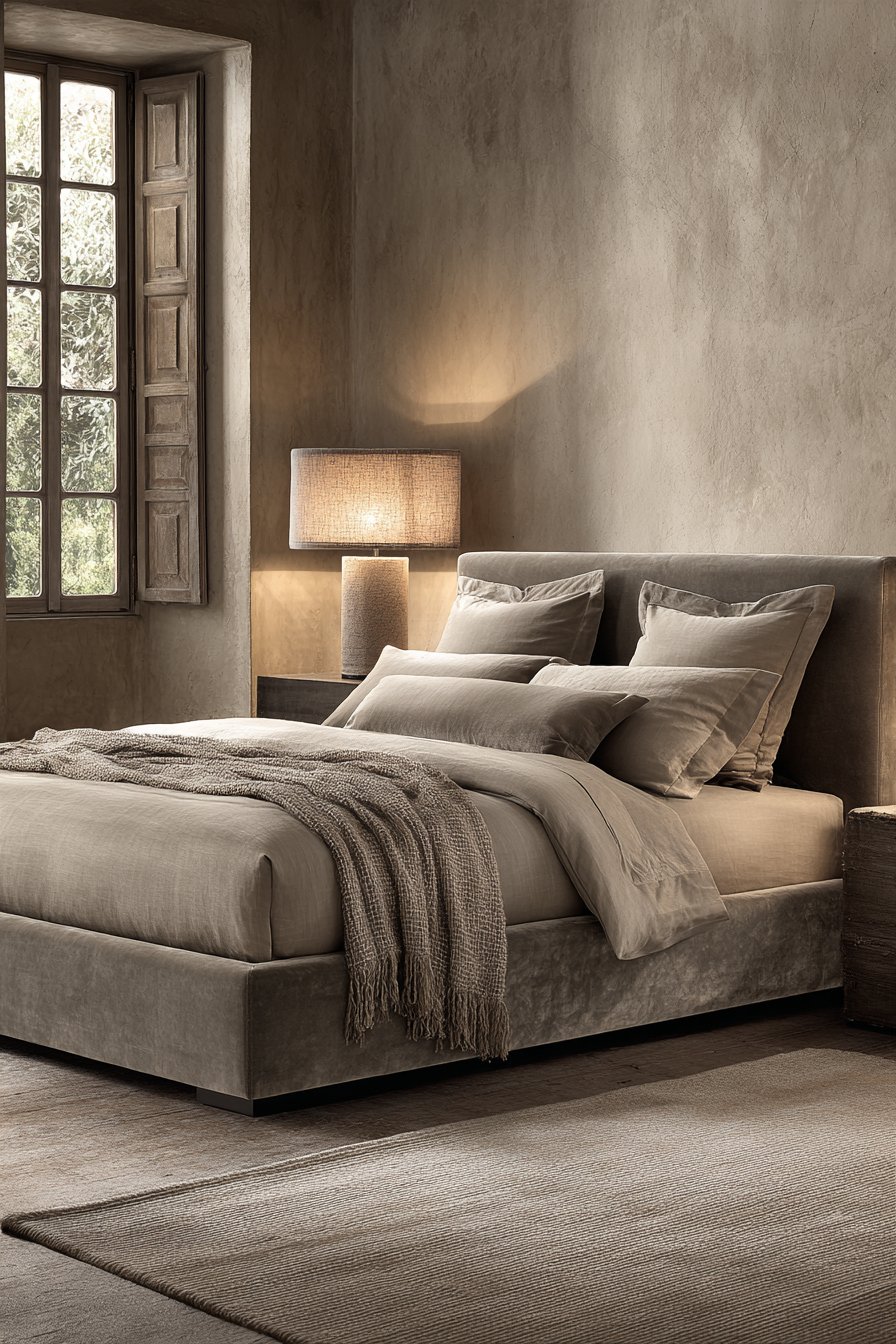
A monochromatic taupe color scheme wraps this bedroom in sophisticated calm. Walls, bedding, and textiles feature various shades of warm taupe and greige. An upholstered bed in velvet taupe sits against subtly textured wall paint. The tonal approach creates depth through value rather than color contrast. Bedding includes layers in lighter and darker taupe tones.
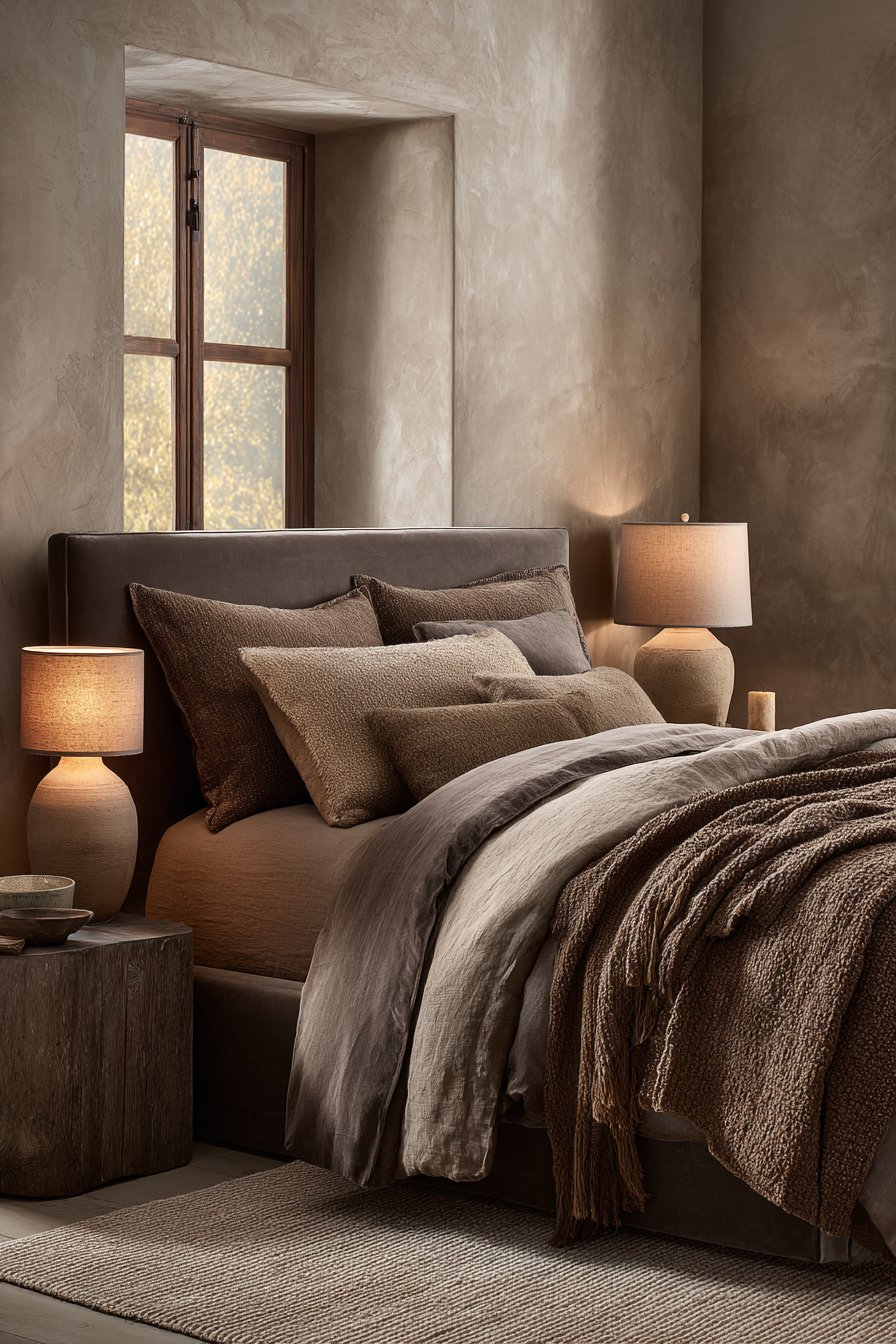
Varied textures prevent the monochromatic scheme from feeling flat. Smooth cotton, nubby linen, and soft cashmere throw each contribute a unique tactile quality. Simple ceramic table lamps in matte finish provide warm lighting. A wool area rug in coordinating tone adds softness underfoot. Soft window light reveals the subtle variations throughout the monochromatic palette.
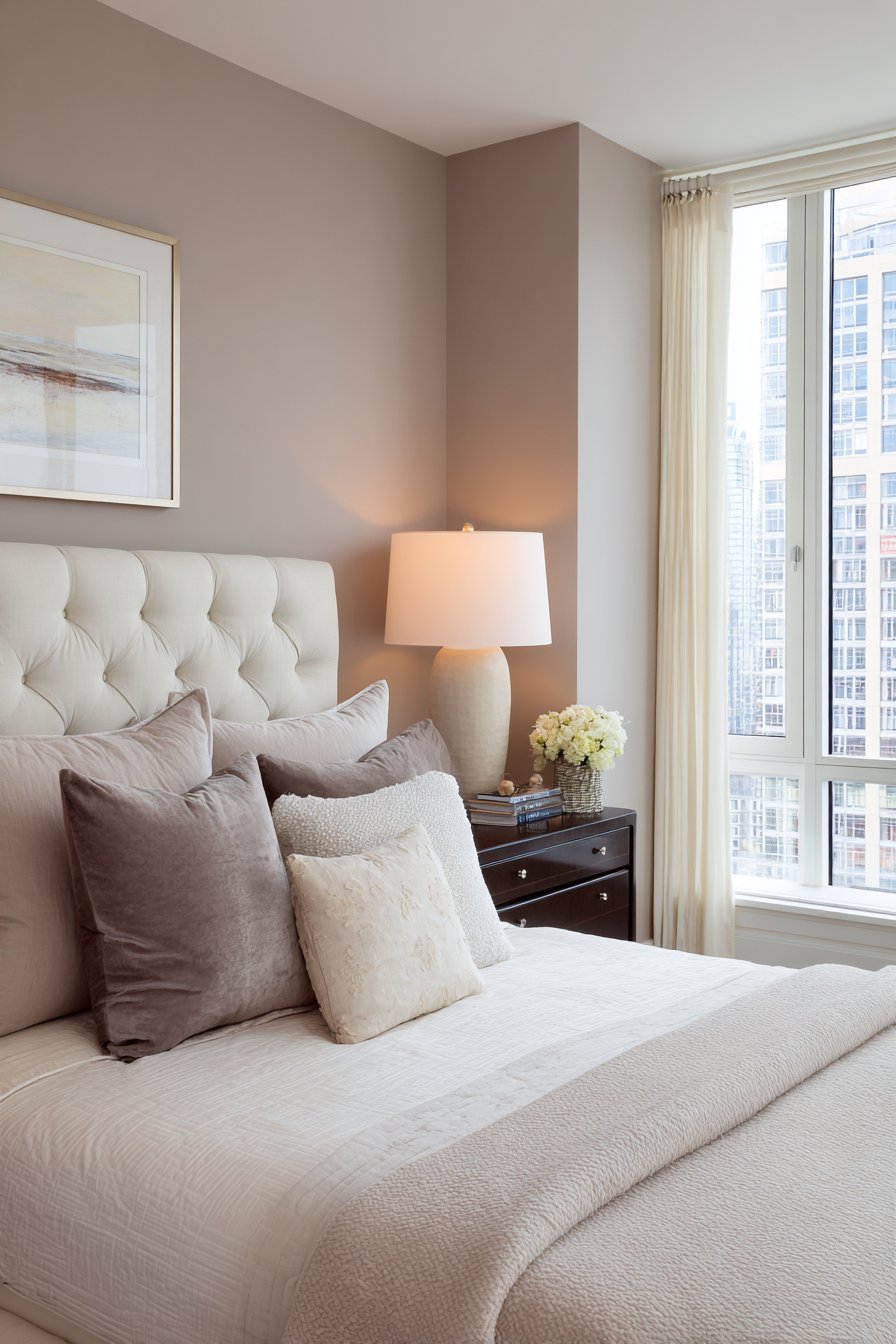
The tonal sophistication demonstrates advanced color understanding. Different shades of taupe create richness without jarring contrast. Each material catches light differently. The velvet upholstery reflects light softly. Nubby linen creates subtle shadow. Smooth cotton appears slightly brighter. These variations create visual interest within the peaceful unified palette.
Key Design Tips:
- Use monochromatic color schemes to create a sophisticated calm
- Layer multiple values of one color family for dimensional depth
- Mix varied textures to prevent tonal schemes from feeling flat
- Choose warm taupe tones rather than cool greys for cozier atmosphere
- Allow natural light to reveal subtle color and texture variations
19. Modern Floating Bed Design
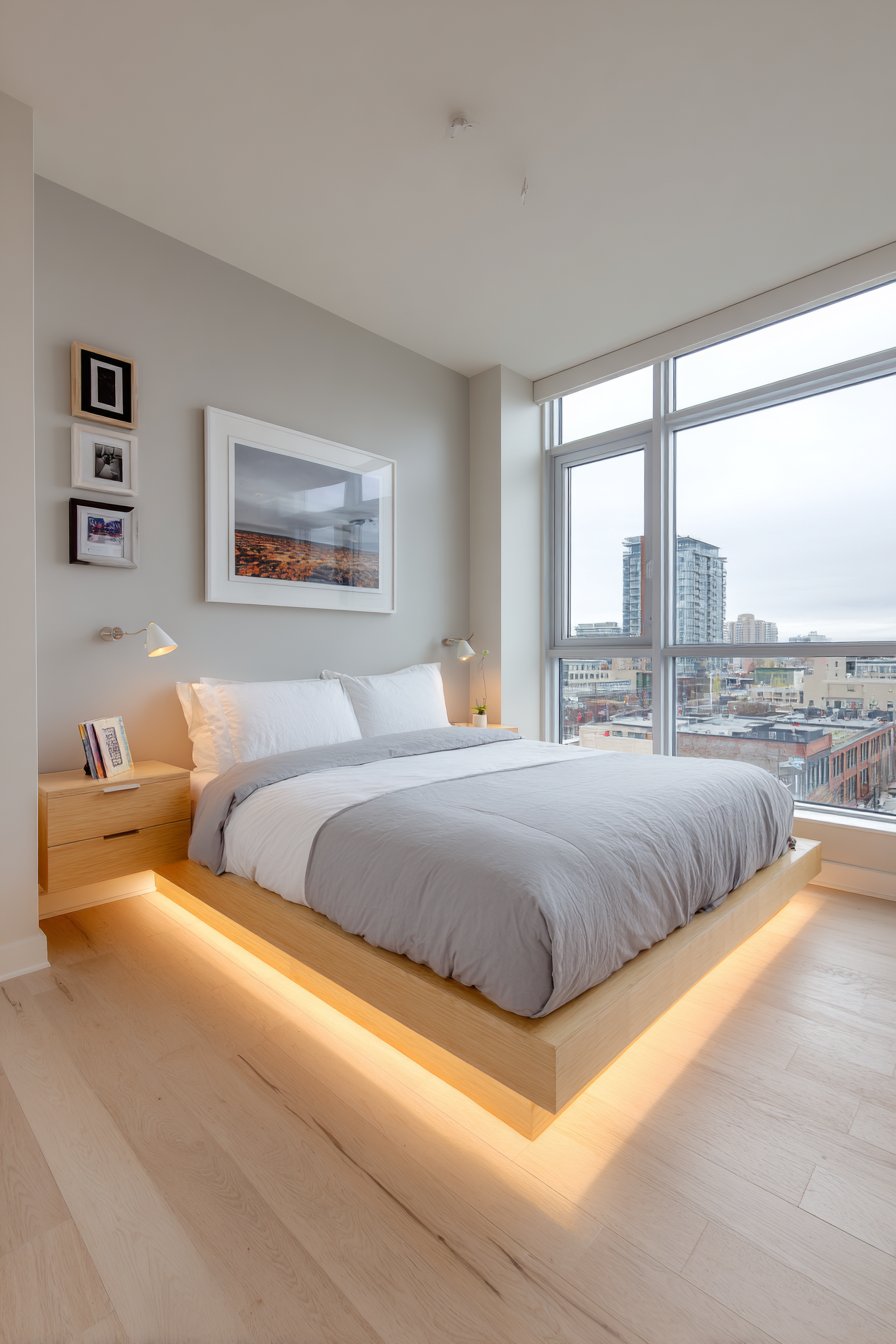
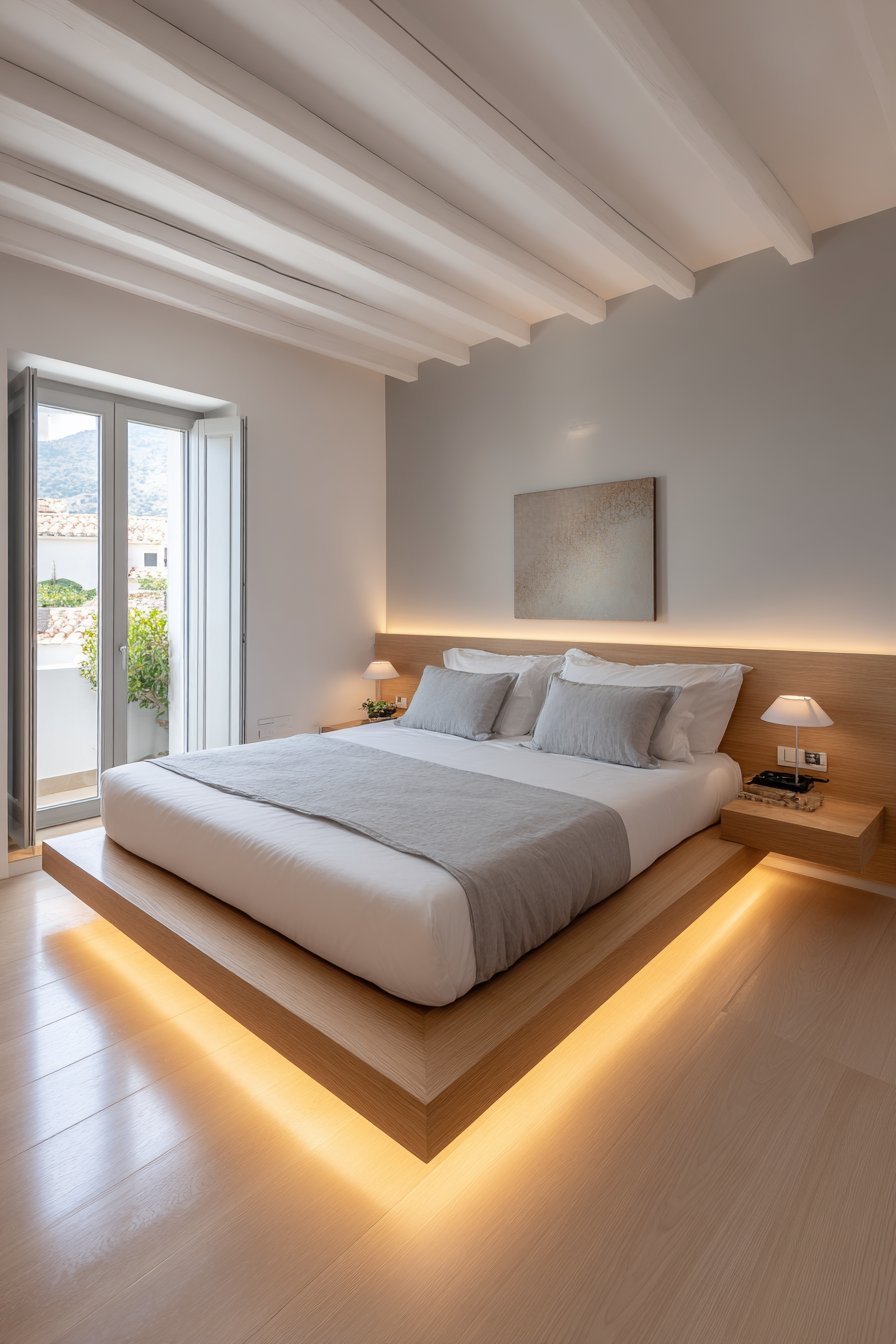
A floating bed frame with integrated LED underlighting creates contemporary ambiance. The soft ambient glow provides gentle nighttime illumination. The low-profile bed appears to hover above the floor. Simple white cotton bedding with a single grey linen duvet maintains clean aesthetic. Walls wear pale warm grey with one accent wall in slightly deeper grey.
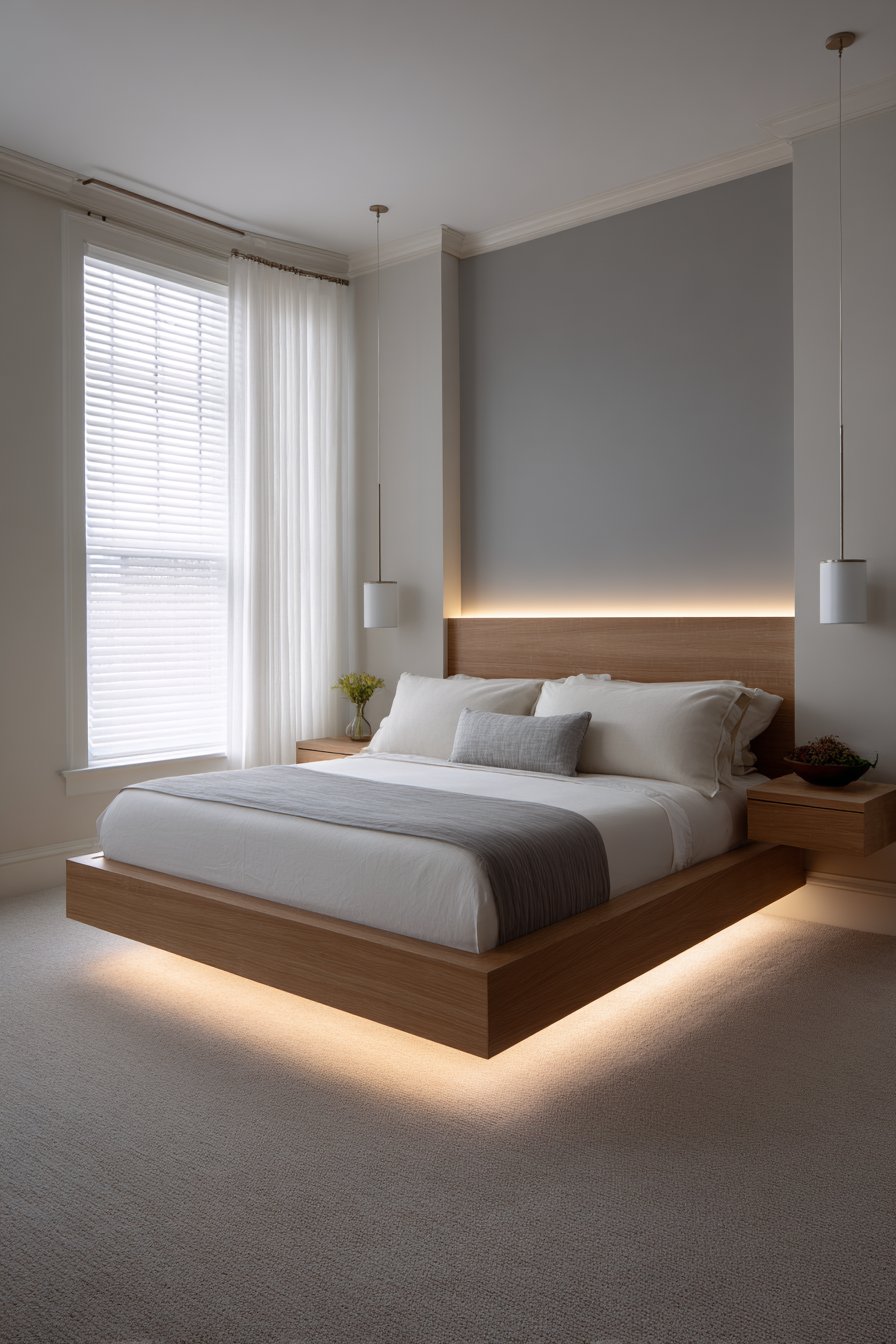
Minimalist floating nightstands in light oak hold essential items. Their wall-mounted design maintains the floating aesthetic throughout. Simple modern lamps provide focused task lighting. Motorized blackout shades recess into the ceiling when raised. This hidden integration maintains the room’s clean contemporary lines. The overall design celebrates modern simplicity and subtle technology integration.
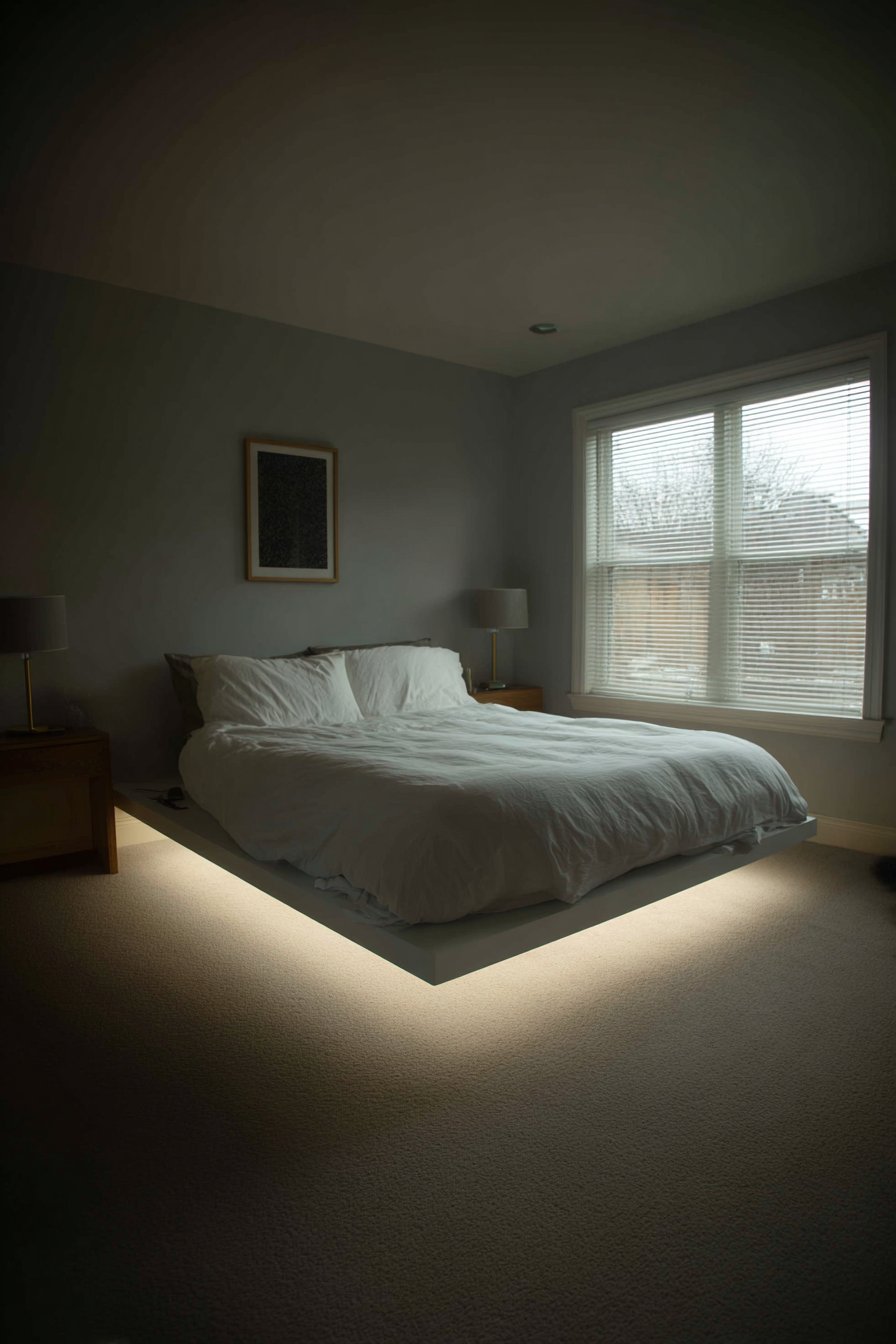
The ambient LED underlighting serves both function and aesthetic purpose. The soft glow provides safe nighttime navigation. It creates contemporary visual interest during evening hours. The floating furniture maintains clean floor lines. This design demonstrates how modern technology can enhance rather than disrupt peaceful bedroom environments.
Key Design Tips:
- Install LED underlighting on floating beds for an ambient glow
- Choose low-profile beds to create modern floating effect
- Use motorized window treatments that recess completely when open
- Select wall-mounted nightstands to maintain clean floor lines
- Layer task lighting over ambient lighting for functional flexibility
20. Organic Modern Live-Edge Beauty
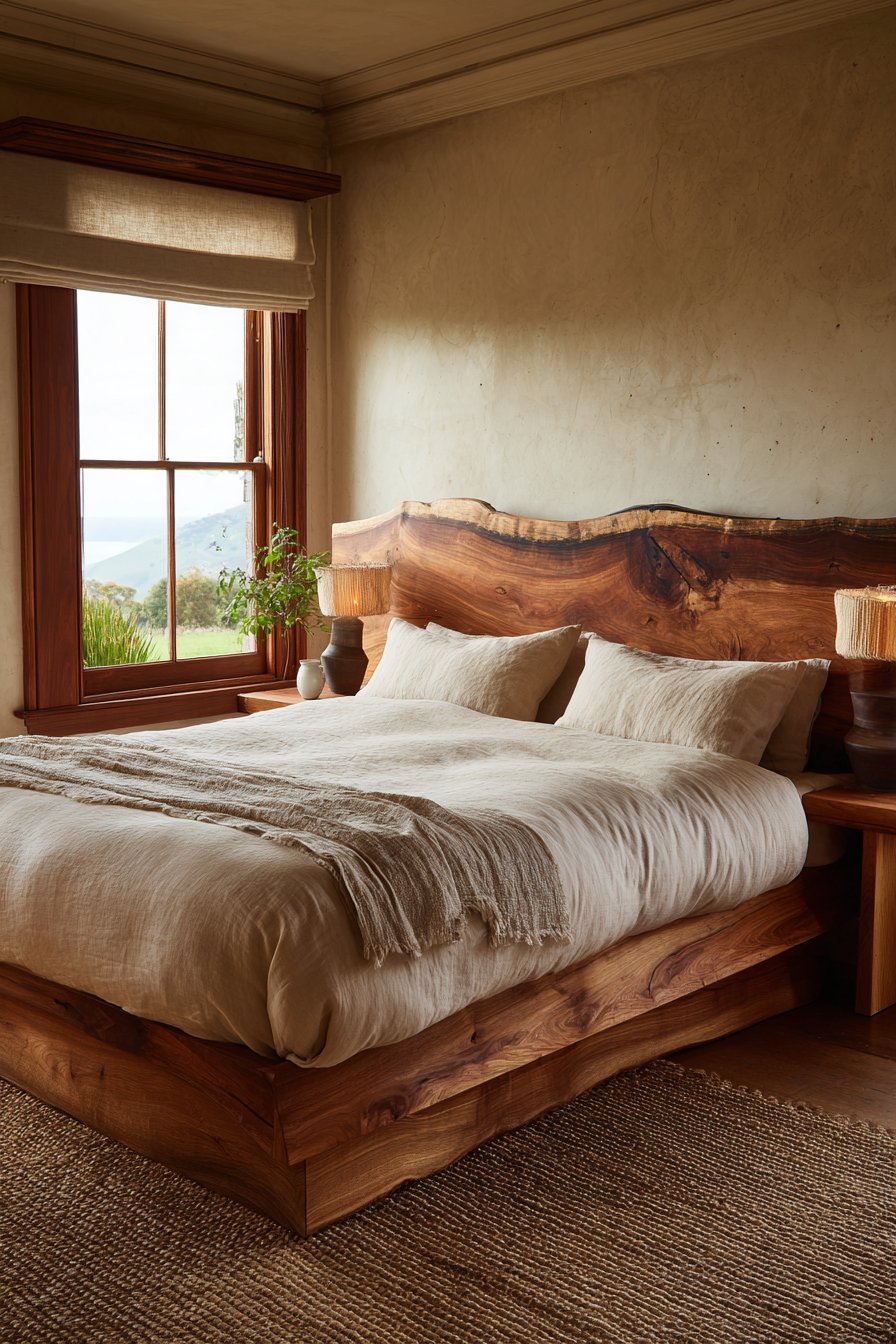
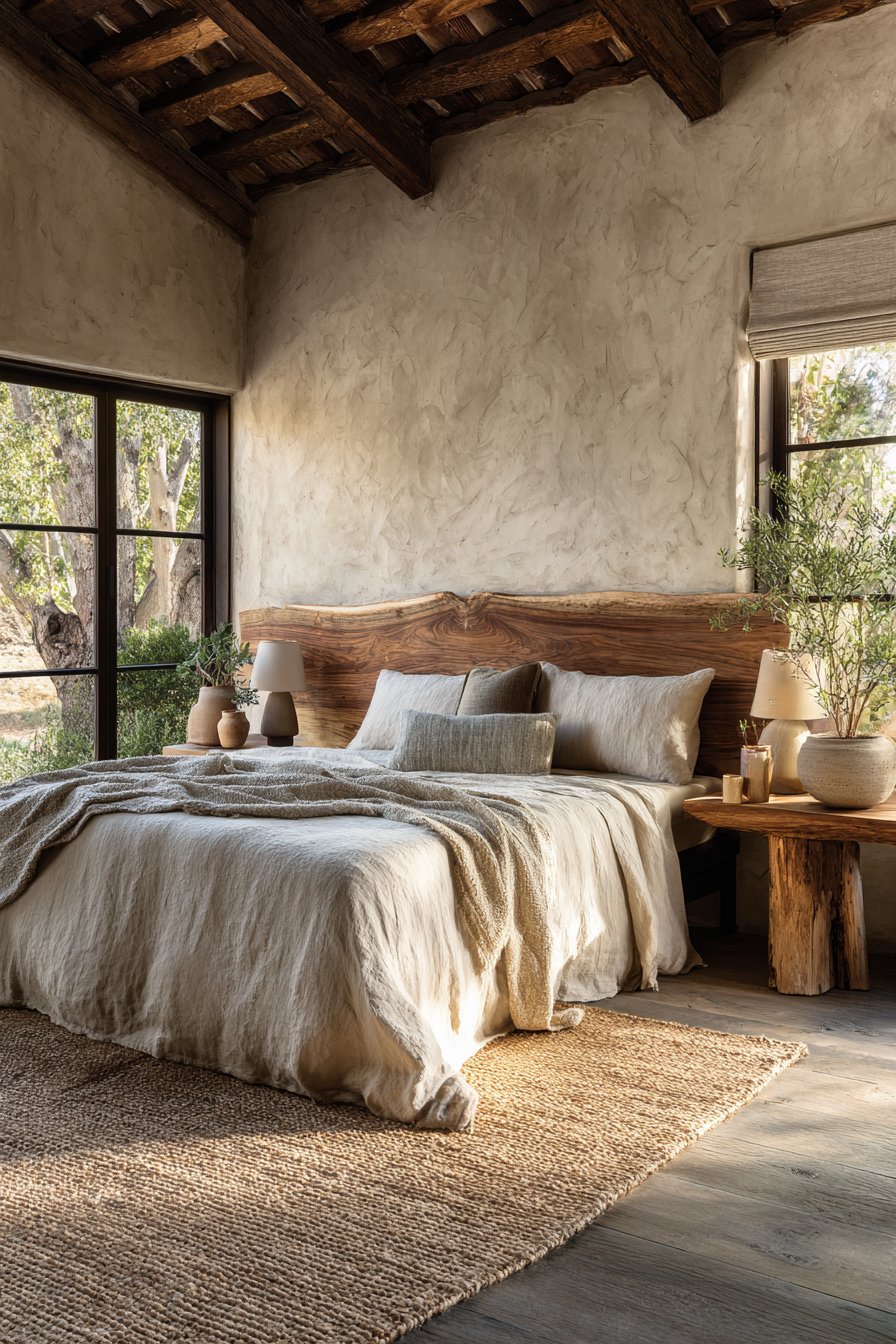
A live-edge wood headboard in natural walnut celebrates authentic material form. The natural grain and edge create one-of-a-kind character. Undyed organic cotton bedding in natural cream and beige honors material honesty. A handwoven jute area rug adds earthy texture beneath the bed. Two handmade ceramic table lamps feature natural linen shades.
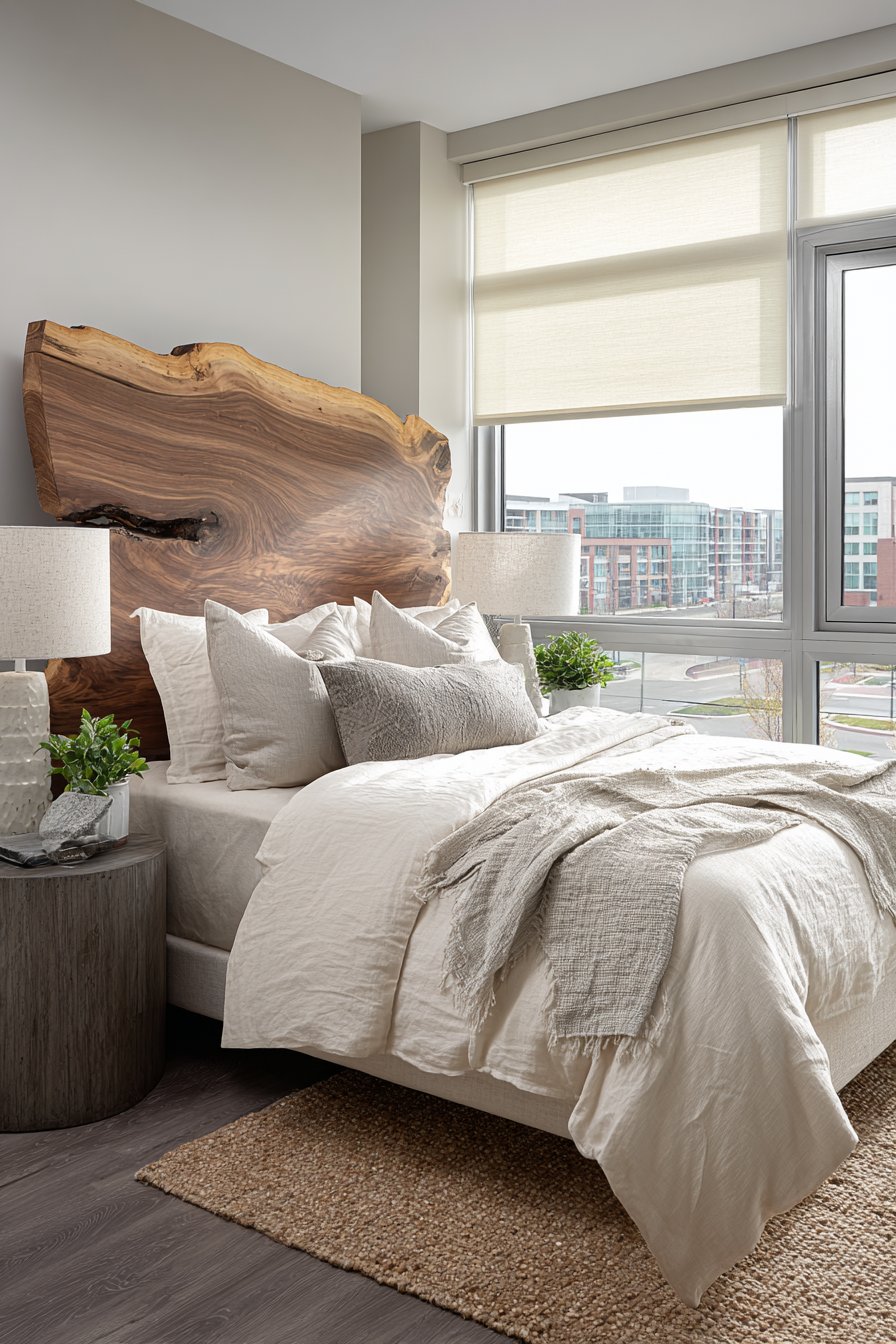
Walls wear clay plaster with subtle texture and warm white tone. The natural plaster finish adds organic character that paint cannot achieve. A large window with simple linen roller shade allows natural light to highlight honest materials. The light emphasizes wood grain, plaster texture, and fabric weave throughout the day. Every element connects to natural origins and authentic craftsmanship.
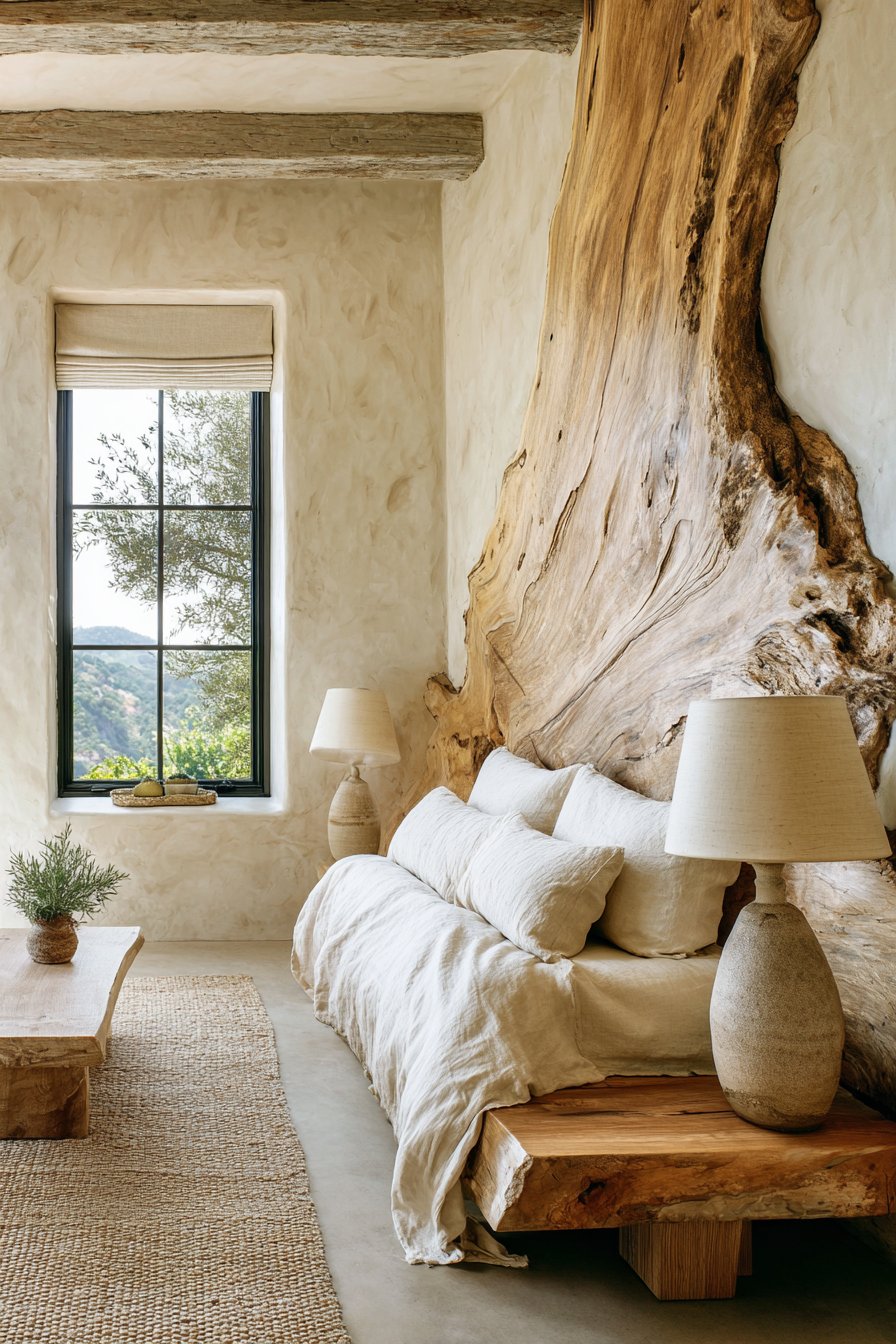
The organic modern aesthetic demonstrates respect for materials and makers. Live-edge wood celebrates the tree’s natural form. Undyed cotton shows fiber’s true color. Handwoven jute displays weaver’s craftsmanship. Clay plaster reveals application technique. This approach creates profound peace through connection with natural materials and human hands that shaped them.
Key Design Tips:
- Choose live-edge wood to celebrate natural material form
- Use undyed textiles to honor authentic fiber colors
- Apply clay plaster for organic wall texture and warmth
- Select handmade items to support craftsmanship and uniqueness
- Position windows to maximize natural light on material textures
Why These Relaxing Bedroom Designs Are the Best
These relaxing bedroom designs represent thoughtful approaches to creating peaceful personal sanctuaries. Each concept demonstrates how specific material choices, color selections, and lighting strategies work together to promote rest and rejuvenation. The diversity of styles proves that relaxation can be achieved through multiple design philosophies.
The incorporation of natural materials throughout these designs serves both aesthetic and practical purposes. Linen, cotton, wool, and wood regulate temperature naturally while aging beautifully over time. These materials create healthier indoor environments compared to synthetic alternatives. Their tactile qualities provide sensory comfort that promotes relaxation at a fundamental level.
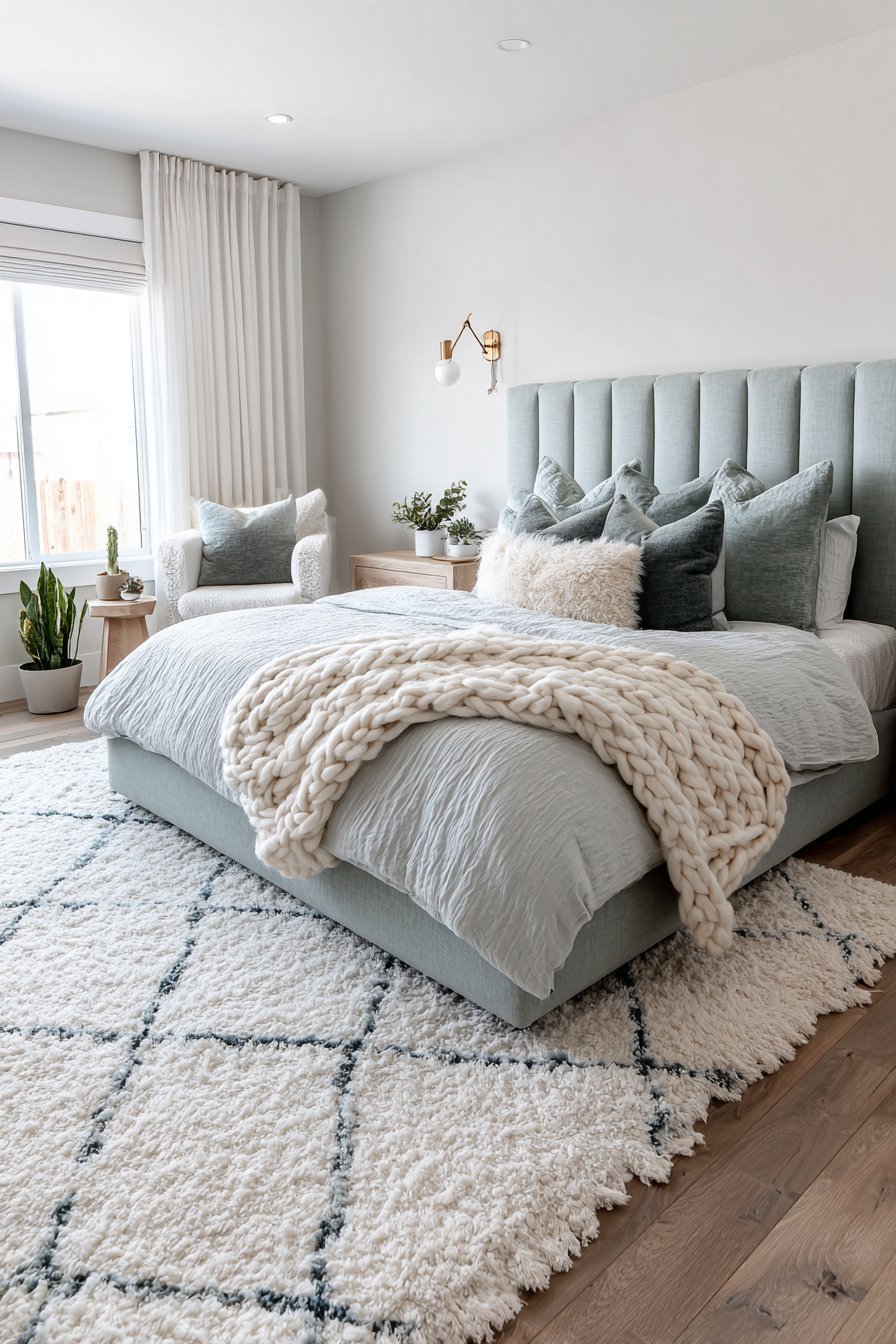
Color theory plays a crucial role in each design’s success. Soft neutrals, gentle blues, and nature-inspired greens all reduce visual stimulation. These hues lower cortisol levels and support circadian rhythms. The monochromatic and tonal approaches demonstrate how limiting color variation creates mental calm. Even the warmer palettes use muted saturations that soothe rather than energize.
Lighting strategies prove essential to creating truly relaxing environments. Layered lighting options provide flexibility for different activities and times of day. Sheer curtains filter harsh sunlight while blackout options ensure complete darkness for sleep. Ambient, task, and accent lighting work together to create customizable atmospheres. The integration of natural light throughout the day supports healthy sleep-wake cycles.
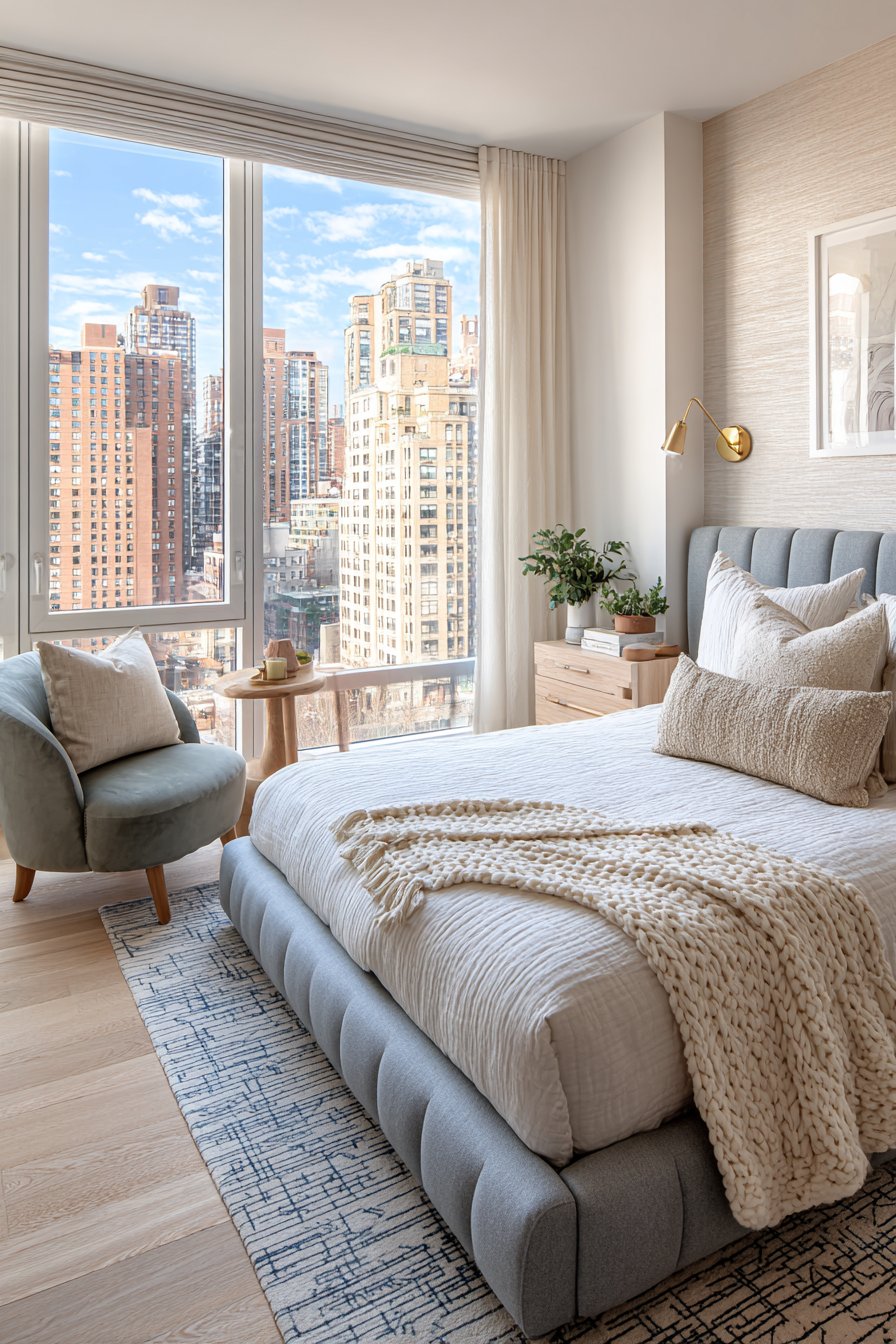
Texture layering emerges as a consistent thread across all designs. Multiple textile weights and weaves create visual interest without color competition. These tactile variations provide sensory richness that engages touch while soothing sight. The combination of smooth and nubby, crisp and soft, creates dimensional comfort that flat surfaces cannot achieve.
Spatial considerations demonstrate adaptability across different room sizes and layouts. Window seat designs maximize small spaces while built-in niches create custom sleeping environments. Floating furniture maintains clean floor lines in compact rooms. These solutions prove that relaxing bedrooms succeed through thoughtful planning rather than square footage alone.
Conclusion
These twenty relaxing bedroom designs demonstrate that peaceful personal sanctuaries result from thoughtful material selection, sophisticated color choices, and layered lighting strategies. The key takeaways include the importance of natural fibers for comfort and health, the power of neutral palettes to reduce visual stress, and the necessity of flexible lighting for different activities and moods.
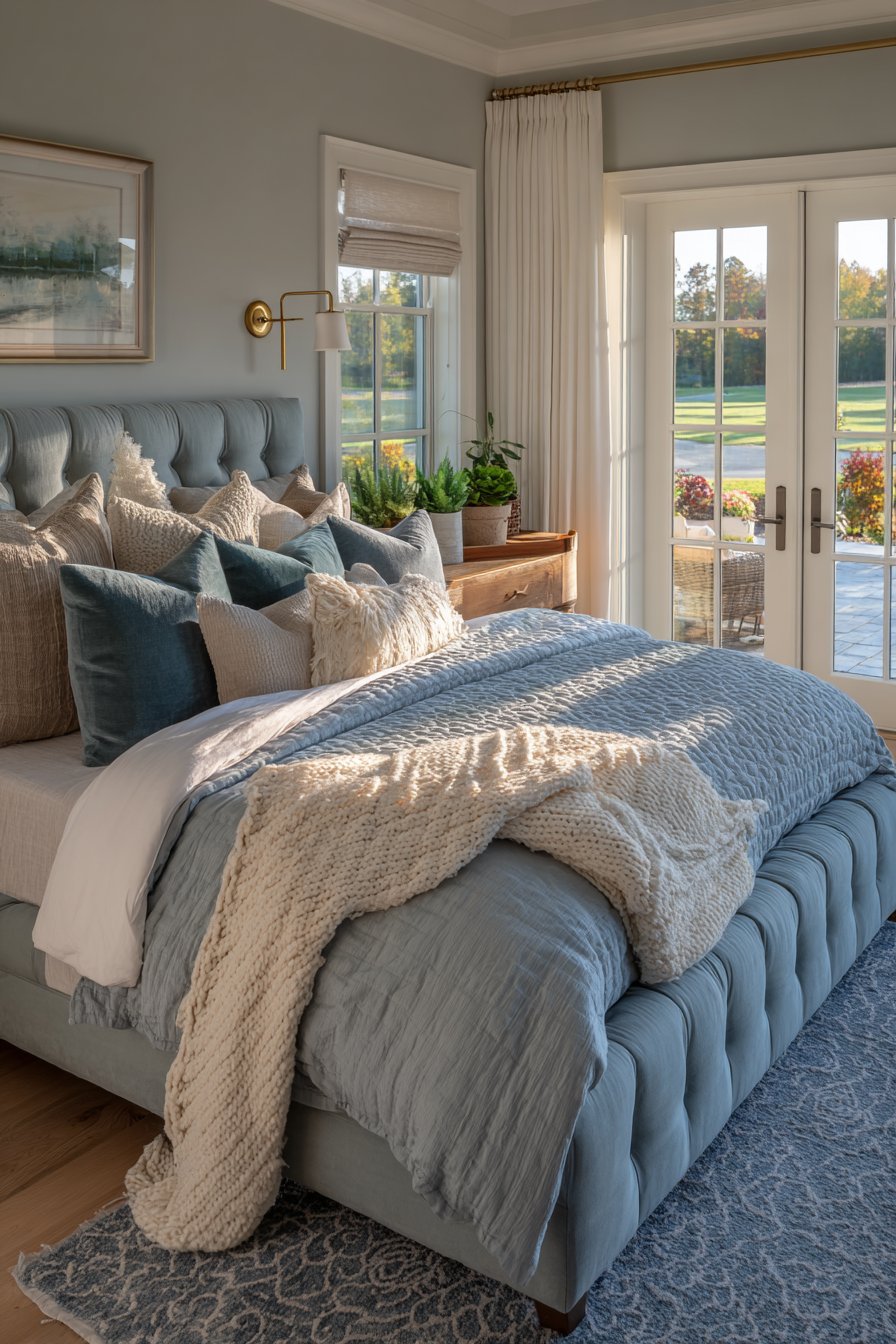
Successful relaxing bedroom design balances aesthetic beauty with functional comfort. Whether you prefer minimalist Scandinavian simplicity or warm monochromatic elegance, these concepts provide actionable inspiration. Start by selecting one element that resonates with your personal style. Add quality natural textiles, adjust your lighting, or introduce calming wall colors. Your dream relaxing bedroom awaits creation through intentional choices and thoughtful implementation.
