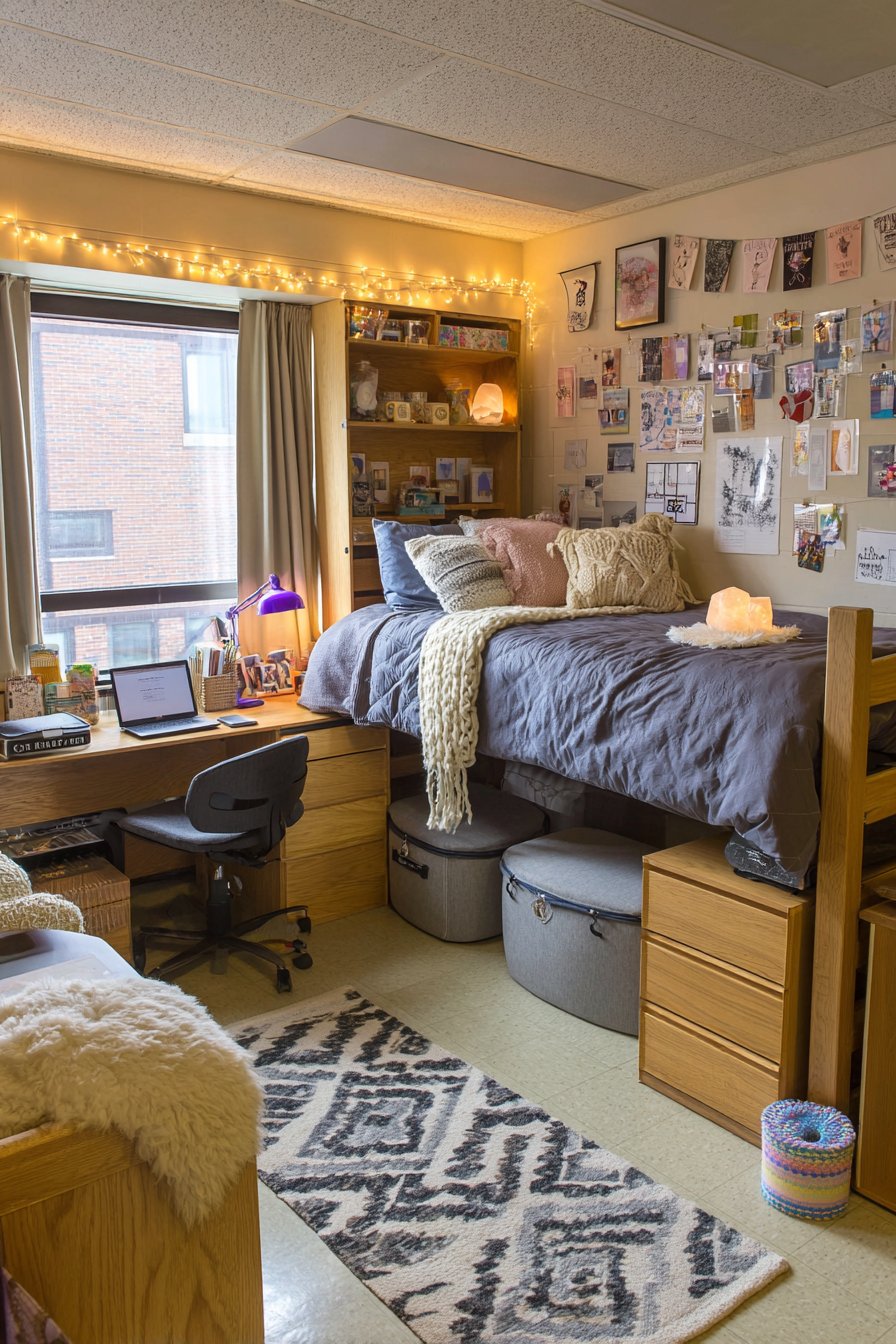


Creating a functional and personalized college bedroom presents unique challenges. Limited space, tight budgets, and rental restrictions require creative solutions. Yet these constraints often inspire the most innovative design approaches.
College bedrooms serve multiple purposes in students’ daily lives. They function as sleeping quarters, study spaces, social hubs, and personal retreats. The best designs maximize every square foot while reflecting individual personality and style preferences.
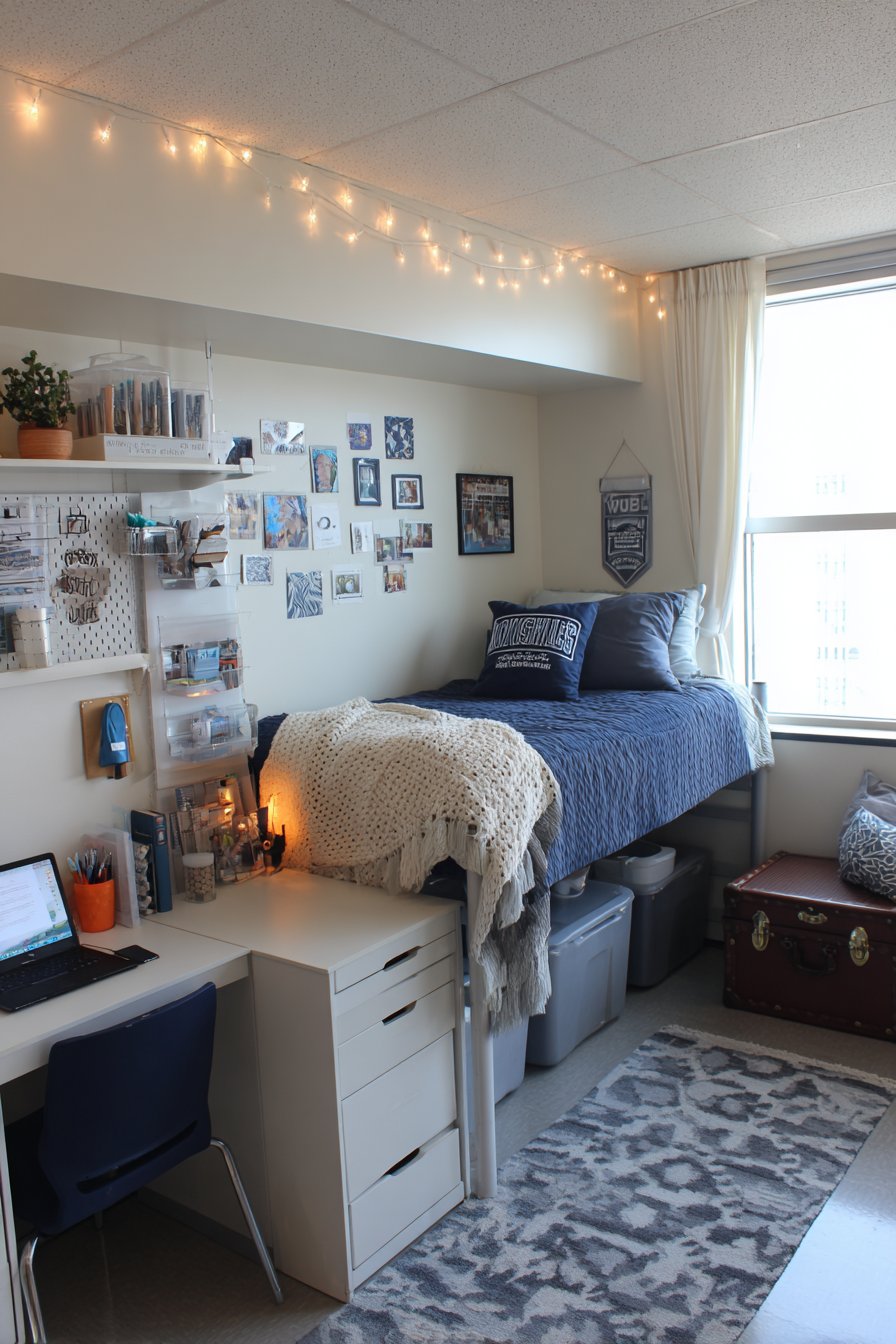
This collection showcases twenty distinct approaches to college bedroom design. From space-saving loft configurations to bohemian sanctuaries, each concept addresses real student needs. These designs prove that budget limitations need not compromise style or functionality.
1. Vertical Space Maximization with Lofted Bed
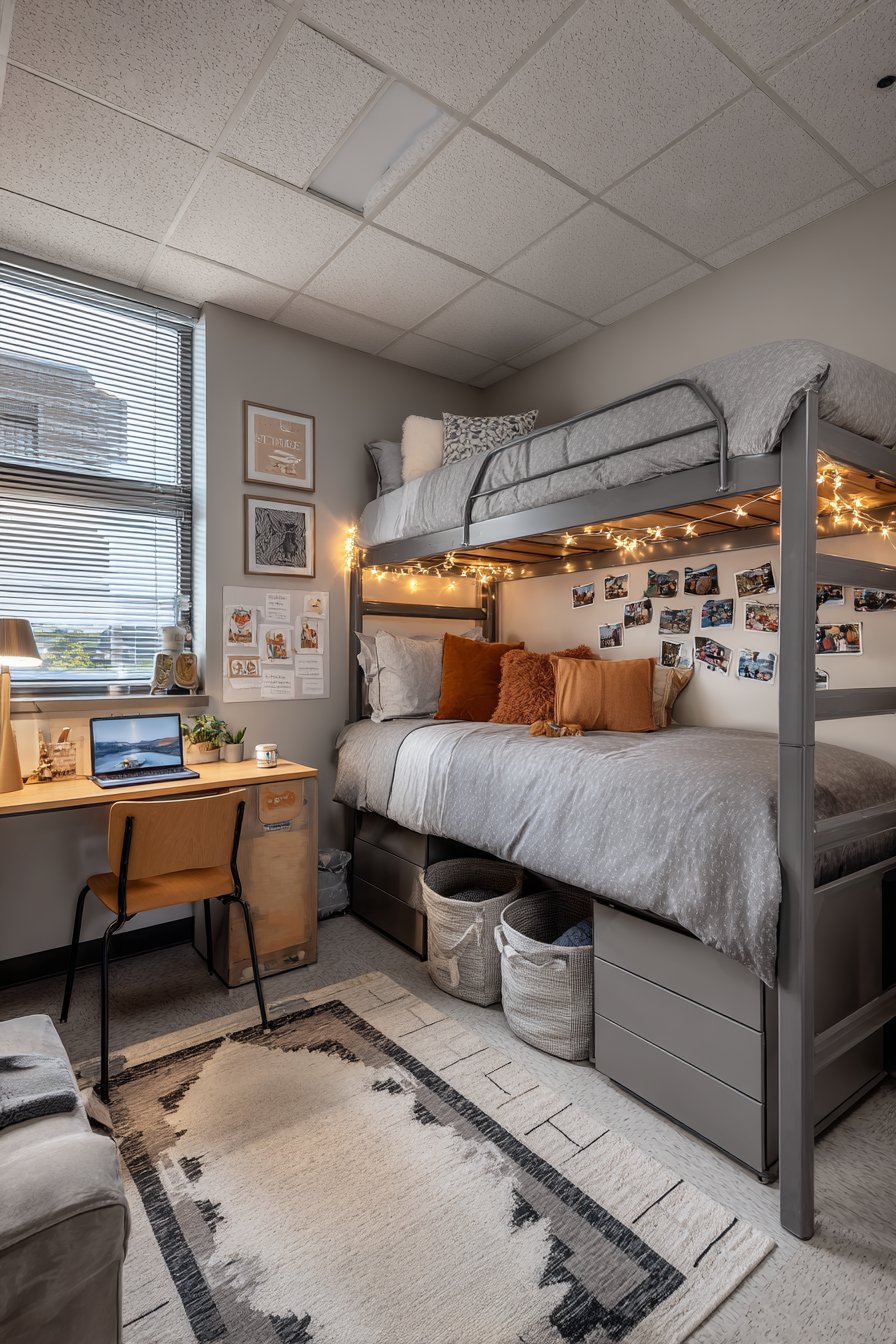
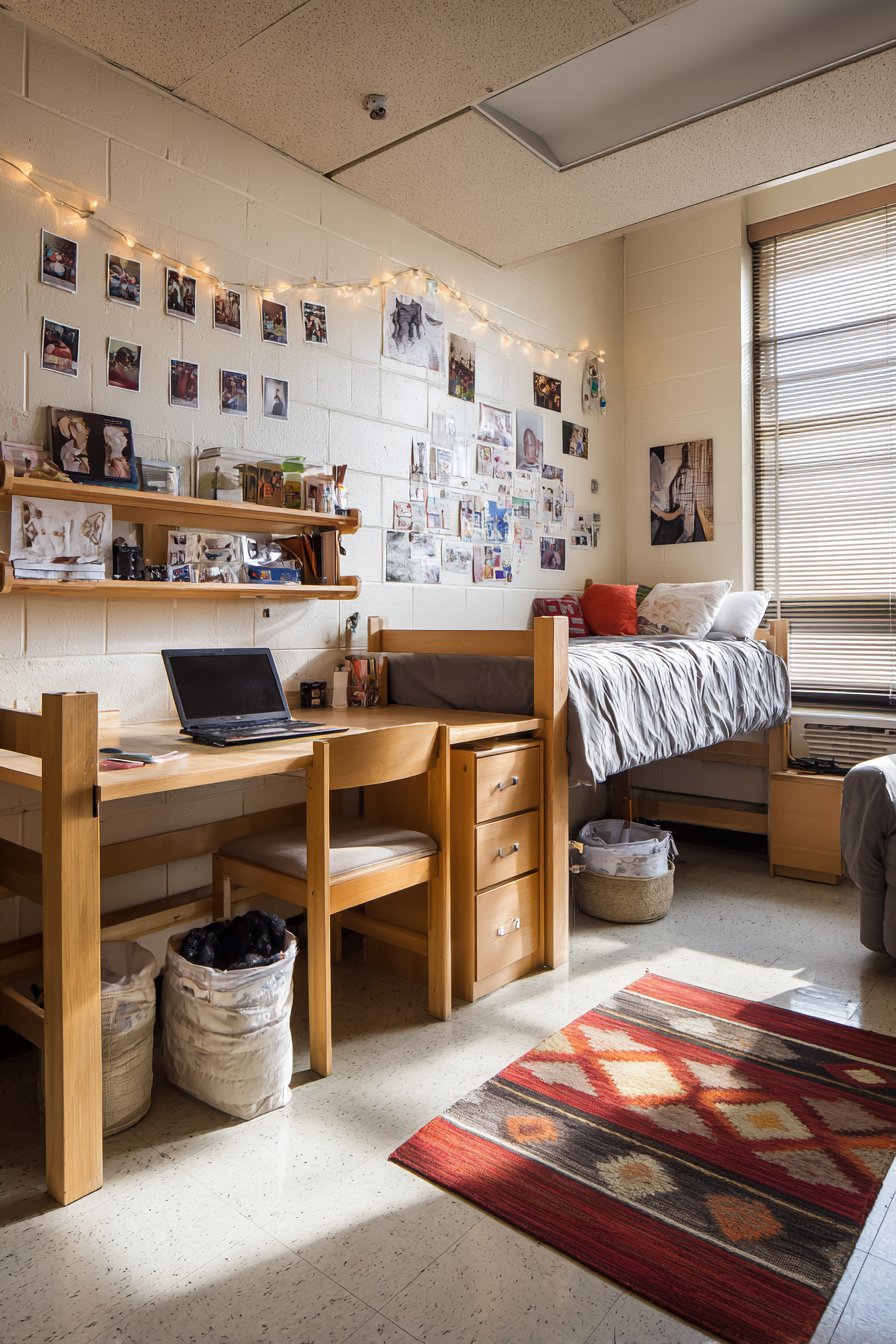
A lofted twin bed transforms compact dorm rooms into efficient multi-functional spaces. The elevated sleeping area frees valuable floor space below. Built-in desk integration creates a dedicated study zone directly underneath. This vertical approach doubles the usable square footage in small rooms.
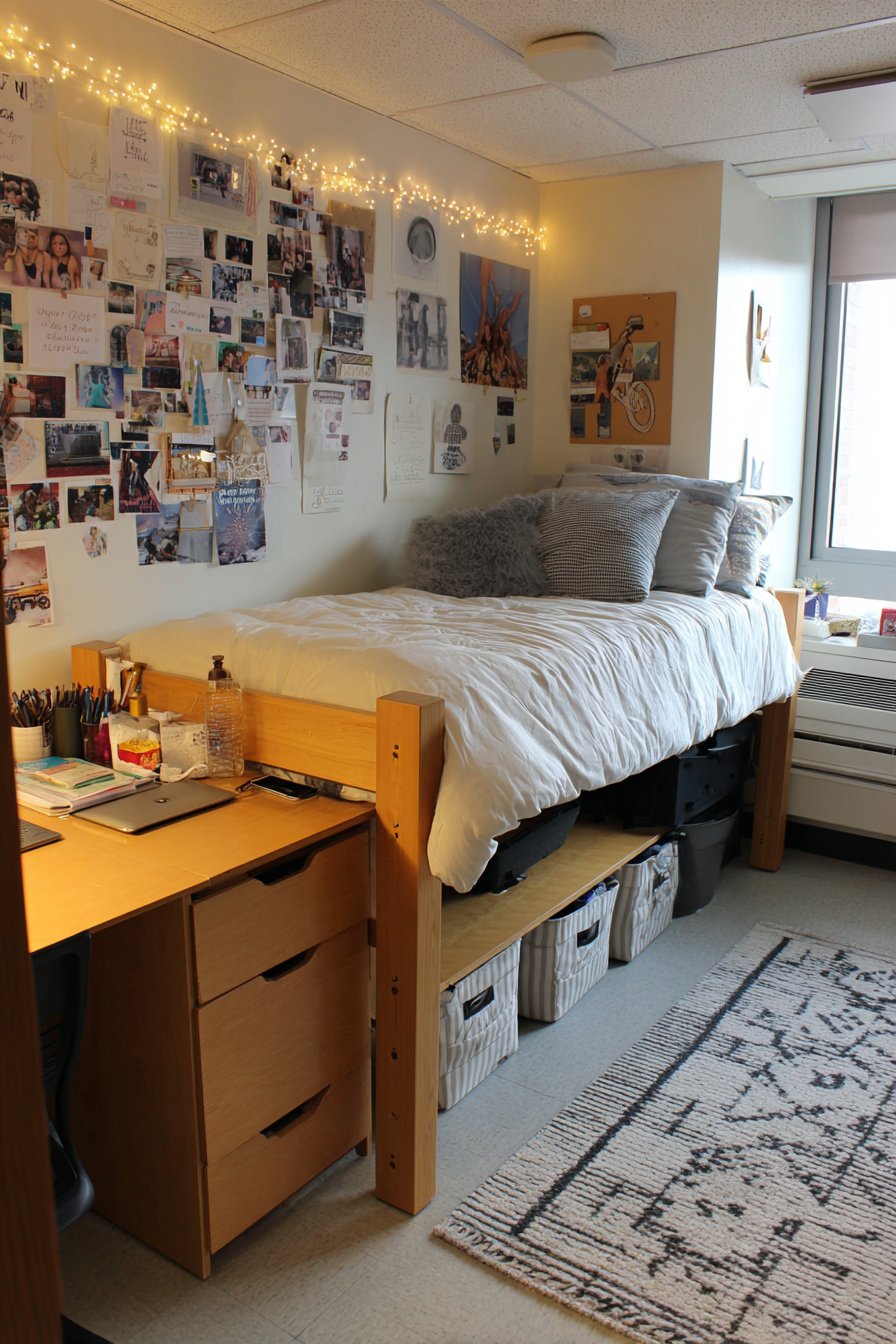
The desk area becomes a productive workspace with proper lighting. String lights draped along the wooden frame add warmth. They create ambient illumination perfect for evening study sessions. Under-bed storage bins in canvas fabric hold textbooks and supplies. These containers keep essentials organized and easily accessible.
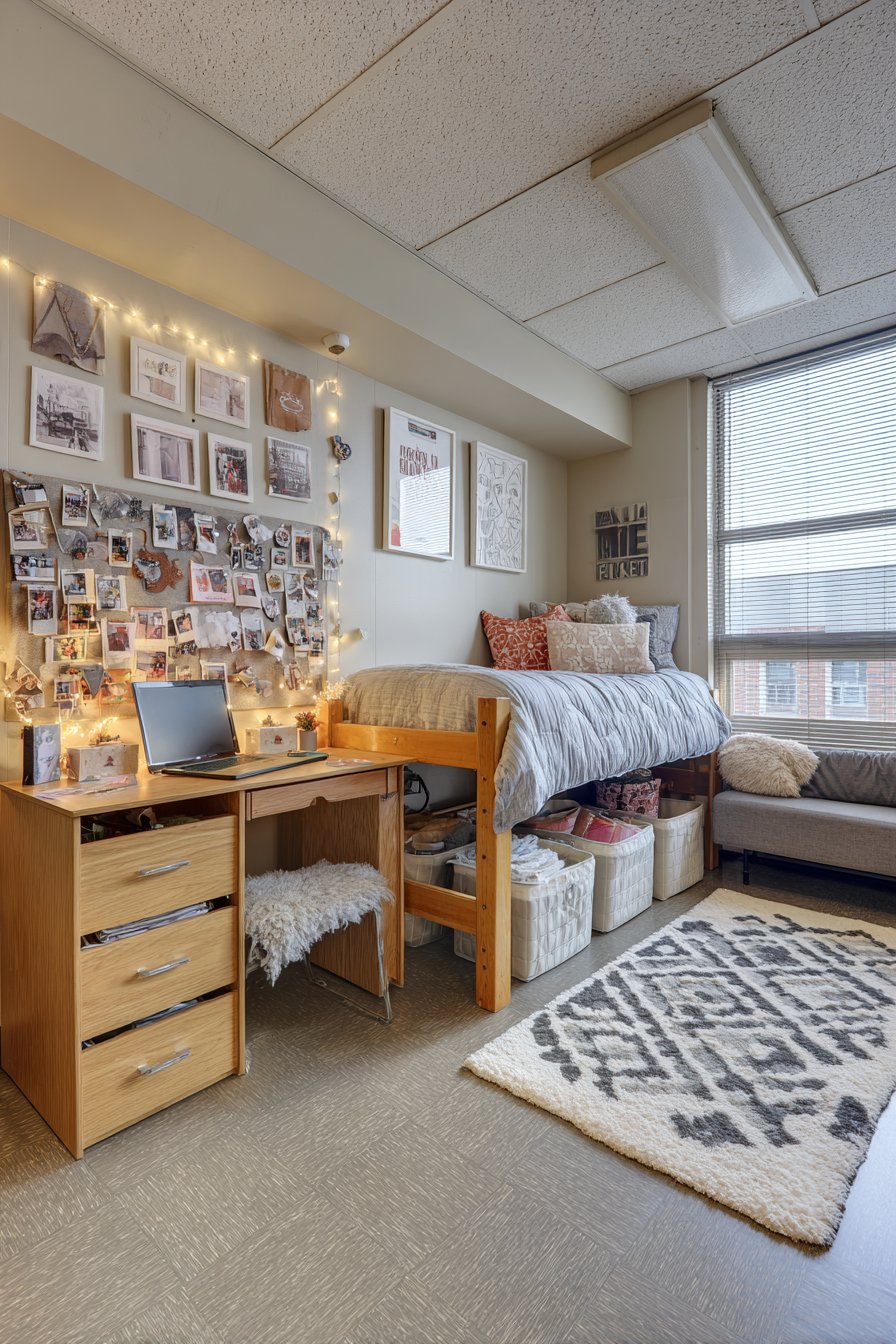
Personalization makes the space feel like home despite institutional settings. Walls display curated galleries of polaroid photos and inspirational prints. Removable adhesive strips prevent damage to rental walls. A small geometric area rug adds personality to standard vinyl flooring. These touches transform generic dorm rooms into personalized sanctuaries.
Natural afternoon light filters through standard window blinds beautifully. The elevated bed position allows light to reach the desk below. This creates bright, cheerful conditions for studying and creative work. The strategic furniture arrangement maximizes both natural and artificial lighting sources.
Key Design Tips:
- Measure ceiling height before purchasing loft beds to ensure adequate clearance
- Install clip-on reading lights on the bed frame for nighttime convenience
- Use vertical wall space for storage with mounted shelves and hooks
- Choose multifunctional furniture pieces that serve multiple purposes
- Incorporate personal photos and artwork to make institutional spaces feel welcoming
2. Budget-Friendly Apartment Sophistication
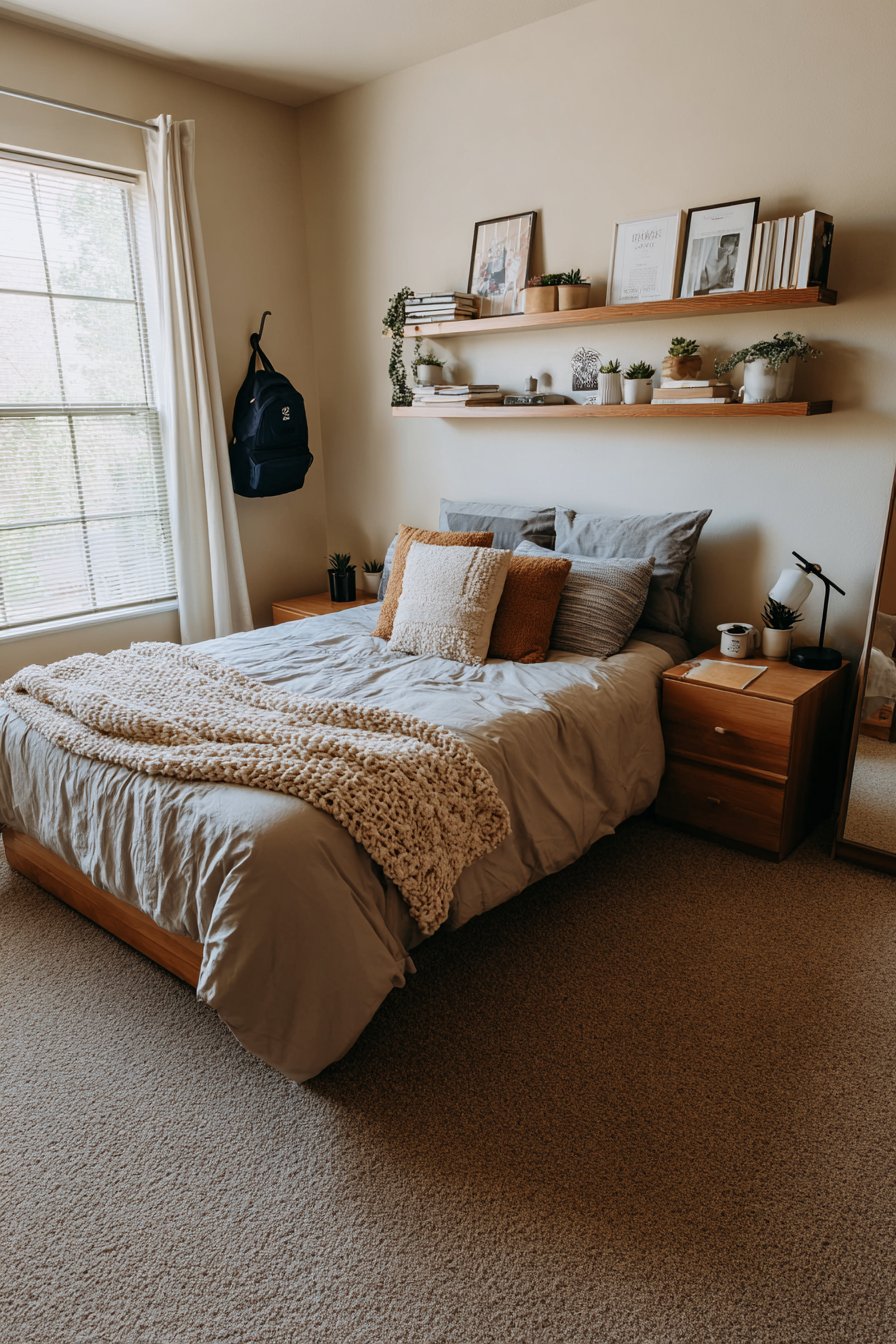
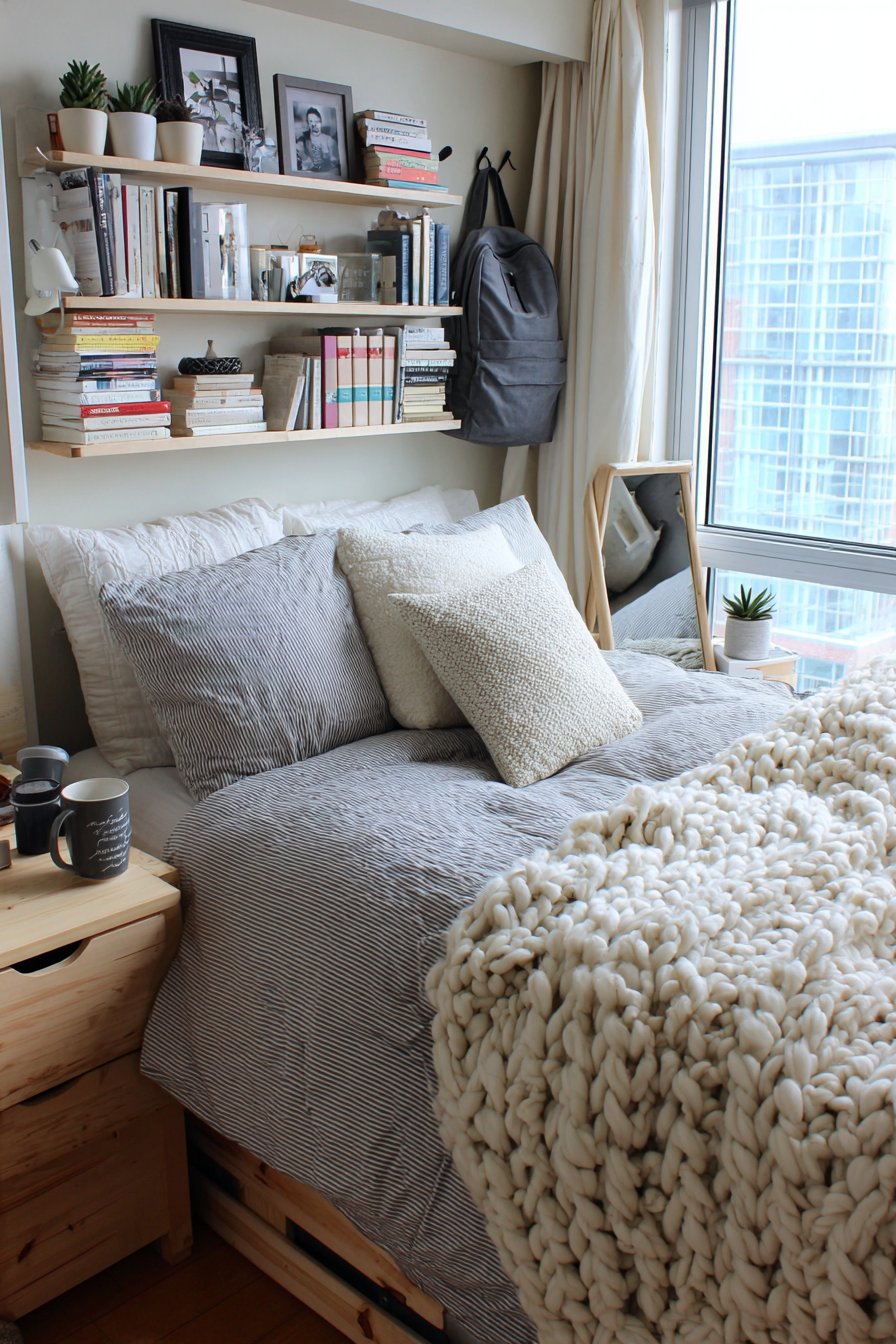
Budget constraints need not sacrifice style in college apartment bedrooms. IKEA platform beds provide affordable foundations for sophisticated design. Neutral bedding creates a clean canvas for textured accessories. Chunky knit blankets and varied throw pillows add dimension without expense.
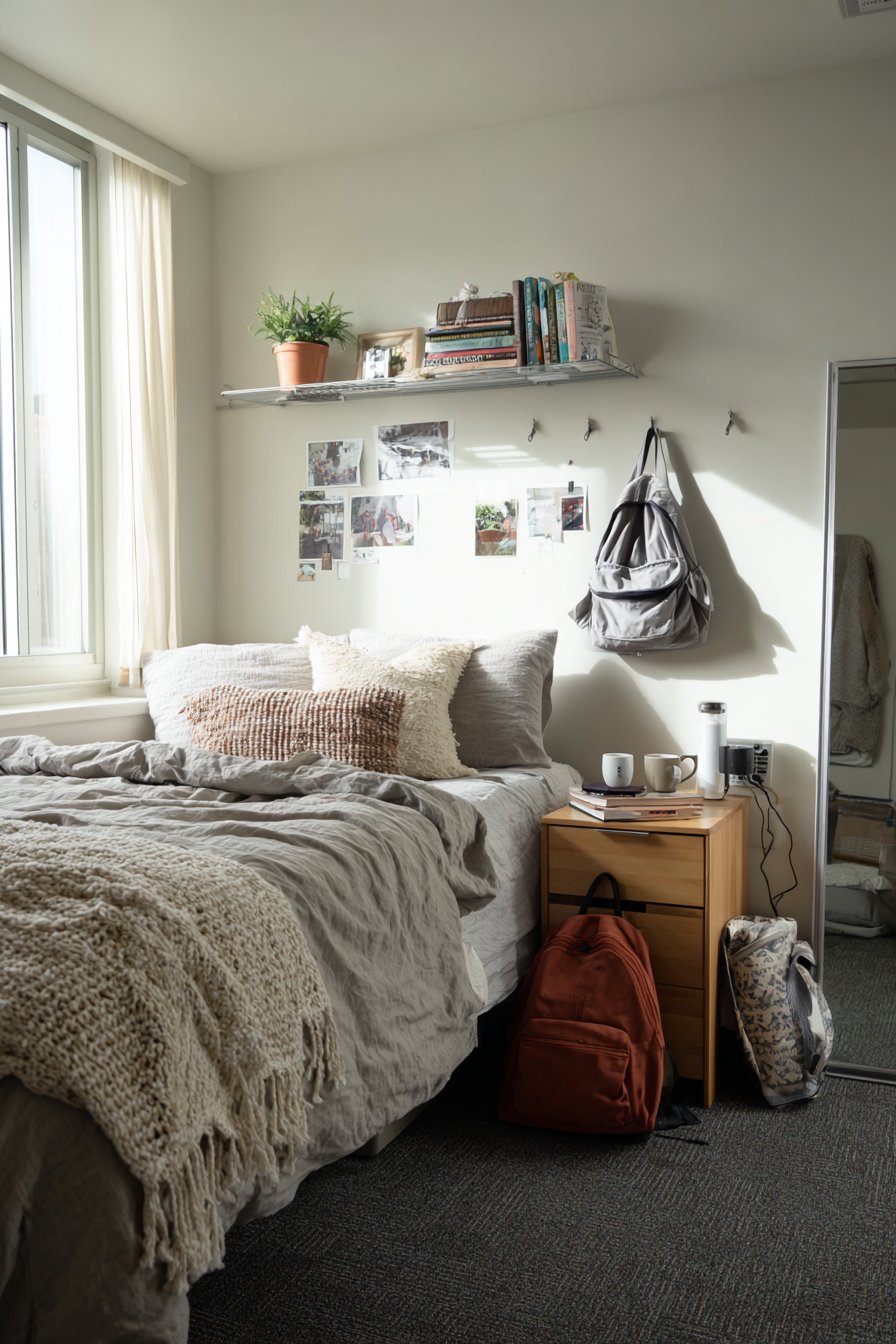
Thrifted wooden nightstands bring character that new furniture cannot match. These vintage pieces often cost less than mass-produced alternatives. A minimalist desk lamp and phone charging station create functional bedside essentials. Floating shelves above the bed display carefully curated collections.
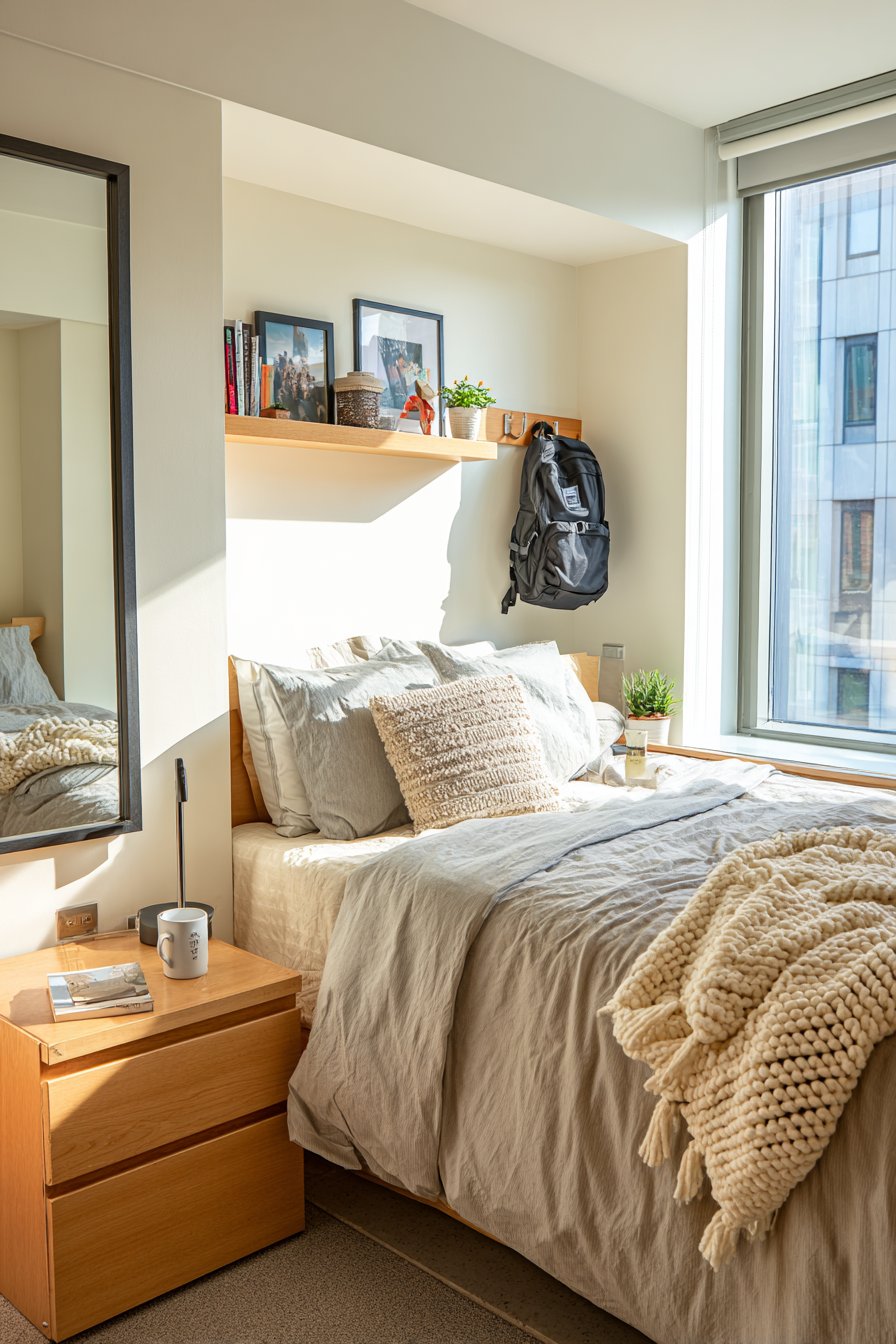
Small potted succulents introduce natural elements without maintenance demands. Framed photos and color-organized textbooks create visual interest. The arrangement balances personal meaning with aesthetic appeal. A full-length mirror leans casually against the wall. This placement reflects natural light throughout the space.
Realistic signs of student life add authenticity to the design. A backpack hung on wall hooks shows practical living. A coffee mug on the nightstand suggests morning routines. These elements create spaces that feel genuinely lived-in rather than staged.
Key Design Tips:
- Shop thrift stores and estate sales for unique furniture pieces
- Organize books by color for instant visual impact
- Position mirrors to reflect and amplify natural light sources
- Choose low-maintenance plants like succulents for greenery without hassle
- Layer textures through blankets and pillows for affordable luxury
3. Modular Storage Solutions for Small Spaces
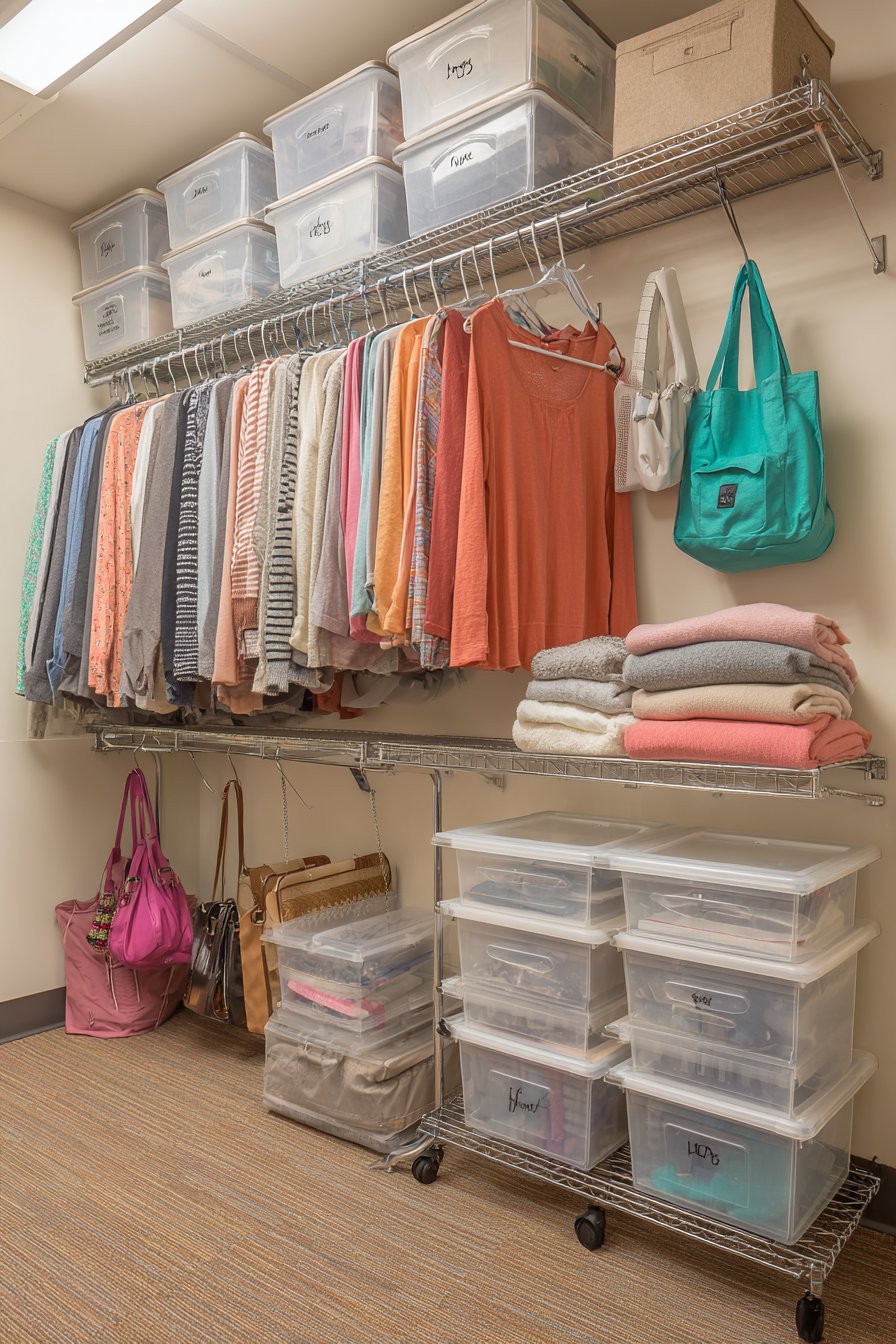
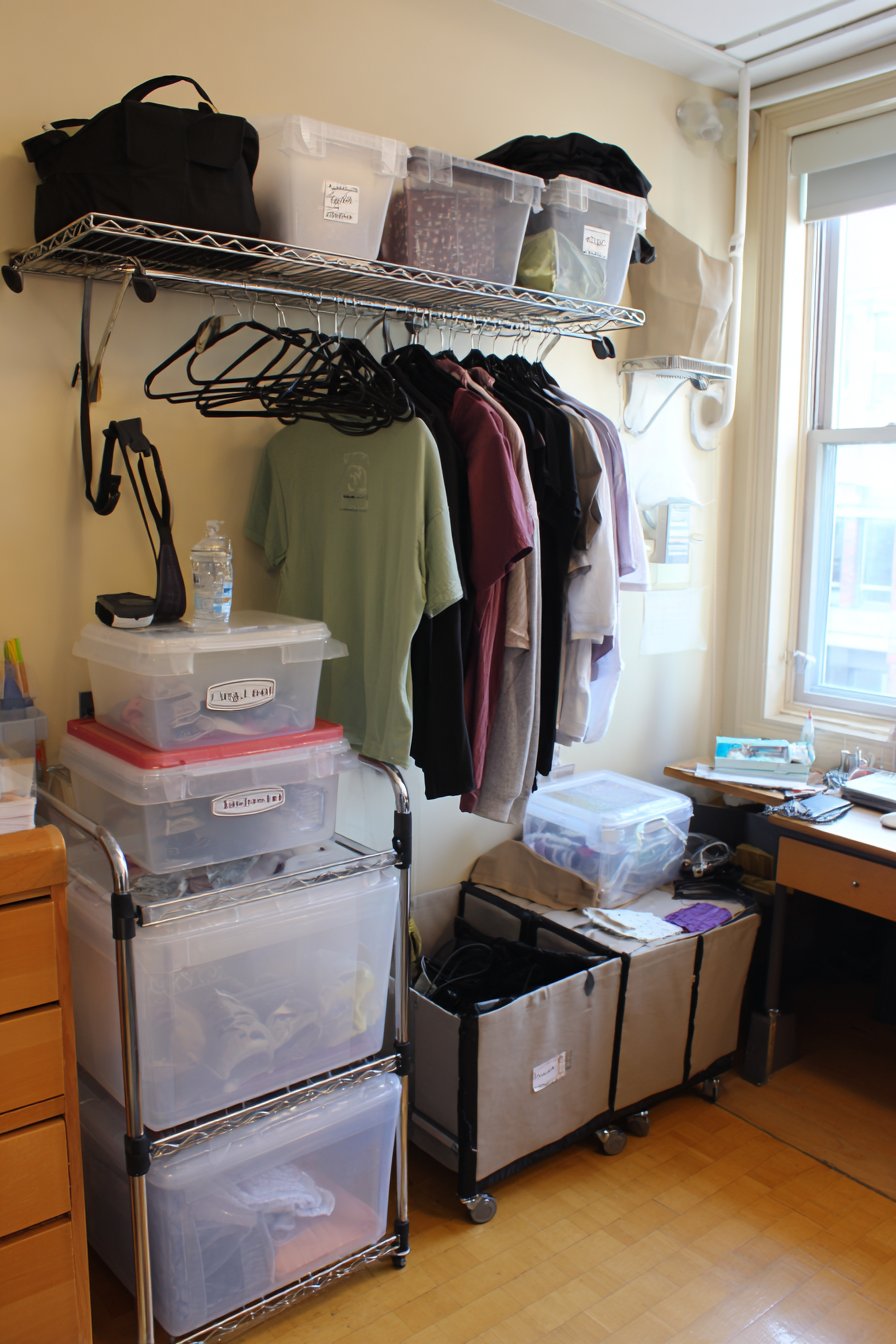
Efficient storage systems make the difference between chaos and calm. Modular closet organization maximizes limited wardrobe space effectively. Hanging rods at multiple heights accommodate different garment lengths. Fabric drawer units and clear plastic shoe boxes create visible organization.
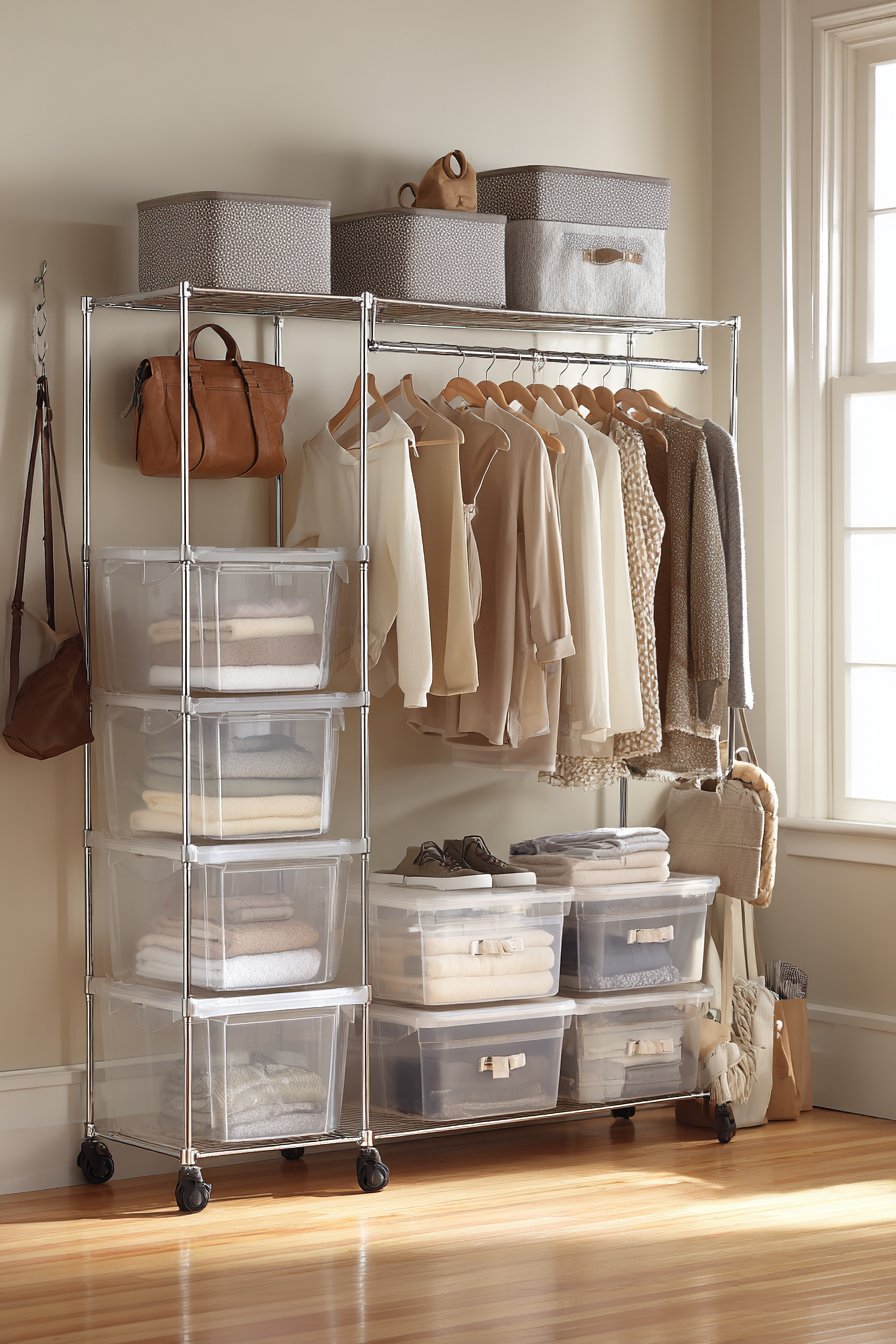
Clothing racks on wheels serve as flexible dresser alternatives. They hold frequently worn items within easy reach. This mobility allows configuration changes as needs evolve. Overhead wire shelving utilizes often-wasted vertical space. Labeled storage bins keep seasonal items organized and accessible.
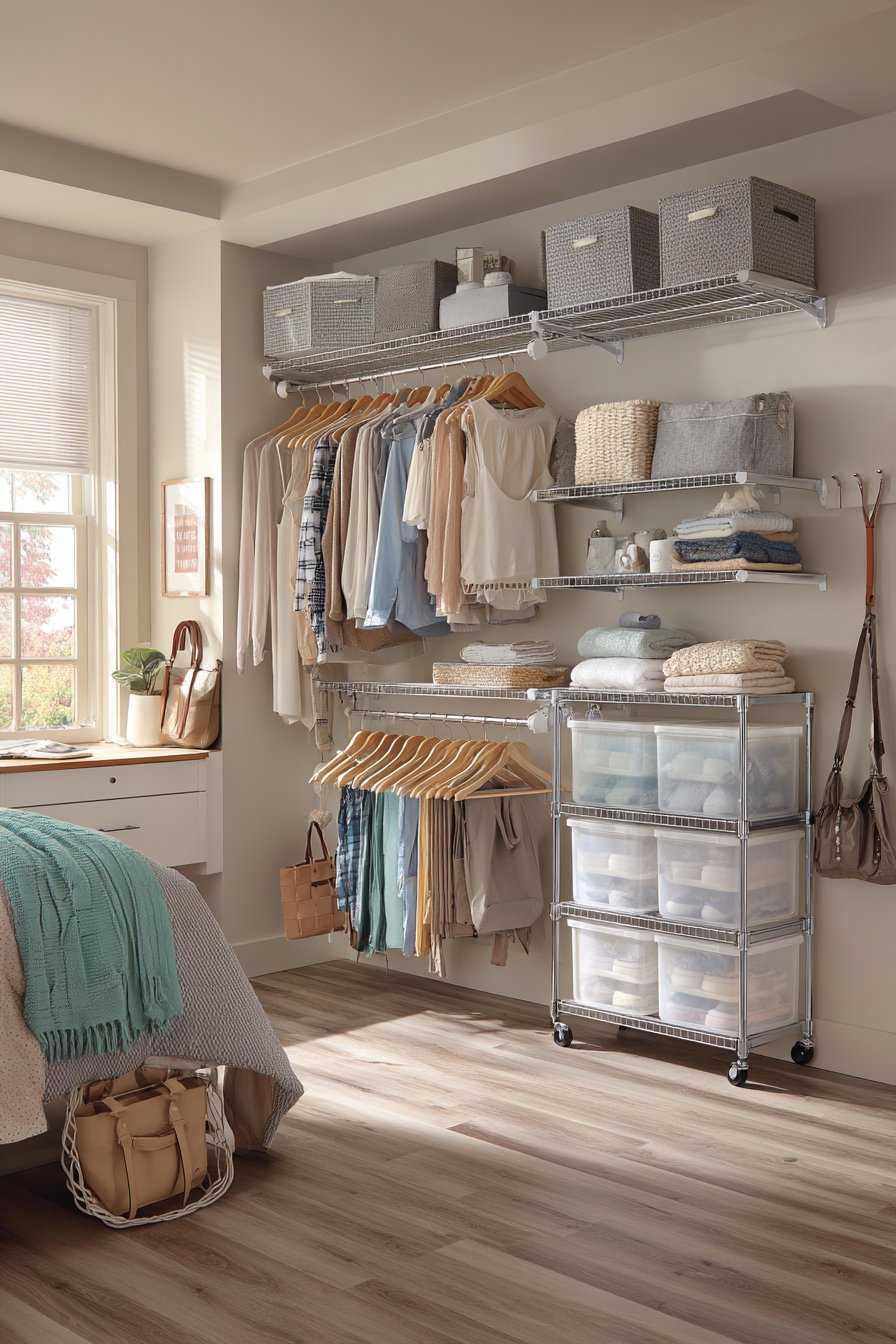
The practical approach acknowledges typical dorm room limitations honestly. Vinyl flooring shows expected wear from student traffic. Neutral walls feature removable hooks for bags and accessories. These damage-free solutions respect rental agreements while providing functionality.
Smart organization reduces daily stress for busy students. Everything has a designated place and purpose. Morning routines become faster when clothing is visible and accessible. The system adapts easily to changing wardrobes throughout academic years.
Key Design Tips:
- Invest in clear storage containers to see contents without opening
- Use vertical space with stackable organizers and overhead shelving
- Label all storage bins for quick identification and retrieval
- Choose rolling storage solutions that adapt to changing layouts
- Implement closet systems with adjustable components for flexibility
4. Bohemian Textile Layering Approach
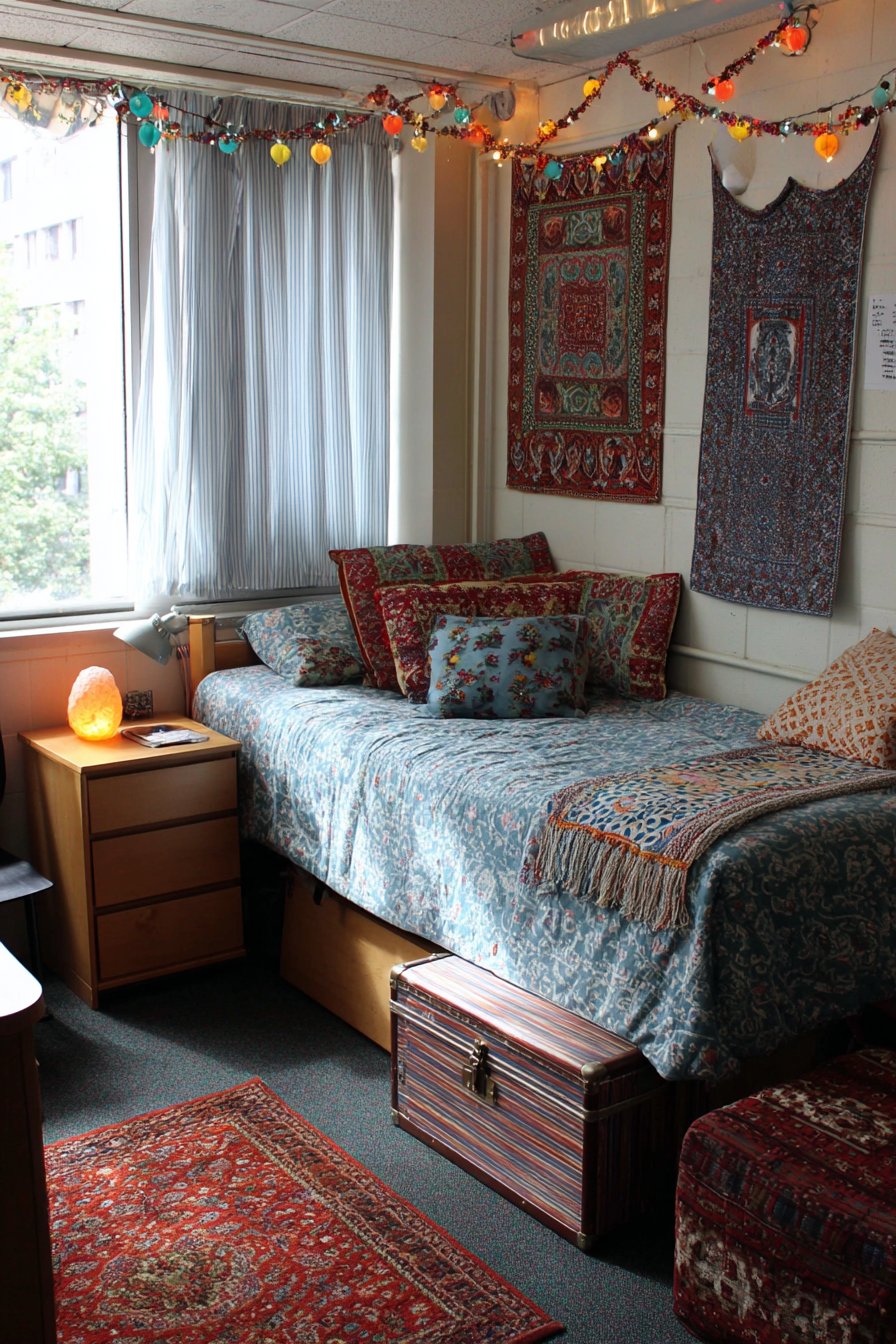
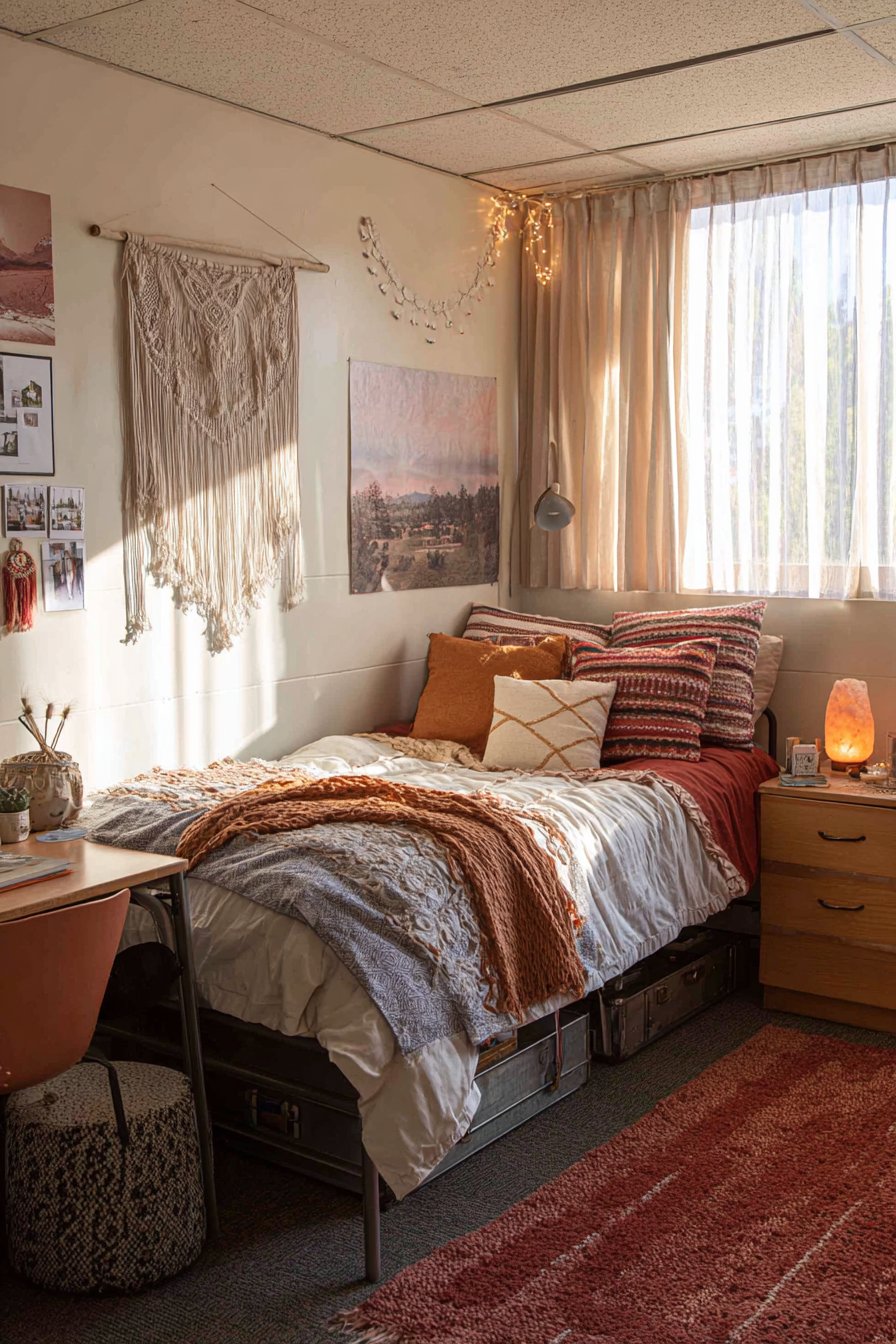
Bohemian design brings warmth and personality to institutional spaces. Low-profile metal bed frames support layers of patterned quilts. Mixed-print throw pillows create eclectic visual interest. The layered textiles add comfort and softness to basic furniture.
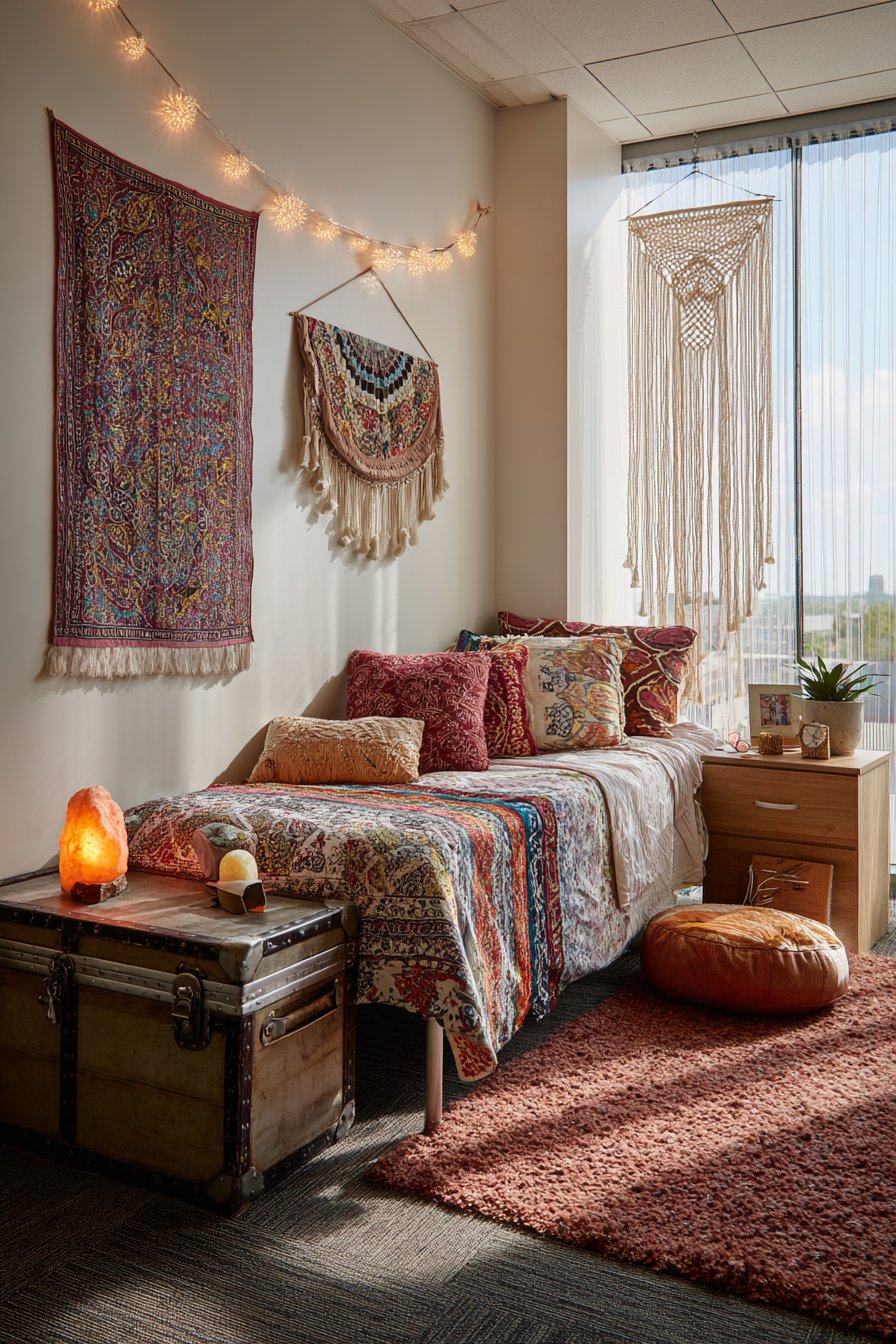
Macramé wall hangings and woven tapestries introduce texture without damage. These removable decorations transform blank walls into artistic statements. A vintage trunk serves dual purposes as storage and nightstand. The multipurpose piece adds character while maximizing functionality.
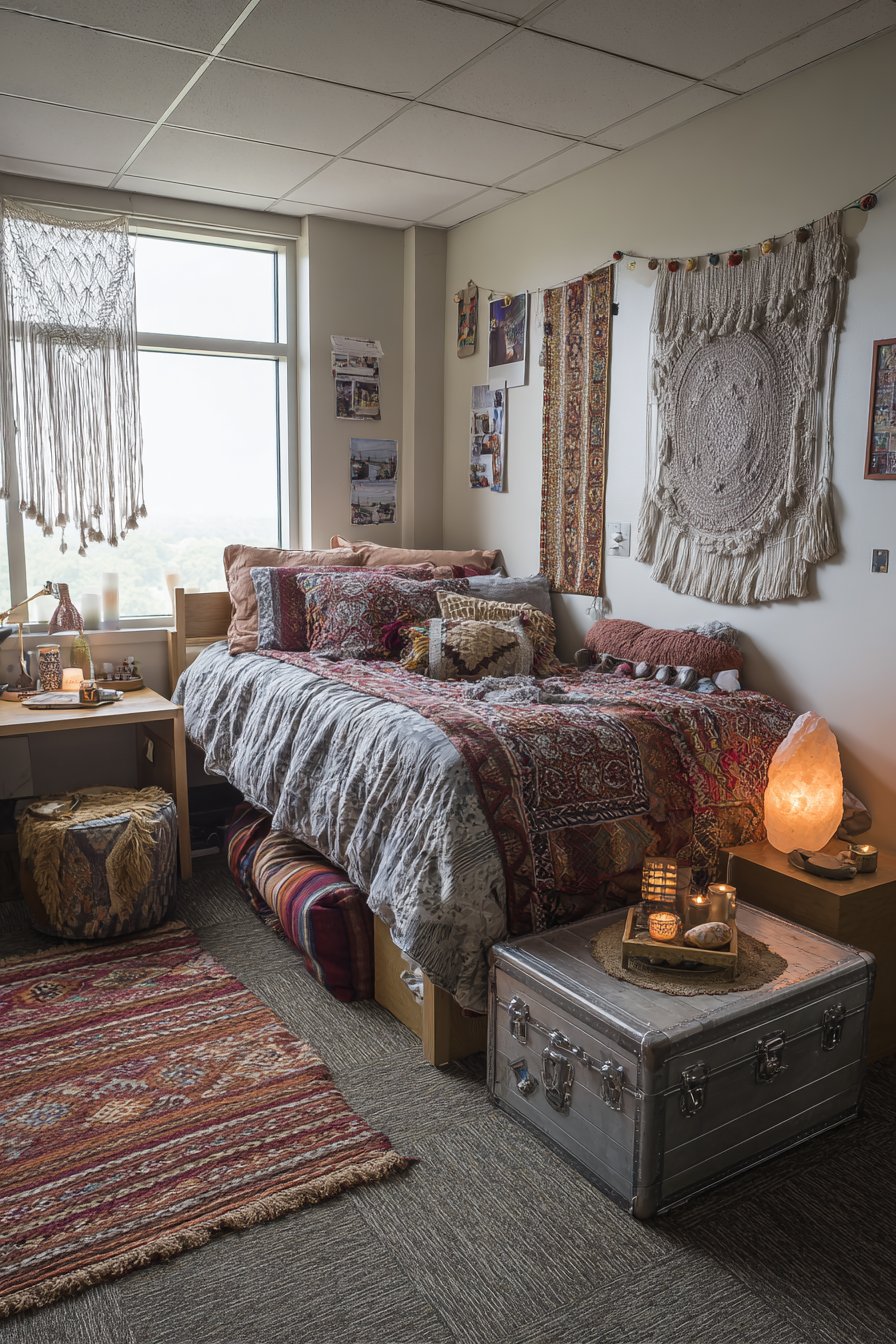
Ambient lighting creates crucial atmosphere in bohemian spaces. String lights and paper lanterns provide soft illumination. A Himalayan salt lamp adds warm glow to nightstand surfaces. Clip-on desk lamps offer adjustable task lighting for studying.
Warm terracotta area rugs cover standard institutional carpet. The earthy tones complement woven textiles and natural materials. Sheer curtains layered with beaded strands soften harsh window frames. These details create cohesive bohemian sanctuaries within dormitory constraints.
Key Design Tips:
- Layer textiles in complementary patterns for depth without clutter
- Choose lightweight decorations that hang without damaging walls
- Incorporate natural materials like wood, rattan, and woven fibers
- Use multiple light sources at different heights for ambient warmth
- Select multipurpose vintage furniture for character and function
5. Minimalist Clarity and Focus
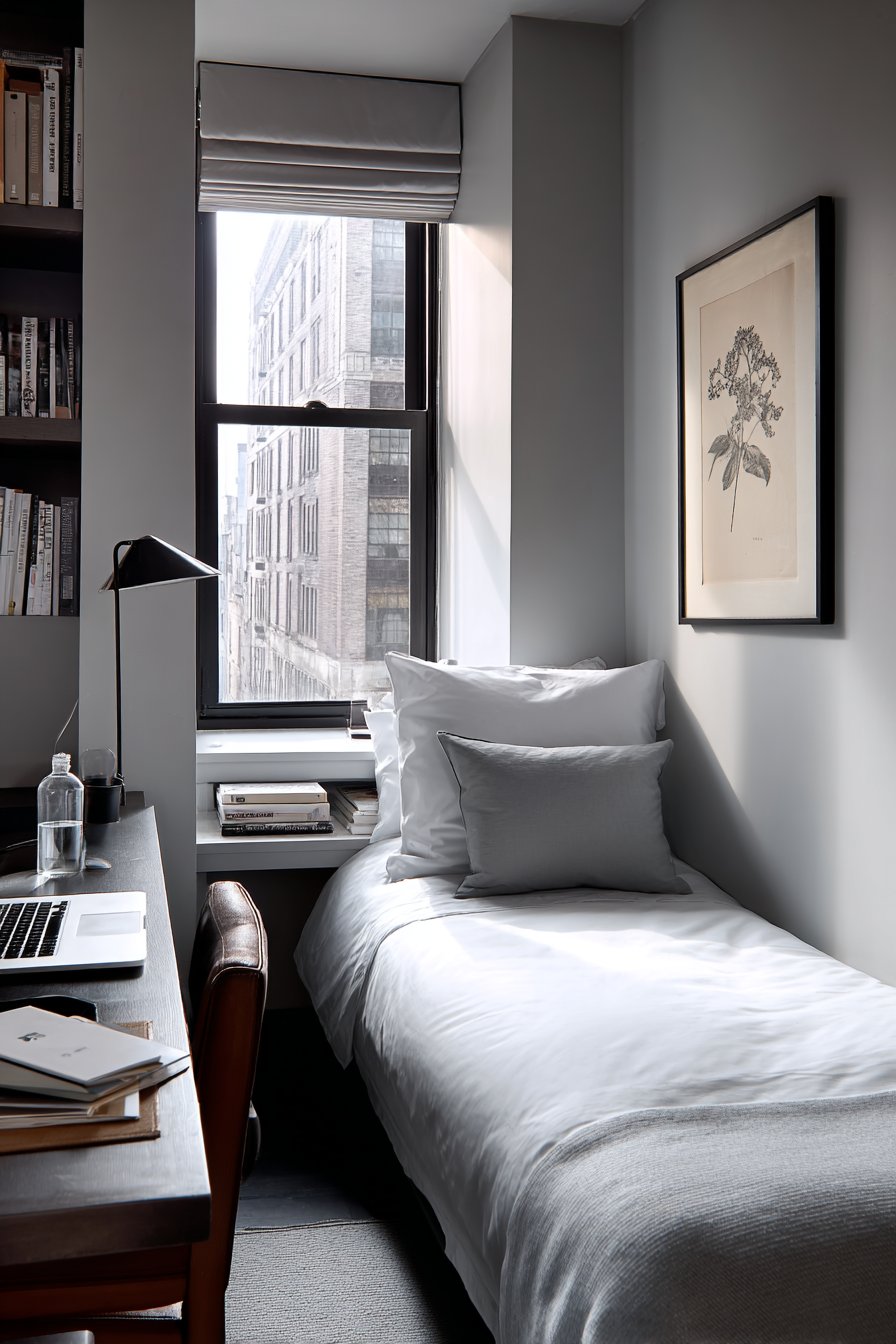
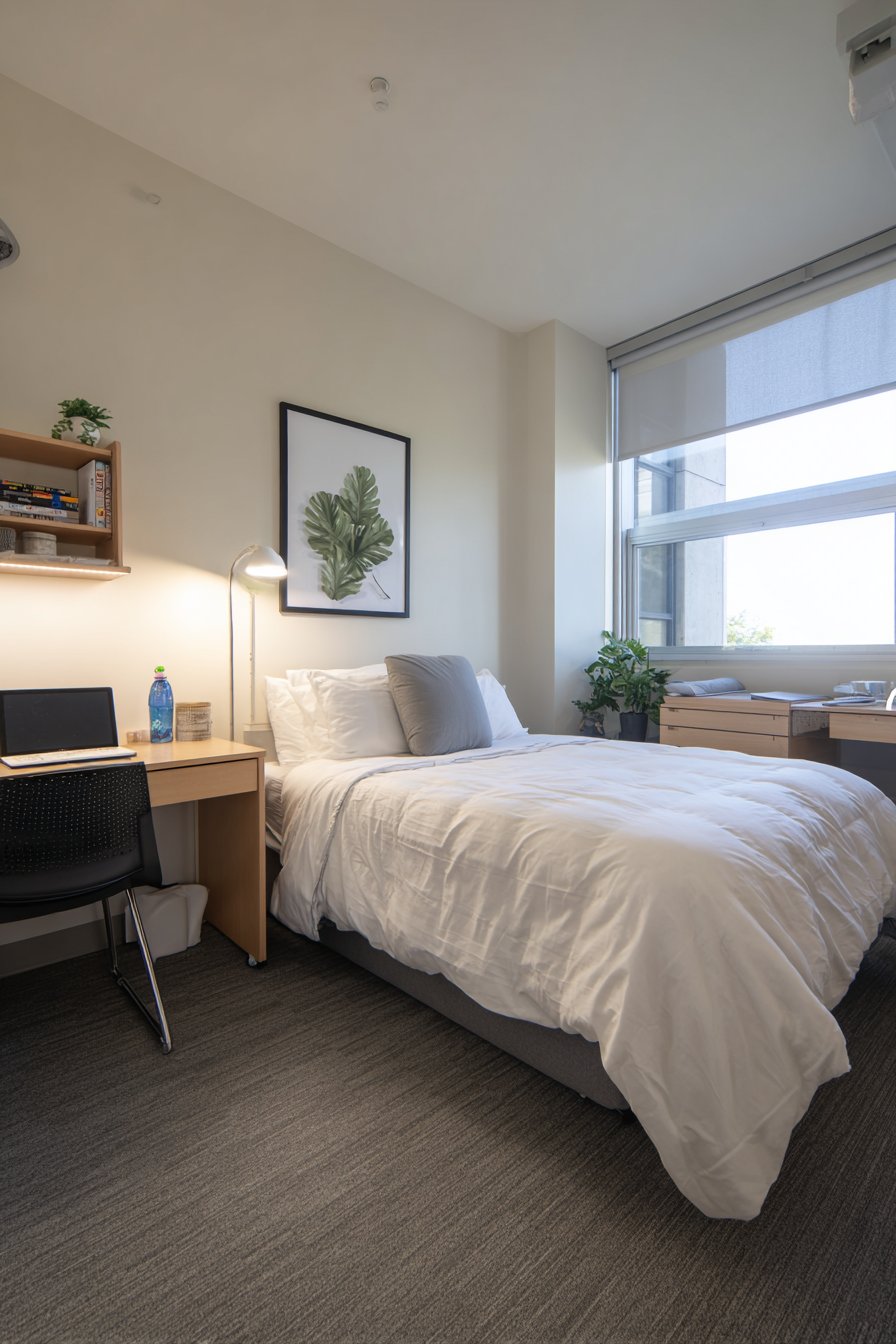
Minimalist design promotes calm and concentration in student spaces. Simple beds feature crisp white bedding with single gray accents. The restrained color palette prevents visual overwhelm. One large botanical print provides focal interest without clutter.
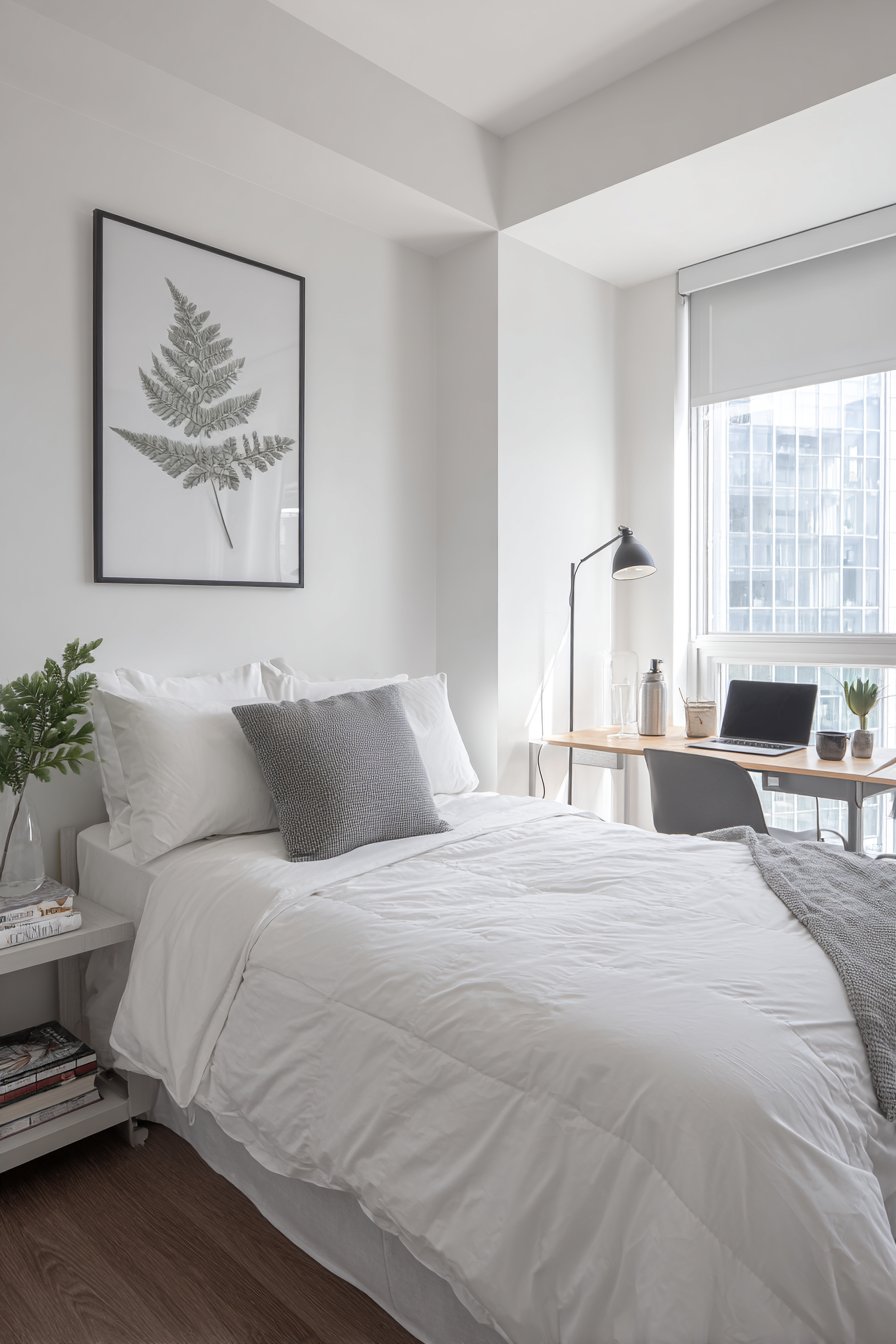
Compact desks with clean lines hold only essential items. Laptops, water bottles, and small organizers comprise the desktop landscape. Sleek floor lamps with adjustable arms provide flexible task lighting. The streamlined aesthetic supports focus and productivity.
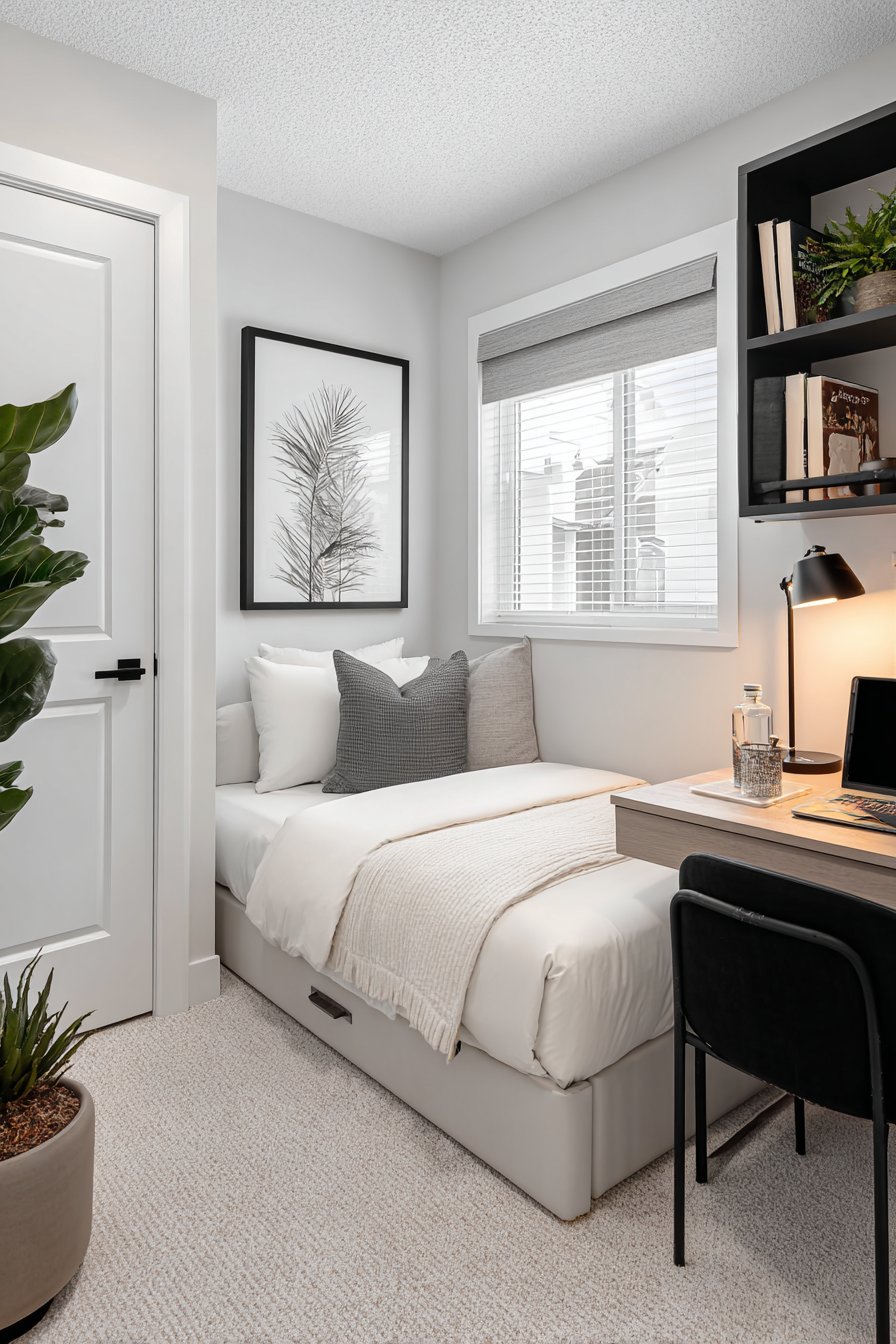
Closed closet doors maintain the uncluttered visual environment. Small bookshelves display neatly arranged textbooks with minimal decoration. Natural light from roller-blind windows illuminates the intentionally sparse space. The design proves that less truly can be more.
This approach particularly benefits students who feel overwhelmed easily. The calm environment reduces visual distractions during study sessions. Everything serves a clear purpose and function. Maintenance requires minimal effort, leaving more time for academics.
Key Design Tips:
- Limit color palette to two or three complementary tones
- Choose furniture with simple, clean lines and minimal ornamentation
- Store items behind closed doors to maintain visual calm
- Select only essential decorative pieces with personal meaning
- Implement daily decluttering habits to maintain the aesthetic
6. Wall-Mounted Workspace Efficiency
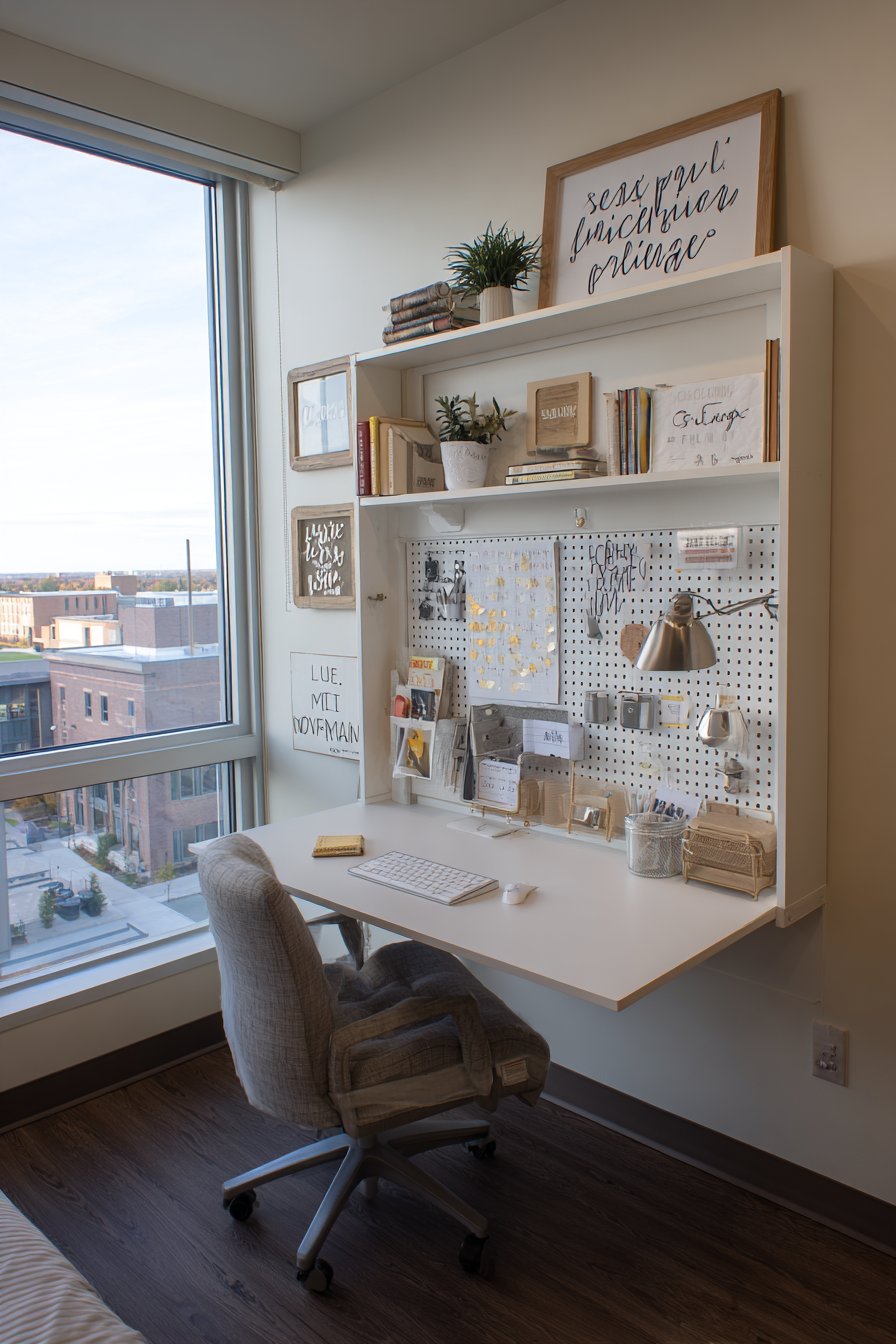
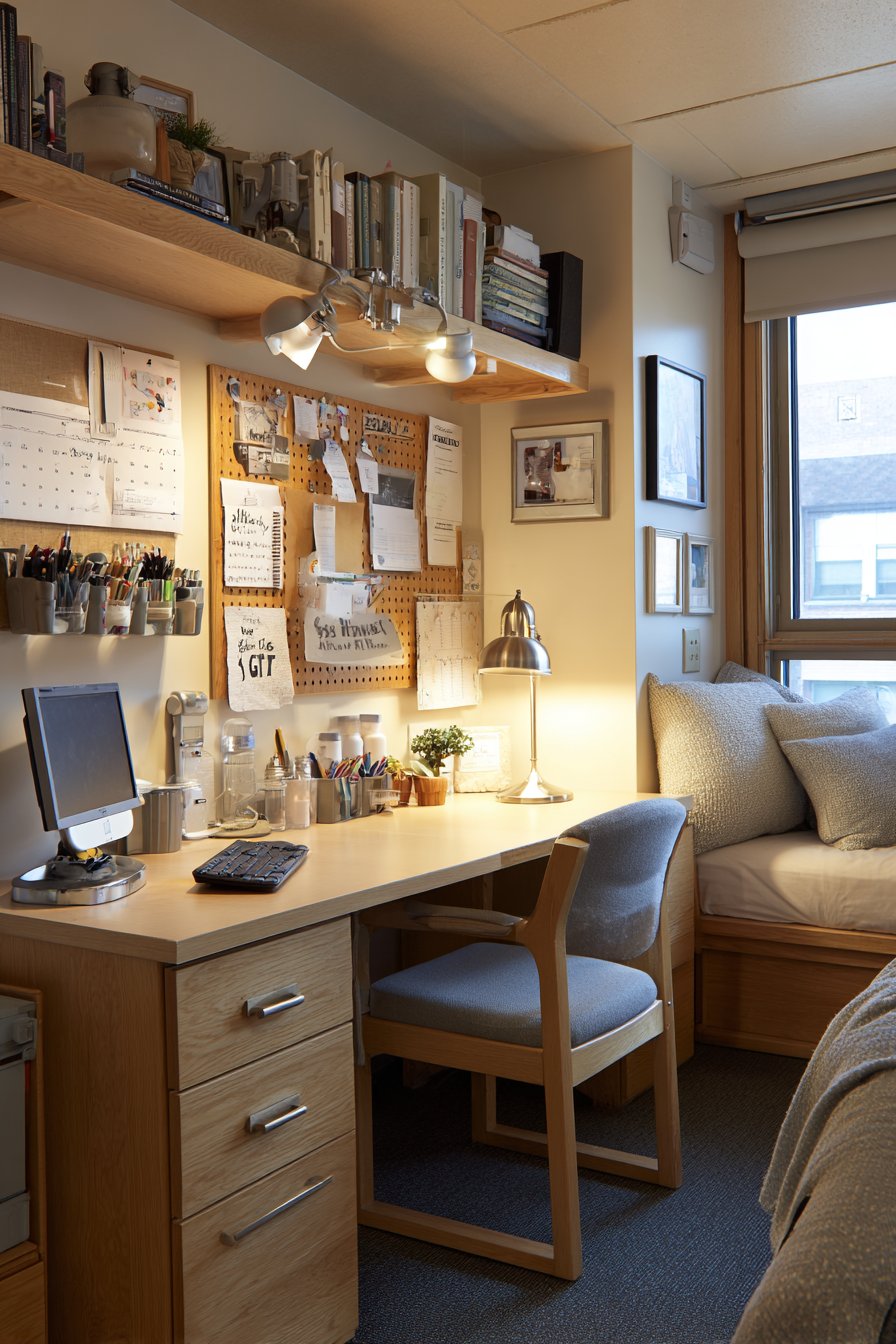
Wall-mounted fold-down desks revolutionize small bedroom layouts. The desk surface disappears when not needed. This creates open floor space for other activities. Monitors on risers, wireless keyboards, and pegboard organizers maximize efficiency.
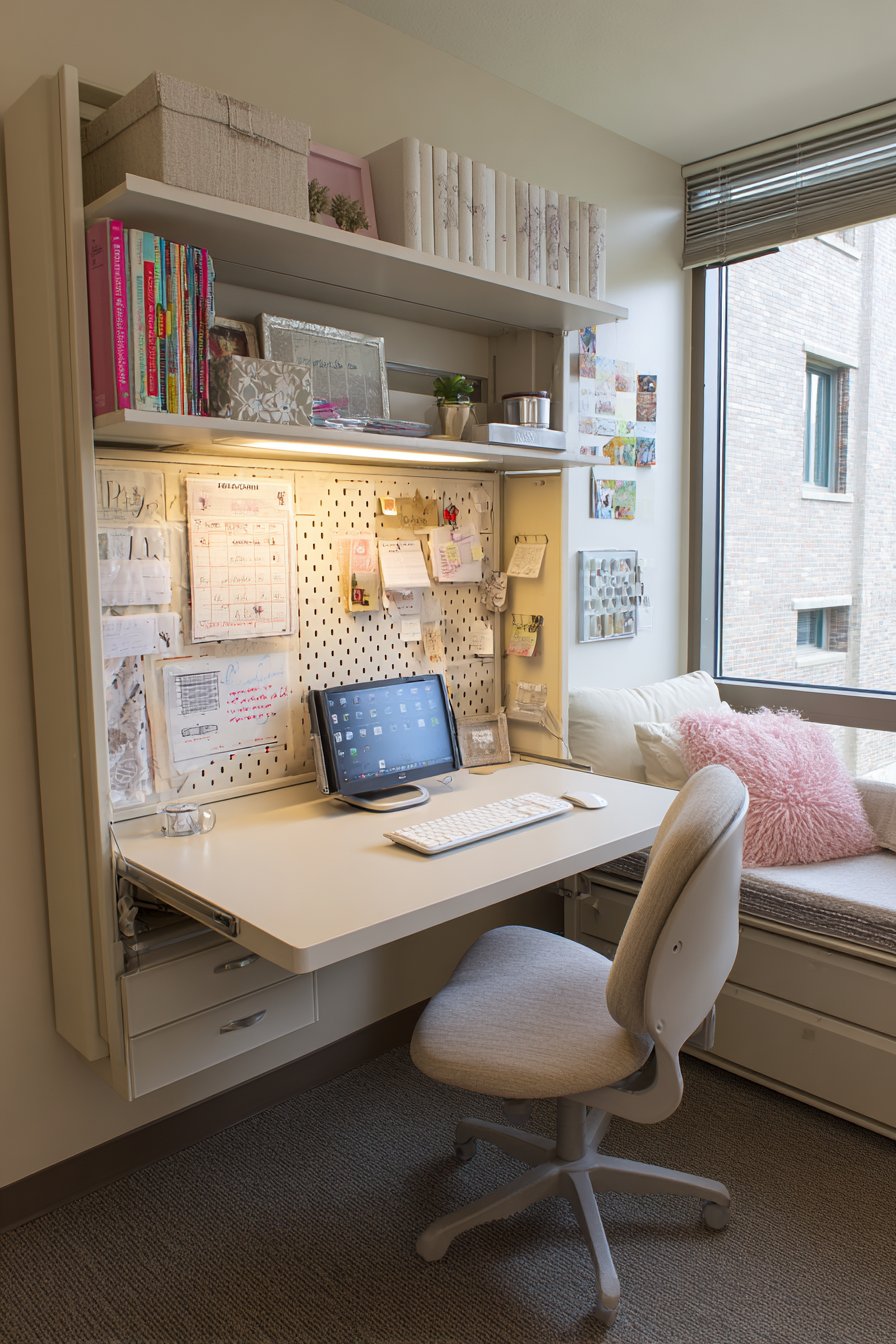
Pegboard systems offer customizable organization solutions. Supplies, chargers, and small plants attach with removable hooks. The arrangement adapts as semester needs change. Comfortable desk chairs with lumbar support protect posture during long study sessions.
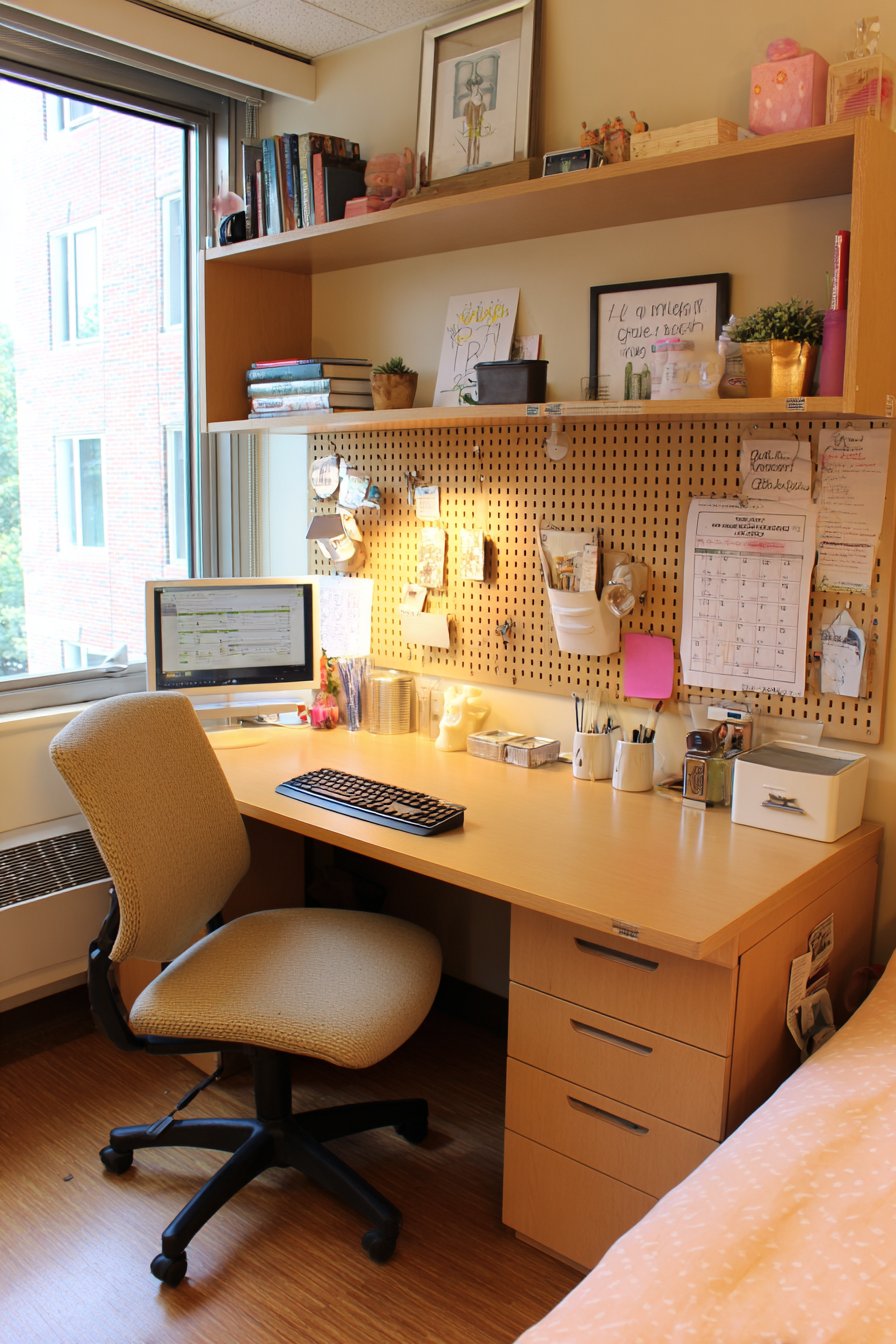
Open shelving above desks displays textbooks with decorative bookends. Small storage boxes and framed inspirational quotes add personality. Bulletin boards show monthly calendars and assignment reminders. These visual planning tools keep deadlines visible and manageable.
Pharmacy-style desk lamps provide focused illumination for detailed work. Natural window light supplements artificial lighting during daytime hours. The layered lighting approach prevents eye strain during extended study sessions. Strategic placement maximizes both natural and artificial light sources.
Key Design Tips:
- Install fold-down desks to maximize flexible floor space usage
- Use pegboard systems for customizable, adaptable organization
- Position desks near windows to maximize natural daylight
- Choose adjustable task lighting for different work requirements
- Implement visible planning systems to track assignments and deadlines
7. Diplomatic Shared Space Solutions
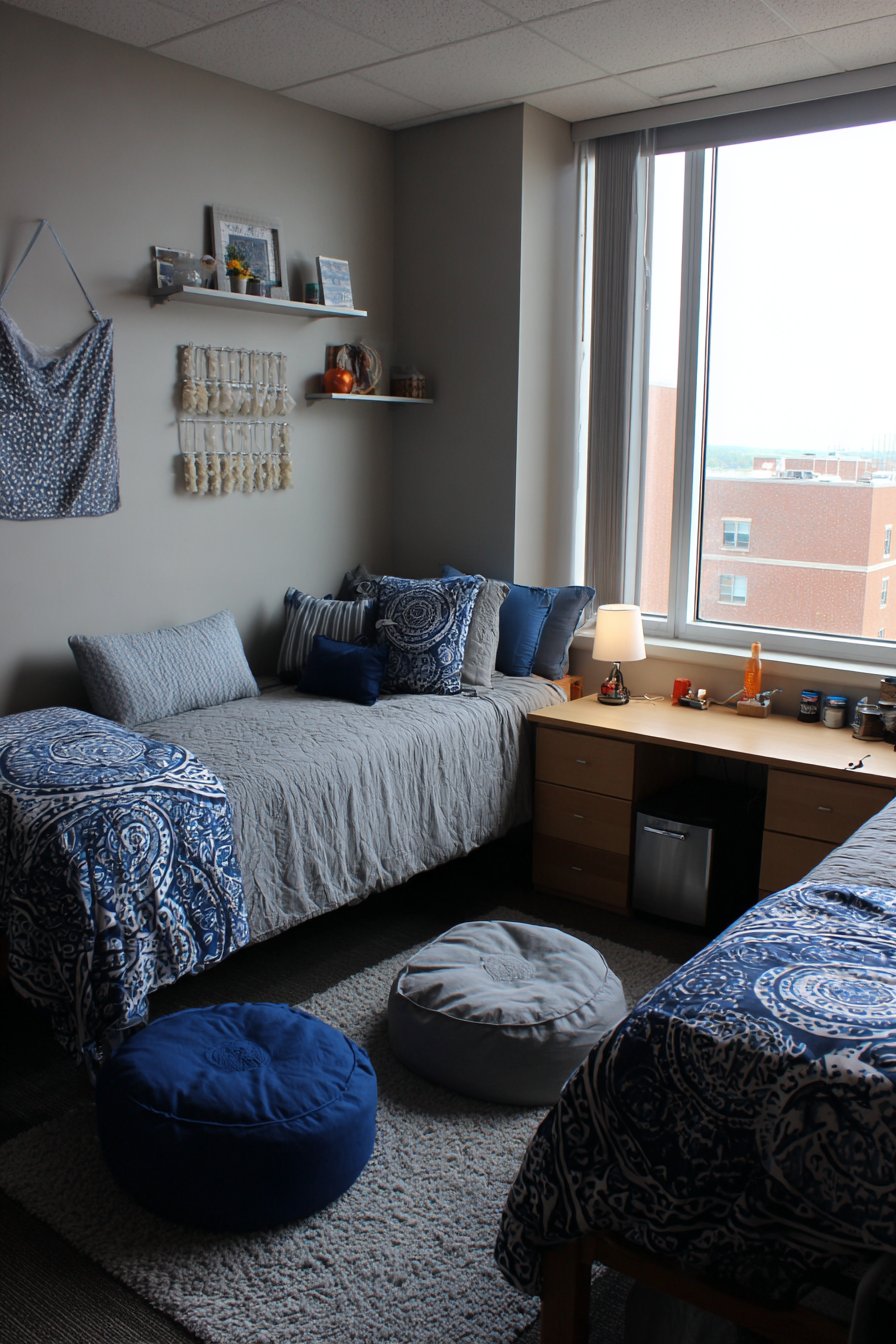
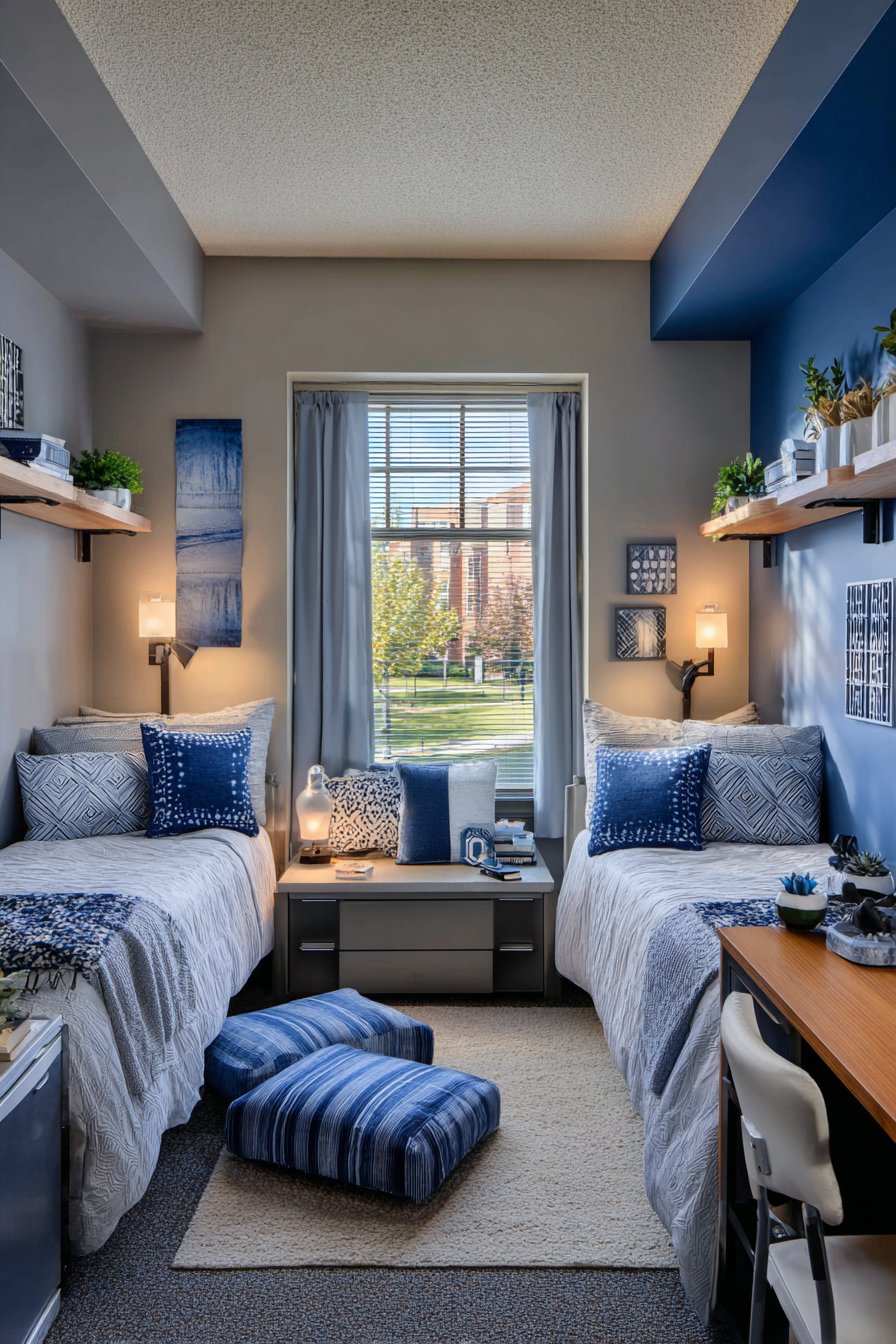
Shared bedrooms require thoughtful space division and mutual respect. Twin beds positioned along opposite walls create personal territories. Different bedding styles allow individual expression within complementary color schemes. Blues and grays provide cohesive harmony while permitting personalization.
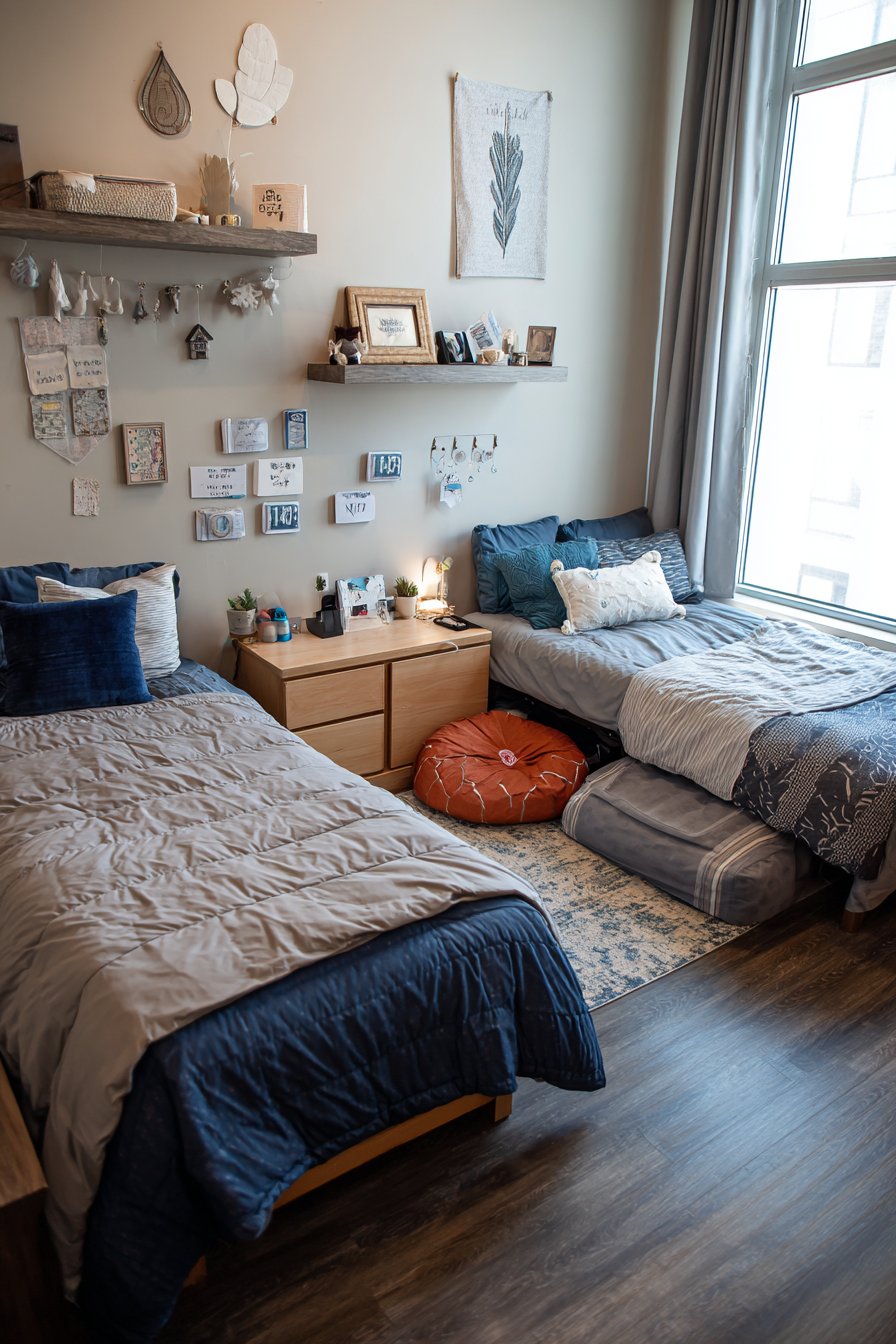
Shared nightstands between beds hold dual-port charging stations. This central location serves both residents equally and fairly. Each roommate receives designated wall space for individual decorations. Floating shelves display personal collections without encroaching on shared areas.
Central seating areas with floor cushions create neutral social zones. Shared mini-fridges become communal resources for both residents. Split curtain panels allow individual light control preferences. These diplomatic solutions prevent common roommate conflicts before they arise.
Natural light distribution requires careful furniture arrangement planning. Neither resident should have significantly better or worse conditions. The balanced approach to space allocation promotes harmonious cohabitation. Mutual respect for personal zones maintains positive roommate relationships.
Key Design Tips:
- Establish clear personal and shared zones from move-in day
- Choose complementary rather than matching color schemes for harmony
- Provide equal access to windows, outlets, and storage space
- Create neutral communal areas for shared social activities
- Communicate openly about preferences and boundaries from the start
8. Transformable Murphy Bed Design
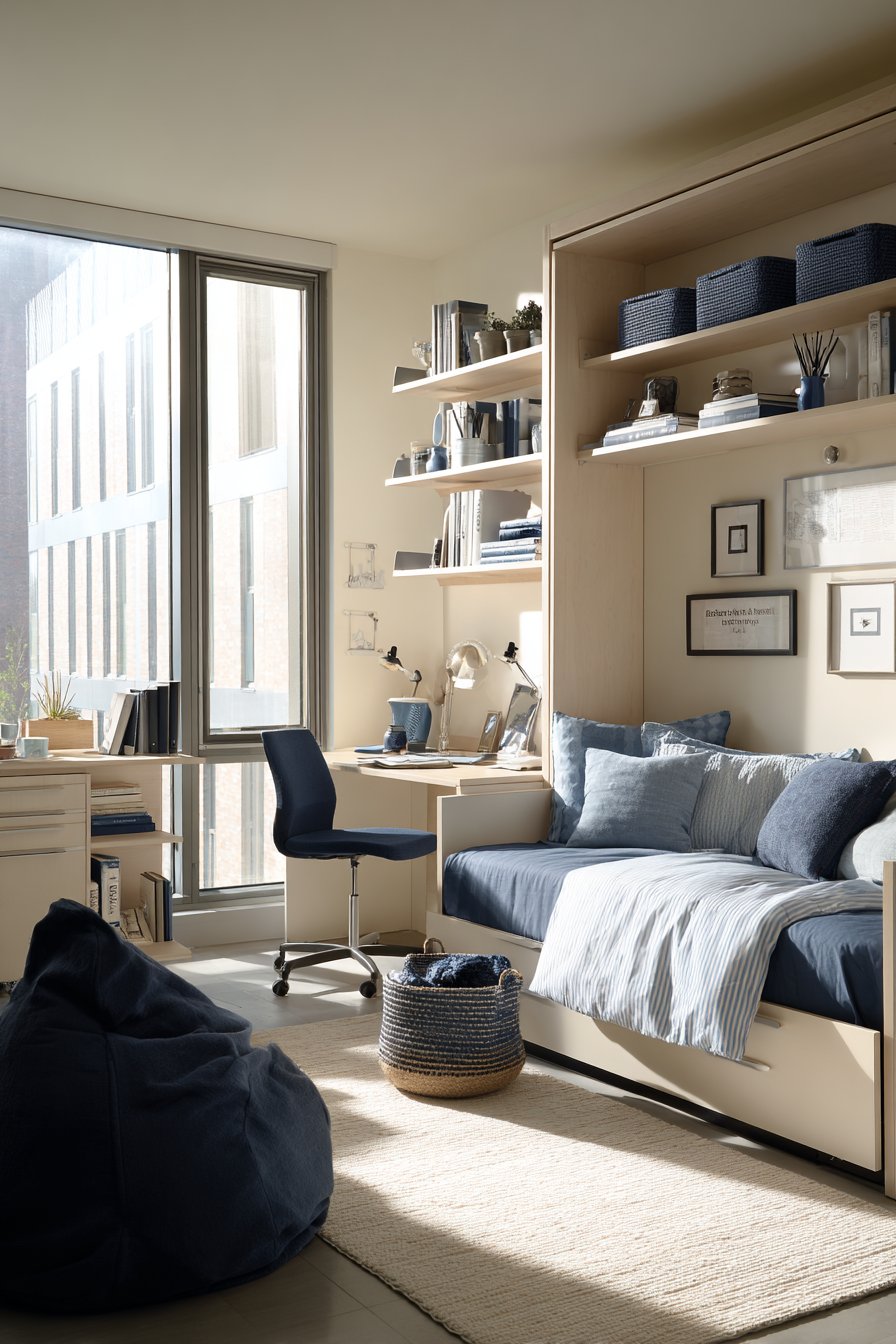
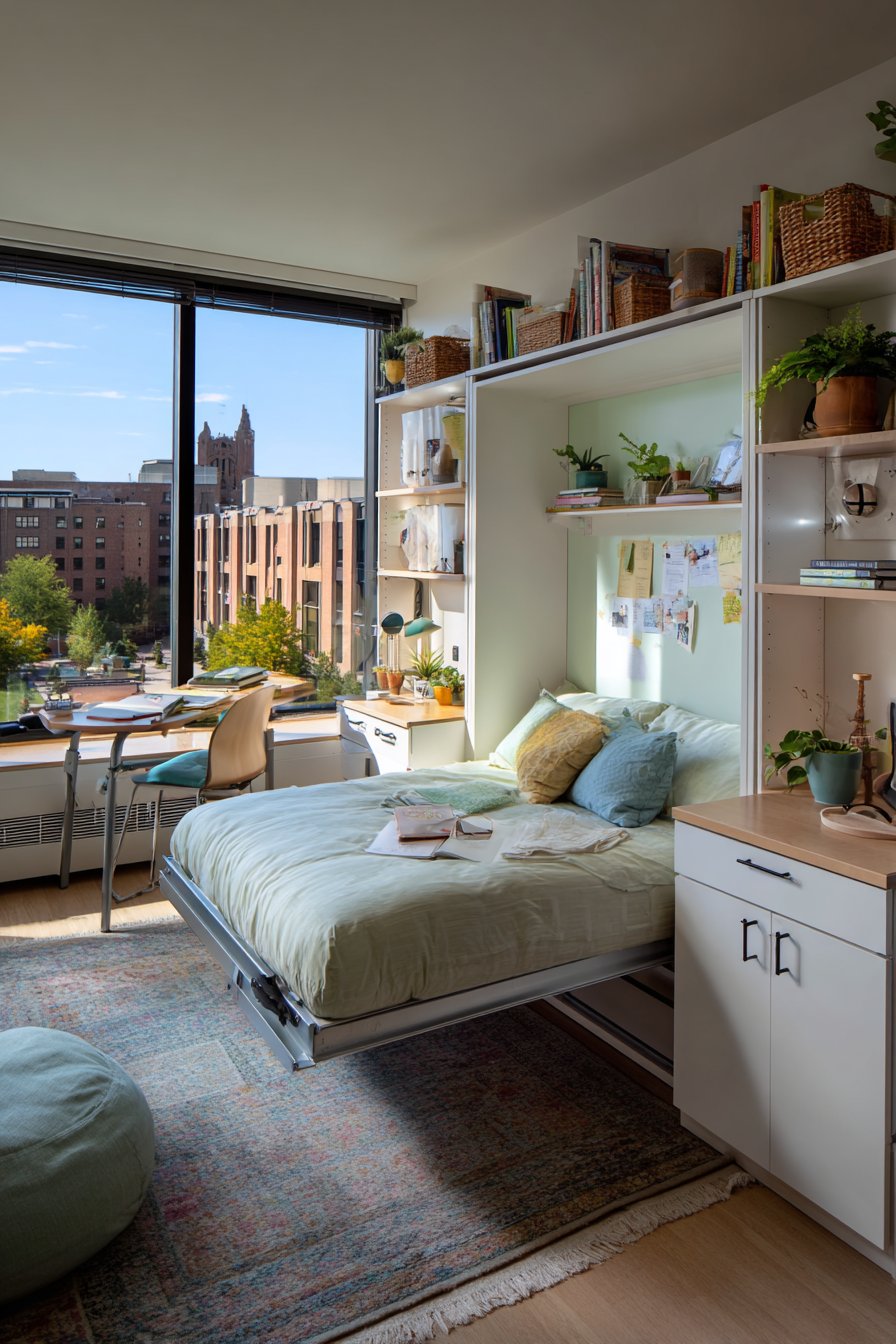
Murphy beds offer ultimate flexibility in compact college rooms. The bed folds into wall units during daytime hours. This reveals study areas with compact desks and rolling chairs. Integrated shelving holds textbooks, decorative items, and storage baskets.
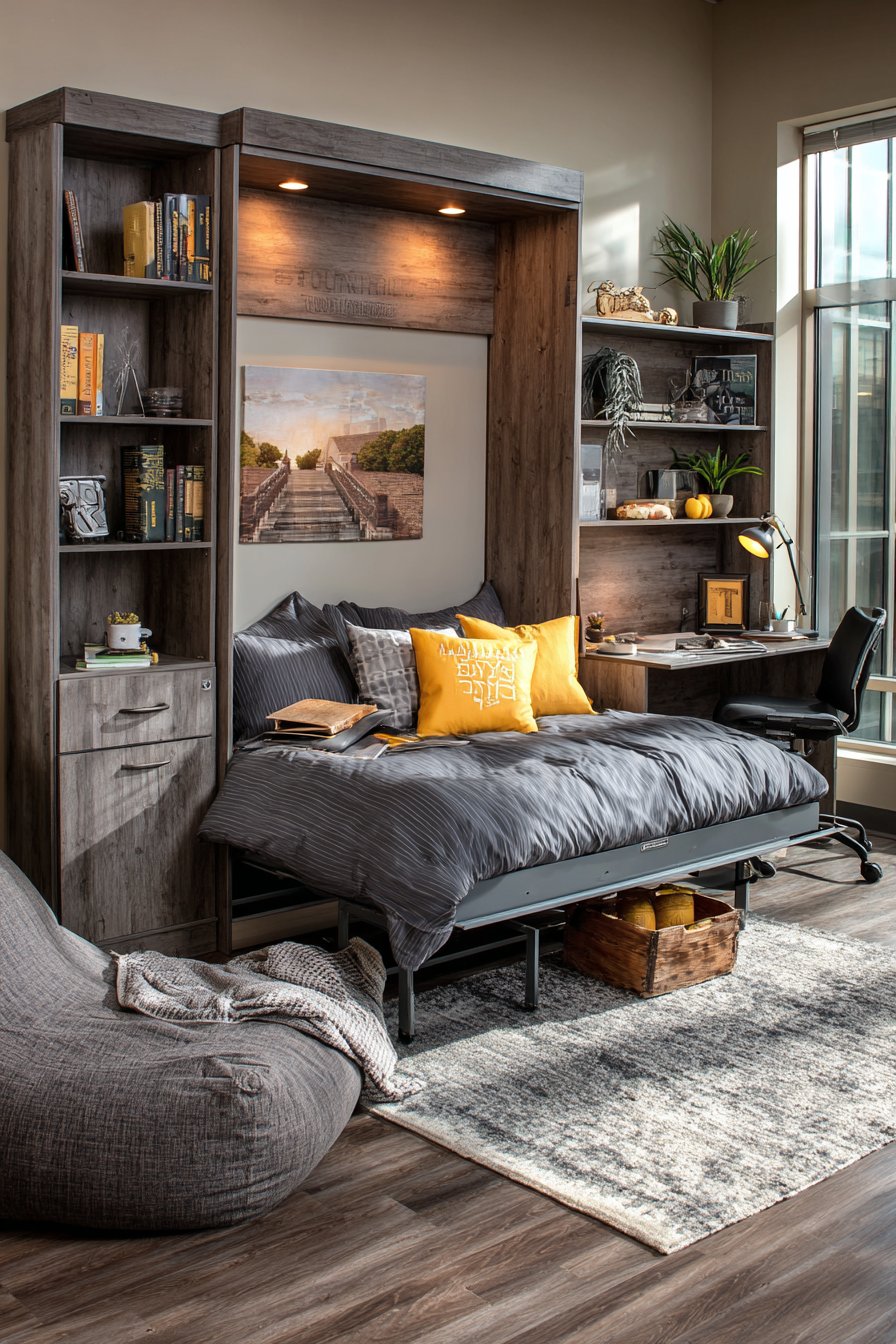
Deployed beds feature built-in reading lights and small platforms. These surfaces hold phones and water bottles within reach. The multipurpose design maximizes limited square footage brilliantly. Students enjoy separate sleeping and studying zones despite small rooms.
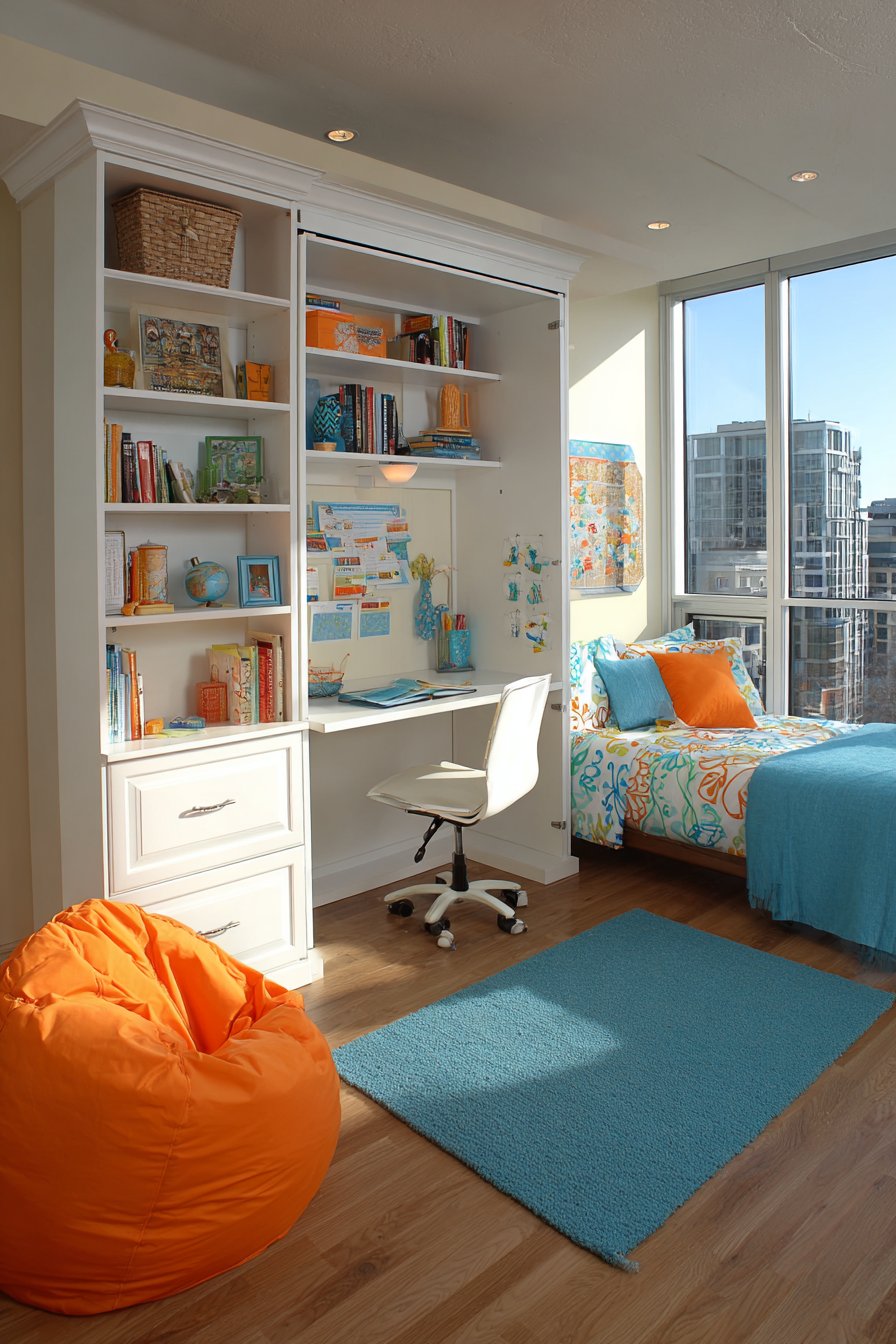
Area rugs define study zones when beds fold away. Small bean bag chairs provide additional seating for guests. The transformable nature adapts to different daily needs seamlessly. Morning study sessions feel different than evening relaxation in the same space.
Professional installation ensures safe operation of folding mechanisms. Quality Murphy bed systems include proper counterweights and locks. The investment pays dividends in functionality and space efficiency. These solutions work particularly well in studio-style apartment bedrooms.
Key Design Tips:
- Research quality Murphy bed systems with proper safety features
- Ensure adequate wall strength before installation of heavy systems
- Choose beds with integrated storage and lighting for maximum value
- Define different zones with rugs and furniture arrangement
- Practice safe operation procedures to prevent accidents or damage
9. Sports-Themed Personal Expression
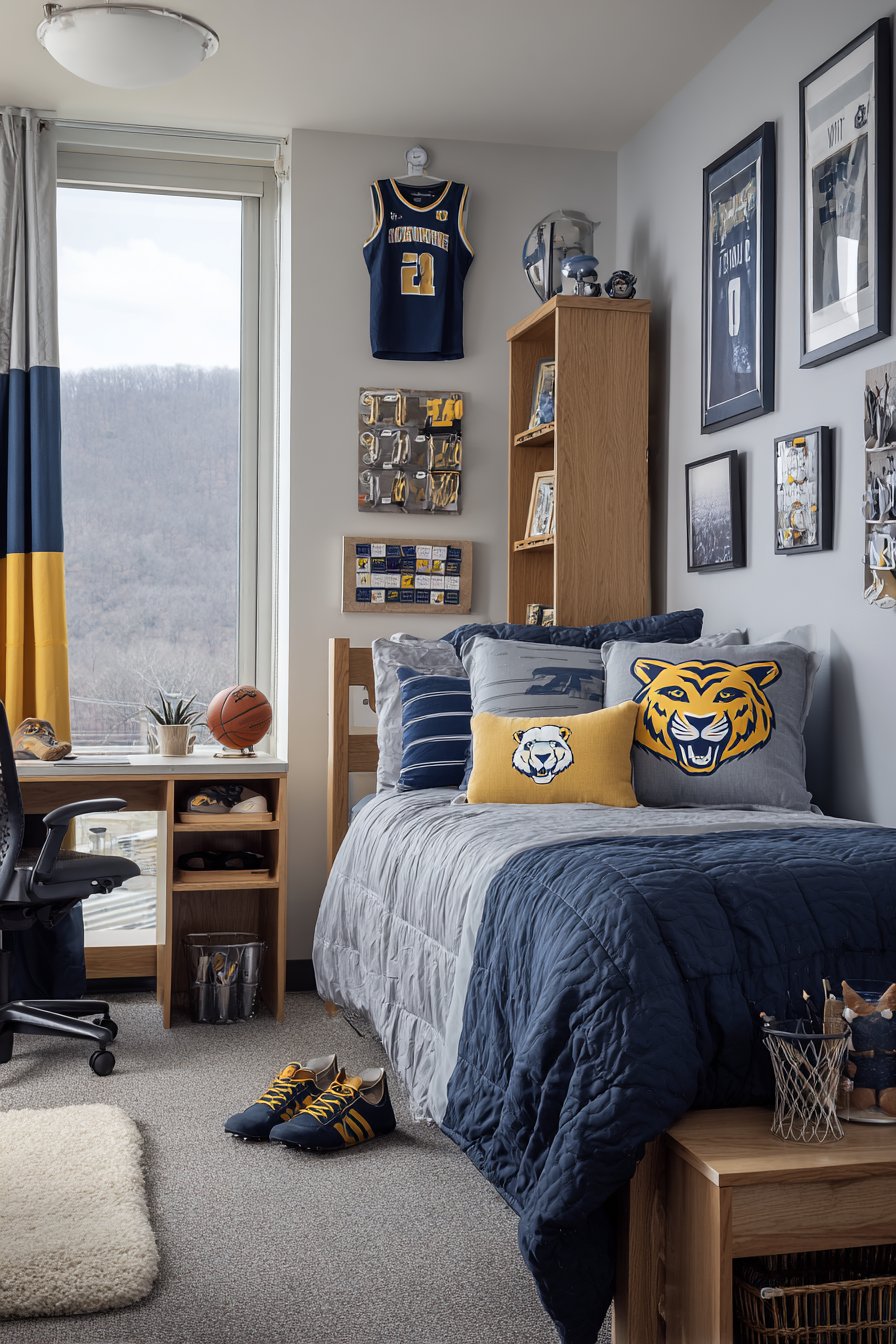
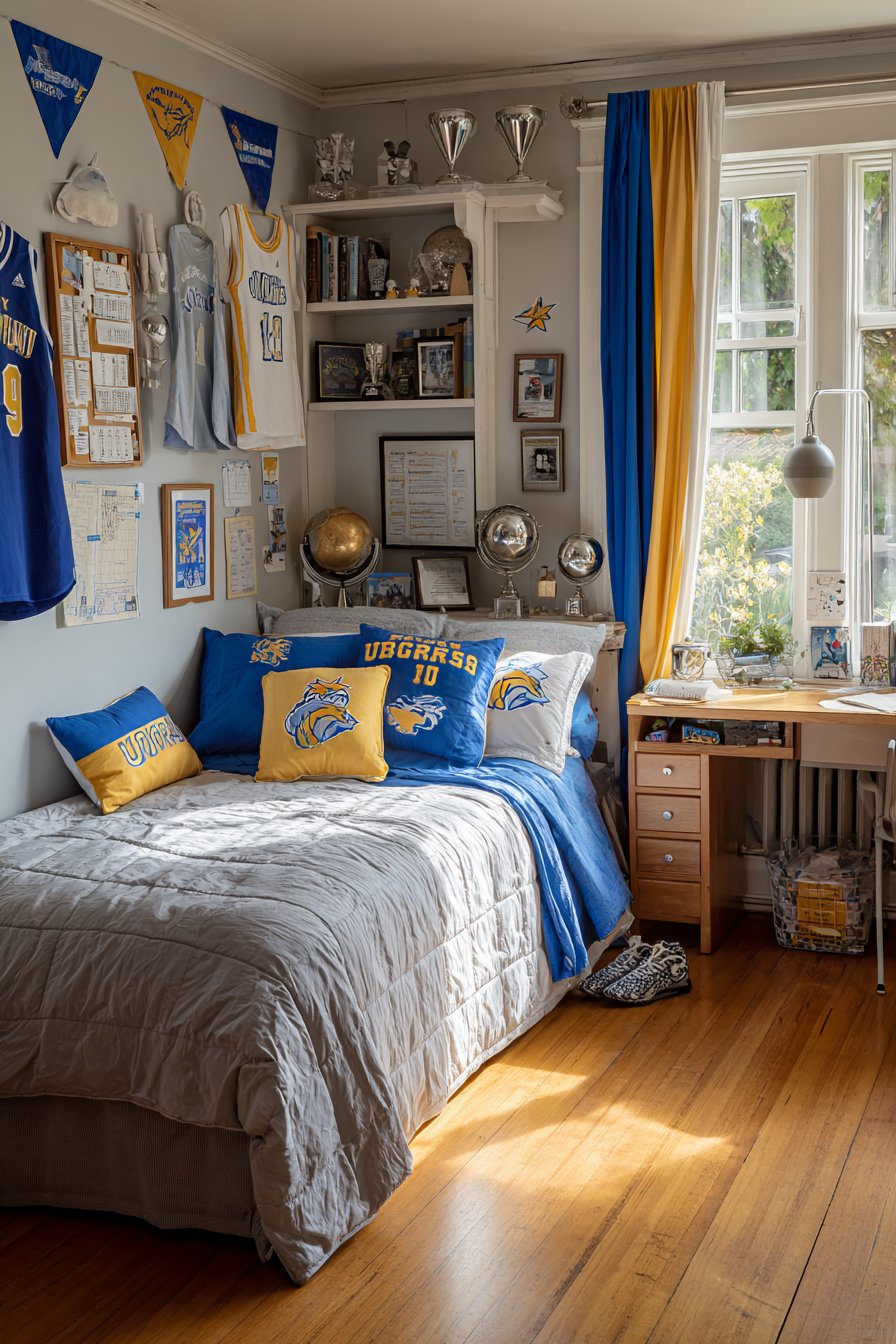
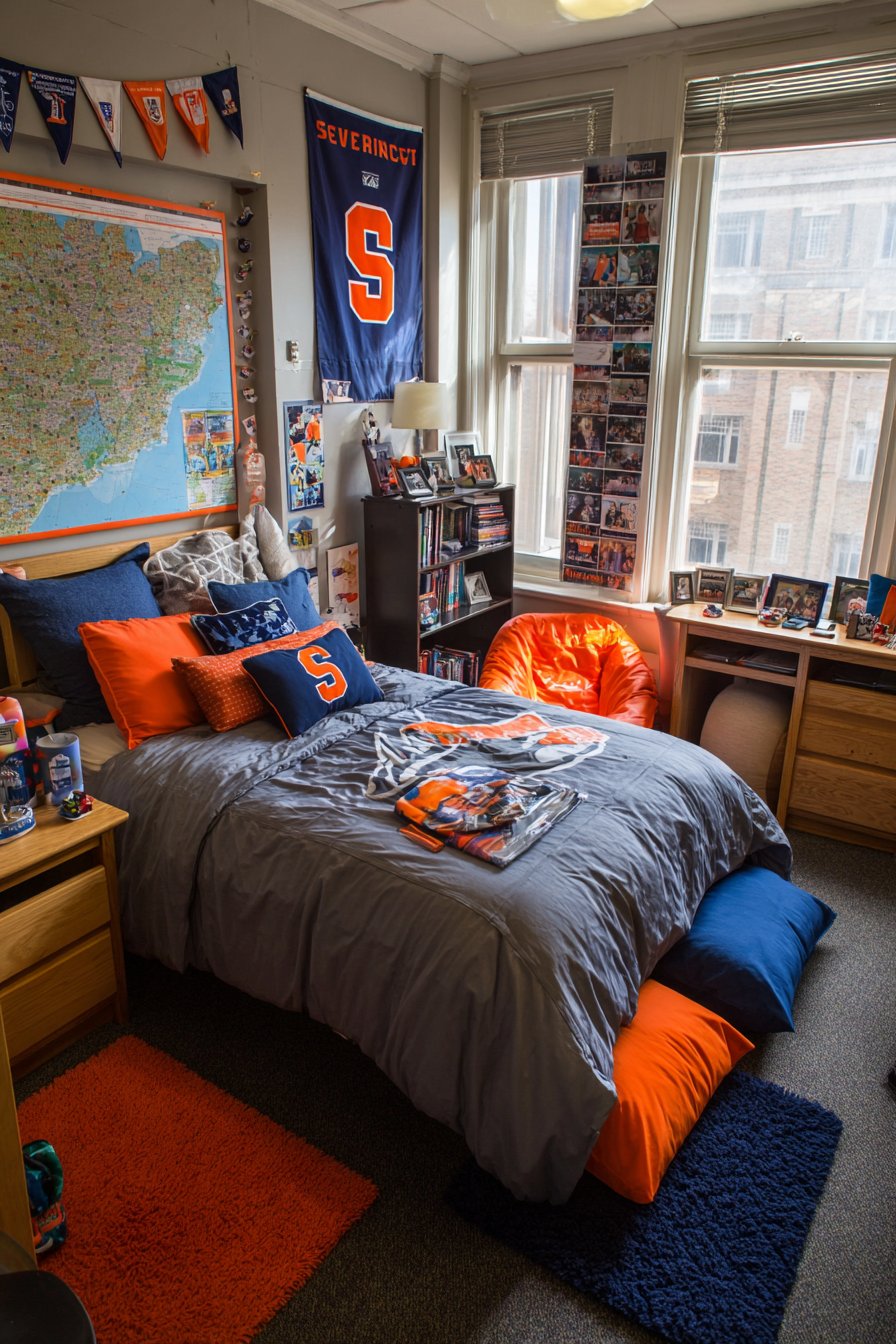
Sports enthusiasts create energizing spaces through team memorabilia. Beds feature team-colored bedding and decorative mascot pillows. The coordinated color scheme shows school spirit throughout. Framed jerseys hang using damage-free mounting strips and hooks.
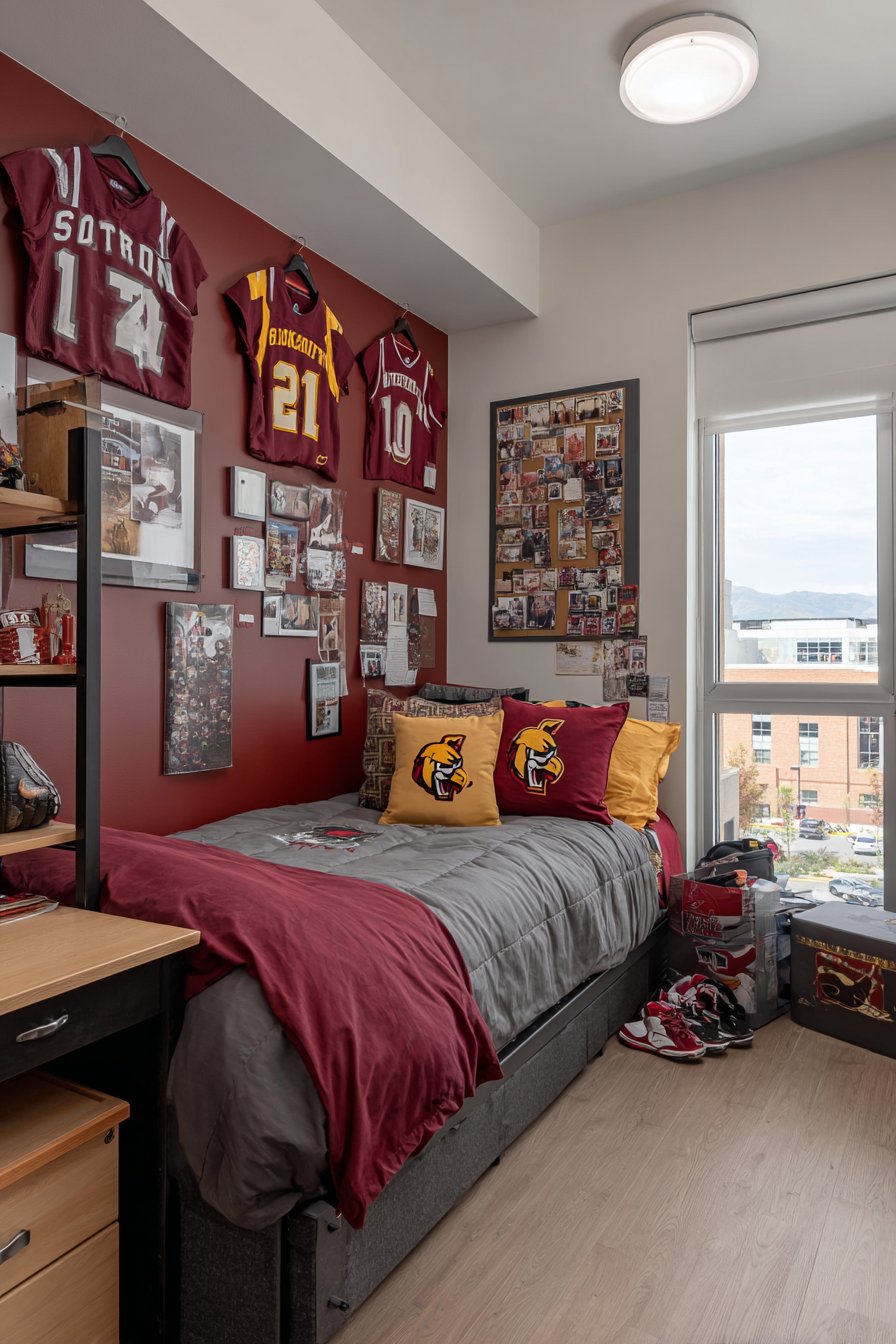
Tall bookshelves display trophies alongside academic materials. The combination celebrates both athletic and scholarly achievements. Cork boards showcase game tickets and team schedules. These collections document memorable experiences and future events.
Mini basketball hoops mounted on door backs provide stress relief. Athletic shoes line floors beneath beds in organized rows. The arrangement keeps frequently used items accessible while maintaining order. Natural lighting from team-colored curtain panels completes the theme.
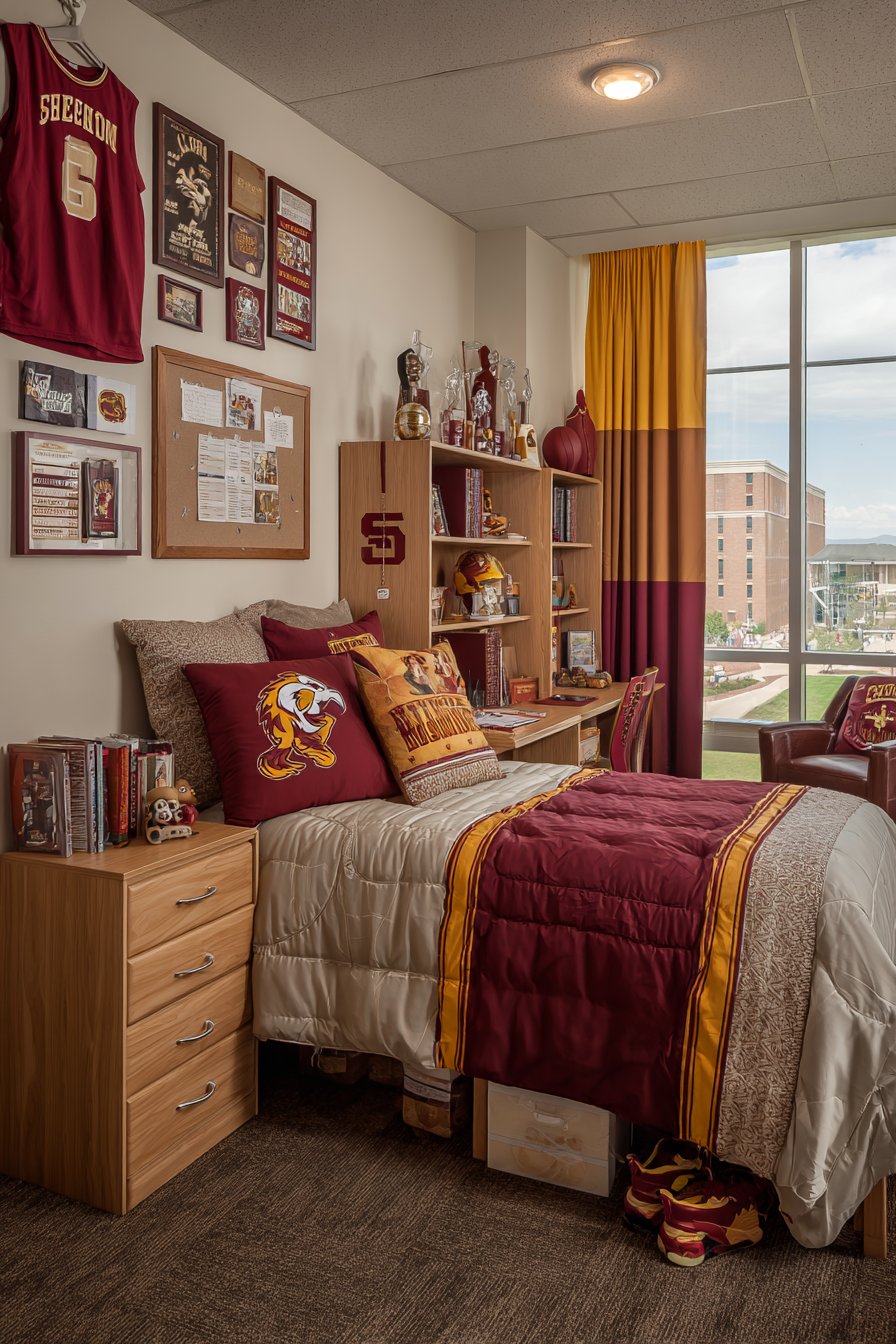
Personal passions transform generic dorm rooms into motivating environments. The enthusiastic personalization creates spaces that energize rather than drain. Students feel authentic pride in their carefully curated collections. These rooms reflect genuine interests rather than design magazine aesthetics.
Key Design Tips:
- Use damage-free mounting solutions for framed jerseys and memorabilia
- Coordinate bedding and curtains in team colors for cohesion
- Display both athletic and academic achievements equally
- Implement organized storage for shoes and sports equipment
- Balance enthusiasm with functional furniture and study spaces
10. Corner Reading Nook Creation
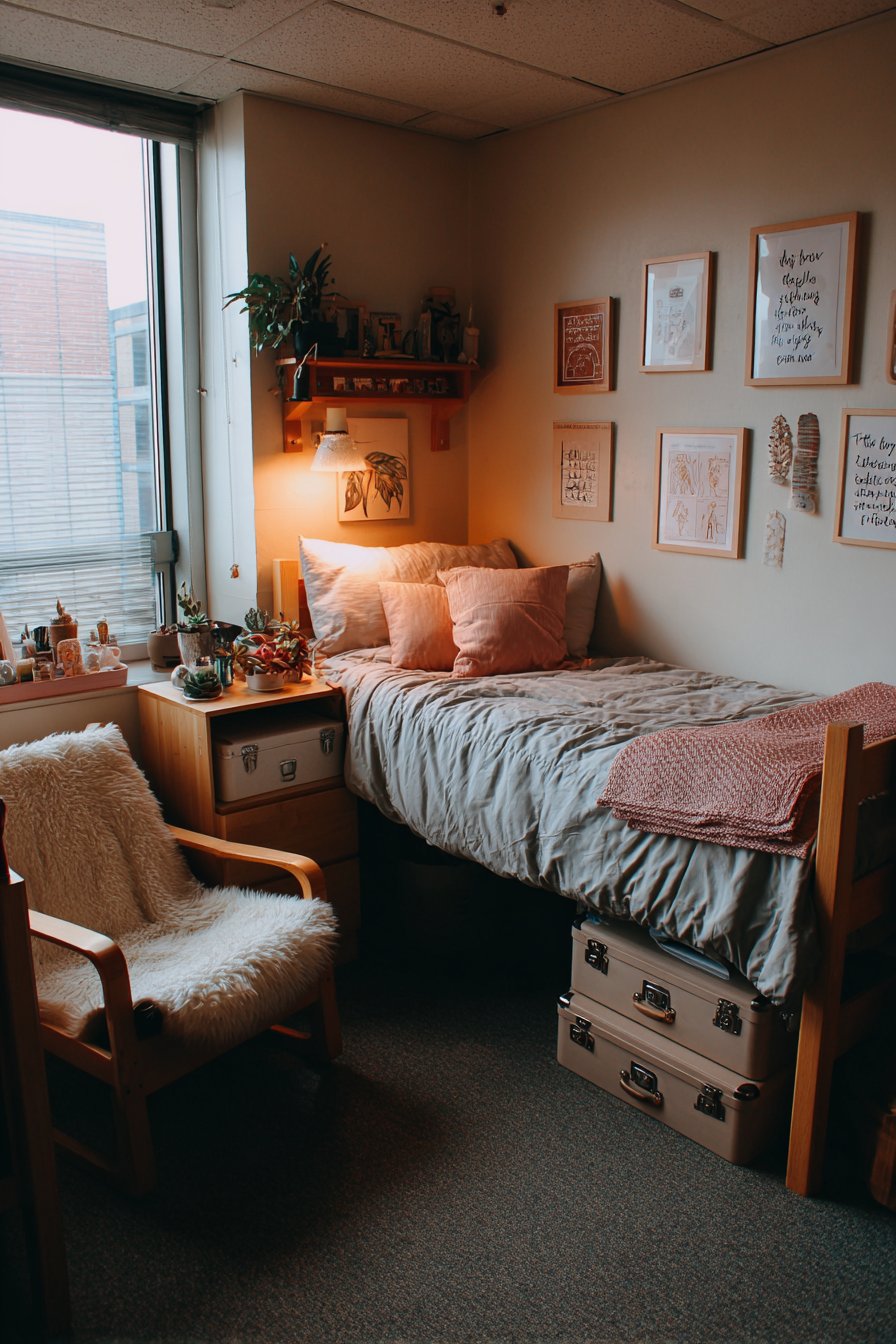
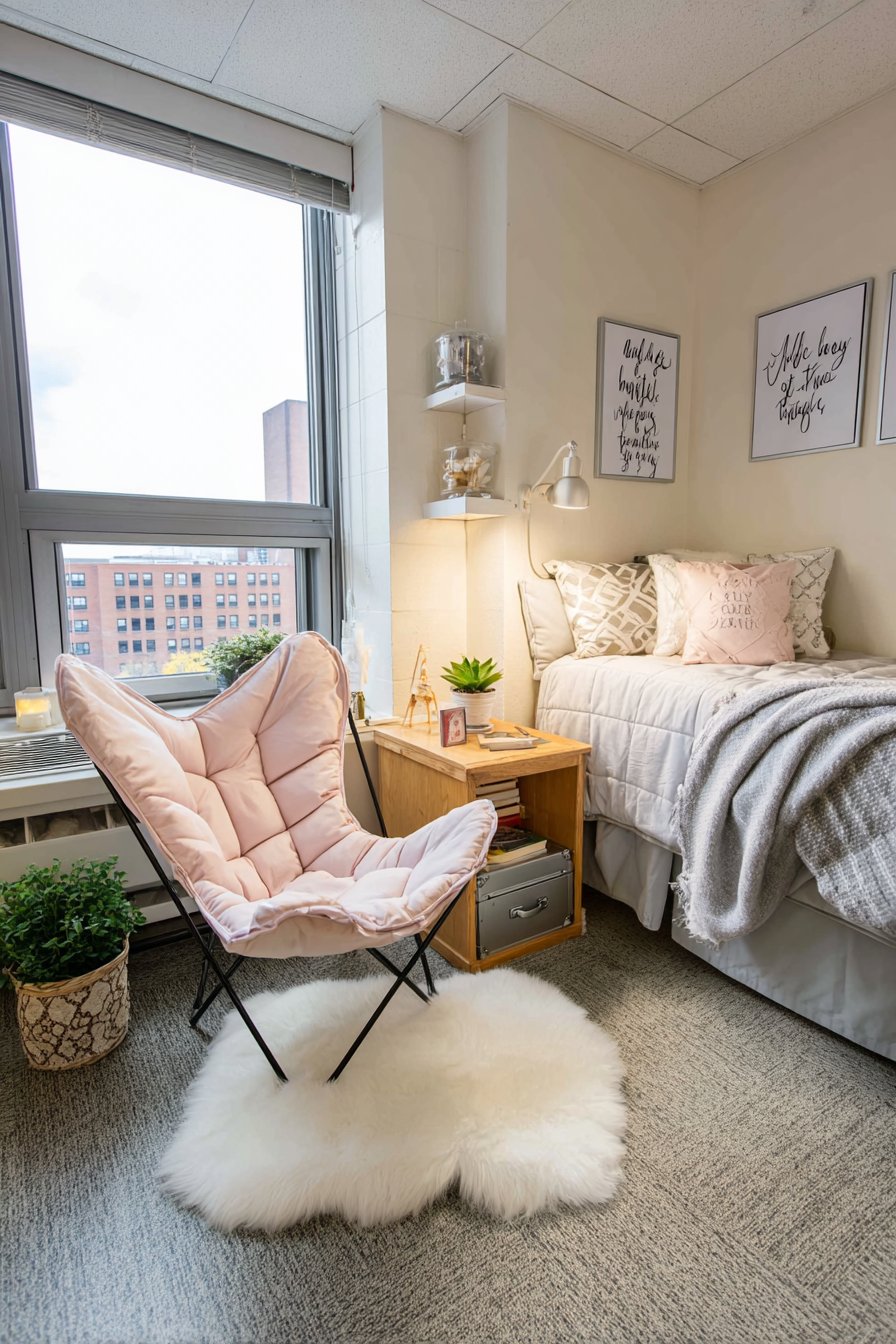
Dedicated reading spaces provide important mental breaks from academics. Butterfly chairs with soft cushions create comfortable seating. Small side tables made from stacked vintage suitcases add character. Clip-on reading lights provide adjustable illumination for different conditions.
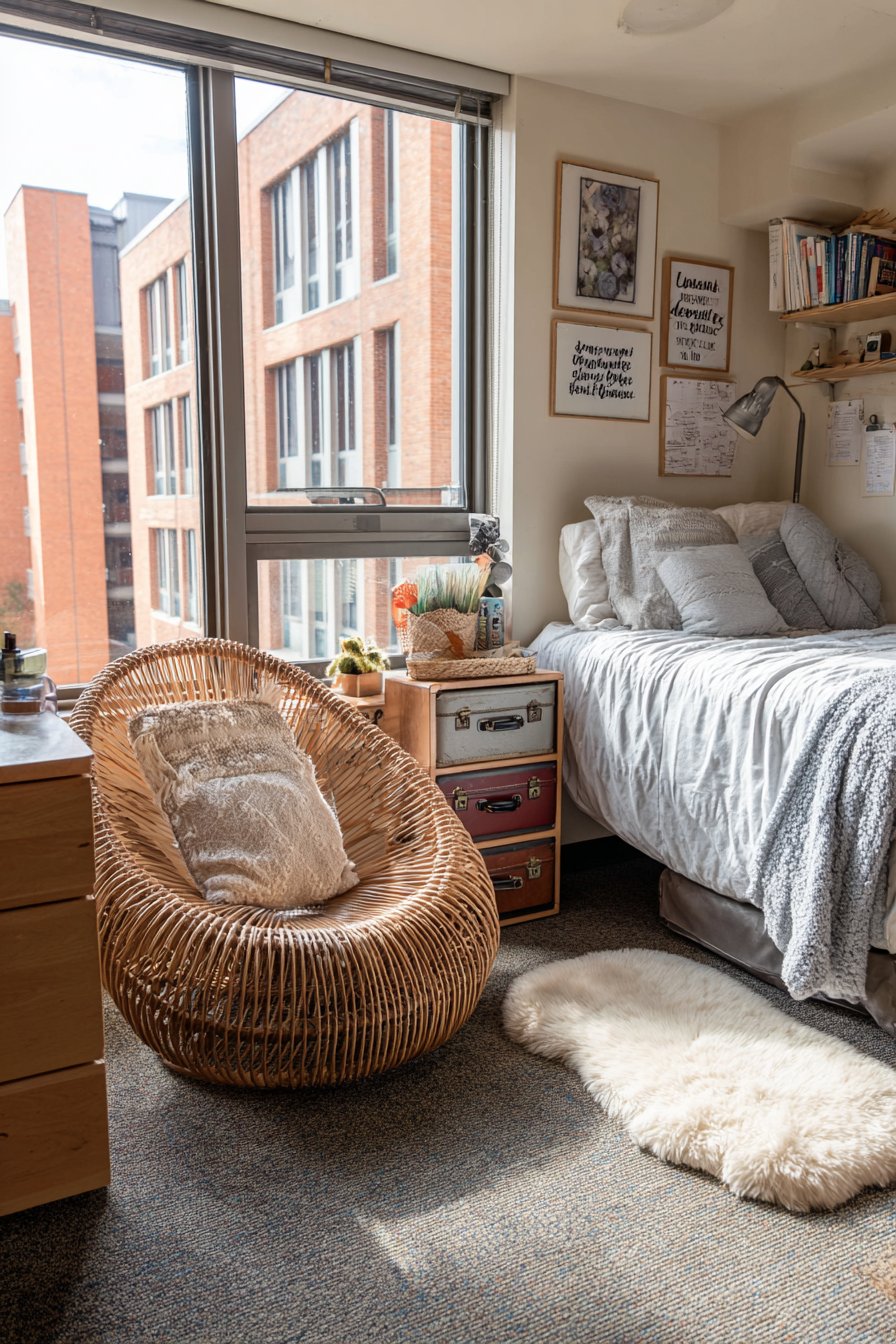
Nearby floating shelves hold current reads and succulent collections. Soft throw blankets drape over chair arms invitingly. Literary quote prints in simple frames inspire and motivate. The intentional comfort zone offers refuge from academic pressures.
Existing carpet layers with small sheepskin rugs for added softness. Natural daylight floods reading areas during afternoon hours. Clip lamps provide focused evening illumination without disturbing roommates. The dual lighting approach serves different times and moods.
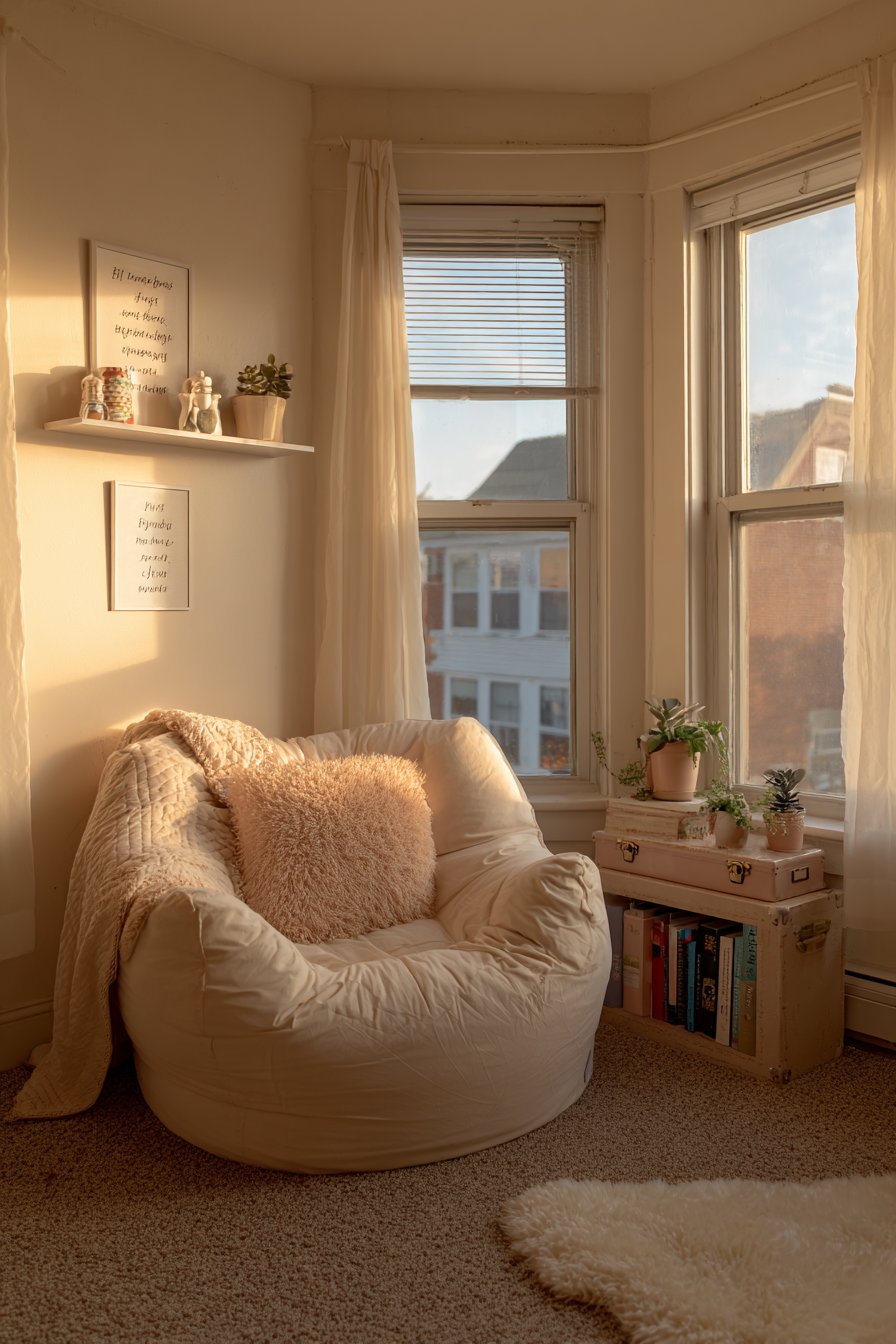
These personal retreats acknowledge the importance of downtime. Students need spaces for pleasure reading and mental restoration. The cozy nook becomes a favorite escape within larger rooms. Even small corners can become meaningful personal sanctuaries.
Key Design Tips:
- Position reading nooks near windows for natural daylight
- Choose comfortable seating that supports extended reading sessions
- Add adjustable lighting for different times and reading materials
- Layer soft textiles for warmth and comfort
- Display current reads and favorites on accessible shelving
11. Gallery Wall Budget Art Display
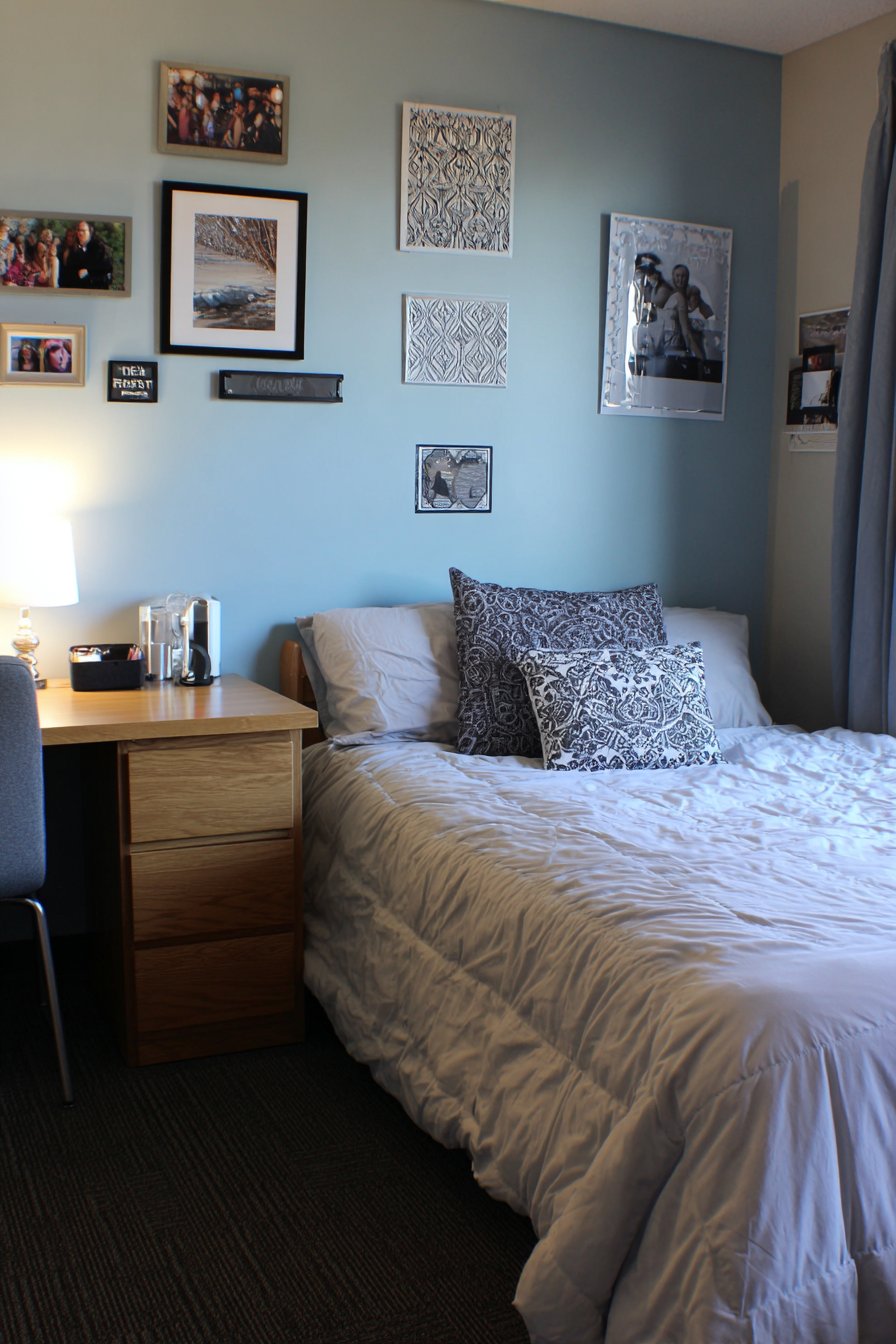
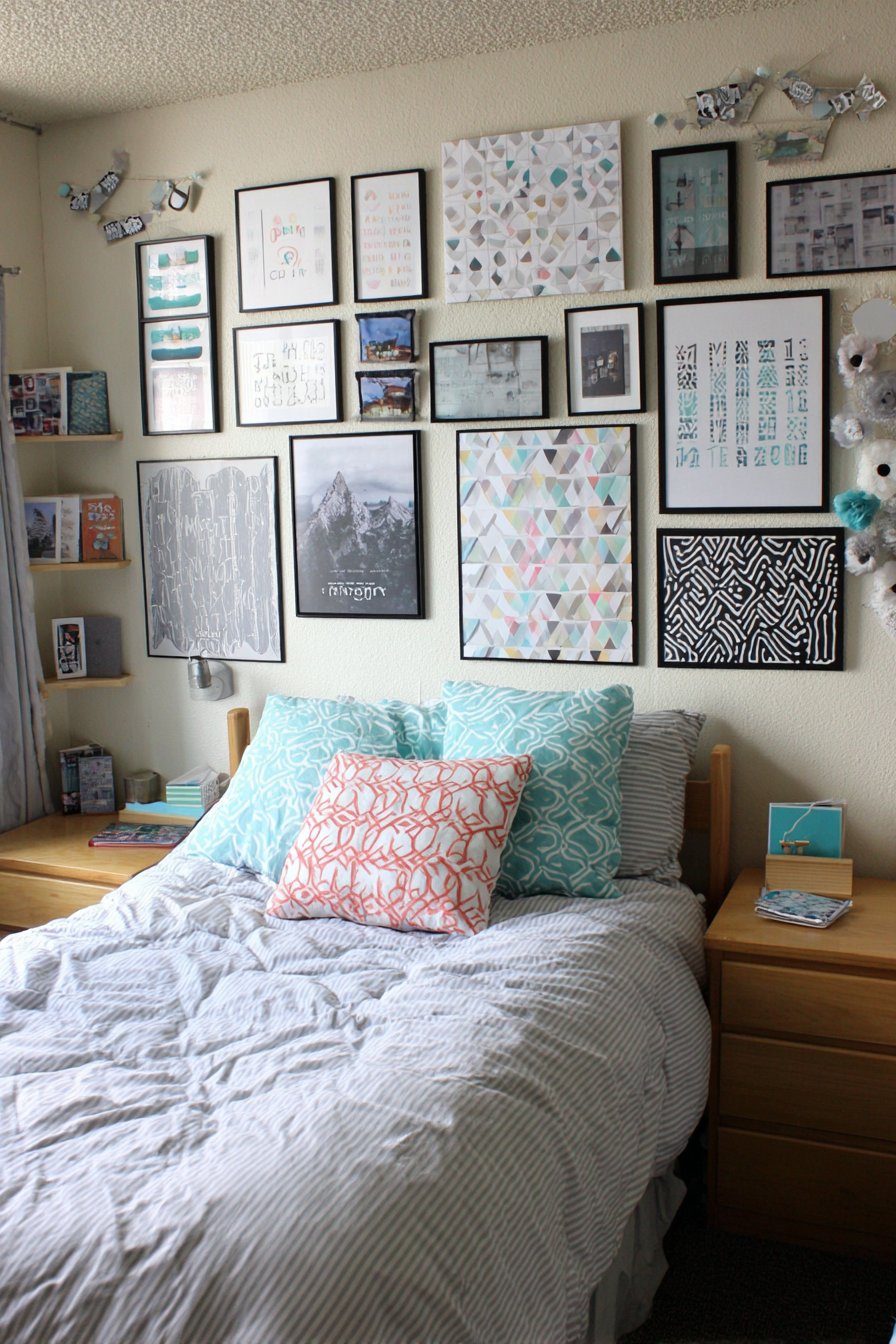
Budget-friendly art creates sophisticated visual impact without expense. Printed posters in matching black frames provide cohesive foundations. Personal photographs in white frames add meaningful variety. Removable wallpaper samples serve as geometric art pieces.
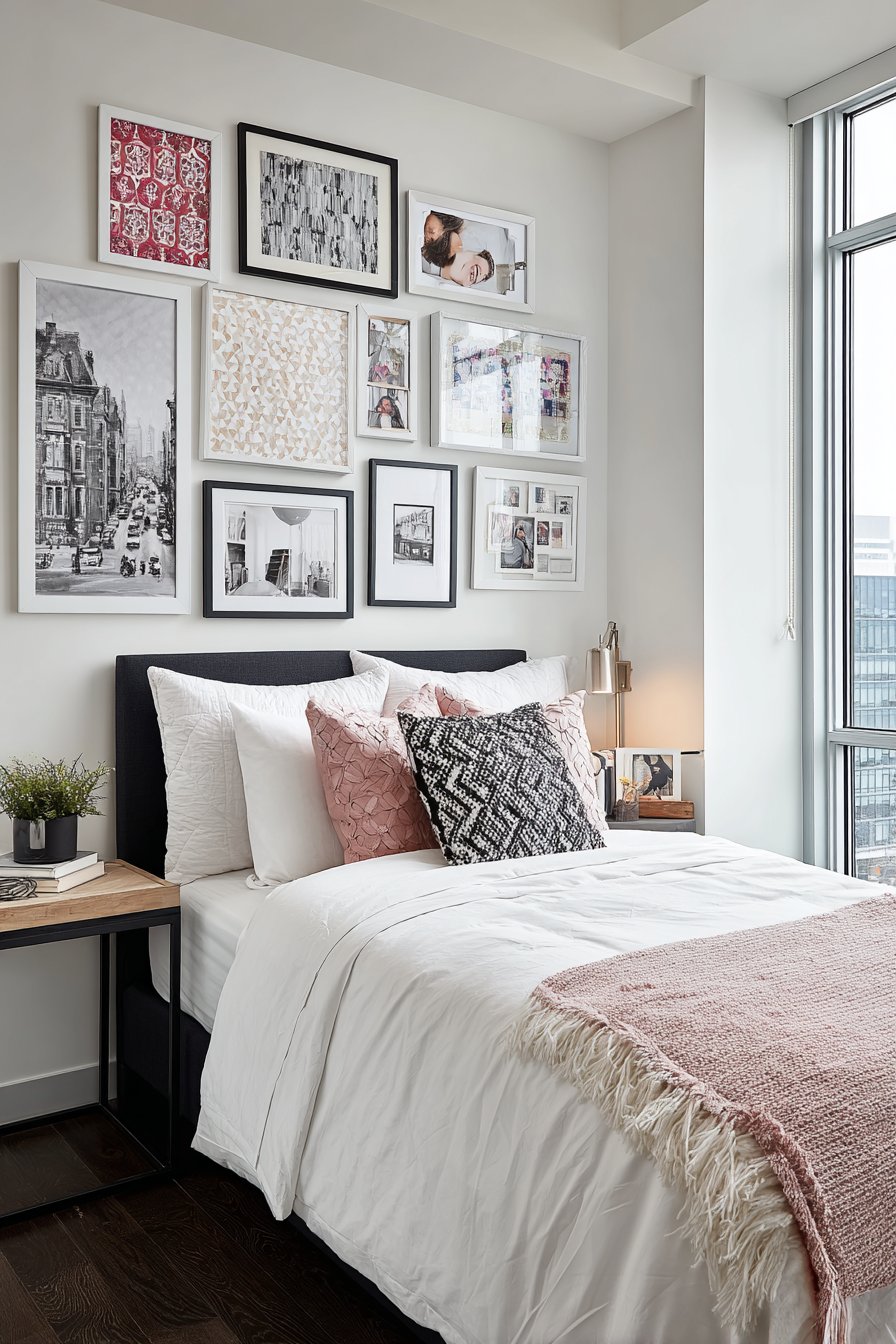
The gallery wall arrangement follows planned grid patterns above beds. Command strips secure frames without damaging rental walls. Simple white bedding below features one patterned throw pillow. The pillow coordinates with gallery wall colors for design continuity.
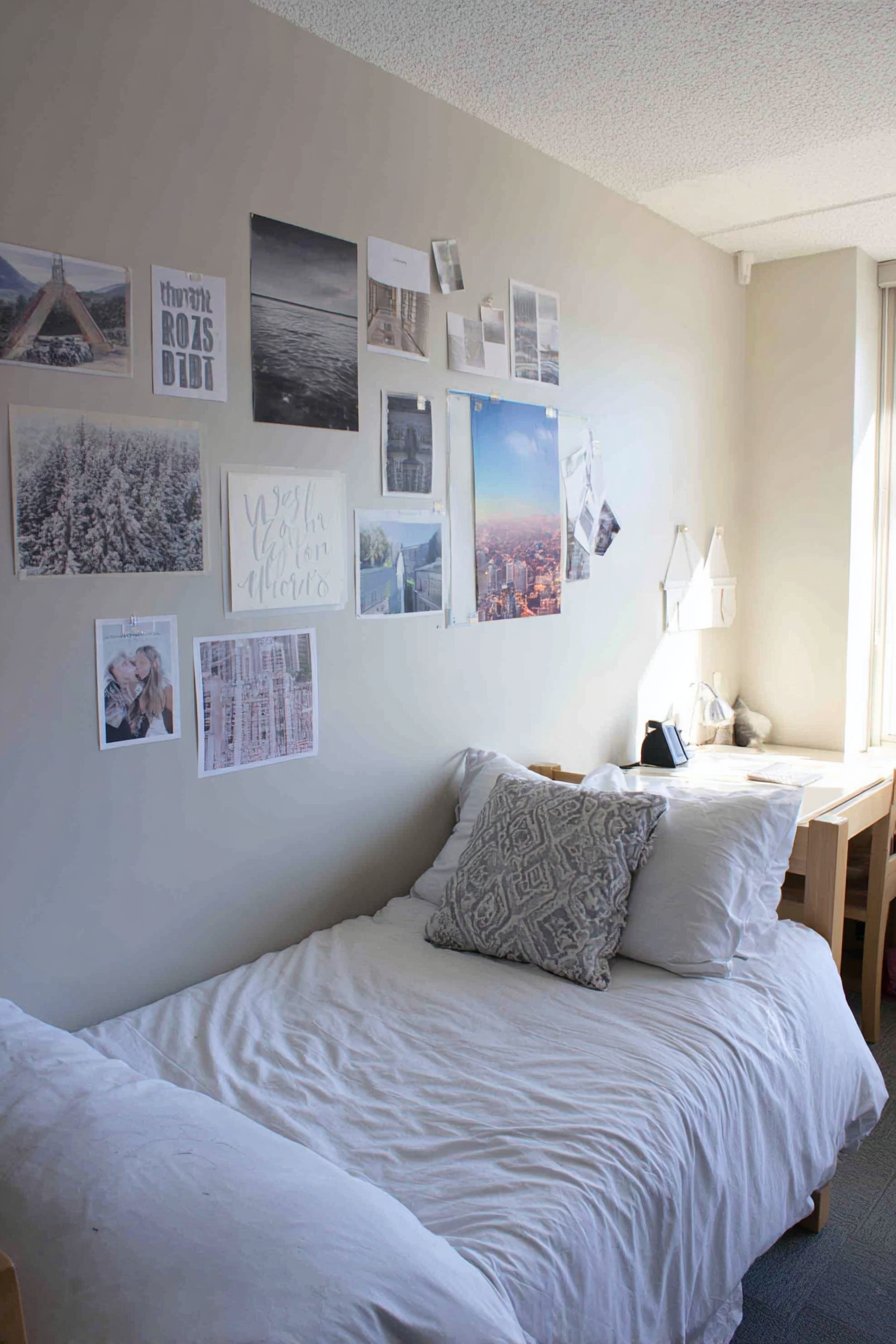
Narrow console tables serve as nightstands beneath gallery walls. Small lamps and phone docks complete functional bedside setups. The curated yet affordable approach proves style needs not expensive investments. Planning and creativity matter more than unlimited budgets.
Grid patterns create visual order and professional appearance. Random arrangements often feel chaotic in small spaces. The structured approach brings gallery-quality aesthetics to college bedrooms. Students develop curatorial skills while decorating their spaces.
Key Design Tips:
- Plan gallery wall layouts on paper before hanging frames
- Use matching frames for cohesive appearance despite varied content
- Incorporate personal photos alongside printed art for meaning
- Choose one accent pillow that ties gallery colors together
- Measure and mark placement carefully for professional results
12. Corner Desk Workspace Optimization
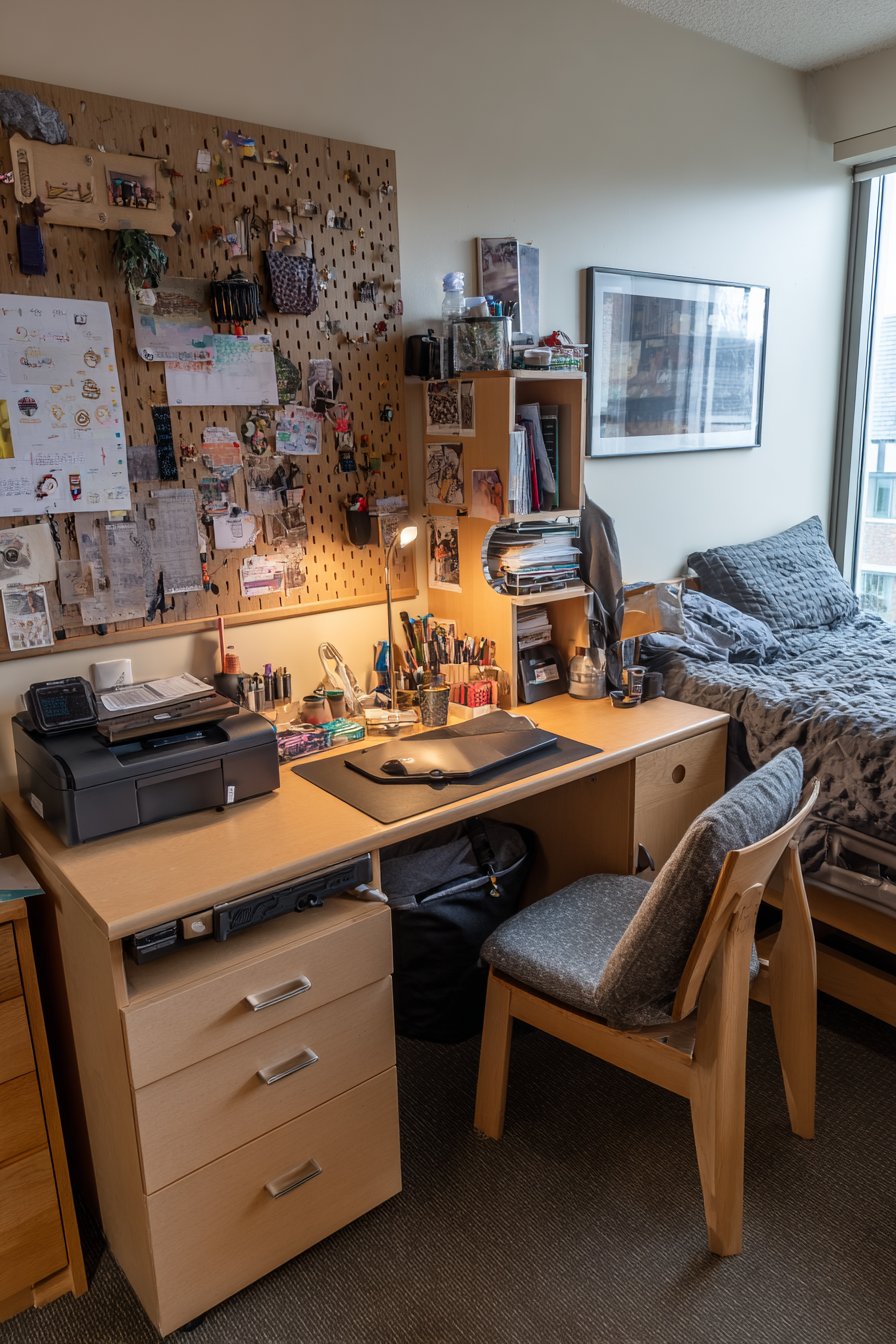
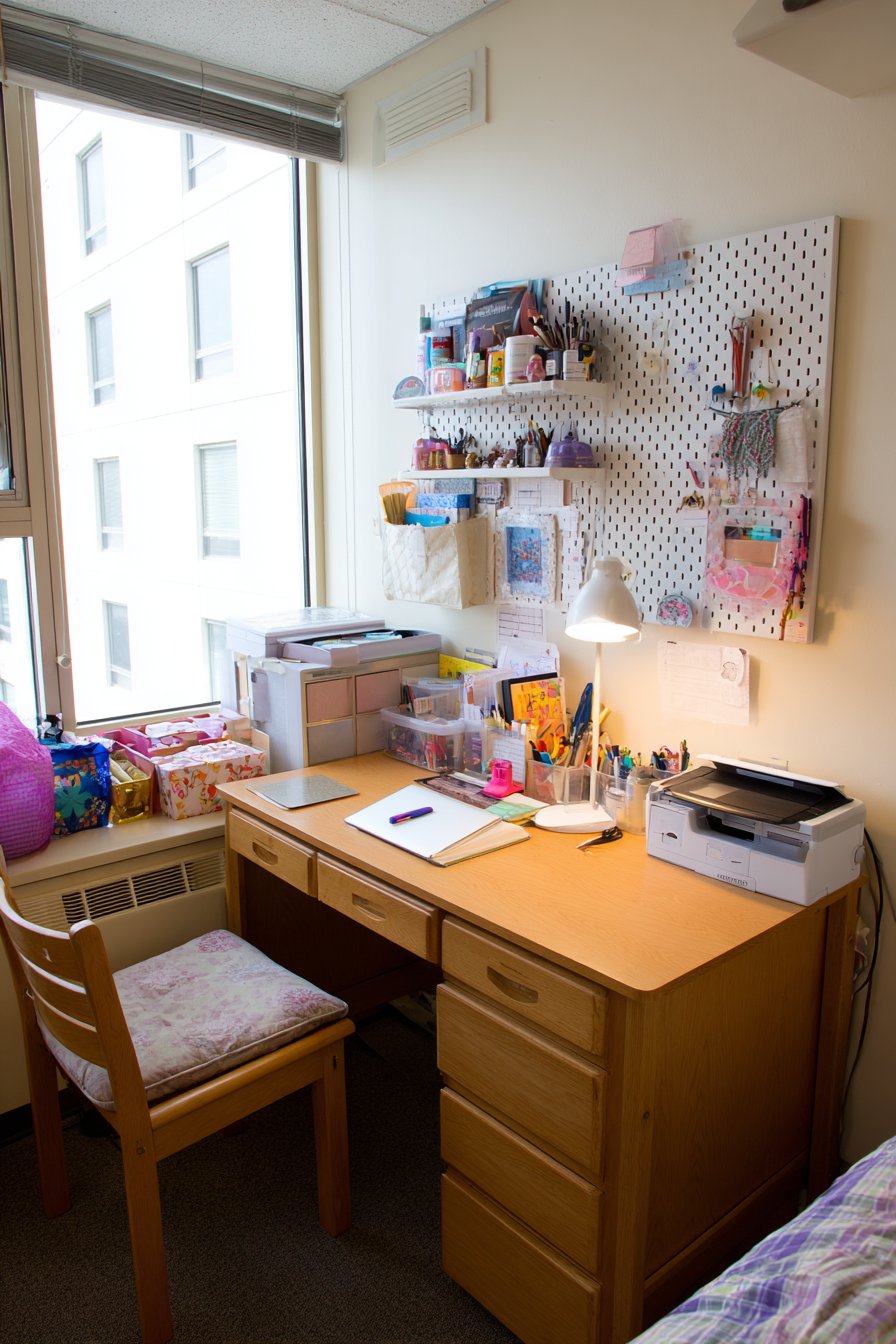
Corner desks maximize often-wasted angular floor space effectively. Compact corner units with hutches provide vertical storage. Textbooks, supplies, and small printers fit within organized systems. Desktop surfaces accommodate laptops on stands alongside wireless mice.
Comfortable ergonomic chairs with cushions protect student health. The chairs tuck underneath desks when not in use. Pegboards above desks hold containers of pens and chargers. Small filing cabinets on wheels slide under desks for storage.
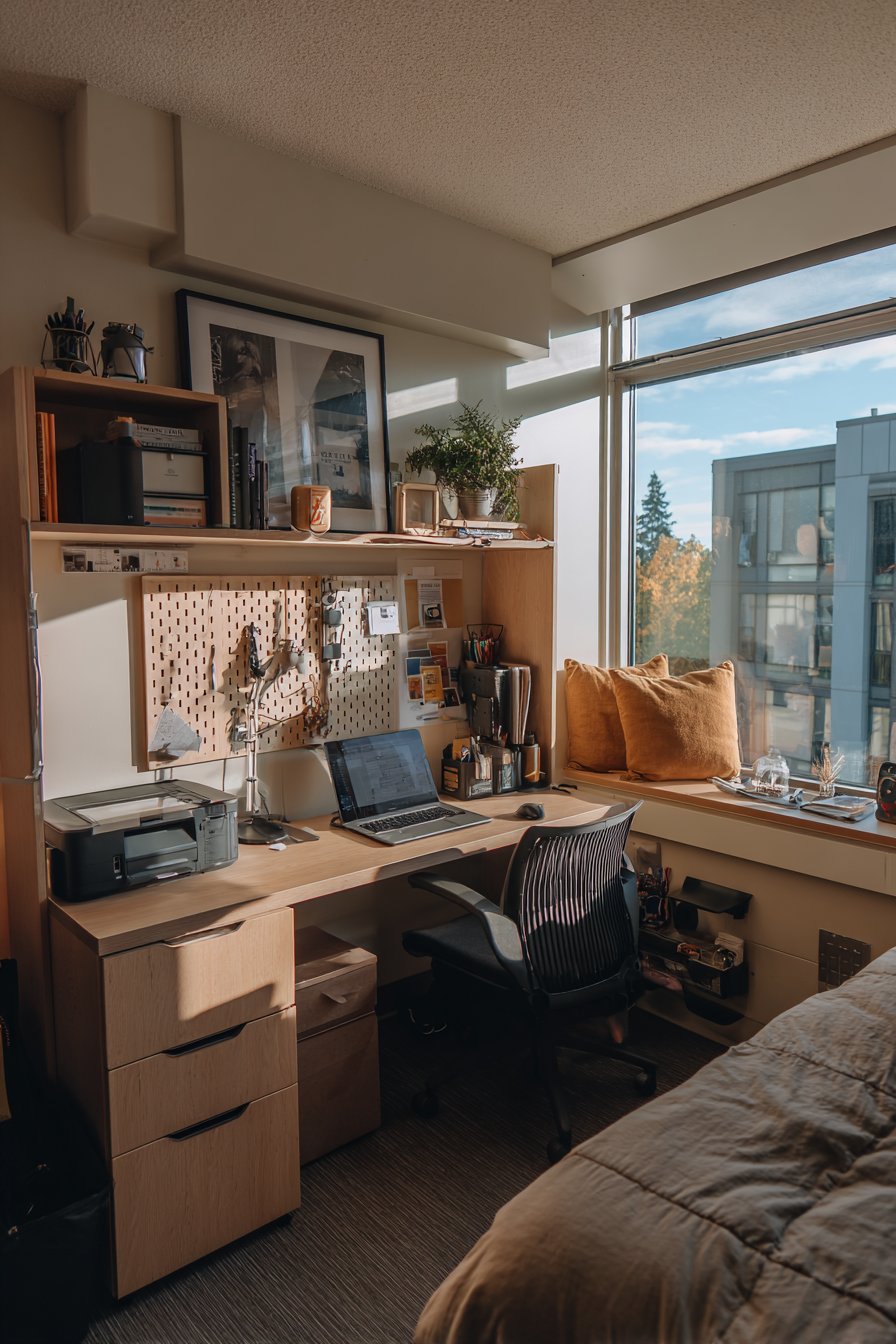
Natural light from adjacent windows supplements LED desk lamps. The combination prevents eye strain during extended study sessions. Modern LED lamps offer adjustable color temperatures and brightness. These features support different tasks from reading to computer work.
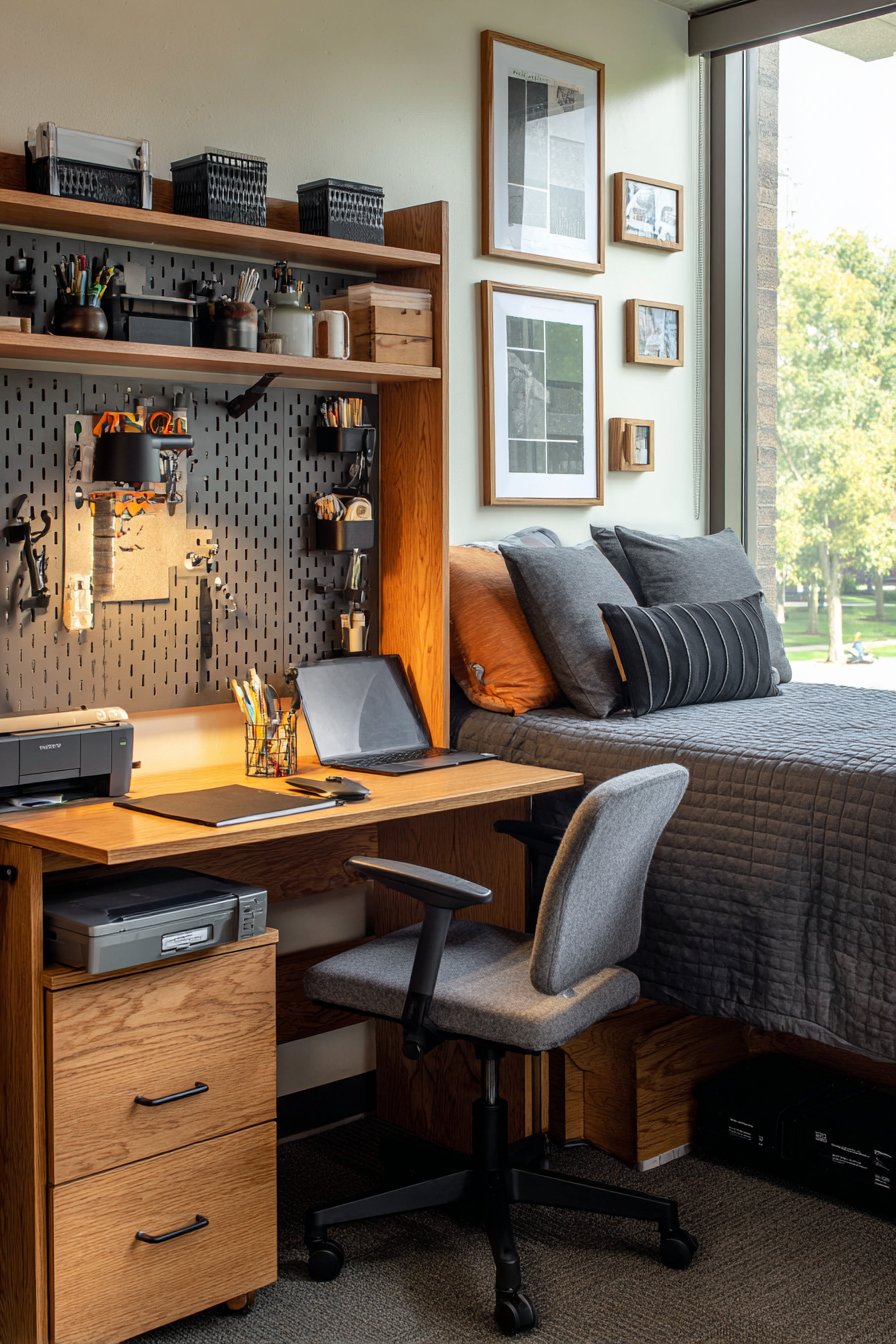
Organized functional workspaces support academic success directly. Students with dedicated study areas perform better academically. The efficient corner utilization proves every square foot matters. Thoughtful planning transforms awkward corners into productive zones.
Key Design Tips:
- Measure corner dimensions carefully before purchasing furniture
- Choose desks with vertical storage to maximize space efficiency
- Install pegboards for flexible, customizable organization
- Position desks near windows for natural light benefits
- Select ergonomic chairs that support healthy posture during long sessions
13. School Spirit Integration Throughout
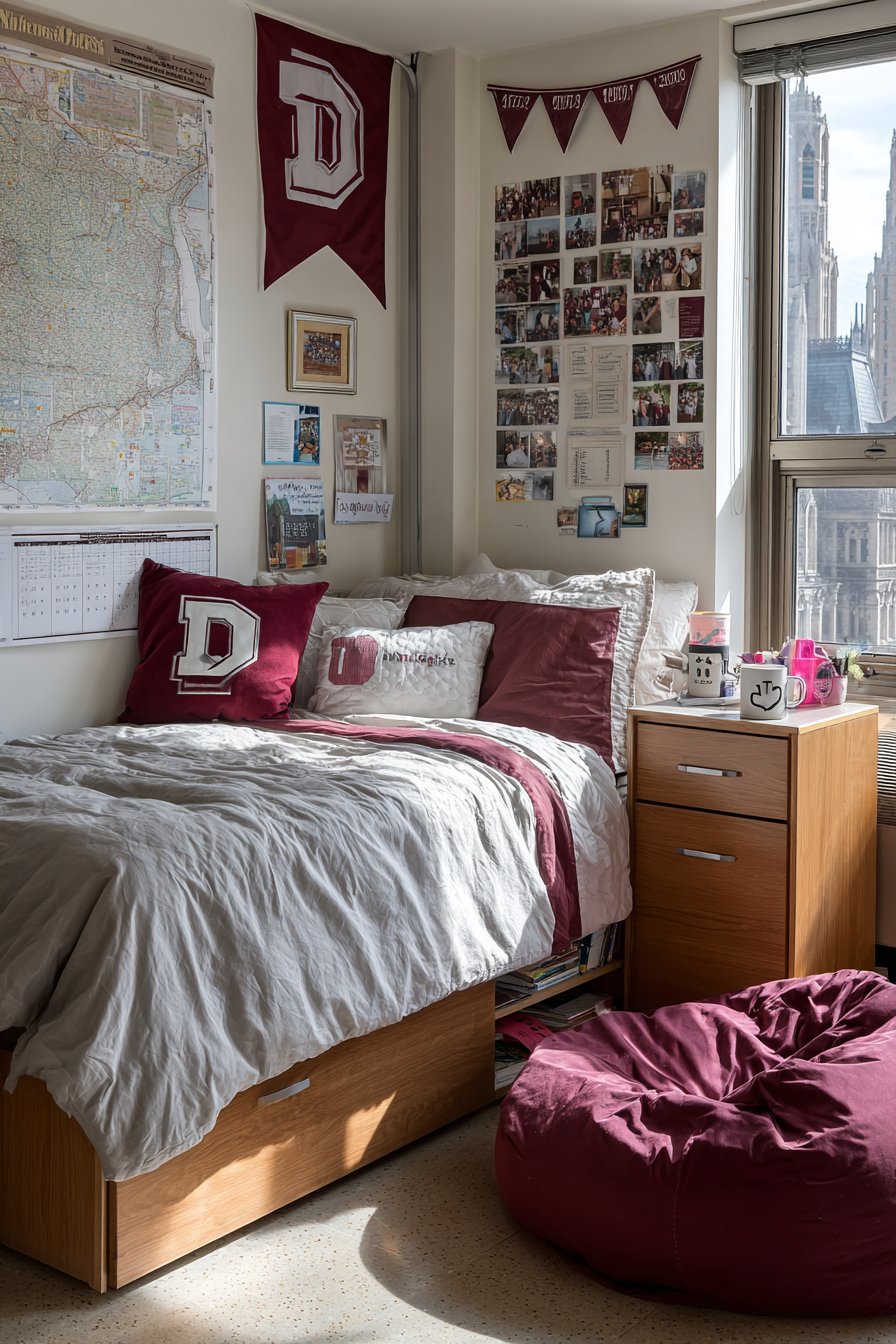
University-branded bedding demonstrates school pride from the start. Fitted sheets, comforters, and throw pillows feature school colors. Pennant banners above beds display alongside campus event photos. The coordinated approach creates cohesive school spirit statements.
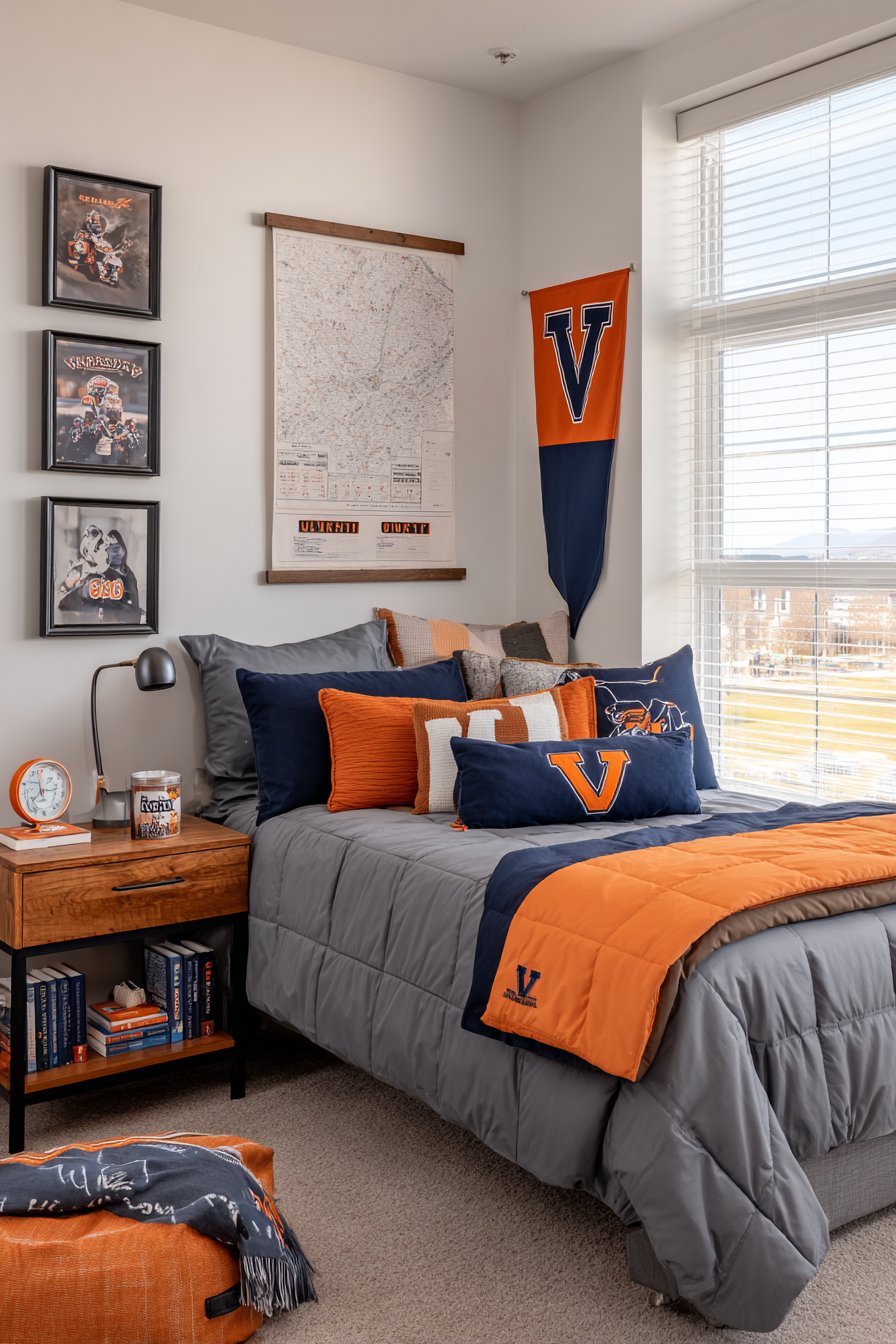
Nightstands display coffee mugs with school logos and alarm clocks. Bean bag chairs in team colors provide comfortable floor seating. Small bookshelves hold textbooks alongside campus guidebooks. The integration balances school pride with functional furniture needs.
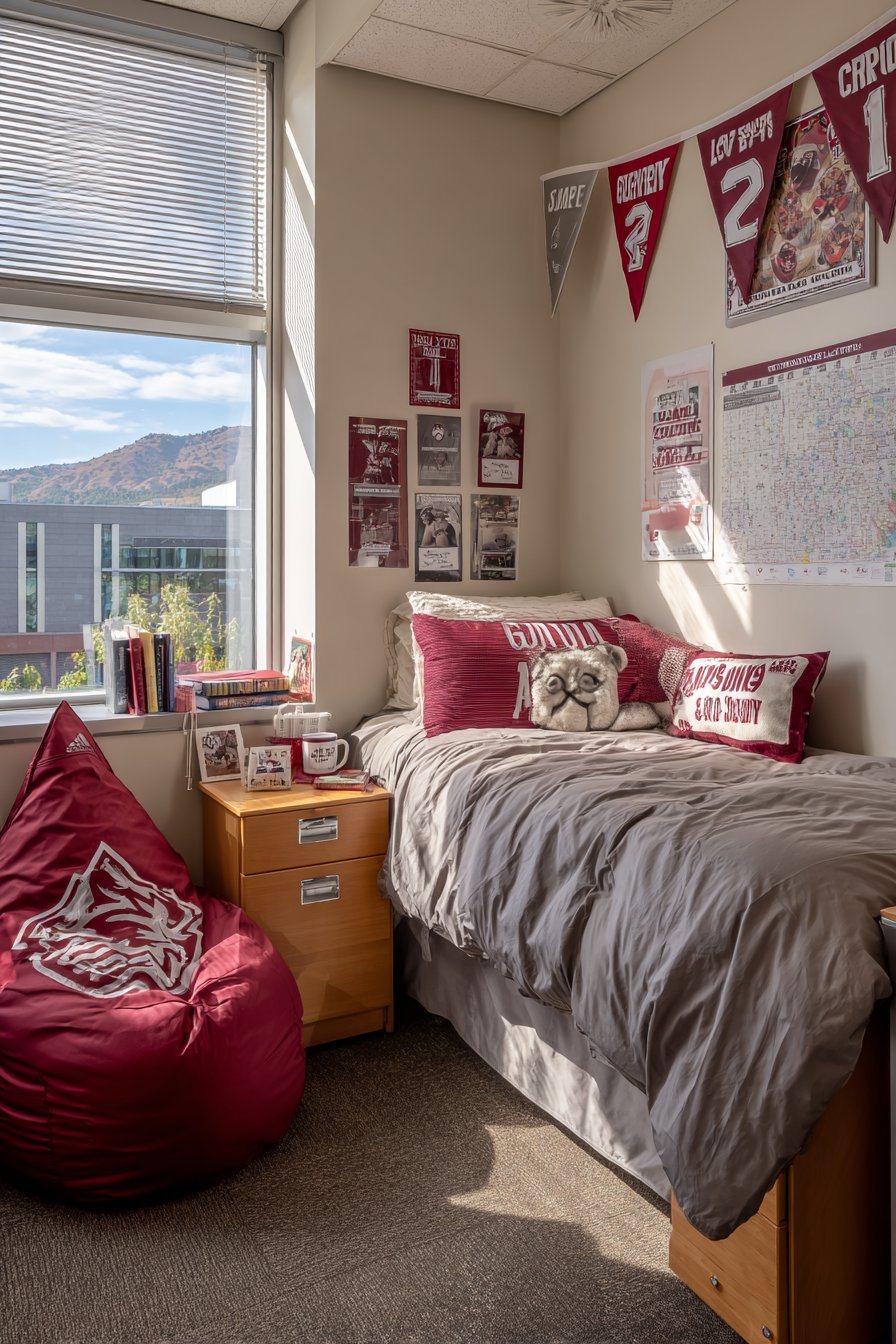
Walls feature large campus maps and academic calendars prominently. Natural window light enters through blinds with removable window clings. These temporary decorations show spirit without permanent wall damage. The approach respects rental agreements while expressing enthusiasm.
School pride creates instant connections with fellow students. Visitors immediately understand the resident’s affiliation and enthusiasm. The themed approach simplifies decoration decisions significantly. Everything coordinates naturally within school color schemes.
Key Design Tips:
- Choose bedding in official school colors for authentic spirit
- Display campus maps and event photos for personalization
- Use removable window clings and wall decals for temporary decoration
- Incorporate school logos subtly through accessories and textiles
- Balance enthusiasm with functional furniture and study requirements
14. Removable Headboard Alternatives
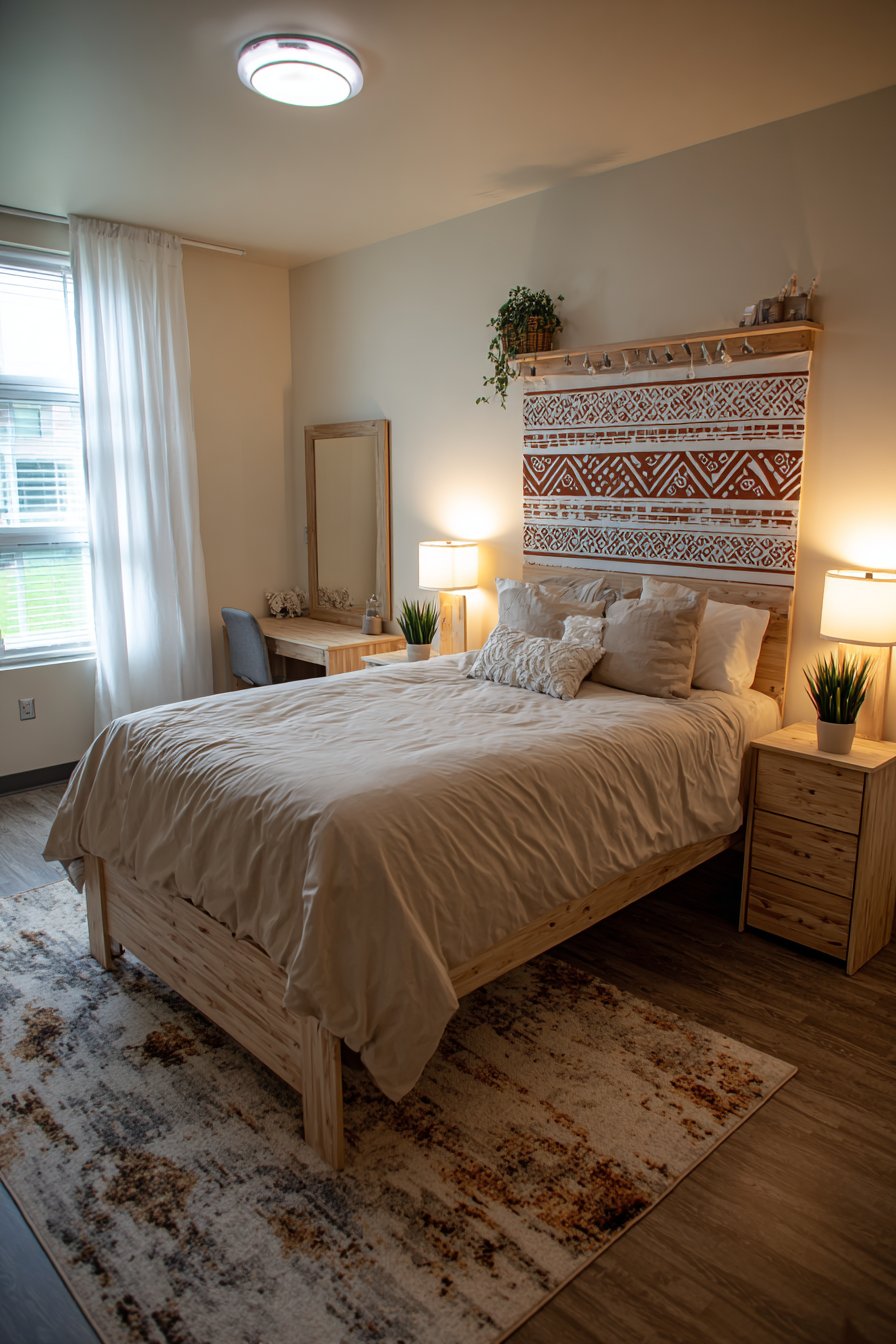
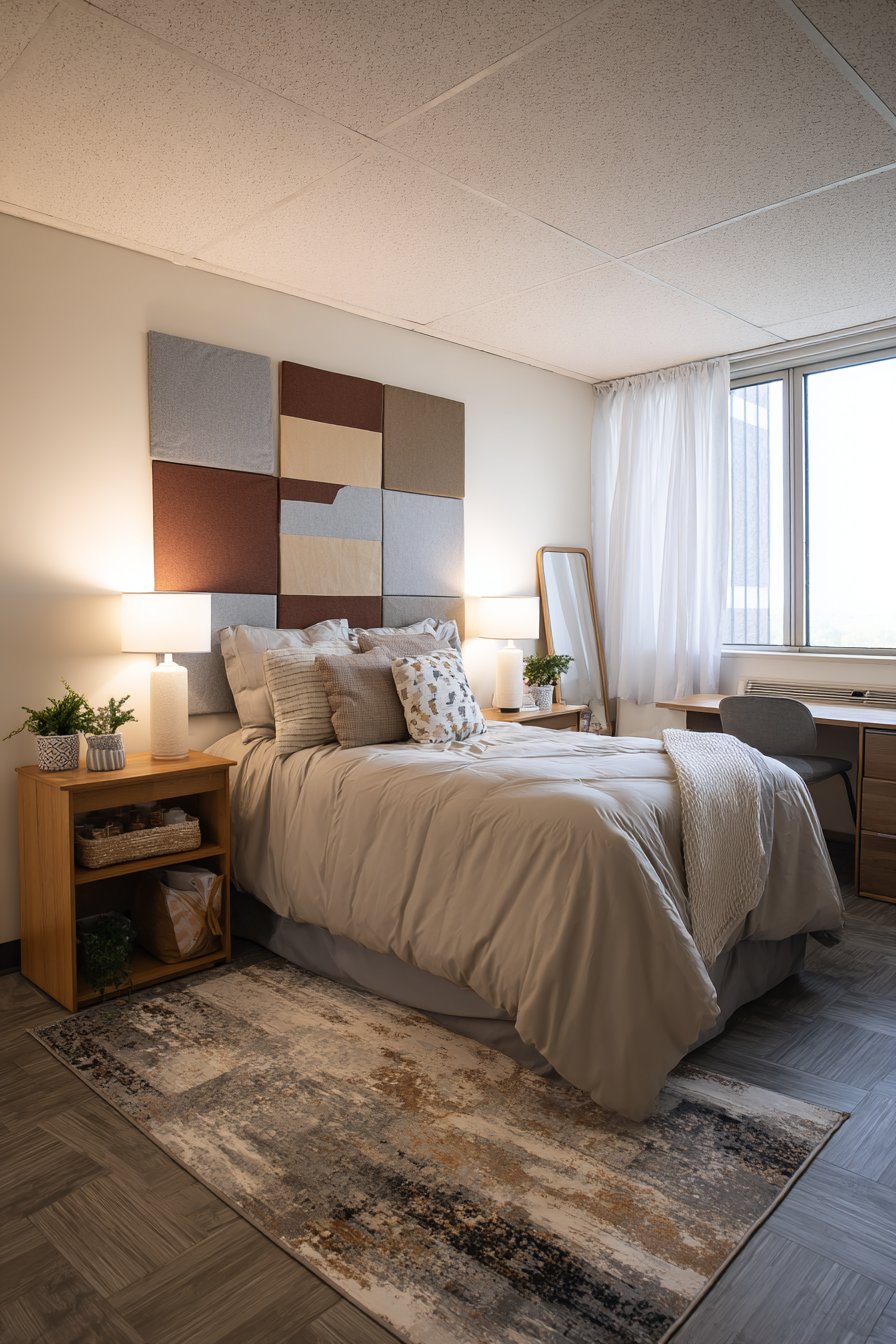
Creative headboard alternatives work within rental restrictions beautifully. Removable fabric wall decals in geometric patterns create visual interest. The decals apply and remove without damaging painted walls. Simple platform beds with neutral bedding anchor the design.
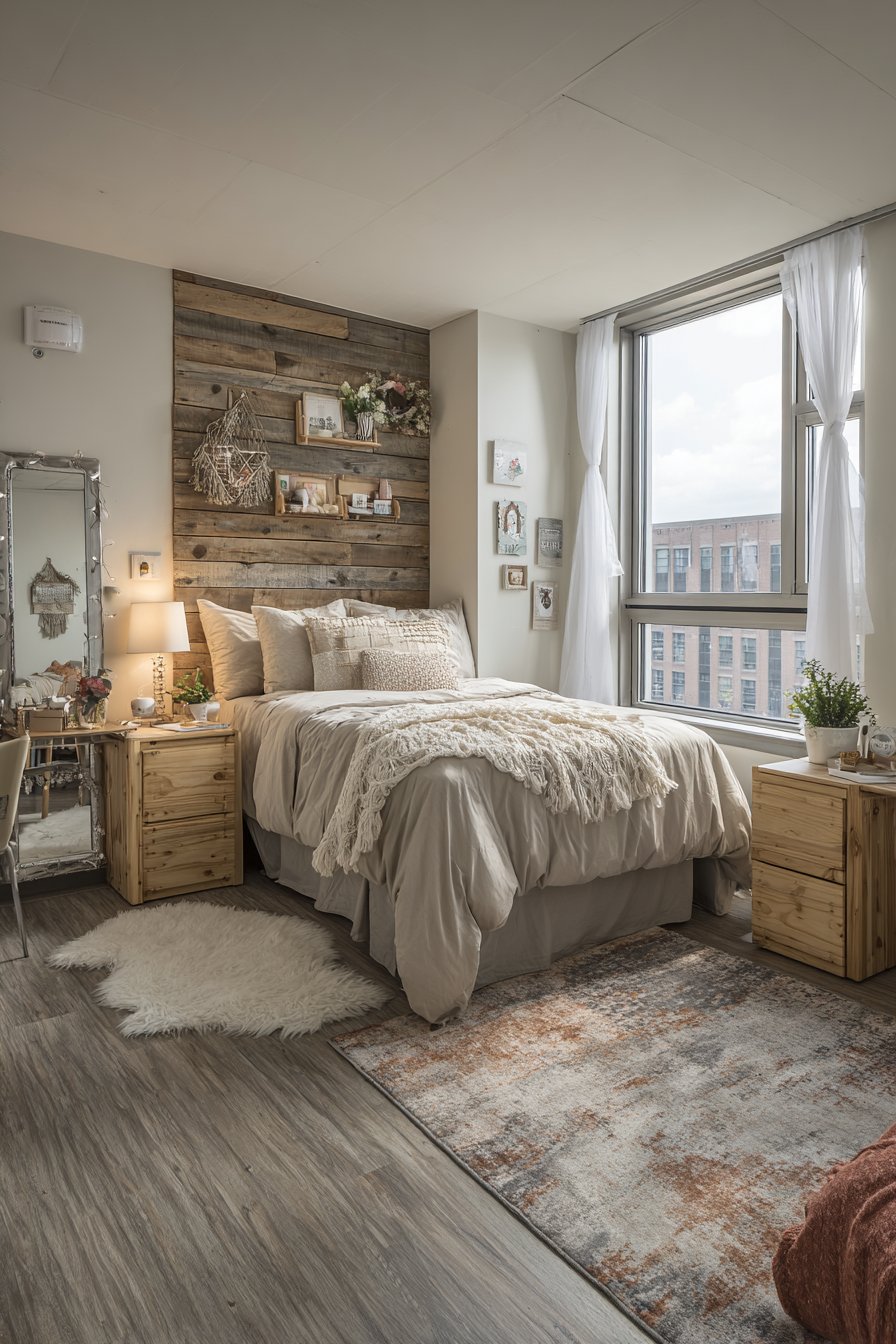
Two matching nightstands flank beds for symmetrical balance. Each holds small plants and modern table lamps. Large area rugs with abstract patterns add warmth to vinyl flooring. The layered approach brings comfort to institutional hard surfaces.
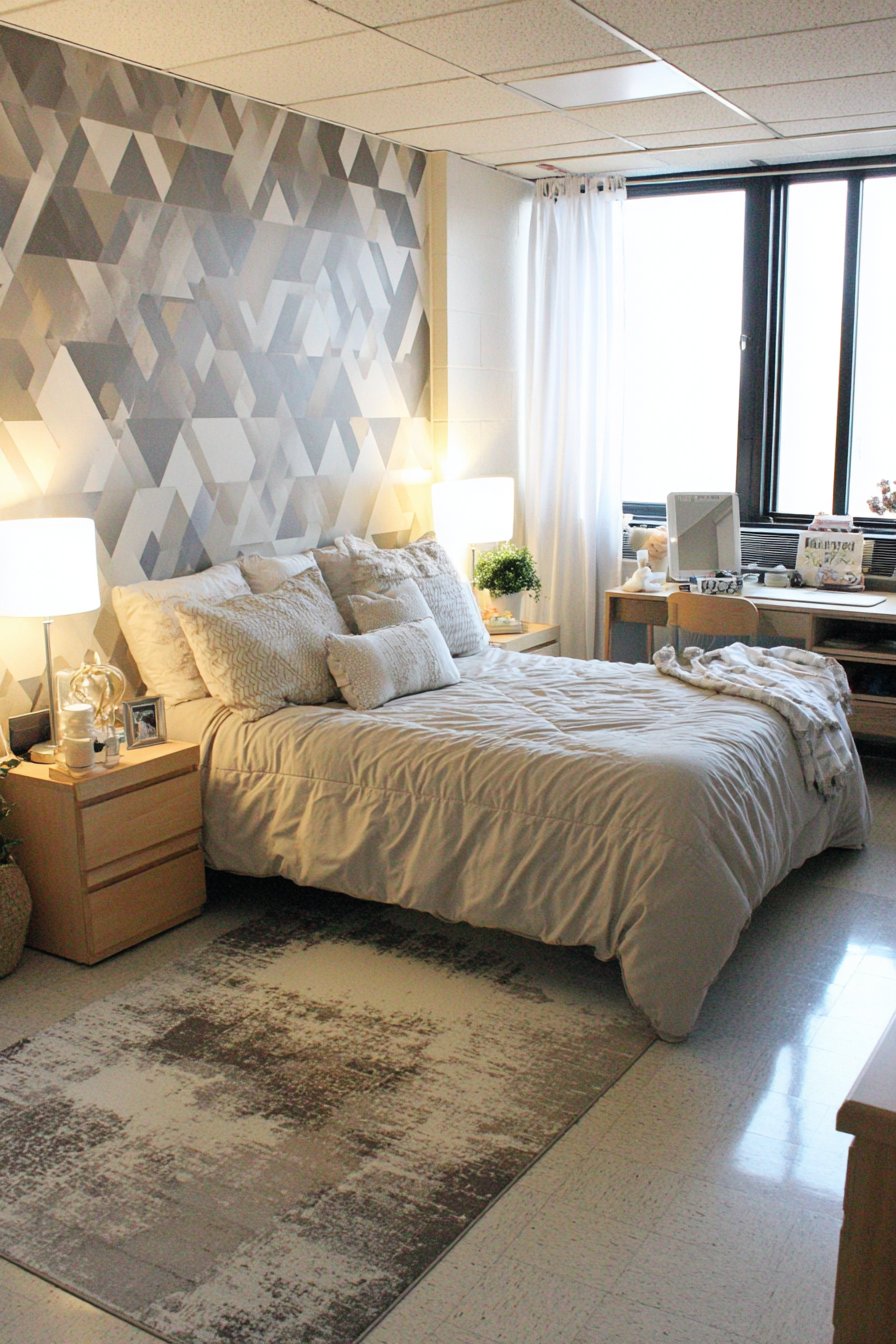
Full-length standing mirrors with jewelry storage occupy corners efficiently. The multipurpose pieces serve practical and aesthetic functions. Sheer white curtains allow natural light diffusion throughout spaces. The soft lighting creates gentle, welcoming atmospheres.
Rental-friendly decorating requires creativity rather than permanent changes. Removable solutions provide style without security deposit risks. The temporary nature allows evolution as tastes change. Students can experiment freely without long-term commitments.
Key Design Tips:
- Choose removable wall decals in patterns that complement bedding
- Ensure symmetry with matching nightstands and lamps for balance
- Layer area rugs over institutional flooring for warmth and comfort
- Select multipurpose furniture like mirrors with built-in storage
- Use sheer curtains to soften harsh institutional lighting
15. Floating Desk Space Efficiency
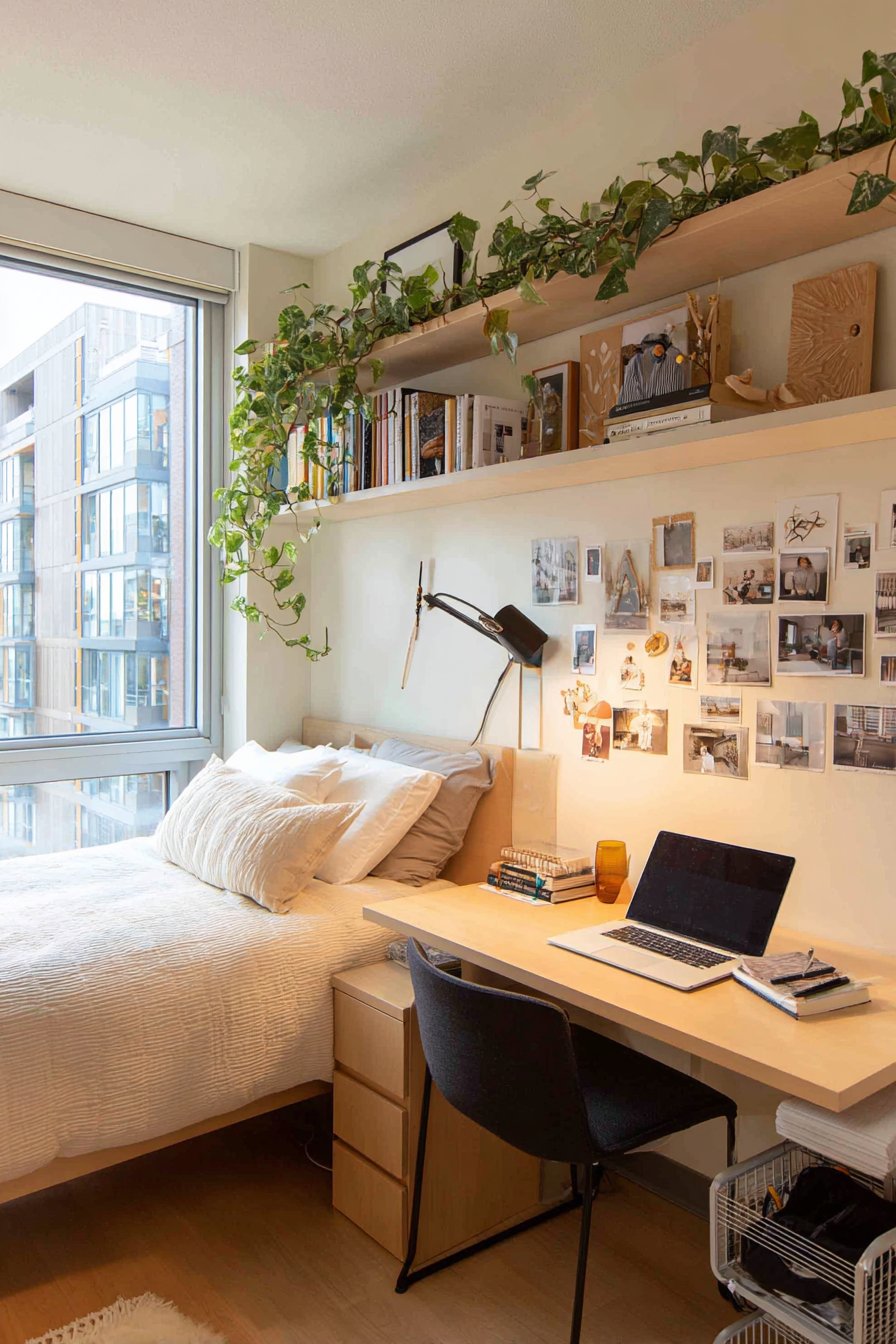
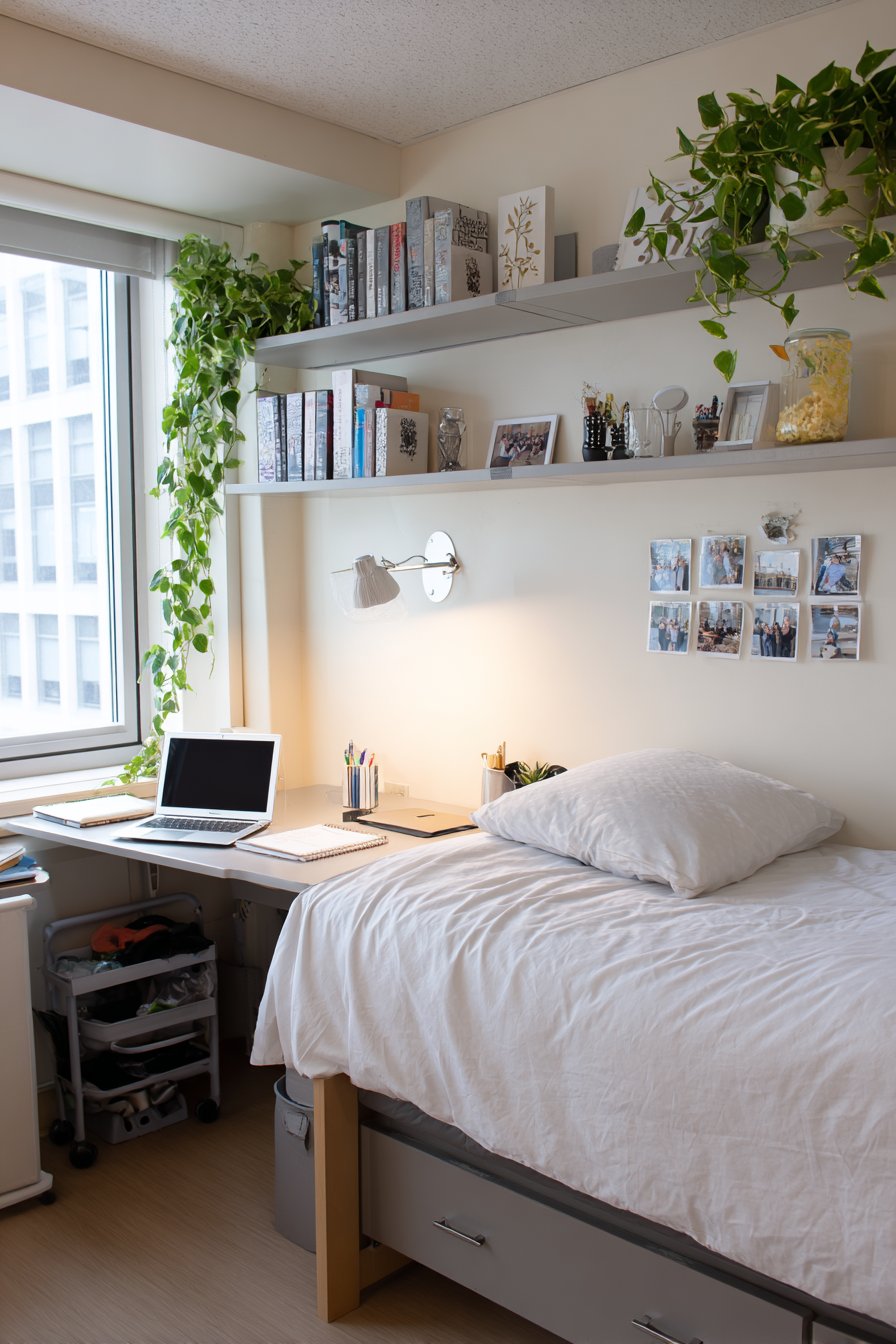
Wall-mounted floating desks create streamlined study areas efficiently. The mounting saves valuable floor space in compact rooms. Matching floating shelves above provide additional vertical storage. Desktop surfaces hold laptops on stands with notebooks and organizers.
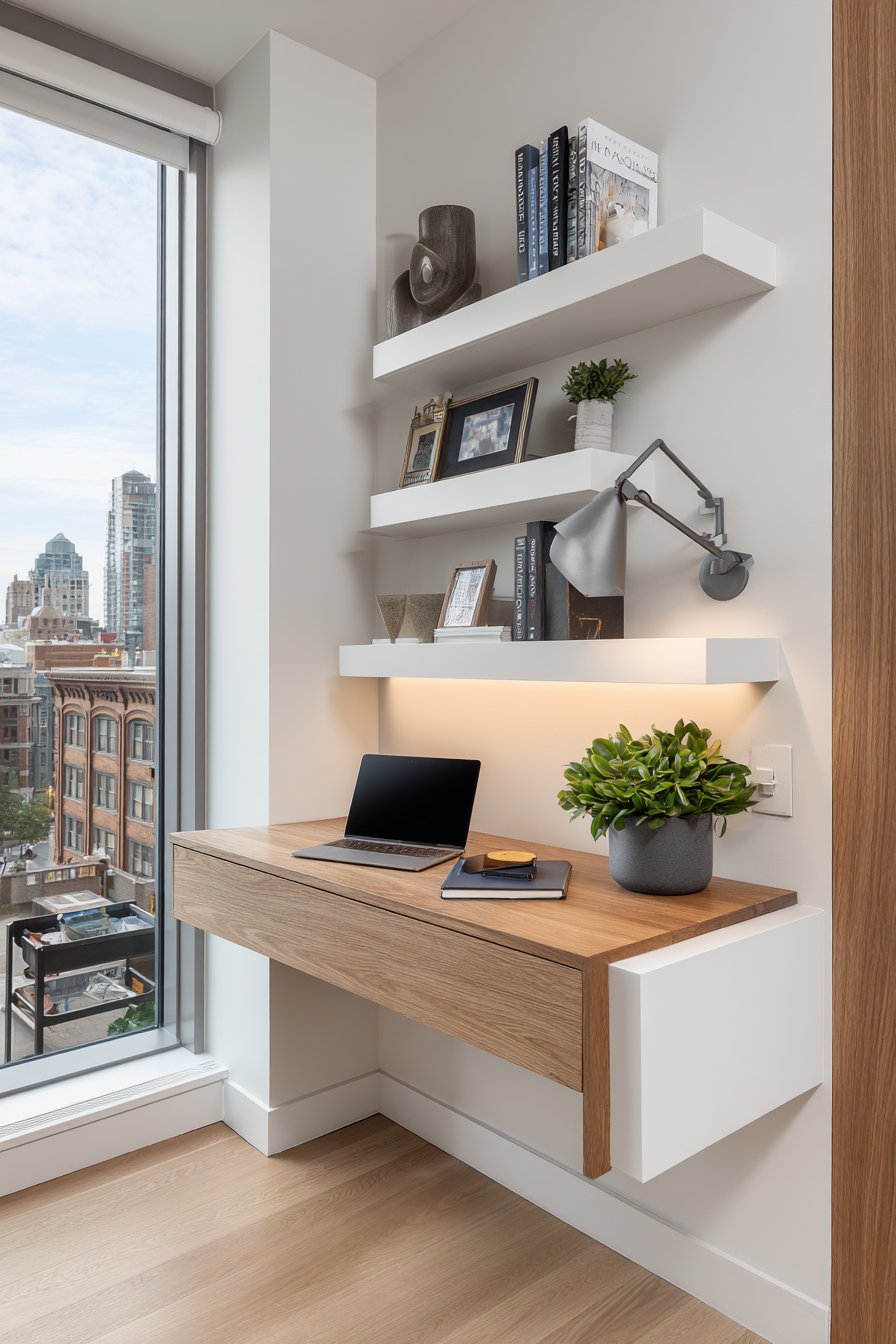
Shelves display textbooks vertically with decorative bookends. Small framed photos and trailing pothos plants add personality. Wall-mounted swing-arm lamps provide adjustable task lighting. The flexibility accommodates different work positions and preferences.
Small rolling carts beneath desks hold additional supplies conveniently. The carts move aside easily when extra floor space is needed. Natural light from nearby windows illuminates workspaces during daytime. The strategic positioning maximizes natural illumination benefits.
Space-efficient solutions prove essential in small college bedrooms. Every piece serves clear purposes without wasting square footage. The clean aesthetic supports focus and concentration naturally. Minimal visual clutter reduces mental distractions during study sessions.
Key Design Tips:
- Ensure proper wall mounting for weight-bearing floating furniture
- Position floating desks near windows for maximum natural light
- Use vertical shelving to keep desktop surfaces clear and organized
- Choose adjustable task lighting for different work requirements
- Incorporate rolling storage that moves easily for flexibility
16. Monochromatic Sophistication in Gray
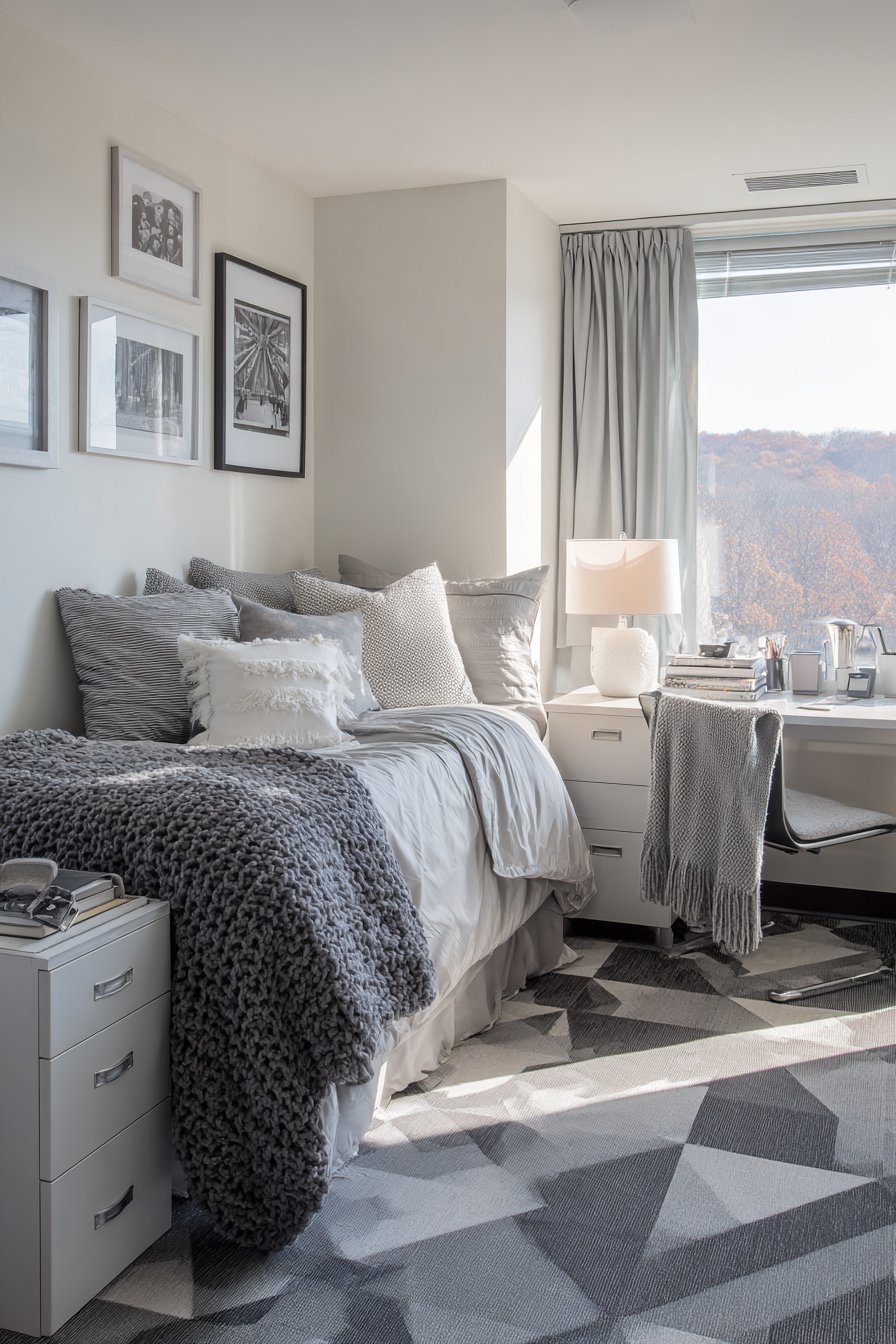
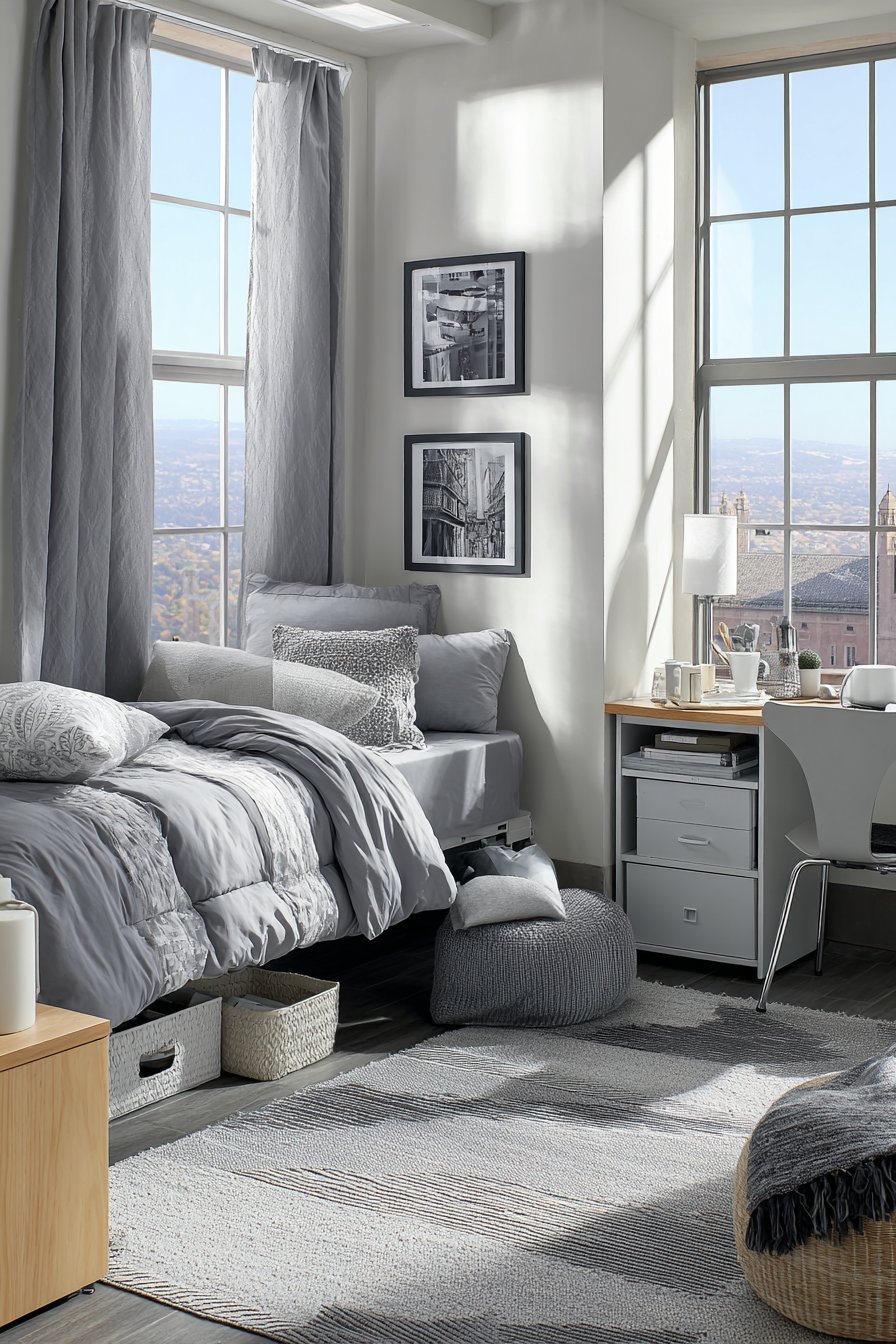
Monochromatic color schemes create sophisticated mature aesthetics. Soft grays and whites layer throughout bedding and furnishings. The varied textures prevent monotony within limited color palettes. White desks with gray chairs maintain cohesive coordination.
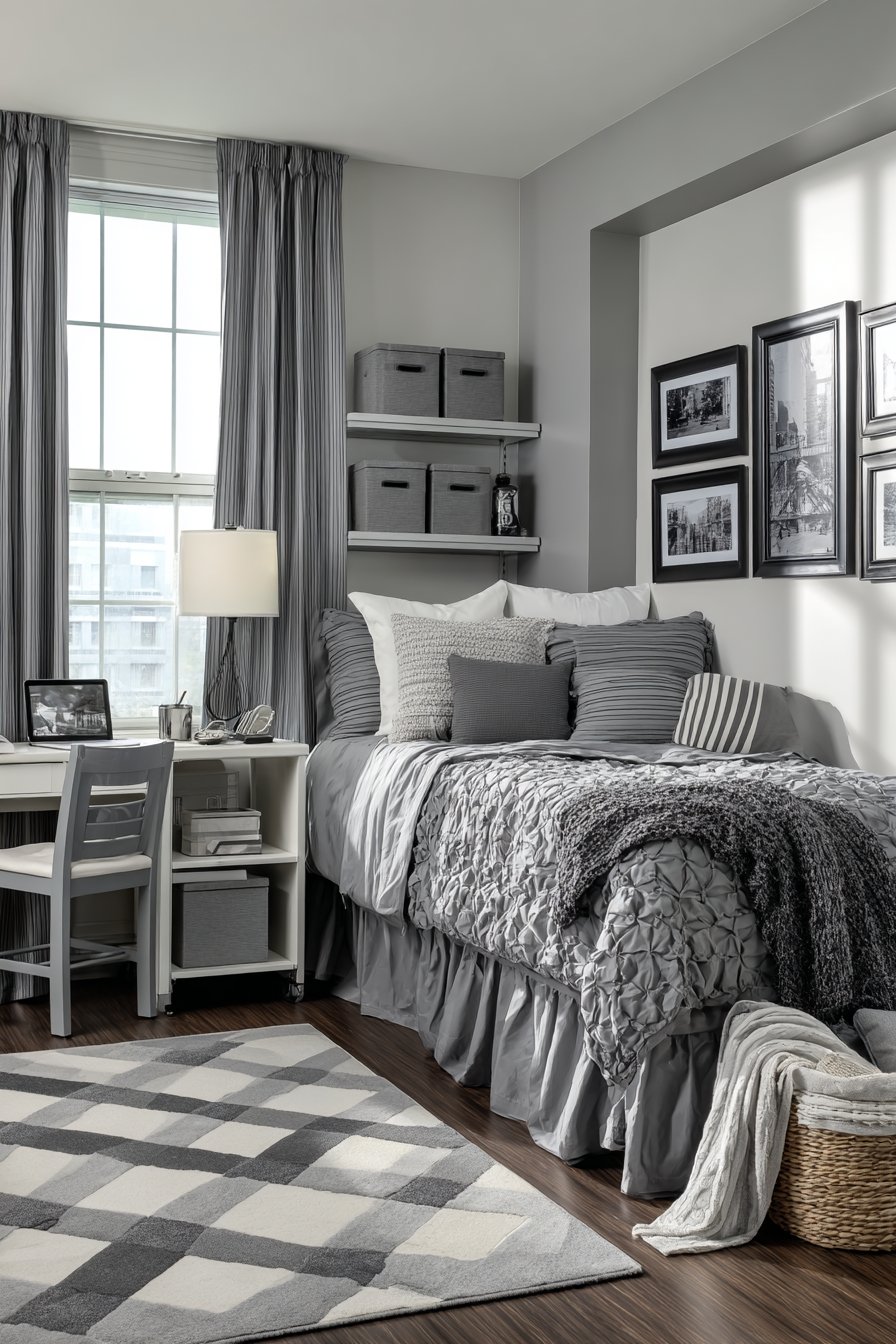
Black and white photography prints hang in white matting. Black frames provide strong contrast against neutral walls. Gray and white geometric area rugs anchor spaces visually. Storage boxes in matching gray tones maintain the palette throughout.
White ceramic table lamps and gray throw blankets complete the scheme. Natural light creates soft shadows that enhance tonal variations. The subtle palette changes throughout the day create visual interest. Professional appearance results from careful color coordination efforts.
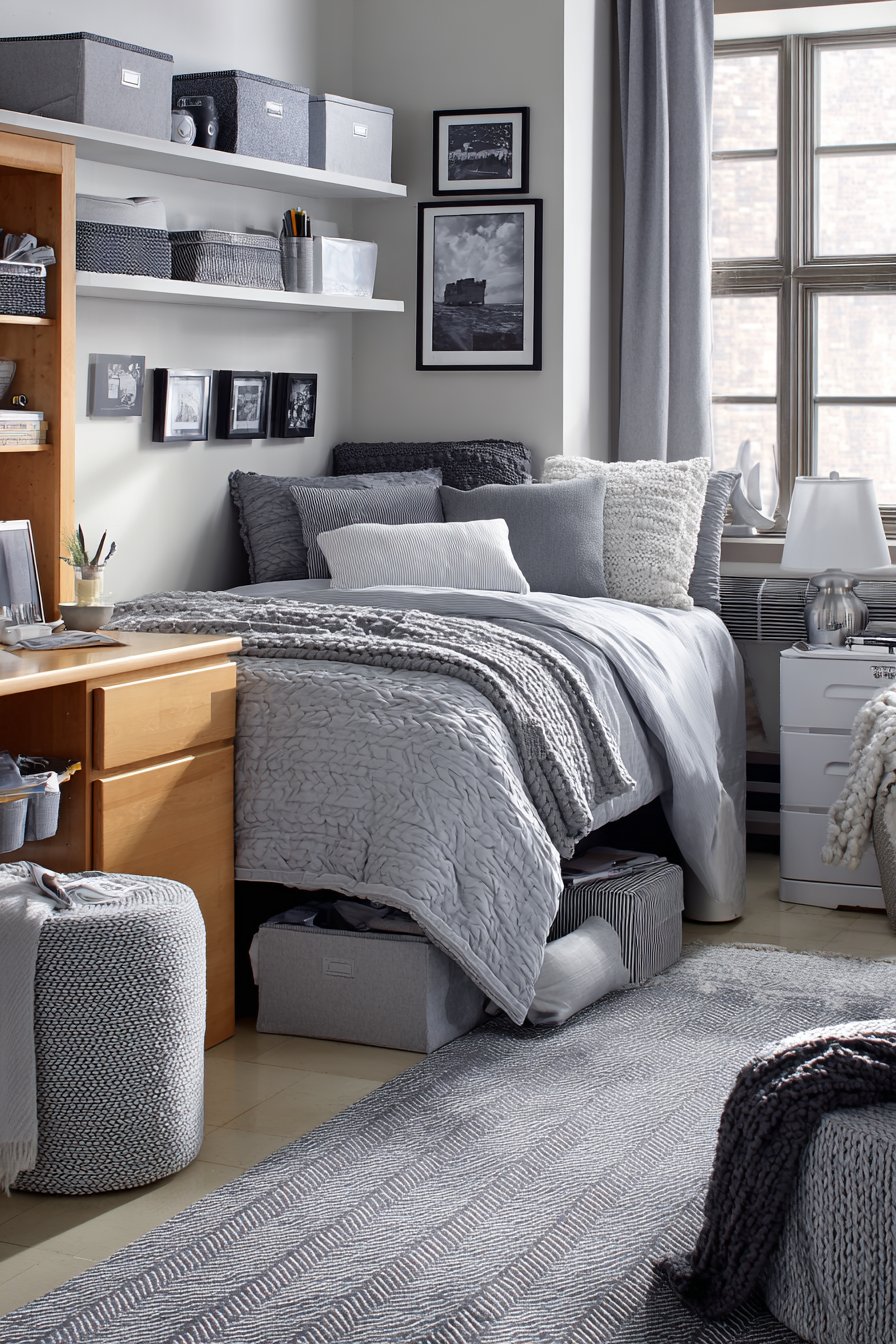
Sophisticated color schemes prove students can achieve mature aesthetics. The approach moves beyond typical colorful college room stereotypes. Visitors often mistake these spaces for young professional apartments. The investment in cohesive design pays aesthetic dividends.
Key Design Tips:
- Choose three to four gray tones for subtle variation
- Layer different textures within monochromatic schemes for depth
- Use black accents sparingly for strong contrast points
- Select frames and storage in coordinating colors throughout
- Embrace natural light to reveal subtle tonal variations
17. Multi-Functional Ottoman Versatility
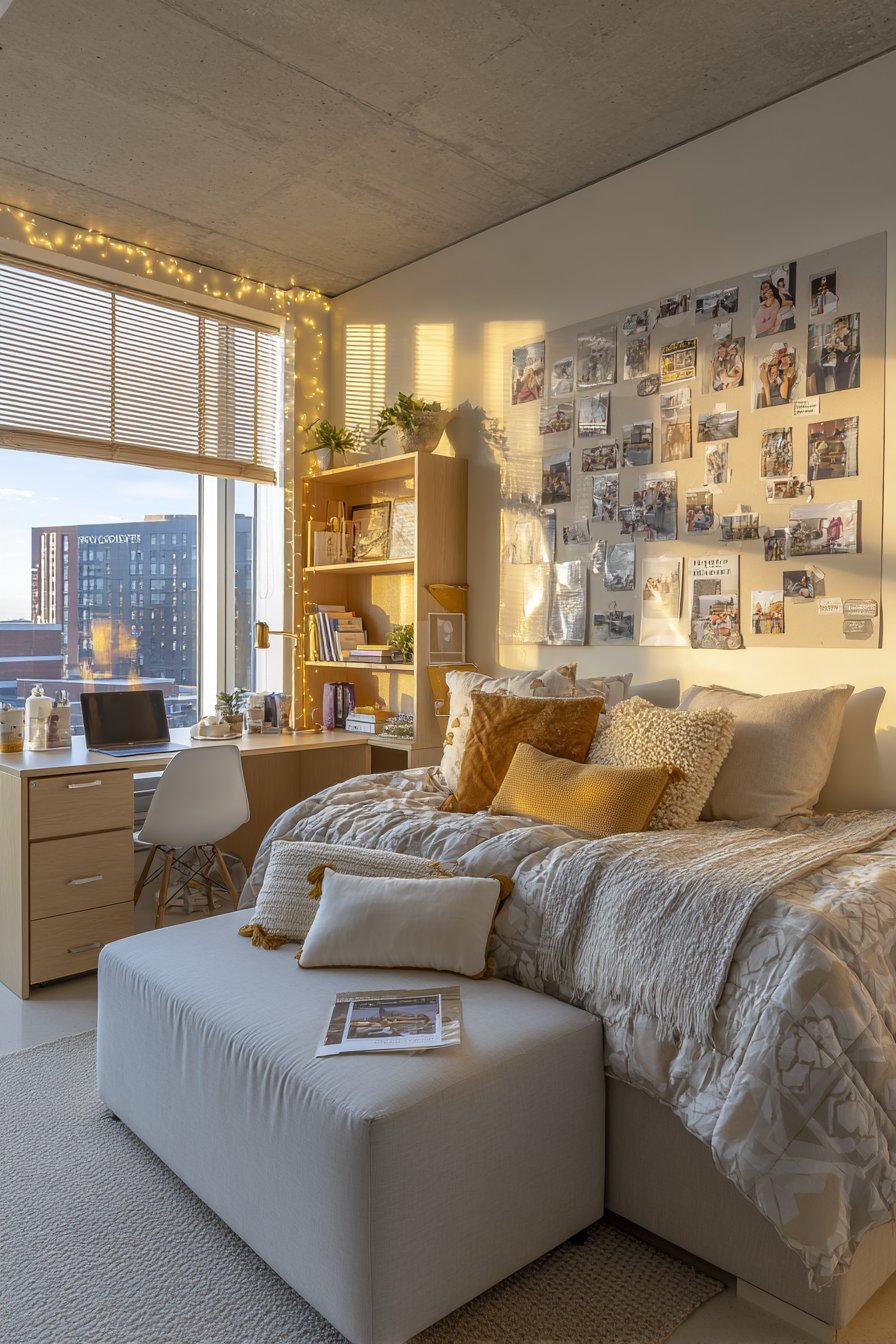
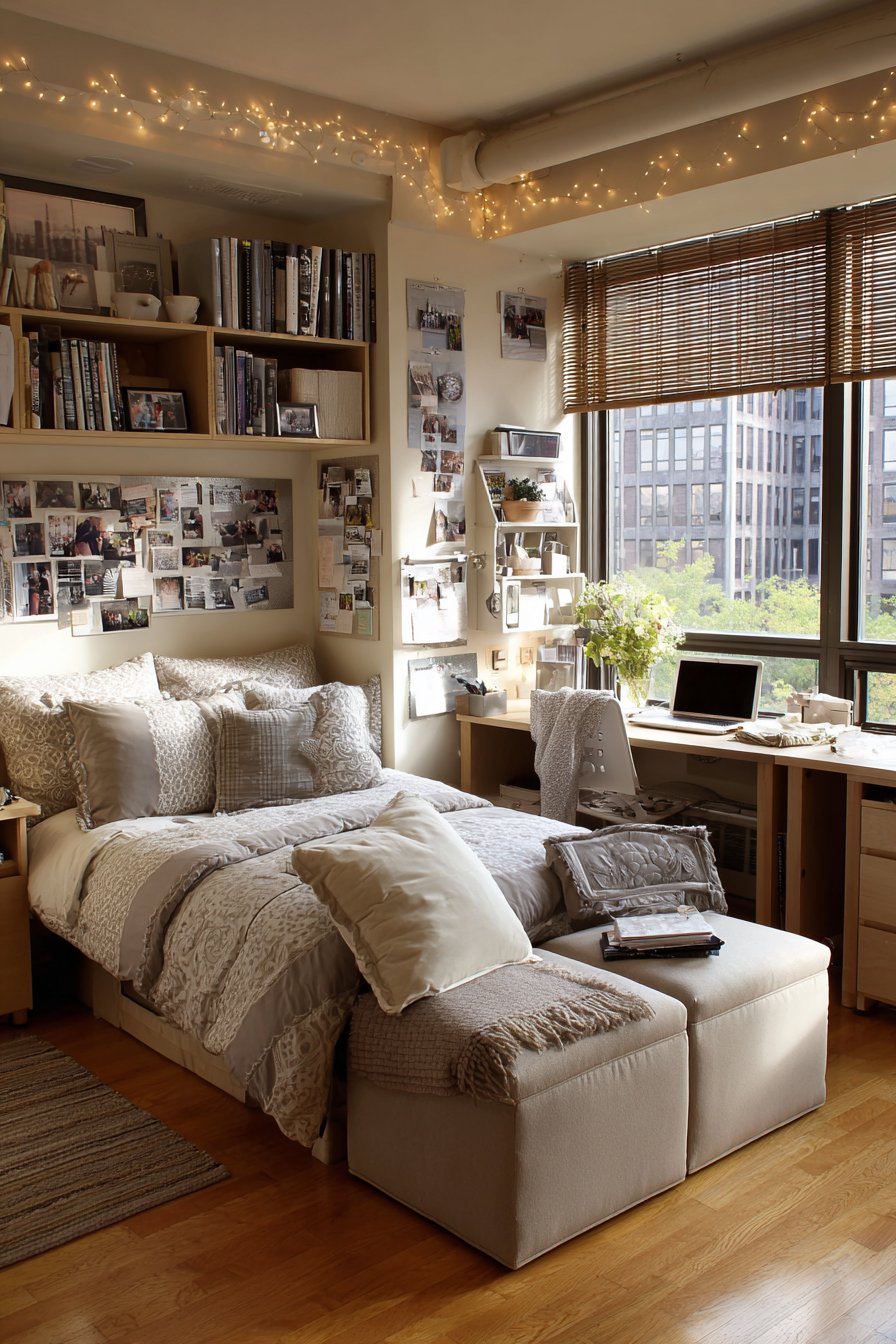
Multi-functional furniture proves essential in compact college spaces. Ottomans serve as seating, footrests, and storage simultaneously. Extra blankets and pillows tuck inside when not needed. The versatile pieces sit at bed feet conveniently.
Simple upholstered headboards and mixed-pattern bedding create comfortable foundations. Nearby bookshelves hold academic materials and decorative items. String lights frame bulletin boards displaying photos and reminders. The combination balances function with personality.
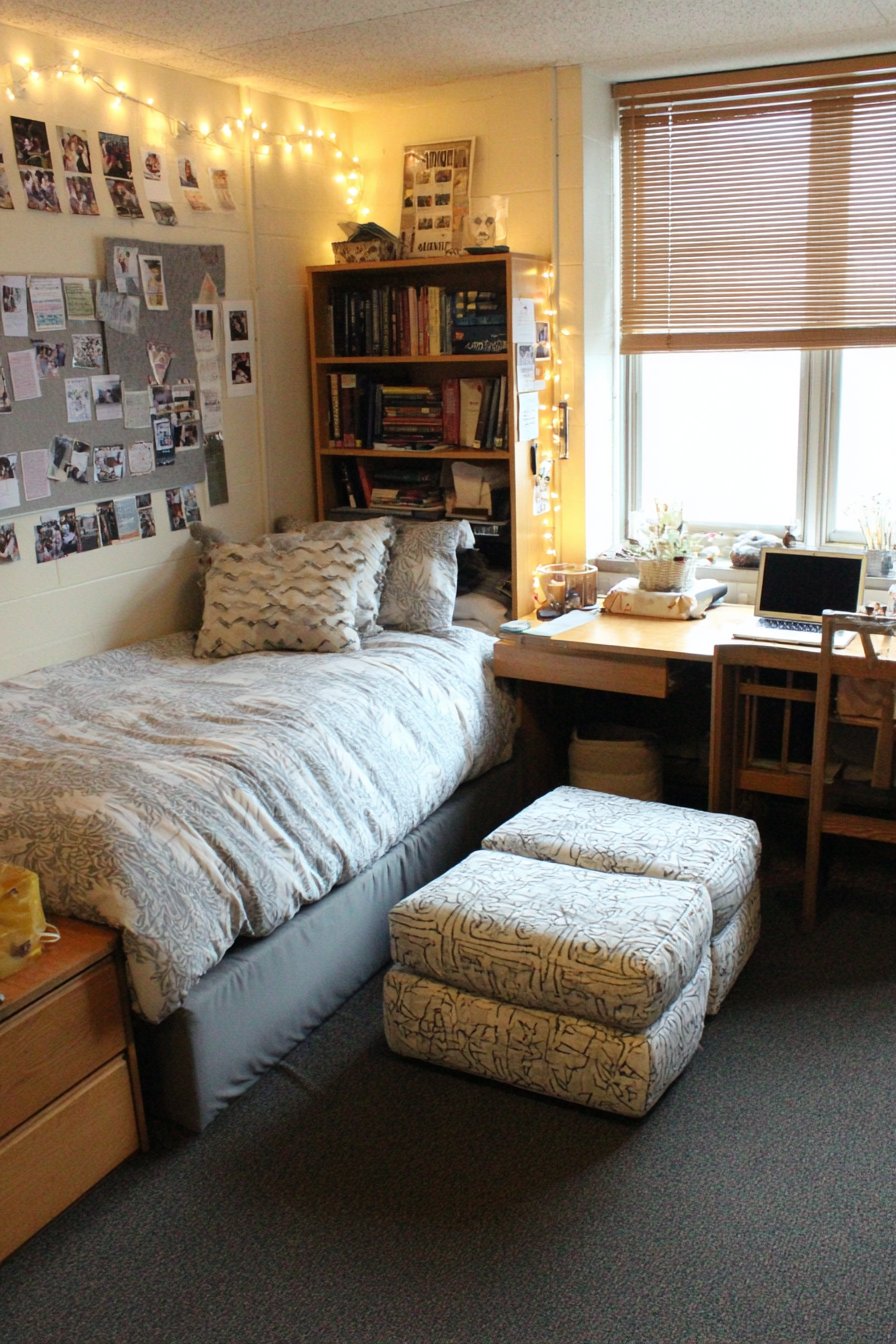
Desk areas include laptop setups with small desk plants. Natural light from bamboo blinds creates warm illumination. The filtered light provides privacy while maintaining brightness. Versatile furniture arrangements adapt to changing daily needs.
Students benefit from furniture that serves multiple purposes. Limited budgets and small spaces demand creative efficiency. One piece replacing three saves money and square footage. The practical approach never sacrifices comfort or functionality.
Key Design Tips:
- Choose ottomans with internal storage for maximum functionality
- Position versatile furniture where it serves multiple daily needs
- Select pieces that complement existing furniture styles and colors
- Use multi-functional items to reduce overall furniture quantity
- Consider how pieces might serve different purposes throughout the day
18. Window Alcove Sleeping Arrangements
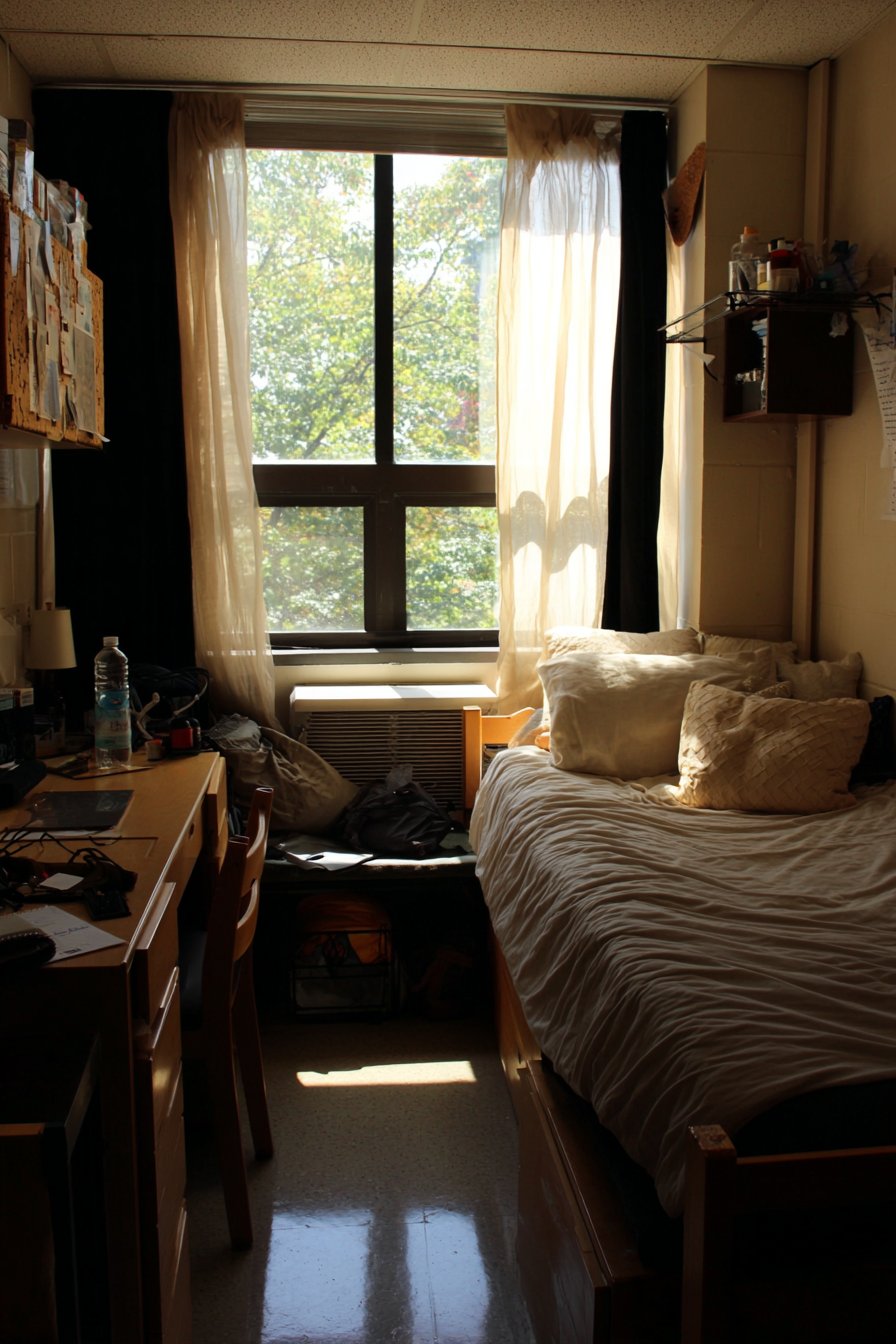
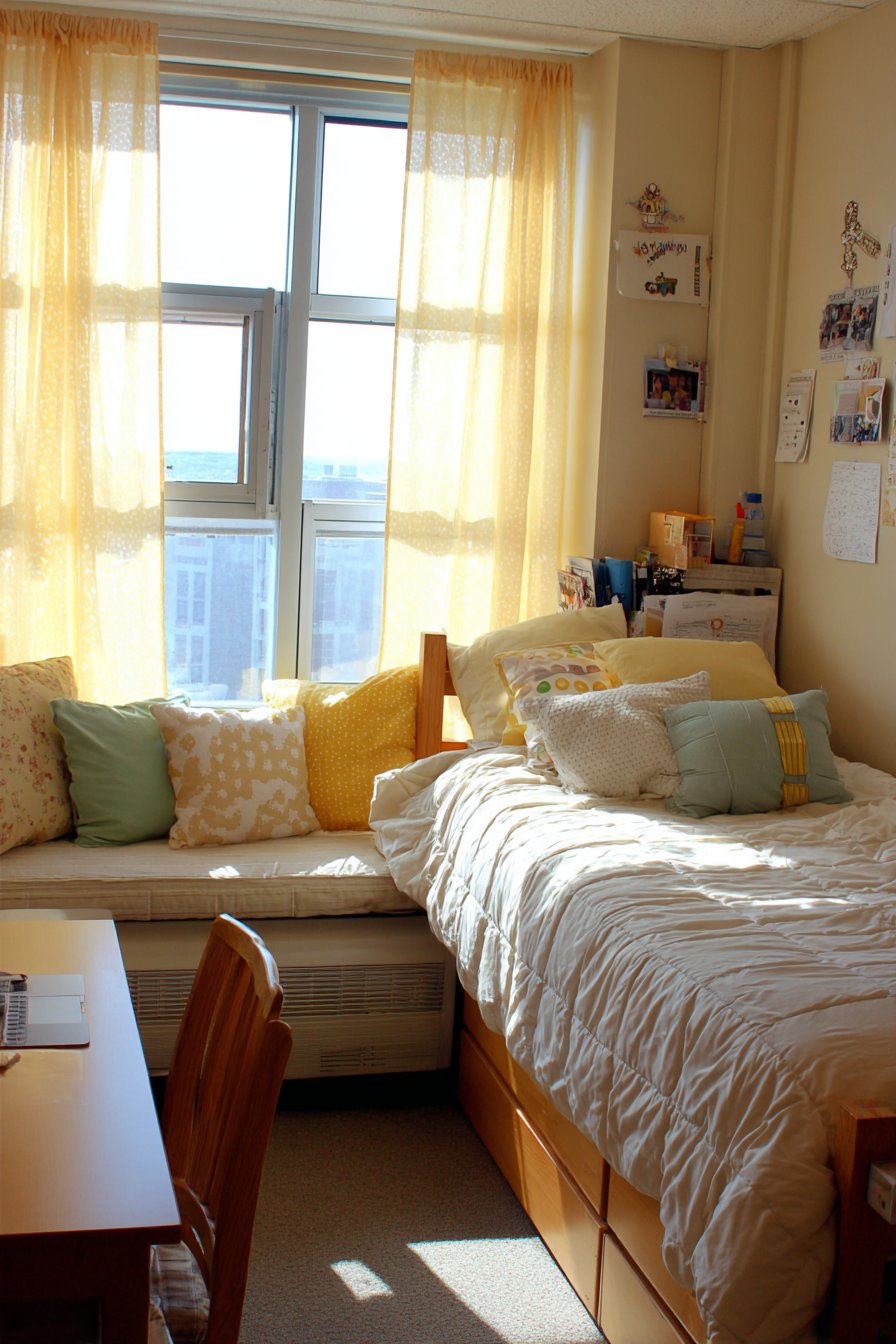
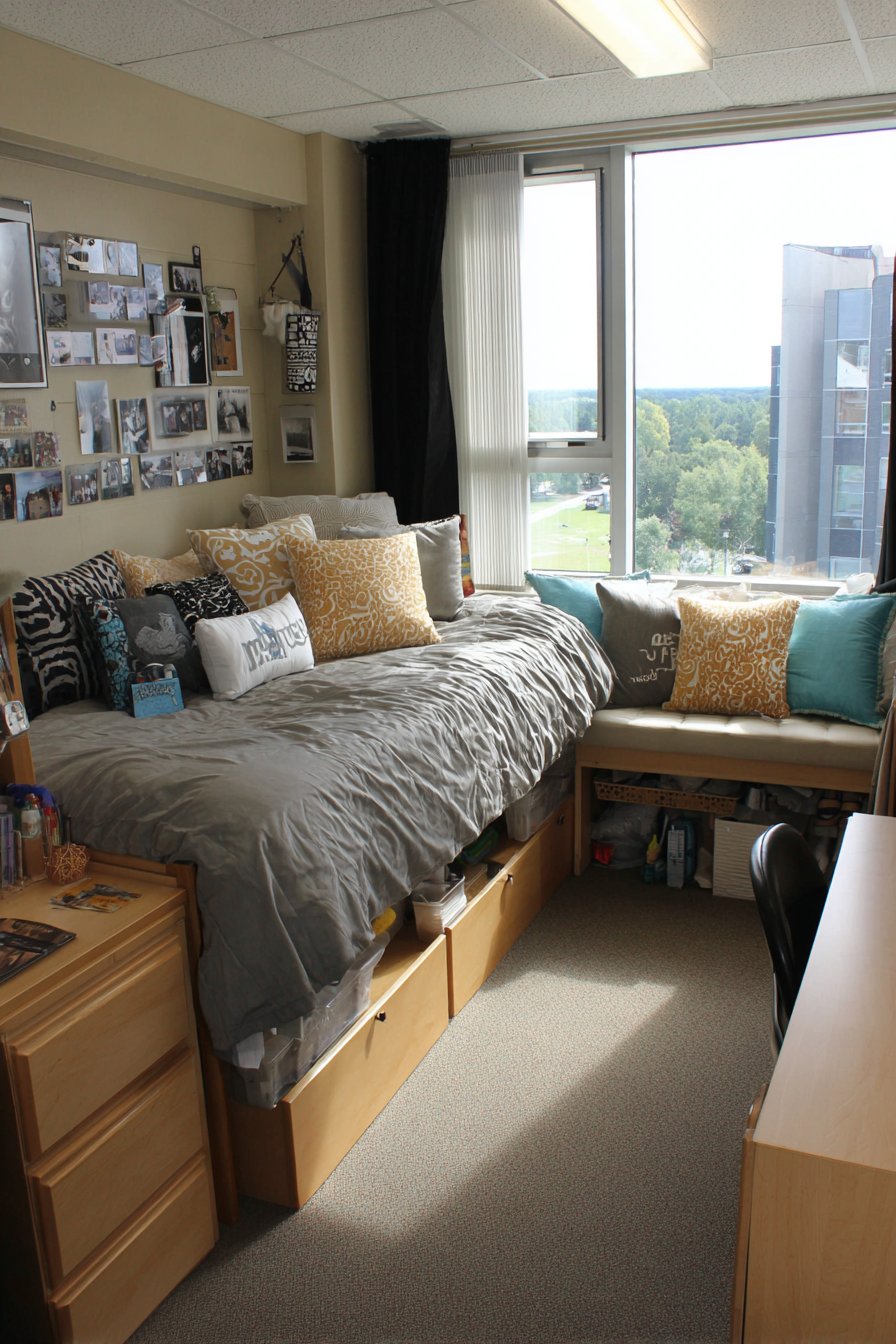
Unconventional bed placements create cozy sleeping alcoves. Beds positioned under windows with headboards against walls maximize space. Blackout curtains provide sleep flexibility despite variable schedules. Sheer curtains underneath maintain daytime privacy without darkness.
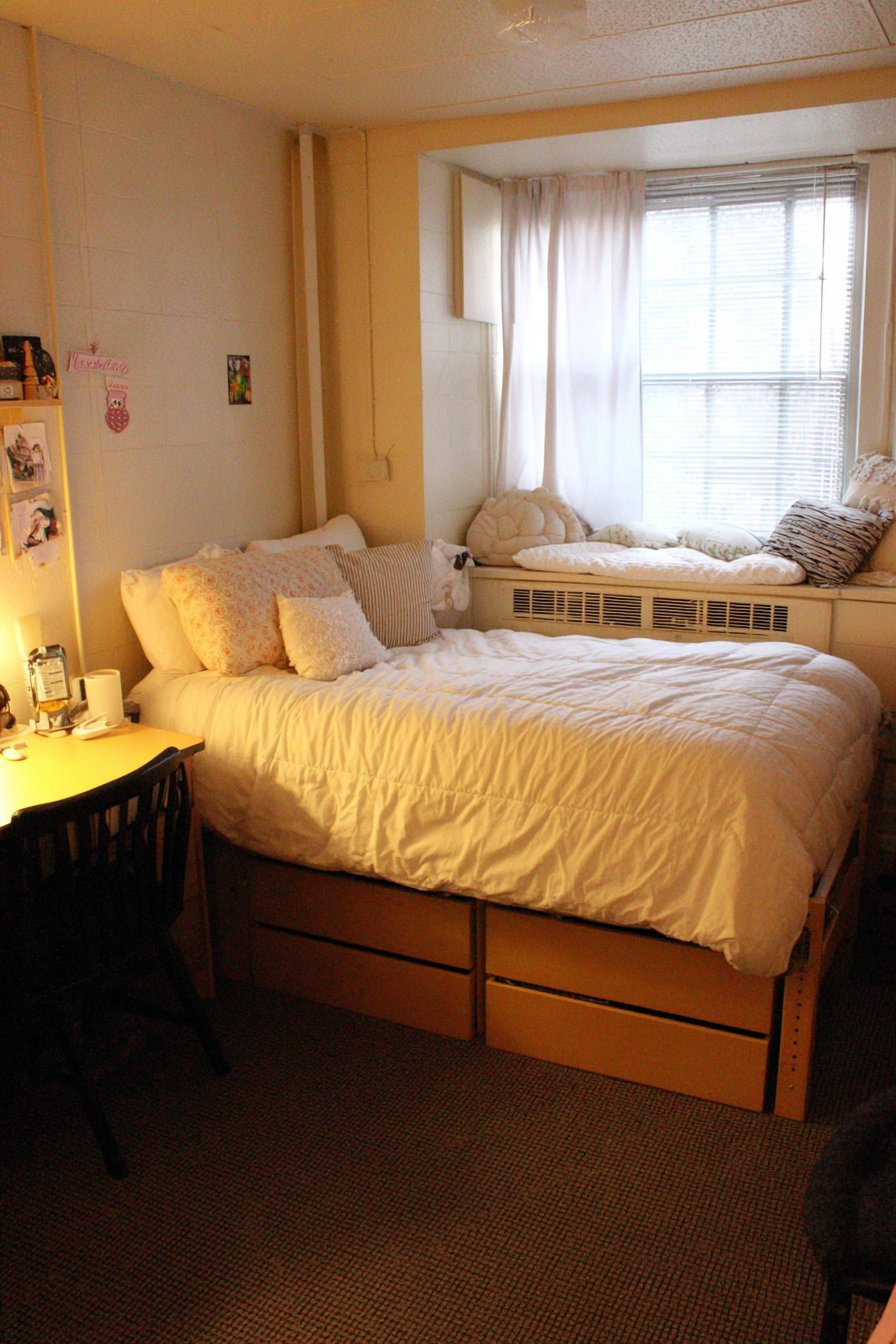
Multiple pillows allow comfortable studying while sitting up. Built-in window seat cushions use radiator covers creatively. Additional seating and storage fit underneath cushioned tops. The opposite wall features simple desk and chair setups.
Reading lights clip onto bed frames for nighttime convenience. Natural morning light illuminates spaces when curtains open. The window integration creates unique architectural interest in standard rooms. Creative layouts prove rules exist to be thoughtfully broken.
Unconventional arrangements often work better than standard layouts. Students should experiment with furniture placement options. The best configuration depends on individual lifestyle and preferences. Personal comfort matters more than conventional design rules.
Key Design Tips:
- Ensure adequate headboard support against walls near windows
- Install layered curtains for light control flexibility
- Add clip-on reading lights for convenient nighttime illumination
- Utilize window seats and radiator covers for additional seating
- Experiment with unconventional layouts to maximize personal space
19. Compact Vanity Area Creation
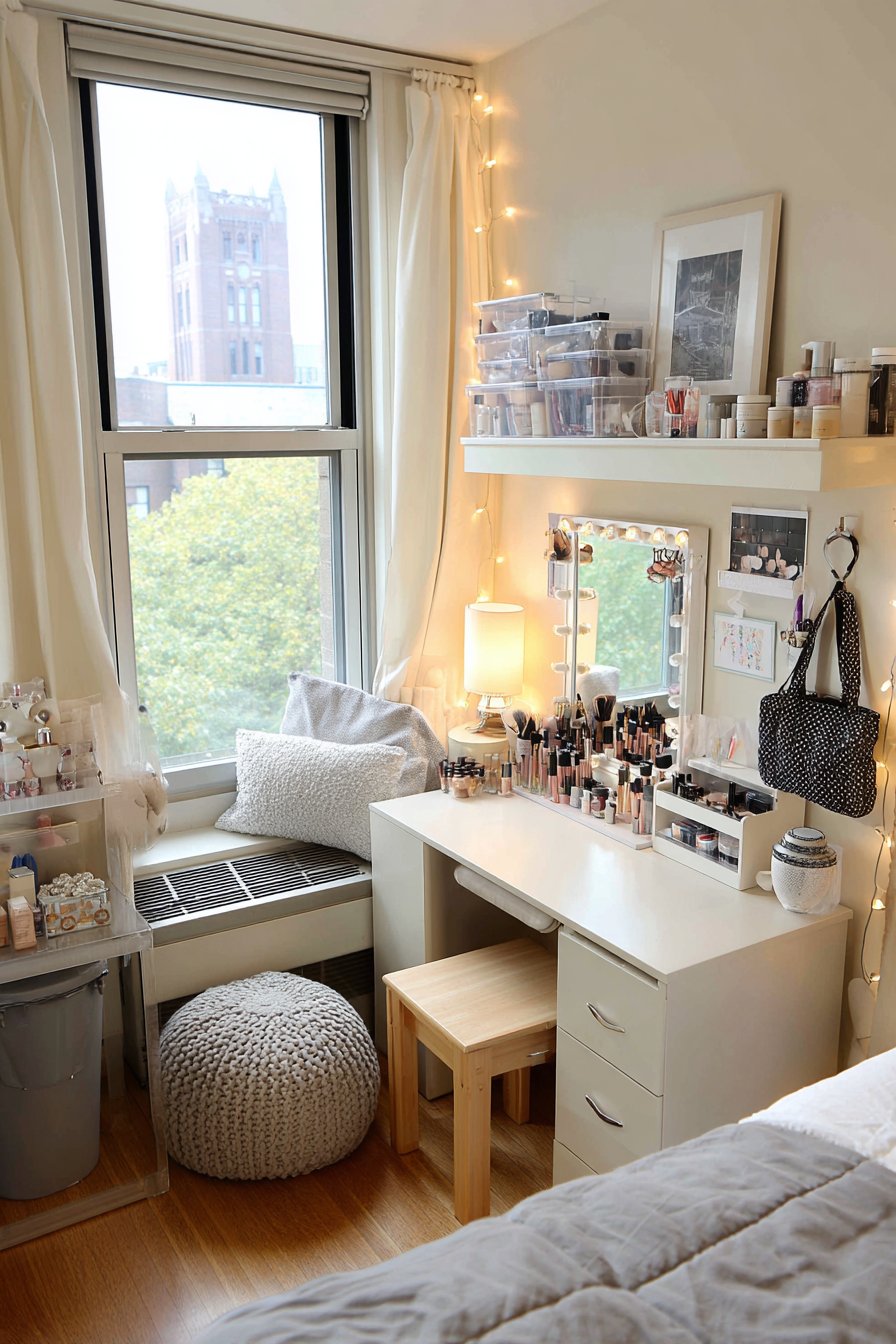
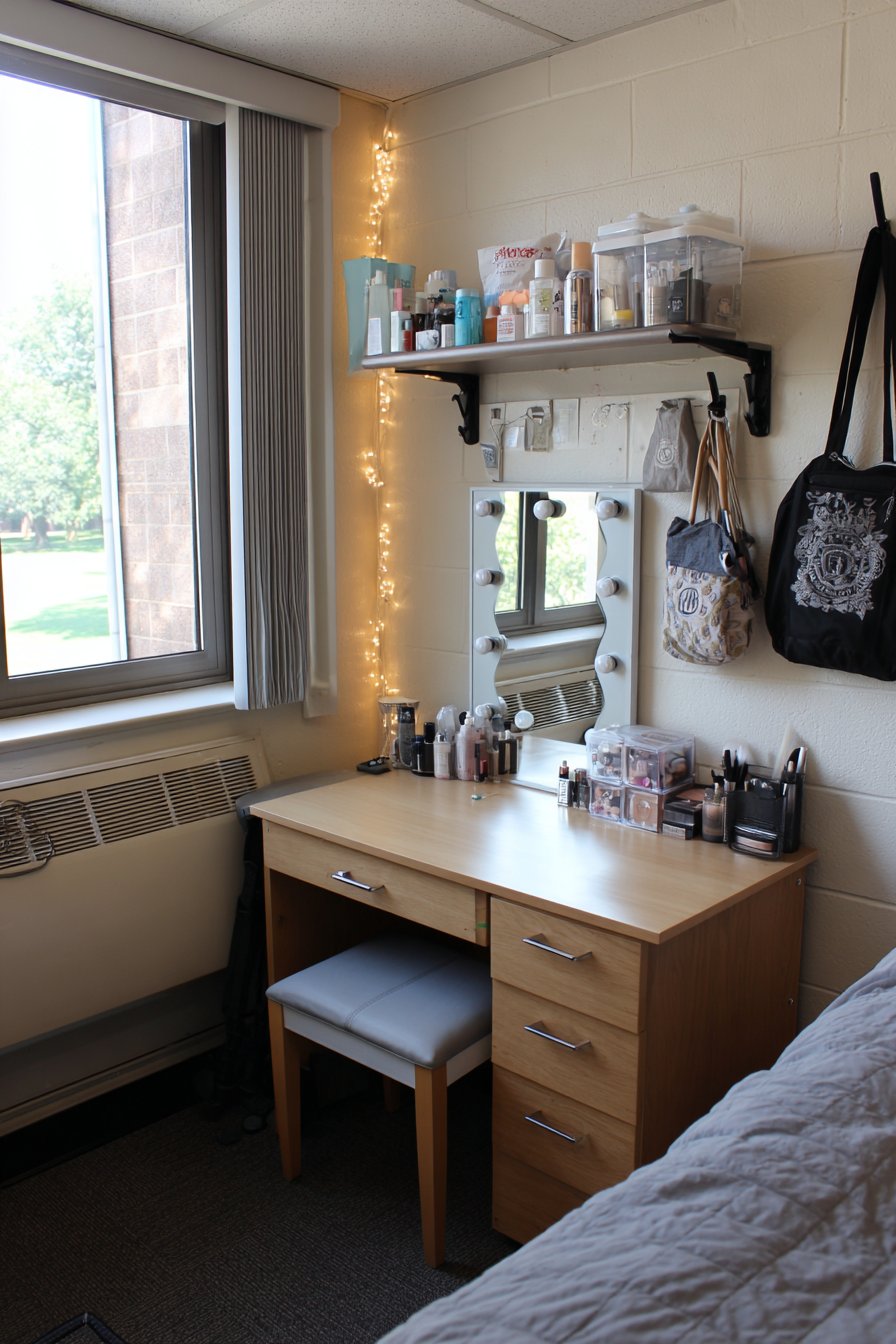
Dedicated vanity areas serve important morning routine functions. Narrow console tables with lighted makeup mirrors create grooming zones. Small drawer organizers hold cosmetics within easy reach. Simple stools tuck underneath when not in use.
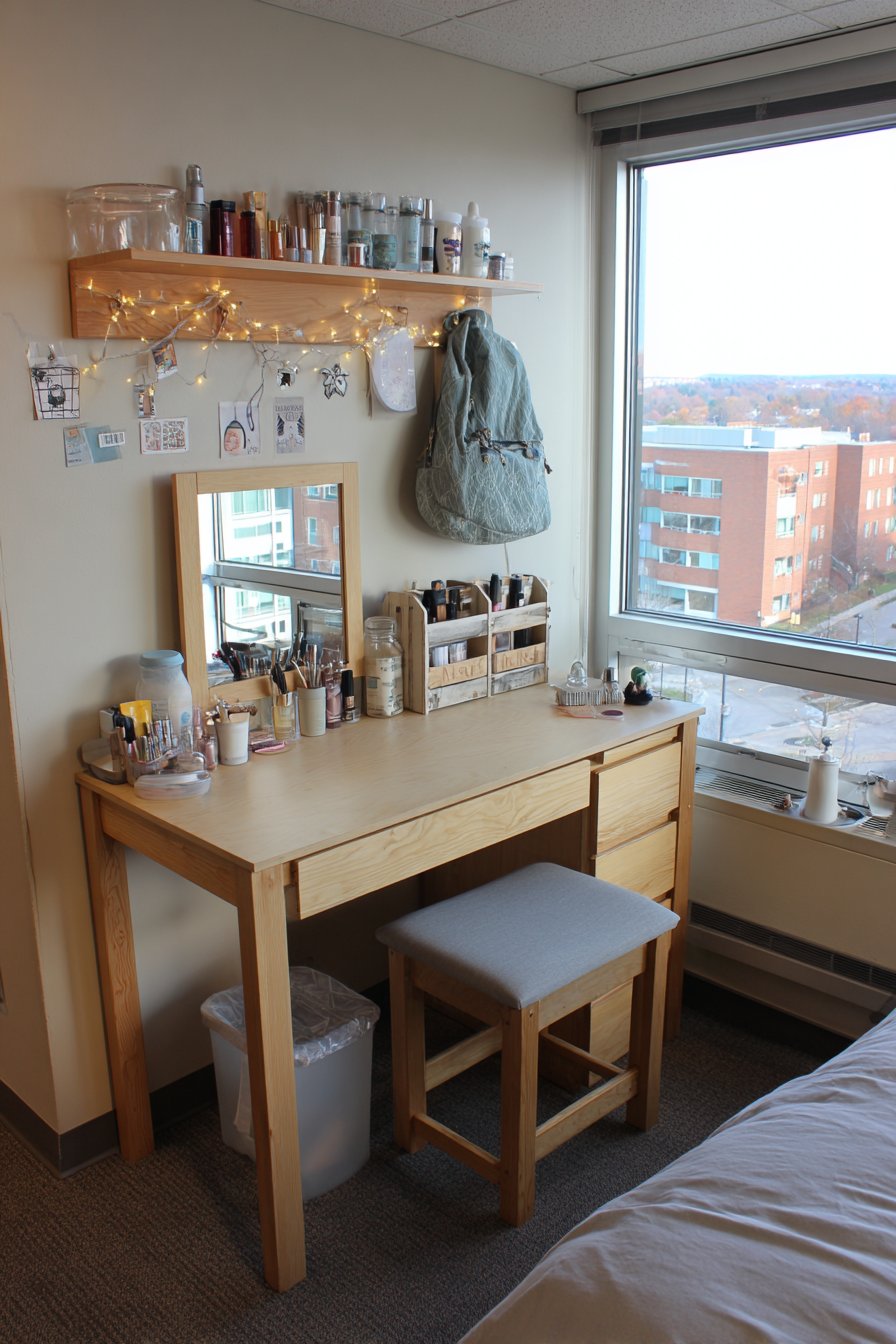
Wall shelves above hold beauty products in clear containers. Visible organization simplifies morning routines significantly. Small trash bins sit discreetly nearby for convenience. String lights frame mirrors providing flattering illumination for makeup application.
Adjacent walls have hooks for hair tools and bags. Natural window light from the side provides daytime illumination. The compact setup proves vanity areas need not consume significant space. Even small corners can accommodate dedicated grooming zones.
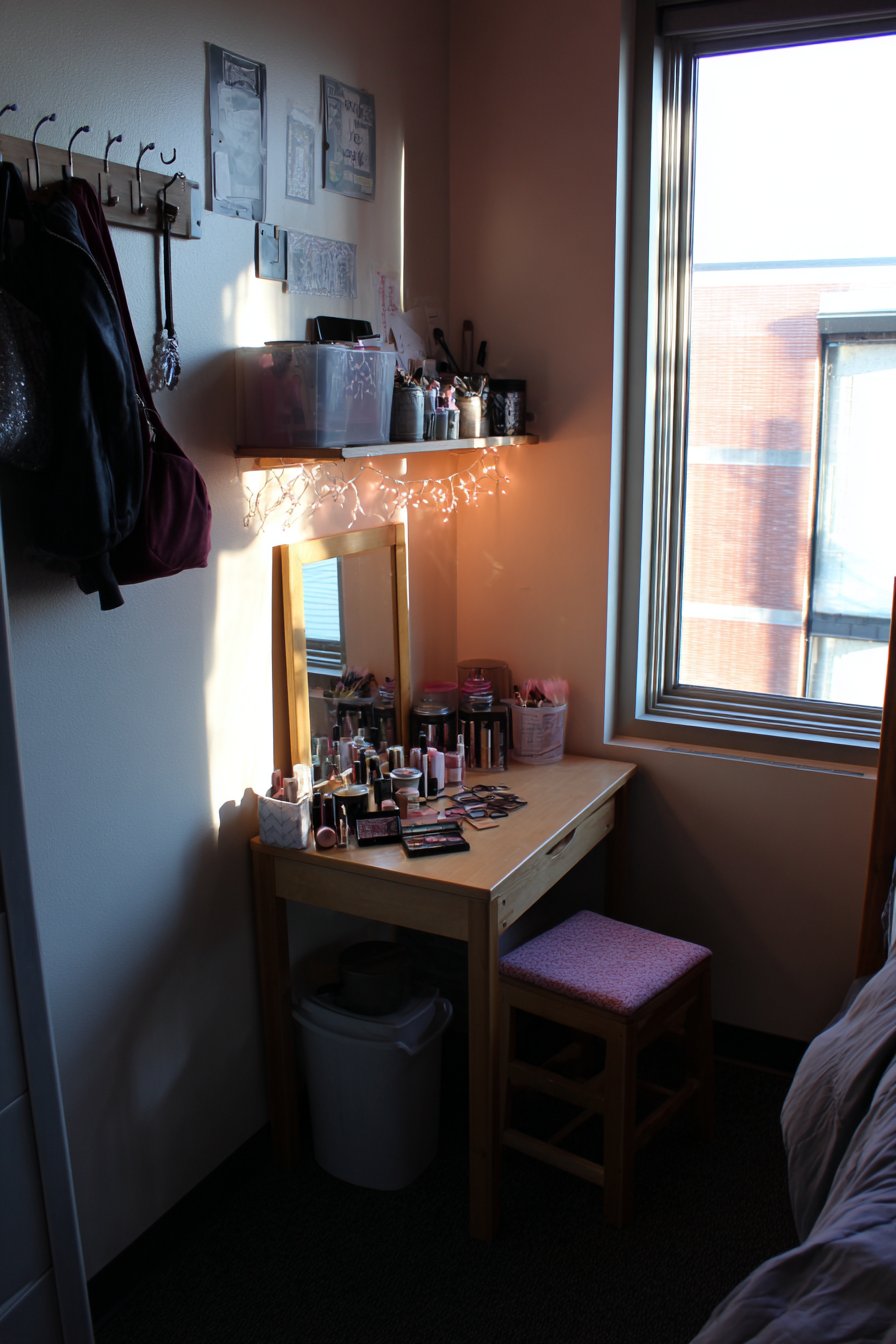
Morning routines become faster with organized dedicated spaces. Students rushing between classes appreciate efficient preparation areas. The investment in vanity setup saves daily time and stress. Functional personal spaces support confident self-presentation.
Key Design Tips:
- Choose narrow console tables that fit tight spaces efficiently
- Install lighted mirrors for consistent flattering illumination
- Use clear containers for visible organization of beauty products
- Position vanities near natural light sources when possible
- Add hooks nearby for hair tools and accessory storage
20. Smart Technology Integration
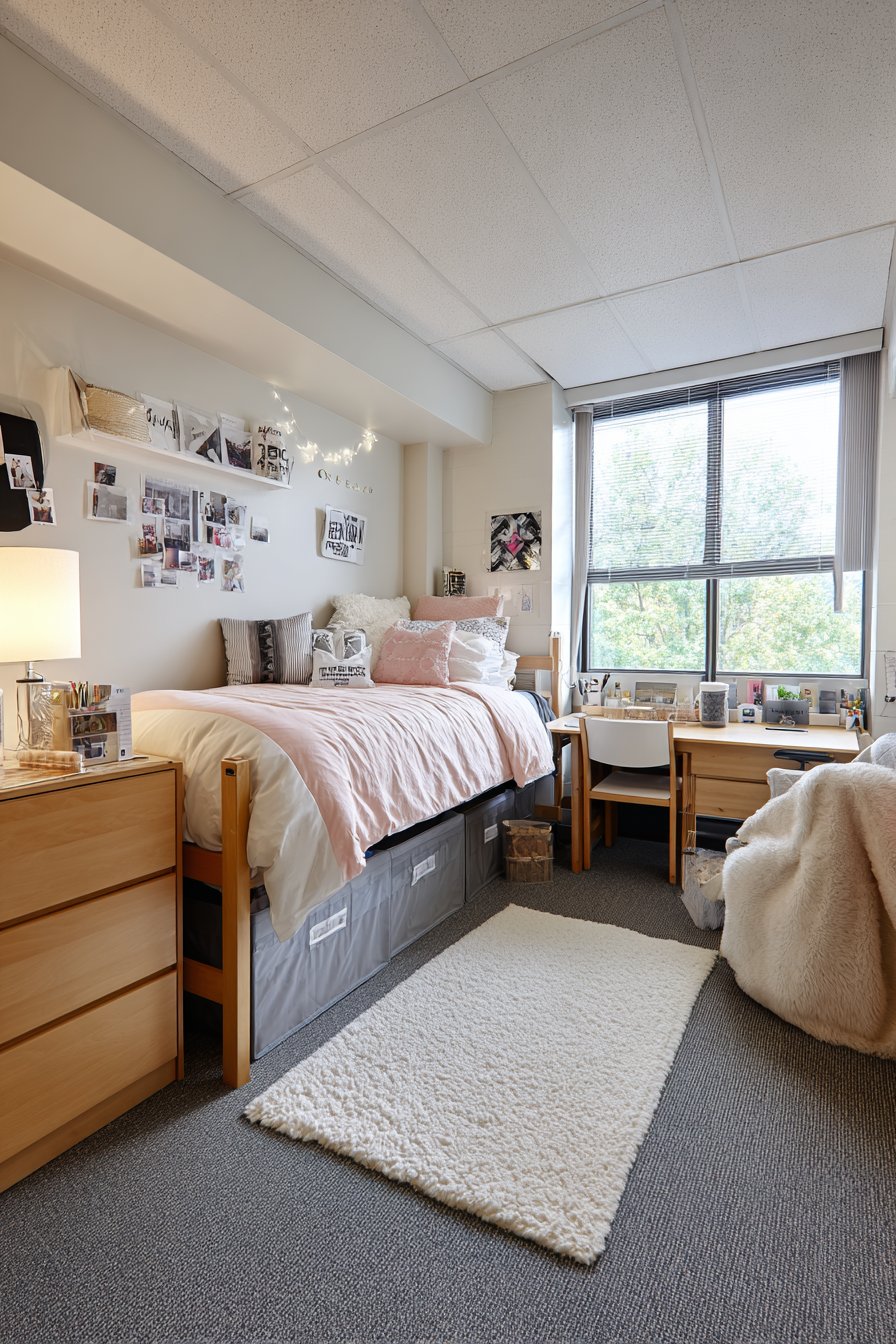
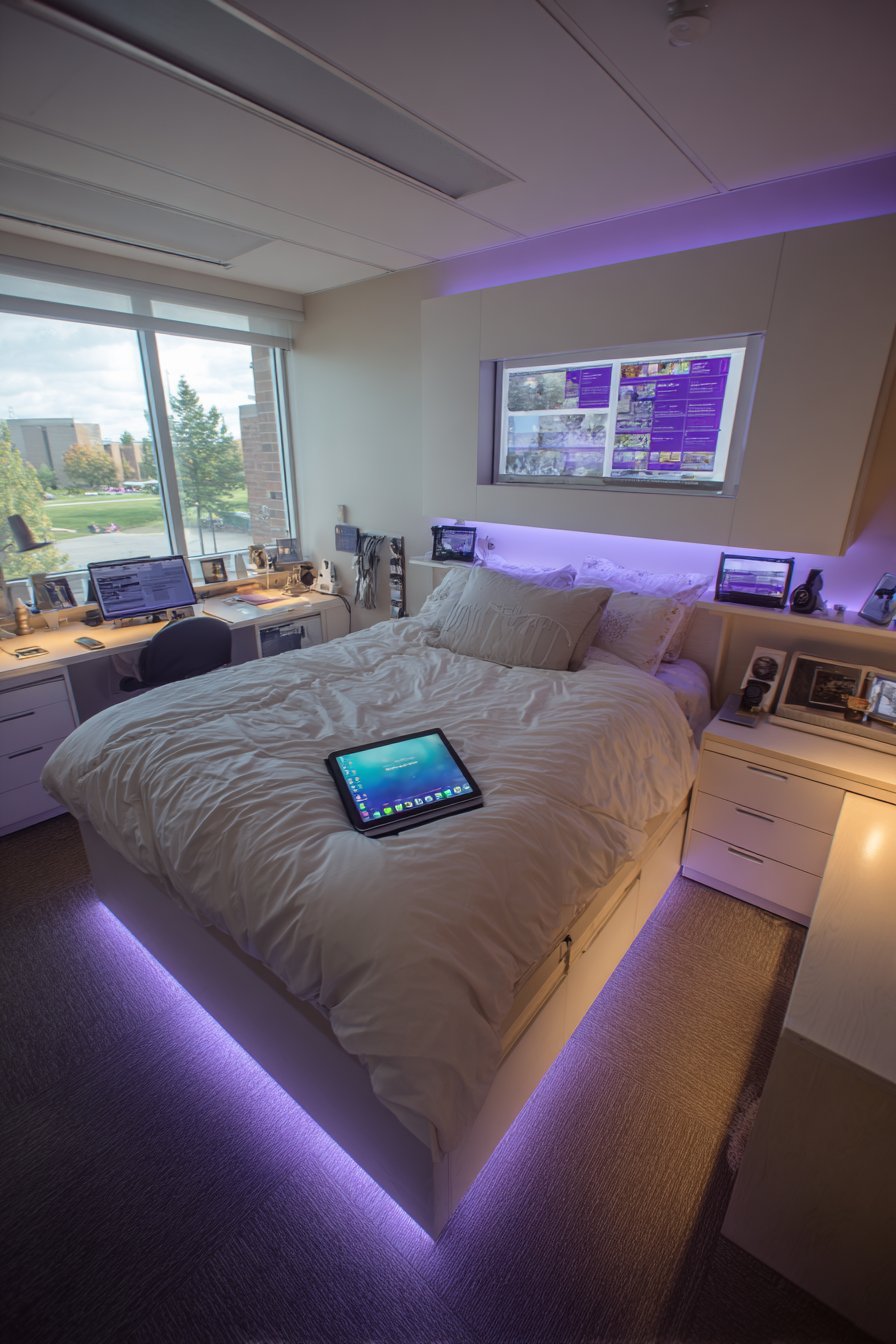
Modern technology enhances college bedroom functionality significantly. Voice-controlled smart speakers on nightstands provide hands-free convenience. LED strip lighting along bed frames connects to smartphones. Wall-mounted tablets serve as digital command centers and photo displays.
Wireless charging pads integrate into desk surfaces seamlessly. Beds feature USB ports built into headboards for device charging. Cable management systems keep cords organized and hidden. The clean modern aesthetic integrates technology without visual clutter.
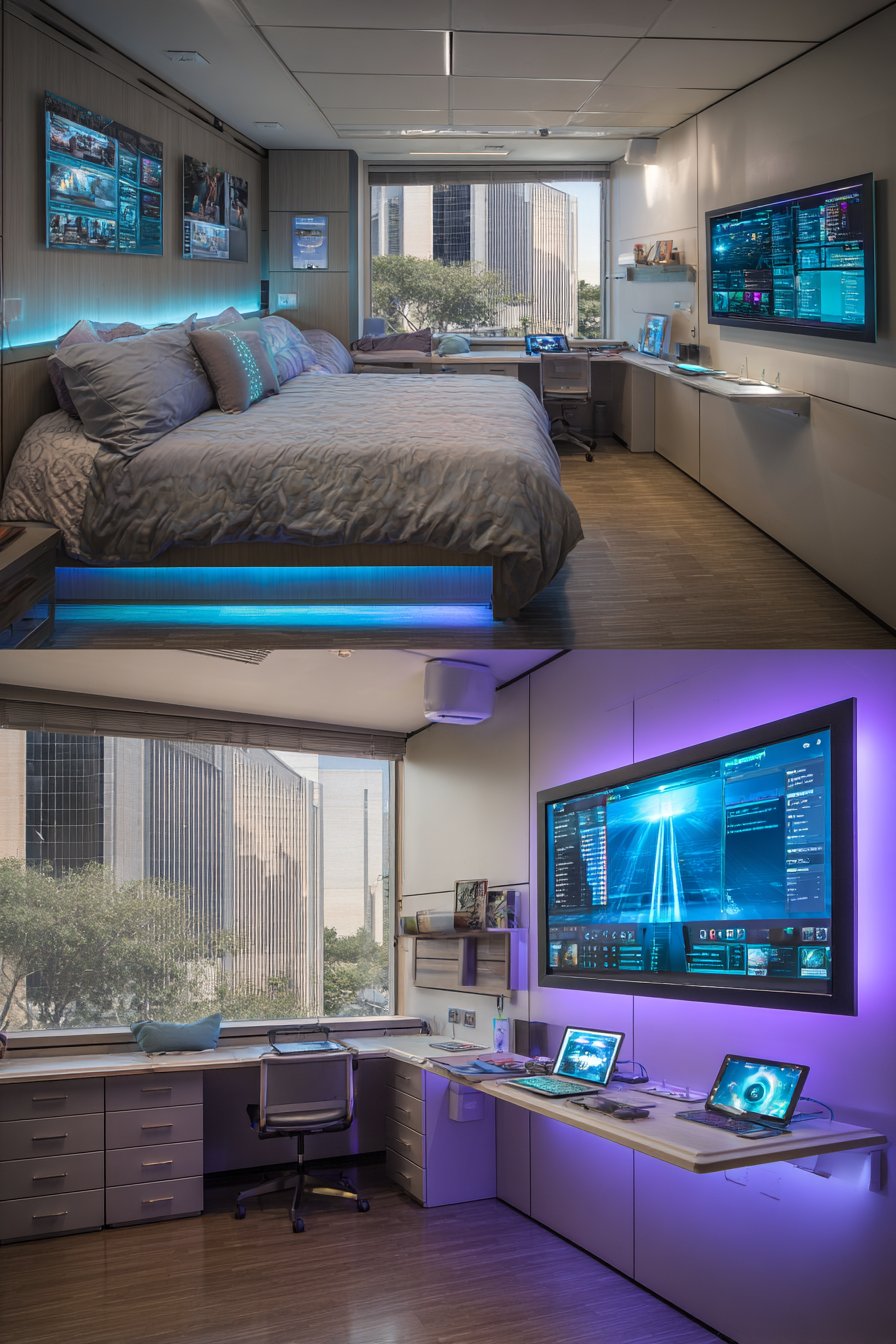
Customizable LED accent lighting mixes with natural window light. Students control ambiance through smartphone applications easily. The technology integration feels seamless rather than overwhelming. Modern conveniences enhance rather than complicate daily living.
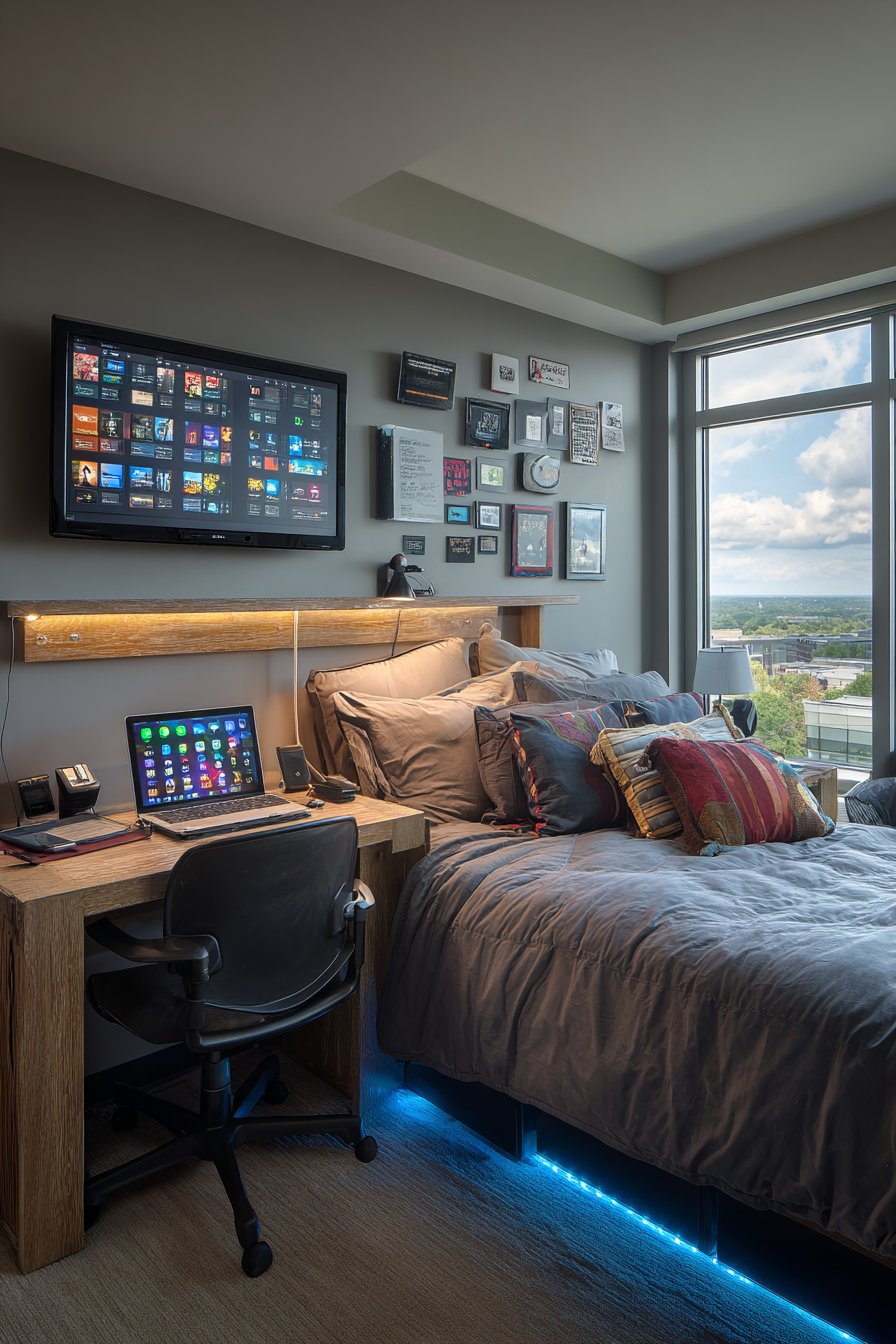
Tech-savvy solutions appeal to digitally native students. Smart integrations simplify daily routines and enhance convenience. The uncluttered aesthetic proves technology need not create visual chaos. Thoughtful implementation maintains clean functional living spaces.
Key Design Tips:
- Choose smart devices that integrate with existing technology ecosystems
- Install cable management systems before adding multiple devices
- Use LED lighting with adjustable colors and brightness settings
- Position wireless charging pads in frequently used locations
- Maintain clean aesthetics by hiding cords and organizing technology
Why These College Bedroom Designs Are the Best
These college bedroom designs address real student challenges with practical solutions. Each concept maximizes limited square footage through strategic furniture placement and vertical storage. The approaches balance aesthetic appeal with essential functionality that busy students require daily.
Budget consciousness runs throughout every design without sacrificing style. Thrifted furniture, DIY projects, and removable decorations respect financial constraints. These solutions prove beautiful spaces need not expensive investments. Creativity and planning matter more than unlimited budgets.
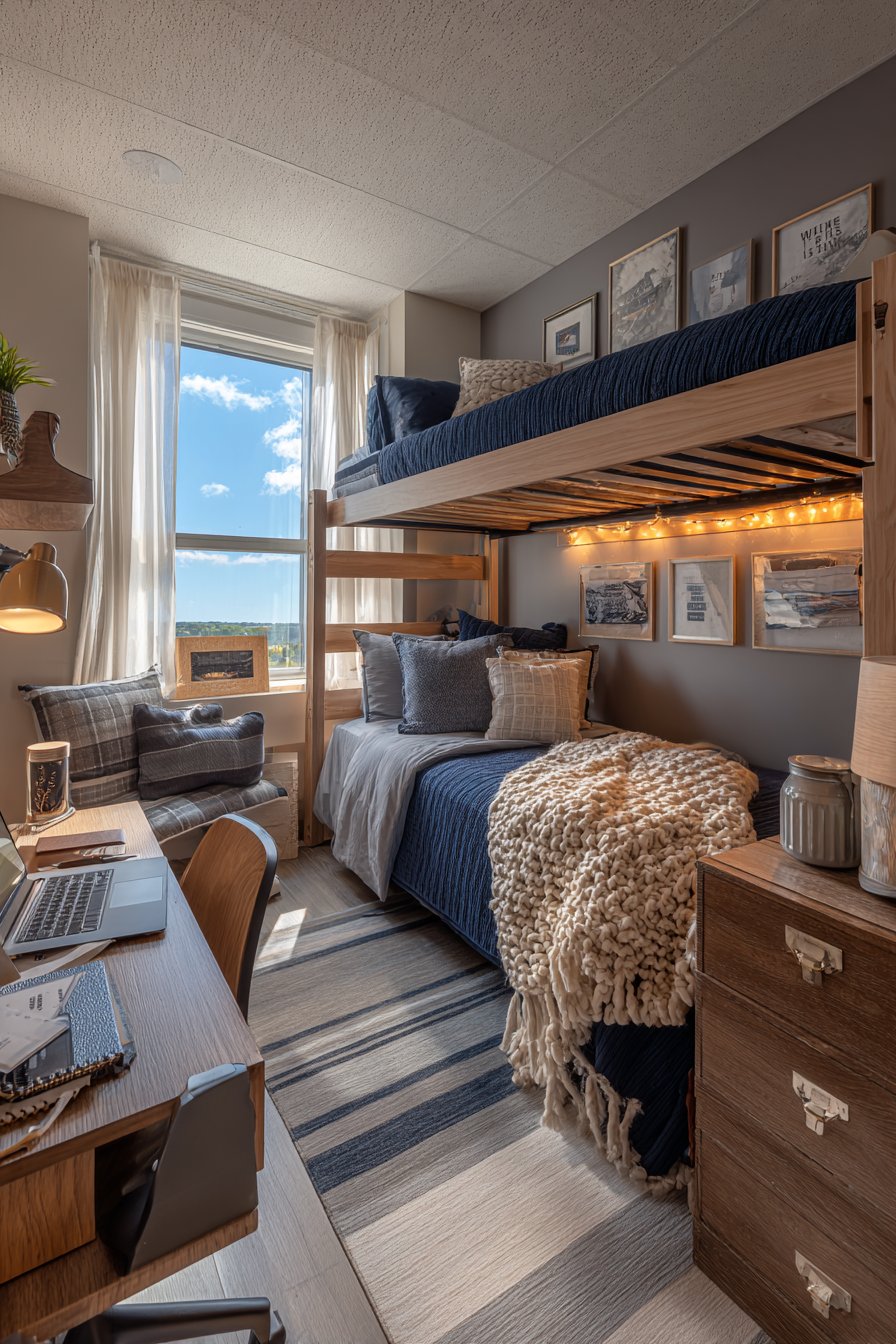
Rental-friendly approaches protect security deposits while allowing personalization. Removable adhesive strips, damage-free hooks, and temporary decorations transform institutional spaces. Students can express individuality without risking financial penalties. The balance between personal expression and property respect proves achievable.
Versatility allows these designs to adapt throughout college years. Modular systems and multipurpose furniture accommodate changing needs and preferences. Freshman year requirements differ from senior year situations. Flexible designs grow alongside students’ evolving lifestyles and academic demands.
The incorporation of personal expression prevents generic institutional feelings. Gallery walls, themed decorations, and cherished collections create meaningful environments. Students perform better academically when surrounded by inspiring personal spaces. The psychological benefits of personalized rooms extend beyond mere aesthetics.
Practical considerations like adequate lighting and ergonomic furniture support student health. Adjustable task lighting prevents eye strain during long study sessions. Proper desk chairs protect posture and prevent back problems. These health-conscious choices demonstrate that good design considers physical wellbeing.
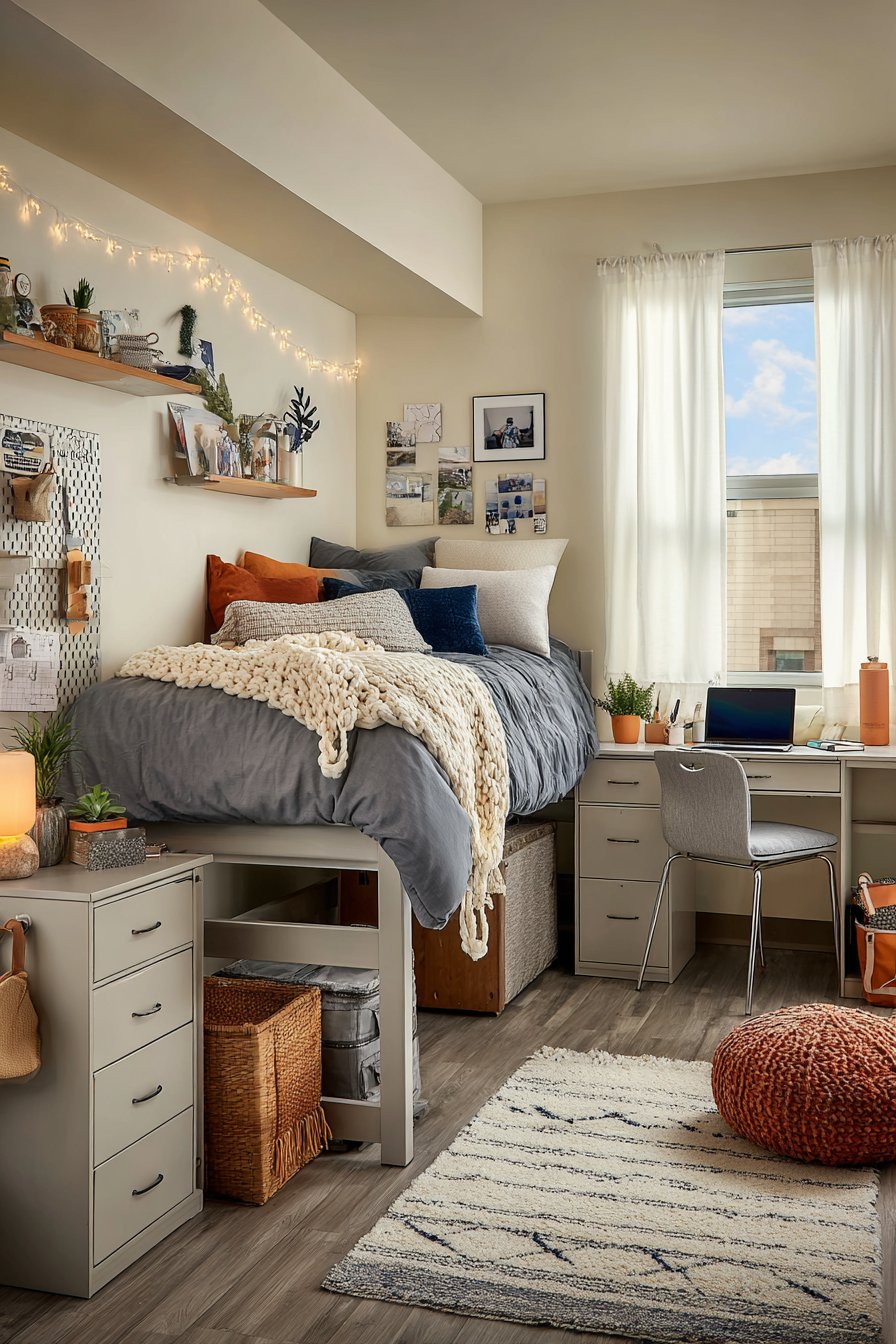
Storage solutions acknowledge that organization reduces stress significantly. Visible systems, labeled containers, and strategic placement simplify daily routines. Students waste less time searching for items in organized spaces. The mental clarity from physical organization extends to academic performance.
Conclusion
These twenty college bedroom designs prove that limitations inspire creativity. Small spaces, tight budgets, and rental restrictions become opportunities rather than obstacles. The key takeaways emphasize vertical storage, multipurpose furniture, and removable personalization methods.
Successful college bedrooms balance multiple functions within compact footprints. They serve as sleeping quarters, study zones, social spaces, and personal retreats simultaneously. Quality design considers all these purposes without compromising any essential function.
Start your college bedroom transformation by identifying your specific needs and preferences. Measure your space carefully before purchasing any furniture. Invest in versatile pieces that serve multiple purposes throughout your college years. Your personalized, functional college bedroom awaits creation through thoughtful planning and creative expression.