


A narrow bedroom presents unique challenges that can either frustrate or inspire creative design solutions. The key lies in understanding how to maximize every inch while maintaining functionality and aesthetic appeal. Many homeowners struggle with cramped spaces, but with strategic furniture placement and thoughtful design choices, even the most confined bedroom can become a serene retreat.
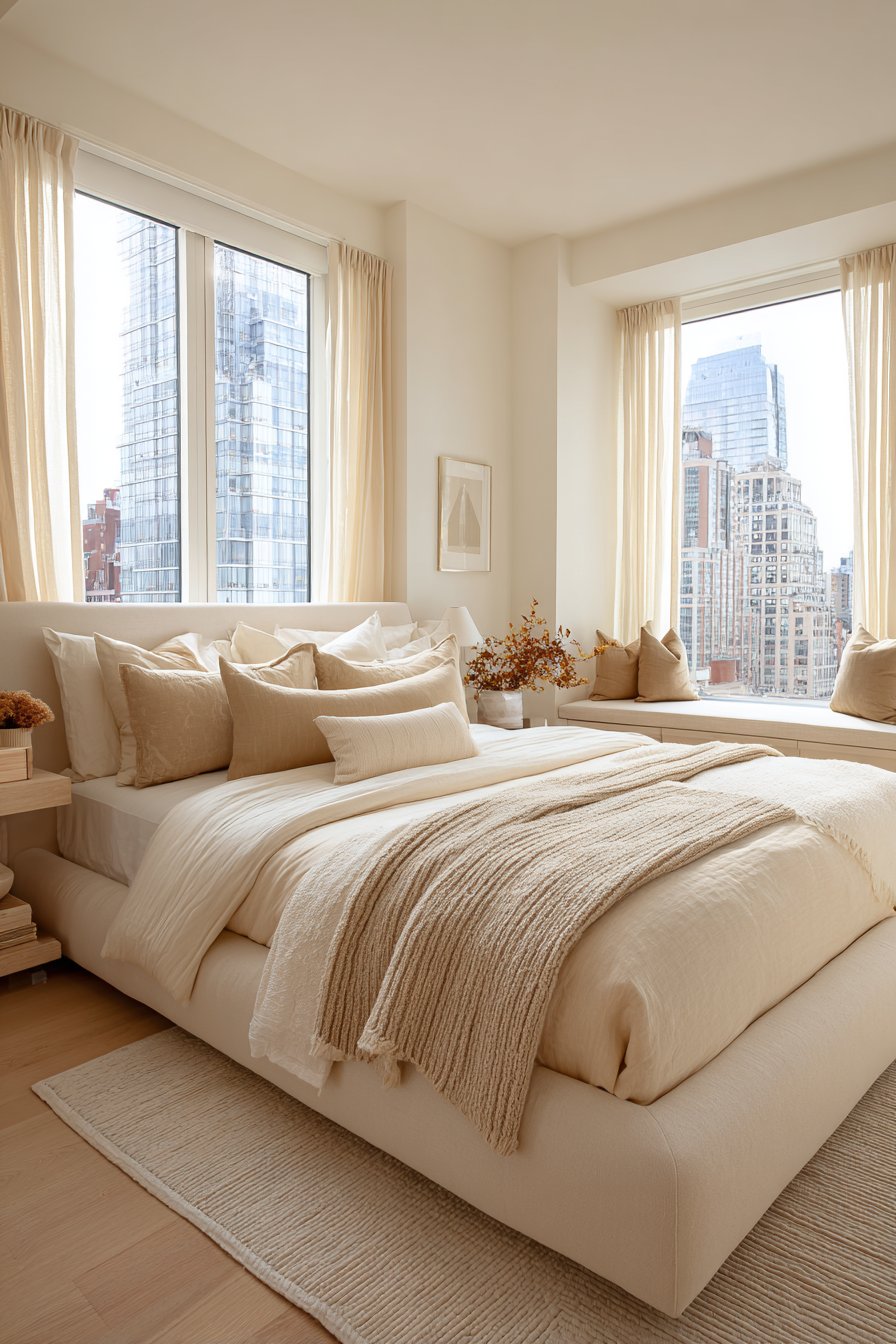
Thoughtful interior design transforms limitations into opportunities for innovation and personal expression. When working with narrow spaces, every decision matters from furniture scale to color selection. The right arrangement not only enhances movement flow but also creates visual harmony that makes the room feel more spacious. Different design approaches cater to various lifestyles, whether you prioritize storage, work space, or pure relaxation.
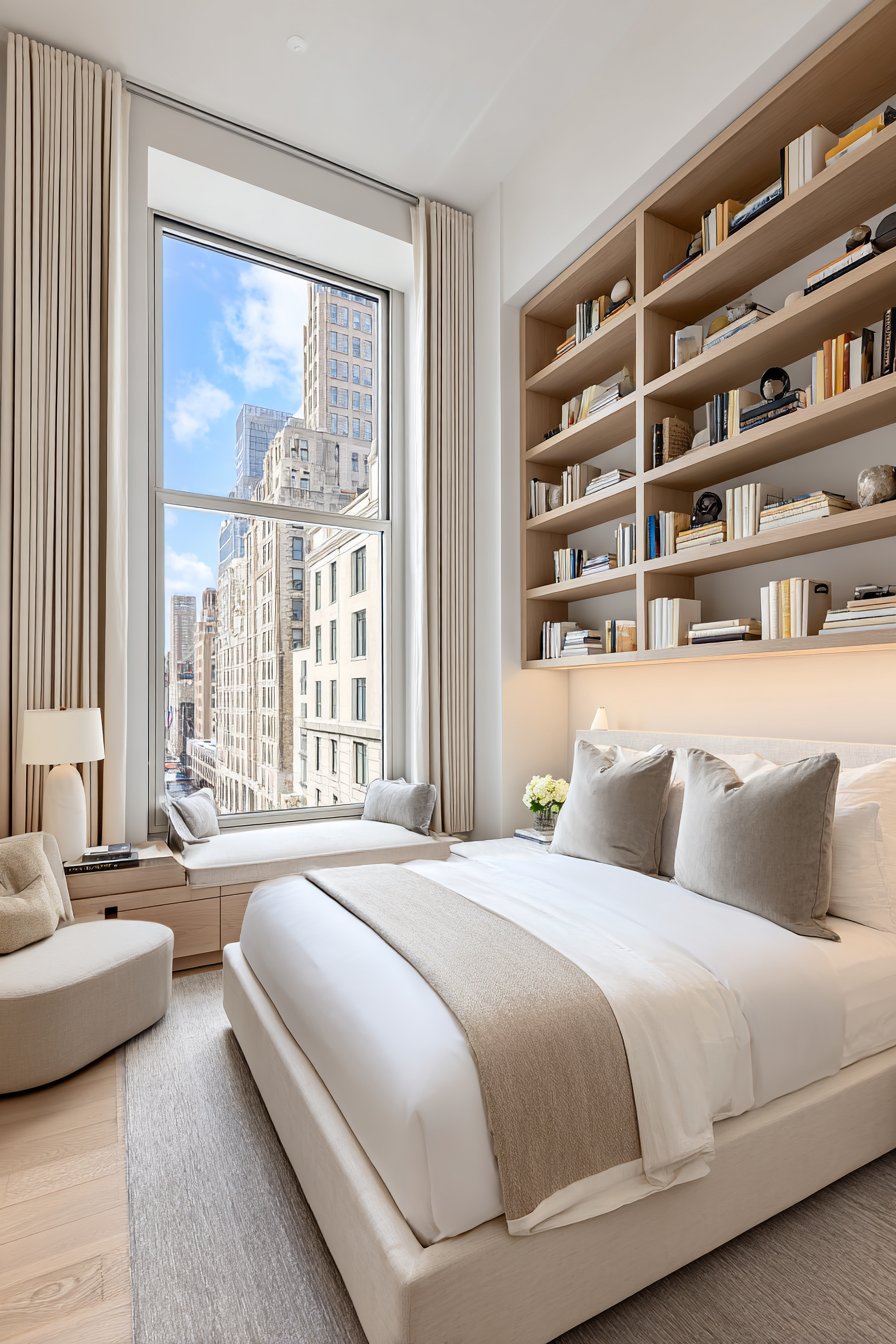
This comprehensive guide explores proven techniques for arranging furniture in narrow bedrooms effectively. From strategic bed placement to clever storage solutions, we’ll cover essential tips that professional designers use to optimize compact spaces. These ideas emphasize practicality without sacrificing style, ensuring your narrow bedroom becomes a comfortable sanctuary that reflects your personality and meets your daily needs.
1. Position the Bed Against the Longest Wall
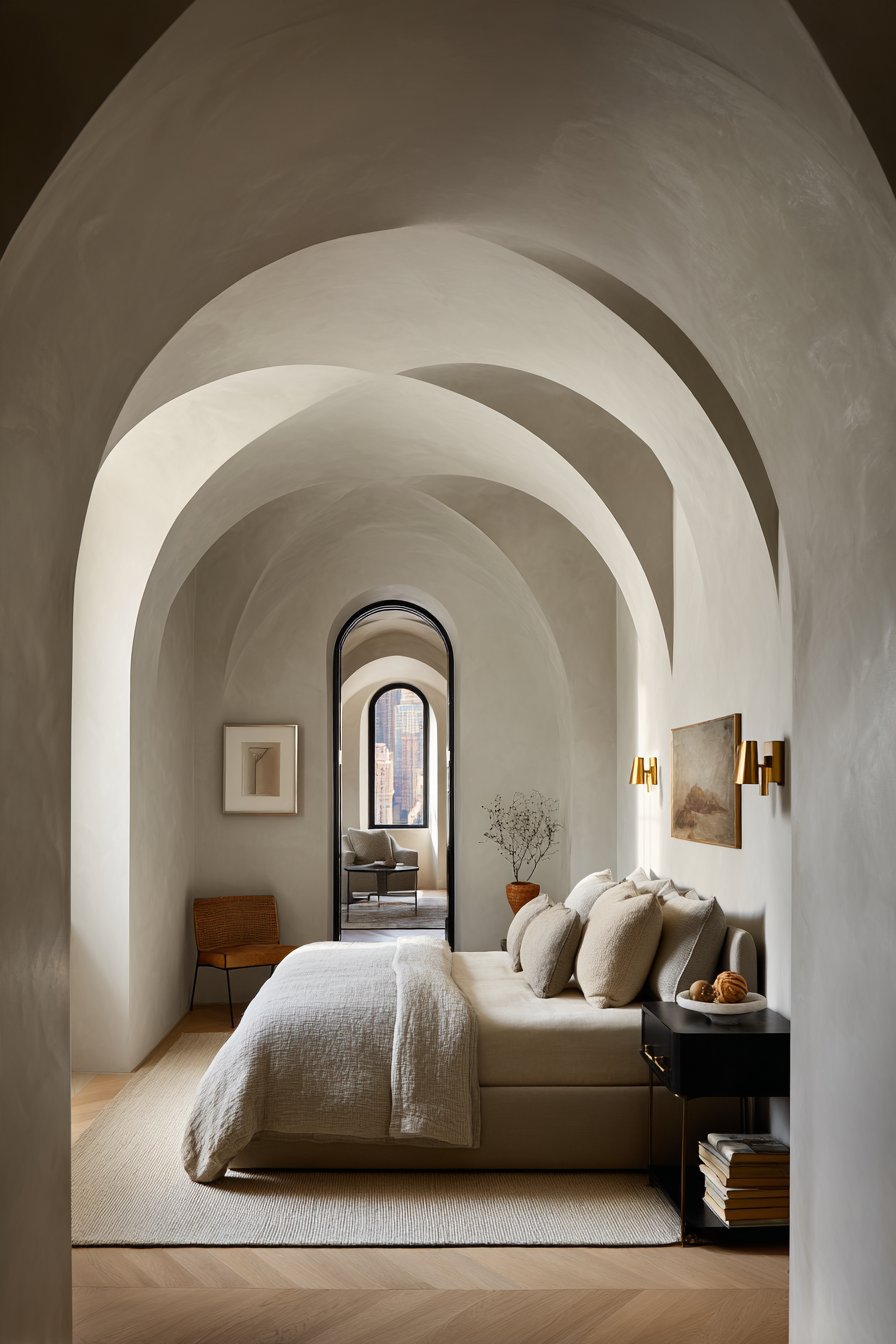
Placing your bed against the longest wall creates optimal floor space and establishes a clear focal point. This fundamental arrangement opens up circulation paths on both sides, making the room feel less congested. The longest wall typically provides the most stability for bed placement, allowing you to build the rest of your furniture layout around this anchor piece.
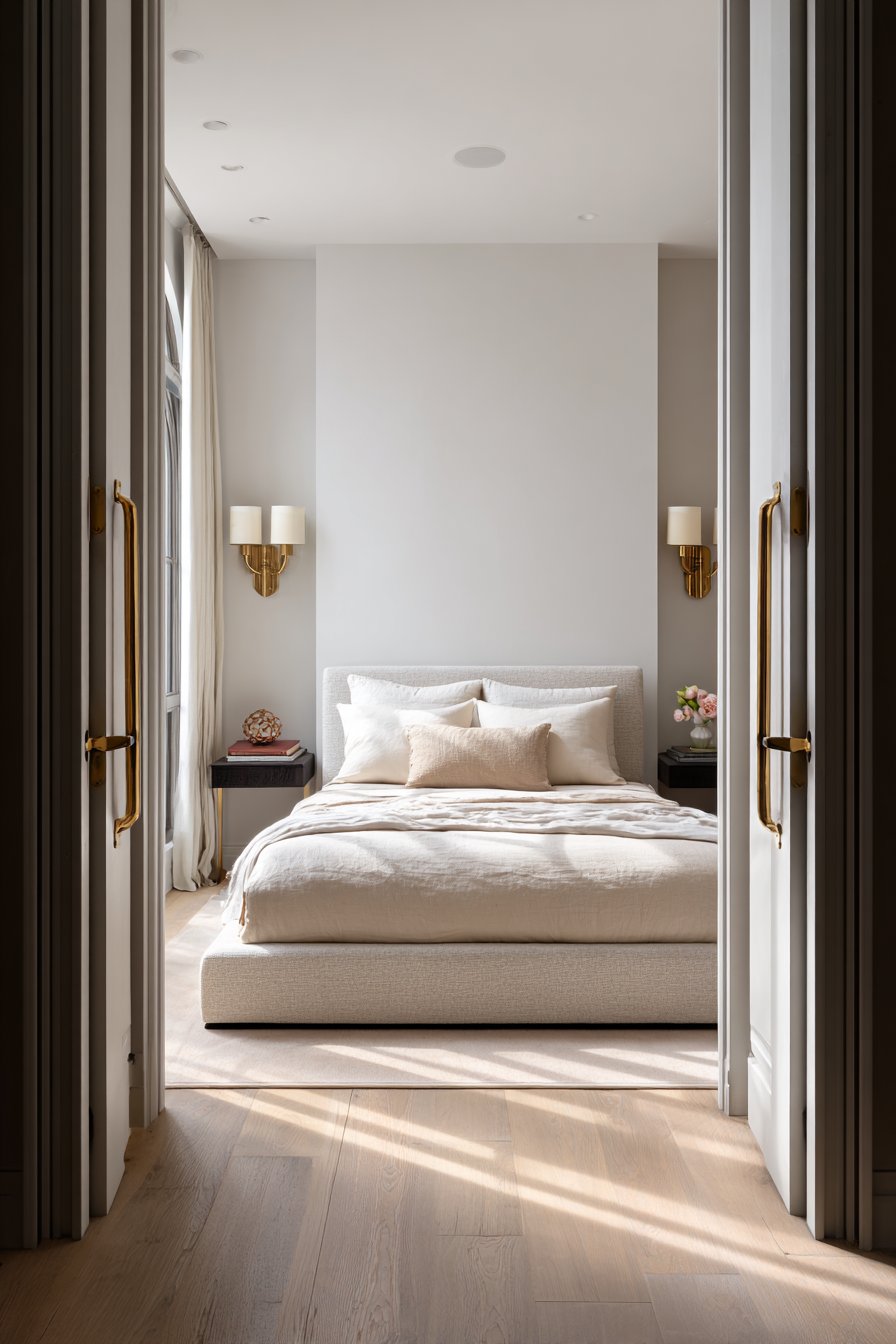
This positioning maximizes usable square footage while creating visual balance throughout the space. When the bed sits parallel to the longest dimension, it naturally draws the eye lengthwise, creating an illusion of greater width. Avoid placing the bed perpendicular to narrow walls, as this arrangement chokes circulation and makes the room feel cramped.
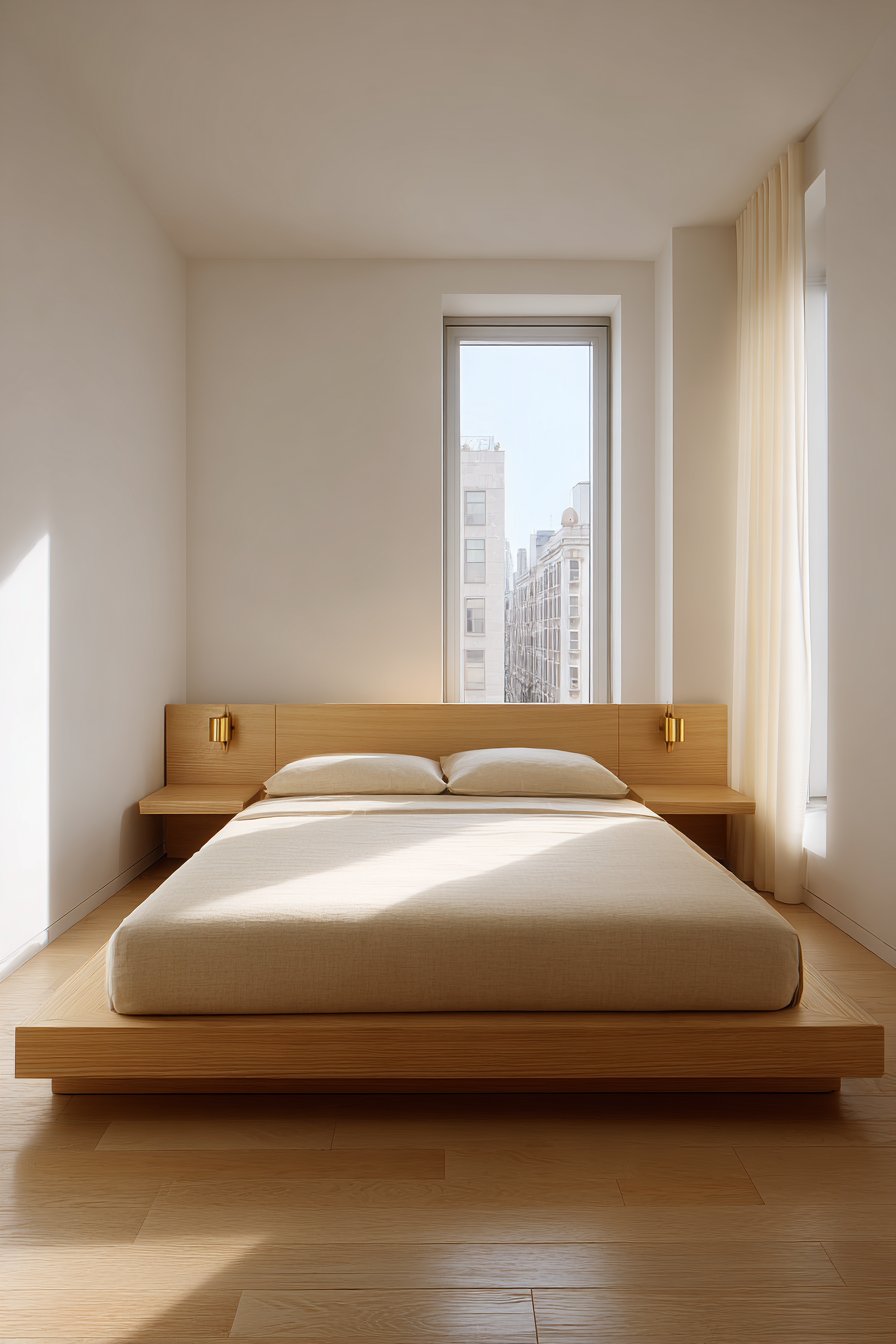
Consider headboard height and style when implementing this layout strategy. A low-profile headboard prevents the room from feeling top-heavy while maintaining comfort and style. Built-in shelving within the headboard adds functionality without consuming additional floor space, serving dual purposes efficiently.
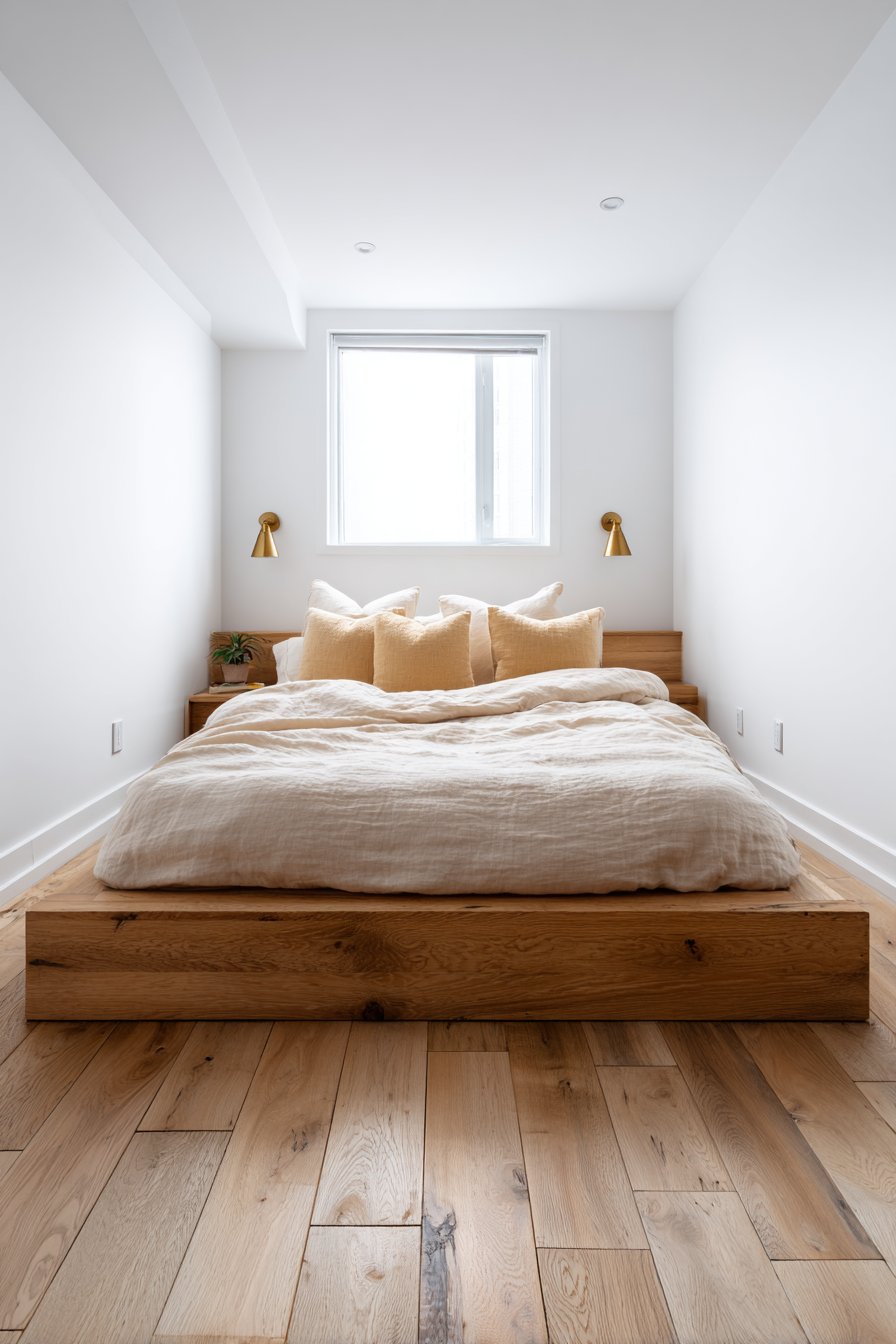
- Center the bed on the longest wall for symmetrical balance
- Leave at least 24 inches of clearance on each side for easy access
- Choose a platform bed with built-in storage to maximize vertical space
- Avoid oversized headboards that overwhelm narrow proportions
- Position bedside tables at the same height as mattress top
- Use wall-mounted reading lights instead of table lamps to save space
2. Embrace Vertical Storage Solutions
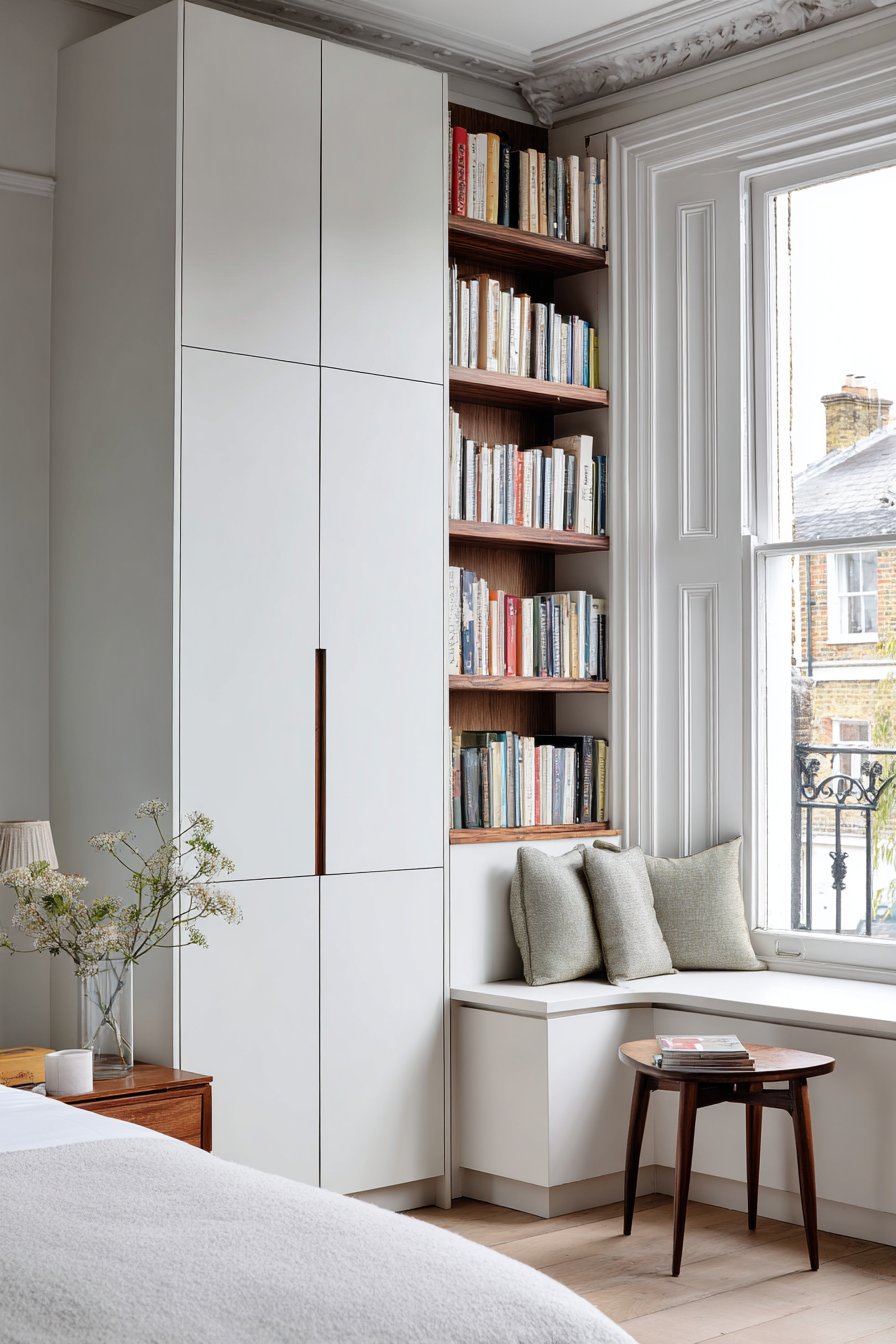
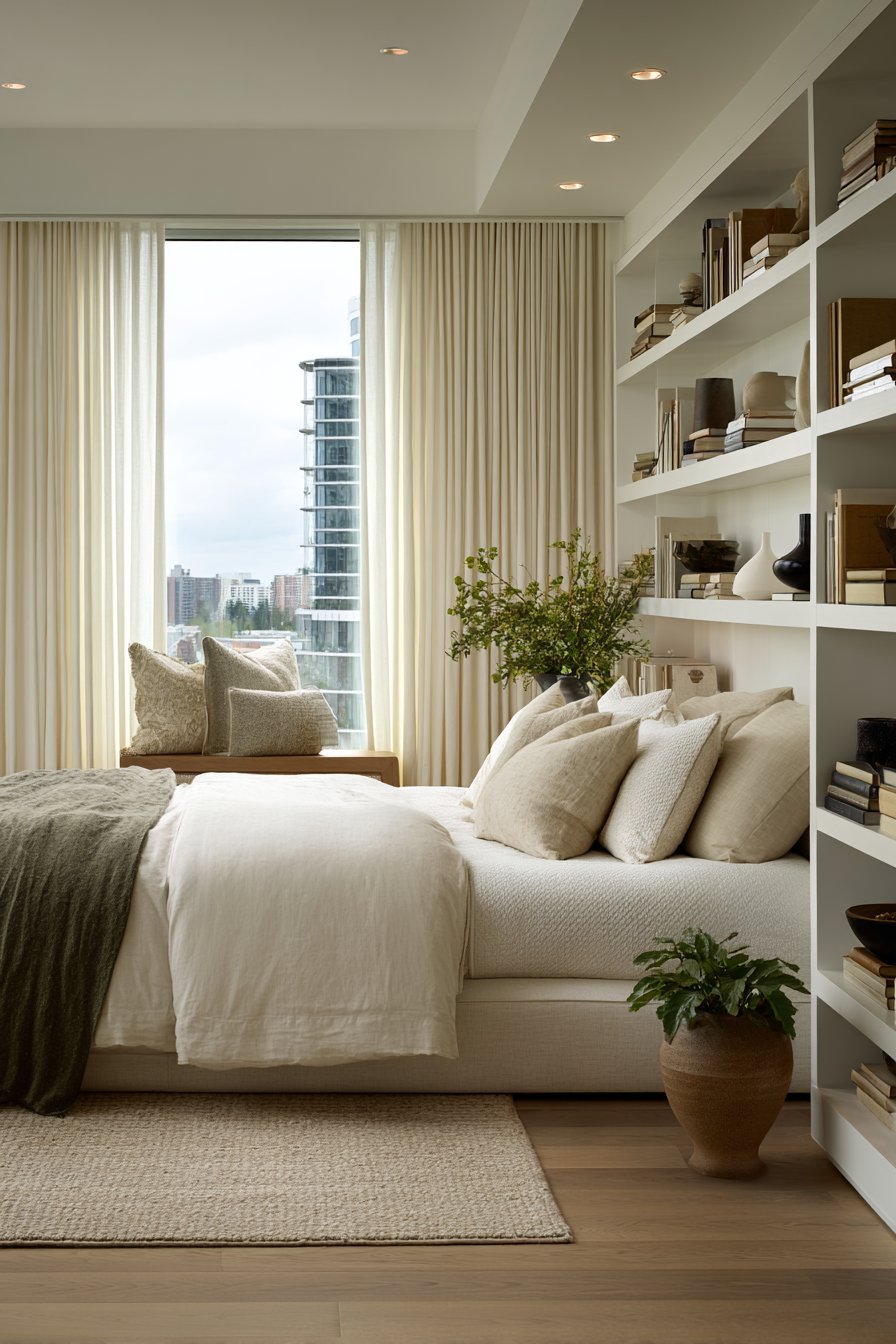
Vertical space remains vastly underutilized in most narrow bedrooms, yet it offers tremendous storage potential. Installing floor-to-ceiling shelving units or tall wardrobes draws the eye upward, creating the perception of higher ceilings and more spacious surroundings. This approach keeps clutter off floors while providing ample room for books, décor, and personal items.
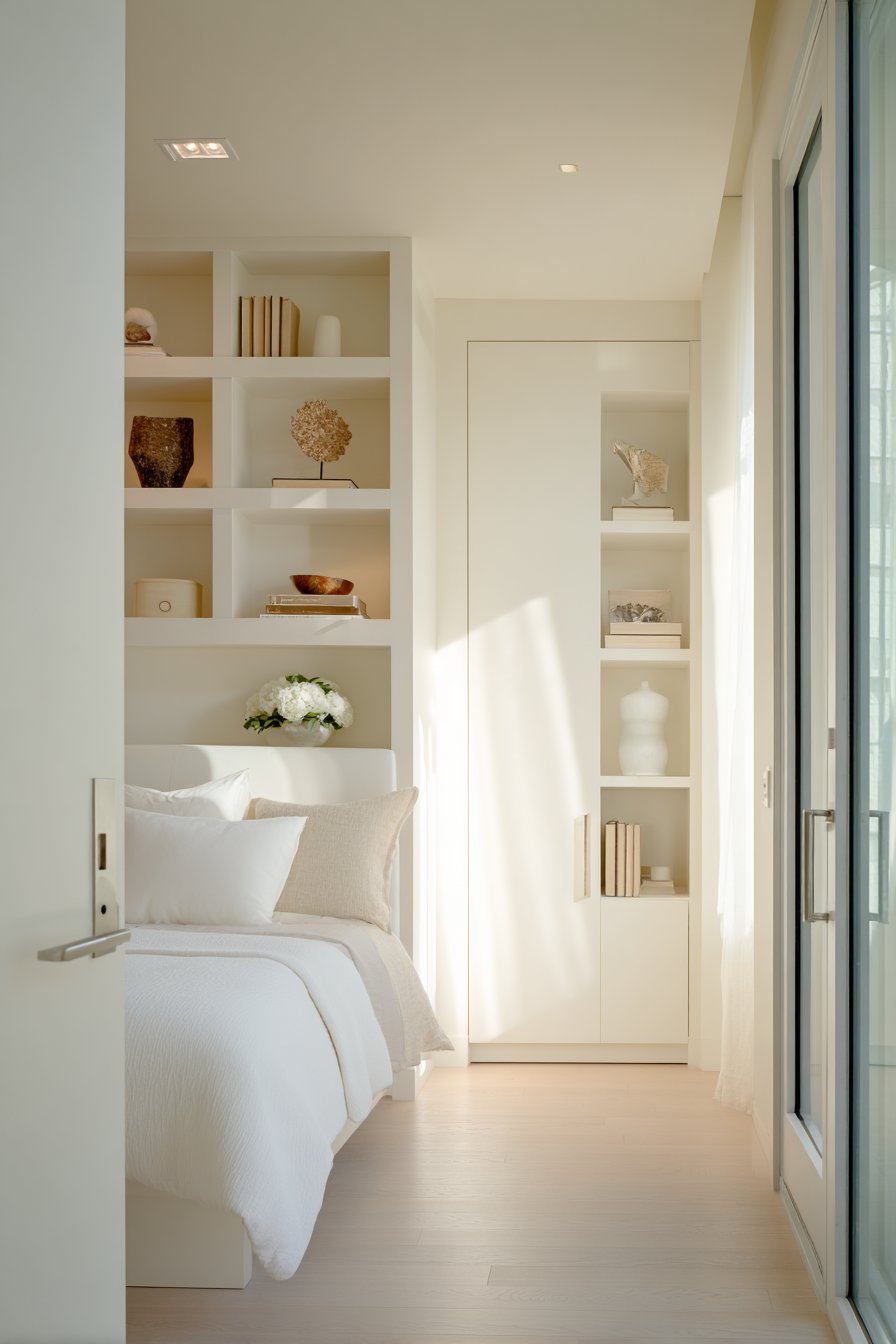
Wall-mounted cabinets and floating shelves eliminate the need for bulky furniture pieces that consume precious floor space. These solutions maintain accessibility while keeping the lower portion of walls clear, which contributes to a more open feeling. Vertical storage also creates distinct zones within the room without requiring physical dividers or partitions.
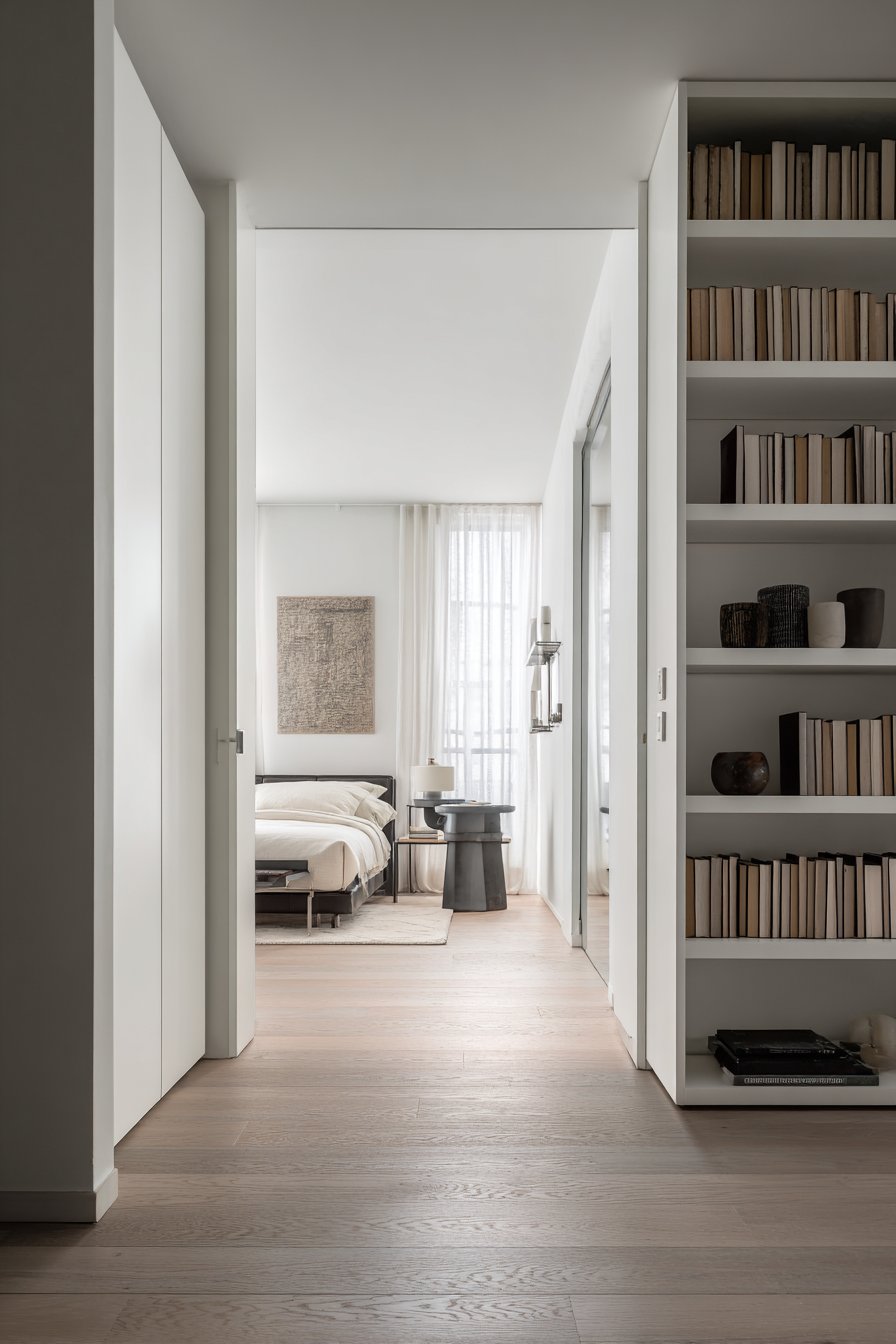
Stacking storage containers and using tall dressers instead of wide ones optimizes narrow bedroom layouts beautifully. The vertical emphasis complements the room’s proportions rather than fighting against them. Choose furniture with legs rather than pieces that sit directly on the floor to enhance visual lightness and airiness.
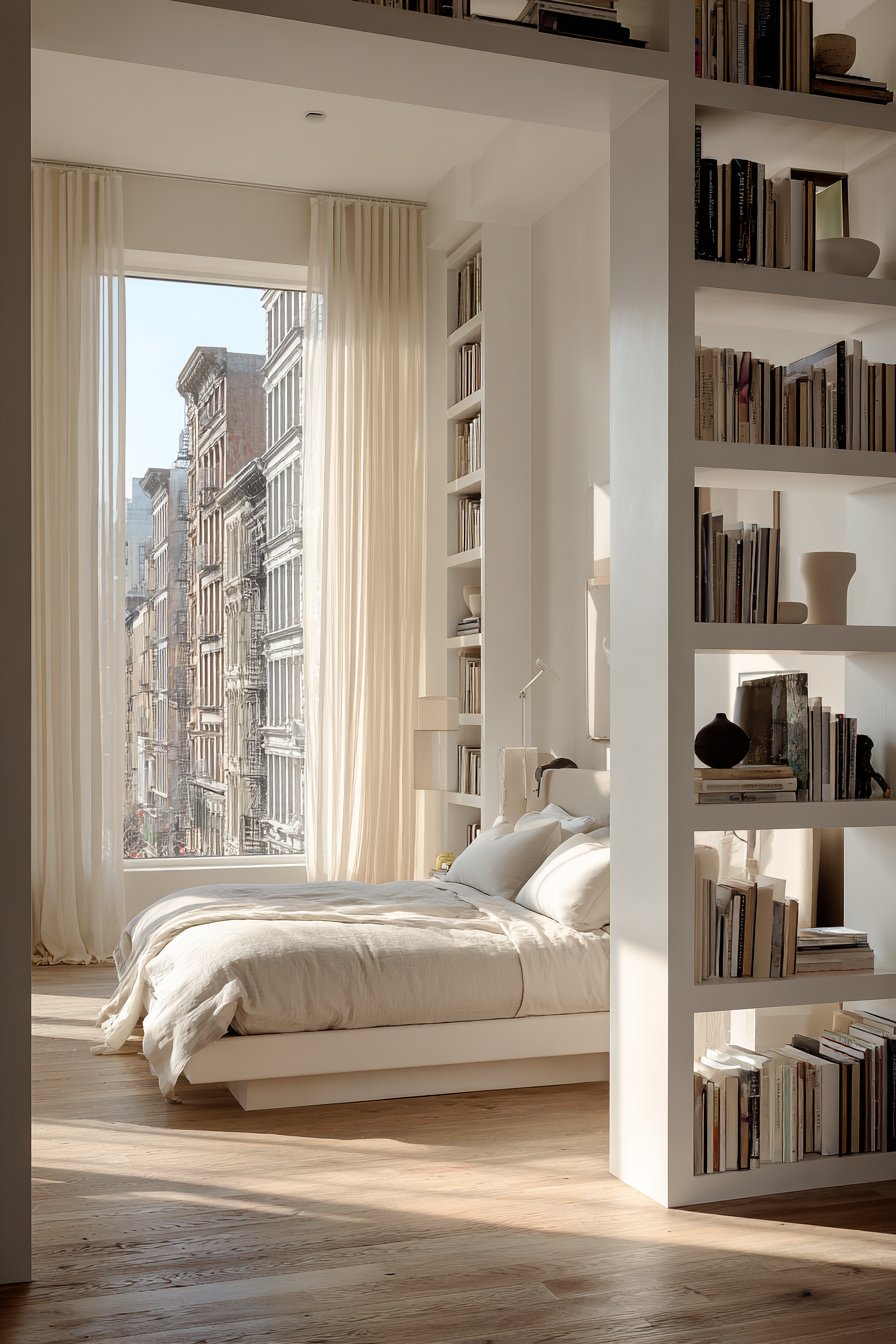
- Install floating shelves above the bed for books and decorative items
- Use over-door organizers for shoes, accessories, or toiletries
- Choose armoires over horizontal dressers to save floor space
- Mount hooks and pegboards on walls for frequently used items
- Stack storage boxes vertically in closets to maximize height
- Consider a Murphy bed with built-in shelving for ultimate space efficiency
3. Select Multi-Functional Furniture Pieces
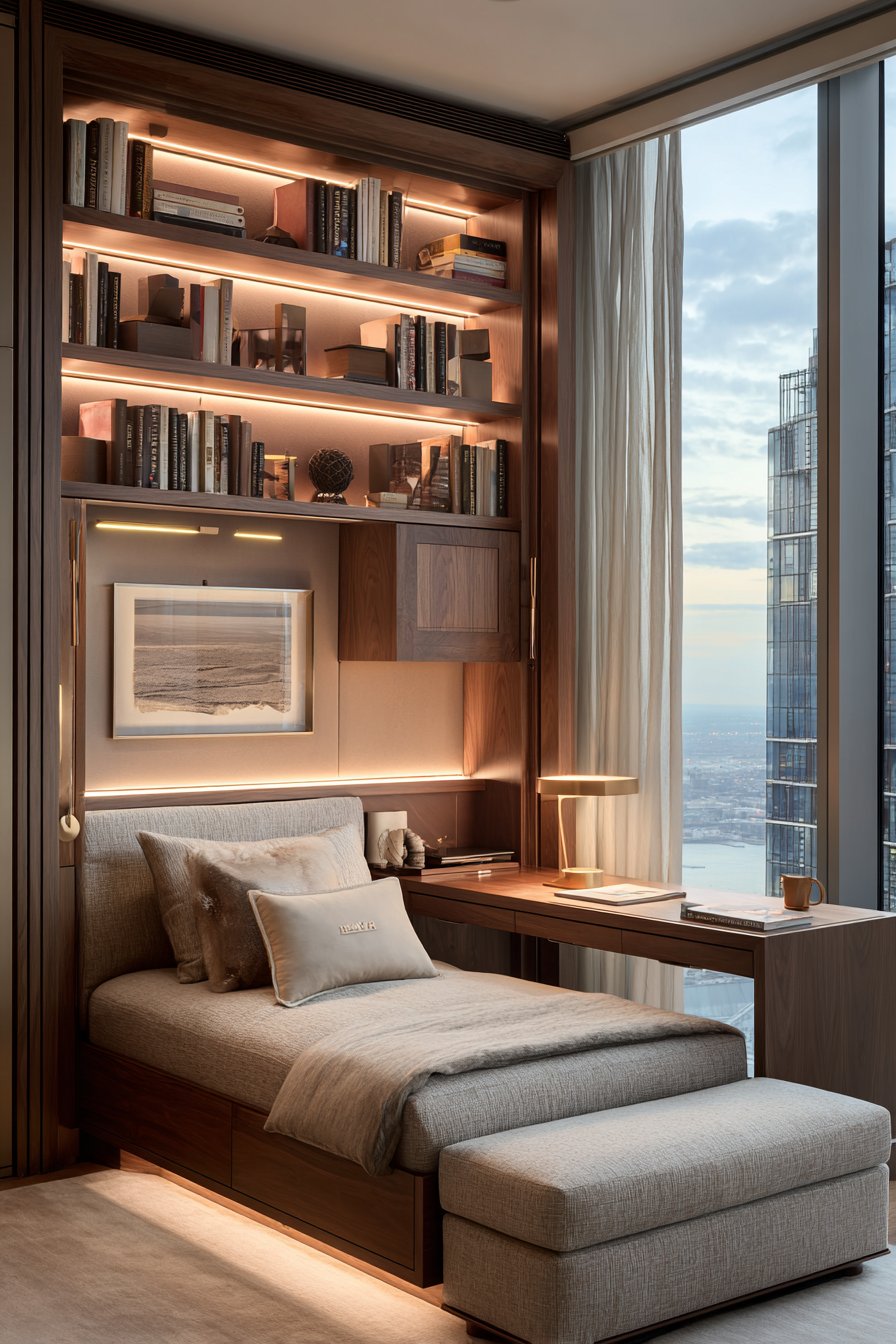
Multi-functional furniture represents the smartest investment for narrow bedroom arrangements, combining multiple purposes into single item. Storage ottomans serve as seating, storage, and occasional tables simultaneously. A desk that folds into the wall disappears when not needed, preserving open floor space throughout the day.
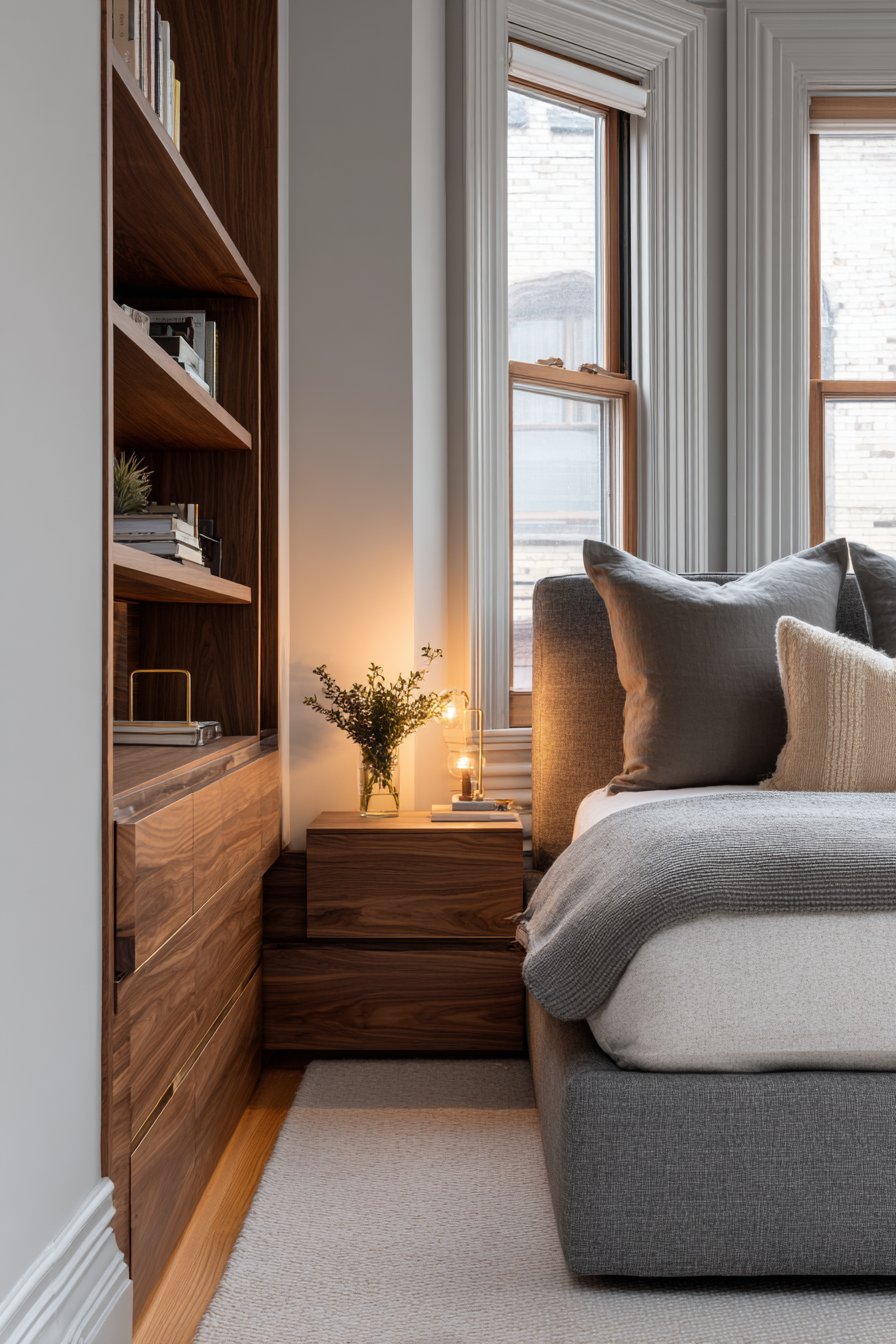
These versatile pieces reduce furniture quantity while maintaining full functionality. Fewer items mean less visual clutter and improved circulation throughout the space. A bed with drawers underneath eliminates the need for a separate dresser, while a bench with lift-up storage provides seating and organization in one compact footprint.
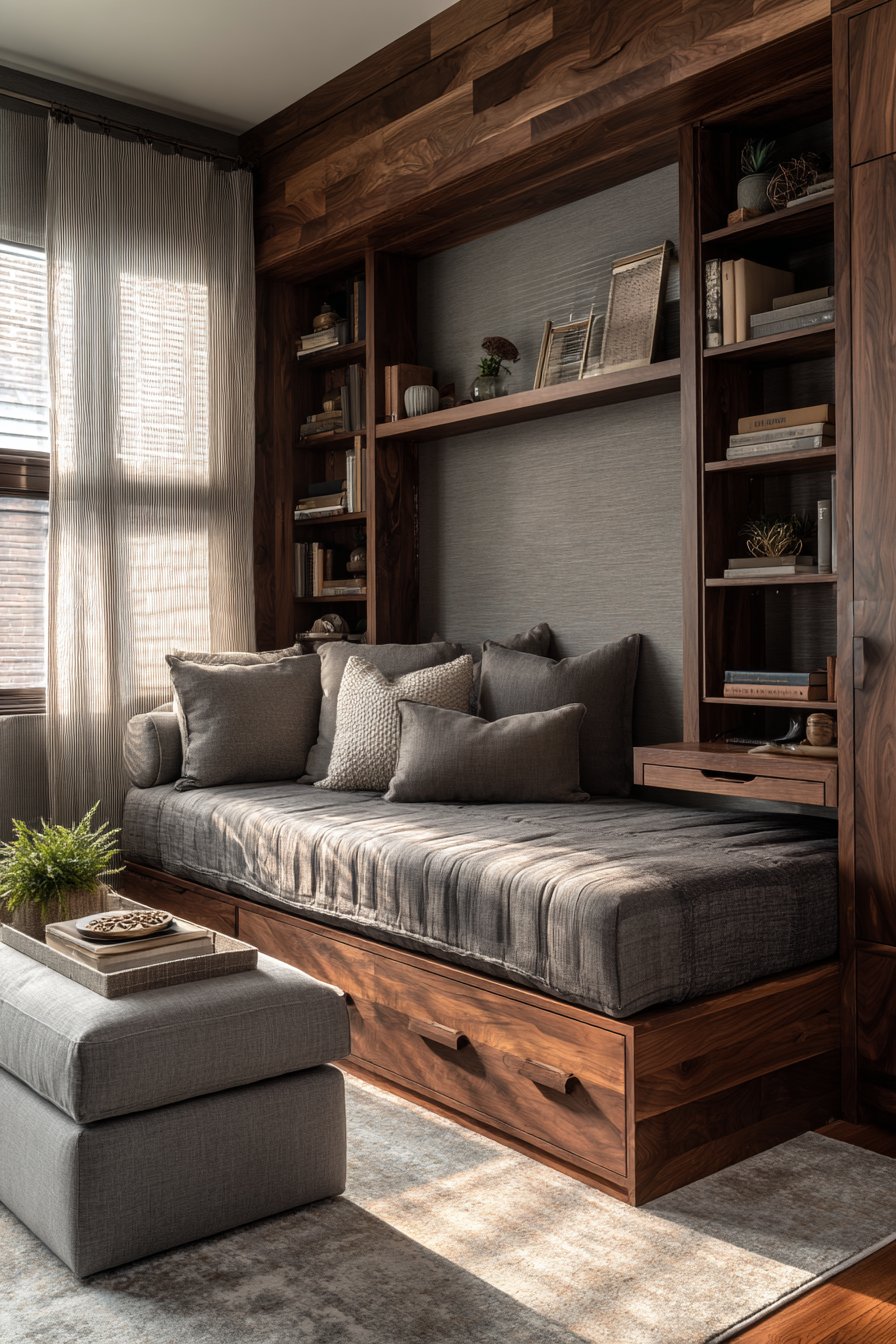
Consider furniture that transforms or adapts to different needs throughout the day. Convertible pieces maximize flexibility in how you use your narrow bedroom. Nesting tables can be separated when needed or tucked away completely, and folding chairs store flat against walls until guests arrive.
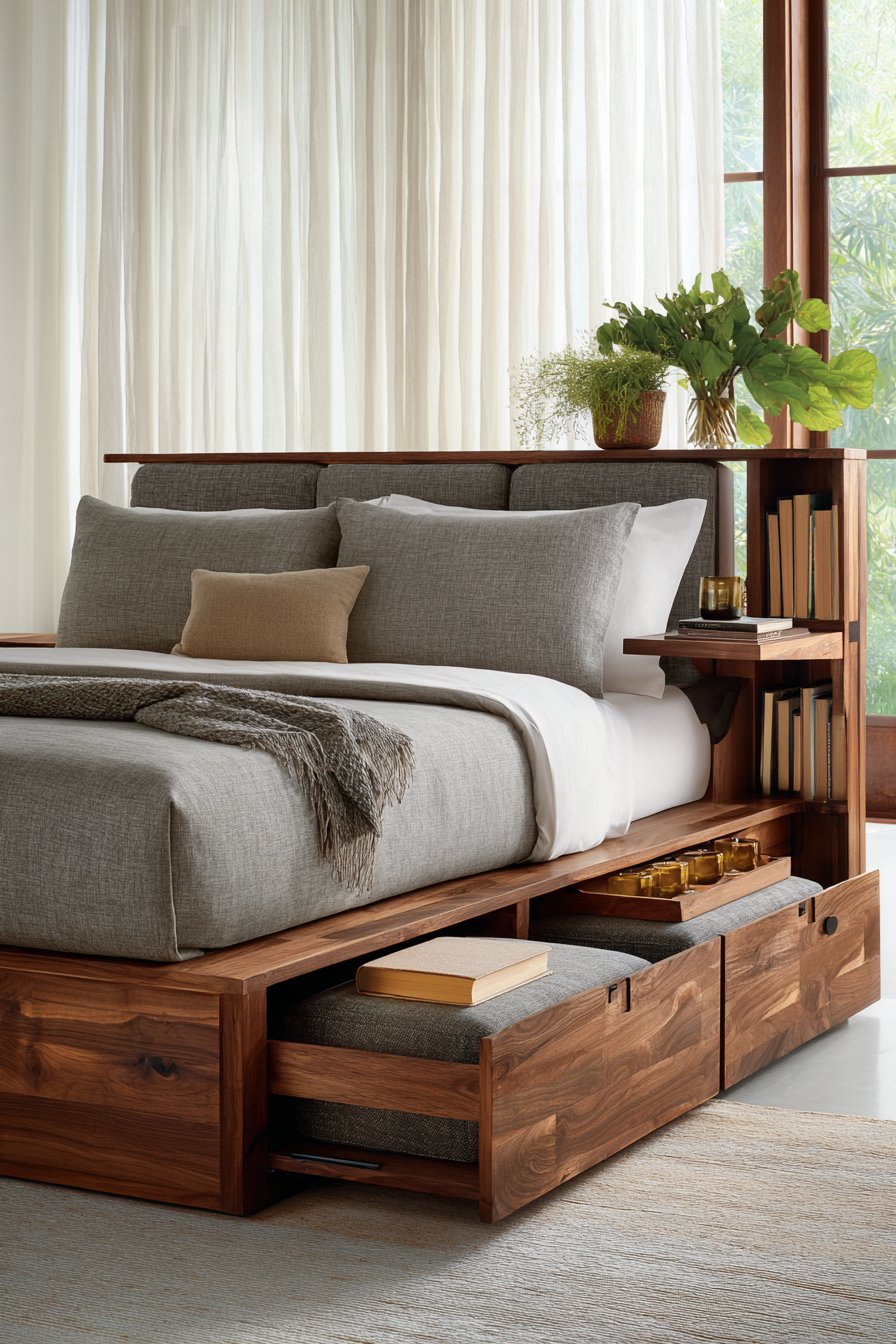
- Choose a bed frame with built-in drawers for clothing storage
- Use a storage ottoman at the foot of the bed instead of a bench
- Select a nightstand with shelves and drawers rather than a simple table
- Install a fold-down desk that disappears when not in use
- Consider a daybed that functions as seating during waking hours
- Use a trunk or chest as both storage and a bedside table
4. Create Illusion with Strategic Lighting
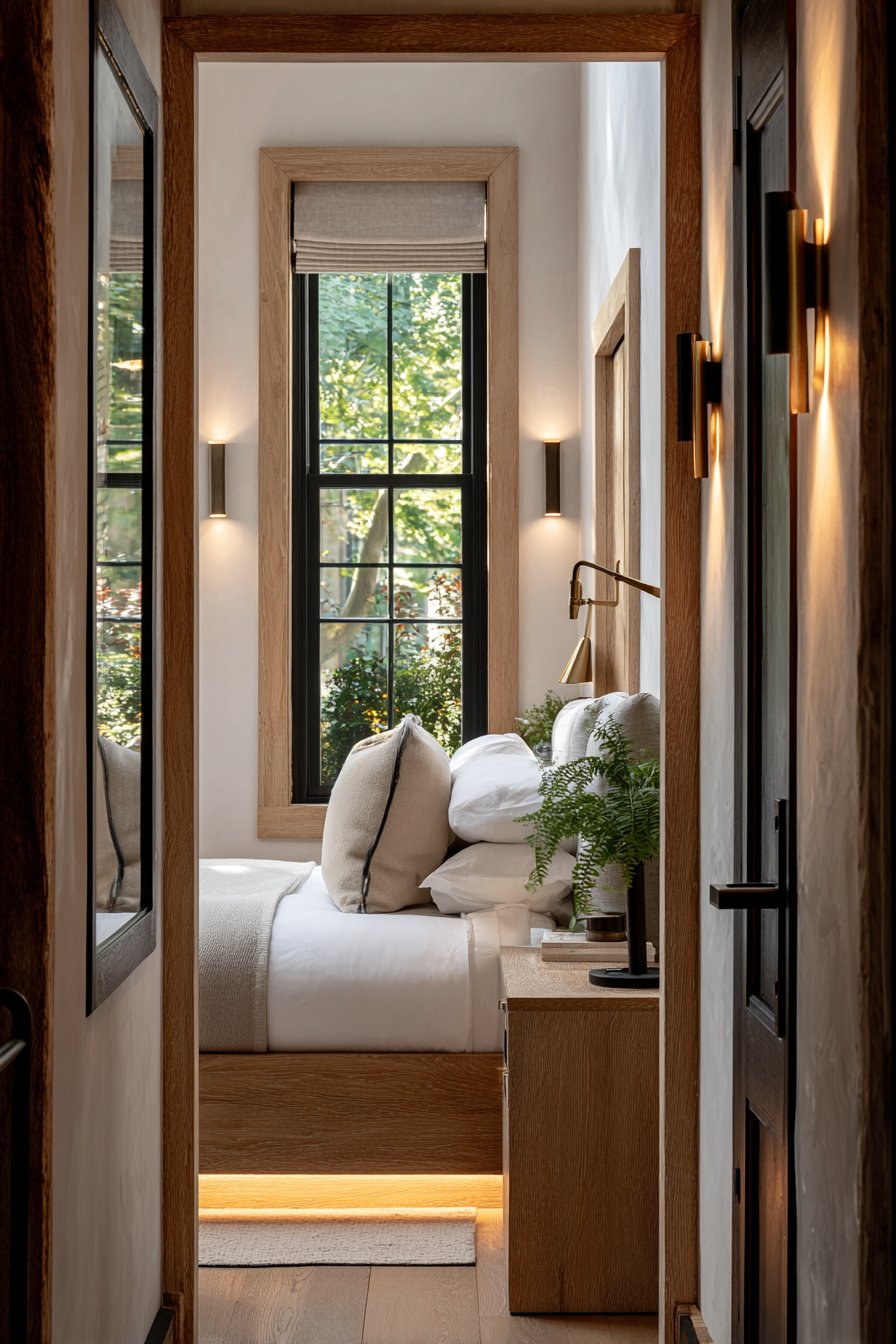
Lighting dramatically affects how spacious a narrow bedroom feels, making it crucial for design success. Multiple light sources at different heights create depth and dimension that single overhead fixtures cannot achieve. Layered lighting includes ambient, task, and accent illumination working together to enhance the room’s proportions.

Wall-mounted sconces free up valuable nightstand space while providing focused reading light exactly where needed. These fixtures direct light upward or downward, creating visual interest along vertical surfaces. Under-bed lighting or LED strips behind headboards add subtle glow that makes the room feel larger and more architecturally sophisticated.
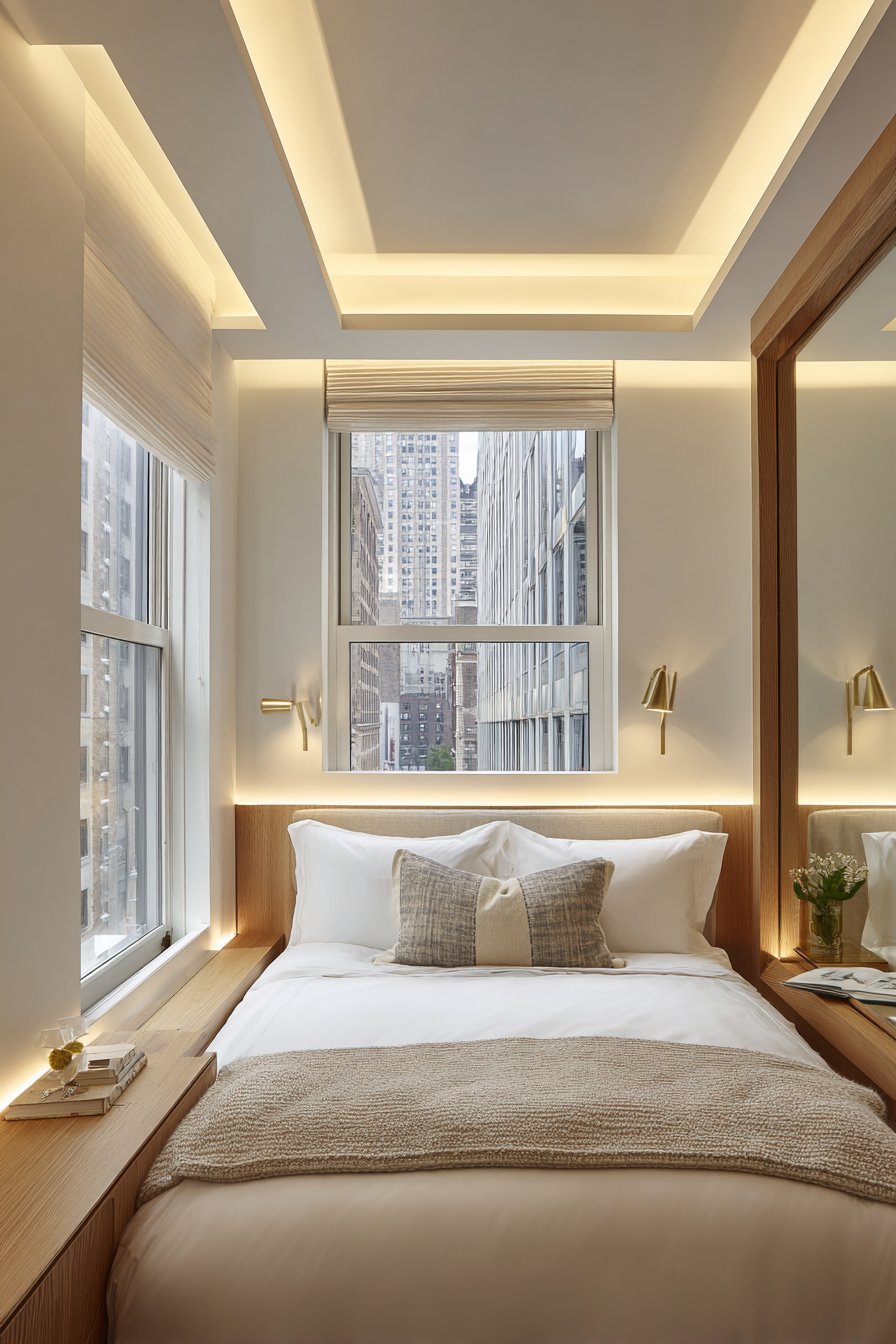
Natural light should be maximized through appropriate window treatments and strategic mirror placement. Mirrors opposite windows double the perceived light and create reflections that extend sight lines. Avoid heavy drapes that block sunlight; instead, choose sheer curtains or cellular shades that offer privacy without darkness.
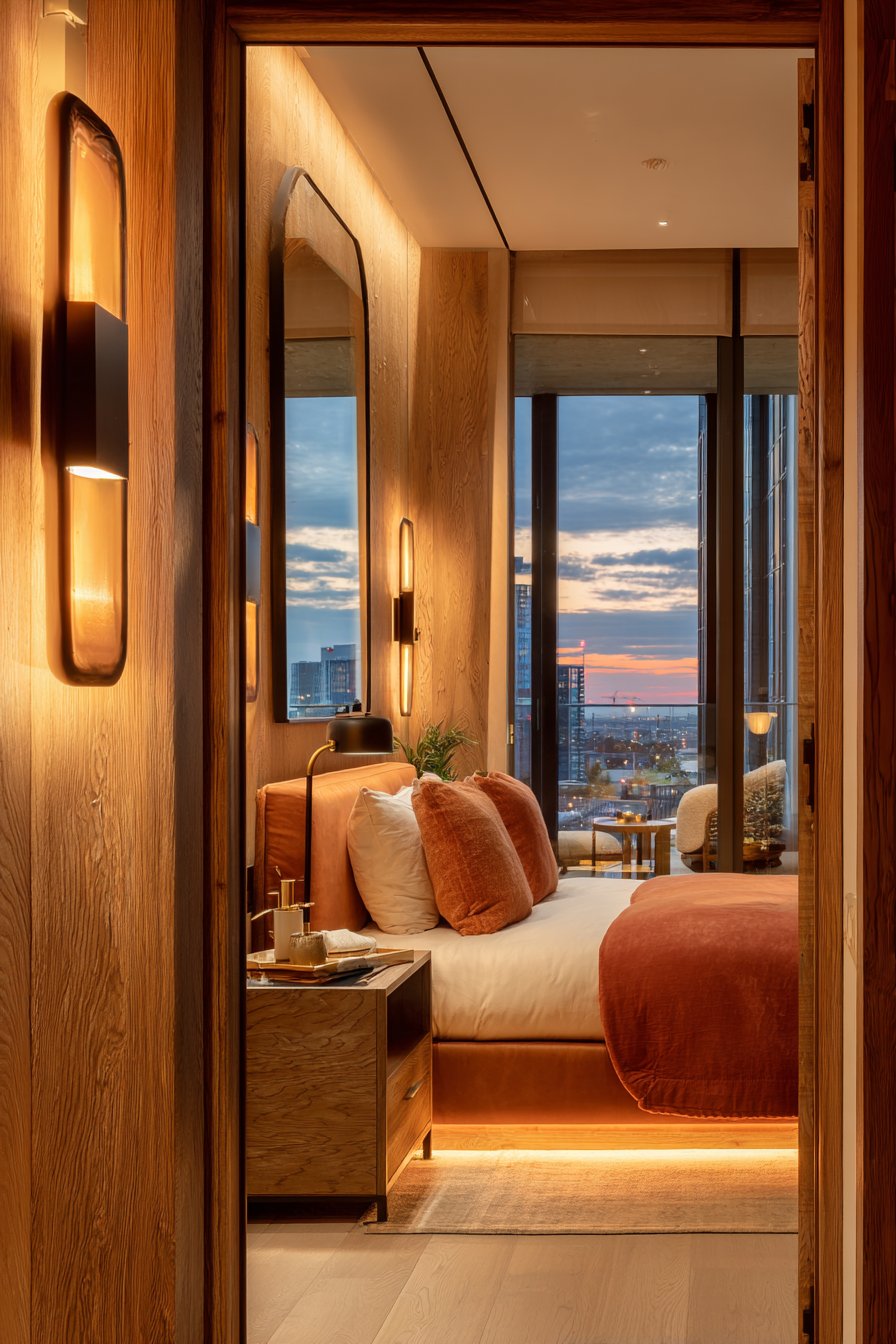
- Install dimmer switches to adjust lighting intensity for different moods
- Use wall sconces to save nightstand space and add vertical interest
- Place a large mirror opposite the window to reflect natural light
- Add LED strip lighting under the bed frame for subtle ambiance
- Choose light fixtures with upward-facing elements to highlight ceiling height
- Replace heavy curtains with translucent roller shades or sheers
5. Maintain Clear Circulation Paths
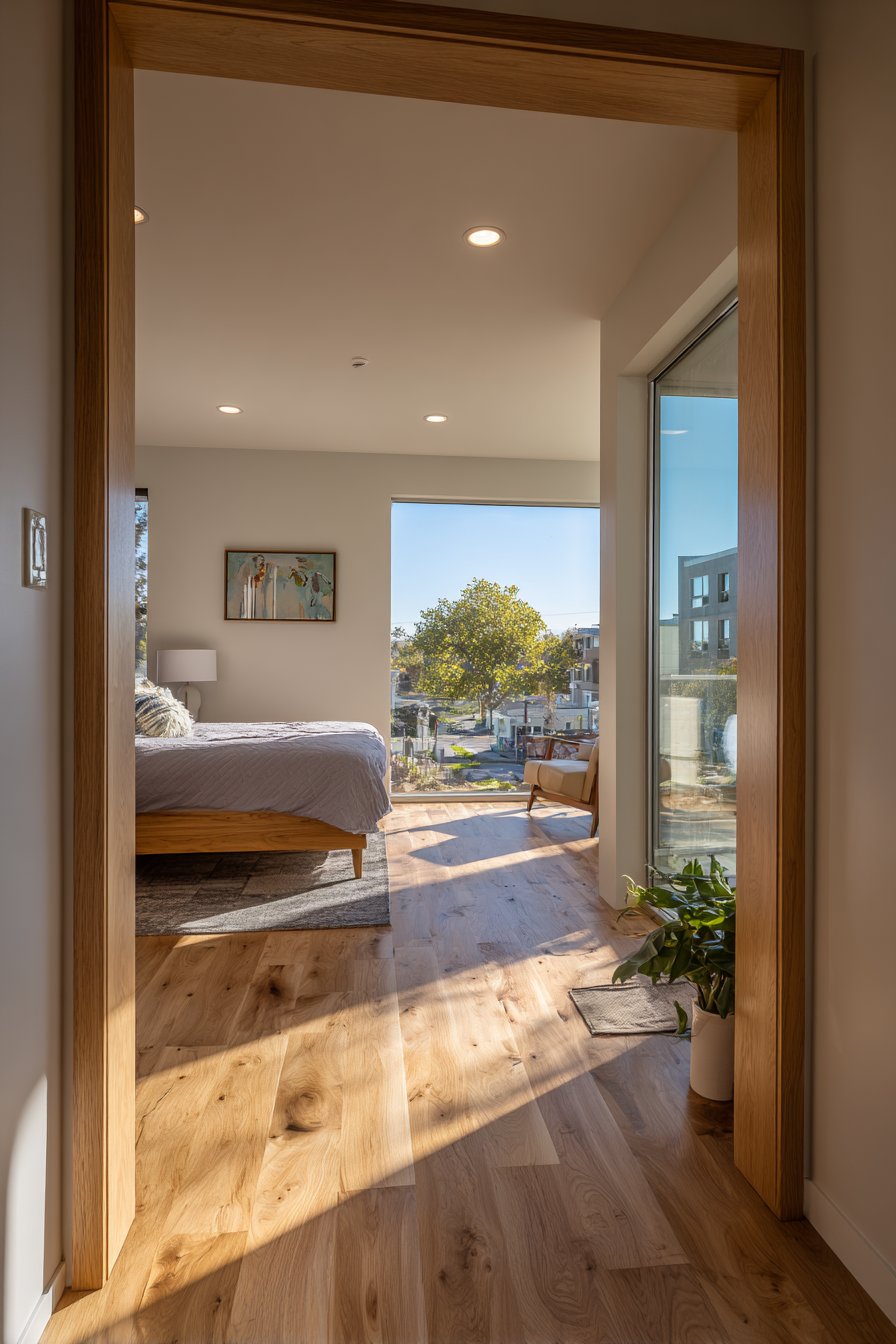
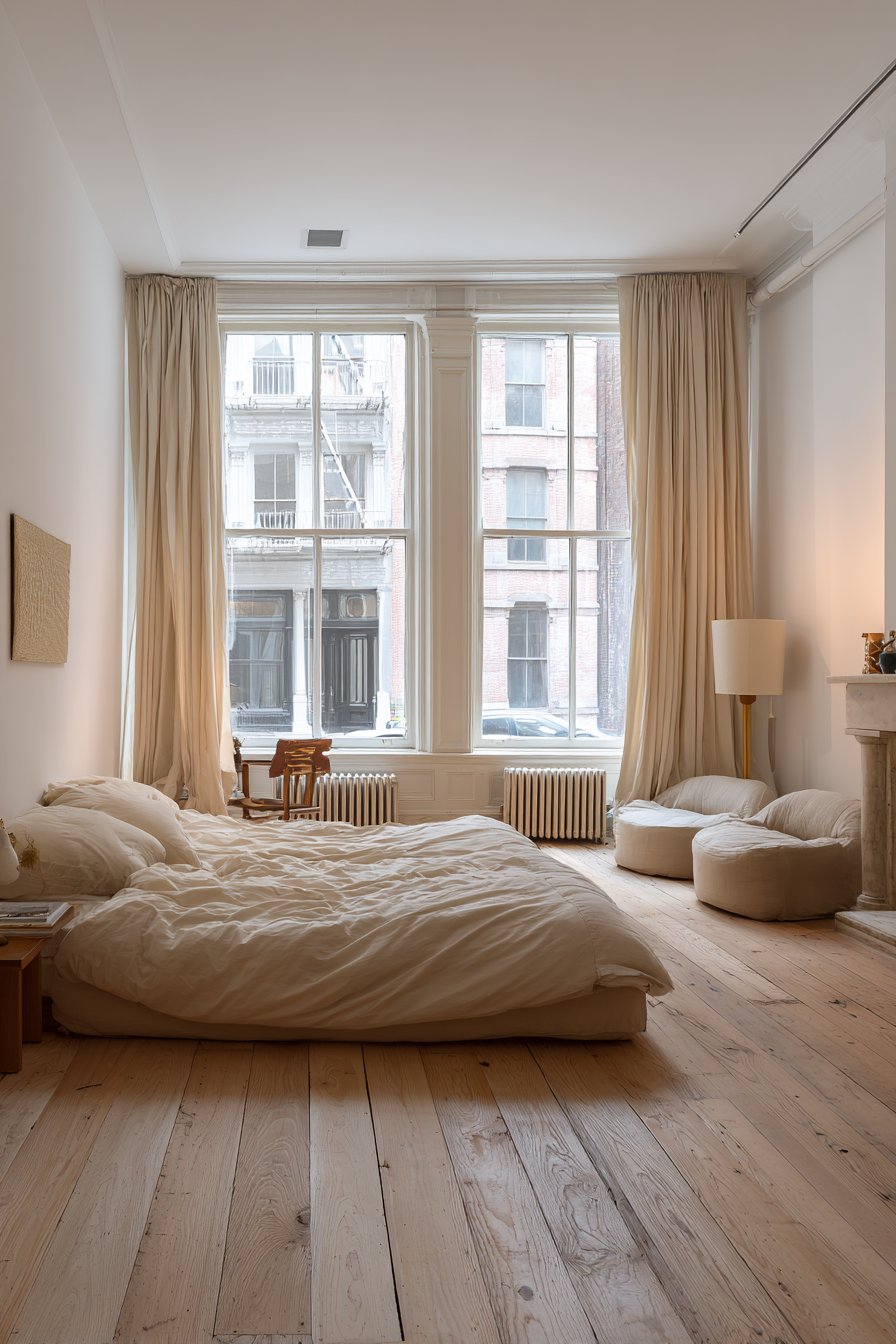
Adequate walking space ensures comfort and functionality in narrow bedroom layouts, preventing the space from feeling claustrophobic. A minimum pathway width of 24 inches allows comfortable movement, though 30-36 inches feels more generous. Clear circulation routes reduce visual congestion and psychological stress associated with cramped spaces.
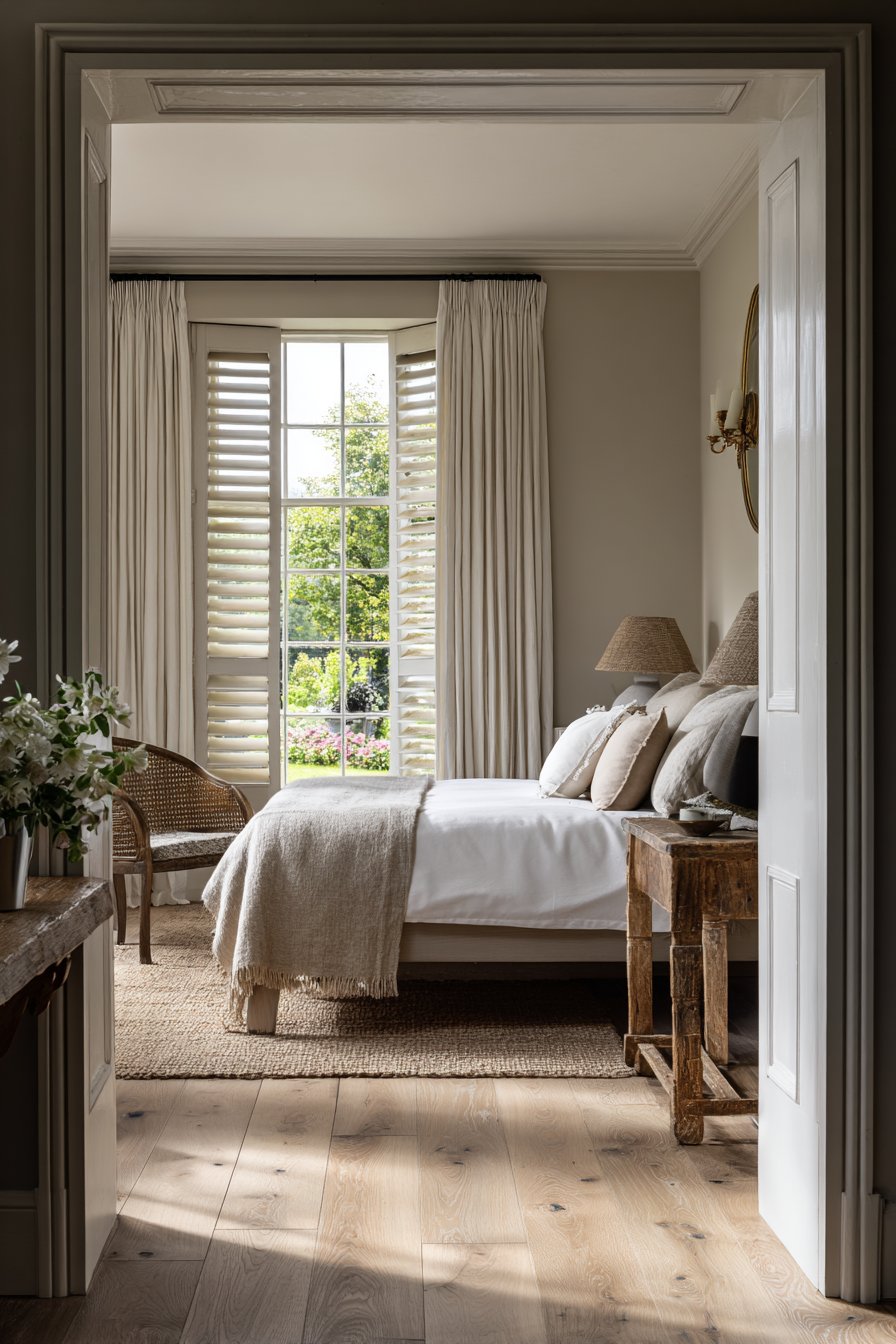
Furniture placement should never obstruct natural traffic flow between the door and bed. The path from entry to sleeping area needs to remain unobstructed and intuitive. Consider how you move through the space during morning routines and evening preparations when determining furniture locations.
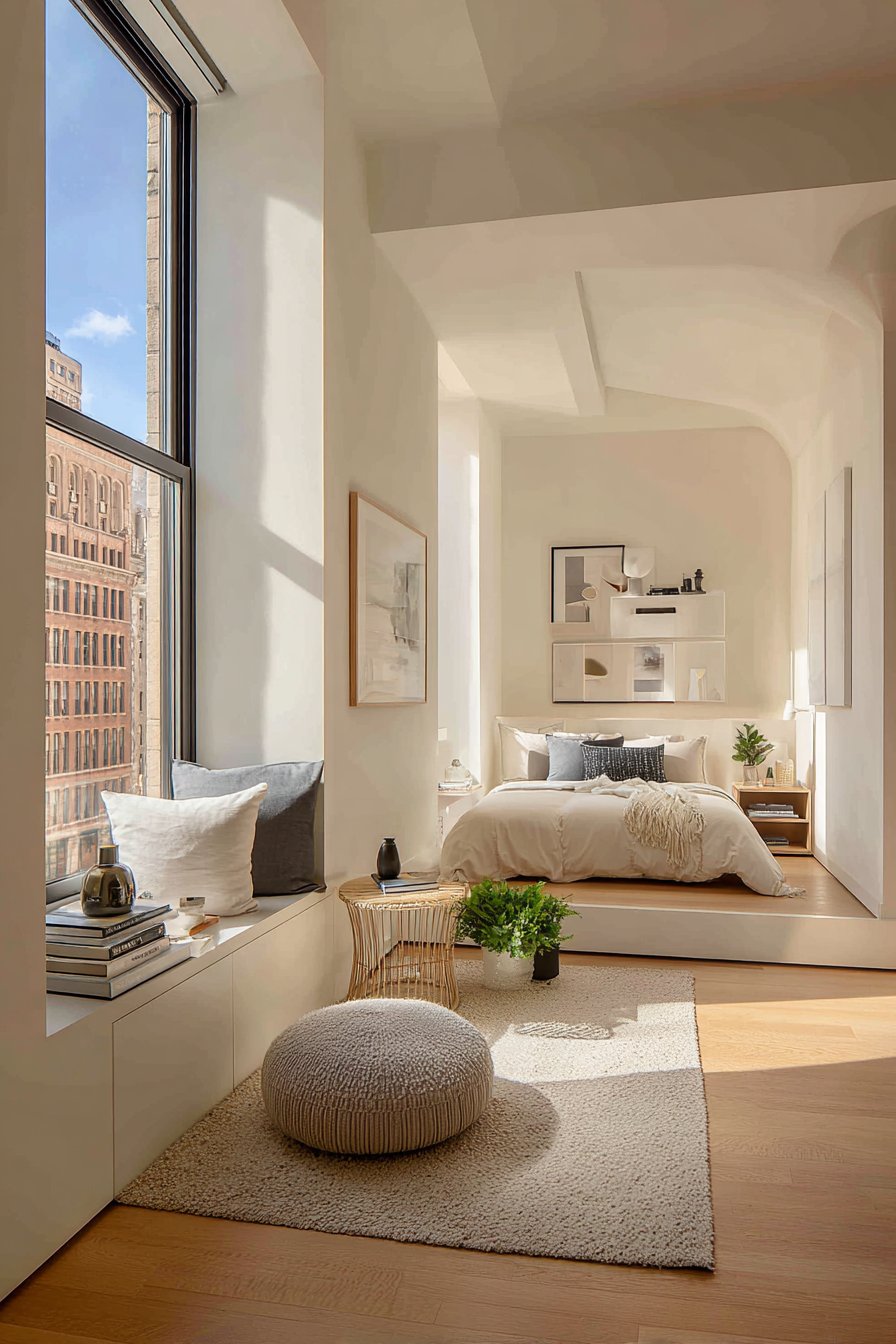
Avoid pushing all furniture against walls, as this can actually make narrow rooms feel more confined. Strategic spacing creates breathing room around key pieces and allows air and light to circulate. Floating a nightstand slightly away from the wall adds depth and prevents a cramped, pushed-together appearance.
- Maintain at least 24 inches of clear space for main walkways
- Keep the path from door to bed completely unobstructed
- Avoid placing furniture where doors swing open
- Leave space between furniture pieces to prevent crowded appearance
- Test circulation paths by physically walking through before finalizing layout
- Remove unnecessary furniture that impedes movement or serves no purpose
6. Choose Appropriately Scaled Furniture
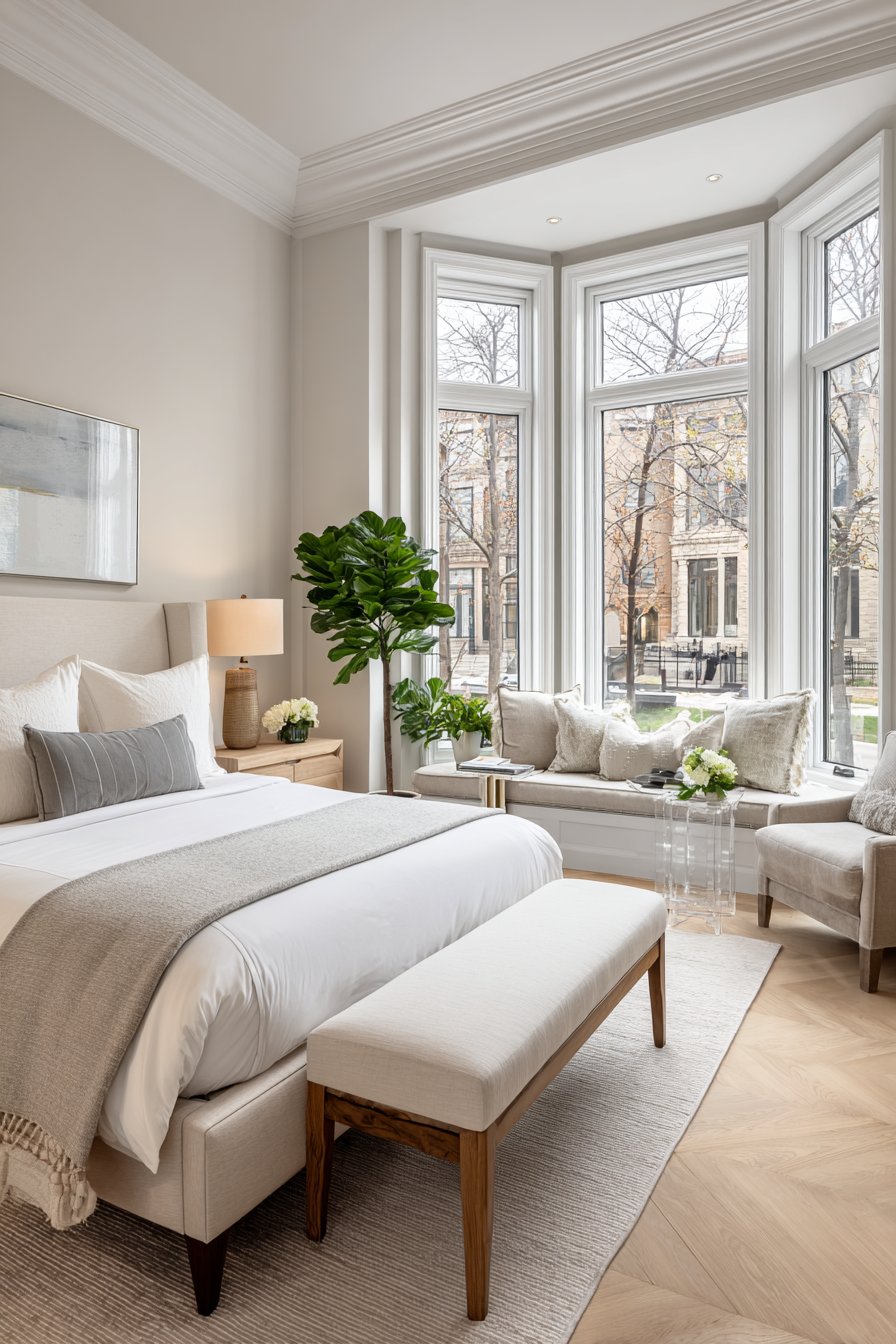
Furniture proportion makes the difference between harmonious design and overwhelming chaos in narrow bedrooms. Oversized pieces dominate small spaces, making them feel even more cramped and visually unbalanced. Select furniture sized for the room’s actual dimensions rather than choosing pieces you love that simply don’t fit properly.
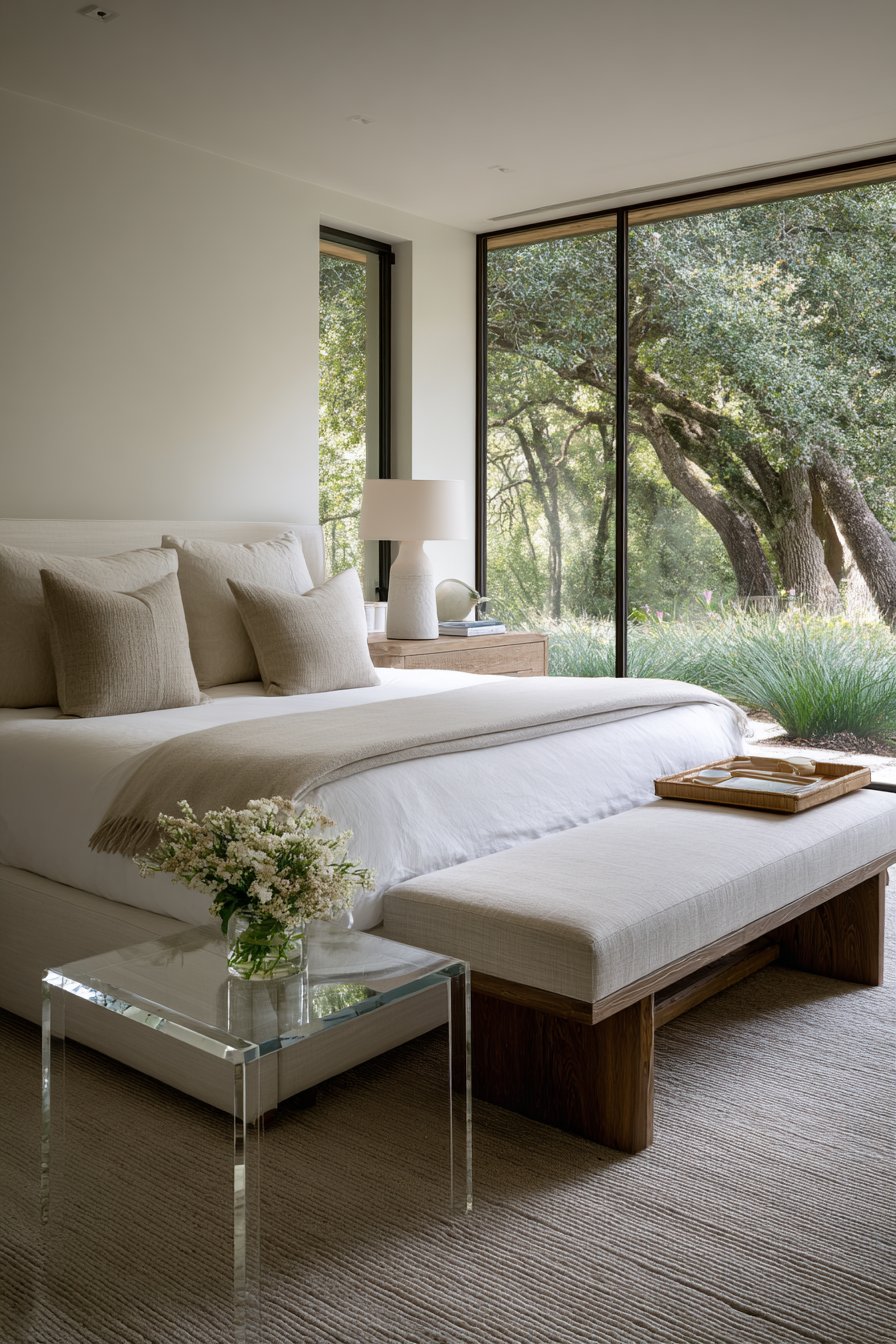
Measure carefully before purchasing any furniture item for a narrow bedroom. A standard queen bed measures 60 inches wide, but in very narrow rooms, a full-size bed at 54 inches may provide better spatial balance. Low-profile furniture maintains sight lines across the room, creating an impression of more available space.
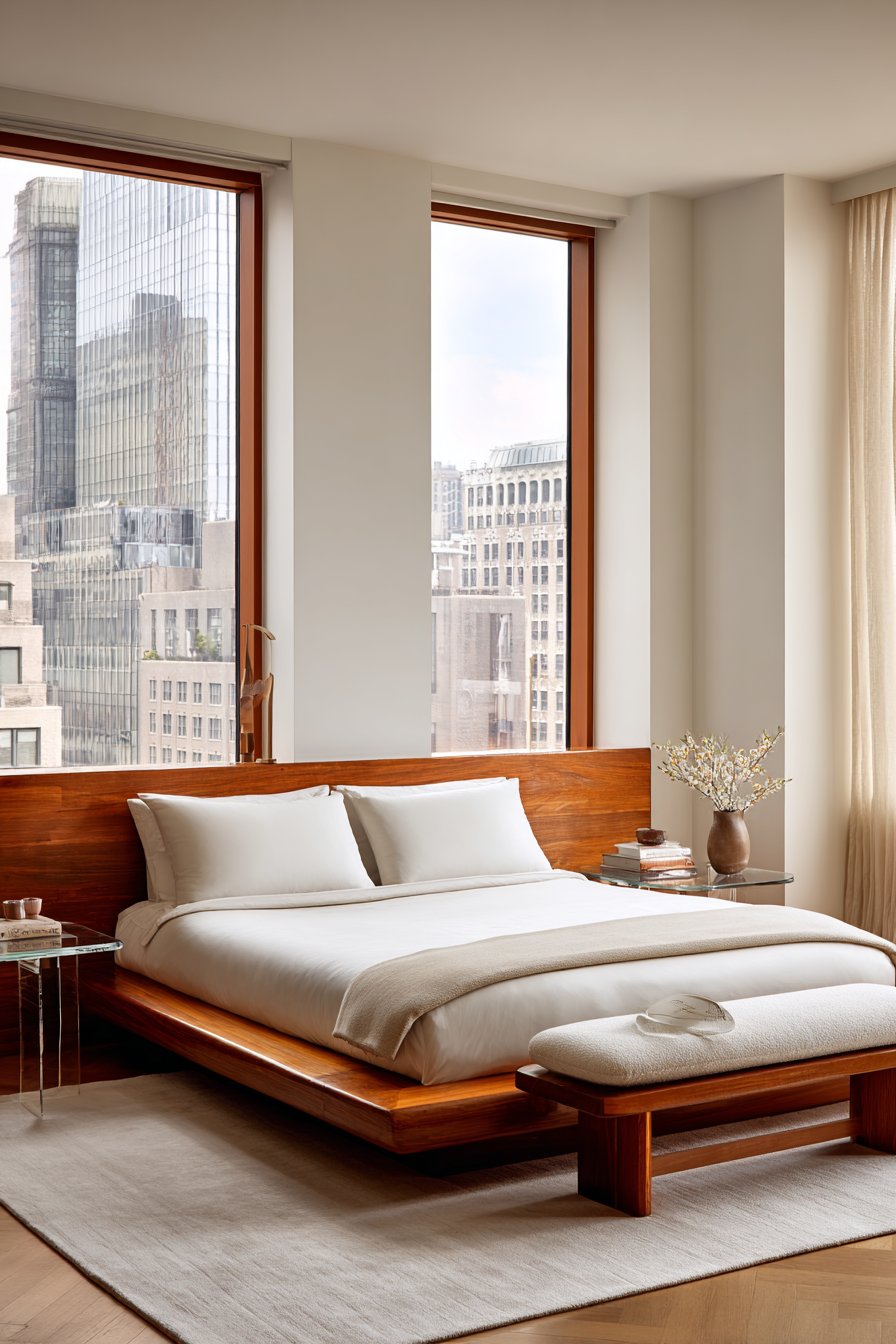
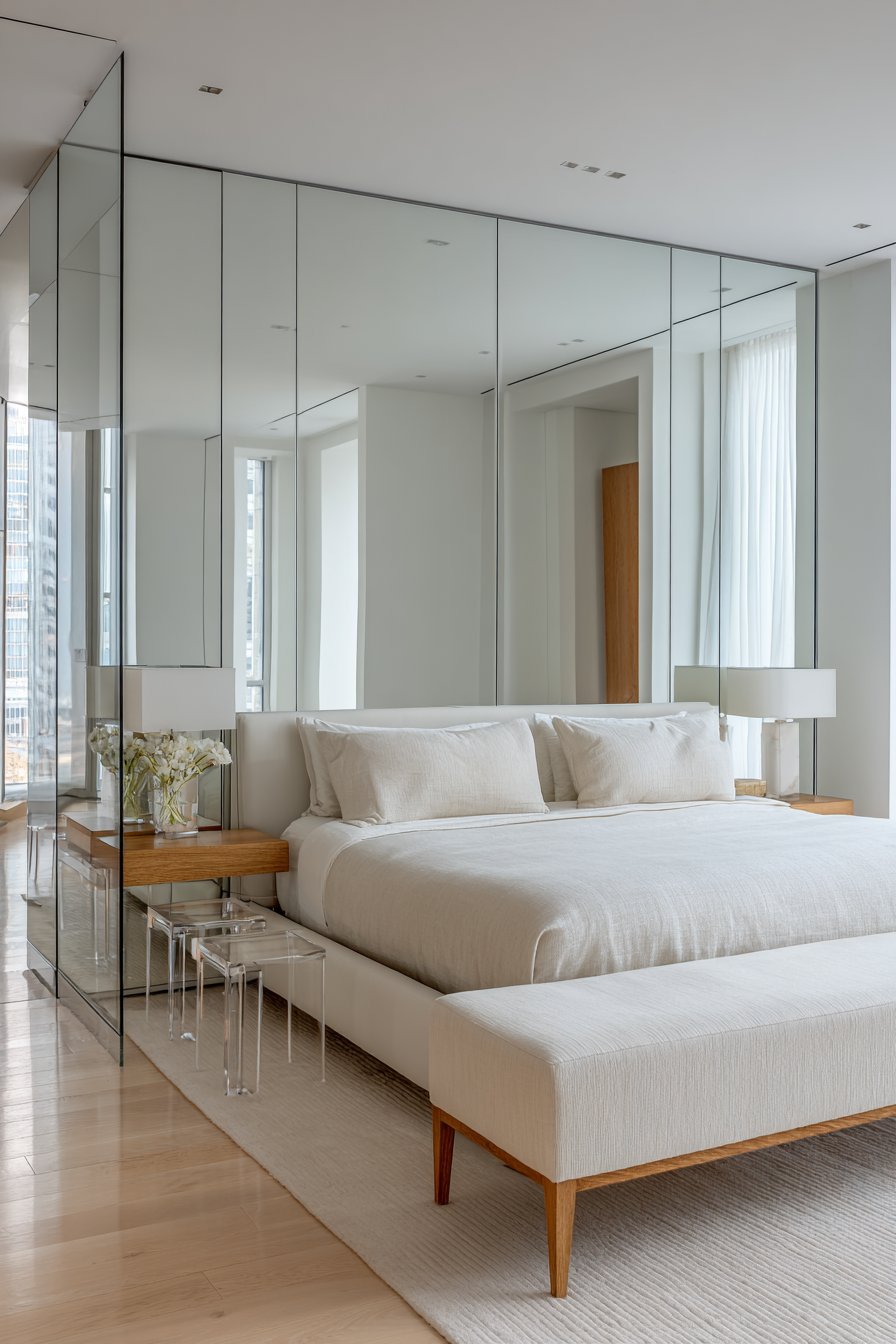
Streamlined designs with clean lines and minimal ornamentation work best in confined quarters. Bulky traditional furniture with heavy detailing can overwhelm narrow proportions, while modern pieces with tapered legs and simple forms maintain visual lightness. Glass or acrylic furniture virtually disappears, making it ideal for space-conscious design.
- Measure room dimensions and furniture before purchasing anything
- Choose a full or even twin bed if queen size overwhelms the space
- Select furniture with exposed legs rather than solid bases
- Opt for armless chairs and benches to save precious width
- Use nesting tables that can be consolidated when not needed
- Consider custom-built furniture for odd dimensions or awkward layouts
Arranging furniture in a narrow bedroom requires strategic thinking and creative problem-solving skills. By implementing these professional design techniques, you can transform a challenging space into a functional and beautiful retreat. Remember that limitations often inspire the most innovative solutions when approached with the right mindset.
Start with one or two strategies that resonate most with your specific situation and build from there. Small changes create significant impact in compact spaces, so don’t feel overwhelmed by implementing everything simultaneously. Experiment with different arrangements until you discover what works best for your lifestyle and preferences.
Your narrow bedroom holds untapped potential waiting to be realized through thoughtful design choices. Embrace the challenge, trust the process, and create a space that brings you joy and comfort every single day.
