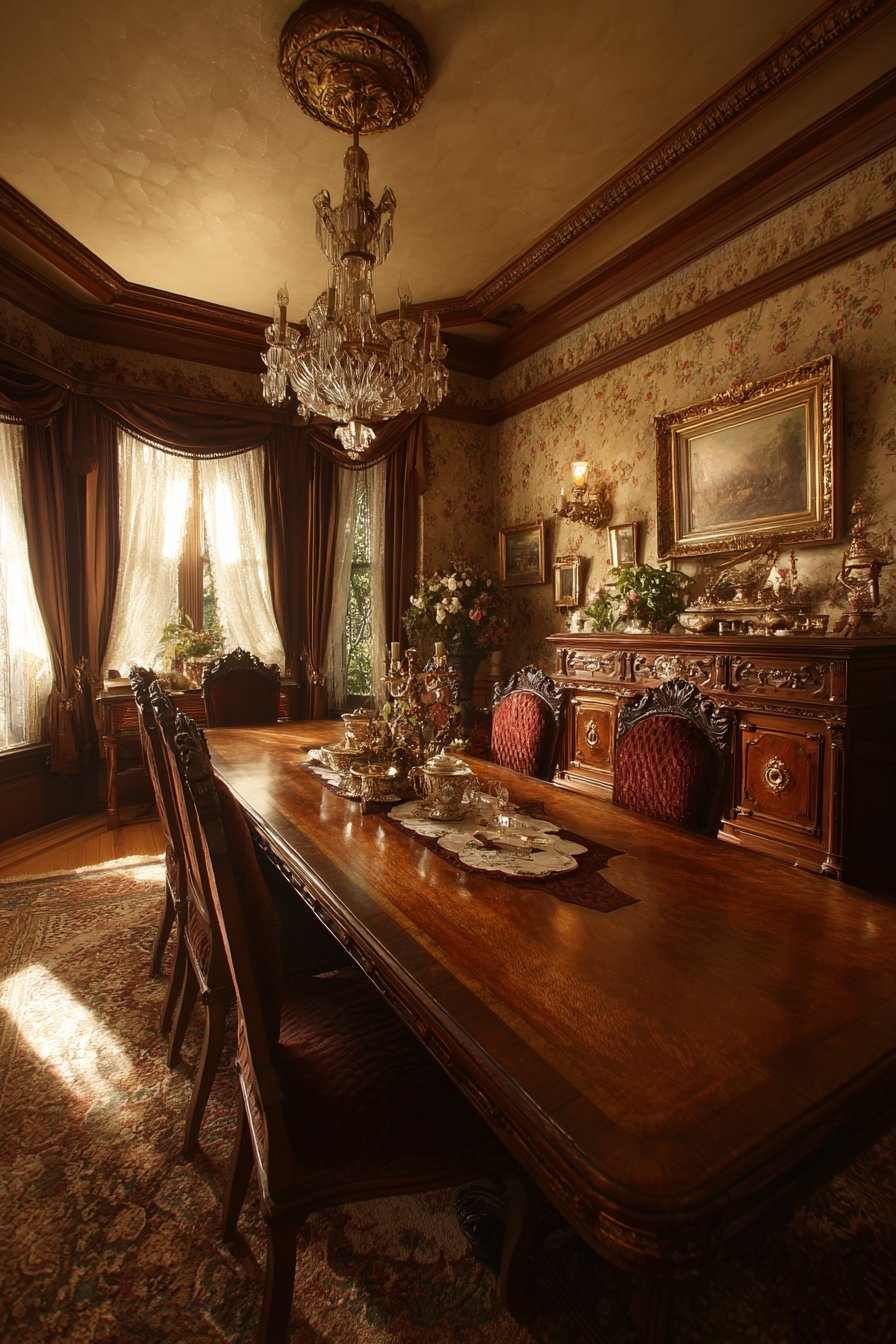


Creating an antique dining room brings unmatched elegance and historical charm to your home. These spaces celebrate craftsmanship from bygone eras through authentic materials and time-honored design principles. The character found in genuine antique furnishings cannot be replicated by modern reproductions.
Antique dining rooms offer a sophisticated alternative to contemporary minimalist designs. Each piece tells a story through its patina, wear patterns, and construction methods. The warmth of aged wood, tarnished metals, and worn textiles creates dining environments rich with atmosphere and distinction.
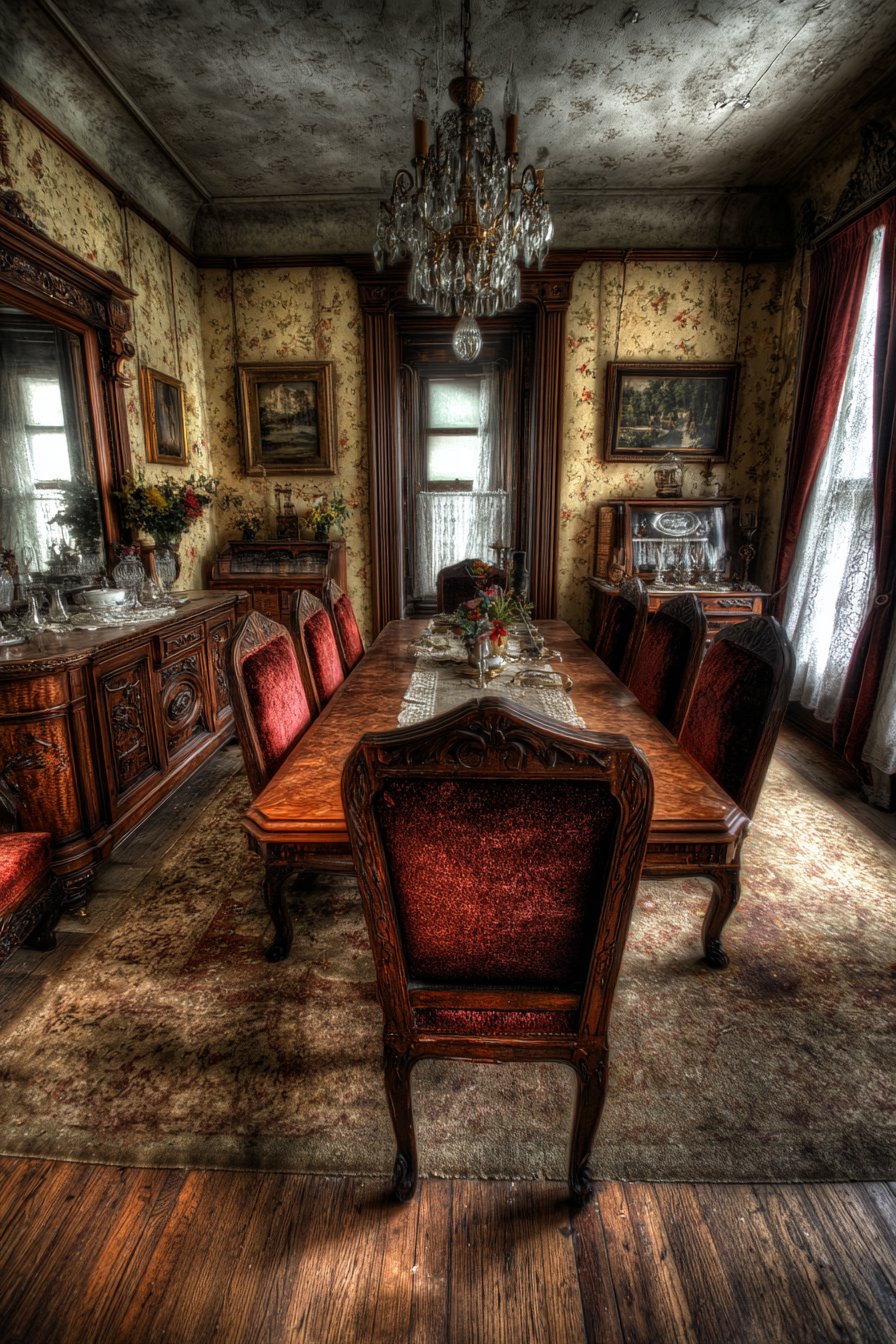
These twenty distinctive antique dining room concepts span multiple historical periods and regional styles. From Victorian grandeur to colonial simplicity, each design demonstrates how authentic antiques create spaces of lasting beauty. The following ideas showcase how different eras and cultures approached formal dining with unique aesthetic sensibilities.
1. Victorian Mahogany Elegance with Crystal Accents
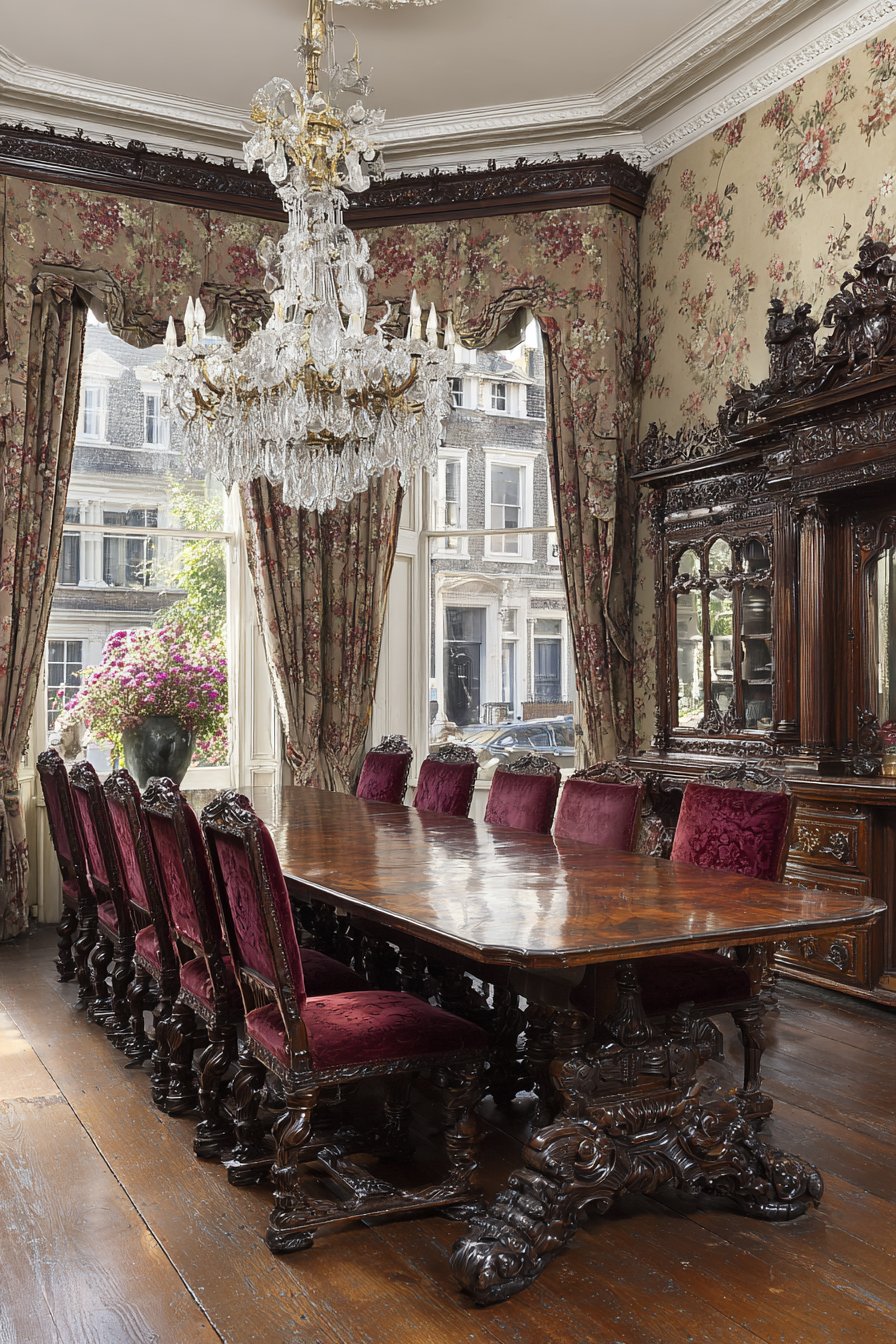
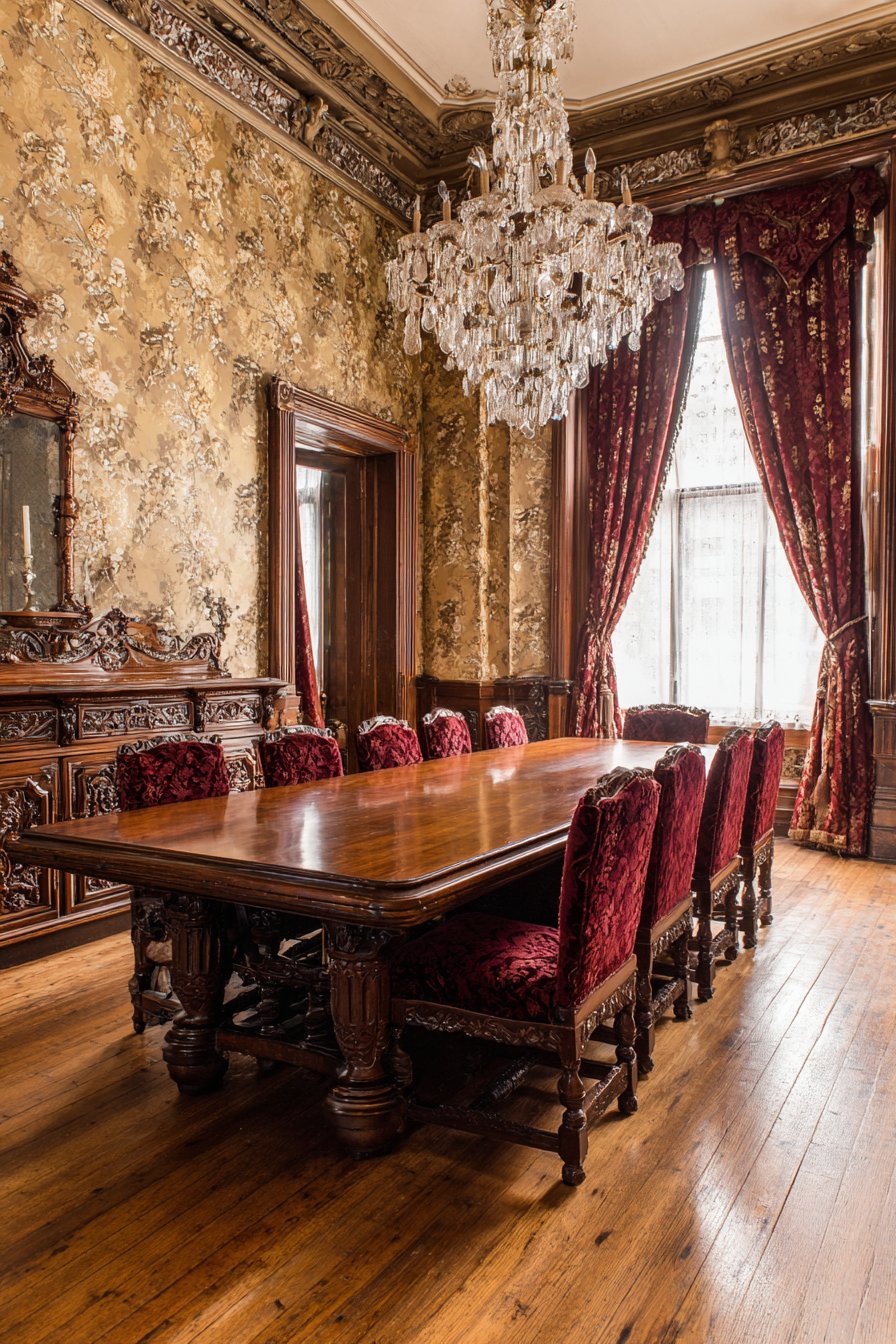
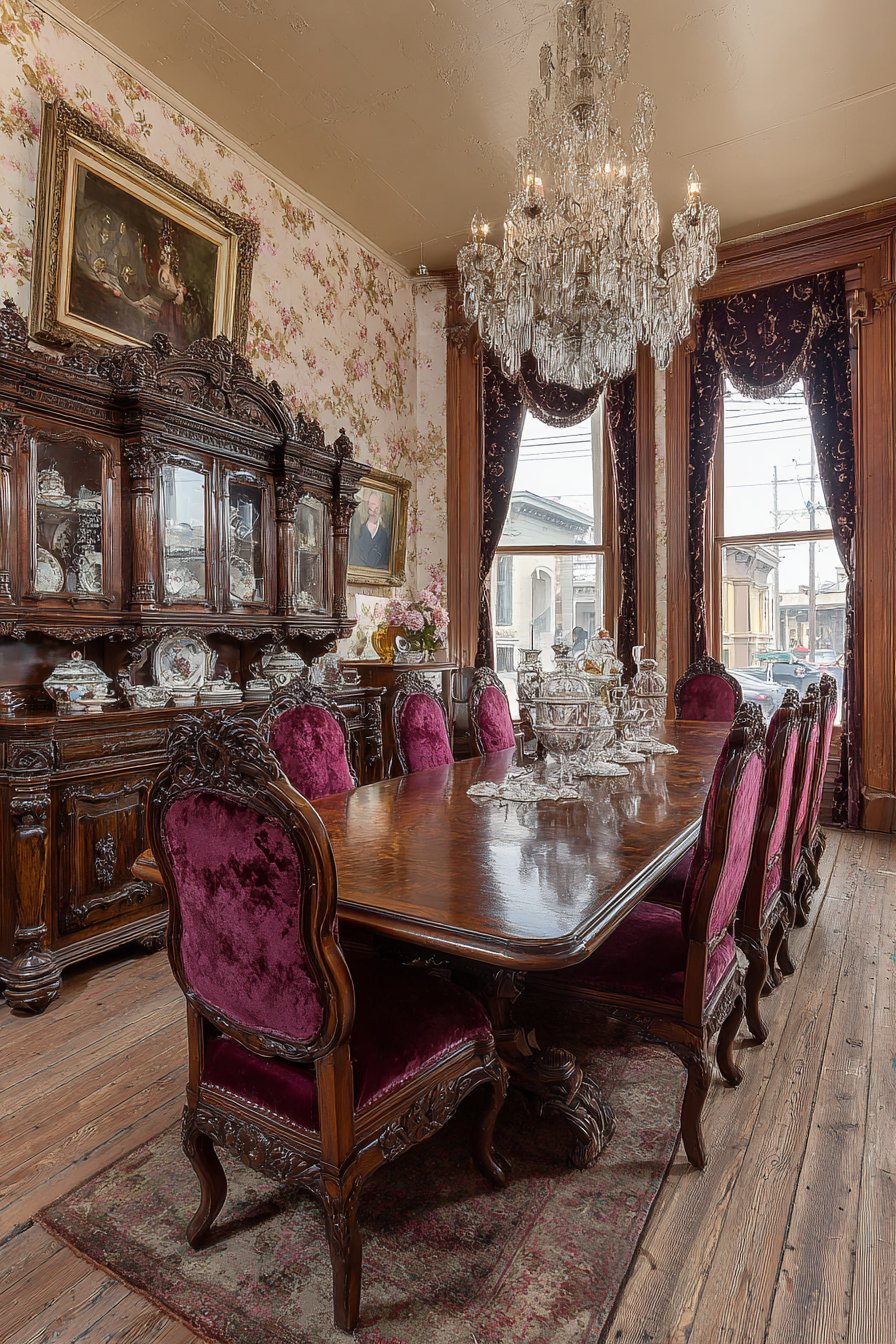
Step into a dining room where a richly carved Victorian mahogany table commands attention. The ornate ball-and-claw feet showcase exceptional craftsmanship. Eight high-back chairs upholstered in worn burgundy velvet surround the table. The authentic patina on each piece reveals decades of careful use.
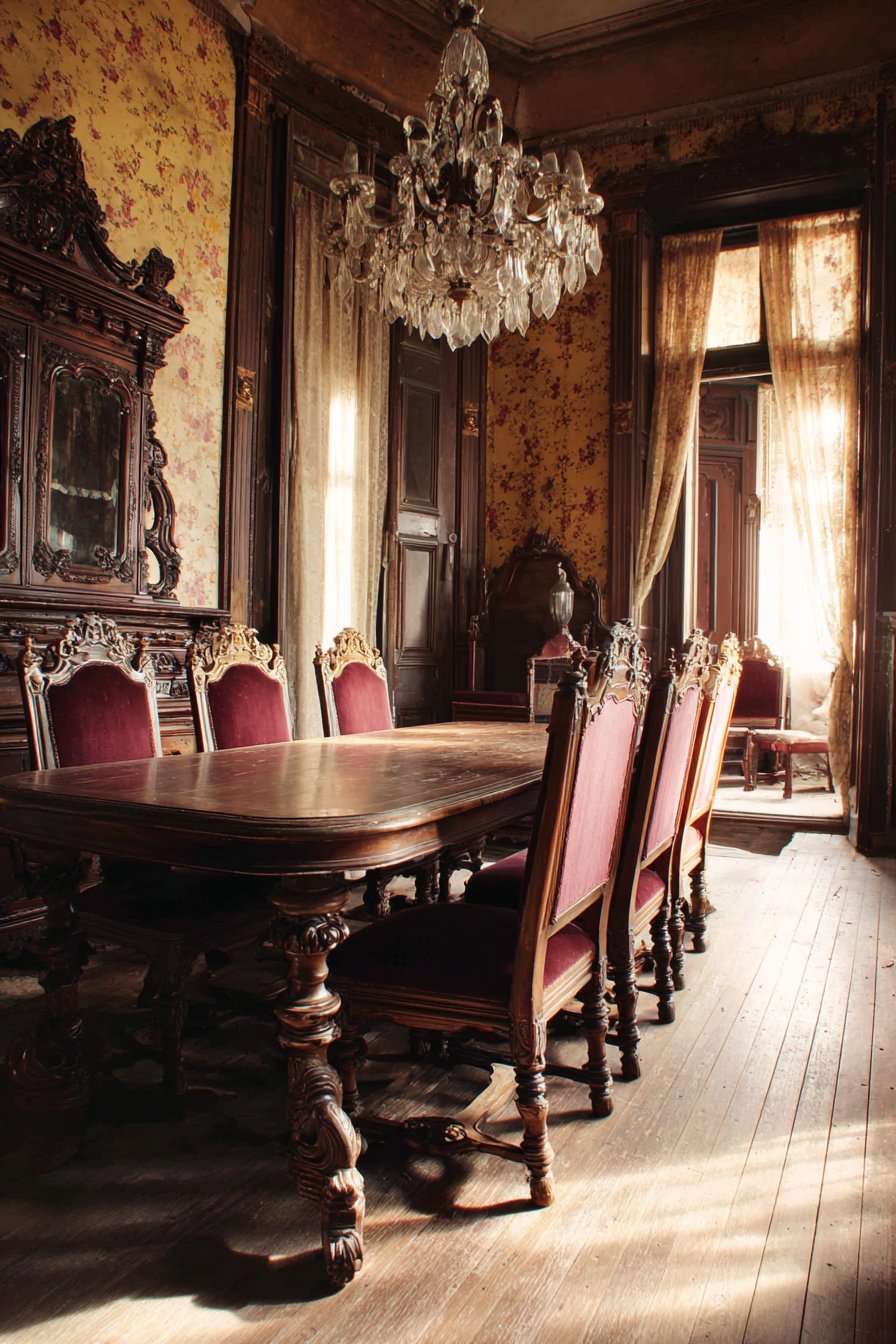
An elaborate crystal chandelier with brass fittings hangs overhead. The warm ambient light reflects beautifully across the polished wood surface. Faded floral wallpaper in muted gold and cream tones creates a period-appropriate backdrop. A massive carved sideboard with original brass hardware anchors one wall.
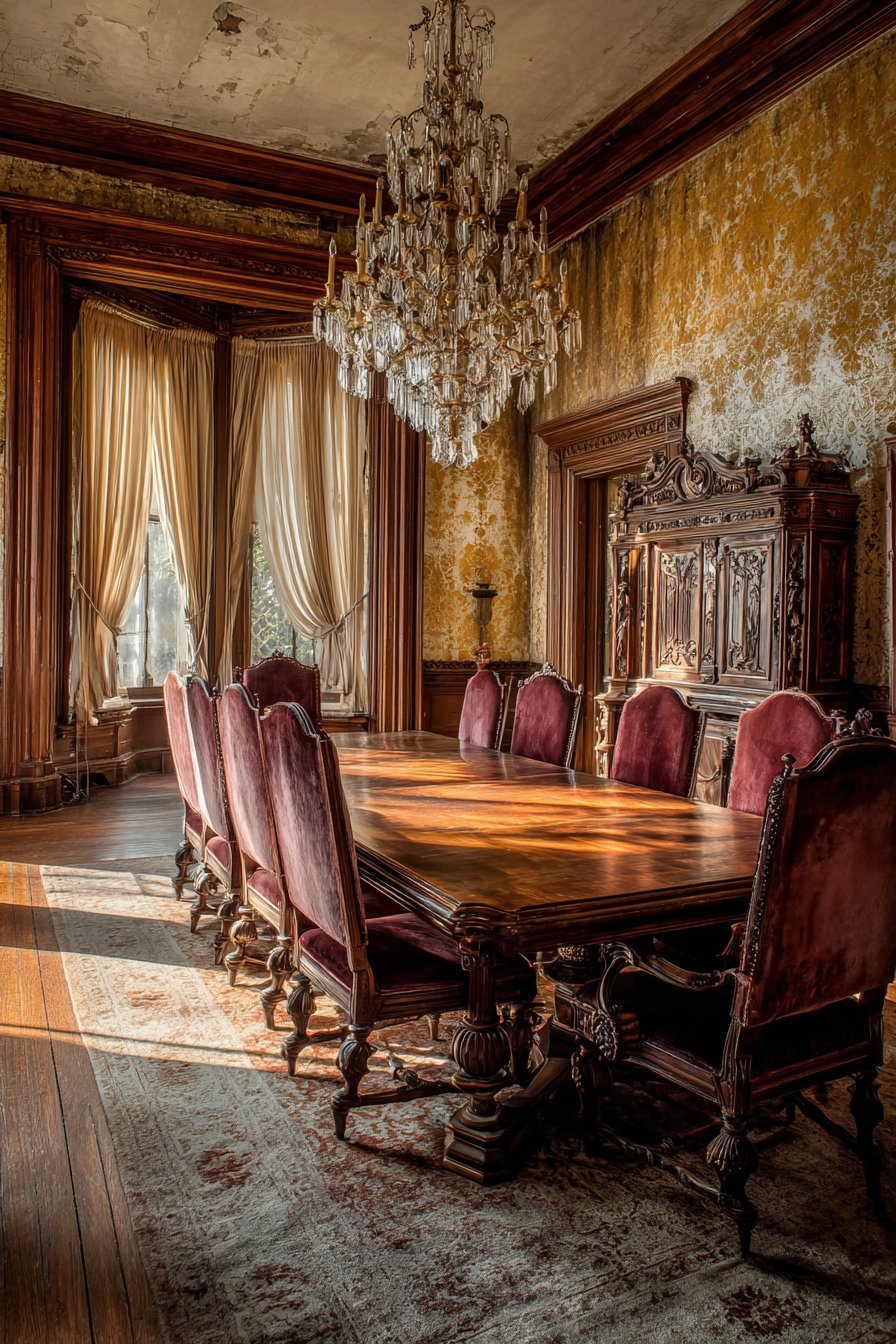
Natural afternoon light filters through heavy damask curtains. The gentle illumination highlights aged wood grain and finish variations. Wide-plank flooring with hand-forged nails peeks beneath an oriental carpet. The carpet displays authentic wear patterns and naturally faded colors.
Key Design Tips:
- Select Victorian mahogany pieces with original finishes showing natural darkening and crackling
- Choose upholstery fabrics that display gentle wear rather than pristine condition
- Install crystal lighting with period-appropriate cloudiness and brass fittings showing tarnish
- Layer window treatments with heavy damask or velvet for authentic Victorian ambiance
- Display the natural patina on brass hardware rather than polishing to high shine
2. French Provincial Farmhouse Authenticity
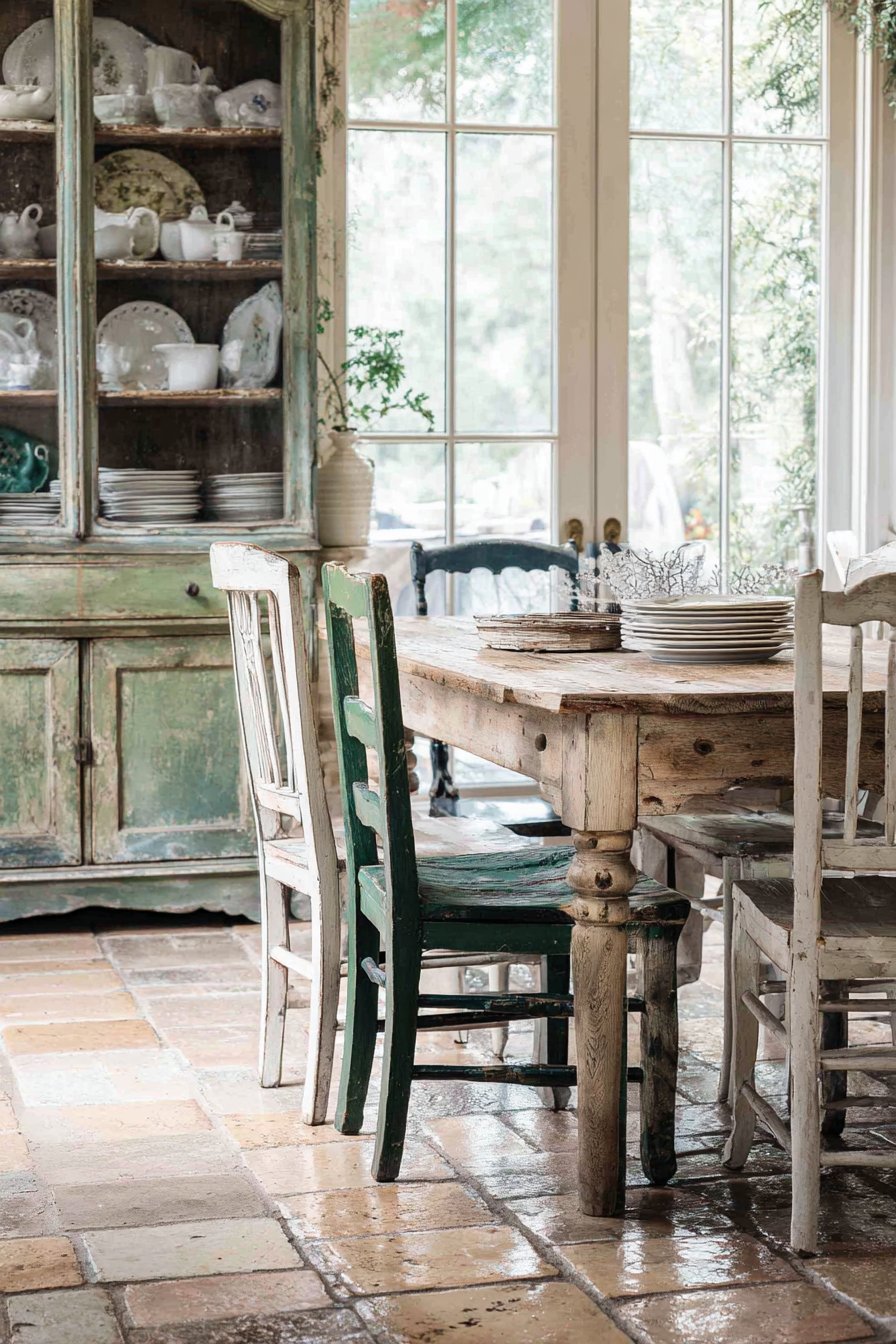
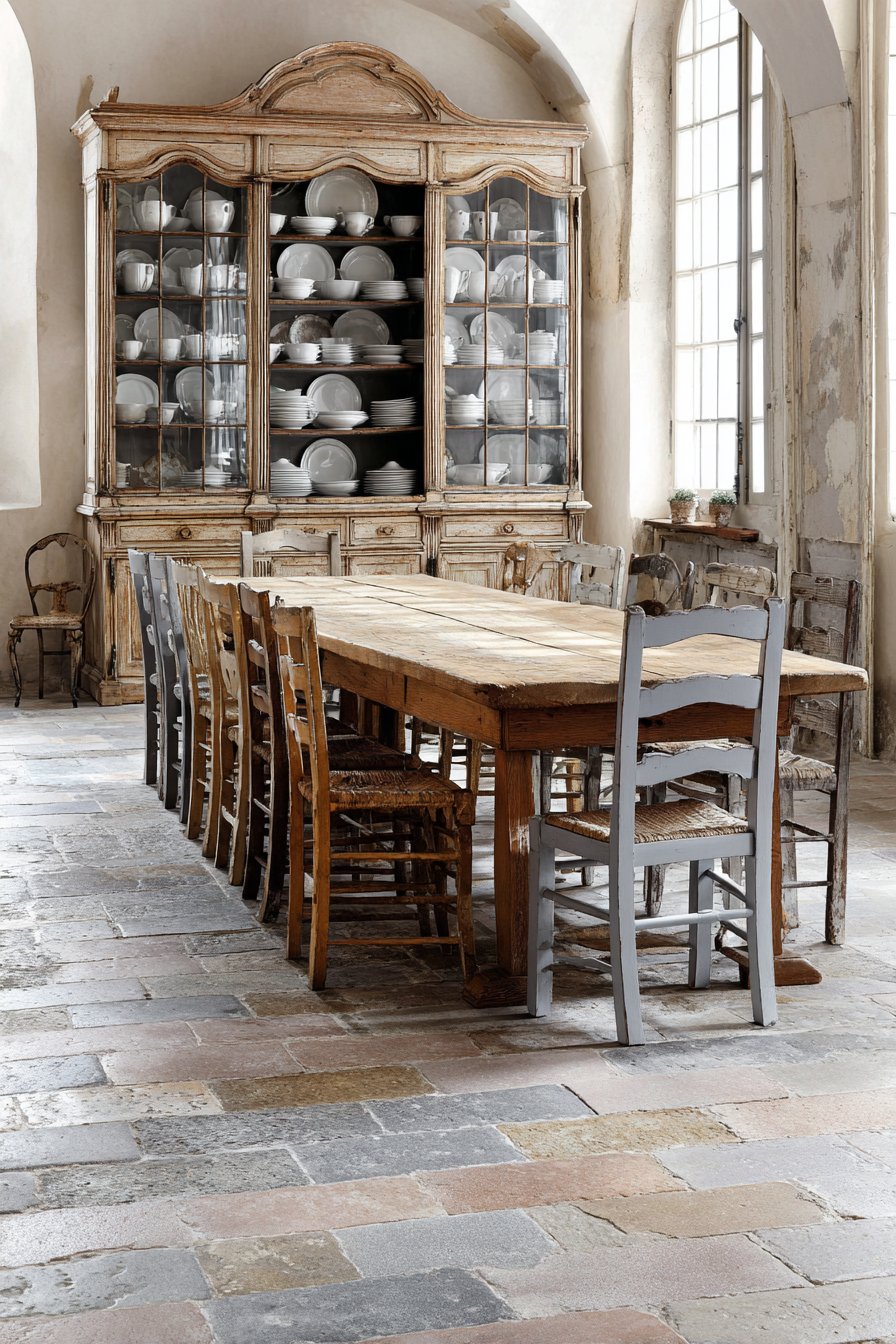
A French provincial dining room centers around an extending oak farmhouse table. The hand-planed surface shows centuries of natural wear and color variation. Mismatched ladder-back chairs in original paint finishes surround the table. Each chair displays unique aging characteristics that tell individual stories.
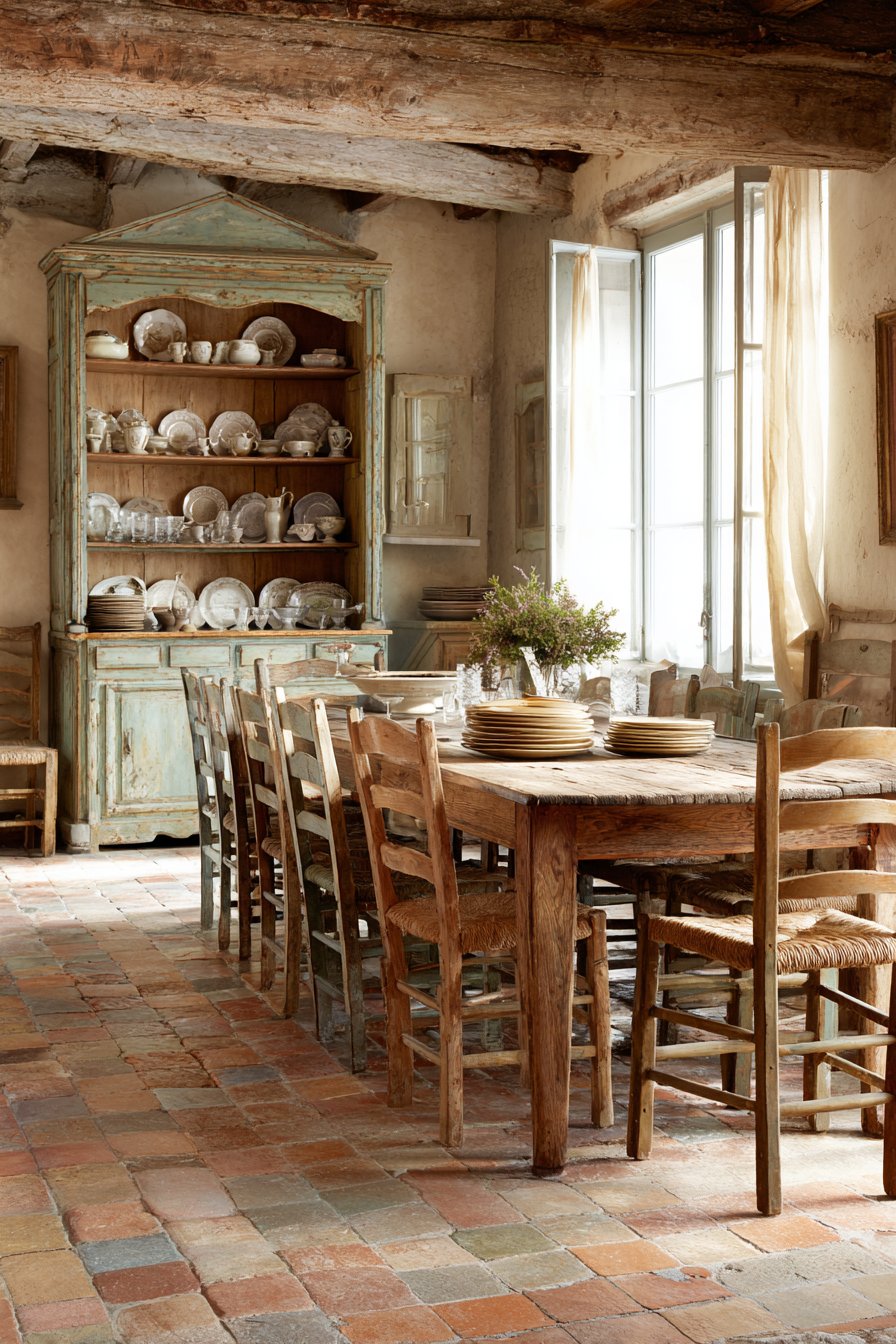
An antique hutch with wavy glass doors showcases heirloom china and crystal. The shelves are lined with aged paper showing foxing spots. Terracotta floor tiles feature irregular surfaces and natural chips. These imperfections reflect the room’s historical authenticity.
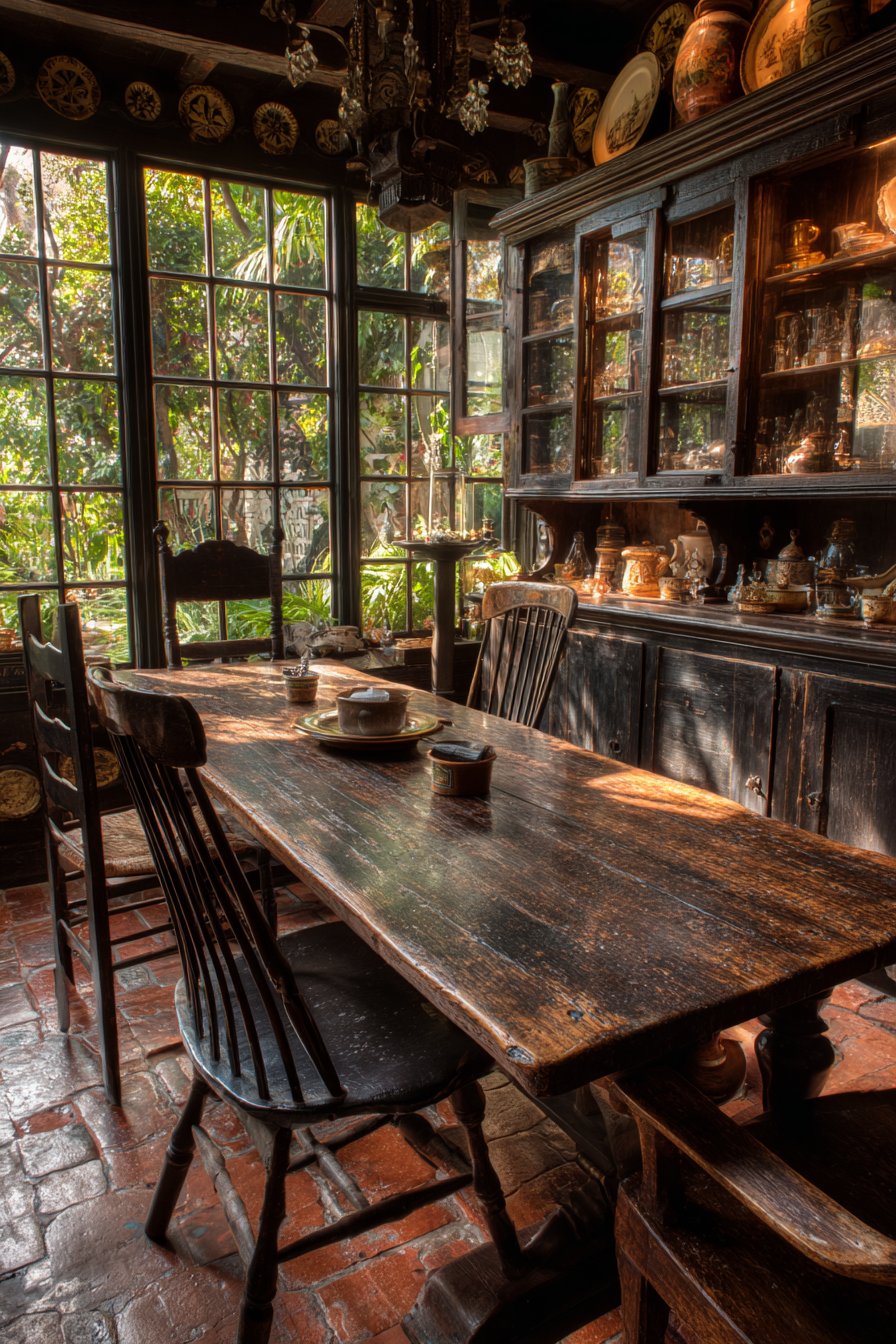
Soft morning light enters through tall windows. The gentle illumination highlights dust motes floating in the air. The collected-over-time aesthetic creates a relaxed yet refined atmosphere. Natural materials develop beautiful character through generations of use.
Key Design Tips:
- Embrace mismatched chairs with varying paint finishes for authentic provincial charm
- Select terracotta tiles with irregular surfaces rather than uniform modern versions
- Display antique hutches with original wavy glass showing imperfections
- Keep aged paper lining on shelves to preserve historical character
- Allow natural morning light to showcase authentic patina and surface variations
3. Georgian Rosewood Refinement
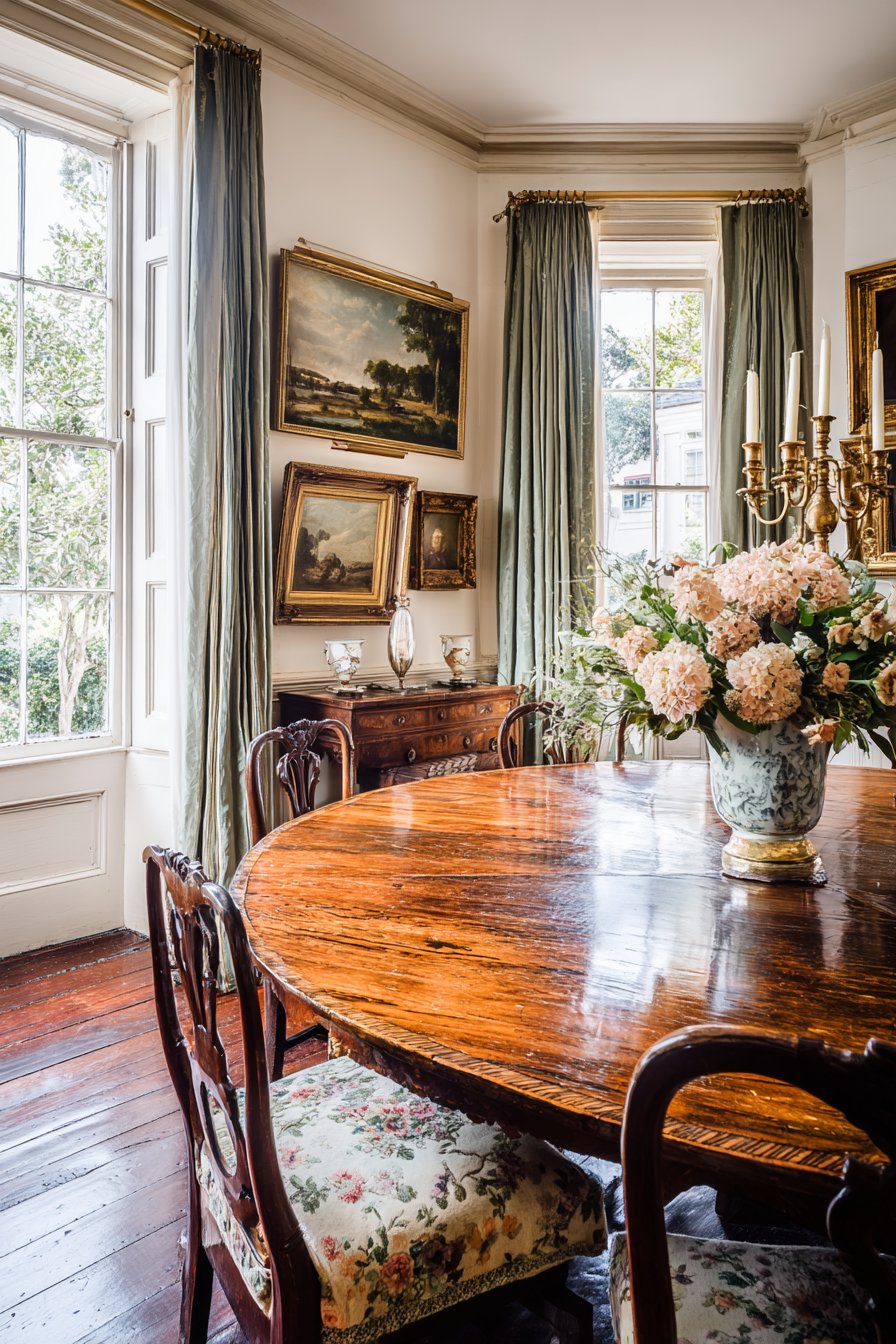
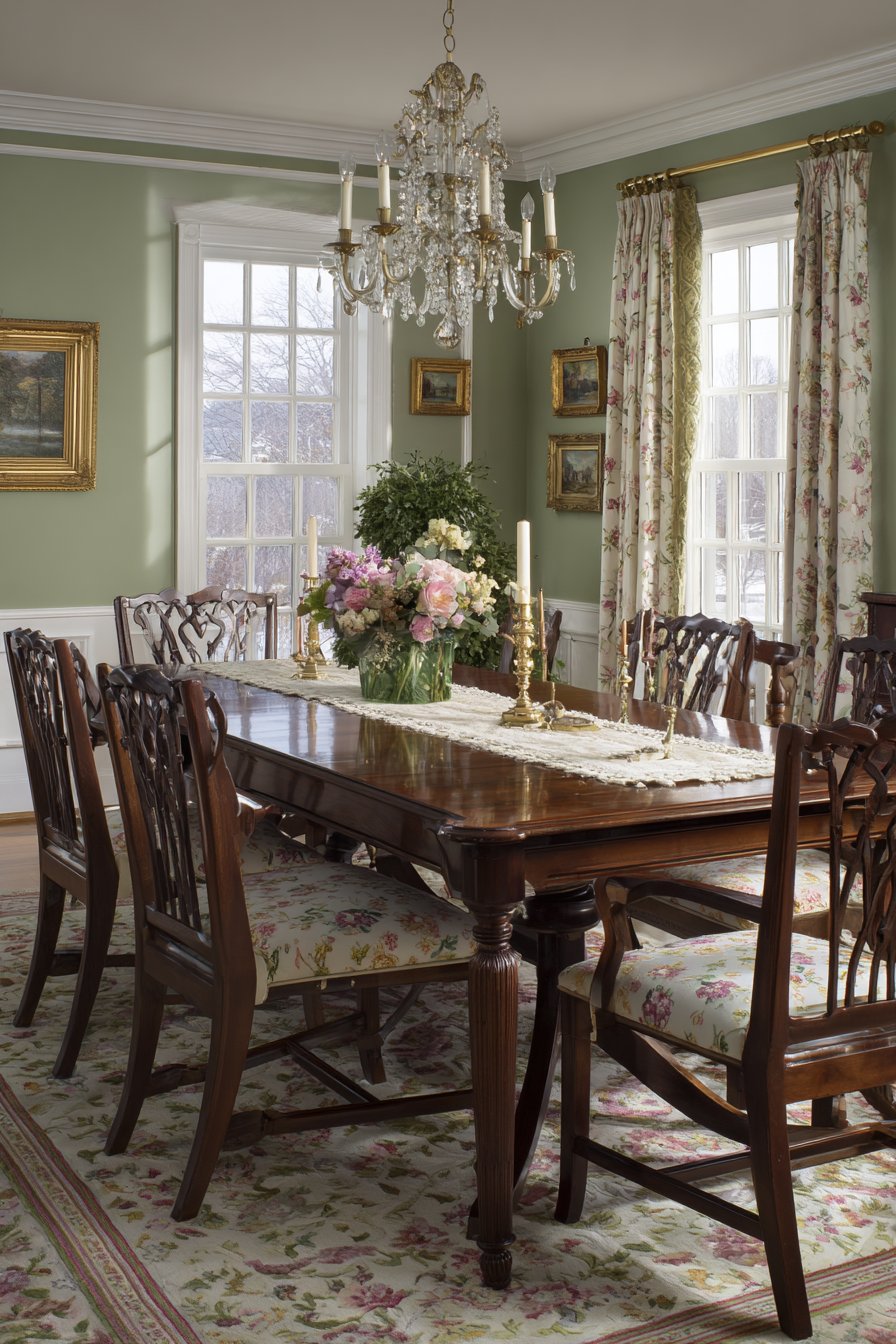
A Georgian-style dining room features a gleaming rosewood pedestal table. The original finish shows fine crackling and age-appropriate darkening. Chippendale dining chairs with needlepoint seats display faded florals. Slight frame loosening speaks to their genuine age and use.
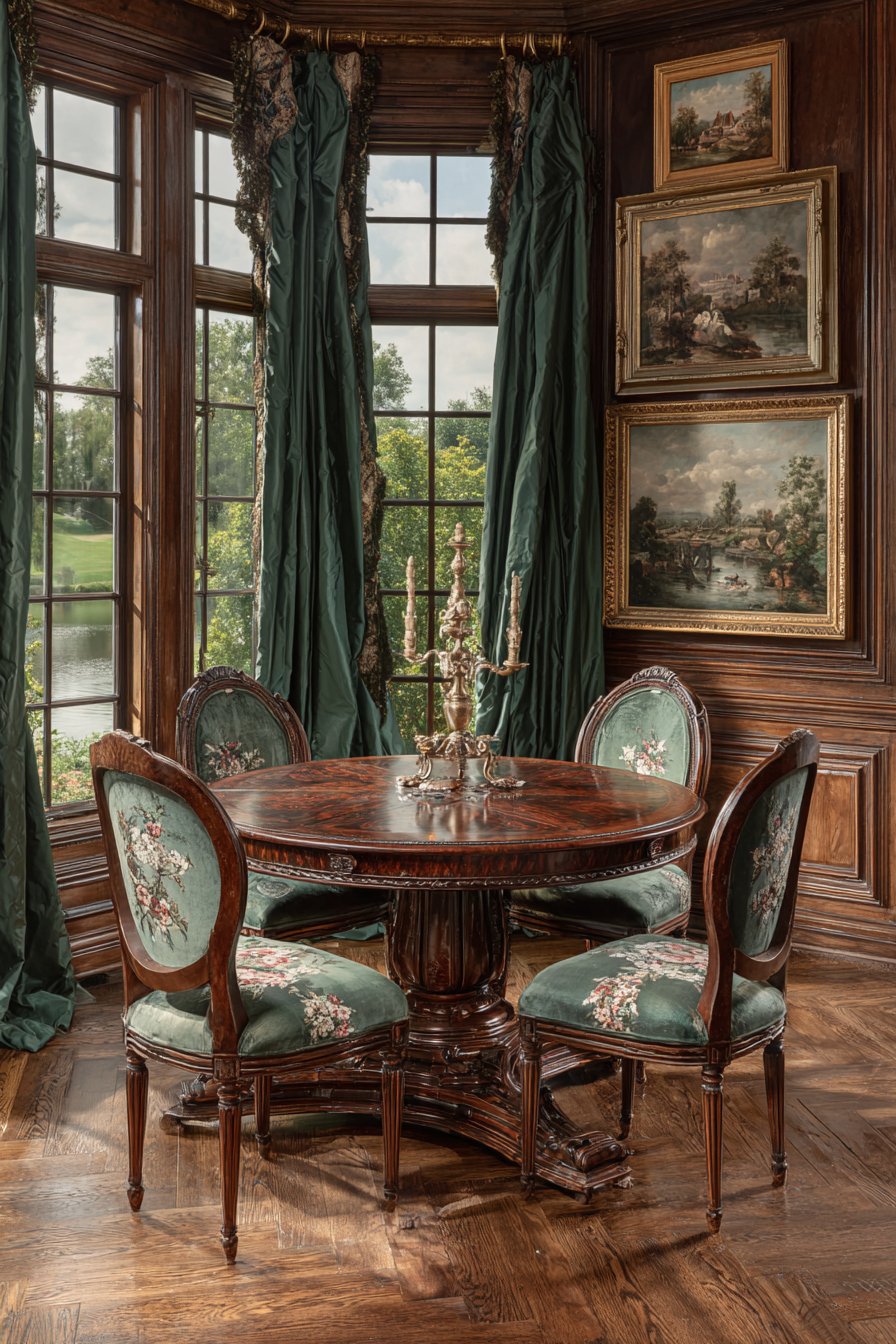
Gilt-framed oil paintings in various sizes create an authentic salon-style wall arrangement. The paintings hang above traditional wainscoting painted in muted tones. A brass candelabra centerpiece shows natural tarnish in crevices. Heavy velvet drapes in deep green frame leaded glass windows.
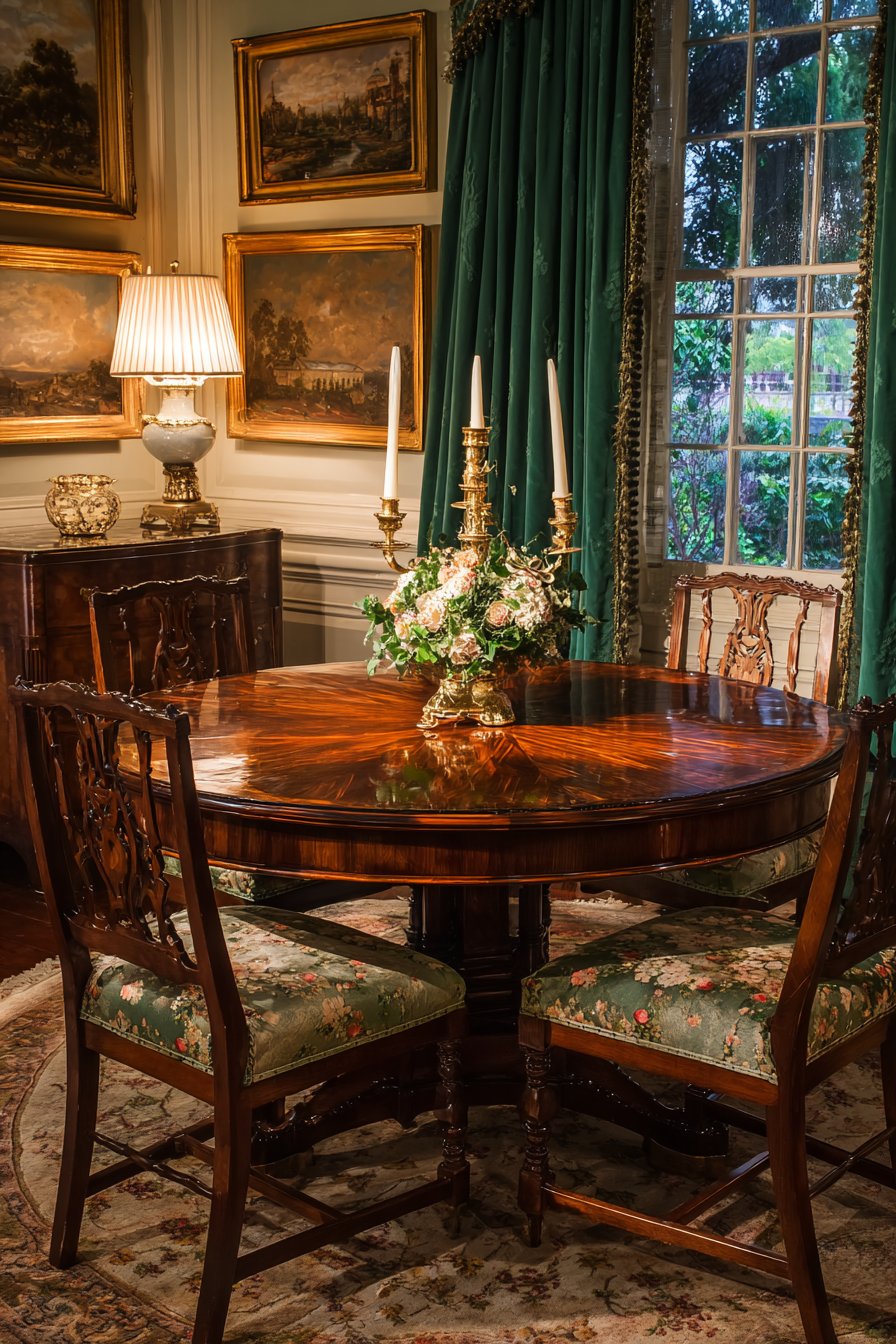
Soft directional lighting highlights the layered history throughout the space. The aristocratic character emerges through carefully preserved details. Proper scale and proportion define the Georgian aesthetic. Each element contributes to the room’s refined elegance.
Key Design Tips:
- Choose rosewood furniture with original finishes displaying natural crackling patterns
- Arrange gilt-framed paintings in salon-style groupings above wainscoting
- Preserve natural tarnish on brass accessories in recessed areas
- Install heavy velvet drapery in jewel tones appropriate to the period
- Maintain leaded glass windows with their characteristic wavy appearance
4. Arts and Crafts Quarter-Sawn Oak
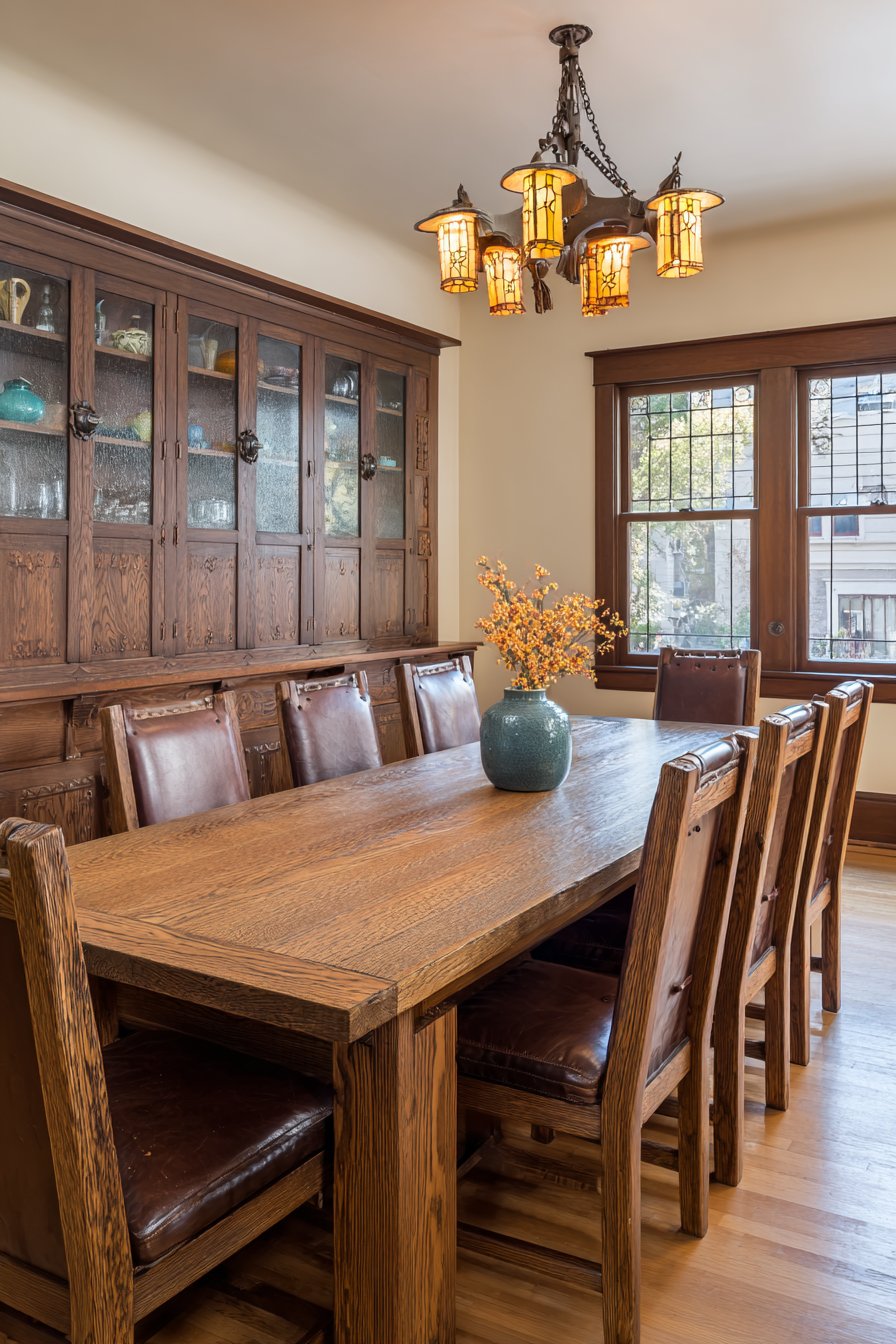
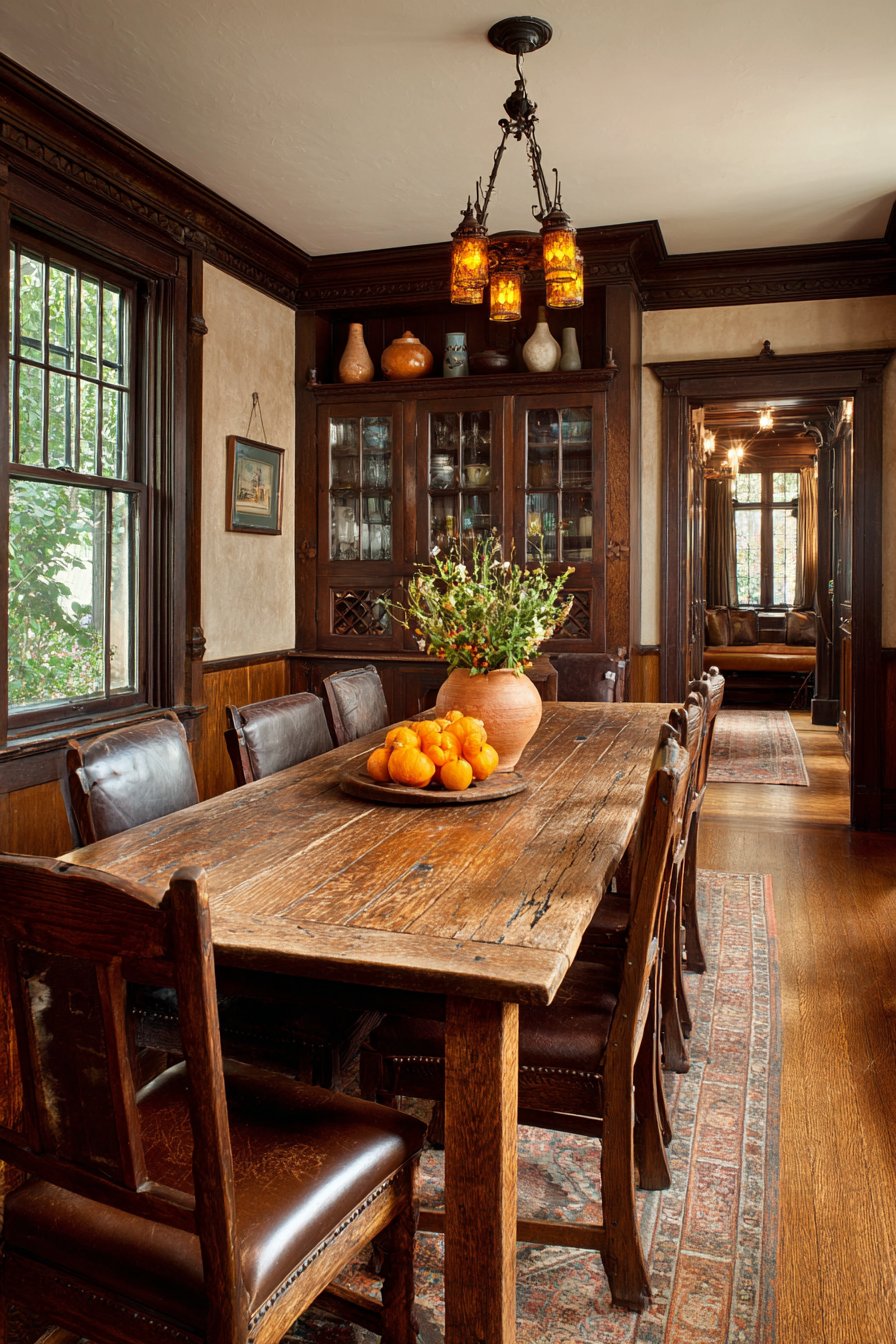
An Arts and Crafts dining room showcases a solid quarter-sawn oak table. Visible mortise-and-tenon joinery demonstrates superior construction methods. Mission-style chairs with leather seats show natural creasing and color variation. The honest wear at edges reveals authentic use over time.
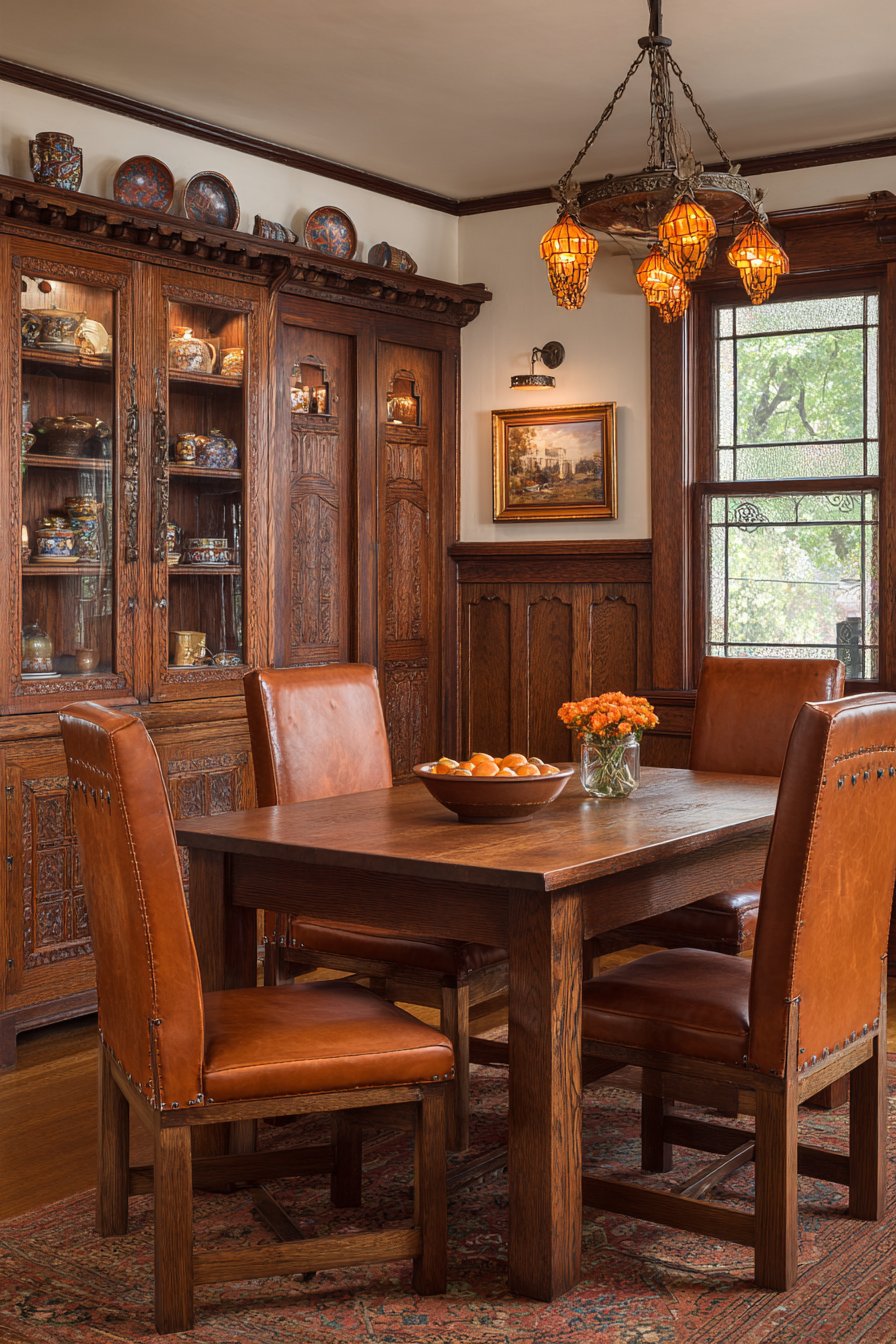
Built-in china cabinets feature leaded glass doors and hammered copper hardware. Period pottery and glassware fill the display shelves. The walls feature original picture rail molding and wainscoting. Dark stained oak creates a cohesive craftsman aesthetic throughout.
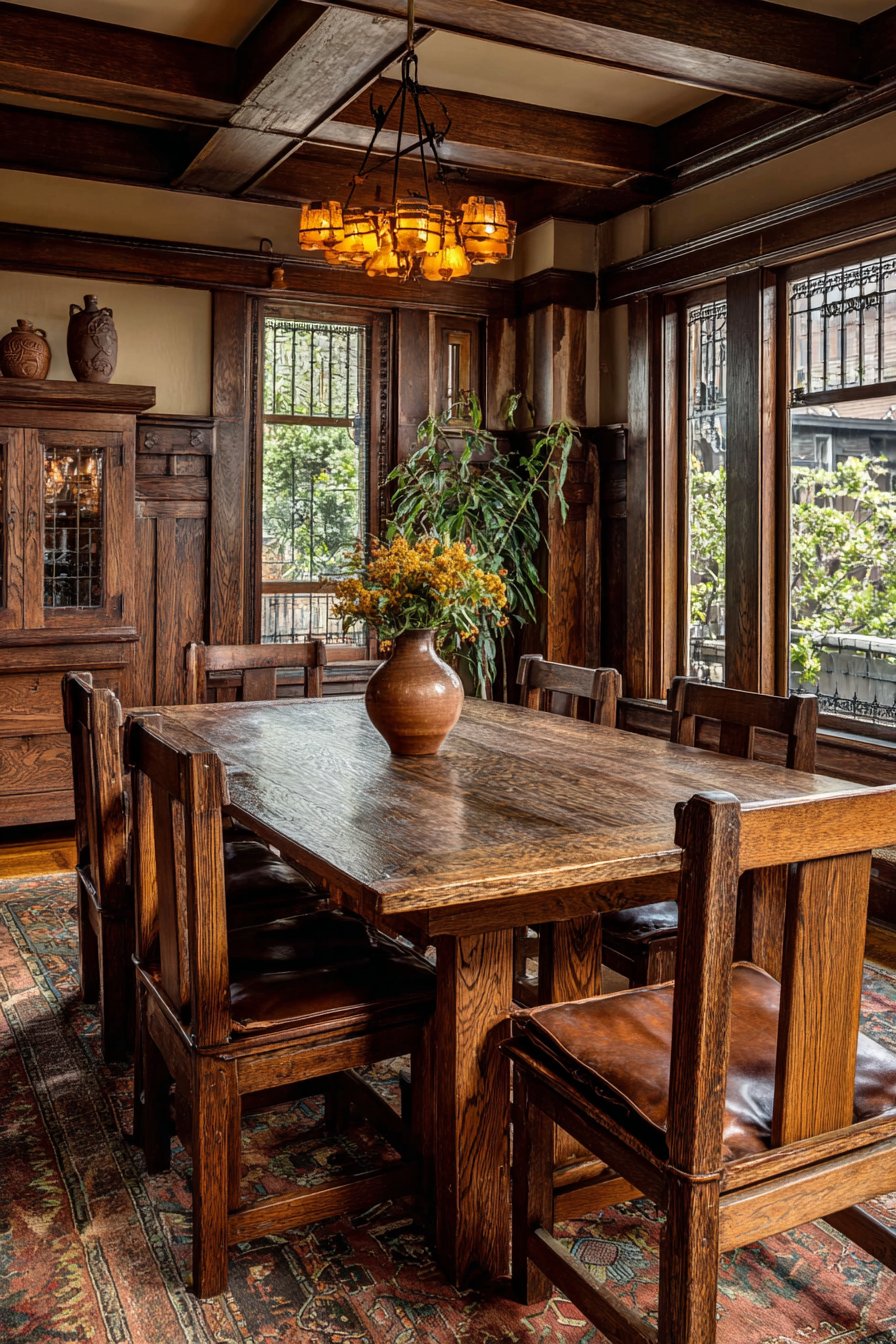
An antique brass chandelier with amber glass shades provides warm illumination. Natural light from casement windows highlights hand-crafted details. The joinery and natural material aging receive proper emphasis. Every element celebrates the craftsman philosophy of honest construction.
Key Design Tips:
- Select quarter-sawn oak furniture showing distinctive ray fleck patterns
- Display visible joinery methods like mortise-and-tenon construction
- Choose hammered copper hardware with natural patina development
- Install built-in cabinetry with leaded glass in geometric patterns
- Preserve original dark stained finishes on woodwork and wainscoting
5. Colonial Revival Tiger Maple Charm
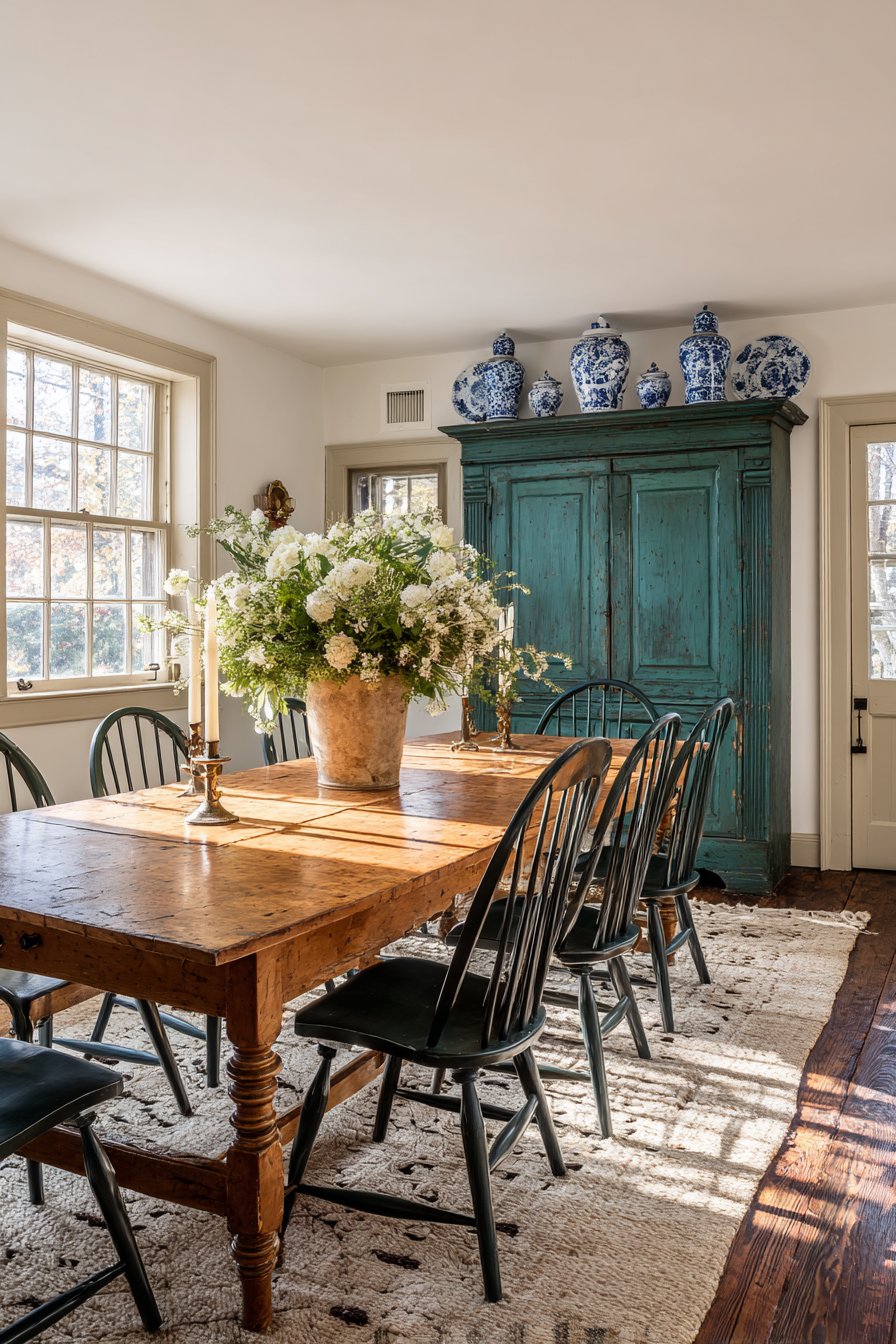
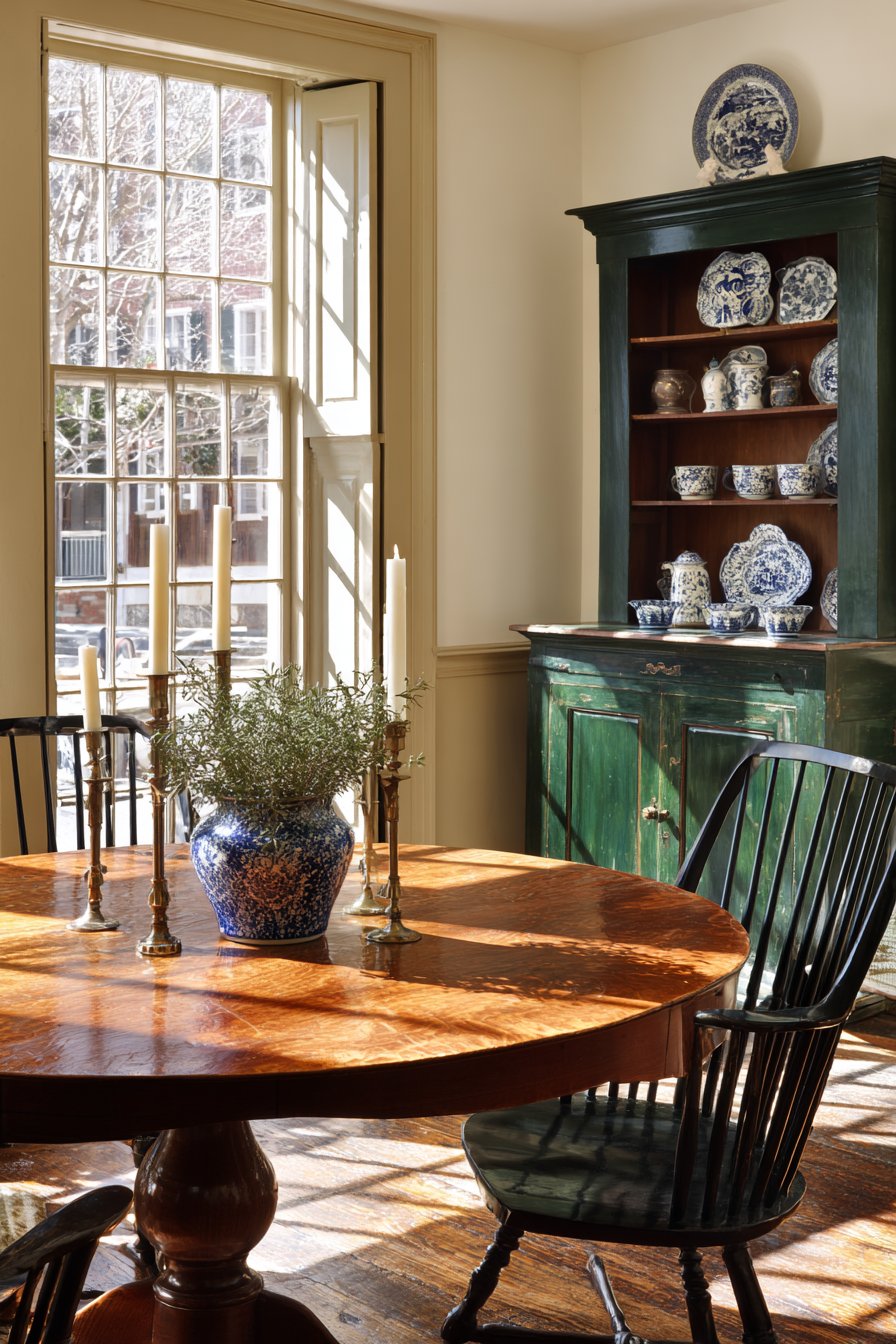
A Colonial Revival dining room features a tiger maple drop-leaf table. The distinctive grain patterns and original hardware show gentle wear. Windsor dining chairs in dark green milk paint circle the table. Authentic wear reveals bare wood at high-contact areas.
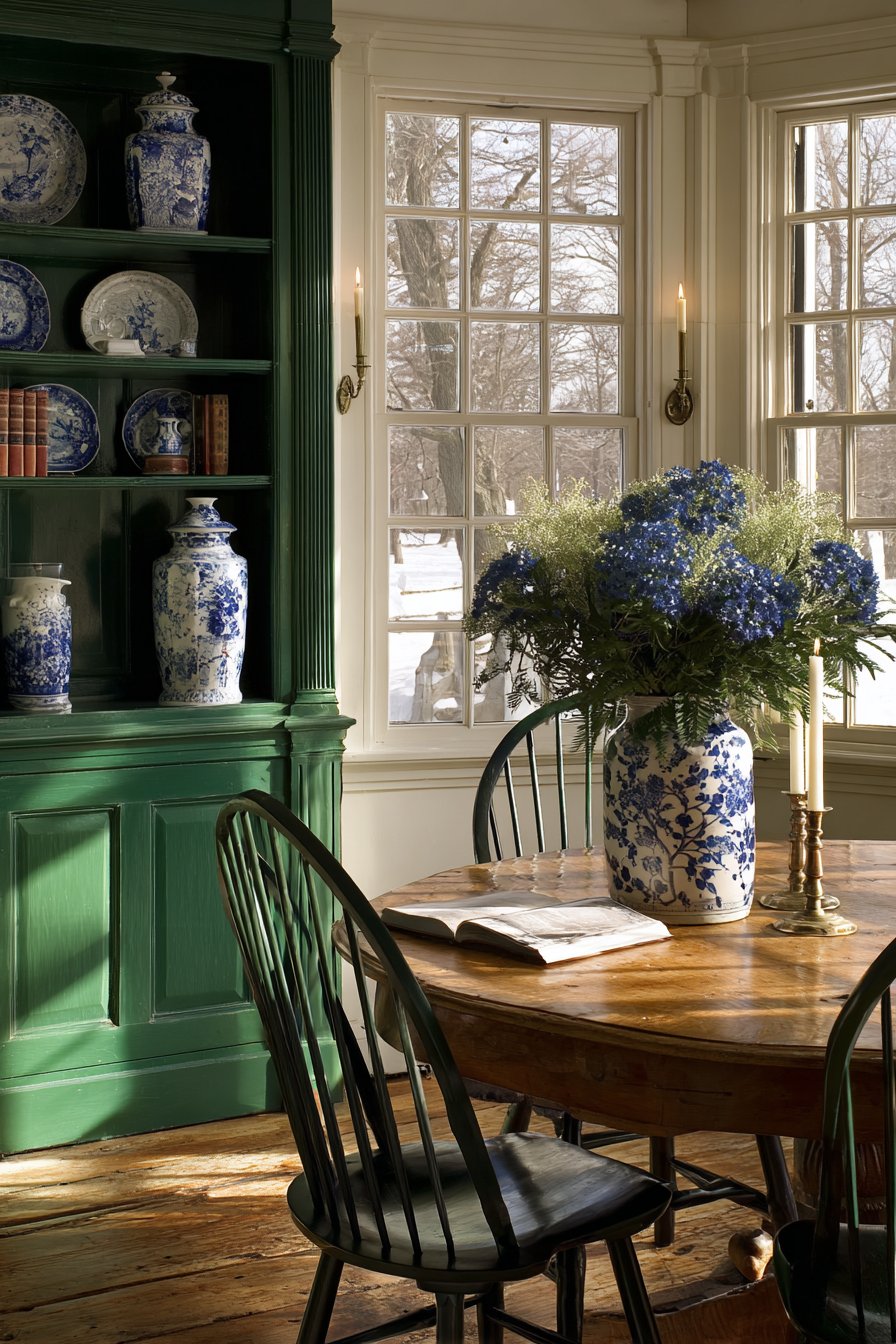
A corner cupboard displays blue and white transferware. The ceramics show crazing appropriate to their age. Wide-plank pine flooring features hand-forged nail holes and natural gaps. Pewter candlesticks and antique brass sconces provide period-appropriate lighting.
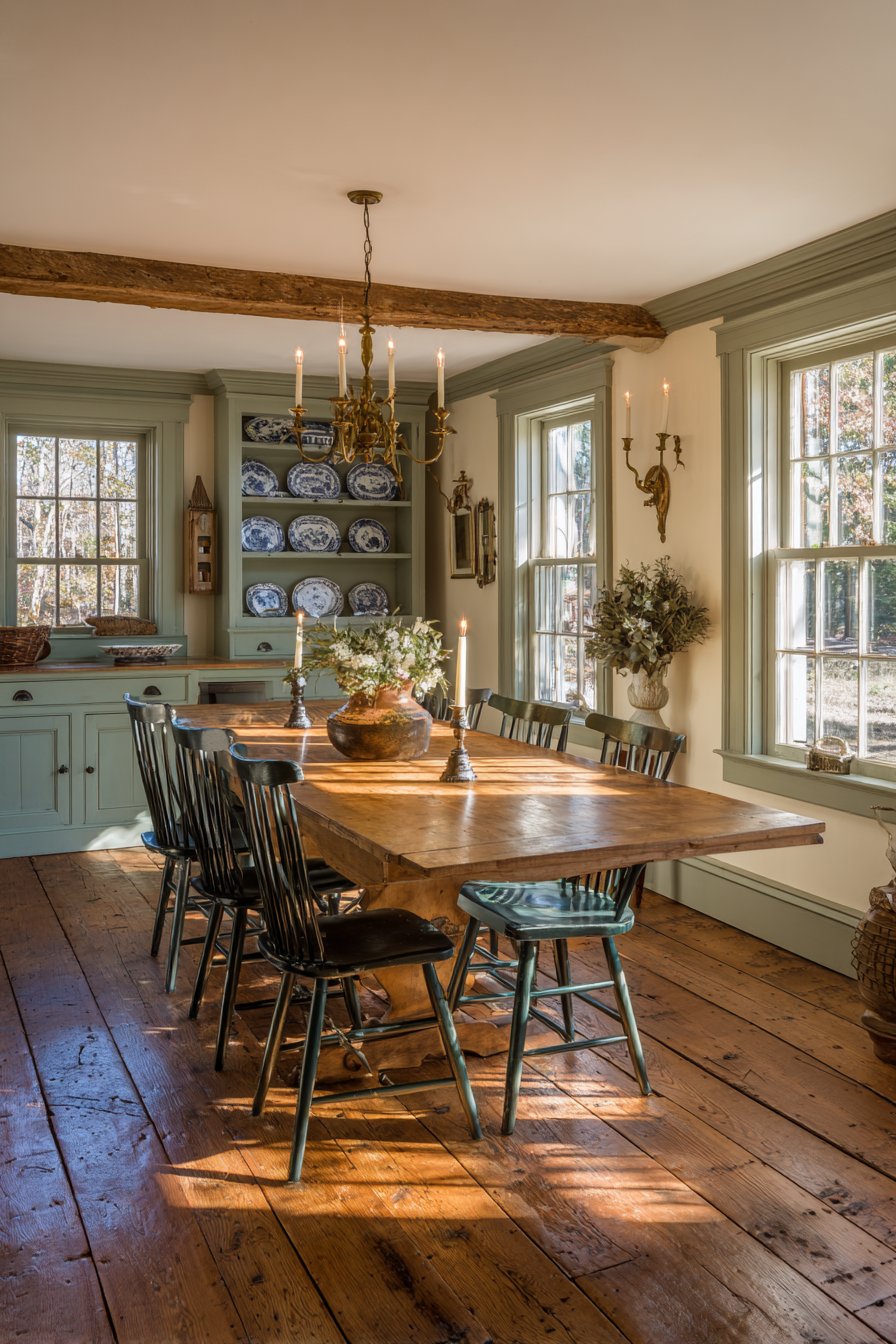
Soft daylight enters through twelve-over-twelve windows. The gentle illumination creates intimate shadows throughout the space. The American antique aesthetic celebrates honest material patina. Every surface tells a story of generations of use.
Key Design Tips:
- Choose tiger maple furniture with dramatic grain patterns and original hardware
- Apply milk paint finishes that show authentic wear through to bare wood
- Display transferware ceramics with appropriate crazing and age marks
- Install wide-plank flooring with hand-forged nails and natural gaps
- Use pewter and brass lighting fixtures with natural tarnish accumulation
6. Edwardian Satinwood Delicacy
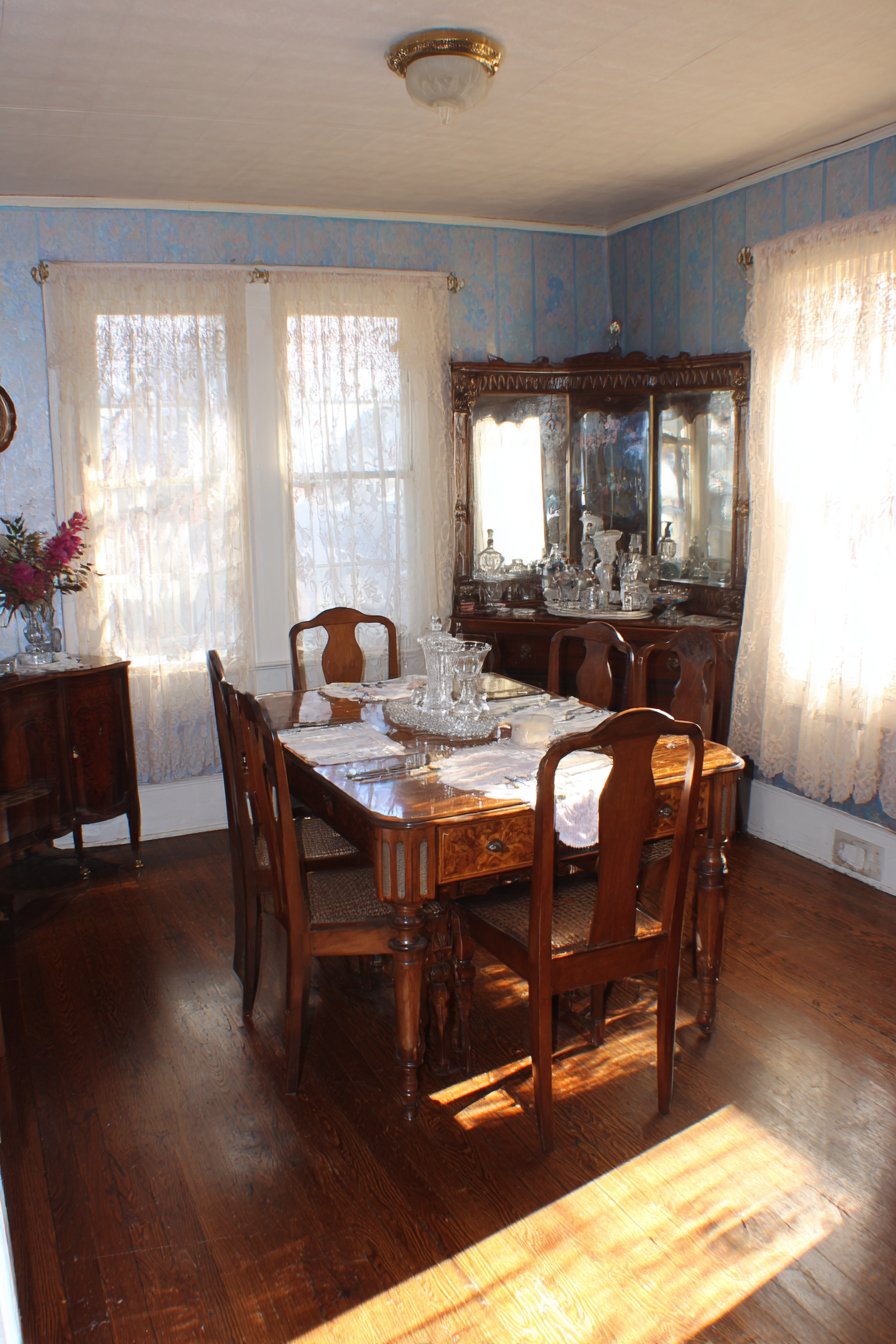
An Edwardian dining room centers on an inlaid satinwood dining table. Delicate marquetry borders show slight lifting at edges. Color fading from sunlight exposure adds authentic character. Balloon-back chairs with cane seats display natural darkening and minor splits.
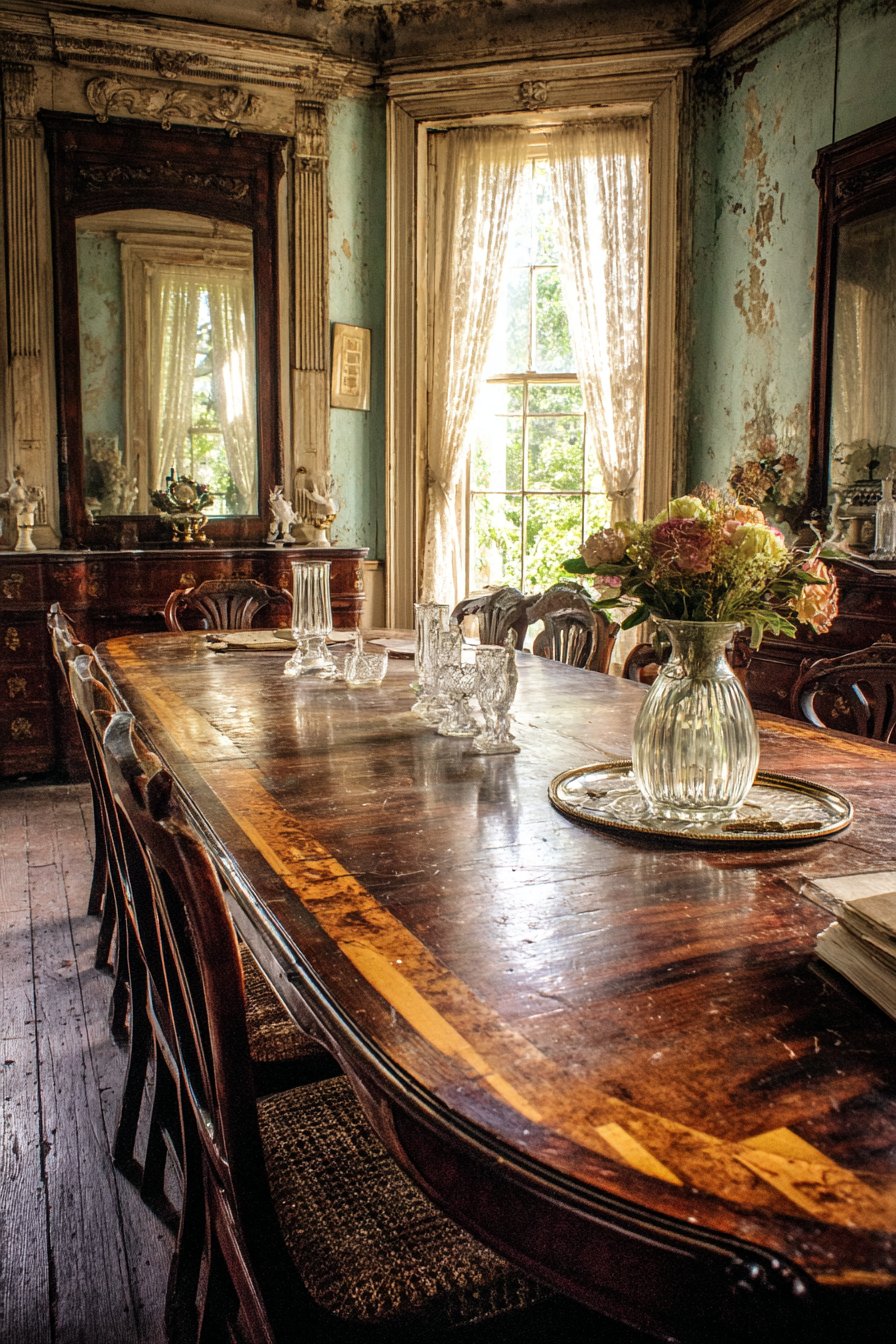
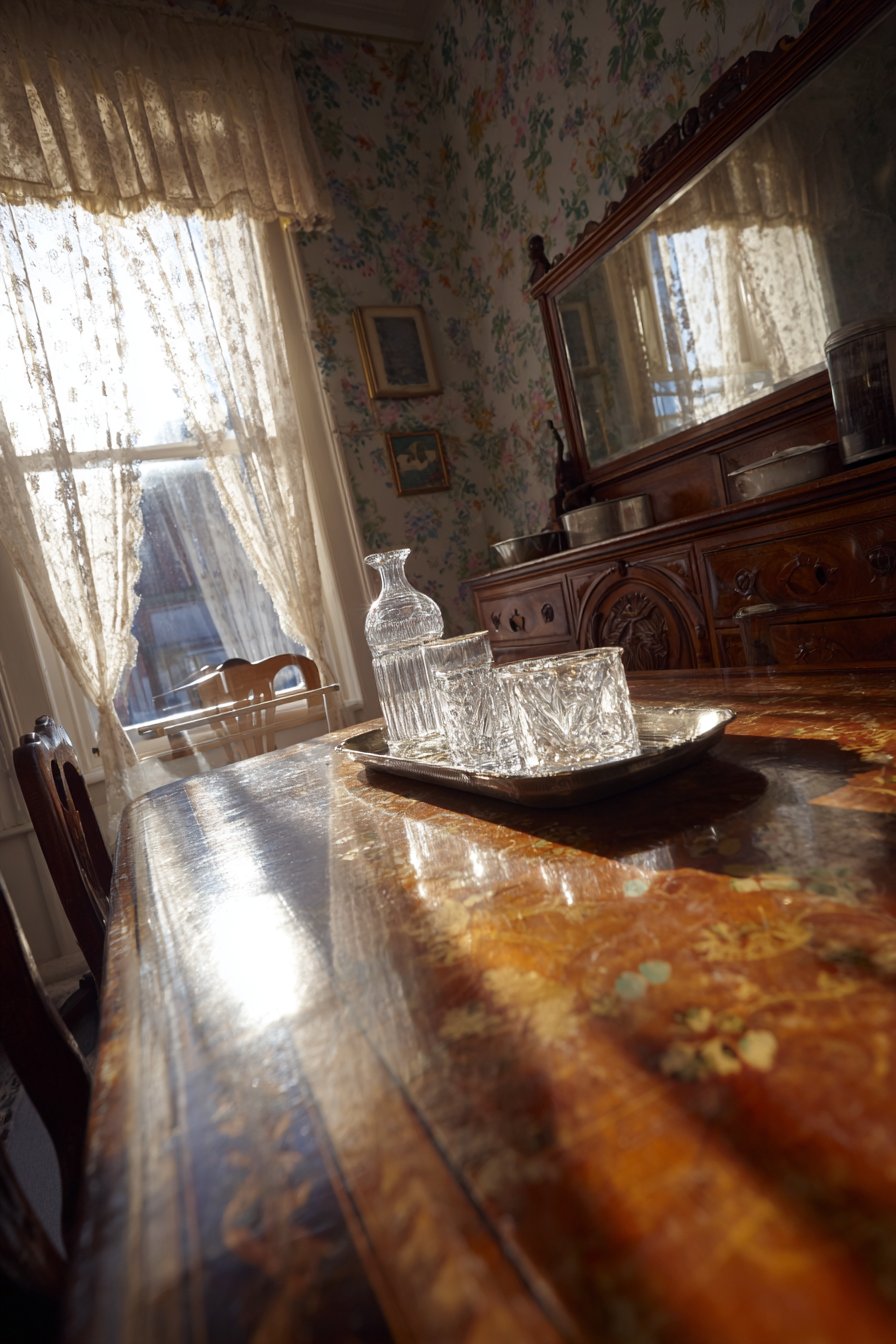
An elaborate sideboard features beveled mirrors with slight silvering loss. Original locks with skeleton keys remain functional. Crystal decanters on a silver tray show period-appropriate designs. Silk wallpaper in pale blue displays subtle water staining near the ceiling.
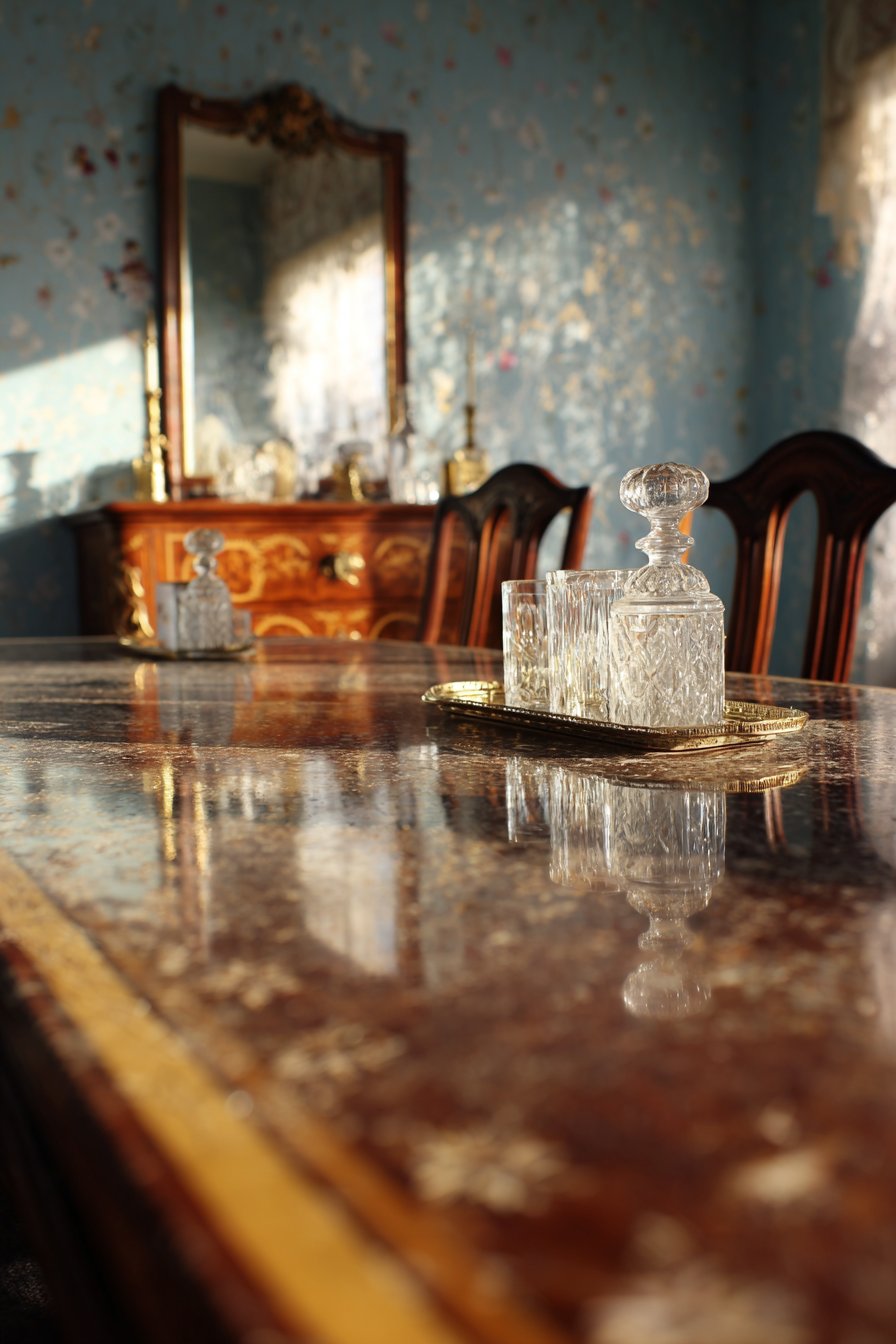
Late afternoon light filters through lace curtains. Dappled patterns dance across polished surfaces. The refined Edwardian elegance emerges through delicate details. Gentle aging characteristics enhance rather than diminish the beauty.
Key Design Tips:
- Select satinwood furniture with delicate marquetry showing slight edge lifting
- Preserve cane seats with minor splits and natural darkening patterns
- Display beveled mirrors with authentic silvering loss rather than re-silvering
- Choose silk wallpaper showing gentle water staining and age-appropriate fading
- Filter natural light through lace curtains for characteristic dappled effects
7. Rustic English Refectory Table Heritage
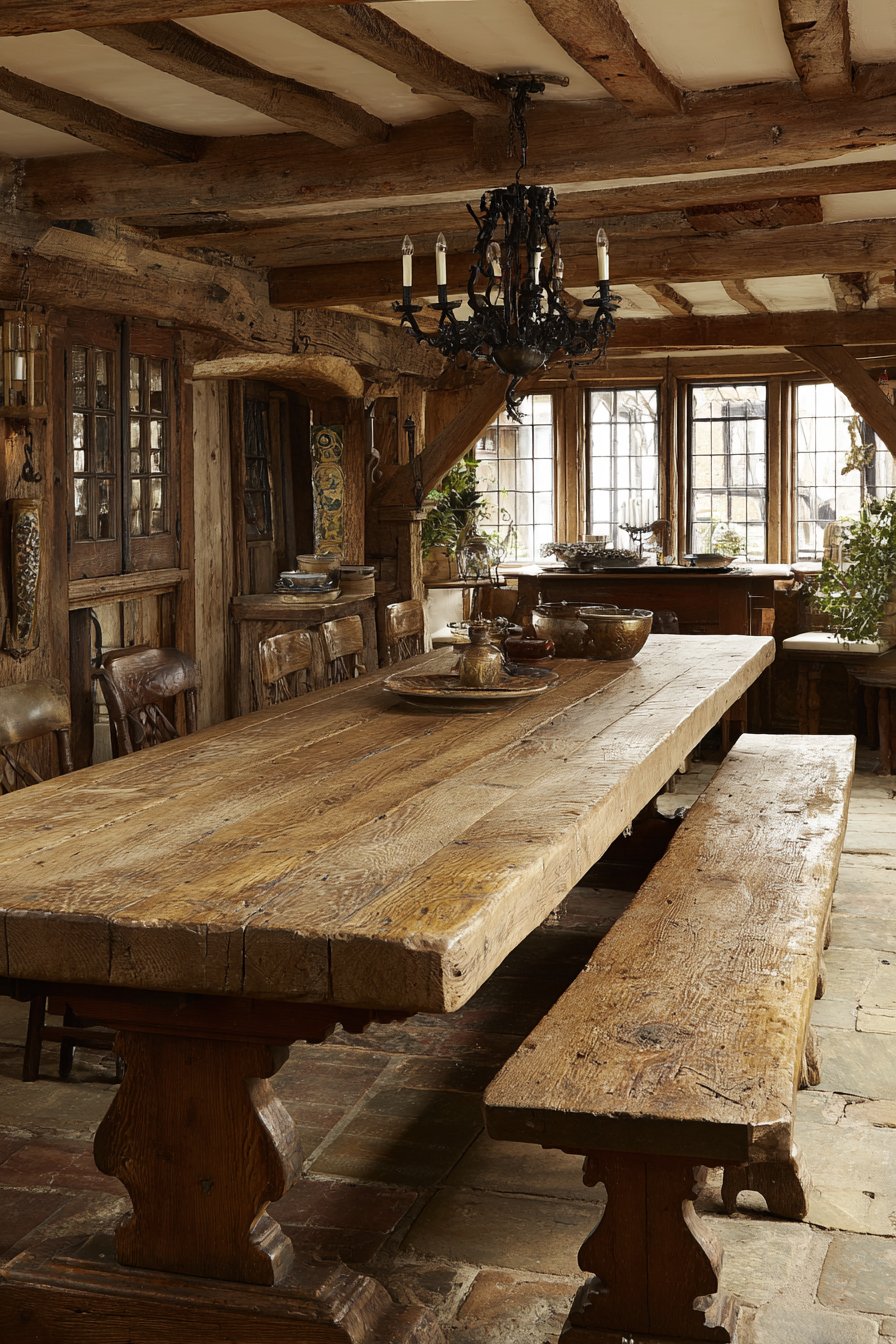
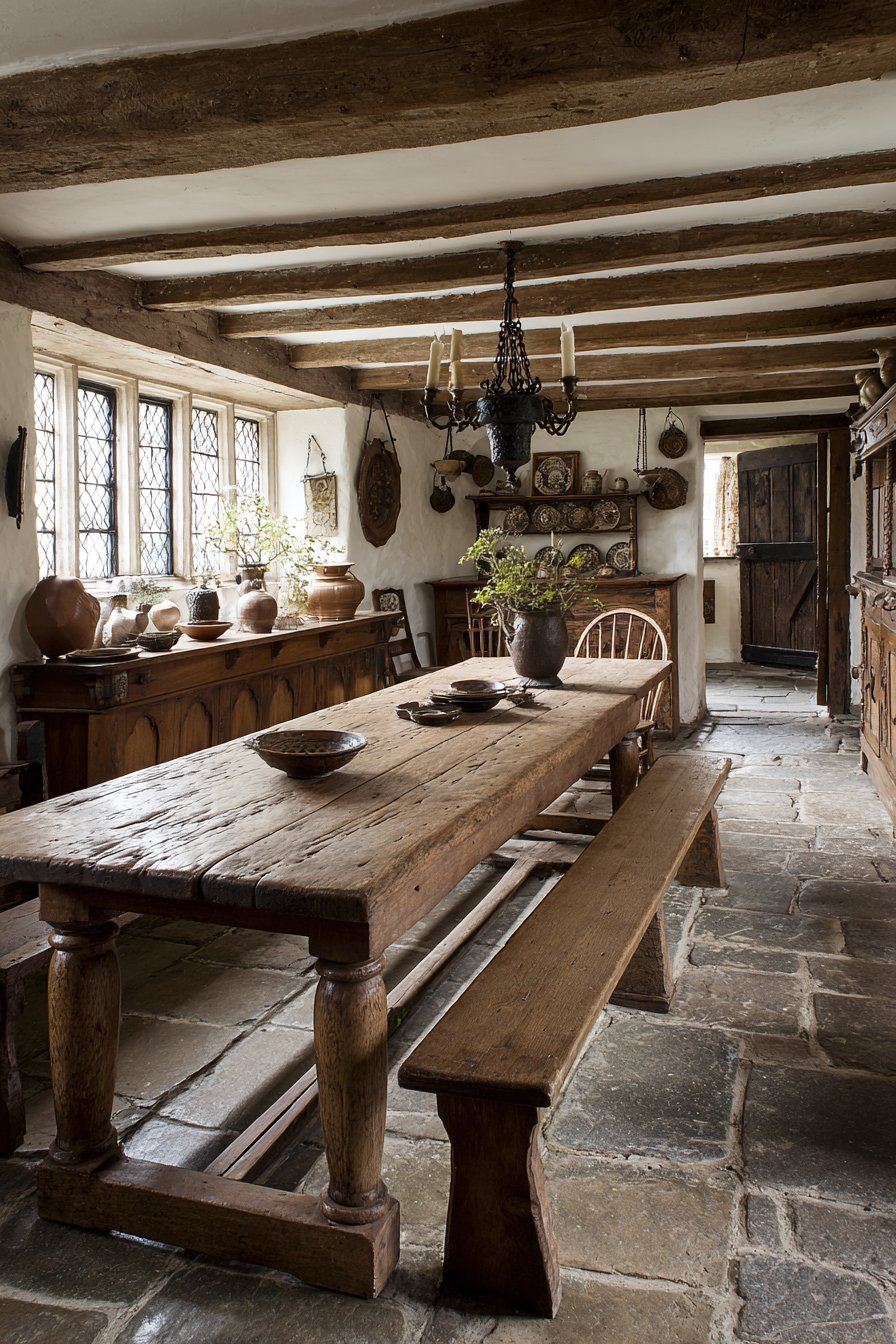
A rustic English dining room features a thick-planked oak refectory table. Breadboard ends and visible adze marks reveal original hand-shaping. Turned-leg joint stools and benches provide seating with worn paint finishes. Exposed ceiling beams show smoke darkening from centuries of fireplace use.
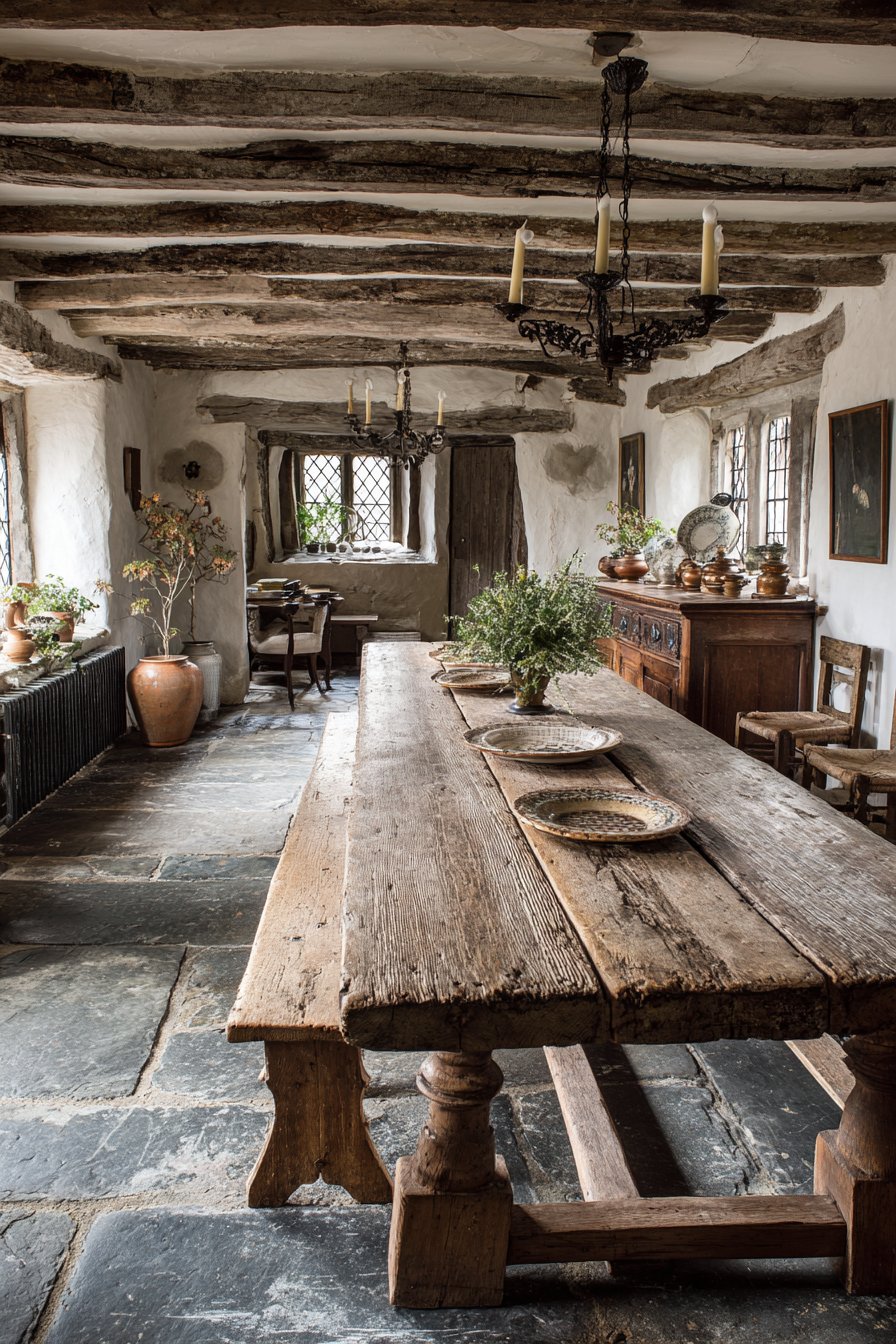
A massive Welsh dresser displays antique pewter plates and earthenware. Chips and repairs remain visible as honest history. Stone flooring features uneven surfaces and mortar loss between stones. A wrought iron chandelier with drip pans holds beeswax candles.
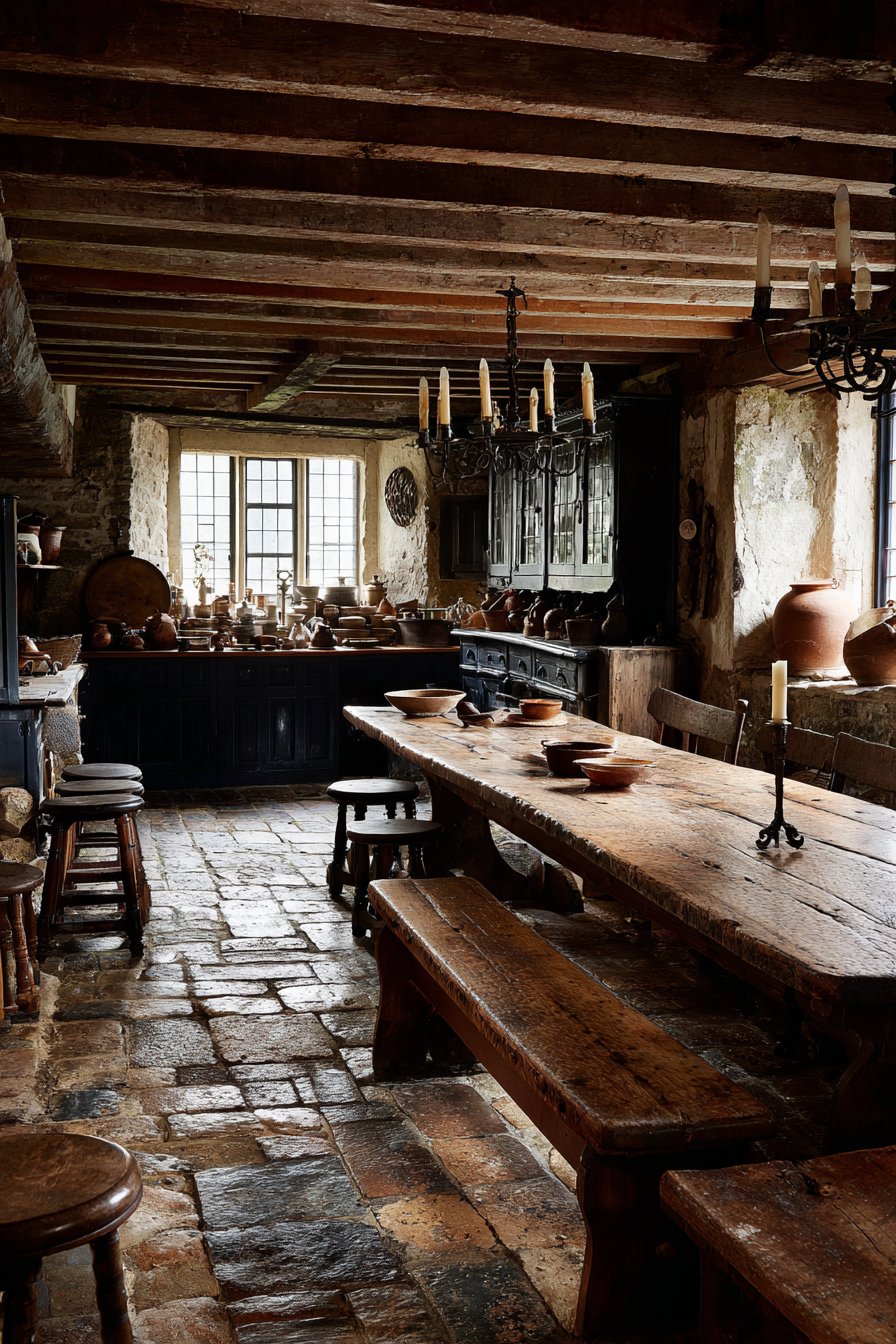
Natural light enters through small-paned windows. The illumination highlights honest wear and agricultural heritage. Medieval character emerges through working antiques still in use. Authentic patina covers every surface throughout the space.
Key Design Tips:
- Choose refectory tables with visible adze marks from hand-shaping tools
- Display pewter and earthenware showing honest chips and period repairs
- Preserve smoke-darkened ceiling beams as evidence of historical use
- Install stone flooring with uneven surfaces and authentic mortar loss
- Use wrought iron lighting with drip pans designed for candle use
8. Italian Renaissance Walnut Grandeur
An Italian Renaissance-inspired dining room showcases a walnut trestle table. Elaborate carved lion’s paw feet anchor iron stretchers showing rust patina. Sgabello chairs with octagonal seats display varied wood tones from different periods. Frescoed walls show age-appropriate crackling and minor paint losses.
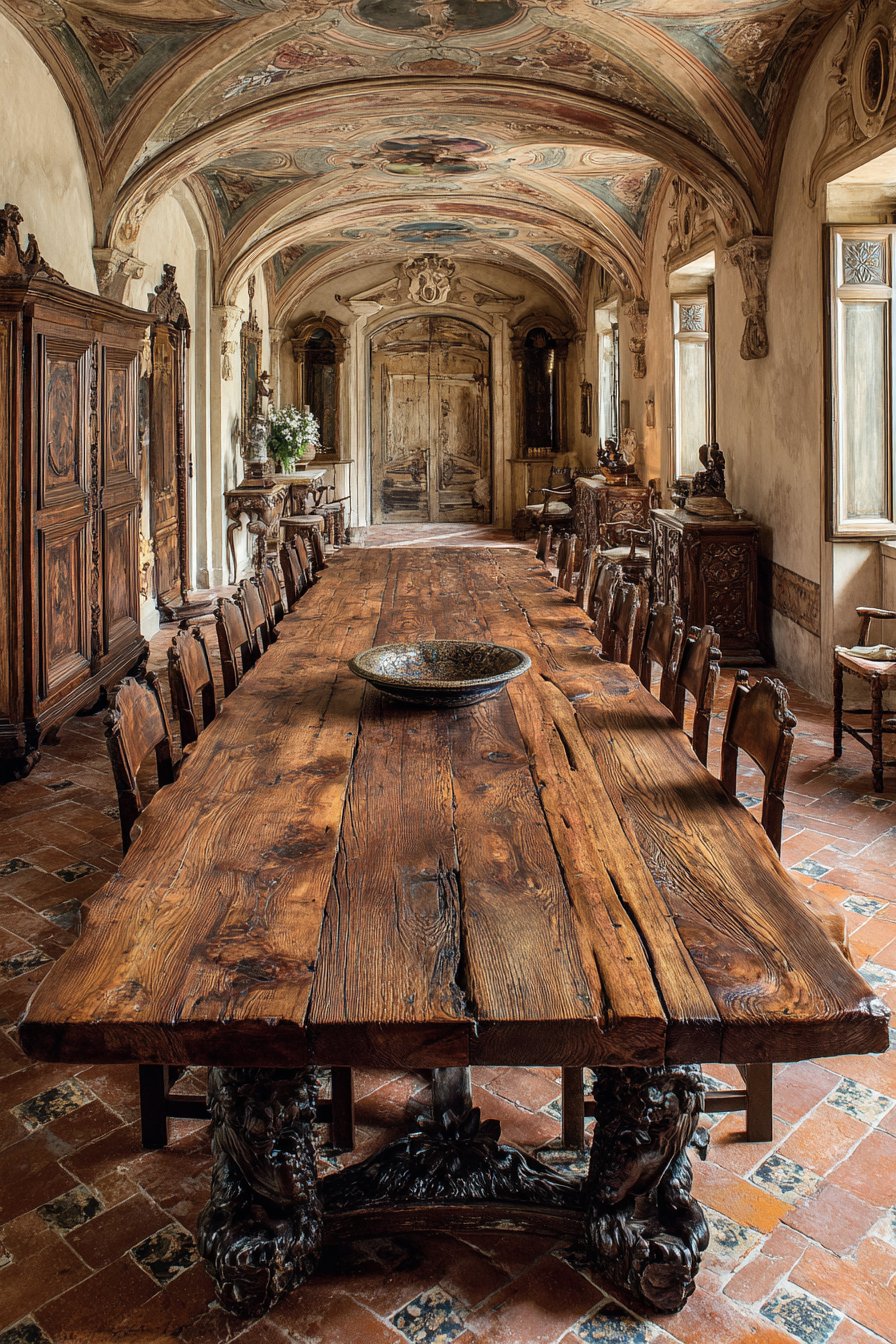
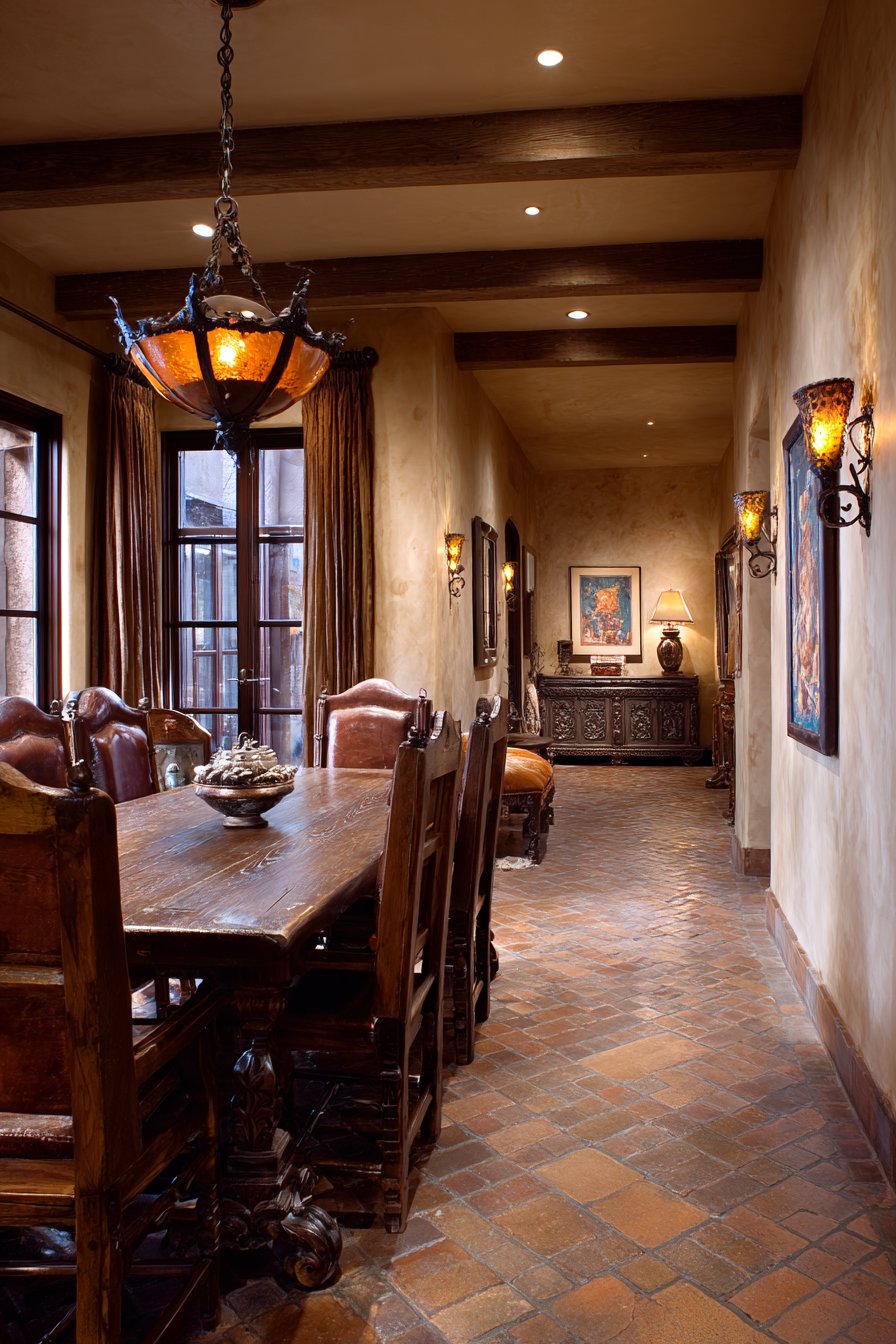
An ornate carved credenza features cherub motifs and original iron hinges. Majolica pottery displays visible repairs accumulated over centuries. Wrought iron wall sconces with amber glass provide warm ambient light. Terracotta tile flooring creates an undulating surface from centuries of wear.
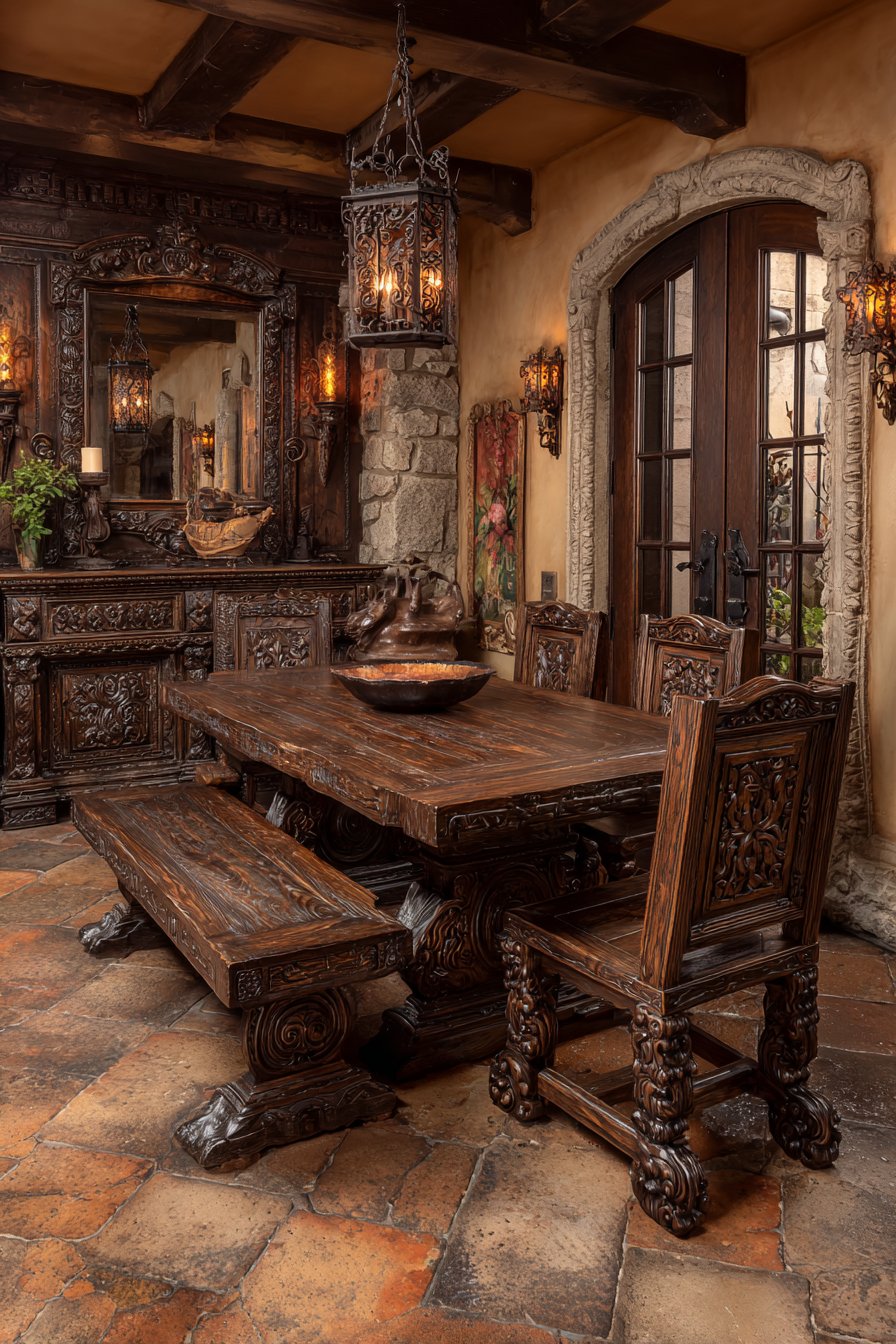
Professional composition captures the grand scale and layered history. Carved details receive proper emphasis through directional lighting. The Renaissance aesthetic celebrates artistic embellishment and craftsmanship. Surface aging adds depth to the ornate carved elements.
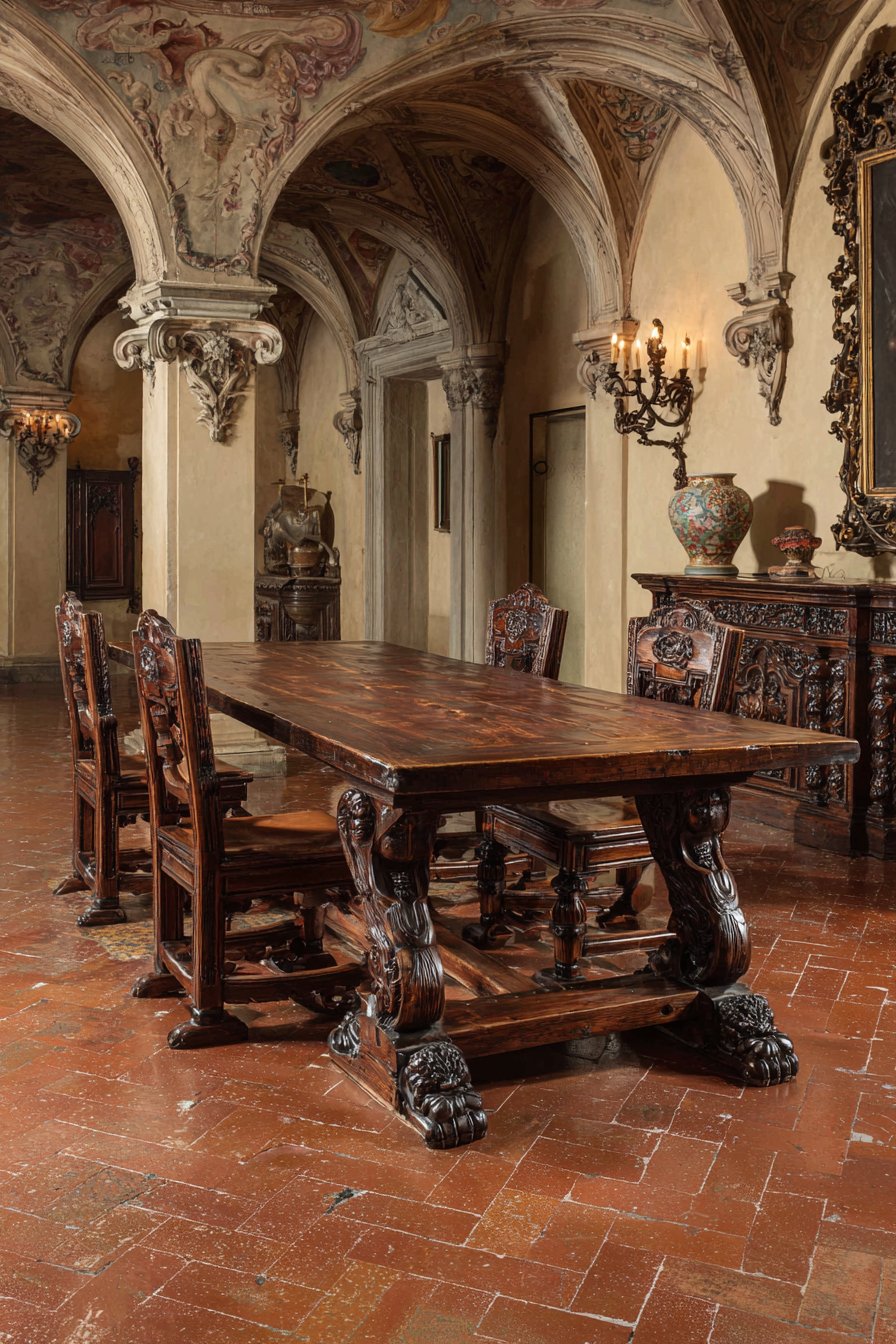
Key Design Tips:
- Select walnut furniture with elaborate carved elements showing natural darkening
- Display sgabello chairs with varied wood tones from different time periods
- Preserve frescoed walls with authentic crackling and minor paint losses
- Choose majolica pottery showing visible repairs as historical evidence
- Install terracotta flooring with centuries of wear creating uneven surfaces
9. Regency Flame Mahogany Sophistication
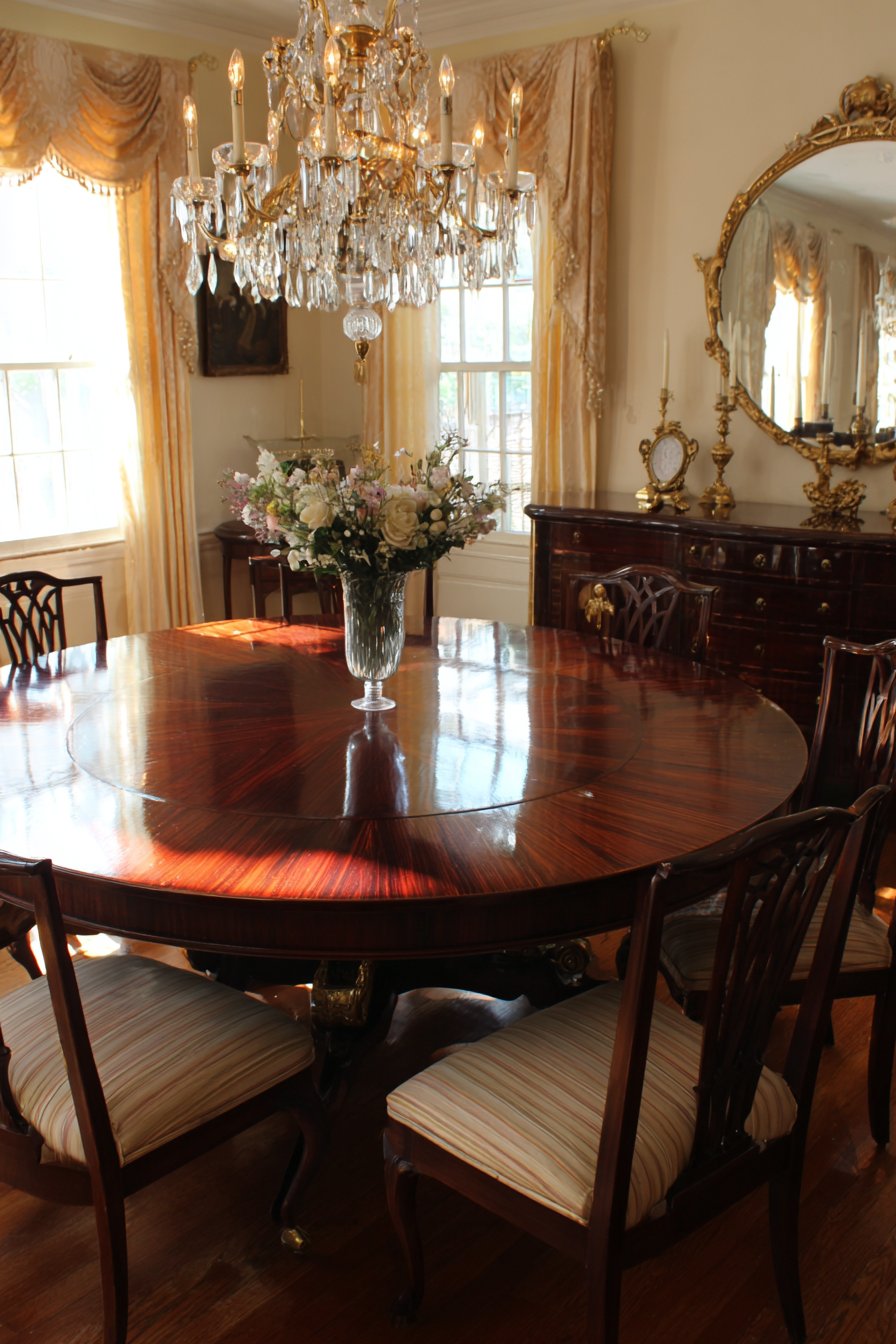
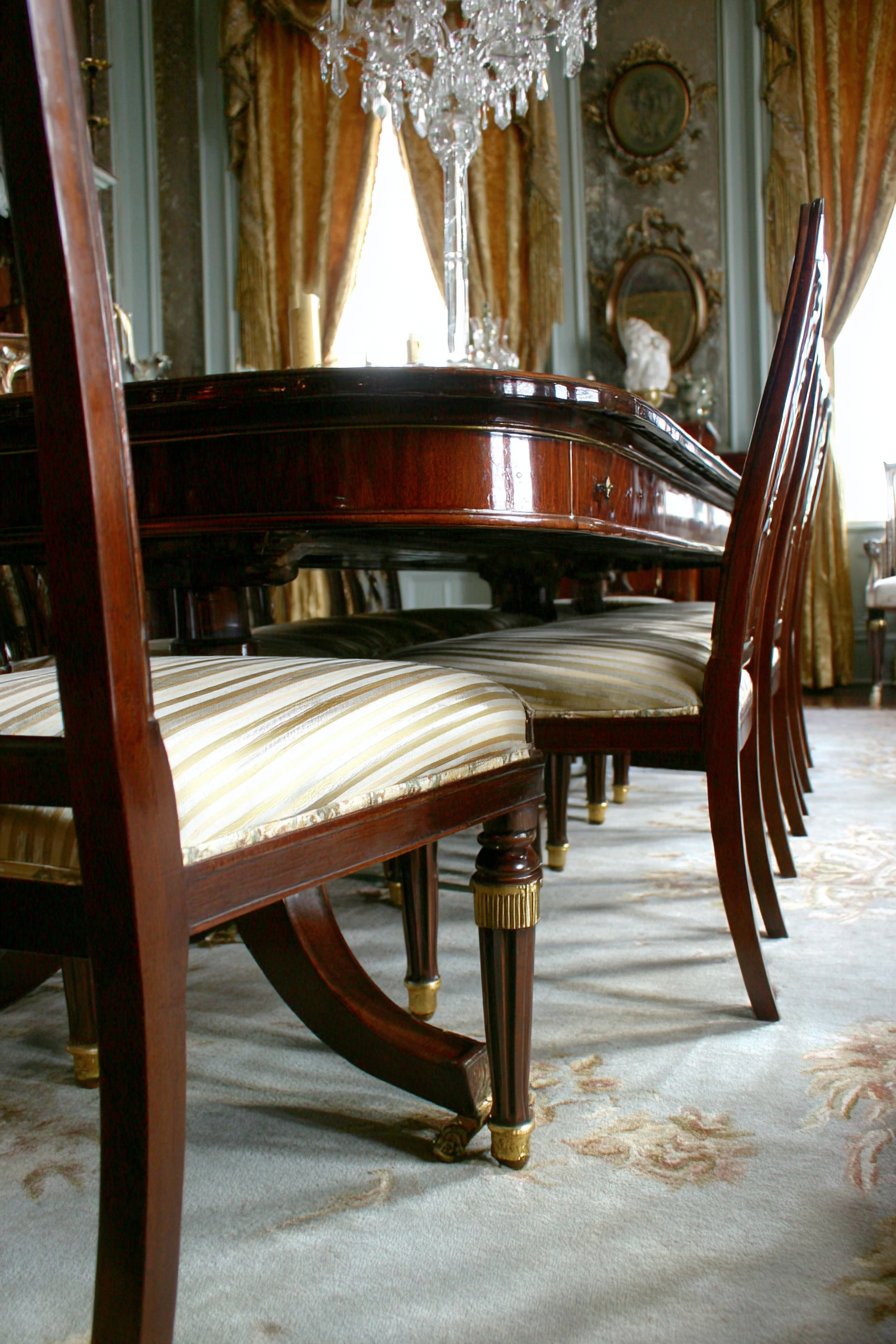
A Regency dining room features a flame mahogany pedestal table. Brass claw feet show natural tarnish in recesses and details. Sabre-leg dining chairs with cane backs surround the table. Striped silk seats display fading and slight pulls in the delicate fabric.
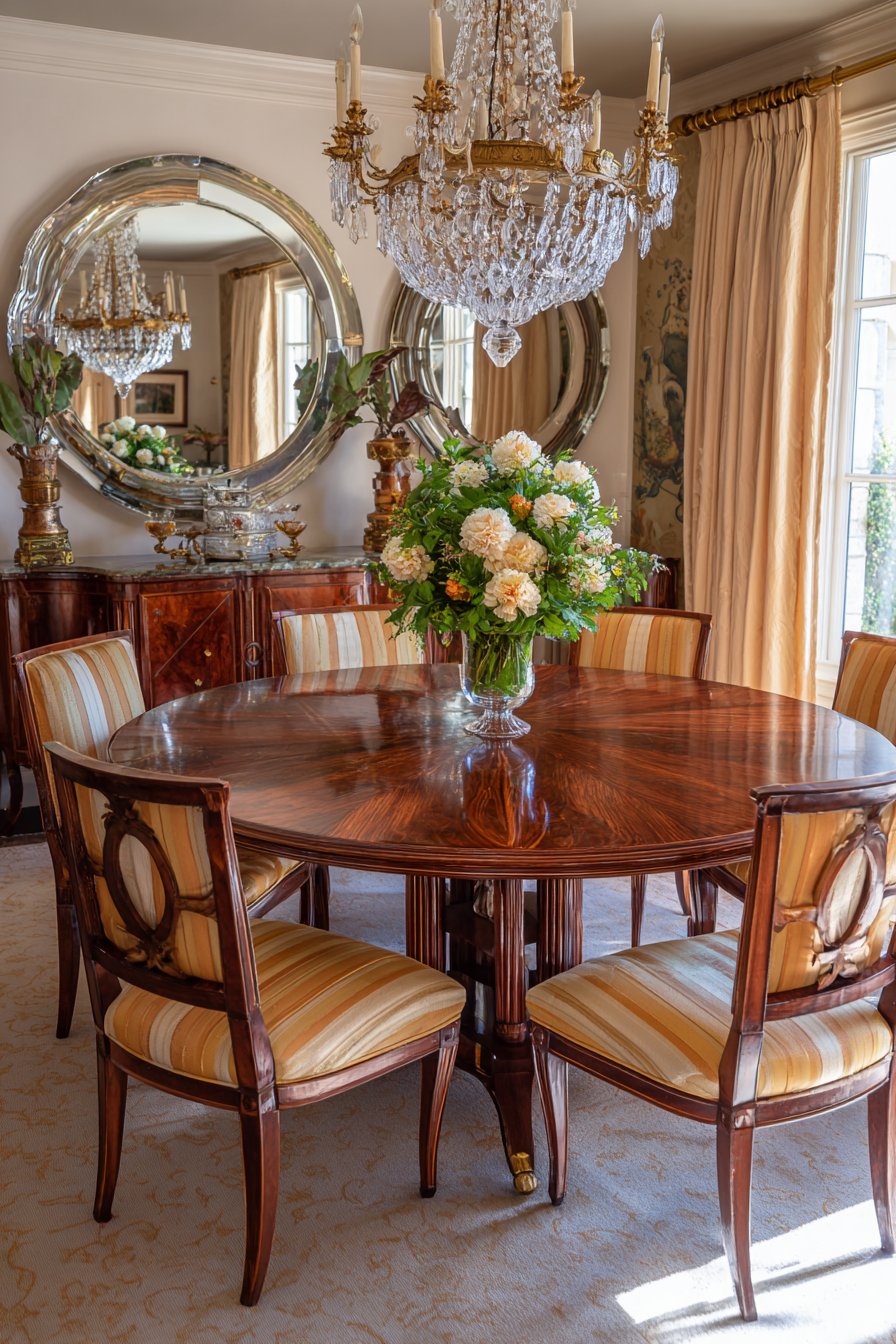
A bow-front sideboard showcases ebony stringing and original brass ring pulls. Veneer checking and color variation add authentic character. Convex mirrors with eagle pediments feature gilding losses. A crystal chandelier displays period-appropriate cloudiness and minor chips.
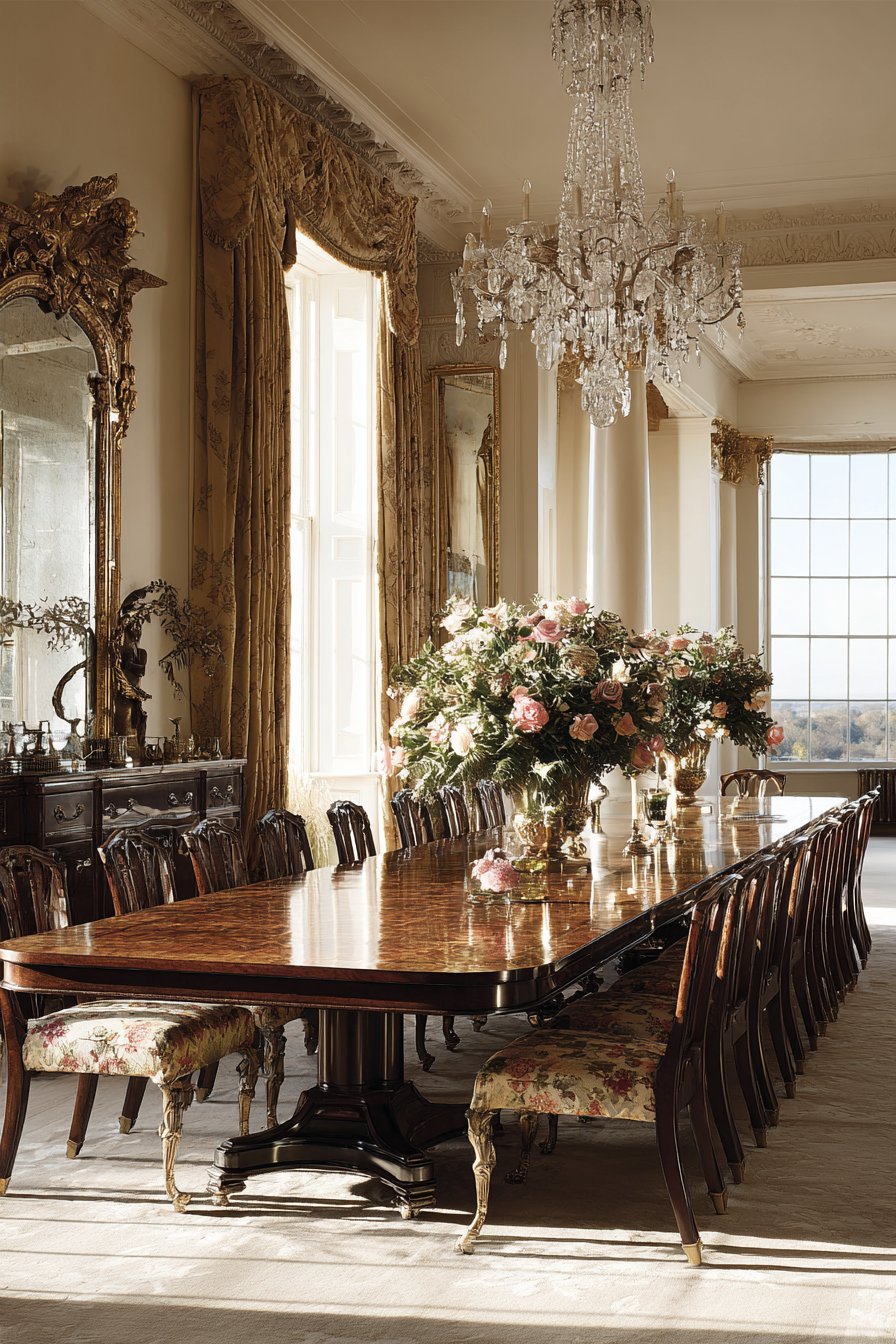
Morning light creates gentle highlights on polished surfaces. The formal elegance balances with visible signs of authentic age. Gentle use over generations adds distinction rather than damage. Natural patina on bronze mounts enhances the refined aesthetic.
Key Design Tips:
- Choose flame mahogany furniture with dramatic grain patterns and original finish
- Preserve natural tarnish on brass claw feet in recessed decorative areas
- Display silk upholstery with authentic fading and minor fabric pulls
- Keep convex mirrors with gilding losses showing base material beneath
- Showcase crystal with period-appropriate cloudiness rather than perfect clarity
10. Swedish Gustavian Painted Simplicity
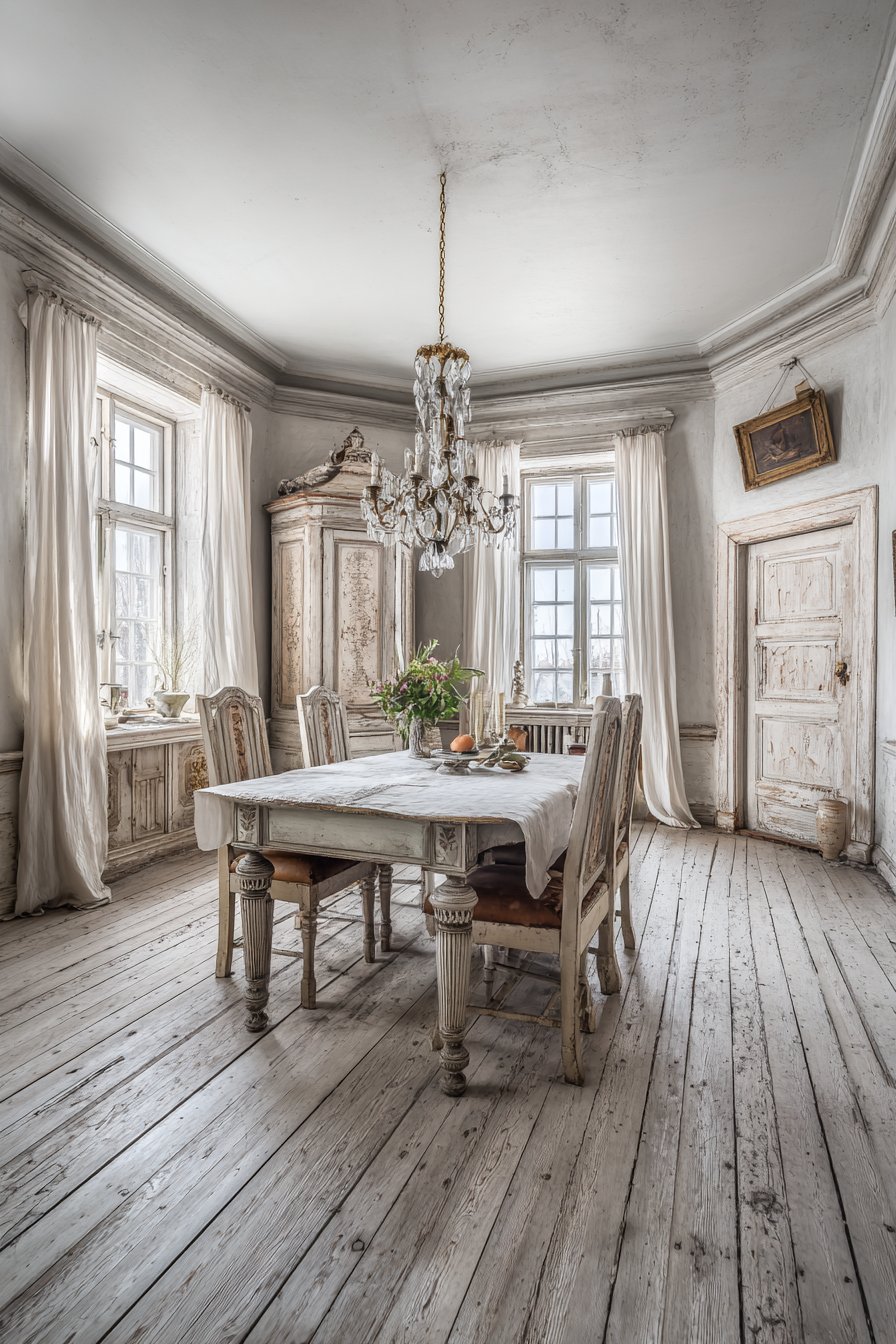
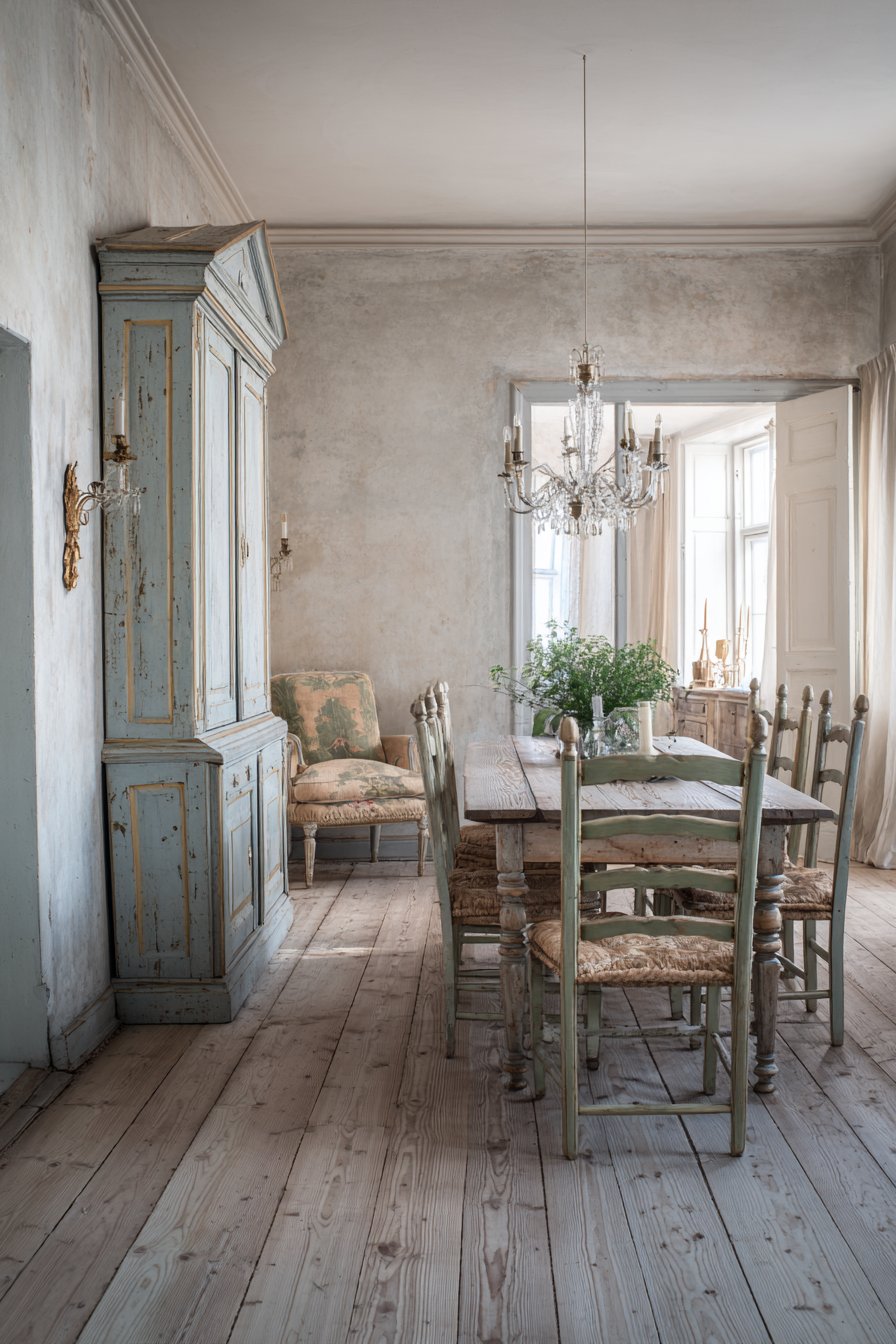
A Swedish Gustavian dining room centers on a painted pine table. Original pale grey-blue paint shows wear through to earlier layers. Dining chairs with carved wheat sheaf backs display authentic paint crackling. Color variation between pieces adds historical interest and charm.
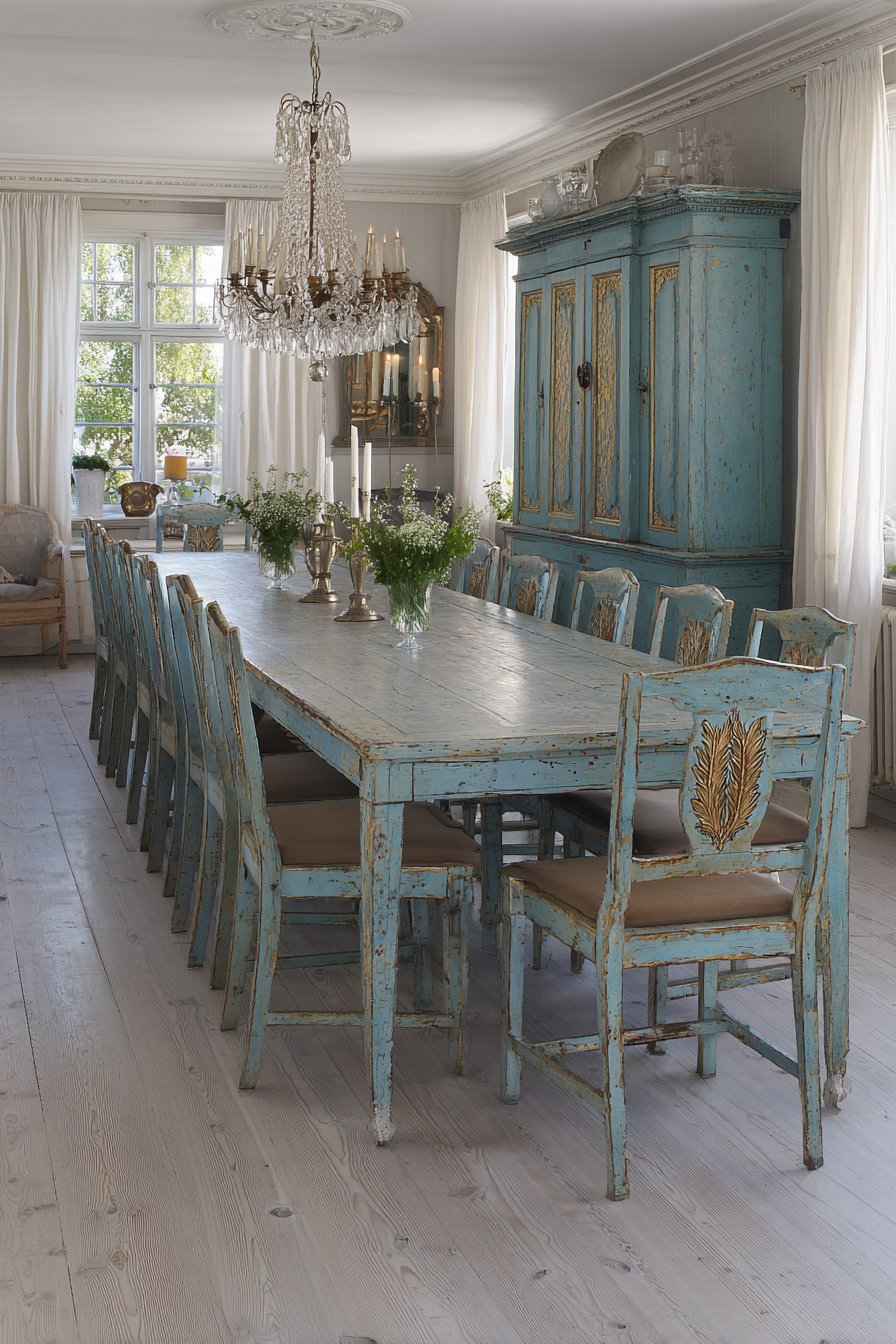
A tall corner cabinet in matching paint reveals layers of history. Crystal chandeliers and sconces feature brass fittings showing natural tarnish. Wide plank floors in soft grey paint exhibit traffic wear patterns. Exposed wood appears in high-use areas through generations of footsteps.
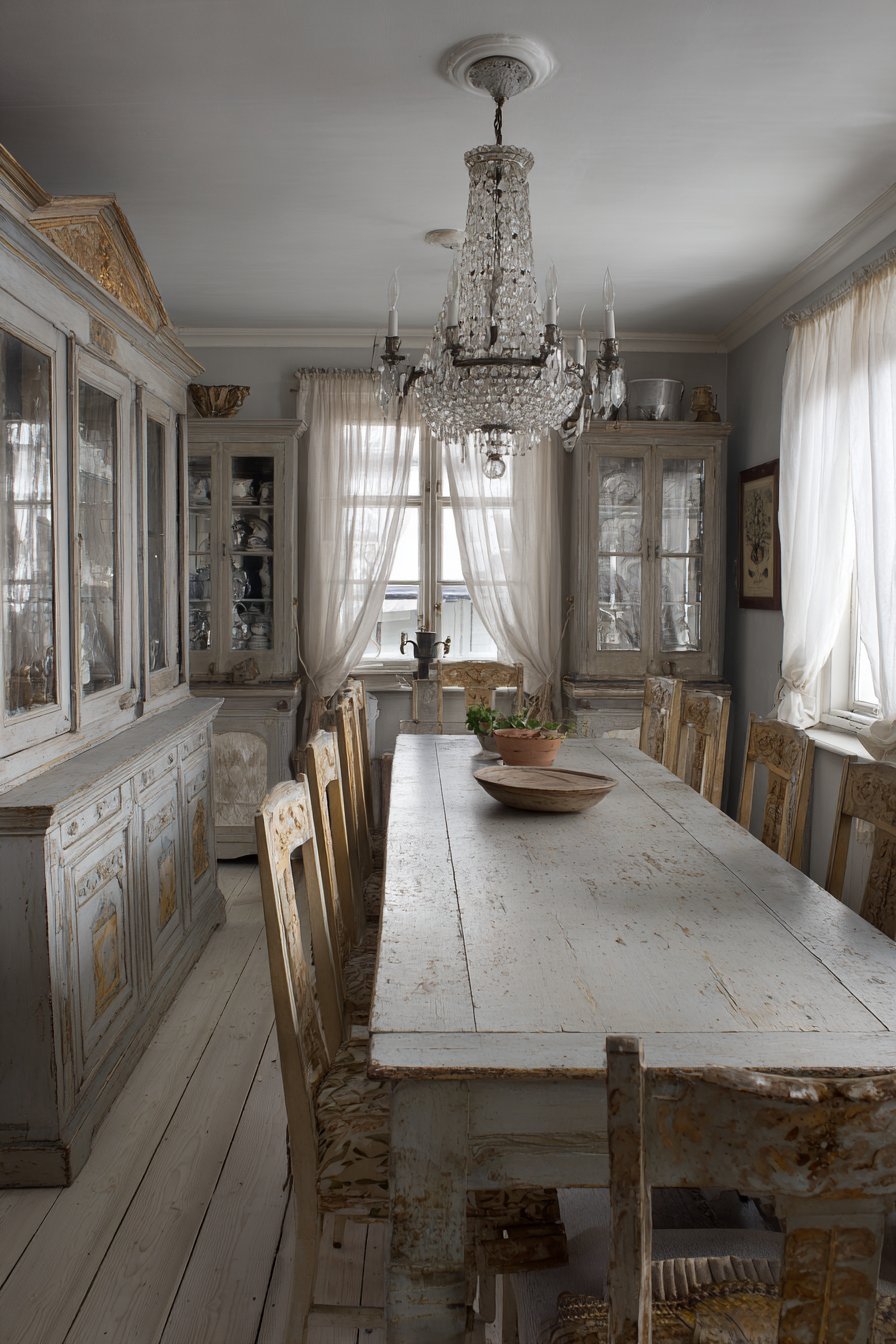
Sheer linen curtains filter natural light beautifully. The characteristic Swedish luminosity fills the space. Restrained elegance emerges through authentic painted finishes. Surface texture and layered paint history create subtle visual interest.
Key Design Tips:
- Select painted furniture showing wear through to multiple earlier paint layers
- Display pieces with authentic paint crackling and color variation between items
- Preserve traffic wear patterns on painted floors showing bare wood beneath
- Install crystal lighting with brass fittings displaying natural tarnish
- Filter natural light through sheer linen for characteristic Nordic luminosity
11. Victorian Gothic Revival Dramatic Carving
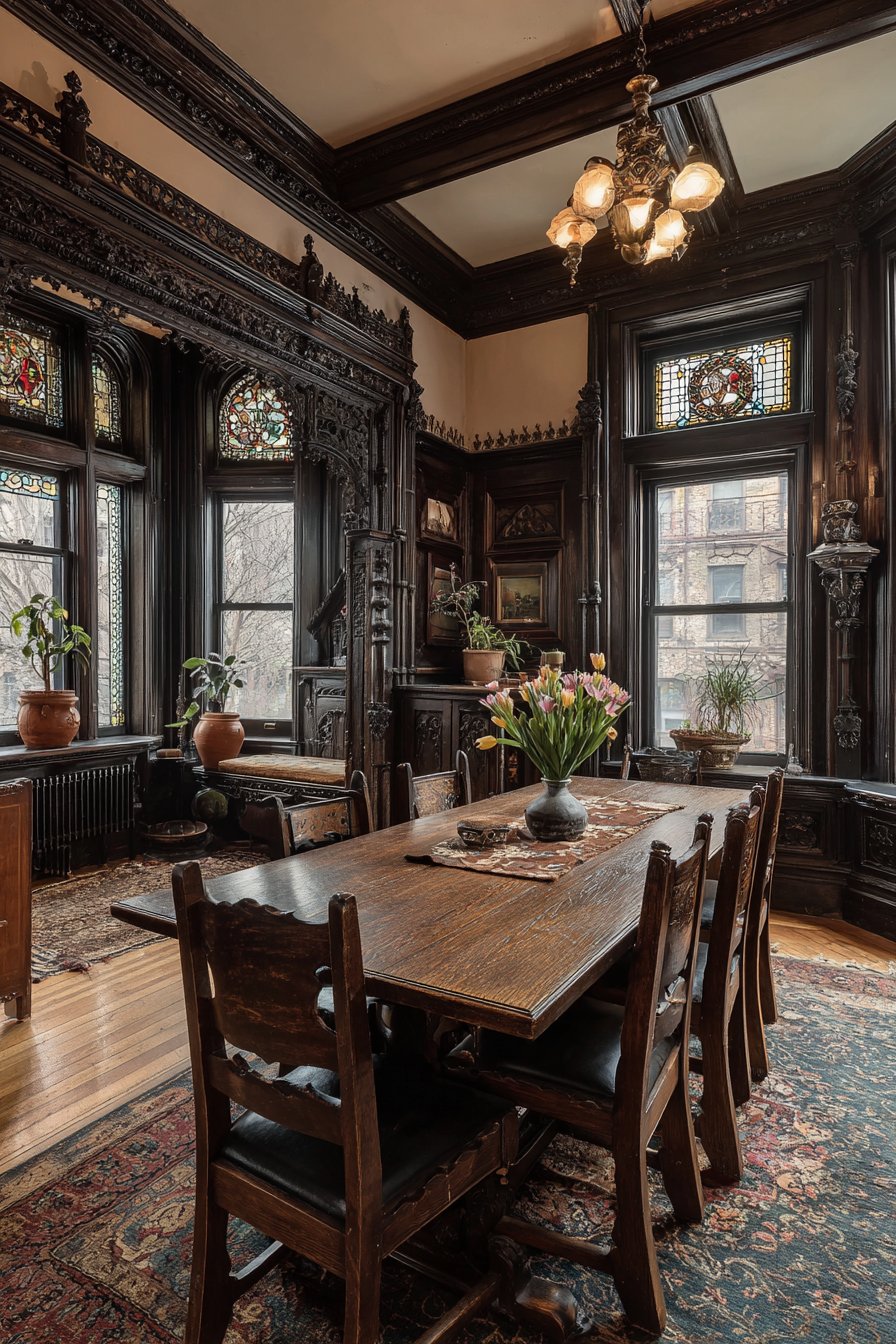
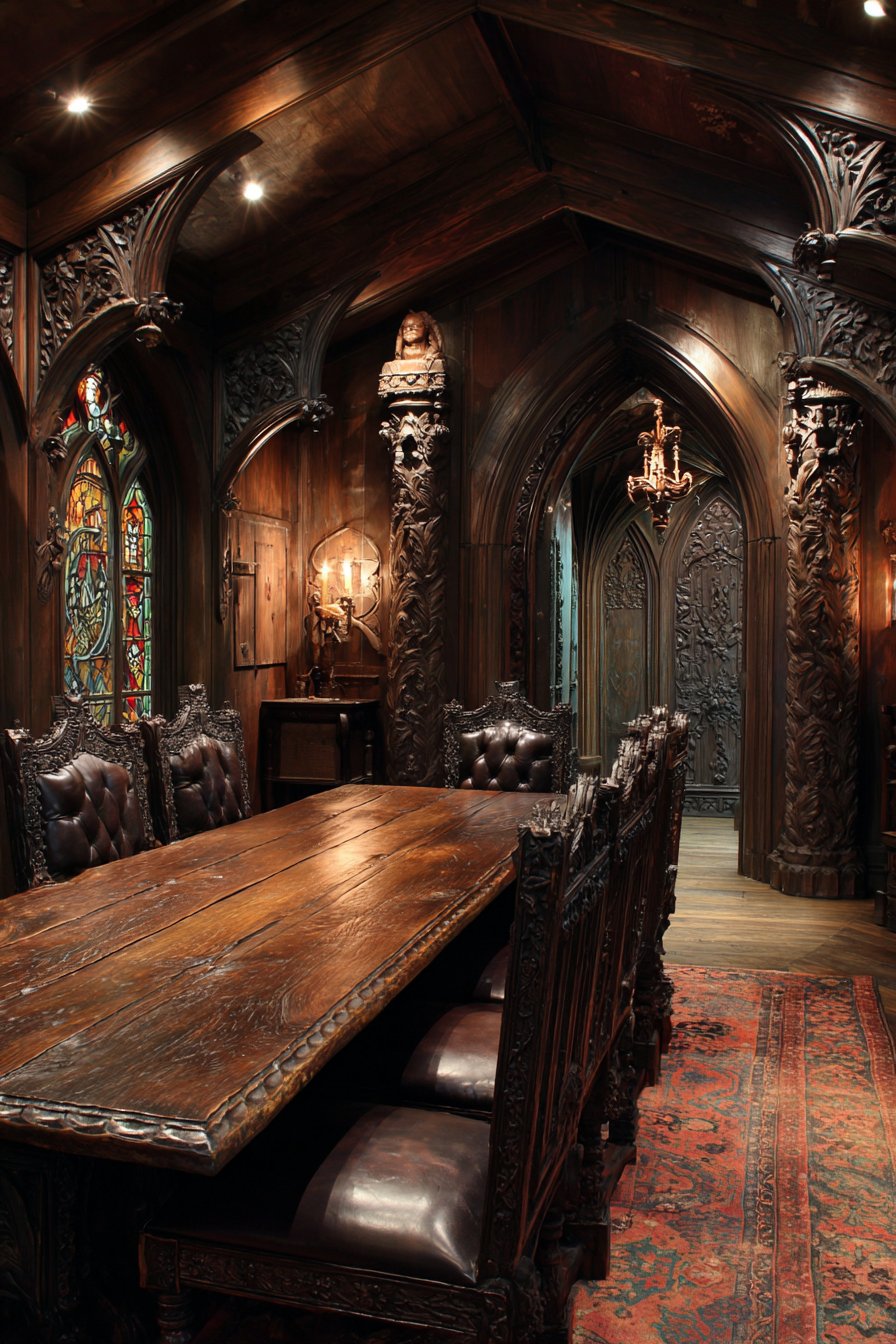
A Victorian Gothic Revival dining room features heavily carved oak. The extension table showcases grotesque face corbels and original winding mechanism. High-backed chairs with trefoil-pierced splats surround the table. Leather seats display natural darkening and surface checking from age.
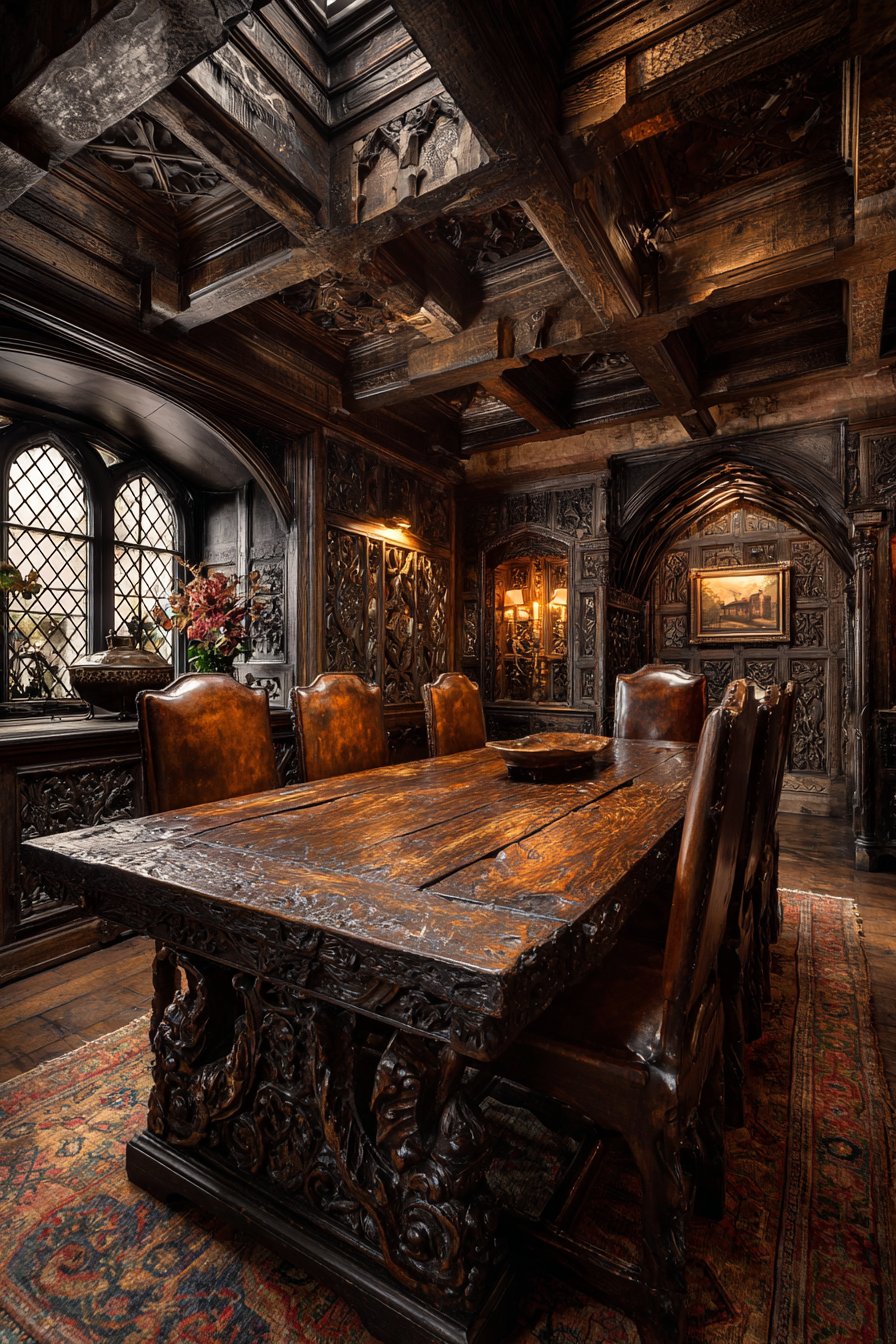
Pointed arch built-in cabinets feature leaded glass and medieval-inspired metalwork. Dark oak paneling with linenfold carving shows natural splitting along grain lines. An ornate brass gasolier converted to electric displays period-appropriate patina. Stained glass windows cast colored light patterns across aged surfaces.
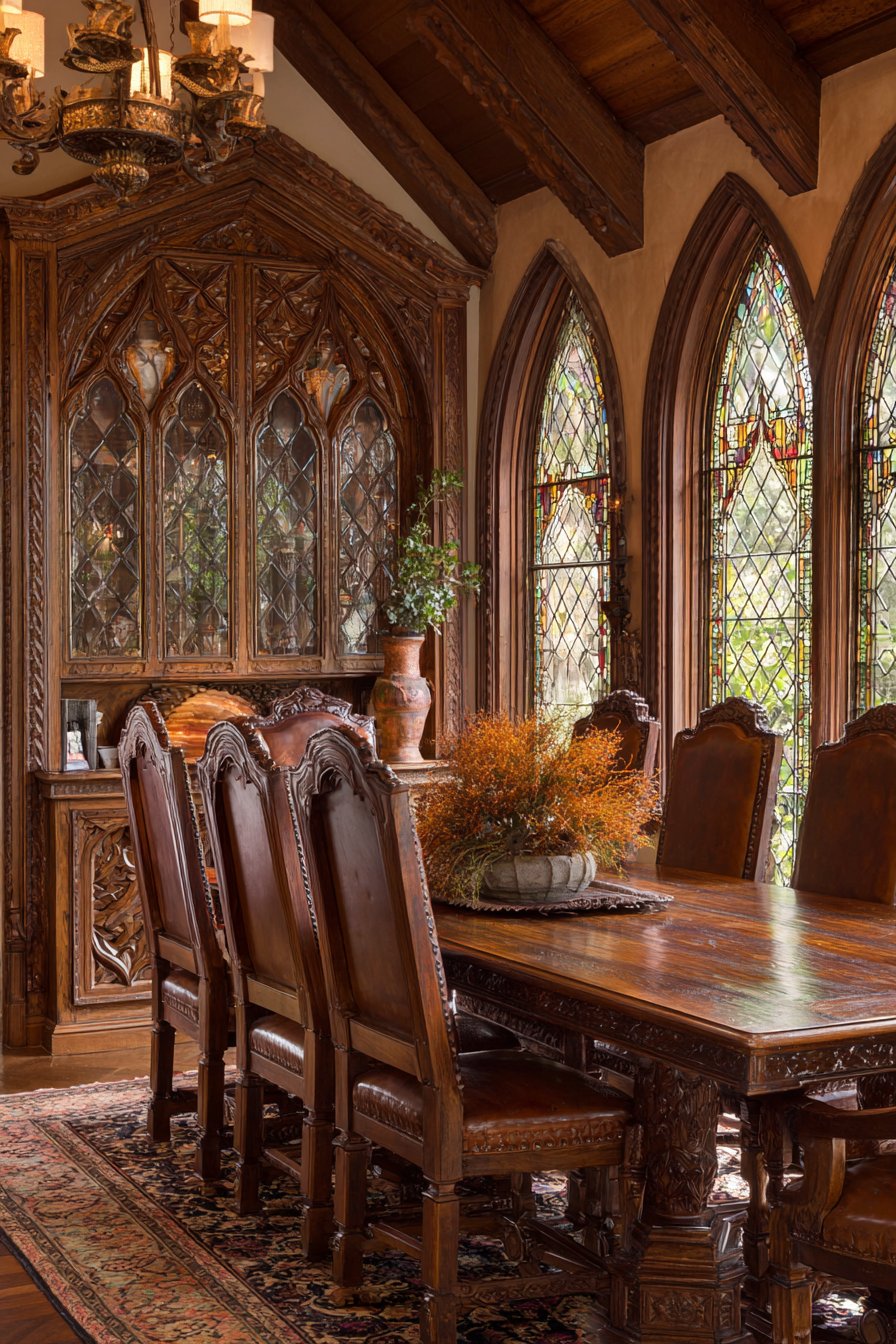
Deep jewel-tone Turkish carpet shows wear patterns and color fading. The dramatic Gothic elements create romantic Victorian atmosphere. Medieval design interpretation emerges through elaborate carved details. Authentic aging enhances the mysterious, historical character throughout.
Key Design Tips:
- Choose heavily carved oak furniture with grotesque and medieval motifs
- Preserve original winding mechanisms on extension tables as functional history
- Display dark oak paneling with natural grain splitting and checking
- Install stained glass windows casting colored light across interior surfaces
- Layer jewel-tone carpets showing authentic wear patterns and color fading
12. Federal Period Oval Mahogany Refinement
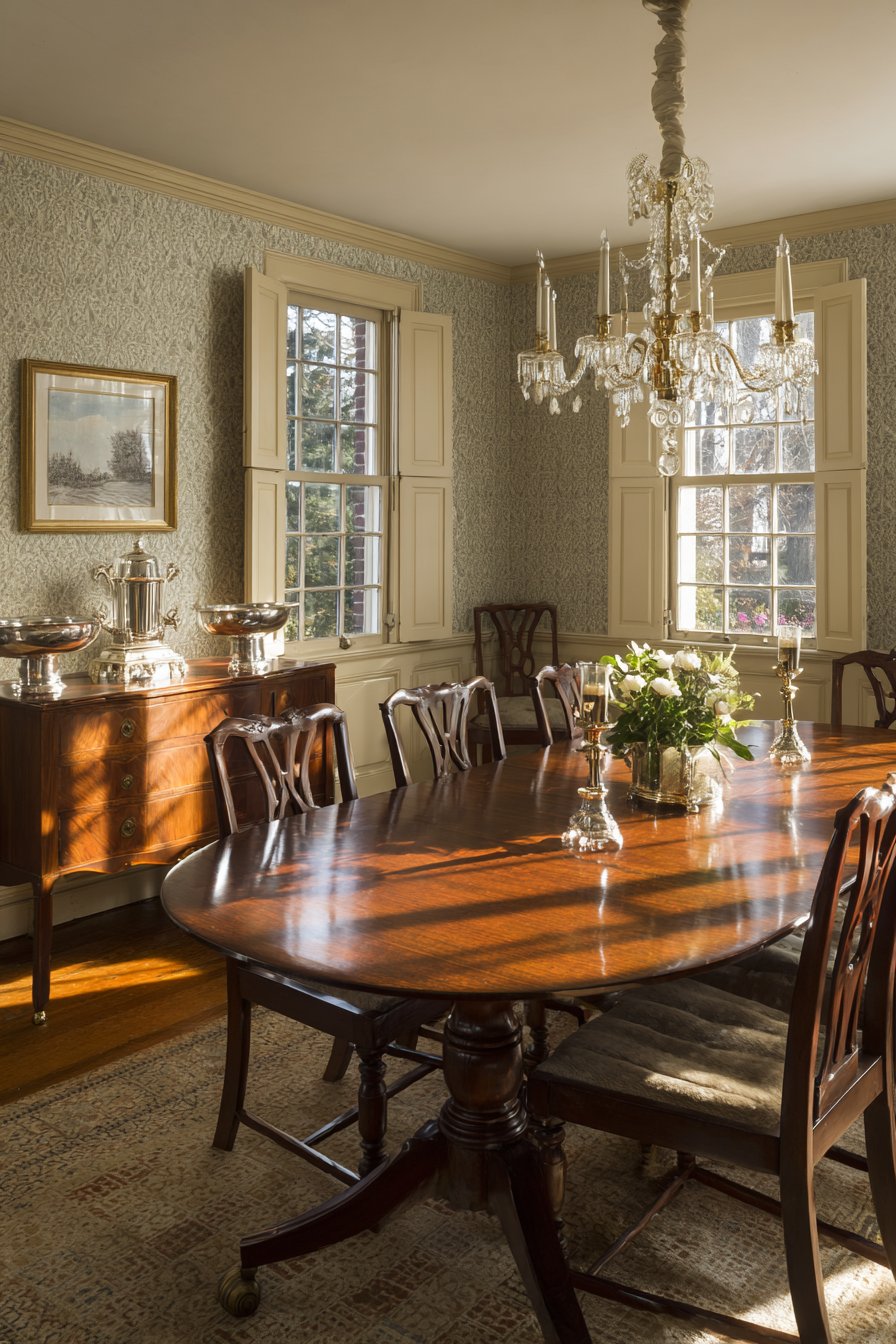
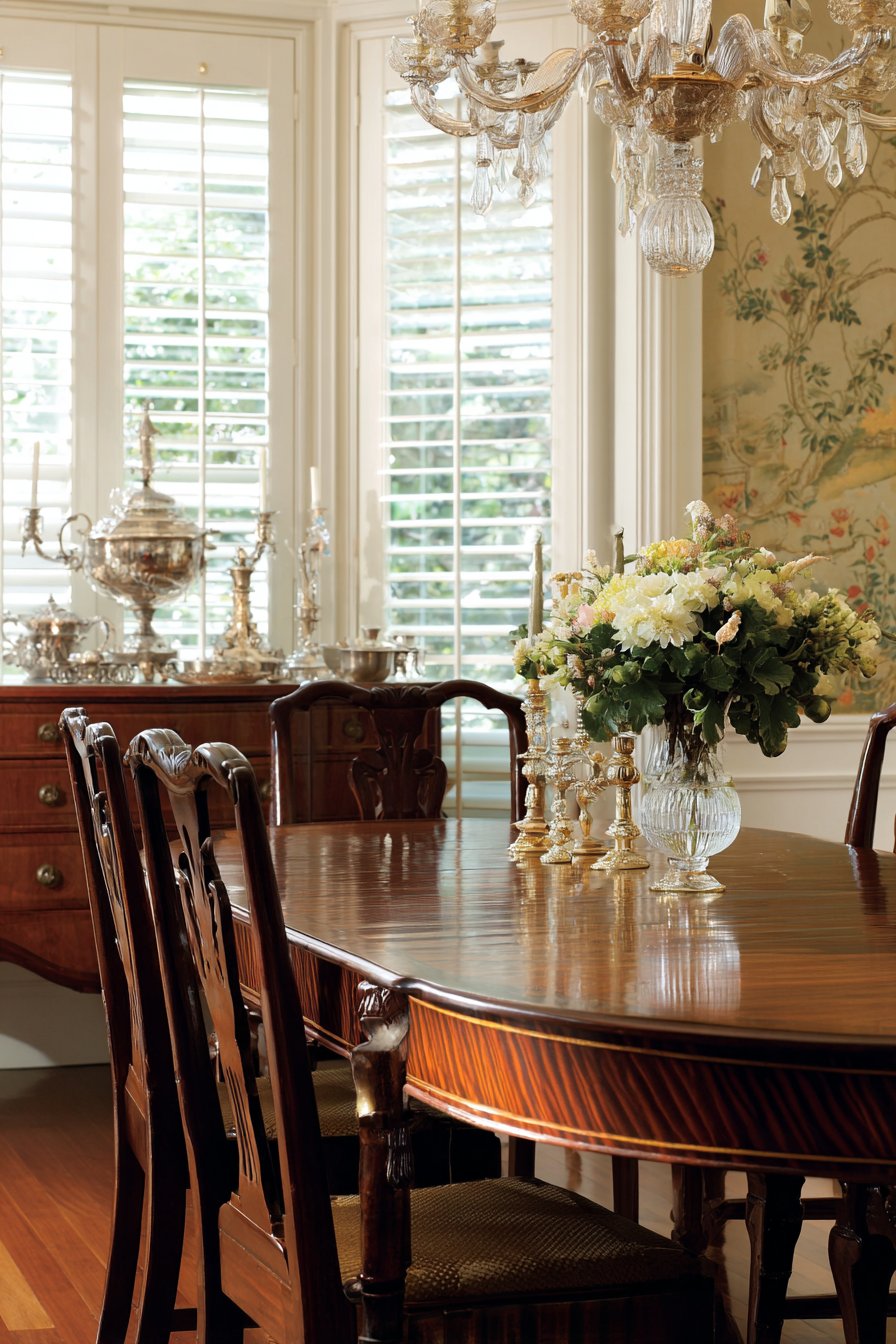
A Federal period dining room showcases an oval mahogany Pembroke table. Delicate inlay work and original brass casters show gentle wear. Shield-back chairs with carved urn splats display original finish. Subtle darkening and natural wood checking add character without damage.
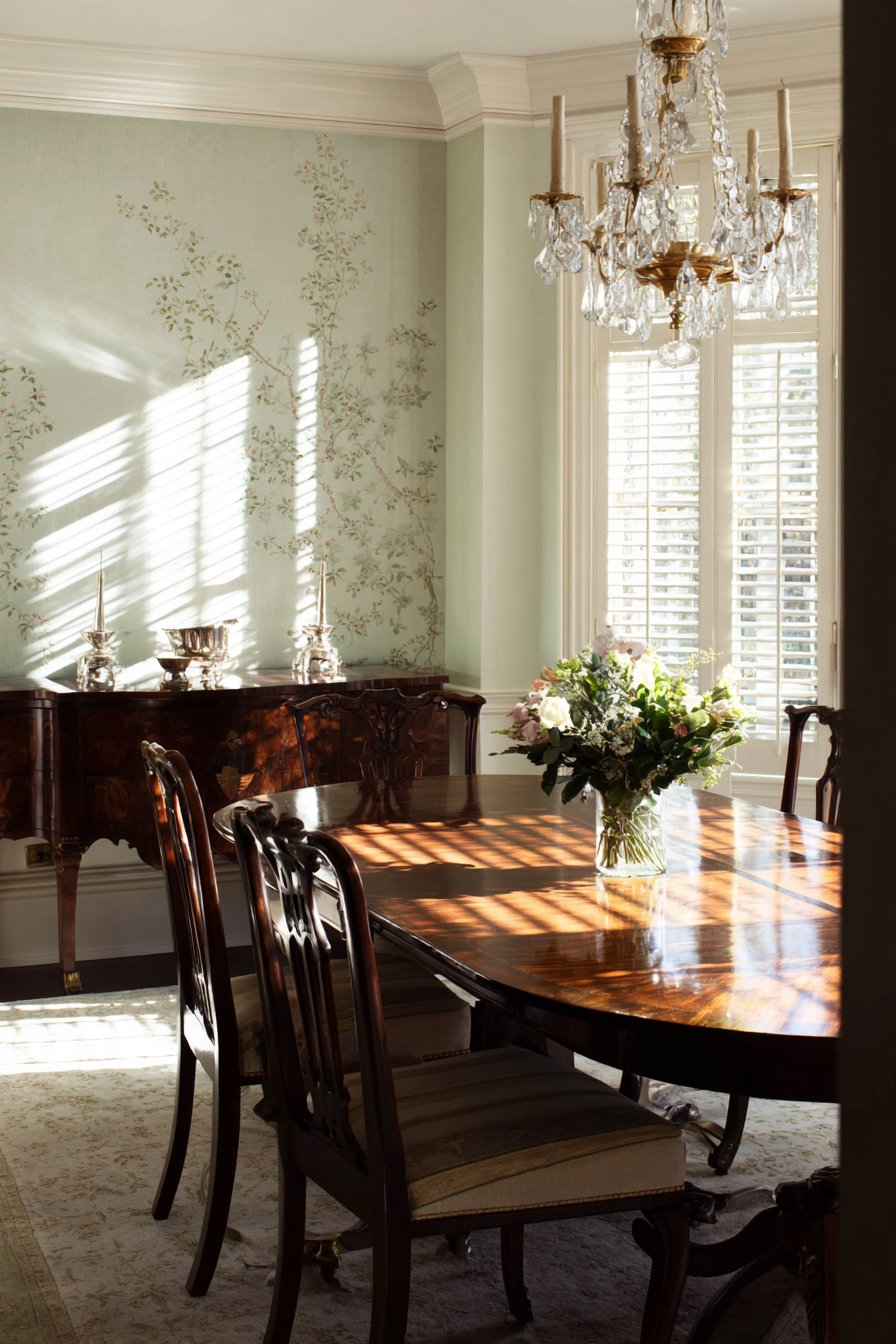
A Hepplewhite sideboard features serpentine front and figured veneer. Authentic surface crackling and color variation reveal genuine age. Silver serving pieces display period-appropriate tarnish patterns. Scenic wallpaper panels show slight fading and minor seam separations.
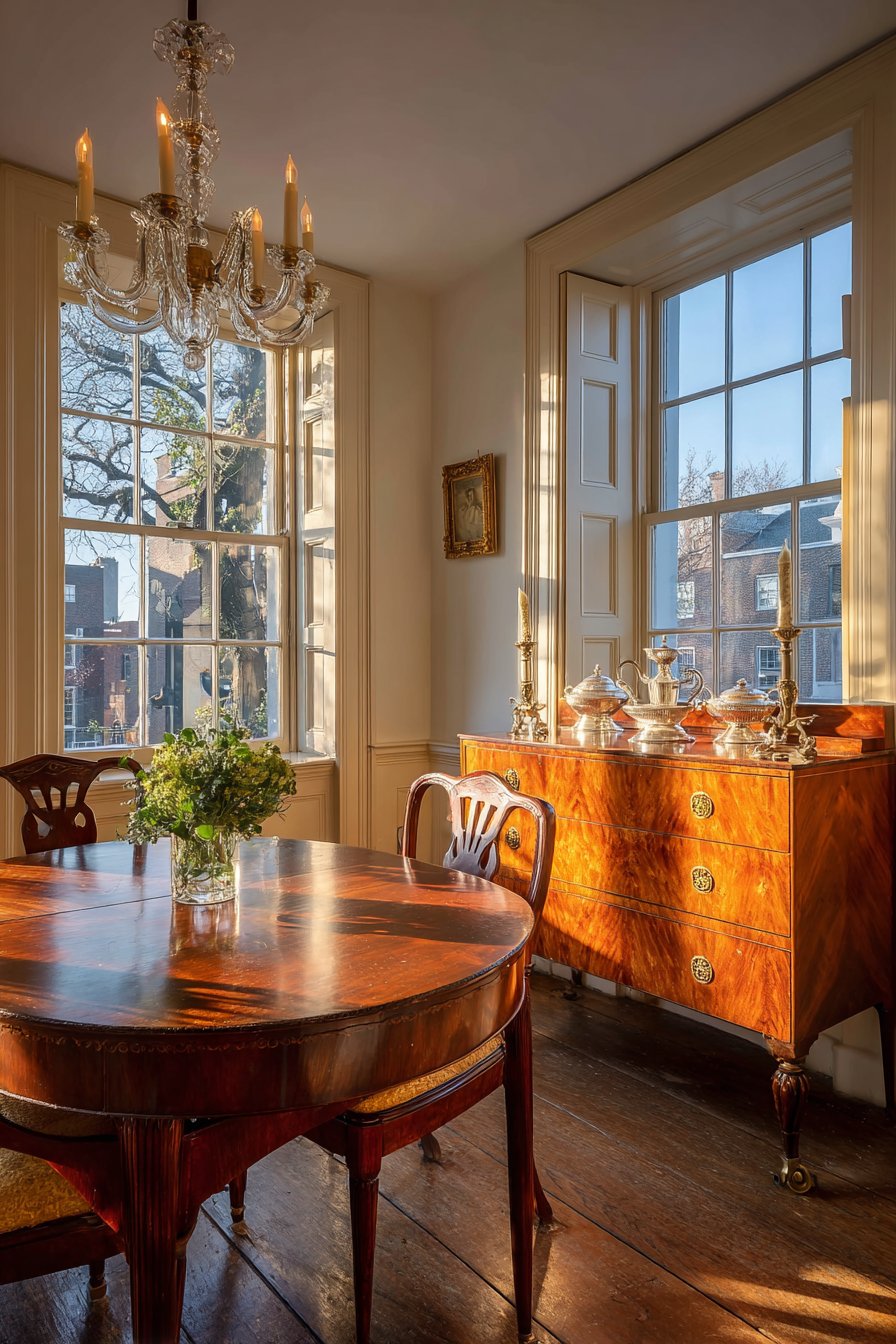
Natural light enters through tall windows with interior shutters. Refined shadows enhance the sophisticated Federal aesthetic. Neoclassical proportions create balanced, harmonious composition. Refined aging characteristics add distinction to the elegant space.
Key Design Tips:
- Select Pembroke tables with delicate inlay and original brass casters
- Choose shield-back chairs showing original finish with natural darkening
- Display Hepplewhite sideboards with serpentine fronts and figured veneer
- Preserve scenic wallpaper with authentic fading and seam separations
- Install interior shutters on tall windows for period-appropriate light control
13. Spanish Colonial Hand-Hewn Beam Strength
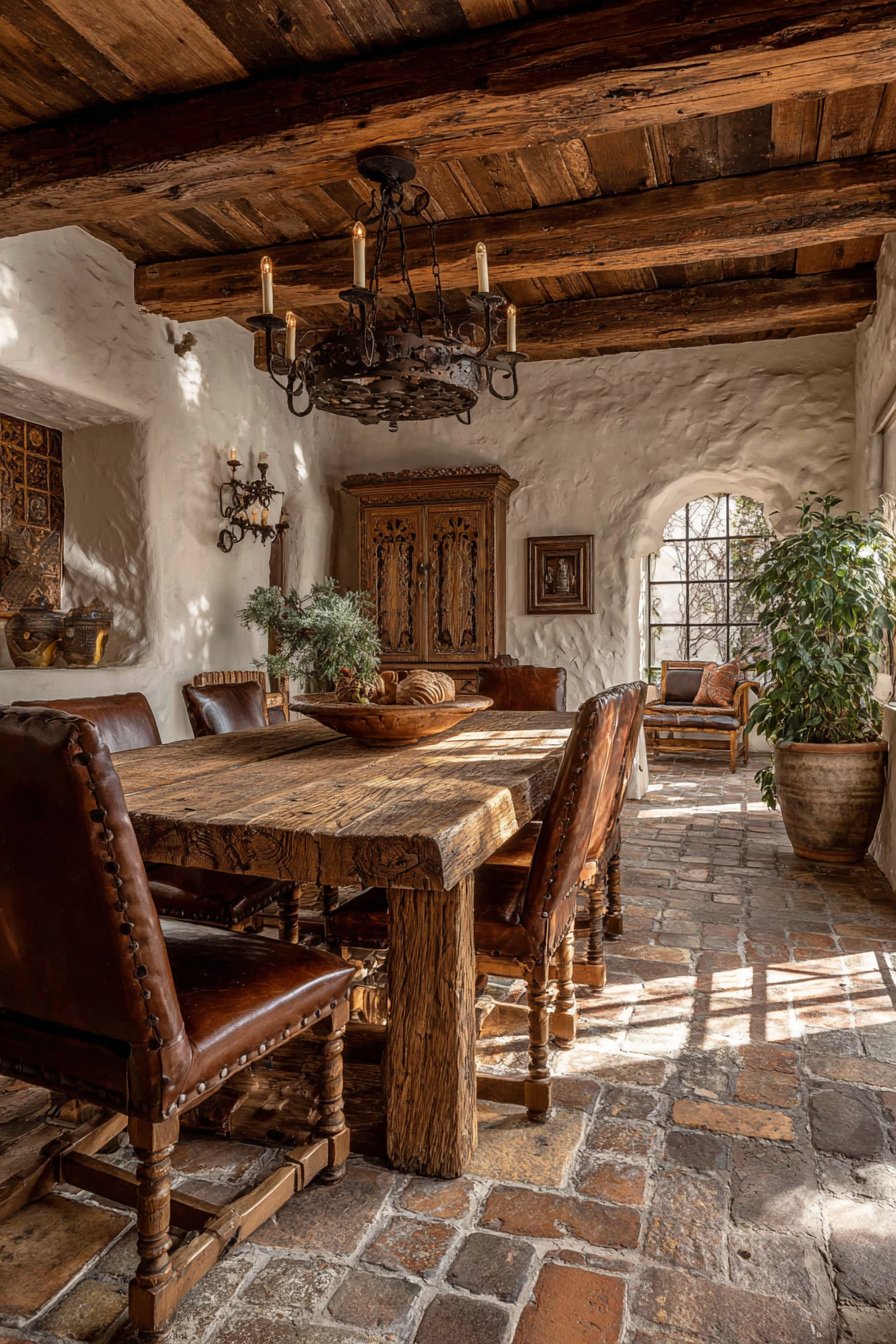
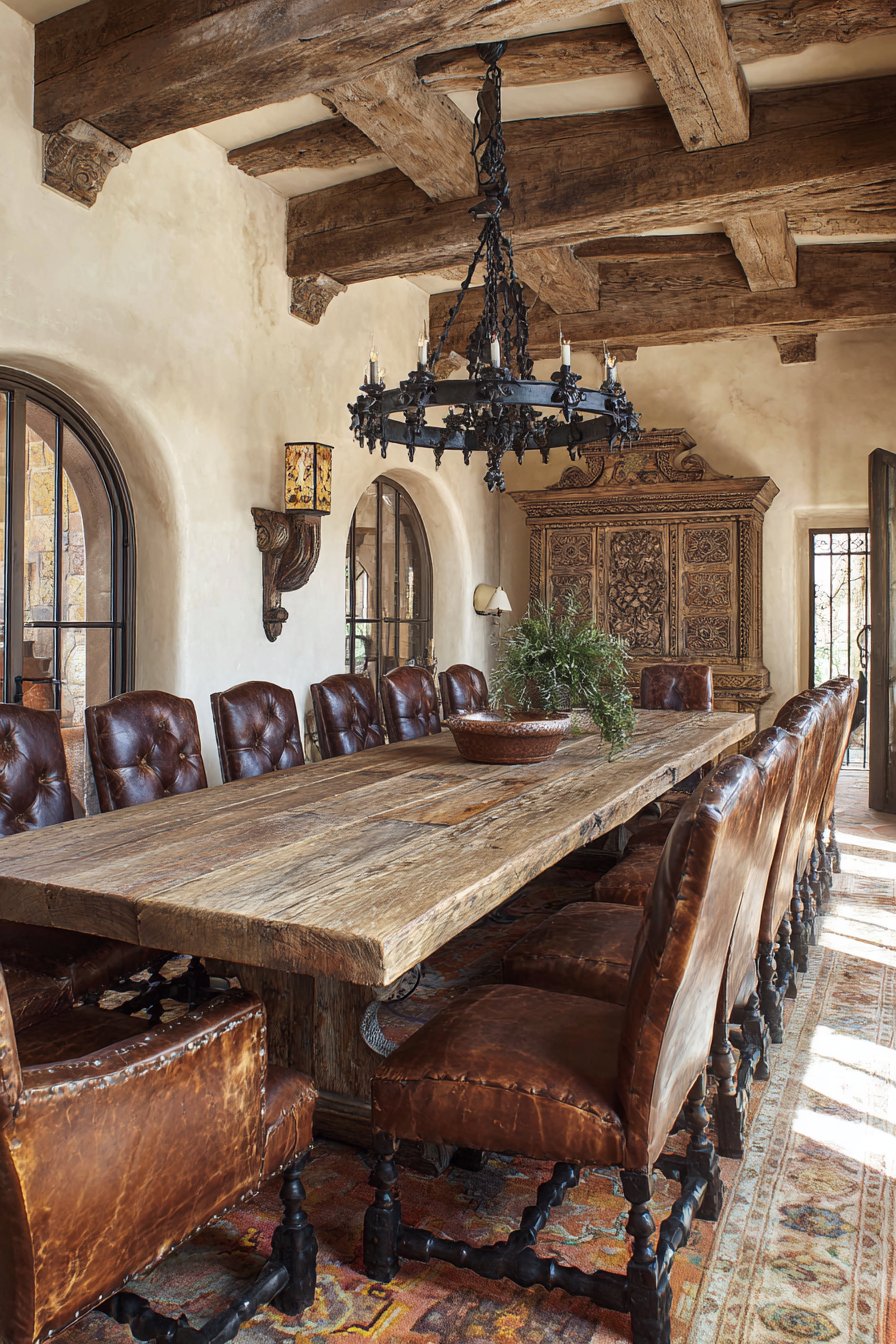
A Spanish Colonial dining room features a massive trestle table. Thick hand-hewn beams show visible adze marks and natural splitting. Leather-seated chairs with turned legs feature wrought iron stretchers. Worn tooling and natural patina cover all leather surfaces.
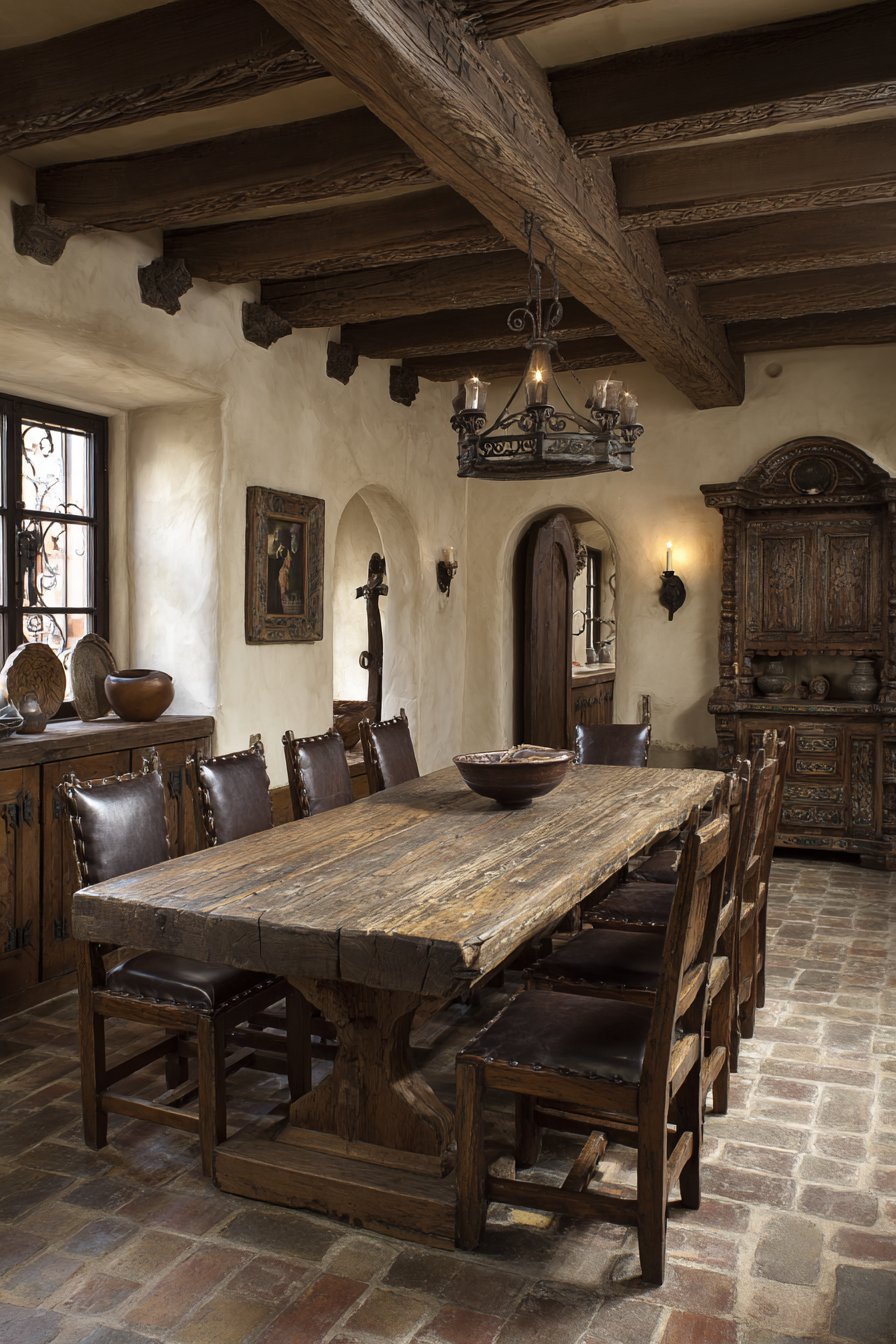
Whitewashed plaster walls display authentic irregularities and age-related crackling. A carved pine trastero with original iron hardware displays pottery. Hand-forged iron chandelier with twisted details holds thick candles. Terracotta tile flooring features hand-shaped irregularities and centuries of wear.
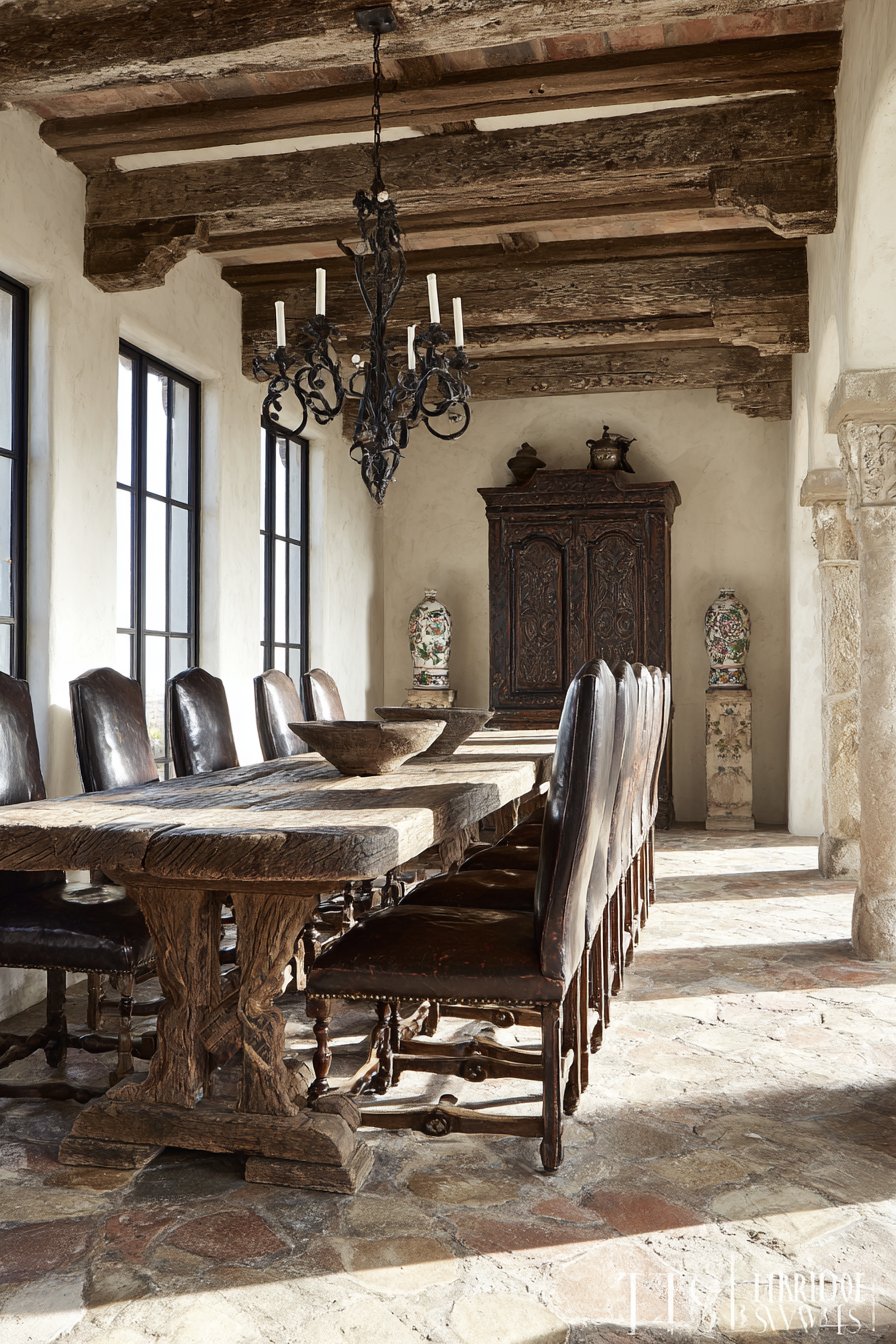
Late afternoon light enters through small windows. Dramatic shadows emphasize the substantial scale and honest craftsmanship. Hand-worked details receive proper attention through careful lighting. Colonial construction methods remain visible throughout the authentic space.
Key Design Tips:
- Choose hand-hewn beam tables with visible adze marks and natural splitting
- Display leather furniture with worn tooling and natural patina development
- Preserve whitewashed plaster walls with authentic irregularities and crackling
- Select hand-forged iron hardware and lighting with twisted decorative details
- Install hand-shaped terracotta tiles with natural irregularities and wear patterns
14. Queen Anne Burled Walnut Grace
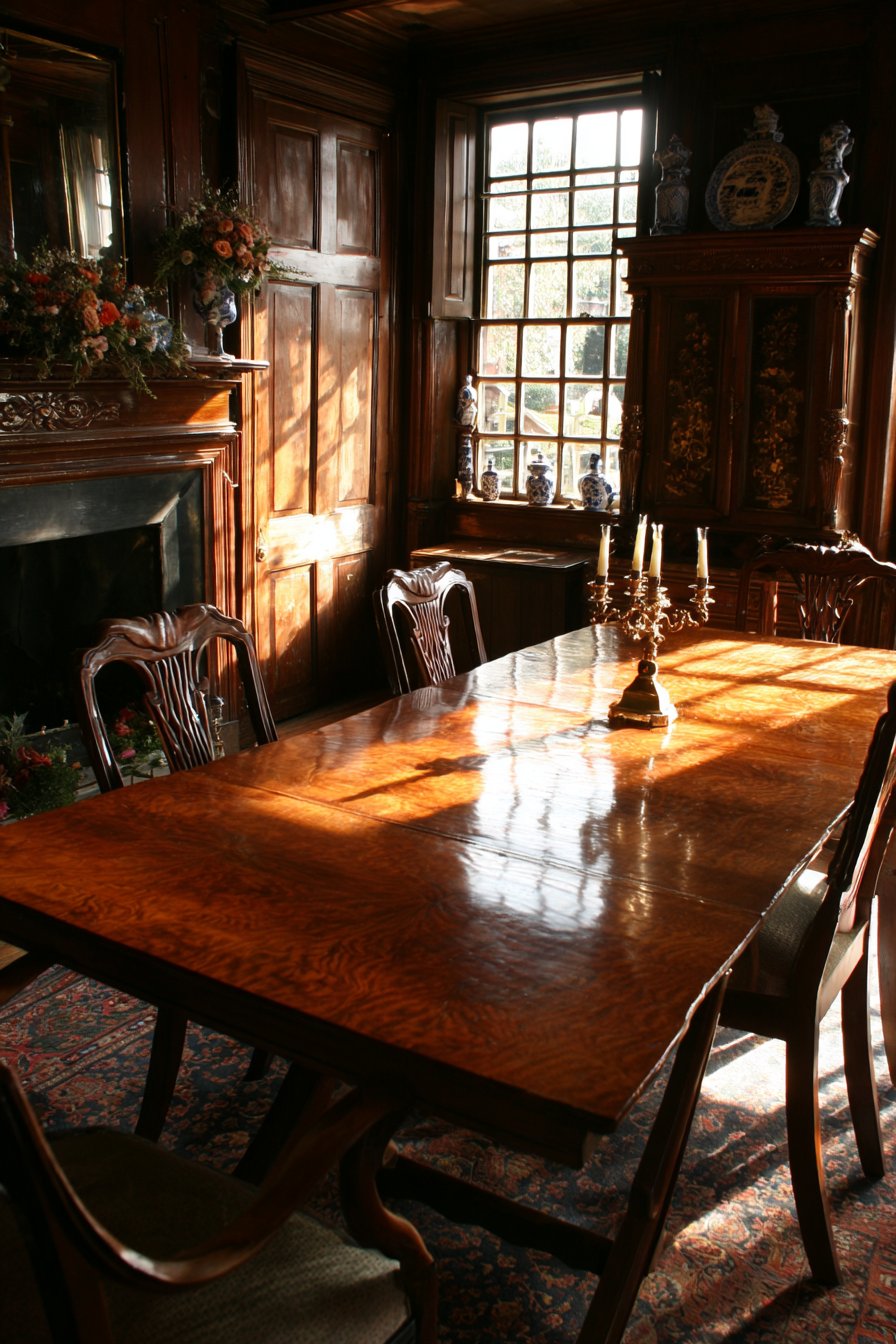
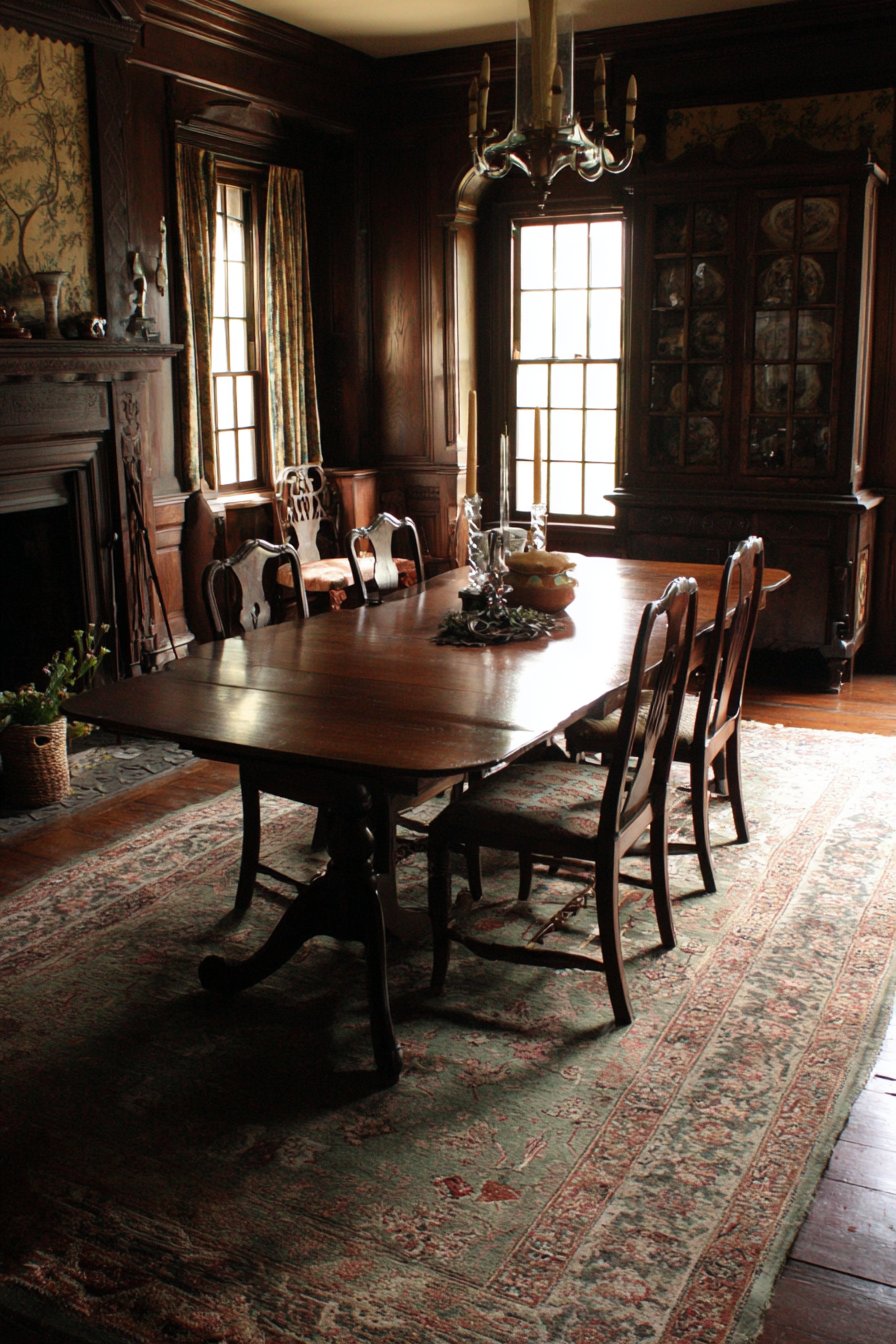
A Queen Anne dining room centers on a burled walnut gate-leg table. Original butterfly hinges show gentle loosening and natural patina. Cabriole leg dining chairs feature vase-shaped splats and rush seats. Authentic seat wear and wood darkening add historical character.
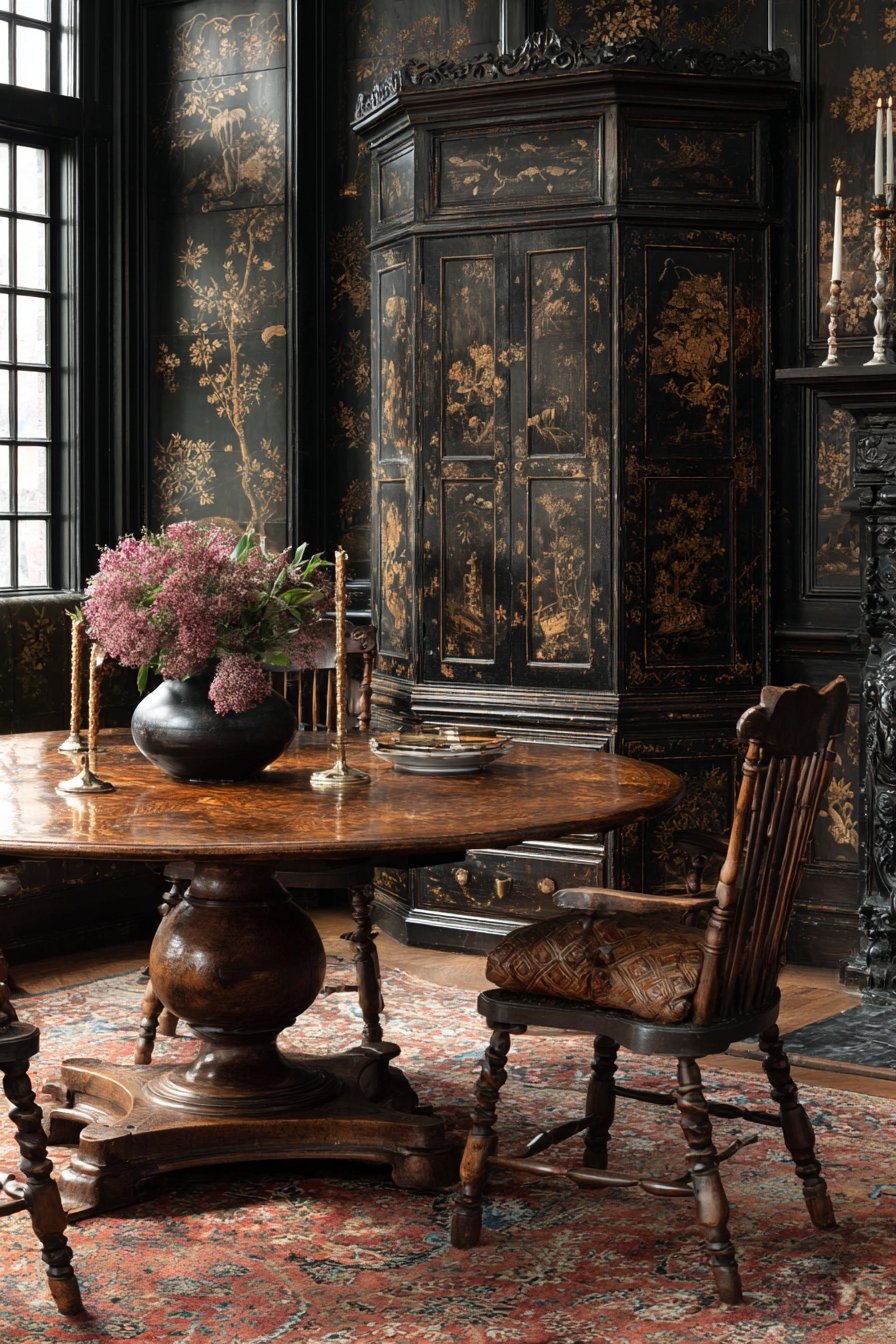
A japanned corner cabinet displays chinoiserie decoration with age-appropriate gilding losses. Delft tiles surrounding the fireplace show minor chips and glaze crazing. Brass candlesticks accumulate natural tarnish in decorative recesses. Oriental carpet in faded jewel tones exhibits wear patterns and color variation.
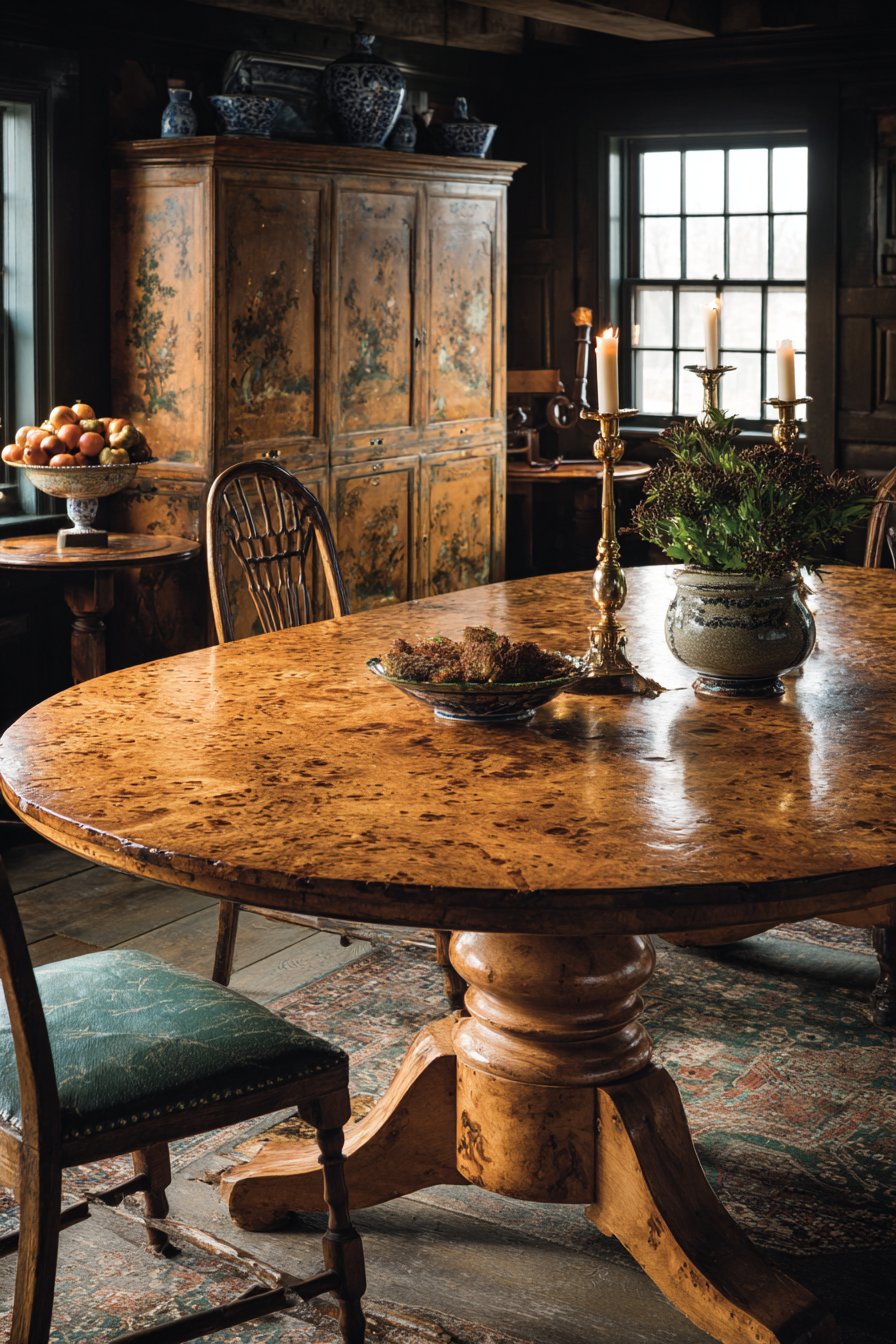
Soft natural light enters through small-paned windows. The intimate ambiance showcases graceful curves and elegant proportions. Surface patina and authentic wear patterns enhance the refined aesthetic. Delicate construction methods remain visible throughout the sophisticated space.
Key Design Tips:
- Select burled walnut furniture with dramatic grain patterns and original hardware
- Preserve original butterfly hinges showing gentle loosening and patina
- Display japanned furniture with age-appropriate gilding losses and crackling
- Choose Delft tiles with minor chips and authentic glaze crazing
- Layer oriental carpets showing natural wear patterns and color fading
15. American Empire Massive Mahogany Boldness
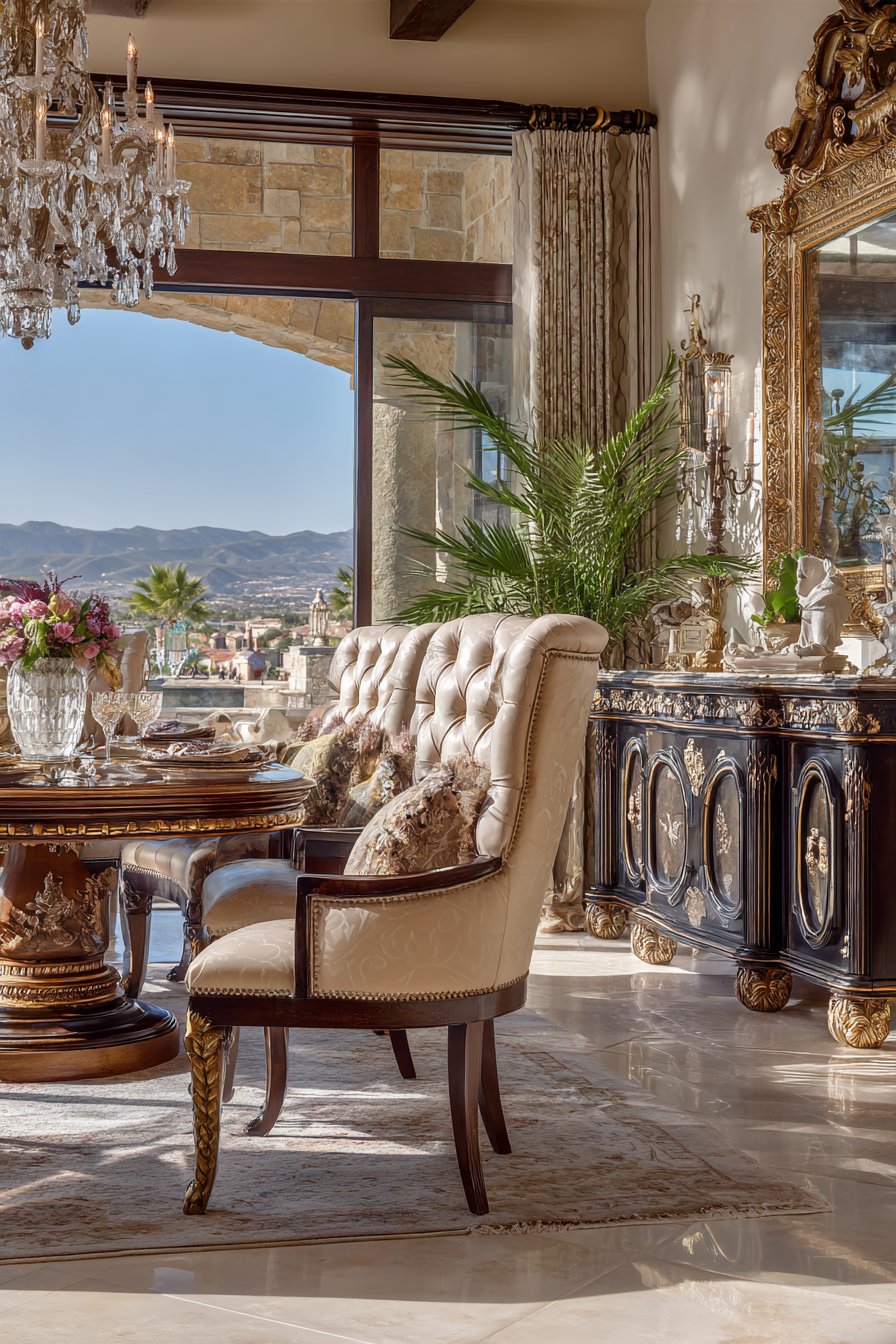
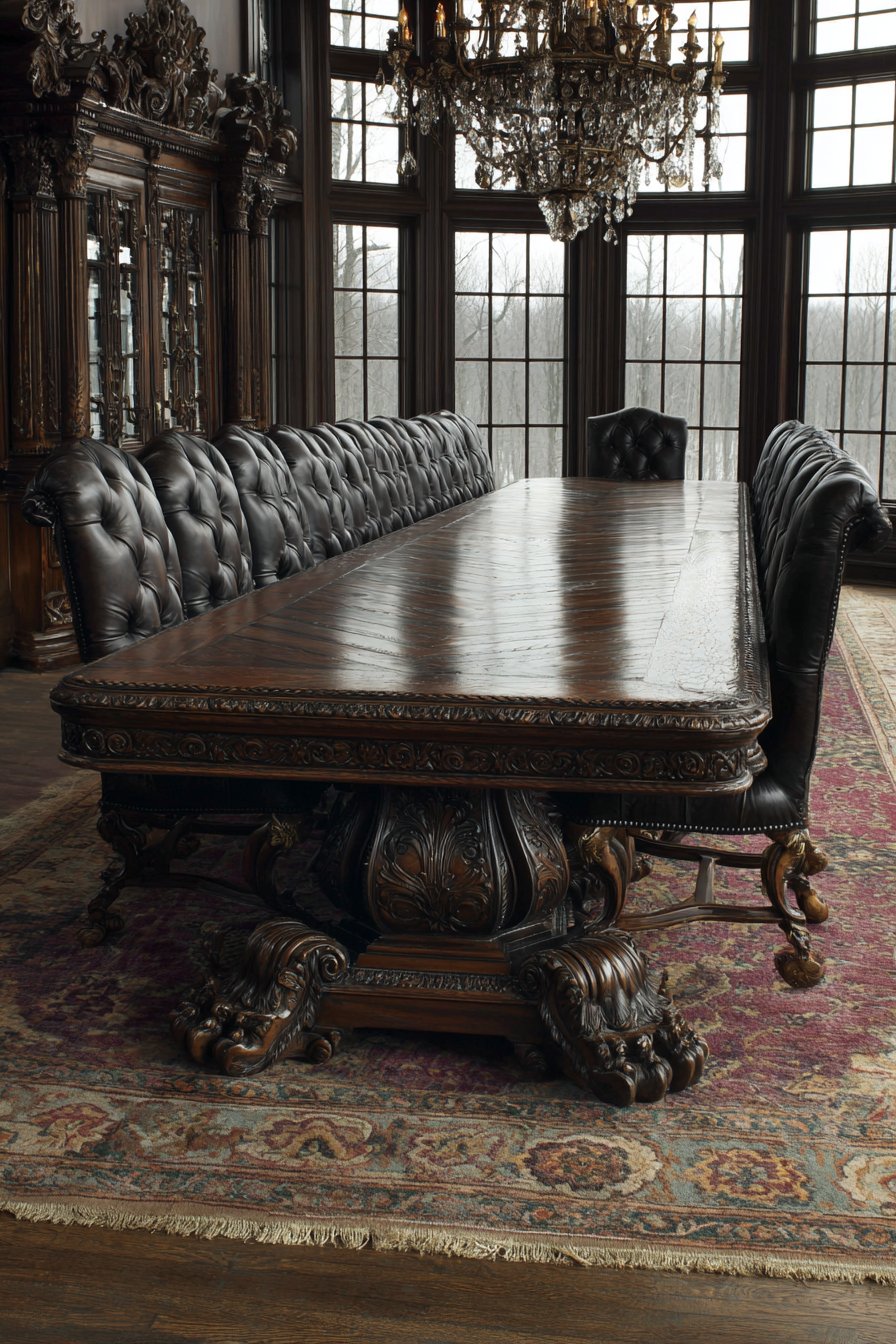
An American Empire dining room features a massive mahogany pedestal table. Bold acanthus-carved base supports a marble top showing natural veining. Minor edge chips reveal generations of use and entertaining. Scrolled-arm dining chairs feature horsehair upholstery with authentic tufting compression.
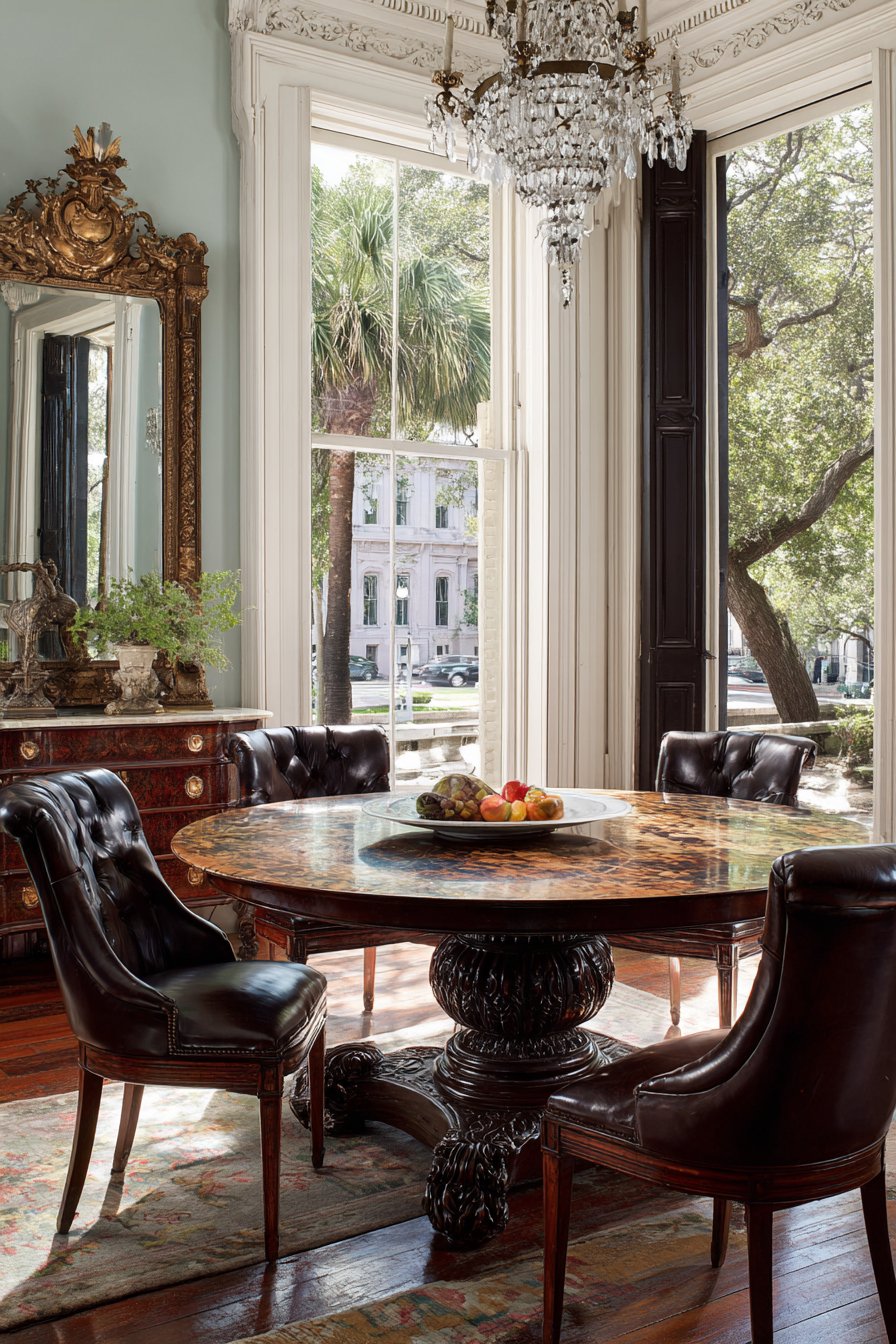
A monumental sideboard showcases lion’s paw feet and marble backsplash. Veneer checking and brass hardware display natural darkening. Gilt pier mirrors with eagle crests show mercury glass silvering losses. Crystal chandelier with brass fittings displays period cloudiness in glass.
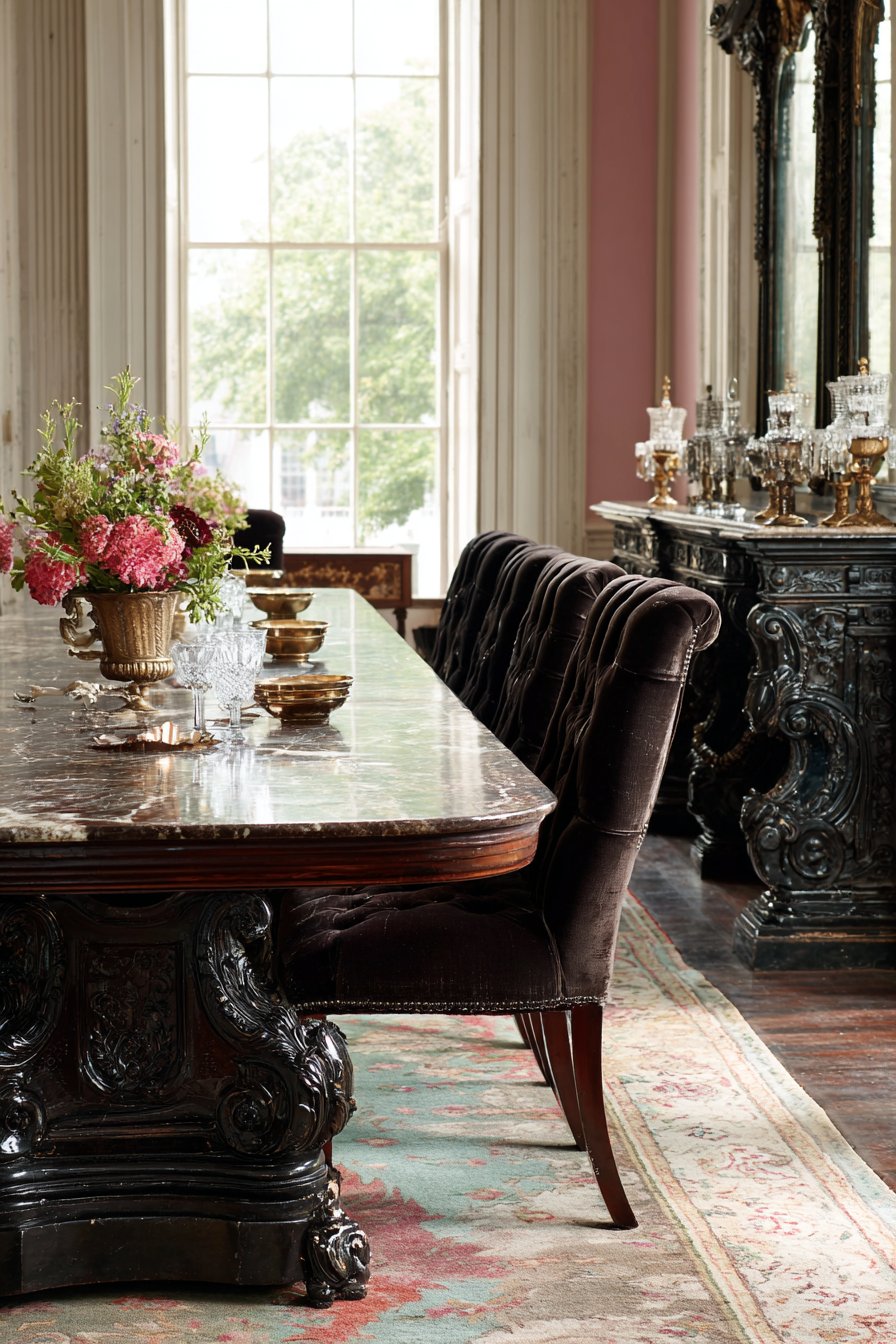
Natural light enters through floor-length windows. The bold scale emphasizes American interpretation of French Empire style. Massive proportions create impressive formal dining atmosphere. Authentic aging adds gravitas to the already substantial furniture pieces.
Key Design Tips:
- Choose massive mahogany furniture with bold acanthus and classical carving
- Display marble tops with natural veining and minor edge chips from use
- Preserve horsehair upholstery showing authentic tufting compression patterns
- Select gilt mirrors with mercury glass showing authentic silvering losses
- Install crystal lighting with period cloudiness rather than perfect clarity
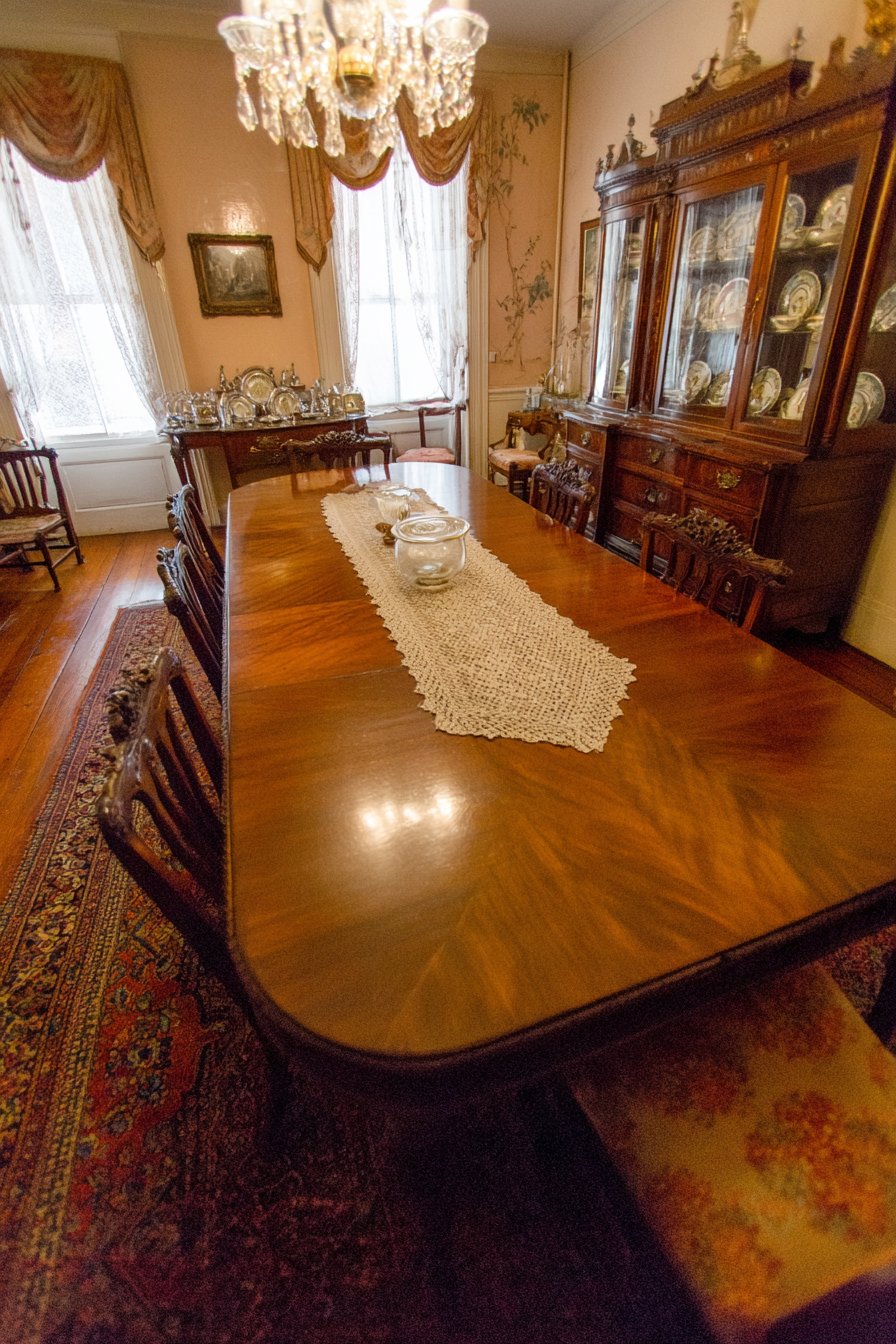
16. Chippendale Triple-Pedestal Mahogany Elegance
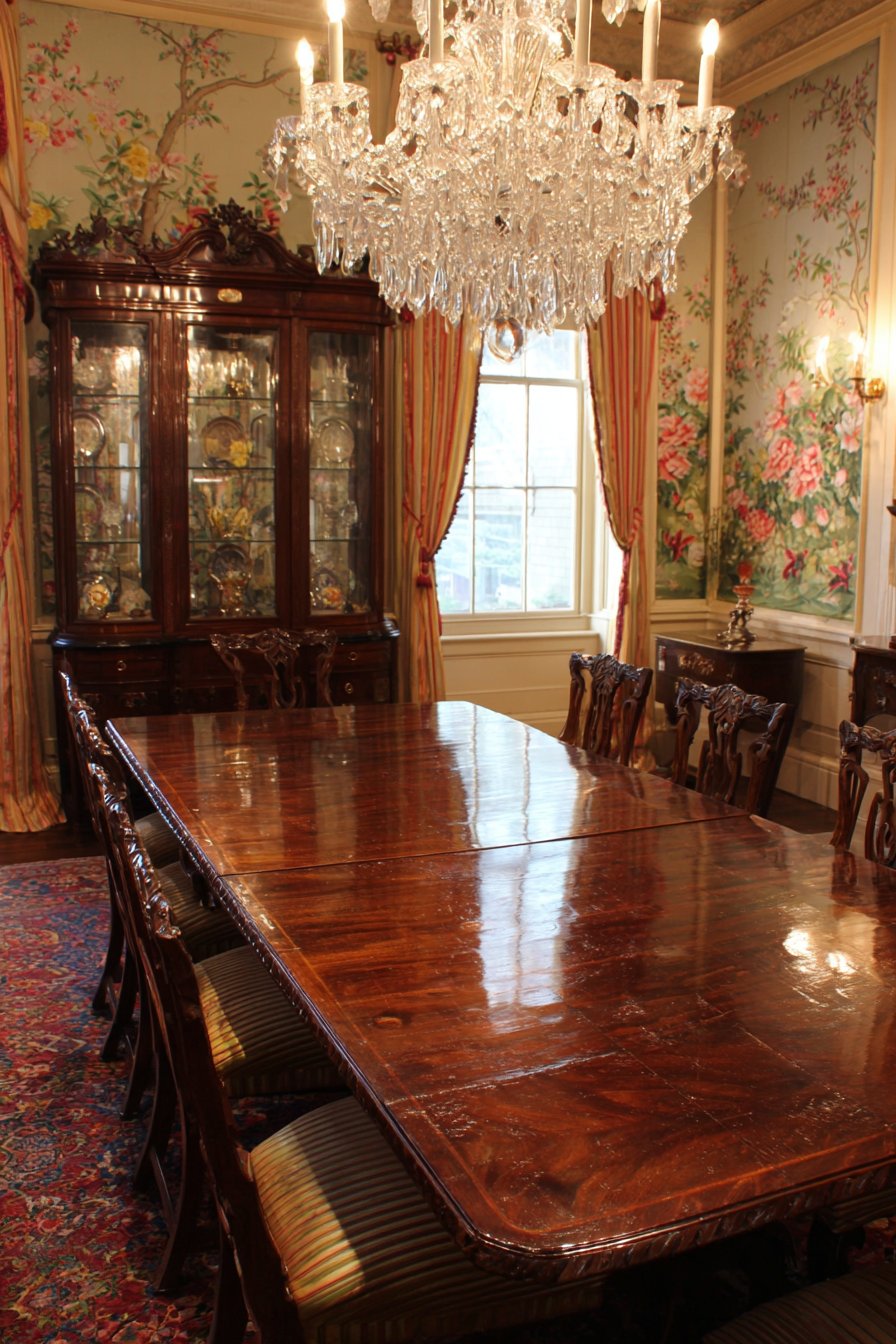
A Chippendale period dining room showcases a triple-pedestal mahogany table. Acanthus-carved feet anchor the original finish showing natural darkening. Ribbon-back dining chairs feature original needlepoint seats with faded florals. Gentle loosening at joints indicates authentic age and careful use.
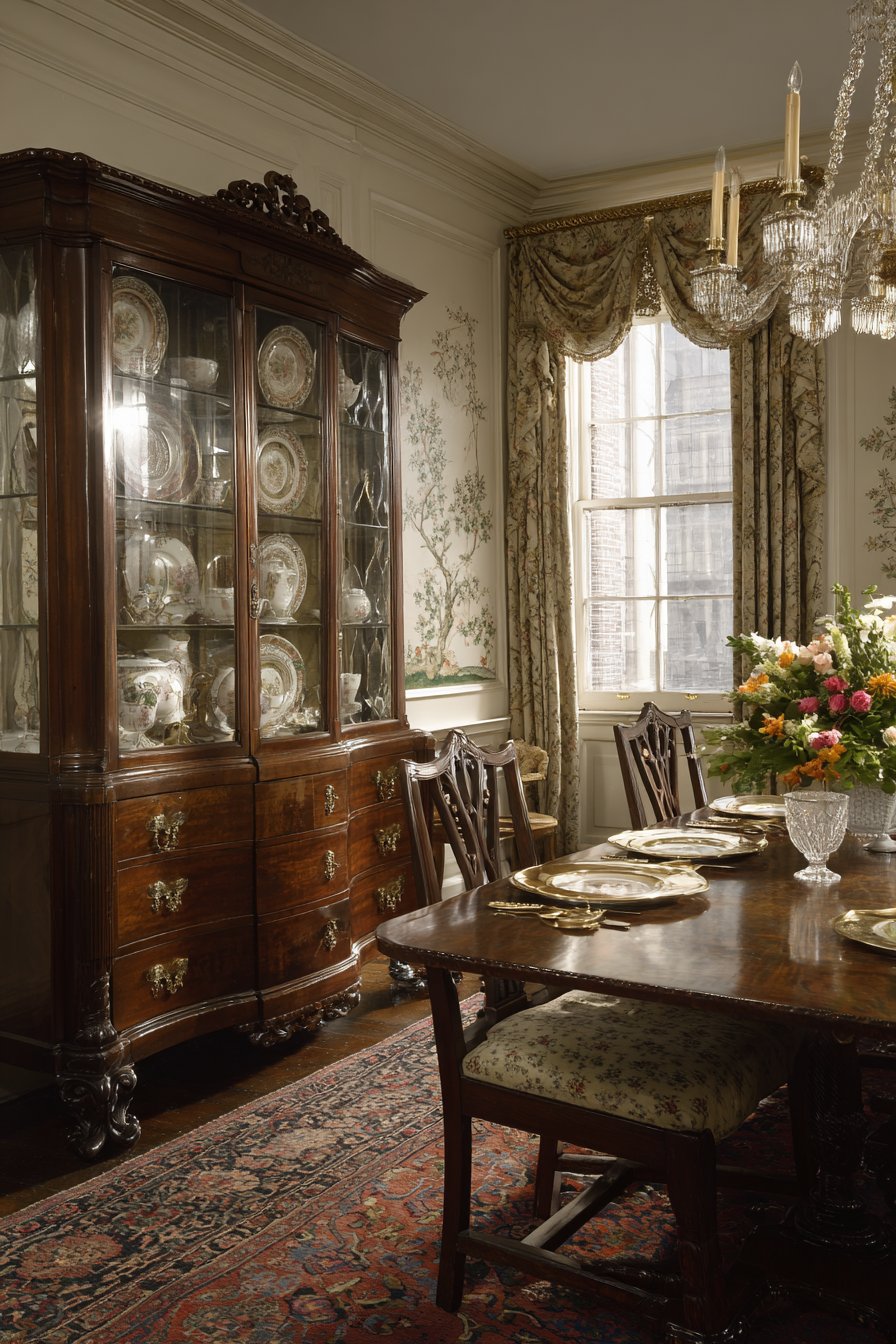
A breakfront china cabinet displays astragal glazing and original H-hinges. Wavy glass and silvering loss in mirrors add authentic character. Sheffield plate serving pieces exhibit natural wear through to copper underneath. Hand-painted Chinese wallpaper shows age-appropriate fading and minor tears with period repairs.
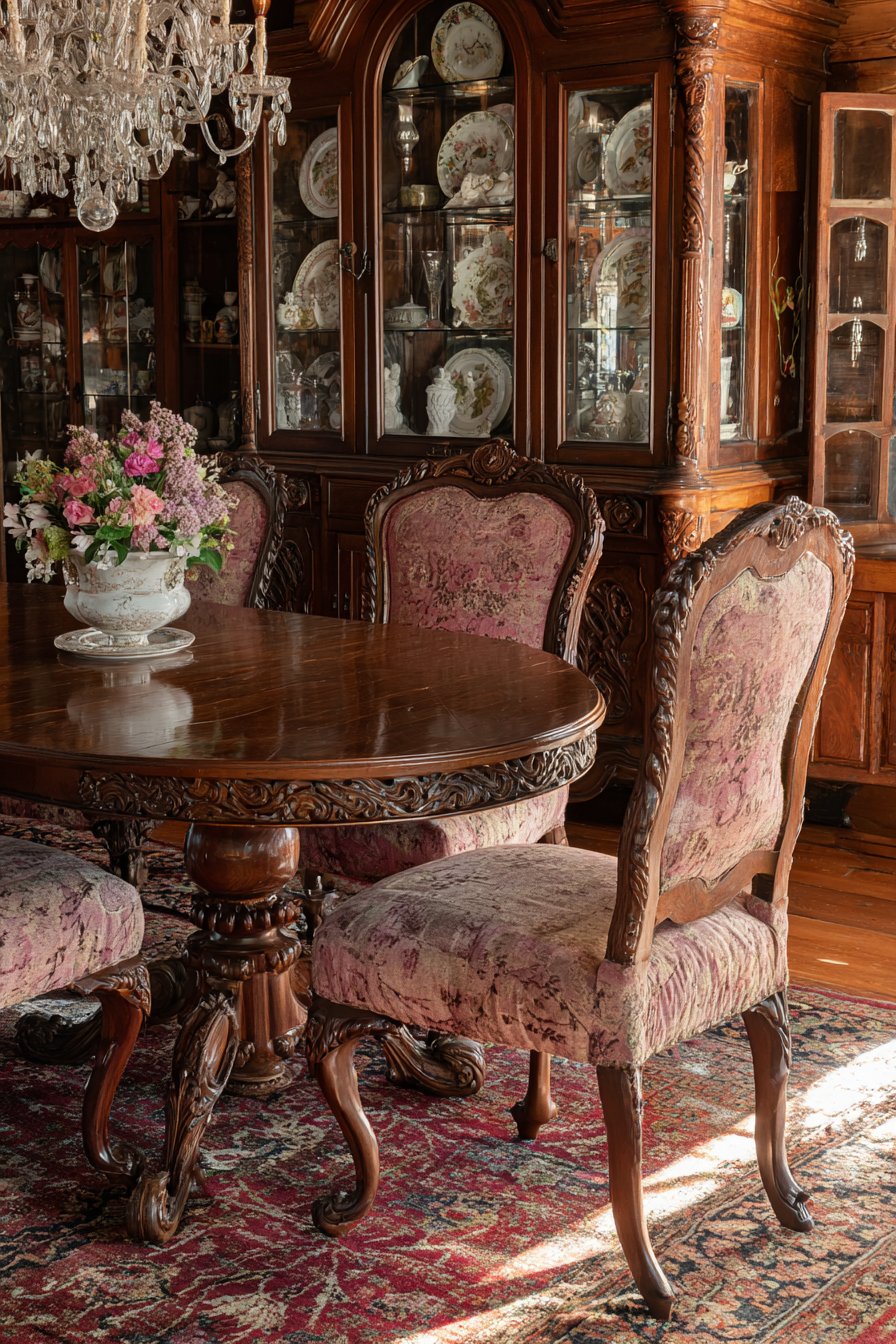
Persian carpet displays natural pile compression and color mellowing. Formal elegance balances with visible signs of centuries of refined use. Careful preservation maintains historical integrity throughout. Authentic aging enhances rather than diminishes the sophisticated aesthetic.
Key Design Tips:
- Select triple-pedestal tables with acanthus carving and original darkened finish
- Display ribbon-back chairs with original needlepoint showing gentle fading
- Preserve astragal glazing with wavy glass and mirror silvering losses
- Choose Sheffield plate showing natural wear through to copper base
- Install hand-painted wallpaper with authentic fading and period repairs visible
17. Jacobean Revival Heavily Carved Oak Drama
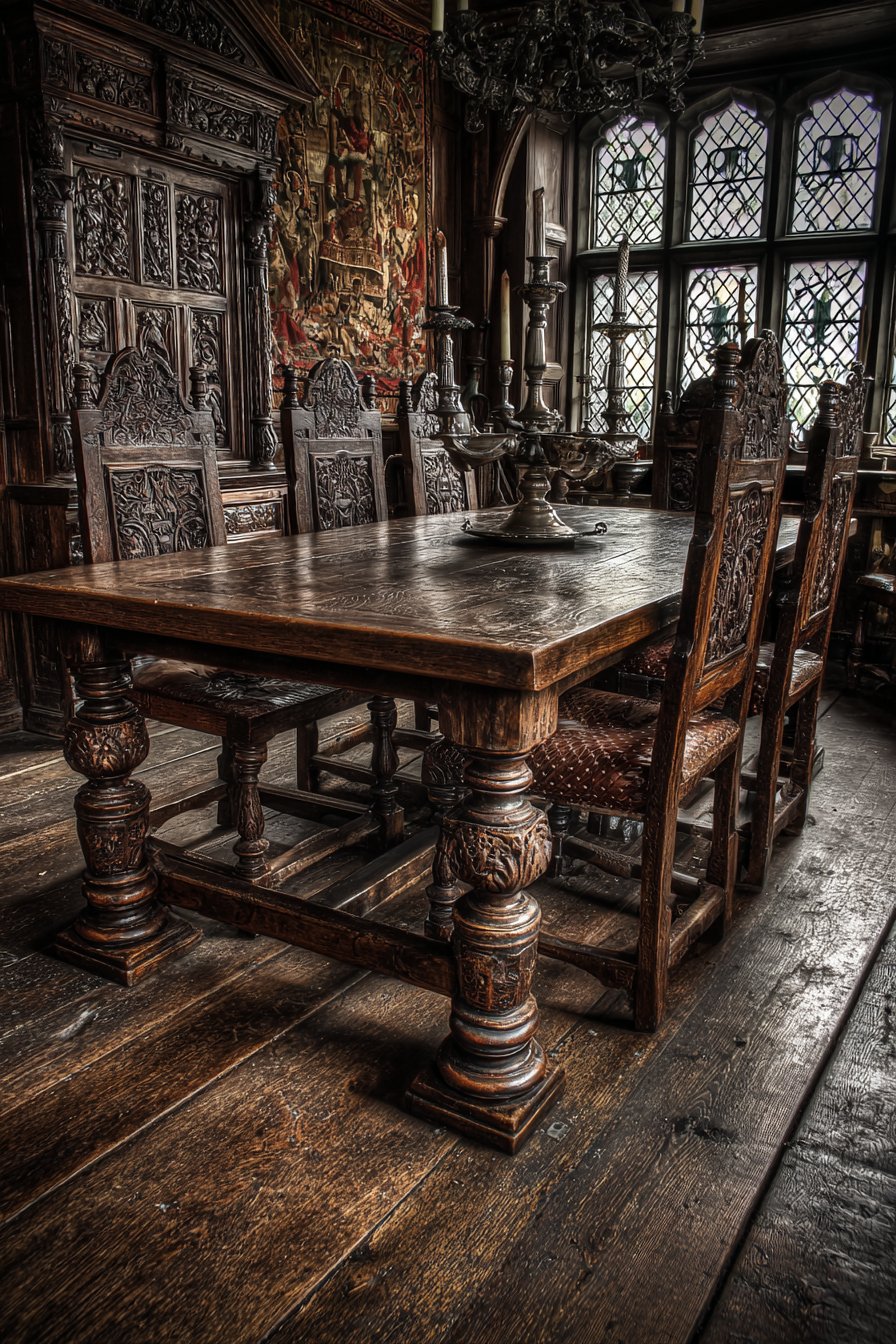
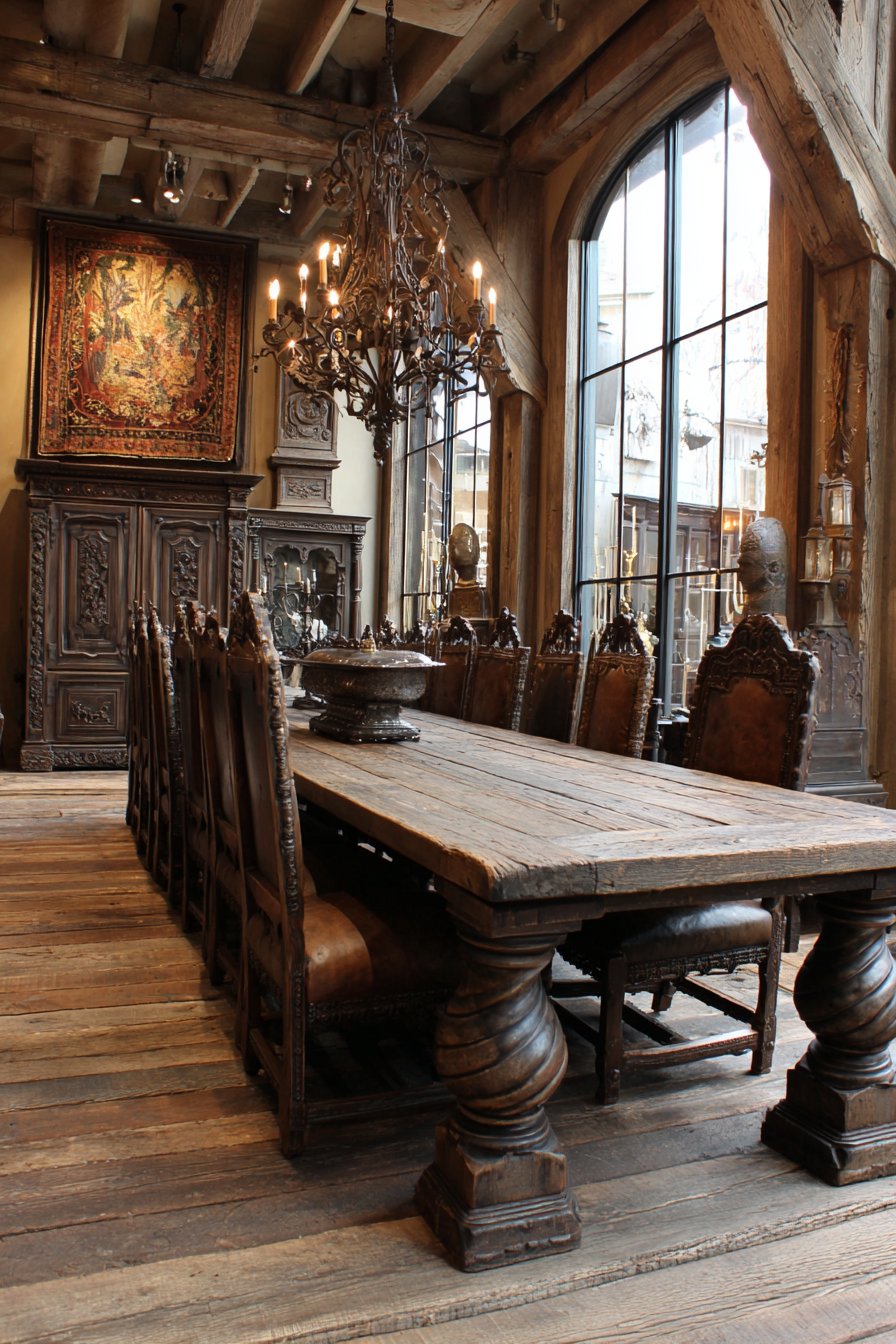
A Jacobean Revival dining room features heavily carved oak furniture. The draw-leaf table showcases bulbous turned legs and original iron stretchers. High-backed chairs with cane panels display authentic caning breaks. Wood darkening from age creates rich patina throughout.
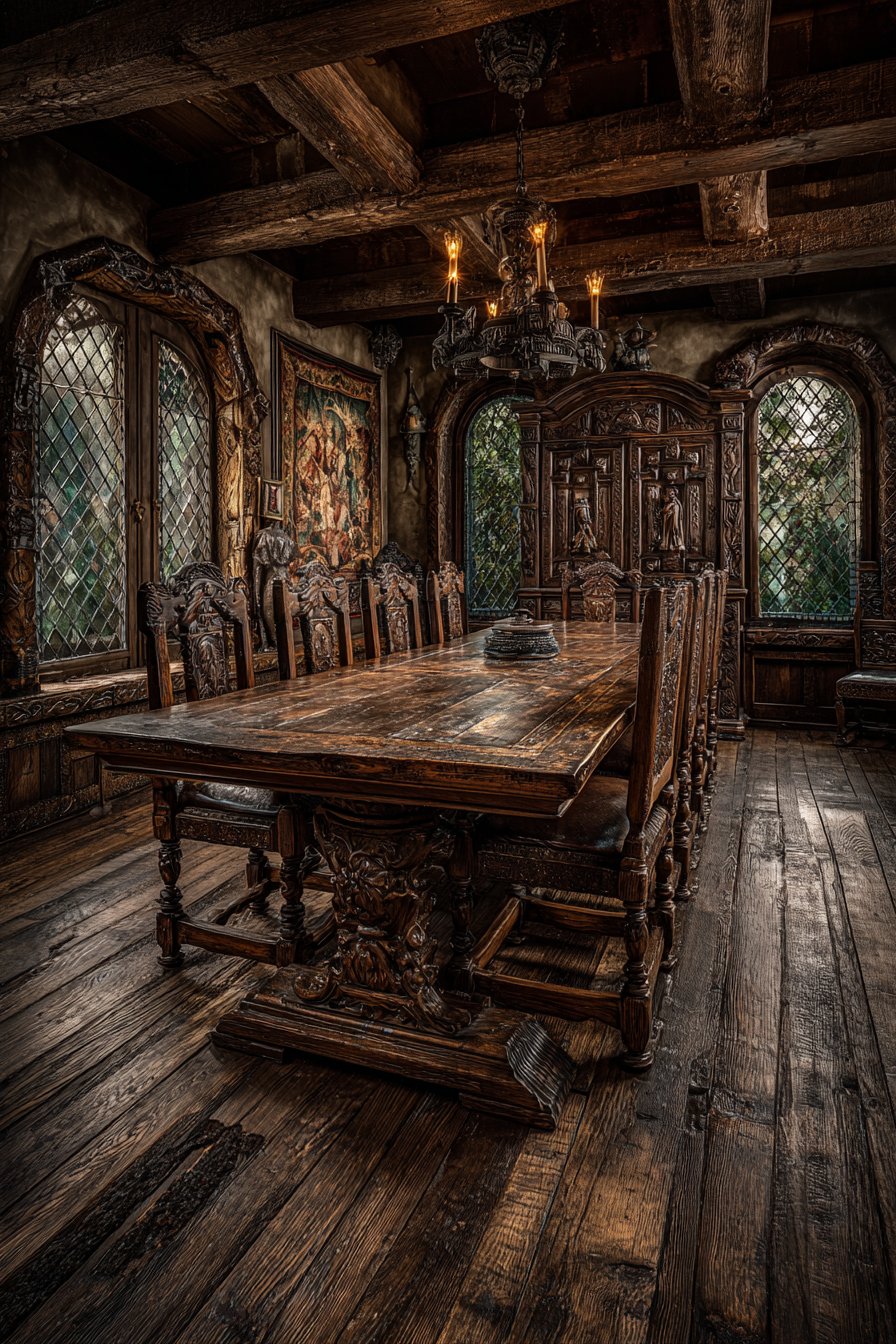
A massive carved oak court cupboard features original iron hardware. Secret compartments add intrigue to the functional storage piece. Pewter chargers and tankards display varied patina from centuries of use. Tapestry wall hanging shows color fading and minor losses to weave.
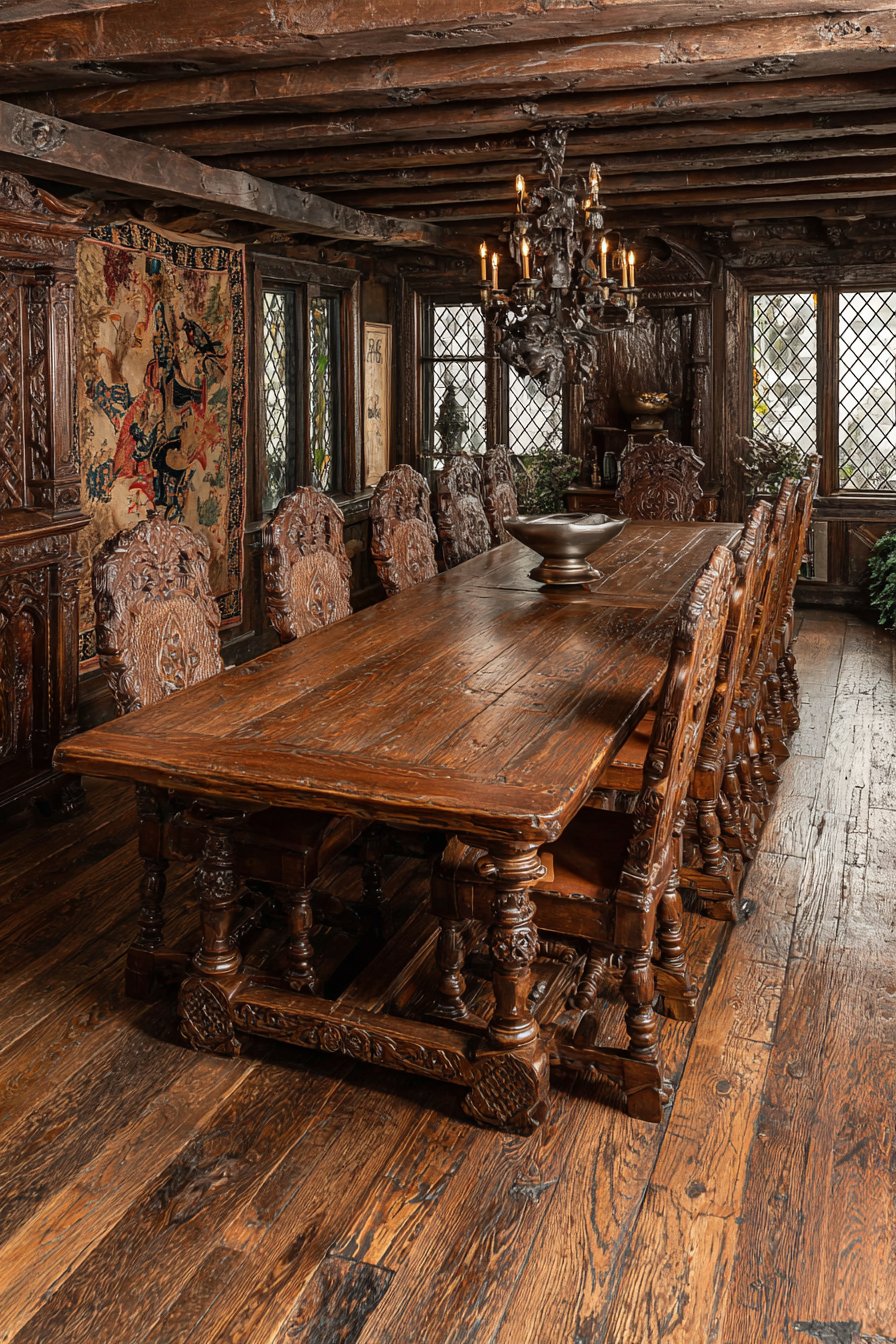
Wide plank oak flooring with square hand-forged nails exhibits centuries of wear. Leaded glass windows with bull’s eye panes create distinctive light patterns. Substantial construction and romantic Victorian interpretation emerge clearly. Stuart-era design receives dramatic Gothic Revival treatment throughout.
Key Design Tips:
- Choose heavily carved oak with bulbous turnings and elaborate details
- Preserve original iron hardware and stretchers with rust patina
- Display cane panels with authentic breaks and natural darkening
- Select pewter pieces showing varied patina from generations of use
- Install leaded glass with bull’s eye panes for distinctive light effects
18. Louis XV Carved and Gilded Rococo Curves
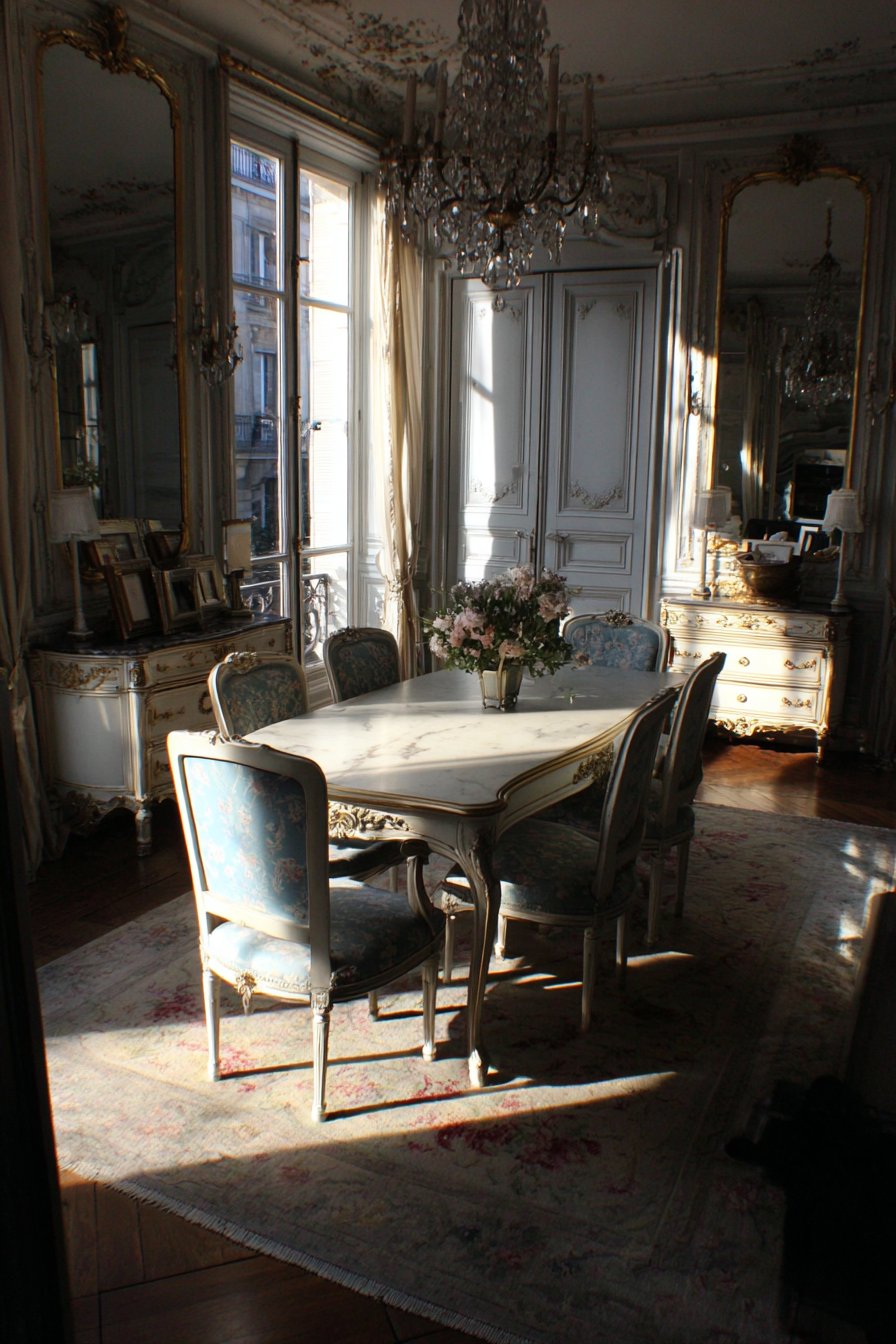
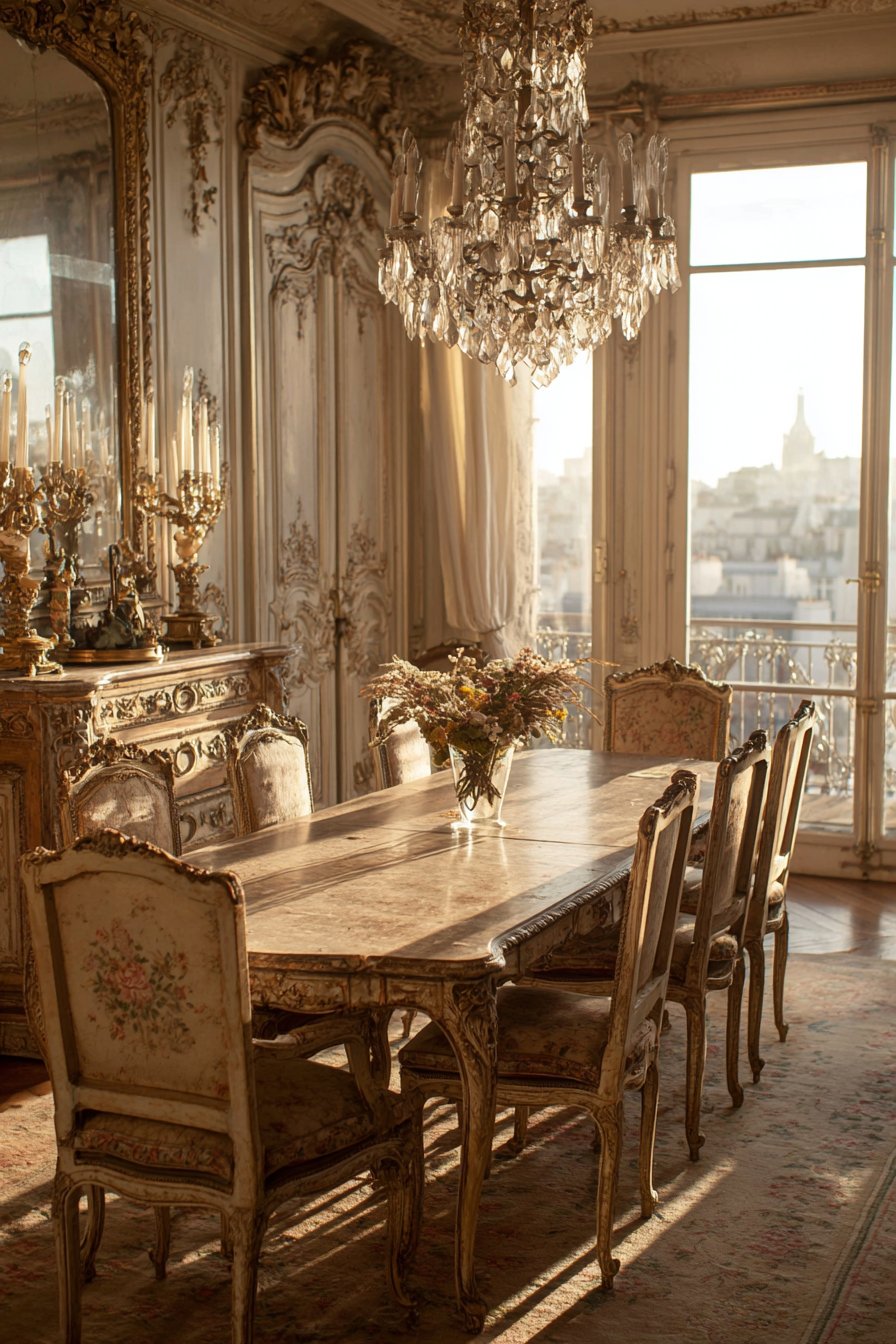
A Louis XV dining room centers on an ornate carved and gilded console table. Extended leaves accommodate formal dining in aristocratic style. The gilding shows natural wear and darkening in recessed areas. Bergère-style dining chairs feature carved frames and tapestry upholstery with gentle loosening.
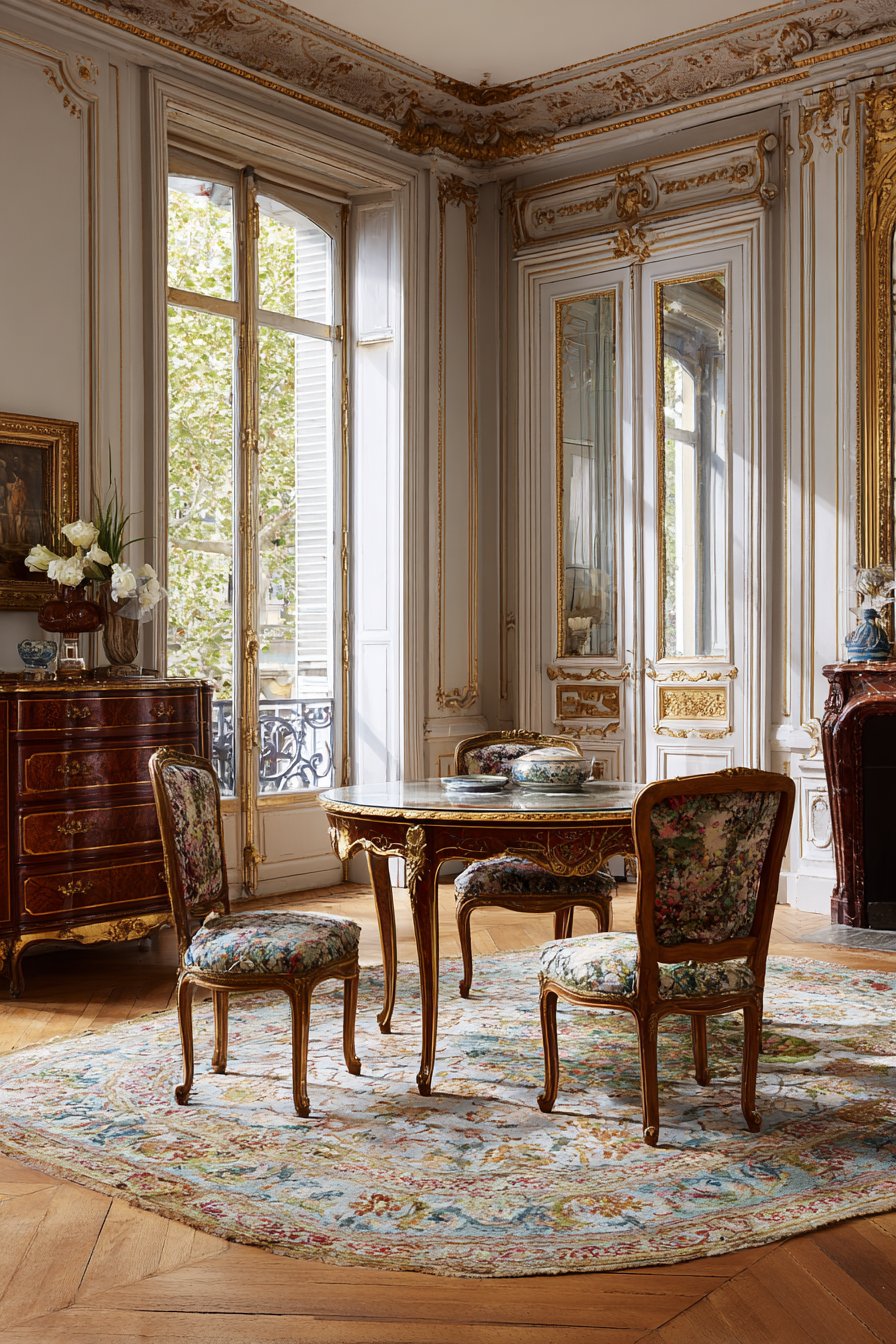
Boiserie paneling painted in pale grey exhibits authentic paint crackling. A marble-topped commode displays ormolu mounts showing natural bronze patina. Crystal chandelier with rock crystal pendants shows period cloudiness. Aubusson carpet in faded pastels displays dulled silk highlights from age.
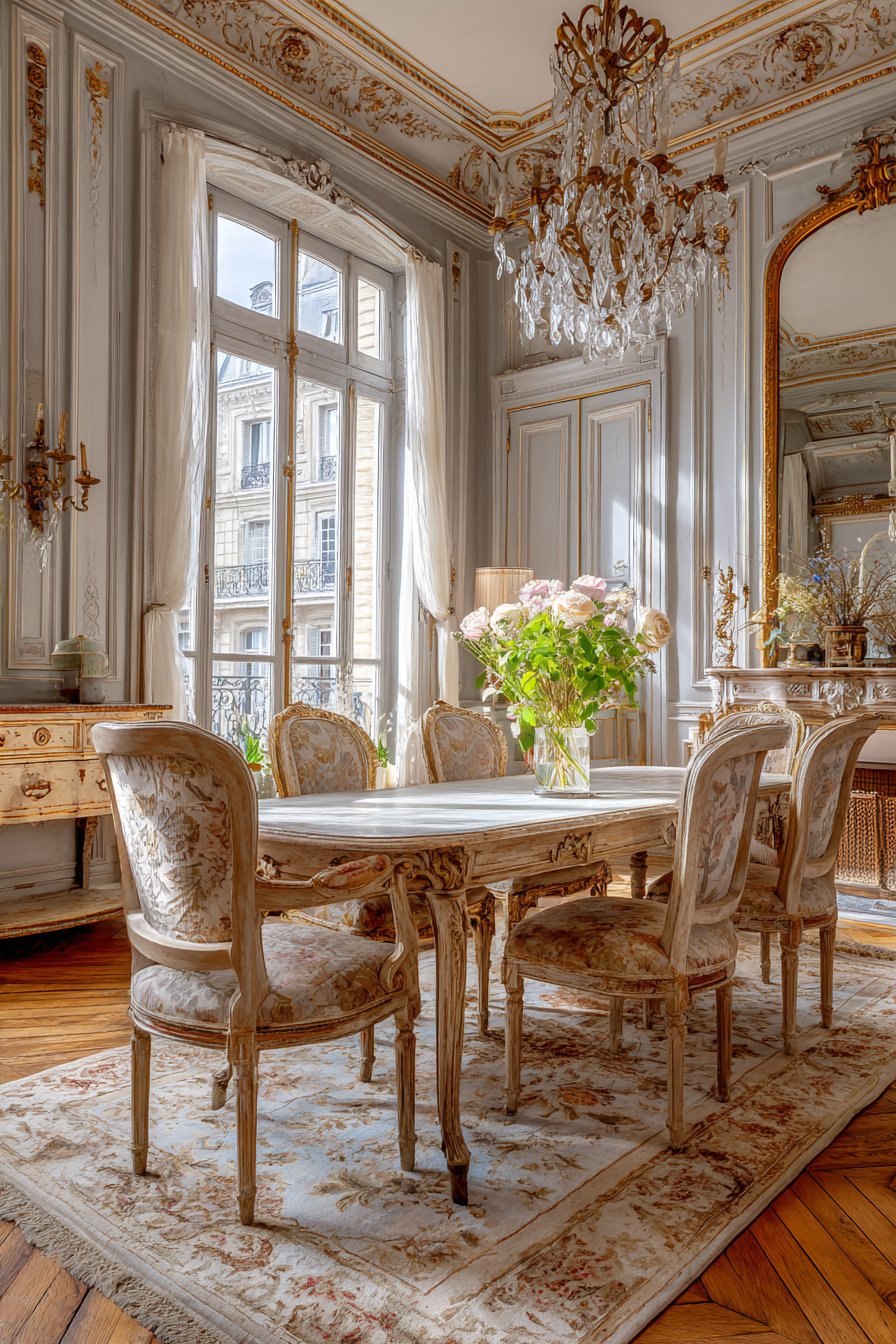
Afternoon light enters through tall windows. The rococo ambiance celebrates curvilinear grace and aristocratic refinement. Gilding condition and authentic surface aging receive proper attention. French luxury aesthetic emerges through elaborate carved details and precious materials.
Key Design Tips:
- Select carved and gilded furniture with natural wear in recessed areas
- Display bergère chairs with gentle frame loosening and fabric fading
- Preserve boiserie paneling with authentic paint crackling and minor losses
- Choose ormolu mounts showing natural bronze patina rather than polished shine
- Layer Aubusson carpets with faded pastels and dulled silk highlights
19. Pennsylvania Dutch Scrubbed Pine Utility
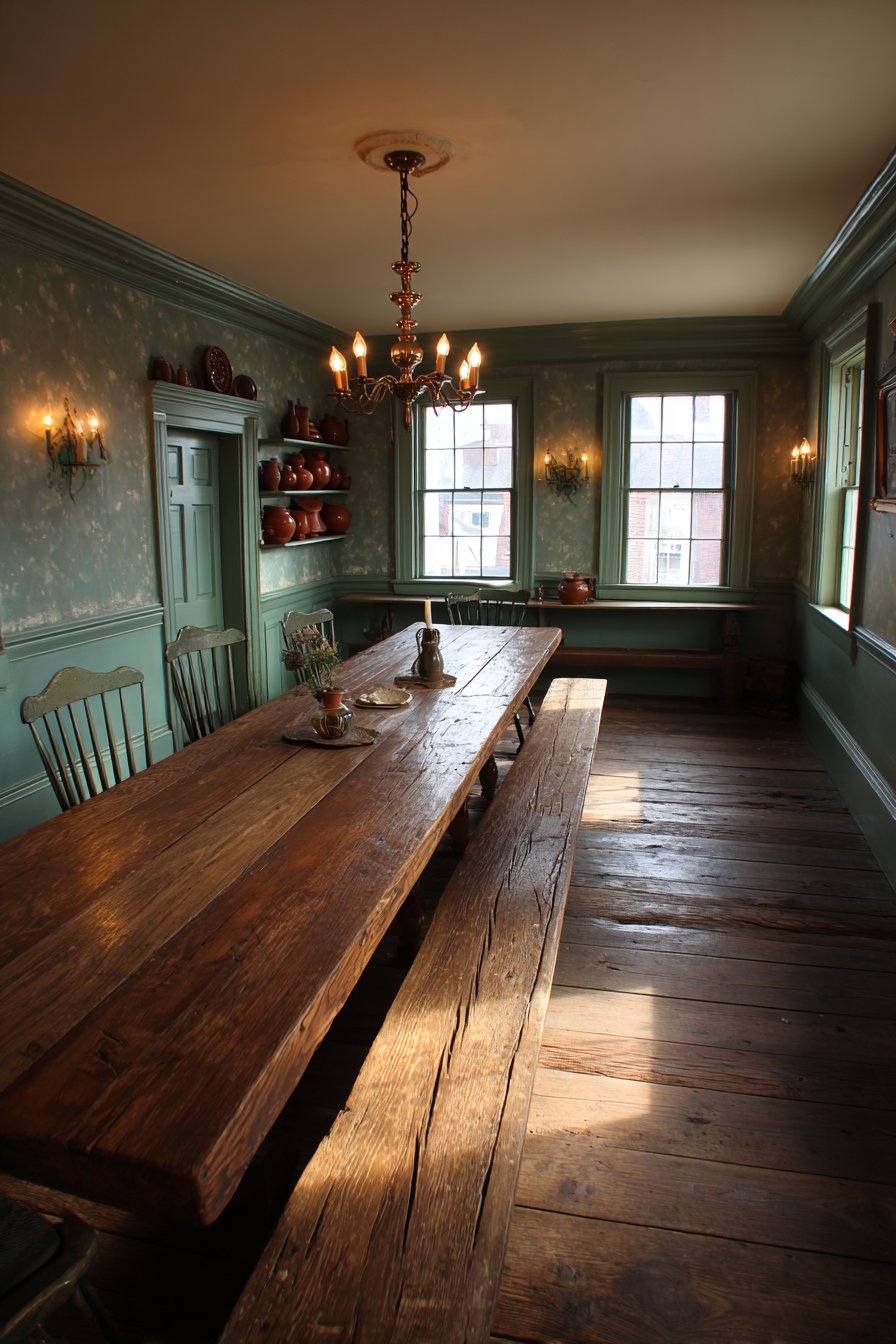
A Pennsylvania Dutch dining room features a scrubbed pine harvest table. Breadboard ends show generations of knife marks and natural bleaching. Plank-seated Windsor chairs in original green paint display honest wear. Bare wood appears at contact points from centuries of use.
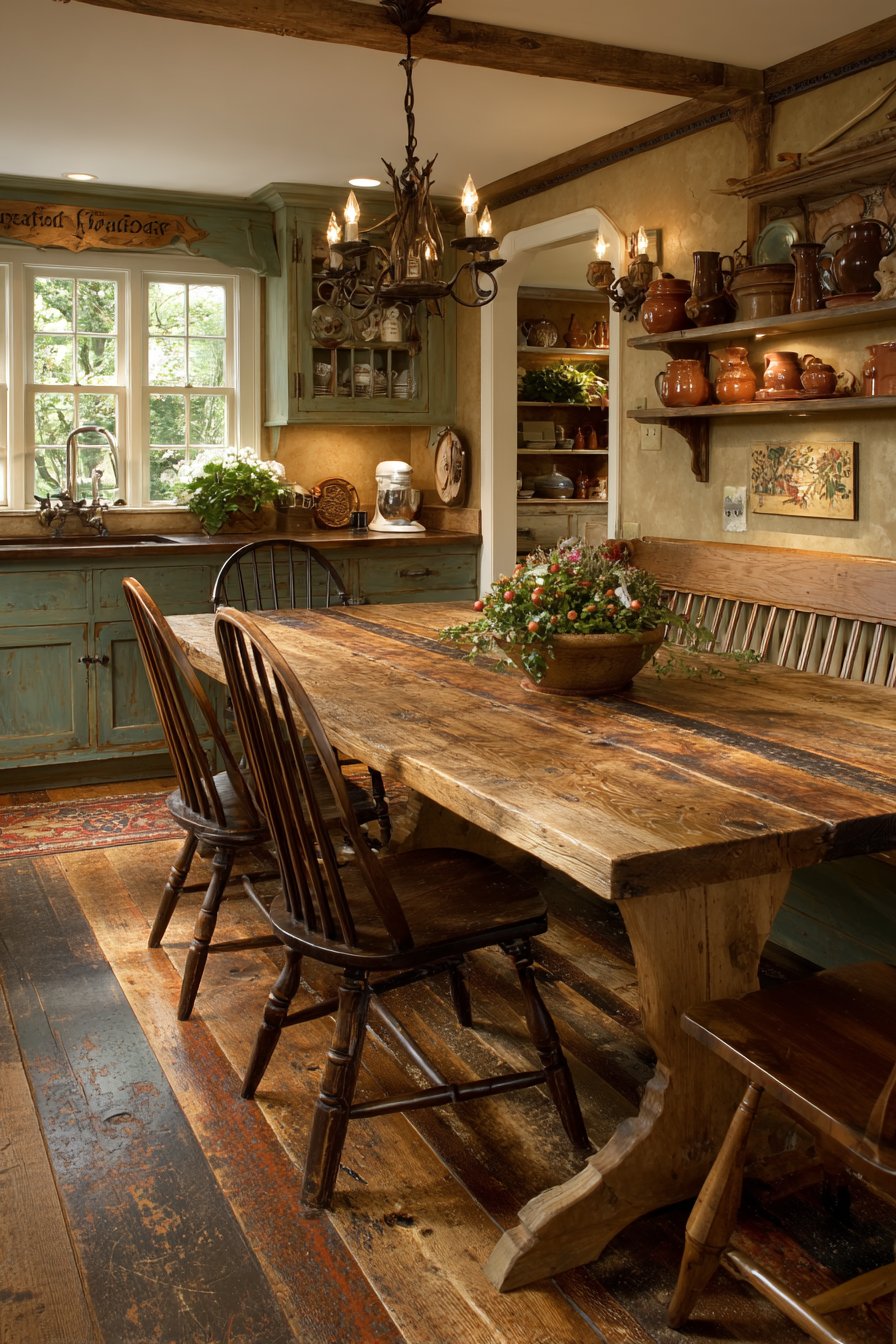
A painted kas in traditional colors shows authentic crackling and wear patterns. Redware and slipware pottery display period repairs as historical evidence. Pierced tin chandelier and sconces provide period-appropriate lighting. Wide plank floors feature remnants of original red paint with heavy traffic wear.
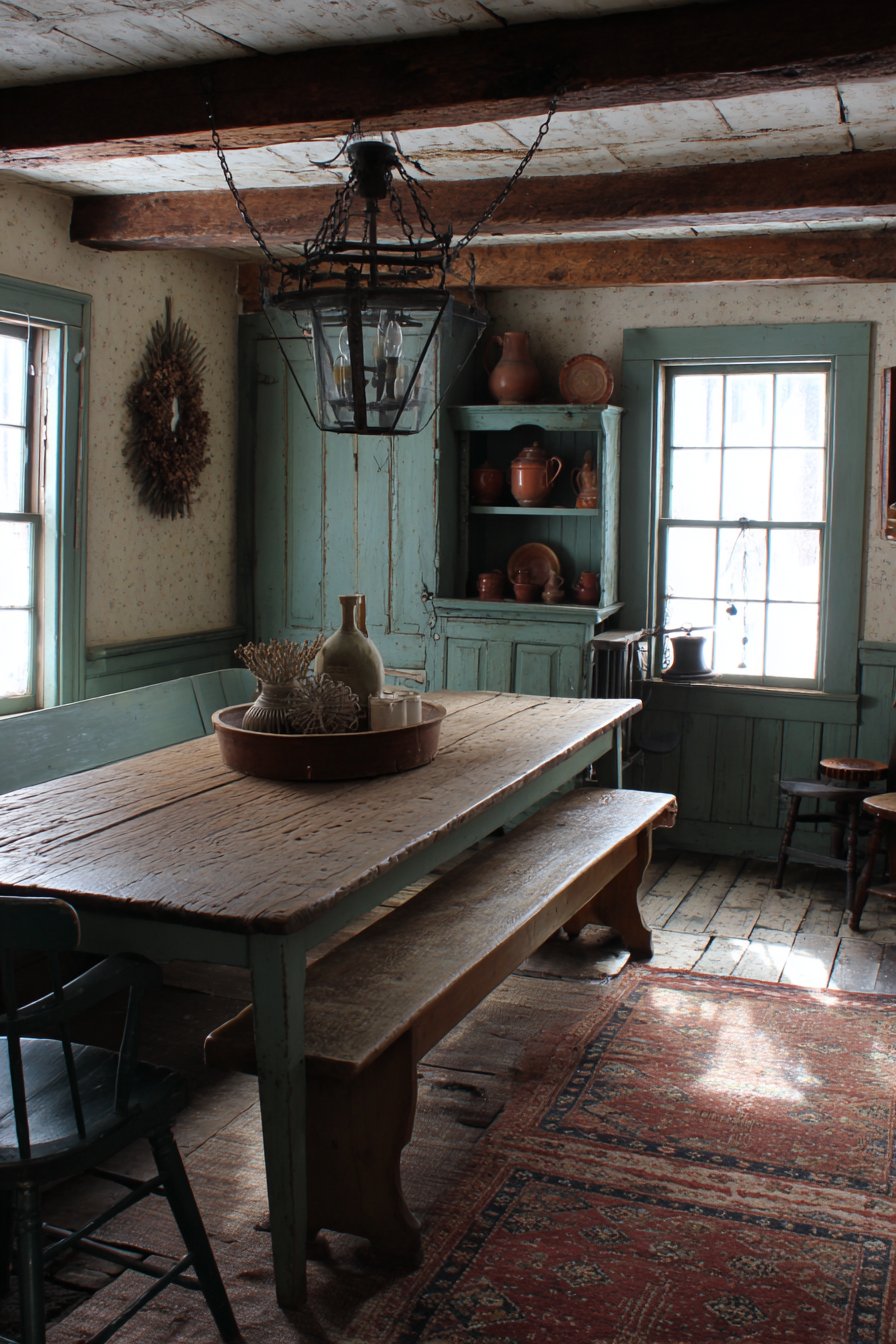
Natural light enters through small windows. The folk art aesthetic celebrates honest utilitarian character. Cultural heritage emerges through authentic paint surfaces and use patterns. Simple construction methods and durable materials create lasting functional beauty.
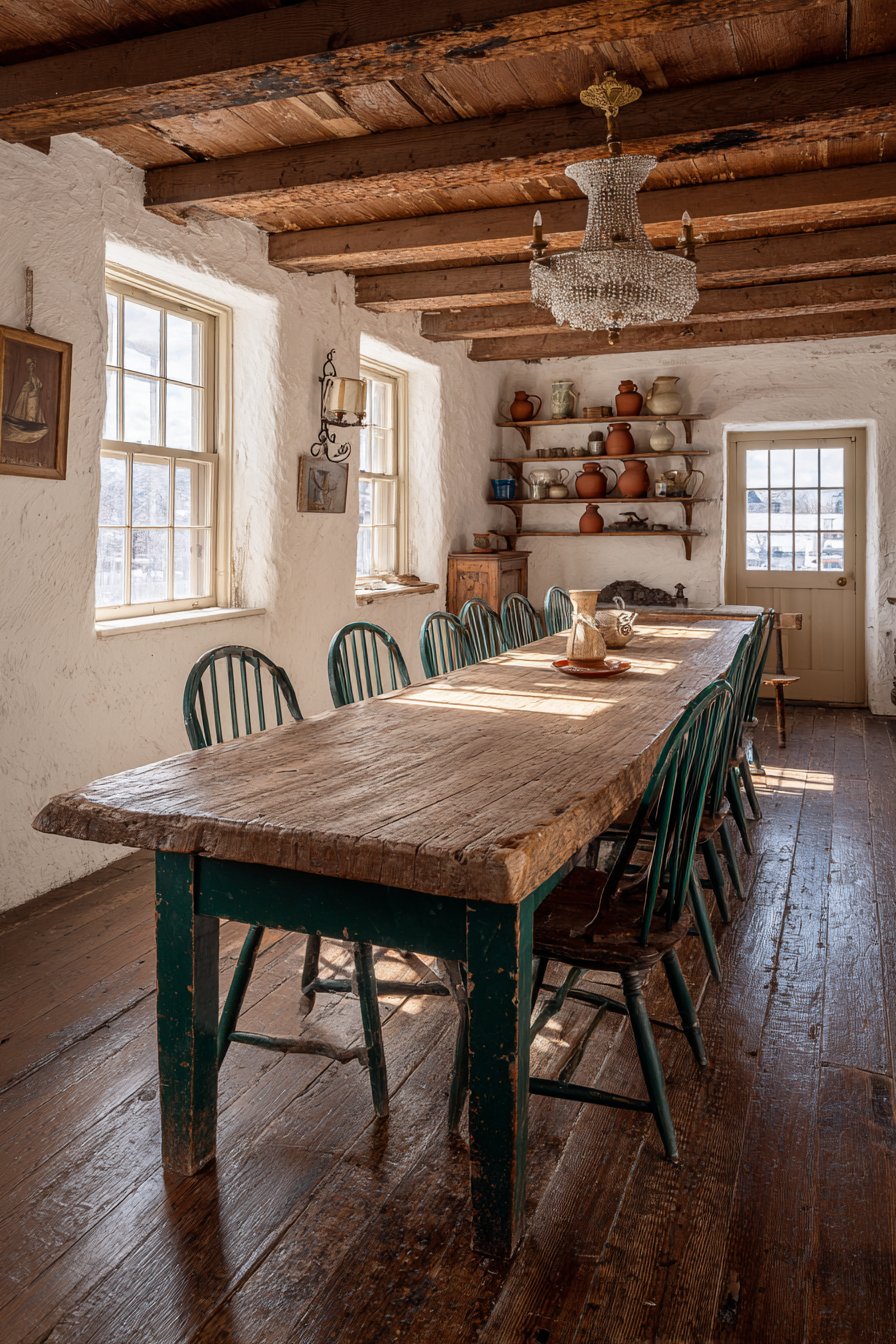
Key Design Tips:
- Choose scrubbed pine tables showing knife marks and natural bleaching patterns
- Display Windsor chairs with original paint worn through at contact points
- Preserve painted kas with authentic crackling and layered wear patterns
- Select redware and slipware with visible period repairs as history
- Install pierced tin lighting appropriate to Pennsylvania Dutch tradition
20. Biedermeier Blonde Fruitwood Understated Elegance
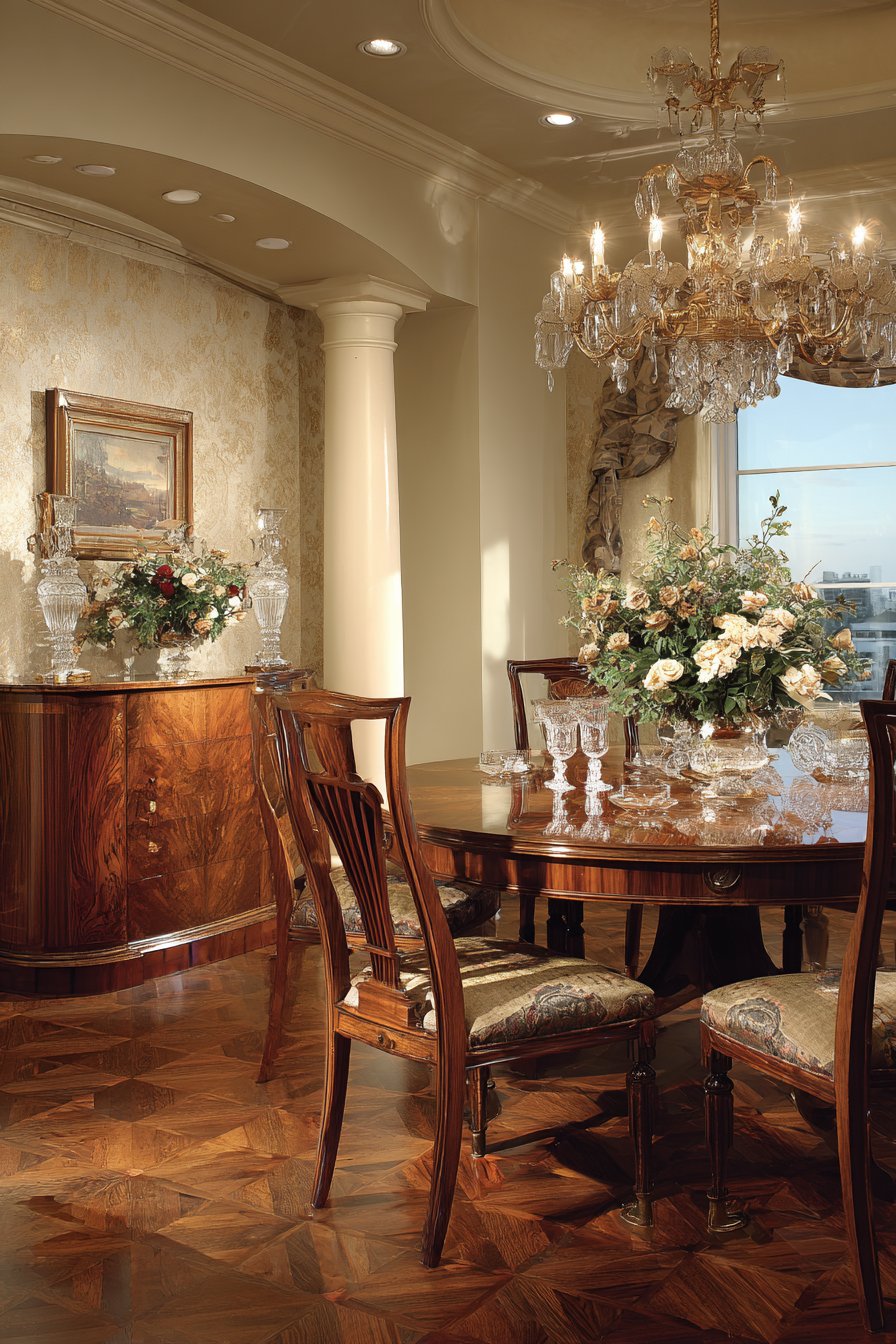
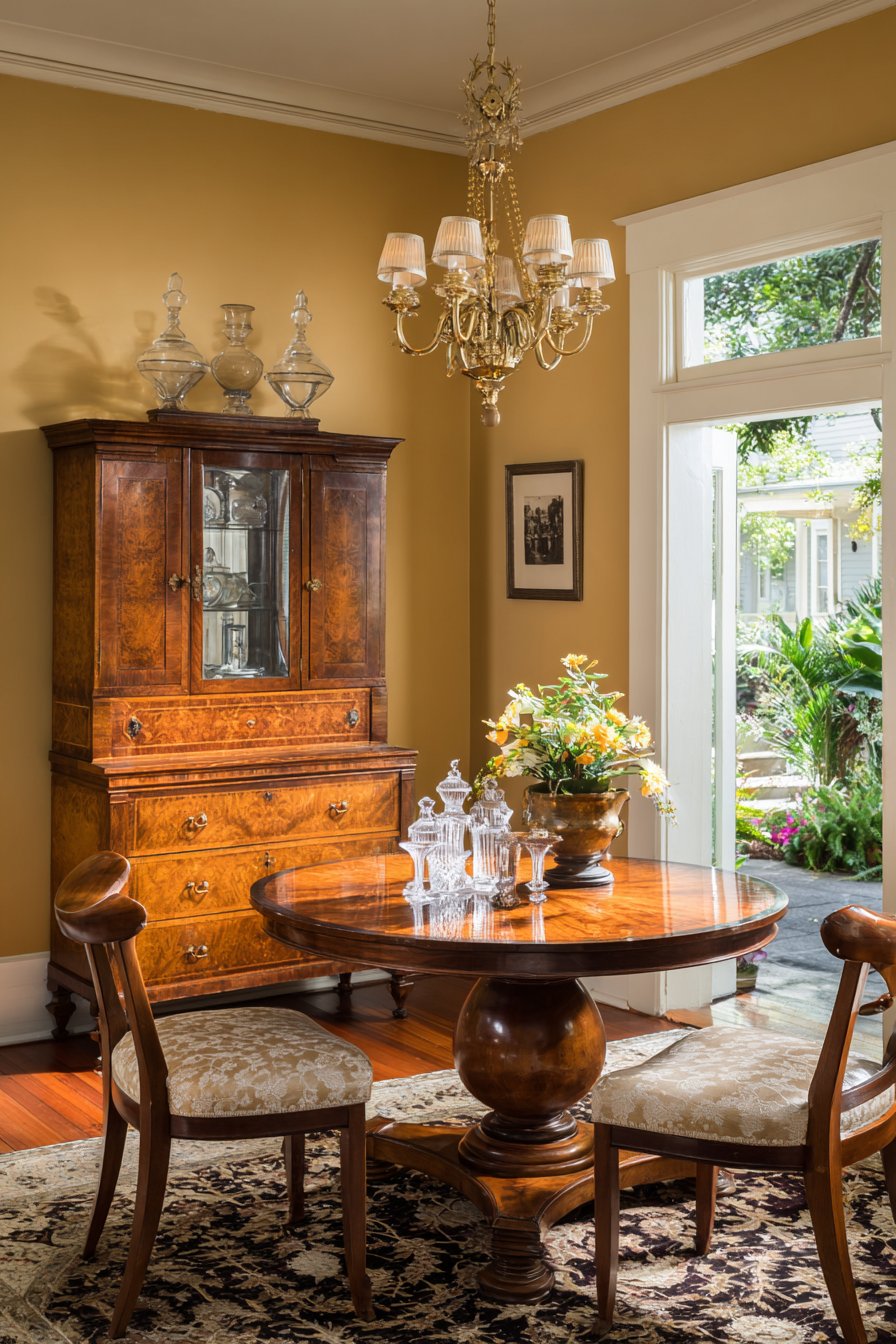
A Biedermeier dining room showcases a blonde fruitwood pedestal table. Ebonized accents provide subtle contrast to the light wood. Original finish displays subtle darkening and natural checking. Sabre-leg chairs with lyre-shaped backs feature horsehair seats showing gentle loosening.
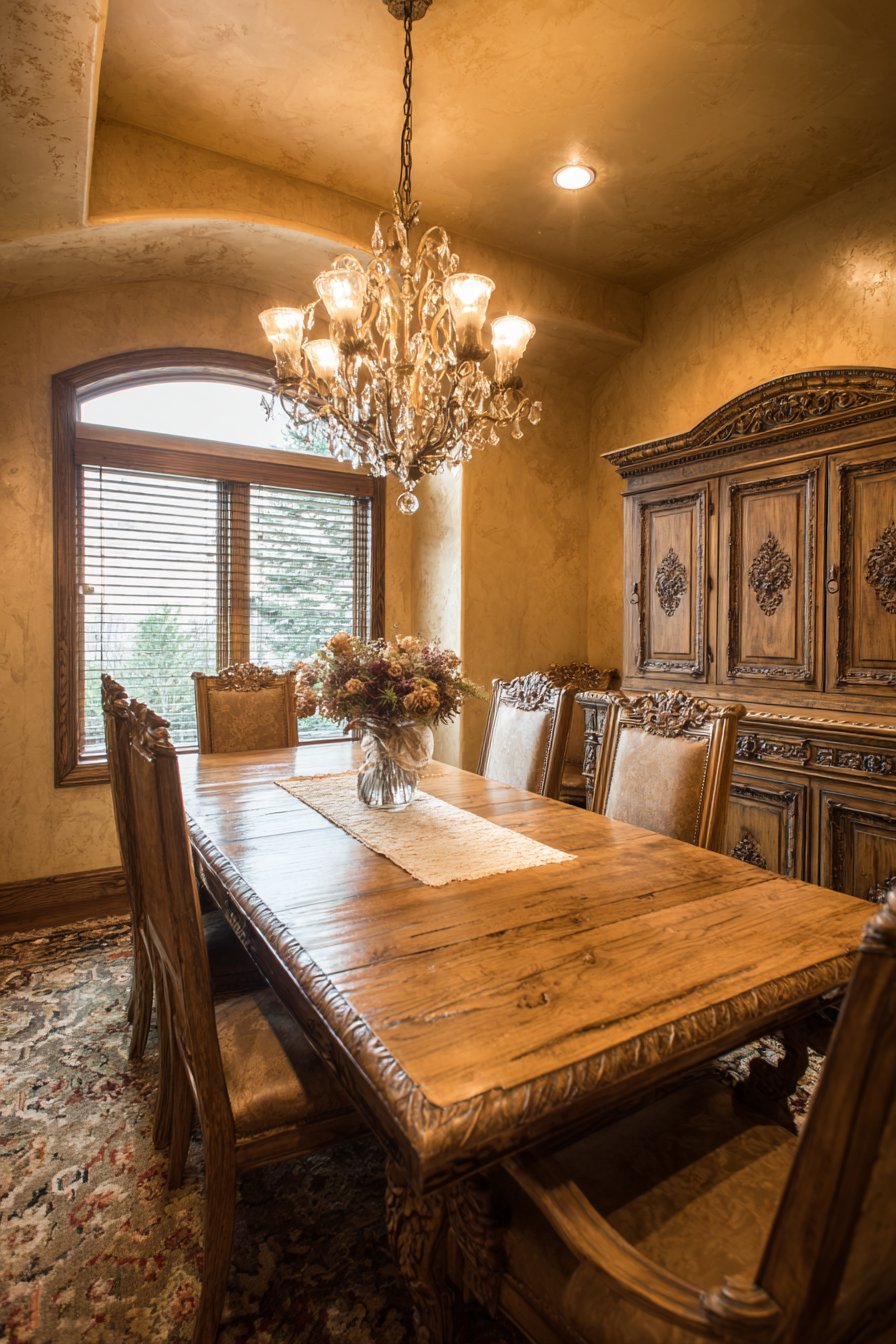
A cylinder-front secretary displays delicate inlay work with minor veneer lifting. Color variation from light exposure adds authentic character. Silk moiré wallpaper in pale gold shows subtle water staining. Gilt bronze chandelier with opaline glass shades displays natural tarnish in details.
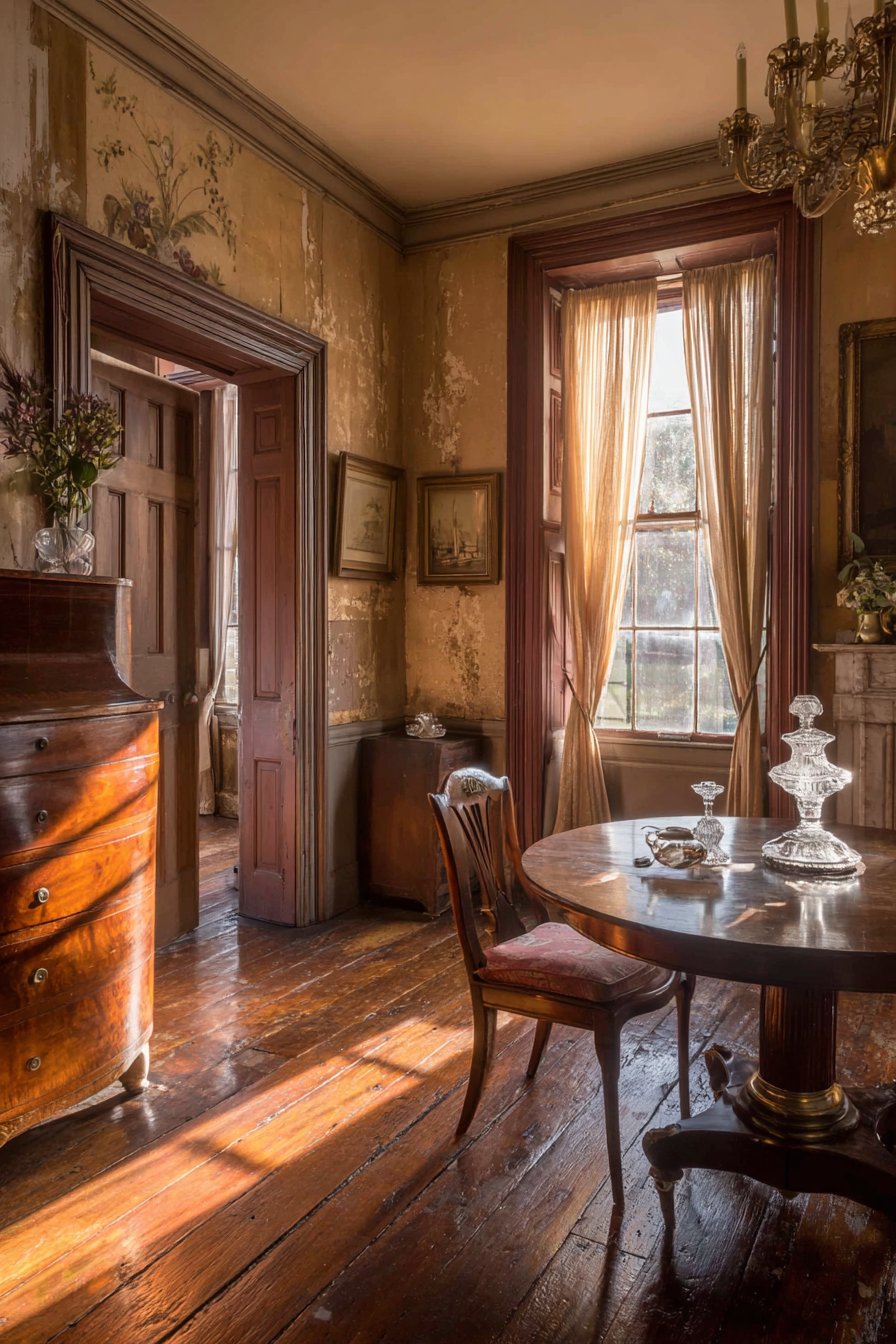
Morning light creates gentle highlights on satiny wood surfaces. The understated elegance celebrates bourgeois refinement and restrained decoration. Refined proportions and gentle aging enhance the sophisticated aesthetic. Central European craftsmanship emerges through quality materials and expert construction.
Key Design Tips:
- Select blonde fruitwood furniture with ebonized accents and original finish
- Display lyre-back chairs with horsehair upholstery showing gentle loosening
- Preserve delicate inlay work with minor veneer lifting and color variation
- Choose silk moiré wallpaper showing subtle water staining and fading
- Install gilt bronze lighting with natural tarnish in decorative details
Why These Antique Dining Room Designs Are the Best
These antique dining room designs represent the finest approaches to creating historically authentic and aesthetically distinguished spaces. Each concept demonstrates careful attention to period-appropriate materials, construction methods, and decorative elements that define specific eras and regional styles.
The incorporation of genuine antique furniture brings irreplaceable character through authentic patina, wear patterns, and craftsmanship quality. Original finishes with natural darkening, surface checking, and gentle wear tell compelling stories that reproductions cannot replicate. These authentic aging characteristics add depth and visual interest that enhances rather than diminishes the overall aesthetic.
Different historical periods offer unique design advantages suited to varying tastes and architectural contexts. Victorian grandeur provides ornate carved details and rich materials for formal entertaining. Colonial and Federal styles offer refined simplicity with delicate proportions. Arts and Crafts designs celebrate honest construction and natural materials. Continental European styles bring sophisticated curves and aristocratic elegance.
Material authenticity drives the success of these antique dining concepts. Solid hardwoods like mahogany, walnut, oak, and fruitwood develop beautiful patina over decades and centuries. Original brass hardware with natural tarnish, hand-forged iron with rust patina, and aged textiles with gentle wear all contribute essential character. These materials demonstrate superior durability through generations of continuous use.
Color theory in antique spaces relies on naturally mellowed tones rather than bold contemporary palettes. Faded wallpapers, dulled gilding, and color-shifted upholstery create harmonious schemes that evolved through time rather than design intention. The sophisticated result offers visual comfort and timeless appeal that transcends passing trends.
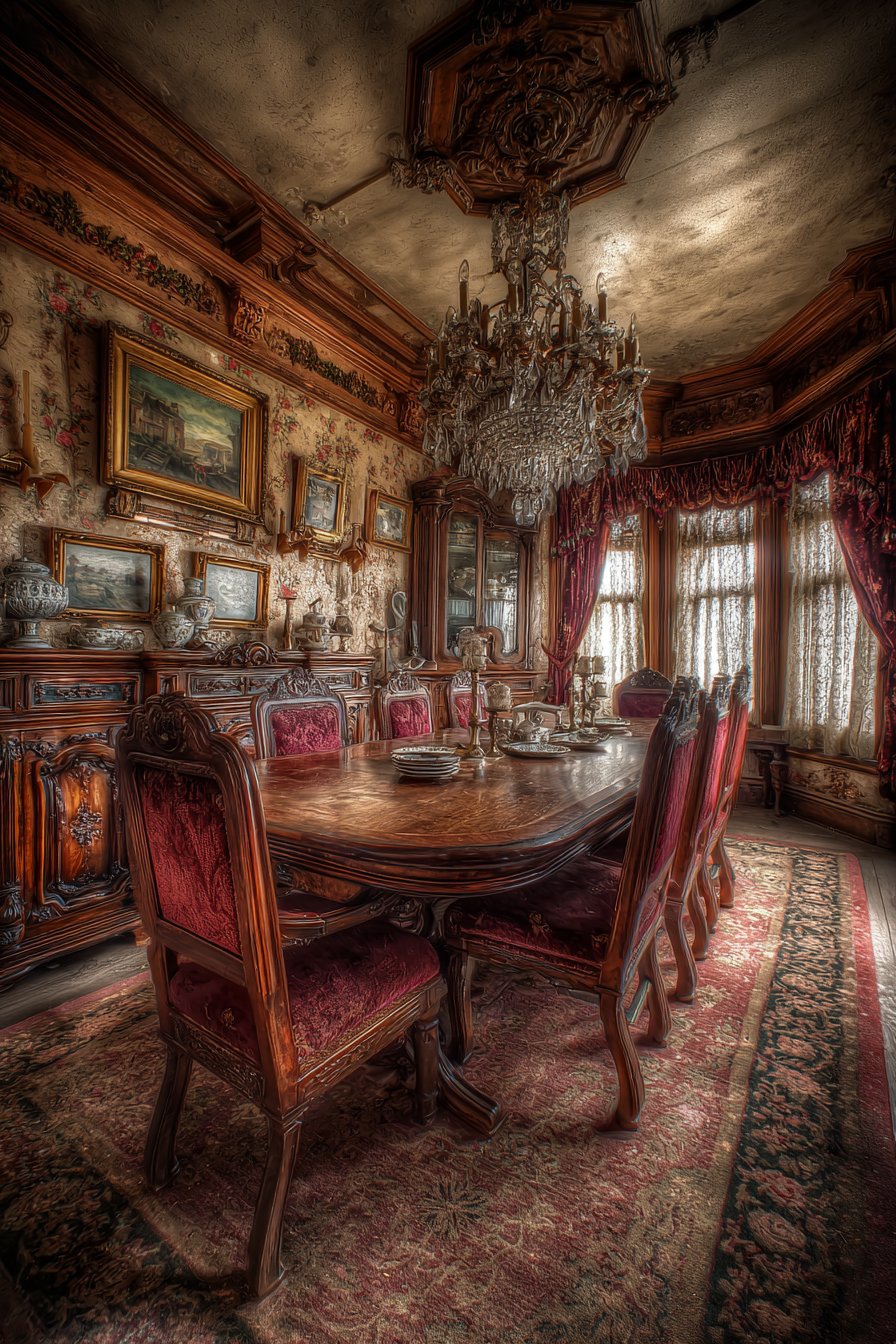
Spatial considerations vary by period but generally emphasize formal arrangement and proper proportion. These design principles create balanced compositions that function beautifully regardless of room size. Even modest spaces gain dignity through authentic antique furnishings and appropriate period details.
Sustainability emerges naturally in antique design through the preservation and continued use of existing furniture. Quality construction methods ensure these pieces remain functional for future generations. Choosing antiques over new production reduces environmental impact while acquiring objects of superior craftsmanship and lasting beauty.
Conclusion
These twenty antique dining room designs demonstrate how historical authenticity creates spaces of unmatched character and distinction. The key takeaways include embracing genuine patina and wear patterns, selecting period-appropriate materials and construction methods, and understanding how different eras offer unique aesthetic advantages. Quality antique furnishings combined with proper preservation create rooms that honor craftsmanship while serving contemporary needs.
Successful antique dining design balances historical integrity with practical functionality for modern life. Start by selecting one significant antique piece as an anchor for your space. Allow authentic aging characteristics to enhance rather than concern you. Your distinguished antique dining room awaits creation through thoughtful acquisition and respectful preservation of historical treasures.