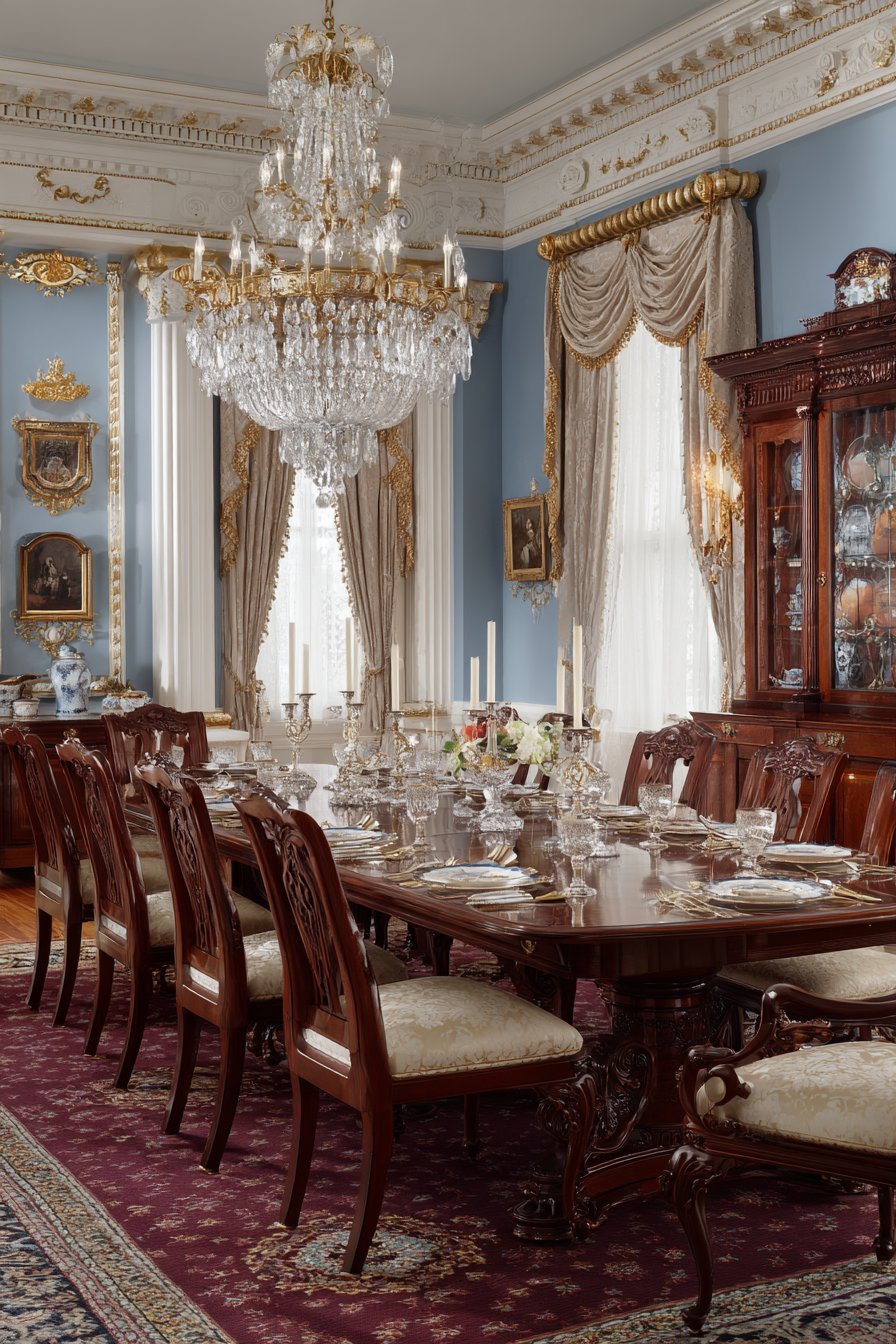


Creating a traditional dining room brings timeless elegance and refined sophistication to your home. This design approach celebrates classical architecture, quality craftsmanship, and enduring beauty. The combination creates dignified spaces perfect for both formal entertaining and cherished family gatherings.
Traditional dining rooms have maintained their appeal across generations for compelling reasons. They offer a reassuring sense of permanence in our rapidly changing world. The warmth of rich wood tones and carefully selected antiques creates memorable dining experiences. These spaces honor heritage while remaining entirely functional for modern living.
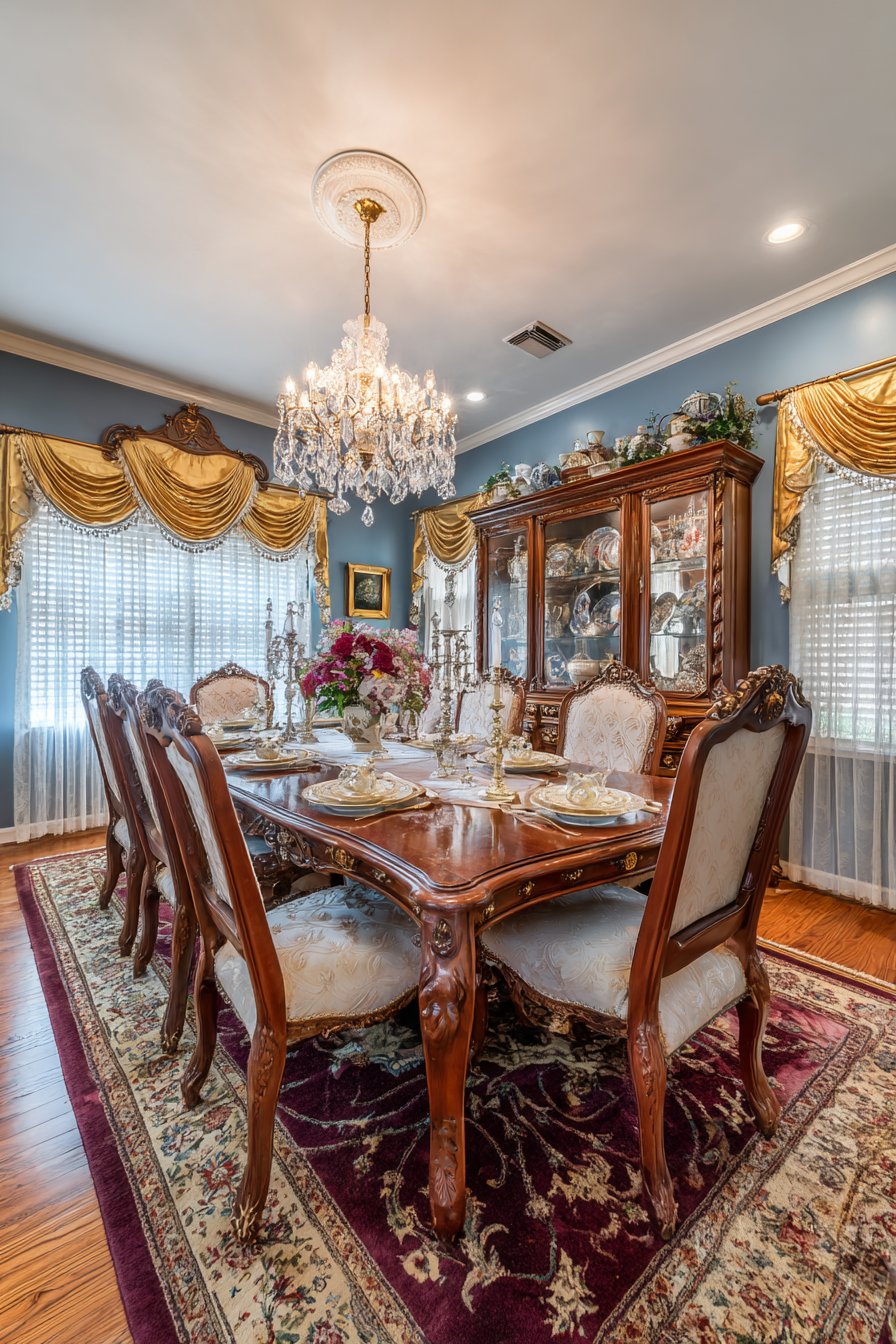
The beauty of traditional design lies in its versatility and adaptability. Whether you prefer the formal grandeur of Federal-style elegance or the relaxed comfort of farmhouse simplicity, traditional aesthetics accommodate diverse tastes. Each approach shares common threads of quality materials, thoughtful proportions, and attention to architectural detail. These elements combine to create rooms that feel both impressive and genuinely welcoming.
1. Mahogany Elegance with Crystal Chandelier
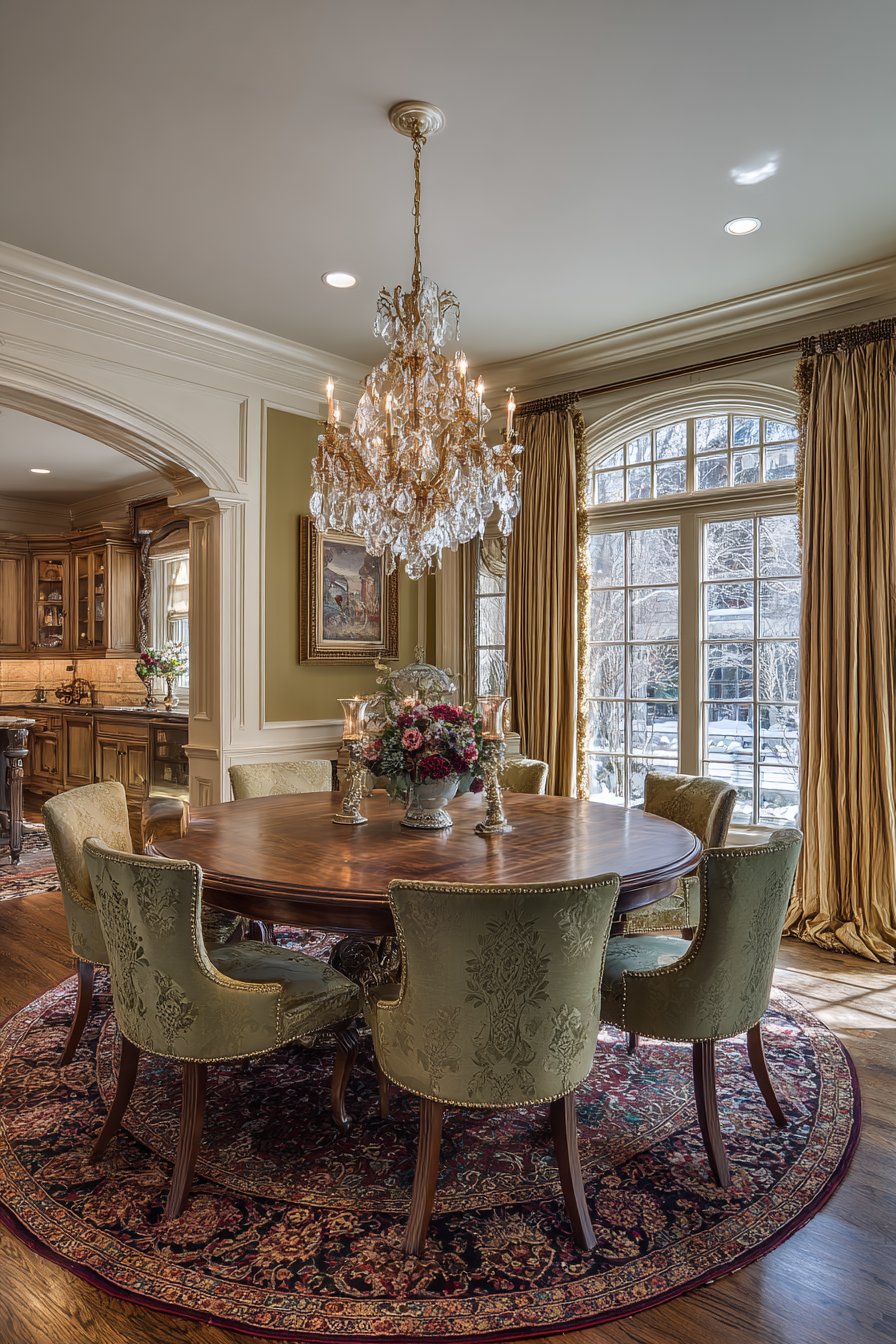
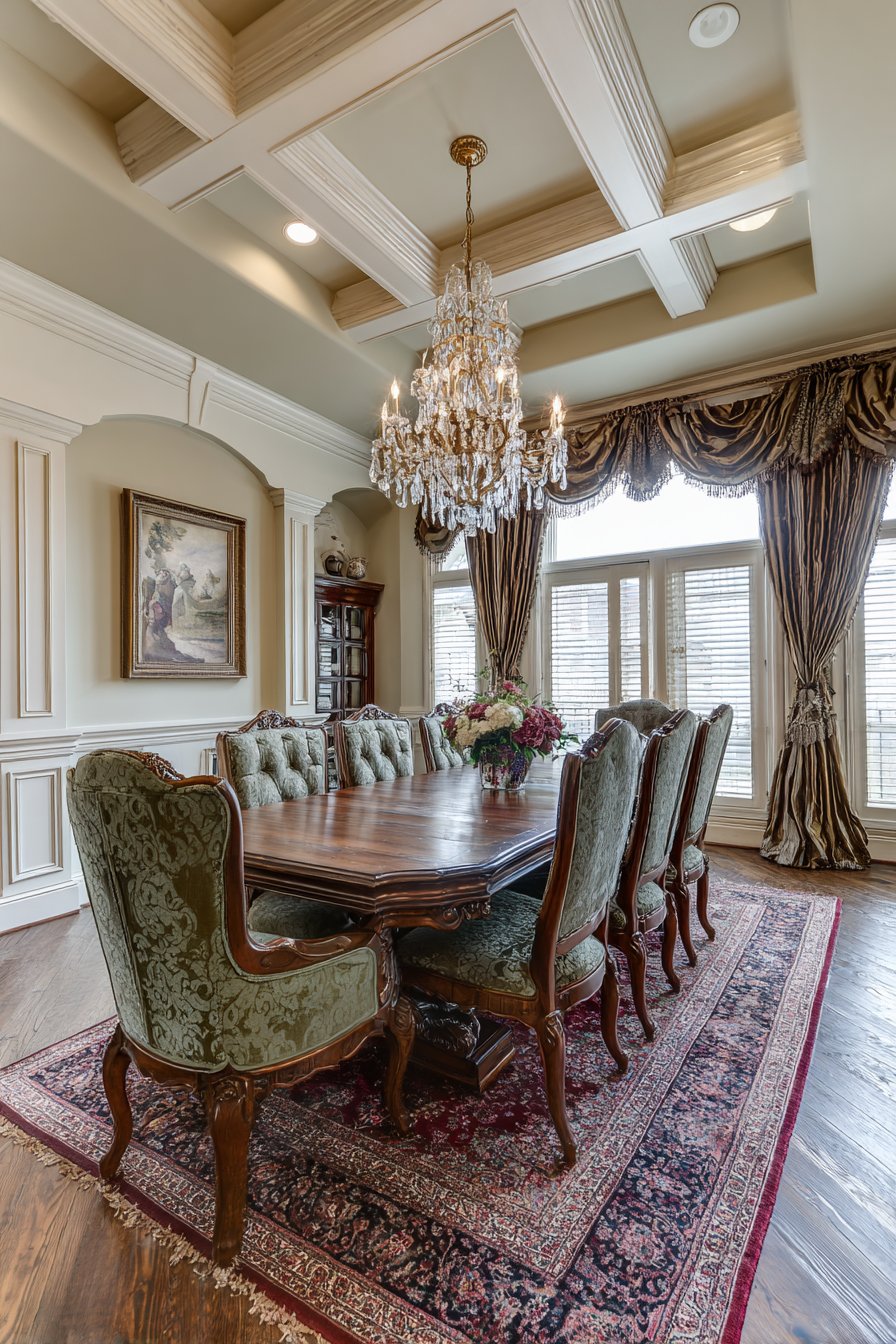
A substantial mahogany pedestal table commands attention at the heart of this dining room. Carved details and claw feet demonstrate exceptional craftsmanship. Eight upholstered chairs surround the table with damask fabric in sophisticated sage green. Nailhead trim adds subtle decorative interest. An ornate crystal chandelier with brass fittings hangs centered above.
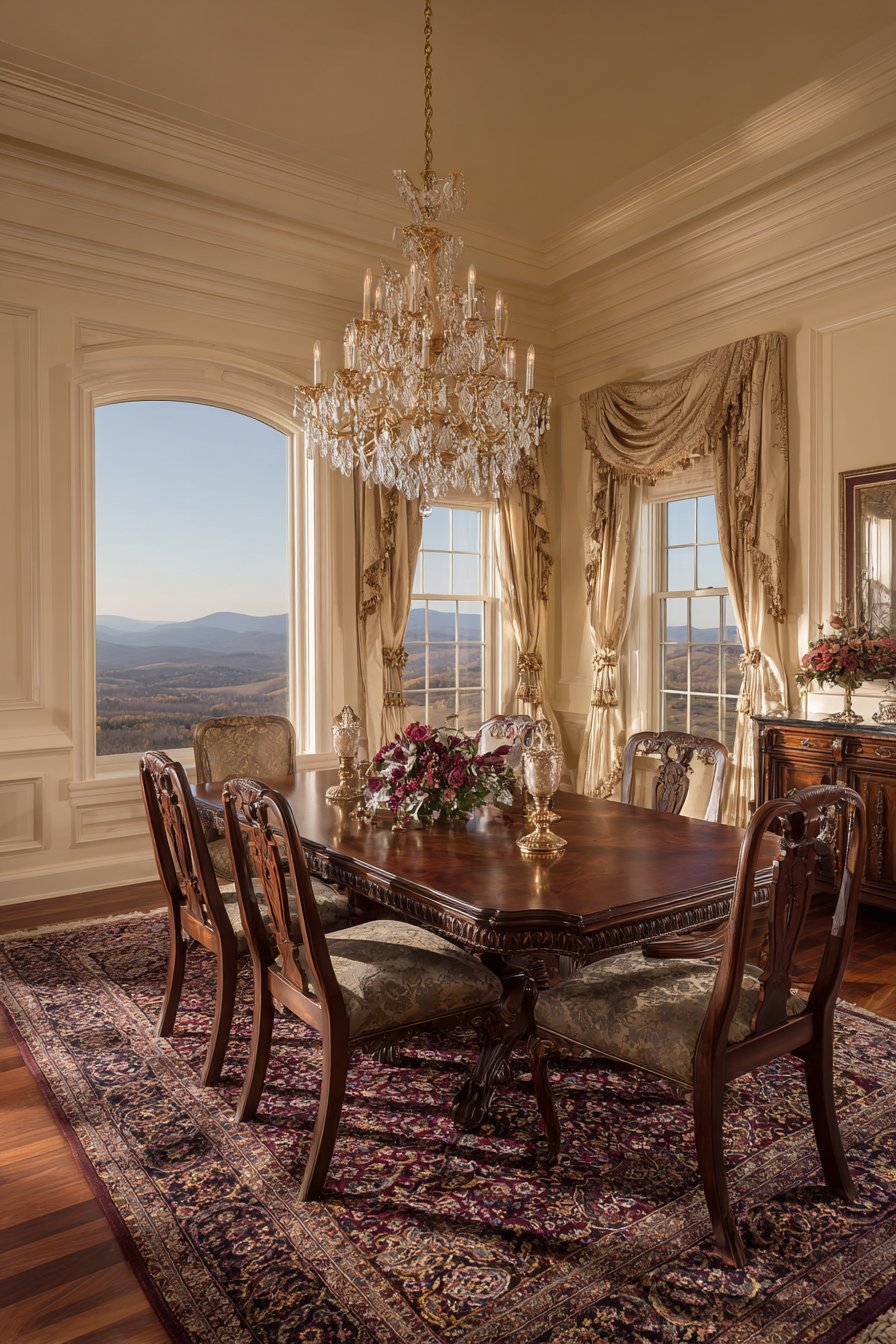
The walls receive a warm cream paint treatment that enhances natural light. Classic wainscoting and crown molding create architectural depth and visual interest. A Persian rug in deep burgundy and navy anchors the entire arrangement. The colors coordinate beautifully with the sage upholstery.
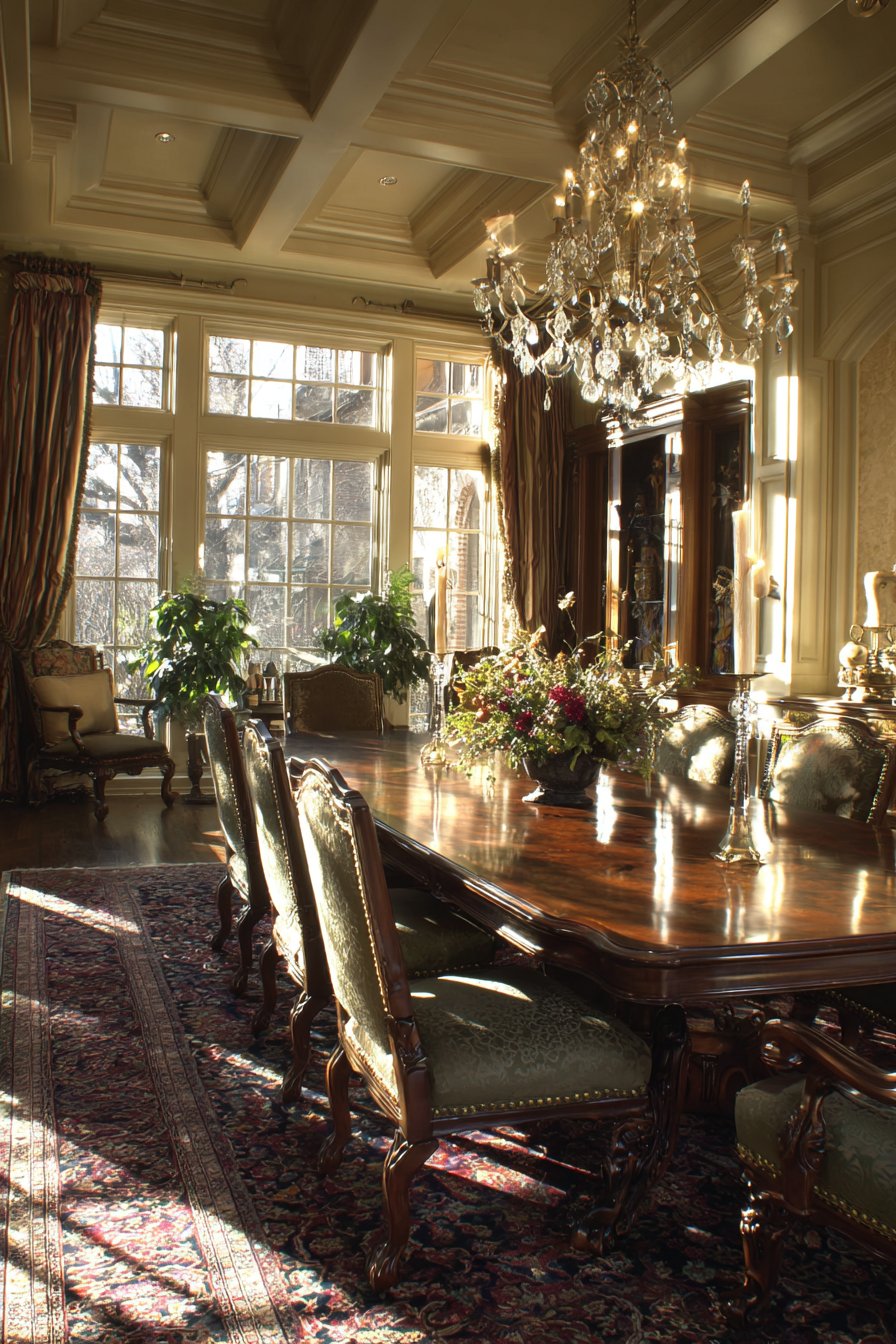
Tall windows dressed in heavy silk drapes complete the formal aesthetic. Tasseled tiebacks allow natural afternoon light to stream through. The interplay between artificial chandelier light and natural sunlight creates dynamic ambiance. Shadows dance across polished wood surfaces throughout the day.
Key Design Tips:
- Select mahogany furniture for its rich color and superior aging characteristics
- Incorporate crystal chandeliers to add sparkle and formal elegance
- Use Persian or Oriental rugs to anchor furniture arrangements
- Install classic architectural details like wainscoting and crown molding
- Choose damask or silk fabrics for upholstery to enhance traditional appeal
- Layer lighting sources for versatility in ambiance
2. Cherry Wood Formality with Queen Anne Styling
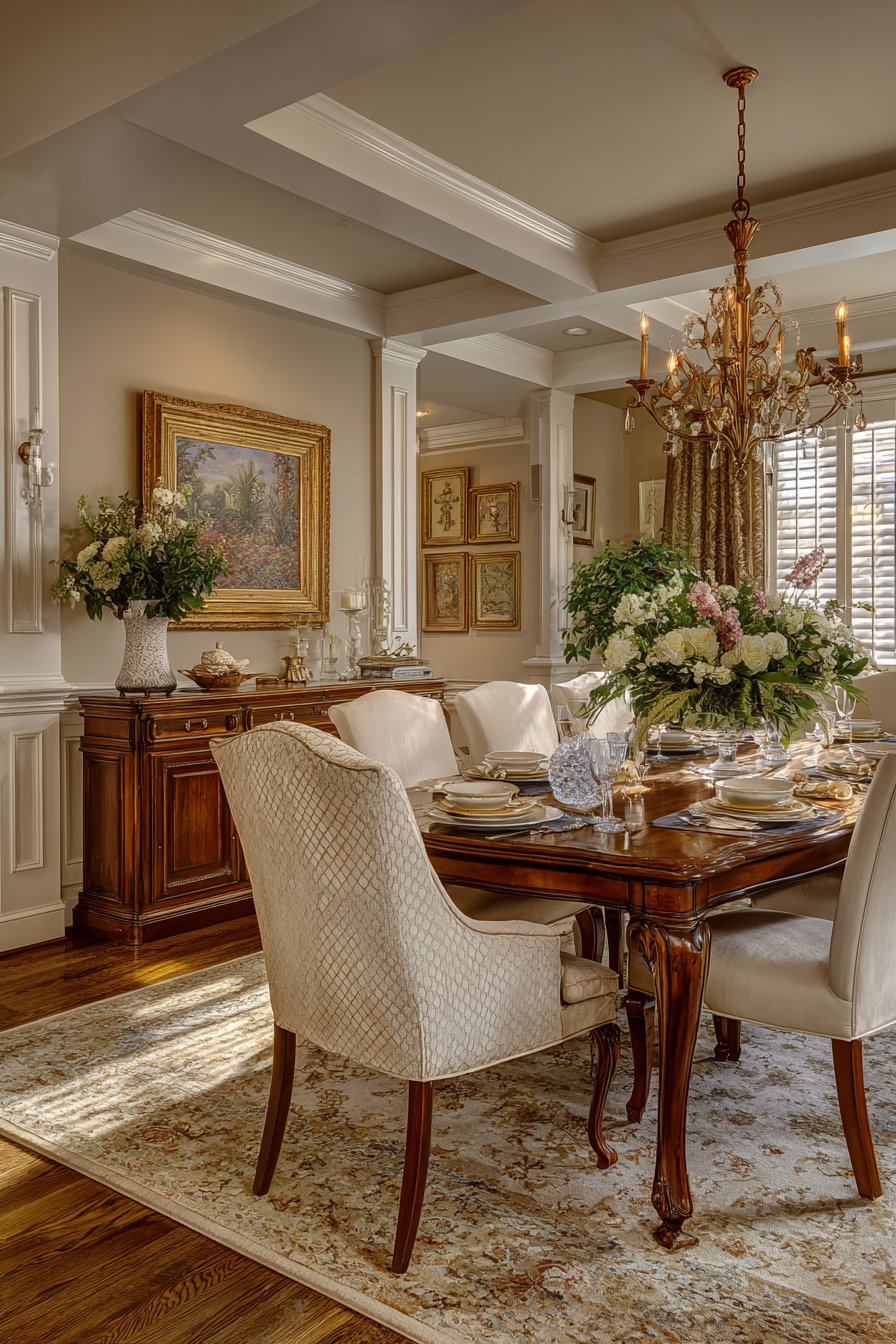
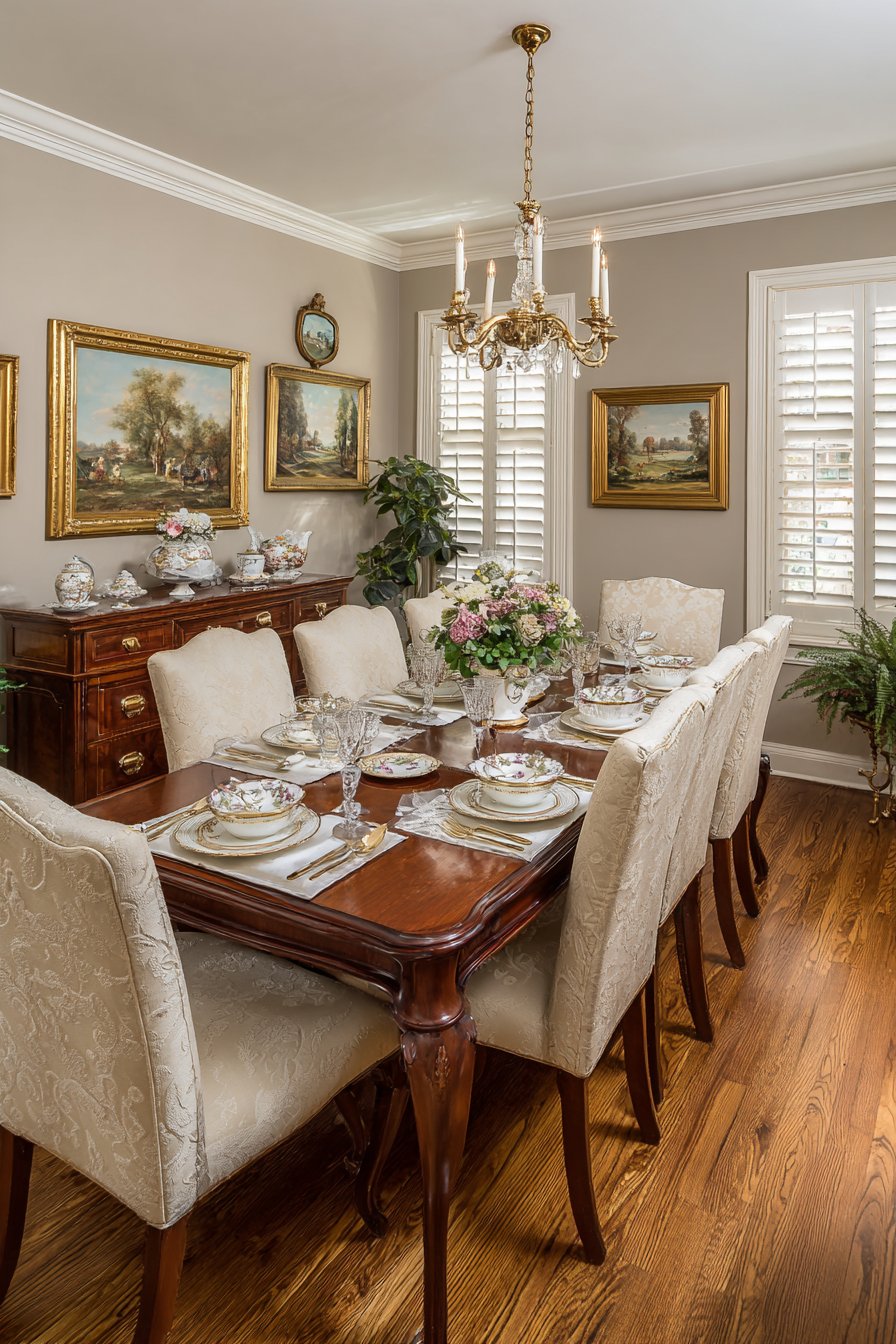
A rectangular cherry wood table features elegant Queen Anne legs and rich satin finish. The table comfortably seats ten guests on upholstered wingback chairs. Cream linen upholstery provides neutral sophistication. A traditional sideboard in matching cherry displays fine china and treasured serving pieces.
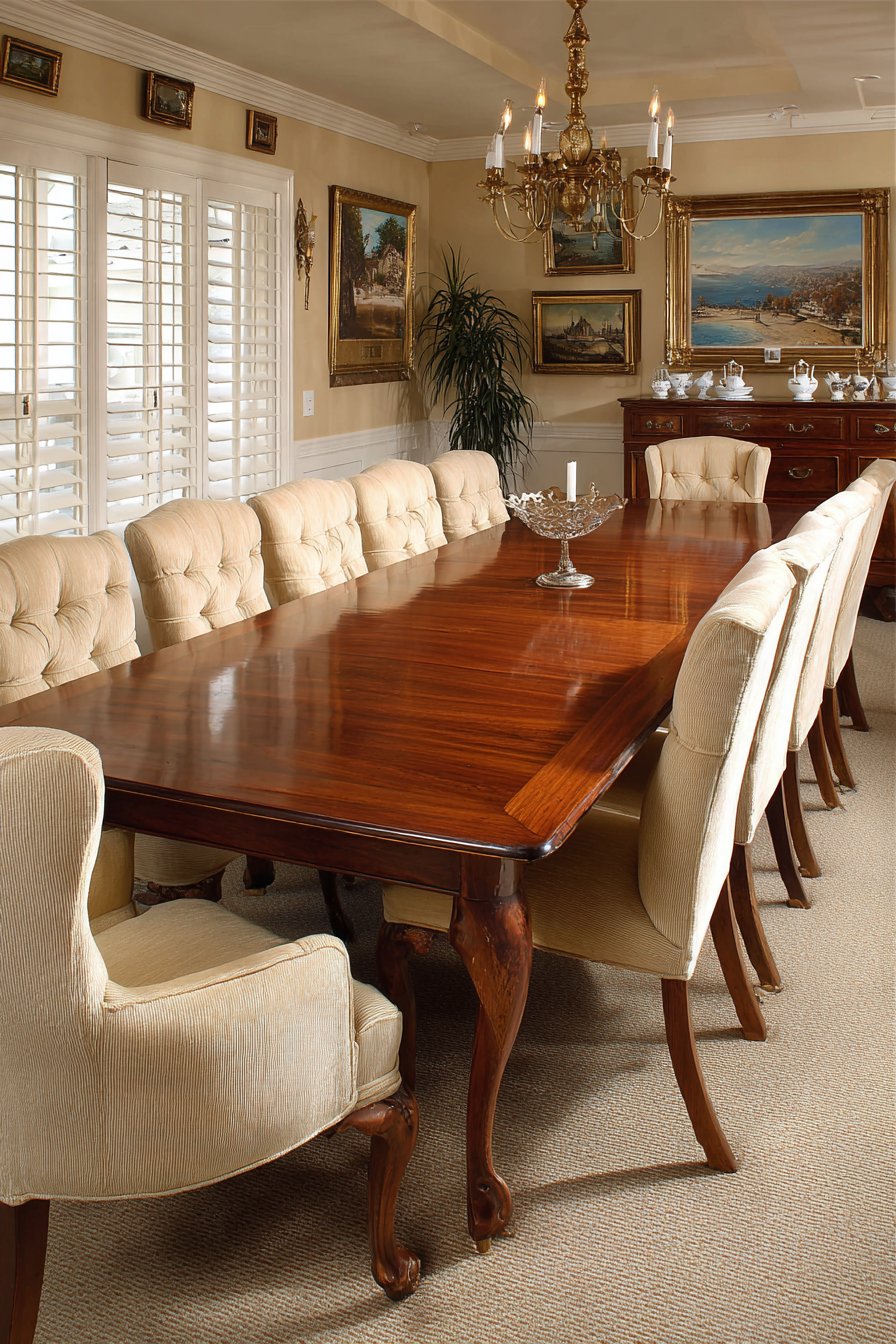
Classic picture frame molding adorns the walls in soft taupe paint. Oil paintings in gilded frames create an impressive gallery effect. The artwork adds personality while maintaining formal elegance. An antique brass chandelier provides warm, flattering illumination overhead.
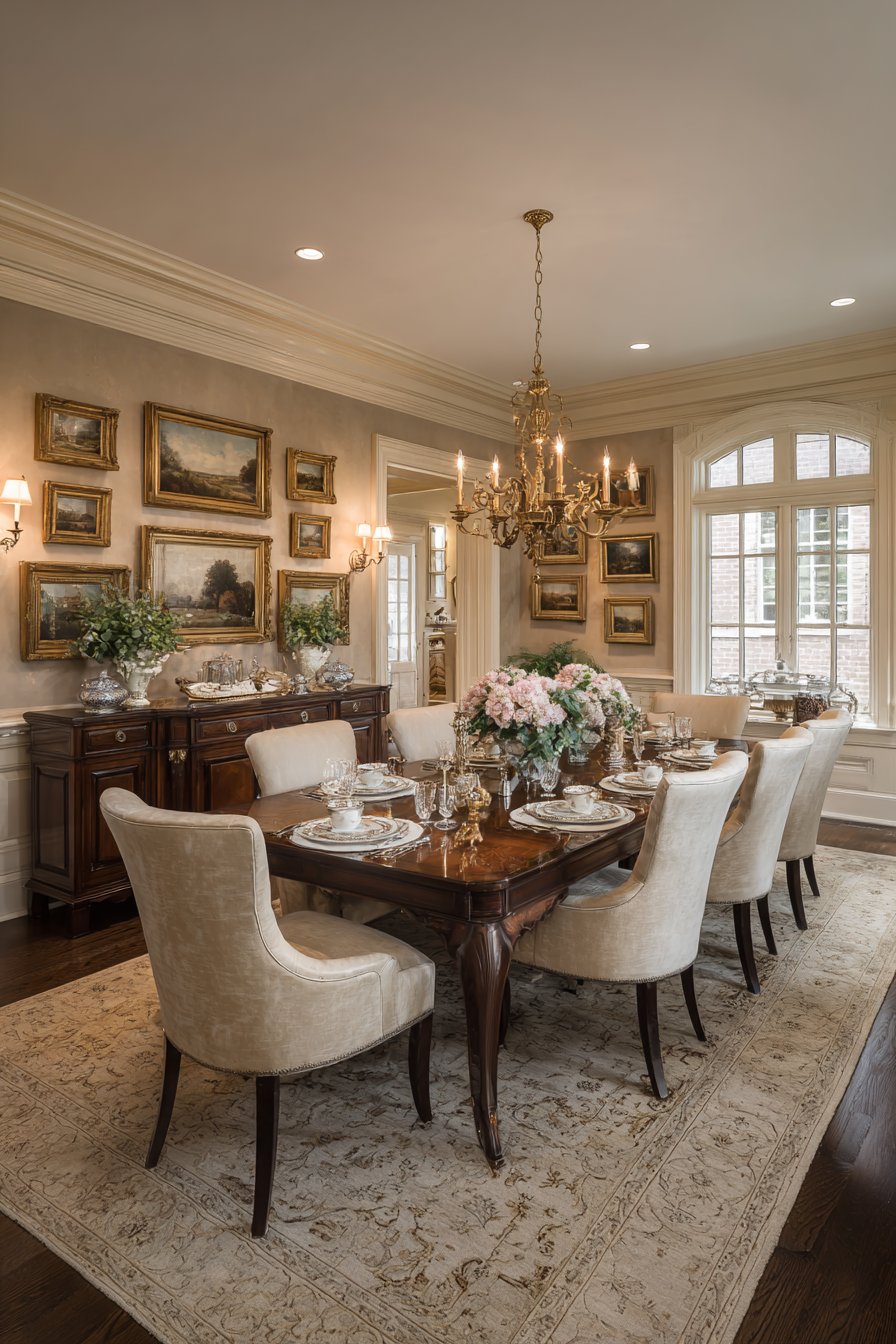
Plantation shutters filter natural light beautifully throughout the day. They offer privacy control while maintaining clean architectural lines. The shutters highlight grain patterns in the exquisite wood furniture. Professional craftsmanship shows in every detail of this timeless space.
Key Design Tips:
- Choose cherry wood for its warm tones and beautiful aging patina
- Incorporate wingback chairs for added comfort and traditional style
- Use picture frame molding to add architectural interest without overwhelming
- Display fine china in glass-front cabinets or traditional sideboards
- Install plantation shutters for light control with classic appeal
- Create gallery walls with oil paintings in coordinating frames
3. Walnut Inlay with Ladder-Back Simplicity
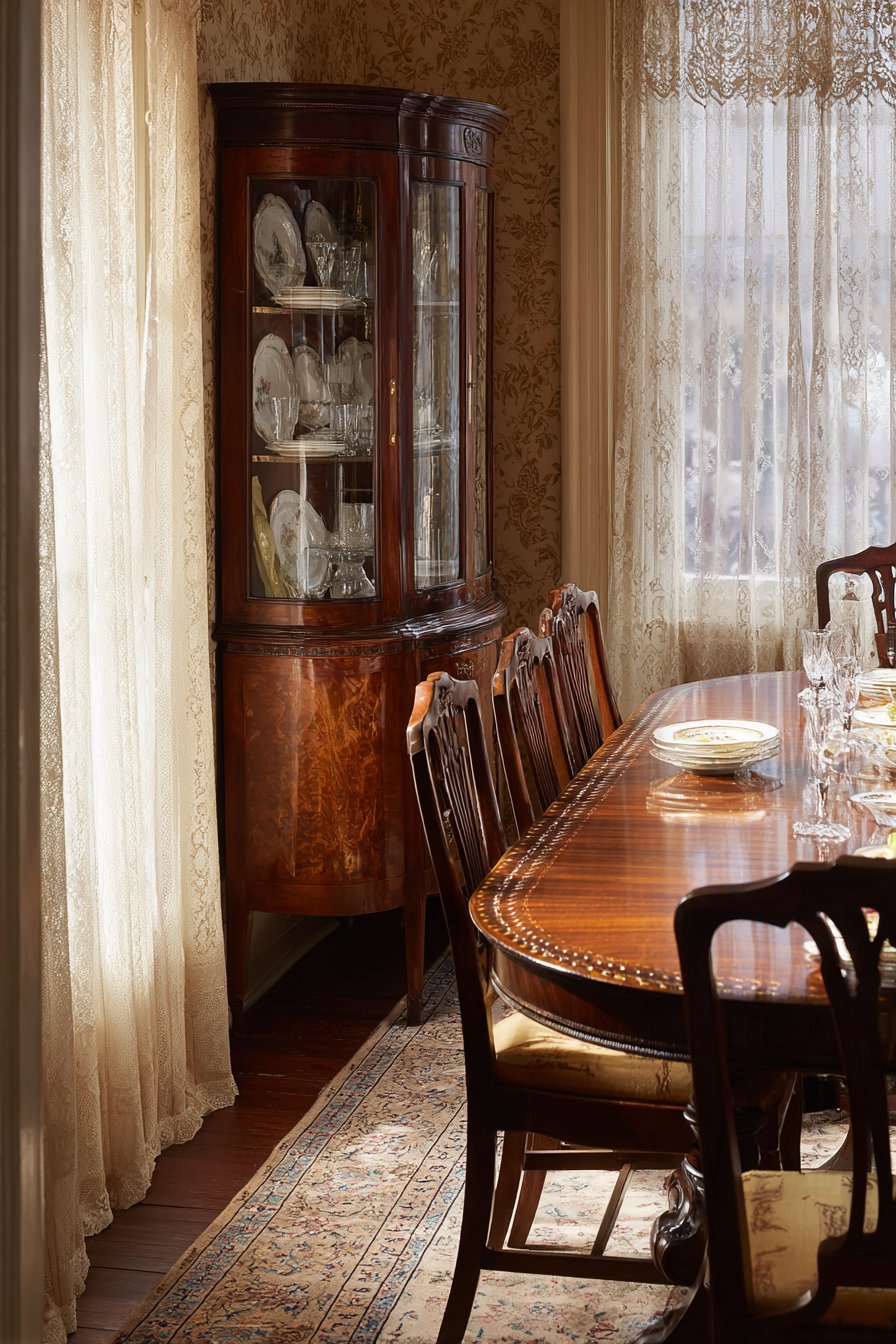
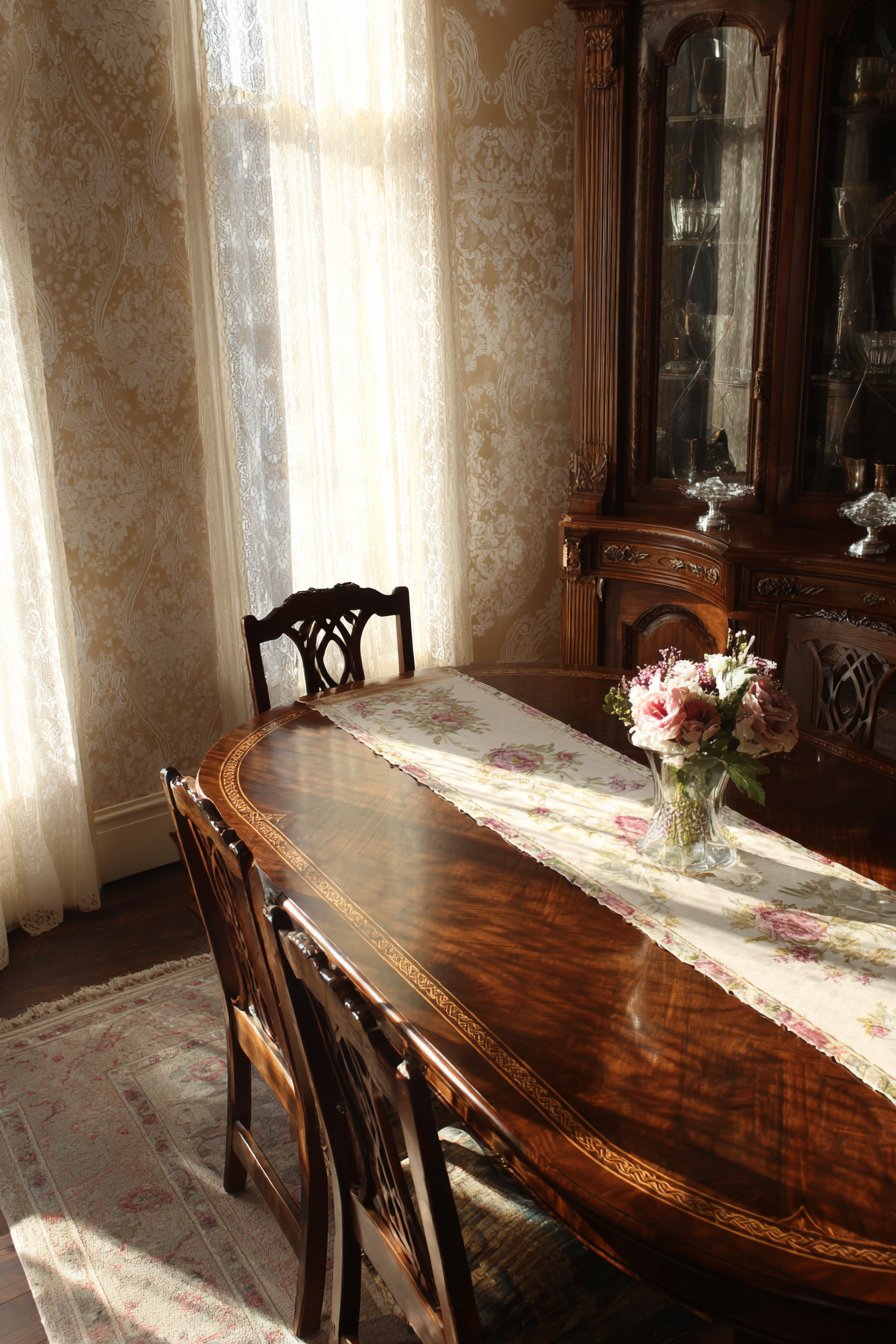
An oval walnut extension table showcases decorative inlay work of exceptional quality. Six ladder-back chairs with rush seats surround the table. The chairs display authentic patina that speaks to their age. A built-in corner hutch displays heirloom serving pieces and sparkling crystal glassware.
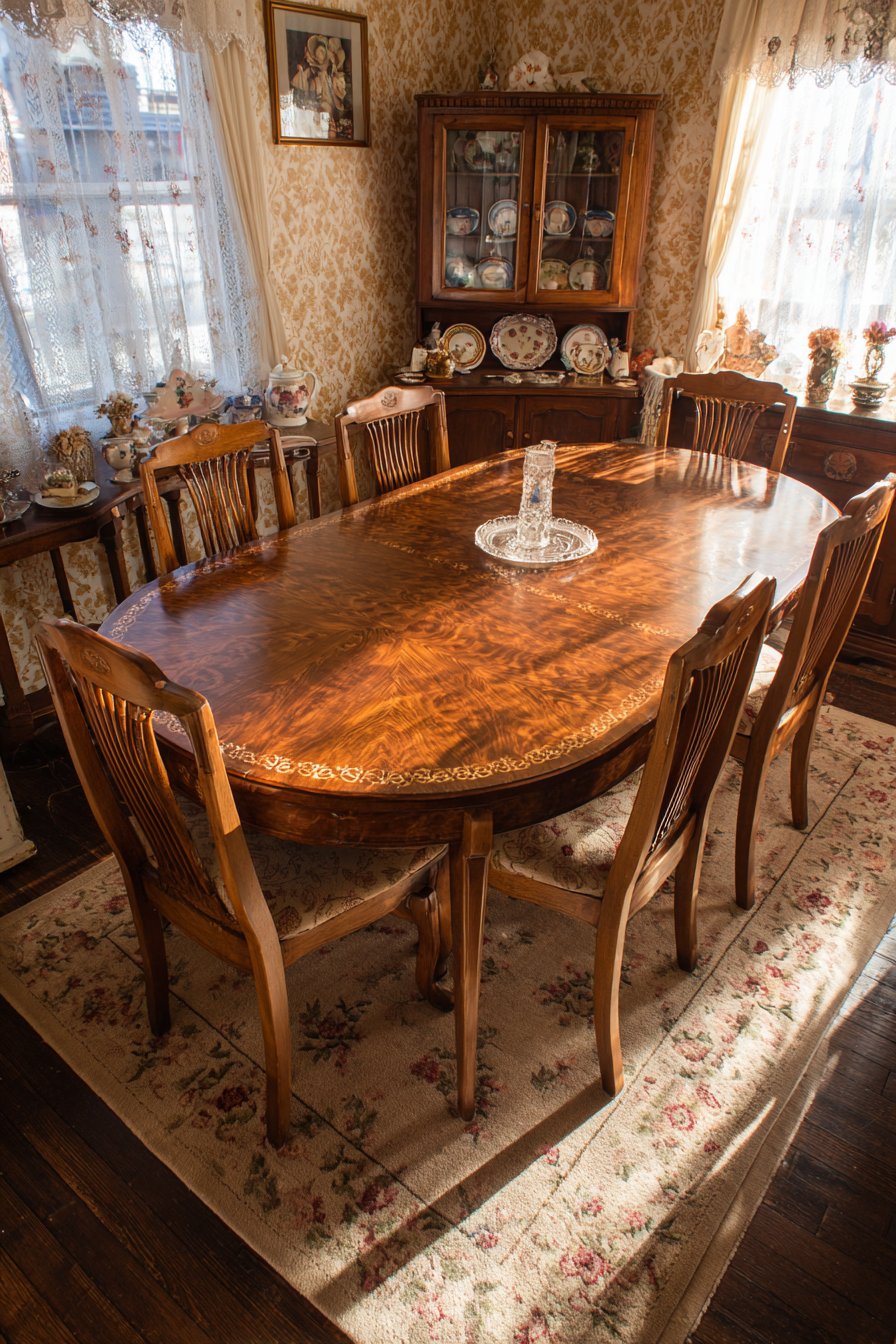
Traditional wallpaper in subtle damask pattern covers the walls. Cream and gold tones create warmth without overwhelming the senses. A traditional rug runner in muted florals protects gleaming hardwood floors. The pattern coordinates with the wallpaper without matching exactly.
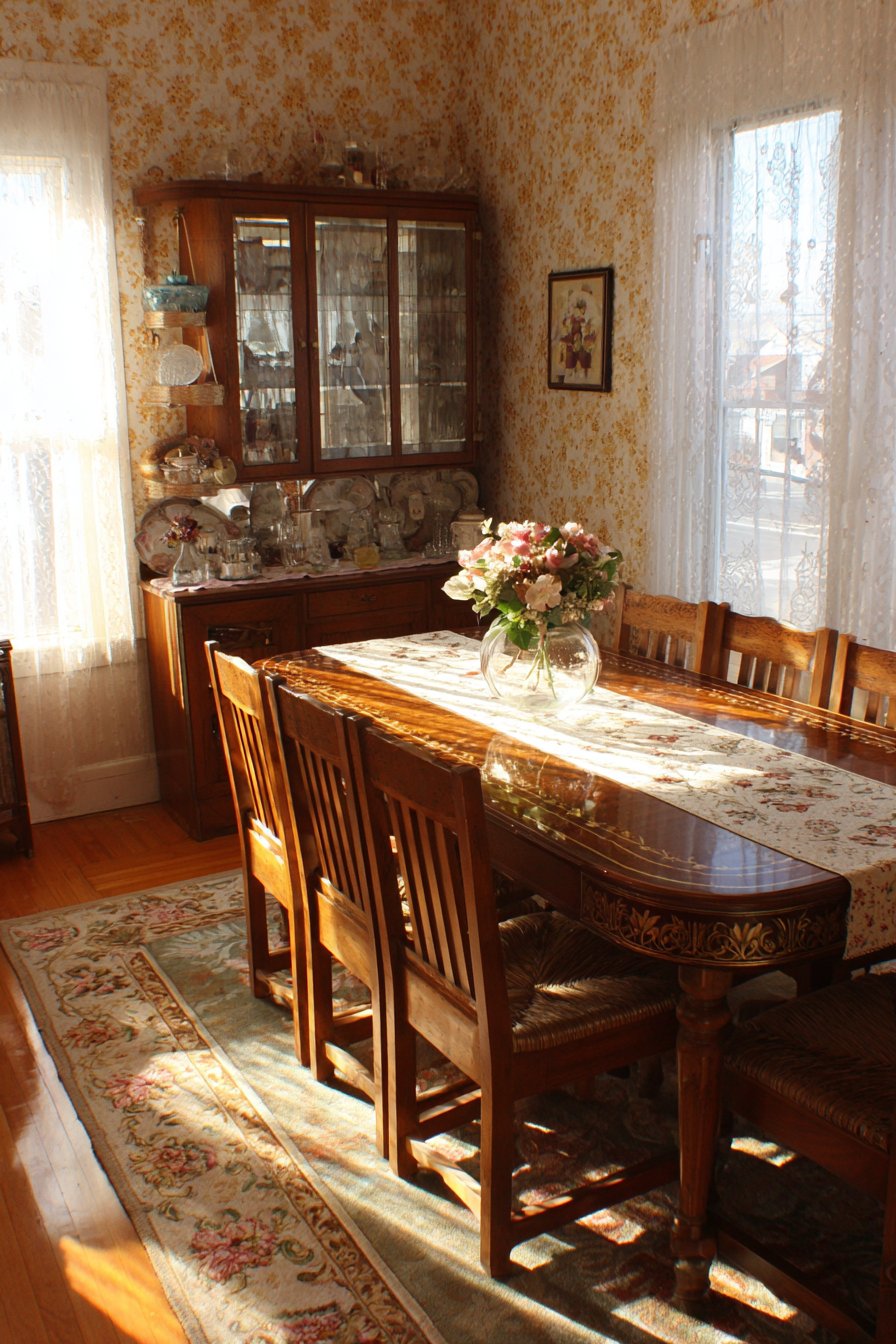
Soft morning light enters through delicate lace curtain panels. The filtered light creates gentle shadows and romantic ambiance. This dining room proves that traditional design works beautifully at various scale levels. Understated elegance can be equally impressive as grand formality.
Key Design Tips:
- Select furniture with decorative inlay for subtle visual interest
- Incorporate ladder-back chairs for authentic traditional character
- Use damask wallpaper to add pattern without overwhelming small spaces
- Install corner hutches to maximize storage in compact rooms
- Choose lace curtains for privacy while maintaining light flow
- Embrace patina on wood and rush seats as desirable aging
4. Dark Oak Trestle with Shield-Back Seating
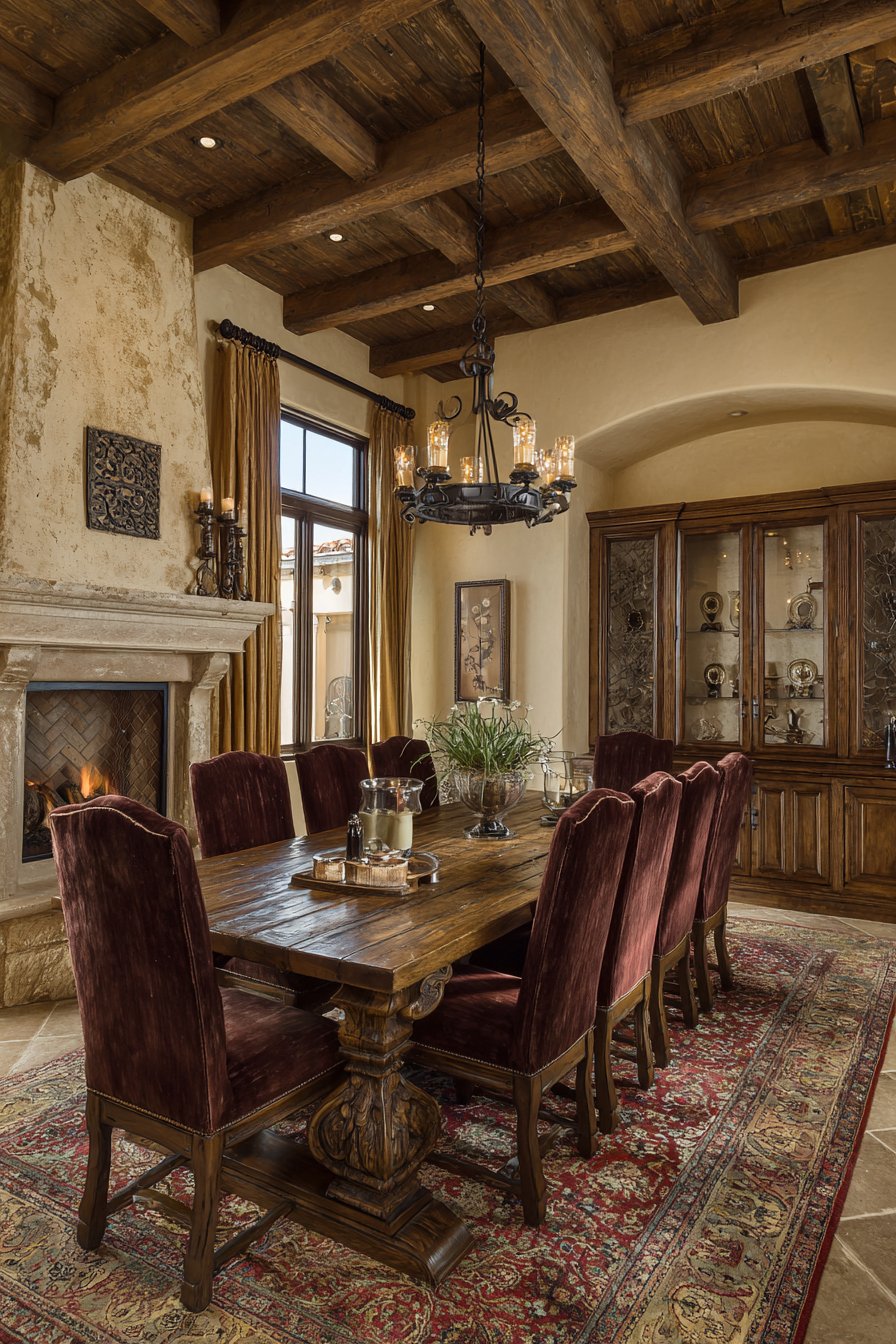
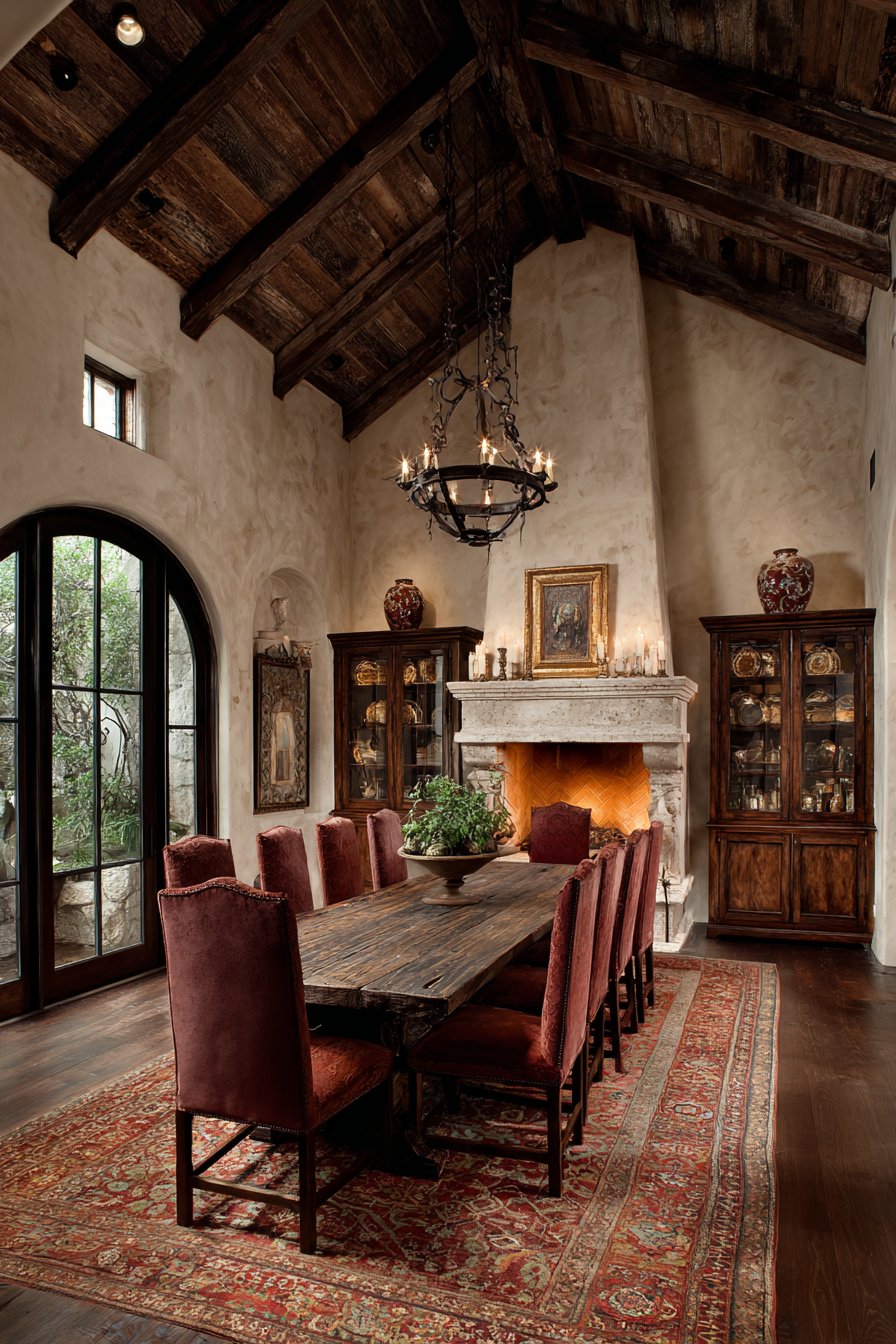
A dark oak trestle table features hand-carved supports and intentional distressing. The finish shows natural wear that adds character and authenticity. Ten shield-back chairs upholstered in burgundy velvet provide luxurious seating. Twin china cabinets with glass doors flank the fireplace majestically.
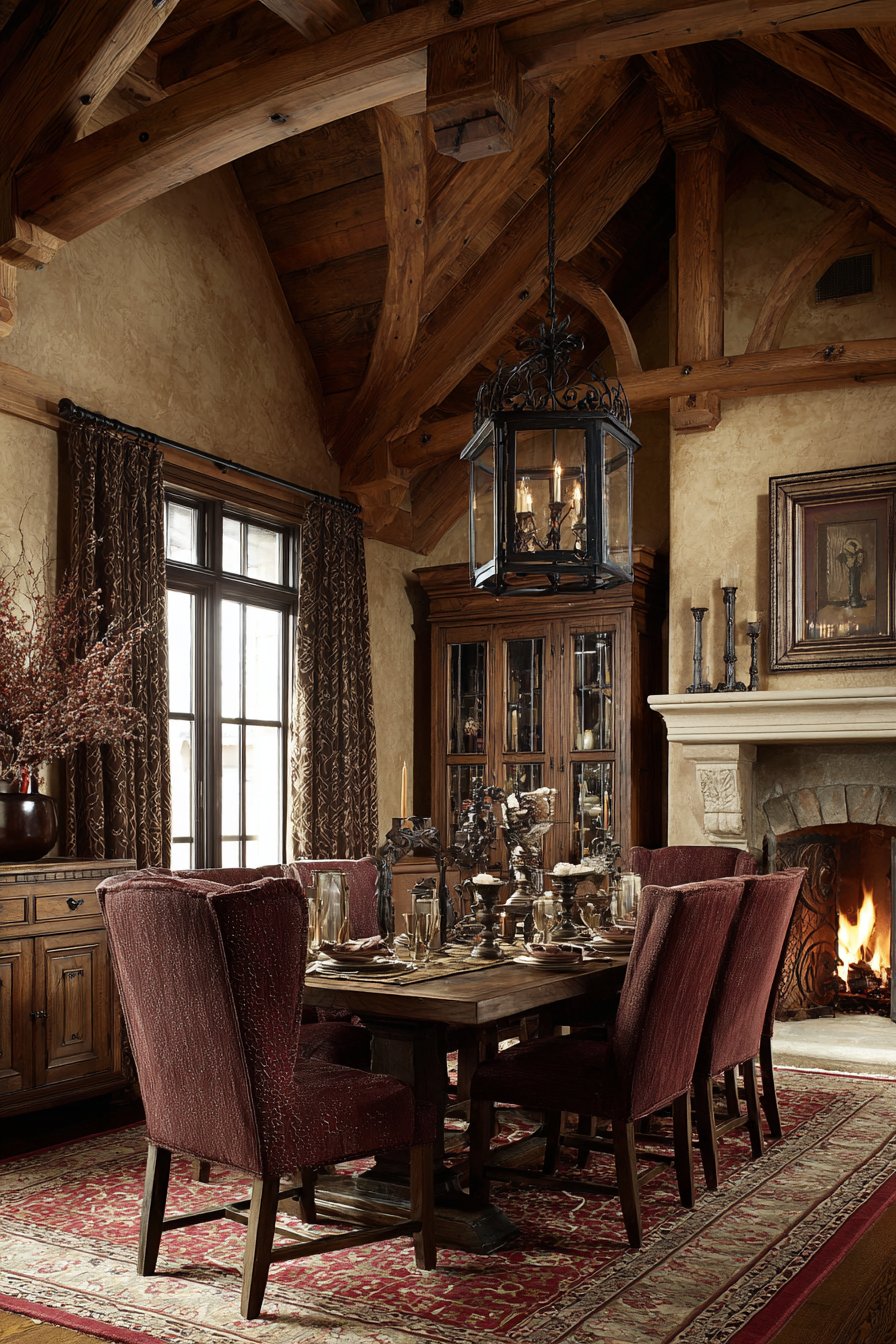
Exposed oak beams cross the ceiling with dramatic architectural impact. A wrought iron chandelier suspends from the center beam. Traditional grasscloth wallpaper in warm beige adds subtle texture. The natural material complements the wood tones throughout.
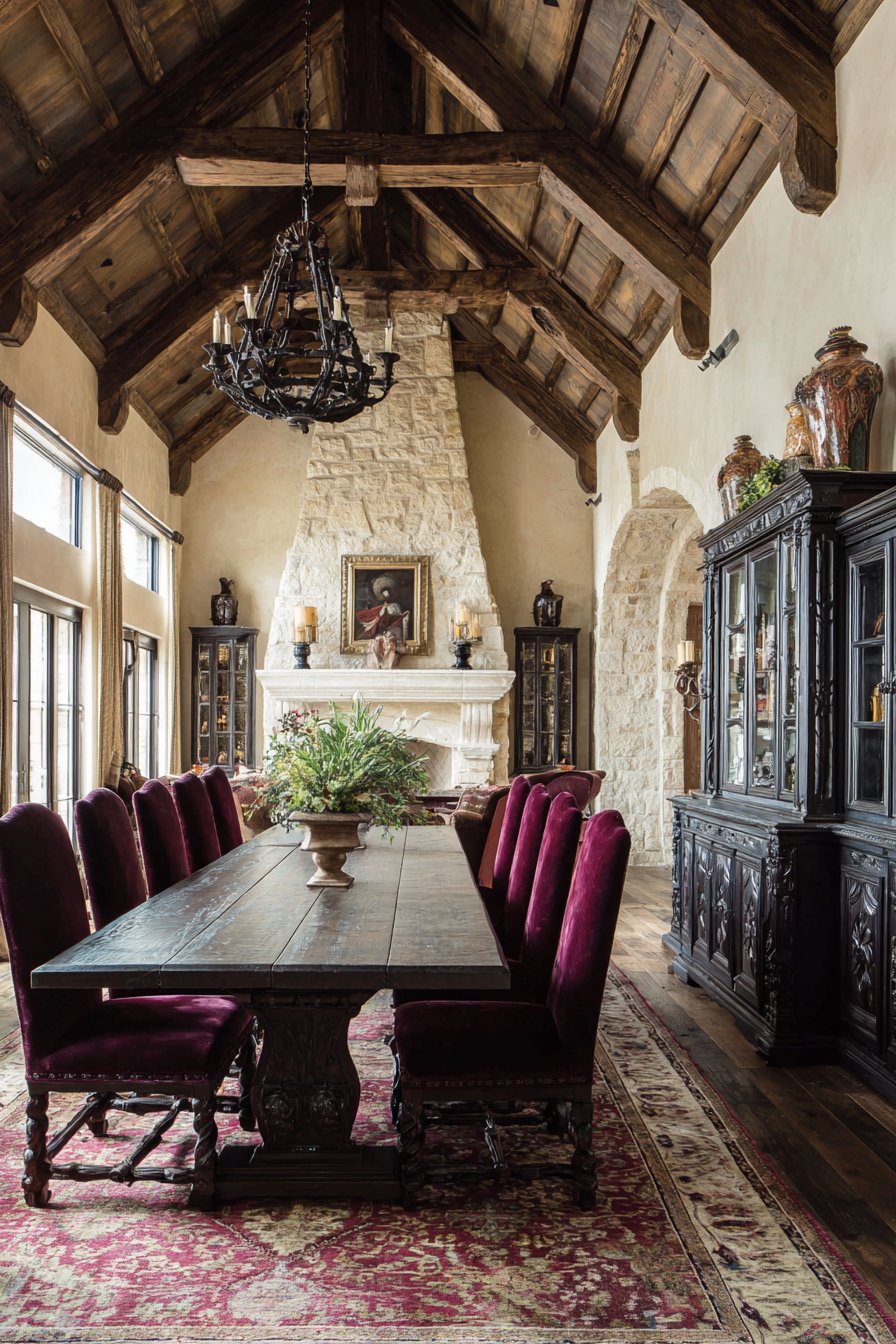
A large oriental rug in red and cream defines the dining area. The colors echo the burgundy velvet and oak tones. Natural window light highlights rich wood finishes and architectural details. This room demonstrates how traditional design creates powerful visual impact.
Key Design Tips:
- Choose trestle tables for substantial presence and authentic period styling
- Incorporate exposed beams to add architectural drama
- Use grasscloth wallpaper for texture and natural material warmth
- Select shield-back chairs for classic silhouettes with comfort
- Install matching china cabinets in pairs for symmetrical balance
- Embrace distressed finishes as marks of quality and authenticity
5. Round Walnut Pedestal with Navy Accents
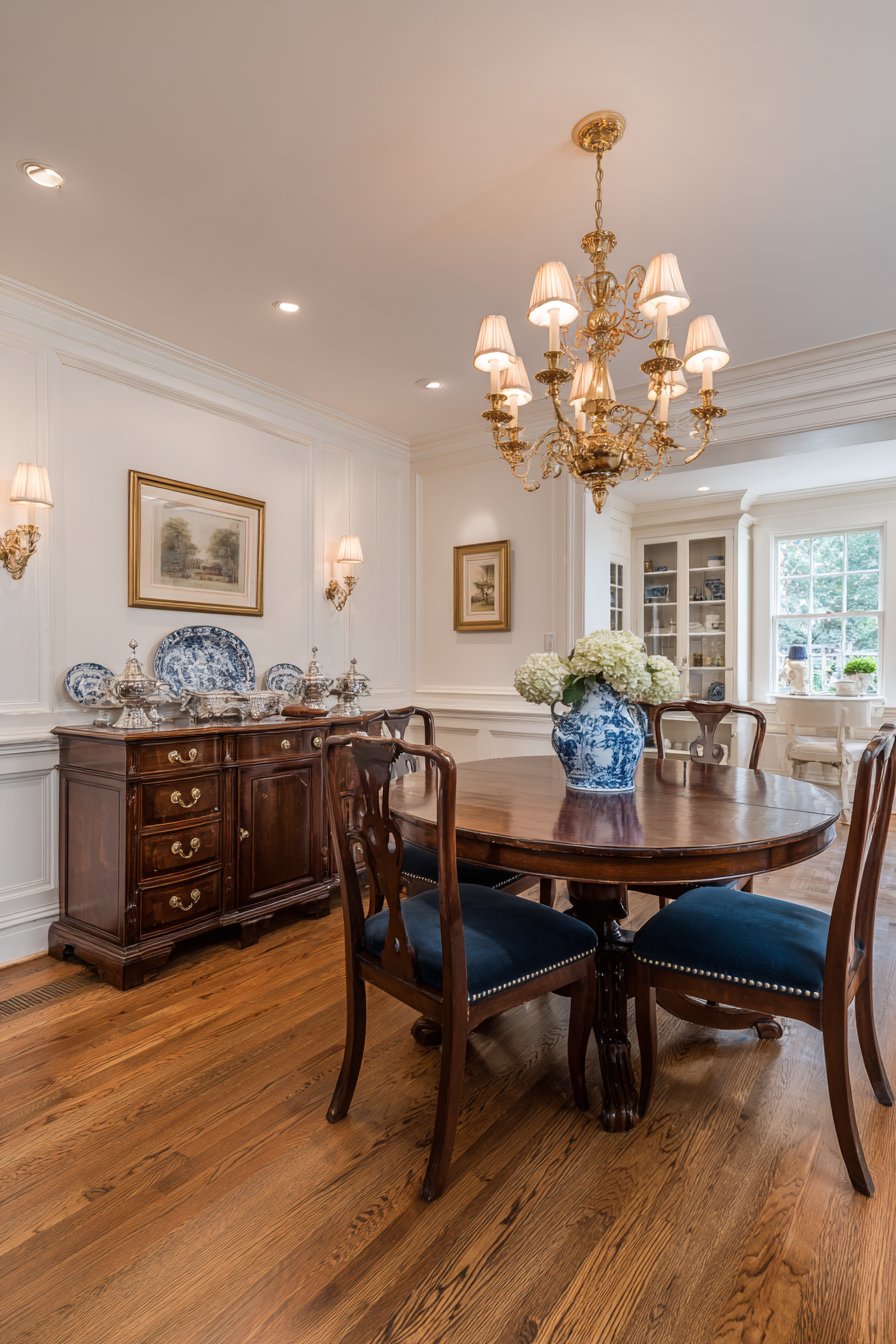
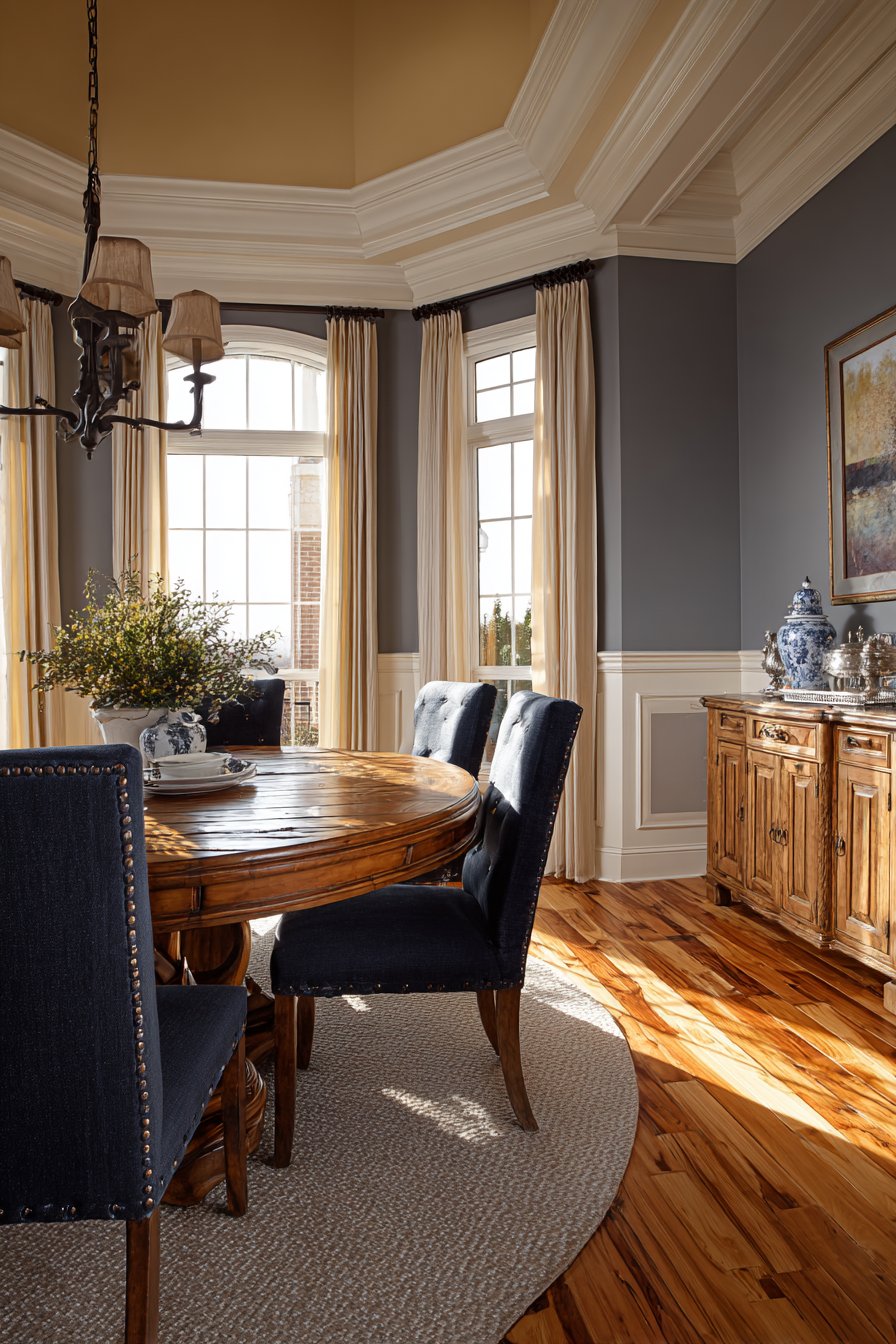
A round pedestal table in polished walnut accommodates six guests comfortably. Upholstered parsons chairs feature traditional nailhead detailing. Navy blue fabric provides striking contrast against warm wood tones. An antique buffet server displays gleaming silver serving pieces and decorative porcelain.
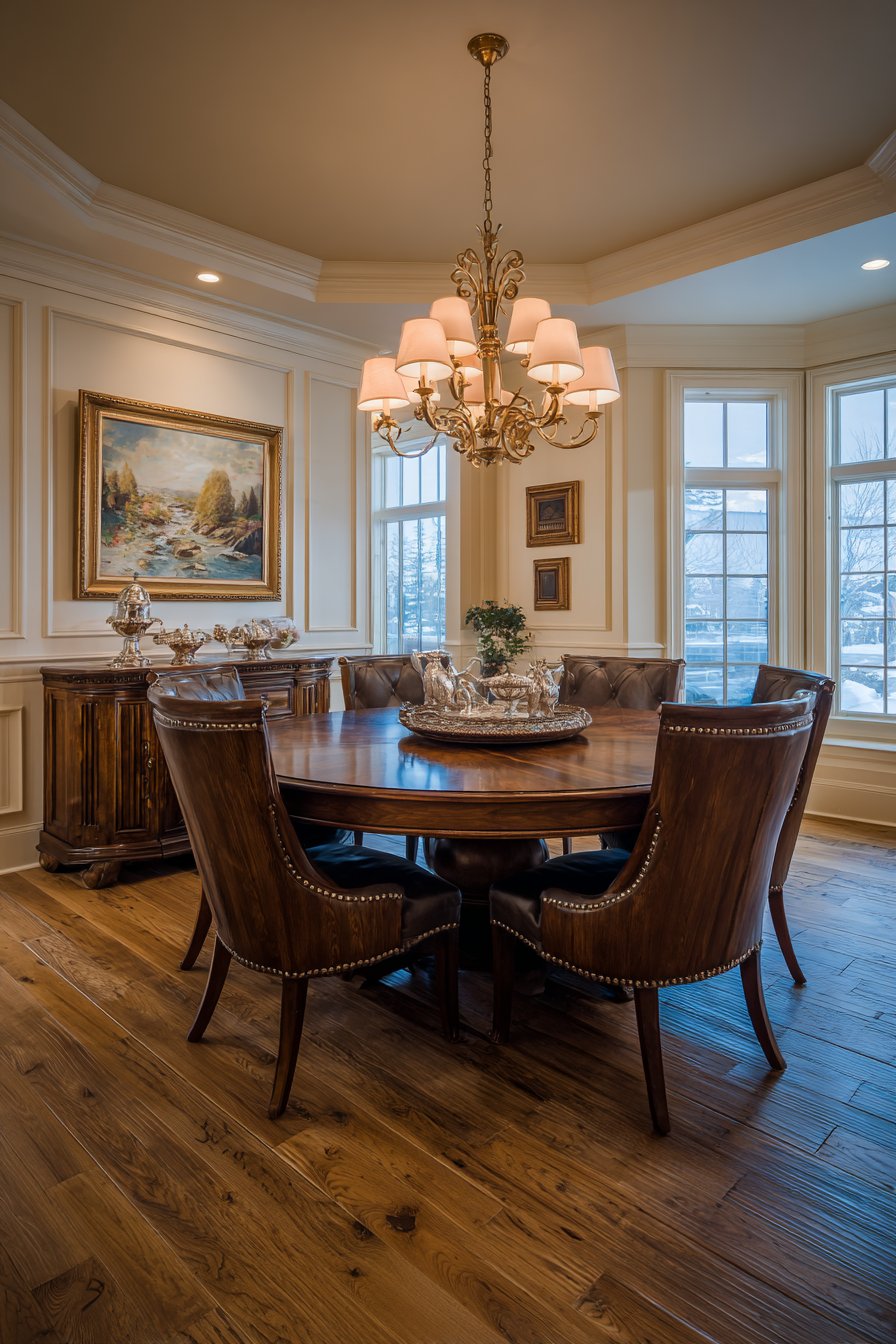
The walls feature classic chair rail molding with sophisticated two-tone treatment. Cream paint above the rail meets soft grey below. This division adds visual interest without requiring wallpaper. A traditional brass chandelier with fabric shades provides soft overhead lighting.
Hardwood floors in honey oak show natural variation and organic beauty. The warm flooring complements the walnut table perfectly. Natural afternoon light creates warm, inviting ambiance throughout the space. This design proves traditional style adapts beautifully to smaller dining areas.
Key Design Tips:
- Select round pedestal tables for compact spaces and conversation flow
- Use two-tone paint treatments with chair rails for visual interest
- Incorporate parsons chairs for clean lines within traditional settings
- Choose brass chandeliers with fabric shades for soft, flattering light
- Display silver serving pieces as decorative elements between uses
- Coordinate wood tones rather than matching them exactly
6. Aged Pine with Windsor Chair Collection
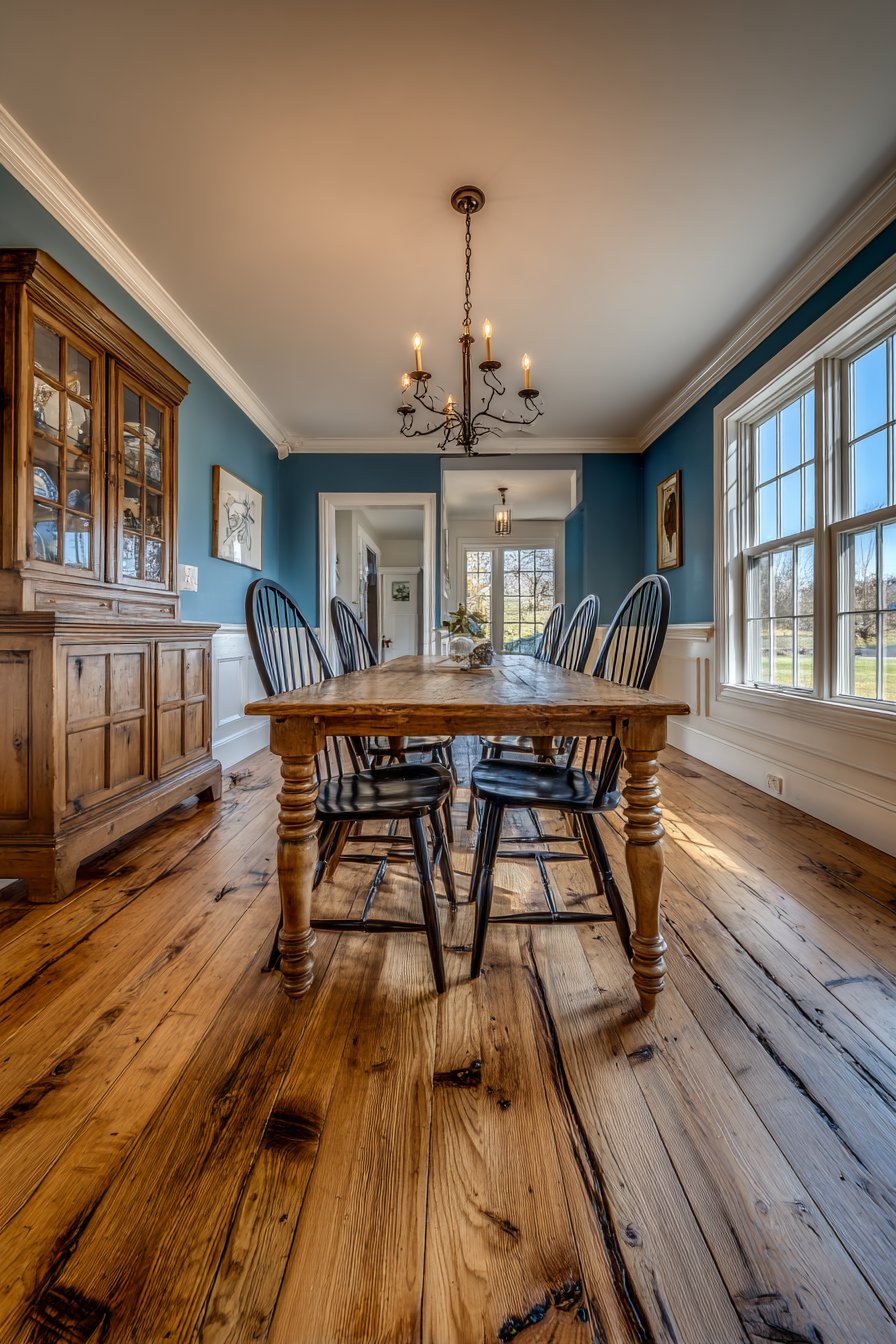
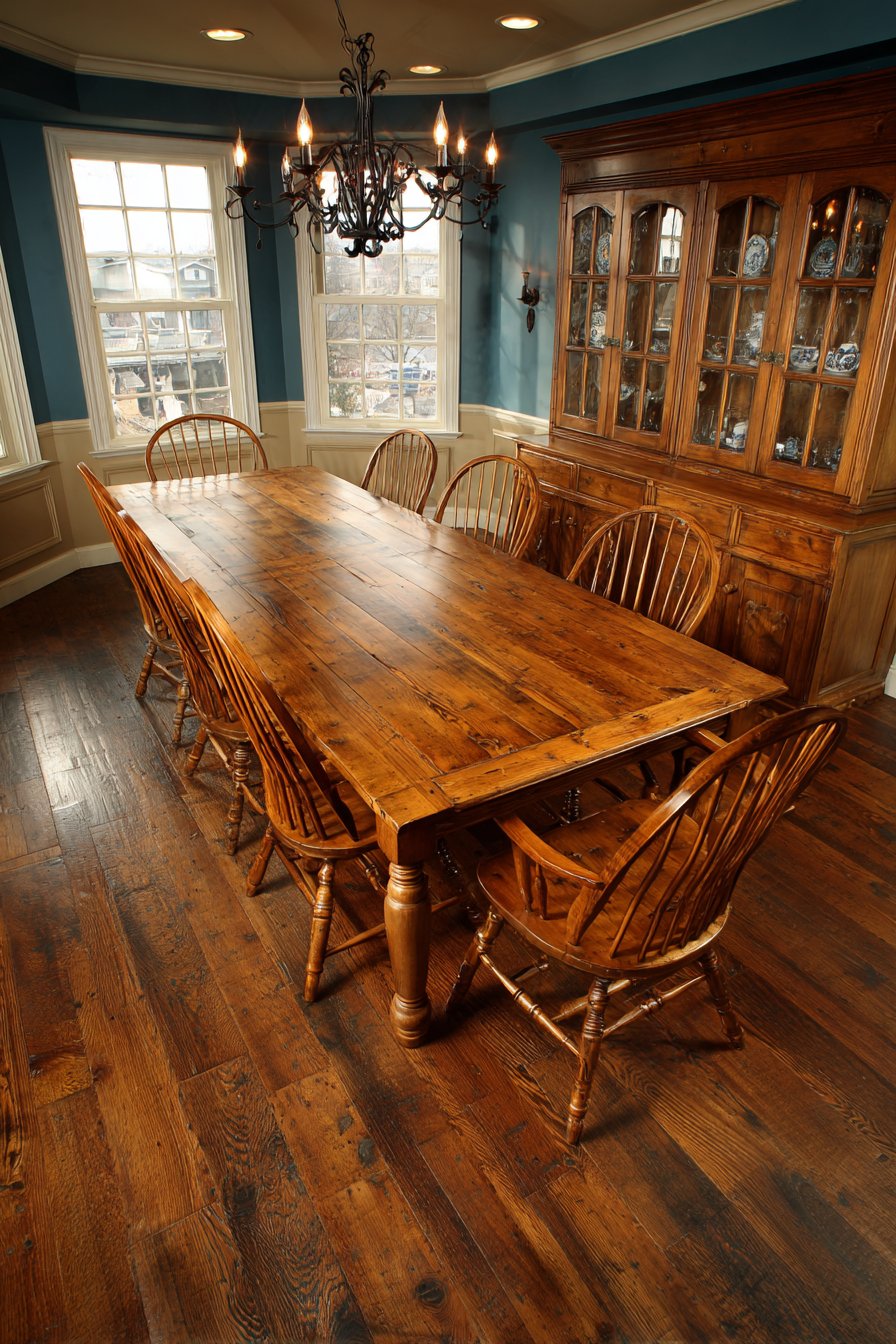
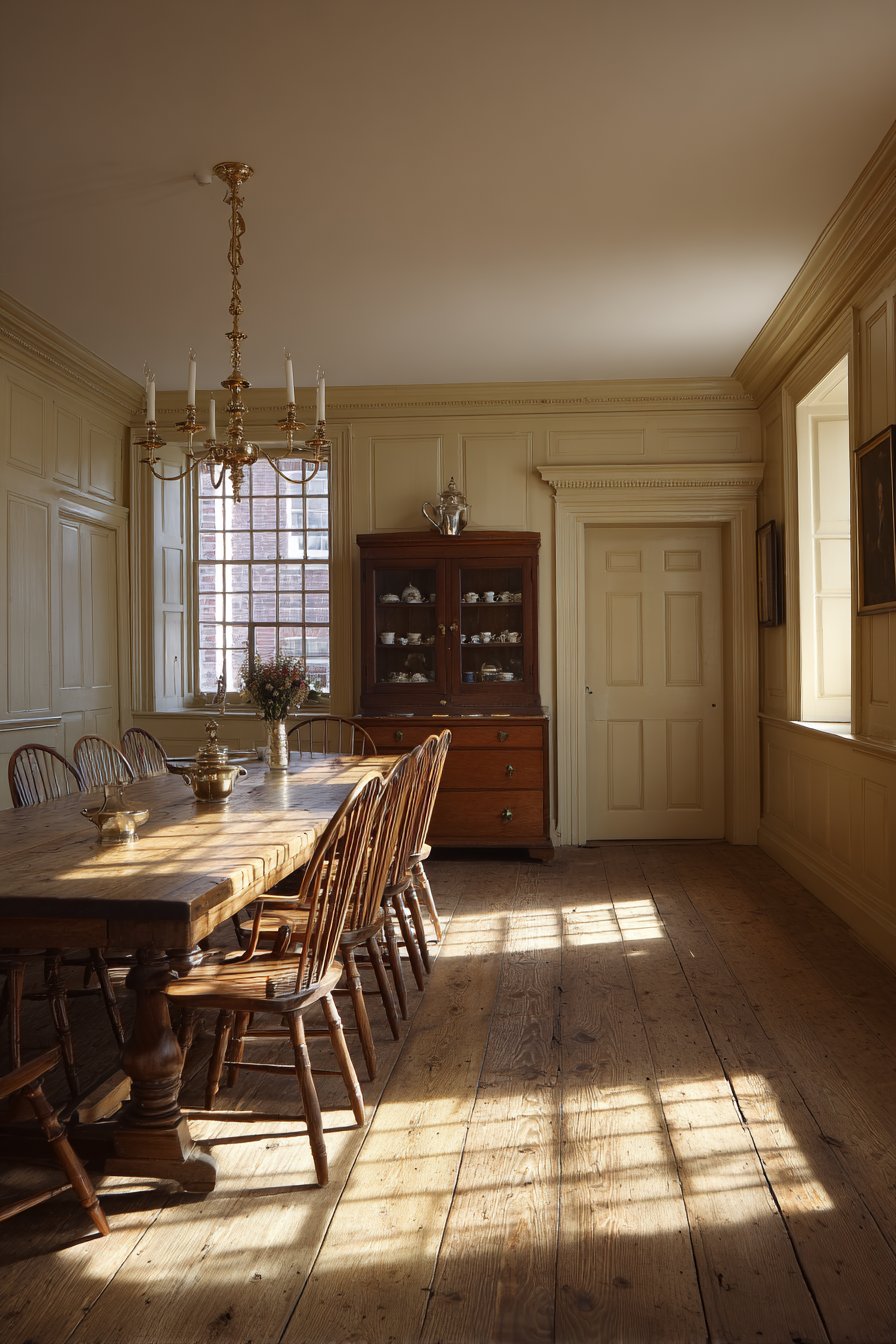
A long rectangular table in aged pine features turned legs and subtle distressing. Eight windsor chairs with spindle backs provide comfortable, authentic seating. The natural wood finish shows beautiful variation across pieces. A traditional corner cabinet in matching pine displays fine china and everyday glassware.
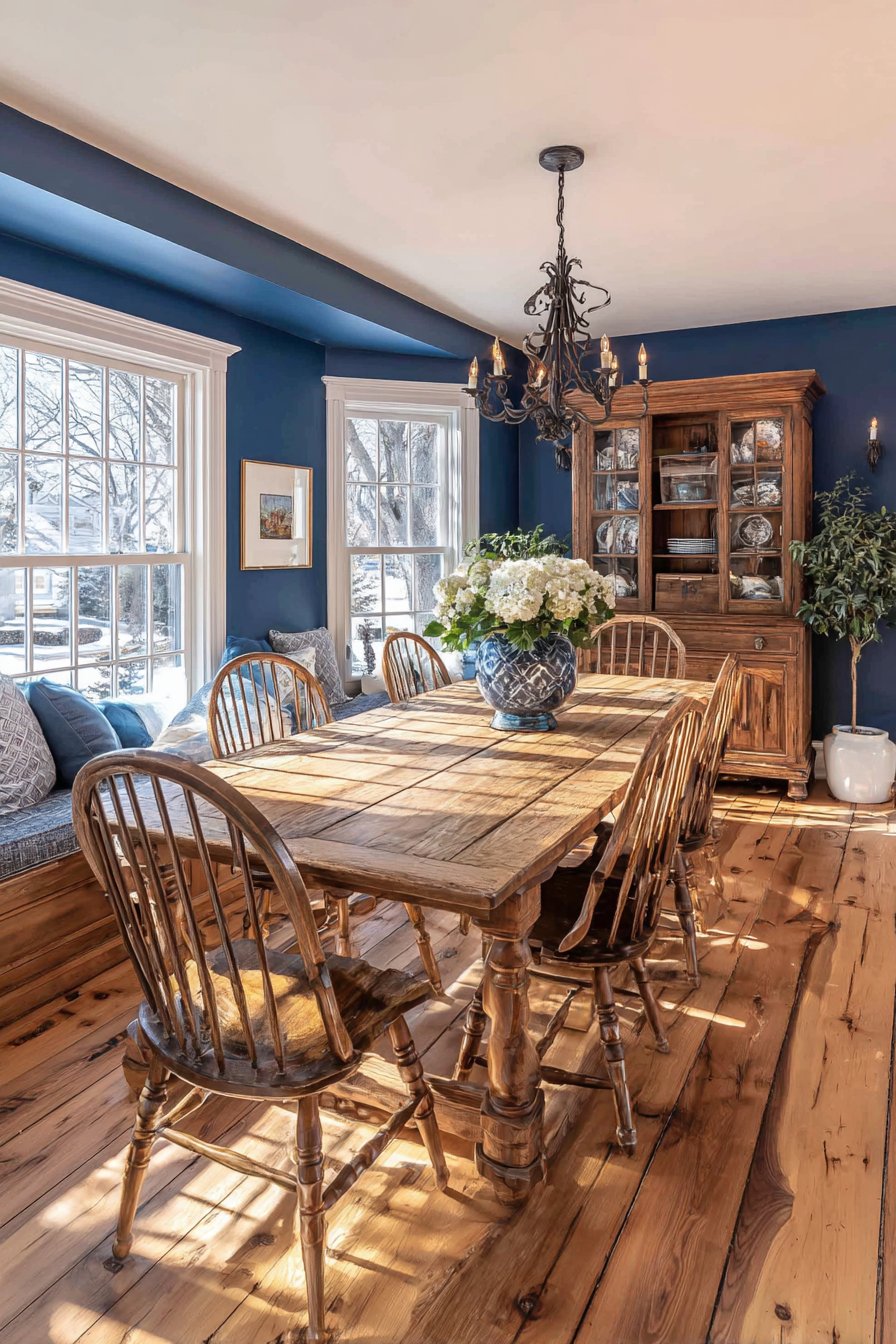
Classic colonial blue paint covers the walls with historical authenticity. White trim work and traditional baseboards create clean architectural lines. A wrought iron candle-style chandelier hangs above the sturdy table. Wide plank hardwood floors feature natural oak finish.
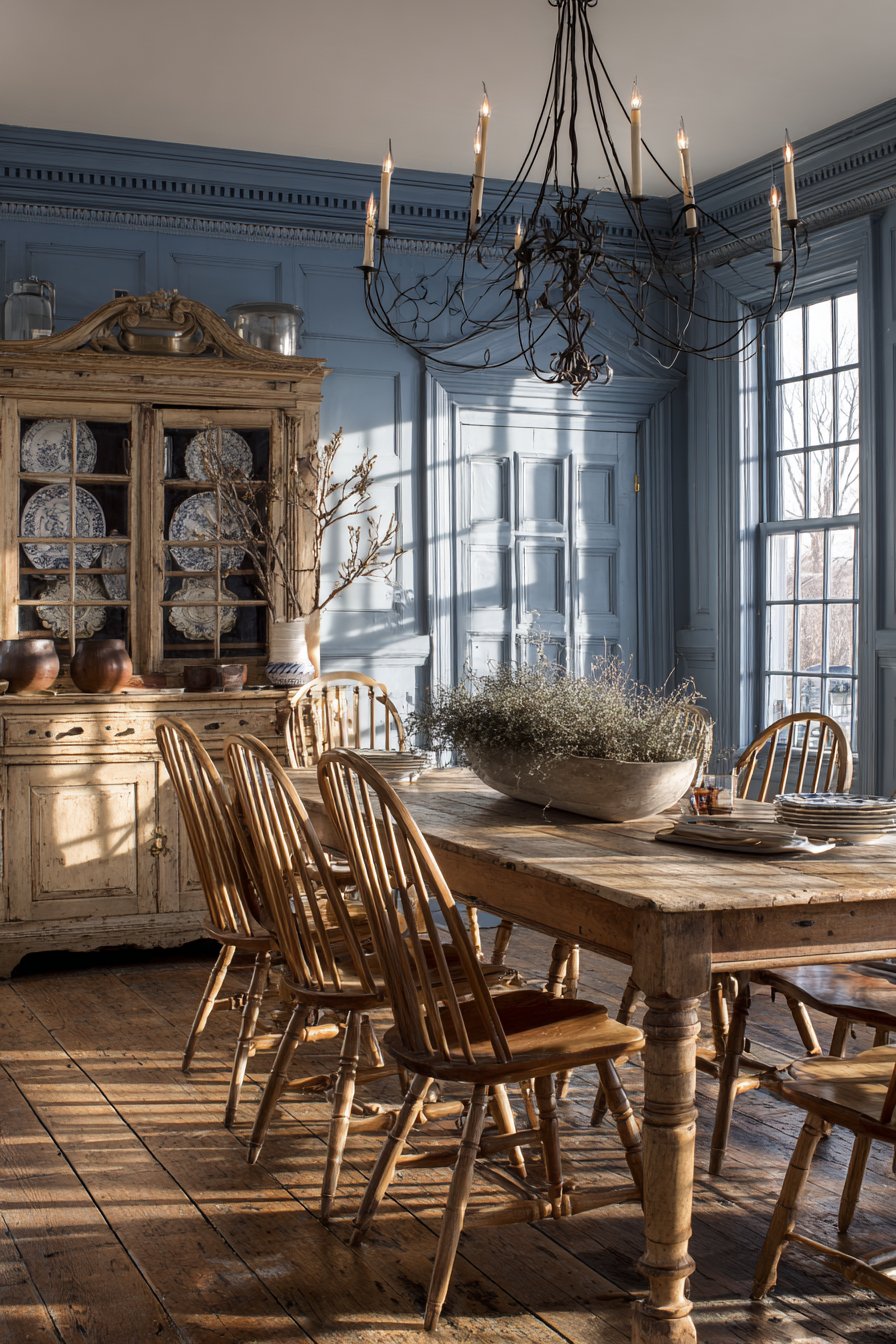
Soft natural lighting from multiple windows creates gentle shadows throughout. The abundant light makes the space feel open and welcoming. This dining room celebrates the accessible beauty of traditional American design. Family functionality meets classical styling with effortless grace.
Key Design Tips:
- Choose pine furniture for lighter traditional styling and budget friendliness
- Incorporate Windsor chairs for authentic colonial American character
- Use colonial blue paint for historically accurate traditional color
- Install wide plank flooring to enhance period authenticity
- Select wrought iron chandeliers for simple traditional lighting
- Embrace wood variation as natural beauty rather than inconsistency
7. Mahogany Drop-Leaf with Chippendale Details
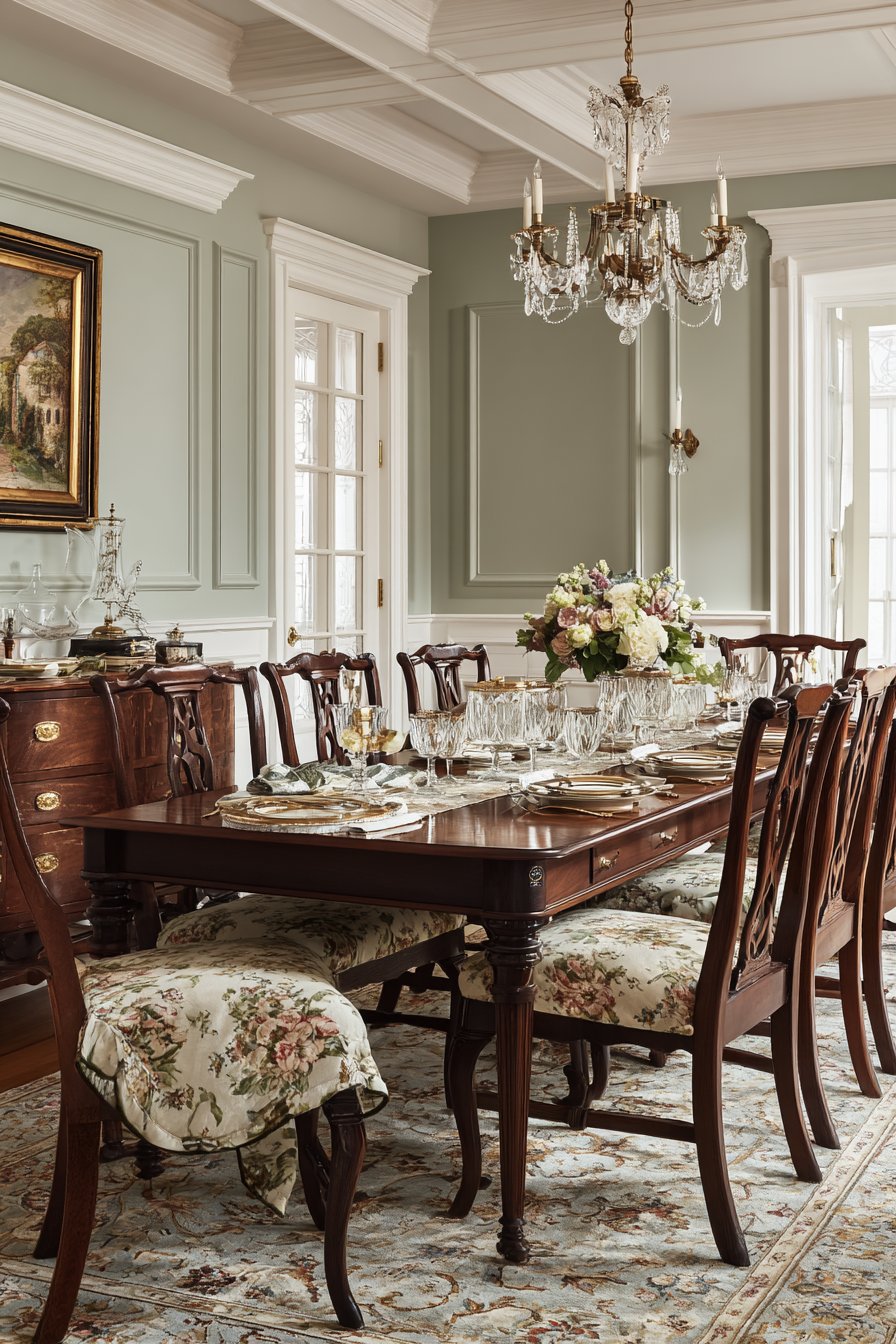
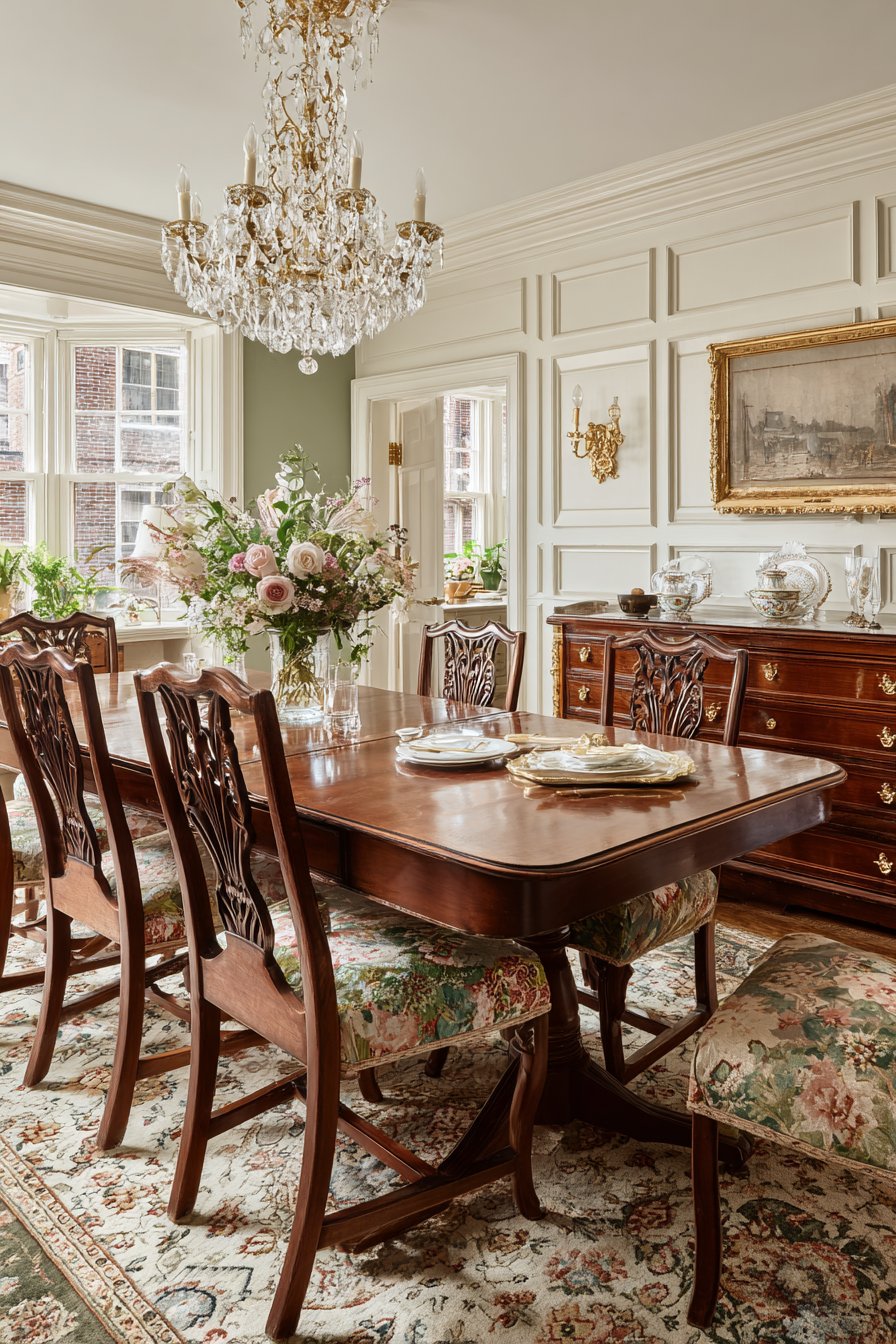
An elegant drop-leaf table in mahogany features brass hardware and refined proportions. Extended, it accommodates eight Chippendale-style chairs comfortably. Intricate back splats demonstrate superior craftsmanship. Upholstered seats in traditional floral tapestry fabric add softness and pattern.
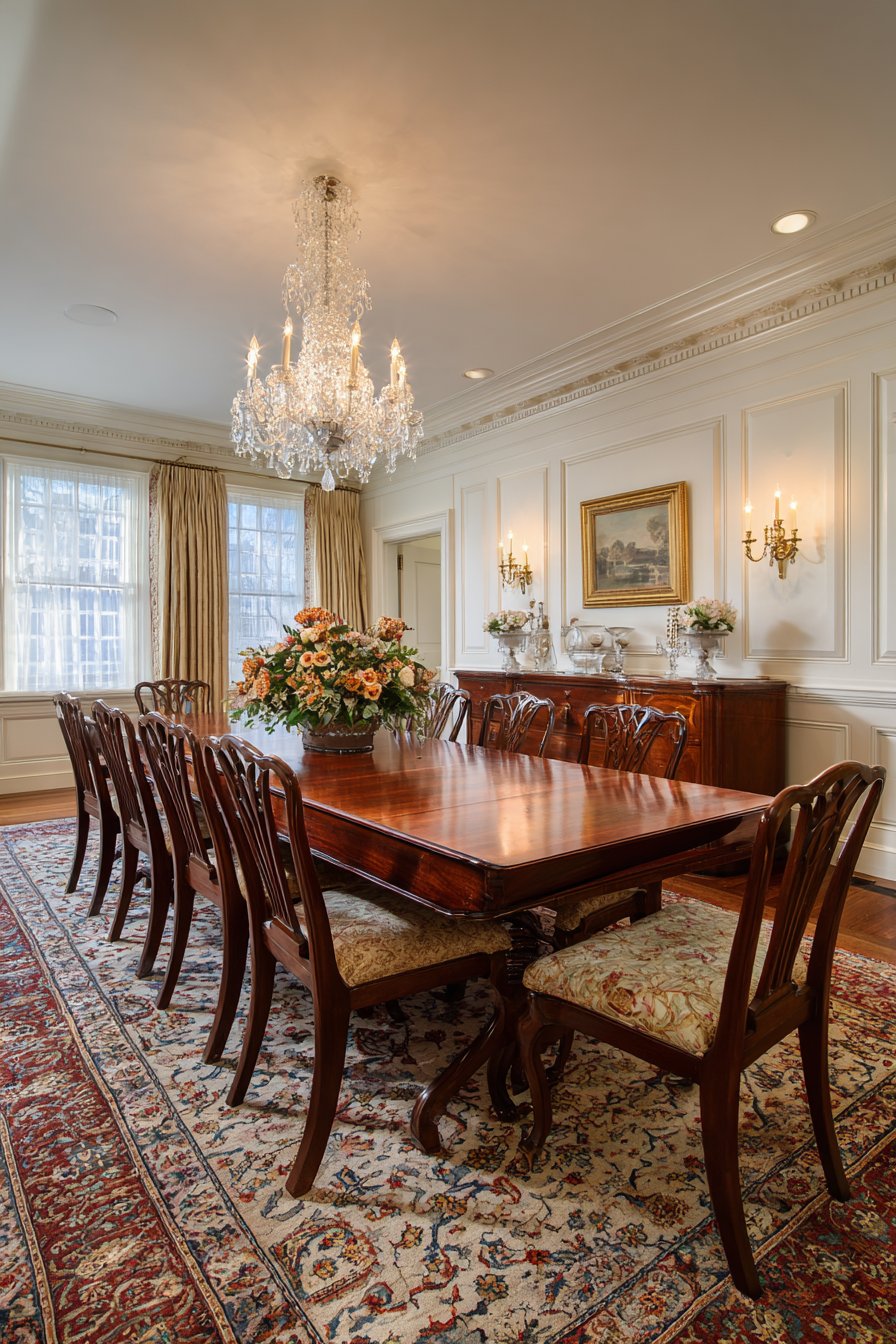
A matching sideboard with silver drawer pulls provides essential serving space. The walls showcase traditional raised panel wainscoting painted in Benjamin Moore White Dove. Upper walls receive soft sage paint treatment. A crystal and brass chandelier provides formal illumination with timeless appeal.
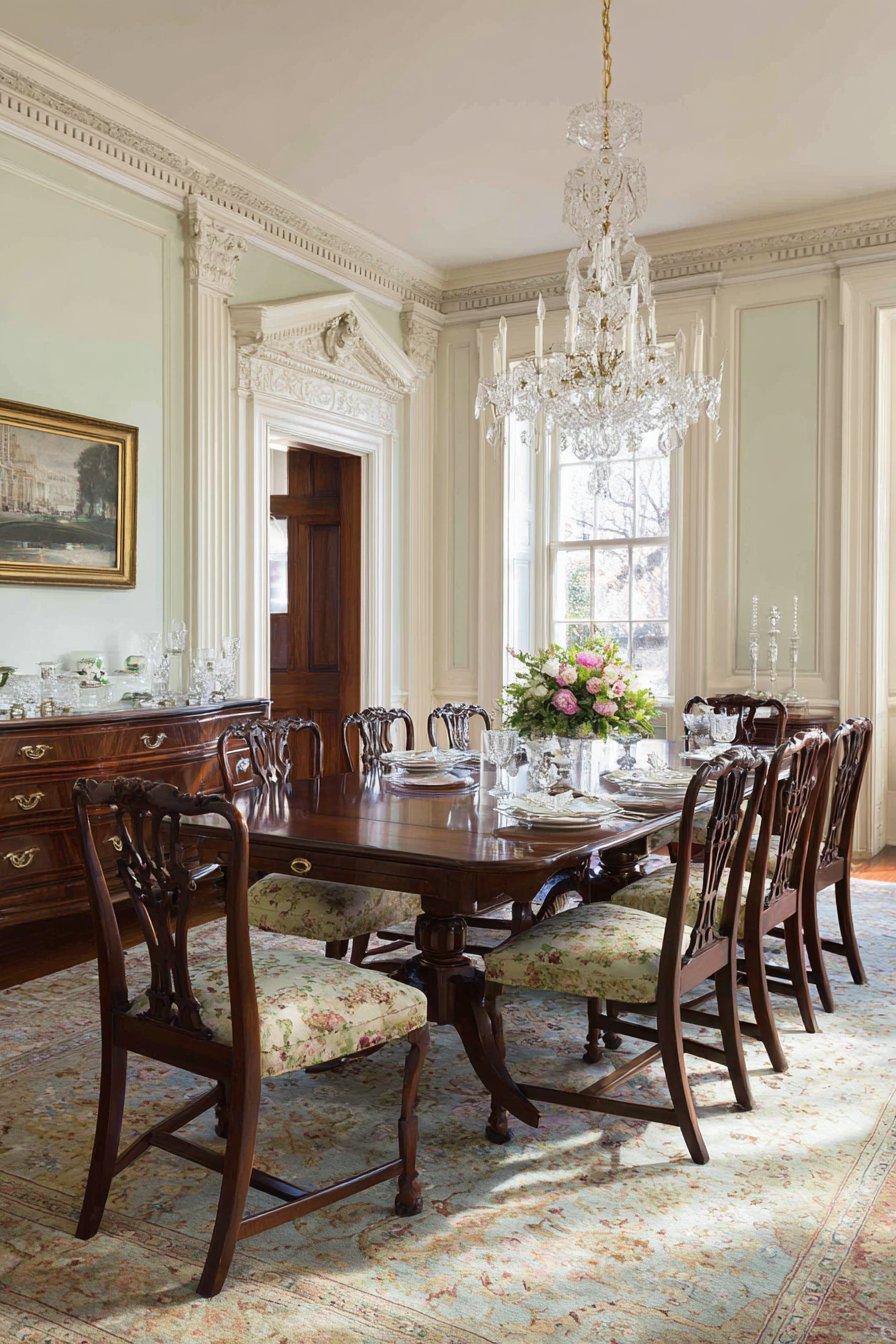
An Aubusson rug in muted pastels anchors the refined furniture arrangement. The subtle colors allow the mahogany to take center stage. Natural north-facing light highlights the exceptional wood craftsmanship throughout. This room exemplifies the elegance possible within traditional design parameters.
Key Design Tips:
- Select drop-leaf tables for versatility in smaller traditional dining rooms
- Incorporate Chippendale chairs for sophisticated traditional styling
- Use raised panel wainscoting to add substantial architectural interest
- Choose Aubusson rugs for subtle pattern in formal settings
- Install crystal and brass chandeliers for maximum traditional elegance
- Coordinate tapestry upholstery with wall colors for cohesive design
8. Reclaimed Oak Farmhouse with Rush Seating
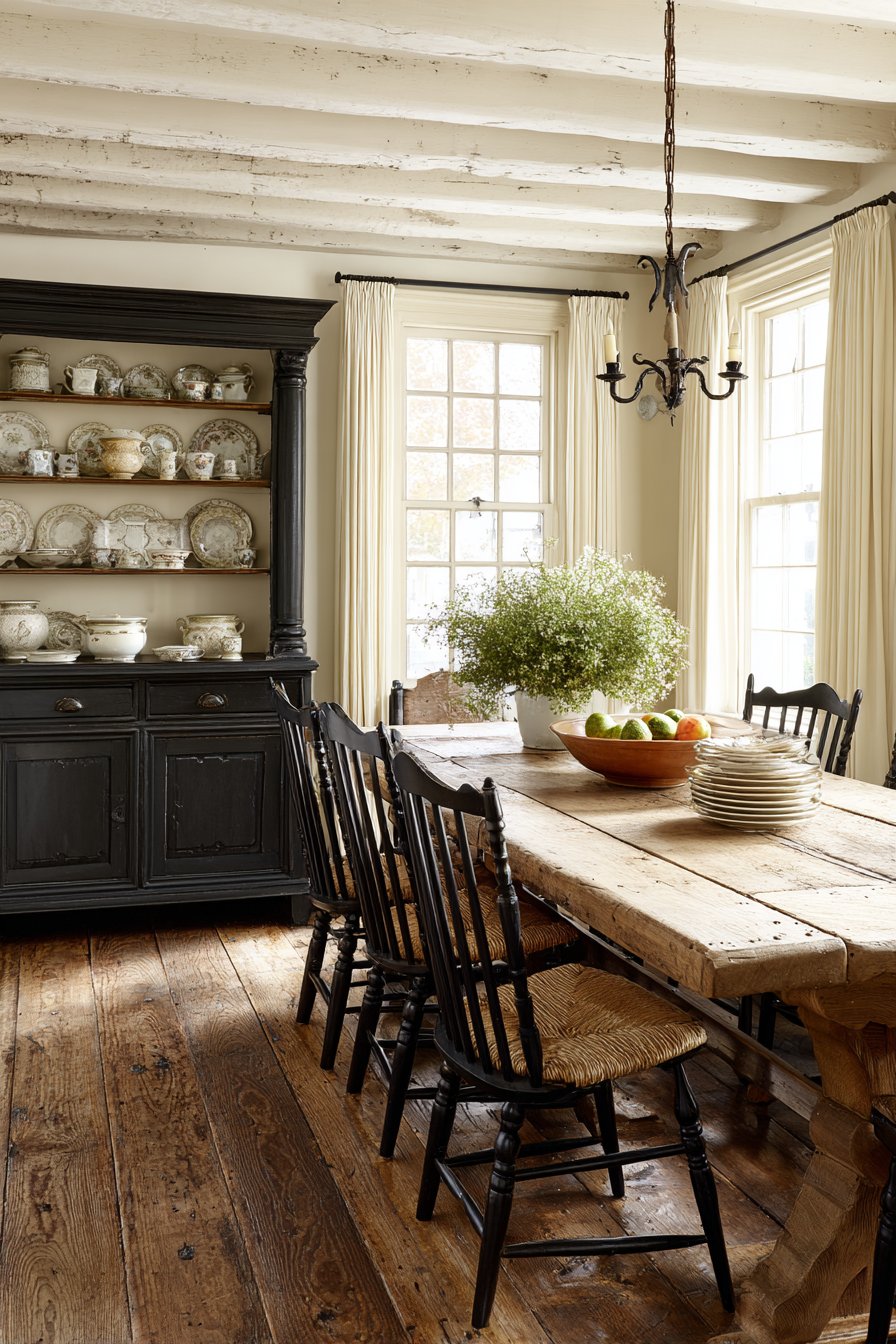
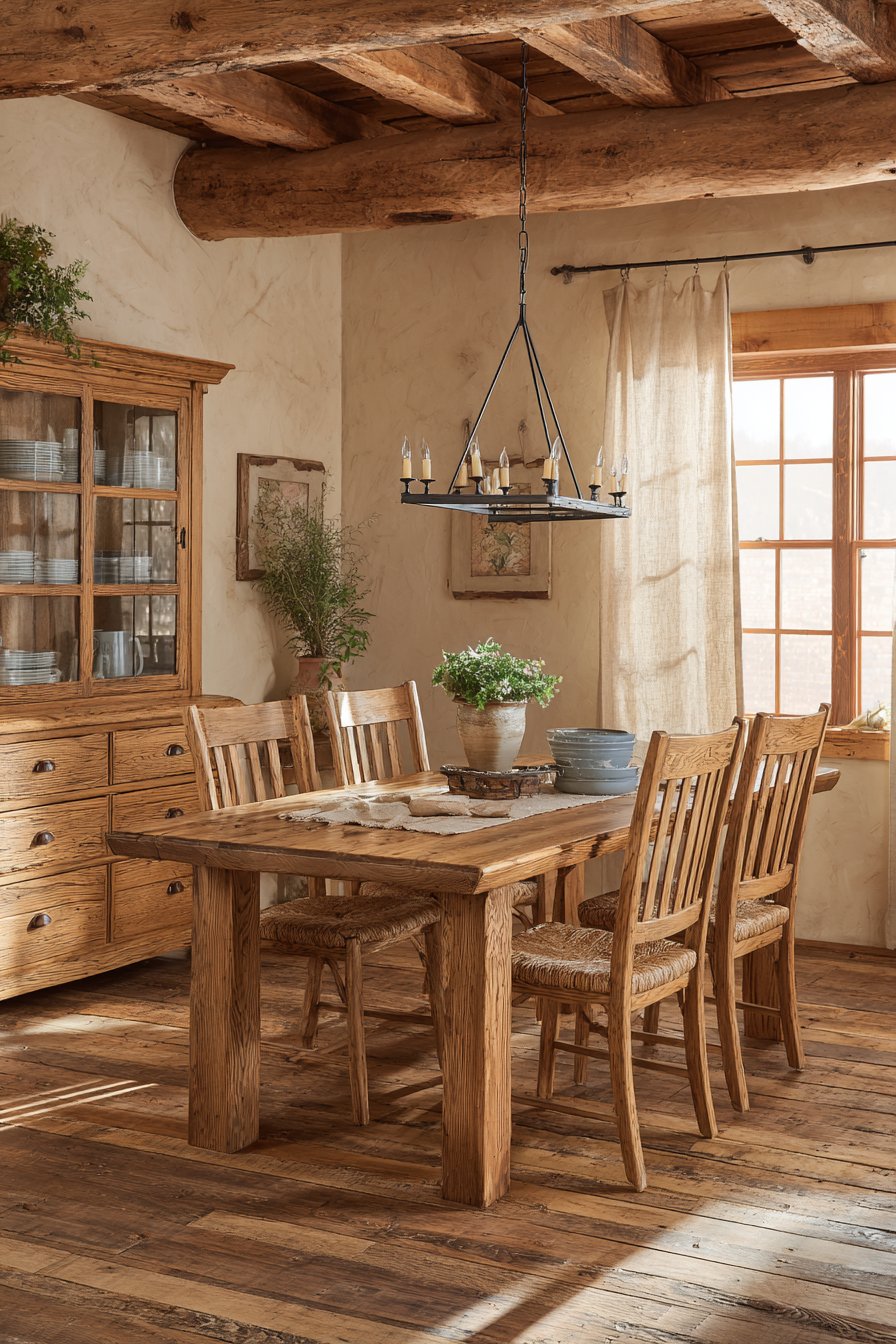
A sturdy farmhouse-style table in reclaimed oak shows authentic saw marks. Age characteristics add genuine historical interest. Six ladder-back chairs feature woven rush seats with natural color variations. A traditional Welsh dresser displays everyday china and practical serving bowls.
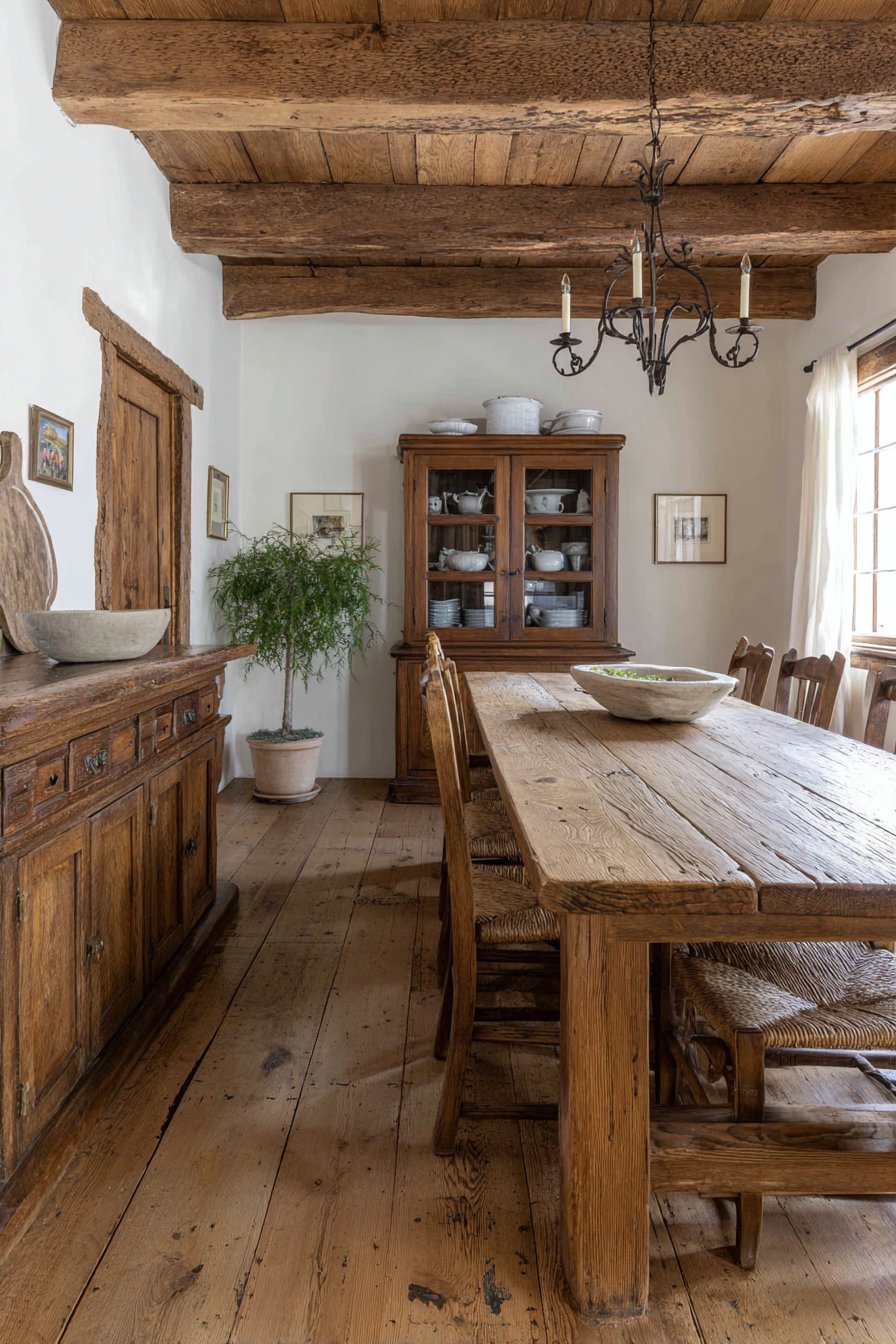
Walls receive warm cream paint with simple picture rail molding. The understated architecture allows furnishings to shine. A simple wrought iron chandelier with candle sleeves hangs from beamed ceiling. Wide plank pine floors show gentle wear patterns from decades of use.
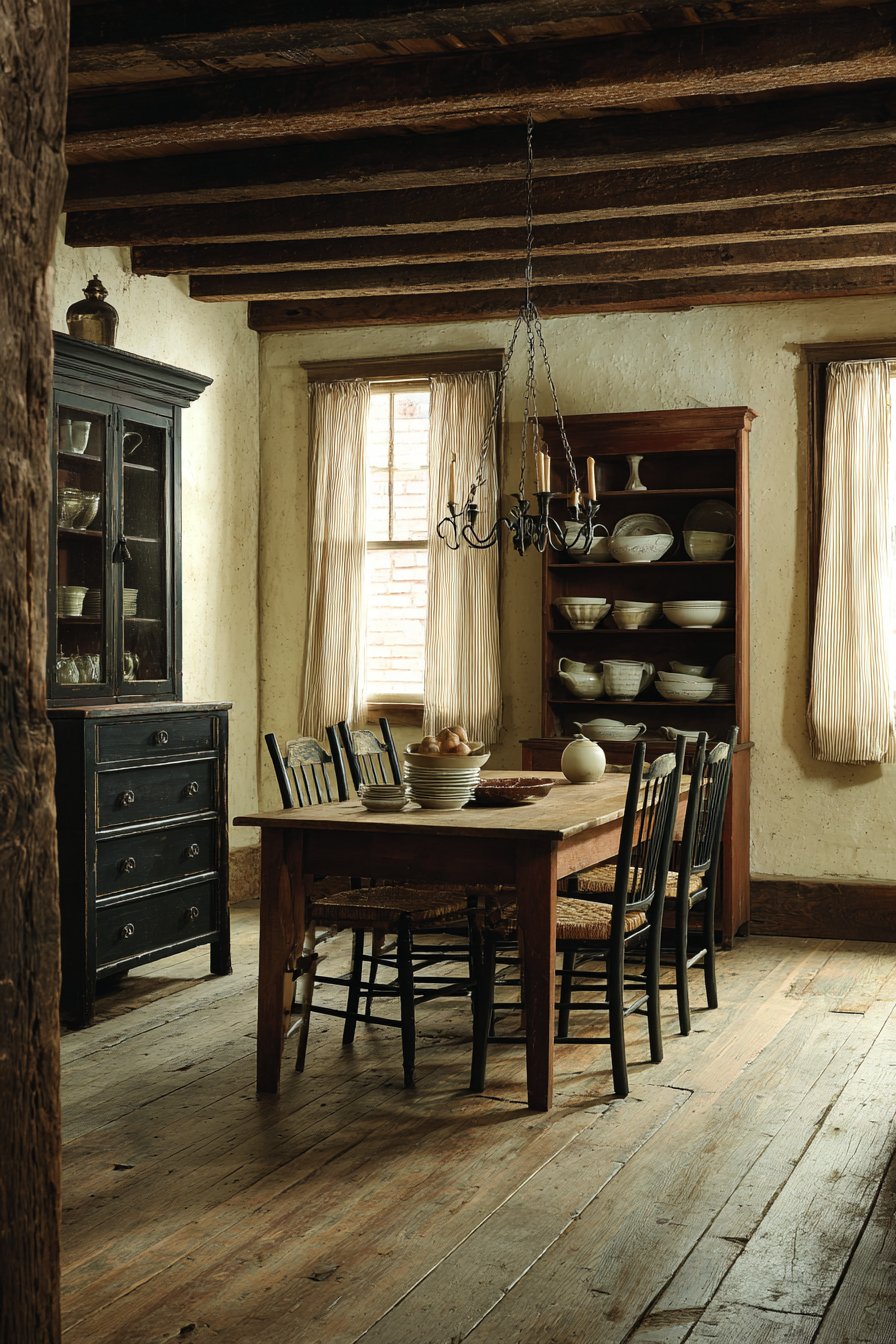
Morning light streams through simple cotton café curtains. The unpretentious window treatment suits the relaxed traditional aesthetic perfectly. This dining room proves traditional design embraces both formal elegance and comfortable simplicity. Lived-in comfort can be entirely traditional in character.
Key Design Tips:
- Choose reclaimed oak for authentic age characteristics and sustainability
- Incorporate rush-seated chairs for traditional texture and practicality
- Use Welsh dressers for open display storage with traditional appeal
- Install simple wrought iron lighting for unfussy traditional character
- Select café curtains for casual traditional window treatments
- Embrace wear patterns on floors as desirable patina
9. Cherry Gate-Leg with Needlepoint Cushions
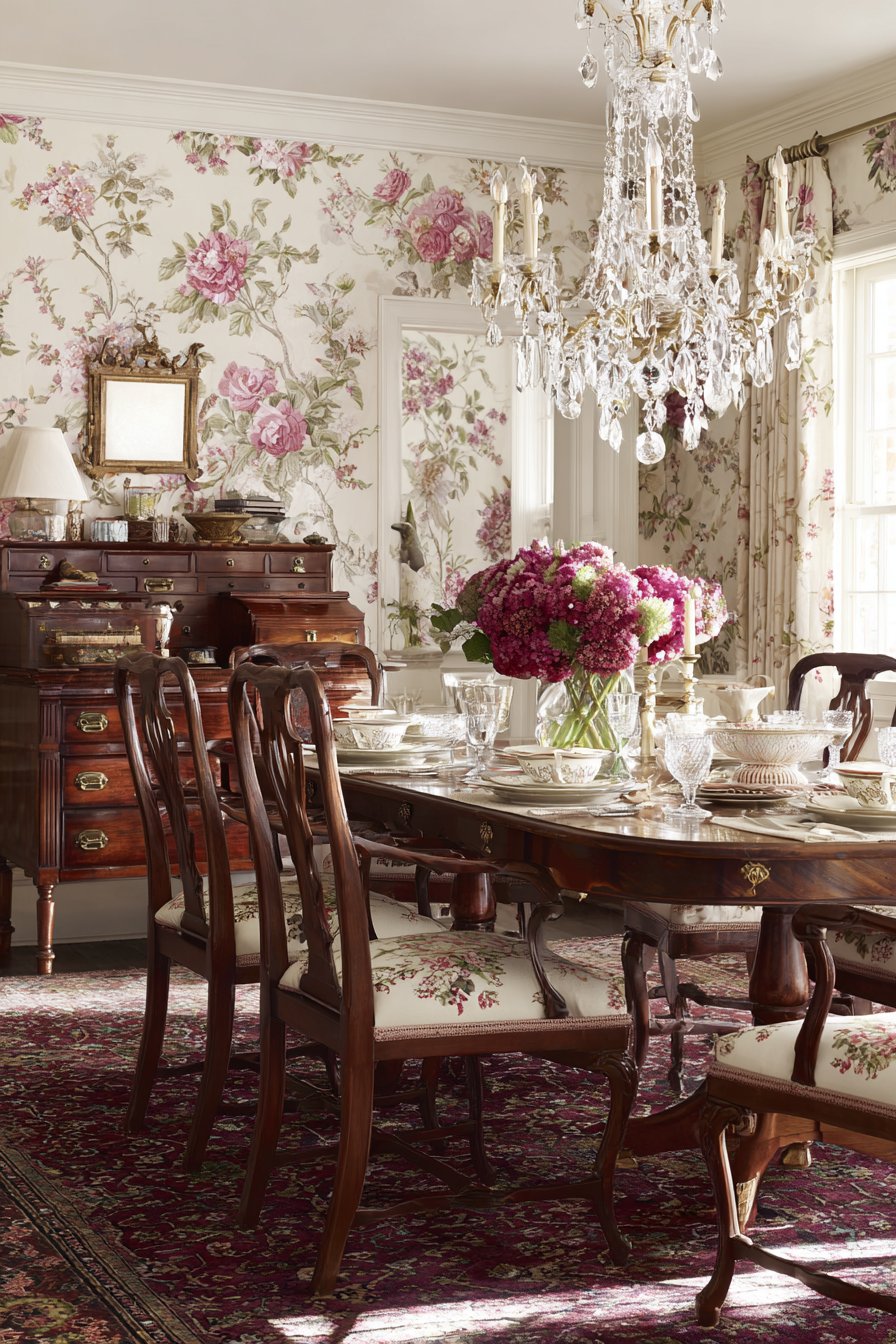
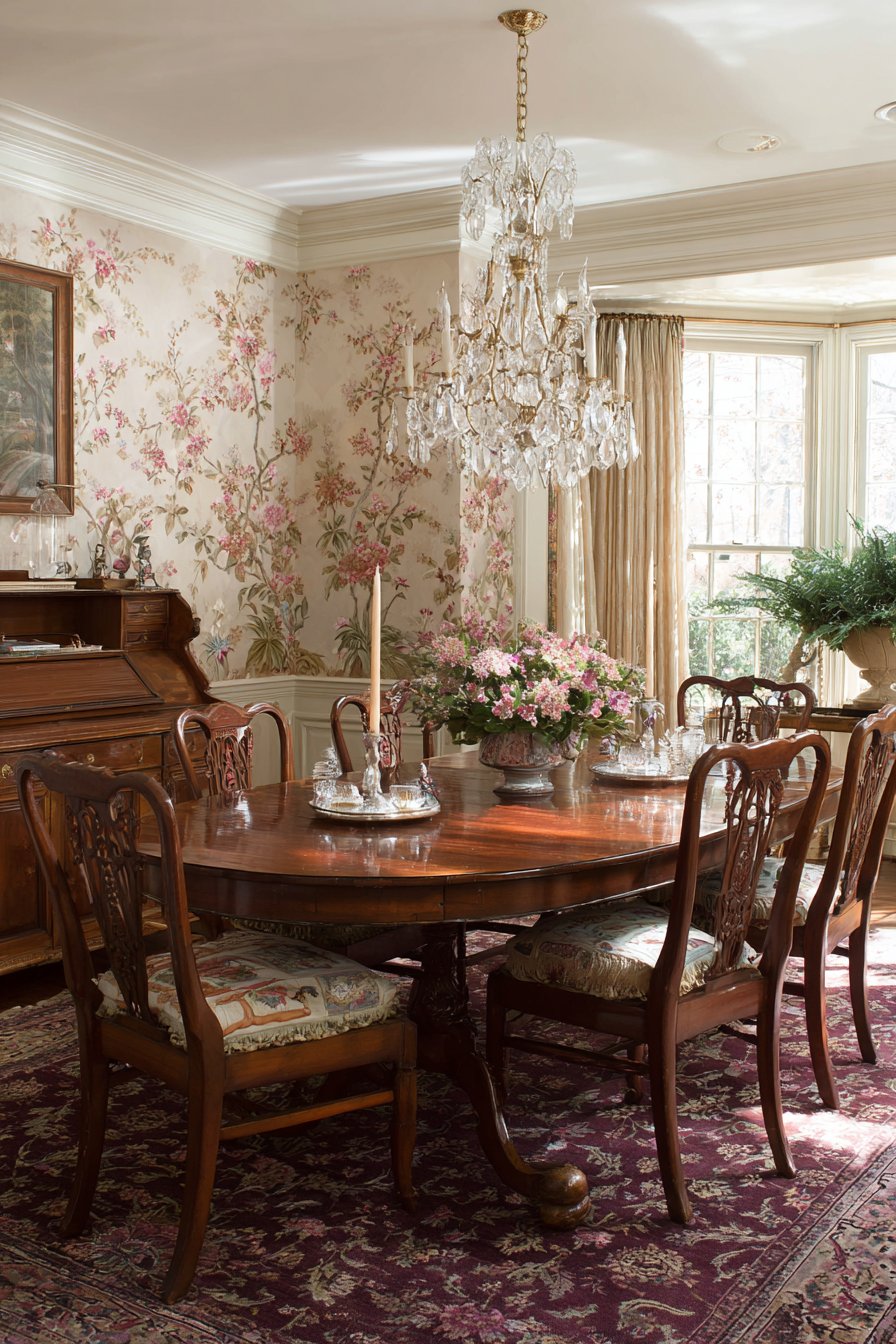
A gate-leg table in cherry wood features original brass hinges and hardware. The mechanical details demonstrate quality period construction. Eight Queen Anne chairs with cabriole legs surround the extended table. Needlepoint seat cushions in traditional motifs add handcrafted charm.
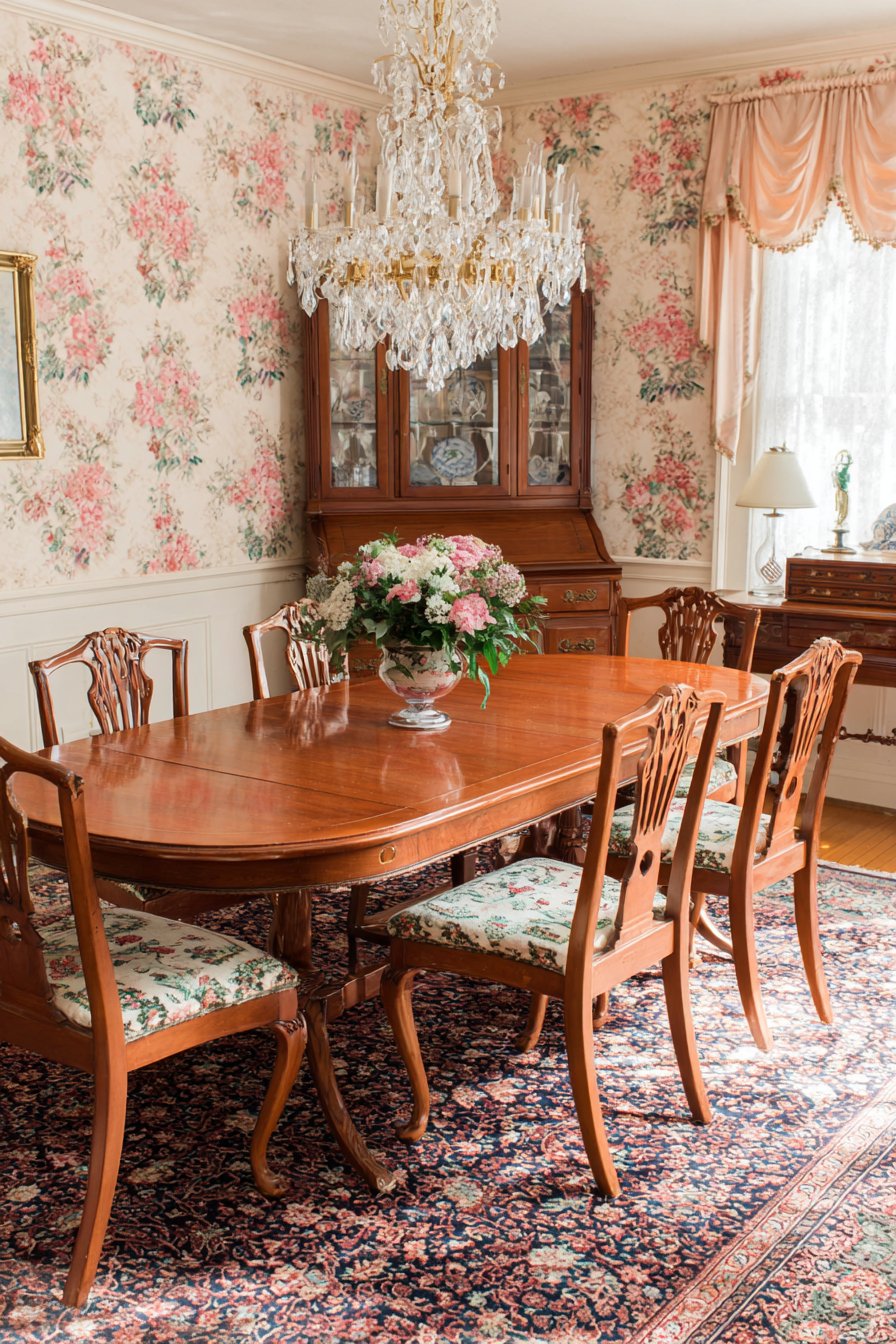
An antique secretary desk in the corner provides additional display space. Traditional floral wallpaper in soft pink and green covers the walls. The pattern creates romantic, feminine traditional ambiance. A traditional crystal chandelier with multiple tiers provides elegant lighting overhead.
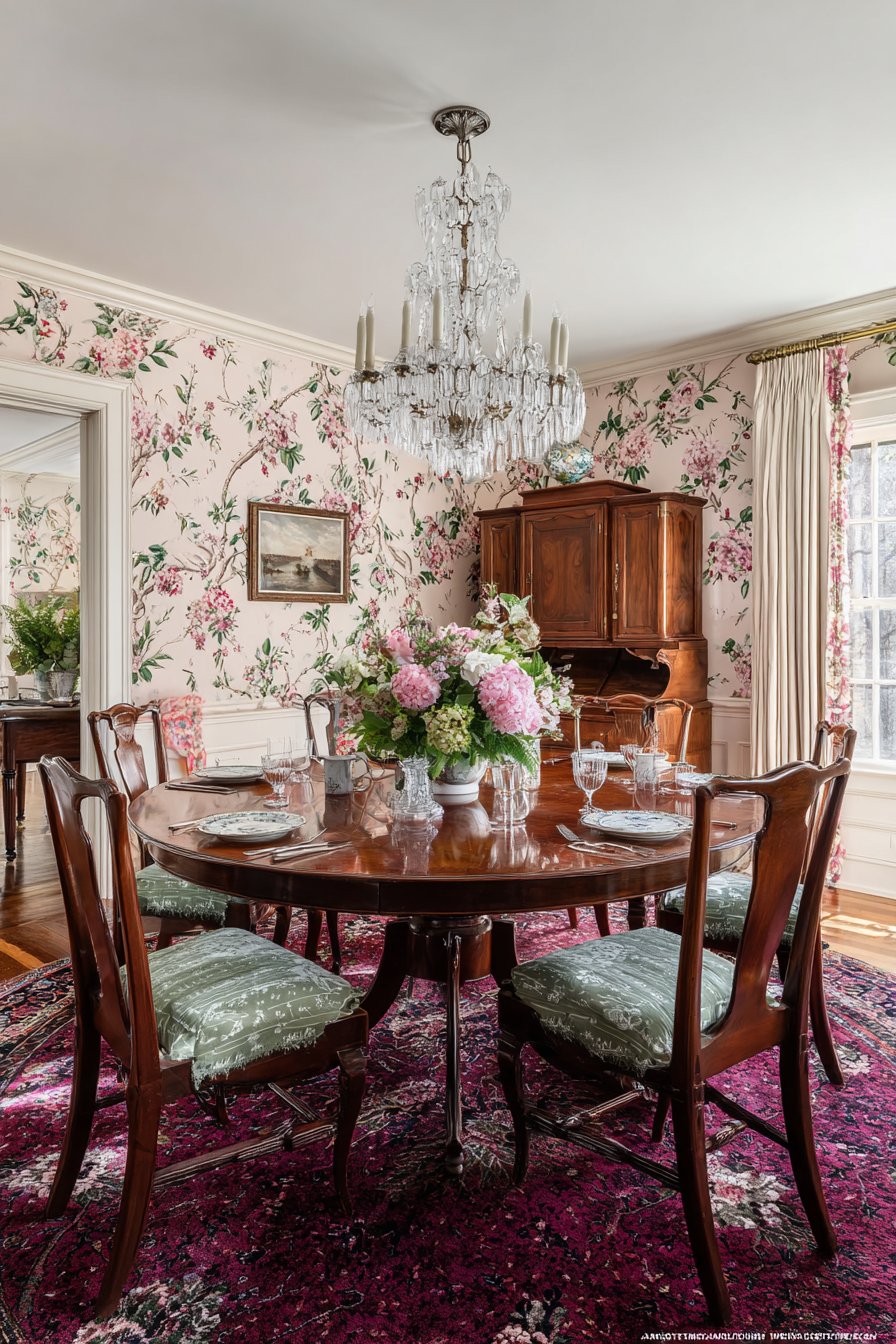
An heirloom oriental rug in burgundy and navy grounds the furniture arrangement. The colors coordinate with the wallpaper and needlepoint cushions. Soft diffused daylight highlights traditional elements throughout the space. Authentic period details create cohesive, sophisticated traditional design.
Key Design Tips:
- Select gate-leg tables for flexibility in traditional small spaces
- Incorporate needlepoint cushions for handcrafted traditional detail
- Use floral wallpaper to add pattern and romantic traditional character
- Choose Queen Anne chairs for classic curves and elegant proportions
- Display antique secretary desks as functional decorative elements
- Layer oriental rugs over hardwood for warmth and pattern
10. Oak Refectory with Camelback Upholstery
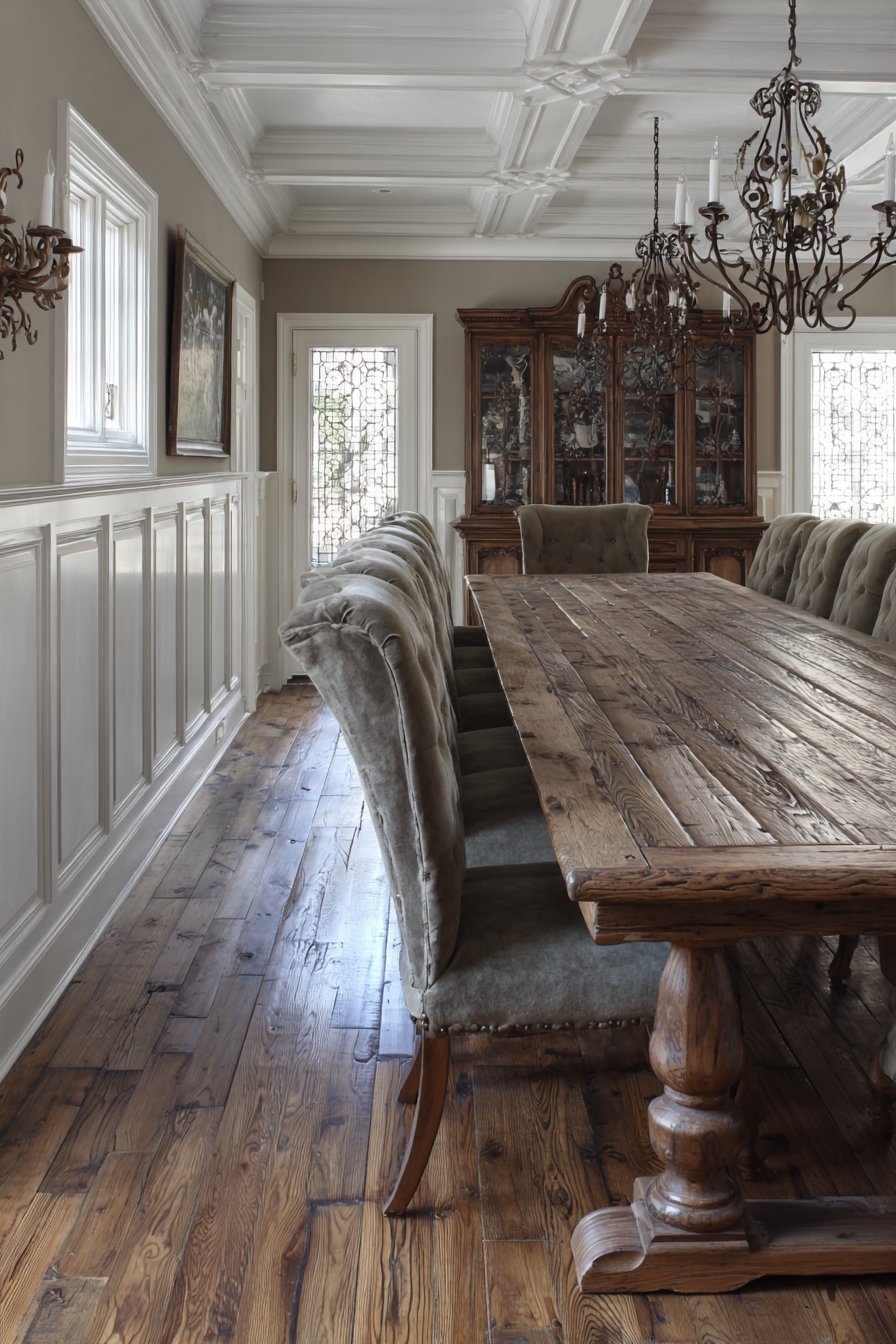
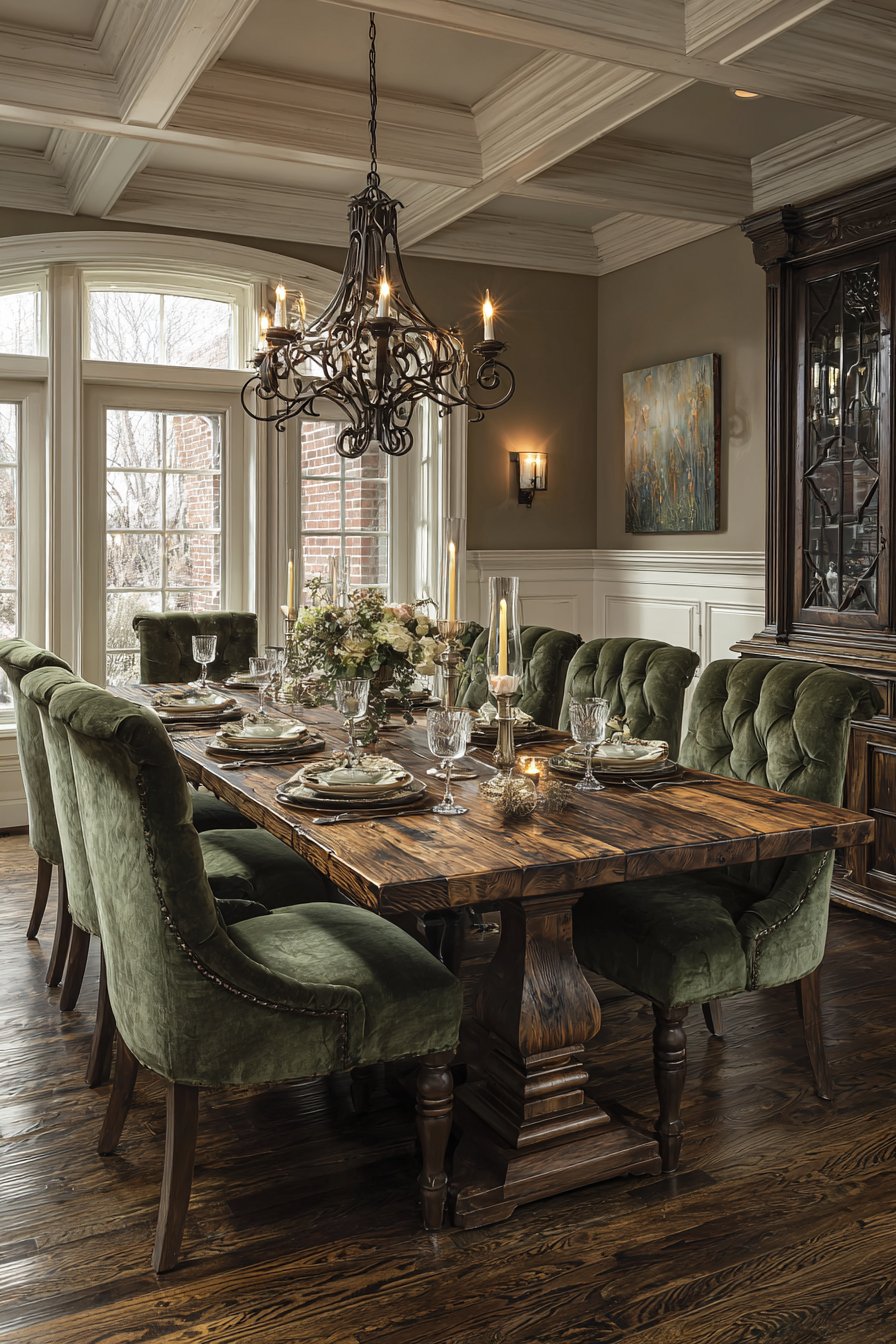
A refectory-style table in solid oak features thick planked top. Substantial turned legs provide sturdy support and traditional styling. Ten upholstered dining chairs with traditional camelback silhouettes offer comfort. Moss green velvet upholstery adds luxurious texture and rich color.
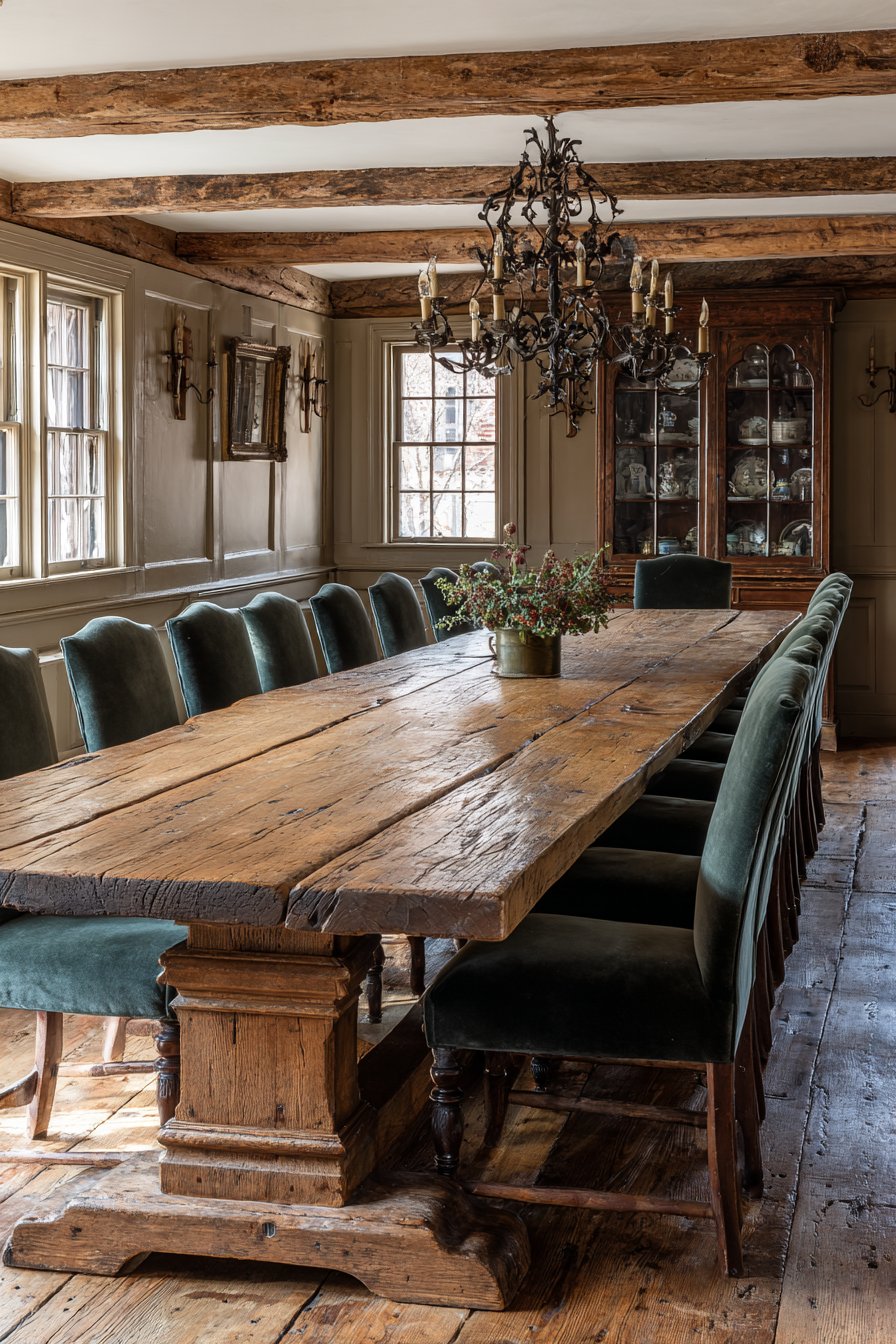
A traditional breakfront cabinet displays fine china and crystal stemware beautifully. Classic beadboard wainscoting painted white covers the lower walls. Upper walls receive warm taupe paint treatment. A wrought iron chandelier with scrollwork details provides ambient lighting.
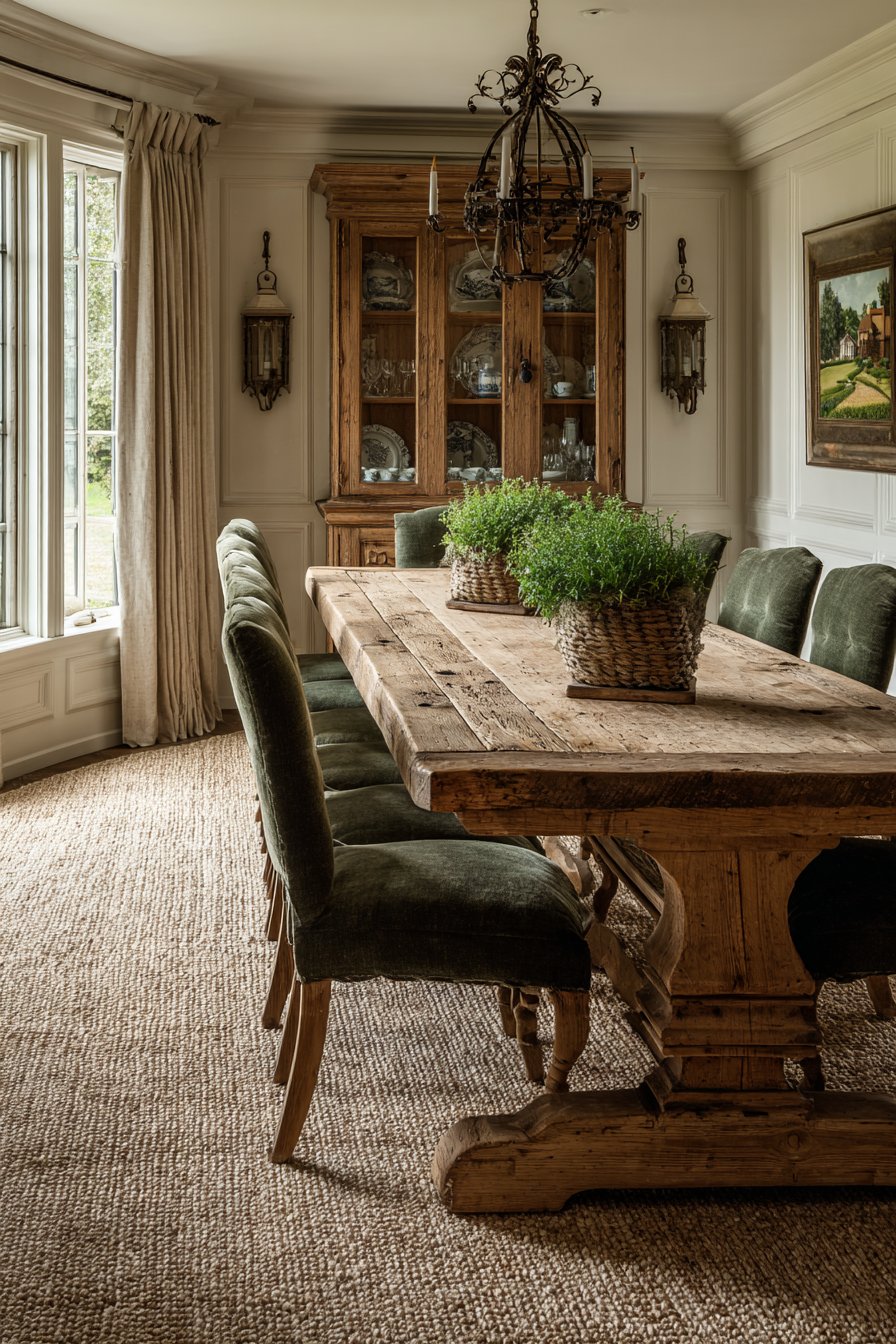
Heart pine floors with natural patina show characteristic grain patterns. The warm flooring complements the oak table perfectly. Natural window light creates depth and dimension throughout the space. Traditional proportions and authentic materials create timeless dining elegance.
Key Design Tips:
- Choose refectory tables for substantial traditional presence
- Incorporate camelback chairs for classic silhouette with comfort
- Use beadboard wainscoting for cottage-style traditional character
- Select velvet upholstery for luxurious traditional texture
- Install breakfront cabinets for impressive display storage
- Coordinate wood tones across flooring and furniture
11. Burled Walnut Double Pedestal Grandeur
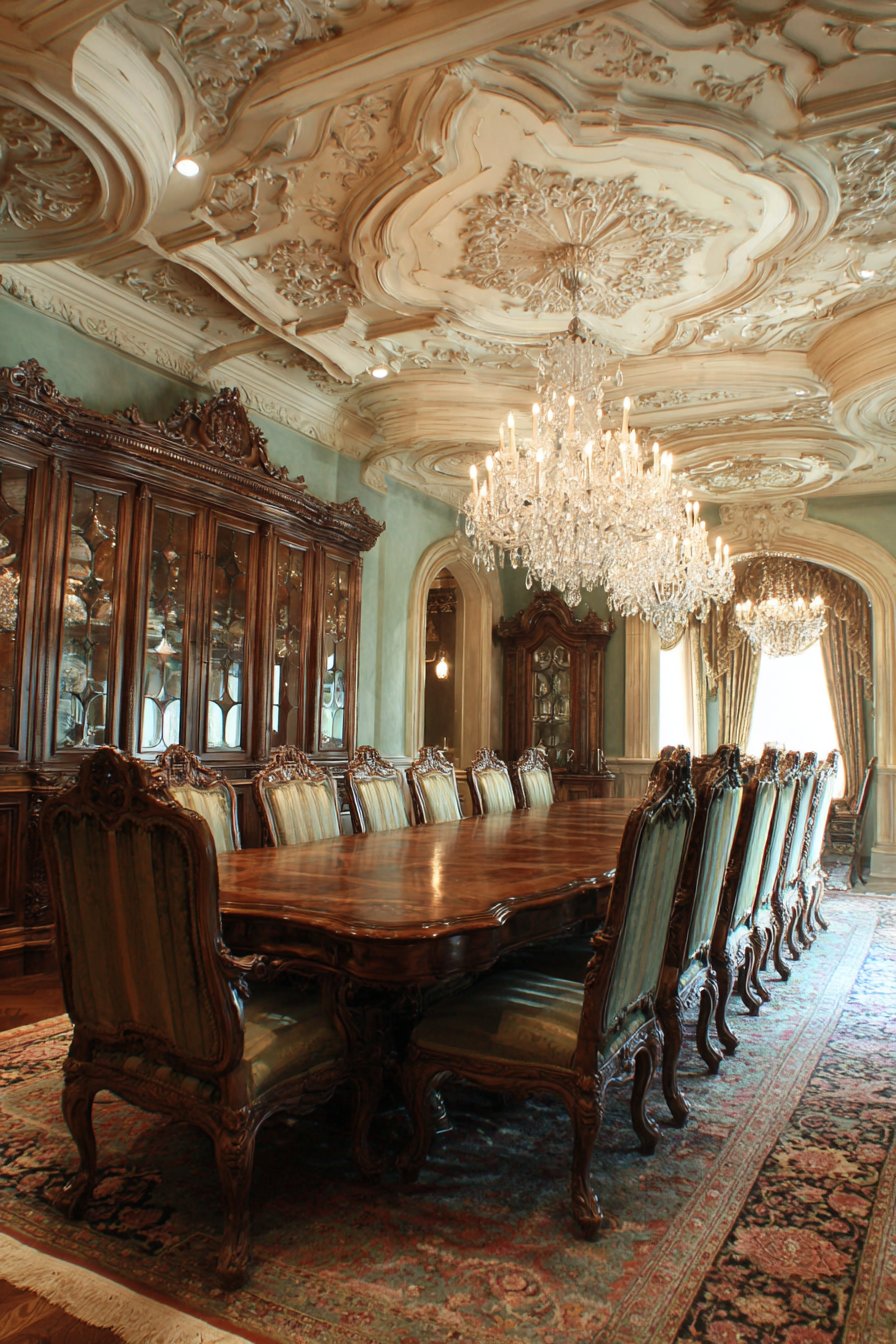
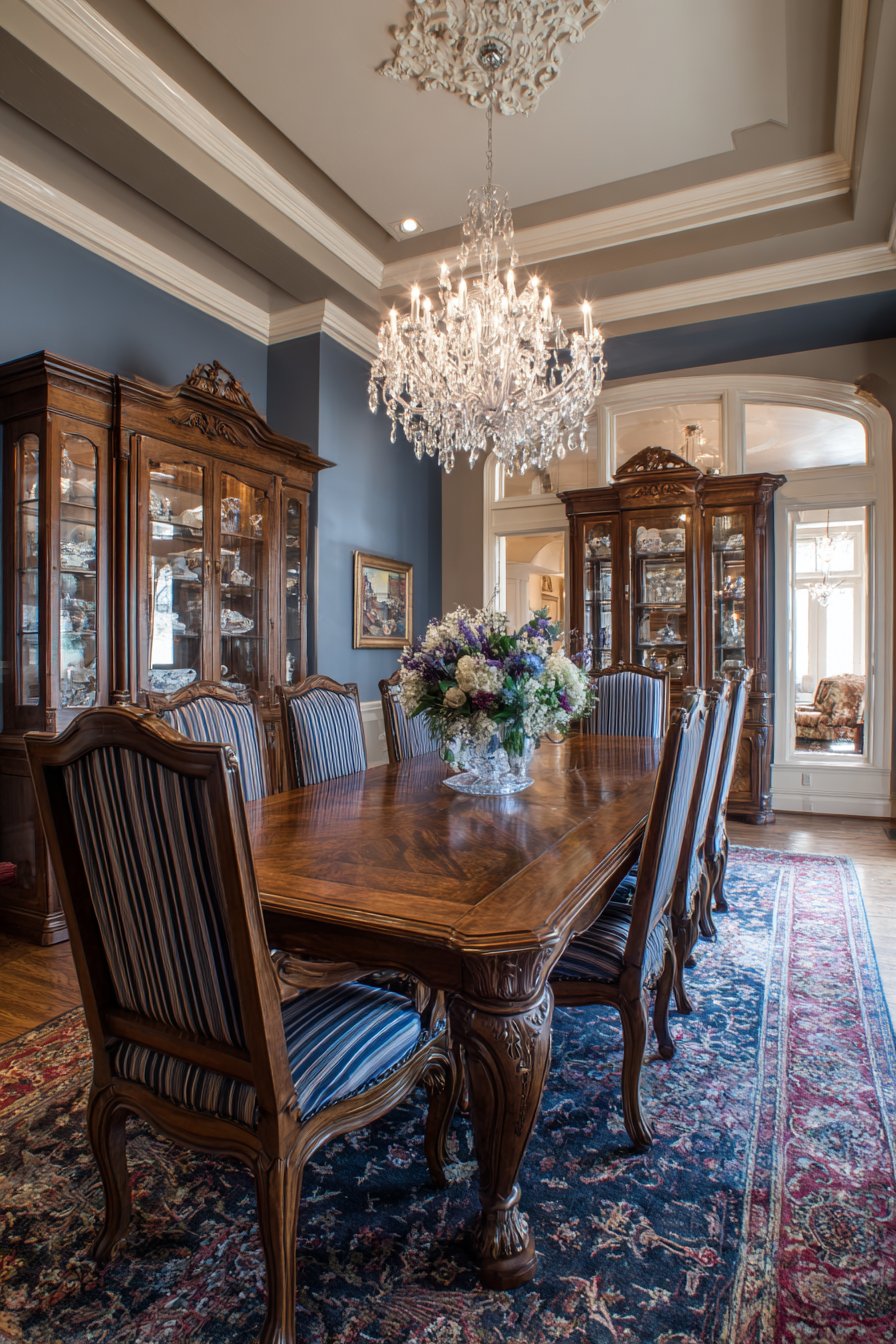
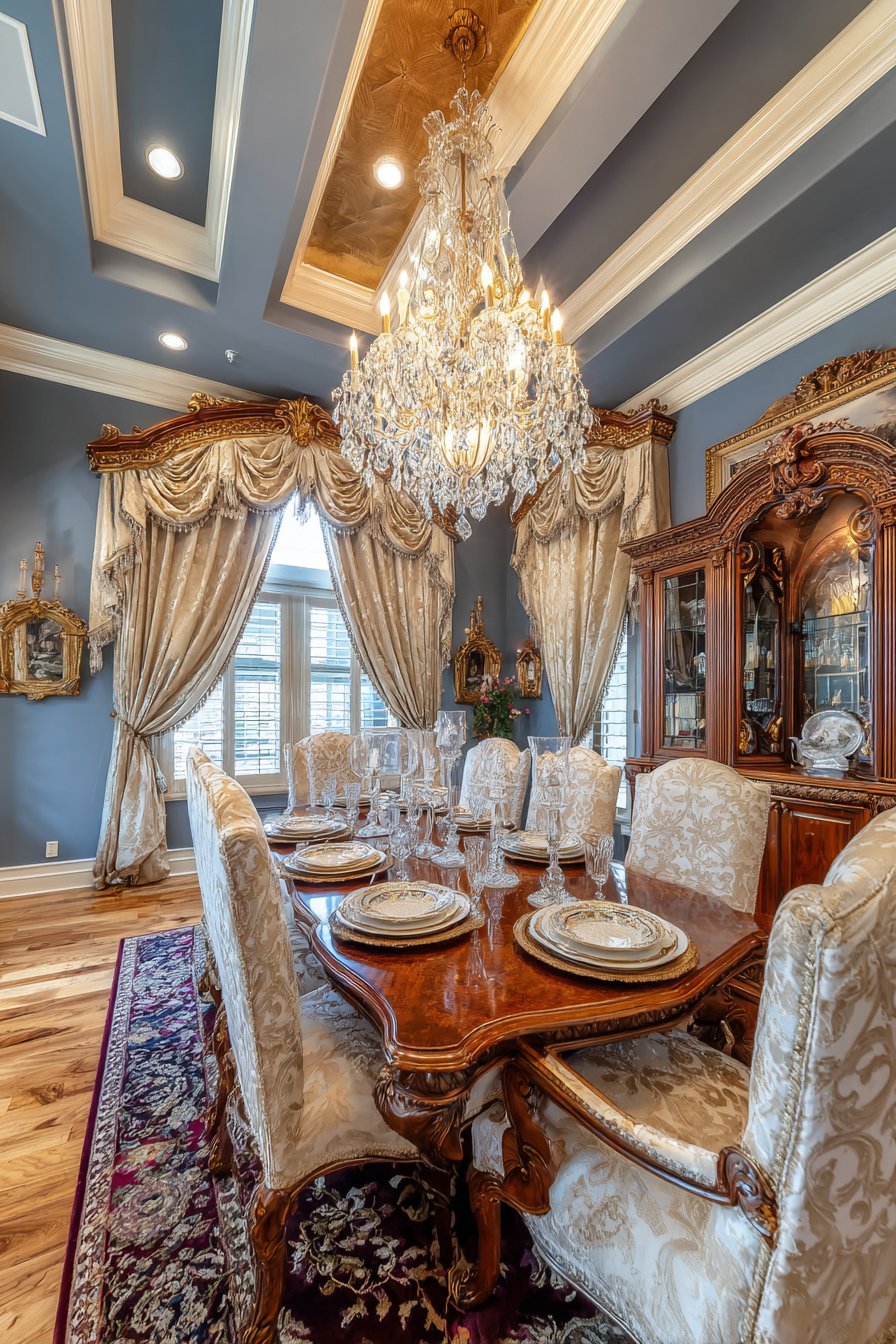
A double pedestal table in burled walnut features elaborate carved details. The exceptional wood grain creates natural artwork. Ten upholstered side chairs and two armed host chairs provide ample seating. Traditional striped silk fabric adds formal elegance and subtle pattern.
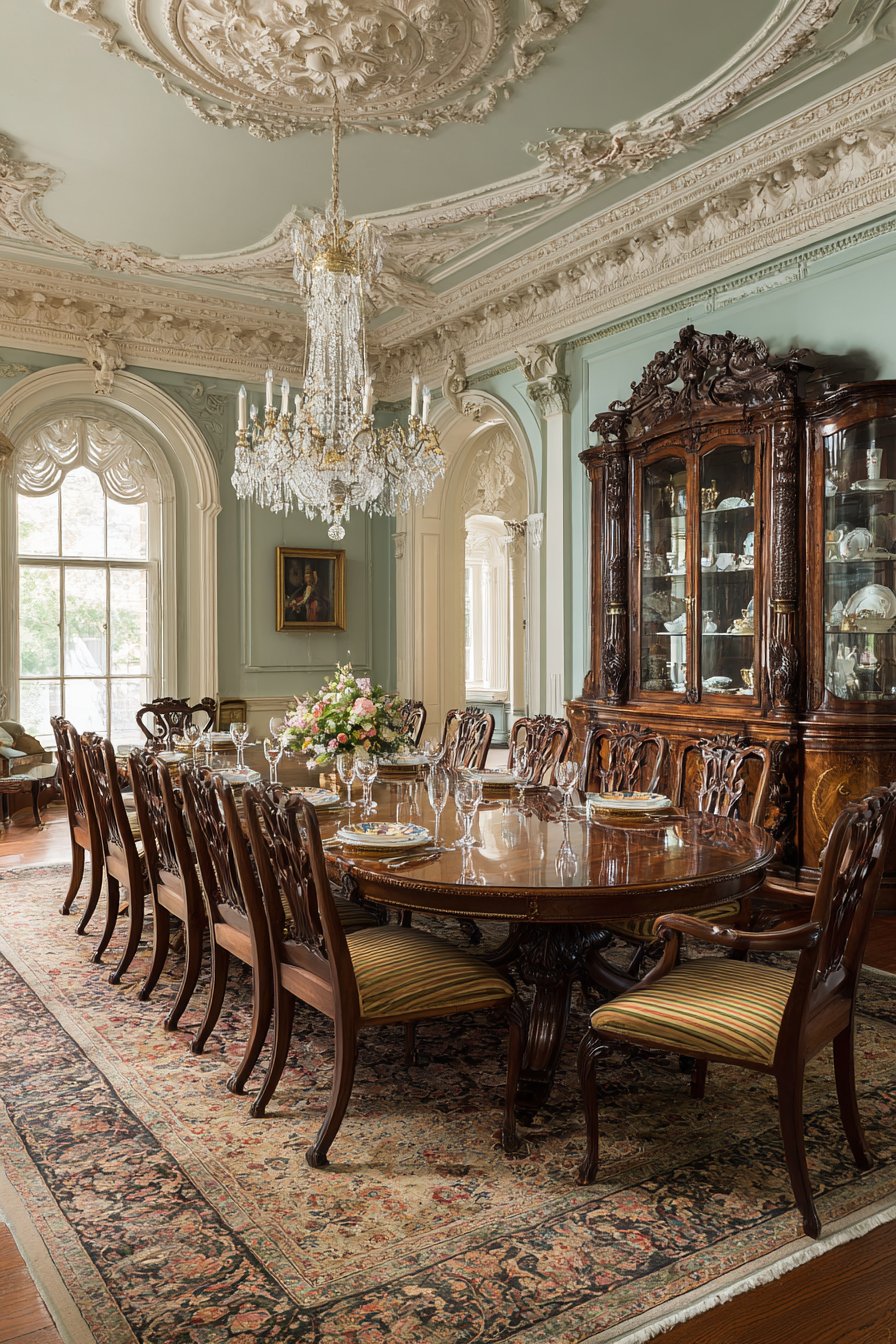
A coordinating china cabinet with curved glass doors displays heirloom porcelain. The ceiling features ornate plaster medallion work with historical authenticity. A grand crystal chandelier serves as dramatic centerpiece. Walls are painted in classic Wedgwood blue with extensive white crown molding.
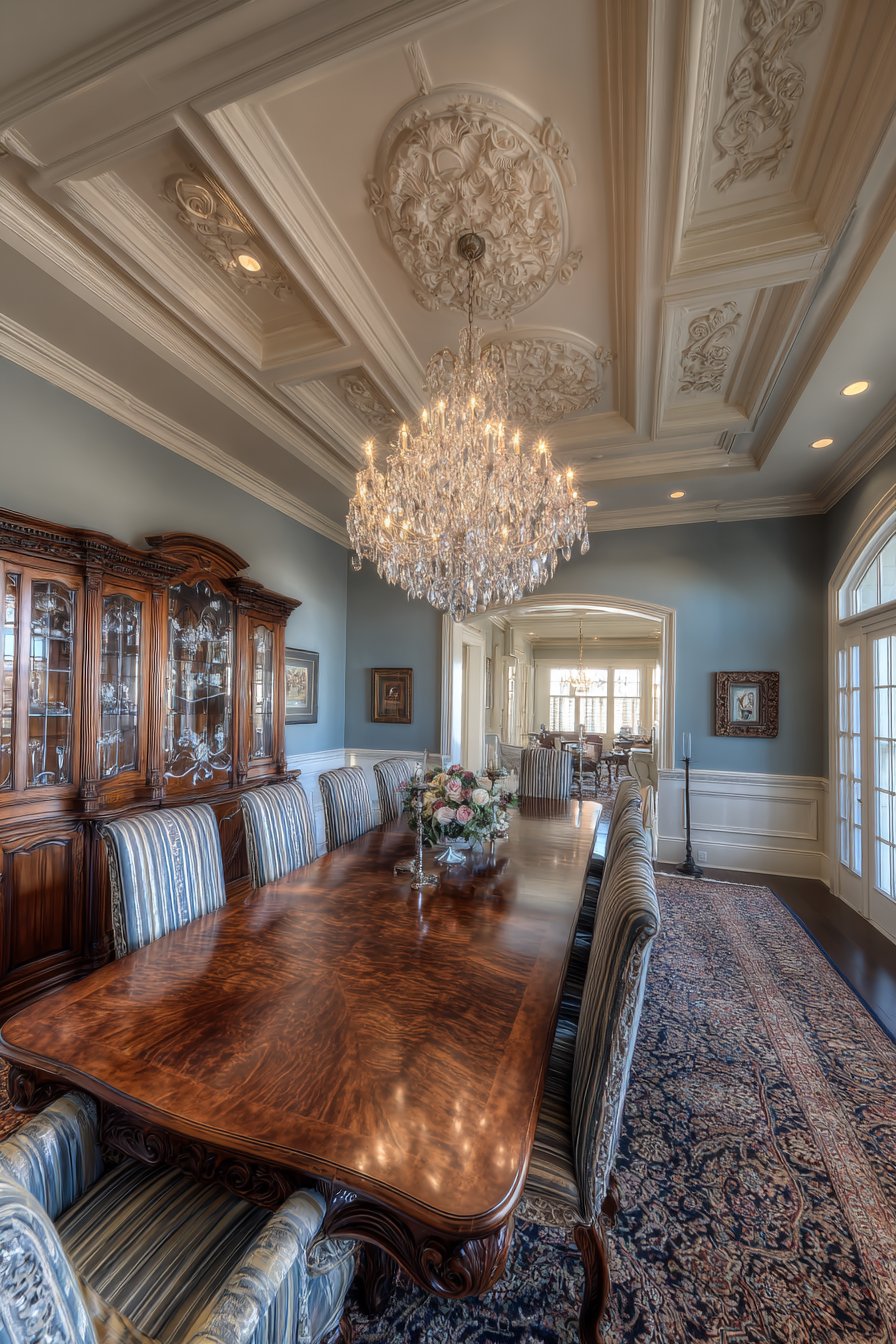
A hand-knotted Persian rug in rich jewel tones anchors the formal arrangement. The colors complement the Wedgwood blue walls beautifully. This dining room represents traditional design at its most luxurious. Architectural details and fine furnishings create unforgettable elegance.
Key Design Tips:
- Select burled walnut for exceptional grain patterns and luxury
- Incorporate plaster ceiling medallions for architectural grandeur
- Use Wedgwood blue paint for classic traditional wall color
- Choose striped silk upholstery for subtle formal pattern
- Install curved glass china cabinets for elegant display
- Layer crown molding and chair rails for architectural depth
12. Pine Harvest Table with Mixed Seating
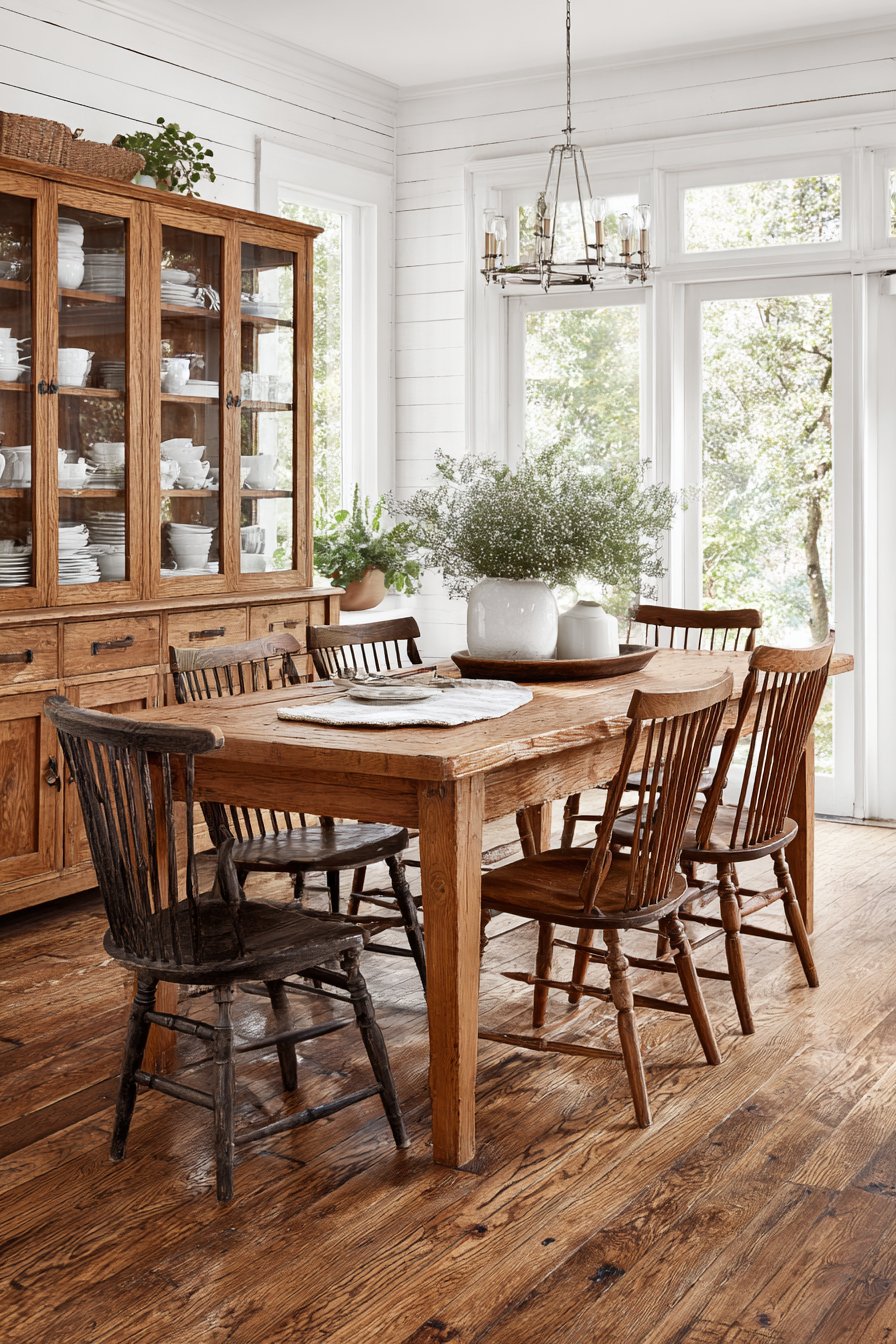
A harvest table in pine features breadboard ends and hand-planed surface. Tool marks show authentic craftsmanship and historical construction methods. Eight mixed traditional chairs create an intentionally collected look. Windsors and ladder-backs in various wood tones add character.
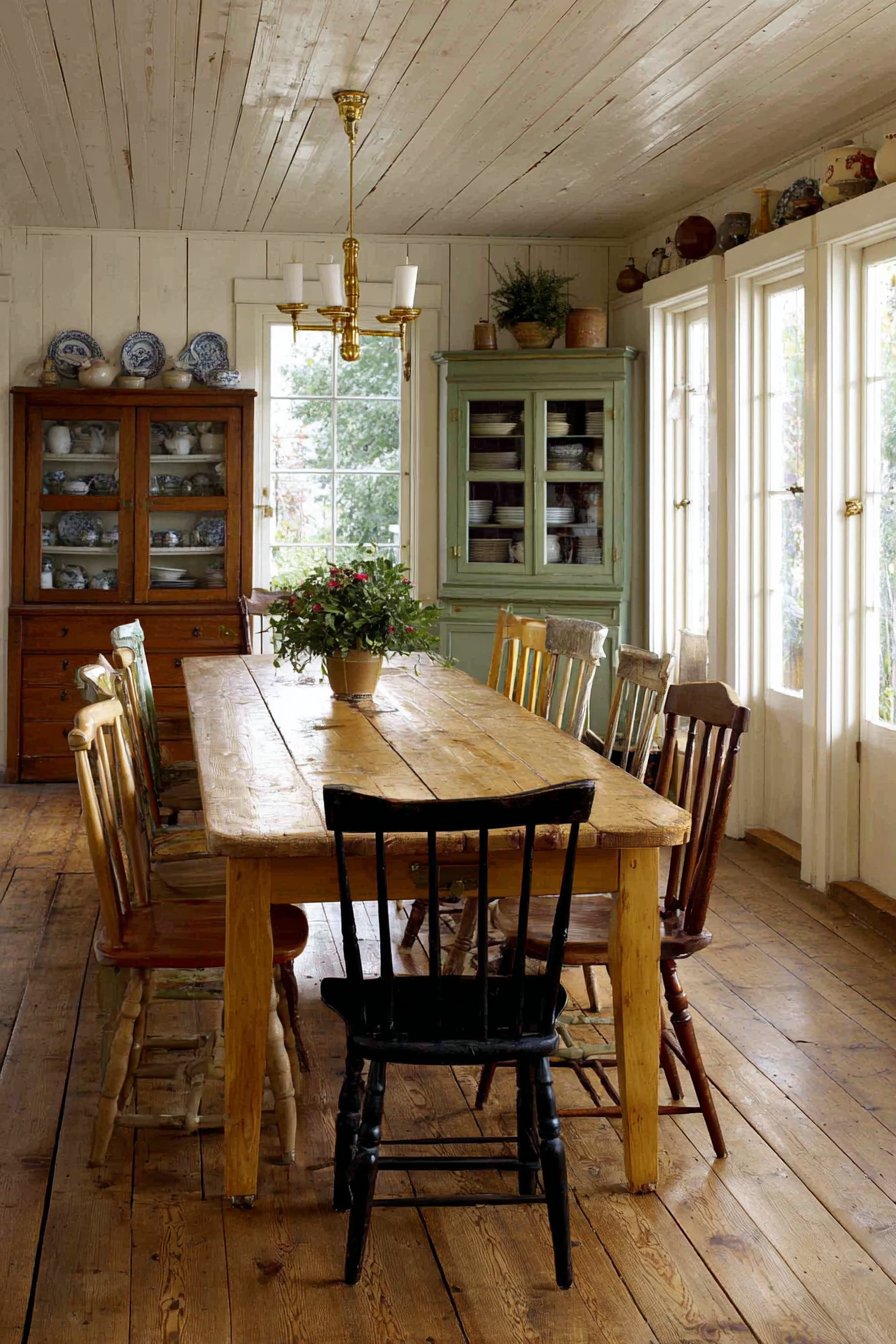
A traditional step-back cupboard displays transferware and ironstone pieces. The practical pottery suits the relaxed traditional aesthetic. Walls feature classic board-and-batten treatment painted in warm white. A simple brass chandelier with glass hurricane shades provides practical lighting.
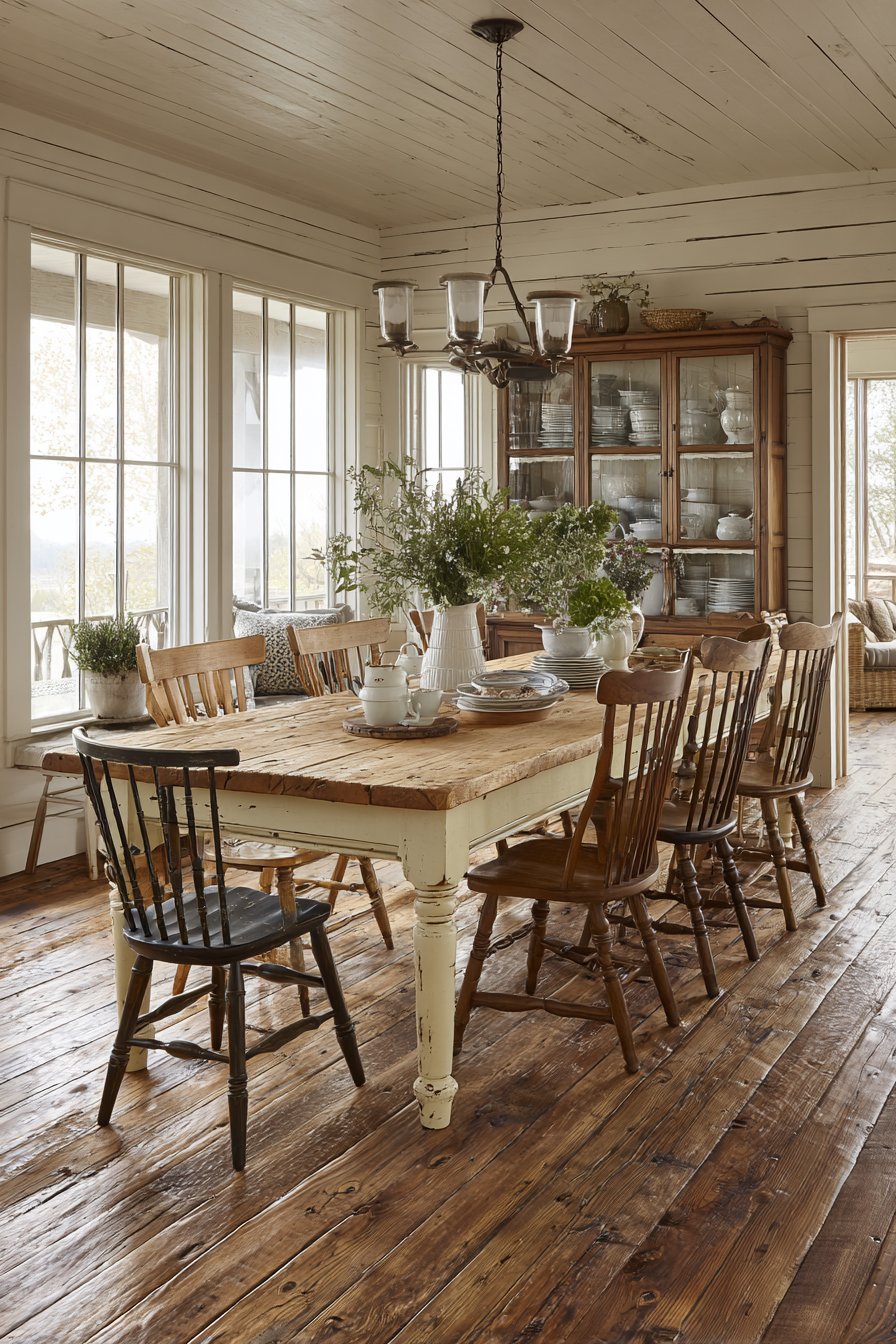
Wide oak floorboards show authentic age and honest wear. The patina adds warmth and historical authenticity. Abundant natural light from tall windows with simple linen panels illuminates the space. Approachable traditional style meets family functionality with ease.
Key Design Tips:
- Choose harvest tables for authentic farmhouse traditional styling
- Incorporate mixed chair styles for collected traditional character
- Use board-and-batten wall treatments for architectural texture
- Select transferware and ironstone for traditional display collections
- Install simple brass chandeliers for understated traditional lighting
- Embrace mixed wood tones as intentional design choice
13. Mahogany Oval with Silk Damask Sophistication
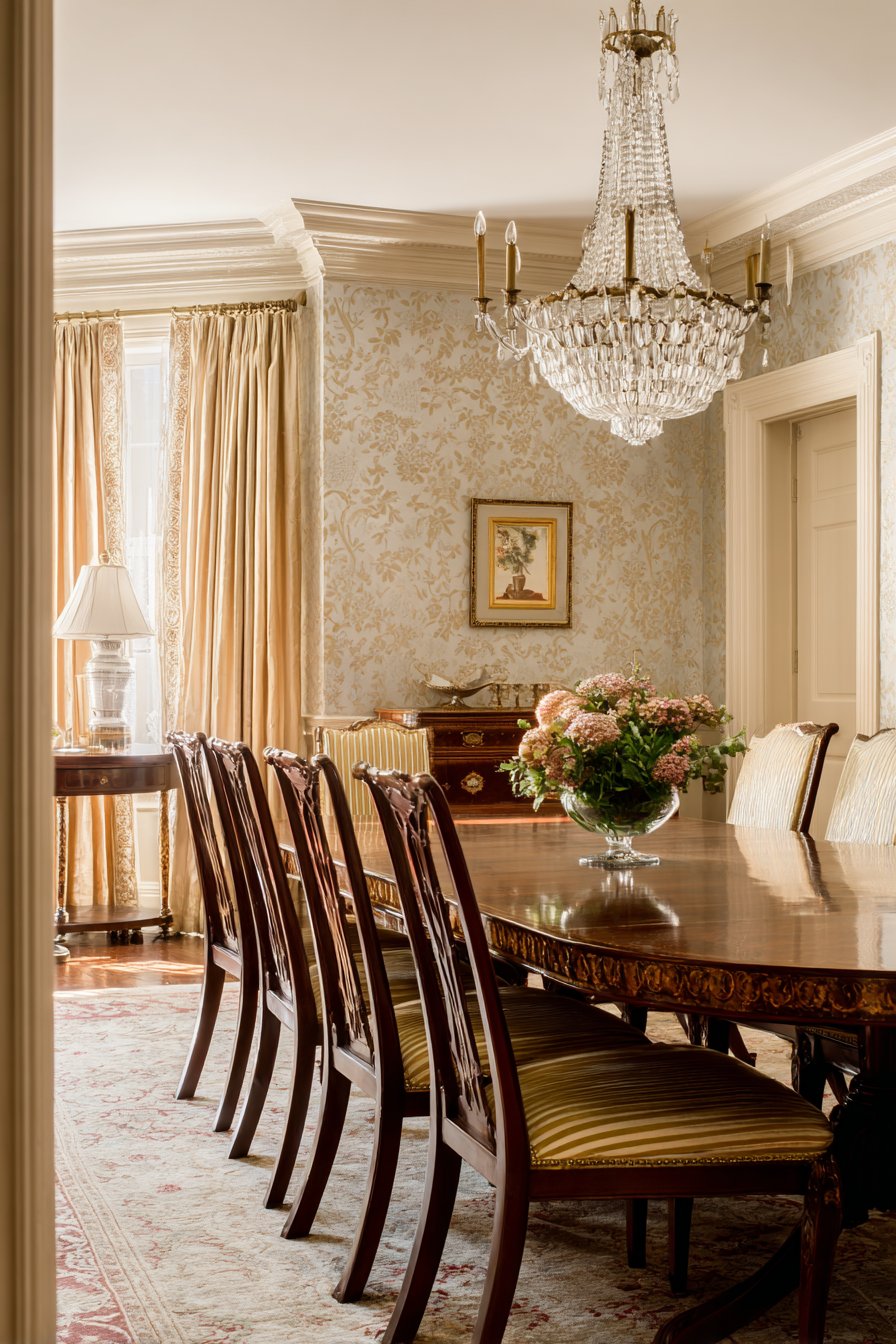
An oval extension table in rich mahogany features sophisticated inlay border detail. Ten shield-back chairs surround the table with formal elegance. Silk damask upholstery in gold and cream stripes adds luxurious texture. A traditional sideboard with marble top and ornate brass hardware serves as buffet.
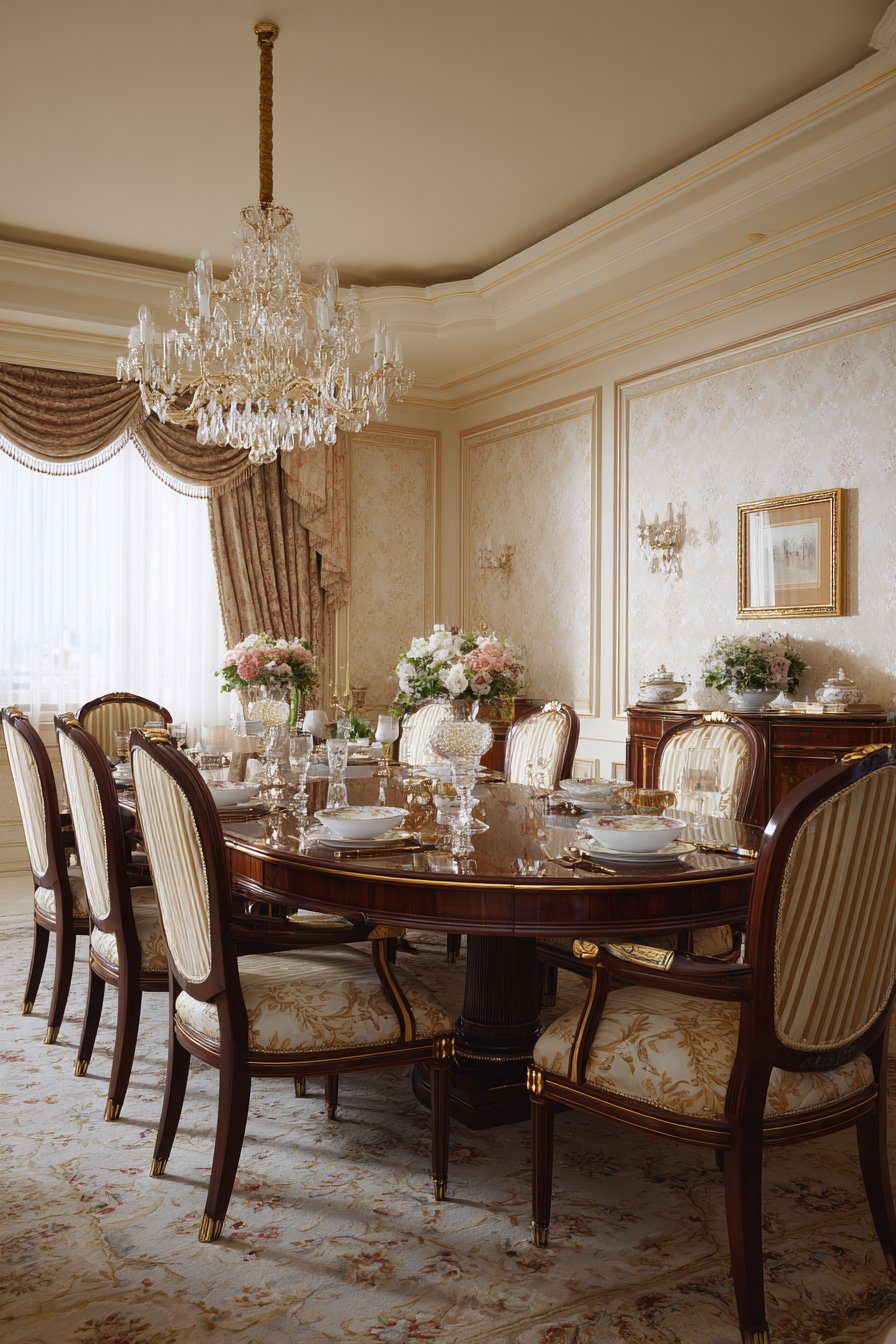
The walls showcase silk wallpaper in subtle tone-on-tone pattern. Extensive crown molding and picture frame wainscoting create dimensional interest. A tiered crystal chandelier provides formal illumination with impressive scale. An Aubusson carpet in soft pastels defines the dining zone.
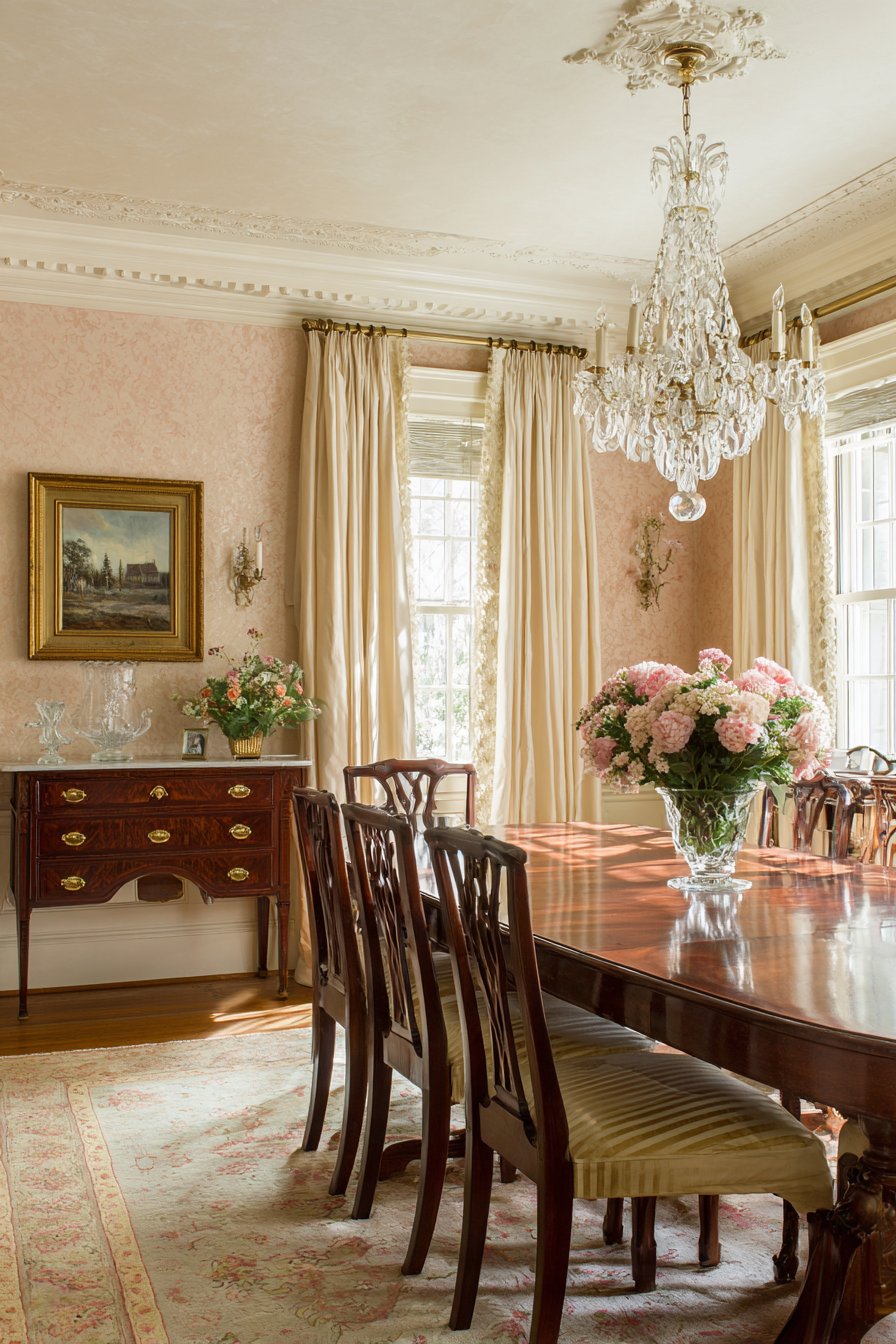
Soft natural light filtered through silk drapes creates refined ambiance. The layered window treatment adds formal elegance and light control. This dining room demonstrates traditional design’s capacity for sophisticated luxury. Period-appropriate details create cohesive, impressive traditional styling.
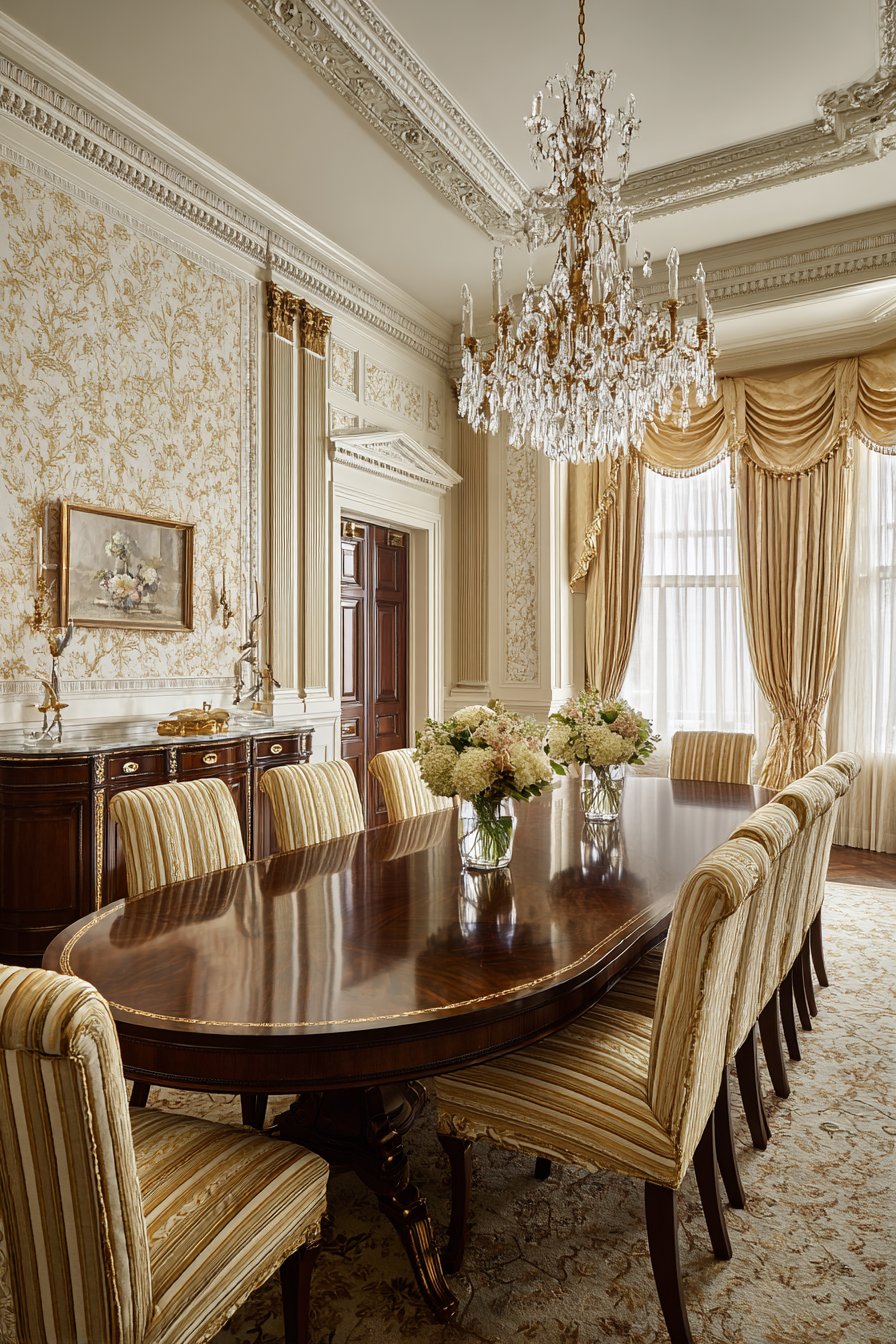
Key Design Tips:
- Select oval tables for elegant proportions and conversation flow
- Incorporate silk damask for maximum traditional luxury
- Use silk wallpaper to add subtle texture and refined pattern
- Choose marble-topped sideboards for formal serving surfaces
- Install tiered crystal chandeliers for dramatic traditional lighting
- Layer extensive molding work for architectural richness
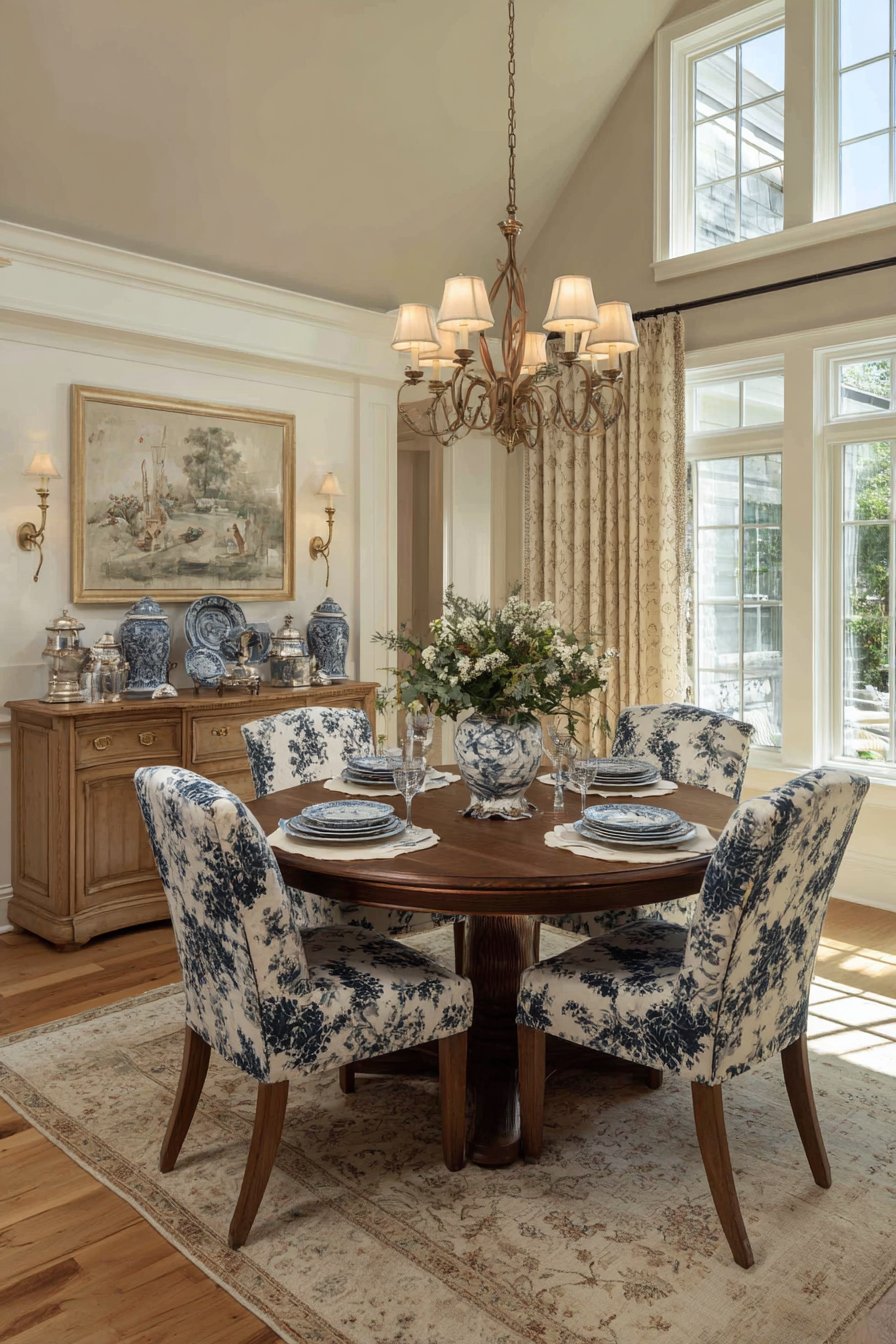
14. Walnut Round with Toile Upholstery
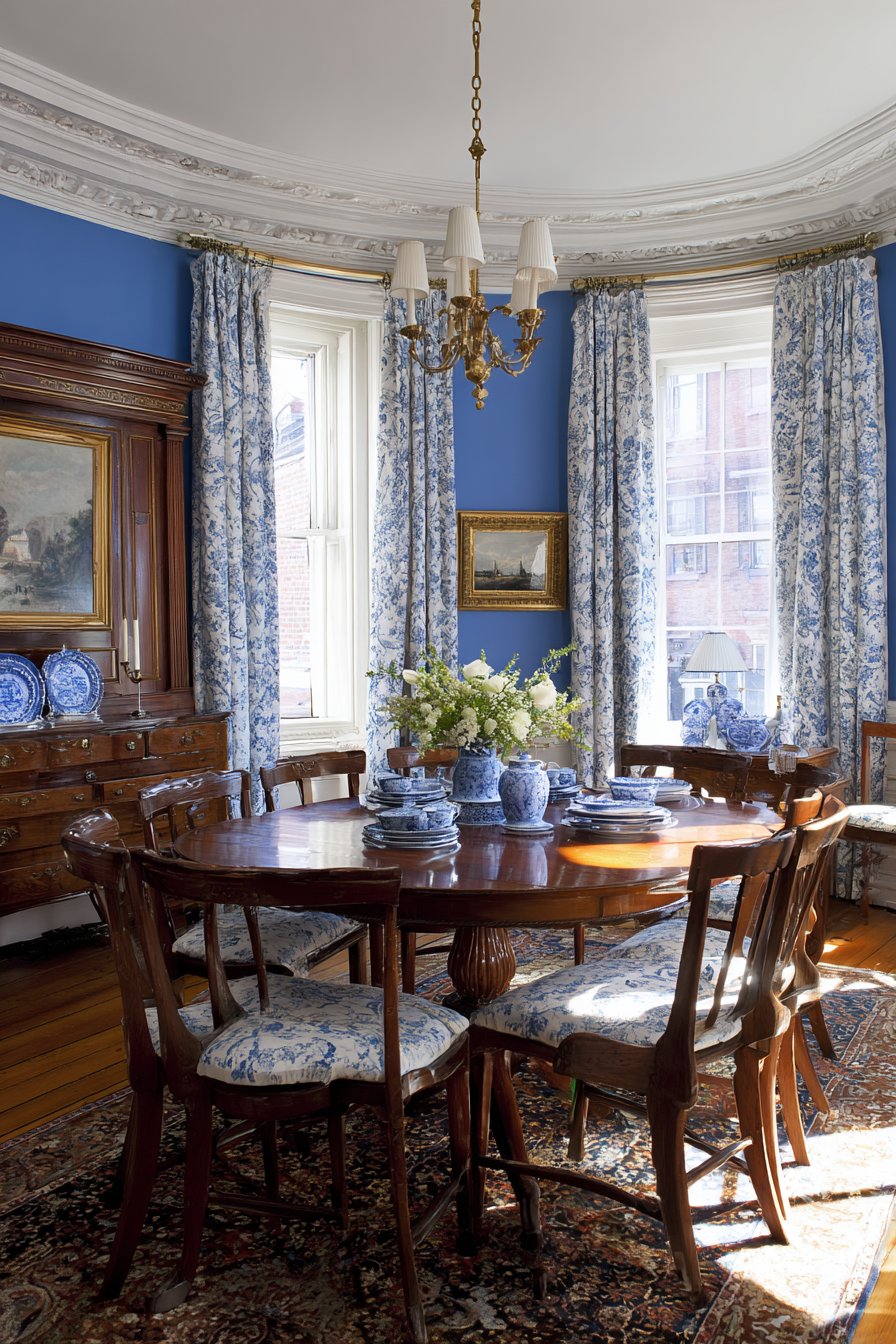
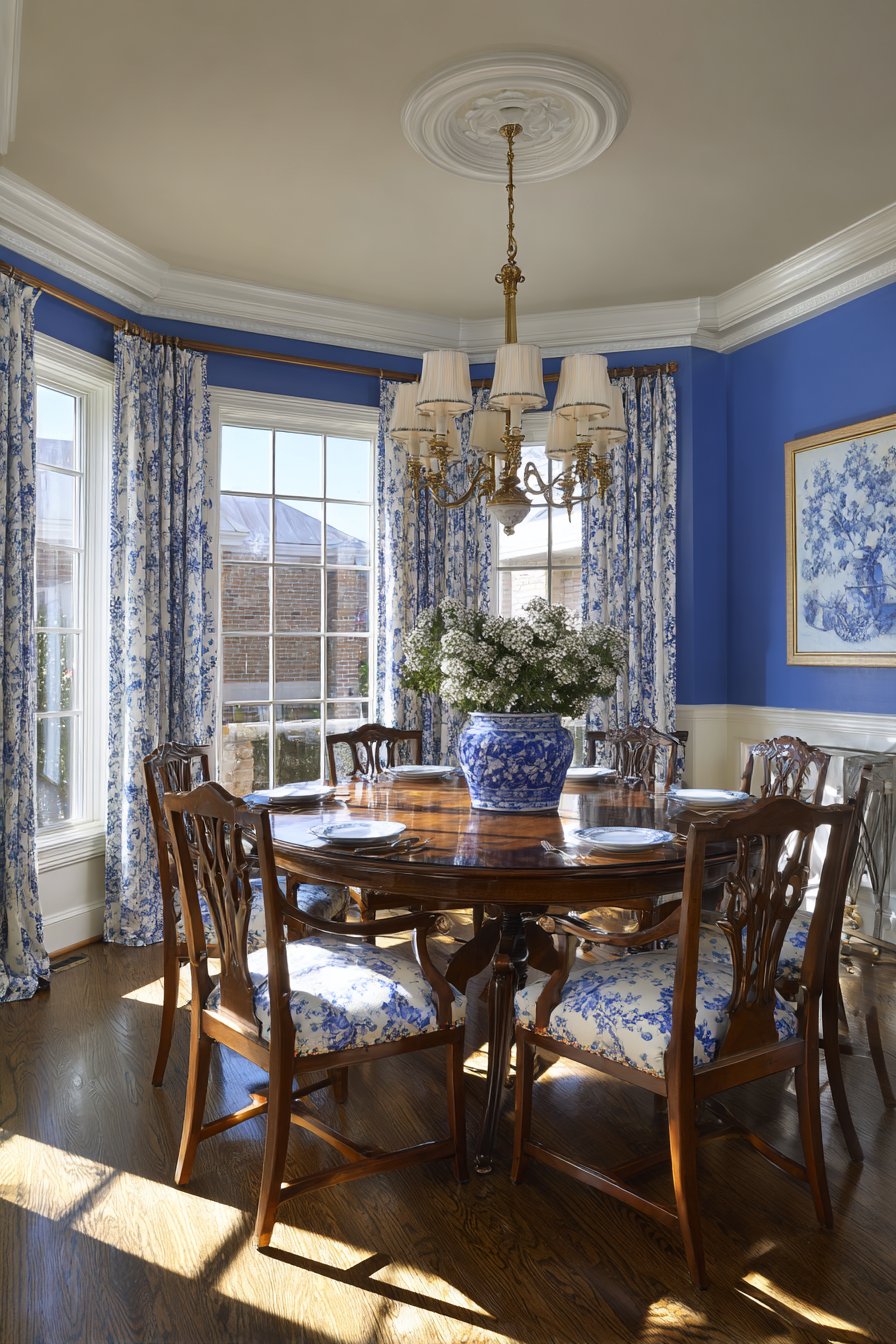
A round expandable table in walnut features decorative pie-crust edge. Eight balloon-back chairs with caned seats surround the table. Upholstered cushions in traditional toile fabric add pattern and comfort. A corner cupboard in matching walnut displays blue and white china collection.
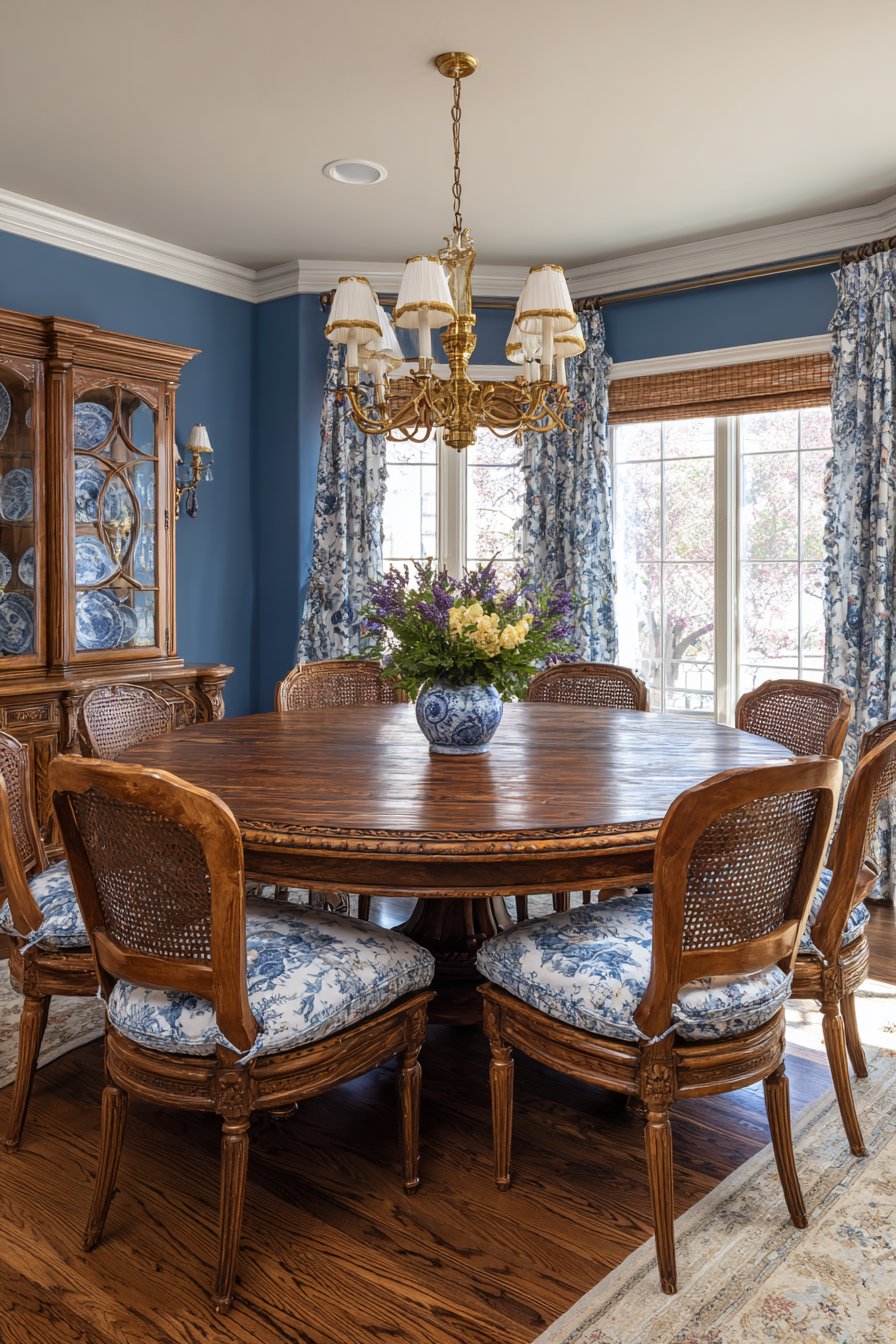
The walls are painted in classic Federal blue with crisp white dentil molding. The ceiling treatment adds architectural sophistication. A brass chandelier with fabric pleated shades hangs centered above. Hardwood floors in natural oak feature traditional border inlay.
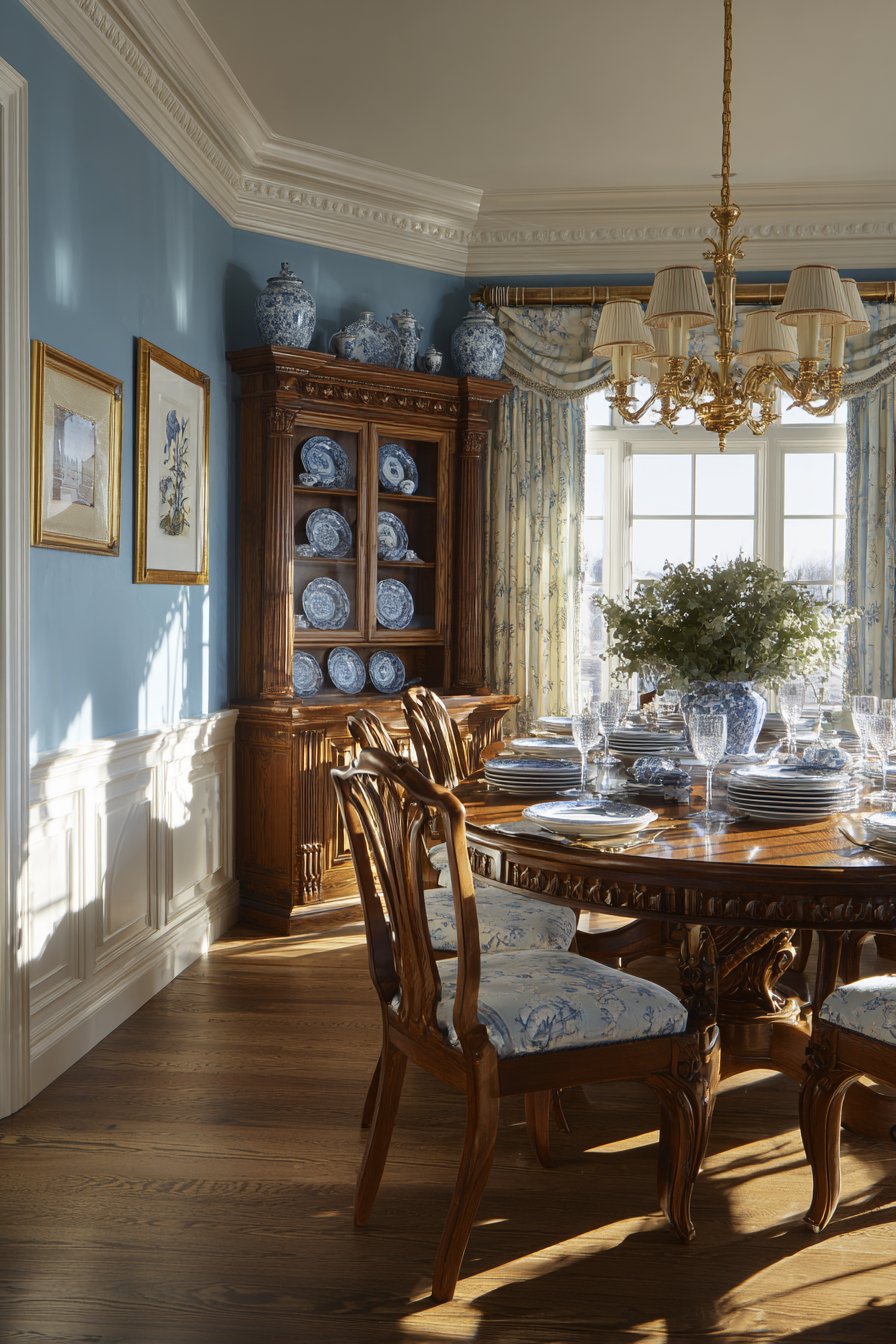
Morning sunlight creates warm glow through half-drawn damask curtains. The soft light enhances the Federal blue walls beautifully. This dining room celebrates traditional American design with authentic period details. Classic furnishing choices create timeless, accessible elegance.
Key Design Tips:
- Choose pie-crust edge tables for decorative traditional detail
- Incorporate balloon-back chairs for classic American styling
- Use toile fabric for traditional pattern with French influence
- Select Federal blue paint for historically accurate wall color
- Install brass chandeliers with fabric shades for soft lighting
- Display blue and white china as traditional decorative collection
15. Quarter-Sawn Oak Arts and Crafts Character
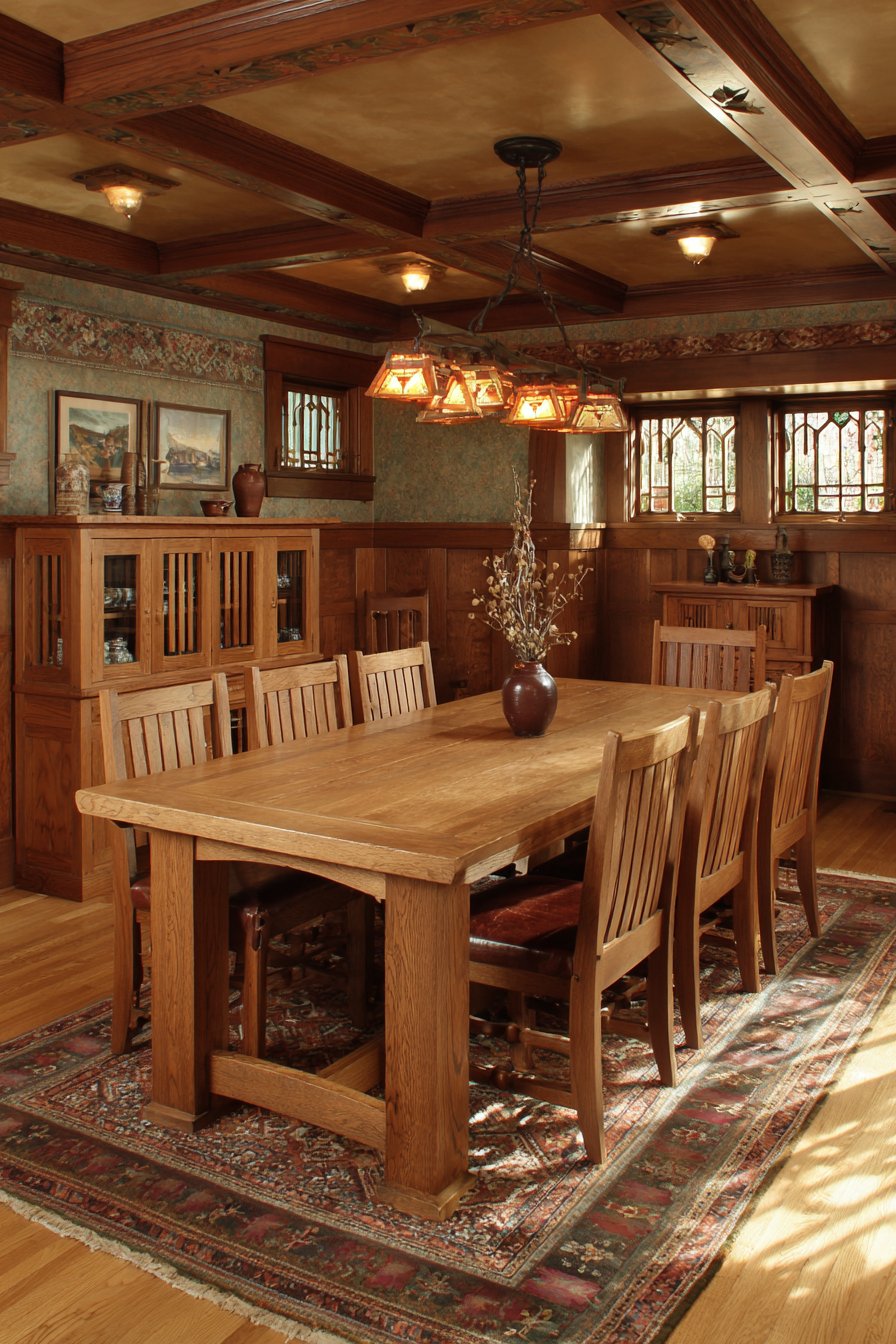
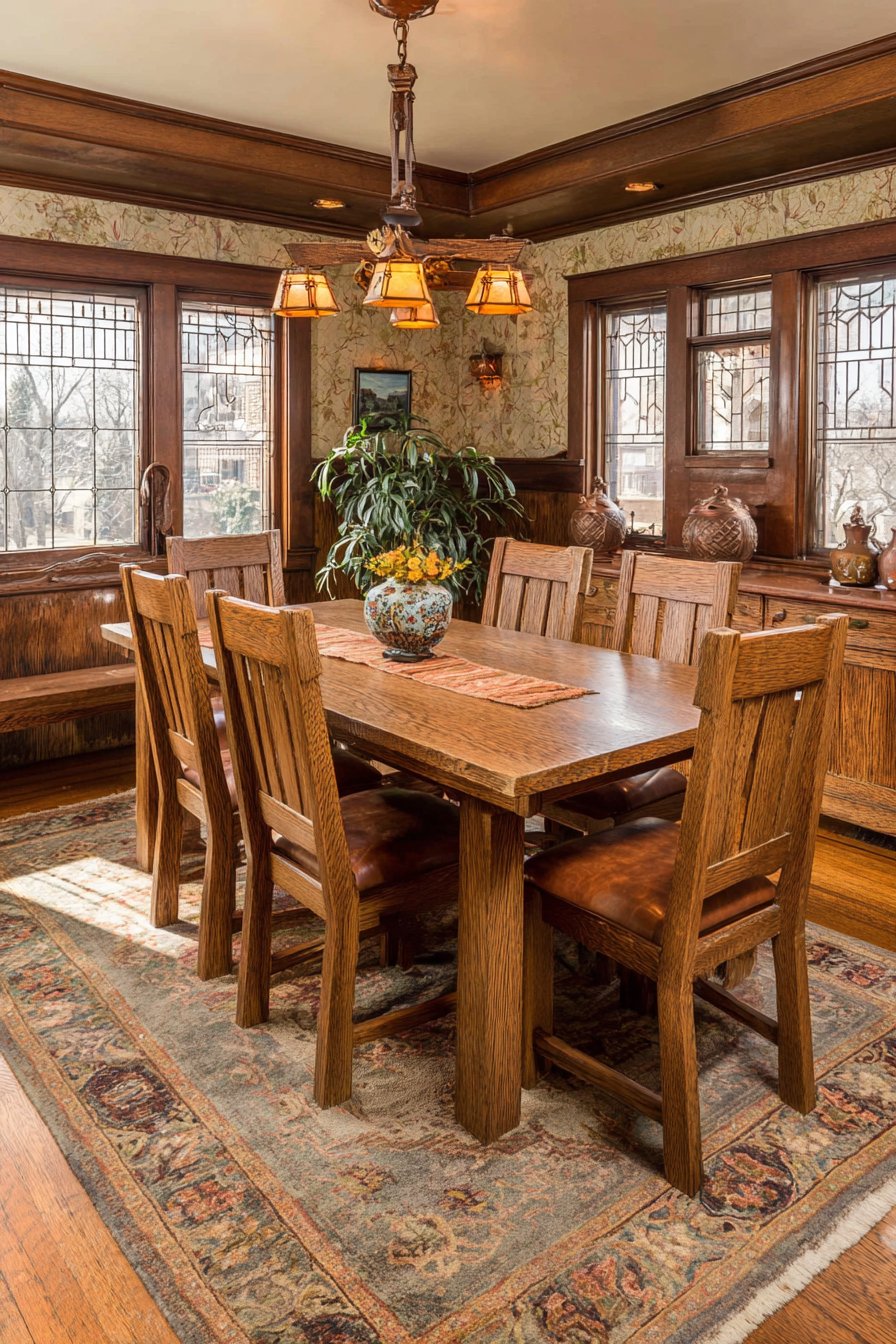
A rectangular table in quarter-sawn oak shows visible ray fleck patterns. Mission-style through-tenon joinery demonstrates superior craftsmanship. Eight Arts and Crafts dining chairs feature leather slip seats. Natural patina adds warmth and authentic age characteristics.
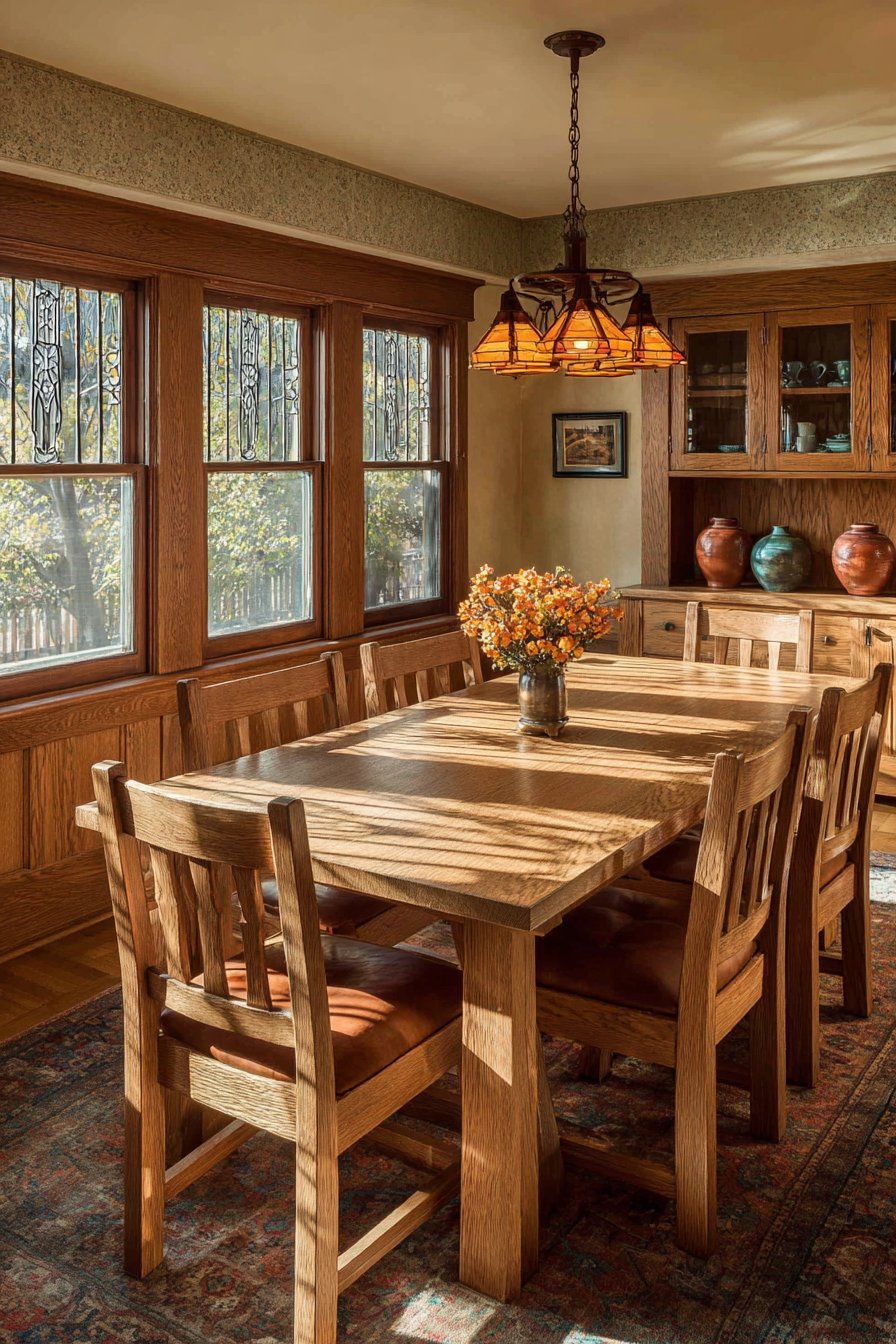
A traditional built-in buffet with leaded glass cabinet doors displays art pottery. Classic picture rail adorns walls with Morris-inspired wallpaper below. A craftsman-style chandelier with amber glass shades provides warm illumination. Oak floors with traditional border pattern show honest wear.
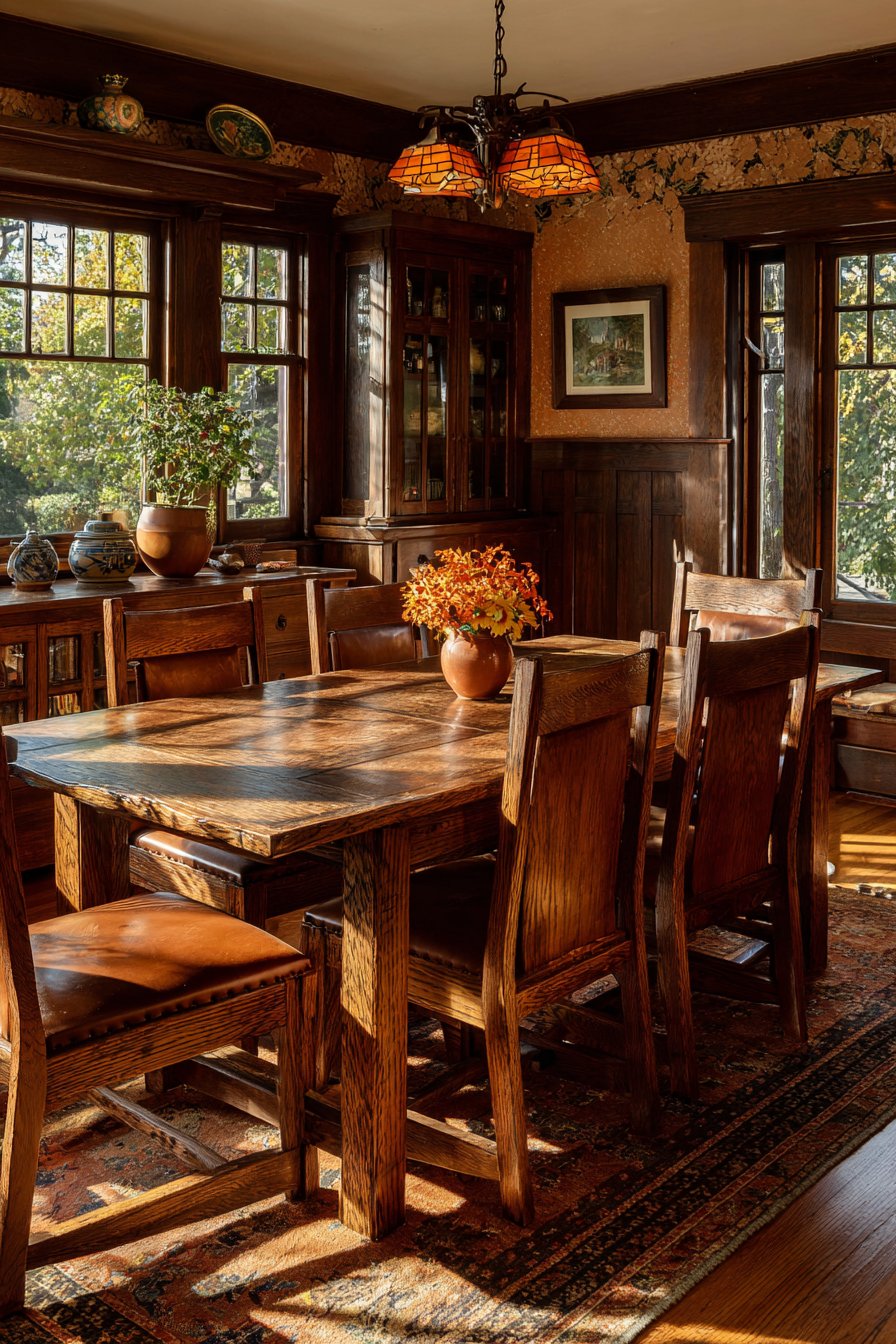
Natural light through prairie-style windows creates geometric shadow patterns. The architectural glass adds another layer of traditional craftsmanship. This dining room proves traditional design encompasses diverse historical movements. Period authenticity creates powerful, cohesive traditional aesthetic.
Key Design Tips:
- Select quarter-sawn oak for distinctive ray fleck grain patterns
- Incorporate through-tenon joinery for visible craftsmanship
- Use Morris-inspired wallpaper for Arts and Crafts authenticity
- Choose leather slip seats for traditional texture and patina
- Install craftsman chandeliers with amber glass for warm light
- Display art pottery as period-appropriate decorative collection
16. Maple Gate-Leg with Windsor Charm
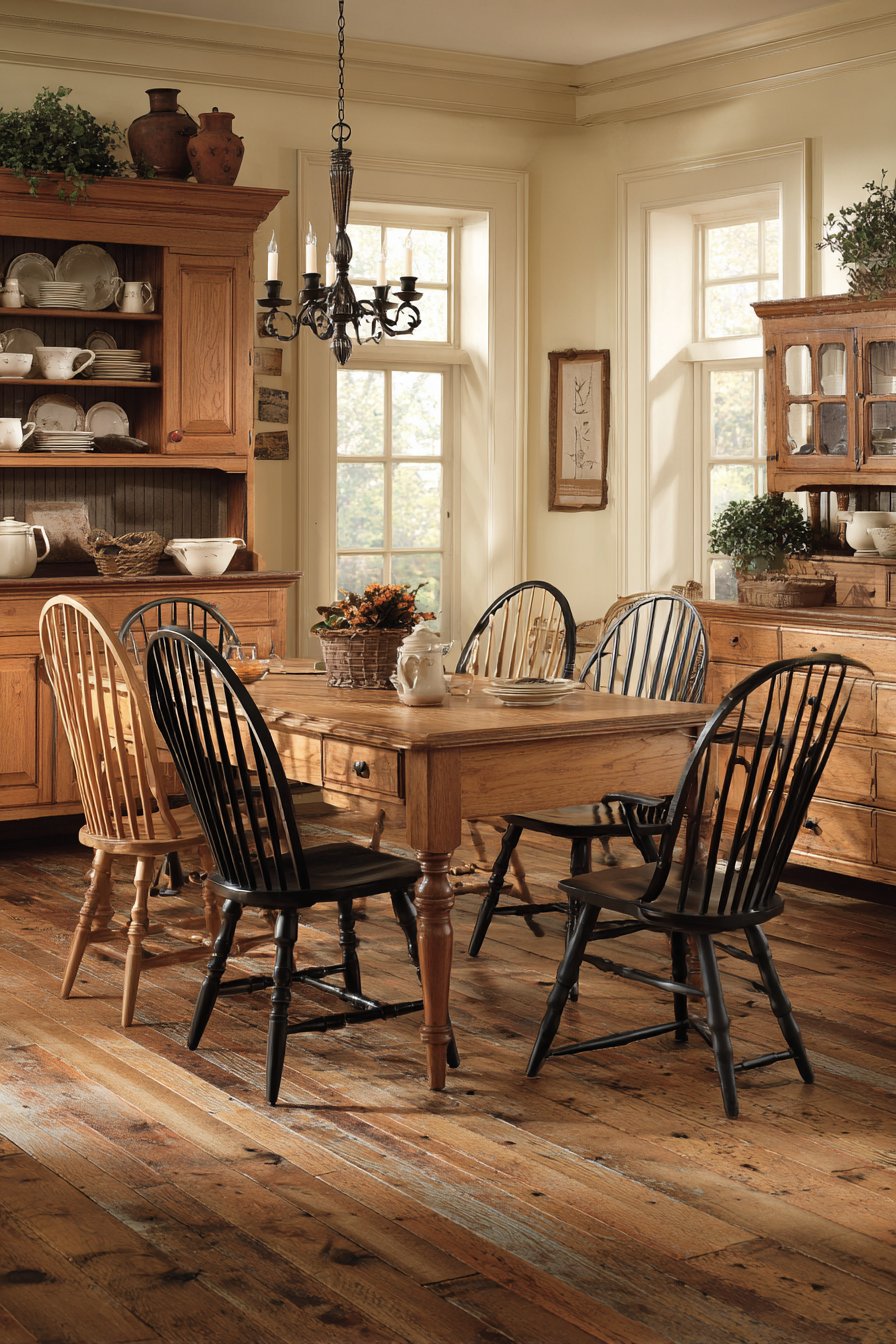
A gate-leg drop-leaf table in aged maple features original hardware. Gentle wear patterns add authentic character and historical interest. Expanded, it seats six traditional Windsor chairs comfortably. Spindle backs in mixed wood tones create collected traditional appearance.
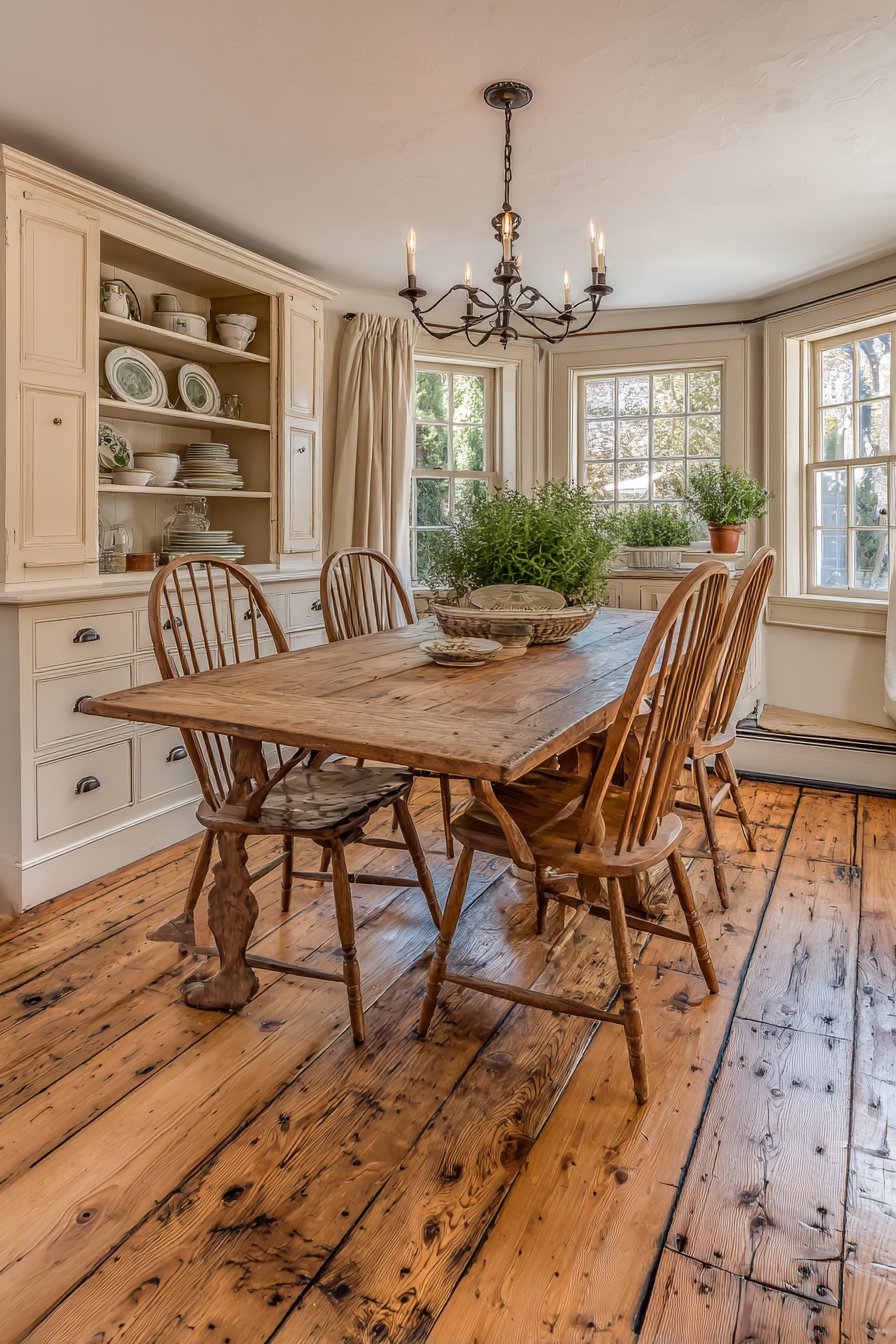
A traditional corner hutch displays everyday dishes and practical serving pieces. Walls are painted in classic colonial cream with simple chair rail. Plate rail molding adds practical display space for decorative pottery. A simple iron chandelier with candle-style lights provides ambient lighting.
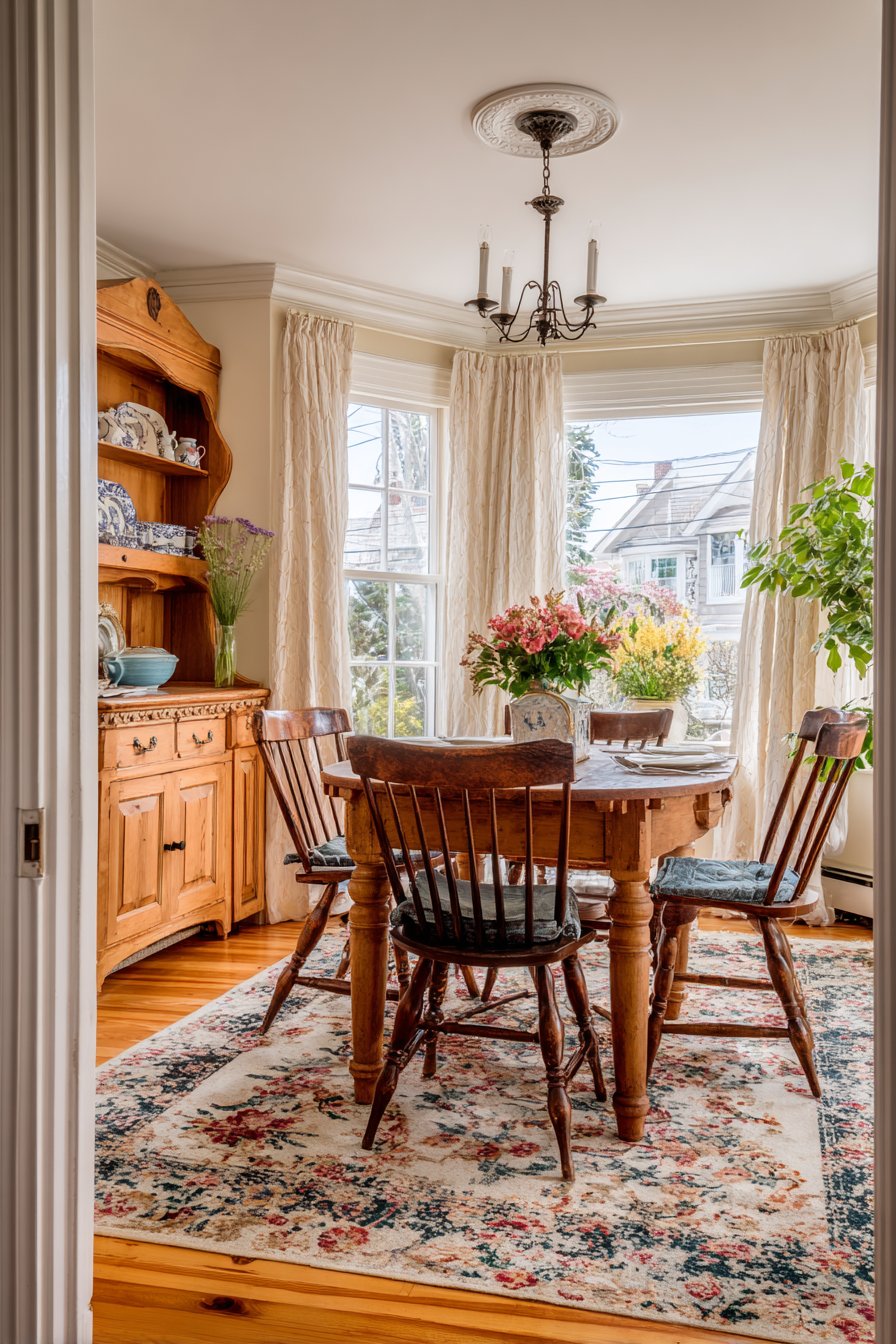
Wide pine floorboards show natural variation and age characteristics. The warm flooring enhances the accessible traditional aesthetic. Soft daylight from multiple windows with simple muslin curtains creates inviting atmosphere. Comfortable traditional family dining spaces need not sacrifice style.
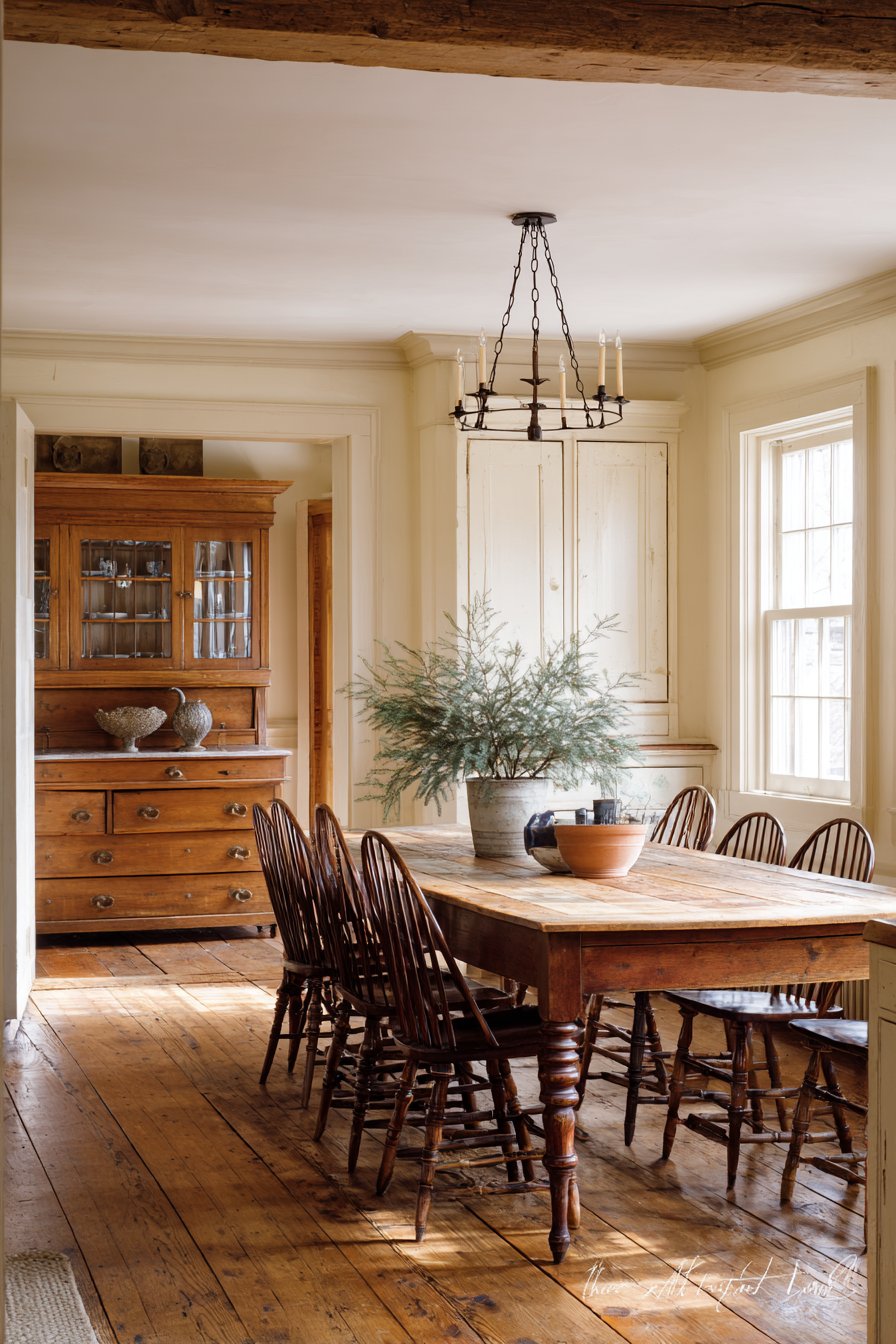
Key Design Tips:
- Choose gate-leg tables for maximum flexibility in small spaces
- Incorporate Windsor chairs for quintessential traditional American styling
- Use colonial cream paint for warm traditional wall color
- Select plate rail molding for functional decorative display
- Install simple iron chandeliers for unfussy traditional lighting
- Embrace natural wood variation as desirable traditional character
17. Cherry Pembroke with Hepplewhite Refinement
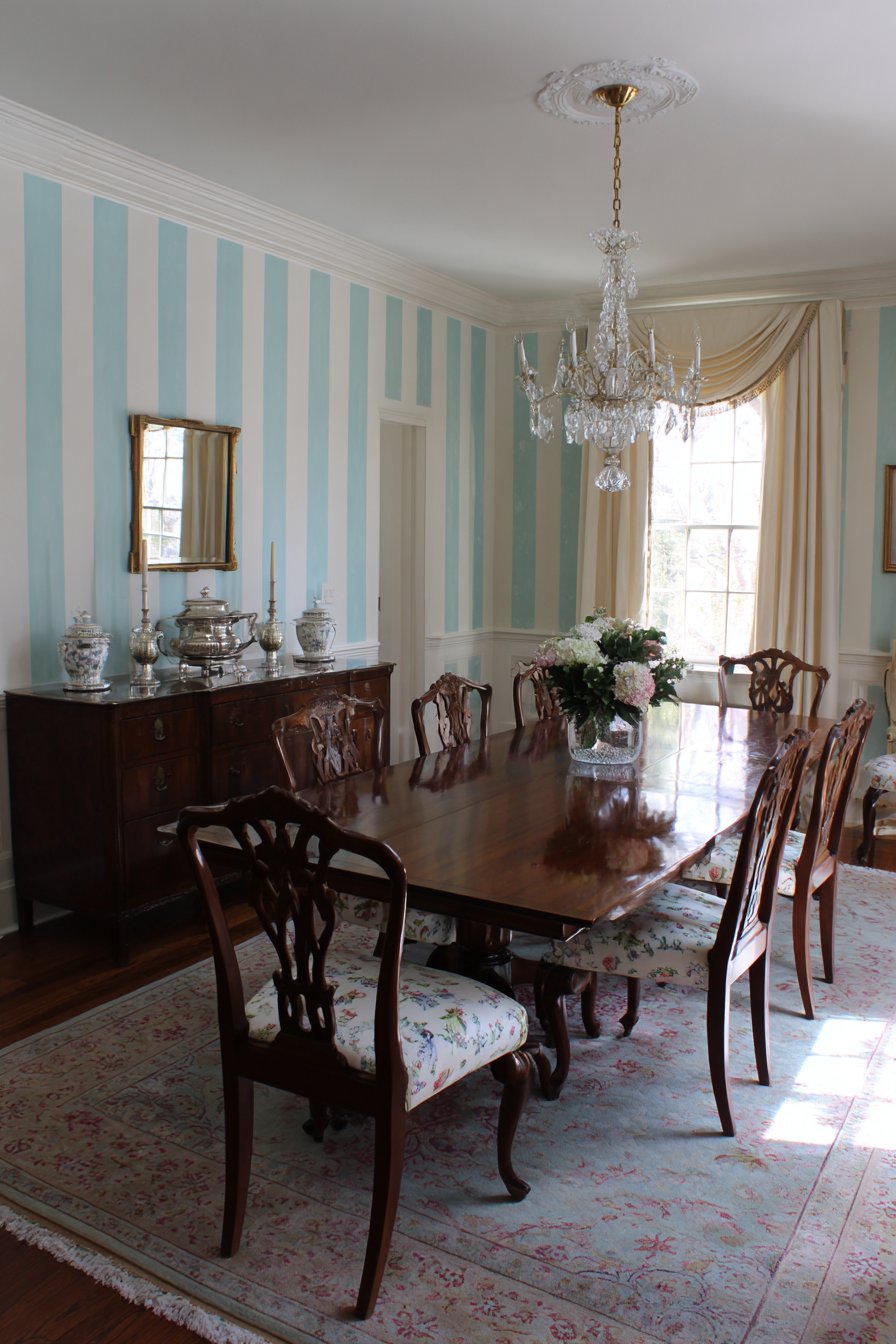
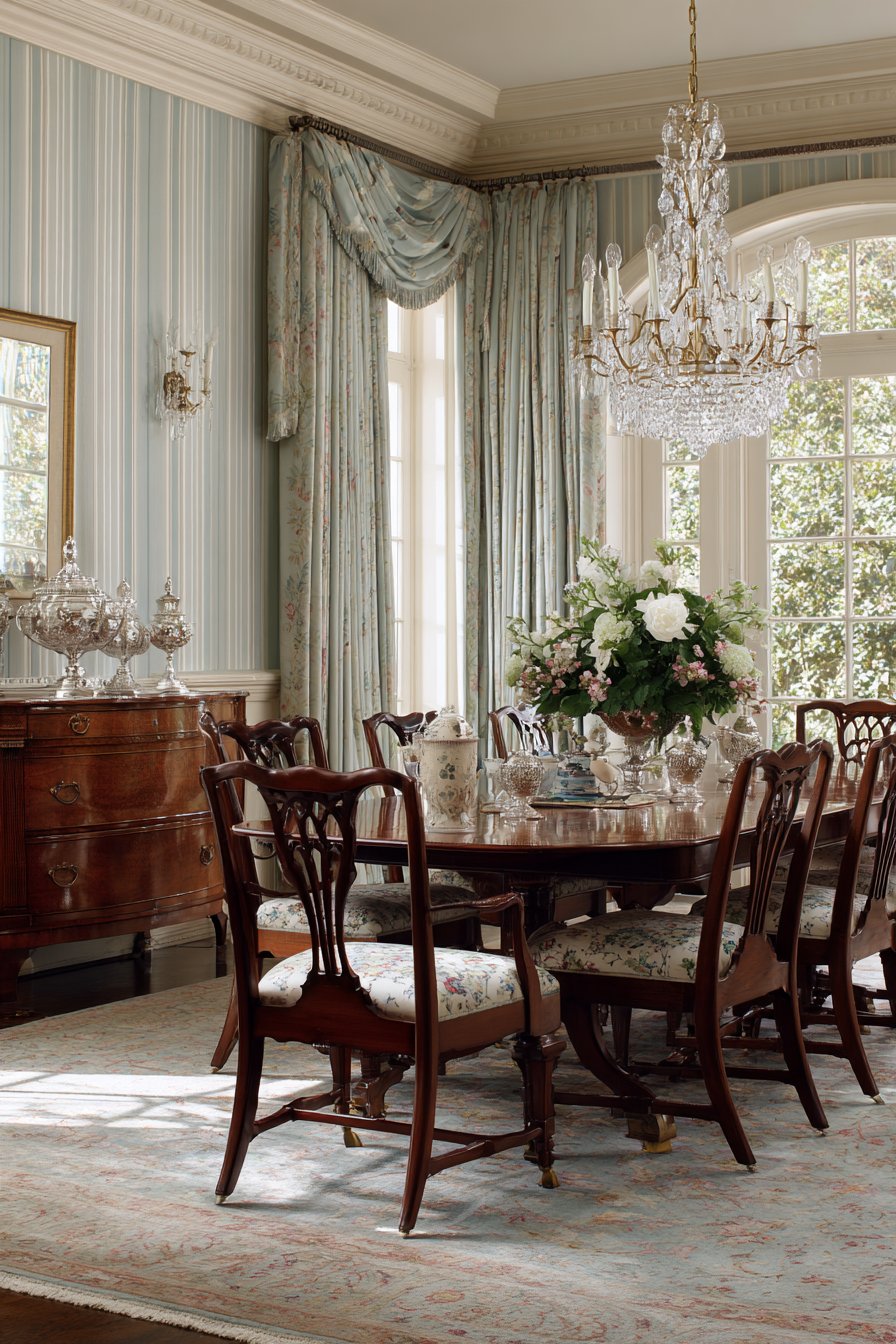
An elegant Pembroke table in cherry wood features delicate turned legs. Original brass casters demonstrate quality period construction. Eight Hepplewhite chairs with shield backs surround the extended table. Upholstered seats in traditional needlepoint add handcrafted detail.
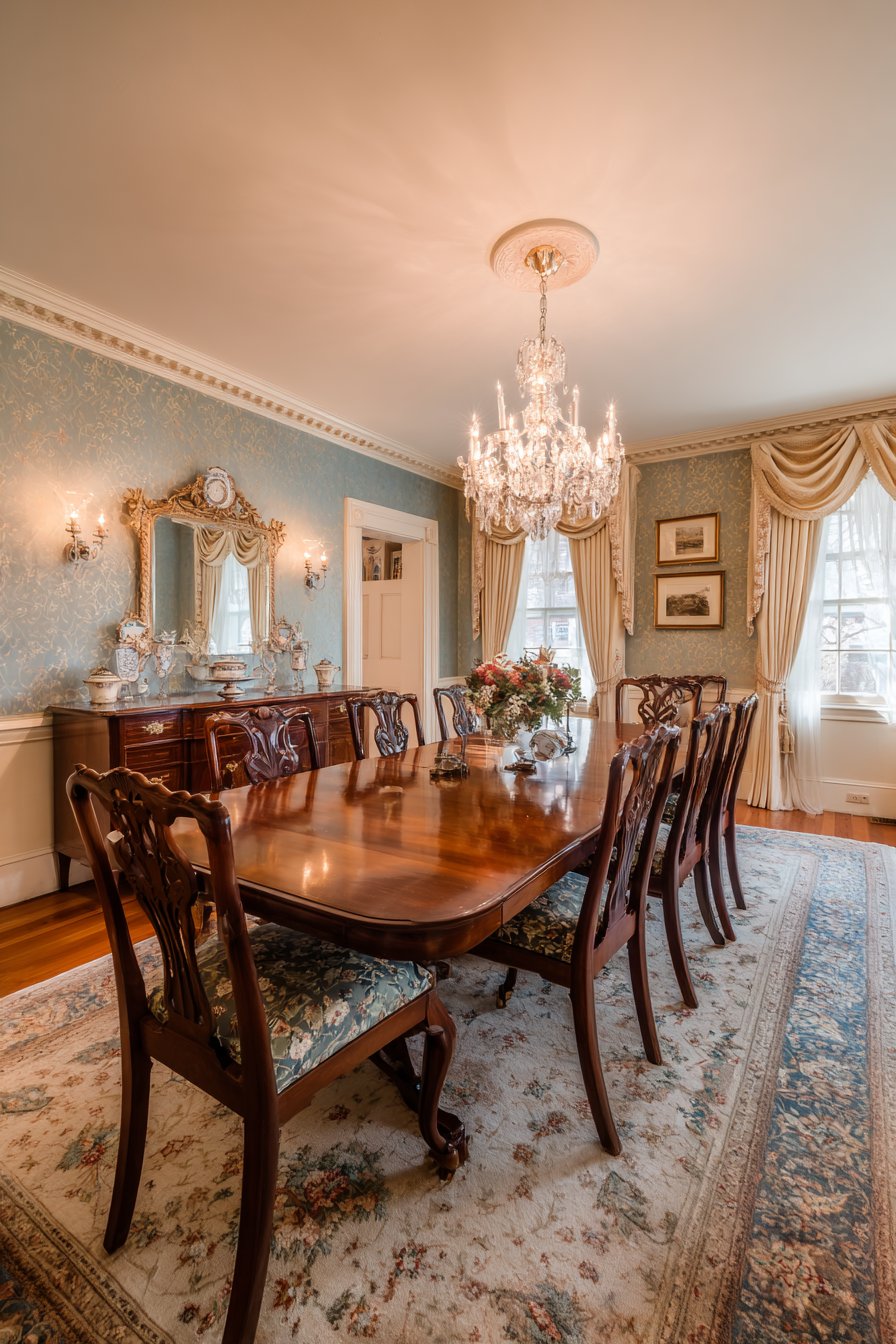
A matching bow-front sideboard displays gleaming silver service. Traditional striped wallpaper in cream and soft blue covers the walls. Elaborate crown molding adds architectural sophistication. A crystal chandelier with traditional candle arms provides formal lighting.
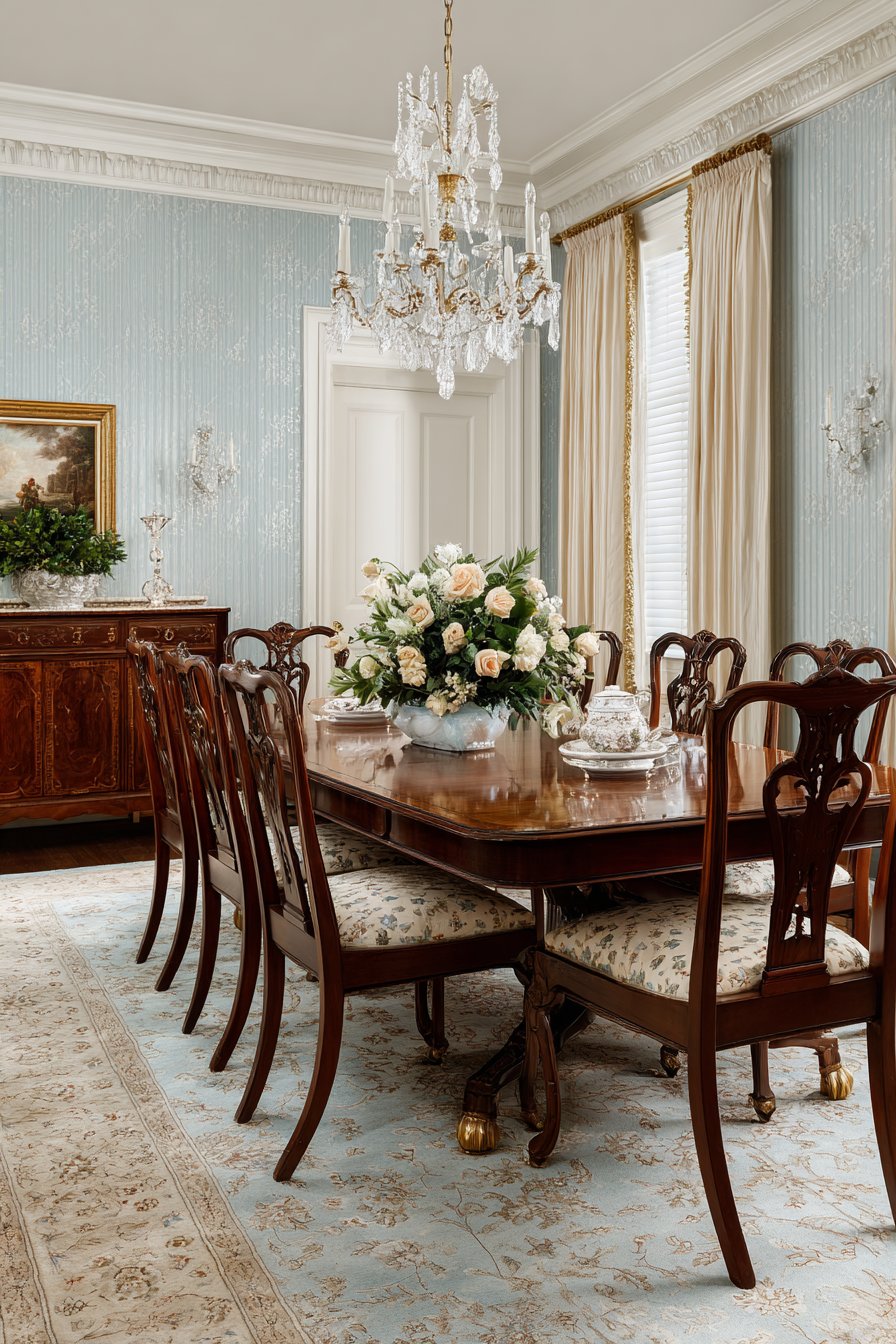
An antique Tabriz rug in soft colors anchors the refined arrangement. Natural light filtered through silk swag curtains highlights the formal setting. This dining room represents traditional design’s most refined interpretation. Period elegance and sophisticated traditional taste create memorable spaces.
Key Design Tips:
- Select Pembroke tables for delicate traditional proportions
- Incorporate Hepplewhite chairs for refined Federal-period styling
- Use bow-front sideboards for elegant curved traditional forms
- Choose striped wallpaper for subtle traditional pattern
- Install crystal chandeliers with candle arms for maximum formality
- Display silver service as functional decorative elements
18. Pine Farmhouse with Mismatched Informality
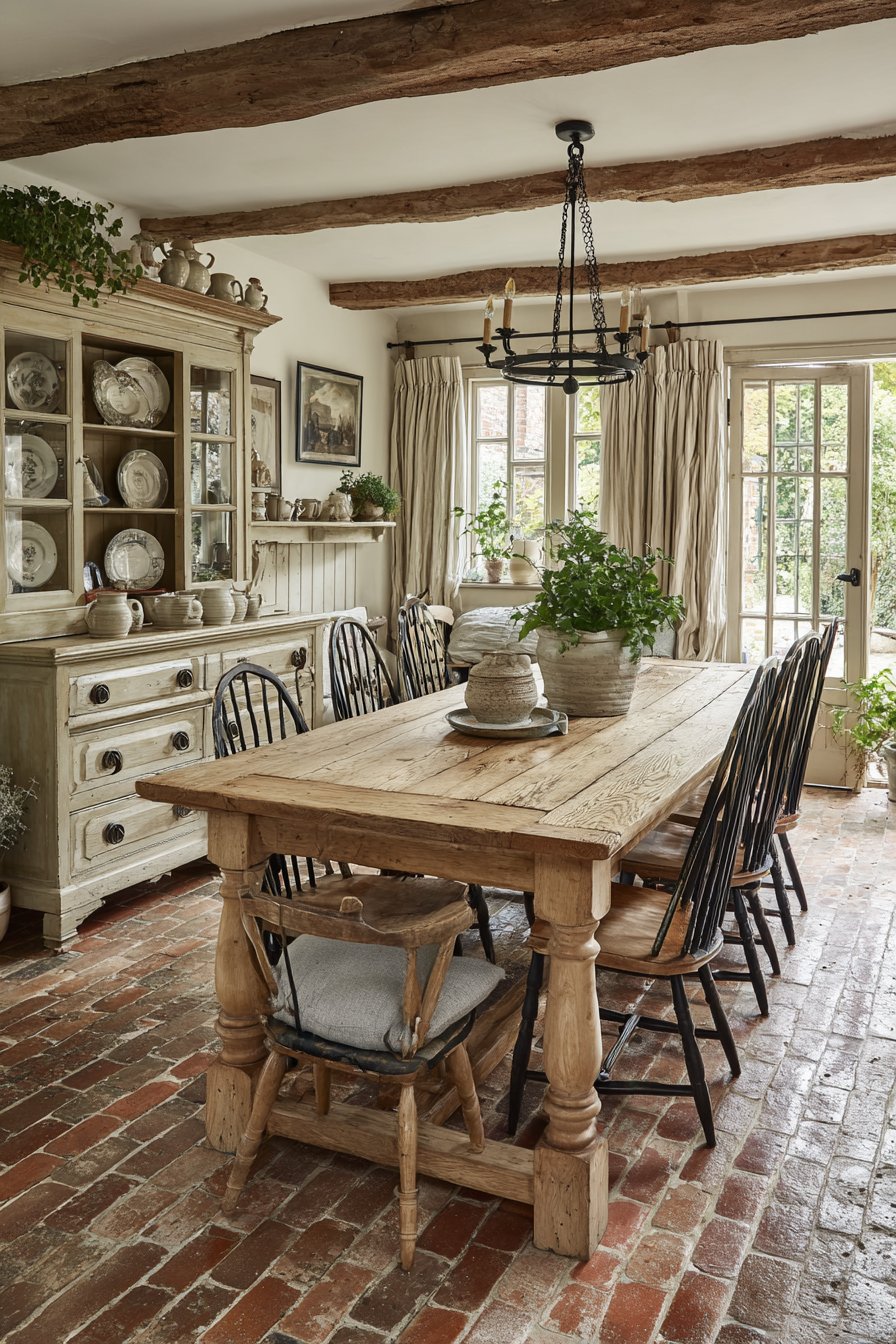
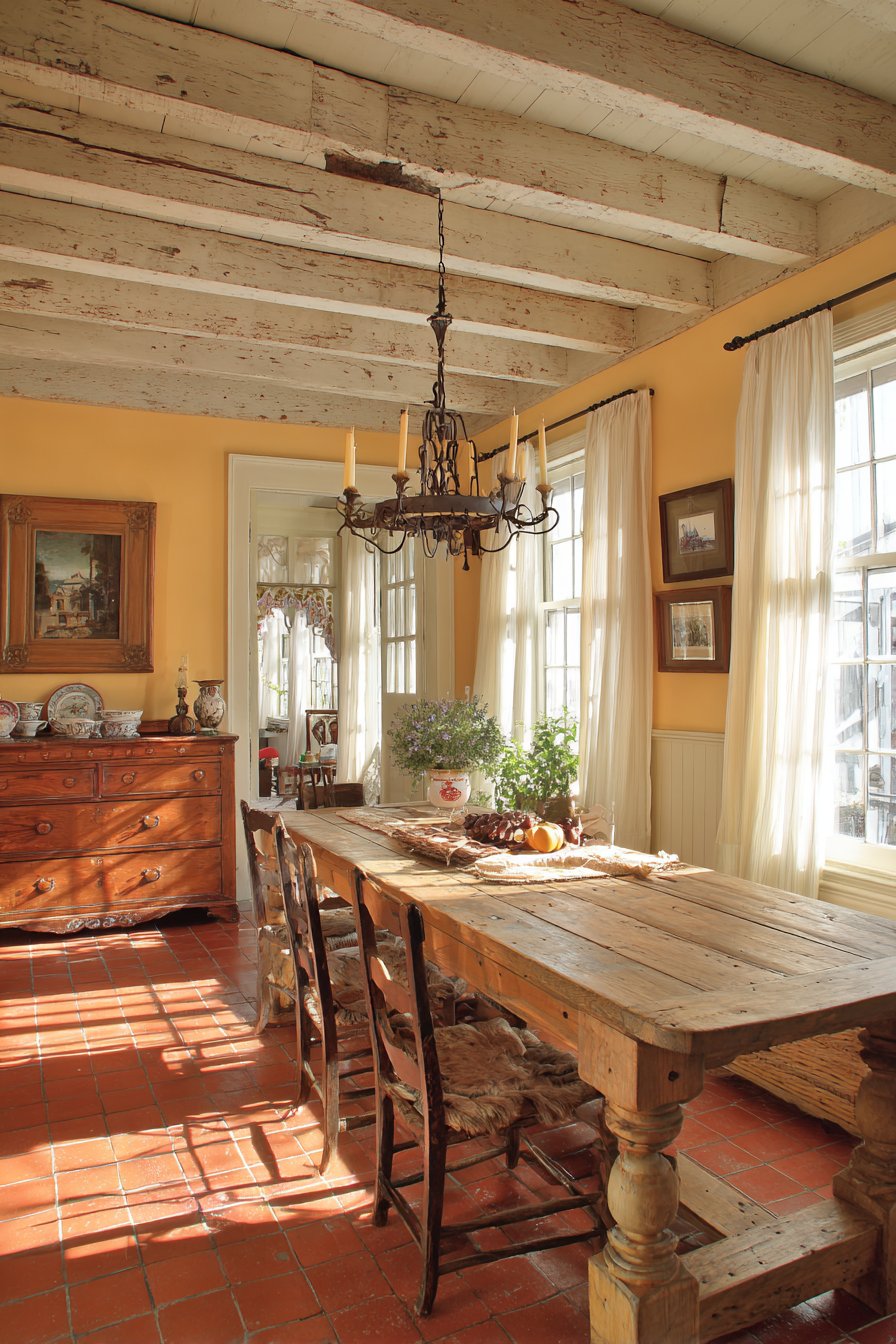
A rustic farmhouse table in thick pine planks features chunky turned legs. Authentic tool marks and age characteristics add genuine historical interest. Ten mismatched traditional chairs create intentionally informal look. Ladder-backs and spindle-backs in various finishes add collected charm.
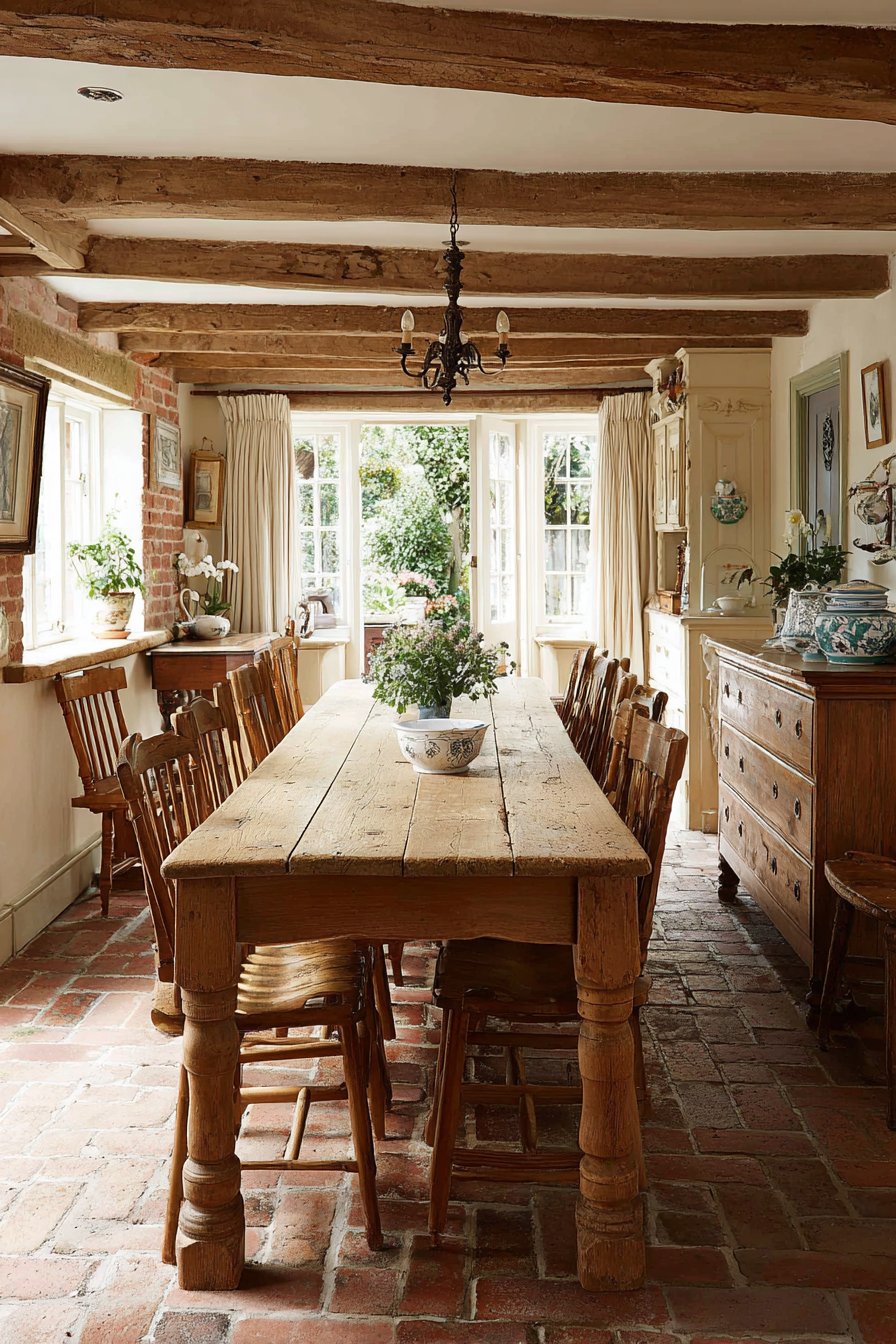
A traditional Welsh dresser displays everyday pottery and practical serving pieces. Walls are painted in warm buttercream with simple baseboards. Picture rail adds subtle architectural detail without formality. A wrought iron chandelier with simple candle cups hangs from exposed beams.
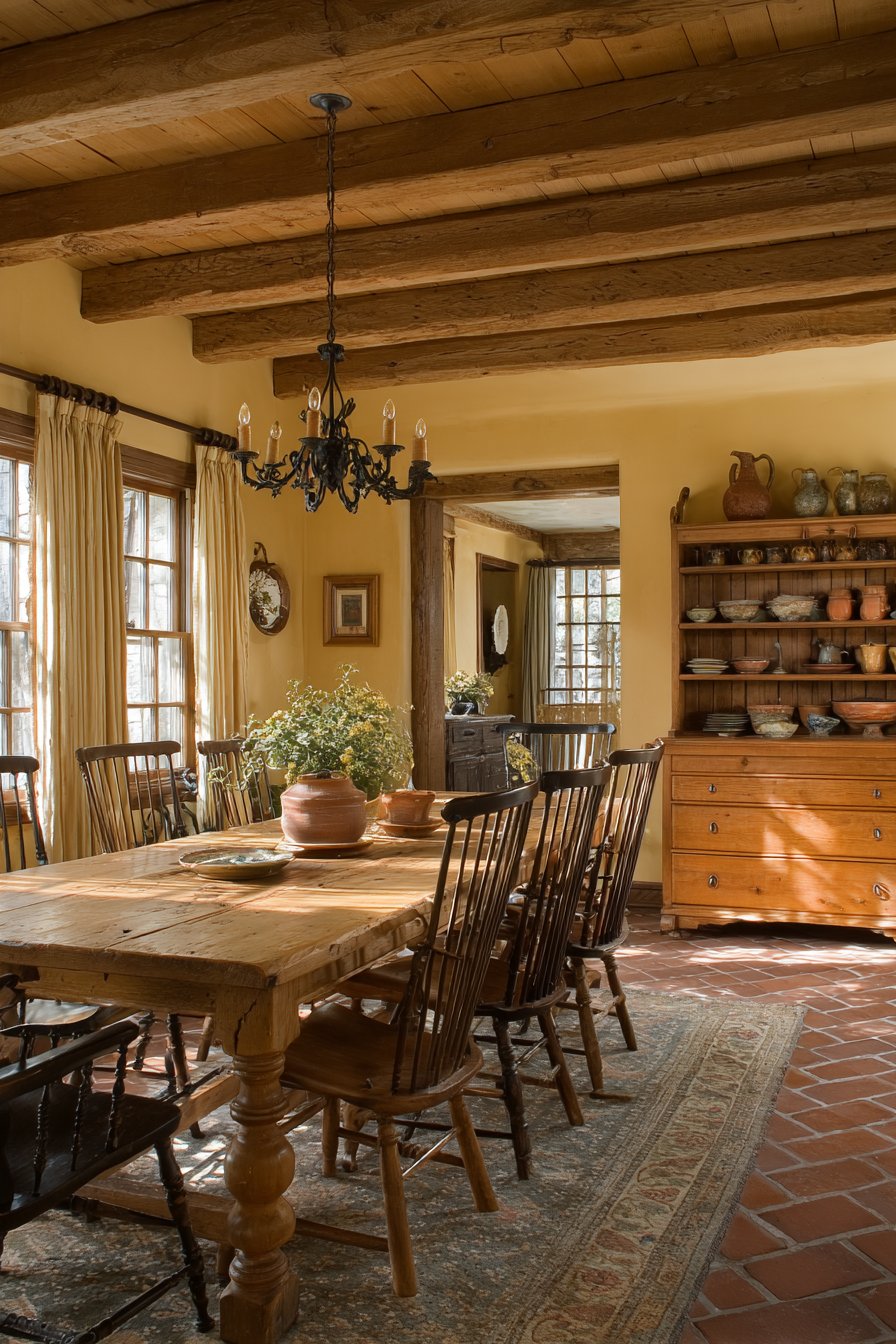
Brick red tile flooring adds warmth and practical durability. The color coordinates beautifully with buttercream walls. Abundant natural light through casement windows with gathered linen curtains illuminates the space. Relaxed traditional country dining aesthetic welcomes family and friends.
Key Design Tips:
- Choose chunky farmhouse tables for rustic traditional character
- Incorporate mismatched chairs for relaxed traditional styling
- Use brick red tile flooring for warmth and durability
- Select warm buttercream paint for inviting traditional walls
- Install exposed ceiling beams for architectural interest
- Embrace tool marks and age as authentic traditional details
19. Mahogany Partners Table Adaptation
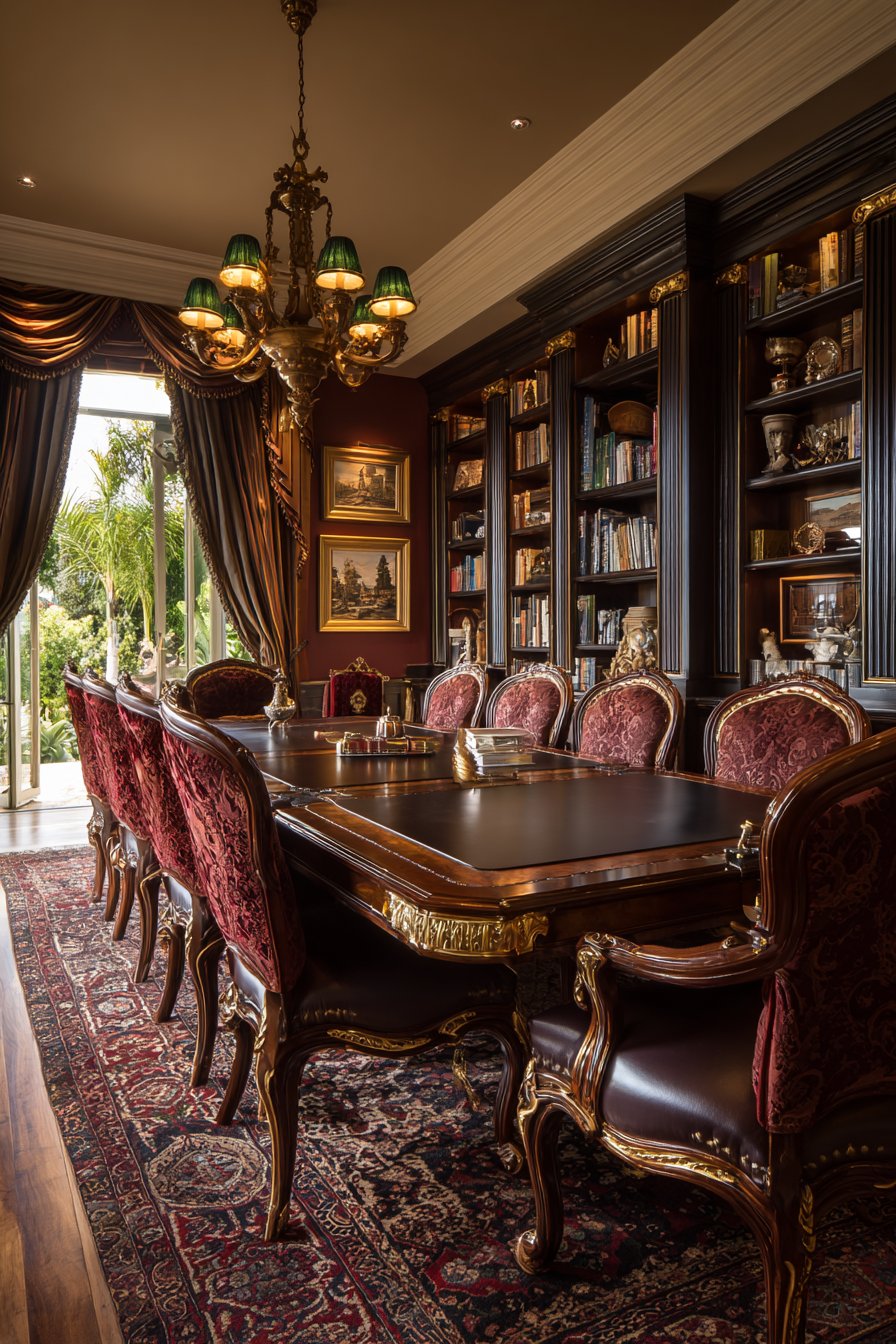
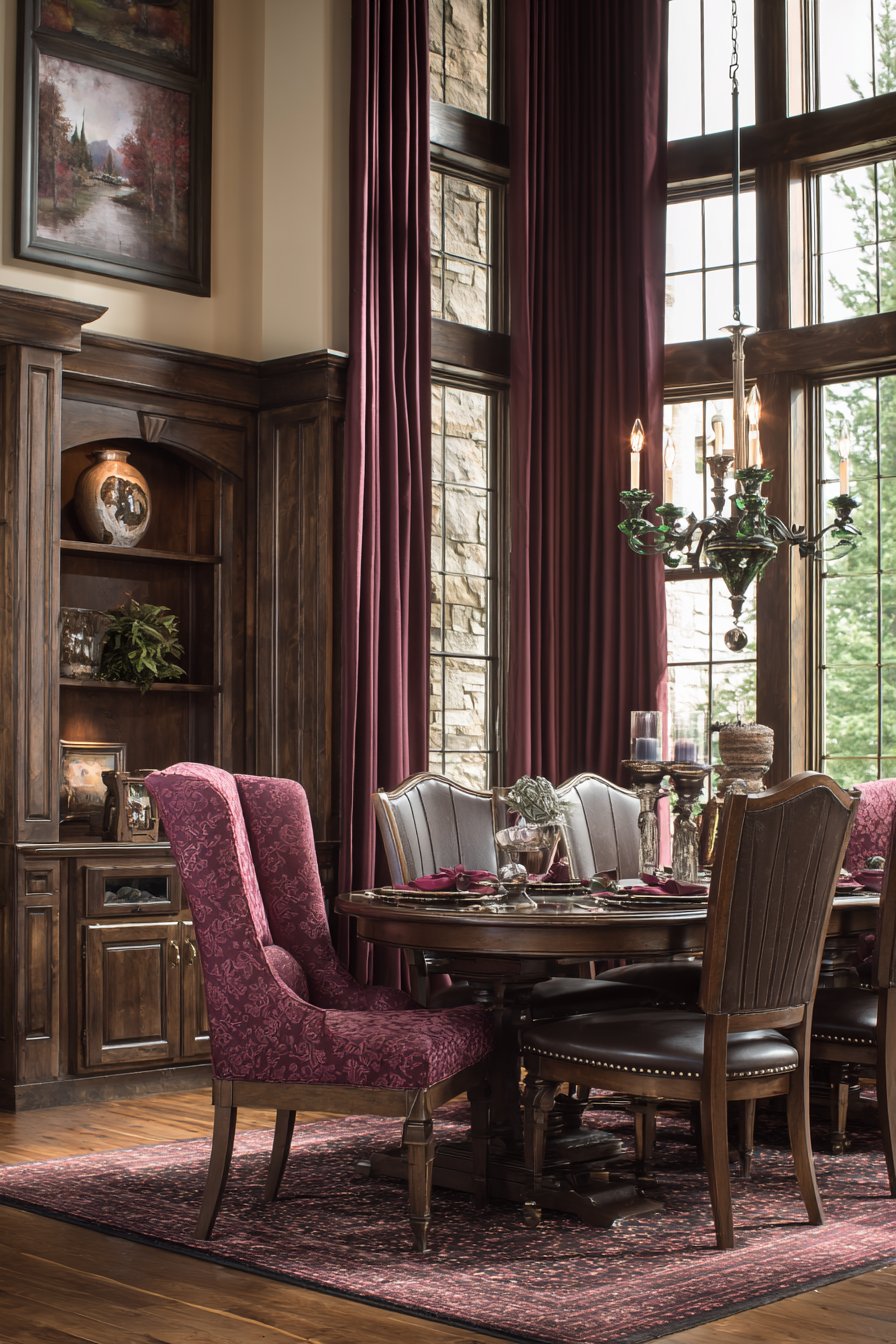
A partners table in mahogany features tooled leather inset top. Brass corner protectors add decorative detail and protection. This unconventional dining surface seats eight traditional dining chairs. Curved backs and damask upholstery in deep garnet add formal elegance.
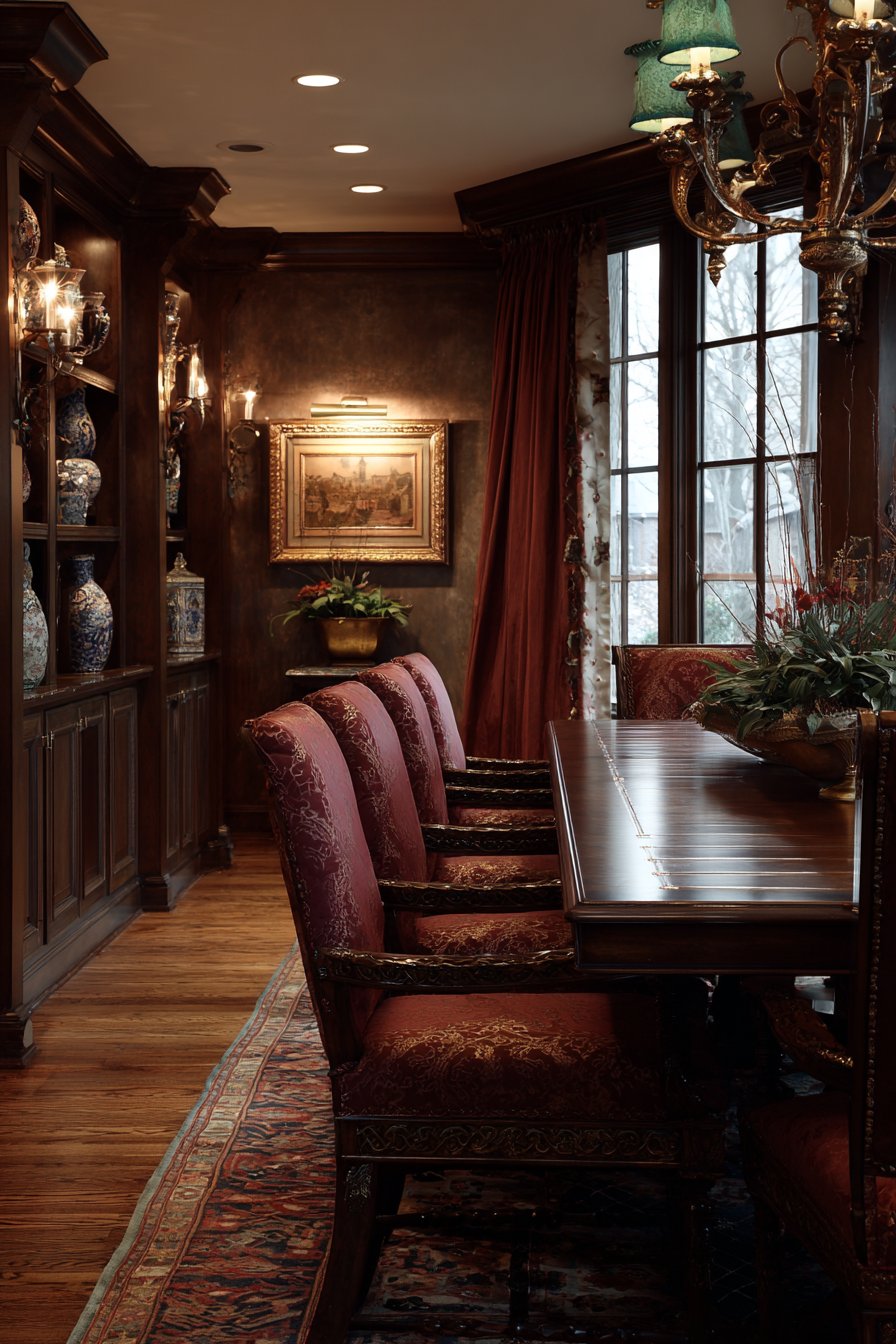
A traditional library bookcase adapted as china storage displays decorative pieces. Books add intellectual interest alongside traditional tableware. Walls feature traditional paneling in dark walnut with sophisticated richness. Brass picture lights illuminate artwork with focused traditional lighting.
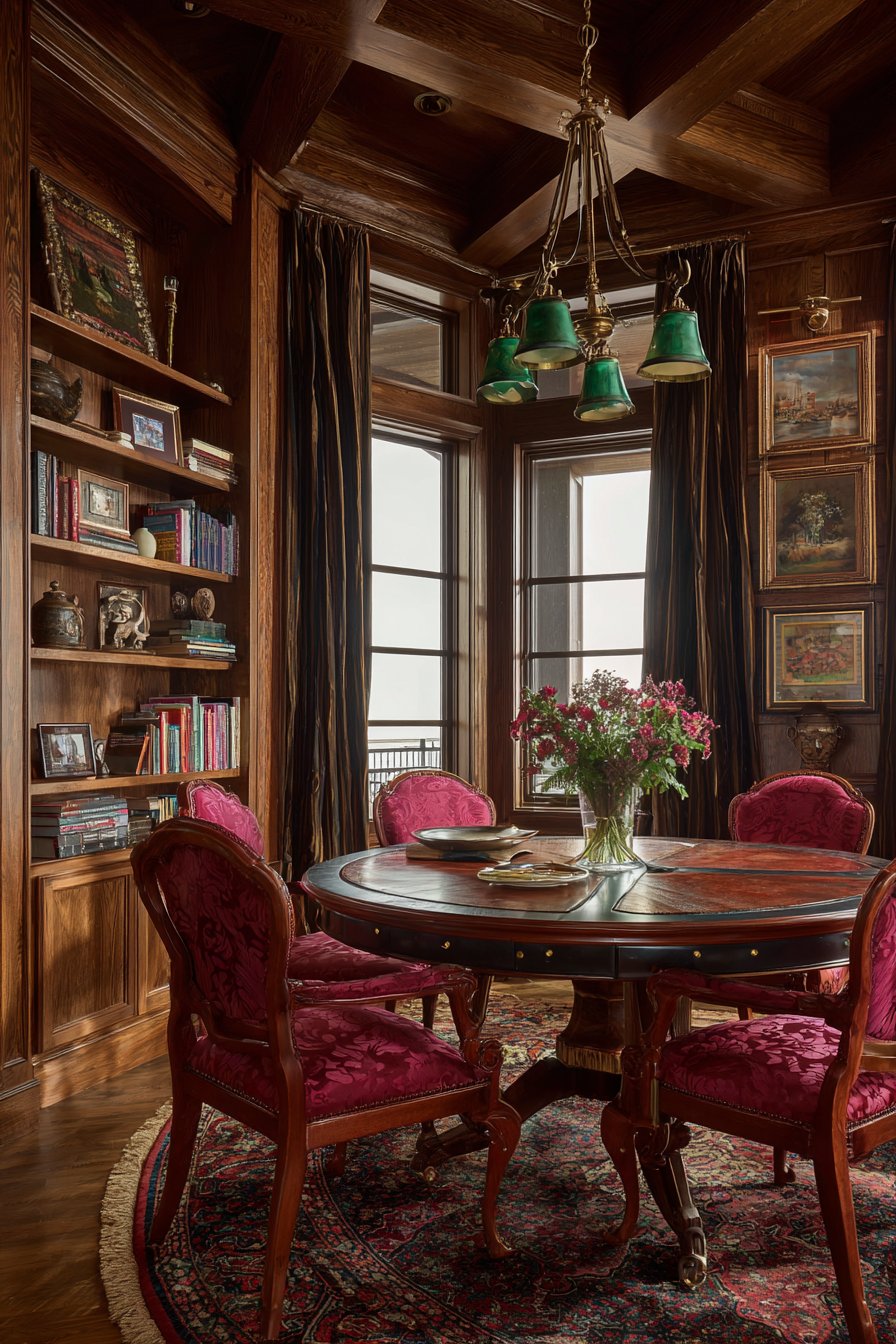
An oriental runner in burgundy and navy protects gleaming hardwood floors. Soft natural light from tall windows with heavy velvet drapes creates intimate atmosphere. This dining room demonstrates traditional design’s flexibility and creative possibilities. Unconventional choices within traditional parameters create unique, memorable spaces.
Key Design Tips:
- Consider non-traditional table forms for unique dining spaces
- Incorporate tooled leather for luxurious traditional texture
- Use library bookcases for interesting china storage alternatives
- Select dark wood paneling for rich traditional atmosphere
- Install brass picture lights for focused traditional illumination
- Embrace unconventional traditional furniture adaptations
20. Cherry Rectangle with Check Fabric Accessibility
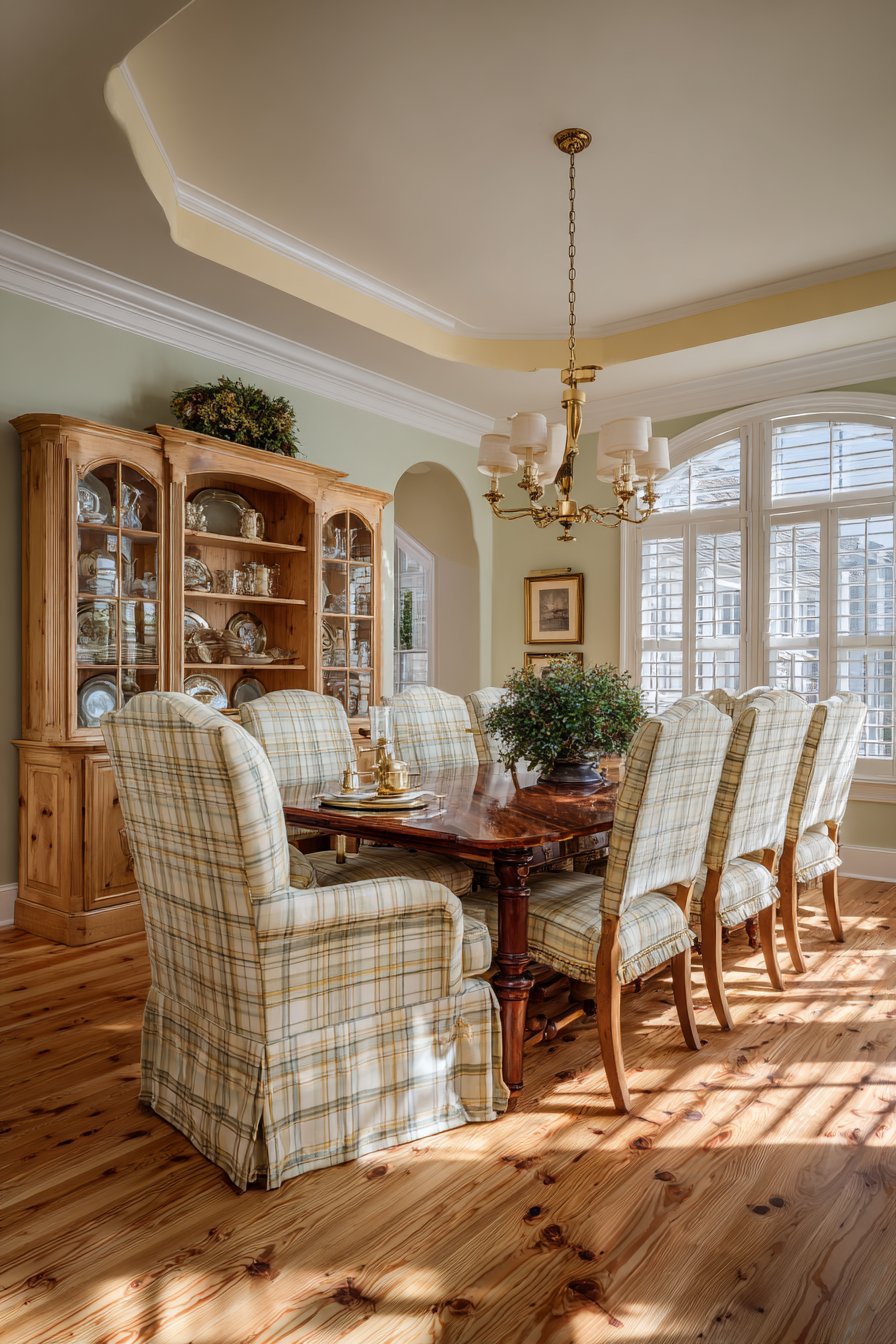
A classic rectangular table in solid cherry features rounded corners. Reeded legs add subtle decorative detail without excessive ornamentation. Eight traditional upholstered dining chairs surround the table comfortably. Seats covered in classic check fabric in cream and sage add approachable pattern.
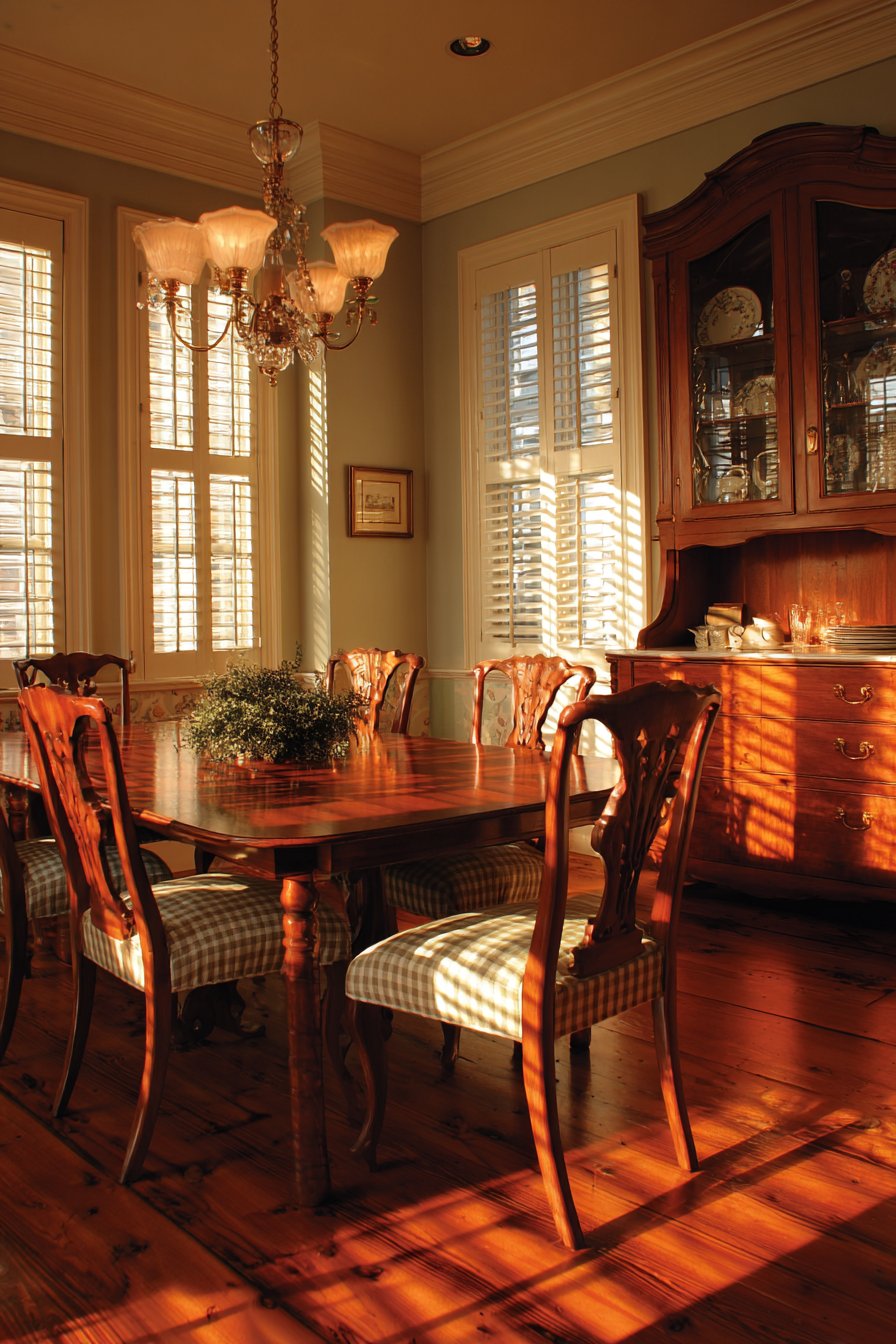
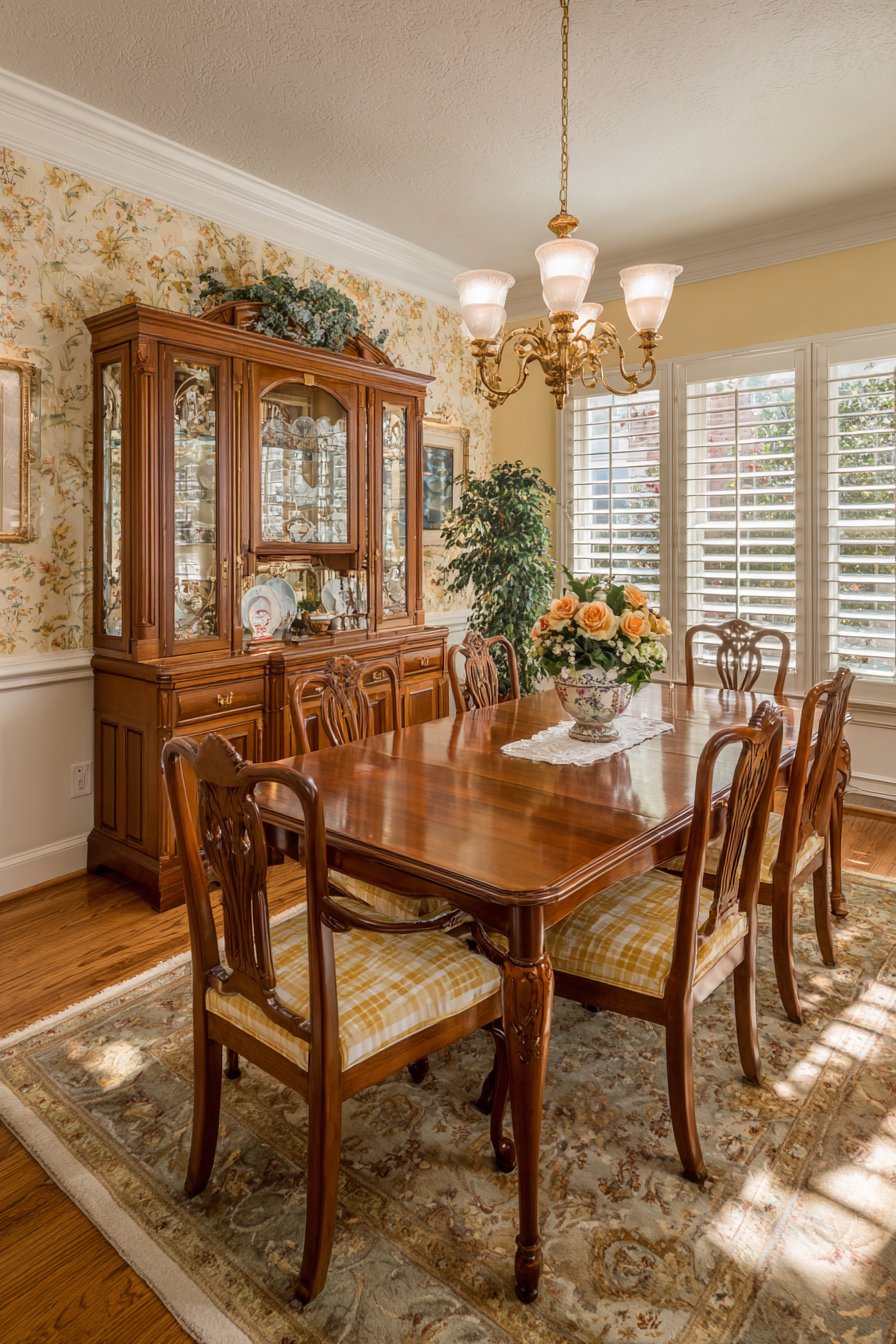
A traditional hutch with glass-front upper cabinets displays china collection. Solid lower doors provide concealed storage. Walls are painted in classic Williamsburg colors with chair rail. Cream upper walls meet sage green lower walls at the traditional division.
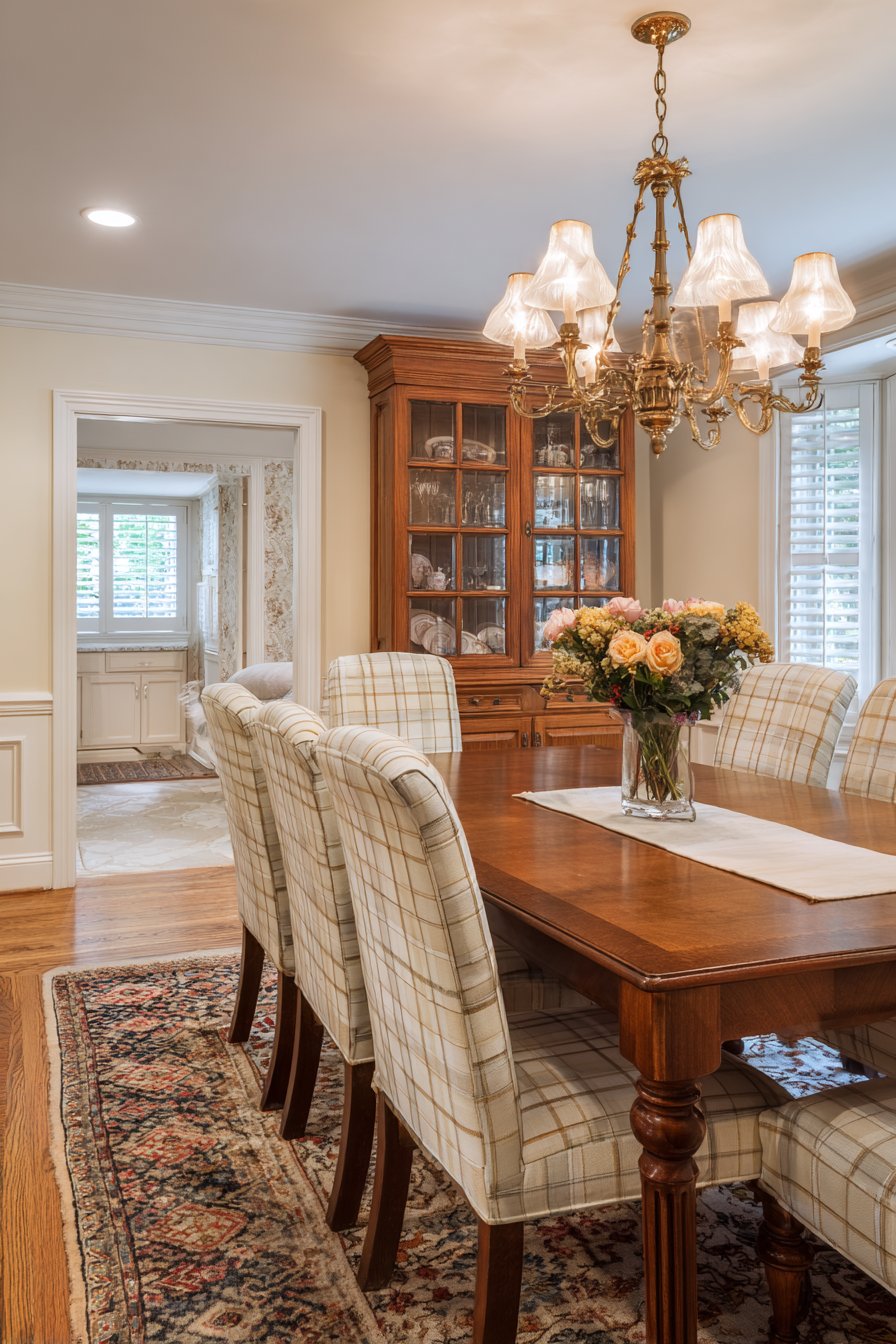
A traditional chandelier with frosted glass shades and brass frame provides even lighting. Heart of pine floors show rich honey tones with natural grain. Soft afternoon light through plantation shutters creates dappled patterns. Timeless traditional dining with accessible elegance serves families beautifully.
Key Design Tips:
- Choose rounded corners for safer traditional tables with children
- Incorporate check fabric for classic traditional pattern
- Use Williamsburg paint colors for historically accurate palettes
- Select frosted glass chandeliers for soft, even traditional lighting
- Install plantation shutters for versatile light control
- Display china collections in glass-front traditional hutches
Why These Traditional Dining Room Designs Are the Best
These traditional dining room designs represent the finest approaches to creating elegant, enduring spaces. Each concept demonstrates thoughtful consideration of classical proportions, quality materials, and authentic period details. The designs showcase remarkable versatility that suits different home styles and personal preferences.
The incorporation of solid hardwoods like mahogany, cherry, walnut, and oak ensures furniture that lasts generations. These materials develop beautiful patina over time, improving with age rather than deteriorating. Traditional upholstery fabrics including damask, silk, velvet, and tapestry provide luxurious texture while maintaining durability. Natural materials consistently outperform synthetic alternatives in both beauty and longevity.
Color theory plays essential roles in successful traditional design. Rich jewel tones like burgundy and navy create formal elegance, while soft neutrals offer approachable sophistication. Historical paint colors including Wedgwood blue, colonial cream, and Federal blue provide authentic period character. These carefully chosen palettes create cohesive, timeless environments that never feel dated.
Architectural details elevate traditional dining rooms from simple spaces to memorable rooms. Crown molding, wainscoting, chair rails, and picture frame molding add dimensional interest and period authenticity. These elements work beautifully in both formal and relaxed traditional settings. Exposed beams, plaster medallions, and traditional millwork create architectural richness that modern construction often lacks.
The versatility of traditional design accommodates various spatial constraints successfully. Round pedestal tables work beautifully in compact spaces, while double pedestal tables command large formal rooms. Gate-leg and drop-leaf tables offer flexibility without sacrificing traditional character. Extension tables adapt to both intimate family dinners and large holiday gatherings.
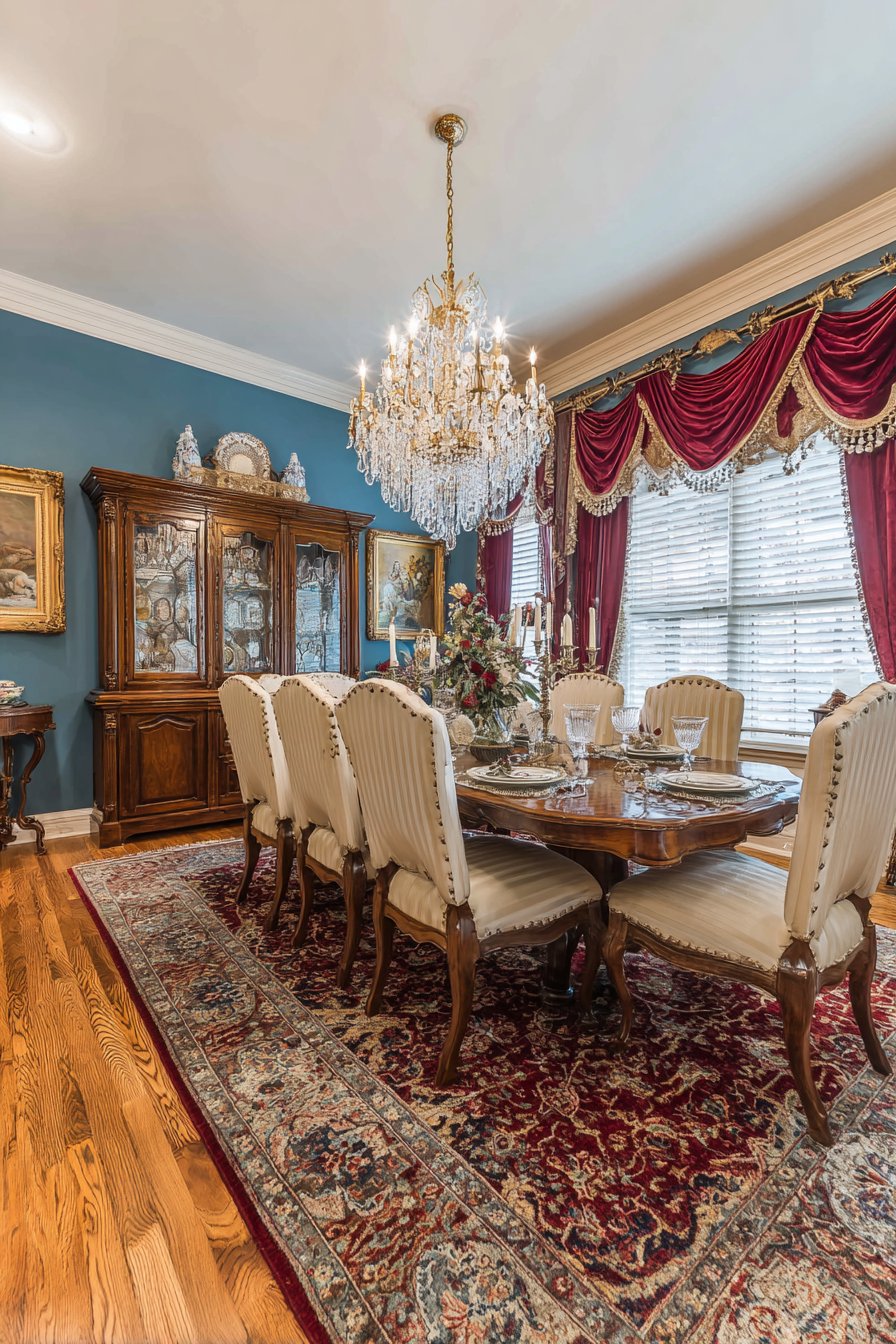
Lighting strategies in traditional dining rooms balance ambient, task, and accent illumination thoughtfully. Crystal chandeliers provide formal elegance and sparkling focal points. Brass fixtures offer warm traditional character with less formality. Wrought iron options suit relaxed traditional and farmhouse aesthetics perfectly. Natural light through various window treatments creates dynamic ambiance throughout the day.
These designs address practical considerations essential for real-world functionality. Durable flooring including hardwood, heart pine, and traditional tile withstands daily family use. Easy-to-clean upholstery fabrics maintain beauty despite regular meals. Storage solutions from built-in hutches to traditional sideboards keep dining essentials organized and accessible.
Sustainability emerges naturally from traditional design principles emphasizing quality over quantity. Investing in solid wood furniture and authentic materials creates pieces that last lifetimes rather than years. This approach reduces waste while creating more beautiful, valuable interiors. Traditional design inherently supports sustainable living through its emphasis on enduring quality.
Conclusion
These traditional dining room designs demonstrate that classical elegance remains entirely relevant for contemporary living. The key takeaways include the importance of quality materials, authentic architectural details, and thoughtful proportions. Solid hardwoods, traditional upholstery fabrics, and period-appropriate lighting create rooms that feel both beautiful and welcoming.
Successful traditional design balances aesthetic appeal with practical functionality for modern families. Whether you prefer formal Federal elegance or relaxed farmhouse charm, traditional principles adapt beautifully. Start by selecting one quality piece like a solid wood table or traditional chandelier. Your dream traditional dining room awaits creation through thoughtful planning, quality materials, and respect for classical design principles that have endured for excellent reasons.