


Mirrors possess an extraordinary ability to transform dining rooms into captivating spaces. They reflect light, expand visual boundaries, and add architectural interest. Strategic mirror placement creates dining environments that feel both spacious and sophisticated.
The art of incorporating mirrors into dining room design has evolved significantly. Modern designers understand mirrors as essential elements rather than mere decorative afterthoughts. They manipulate light, create focal points, and enhance the overall dining experience through careful selection and placement.
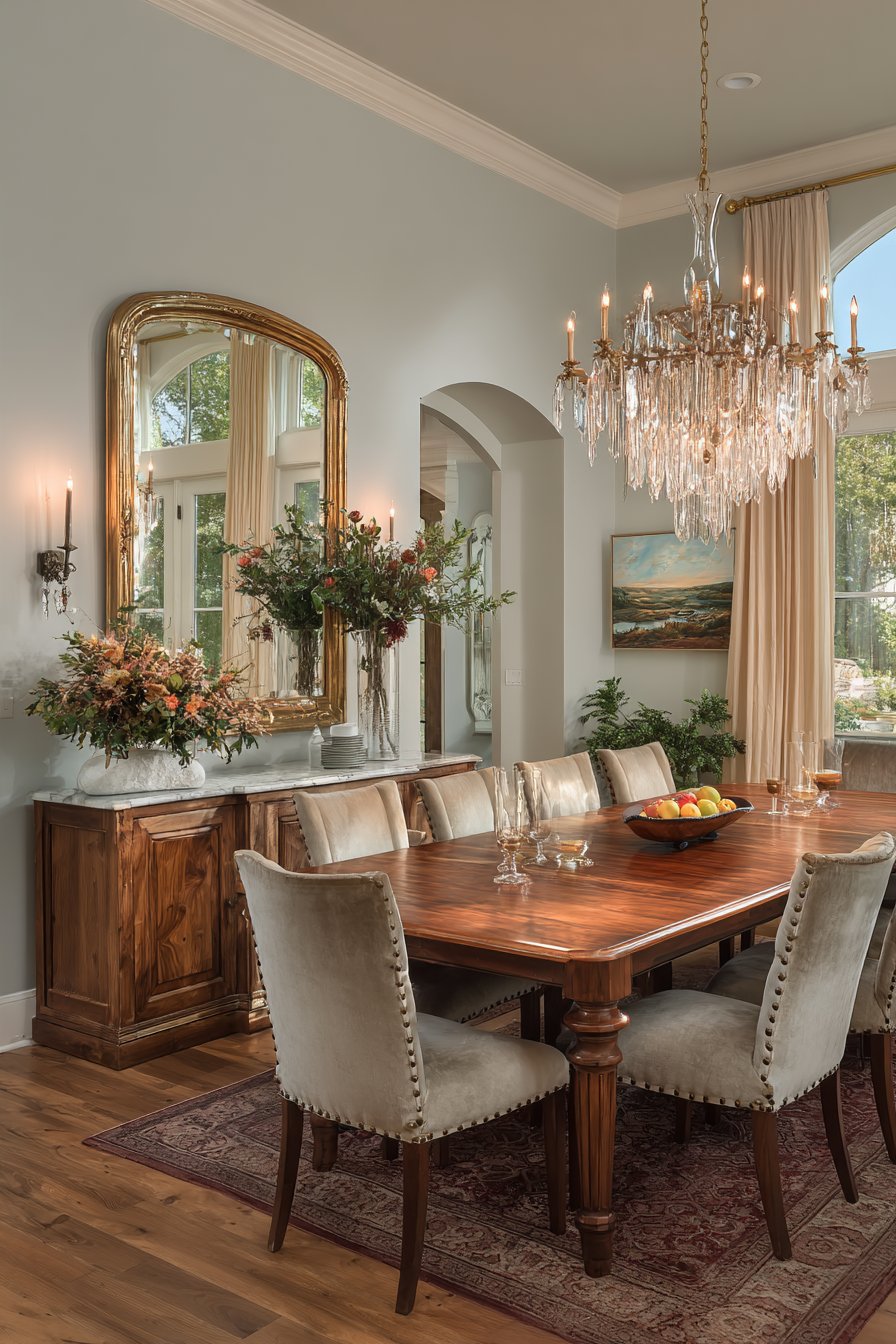
This comprehensive guide explores twenty distinctive mirror dining room concepts. Each design showcases unique approaches to frame styles, placement strategies, and aesthetic integration. From minimalist frameless installations to ornate vintage pieces, these ideas demonstrate mirrors’ versatility in elevating dining spaces.
1. Contemporary Beveled Edge Elegance
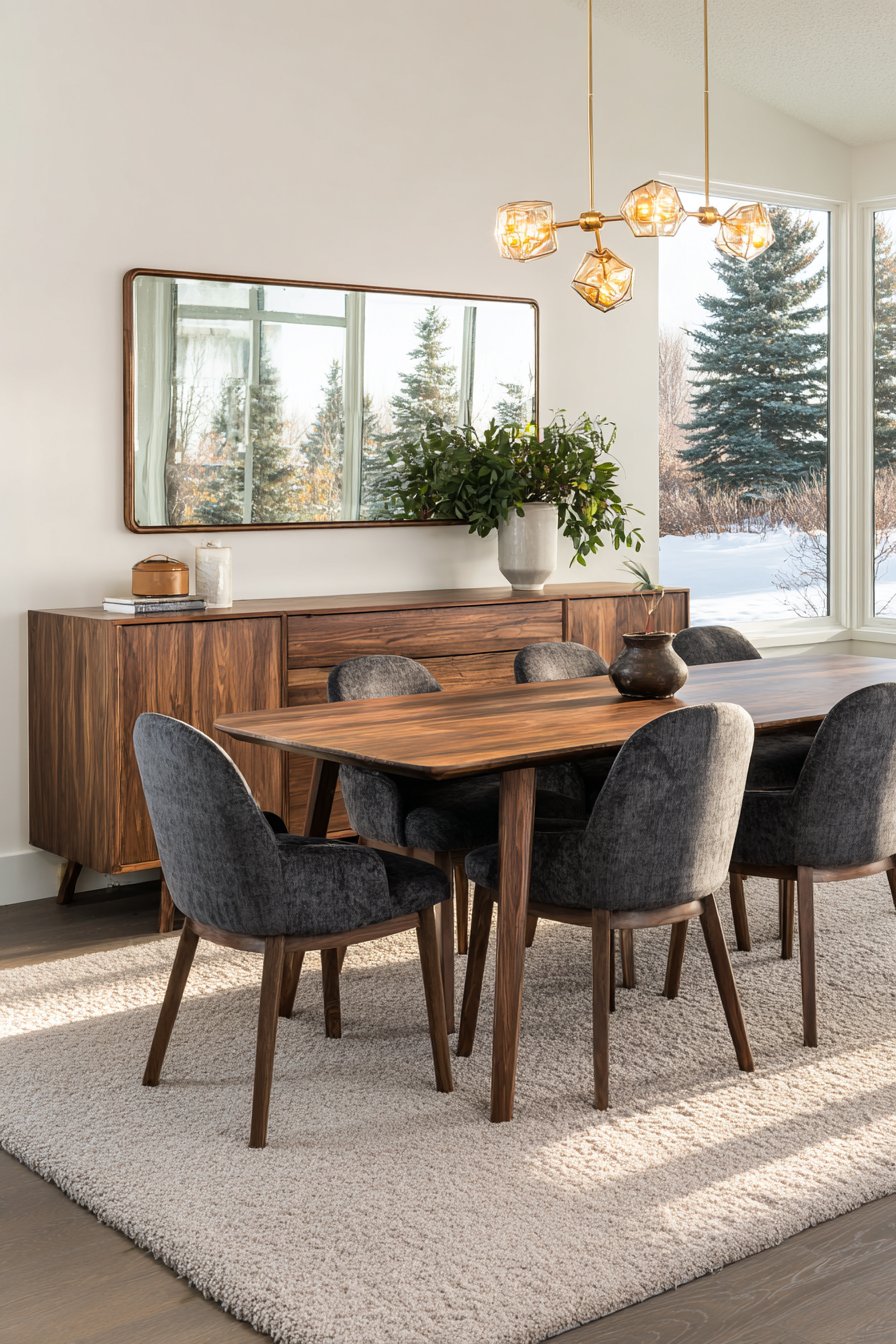
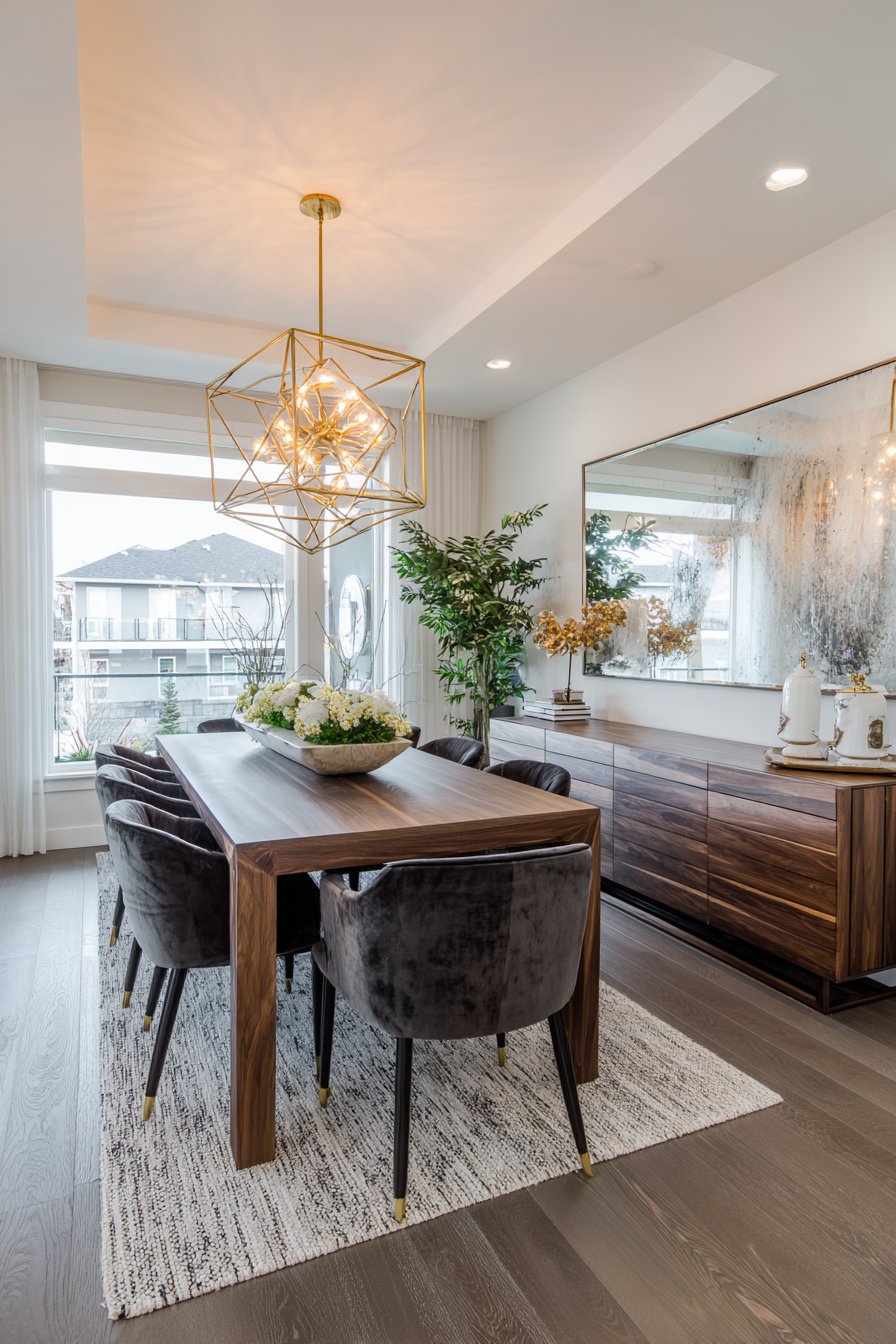
A large rectangular mirror with beveled edges commands attention above a modern walnut credenza. The mirror stretches horizontally across the wall. Natural light from opposite windows bounces through the space. The reflection visually doubles both brightness and perceived room dimensions.
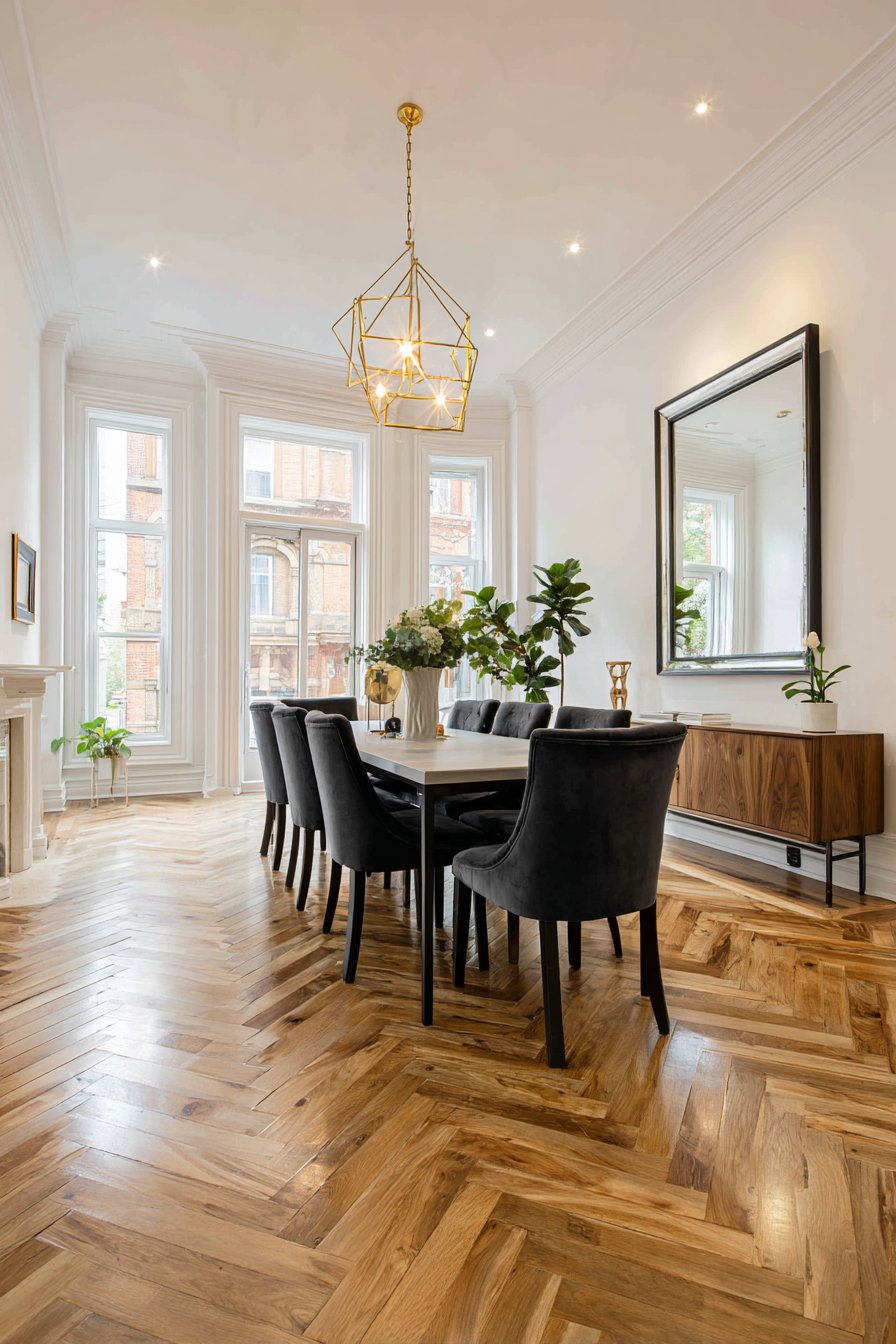
The dining area centers around a contemporary table surrounded by six charcoal velvet chairs. A geometric brass chandelier hangs overhead. The mirror captures the chandelier’s warm glow in its reflection. Console table greenery from across the room appears duplicated through the reflective surface.
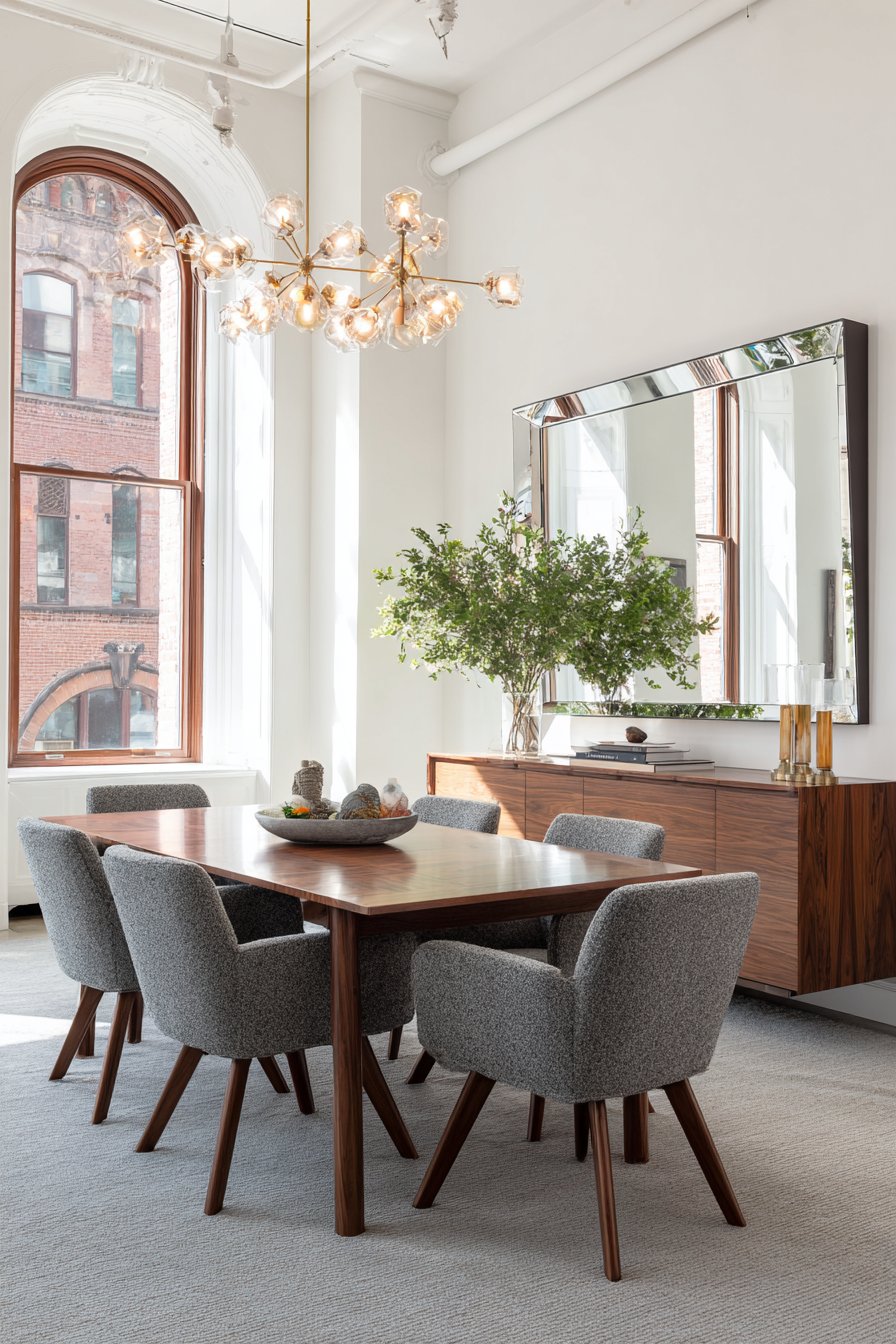
The beveled edge detail adds sophisticated depth to the mirror’s perimeter. This classic technique creates prismatic effects as light hits the angled glass. The walnut credenza provides rich contrast against lighter wall tones. Together, these elements create dimensional interest throughout the space.
Wide-angle photography reveals how the mirror enhances spatial perception. Soft natural lighting highlights the mirror’s reflective qualities beautifully. Both actual and reflected elements receive balanced exposure. The design demonstrates mirrors’ power to transform ordinary dining rooms into extraordinary spaces.
Key Design Tips:
- Select beveled mirrors to add elegant detail and light refraction
- Position mirrors opposite windows to maximize natural light reflection
- Choose horizontal orientations to emphasize room width
- Coordinate credenza wood tones with dining furniture for cohesion
- Install mirrors at appropriate heights to capture key reflective elements
2. Vintage Gallery Wall Arrangement
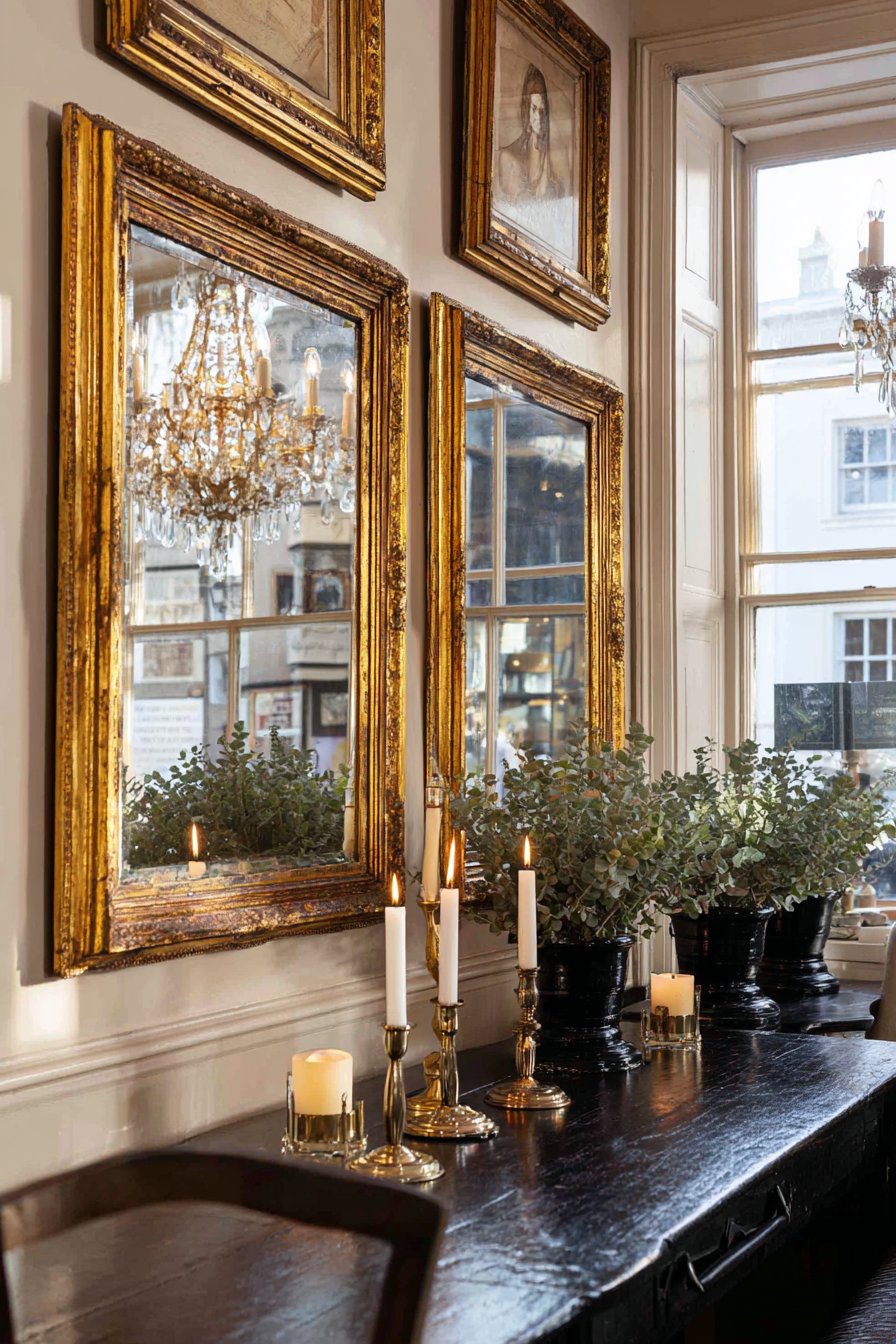
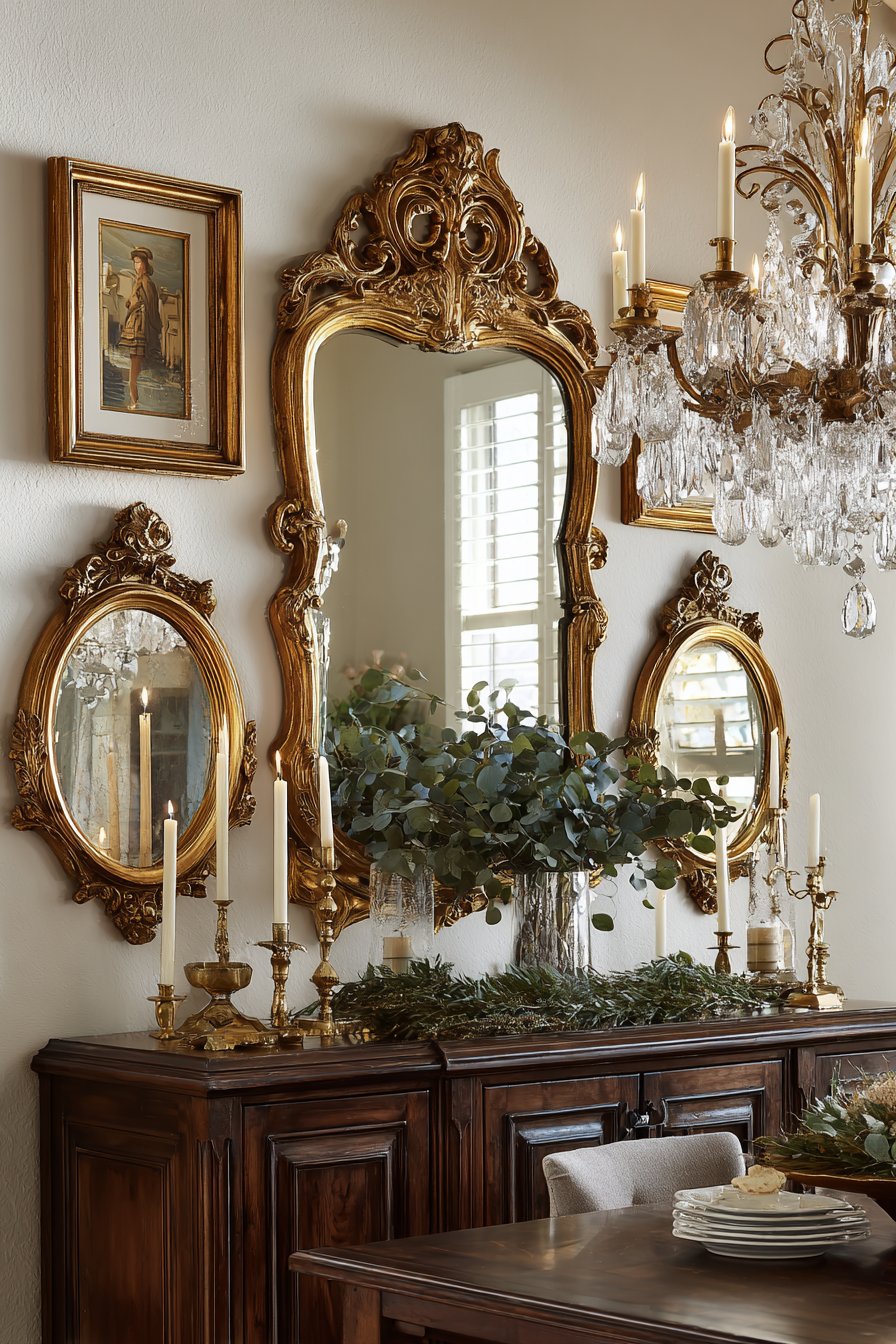
Three antique mirrors in ornate gold frames create an elegant gallery arrangement. The largest mirror hangs centrally above a dark wood buffet. Two smaller decorative mirrors flank the centerpiece. The asymmetrical balance creates visual interest across the wall.
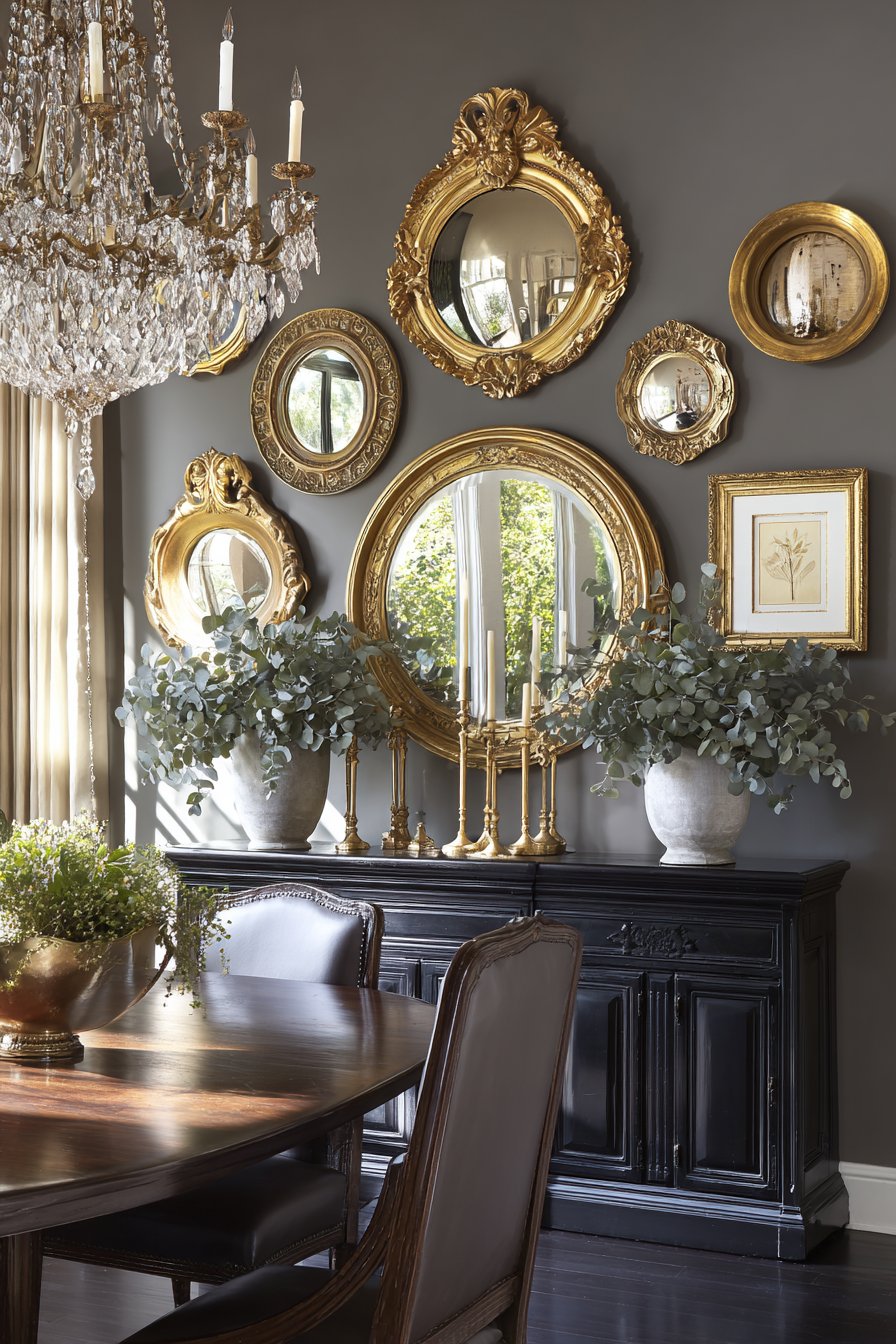
The mirrors reflect candlelight from a crystal chandelier overhead. Adjacent wall artwork appears in the reflective surfaces. Multiple layers of depth emerge through these reflections. Fresh eucalyptus arrangements sit on the buffet below. Brass candlesticks complement the gold mirror frames perfectly.
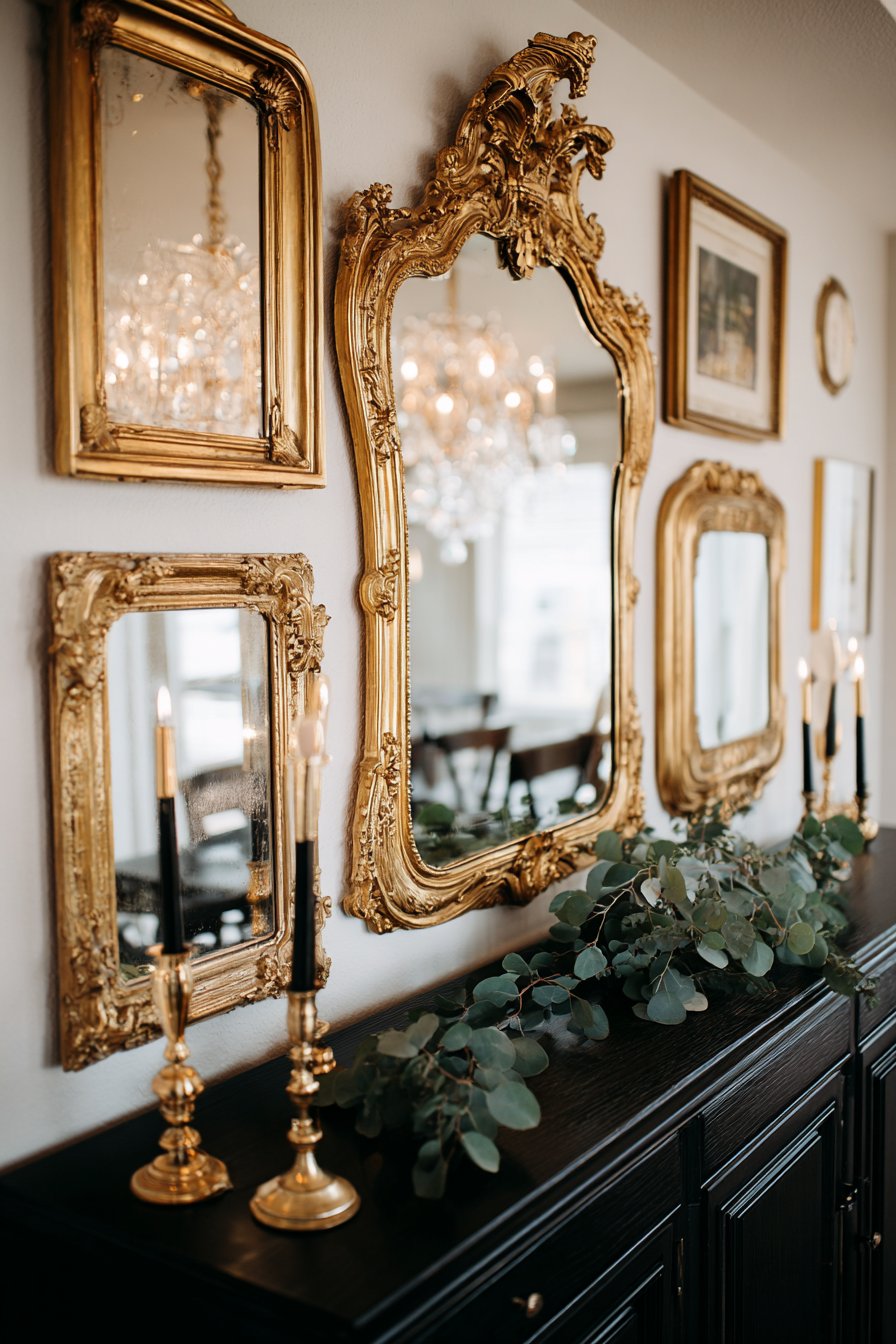
This curated vintage aesthetic demonstrates the power of collected pieces. Each mirror features different ornate detailing. The varying sizes create dynamic visual rhythm. The gold frames tie disparate elements together cohesively. Natural window light creates soft highlights on gilded surfaces.
The interplay between reflections adds complexity to the dining experience. The chandelier becomes more prominent through mirror multiplication. Artwork gains additional viewing angles through reflected perspectives. This approach transforms a simple wall into an engaging focal point.
Key Design Tips:
- Mix mirror sizes and frame styles for eclectic charm
- Maintain consistent frame finish to unify varied designs
- Position mirrors to reflect light sources and beautiful objects
- Create asymmetrical arrangements for dynamic visual interest
- Style buffets with accessories that complement frame finishes
3. Oversized Round Statement Mirror
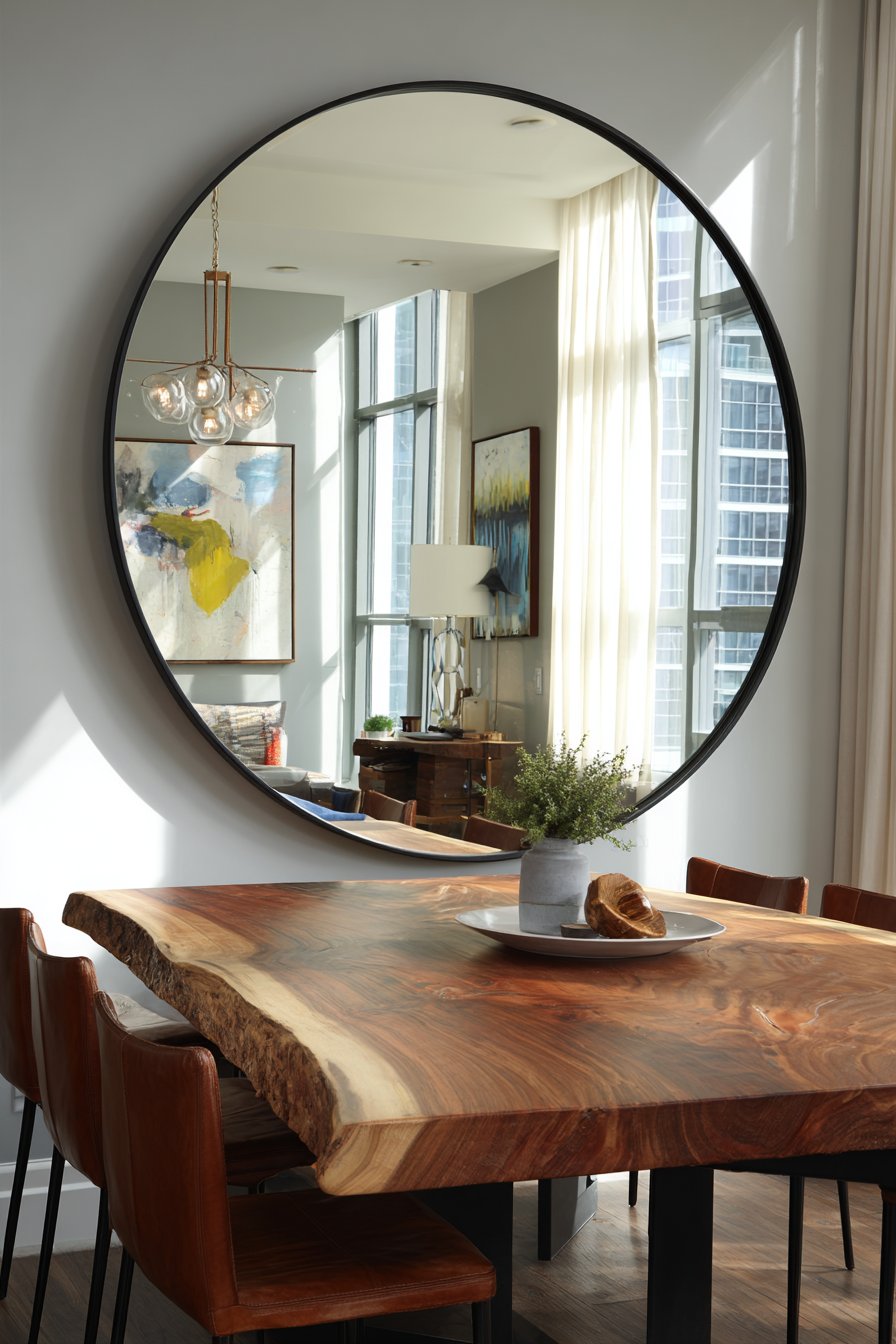
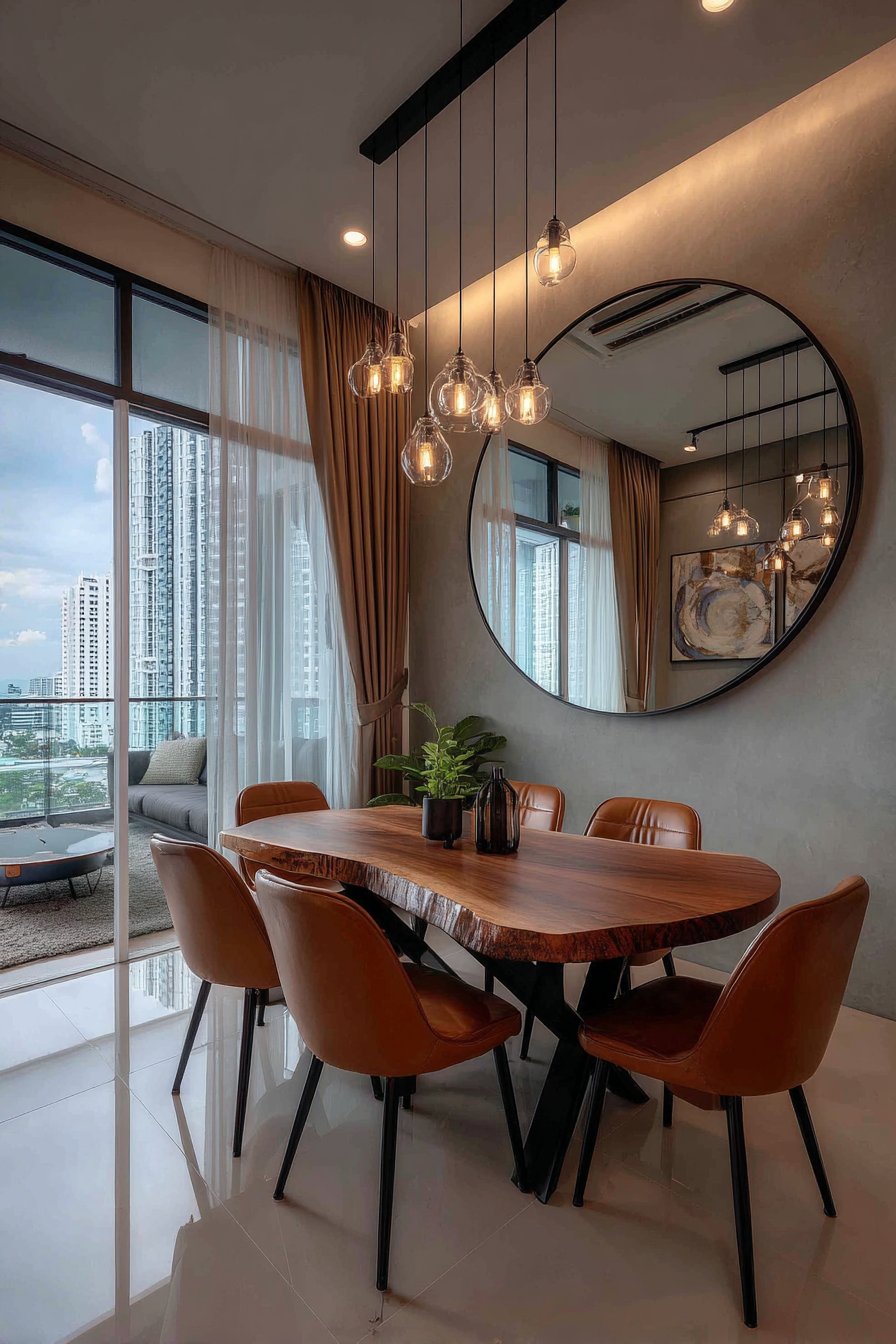
A substantial round mirror with thin black metal frame dominates a light grey feature wall. The dramatic size creates an undeniable focal point. The mirror reflects a modern dining table with live-edge walnut top. Black steel base legs complement the mirror’s frame finish.
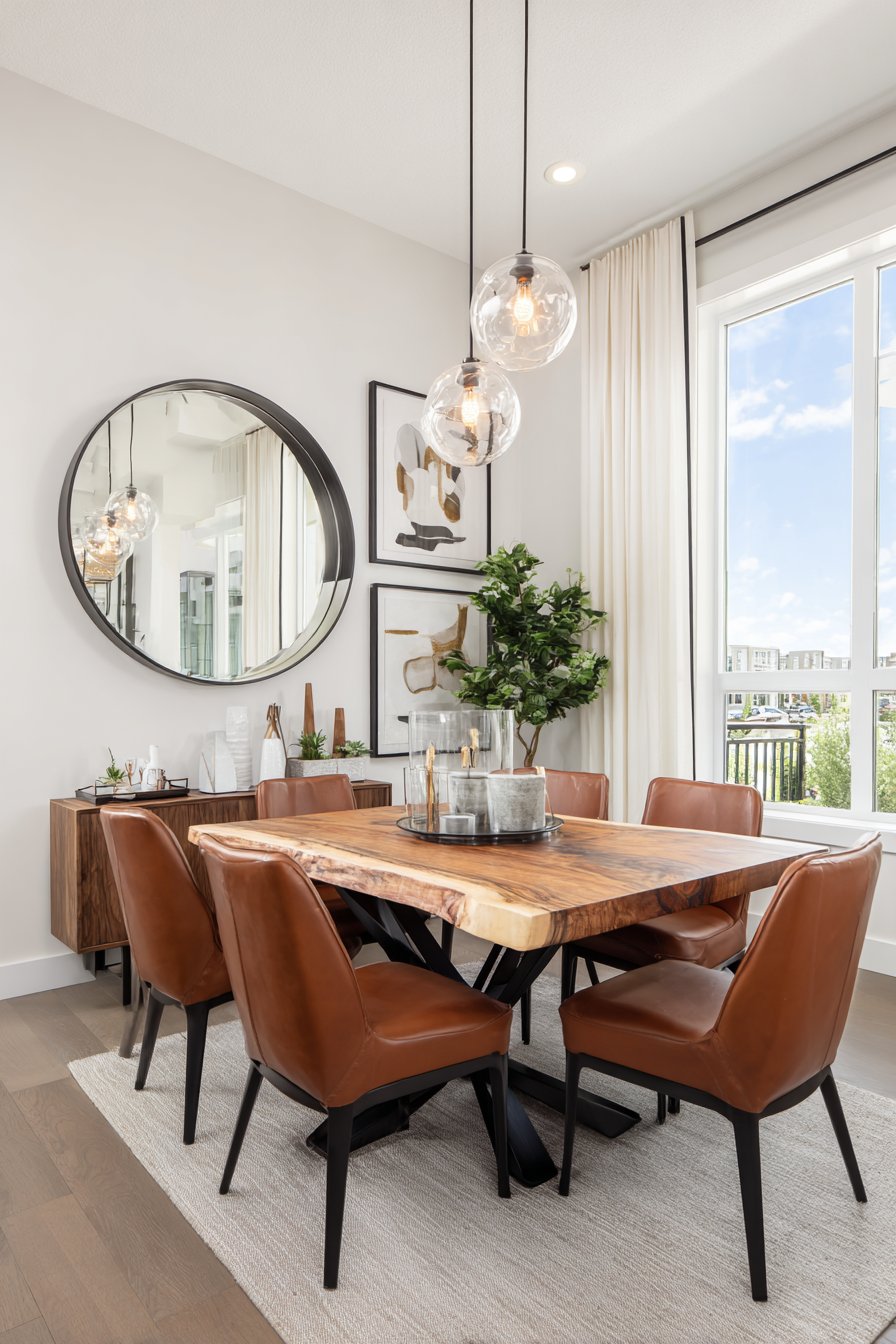
Six mid-century inspired chairs in cognac leather surround the table. The warm leather tones contrast beautifully with cool metal elements. Pendant lighting hangs at strategic heights. Abstract artwork from across the room appears in the reflection. Visual complexity emerges through these reflected elements.
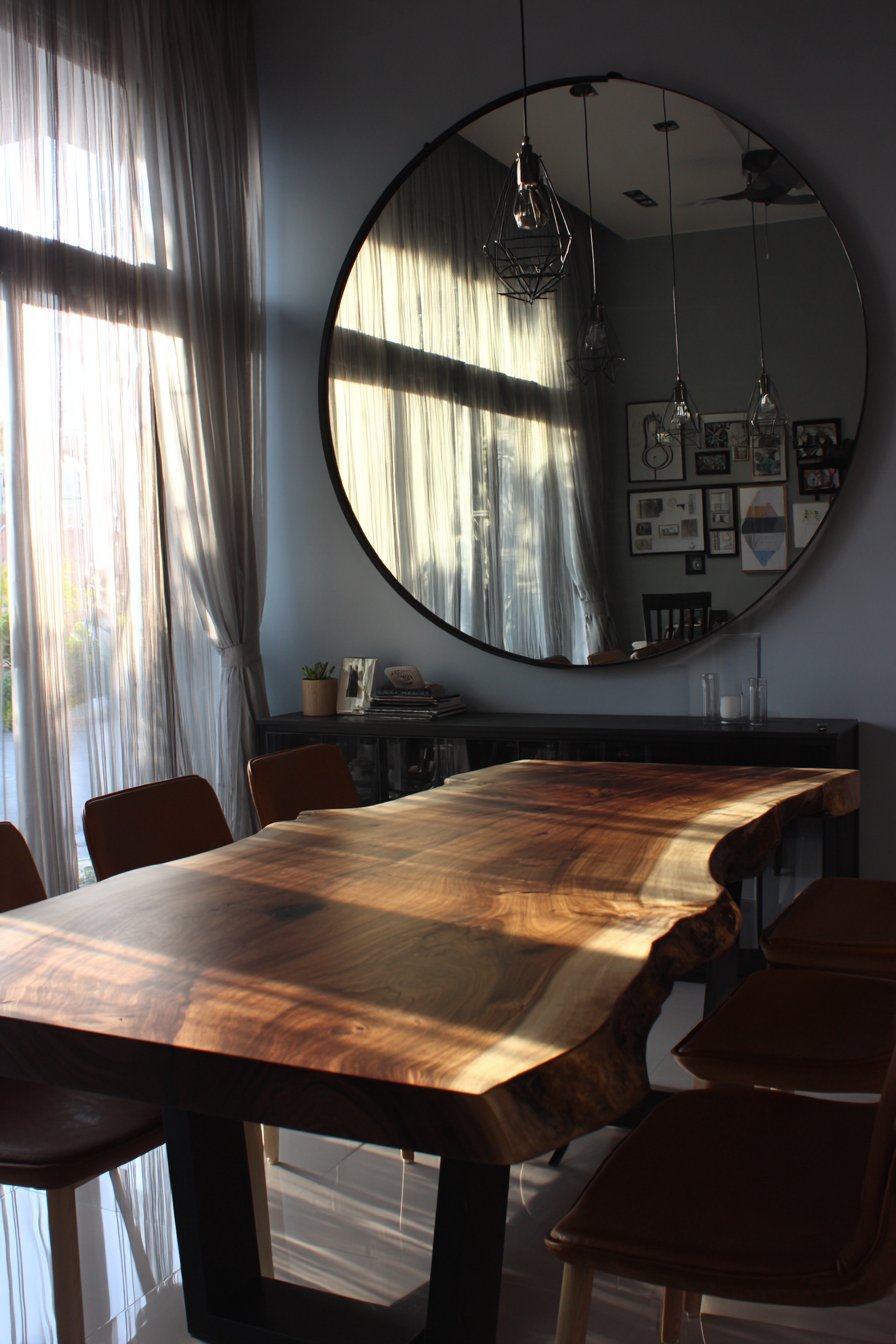
Morning light streams through sheer curtains. The mirror amplifies this natural illumination throughout the space. Wide-angle photography captures the mirror’s space-expanding effect. Balanced exposure shows both actual and reflected environments equally well.
The thin frame profile keeps focus on the reflective surface itself. The substantial diameter makes a bold contemporary statement. The black finish adds graphic strength without overwhelming. This design proves that single large mirrors can transform entire rooms.
Key Design Tips:
- Choose oversized mirrors to make dramatic focal points in dining spaces
- Select thin frames to emphasize reflective surface over frame design
- Coordinate frame finish with dining furniture metal accents
- Position mirrors to reflect beautiful architectural or furniture features
- Use substantial mirrors to visually expand smaller dining rooms
4. Floor-to-Ceiling Antiqued Panels
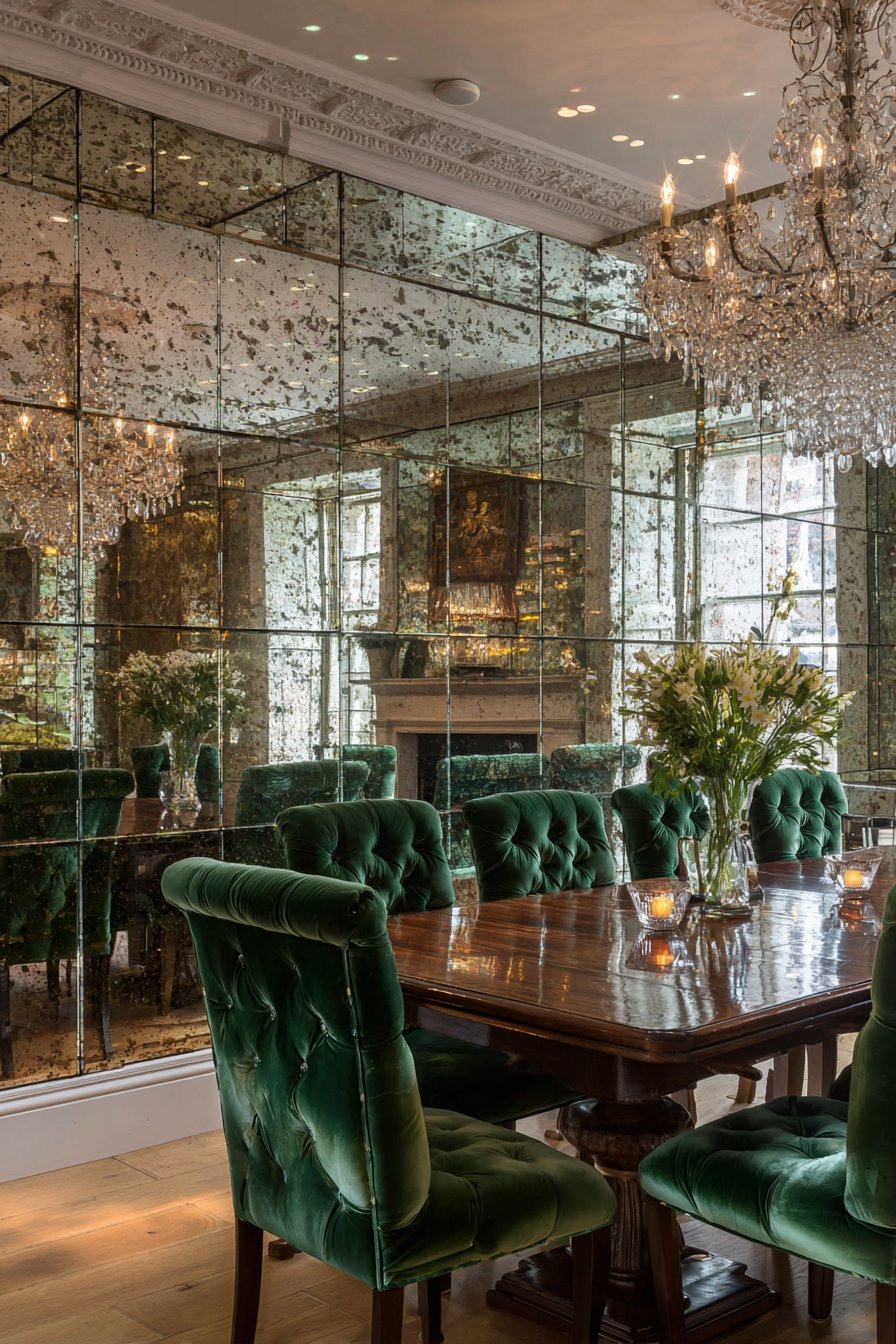
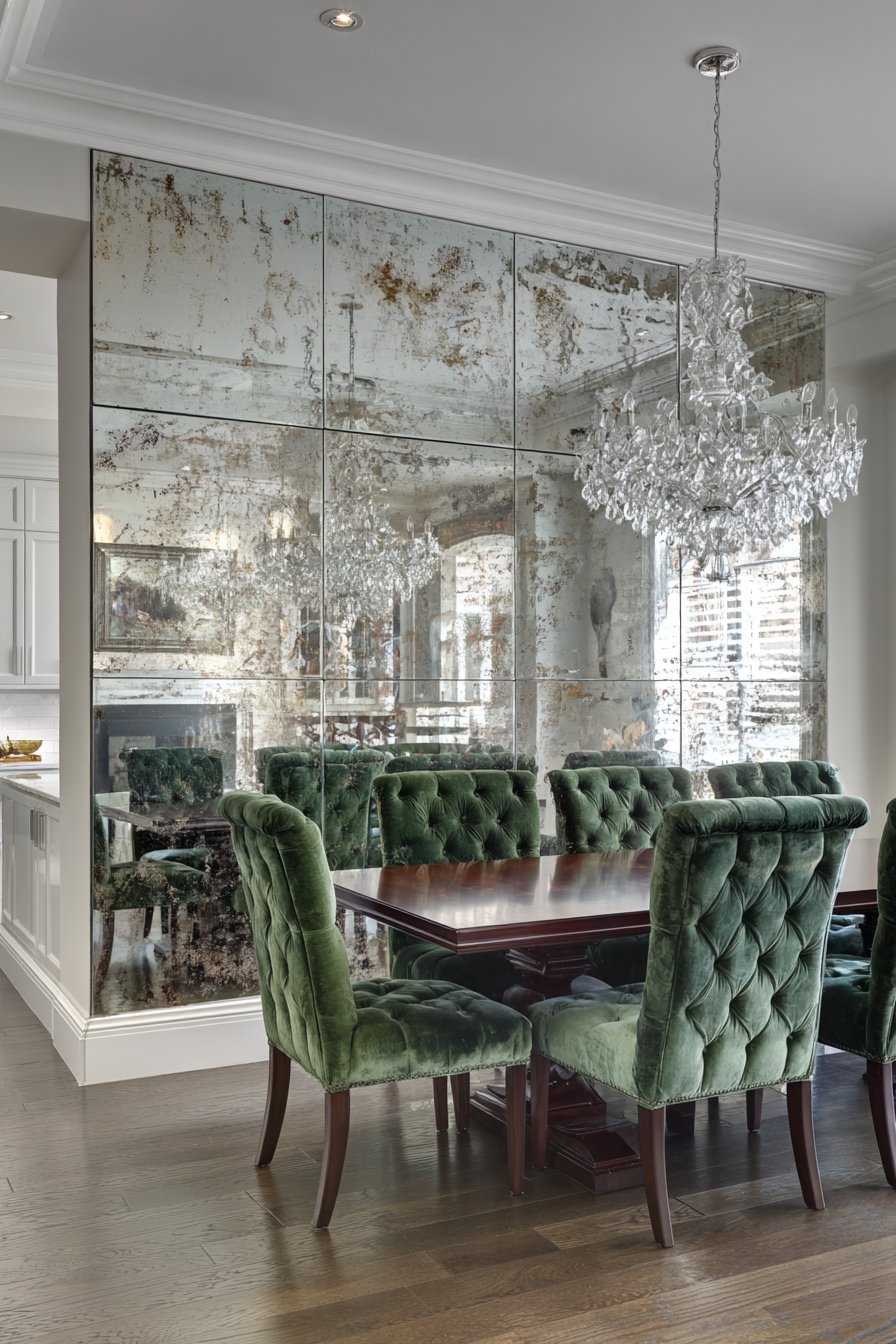
Floor-to-ceiling antiqued mirror panels create architectural grandeur behind the dining table. The distressed finish shows subtle foxing and patina. This installation creates dramatic spatial expansion. The aged mirror surface adds vintage character throughout.
A traditional mahogany dining table seats eight people comfortably. Tufted velvet chairs in deep emerald green provide luxurious seating. An ornate crystal chandelier hangs overhead. The mirror panel reflects the chandelier symmetrically. This doubling effect creates magnificent lighting drama.
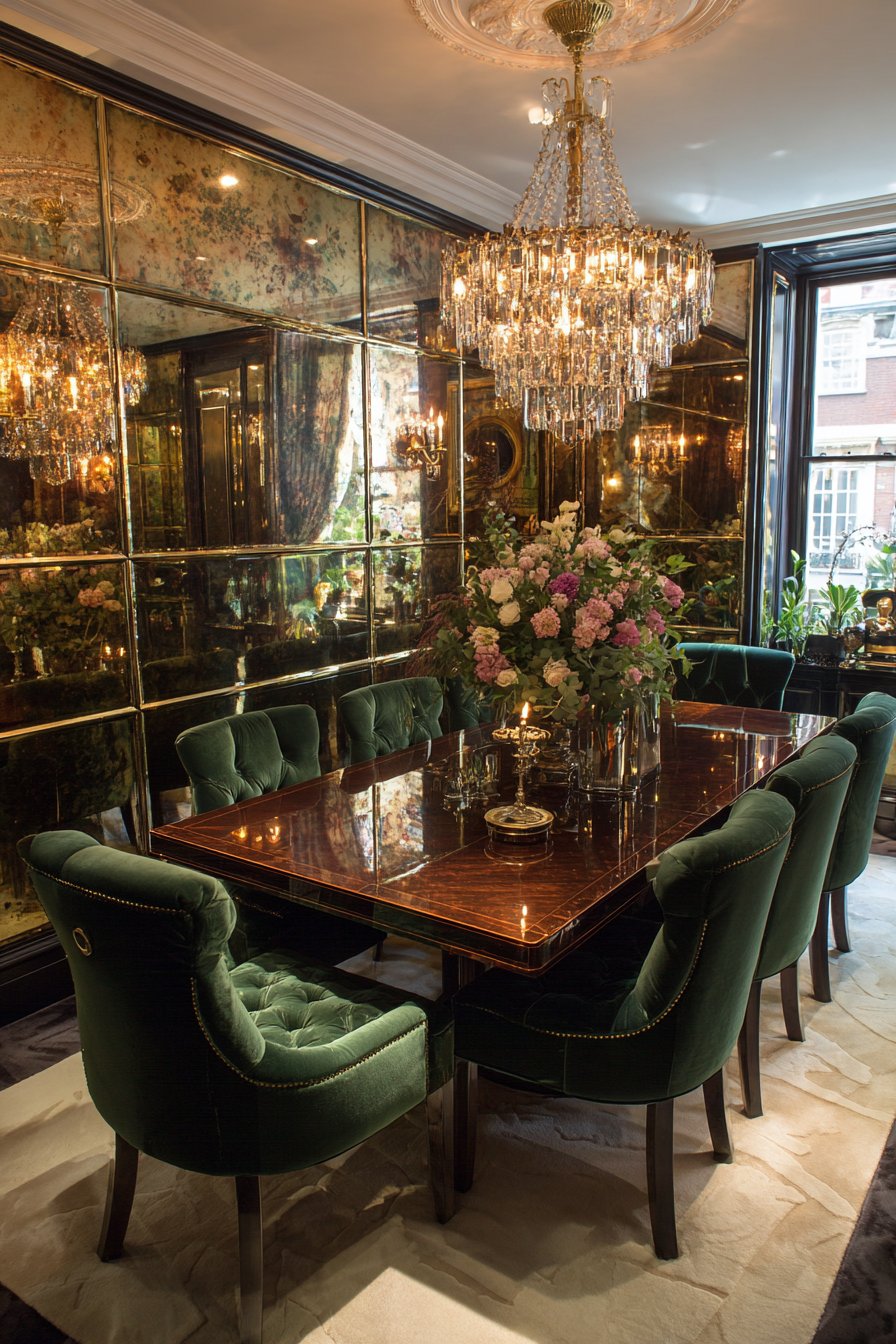
The antiqued finish distinguishes this installation from standard mirrors. Subtle imperfections in the silvering add historical depth. The foxing patterns create visual interest across the surface. Texture variations catch and reflect light differently throughout the day.
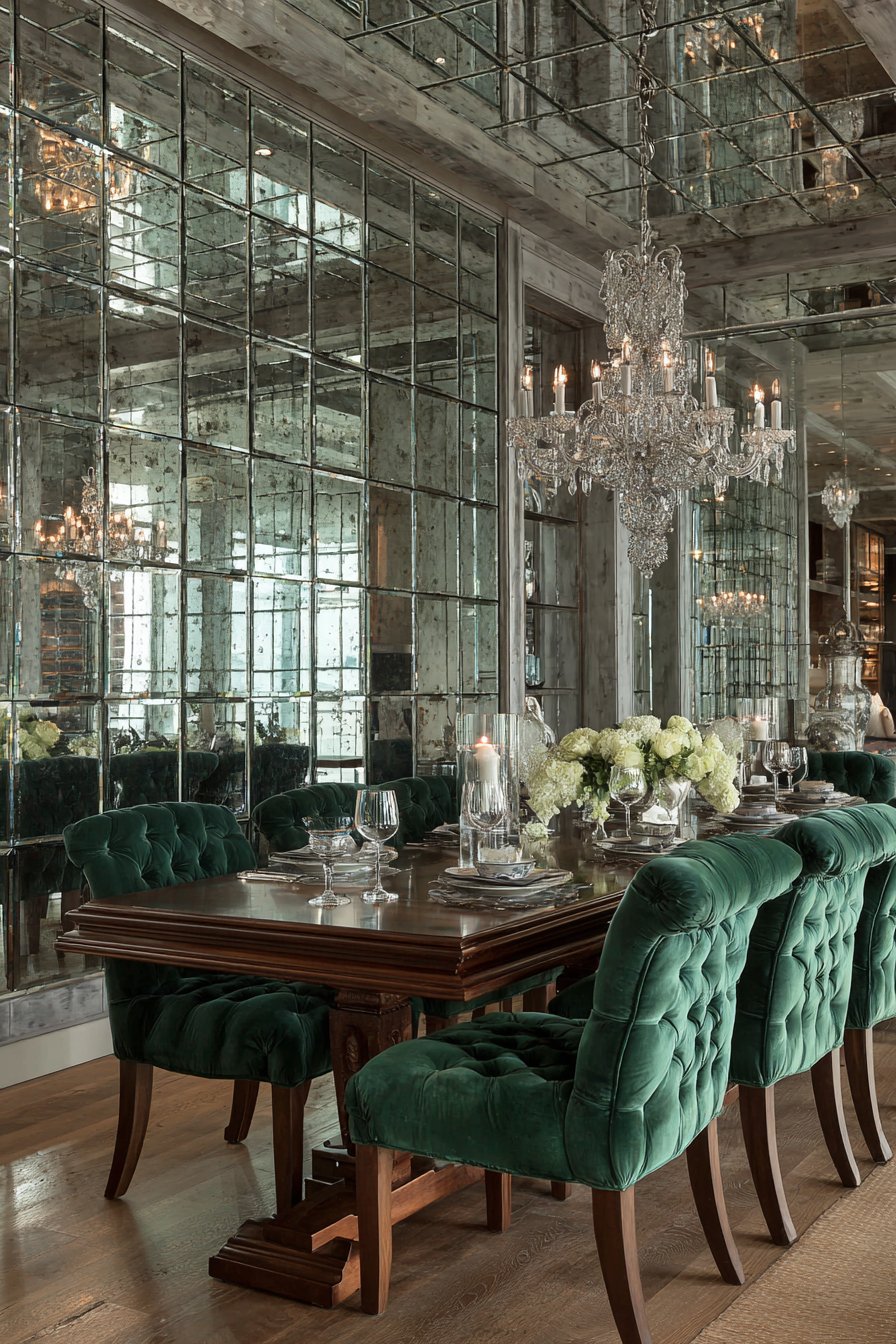
Professional photography captures the luxurious material layering. Soft ambient lighting highlights the mirror’s surface texture variations. The emerald velvet appears even richer through reflection. This maximalist approach demonstrates mirrors’ capacity for creating opulent environments.
Key Design Tips:
- Install floor-to-ceiling mirrors to maximize architectural impact
- Choose antiqued finishes for character and vintage sophistication
- Position full-wall mirrors behind seating to double visual impact
- Select rich, saturated furniture colors to enhance luxurious reflections
- Use ornate chandeliers to create symmetrical reflected lighting drama
5. Minimalist Scandinavian Simplicity
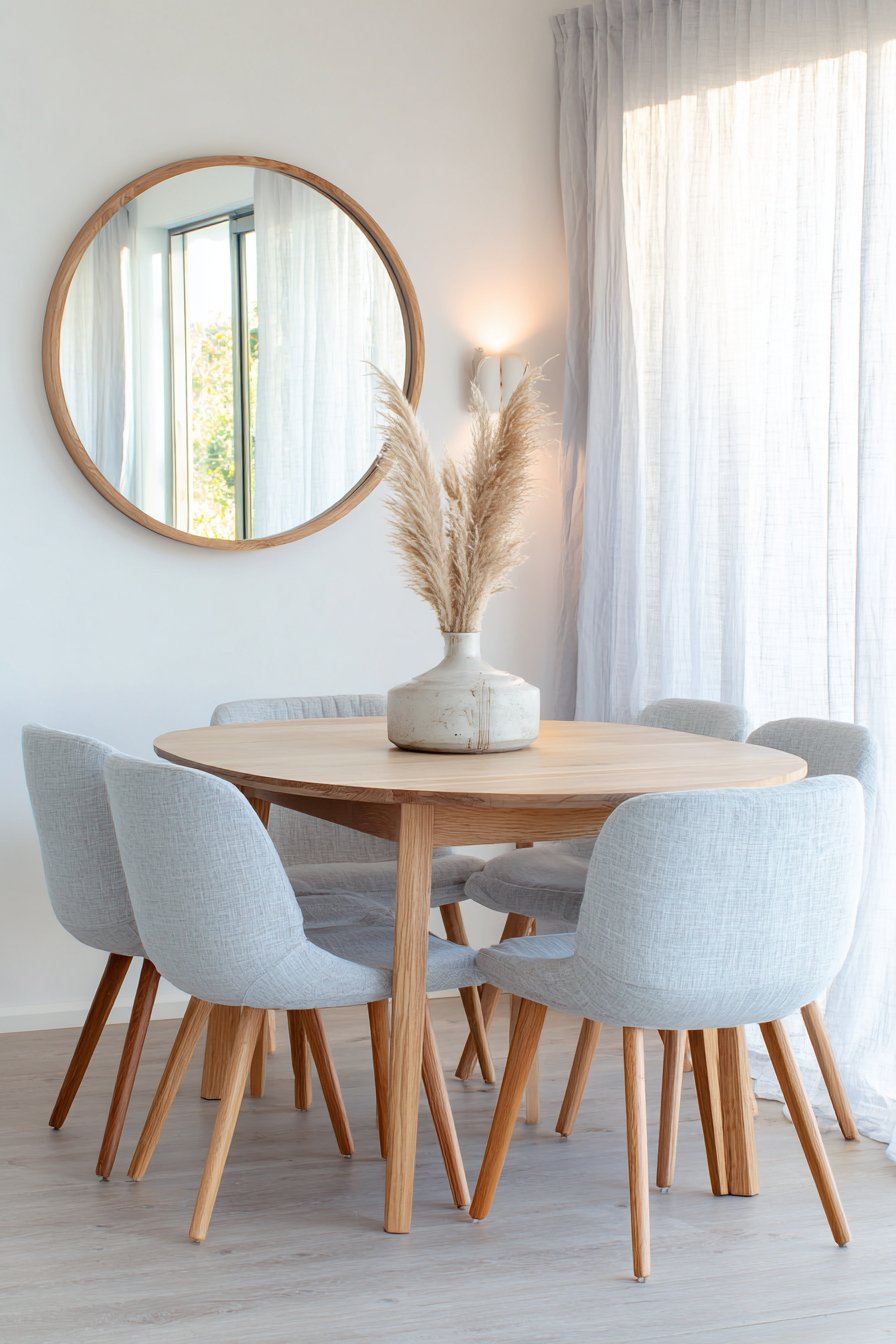
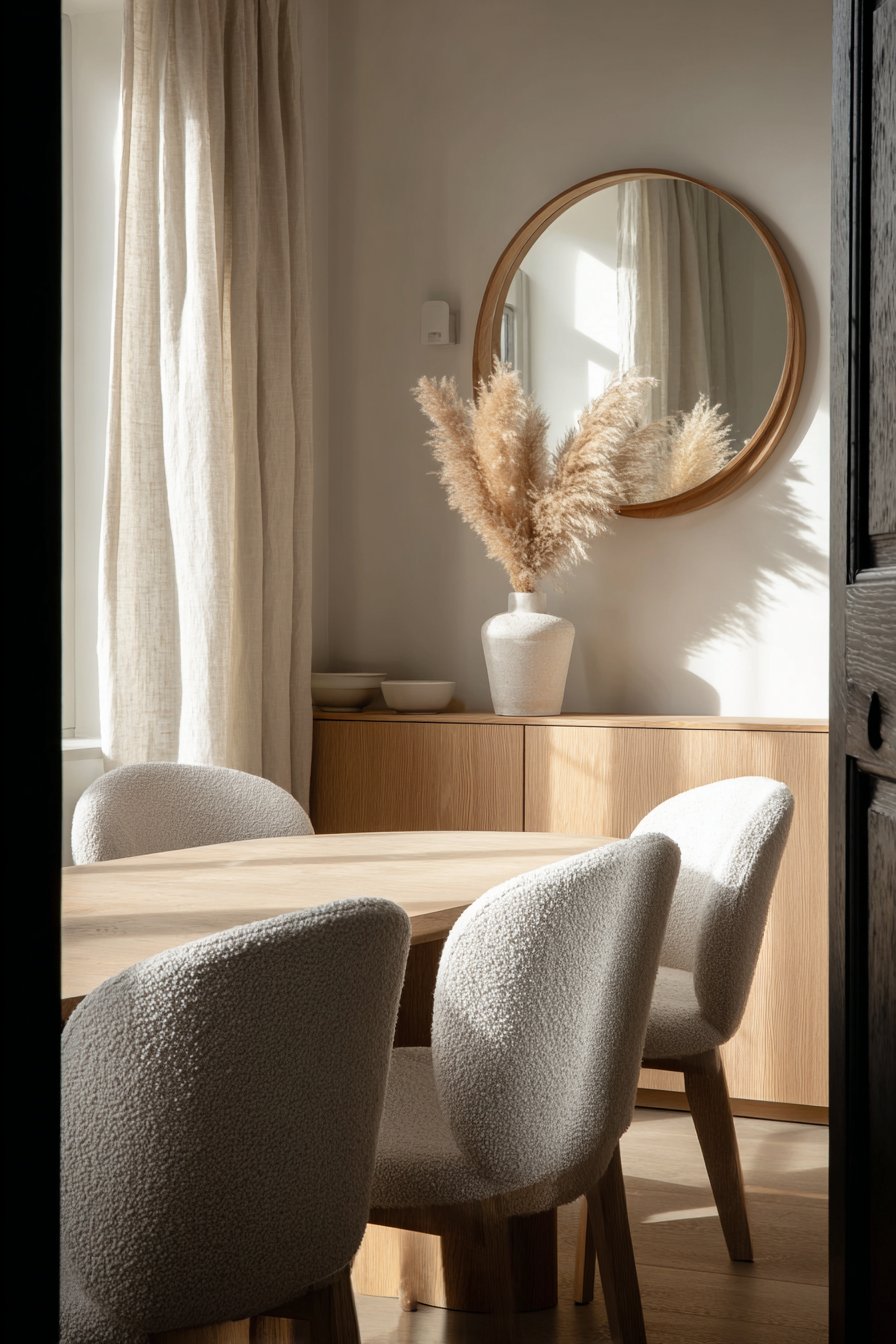
A simple round mirror in natural oak frame hangs above a white oak floating sideboard. Clean lines define this minimalist composition. The warm wood frame complements the dining table’s light wood tone. Simple tapered legs support the unadorned table surface.
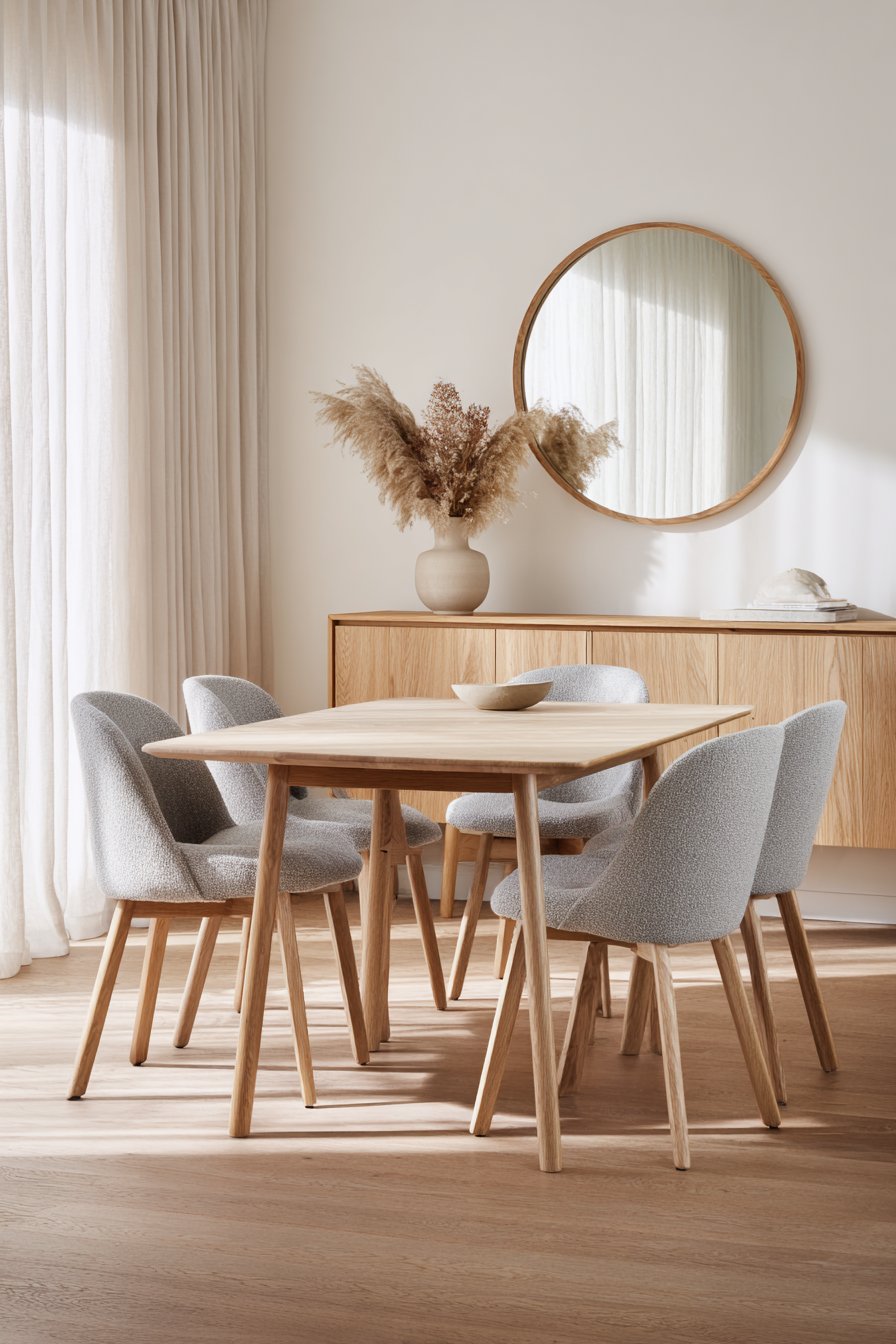
Four sculptural dining chairs in pale grey linen provide understated seating. The mirror reflects a ceramic vase with dried pampas grass. Subtle wall sconces appear doubled in the reflection. Natural Nordic light filters through linen curtains. Soft shadows create gentle dimensional interest.
The oak frame brings warmth to the otherwise neutral palette. The circular shape softens the room’s angular furniture lines. The floating sideboard maintains visual lightness. No unnecessary ornamentation distracts from the serene composition.
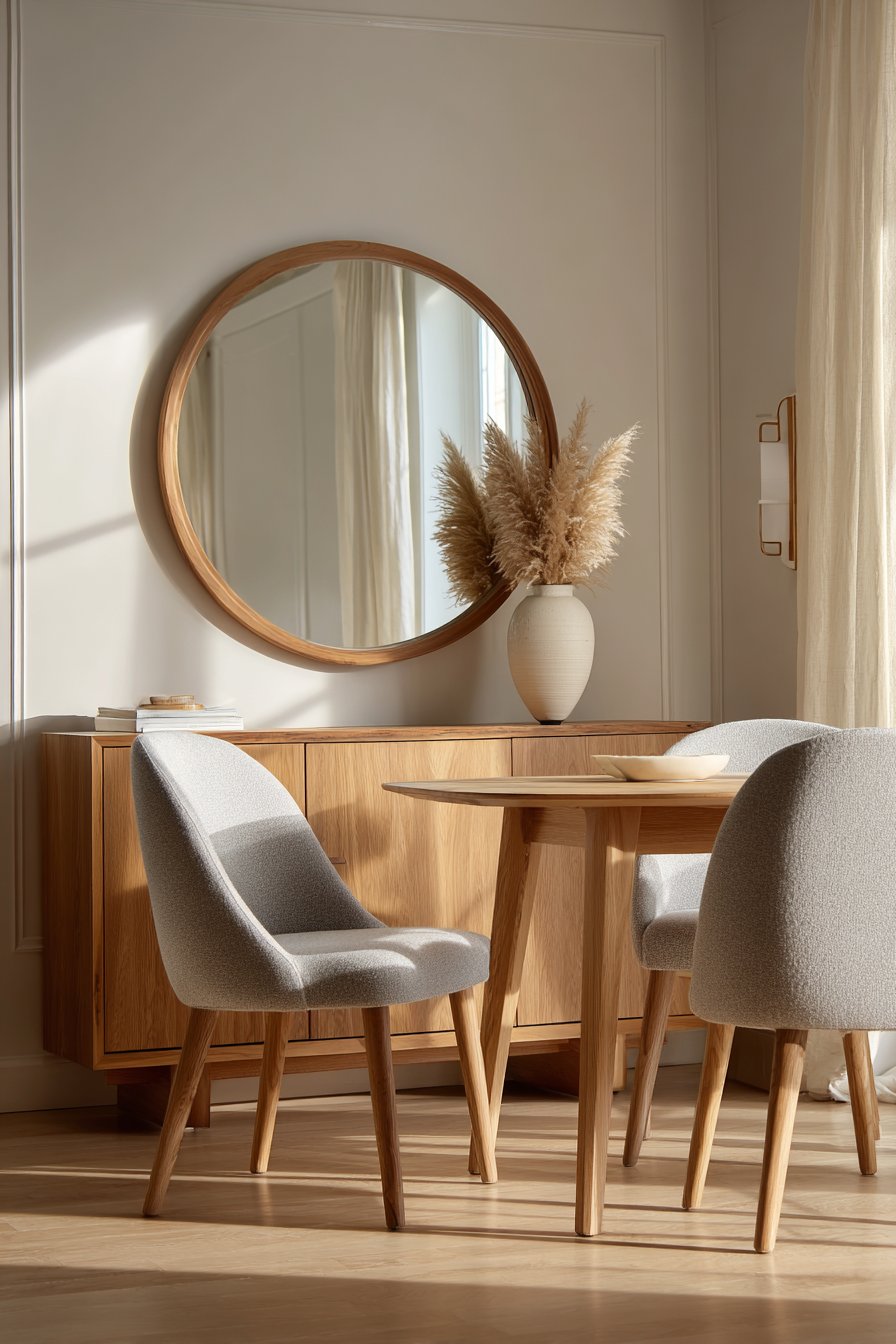
Interior photography emphasizes the mirror’s role in this understated aesthetic. Balanced exposure captures material authenticity beautifully. The mirror’s gentle reflection enhances rather than dominates. This design showcases how mirrors support minimalist principles when chosen thoughtfully.
Key Design Tips:
- Select natural wood frames to add warmth to neutral schemes
- Choose round mirrors to soften angular minimalist furniture
- Install floating furniture to maintain visual lightness
- Reflect simple, beautiful objects rather than creating visual clutter
- Use mirrors to gently amplify natural light without drama
6. Transitional Arched Beauty
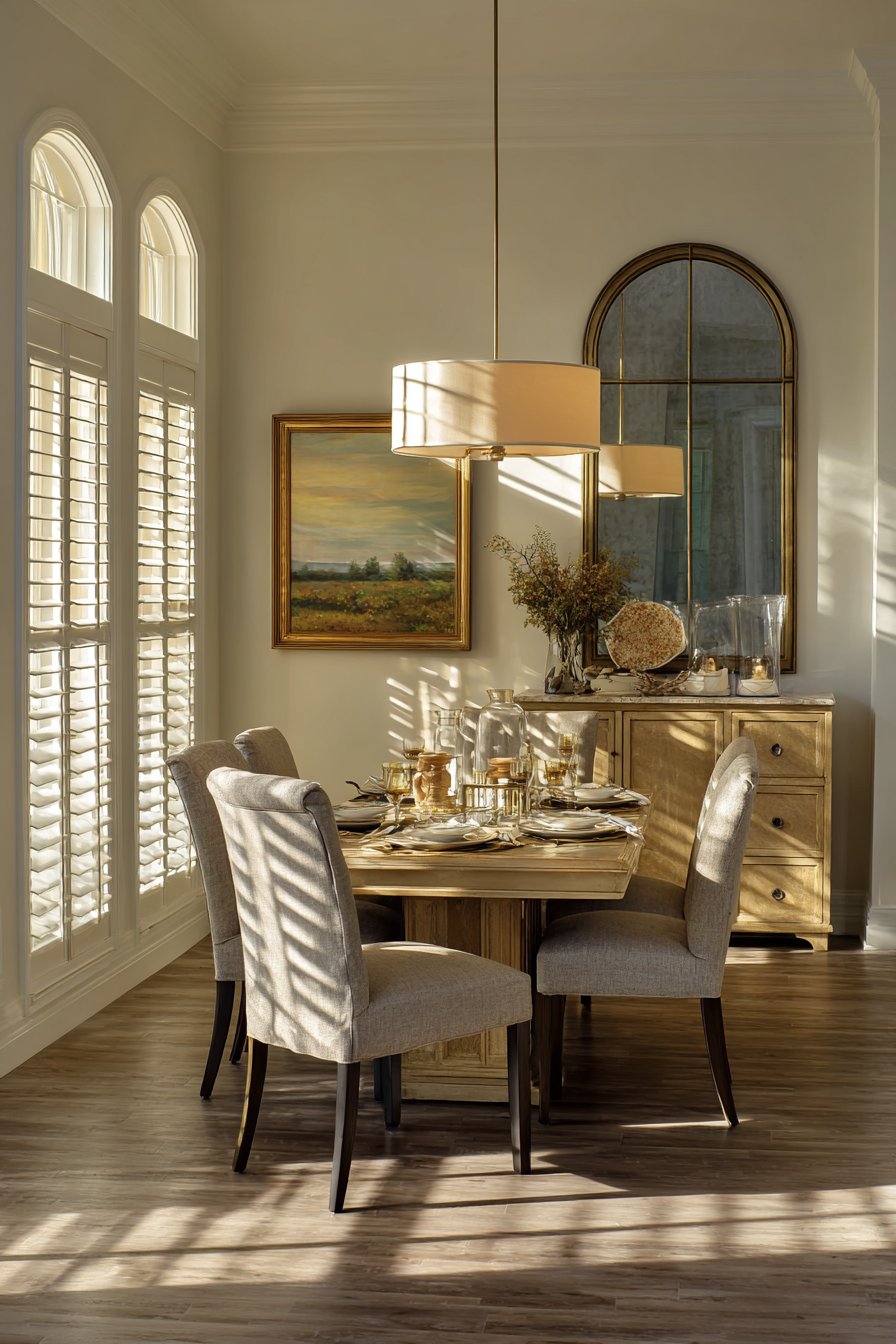
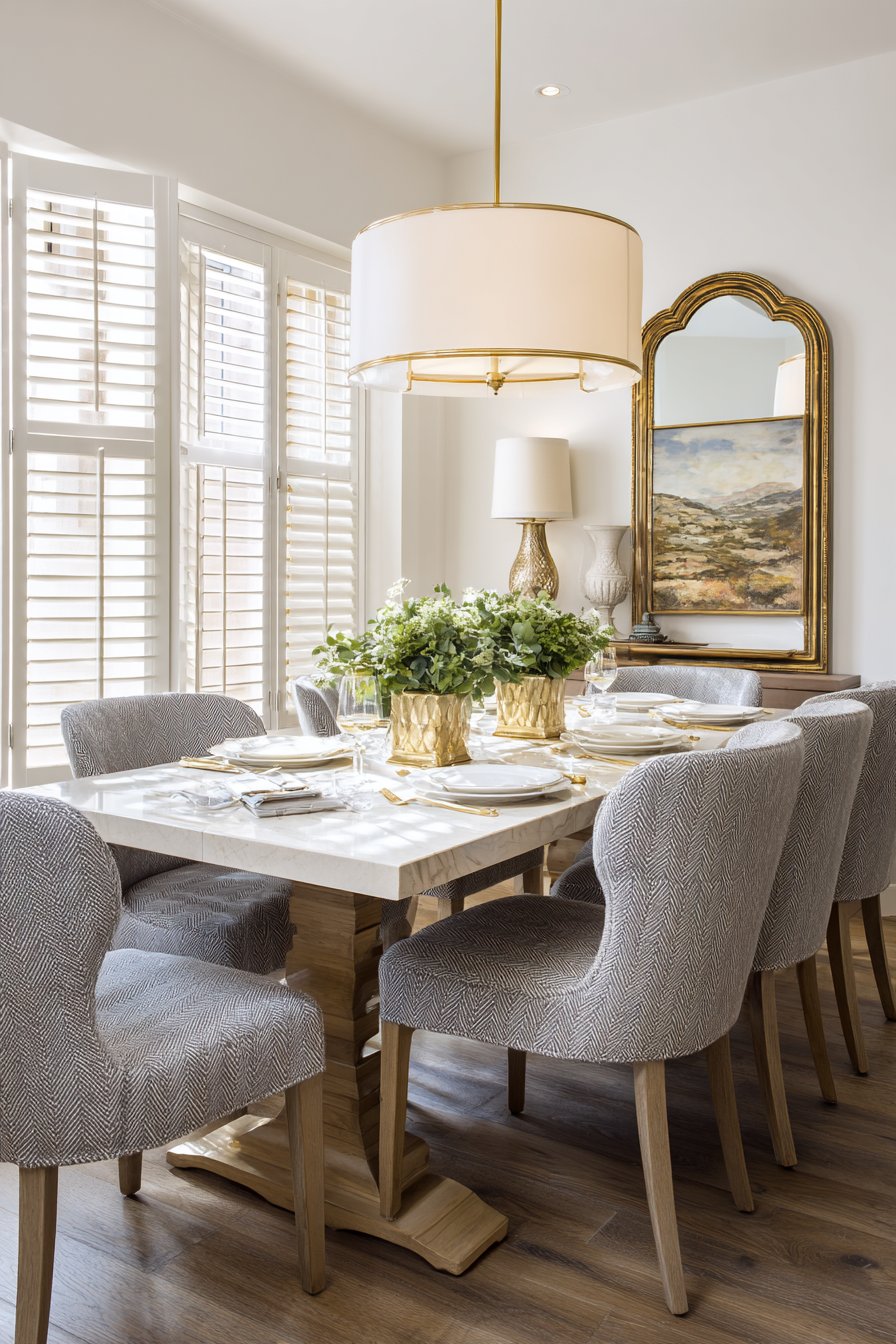
A horizontal arched mirror with aged brass frame crowns a marble-topped console. The graceful arch echoes the curves of upholstered dining chairs. Rounded chair backs create visual harmony with the mirror shape. A rectangular cerused oak dining table seats six comfortably.
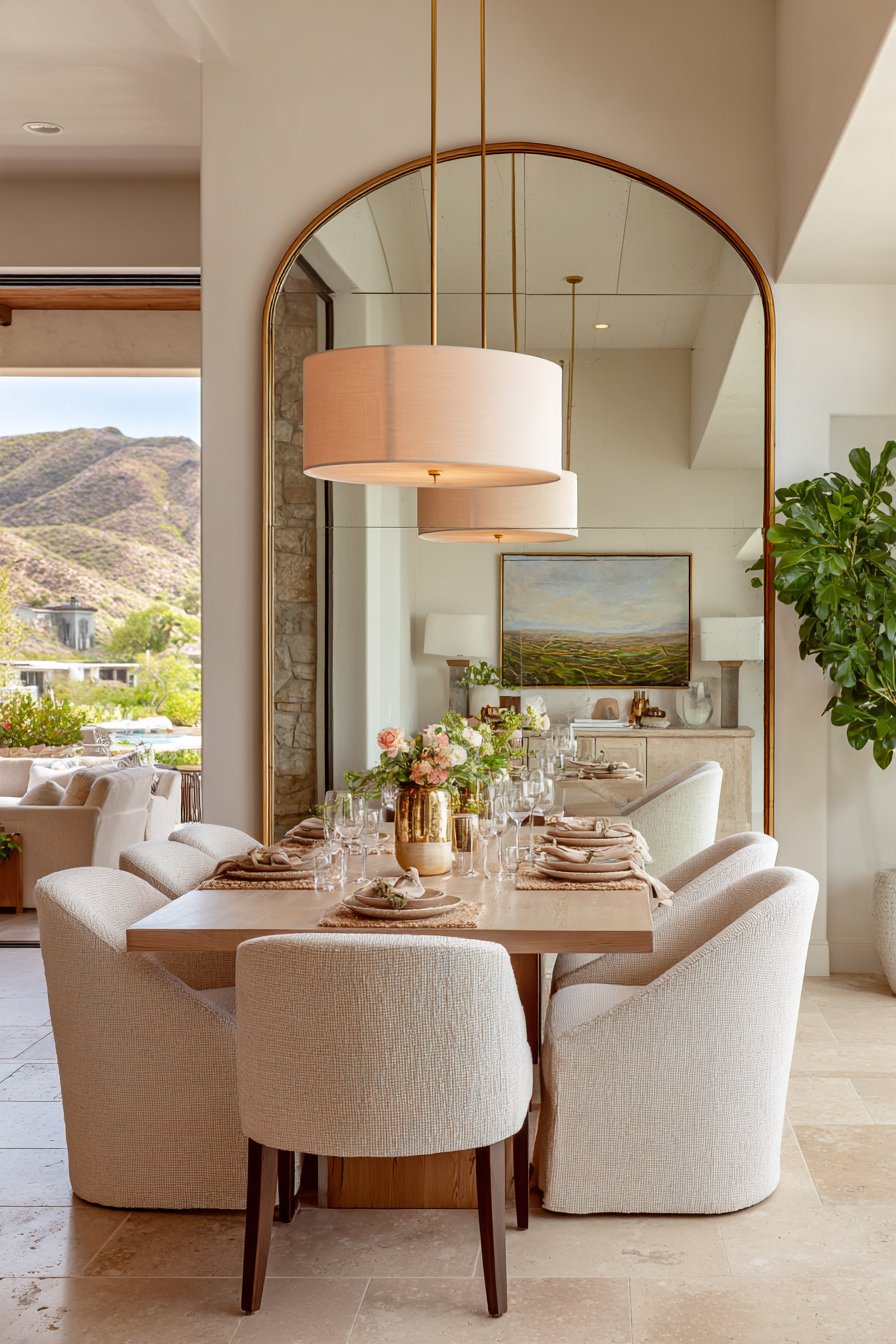
The modern drum pendant features a linen shade. The mirror reflects both table settings and landscape paintings. Visual interest multiplies through these reflected elements. Depth emerges naturally through the mirror’s strategic placement.
Golden hour lighting streams through plantation shutters. The aged brass frame shows beautiful patina. This warm metallic finish catches and reflects light gorgeously. The marble console top adds cool elegance beneath the warm brass.
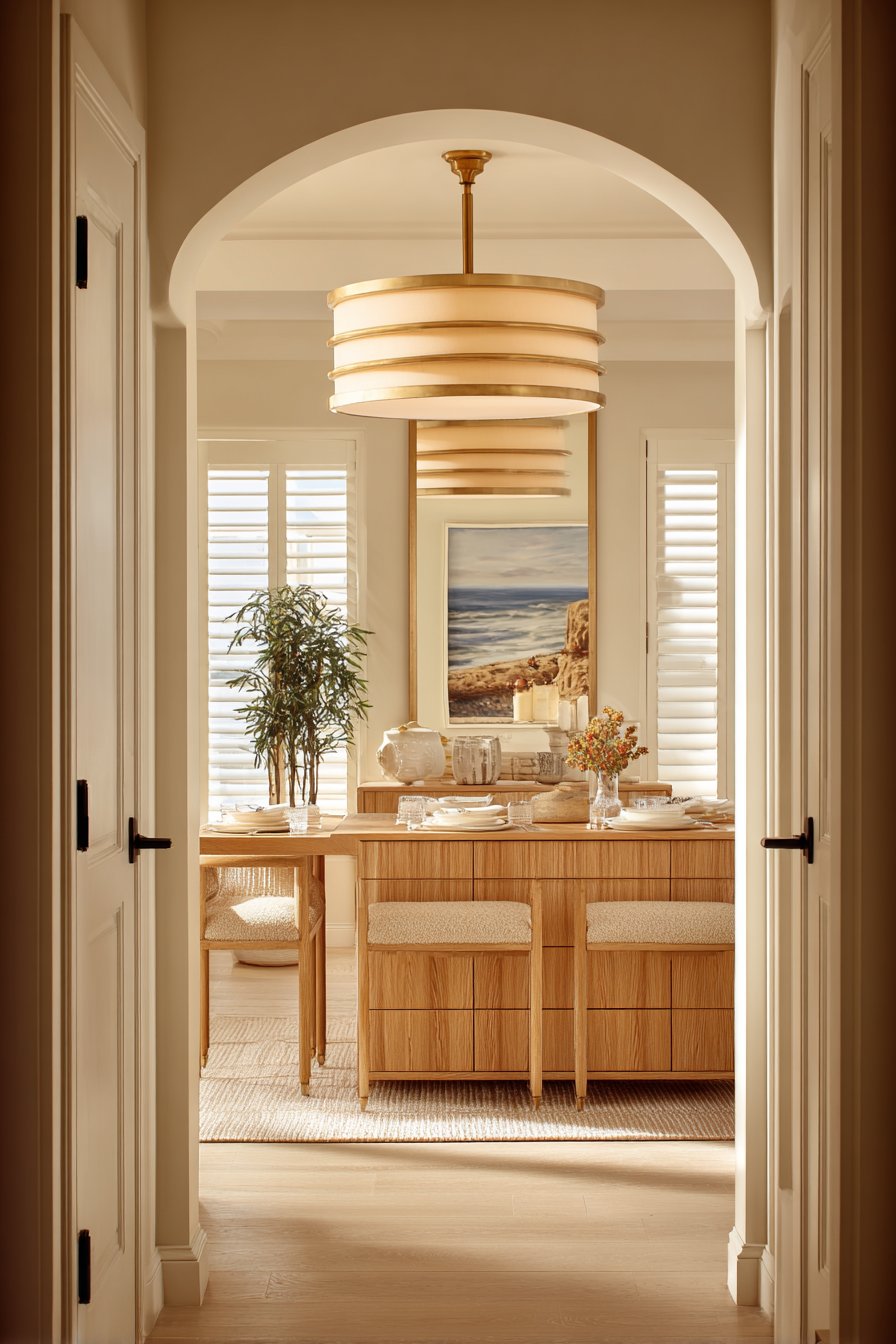
Wide-angle photography captures the transitional aesthetic beautifully. The mirror integrates traditional and modern elements seamlessly. Its placement above the console creates a cohesive furniture grouping. This design demonstrates how mirrors bridge different style periods successfully.
Key Design Tips:
- Choose arched mirrors to add graceful curves to angular spaces
- Coordinate mirror shapes with furniture silhouettes for harmony
- Select aged brass finishes for warmth and vintage character
- Position mirrors to reflect both functional and decorative elements
- Install at heights that create proportional furniture groupings
7. Industrial Salvaged Window Frame
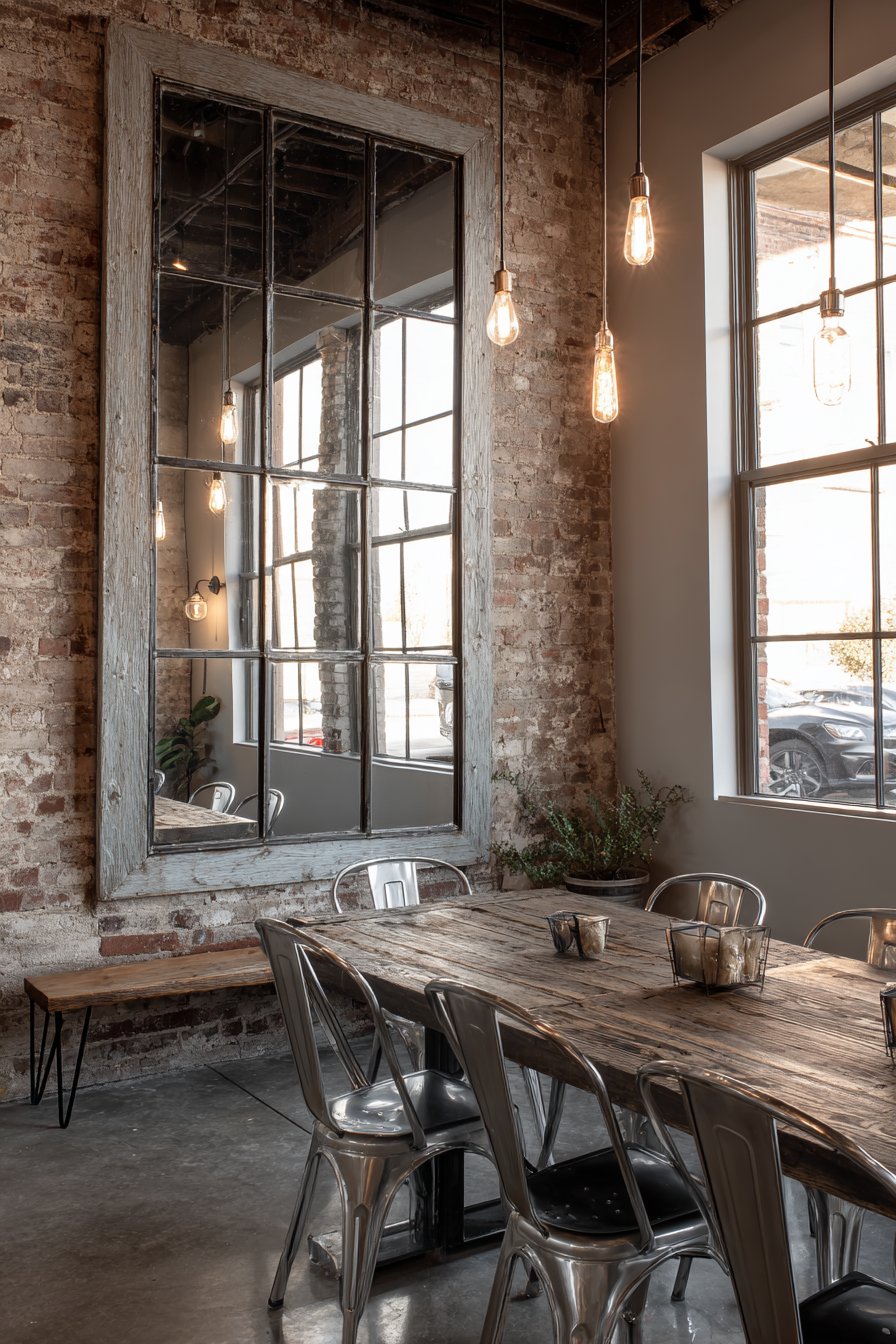
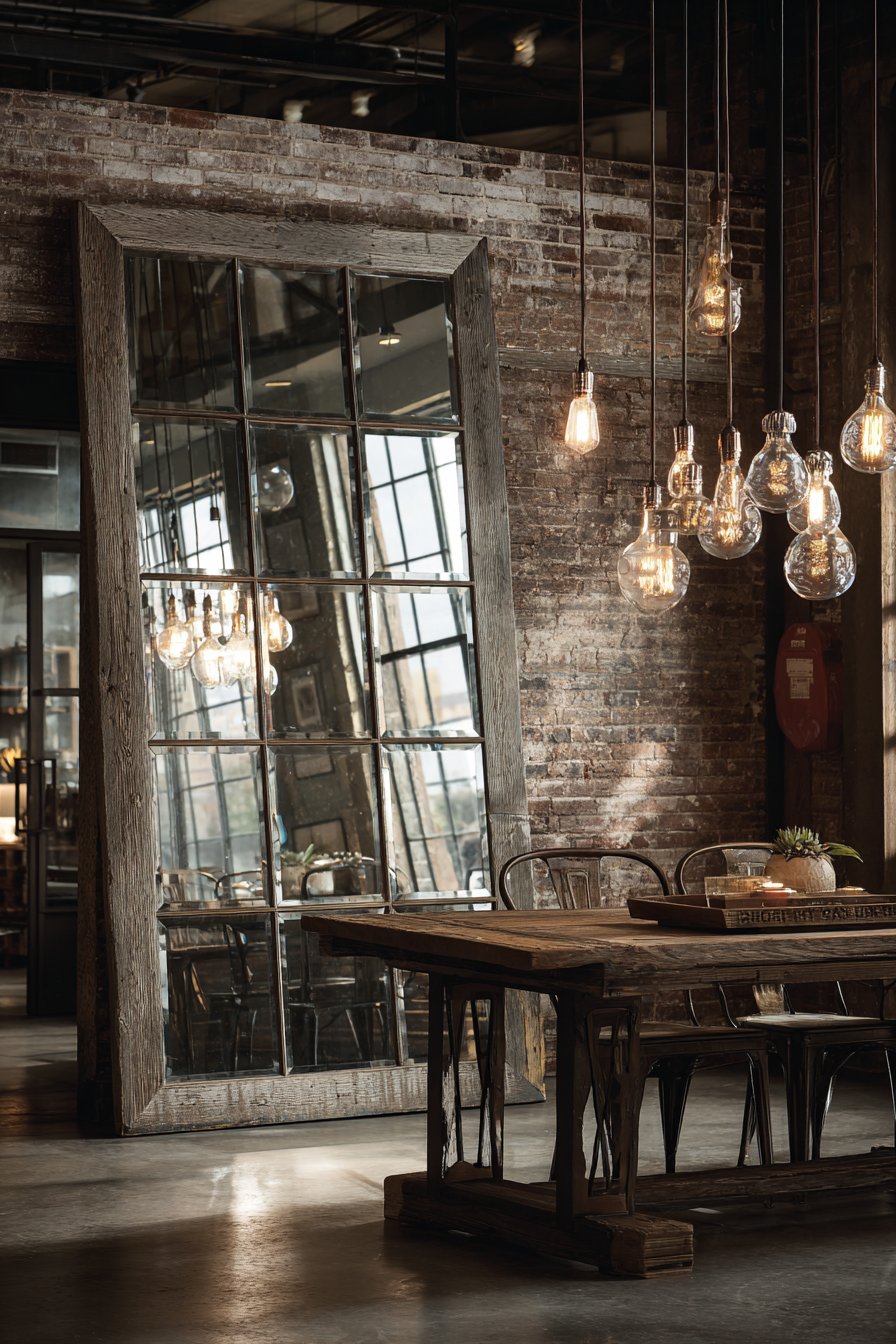
A large salvaged window frame mirror features multiple panes and weathered wood. The grey wash finish shows authentic aging. The mirror leans against exposed brick walls. A reclaimed wood console with metal hairpin legs sits beneath.
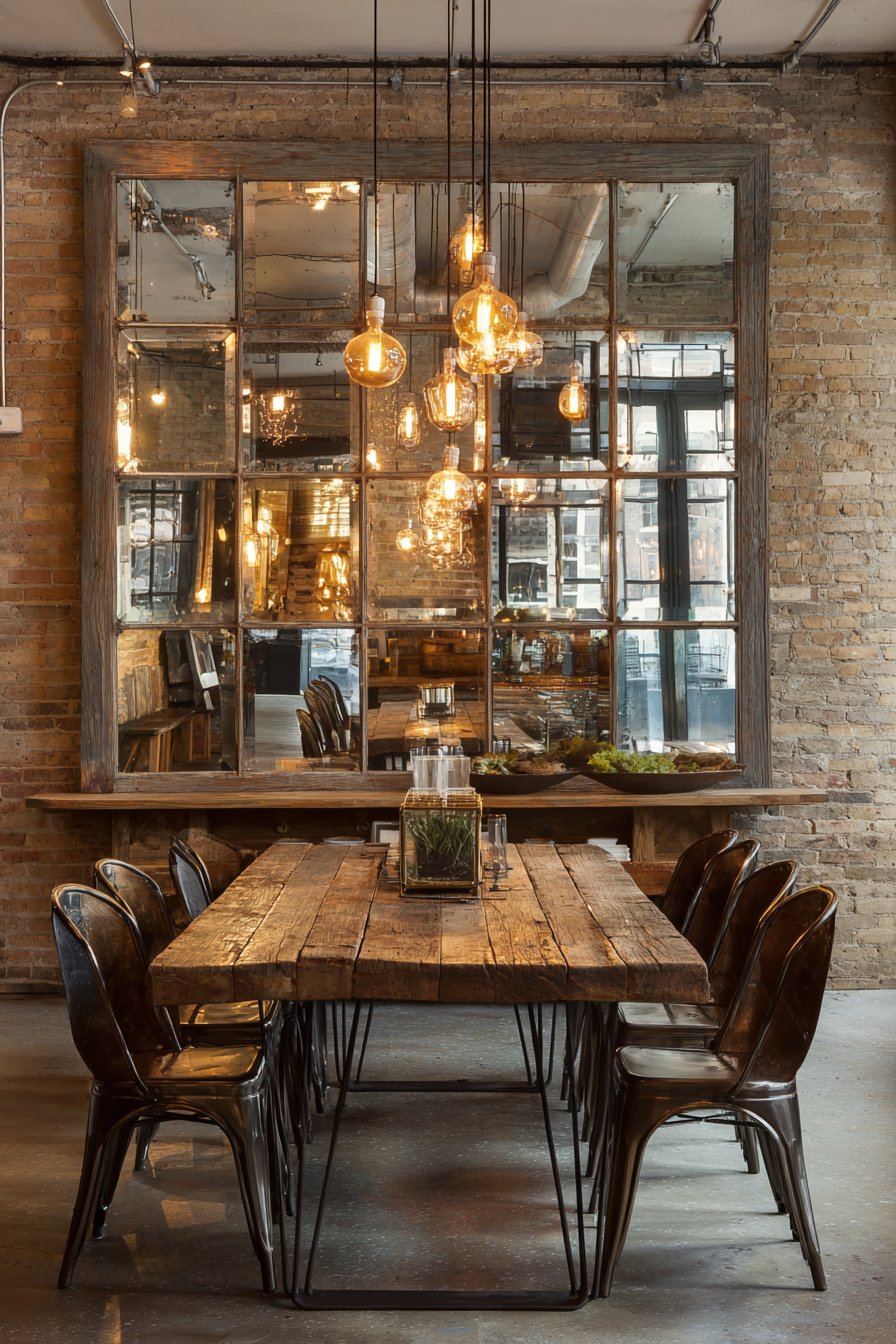
The rustic dining table uses thick barn wood planks. Concrete floors provide raw industrial foundation. Mixed metal chairs include vintage bistro styles. Edison bulb pendants hang at varying heights. Their warm glow reflects in multiple mirror panes.
The segmented panes create interesting reflected vantage points. Each section captures different room perspectives. The weathered wood frame adds textural richness. Original hardware and imperfections tell stories of previous use.
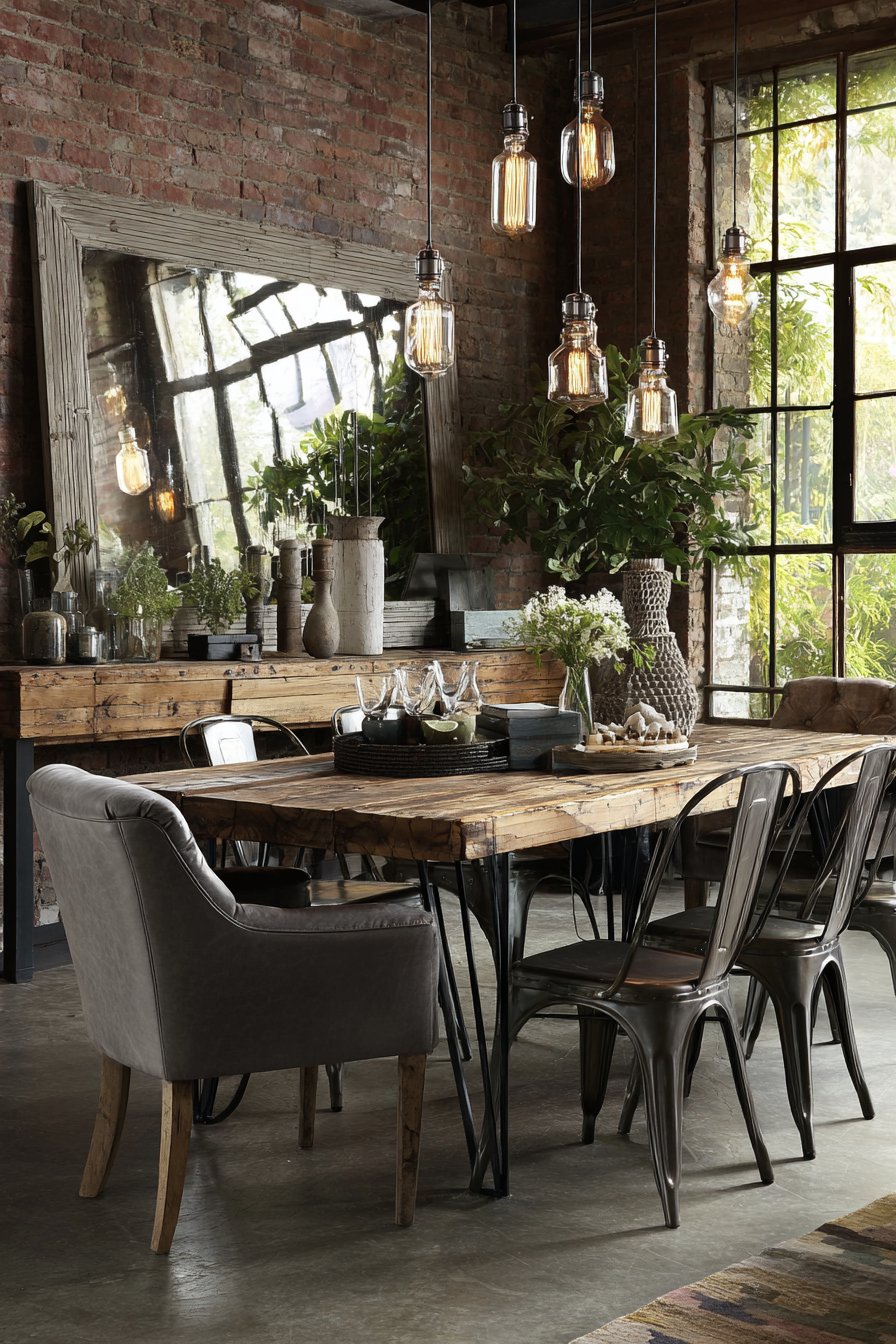
Professional photography captures layered industrial textures beautifully. Natural light from steel-frame windows creates authentic ambiance. The multiple panes fragment and multiply reflections artistically. This design proves salvaged materials create character-rich dining environments.
Key Design Tips:
- Source authentic salvaged windows for genuine character and history
- Lean oversized mirrors rather than hanging for casual industrial style
- Mix metal finishes and furniture styles for eclectic interest
- Position segmented mirrors to create multiple reflected perspectives
- Combine raw materials like brick, concrete, and reclaimed wood
8. Glamorous Art Deco Opulence
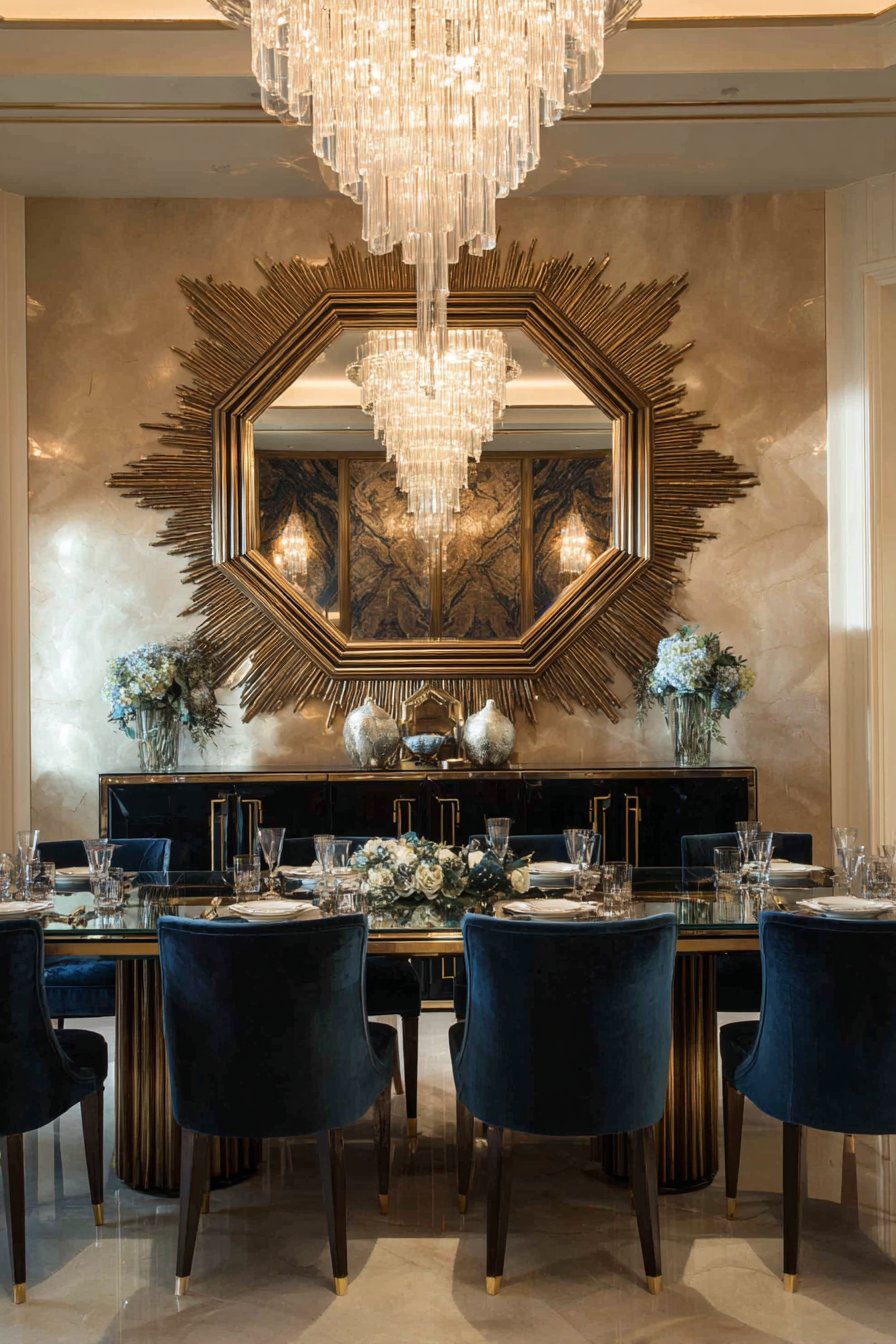
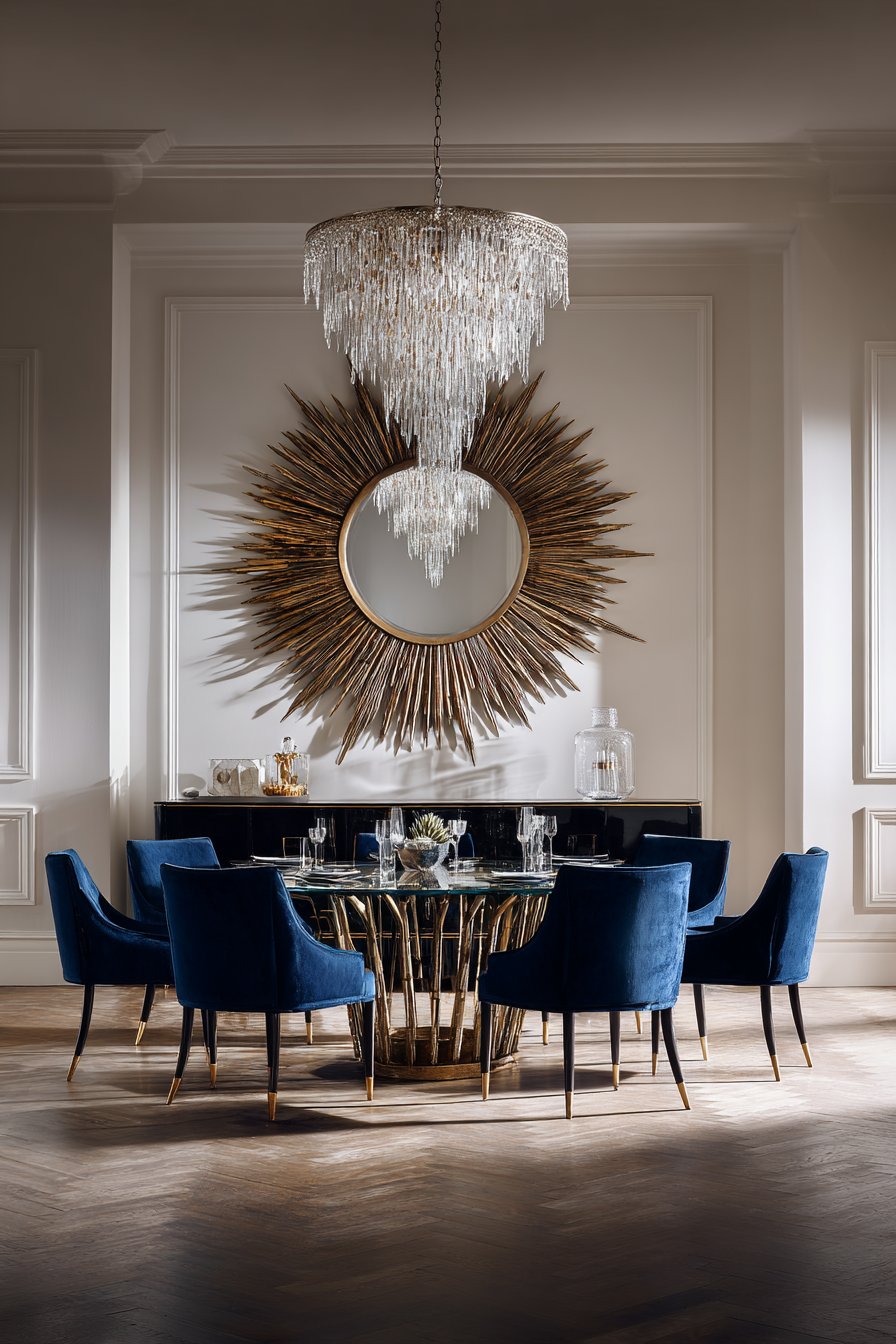
An oversized octagonal mirror with geometric sunburst frame commands attention. The antique gold finish radiates luxury. The mirror crowns a black lacquer sideboard. Brass hardware and inlay details enhance the opulent aesthetic.
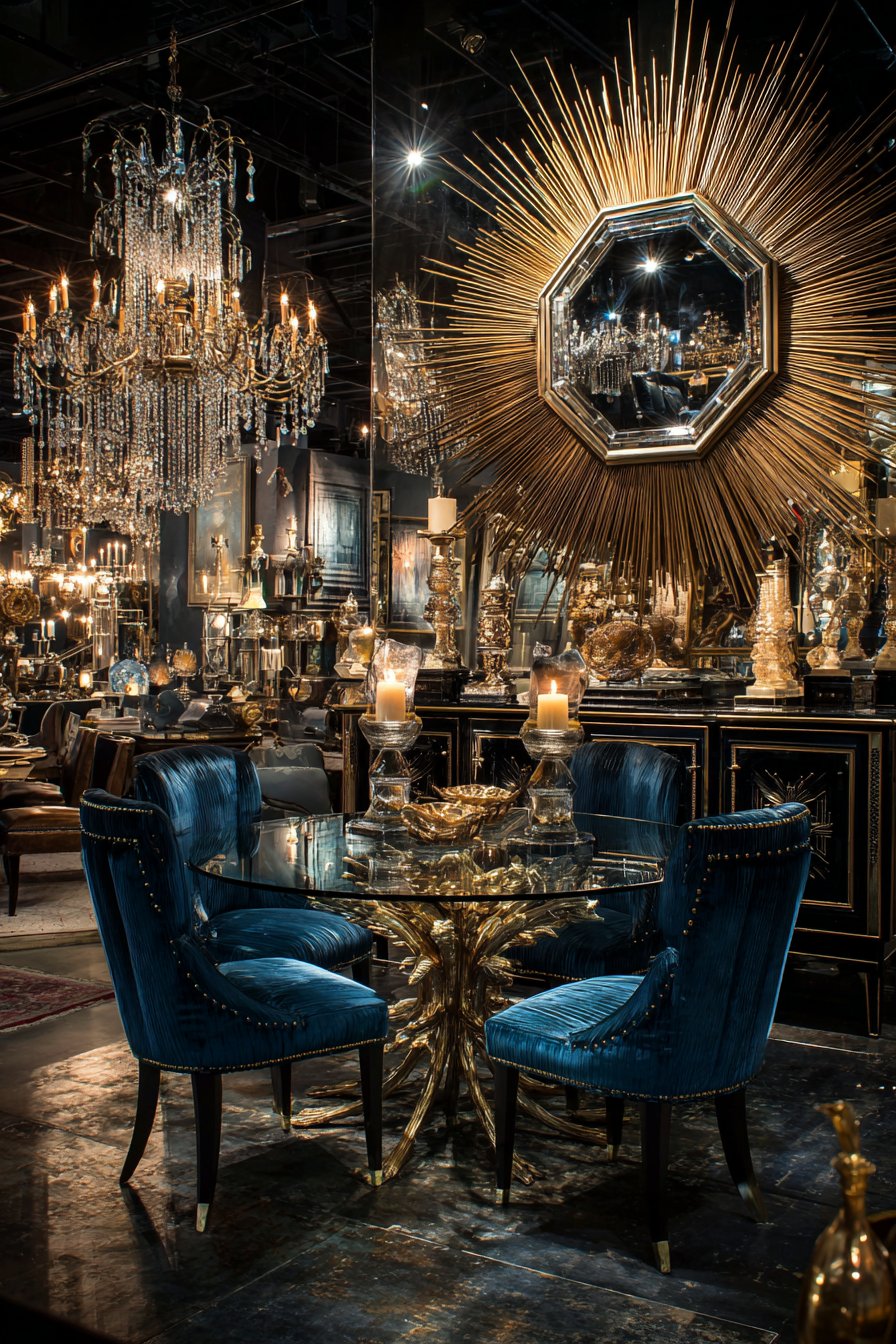
A glass-topped dining table features a sculptural brass base. Velvet dining chairs in rich sapphire blue provide sumptuous seating. Gold-tipped legs coordinate with other metallic accents. A tiered crystal chandelier creates dramatic overhead illumination. The mirror’s reflection doubles this lighting drama magnificently.
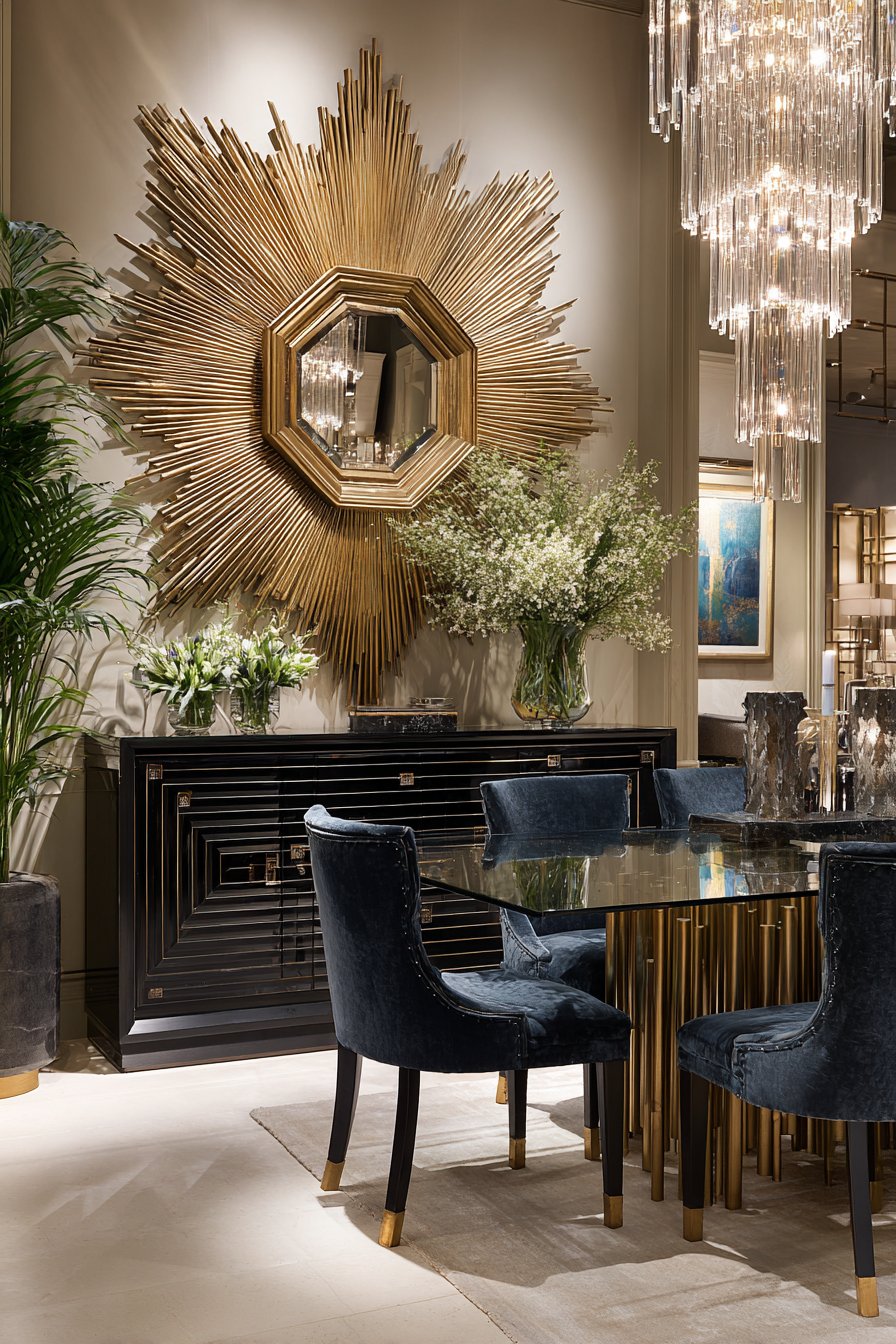
The sunburst frame creates dynamic visual movement. Golden rays extend from the circular center mirror. The octagonal shape adds geometric Art Deco authenticity. This period-appropriate detail enhances the design’s historical accuracy.
Carefully balanced lighting showcases metallic finishes throughout. Natural and artificial light sources work together harmoniously. The mirror amplifies the room’s luxurious character exponentially. This design celebrates the glamour and sophistication of Art Deco style.
Key Design Tips:
- Choose geometric shapes for authentic Art Deco styling
- Coordinate metallic finishes across furniture and accessories
- Select rich jewel-tone velvet upholstery for period glamour
- Install dramatic chandeliers to create reflected lighting spectacle
- Combine lacquered furniture with brass accents for opulence
9. Coastal Driftwood Texture
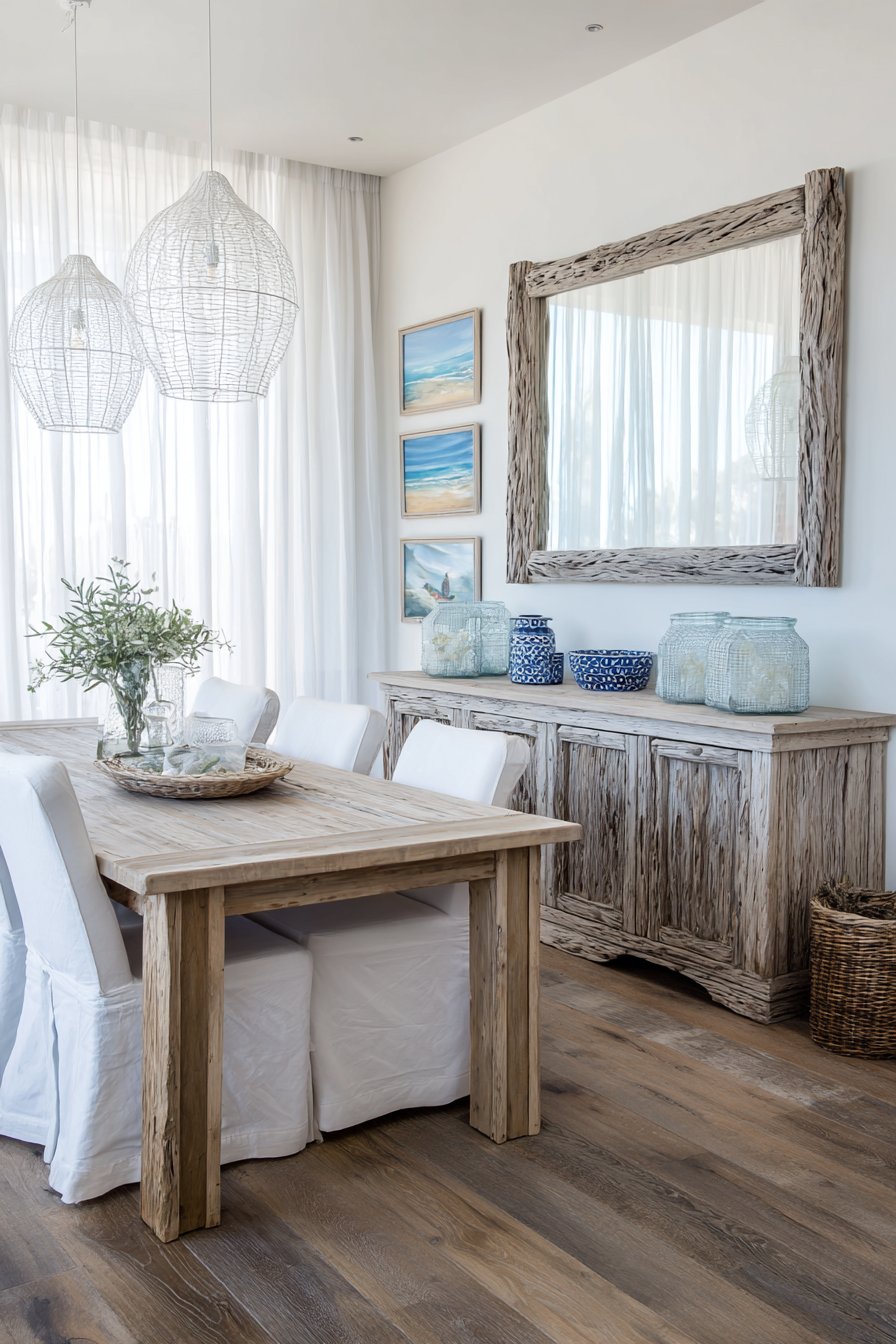
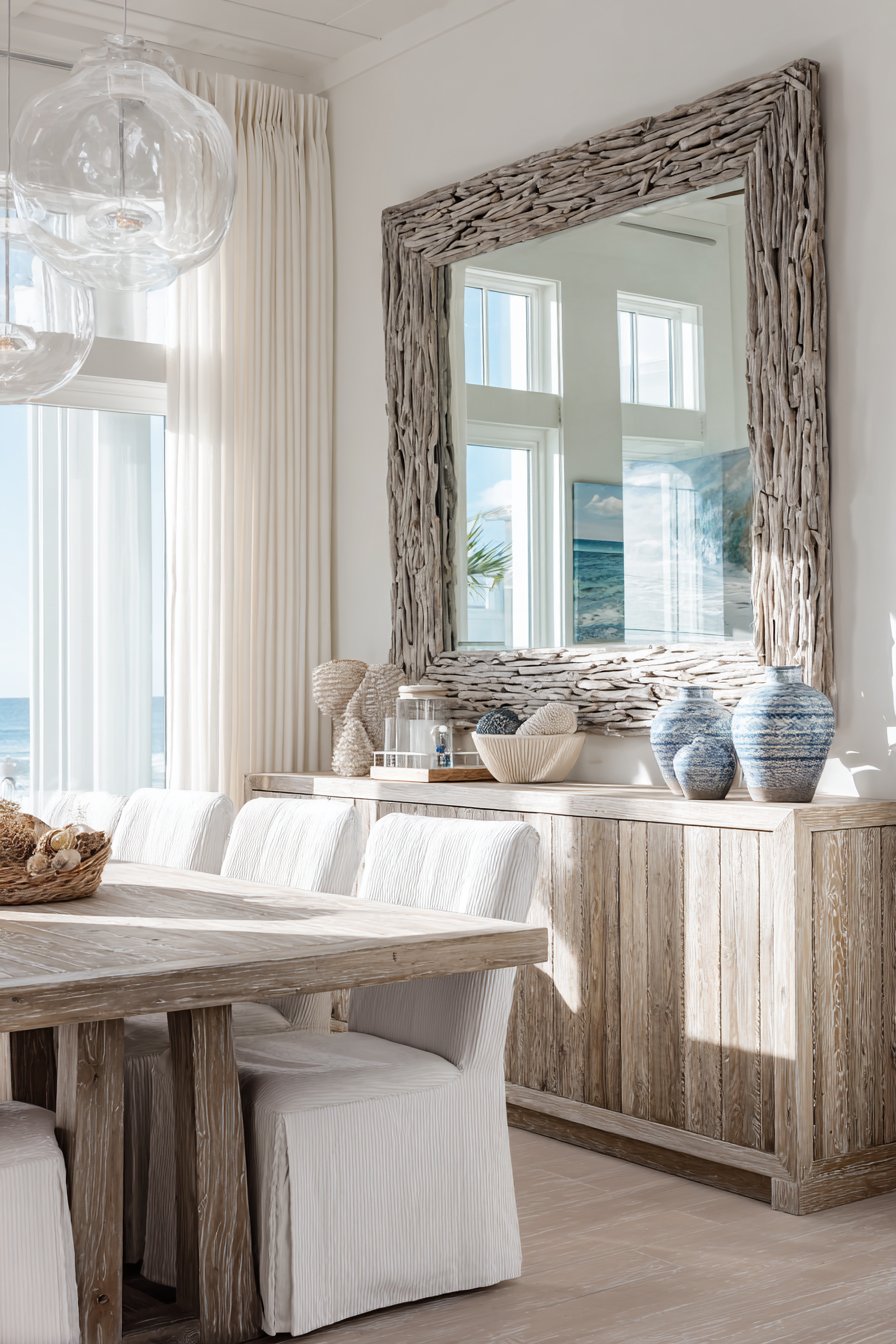
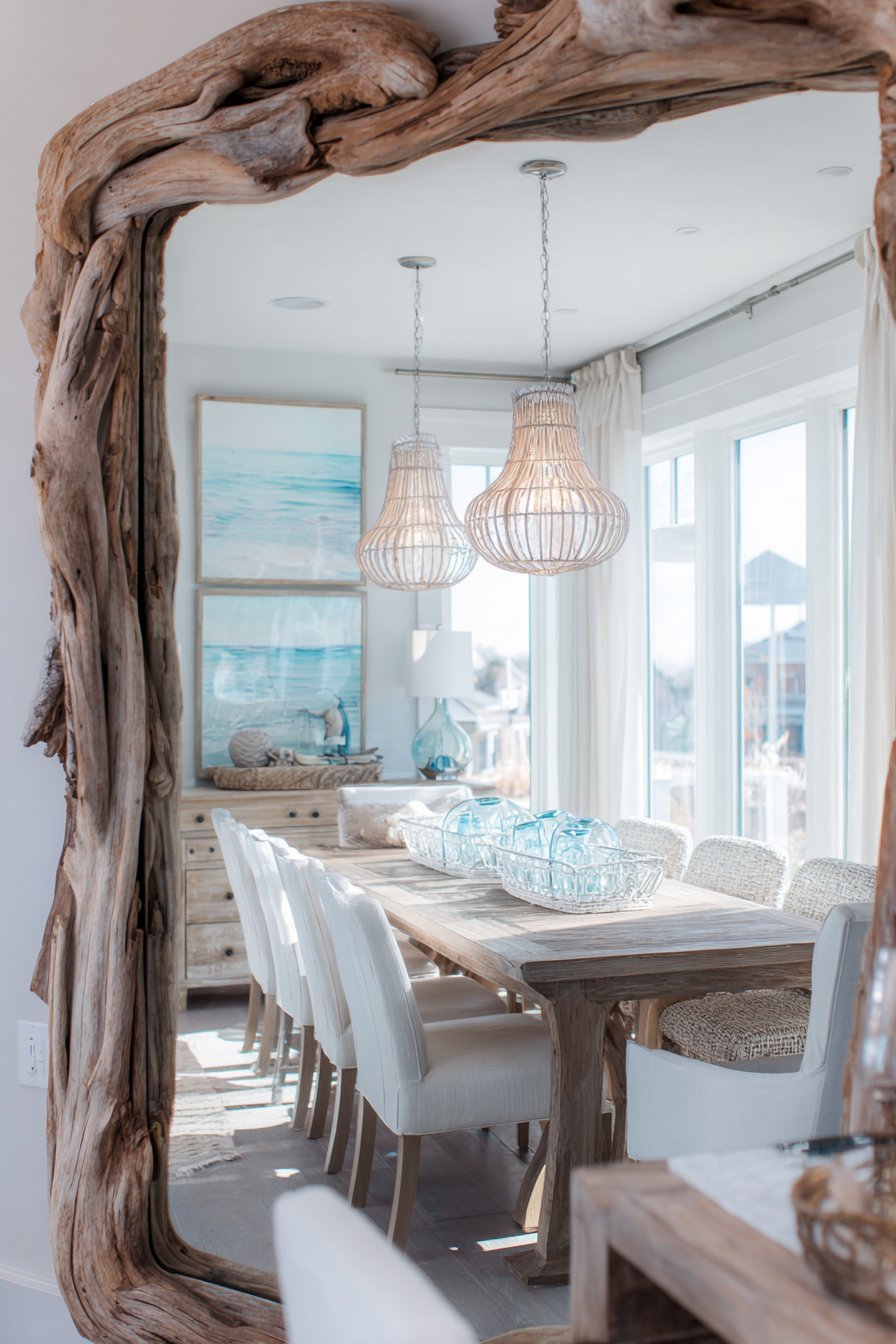
A large driftwood-framed mirror features natural grey-toned wood pieces. Organic patterns create unique framing detail. The mirror hangs above a whitewashed oak sideboard. Blue and white ceramic pieces display beneath.
A light wood dining table with weathered finish seats eight. White slipcover chairs mix with natural woven seating. Sea glass pendant lights hang overhead. Beach-inspired artwork appears in the mirror’s reflection. The airy nautical atmosphere feels breezy and relaxed.
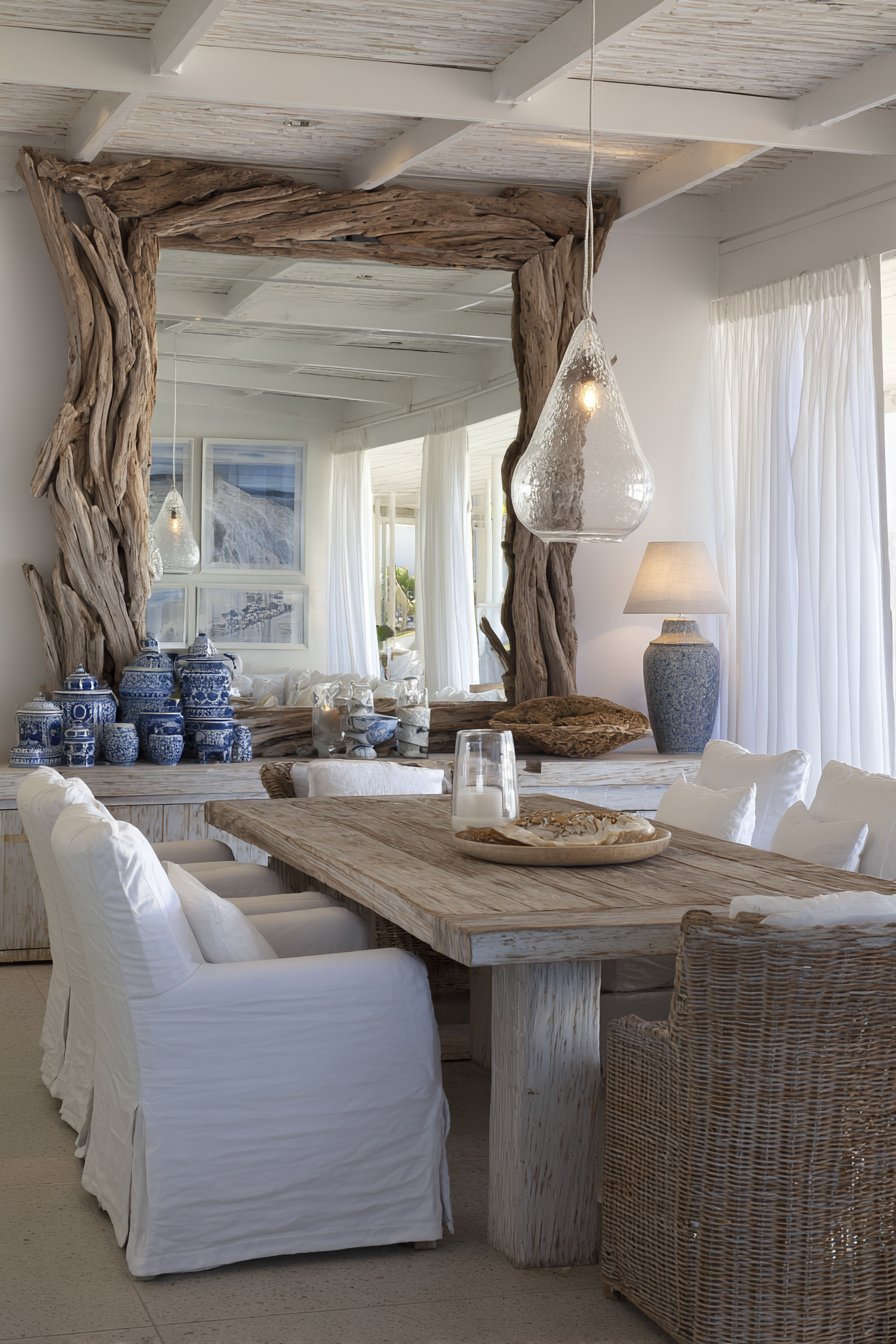
Soft natural light filters through white linen curtains. The driftwood frame adds substantial texture. Each wood piece shows individual weathering and character. The grey tones complement the coastal color palette perfectly.
Wide-angle photography emphasizes the mirror’s textural qualities. The reflection enhances whites, blues, and natural wood tones. Balanced exposure captures the light-filled space authentically. This design brings relaxed coastal elegance to dining environments.
Key Design Tips:
- Select driftwood frames for authentic coastal texture and character
- Coordinate grey-toned weathered finishes throughout the space
- Mix white upholstery with natural woven materials for coastal variety
- Reflect blue and white ceramics to emphasize nautical themes
- Use soft white curtains to maximize light and airy feelings
10. Farmhouse Distressed White
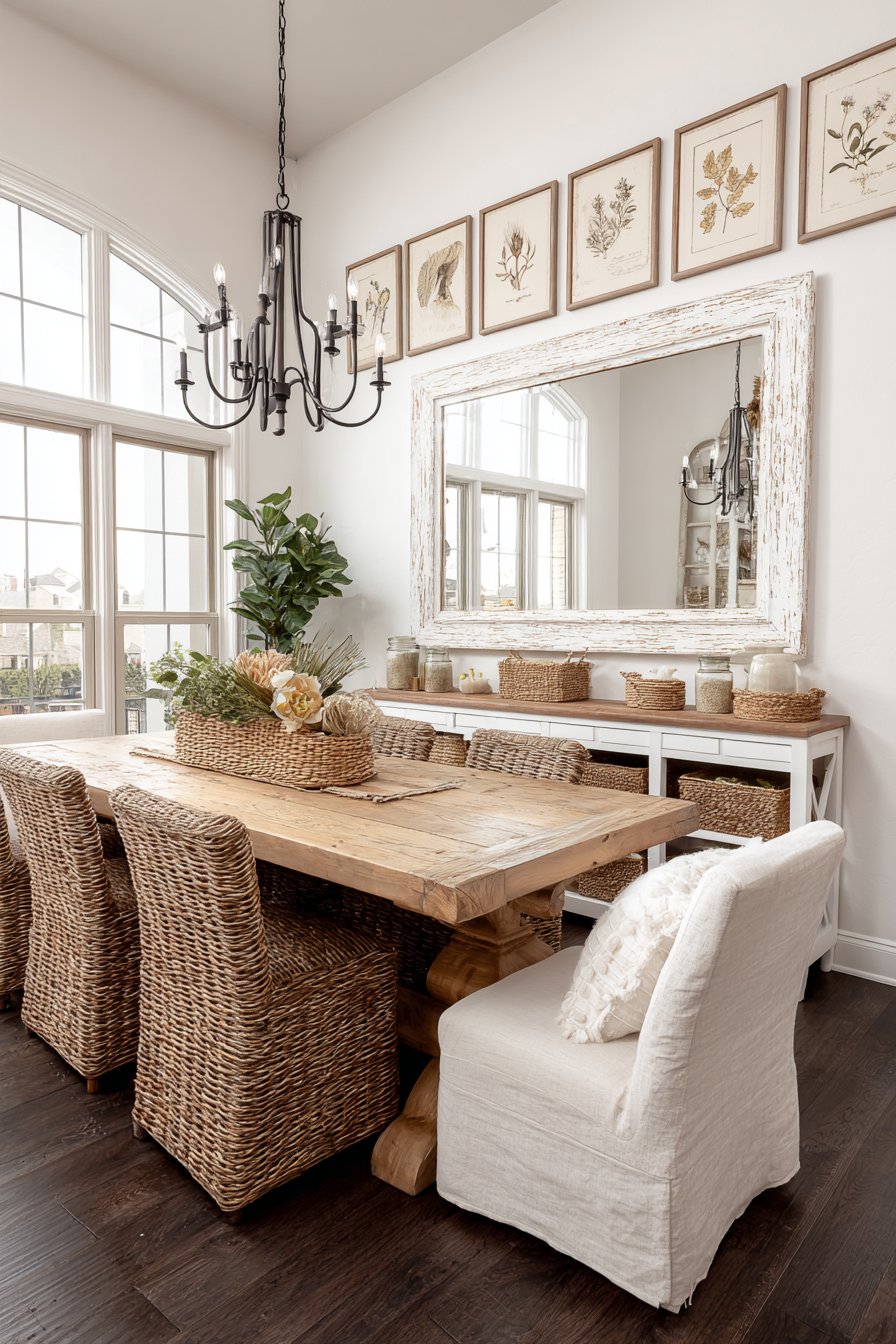
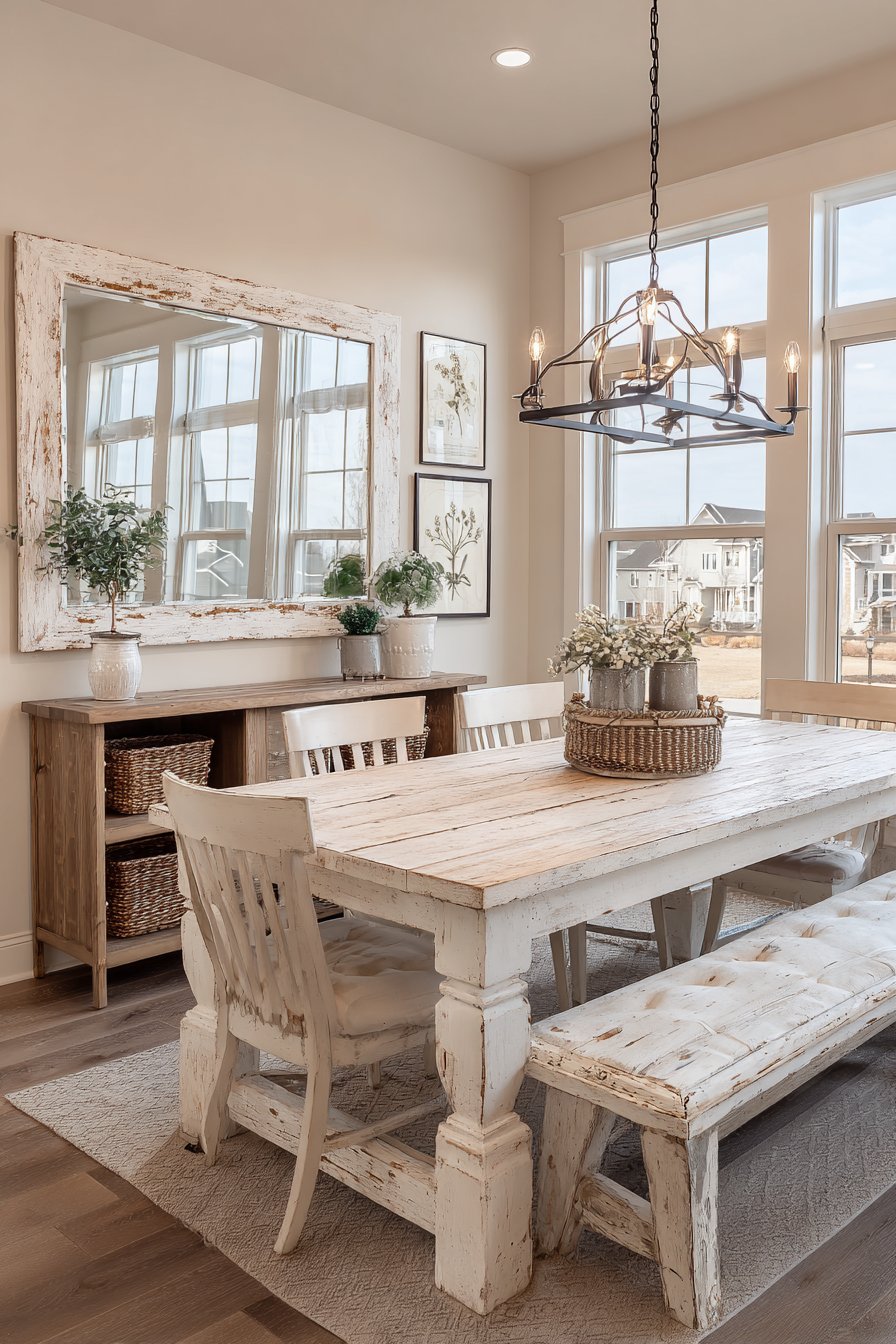
A large rectangular mirror in distressed white-painted wood frame shows chippy paint character. Aged patina reveals layers beneath the surface. The mirror hangs above a rustic farmhouse sideboard. Natural pine with open lower shelving displays woven baskets and stoneware crocks.
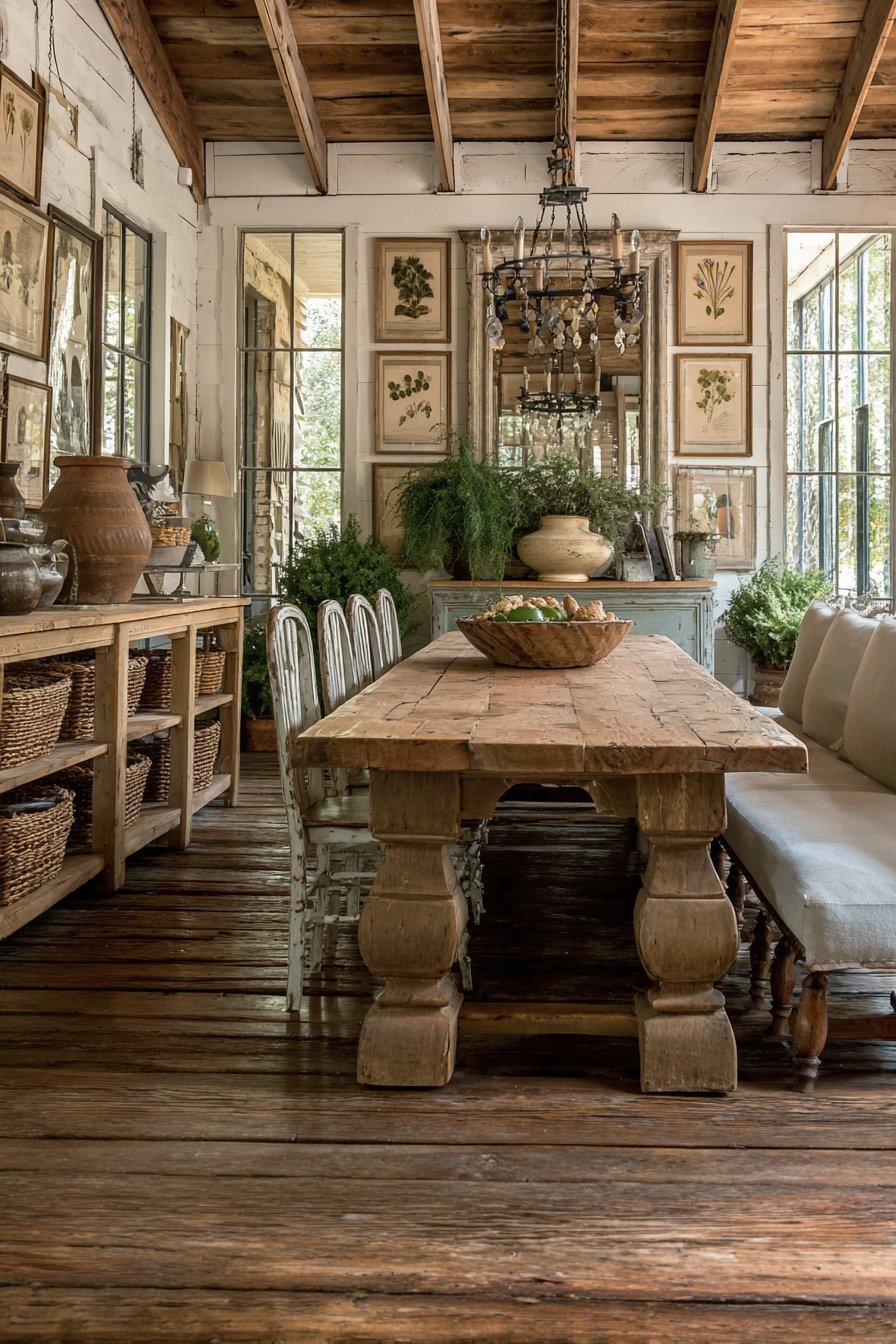
A thick plank farm table with turned legs seats ten people. Windsor chairs combine with a long upholstered bench. An iron chandelier with candle-style lights provides overhead illumination. The mirror reflects vintage botanical prints and greenery.
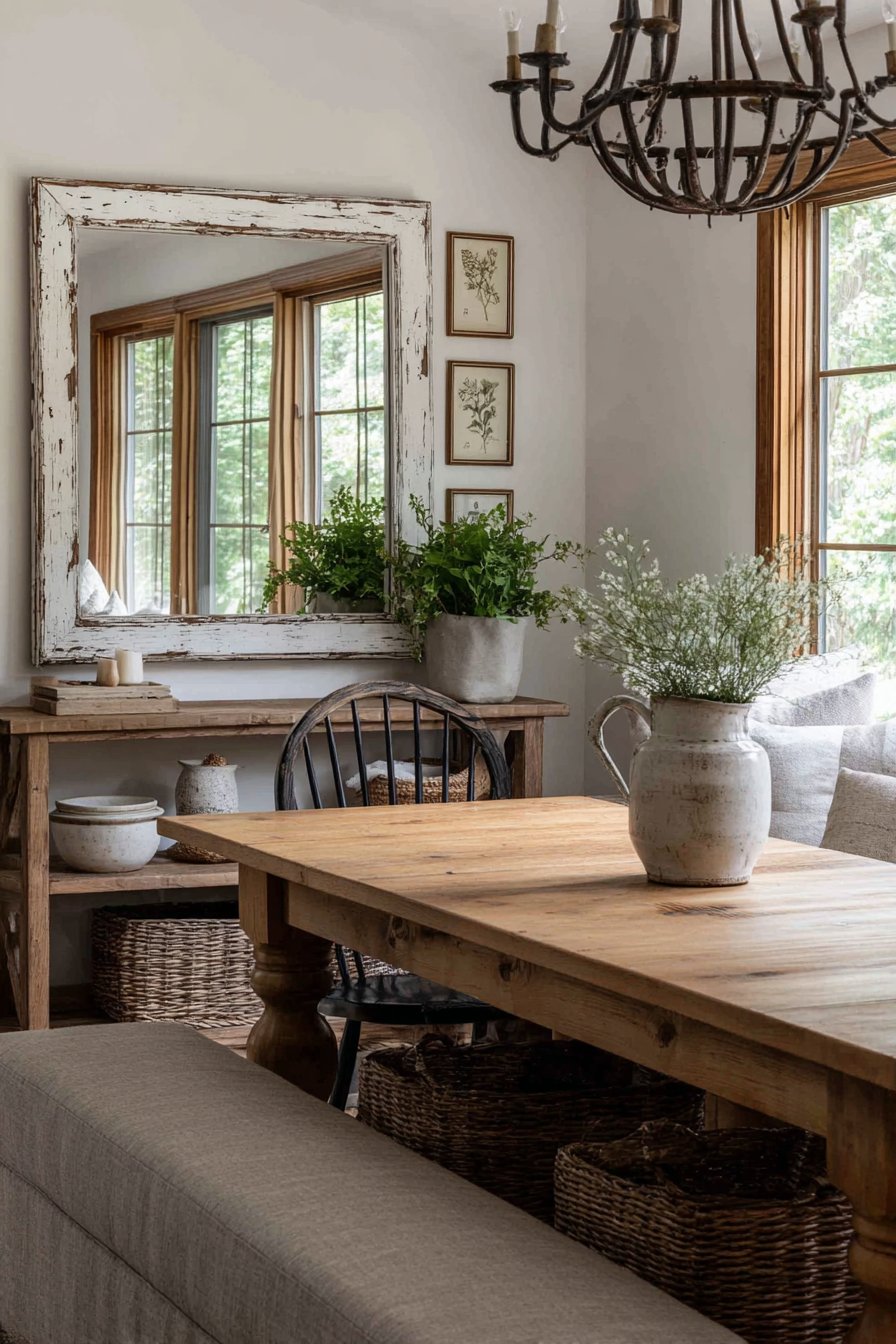
The distressed paint finish adds authentic farmhouse character. Visible wear reveals the wood beneath selectively. This chippy aesthetic suggests years of loving use. The white finish brightens the overall dining space significantly.
Natural daylight from multipane windows floods the space. The mirror reflects this abundant natural light beautifully. The worn finish adds depth to the cozy atmosphere. This design celebrates lived-in farmhouse authenticity and comfort.
Key Design Tips:
- Choose distressed white finishes for authentic farmhouse character
- Display functional vintage items like crocks and baskets
- Mix seating types including benches for casual farmhouse style
- Reflect botanical elements and greenery to enhance natural feeling
- Install candle-style lighting for traditional farmhouse ambiance
11. Bohemian Rattan Asymmetry
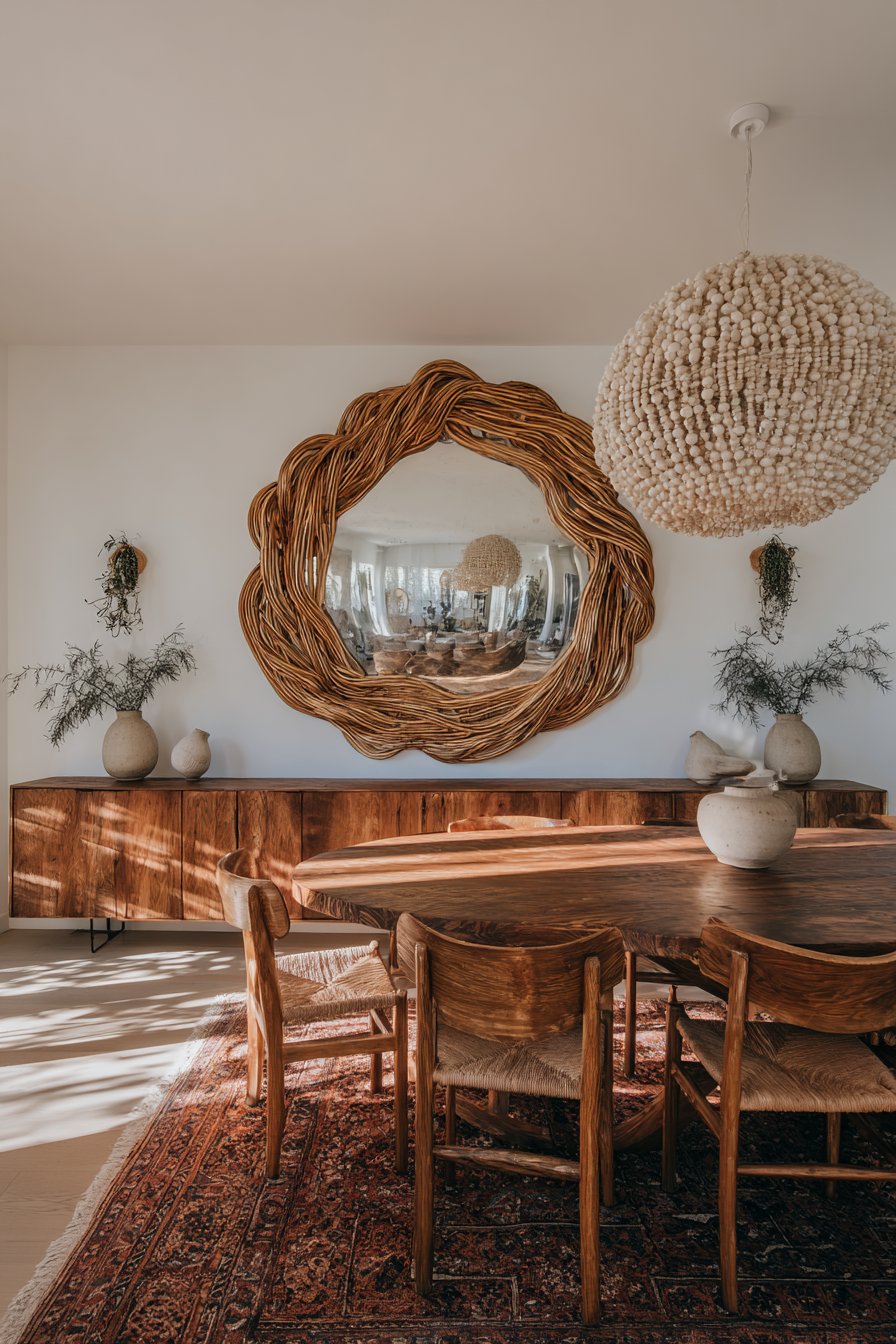
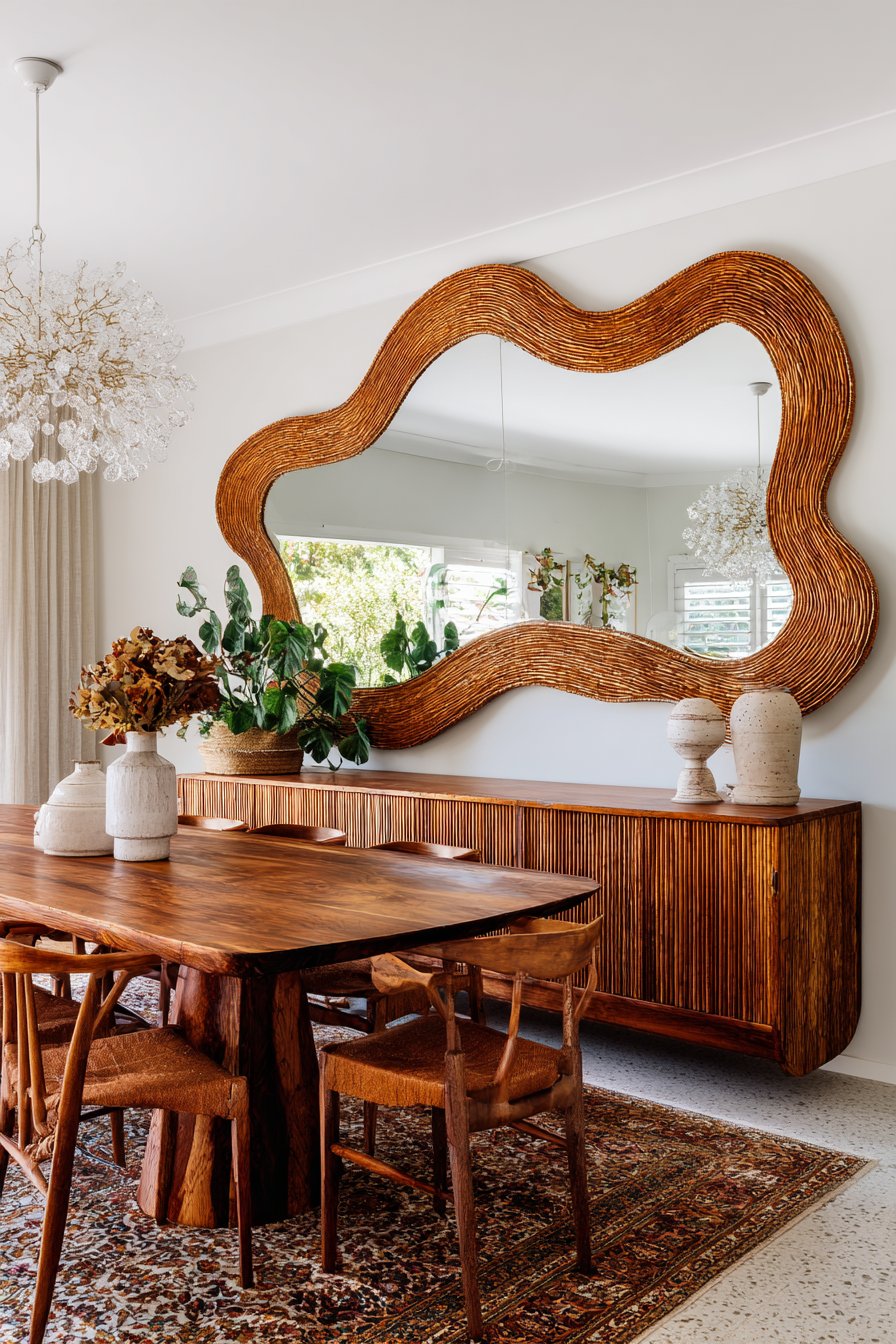
An irregular shaped rattan-framed mirror features natural woven texture. The organic asymmetrical design creates artistic interest. The mirror hangs above a low teak credenza. Macramé plant hangers and ceramic vessels provide styling.
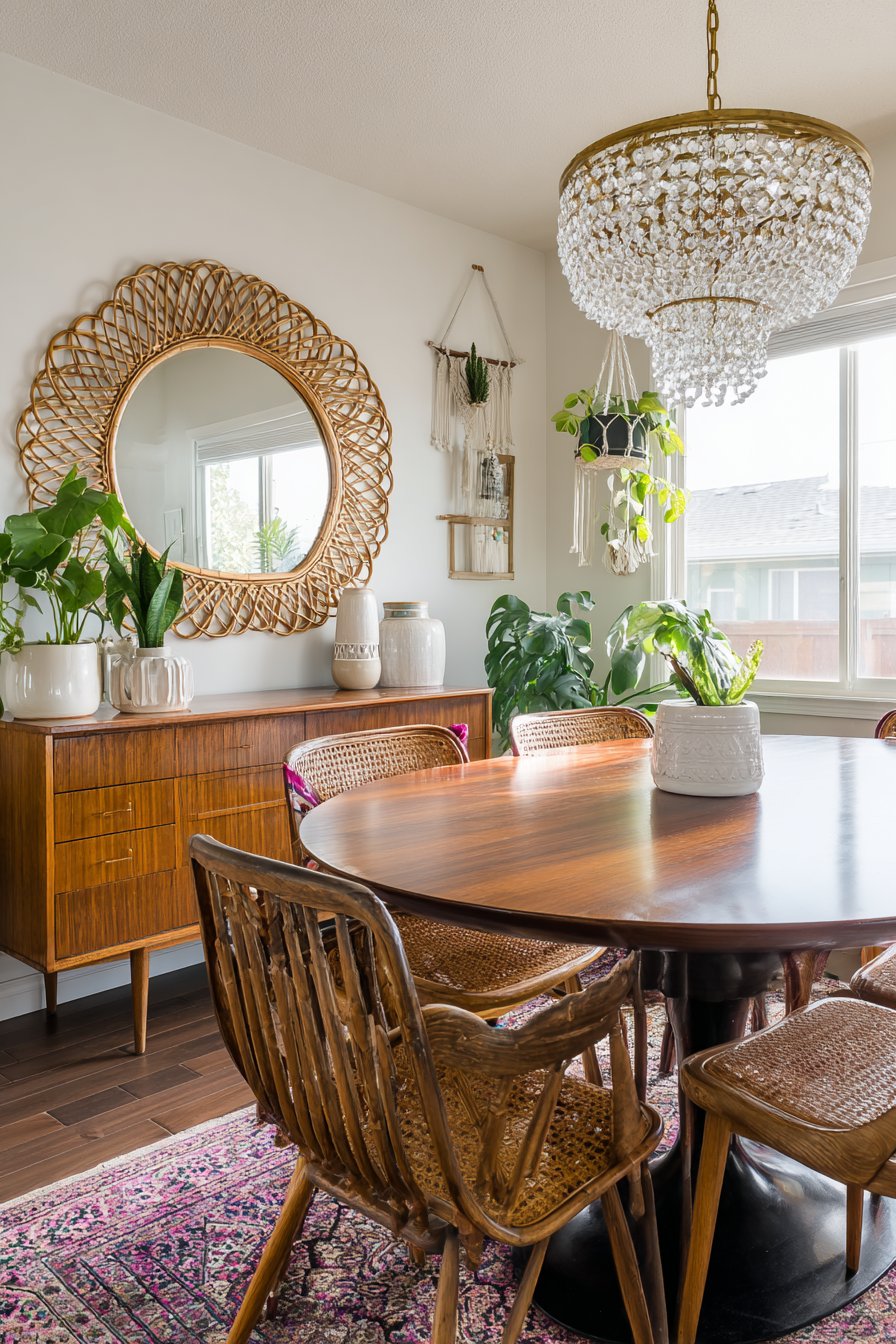
A round pedestal dining table in warm walnut anchors the space. Mismatched vintage chairs show various wood tones and woven seats. Layered textiles include a vintage Persian rug. Hanging plants and a beaded chandelier appear in reflections. The eclectic charm multiplies through the mirror.
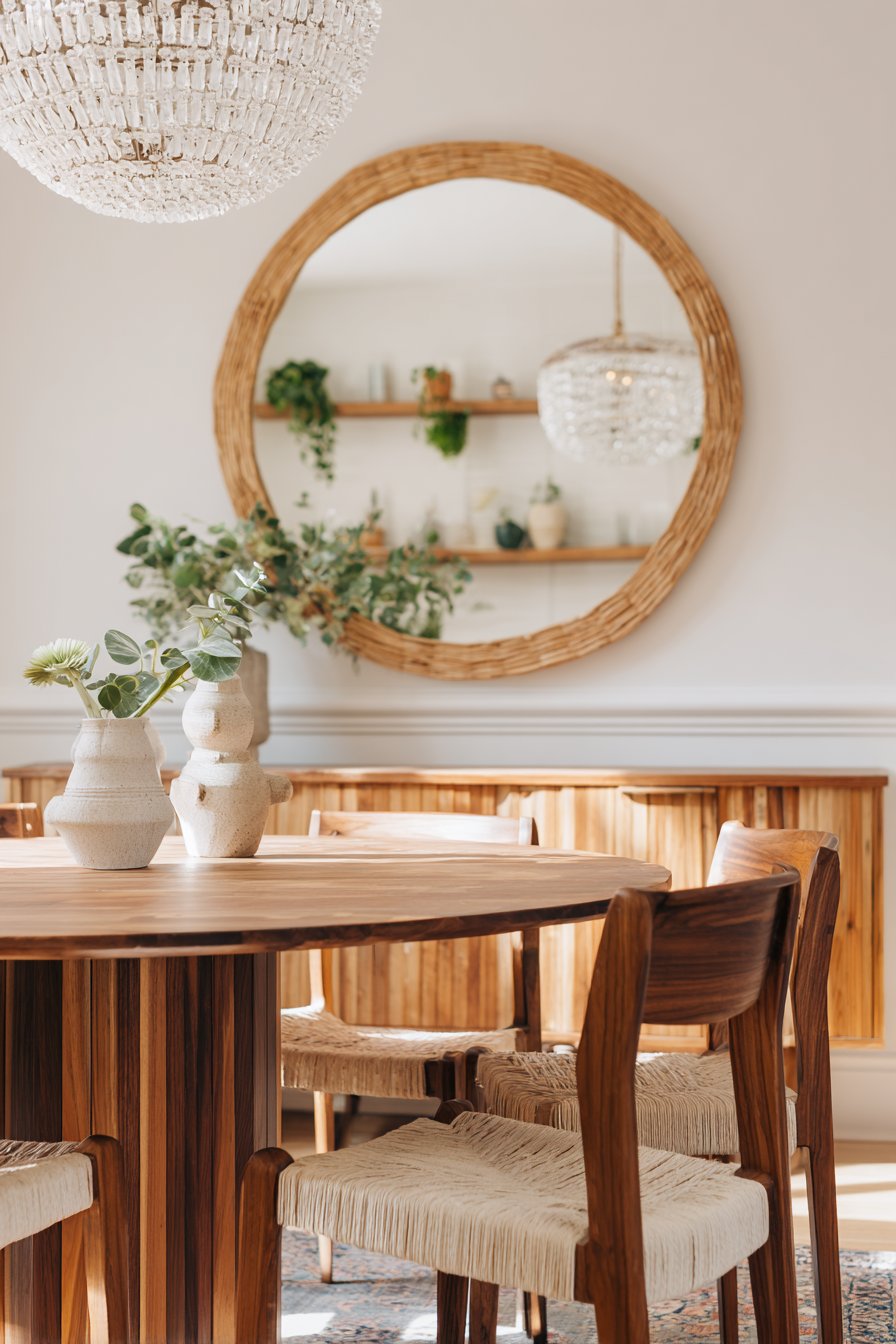
The handcrafted rattan frame adds substantial organic texture. Natural fiber weaving creates unique pattern variations. The asymmetrical shape breaks conventional mirror expectations. This artistic approach suits bohemian design perfectly.
Soft diffused natural light creates gentle shadows. The mirror’s irregular shape reflects the collected-over-time aesthetic. Multiple textures and patterns coexist harmoniously. This design celebrates individual expression and artistic freedom.
Key Design Tips:
- Select handcrafted frames with organic materials for bohemian authenticity
- Embrace asymmetrical shapes for artistic visual interest
- Mix furniture from different periods and origins freely
- Layer multiple textiles and patterns for bohemian richness
- Reflect plants and natural elements to enhance organic feeling
12. Formal Venetian Elegance
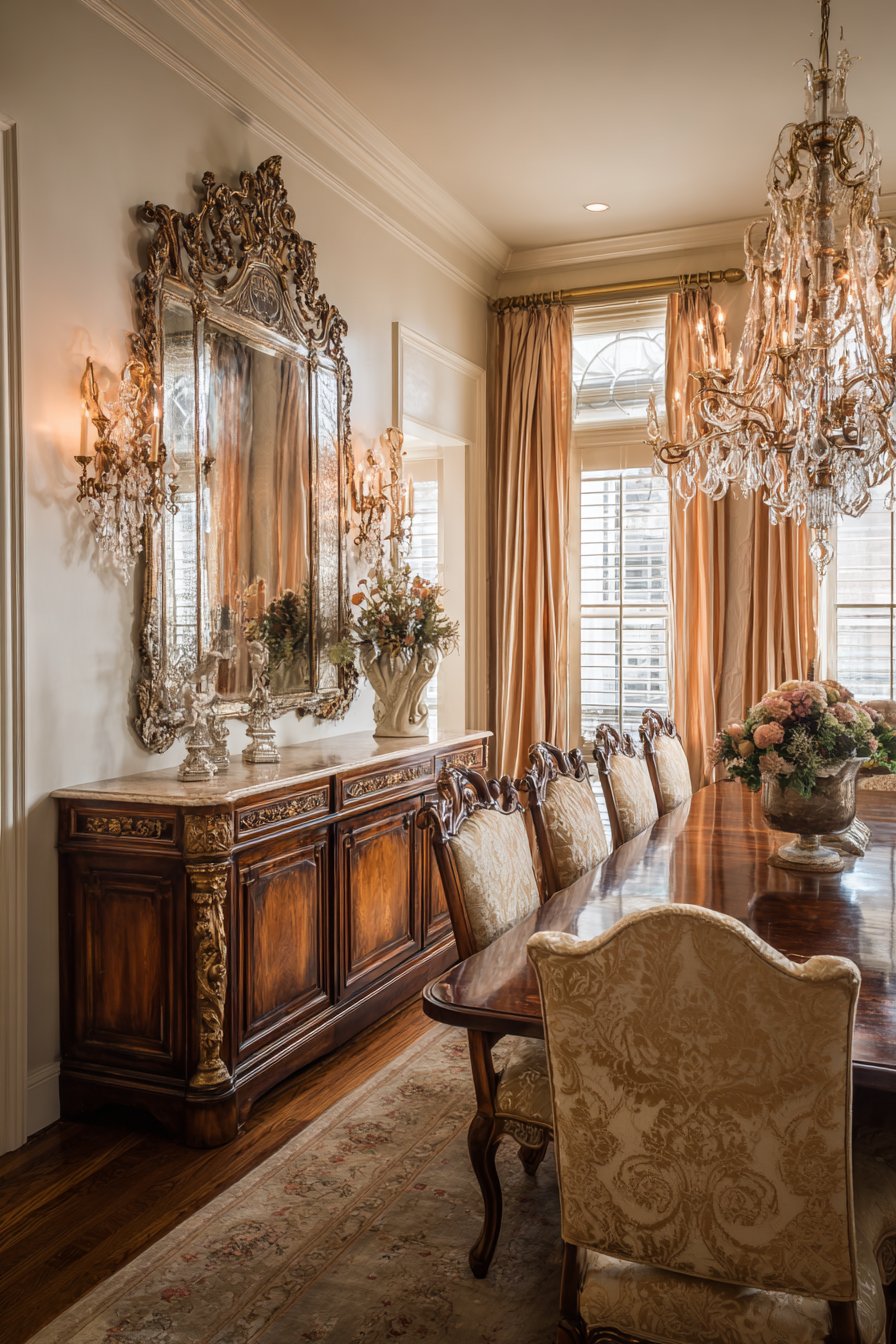
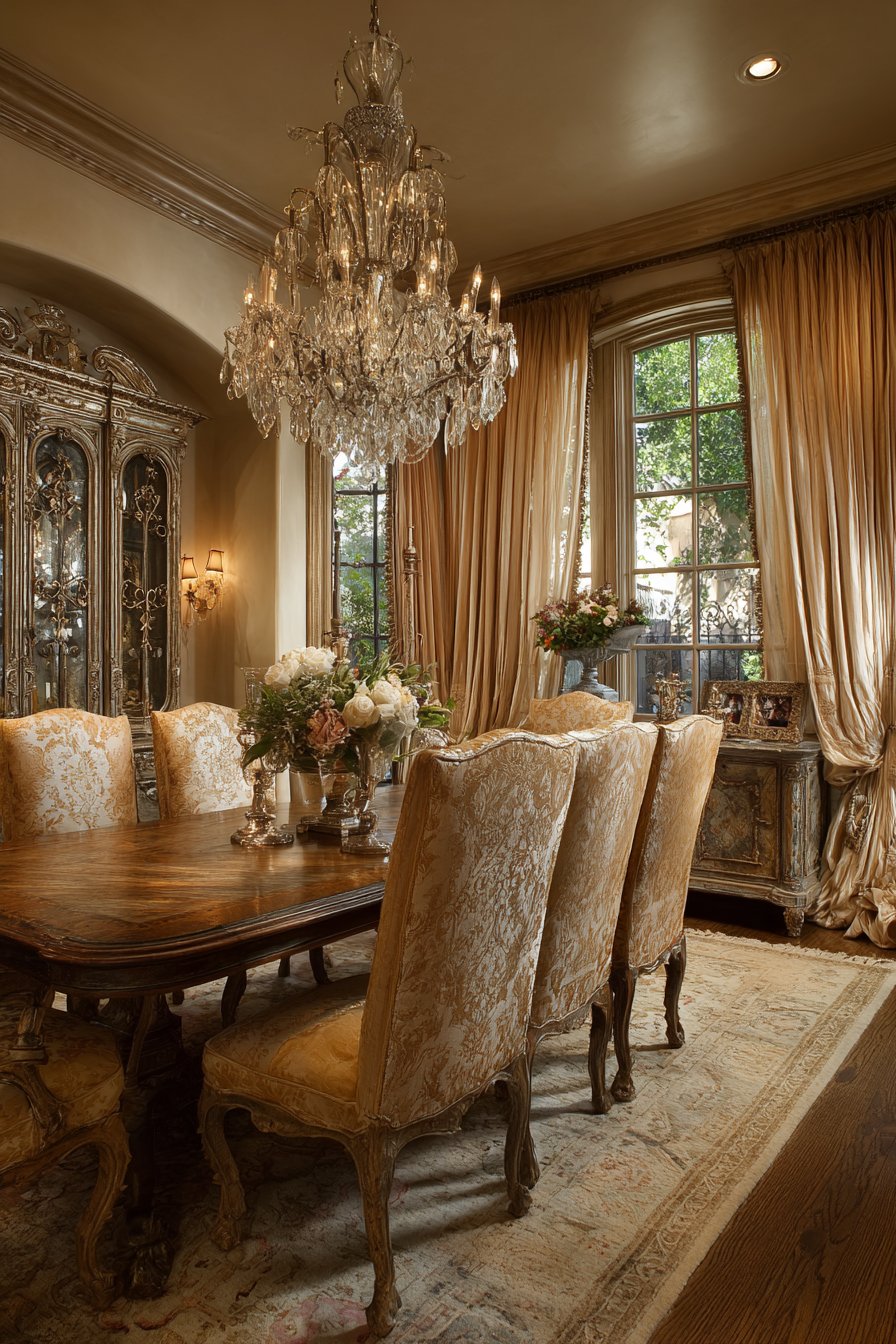
An elaborate Venetian-style mirror features intricate etched glass details. Beveled mirror borders add dimensional richness. The ornate piece hangs above a mahogany buffet. Carved details and marble top enhance formal elegance.
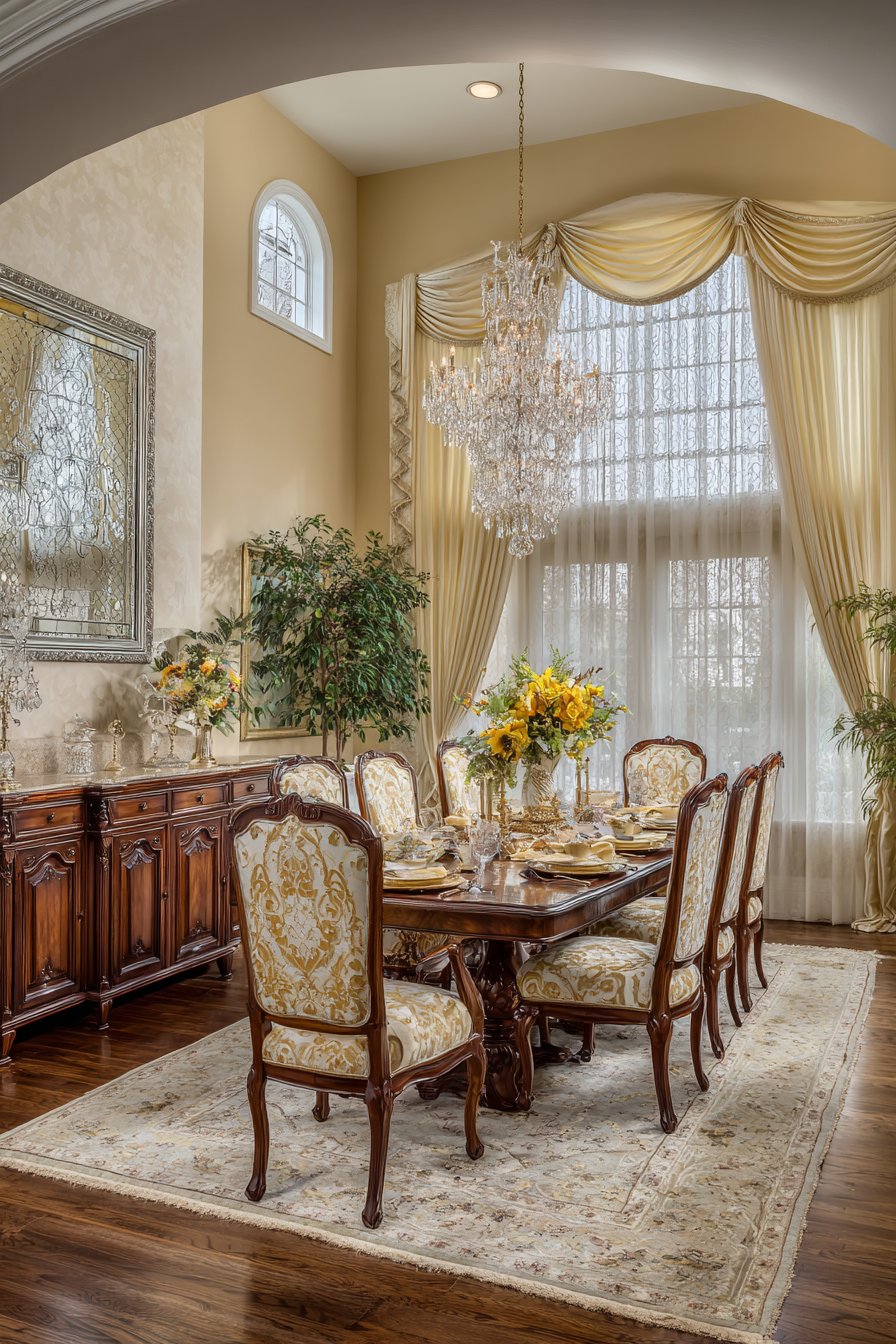
A formal dining table extends to seat twelve guests. Queen Anne style chairs show damask upholstery in cream and gold. An impressive crystal chandelier with multiple tiers dominates overhead. The mirror’s ornate reflection doubles the chandelier’s grandeur. Heavy silk drapes in champagne frame tall windows.
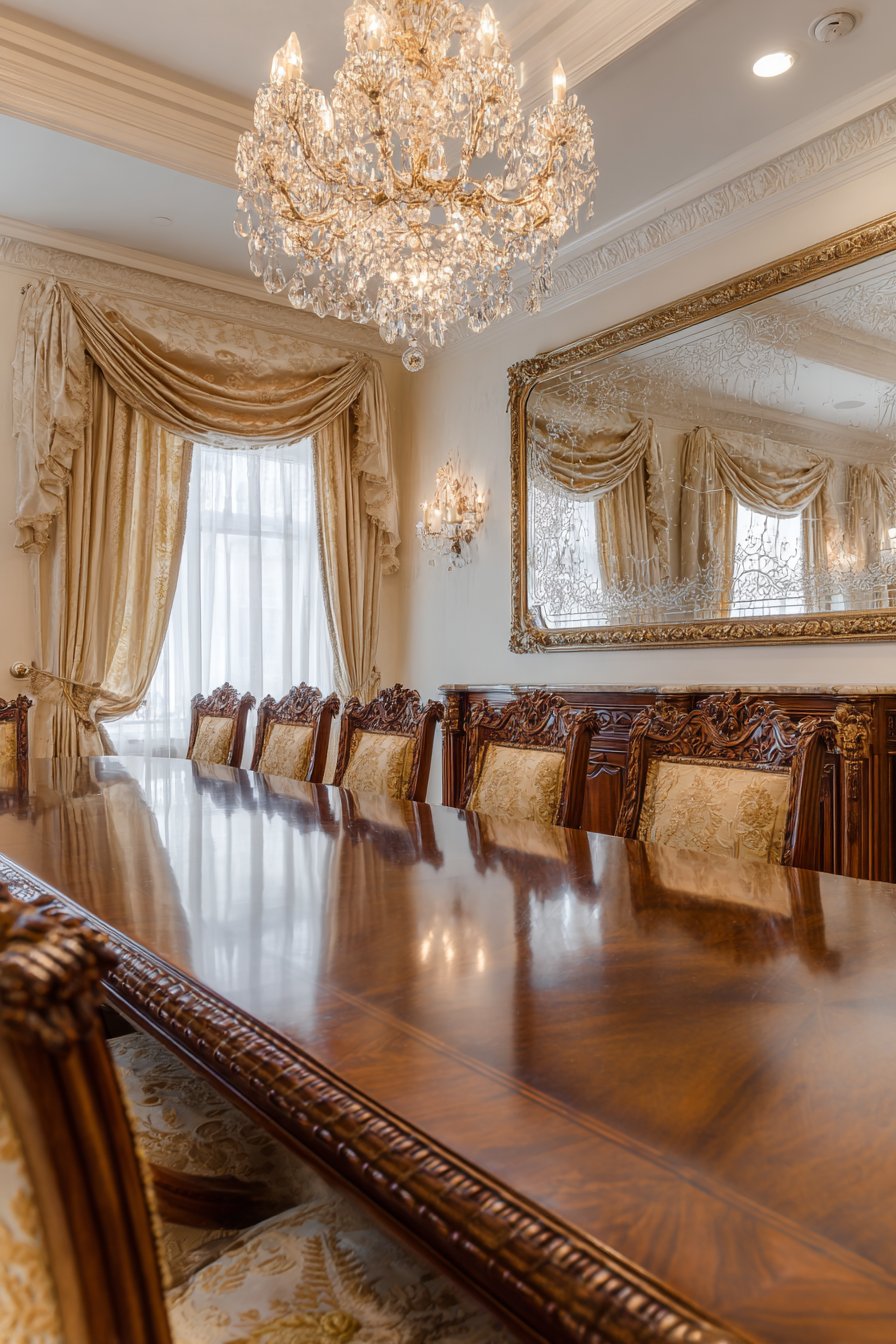
The etched glass work demonstrates exceptional craftsmanship. Detailed patterns cover portions of the mirror surface. The beveled borders create prismatic light effects. This level of detailing elevates the mirror to art status.
Professional photography captures the intricate craftsmanship beautifully. Carefully balanced lighting showcases the etched glass work. Traditional refinement permeates every design element. This formal approach creates memorable dining elegance.
Key Design Tips:
- Choose Venetian mirrors for maximum formal elegance and detail
- Coordinate ornate mirror details with furniture carving styles
- Select rich upholstery in traditional patterns and luxurious fabrics
- Install substantial crystal chandeliers for reflected grandeur
- Frame windows with heavy silk drapes for traditional formality
13. Contemporary Convex Drama
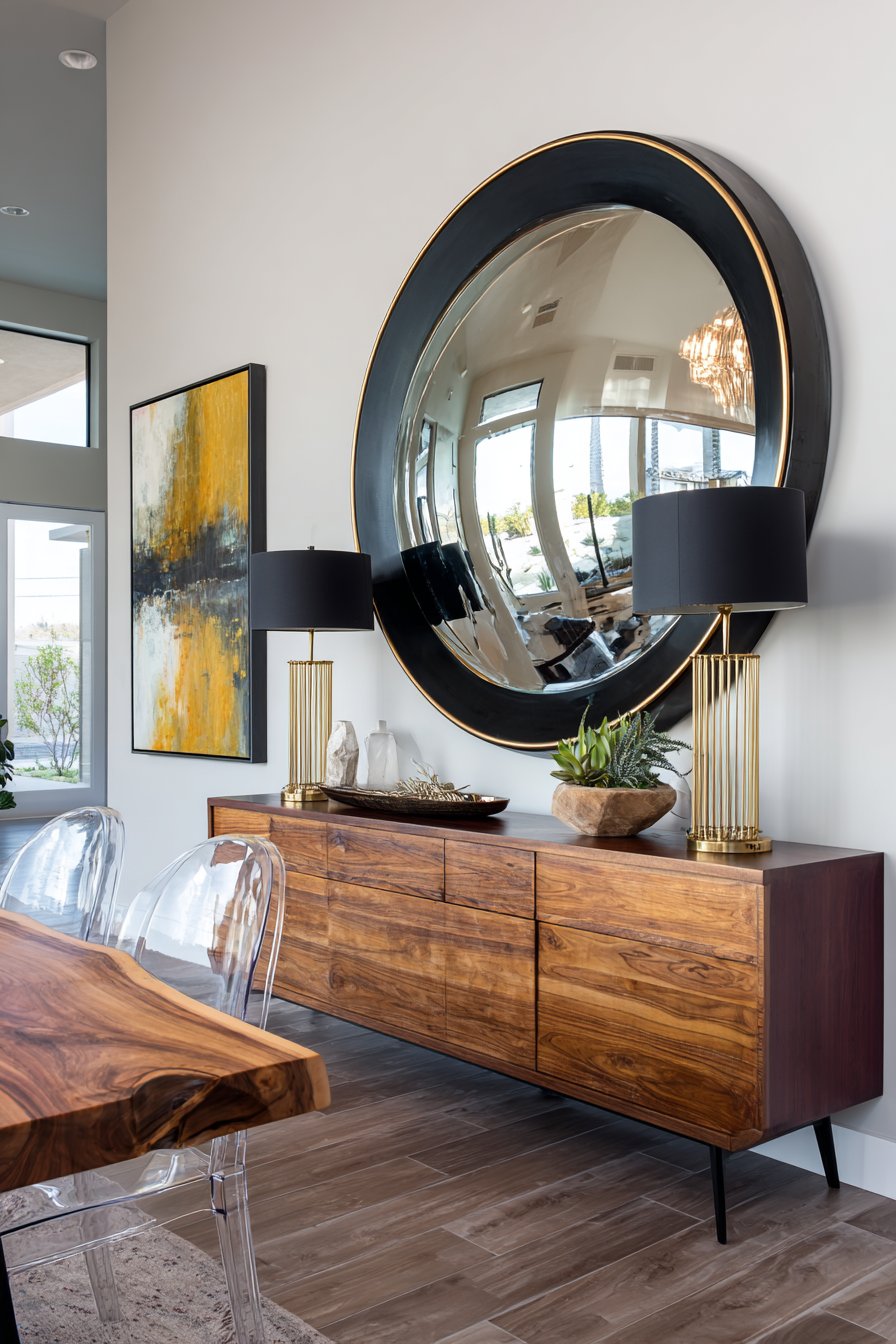
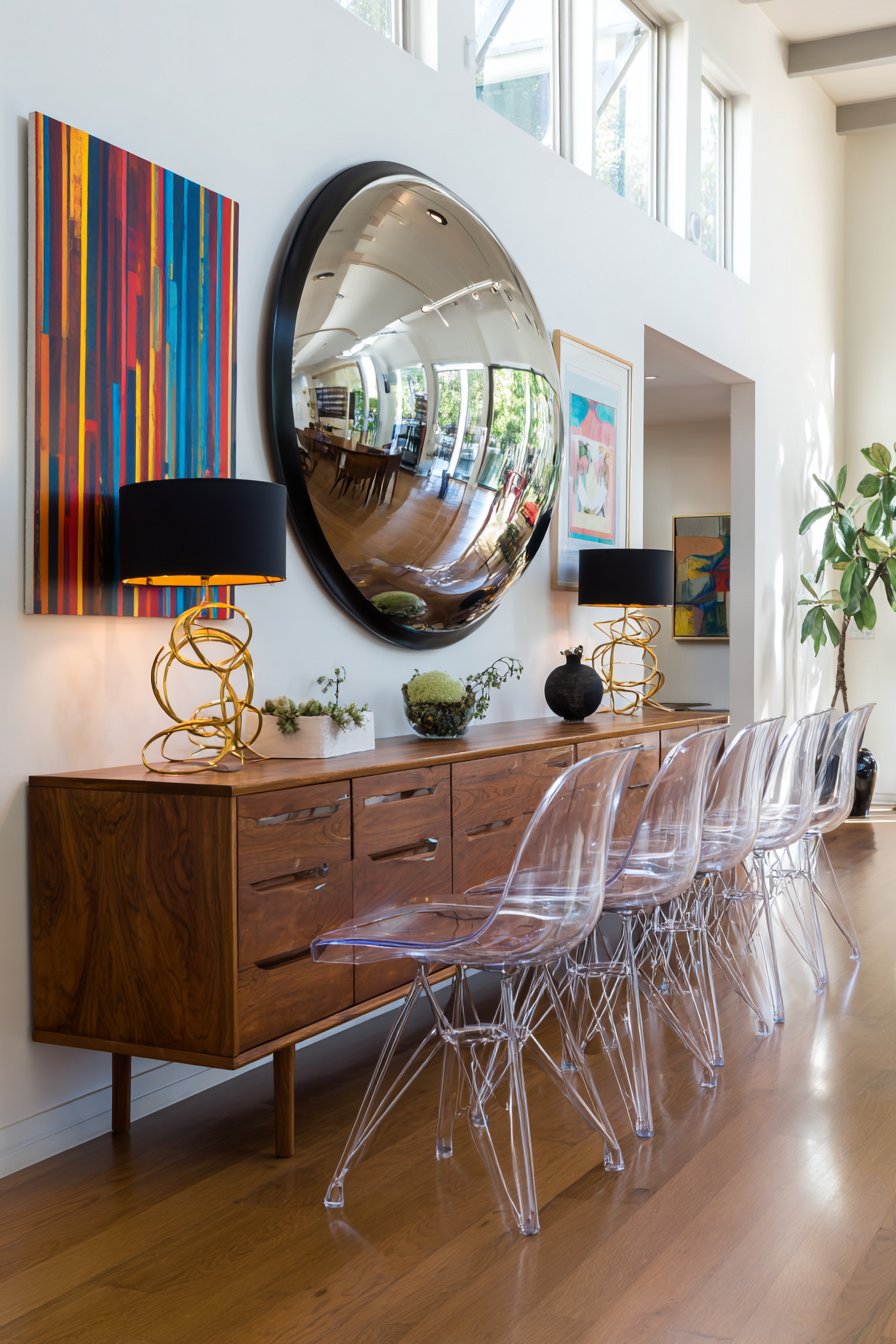
A convex circular mirror features black matte frame and goldtone inner ring. The fish-eye reflection effect creates unique visual interest. The mirror mounts above a mid-century modern credenza. Teak with tapered legs provides period-appropriate styling.
A live-edge dining table in rich walnut slab creates organic contrast. Contemporary acrylic ghost chairs provide transparent visual lightness. Abstract art in bold colors flanks the mirror. Sculptural table lamps with brass accents sit on the credenza. The convex surface reflects and distorts these elements artistically.
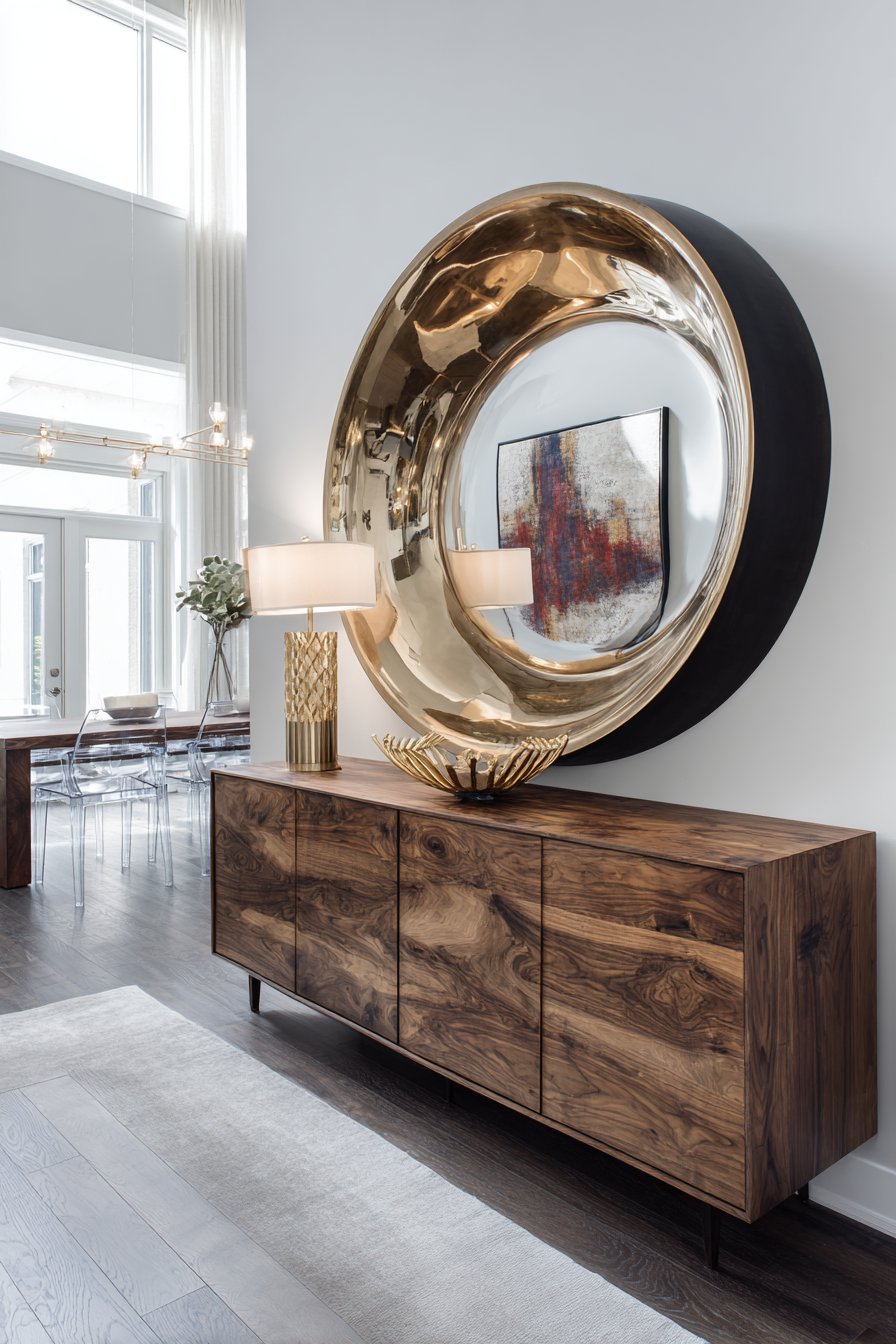
The unique mirror shape expands reflected space in unexpected ways. The distortion creates artistic rather than literal reflection. The black and gold frame combination adds sophisticated contrast. This contemporary piece functions as both mirror and sculpture.
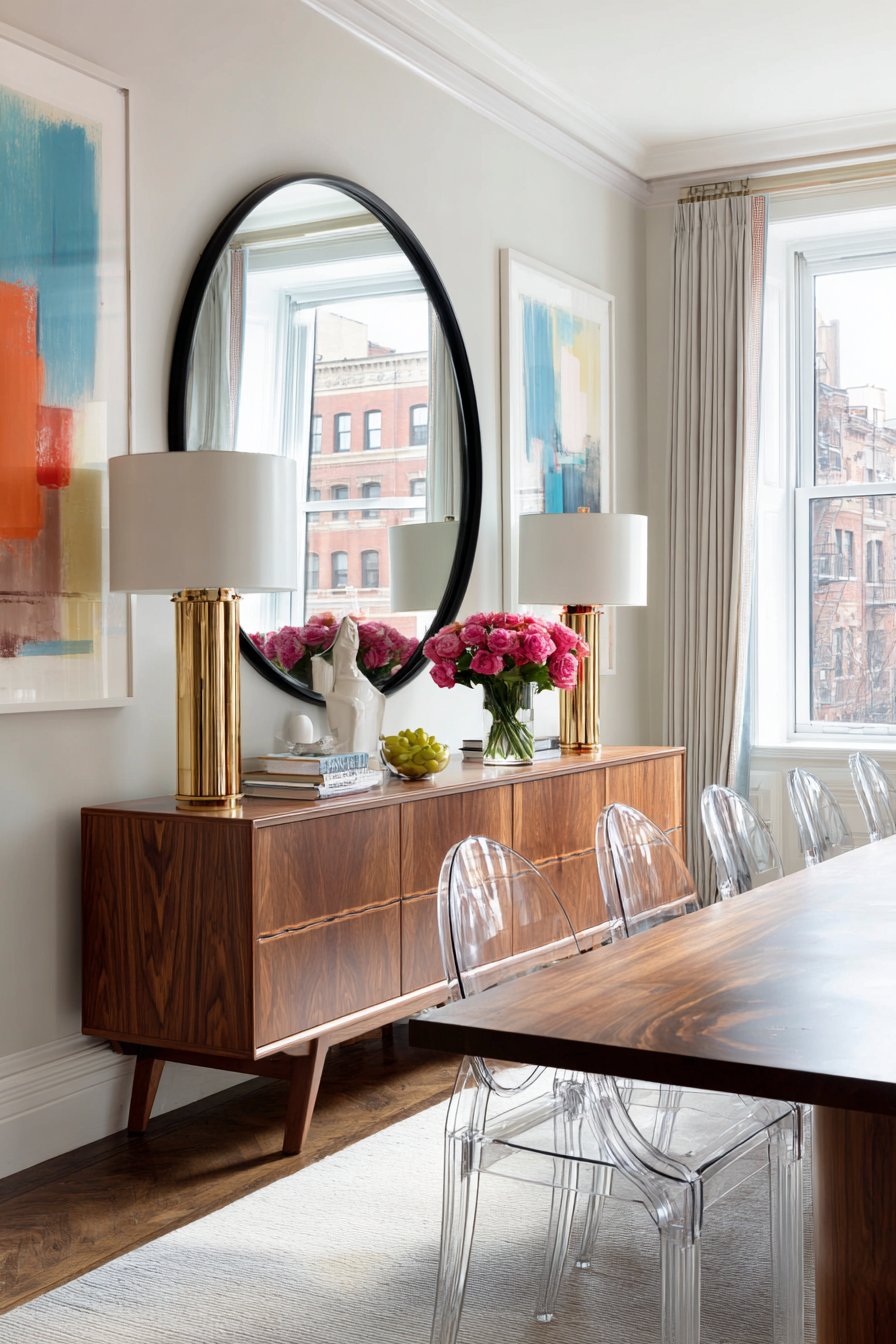
Natural light from clerestory windows creates even illumination. The material contrasts between wood, acrylic, and metal create dynamic tension. Balanced exposure shows these material relationships clearly. This design celebrates contemporary artistic expression.
Key Design Tips:
- Choose convex mirrors for artistic distortion and expanded reflection
- Combine black and gold finishes for sophisticated contemporary contrast
- Mix organic elements like live-edge wood with modern acrylic
- Position abstract art to complement the mirror’s artistic nature
- Use sculptural accessories to enhance the contemporary aesthetic
14. Massive Reclaimed Barn Wood
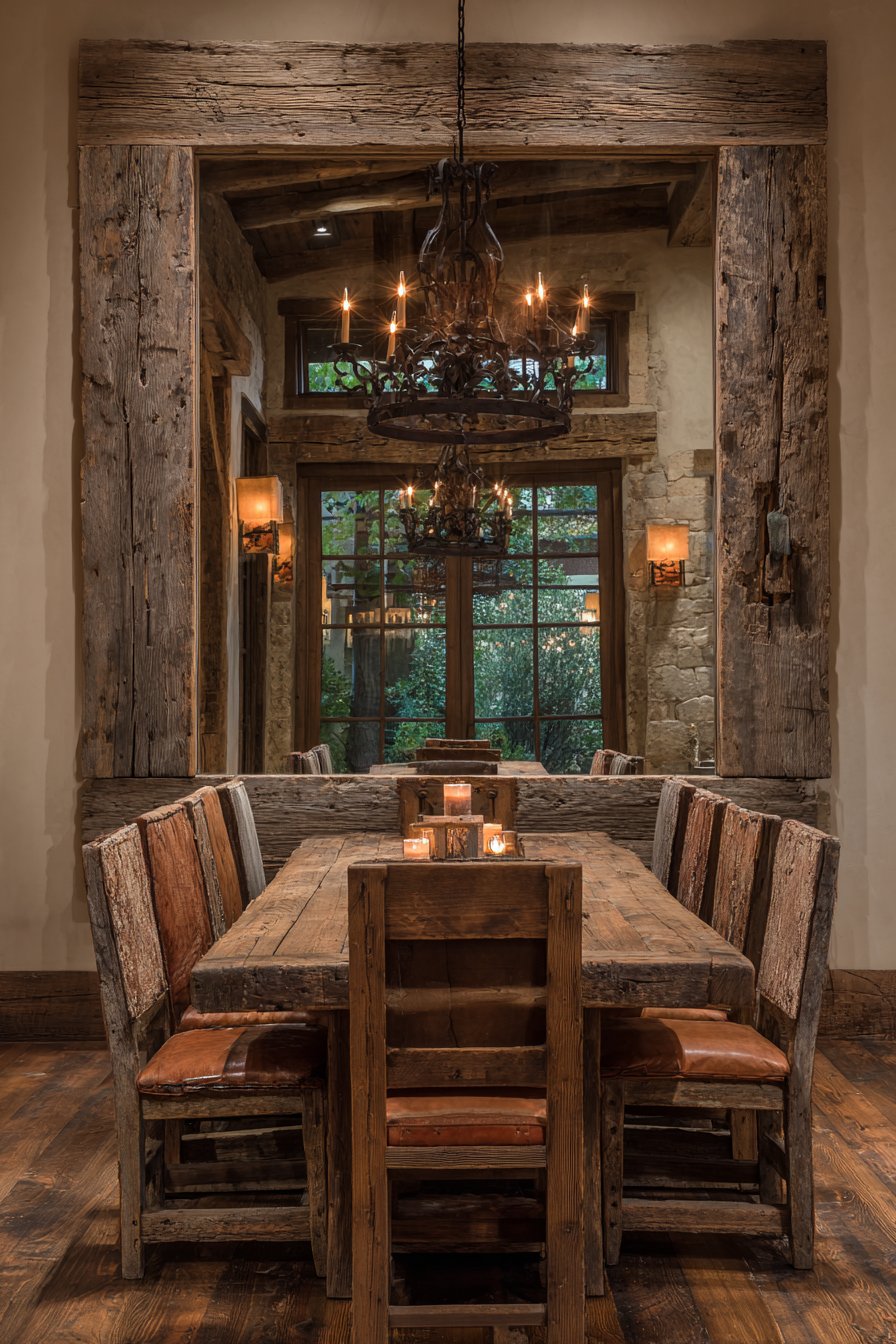
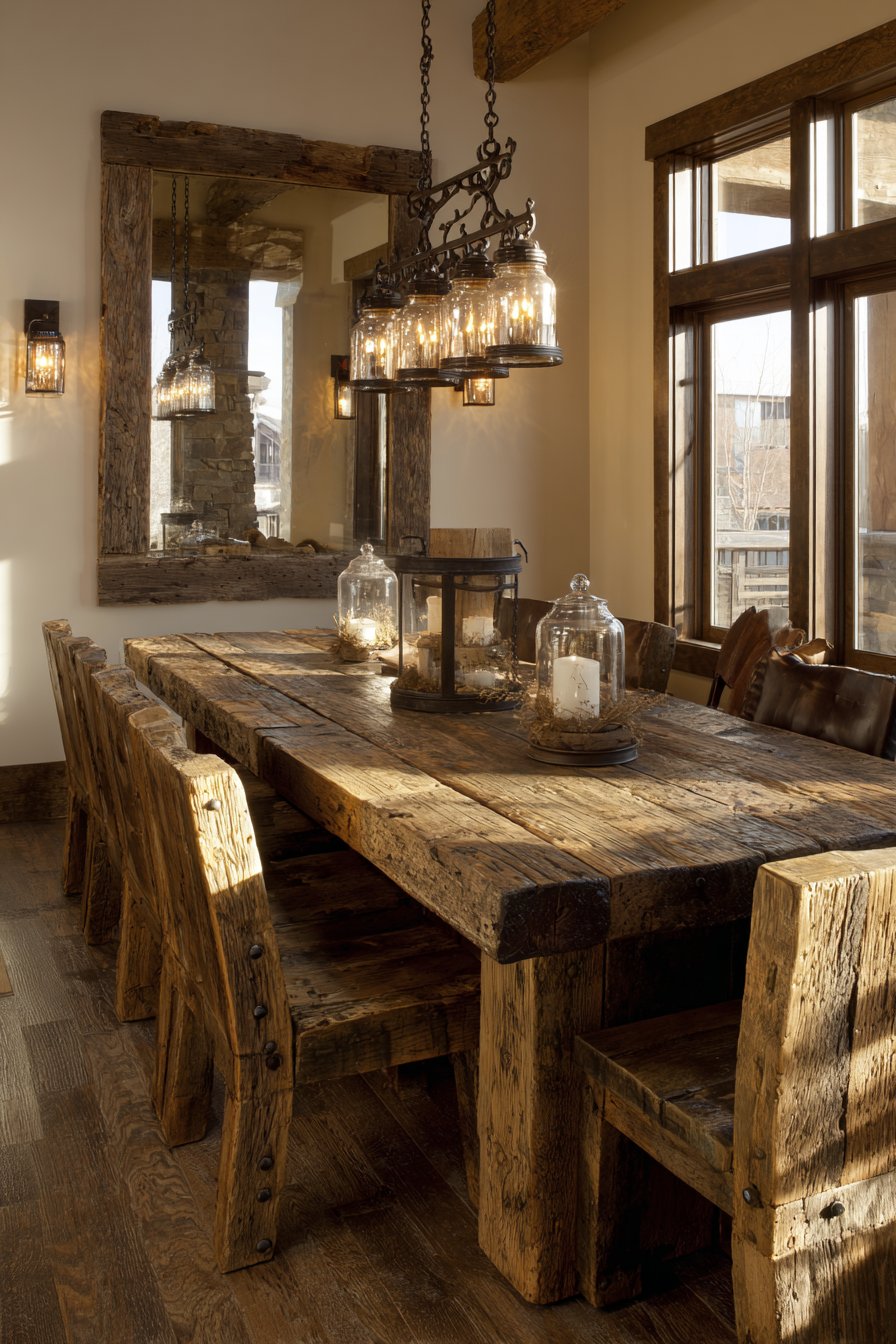
A massive rectangular mirror in chunky reclaimed barn wood frame dominates the wall. Visible nail holes and natural weathering add authentic character. The oversized mirror hangs above a substantial antique pine farm table. Eight mismatched wooden chairs show worn patina beautifully.
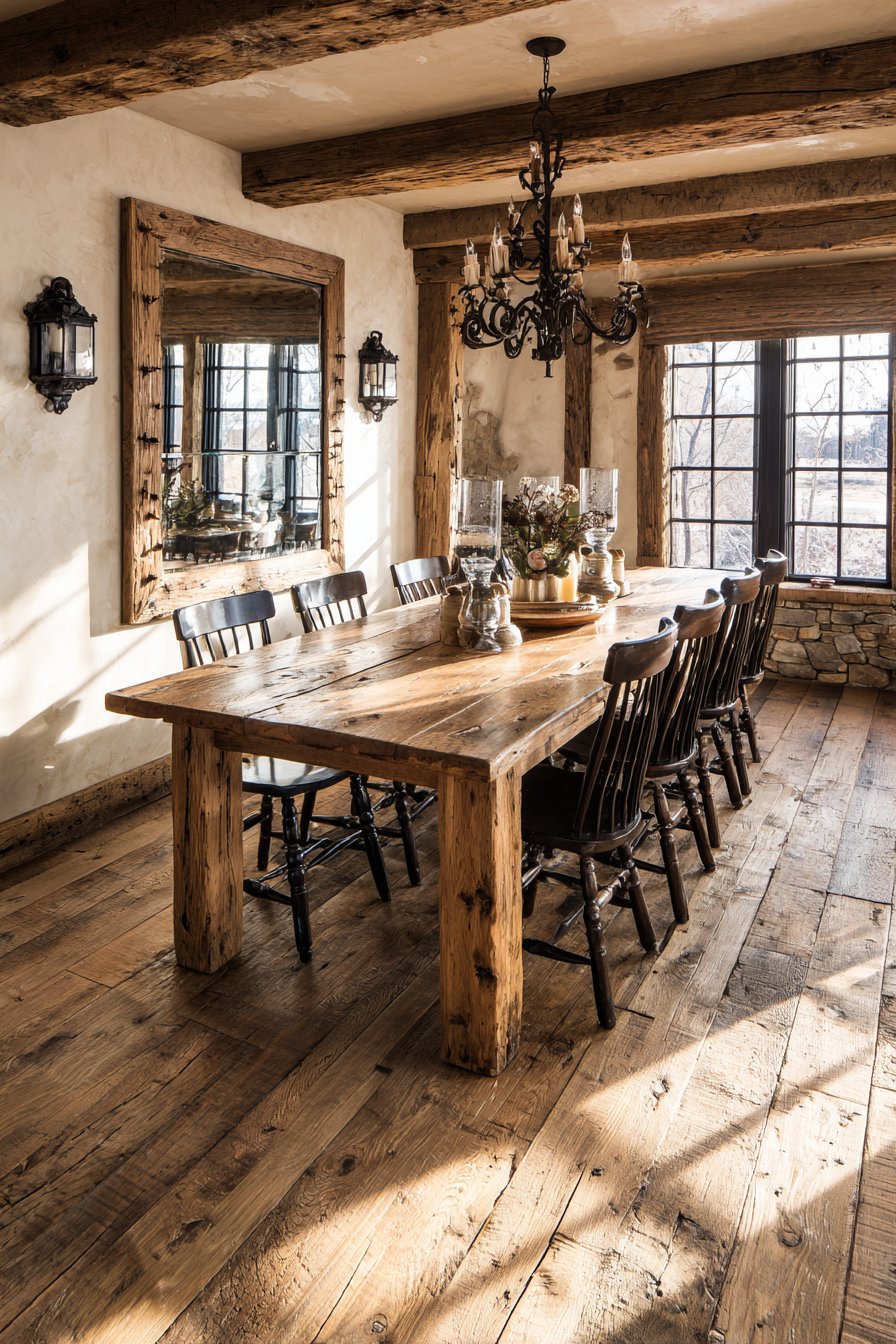
A wrought iron candelabra chandelier with real candles hangs overhead. The mirror doubles this dramatic lighting fixture perfectly. Wide plank oak floors show natural aging gracefully. Mason jar sconces mounted beside the mirror add ambient lighting.
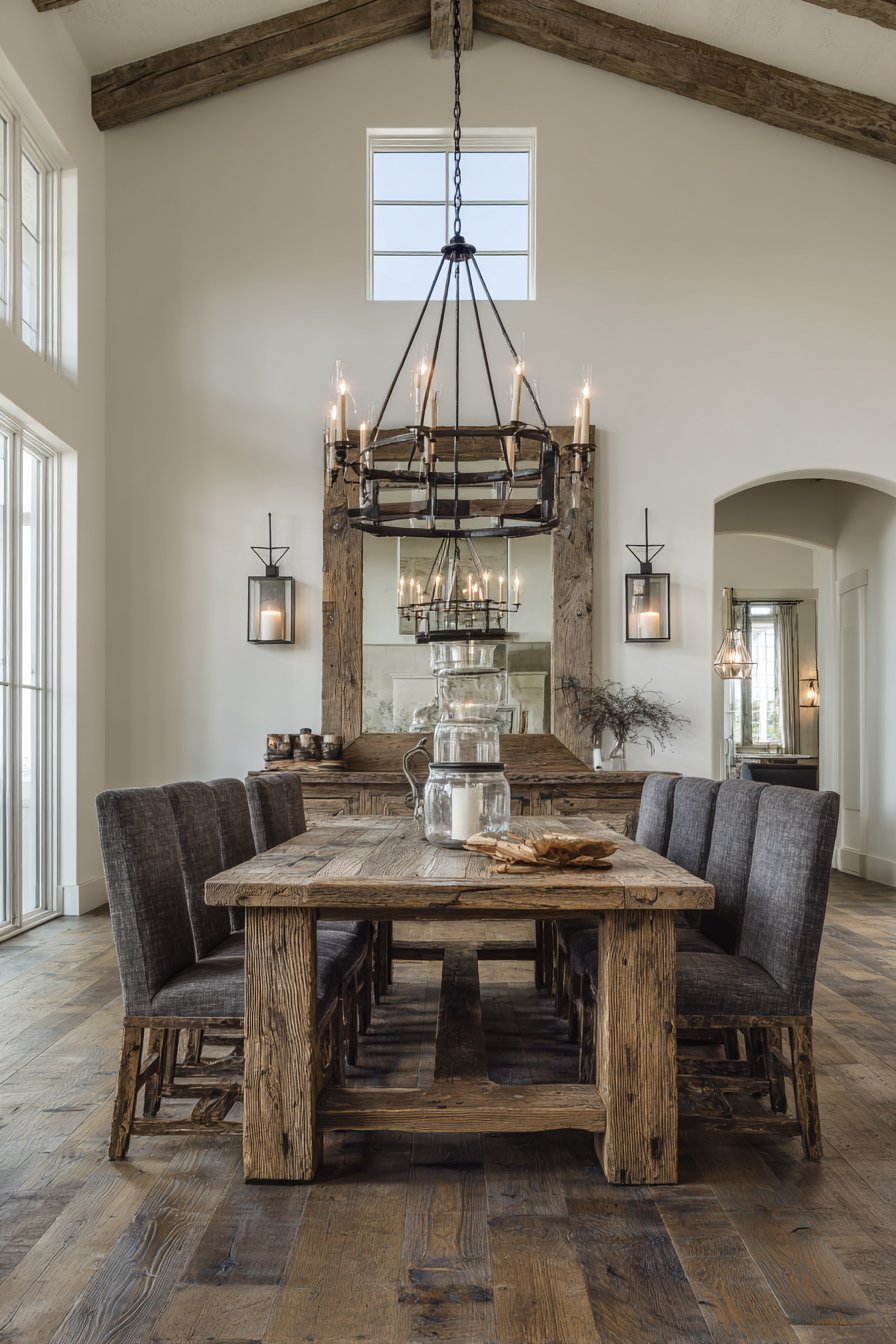
The chunky frame dimensions match the table’s substantial construction. Weathered wood texture adds depth and history. Nail holes and imperfections tell stories of previous use. This authentic rustic aesthetic celebrates genuine materials.
Soft natural light from vintage windows creates warm shadows. The weathered frame catches light differently across its surface. Authentic aged materials create cohesive rustic character. This design proves that substantial scale creates dramatic impact.
Key Design Tips:
- Select chunky reclaimed frames to match substantial farm tables
- Embrace visible nail holes and weathering for authentic character
- Mix multiple wood tones and finishes for collected rustic look
- Install candlelight fixtures for romantic rustic ambiance
- Choose oversized mirrors to create dramatic rustic focal points
15. Seamless Minimalist Installation
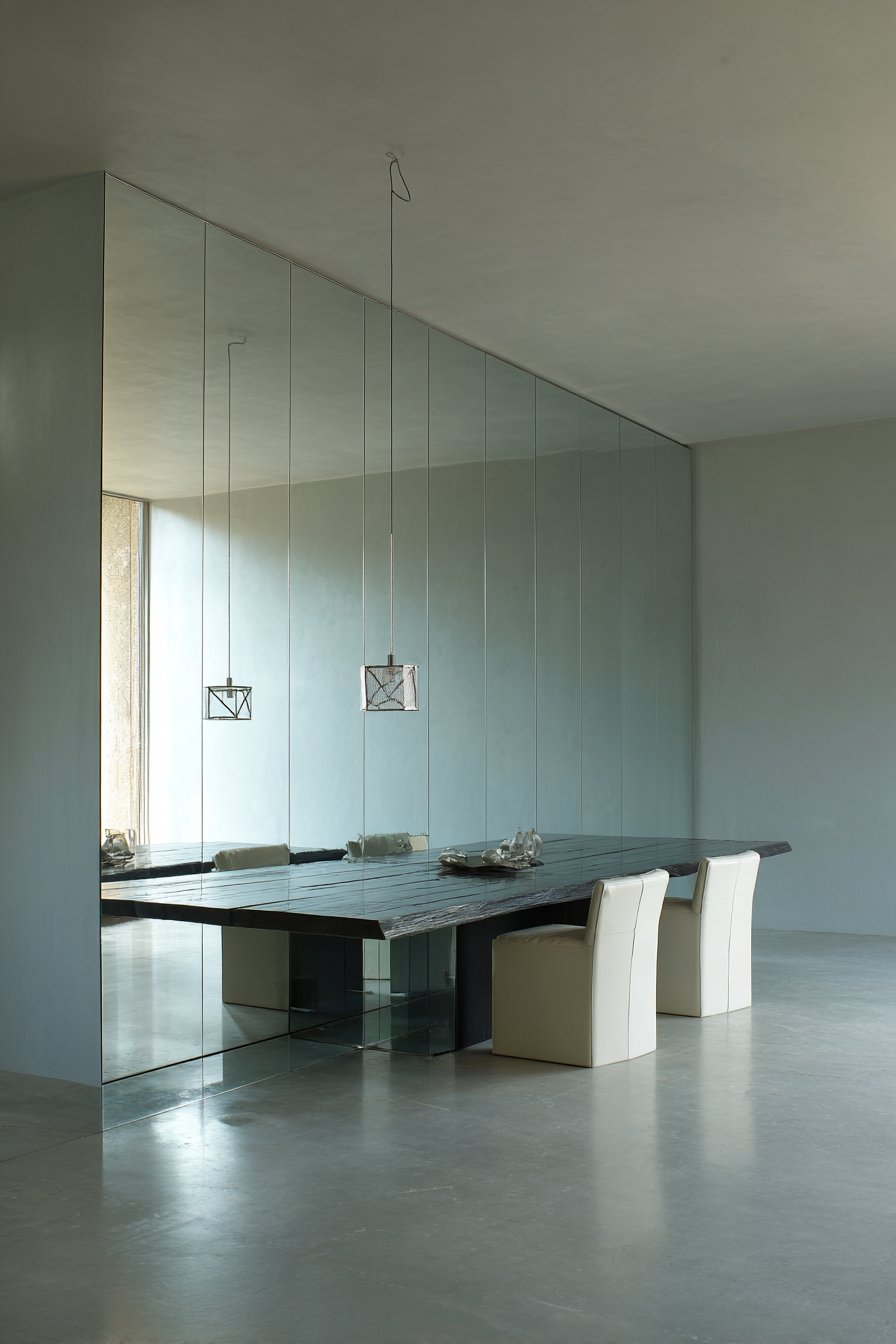
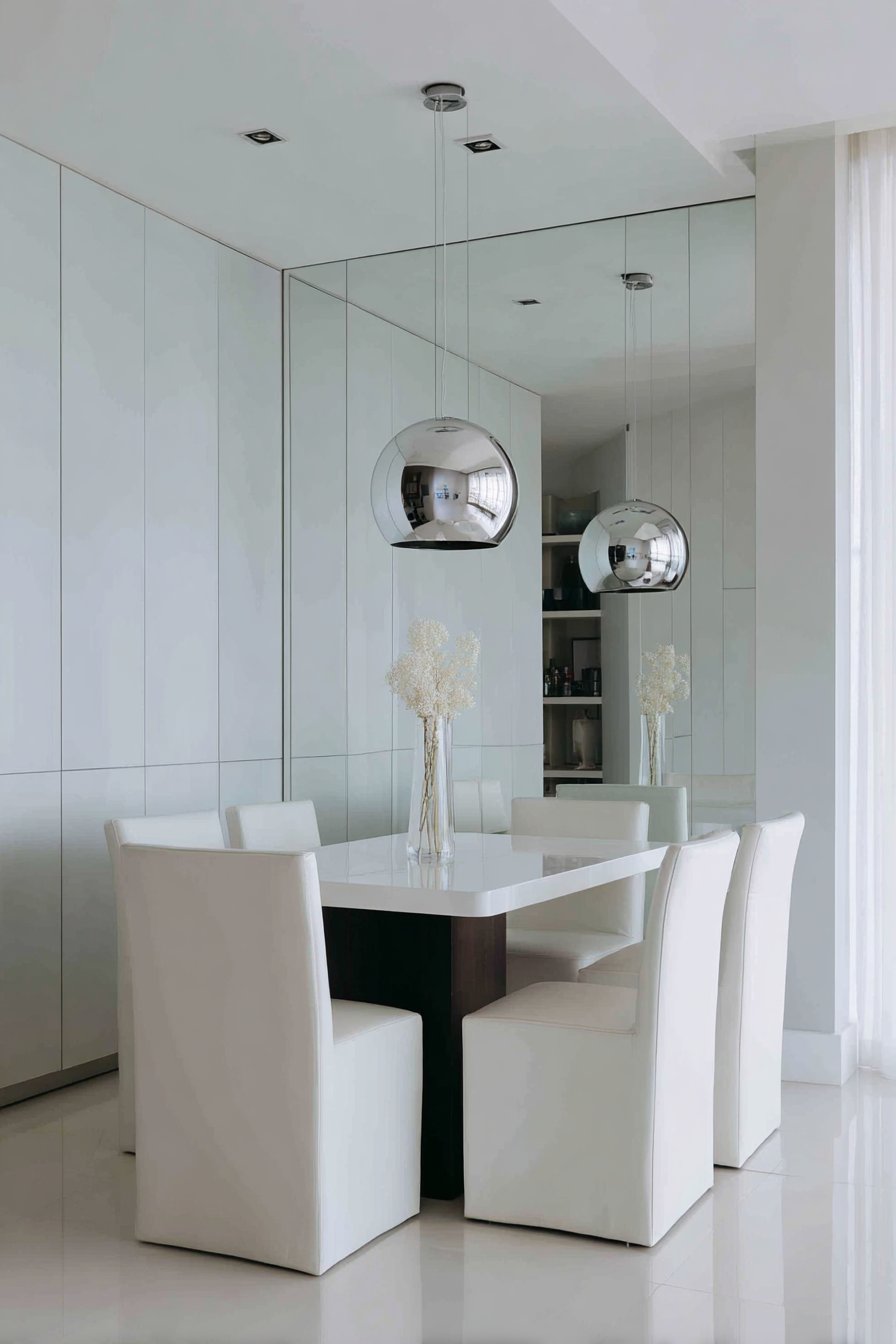
A frameless full-wall mirror installation creates seamless reflection floor to ceiling. The mirror visually doubles a small dining space dramatically. A simple rectangular dining table in black ash features waterfall edge. Four streamlined dining chairs in white leather provide minimal seating.
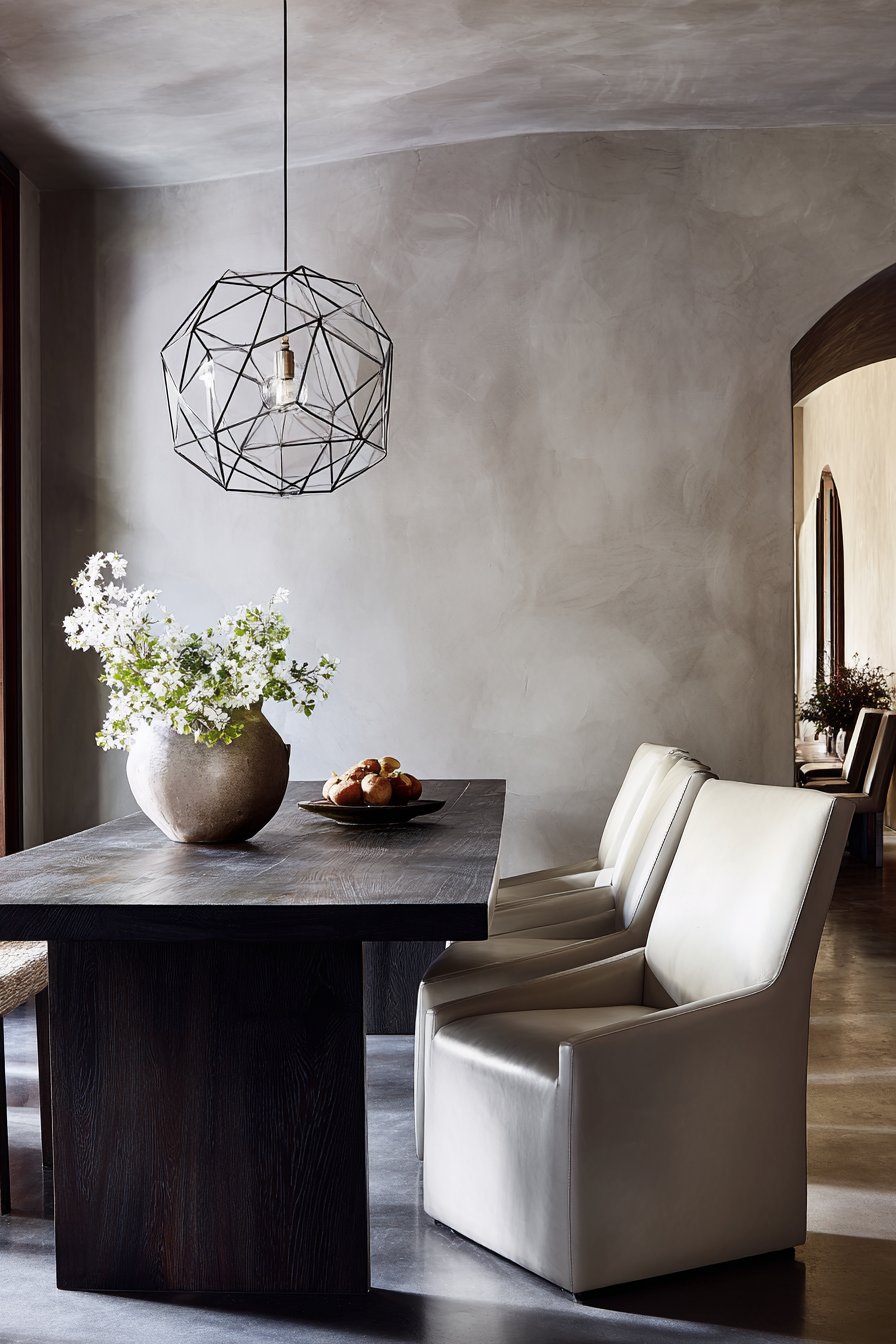
A single modern pendant light with geometric metal shade hangs centered. The reflection creates perfect symmetry overhead. Pale grey walls and polished concrete floors maintain minimal aesthetic. No unnecessary elements distract from the clean design.
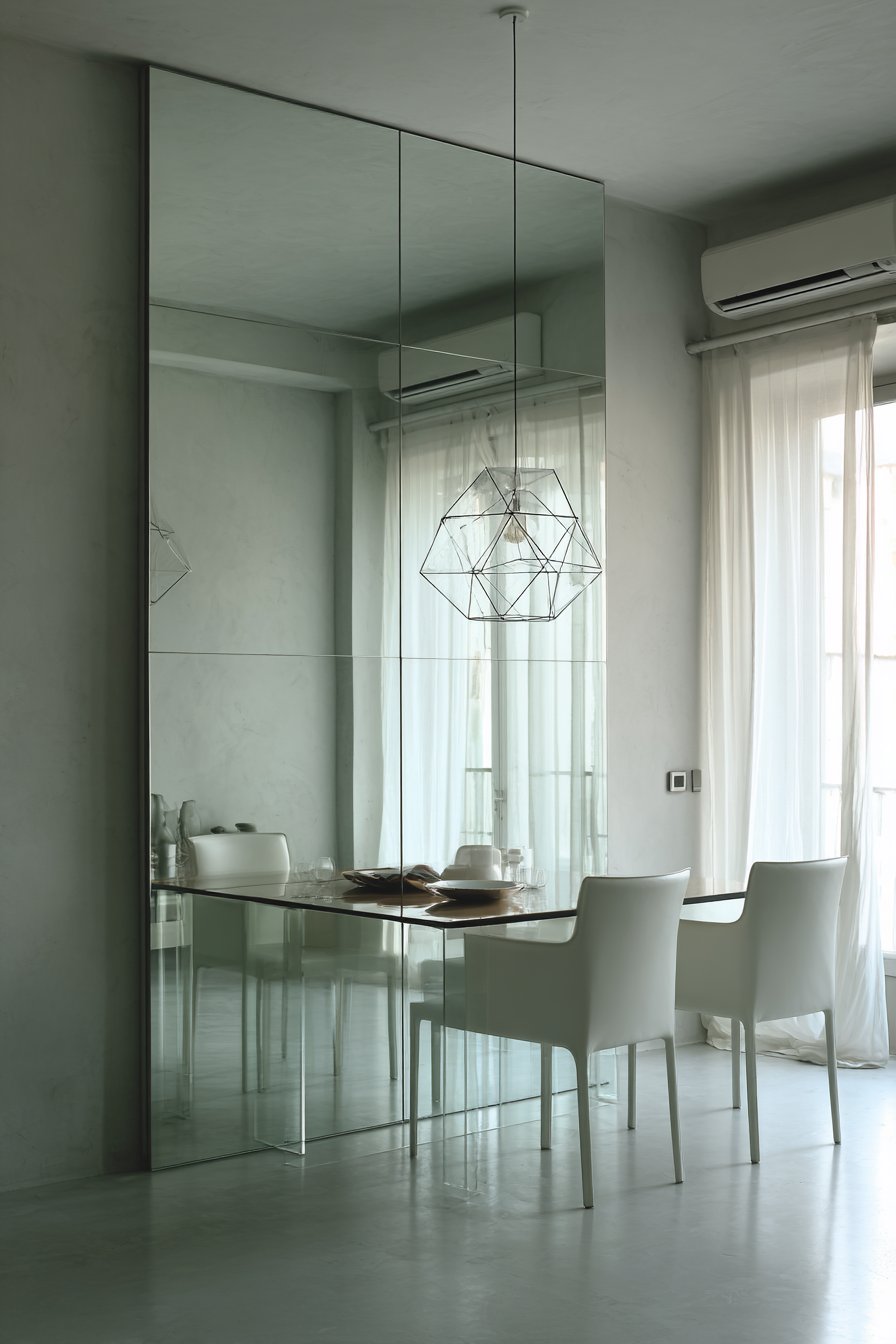
The frameless installation removes all visual boundaries. The mirror becomes architectural rather than decorative. Spatial perception transforms completely through this approach. The small dining space feels exponentially larger.
Even natural lighting illuminates both actual and reflected spaces. Professional photography captures the spatial transformation. Balanced exposure shows continuity between real and reflected environments. This minimalist approach demonstrates mirrors’ space-altering power.
Key Design Tips:
- Install floor-to-ceiling frameless mirrors to maximize spatial expansion
- Choose streamlined furniture with clean lines for minimal continuity
- Select single centered lighting fixtures for symmetrical reflection
- Maintain neutral color palettes to emphasize spatial transformation
- Use polished materials like concrete to enhance modern aesthetic
16. French Country Arched Mirror
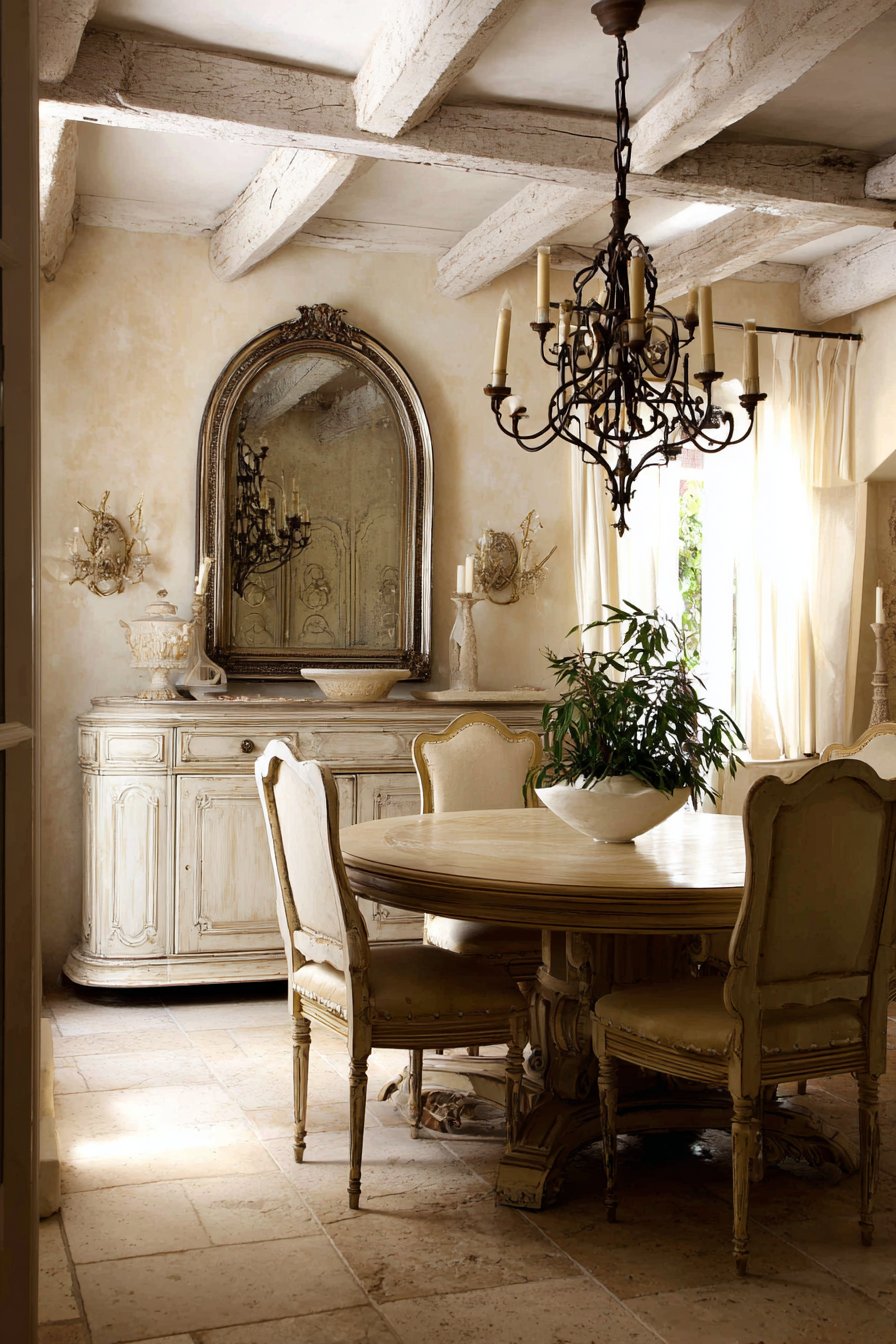
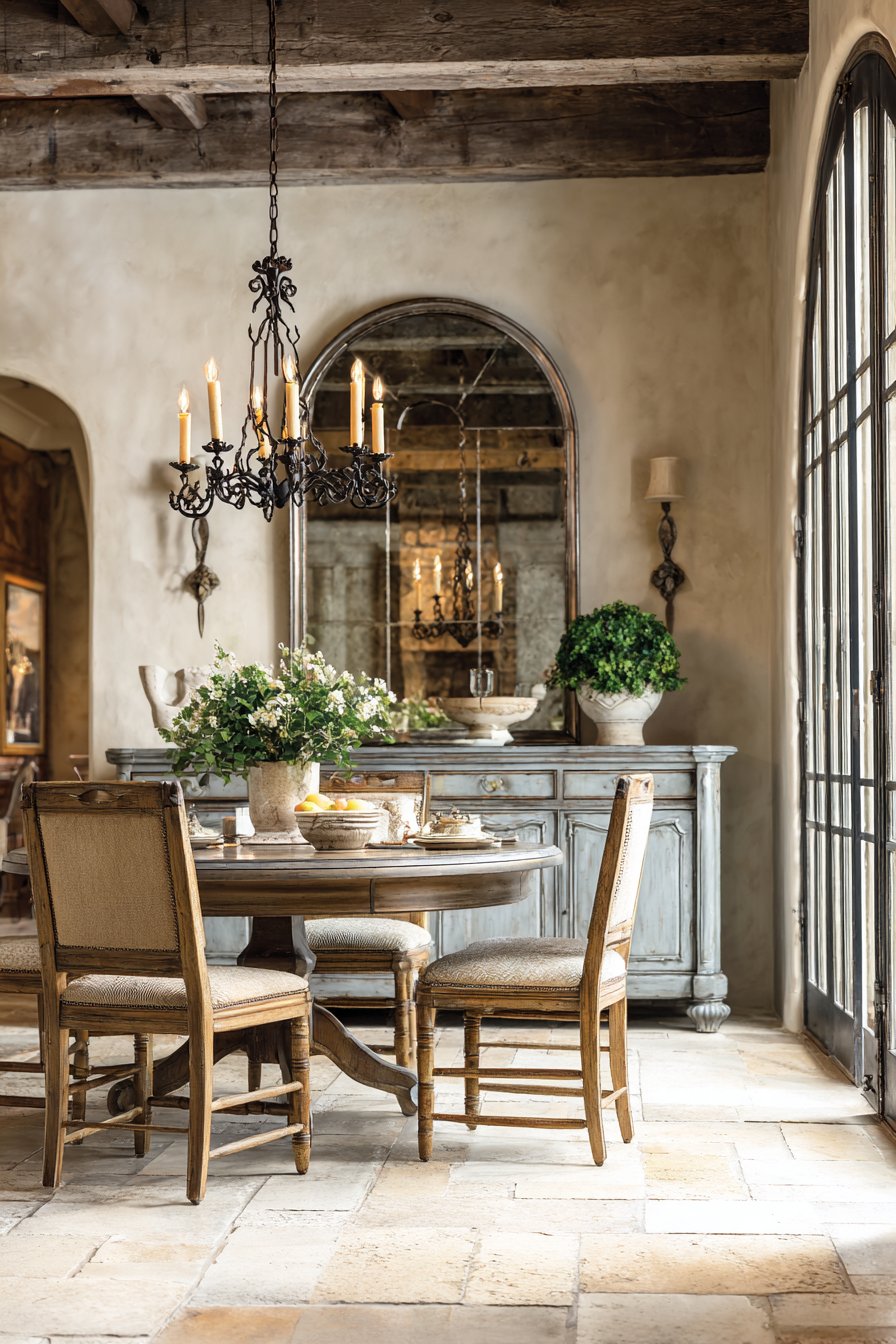
An arched Louis Philippe-style mirror shows silvered frame with oxidation patina. The elegant mirror crowns a painted sideboard in soft grey-blue. Carved details and marble top add French refinement. A round pedestal dining table in bleached oak seats six.
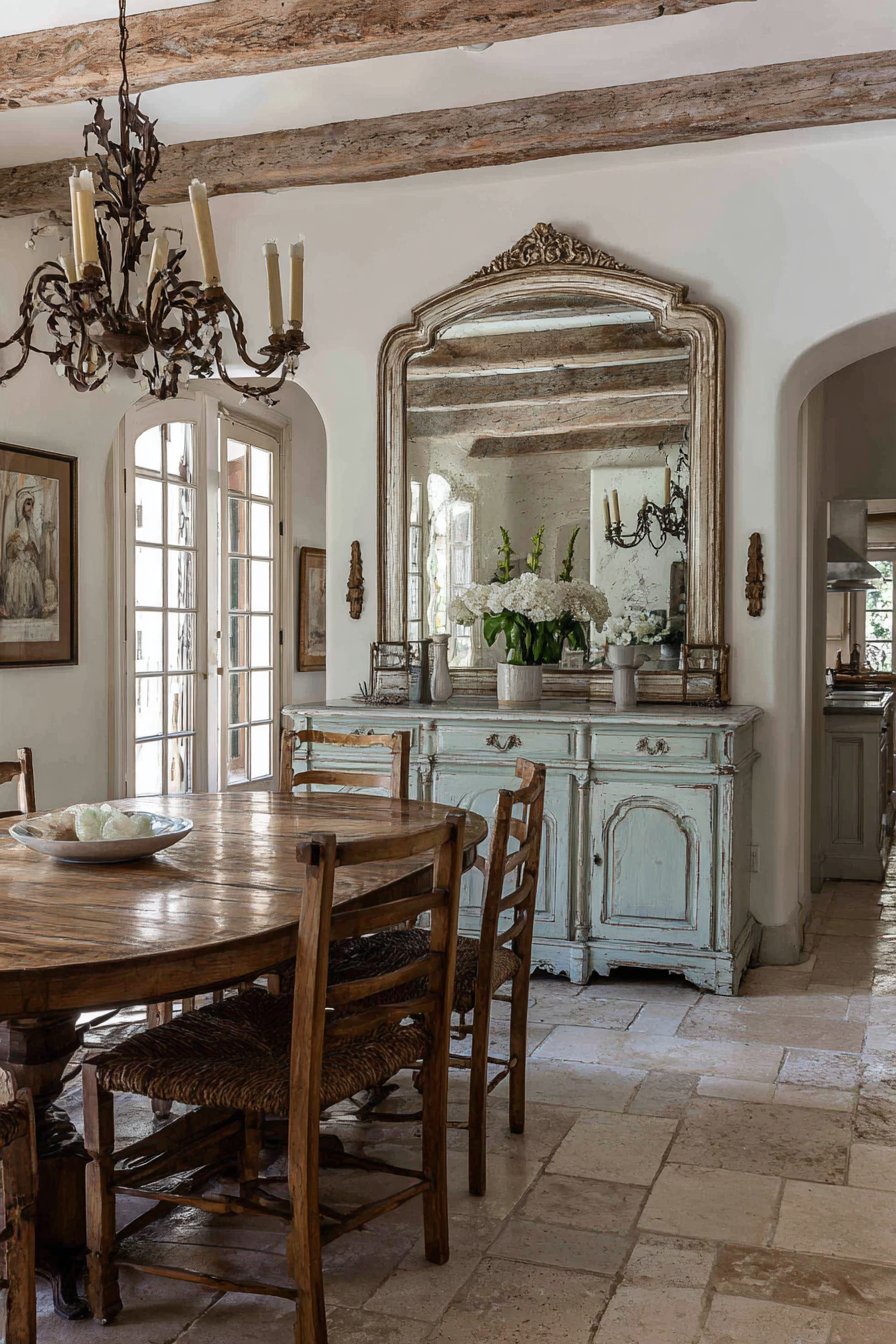
Rush-seat ladder-back chairs provide traditional French country seating. A wrought iron chandelier with cream candle sleeves offers overhead lighting. The aged mirror surface reflects these elements beautifully. Limestone tile flooring and exposed ceiling beams add architectural character.
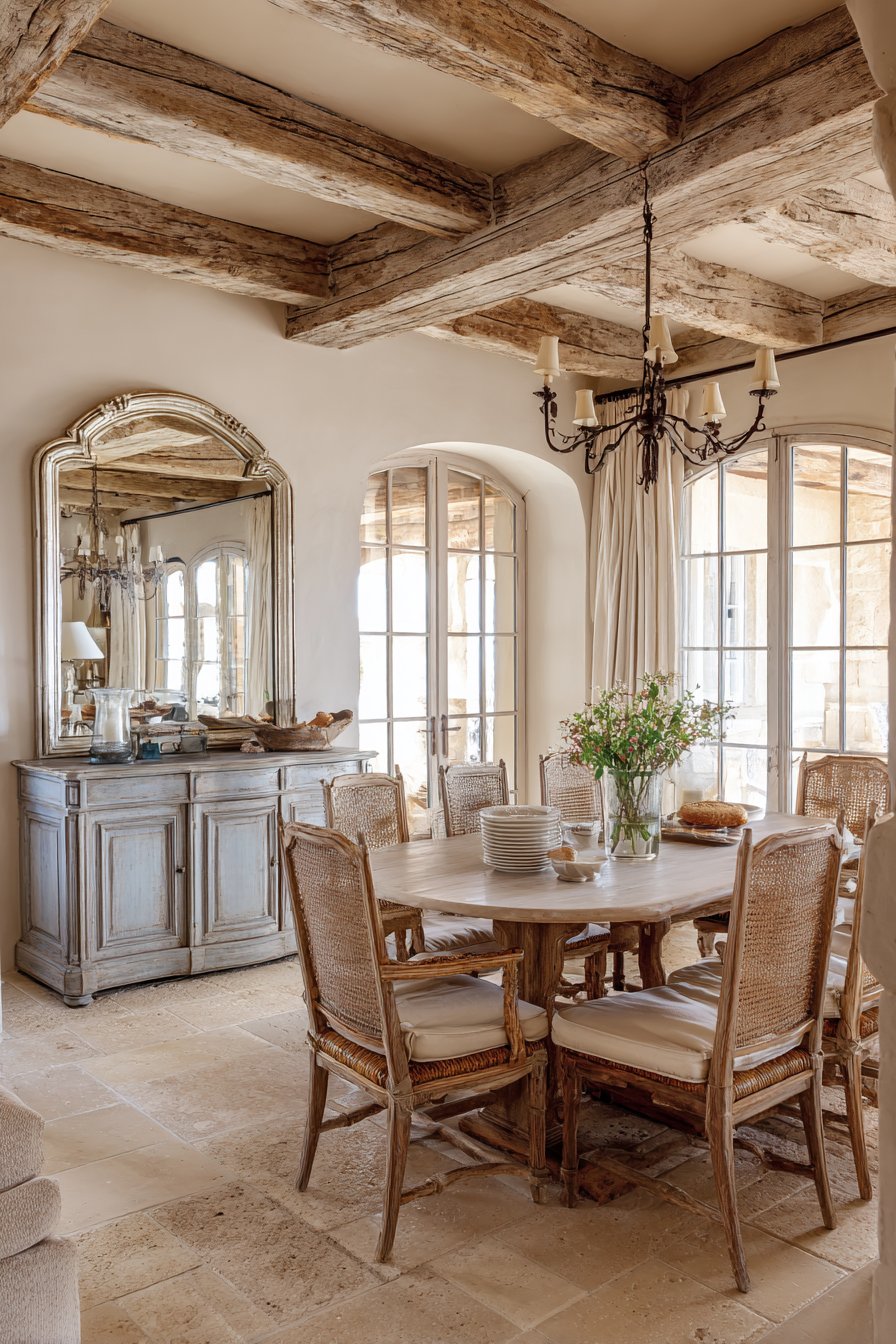
The oxidized silvering creates romantic vintage character. Subtle tarnishing appears across the mirror surface naturally. This aged patina adds depth and history. The arched shape provides classic French elegance.
Soft morning light through French doors creates gentle illumination. The aged mirror surface catches light differently than new glass. Provençal elegance permeates the entire design. This approach creates authentic French country sophistication.
Key Design Tips:
- Choose Louis Philippe mirrors for authentic French country style
- Embrace oxidized silvering for romantic aged character
- Paint sideboards in soft French country colors like grey-blue
- Select rush-seat chairs for traditional Provençal authenticity
- Install wrought iron chandeliers with cream candle-style lights
17. Hollywood Regency Glamour
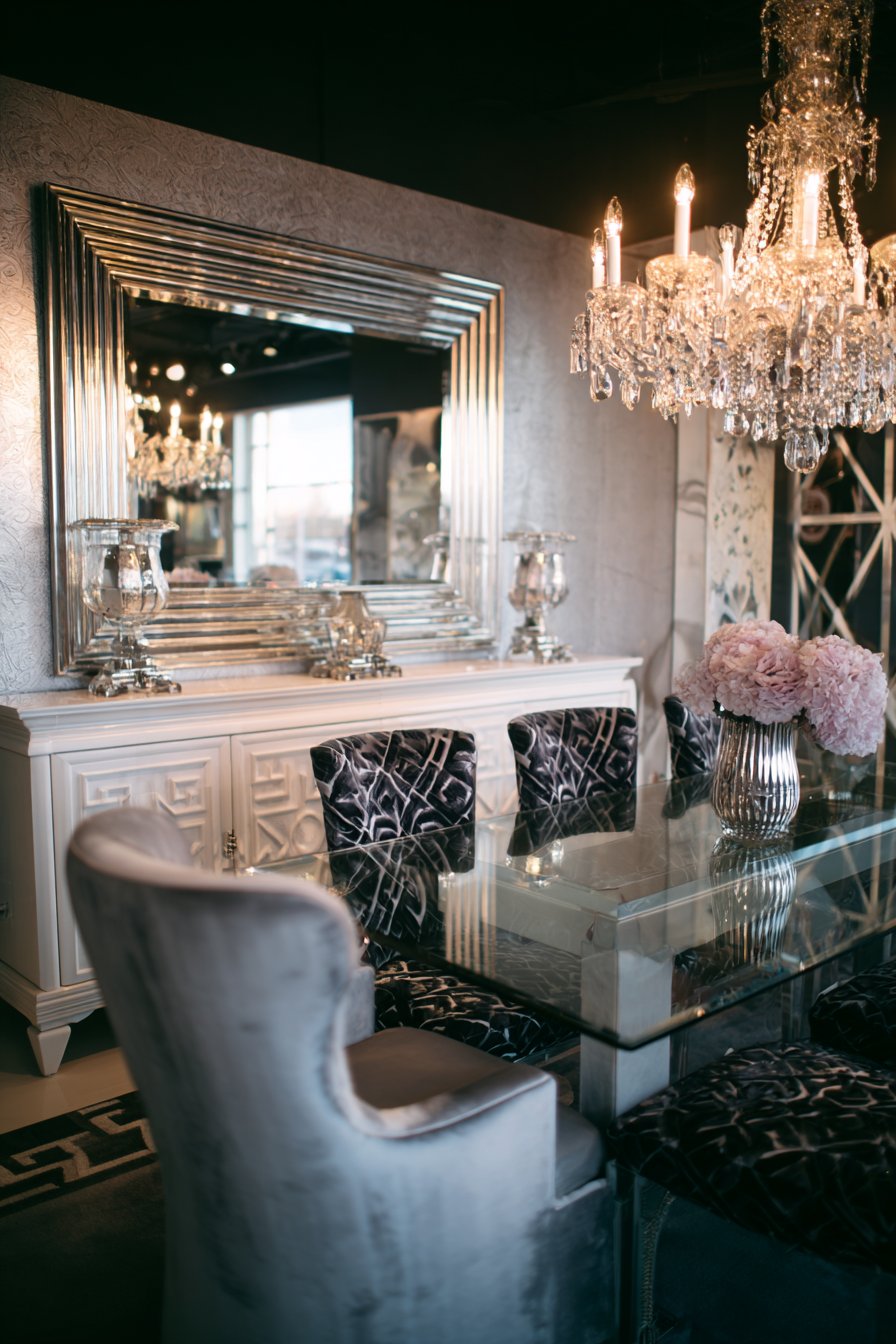
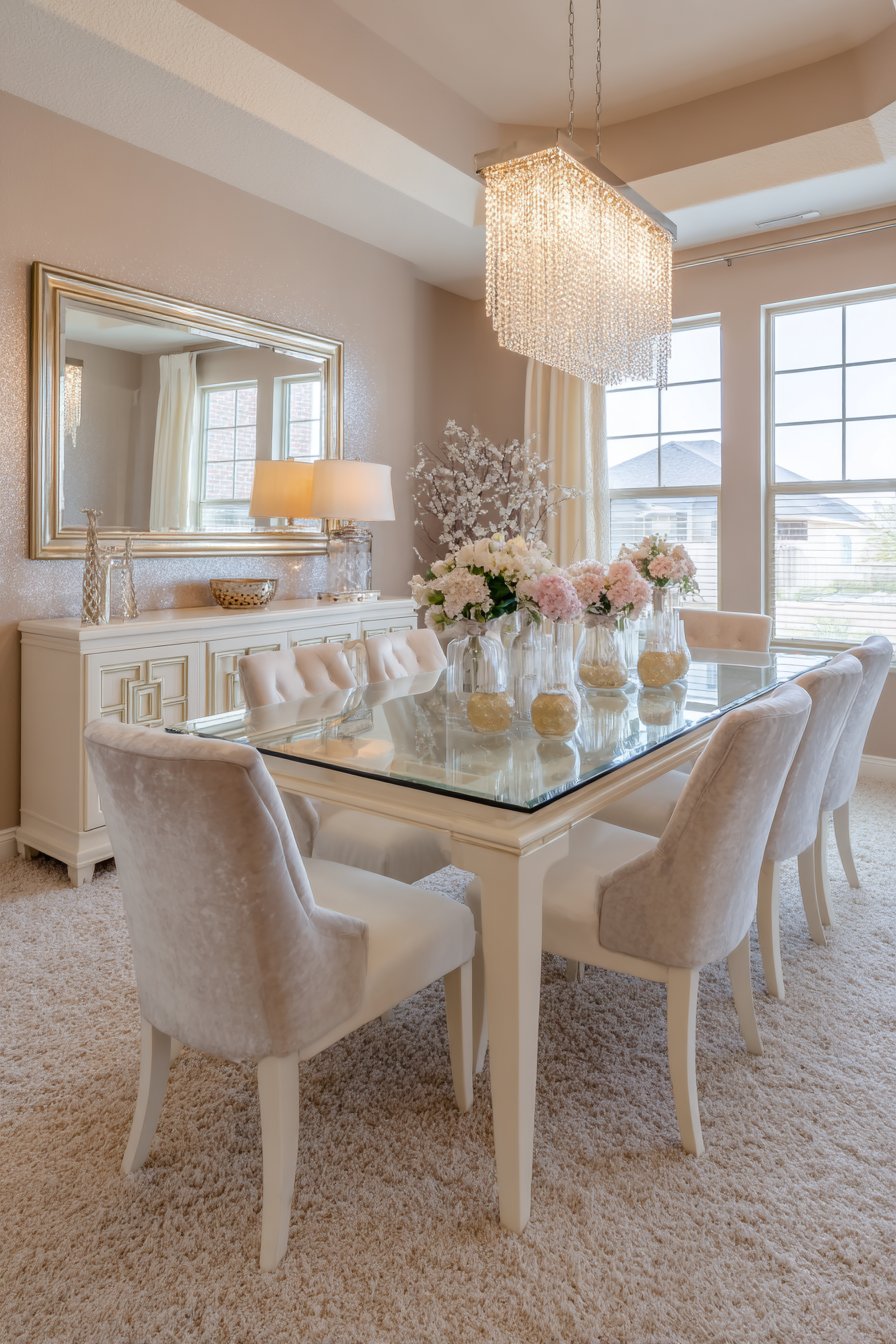
A dramatic oversized mirror in wide champagne silver frame commands attention. Beveled glass edge adds luxurious detail. The mirror hangs above a lacquered white credenza. Greek key hardware detail enhances the sophisticated style.
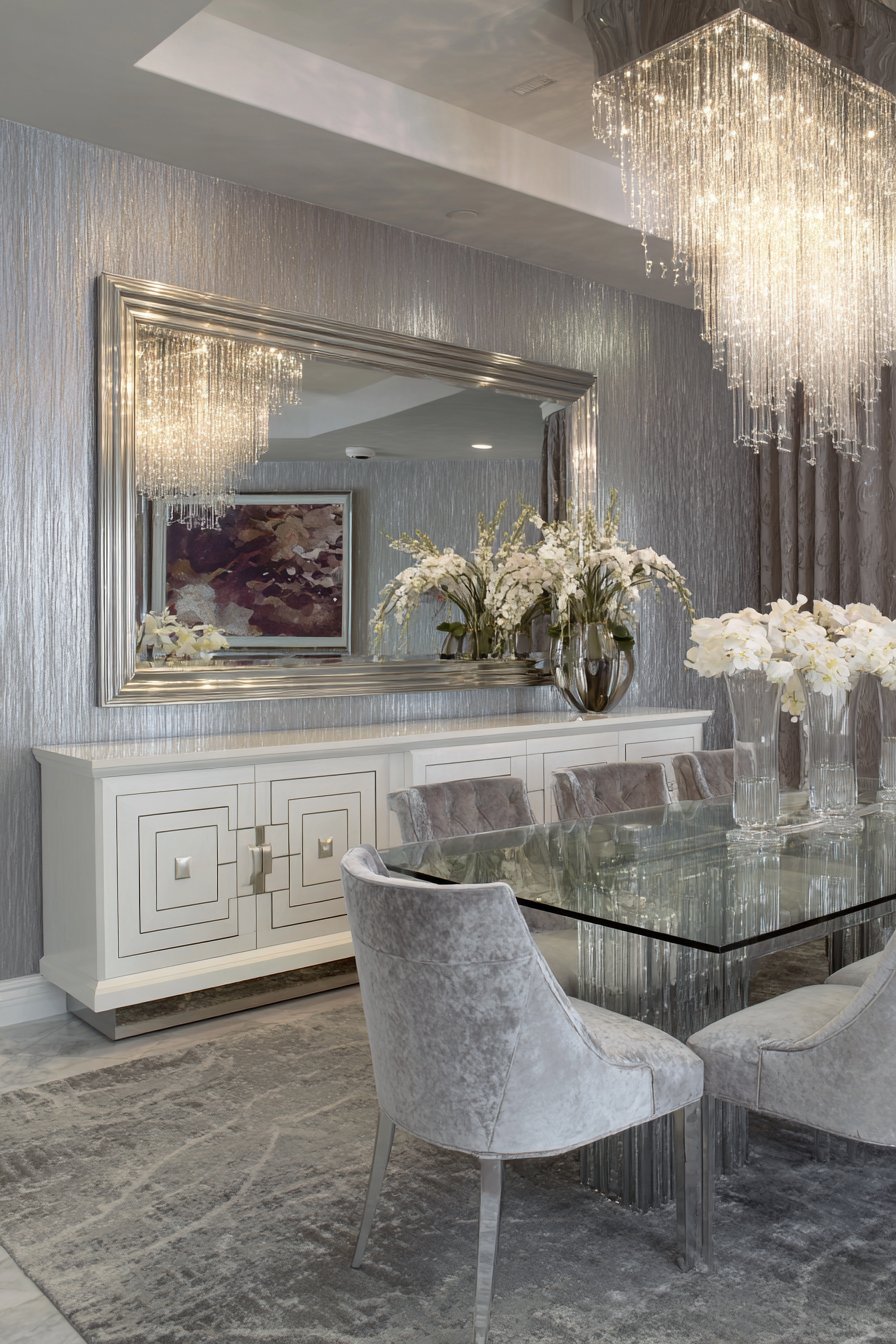
A rectangular glass dining table with lucite base creates transparency. Barrel-back dining chairs show silver velvet upholstery. A statement chandelier with cascading crystals sparkles overhead. The mirror’s reflection doubles this glamorous lighting. Grasscloth wallpaper in metallic silver adds subtle texture.
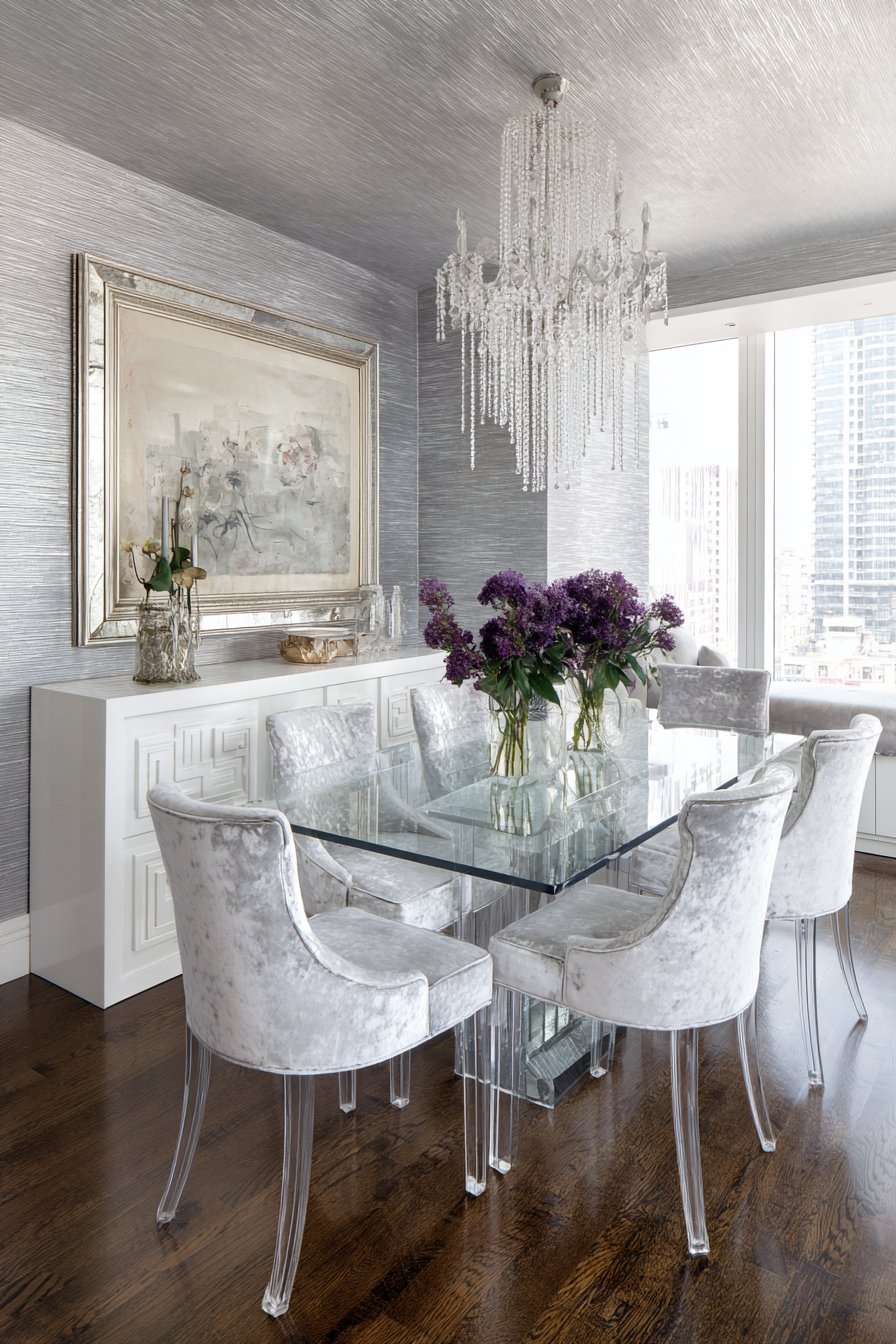
The wide champagne frame creates substantial presence. The beveled edge catches and refracts light beautifully. Multiple reflective surfaces throughout create coordinated glamour. The transparent table and lucite base maintain visual openness.
Carefully controlled lighting highlights reflective surfaces throughout. Professional photography captures metallic finishes and luxurious materials. The mirror amplifies the sophisticated polished glamour exponentially. This Hollywood Regency approach celebrates refined opulence.
Key Design Tips:
- Select wide-frame mirrors in metallic finishes for glamorous impact
- Choose beveled glass edges to add luxurious light refraction
- Incorporate transparent furniture to balance substantial mirror presence
- Install cascading crystal chandeliers for reflected sparkle and drama
- Add metallic wallcoverings to create coordinated reflective surfaces
18. Mid-Century Starburst Icon
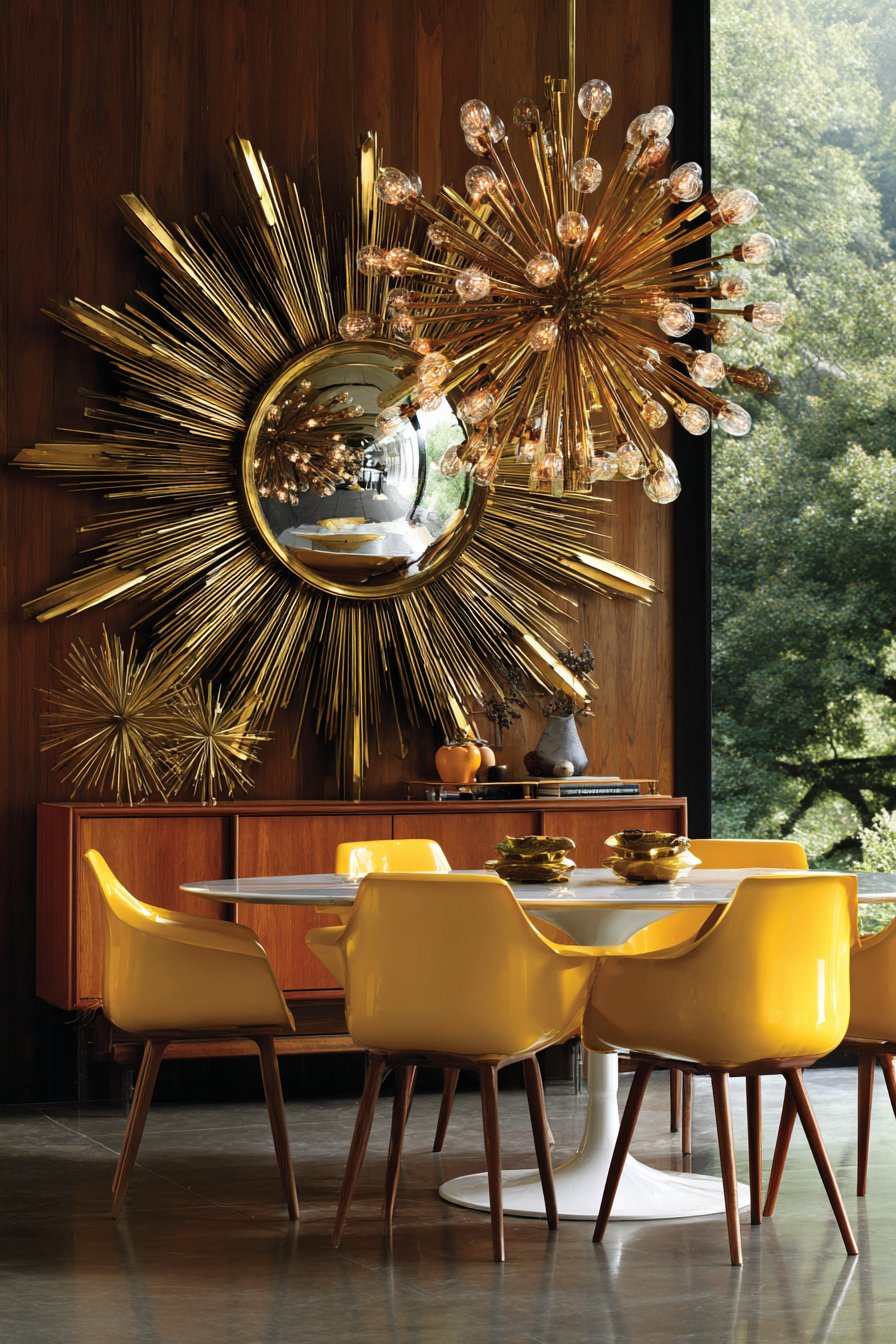
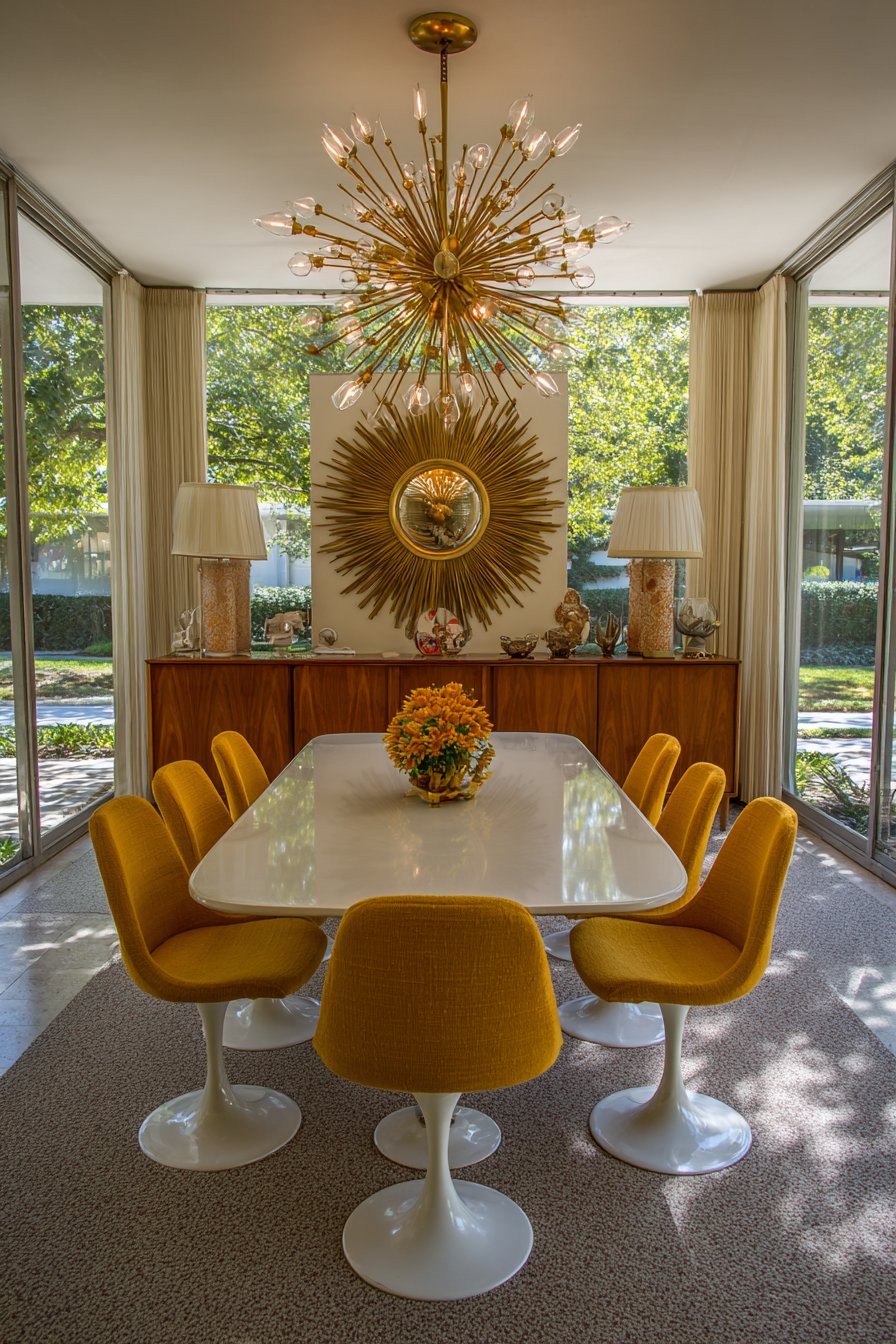
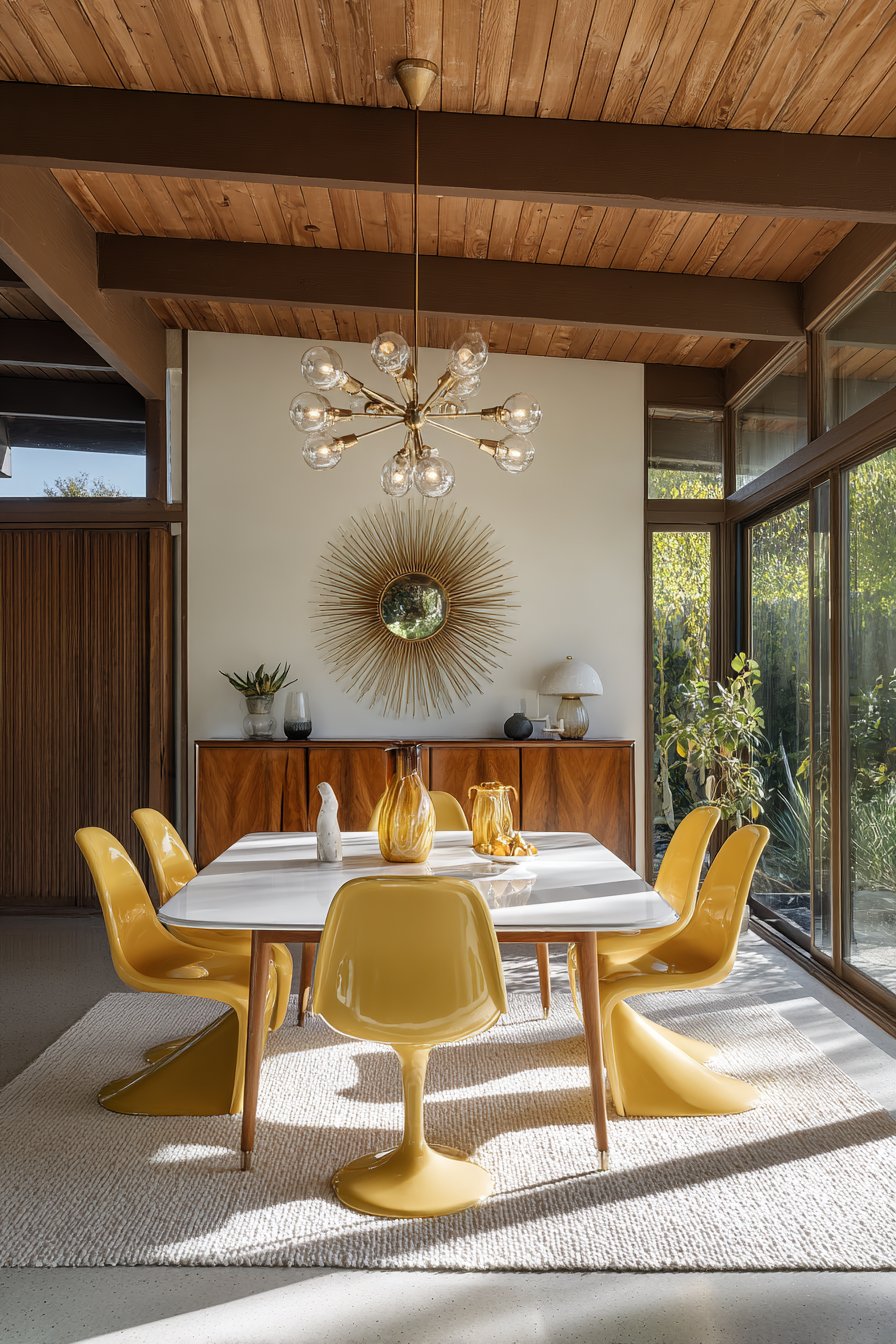
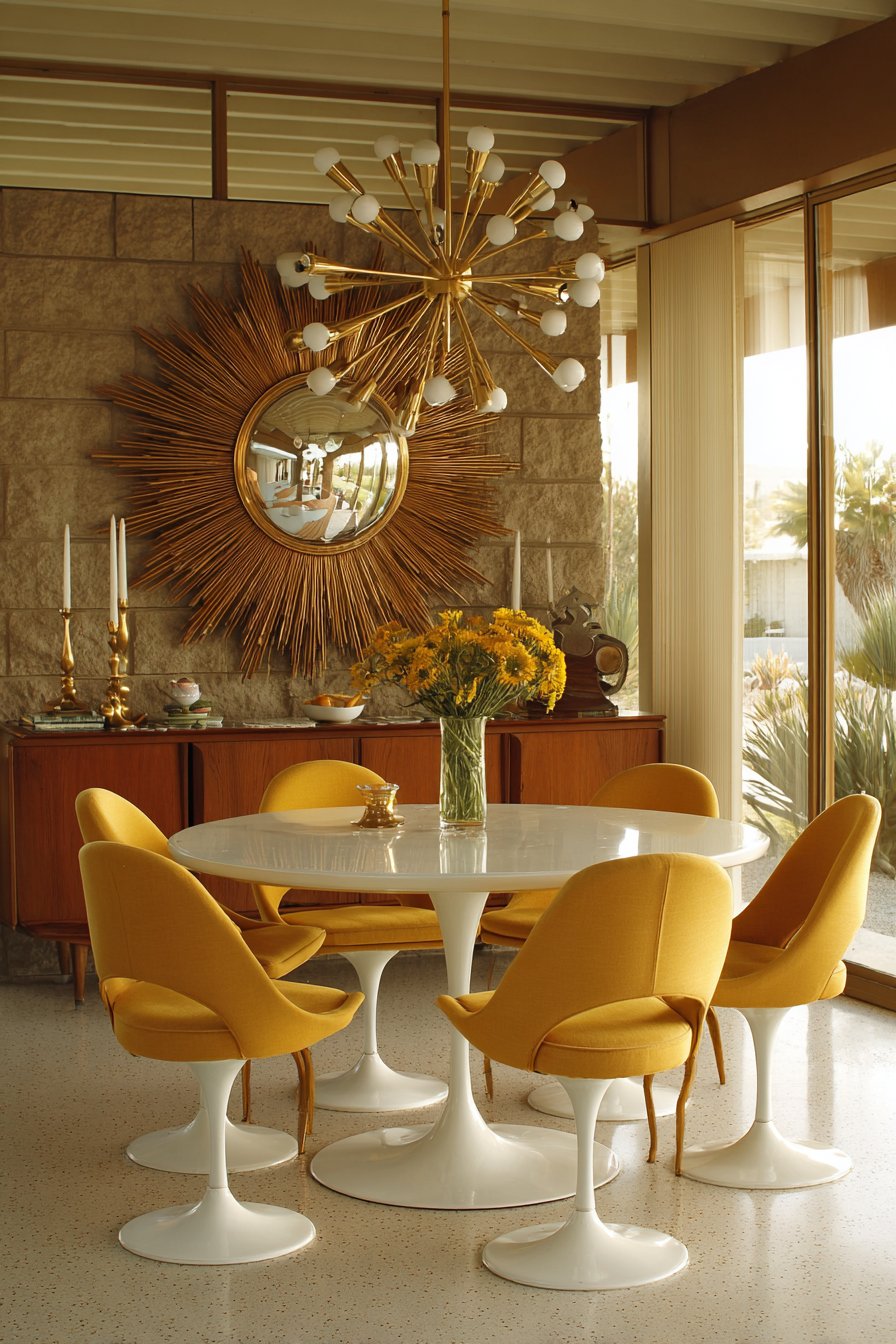
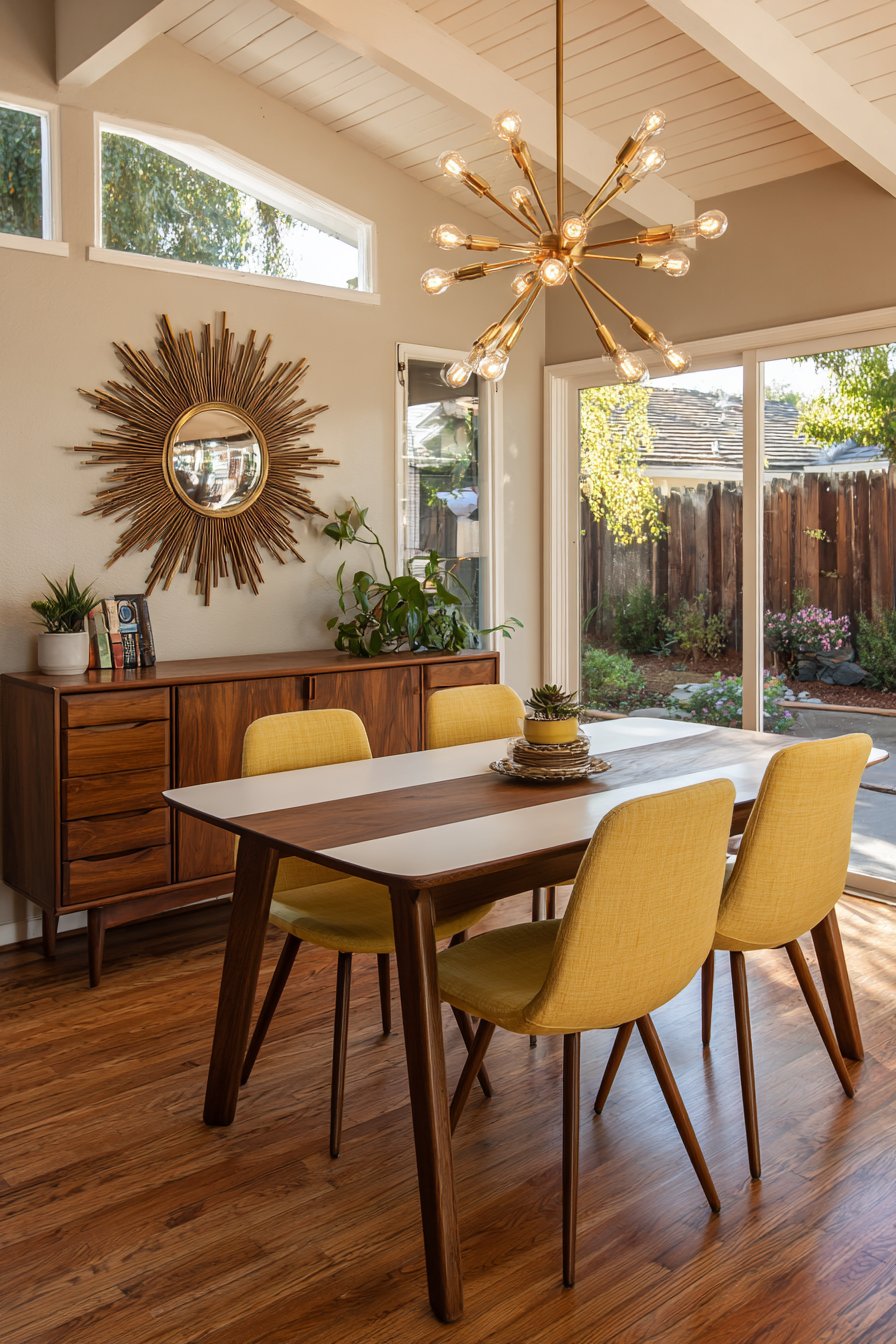
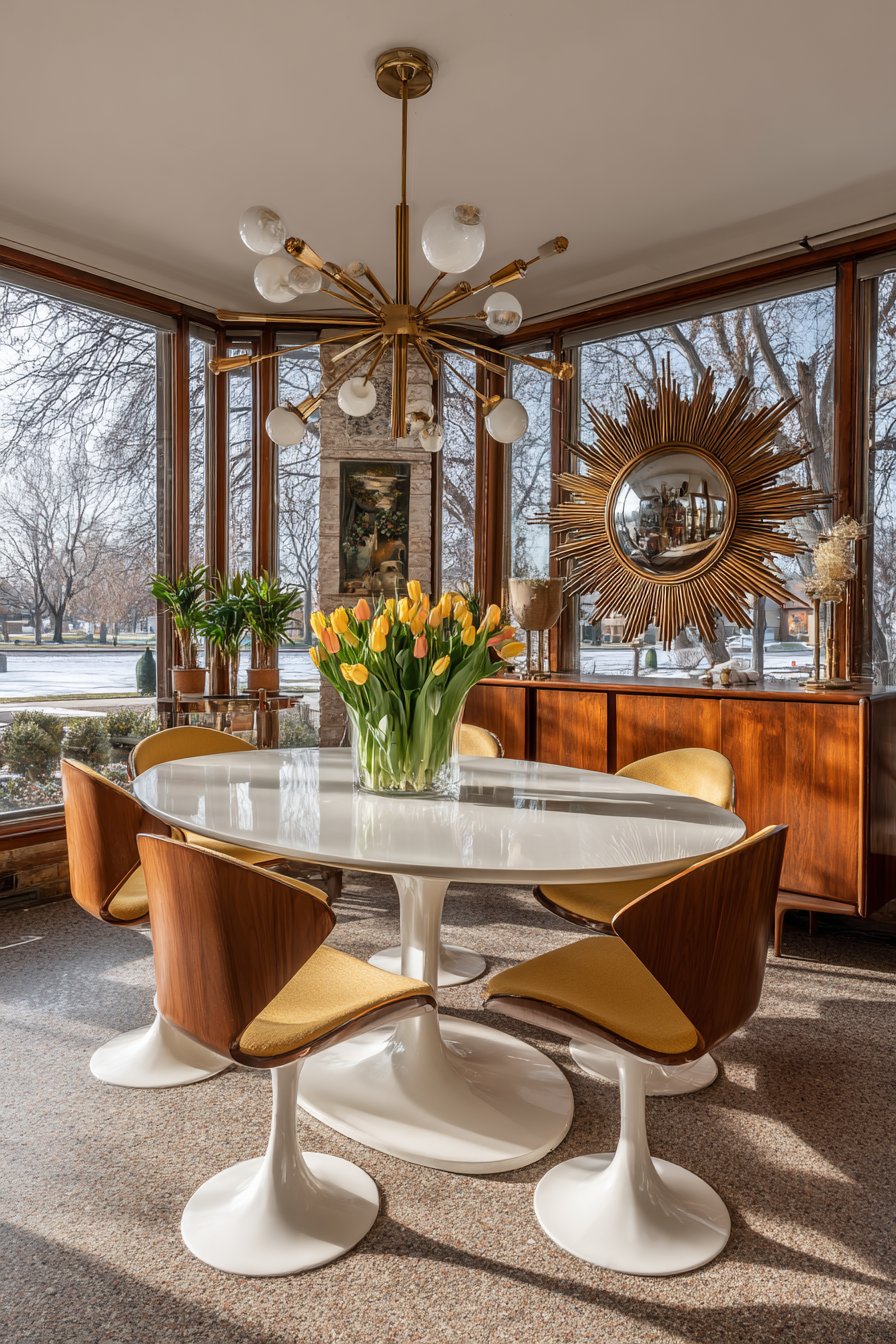
A starburst mirror with brass rays extends from a circular center mirror. This iconic design hangs above a walnut credenza. Sliding doors and tapered legs show period-appropriate styling. A tulip table in white laminate features single pedestal base.
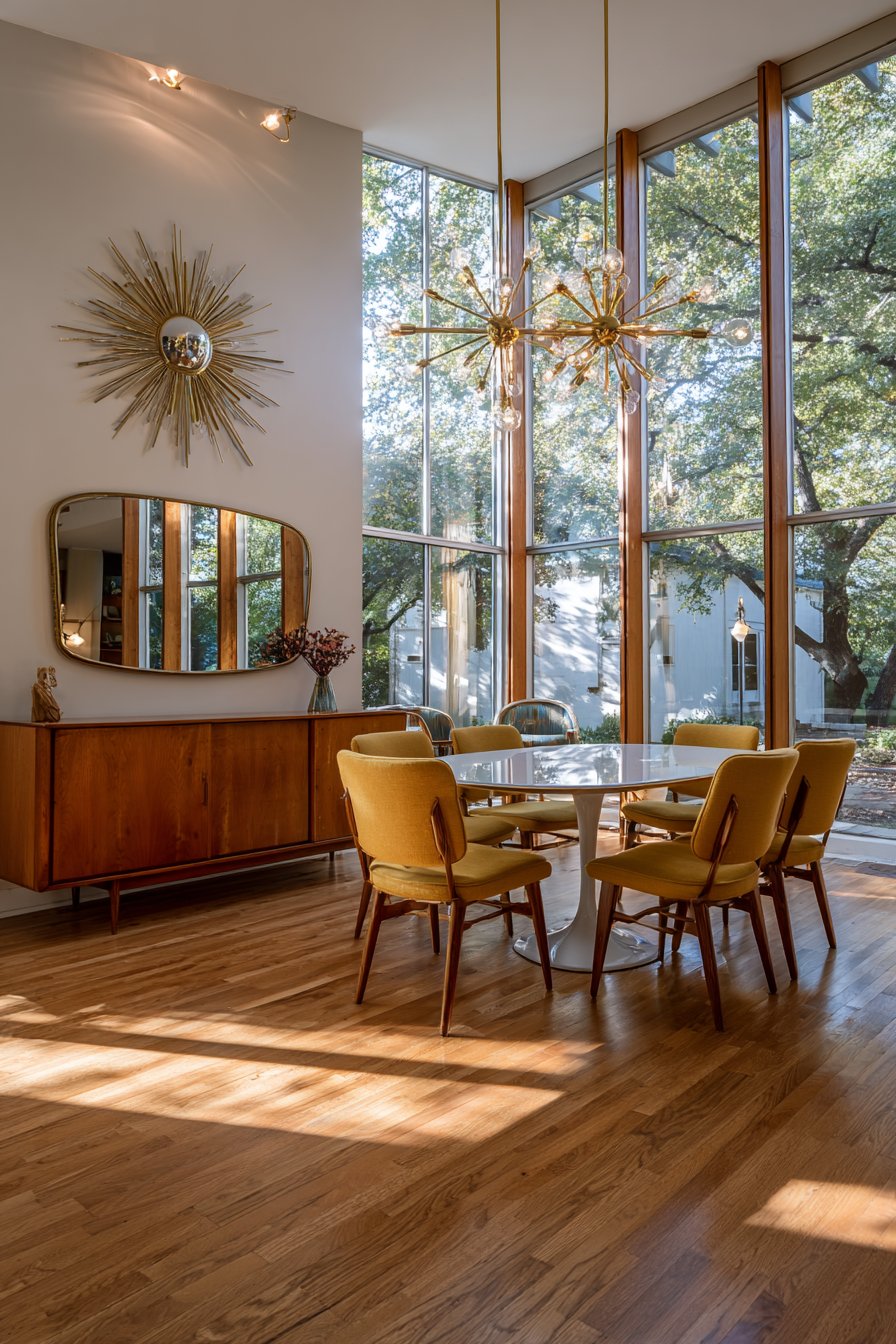
Molded plastic shell chairs in mustard yellow provide colorful seating. A Sputnik chandelier with brass arms and globe bulbs hangs overhead. The mirror reflects and multiplies the atomic age aesthetic. Period-authentic materials create cohesive mid-century design.
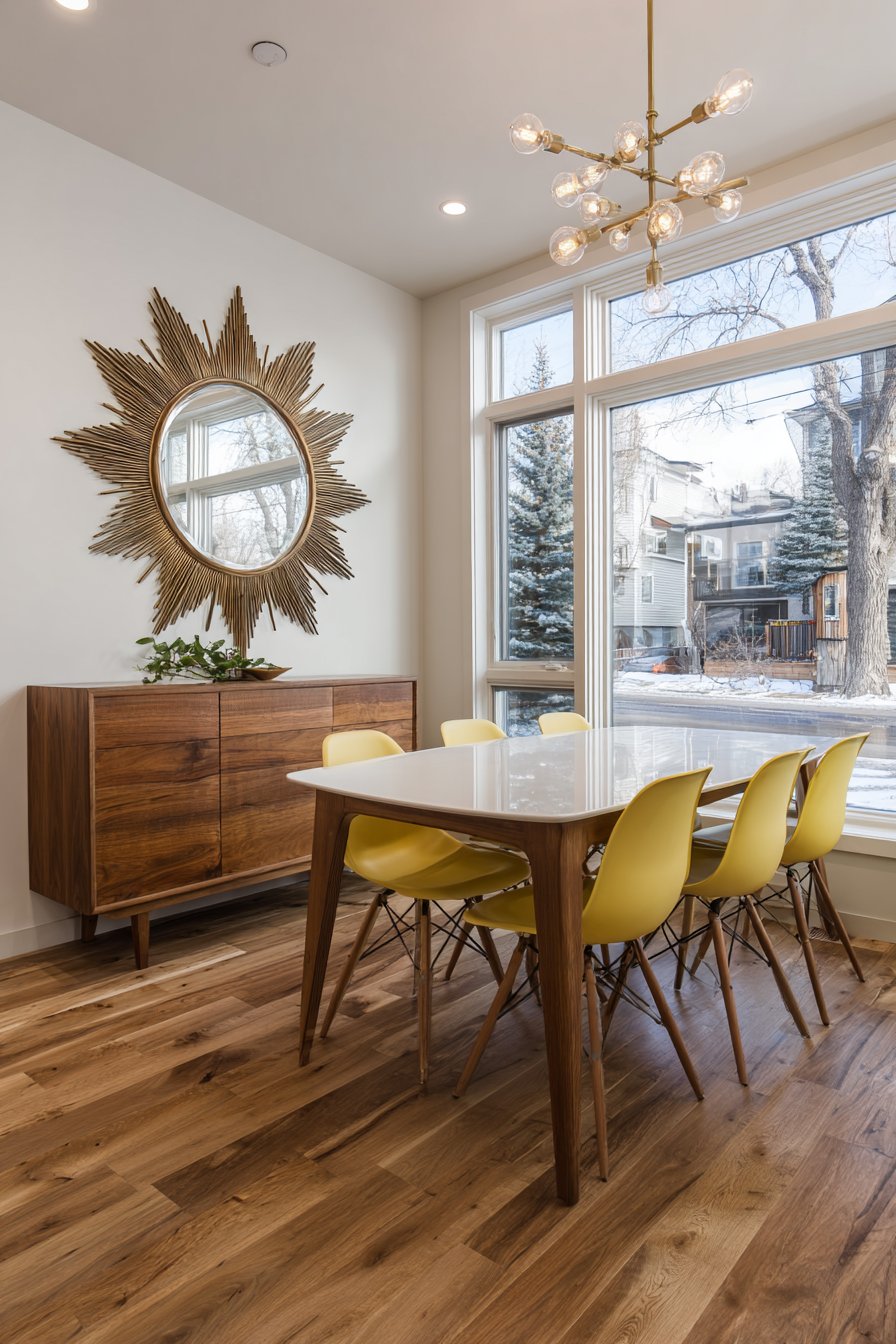
The sculptural mirror serves dual functions as mirror and artwork. Brass rays create dynamic radiating movement. The circular center provides functional reflection. This iconic piece captures mid-century optimism perfectly.
Natural light from floor-to-ceiling windows floods the space. Period-authentic materials include walnut, brass, and molded plastic. Warm wood tones balance against white and mustard accents. This design celebrates authentic mid-century modern style.
Key Design Tips:
- Choose starburst mirrors for iconic mid-century focal points
- Coordinate brass finishes across mirror, lighting, and furniture
- Select tulip tables and shell chairs for period authenticity
- Install Sputnik chandeliers to enhance atomic age aesthetic
- Use mustard yellow and warm walnut for classic mid-century palette
19. Asian-Inspired Zen Tranquility
A large square mirror in dark espresso wood frame features subtle bamboo carving. The mirror hangs above a low black lacquer console. Simple lines and brass corner brackets provide understated detail. A square dining table in dark walnut seats eight comfortably.
Armless dining chairs with cane backs provide traditional Asian seating. A cylindrical paper lantern pendant offers soft ambient light. The mirror reflects this gentle illumination softly. Shoji screen panels and bonsai arrangements add authentic Asian elements.
The bamboo carving detail adds subtle organic decoration. The square shape reinforces calm geometric balance. Dark finishes create grounding visual weight. Minimal ornamentation supports zen design philosophy.
Diffused natural light creates serene shadows throughout. The mirror integrates into the calm aesthetic seamlessly. Reflection enhances the room’s balanced design philosophy. This approach creates peaceful dining tranquility.
Key Design Tips:
- Select square mirrors with subtle Asian-inspired carving details
- Choose dark wood finishes for grounding zen aesthetic
- Install paper lantern pendants for soft diffused lighting
- Include authentic elements like shoji screens and bonsai
- Maintain minimal ornamentation to support calm philosophy
20. Transitional Triptych Grouping
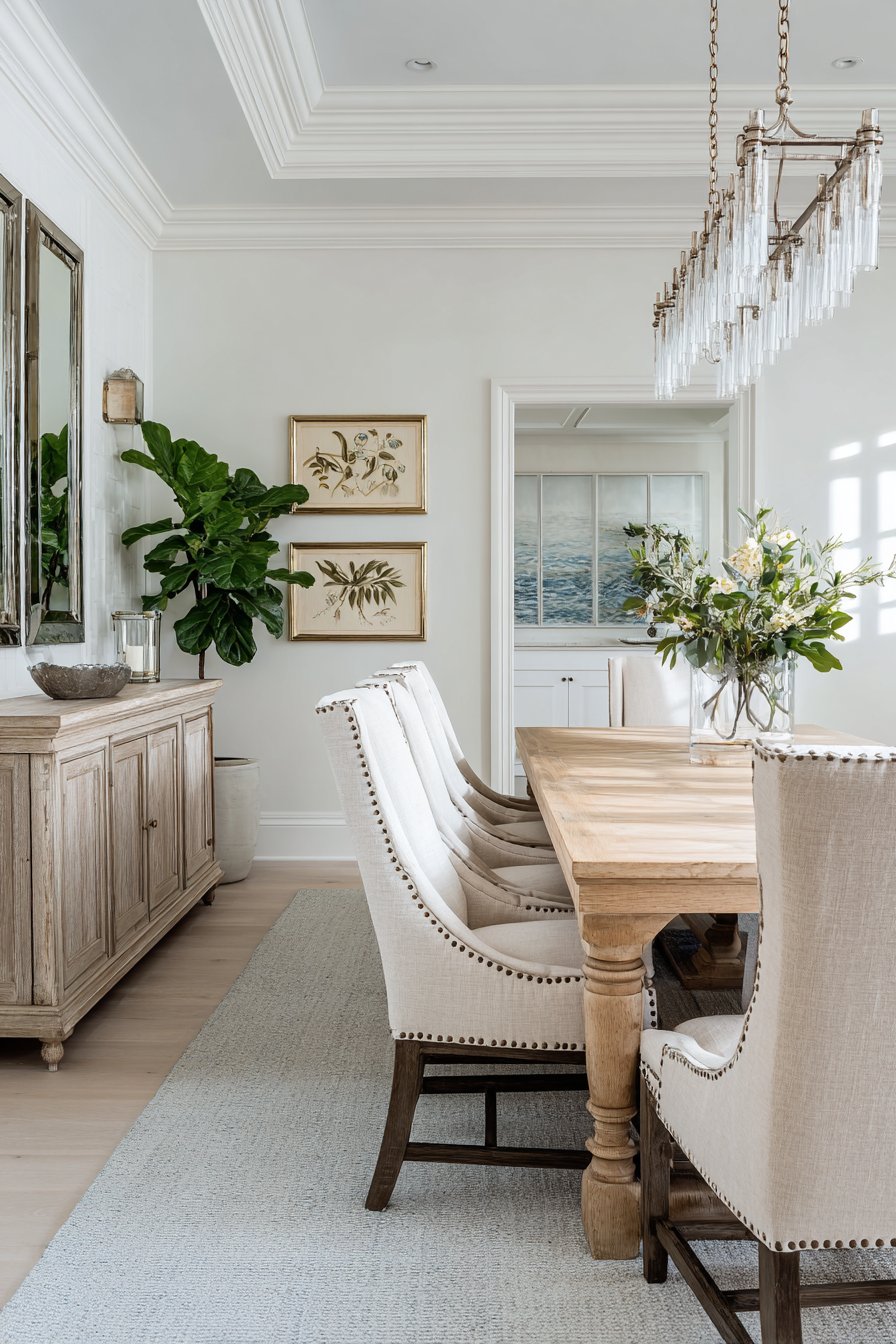
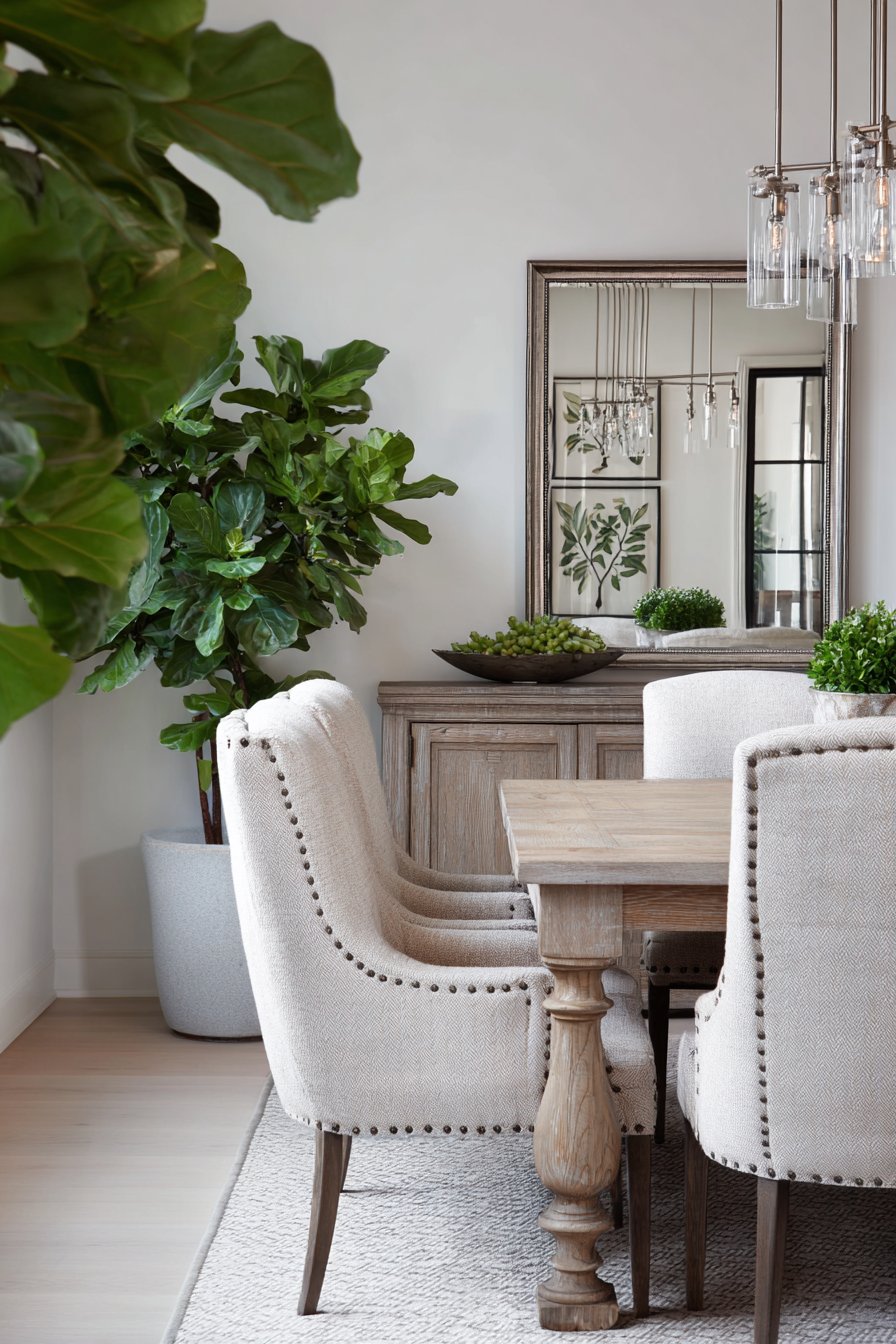
A grouped mirror arrangement features one large rectangular mirror in pewter frame. Two vertical smaller mirrors in matching finish flank the centerpiece. This triptych effect hangs above a grey-washed oak sideboard. The coordinated grouping creates unified visual interest.
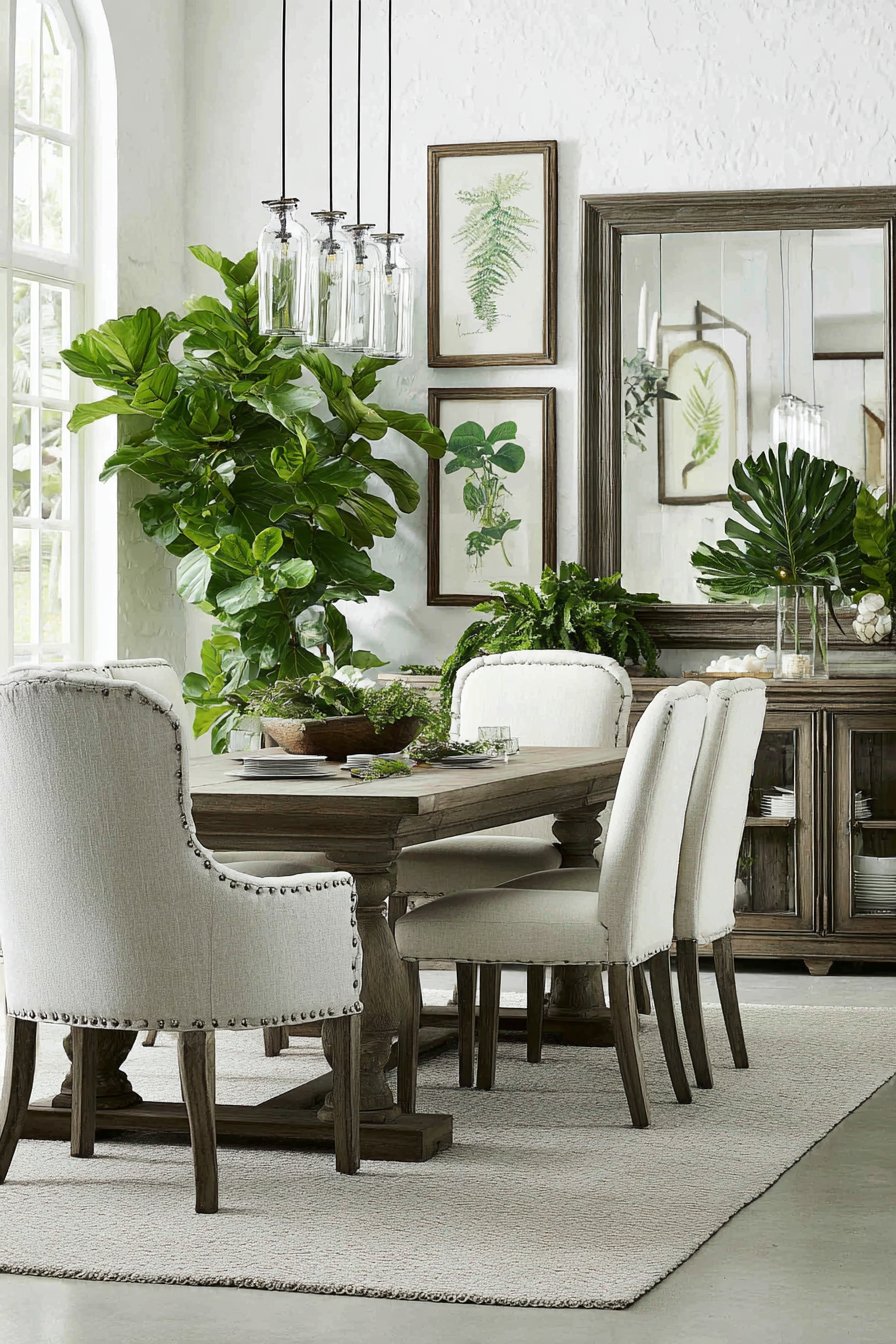
A transitional dining table mixes traditional turned legs with modern clean-lined top. Upholstered dining chairs in linen show nailhead trim. A linear chandelier with clear glass shades provides contemporary lighting. The mirrors reflect botanical prints and a large fiddle leaf fig.
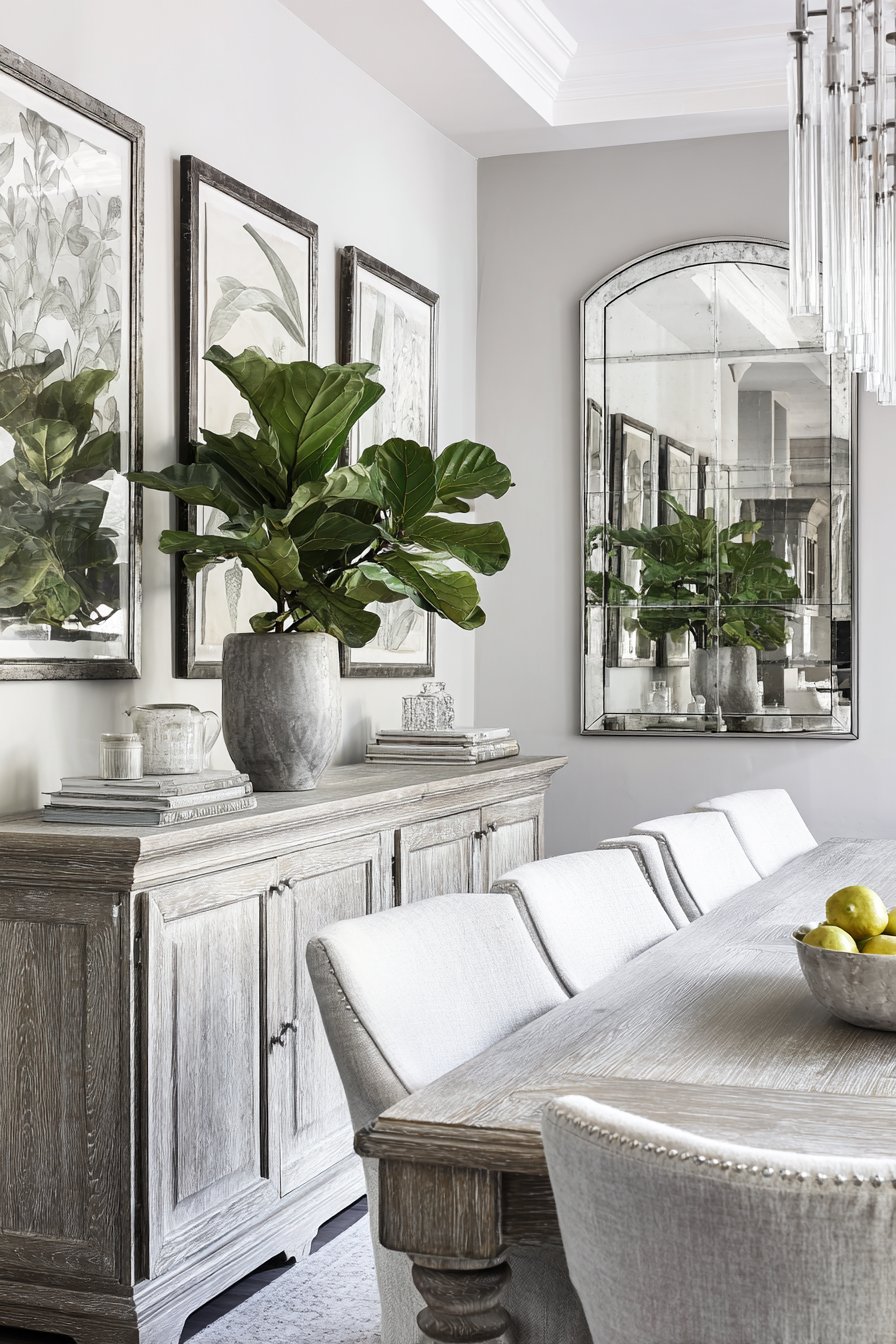
The multiple mirrors create layered dimensional interest. Matching pewter frames unify the disparate sizes. The triptych arrangement adds complexity beyond single mirror approaches. Grouped reflections multiply depth and visual texture.
Balanced natural and artificial lighting illuminates the space evenly. Professional photography captures the dimensional layers. The coordinated mirrors maintain cohesive design language. This transitional approach bridges traditional and contemporary successfully.
Key Design Tips:
- Group multiple mirrors in matching frames for cohesive impact
- Create triptych arrangements with one large and two smaller mirrors
- Coordinate frame finishes across grouped mirrors for unity
- Position mirrors to reflect plants and artwork strategically
- Mix traditional and contemporary elements for transitional balance
Why These Mirror Dining Room Designs Are the Best
These mirror dining room designs represent exceptional approaches to creating dimensional, light-filled dining spaces. Each concept demonstrates thoughtful consideration of reflection, lighting, and spatial enhancement. The versatility spans from minimalist contemporary to ornate traditional styles.
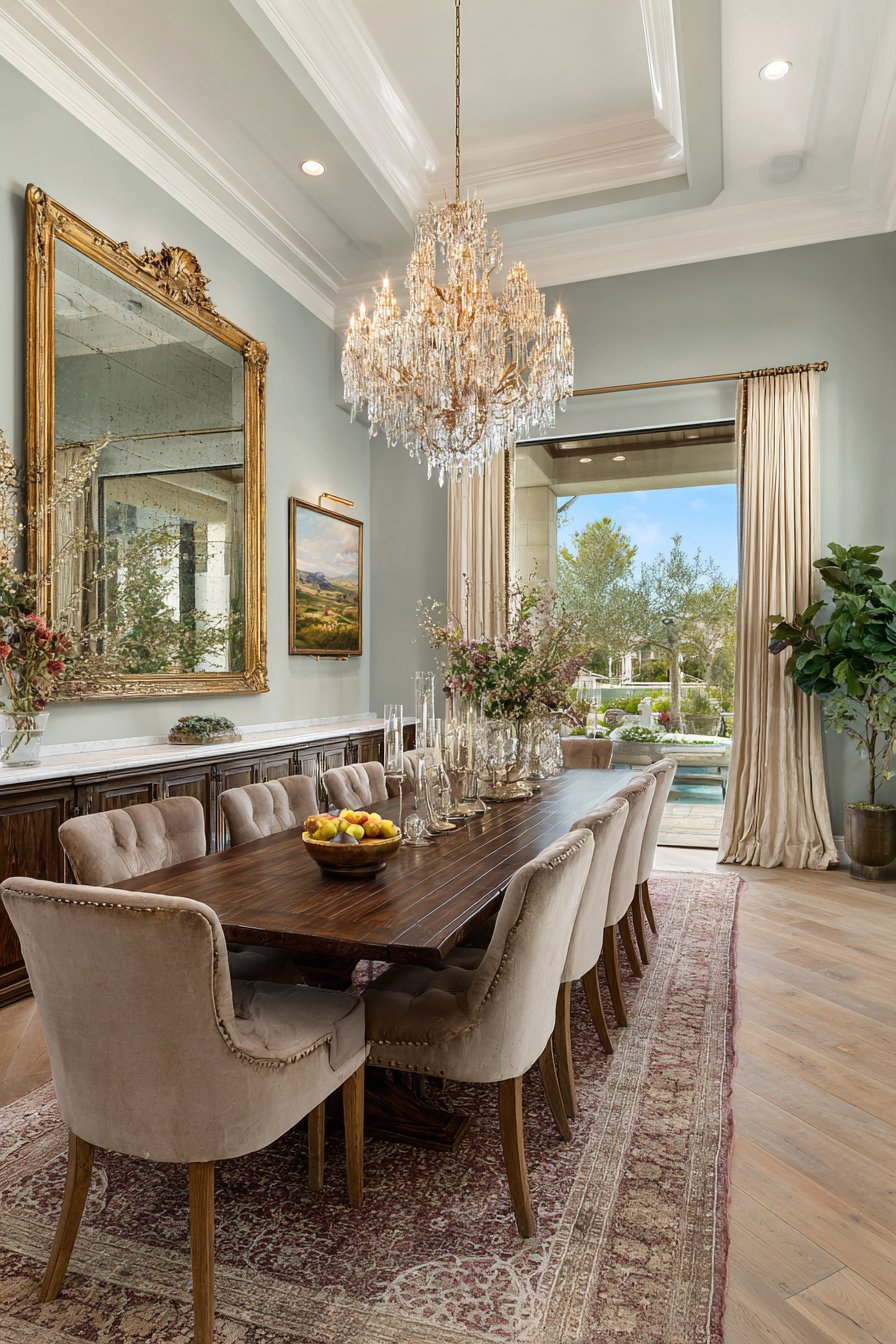
Mirrors serve multiple essential functions beyond mere decoration. They amplify natural and artificial light sources, effectively brightening rooms without additional fixtures. Strategically placed mirrors visually expand smaller dining areas, making them feel more spacious and welcoming. They reflect beautiful elements like chandeliers, artwork, and botanical arrangements, multiplying visual interest throughout the space.
The frame selection profoundly impacts overall aesthetic direction. Natural materials like reclaimed wood, rattan, and driftwood bring organic warmth and texture. Metallic finishes including brass, silver, and gold add sophistication and glamour. Distressed and antiqued surfaces contribute vintage character and historical depth. These material choices allow mirrors to complement various design styles authentically.
Color theory plays a crucial role in mirror dining room success. Mirrors naturally enhance existing color schemes through reflection and light multiplication. They work exceptionally well with neutral palettes by adding depth without introducing competing colors. In spaces with bold accent colors, mirrors amplify these dramatic choices through strategic reflection.
Spatial considerations determine optimal mirror placement and sizing. Small dining rooms benefit most from large-scale or floor-to-ceiling installations that maximize spatial expansion. Open concept spaces use mirrors to define dining zones while maintaining visual flow. Formal dining rooms employ ornate framed mirrors as architectural focal points.
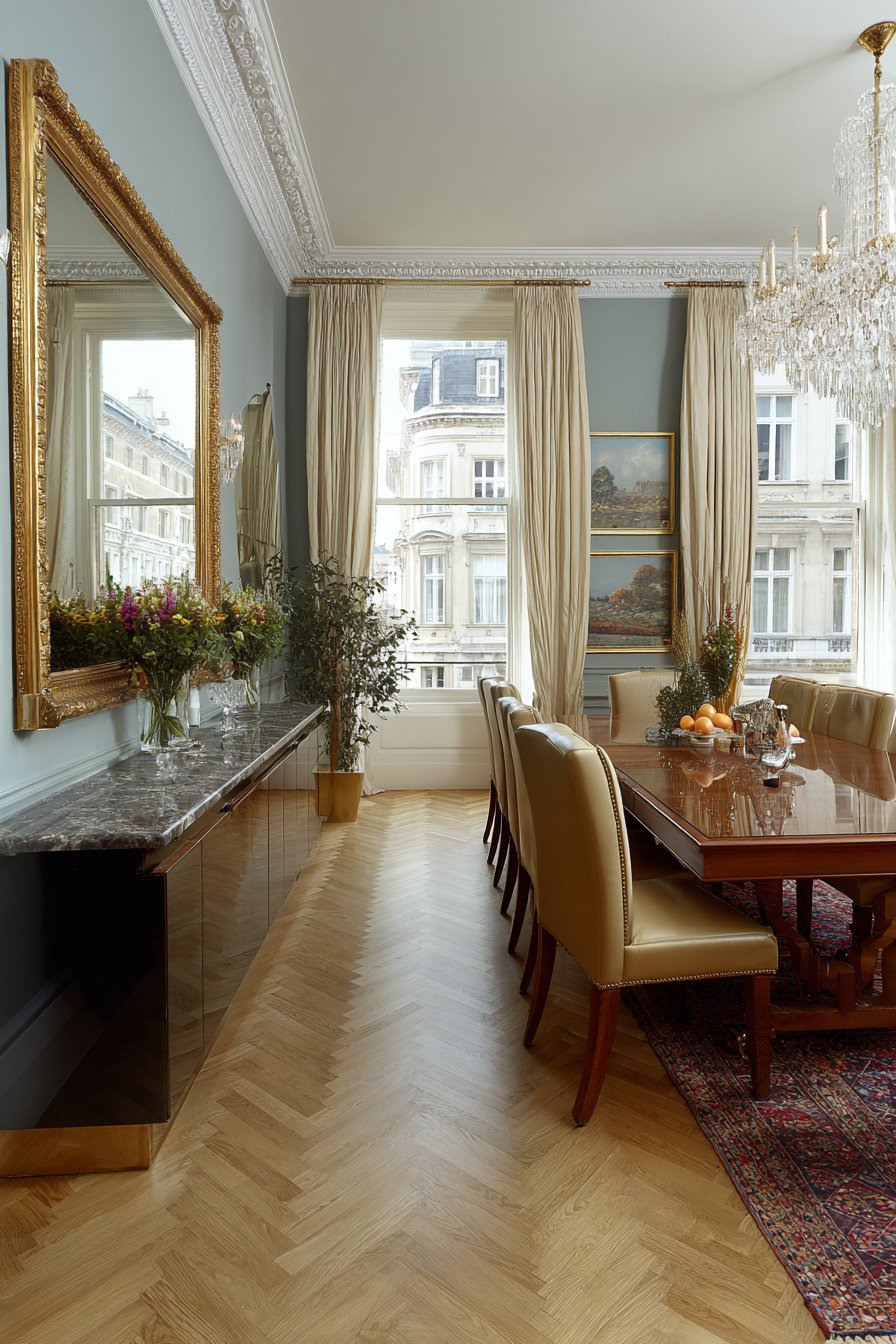
Sustainability and longevity factor significantly into these design approaches. Quality mirrors with solid frames represent investment pieces that endure through changing trends. Vintage and antique mirrors offer sustainable alternatives to new purchases while providing unique character. Proper installation ensures these pieces serve families for generations.
Conclusion
These mirror dining room designs demonstrate that thoughtful reflection transforms ordinary spaces into extraordinary dining environments. Strategic mirror placement amplifies light, expands spatial perception, and multiplies beautiful design elements throughout the room. The key takeaways include choosing appropriate frame styles, considering scale and proportion, and positioning mirrors to reflect the most attractive room features.
Successful mirror integration balances aesthetic appeal with functional benefits. Start by assessing your dining room’s lighting needs and spatial constraints. Consider which elements deserve reflection and amplification through strategic mirror placement. Quality mirrors represent worthwhile investments that enhance daily dining experiences while increasing your home’s overall sophistication.
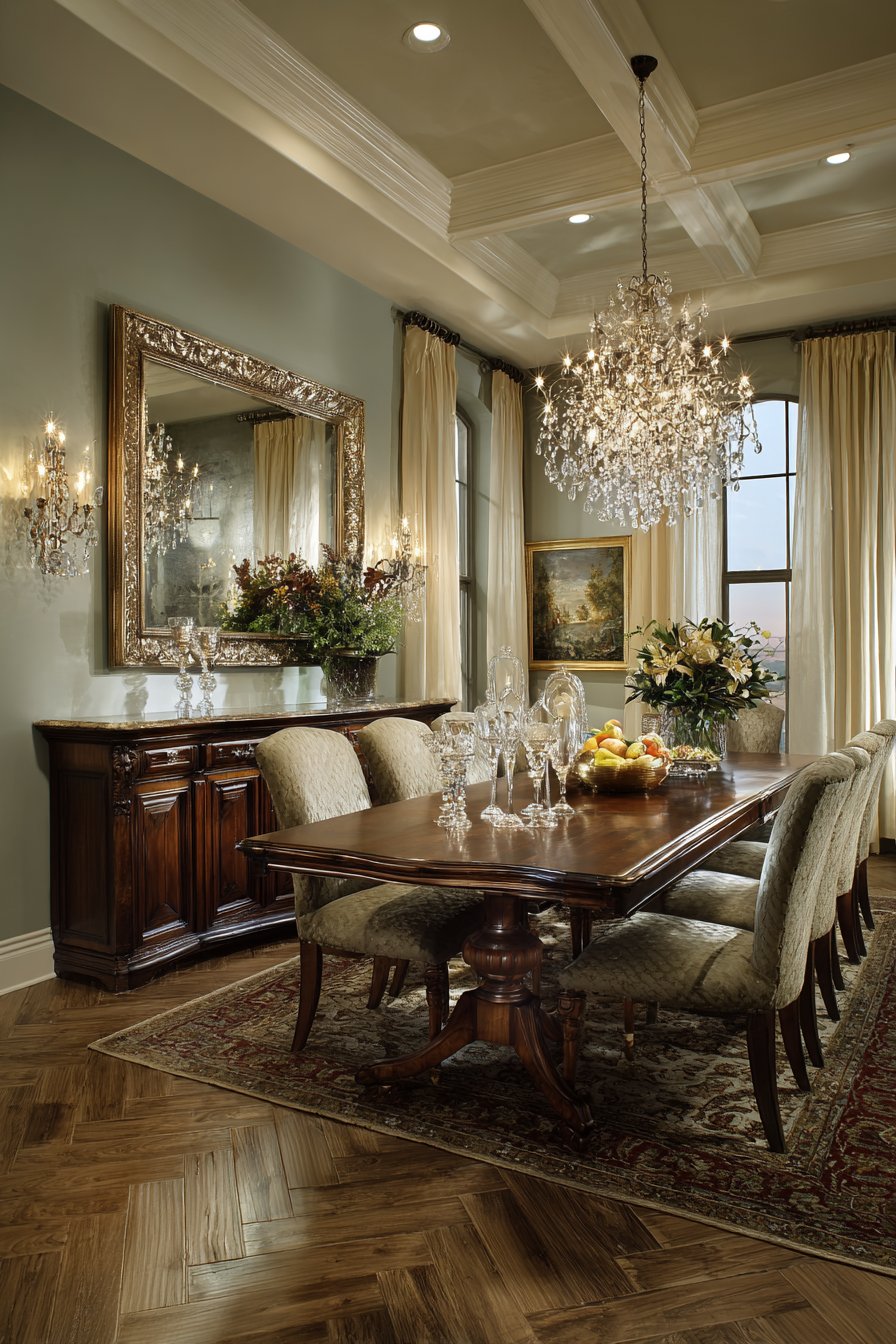
Experiment with these mirror concepts in your own dining space. Begin with a single statement mirror or create a curated gallery wall of smaller pieces. Your transformed dining room awaits creation through thoughtful mirror selection and placement.
