


The walls of your dining room hold immense potential for creative expression. They frame your gatherings and set the mood for memorable meals. Thoughtful wall decor transforms a simple dining area into a captivating space that reflects your personality and style.
Wall decoration in dining rooms goes beyond mere aesthetics. It creates atmosphere, influences conversation, and establishes the room’s character. Whether you prefer dramatic focal points or subtle artistic touches, the right wall decor enhances your dining experience. From gallery arrangements to sculptural elements, each approach offers unique possibilities for personal expression.
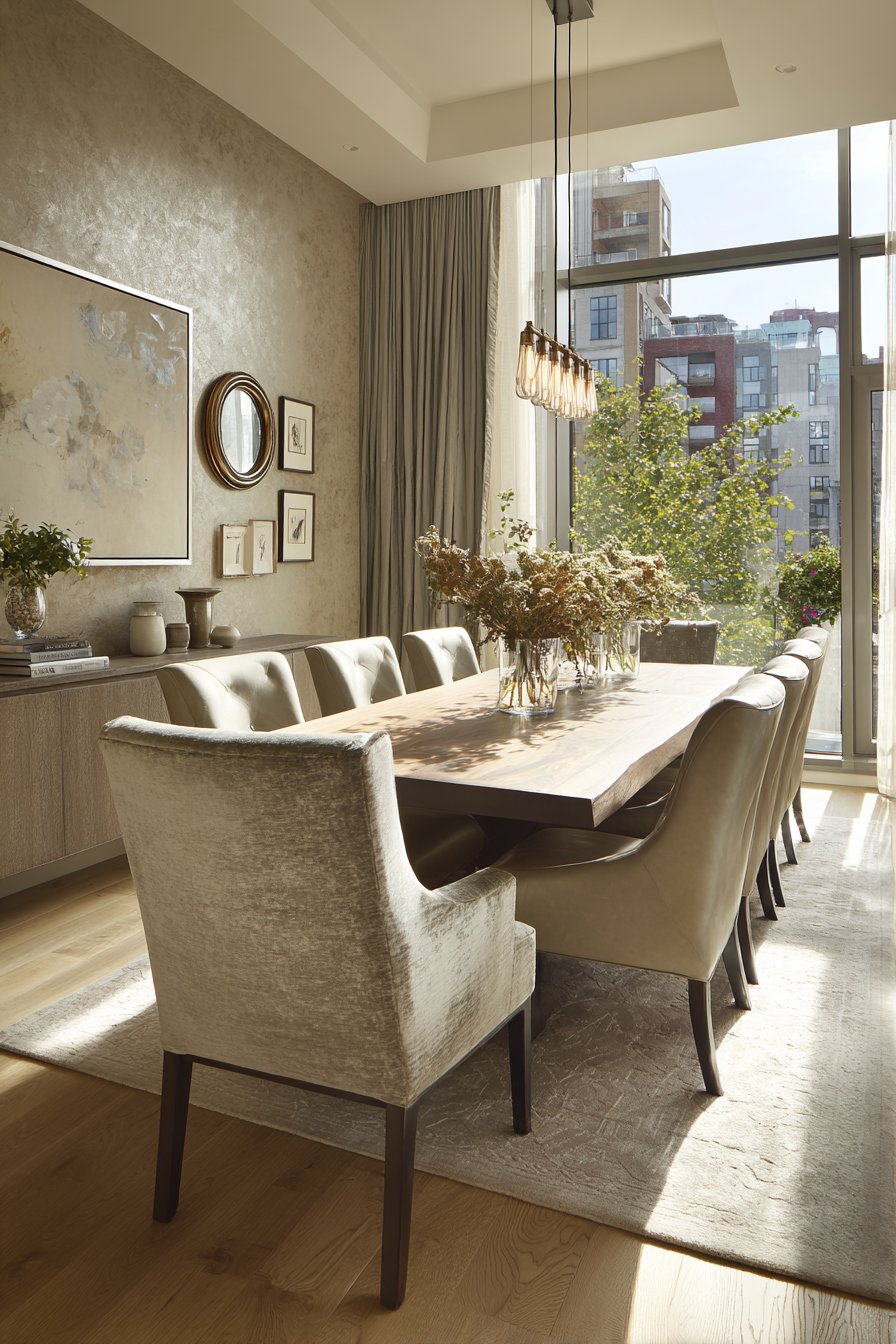
This comprehensive guide explores twenty distinctive wall decor concepts for dining rooms. Each design showcases different materials, styles, and techniques. You’ll discover options ranging from minimalist single-statement pieces to layered collections. These concepts span traditional elegance, contemporary boldness, rustic charm, and everything in between. The diversity ensures you’ll find inspiration that resonates with your vision.
1. Modern Gallery Wall with Mixed Media
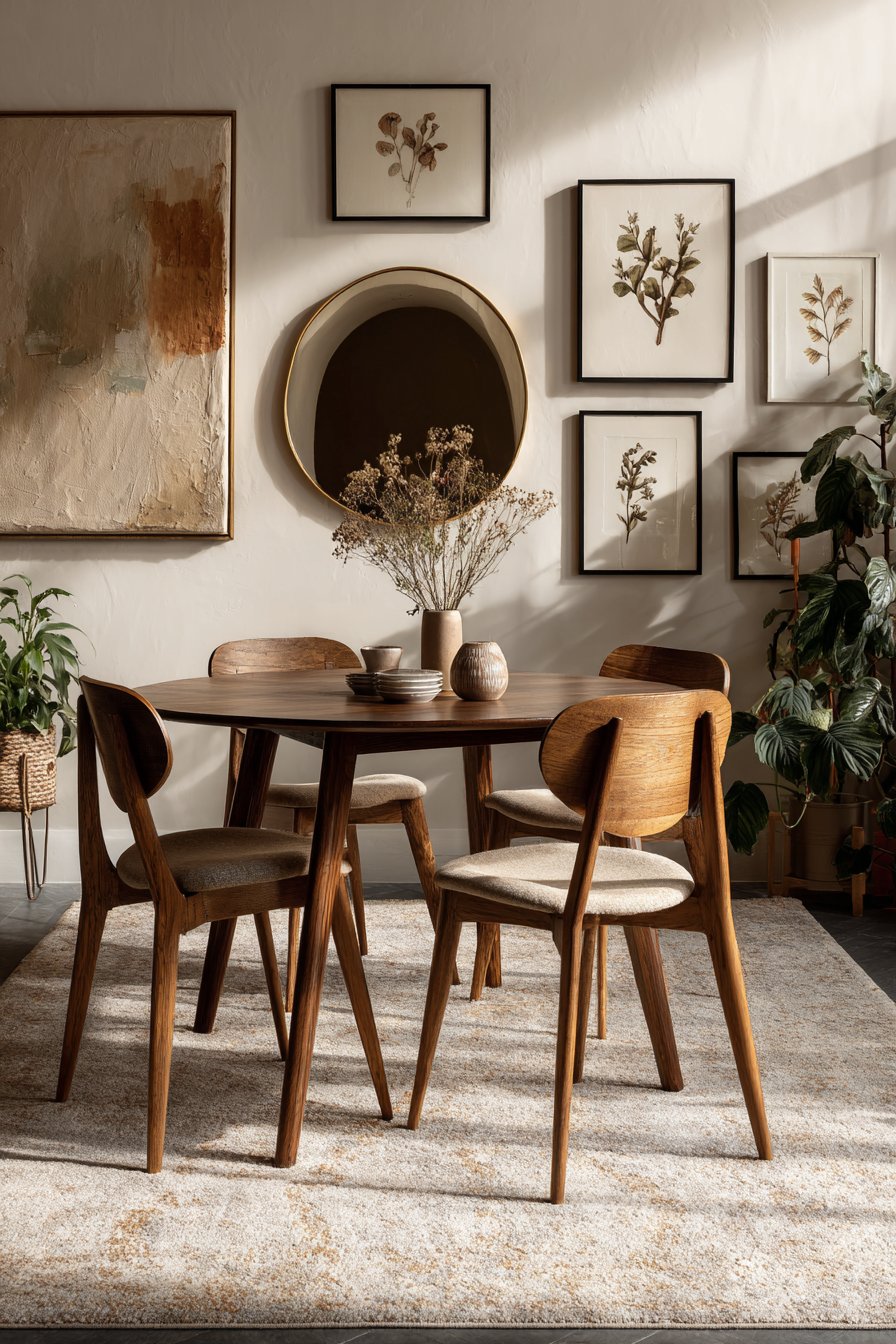
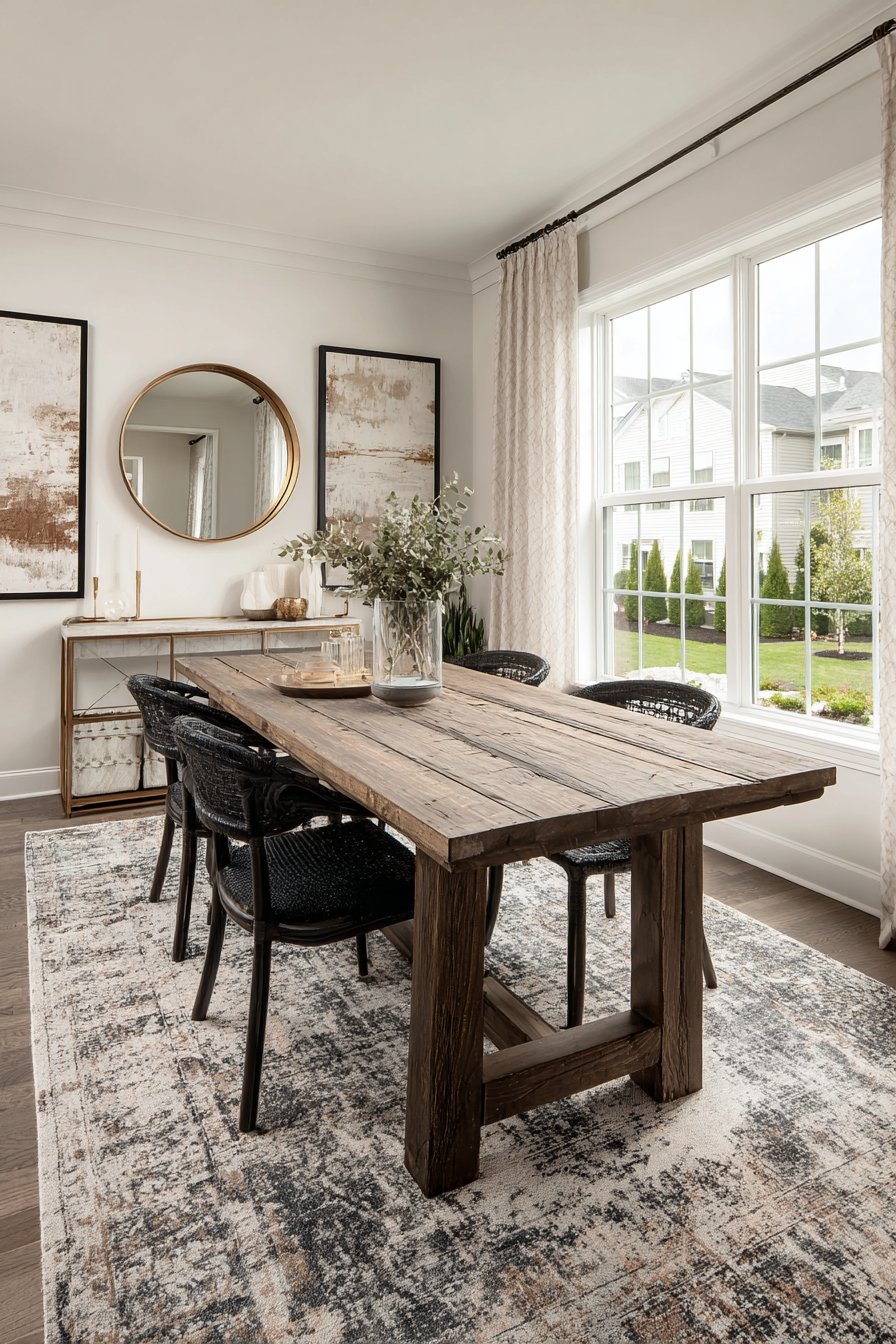
A modern dining room comes alive with a dramatic gallery wall arrangement. Large-scale abstract art in muted earth tones anchors the composition. Black-framed botanical prints add natural elements to the display. A circular brass mirror serves as the centerpiece, reflecting light beautifully.
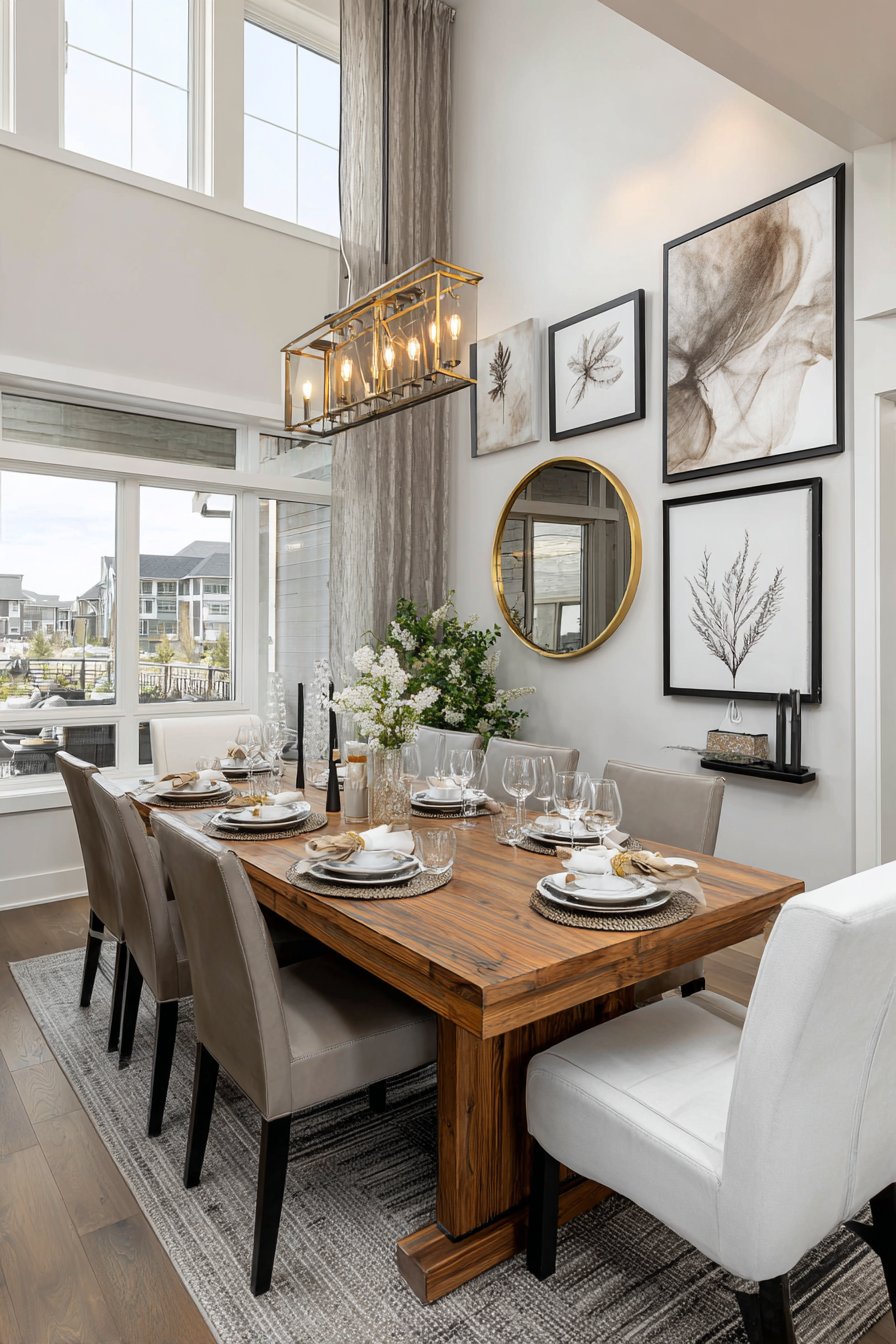
The arrangement spans eight feet across the wall. Asymmetrical spacing creates organic flow rather than rigid structure. This intentional design feels both curated and natural. Soft afternoon light from adjacent windows creates subtle shadows. These shadows add depth to textured canvas pieces.
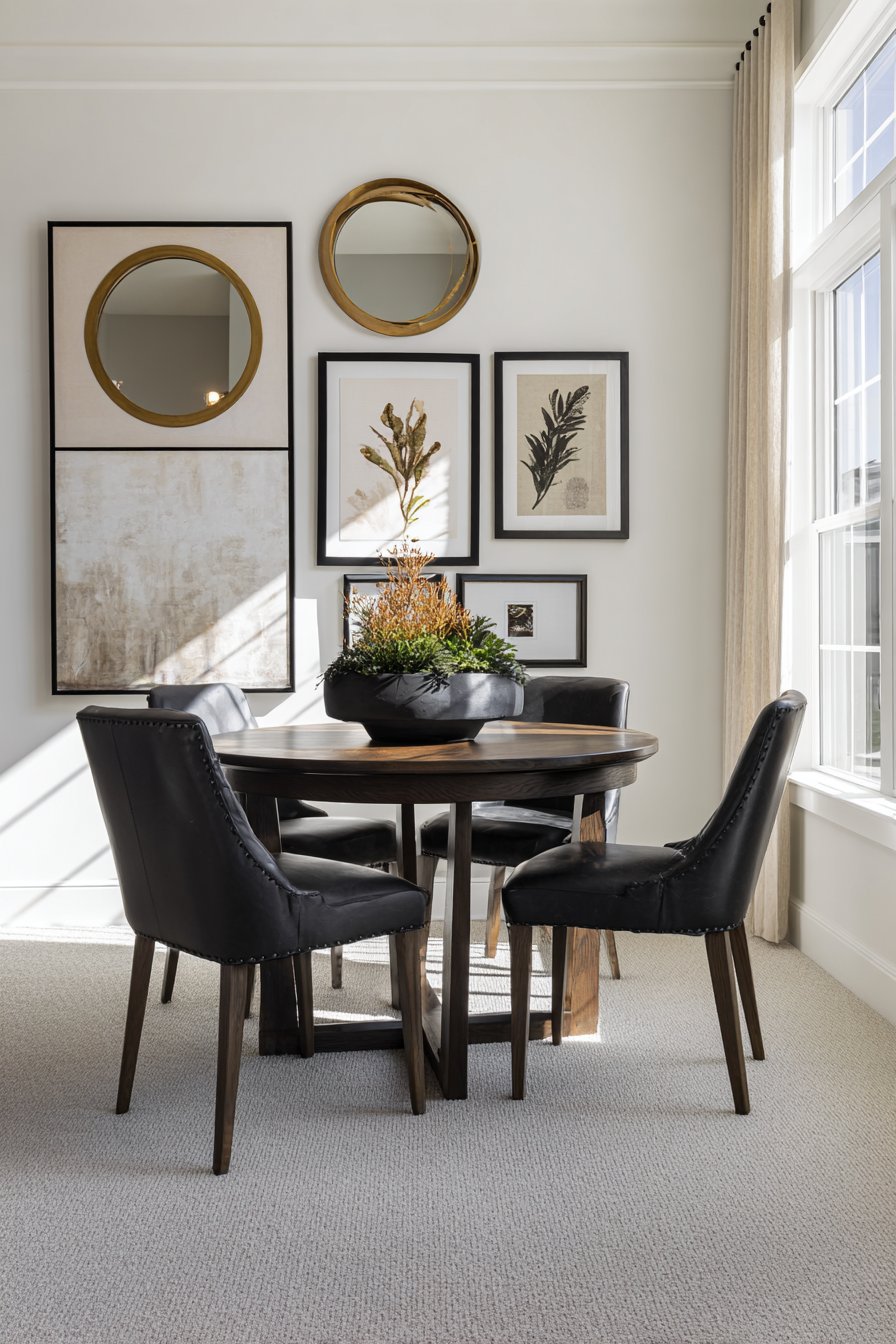
The gallery wall relates harmoniously to the walnut dining table below. The visual weight balances perfectly with the substantial furniture. Each piece contributes to the overall composition without competing for attention. The earth-tone palette creates cohesion across different media types.
Wide-angle photography captures the relationship between wall and furniture. The balanced exposure highlights frame details and artwork textures. Natural light plays across various surfaces throughout the day. This creates an ever-changing visual experience for diners.
Key Design Tips:
- Mix different media types like paintings, prints, and mirrors for visual interest
- Use asymmetrical spacing to create organic, natural flow
- Choose a cohesive color palette across all pieces
- Consider how natural light will interact with reflective surfaces
- Balance the visual weight of wall decor with furniture below
- Allow shadows to add dimension to textured pieces
2. Farmhouse Rustic Wood Panel Feature
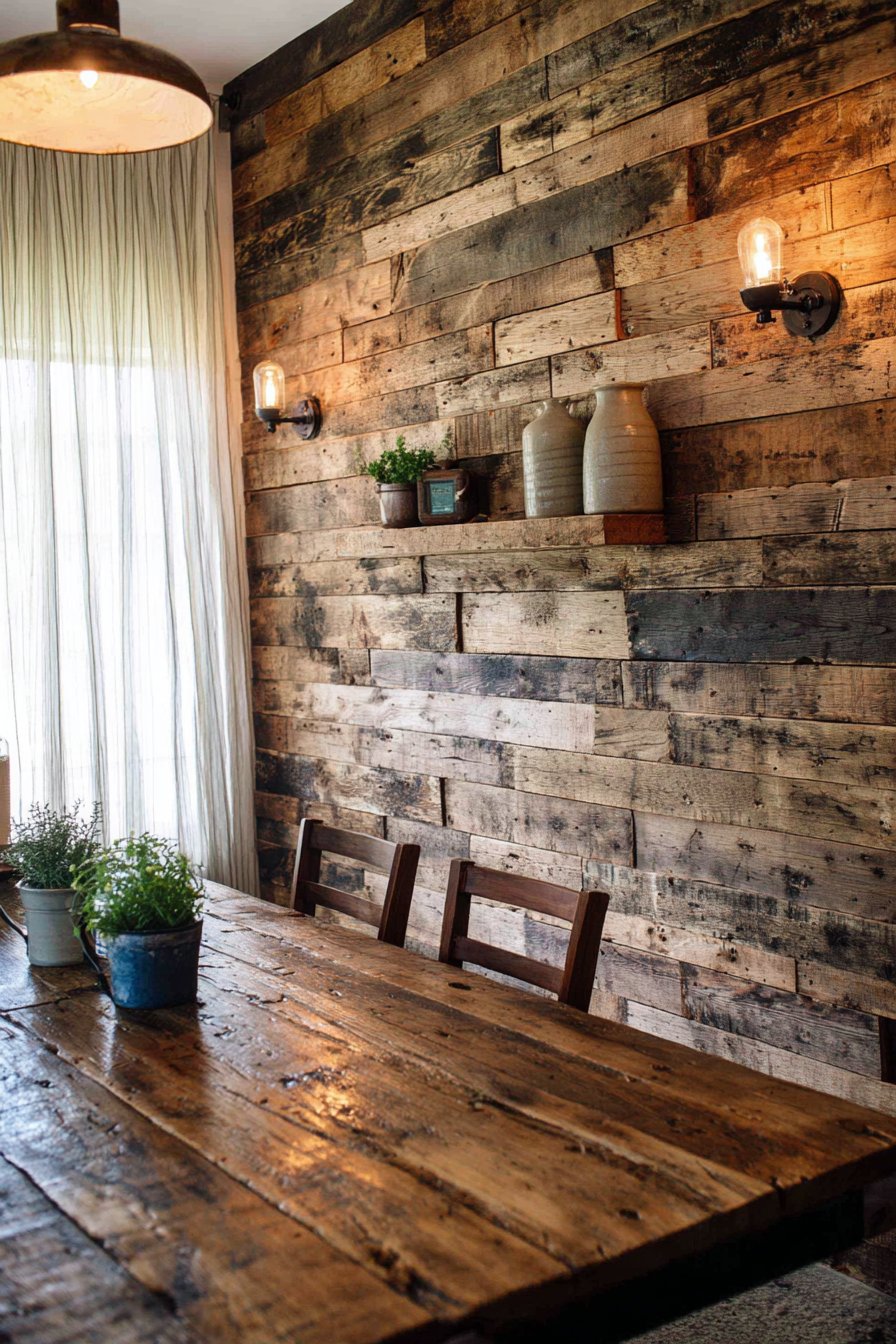
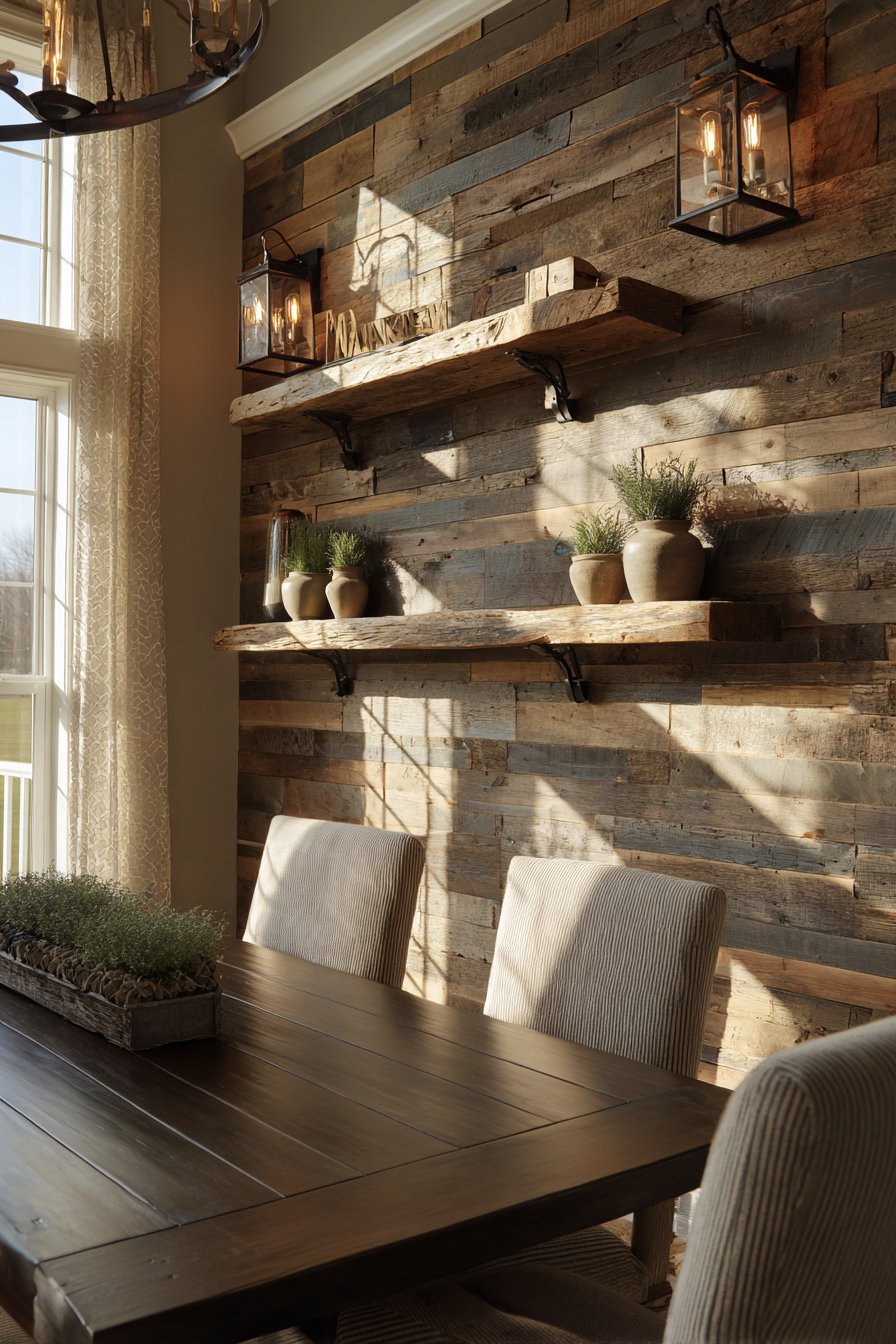
A farmhouse dining space showcases rustic authenticity through reclaimed wood. Large horizontal planks display natural weathering and grain variations. The wood panel creates a striking focal wall behind the dining area. Each plank tells a story through its authentic patina.
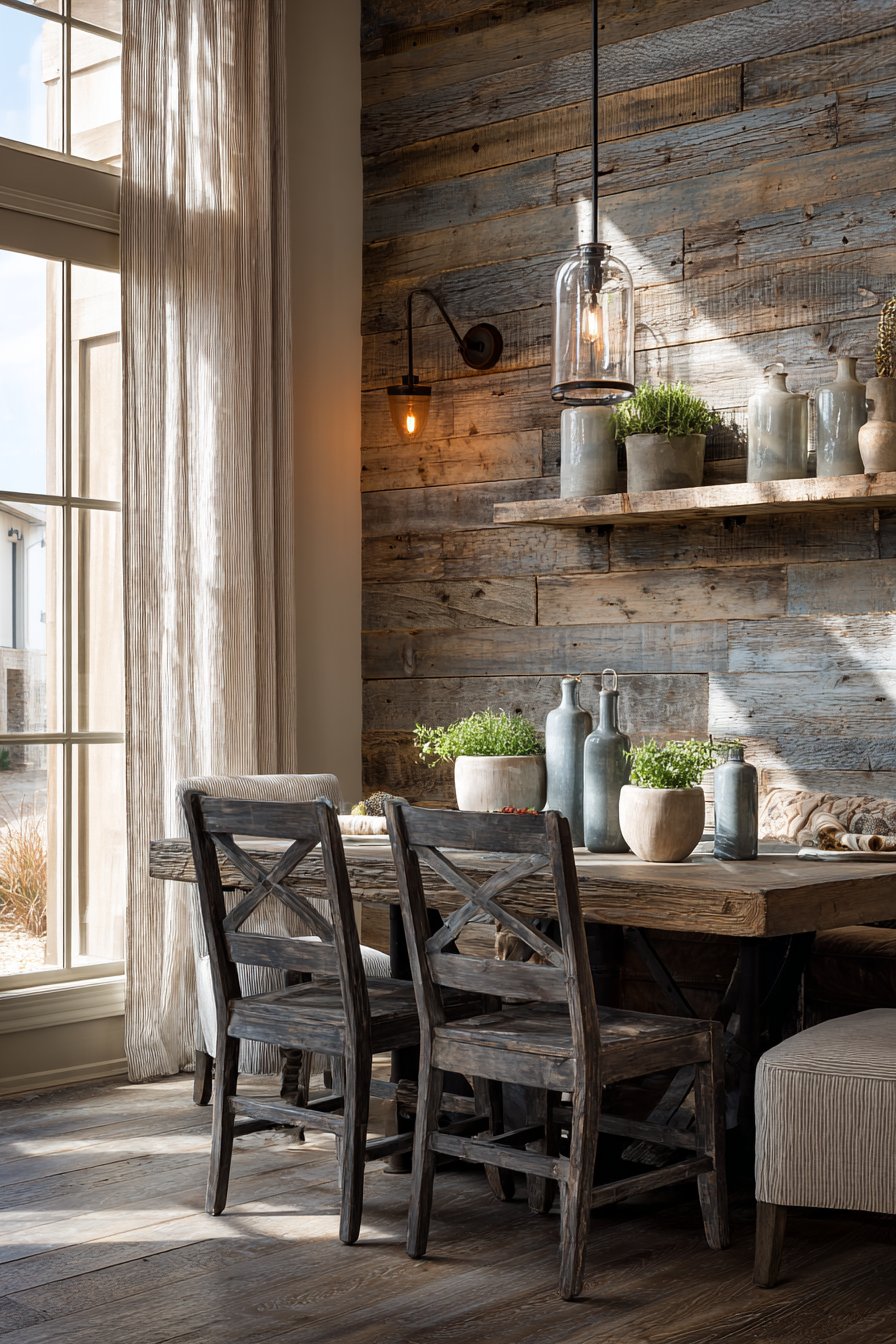
Vintage metal sconces flank the wooden feature wall. They provide warm ambient lighting that enhances the rustic atmosphere. A floating shelf made from salvaged barn wood holds ceramic vases. Small potted herbs add life and freshness to the display.
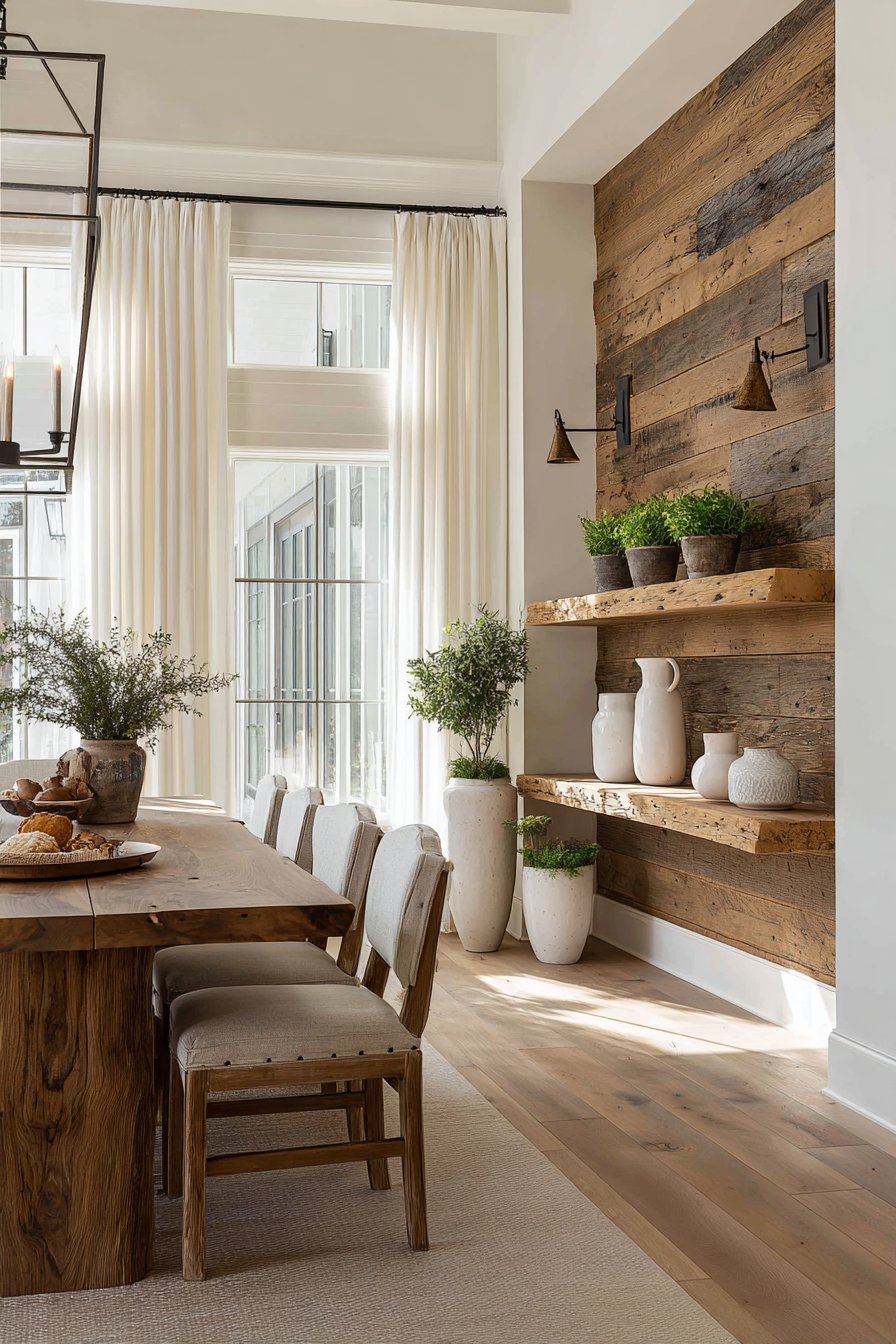
The dining table features classic ladder-back chairs positioned strategically. This arrangement allows appreciation of the textured wall treatment. Natural daylight streams through sheer curtains, illuminating the wood’s character. The interplay between natural and artificial light creates depth.
Professional attention to material authenticity makes this design successful. The genuine reclaimed wood cannot be replicated by manufactured alternatives. The weathered surfaces and natural imperfections add warmth and history. This creates an inviting environment for family meals and gatherings.
Key Design Tips:
- Source authentic reclaimed wood with visible weathering and grain
- Install vintage-style sconces for ambient lighting that complements the rustic aesthetic
- Add floating shelves from matching salvaged wood for display space
- Position furniture to highlight the feature wall
- Use sheer curtains to filter natural light gently
- Incorporate living plants to soften hard wood surfaces
3. Scandinavian Minimalist Grid Arrangement
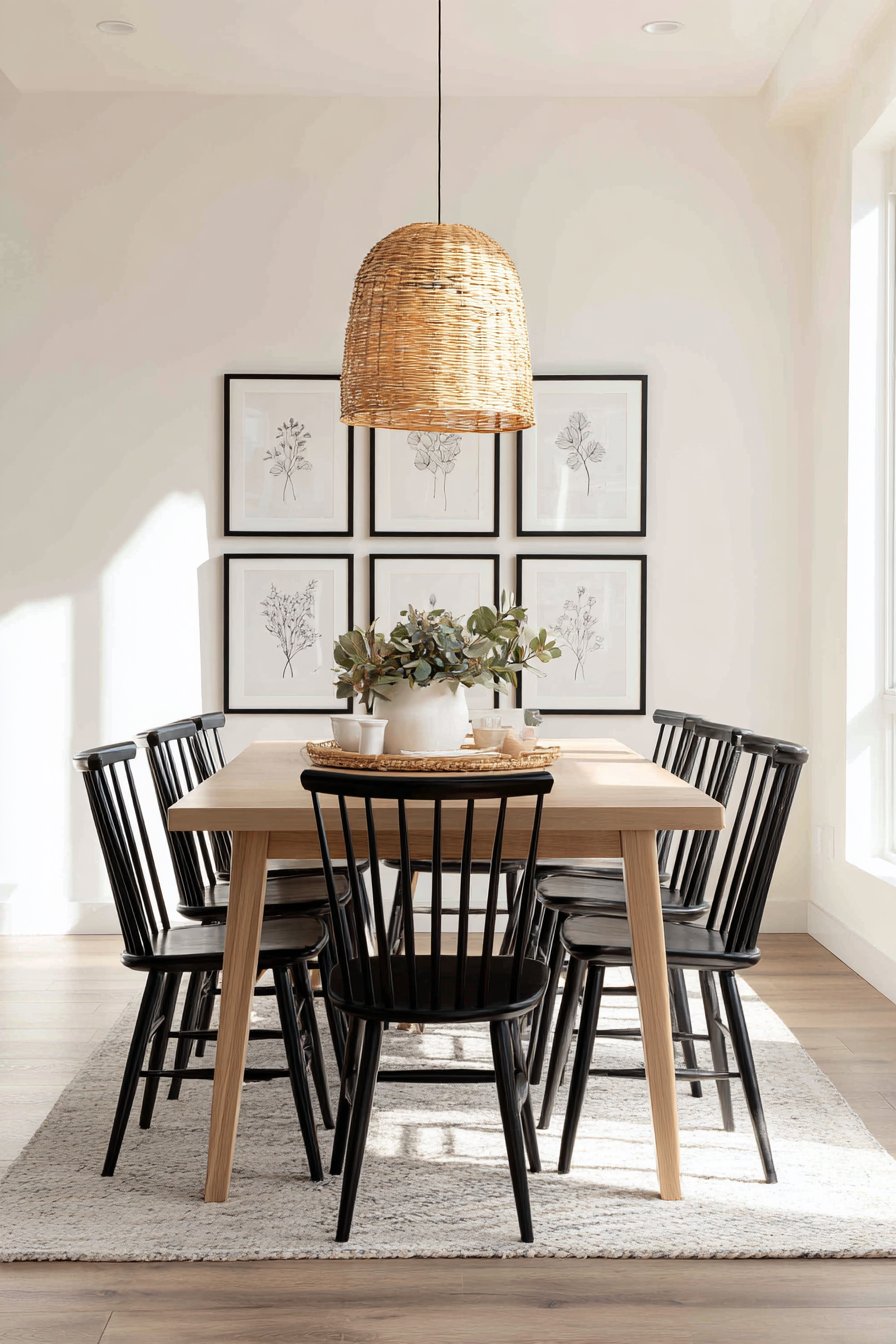
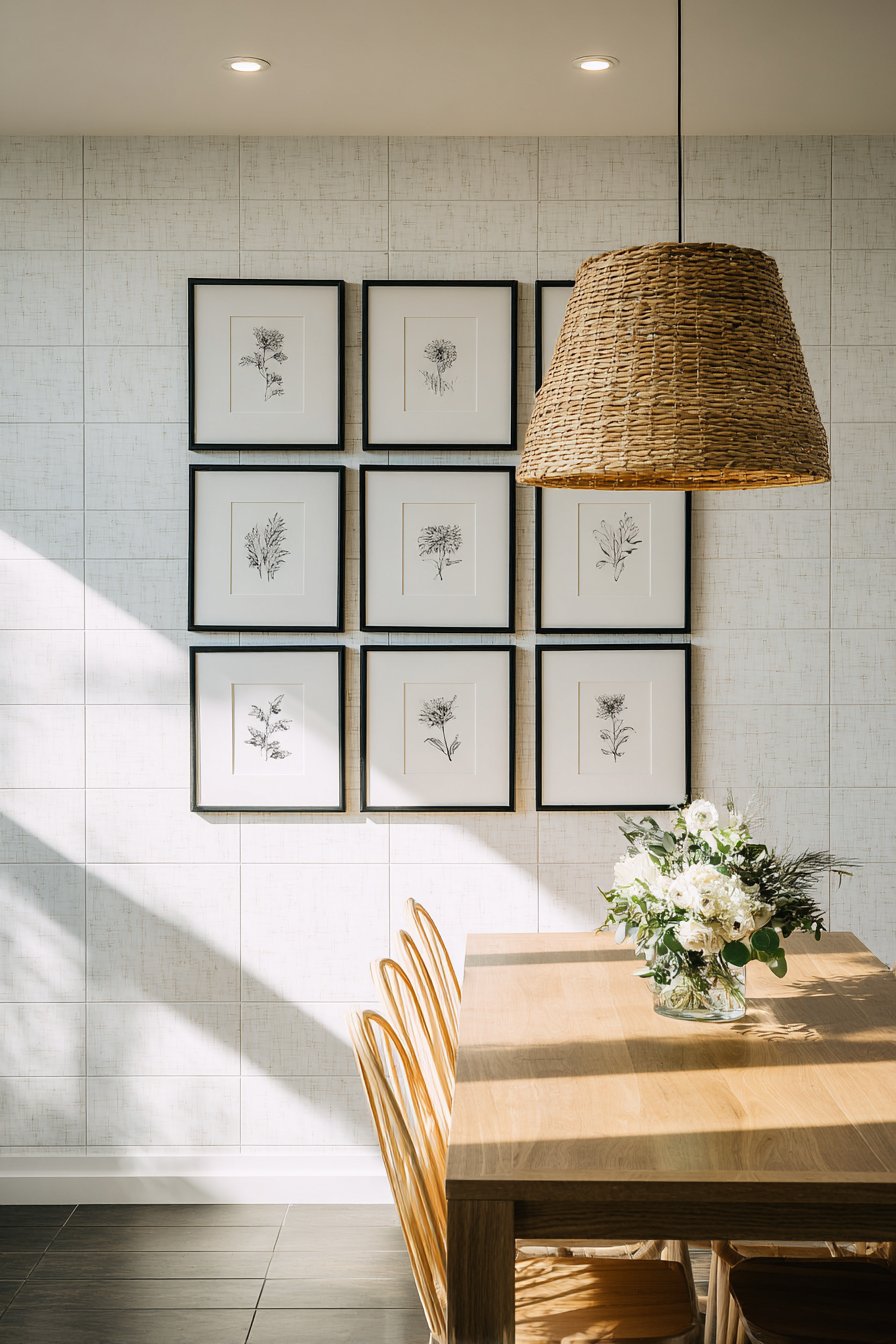
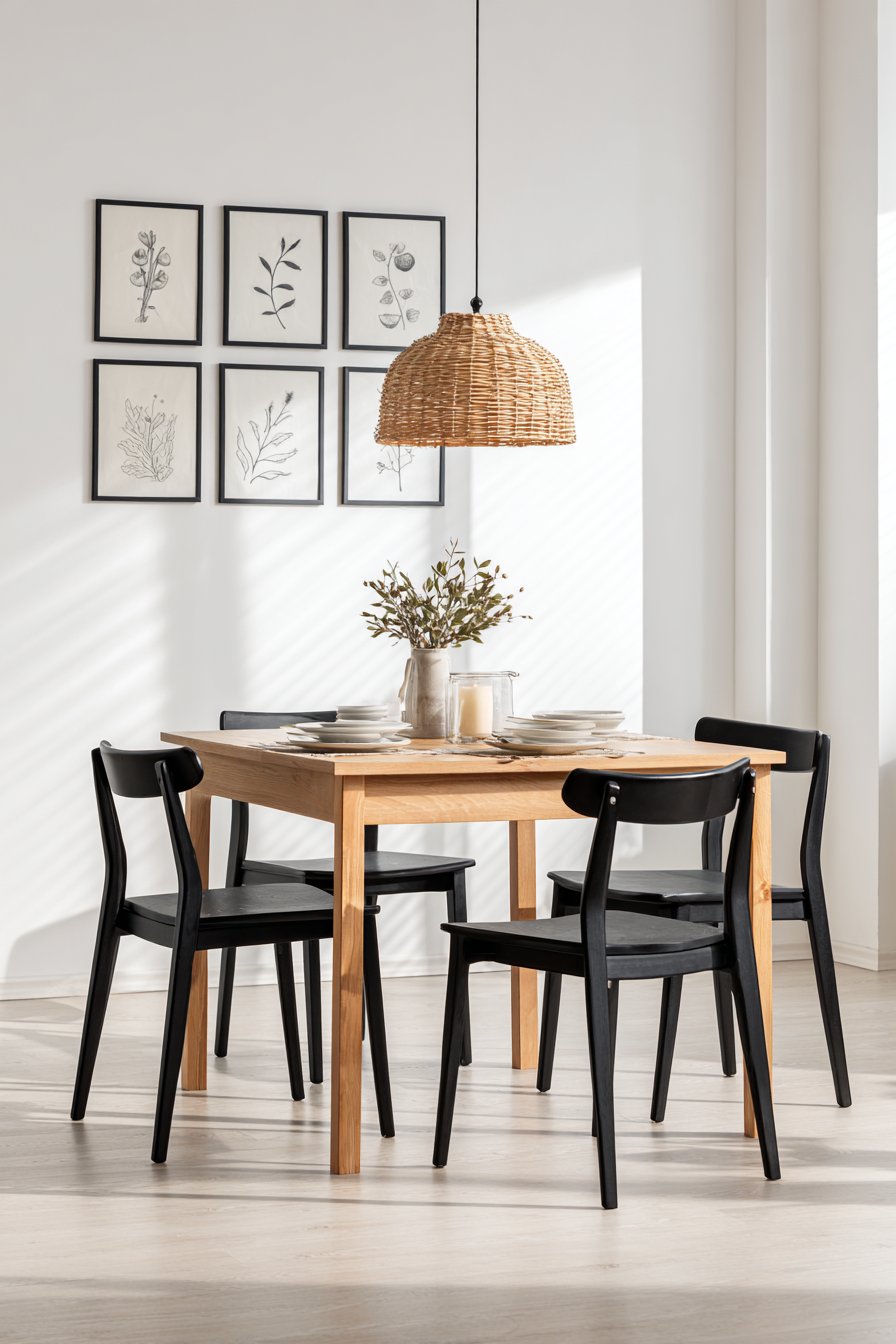
A Scandinavian dining room embraces restraint through minimalist wall decor. Simple line art prints display botanical sketches with clean lines. Six identical-sized frames create a precise grid pattern. Generous white matting emphasizes negative space within each frame.
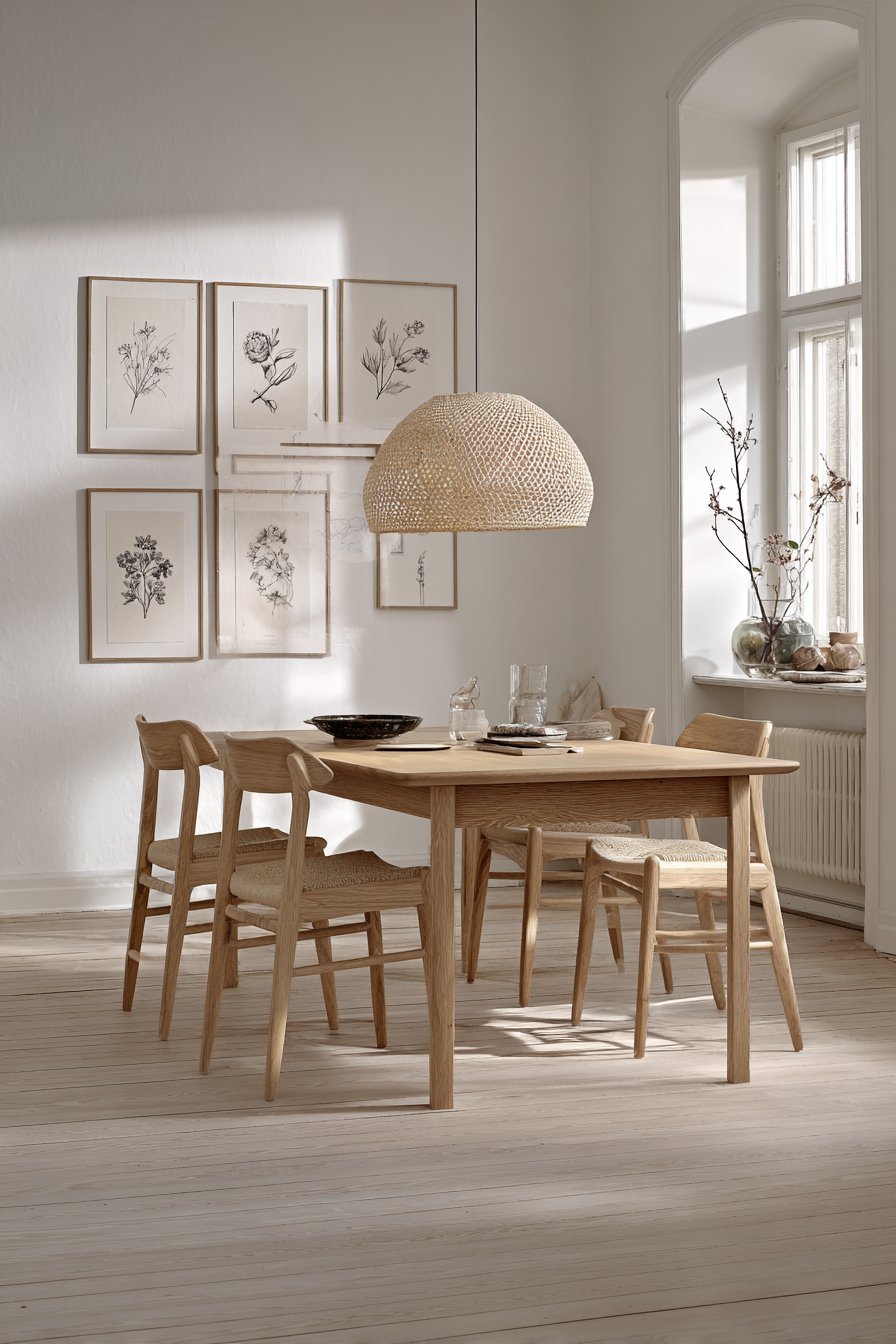
The slim black frames hang above a light oak dining set. The consistent sizing and spacing create visual calm and order. A single pendant light with woven natural fiber shade hangs centered. Its shadow creates additional visual interest on the white wall.
The composition emphasizes what’s not there as much as what is. Negative space plays a crucial role in Scandinavian design philosophy. The restraint allows each element to breathe and be appreciated individually. Yet the collection works cohesively as a unified statement.
Soft diffused morning light highlights subtle textures beautifully. The linen-look wallpaper adds gentle dimension without overwhelming. Frame edges cast delicate shadows that change throughout the day. This creates subtle movement within the minimalist composition.
Key Design Tips:
- Use identical frame sizes and consistent spacing for clean grid arrangement
- Choose simple line art that celebrates negative space
- Add generous white matting to emphasize minimalism
- Select natural materials like woven fiber for lighting elements
- Position artwork to work with natural light patterns
- Keep surrounding walls neutral to maintain Scandinavian simplicity
4. Eclectic Vintage Plate Collection Display
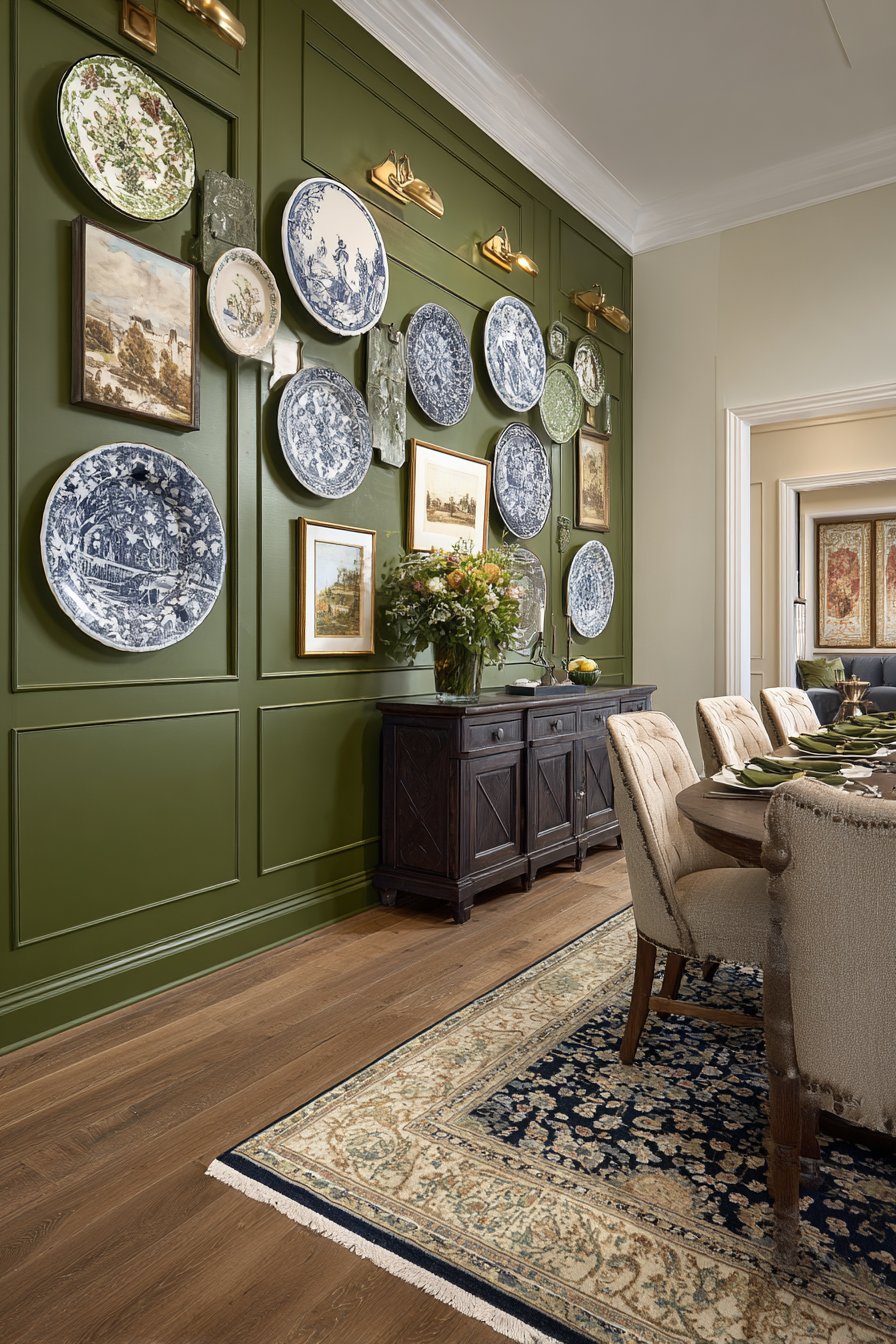
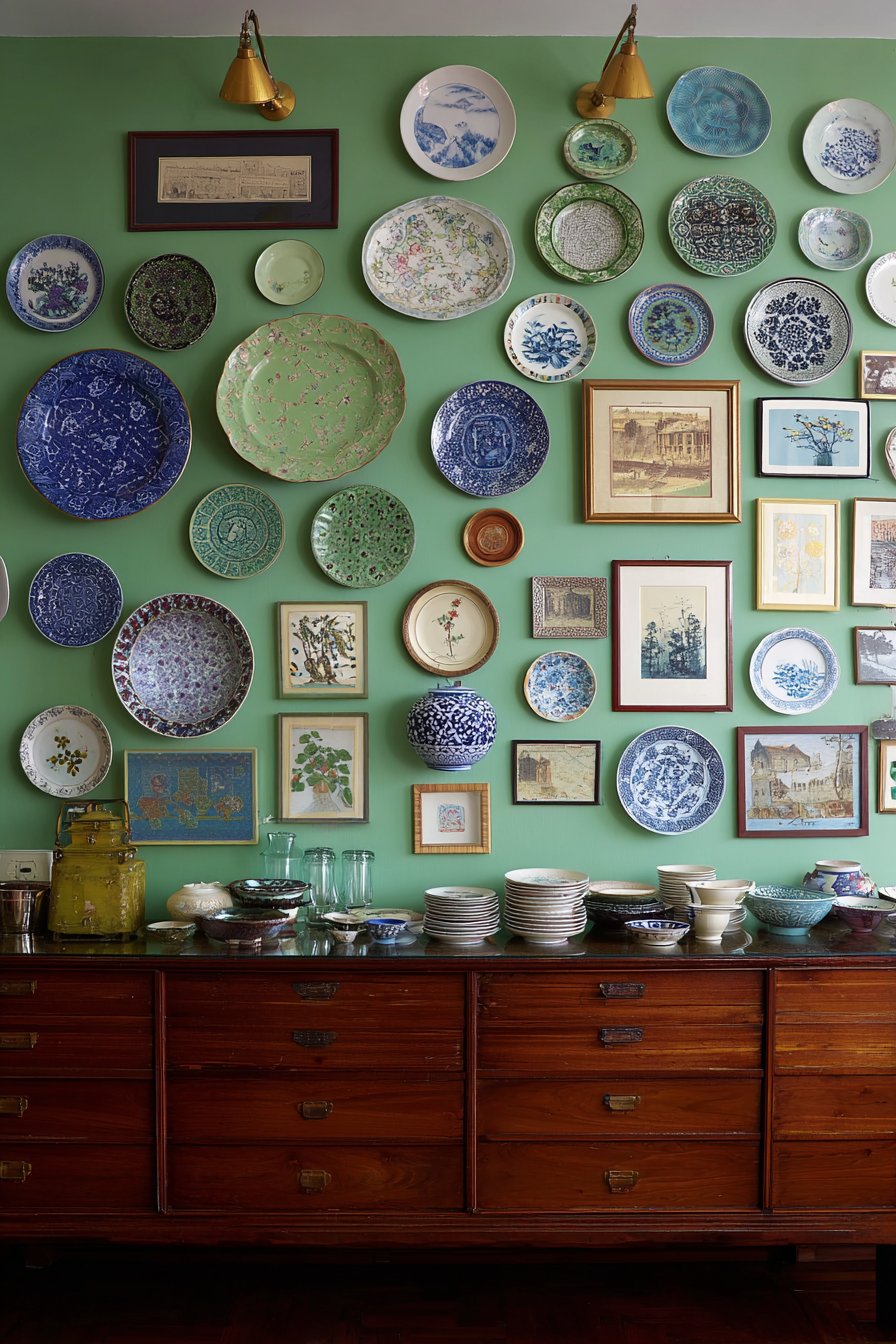
An eclectic dining area displays personality through curated vintage plates. Varying sizes and patterns create a salon-style wall arrangement. The sage green accent wall provides the perfect backdrop. Blue and white ceramic pieces mix with floral porcelain plates.
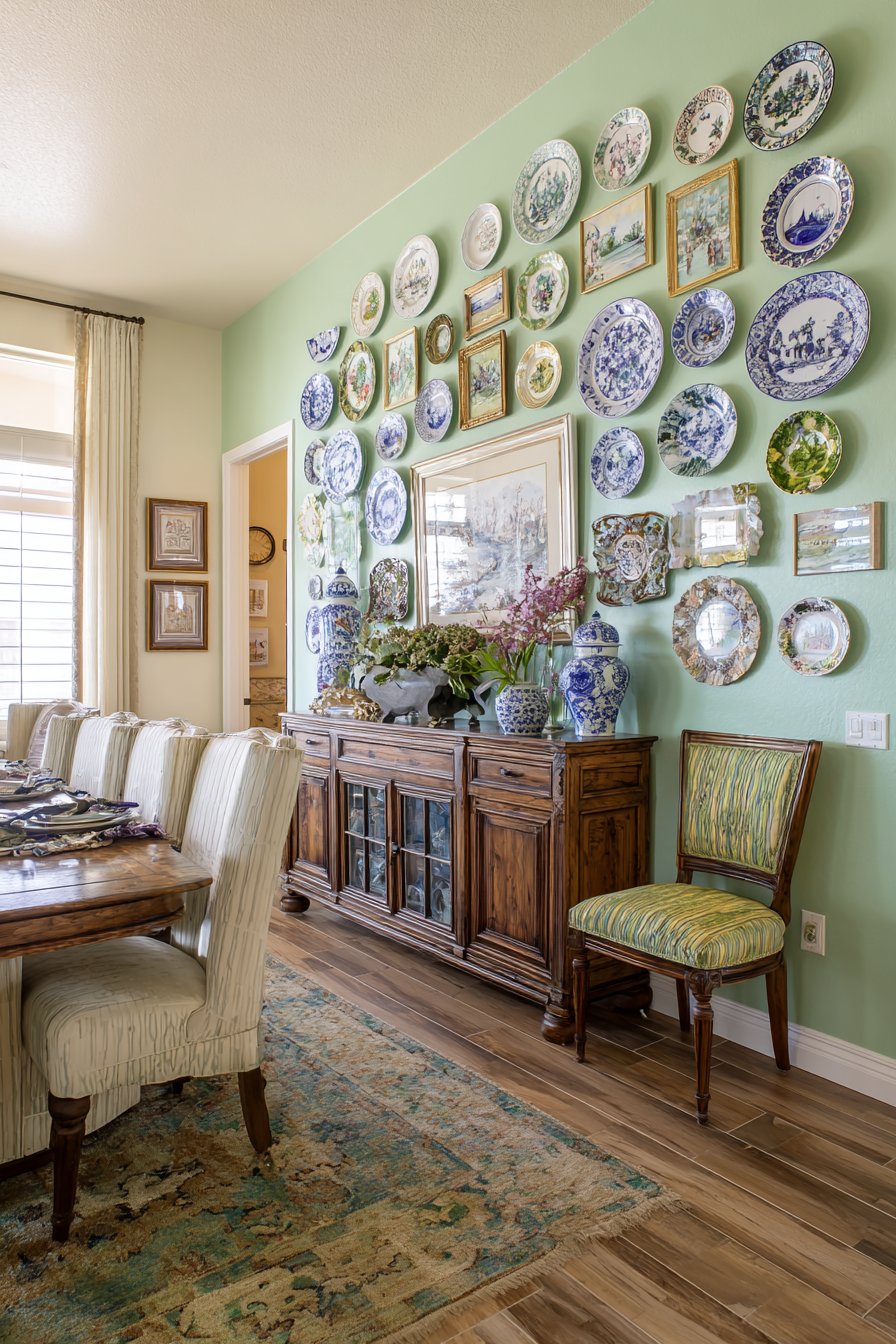
Decorative serving platters show visible crazing from authentic age. This weathering adds character that new pieces cannot replicate. The wall display extends from above the dining buffet upward. It creates vertical visual interest that draws the eye upward.
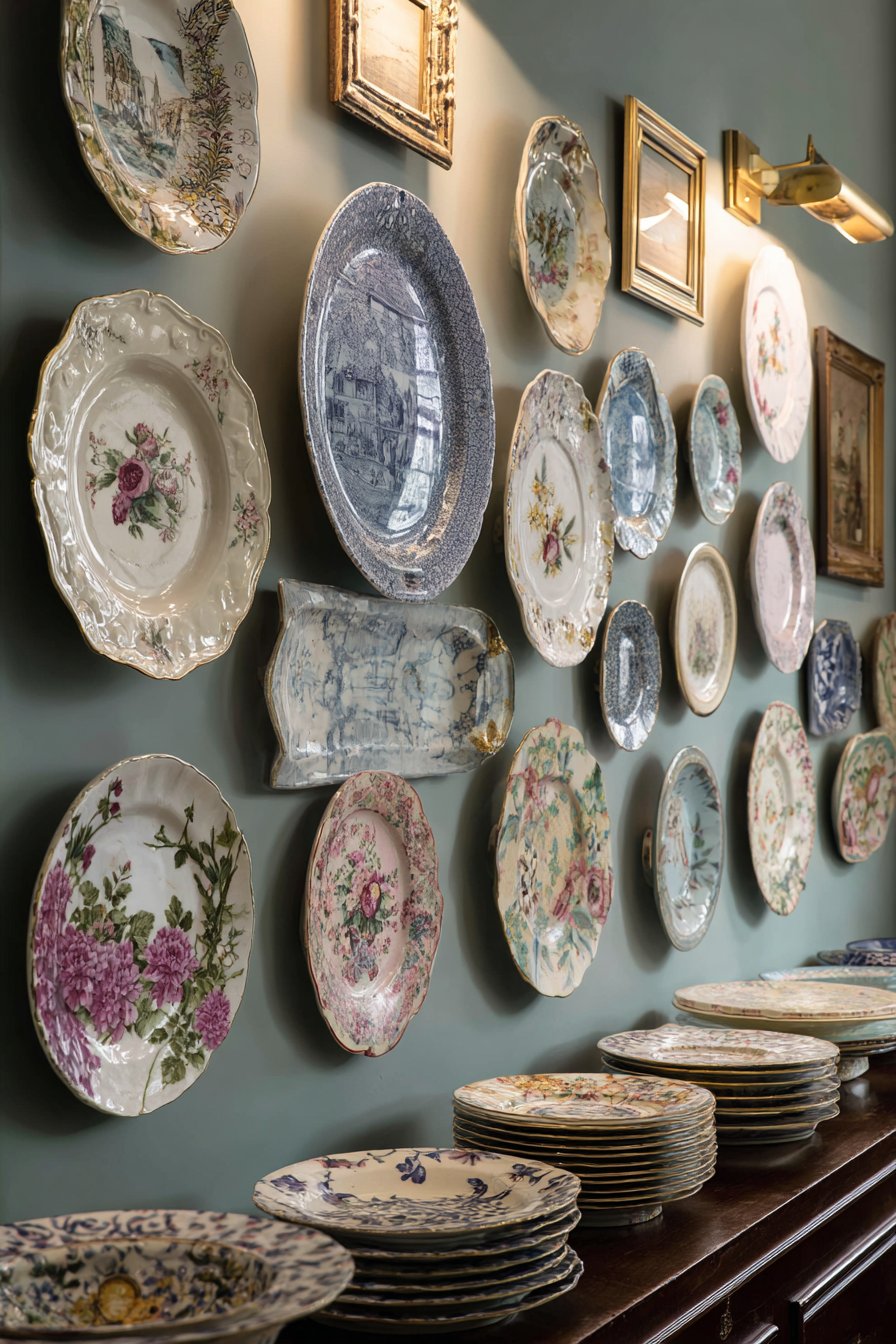
Brass picture lights illuminate select pieces from above. This strategic lighting highlights the most significant elements. The arrangement feels collected over time rather than purchased as a set. This organic quality makes the display feel personal and meaningful.
Wide-angle photography captures the full composition effectively. The balanced exposure shows the relationship between decor density and furniture. The sage green wall color complements the ceramic pieces beautifully. Together these elements create a dining space rich with history.
Key Design Tips:
- Mix plate sizes and patterns for eclectic visual interest
- Choose accent wall colors that complement vintage ceramic tones
- Install brass picture lights to highlight key pieces
- Arrange plates salon-style rather than in rigid patterns
- Embrace authentic age signs like crazing and patina
- Extend the display vertically to create height
5. Contemporary Metal Sculpture Statement
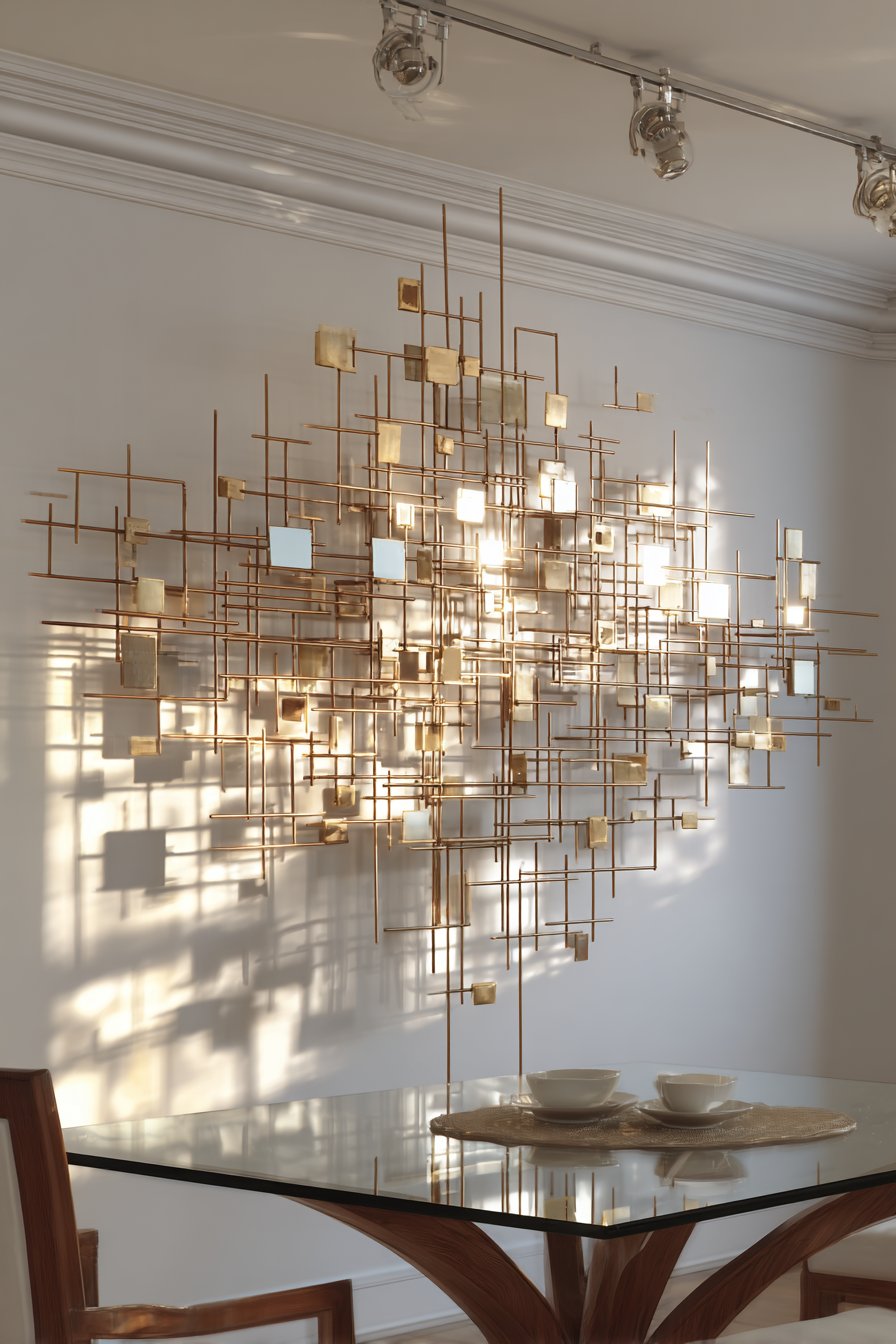
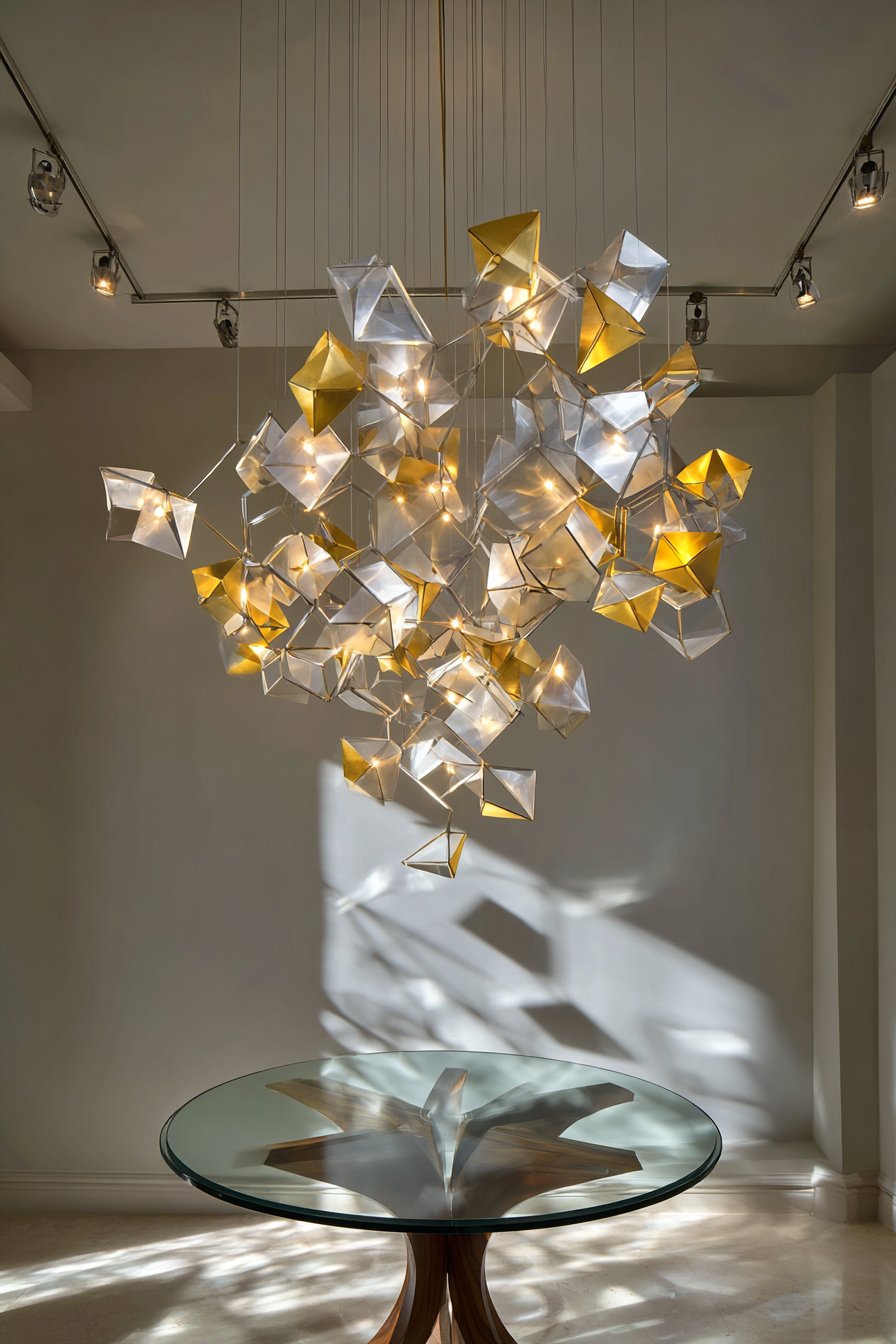
A contemporary dining room features bold sculptural wall art. An abstract geometric metal design commands attention as the primary element. Brushed bronze finish adds warmth to the modern composition. Three-dimensional elements cast interesting shadows throughout the day.
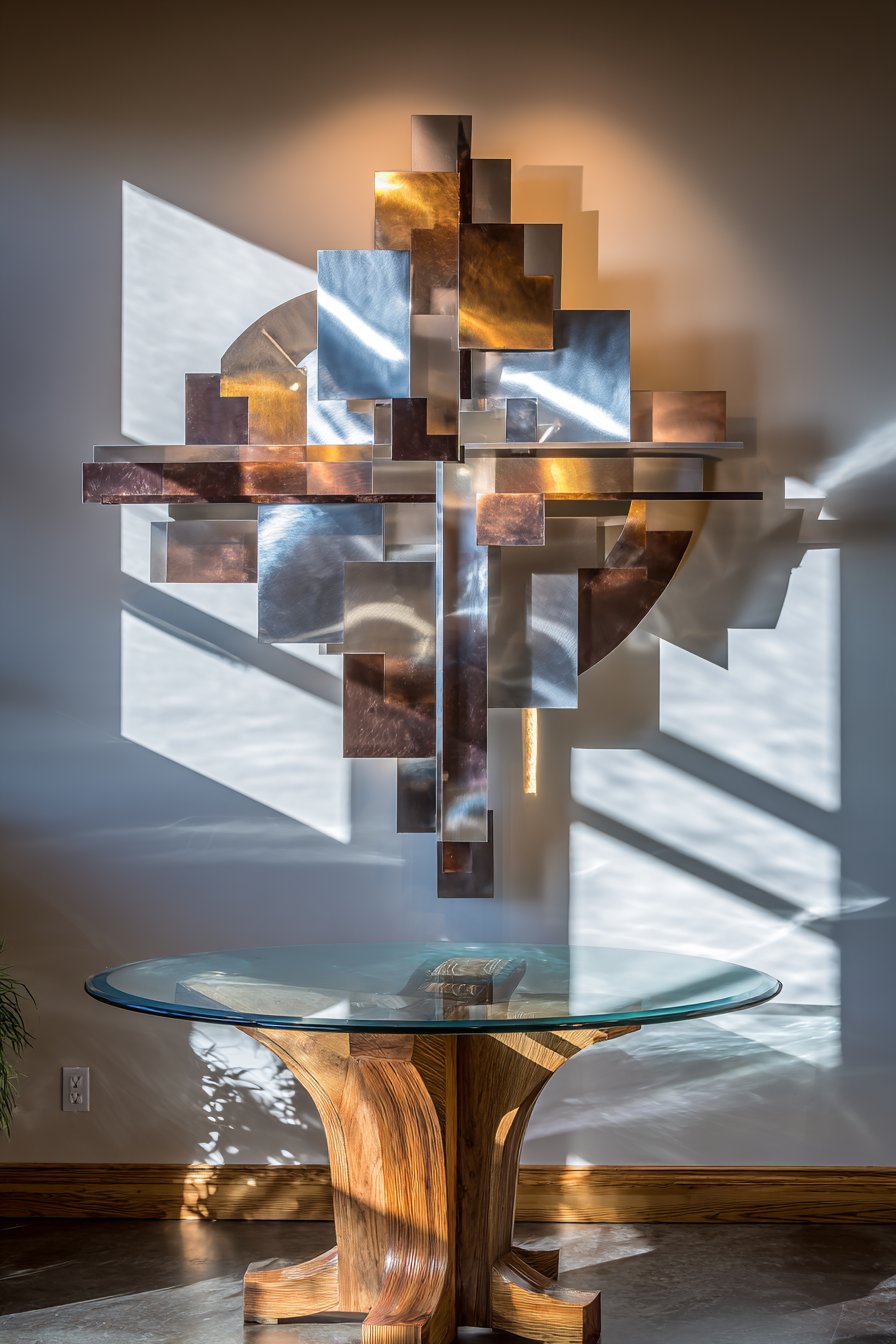
The sculpture spans four feet across above the glass-top table. The sculptural wooden table base echoes the artistic theme. Track lighting positions at precise angles to enhance dimension. The metal work’s shadows change as natural light shifts.
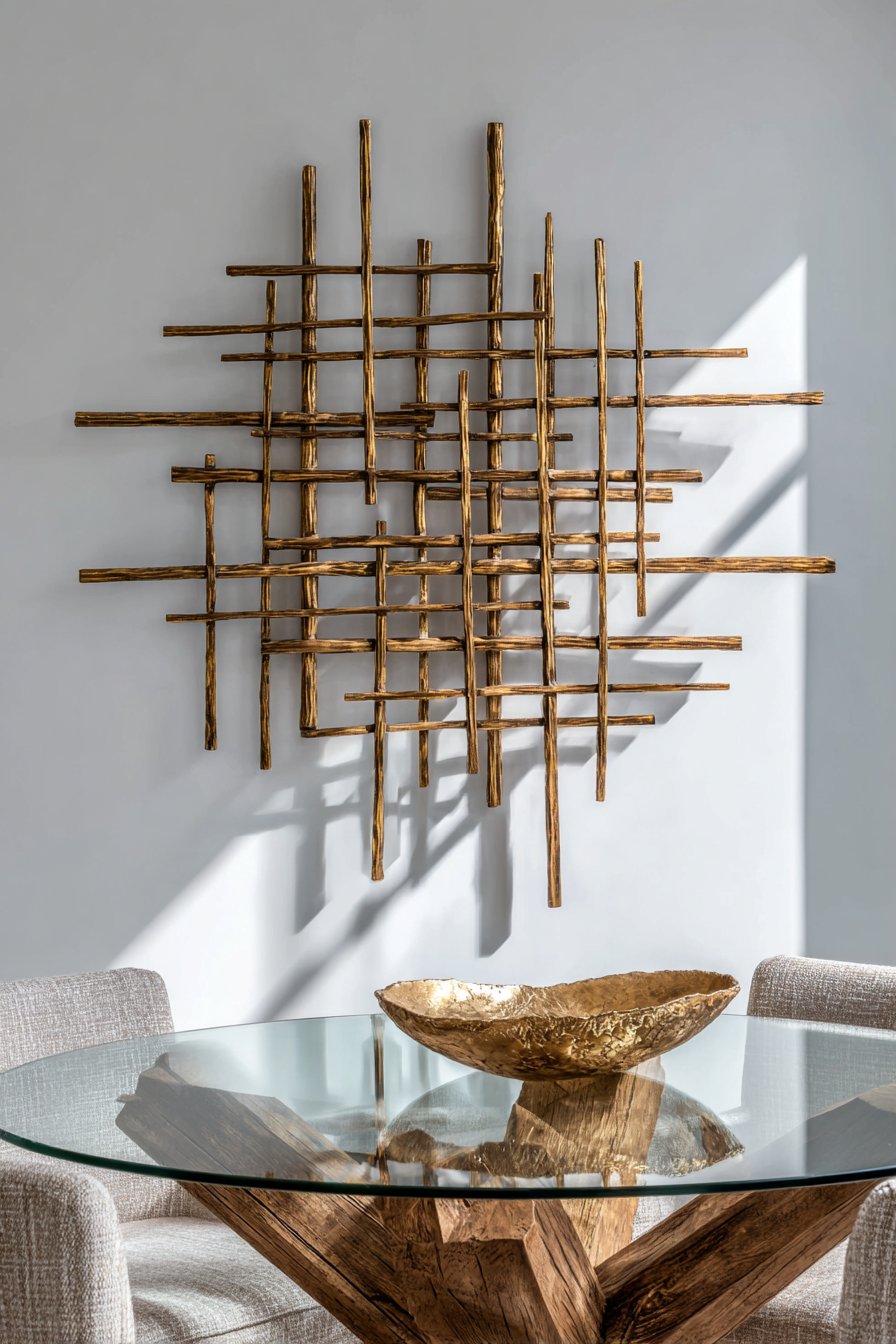
Surrounding walls remain intentionally neutral and minimal. This restraint allows the sculpture to dominate without competition. The glass table top reflects the metal work from below. This creates additional visual interest through reflection.
Professional photography emphasizes the metal’s finish quality. Detail focus reveals how natural light interacts with reflective surfaces. The shadow patterns create additional artwork on adjacent walls. This dimensional quality makes the sculpture come alive throughout the day.
Key Design Tips:
- Choose one bold sculptural piece rather than multiple small items
- Position track lighting at angles that enhance dimension
- Keep surrounding walls neutral to prevent visual competition
- Select metal finishes that complement your furniture tones
- Consider how shadows will create secondary artwork
- Place sculpture above furniture that echoes its artistic quality
6. Traditional Gilded Mirror Elegance
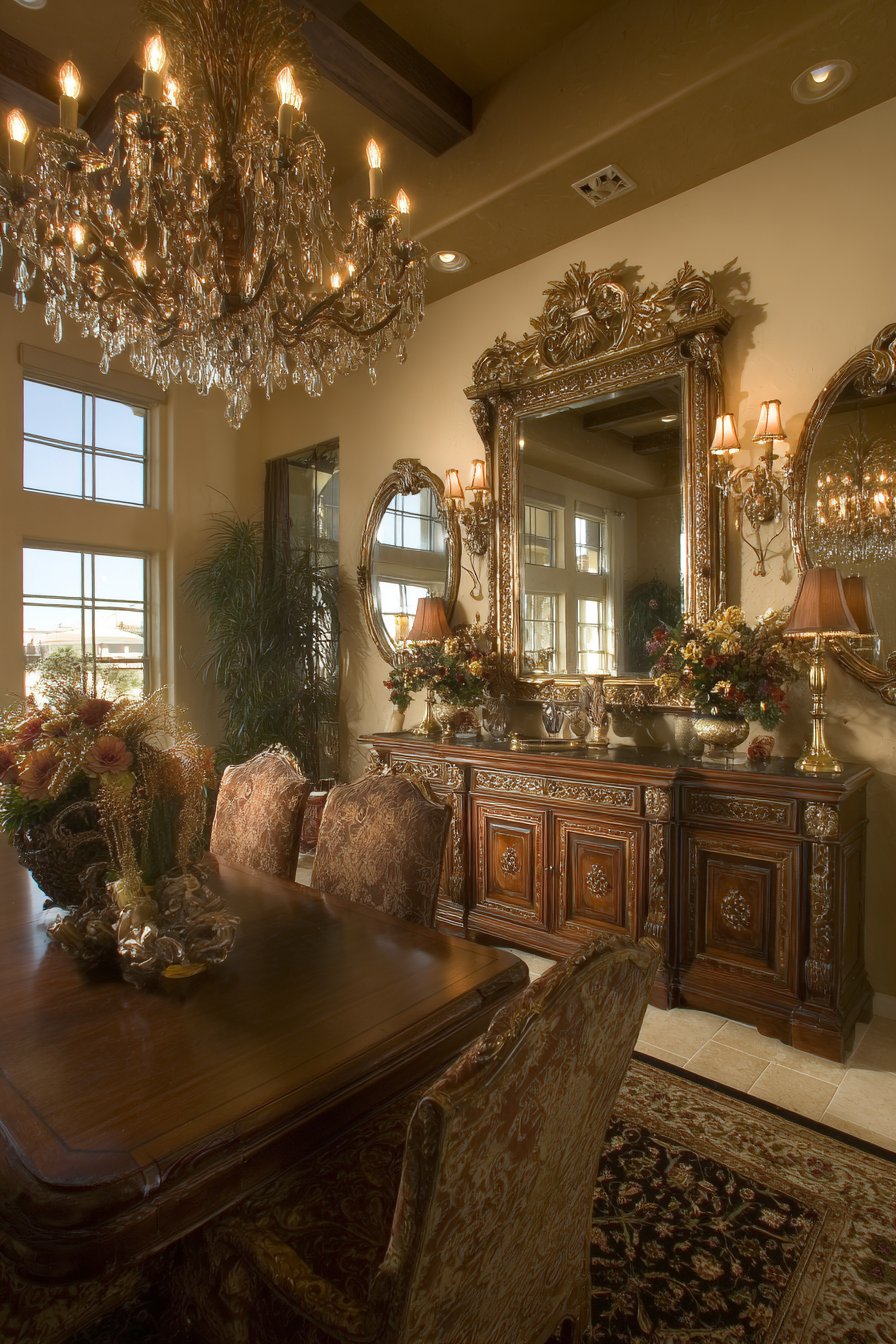
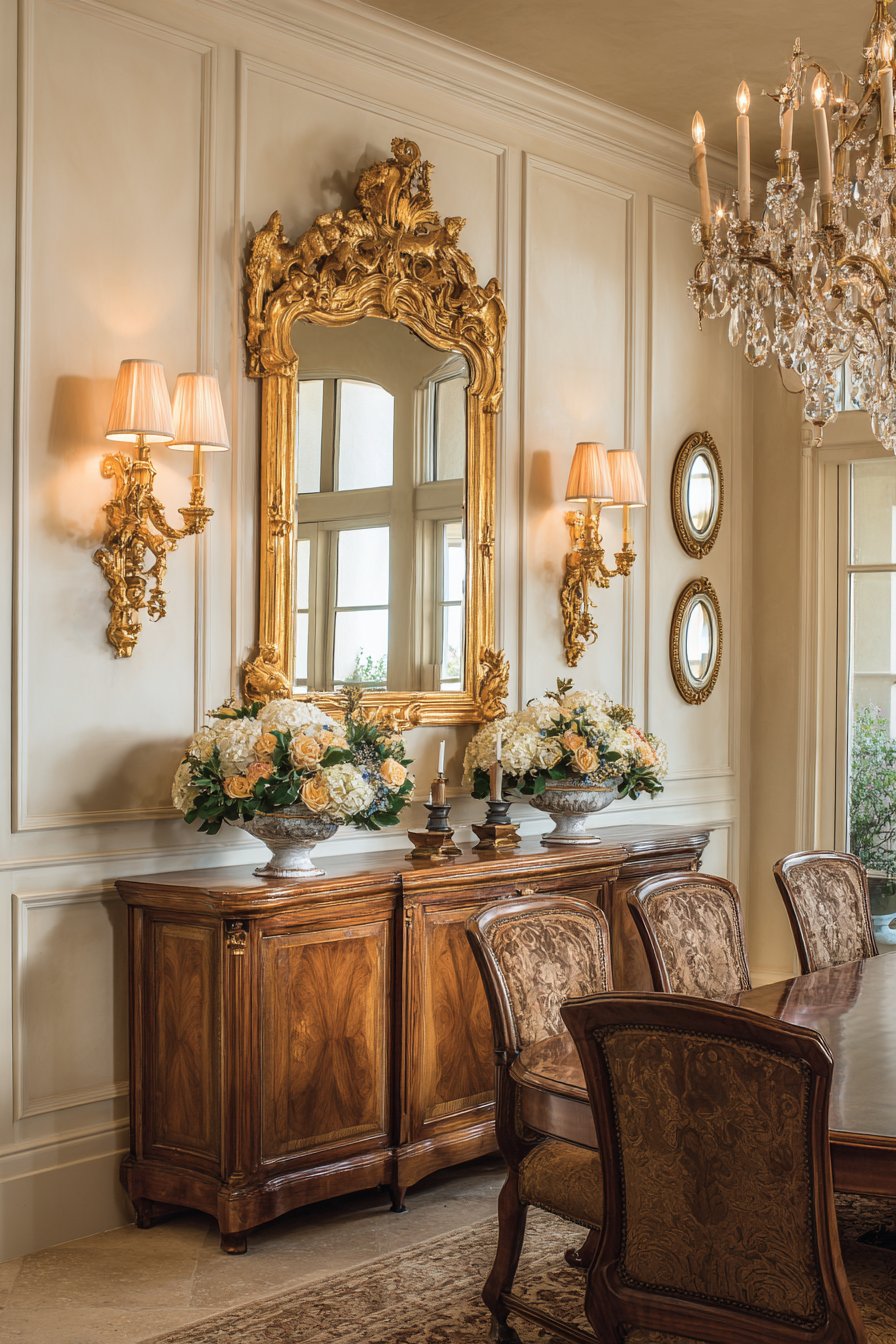
A traditional dining room showcases classic elegance through mirror placement. An ornate gilded mirror with baroque-style frame creates the centerpiece. The elaborate frame hangs above a rich mahogany sideboard. Flanking wall sconces with fabric shades provide symmetrical lighting.
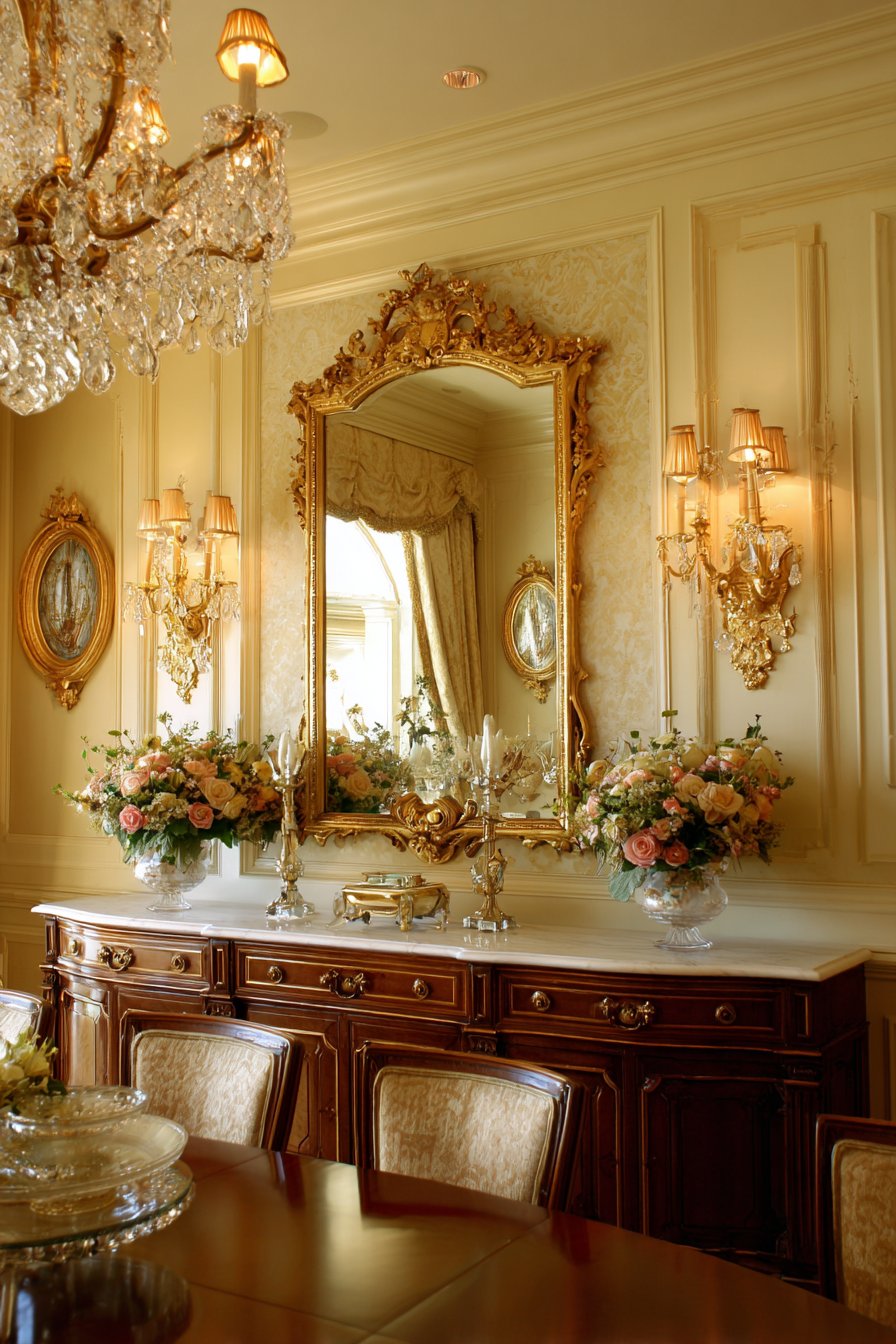
Two smaller oval mirrors in complementary gold frames create balance. The arrangement follows traditional design principles of symmetry and proportion. Fresh flower arrangements on the sideboard below tie elements together. The formal aesthetic creates an elegant dining environment.
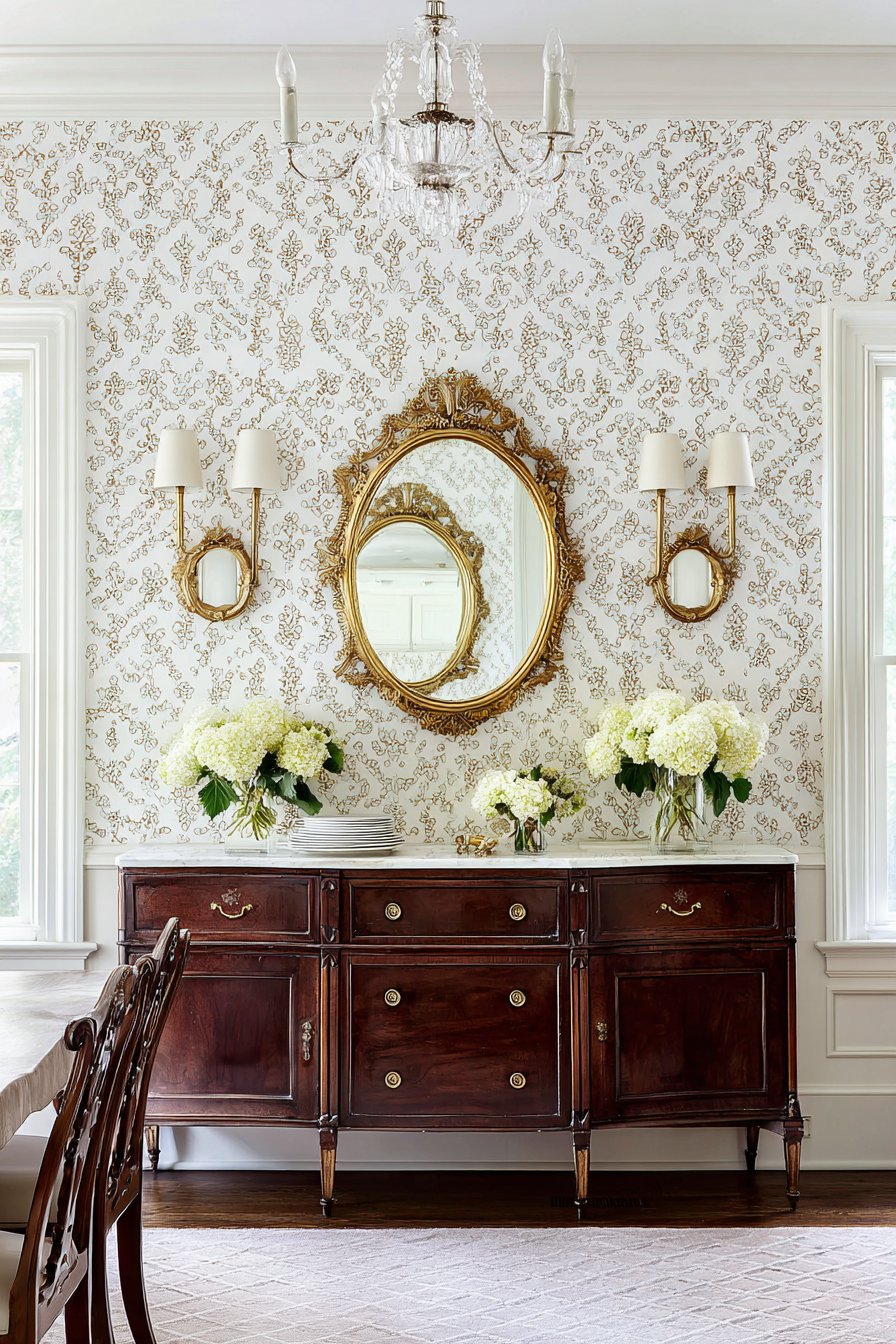
A crystal chandelier overhead reflects in the mirror’s surface. This reflection amplifies light and creates spatial illusion. The mirror makes the room feel larger and more luminous. Natural light from nearby windows multiplies through reflection.
Interior design photography captures the elegant symmetry perfectly. The mirror placement demonstrates how reflective surfaces expand space. The gold frames add warmth to the traditional color palette. Together these elements create timeless formal beauty.
Key Design Tips:
- Select ornate frames with authentic gilding for traditional spaces
- Use symmetrical arrangement of mirrors and sconces
- Position mirrors to reflect natural light sources
- Add fresh flowers below to soften formal arrangements
- Choose crystal lighting that reflects in mirror surfaces
- Maintain consistent metal finishes across all elements
7. Bohemian Layered Textile Wall Art
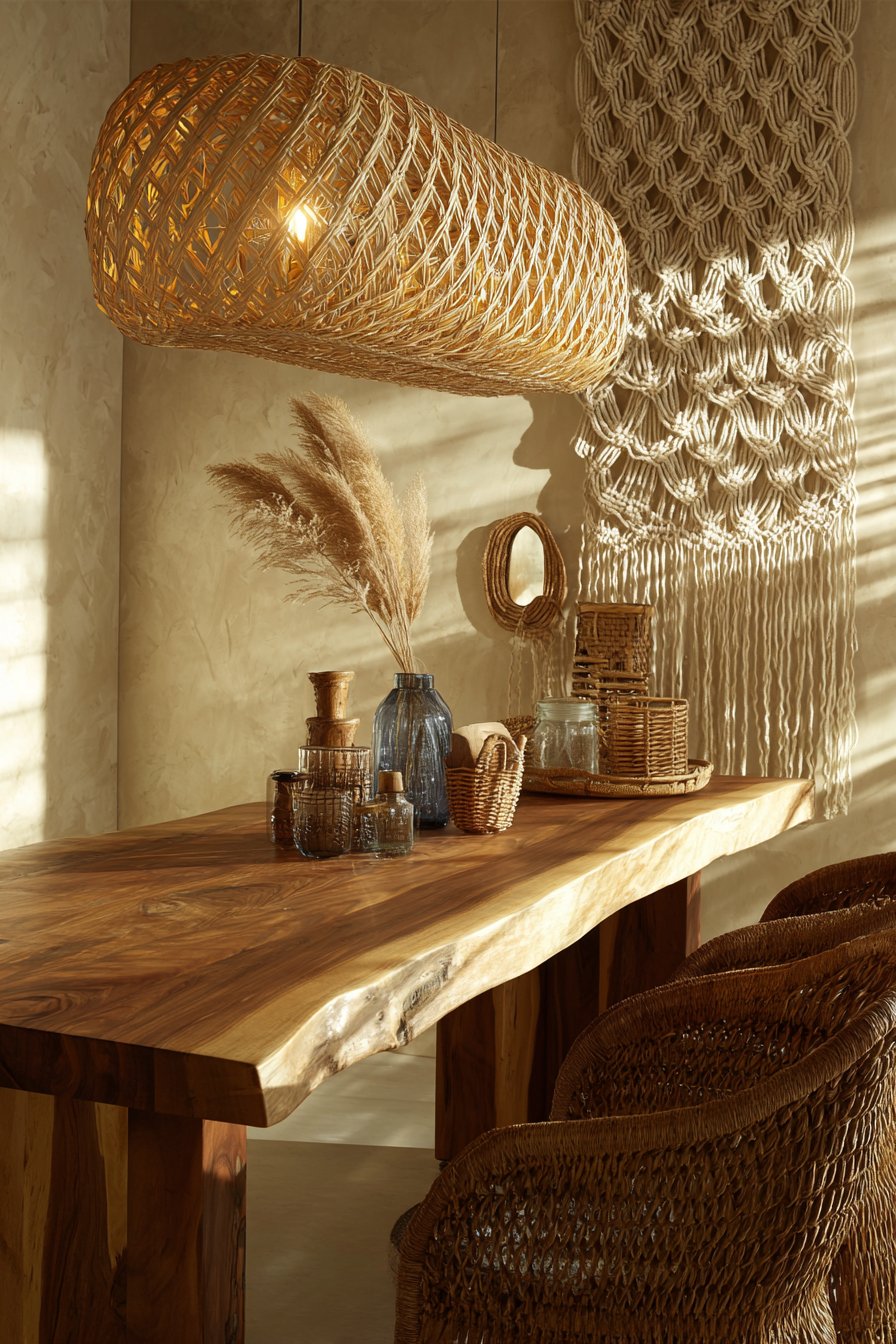
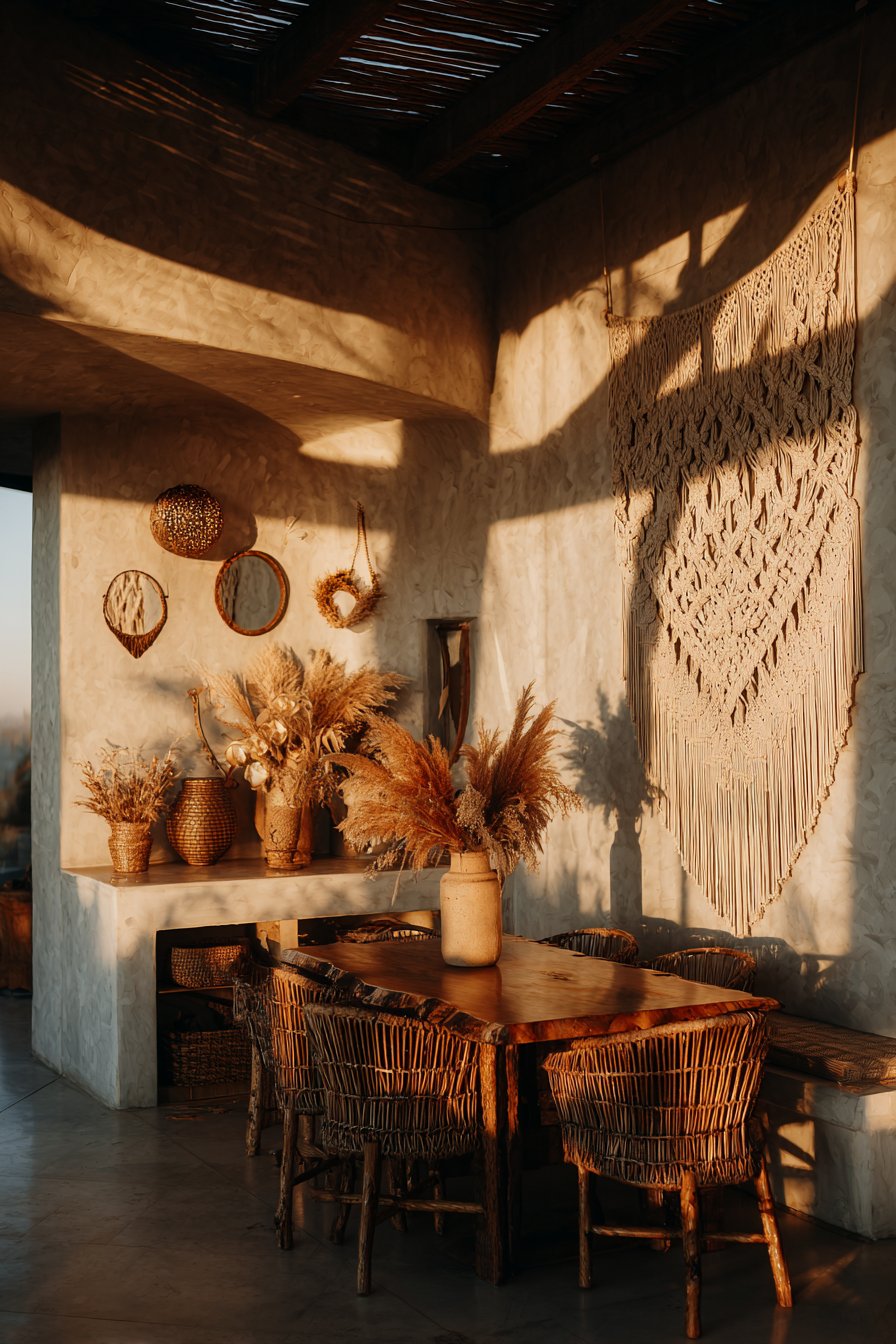
A bohemian dining space celebrates natural fibers through layered decor. Large macramé wall hanging features intricate knotwork as the dominant element. Smaller woven baskets add dimensional variety to the composition. Dried pampas grass arrangements bring organic movement and texture.
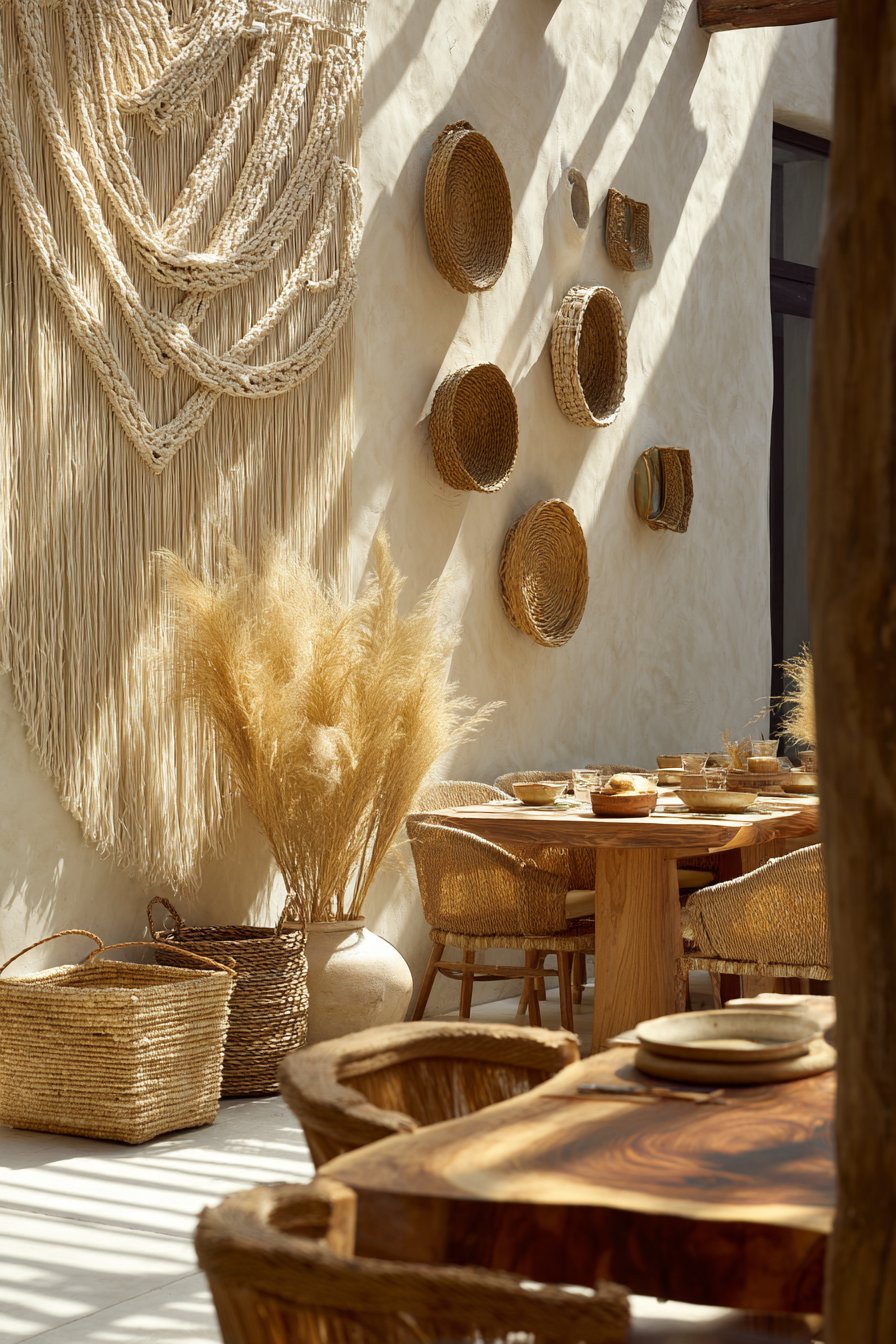
A collection of small mirrors with natural wood frames creates reflective accents. The eclectic arrangement covers a textured plaster wall in warm cream. Rattan dining chairs and live-edge wood table complement the natural theme. Every element contributes to the globally-inspired aesthetic.
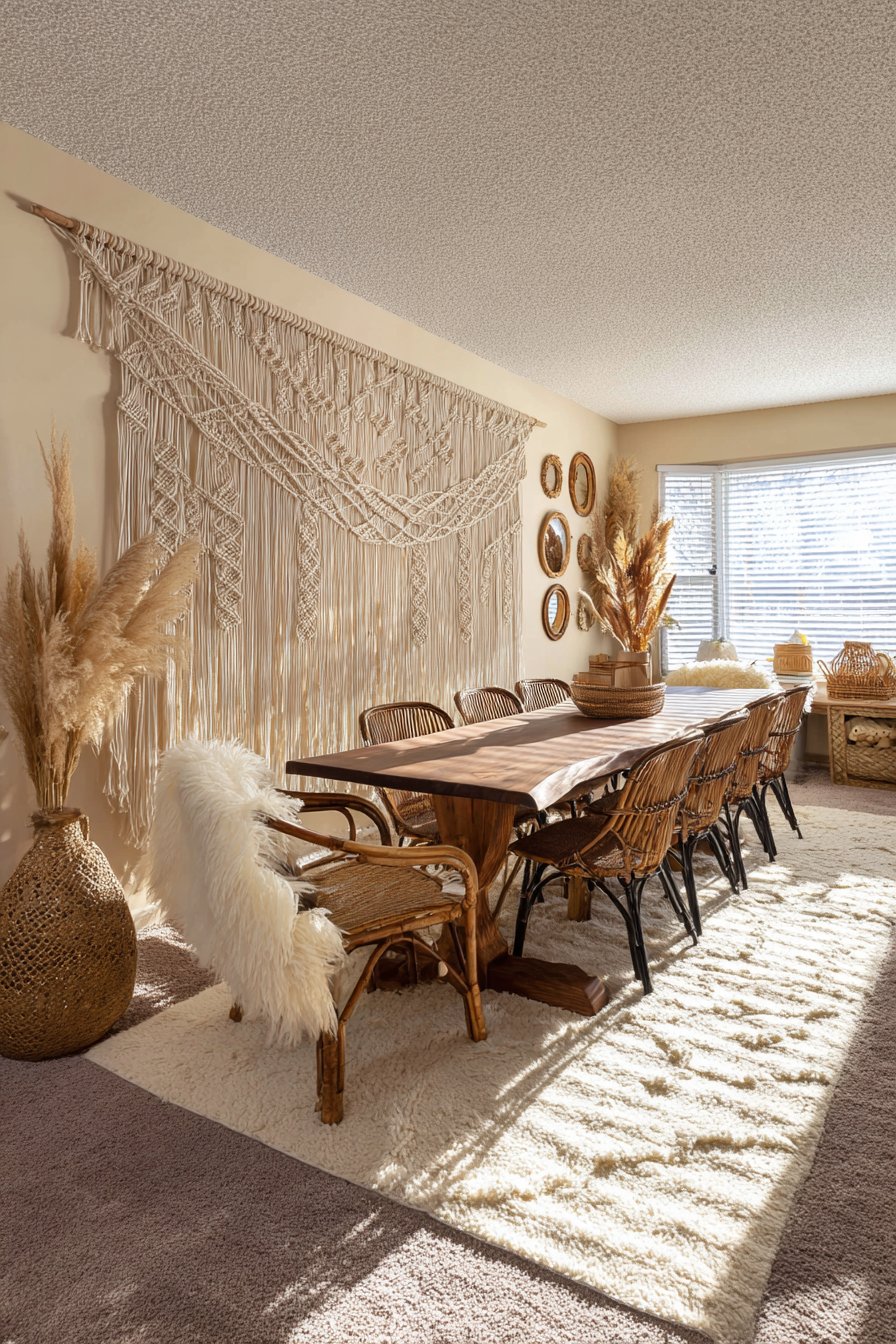
Golden hour sunlight creates dramatic shadows from dimensional macramé. The handcrafted texture becomes especially visible in angled light. Natural fiber work adds softness to hard wall surfaces. The organic materials create warmth and approachability.
Wide-angle photography shows how wall decor relates to furniture choices. The cohesive natural material palette unifies the space. Each piece appears collected from travels rather than purchased as a set. This authentic quality makes the bohemian style successful.
Key Design Tips:
- Layer different natural fiber textures for depth and interest
- Choose one large macramé piece as the focal point
- Add dimensional elements like woven baskets and dried grasses
- Use golden hour lighting to emphasize texture and shadow
- Select furniture in complementary natural materials
- Embrace eclectic arrangements that feel collected over time
8. Industrial Exposed Brick Minimalism
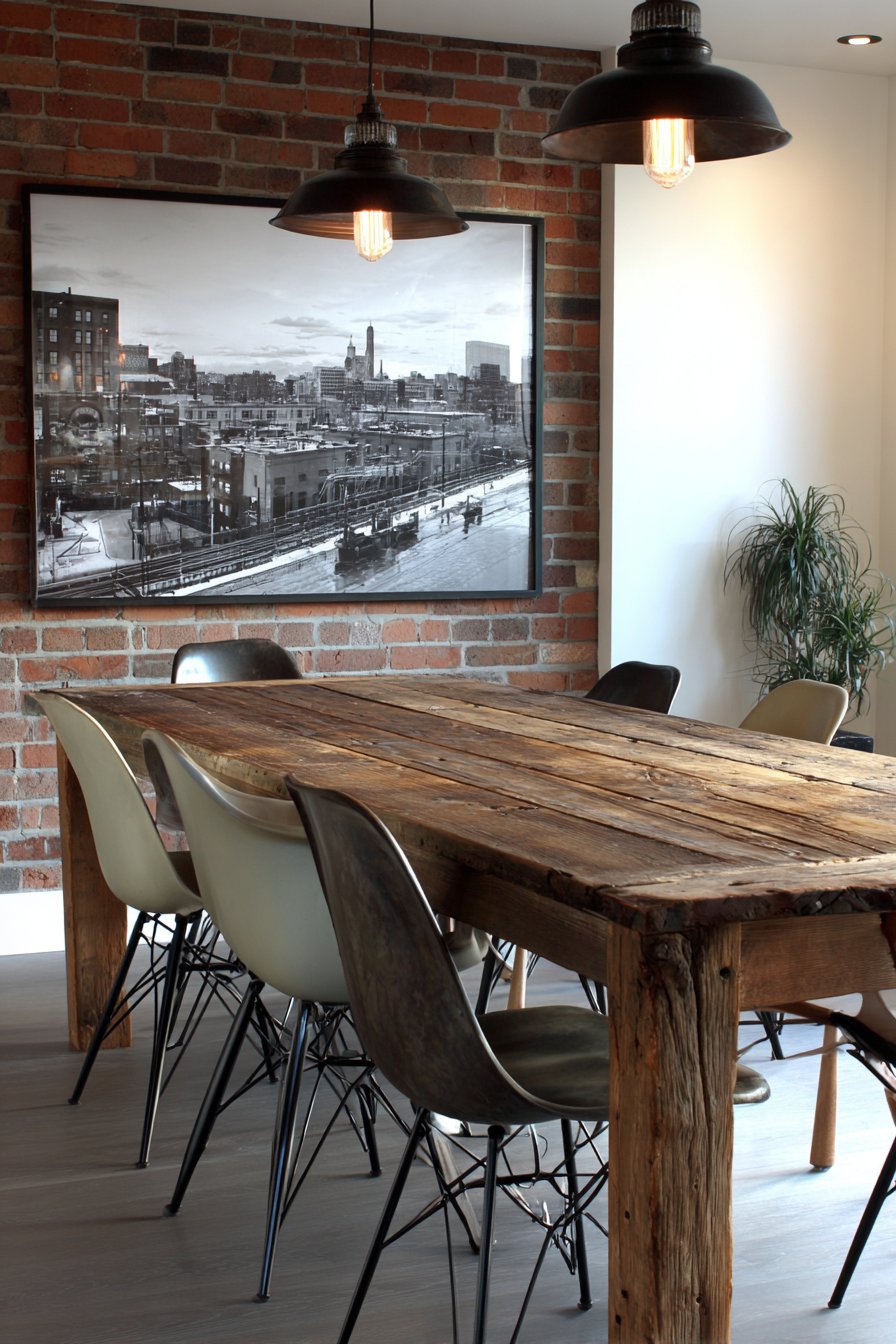
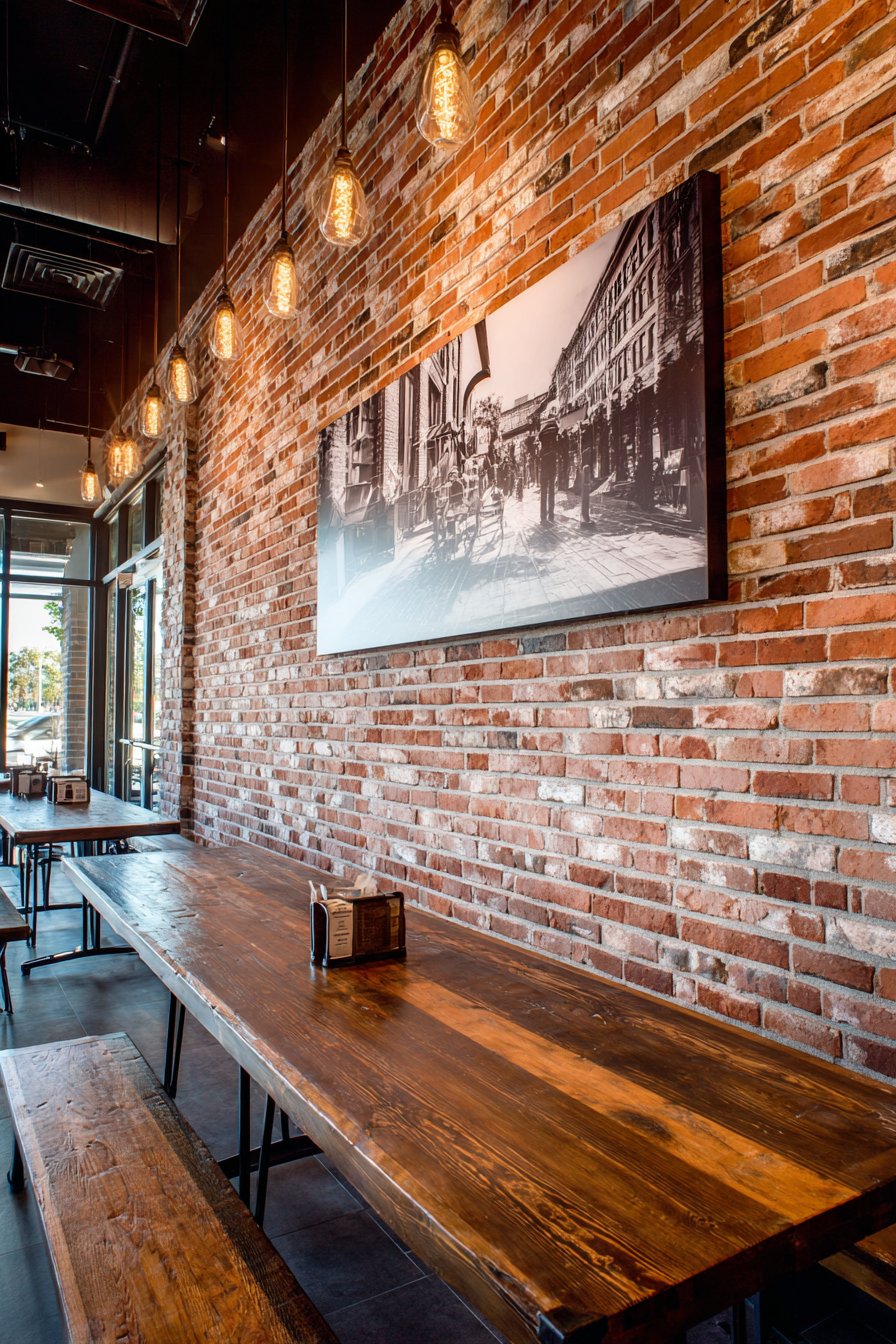
An industrial dining room features exposed brick as both backdrop and statement. The authentic brick texture provides inherent visual interest. A single oversized black and white photograph creates bold impact. The urban landscape image measures forty-eight by thirty-six inches.
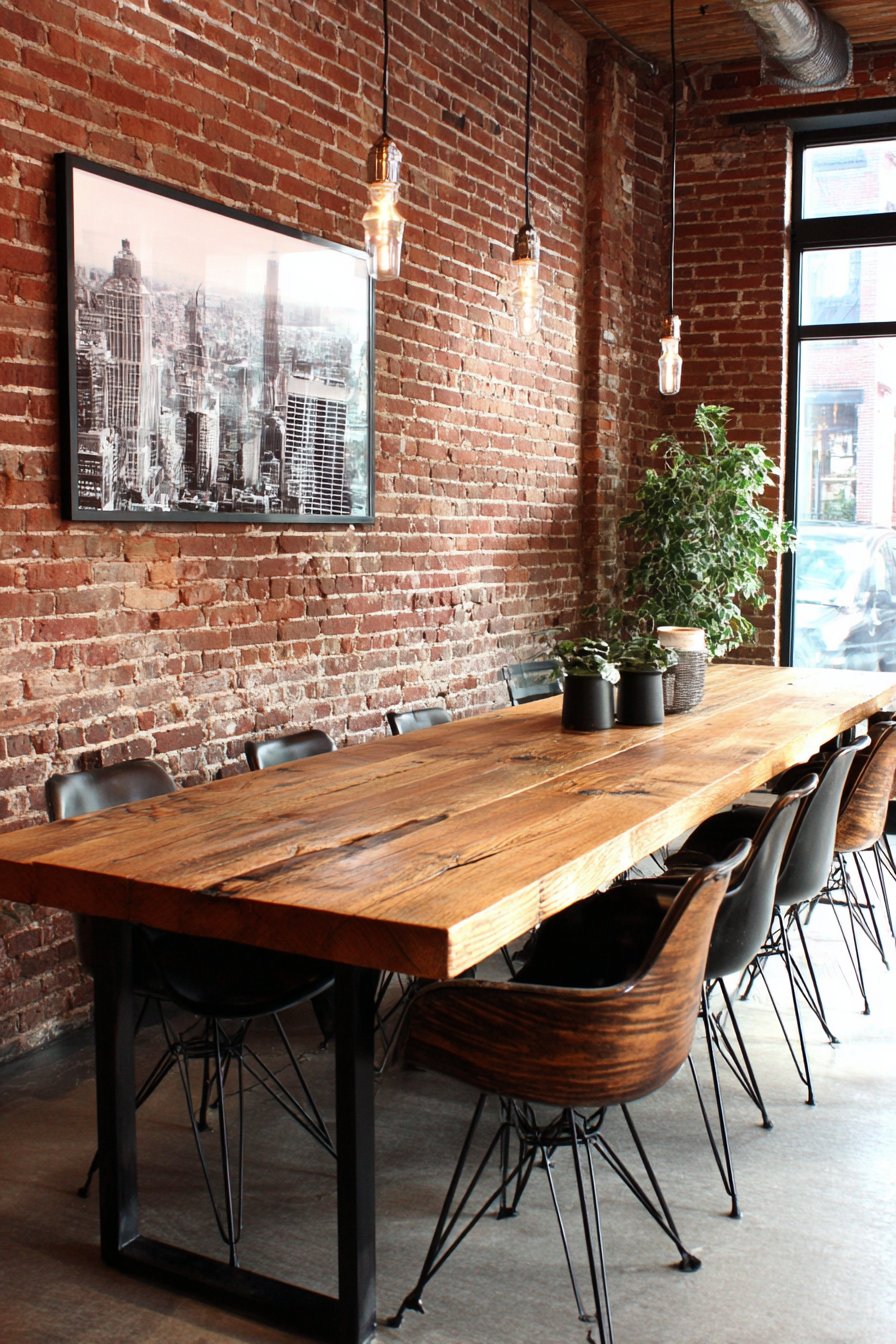
Simple metal framing doesn’t compete with the brick’s character. The photograph creates visual impact without overwhelming the space. Edison bulb pendant lights hang above reclaimed wood dining table. Metal hairpin legs add industrial authenticity to the furniture.
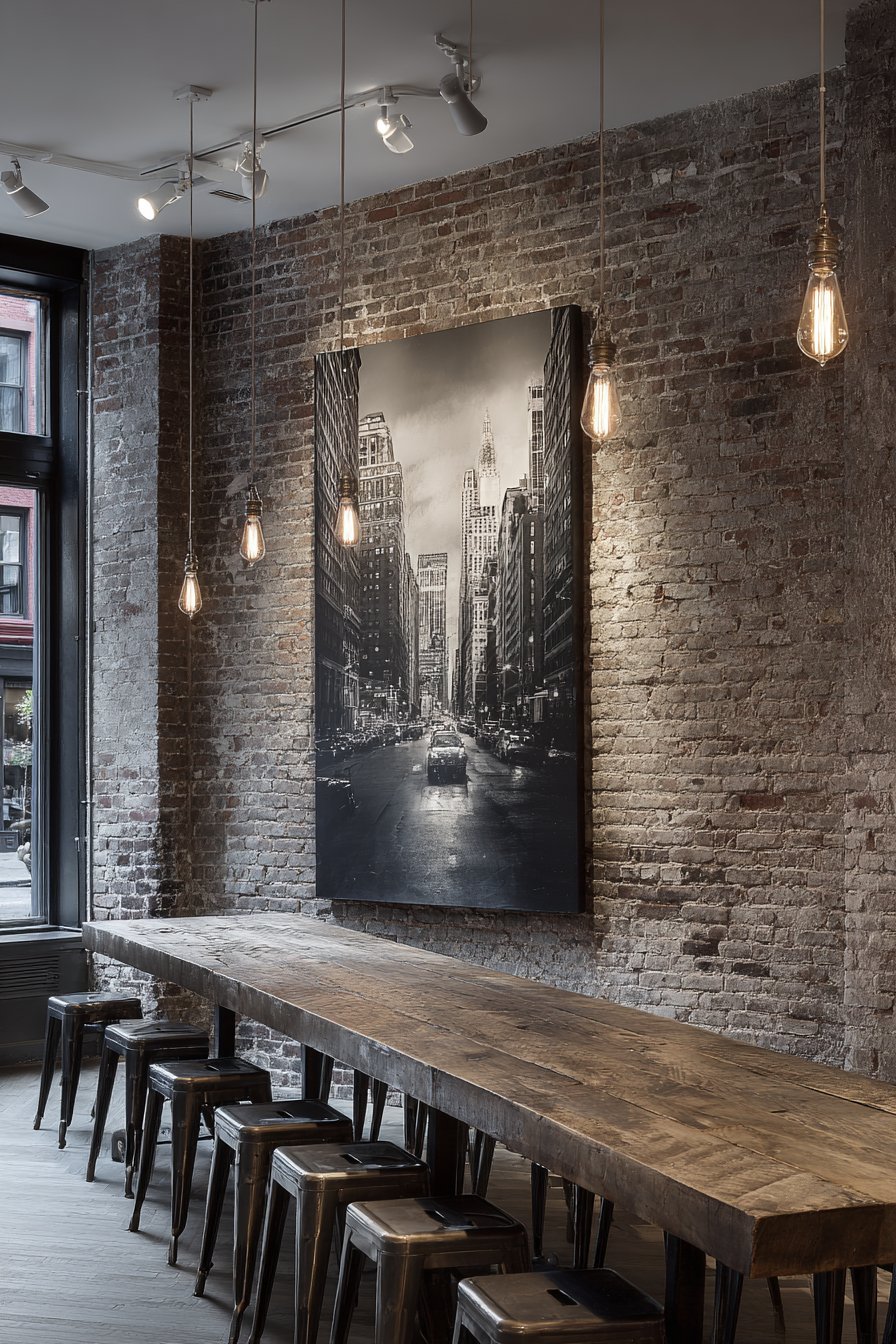
The composition demonstrates restraint in wall decoration philosophy. The brick’s authentic patina speaks volumes without additional adornment. The singular large-scale photograph defines the aesthetic clearly. Less becomes more in this carefully edited space.
Professional photography captures how track lighting highlights both elements. The brick texture remains visible and appreciated. Photographic detail stands out against the textured backdrop. The balance between architectural feature and artwork creates harmony.
Key Design Tips:
- Let exposed brick be a primary design element
- Choose one large-scale photograph rather than multiple small pieces
- Use simple metal frames that don’t compete with brick
- Add Edison bulbs for authentic industrial lighting
- Select furniture with metal elements that echo the industrial theme
- Practice restraint to let architectural features shine
9. Coastal Nautical Map Gallery
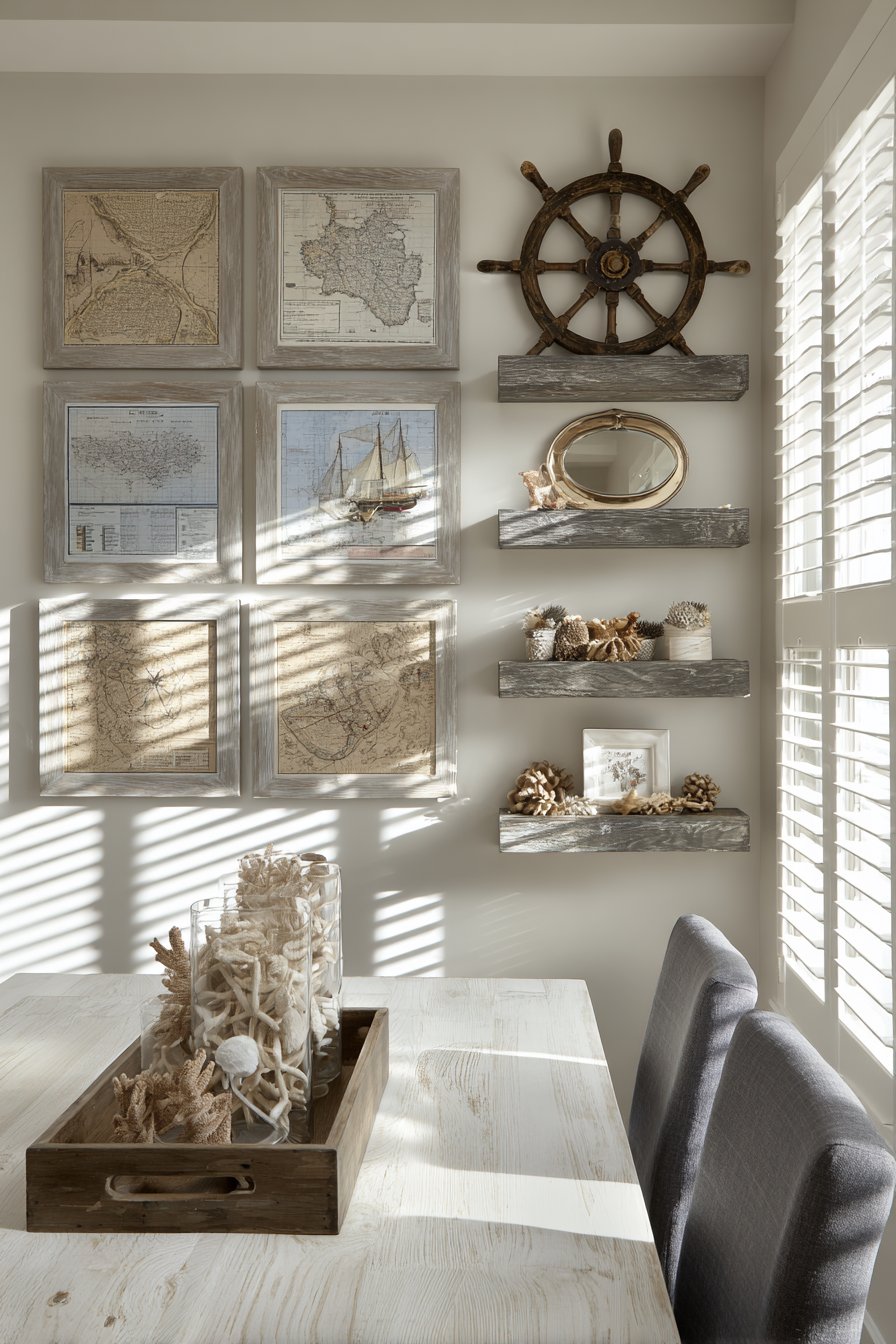
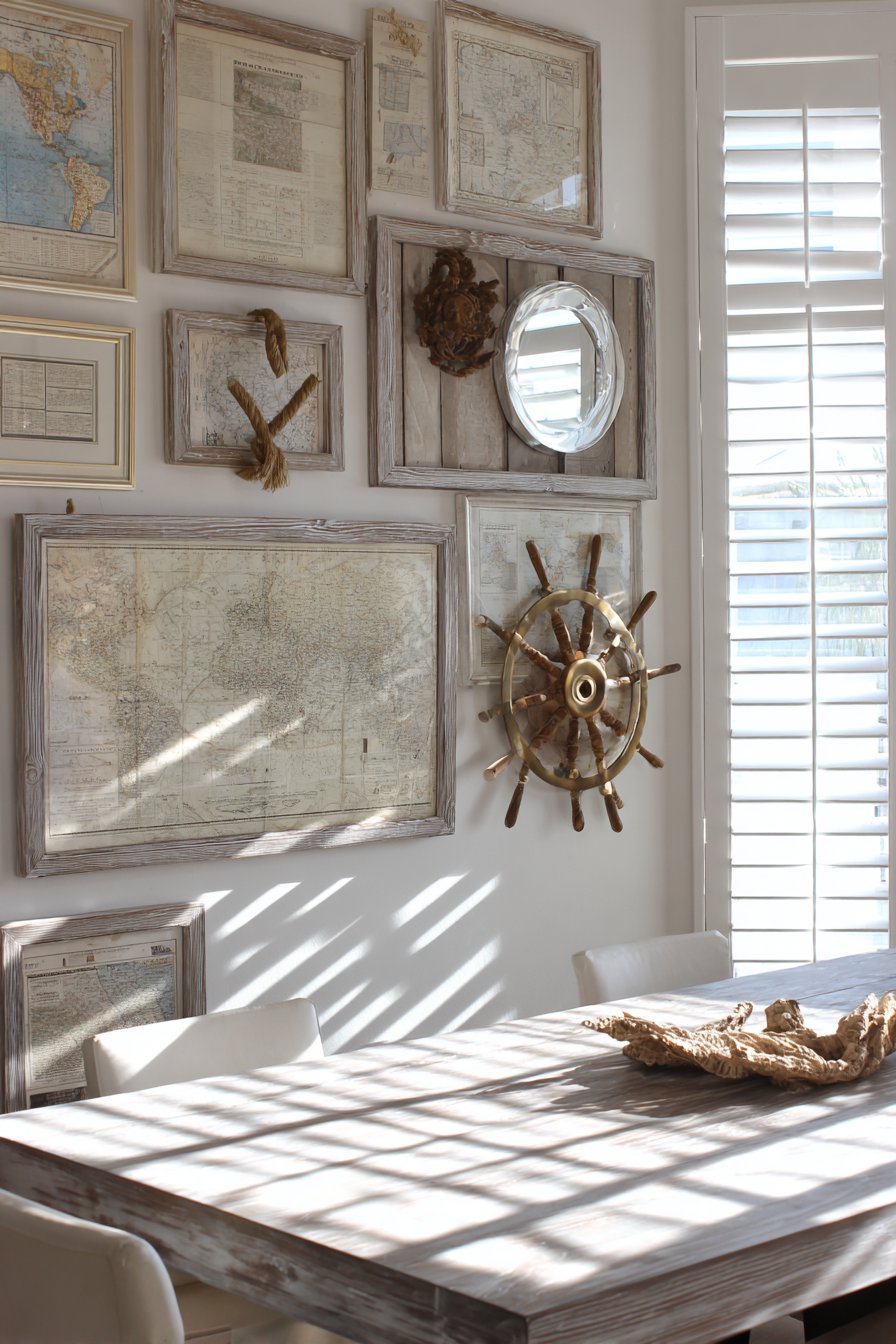
A coastal dining area incorporates maritime history through vintage maps. Framed nautical charts arrange in a loose grid pattern. The weathered wood frames come in grey and white coastal tones. Simple framing allows the map details to remain the focus.
A ship’s wheel and brass porthole mirror add dimensional interest. These three-dimensional elements balance the flat wall art beautifully. Rope accents and driftwood pieces on floating shelves complete the theme. Every element references seaside living authentically.
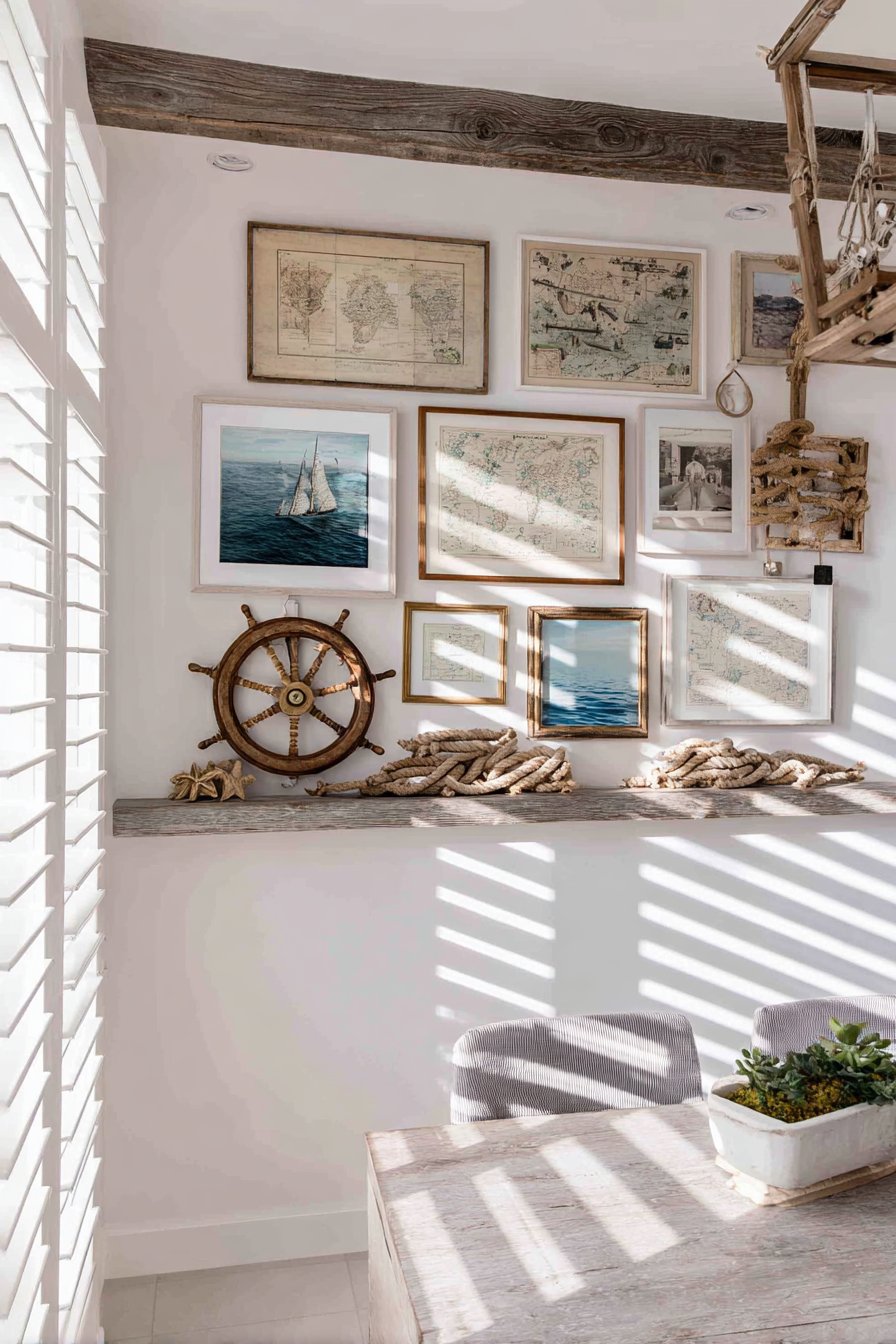
Natural light filters through white plantation shutters elegantly. Striped shadow patterns create movement across the wall surface. The whitewashed wood dining table anchors the coastal aesthetic. All elements work together to evoke oceanside tranquility.
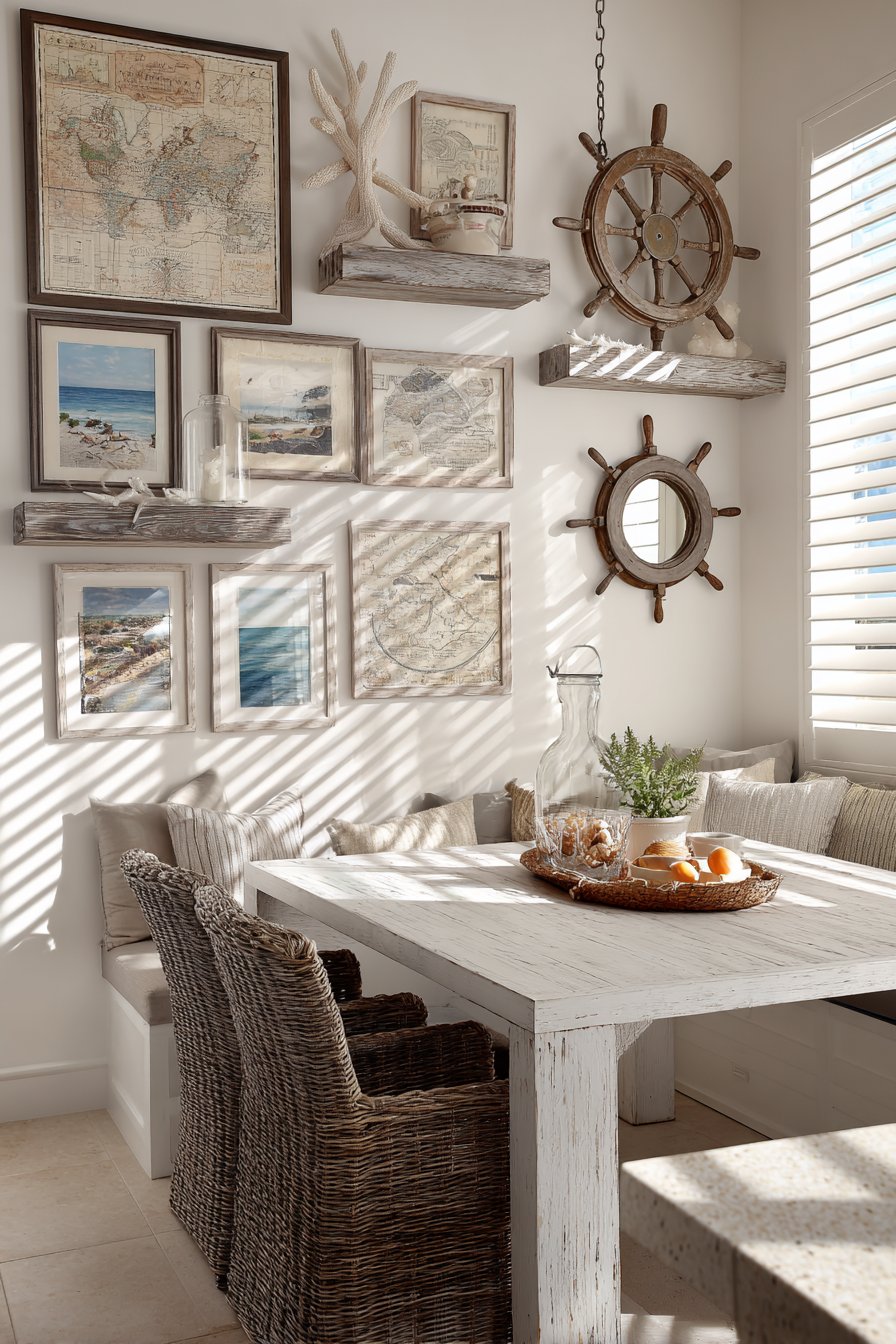
Interior design photography captures the cohesive coastal palette perfectly. The balanced arrangement of flat and dimensional elements creates visual interest. Maritime references feel authentic rather than themed. The space transports diners to a seaside setting.
Key Design Tips:
- Source authentic vintage nautical maps and charts
- Frame maps in weathered wood that references coastal weathering
- Add dimensional nautical elements like ship’s wheels or portholes
- Use rope and driftwood for organic coastal texture
- Install plantation shutters to create light patterns
- Maintain a cohesive color palette of blues, whites, and natural wood
10. Mid-Century Modern Atomic Era Design
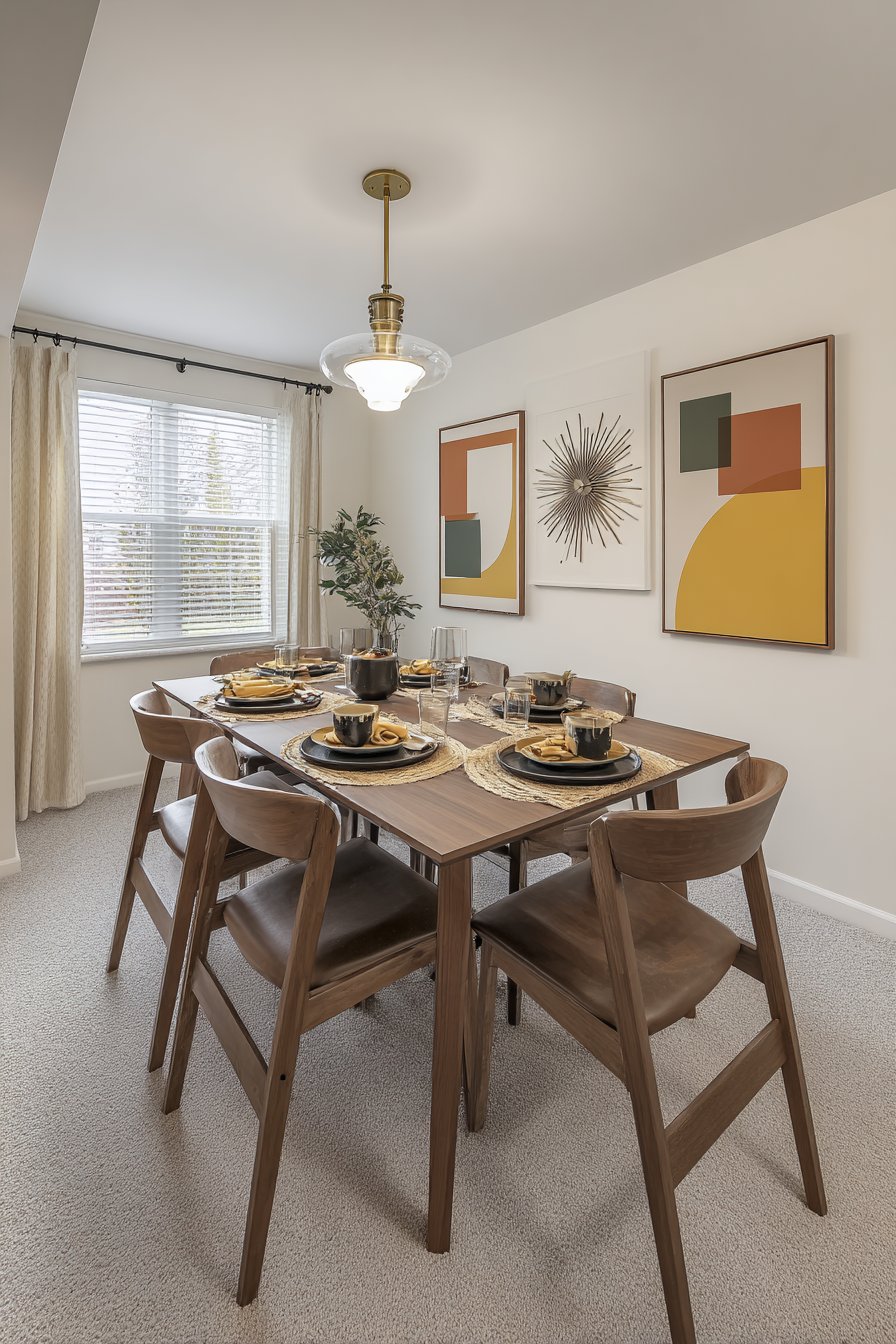
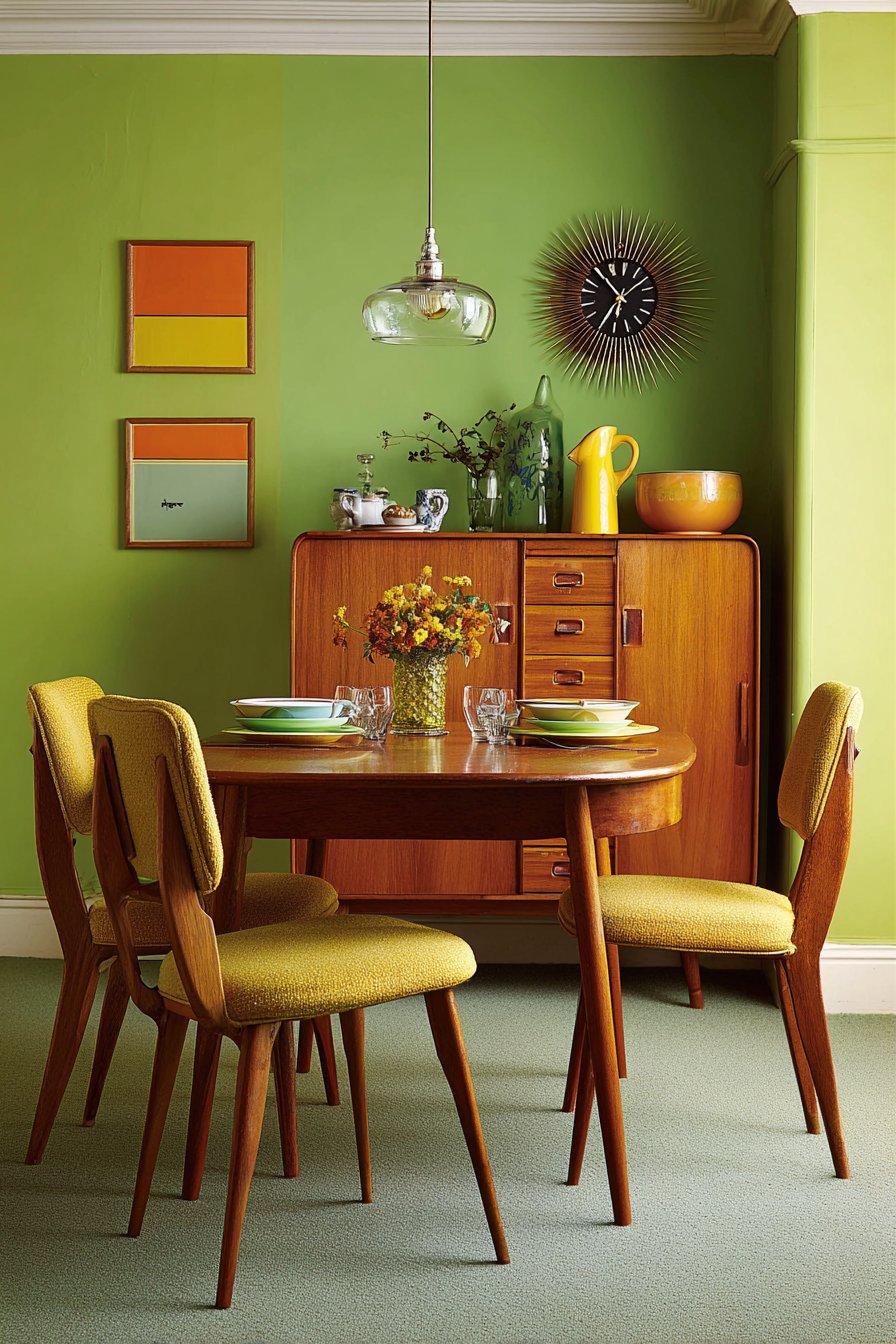
A mid-century modern dining room showcases period-appropriate wall decor perfectly. An atomic-era sunburst clock serves as the central focal element. Geometric abstract prints flank the clock in characteristic colors. Avocado green, burnt orange, and mustard yellow define the palette.
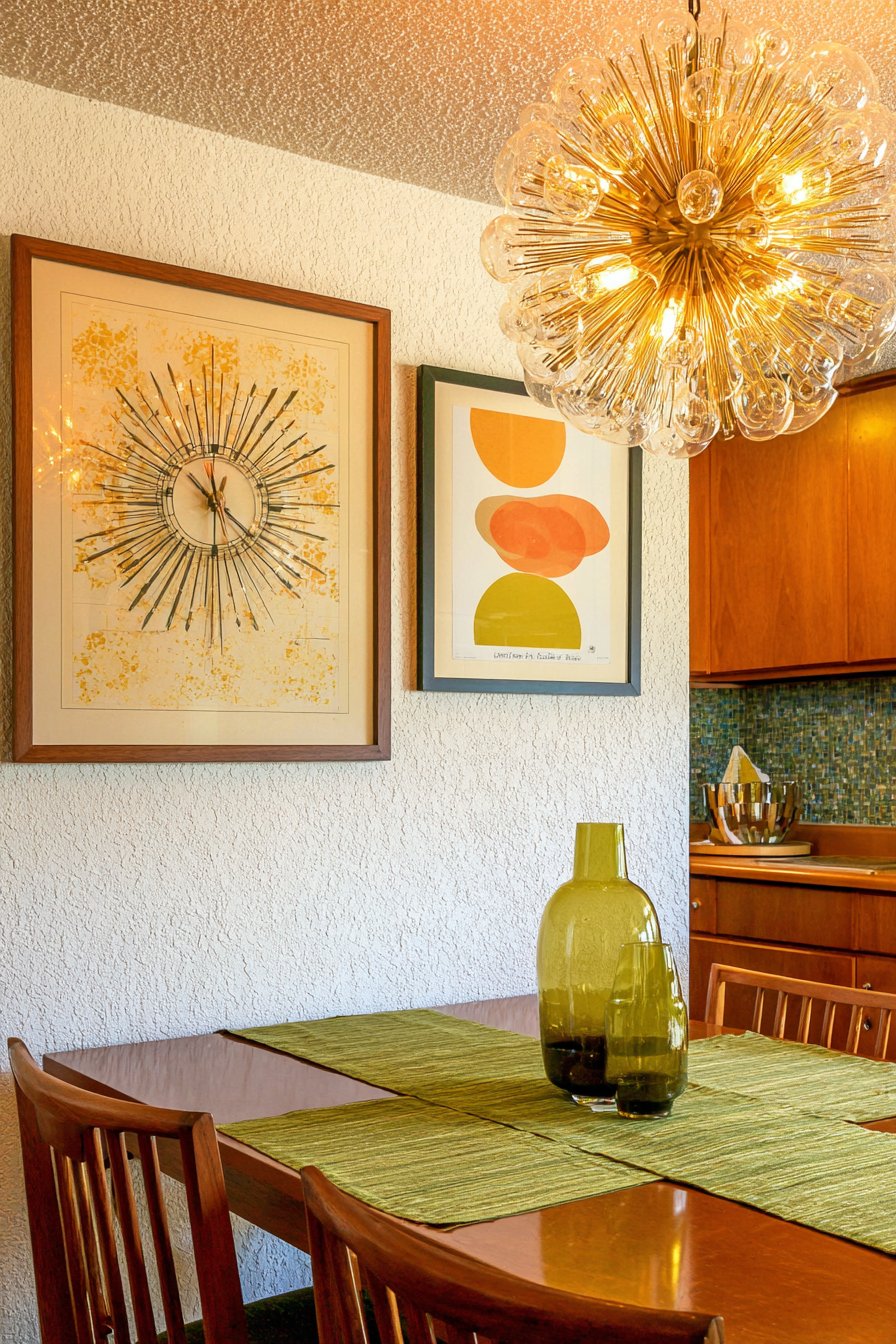
The artwork features simple shapes and bold colors from 1960s design. Teak dining furniture and tapered leg chairs complete the authentic look. A brass and glass pendant light hangs at precisely the right height. Every element references the era with accuracy.
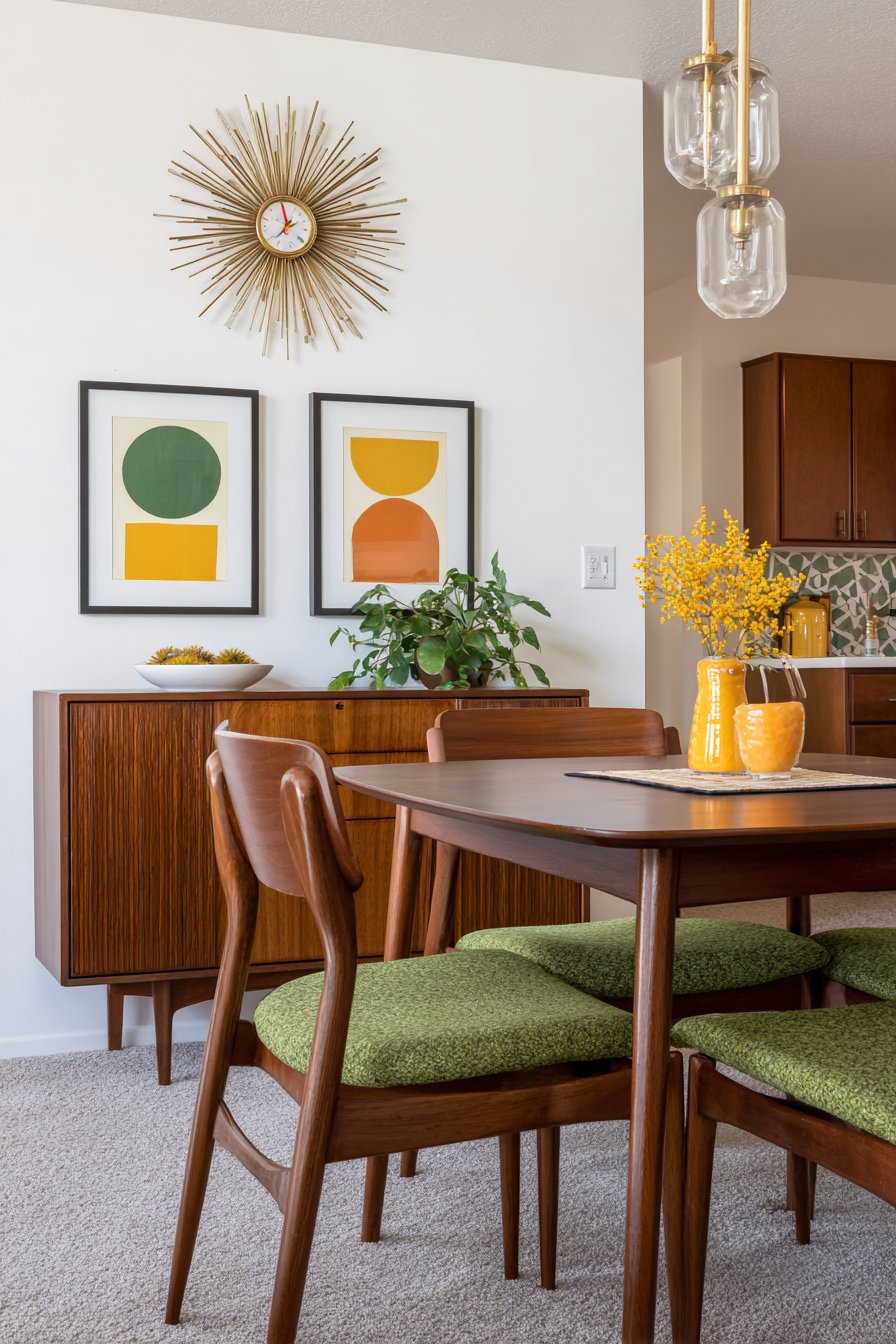
Professional photography emphasizes the clean lines throughout the space. The retro color scheme creates instant period recognition. Wall decor reinforces the era-specific design philosophy. The cohesive approach transports visitors to another decade.
The geometric patterns and bold colors create visual energy. The atomic sunburst clock epitomizes the optimistic space-age aesthetic. Careful attention to period details makes the design authentic. This isn’t inspired by mid-century modern—it is mid-century modern.
Key Design Tips:
- Choose authentic mid-century pieces or faithful reproductions
- Use characteristic colors like avocado, burnt orange, and mustard
- Feature an atomic sunburst clock as a period-appropriate focal point
- Select geometric abstract art with bold simple shapes
- Add teak furniture with tapered legs for authenticity
- Use brass and glass lighting fixtures typical of the era
11. Formal European Landscape Painting
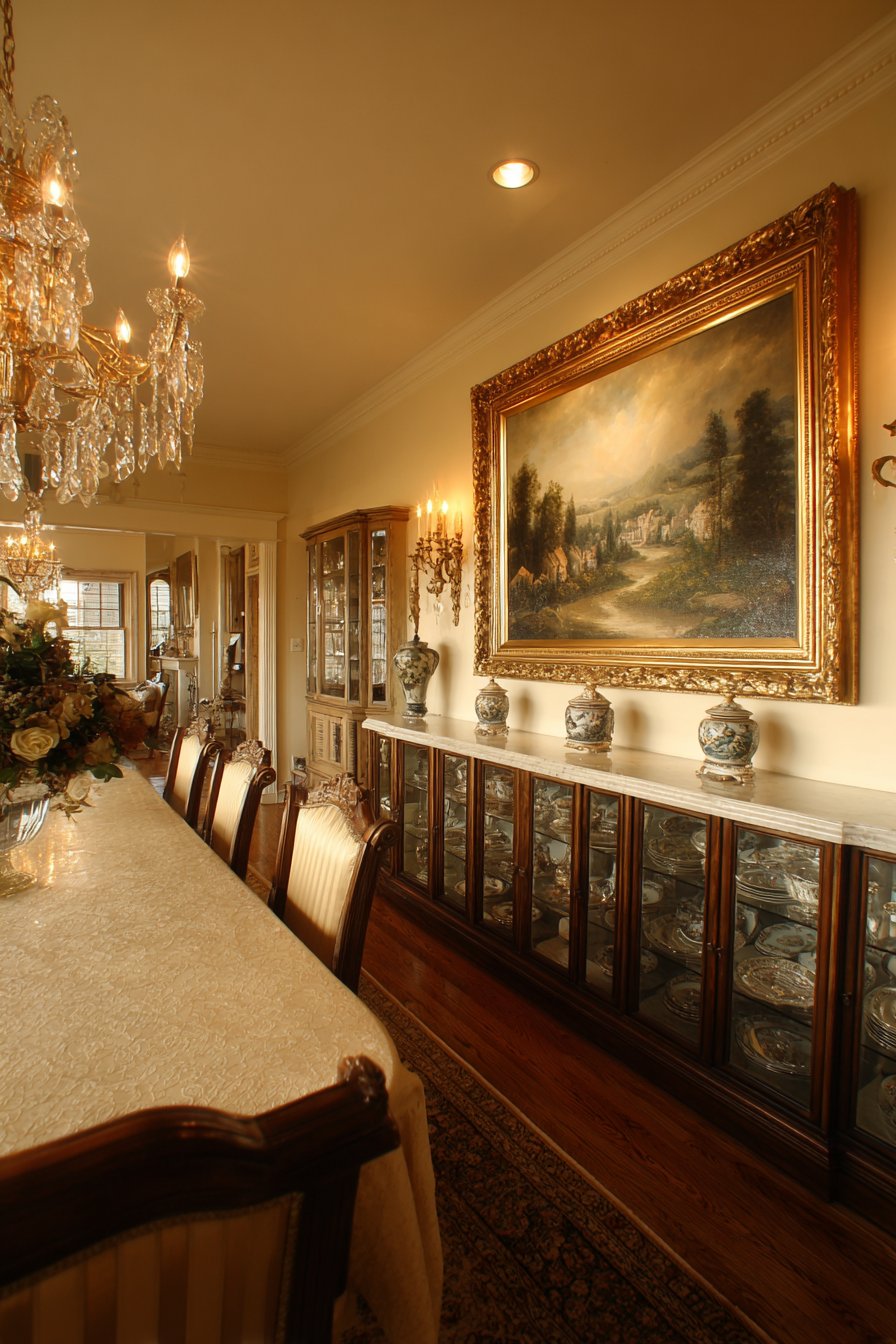
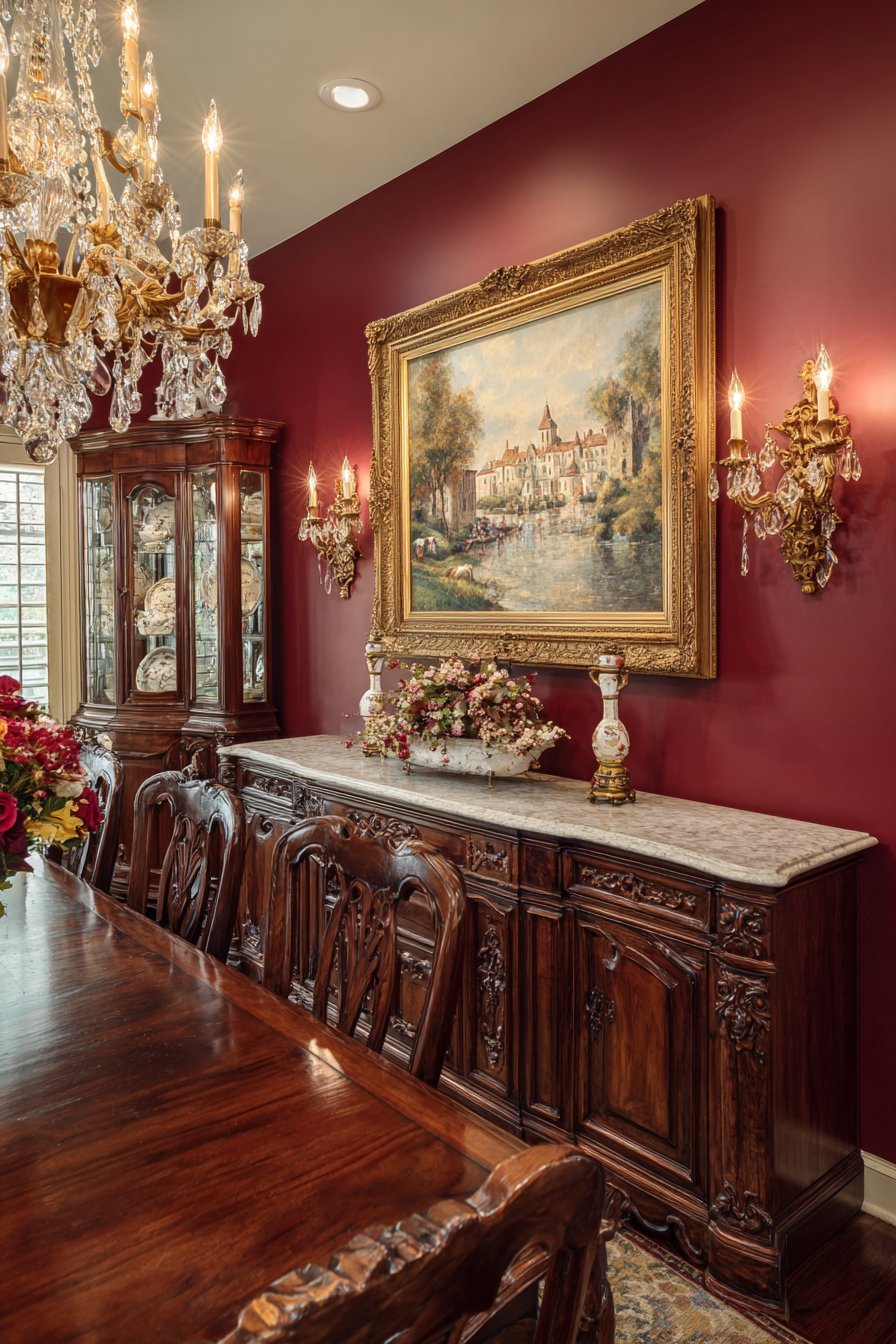
A formal dining room features traditional wall decor with fine art. A large oil painting depicts a European landscape in elaborate carved frame. The ornate frame hangs above a marble-topped sideboard. Wall sconces with crystal elements provide elegant lighting symmetrically.
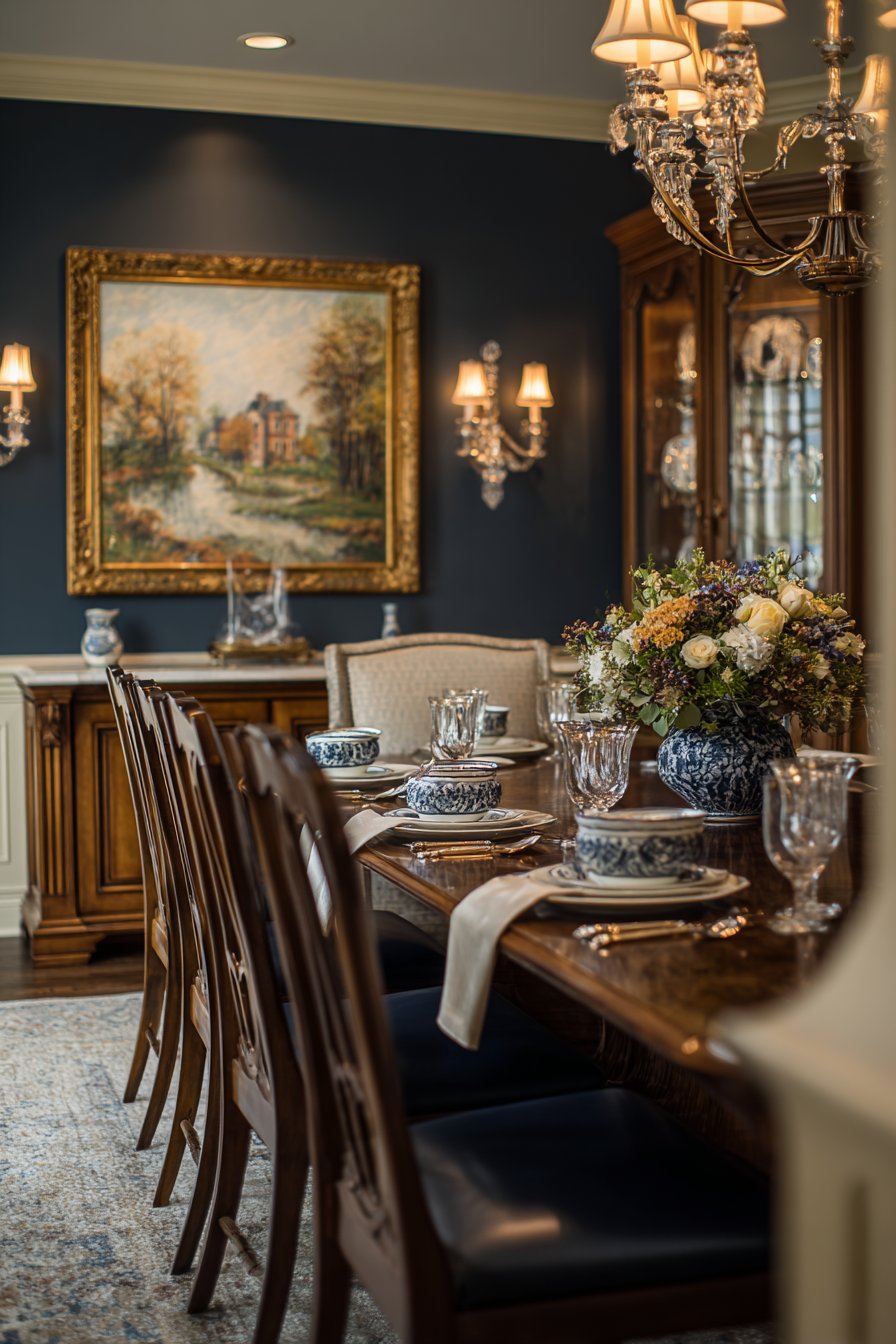
The wall receives deep jewel-tone paint that makes gilding pop. China cabinet with glass doors displays fine porcelain nearby. This creates visual continuation of the formal aesthetic throughout. Chandelier light creates subtle highlights on the painting’s textured surface.
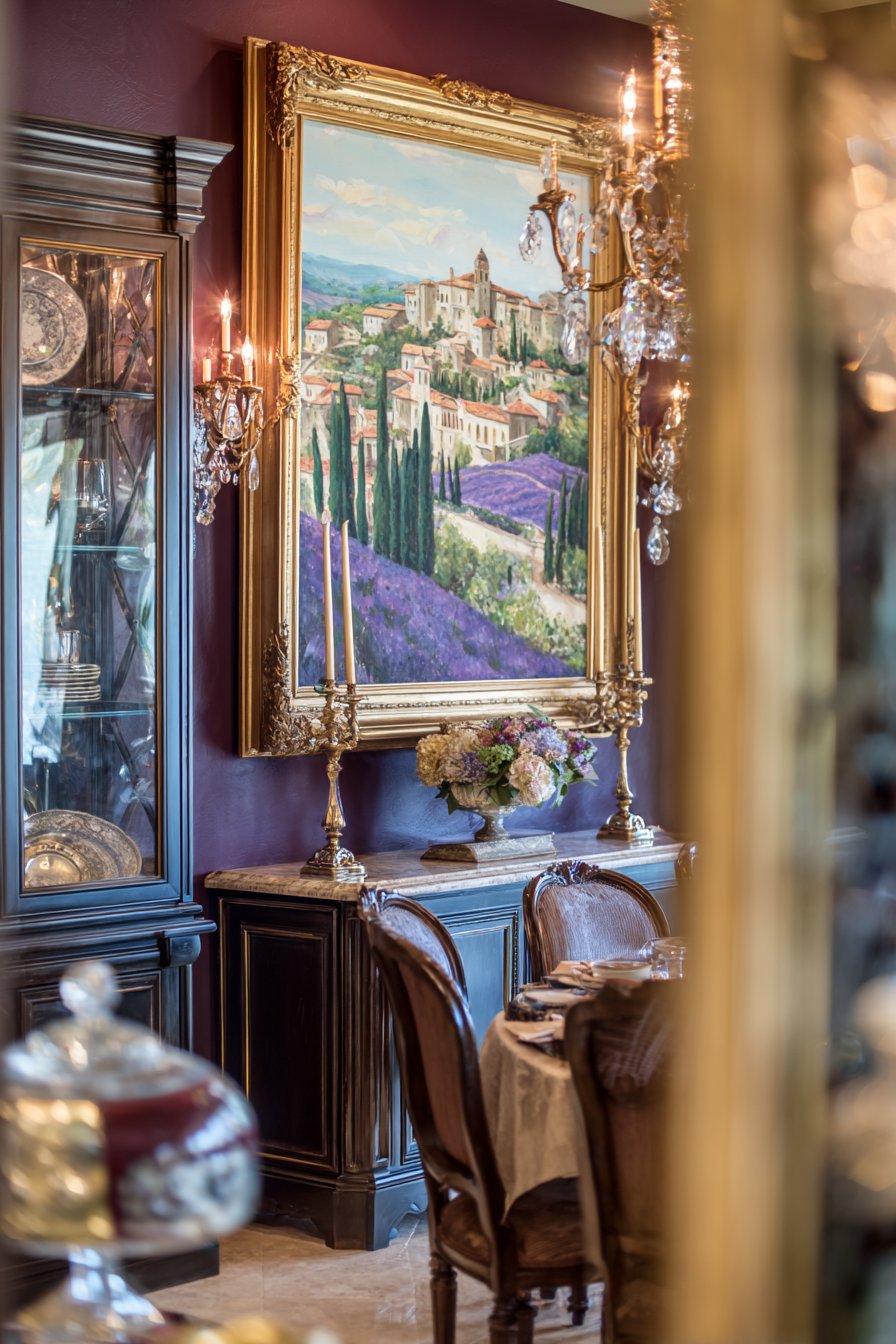
Wide-angle interior photography captures sophisticated layering beautifully. Traditional wall decor elements relate to formal dining furniture arrangement. The oil painting’s rich colors complement the jewel-tone wall. Crystal and gilded elements add sparkle and refinement.
The formal approach creates an environment suited for special occasions. The European landscape adds cultural sophistication to gatherings. Every element contributes to an atmosphere of elegance. This traditional approach never goes out of style.
Key Design Tips:
- Invest in quality oil paintings with elaborate carved frames
- Paint walls in deep jewel tones to enhance gilded frames
- Add crystal sconces for symmetrical elegant lighting
- Display fine china in nearby cabinets for visual continuation
- Use marble-topped furniture that echoes formal elegance
- Position chandelier to highlight painting’s textured surface
12. Minimalist Single Landscape Photography
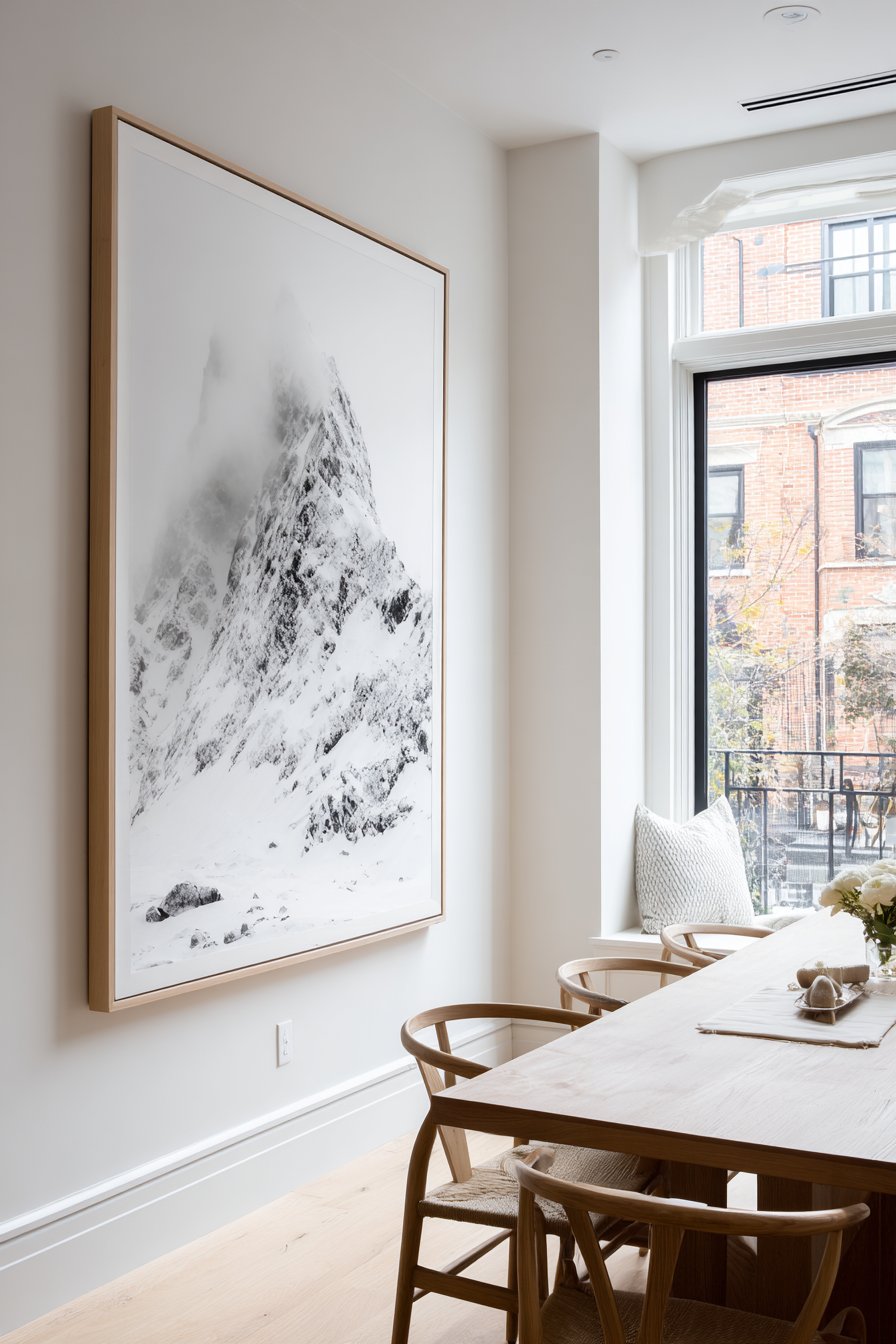
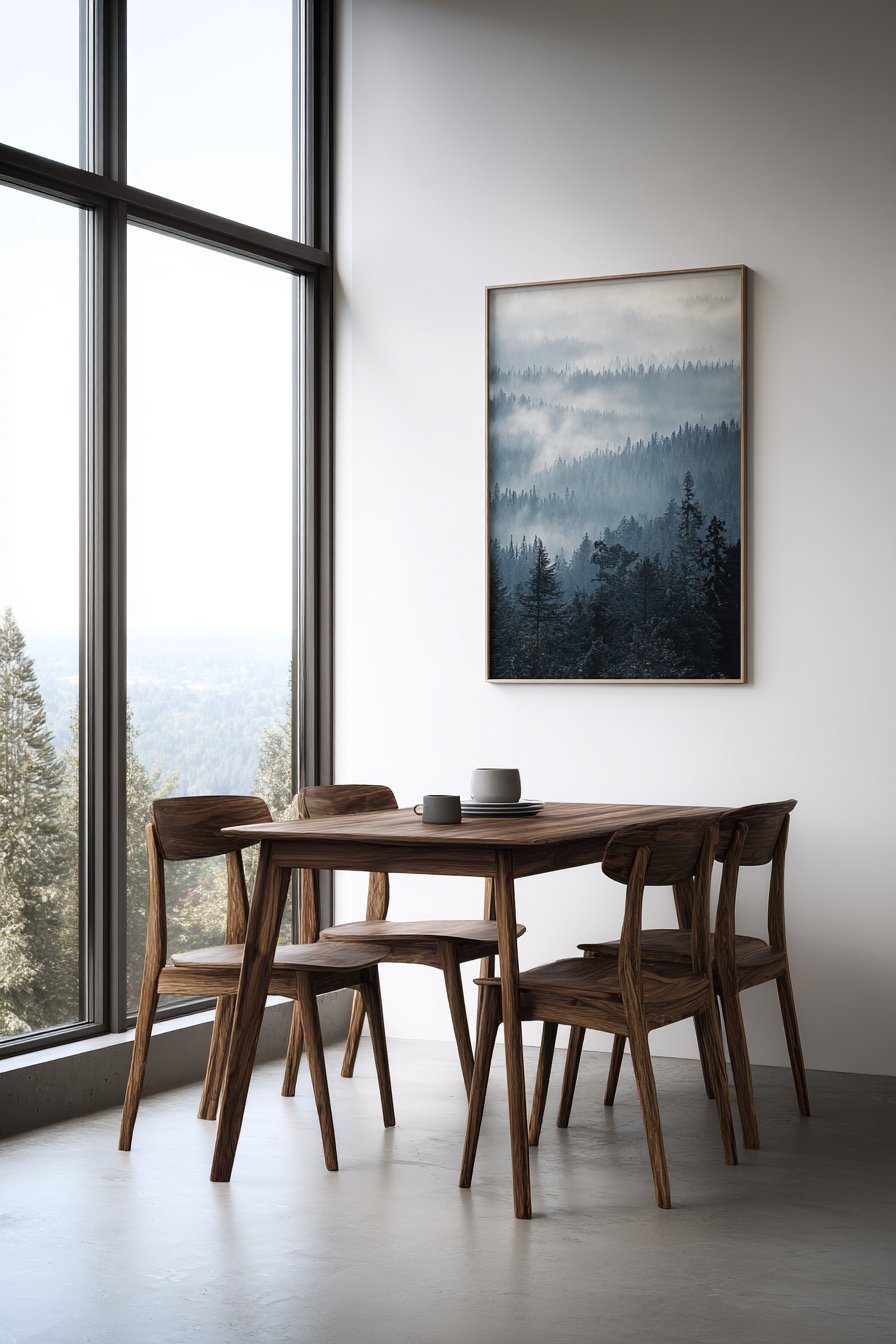
A minimalist dining space embraces intentional sparseness in wall decor. A single large-scale photograph shows misty mountain scenery. Muted grays and blues create a calming atmospheric image. The barely-there thin metal frame measures sixty inches wide.
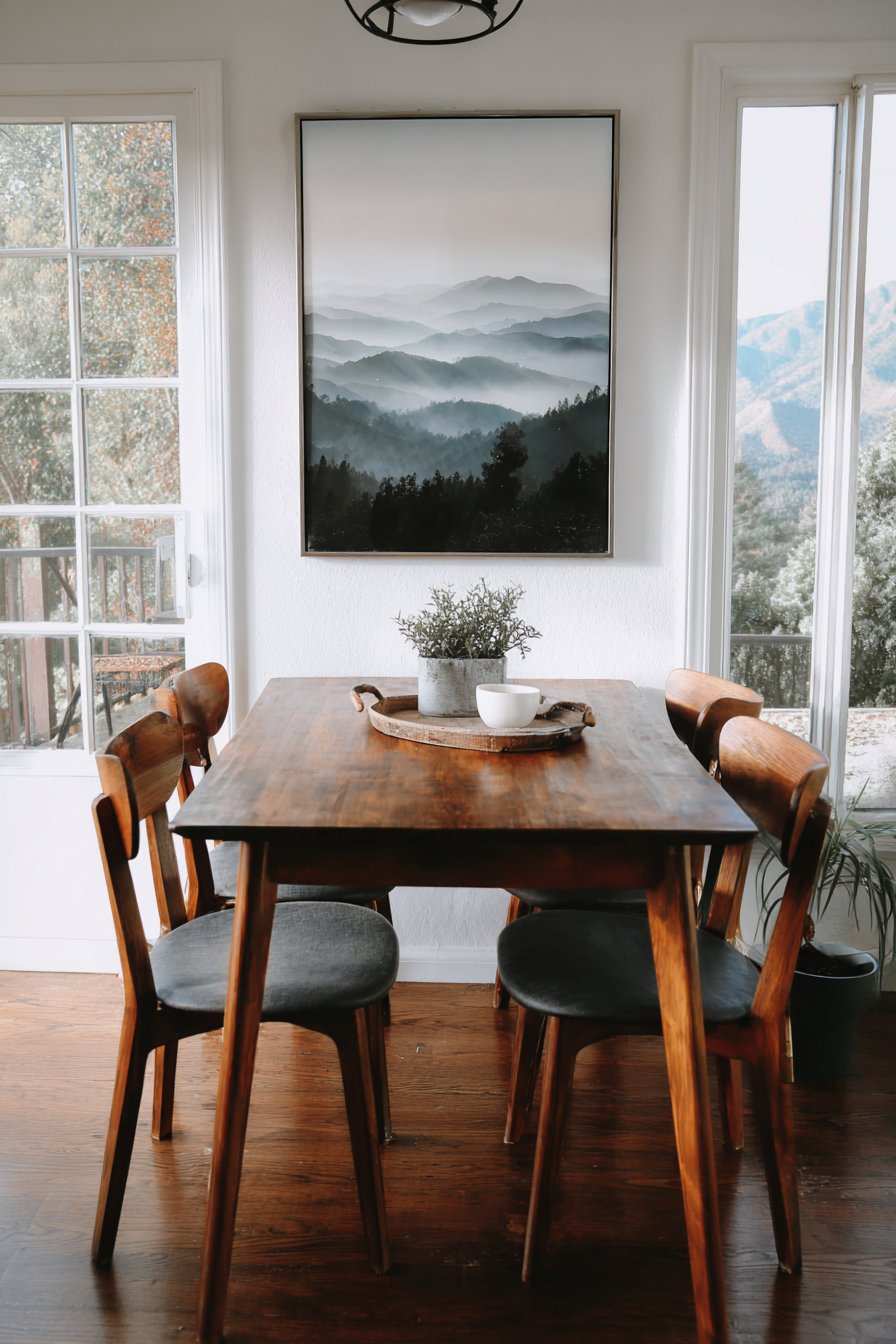
Pure white walls emphasize the power of negative space. A simple walnut dining table with clean-lined chairs anchors below. The restraint in wall decoration creates profound calm. Natural light from large windows provides primary illumination.
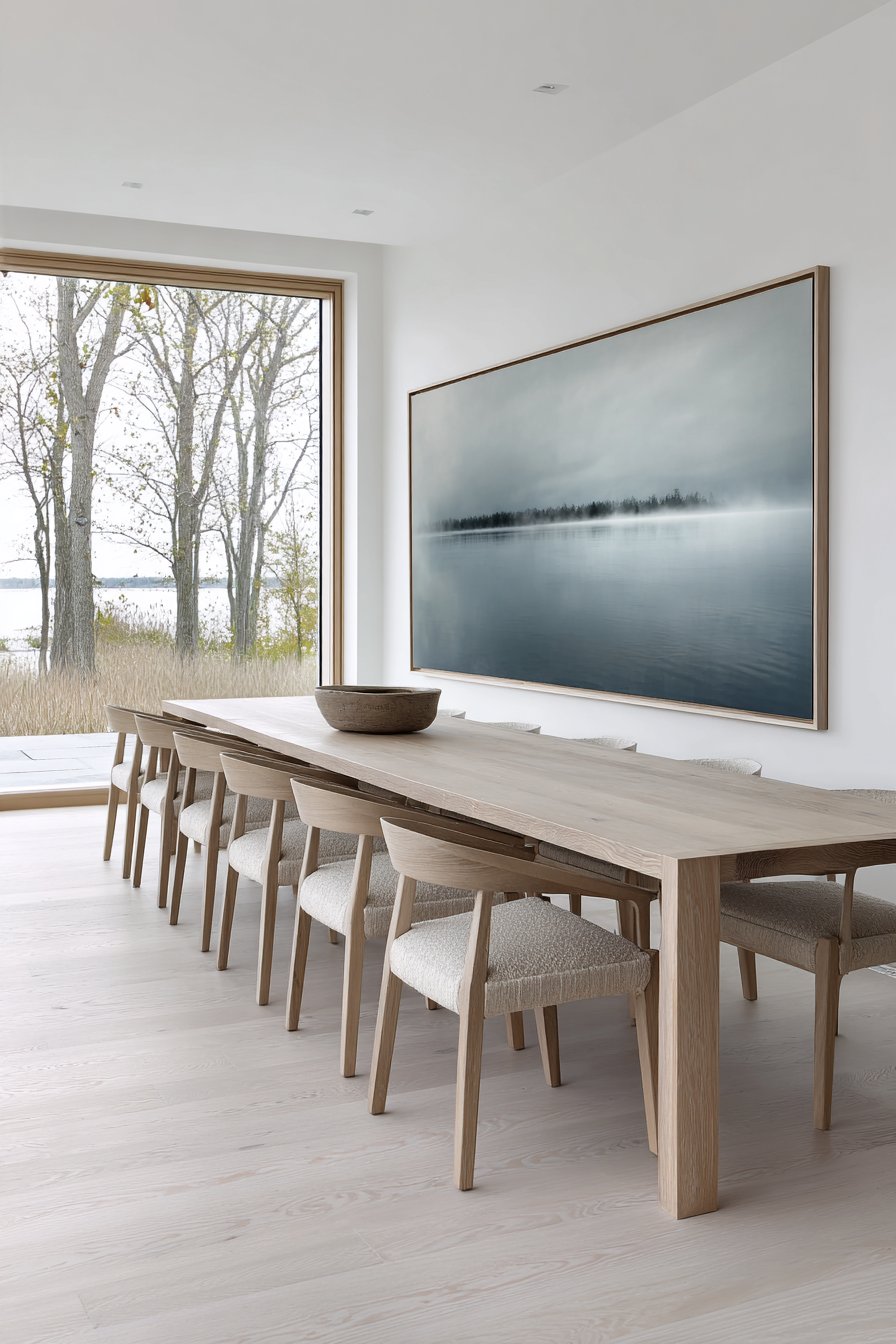
Professional interior photography showcases minimal wall decor philosophy successfully. The calm atmosphere allows dining furniture’s form to shine. The expansive window view remains an important focal point. Less decoration means more appreciation for essential elements.
The landscape photograph adds serenity without overwhelming the space. The misty mountain scene evokes contemplative tranquility. Minimalist approach proves that one perfect piece suffices. The result feels spacious, calm, and intentionally designed.
Key Design Tips:
- Select one large-scale photograph rather than multiple pieces
- Choose atmospheric images with muted color palettes
- Use thin minimal frames that nearly disappear
- Keep walls pure white to maximize negative space
- Select furniture with clean lines that echo minimalist philosophy
- Rely on natural light as primary illumination
13. Art Deco Geometric Metal Panel
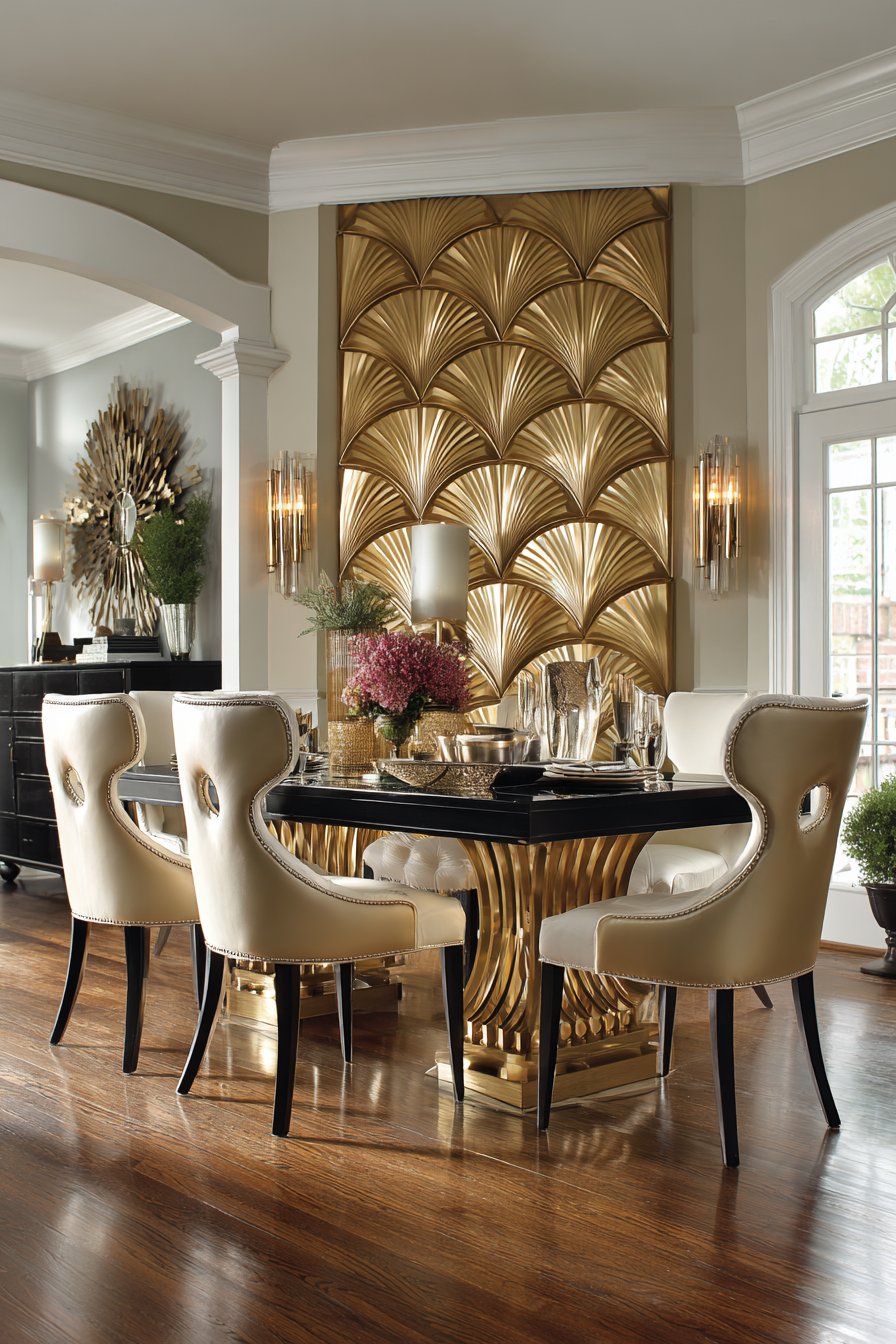
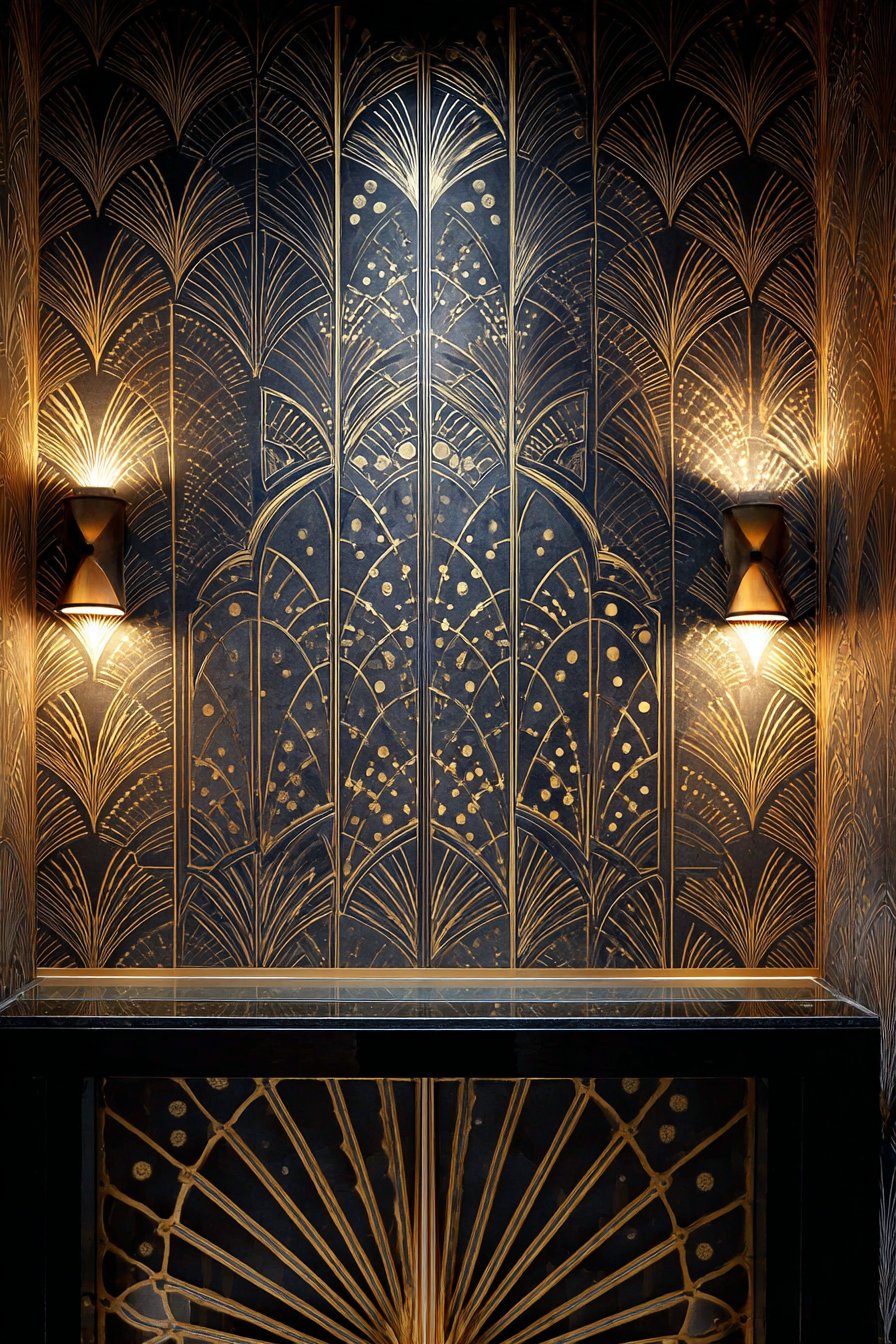
An Art Deco inspired dining room features dramatic geometric wall treatment. A custom metal wall panel displays overlapping fan patterns. Antique brass finish adds warmth to the geometric design. The panel spans the full wall behind the dining table.
Matching geometric sconces provide uplighting that emphasizes dimension. A lacquered black dining table with champagne gold legs reflects glamour. The wall treatment shows authentic Art Deco motifs throughout. Sunbursts, chevrons, and stylized florals create period authenticity.
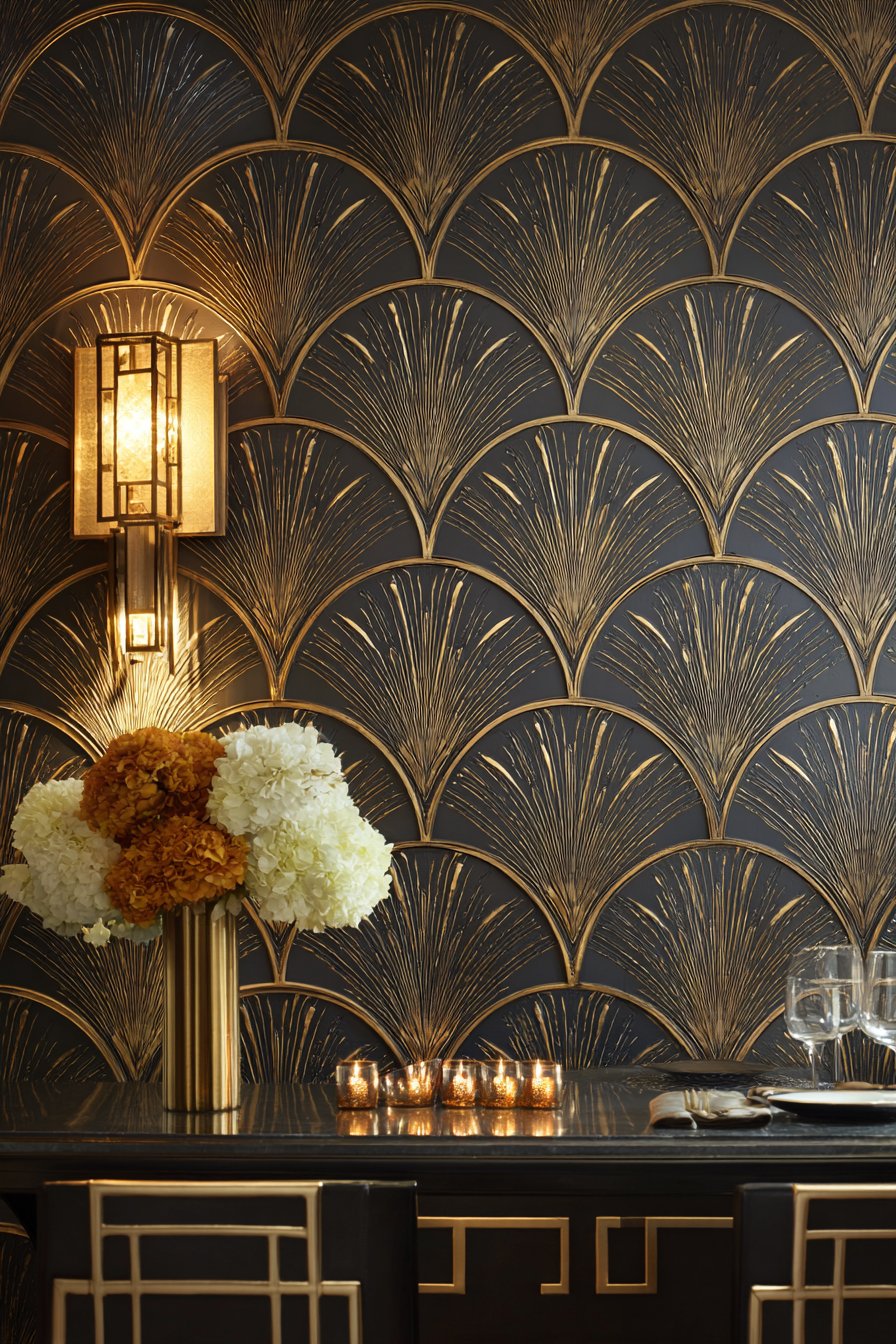
Interior design photography captures how strategic lighting brings metalwork alive. Balanced exposure highlights the metallic wall decor’s dimensional quality. The period’s characteristic luxury and geometric precision shine through. Every detail references the glamorous Art Deco era.
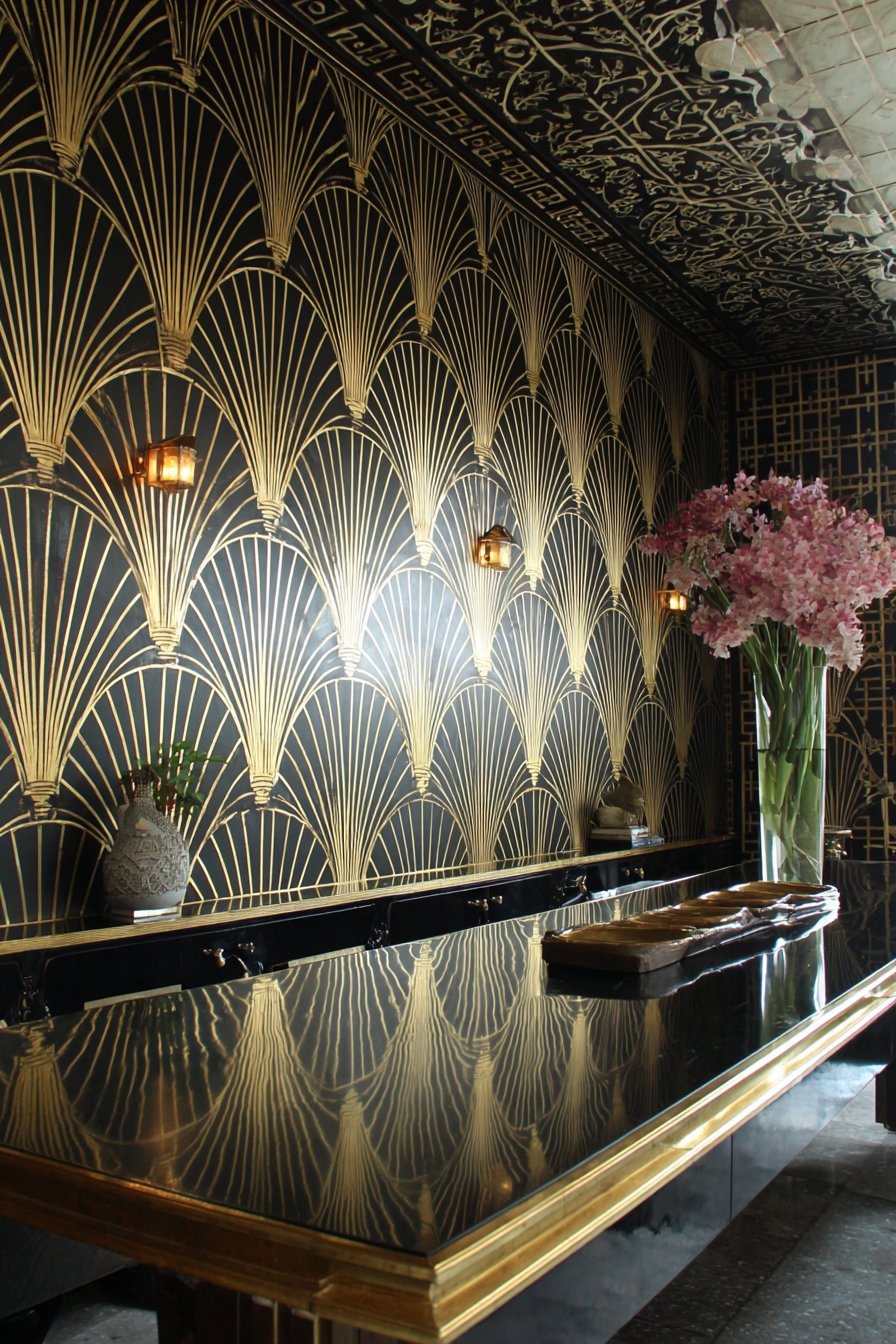
The metal panel creates a backdrop worthy of sophisticated entertaining. The geometric patterns add visual interest without overwhelming. Authentic period motifs ensure historical accuracy. This design transports diners to the golden age of elegance.
Key Design Tips:
- Commission custom metal panels for full wall coverage
- Use antique brass finish for authentic Art Deco warmth
- Install geometric sconces that provide uplighting
- Select furniture with champagne gold and black lacquer finishes
- Incorporate authentic period motifs like sunbursts and chevrons
- Add dimensional lighting to emphasize metalwork texture
14. Transitional Picture Rail System
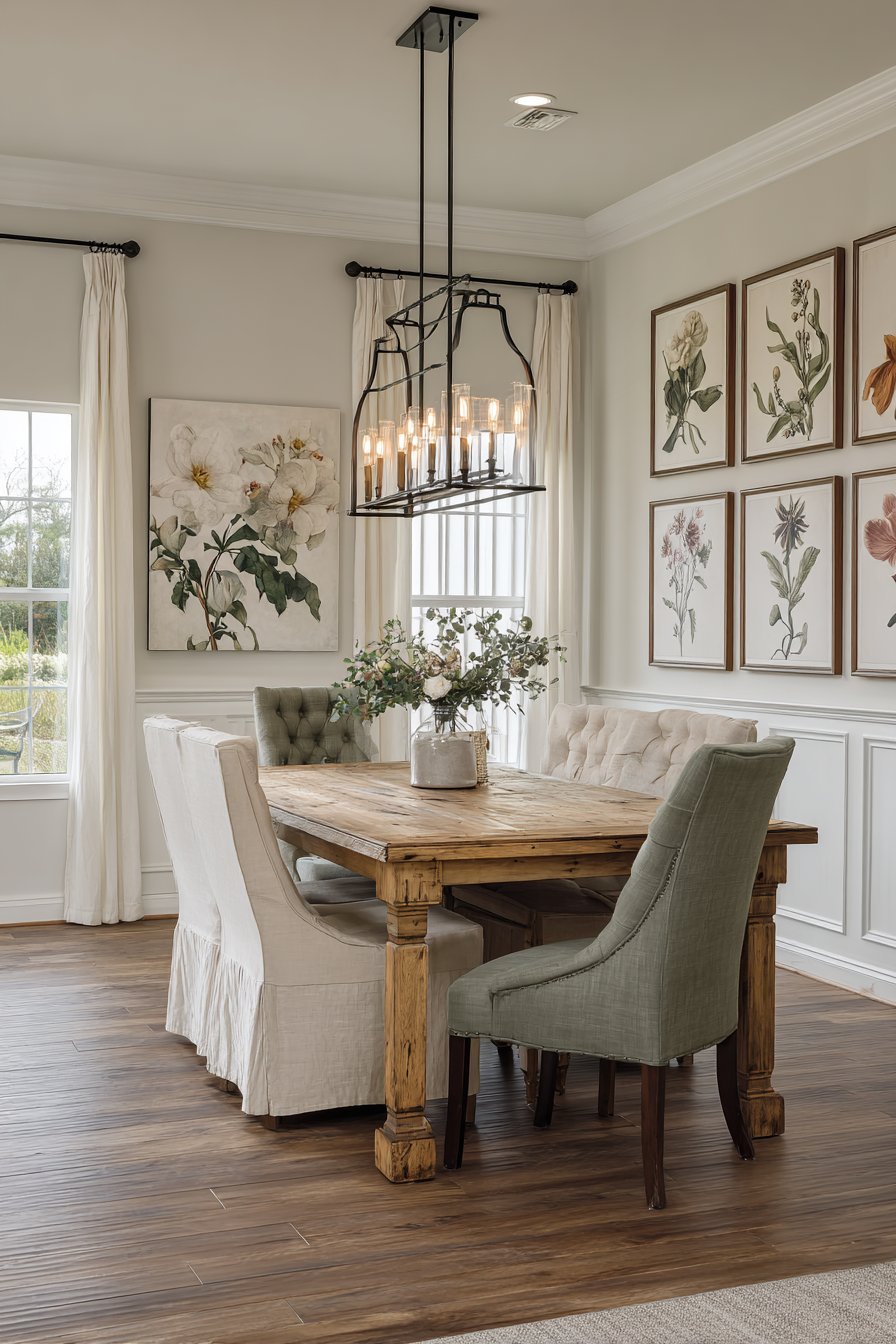
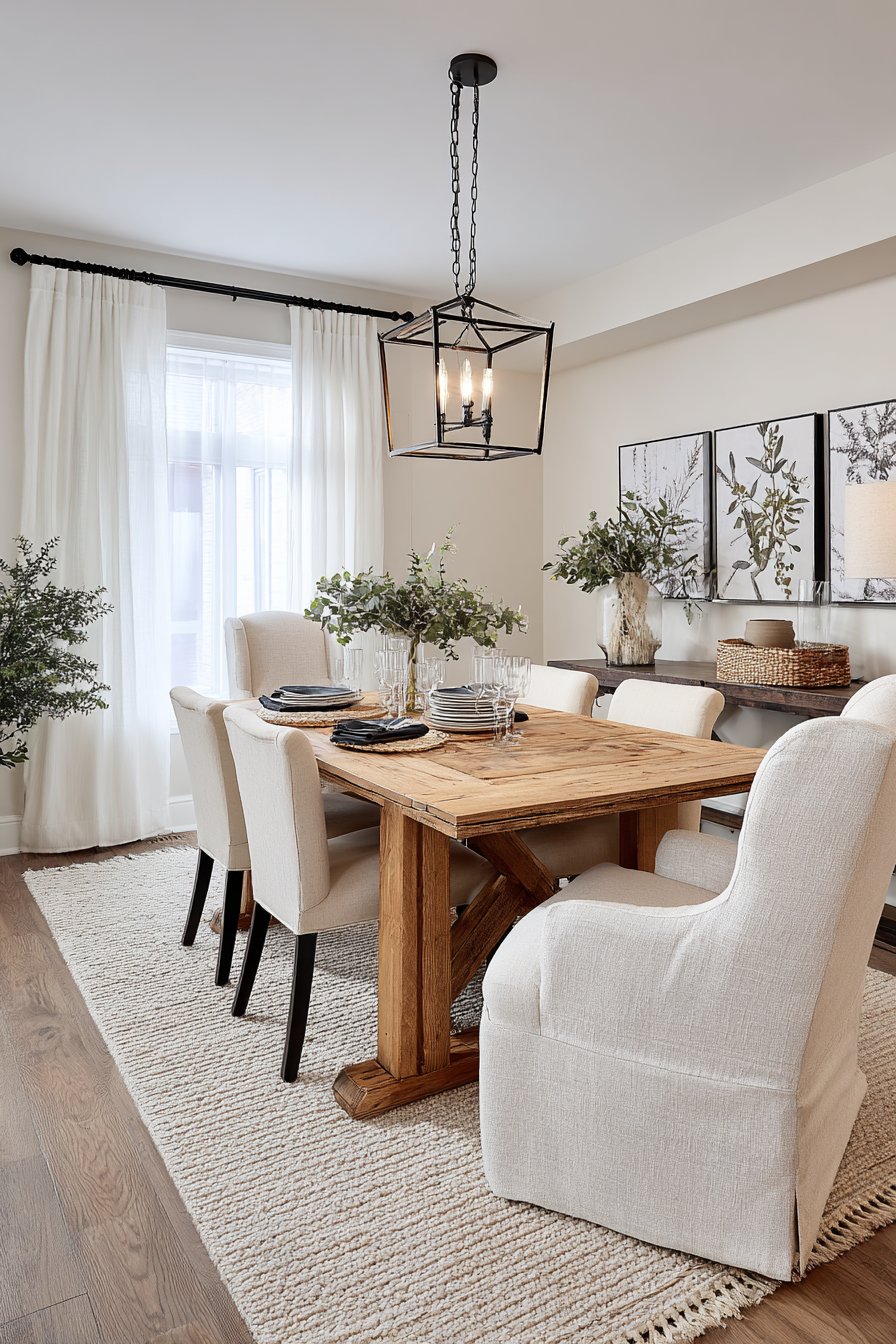
A transitional dining area features flexible wall decor through picture rail molding. The rail system allows easy rotation of artwork throughout seasons. Four large canvas prints currently display seasonal botanical themes. The rail paint matches the wall color for seamless integration.
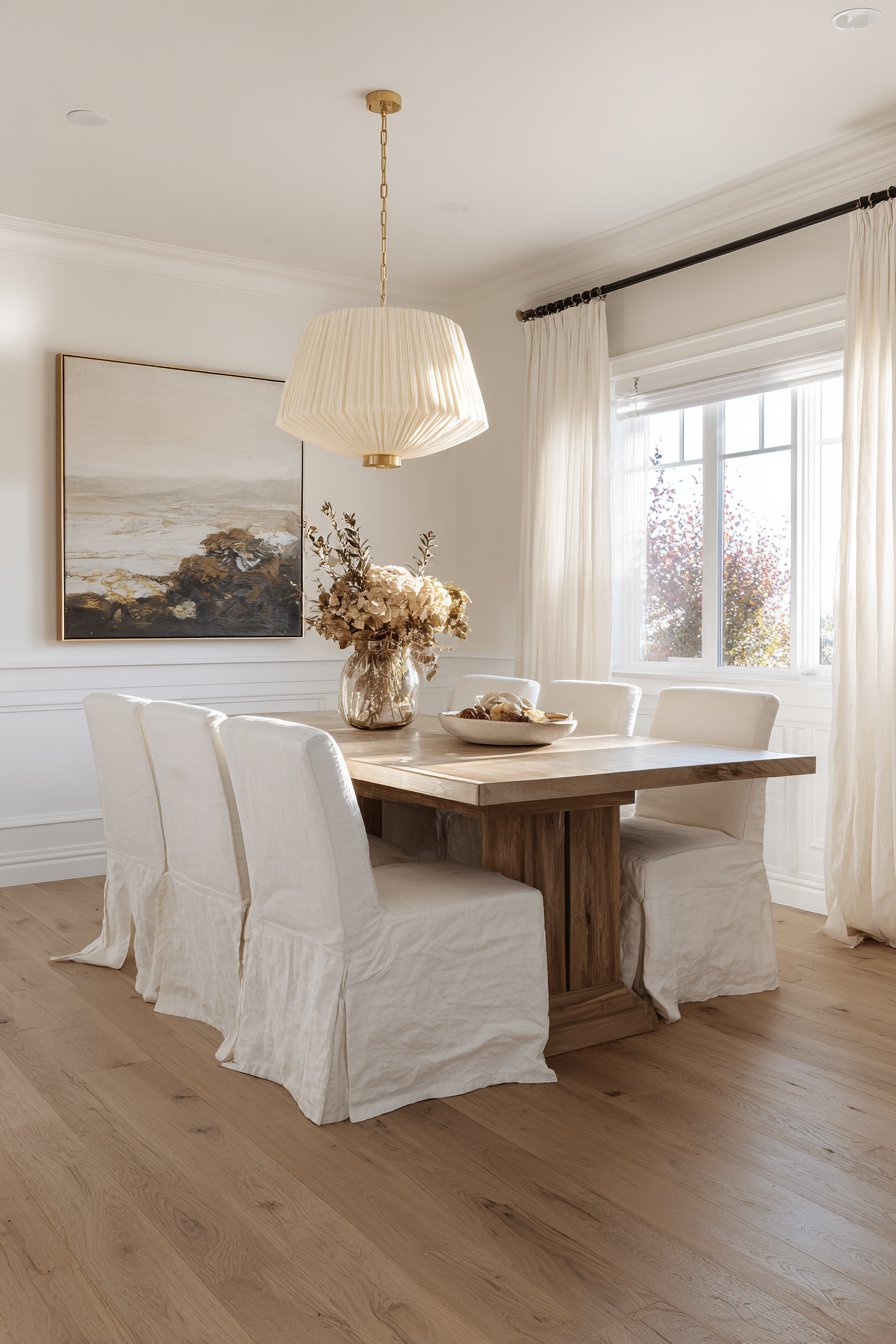
Below, a farmhouse-style dining table with upholstered chairs creates comfort. Natural wood tones in flooring and furniture warm neutral walls. Soft natural lighting from sheer curtains illuminates artwork without glare. The changeable system maintains visual interest while offering flexibility.
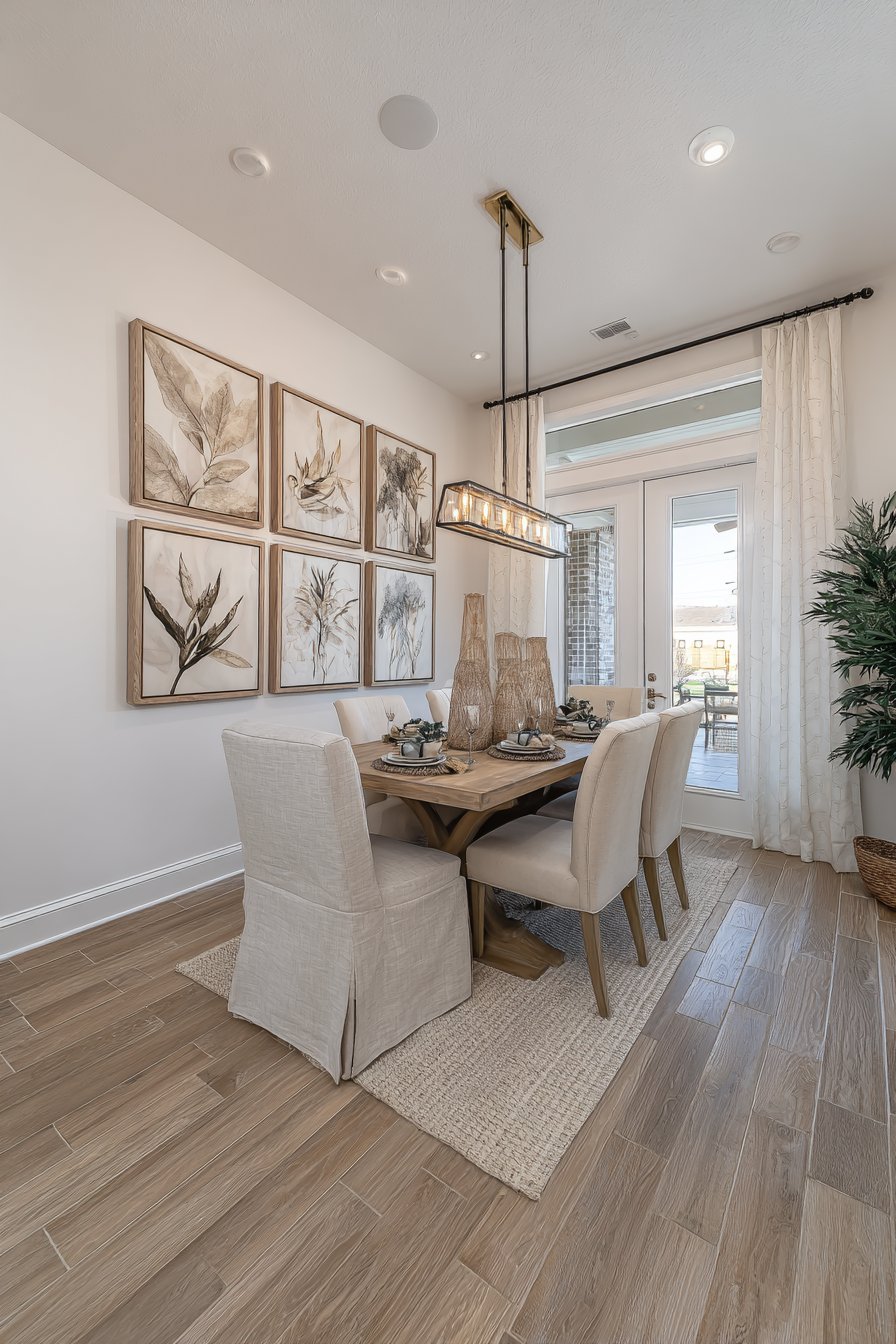
Wide-angle photography demonstrates this practical wall decor solution effectively. The ability to rotate artwork seasonally keeps the space fresh. The picture rail system looks built-in and intentional. This practical approach suits those who enjoy changing their decor.
The botanical themes connect to nature throughout the year. Spring flowers transition to summer gardens and autumn leaves. The flexible system accommodates evolving tastes and seasonal moods. This practical elegance makes daily living more enjoyable.
Key Design Tips:
- Install picture rail molding painted to match walls
- Select artwork that can rotate seasonally for variety
- Choose botanical themes that reference changing seasons
- Use farmhouse furniture that works with multiple art styles
- Add sheer curtains to provide glare-free natural lighting
- Invest in quality frames that look good year-round
15. Mediterranean Hand-Painted Tile Panel
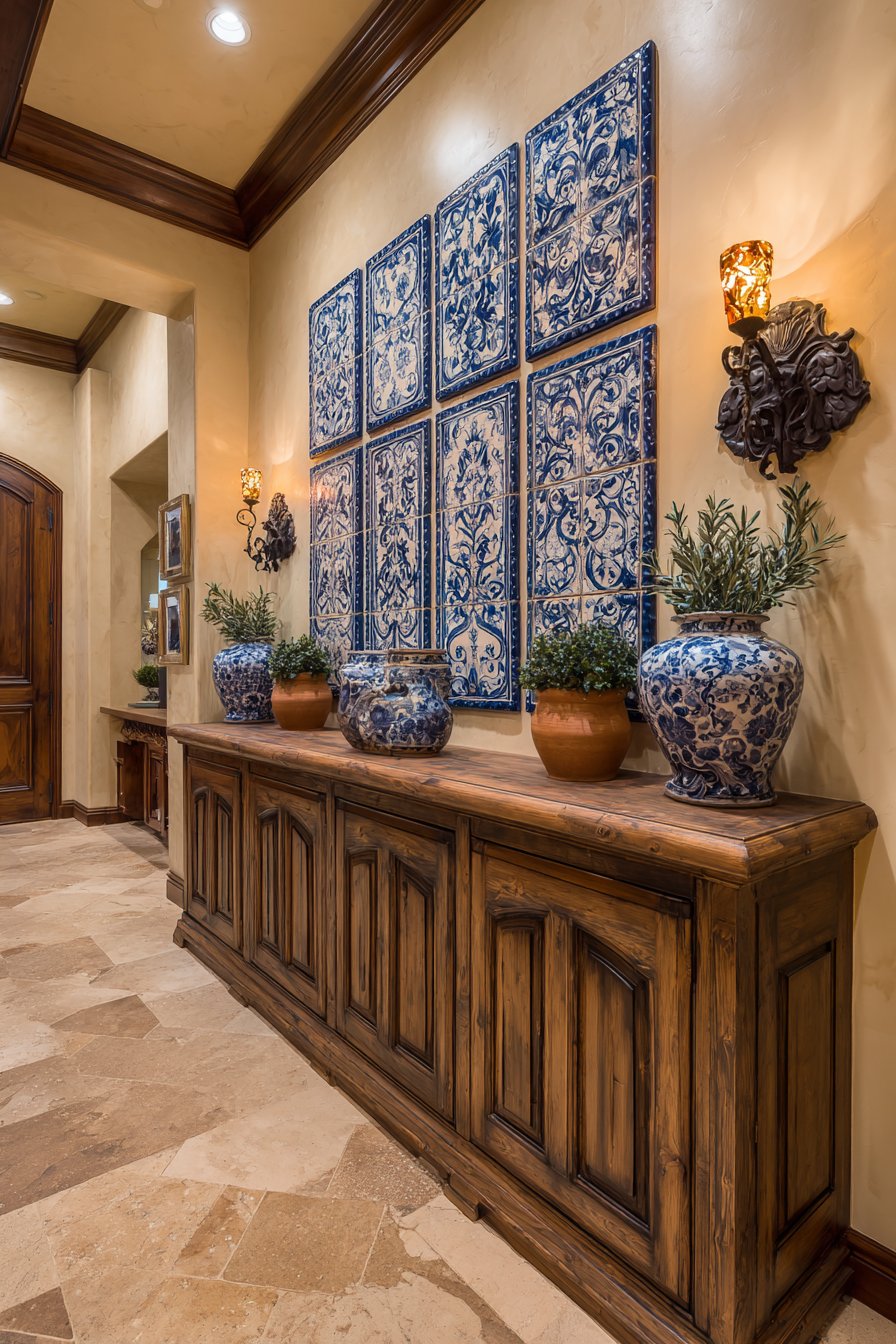
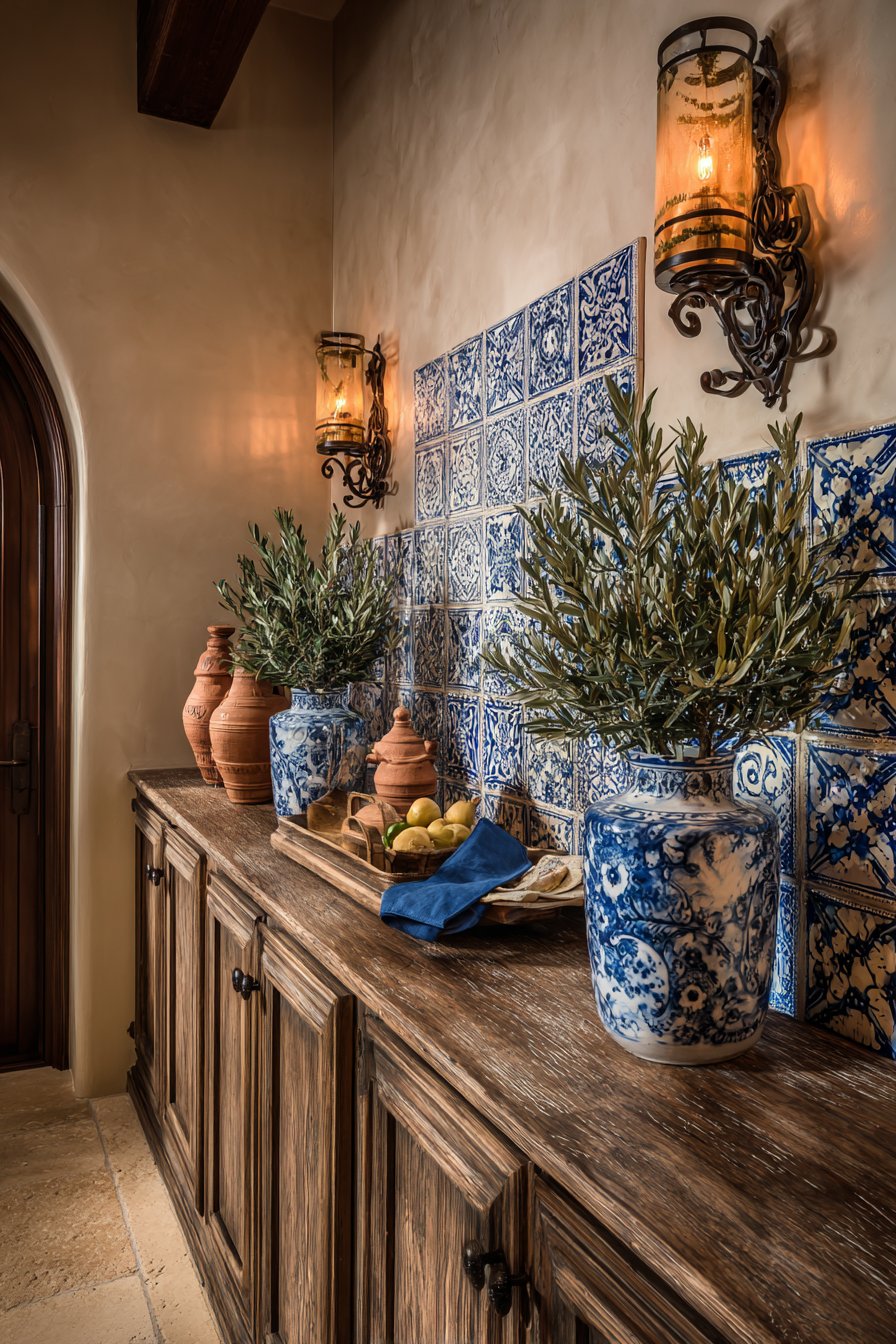
A Mediterranean dining space features artisanal hand-painted ceramic tiles. The tiles arrange as a decorative panel above rustic wooden sideboard. Traditional Portuguese azulejo patterns display cobalt blue and white. The authentic European feel transports diners to coastal villages.
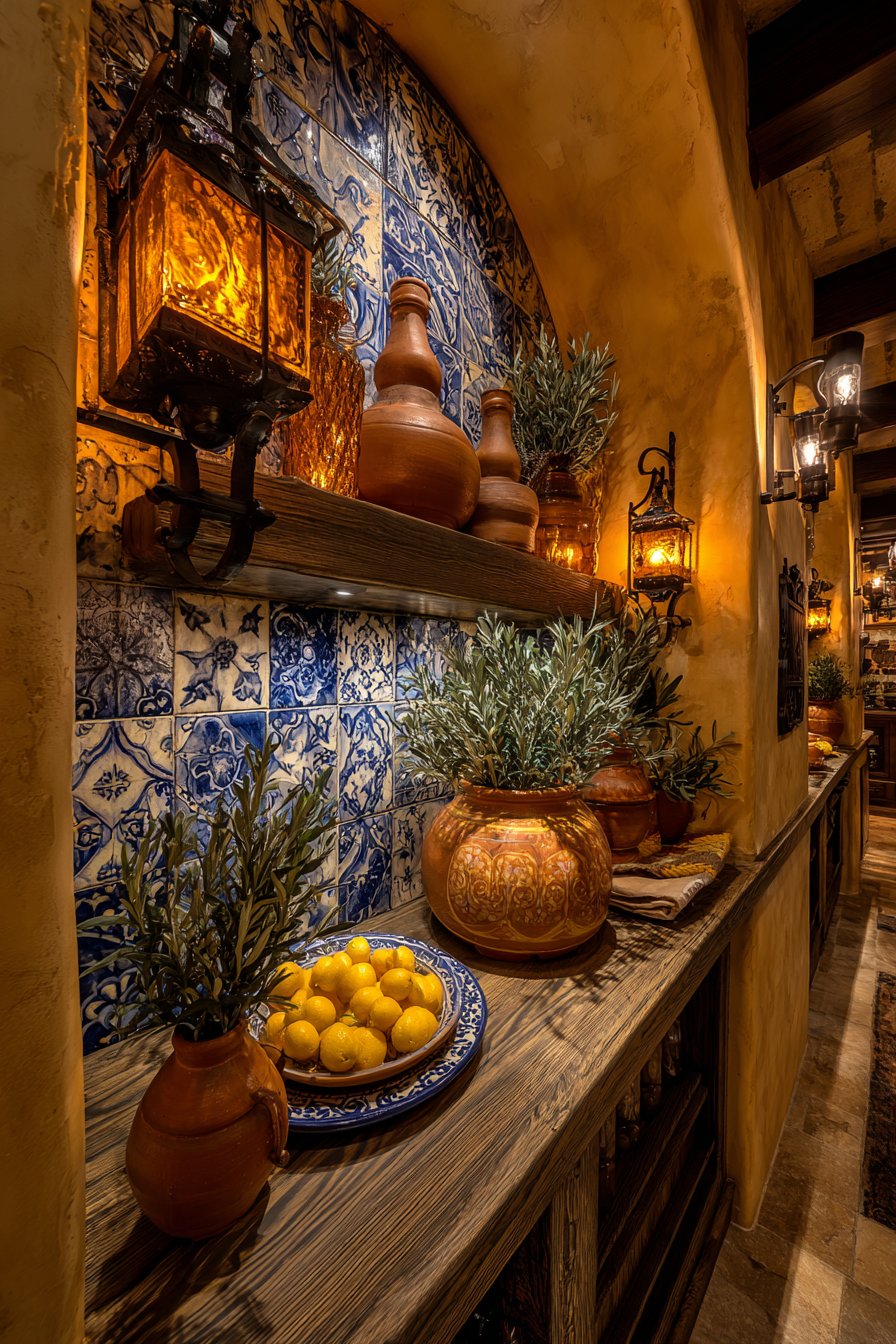
Wrought iron wall sconces with amber glass provide warm accent lighting. Terra cotta pottery and olive branches in ceramic vases extend the theme. Stucco-textured walls in warm cream complement colorful tile work. Every element references Mediterranean cultural heritage.
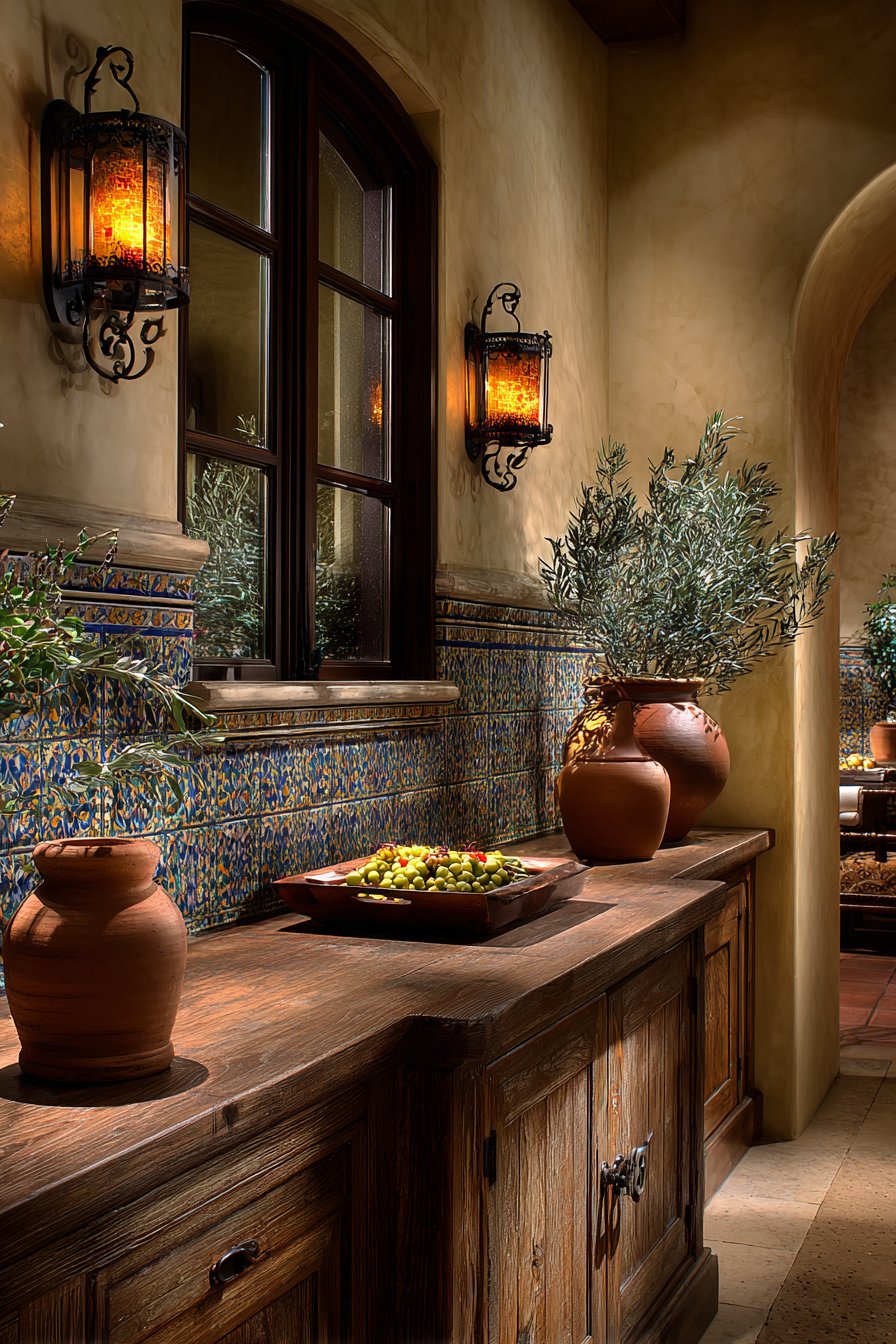
Professional interior photography captures rich cultural references throughout. Handcrafted tiles add artisanal character to the dining space. The cobalt blue and white create crisp contrast. Warm lighting enhances the terra cotta and amber tones.
The Mediterranean aesthetic celebrates craftsmanship and traditional techniques. Hand-painted tiles cannot be replicated by mass production. Each tile shows slight variations that prove authentic creation. This cultural richness adds depth to dining experiences.
Key Design Tips:
- Source authentic hand-painted Portuguese azulejo tiles
- Use cobalt blue and white for traditional Mediterranean palette
- Add wrought iron sconces with amber glass for warmth
- Display terra cotta pottery and olive branches as accessories
- Apply stucco texture to walls for authentic Mediterranean feel
- Choose rustic wood furniture that complements artisanal tiles
16. Contemporary Farmhouse Vintage Window Frame
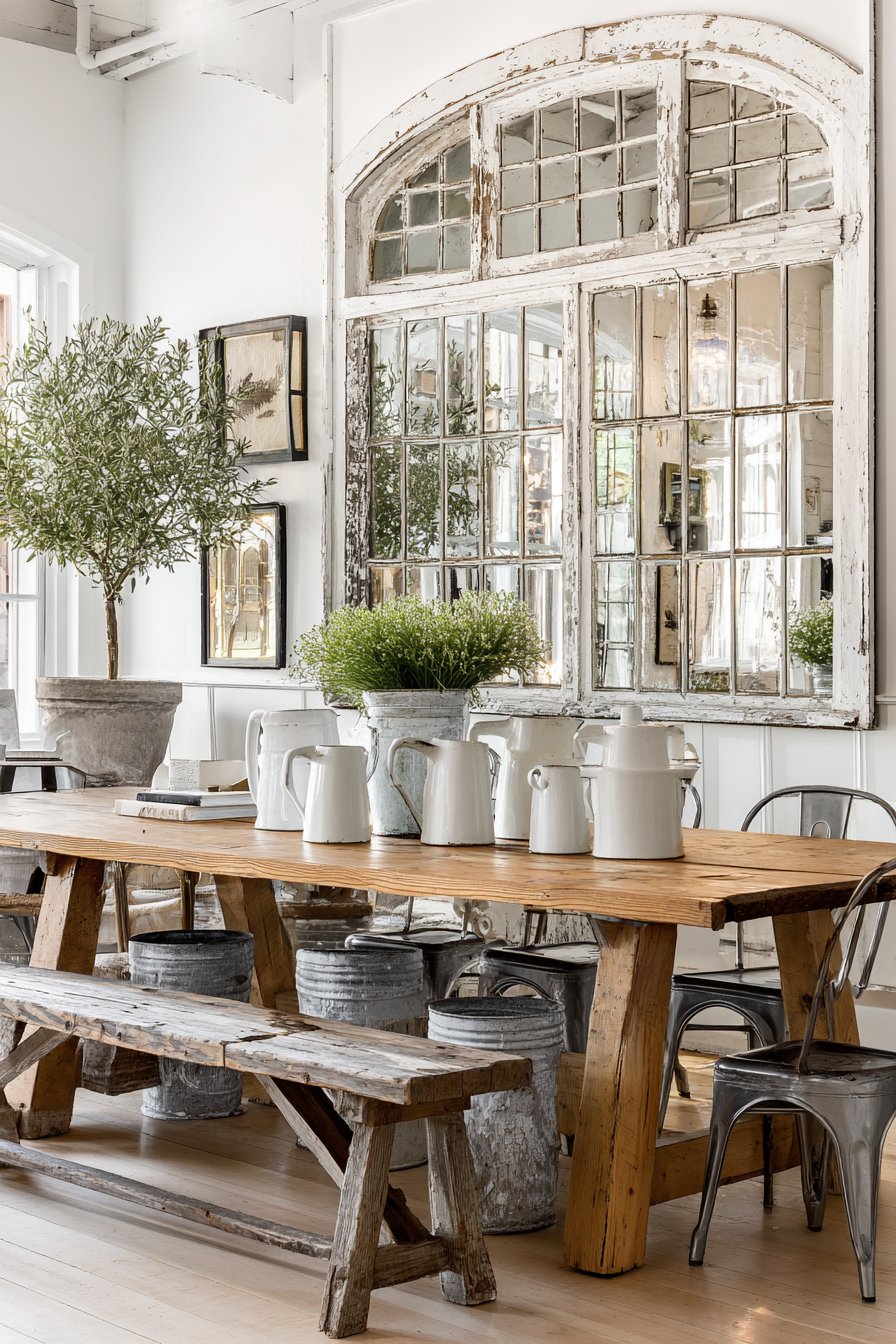
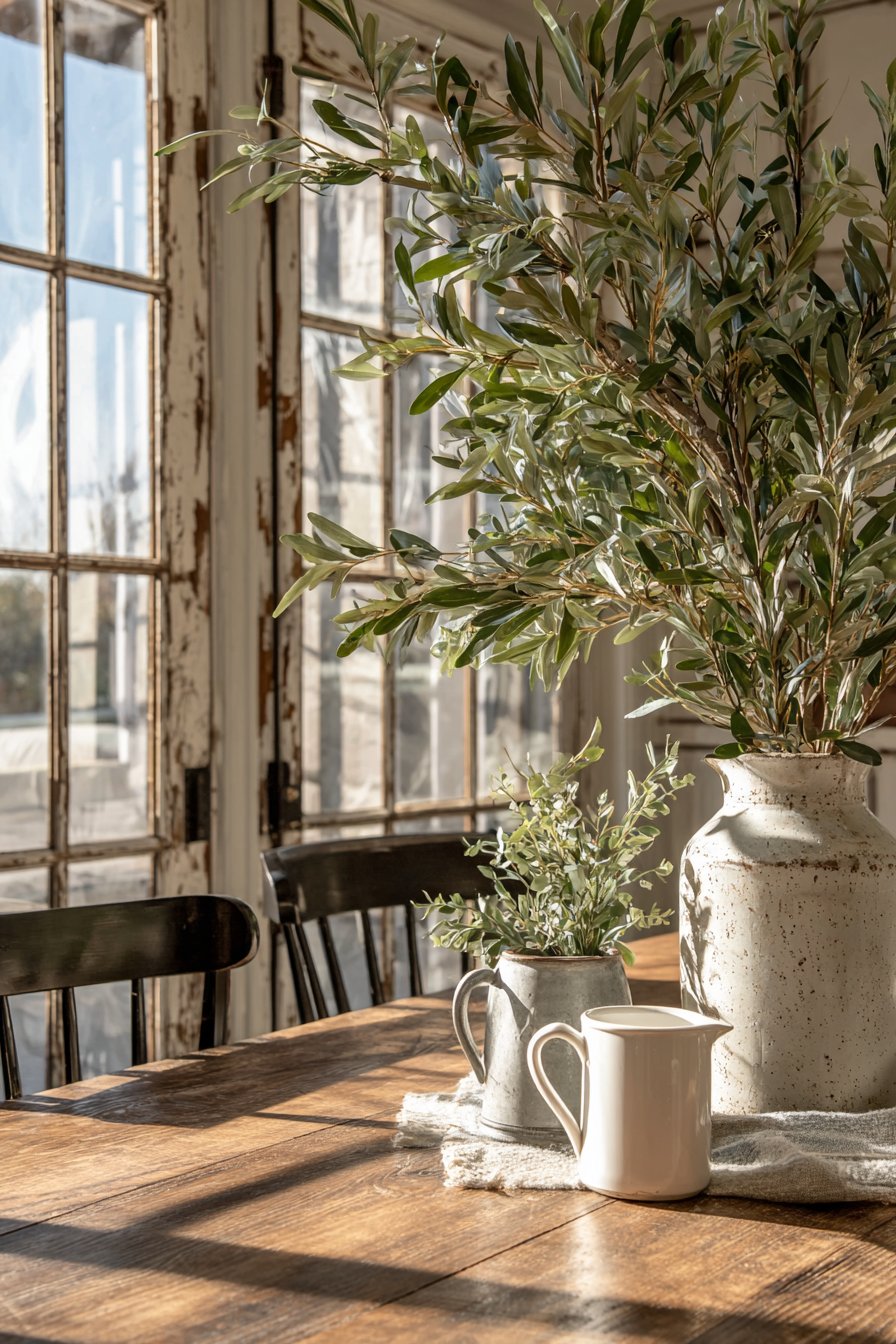
A contemporary farmhouse dining room features architectural salvage as art. A large vintage window frame repurposes beautifully as wall decor. Original wavy glass panes remain intact within the frame. Weathered white paint shows authentic chippy patina from age.
The architectural piece measures five feet tall above trestle-style table. Greenery in galvanized metal containers echoes farmhouse aesthetic. White ceramic pitchers on the table maintain the cohesive palette. Natural light creates interesting reflections through old glass panes.
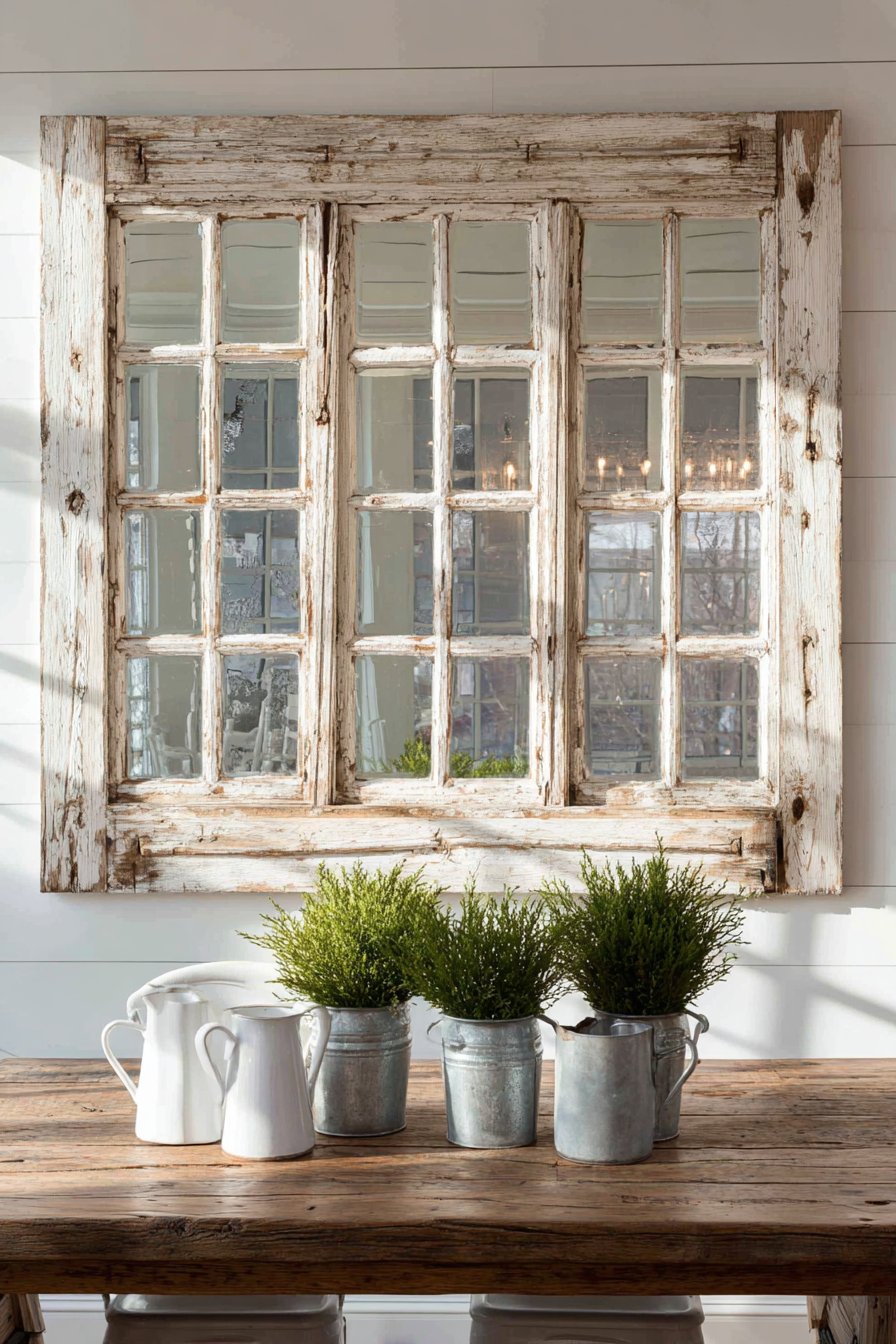
Interior design photography emphasizes aged material textures beautifully. The interplay of light through vintage glass creates magic. Architectural elements serve as compelling wall decor successfully. The salvaged piece adds history and character instantly.
The vintage window frame tells a story through its weathering. Each chip and crack represents authentic age. The wavy glass distorts reflections in charming ways. This repurposed architectural element adds soul to the space.
Key Design Tips:
- Source authentic vintage window frames with original glass intact
- Look for weathered paint with chippy patina for character
- Position where natural light can shine through old glass
- Style table below with galvanized metal and white ceramics
- Choose trestle-style tables that complement farmhouse aesthetic
- Embrace authentic age signs rather than manufactured distressing
17. Global Eclectic Travel-Inspired Collection
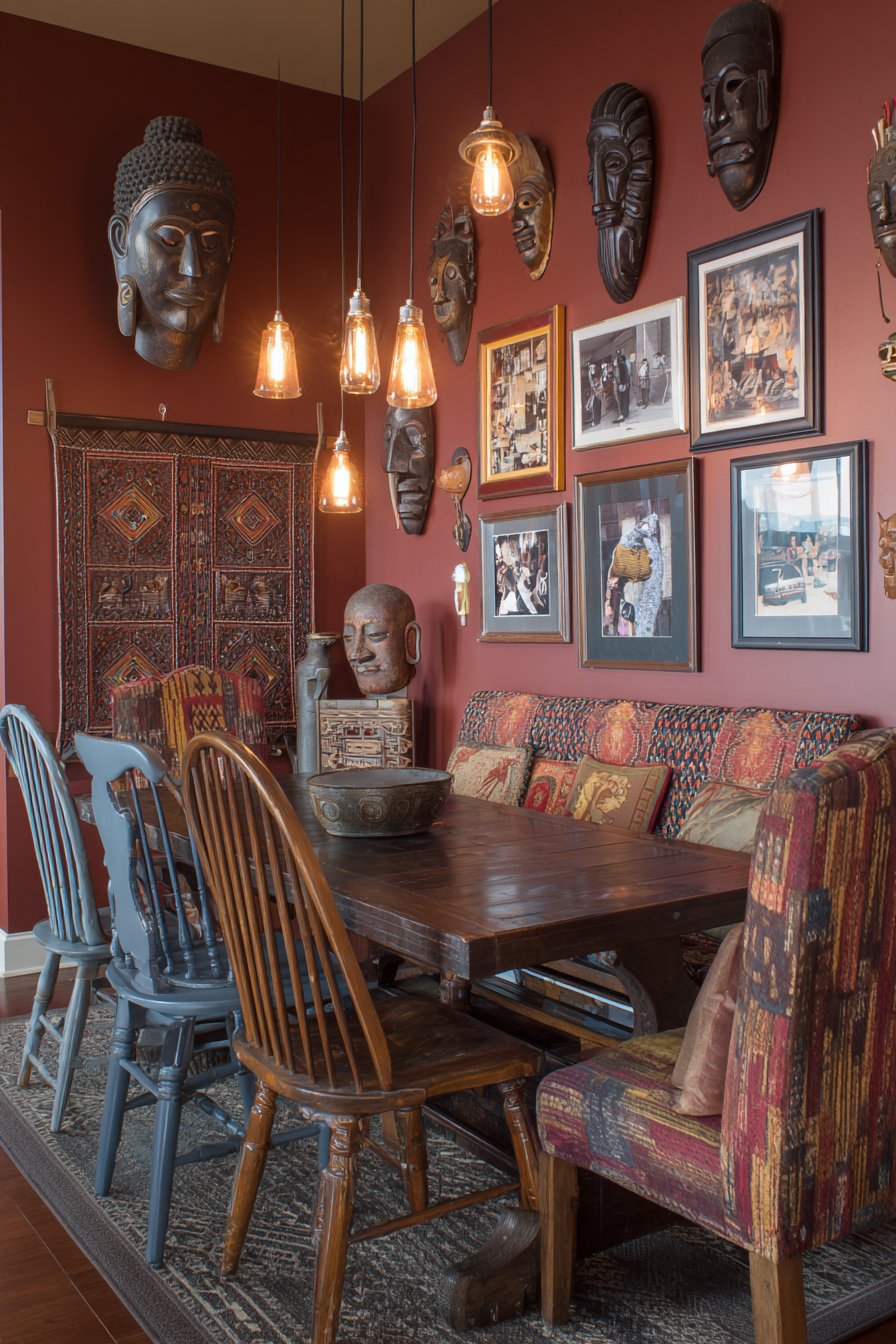
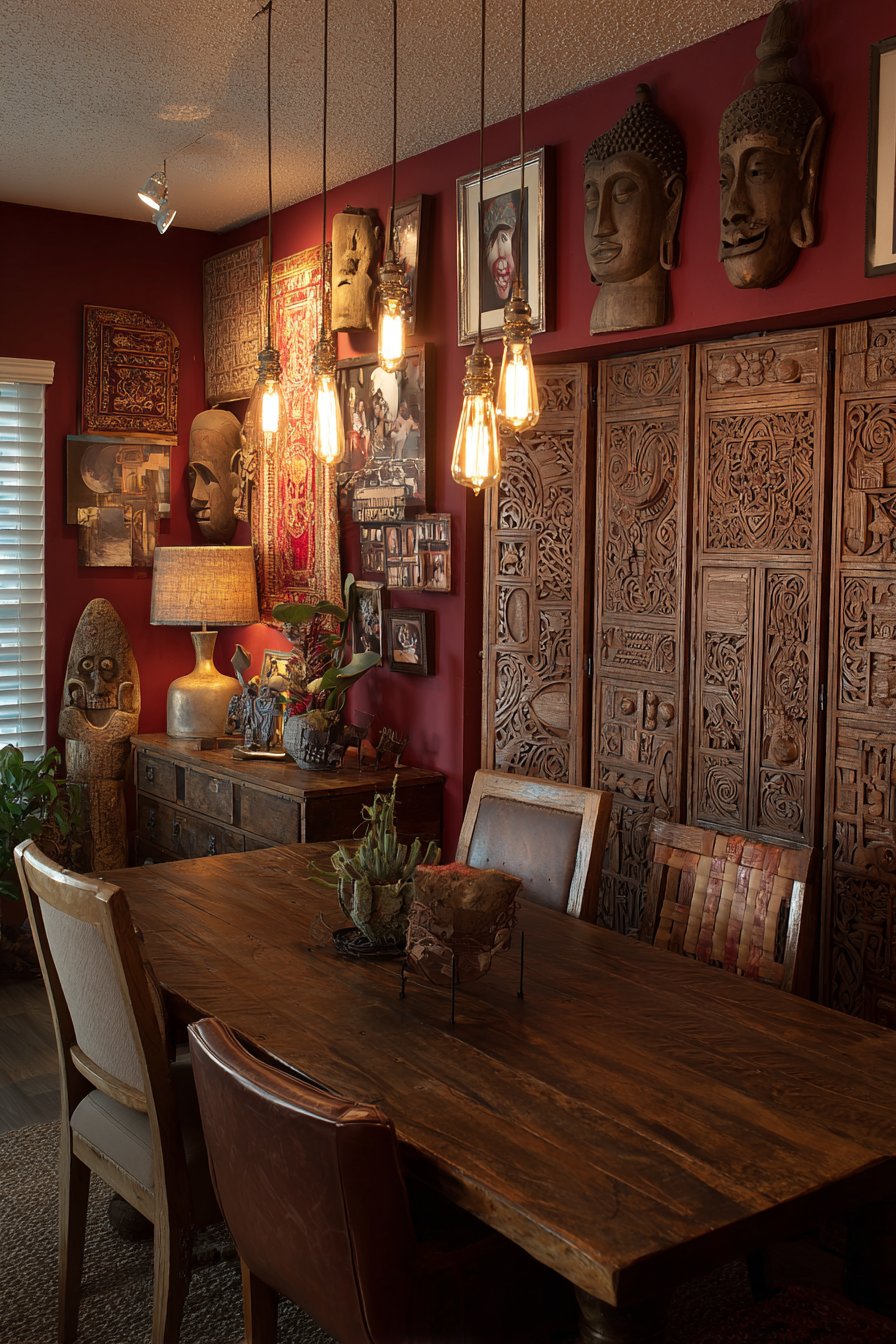
A global eclectic dining area showcases wall decor that tells stories. The collection includes African masks, Indian textile wall hangings, and travel photographs. Thoughtful arrangement feels collected over time rather than purchased together. A carved wooden screen panel adds dimensional texture.
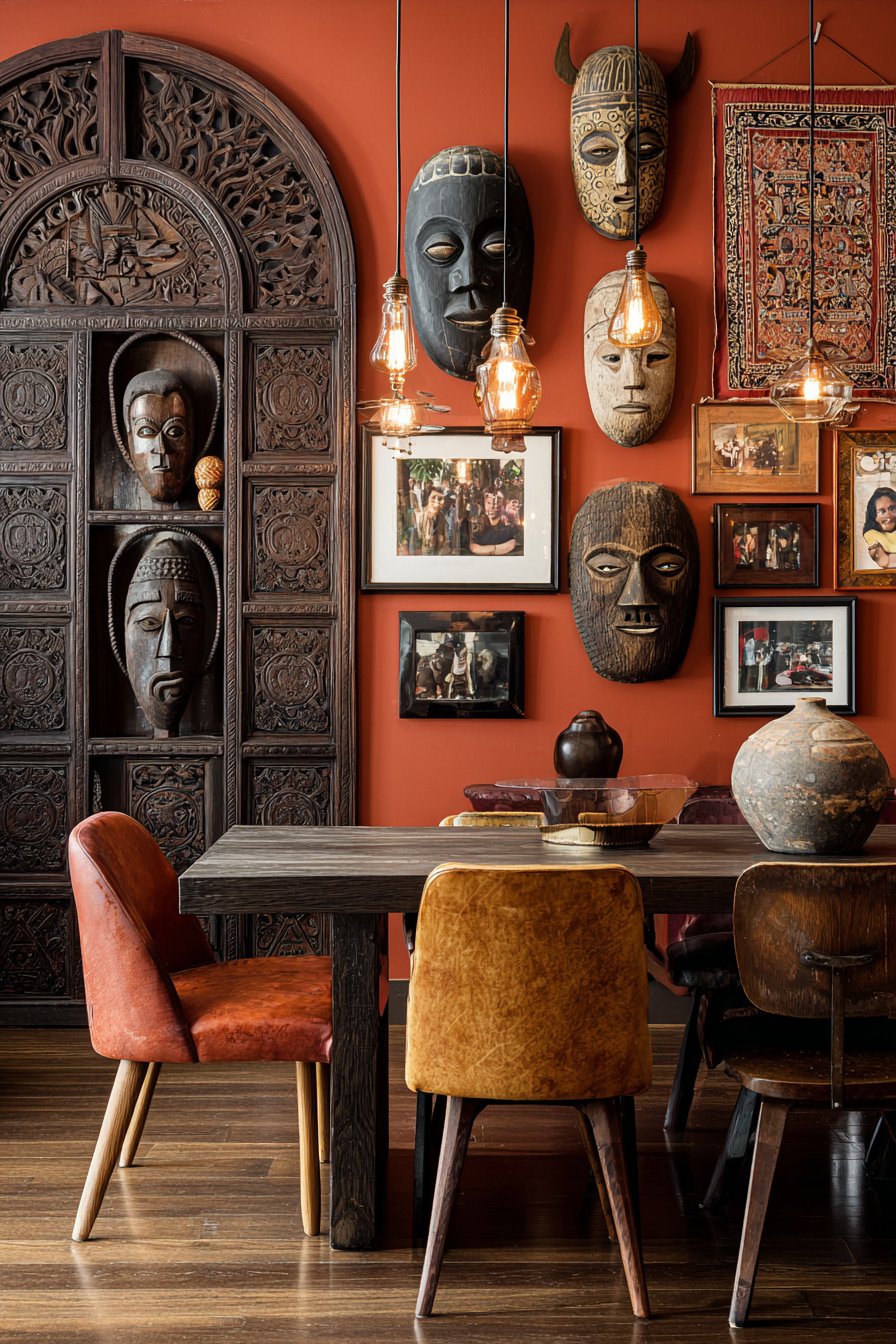
The arrangement covers an accent wall in deep terracotta tone. Mismatched dining chairs in various styles complement worldly aesthetic. Warm Edison bulb lighting creates an intimate gathering atmosphere. Each piece serves as a conversation starter during meals.
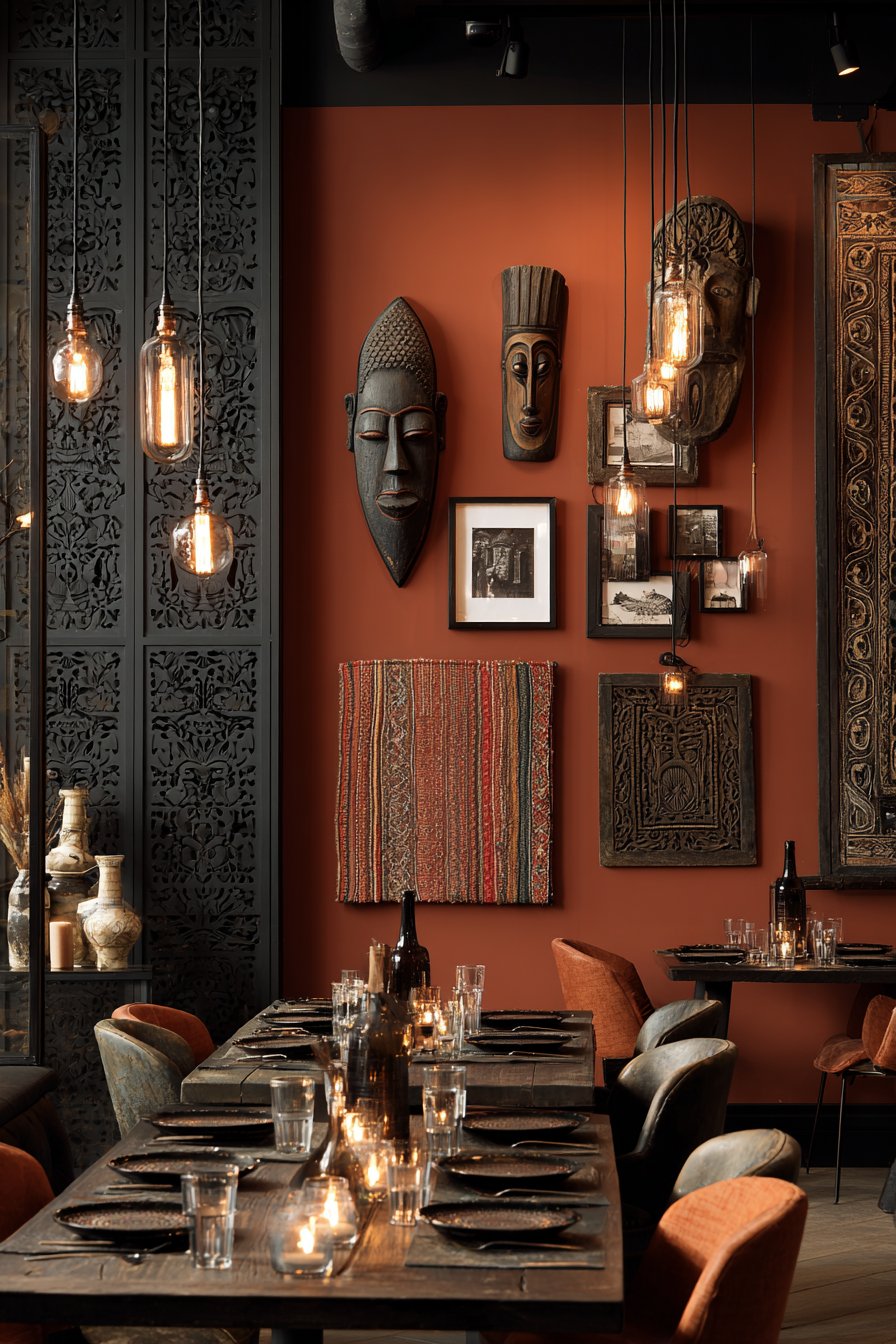
Wide-angle photography captures how personal travel-inspired decor creates character. The unique collection reflects the homeowner’s journey and experiences. Nothing matches perfectly, yet everything works together cohesively. This authentic approach creates spaces with genuine personality.
The global aesthetic celebrates diversity in design and culture. Each artifact represents a different place and time. The collection grows organically as travels continue. This living display evolves with the homeowner’s life experiences.
Key Design Tips:
- Collect authentic artifacts from travels rather than buying themed sets
- Mix different cultural elements for genuine global aesthetic
- Use deep terracotta accent wall as unifying backdrop
- Add dimensional pieces like carved screens for texture
- Choose mismatched dining chairs that reference different styles
- Install warm Edison bulb lighting for intimate atmosphere
18. Japandi Zen Garden Photography
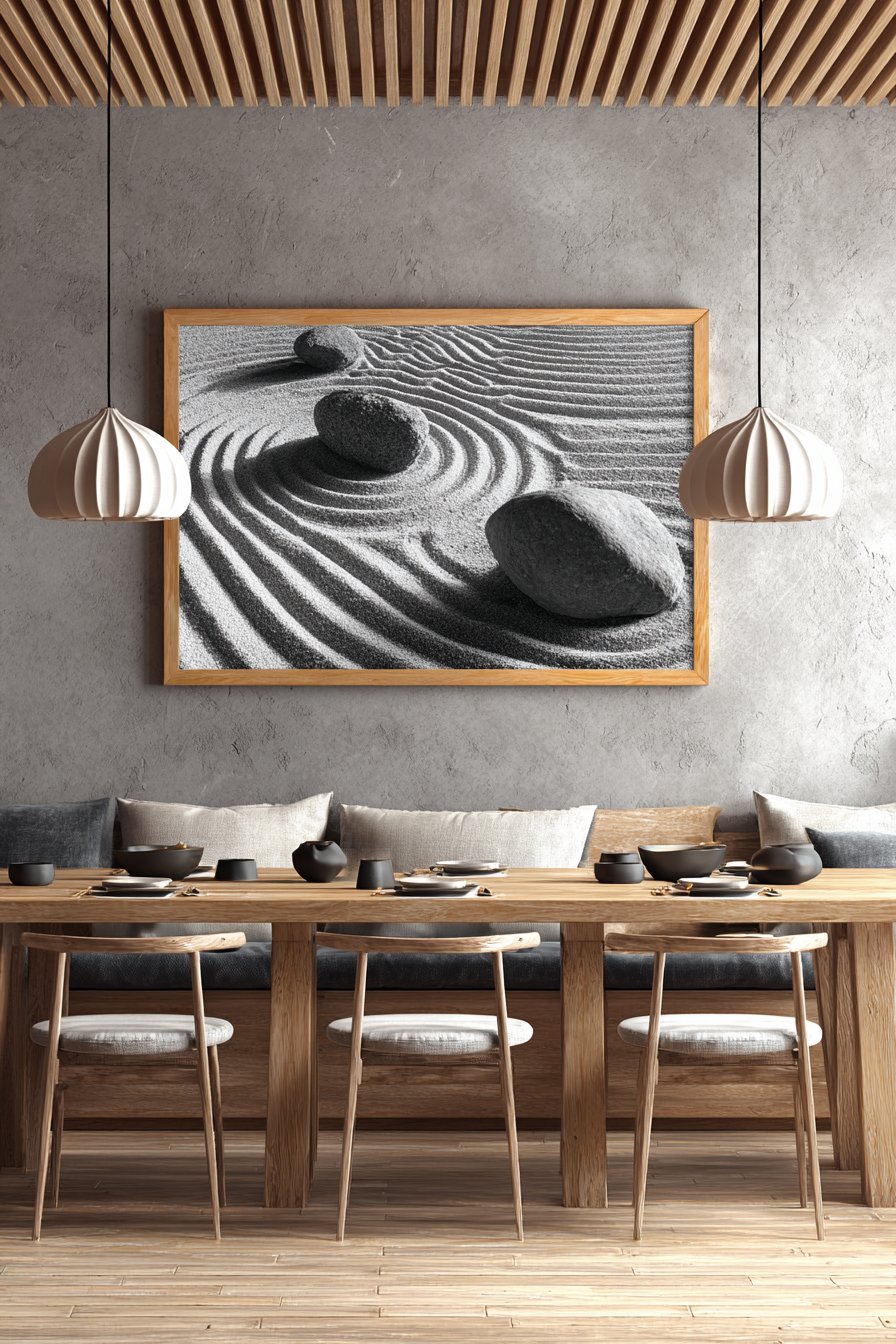
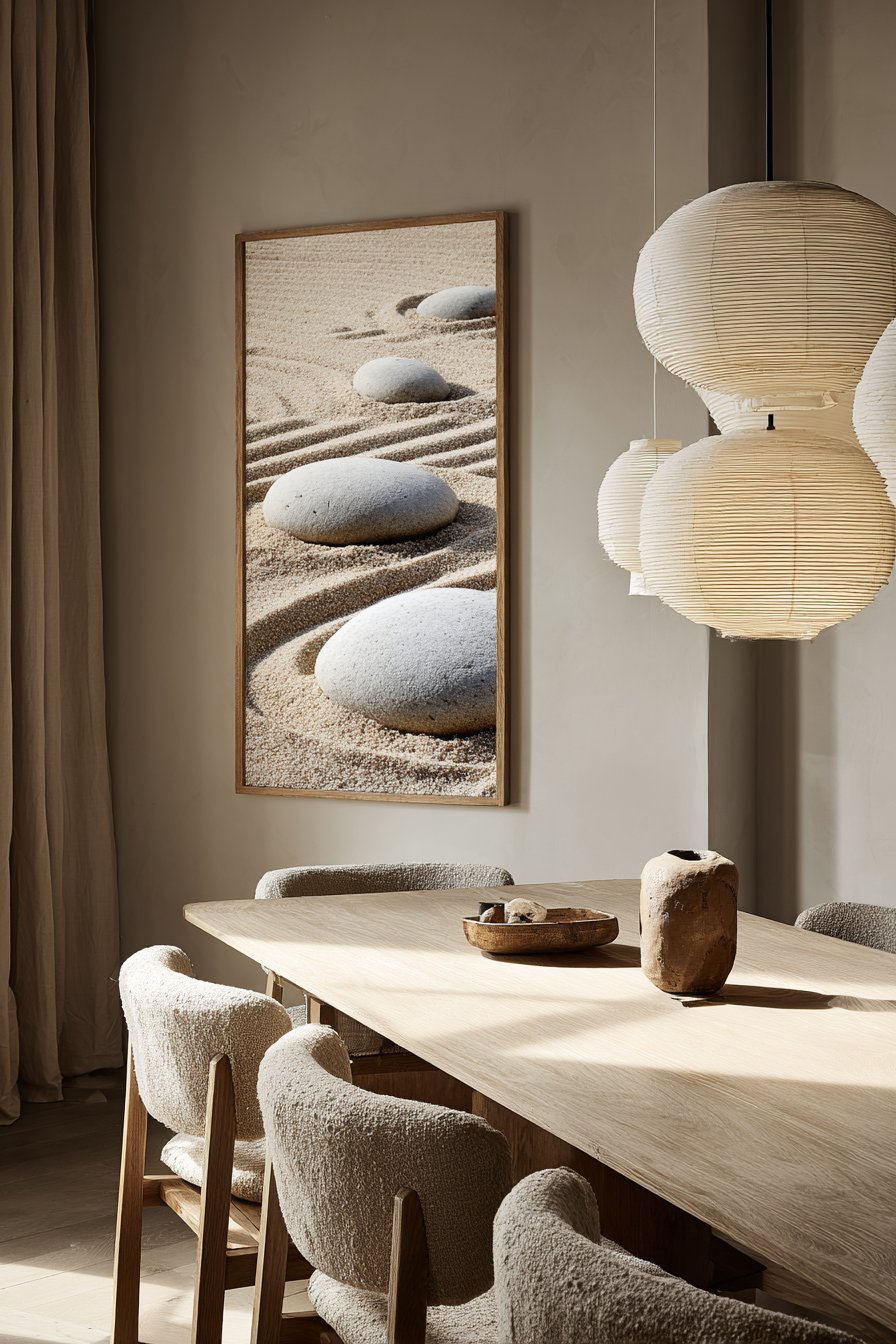
A Japandi dining space honors both Japanese and Scandinavian principles. Minimal wall decor features single large-format zen garden photograph. Natural oak frame presents the image with precise alignment. The photograph’s composition emphasizes negative space and raked sand patterns.
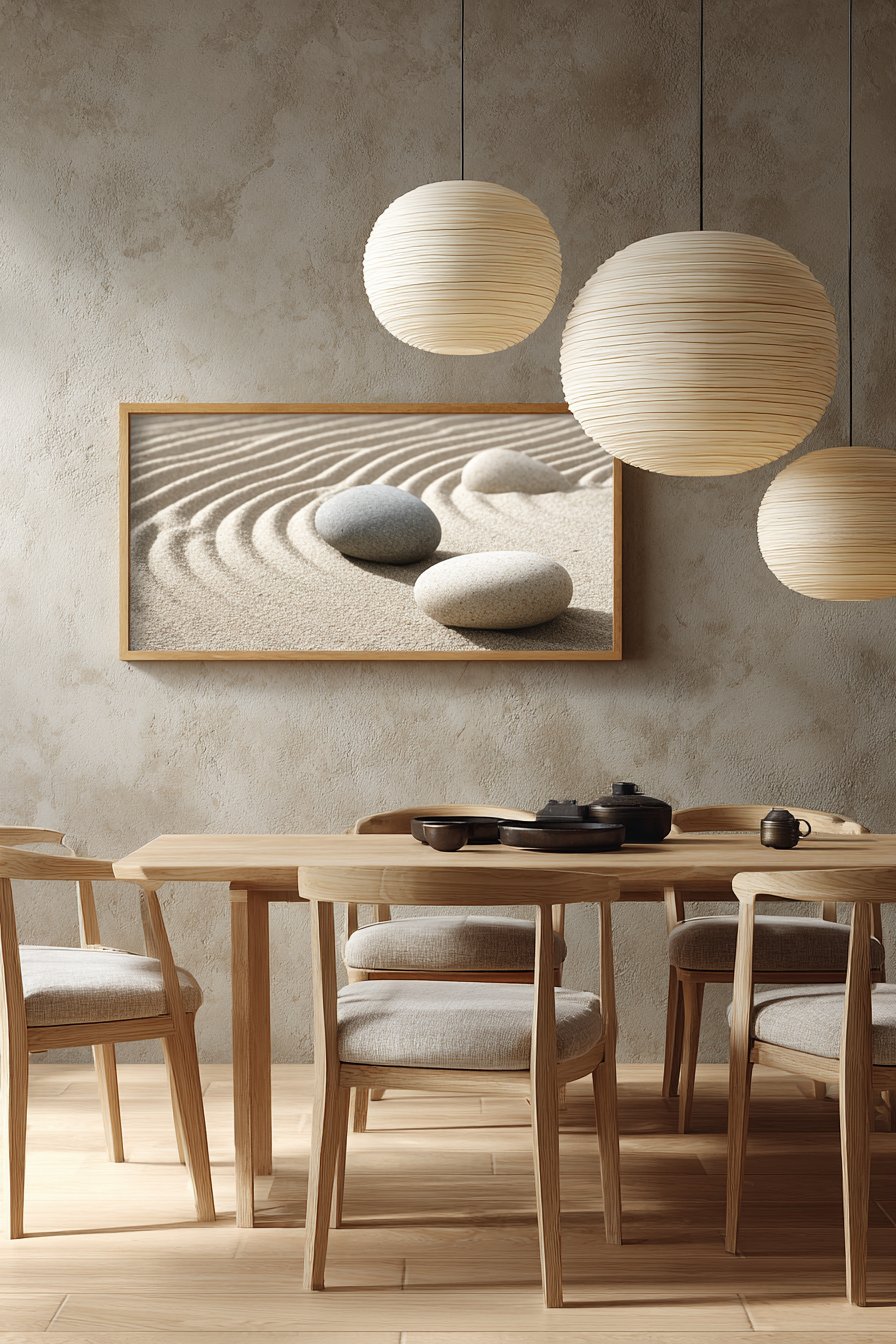
Warm grey wall paint creates serene contemplative backdrop. Simple pendant lights with paper shades provide soft illumination. Low-profile dining chairs with natural linen upholstery maintain uncluttered aesthetic. Every element receives careful consideration for purposeful placement.
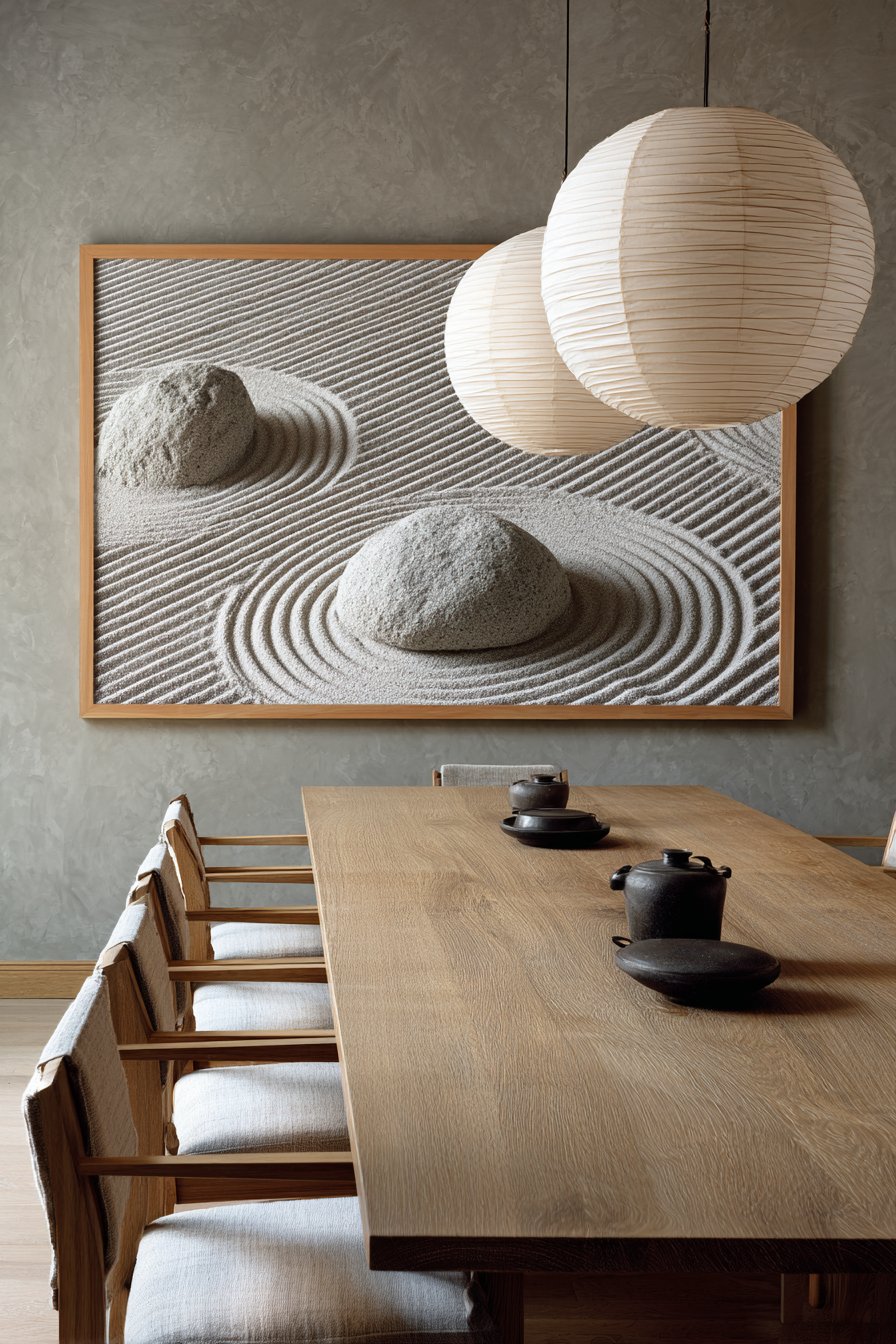
Professional interior photography emphasizes restraint and natural materials throughout. The carefully considered empty space creates contemplative dining environment. Natural materials like oak, linen, and paper predominate. The result feels both warm and serene simultaneously.
The zen garden photograph adds tranquility without words. Raked sand patterns evoke mindfulness and meditation. The fusion of Japanese and Scandinavian philosophies creates unique balance. Less becomes more through intentional careful curation.
Key Design Tips:
- Choose one large zen garden photograph for focal point
- Use natural oak frames that reference both design traditions
- Paint walls in warm grey tones for serene atmosphere
- Select paper shade pendant lights for soft diffused illumination
- Add low-profile furniture with natural linen upholstery
- Embrace negative space as an essential design element
19. French Country Romantic Mirror Display
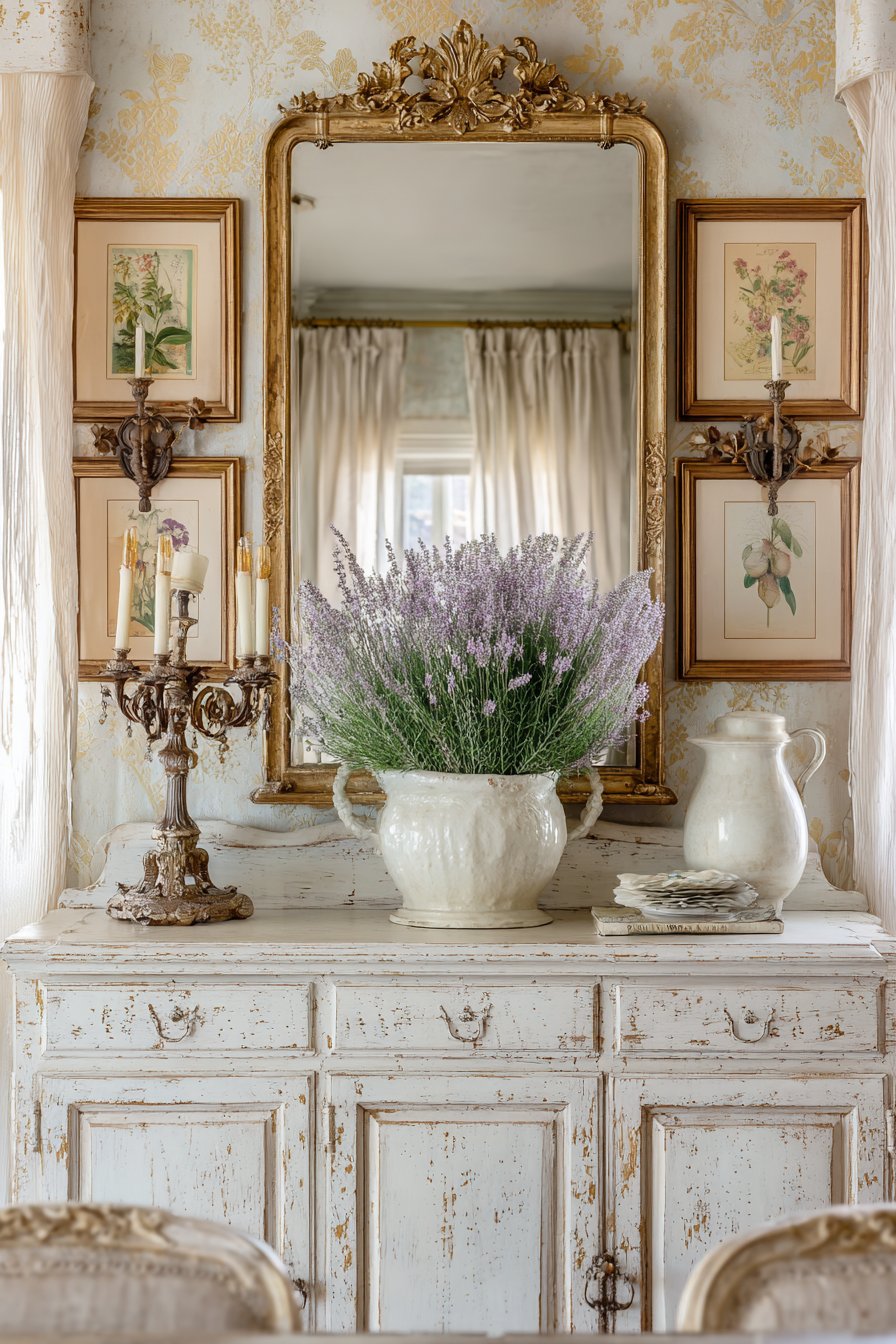
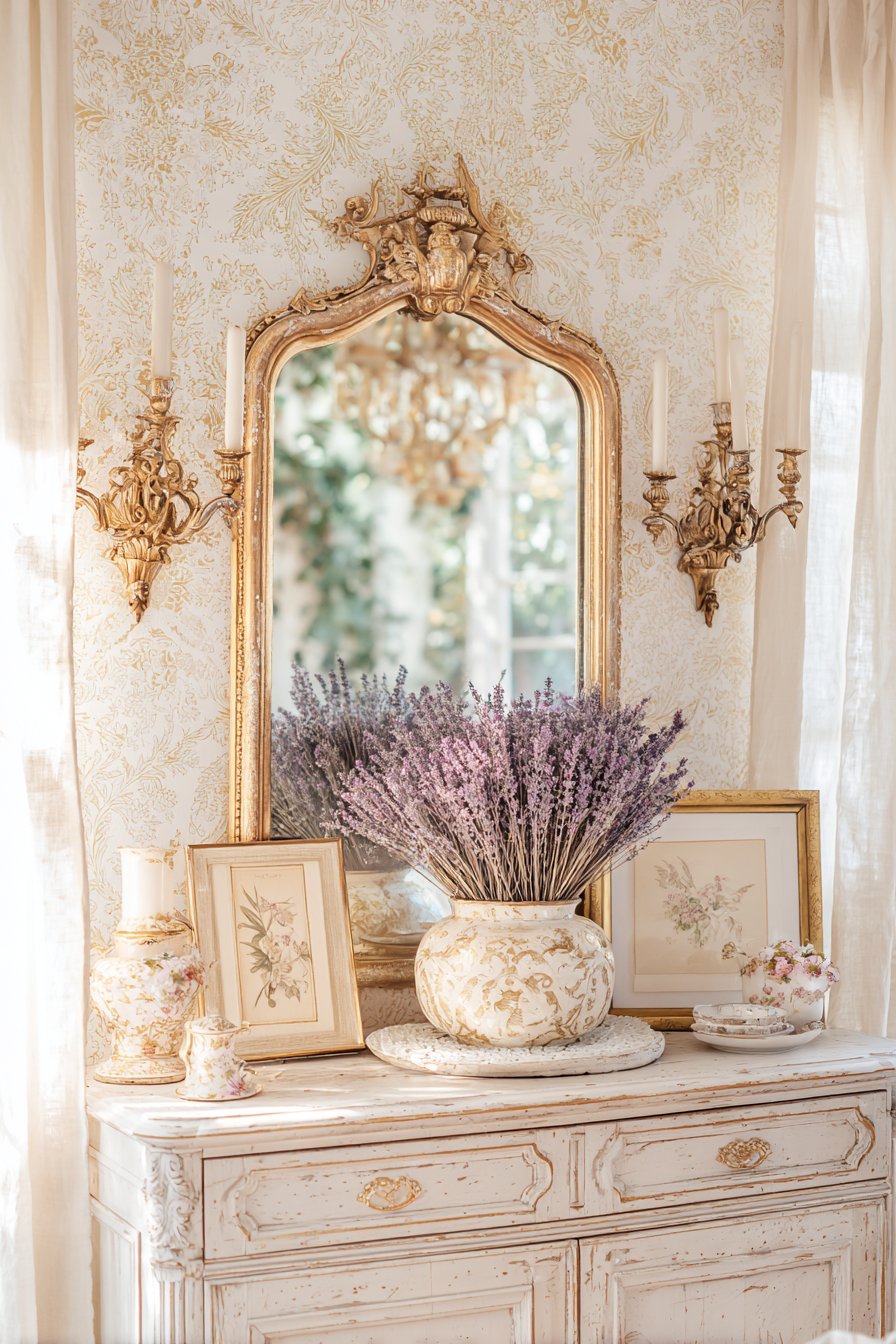
A French country dining room features romantic wall decor with vintage charm. A large ornate mirror shows distressed ivory finish with gold highlighting. The elaborate frame positions above an antique buffet elegantly. Vintage botanical prints in weathered frames flank the mirror symmetrically.
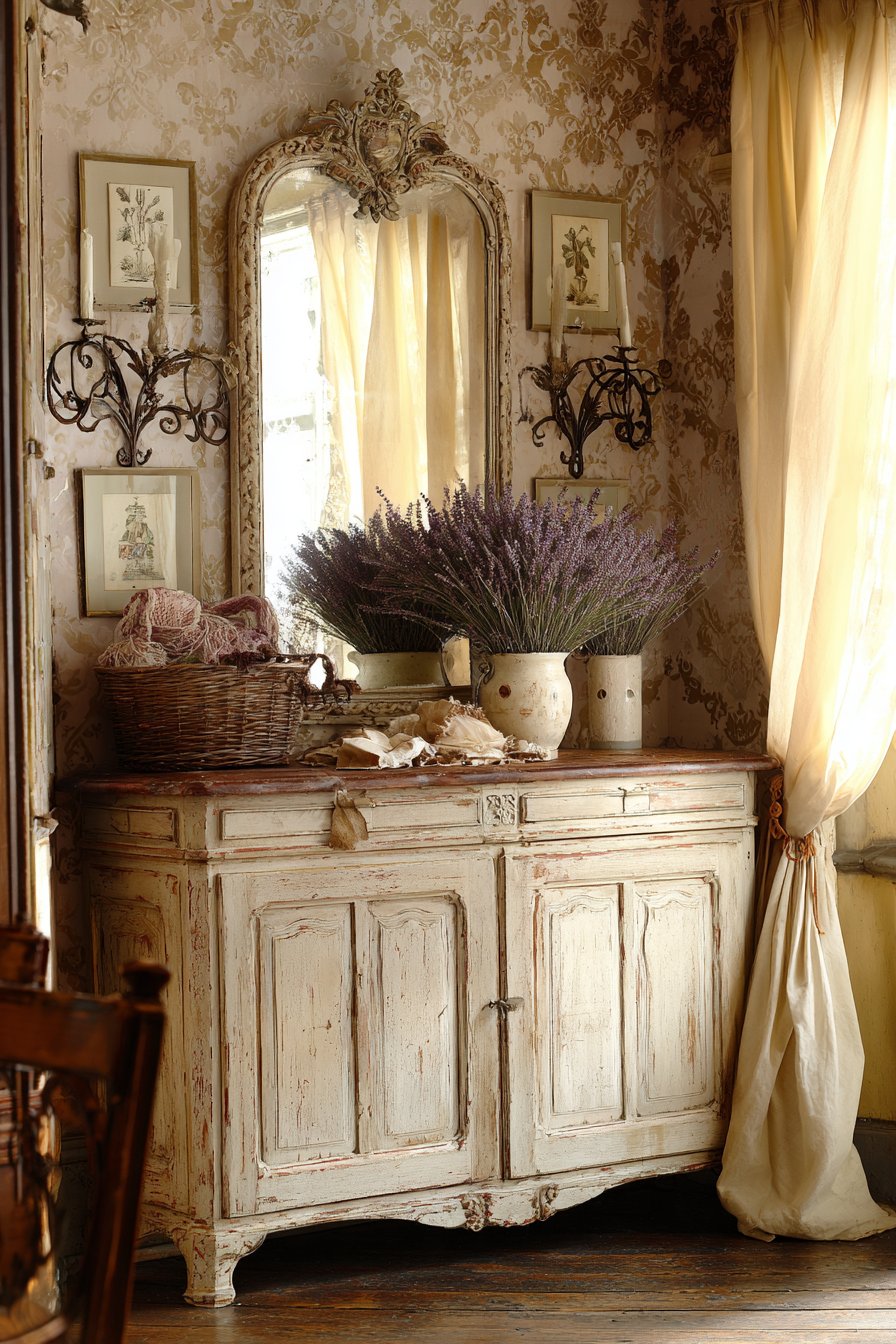
A wrought iron candelabra wall sconce adds Old World charm. Fresh lavender bundles and French pottery on buffet connect to wall arrangement. The walls show subtle damask wallpaper pattern. Natural light filtered through linen curtains creates soft diffused illumination.
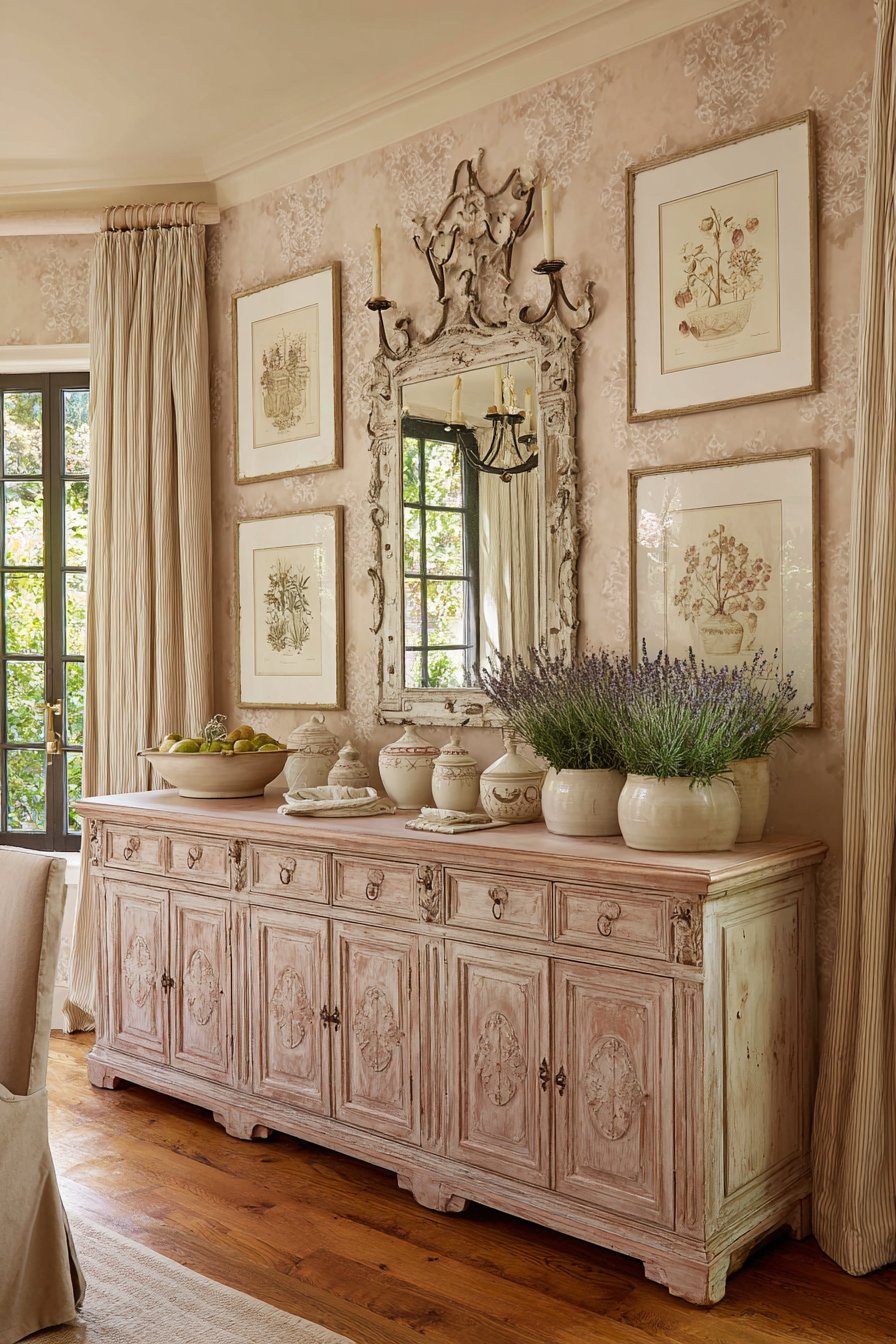
Interior design photography captures layered elegance of traditional French decor. Multiple elements work together to create refined lived-in sophistication. The distressed finishes suggest history and patina from time. Everything feels collected and cherished rather than newly purchased.
The French country aesthetic celebrates romance and refined comfort. Lavender adds fragrance and provincial authenticity. Weathered finishes prove more beautiful than pristine perfection. This approach creates spaces that improve with age.
Key Design Tips:
- Select ornate mirrors with distressed ivory and gold finishes
- Frame vintage botanical prints in weathered wood
- Add wrought iron candelabra sconces for Old World character
- Display fresh lavender and French pottery on surfaces below
- Use subtle damask wallpaper for textured backdrop
- Filter natural light through linen curtains for soft illumination
20. Modern Maximalist Bold Abstract Painting
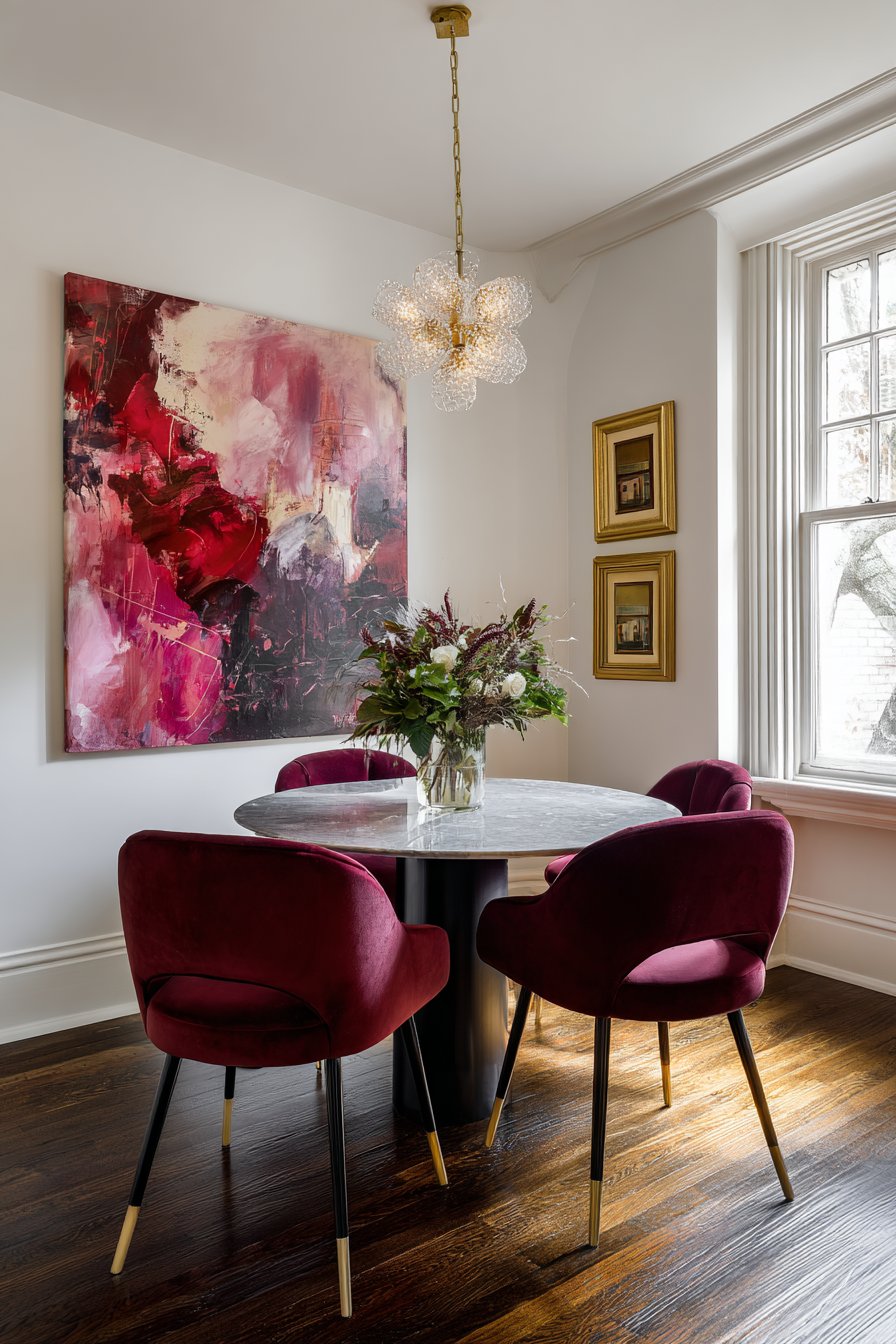
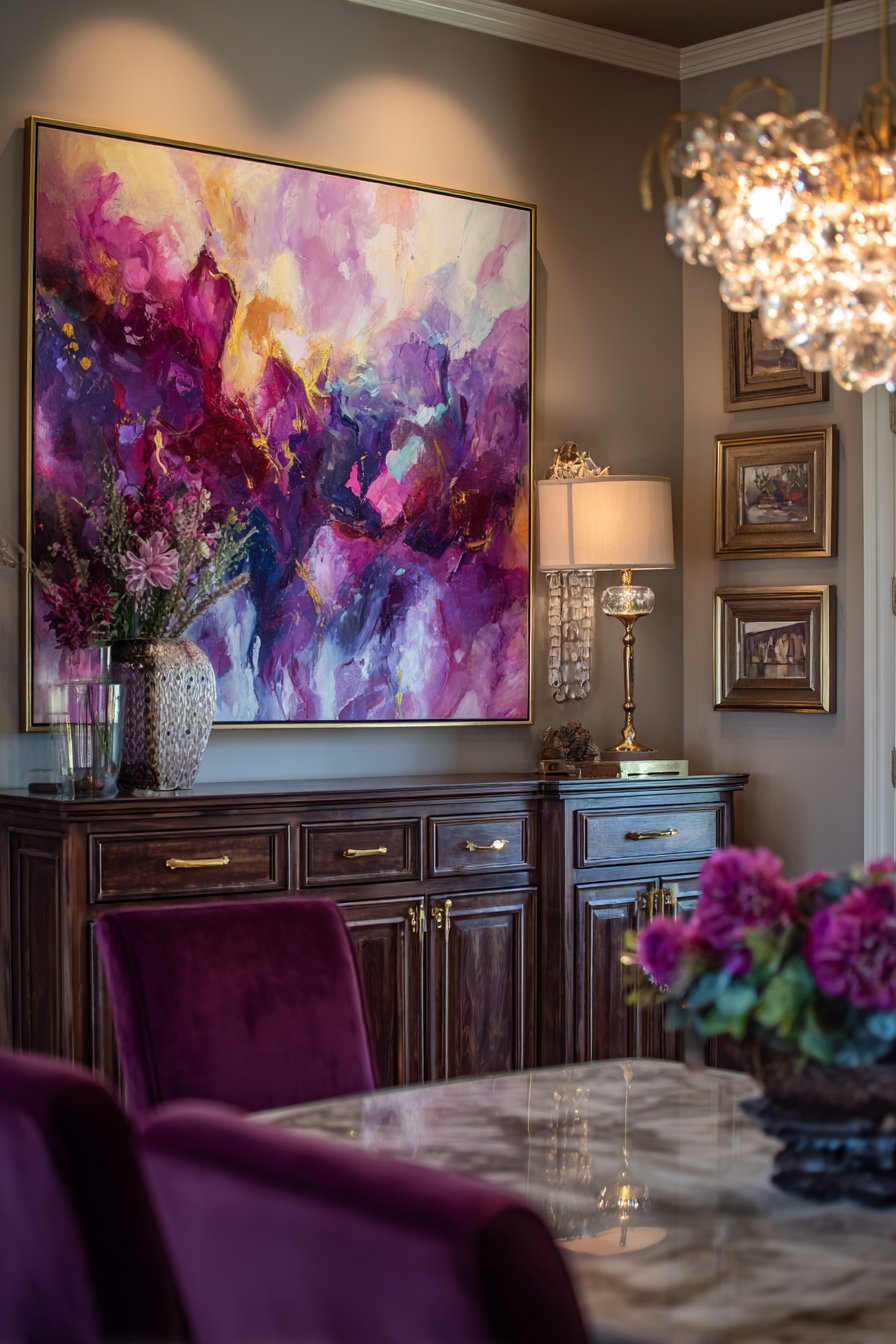
A modern maximalist dining room features bold dramatic wall decor. A vibrant large-scale abstract painting commands immediate attention. Jewel tones of emerald, sapphire, and ruby saturate the canvas. Energetic brushstrokes and rich colors set the room’s dramatic tone.
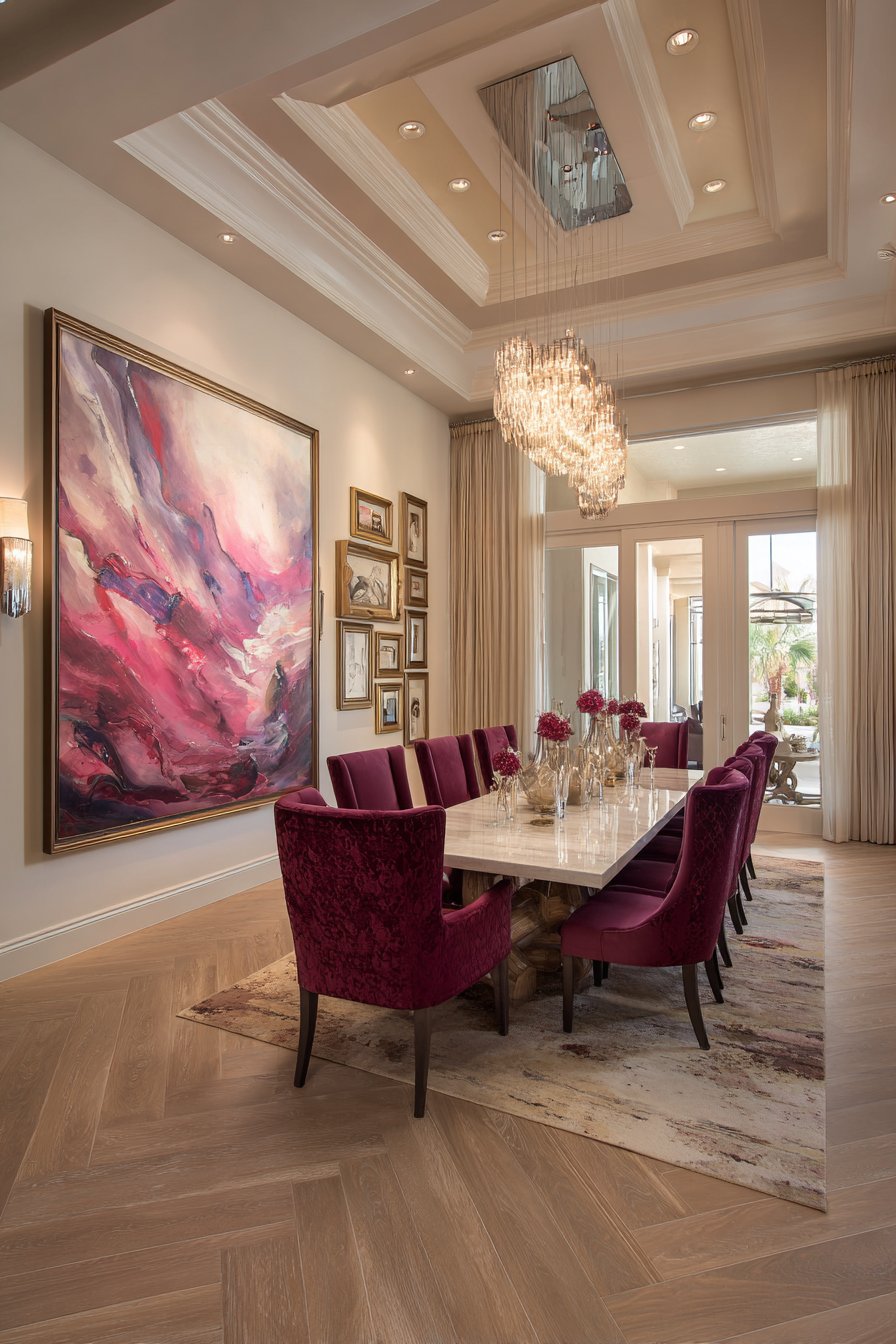
Gold-framed smaller artworks create curated salon wall on adjacent surface. A statement chandelier with crystal elements adds sparkle overhead. Velvet dining chairs in deep colors echo the artwork’s rich palette. Dramatic side lighting emphasizes the painting’s texture for evening entertaining.
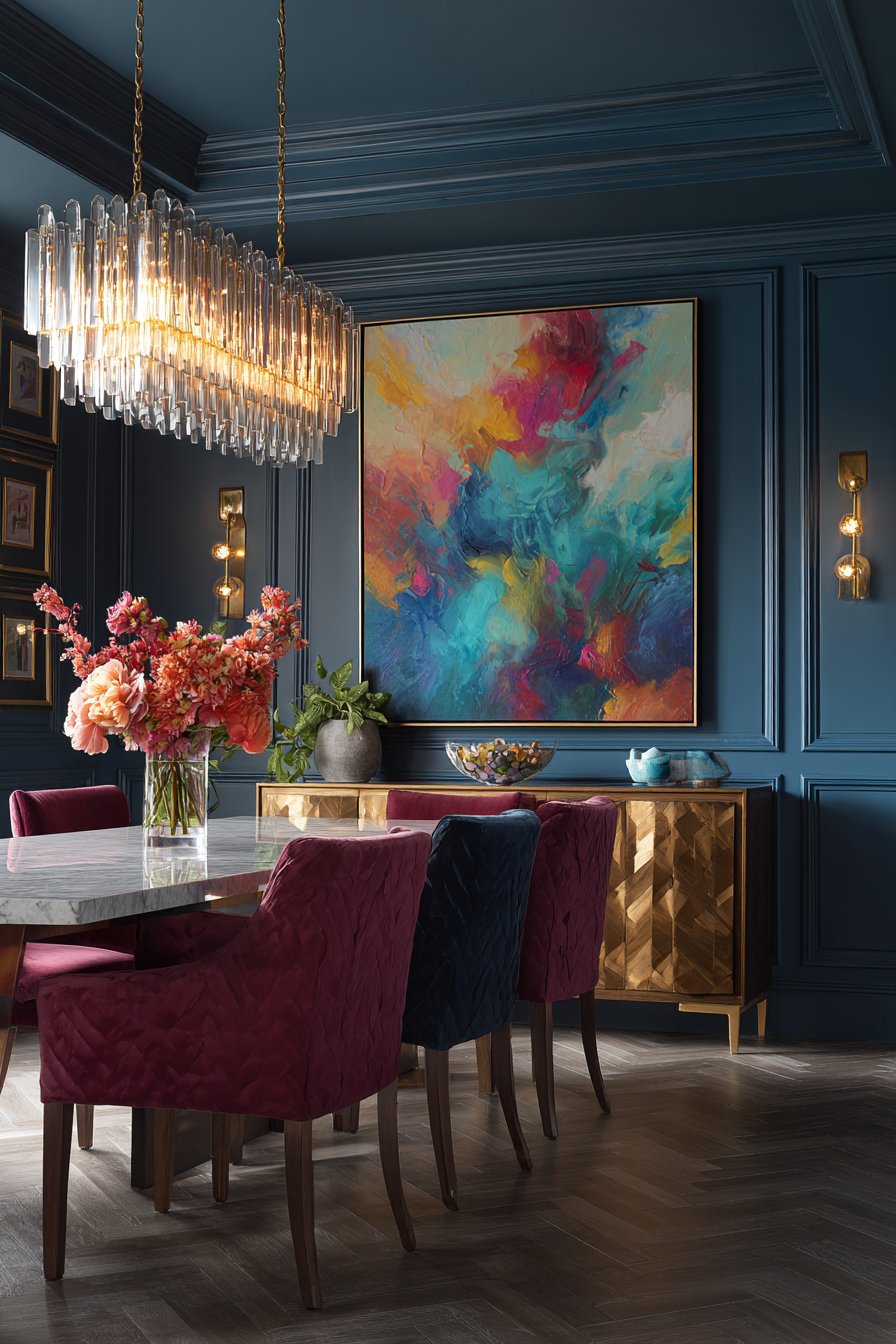
Wide-angle professional photography captures confident wall decor choices successfully. The more-is-more approach to artistic display creates visual feast. The maximalist dining space demonstrates that bold choices anchor dramatic interiors. Rich colors and layered elements create sophisticated abundance.
The abstract painting becomes the room’s emotional center. Jewel tones create luxury and depth simultaneously. The maximalist approach celebrates abundance and visual richness. This confident design proves that more can indeed be more.
Key Design Tips:
- Choose one large-scale abstract painting in saturated jewel tones
- Create salon wall with gold-framed complementary artworks
- Add crystal chandelier for sparkle and glamour
- Select velvet dining chairs in colors that echo artwork
- Use dramatic side lighting to emphasize painting texture
- Embrace maximalist philosophy with confidence and abundance
Why These Dining Wall Decor Designs Are the Best
These twenty dining wall decor concepts represent the finest approaches to transforming dining spaces. Each design demonstrates thoughtful consideration of materials, lighting, and spatial relationships. The variety ensures that every personal style and architectural context finds suitable inspiration.
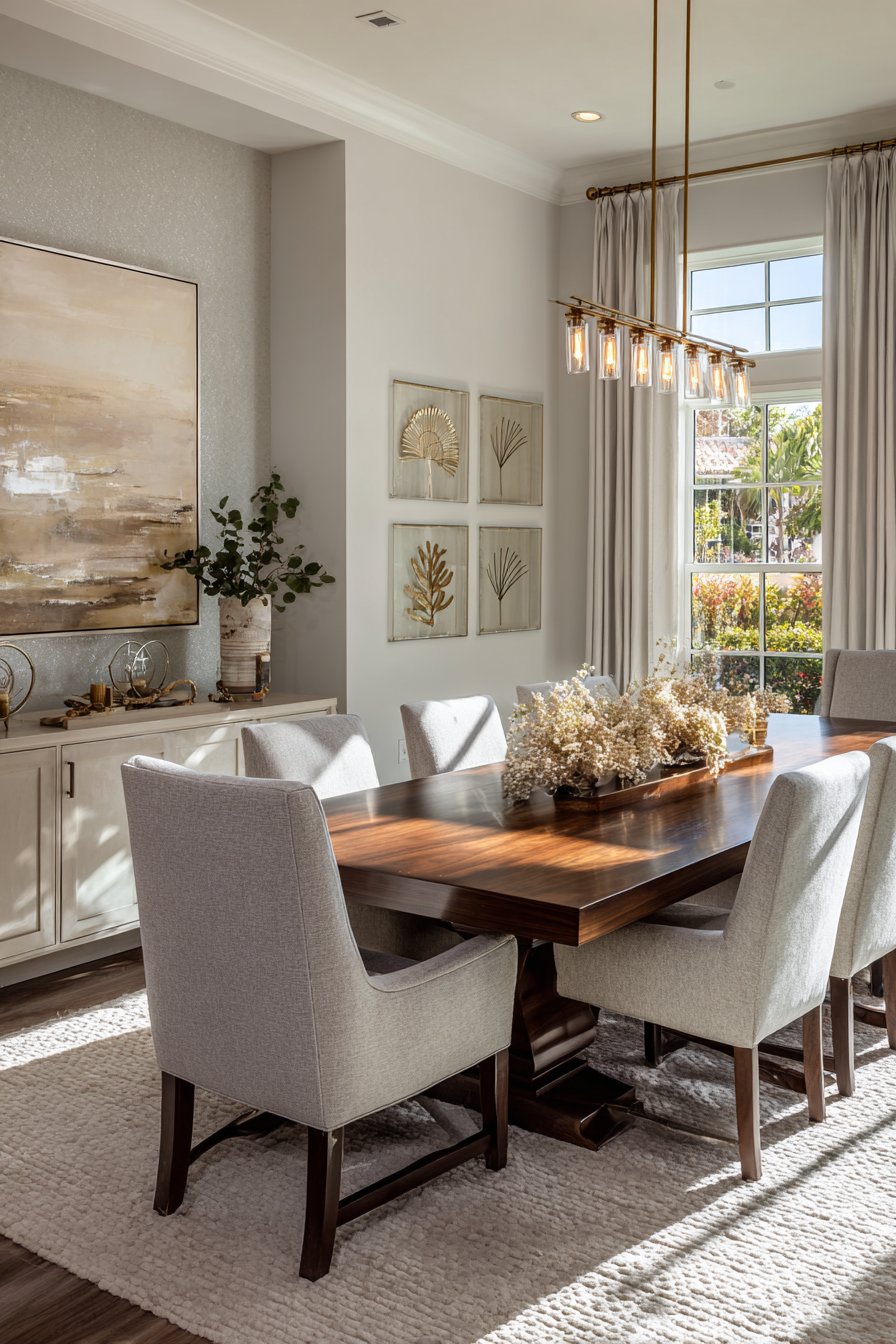
The designs showcase versatility across traditional, contemporary, minimalist, and maximalist approaches. Traditional concepts like gilded mirrors and European landscape paintings bring timeless elegance. Contemporary options featuring metal sculptures and abstract paintings offer modern sophistication. Minimalist designs prove that restraint creates powerful visual impact. Maximalist approaches demonstrate how abundance creates dramatic luxury.
Practical considerations underpin each concept. Durable materials like reclaimed wood, metal, and quality frames ensure longevity. Lighting strategies enhance artwork and create atmosphere effectively. The designs accommodate various spatial constraints from compact areas to expansive walls. Flexible systems like picture rails allow evolution as tastes change.
Color theory principles guide successful implementation. Cohesive palettes create harmony across diverse elements. Accent walls provide backdrop without overwhelming focal pieces. Neutral foundations allow artwork to shine while jewel tones create drama. Understanding how colors interact ensures balanced compositions.
Material choices reflect sustainability and authenticity. Reclaimed wood and architectural salvage add history while reducing environmental impact. Authentic hand-painted tiles and artisan crafts support traditional techniques. Natural fibers and organic materials create warmth and texture. Quality pieces develop beautiful patina through years of use.
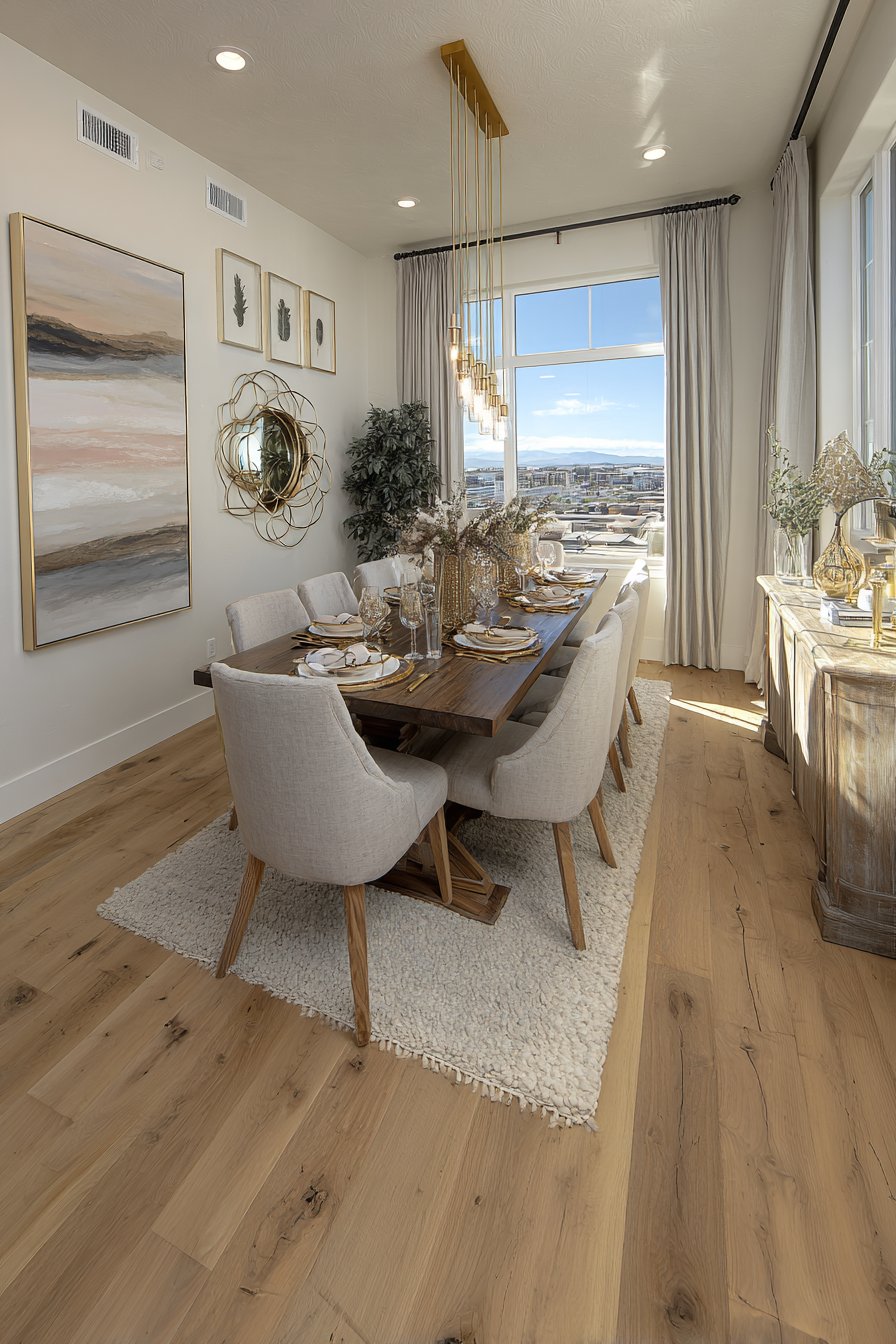
The designs address real-world functionality alongside aesthetic goals. Gallery walls accommodate growing art collections. Modular arrangements allow seasonal changes. Reflective surfaces amplify natural light in darker spaces. Dimensional elements add interest without requiring additional floor space.
These concepts demonstrate that successful dining wall decor balances artistic expression with practical living. Whether you prefer singular statement pieces or layered collections, authentic materials or contemporary finishes, minimalist restraint or maximalist abundance, these designs provide comprehensive guidance for creating dining spaces that inspire and delight.
Conclusion
These twenty dining wall decor concepts demonstrate the transformative power of thoughtful wall treatment. From minimalist single photographs to layered maximalist collections, each approach offers unique possibilities. The key takeaways emphasize authentic materials, cohesive color palettes, and strategic lighting.
Successful dining wall decor balances aesthetic ambition with practical functionality. Start by identifying your personal style preference. Consider your space’s architectural features and natural light patterns. Choose quality pieces that resonate emotionally rather than following fleeting trends.
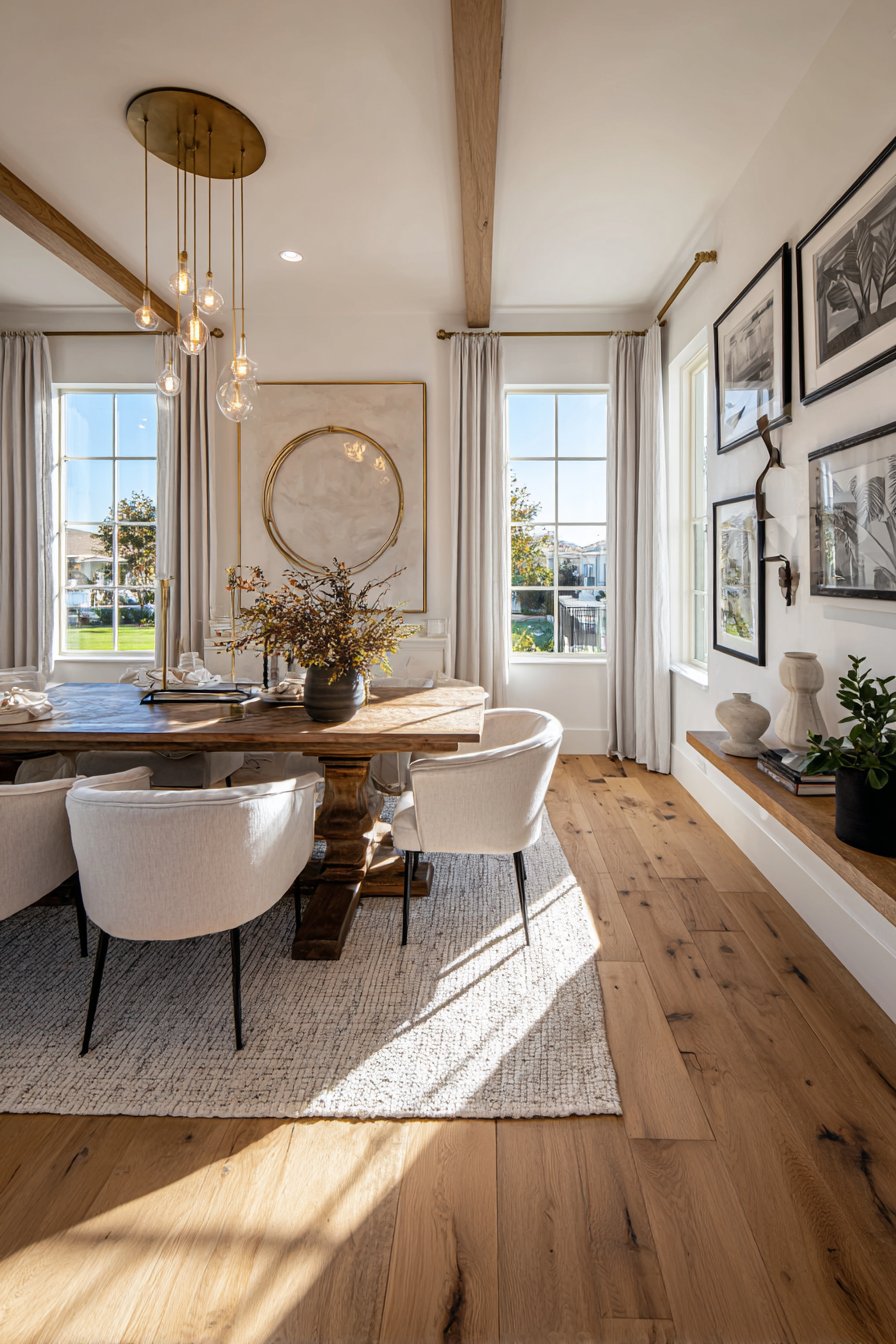
Experiment with these ideas in your own dining space. Mix elements from different concepts to create personalized combinations. Remember that the best wall decor tells your story authentically. Your dining room walls await transformation into inspiring backdrops for life’s most memorable meals and gatherings.
