


Green dining rooms have emerged as one of the most sophisticated design choices in contemporary interior design. This versatile color connects us to nature while offering endless possibilities for expression. From soft sage to deep emerald, green creates dining environments that feel both refreshing and timeless.
The psychology of color reveals why green works beautifully in dining spaces. It promotes relaxation and conversation while stimulating appetite. Green’s natural associations create welcoming atmospheres perfect for family meals and entertaining guests. The color adapts seamlessly to various design styles from traditional to modern.
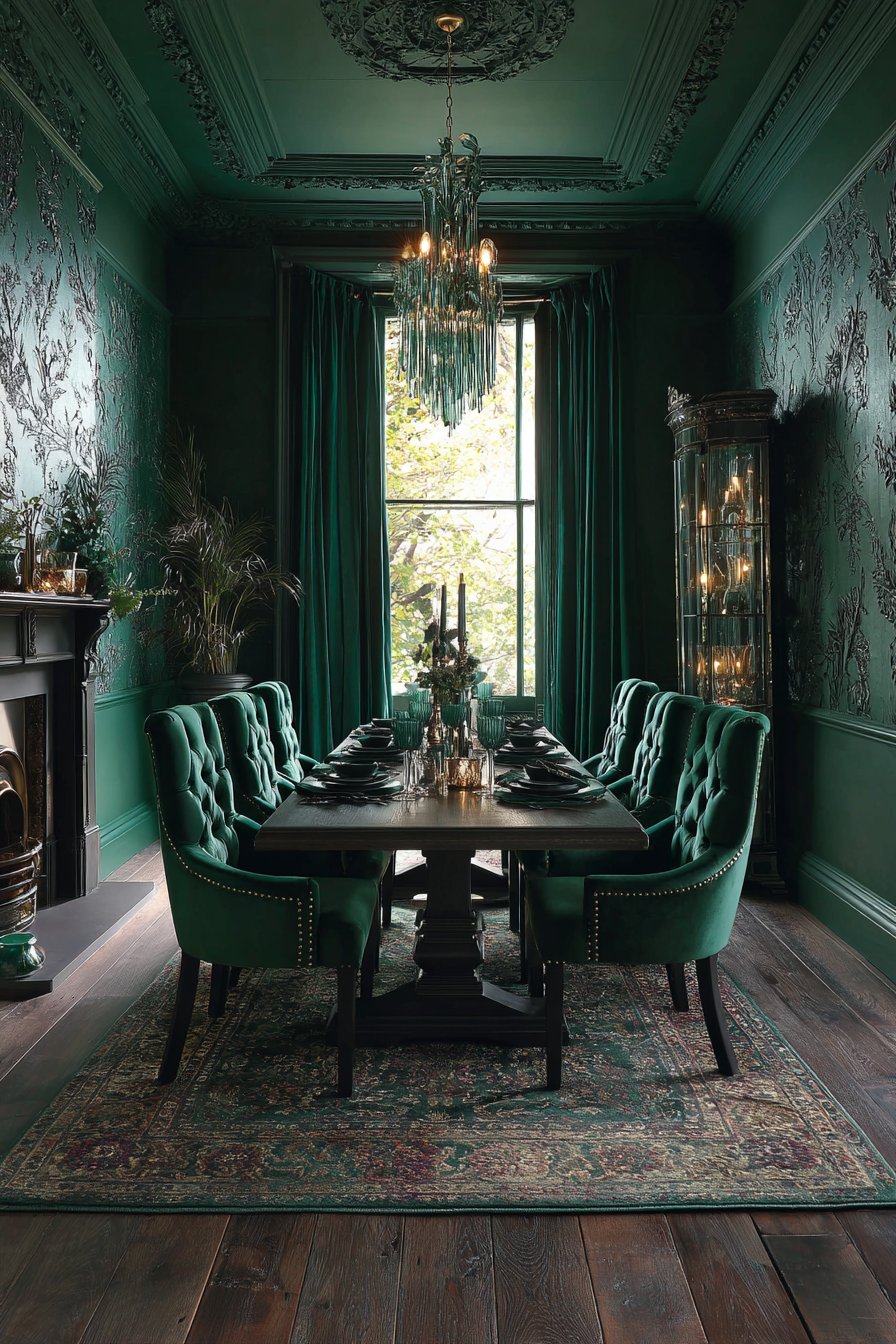
This comprehensive guide explores twenty distinct approaches to green dining room design. Each concept demonstrates unique material combinations, lighting strategies, and style interpretations. Whether you prefer minimalist Scandinavian aesthetics or maximalist bohemian layers, you’ll discover inspiration for transforming your dining space into something extraordinary.
1. Sophisticated Emerald Velvet Elegance
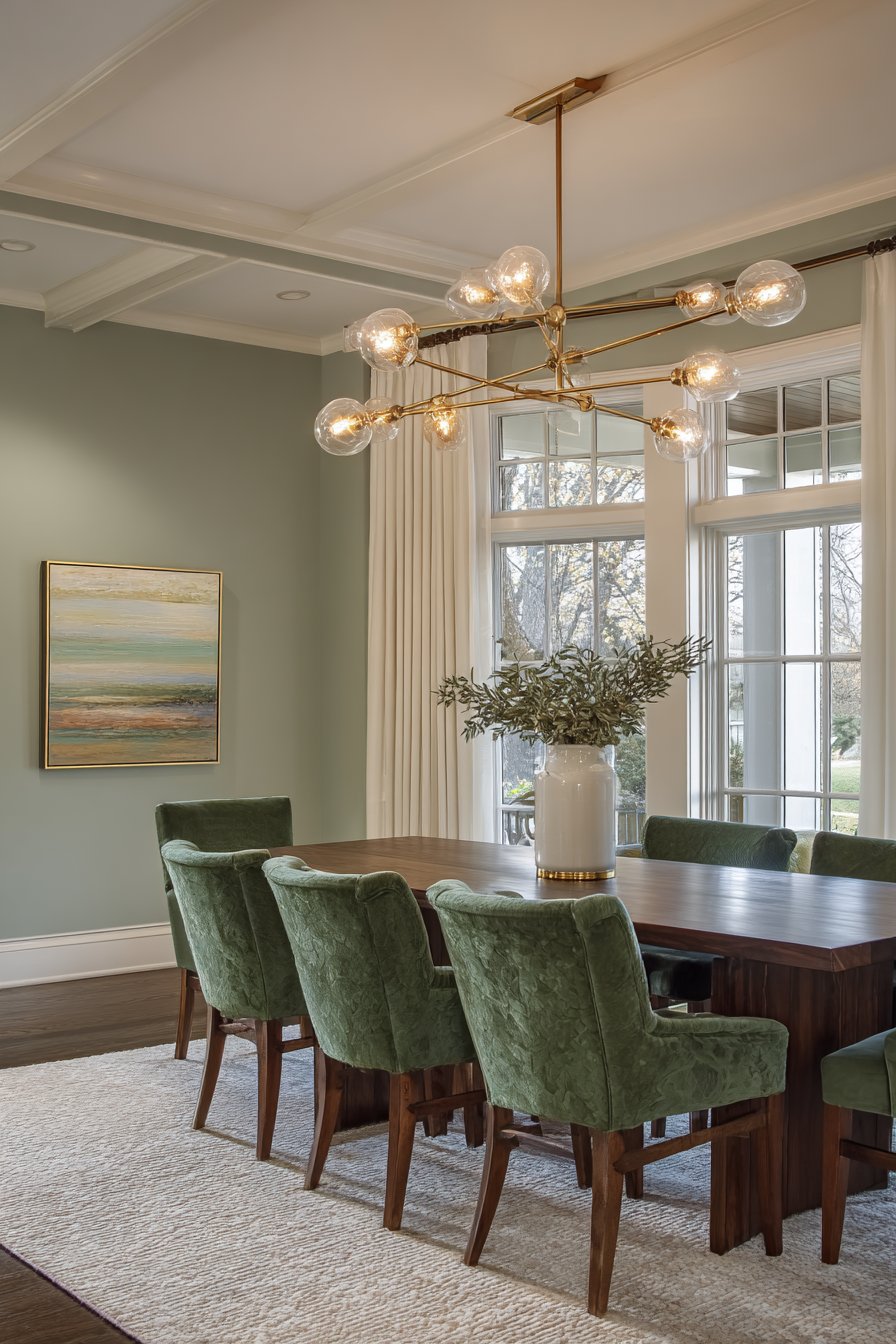
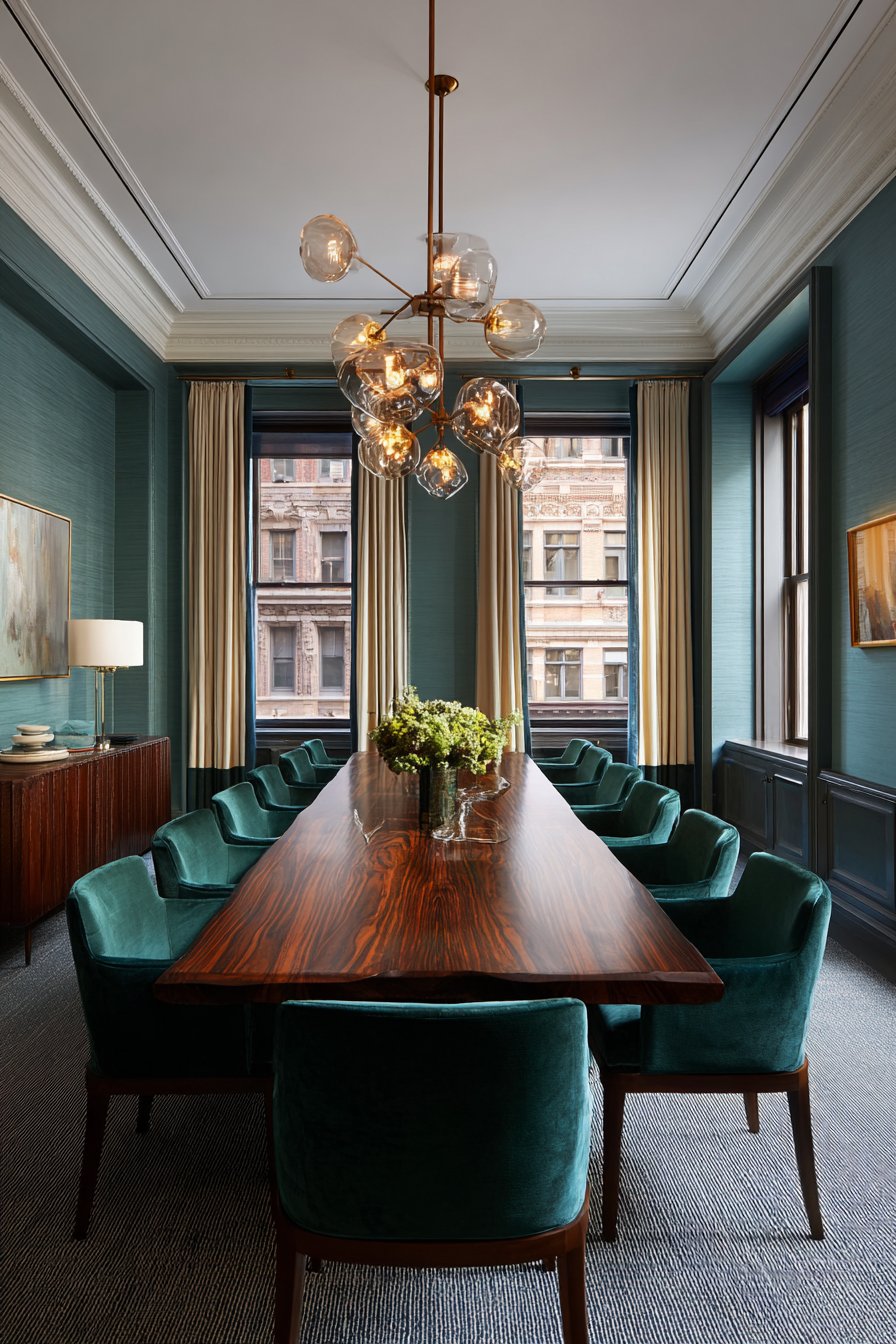
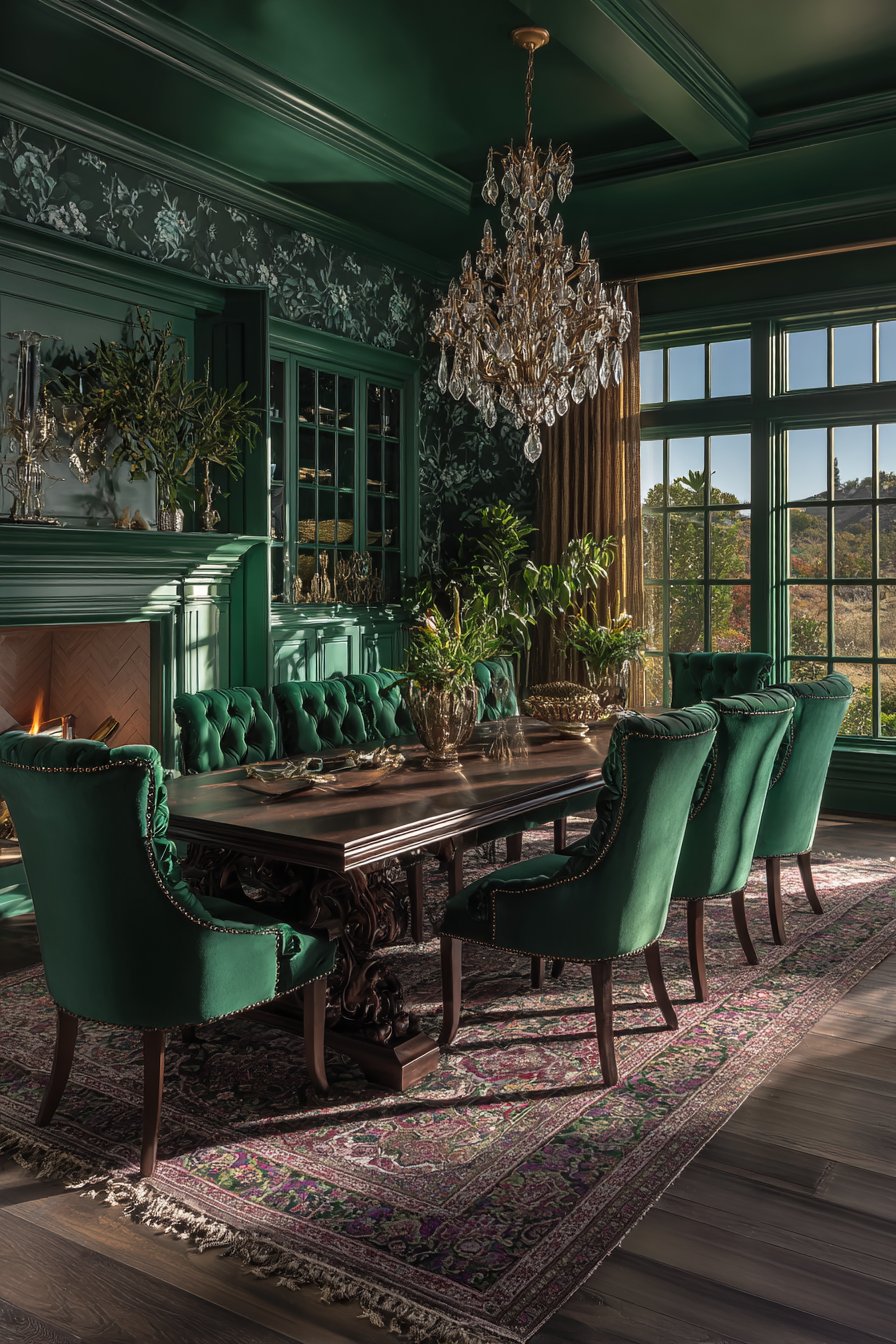
A large rectangular dining table in rich walnut wood anchors this sophisticated space. Deep emerald green velvet upholstered chairs surround the table with luxurious comfort. The walls feature muted sage green with subtle texture. White crown molding and baseboards provide crisp architectural definition. This combination creates visual interest through tonal variation.
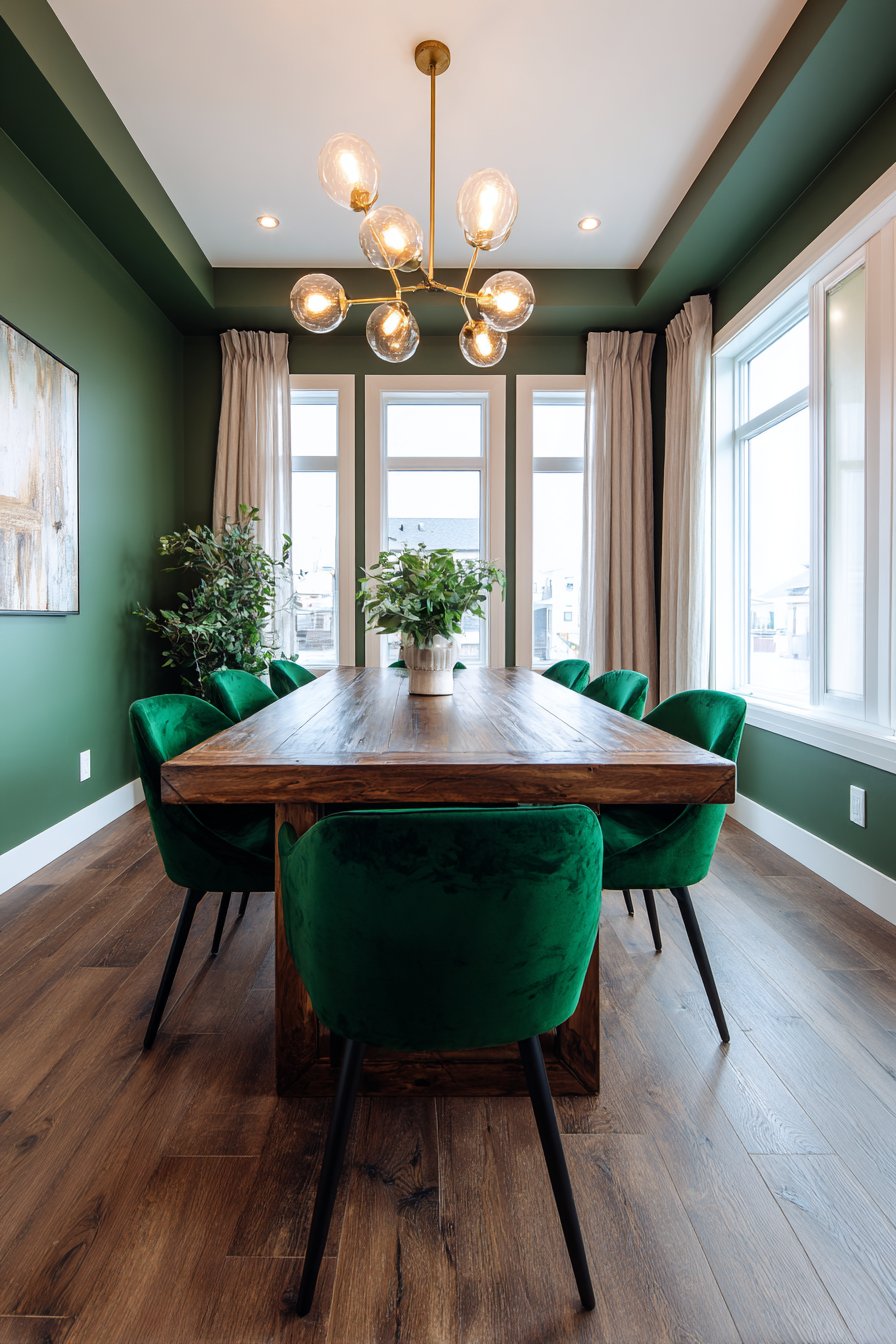
The contemporary brass chandelier becomes the room’s jewelry piece. Multiple glass globes cast warm ambient light across the dining surface. This lighting choice complements the green palette while adding metallic warmth. Natural light streams through tall windows dressed with cream linen curtains. The fabric’s natural texture softens the space without competing with bolder elements.
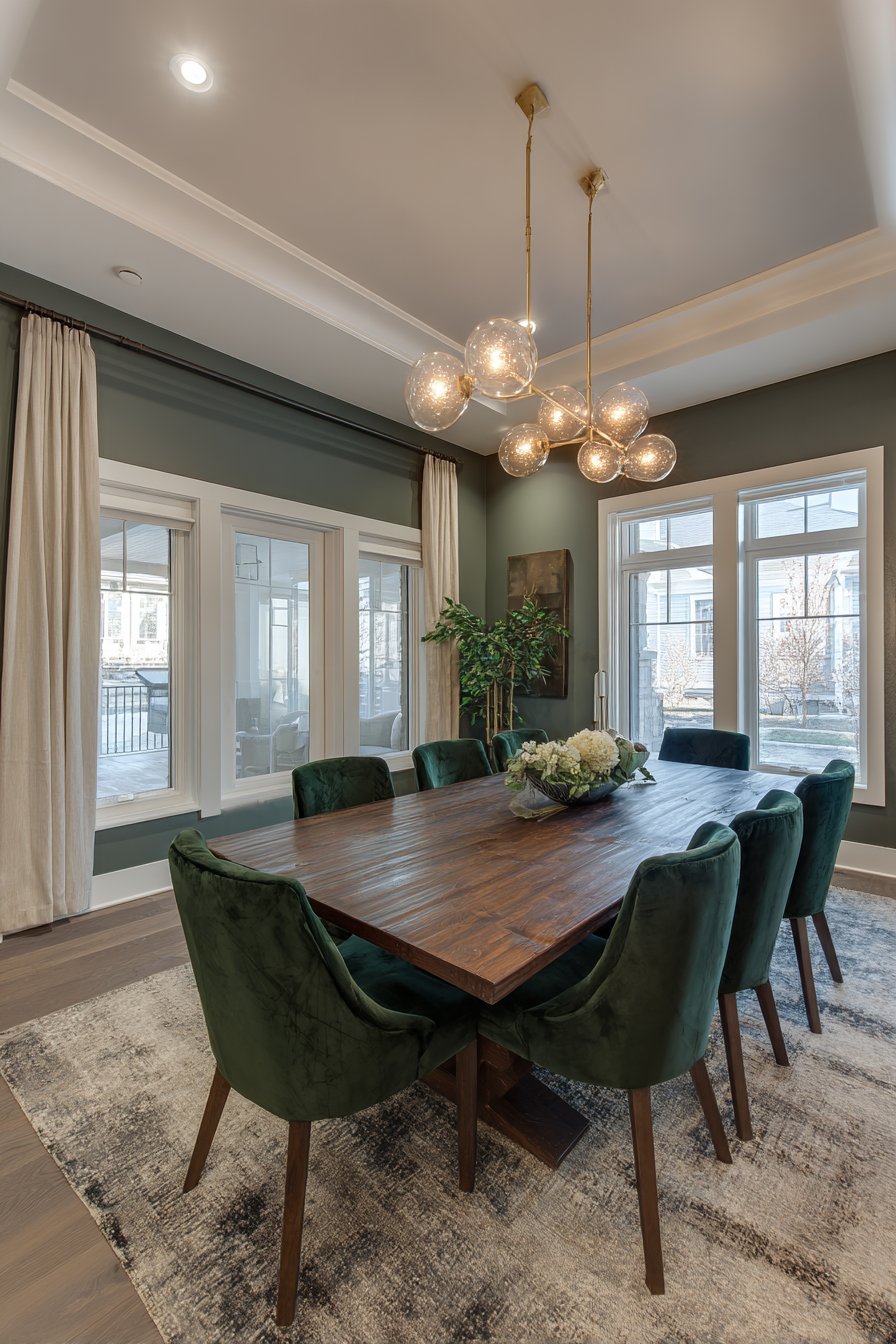
Material quality elevates this design beyond ordinary dining rooms. The walnut wood grain provides organic warmth against cool green tones. Velvet upholstery adds tactile luxury that invites guests to linger. The textured walls create depth without overwhelming the senses. These layered choices demonstrate how quality materials create sophisticated results.
Key Design Tips:
- Select walnut or similarly rich wood tones to ground green color schemes
- Invest in velvet upholstery for chairs to add luxury and comfort
- Layer different green shades from sage walls to emerald seating
- Choose brass fixtures to warm cool green tones
- Use white trim to define architectural features and add crispness
- Opt for linen window treatments in neutral tones for softness
2. Modern Forest Green Wood Slat Drama
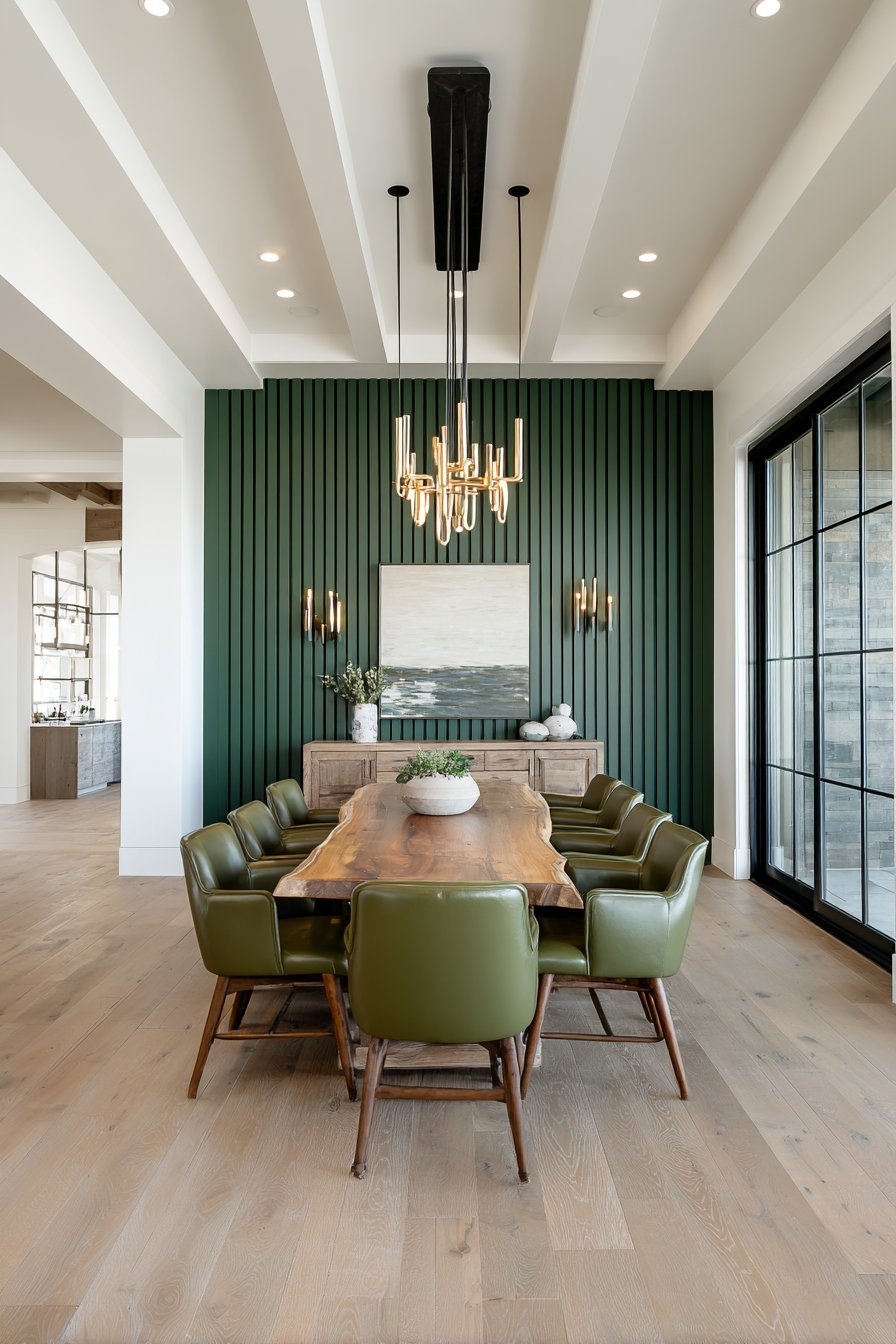
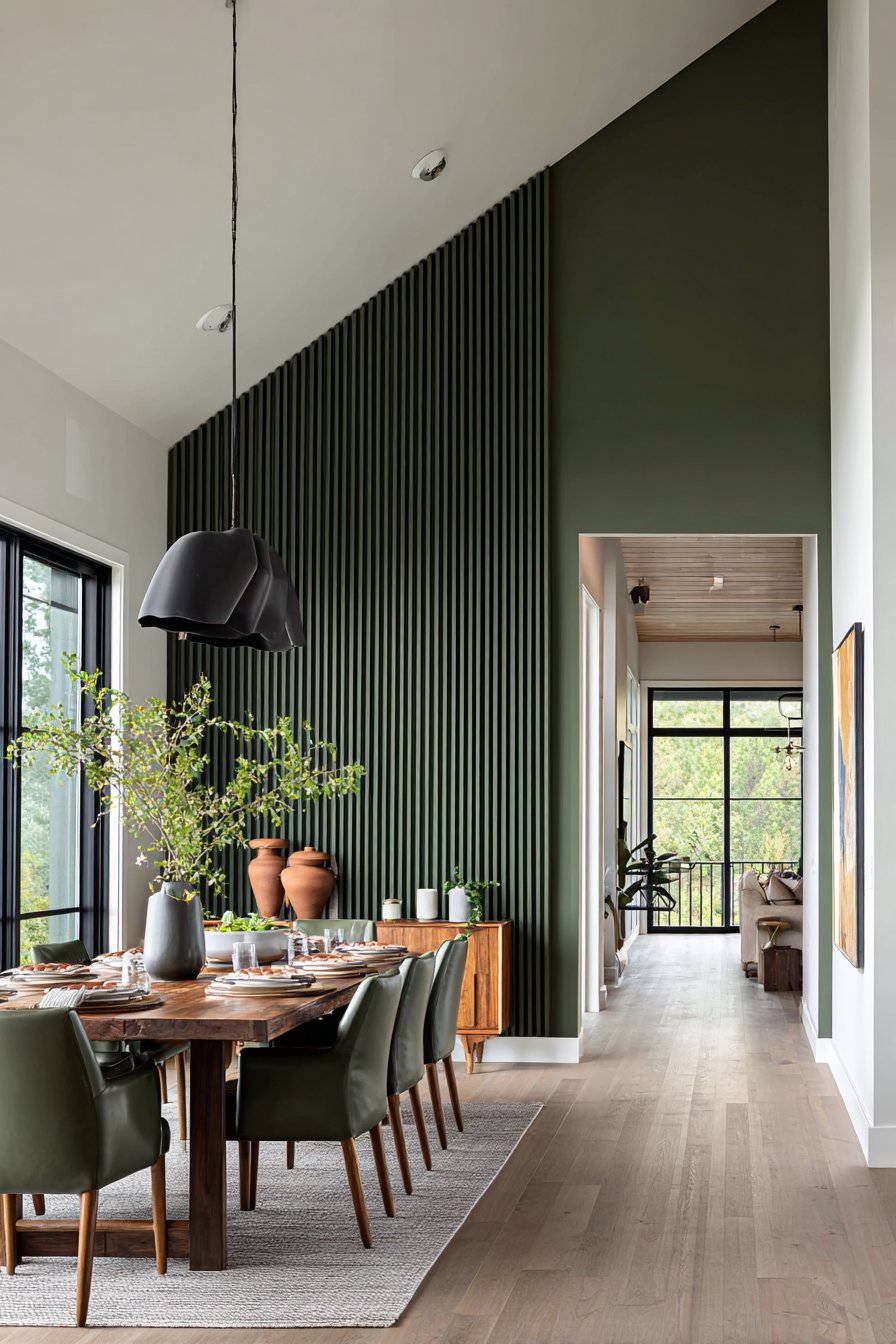
An accent wall in forest green featuring vertical wood slat paneling creates immediate visual impact. This architectural element adds dimension and texture to the modern space. A live-edge oak dining table brings organic character to the contemporary setting. The natural edge celebrates the tree’s original form. Mid-century modern chairs with sage green leather upholstery provide comfortable seating.
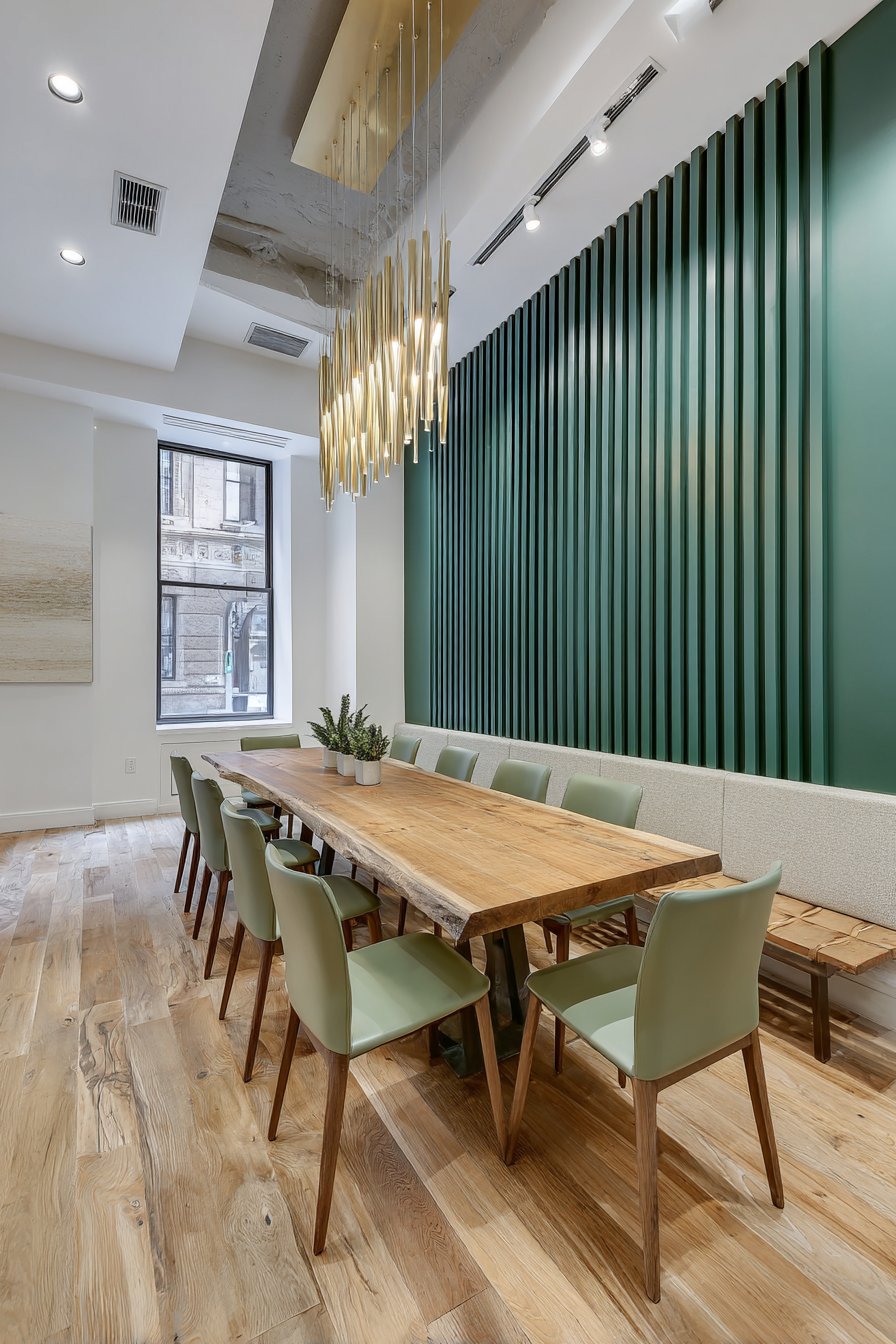
Recessed ceiling lighting provides even illumination throughout the space. A sculptural pendant light serves as the focal point above the table. This dual lighting approach offers both functionality and drama. Light hardwood flooring with natural grain variations grounds the design. The pale wood prevents the forest green from overwhelming the room.
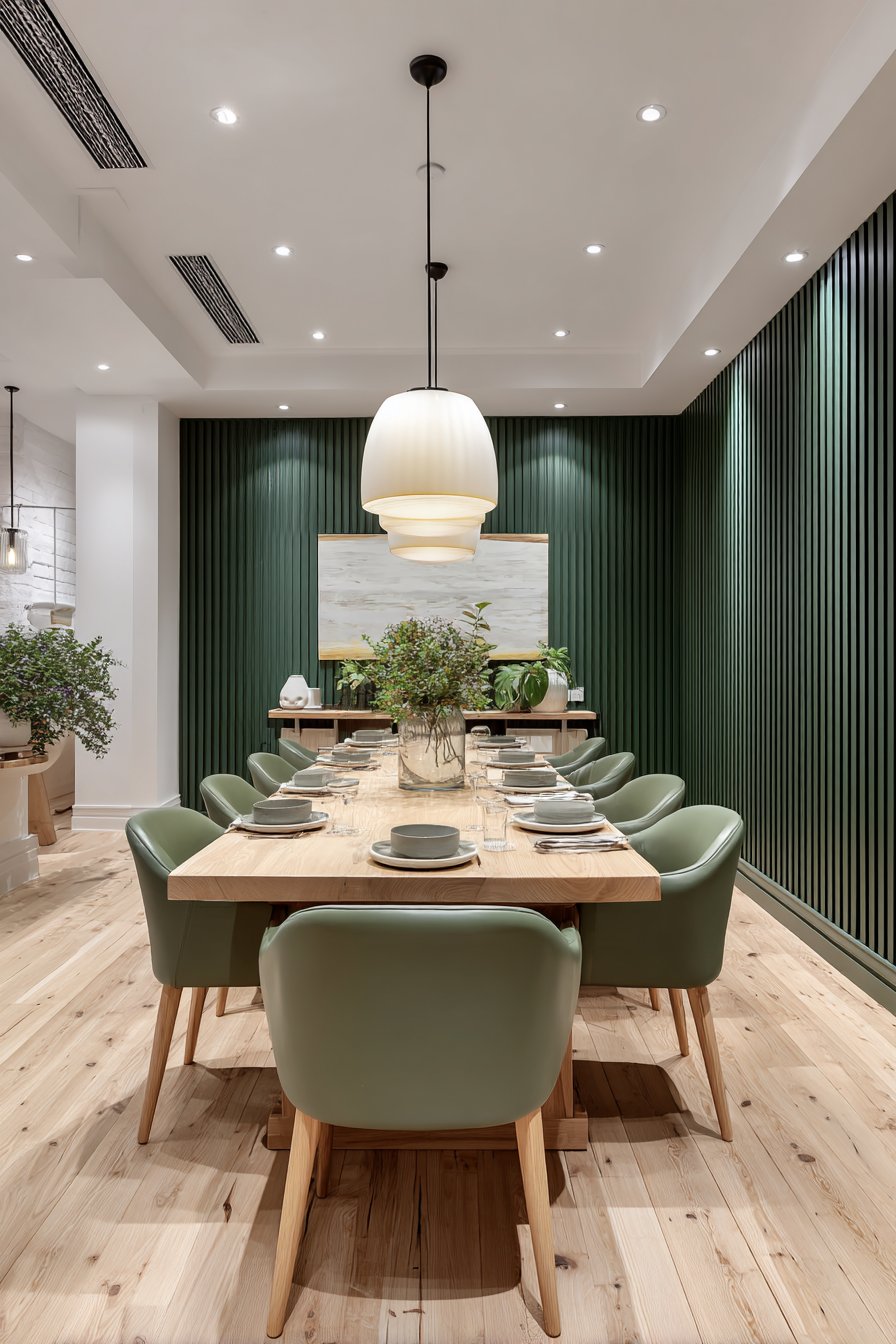
The remaining walls painted in soft white create necessary breathing room. This balance allows the green accent wall to command attention without creating visual fatigue. The combination demonstrates restraint in modern design. Strategic color placement proves more effective than covering every surface.
Key Design Tips:
- Create one bold accent wall rather than painting all walls dark green
- Choose vertical wood slats to add texture and visual height
- Balance dark green with white or light neutral on remaining walls
- Select live-edge tables for organic contrast with geometric lines
- Use recessed lighting for even illumination plus statement pendants
- Pick light flooring to prevent spaces from feeling heavy
3. Cozy Moss Green Botanical Retreat
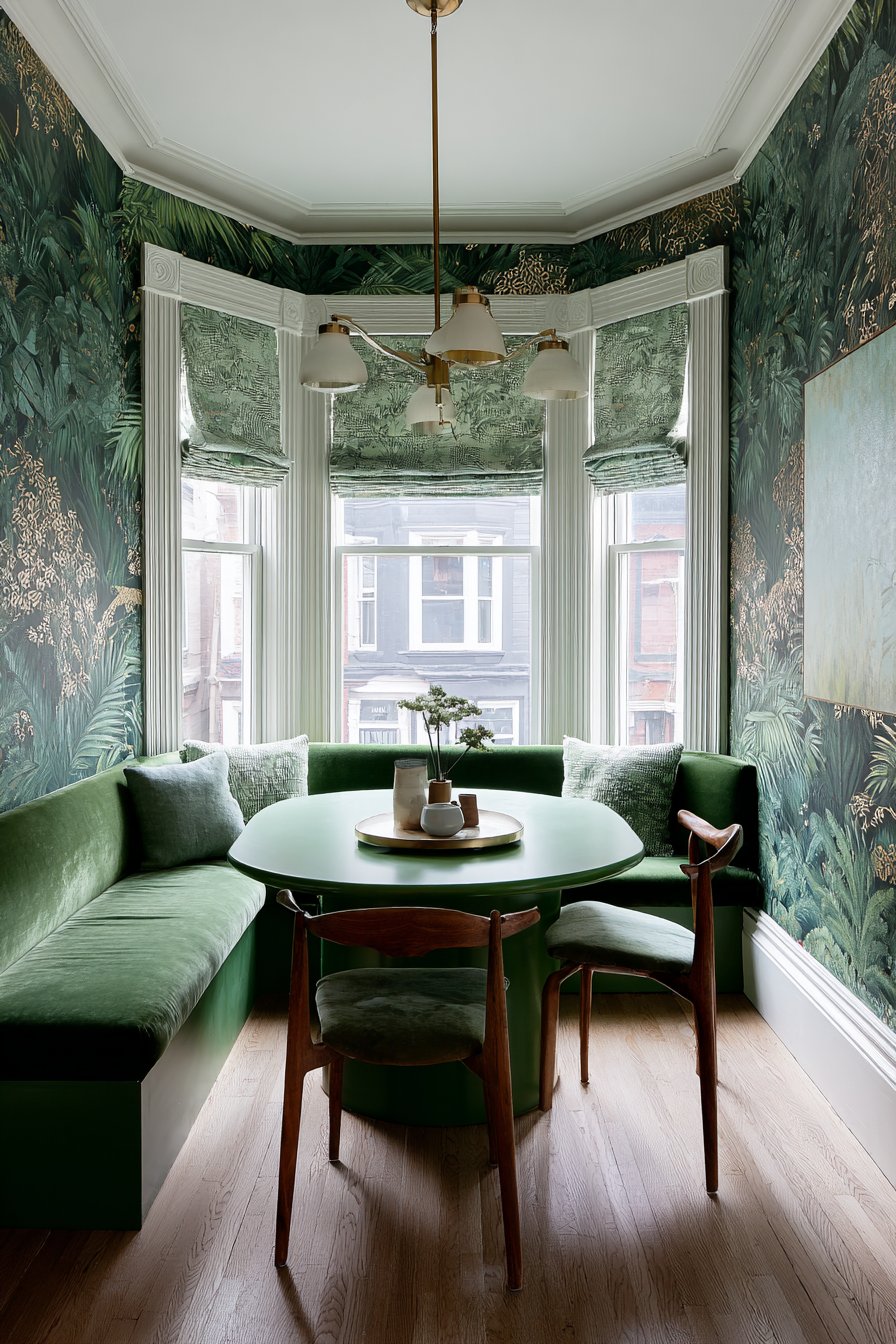
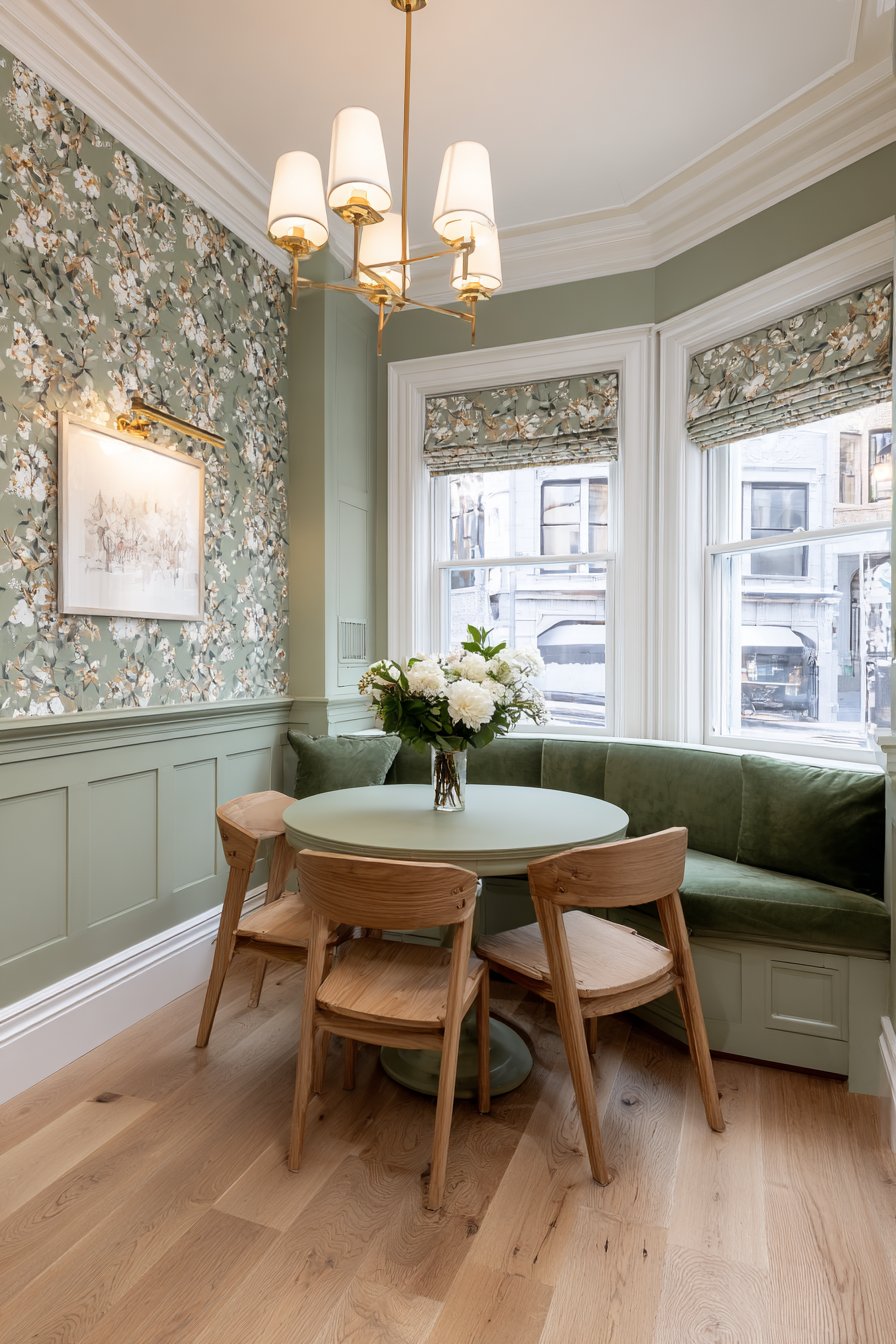
Built-in bench seating upholstered in moss green velvet lines one wall. This space-saving solution maximizes seating while adding architectural interest. A round pedestal dining table in painted green finish creates an intimate conversation flow. Matching wooden chairs complete the seating arrangement with cohesive style.
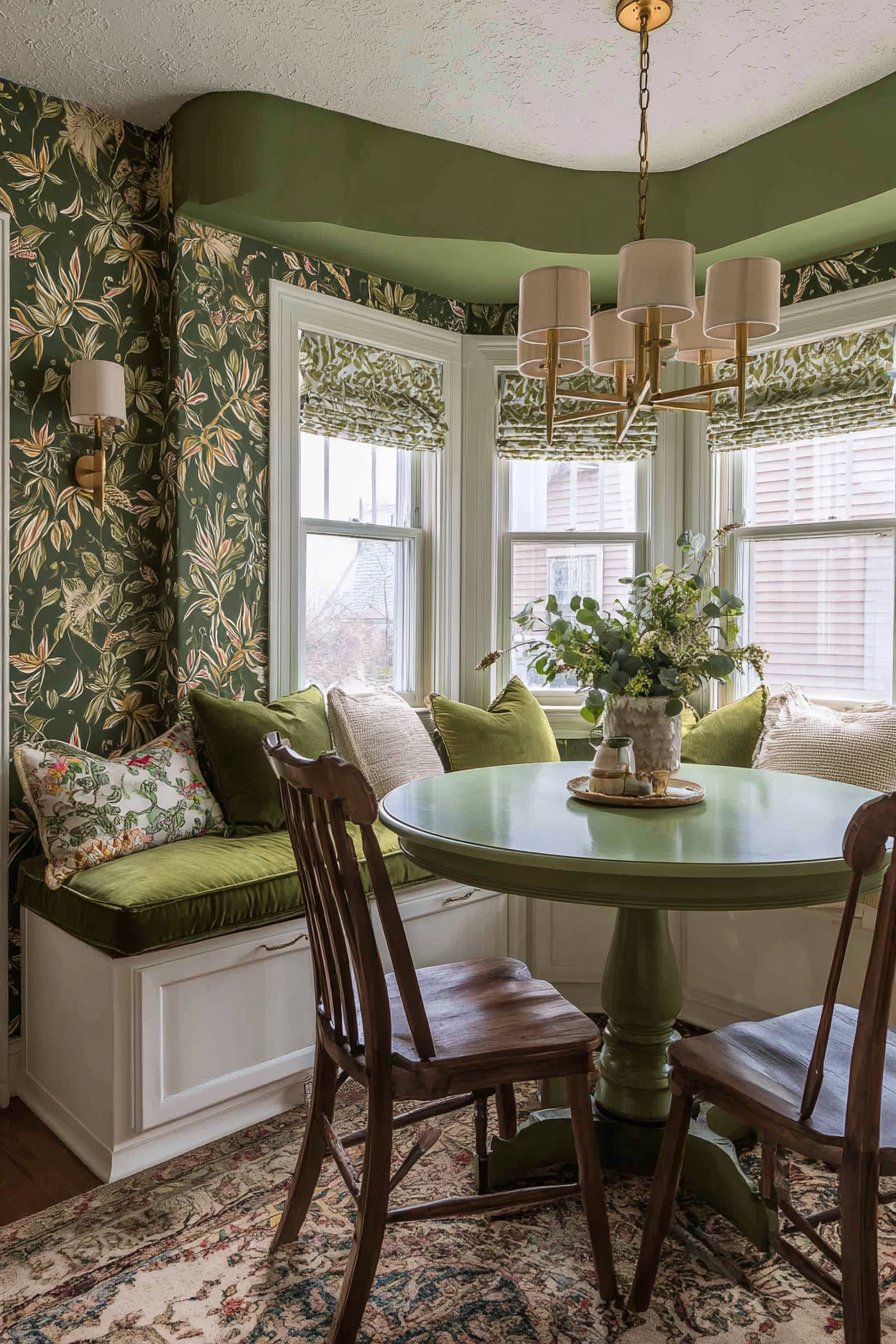
Botanical wallpaper in olive and hunter green with metallic gold leaf details transforms the upper walls. The pattern brings nature indoors with sophisticated execution. White wainscoting below provides traditional contrast and visual grounding. This two-tone wall treatment adds classic charm to the cozy space.
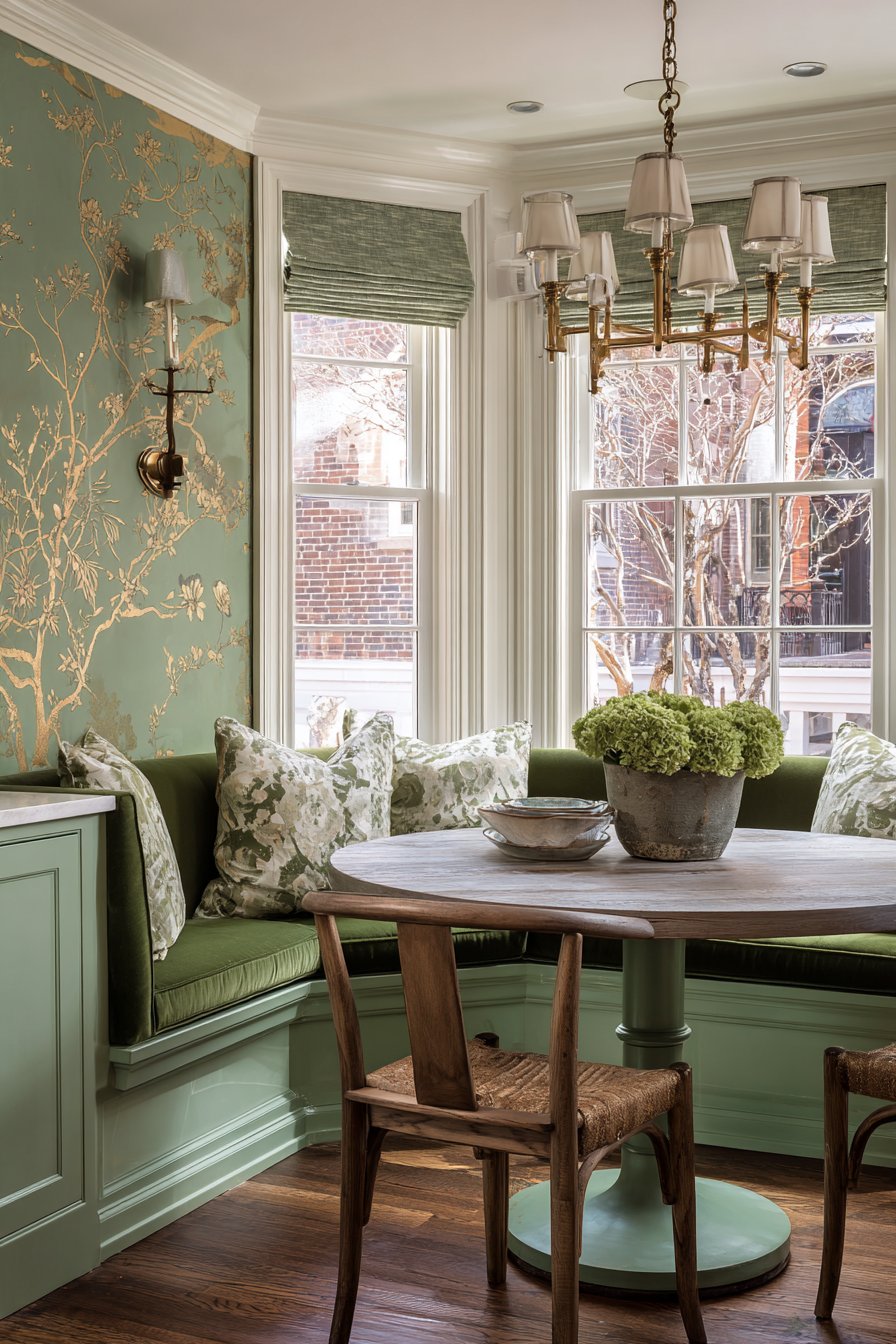
A vintage-inspired brass chandelier with fabric shades illuminates the intimate gathering area. Natural morning light filters through bay windows with Roman shades. The coordinating green patterns on window treatments reinforce the room’s botanical theme. Every element works together to create an enclosed garden atmosphere.
Key Design Tips:
- Install built-in seating to maximize space in smaller dining areas
- Choose botanical wallpaper with metallic accents for sophisticated nature themes
- Use wainscoting to break up wall height and add traditional detail
- Paint furniture pieces in coordinating green tones for cohesion
- Select Roman shades for windows to control light while adding pattern
- Layer multiple green shades from moss to hunter for depth
4. Minimalist Eucalyptus Green Serenity
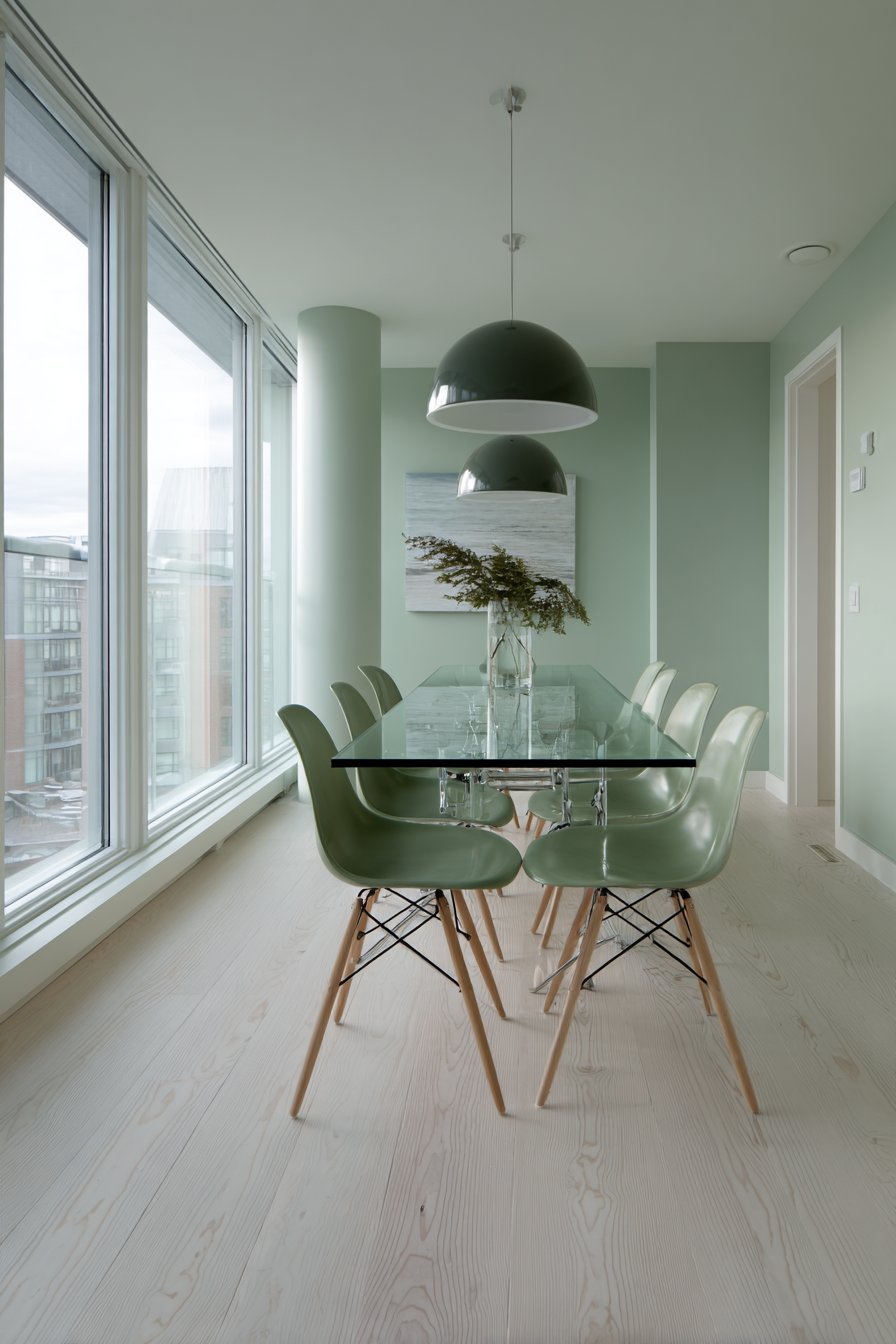
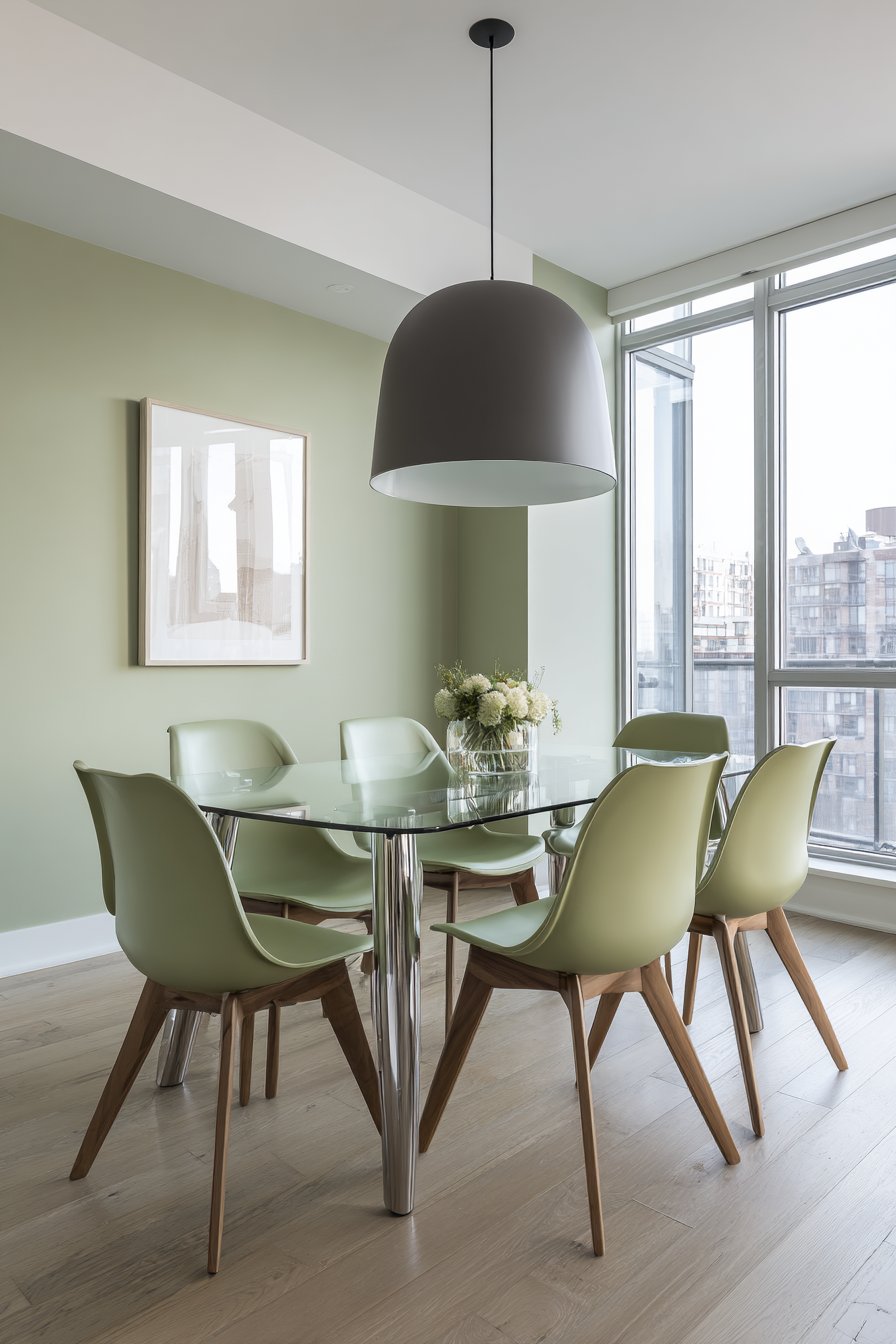
Pale eucalyptus green walls create a serene backdrop for minimalist dining. This soft shade promotes calm without demanding attention. A sleek glass-top dining table with polished chrome legs embodies contemporary simplicity. The transparent surface maintains visual openness in the space.
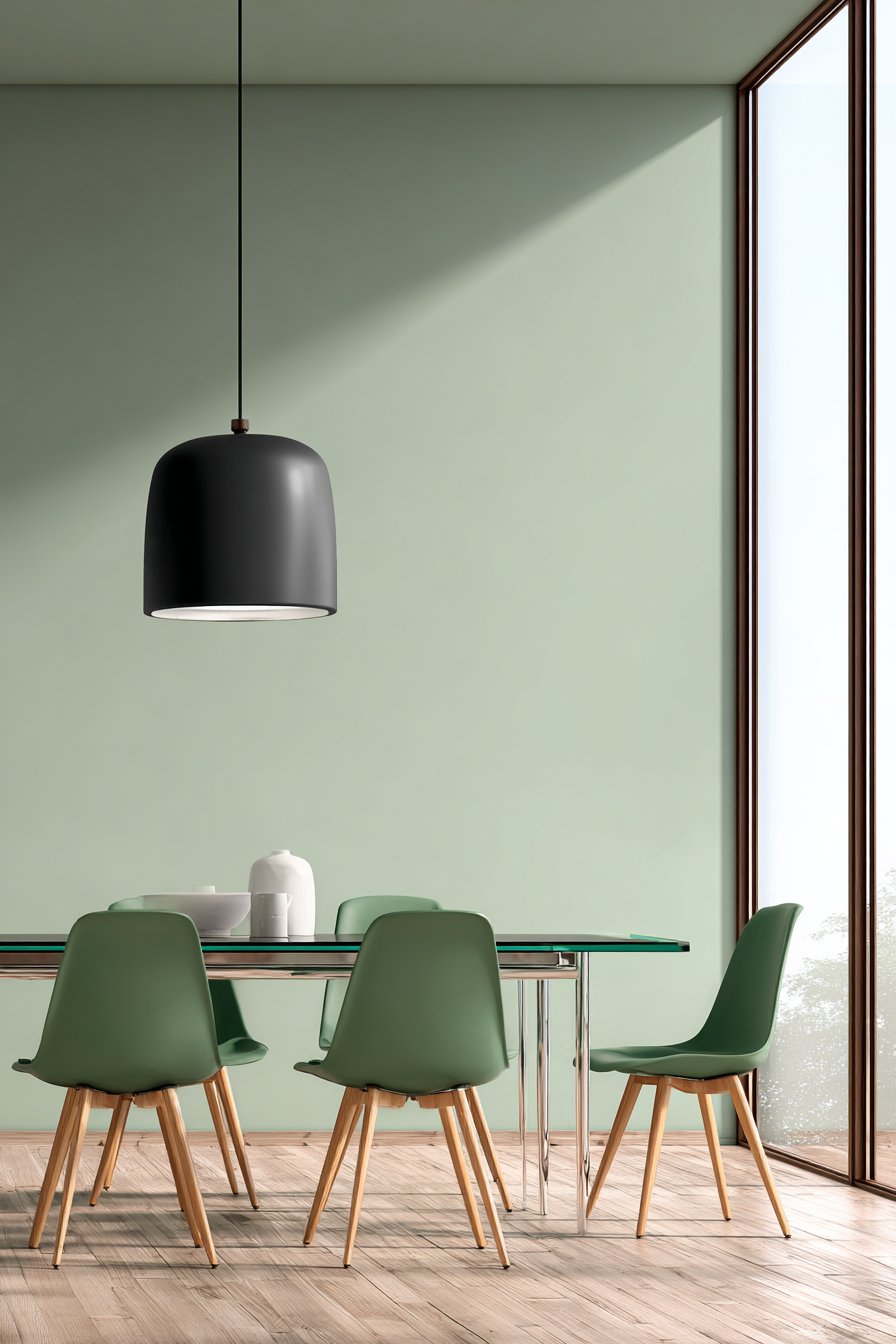
Six dining chairs feature molded green plastic seats with natural oak legs. This material combination balances synthetic and natural elements perfectly. A single oversized modern pendant light in matte black provides focused illumination. The singular fixture makes a bold statement through simplicity.
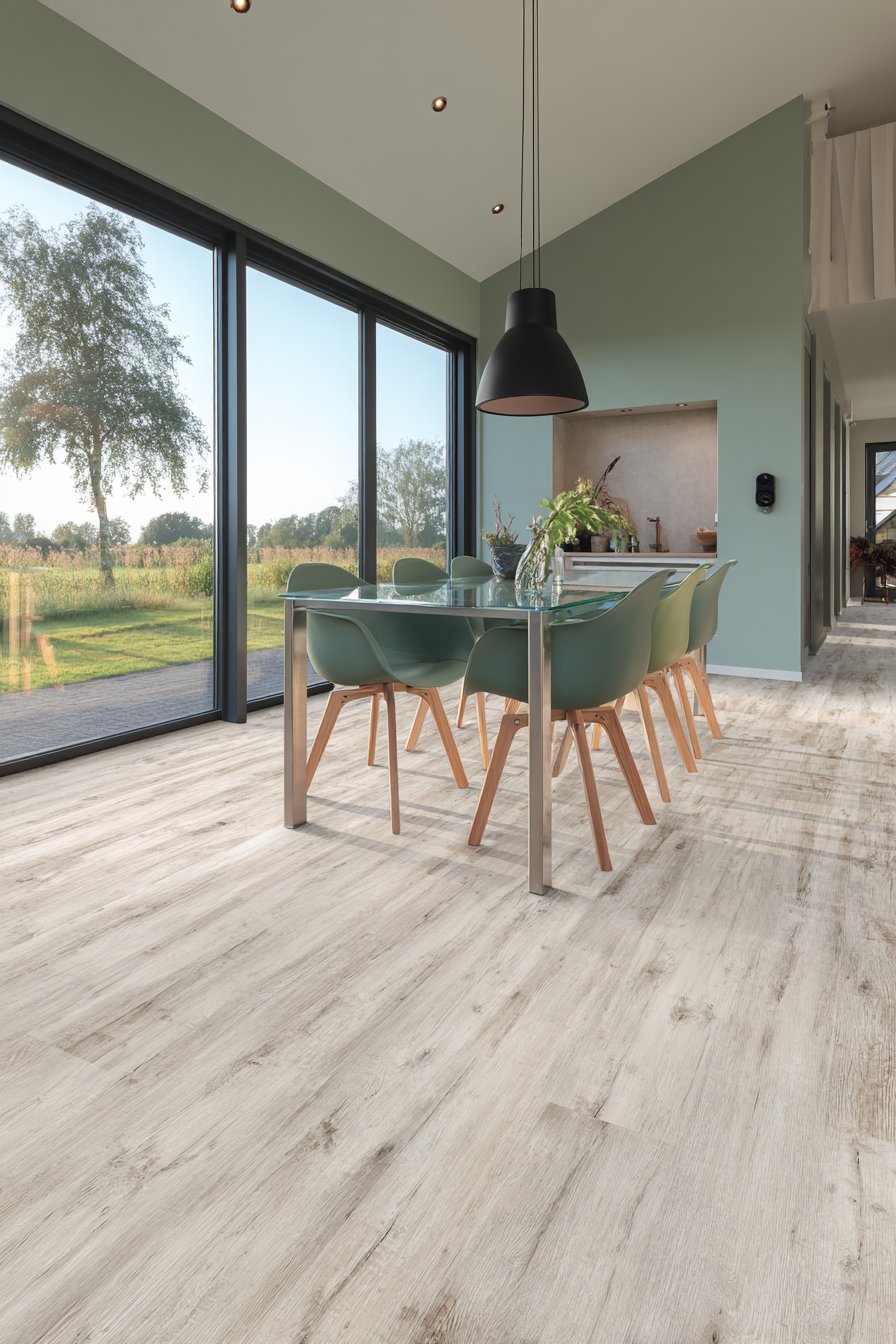
White oak flooring with subtle grain patterns adds warmth underfoot. Large floor-to-ceiling windows without treatments maximize natural light. This decision reflects confidence in the design’s inherent beauty. The minimal approach proves that less truly becomes more when executed thoughtfully.
Key Design Tips:
- Choose pale green shades like eucalyptus for calming minimalist spaces
- Use glass-top tables to maintain visual lightness and openness
- Mix materials like plastic and wood for contemporary interest
- Select one dramatic light fixture rather than multiple small ones
- Leave windows untreated when privacy allows for maximum daylight
- Keep flooring simple with natural wood in light tones
5. Traditional Hunter Green Formal Elegance
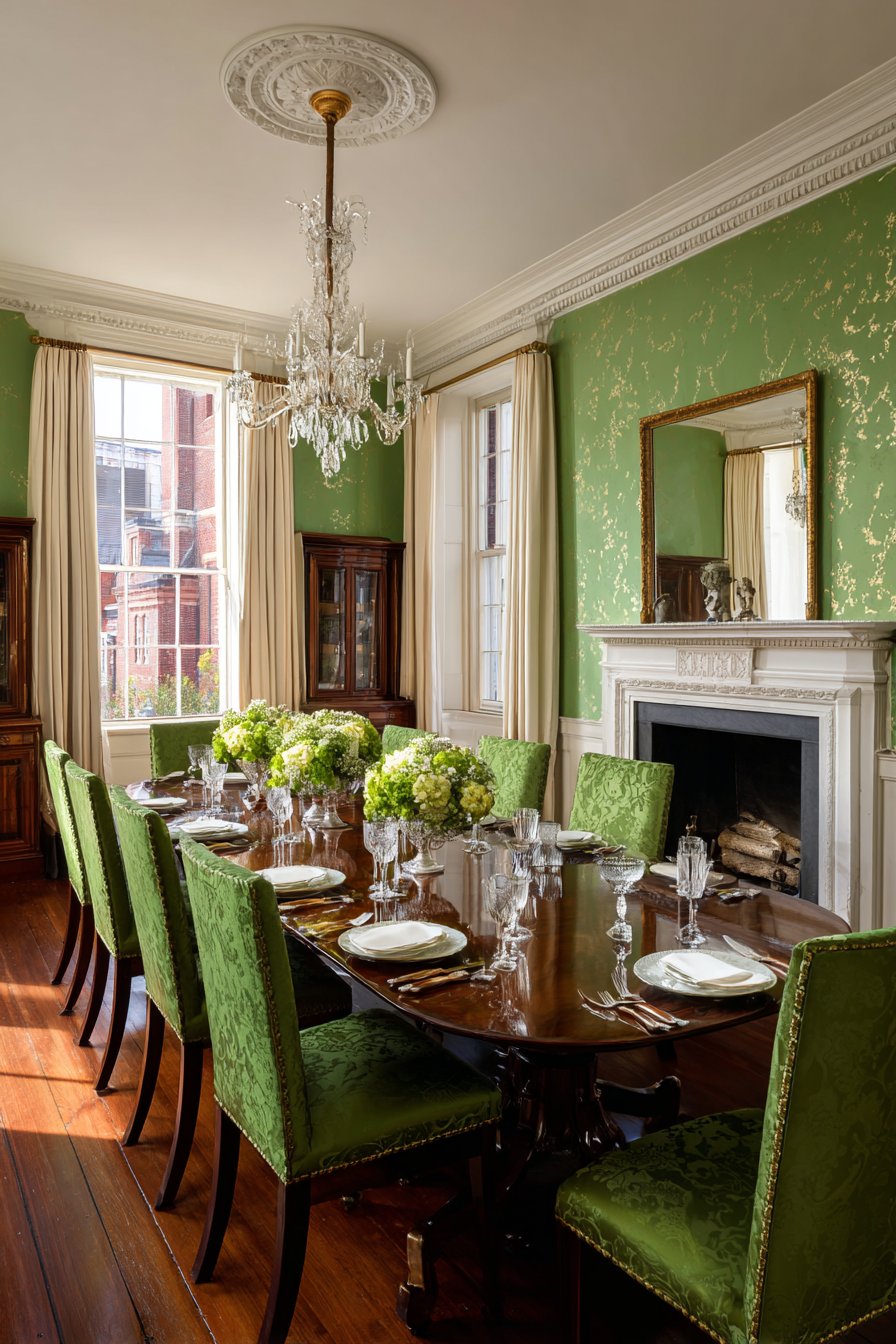
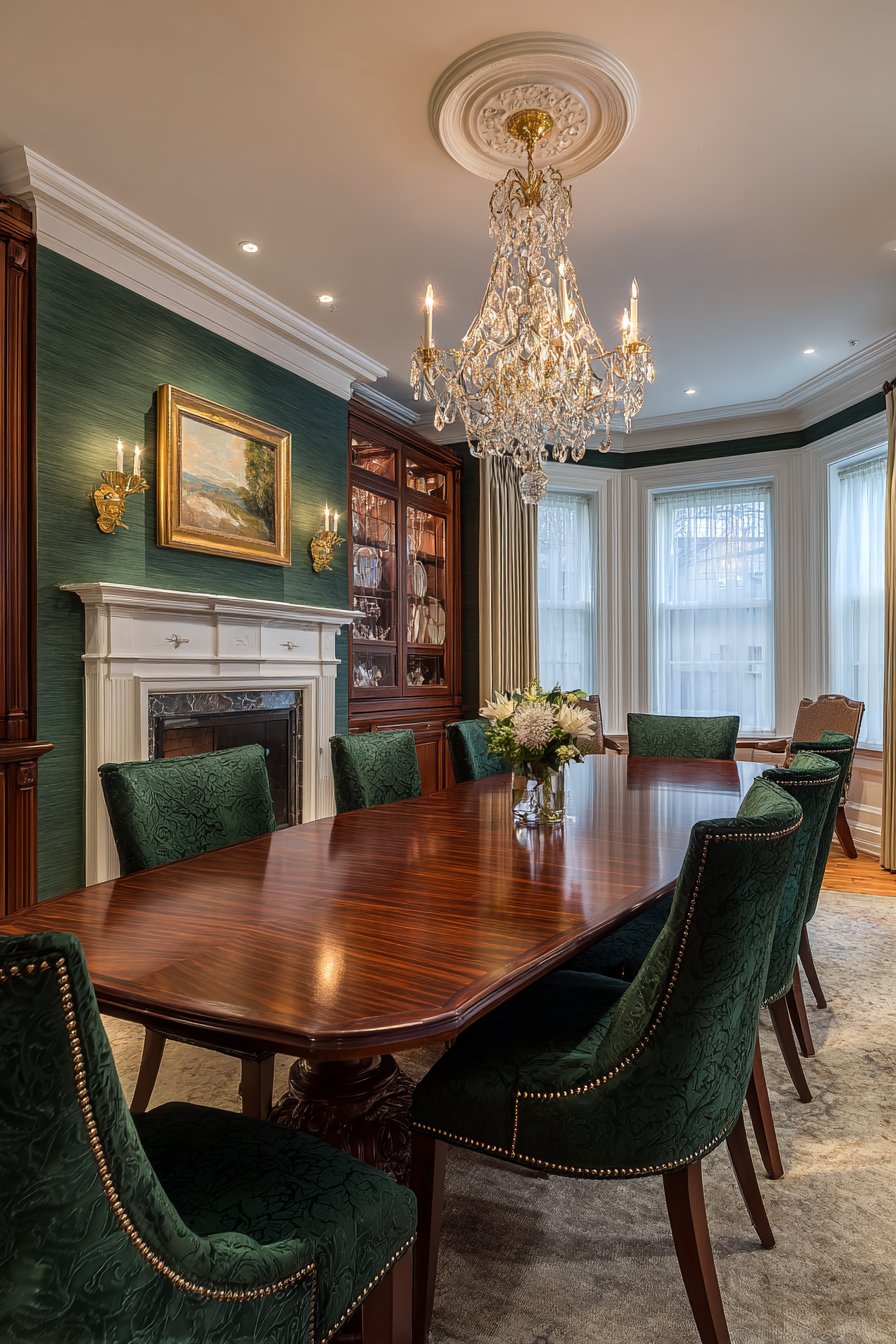
A formal mahogany dining table with extension leaves commands traditional authority. Eight upholstered dining chairs in hunter green damask fabric surround the table. Nailhead trim adds refined detail to each chair. Classic green grasscloth wallpaper with natural fiber texture covers the walls entirely.
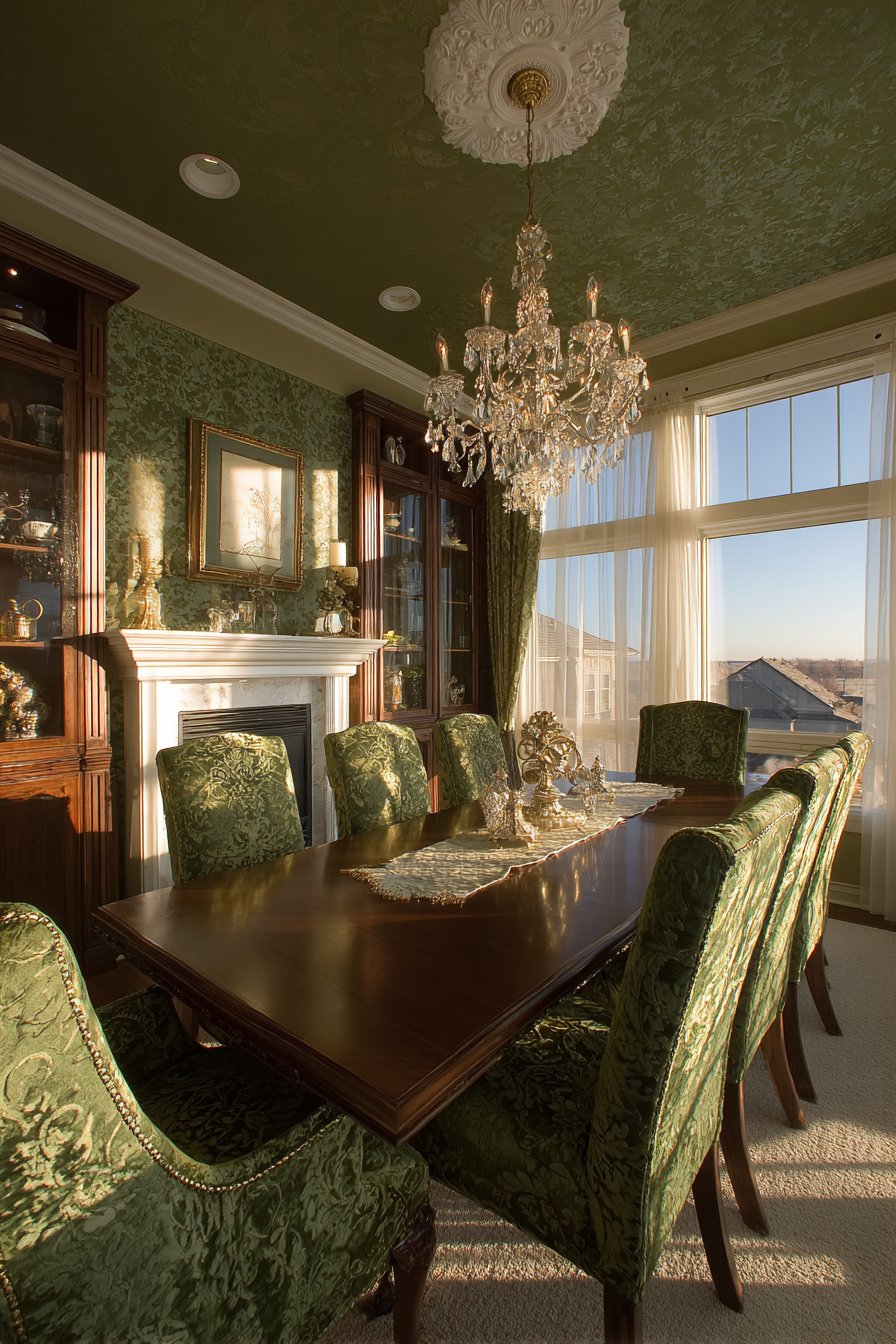
A crystal chandelier with brass accents hangs from a decorative ceiling medallion. This traditional lighting choice reflects period-appropriate elegance. Built-in china cabinets in matching mahogany flank a marble fireplace. These architectural elements create formal symmetry in the space.
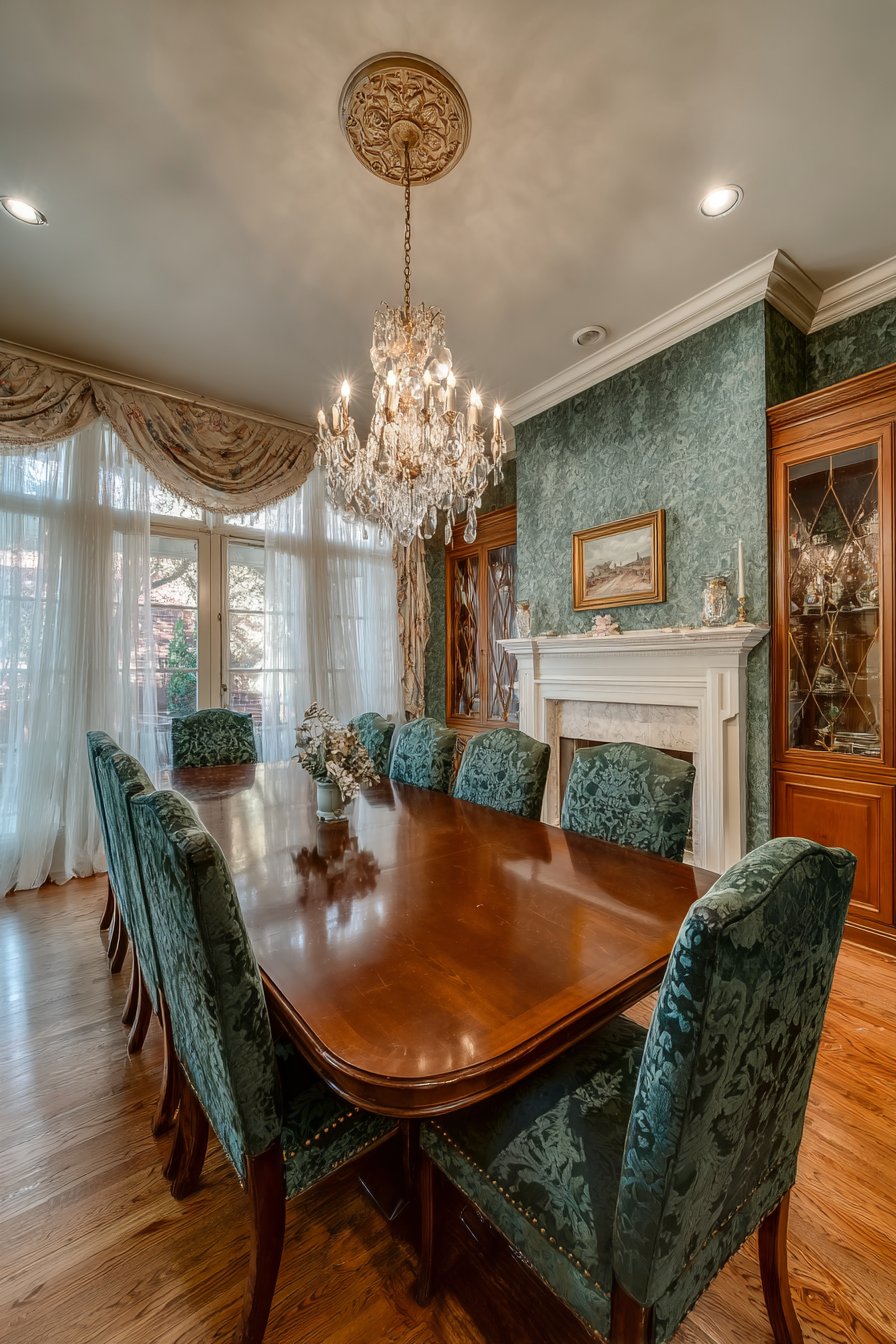
Golden hour sunlight streams through divided-light windows with sheer white curtains. The natural light highlights rich material textures throughout the room. The damask fabric pattern catches light beautifully. Grasscloth texture creates subtle visual interest without competing for attention.
Key Design Tips:
- Invest in extendable dining tables for hosting flexibility
- Choose damask or jacquard fabrics in green for traditional elegance
- Add nailhead trim to upholstered pieces for refined detail
- Use grasscloth wallpaper for texture without overwhelming pattern
- Install crystal chandeliers with brass for traditional lighting
- Create symmetry with built-in cabinetry on flanking walls
6. Scandinavian Mint Green Simplicity
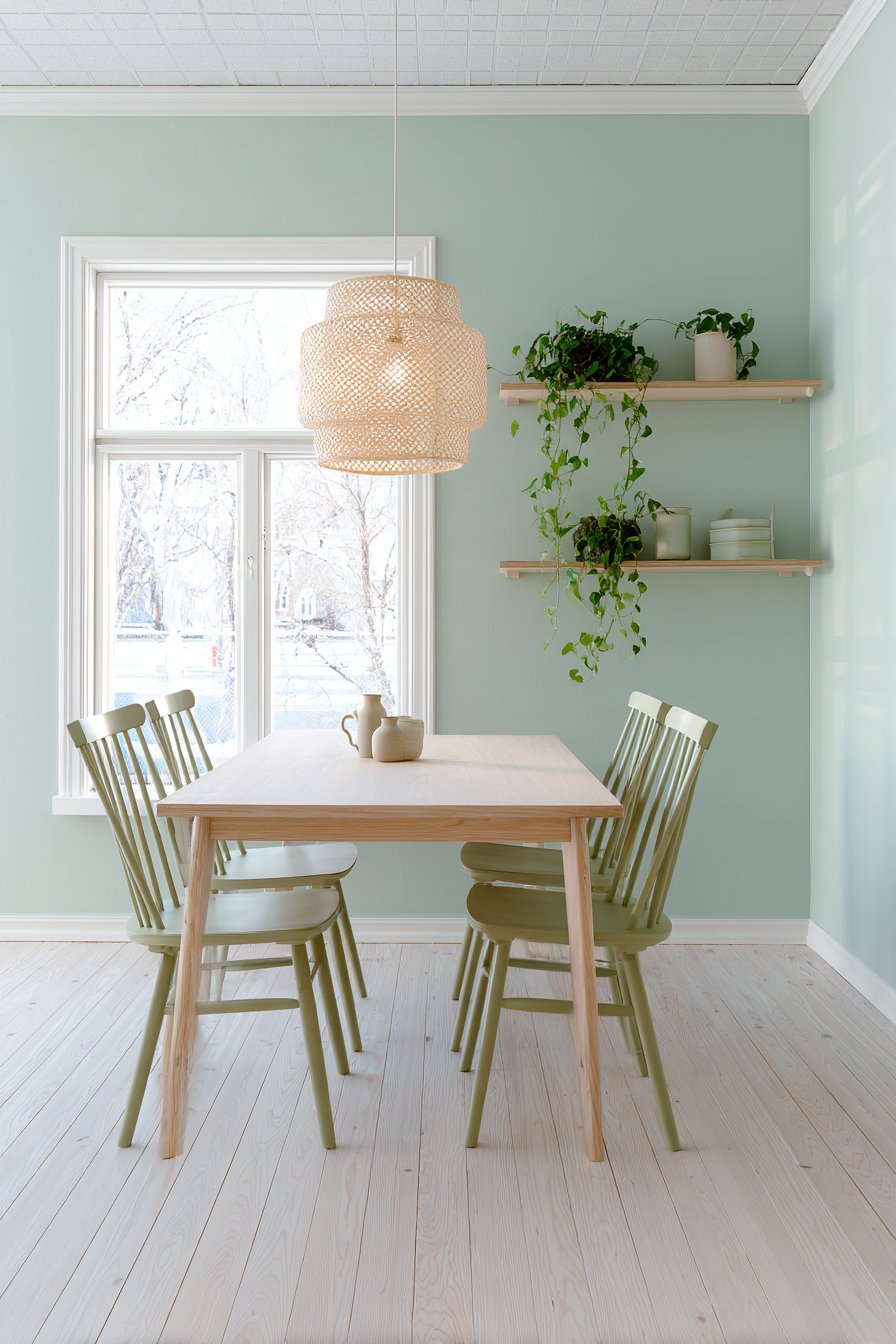
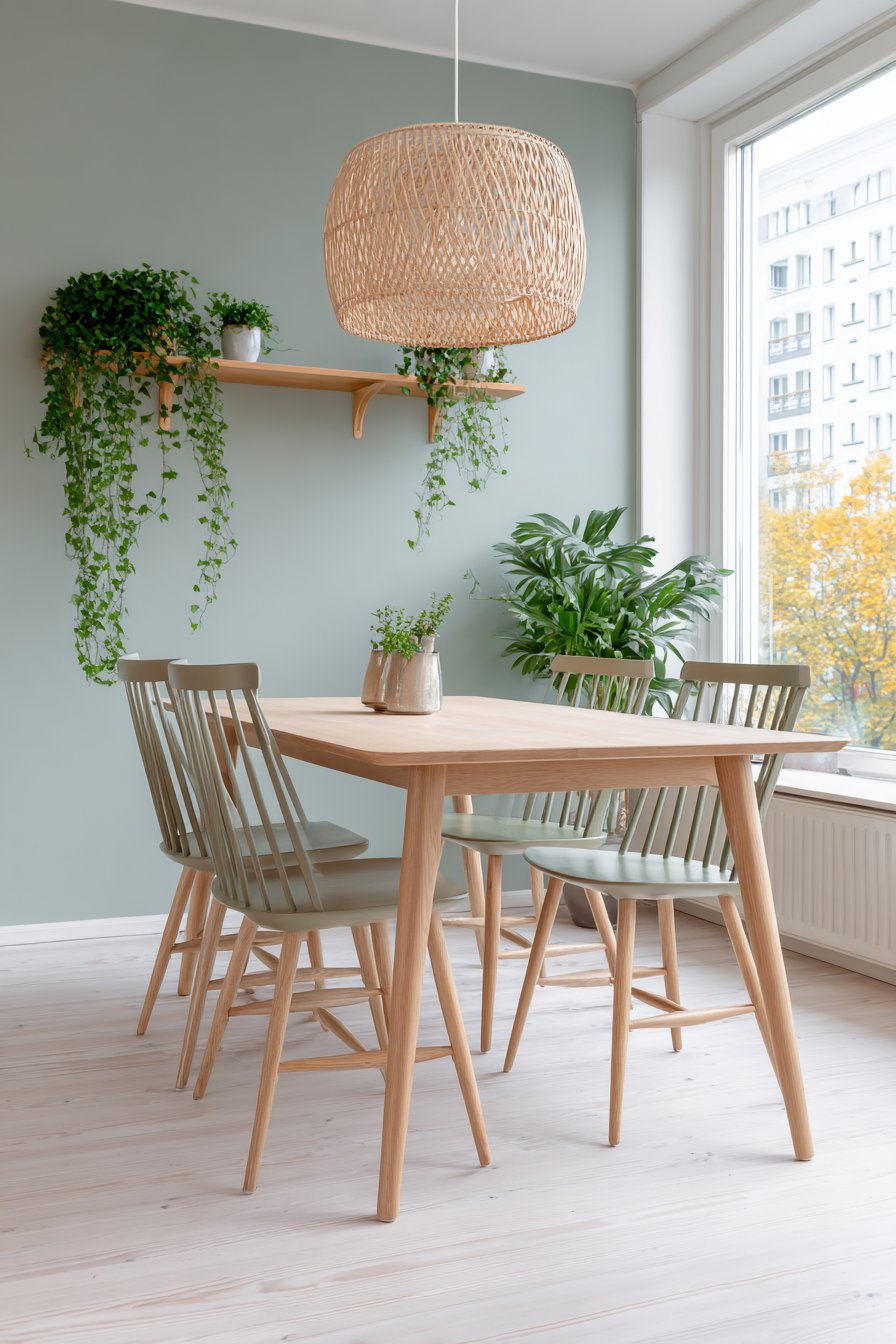
Soft mint green matte walls create the perfect Scandinavian backdrop. This pale shade reflects abundant natural light beautifully. A simple rectangular dining table in light ash wood features clean tapered legs. The minimal silhouette embodies Nordic design principles perfectly.
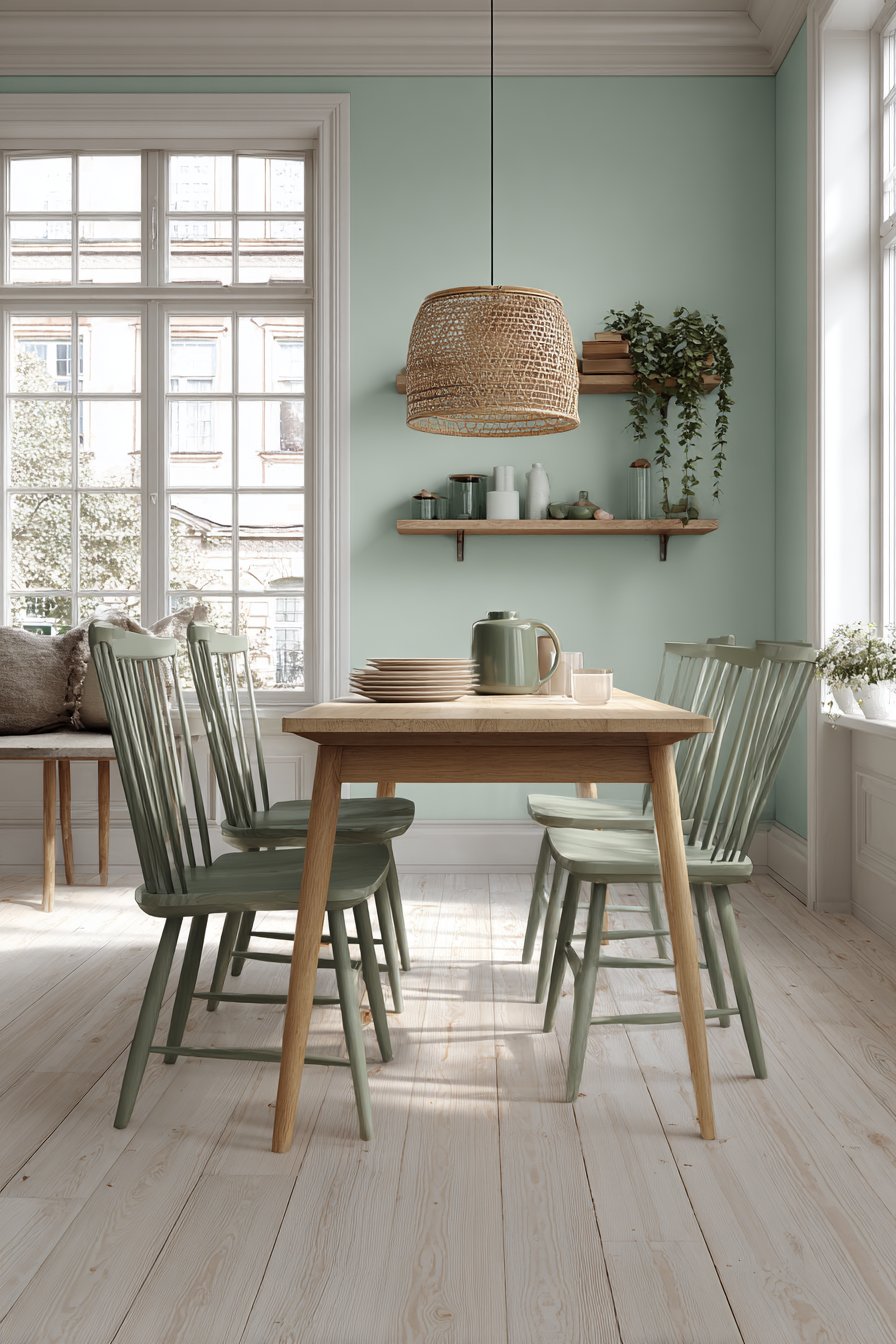
Four Windsor-style dining chairs painted in olive green surround the table. The slight color variation adds subtle interest to the monochromatic scheme. A woven rattan pendant light fixture provides organic texture overhead. Natural materials remain central to the Scandinavian aesthetic.
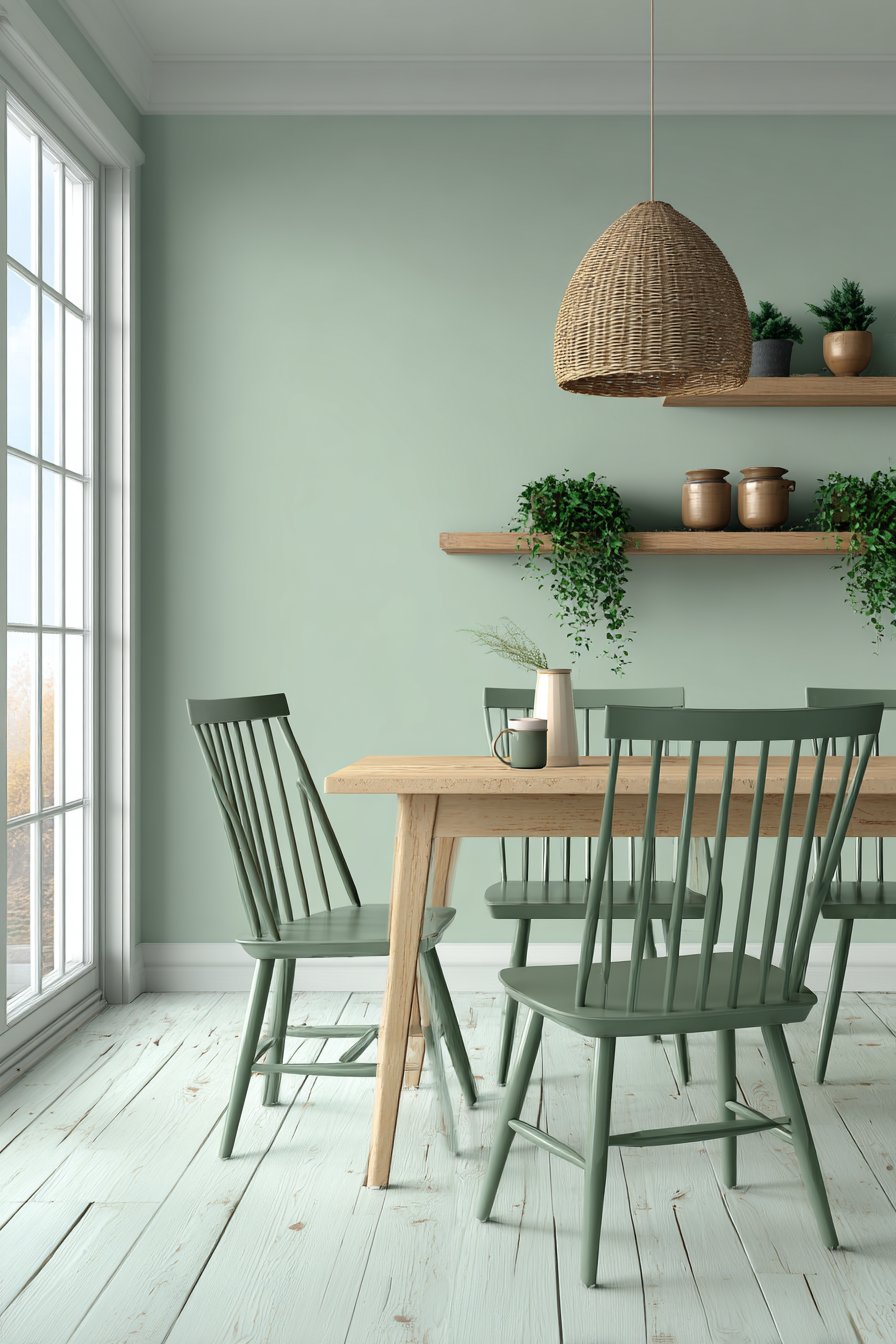
White-painted wood plank flooring brightens the space considerably. Minimalist green ceramic planters with trailing pothos plants add living elements. Floating pine shelves display the plants without cluttering walls. Natural diffused daylight from large picture windows illuminates everything evenly.
Key Design Tips:
- Paint walls in pale mint or sage for bright Scandinavian spaces
- Choose light wood furniture with simple tapered legs
- Add one slightly different green shade for subtle variation
- Use rattan or woven fixtures for organic Scandinavian texture
- Paint wood floors white to maximize light reflection
- Include living plants in minimal ceramic planters for life
7. Bohemian Eclectic Green Mix
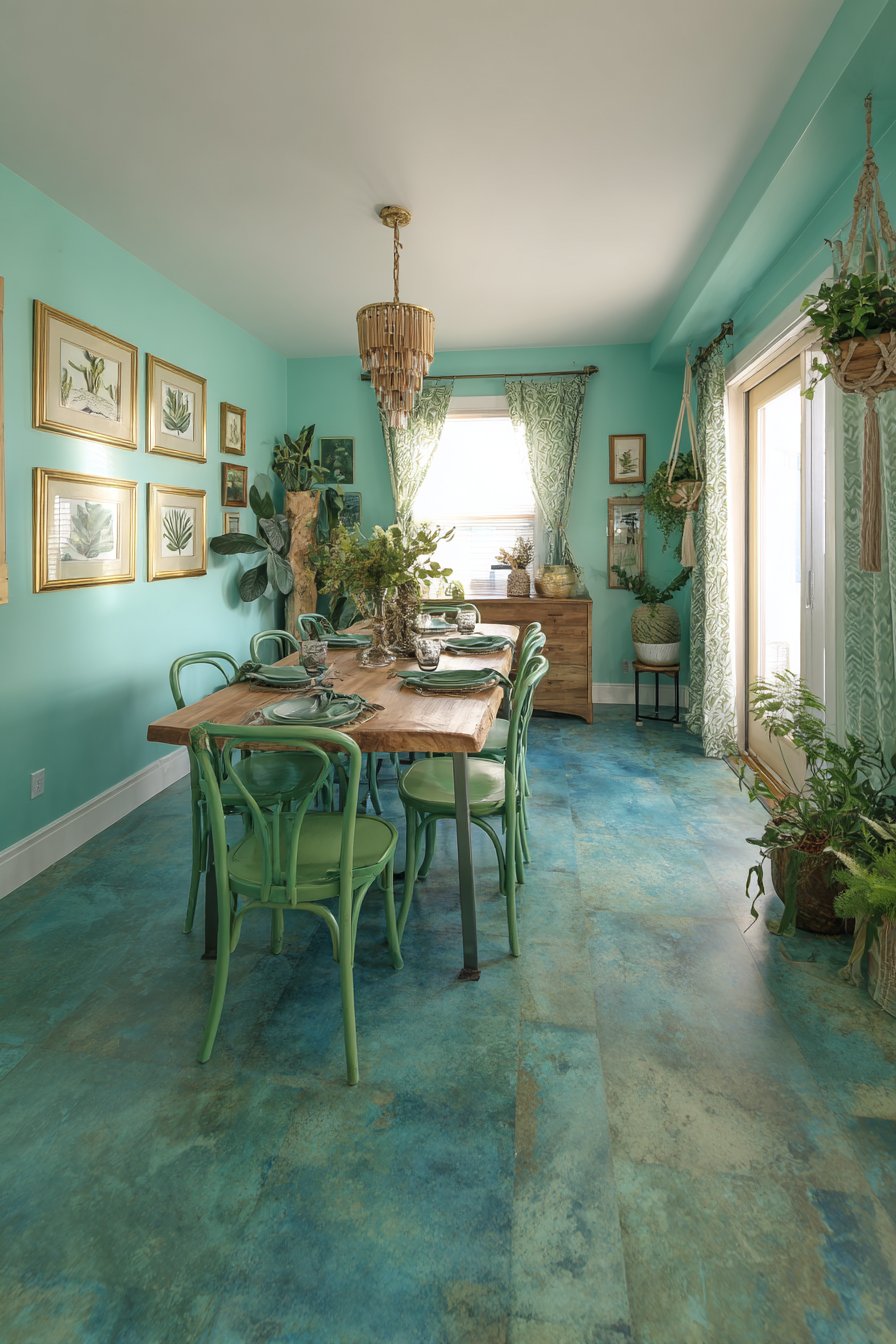
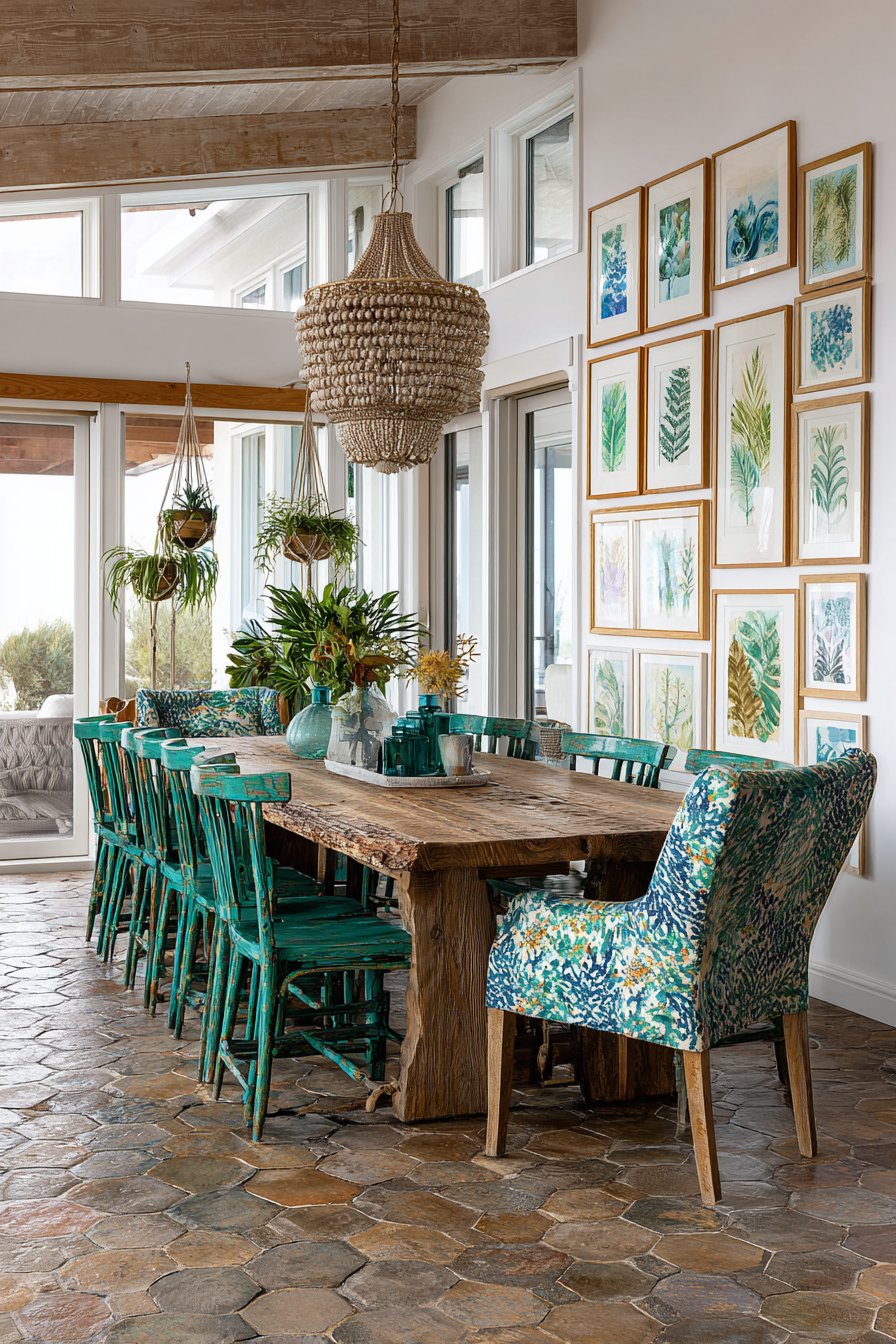
A reclaimed wood dining table with natural edge details celebrates imperfection. Mismatched vintage chairs painted in various green shades create collected character. Colors range from seafoam to teal with deliberate variety. This eclectic approach rewards the eye with unexpected combinations.
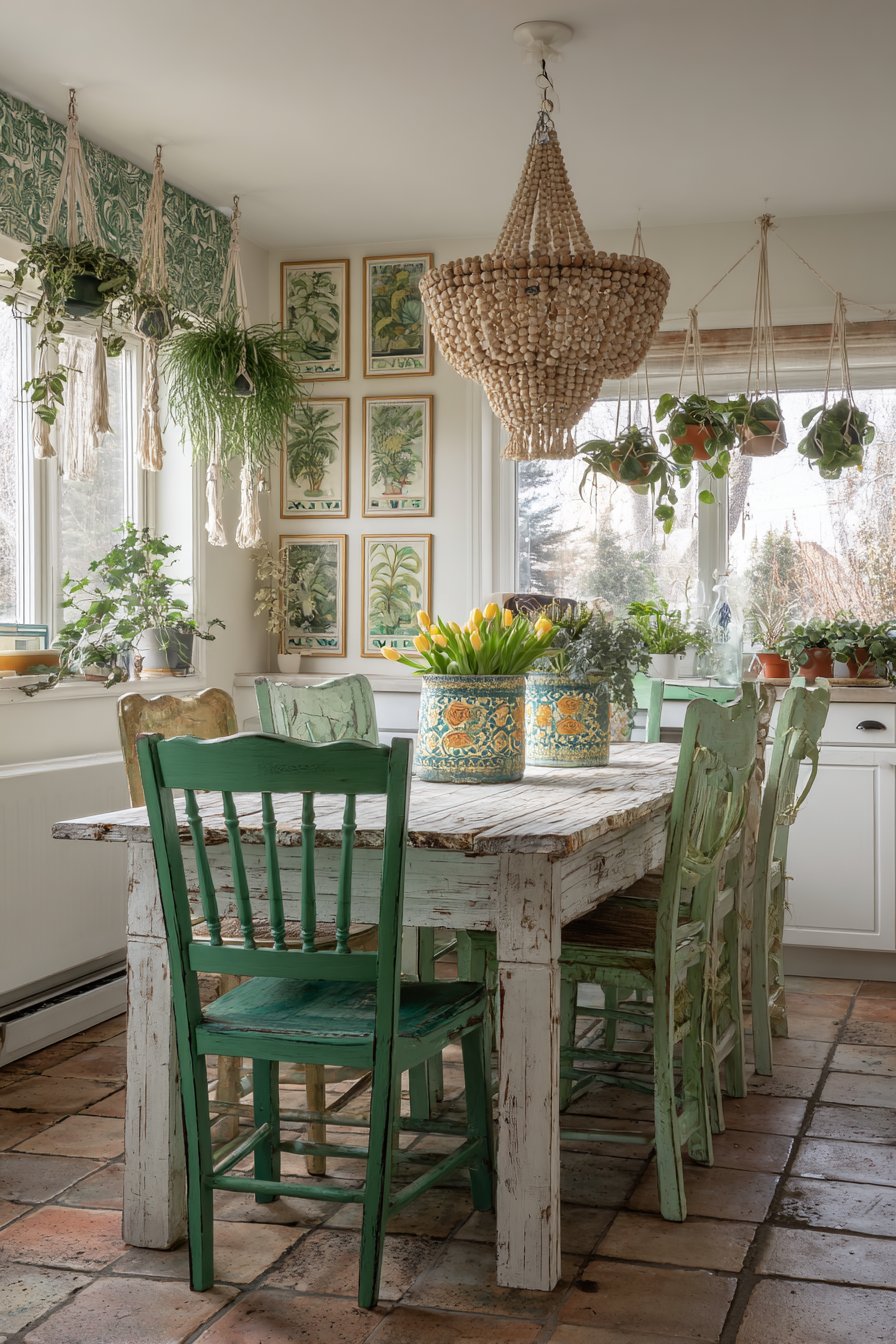
One wall displays a gallery arrangement of botanical prints in green and gold tones. The curated collection adds personality and artistic interest. Macramé plant hangers suspend greenery at varying heights near windows. Layered textiles in complementary green patterns dress the windows with bohemian flair.
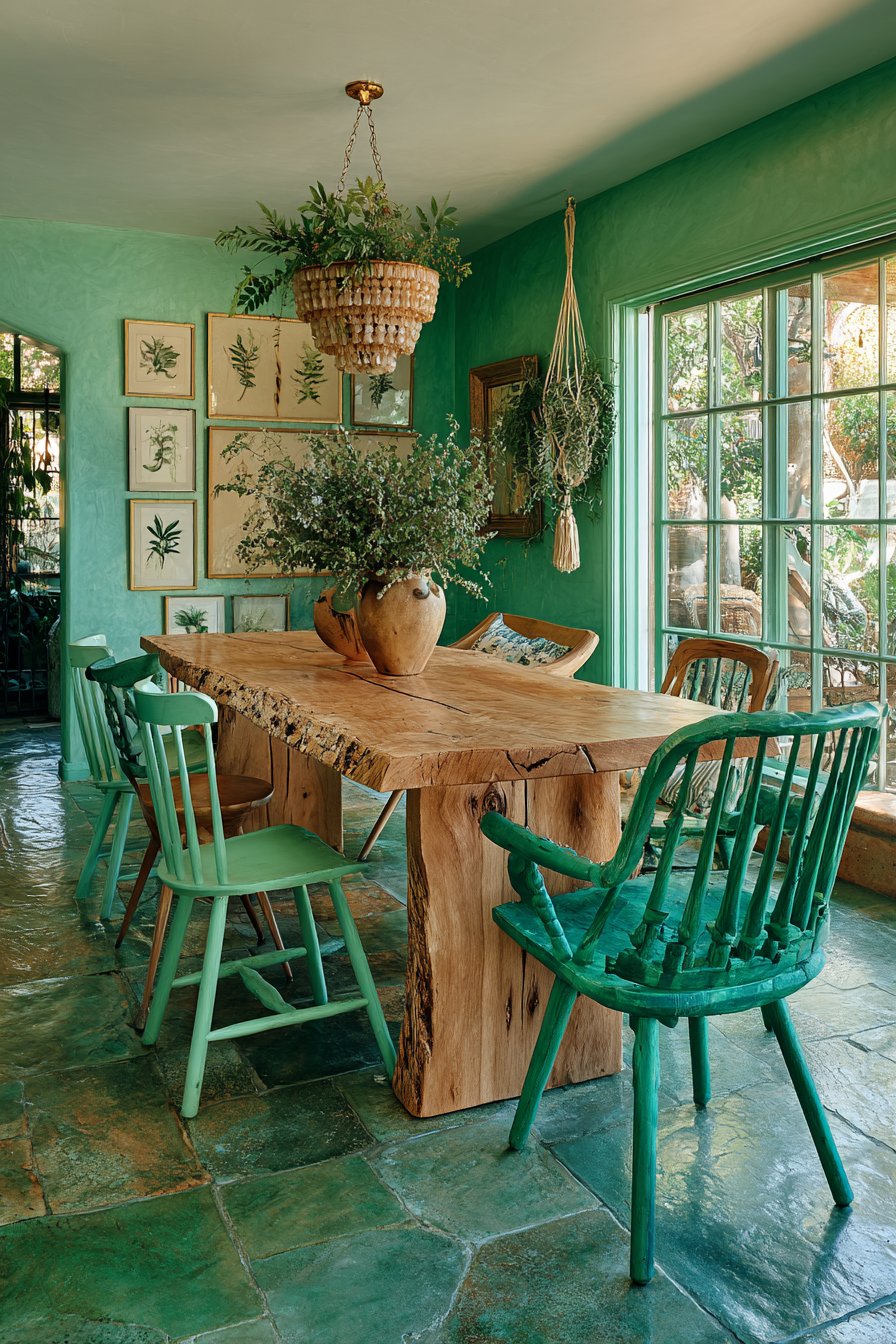
A beaded chandelier in natural wood tones provides handcrafted lighting. Terra cotta tile flooring with aged patina adds warmth and authenticity. The slightly worn surface contributes to the space’s collected-over-time aesthetic. Every element tells a story in this personalized dining room.
Key Design Tips:
- Mix multiple shades of green from seafoam to teal freely
- Paint second-hand chairs in different greens for budget-friendly character
- Create gallery walls with botanical prints in coordinating tones
- Hang plants at varying heights for dimensional interest
- Choose natural materials like reclaimed wood and terra cotta
- Layer textiles with different patterns in the same color family
8. Contemporary Jade Green Drama
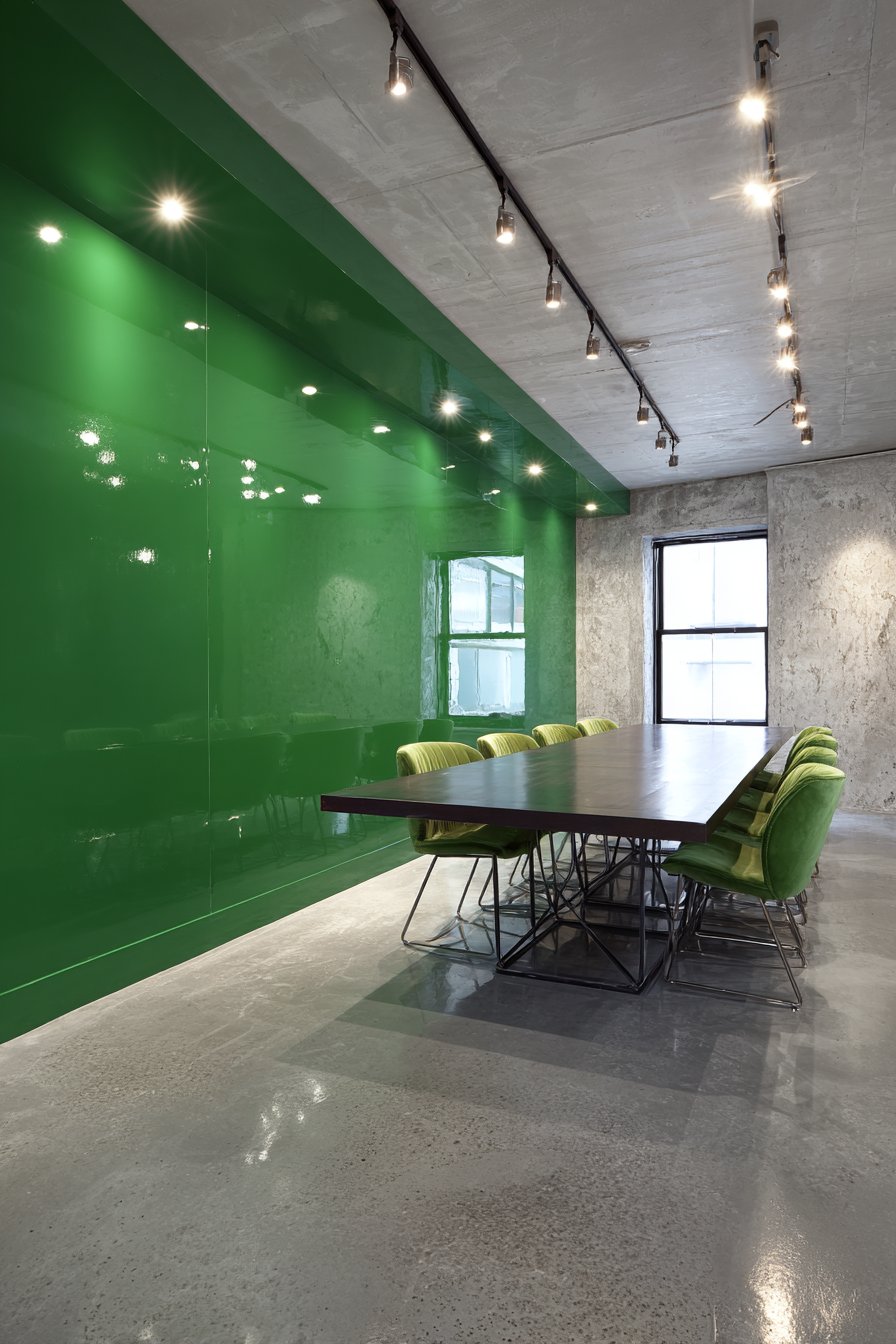
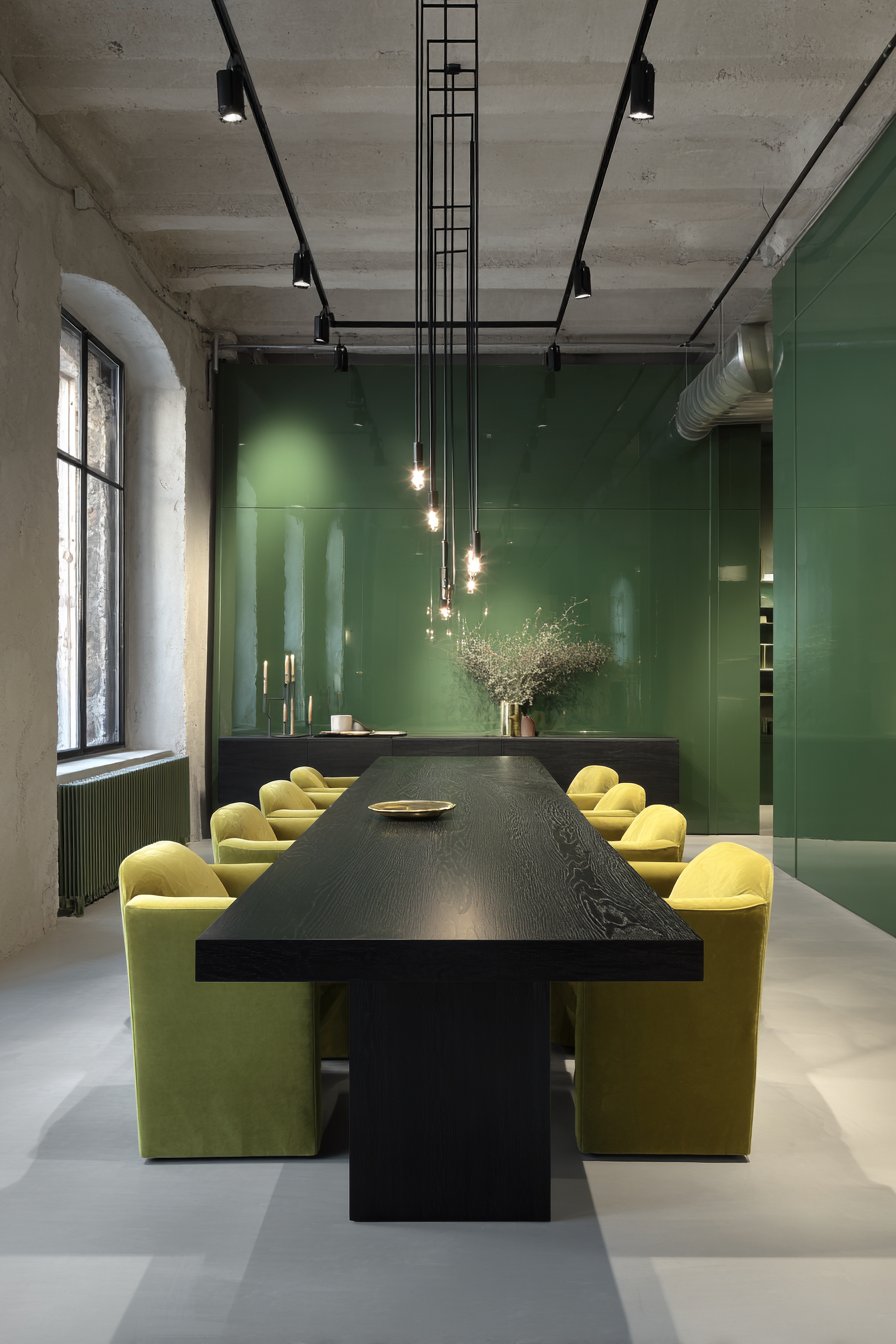
A statement wall in deep jade green high-gloss lacquer reflects light dramatically. The glossy finish amplifies the color’s intensity while creating mirror-like reflections. A modern rectangular dining table in black oak provides sophisticated contrast. The geometric metal base adds sculptural interest below.
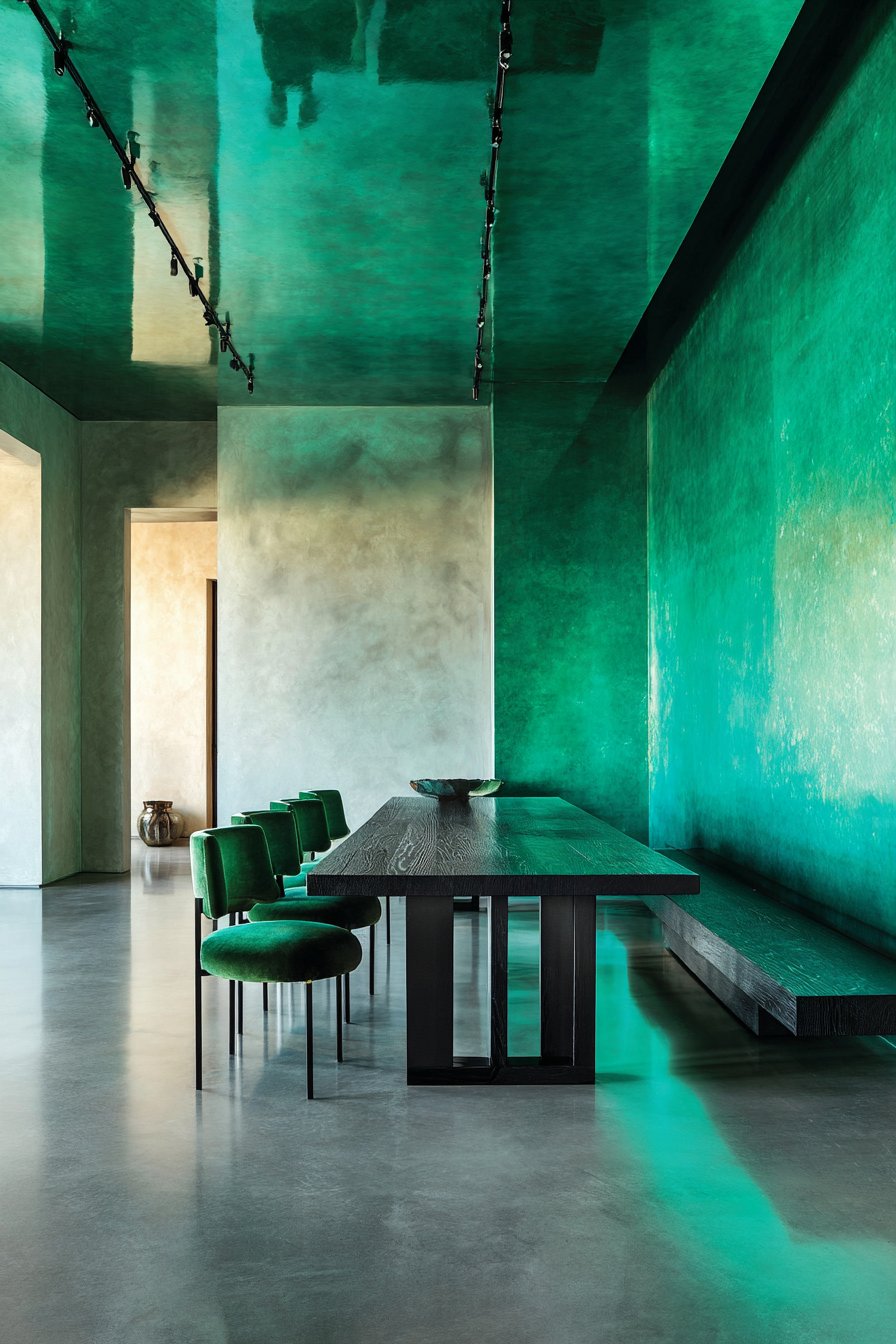
Six sculptural chairs upholstered in chartreuse velvet bring energetic vibrancy. This unexpected color combination demonstrates contemporary confidence. Multiple adjustable track lights on the ceiling provide flexible illumination. The practical lighting adapts to different dining scenarios effortlessly.
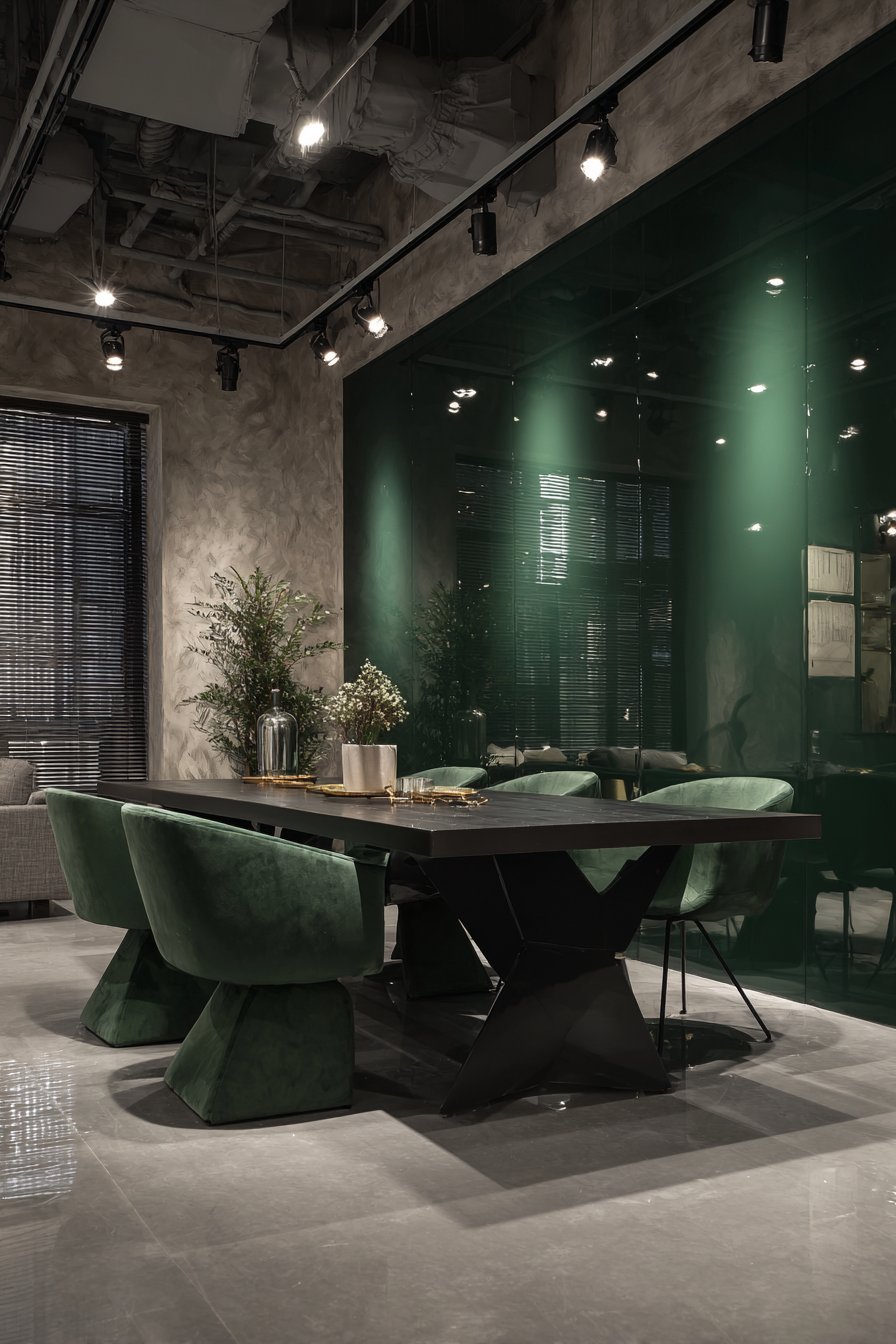
Polished concrete flooring in light gray offers industrial contrast to luxurious upholstery. Remaining walls feature textured plaster in soft greige. This neutral backdrop allows the jade wall to dominate attention. The bold design choices create memorable contemporary impact.
Key Design Tips:
- Use high-gloss lacquer on one wall for dramatic light reflection
- Pair deep jade with unexpected accents like chartreuse
- Choose black or dark wood furniture for sophisticated contrast
- Install adjustable track lighting for flexible illumination options
- Use polished concrete for industrial edge in contemporary spaces
- Keep other walls neutral to balance one bold colored surface
9. Farmhouse Dusty Olive Warmth
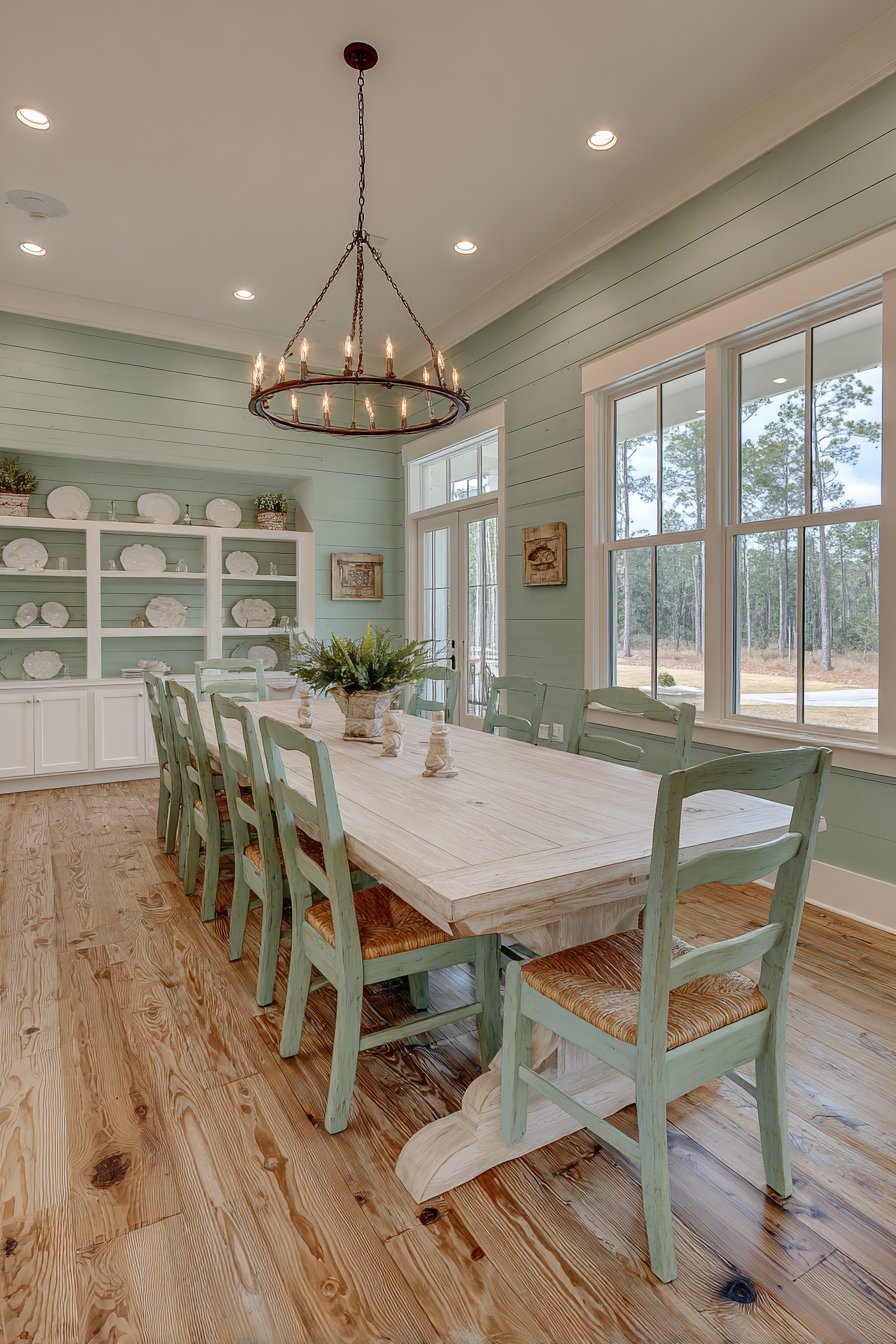
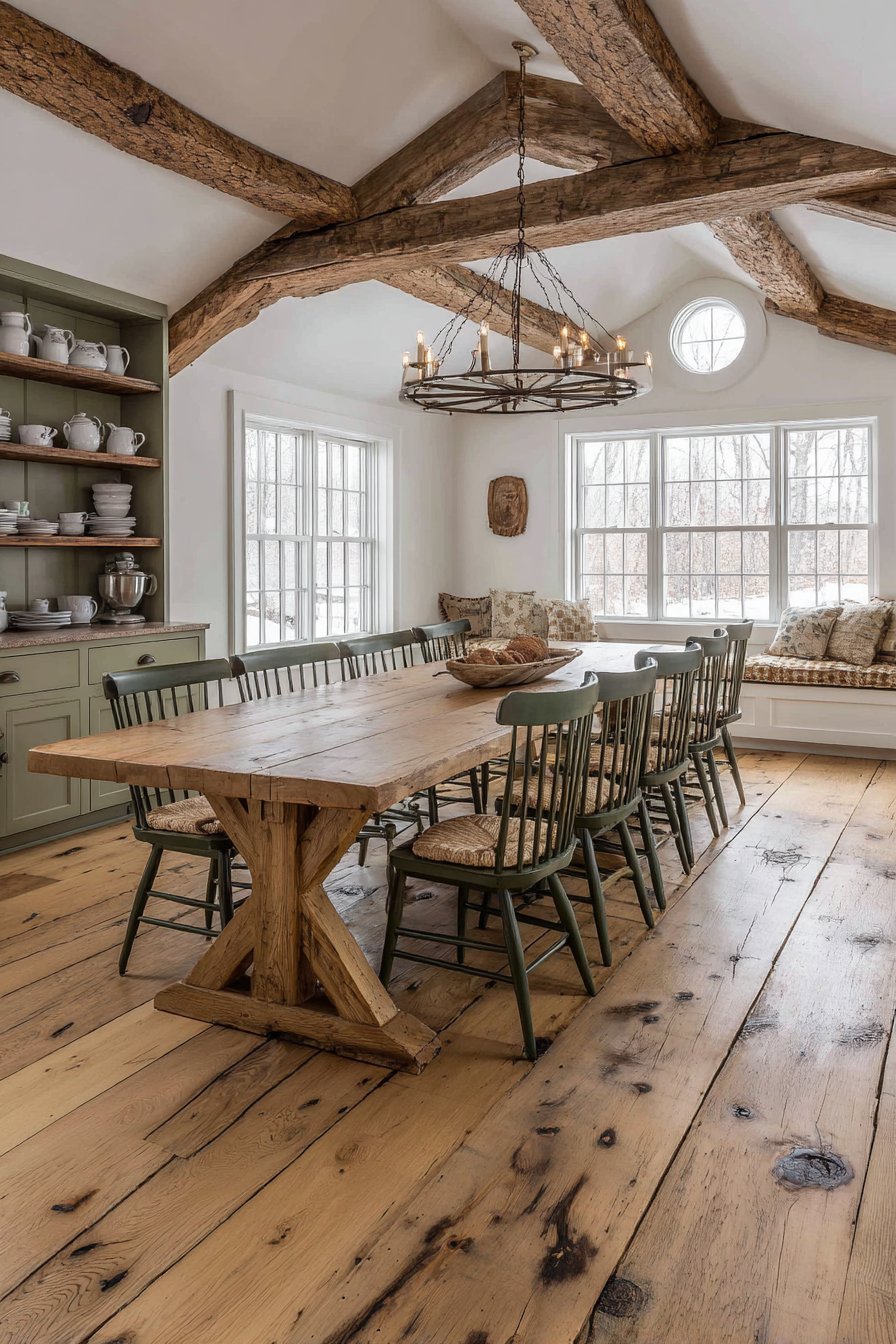
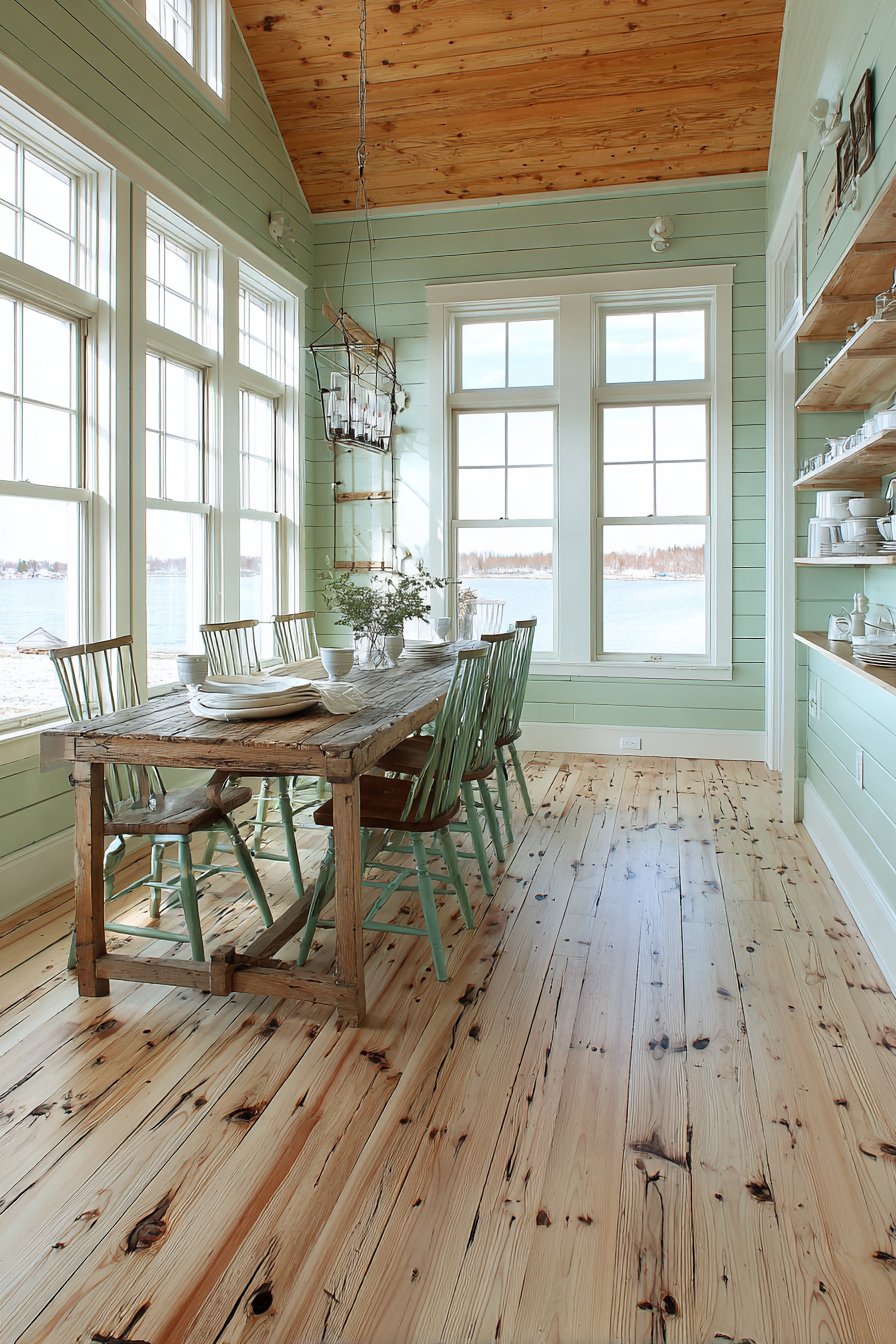
Shiplap walls painted in dusty olive green showcase visible wood grain texture. The paint application allows natural wood character to show through subtly. A large farmhouse-style trestle table in distressed white oak anchors the welcoming space. Cross-back chairs with rush seats and painted green frames provide comfortable seating.
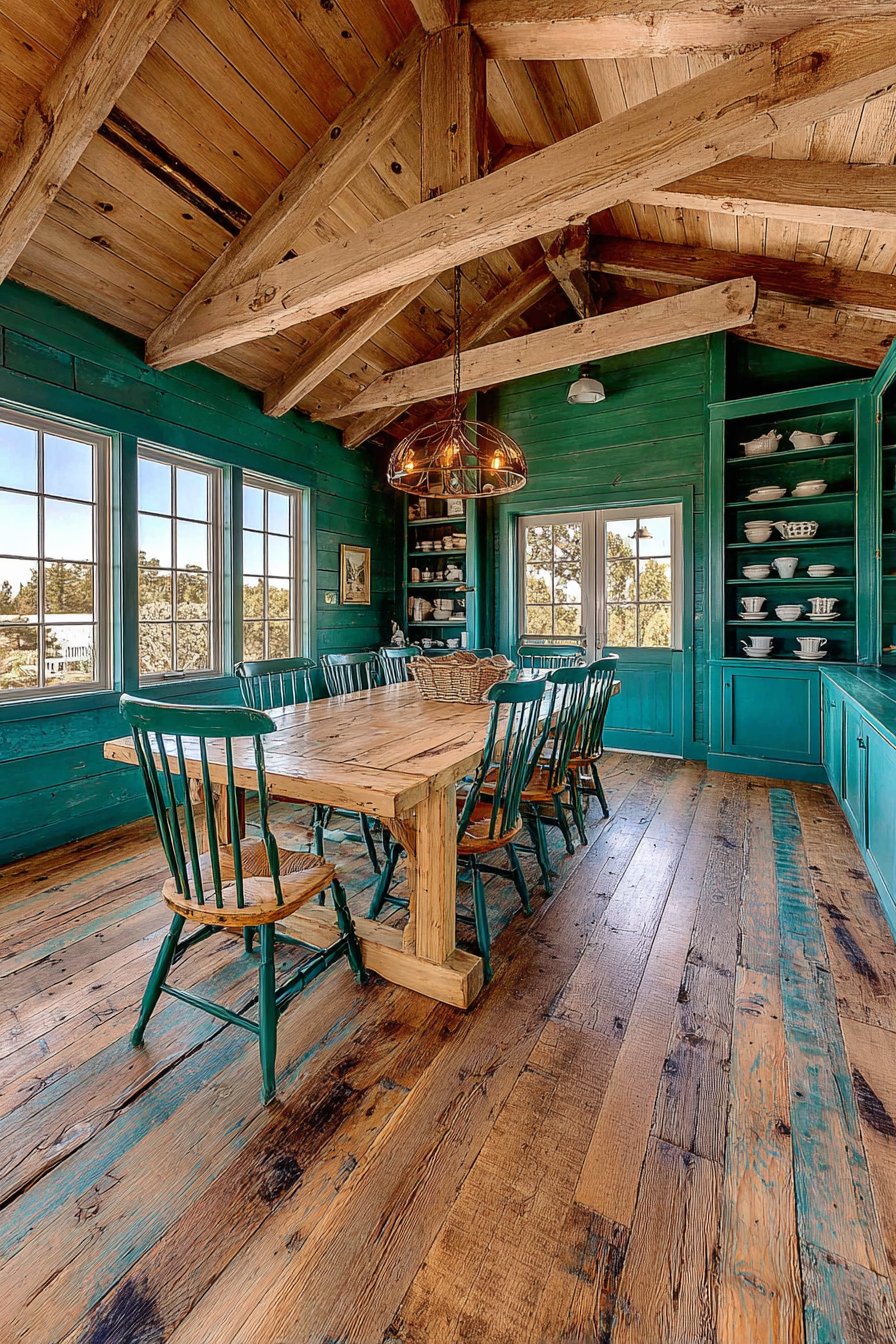
The chair frames show deliberate wear marks that enhance farmhouse authenticity. A wagon wheel chandelier with Edison bulbs provides rustic lighting character. Wide-plank pine flooring with natural knots and color variations adds genuine character. The imperfect surface celebrates real wood’s authentic nature.
Open shelving displays white ironstone dishes against green walls. The contrast between white dishes and green backdrop creates visual appeal. Natural light from mullioned windows highlights material textures throughout. The farmhouse aesthetic feels welcoming without excessive decoration.
Key Design Tips:
- Paint shiplap walls to show wood grain texture underneath
- Choose trestle tables in distressed finishes for farmhouse character
- Select cross-back chairs with natural rush seats for authenticity
- Use wagon wheel chandeliers with Edison bulbs for rustic lighting
- Install wide-plank flooring with visible knots and variations
- Display white dishes on open shelves against colored walls
10. Maximalist Emerald Green Opulence
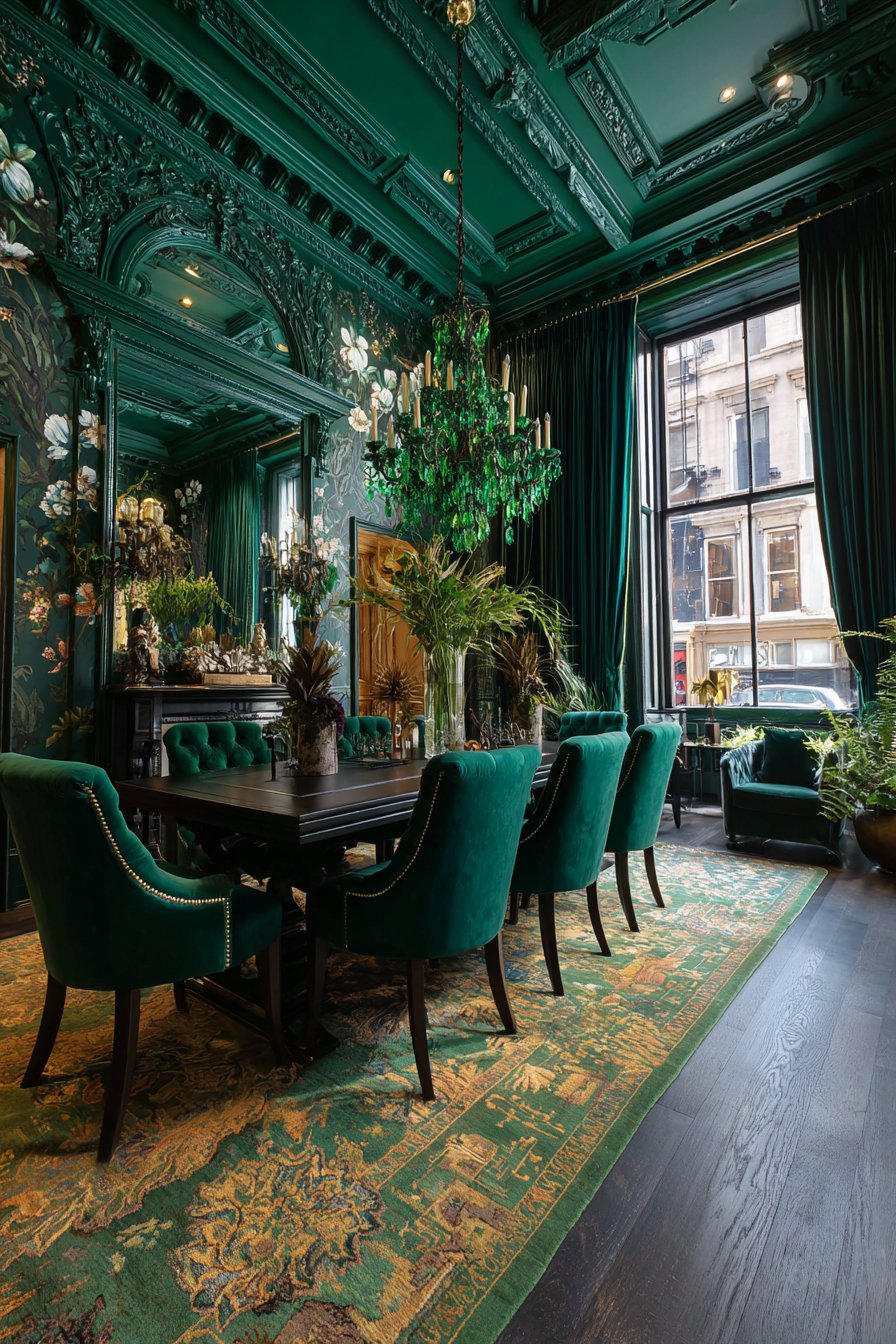
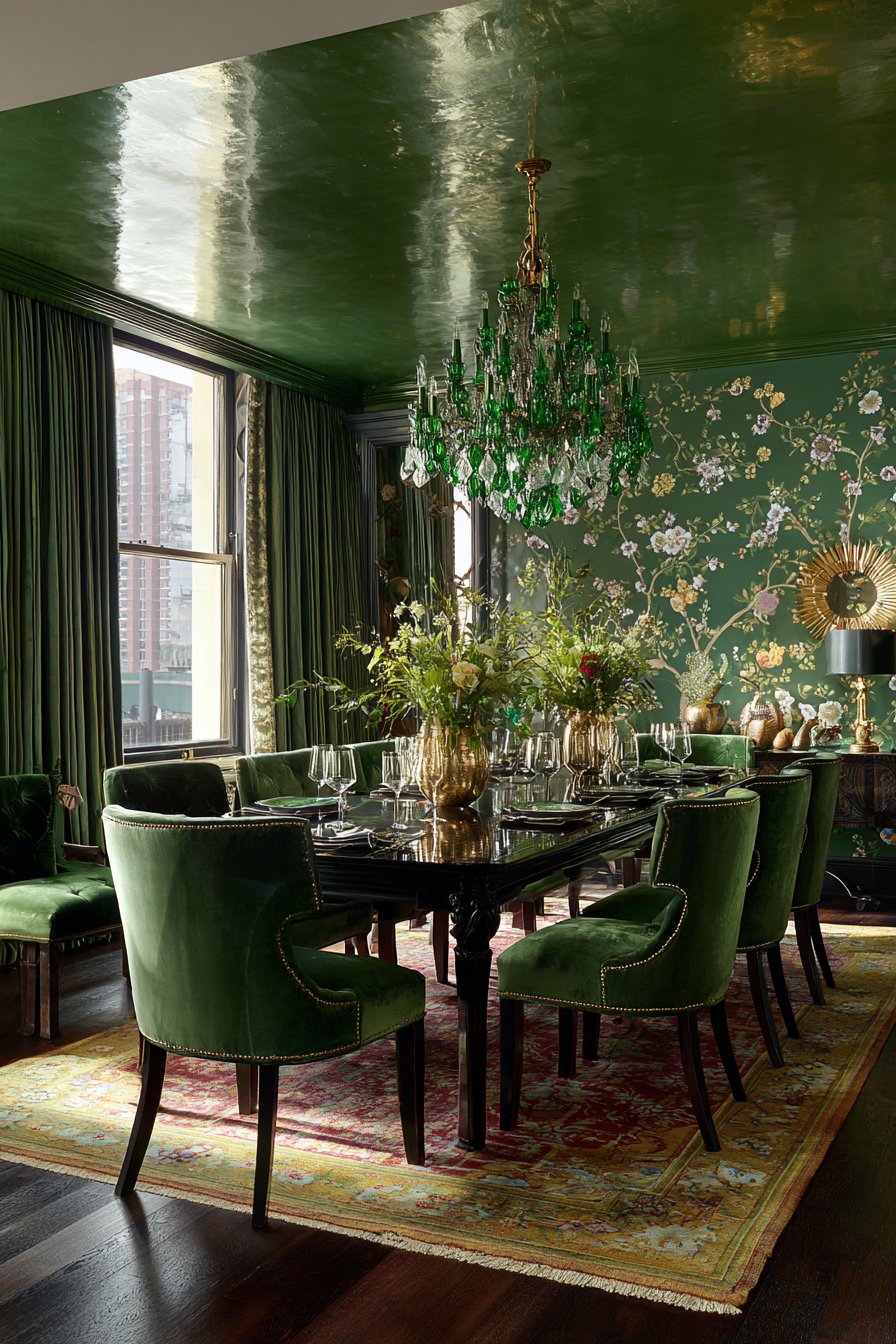
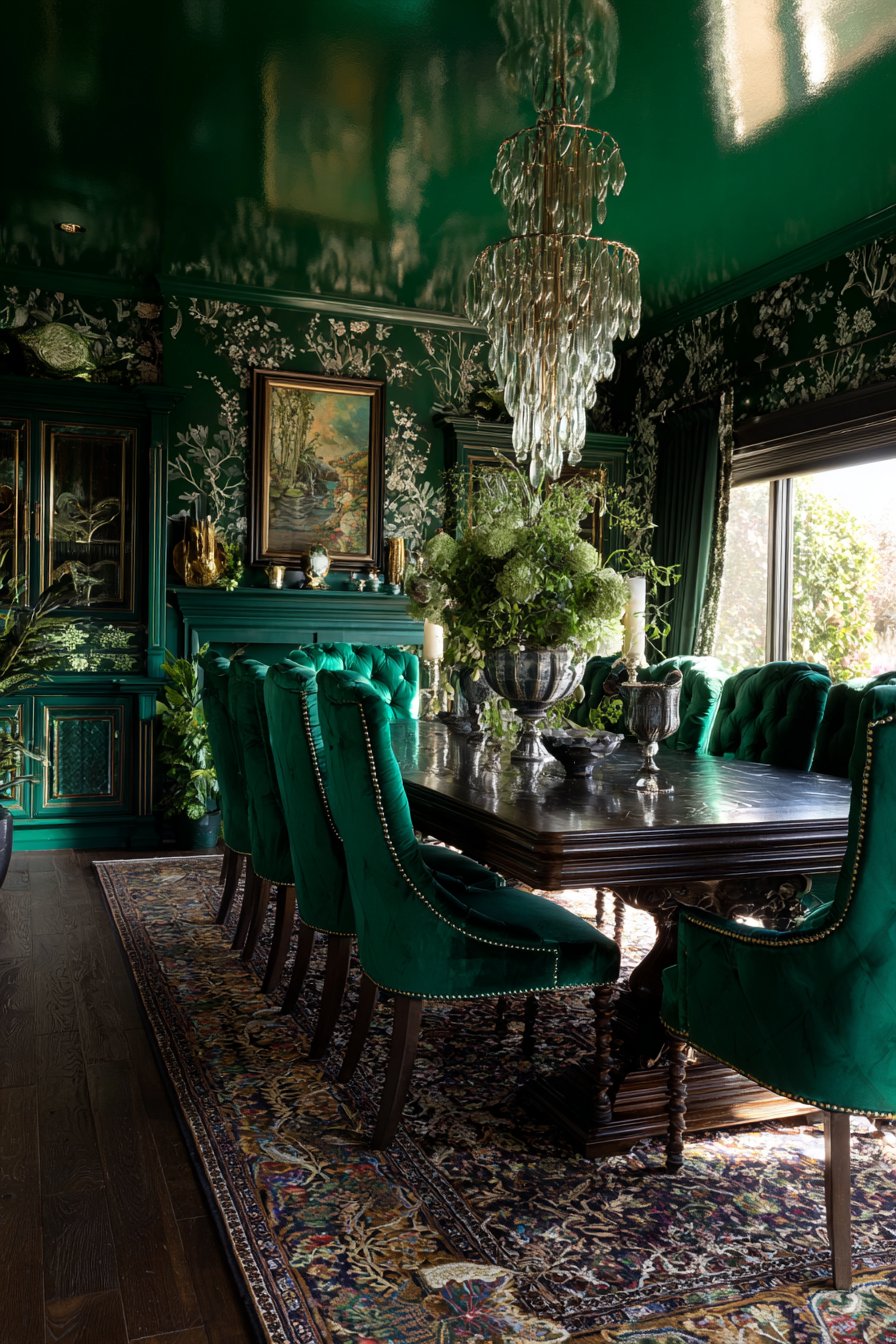
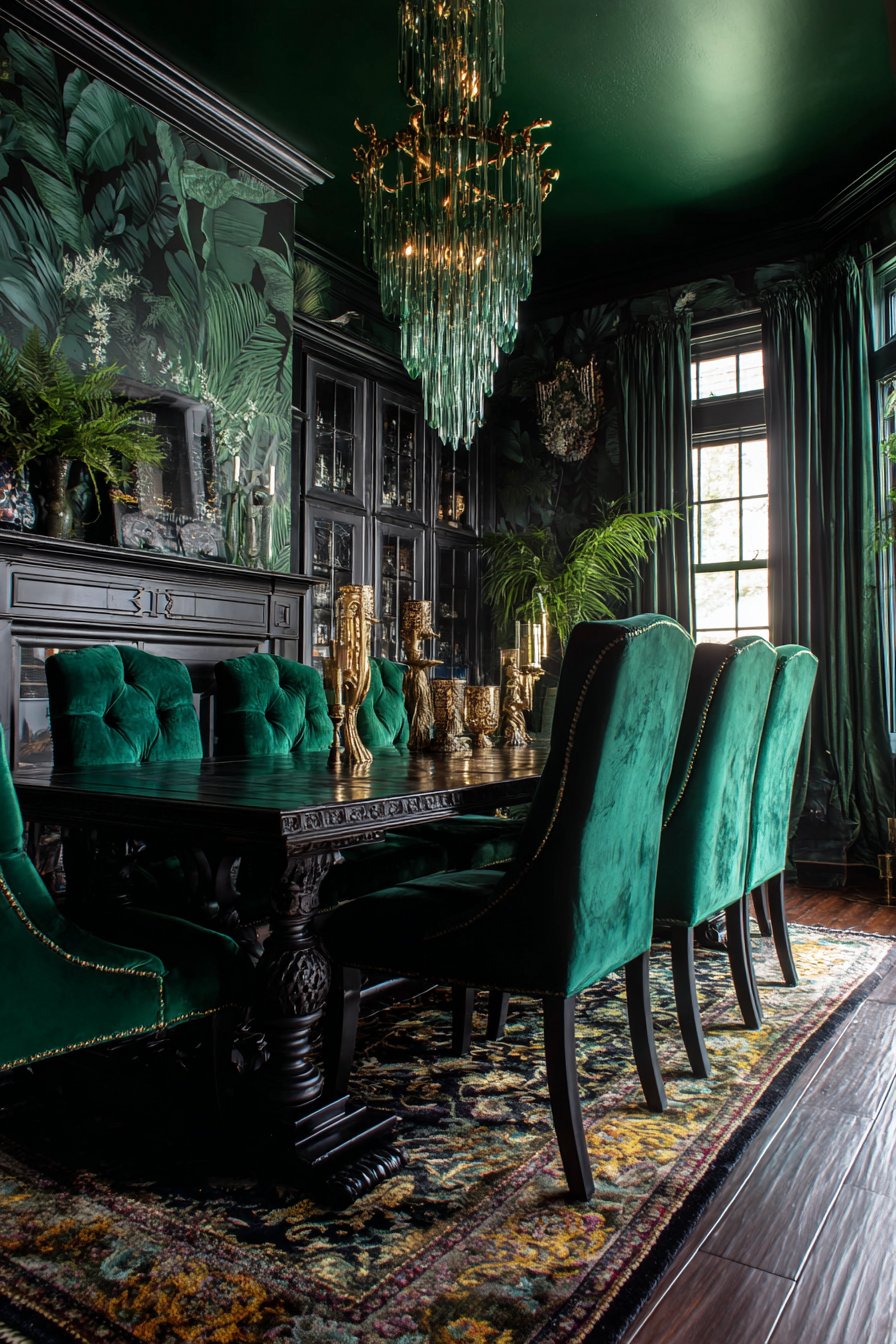
Emerald green velvet wallpaper featuring raised floral patterns creates luxurious depth. The pattern includes varying green shades that shift with changing light. An ornate carved wood dining table in dark espresso finish seats eight comfortably. Tufted velvet dining chairs in bottle green with brass nailhead details surround the table.
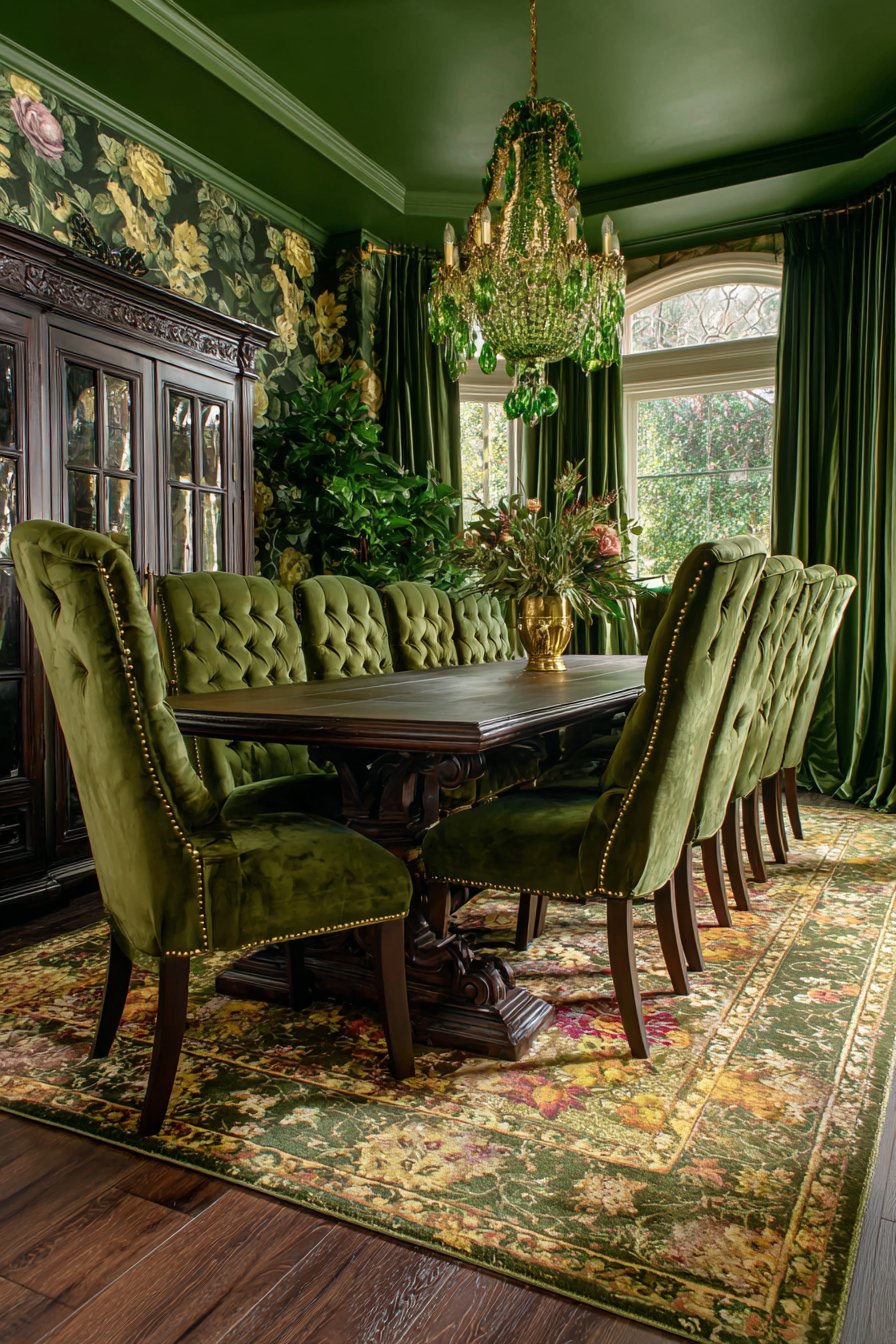
The ceiling painted in glossy hunter green lacquer creates unexpected drama overhead. This bold choice envelops diners in green from every direction. A grand crystal chandelier with green glass accents provides sparkling illumination. The fixture’s scale matches the room’s opulent ambitions perfectly.
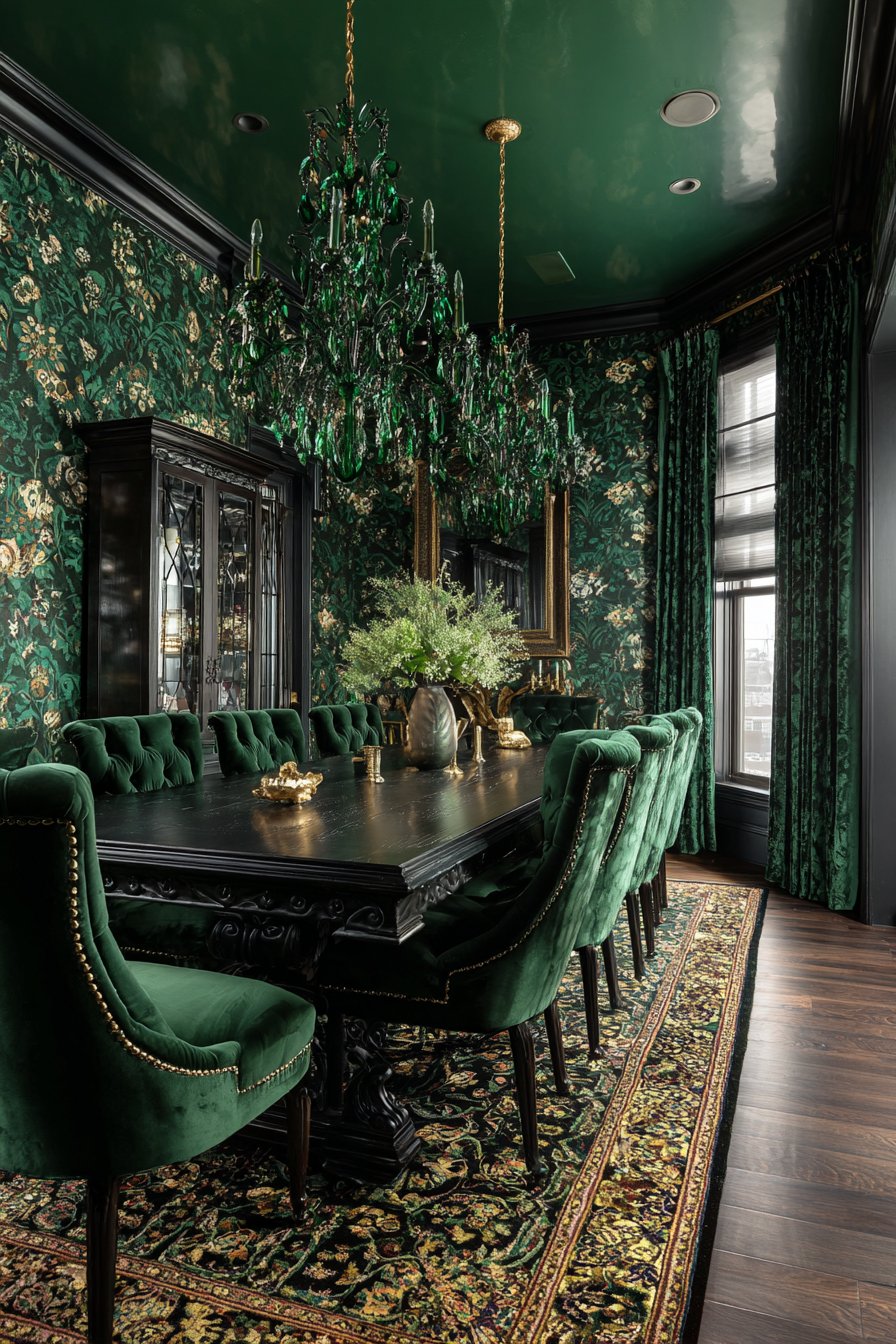
A patterned area rug in greens, gold, and burgundy layers over dark hardwood flooring. Golden hour light filters through heavy silk drapes in forest green. The rich fabric puddles slightly on the floor for added luxury. Multiple green tones throughout demonstrate sophisticated color layering.
Key Design Tips:
- Layer multiple green patterns including wallpaper, upholstery, and rugs
- Paint ceilings in coordinating dark green for enveloping drama
- Choose ornate furniture with carved details for maximalist impact
- Add crystal chandeliers with colored glass for luxurious lighting
- Use heavy silk drapes that puddle on floors for opulence
- Mix greens from emerald to hunter across different surfaces
11. Coastal Seafoam Green Breeziness
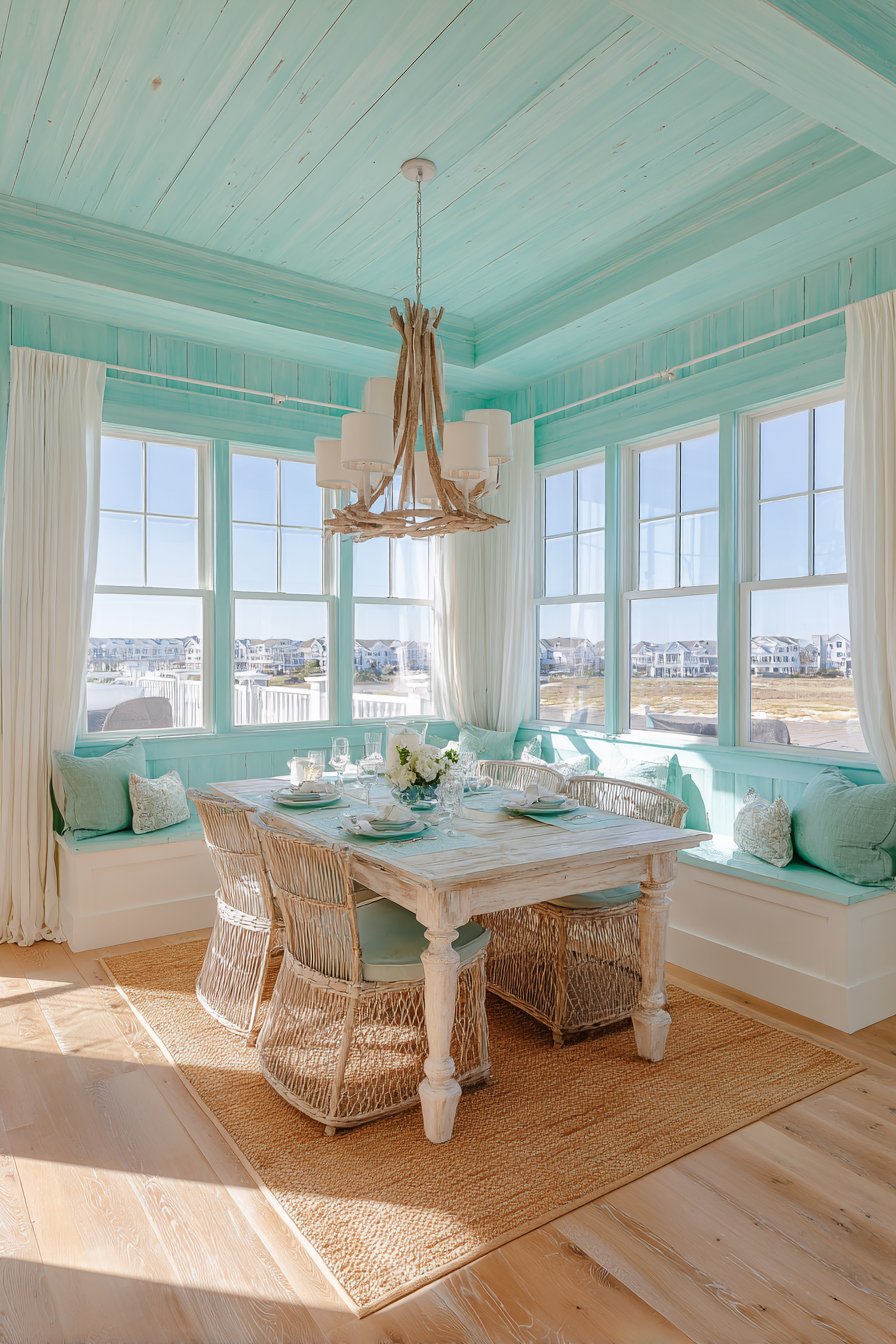
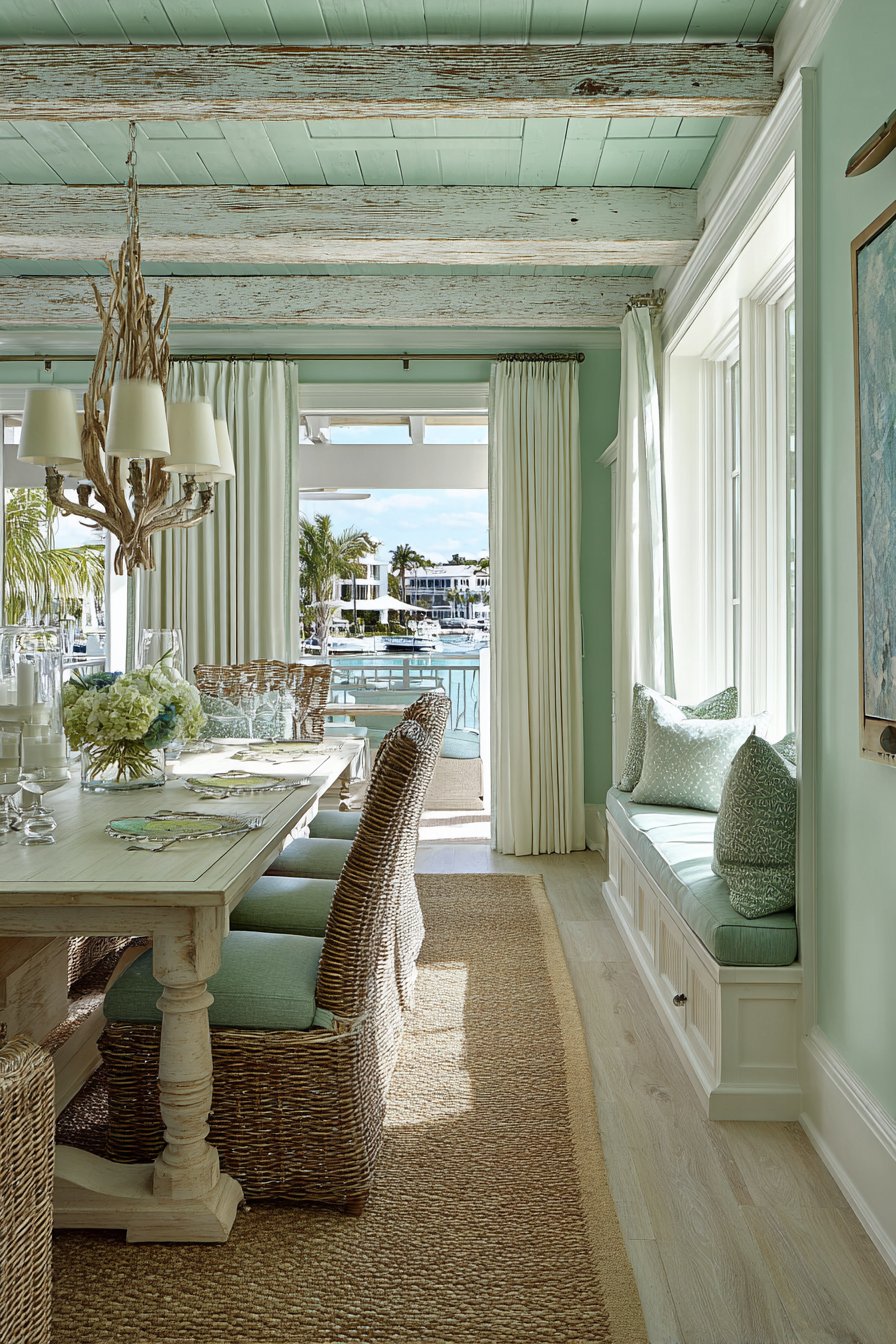
Soft seafoam green walls with subtle weathered texture evoke coastal relaxation. The slightly imperfect finish adds authentic character. A whitewashed oak dining table with turned legs provides cottage charm. Rattan dining chairs with sage green linen cushions offer comfortable natural seating.
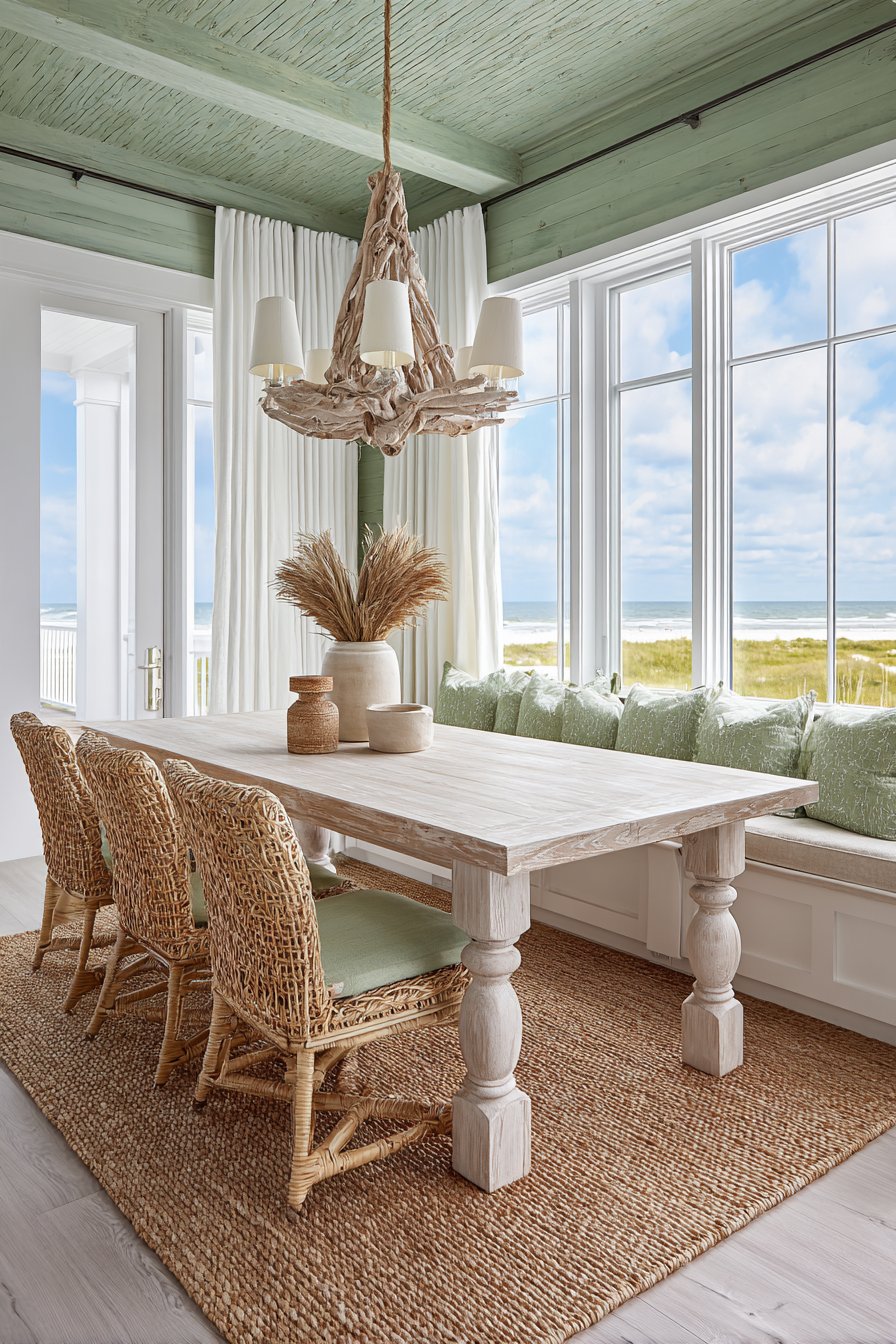
A driftwood-style chandelier with white linen drum shades provides soft illumination overhead. The natural wood sculpture brings organic form indoors. Sisal area rug in natural beige grounds the space over white oak flooring. The layered natural textures create coastal authenticity.
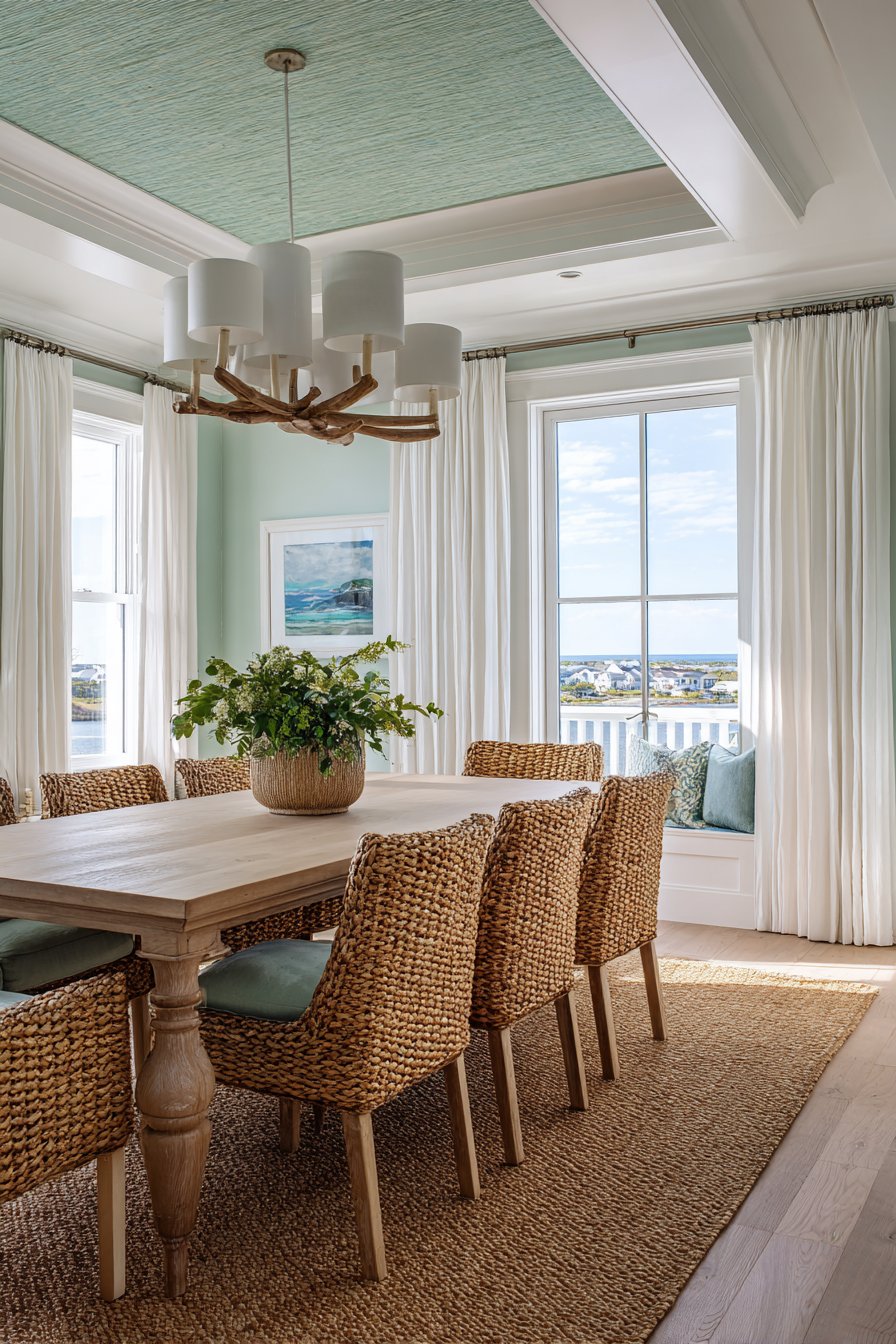
Built-in corner bench seating features beadboard backing painted in coordinating mint green. This architectural detail maximizes seating while adding cottage character. Sheer white curtains frame windows offering coastal landscape views. Natural morning light floods the space with brightness.
Key Design Tips:
- Choose seafoam or mint greens for coastal dining room palettes
- Whitewash wood furniture for weathered beach cottage appeal
- Use rattan or wicker seating with linen cushions for comfort
- Select driftwood-inspired lighting fixtures for organic sculptural interest
- Layer sisal rugs over wood floors for natural texture
- Install beadboard wainscoting or backing for cottage architectural detail
12. Mid-Century Modern Sage Green Cool
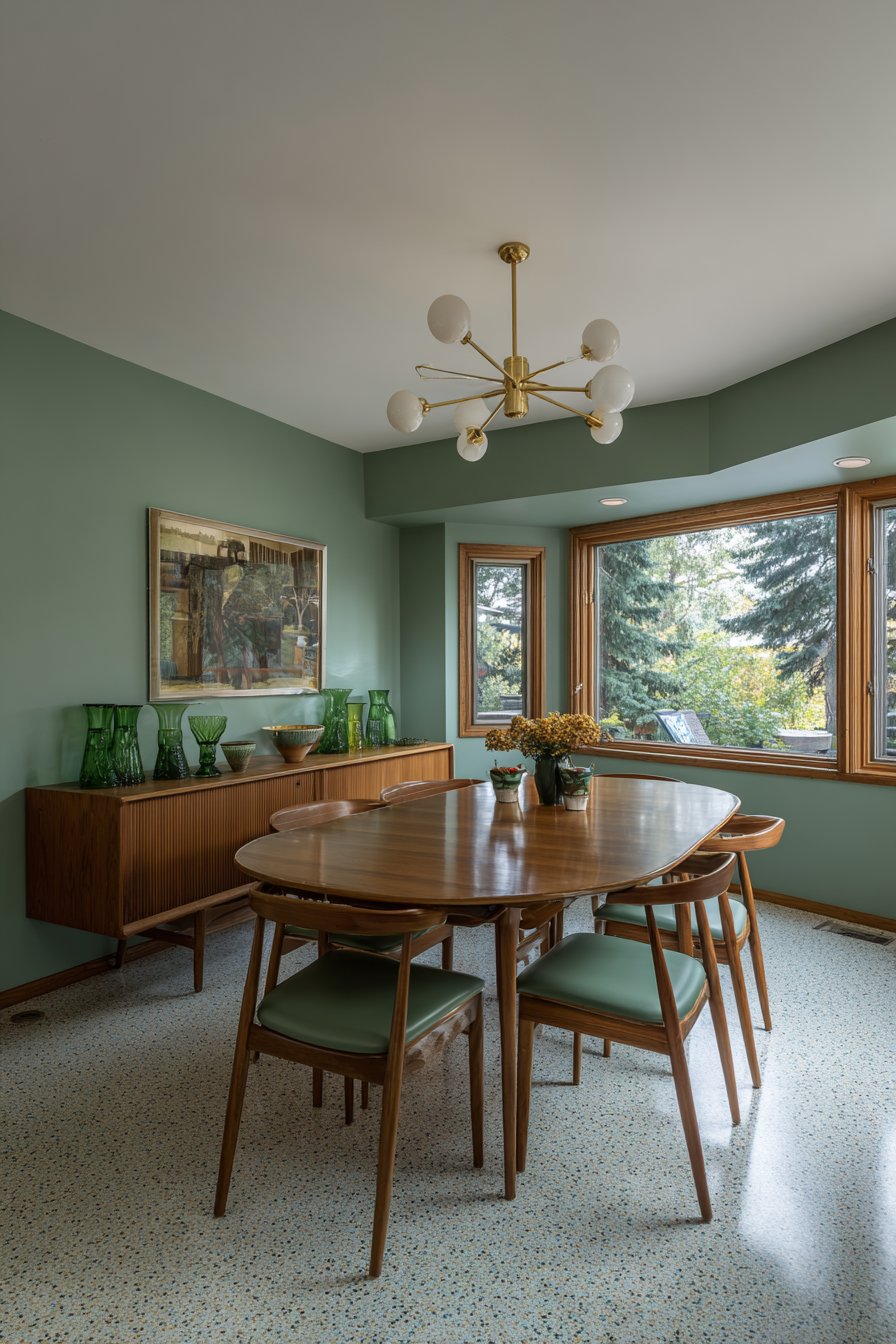
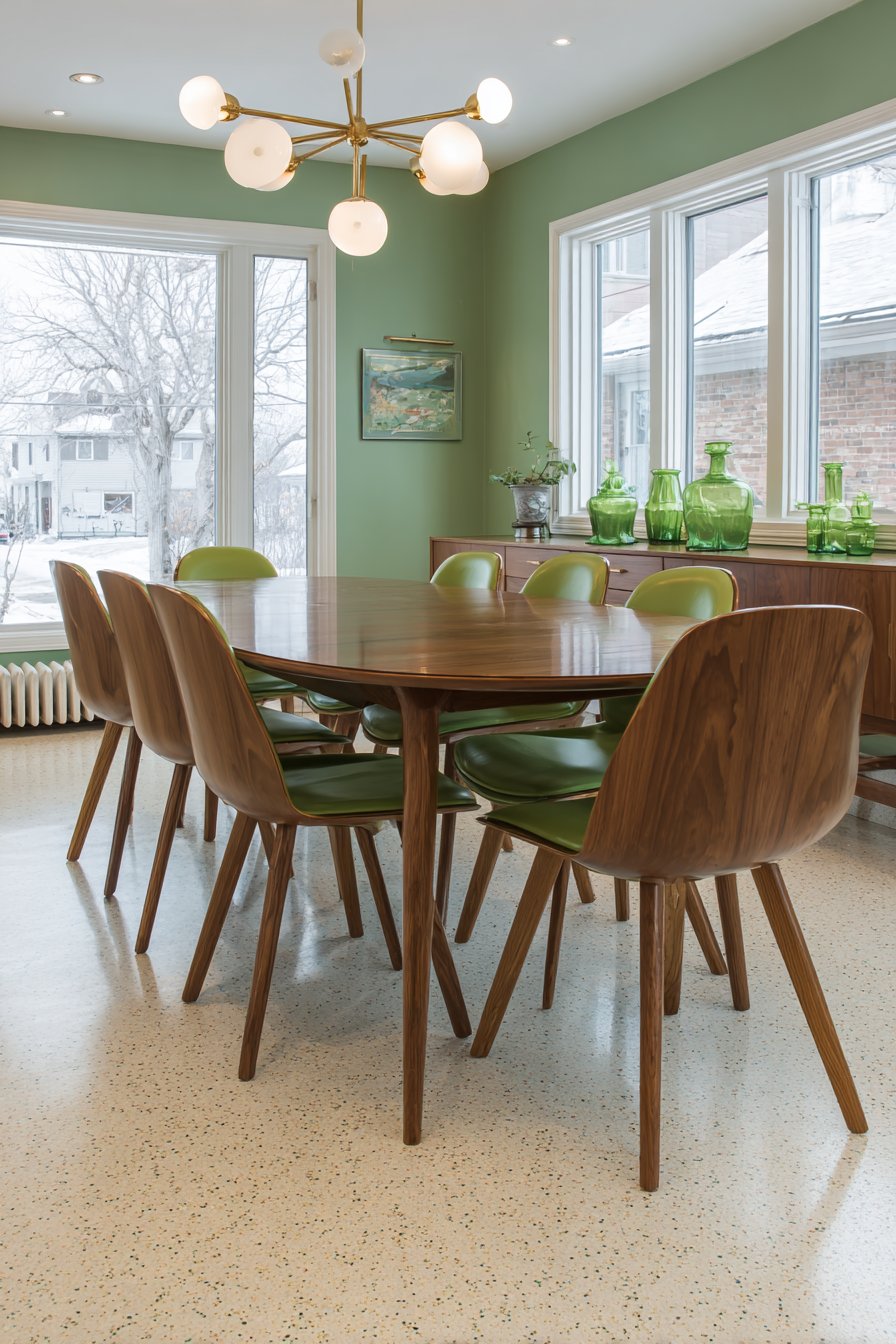
Sage green walls with smooth matte finish provide perfect mid-century backdrop. The soft tone complements warm wood furniture beautifully. An iconic oval walnut dining table with tapered splayed legs centers the space. The organic shape promotes conversation flow around the table.
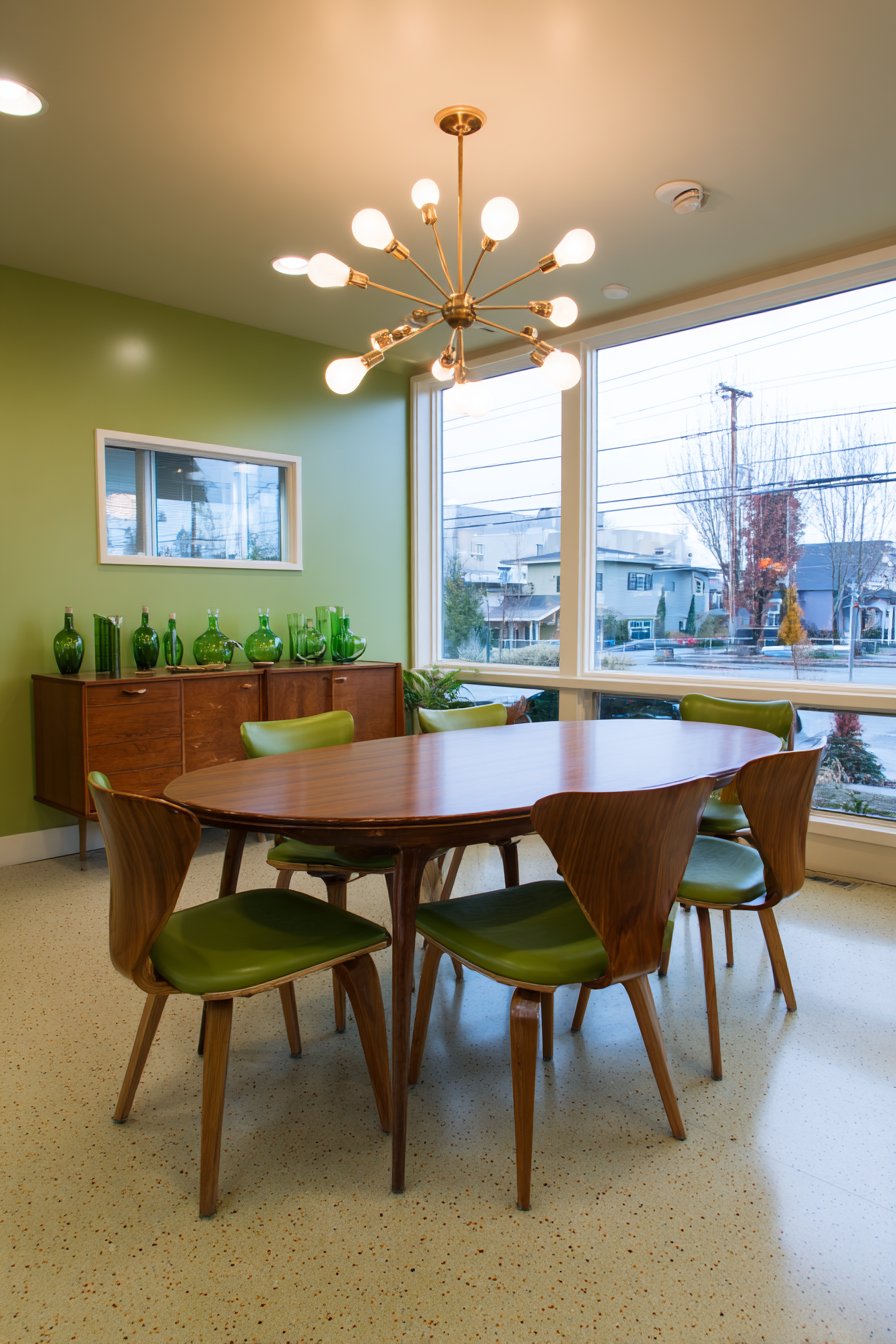
Six molded plywood chairs with green vinyl upholstery and wood frames provide period-appropriate seating. The ergonomic curves reflect mid-century design innovation. A geometric Sputnik chandelier in brass with white glass globes creates sculptural lighting. The starburst form epitomizes space-age optimism.
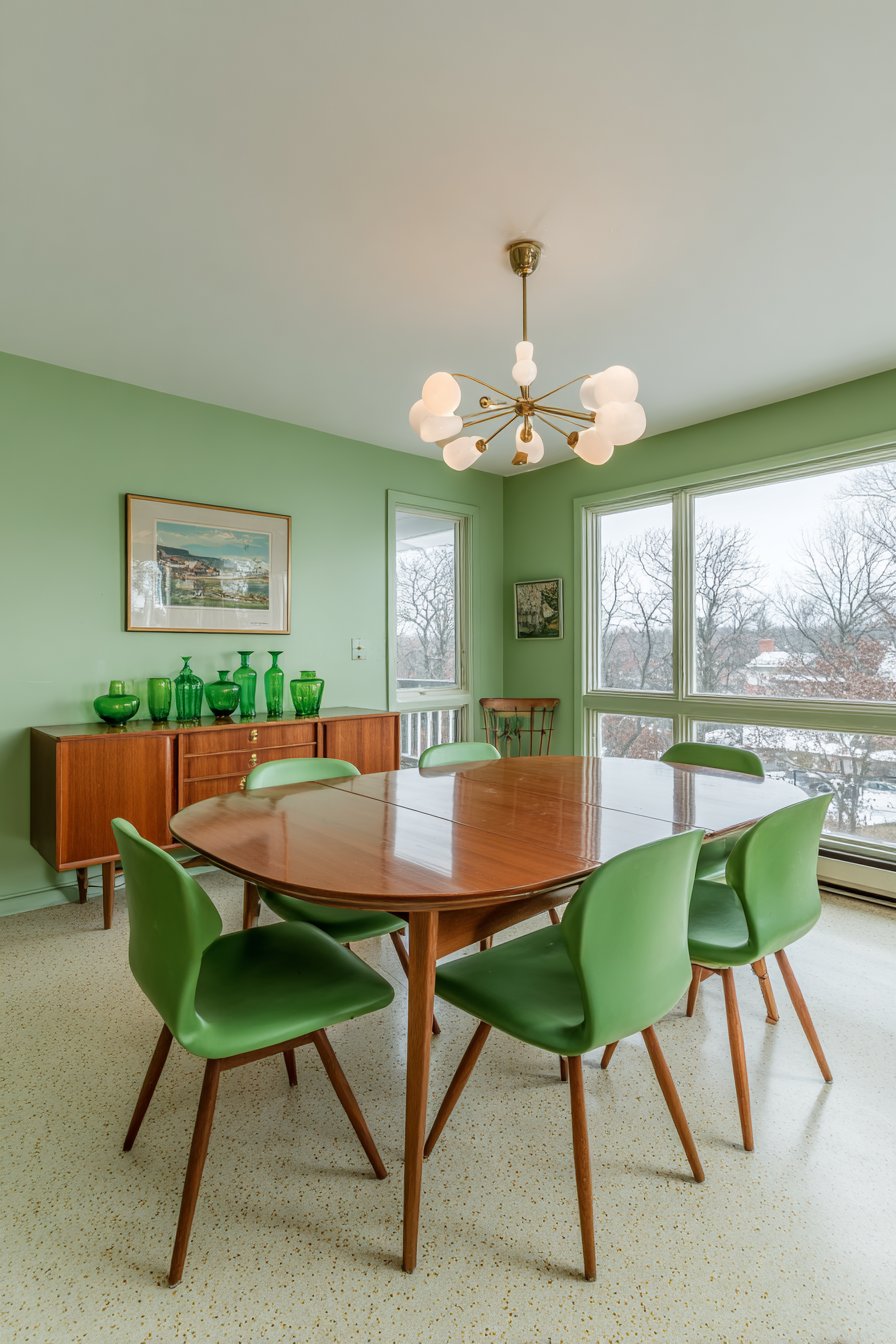
Terrazzo flooring in cream with green chips ties the color scheme together perfectly. The speckled surface adds retro authenticity to the design. A teak credenza along one wall displays vintage green glass decanters. Large picture windows with minimal aluminum frames allow abundant natural light.
Key Design Tips:
- Paint walls in sage green to complement walnut wood furniture
- Choose iconic mid-century furniture pieces like oval tables
- Select molded plywood chairs with vinyl upholstery for authenticity
- Install Sputnik or geometric chandeliers in brass for period lighting
- Use terrazzo flooring with coordinating colored chips when possible
- Display vintage glassware collections on teak credenzas or sideboards
13. Rustic Industrial Moss Green Edge
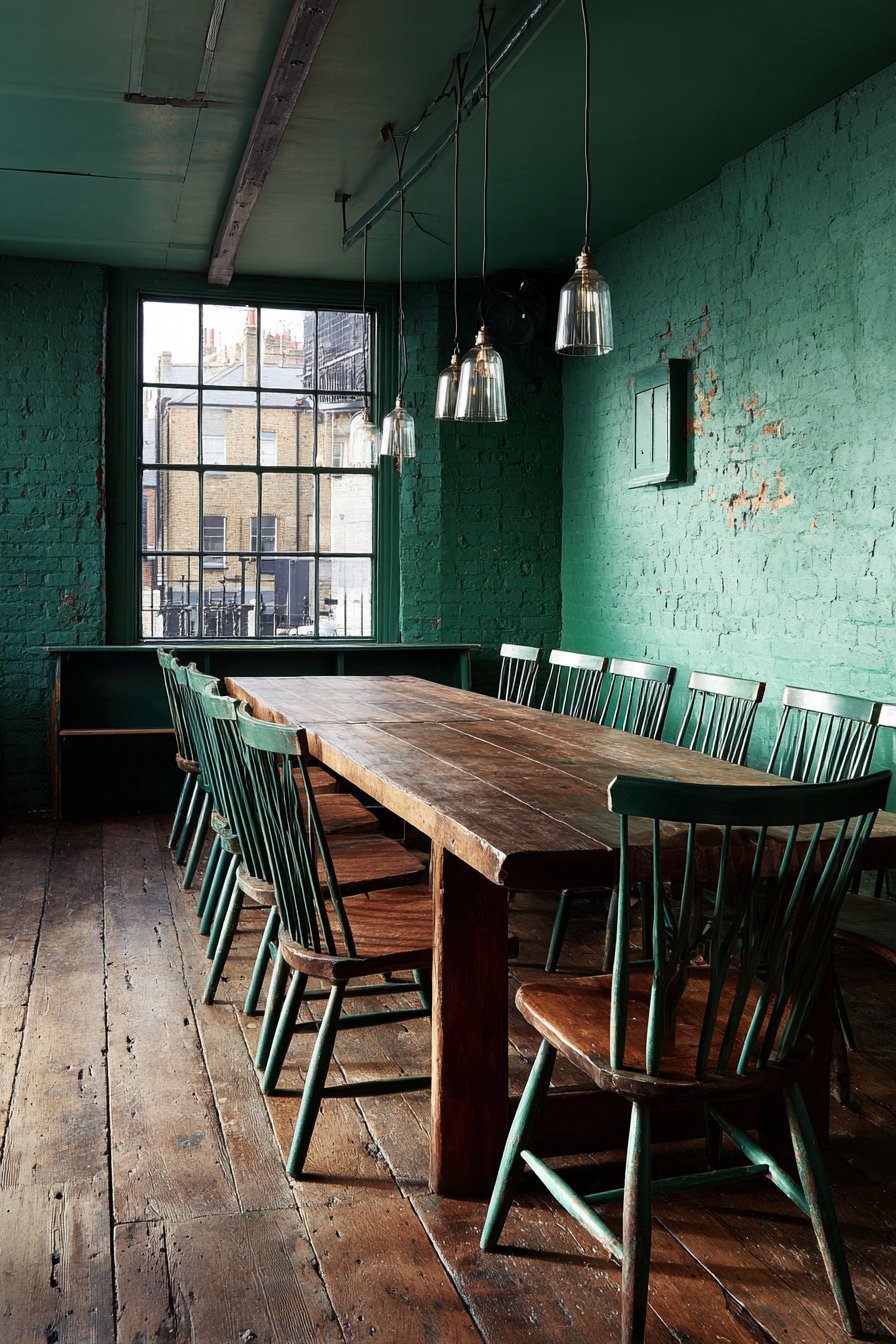
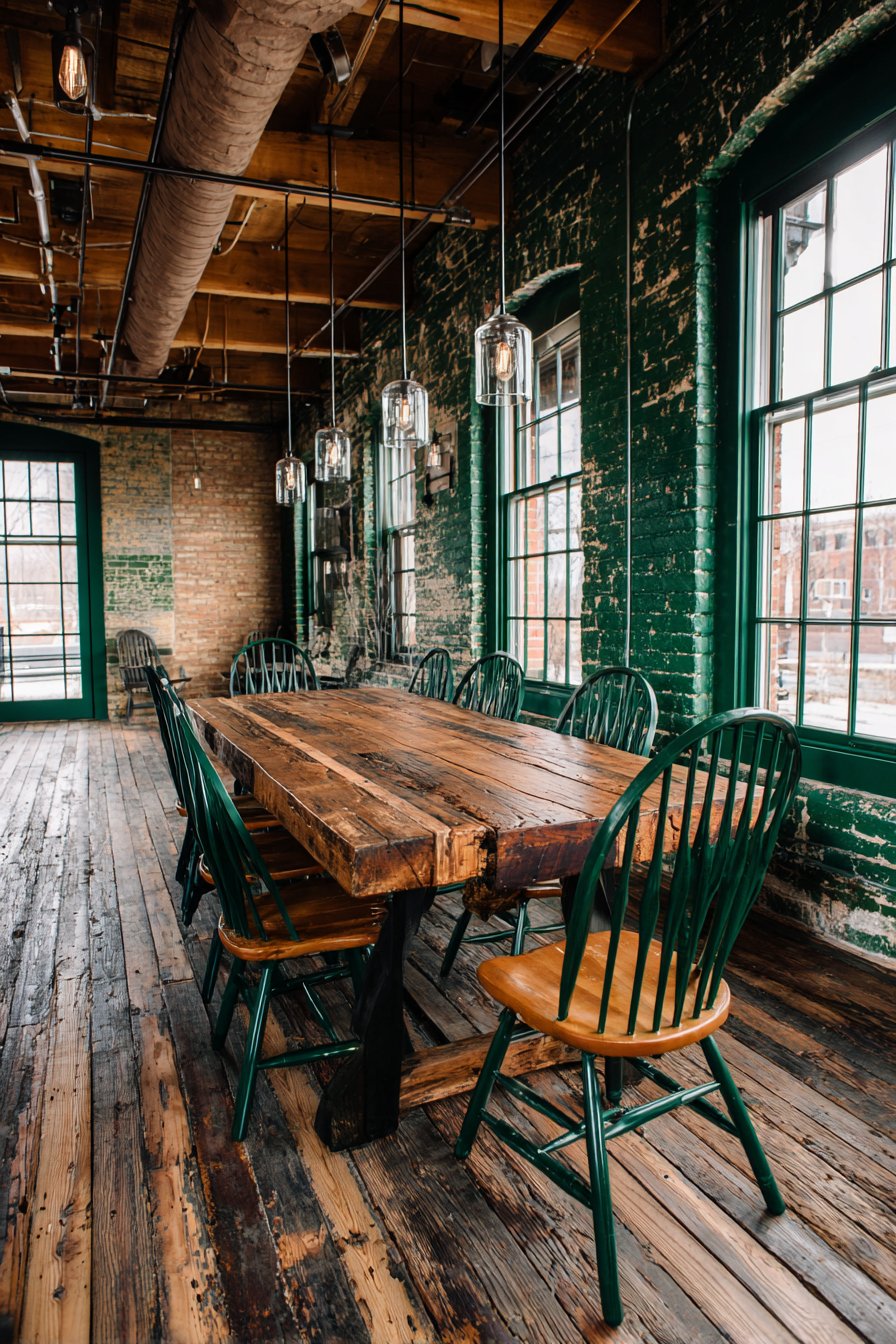
Exposed brick walls painted in deep moss green showcase texture and character. The aged brick surface shows slight color variations that enhance authenticity. A heavy solid wood dining table with thick planks and industrial metal legs commands attention. Simple painted Windsor chairs in forest green with natural wood seats provide contrast.
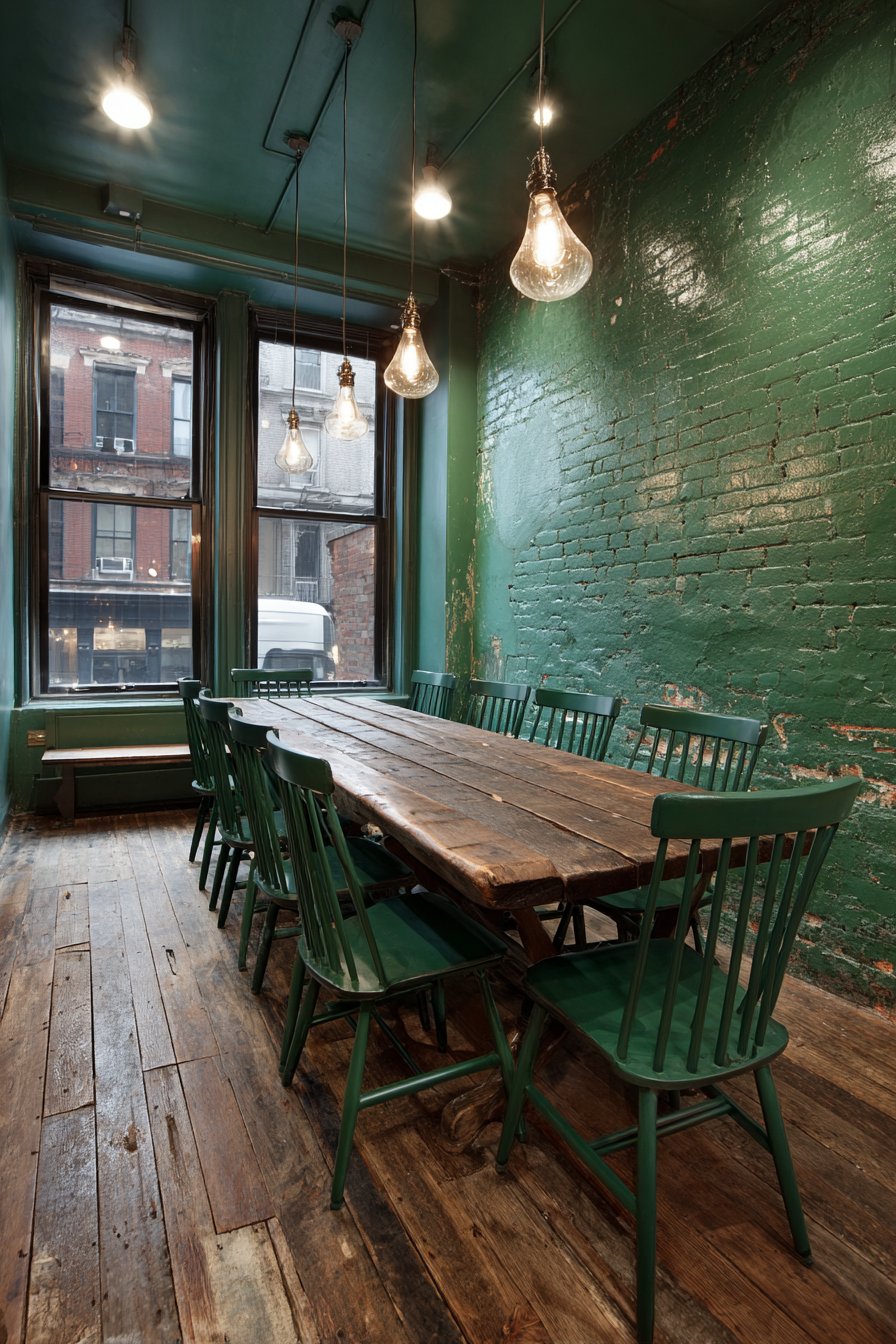
The chair seats show natural wear that adds genuine character. Black iron pendant lights with clear glass shades hang at varying heights. This industrial lighting creates focused task illumination with raw aesthetic appeal. Reclaimed barn wood flooring features visible nail holes and natural weathering.
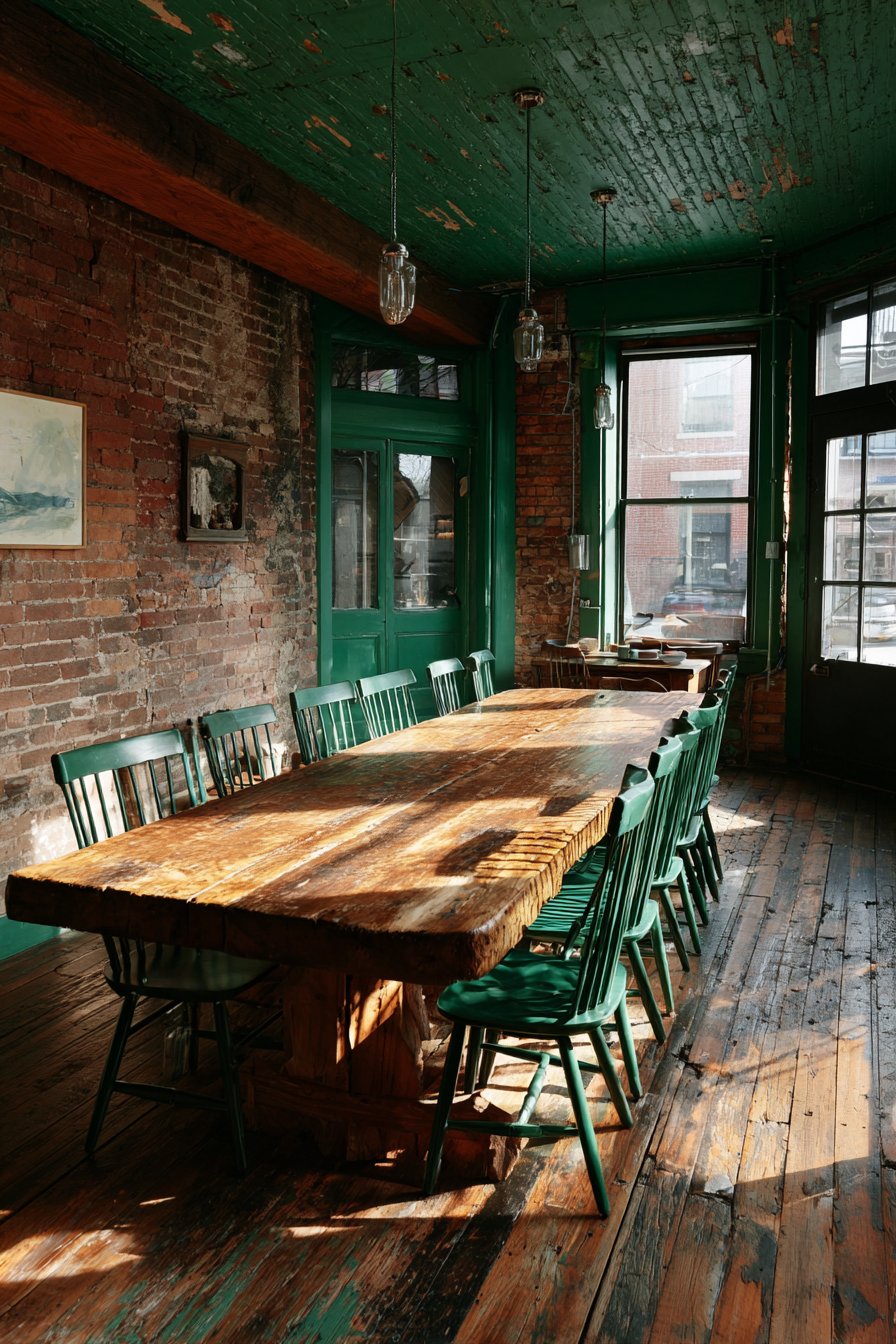
Steel-framed windows allow natural light to create dramatic shadows on textured green brick. The interplay between light and texture becomes part of the design. This rustic-industrial combination celebrates authentic materials and honest construction methods.
Key Design Tips:
- Paint exposed brick in deep green to enhance texture
- Choose heavy wood tables with industrial metal bases or legs
- Use simple Windsor chairs with contrasting painted frames and natural seats
- Hang black iron pendant lights at varying heights for drama
- Install reclaimed flooring with visible wear and nail holes
- Keep window frames minimal in steel or black to frame views
14. Transitional Olive Green Balance
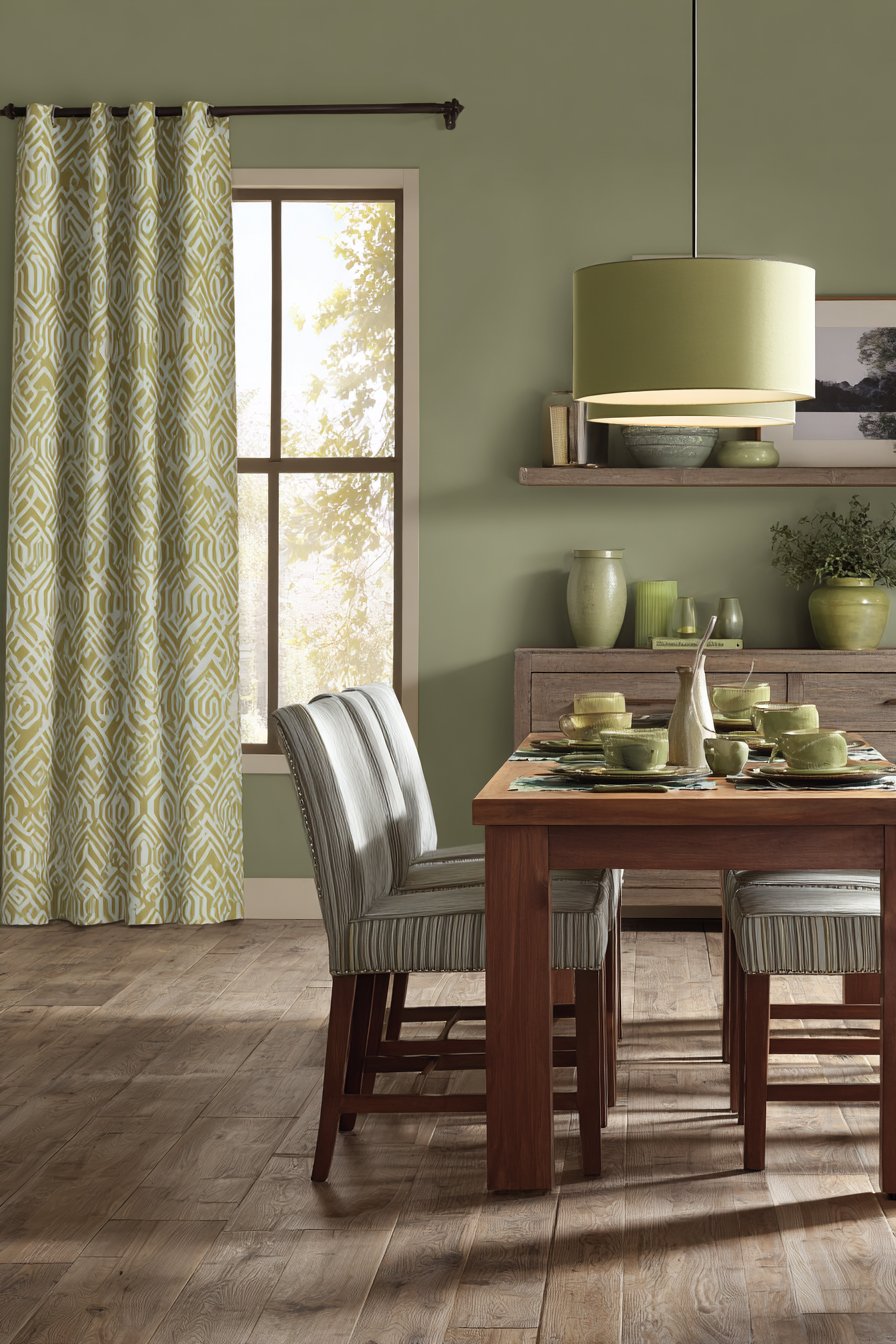
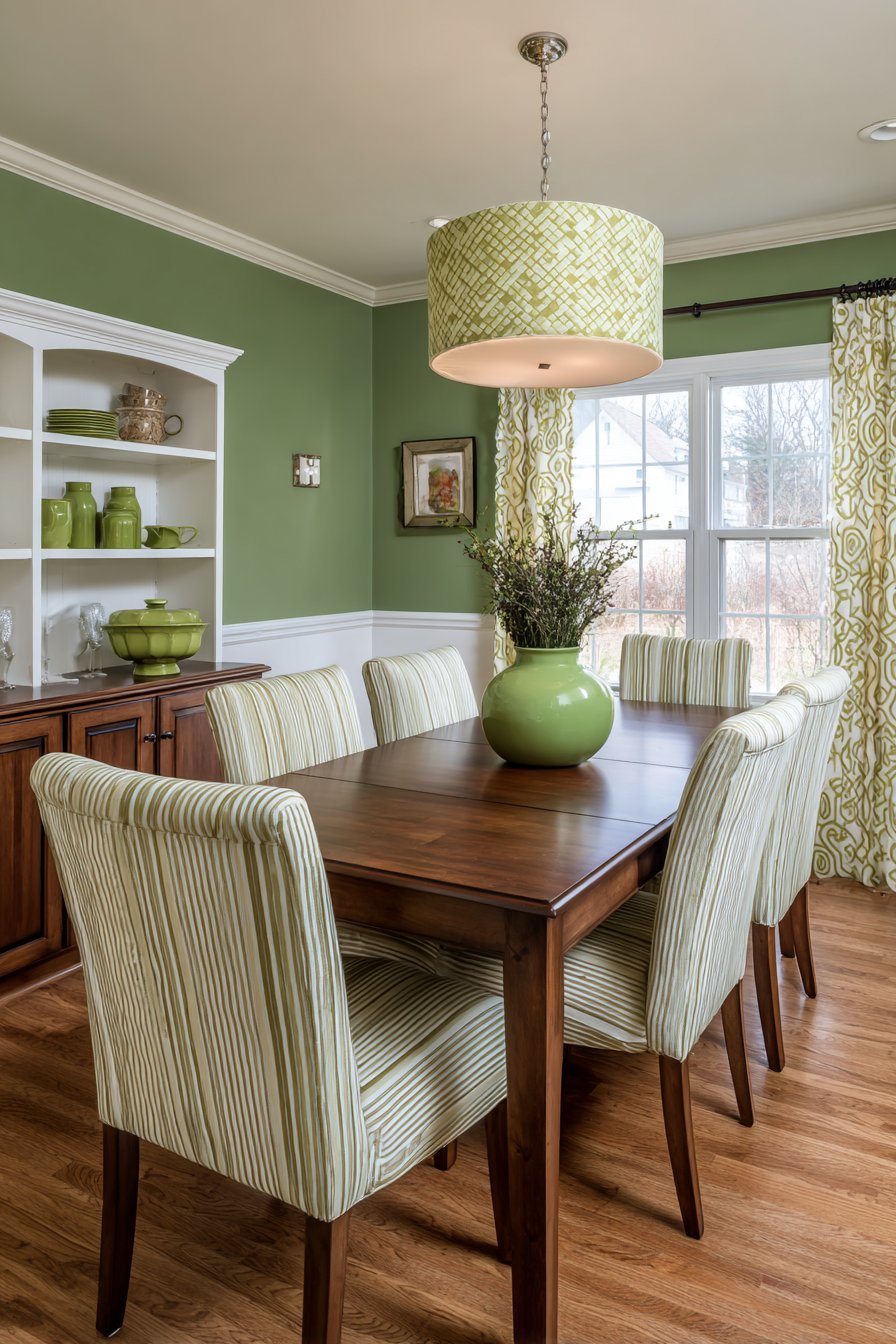
Olive green below a chair rail and cream above creates sophisticated two-tone walls. This classic treatment adds subtle architectural interest. A rectangular dining table in medium cherry wood with straight legs provides transitional style. Upholstered parsons chairs in green and cream striped linen bridge traditional and contemporary.
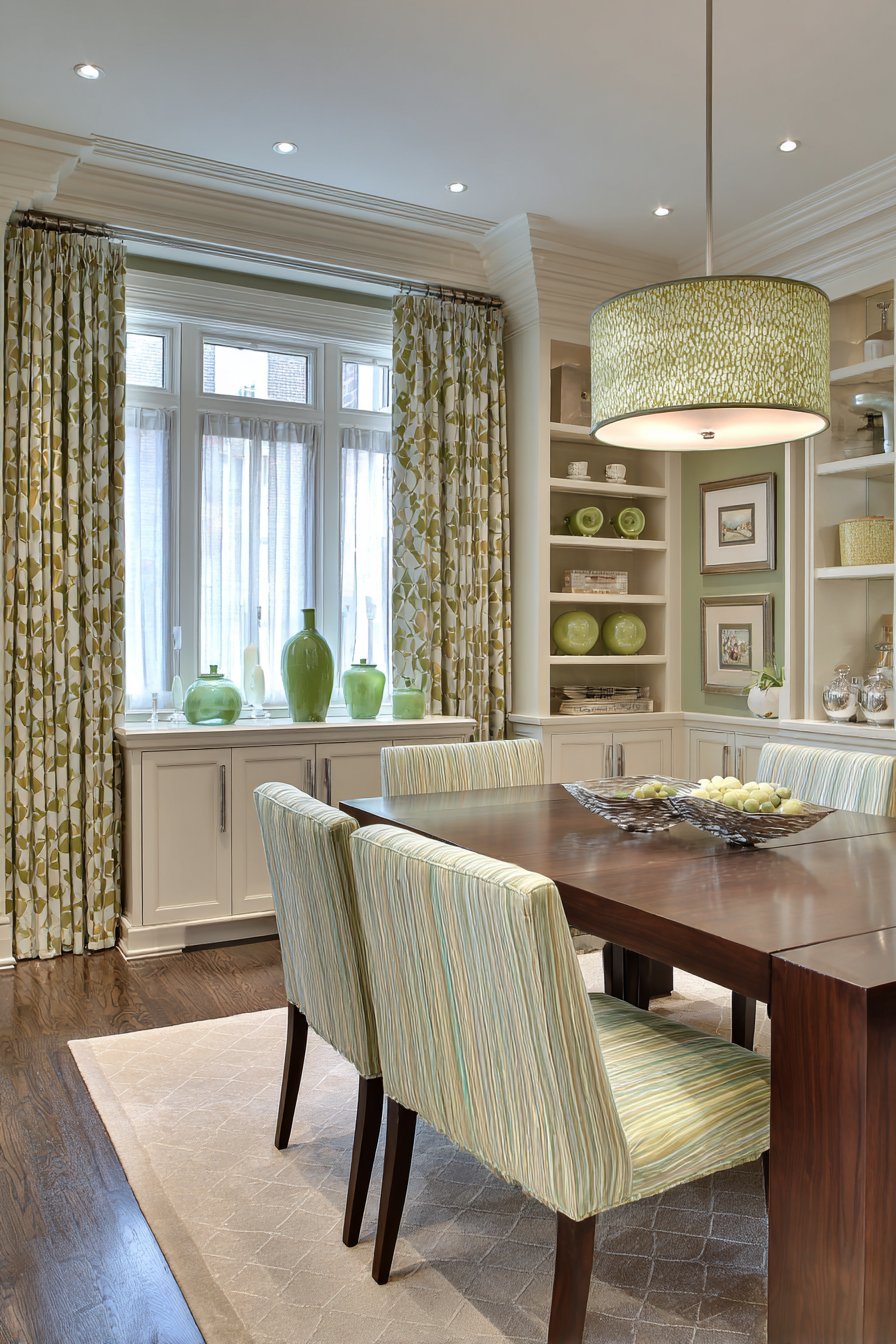
A modern drum pendant light with green linen shade provides soft diffused illumination. The fabric shade filters light beautifully while coordinating with wall colors. Engineered hardwood flooring in medium brown oak adds practical warmth. Green and cream patterned curtains in a geometric print frame natural light.
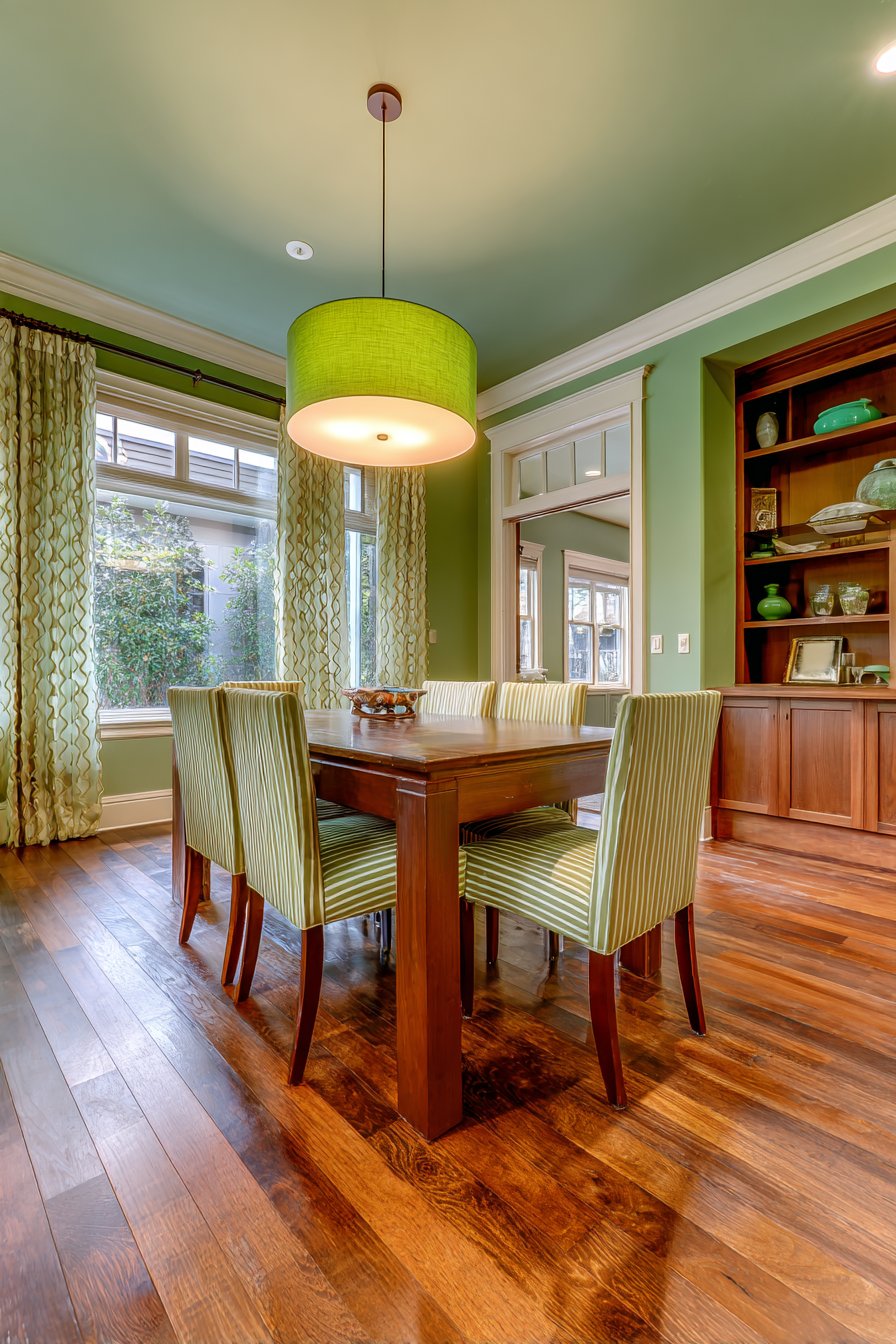
A built-in buffet in matching cherry wood displays green pottery and serving pieces. The functional storage adds traditional elegance while keeping necessities accessible. This balanced approach suits those who appreciate both classic and modern elements.
Key Design Tips:
- Use two-tone walls with chair rail to add architectural interest
- Choose medium wood tones like cherry for a transitional appeal
- Select striped or patterned fabrics that bridge color zones
- Use drum pendant lights with fabric shades for soft lighting
- Hang geometric print curtains for contemporary pattern in traditional space
- Install built-in buffets in matching wood for cohesive storage
15. Nature-Inspired Forest Green Immersion
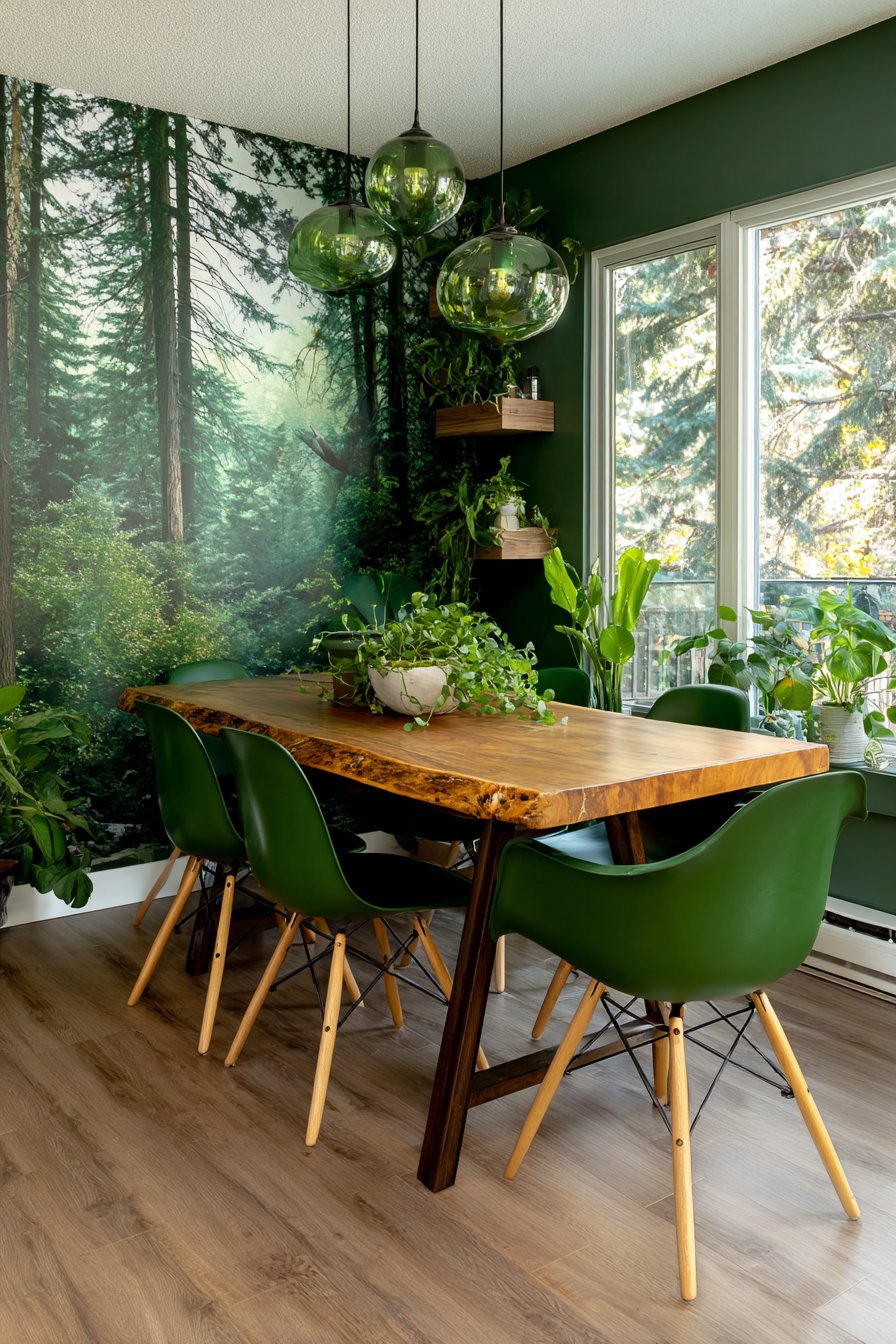
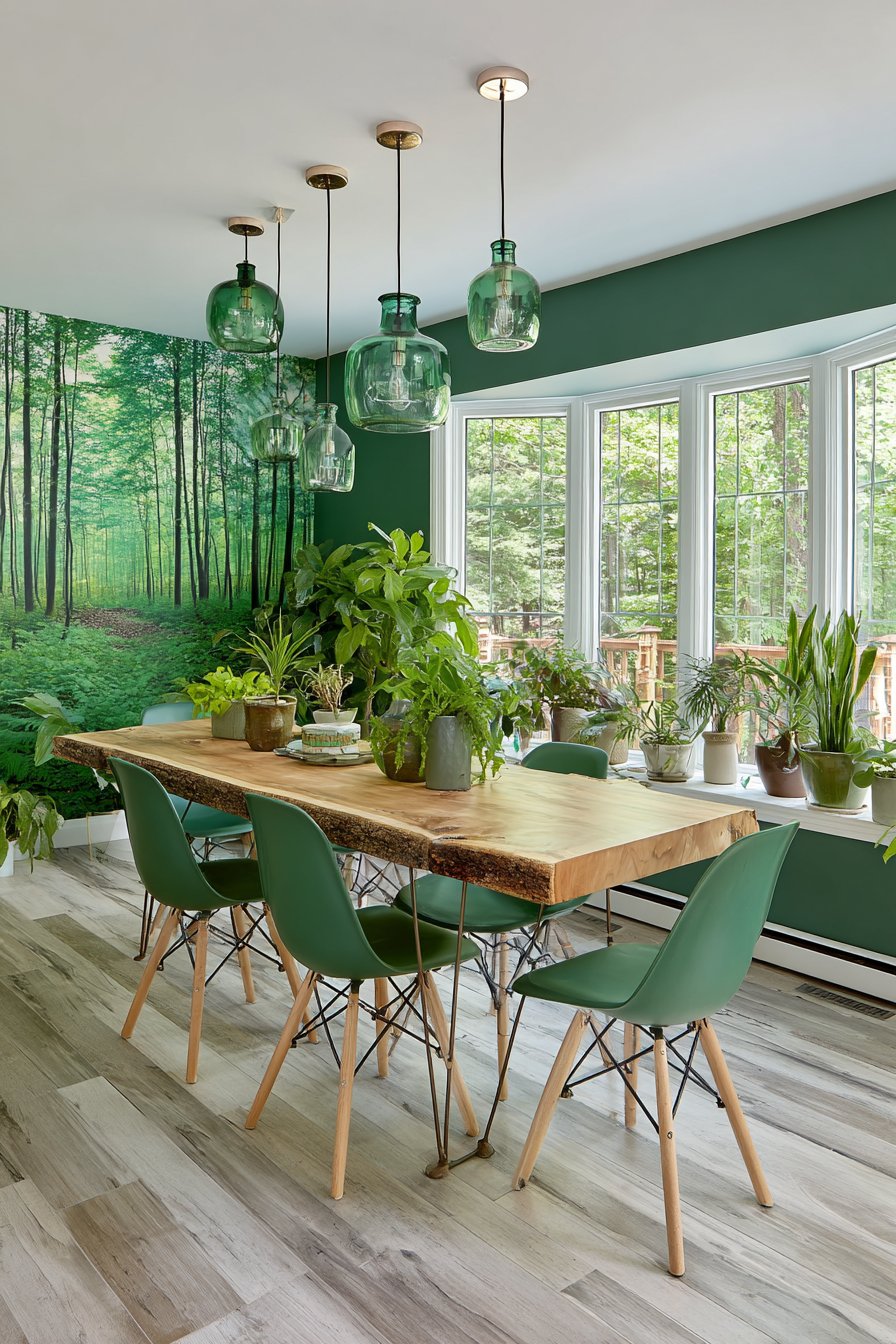
Deep moss green walls provide a foundation, while one accent wall features removable wallpaper. The realistic forest scene wallpaper depicts lush foliage with impressive detail. A live-edge maple dining table with a natural wood finish celebrates organic form. Hairpin legs provide minimal contemporary support below.
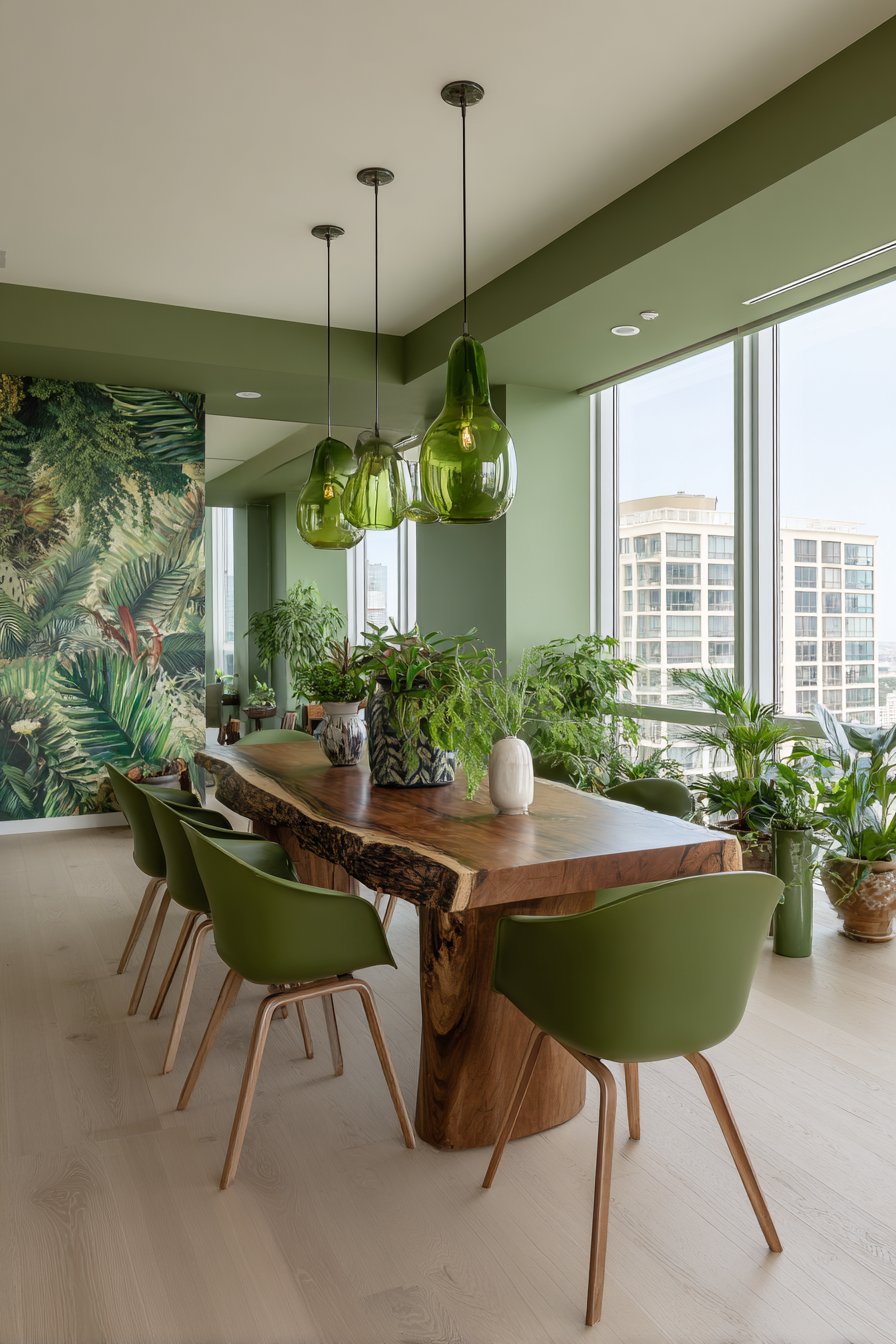
Modern chairs with green molded seats and natural ash wood legs offer comfortable seating. The simple silhouettes don’t compete with the dramatic wallpaper. A cluster of three glass pendant lights in varying sizes with green-tinted glass hangs above. The grouped arrangement creates sculptural interest.
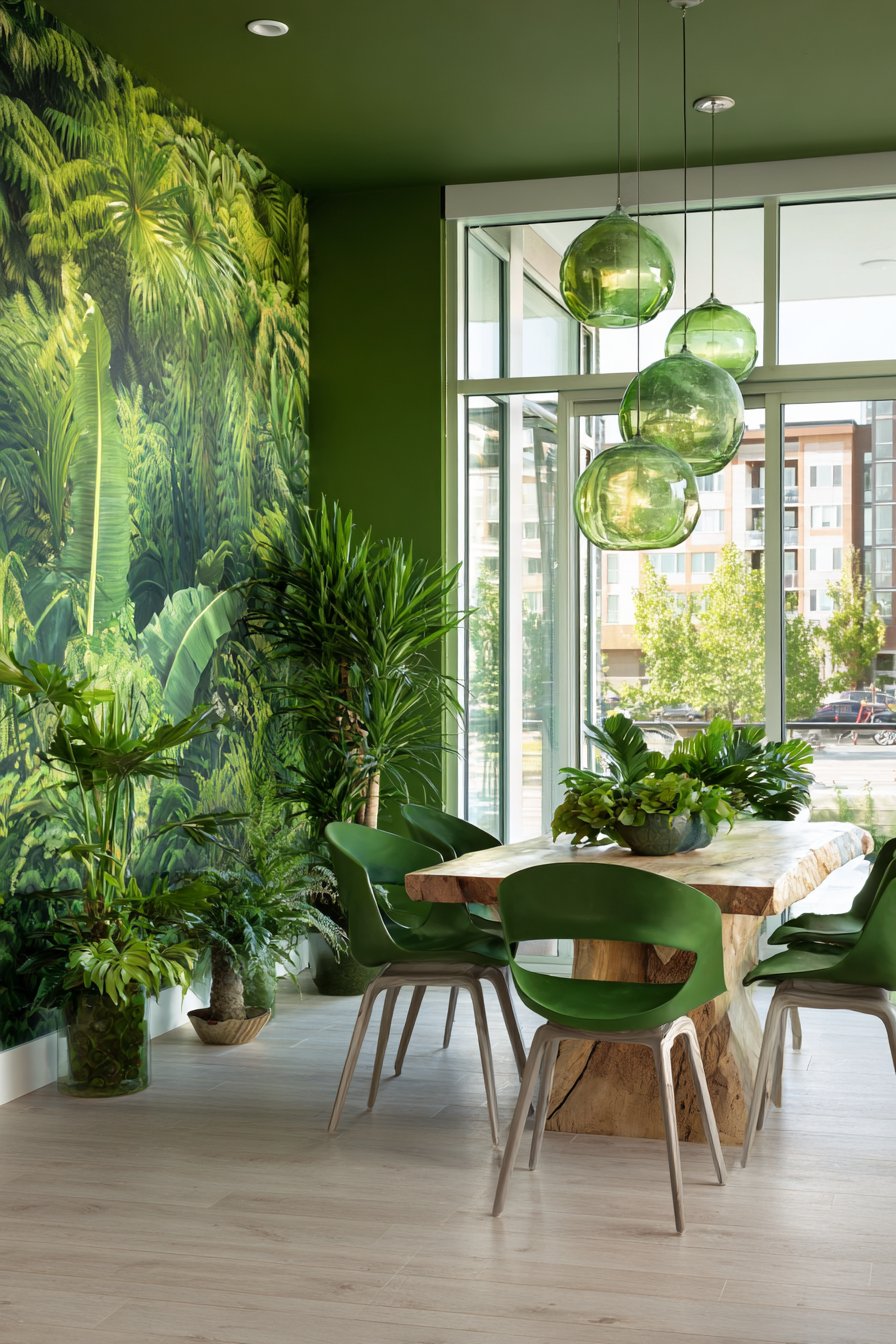
Light maple flooring with natural color variations complements the table material. Abundant indoor plants in various green pottery planters line windowsills and occupy corners. Natural daylight streaming through large windows interacts with the green palette beautifully. The biophilic design connects occupants to nature.
Key Design Tips:
- Use forest scene wallpaper on one accent wall for dramatic impact
- Choose live-edge tables to reinforce natural organic themes
- Add clusters of glass pendant lights in varying sizes for interest
- Match flooring wood species to dining table for cohesion
- Include numerous living plants throughout the space for authenticity
- Select pottery planters in coordinating green glazes to reinforce palette
16. Luxurious Jade Green Sophistication
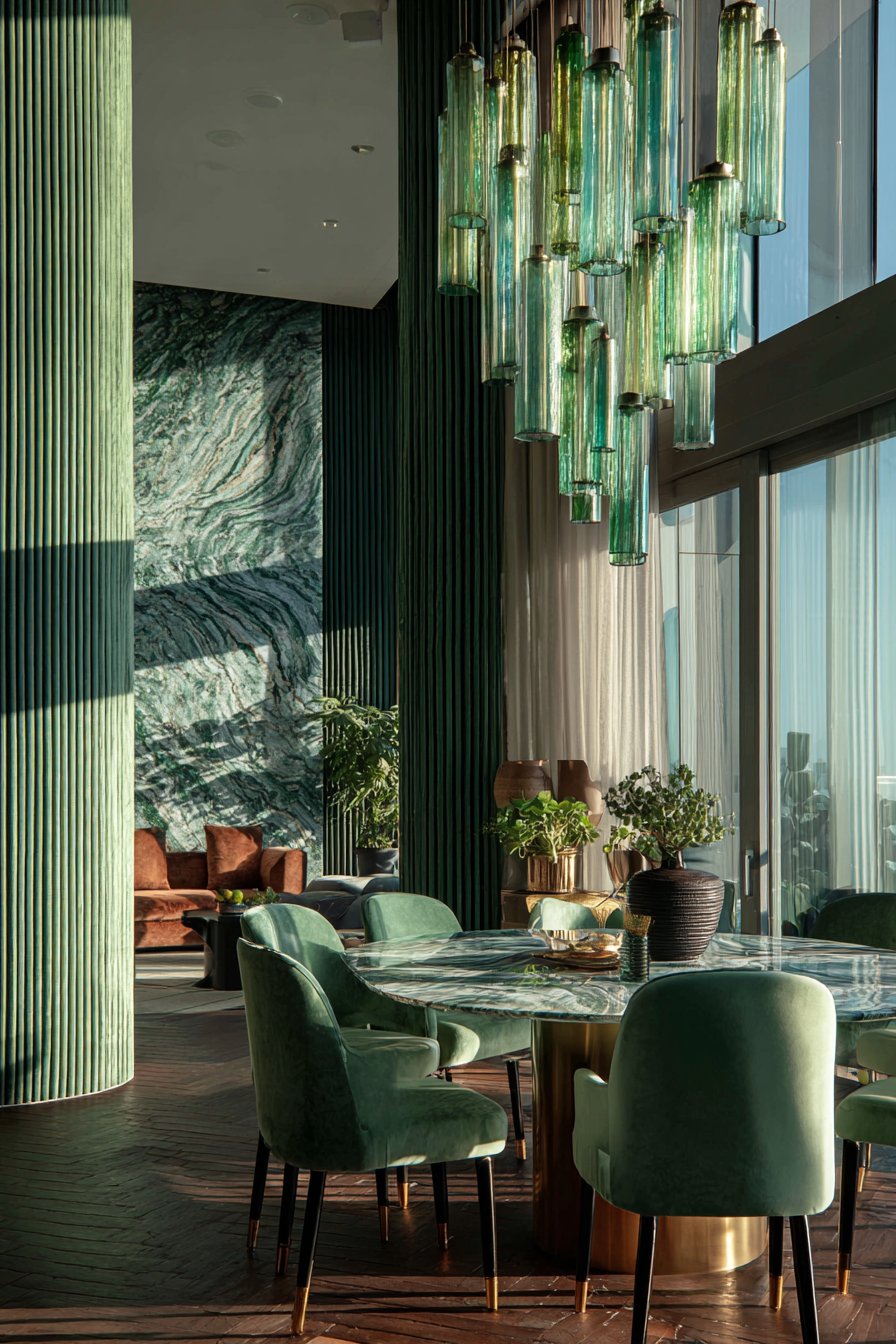
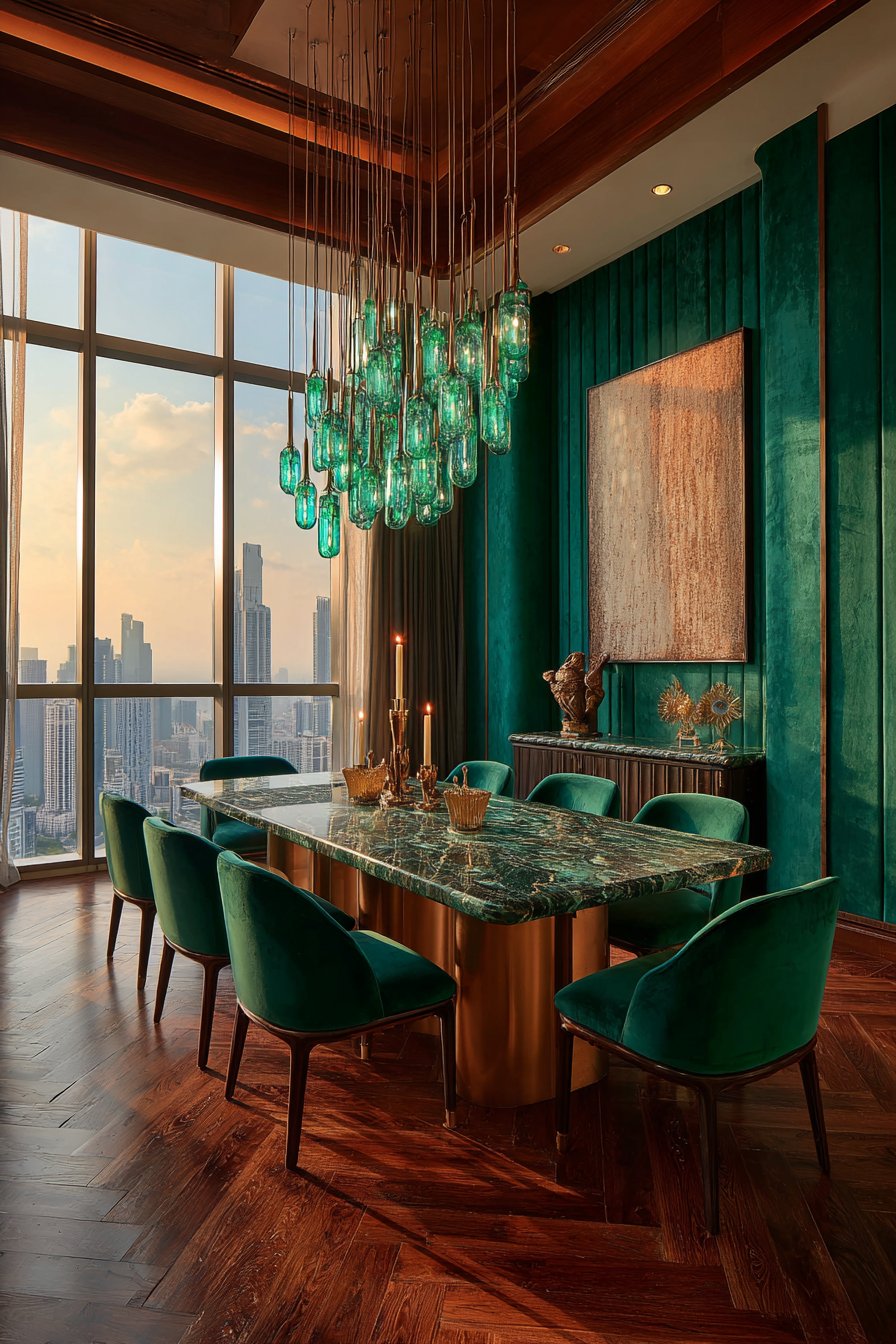
Walls upholstered in jade green velvet panels with subtle vertical channeling create ultimate luxury. The fabric installation adds softness and acoustic benefits. A stunning marble dining table with dramatic green and white veining sits atop polished brass pedestal. The stone’s natural patterns provide organic artistry.
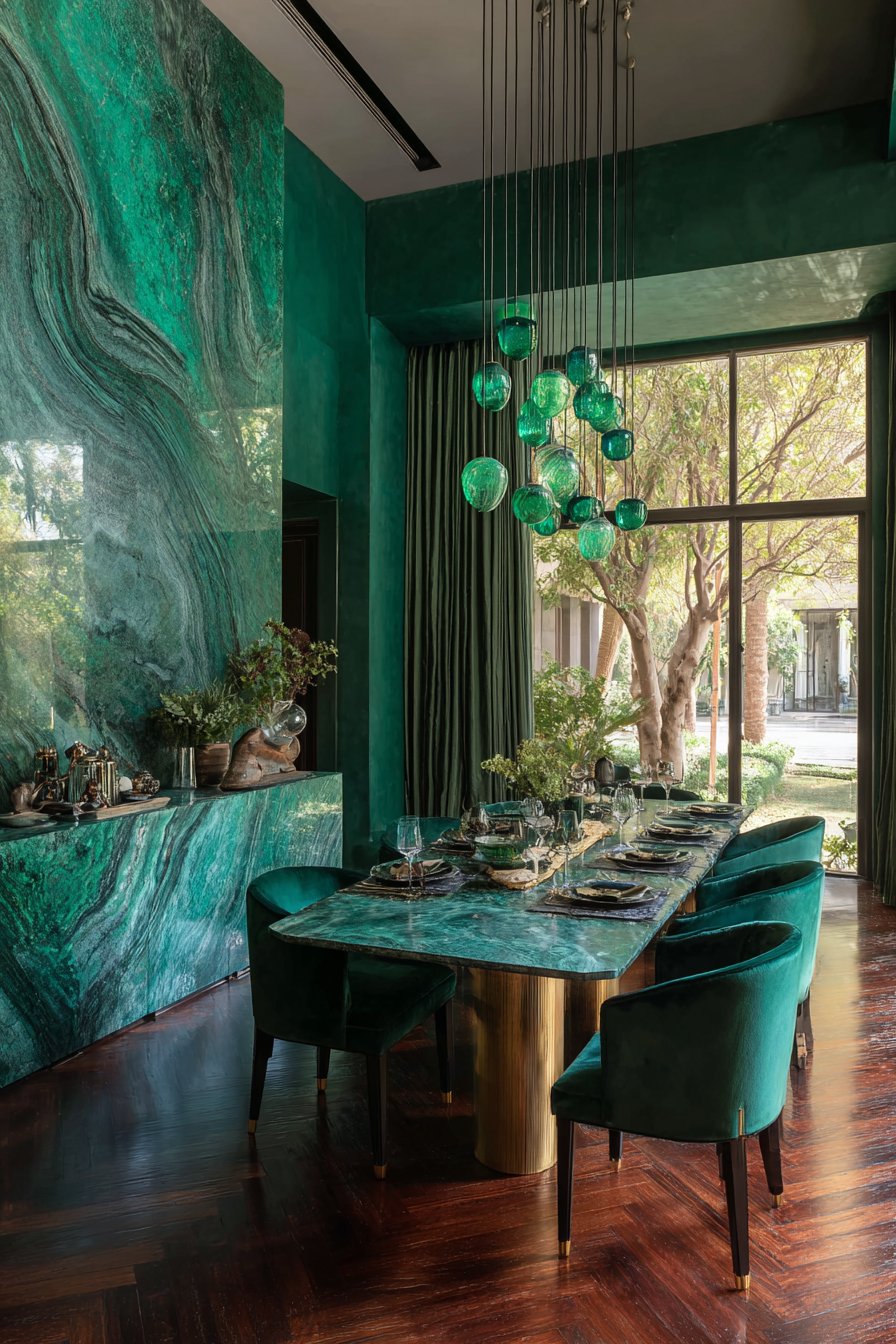
Eight dining chairs upholstered in emerald green velvet with brass leg caps surround the table. The metallic details catch light beautifully throughout the day. A spectacular linear chandelier with cascading green glass pendants provides dramatic illumination. The vertical glass elements create moving light patterns.
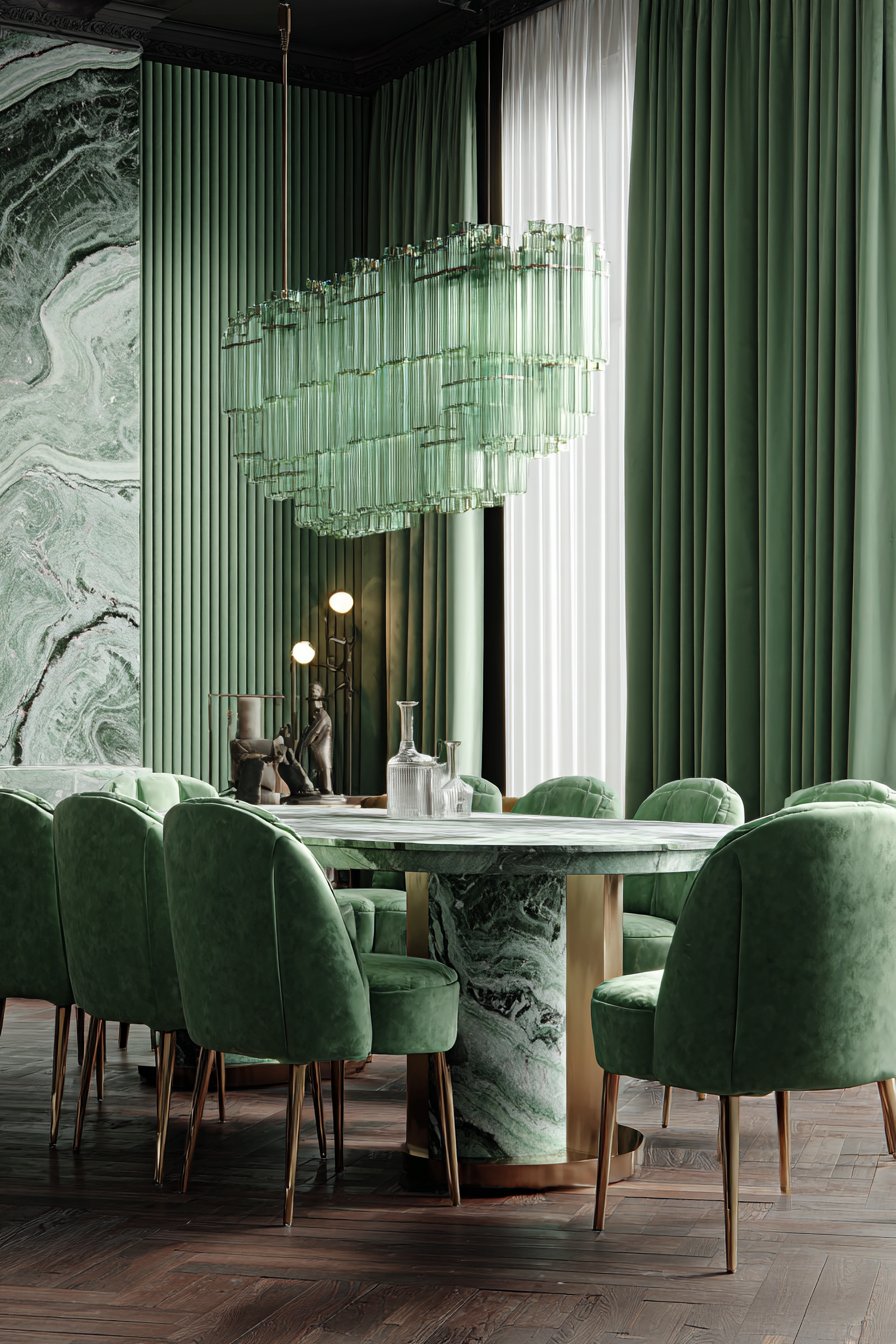
Herringbone-patterned oak flooring in dark espresso adds geometric interest underfoot. Floor-to-ceiling windows dressed with silk curtains in coordinating green showcase subtle sheen. Natural light during golden hour highlights luxurious materials and rich color saturation throughout.
Key Design Tips:
- Upholster entire walls in velvet for luxury and acoustic benefits
- Choose marble tables with natural green veining for organic patterns
- Use brass pedestals and leg caps for warm metallic accents
- Install linear chandeliers with cascading glass for modern drama
- Lay herringbone flooring patterns for geometric visual interest
- Hang silk curtains for subtle sheen and luxurious drape
17. Budget-Friendly Apple Green Cheerfulness
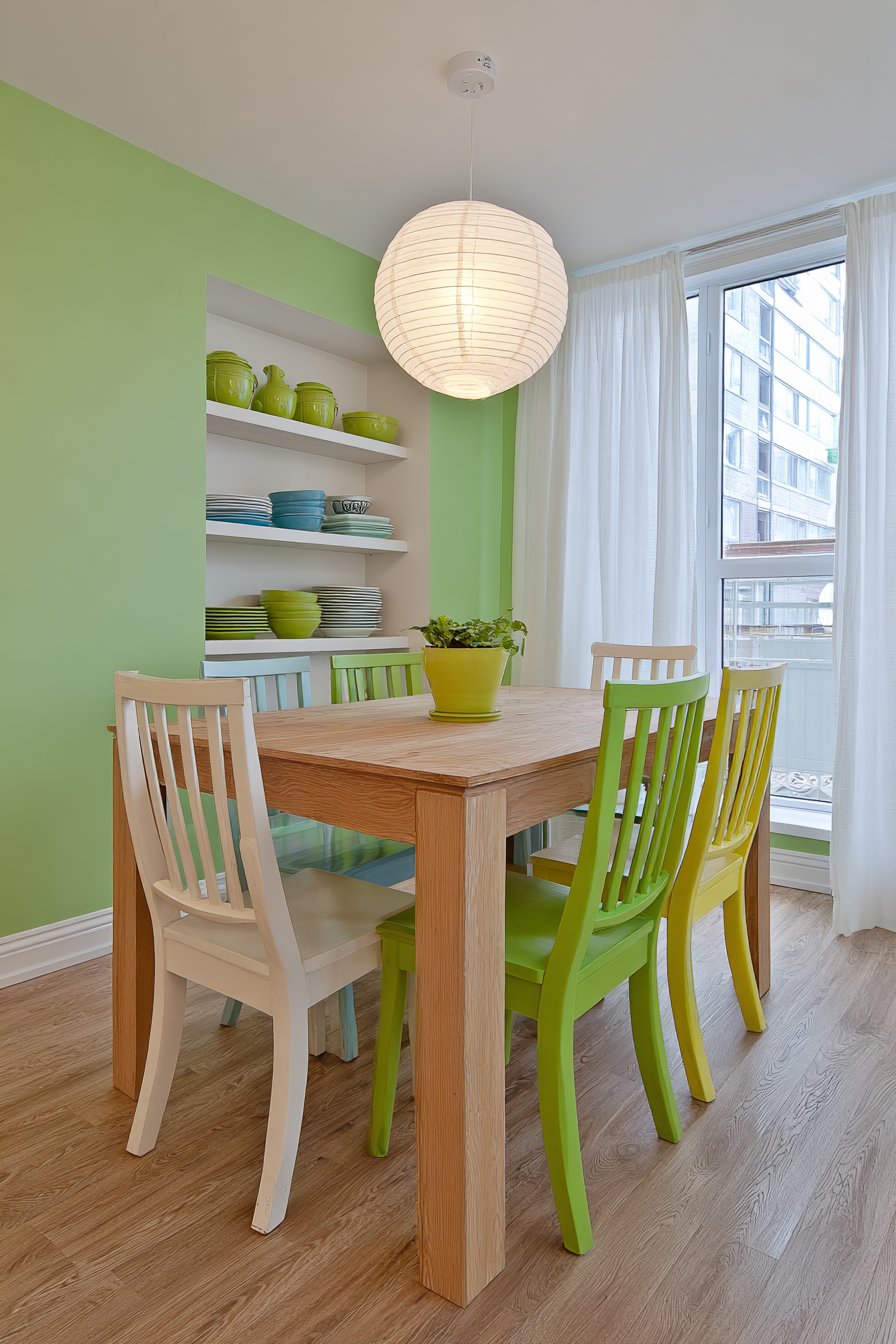
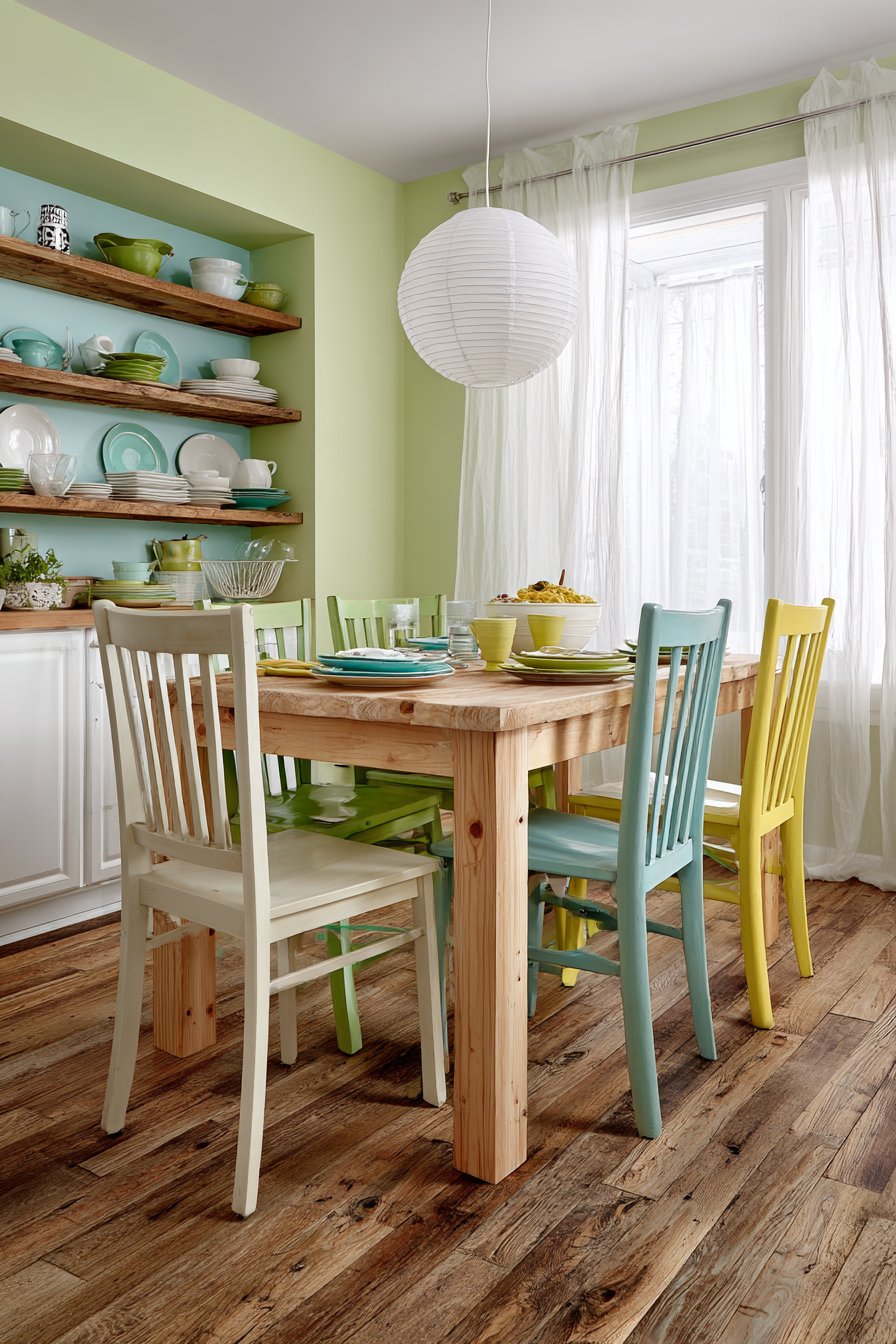
Apple green walls painted with quality, affordable paint create cheerful foundation. The vibrant shade energizes without overwhelming smaller budgets. An affordable wooden dining table in natural birch finish seats four comfortably. Painted second-hand chairs refinished in complementary greens from pistachio to lime add character.
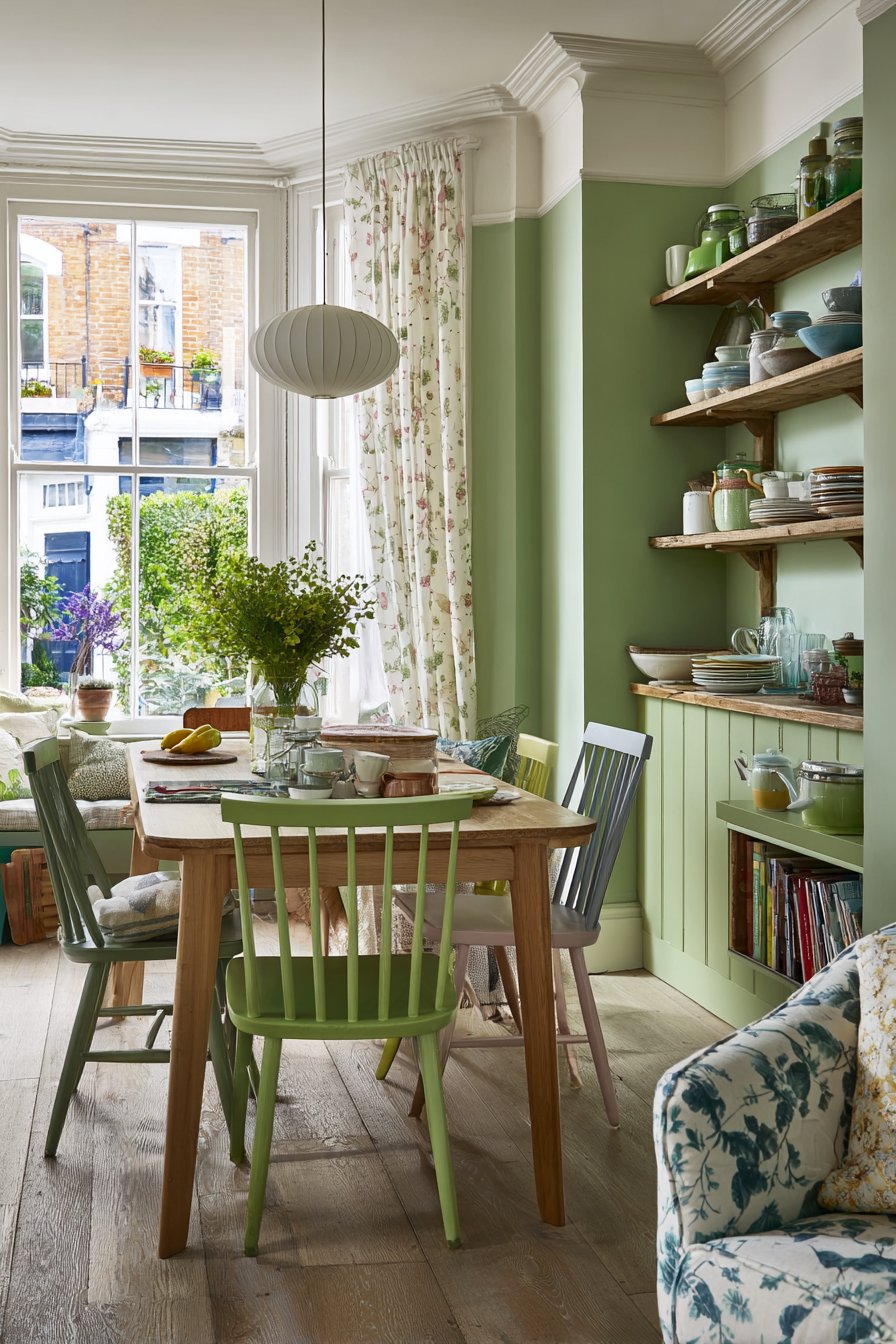
The mix-and-match approach creates intentional collected character from thrifted pieces. A simple paper lantern pendant light in white provides budget-conscious illumination. Vinyl plank flooring in light oak look-alike adds practical durability at low cost.
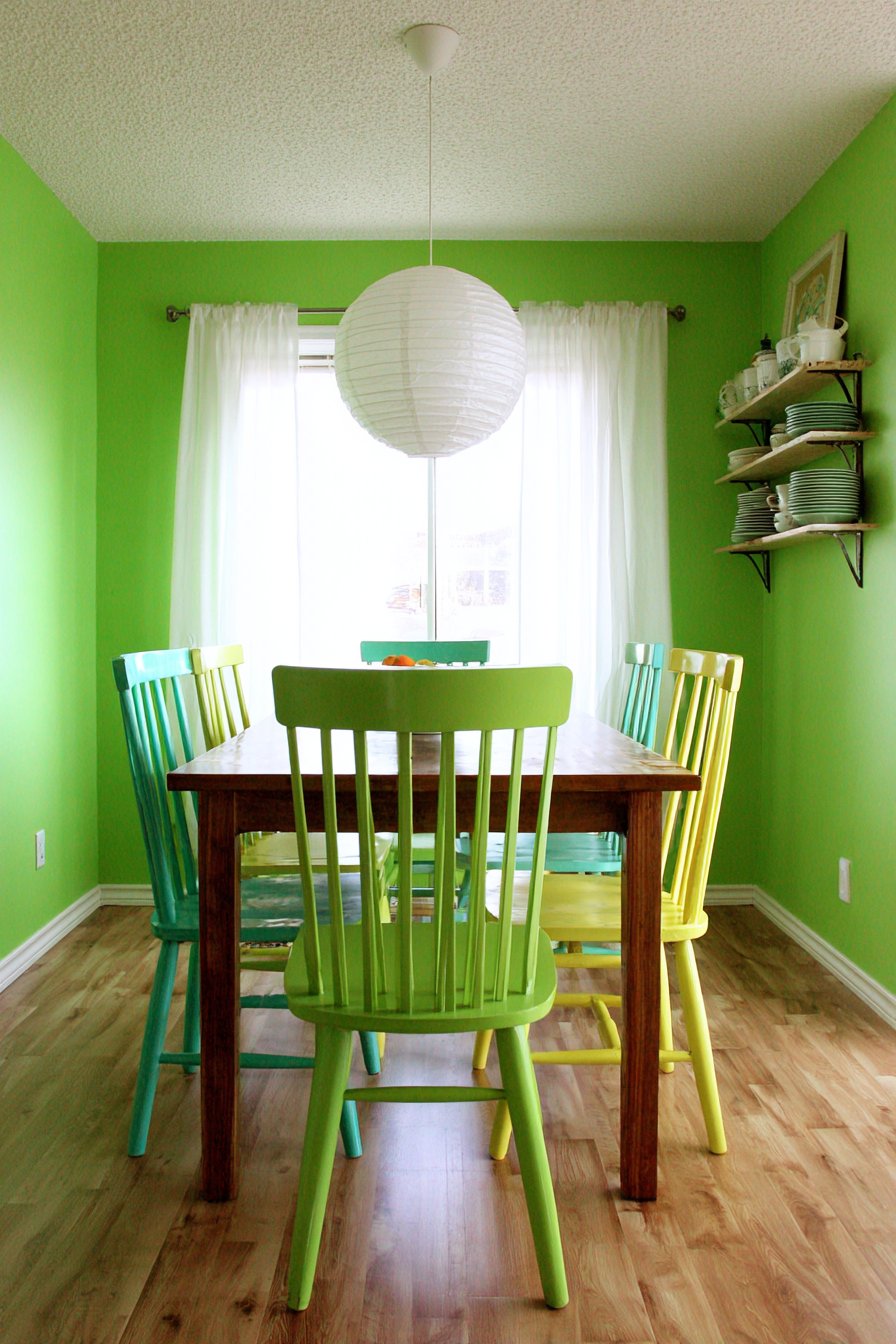
DIY open shelving made from painted green brackets and natural wood boards displays dishes. Mismatched green dishes collected over time create cohesive color story. Sheer curtains in white allow maximum natural light without expensive treatments. The creative budget-conscious choices prove style doesn’t require large investments.
Key Design Tips:
- Choose vibrant affordable paint colors like apple green for impact
- Refinish thrifted chairs in different coordinating green shades
- Use vinyl plank flooring for budget-friendly wood-look durability
- Make DIY shelving with painted brackets and untreated wood boards
- Collect dishes in coordinating colors over time from thrift stores
- Hang simple sheer curtains to maximize light without costly treatments
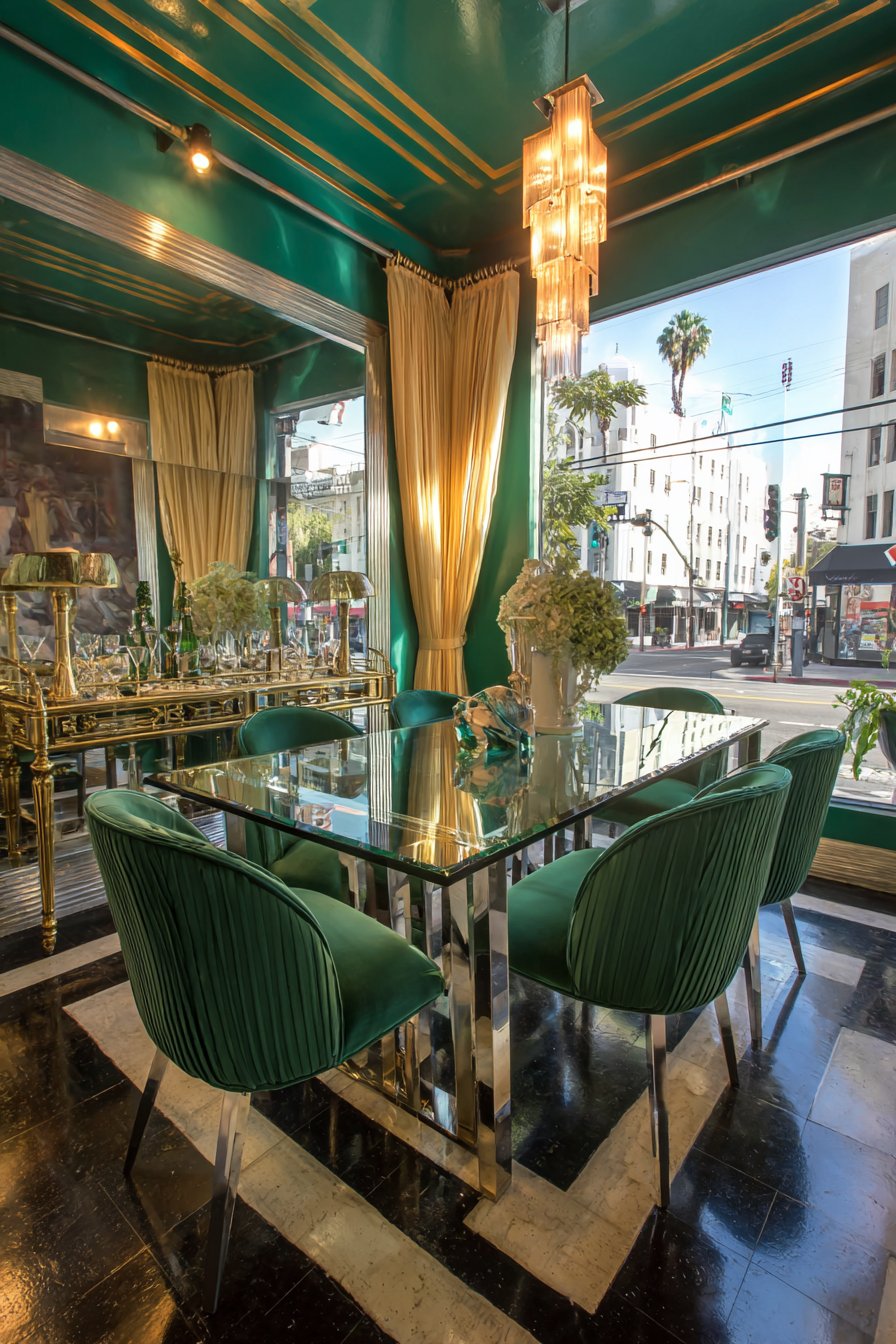
18. Art Deco Emerald Green Glamour
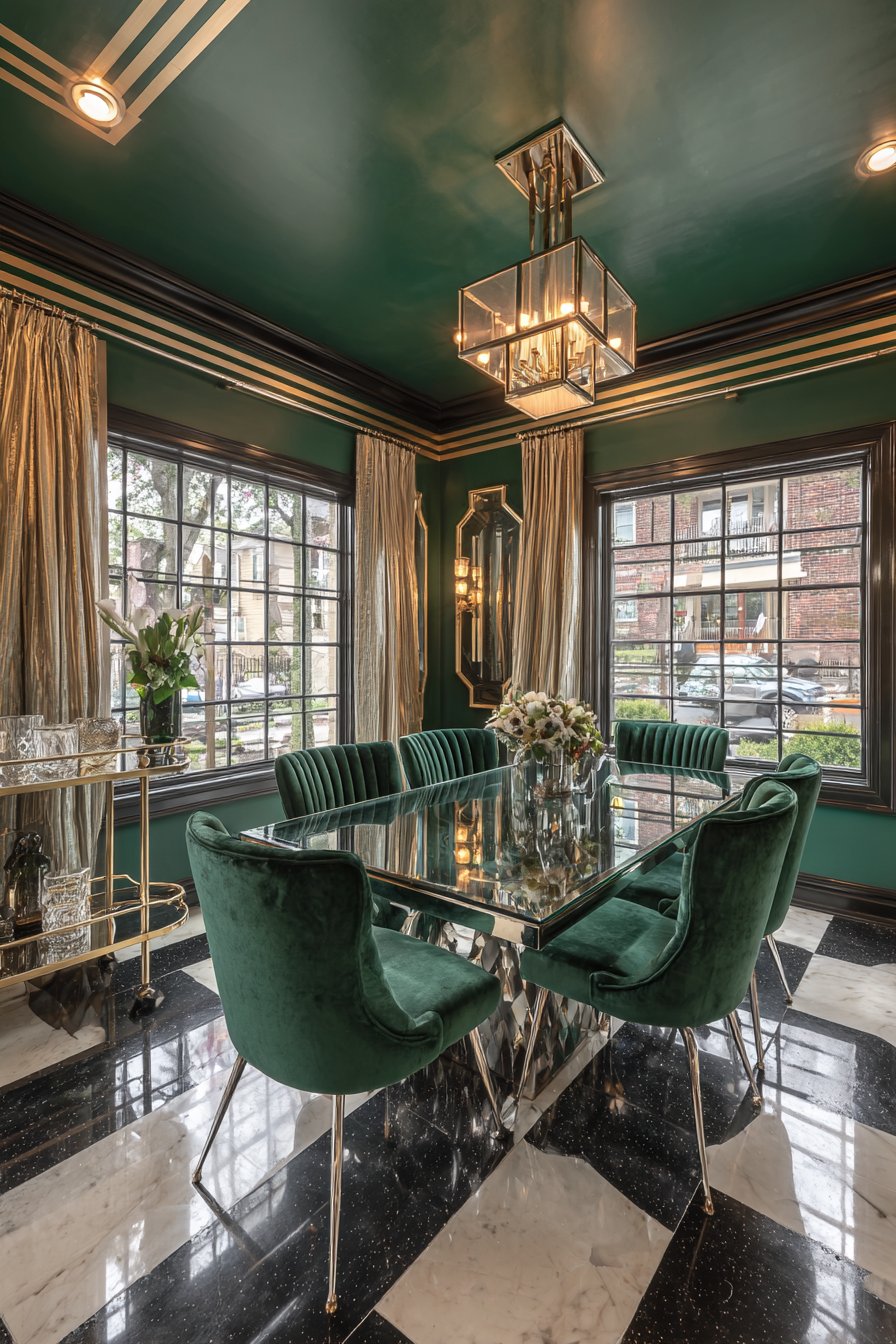
Rich emerald green walls with metallic gold striping at picture rail height create period glamour. The geometric gold lines add sophisticated detail. A glamorous rectangular glass dining table with chrome and mirror-finished base reflects light dramatically. The reflective surfaces amplify available light beautifully.
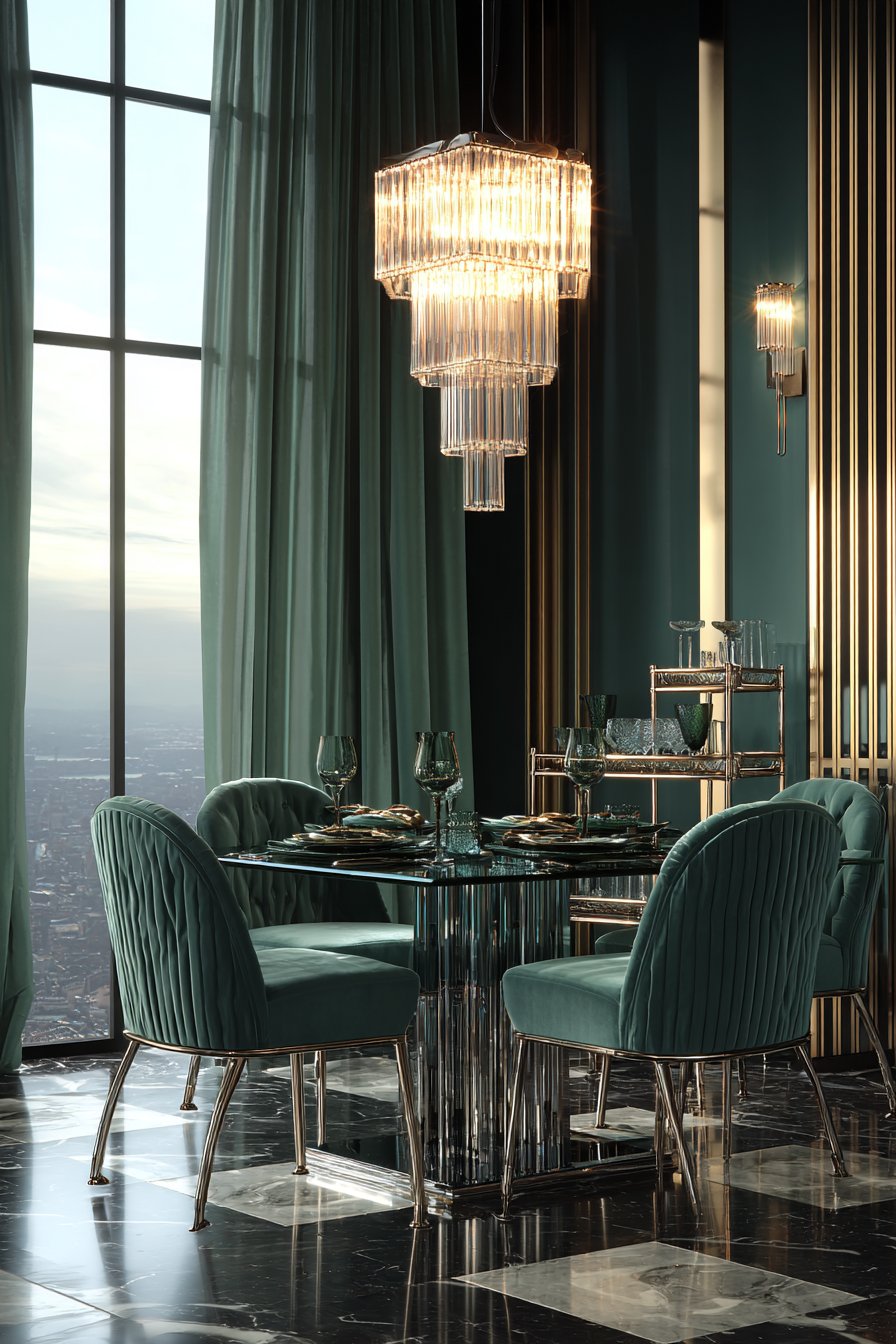
Six channel-tufted dining chairs in green velvet with curved backs provide Art Deco comfort. Chrome legs maintain the period’s metallic aesthetic. A geometric tiered chandelier in polished brass and frosted glass provides authentic illumination. The layered fixture adds vertical dimension.
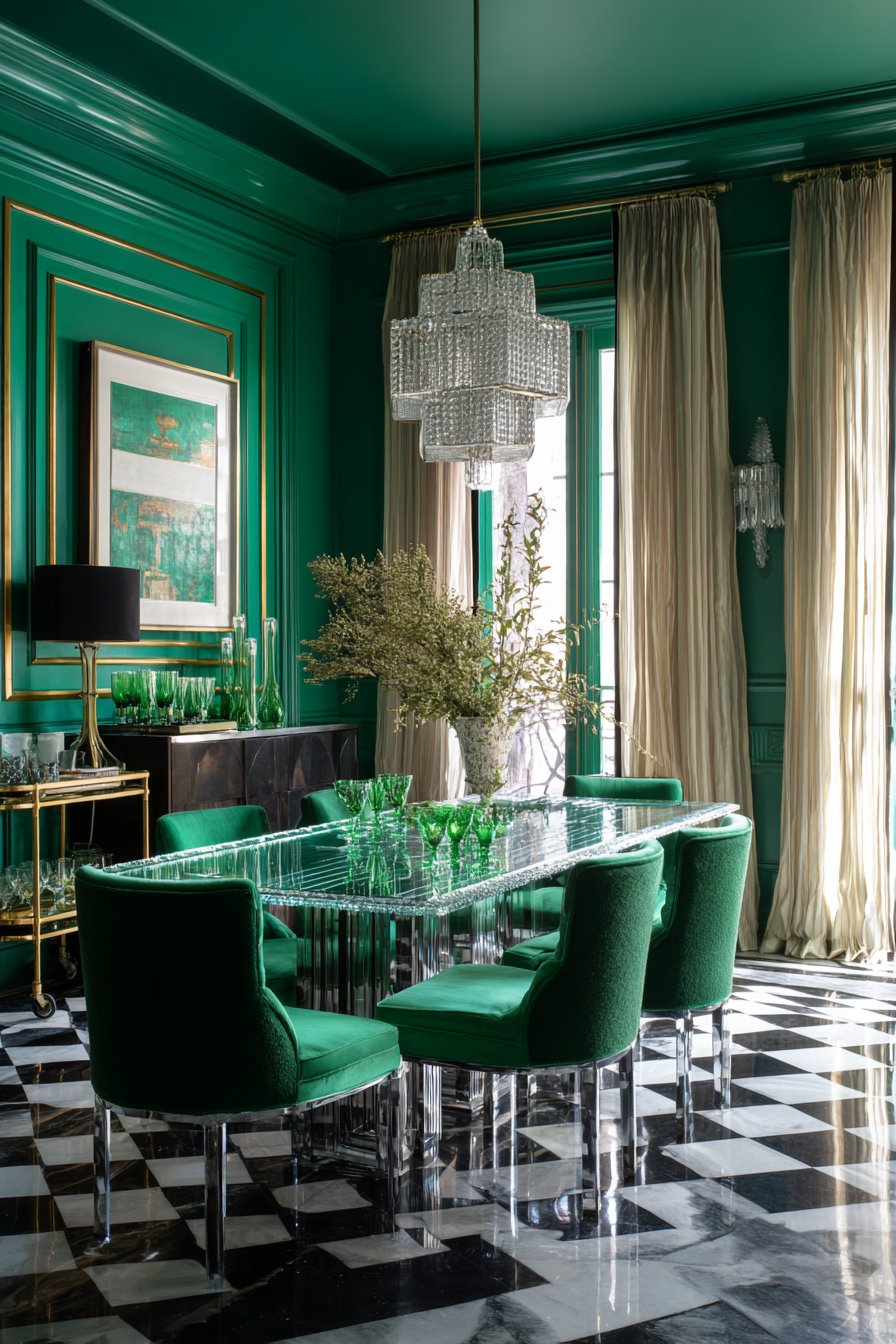
Black and white marble flooring in a checkerboard pattern adds dramatic contrast underfoot. A decorative bar cart in brass and mirror displays green glassware collections. Large windows with geometric mullions frame views while adding architectural interest. Floor-length curtains in pale gold silk complete the glamorous aesthetic.
Key Design Tips:
- Add metallic gold striping to emerald walls for Art Deco detail
- Choose glass tables with chrome bases for glamorous reflection
- Select channel-tufted velvet chairs with curved backs for period curves
- Install geometric tiered chandeliers in brass for authentic lighting
- Use black and white marble in checkerboard for dramatic floors
- Display vintage green glassware on brass and mirror bar carts
19. Japandi Celadon Green Tranquility
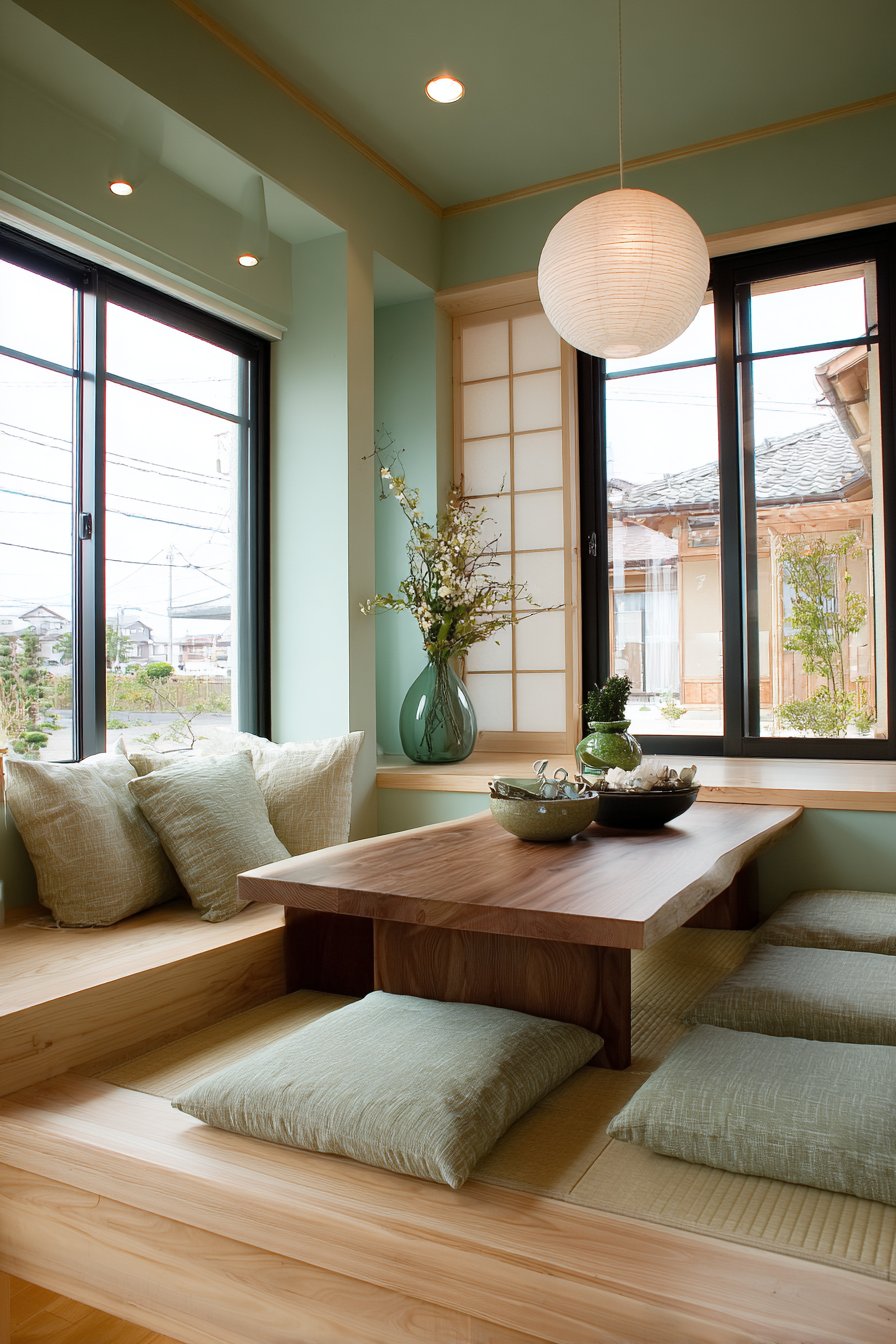
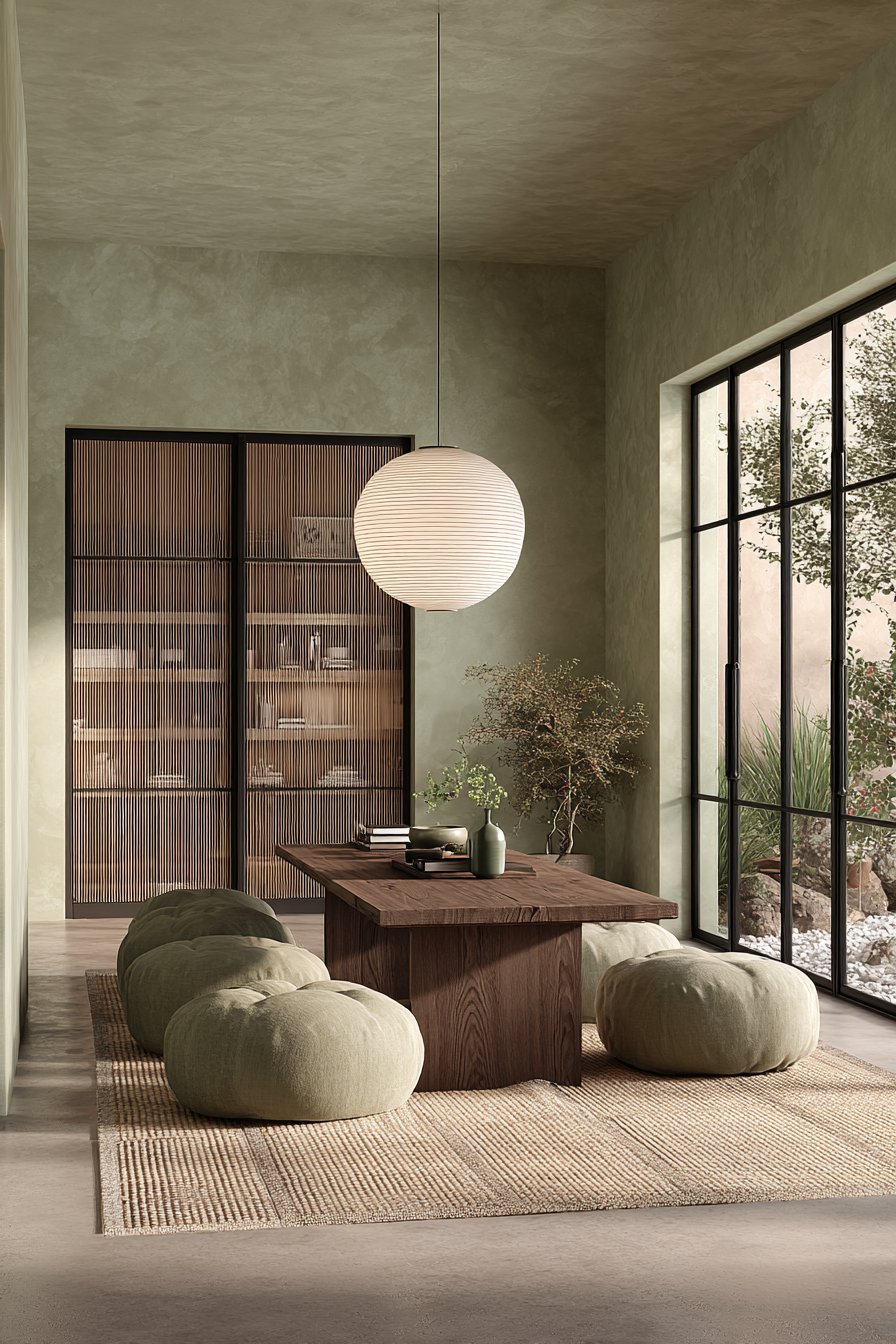
Soft celadon green walls with smooth matte plaster finish create serene foundation. The subtle shade promotes meditation and calm dining experiences. A low-profile walnut dining table with clean lines sits close to tatami mat flooring. The minimal height reflects Japanese dining traditions.
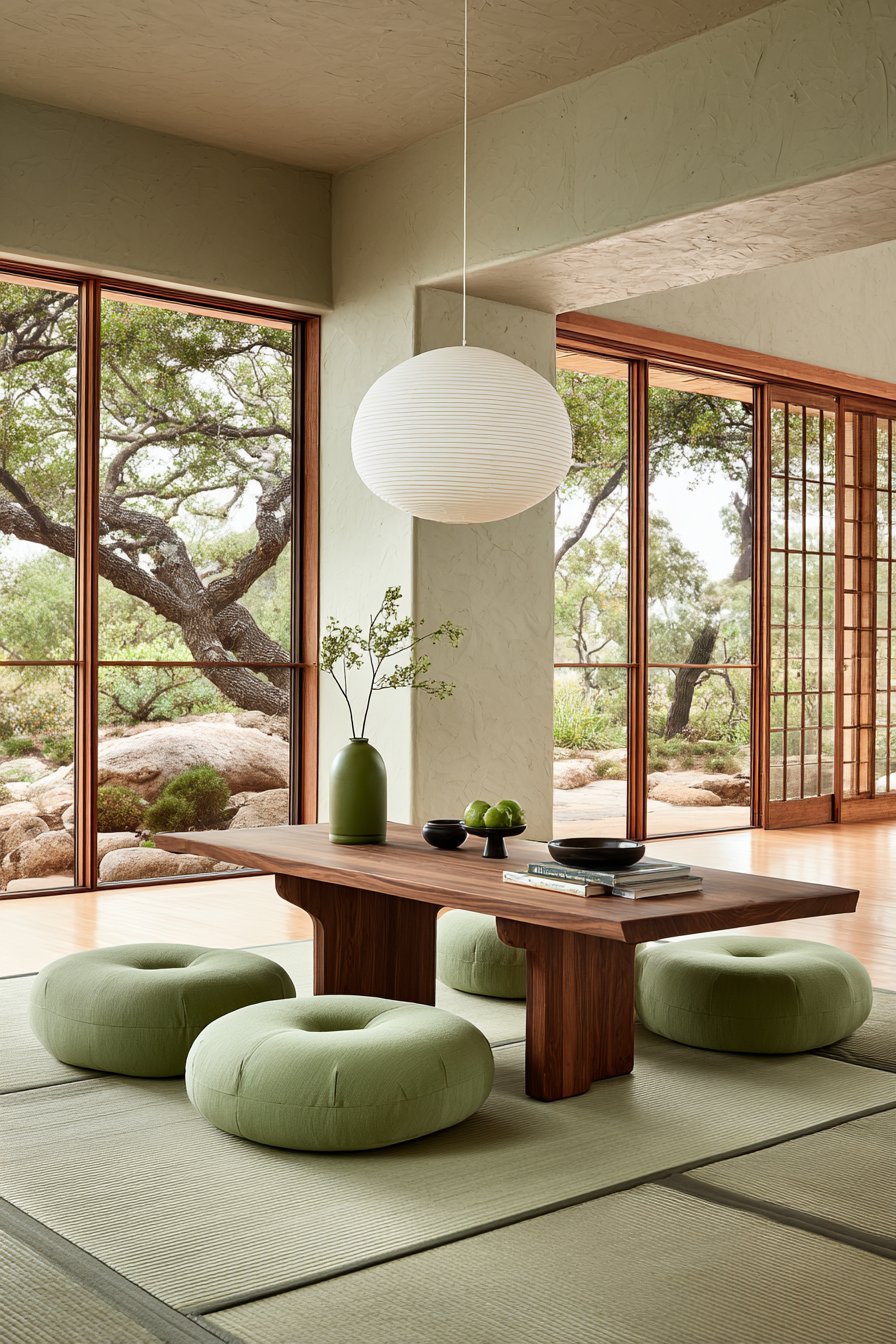
Four cushioned floor chairs upholstered in sage green linen provide comfortable low seating. The simple forms embody both Japanese and Scandinavian restraint. A spherical pendant light in white rice paper provides gentle ambient illumination. The natural material filters light softly.
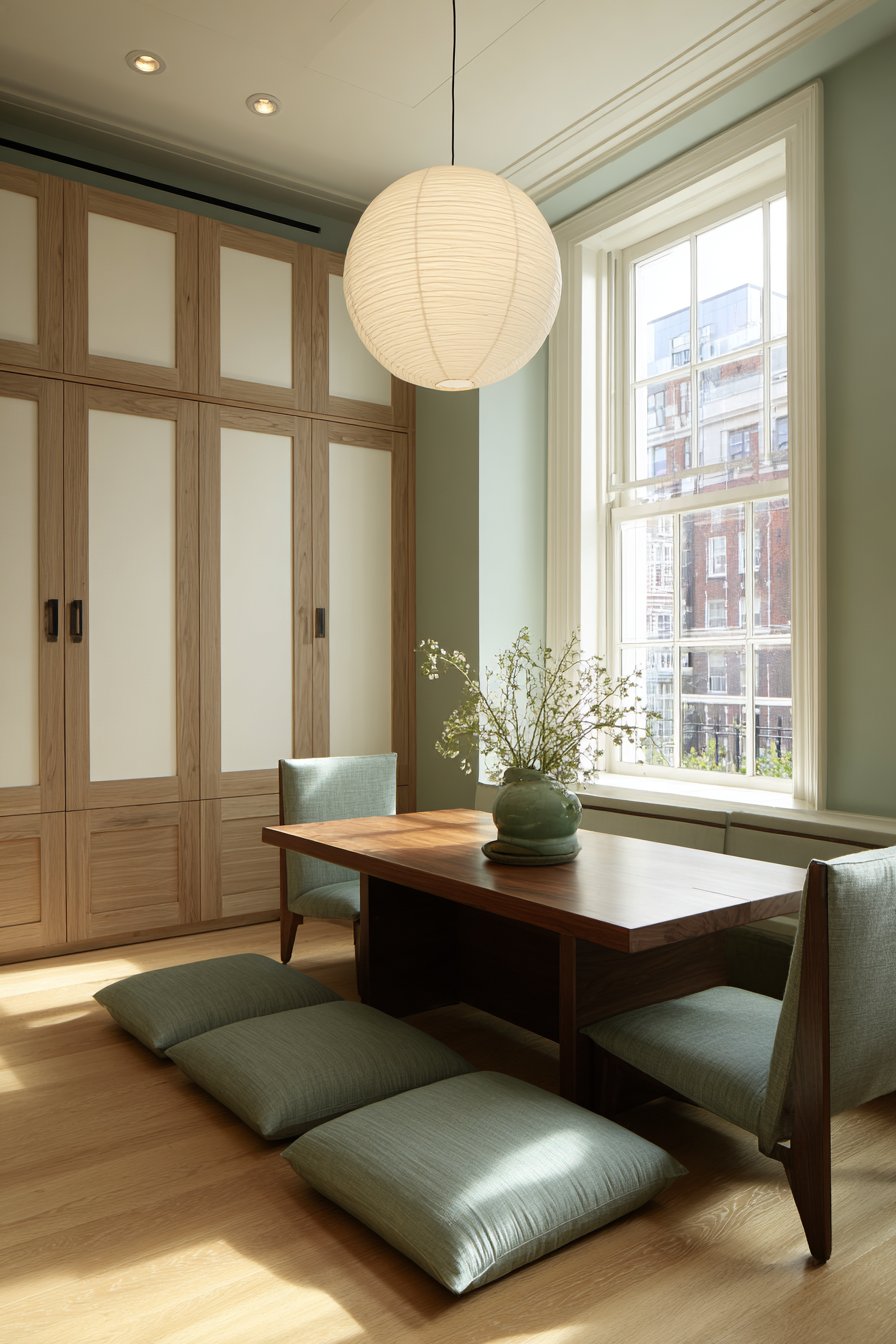
Built-in cabinetry in natural oak with sliding shoji-style doors conceals storage along walls. The minimal hardware maintains clean surfaces. Large windows with minimal black frames allow abundant natural light and zen garden views. A single ikebana arrangement in green ceramic vessel provides an artistic accent.
Key Design Tips:
- Paint walls in soft celadon for Japanese-Scandinavian serenity
- Choose low-profile tables that sit close to floor level
- Use floor cushion chairs in natural linen for comfortable low seating
- Hang spherical rice paper lights for gentle filtered illumination
- Install sliding shoji-style doors on cabinetry for Japanese authenticity
- Display single ikebana arrangements rather than abundant flowers
20. Mediterranean Olive Green Warmth
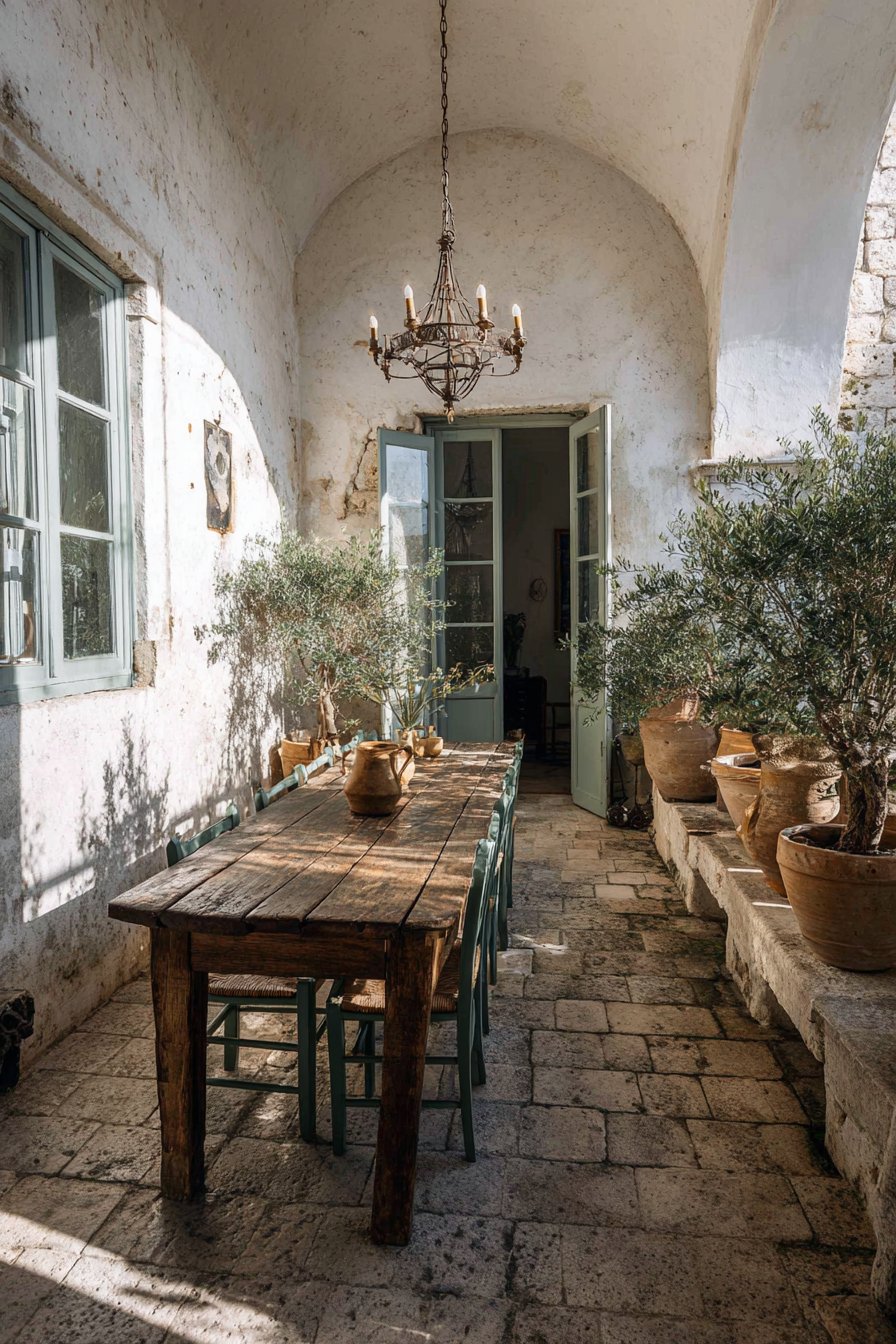
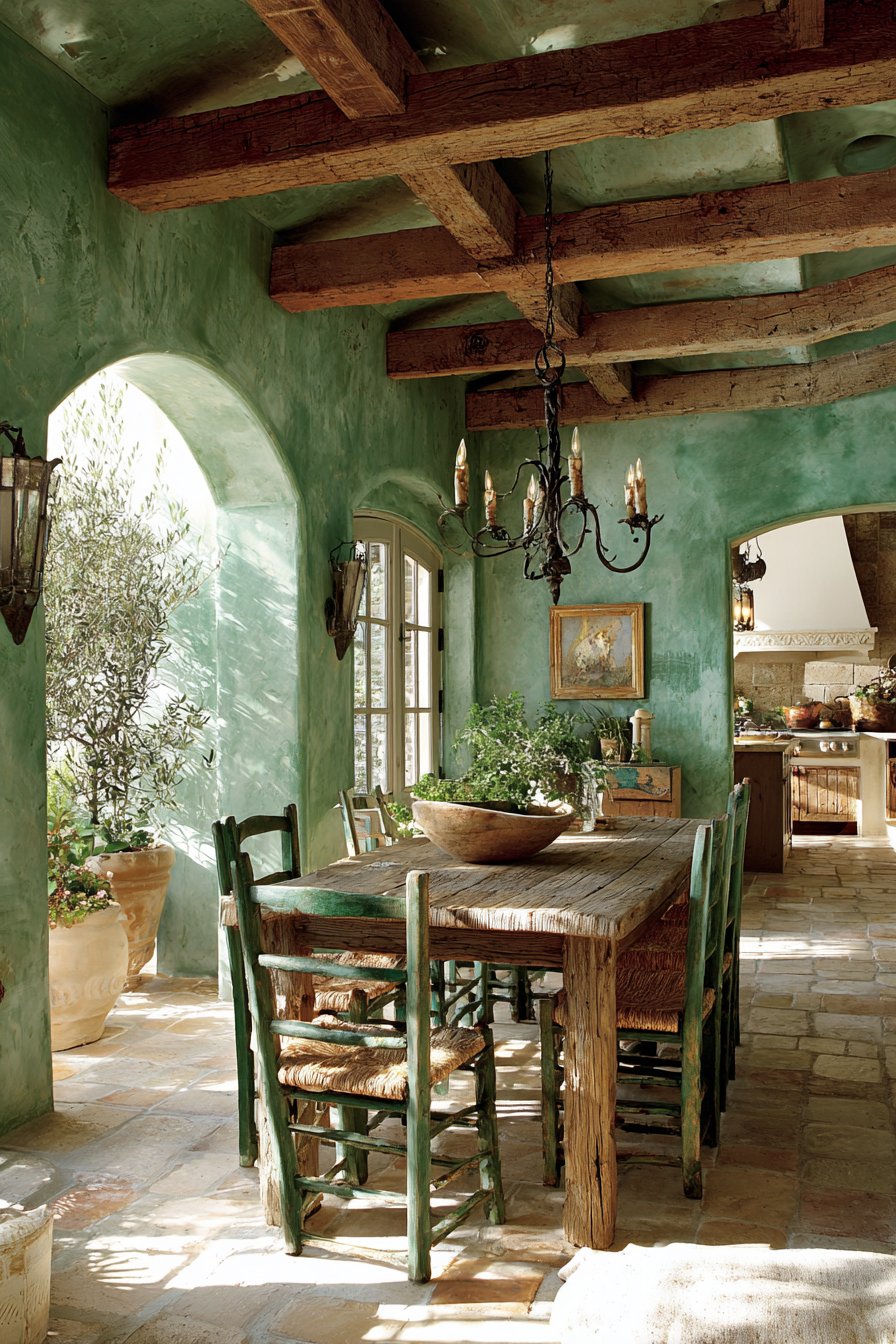
Warm olive green walls feature slightly irregular hand-troweled plaster texture. The artisanal finish adds authentic Mediterranean character. A rustic wooden dining table in reclaimed pine with natural imperfections seats eight. The weathered finish celebrates genuine aging and use.
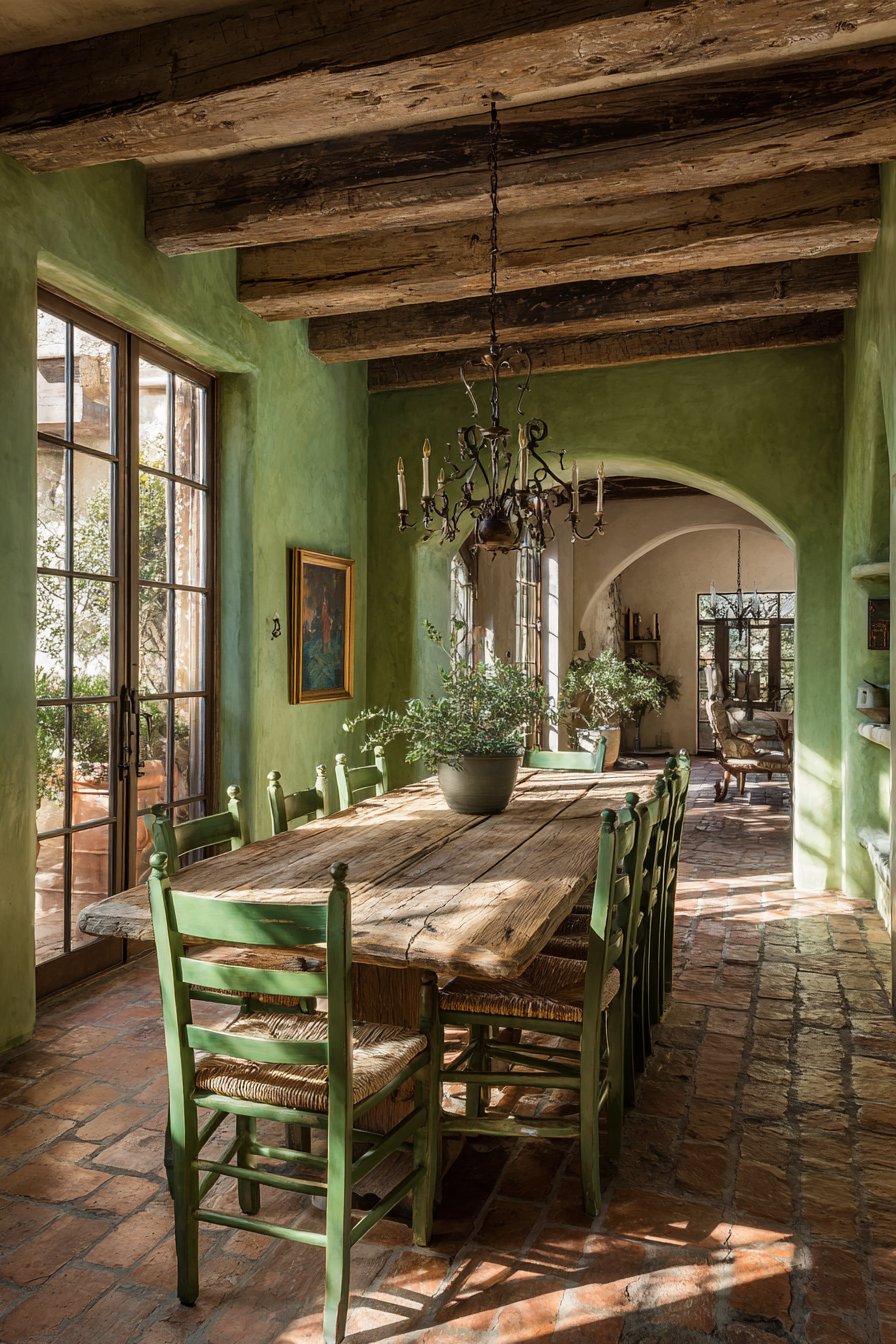
Simple ladder-back chairs with woven rush seats and painted green frames show authentic wear. The slightly imperfect surfaces add lived-in character. Wrought iron candelabra-style chandelier with aged patina provides atmospheric lighting. The vintage fixture suggests generations of family meals.
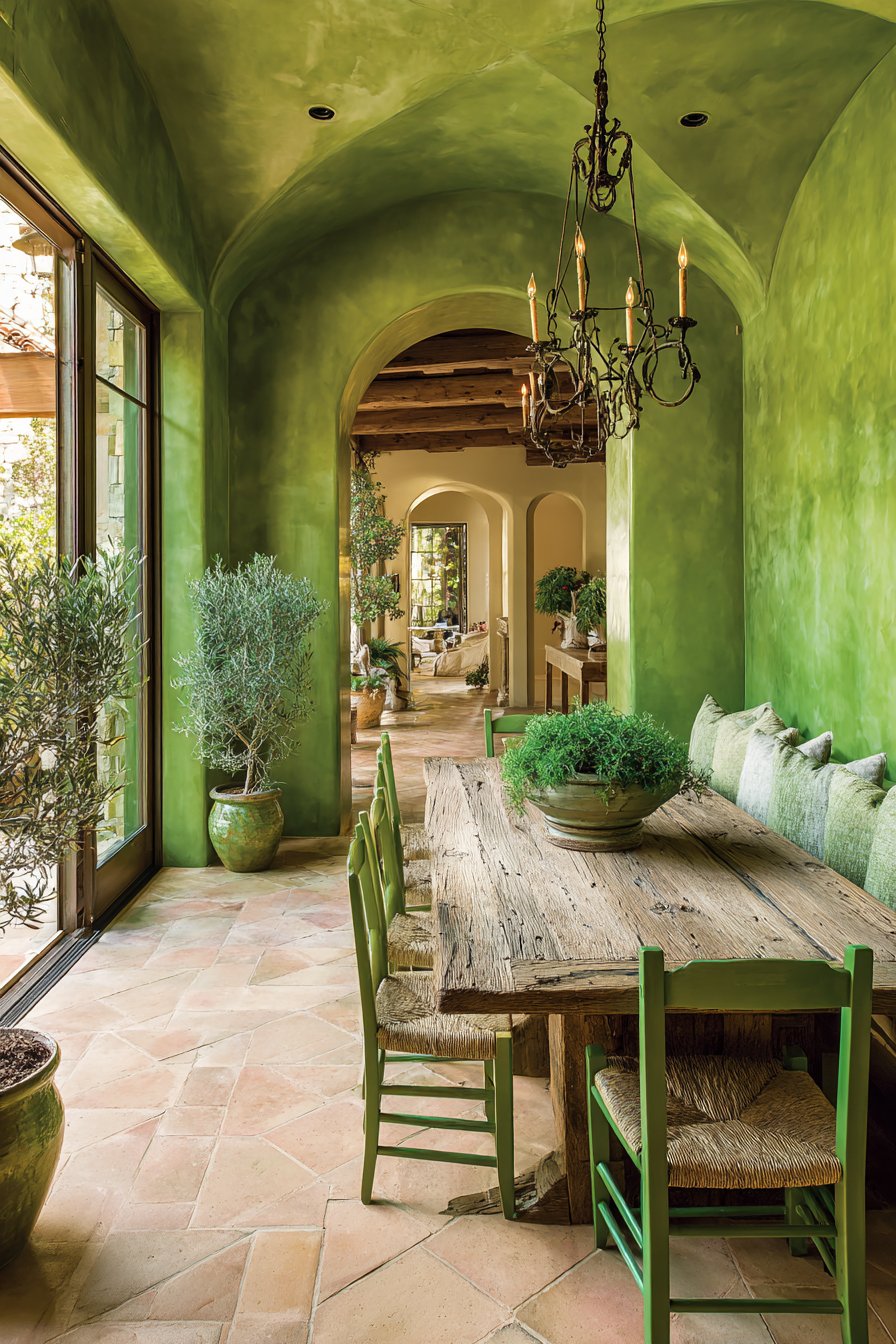
Terra cotta tile flooring with slight color variations and natural aging adds warmth underfoot. Arched doorways and window openings reveal white plaster walls in adjacent spaces. Potted olive trees and herbs in green-glazed ceramic pots line windowsills. Natural Mediterranean sunlight creates dramatic shadows and highlights texture beautifully.
Key Design Tips:
- Apply hand-troweled plaster for authentic Mediterranean wall texture
- Choose reclaimed pine tables with natural imperfections and weathering
- Use ladder-back chairs with rush seats for rustic European character
- Hang wrought iron candelabras with aged patina for atmospheric lighting
- Install terra cotta tile flooring with natural color variations
- Display potted herbs and olive trees in green-glazed ceramic containers
Why These Green Dining Room Designs Are the Best
These green dining room designs represent versatile approaches to incorporating nature’s most refreshing color. Each concept demonstrates how different green shades create distinct atmospheres from energizing to calming. The designs showcase adaptability across traditional, contemporary, and eclectic styles with equal success.
Material selection proves crucial in green dining rooms. Natural woods from walnut to oak provide grounding warmth against cool greens. Velvet upholstery adds luxurious texture while reflecting light beautifully. Metallic accents in brass or chrome complement green tones while preventing monotony.
Color theory explains green’s dining room success. The shade sits centrally on the color spectrum, making it inherently balanced and restful. Green stimulates conversation without overstimulation. Darker greens like hunter and emerald create formal elegance suitable for traditional settings. Lighter shades like sage and mint promote casual relaxed dining experiences.
Practical considerations support these design choices. Green conceals minor stains better than lighter neutrals. The color maintains appeal across seasons unlike trend-dependent shades. Quality green paint and materials age gracefully, developing character rather than appearing dated.
Spatial considerations matter when selecting green intensity. Small dining rooms benefit from lighter greens that expand perceived space. Large formal dining rooms accommodate deep jewel tones that create intimate drama. The designs demonstrate how accent walls in bold green prevent overwhelming smaller spaces while satisfying color cravings.
Sustainability aligns naturally with green dining rooms. The color encourages incorporation of living plants that improve air quality. Many designs feature reclaimed wood and vintage elements that reduce environmental impact. Green’s nature connection promotes mindful material selection and quality over quantity philosophy.
Conclusion
These twenty green dining room designs demonstrate the color’s remarkable versatility and timeless appeal. From minimalist Scandinavian sage to maximalist emerald opulence, green adapts to personal style preferences beautifully. The key takeaways include understanding how different green shades affect mood and space perception.
Quality materials elevate green dining rooms from ordinary to extraordinary. Natural wood, authentic stone, and genuine textiles create lasting beauty that synthetic alternatives cannot match. Strategic lighting enhances green’s complexity throughout changing daylight hours. Balance remains essential whether choosing bold accent walls or enveloping entire rooms in green.
Start your green dining room transformation by identifying which shade resonates with your lifestyle and existing home aesthetic. Consider how natural light affects your space throughout the day. Experiment with paint samples before committing to full walls. Your perfect green dining room awaits through thoughtful planning and creative material selection.
