


Creating a beautiful small bedroom requires thoughtful planning and creative design solutions. Limited square footage challenges us to maximize every inch while maintaining style and comfort. The right approach transforms cramped quarters into cozy retreats that feel spacious and inviting.
Small bedroom design has evolved beyond simple minimalism. Today’s innovative solutions combine aesthetic appeal with practical functionality. These designs prove that size limitations inspire creativity rather than compromise. From multi-functional furniture to clever storage systems, modern small bedrooms achieve remarkable sophistication.
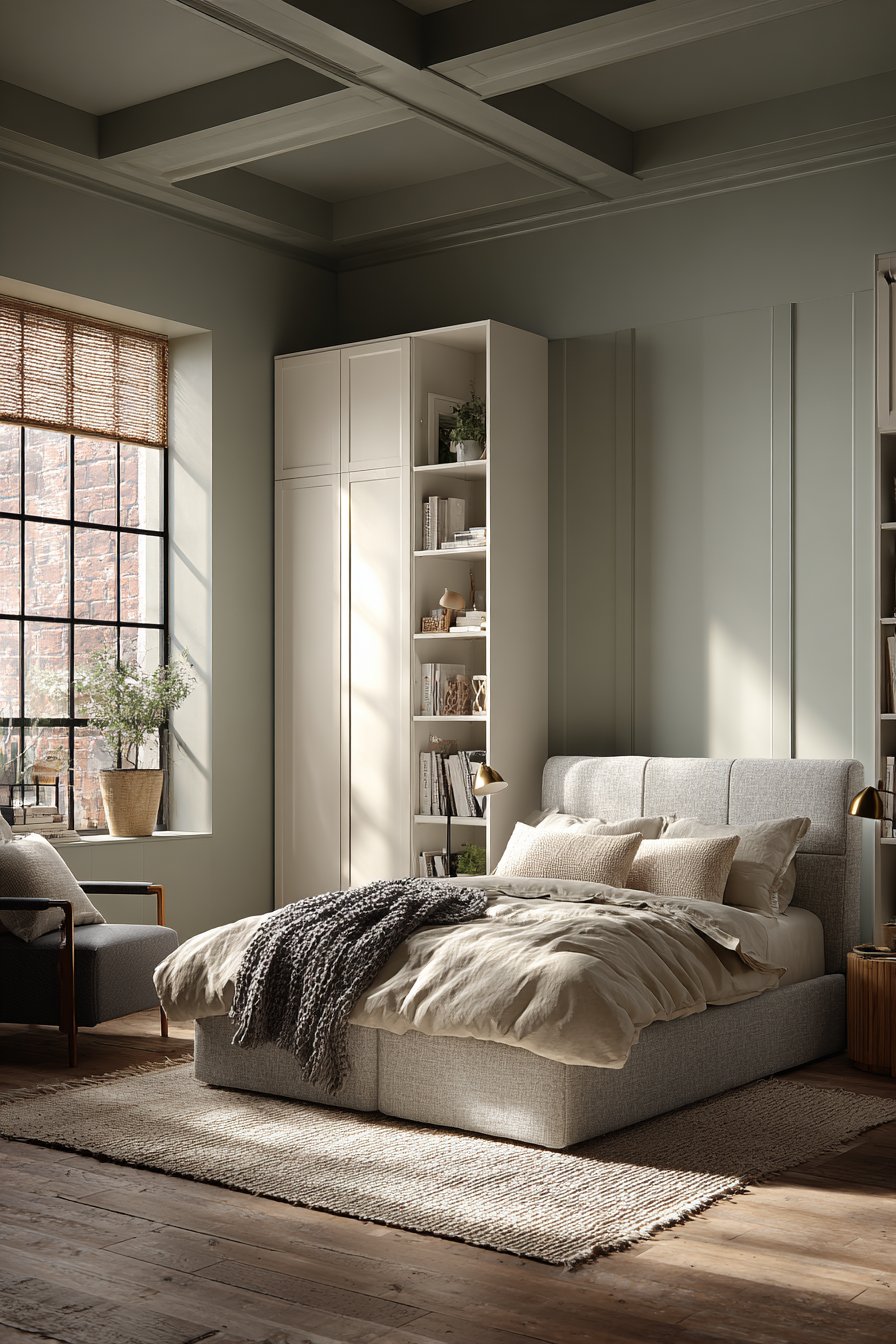
This comprehensive guide explores twenty distinct approaches to small bedroom design. Each concept demonstrates unique strategies for maximizing space while expressing personal style. Whether you prefer Scandinavian simplicity, bohemian richness, or industrial edge, these designs offer inspiration for creating your perfect compact sanctuary.
1. Cozy Gray Linen Haven with Floating Storage
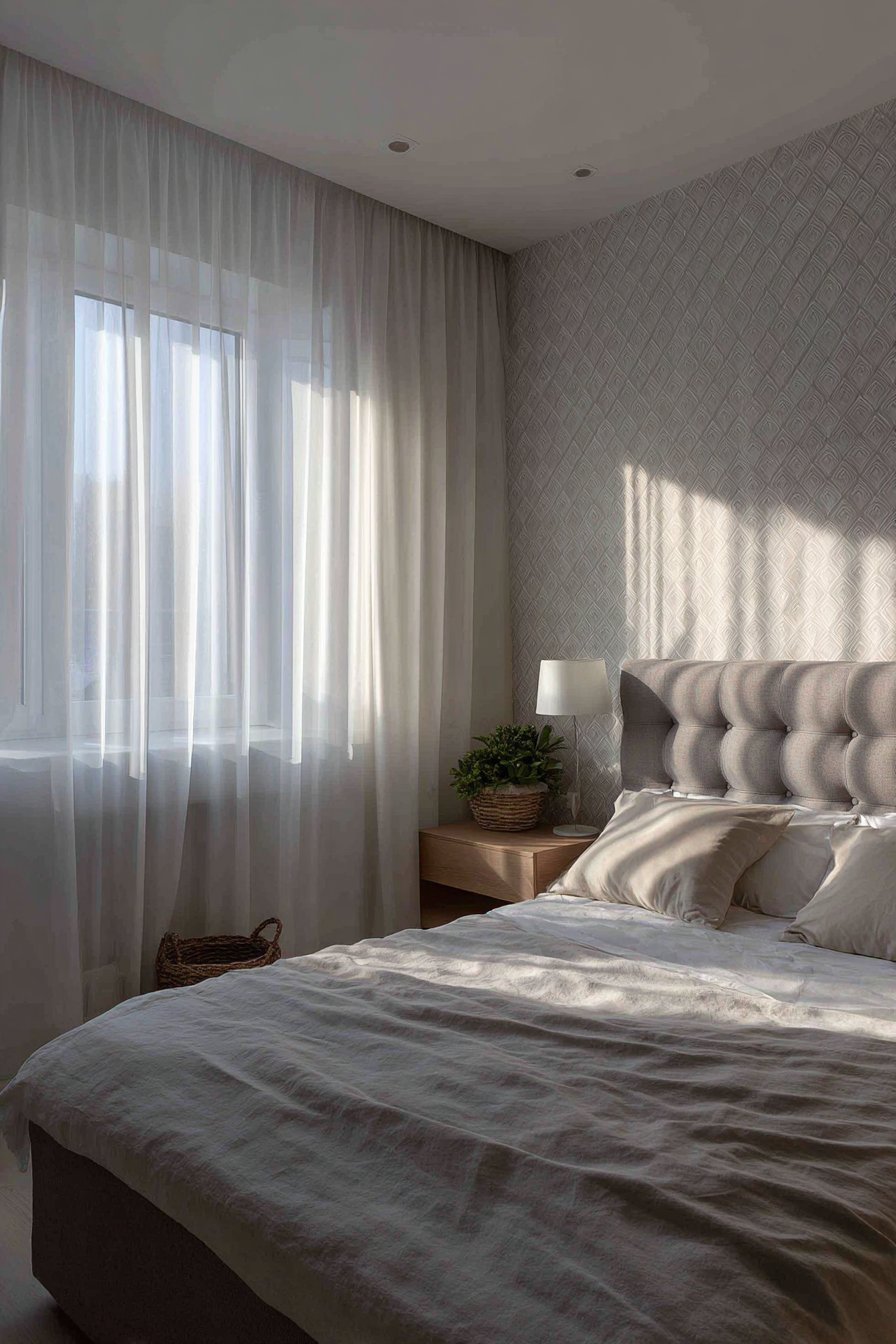
Soft gray linen creates an atmosphere of understated elegance in this thoughtfully designed small bedroom. A queen-sized upholstered bed features tufted details that add texture without overwhelming the space. The headboard becomes a focal point through subtle visual interest. Positioning the bed against the main wall maximizes precious floor area.
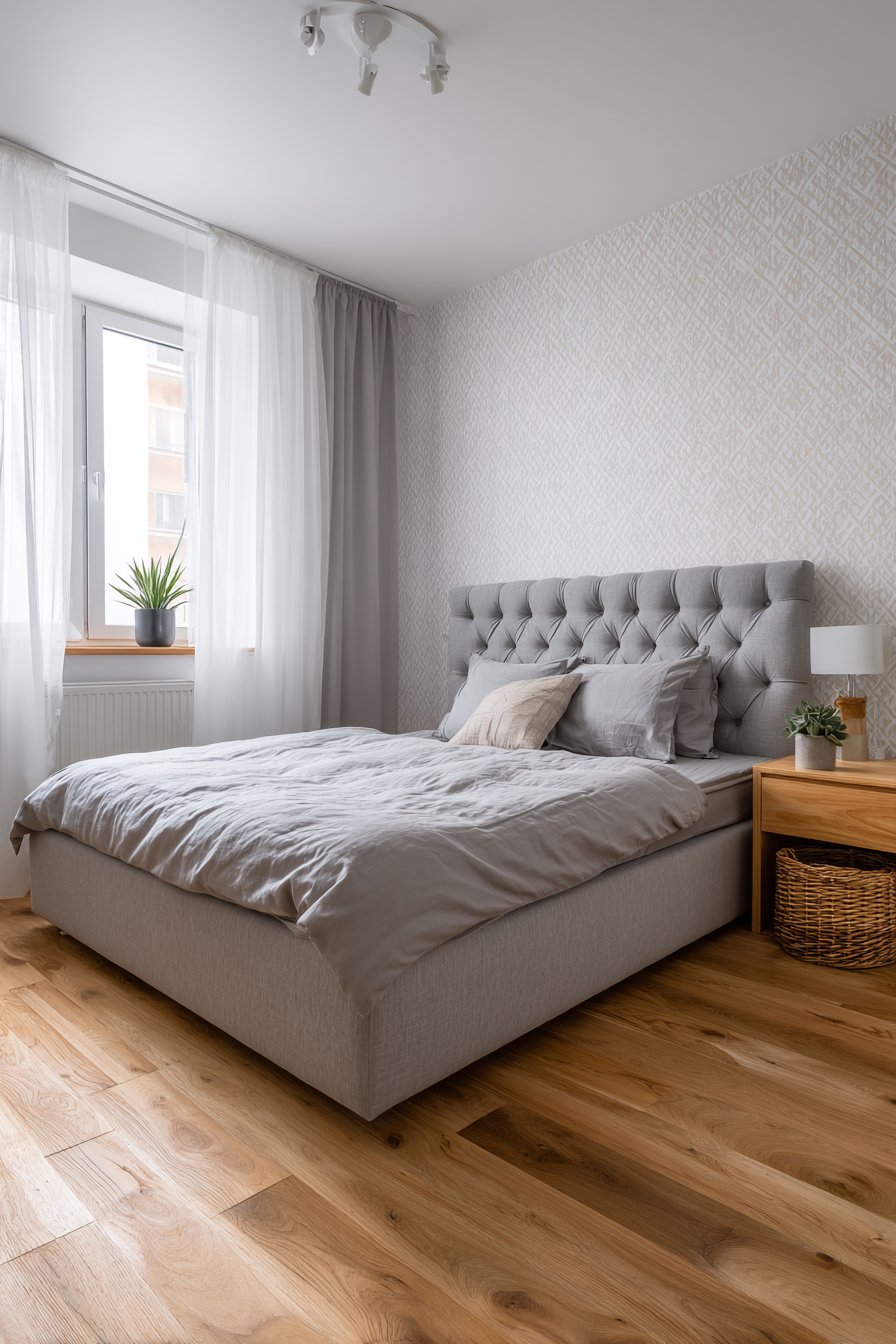
Floating nightstands in light oak demonstrate how smart furniture choices enhance small spaces. These wall-mounted pieces provide essential surface area without bulky bases. The visual lightness makes the room feel more open. A minimalist table lamp and small succulent add personality without clutter.
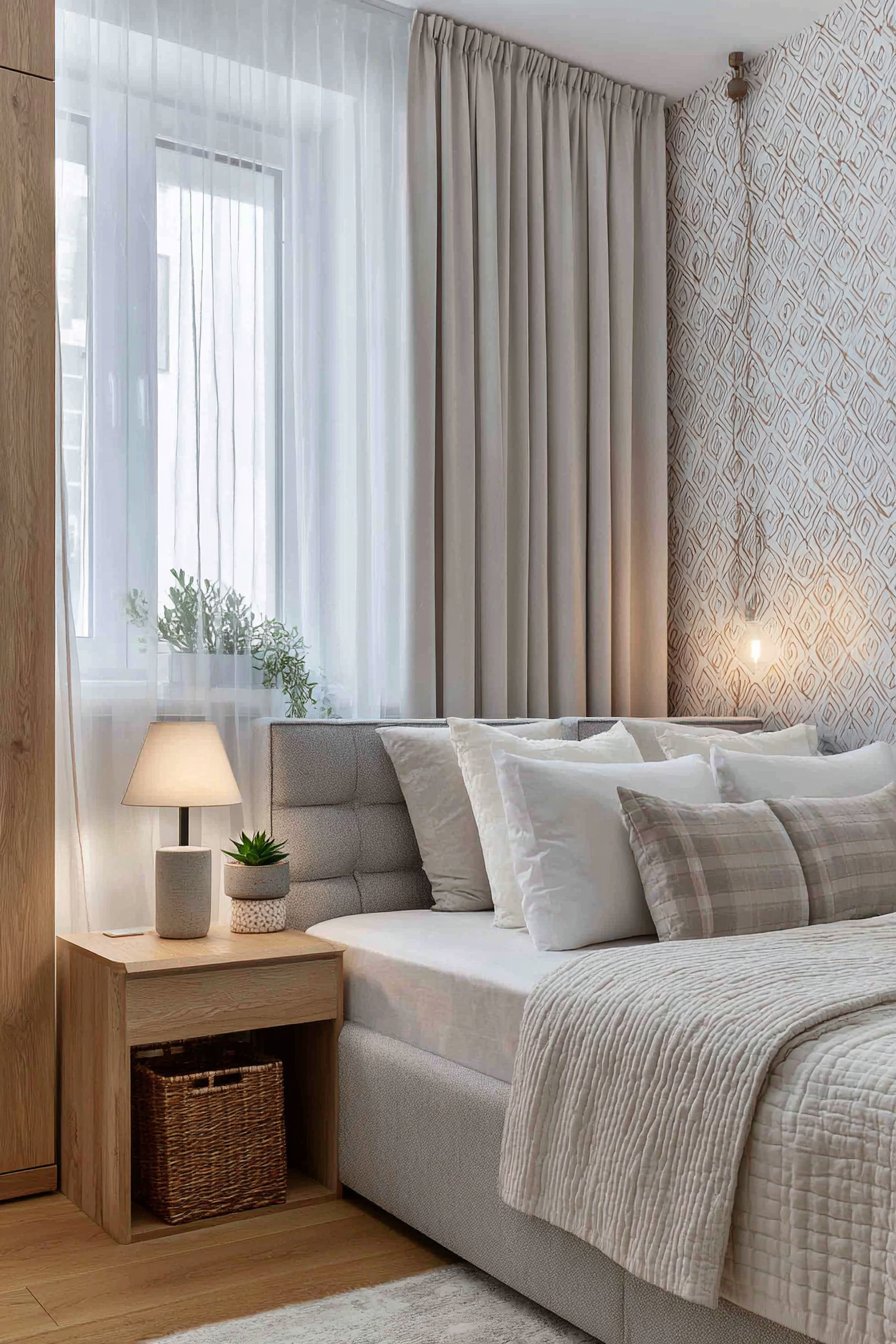
Natural light plays a crucial role in this design’s success. Sheer white curtains filter morning sunlight into soft, diffused illumination. The gentle glow highlights layered textures throughout the room. Warm white walls create a neutral backdrop that reflects light effectively. One accent wall features subtle geometric wallpaper adding depth without overwhelming.
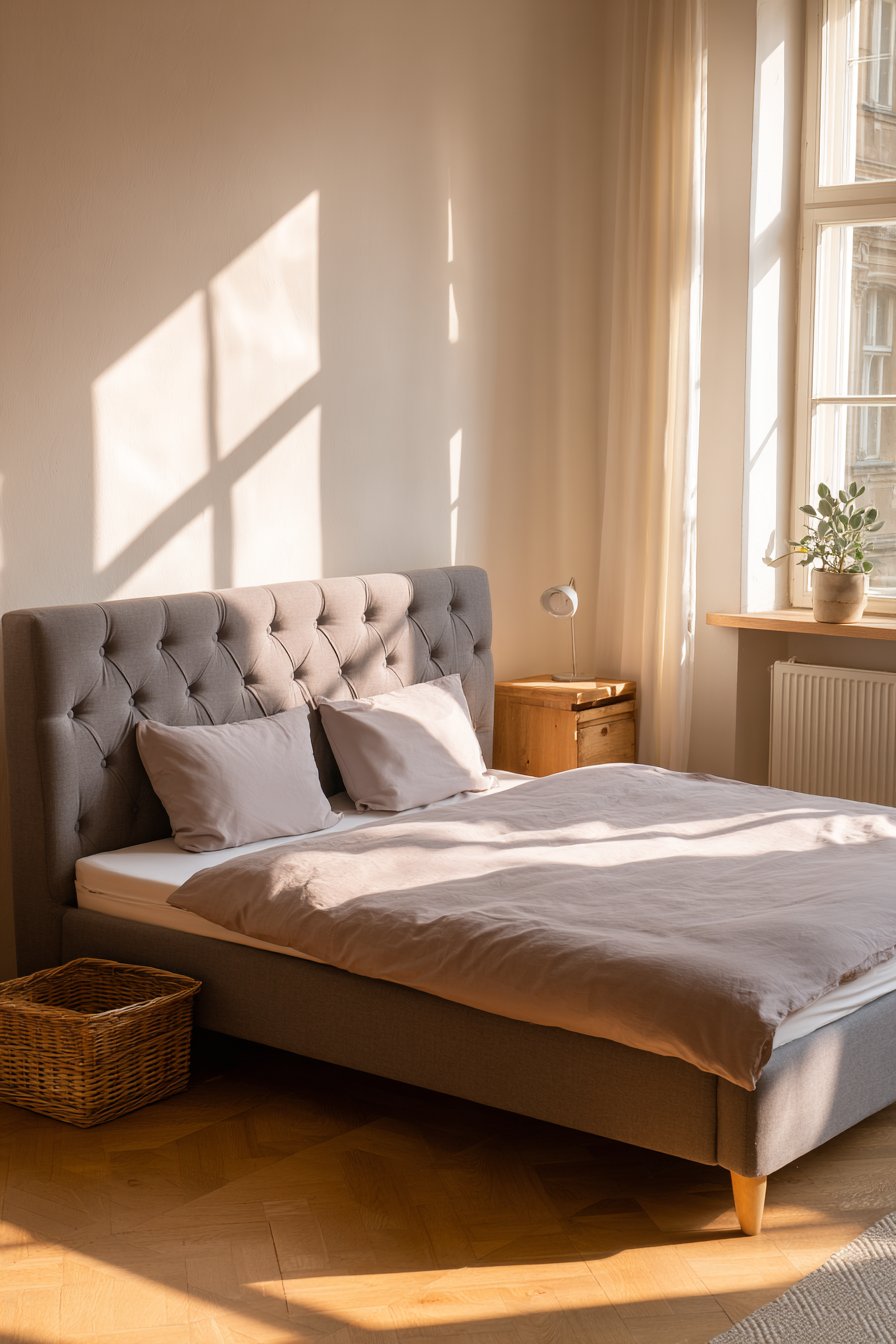
Storage solutions integrate seamlessly into the overall aesthetic. A small woven basket at the bed’s foot provides practical storage while maintaining the organic feel. The design proves that functionality and beauty coexist harmoniously. Every element serves a purpose while contributing to the cohesive visual story.
Key Design Tips:
- Position beds against main walls to maximize usable floor space
- Choose floating furniture to create visual lightness and openness
- Use sheer curtains to maximize natural light while maintaining privacy
- Select one accent wall for pattern to add interest without overwhelming
- Incorporate natural textures through baskets and textiles for warmth
- Keep color palettes neutral with warm undertones to enhance light reflection
2. Built-In Storage Platform Bed Solution
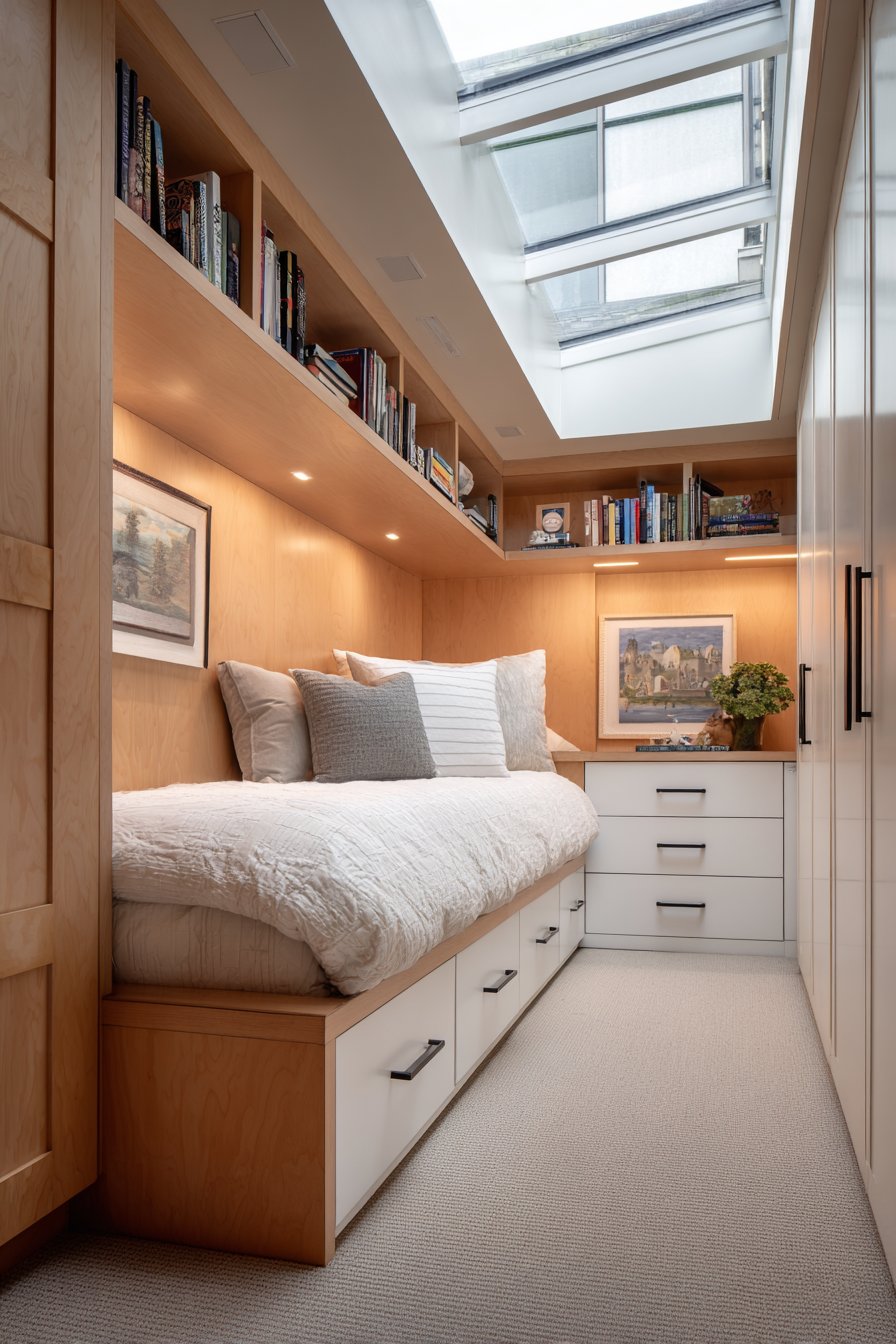
Custom built-in storage transforms this small bedroom into an organizational masterpiece. A platform bed crafted from natural maple serves dual purposes beautifully. The elevated frame conceals spacious drawers that eliminate furniture needs. White storage compartments slide smoothly on metal tracks beneath the sleeping surface.
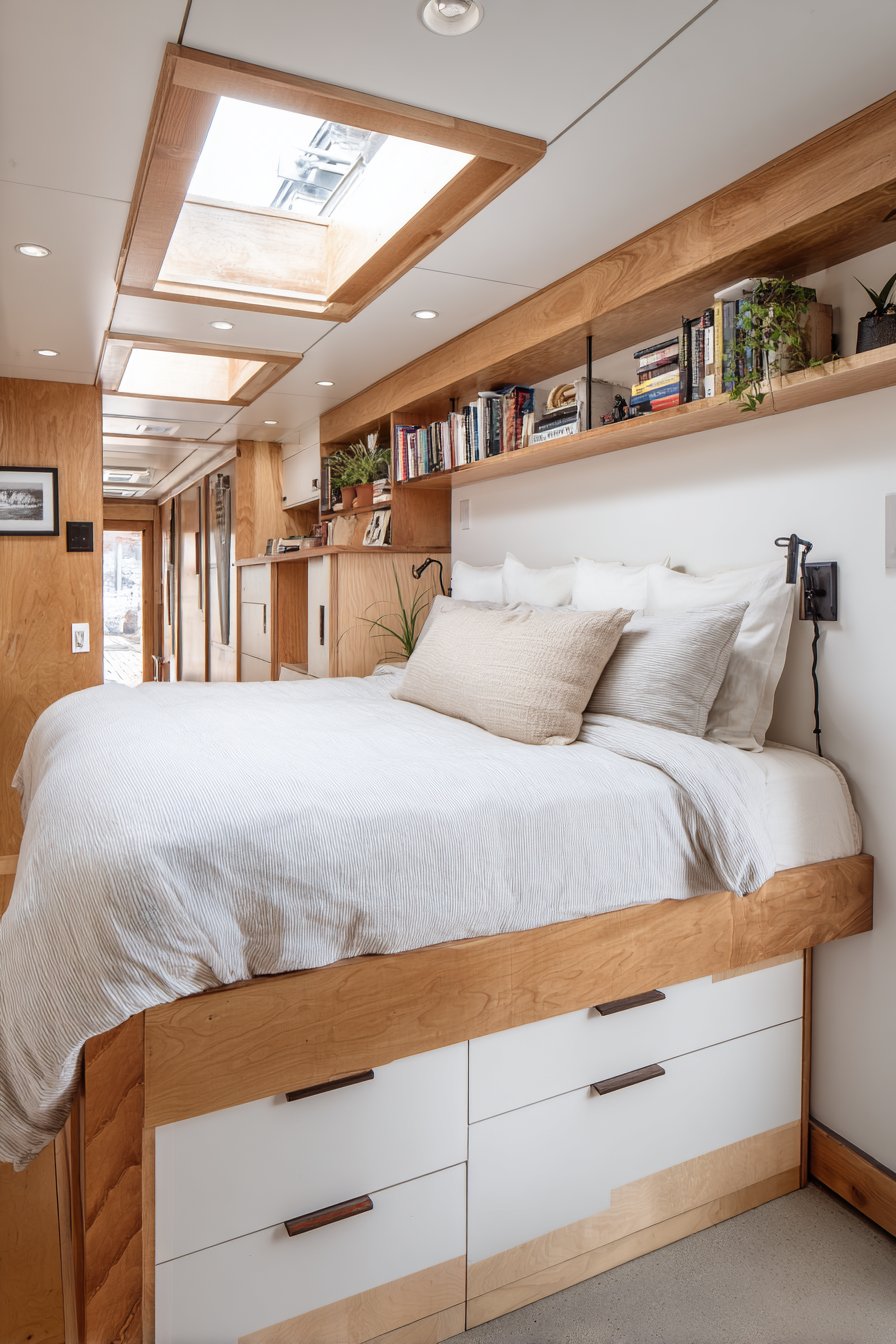
The wood grain in natural maple brings organic warmth to the space. Visible patterns create visual interest while maintaining clean lines. The contrast between natural wood and white storage adds dimensional depth. This combination achieves both aesthetic appeal and practical functionality.
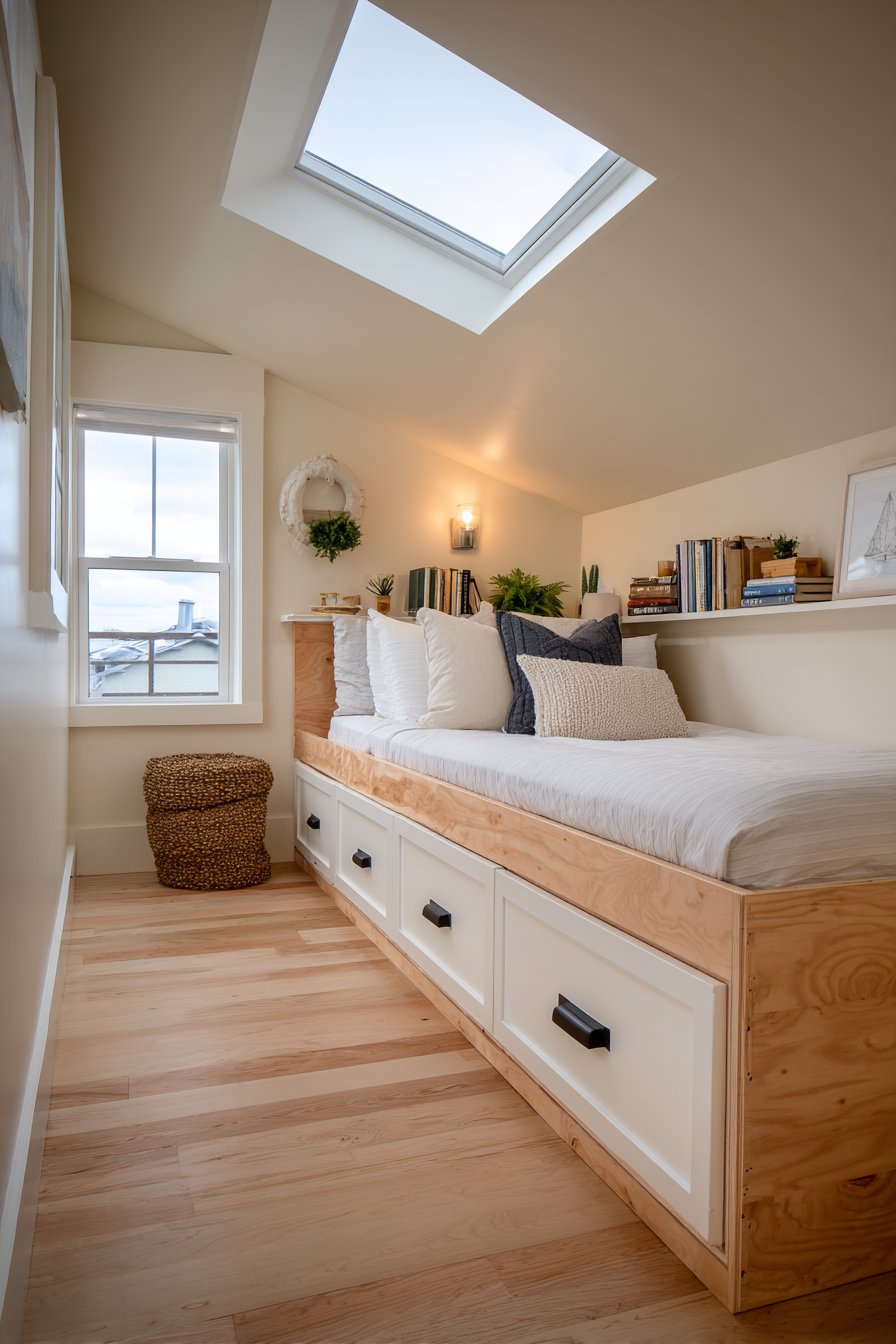
Vertical space utilization sets this design apart from conventional approaches. A narrow floating shelf runs the wall’s entire length without protruding significantly. Books and decorative items display attractively without overwhelming the room. The shelf height keeps floor areas clear and walkable.
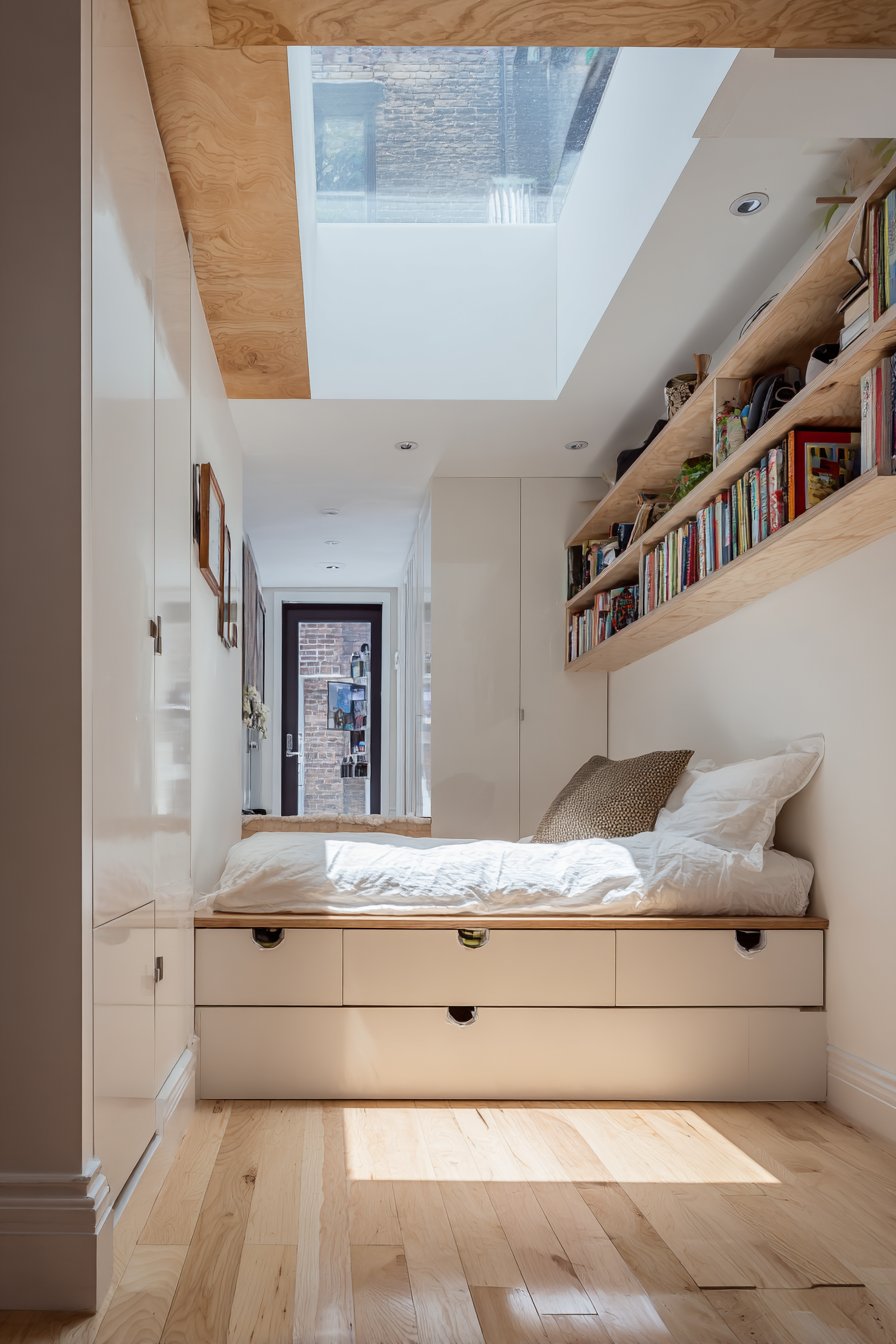
Natural light enters through an overhead skylight rather than traditional windows. This innovative approach saves valuable wall space for storage systems. Afternoon sunlight illuminates the room from above, creating even distribution. The lighting showcases the clever storage integration throughout the space.
Key Design Tips:
- Invest in platform beds with integrated drawer systems for maximum storage
- Choose wood with visible grain patterns to add warmth and character
- Install floating shelves at appropriate heights to utilize vertical space
- Consider skylights in rooms where wall space is limited
- Use contrasting colors between furniture and storage for visual definition
- Ensure drawer mechanisms operate smoothly with quality metal tracks
3. Minimalist Dark Walnut Sanctuary
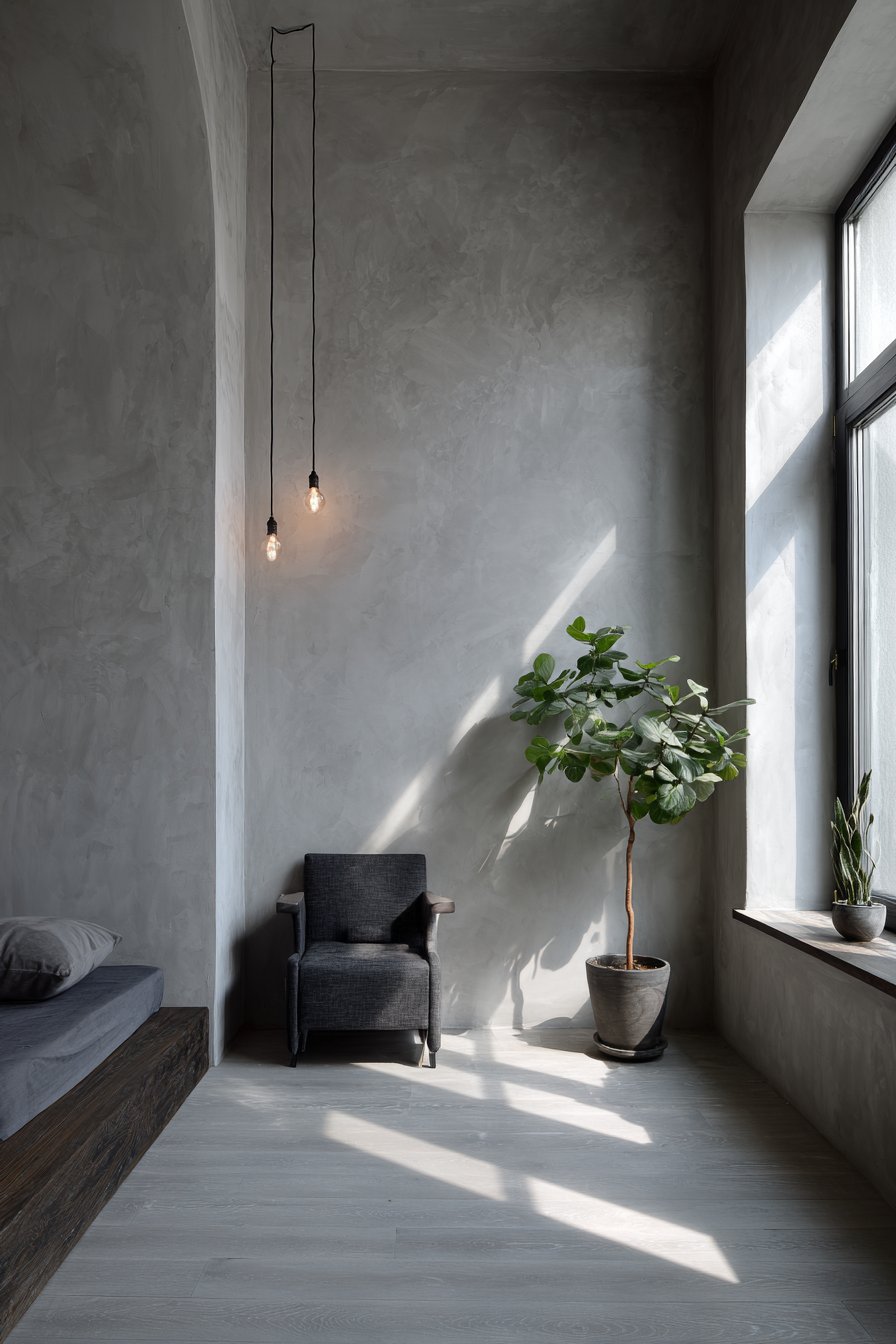
Intentional sparseness defines this minimalist small bedroom’s refined character. A low-profile bed frame in dark walnut anchors the space with quiet confidence. The centered position creates balance while allowing easy movement around the room. Only essential furniture pieces occupy the carefully curated space.
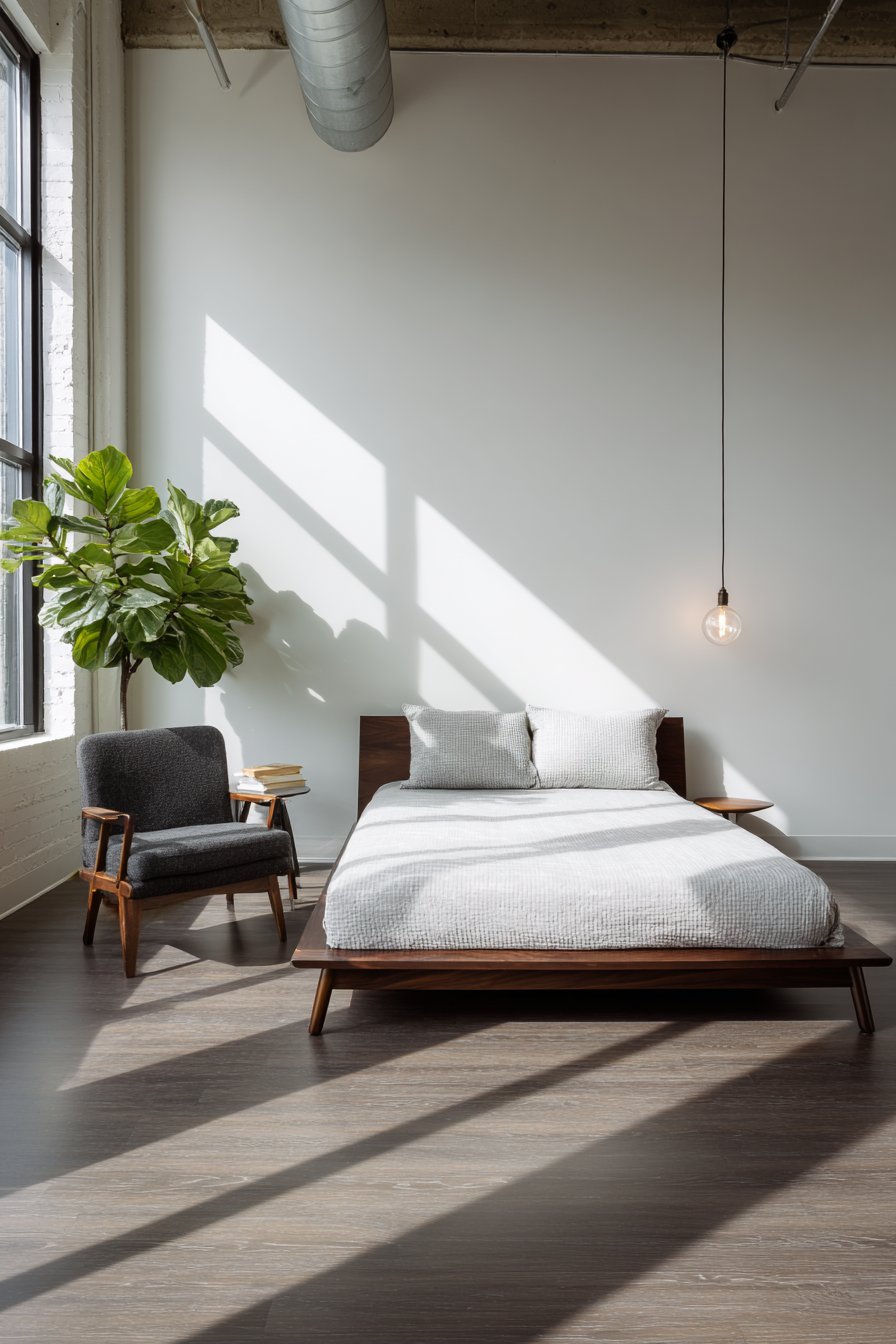
A single pendant light features an exposed Edison bulb creating warm ambient glow. The asymmetrical placement above a compact reading chair adds unexpected visual interest. Charcoal linen upholstery provides comfortable seating without overwhelming the design. The chair’s compact footprint makes it practical for small spaces.
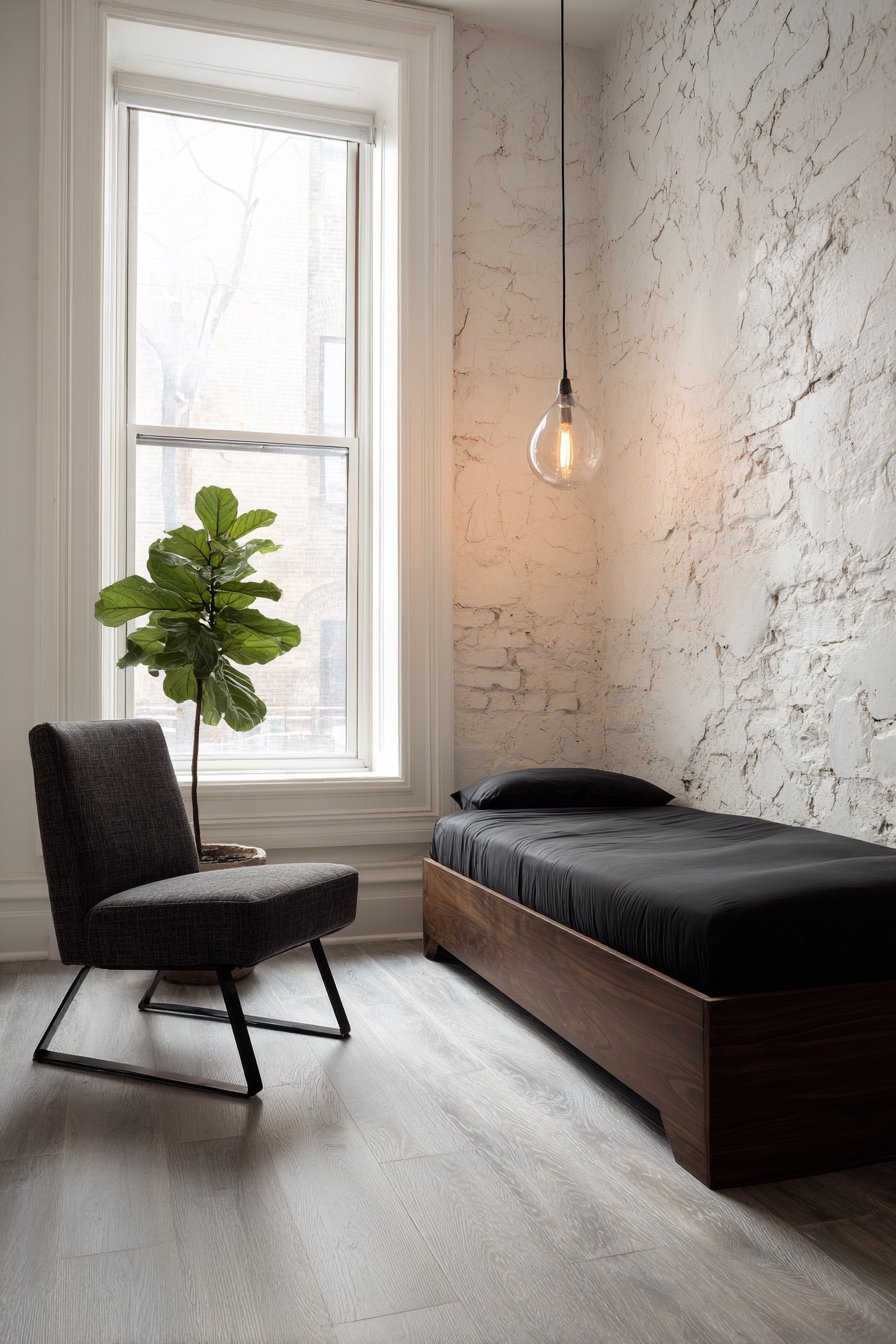
Smooth matte white plaster walls create a serene backdrop throughout. The texture-free surface enhances the sense of spaciousness significantly. Natural light streams through a bare window without fabric treatments. Geometric shadows cast across light gray hardwood floors add dynamic visual elements.
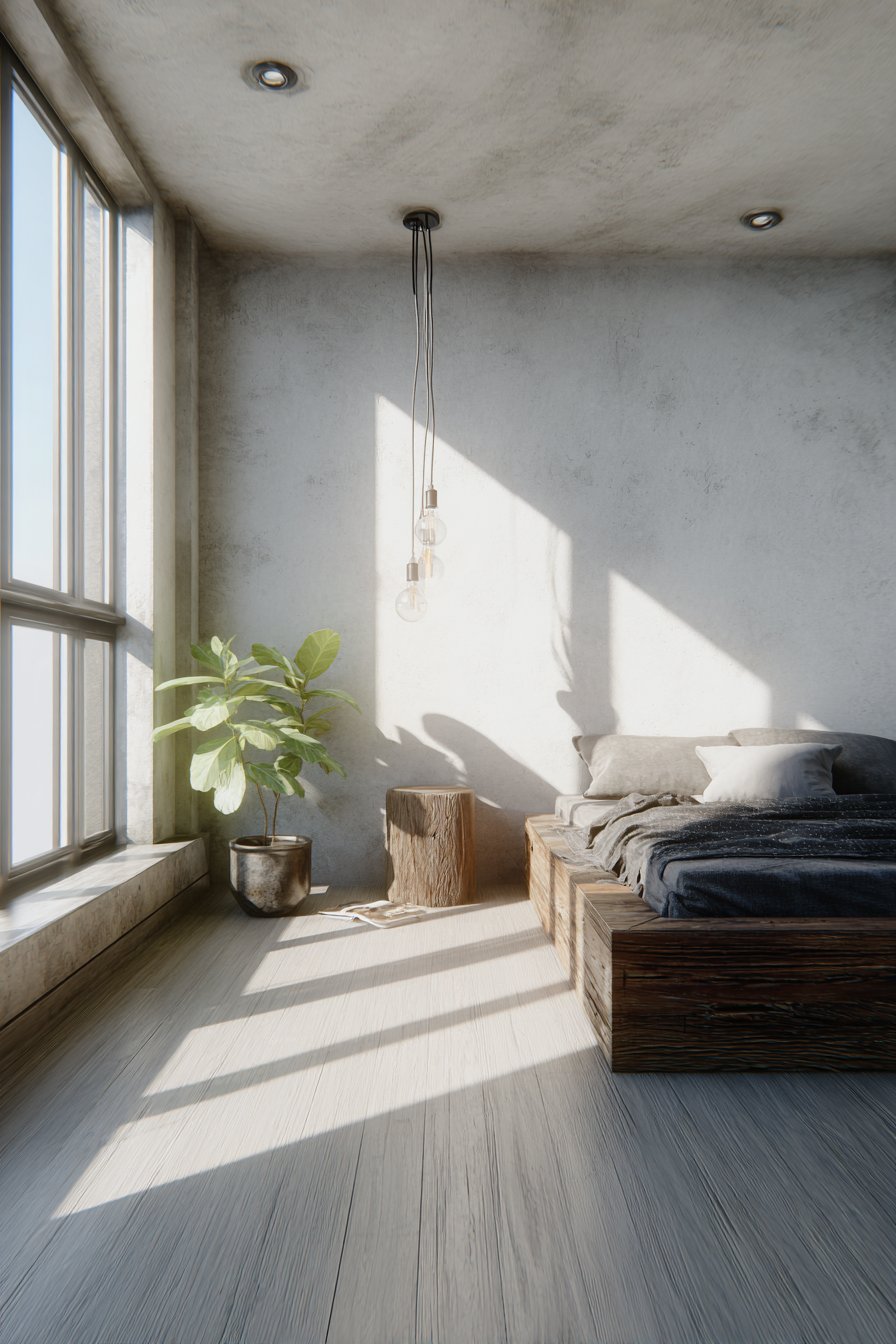
Organic elements prevent the minimalism from feeling cold or sterile. A small potted fiddle leaf fig occupies the corner with sculptural presence. The living plant introduces softness and life to the composition. Material contrasts between wood, metal, linen, and plaster create subtle richness.
Key Design Tips:
- Limit furniture to only essential pieces for true minimalist impact
- Position beds centrally when floor space allows for balanced circulation
- Choose low-profile frames to maintain visual openness and flow
- Use asymmetrical lighting placement to create unexpected focal points
- Incorporate single-statement plants for organic softness without clutter
- Select materials with inherent texture like wood grain and linen weave
4. Scandinavian Hygge-Inspired Retreat
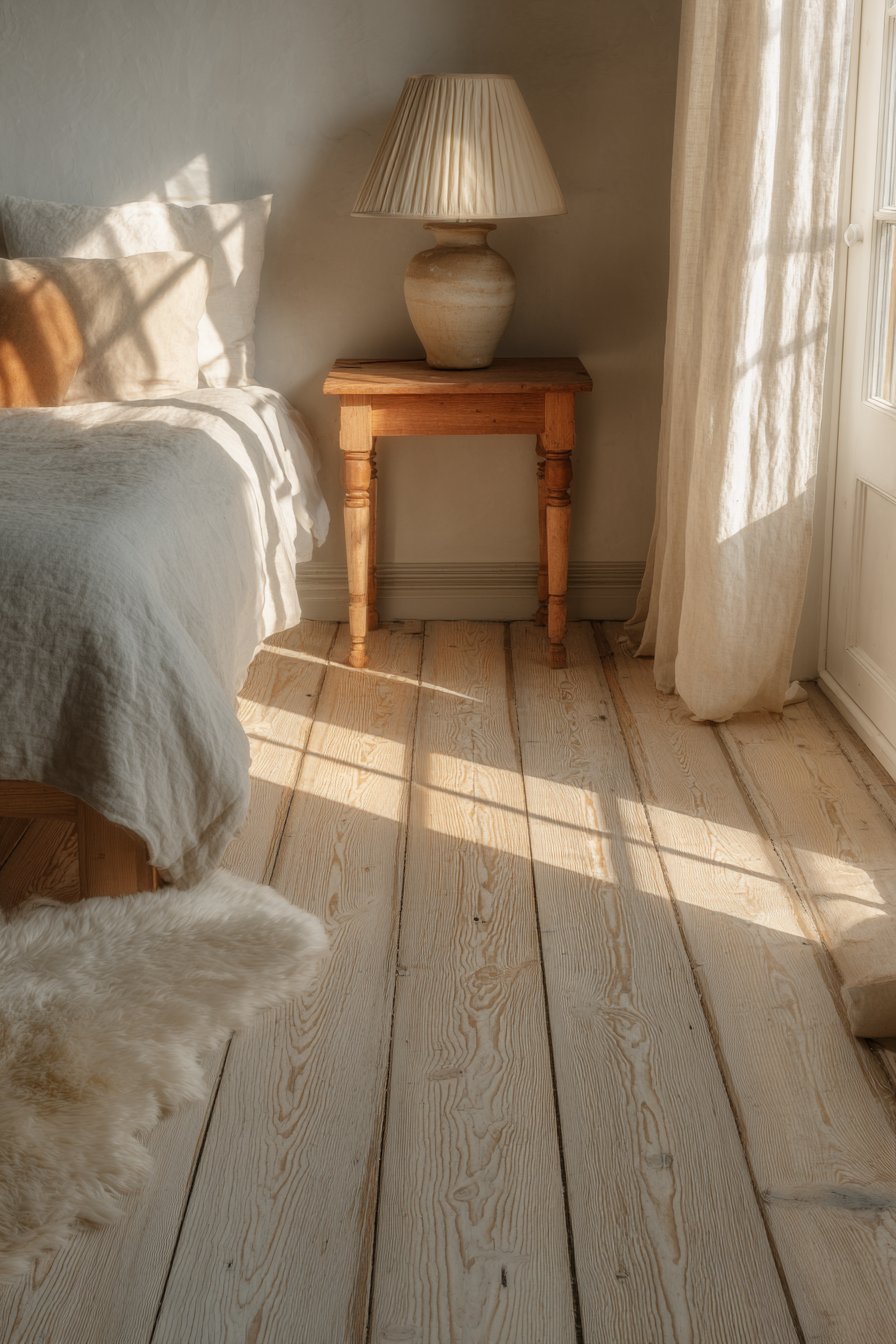
White-washed oak brings authentic Scandinavian warmth to this inviting bedroom. The bed frame showcases clean lines with visible joinery details. These craftsmanship elements add character without unnecessary ornamentation. The natural wood finish creates connection to Nordic design traditions.
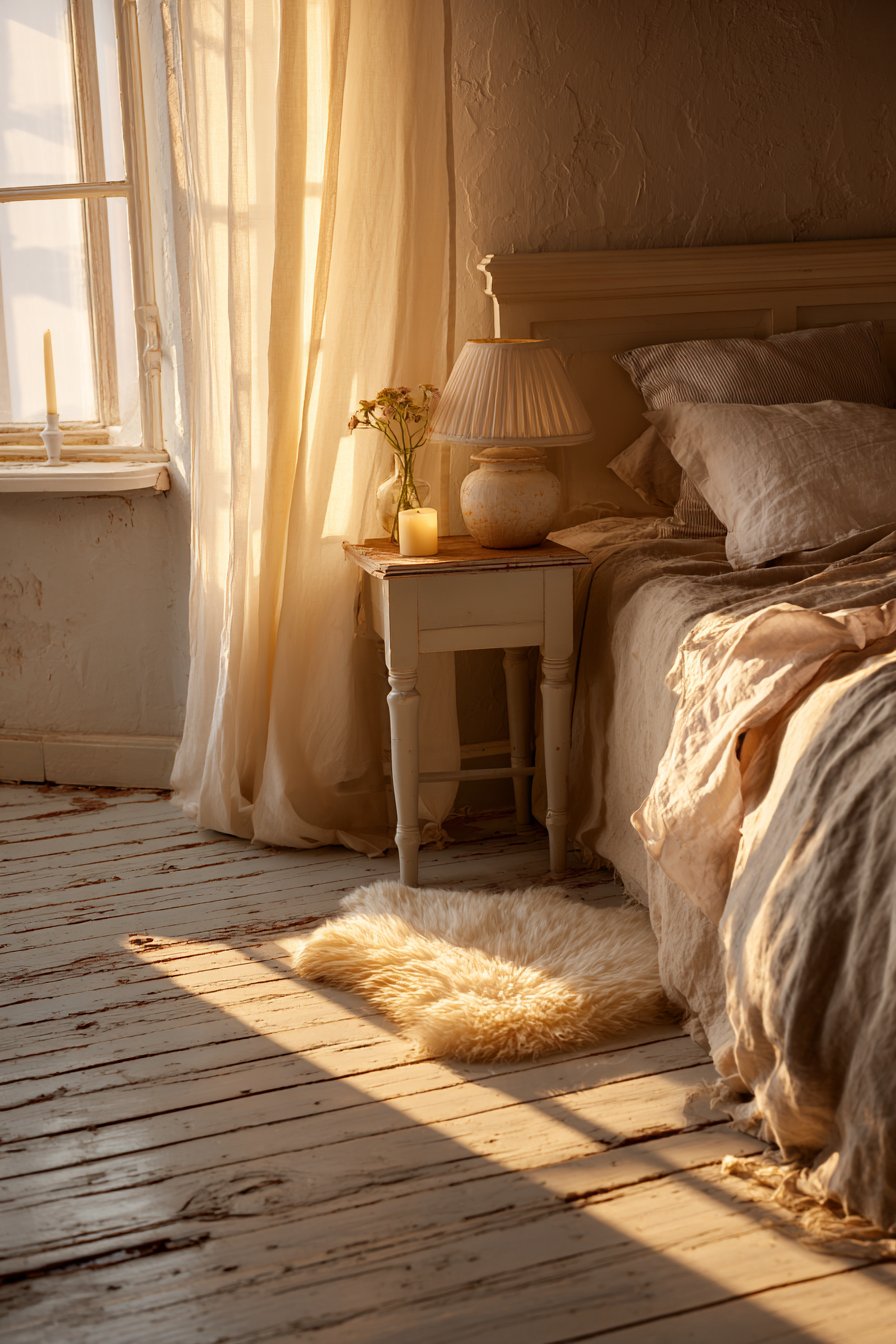
Layered bedding demonstrates the hygge approach to comfort and coziness. Natural linen and soft cotton combine in cream, gray, and blush tones. The textural variety invites touch while maintaining visual harmony. Gentle color gradations create depth without bold contrasts.
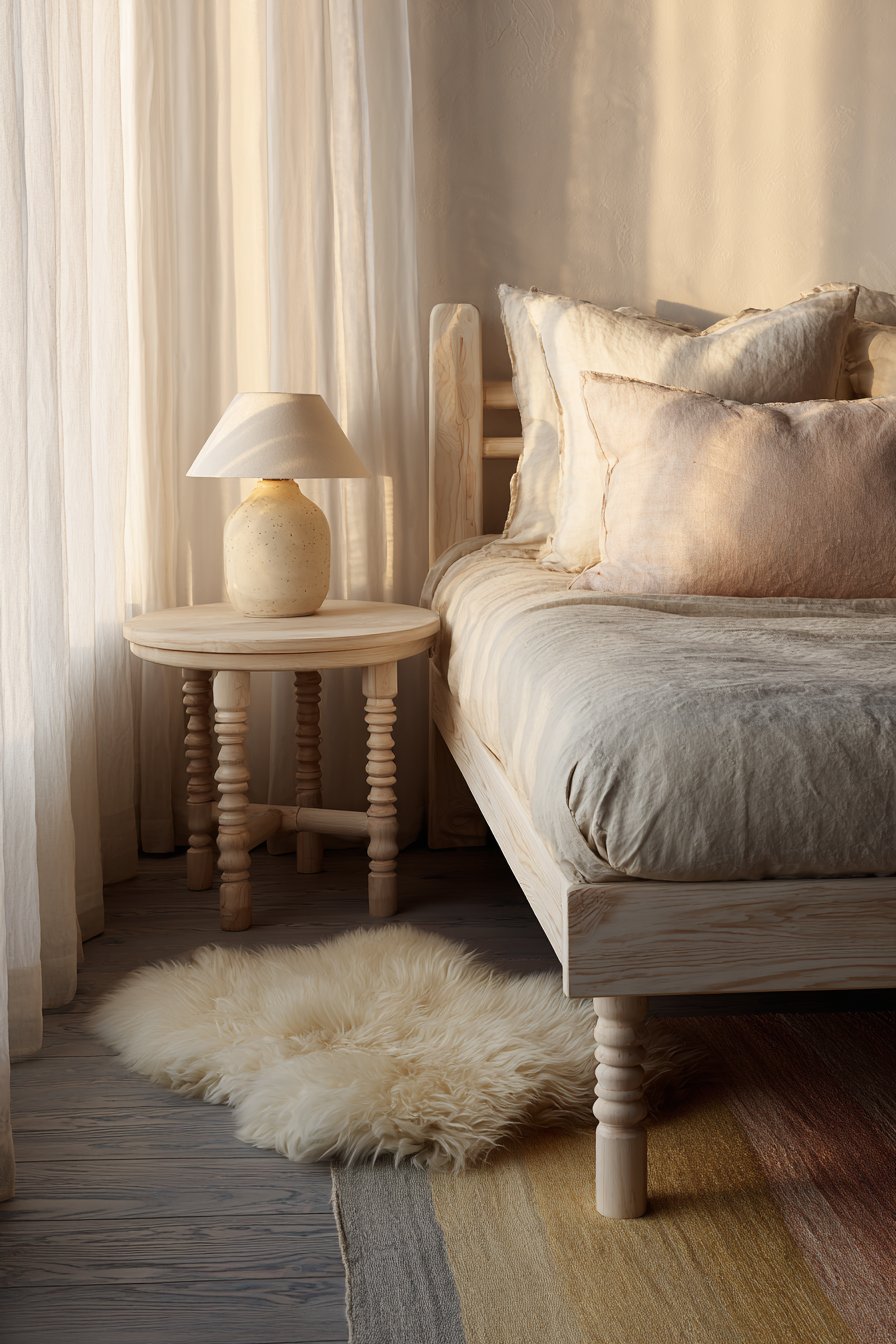
A compact birch nightstand features turned legs showing traditional woodworking techniques. The light wood tone complements the bed frame beautifully. A ceramic lamp with linen shade provides soft task lighting. Undyed cotton curtains diffuse golden hour sunlight into warm ambient glow.
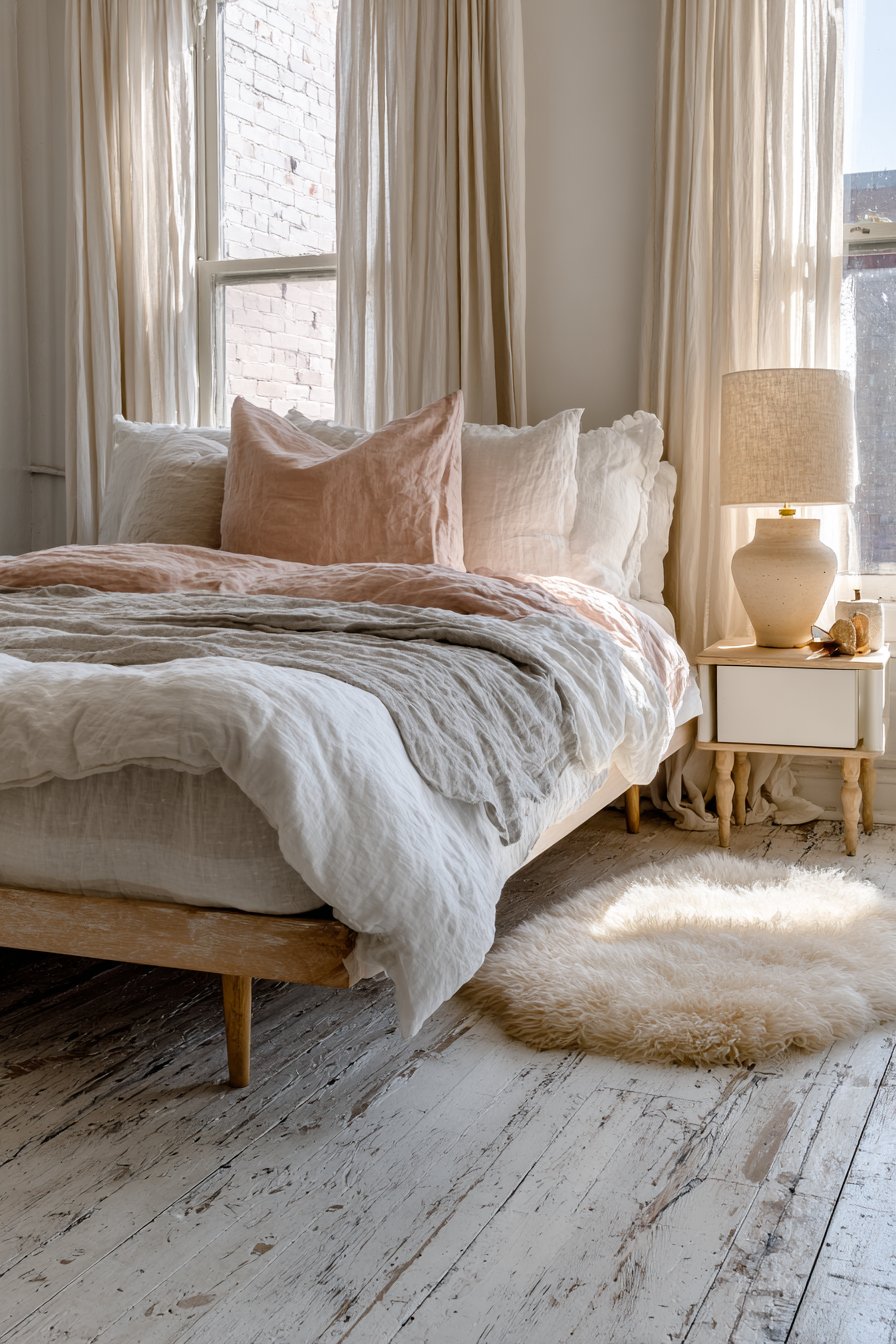
The painted wood floor in light gray shows subtle wear patterns. These authentic marks add history and lived-in character to the space. A small sheepskin rug provides softness beside the bed for bare feet. Natural materials throughout create cohesive organic warmth.
Key Design Tips:
- Choose white-washed or light natural woods for an authentic Scandinavian feel
- Layer bedding in multiple natural fabrics for textural richness
- Select furniture with visible joinery to showcase quality craftsmanship
- Use undyed natural textiles for curtains and soft furnishings
- Embrace authentic wear patterns in floors and furniture for character
- Incorporate sheepskin or wool rugs for warmth and tactile comfort
5. Vertical Space Murphy Bed System
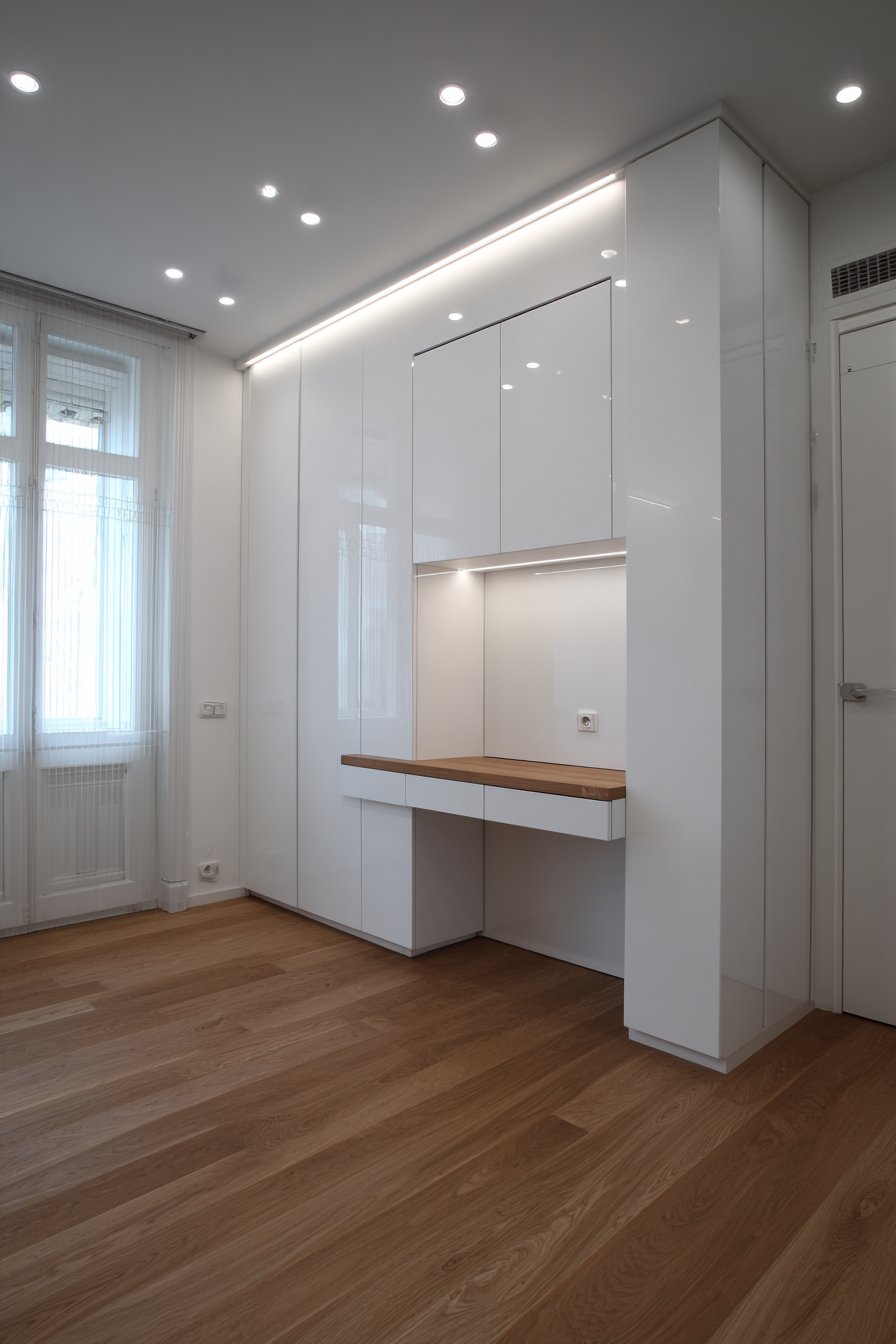
Floor-to-ceiling built-in wardrobes maximize vertical space in this innovative design. Matte white finish creates seamless integration with wall surfaces. Push-to-open doors eliminate protruding hardware that clutters small spaces. The streamlined appearance maintains visual calm throughout the room.
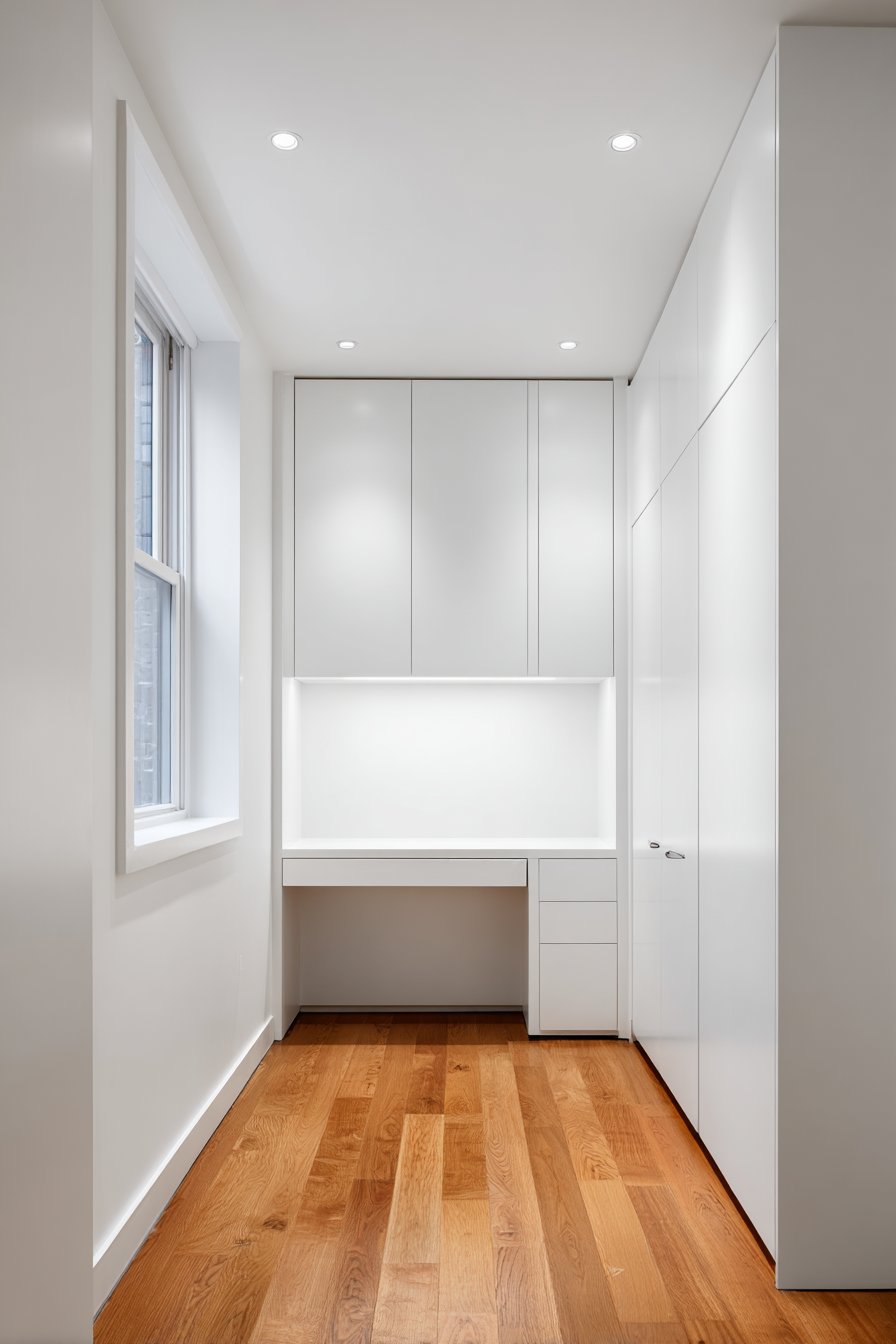
The Murphy bed system integrates brilliantly into the cabinetry structure. When folded upward, it reveals a compact workspace beneath. This transformation creates dual functionality from single square footage. A narrow desk surface pulls down with the bed mechanism.
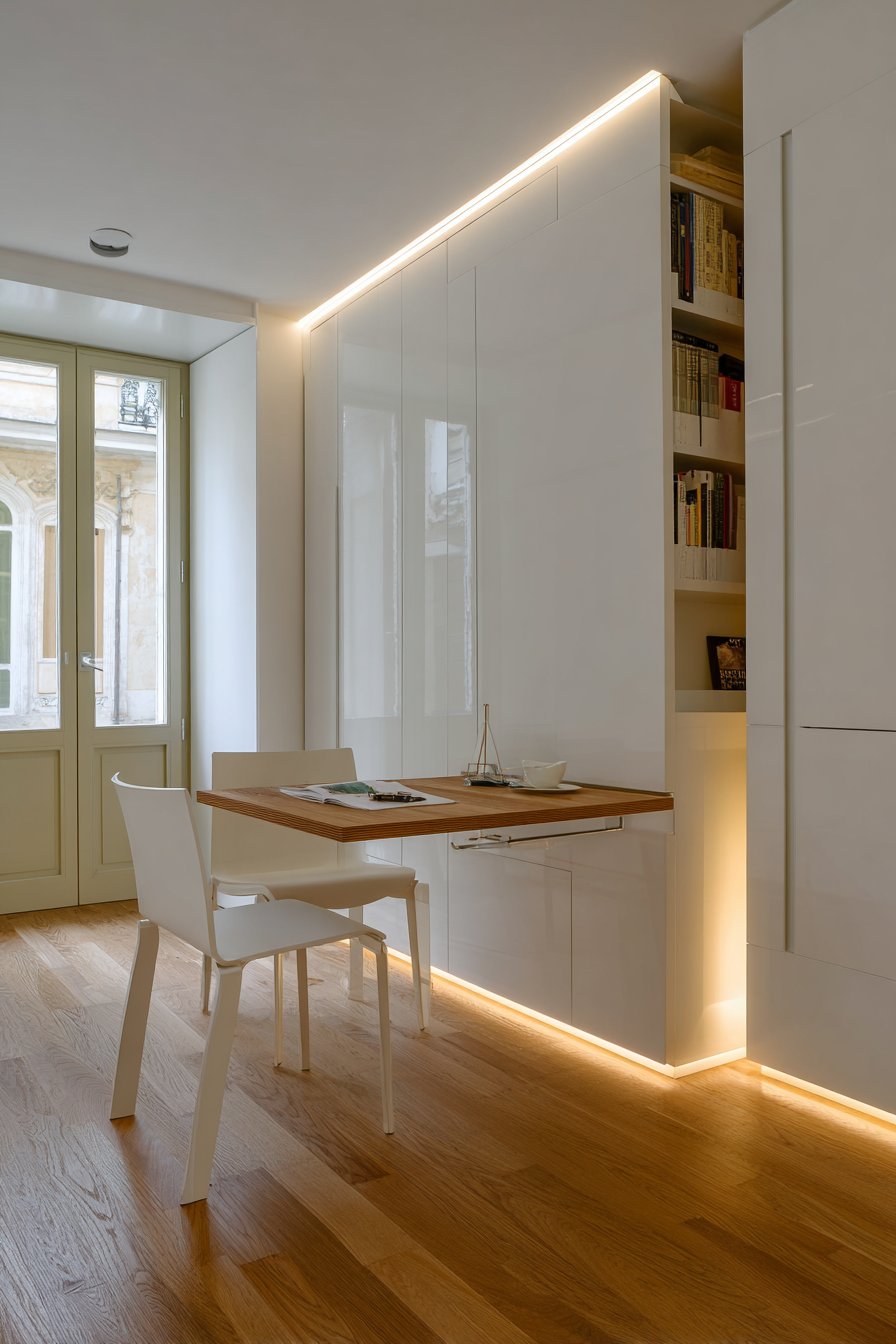
The daytime configuration completely changes the room’s purpose and appearance. The workspace becomes the primary focus during waking hours. This flexibility suits modern living patterns and work-from-home needs. The transformation happens quickly without heavy lifting or complex mechanisms.
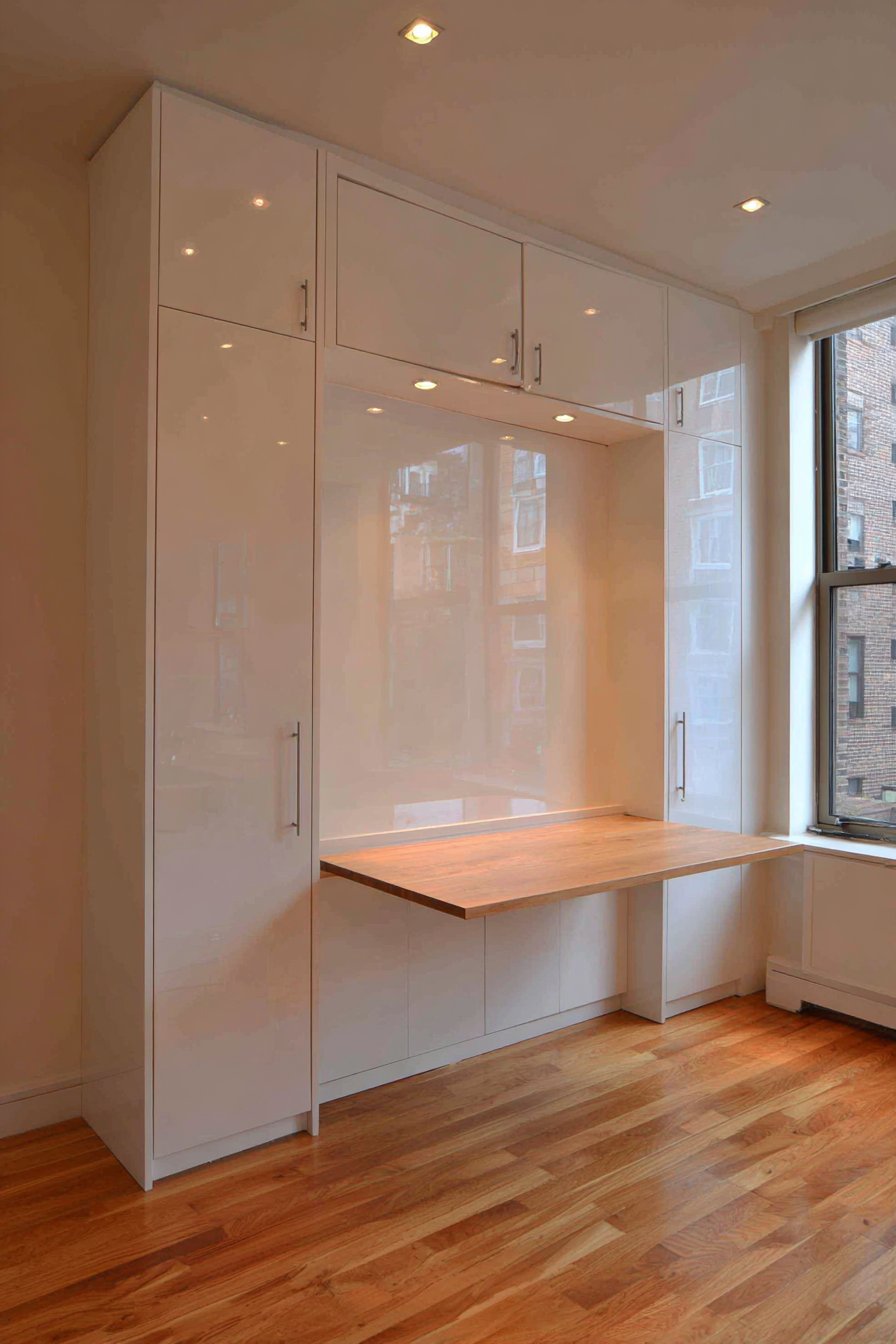
Recessed LED lighting along ceiling perimeters provides ambient illumination. This approach eliminates floor lamps that consume precious space. The even lighting distribution works for both bedroom and workspace modes. Engineered hardwood in honey oak adds warmth to the white palette.
Key Design Tips:
- Install floor-to-ceiling storage to maximize every inch of vertical space
- Choose Murphy bed systems with integrated desk functions for dual use
- Select push-to-open mechanisms to eliminate hardware and maintain clean lines
- Use recessed lighting to avoid floor lamps that occupy valuable space
- Opt for matte finishes on built-ins to reduce visual weight
- Add warm wood flooring to balance white cabinetry and prevent coldness
6. Bohemian Layered Textile Paradise
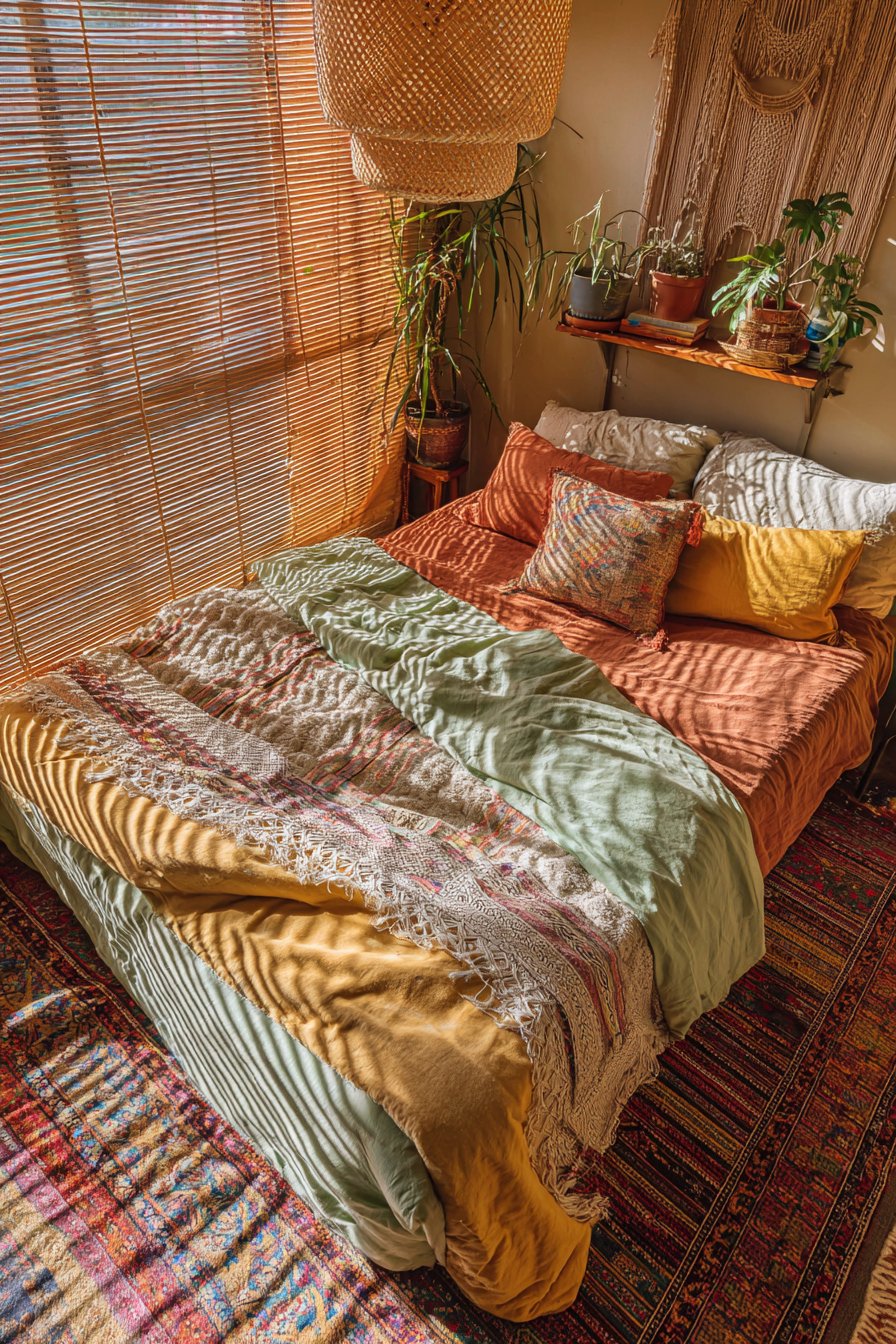
Low platform beds create the foundation for this richly layered bohemian aesthetic. The minimalist frame disappears beneath abundant textiles and patterns. A macramé bedspread provides intricate texture as the base layer. Printed cotton duvets add color and global-inspired patterns.
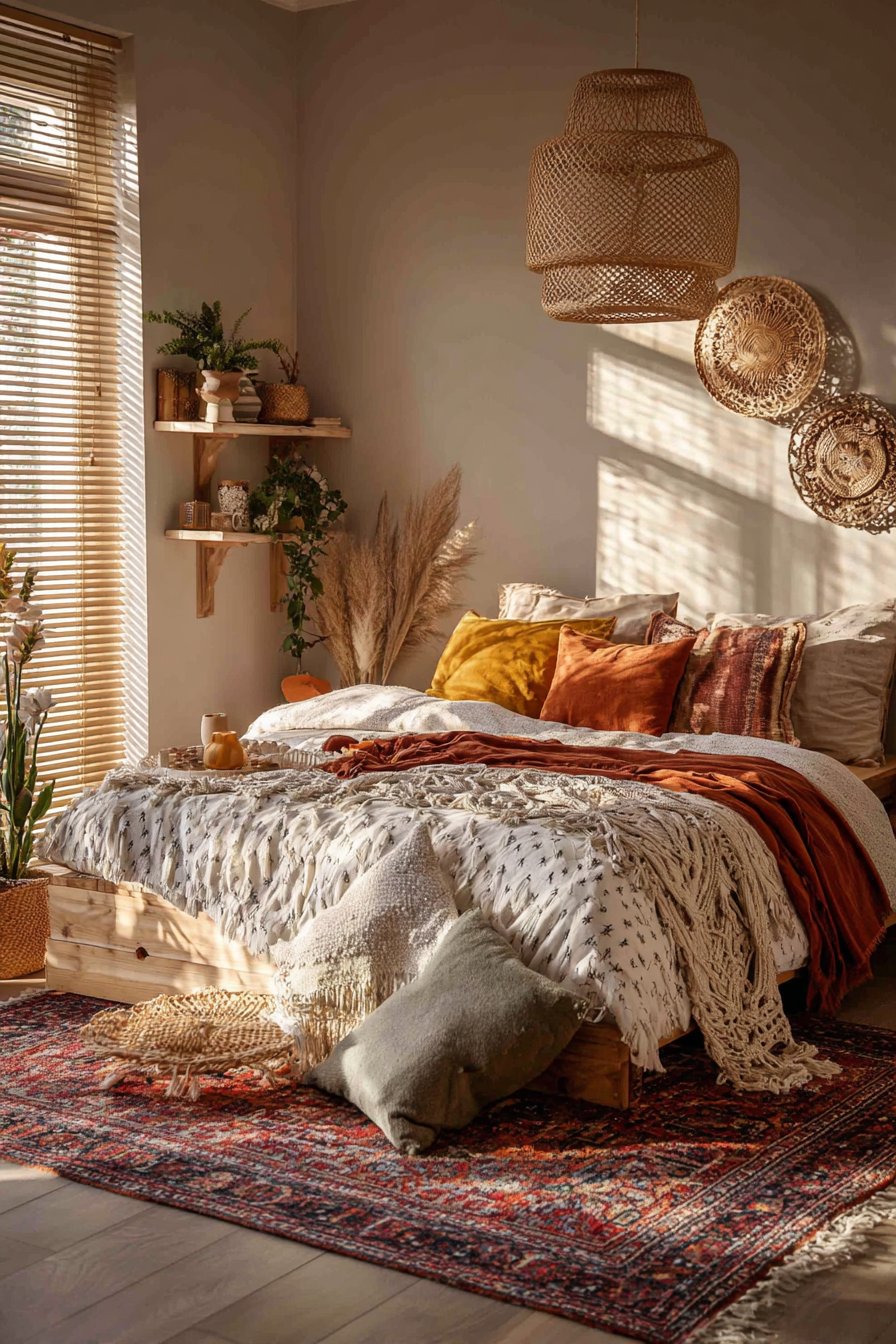
Throw pillows in terracotta, mustard, and sage green create vibrant composition. The assortment includes various sizes, patterns, and textures for visual richness. Despite the abundance, the cohesive color story maintains harmony. Each element contributes to the eclectic yet curated appearance.
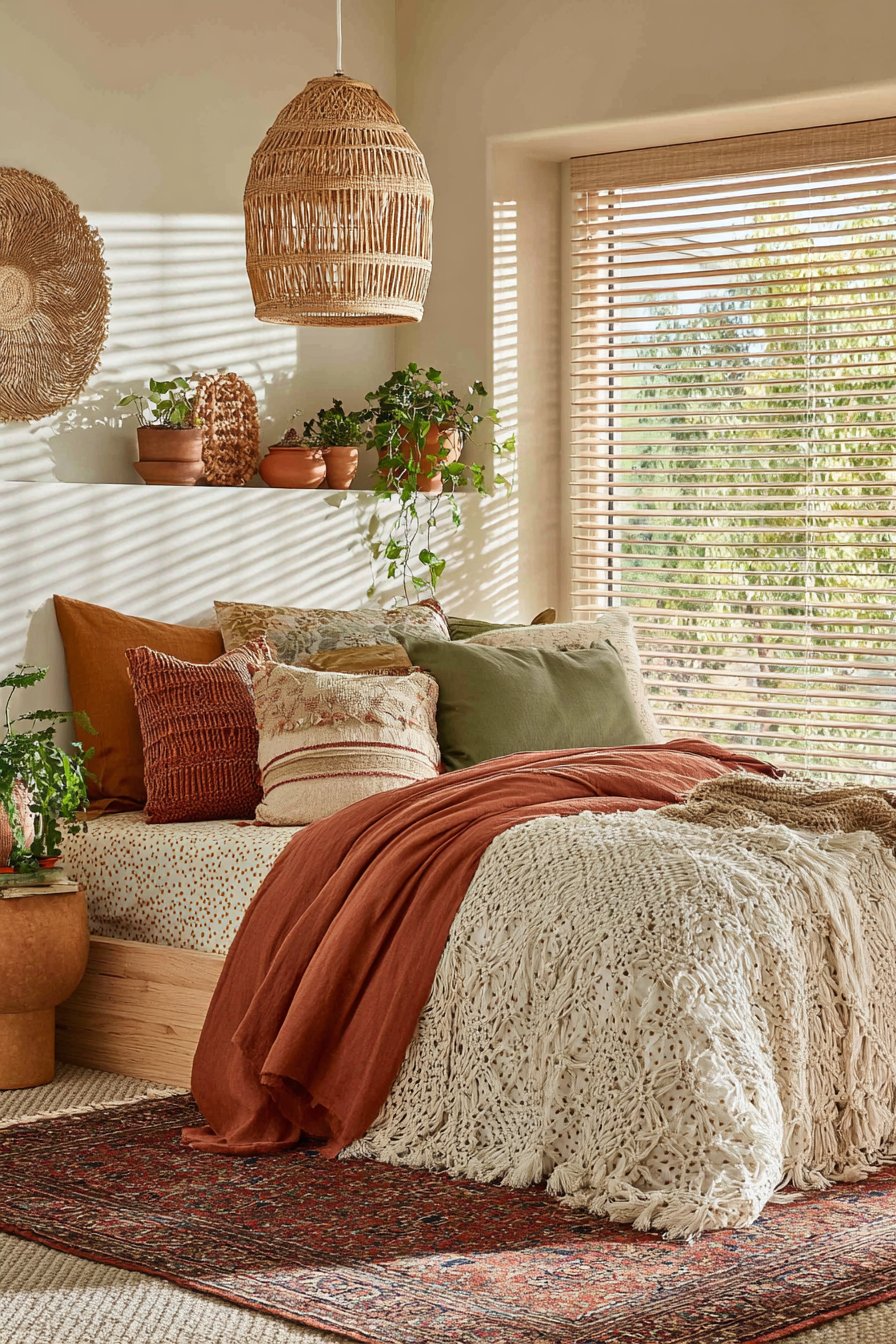
A rattan pendant light hangs above the bed as functional sculpture. When illuminated, it casts intricate shadow patterns across surfaces. The organic material connects to the natural fiber theme throughout. Woven wall hangings in natural jute add vertical visual interest.
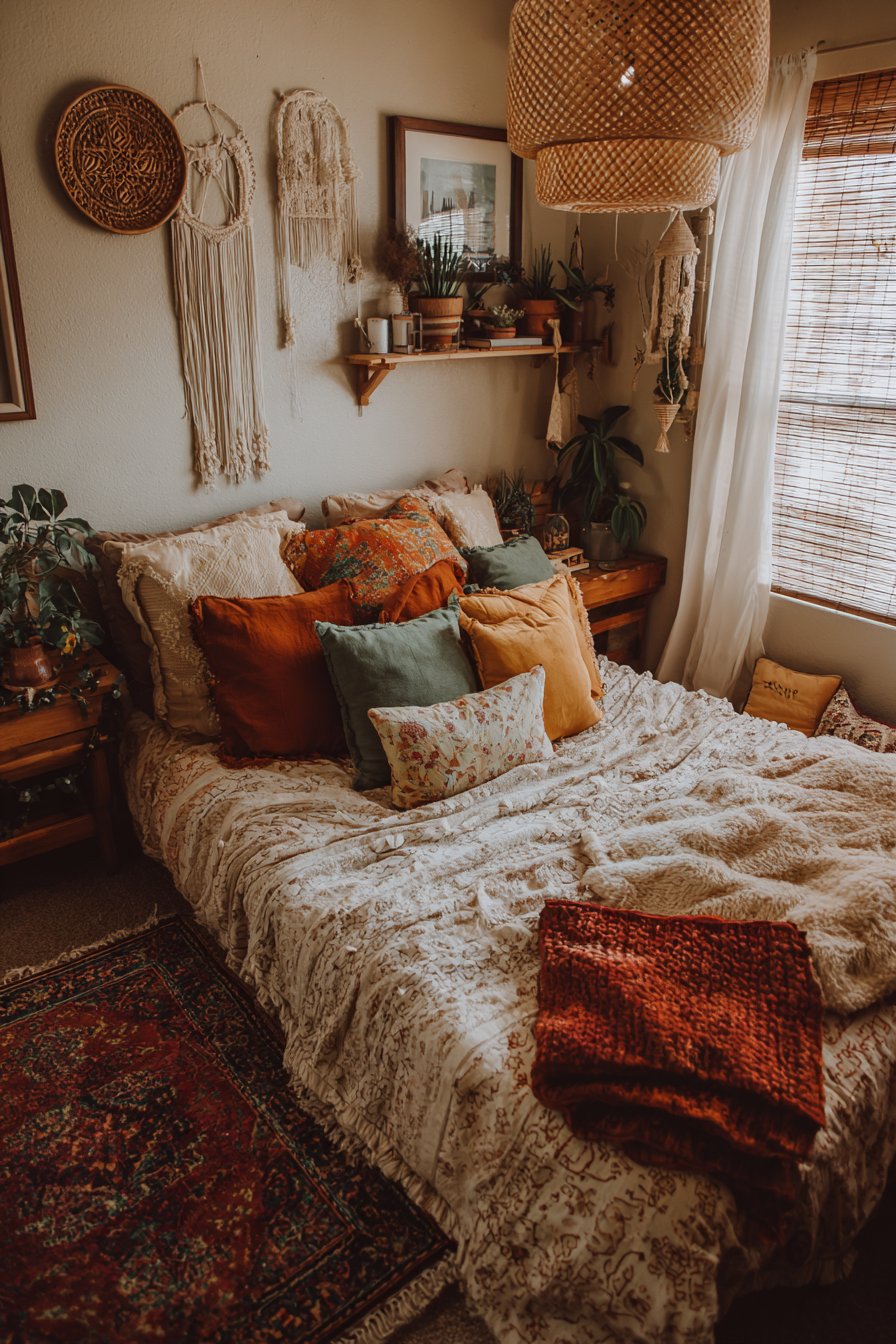
Floating corner shelves display small potted plants without consuming floor area. The greenery adds life and organic movement to the composition. Bamboo blinds filter natural light while creating striped shadow patterns. A small vintage Persian-style rug anchors the bed area with faded reds and blues.
Key Design Tips:
- Layer multiple textiles and patterns within a cohesive color palette
- Use low platform beds to allow textile layers to become focal points
- Incorporate pendant lights with interesting shadows as decorative elements
- Add woven natural fiber pieces for an authentic bohemian texture
- Display plants on vertical surfaces to maintain floor space
- Choose vintage or vintage-style rugs for character and pattern mixing
7. Diagonal Bed Placement Innovation
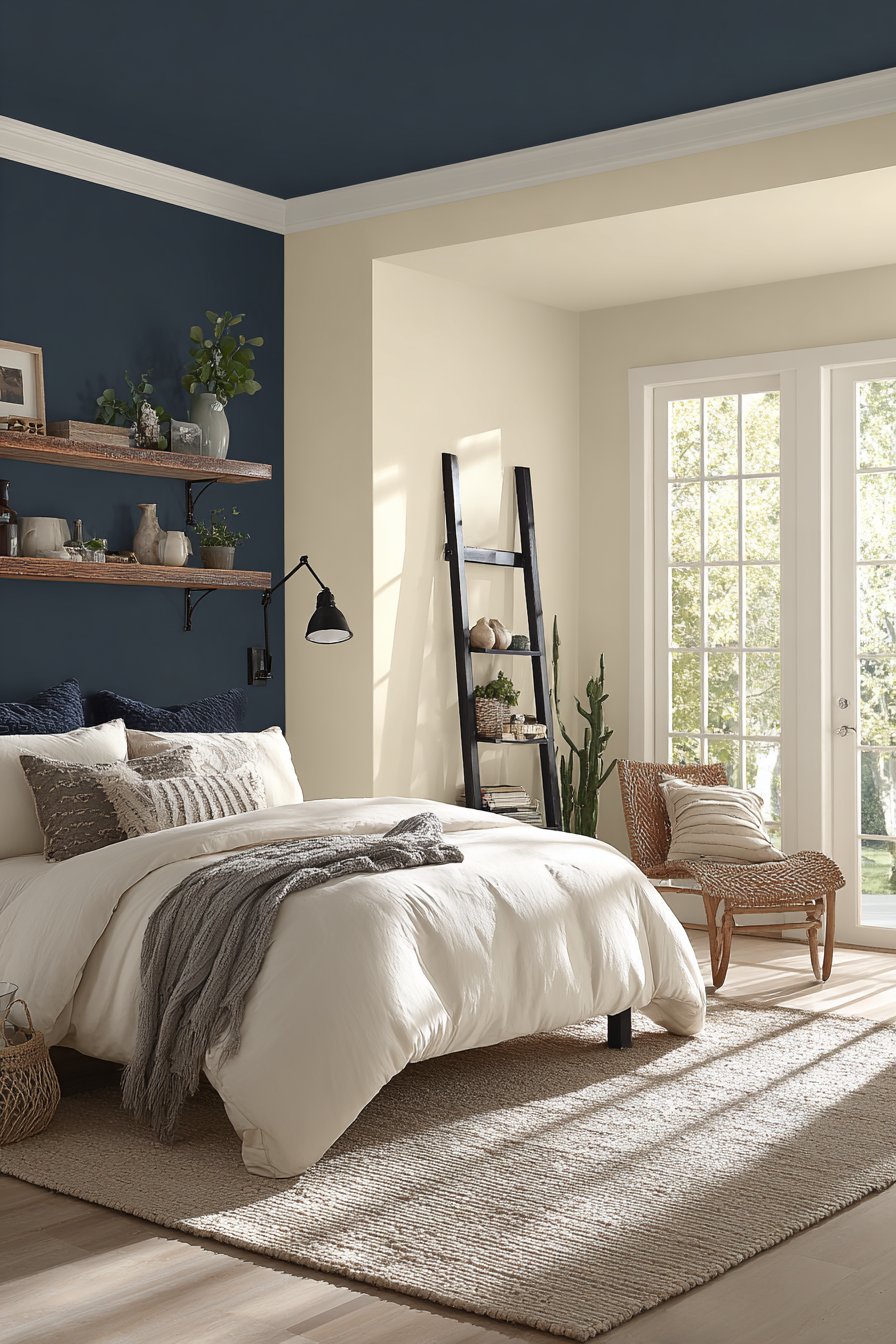
Unconventional diagonal bed placement creates unexpected visual drama in this small bedroom. Positioning the bed in the corner at an angle defies traditional arrangements. This bold choice actually frees up valuable wall space for other functions. The unexpected layout makes the room feel larger and more dynamic.
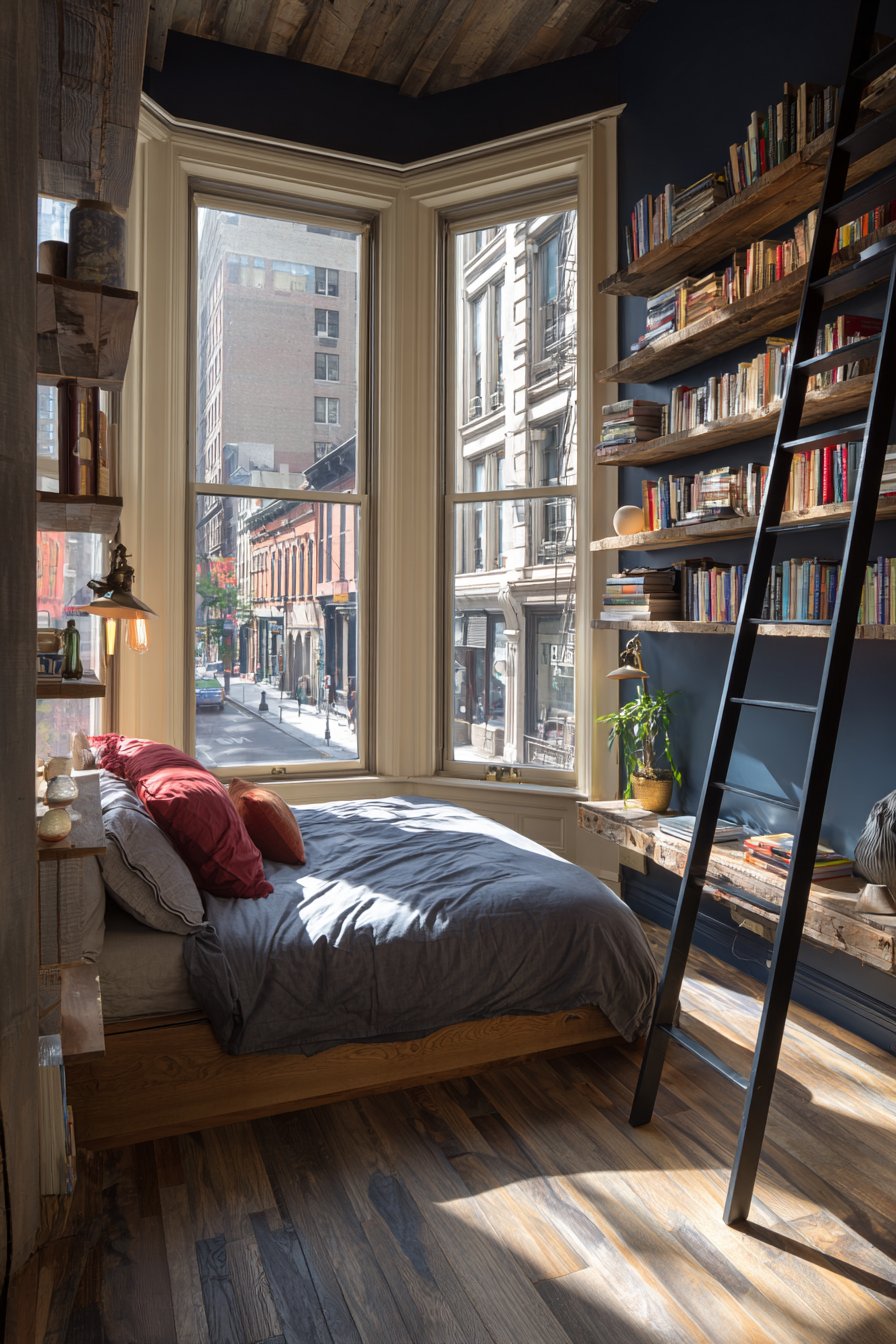
A compact ladder shelf in black metal and reclaimed wood serves multiple purposes. The vertical design provides book storage and decorative display opportunities. The industrial materials add character without overwhelming the compact footprint. The lean-back angle keeps the piece from feeling too rigid.
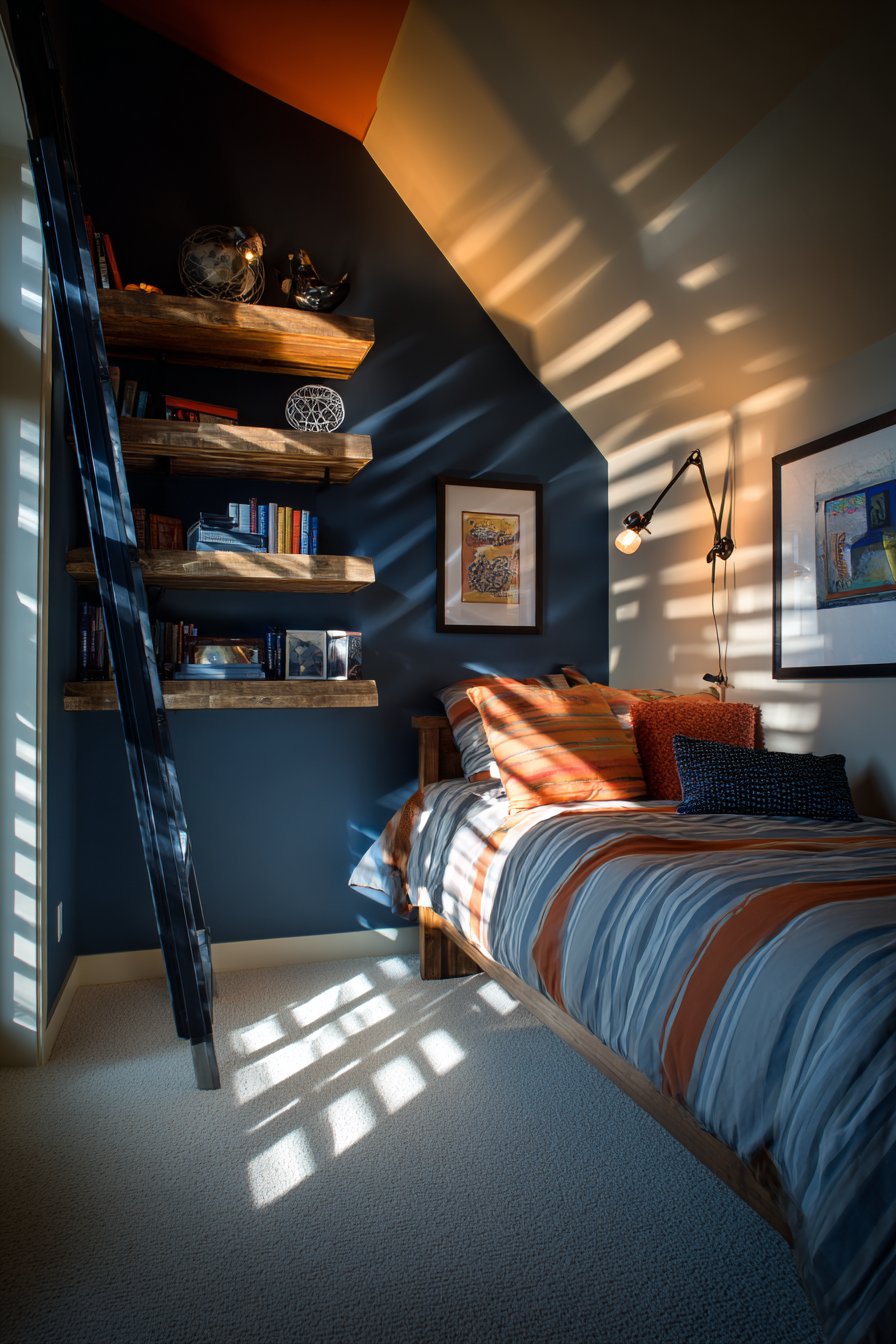
Two-tone paint treatment creates sophisticated visual expansion throughout the space. Deep navy covers the lower wall portion adding grounding weight. Soft cream on the upper section and ceiling draws the eye upward. This technique effectively increases perceived ceiling height in compact rooms.
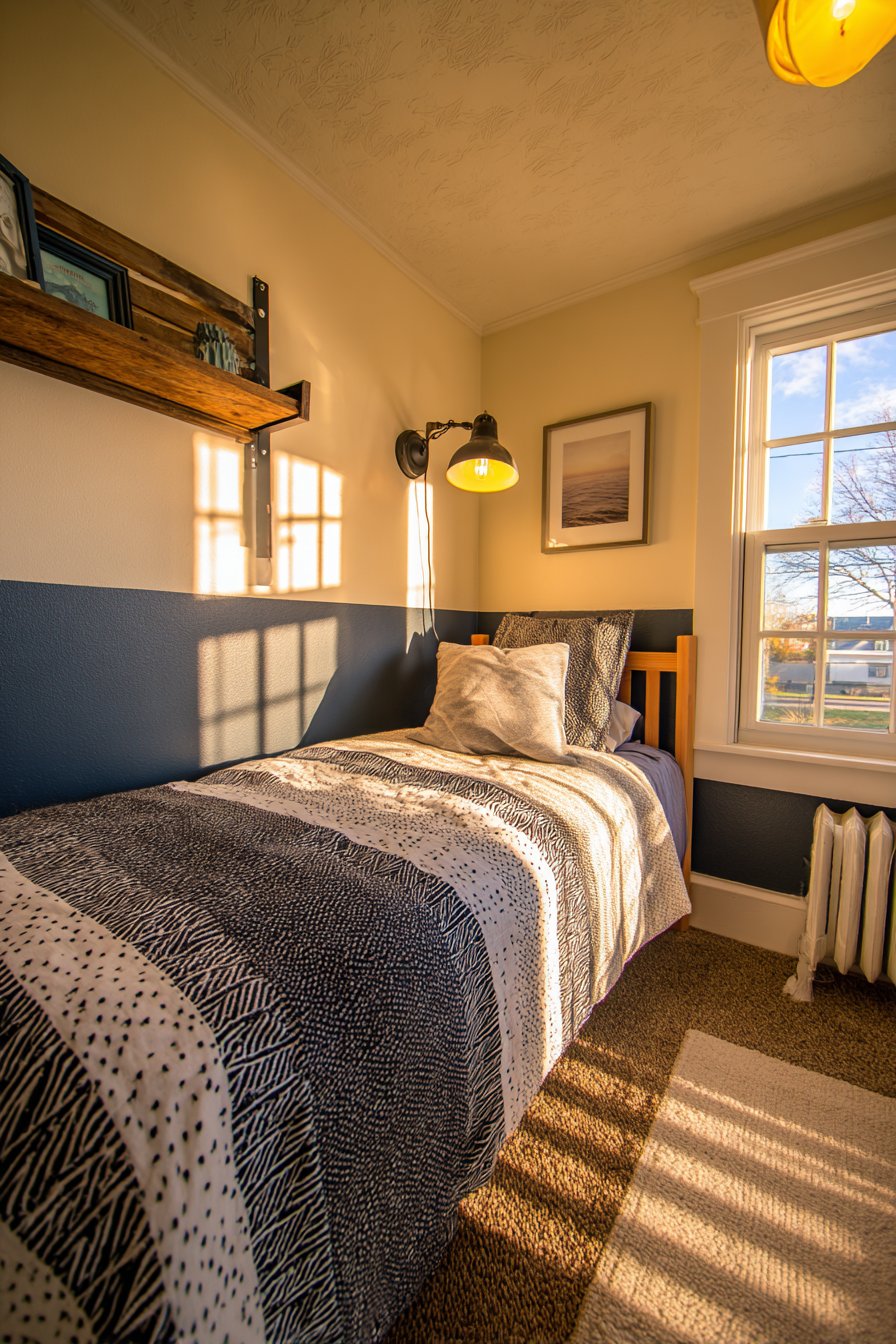
A swing-arm wall-mounted reading lamp eliminates nightstand requirements completely. The adjustable design provides directed task lighting exactly where needed. The wall mounting preserves floor and surface space for other purposes. Afternoon sunlight creates dramatic shadows across the angled bed placement.
Key Design Tips:
- Consider diagonal bed placement to create visual interest and free wall space
- Use ladder shelving for vertical storage with minimal floor footprint
- Apply two-tone paint with darker colors below to ground and lighten above
- Install swing-arm wall lamps to eliminate nightstand lighting needs
- Choose furniture with dual functions to maximize limited square footage
- Embrace unconventional layouts that challenge traditional room arrangements
8. Industrial Raw Materials Showcase
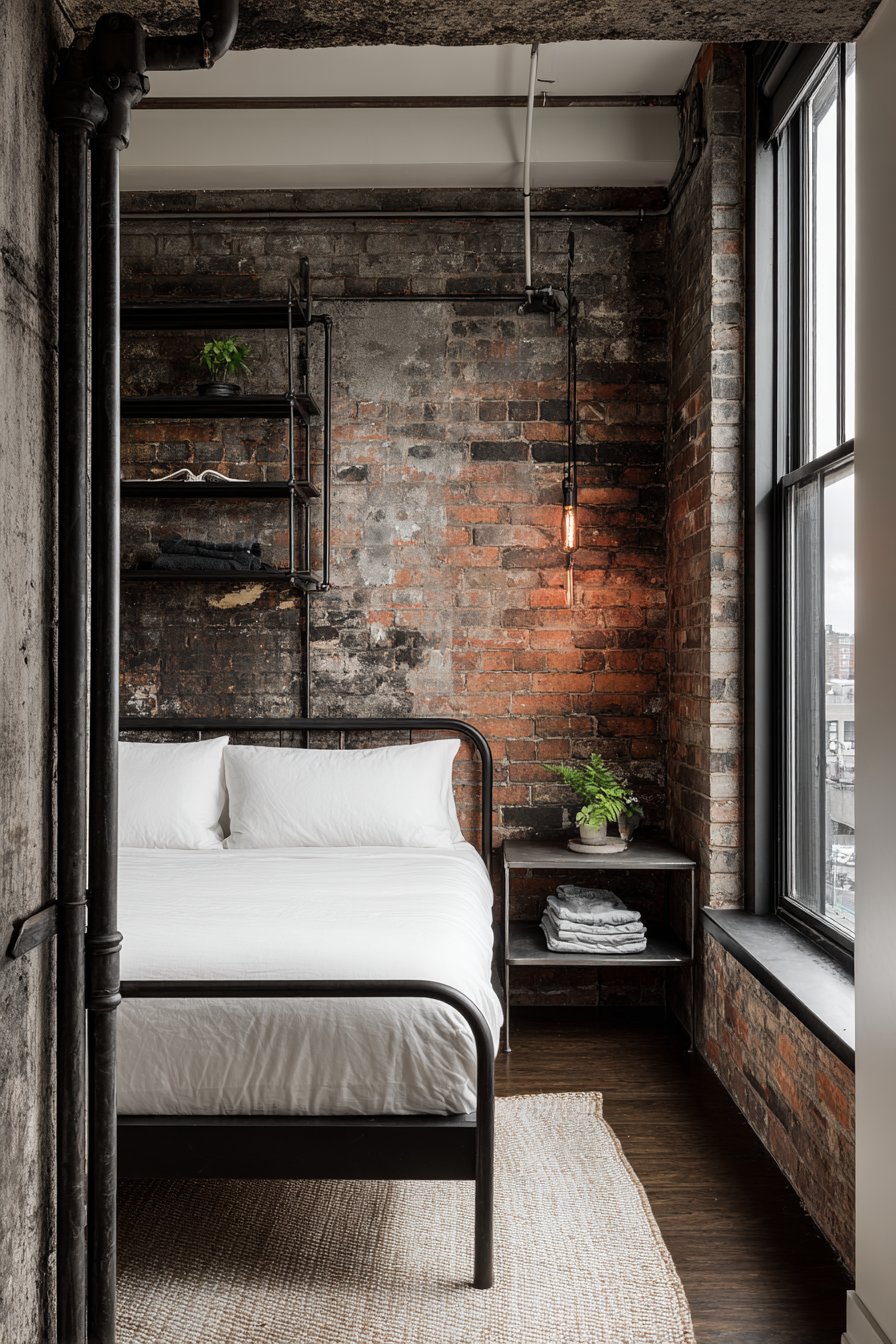
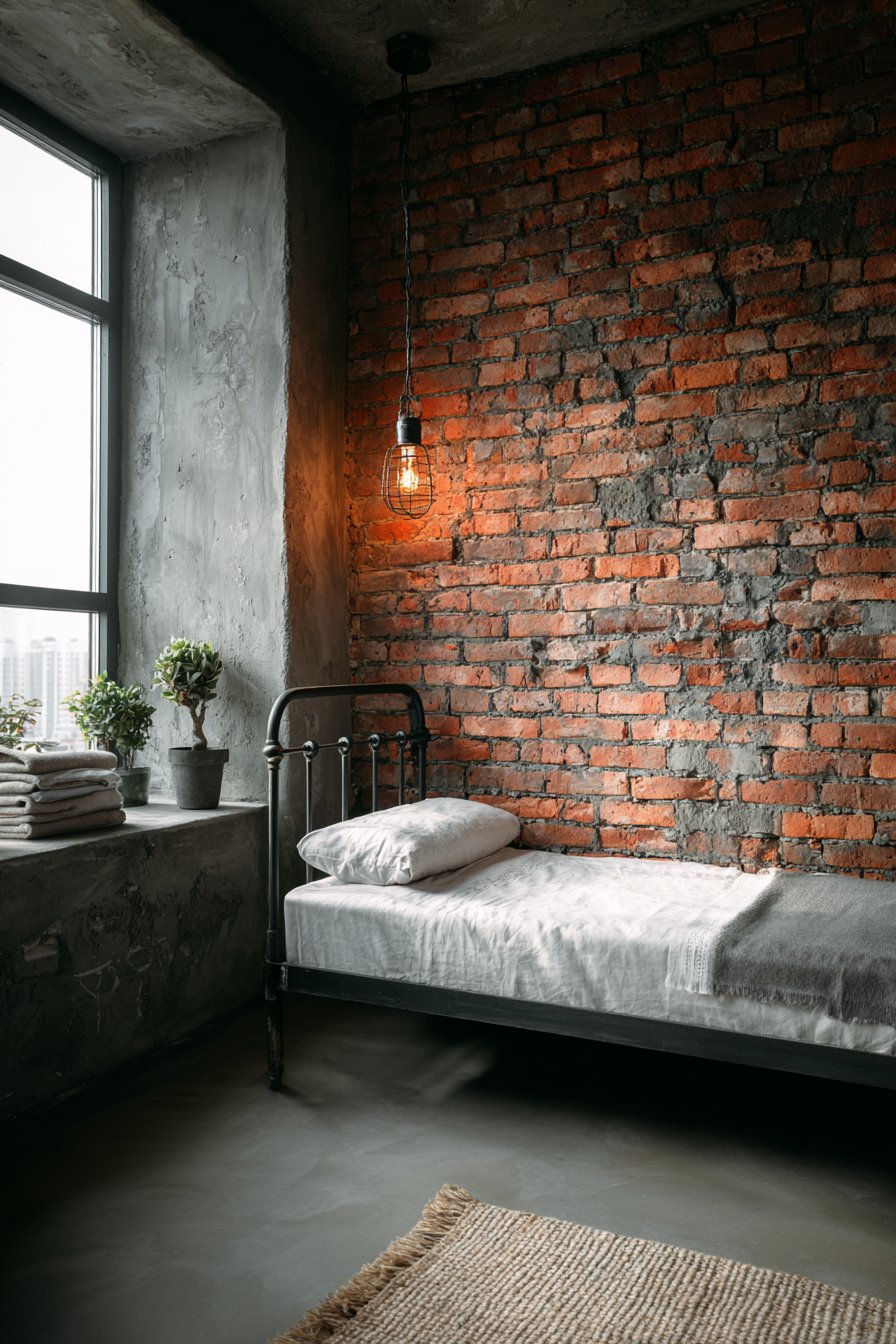
Exposed brick accent walls bring authentic urban character to this industrial bedroom. The weathering patterns and mortar variations tell a story of age. Each brick shows unique coloring and texture creating rich visual depth. This architectural element becomes the room’s defining feature.
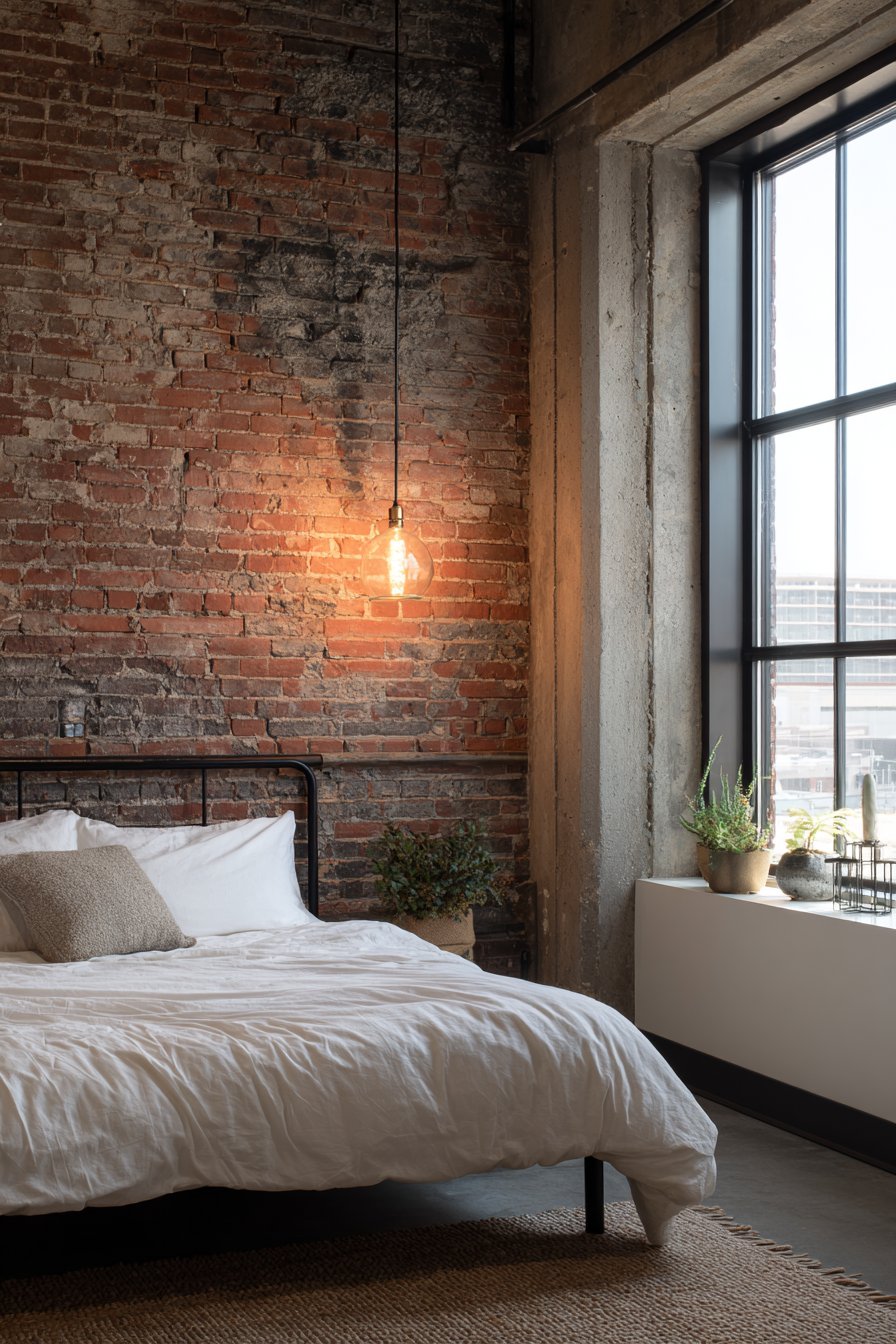
A simple metal bed frame in matte black showcases visible welded joints. The utilitarian construction methods become part of the aesthetic appeal. Clean white linen bedding provides crisp contrast against the raw materials. The simplicity allows the architectural elements to shine.
Open pipe shelving in black iron offers practical storage with industrial flair. The exposed construction celebrates function over concealment beautifully. Folded clothes and small plants in concrete pots display attractively. The horizontal lines create order against the brick’s organic texture.
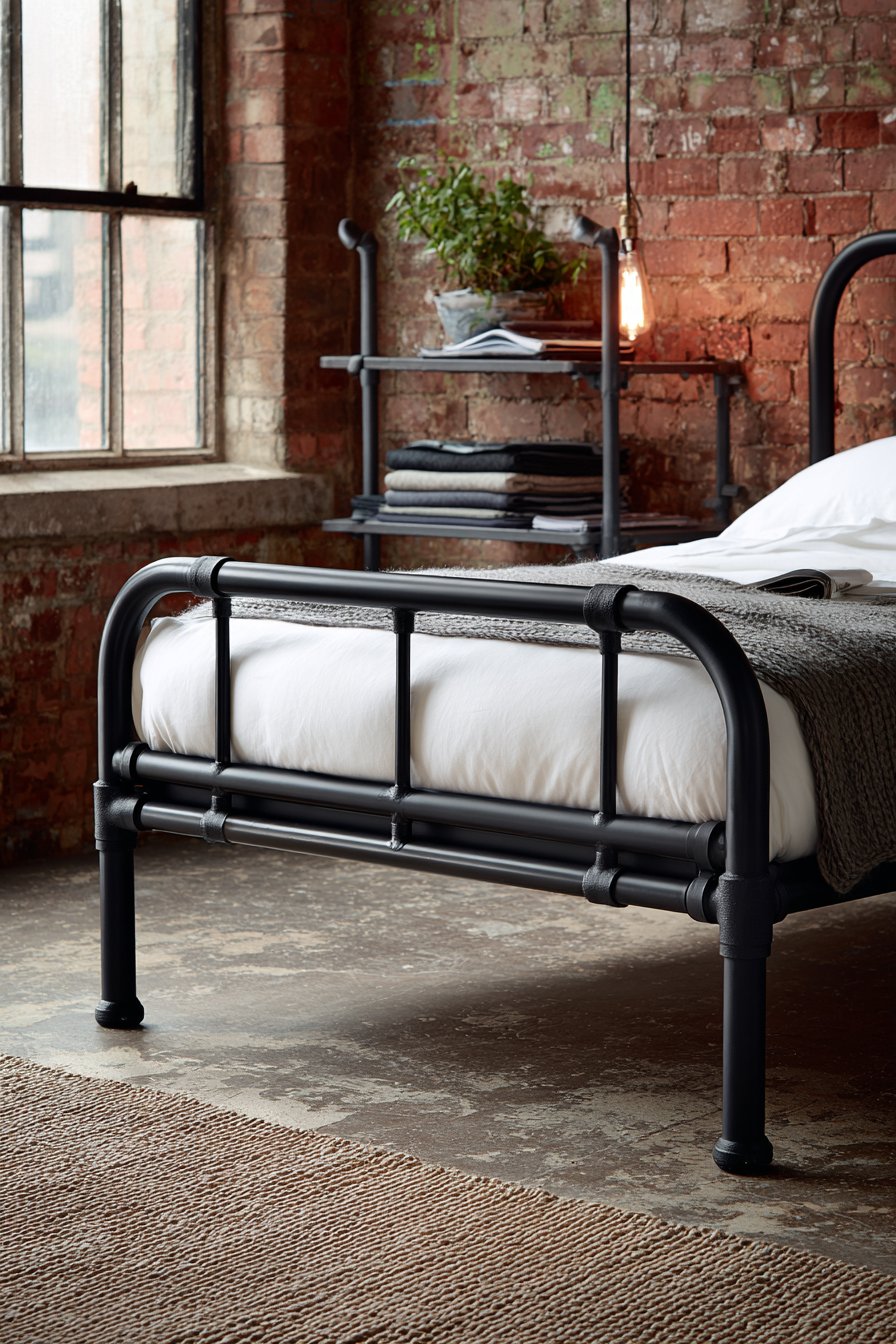
Vintage-style filament bulbs hang from black fabric cords providing warm light. The exposed bulbs reference early industrial lighting aesthetics authentically. Concrete floors partially covered by natural fiber rugs complete the material palette. Steel-framed windows with minimal mullions maximize natural light intake.
Key Design Tips:
- Expose existing brick walls rather than covering with drywall when possible
- Choose metal furniture with visible welding and construction details
- Use pipe shelving for authentic industrial storage solutions
- Select filament bulbs to reference historical industrial lighting
- Combine hard surfaces with natural fiber textiles for balance
- Keep color palette limited to allow materials to provide visual interest
9. Coastal White-Washed Serenity
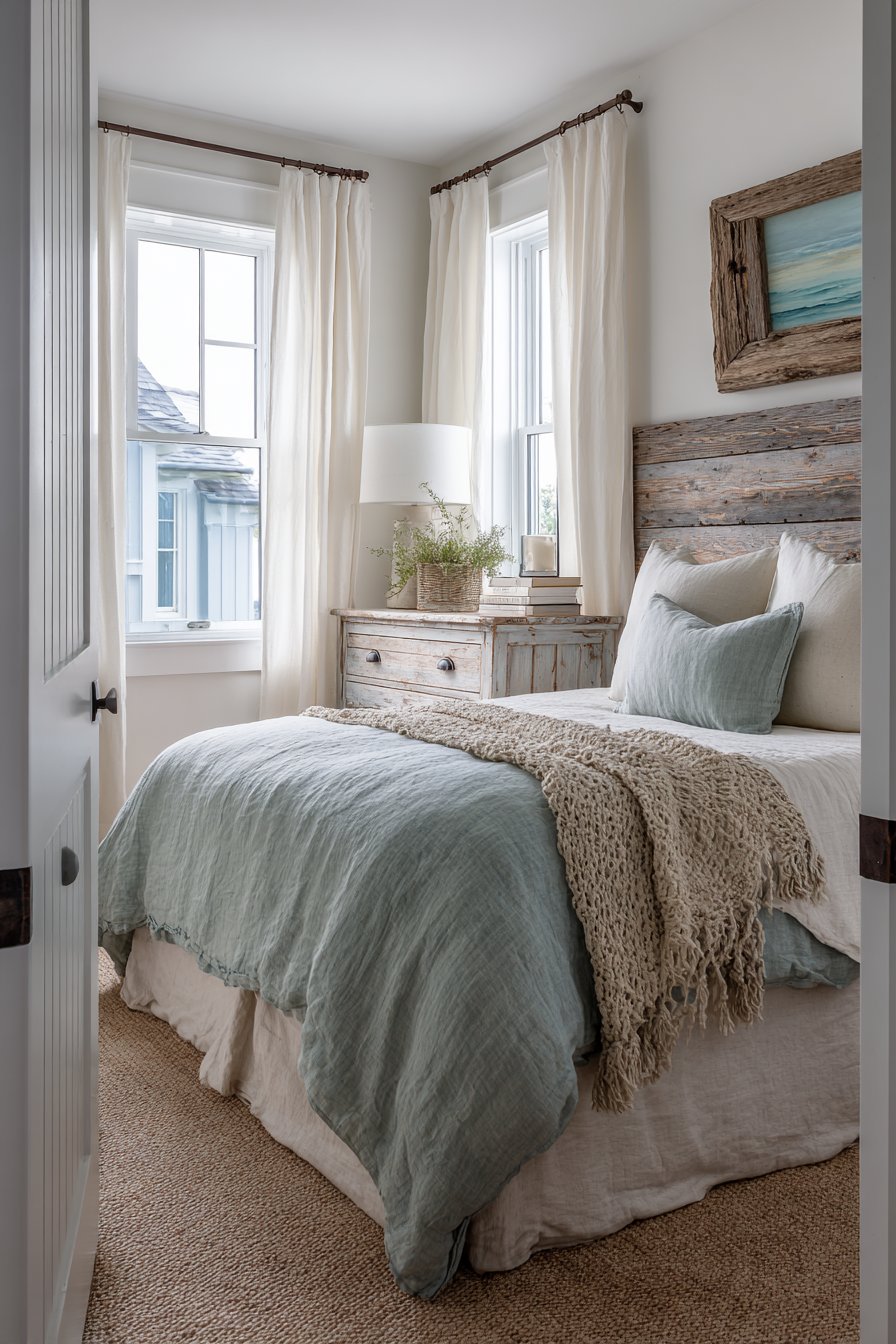
White-washed pine headboards bring relaxed coastal charm to this peaceful bedroom. Natural wood grain and knots remain visible beneath the finish. This treatment creates casual elegance without formal perfection. The weathered appearance suggests years of seaside exposure.
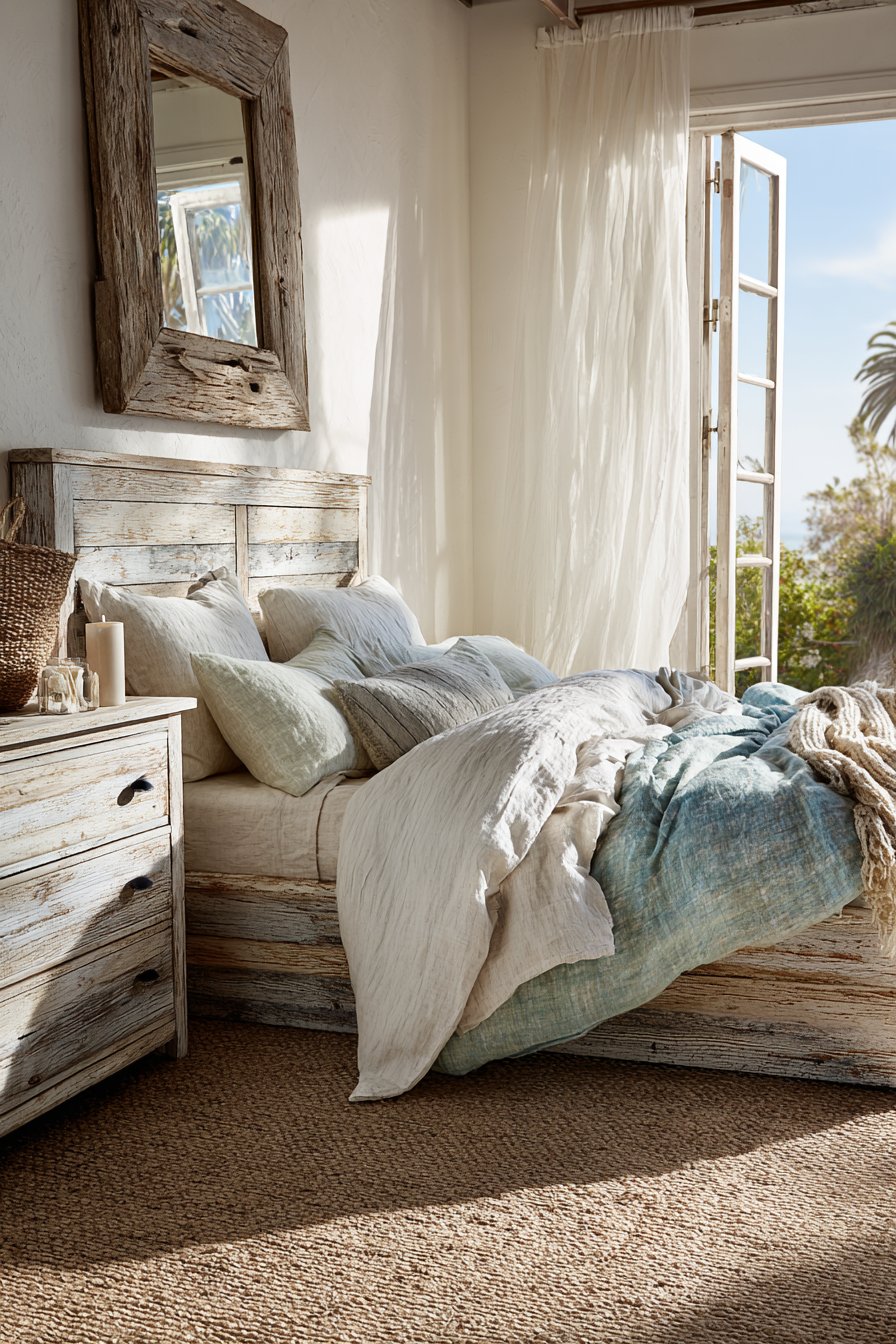
Bedding in washed linen demonstrates the coastal aesthetic perfectly. Sea foam, white, and soft blue shades evoke ocean and sky. The lived-in appearance with natural wrinkles adds to the relaxed vibe. Crisp perfection would contradict the casual coastal philosophy.
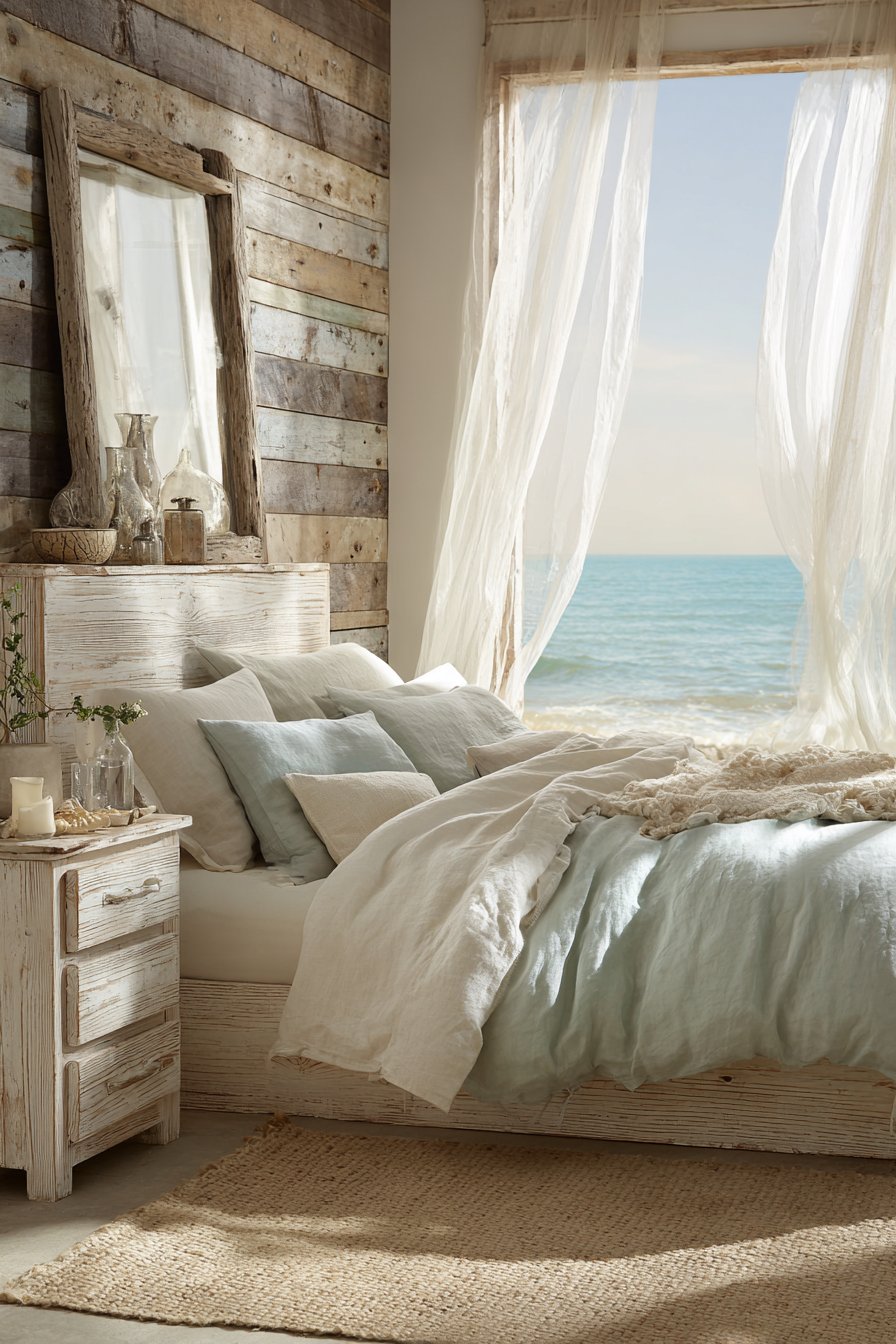
A driftwood mirror leans casually against the wall rather than hanging formally. This styling choice reinforces the laid-back approach to design. The organic shape and weathered surface add sculptural interest. A compact dresser in distressed white finish features rope drawer pulls.
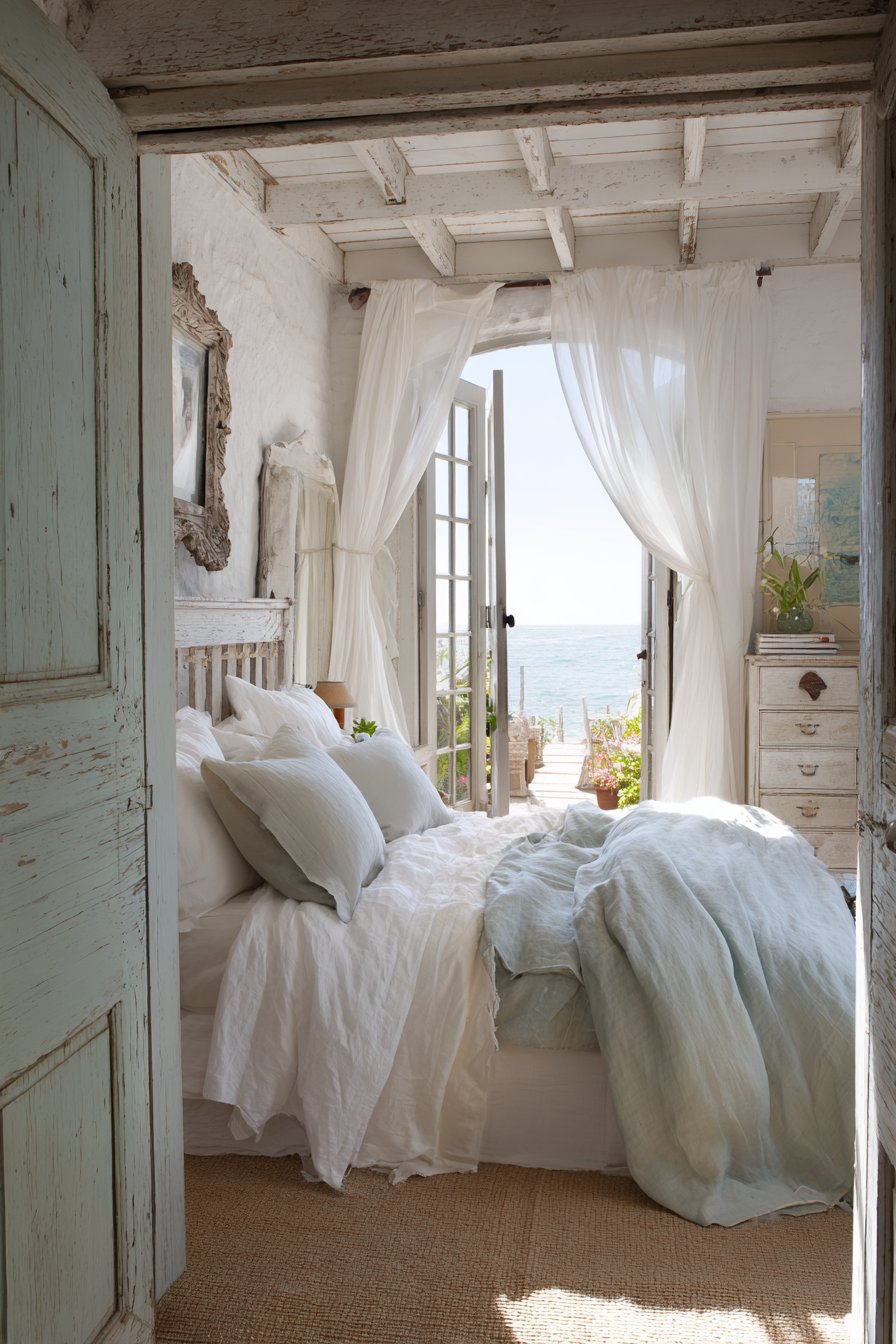
Sheer white curtains billow gently from open windows inviting fresh air inside. Bright natural light fills the space creating airy openness. Sandy beige sisal carpeting provides subtle texture underfoot without pattern competition. The entire palette references beach and ocean environments naturally.
Key Design Tips:
- Use white-washed finishes that allow wood grain to show through
- Choose washed linens that embrace wrinkles rather than crisp perfection
- Incorporate driftwood and weathered materials for authentic coastal character
- Select hardware like rope pulls that reference nautical elements
- Keep windows dressed minimally to maximize natural light and airflow
- Use neutral sandy tones in flooring to reference beach environments
10. Vertical Loft Bed Study Space
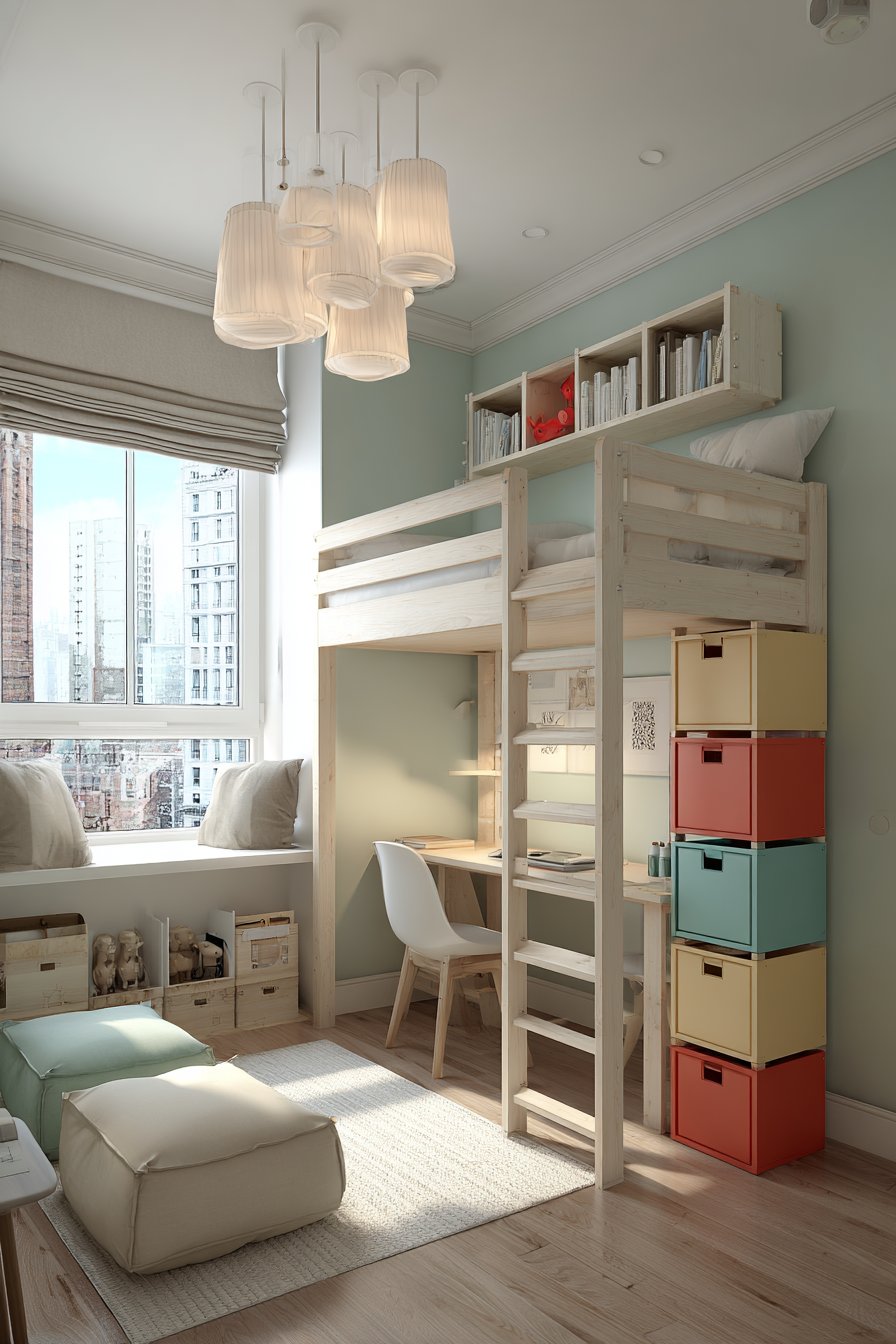
Raised loft beds maximize vertical space in this child-friendly small bedroom. Natural birch construction provides durability with appealing light wood tones. The built-in ladder offers safe access to the elevated sleeping area. Underneath, a complete study zone utilizes the previously wasted floor space.
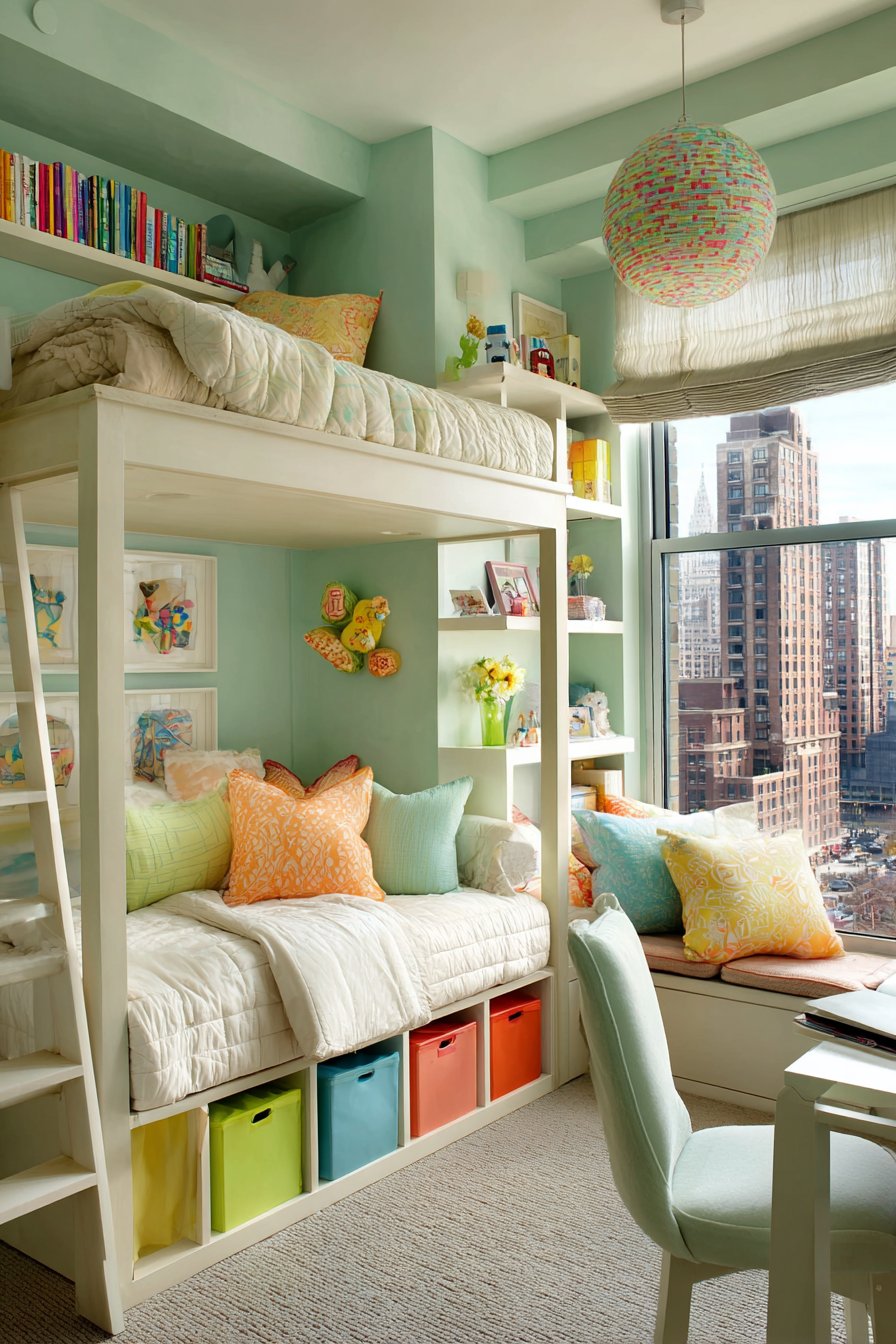
A compact desk and ergonomic chair create a dedicated homework station. The separated zones help children distinguish between sleep and study activities. Colorful storage cubes in primary colors line the wall beneath the desk. The organized system makes toy and book storage accessible and visible.
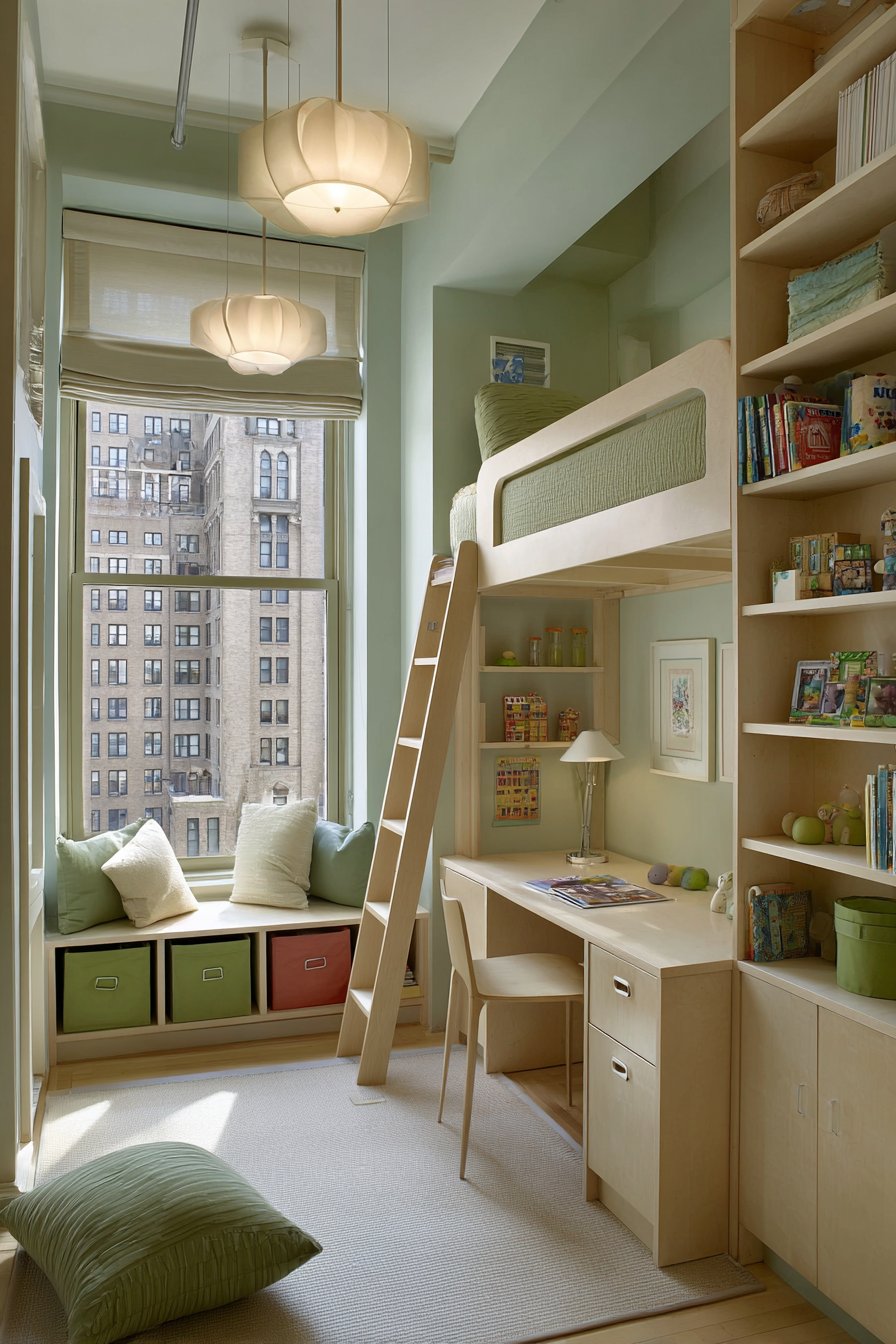
Soft mint green walls create a calming backdrop for childhood activities. White trim provides clean definition around windows and baseboards. The gentle color works across age ranges from toddler to teen. Pendant lighting hangs at appropriate height for the desk area below.
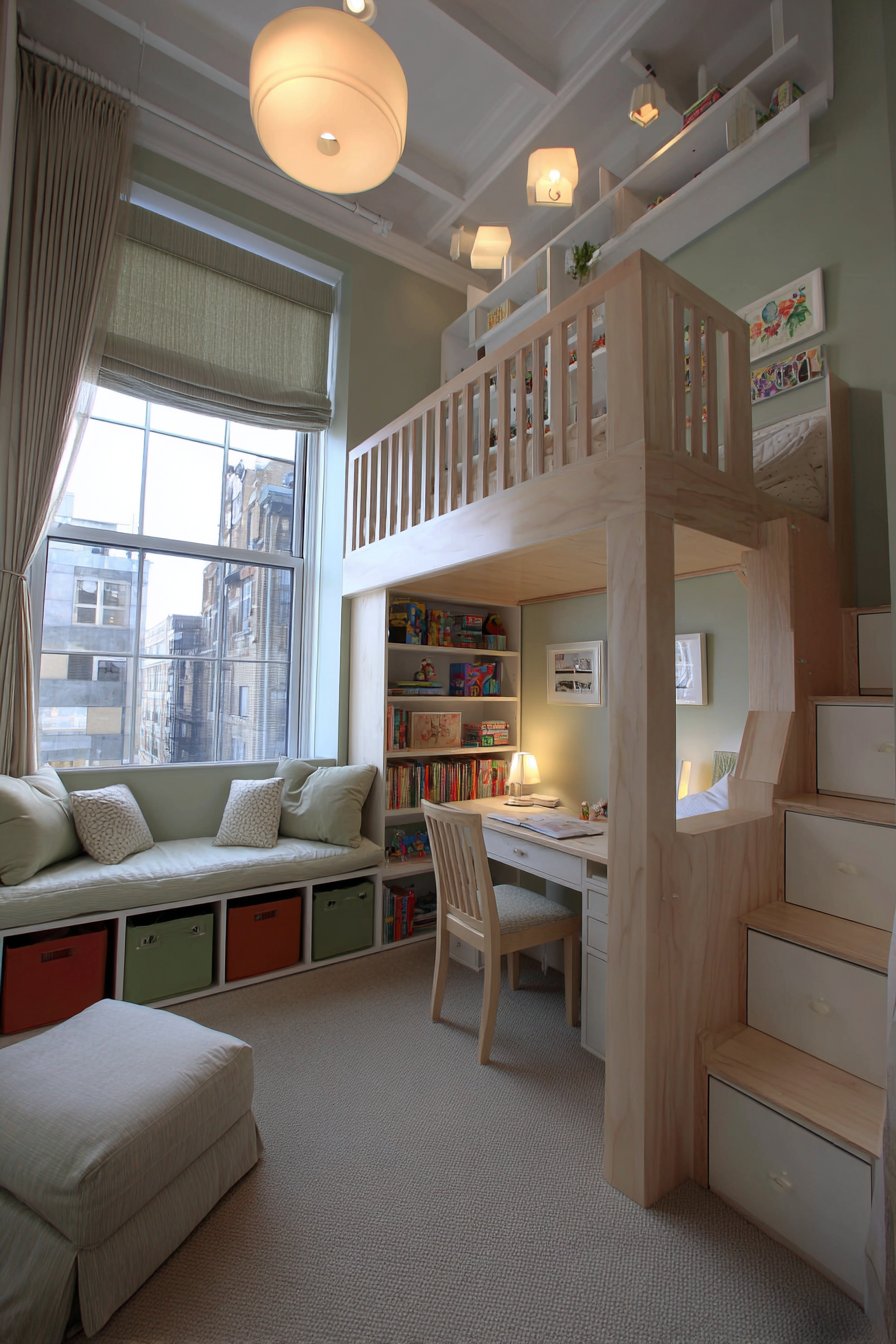
A small reading nook occupies the corner beneath a window. Floor cushions provide comfortable informal seating for quiet activities. Blackout roller shades ensure quality sleep despite the elevated bed position. The design demonstrates how vertical thinking solves small bedroom challenges effectively.
Key Design Tips:
- Utilize loft beds to create usable floor space in children’s small bedrooms
- Install proper lighting at both loft and floor levels for safety
- Choose ergonomic furniture for study areas to support growing bodies
- Use colorful storage that makes organization appealing for children
- Select paint colors that work across multiple developmental stages
- Create distinct zones for sleeping, studying, and playing within limited space
11. Modern Farmhouse Reclaimed Wood Character
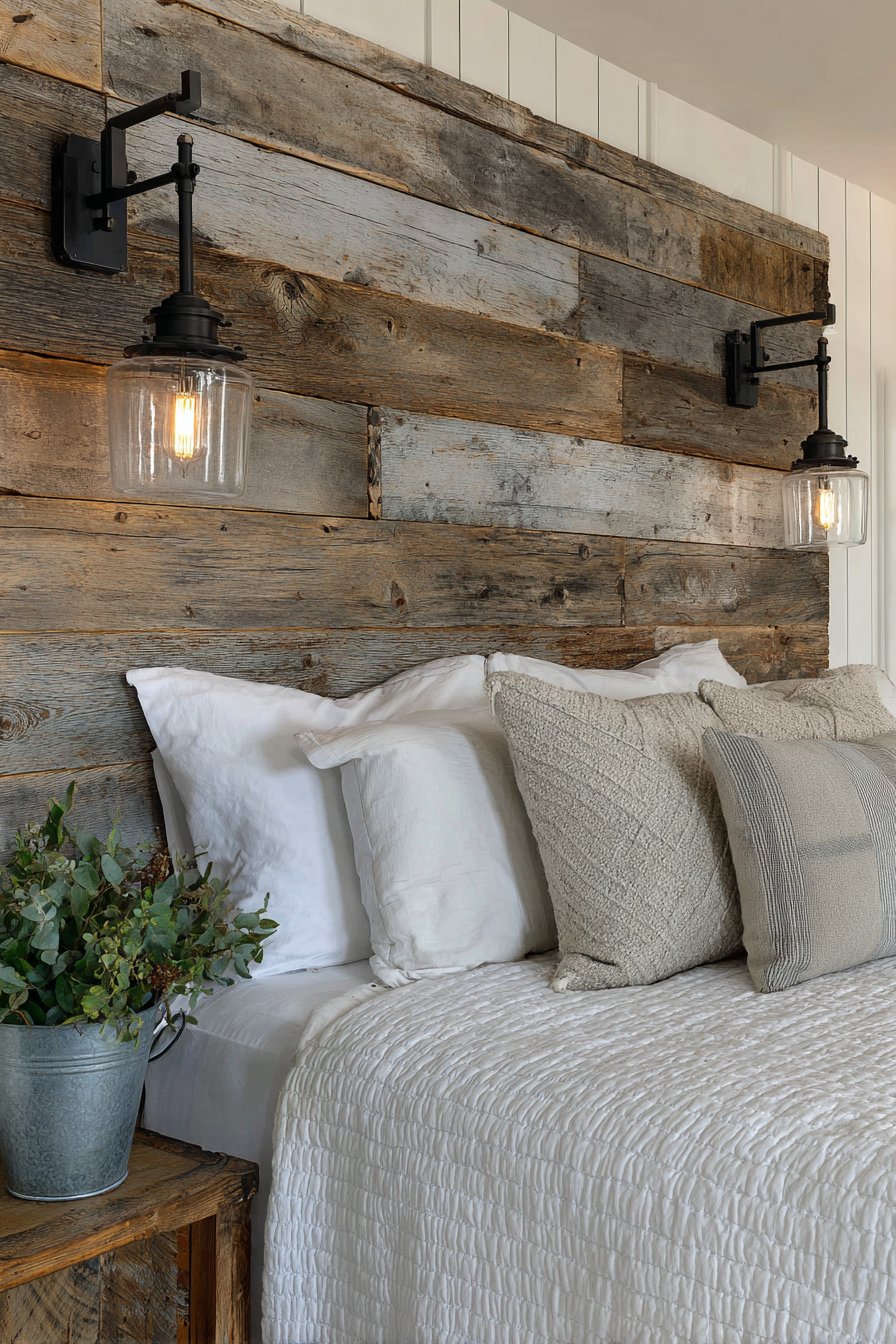
Reclaimed barn wood headboards bring authentic rustic character to this modern farmhouse bedroom. The tall plank construction showcases weathering, nail holes, and varied gray tones. Each imperfection tells a story of the wood’s previous life. This authenticity cannot be replicated with new materials.
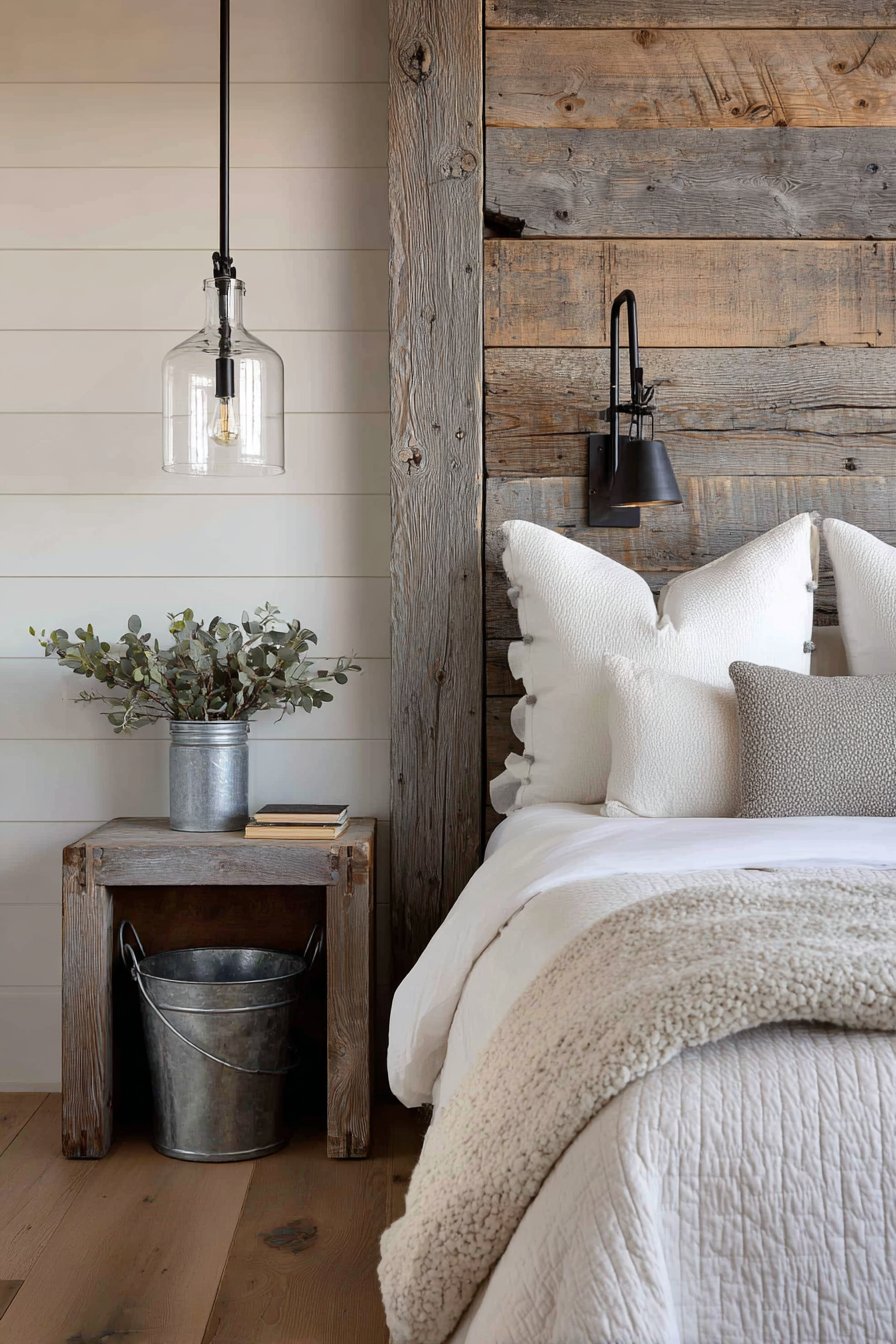
Crisp white bedding with textured matelassé coverlets creates striking contrast. The clean lines and fresh appearance balance the rustic headboard perfectly. This juxtaposition defines modern farmhouse style beautifully. Neither element overwhelms the other in this careful composition.
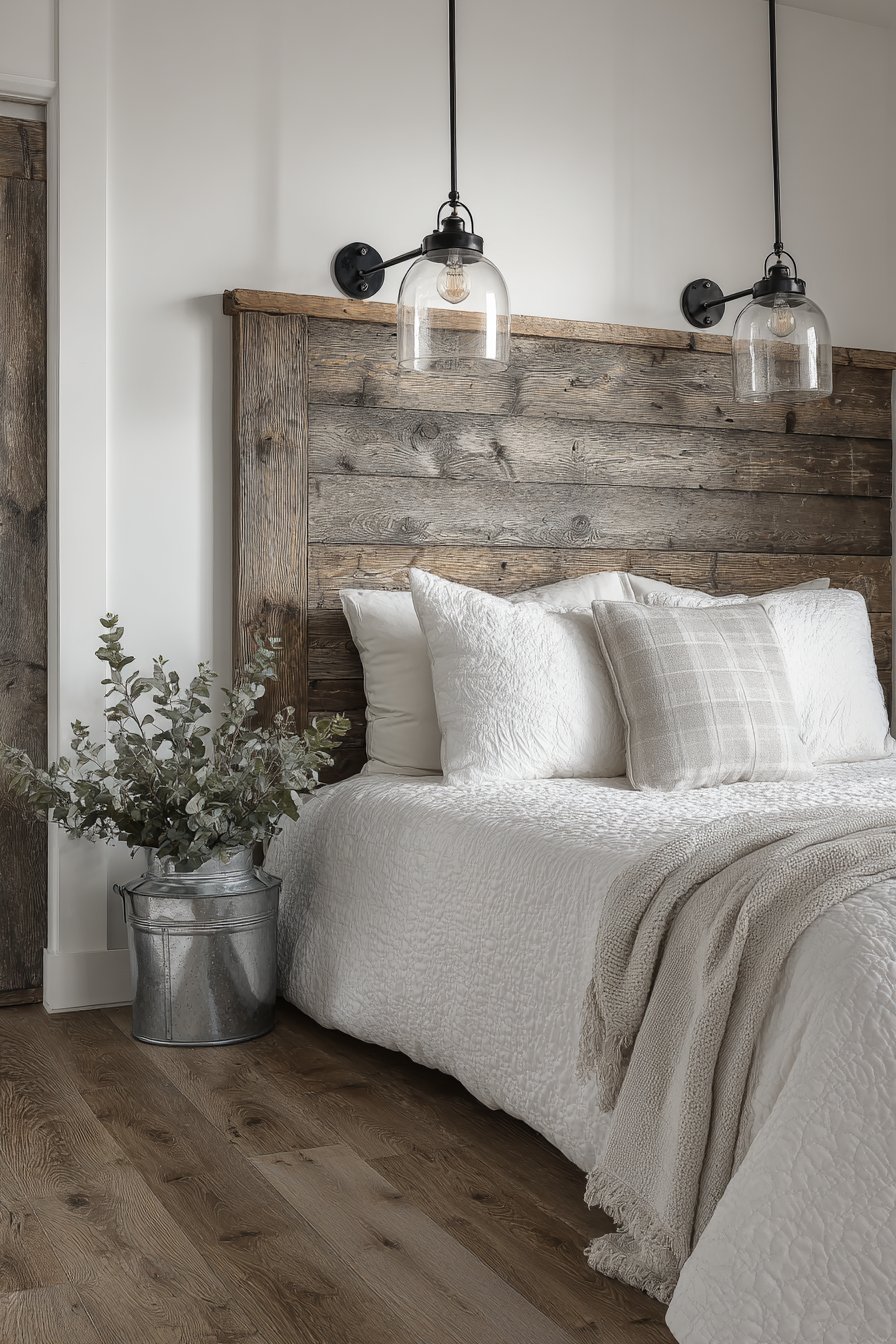
Black metal pendant lights with clear glass shades flank the bed. Adjustable wall mounts allow precise positioning for reading or ambient lighting. The industrial-inspired fixtures bridge rustic and modern elements seamlessly. Their clean lines complement both the white bedding and reclaimed wood.
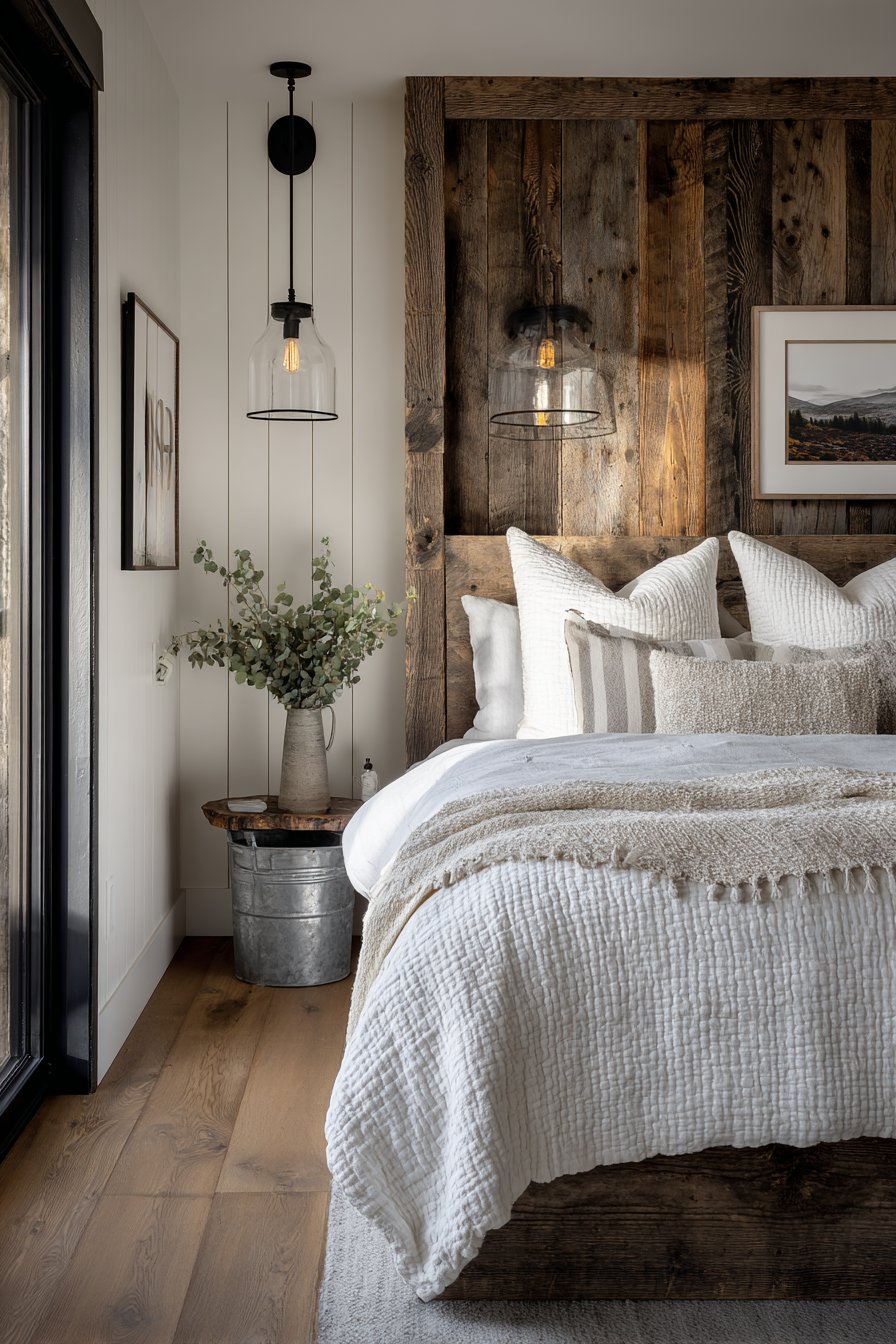
Shiplap walls painted in warm white provide subtle texture throughout. The horizontal lines add visual interest without competing with other elements. Wide plank oak flooring shows gentle color variation creating natural depth. A galvanized metal bucket serves as an unconventional nightstand holding fresh eucalyptus.
Key Design Tips:
- Source authentic reclaimed wood for headboards rather than distressed new materials
- Balance rustic elements with crisp white textiles for modern farmhouse appeal
- Use industrial-style lighting to bridge traditional and contemporary elements
- Install shiplap for subtle texture that doesn’t overwhelm small spaces
- Repurpose unexpected items like galvanized buckets for unique storage
- Incorporate fresh greenery to soften hard surfaces and add life
12. Japanese-Inspired Minimalist Zen
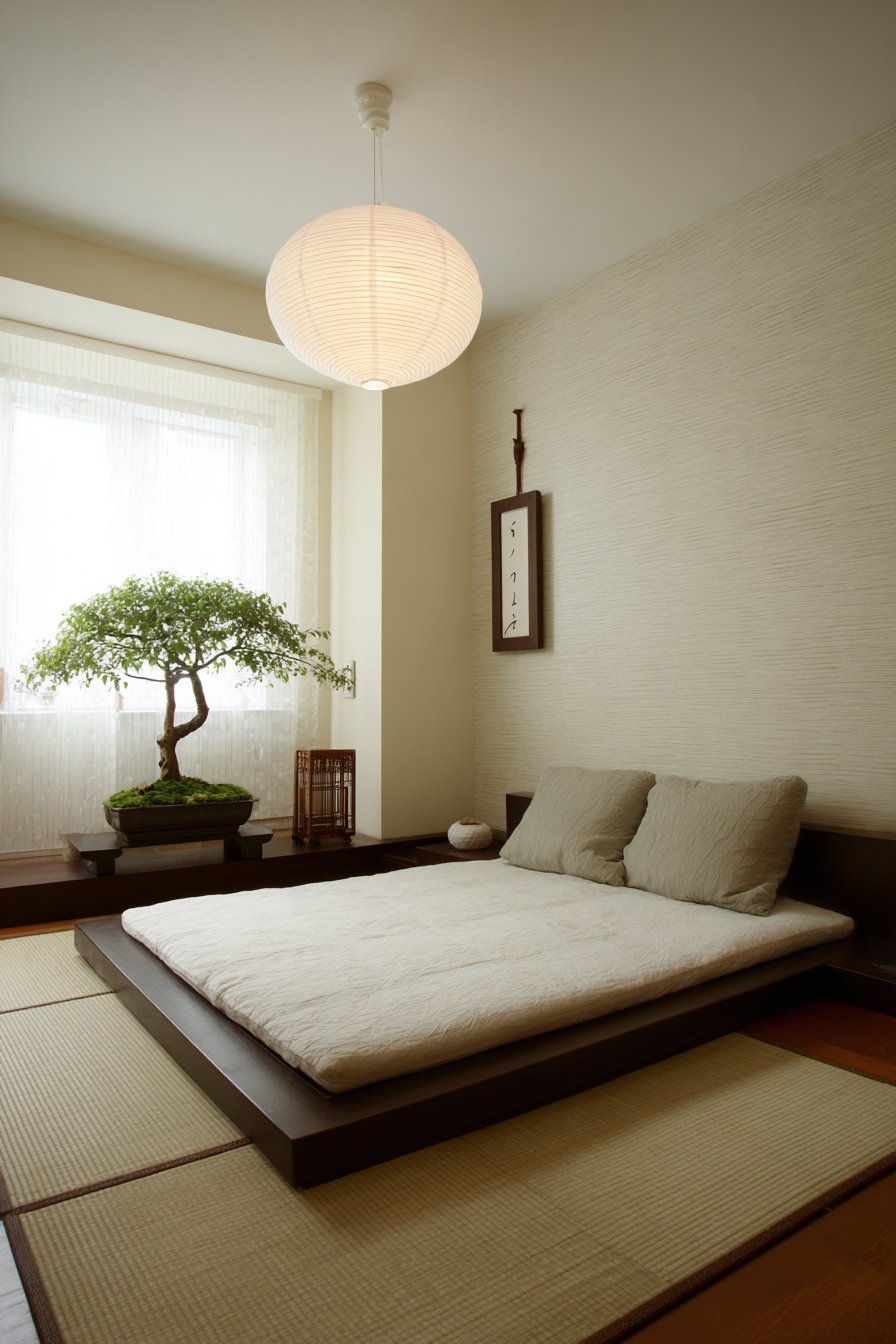
Low platform beds in dark-stained oak embody Japanese design principles perfectly. Simple geometric lines create calm visual order without ornamentation. The absence of a headboard maintains clean horizontal emphasis. This restraint allows materials and proportions to communicate quietly.
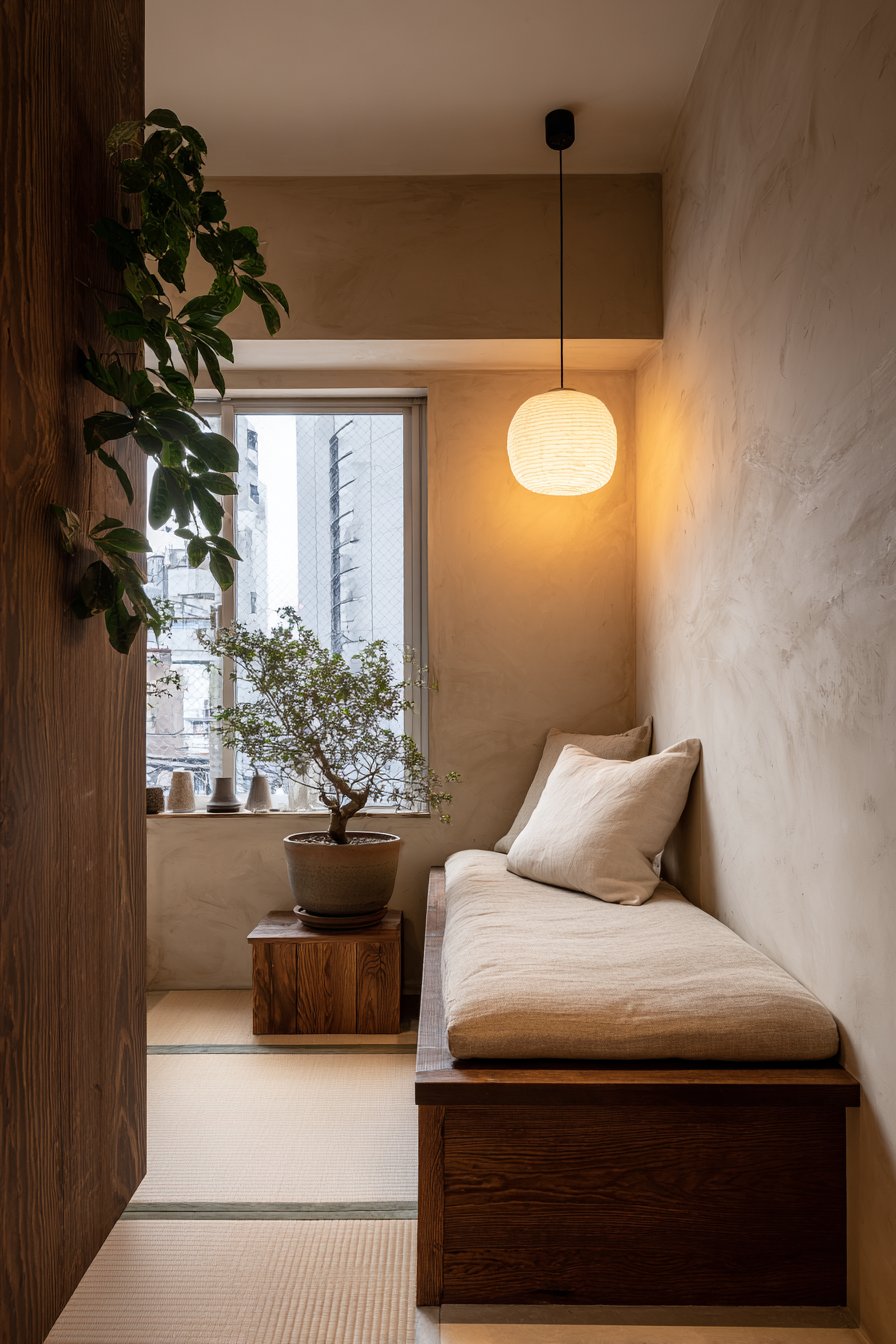
A single floor cushion in natural linen provides minimalist seating. The low profile maintains the horizontal emphasis throughout the space. Smooth clay plaster walls in warm beige create a serene backdrop. One wall features subtle grasscloth texture adding organic depth.
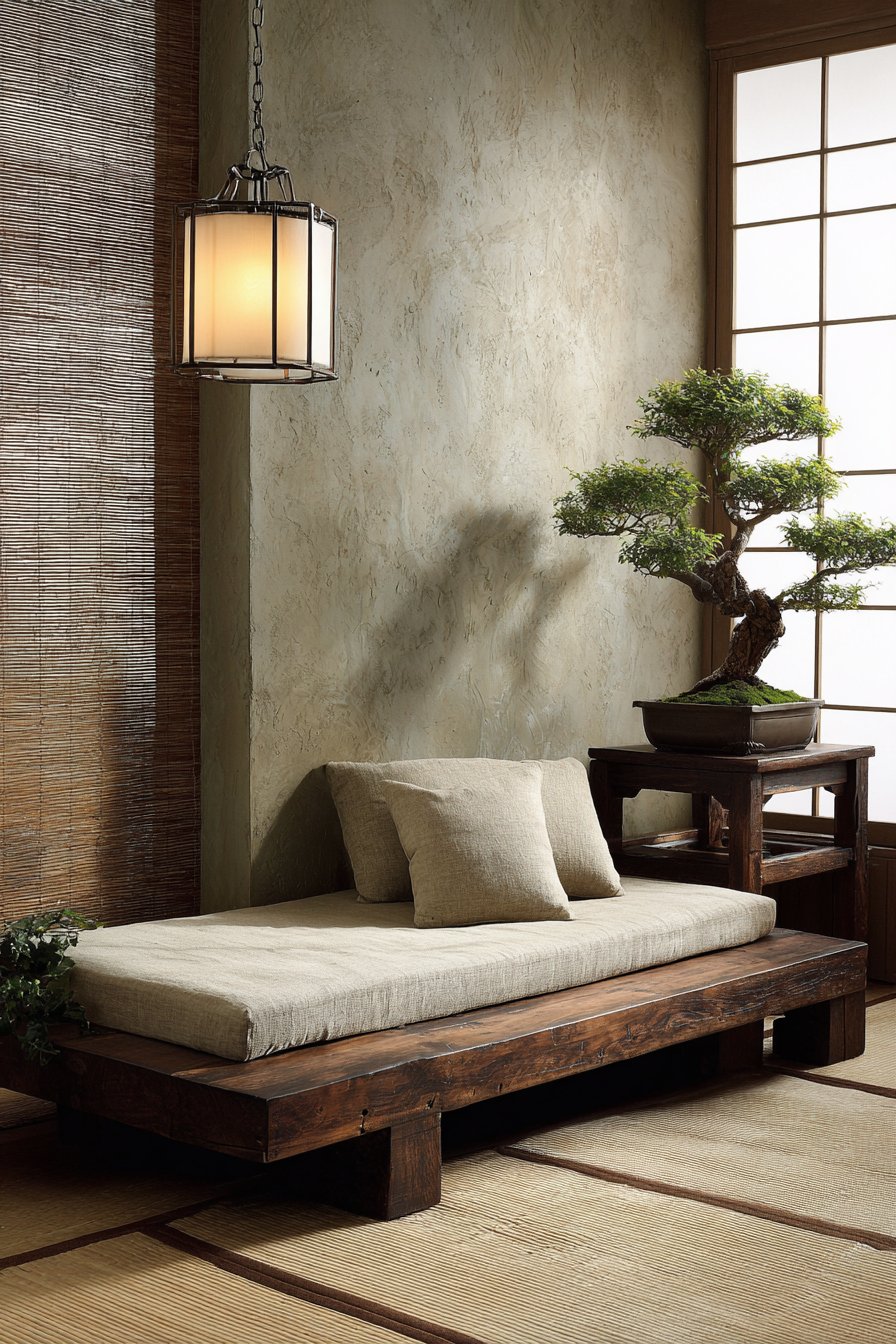
Paper lantern pendants provide diffused ambient lighting throughout the room. The soft glow eliminates harsh shadows creating peaceful illumination. Natural light enters through windows dressed simply with rice paper shades. The translucent material filters light while maintaining privacy elegantly.
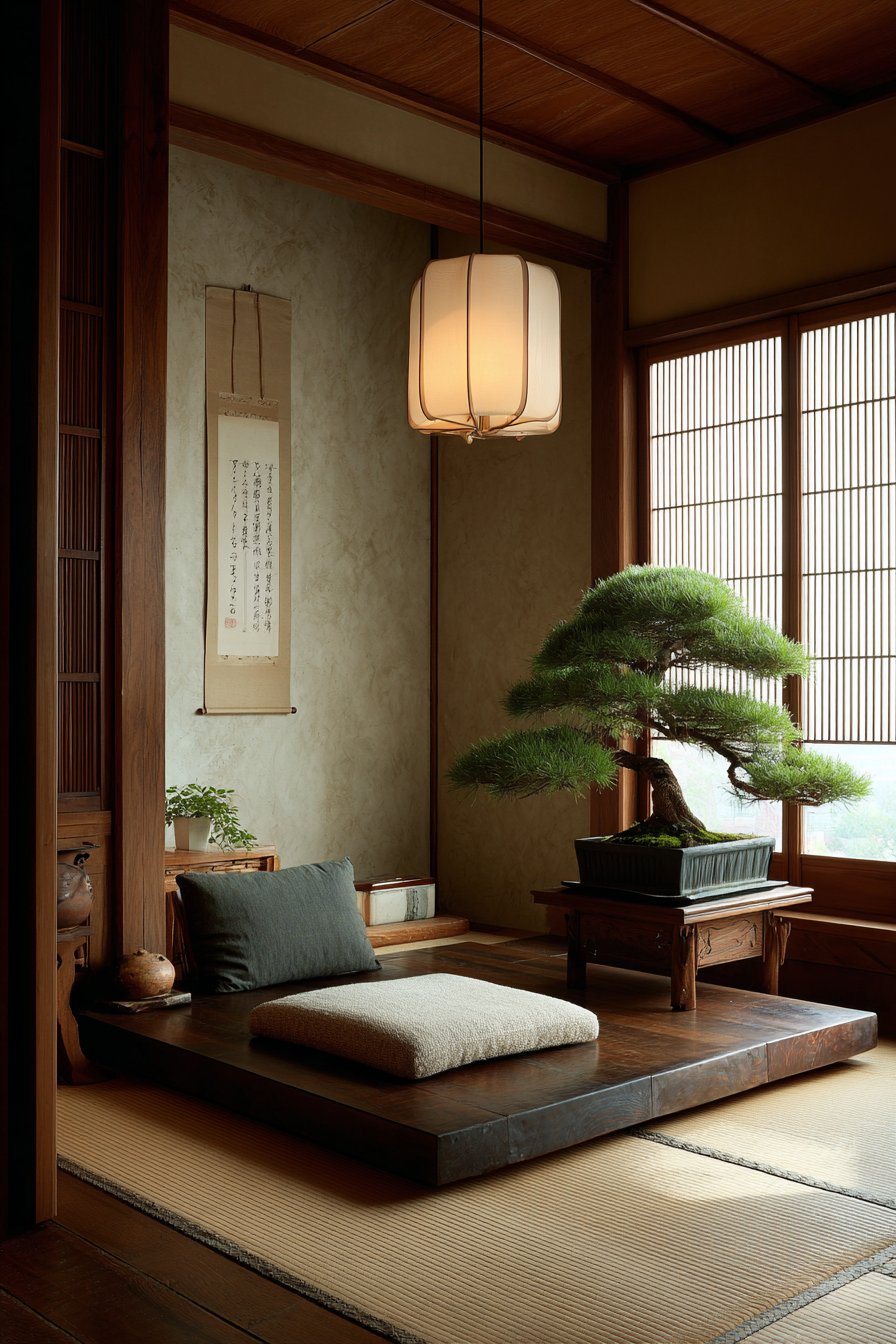
Natural tatami mats cover the floor with visible edge binding details. The traditional material adds authentic Japanese character and subtle texture. A small bonsai tree on a low wooden stand provides the only decorative element. The living sculpture embodies the philosophy of finding beauty in simplicity.
Key Design Tips:
- Choose low platform beds without headboards for authentic Japanese aesthetics
- Limit decorative elements to single meaningful pieces like bonsai trees
- Use natural materials like clay plaster, grasscloth, and tatami throughout
- Select diffused lighting sources that eliminate harsh shadows
- Maintain horizontal visual lines to create calm and grounded feelings
- Embrace empty space as an intentional design element rather than void
13. Multi-Functional Storage Furniture Strategy
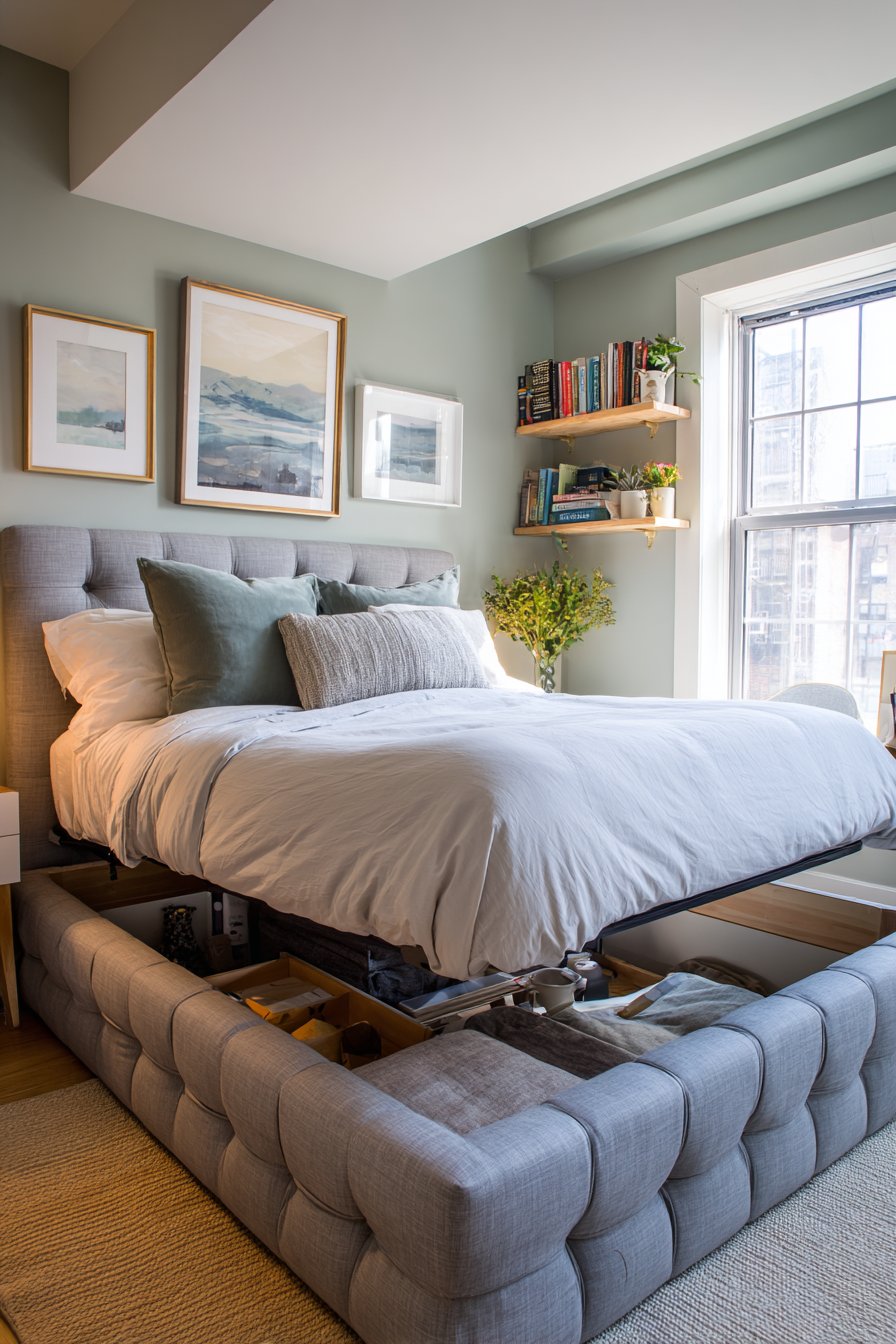
Ottoman nightstands with hidden storage demonstrate clever space-saving design thinking. Deep button tufting in durable gray linen adds visual texture. The dual-purpose pieces serve as both surfaces and concealed storage compartments. This functionality eliminates the need for separate furniture pieces.
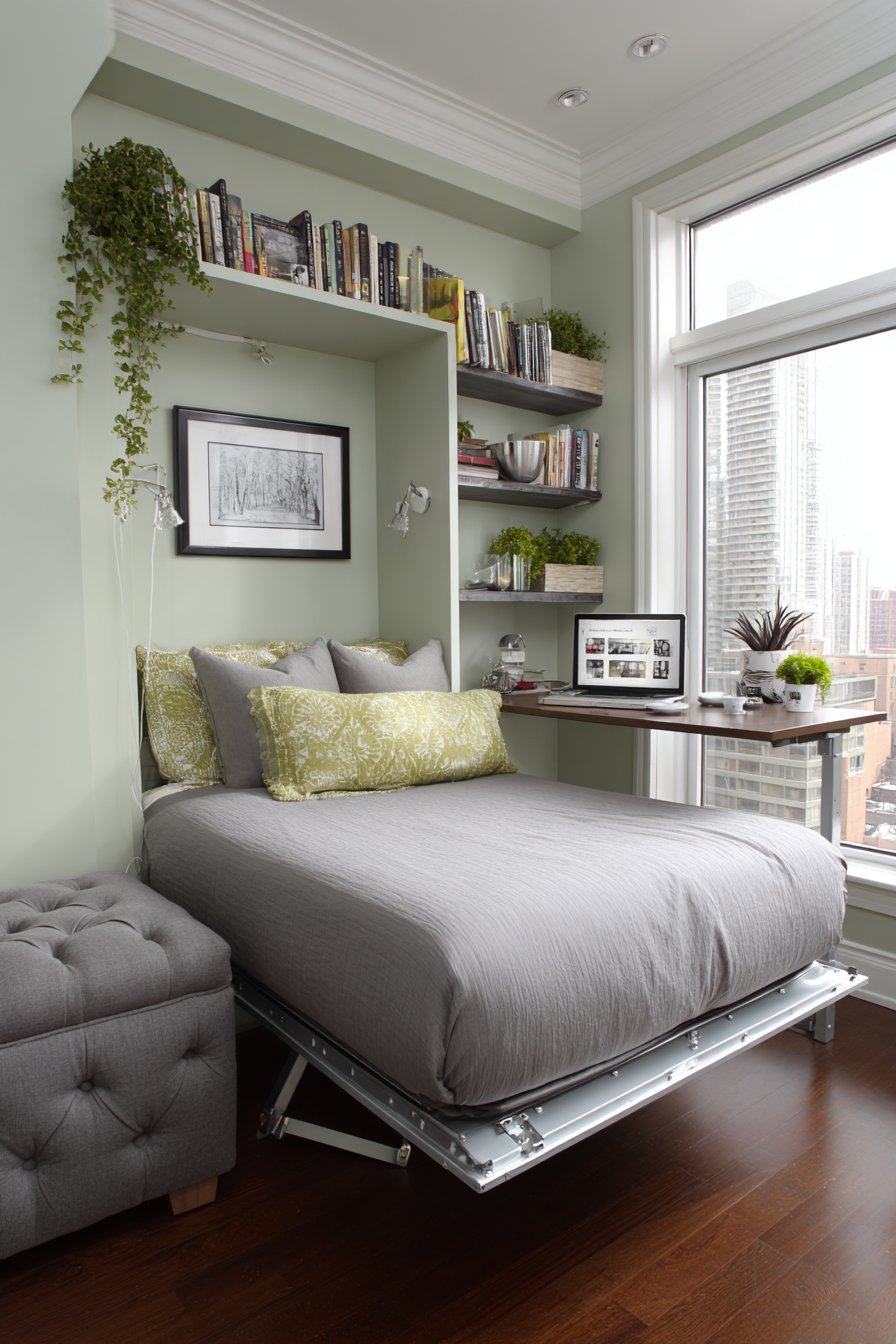
Wall-mounted fold-down desks in light maple create temporary workspaces on demand. When not in use, they fold flat against the wall disappearing completely. This flexibility allows the bedroom to serve multiple functions throughout the day. The maple finish coordinates with other wood elements beautifully.
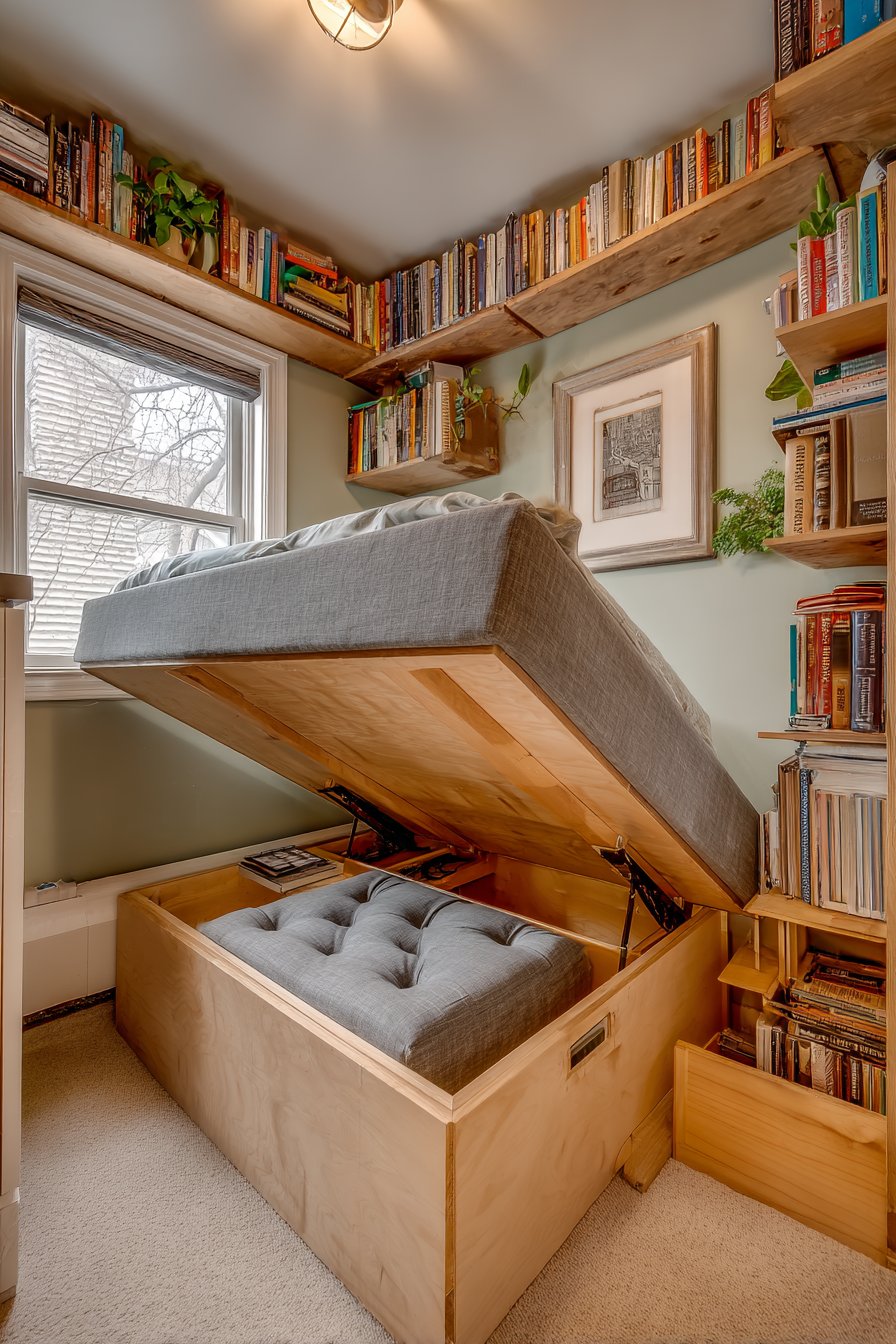
Hydraulic lift mechanisms reveal substantial storage beneath the mattress platform. This often-wasted space becomes accessible for seasonal items and extra bedding. The smooth operation makes access easy despite daily use. Floating corner shelves utilize typically dead space for books and small plants.
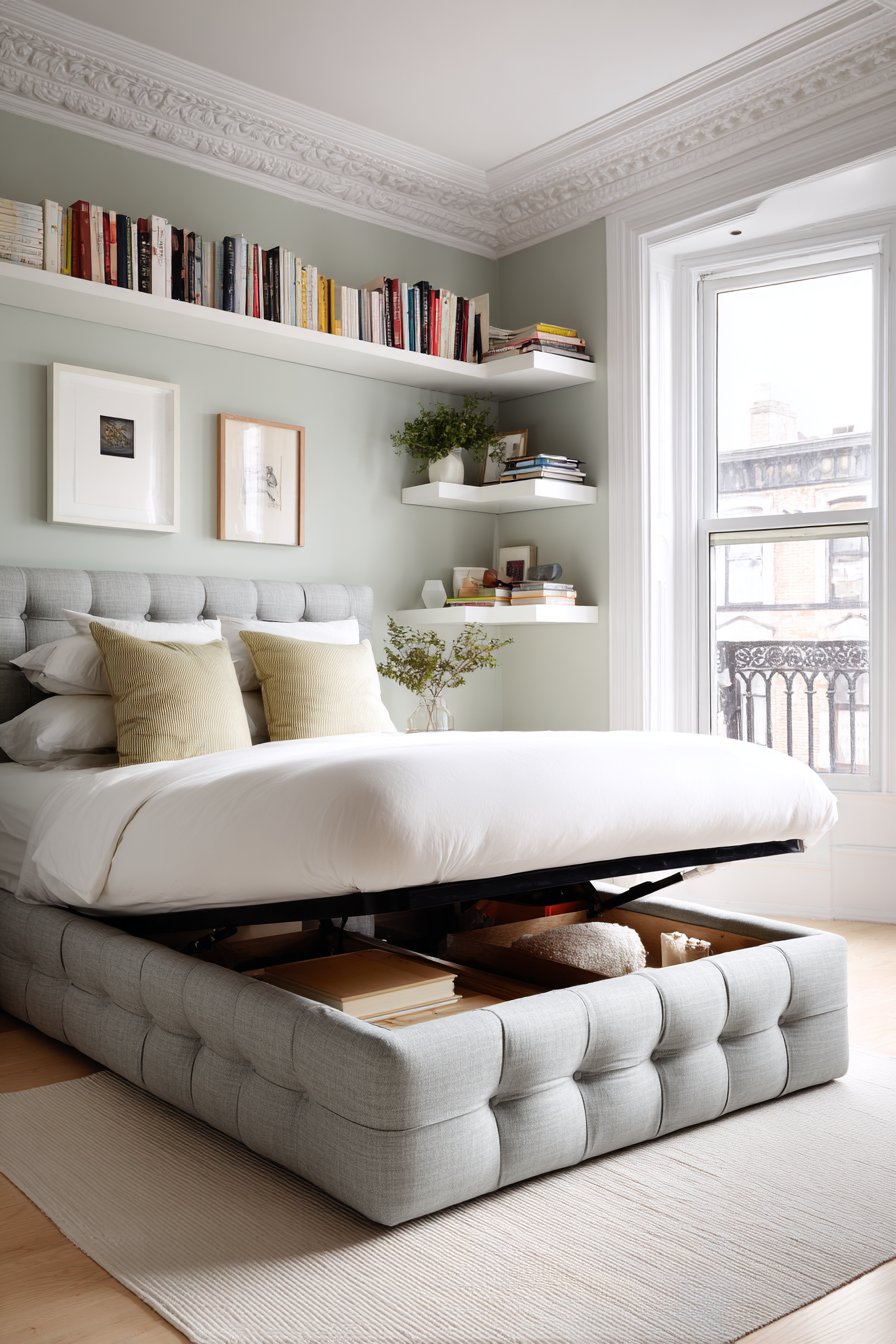
Soft sage green walls create a calming backdrop for the multi-functional elements. White baseboards provide clean definition and classic detailing. Natural light from corner windows illuminates the space-efficient solutions effectively. Every piece serves multiple purposes, maximizing the limited square footage available.
Key Design Tips:
- Choose ottomans with hidden storage to serve dual nightstand functions
- Install fold-down desks that disappear when not in use
- Invest in bed frames with hydraulic lift storage beneath mattresses
- Utilize corner shelves to capture often-wasted vertical space
- Select furniture in coordinating wood tones for visual cohesion
- Ensure storage mechanisms operate smoothly for daily functionality
14. Art Deco Glamorous Jewel Tones
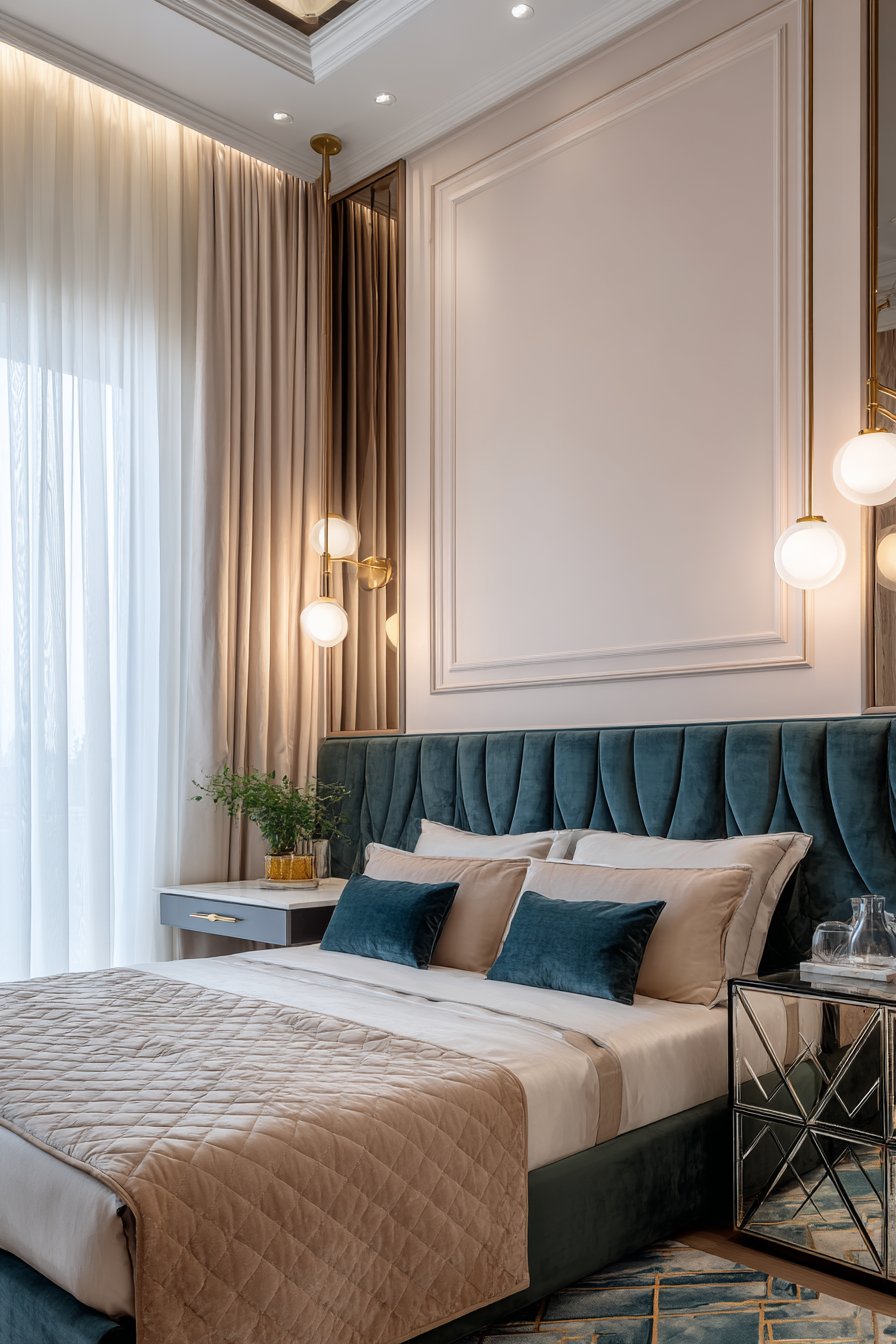
Fan-shaped upholstered headboards in deep emerald velvet create dramatic focal points. The subtle sheen catches light beautifully, adding a luxurious dimension. This iconic Art Deco silhouette makes bold statements in compact bedrooms. The rich color brings sophistication without overwhelming the space.
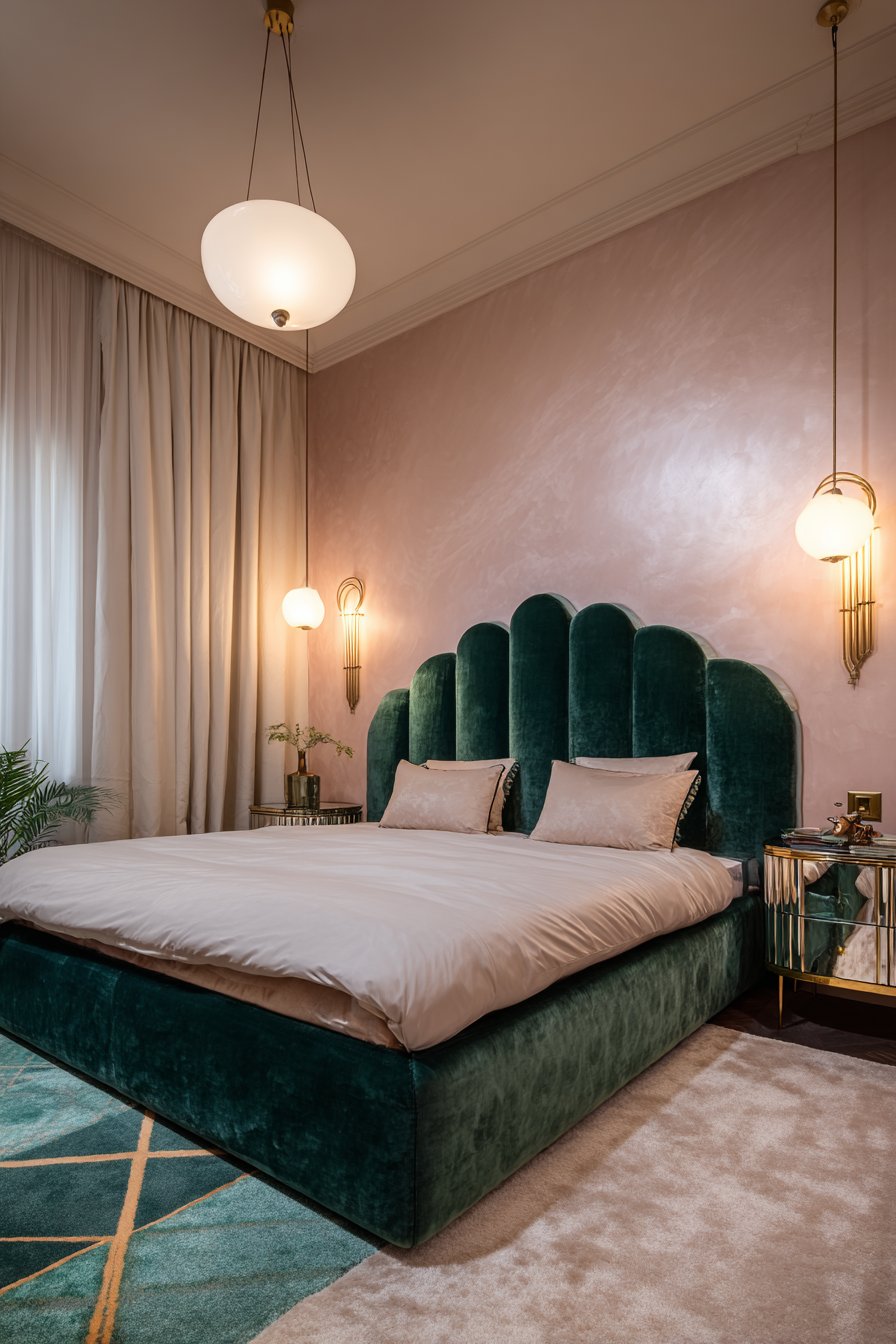
Brass bedside pendants with white glass shades provide elegant task lighting. The metallic finish reflects light around the room enhancing brightness. Geometric forms reference classic Art Deco design language perfectly. The hanging fixtures save surface space on compact nightstands.
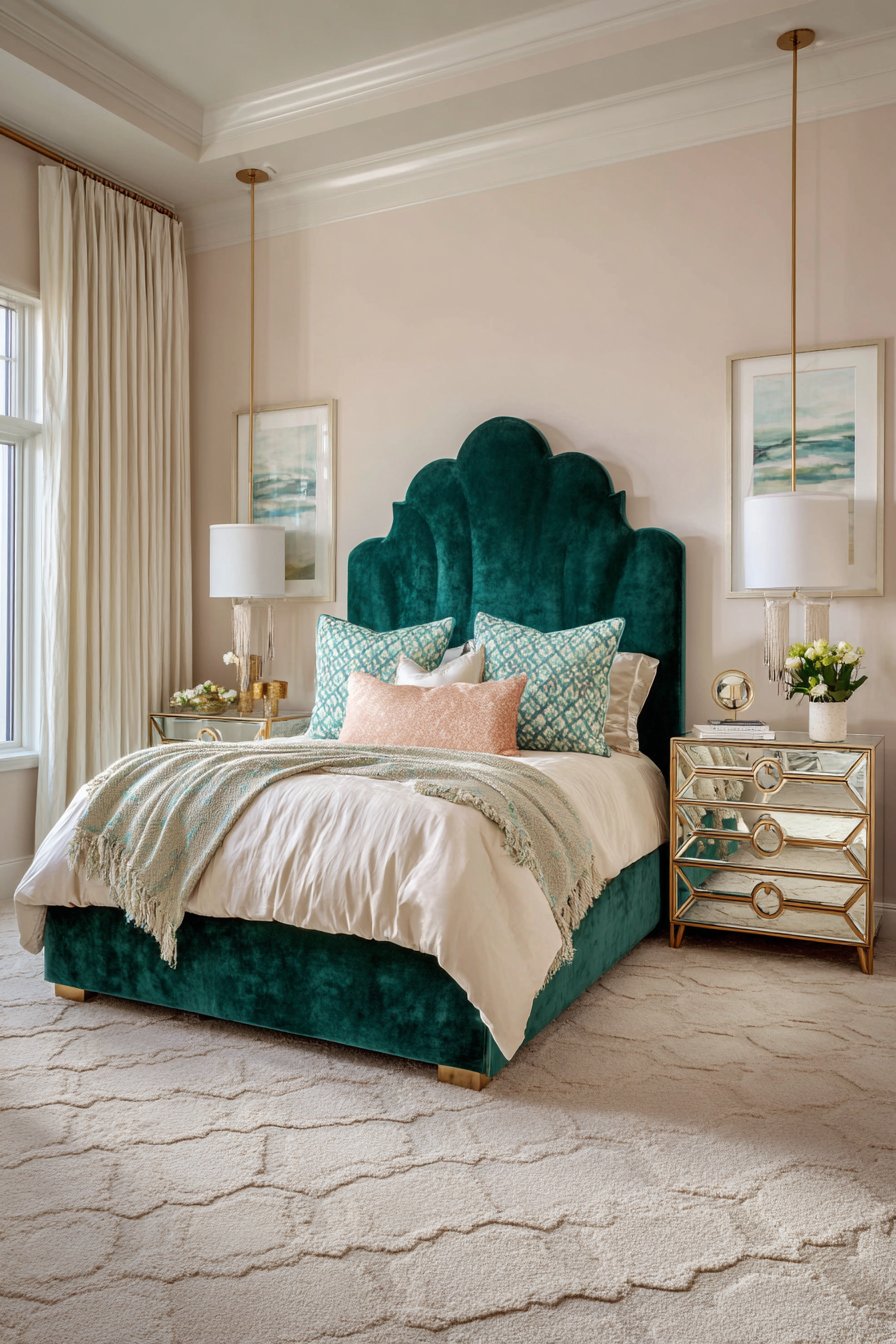
Soft blush pink walls create feminine elegance with contemporary sensibility. White crown molding and baseboards provide architectural definition and classic detailing. Small mirrored nightstands with geometric brass handles reflect light effectively. The mirror surfaces create illusions of expanded space through reflection.
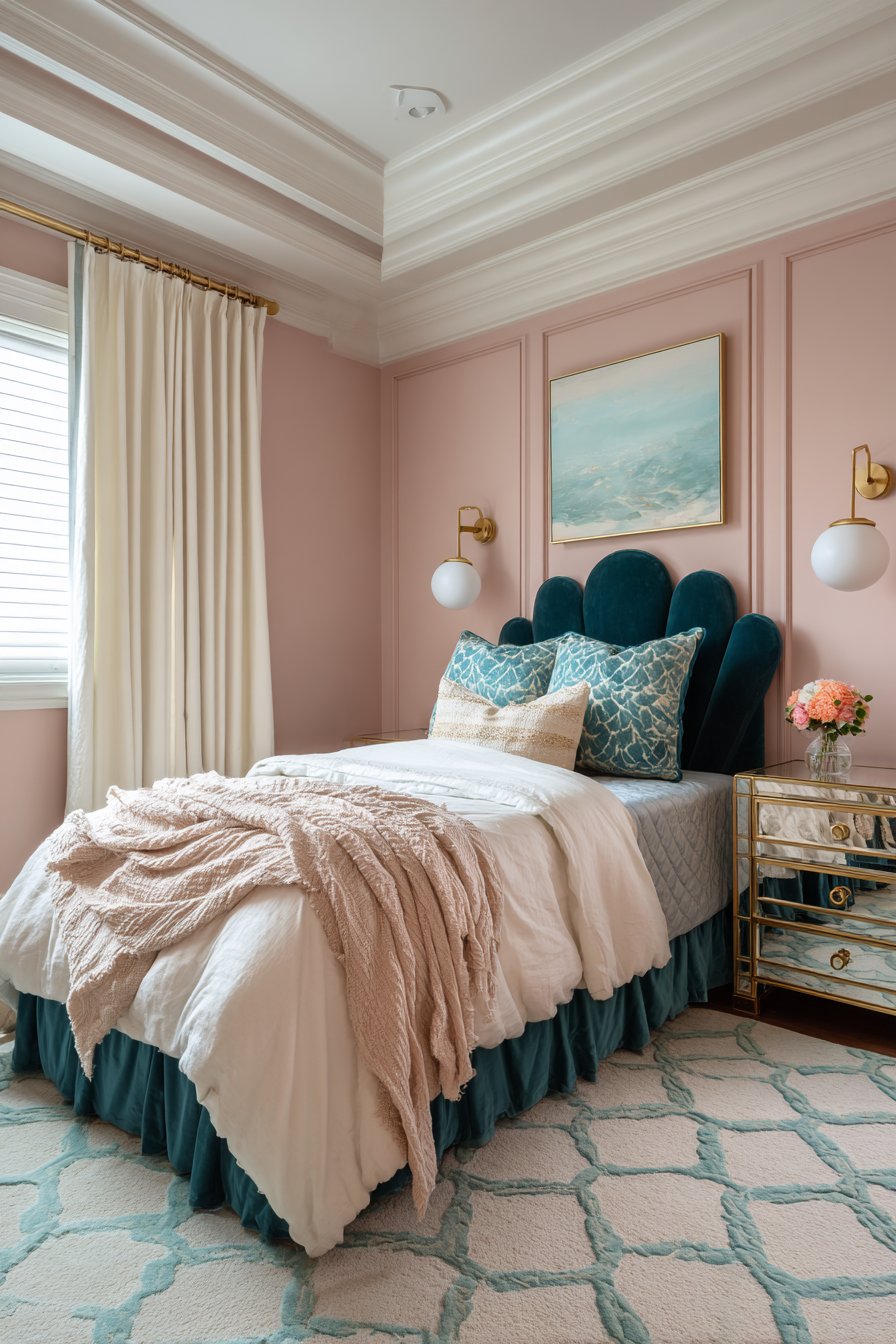
Plush cream carpet provides softness underfoot with luxurious comfort. A geometric patterned rug in teal and gold accents the bed area. Natural light filters through half-height curtains in cream silk with subtle sheen. The overall effect achieves glamour without sacrificing comfort or warmth.
Key Design Tips:
- Use jewel-tone velvets sparingly as accent pieces in small bedrooms
- Choose mirrored furniture to reflect light and create spaciousness
- Incorporate brass fixtures and hardware for Art Deco authenticity
- Apply geometric patterns selectively to avoid overwhelming compact spaces
- Layer different sheens from matte walls to glossy metallics for depth
- Select plush textiles in neutral tones to balance bold color statements
15. Mid-Century Modern Teak Warmth
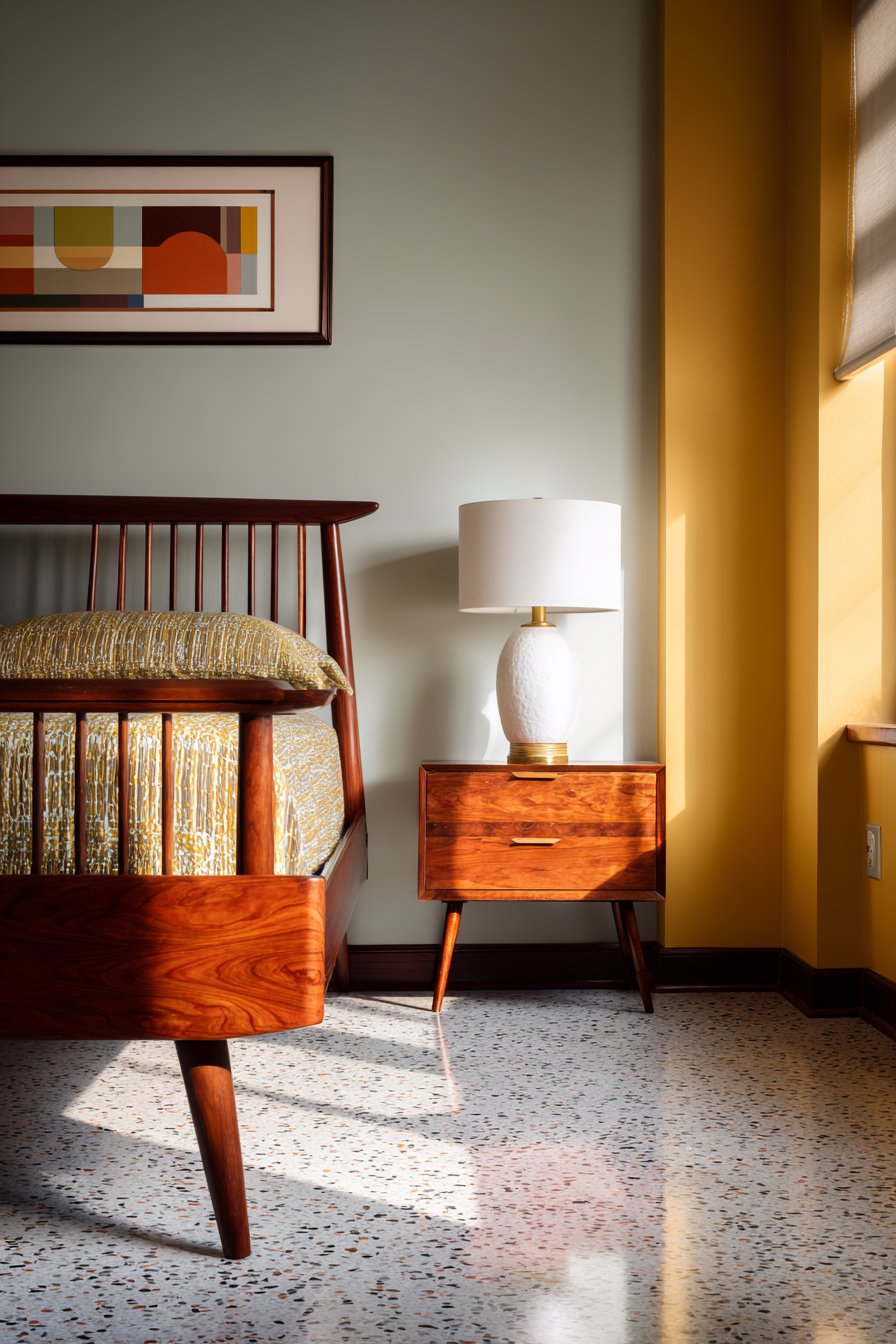
Teak bed frames with tapered legs embody iconic mid-century modern design. Vertical slat headboards showcase natural wood grain variation beautifully. The warm honey tones create inviting ambiance throughout the space. Quality craftsmanship remains evident in every joinery detail.
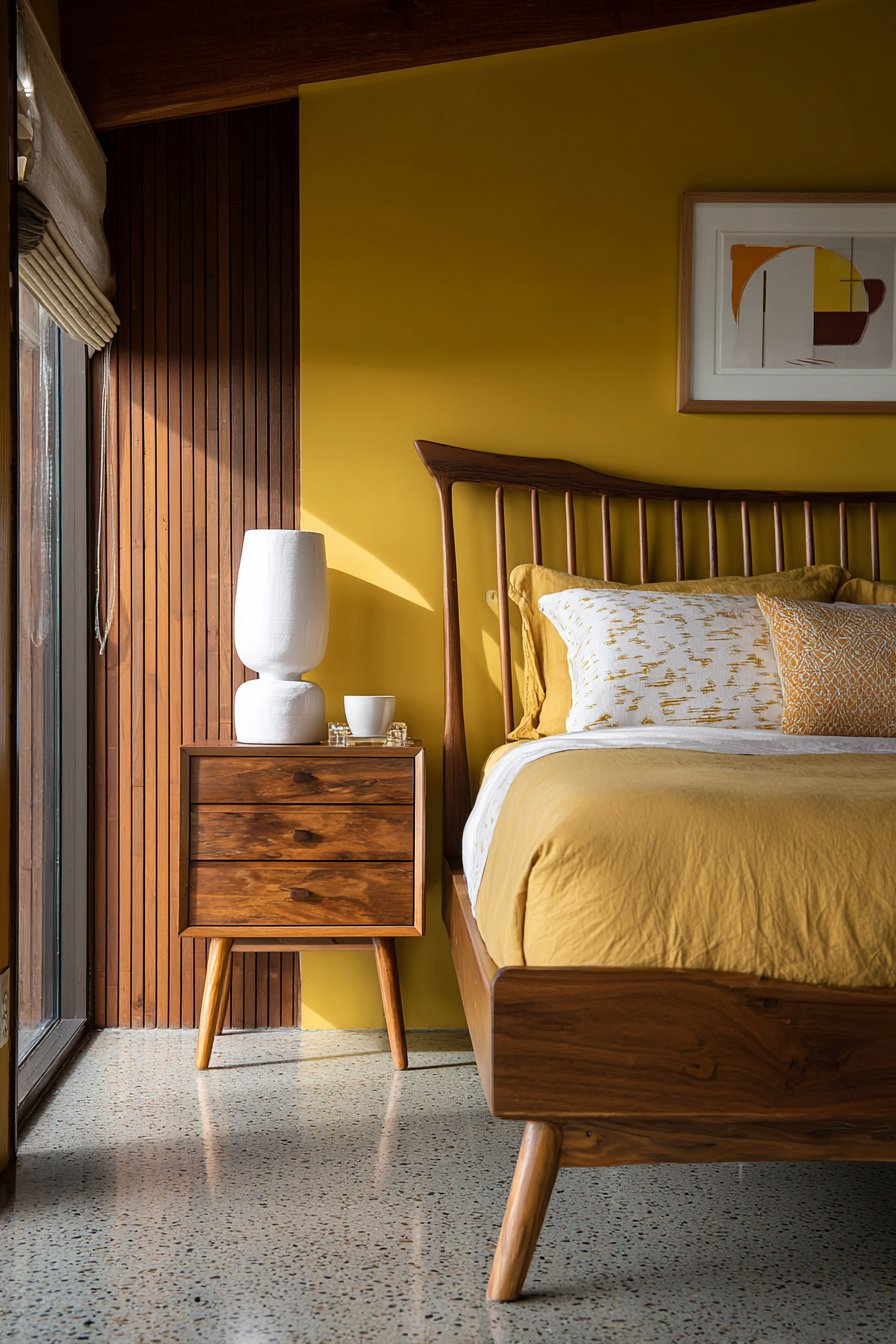
Compact walnut nightstands feature single drawers and characteristic angled legs. The tapered design creates visual lightness despite solid wood construction. White ceramic lamps with brass accents provide period-appropriate lighting. The mix of materials represents classic mid-century combinations perfectly.
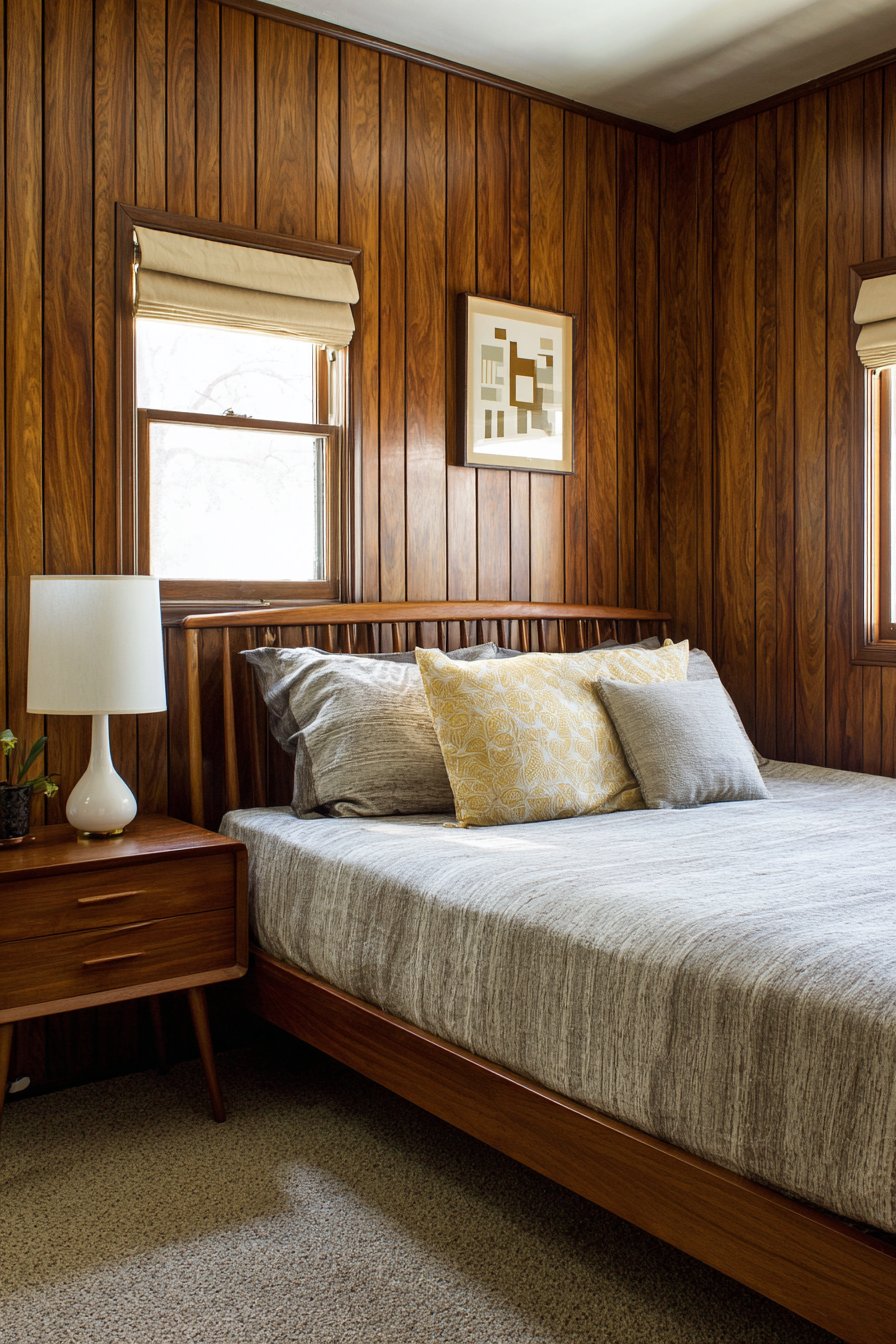
Muted mustard yellow walls create warm backdrops for wood furniture pieces. One accent wall features warm walnut wood paneling adding luxurious depth. Small abstract prints in geometric shapes hang above the bed. The artwork references the era’s embrace of modern art movements.
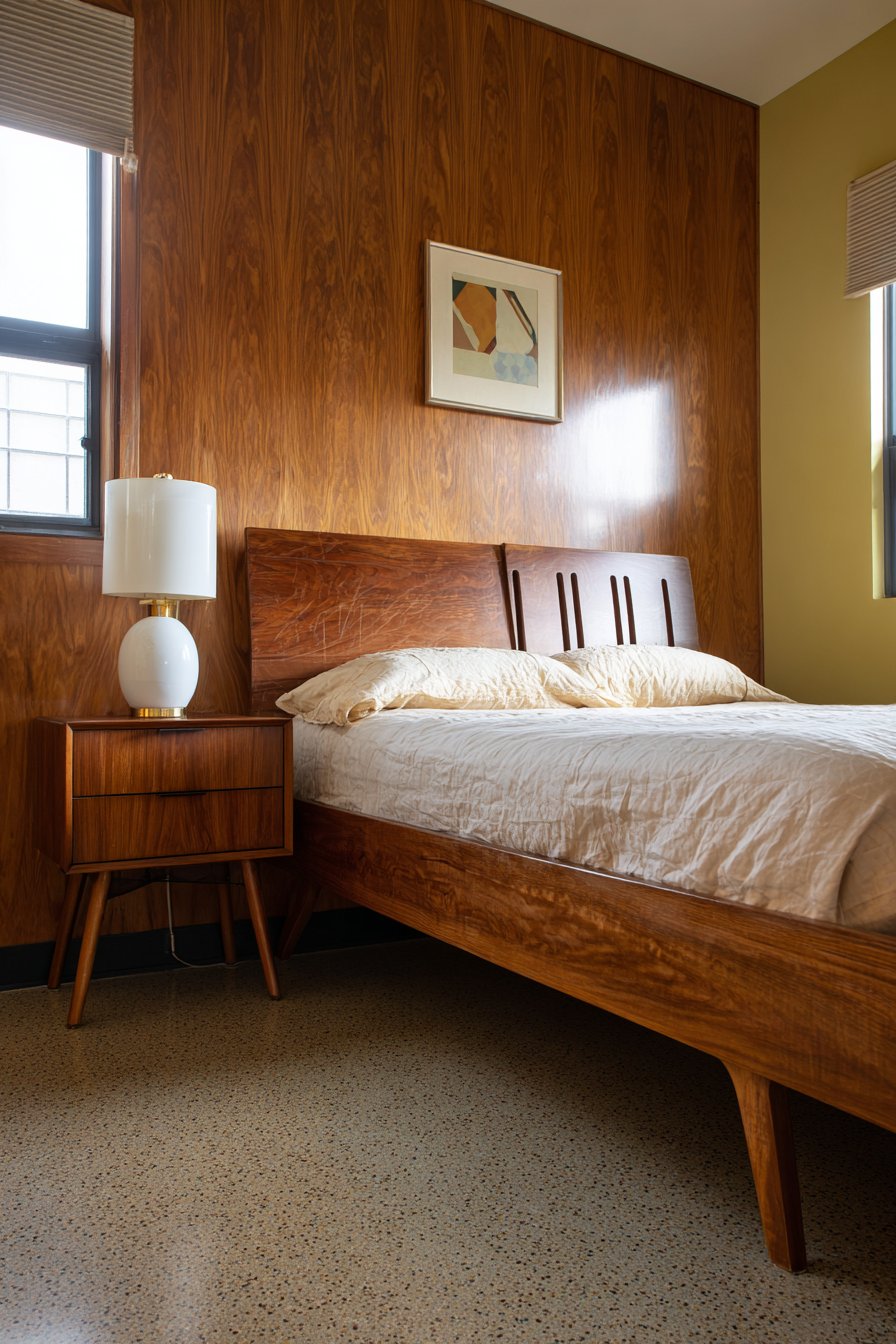
Original terrazzo flooring in subtle gray and white tones adds authentic character. The speckled surface provides visual interest without pattern competition. Natural light streams through corner windows with simple roller shades. Natural linen window treatments maintain period authenticity and clean lines.
Key Design Tips:
- Invest in authentic teak or walnut furniture with proper joinery
- Choose furniture with tapered legs to create visual lightness
- Use warm mustard or ochre yellow for authentic mid-century color
- Incorporate brass accent pieces in lighting and hardware
- Select abstract geometric artwork that references the era appropriately
- Maintain clean lines throughout furniture and window treatments
16. Mirror Strategy Space Enhancement
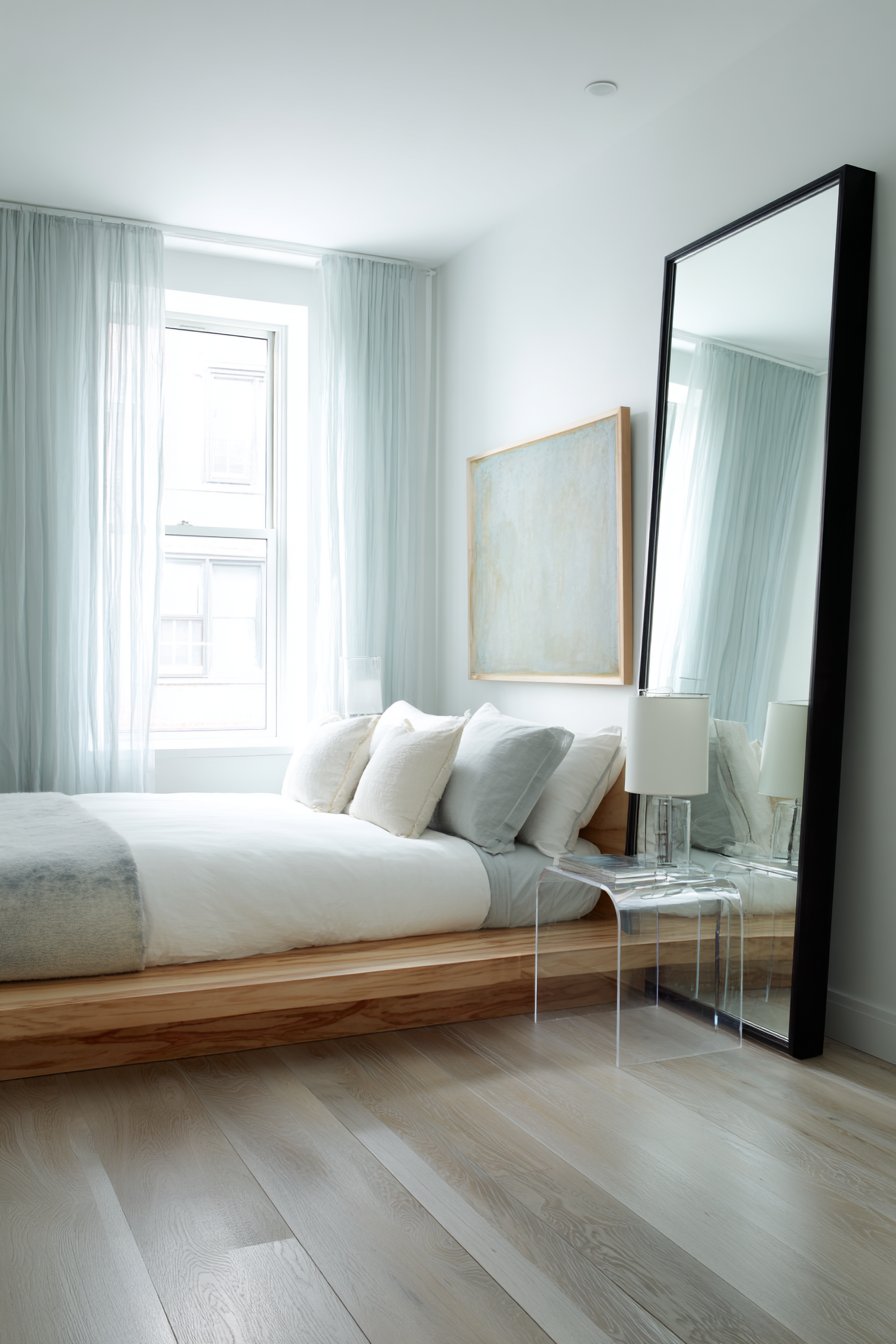
Large leaning floor mirrors in simple black frames become functional design elements. Positioning opposite windows reflects natural light throughout the room effectively. The doubled illumination makes small bedrooms feel significantly more spacious. Strategic placement enhances both light and perceived square footage.
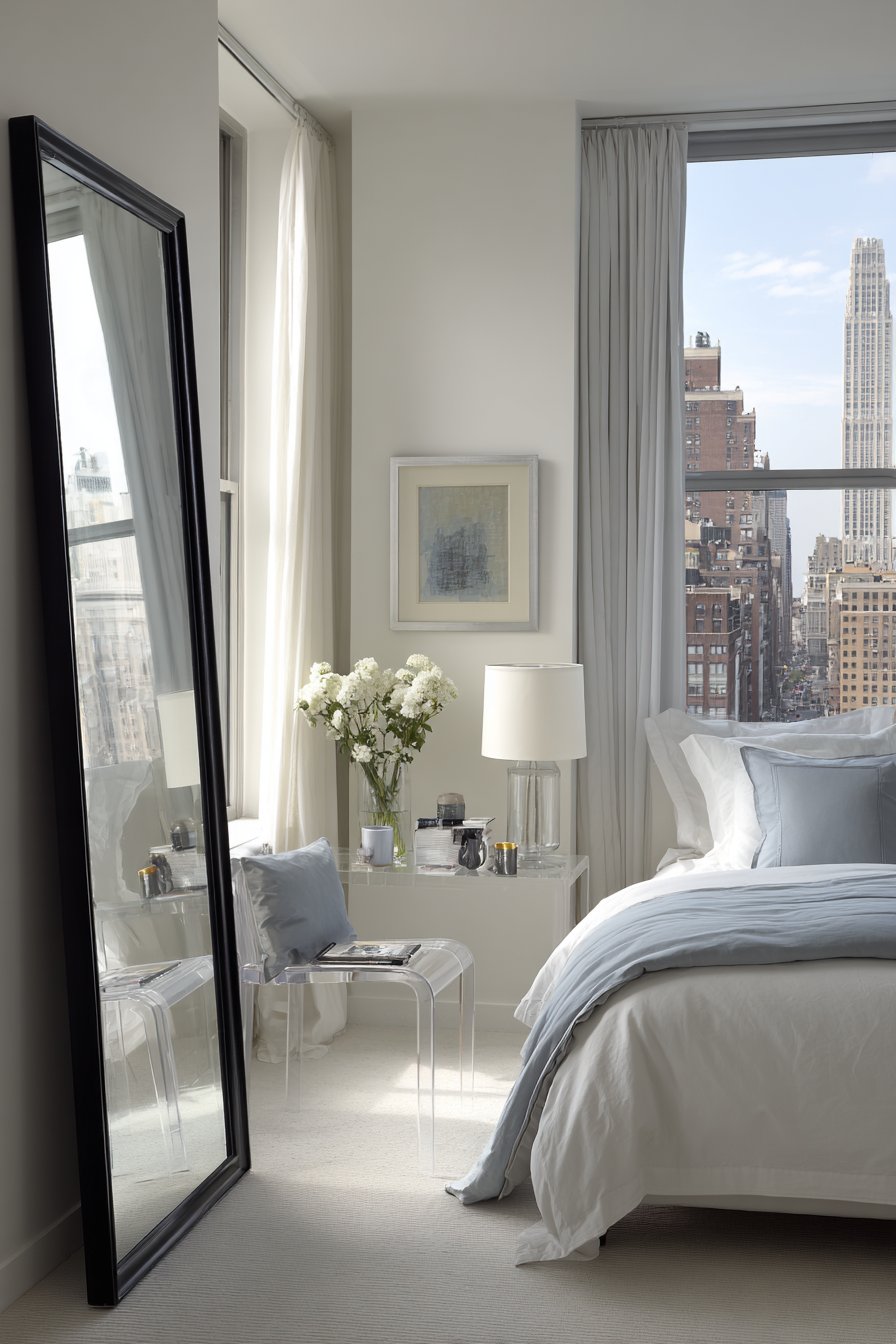
Low-profile bed frames in light ash wood maintain minimal visual weight. The pale wood tones blend with soft white walls, enhancing airiness. Floating nightstands in clear acrylic appear nearly invisible creating magical effects. The transparent material eliminates visual bulk while providing necessary surfaces.
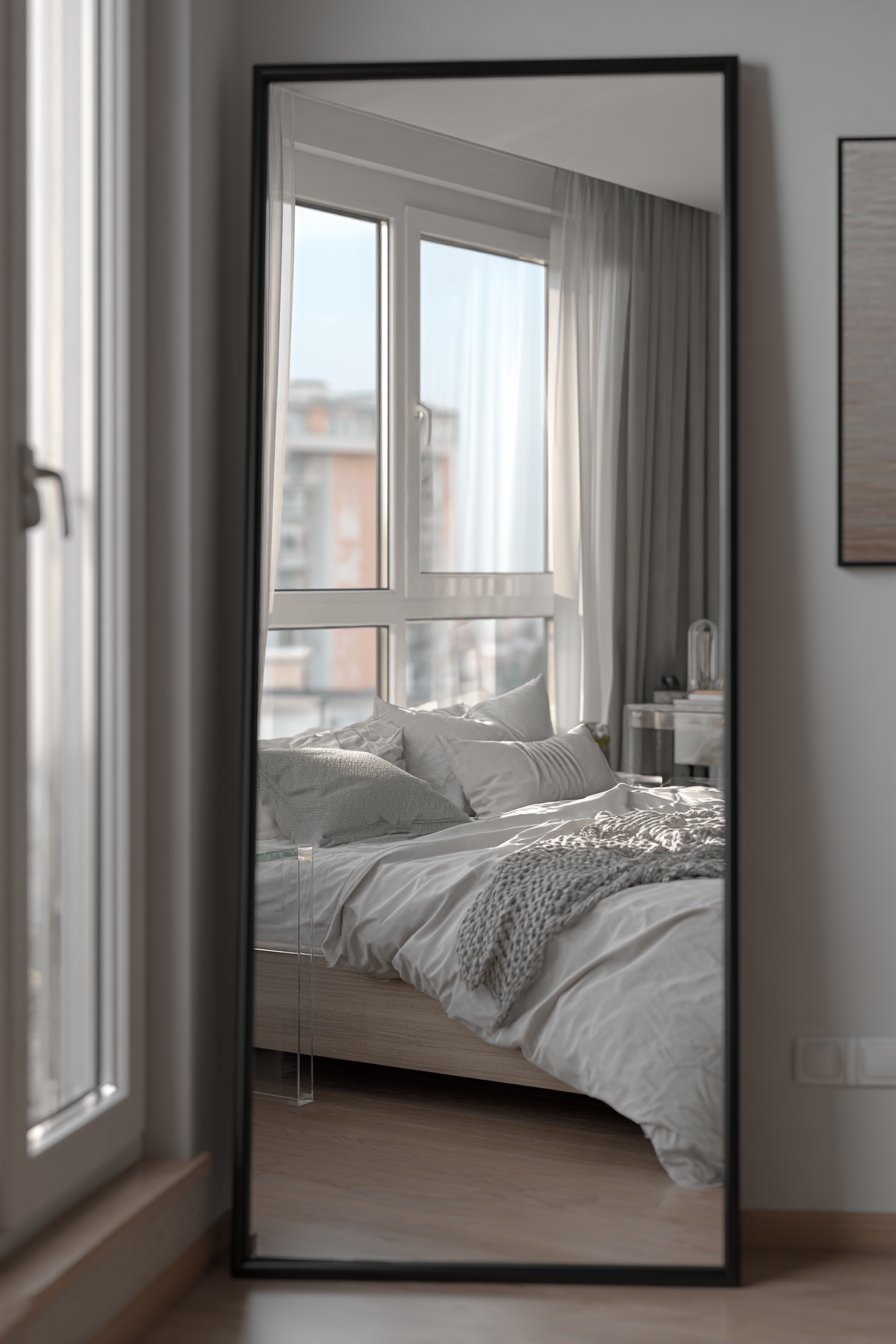
Soft white walls with cool undertones maximize light reflection throughout the space. The paint choice enhances the mirror’s effectiveness significantly. Bedding in white and pale gray maintains the light palette consistently. Limited color allows architectural elements and light to define the space.
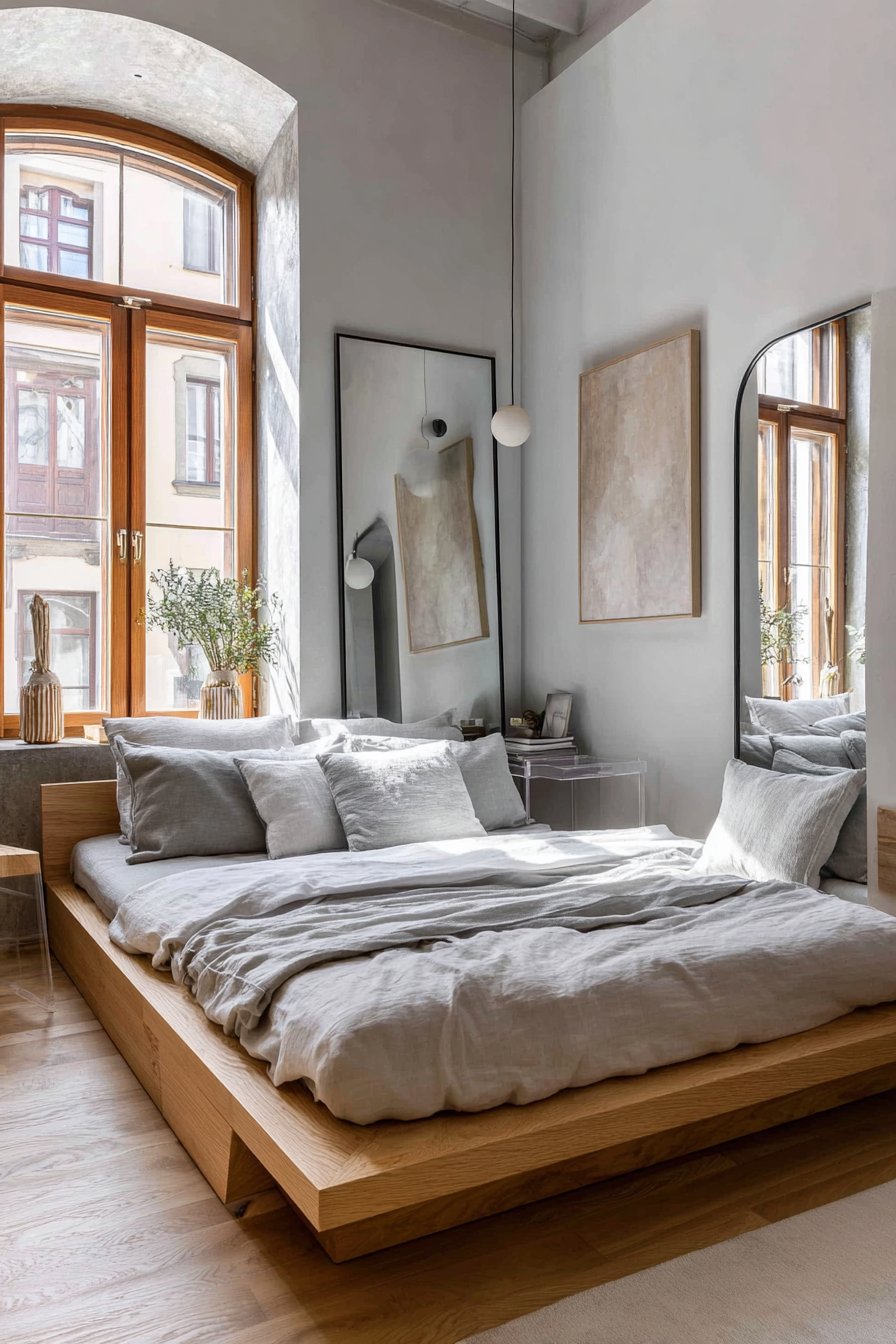
A single artwork in muted tones provides subtle focal interest. The restrained approach prevents competing elements from fragmenting attention. The mirror reflection doubles this artwork’s visual presence beautifully. Natural daylight bounces continuously throughout the carefully planned space.
Key Design Tips:
- Position large mirrors opposite windows to maximize light reflection
- Choose clear acrylic furniture to maintain visual openness
- Paint walls in cool white tones to enhance light-reflecting properties
- Select low-profile furniture in light woods to minimize visual weight
- Limit artwork and color to prevent visual fragmentation
- Use mirrors strategically to double both light and architectural features
17. Maximalist Jewel-Tone Richness
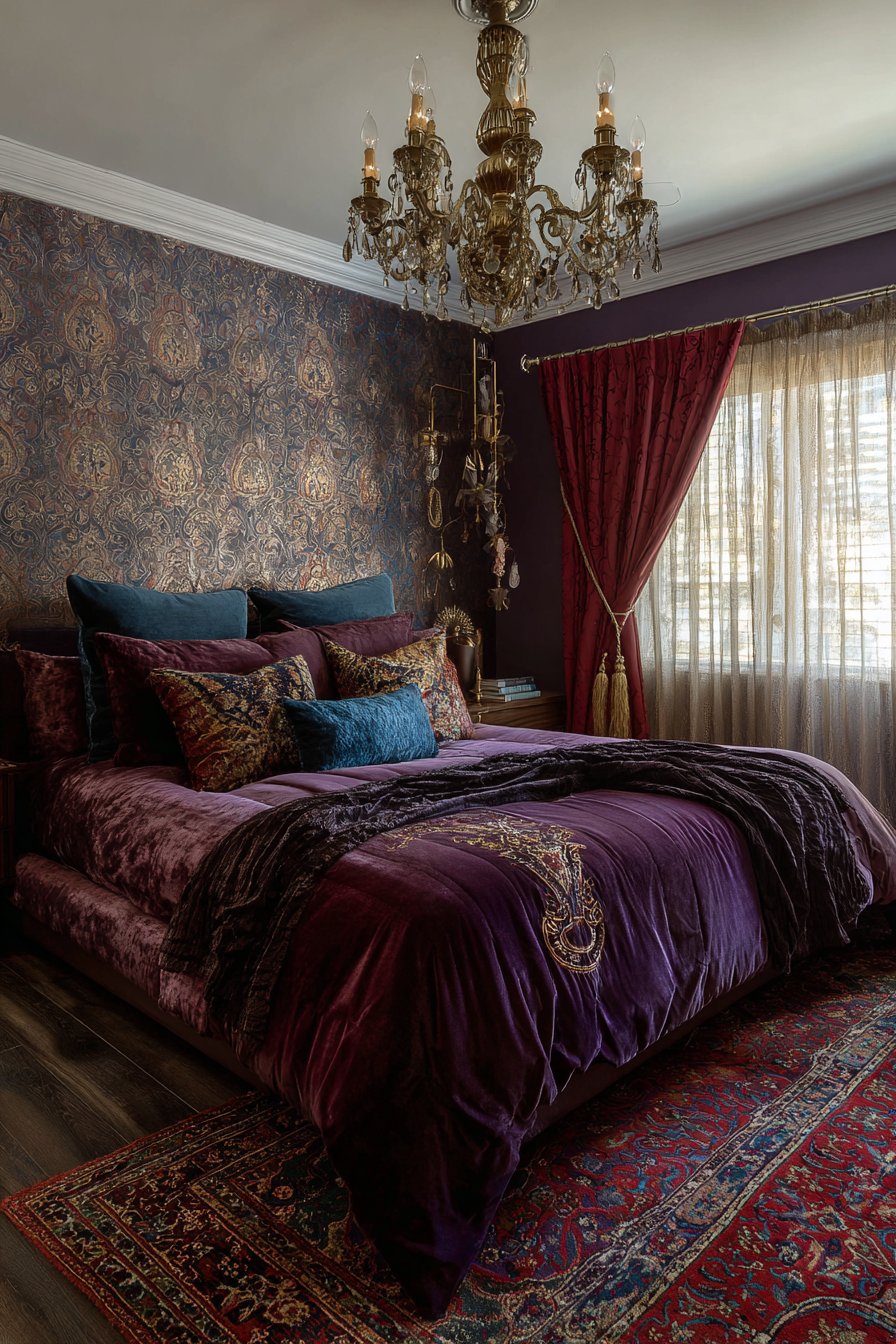
Richly layered textiles create luxurious depth in this bold small bedroom. The bed features a deep plum velvet duvet with intricate embroidered details. Throw pillows in emerald, sapphire, and gold add jewel-tone richness. Despite abundant decoration, strategic editing prevents overwhelming the compact space.
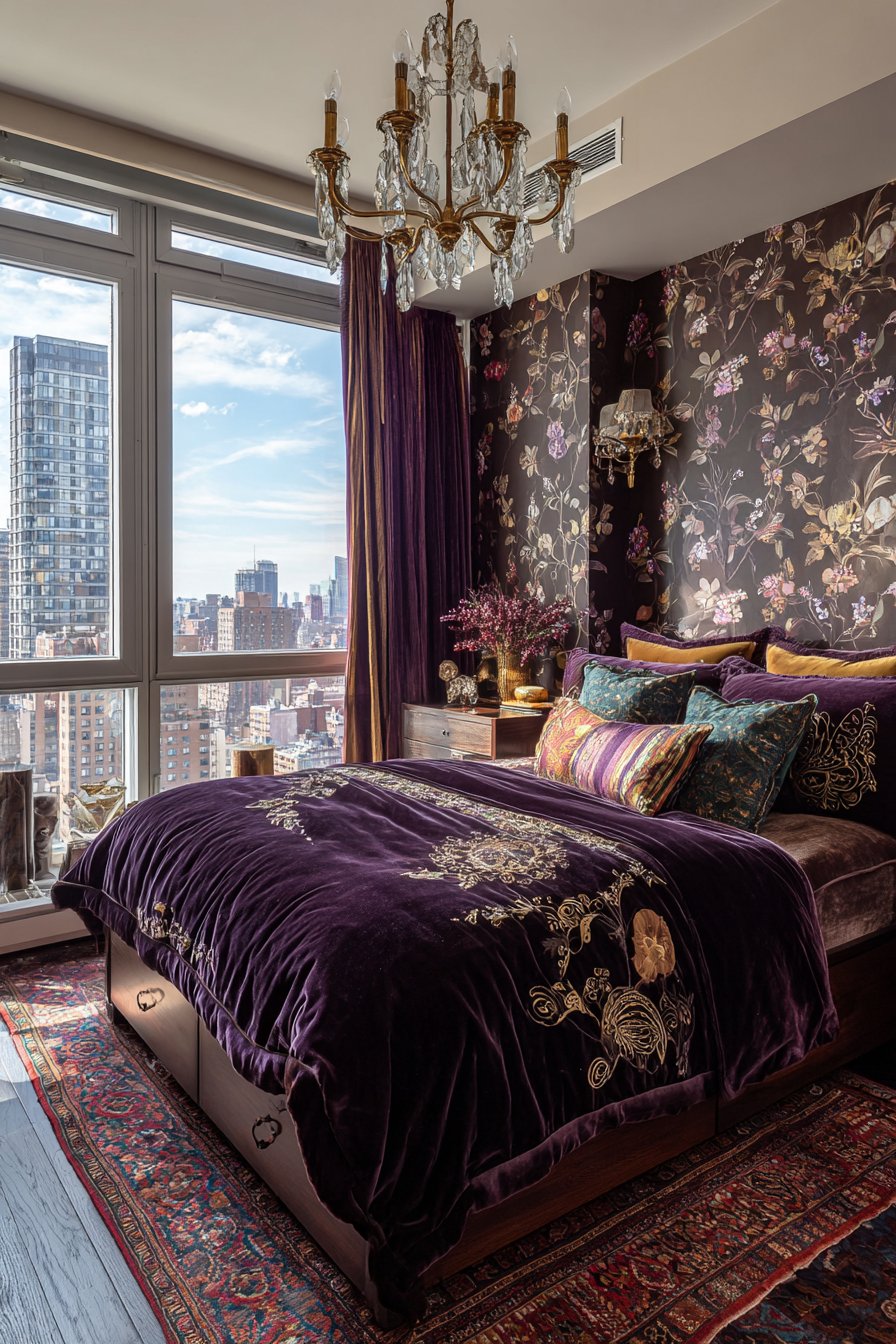
Wallpaper with intricate floral patterns covers one carefully chosen accent wall. The coordinating colors tie together the textile selections beautifully. This feature wall adds dramatic impact without covering all surfaces. The remaining walls stay neutral balancing the pattern intensity.
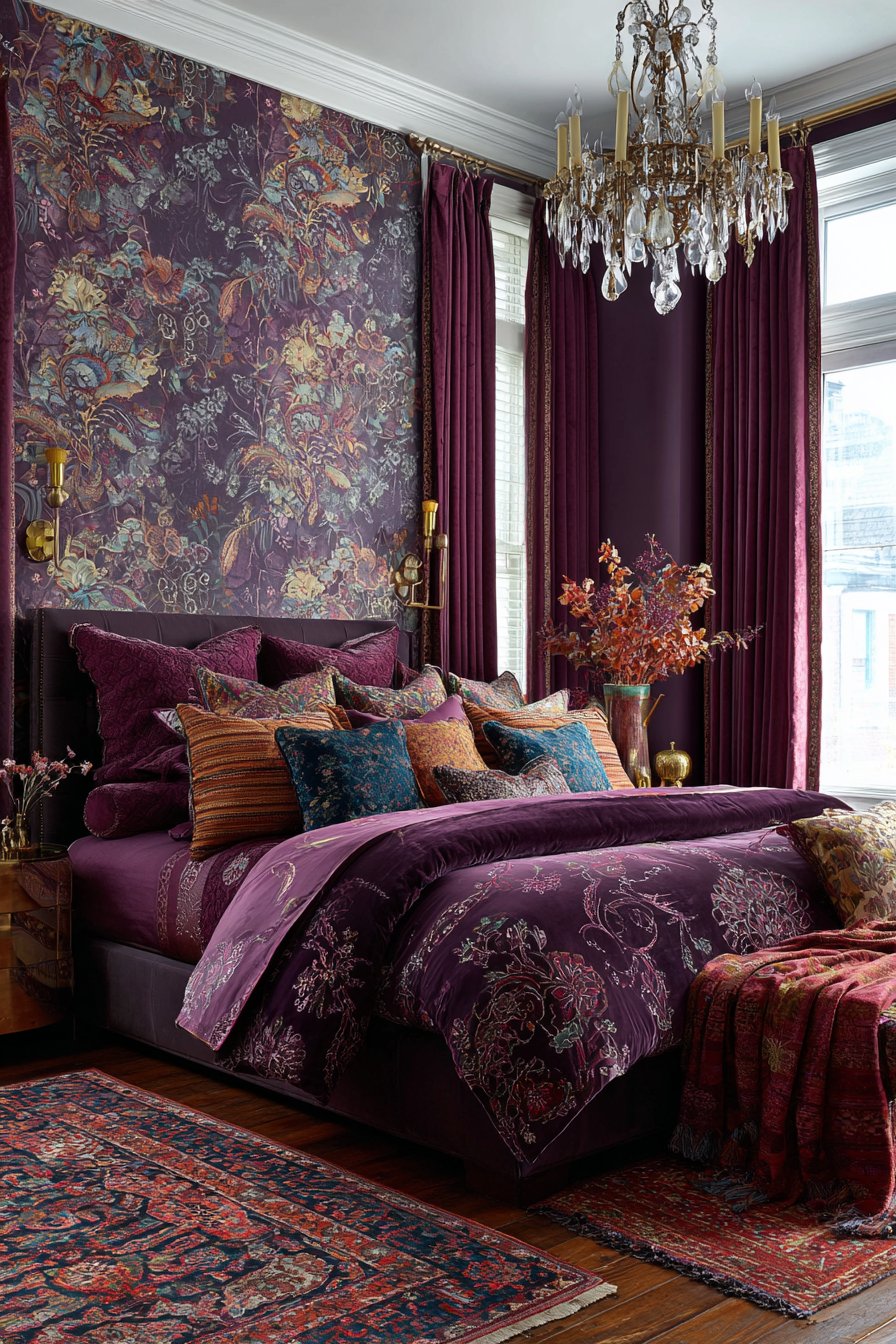
A vintage brass chandelier with crystal details provides ambient lighting drama. The hanging fixture draws eyes upward, expanding vertical space perception. Heavy curtains in burgundy velvet with gold tassels frame the window. The luxurious fabrics add weight and sophistication to the design.
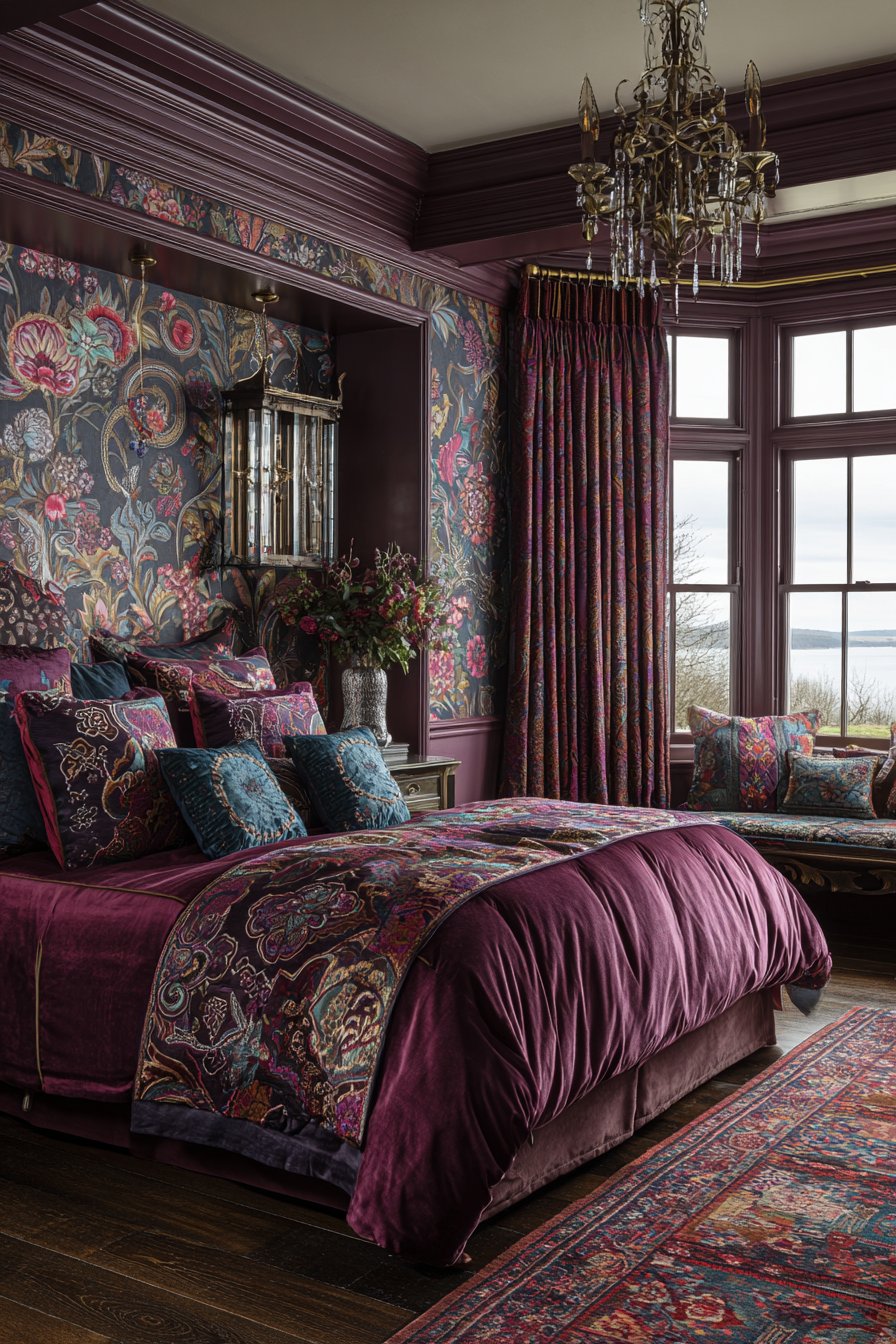
A Persian-style runner in rich reds and blues covers dark-stained hardwood. The layered patterns work because they share a cohesive color story. Each element enhances rather than competes with surrounding pieces. The maximalist approach proves small bedrooms can embrace bold design confidently.
Key Design Tips:
- Maintain cohesive color stories when layering multiple patterns and textures
- Limit patterned wallpaper to single accent walls in small spaces
- Use rich velvet and heavy fabrics to add luxury without additional furniture
- Choose vintage chandeliers to draw attention upward and enhance height
- Edit carefully to ensure abundance feels curated rather than cluttered
- Select dark wood flooring to ground rich jewel-tone palettes
18. Urban Contemporary Concrete Textures
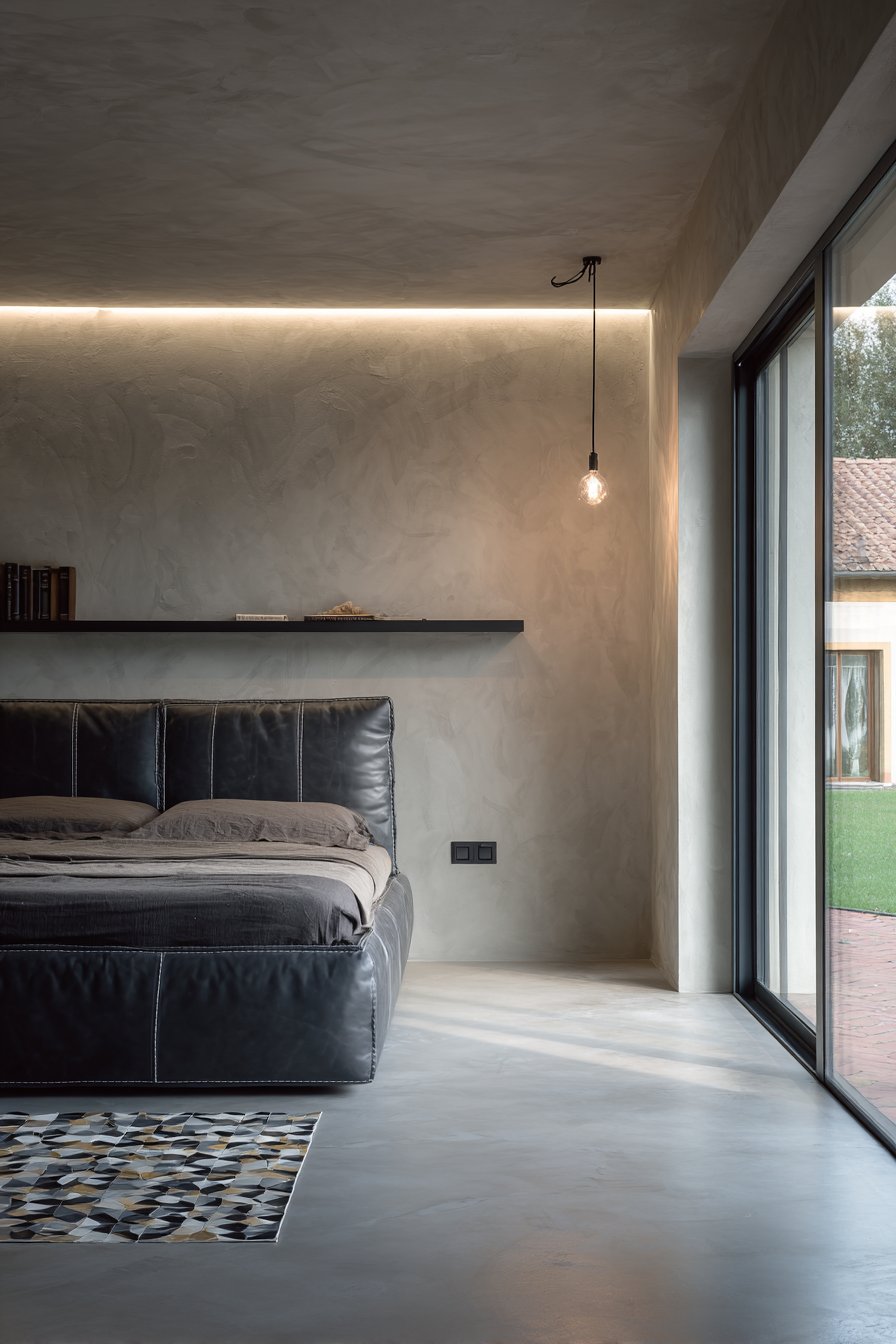
Padded leather headboards in charcoal gray provide urban sophistication and comfort. Visible stitching details add subtle texture and quality craftsmanship indicators. The soft padding contrasts beautifully with surrounding hard surfaces. This juxtaposition defines contemporary urban design effectively.
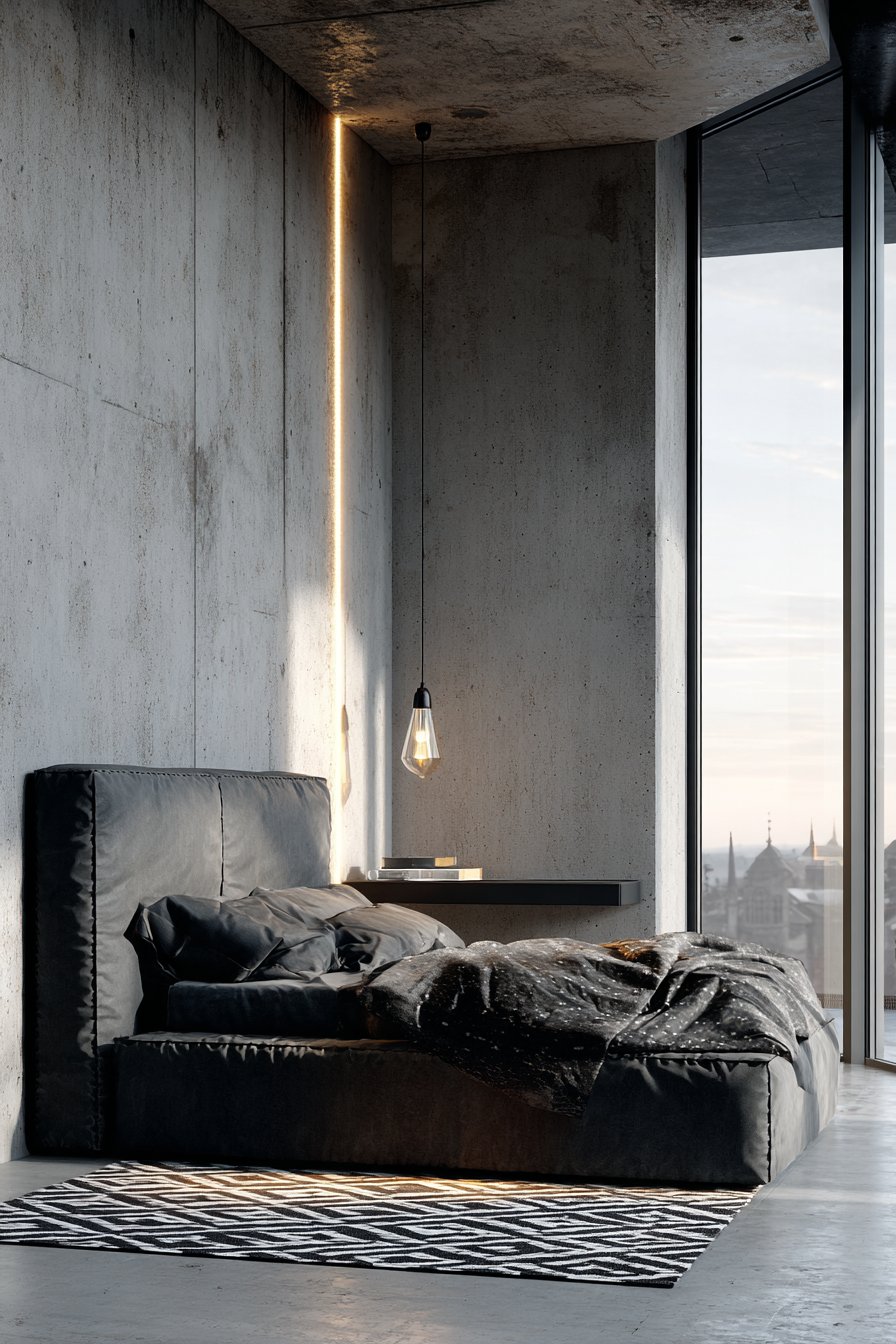
Smooth concrete-effect plaster walls in light gray create industrial backdrops. Subtle trowel marks add organic texture to the manufactured finish. The neutral surface allows other elements to provide color and pattern. Floating shelf systems in matte black metal offer minimalist storage solutions.
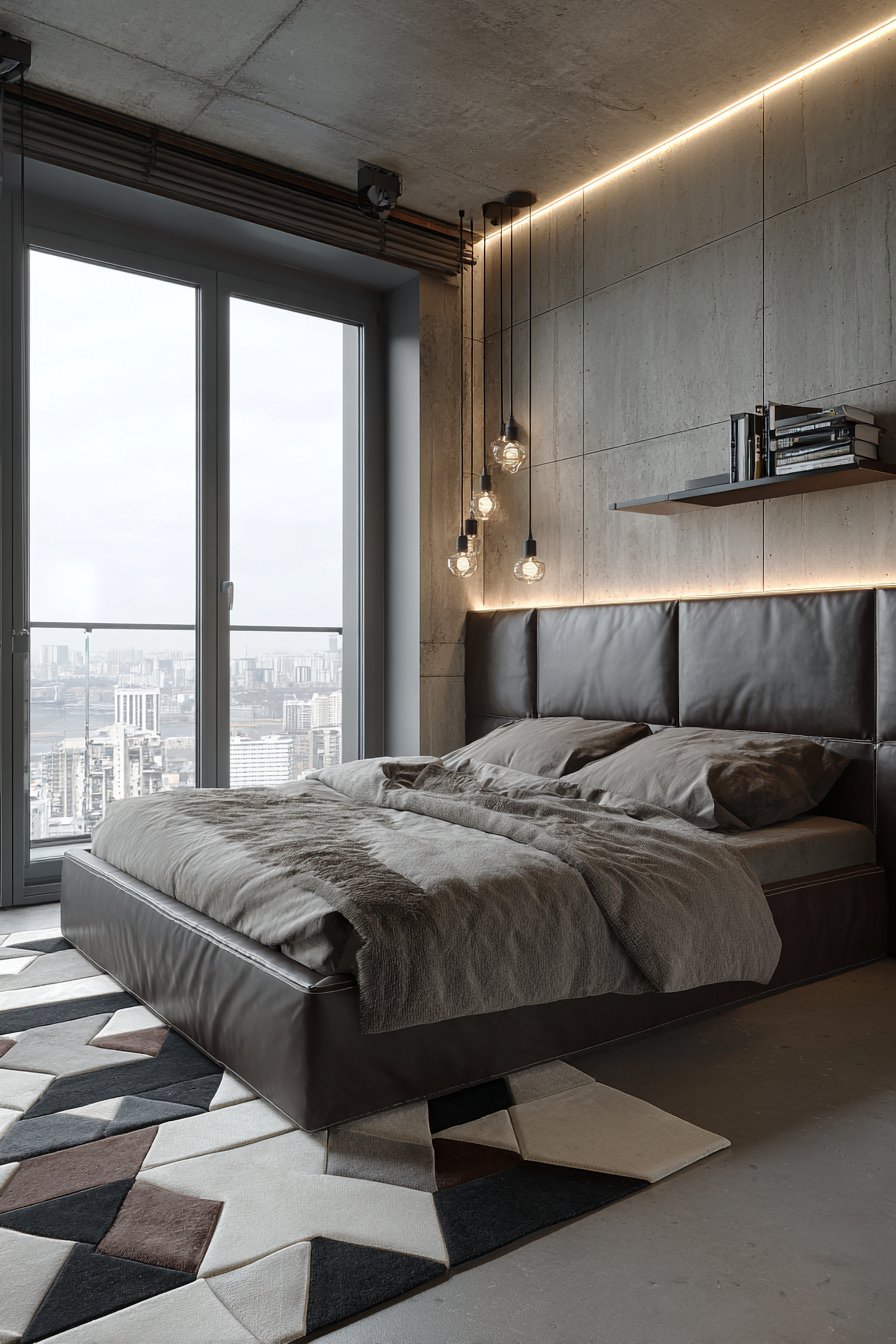
LED strip lighting integrated behind headboards creates an ambient glow without fixtures. The indirect lighting adds drama and functionality simultaneously. Polished concrete floors reflect available light, enhancing overall brightness. A geometric rug in black, white, and gray softens the hard surface.
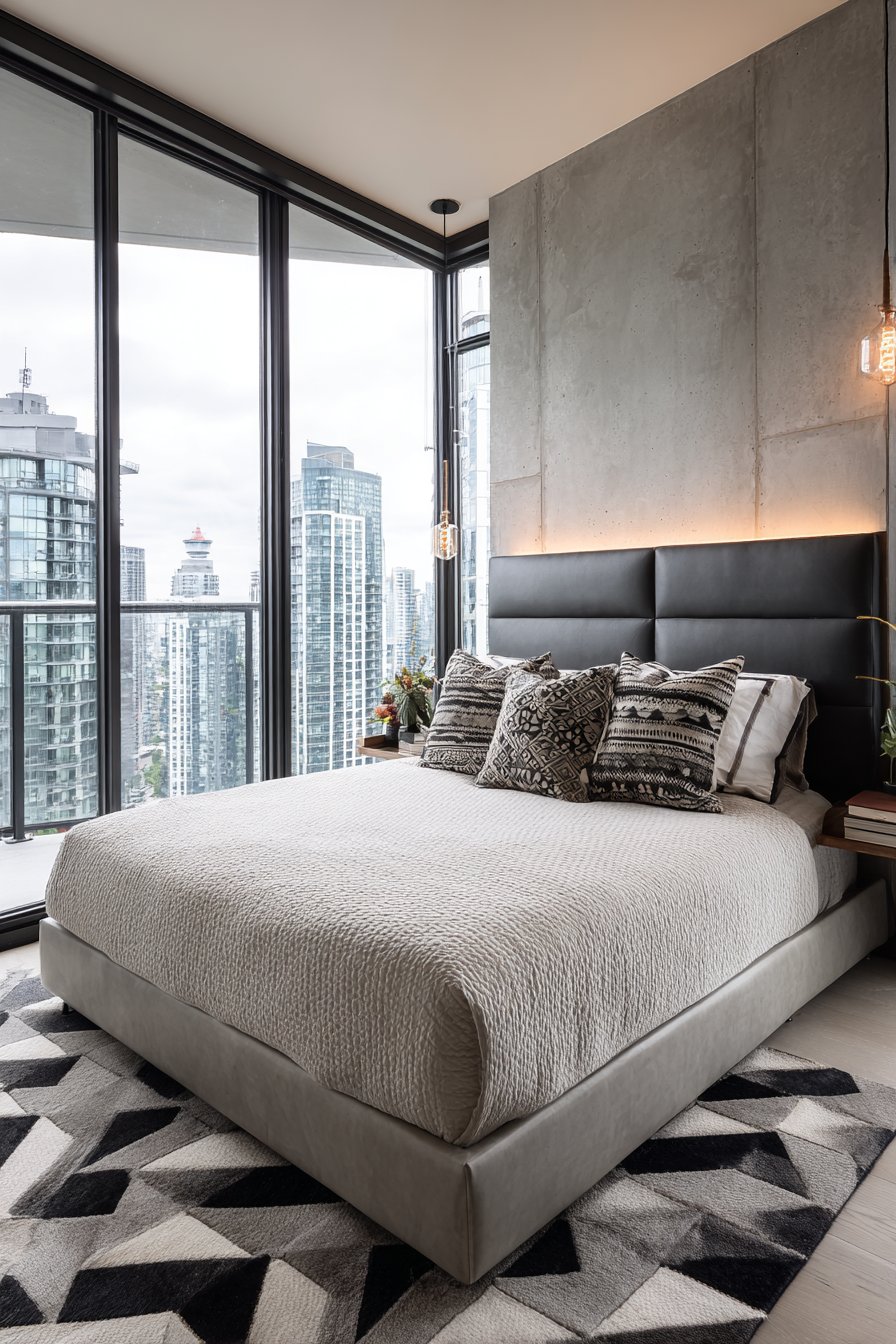
Floor-to-ceiling windows with minimal black frames flood the space with daylight. The large glass expanses connect interior spaces with urban views beyond. Single pendant lights with exposed bulbs provide task lighting. The sleek aesthetic balances industrial materials with contemporary comfort needs.
Key Design Tips:
- Choose leather upholstery to soften concrete and metal surfaces
- Use concrete-effect finishes for an industrial character without structural changes
- Install LED strip lighting for ambient glow without visible fixtures
- Select minimal window frames to maximize glass area and views
- Incorporate geometric rugs to soften polished concrete floors
- Maintain limited color palettes, allowing materials to provide interest
19. Cottage Charm Vintage Romance
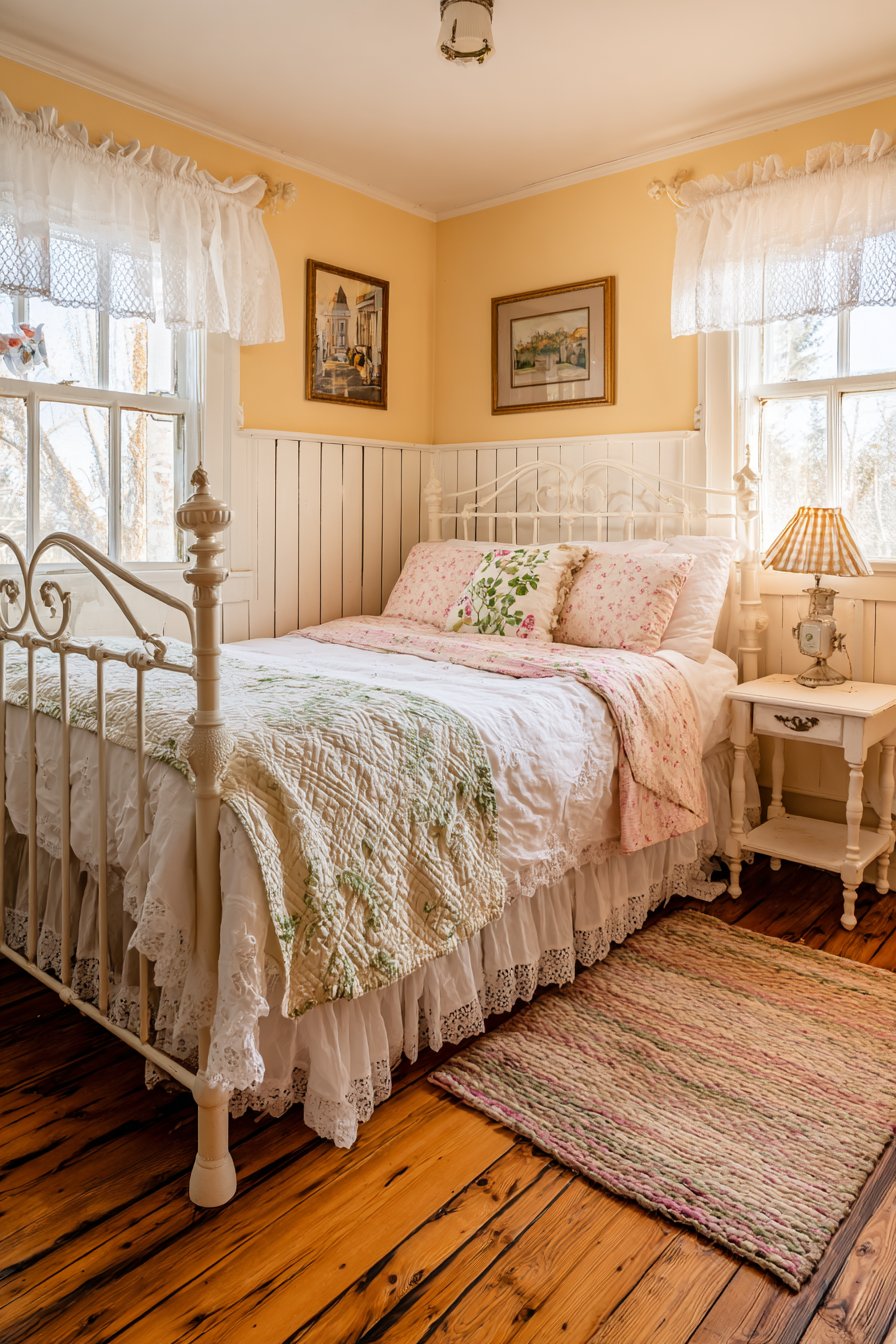
Wrought iron bed frames in white with delicate scrollwork bring nostalgic charm. The intricate details reference historical craftsmanship and romantic sensibilities. Despite ornate elements, the white finish maintains visual lightness. This classic piece anchors the cottage-inspired design beautifully.
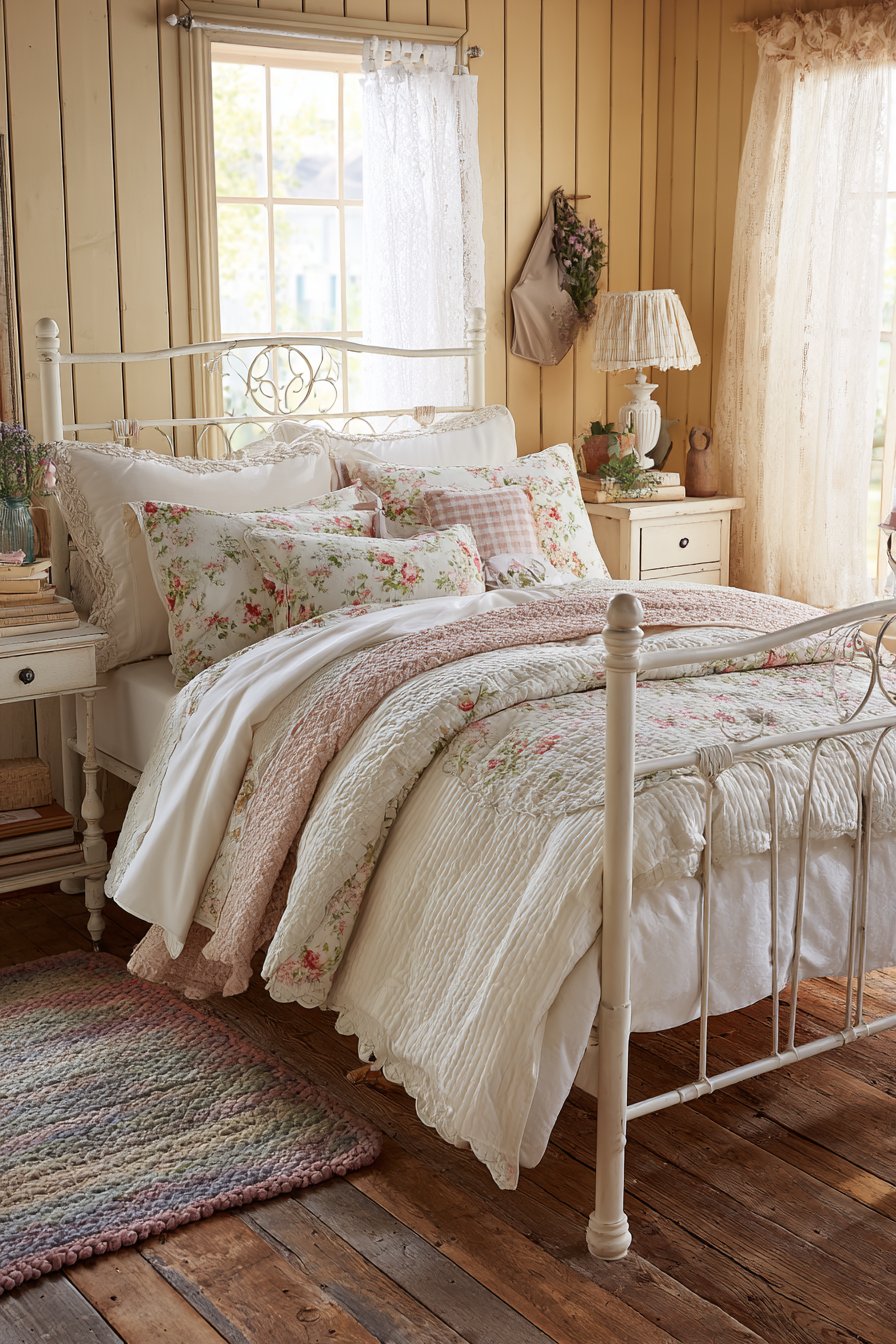
Layered bedding includes white cotton duvets with eyelet trim details. Floral patterned sheets in soft pink and green add gentle color. Vintage-style quilted throws provide additional texture and warmth. The abundance of textiles creates inviting comfort and lived-in appeal.
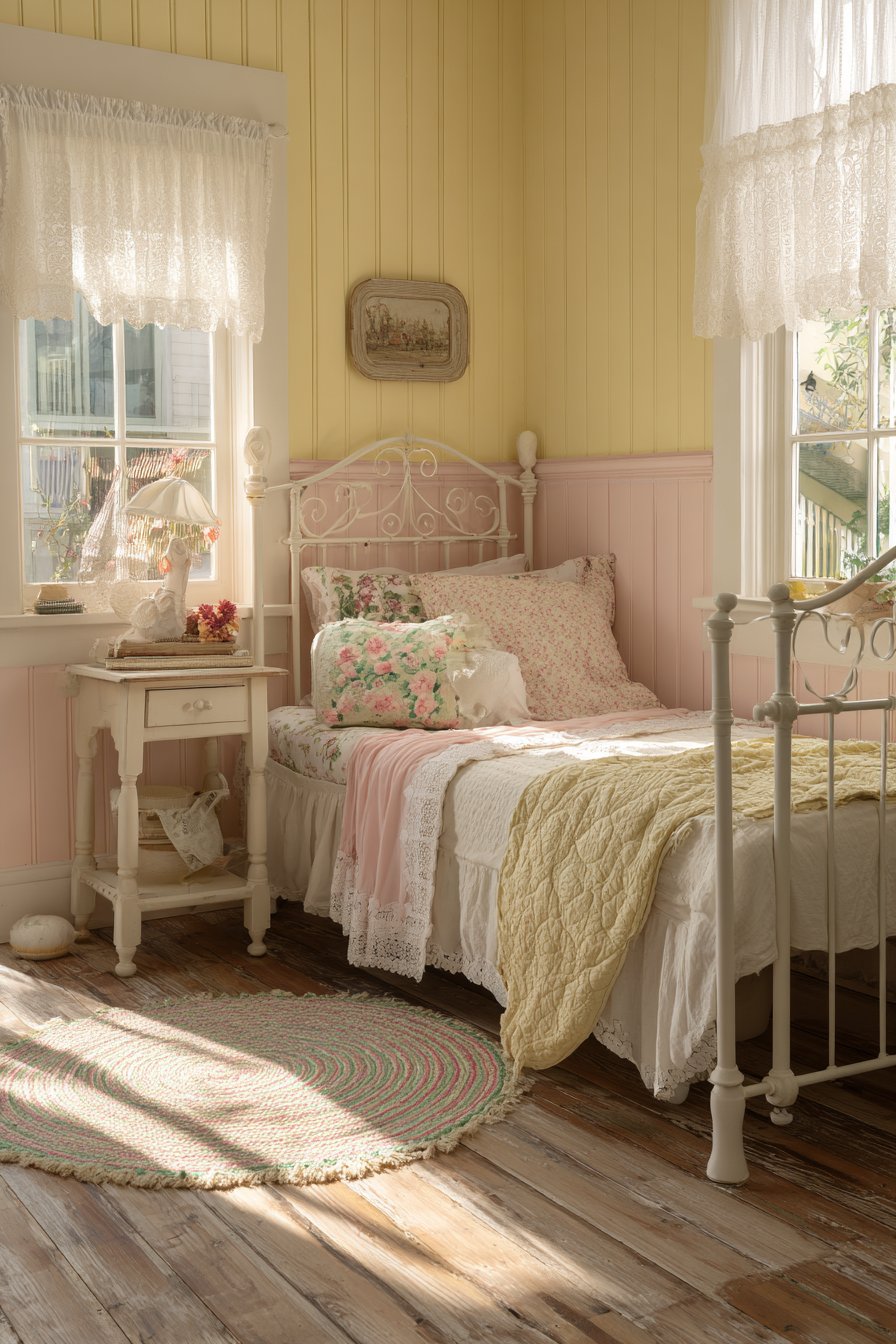
Soft butter yellow walls with white wainscoting create cheerful cottage atmosphere. The lower wall treatment adds architectural interest and traditional detailing. Small white-painted wooden nightstands feature turned legs showing craftsmanship. Milk glass lamps with gingham shades provide charming task lighting.
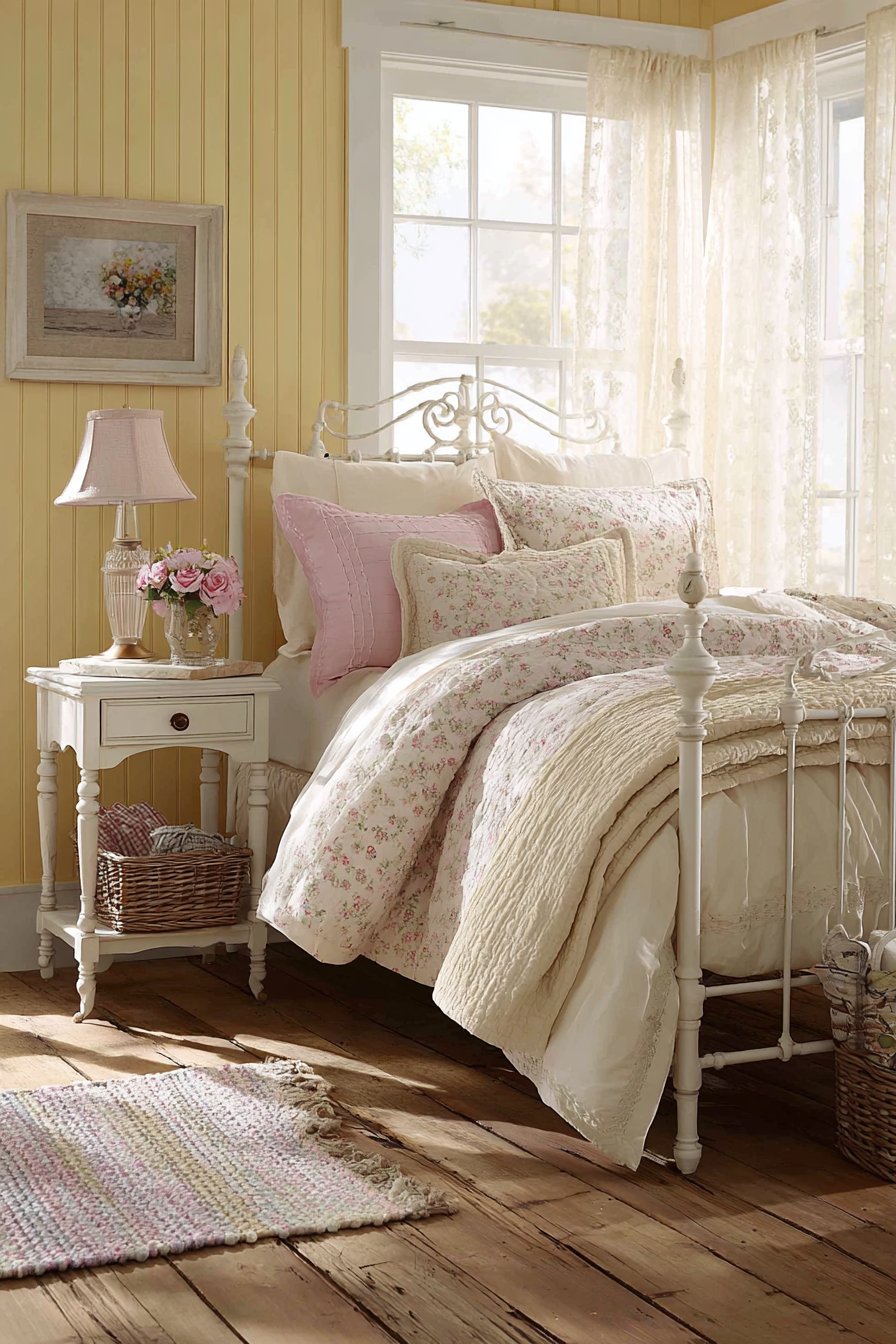
Lace curtains filter natural light creating soft romantic glow throughout. The delicate fabric adds femininity without blocking essential daylight. Wide plank pine flooring shows authentic wear patterns adding character. Braided rag rugs in pastel colors provide softness beside the bed.
Key Design Tips:
- Choose white-painted iron beds to maintain lightness despite ornate details
- Layer multiple bedding pieces for cottage comfort and visual richness
- Add wainscoting to create architectural interest in plain spaces
- Use butter yellow paint for cheerful warmth without overwhelming brightness
- Select vintage or vintage-inspired lighting with fabric shades
- Embrace authentic wear patterns in floors for cottage character
20. Gender-Neutral Versatile Sage
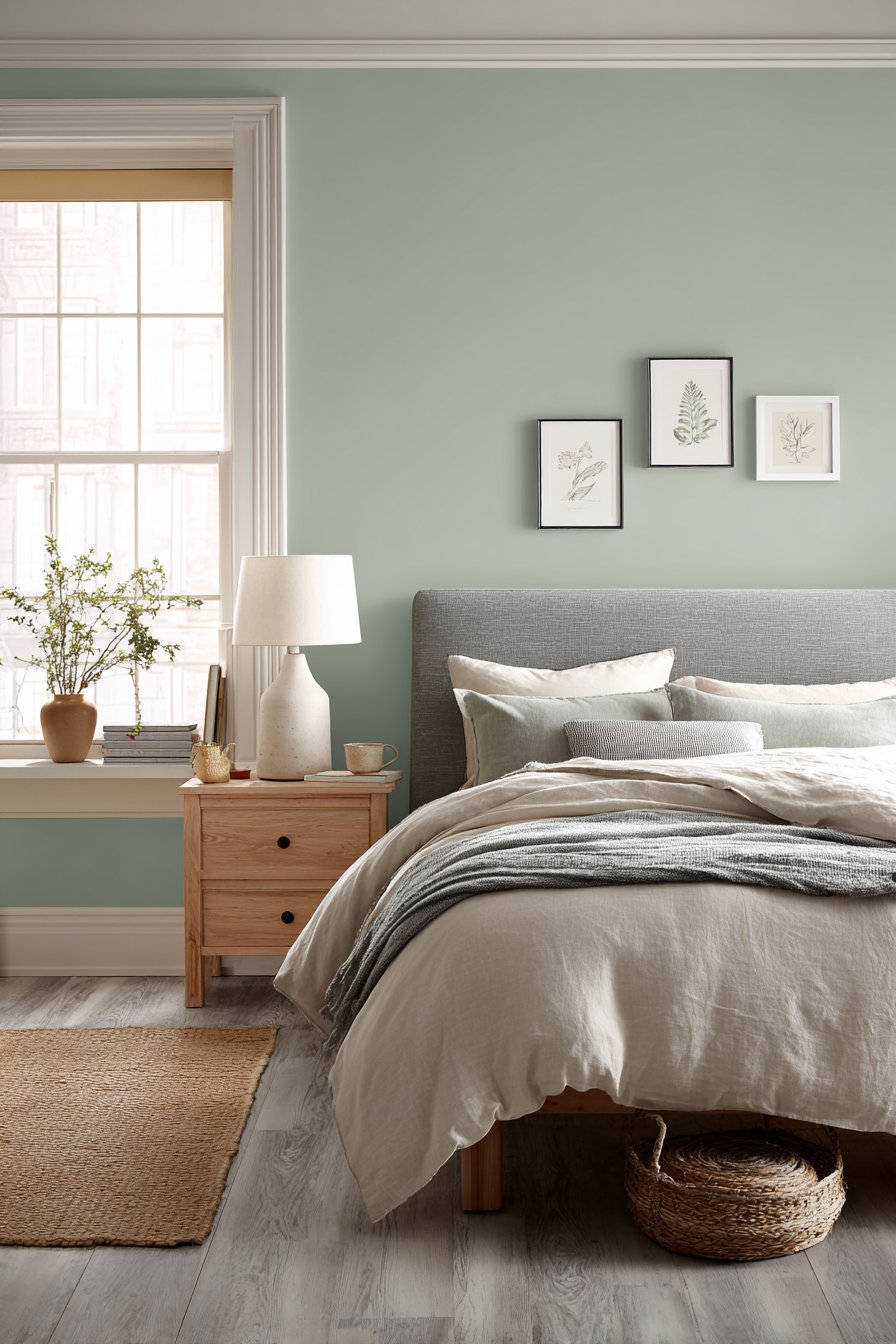
Simple upholstered headboards in warm gray linen provide universal appeal. Clean lines work across various ages and gender preferences effectively. The neutral fabric choice allows easy style updates through accessories. This versatility makes the design adaptable for changing needs.
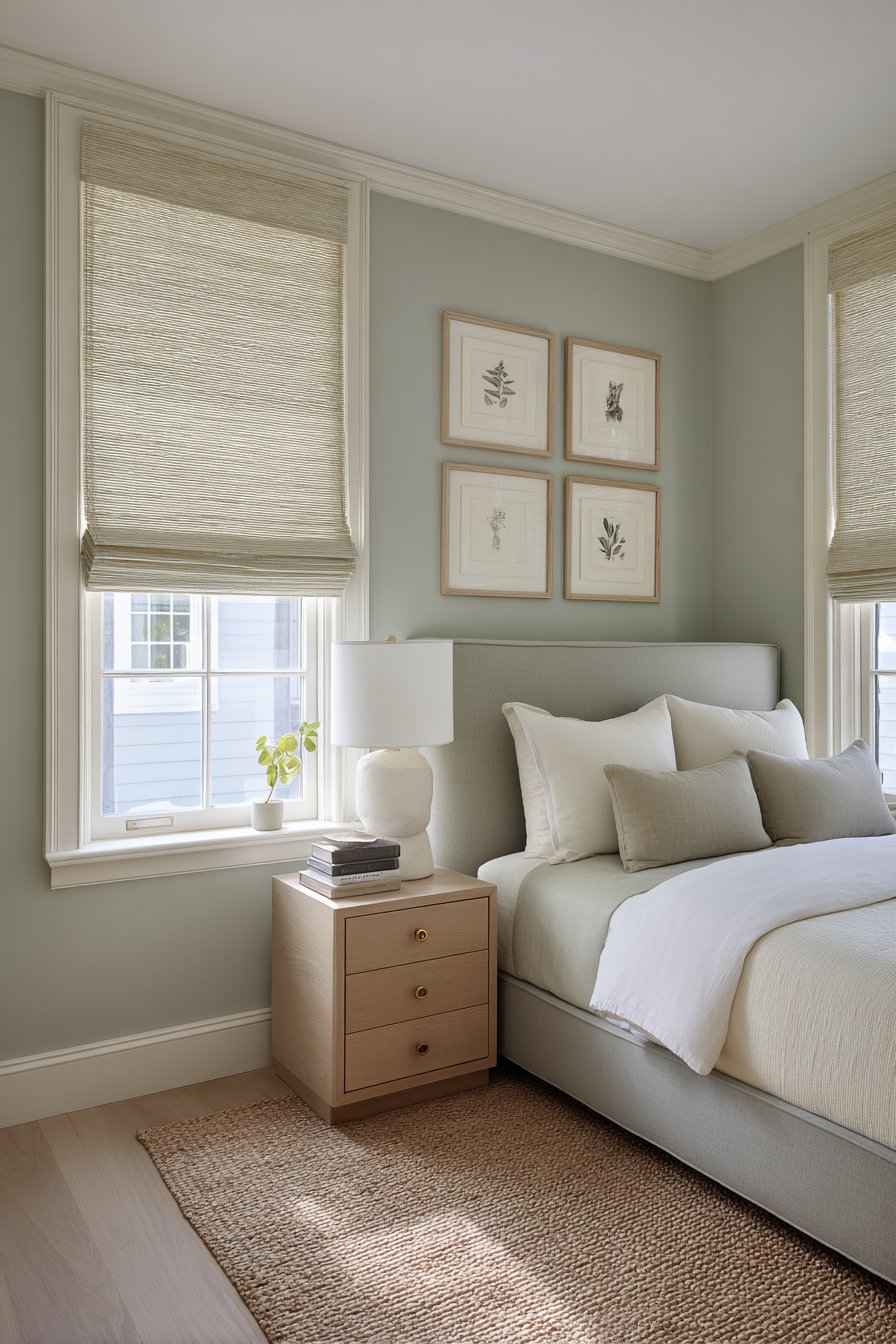
Soft sage green walls provide subtle color without bold statements. White trim offers clean definition and classic architectural detailing. The gentle hue creates calm environments suitable for sleep and relaxation. Neither overtly masculine nor feminine, the color bridges preferences beautifully.
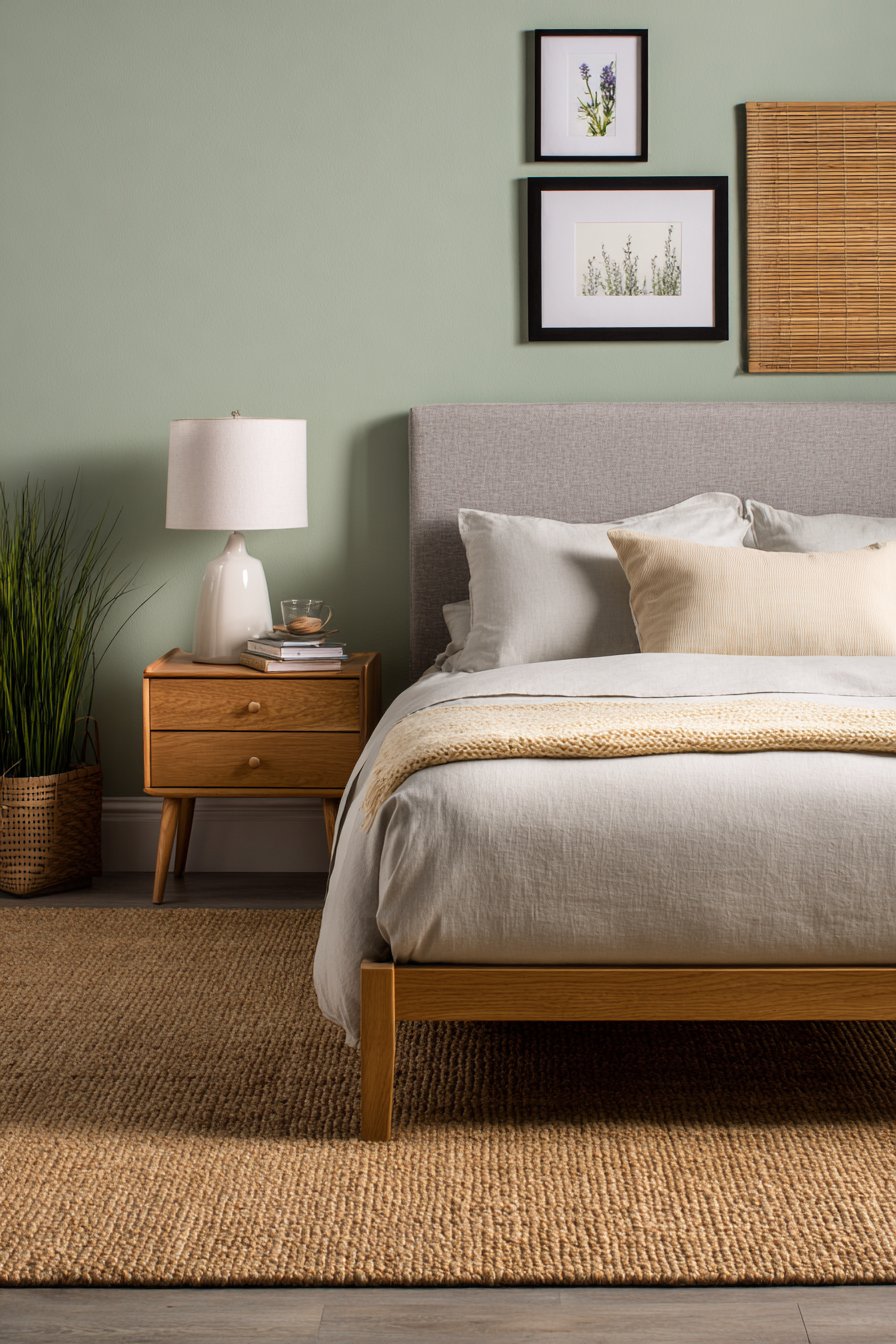
Compact solid wood nightstands in natural oak feature simple brass knobs. The warm wood tones add organic character without style specificity. Ceramic table lamps in matte white provide clean contemporary lighting. Bedding layers white, cream, and soft gray creating peaceful palettes.
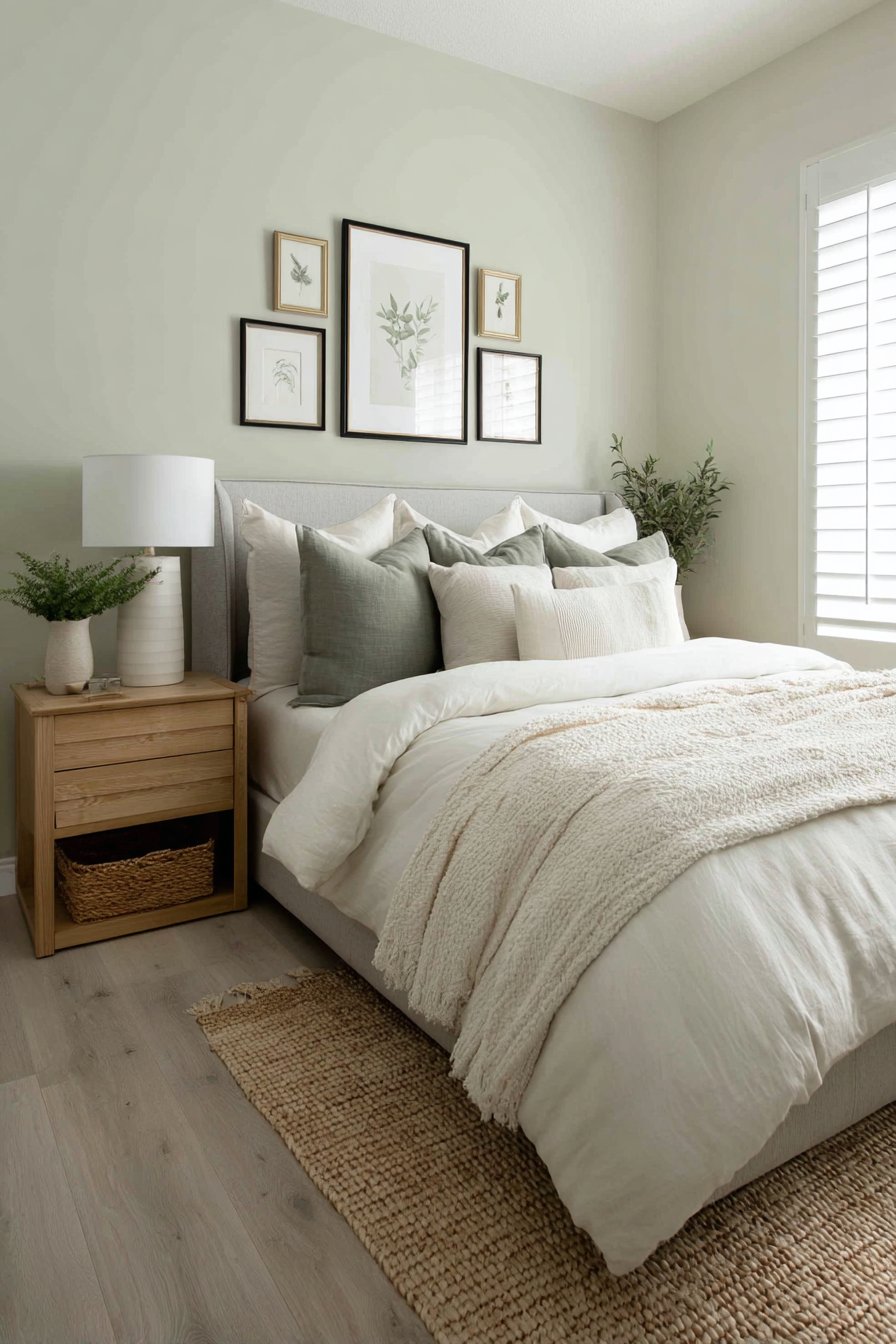
Woven jute rugs add natural texture underfoot with neutral appeal. Simple roller shades in natural bamboo filter light while maintaining privacy. Small gallery walls feature botanical prints in black frames. Light oak laminate flooring shows realistic wood grain variation throughout.
Key Design Tips:
- Choose warm gray and sage green for universally appealing palettes
- Select simple upholstered headboards that work across style preferences
- Use natural materials like oak and jute for timeless organic appeal
- Layer neutral bedding that adapts easily to seasonal changes
- Incorporate botanical artwork for nature connection without gender coding
- Install bamboo shades for natural texture and effective light control
Why These Small Bedroom Designs Are the Best
These small bedroom design represent comprehensive approaches to maximizing limited square footage while maintaining style and comfort. Each concept demonstrates that spatial constraints inspire creative solutions rather than design compromises. The versatility across styles proves small bedrooms accommodate personal aesthetics from minimalist to maximalist preferences.
The designs emphasize multi-functional furniture as essential for small bedroom success. Platform beds with integrated storage, Murphy bed systems, and convertible desks maximize every square inch effectively. These solutions address real-world needs without sacrificing aesthetic appeal or quality construction.
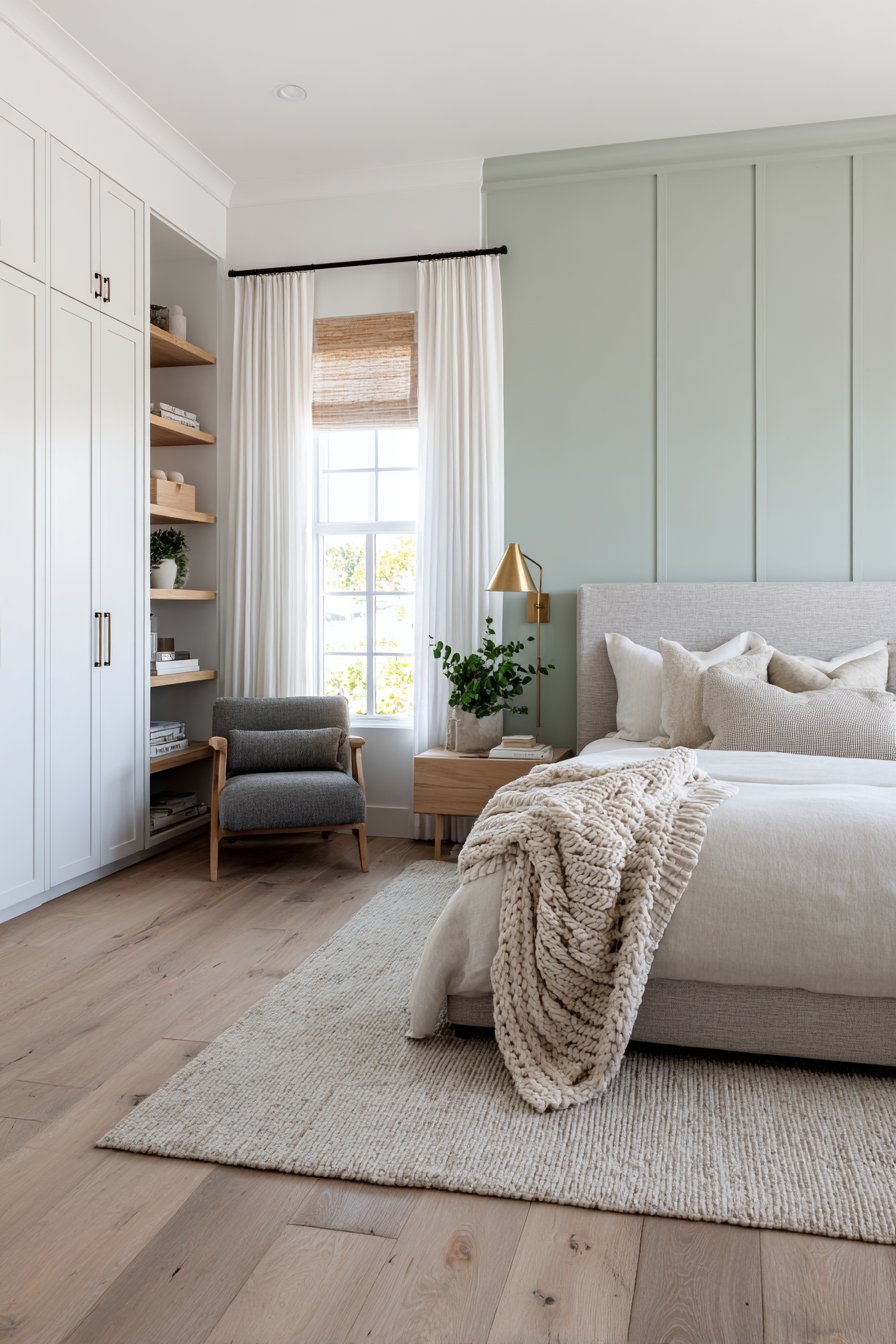
Material choices throughout these designs prioritize durability and timeless appeal. Natural woods, quality textiles, and authentic finishes develop character rather than deteriorate over time. This longevity makes small bedroom investments worthwhile despite limited space. The emphasis on craftsmanship over trends ensures designs remain relevant through changing tastes.
Color theory applications demonstrate strategic palette selection for spatial enhancement. Light neutrals with cool undertones maximize light reflection and perceived spaciousness. Darker accent walls create grounding without overwhelming compact footprints. Strategic color placement directs attention and defines zones within single rooms.
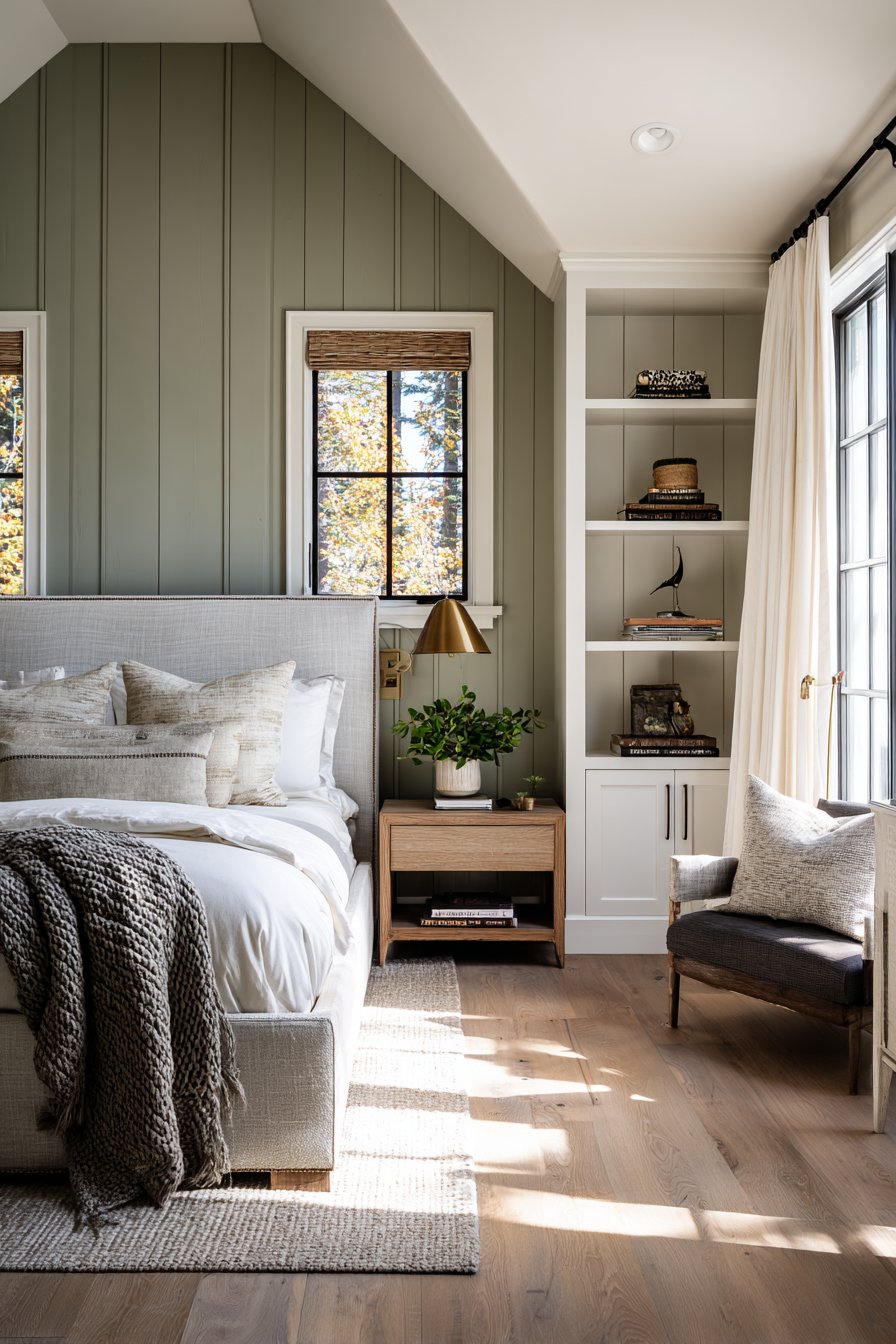
Vertical space utilization emerges as crucial across multiple design approaches. Floor-to-ceiling storage, loft beds, and floating shelves capture often-wasted areas. This vertical thinking effectively doubles usable space without expanding room dimensions. The solutions demonstrate that looking upward solves many small bedroom challenges.
Lighting strategies combine natural and artificial sources for flexibility and atmosphere. Large windows maximize daylight while strategic fixtures provide task and ambient options. LED strips, pendant lights, and wall-mounted lamps illuminate without consuming precious surfaces. Proper lighting makes small spaces feel more expansive and functional.
These designs balance aesthetic inspiration with practical implementation considerations. Budget-conscious solutions like diagonal bed placement cost nothing but provide significant impact. Higher investments in custom built-ins deliver long-term value through superior functionality. The range accommodates various financial constraints without compromising design integrity.
Conclusion
These twenty small bedroom design demonstrate that limited square footage inspires exceptional creativity and innovation. The key takeaways include prioritizing multi-functional furniture, maximizing vertical space, and selecting appropriate color palettes. Quality materials and thoughtful lighting transform compact rooms into comfortable, stylish sanctuaries.
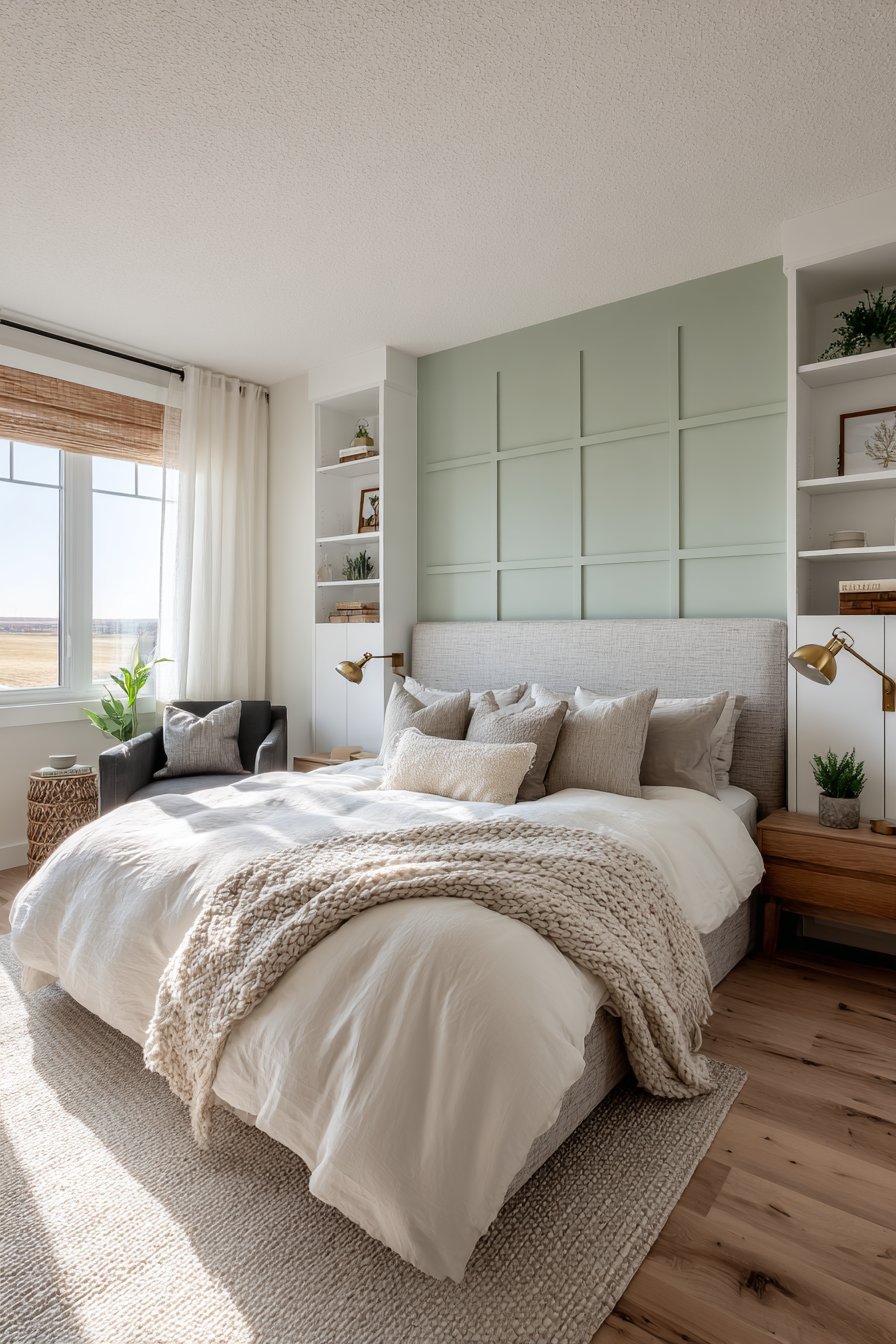
Successful small bedroom design requires balancing aesthetic preferences with practical needs. Start by identifying your specific storage requirements and lifestyle patterns. Choose one design approach that resonates with your personal style and adapt elements to your unique space. Your dream small bedroom awaits creation through intentional planning and creative problem-solving.
