


Creating beautiful outdoor stairs transforms your home’s exterior while solving practical challenges. These architectural elements connect different levels of your property with style. The right stairway design enhances curb appeal and improves accessibility. Outdoor stairs serve as functional art pieces that welcome guests and guide movement through your landscape.
Thoughtful outdoor stair design considers multiple factors beyond basic functionality. Materials must withstand weather exposure while maintaining visual appeal. Safety features integrate seamlessly with aesthetic choices. The surrounding landscape influences design decisions significantly. Each stairway concept reflects the home’s architectural style while addressing specific site conditions.
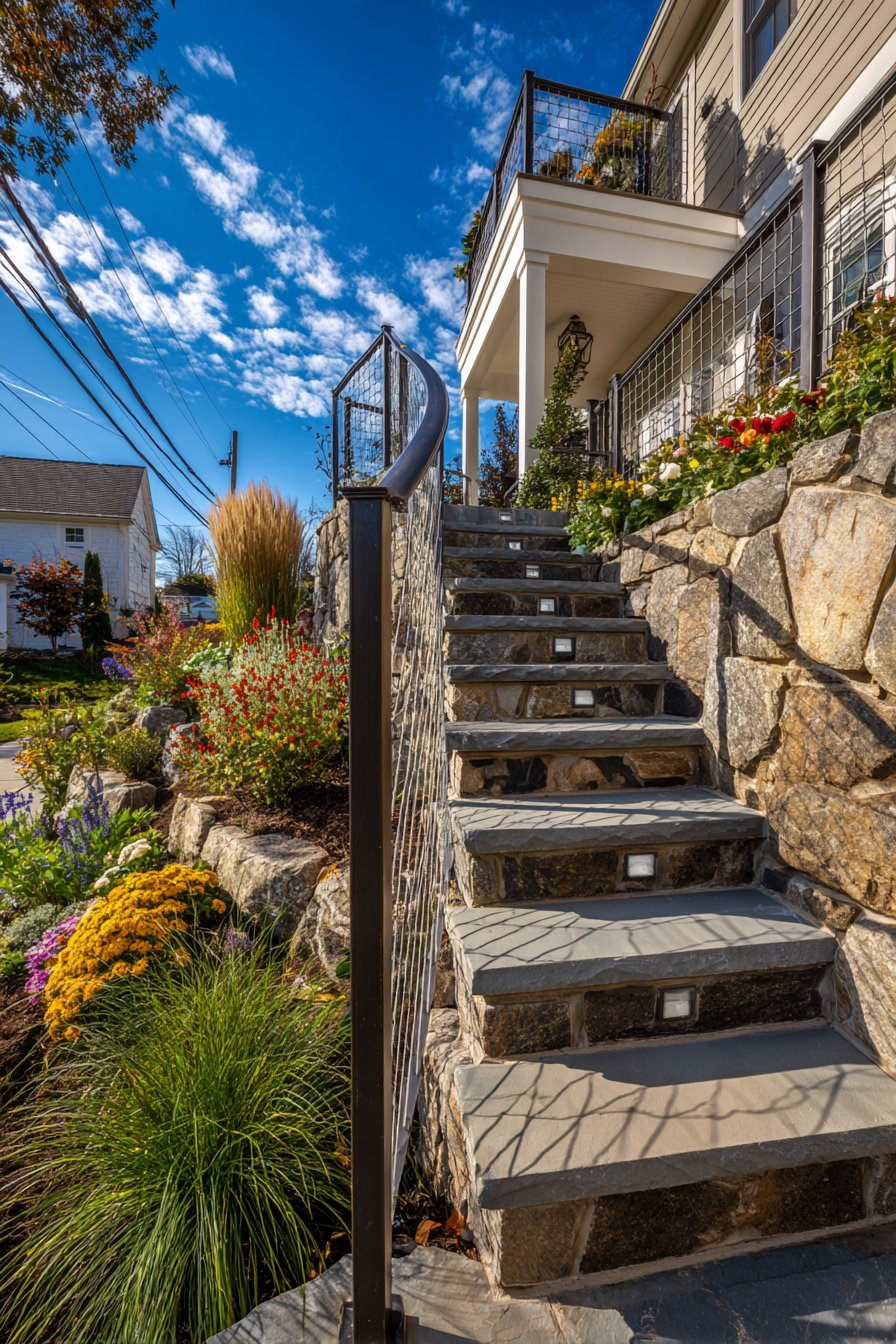
This comprehensive guide explores twenty distinctive outdoor stair designs. From natural stone installations to contemporary floating treads, these concepts showcase diverse approaches. Traditional brick constructions sit alongside industrial metal solutions. Mediterranean terracotta steps contrast with minimalist concrete designs. Each example demonstrates how materials, craftsmanship, and landscape integration create successful exterior staircases.
1. Natural Bluestone with Thermal Finish
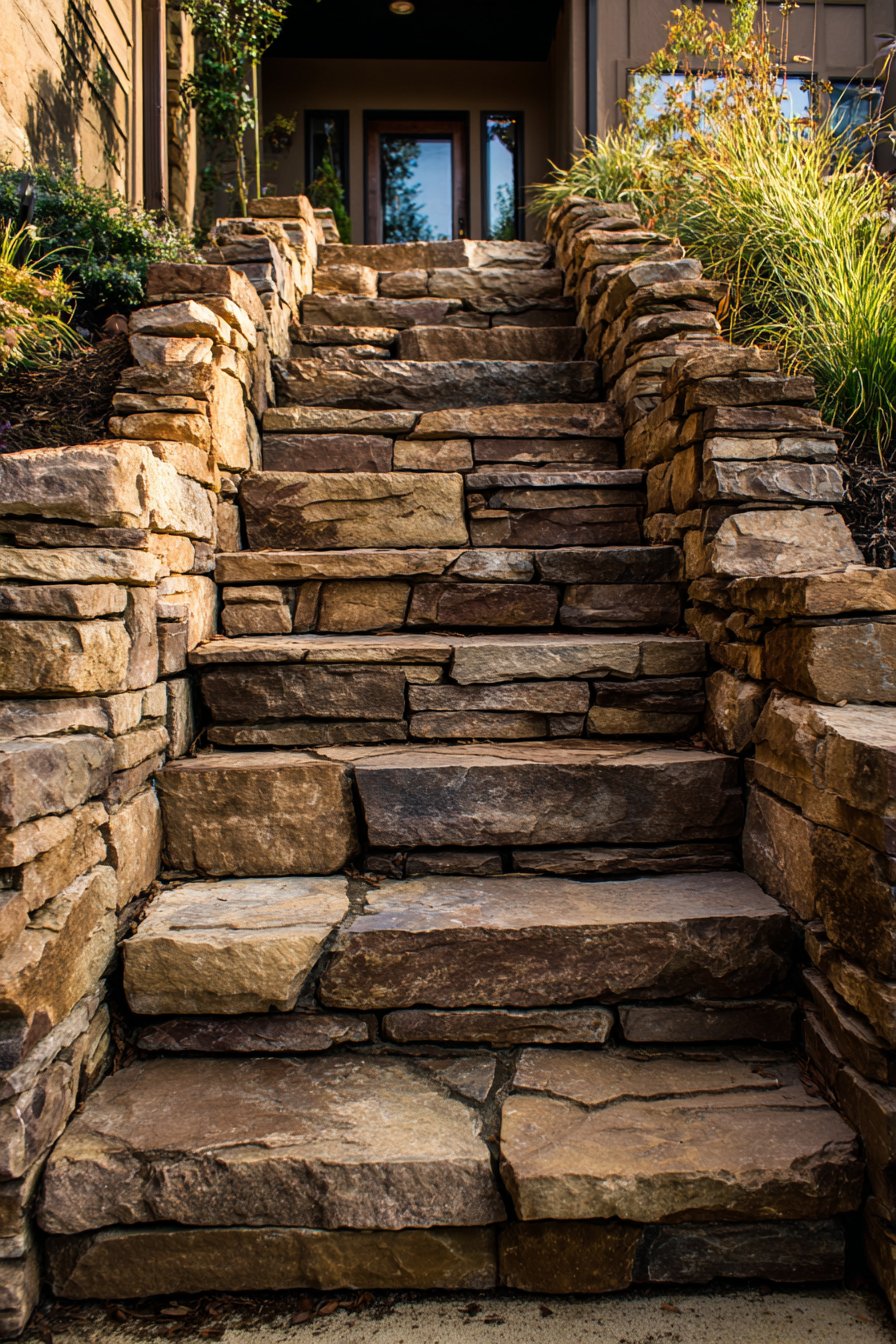
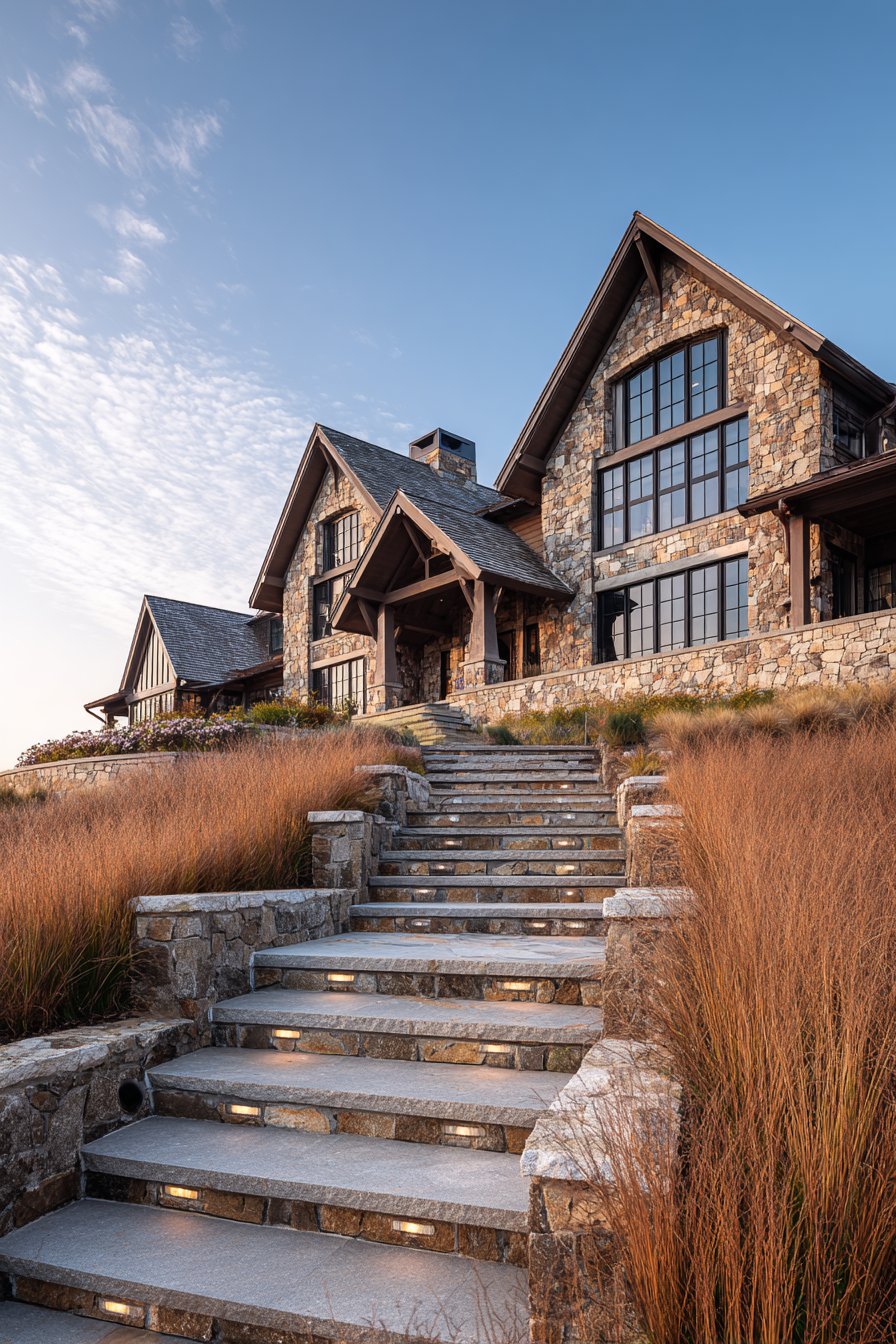
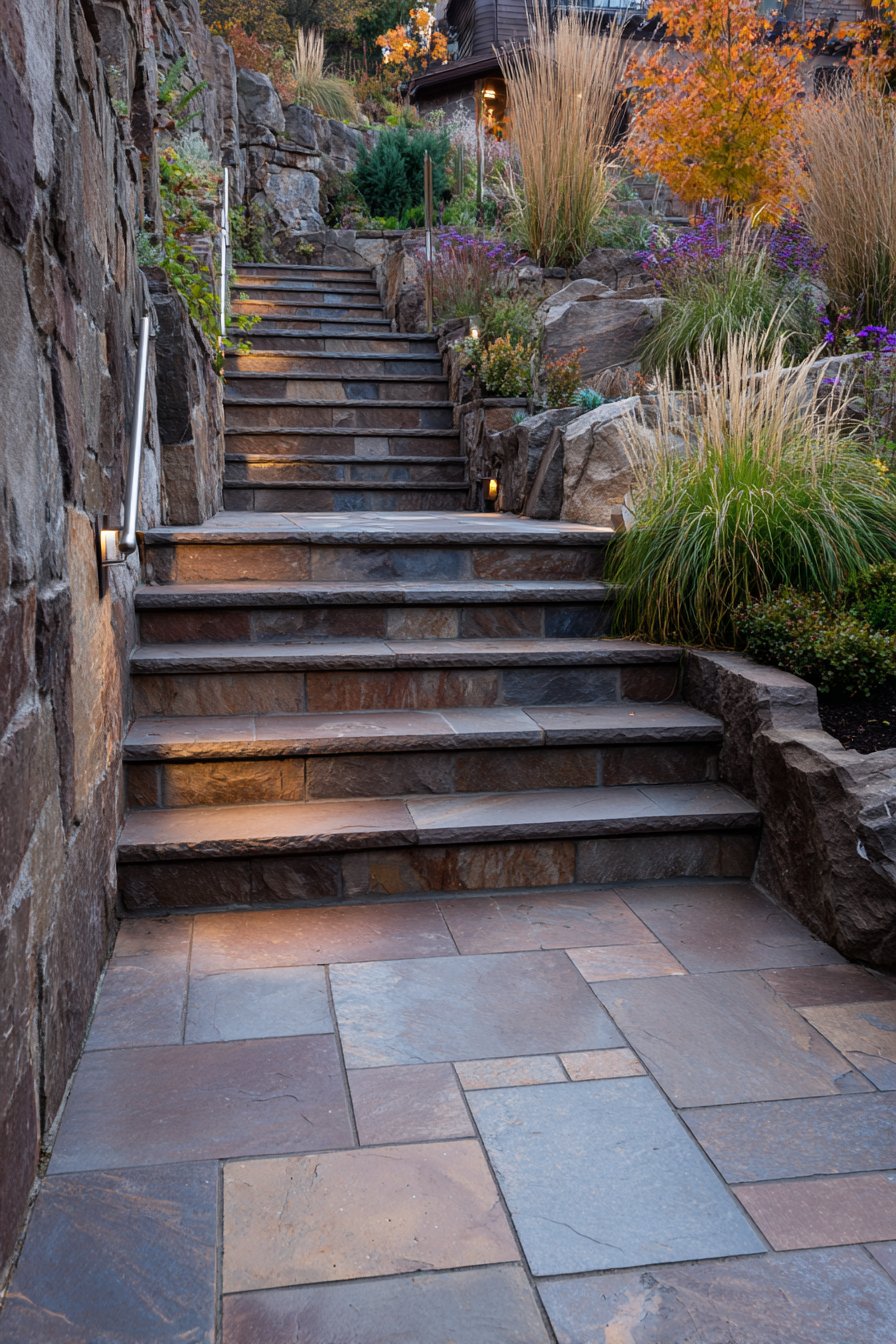
Natural bluestone creates welcoming front entrances with timeless elegance. The thermal finish provides slip resistance without compromising beauty. Wide treads accommodate comfortable ascent for all visitors. Low stone retaining walls flank both sides naturally. These walls define the pathway while adding dimensional interest.
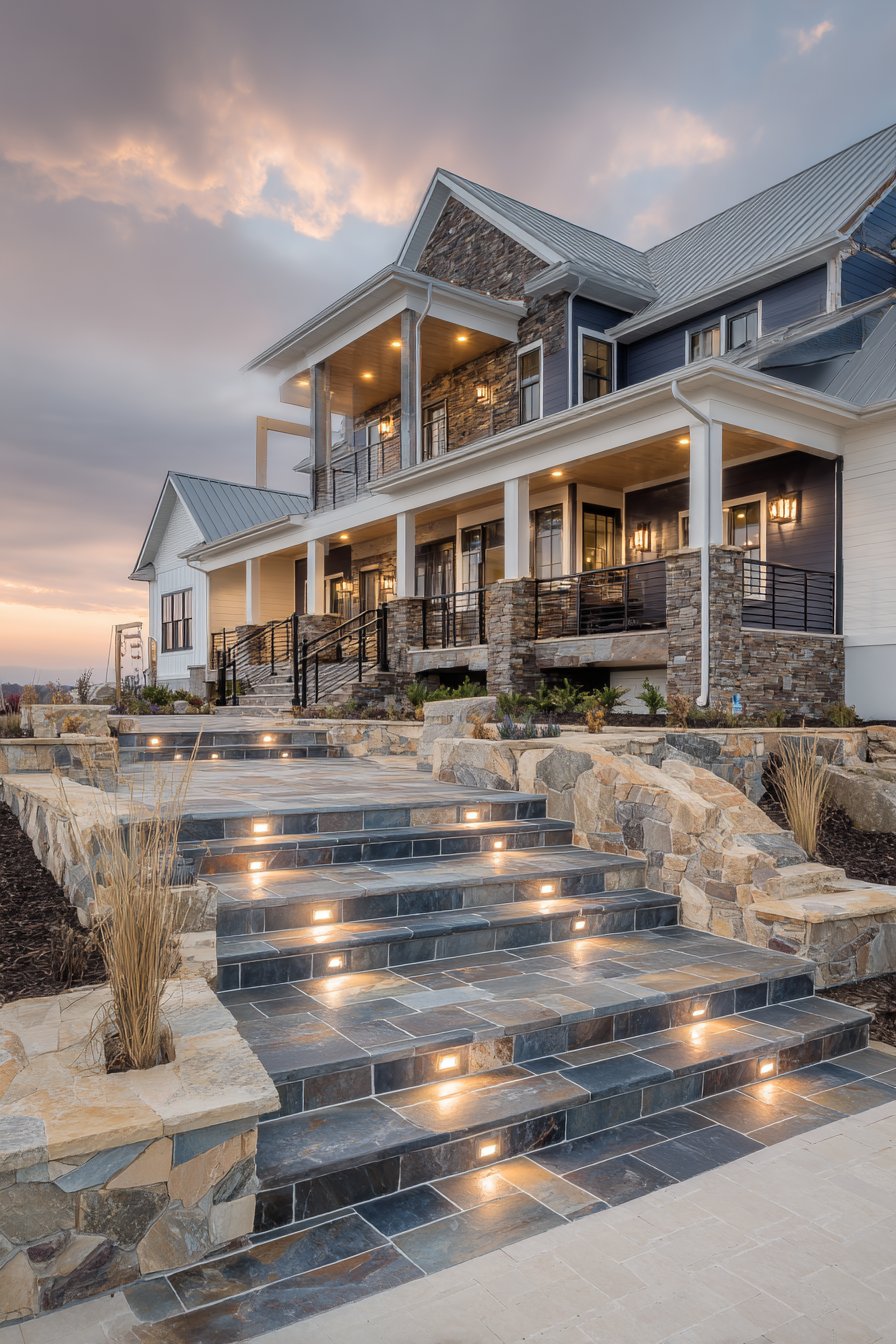
Integrated LED step lighting illuminates each riser for evening safety. The lights create ambient effects without harsh glare. Native ornamental grasses soften the hardscape edges beautifully. Low-growing perennials add seasonal color and texture. This combination balances structured elements with organic plantings.
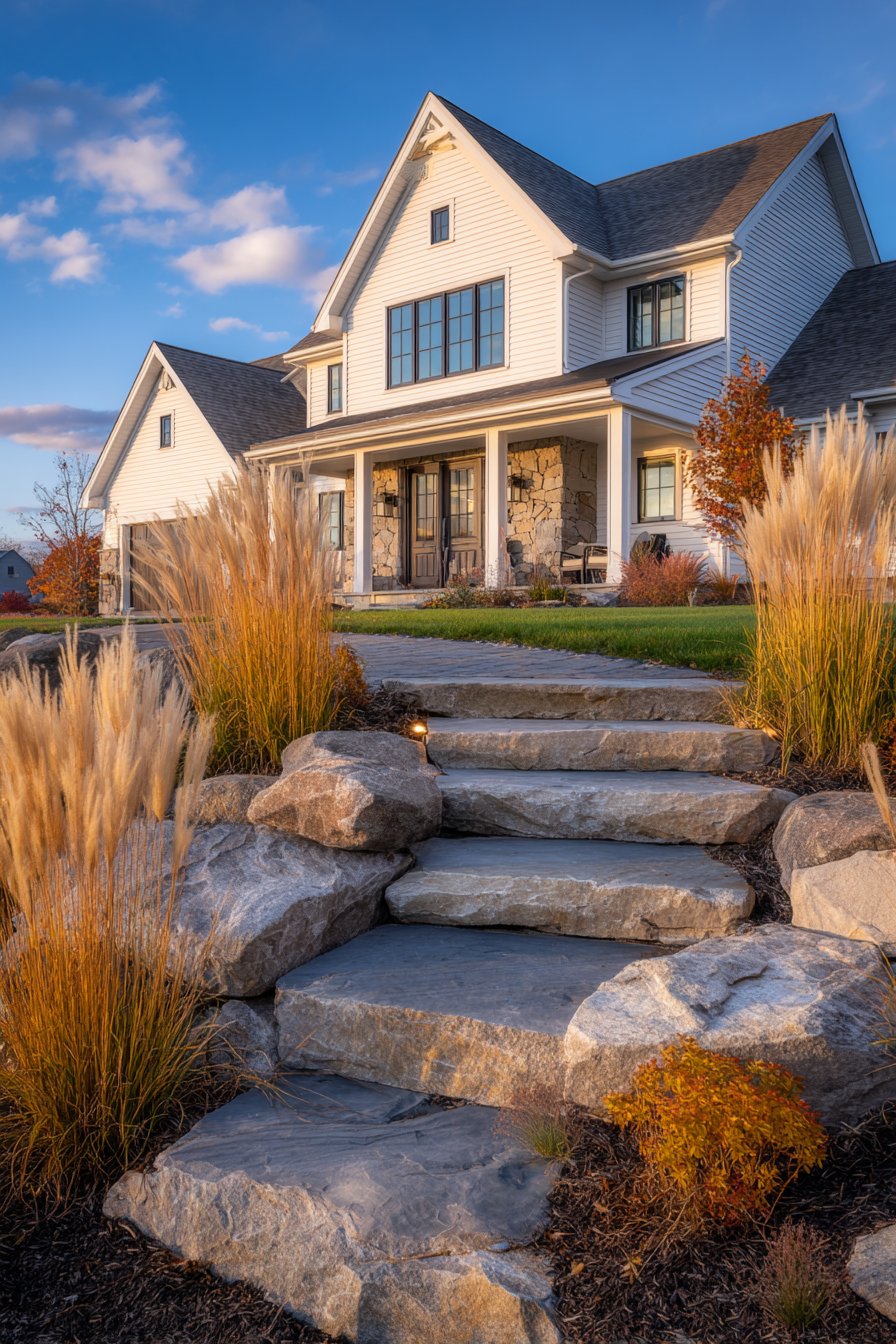
The blue-grey tones in bluestone vary naturally across each piece. Golden hour sunlight highlights these subtle color shifts dramatically. Gentle shadows emphasize the dimensional quality of the installation. The varied stone tones create visual interest without busy patterns. Professional installation ensures consistent riser heights and tread depths.
Key Design Tips:
- Select bluestone with thermal finish for natural slip resistance
- Install LED lighting in each riser for safety and ambiance
- Use native plants to soften hardscape edges naturally
- Maintain consistent riser heights between 6-8 inches
- Choose wide treads of at least 12 inches for comfortable ascent
- Flank stairs with low stone walls for definition
- Plan lighting placement during initial construction phase
2. Floating Concrete Treads with Modern Appeal
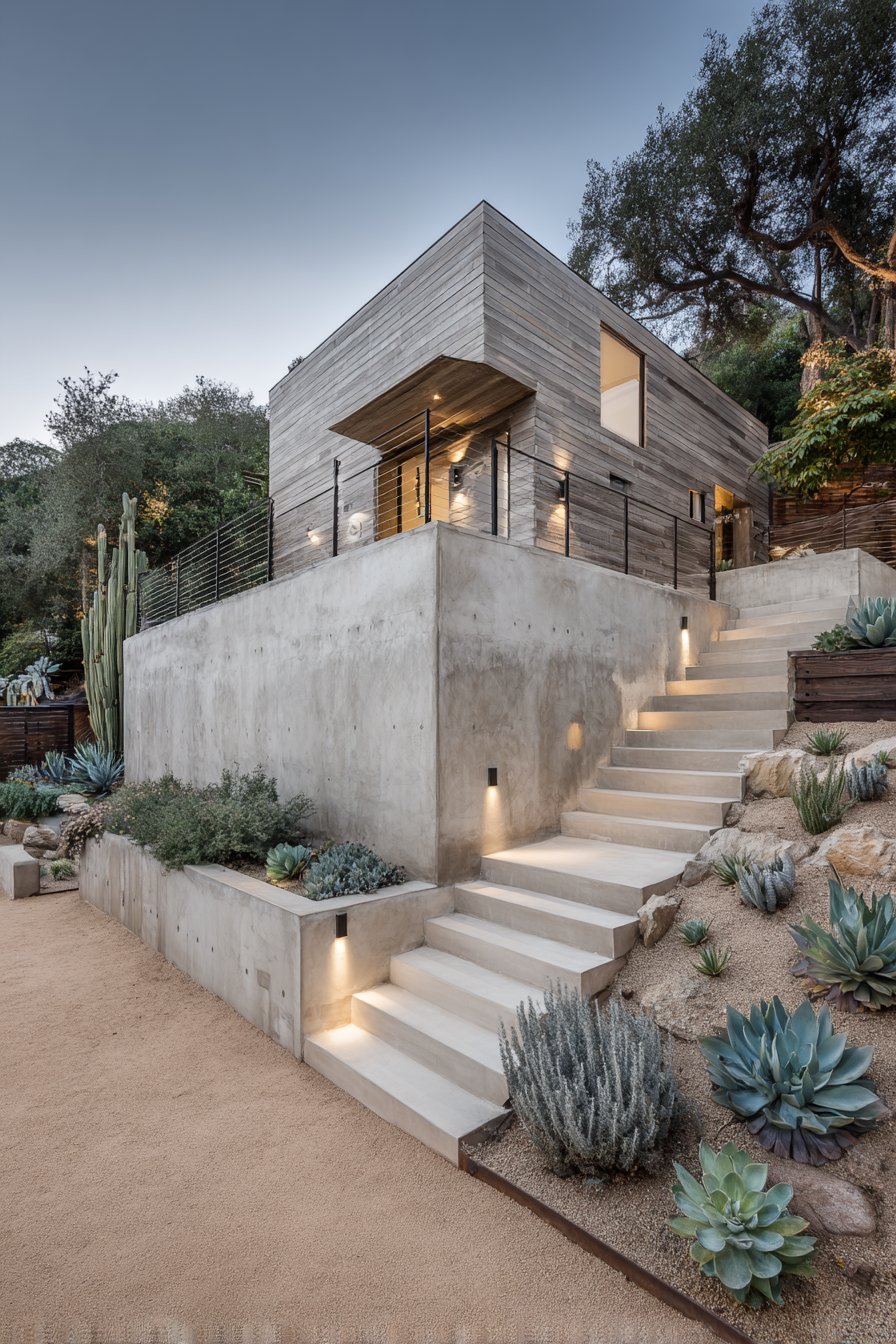
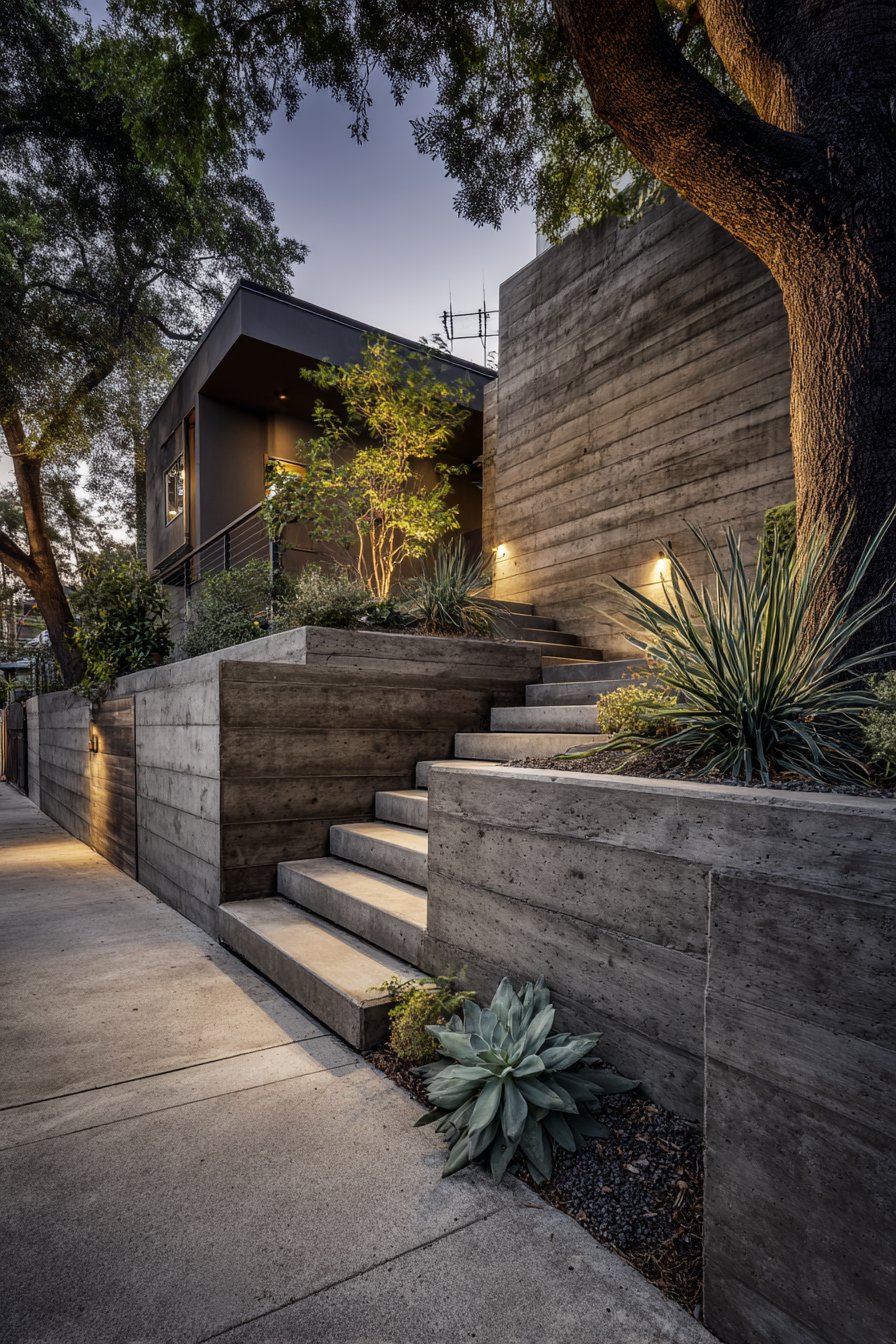
Contemporary outdoor stairways embrace minimalist principles through floating concrete treads. Each step cantilevers from textured board-formed concrete walls. The visual effect creates lightness despite substantial materials. Minimal steel cable railings maintain clean sight lines throughout. This design approach celebrates honest material expression beautifully.
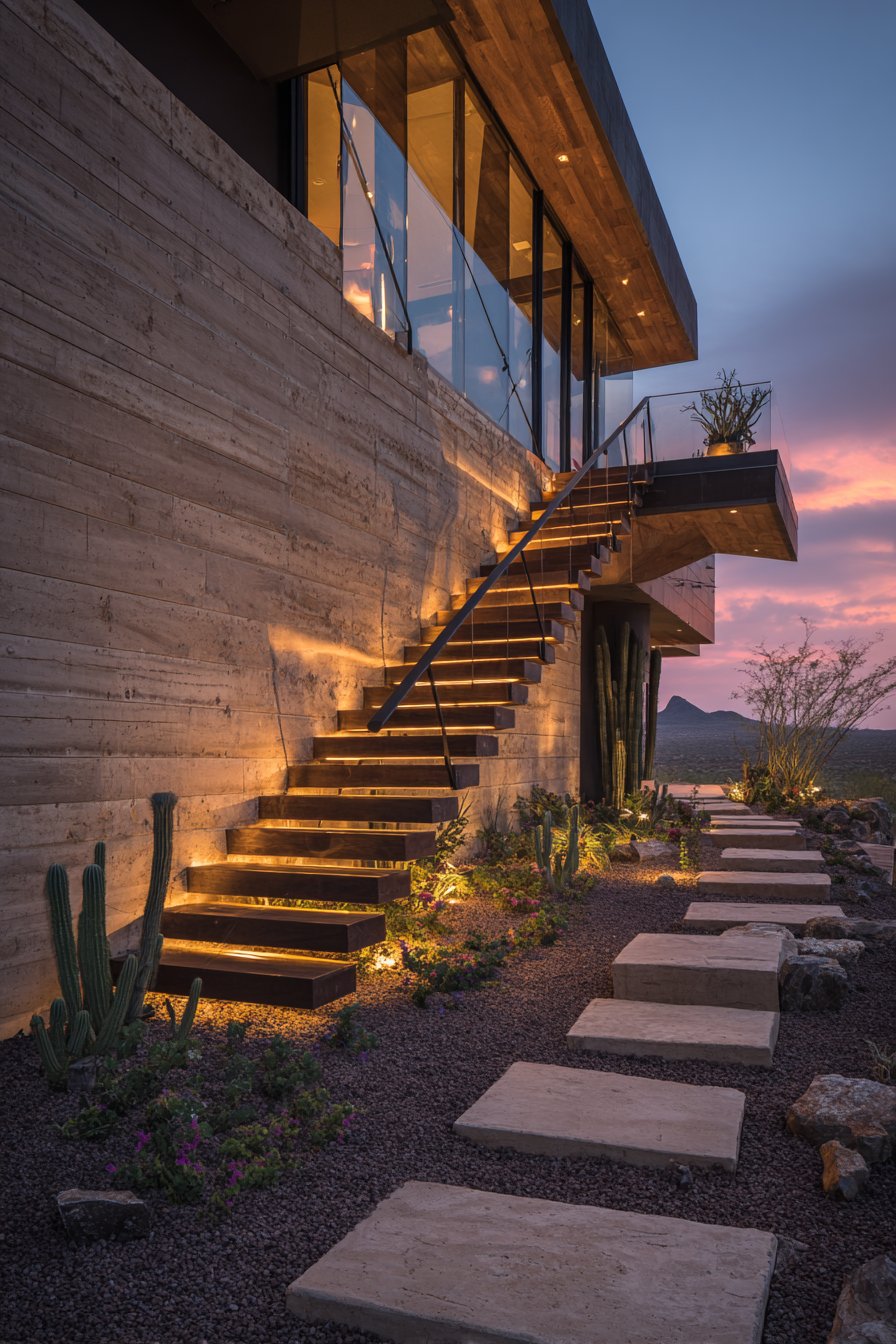
Board-formed concrete reveals wood grain texture from formwork. This subtle detail adds warmth to industrial materials. Each tread features slightly textured surfaces for traction. The textured finish prevents slipping while remaining visually clean. Strategic landscape lighting beneath each tread creates dramatic effects.
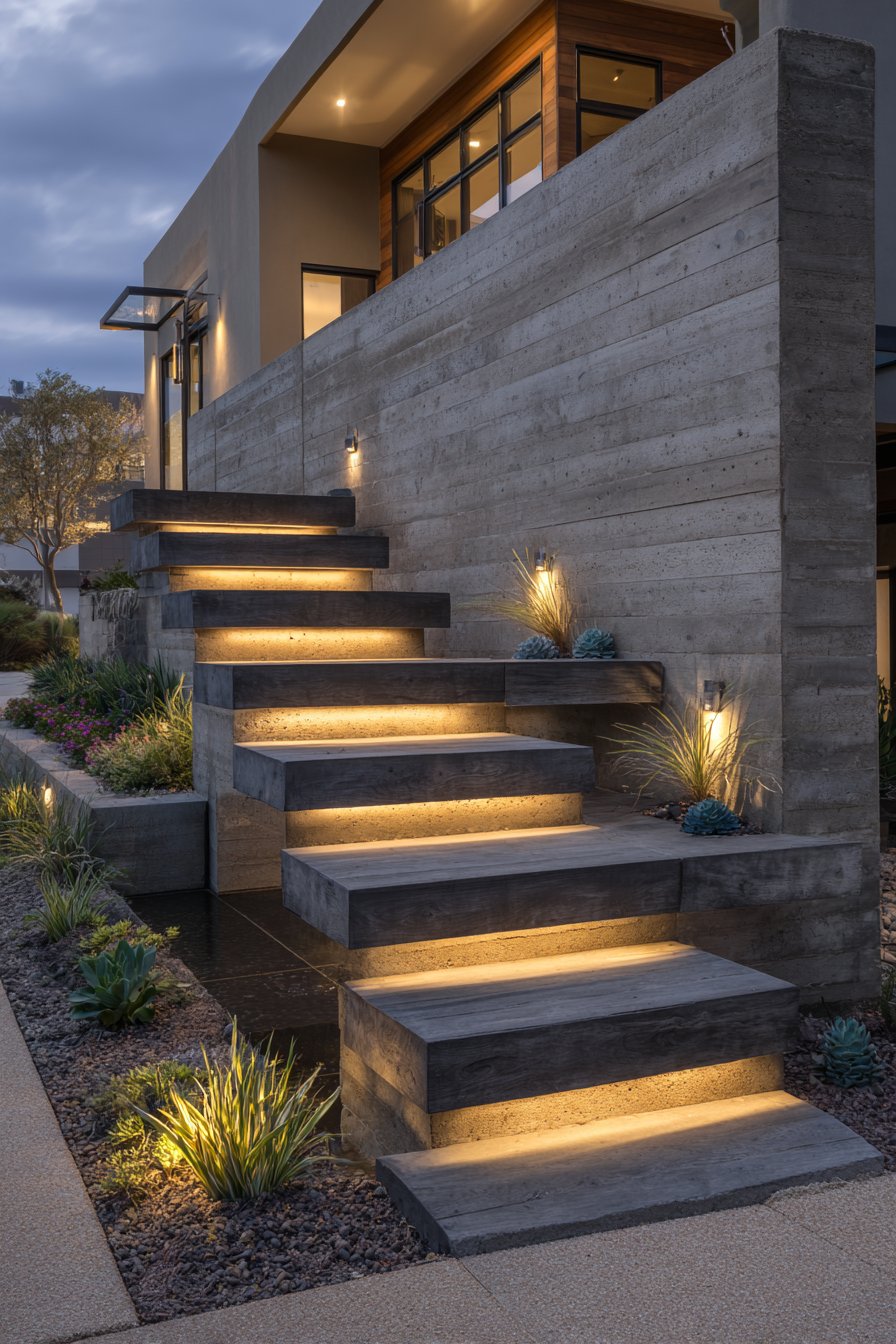
Drought-tolerant succulents surround the stairway installation naturally. Decorative gravel provides clean transitions between plantings and hardscape. The combination reduces maintenance while supporting sustainable practices. Twilight photography captures both natural and architectural lighting effects. The interplay between industrial materials and organic elements defines this design.
Key Design Tips:
- Use board-formed concrete for textured warmth
- Cantilever treads for floating visual effect
- Install steel cable railings to maintain views
- Add lighting beneath treads for drama
- Select drought-tolerant plants for sustainability
- Texture tread surfaces for slip resistance
- Balance industrial materials with organic plantings
3. Reclaimed Railroad Ties with Rustic Character
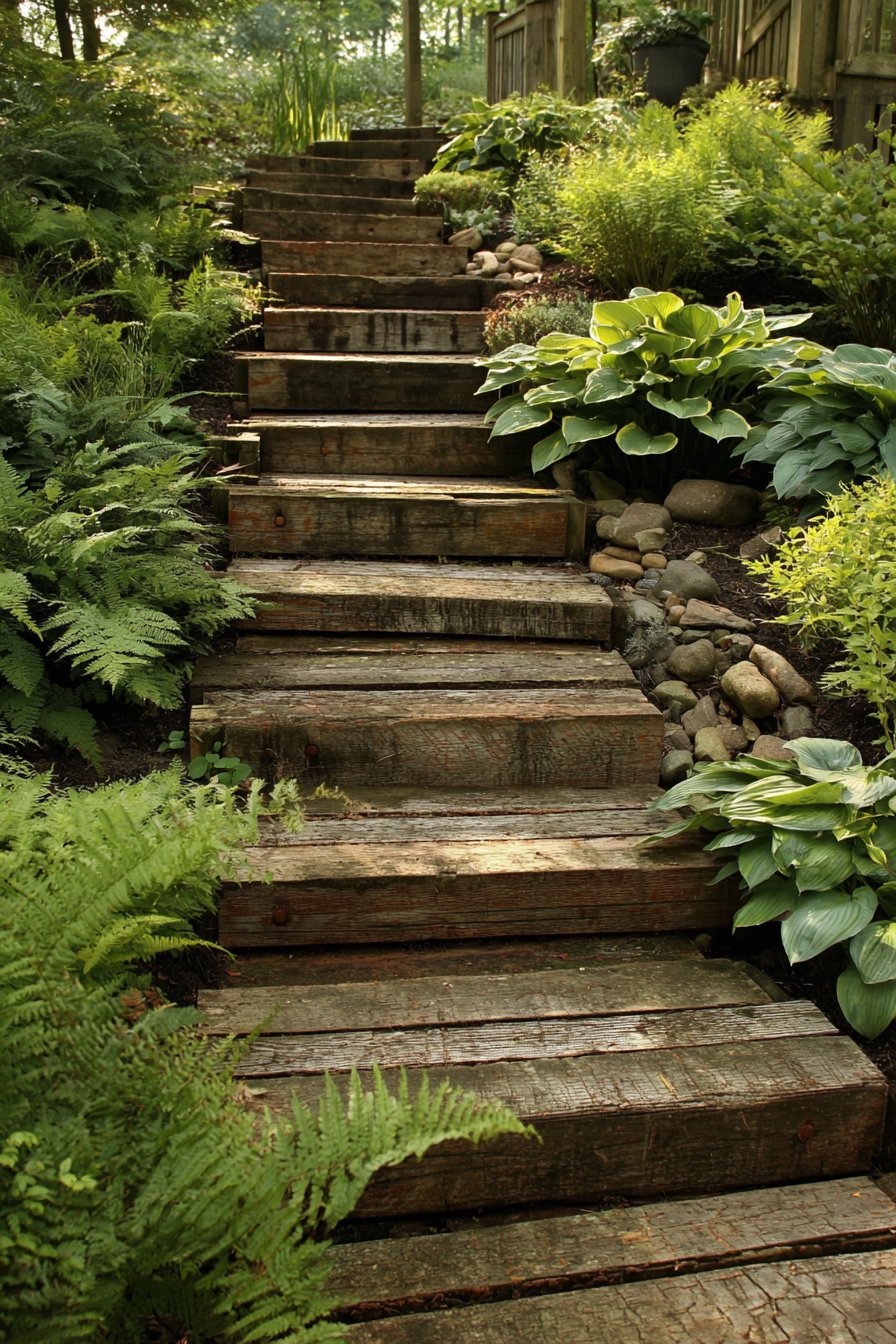
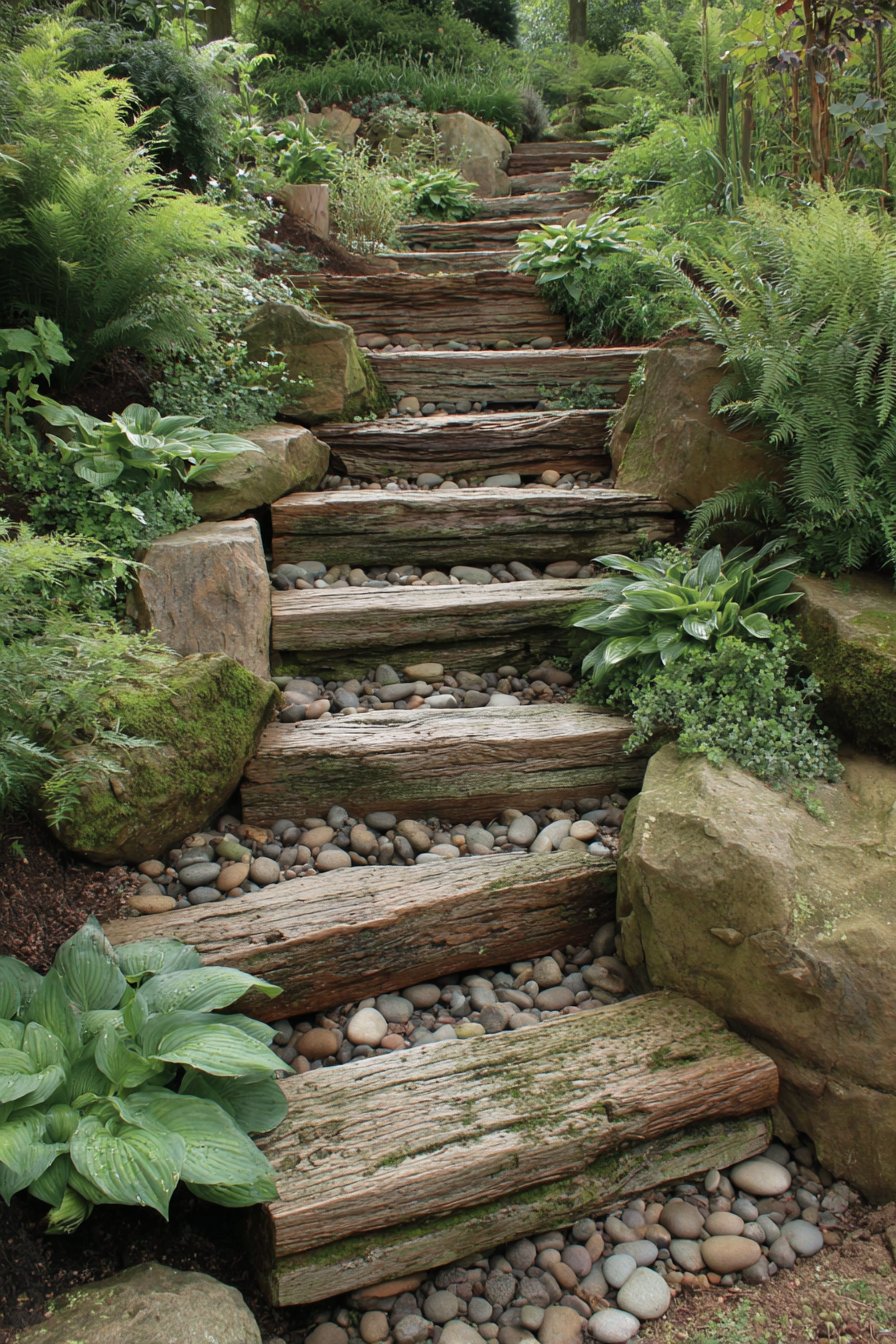
Reclaimed railroad ties bring authentic weathering and character to outdoor stairs. Natural aging creates unique patina that new materials cannot replicate. Irregular placement follows organic cascading patterns down gentle slopes. River rock drainage channels border the installation on both sides. These channels manage water flow while adding textural contrast.
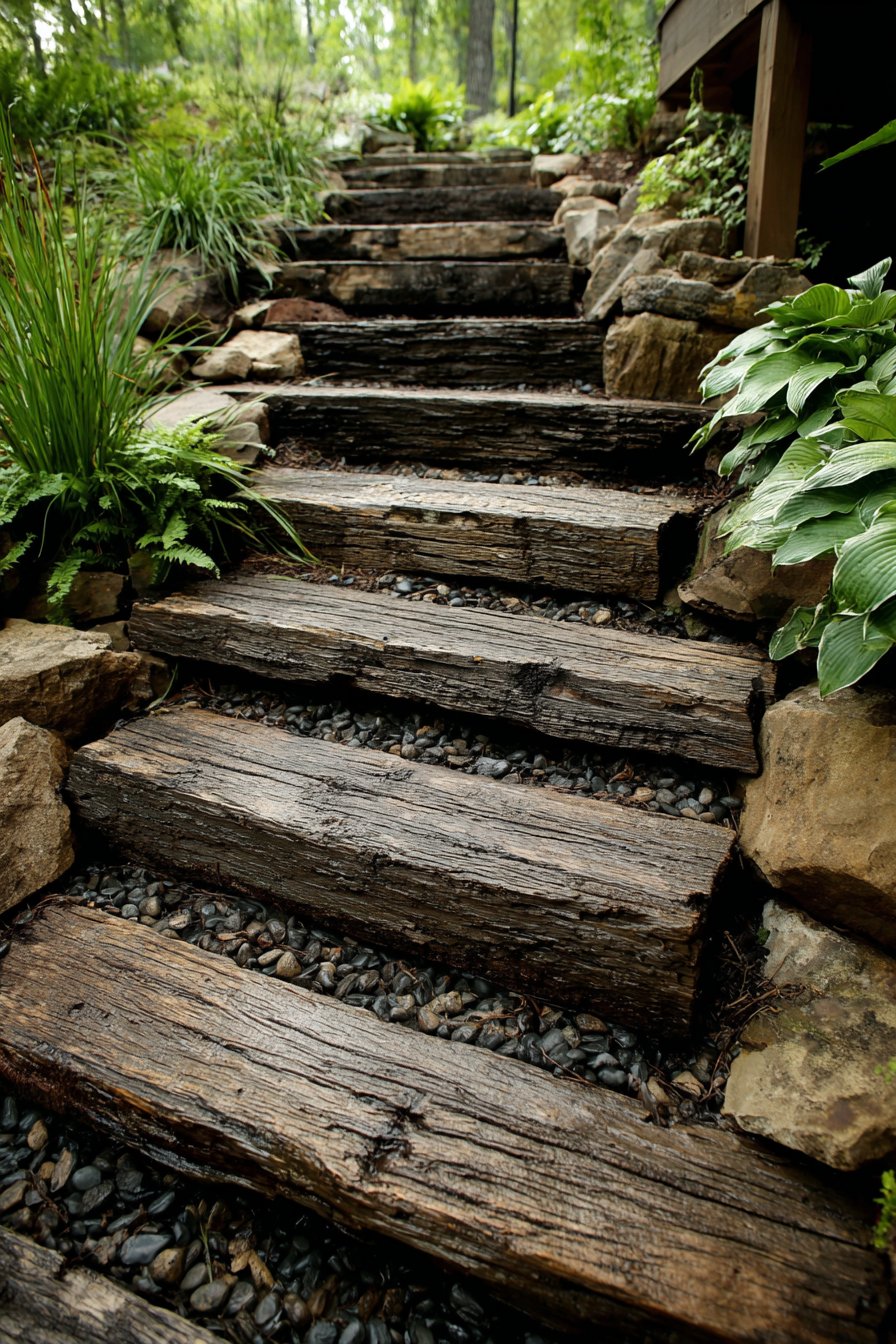
Native ferns nestle between steps in shaded areas naturally. Shade-loving hostas complement the woodland aesthetic beautifully. The aged wood shows authentic grain patterns throughout. Subtle color variations result from years of outdoor exposure. Moss growth in wood grain adds organic character.
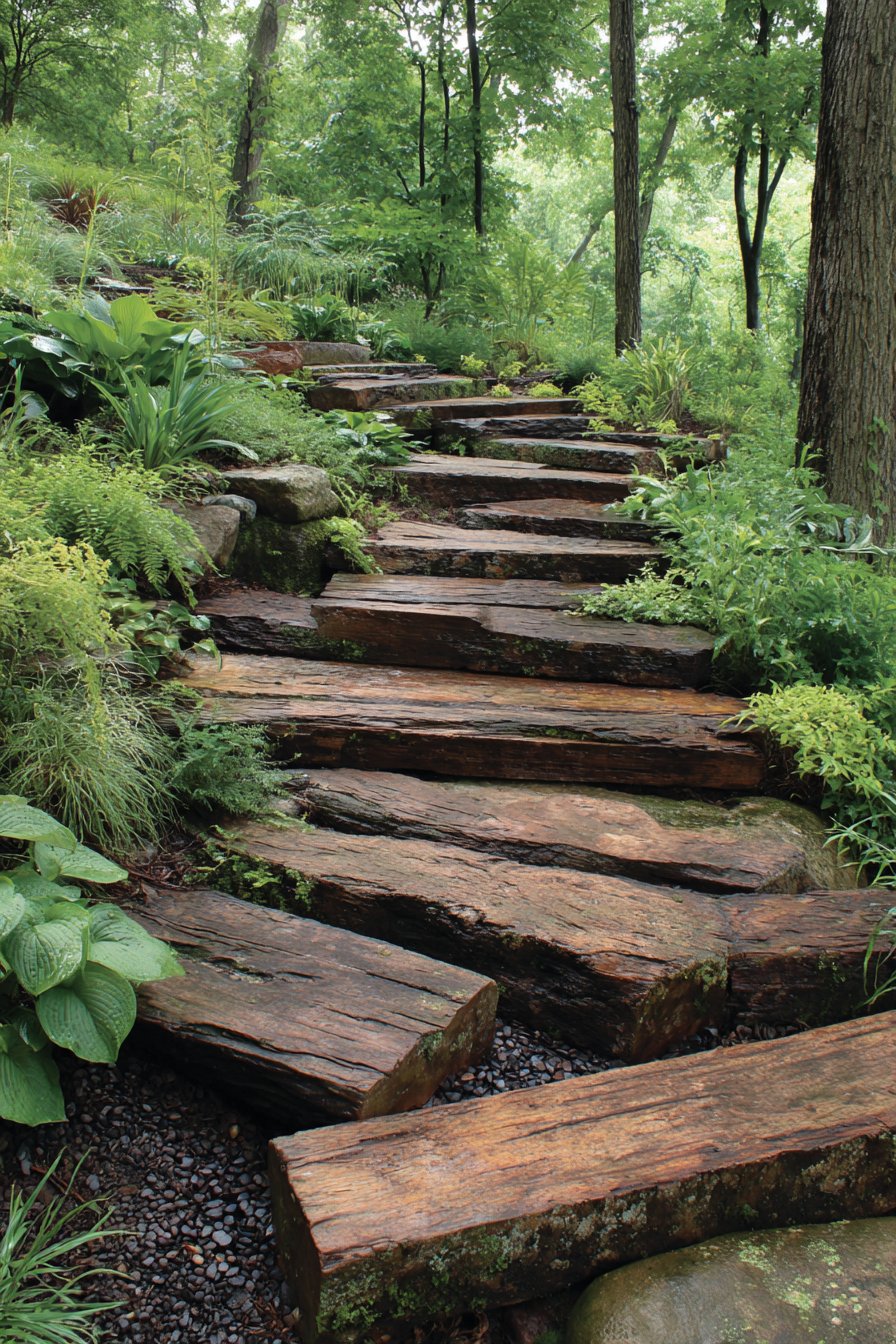
Natural diffused lighting from overcast conditions reveals texture details clearly. Harsh shadows disappear in soft natural light conditions. The rich wood tones deepen in moisture and shade. This design demonstrates harmonious integration with surrounding gardens. Wide-angle perspectives emphasize the organic flow through landscape.
Key Design Tips:
- Source reclaimed railroad ties from reputable suppliers
- Vary step placement for organic appearance
- Add river rock for drainage management
- Plant shade-loving species between steps
- Embrace natural weathering and moss growth
- Allow irregular spacing along gentle slopes
- Consider wood preservation treatments for longevity
4. Classic Brick with Limestone Accents
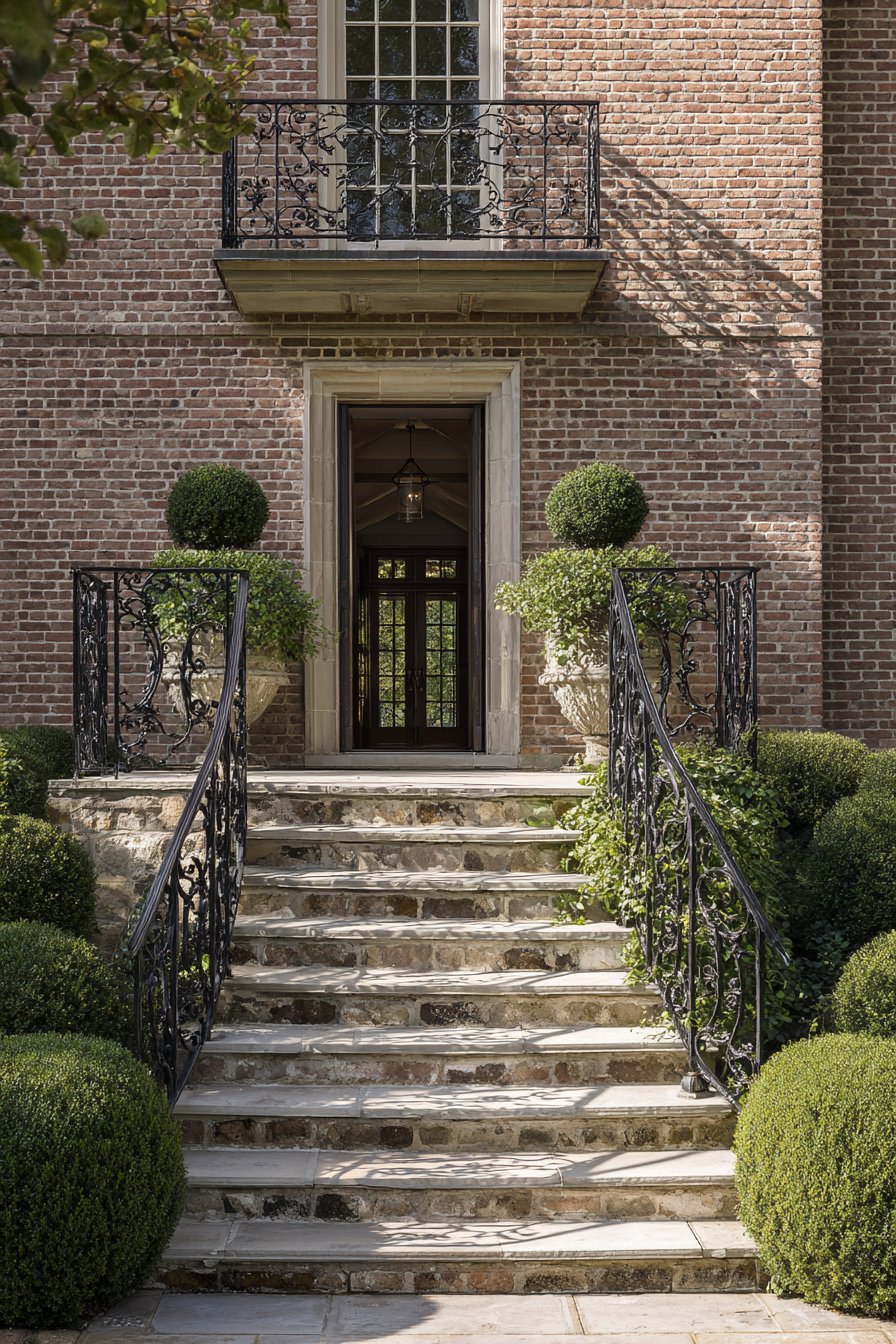
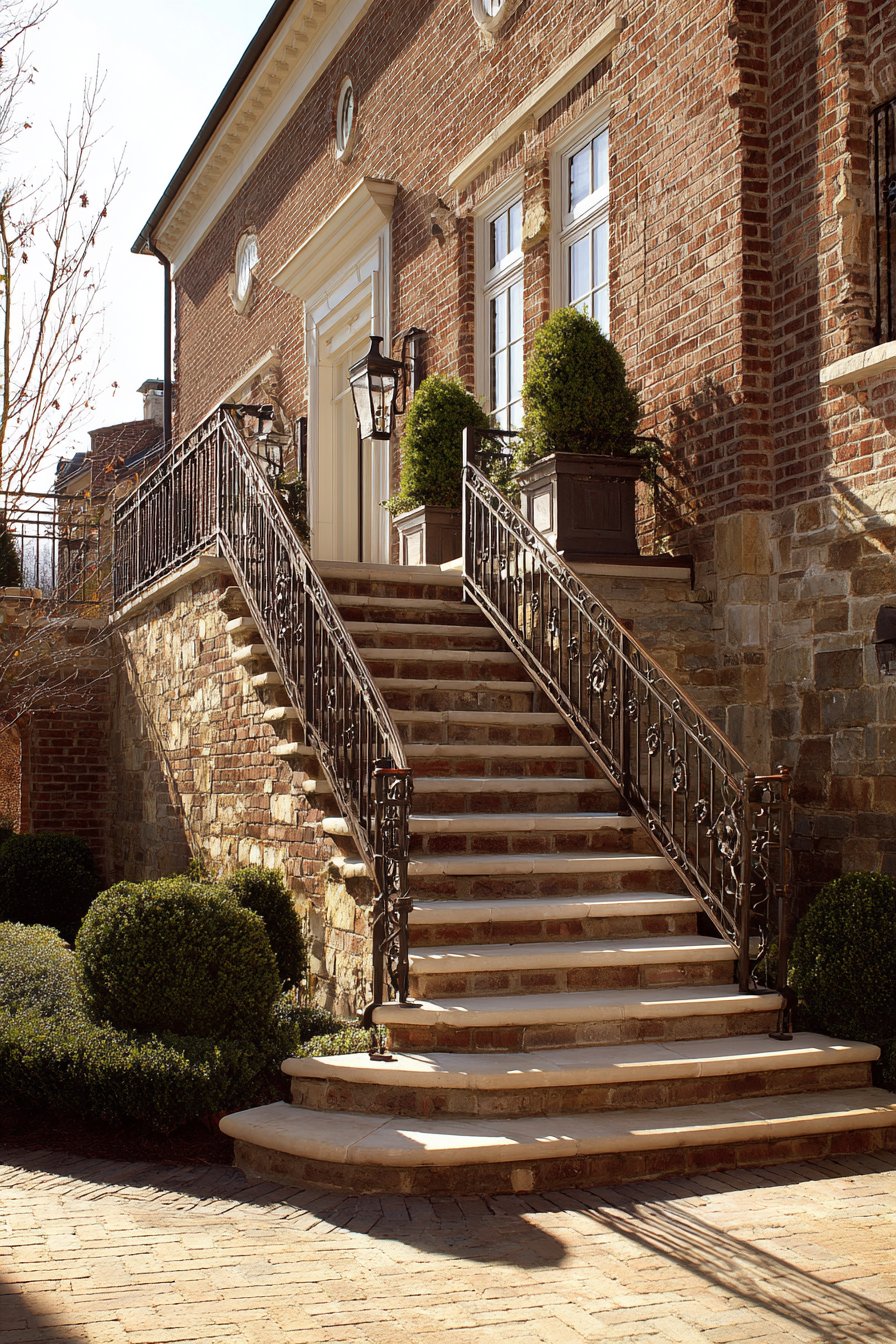
Formal brick outdoor staircases showcase traditional craftsmanship and timeless design. The running bond pattern creates rhythm in classic red clay brick. Contrasting limestone cap stones edge each tread distinctly. This material combination highlights individual steps visually. Ornamental iron railings provide safety with architectural interest.
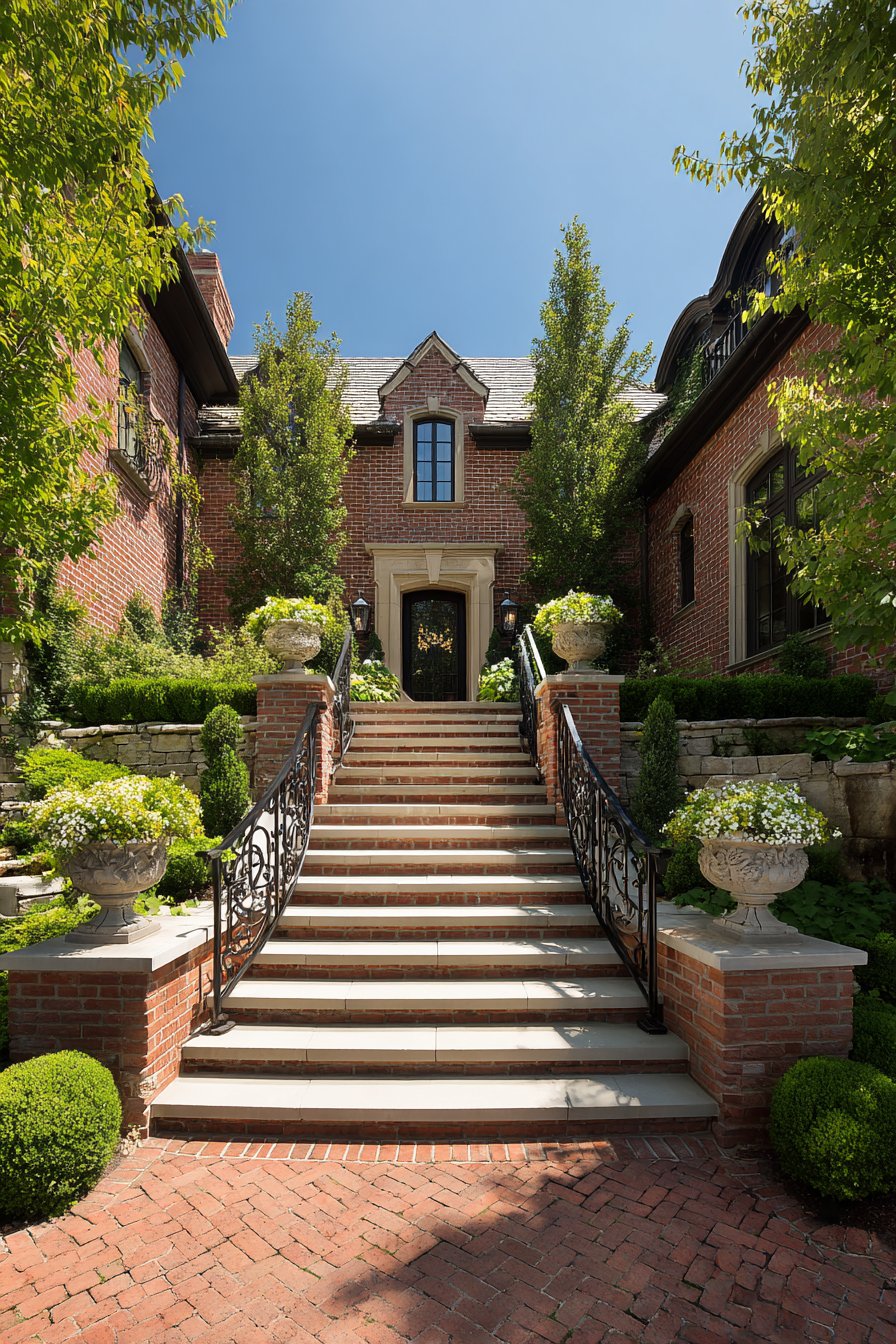
Scrollwork details in the ironwork reflect historical design traditions. The craftsmanship speaks to quality construction standards. Symmetrical boxwood plantings frame both sides in matching planters. The formal symmetry reinforces traditional design principles throughout. Morning sunlight creates distinct shadows across the brickwork.
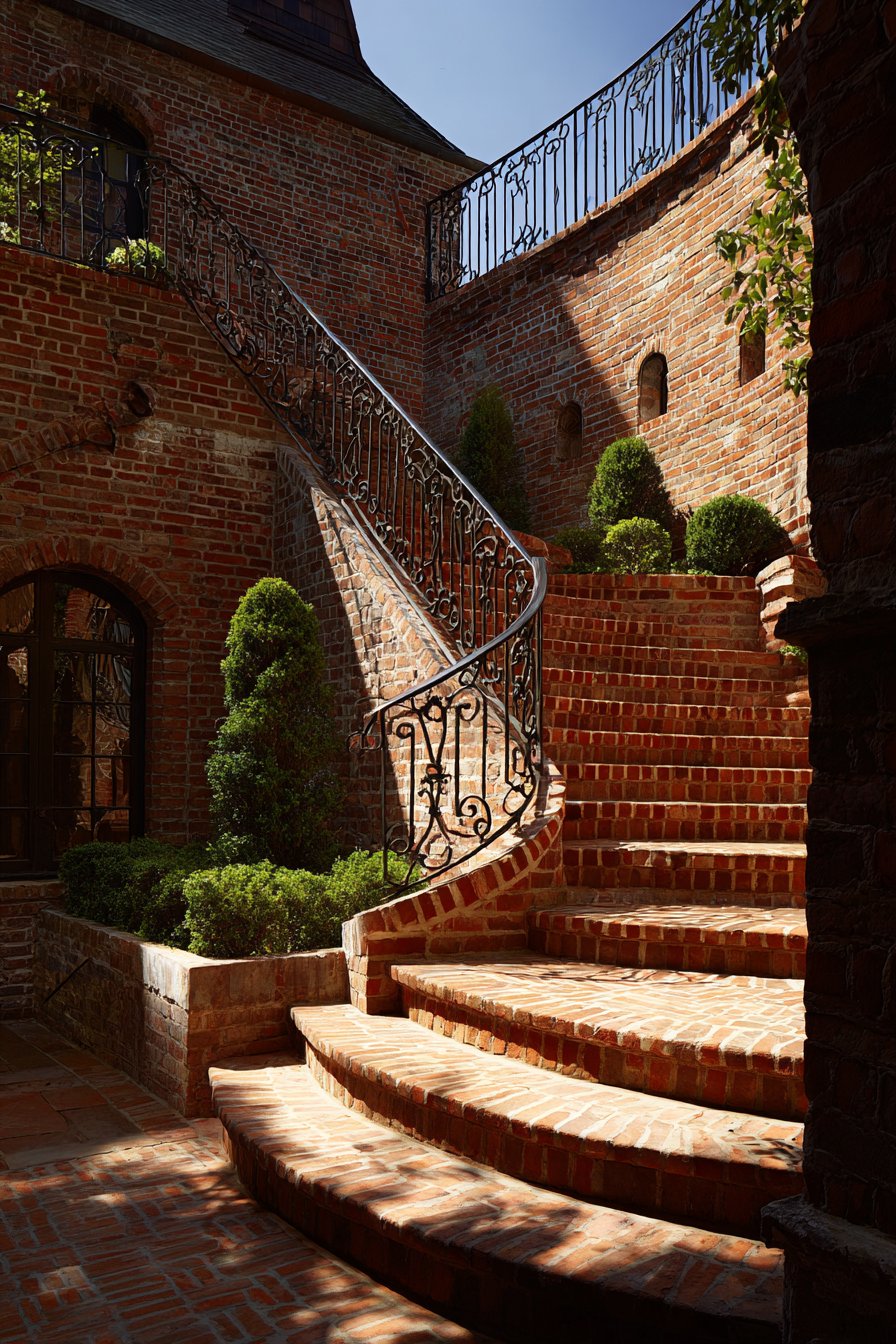
The dimensional coursing becomes obvious in directional light. Each brick’s placement demonstrates skilled masonry work clearly. The contrast between red brick and pale limestone enhances visibility. Limestone naturally weathers differently than clay brick does. This creates evolving visual interest over years of exposure.
Key Design Tips:
- Use running bond pattern for classic appeal
- Add limestone cap stones for tread definition
- Install ornamental iron railings with scrollwork
- Create symmetrical plantings for formal balance
- Ensure proper mortar joints for weather resistance
- Choose traditional red clay brick for authenticity
- Maintain consistent grout lines throughout installation
5. Sustainable Ipe Wood with Steel Support
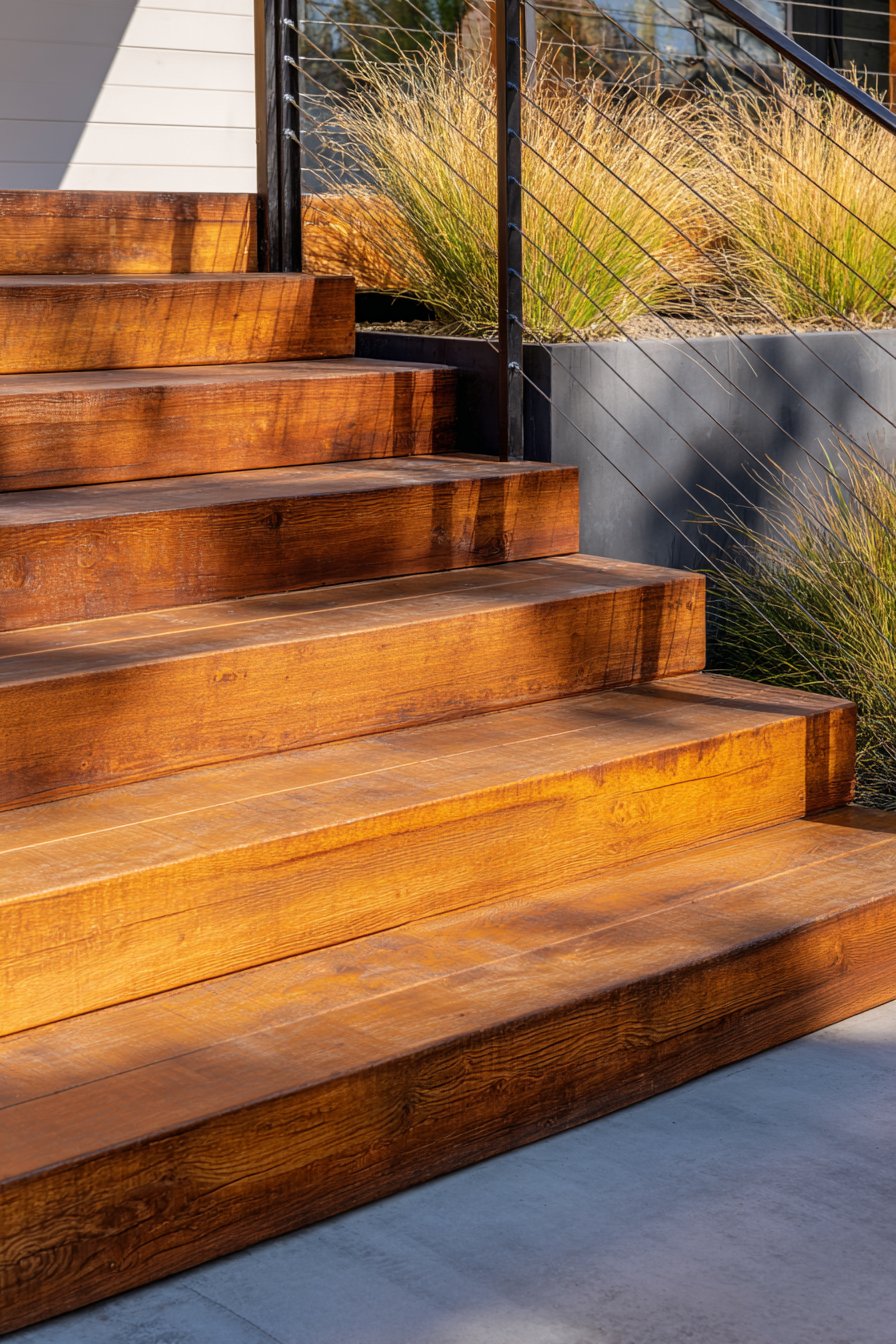
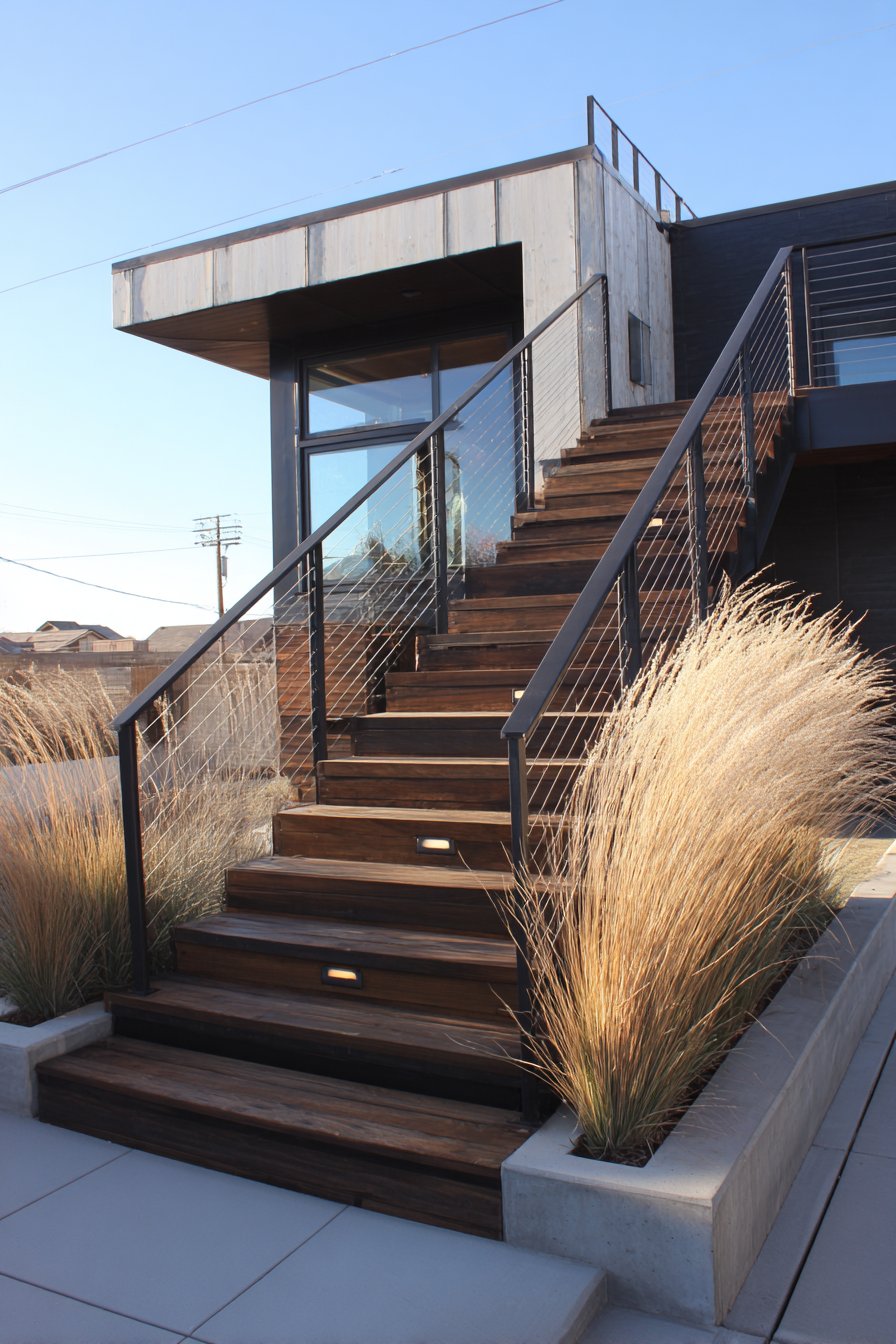
Modern outdoor stairs combine sustainable ipe wood with minimalist steel frames. Wide timber treads showcase ipe’s natural durability beautifully. The rich brown tones deepen with outdoor exposure naturally. Steel frame structures provide support without visual bulk. Horizontal cable infill railings maintain contemporary aesthetic throughout.
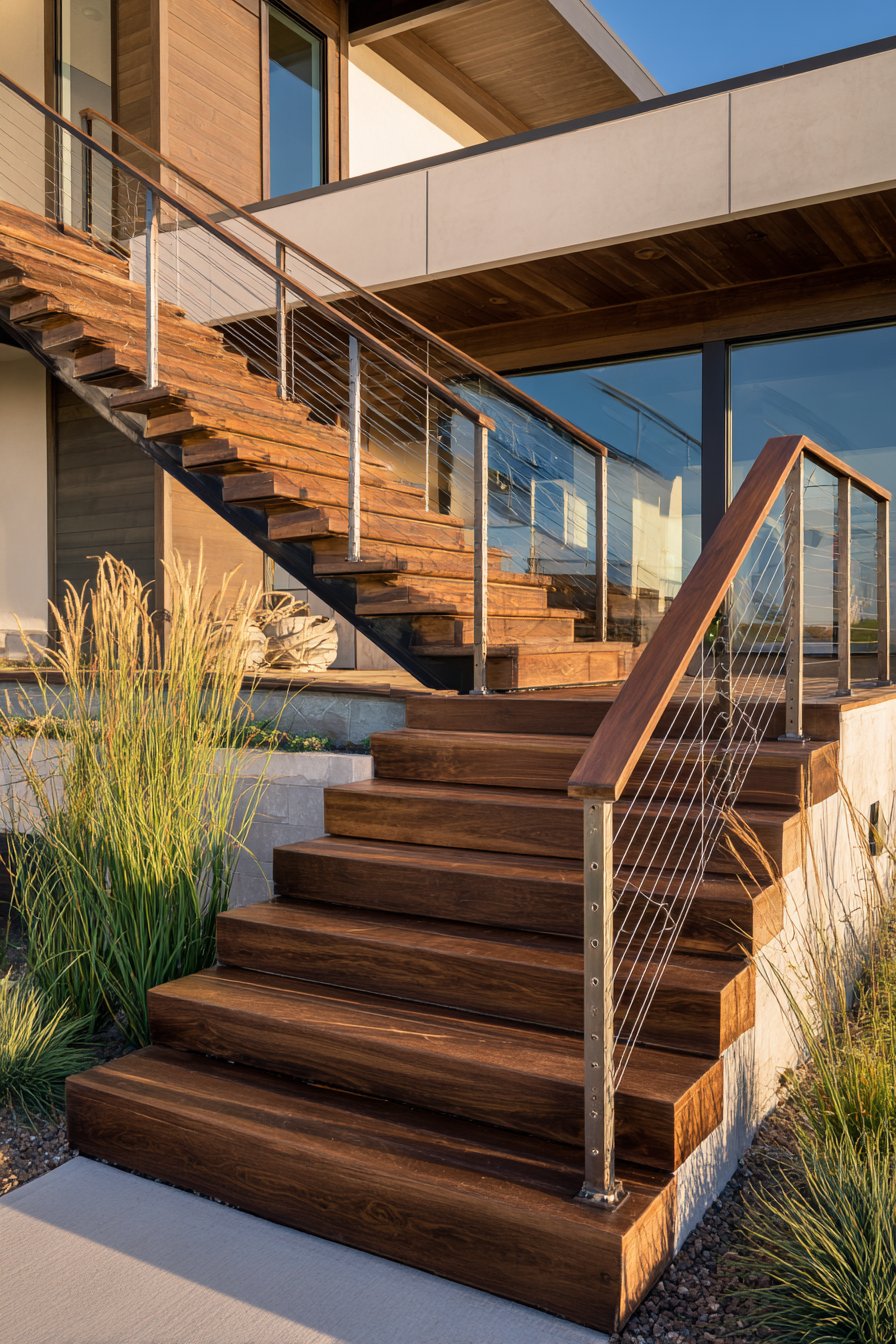
Ipe wood resists rot, insects, and weathering exceptionally well. The natural oils within the wood provide inherent protection. Protective oil finishes enhance the subtle sheen periodically. Natural grain variations create visual interest across each tread. The wood requires minimal maintenance compared to softer species.
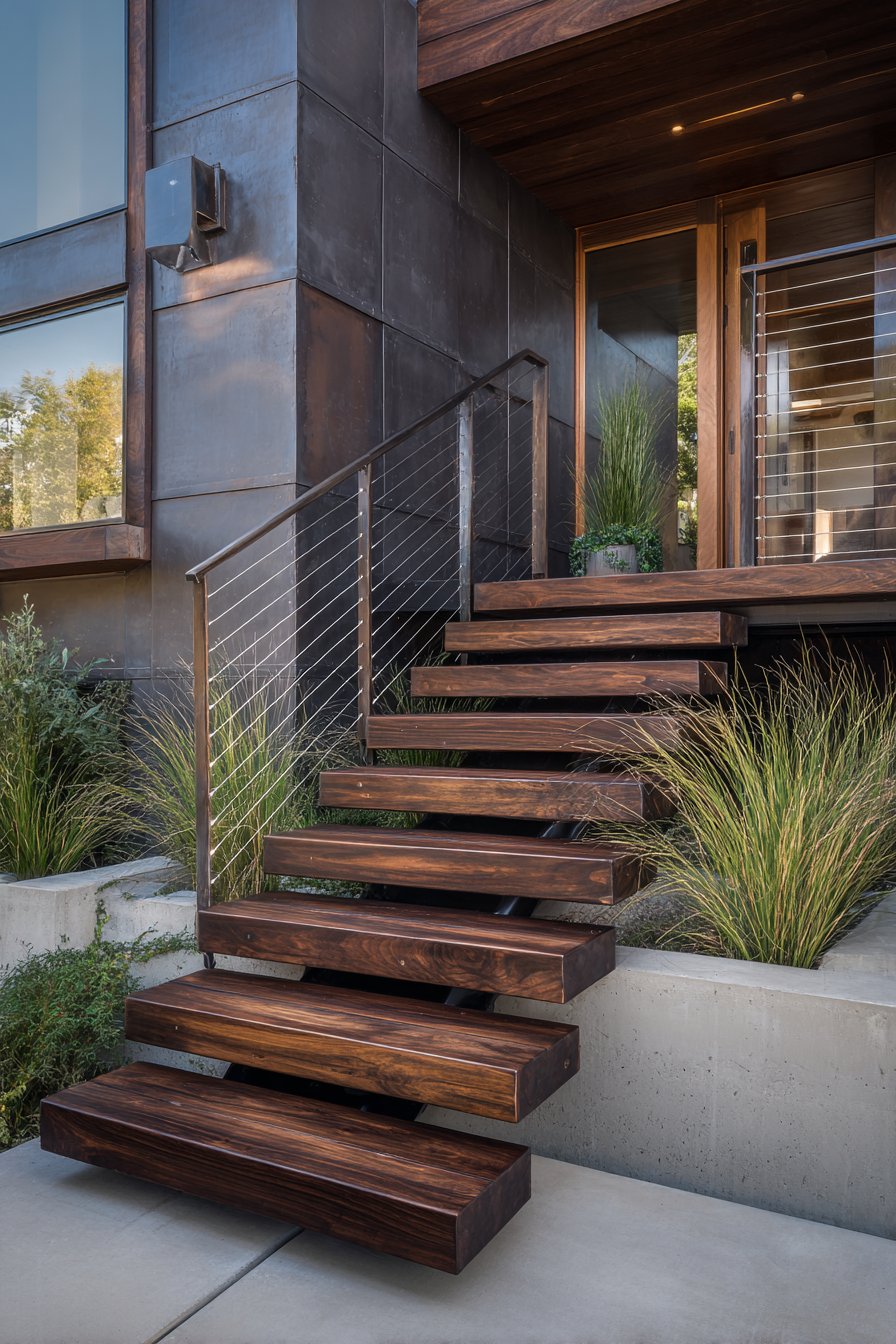
Integrated planter boxes along side walls add organic elements. Ornamental grasses sway gently in these planted areas. The movement contrasts with rigid structural components beautifully. Late afternoon sunlight highlights warm wood tones dramatically. The contrast against cool grey concrete foundations enhances both materials.
Key Design Tips:
- Choose sustainably harvested ipe for environmental responsibility
- Support wood treads with steel frame structures
- Apply protective oil finish every 12-18 months
- Install horizontal cable railings for modern appeal
- Add integrated planters for organic softness
- Ensure proper drainage beneath wood treads
- Allow natural color evolution over time
6. Curved Concrete Following Natural Topography
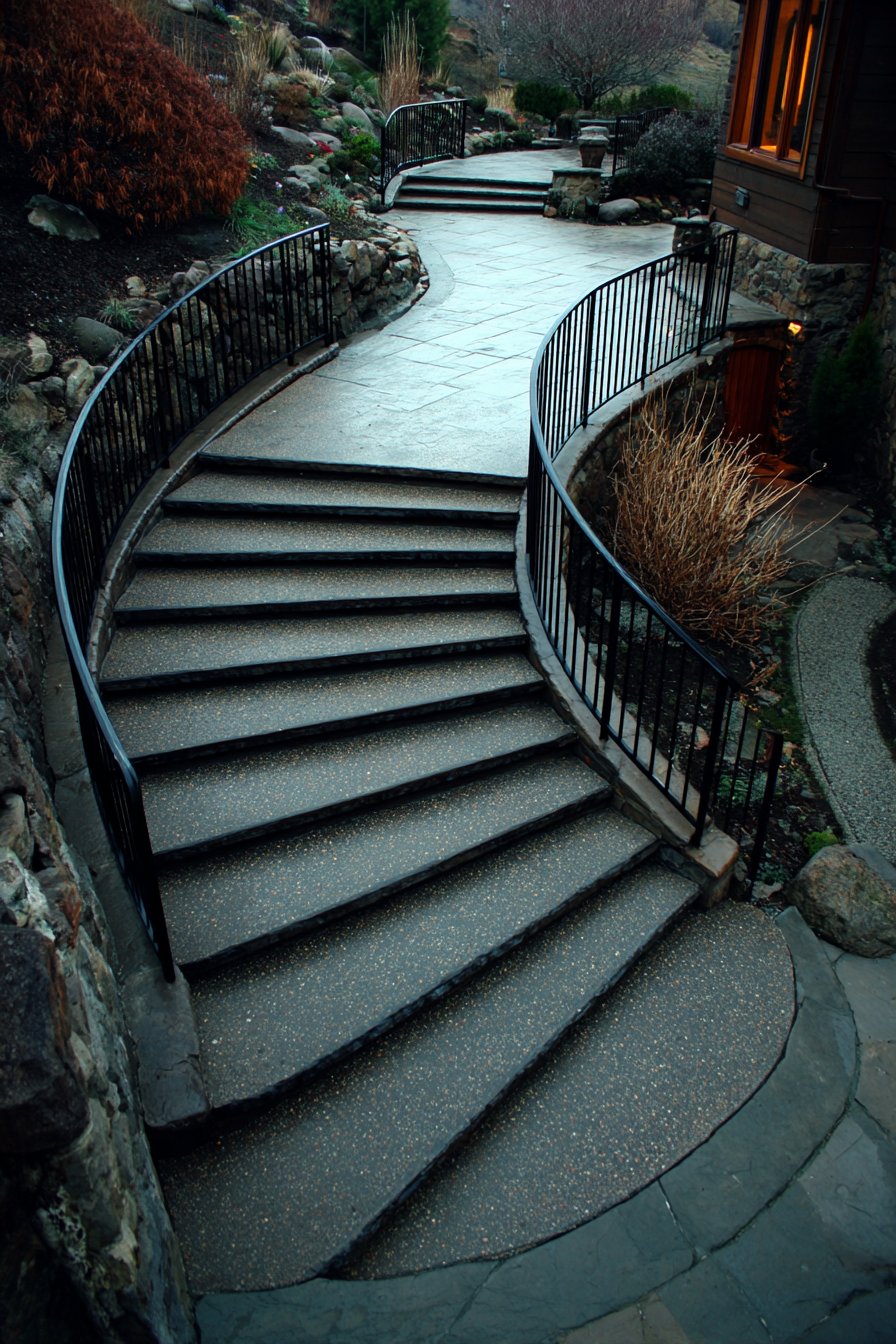
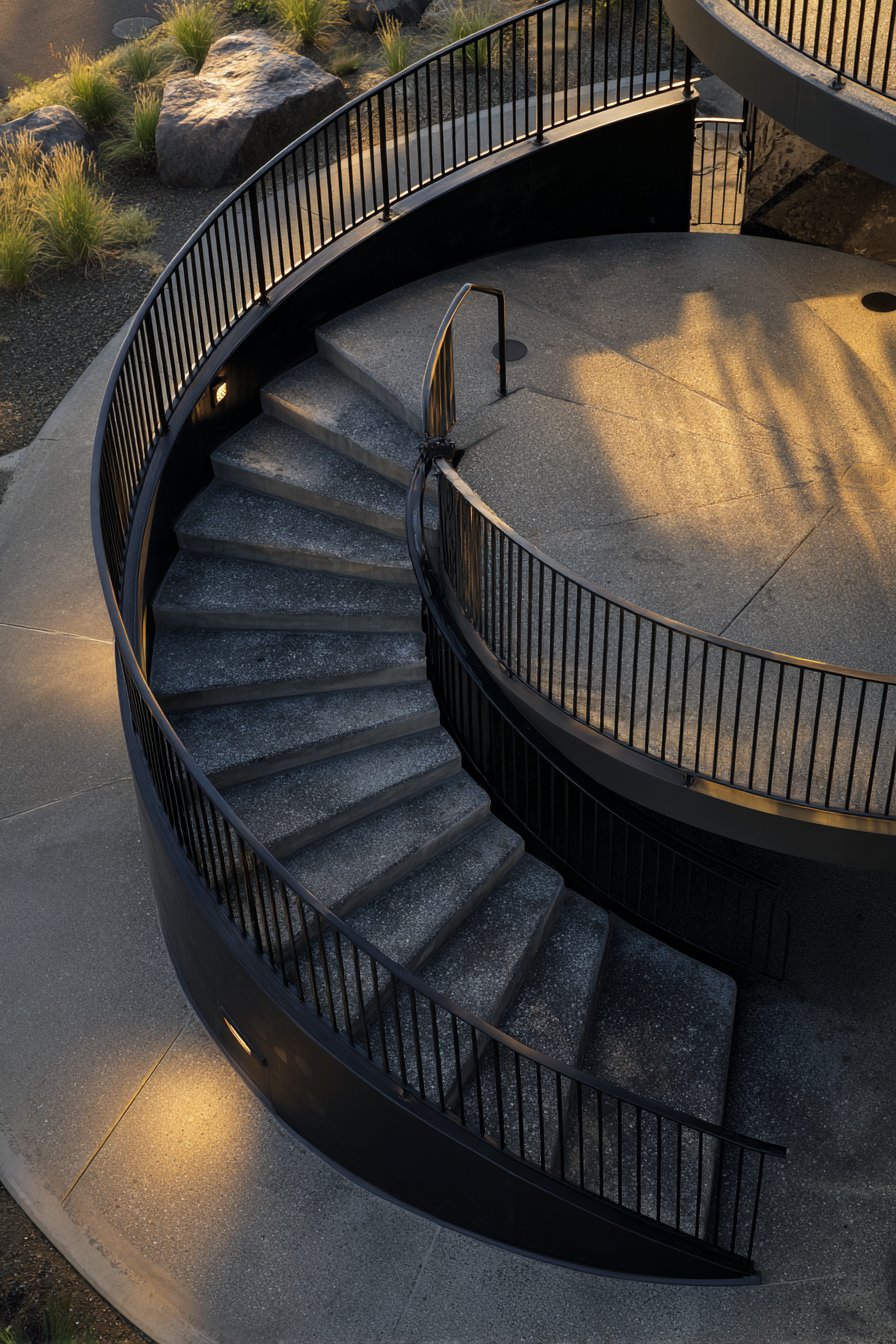
Curved outdoor stairways demonstrate sculptural concrete possibilities through organic forms. Poured-in-place construction allows gentle arcs following natural terrain. Integral color admixtures create warm grey tones throughout. Custom steel handrails provide continuous support along the curve. Powder-coated black finishes resist weathering while maintaining appearance.
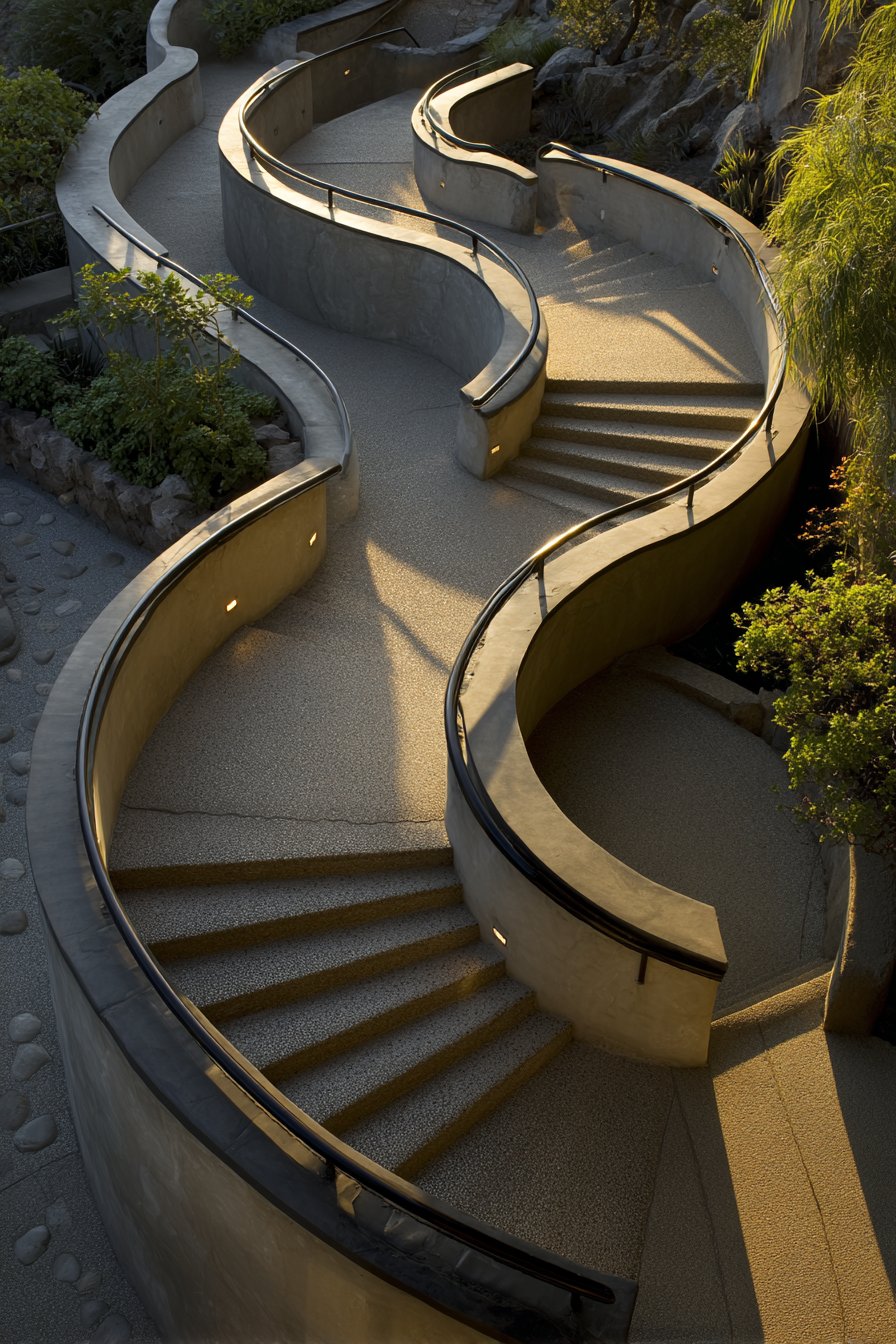
Each tread features broom finish for slip resistance naturally. The textured surface provides traction without aggressive patterns. Exposed aggregate becomes visible at edges from weathering. This reveals the concrete composition over time authentically. Landscape lighting in adjacent planters illuminates the pathway safely.
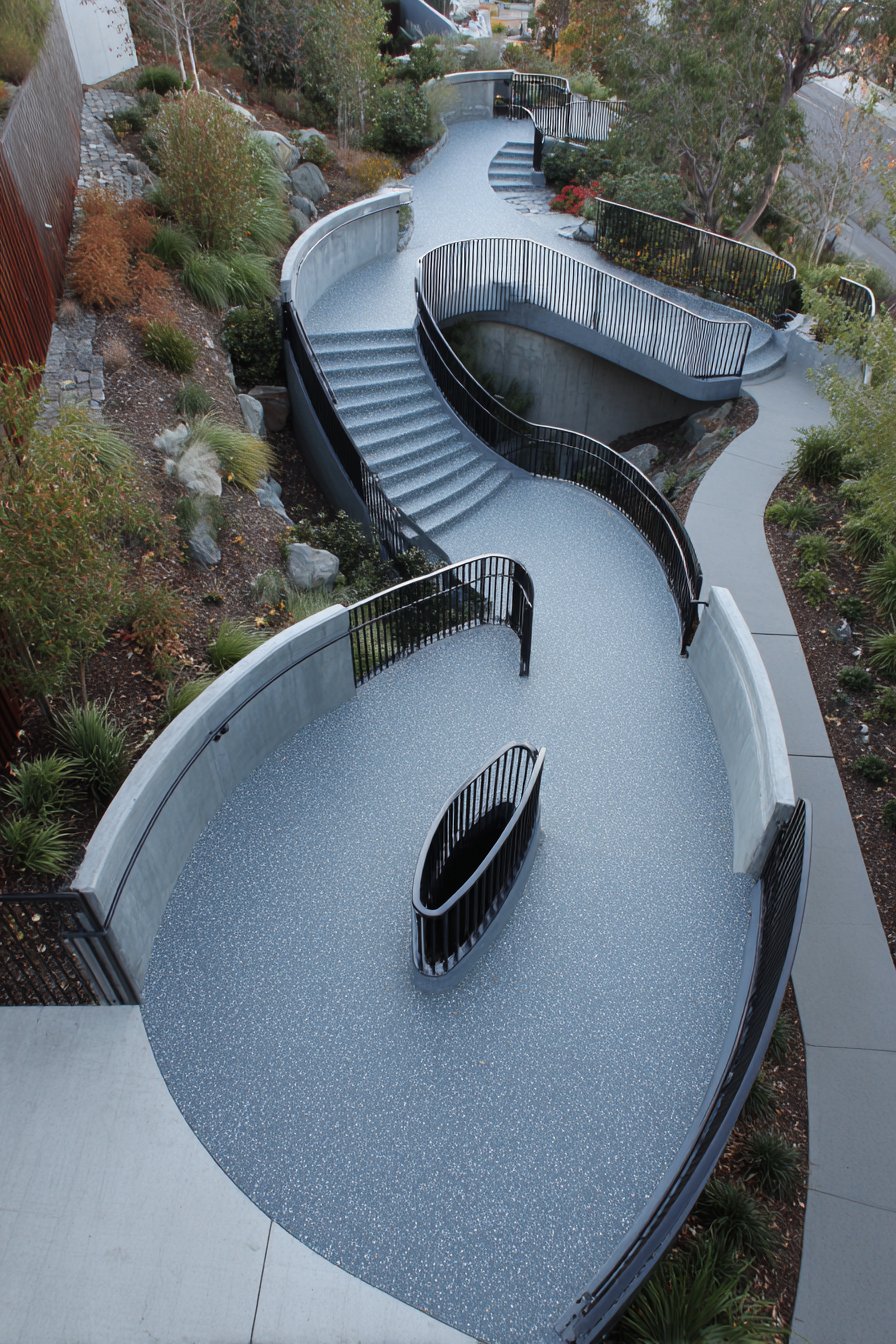
The sculptural quality becomes obvious in curved forms. Shadows define each step during golden hour lighting conditions. The gentle arc creates visual interest from multiple viewpoints. Integration with surrounding hardscape appears seamless and intentional. Wide-angle perspectives capture the graceful flow through space.
Key Design Tips:
- Pour concrete in place for curved forms
- Add integral color for consistent tones
- Use broom finish for slip resistance
- Install continuous steel handrails for safety
- Expose aggregate at edges for texture
- Light pathway from adjacent planters
- Follow natural topography for organic flow
7. Weathered Teak for Coastal Environments
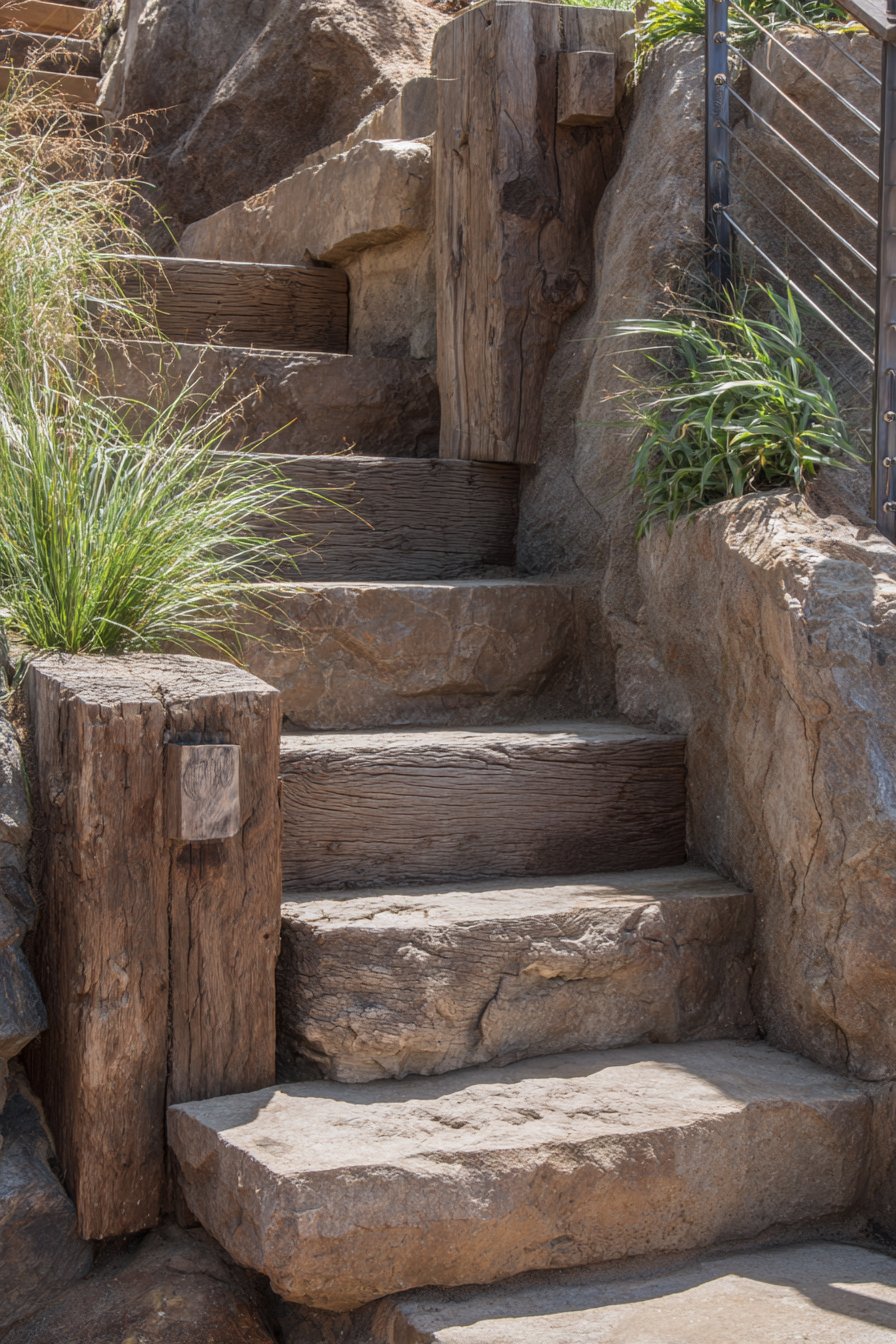
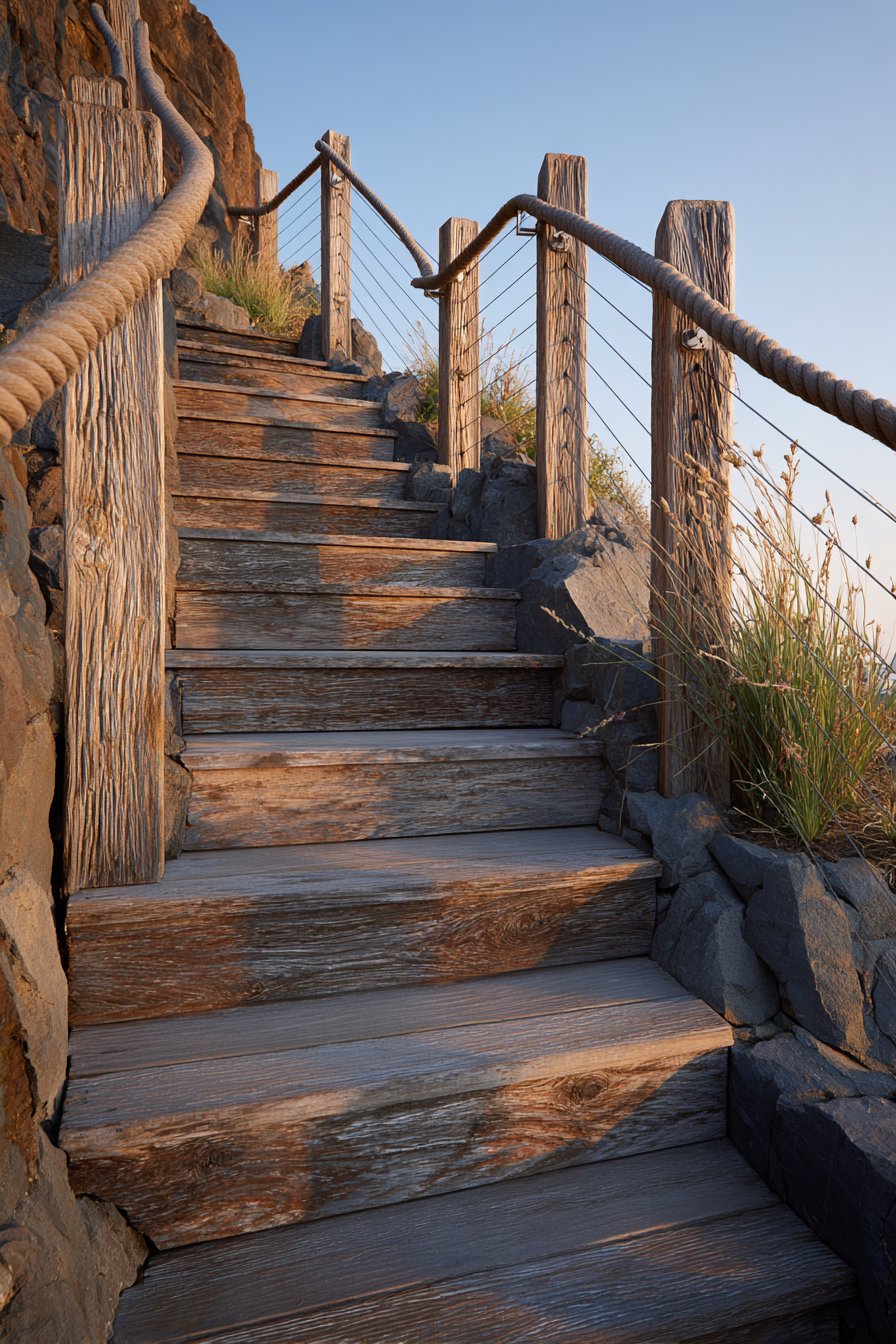
Coastal outdoor stairs require materials that withstand salt air exposure. Weathered teak develops beautiful silver-grey patina naturally over time. The wood resists rot and insect damage in harsh conditions. Stainless steel cable railings prevent corrosion while maintaining views. Ocean vistas remain unobstructed through transparent railing systems.
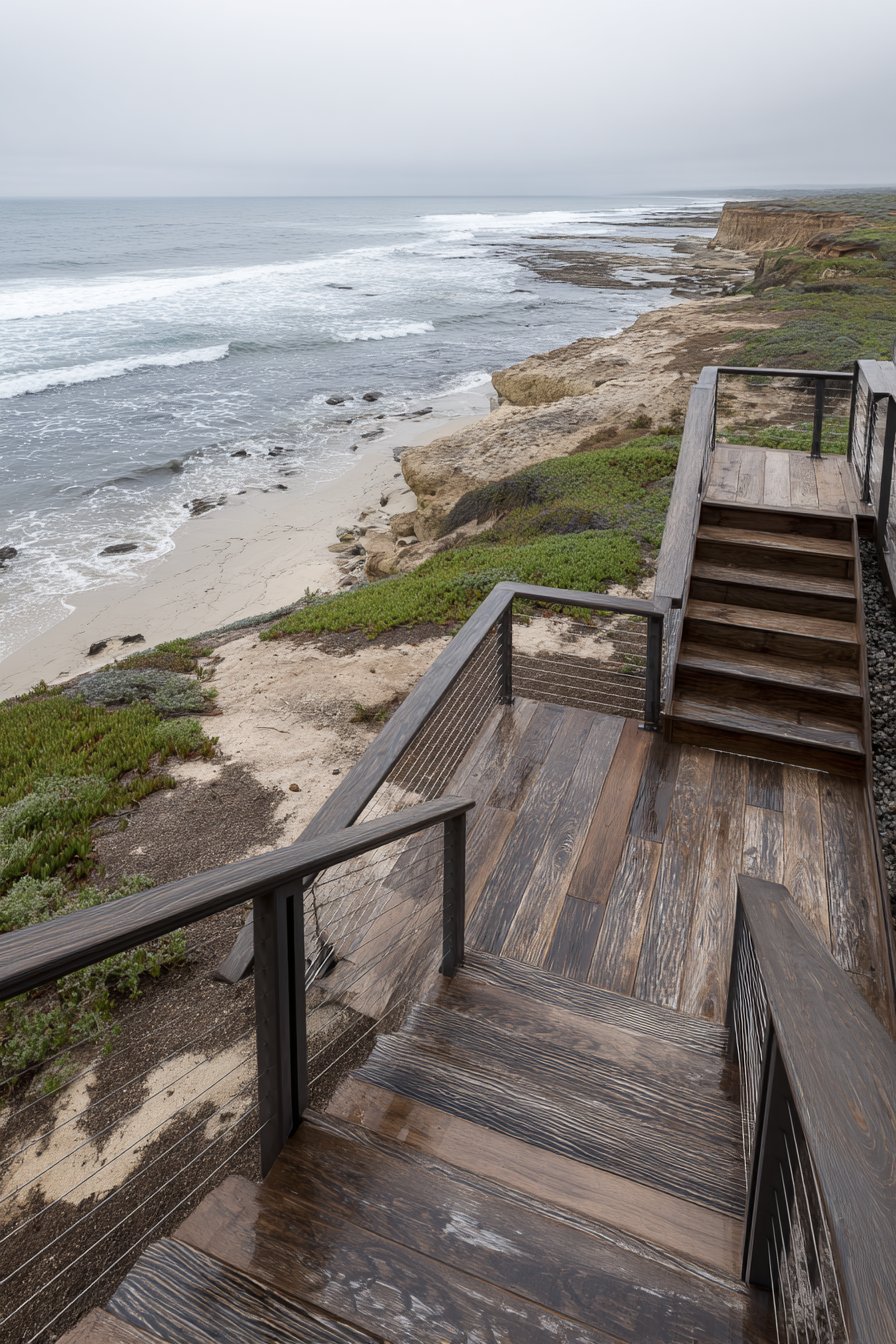
Natural stone outcroppings anchor the steps with minimal impact. The integration appears organic rather than imposed on landscape. Beach grasses grow naturally around the structure randomly. Salt-tolerant plants thrive in this challenging environment successfully. Soft morning light reveals textured wood surfaces clearly.
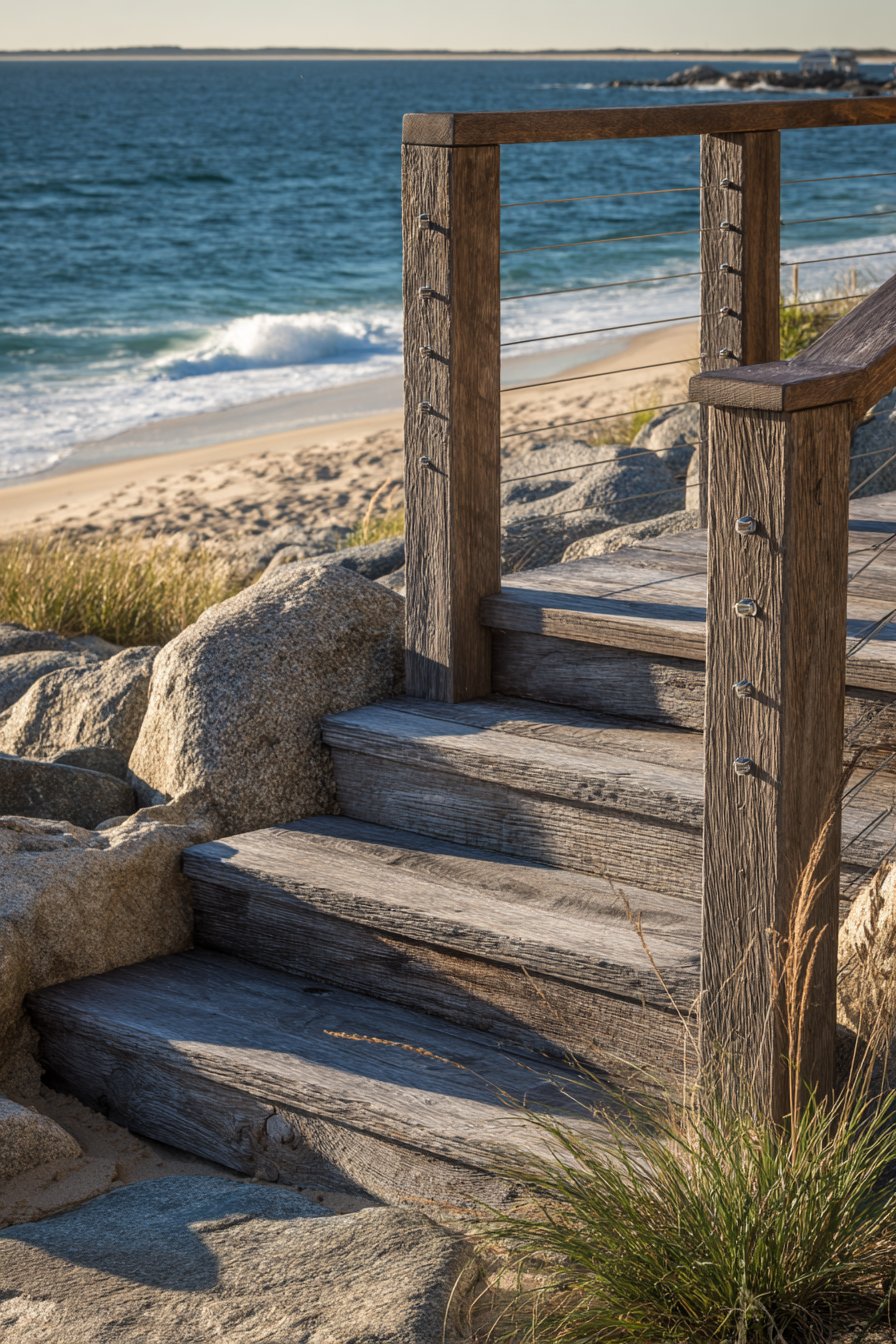
Salt deposits accumulate on surfaces creating authentic weathering patterns. Natural aging demonstrates the material’s interaction with environment. The silver-grey patina develops gradually over several seasons. This color evolution reflects the coastal setting perfectly. Material choices prioritize durability in aggressive marine conditions.
Key Design Tips:
- Select teak for natural weather resistance
- Use stainless steel components to prevent corrosion
- Embrace silver-grey patina development naturally
- Anchor into natural stone for minimal impact
- Plant salt-tolerant species around structure
- Maintain ocean views through cable railings
- Accept authentic weathering as design feature
8. Terraced Fieldstone with Built-in Seating
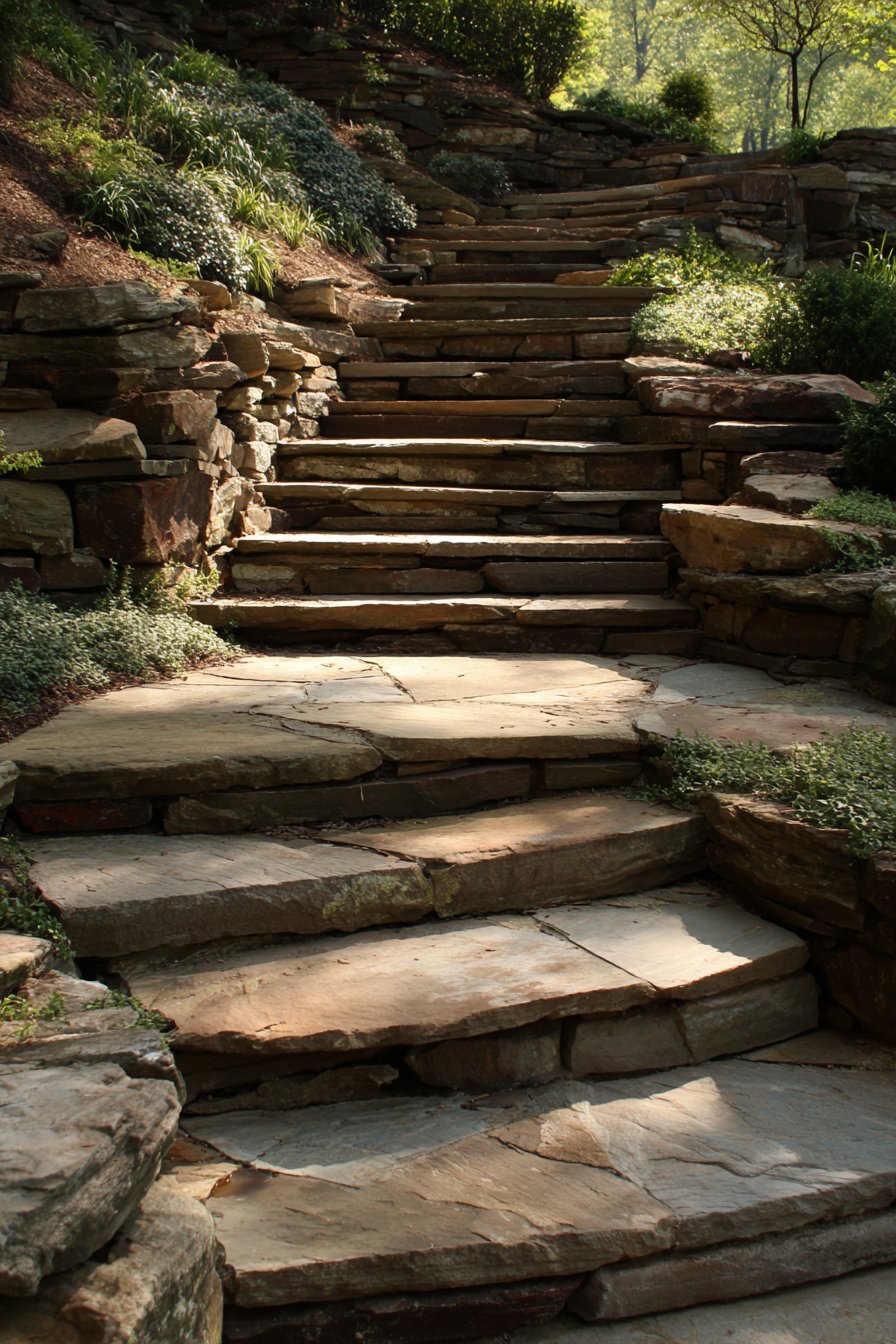
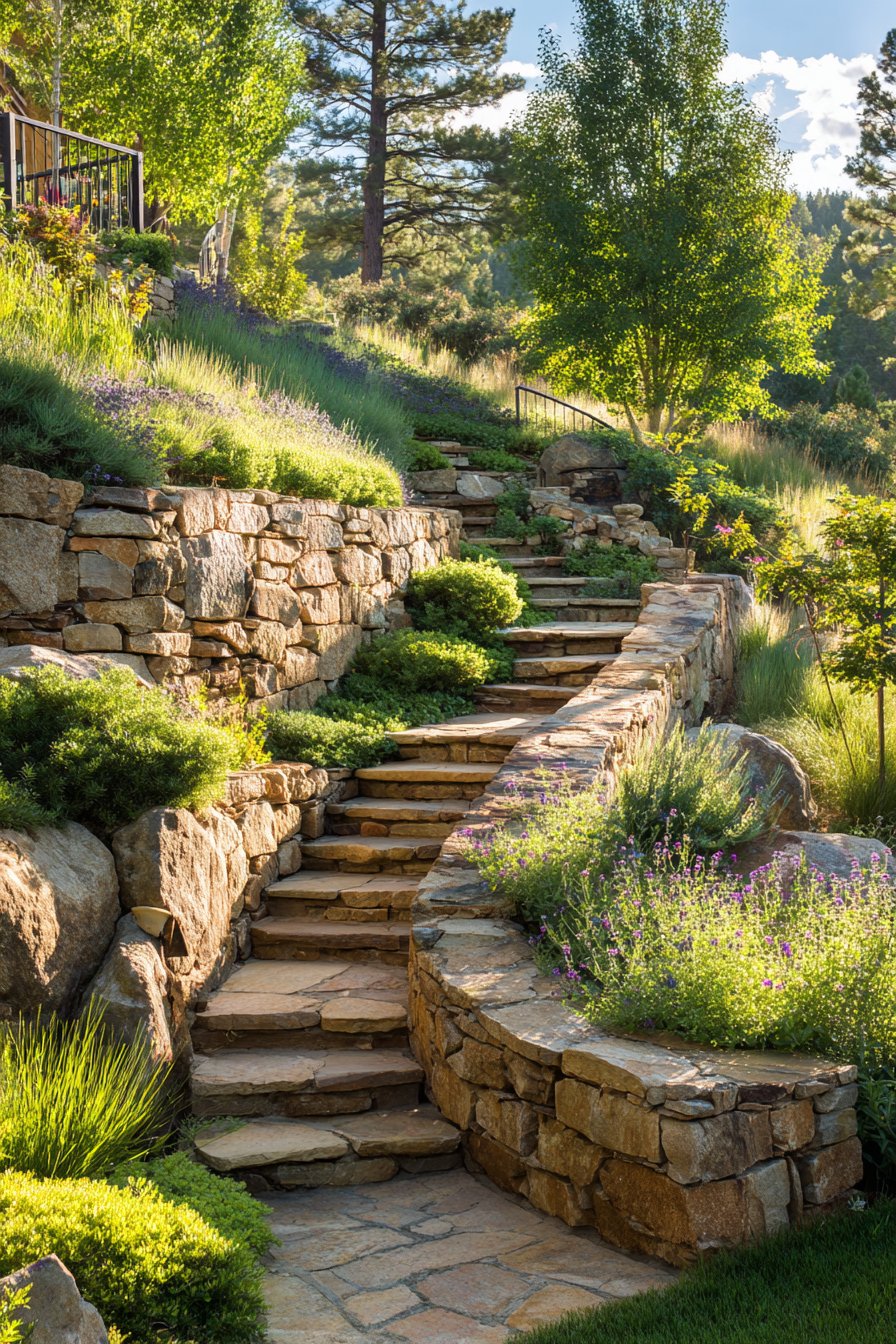
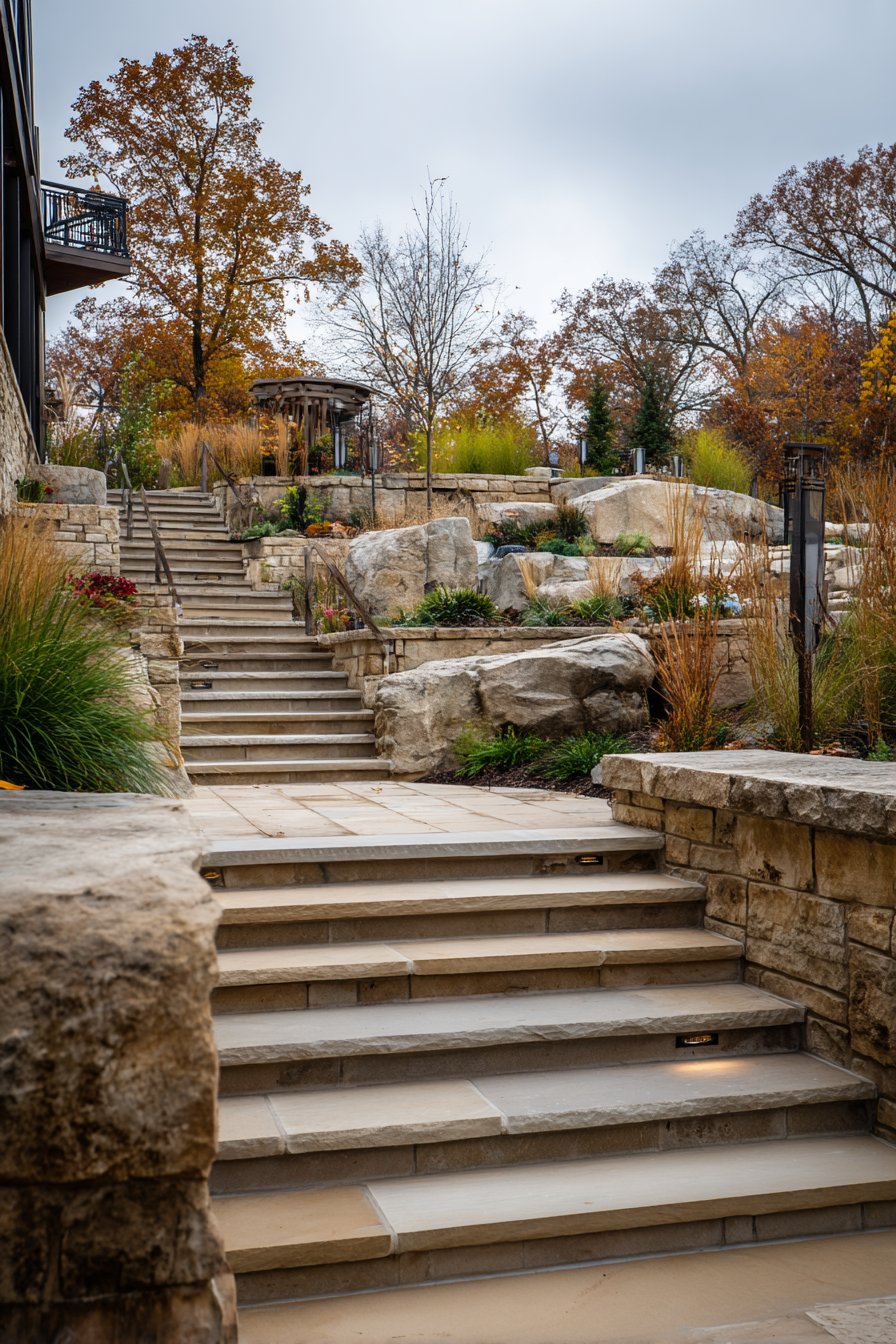
Terraced outdoor staircases incorporate multiple landings with seating areas. Stacked natural fieldstone creates organic rhythm through varied heights. Each step adjusts slightly to accommodate existing slopes naturally. Dry-stacked construction eliminates mortar for authentic appearance. The stone shows earthy tones from tan to grey.
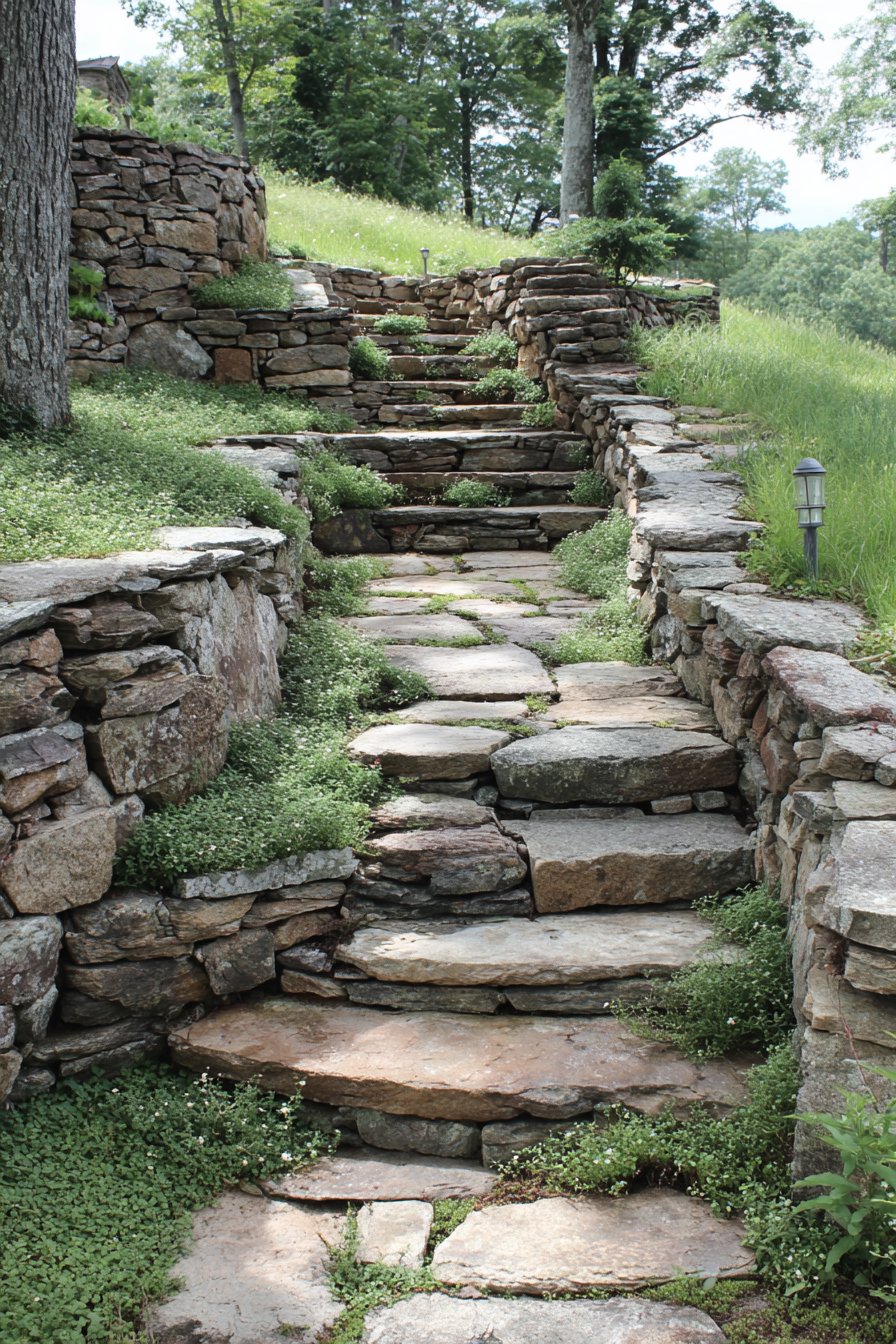
Natural lichen growth adds organic character over time. Creeping thyme planted between stones releases fragrance when stepped upon. The aromatic groundcover softens hardscape edges beautifully. Afternoon sunlight illuminates varied stone textures dramatically. Natural shadowing creates depth through dimensional surfaces.
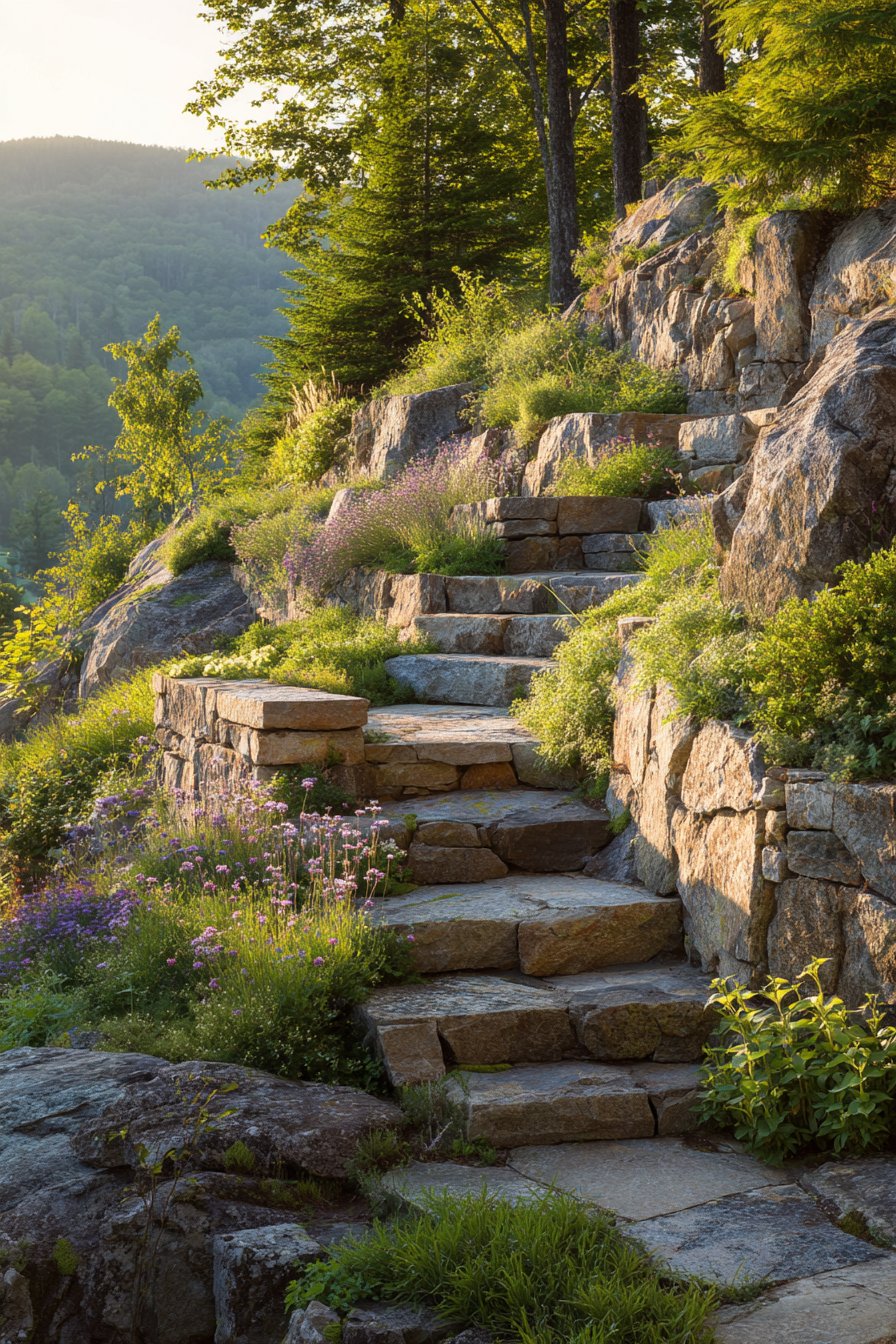
The hand-crafted quality becomes obvious in irregular stone placement. Each piece fits uniquely into the overall composition. Seamless integration with hillside terrain demonstrates skilled installation. The terraced approach breaks steep climbs into comfortable segments. Built-in seating encourages pausing to appreciate surrounding views.
Key Design Tips:
- Stack natural fieldstone without mortar
- Vary step heights to follow terrain
- Create landings with built-in seating
- Plant creeping thyme between stones
- Embrace lichen growth as character
- Use local stone for regional authenticity
- Break steep climbs into comfortable segments
9. Large Format Porcelain with Clean Lines
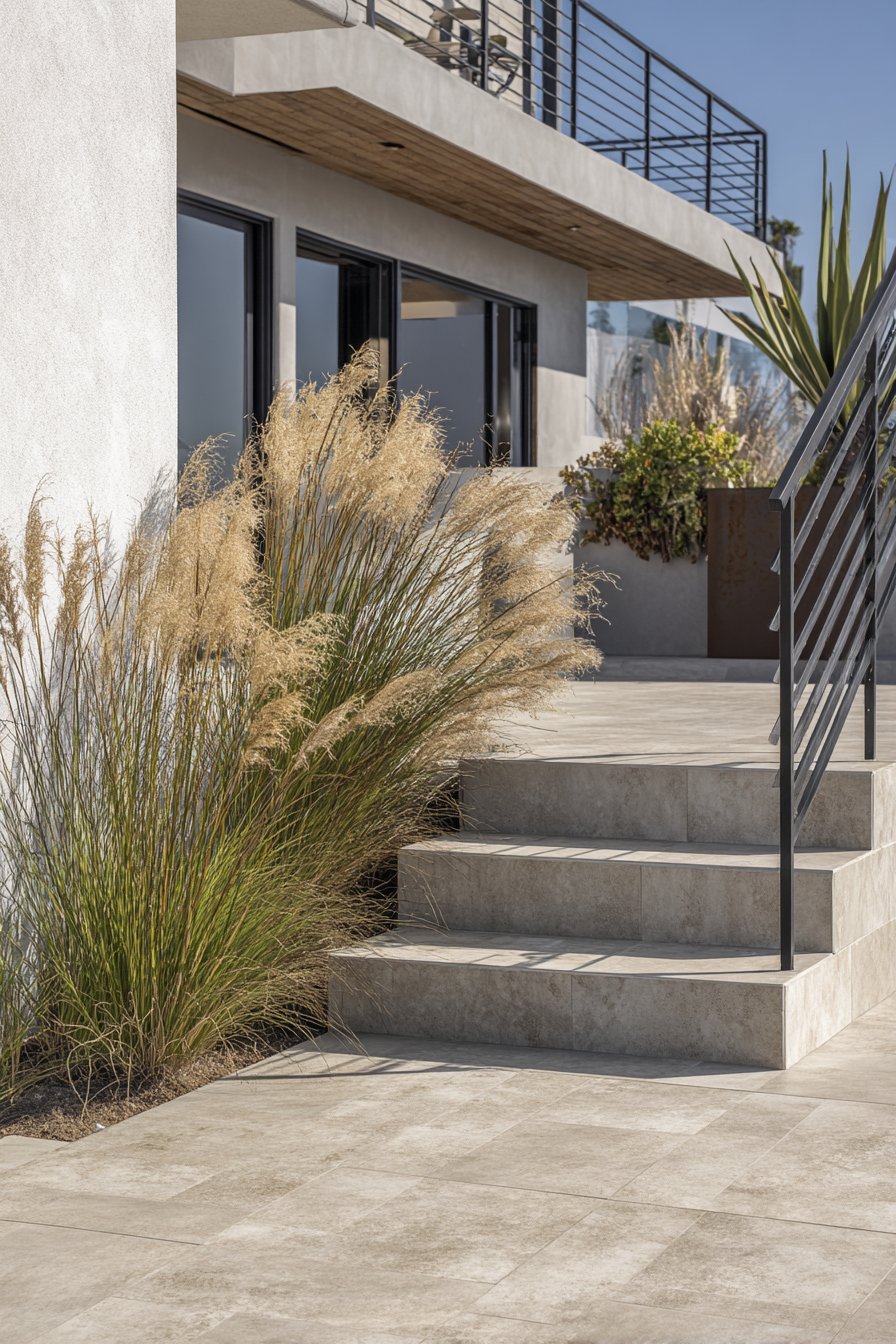
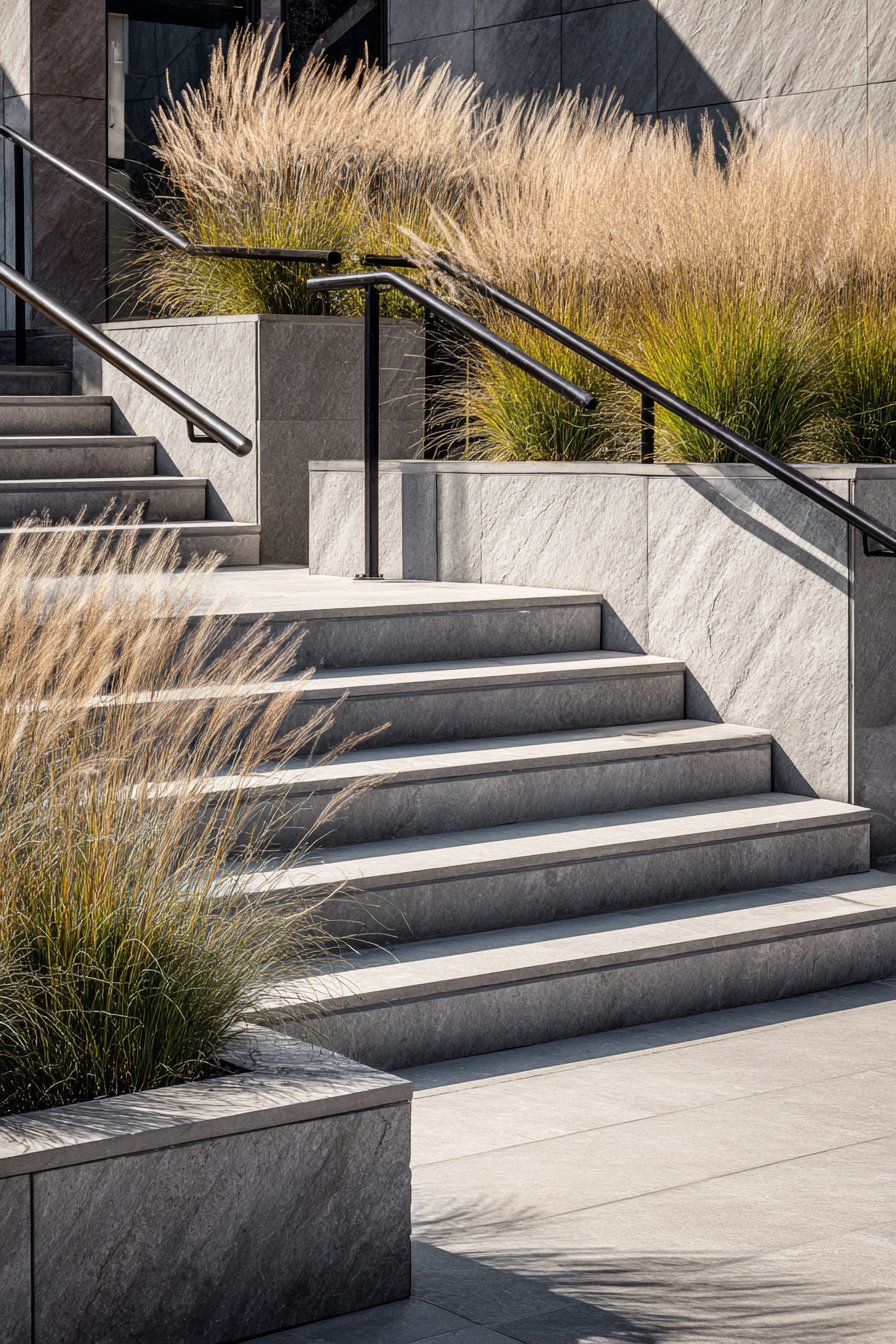
Minimalist outdoor stairs utilize large format porcelain pavers effectively. Each paver measures 24 by 48 inches for bold scale. Concrete-look finishes create contemporary aesthetic throughout. Nearly invisible joints between pavers enhance clean appearance. Square steel tube railings in matte black provide understated support.
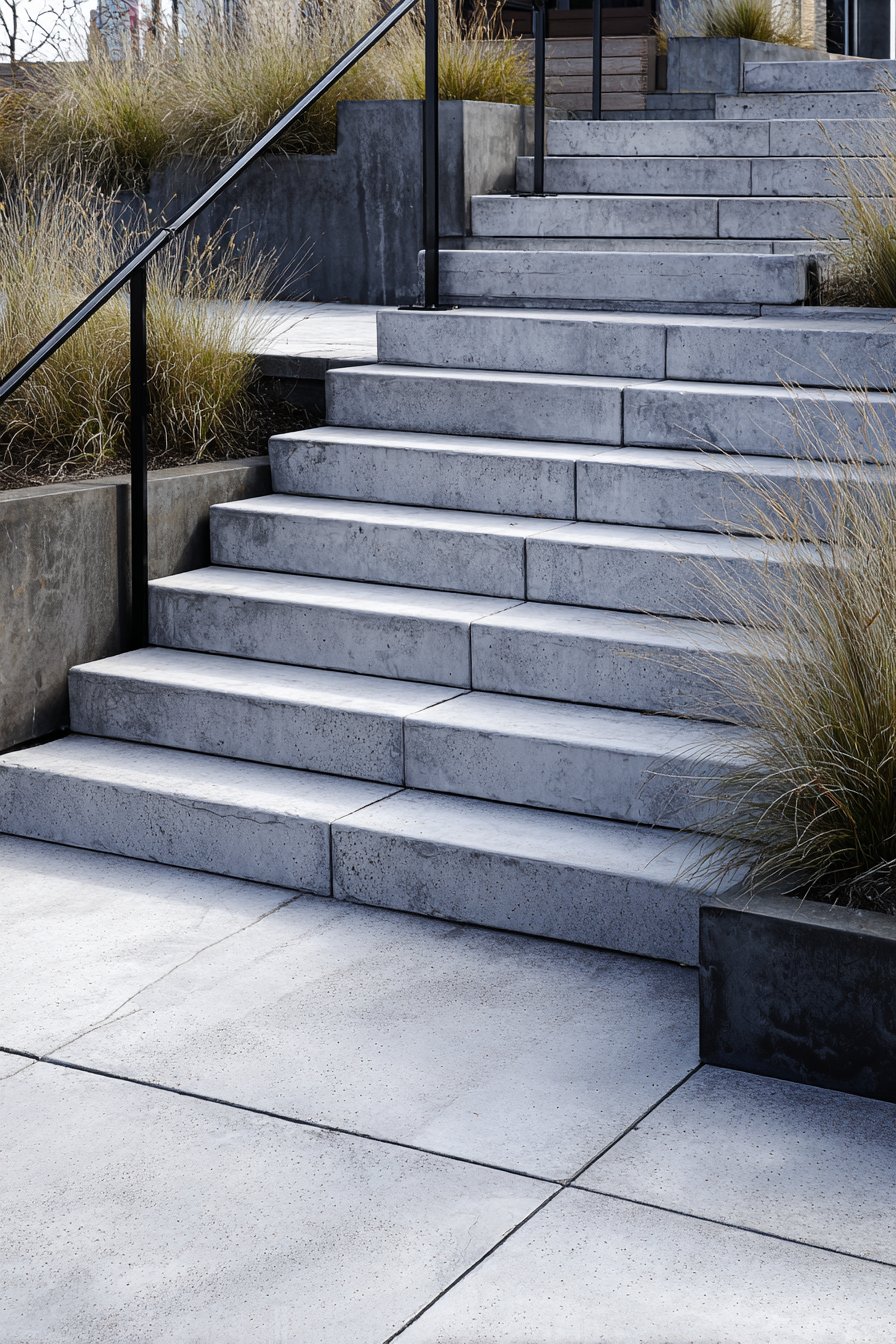
The consistent grey tone simplifies visual complexity intentionally. Porcelain resists staining, fading, and weathering exceptionally well. The low-maintenance surface requires minimal cleaning over time. Modern ornamental grasses in linear planters add softness. The plantings prevent stark industrial appearance successfully.
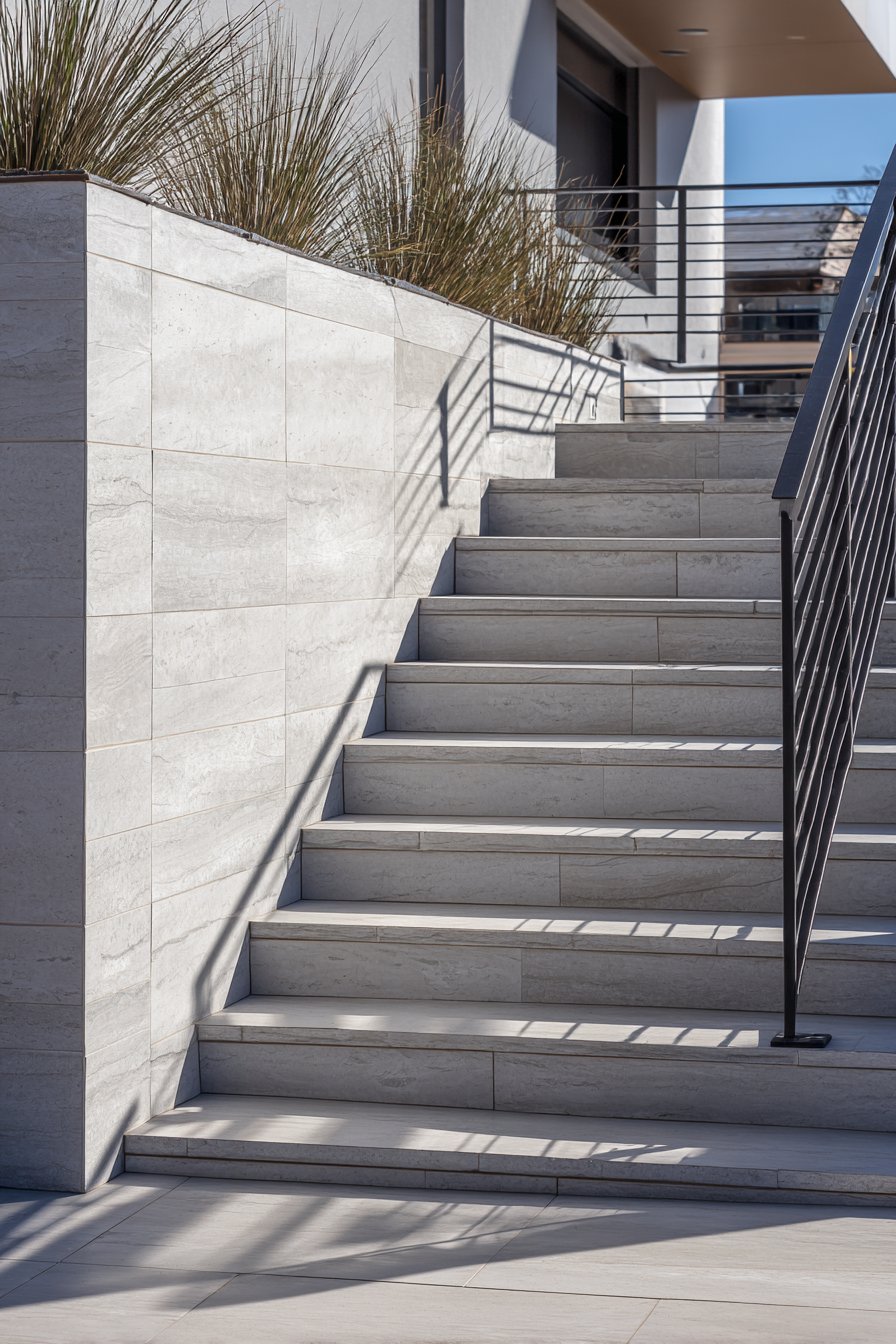
Midday lighting emphasizes clean geometry and precise installation. Even illumination reveals subtle surface textures clearly. The installation precision becomes obvious in tight joints. Material authenticity shows in porcelain’s manufactured consistency. Professional installation ensures level surfaces and proper drainage.
Key Design Tips:
- Use large format pavers for bold scale
- Choose concrete-look finish for contemporary appeal
- Maintain nearly invisible joints between pavers
- Add matte black steel railings for contrast
- Plant ornamental grasses for organic softness
- Ensure precise installation for clean appearance
- Select porcelain for low maintenance requirements
10. Rough-Cut Local Stone with Woodland Integration
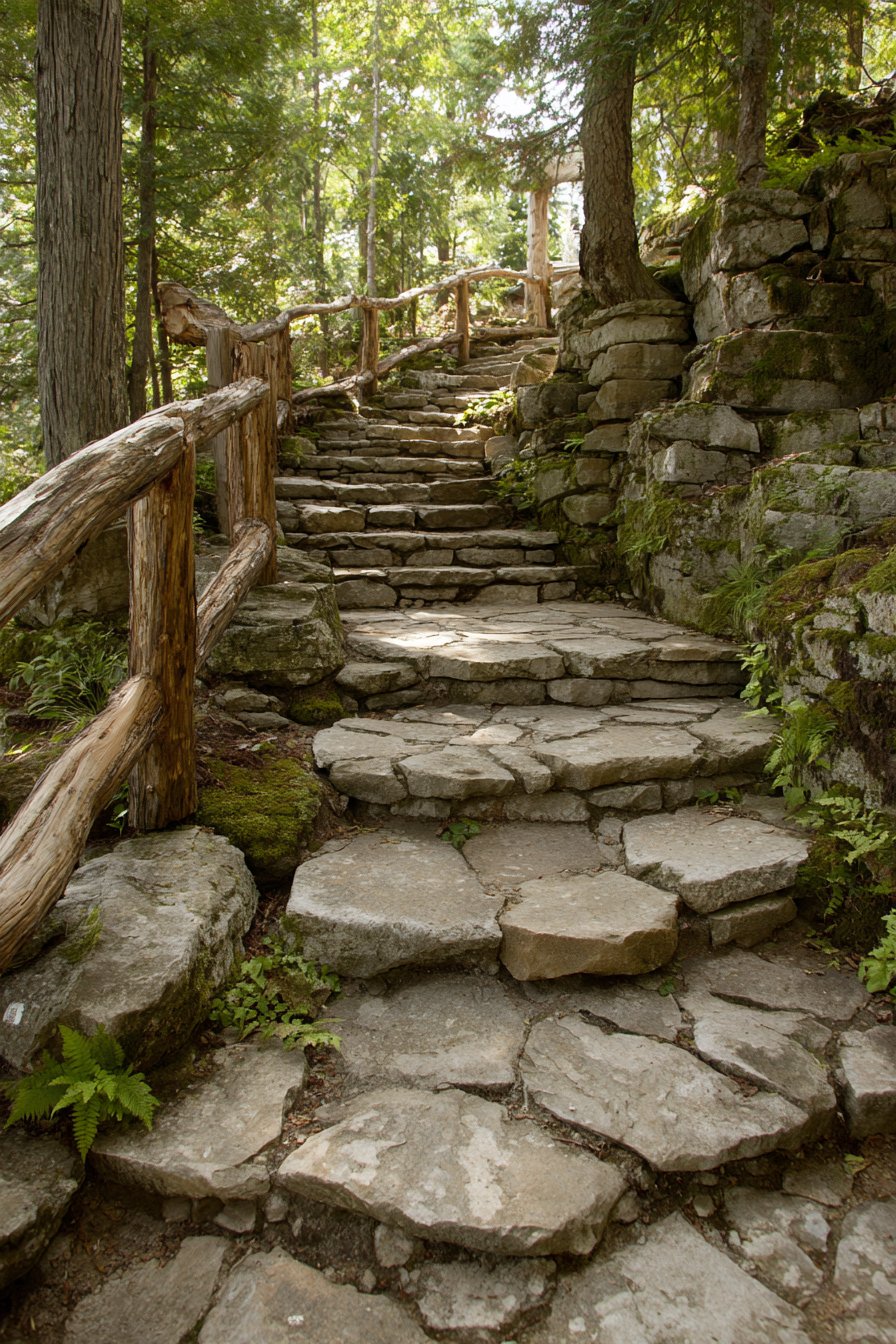
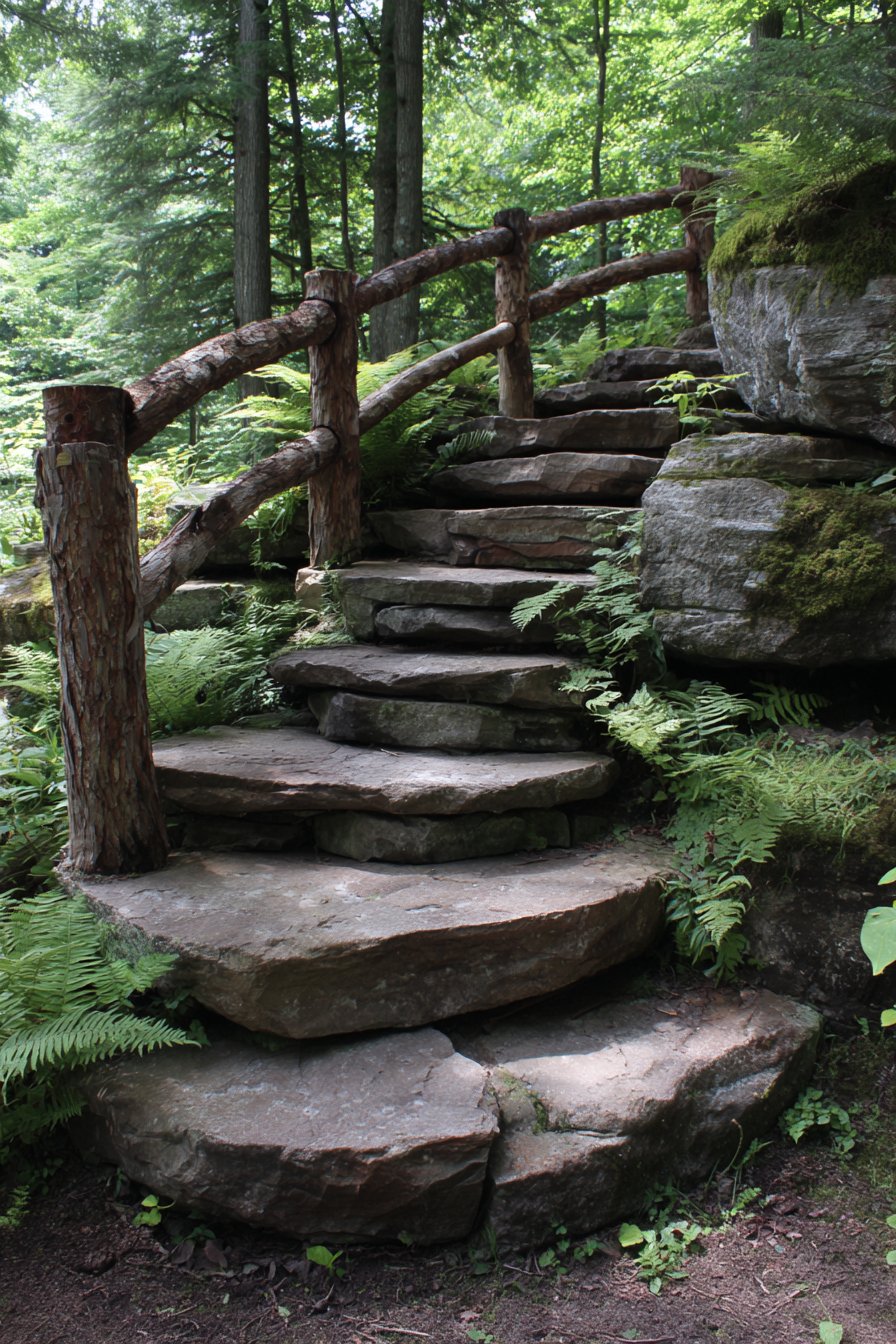
Woodland outdoor stairways celebrate rough-cut local stone with irregular shapes. Mortared construction holds varied stone pieces securely together. Rustic patterns emerge from naturally irregular shapes organically. Each tread varies in width and depth naturally. The installation follows forest floor contours authentically.
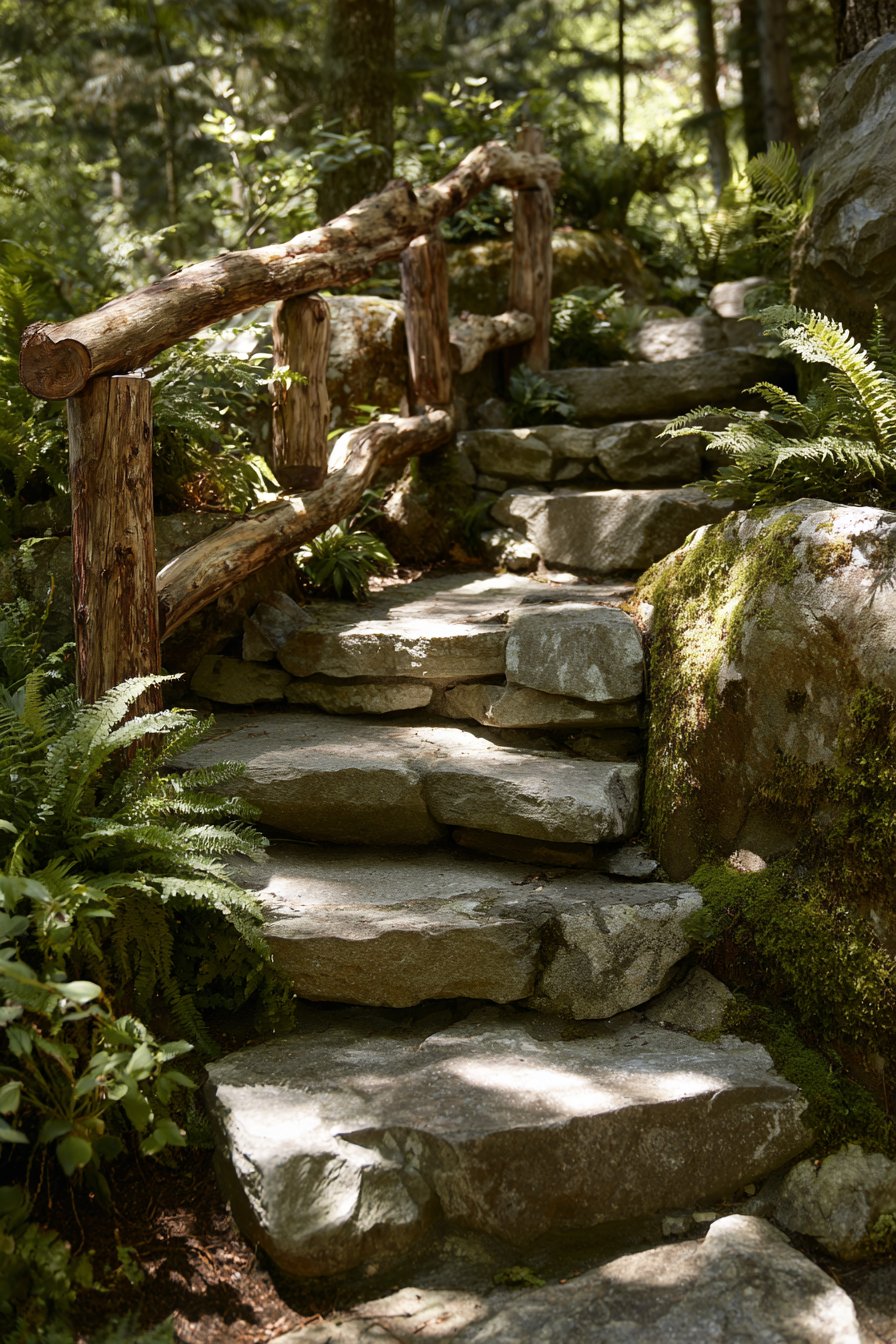
Moss establishes itself in crevices between stones gradually. Small ferns root in accumulated organic matter naturally. Split log railings provide informal handholds along the path. Natural bark edges remain intact on railing components. Dappled forest light filters through canopy creating moving patterns.
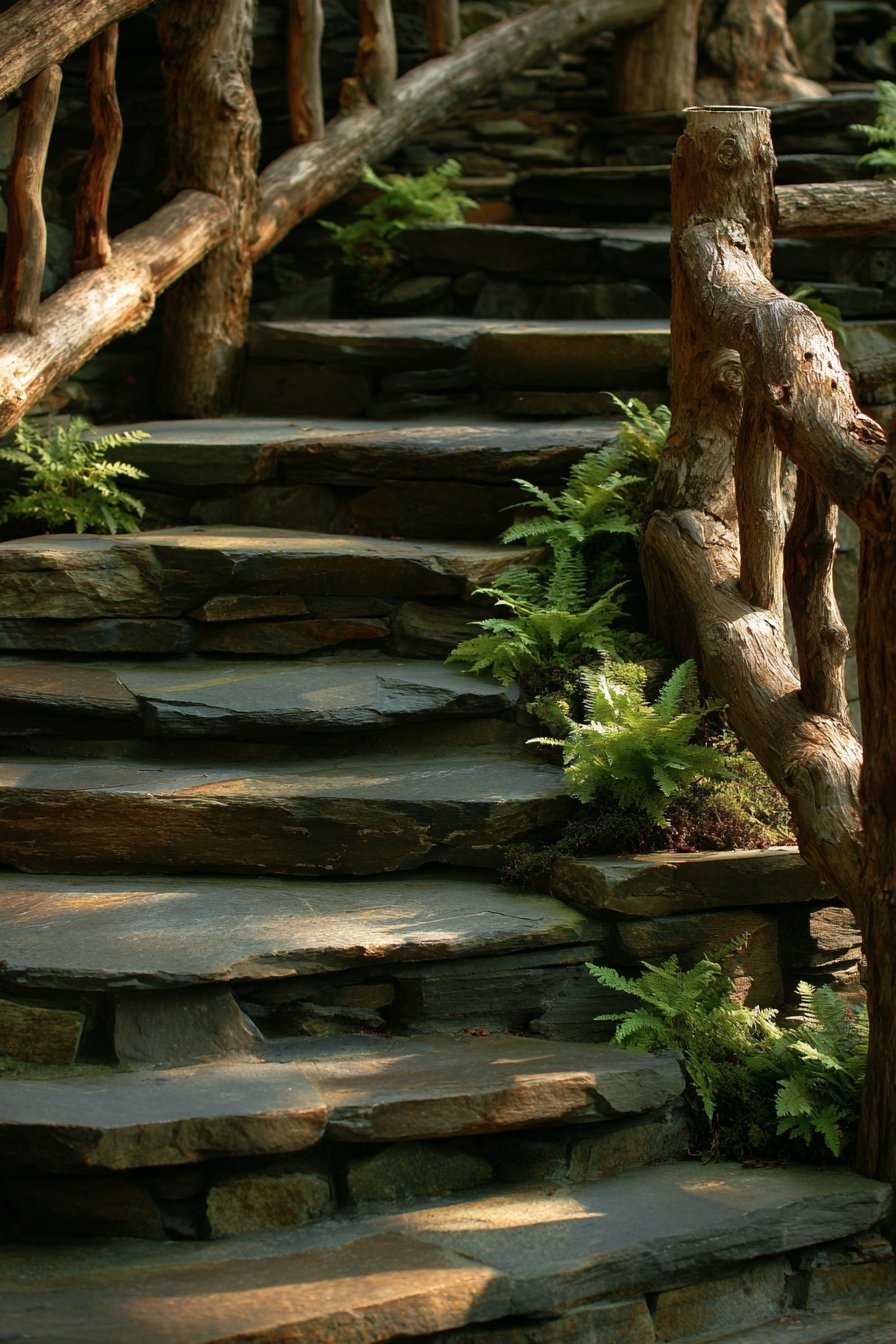
Light and shadow patterns shift throughout the day constantly. The weathered stone surfaces show years of exposure clearly. Organic integration with woodland setting appears completely natural. The aged character develops over seasons and years. Natural landscape photography emphasizes authentic material qualities beautifully.
Key Design Tips:
- Source rough-cut stone from local quarries
- Mortar irregular shapes for secure construction
- Follow forest floor contours naturally
- Use split logs with bark for railings
- Allow moss and fern establishment
- Vary tread widths to suit terrain
- Embrace weathering as design feature
11. Industrial Metal Grating for Steep Slopes
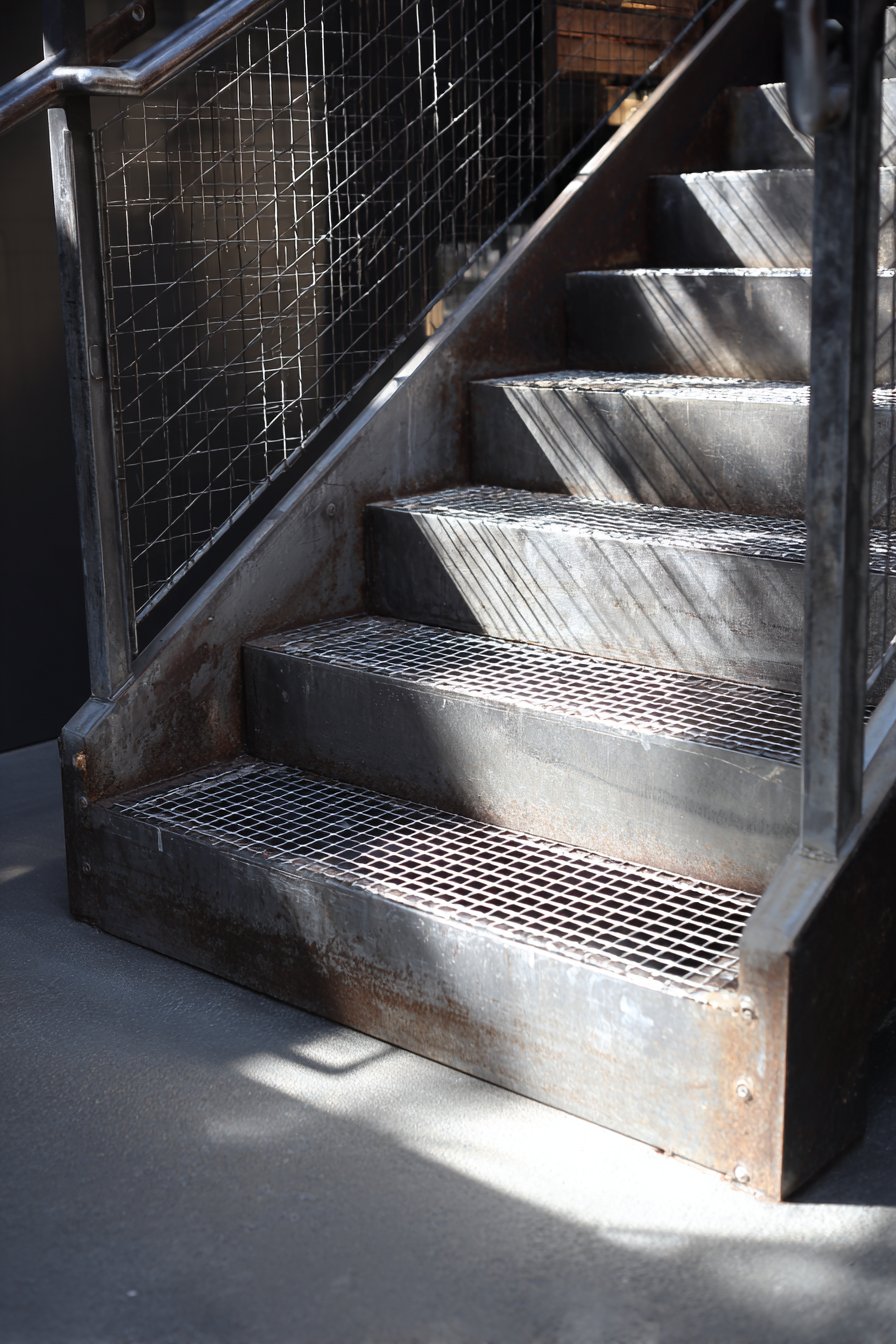
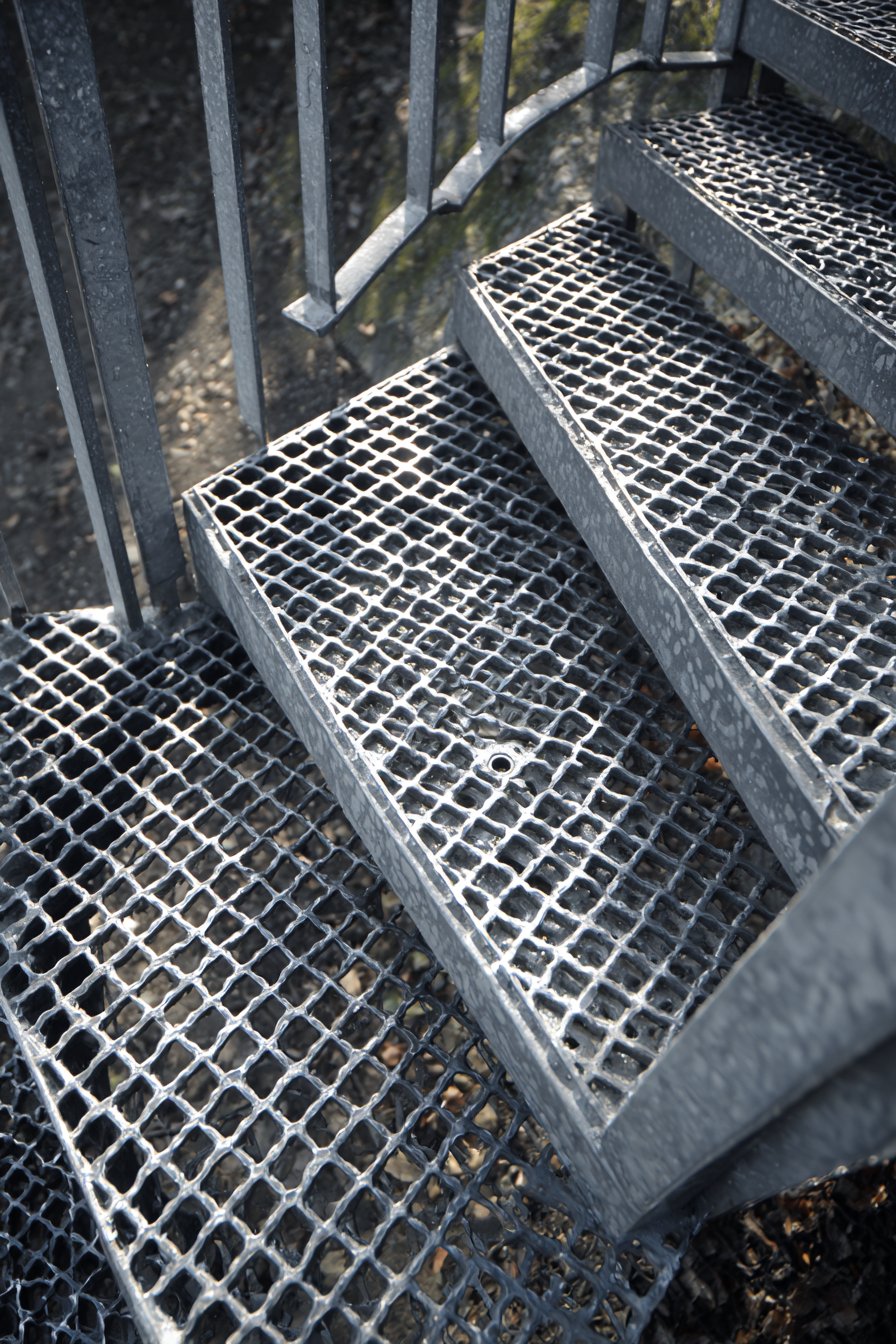
Steep outdoor stairs benefit from industrial metal grating treads. Galvanized steel provides drainage and traction simultaneously. The open grating allows water and light to pass through. Simple pipe railing systems feature clean welded joints. Visible bolts and welds demonstrate honest construction methods.
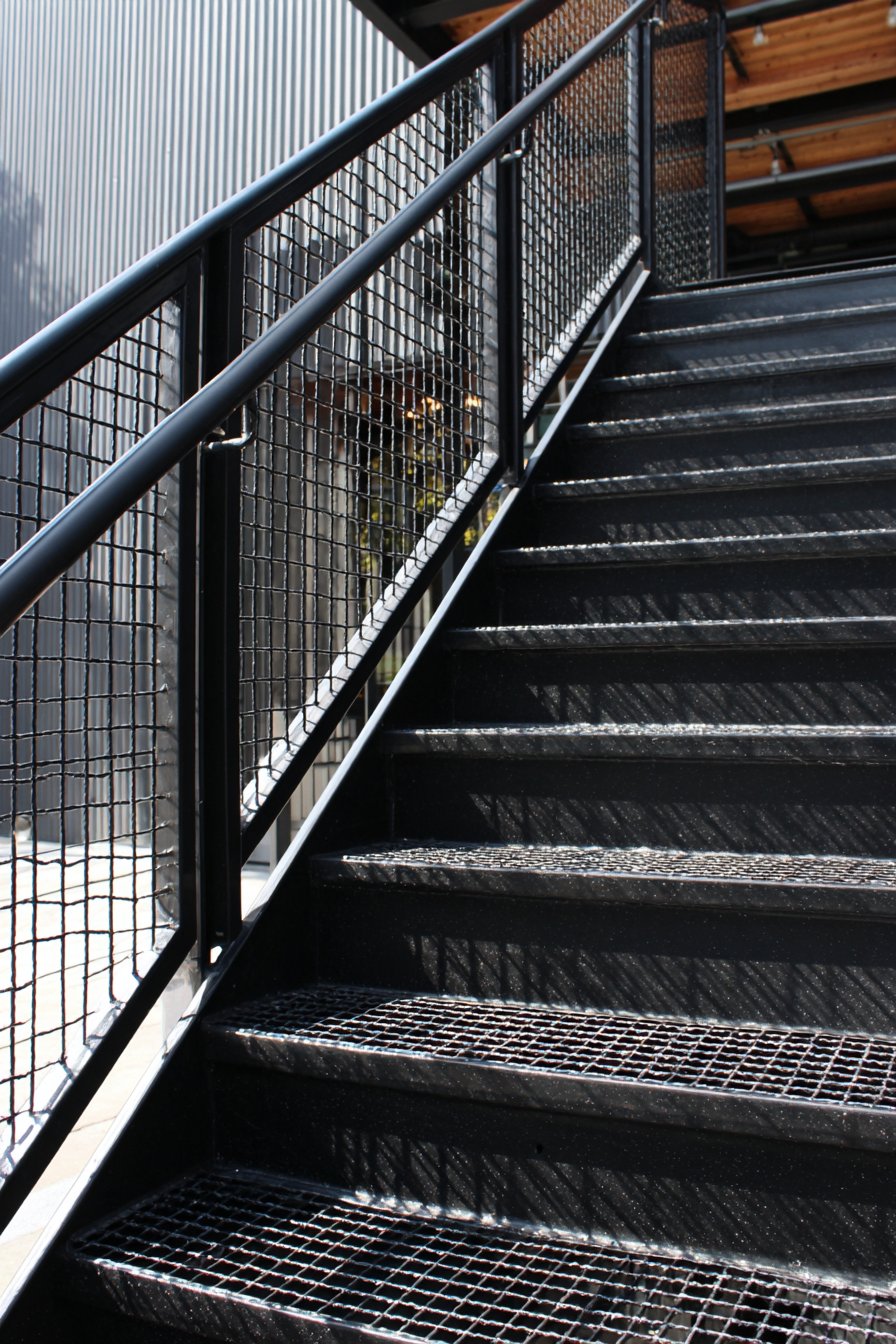
The utilitarian design celebrates functional beauty openly. Material expression remains honest without decorative concealment. Geometric grid patterns create interesting shadow effects below. Low-angle sunlight highlights metallic finishes dramatically. The industrial aesthetic suits contemporary architectural styles naturally.
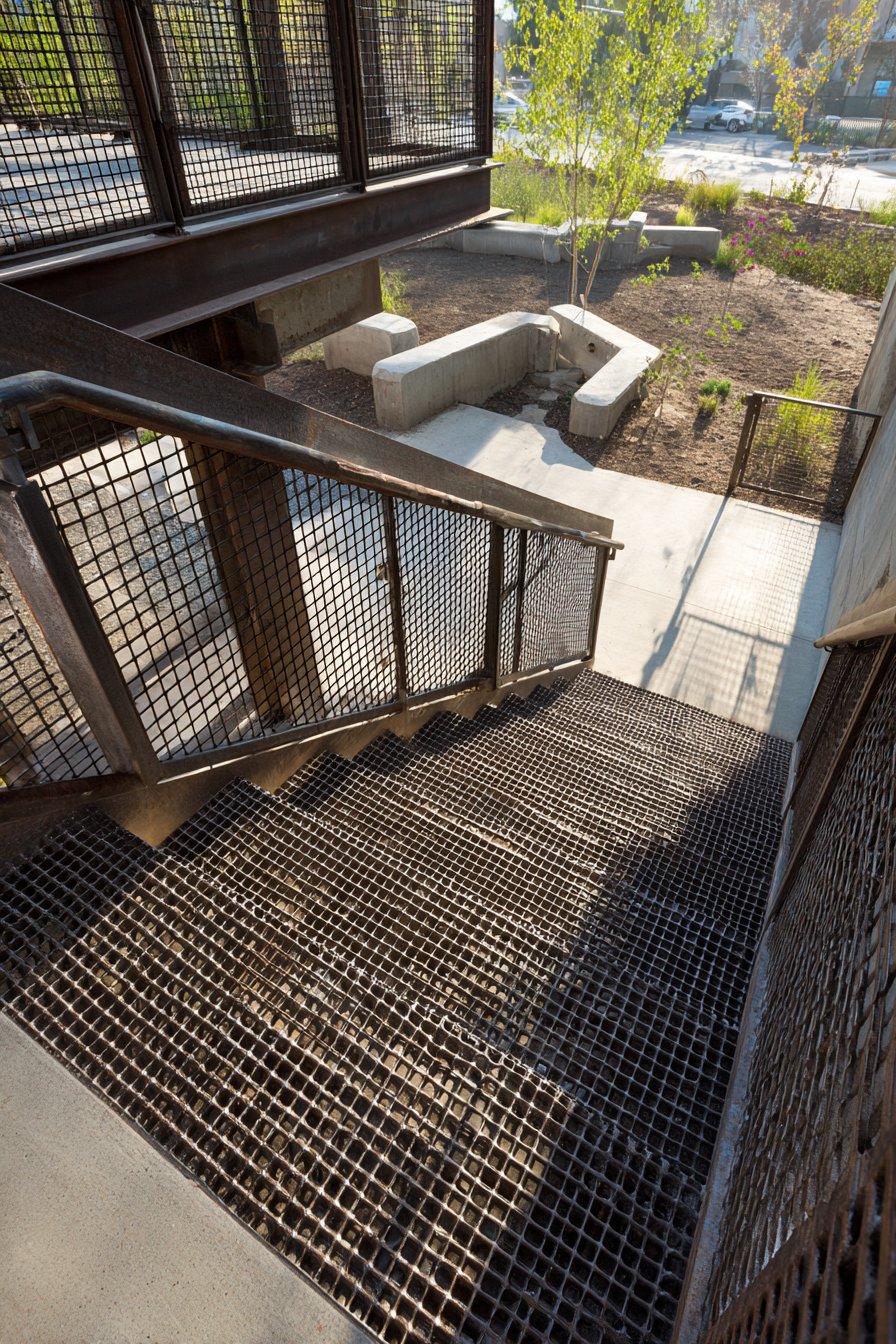
Light passes through grating creating dimensional effects underneath. Shadow patterns change with sun angle throughout day. The galvanized finish develops patina over time gradually. Structural clarity becomes obvious in exposed components. Architectural detail photography captures functional beauty effectively.
Key Design Tips:
- Use galvanized steel for corrosion resistance
- Install grating treads for drainage and traction
- Weld pipe railings for structural integrity
- Leave bolts and welds visible for honesty
- Appreciate shadow patterns below stairs
- Choose industrial aesthetic for contemporary homes
- Accept patina development as character
12. Pennsylvania Bluestone in Decomposed Granite
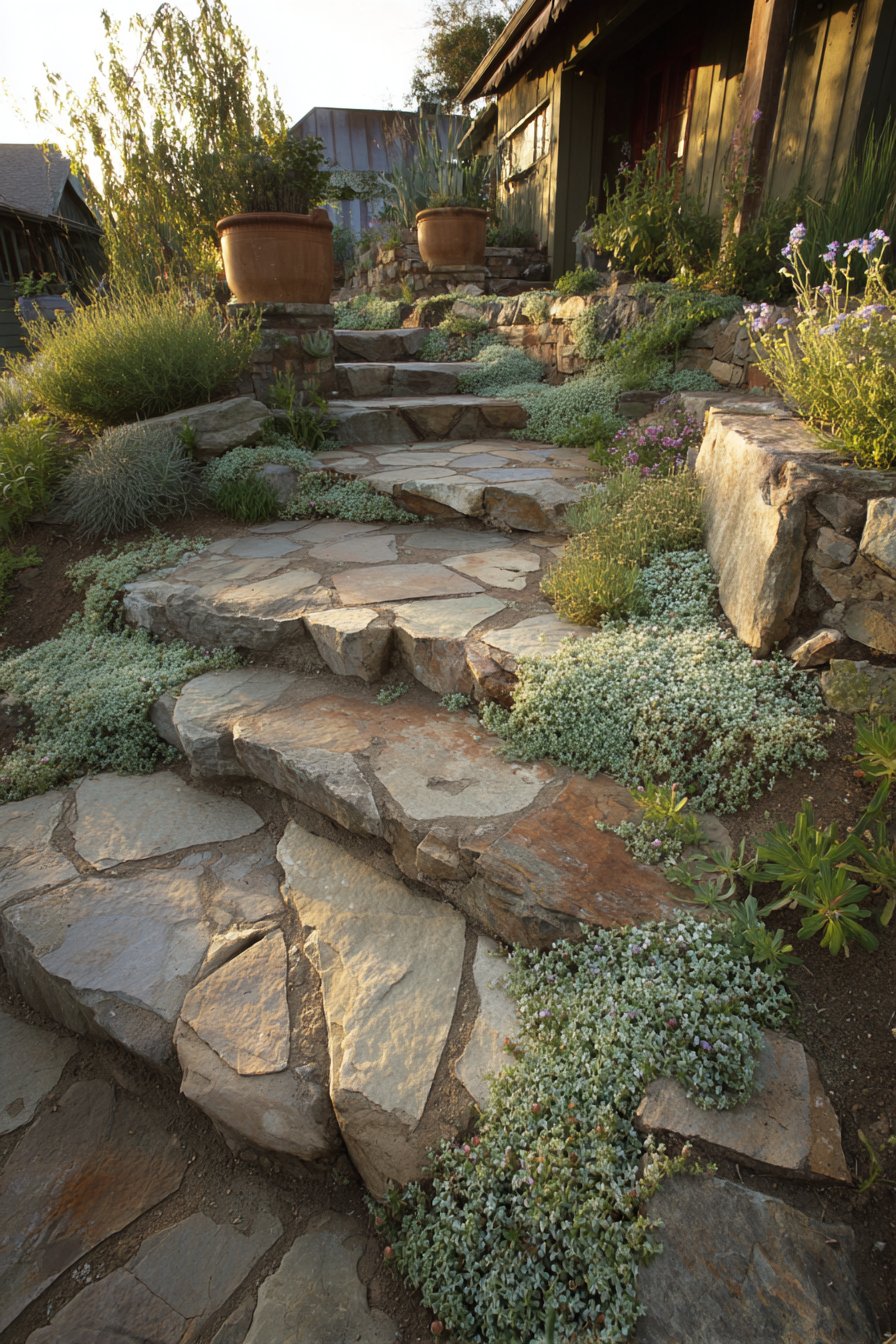
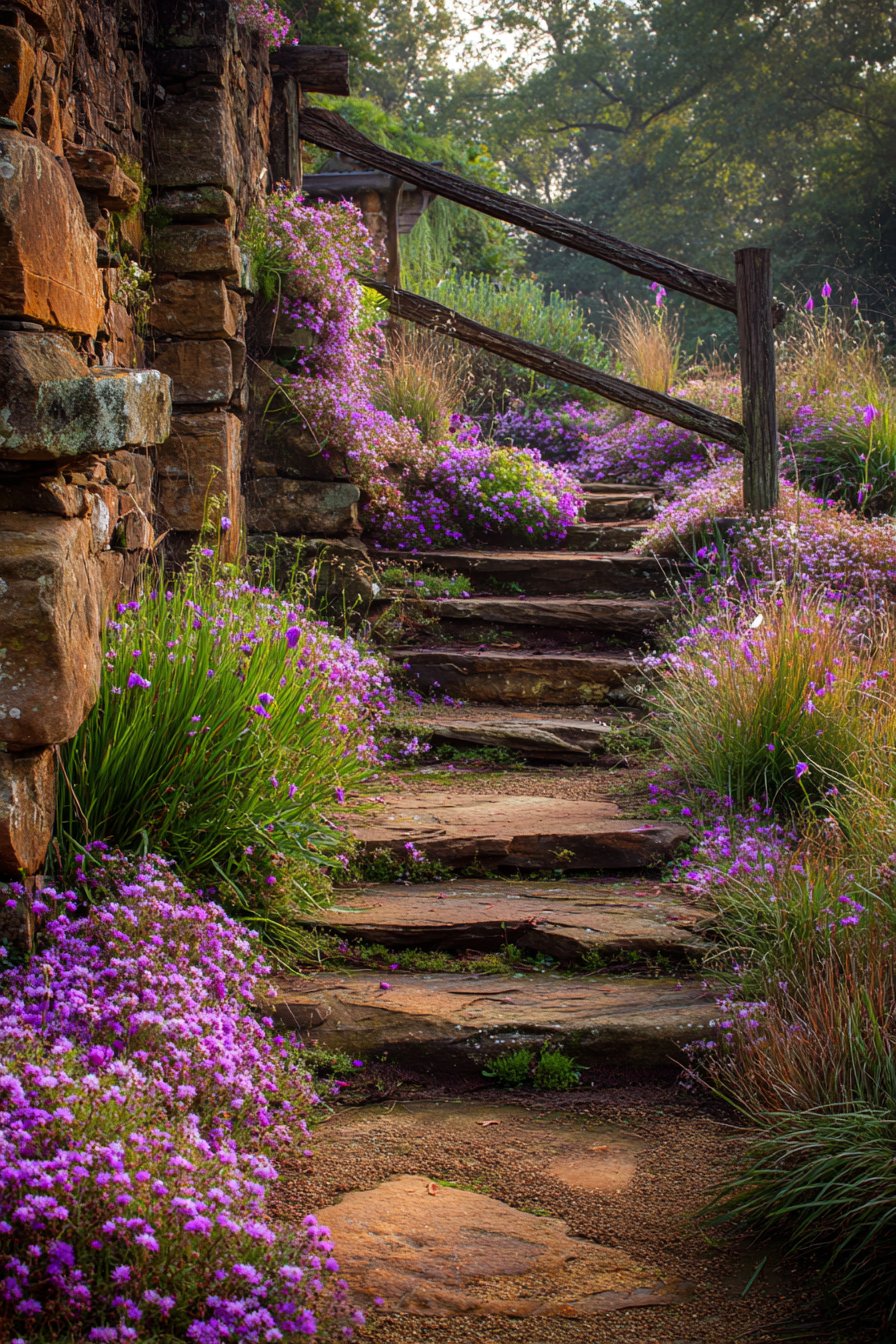
Garden outdoor staircases soften approaches through decomposed granite bedding. Pennsylvania bluestone treads rest in this permeable material. The irregular flagstone pieces show natural cleft surfaces. Rich color variations appear across individual stones naturally. Decomposed granite eliminates traditional mortar requirements successfully.
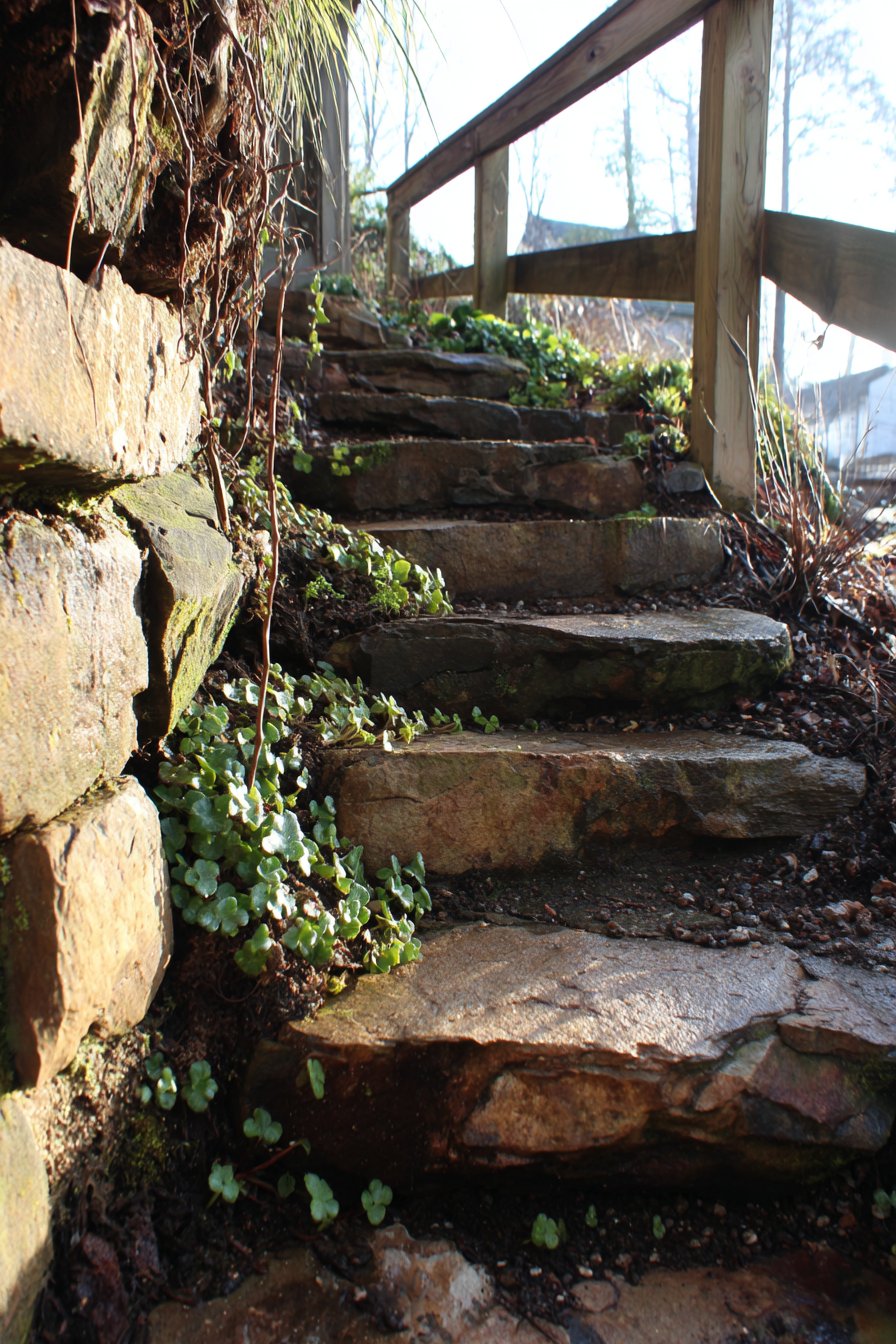
Low-growing sedums cascade over stone edges organically. Creeping phlox adds seasonal color and softness. Simple post-and-beam cedar handrails provide unobtrusive support. The railing design doesn’t dominate surrounding views. Morning dew highlights stone textures and plant details.
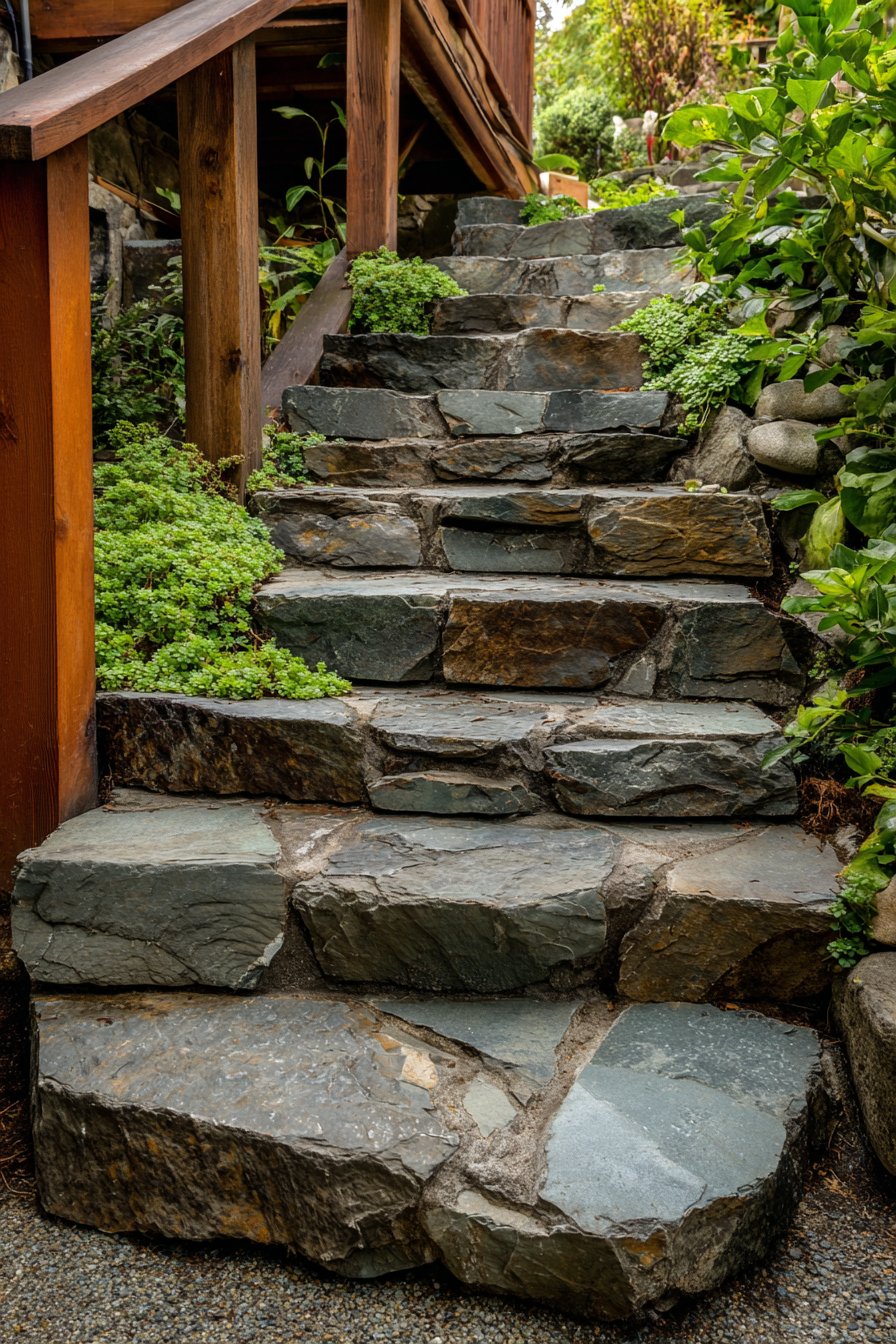
Soft natural lighting reveals layered material composition. The naturalistic planting style complements organic stone placement. The inviting character encourages leisurely ascent through gardens. Water drains freely through decomposed granite base layers. This permeable approach supports sustainable landscape practices effectively.
Key Design Tips:
- Set bluestone in decomposed granite beds
- Choose irregular flagstone for organic appearance
- Plant low-growing groundcovers at edges
- Use cedar post-and-beam railings simply
- Allow natural color variations in stone
- Create permeable base for drainage
- Soften hard lines with cascading plants
13. Precast Concrete with Exposed Aggregate
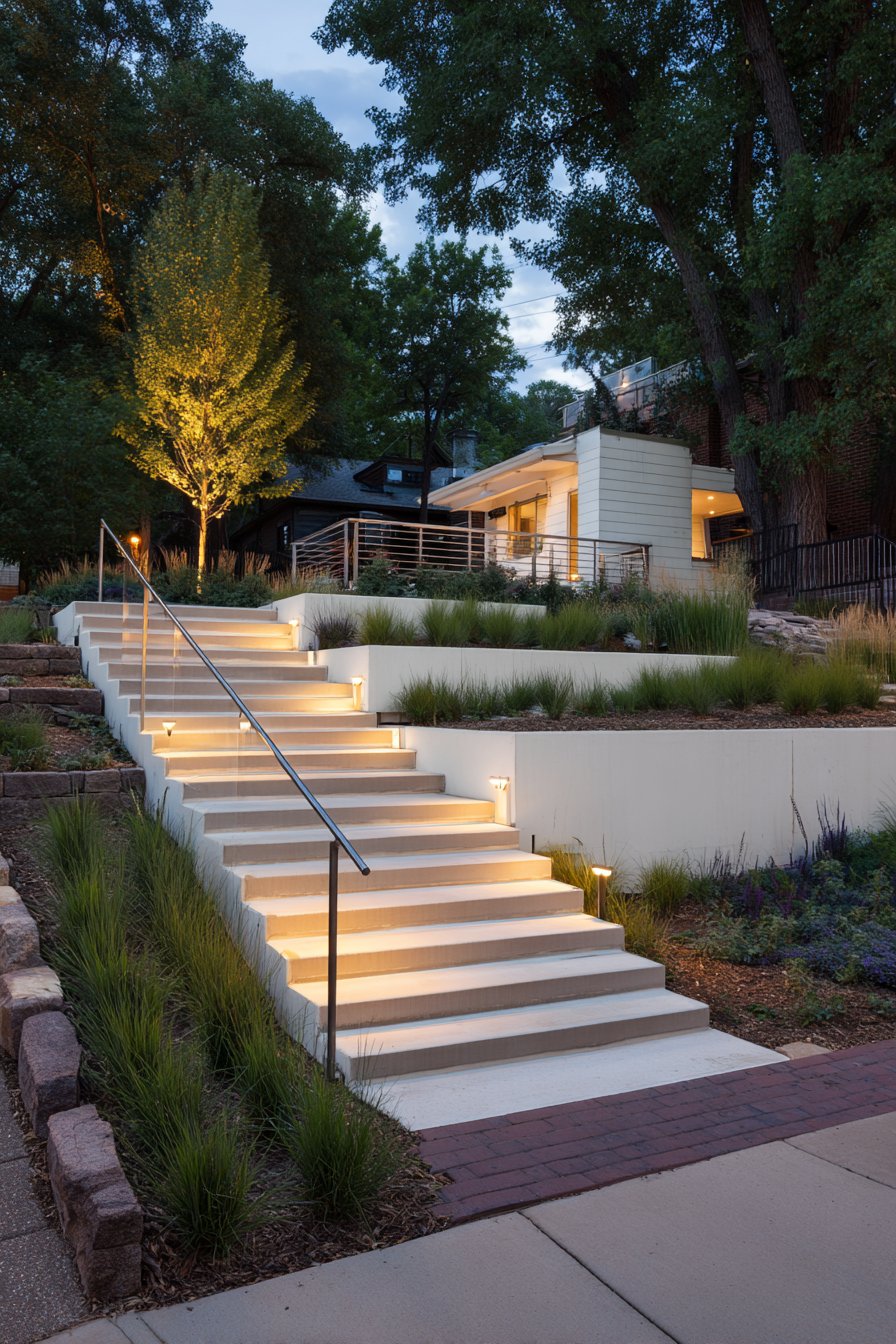
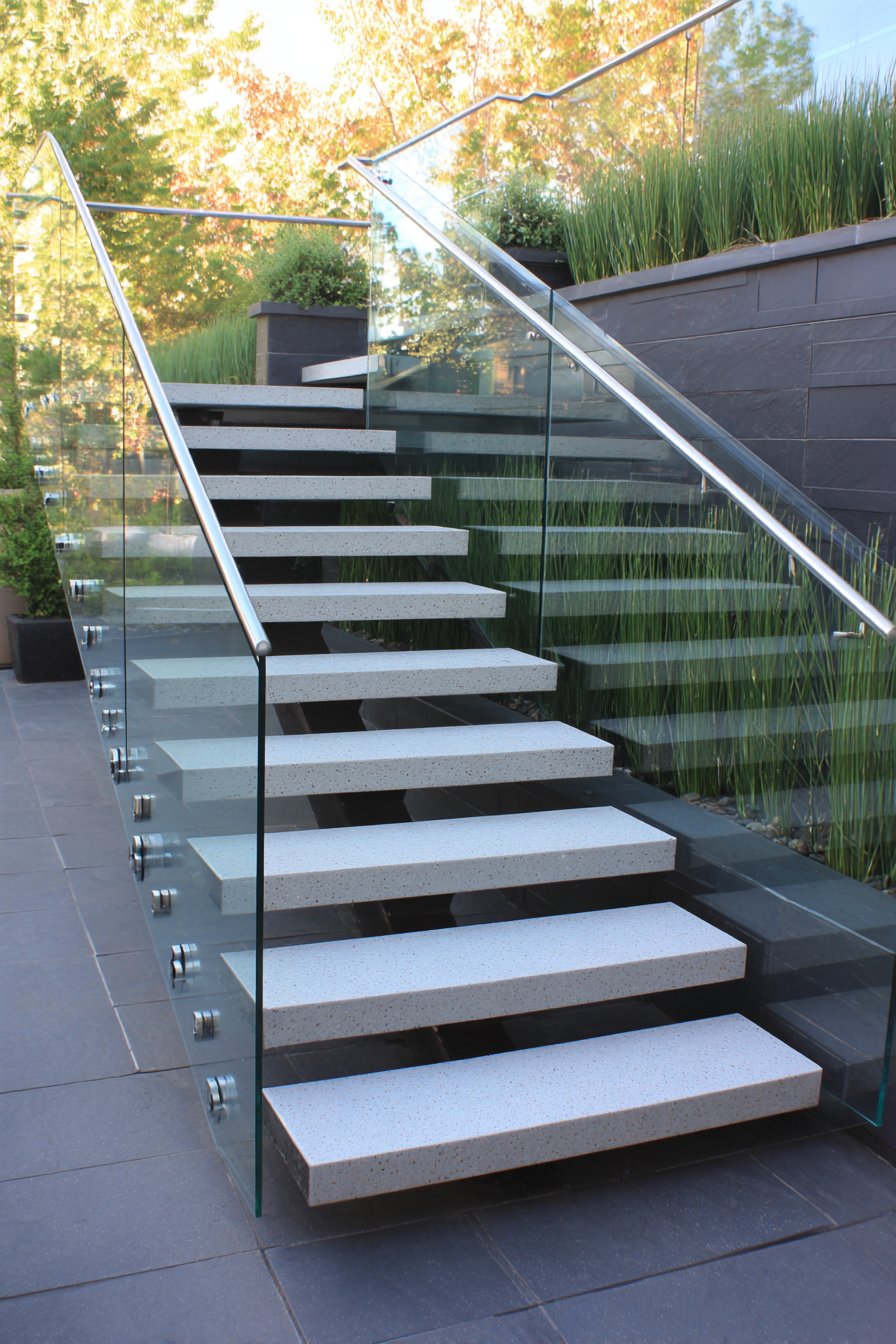
Modern outdoor stairs showcase precast concrete with architectural finishes. White aggregate contrasts against charcoal-tinted cement beautifully. Cantilevered steps appear to float through hidden support. Steel structures within adjacent retaining walls provide concealed support. Minimalist glass panel railings maintain complete transparency.
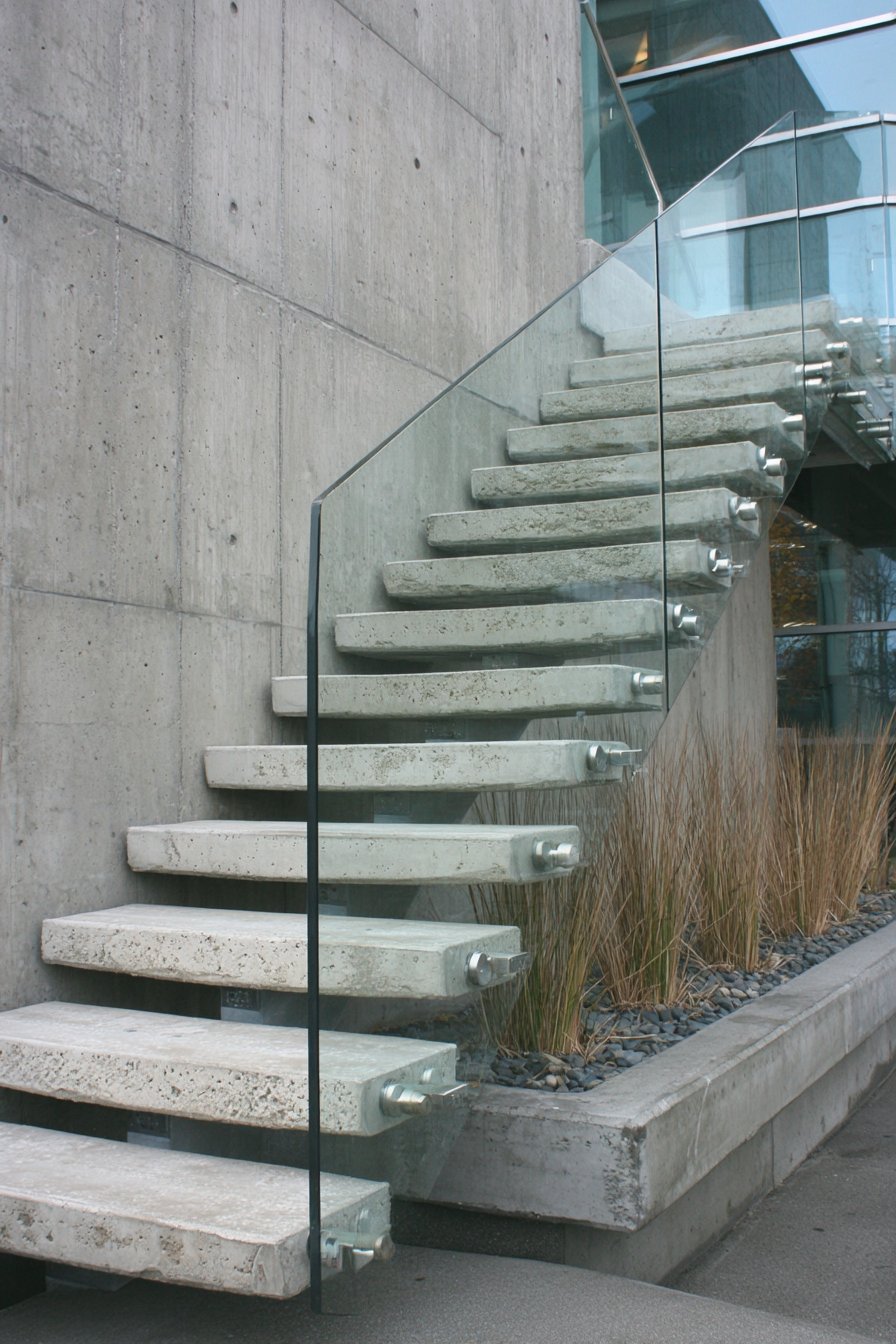
Stainless steel posts hold glass panels securely in place. The transparent barrier preserves views while ensuring safety. Architectural grasses in zinc planters provide vertical accents. Late afternoon light creates dramatic shadows beneath floating treads. Exposed aggregate texture becomes highlighted in directional lighting.
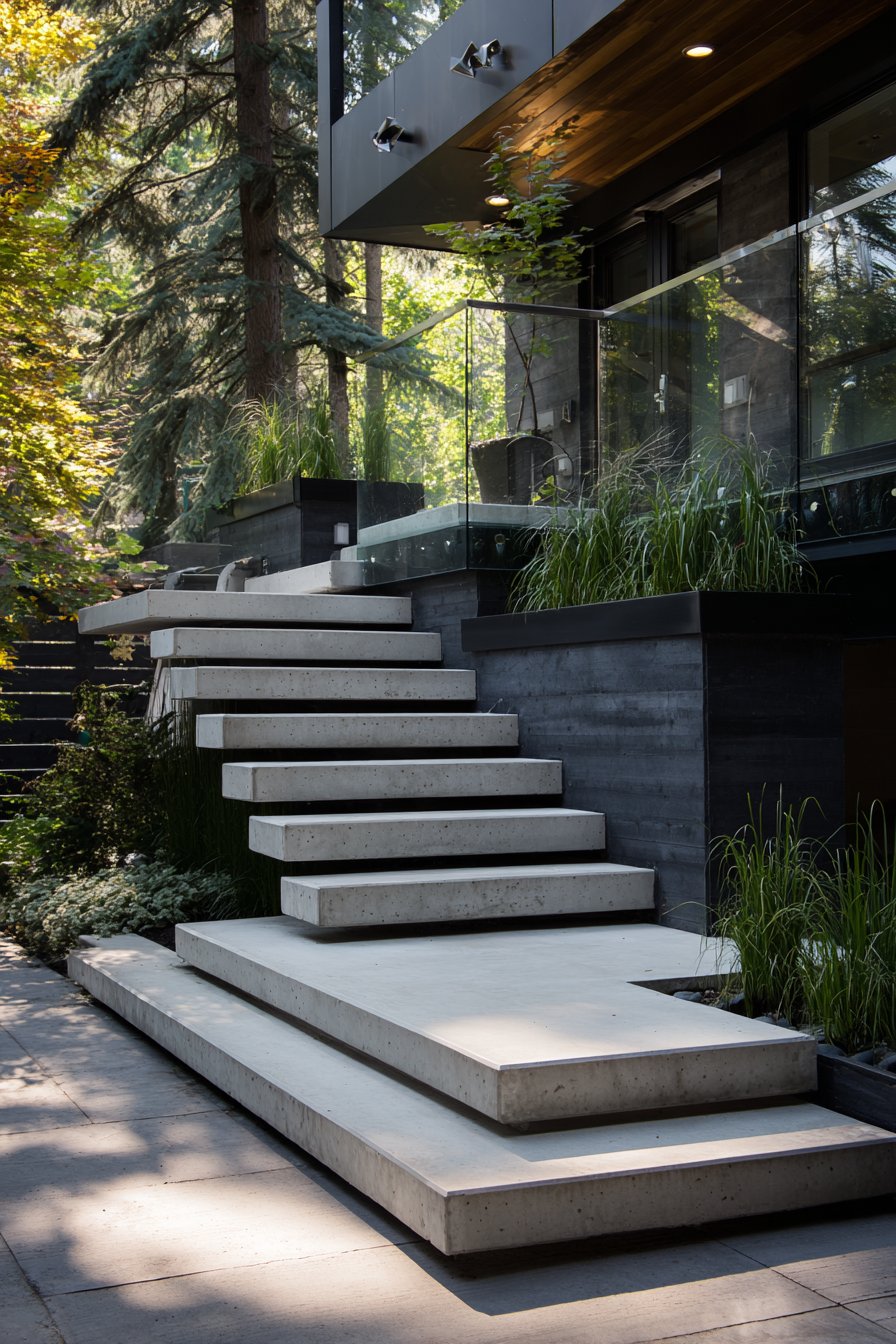
The precision installation demonstrates skilled concrete craftsmanship clearly. Each tread maintains consistent dimensions and positioning exactly. Material quality shows in smooth troweled finishes throughout. Professional architectural photography emphasizes installation precision effectively. The modern aesthetic suits contemporary residential designs perfectly.
Key Design Tips:
- Choose precast concrete for consistent quality
- Expose white aggregate against dark cement
- Cantilever treads for floating appearance
- Install glass panel railings for transparency
- Hide steel support within retaining walls
- Add architectural grasses in zinc planters
- Light from below for dramatic shadows
14. Antique Granite Cobblestones with Historic Character
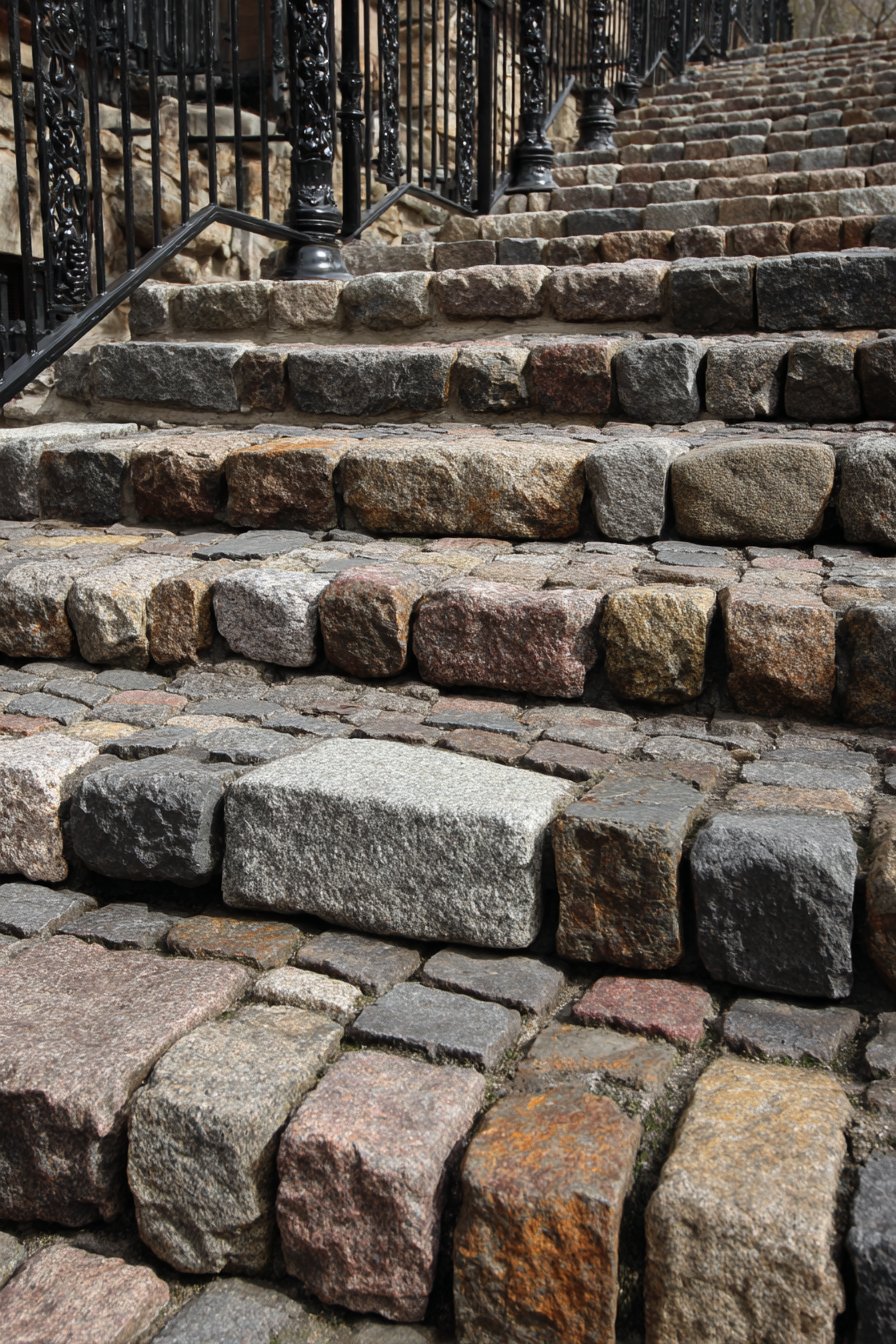
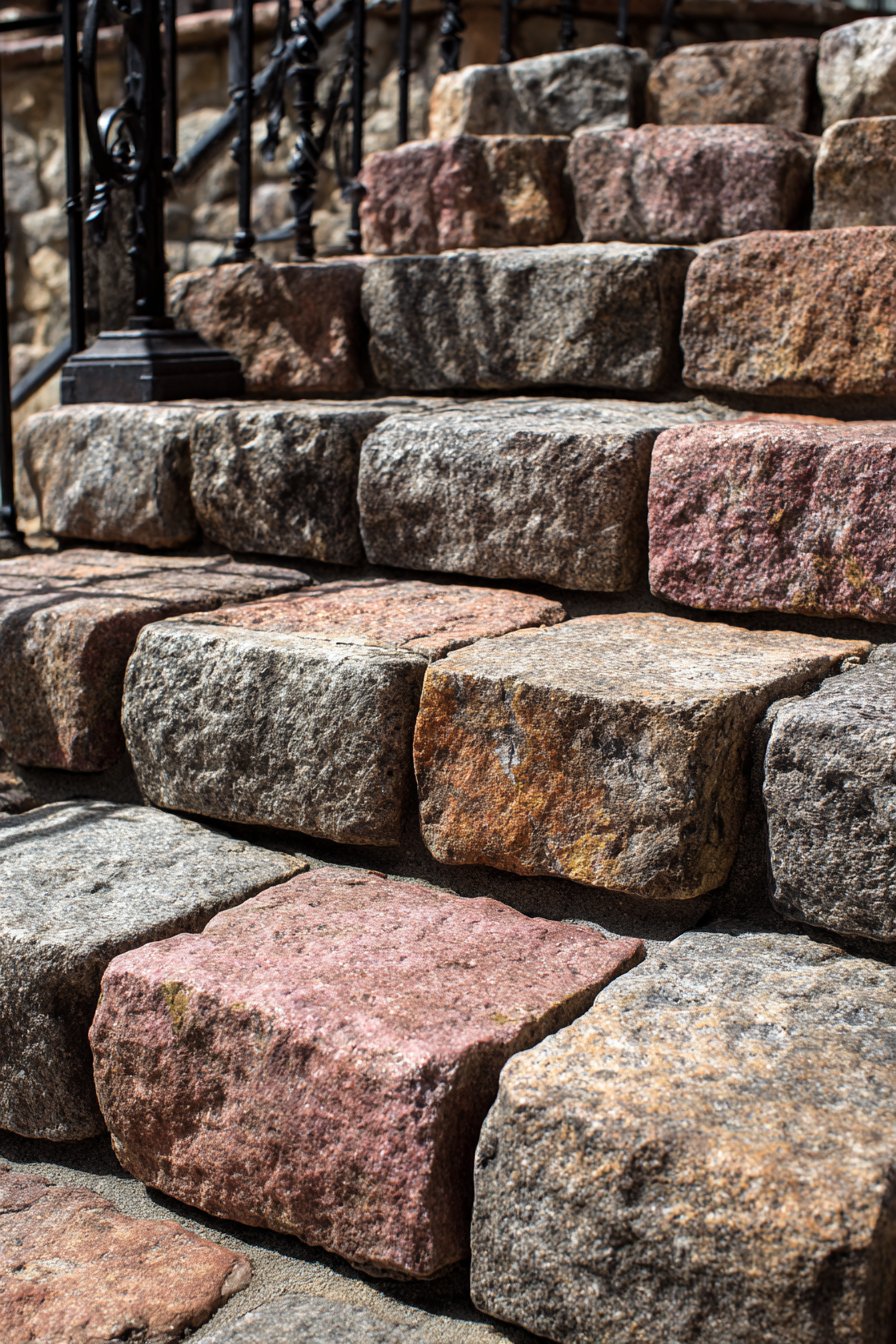
Traditional outdoor stairways incorporate reclaimed granite cobblestones authentically. Historic city streets provide these weathered stone pavers. Each stone shows unique wear patterns and tool marks. Color variations range from pink to grey naturally. Fan patterns on each tread create visual rhythm.
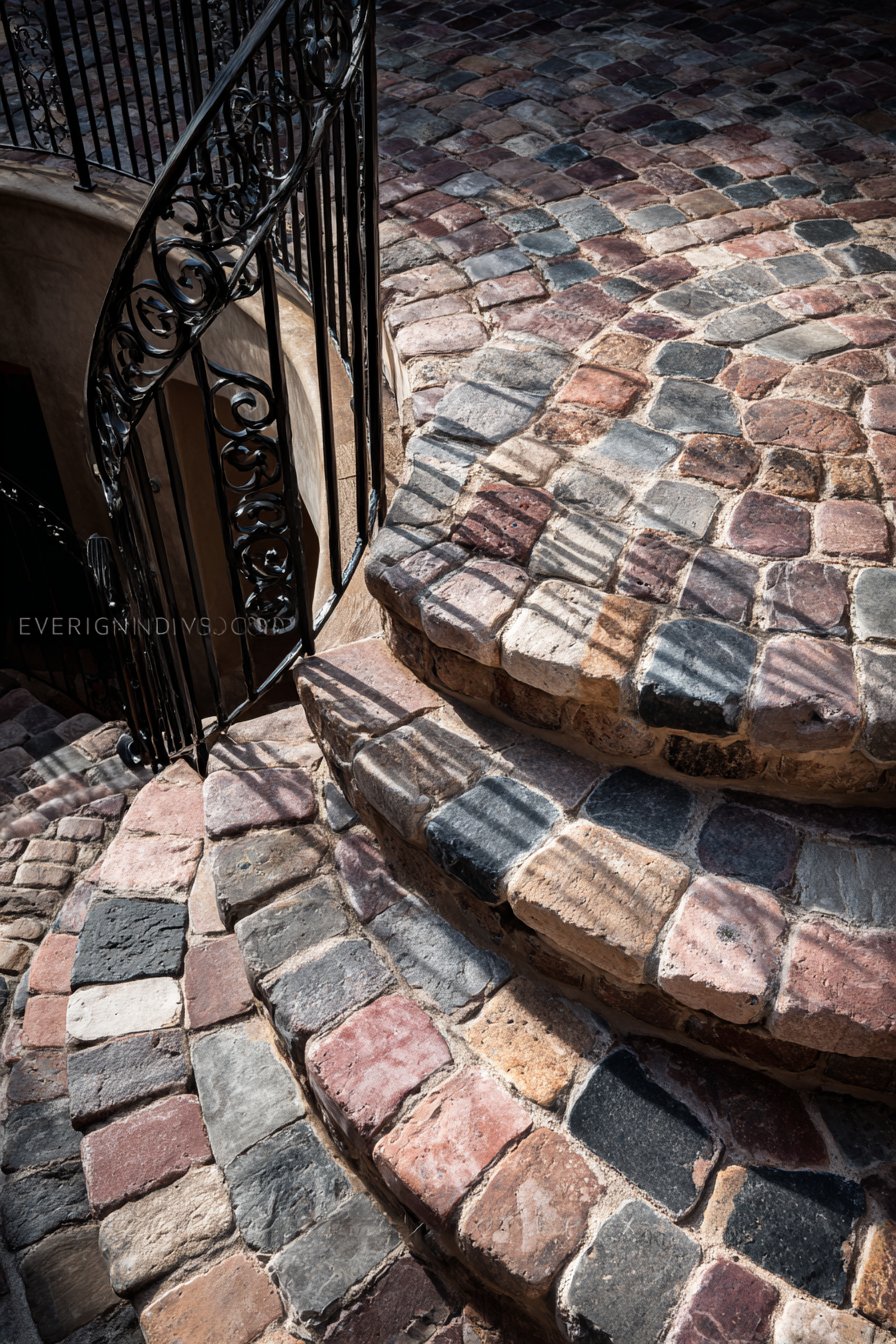
Tight sand-set joints eliminate mortar between cobbles. The permeable installation allows water drainage naturally. Wrought iron railings feature hammered texture throughout. Forged details complement the historical character beautifully. Morning sunlight reveals individual stone textures clearly.
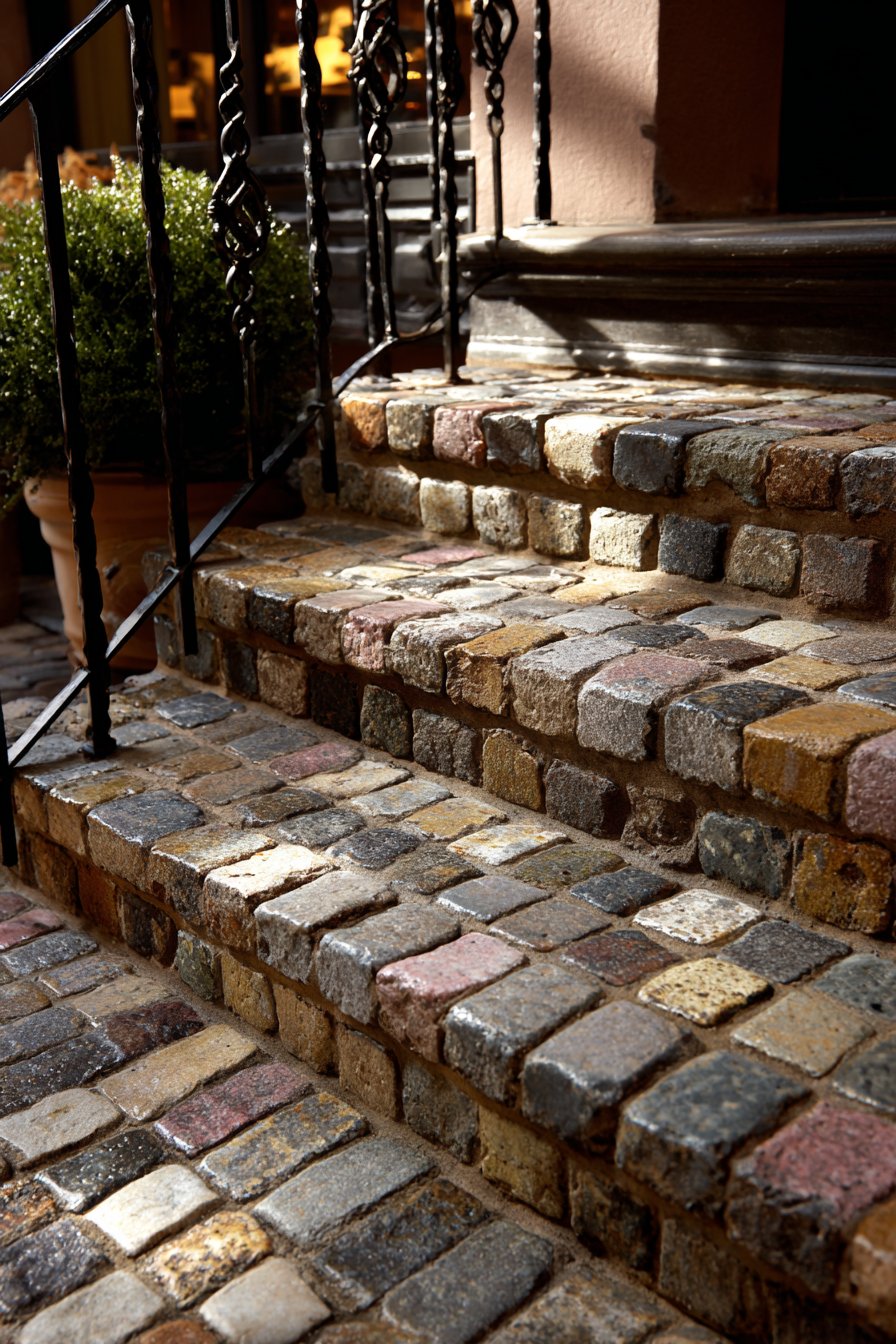
Slight height variations create subtle visual interest organically. The authentic patina cannot be replicated in new materials. Heritage landscape photography emphasizes genuine weathering and craftsmanship. Each stone represents unique history from urban settings. The reclaimed approach supports sustainable building practices effectively.
Key Design Tips:
- Source antique cobblestones from reclaimed suppliers
- Arrange in fan patterns for visual interest
- Set in sand for permeable drainage
- Pair with wrought iron railings authentically
- Embrace wear patterns as character
- Accept natural color variations in stone
- Appreciate slight height variations organically
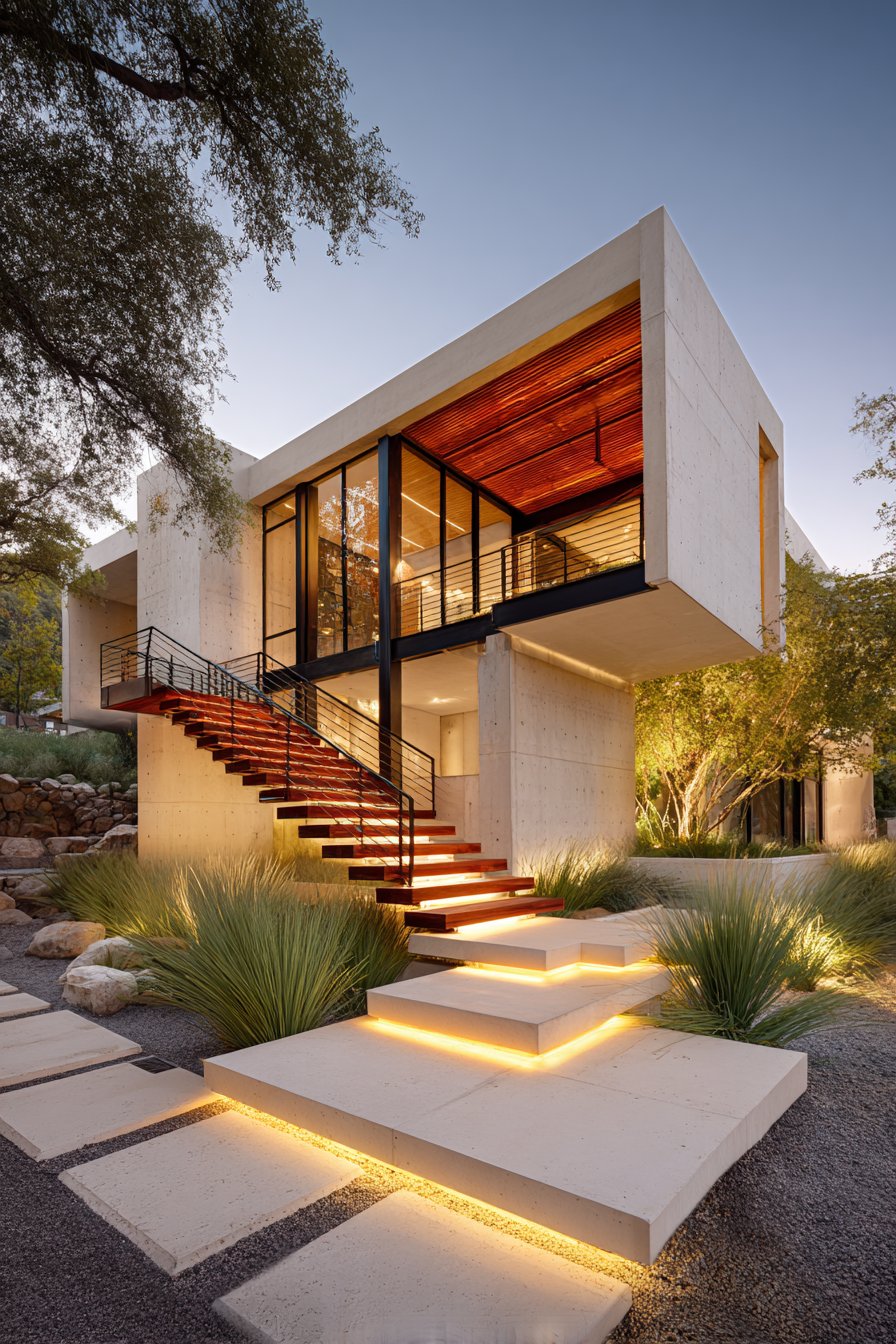
15. Board-Formed Concrete with Floating Ipe
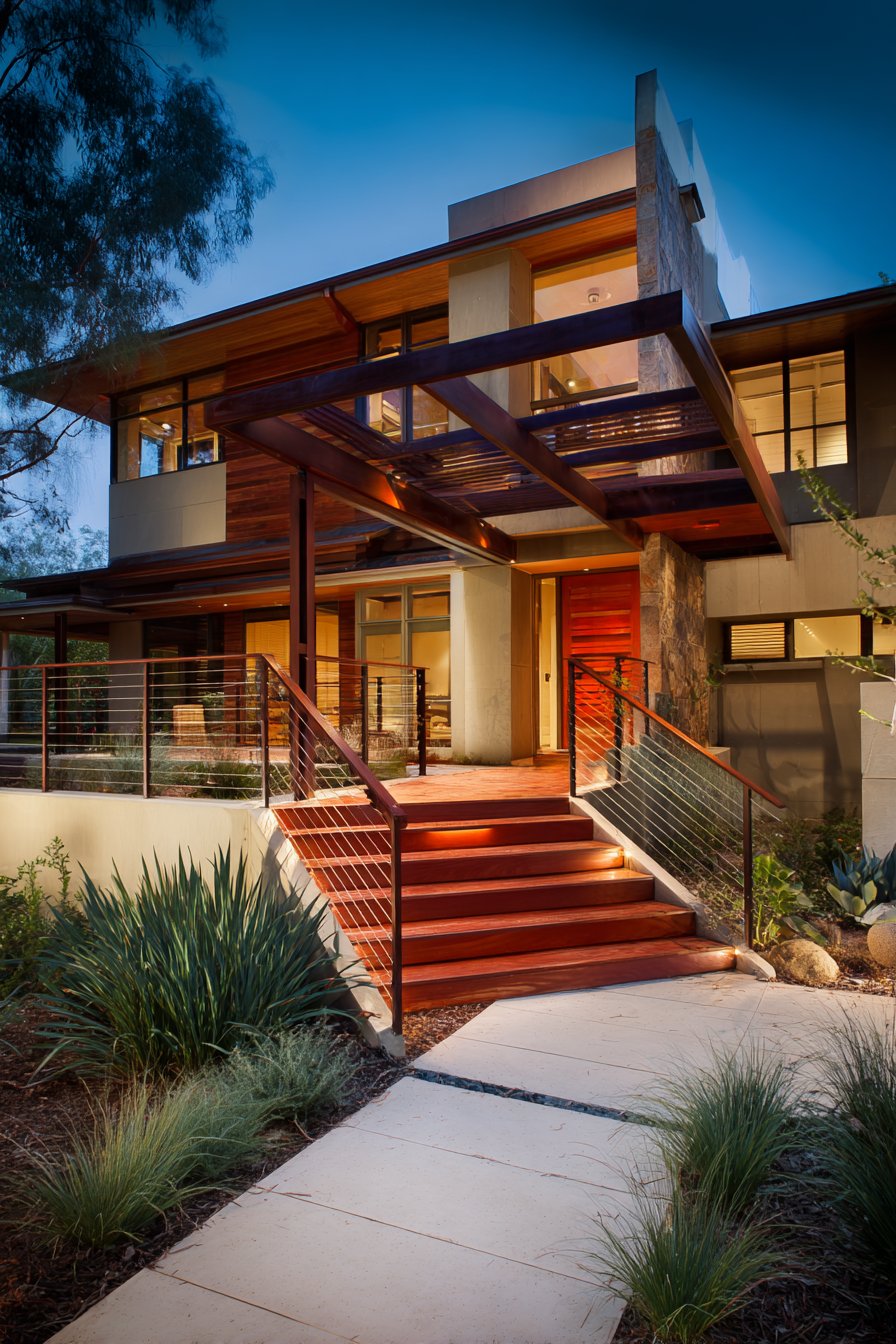
Contemporary outdoor stairs combine board-formed concrete with floating ipe treads. Concrete retaining walls show wood grain impressions from formwork. Ipe wood steps extend beyond concrete creating visual lightness. The tight grain of ipe shows natural color variations. Golden to reddish brown tones appear throughout wood surfaces.
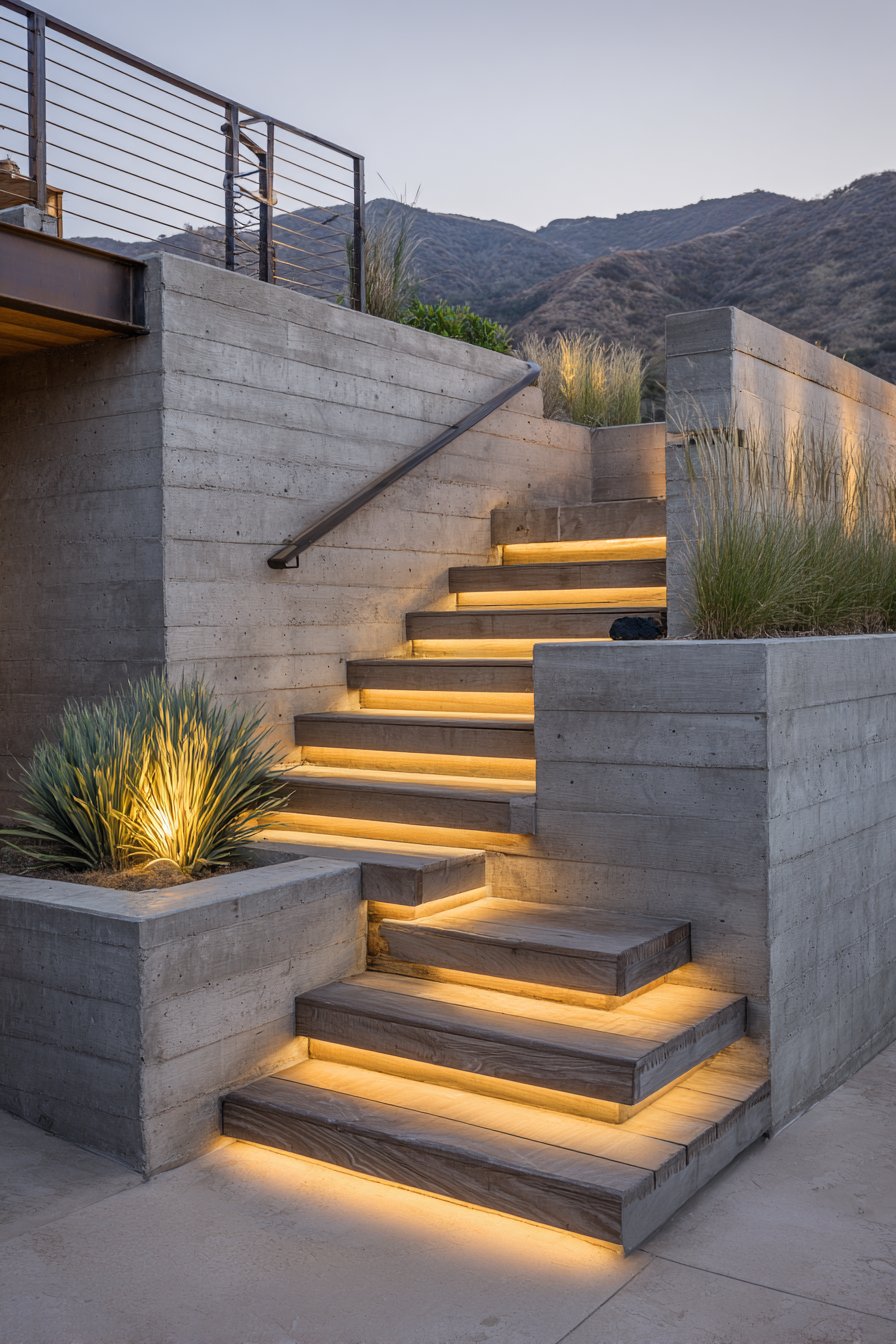
Horizontal steel rod railings maintain clean modern lines. The minimal railing design doesn’t interrupt sight lines. Ornamental grasses and agave plantings provide textural contrast. Twilight photography captures integrated LED strip lighting effects. Lighting beneath treads creates floating appearance after dark.
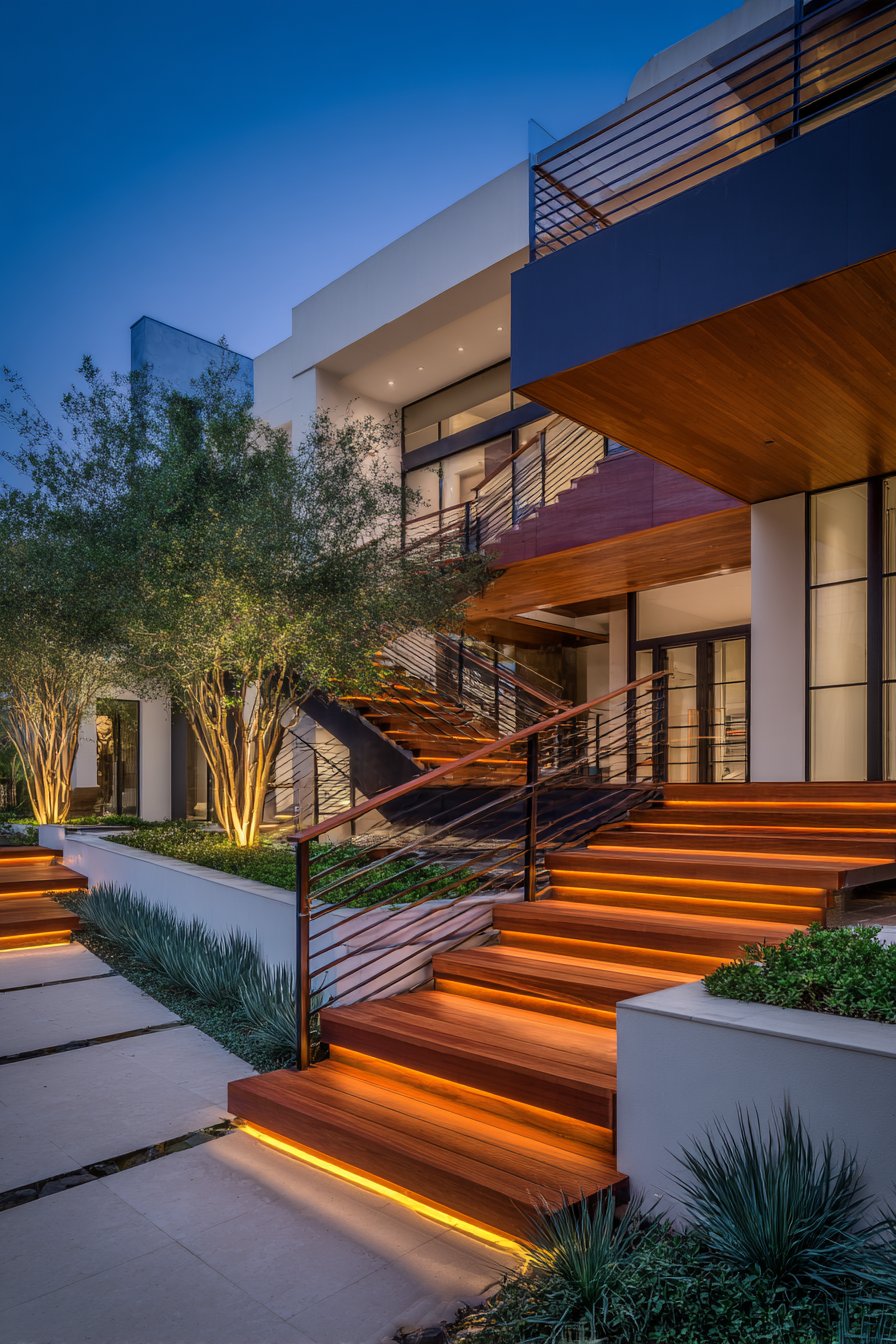
Professional architectural photography balances ambient and artificial lighting. Daytime appeal shows natural material beauty clearly. Evening transformation demonstrates functional lighting design effectively. The combination illustrates multi-functional design thinking successfully. Both lighting conditions receive equal design consideration intentionally.
Key Design Tips:
- Form concrete walls with rough-sawn lumber
- Extend ipe treads beyond concrete supports
- Install horizontal steel rod railings simply
- Add LED strip lighting beneath treads
- Plant ornamental grasses for texture
- Balance daytime and evening aesthetics
- Combine industrial and natural materials
16. Stacked Slate with Organic Layering
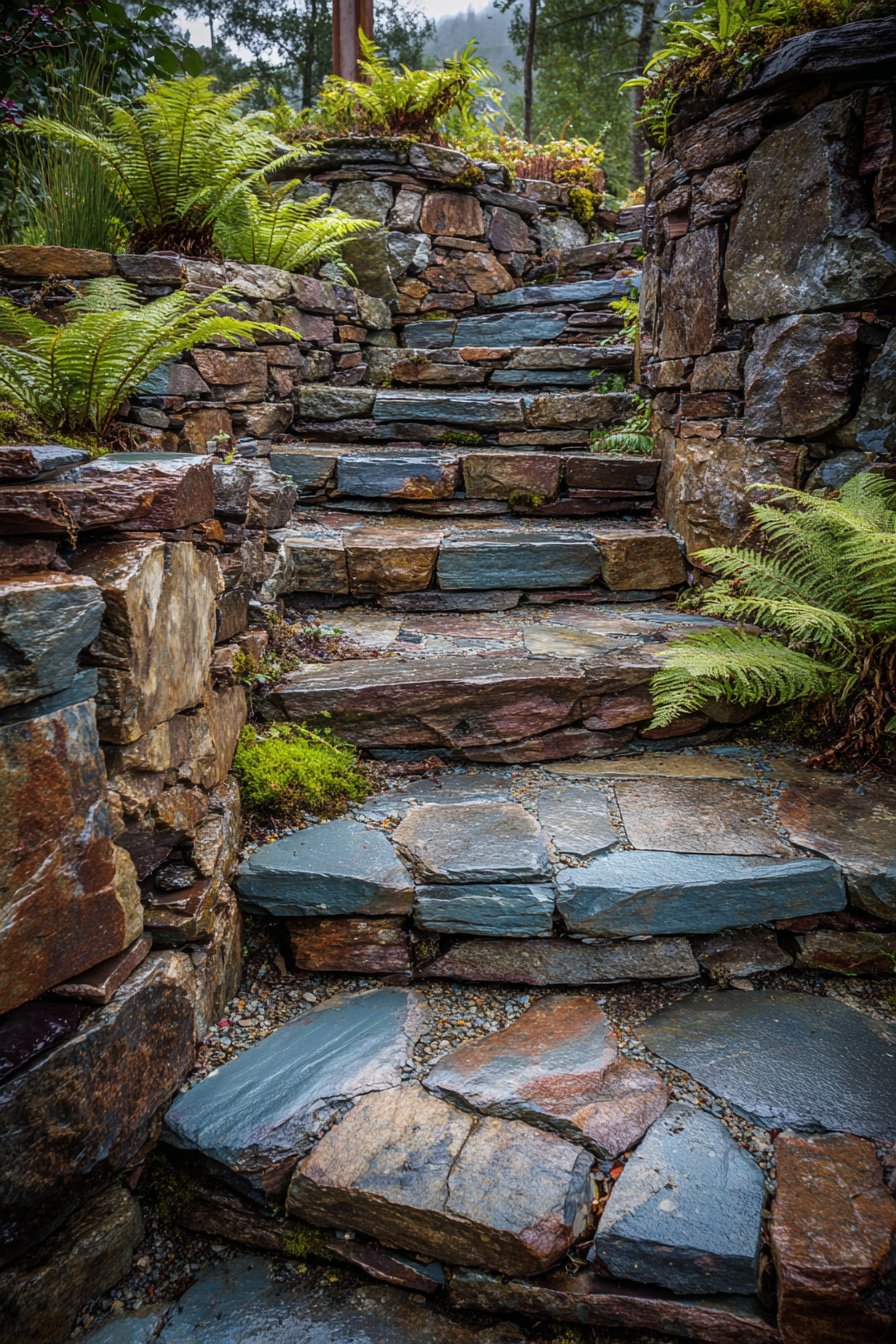
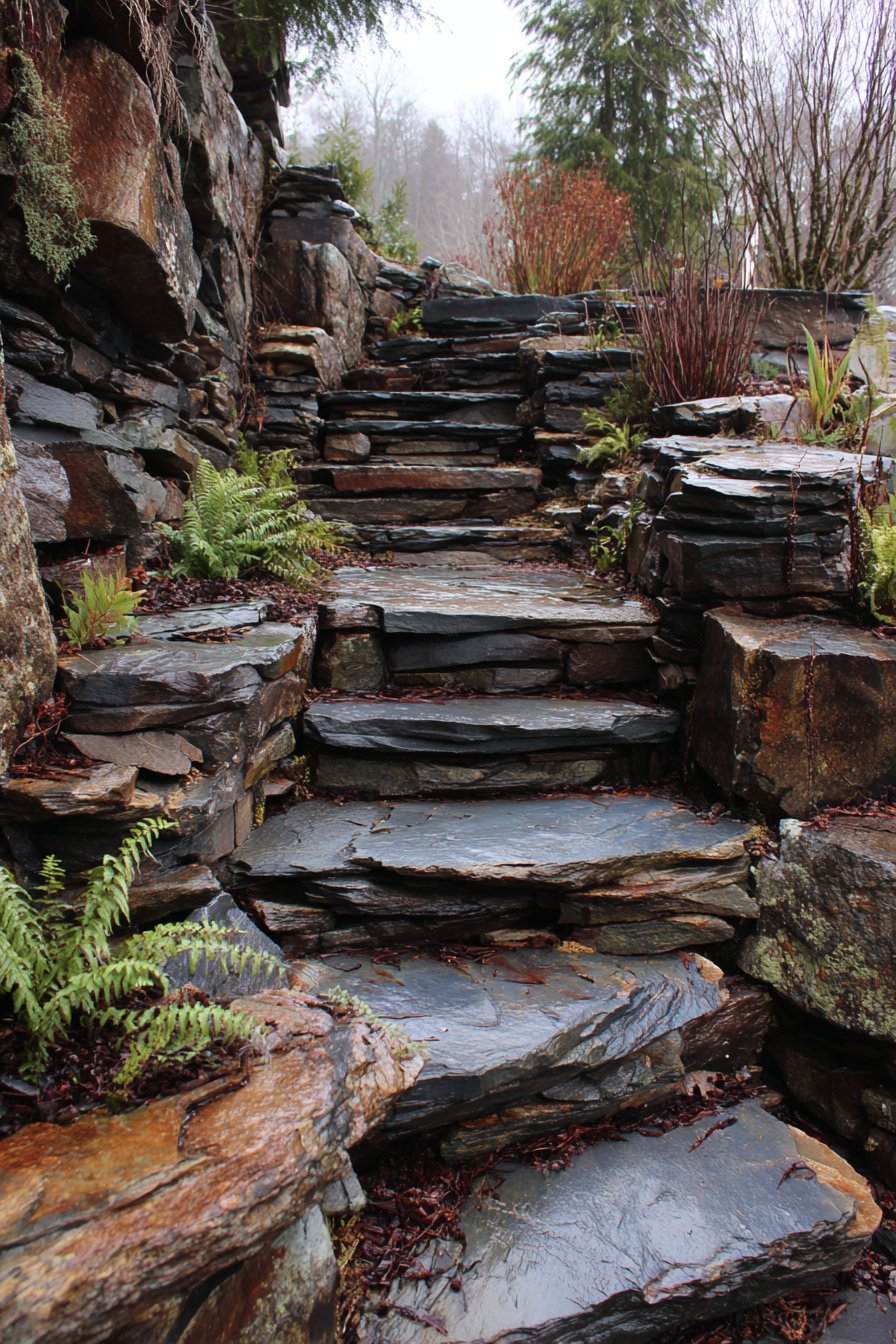
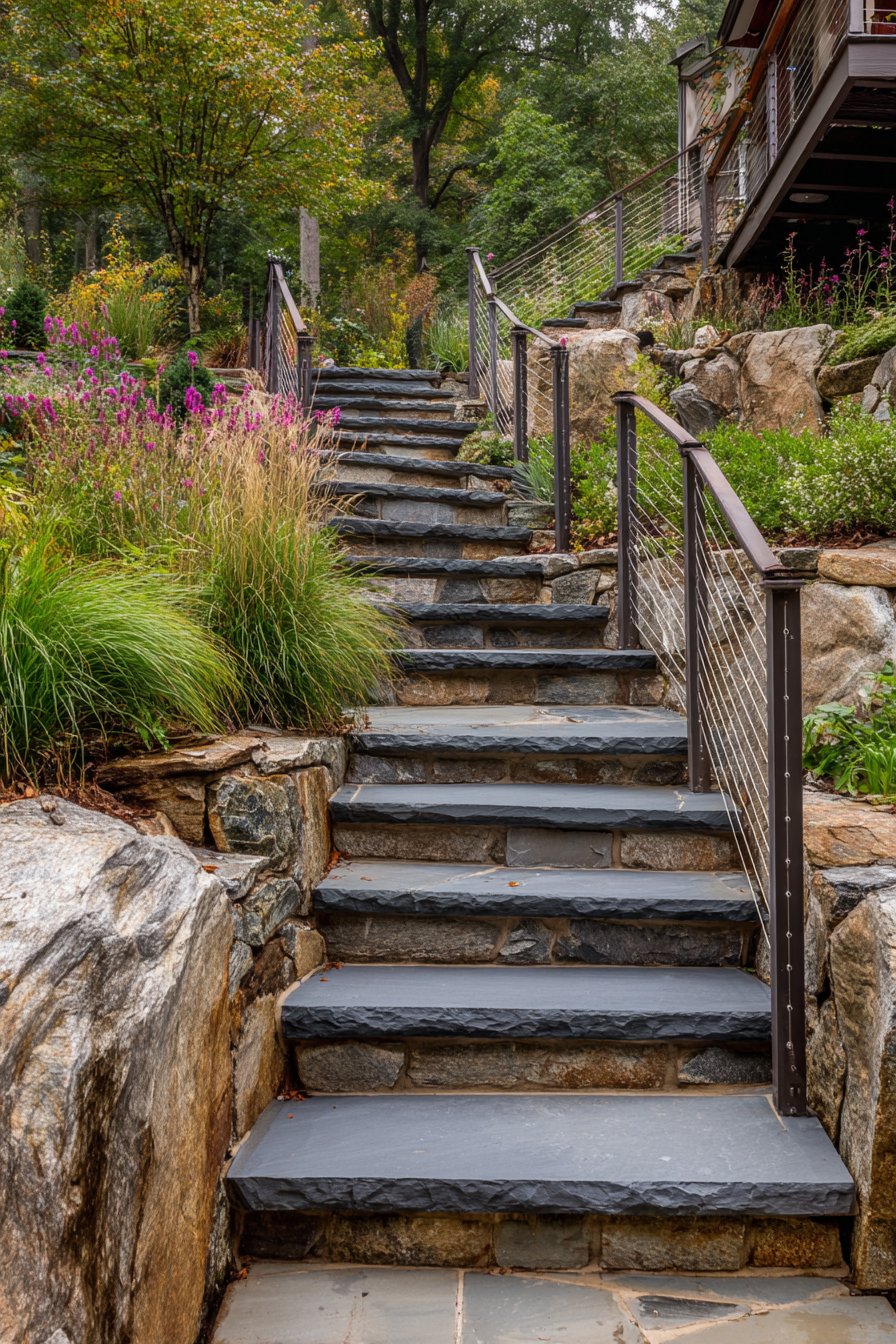
Rustic outdoor staircases use stacked natural slate with irregular edges. The grey-blue stone shows natural cleft surfaces throughout. Mica flecks catch light creating subtle sparkle effects. Organic layered appearance emerges from varied stone thicknesses. Each step height adjusts to terrain naturally.
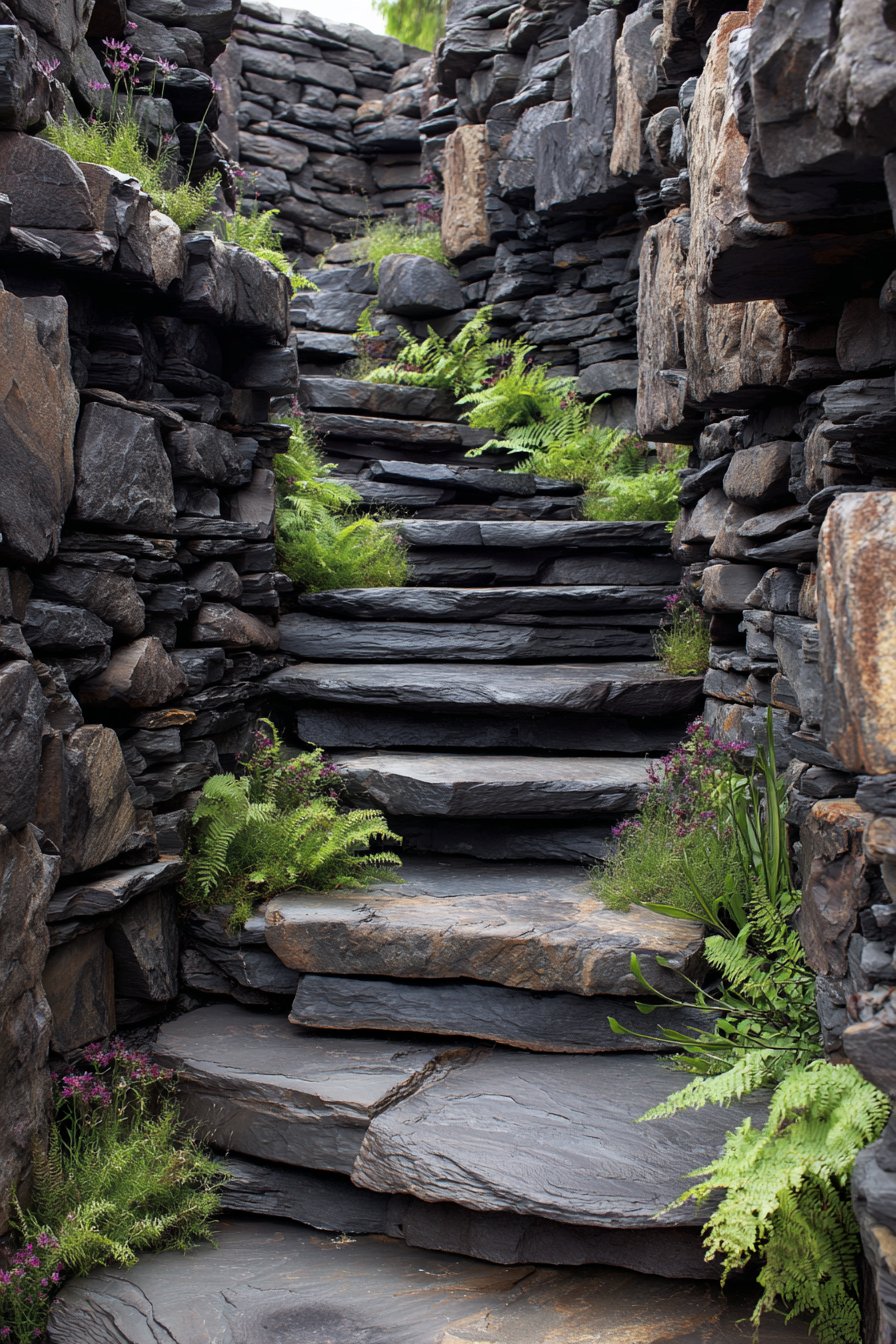
Landings incorporate flat boulder seating areas organically. Native ferns establish between stones in shaded areas. Woodland flowers add seasonal color and interest. Soft overcast lighting eliminates harsh shadow patterns. The even illumination reveals subtle color shifts clearly.
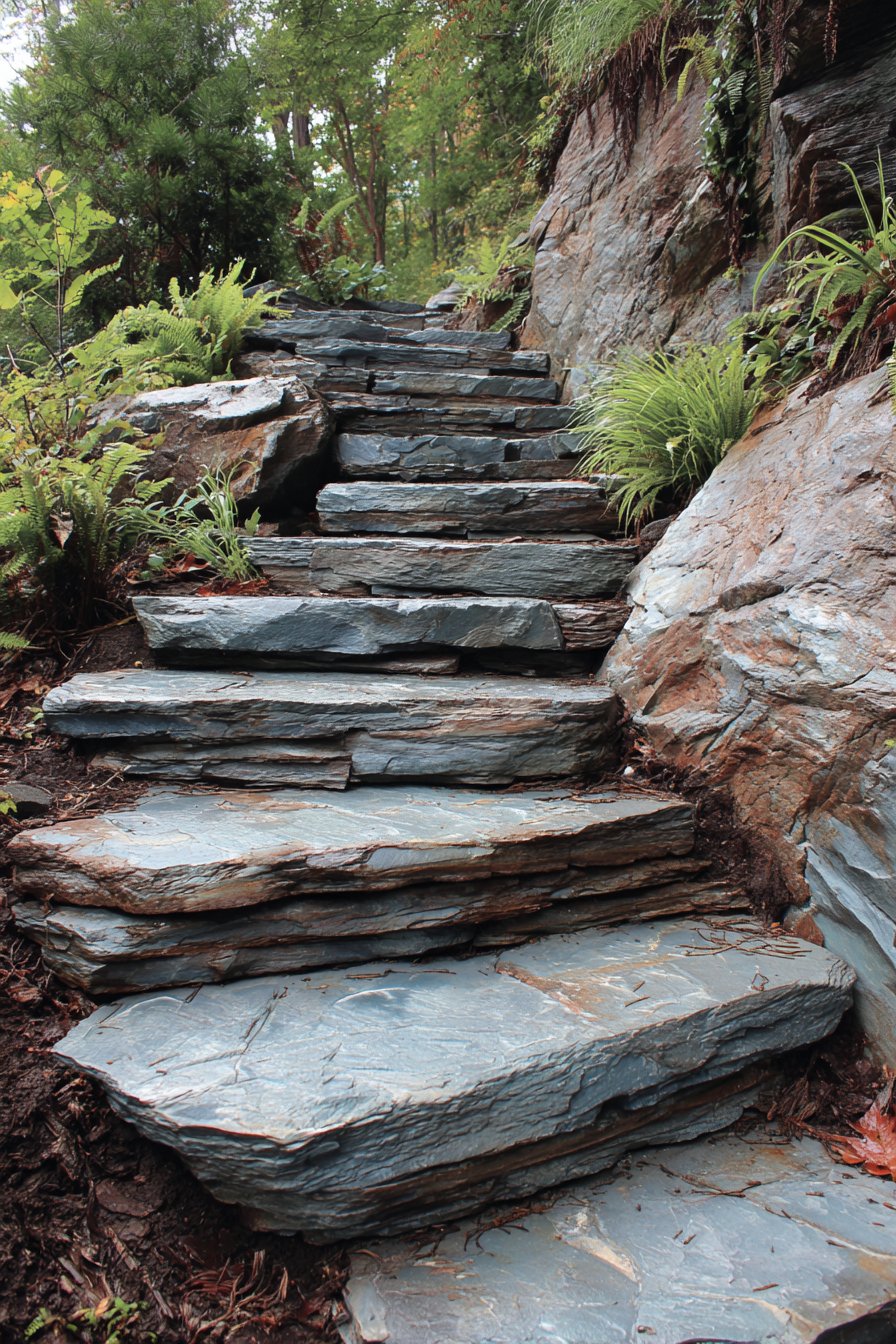
Natural stratification in slate shows geological formation layers. The handcrafted integration demonstrates skilled stonework clearly. Material authenticity shines through natural characteristics obviously. The installation appears as natural landscape feature successfully. Landscape photography emphasizes organic material qualities effectively.
Key Design Tips:
- Stack slate pieces with irregular edges
- Allow natural layering for organic appearance
- Adjust step heights to follow terrain
- Create boulder seating at landings
- Plant native ferns between stones
- Embrace natural cleft surfaces authentically
- Appreciate mica flecks in stone
17. Hexagonal Concrete in Honeycomb Pattern
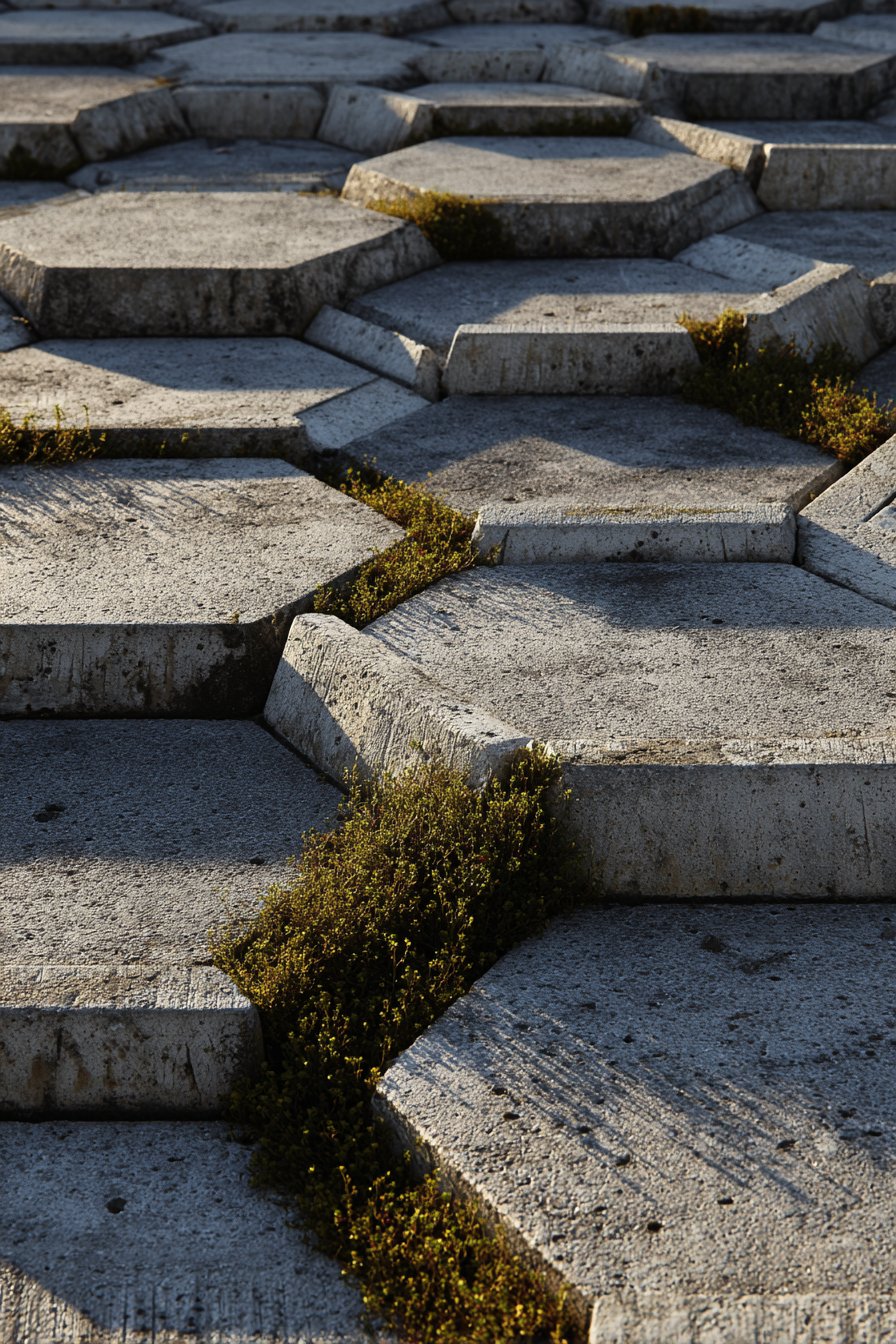
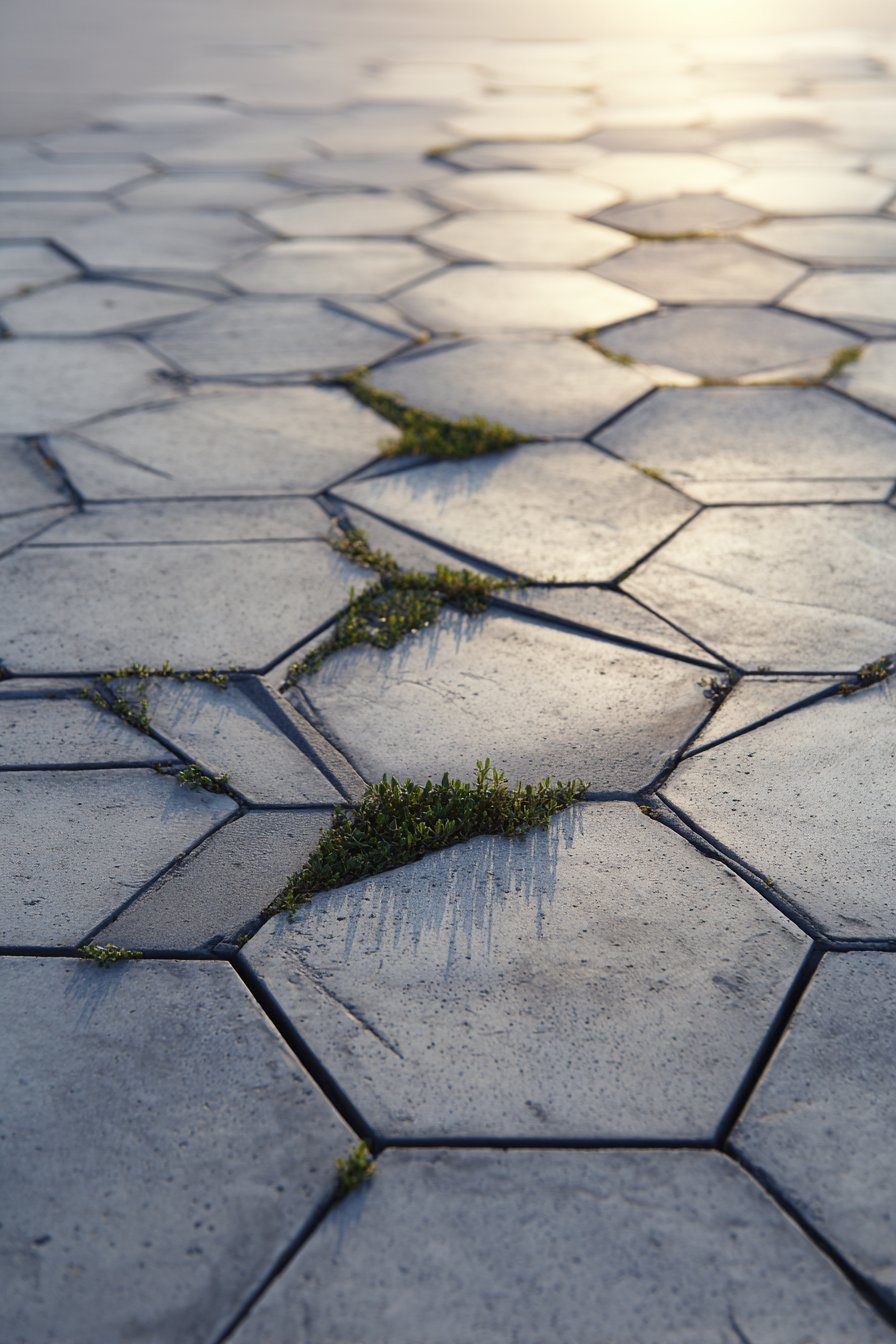
Geometric outdoor stairs feature hexagonal concrete pavers arranged systematically. The honeycomb pattern creates visual interest while ascending. Each hexagon shows smooth troweled finish throughout. Slightly rounded edges result from natural weathering over time. Grey concrete develops natural patina gradually.
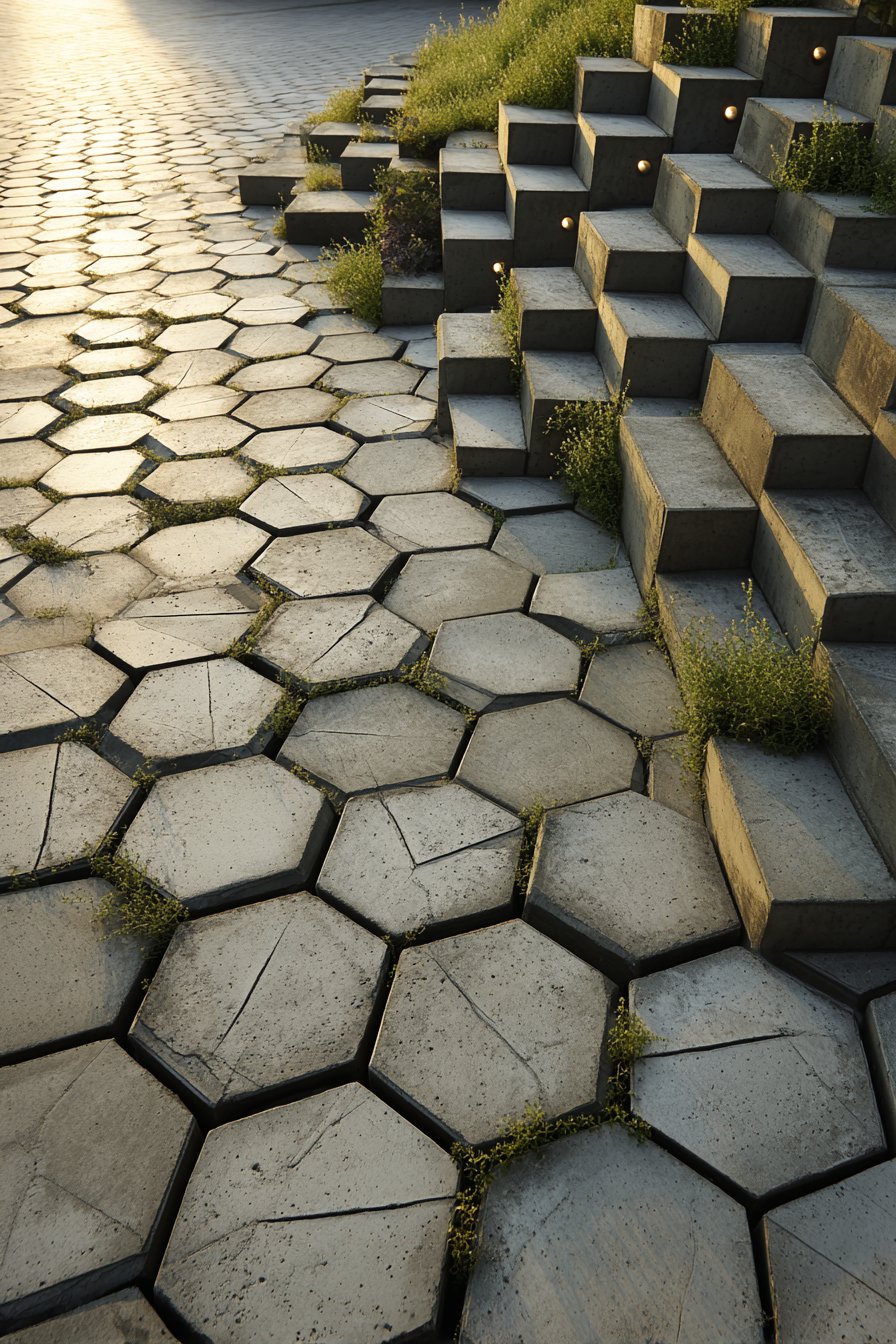
Low-voltage lighting illuminates geometric patterns after dark strategically. The fixtures position at strategic joints between pavers. Creeping thyme fills gaps adding organic softness naturally. Golden hour lighting emphasizes three-dimensional pattern quality. The geometric precision contrasts with organic plant materials.
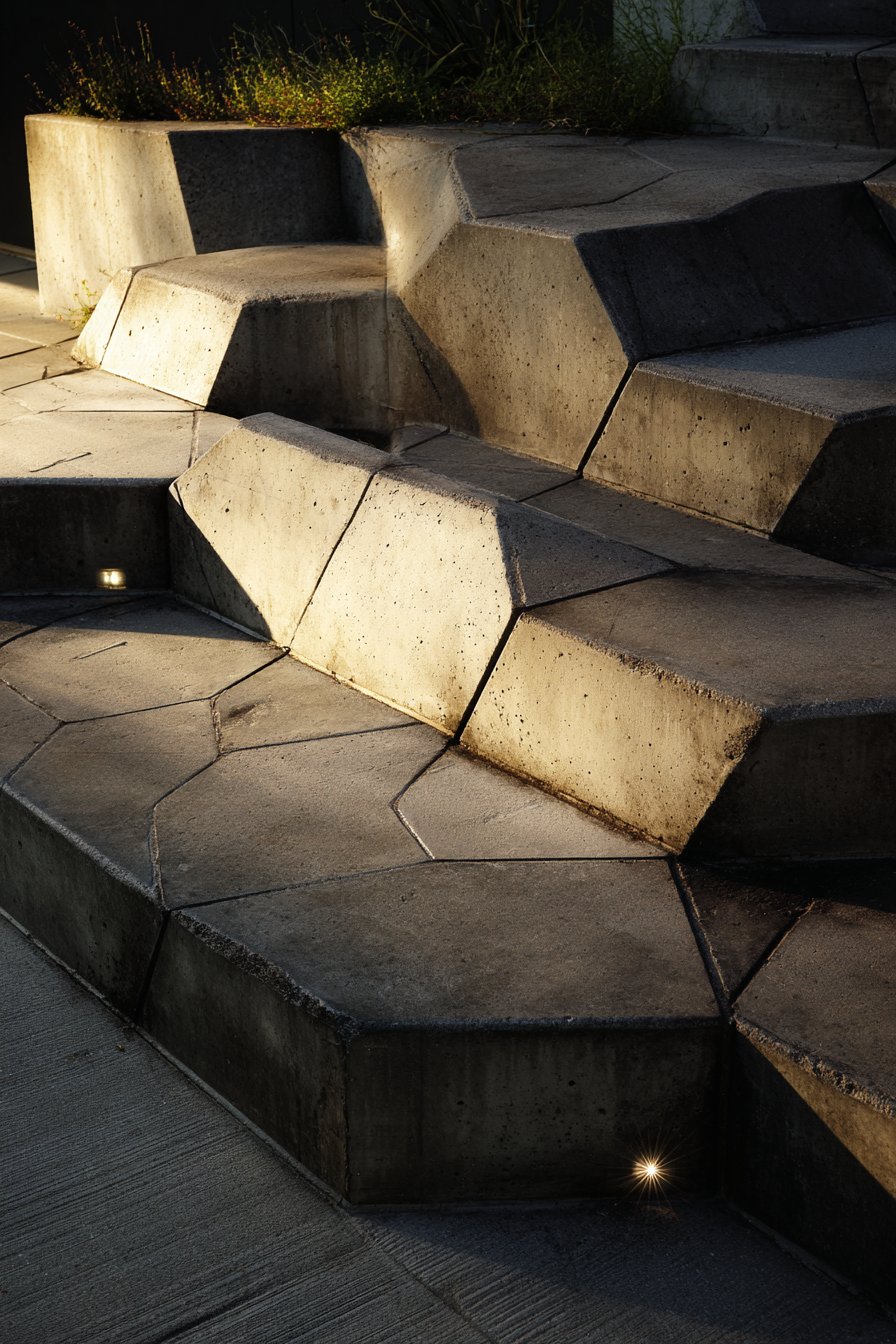
Architectural photography showcases geometric and natural element interplay. The pattern maintains consistency while allowing creative expression. Weathering adds character without diminishing geometric clarity. The honeycomb arrangement provides excellent traction naturally. This design demonstrates successful geometry and nature integration.
Key Design Tips:
- Arrange hexagonal pavers in honeycomb pattern
- Allow rounded edges from natural weathering
- Install low-voltage lighting at joints
- Fill gaps with creeping thyme
- Appreciate natural patina development
- Balance geometric precision with organic plants
- Create traction through pattern geometry
18. Mediterranean Terracotta with Decorative Tiles
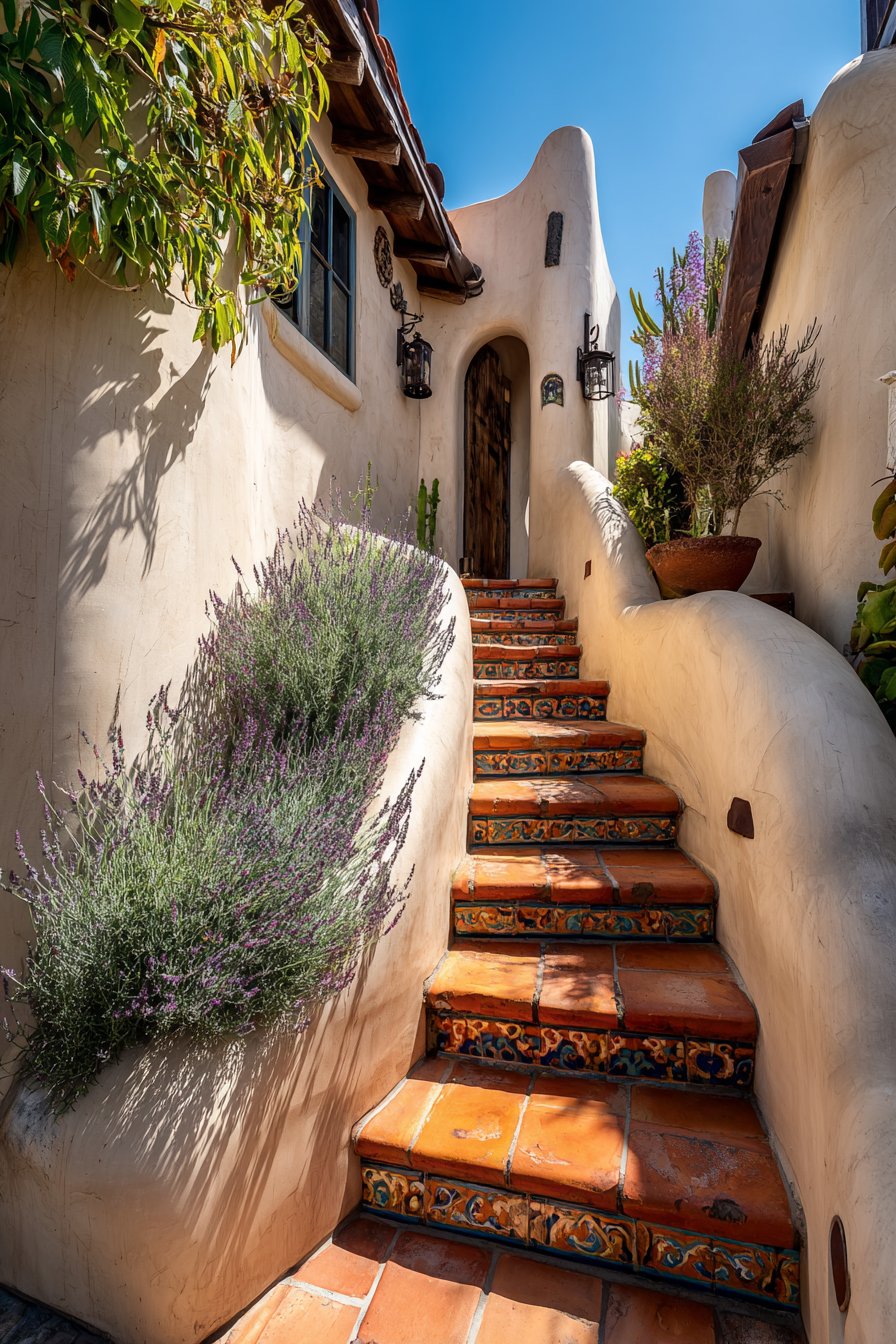
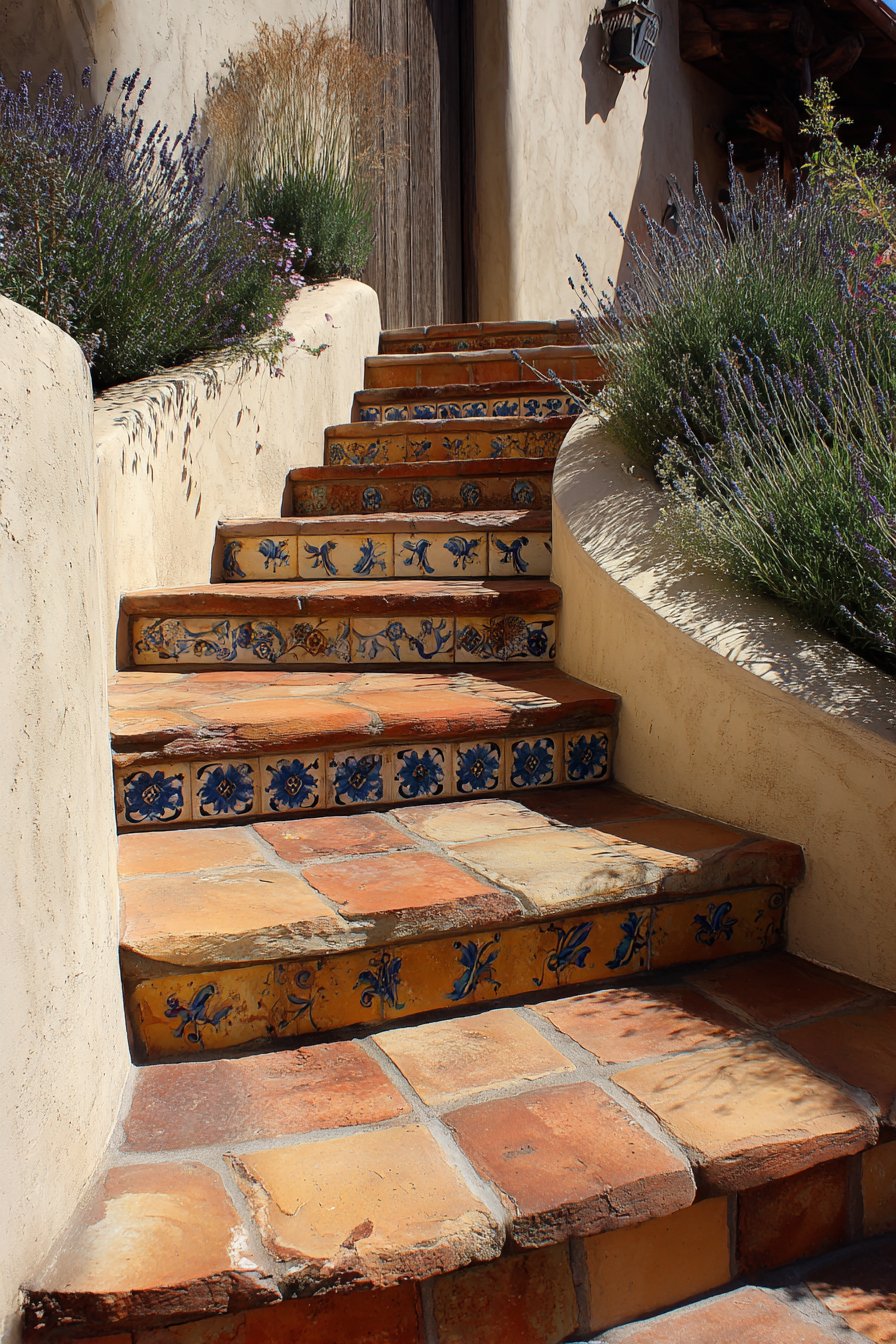
Mediterranean outdoor stairways celebrate warm terracotta tiles with character. Hand-formed edges show natural variation in each piece. Decorative painted ceramic riser tiles feature traditional patterns. Blue and yellow designs show subtle fading from exposure. Curved stucco walls in cream tones frame the installation.
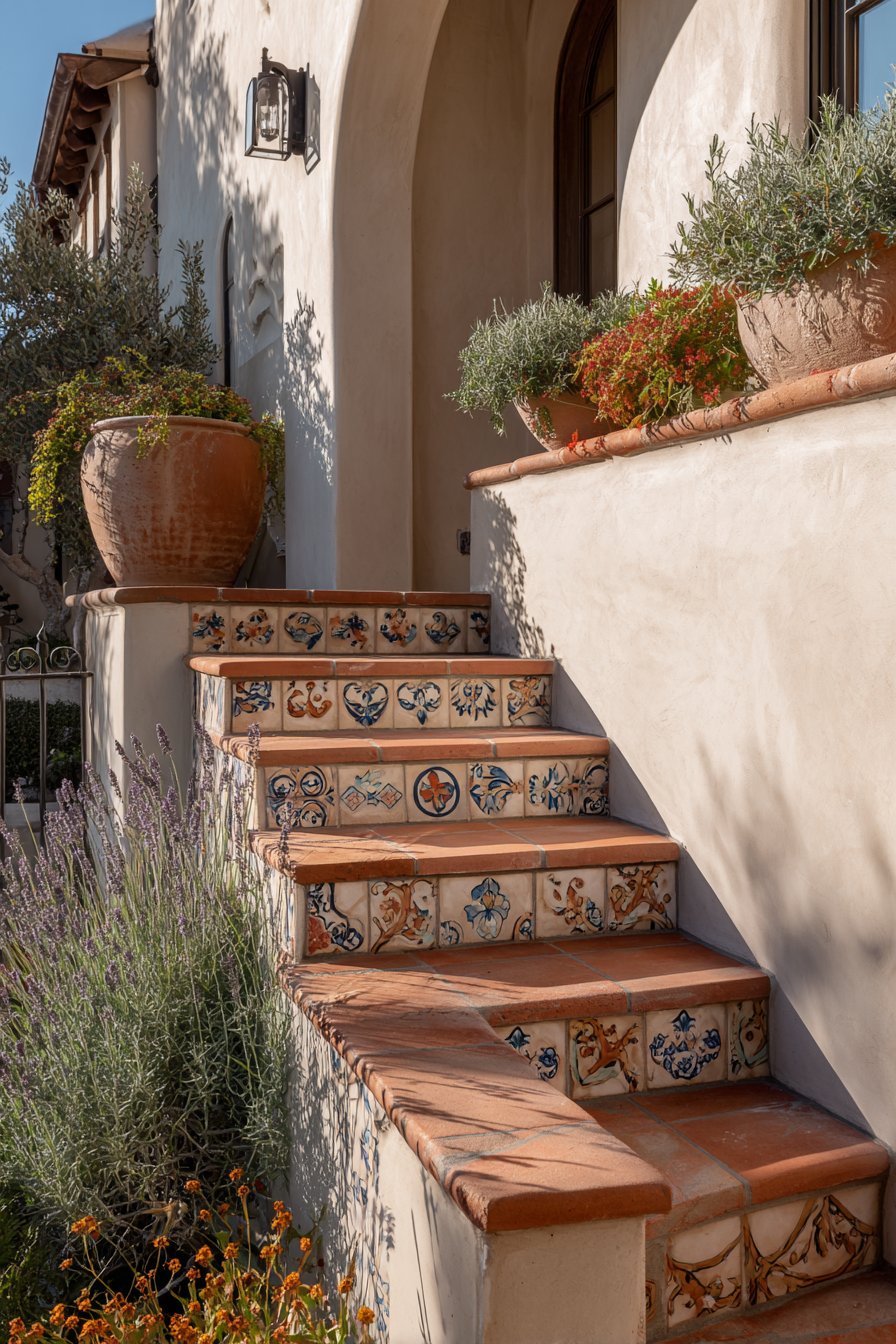
Integrated planters overflow with lavender and rosemary naturally. The aromatic herbs enhance the Mediterranean atmosphere beautifully. Terracotta shows natural color variations throughout installation. Slight chips from use demonstrate authentic weathering patterns. Afternoon Mediterranean light creates warm shadow effects.
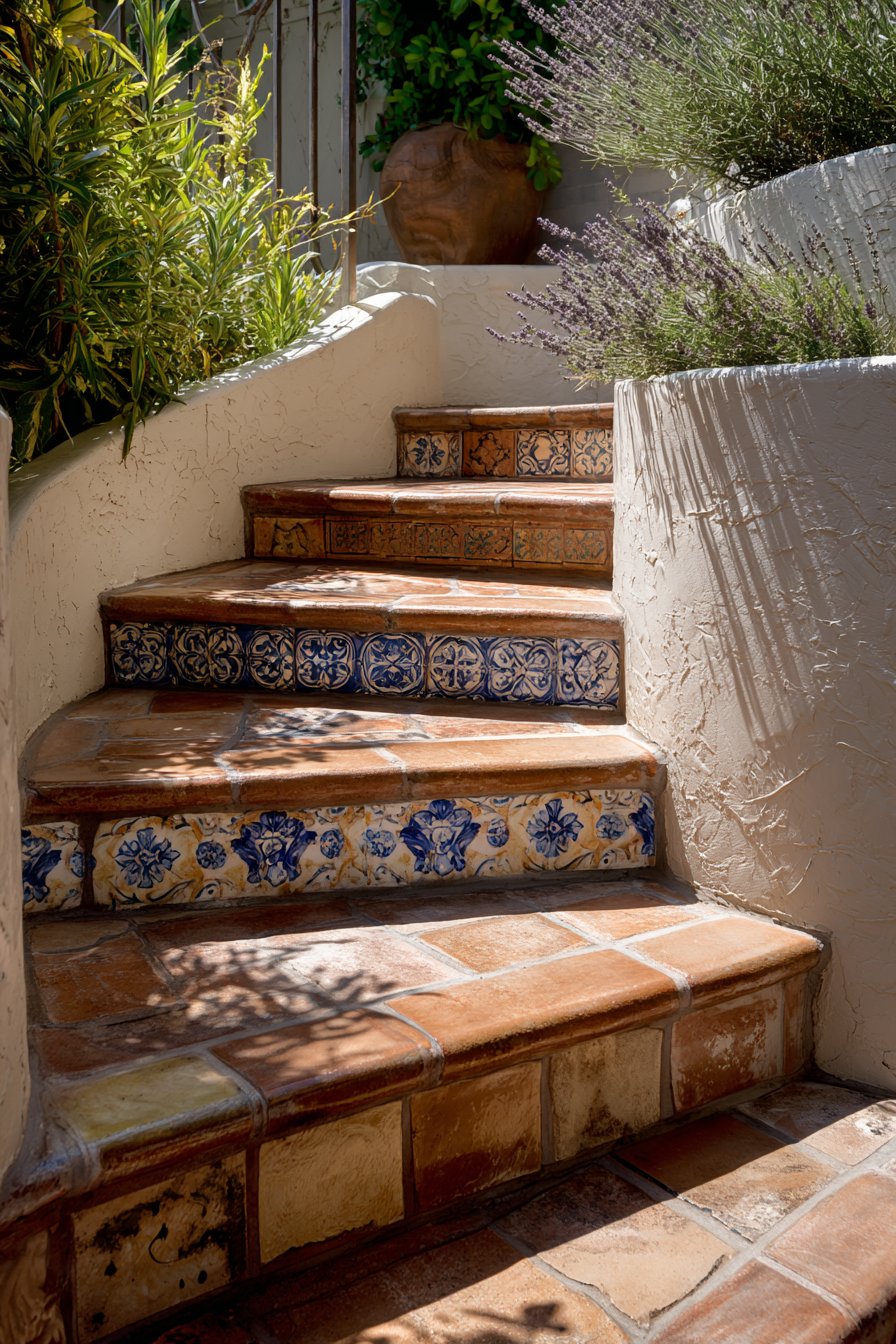
The romantic character emerges from weathered material qualities. Authentic aging cannot be replicated in new installations. Interior design photography captures the romantic aesthetic effectively. The color palette reflects coastal Mediterranean regions naturally. This design transports viewers to sun-soaked hillside villages.
Key Design Tips:
- Choose hand-formed terracotta for variation
- Add decorative ceramic tiles on risers
- Frame with curved cream stucco walls
- Plant lavender and rosemary in planters
- Embrace natural color variations
- Accept chips and fading as authenticity
- Create romantic Mediterranean atmosphere
19. Pressure-Treated Lumber for Steep Slopes
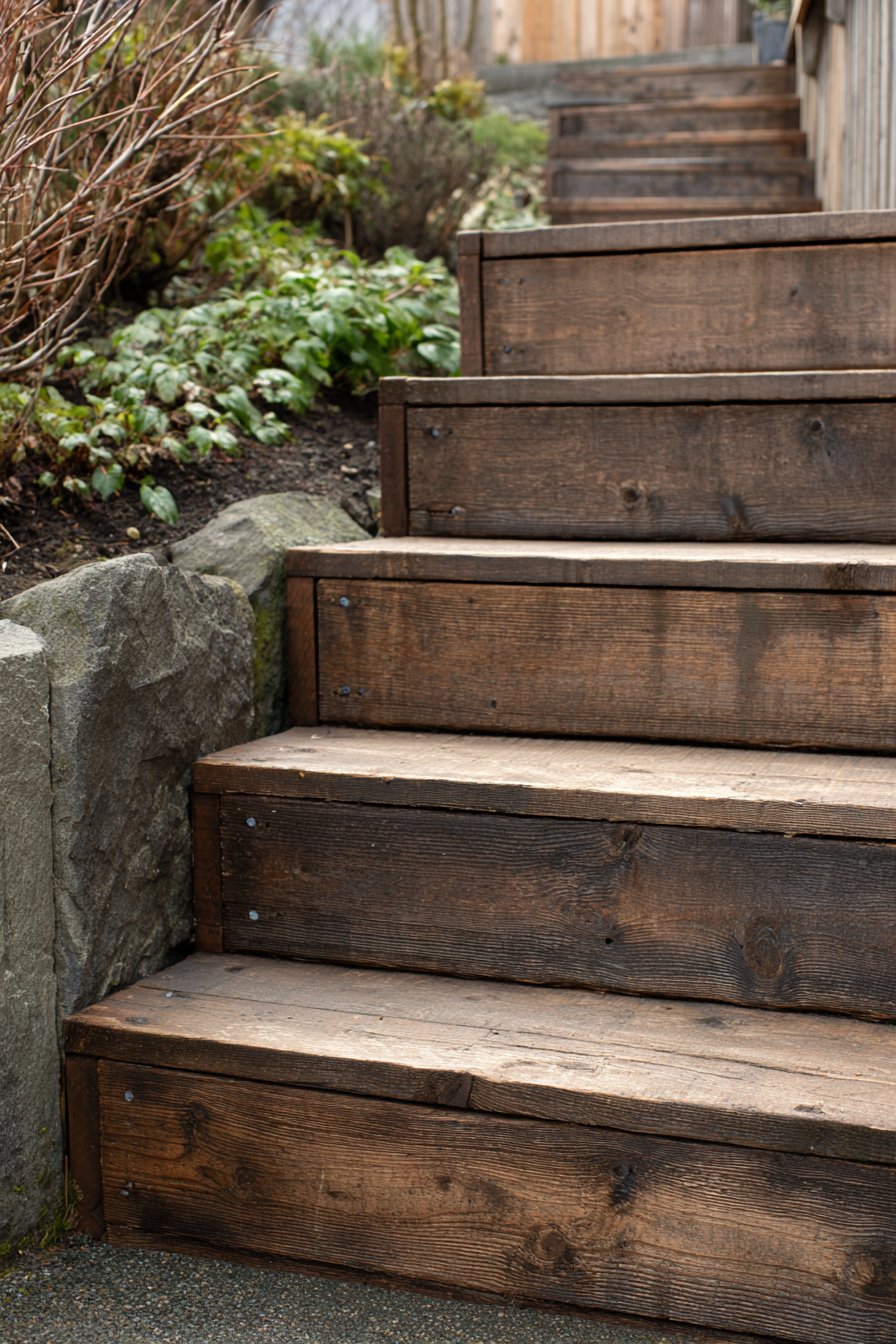
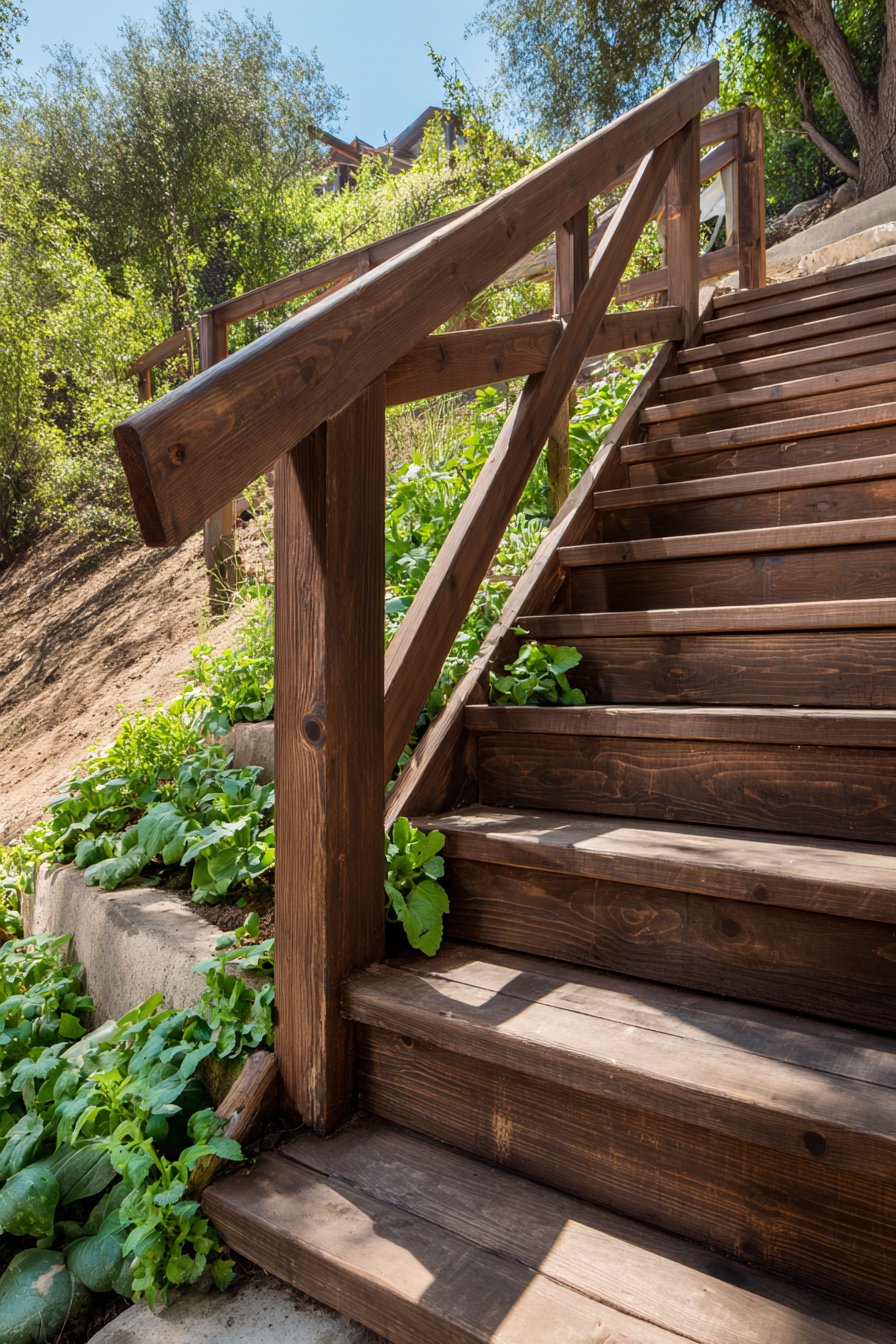
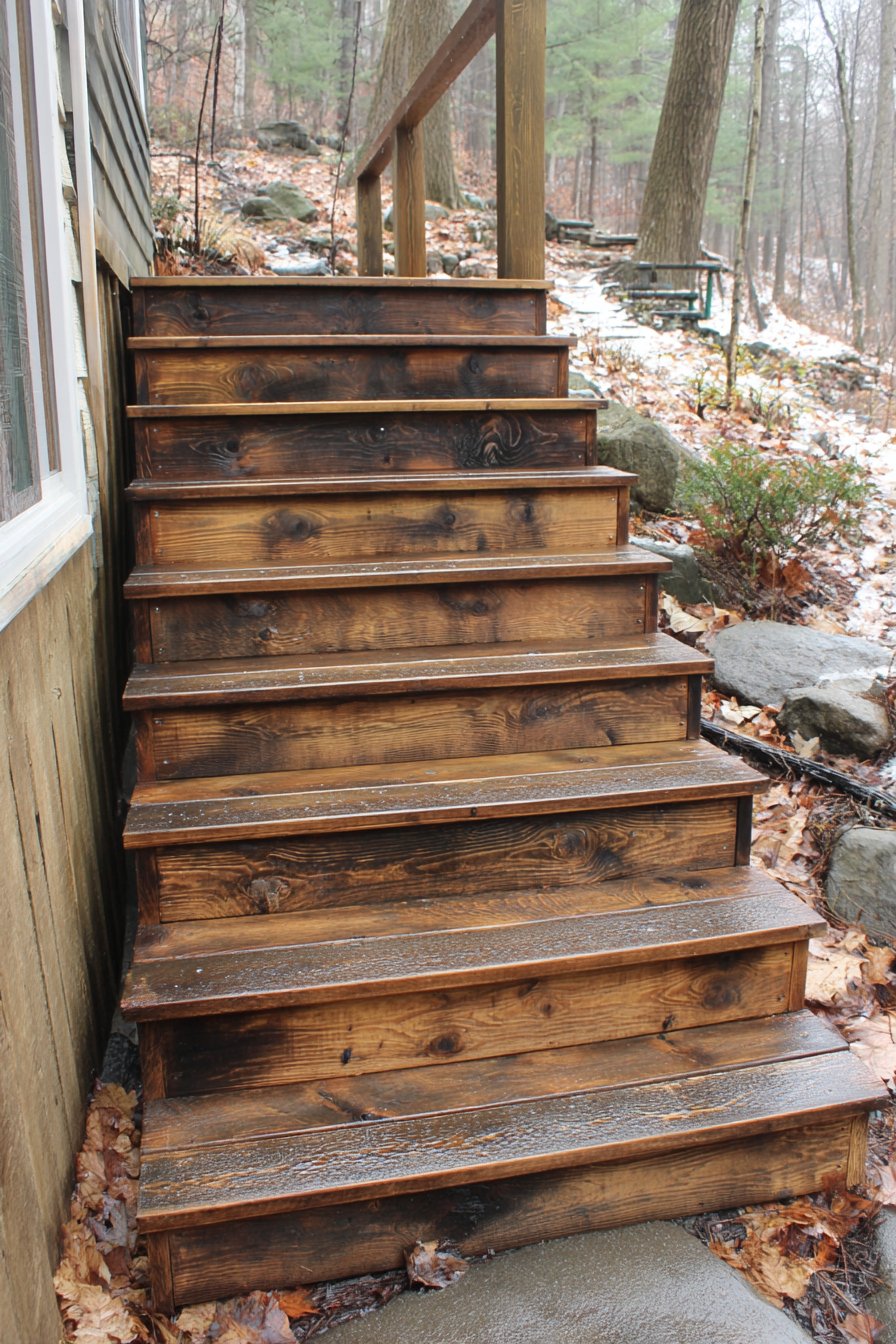
Functional outdoor stairs solve steep slope challenges affordably. Pressure-treated lumber provides weather-resistant construction economically. Double stringers support 2×6 treads securely. Simple 4×4 post railings offer straightforward safety features. Natural brown stain finish enhances wood grain.
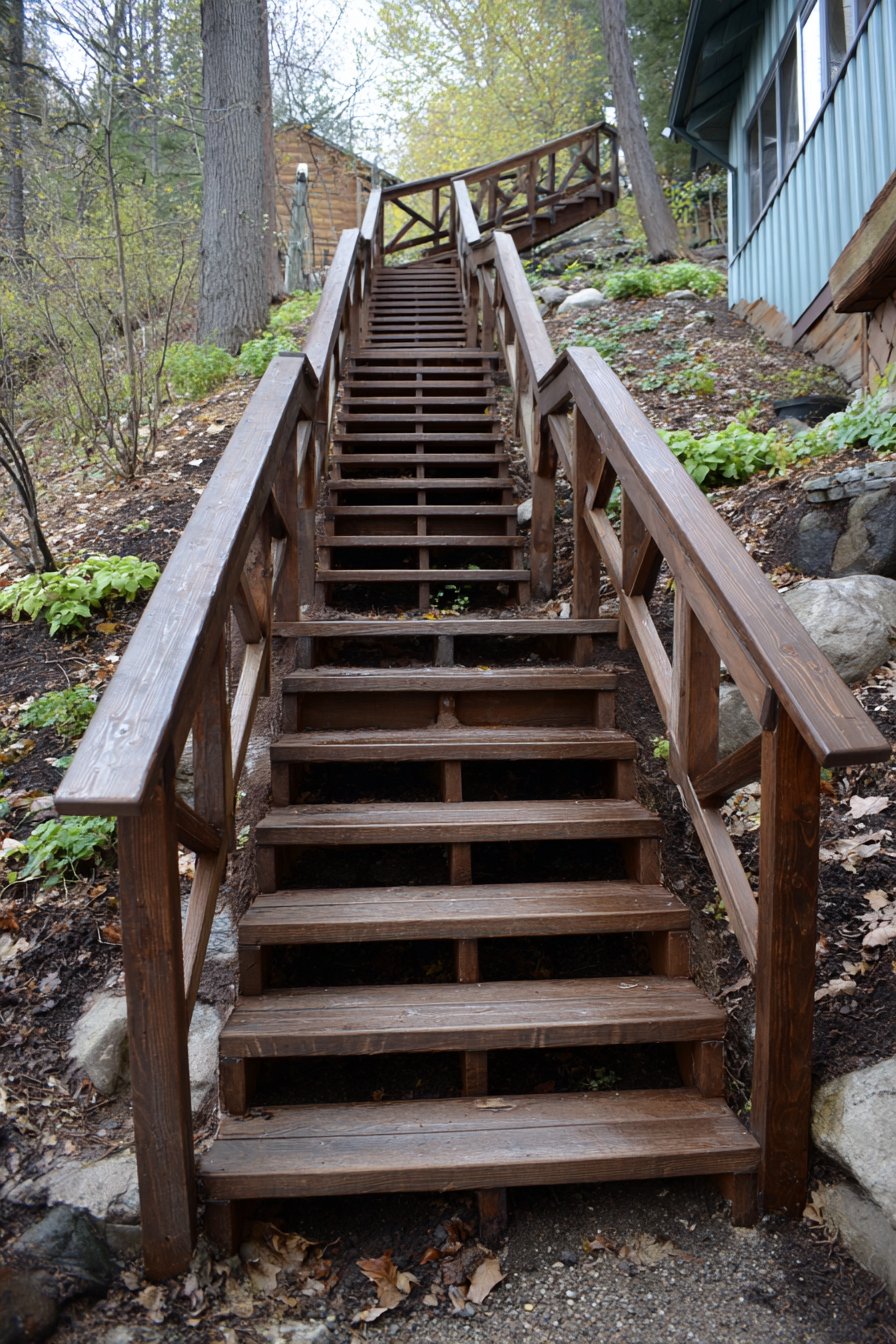
Realistic grain patterns show throughout lumber surfaces. Slight checking occurs from seasonal weather exposure naturally. Non-slip tread strips on each step improve safety. Native groundcover plantings soften the utilitarian structure organically. Natural daylight reveals honest construction methods clearly.
The practical design emphasizes affordable installation approaches. DIY-appropriate construction methods make this accessible widely. Straightforward architectural photography shows clear assembly details. This solution balances budget constraints with safety requirements. The approach proves effective for challenging topography situations.
Key Design Tips:
- Use pressure-treated lumber for weather resistance
- Install double 2×12 stringers for strength
- Add non-slip tread strips for safety
- Build simple 4×4 post railings
- Stain with natural brown tones
- Accept slight checking as natural weathering
- Plant native groundcovers for softening
20. Luxury Marble with Bronze Accents
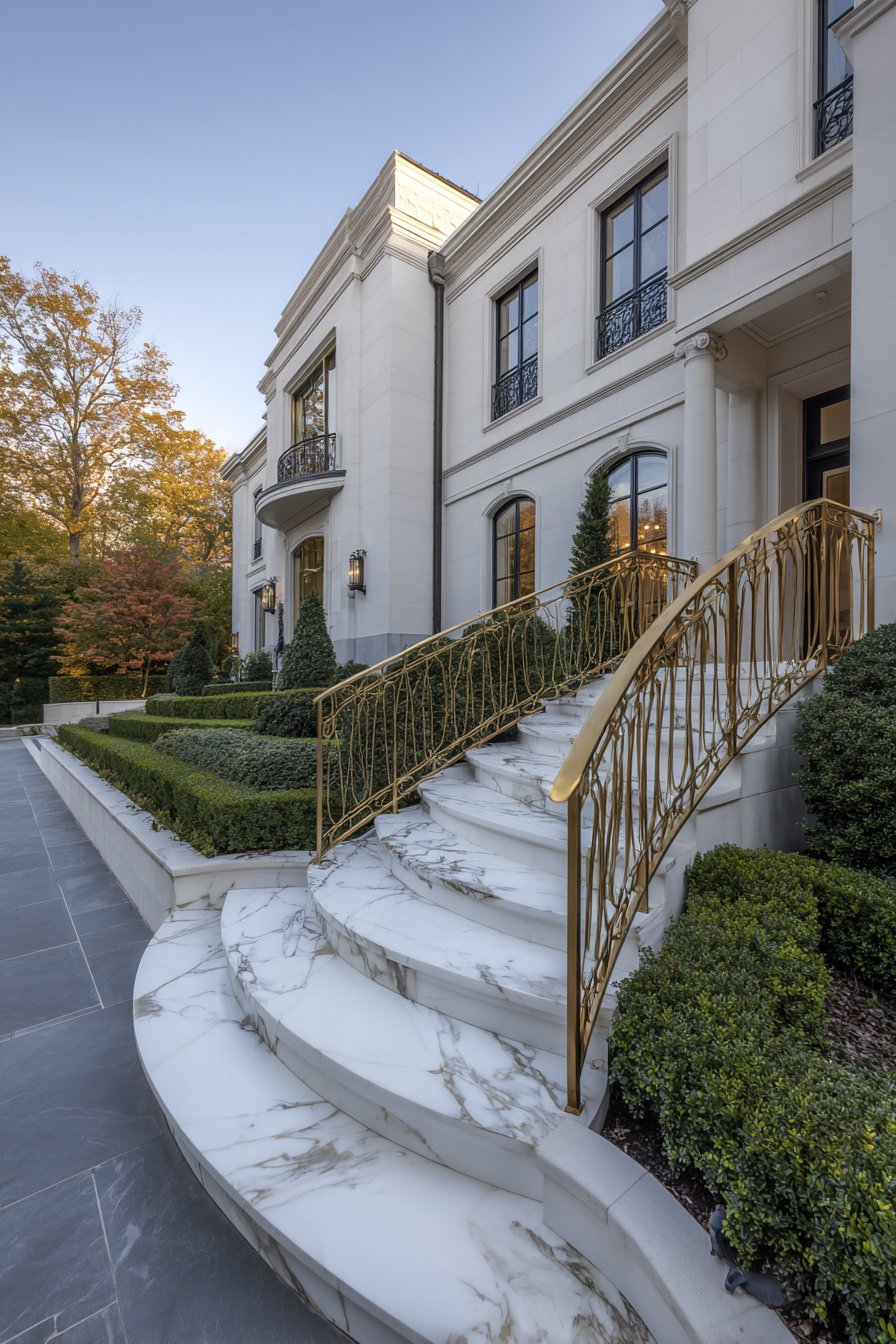
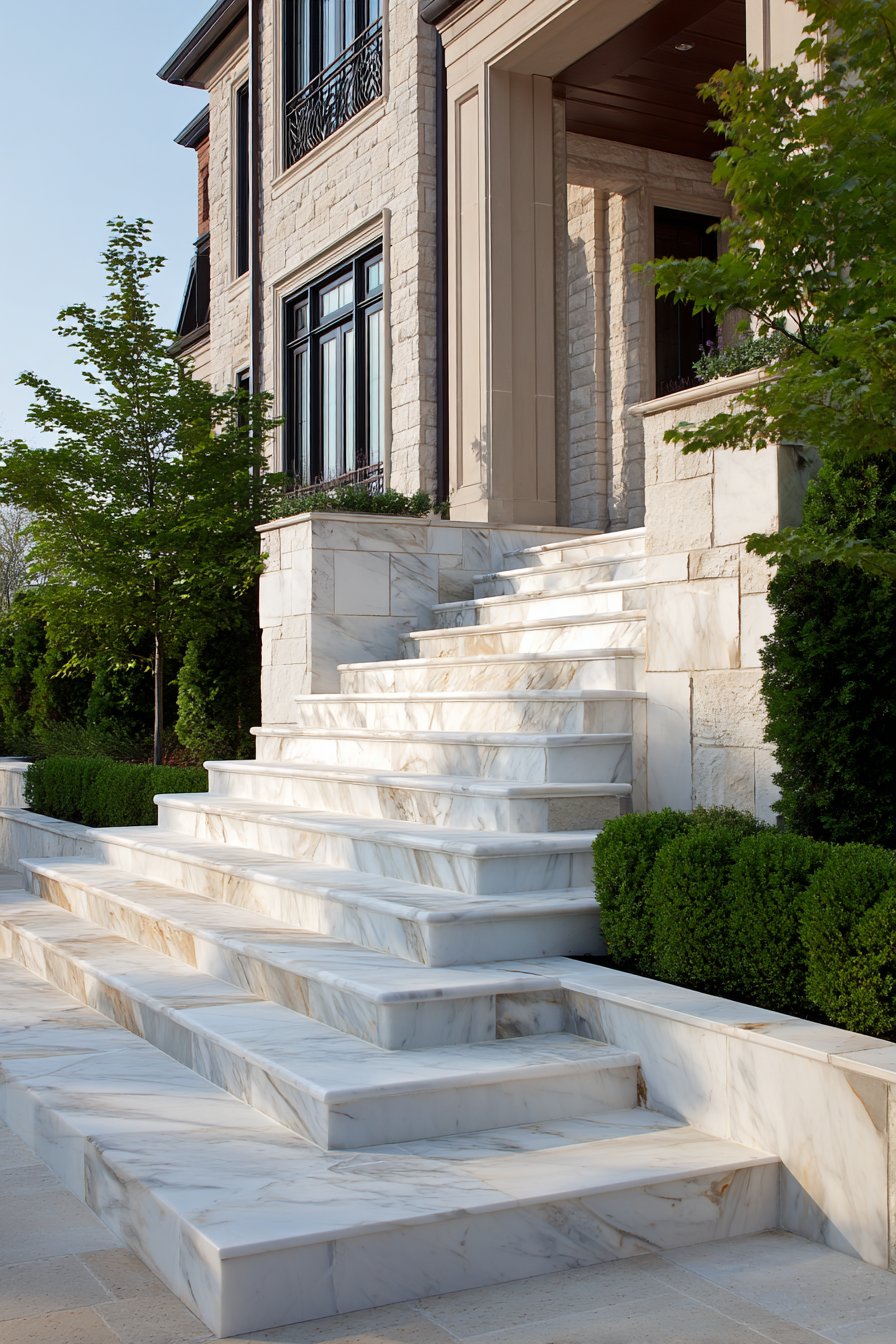
Luxurious outdoor staircases feature book-matched marble treads and risers. Calacatta marble displays dramatic grey veining throughout. Honed finish provides slip resistance while maintaining elegance. Custom bronze handrails develop living finish patina naturally. The translucent marble quality shows in proper lighting.
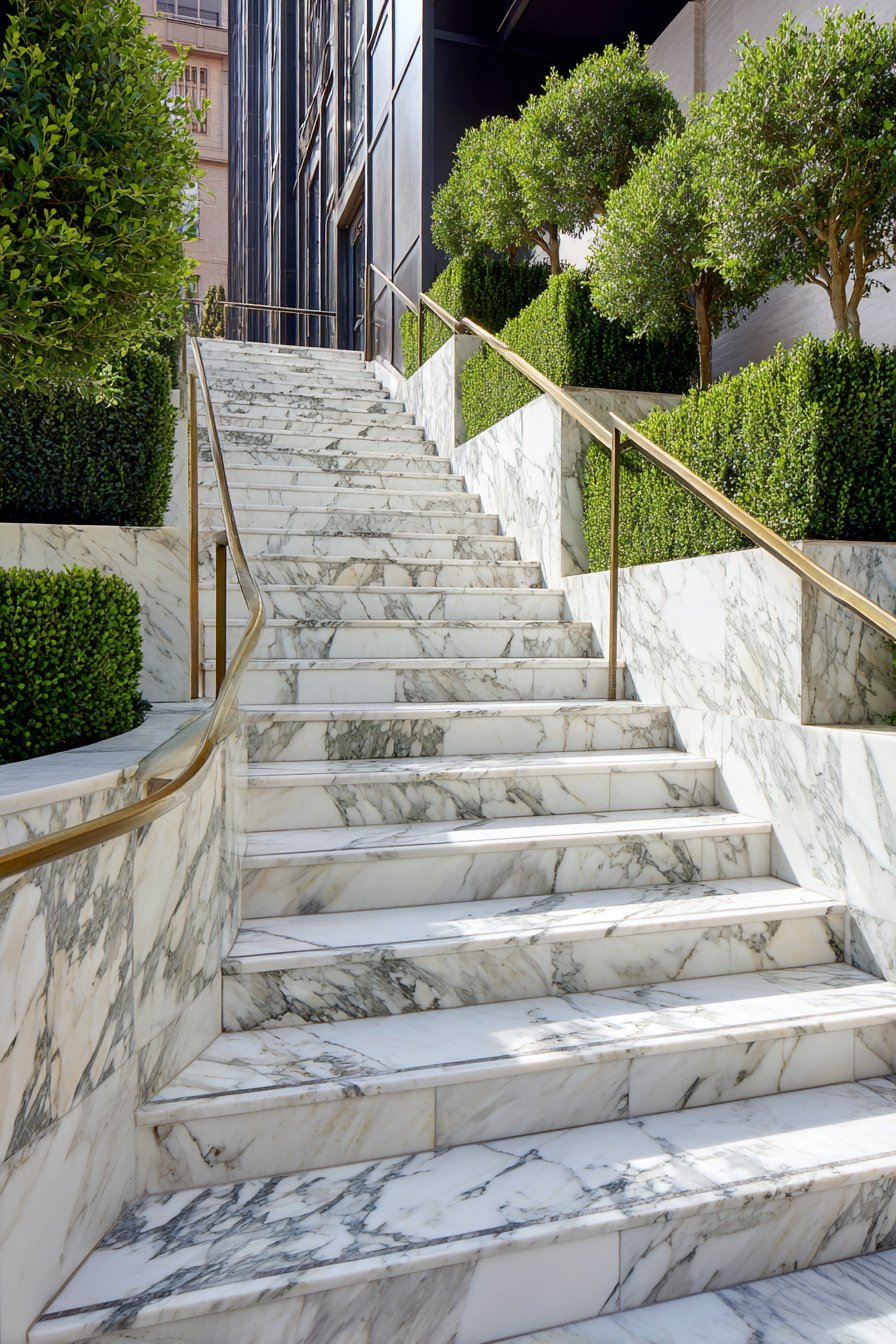
Subtle color shifts appear across marble surfaces naturally. Natural characteristics include occasional fossil inclusions authentically. Formal boxwood hedges provide contrasting green backdrop. Soft morning light illuminates marble’s translucent properties. Flowing vein patterns become emphasized in directional lighting.
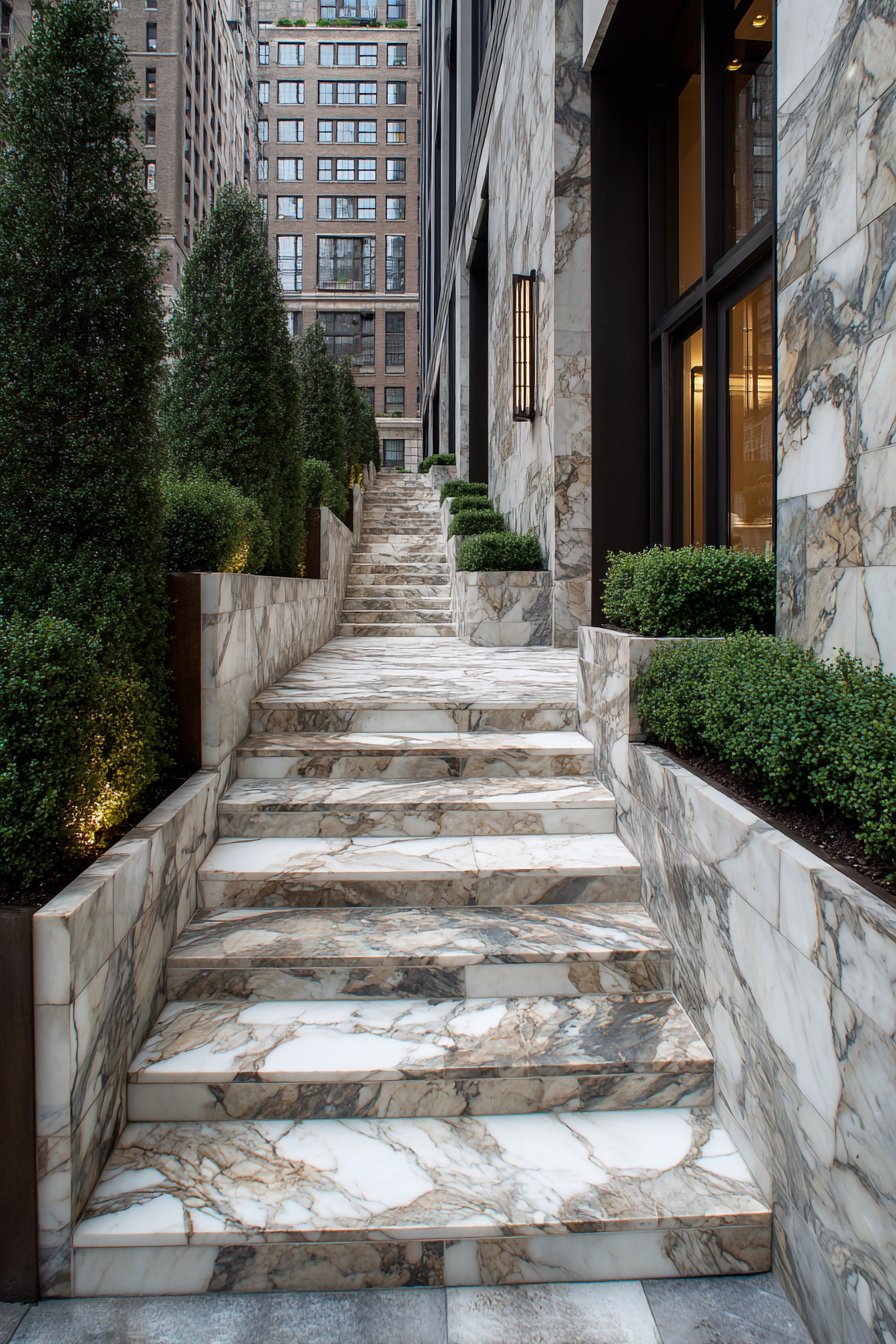
High-end architectural photography captures luxury material details. The sophisticated installation demonstrates master craftsmanship clearly. Each marble piece requires careful selection and matching. Bronze components develop rich patina over time. This design represents ultimate outdoor stair luxury successfully.
Key Design Tips:
- Select book-matched Calacatta marble slabs
- Hone finish for slip resistance
- Install custom bronze handrails
- Allow natural patina development on bronze
- Frame with formal boxwood hedges
- Appreciate natural fossil inclusions
- Light to emphasize translucent qualities
Why These Outdoor Stair Designs Are the Best
These outdoor stair designs represent comprehensive approaches to exterior circulation solutions. Each concept demonstrates thoughtful material selection for weather resistance. The designs balance aesthetic appeal with functional safety requirements. Natural materials like stone, wood, and concrete age gracefully outdoors. These choices develop character rather than deteriorating over time.
Contemporary designs embrace clean lines and floating elements. Traditional approaches celebrate historical craftsmanship and timeless patterns. Rustic concepts integrate organically with natural landscapes. Mediterranean styles bring warmth through terracotta and decorative tiles. Each aesthetic serves specific architectural contexts effectively.
Material durability proves essential for outdoor applications. Stone resists freeze-thaw cycles better than many alternatives. Ipe wood withstands moisture and insects naturally. Concrete adapts to diverse forms and finishes successfully. Metal components provide structural support while resisting corrosion. These material choices ensure long-term performance outdoors.
Safety considerations influence every successful stair design. Consistent riser heights prevent tripping hazards effectively. Adequate tread depth accommodates comfortable foot placement. Non-slip surfaces remain crucial in all weather conditions. Proper lighting illuminates pathways during evening hours. Sturdy railings provide necessary support on steep slopes.
Sustainability factors into modern design decisions increasingly. Reclaimed materials reduce environmental impact while adding character. Permeable installations allow natural water drainage successfully. Native plantings support local ecosystems without excessive maintenance. These considerations align with contemporary environmental values naturally.
Conclusion
These twenty outdoor stair designs demonstrate the remarkable diversity of exterior circulation solutions. From natural bluestone installations to luxurious marble constructions, each approach offers unique advantages. Material choices significantly impact durability, aesthetics, and maintenance requirements. Traditional craftsmanship coexists with contemporary innovations successfully throughout these examples.
The key takeaways emphasize weather-resistant materials and safety features. Consistent step dimensions prevent accidents while improving comfort. Integrated lighting extends usability into evening hours safely. Landscape integration softens hardscape elements through thoughtful plantings. These principles apply across all design styles effectively.
Start your outdoor stair project by assessing site conditions carefully. Consider slope steepness, soil stability, and drainage patterns. Match material choices to your home’s architectural style. Budget realistic costs for quality materials and skilled installation. Your dream outdoor stairway awaits creation through careful planning and execution.
