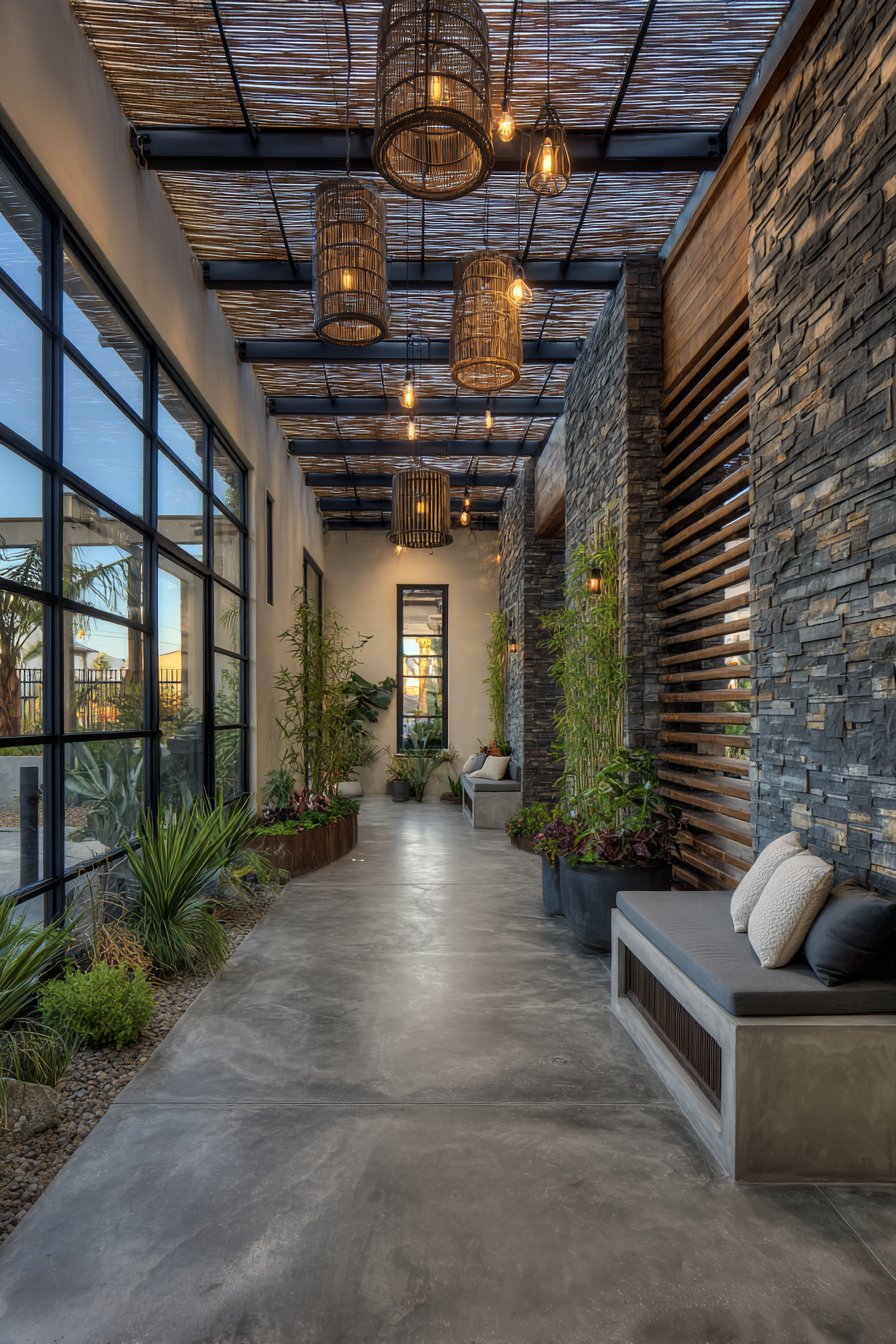


Outdoor corridors serve as vital transitional spaces that connect different areas of your property. These passages deserve thoughtful design consideration beyond mere functionality. When properly designed, outdoor corridors become architectural features that enhance your home’s overall aesthetic appeal.
The right corridor design transforms a simple walkway into an experience. Materials, lighting, and landscaping work together to create inviting passages. Whether your style leans toward modern minimalism or rustic charm, the corridor sets the tone for what lies ahead.
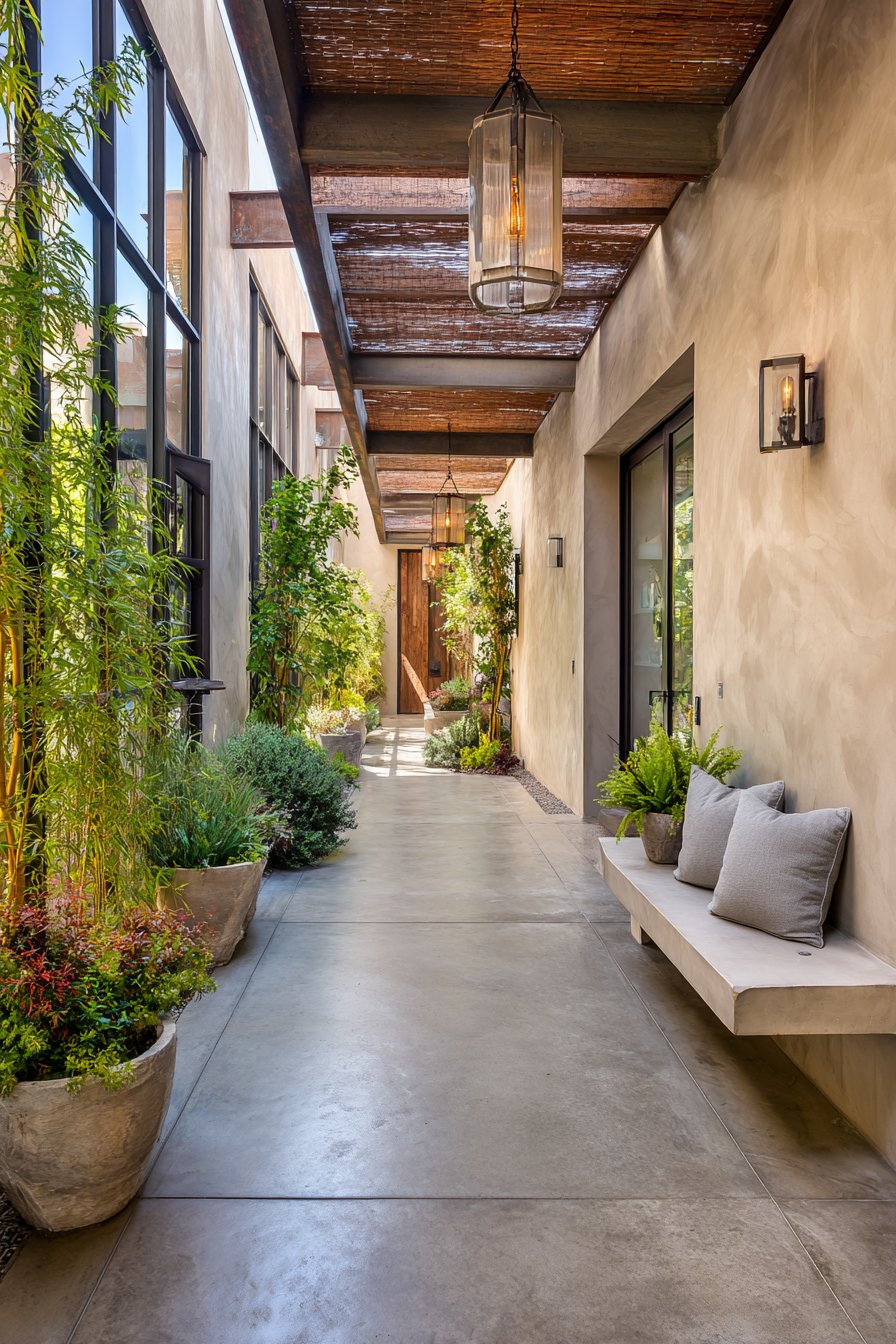
This comprehensive guide explores twenty distinct outdoor corridor designs. Each concept showcases unique material combinations and design philosophies. From Mediterranean warmth to Japanese serenity, these ideas demonstrate how corridors can reflect diverse architectural styles while maintaining practical functionality.
1. Mediterranean Covered Walkway with Natural Elements
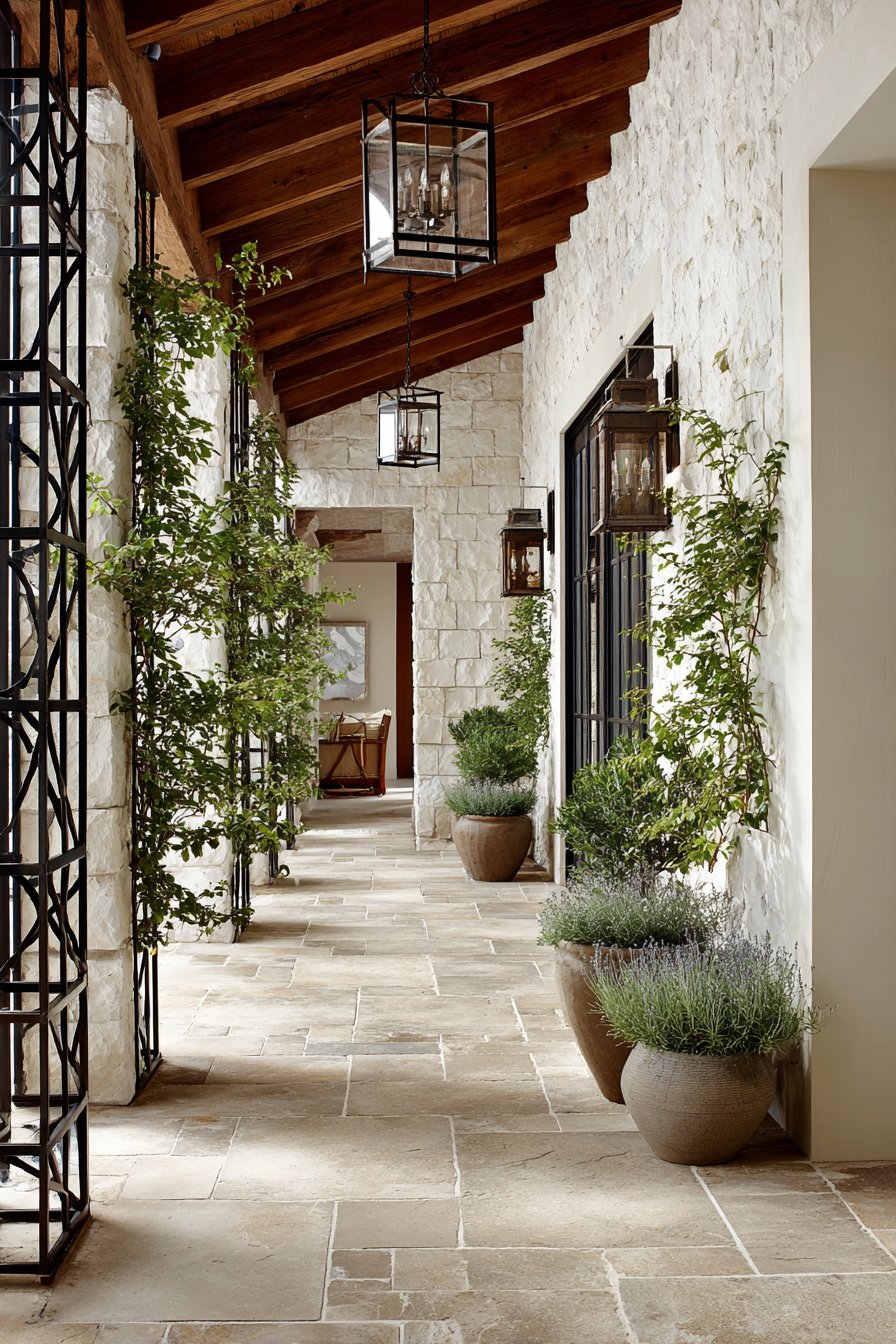
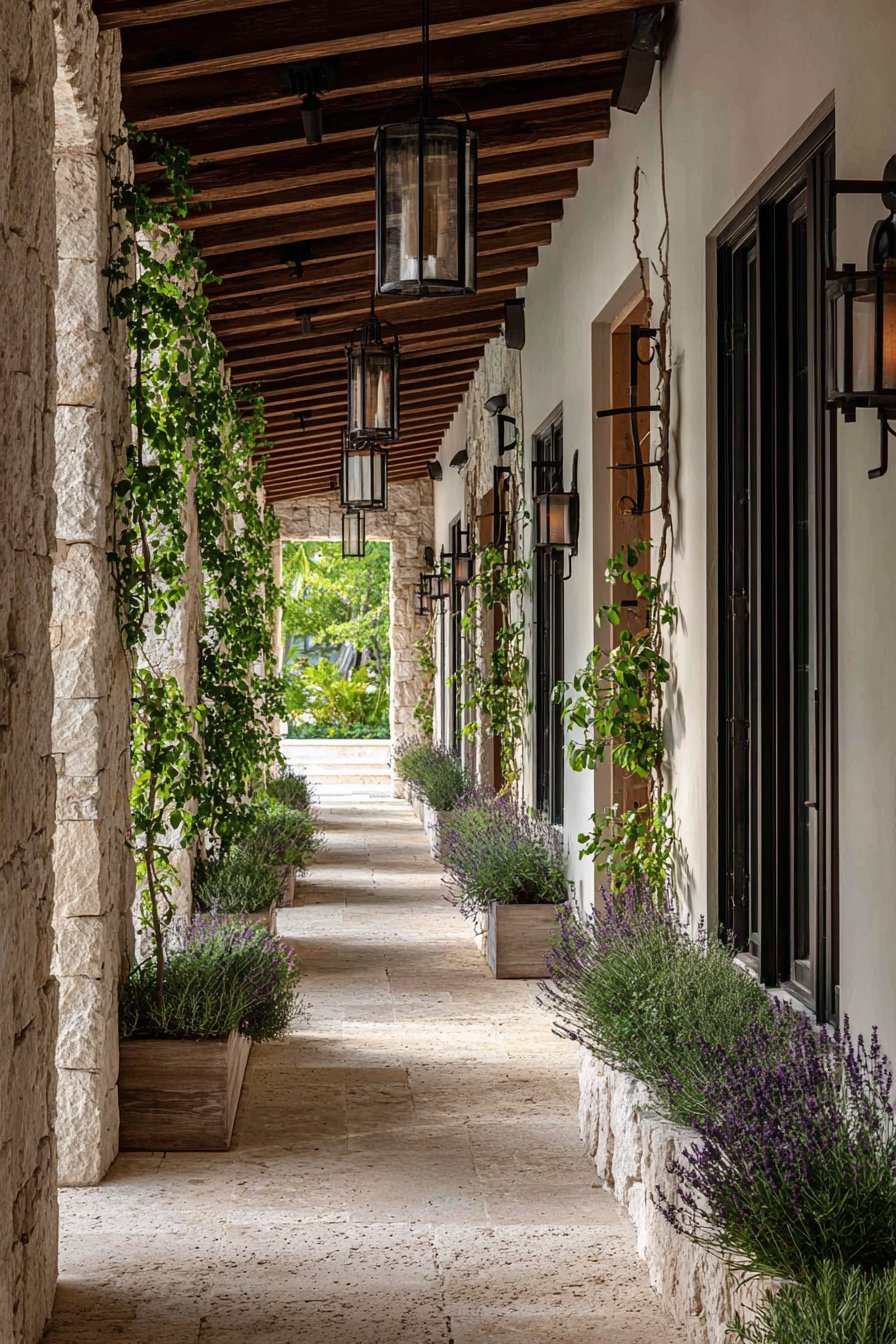
The exposed wooden beam ceiling creates architectural interest overhead in this design. Natural stone flooring in warm earth tones provides durable walking surfaces. Black metal trellis panels support climbing jasmine vines along one side. The opposite wall features textured stucco in soft cream tones.
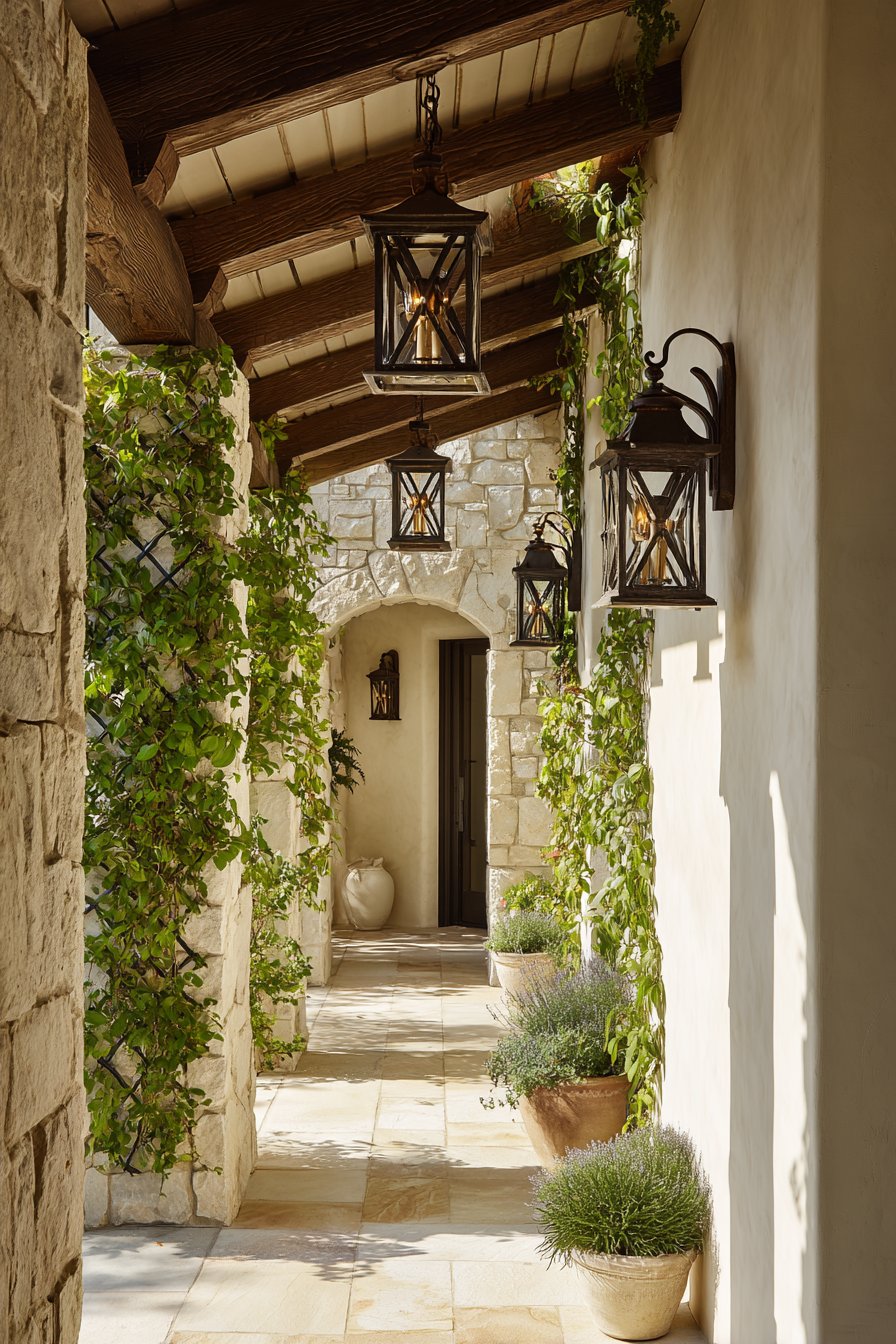
Hanging lantern-style pendant lights with bronze finish illuminate the pathway beautifully. These fixtures cast warm ambient lighting during evening hours. Potted Mediterranean plants including lavender and rosemary line the corridor. Their fragrance enhances the sensory experience of walking through this space.
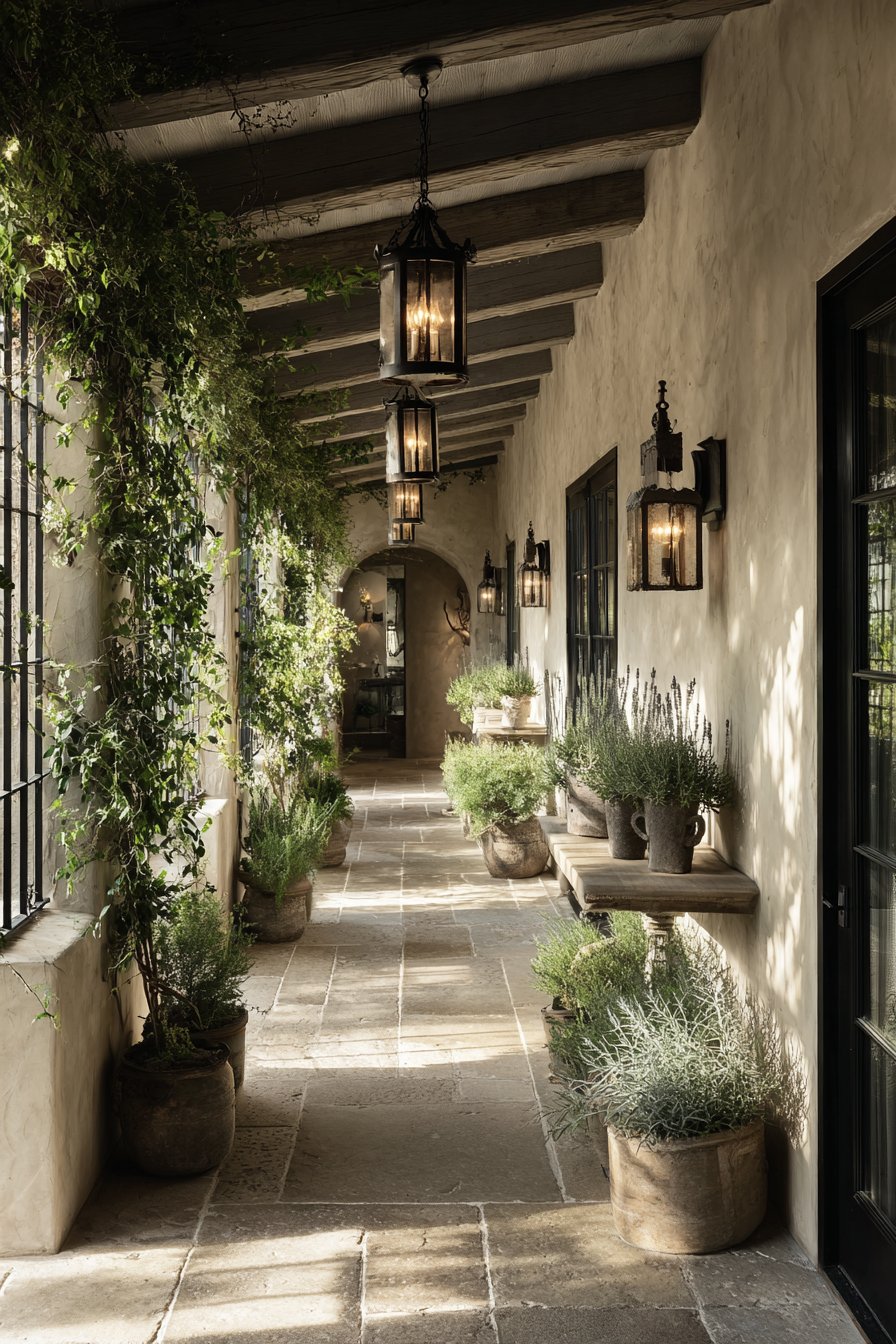
The pergola structure allows afternoon light to filter through strategically. This creates dynamic shadow patterns that change throughout the day. The interplay between architectural elements and organic materials defines this design approach. Natural materials age gracefully, developing character over time.
Key Design Tips:
- Install climbing vines on sturdy trellis systems for vertical greenery
- Choose natural stone that complements your home’s exterior palette
- Use bronze or aged metal fixtures for authentic Mediterranean character
- Plant aromatic herbs to engage multiple senses
- Ensure adequate spacing between beams for optimal light filtration
- Select cream or terracotta stucco finishes for warm ambiance
2. Contemporary Minimalist Concrete Passage
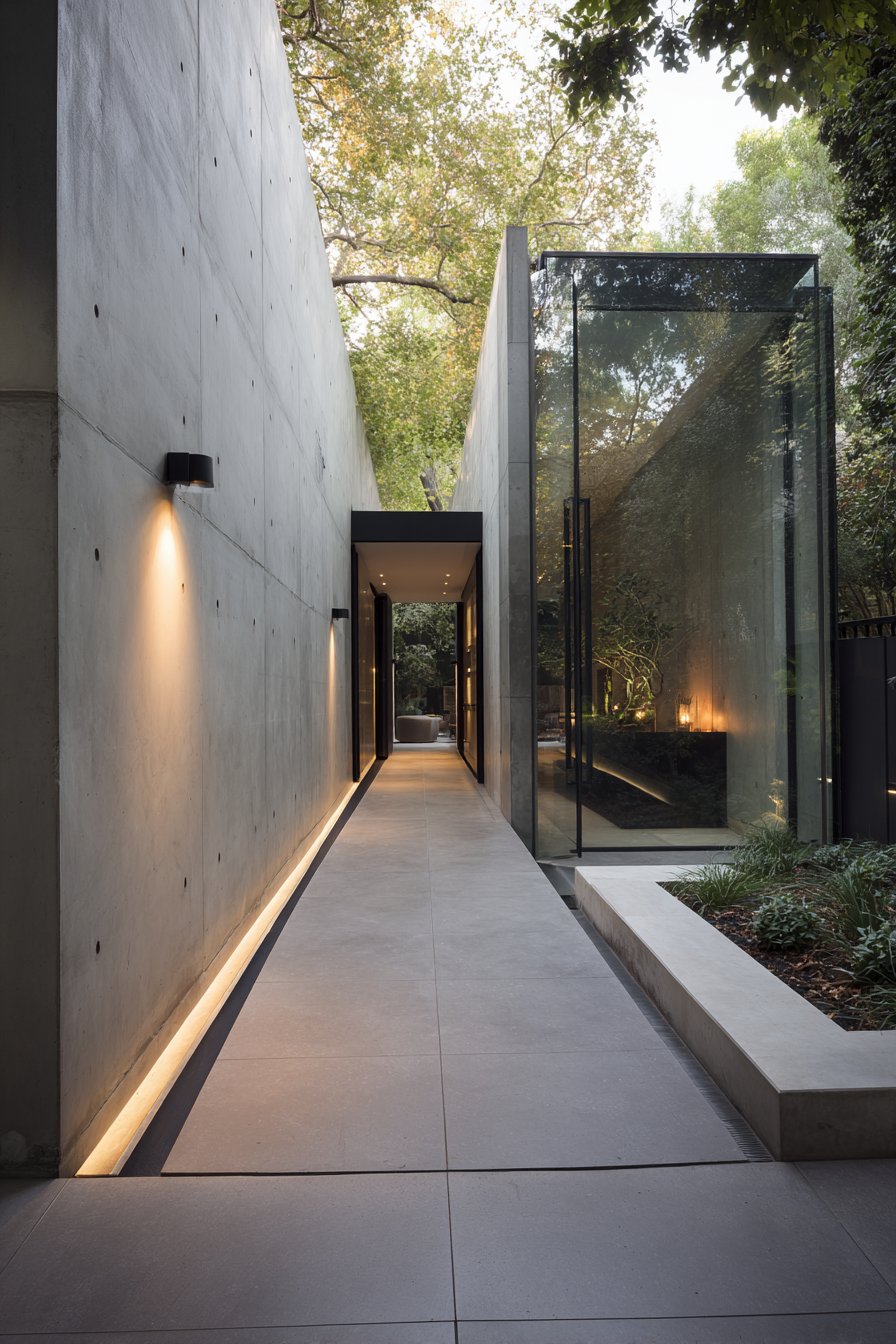
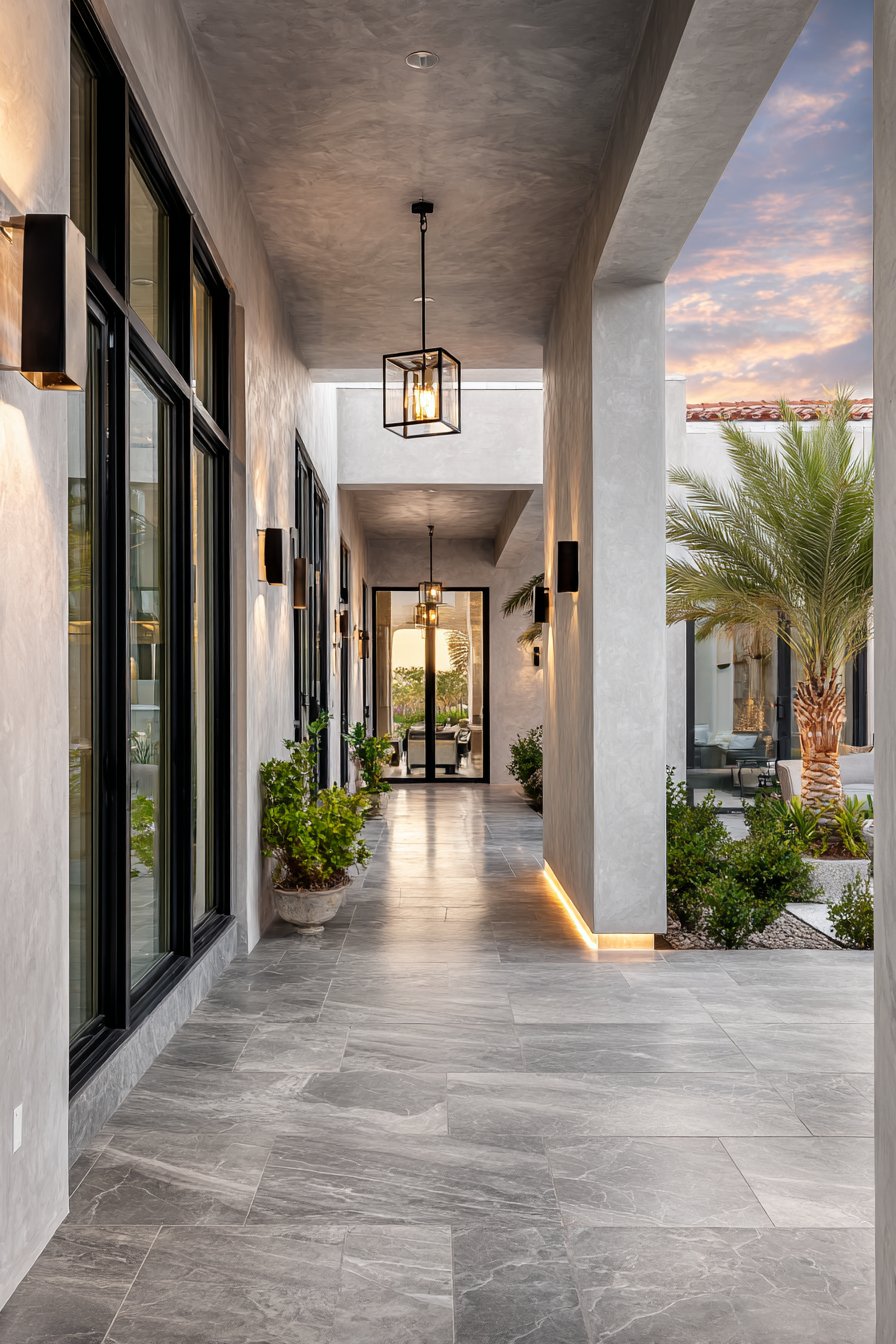
Smooth concrete walls with integrated linear LED lighting define this modern approach. The lighting installed at the base creates subtle illumination without visual clutter. Large format porcelain tiles in charcoal grey provide the walking surface. Their subtle texture prevents slipping while maintaining sleek aesthetics.
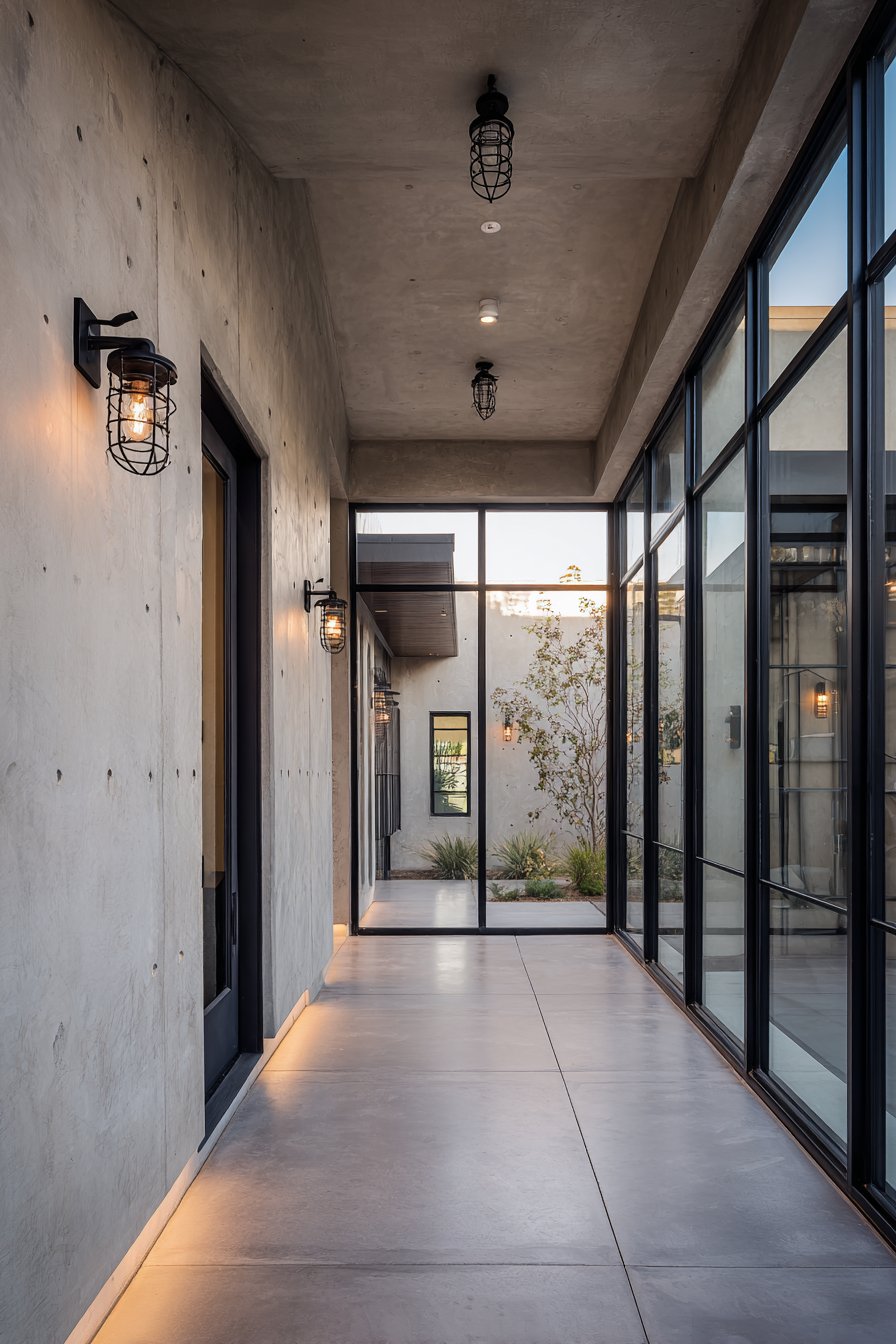
One side opens to a minimalist courtyard garden through floor-to-ceiling glass panels. Slim black frames maintain structural integrity without blocking views. Modern wall-mounted sconces provide functional lighting along the pathway. These fixtures complement the overall minimalist design philosophy.
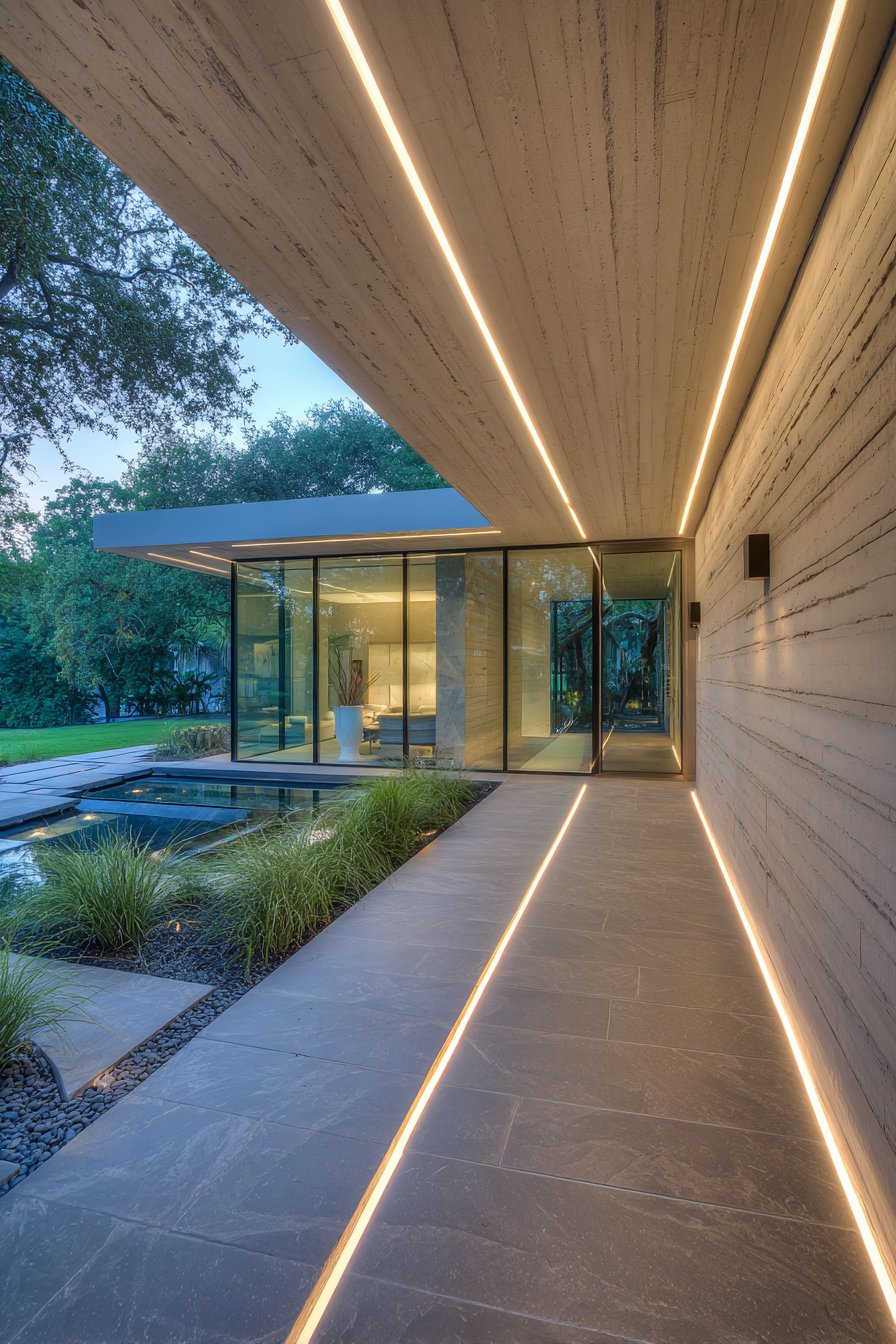
The clean lines and material contrasts create sophisticated visual appeal. Dusk lighting reveals the careful balance between natural and artificial illumination. This design works exceptionally well for contemporary homes. The simplicity allows architectural features to speak for themselves.
Key Design Tips:
- Choose large format tiles to minimize grout lines and enhance continuity
- Install LED strips in recessed channels for seamless integration
- Use slim-profile glass systems to maximize transparency
- Select matte finish materials to reduce glare
- Maintain consistent color temperatures across all light sources
- Consider automated lighting systems for convenience
3. Tropical Paradise with Bamboo Screening
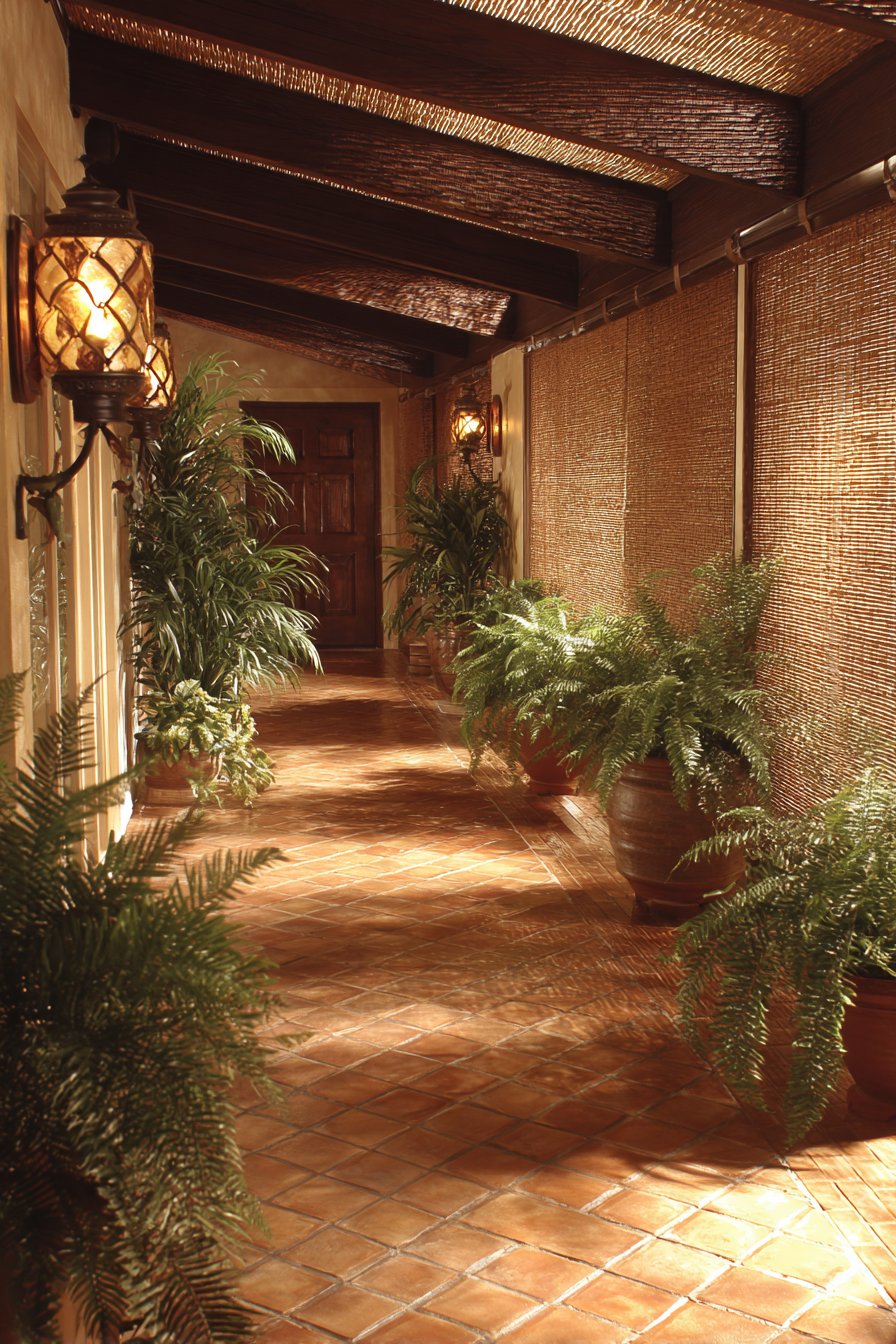
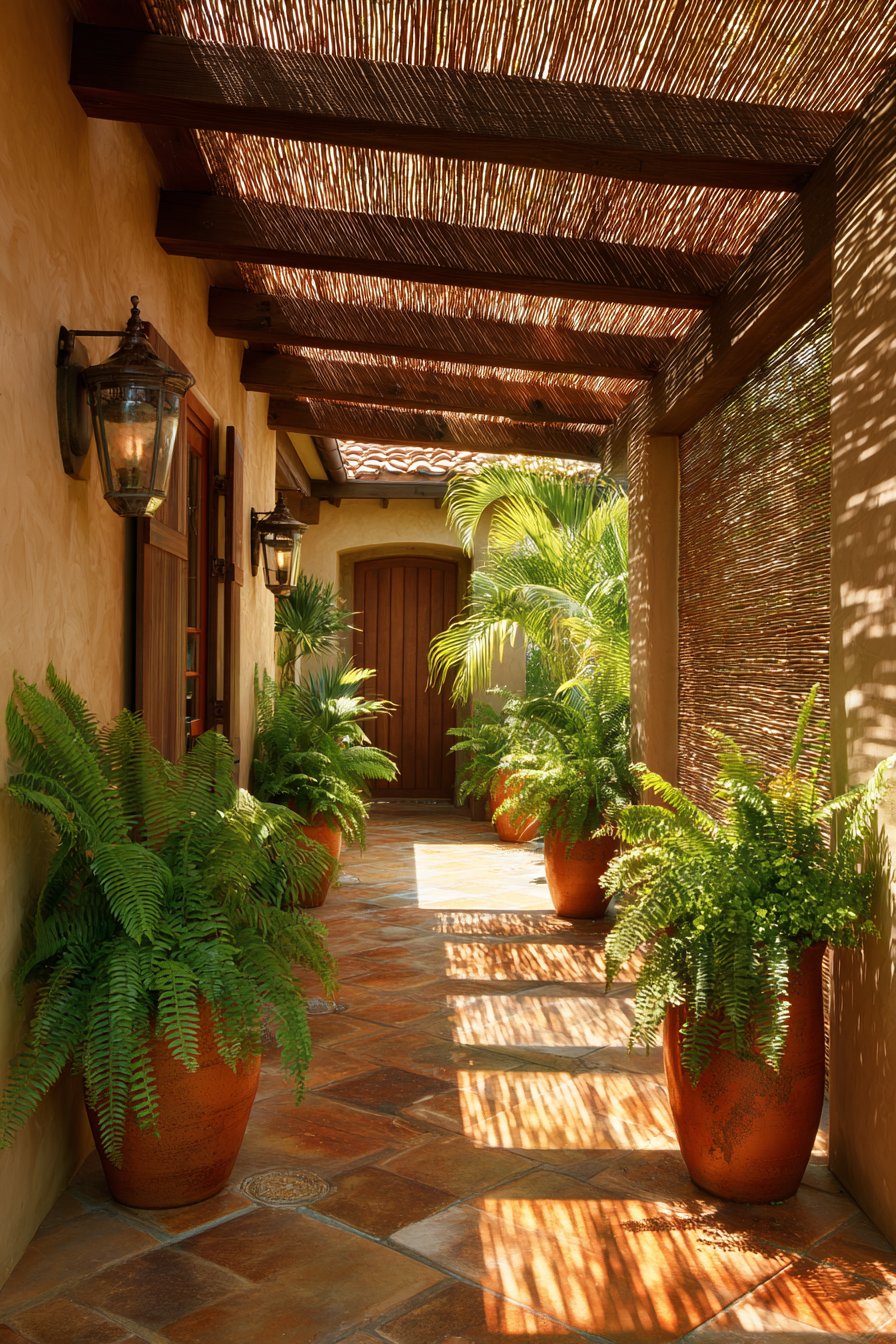
Bamboo screening panels create beautiful dappled shade patterns in this design. The screens filter harsh sunlight while maintaining airflow through the corridor. Terracotta tile flooring provides warm tones and natural texture underfoot. This traditional material withstands outdoor conditions beautifully.
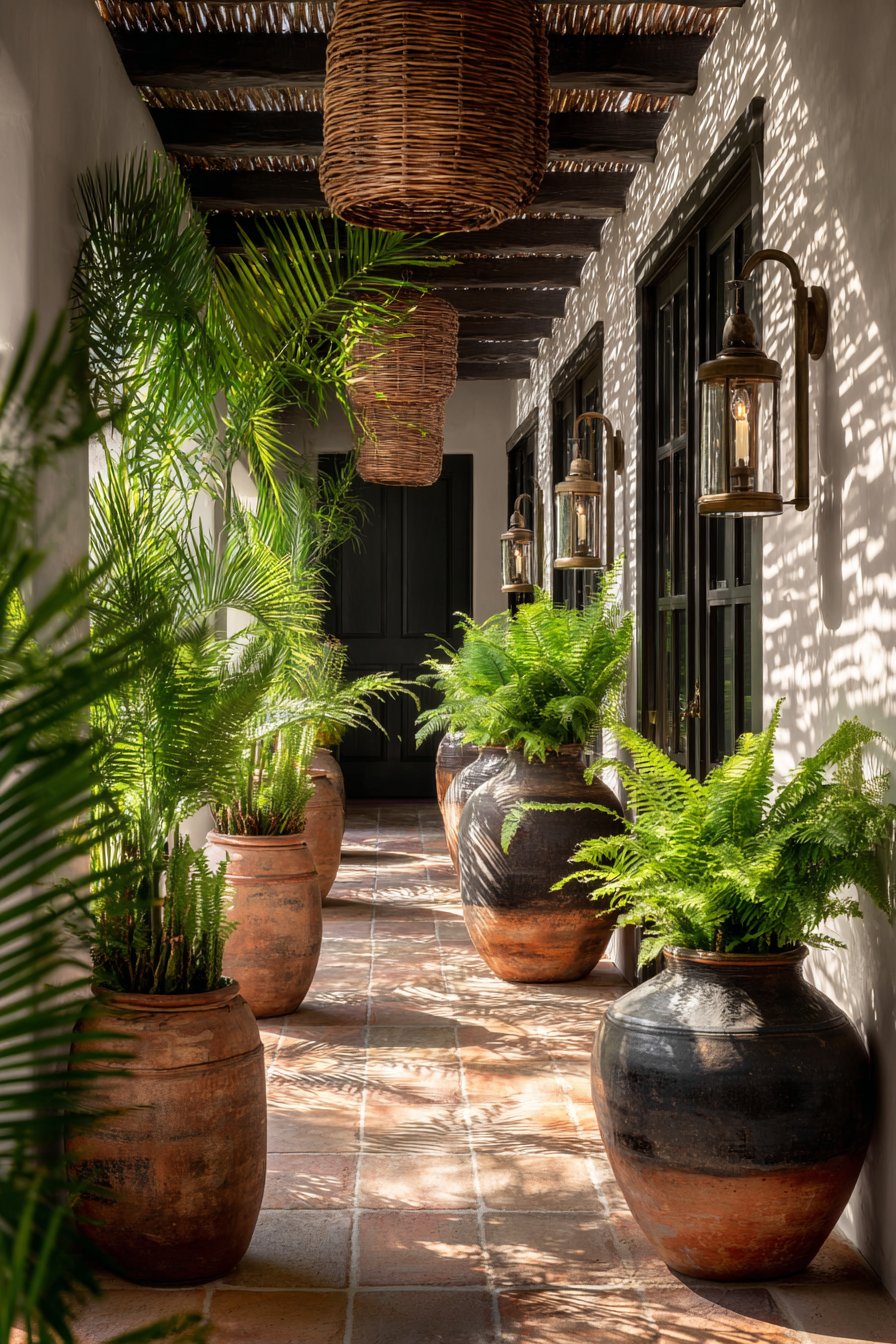
Lush ferns and palm varieties in rustic terracotta planters flank the passage. These plants create an immersive tropical atmosphere throughout the corridor. The ceiling features woven rattan panels suspended from dark stained wood beams. This combination adds textural interest overhead while maintaining the tropical theme.
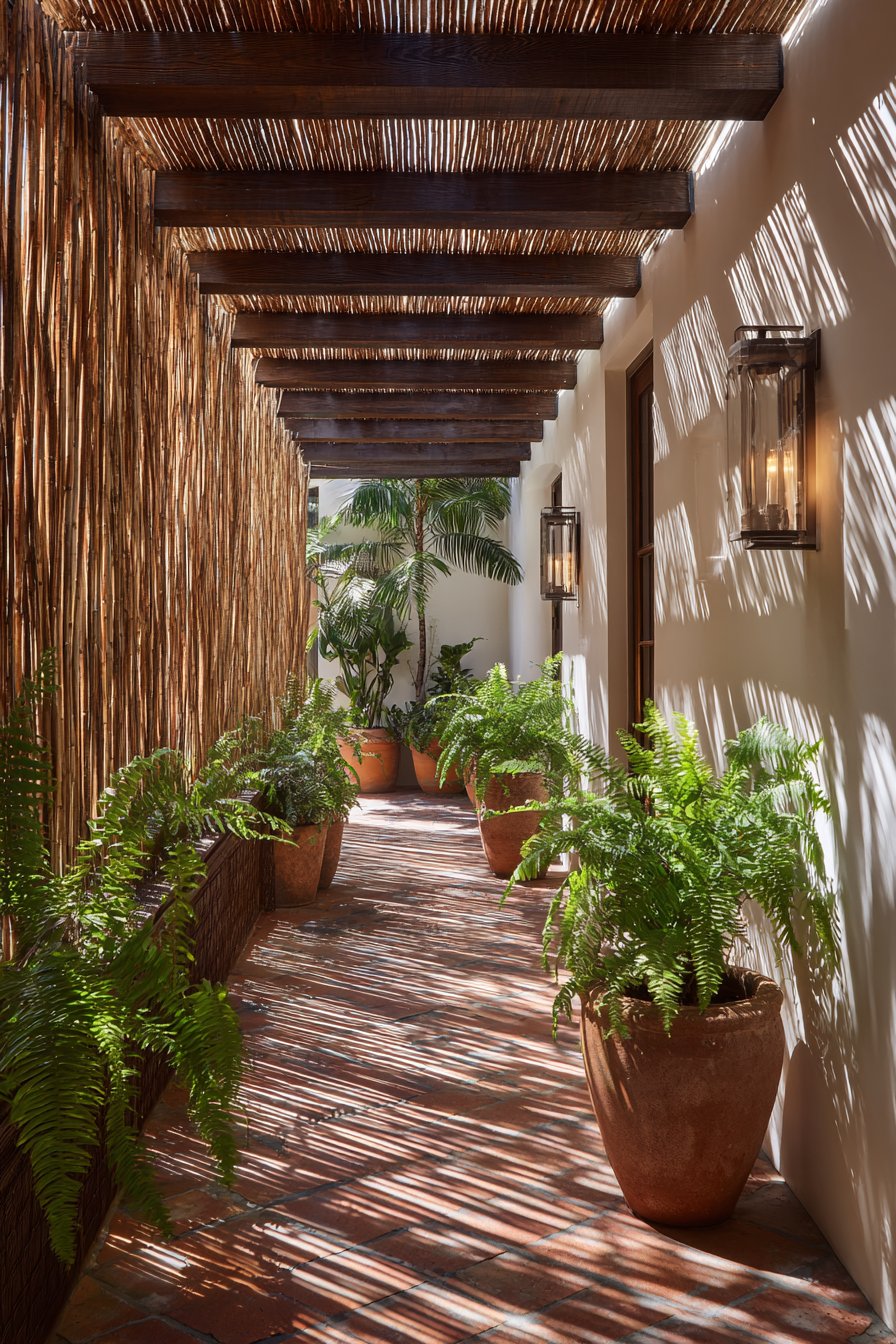
Brass wall sconces with clear glass shades illuminate the pathway elegantly. Afternoon sun creates dynamic shadow patterns through the bamboo screens. These shadows dance across surfaces, adding movement to the static architecture. The textural variety of materials creates rich visual interest.
Key Design Tips:
- Source authentic bamboo screening for durability and aesthetic quality
- Select tropical plants suited to your climate zone
- Use terracotta planters to maintain cohesive material palette
- Install brass fixtures that will develop natural patina
- Ensure proper drainage for terracotta tiles in wet conditions
- Space bamboo screens to control desired light levels
4. Mediterranean Arched Elegance with Decorative Tiles
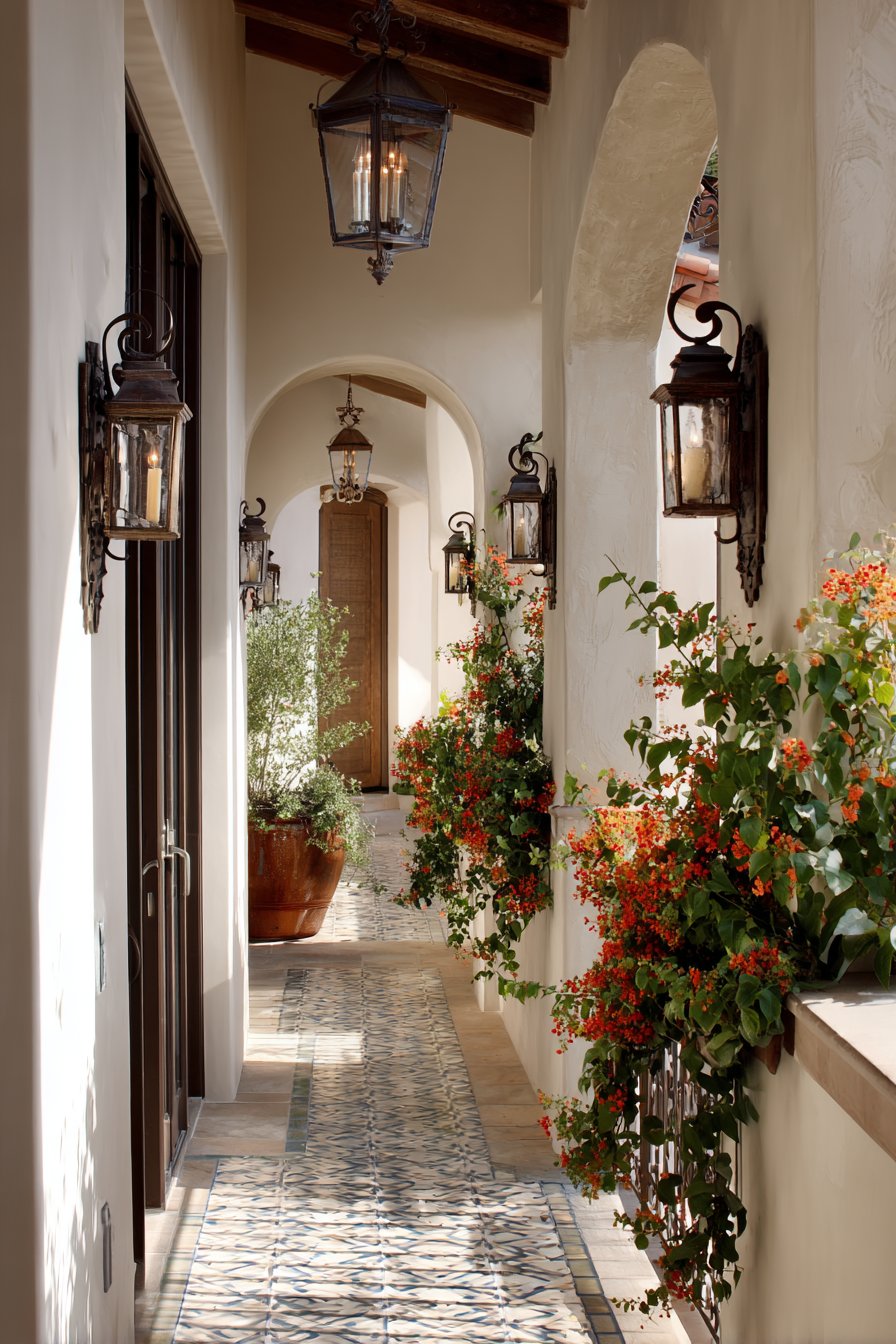
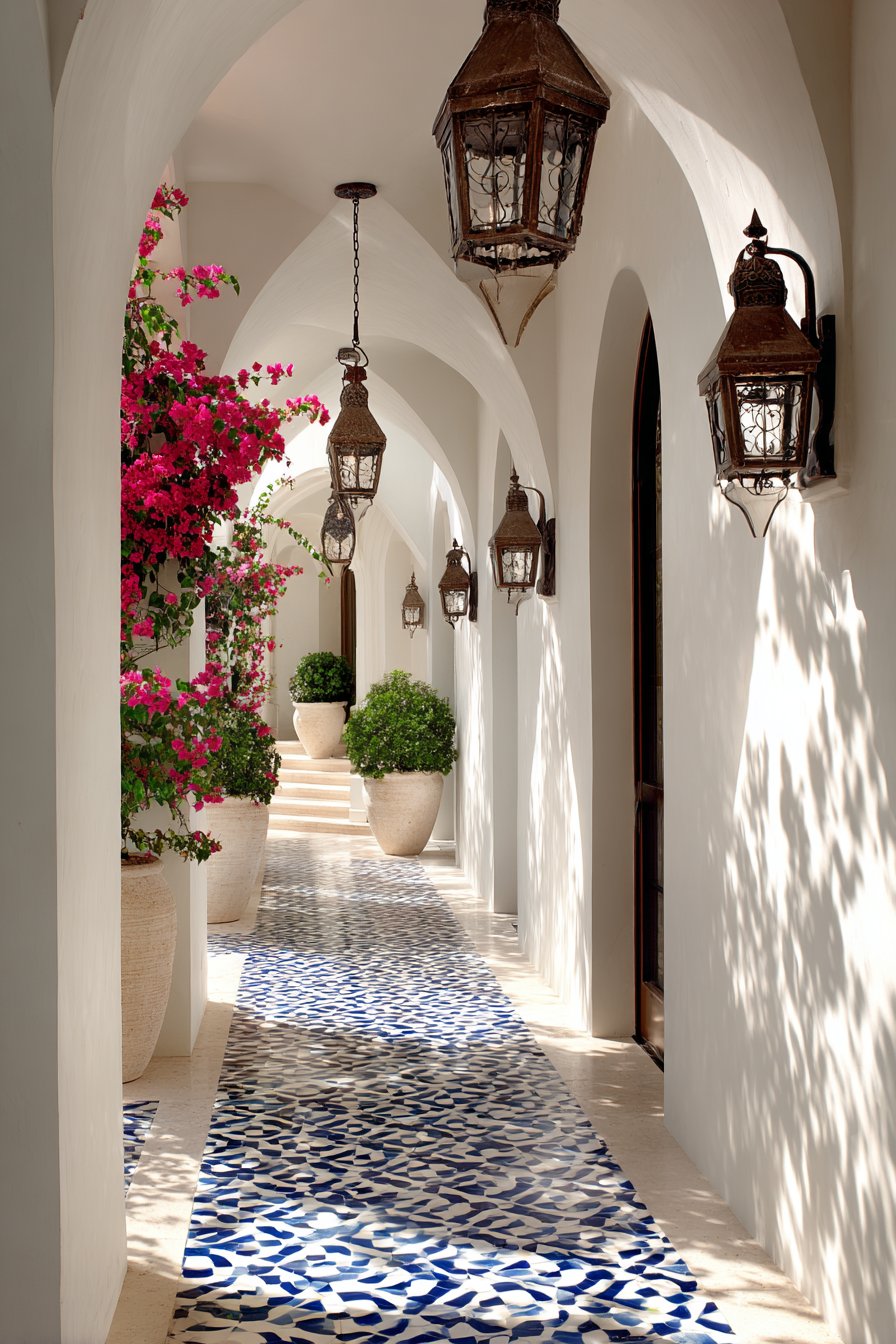
Whitewashed stucco walls with arched openings create classic Mediterranean architecture. The arches frame glimpses of garden views beyond the corridor. Hand-painted terracotta tiles in blue and white geometric patterns create stunning visual interest. These patterns guide the eye along the pathway naturally.
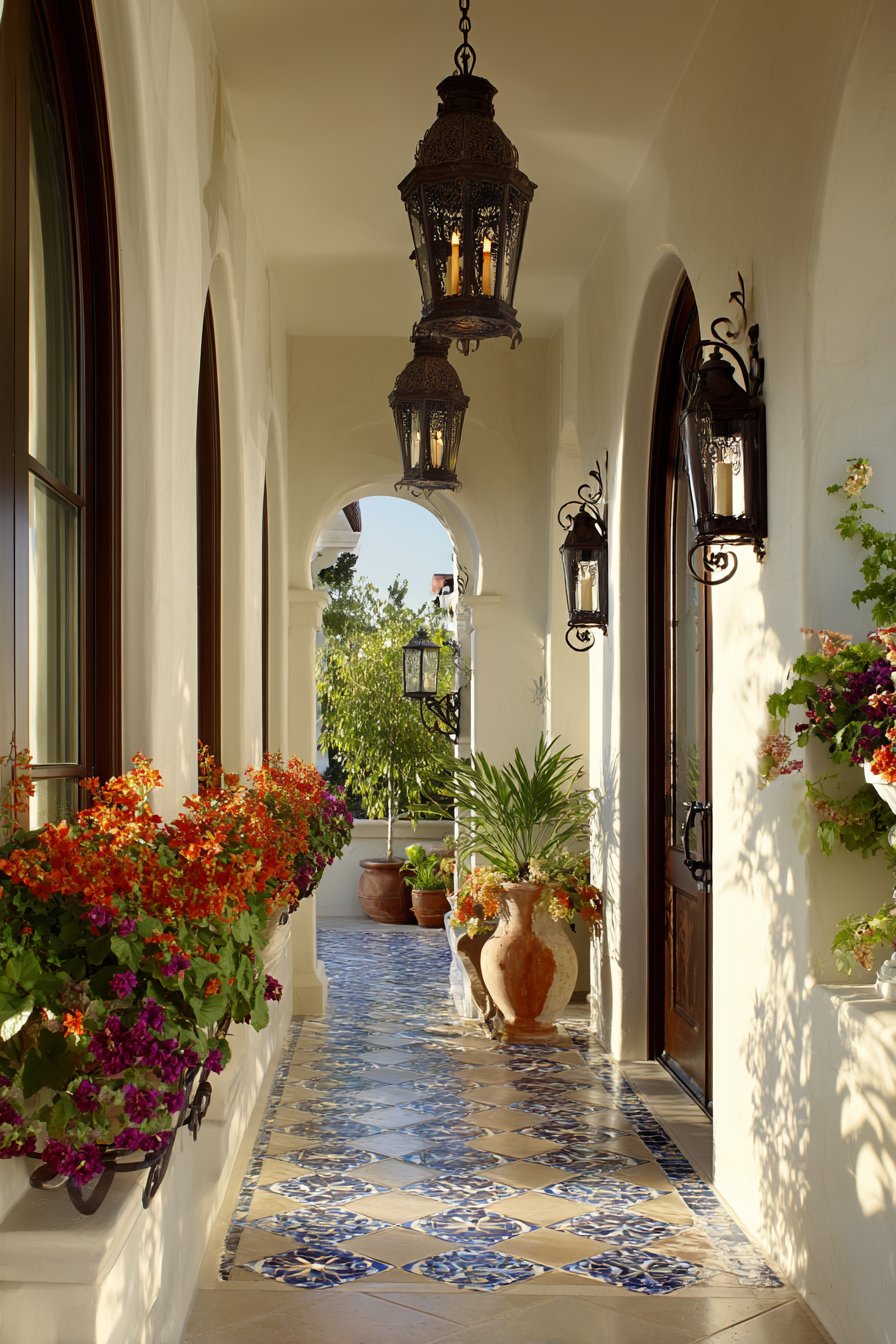
Wrought iron wall-mounted planters overflow with colorful bougainvillea blooms. The vibrant flowers contrast beautifully against white stucco walls. Traditional lantern fixtures in aged bronze hang from decorative iron chains. Morning light creates soft shadows that enhance architectural details throughout.
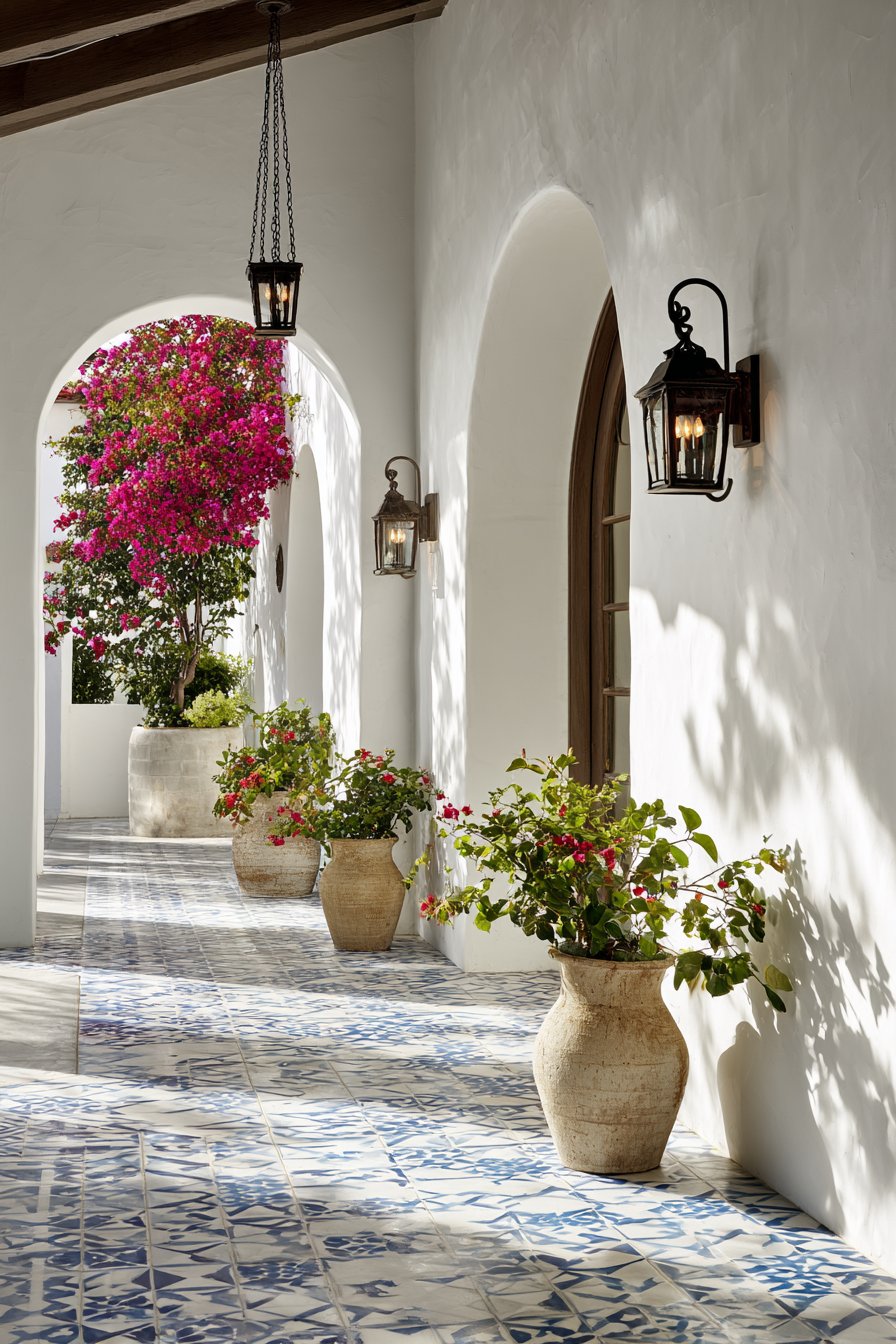
The repetitive arch pattern establishes rhythm along the corridor length. This architectural element has roots in centuries-old Mediterranean design. The vibrant tile work adds personality without overwhelming the space. Authentic materials ensure the design ages gracefully over decades.
Key Design Tips:
- Commission hand-painted tiles for authentic Mediterranean character
- Install wrought iron elements with proper weatherproofing
- Choose bougainvillea colors that complement tile patterns
- Apply whitewash techniques that allow texture to show through
- Position arches to frame specific garden views
- Use aged or patinated metal finishes for historical authenticity
5. Japanese Zen Garden Corridor
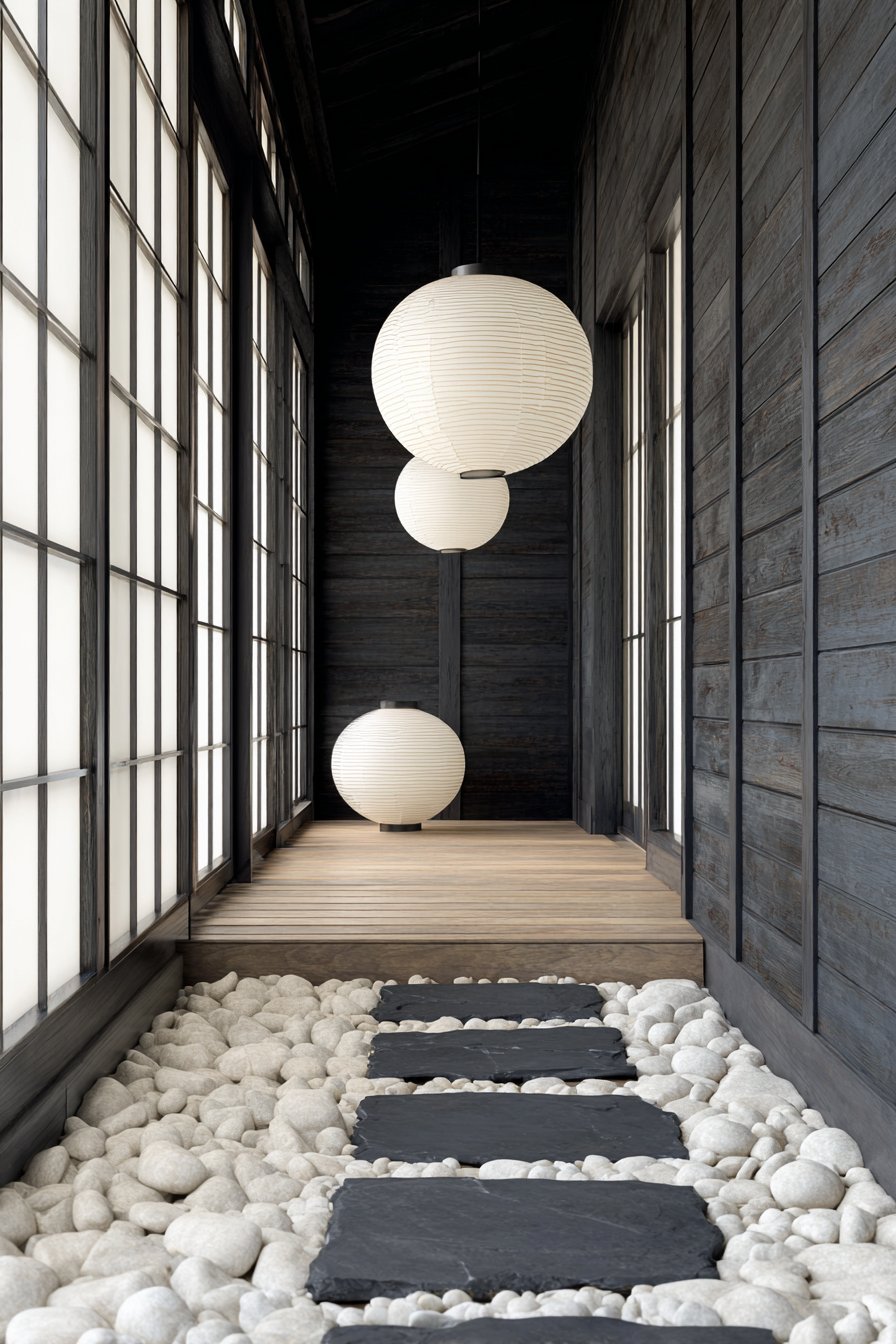
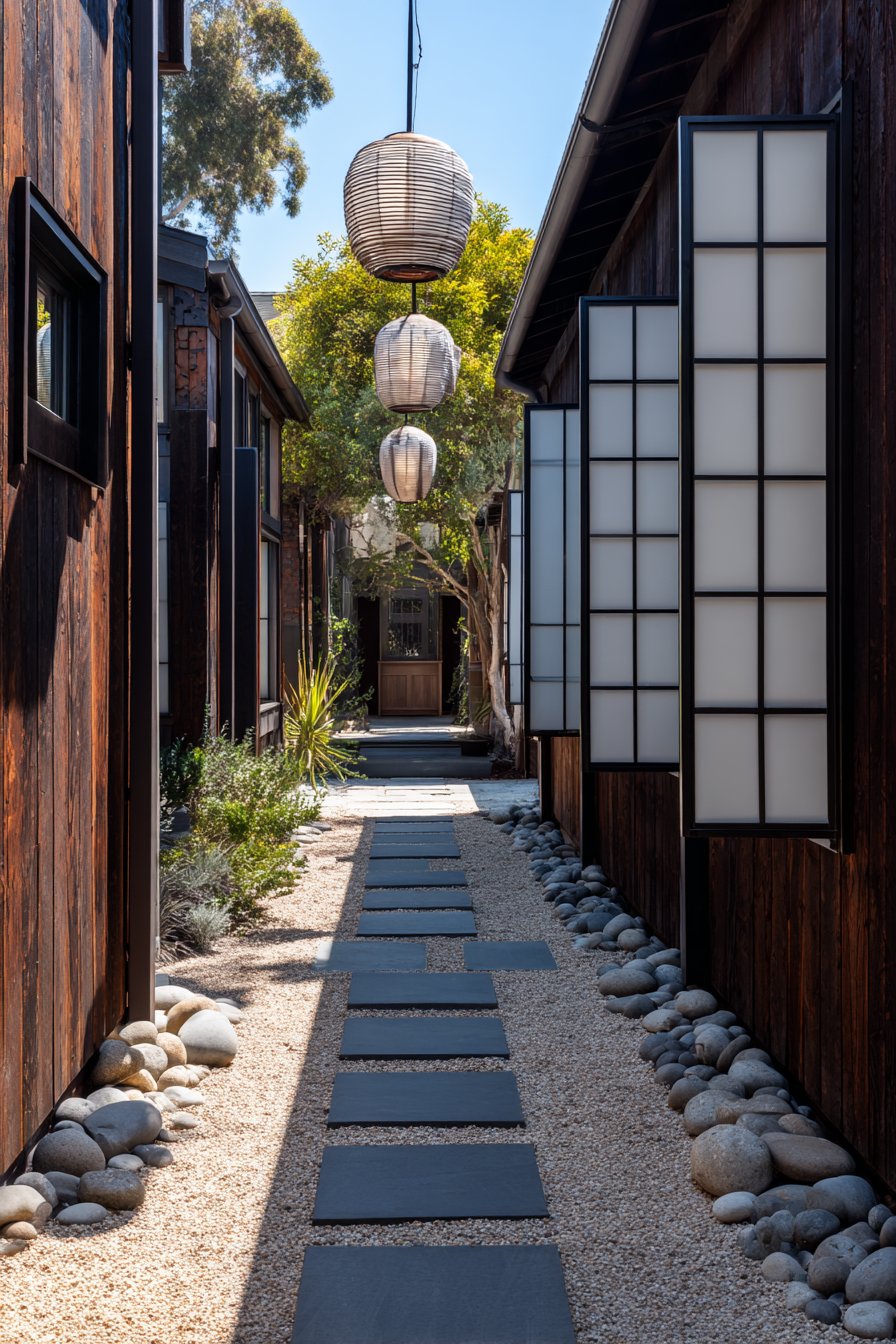
Dark stained cedar wood walls feature shoji-style panels with translucent white screening. This traditional Japanese element controls light while maintaining privacy. Smooth river rocks border the pathway on both sides. Black slate stepping stones create the walking surface with precise spacing.
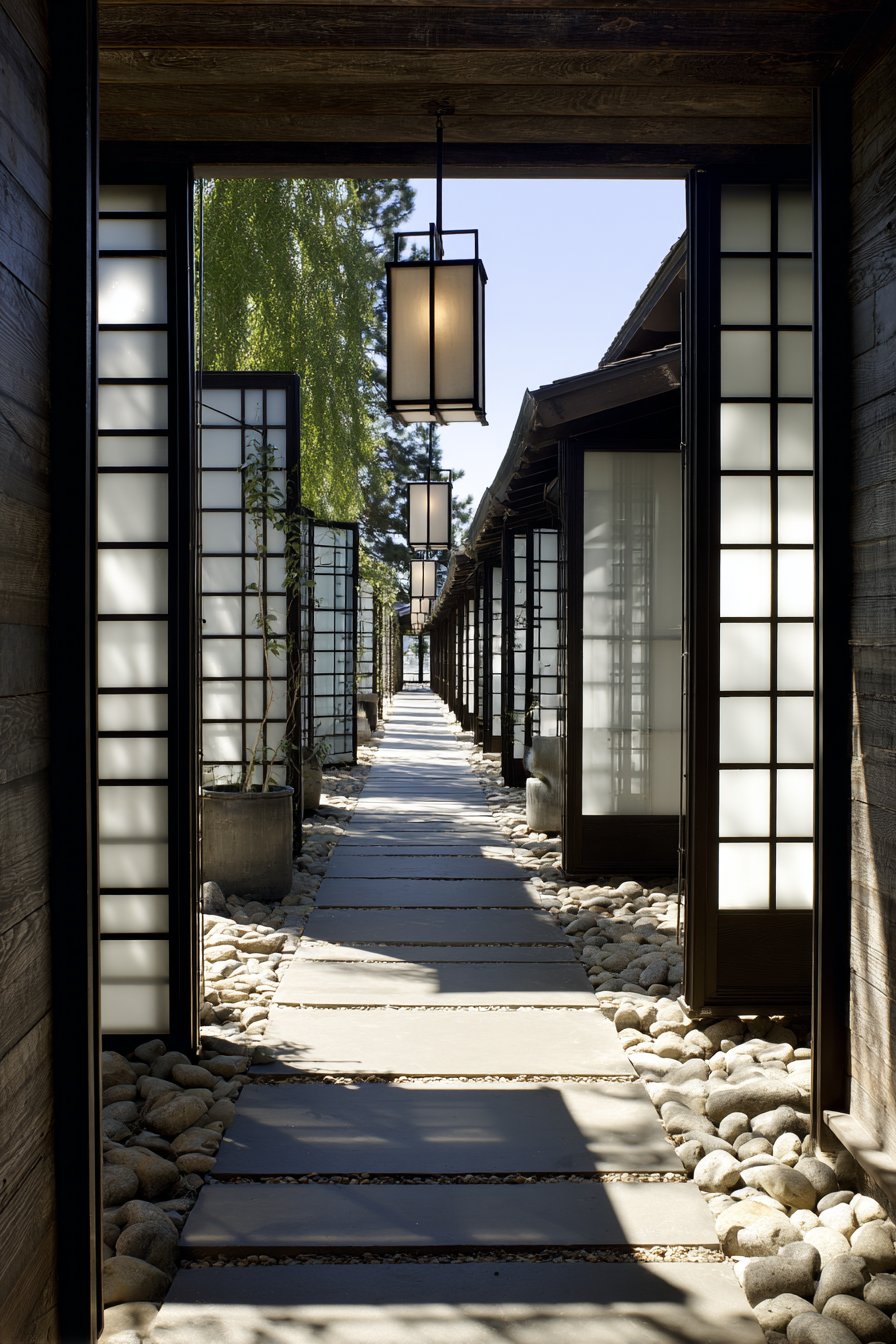
Minimalist bamboo water features provide subtle auditory elements throughout. The gentle sound of flowing water enhances the serene atmosphere. Paper lantern pendants cast soft diffused light during evening hours. These fixtures honor traditional Japanese design principles.
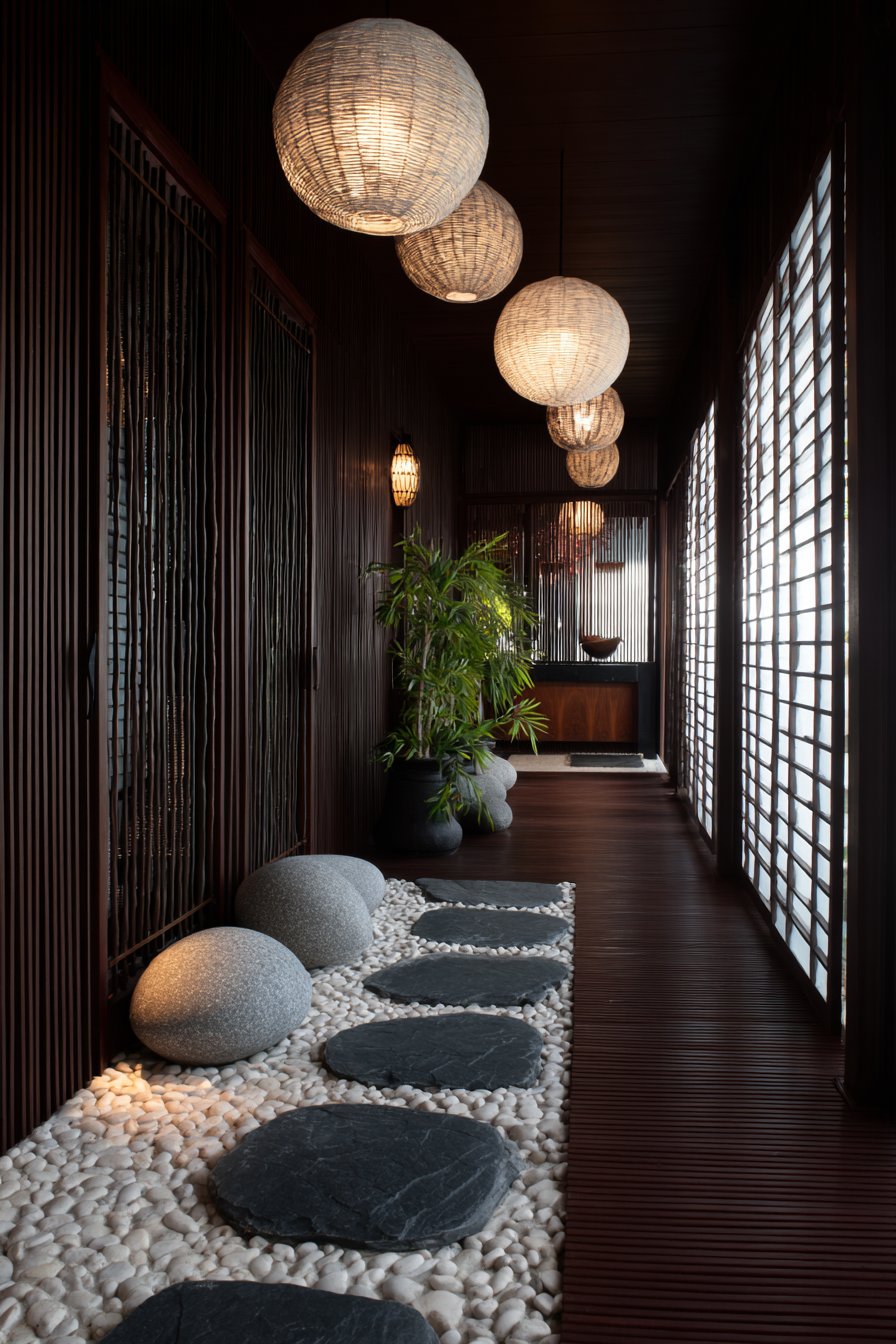
Natural daylight filters through the shoji panels creating ethereal illumination. The zen-like simplicity emphasizes material authenticity and careful placement. Every element serves a purpose in this mindful design approach. The corridor becomes a meditation on balance and restraint.
Key Design Tips:
- Use authentic cedar wood treated for outdoor conditions
- Space stepping stones according to natural stride length
- Install water features with recirculating pumps for sustainability
- Choose paper lanterns rated for outdoor moisture exposure
- Maintain precise alignment of all elements for visual harmony
- Select matte black slate for authentic Japanese aesthetic
6. Industrial Urban Warehouse Style
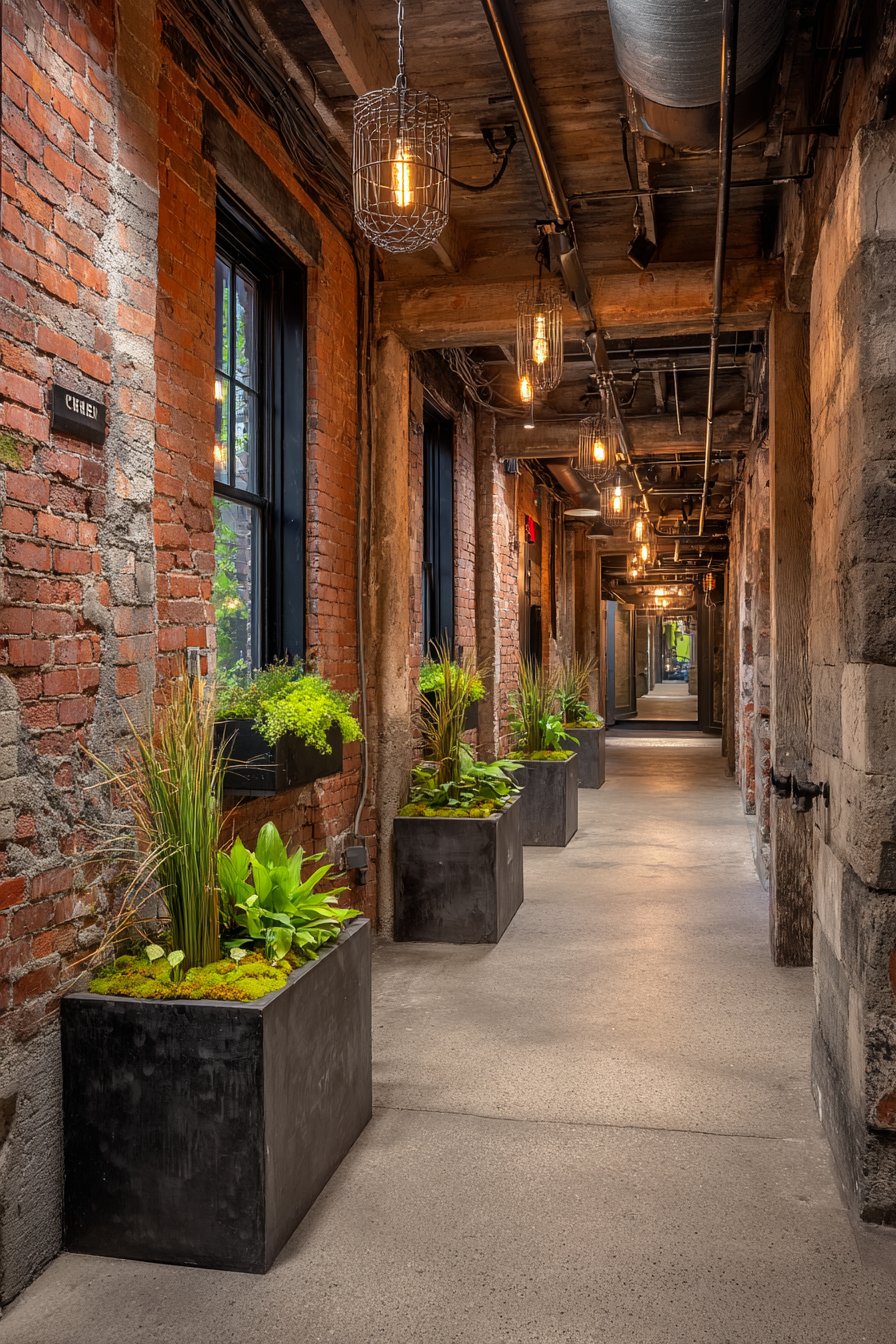
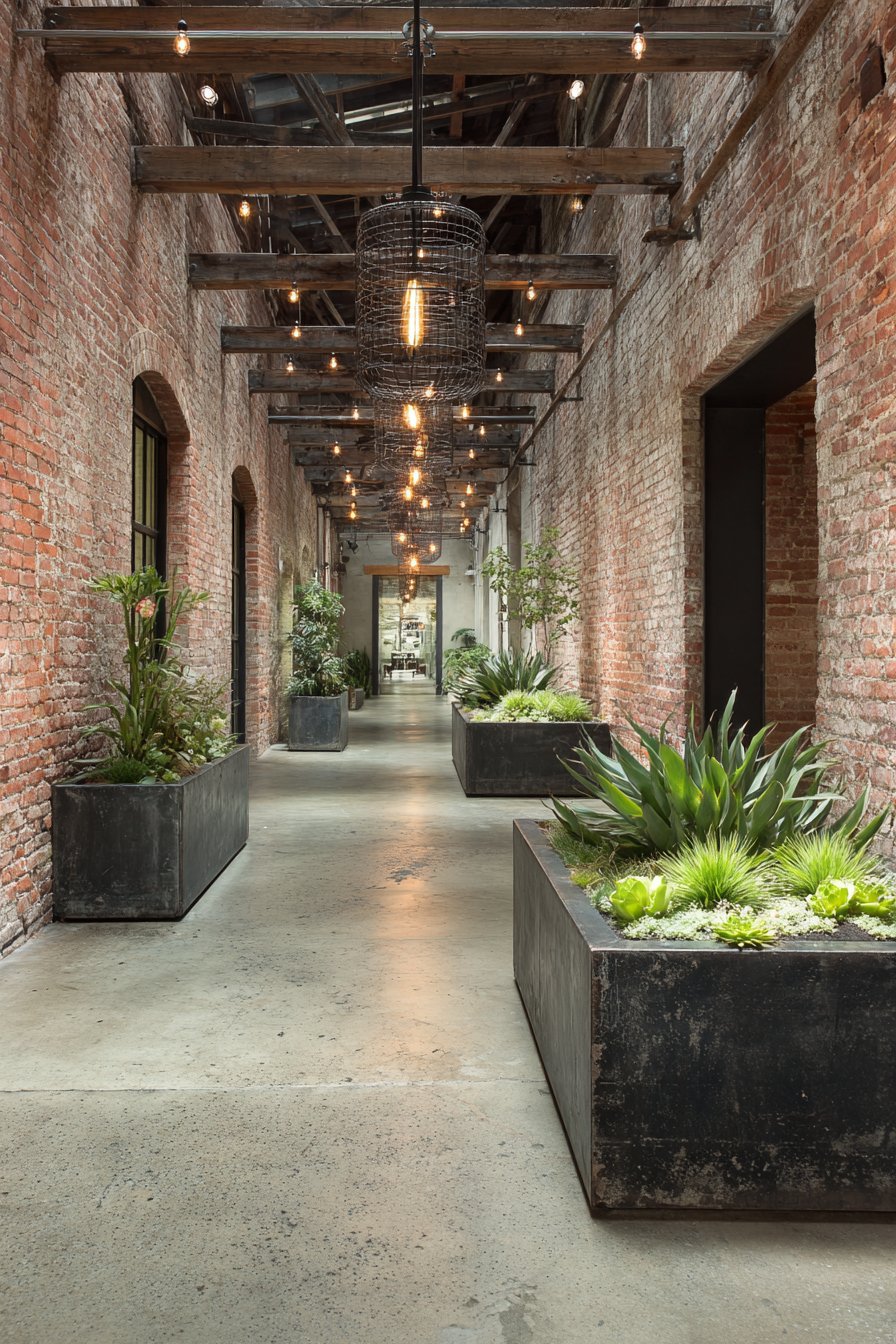
Exposed brick walls with original mortar texture define this industrial aesthetic. The weathered brick tells stories of previous use and history. Galvanized metal beam ceiling structure provides overhead support with raw beauty. Polished concrete flooring with visible aggregate shows subtle wear patterns.
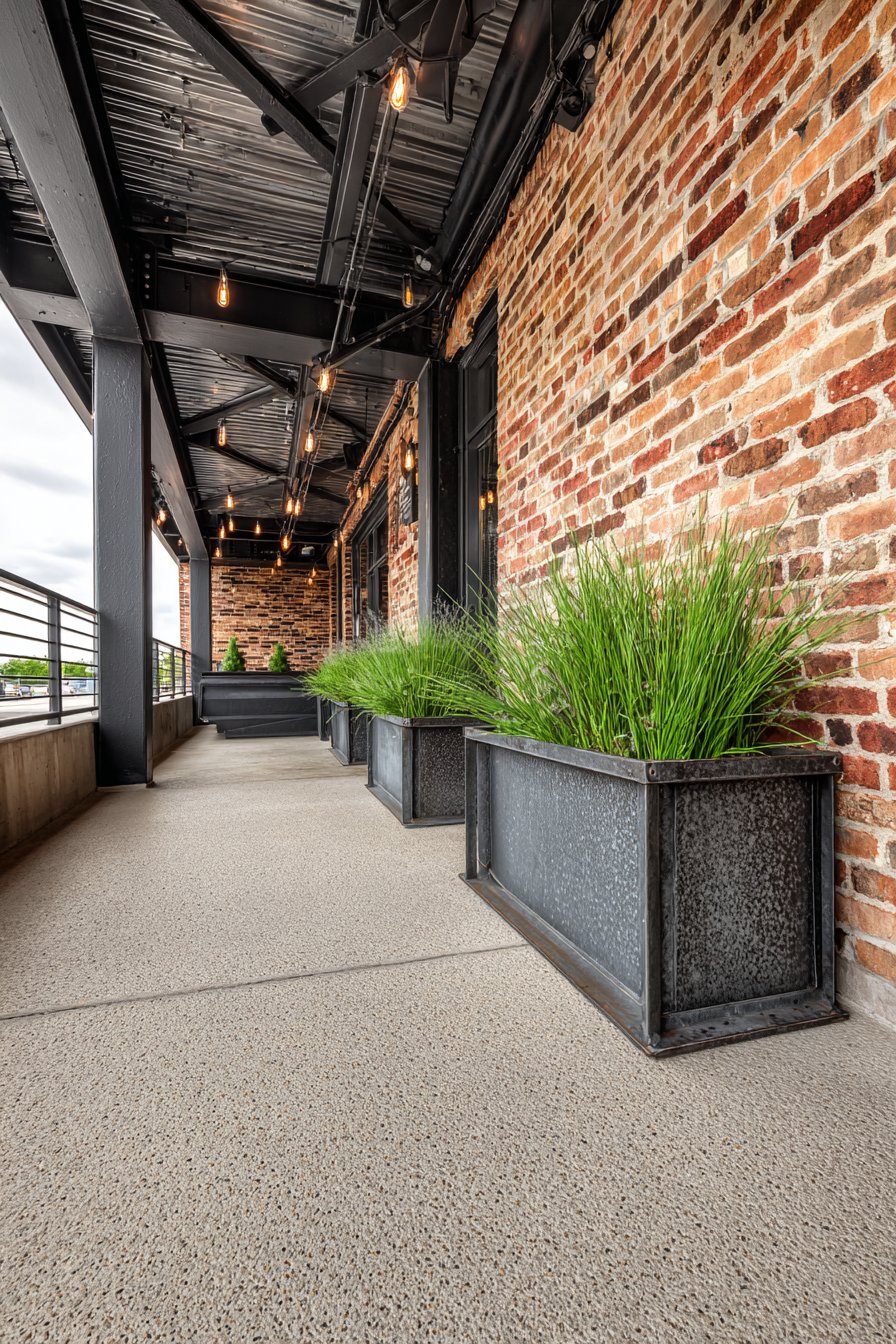
Edison bulb string lights hang overhead in black metal cages. This lighting solution combines functionality with industrial charm beautifully. Metal mesh planters contain ornamental grasses and hardy succulents. These low-maintenance plants suit the utilitarian design philosophy perfectly.
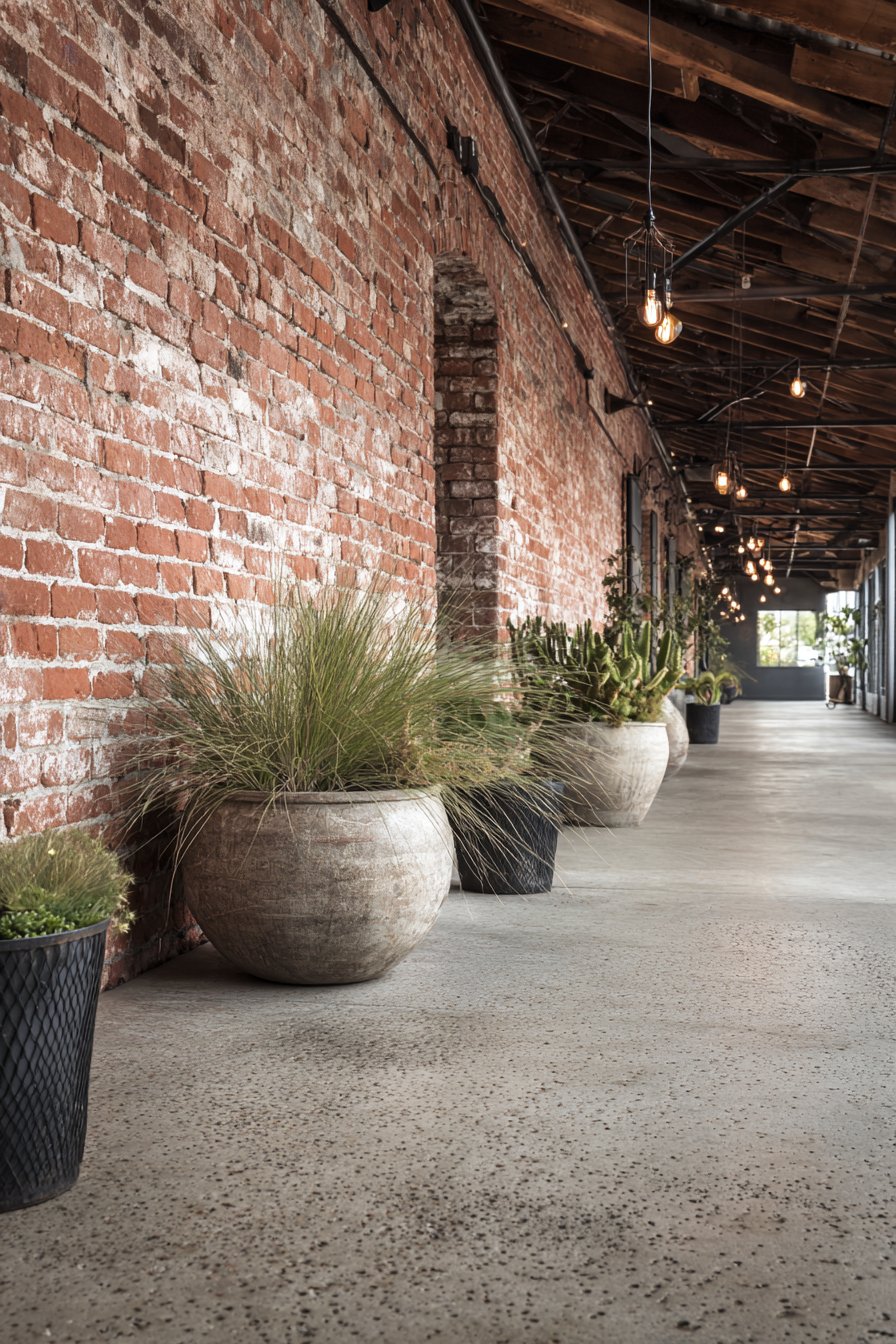
The raw material aesthetic celebrates honest construction without concealment. Natural overcast lighting emphasizes the varied textures present throughout. Brick, metal, and concrete surfaces create compelling material contrasts. This design works exceptionally well for converted warehouse properties.
Key Design Tips:
- Preserve original brick rather than painting or covering it
- Use galvanized metal for superior weather resistance
- Polish concrete to desired sheen level for maintenance ease
- Install Edison bulbs with appropriate outdoor ratings
- Choose drought-tolerant plants for metal container growing
- Apply clear sealers to protect materials while maintaining appearance
7. Coastal Breeze with Nautical Elements
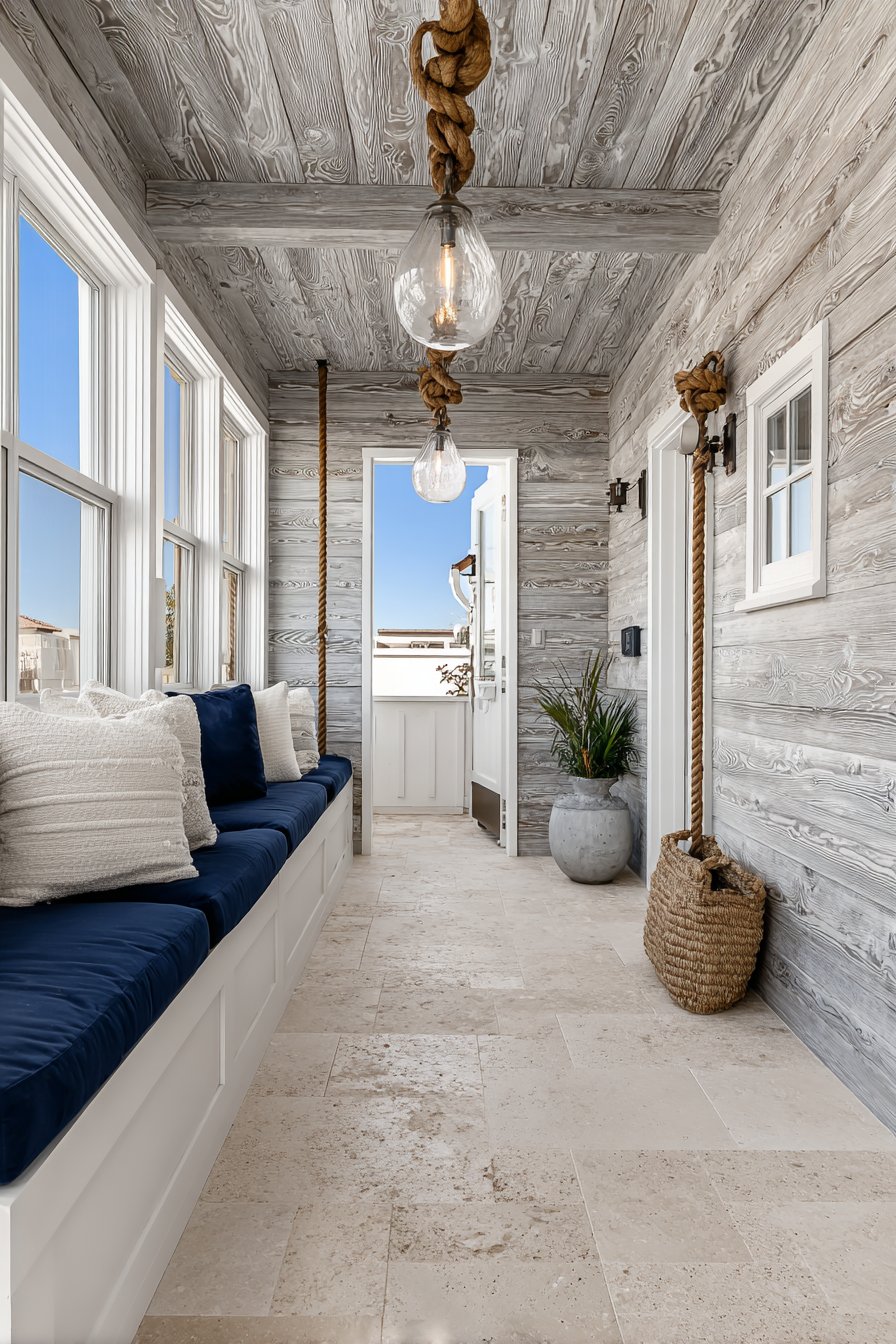
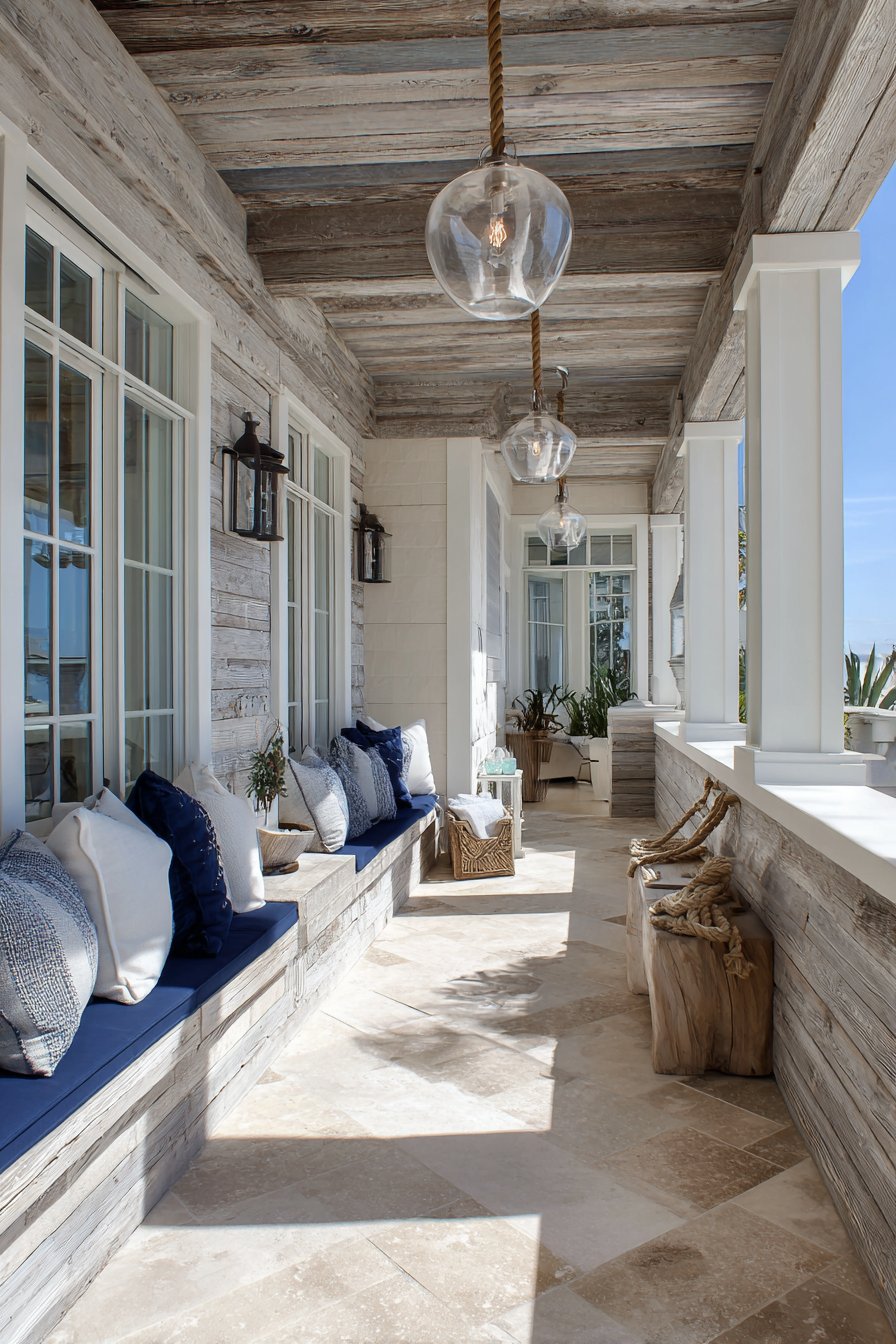
Weathered wood plank walls in driftwood grey create authentic coastal character. White-washed ceiling beams enhance the light, airy atmosphere overhead. Sand-colored travertine tiles with tumbled edges provide the flooring. This natural stone withstands coastal moisture conditions excellently.
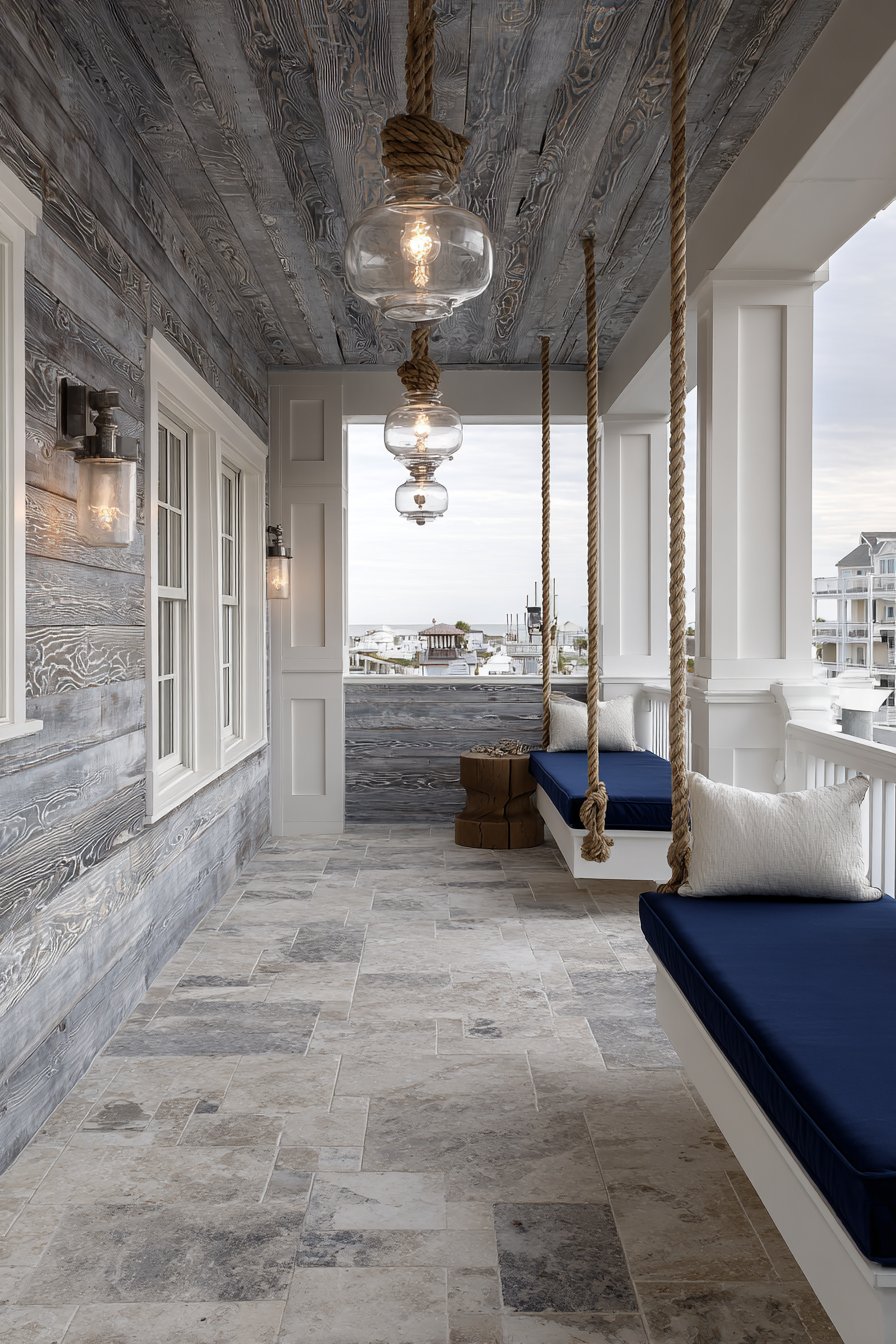
Rope-wrapped pendant lights with clear glass shades provide nautical charm. These fixtures cast beautiful patterns through the rope wrapping. Built-in bench seating with navy blue cushions creates comfortable resting spots. White throw pillows add crisp contrast against the blue upholstery.
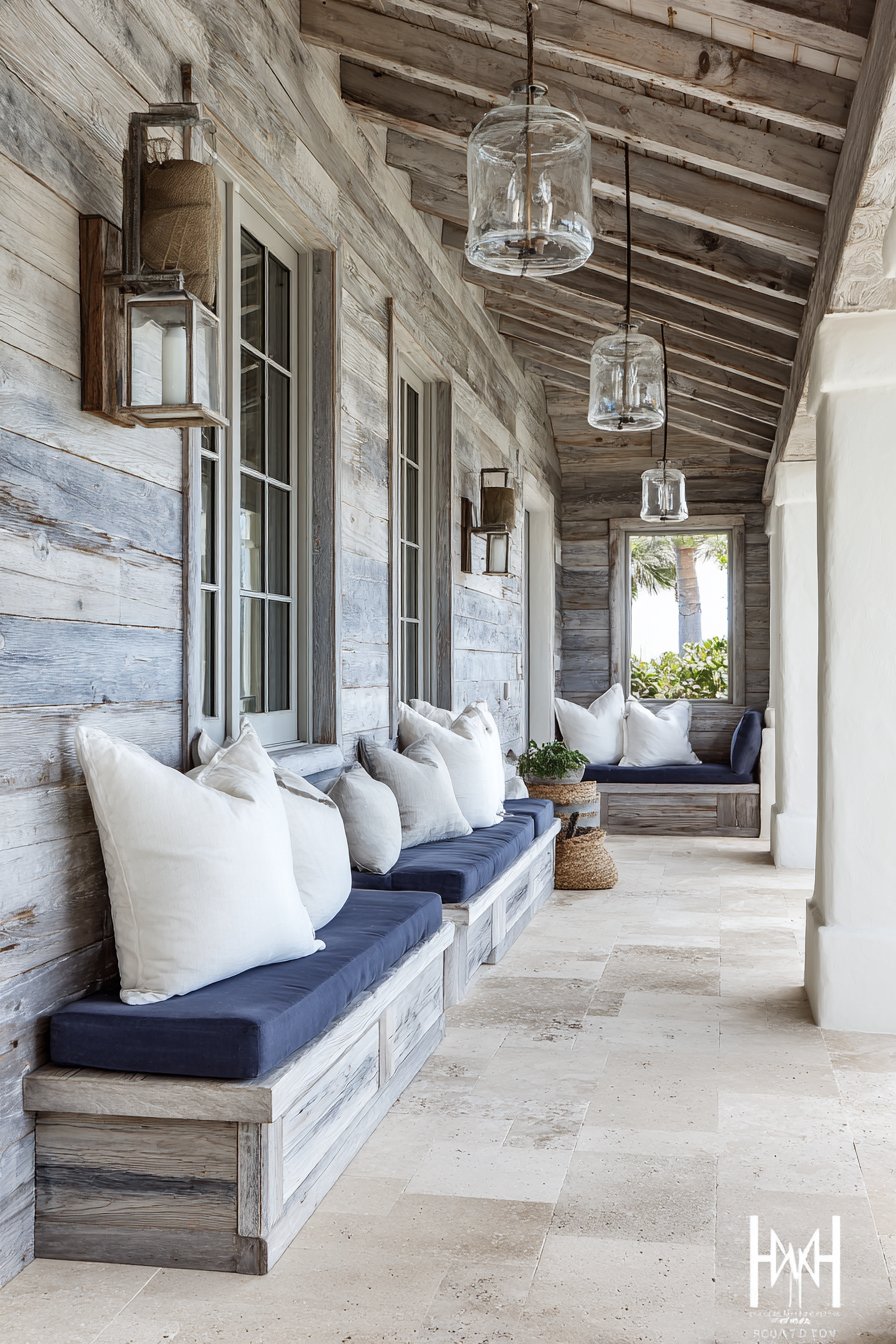
Marine-grade rope details accent the railings throughout the corridor. Soft natural light reflects off white surfaces, amplifying brightness. The breezy aesthetic captures the essence of coastal living perfectly. Authentic coastal materials ensure durability in humid conditions.
Key Design Tips:
- Select weathered wood or weather new wood naturally
- Use marine-grade materials for all metal components
- Choose tumbled travertine to prevent sharp edges
- Install outdoor-rated cushions with quick-drying foam
- Apply rope wrapping using proper marine knots
- Maintain white surfaces to maximize light reflection
8. Living Green Wall Biophilic Design
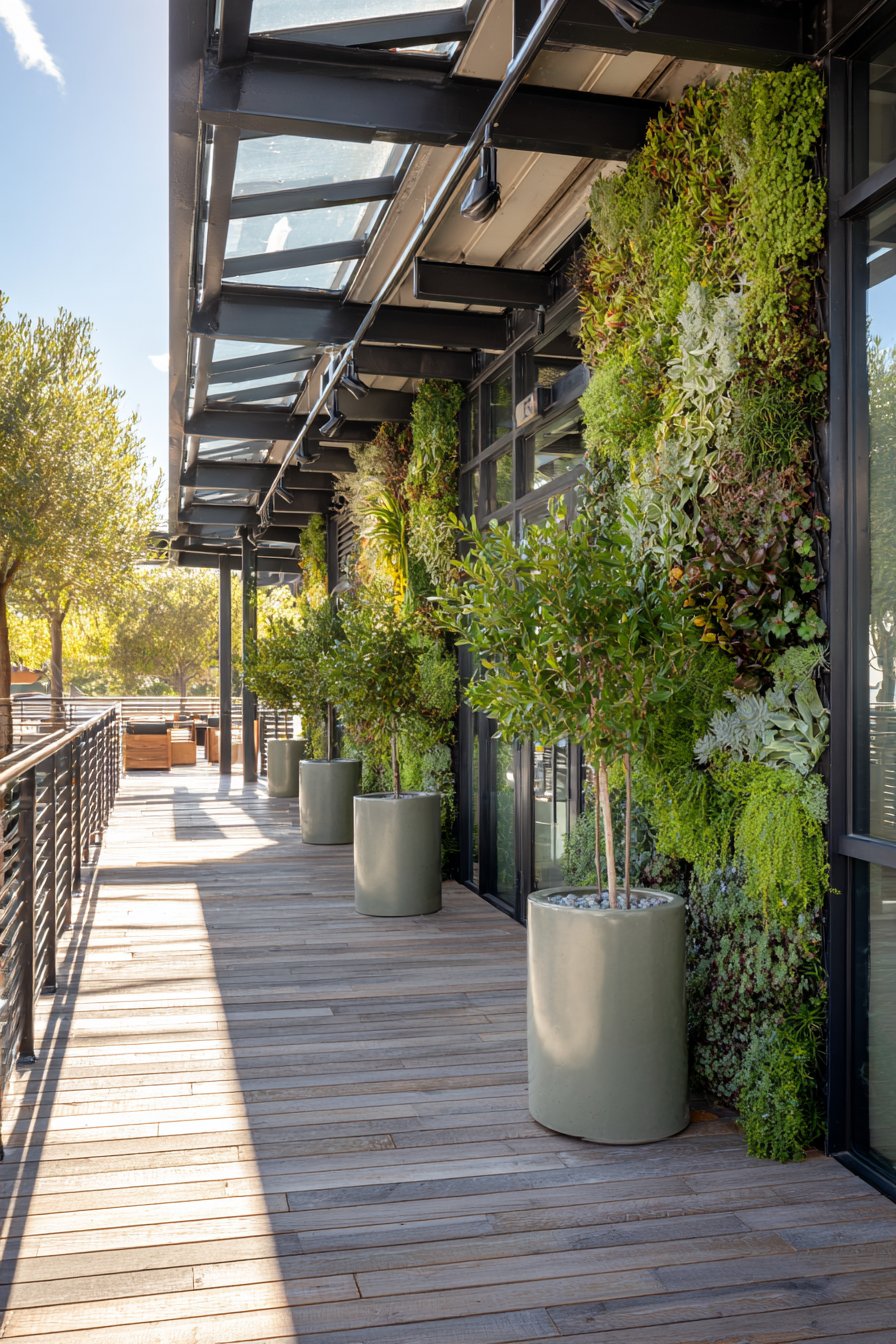
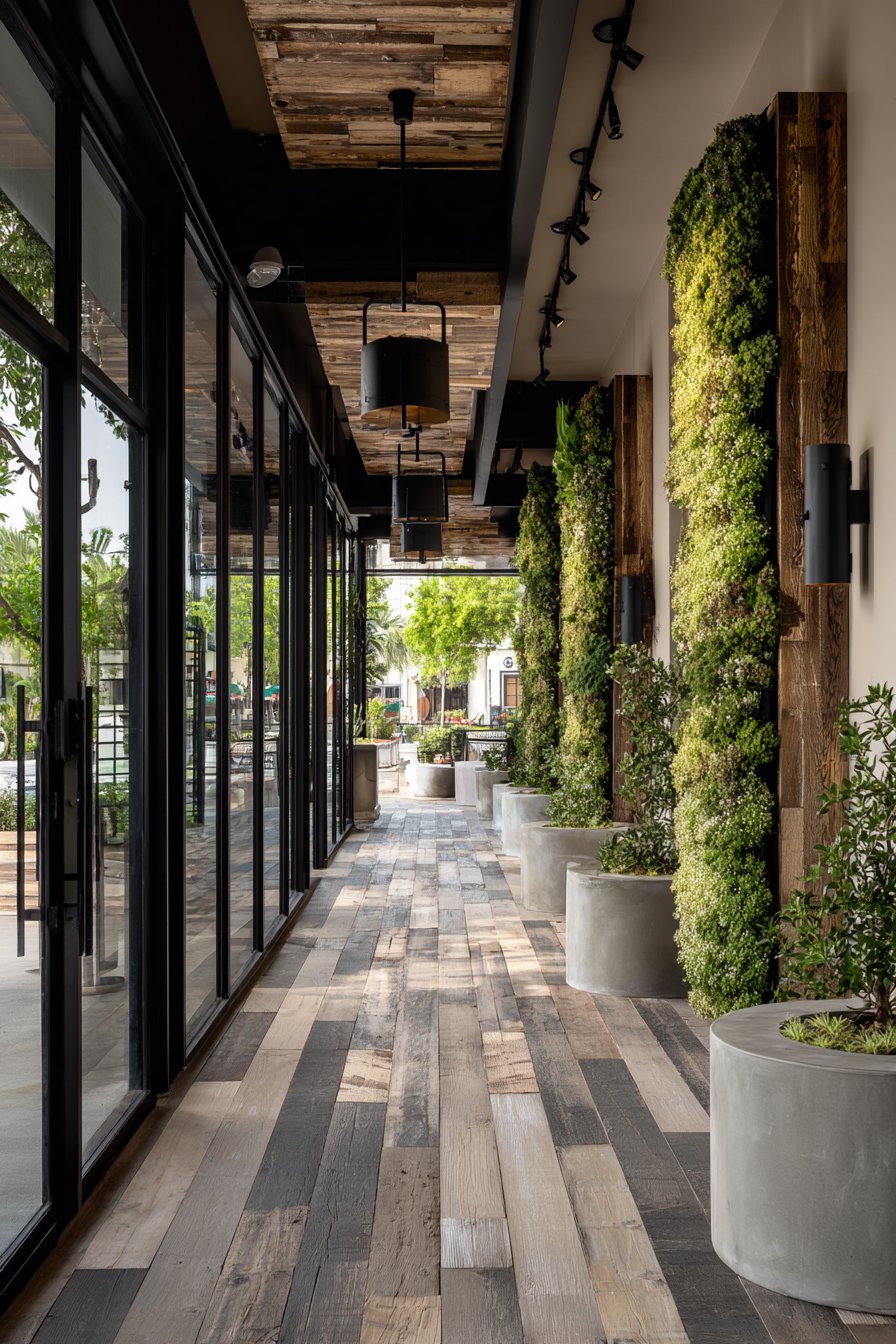
Living green walls with mixed succulent varieties create vertical garden installations. These living walls bring nature directly into the architectural space. Reclaimed wood planks in varied grey tones provide the walkway flooring. Visible grain patterns showcase the wood’s natural beauty and history.
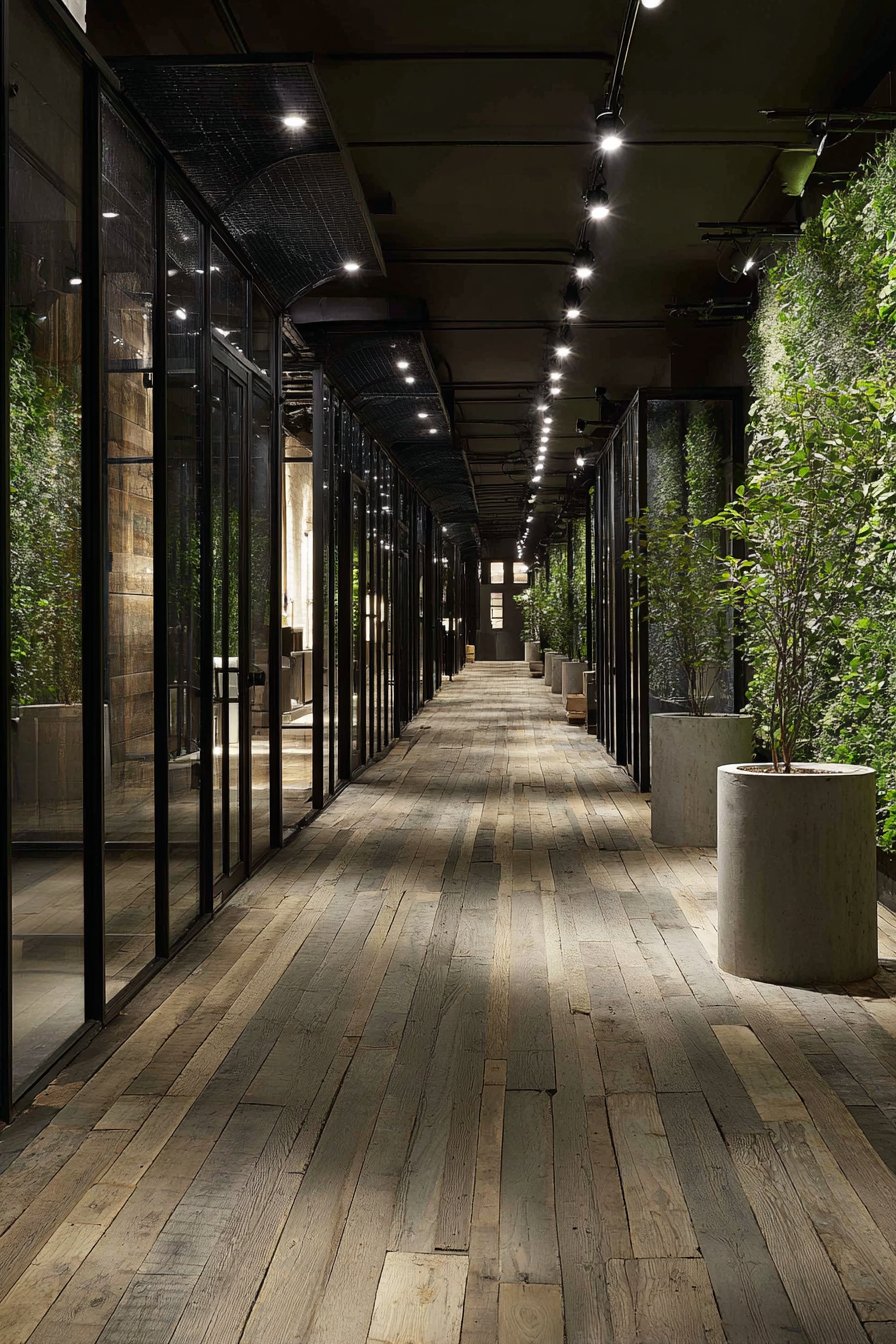
Modern matte black frame glass partitions section the corridor thoughtfully. These partitions maintain visual transparency while defining spaces. Cylindrical concrete planters house small citrus trees at regular intervals. The trees add height variation and seasonal interest along the passage.
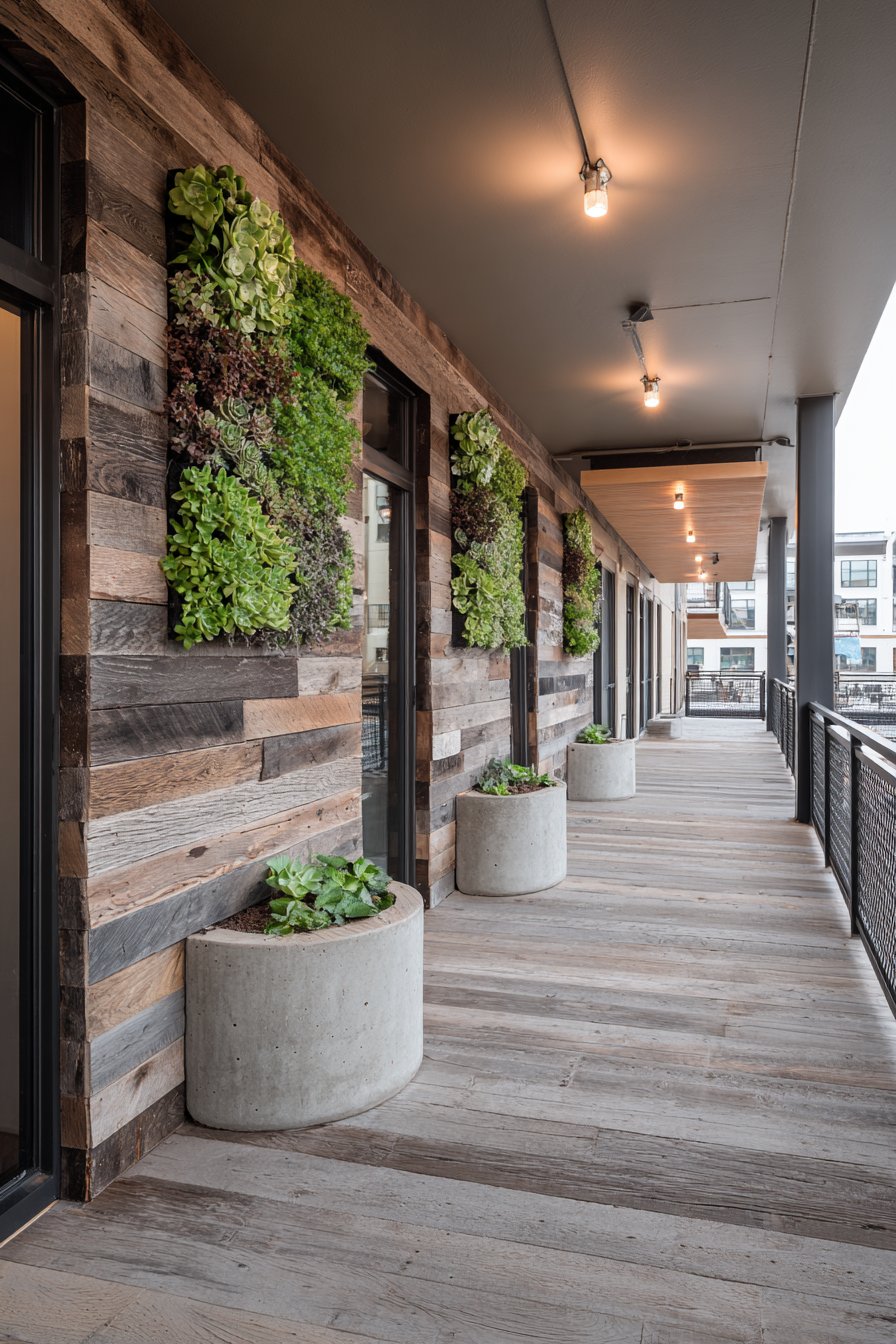
Minimalist track lighting provides focused illumination on the green walls. Natural lighting highlights the texture contrast between organic and industrial materials. The biophilic design elements connect inhabitants with nature beneficially. This approach has proven psychological and wellness benefits.
Key Design Tips:
- Install proper irrigation systems for vertical gardens
- Choose succulent varieties suited to available light levels
- Use reclaimed wood with appropriate outdoor sealing
- Select citrus varieties appropriate for container growing
- Ensure glass partitions use tempered safety glass
- Position track lighting to highlight plant textures
9. Rustic Farmhouse with Reclaimed Materials
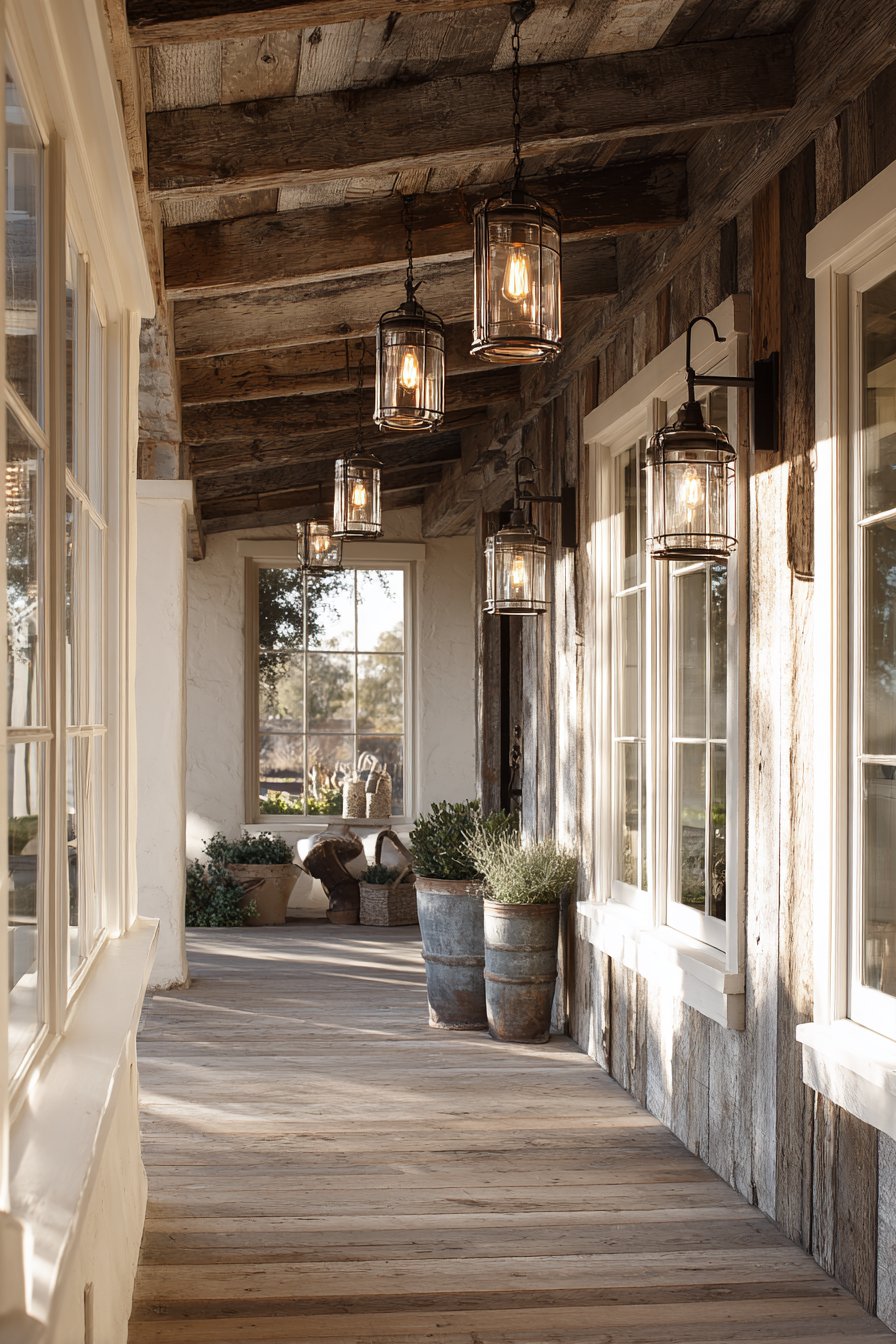
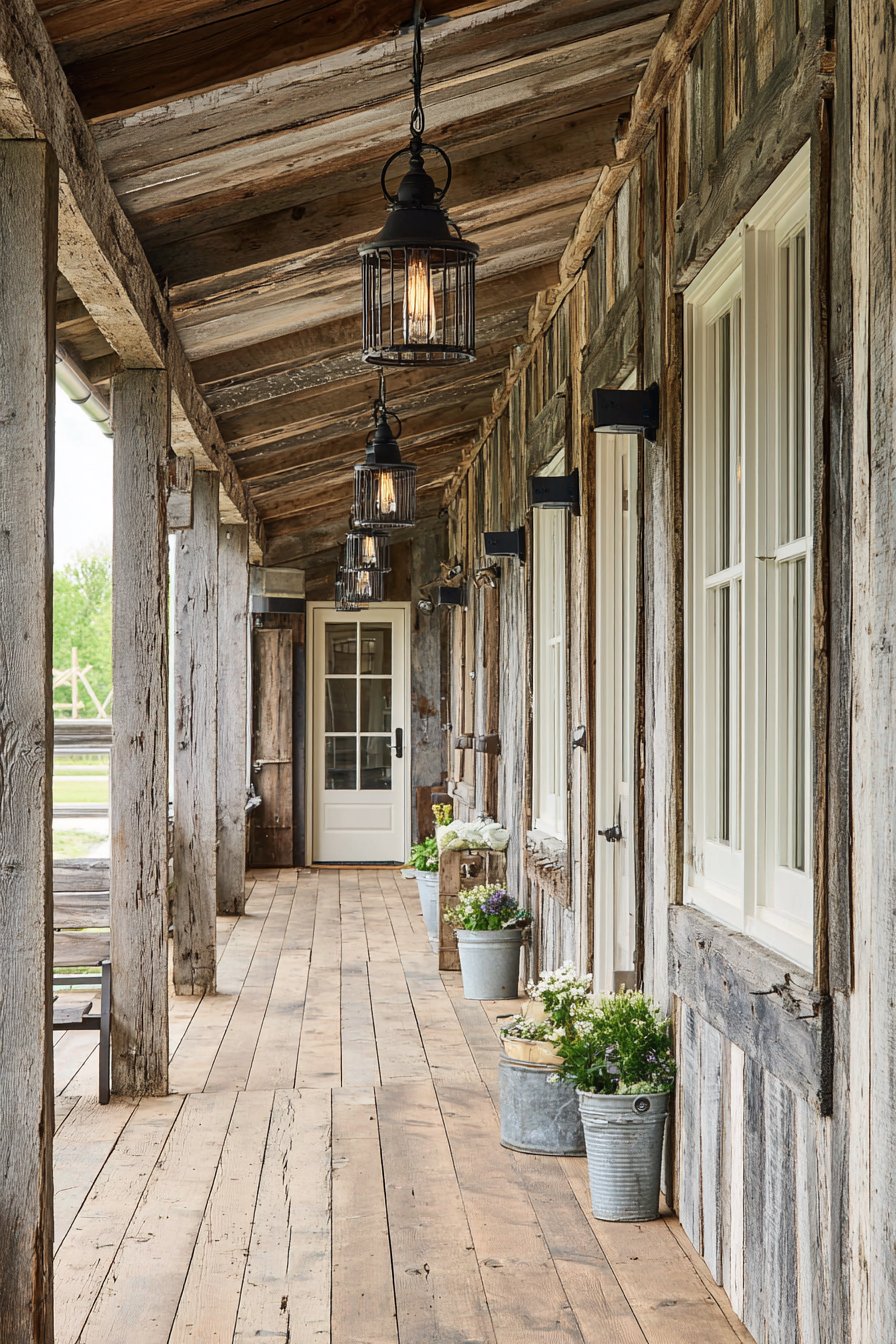
Reclaimed barn wood siding in weathered grey and brown creates authentic character. Wide-plank oak flooring shows natural knots and color variation beautifully. Vintage-inspired cage pendant lights with Edison bulbs hang from rough-hewn beams. The ceiling beams show authentic saw marks and weathering patterns.
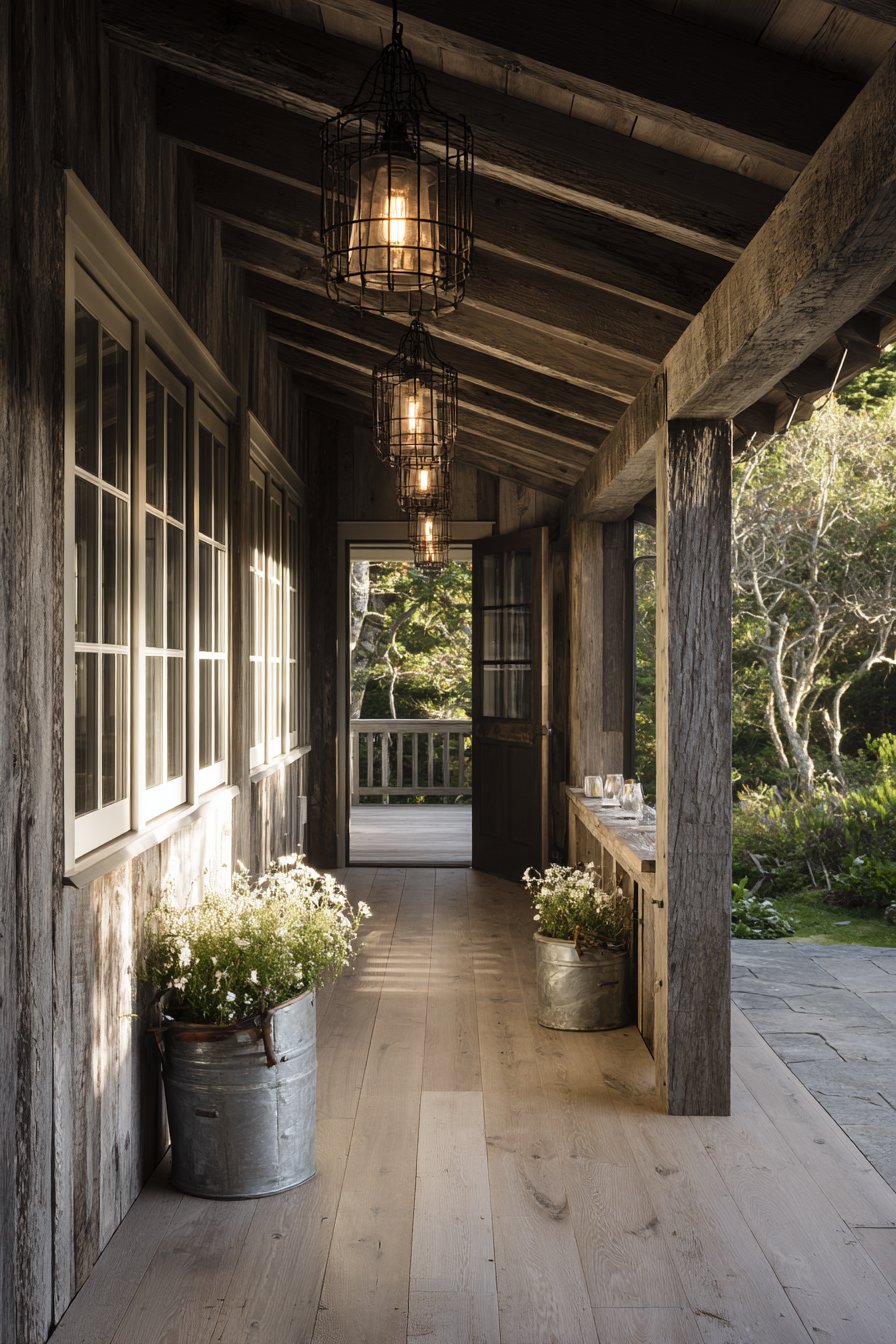
Galvanized metal buckets repurposed as planters contain herbs and wildflowers. This creative reuse adds charm while serving functional purposes. White-painted window frames provide crisp contrast against aged wood surfaces. Golden hour lighting emphasizes authentic weathering patterns throughout the space.
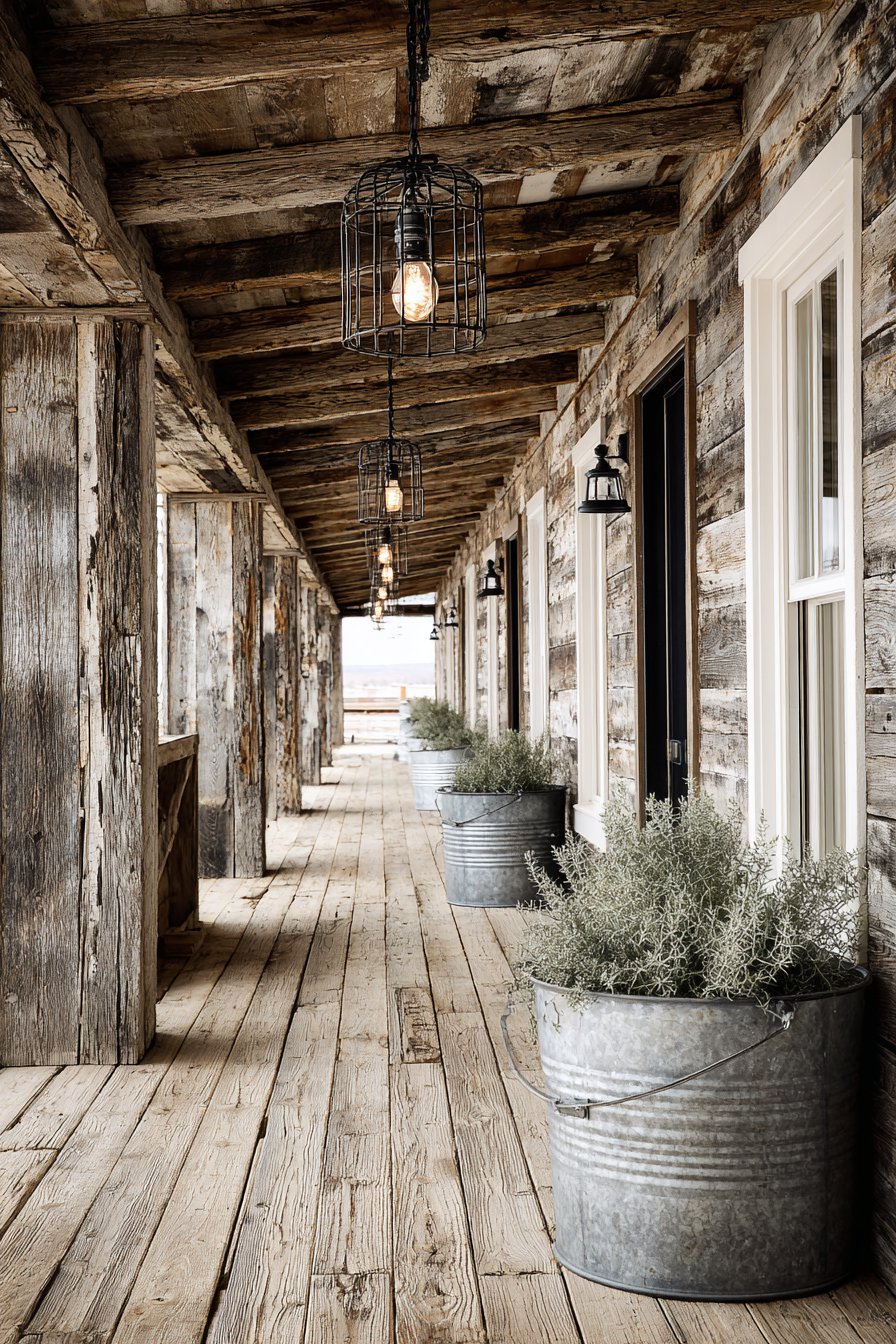
The material textures tell stories of previous lives and purposes. Reclaimed elements bring sustainability to beautiful design choices simultaneously. This farmhouse aesthetic celebrates honest craftsmanship and natural aging. Authentic materials develop richer character as years pass.
Key Design Tips:
- Source reclaimed wood with documented origin and treatment
- Seal reclaimed materials while preserving weathered appearance
- Use vintage or reproduction fixtures for period authenticity
- Repurpose galvanized containers with proper drainage holes
- Apply exterior-grade paint to window frames for durability
- Embrace natural imperfections as design features
10. Modern Glass and Concrete Minimalism
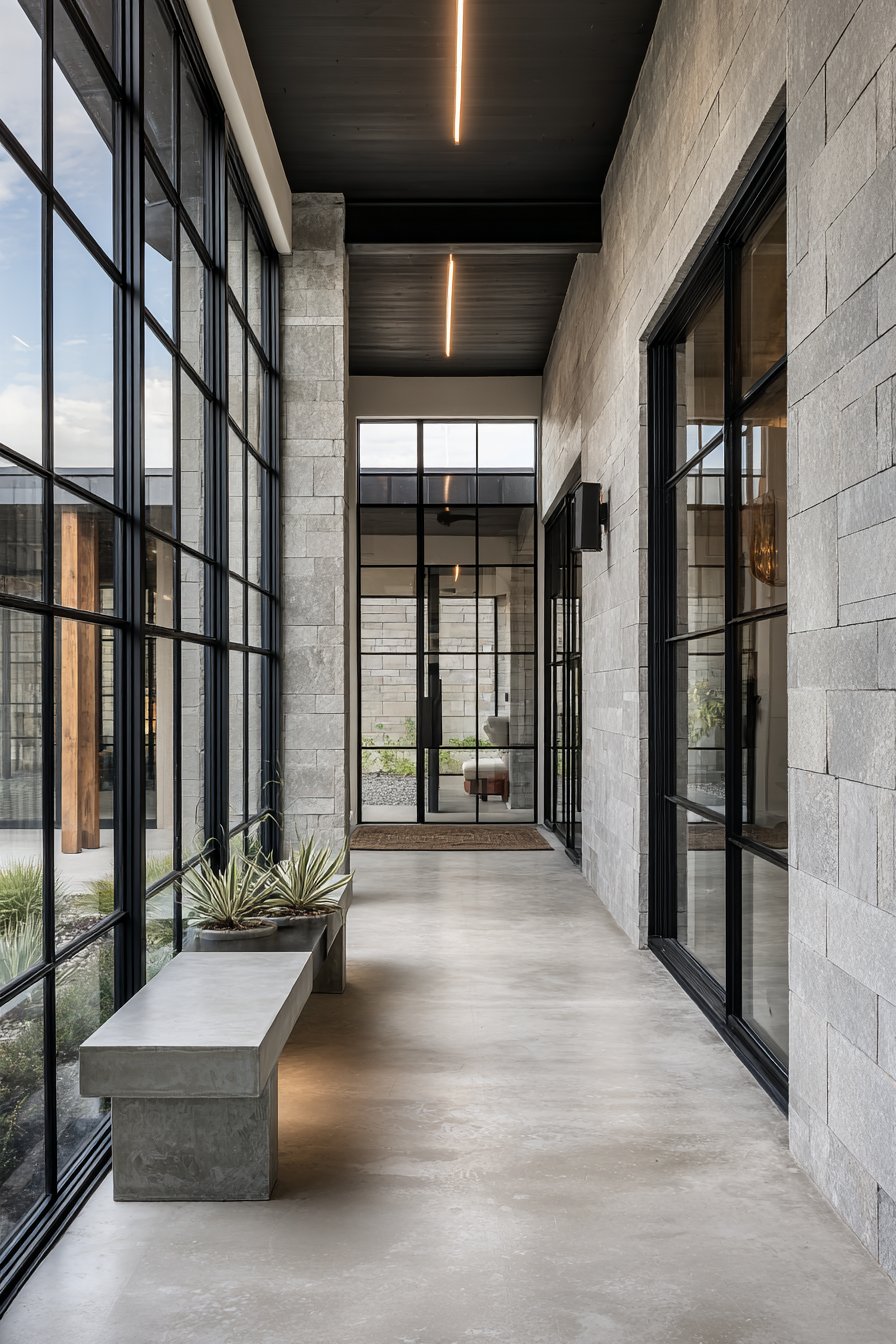
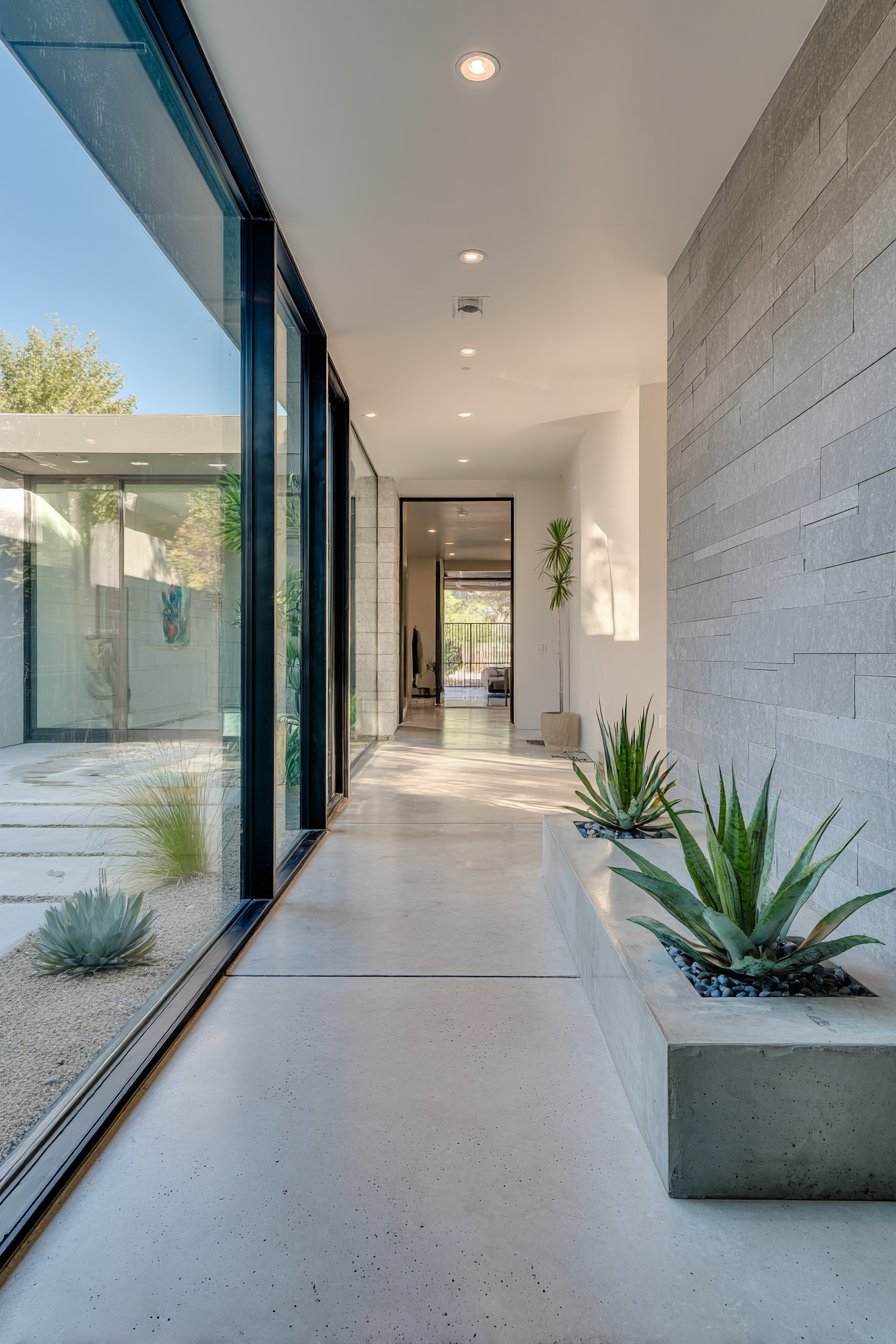
Floor-to-ceiling glass walls on one side feature black aluminum framing. This creates dramatic transparency while maintaining structural integrity. Polished concrete flooring in light grey provides seamless flow throughout. The smooth trowel finish requires skilled craftsmanship to achieve.
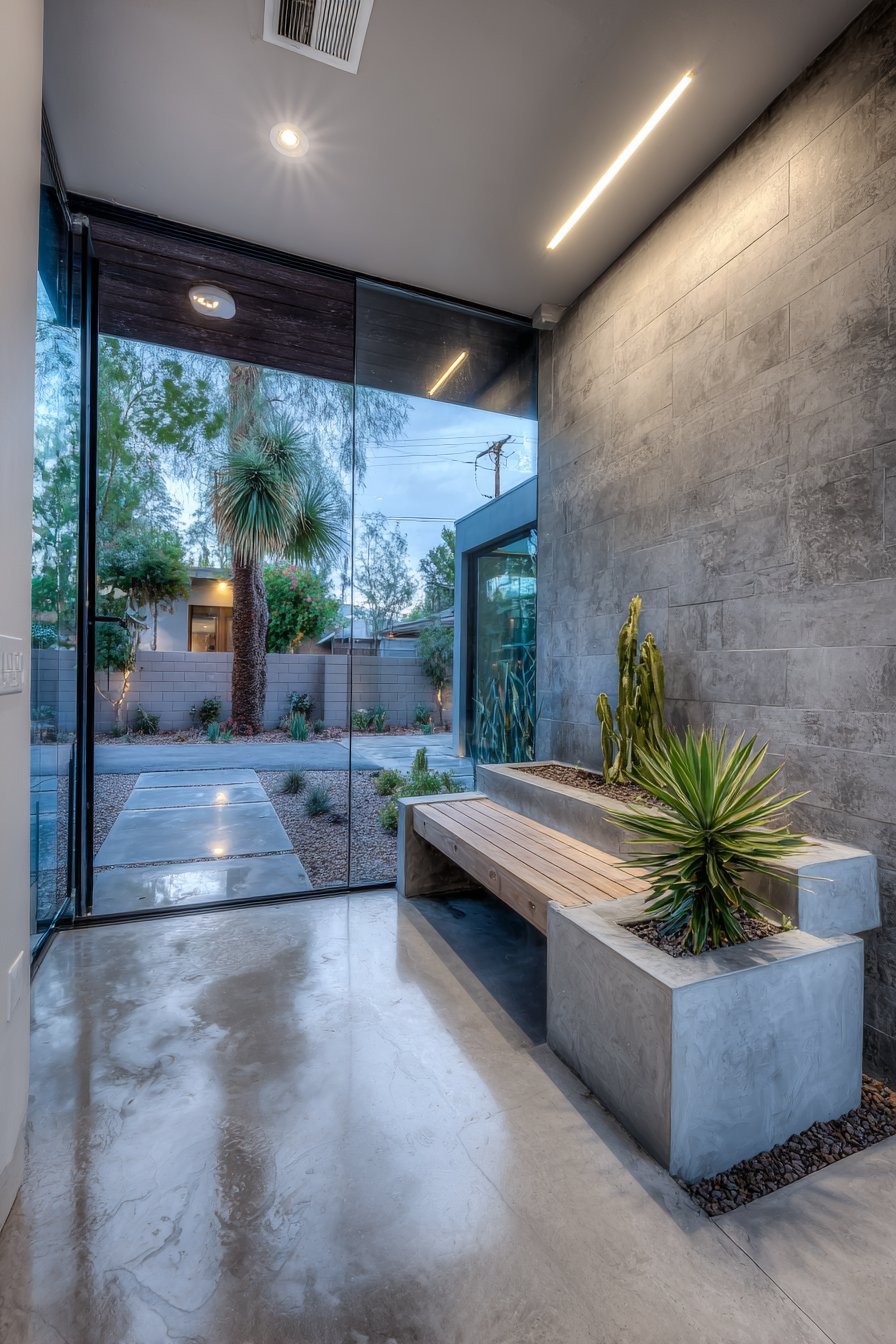
The solid wall showcases large format grey stone tiles with horizontal orientation. This placement emphasizes the corridor’s linear nature visually. Recessed linear LED lighting creates clean illumination lines overhead. Simple concrete bench with integrated planters demonstrates multifunctional design thinking.
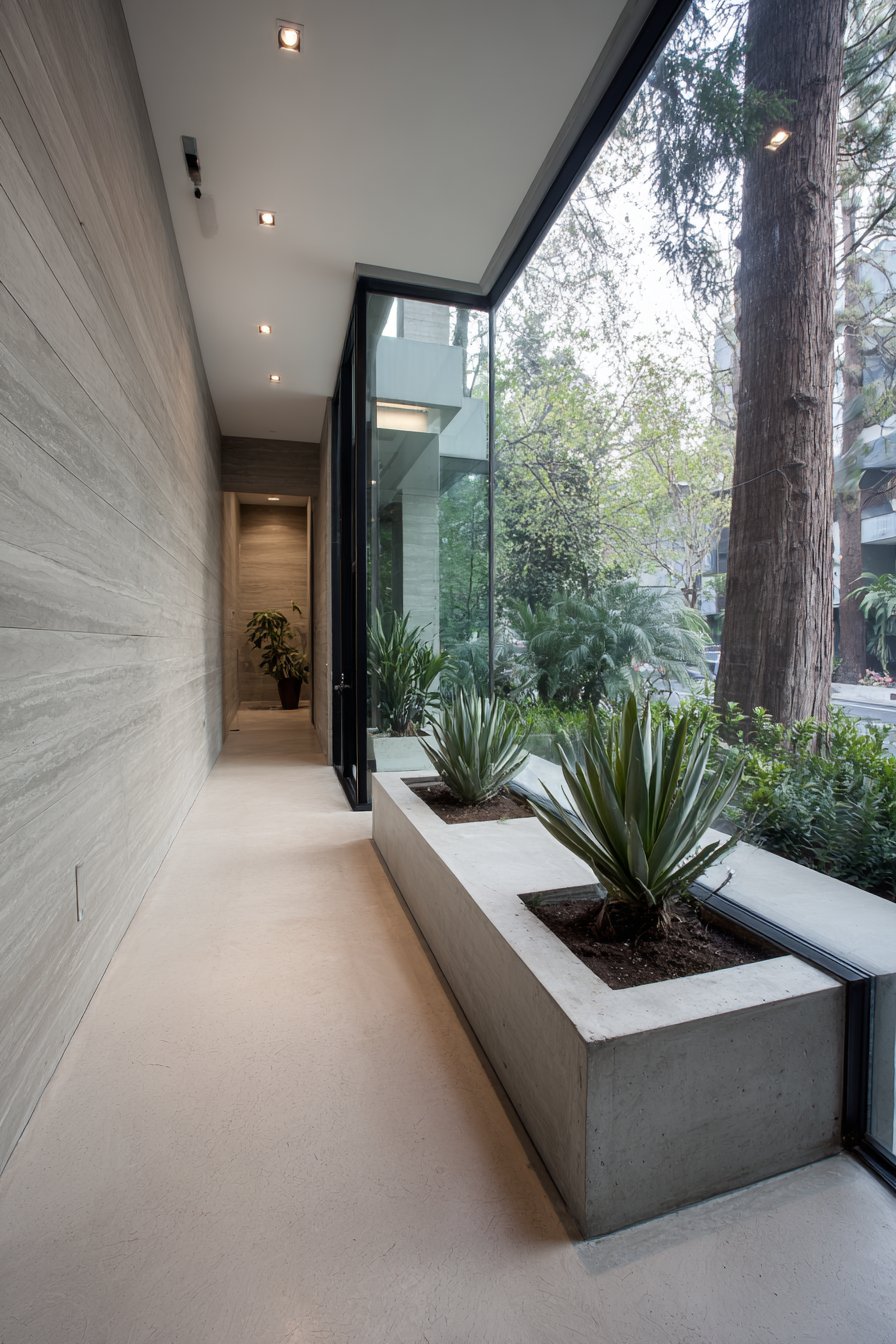
Architectural plants like agave and yucca provide sculptural interest. These plants require minimal maintenance while delivering maximum visual impact. The interplay of transparency and solid surfaces creates sophisticated spatial dynamics. Balanced exposure captures both interior corridor and exterior views beautifully.
Key Design Tips:
- Specify low-iron glass for maximum clarity and light transmission
- Polish concrete using progressive grit sequence for smooth finish
- Install LED strips in recessed channels for clean integration
- Choose architectural plants with strong structural forms
- Ensure proper waterproofing at concrete planter joints
- Maintain consistent material palette for cohesive minimalism
11. Moroccan Inspired Pattern and Color
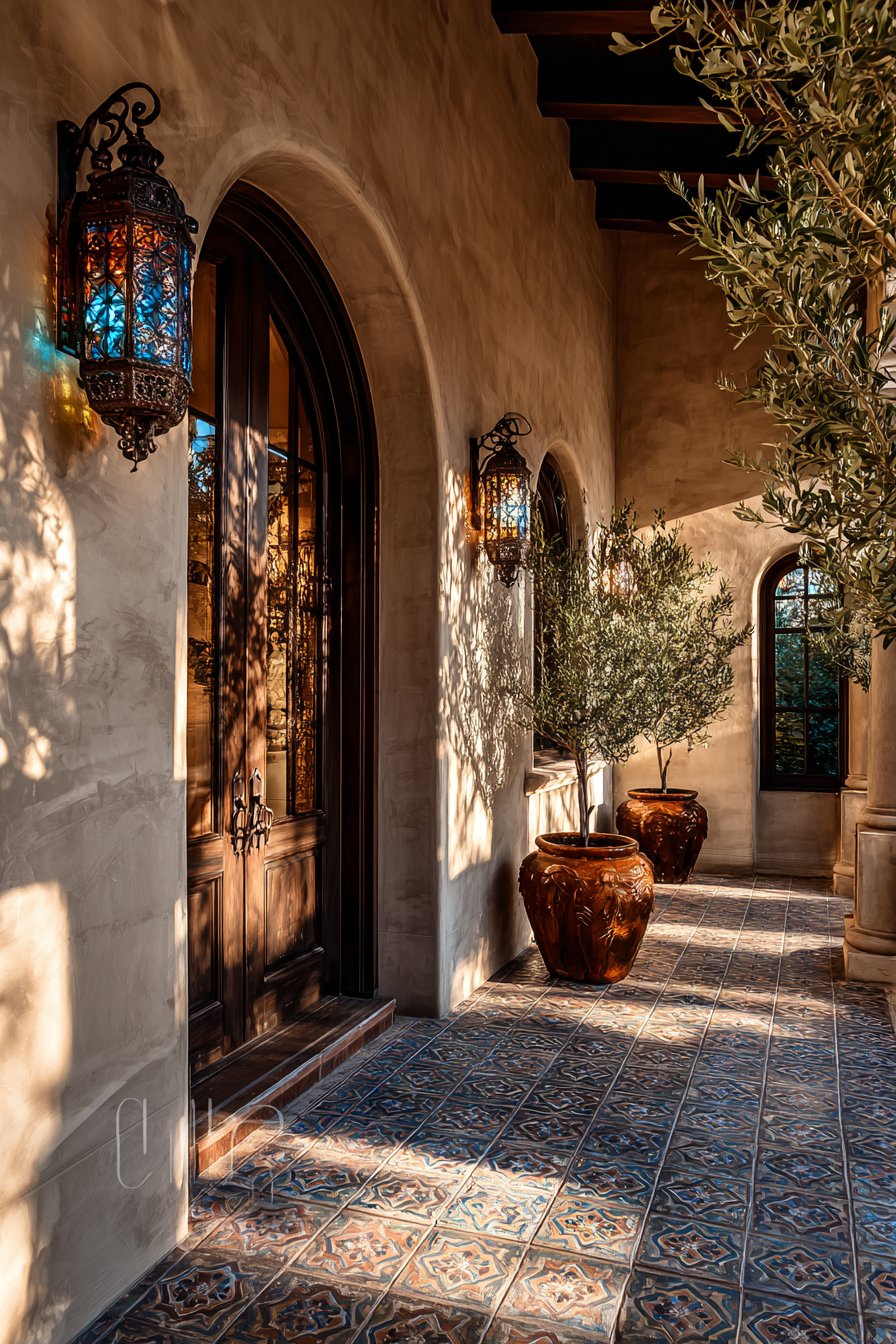
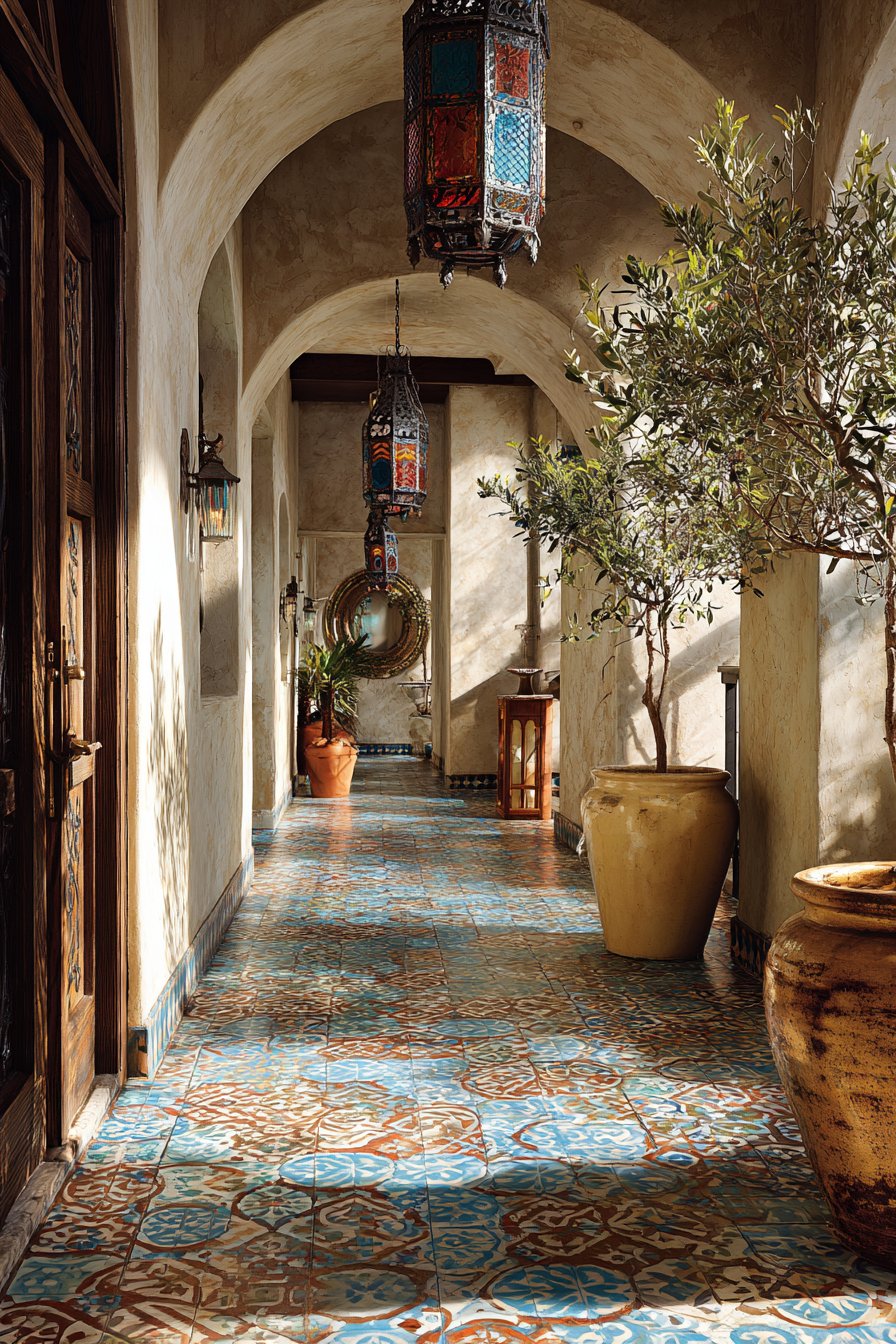
Intricately patterned cement tiles in rich blues, terracotta, and cream create stunning visual impact. These handmade tiles showcase traditional Moroccan craftsmanship beautifully. Plastered walls in warm ochre with subtle texture support ornate metal lanterns. The colored glass panels in the lanterns cast jewel-toned light patterns.
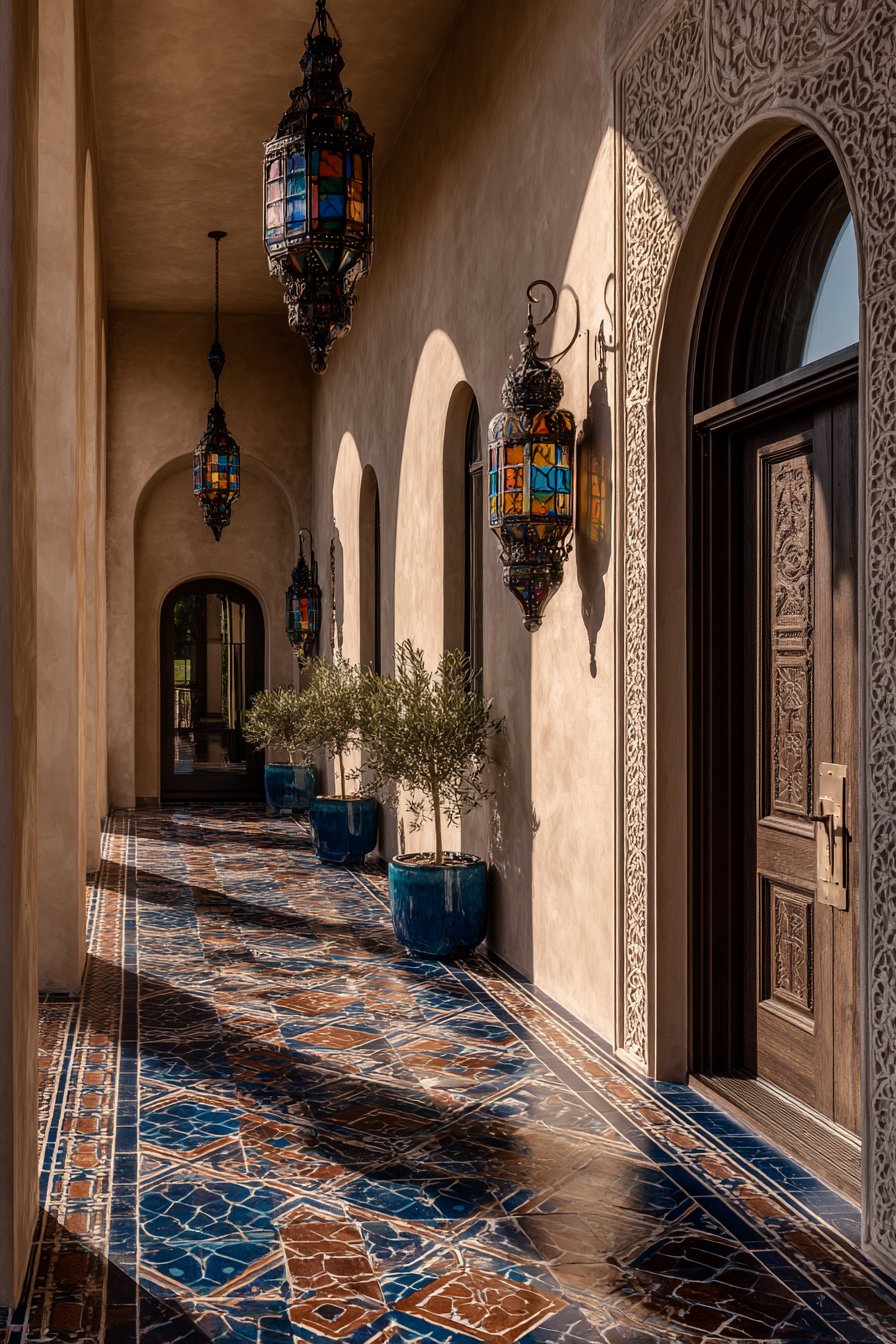
Arched doorways with carved wooden doors punctuate the passage at intervals. These architectural elements reference traditional Moroccan architecture authentically. Potted olive trees in glazed ceramic planters add Mediterranean character. Late afternoon sun creates dramatic shadows through decorative metalwork.
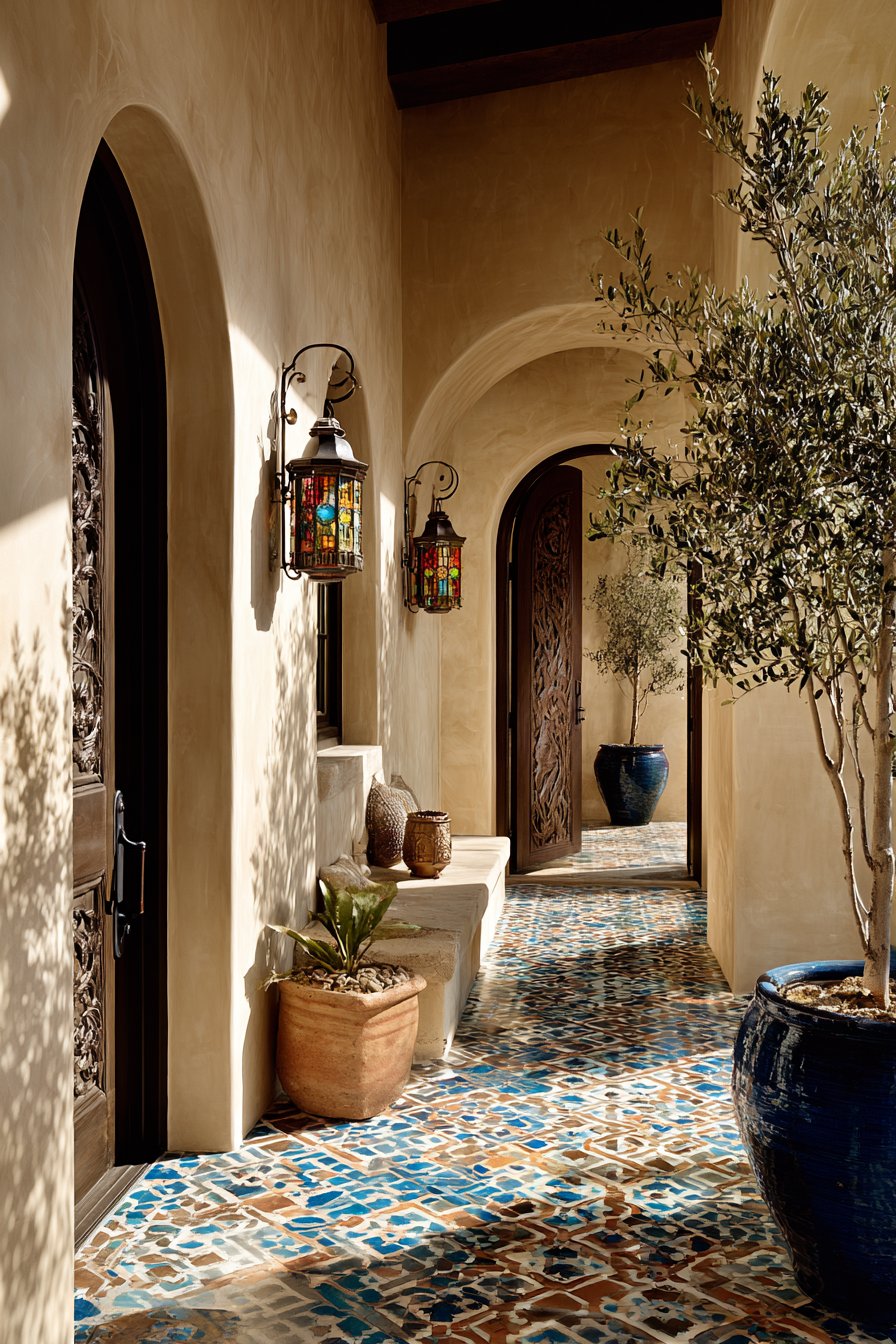
The colorful tile patterns guide movement along the corridor naturally. Traditional craftsmanship techniques ensure each tile possesses unique character. This design celebrates pattern, color, and ornamental detail richly. Authentic materials and techniques create lasting beauty and value.
Key Design Tips:
- Select cement tiles from reputable Moroccan artisans
- Seal patterned tiles properly for outdoor durability
- Choose metal lanterns with outdoor-rated colored glass
- Position olive trees for optimal Mediterranean growing conditions
- Install carved doors with proper weather sealing
- Balance pattern density to avoid visual overwhelm
12. Scandinavian Light and Bright Simplicity
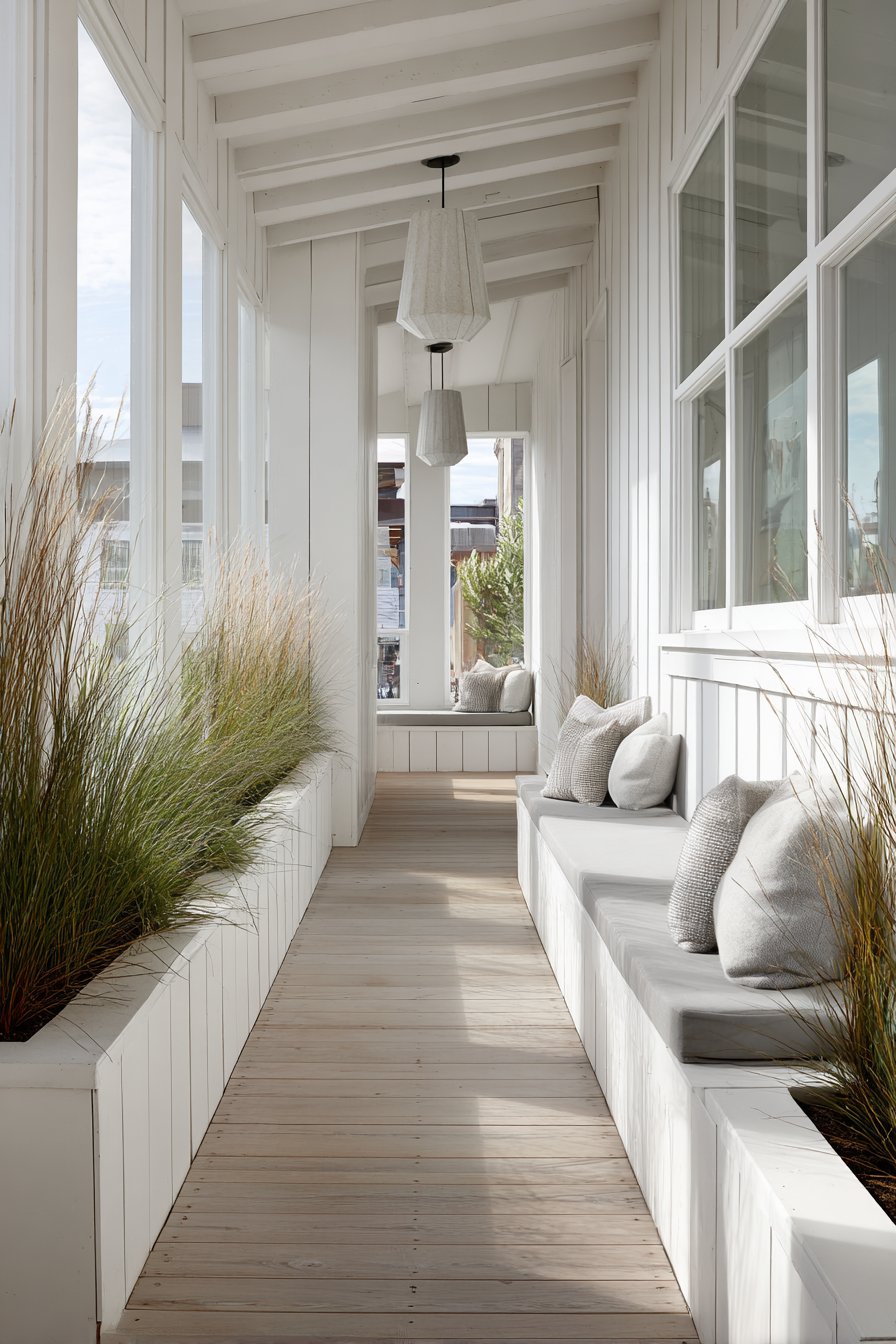
Vertical white-painted wood plank walls create clean architectural lines. Light maple wood flooring with matte finish provides warm natural tones. Simple geometric pendant lights in matte white deliver clean illumination. The fixtures demonstrate Nordic design principles of form and function.
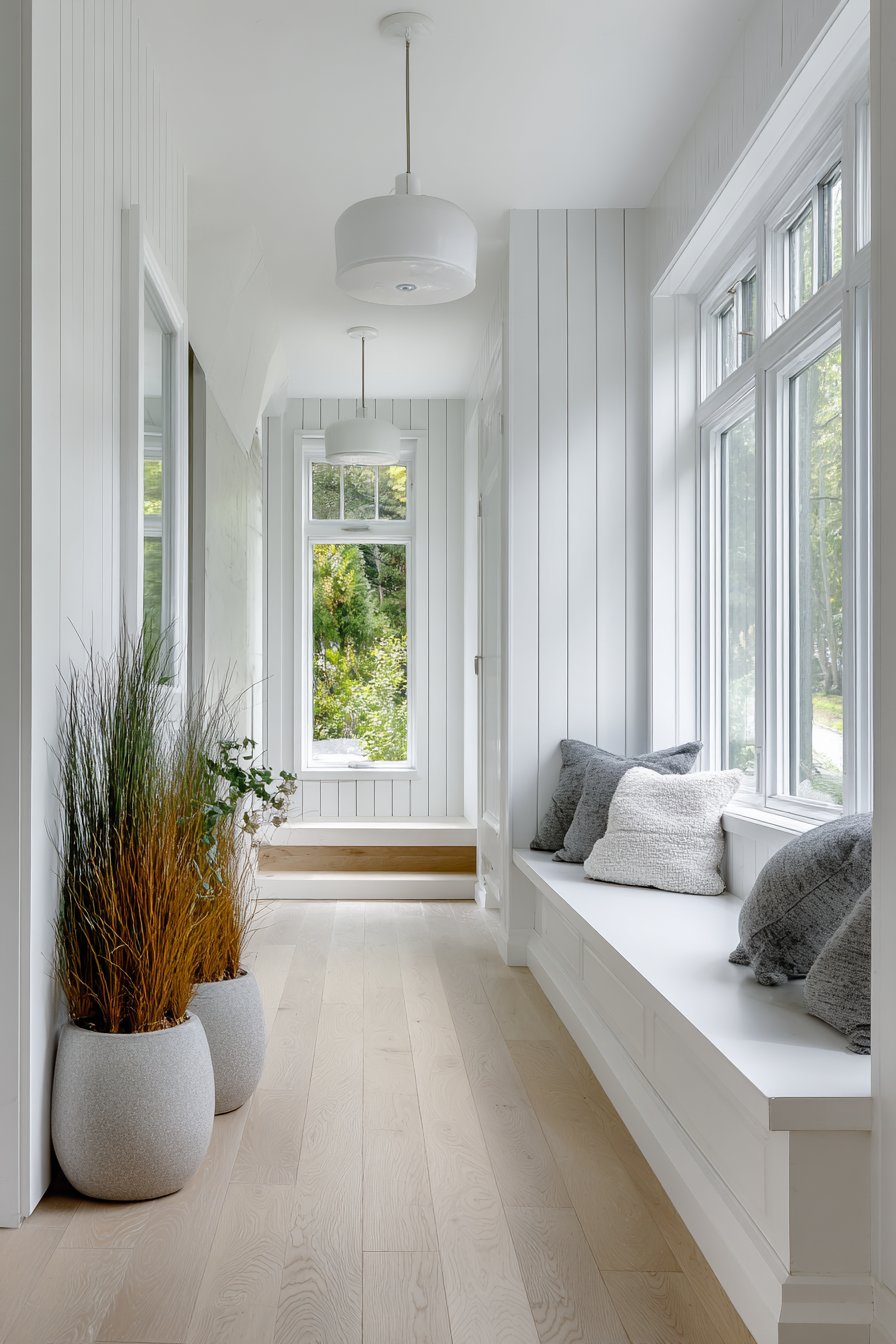
Built-in bench seating in pale grey with wool cushions offers functional seating. Minimal planters with native grasses and birch branches maintain simplicity. Large windows with white frames maximize natural light penetration throughout. Soft diffused daylight emphasizes clean lines and natural material warmth.
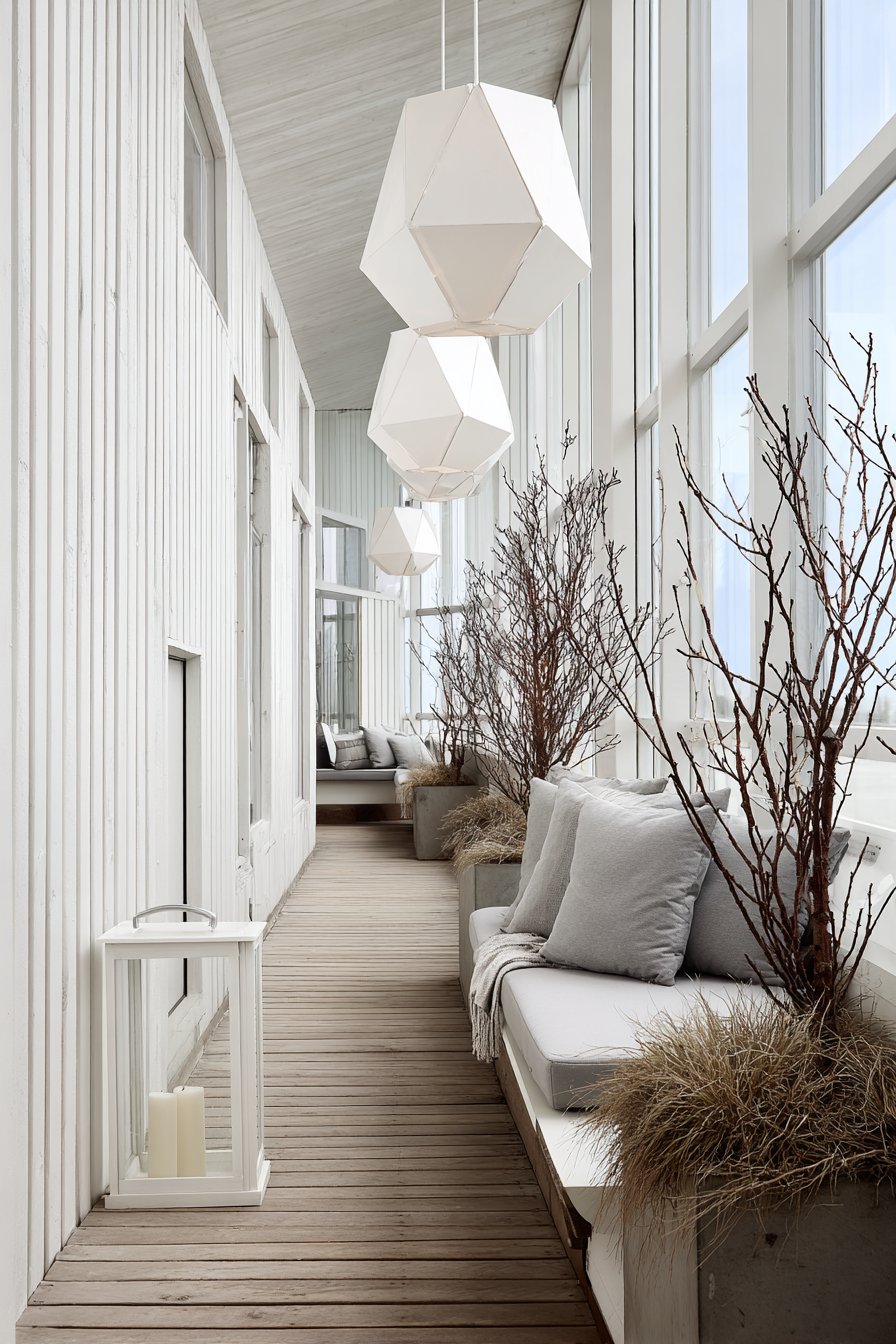
The bright, airy aesthetic characterizes Scandinavian design philosophy perfectly. Nordic simplicity creates calming environments through restraint and quality. Natural materials provide warmth without complexity or ornamentation. This approach suits modern sensibilities while remaining timeless in appeal.
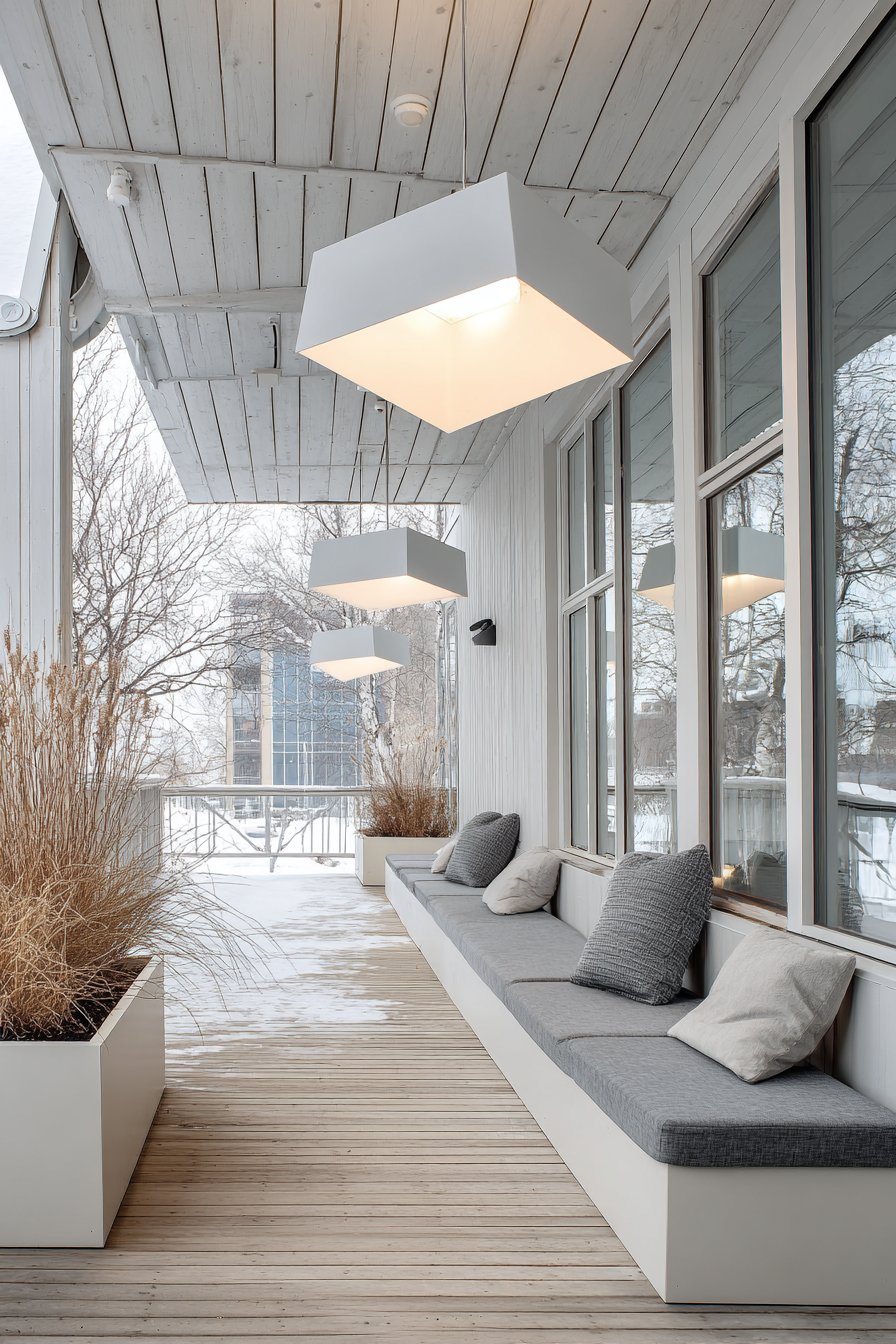
Key Design Tips:
- Use low-VOC paint in pure white for healthy indoor air
- Select maple with minimal grain variation for uniformity
- Choose wool or natural fiber cushions for authentic Nordic feel
- Install double-glazed windows for energy efficiency
- Maintain minimal decoration to preserve clean aesthetic
- Use native plants that thrive in available light conditions
13. Romantic Garden Passage with Natural Stone
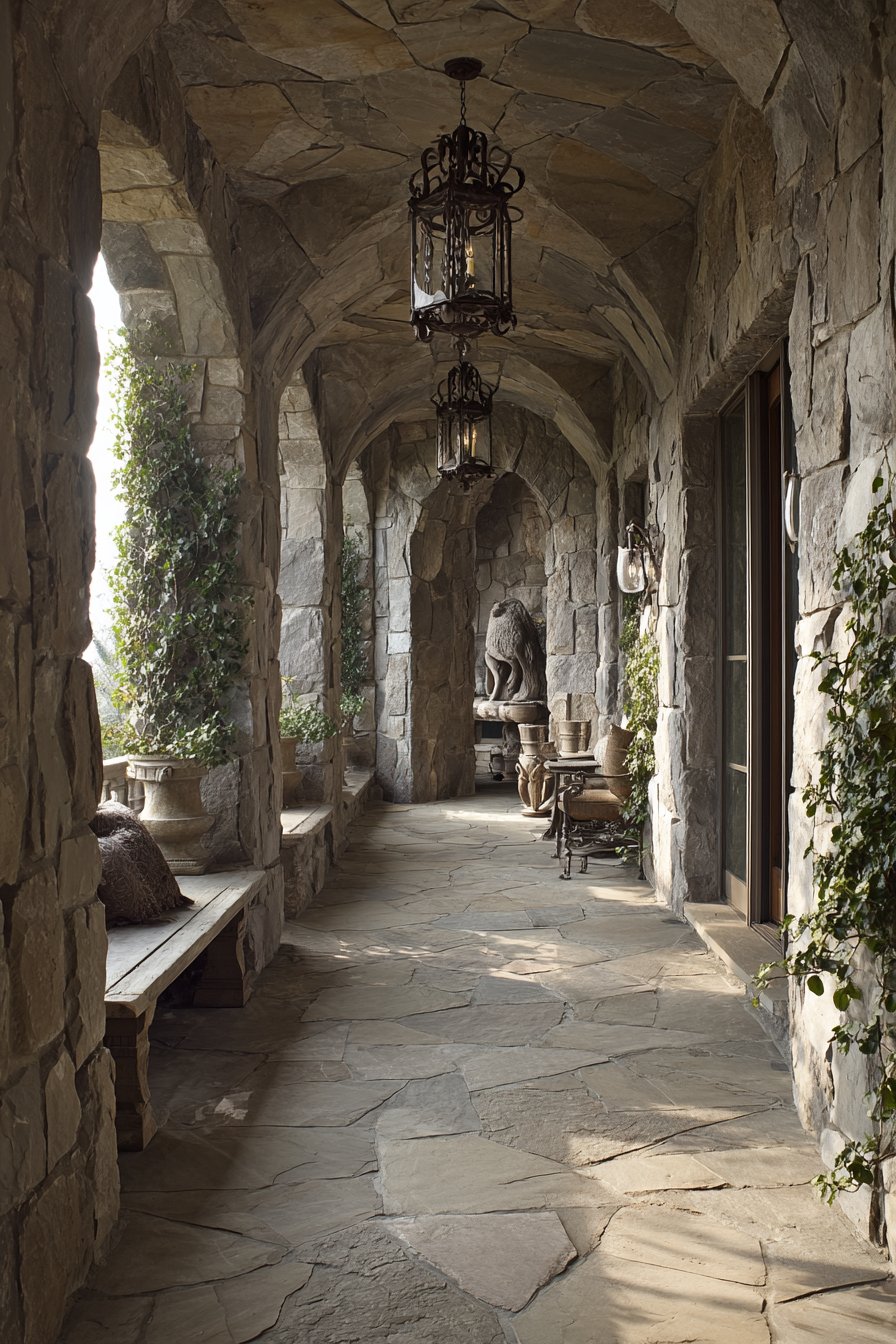
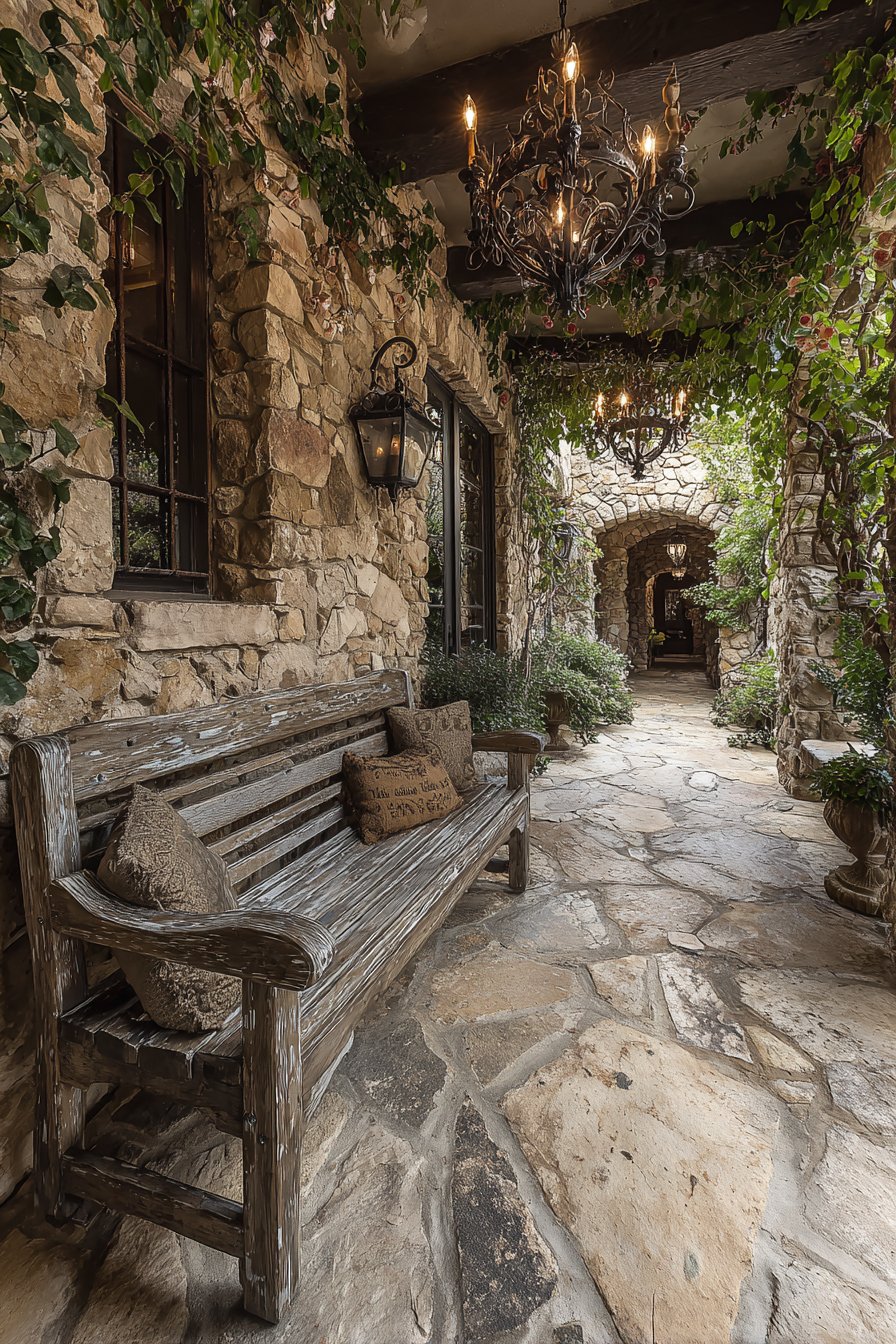
Natural stone walls with varied earth tones showcase authentic texture. The stones range from grey to tan, displaying nature’s palette. Mortar lines show honest construction without attempting concealment. Flagstone flooring with irregular shapes creates organic pathway patterns.
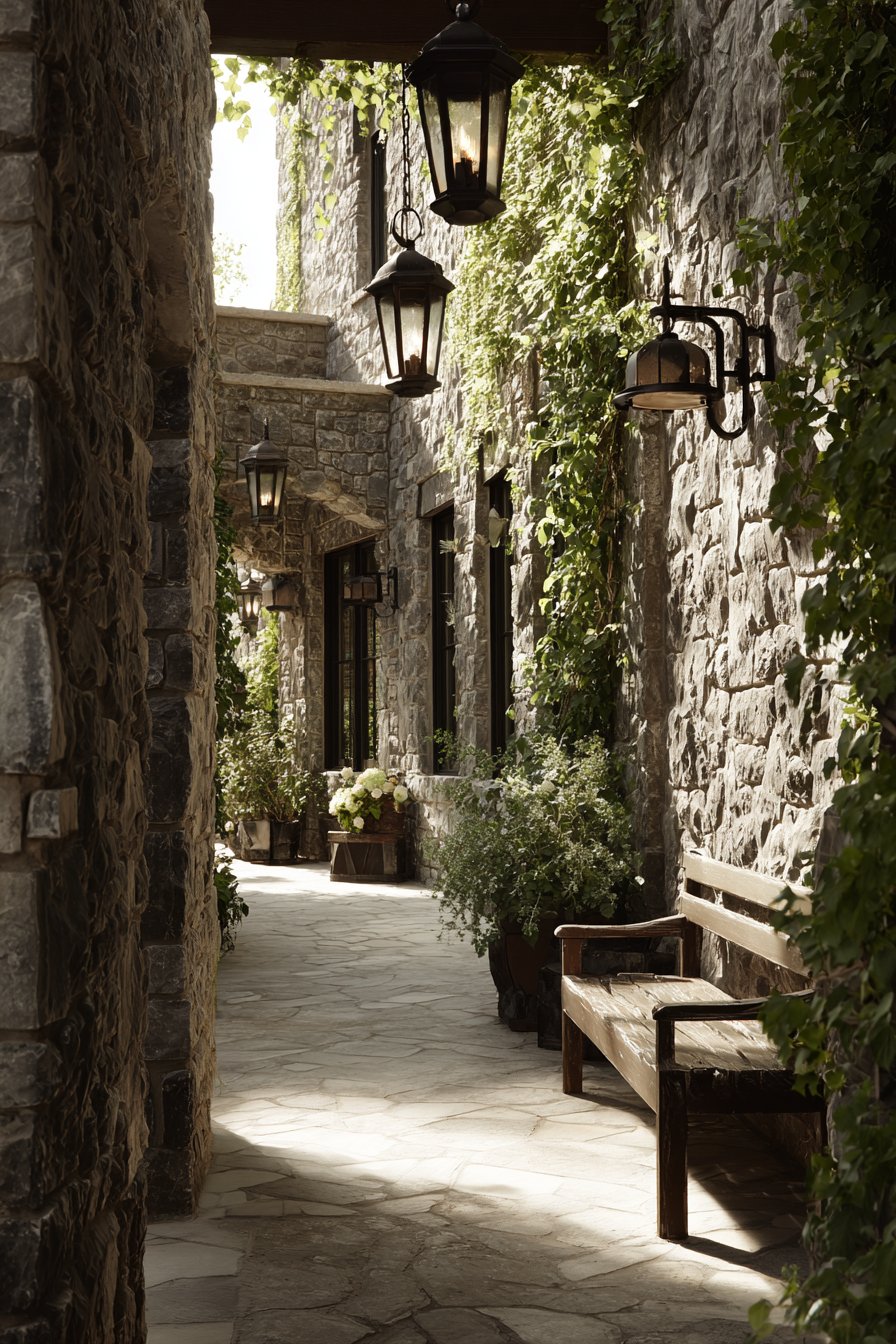
Wrought iron candelabra-style chandeliers provide ambient lighting overhead. These fixtures reference romantic period design authentically. Climbing roses and ivy naturally integrate with stone architecture. Wooden bench with distressed paint finish offers charming seating opportunities.
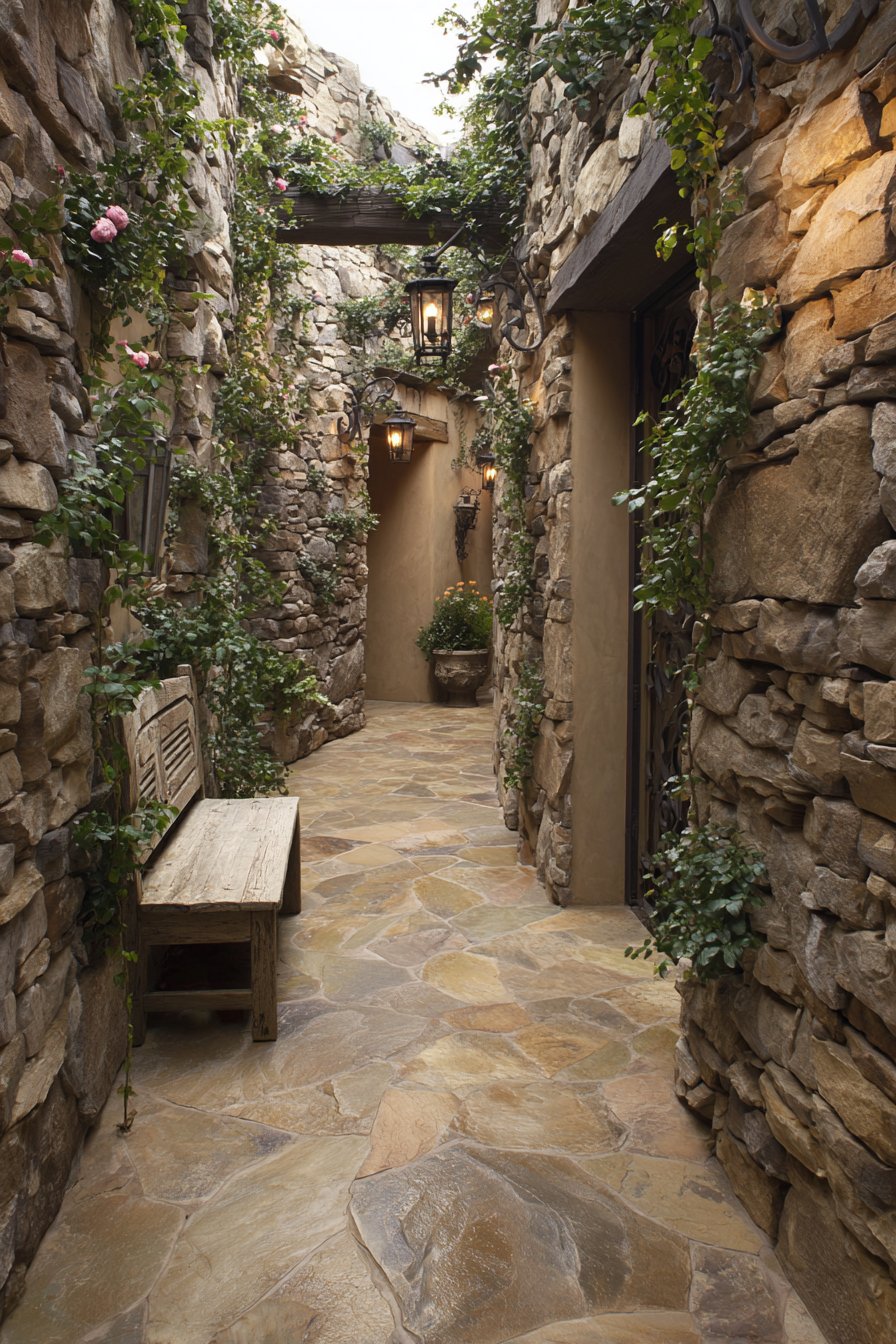
Natural morning light creates soft shadows across stone surfaces. The romantic garden passage aesthetic celebrates natural beauty and growth. Stone provides permanence while plants introduce change through seasons. This timeless combination has appealed to designers for centuries.
Key Design Tips:
- Select locally sourced stone for regional authenticity
- Point mortar joints properly for weather resistance
- Install chandeliers rated for outdoor moisture exposure
- Choose climbing plant varieties suited to available sun
- Apply distressed paint finishes using authentic aging techniques
- Ensure flagstone has adequate drainage beneath
14. Asian Fusion with Teak Wood Screening
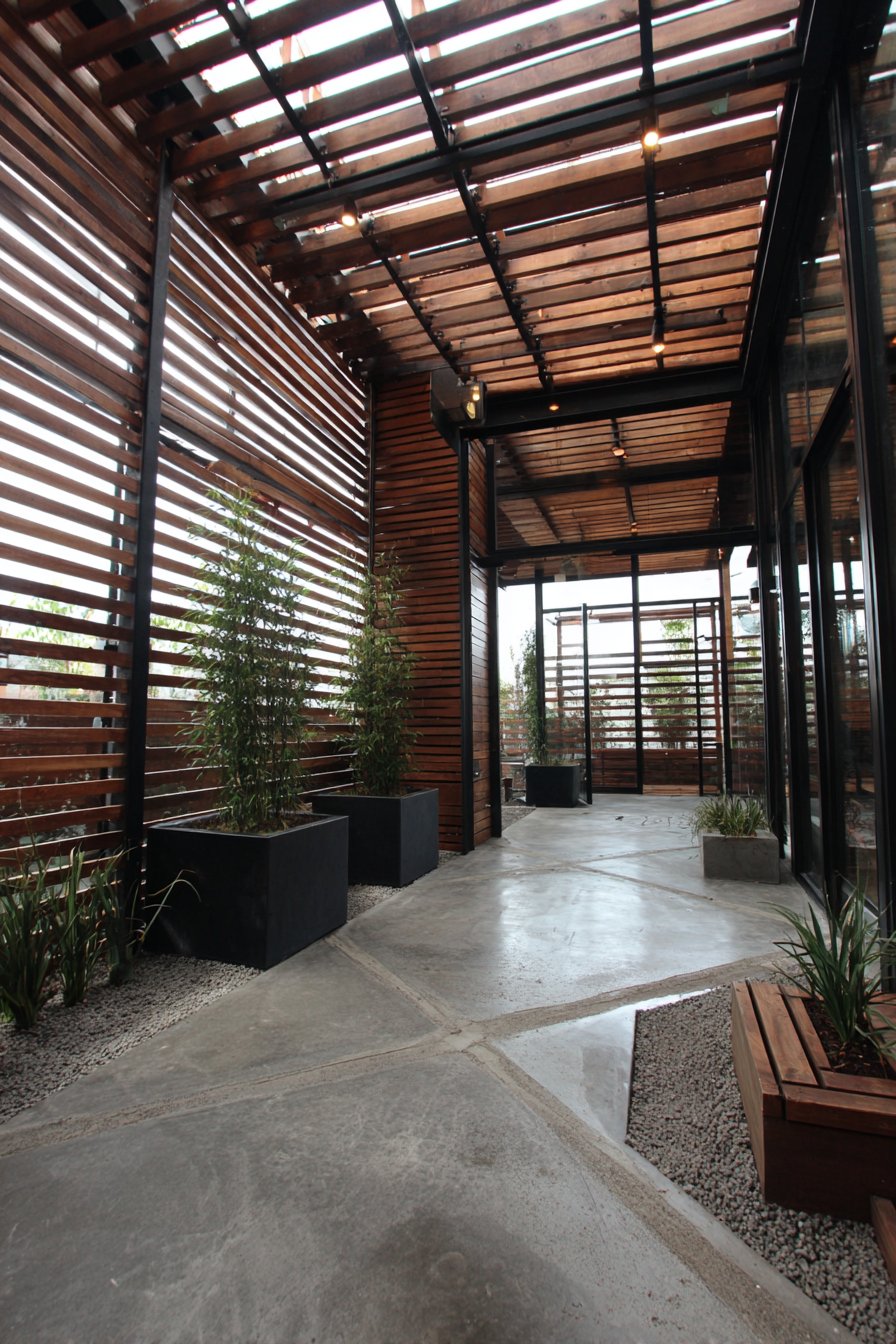
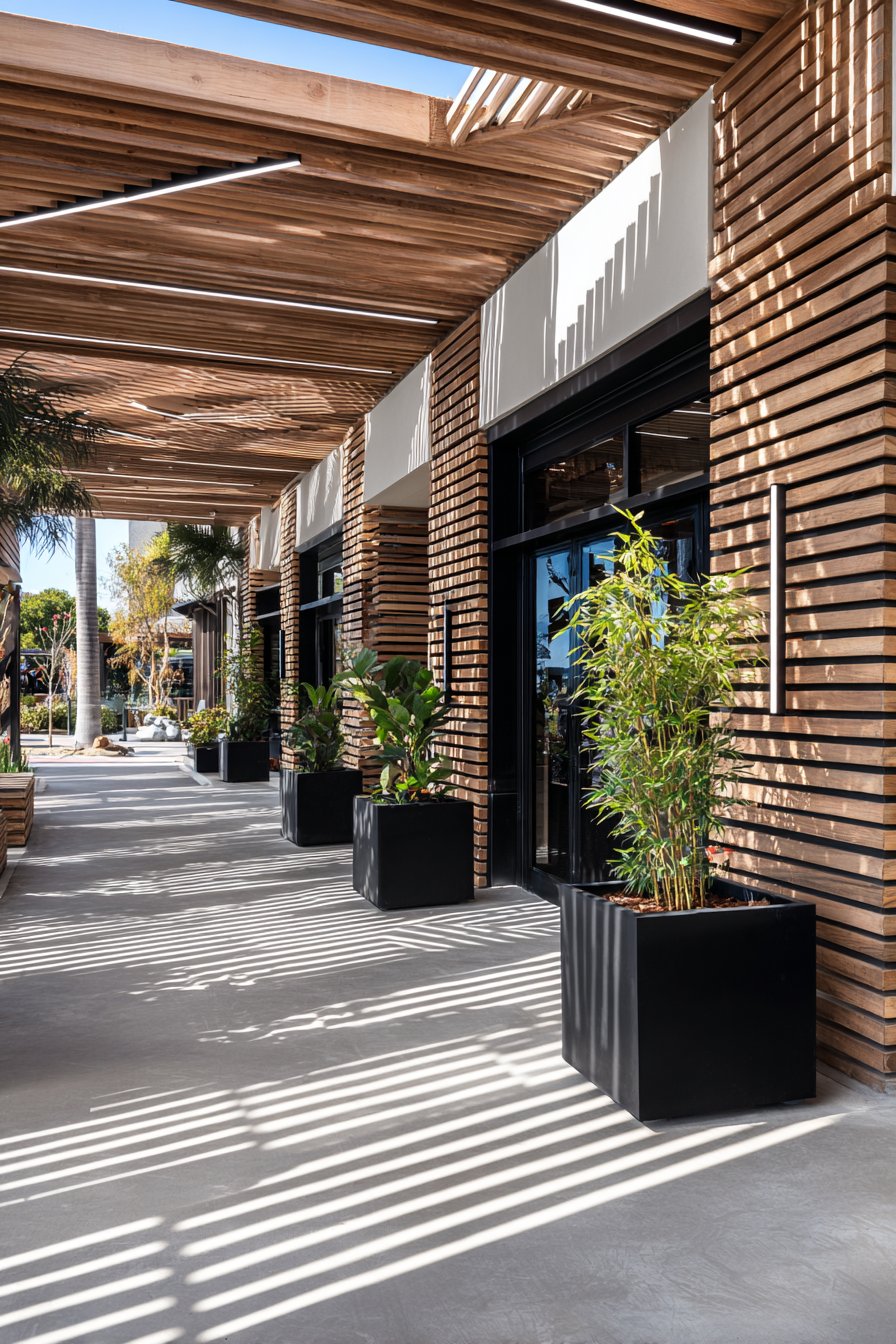
Slatted teak wood screen walls allow filtered light and air circulation. This natural ventilation keeps the corridor comfortable without mechanical systems. Smooth grey concrete floors with brushed finish show subtle texture. Black metal frame glass doors section the space while maintaining openness.
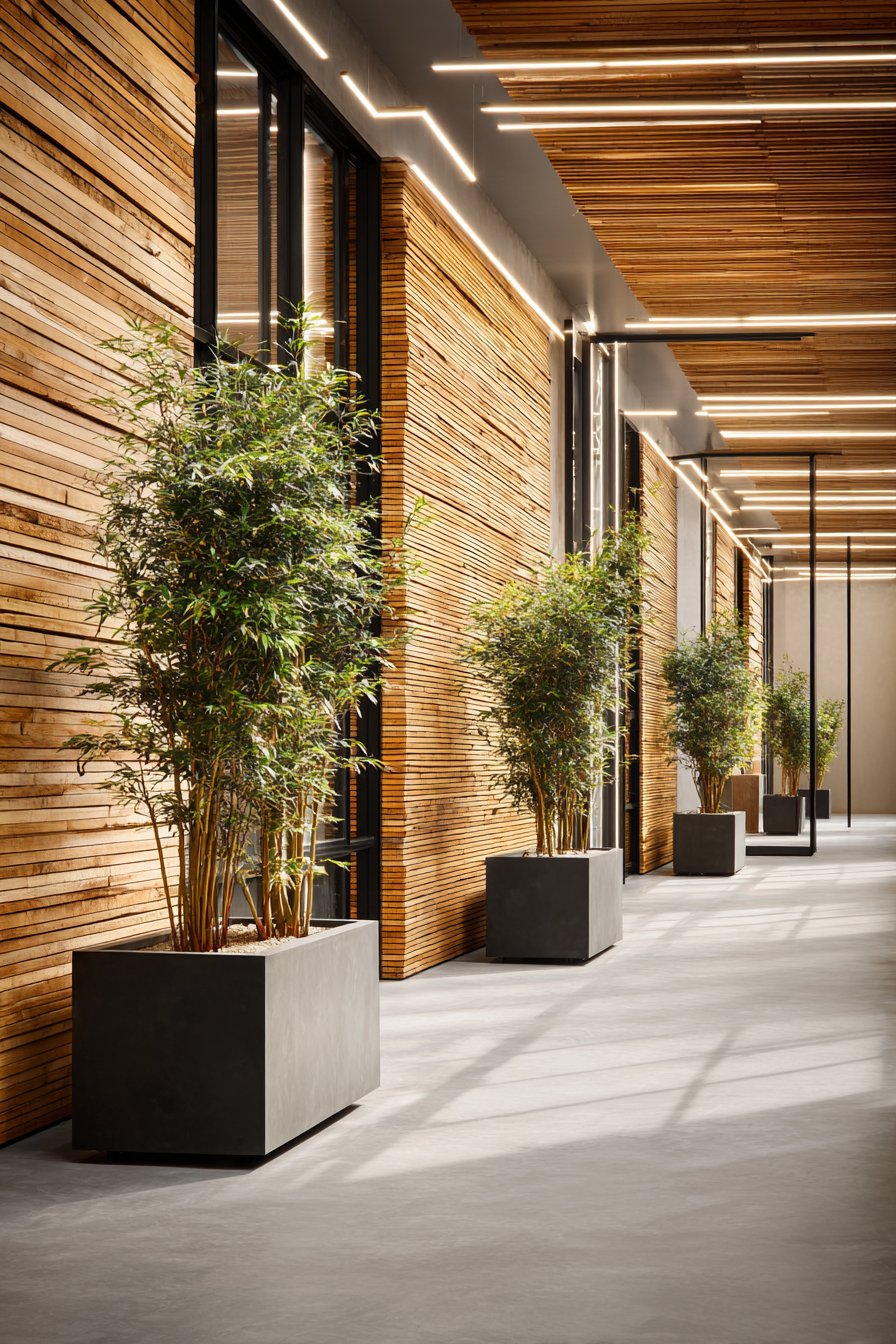
Modern cube planters in matte black contain bamboo and Japanese maple. These plants reference Asian garden traditions within contemporary contexts. Linear LED strips integrated into ceiling provide even illumination throughout. The balance of solid and transparent elements creates sophisticated spatial quality.
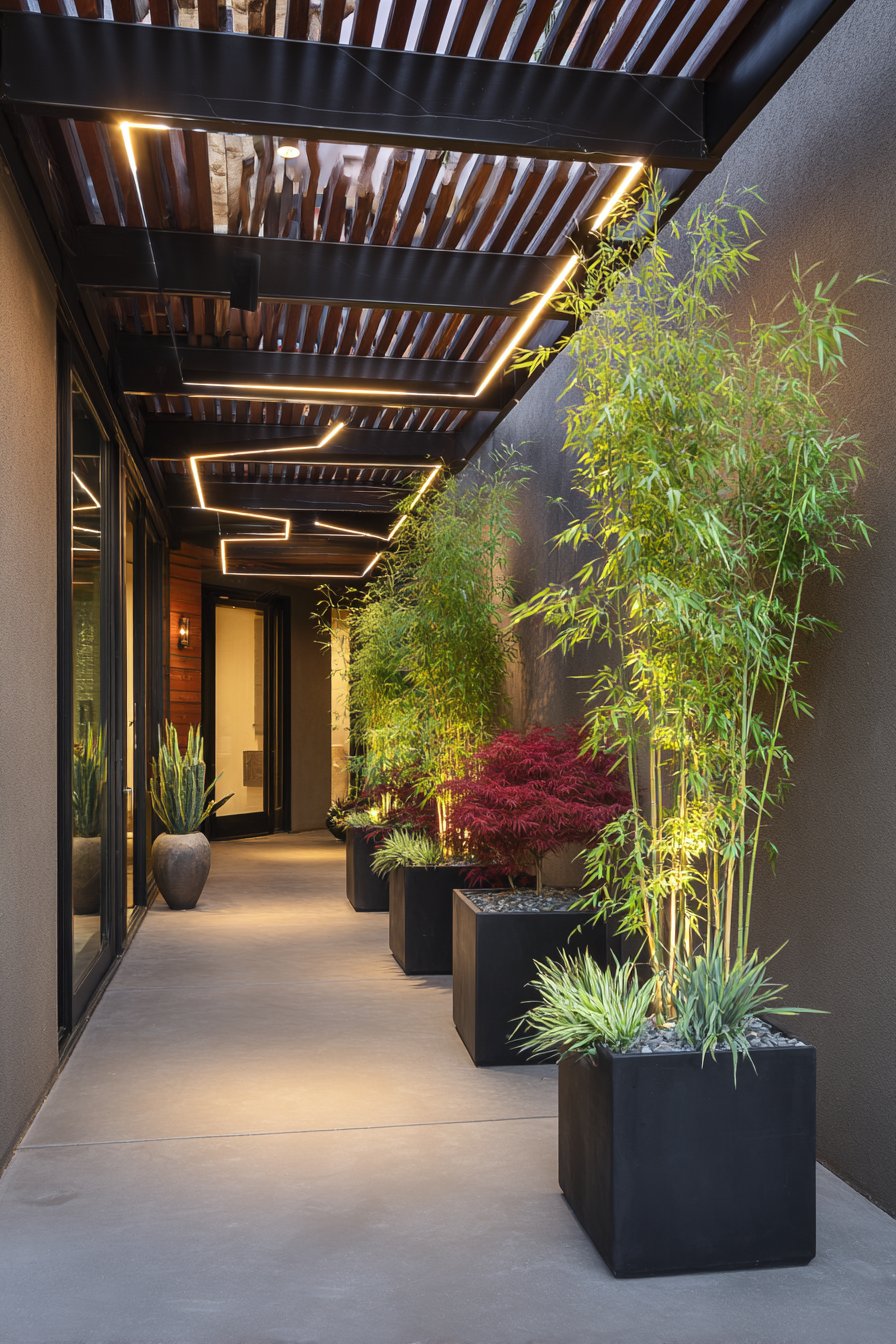
Natural lighting creates striped shadow patterns through wood slats throughout the day. These moving shadows add temporal dimension to the static architecture. The design successfully fuses Asian aesthetics with contemporary materials. This approach creates unique spaces that feel both familiar and fresh.
Key Design Tips:
- Use sustainably harvested teak with natural oil finish
- Space slats to control desired light and privacy levels
- Apply brushed finish to concrete while still slightly damp
- Select Japanese maple varieties suitable for container growing
- Install LED strips with dimming capability for flexibility
- Maintain consistent spacing rhythm between all elements
15. Spanish Colonial with Historical Character
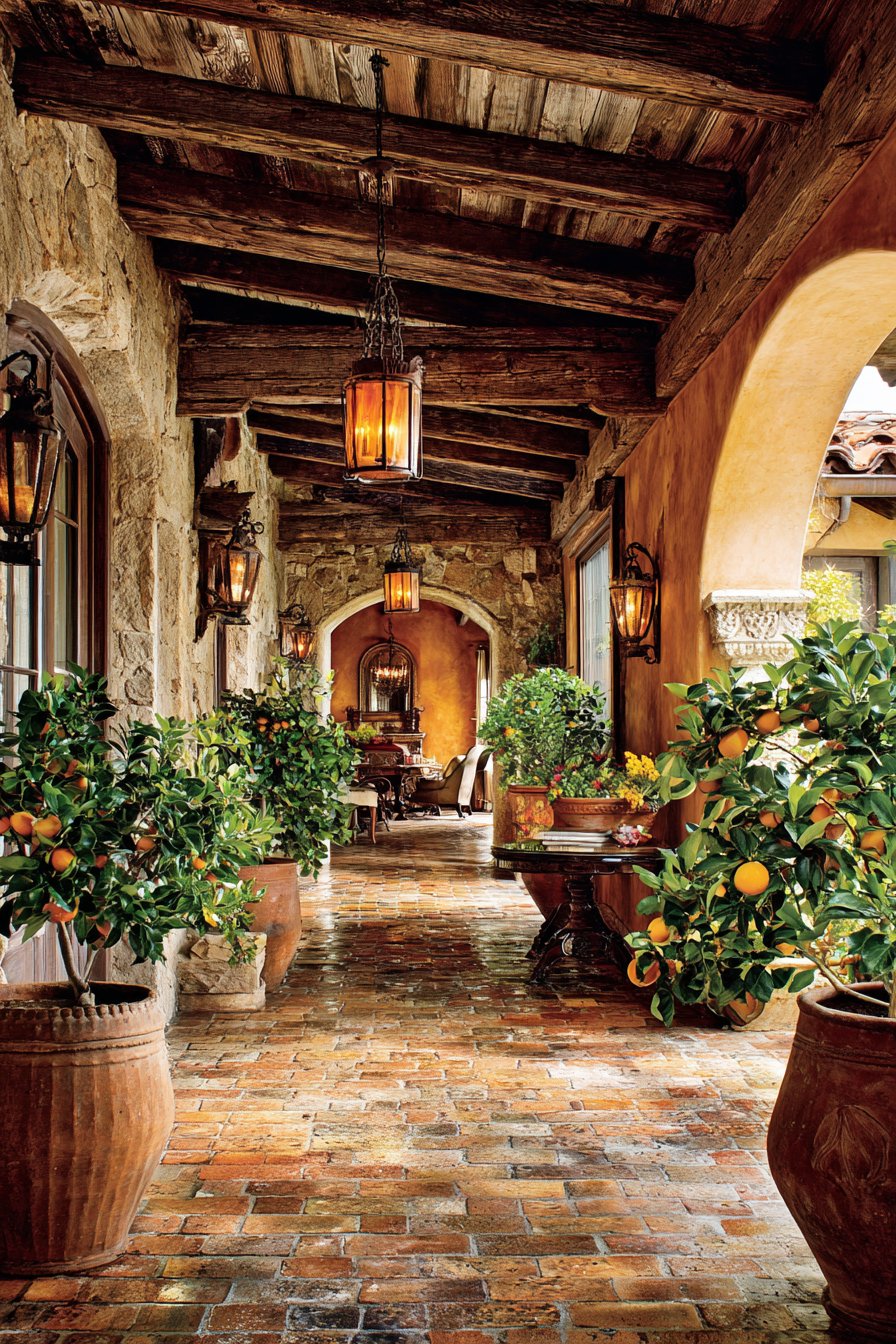
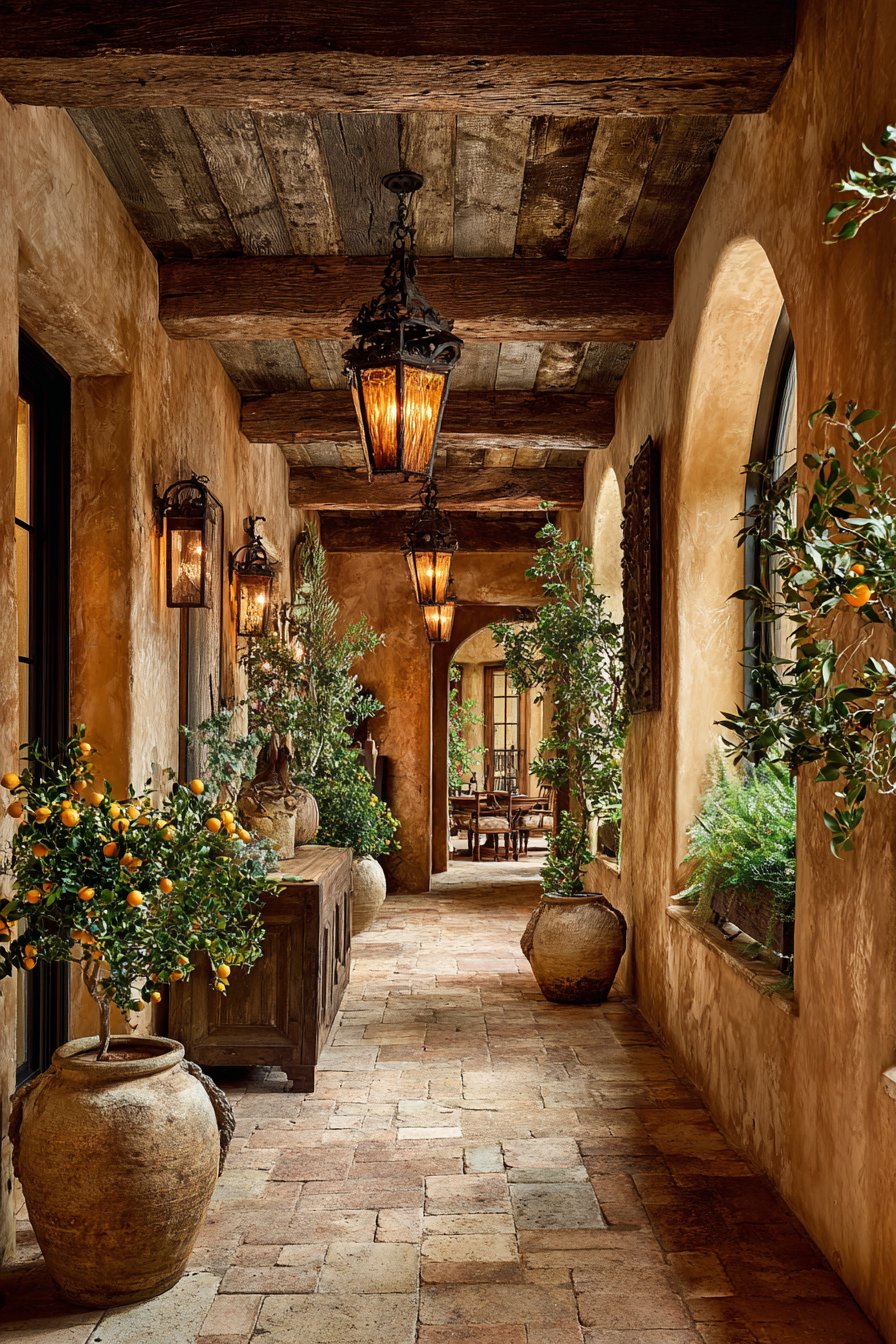
Thick adobe-style walls in warm terracotta show subtle texture variations. This traditional wall construction method provides excellent thermal mass. Saltillo tile flooring in varied earth tones displays natural color inconsistencies. These handmade tiles ensure each piece possesses unique character.
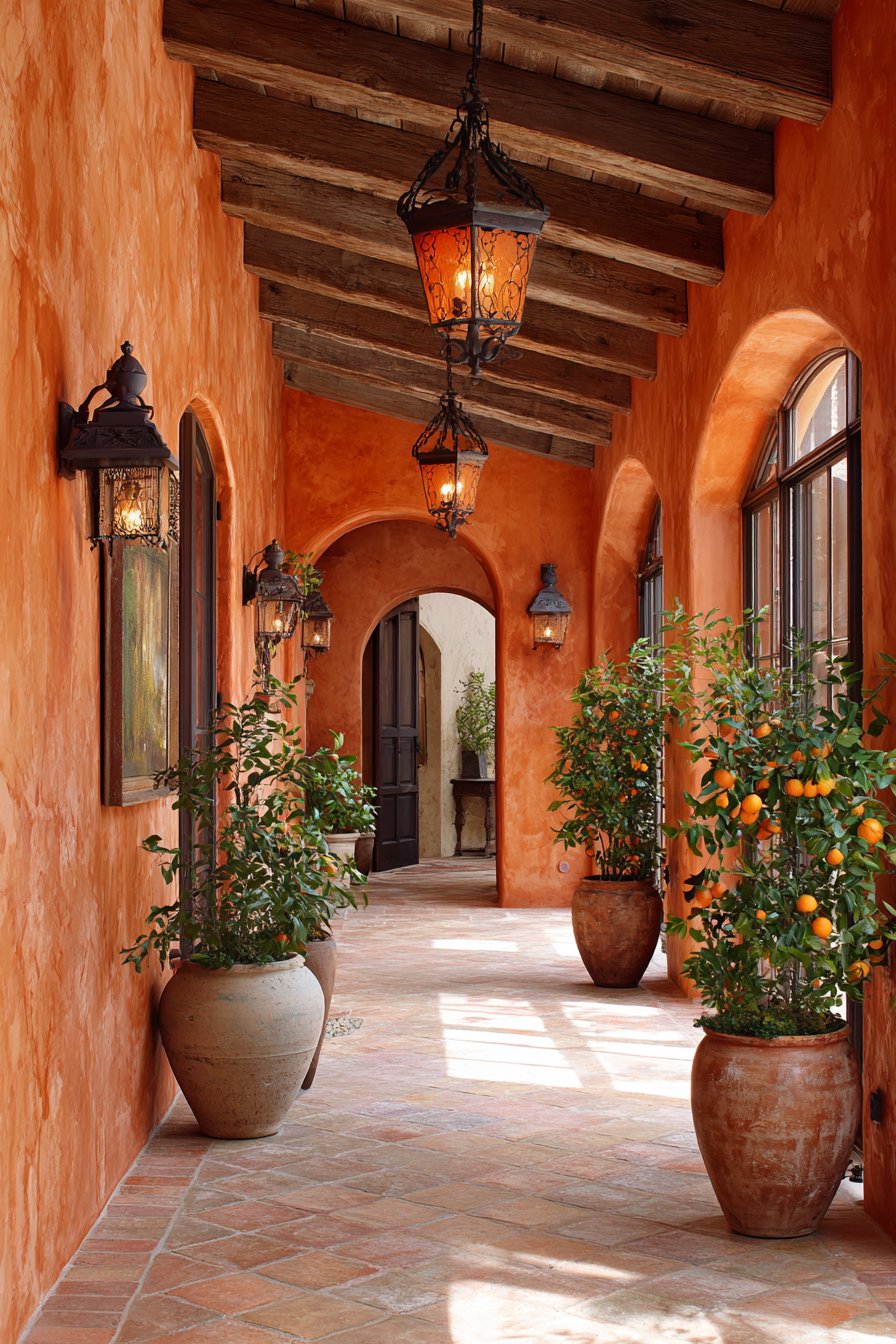
Hand-forged iron chandeliers with amber glass provide warm lighting. The glass casting creates beautiful patterns across surfaces. Carved wooden beams span the ceiling showing authentic chisel marks. Large terracotta urns contain citrus trees and flowering vines beautifully.
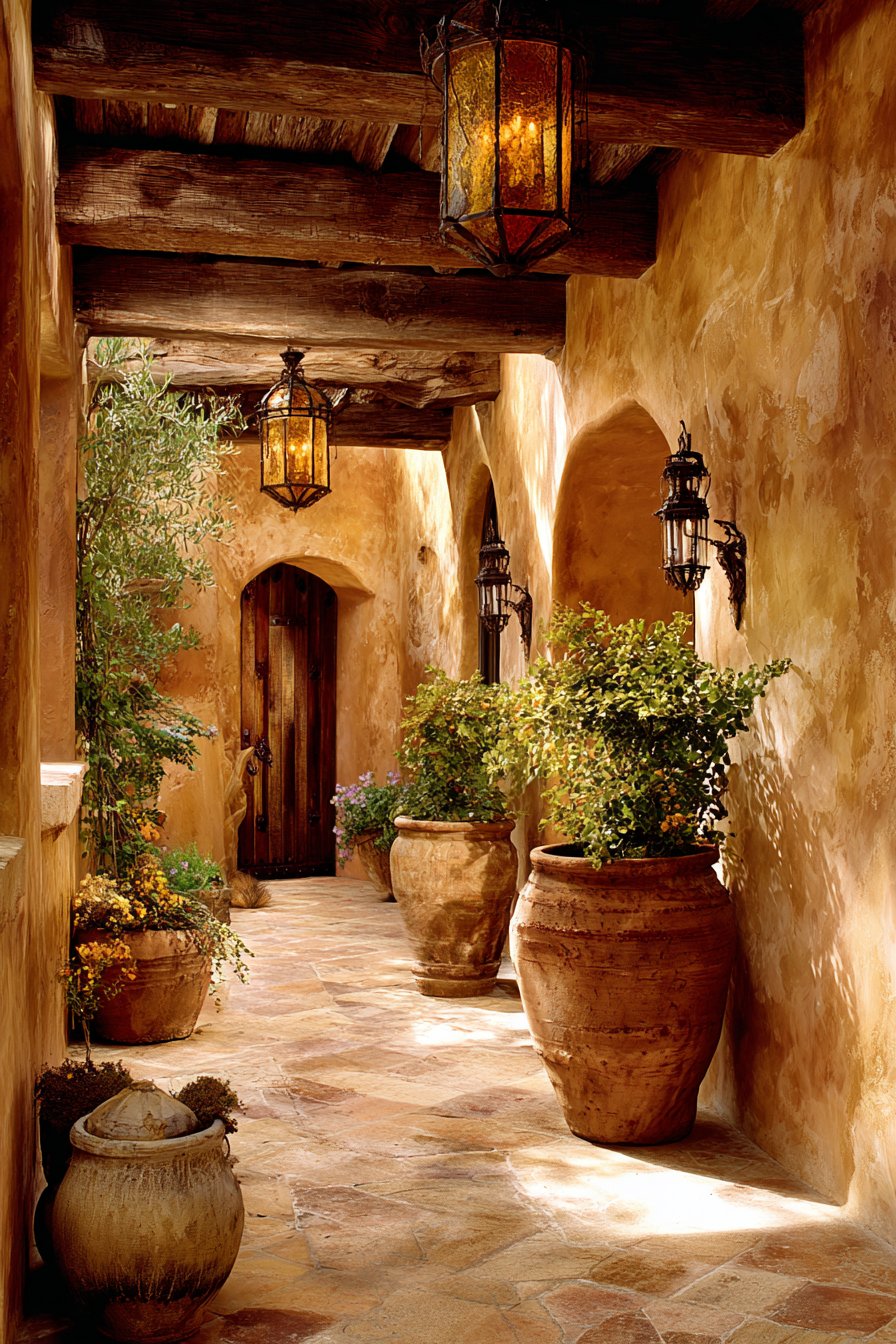
Natural light streams through arched openings emphasizing authentic material aging. Handcrafted details demonstrate artisan skill throughout the design. This Spanish colonial style references centuries of architectural tradition. Historical character provides depth that new construction rarely achieves.
Key Design Tips:
- Apply stucco finishes that mimic traditional adobe construction
- Source Saltillo tiles directly from Mexican artisans
- Commission hand-forged ironwork from skilled blacksmiths
- Select reclaimed beams with visible tool marks
- Plant citrus varieties in large containers with drainage
- Preserve authentic aging rather than attempting restoration
16. Industrial Chic with Metal and Concrete
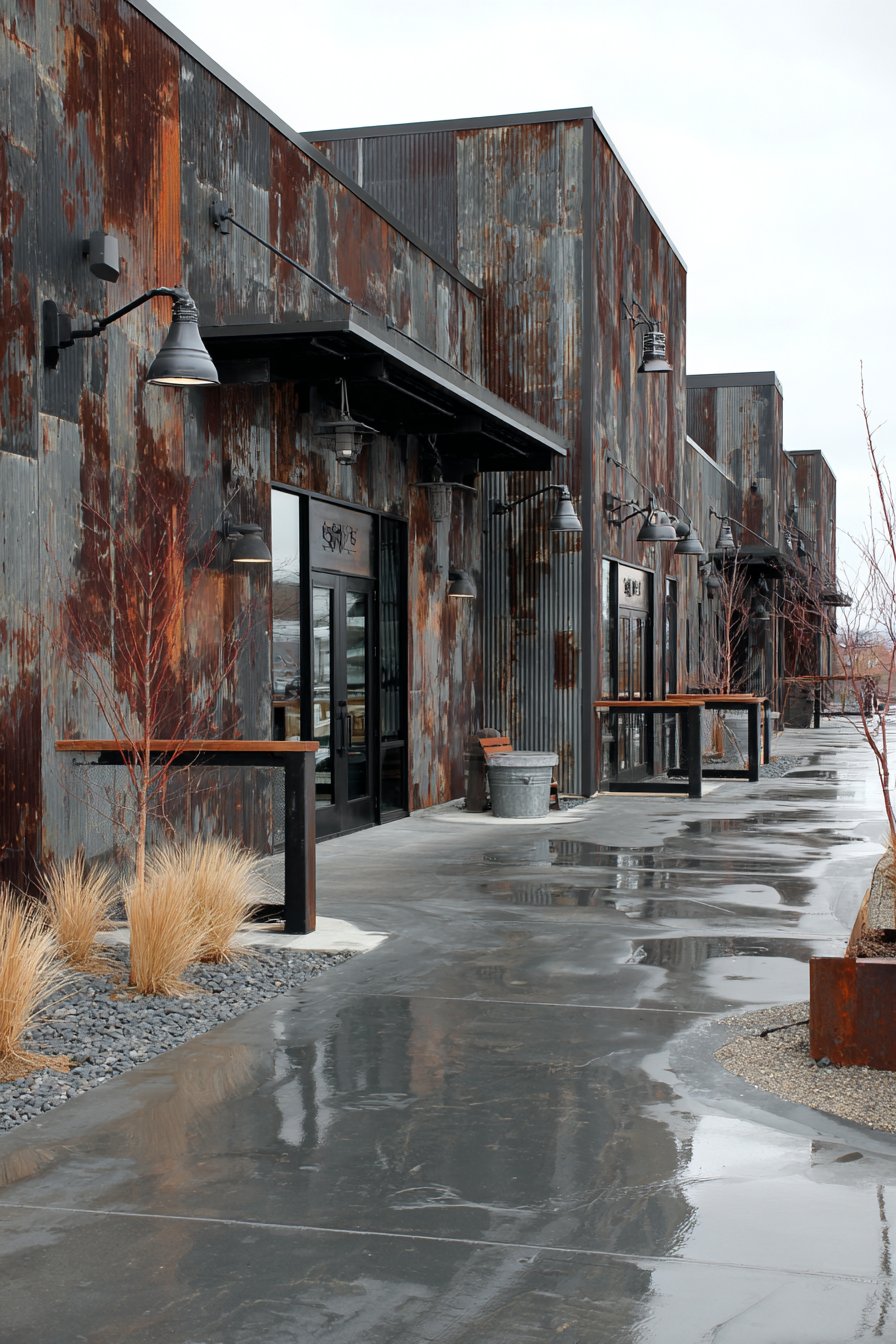
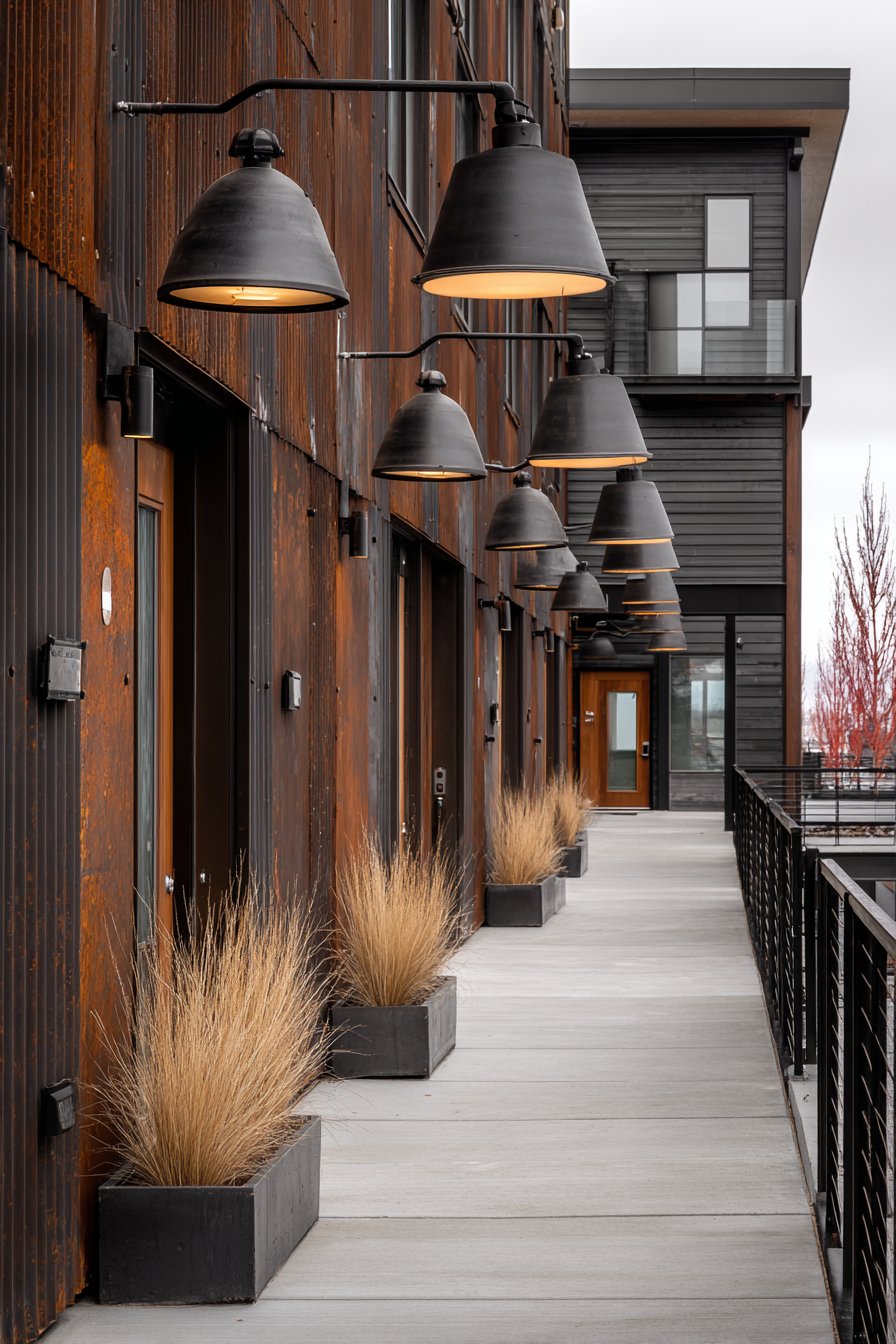
Corrugated metal panel walls with visible fasteners create industrial character. Natural patina development adds beauty through oxidation over time. Stained concrete flooring in dark charcoal shows visible trowel marks. This utilitarian foundation suits the industrial design philosophy perfectly.
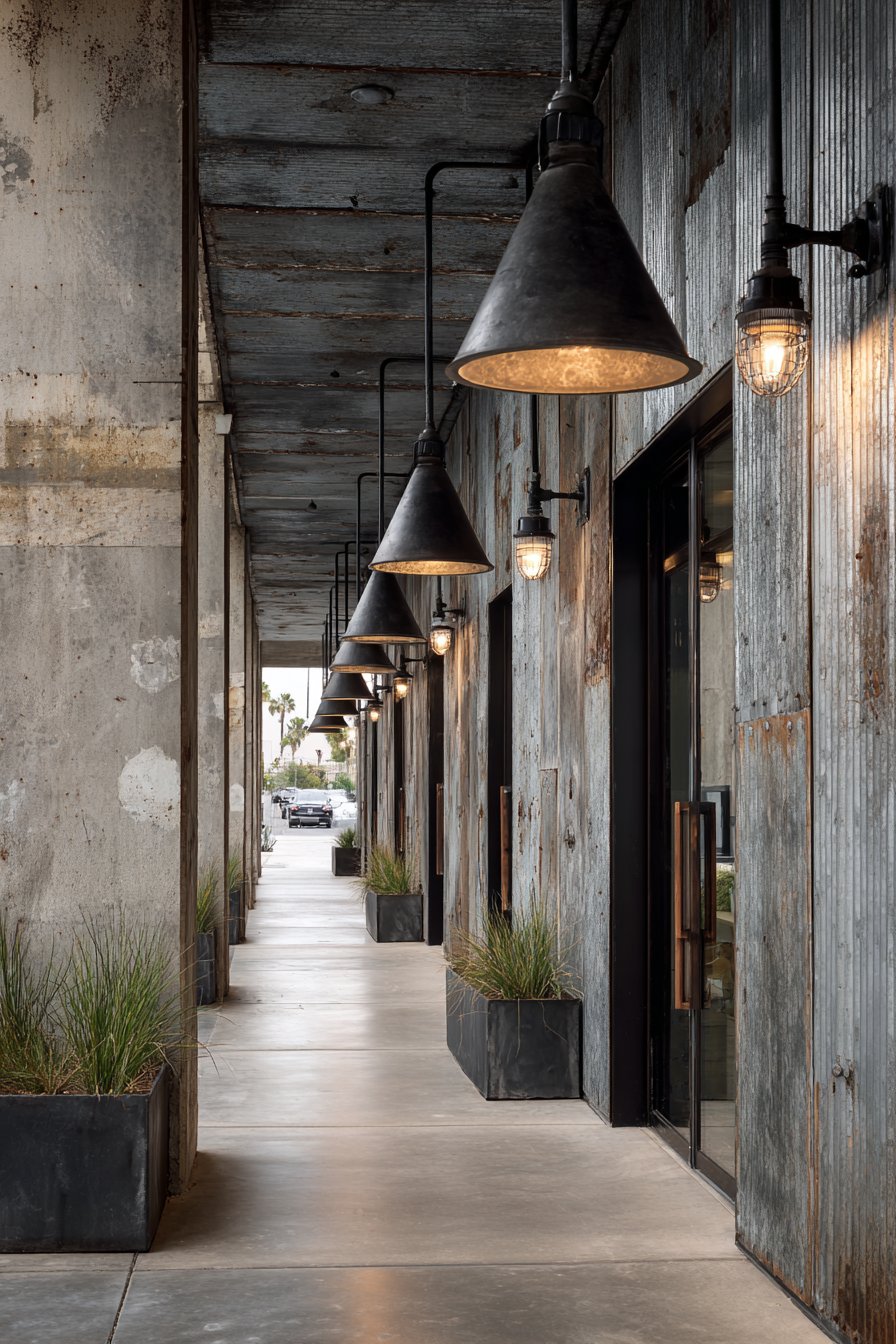
Black metal pipe railings with wood handrails provide necessary safety elements. The combination of metal and wood softens the industrial aesthetic. Industrial pendant lights with metal cone shades cast focused light downward. Metal trough planters contain structural grasses for vertical interest.
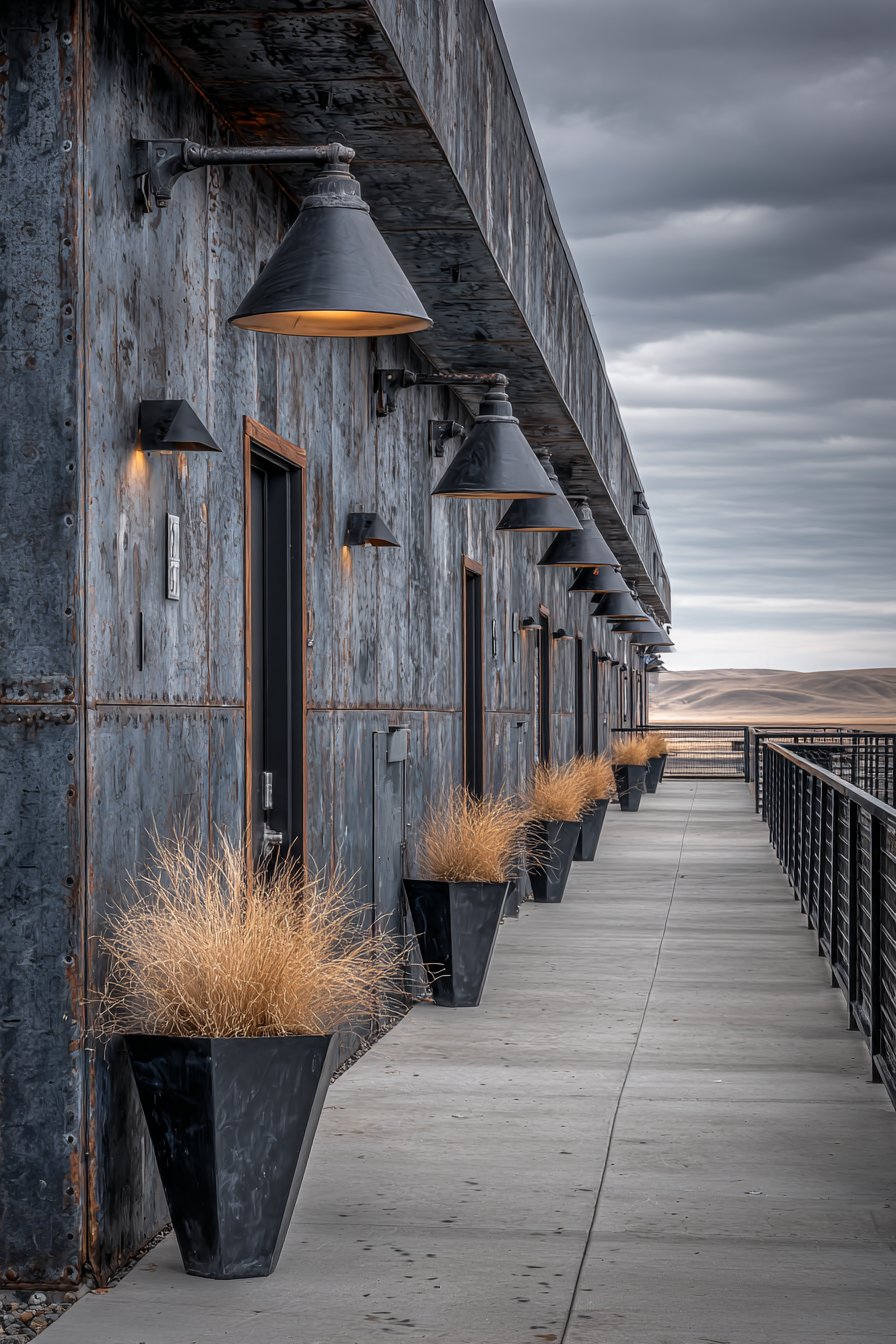
Overcast natural lighting emphasizes texture variations in metal and concrete. The raw material aesthetic celebrates honest construction and function. This design approach works exceptionally well for urban properties. Industrial materials provide durability with minimal maintenance requirements.
Key Design Tips:
- Choose corrugated metal with weathering steel composition
- Allow natural patina to develop rather than painting metal
- Stain concrete before it fully cures for best results
- Use black iron pipe fittings assembled into custom railings
- Install cone shade pendants with appropriate outdoor ratings
- Select ornamental grasses that provide year-round structure
17. Bohemian Eclectic with Layered Textures
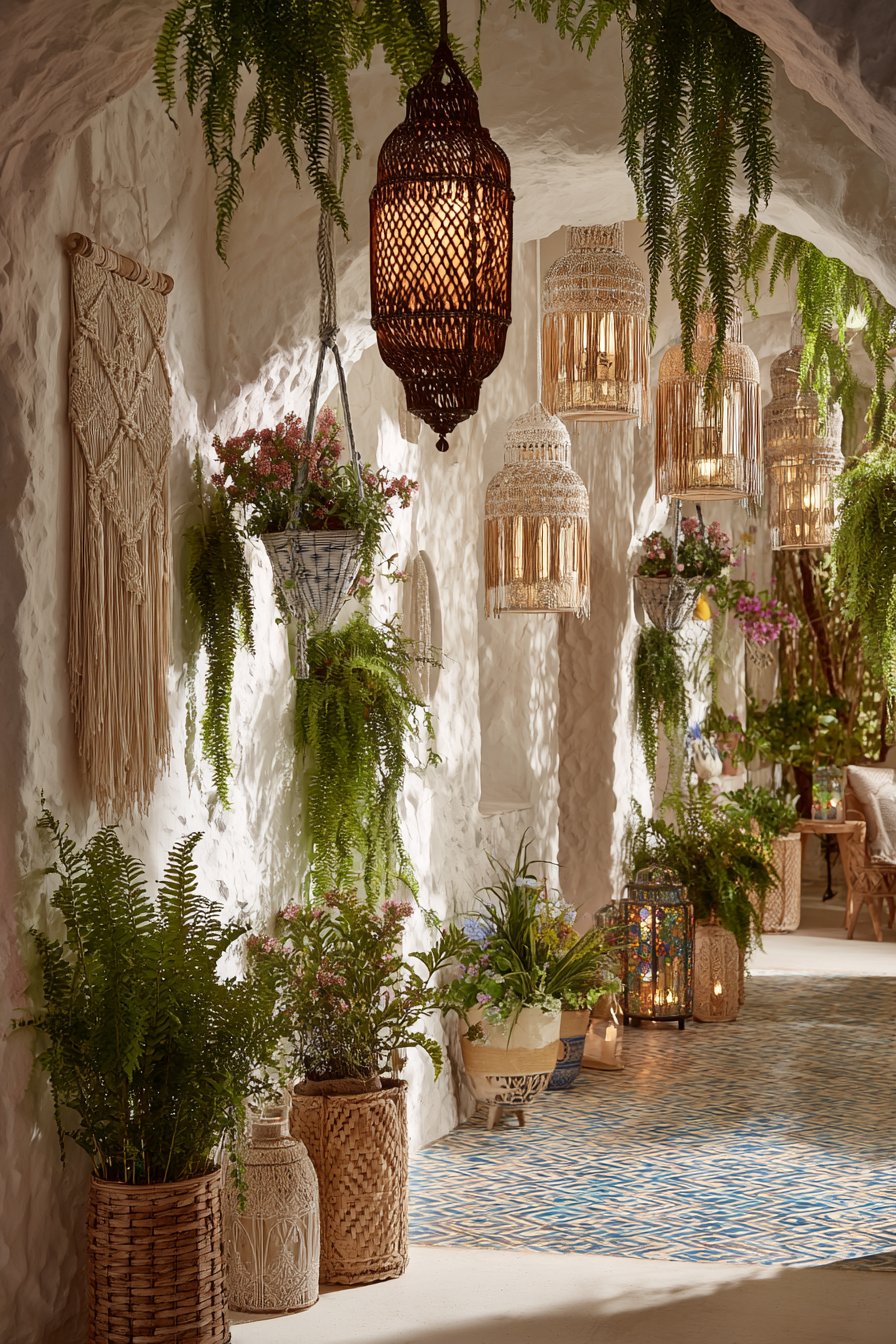
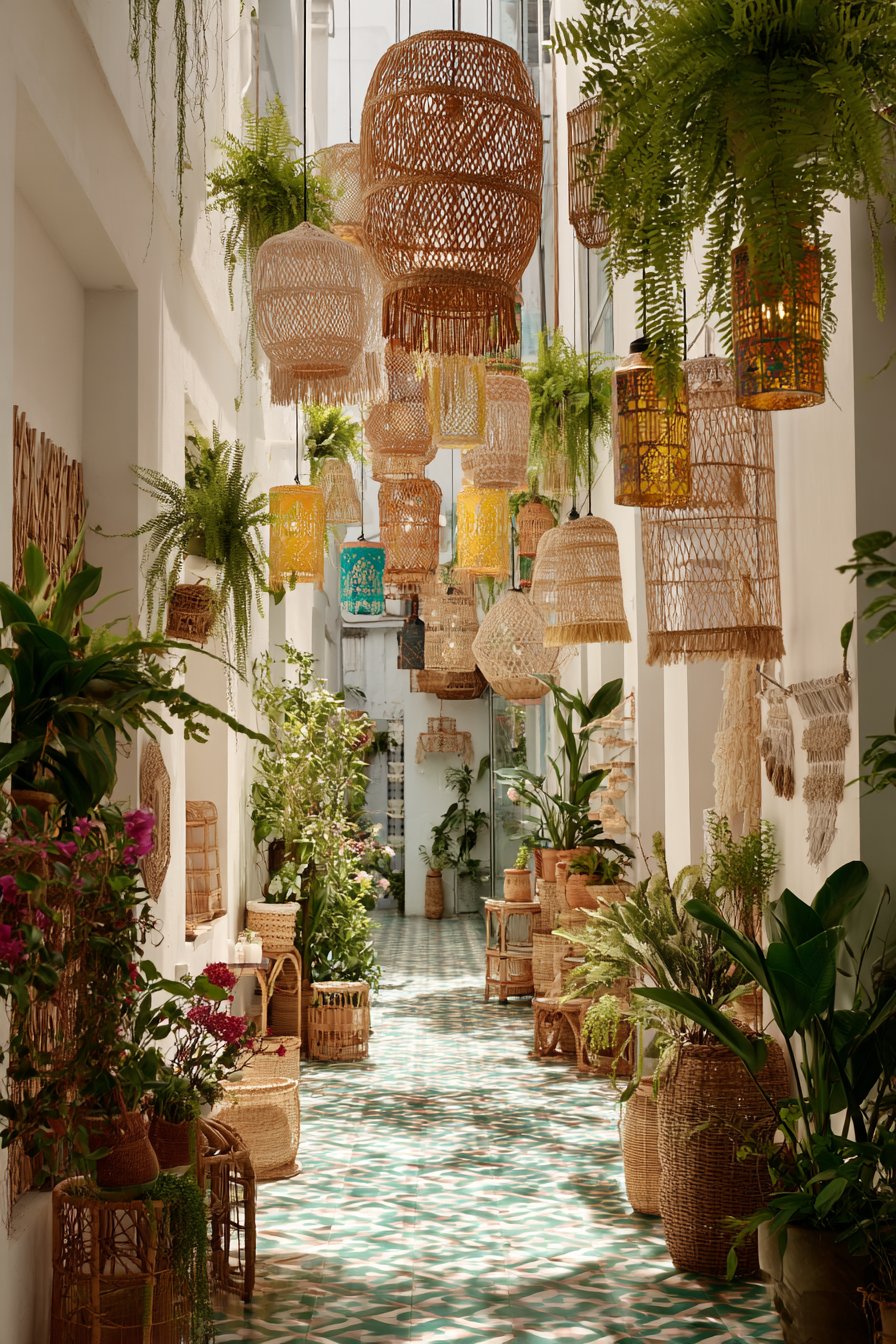
Textured stucco walls in warm white serve as neutral backdrop. Macramé wall hangings and woven baskets add handcrafted decoration throughout. Mixed material flooring combines terracotta tiles with patterned cement tiles. The patterns feature blues and greens creating visual interest underfoot.
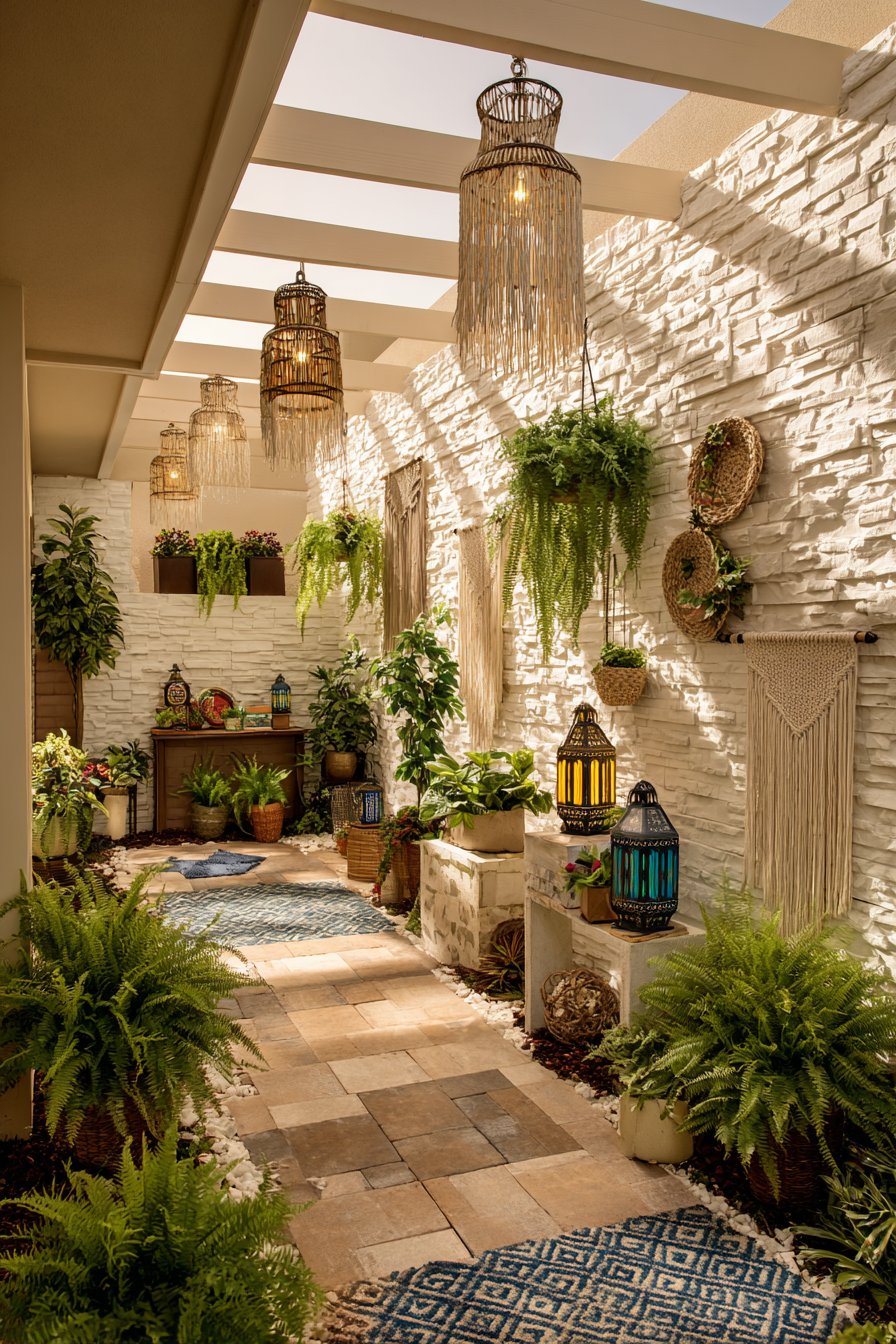
Colorful Moroccan-style glass lanterns provide ambient colored lighting. This creates jewel-toned light patterns across surfaces during evening hours. Rattan pendant lights with fringe details hang at varied heights. Abundant potted plants including ferns, trailing pothos, and flowering varieties create lush atmosphere.
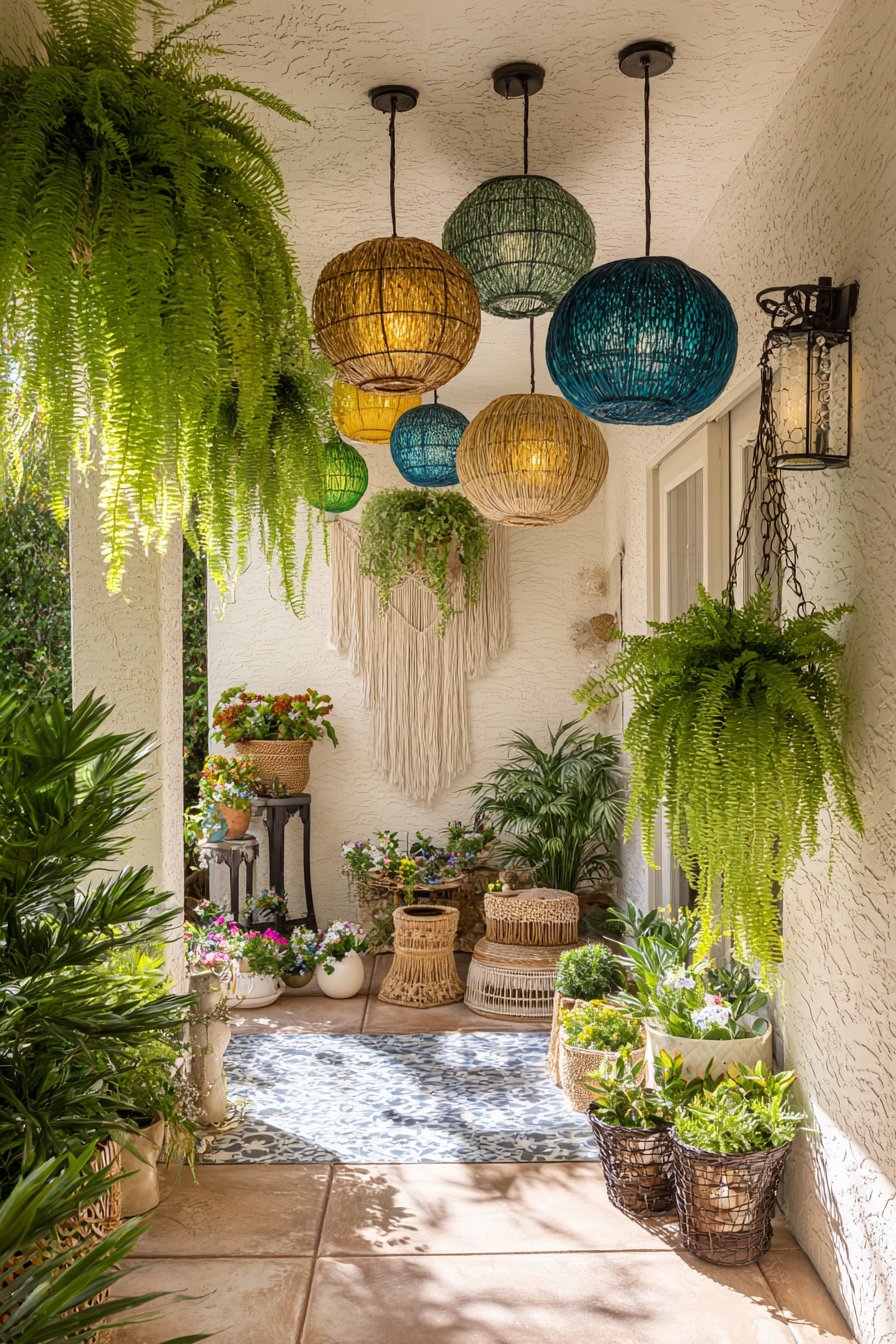
Natural afternoon light filters through plants creating jungle-like environment. The layered textures and eclectic material combinations define bohemian style. This approach celebrates individuality and collected beauty over matching sets. Personal expression takes priority over design rules in this philosophy.
Key Design Tips:
- Mix tile patterns thoughtfully to avoid visual chaos
- Hang macramé at varied heights for dimensional interest
- Choose colored glass lanterns in complementary color families
- Layer plants with different leaf textures and growth habits
- Install rattan fixtures rated for outdoor humidity
- Embrace collected pieces rather than purchasing complete sets
18. Luxury Marble and Bronze Elegance
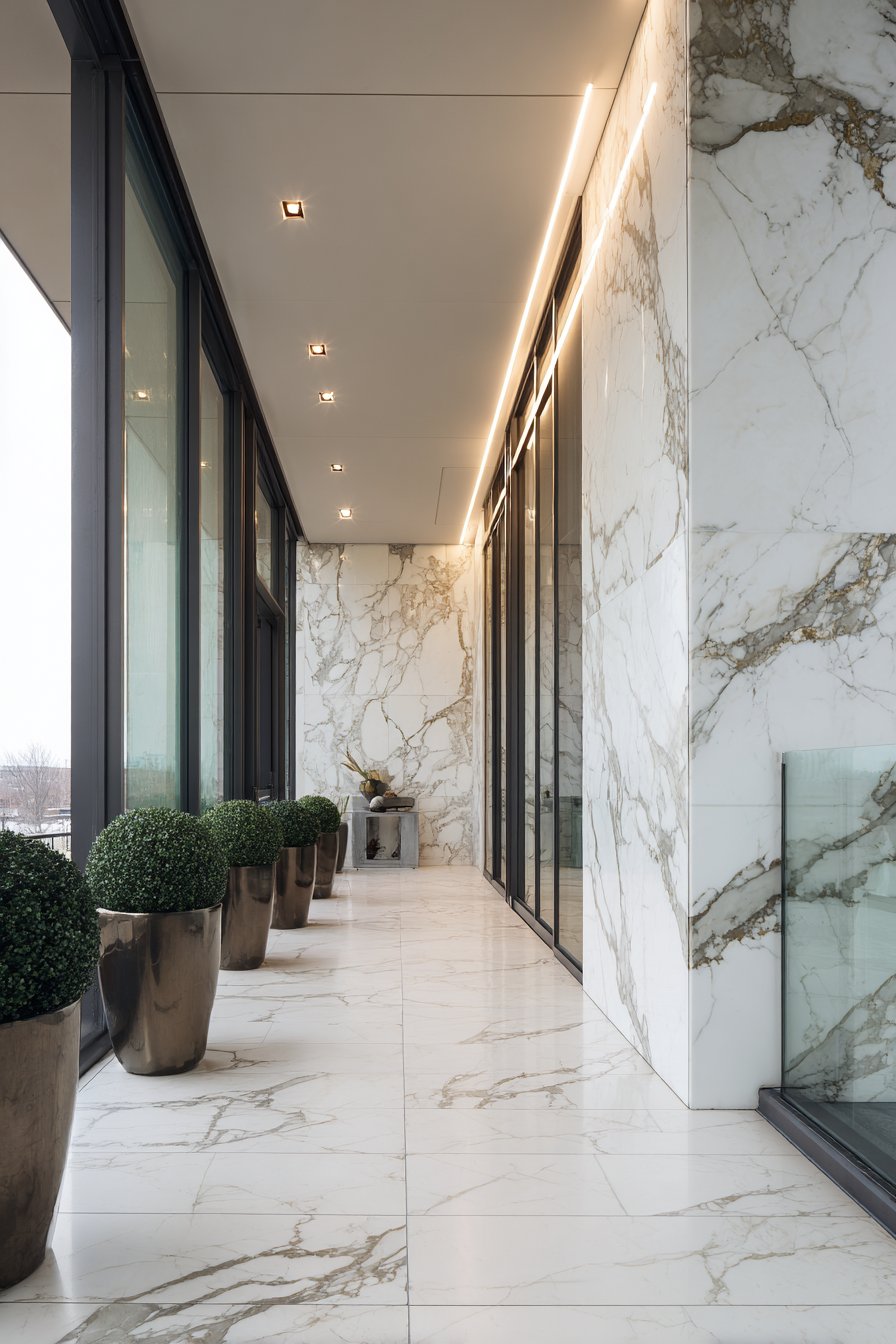
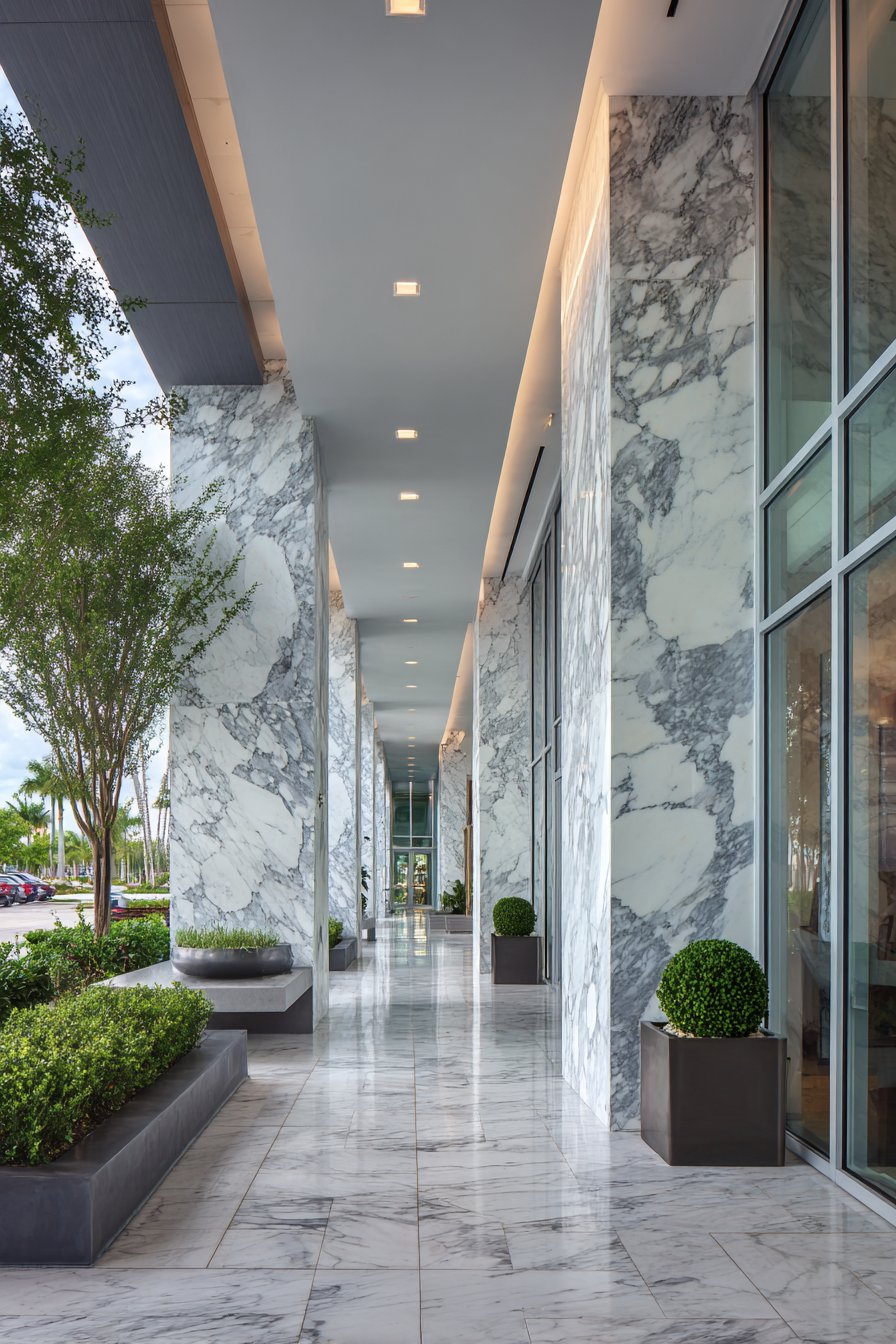
Book-matched marble walls in Calacatta display dramatic grey veining. This premium material makes powerful design statements through natural patterns. Large format porcelain tile flooring in polished finish reflects ambient light. The reflective surface amplifies brightness throughout the corridor.
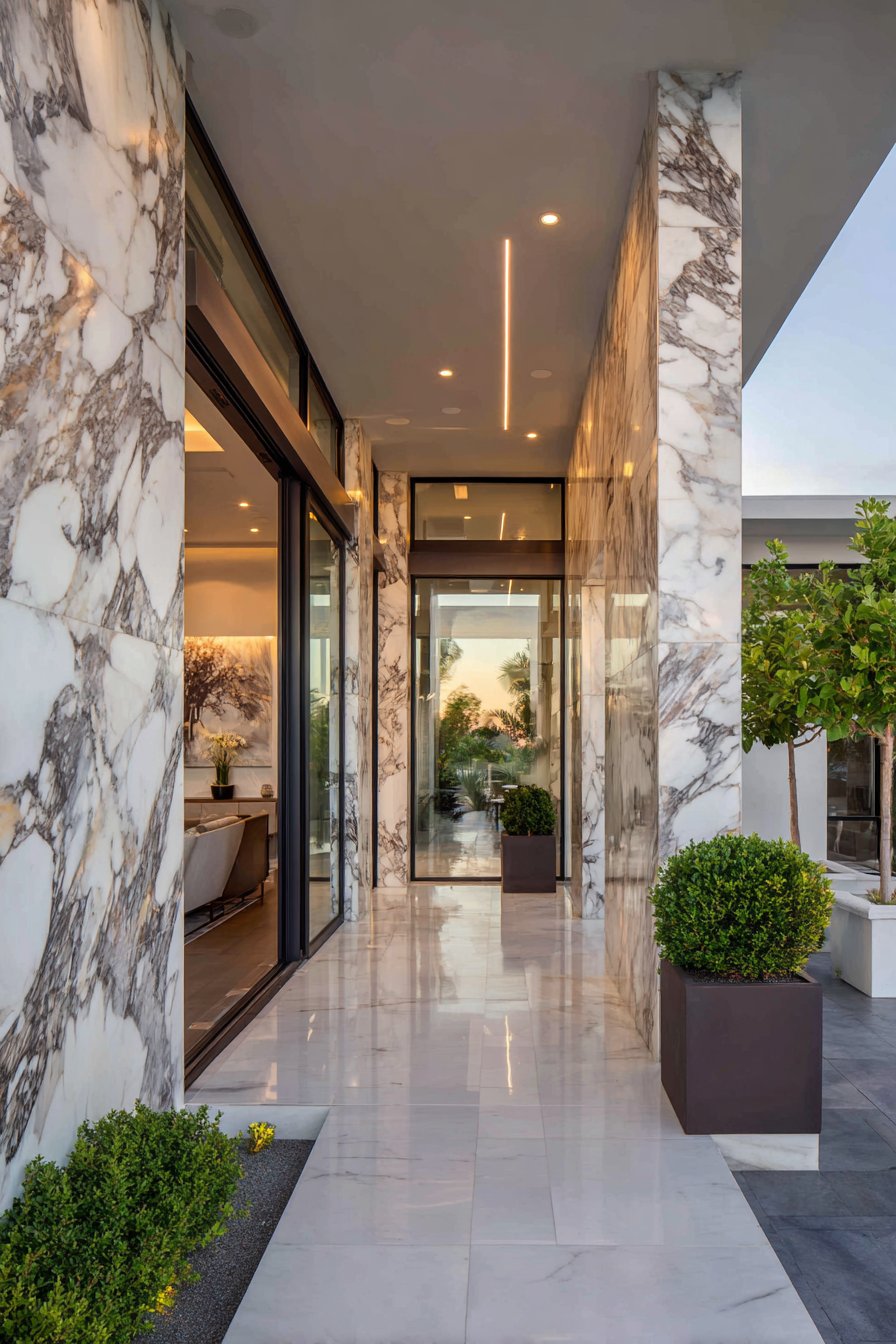
Contemporary linear LED lighting integrates into recessed ceiling channels. This creates even illumination without visible fixture clutter. Custom bronze planters house manicured boxwood topiaries precisely. Floor-to-ceiling glass doors with minimal framing separate spaces transparently.
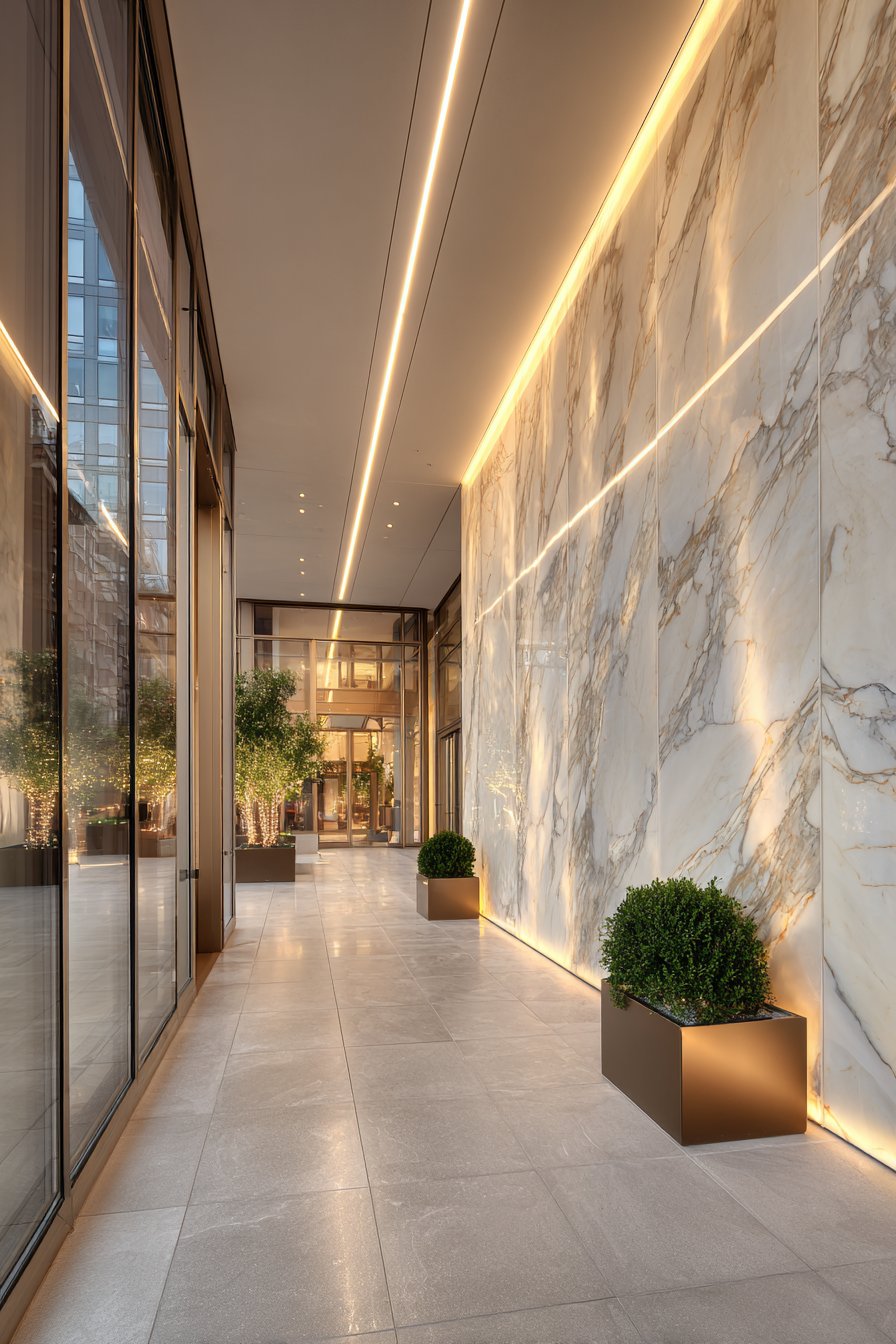
Balanced artificial and natural lighting showcases the marble’s natural patterns. The sophisticated material palette communicates luxury through restraint and quality. High-end finishes require professional installation and ongoing maintenance. This investment creates lasting value through timeless elegance.
Key Design Tips:
- Select book-matched marble slabs for symmetrical veining
- Polish porcelain tiles to highest available finish level
- Install LED channels during initial construction for seamless look
- Commission custom bronze planters from skilled metalworkers
- Maintain boxwood topiaries with regular trimming schedules
- Use minimal-frame glass systems for maximum transparency
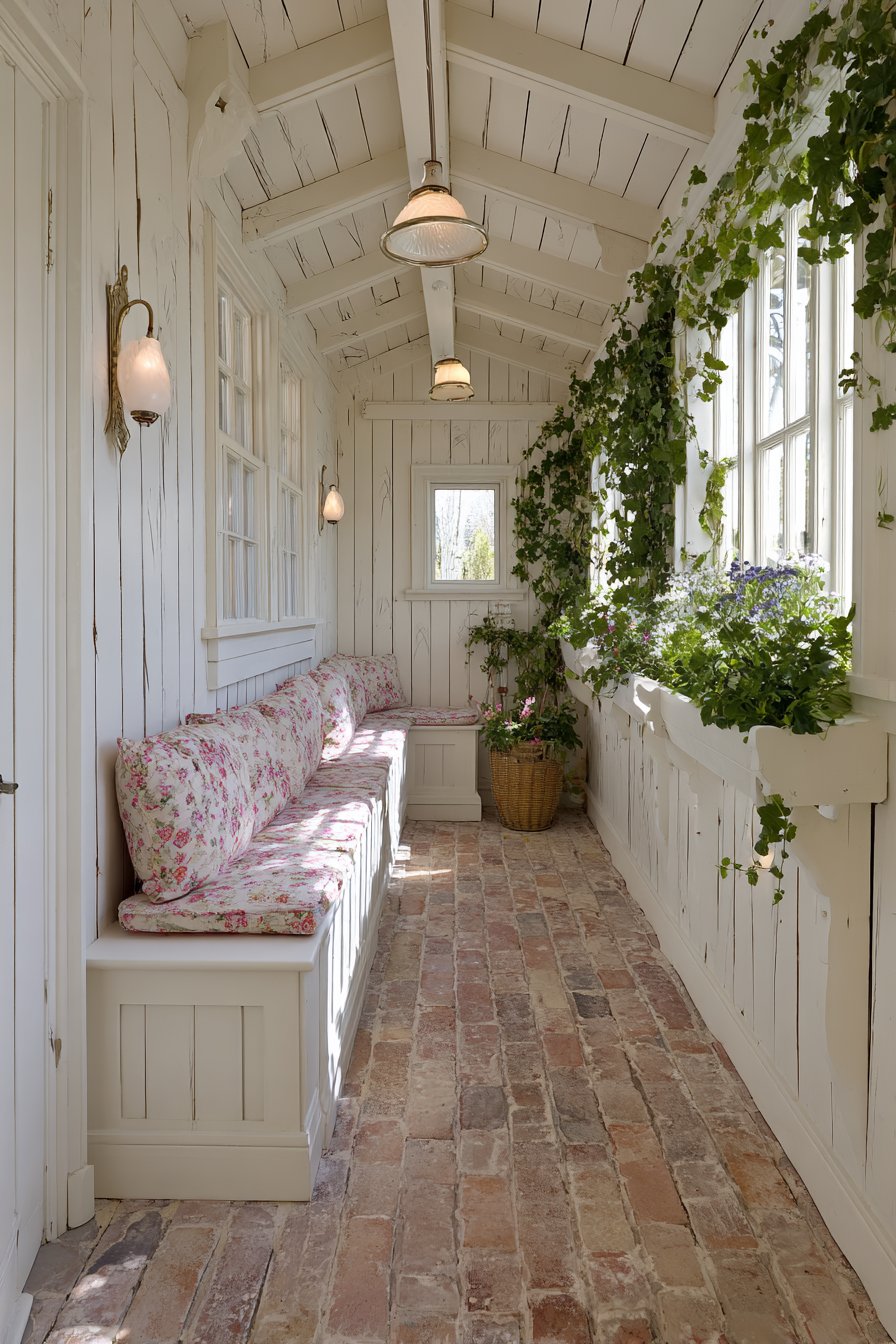
19. Cottage Garden with Informal Charm
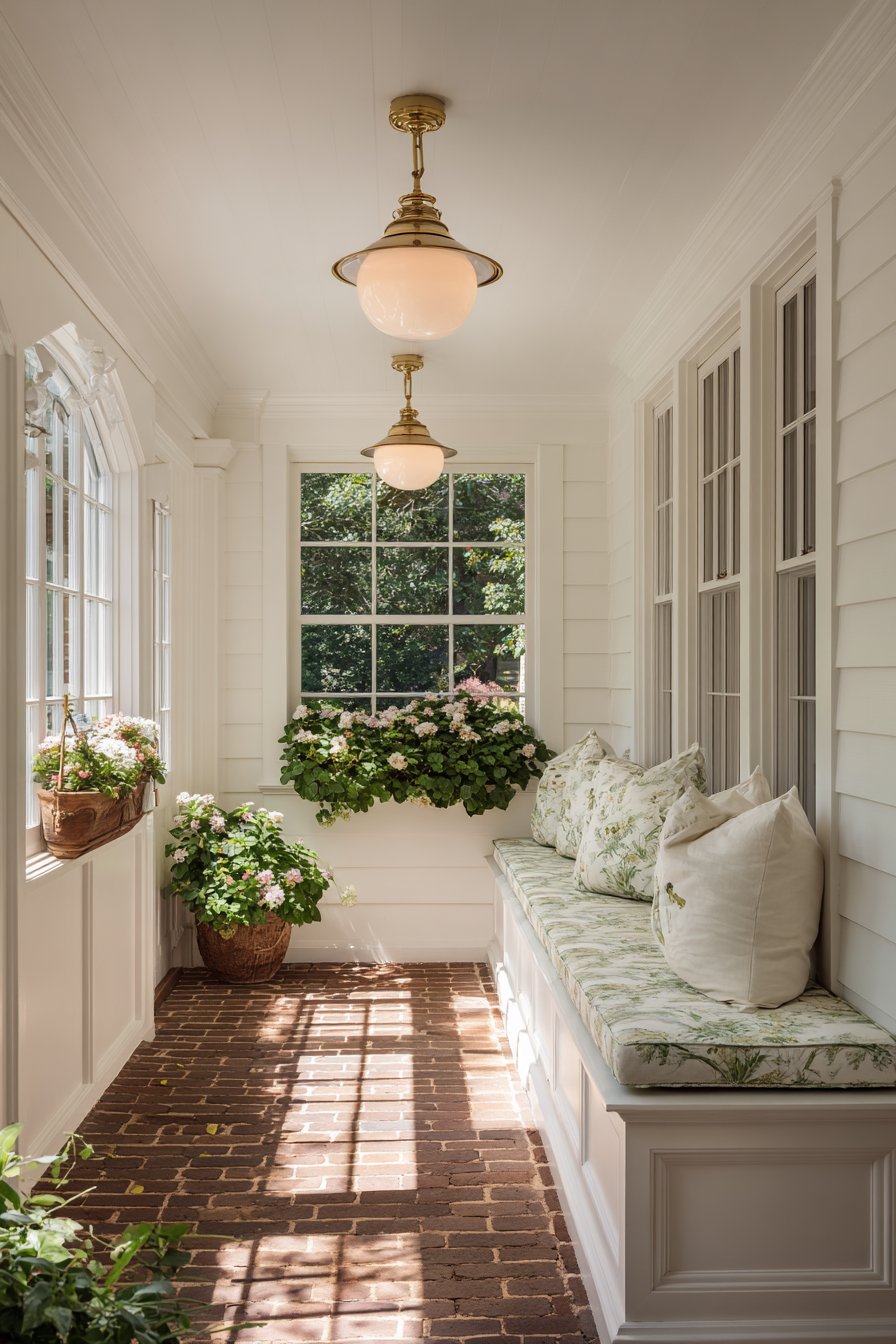
White-painted wood board and batten walls create classic cottage character. Brick flooring in traditional running bond pattern shows natural variation. The slight weathering adds authenticity to the cottage garden aesthetic. Vintage-style pendant lights with milk glass shades provide soft illumination.
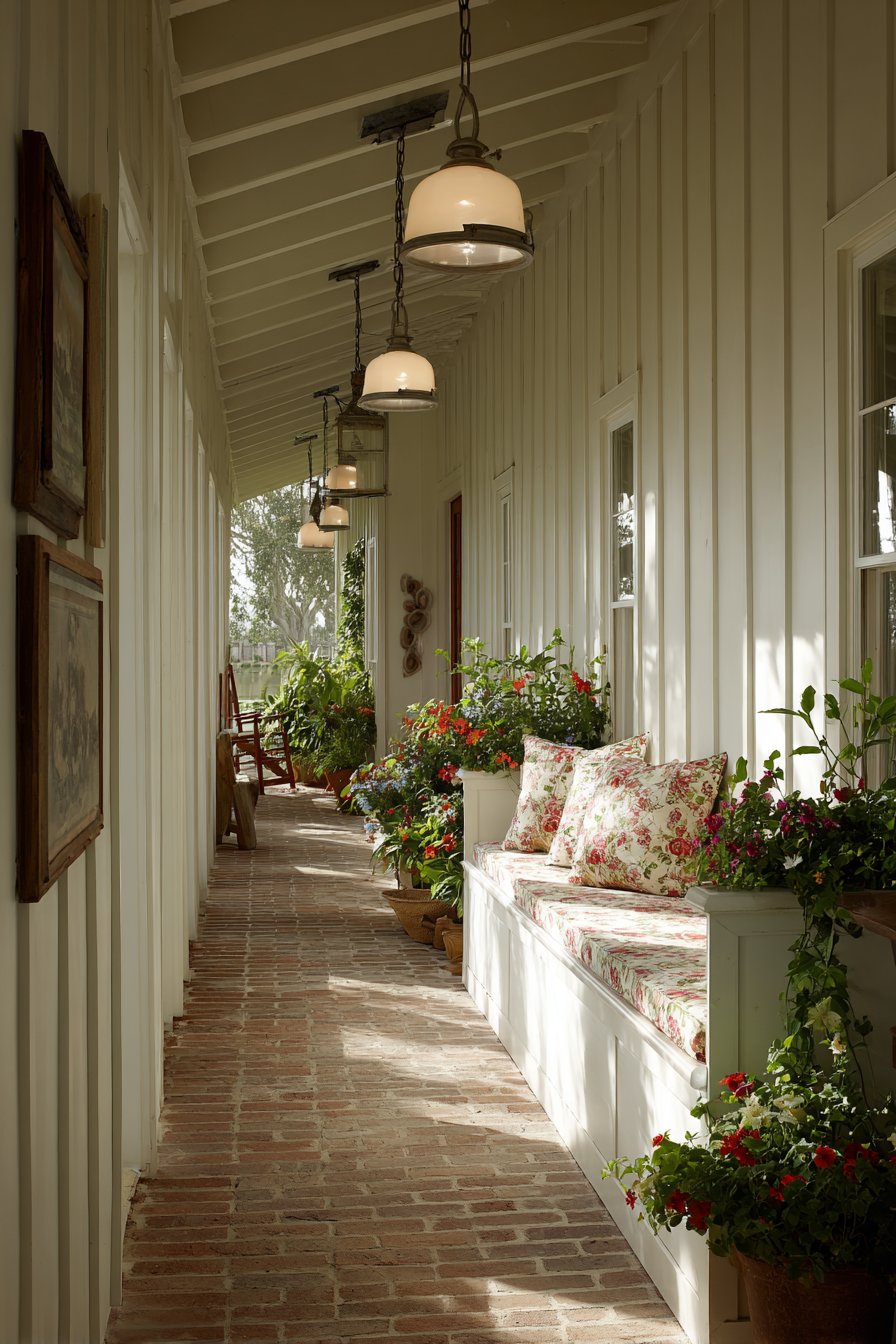
Window boxes overflowing with flowering annuals and trailing ivy create abundant greenery. These create informal beauty through natural growth patterns. Built-in bench with beadboard backing and floral cushions offers charming seating. Natural morning light creates welcoming atmosphere throughout the space.
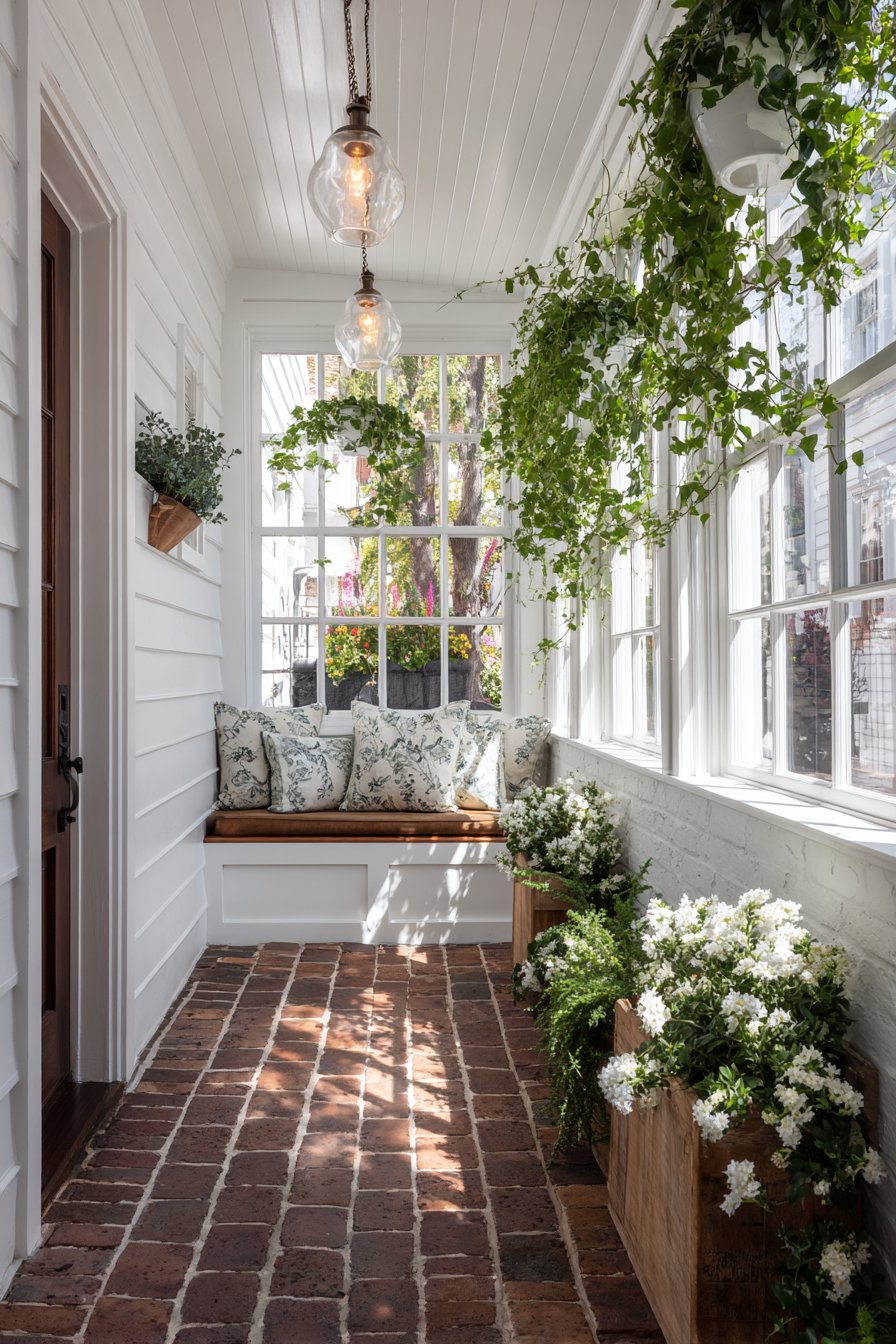
The painted wood texture and informal garden plantings define cottage style. This approach celebrates comfortable beauty over formal perfection. Cottage gardens invite interaction and seasonal change naturally. The style remains popular for its approachable warmth and charm.
Key Design Tips:
- Apply board and batten correctly with proper spacing
- Choose brick with slight color variation for authentic look
- Install milk glass shades for soft, diffused light quality
- Plant window boxes with trailing and upright varieties
- Use beadboard on built-ins for traditional cottage detail
- Select floral cushion fabrics in traditional cottage patterns
20. Desert Modern with Southwestern Character
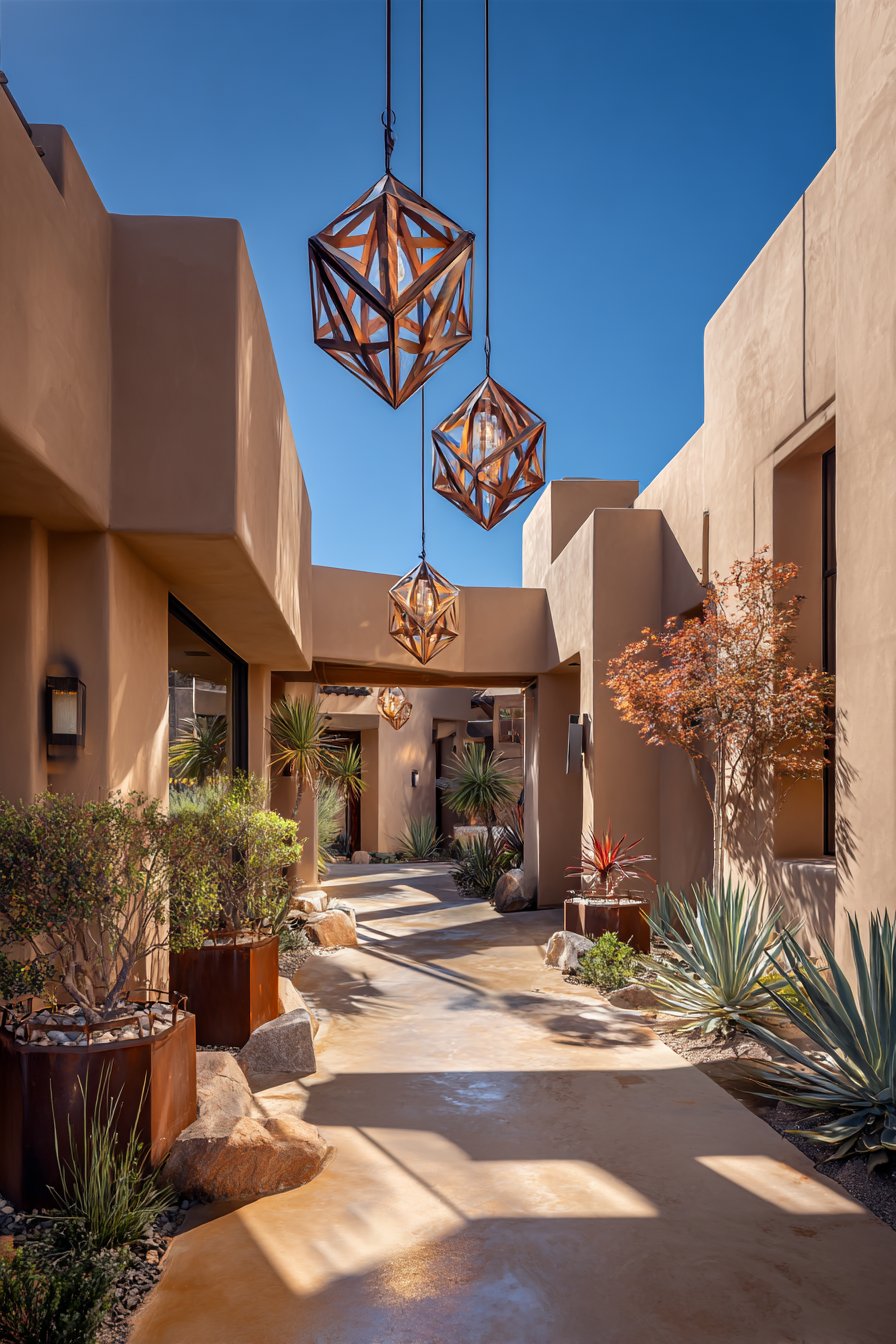
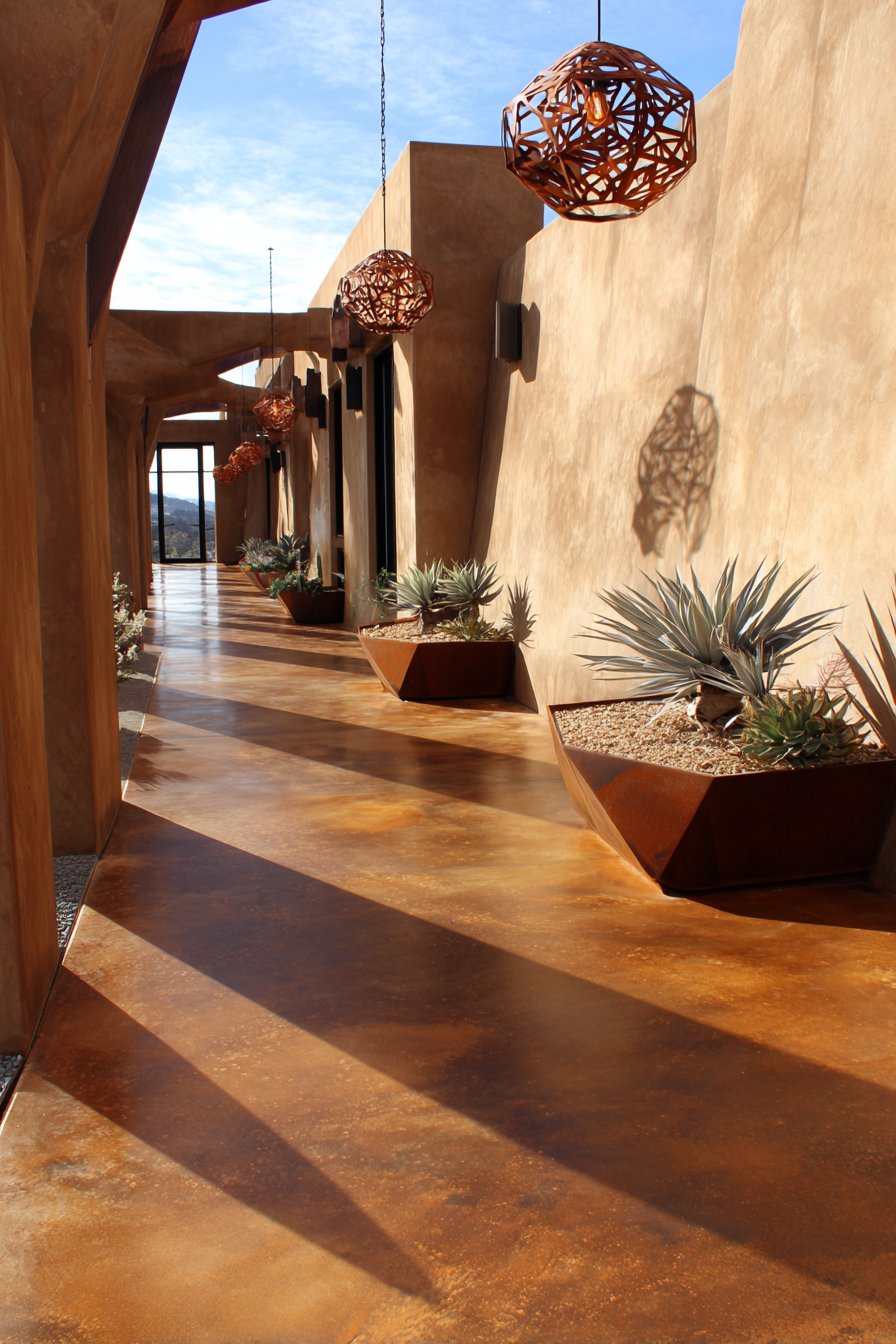
Smooth stucco walls in warm sand tone feature strategic cut-outs. These openings frame sky views creating architectural interest overhead. Polished concrete flooring with integral color in rust tone shows subtle variations. The color references desert landscape naturally and beautifully.
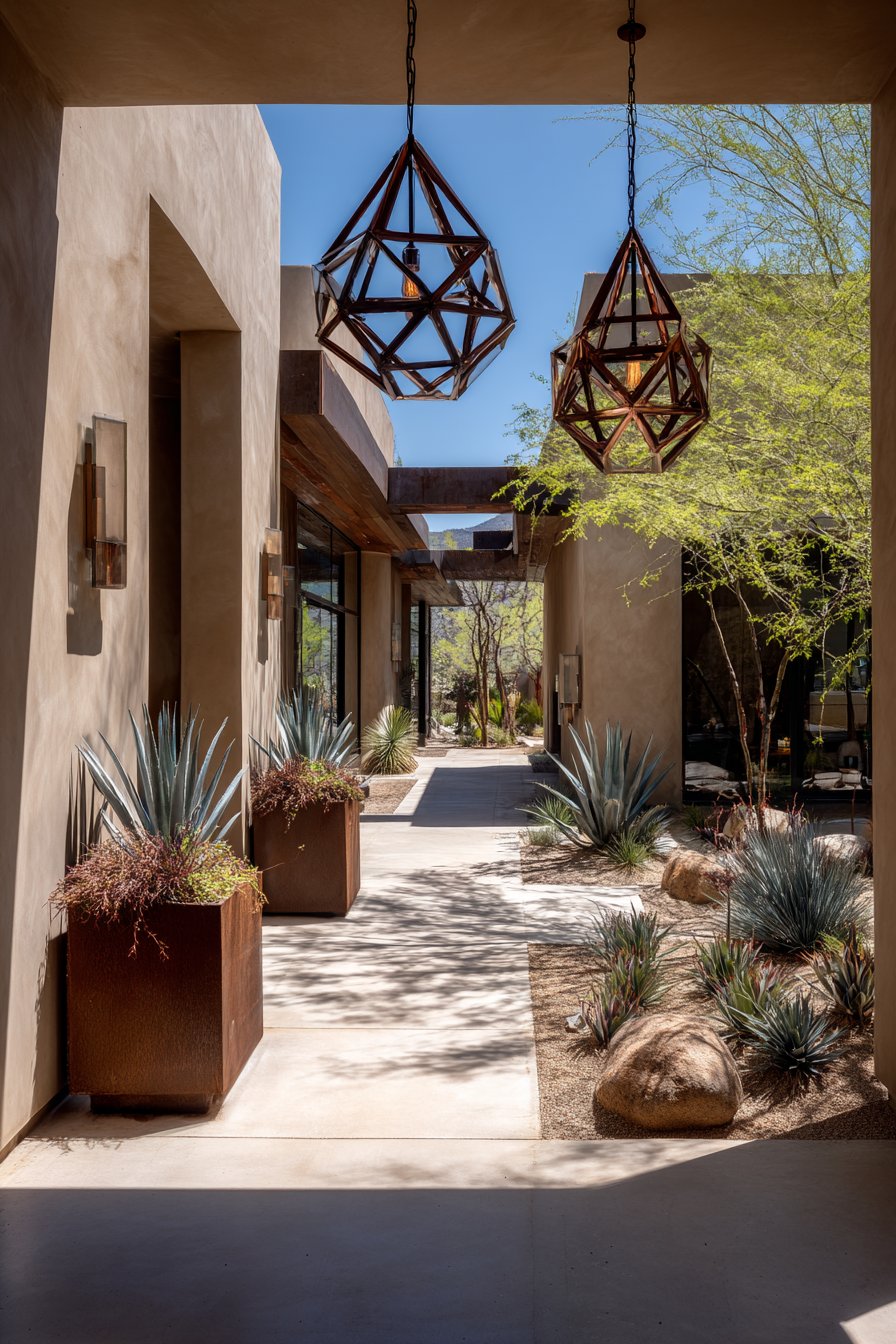
Copper pendant lights with geometric shapes develop natural patina over time. This patina process adds beauty through natural chemical reactions. Native drought-tolerant plants including agave, ocotillo, and desert willow provide sculptural elements. Cor-ten steel planters complement the desert aesthetic perfectly.
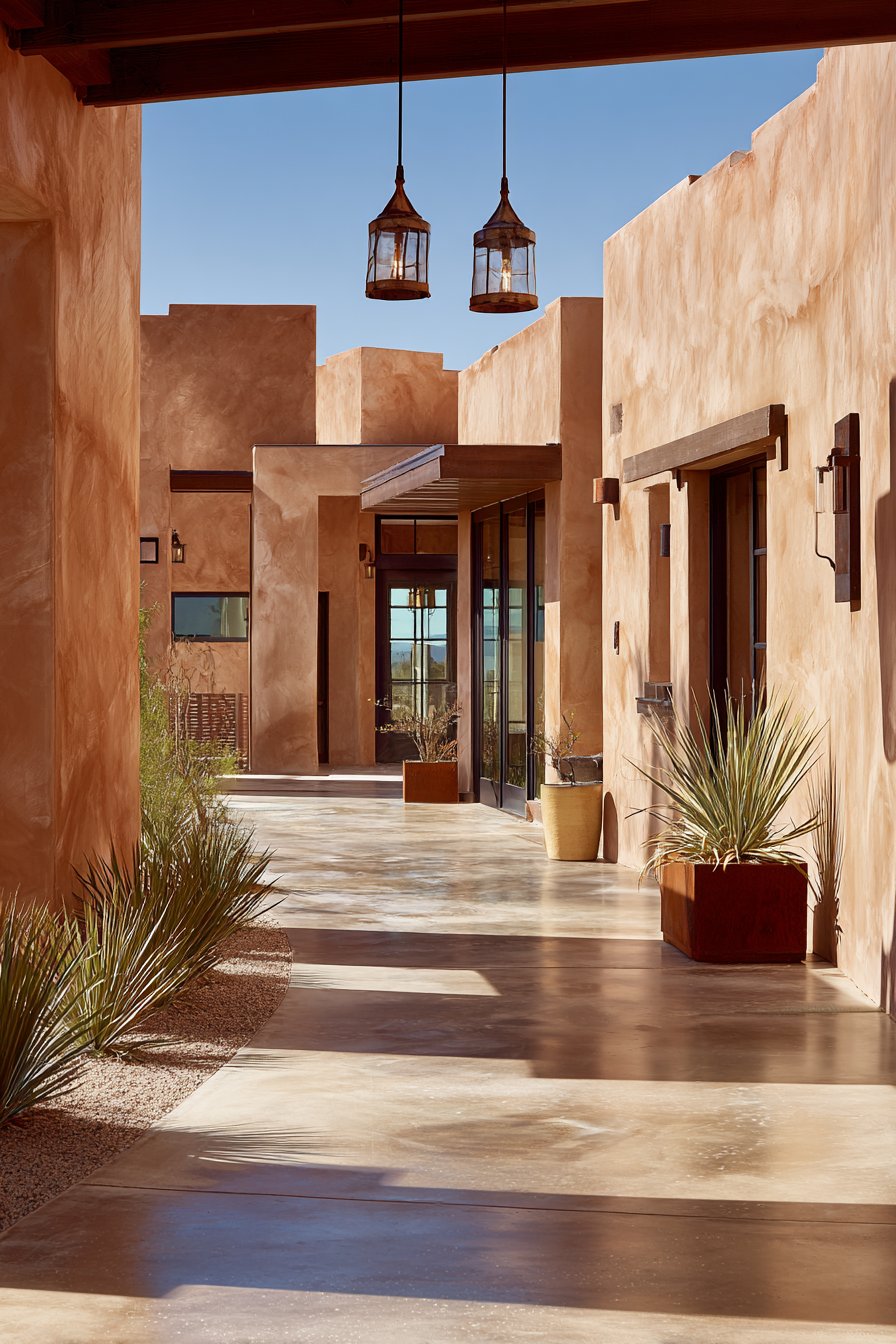
Harsh midday sun creates strong shadow patterns emphasizing solid architecture. The interplay between built forms and open sky defines desert modern design. Authentic materials respond appropriately to desert climate conditions. This design philosophy celebrates regional character and climate-appropriate choices.
Key Design Tips:
- Apply stucco in colors that reference local landscape
- Use integral concrete color for superior UV resistance
- Choose copper fixtures that will patina naturally
- Select native plants requiring minimal supplemental water
- Install cor-ten steel planters that rust to stable patina
- Position openings to frame specific sky and landscape views
Why These Outdoor Corridor Designs Are the Best
These outdoor corridor designs represent diverse approaches to transitional space planning. Each concept demonstrates thoughtful material selection and spatial awareness. The variety ensures homeowners find approaches matching their architectural styles and personal preferences.
Material authenticity emerges as a common thread throughout these designs. Natural stone, wood, metal, and tile age beautifully when properly installed. These materials develop character over time rather than deteriorating. Quality material choices provide lasting value through decades of use.
The designs address practical considerations including durability, maintenance, and climate appropriateness. Mediterranean and coastal designs suit humid conditions perfectly. Desert modern approaches thrive in arid climates naturally. Industrial materials withstand urban environmental challenges excellently. Each design considers real-world applications beyond aesthetic appeal.
Lighting strategies vary from natural light maximization to sophisticated artificial systems. Layered lighting approaches create functional corridors usable throughout day and night. The integration of lighting with architectural elements demonstrates sophisticated design thinking. Proper illumination enhances safety while creating beautiful atmospheric effects.
Sustainability considerations appear throughout these concepts. Reclaimed materials reduce environmental impact while adding character. Native plantings require minimal resources while supporting local ecosystems. Durable material choices prevent frequent replacement waste. These approaches demonstrate environmental responsibility within beautiful design.
Color theory applications range from neutral palettes to vibrant pattern work. Neutral approaches provide timeless appeal and flexibility for future changes. Bold color choices create memorable experiences and strong identity. Each approach serves different goals and personal preferences successfully.
Spatial considerations accommodate both narrow passages and generous walkways. Vertical elements add interest without consuming floor space. Transparent materials maintain openness while defining boundaries. Strategic plantings soften hard architecture without blocking movement. These solutions maximize limited corridor spaces effectively.
Conclusion
These twenty outdoor corridor designs demonstrate that transitional spaces deserve thoughtful design attention. The concepts span multiple design philosophies from minimalist contemporary to ornate traditional. Each approach offers unique advantages for creating beautiful, functional outdoor passages.
Key takeaways include the importance of authentic materials, appropriate lighting, and climate-conscious plant selection. Quality materials combined with skilled installation create corridors that age gracefully. Regional appropriateness ensures designs function well in specific environmental conditions.
Successful corridor design balances aesthetic appeal with practical functionality. Consider your home’s architectural style, climate conditions, and maintenance capabilities. Start by identifying which design philosophy resonates with your personal taste. Transform your outdoor corridors from mere passages into architectural experiences that enhance daily life.