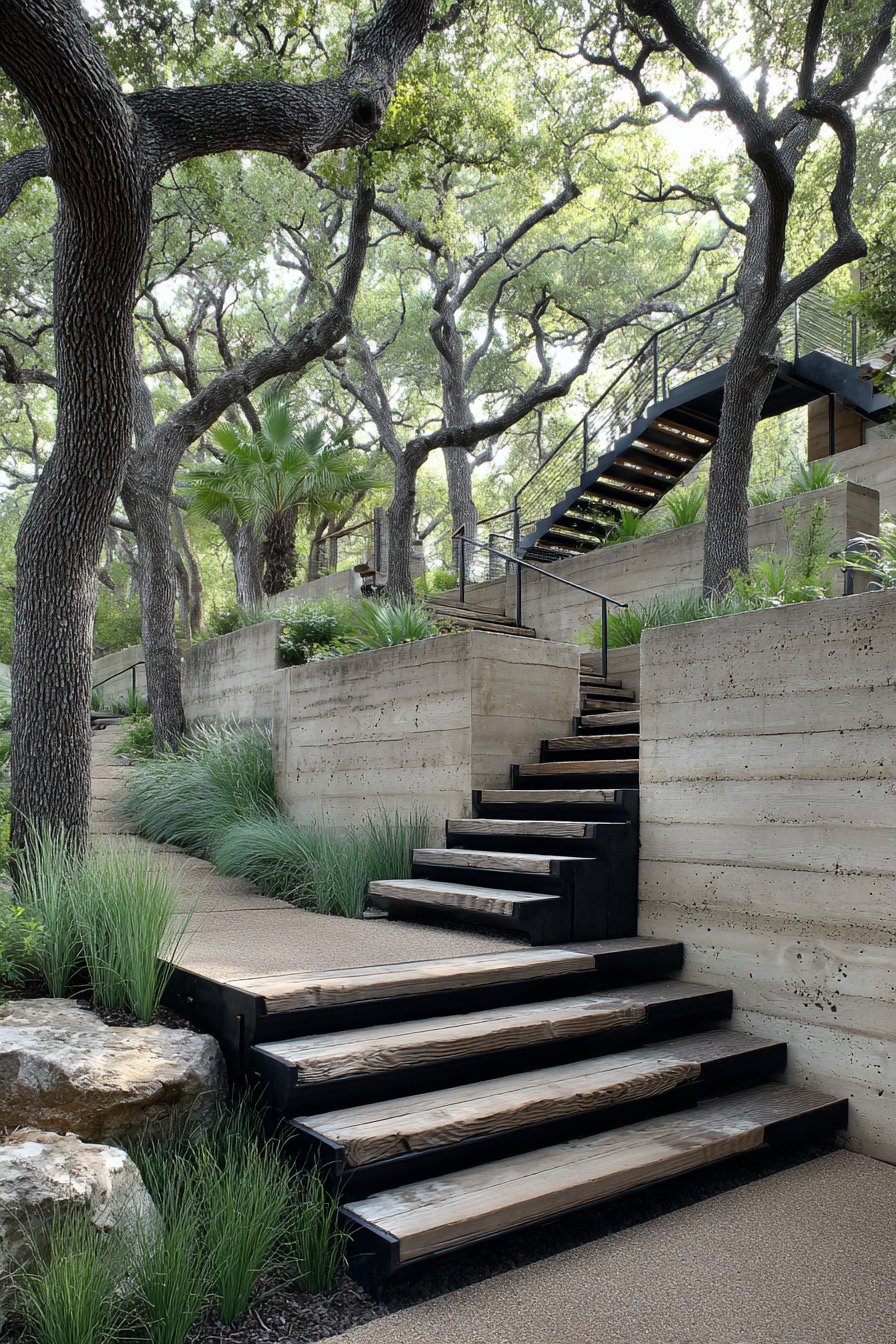


Outdoor stairs serve as more than functional pathways between different elevations. They represent opportunities to make bold architectural statements. These transitional elements connect spaces while adding visual interest to landscapes. The right design transforms ordinary steps into stunning focal points.
Creating exceptional outdoor stairs requires careful consideration of multiple factors. Material selection, durability, safety, and aesthetic appeal all play crucial roles. The designs must withstand weather conditions while maintaining their beauty. From rustic woodland paths to contemporary floating structures, outdoor stairs reflect personal style and architectural vision.
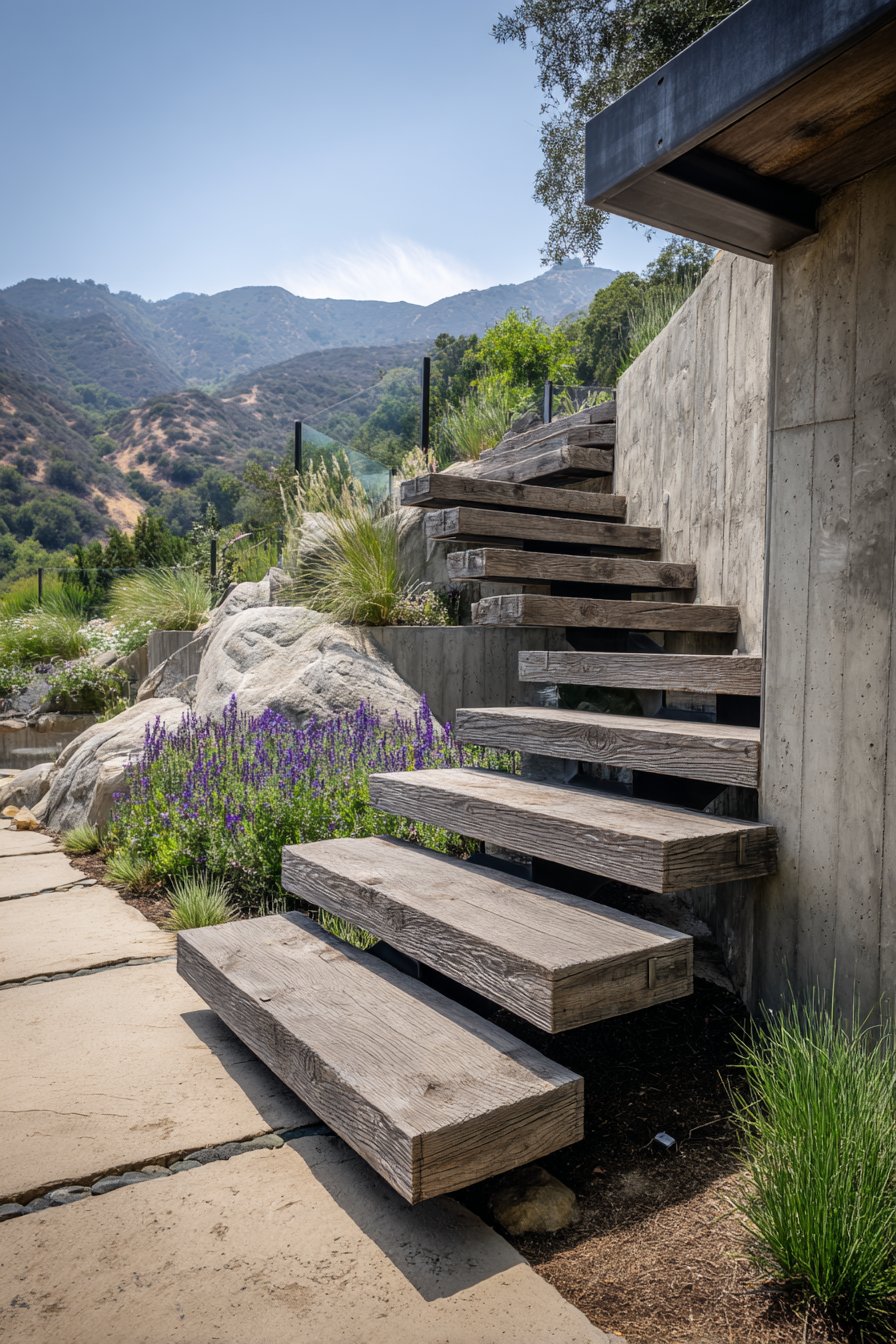
This comprehensive guide explores twenty distinctive outdoor stair designs. Each concept showcases unique materials, construction techniques, and design philosophies. Whether you prefer natural stone integration or sleek modern steel, these ideas provide inspiration. The variety demonstrates how functional elements become artistic features in landscape design.
1. Modern Cantilevered Concrete with LED Lighting
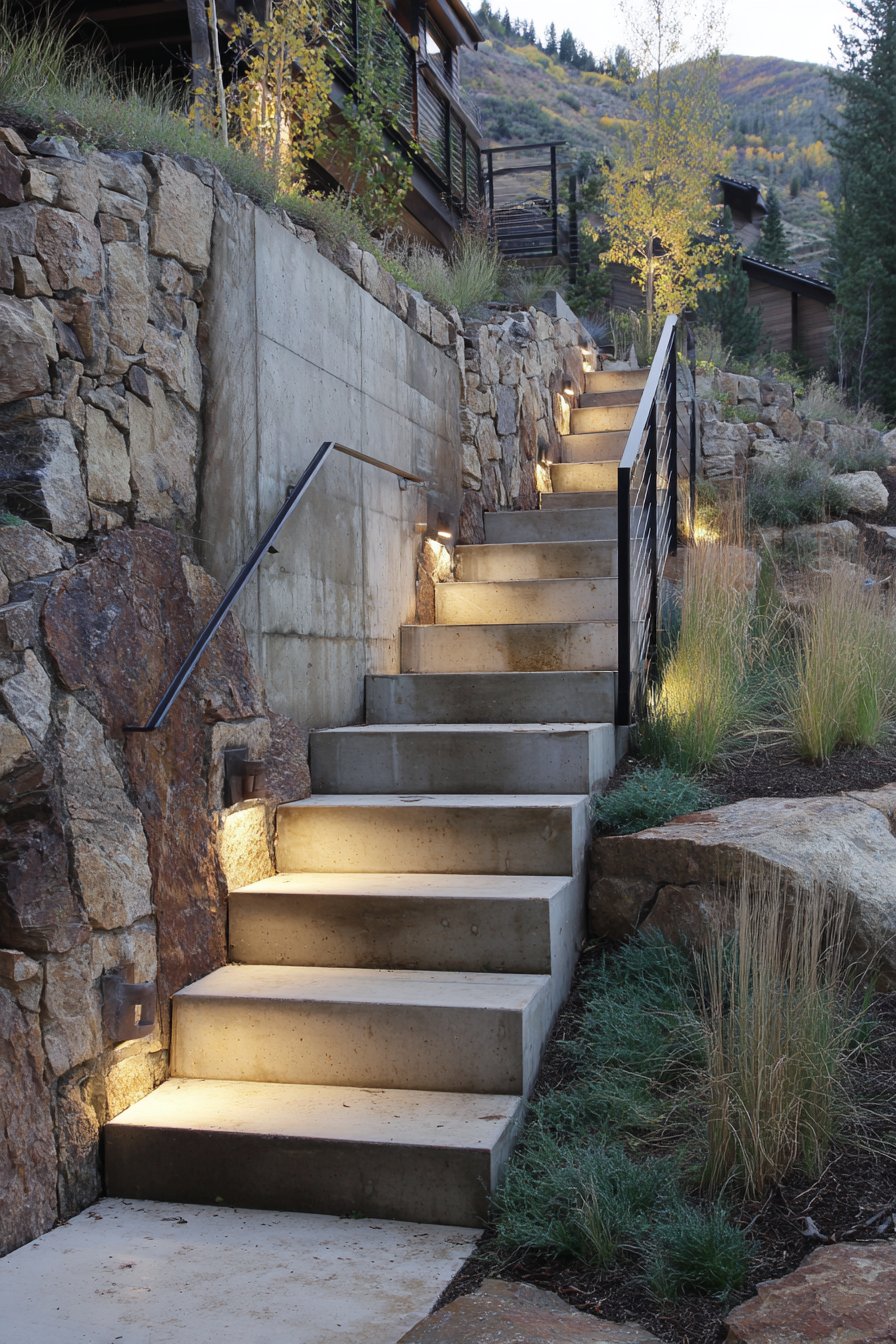
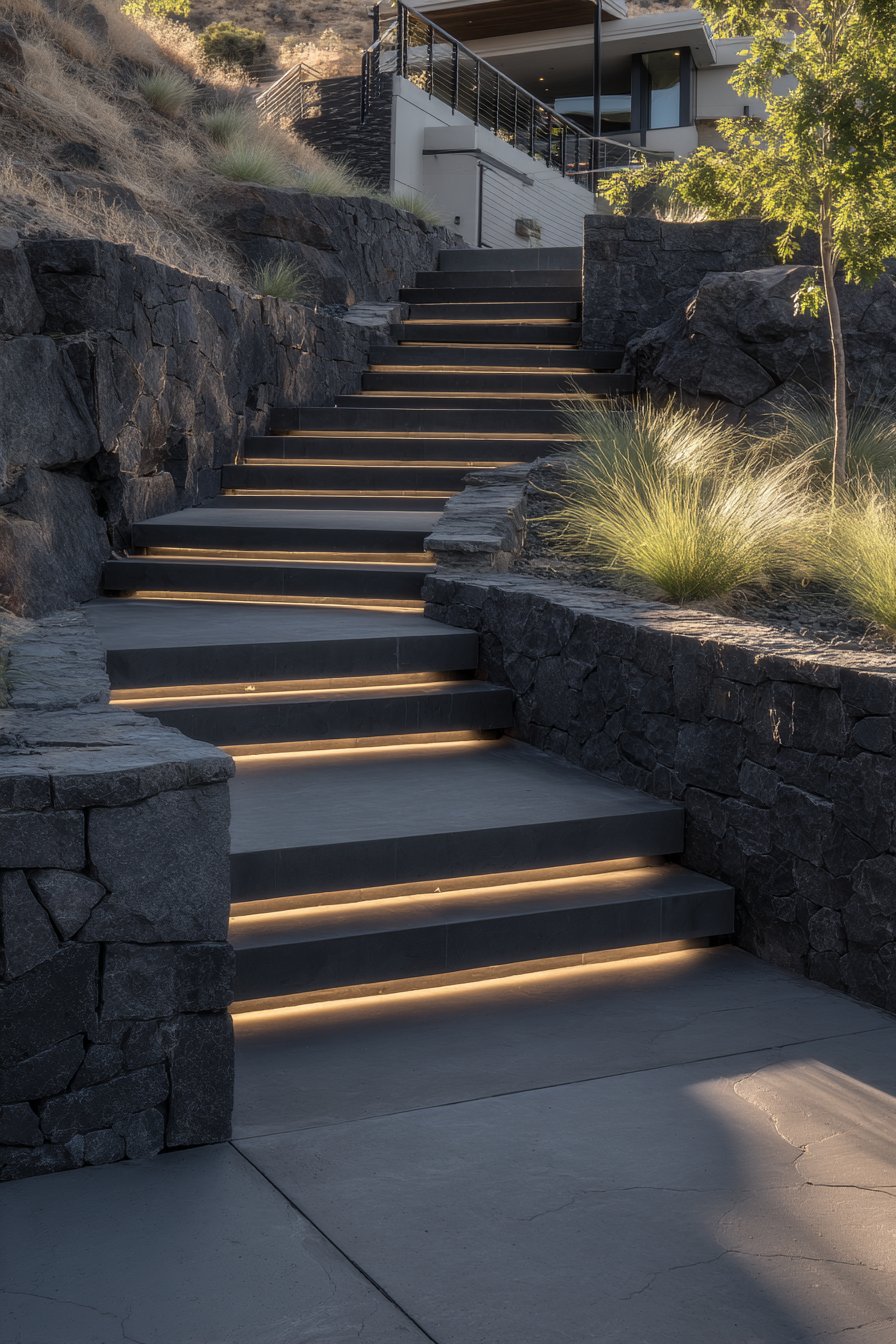
A contemporary outdoor staircase featuring cantilevered concrete treads creates dramatic architectural impact. The design incorporates embedded LED strip lighting along each riser. This illumination transforms the stairs into a glowing pathway after dark. The concrete treads appear to float effortlessly against the hillside backdrop.
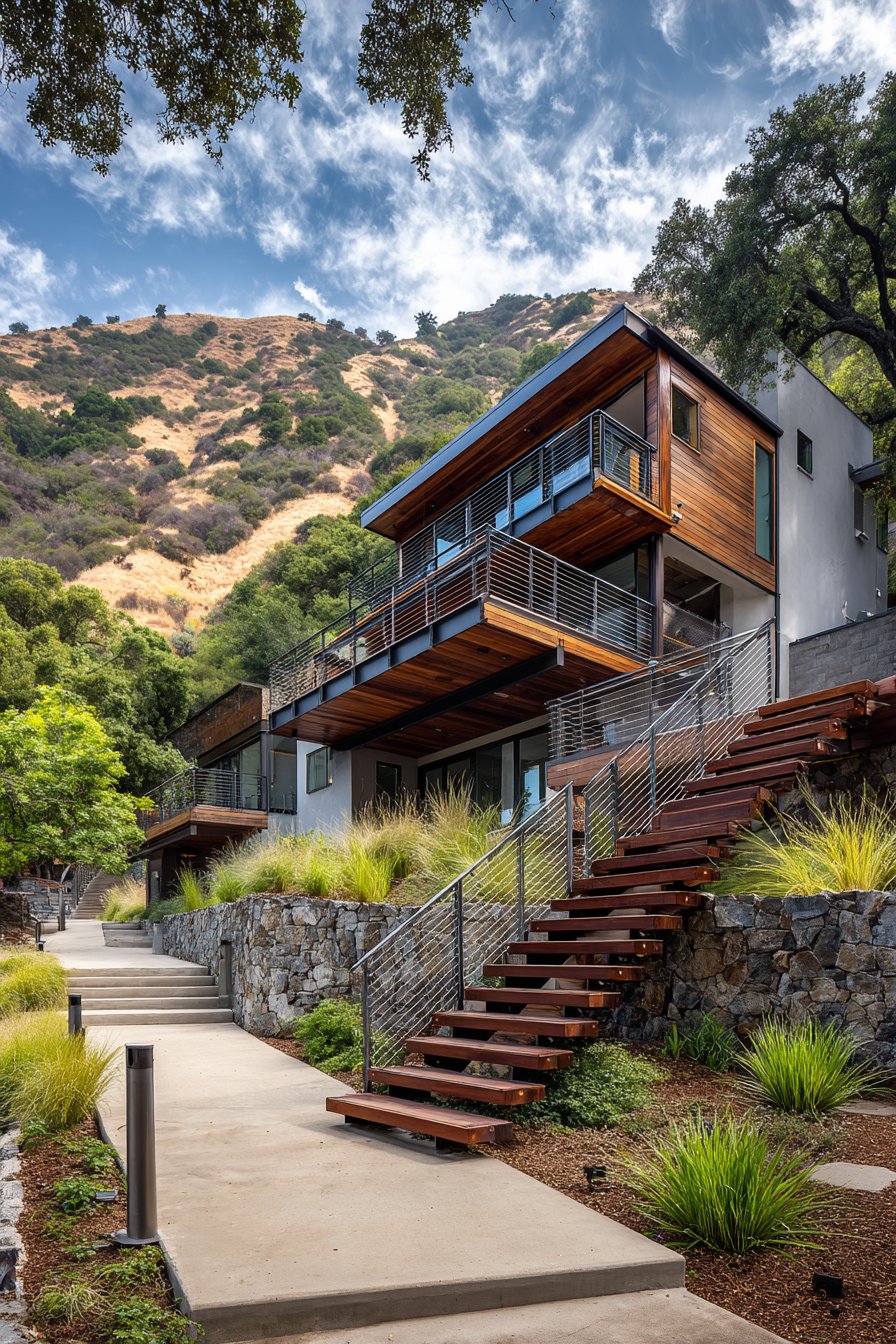
Native grasses and low groundcover plants soften the geometric precision. These plantings emerge between natural stone retaining walls that flank the stairs. The vegetation provides organic contrast to the manufactured materials. Stainless steel cable railings offer necessary safety without blocking views.
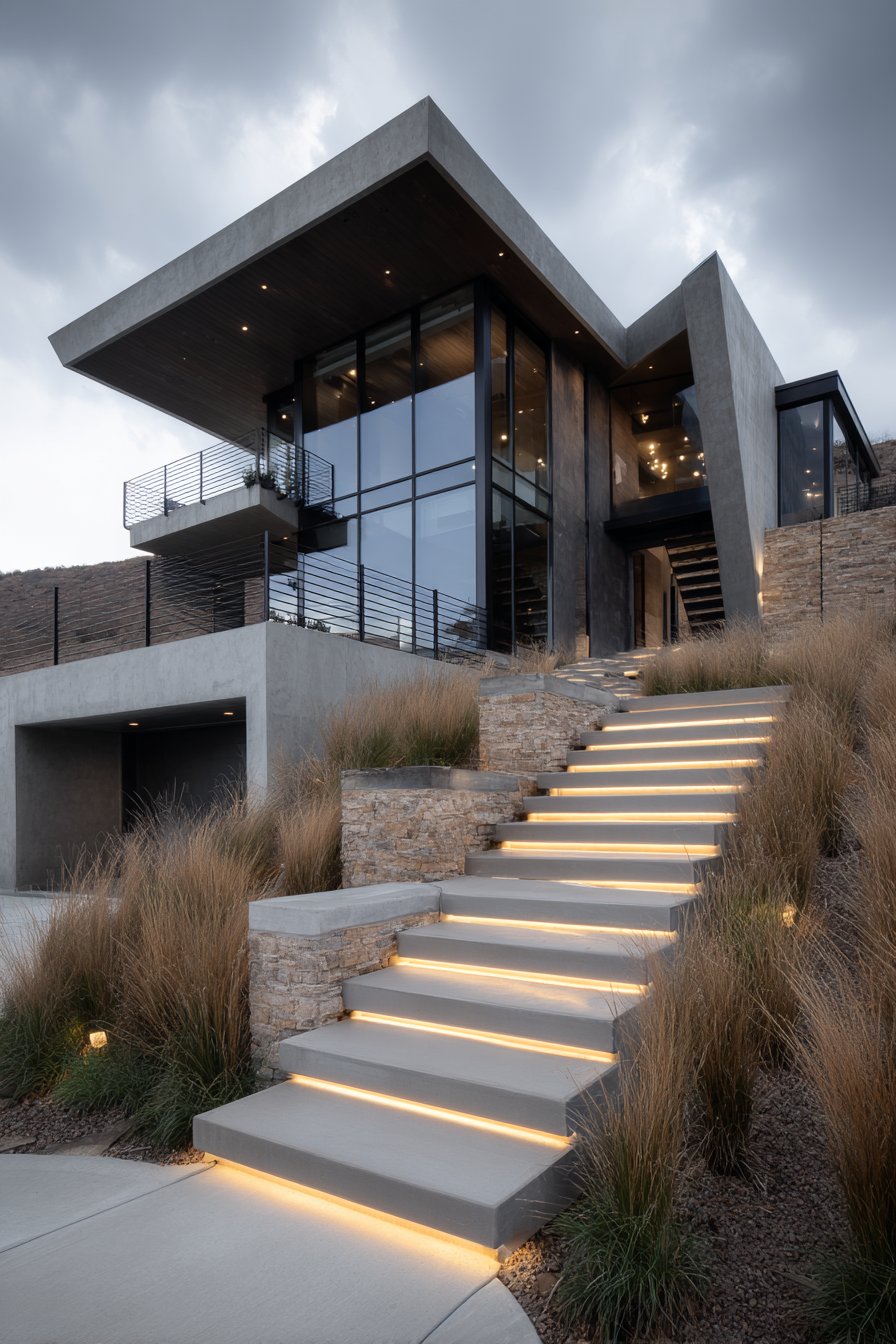
The textured concrete surfaces reveal honest material characteristics. Slight variations in color occur naturally from weathering and sunlight exposure. These imperfections add authenticity to the modern design. Late afternoon light creates dramatic shadows that emphasize the cantilevered form.
The integration with surrounding landscape demonstrates thoughtful site planning. The stairs ascend naturally following the hillside contours. Wide-angle perspectives reveal how architecture and nature coexist harmoniously. Professional installation ensures structural integrity while maintaining visual lightness.
Key Design Tips:
- Install LED strip lighting for safety and dramatic evening aesthetics
- Use cable railings to maintain transparency and preserve views
- Incorporate native plantings to soften hard architectural lines
- Choose textured concrete finishes for improved traction
- Position stairs to follow natural terrain contours
2. Rustic Reclaimed Barn Wood Construction
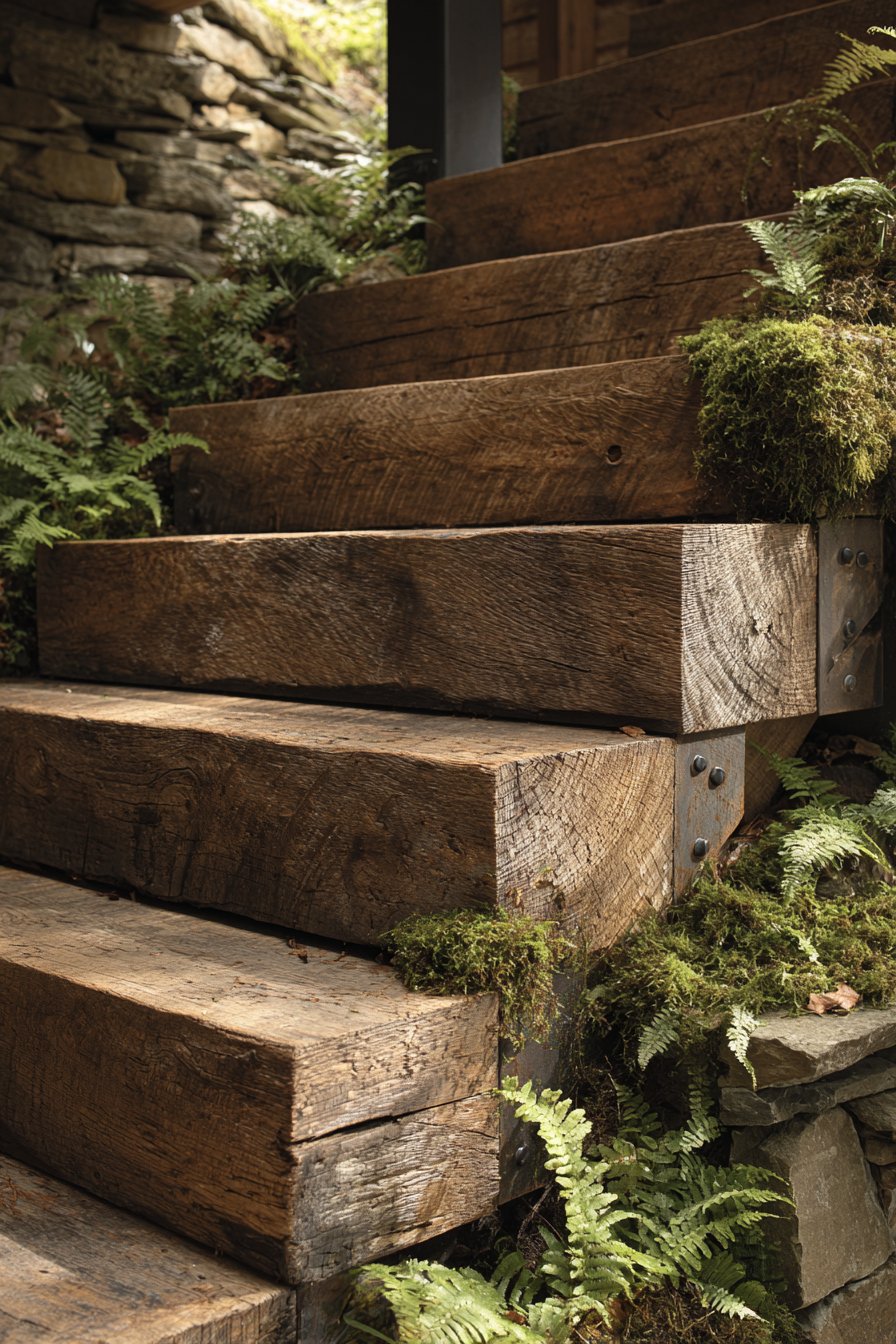
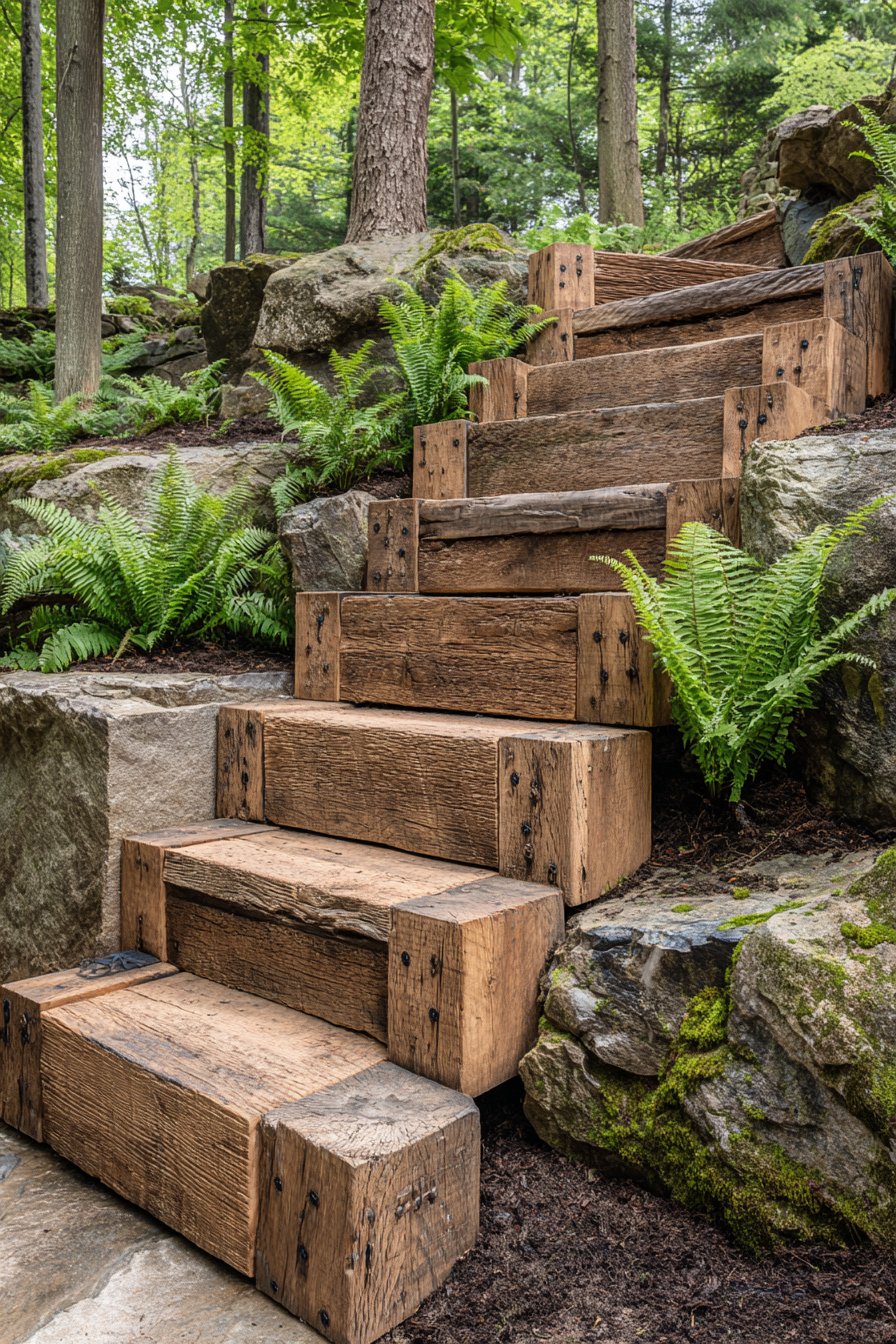
Weathered reclaimed barn wood creates outdoor stairs with authentic character. The heavy timber treads display visible grain patterns and natural aging. Each piece tells a story through its wear marks and color variations. Steel brackets anchor the wooden treads securely to stone foundation walls.
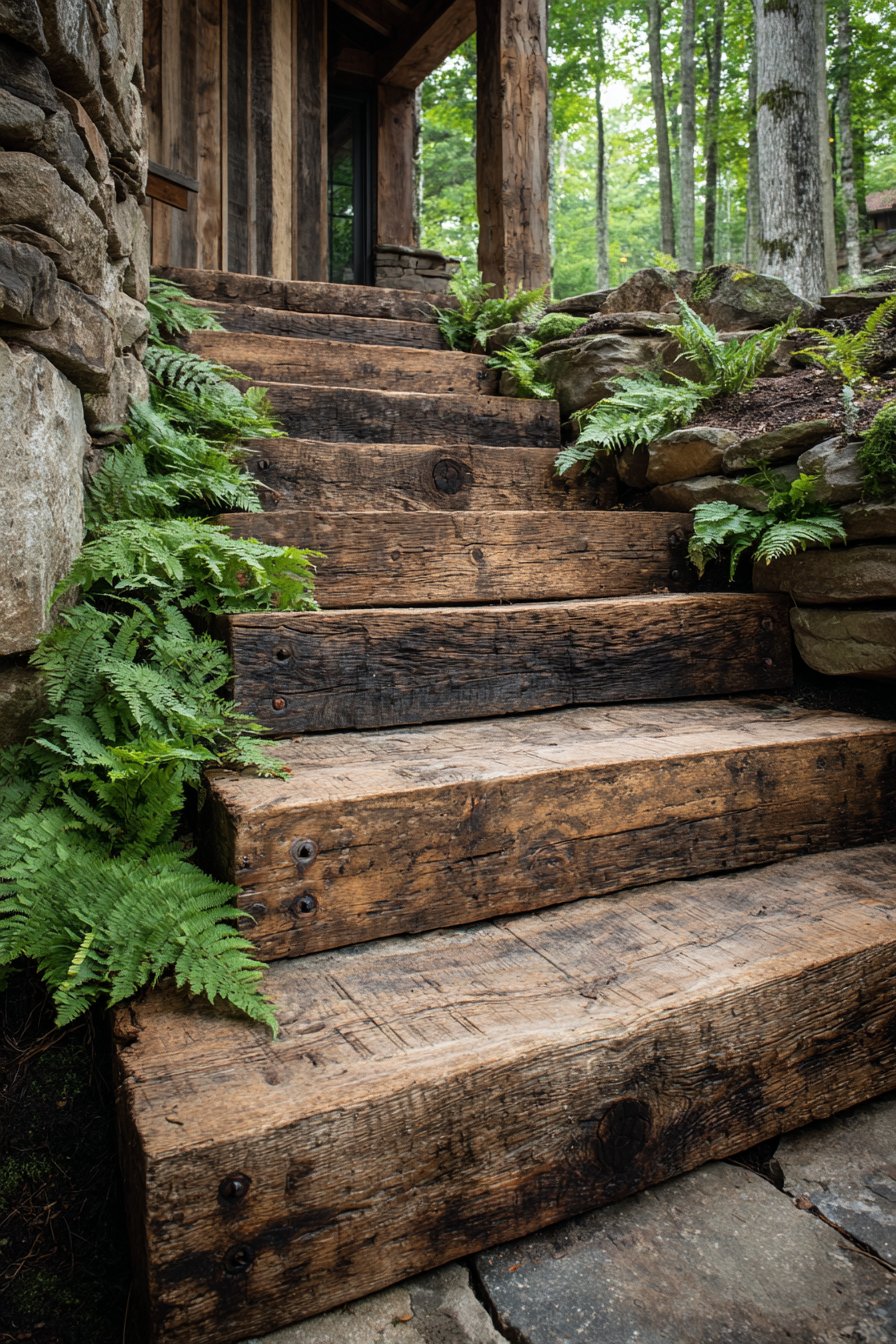
The honey tones of aged wood glow warmly in morning sunlight. Dappled light filters through overhead tree canopy throughout the day. This natural lighting creates ever-changing shadow patterns across the stairs. Wild ferns and moss grow organically along the edges.
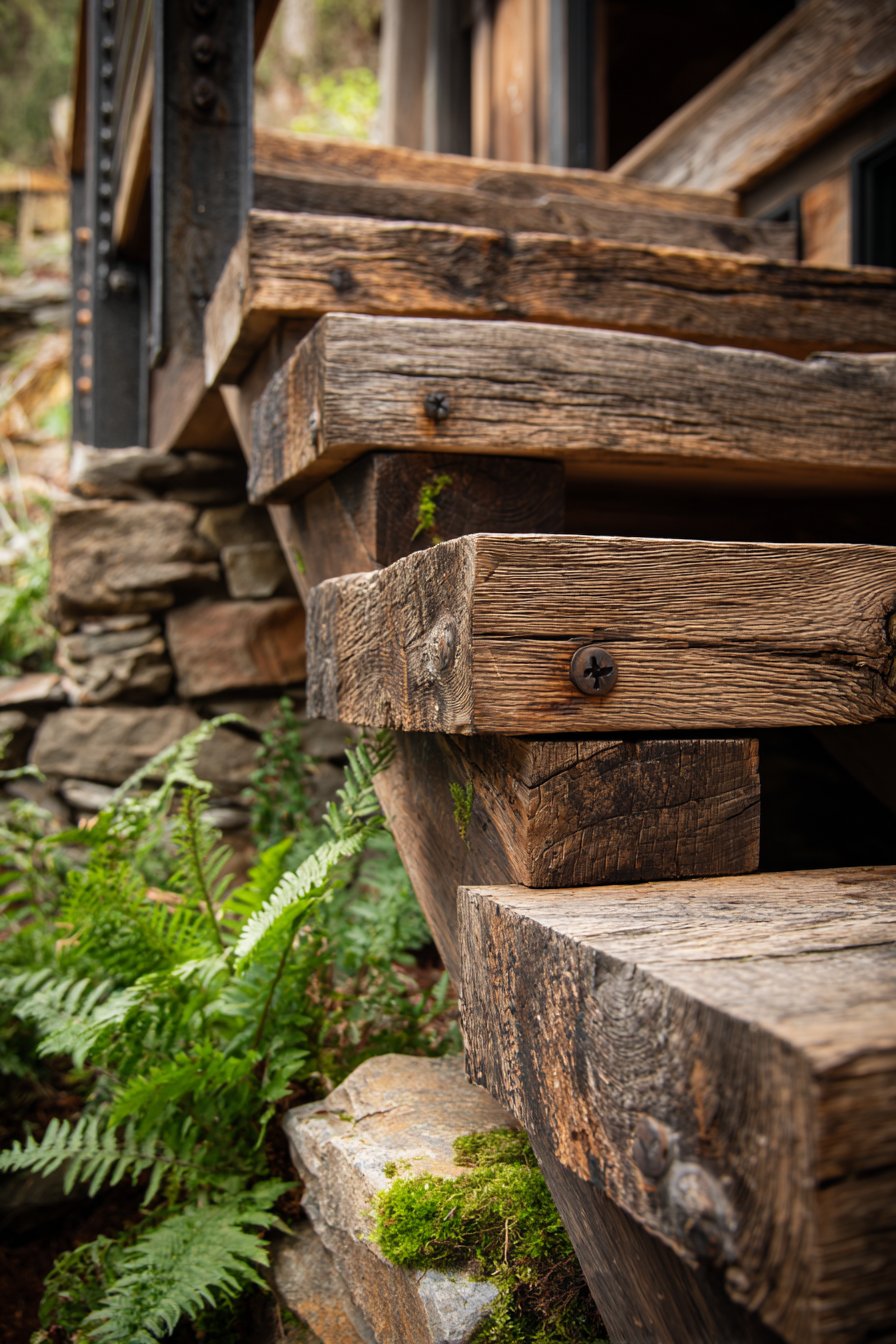
The integration with woodland settings feels completely natural. The stairs appear as if they’ve existed in the landscape for decades. Iron hardware develops attractive patina over time through weather exposure. This aging process enhances rather than diminishes the overall aesthetic.
Detail-focused photography captures the authentic texture of reclaimed materials. Close examination reveals the richness of wood grain and authentic wear. The rustic construction method embraces imperfection as part of the design. Environmental integration takes priority over geometric precision.
Key Design Tips:
- Source authentic reclaimed barn wood for genuine character
- Use steel brackets for structural support and industrial contrast
- Allow natural vegetation to grow along edges for organic integration
- Select iron hardware that develops attractive patina
- Position stairs beneath tree canopy for filtered natural lighting
3. Contemporary Floating Blackened Steel Design
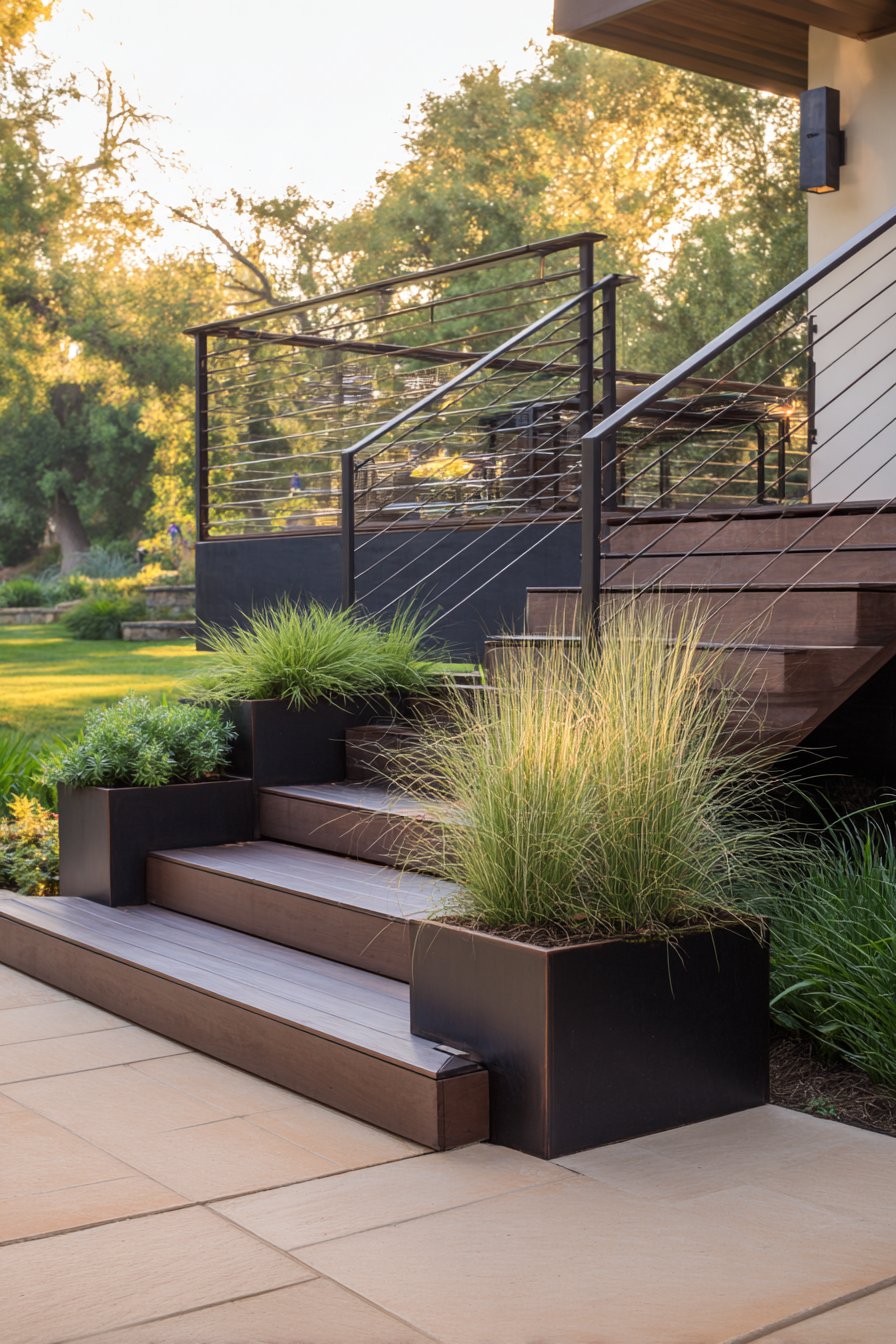
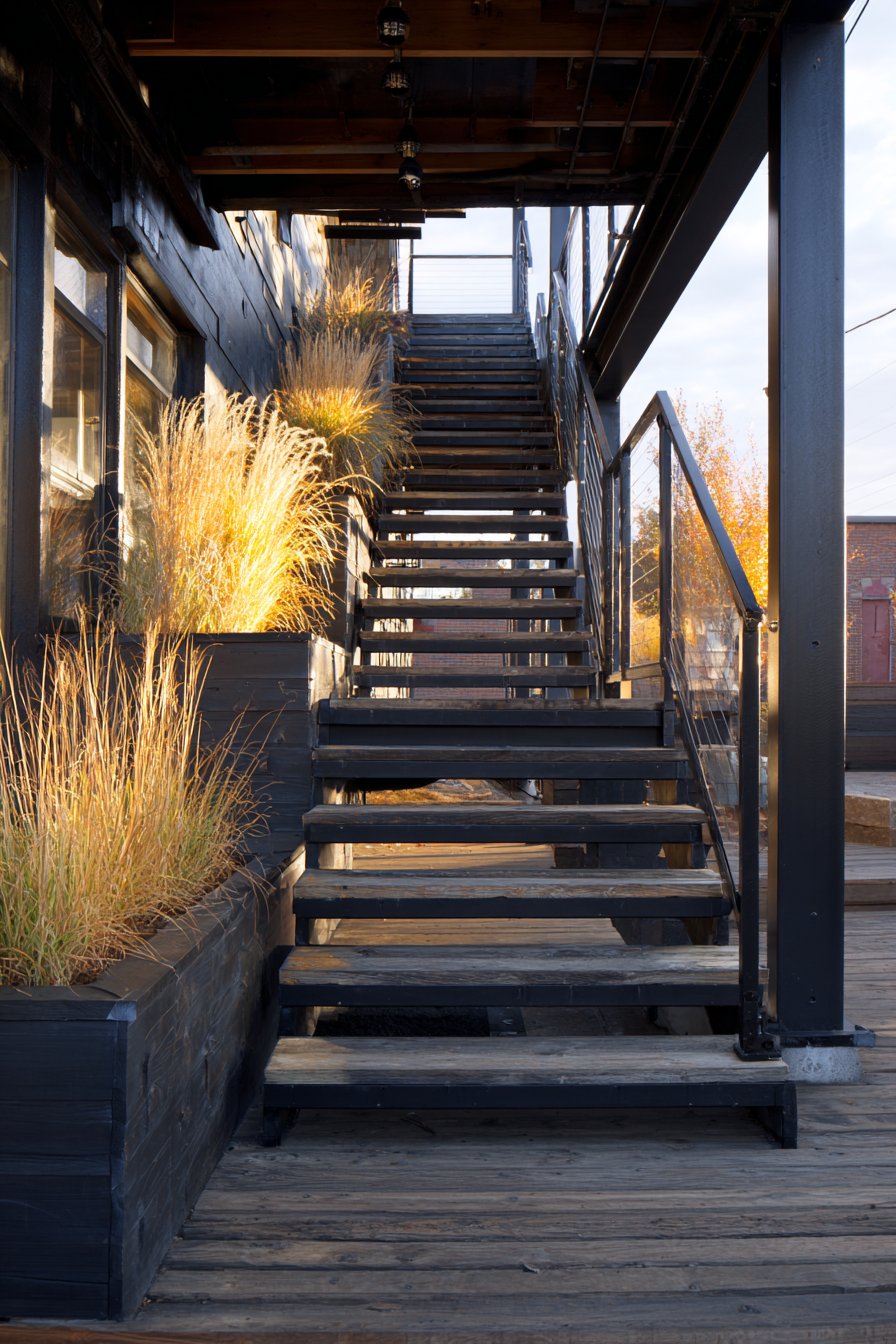
Blackened steel stringers support thermally modified ash wood treads in this floating design. The minimalist construction features open risers that create visual lightness. Air and light circulate freely through the stairway structure. This transparency prevents the stairs from blocking garden views beyond.
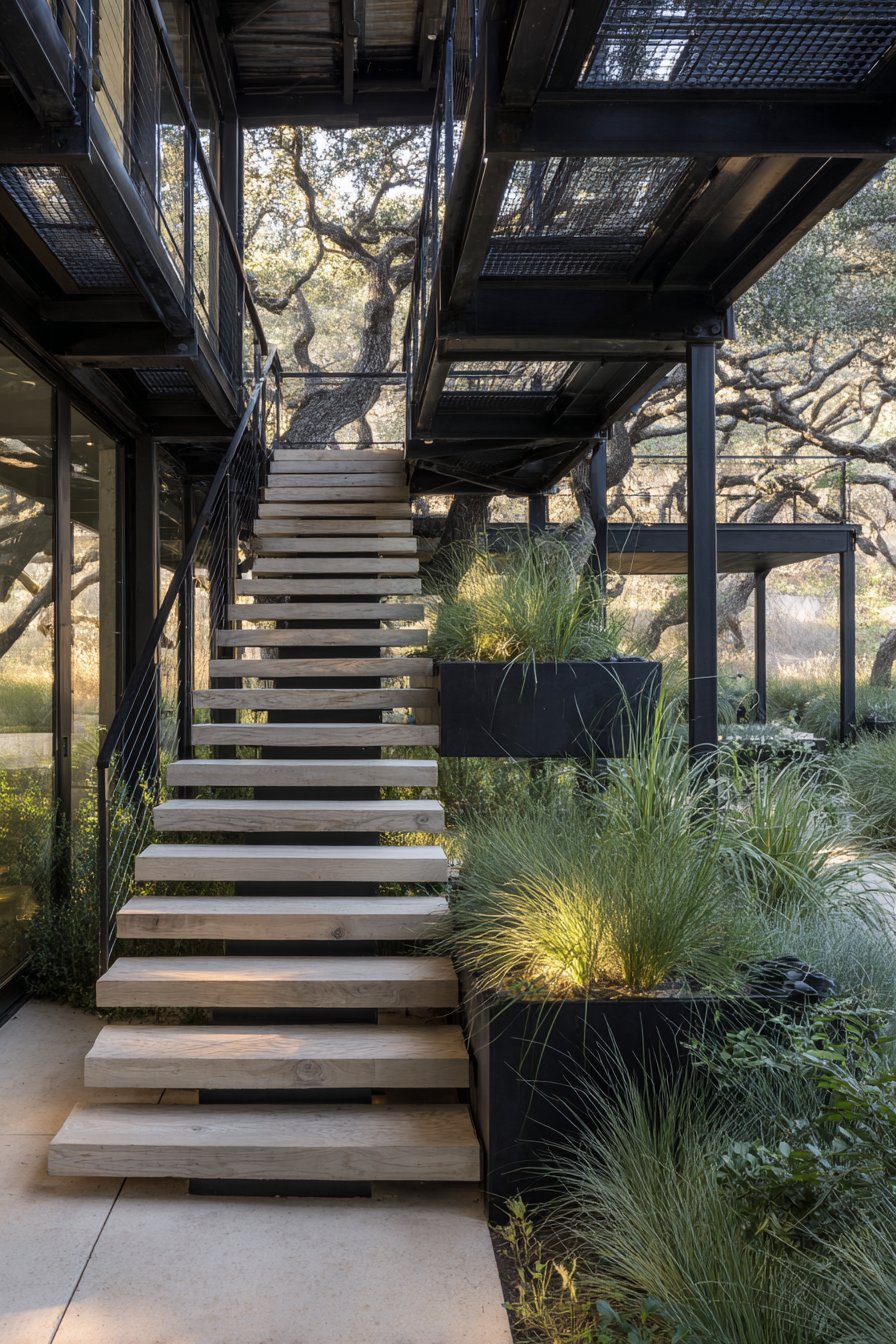
Integrated planters at each landing contain ornamental grasses. These plantings soften the industrial aesthetic of steel and wood. The contrast between manufactured materials and living plants creates balance. Golden hour photography captures warm light enhancing material contrasts.
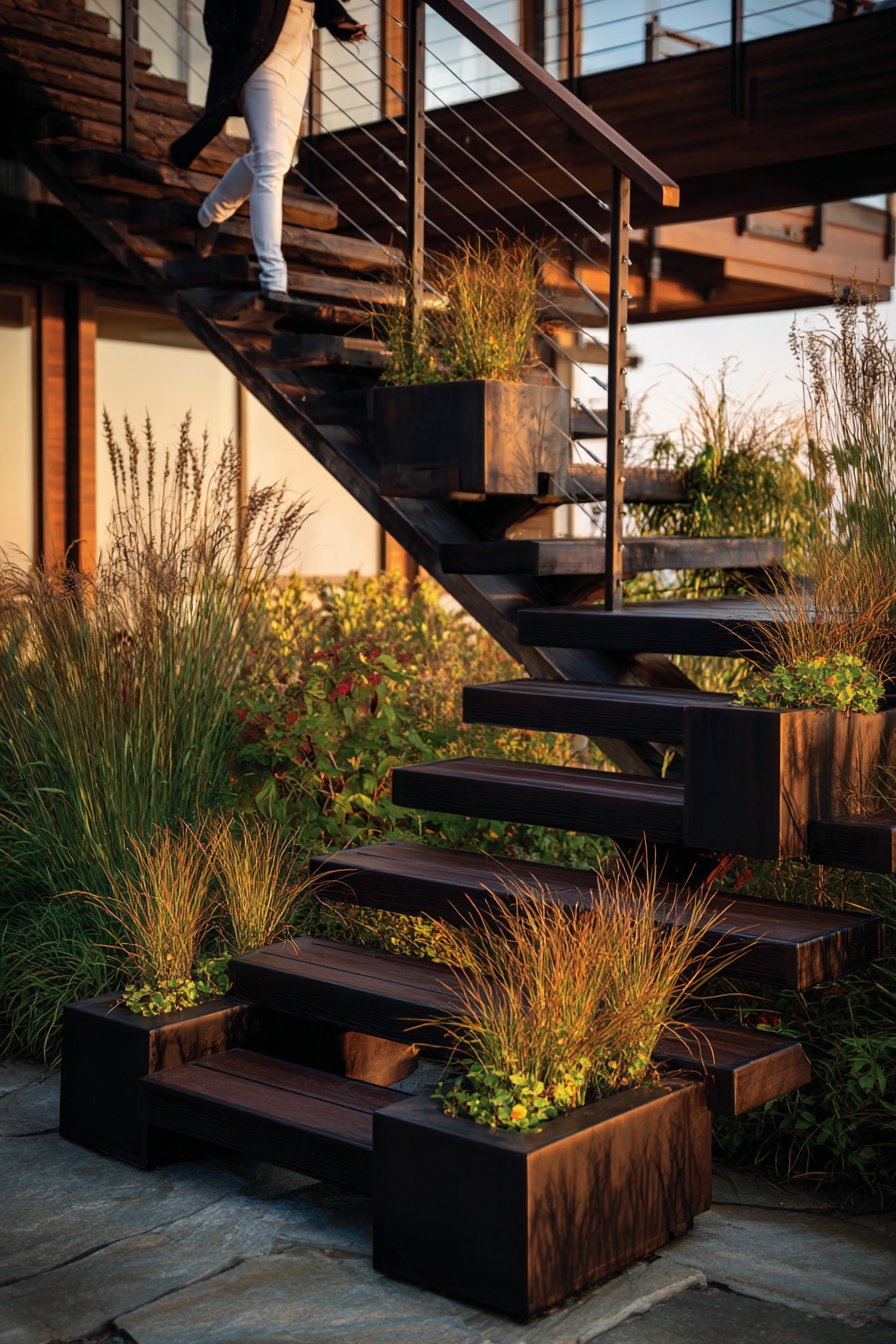
The thermally modified ash wood resists weather damage naturally. This treatment extends the lifespan without chemical preservatives. The light wood color contrasts beautifully against dark steel stringers. The combination creates striking visual rhythm through repetition.
The floating design connects modern patio spaces to elevated decks. Wide-angle perspectives showcase the full vertical journey between levels. The open construction minimizes visual obstruction of surrounding landscape. This transparency makes the stairs feel less imposing in outdoor settings.
Key Design Tips:
- Use thermally modified wood for natural weather resistance
- Incorporate open risers to maintain visual transparency
- Add planters at landings to soften industrial materials
- Choose blackened steel for contemporary aesthetic and durability
- Position stairs to preserve garden views and sight lines
4. Traditional Curved Brick with Wrought Iron
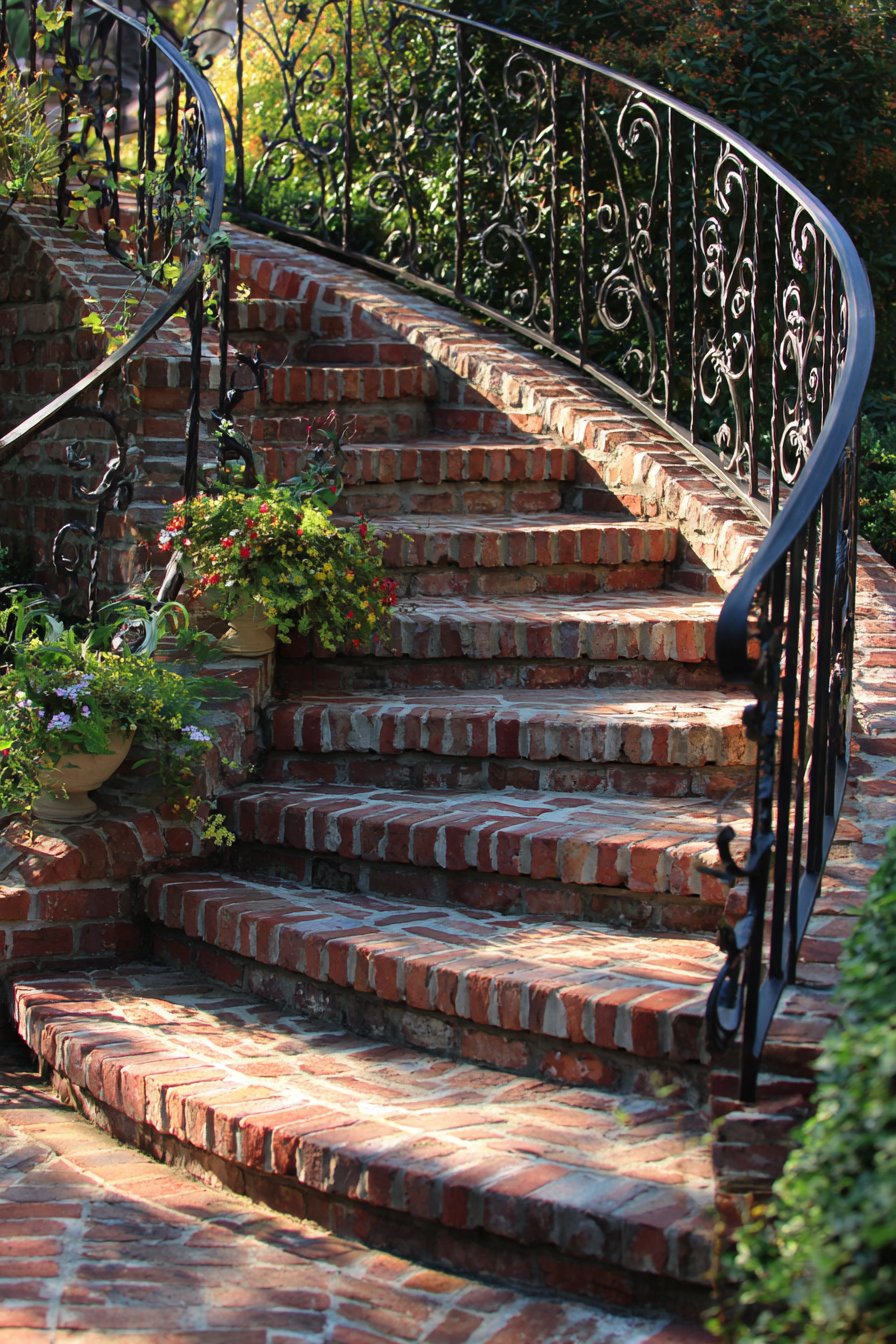
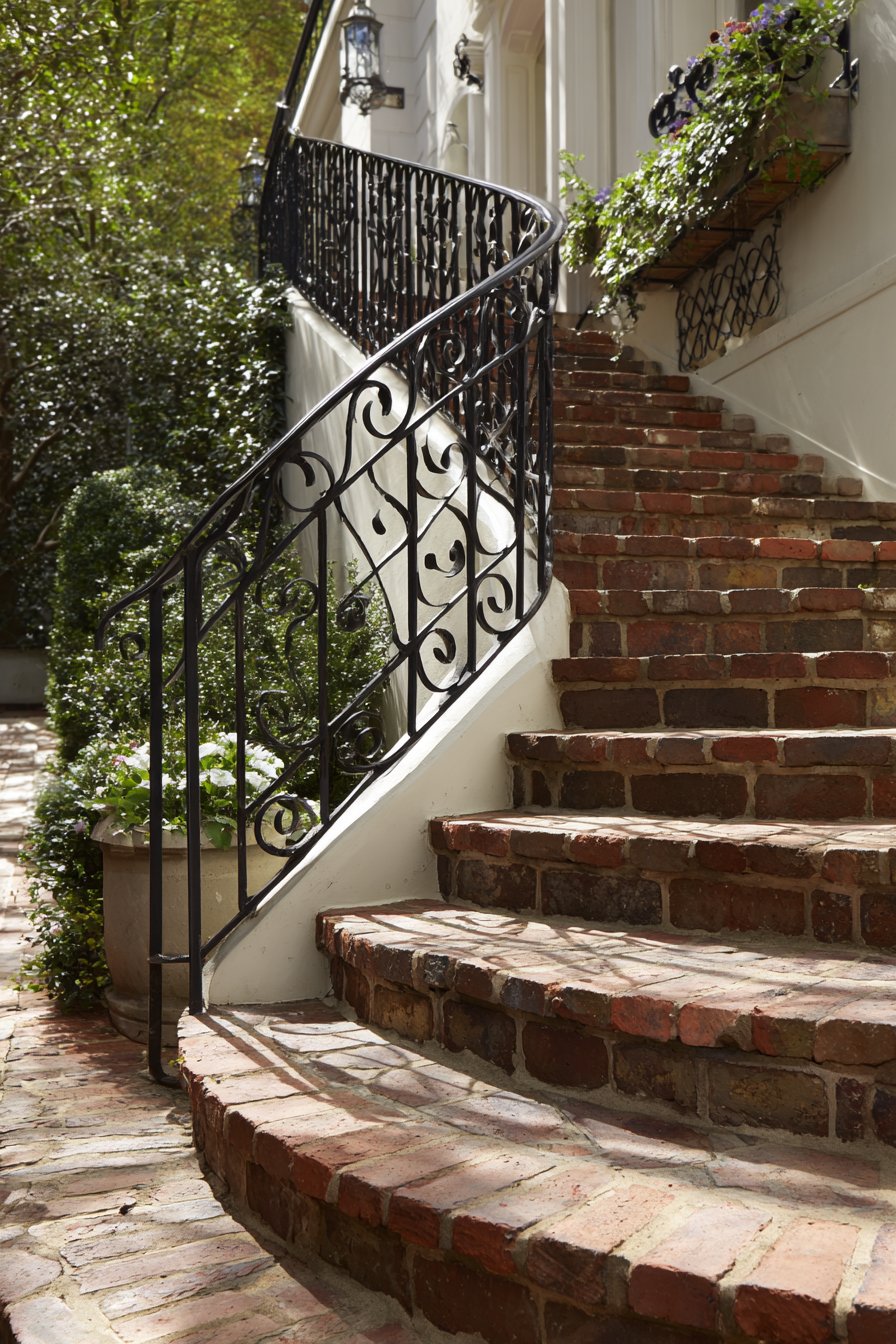
Herringbone-pattern brick treads create classic elegance in this traditional design. Mortared joints show slight weathering that adds character over time. The stairs follow a gentle curve ascending through formal garden spaces. Curved wrought iron railings with decorative scrollwork follow the graceful arc.
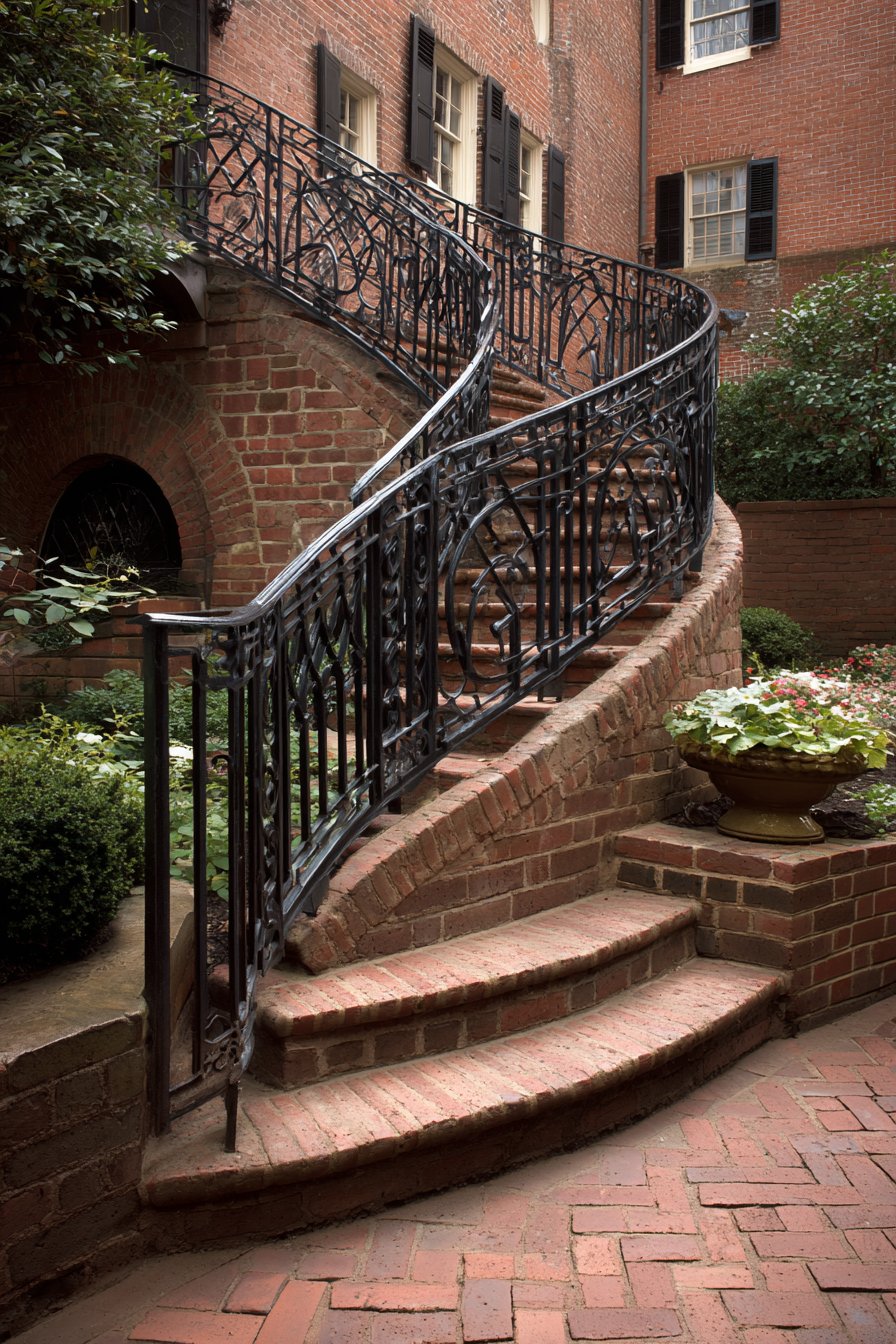
Antique brass post caps catch and reflect afternoon sunlight. Cast shadows from nearby hedges create depth across brick surfaces. These shadow patterns change throughout the day with sun movement. Landing areas incorporate integrated planters containing seasonal flowers.
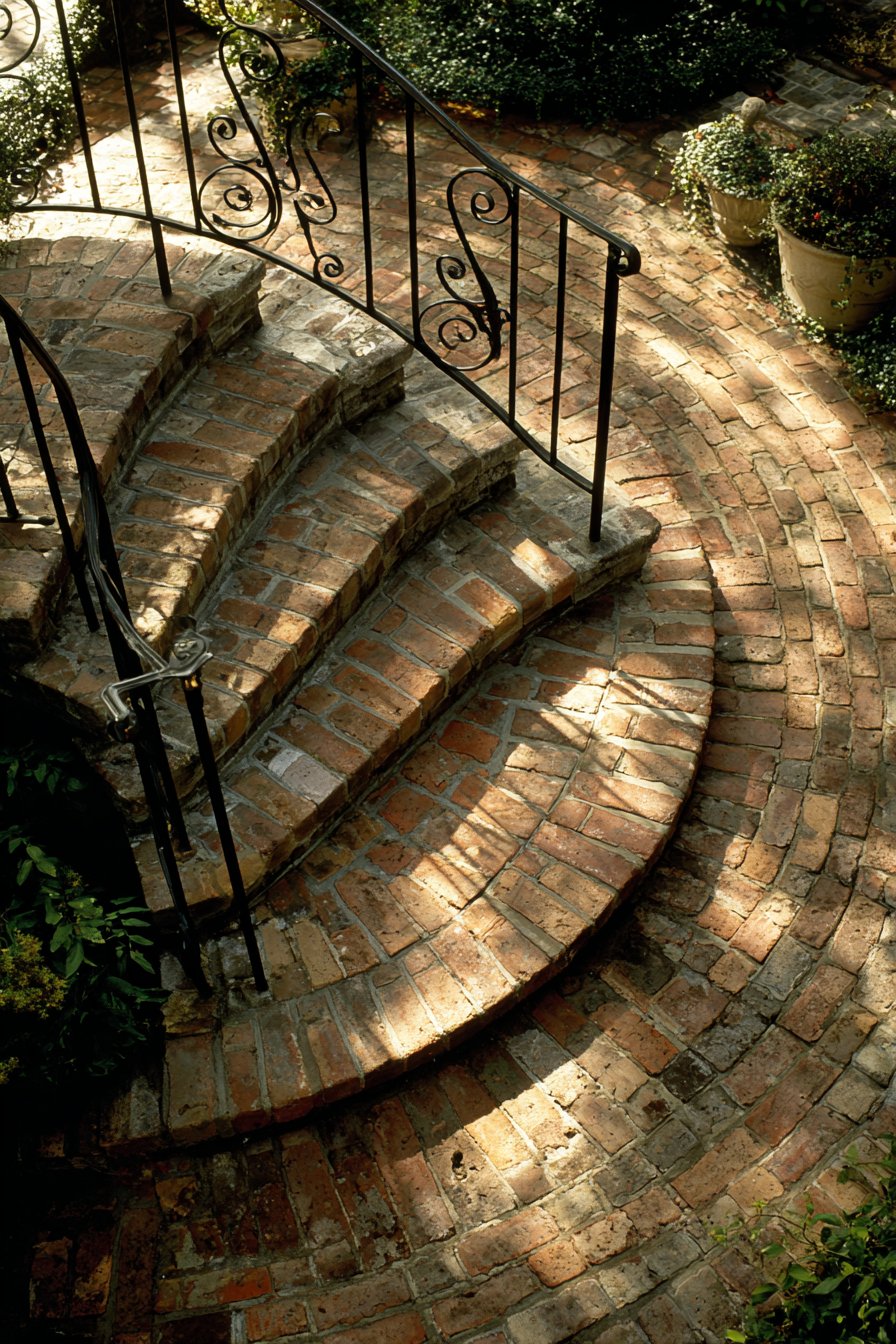
The craftsmanship of the brickwork demonstrates skilled masonry techniques. Each brick is carefully positioned to maintain pattern consistency. The herringbone layout provides visual interest beyond standard running bond. Slight weathering adds authenticity without compromising structural integrity.
Professional architectural photography emphasizes refined proportions and elegant curves. The traditional design suits formal garden settings and classical architecture. The combination of materials creates timeless appeal that transcends trends. Seasonal plantings allow for changing color palettes throughout the year.
Key Design Tips:
- Use herringbone brick pattern for visual interest and traction
- Incorporate curved railings with decorative details for elegance
- Add brass post caps for reflective accents
- Include landing planters for seasonal color changes
- Position near hedges to create dynamic shadow patterns
5. Minimalist Carved Concrete Integration
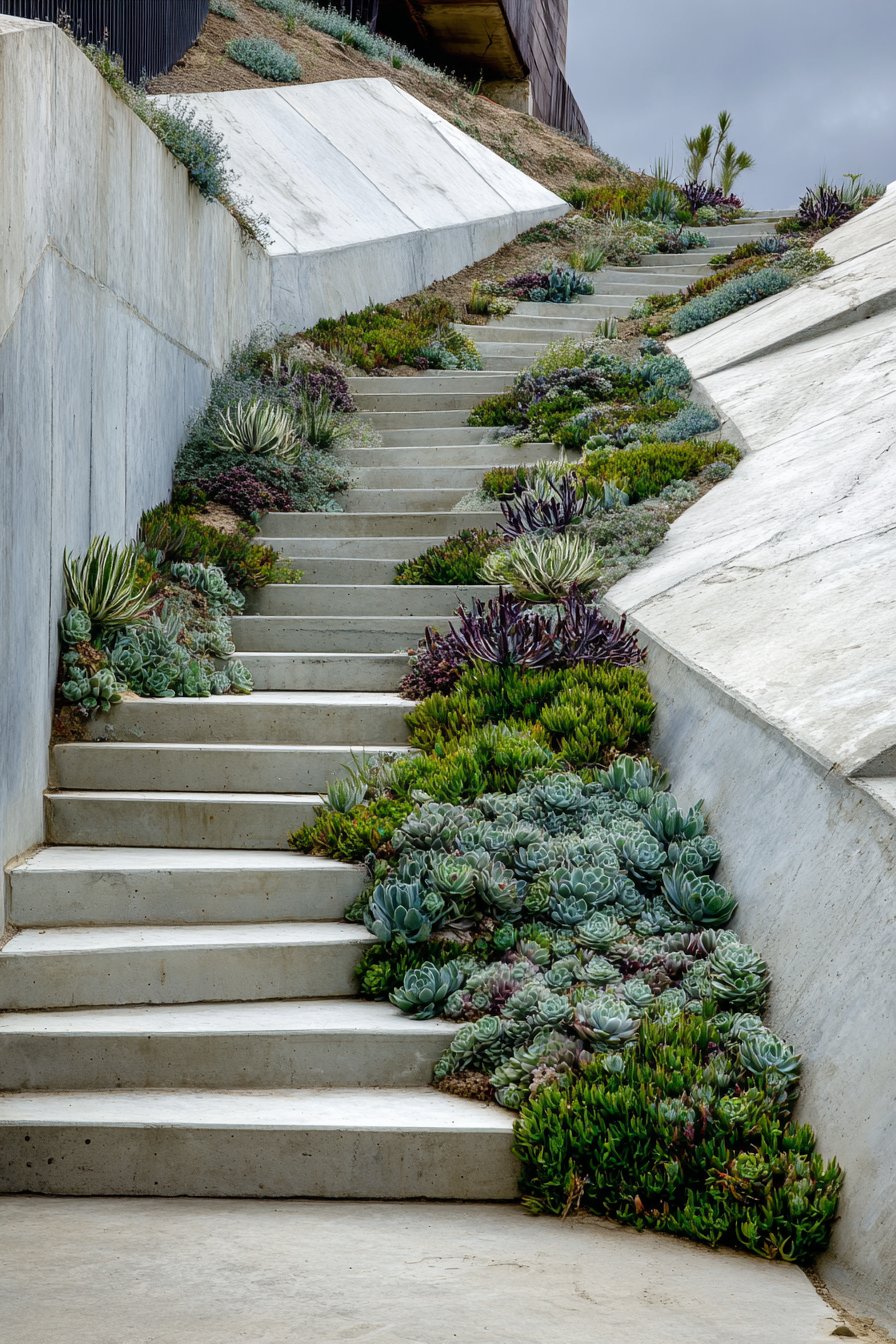
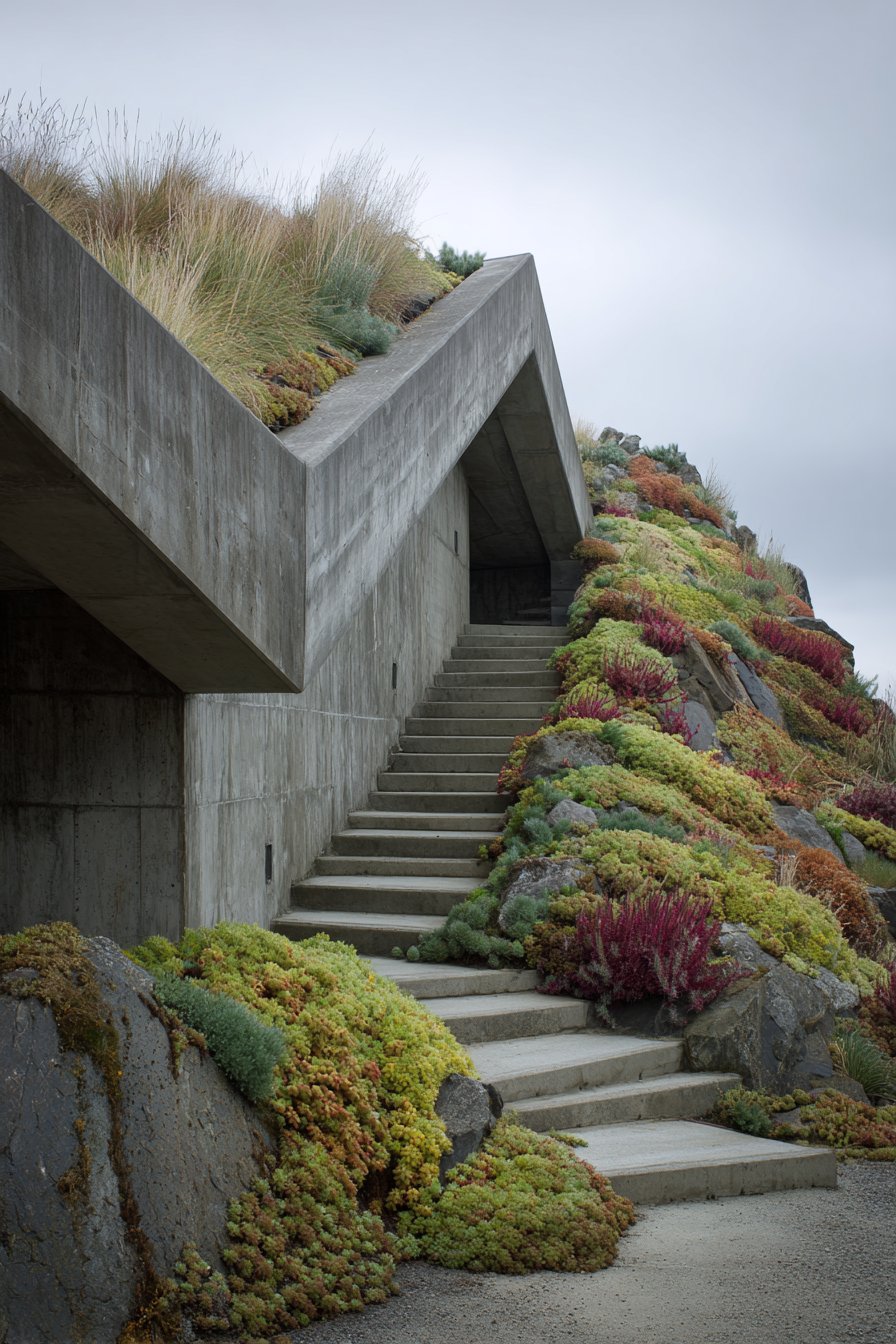
Stairs carved directly into sloped concrete retaining walls create monolithic integration. The continuous material flow eliminates transitions between wall and steps. Each tread features subtle bullnose edges for safety and visual softness. Light broom finish provides necessary traction on smooth concrete surfaces.
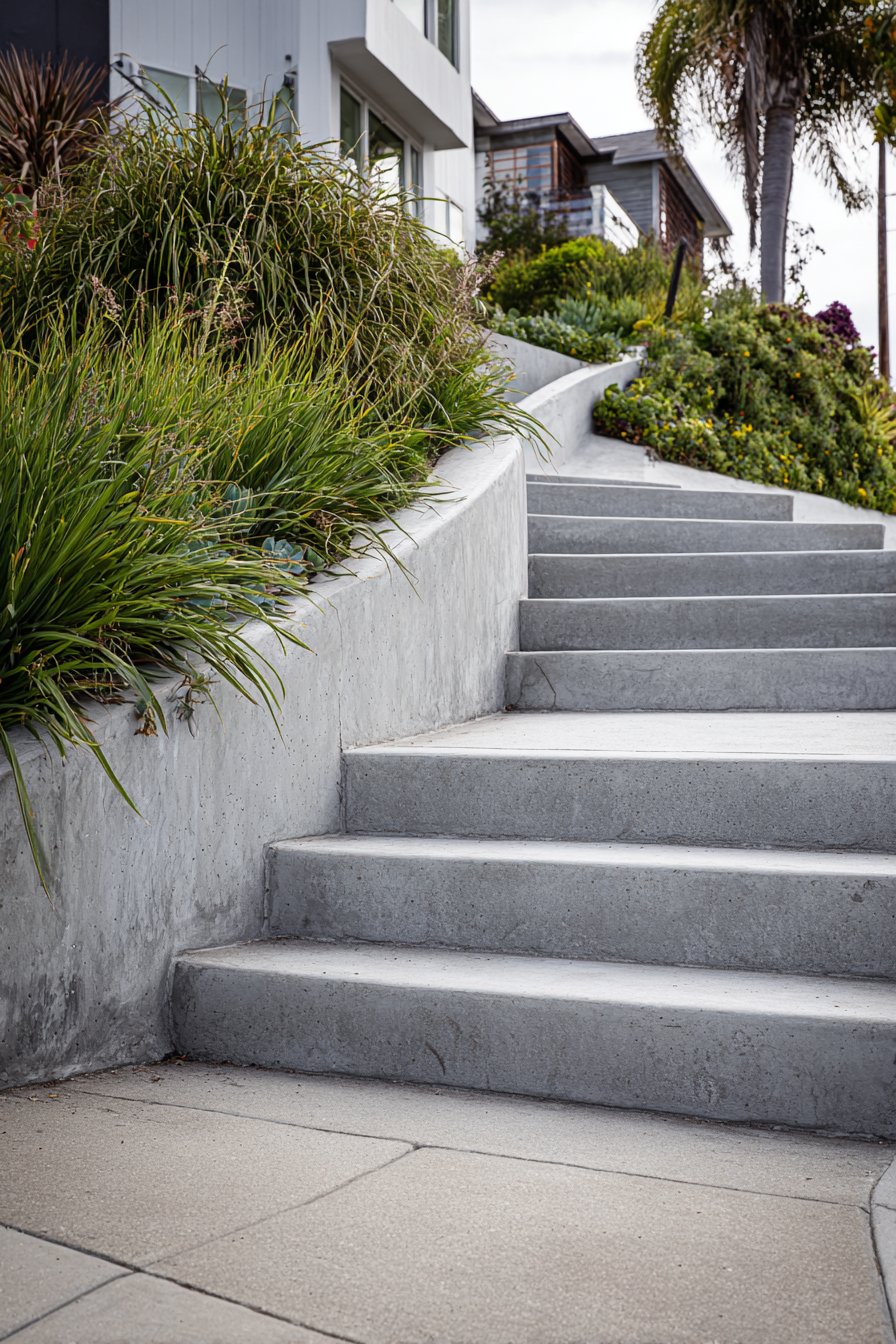
Native succulents and drought-tolerant plants cascade over the edges. These plantings soften geometric lines with organic forms and textures. The living elements provide color contrast against grey concrete. The combination demonstrates how architecture and nature can merge seamlessly.
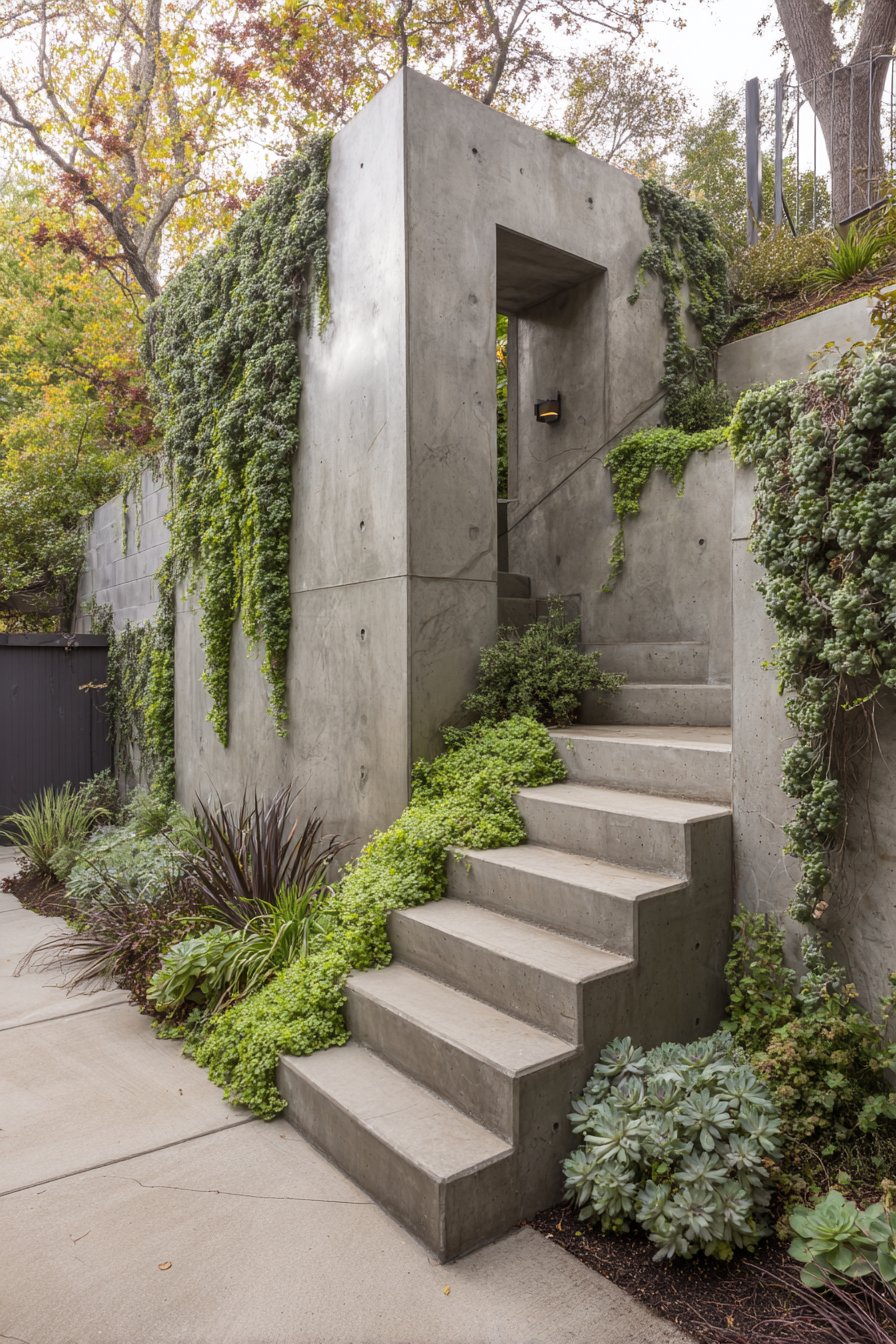
The honest concrete shows natural weathering and slight color variations. These characteristics add authenticity rather than appearing as flaws. The minimalist approach celebrates material simplicity and clean lines. Overcast lighting conditions reveal subtle surface textures most effectively.
The carved integration requires skilled formwork and concrete finishing techniques. The monolithic appearance creates strong visual impact through simplicity. This approach works particularly well in contemporary landscape designs. The minimal maintenance requirements appeal to practical homeowners.
Key Design Tips:
- Create continuous concrete flow between walls and stairs
- Add bullnose edges for safety and visual refinement
- Use broom finish for traction on smooth surfaces
- Incorporate drought-tolerant plants for low-maintenance softening
- Embrace natural concrete weathering as part of the aesthetic
6. Coastal Pressure-Treated Lumber Design
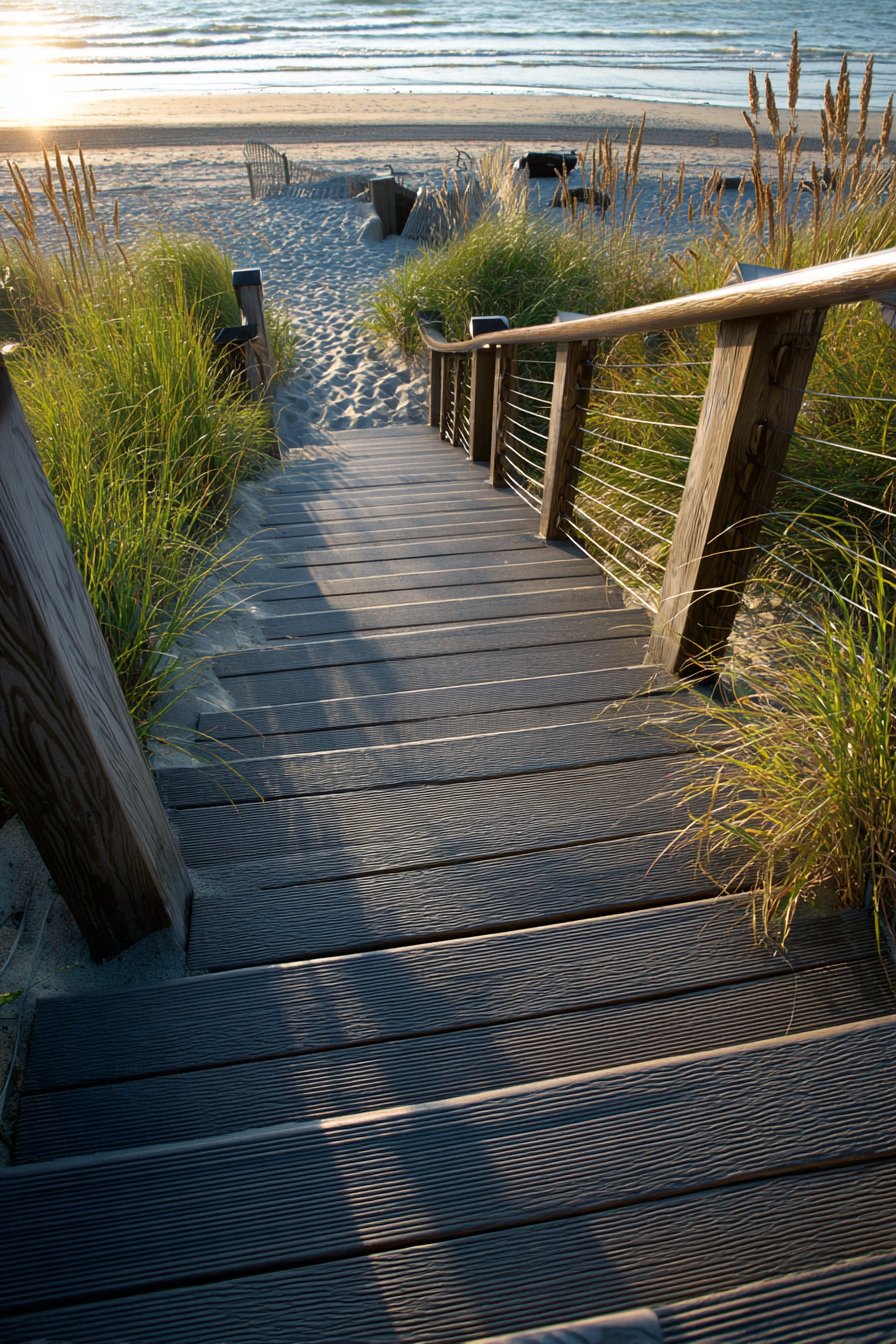
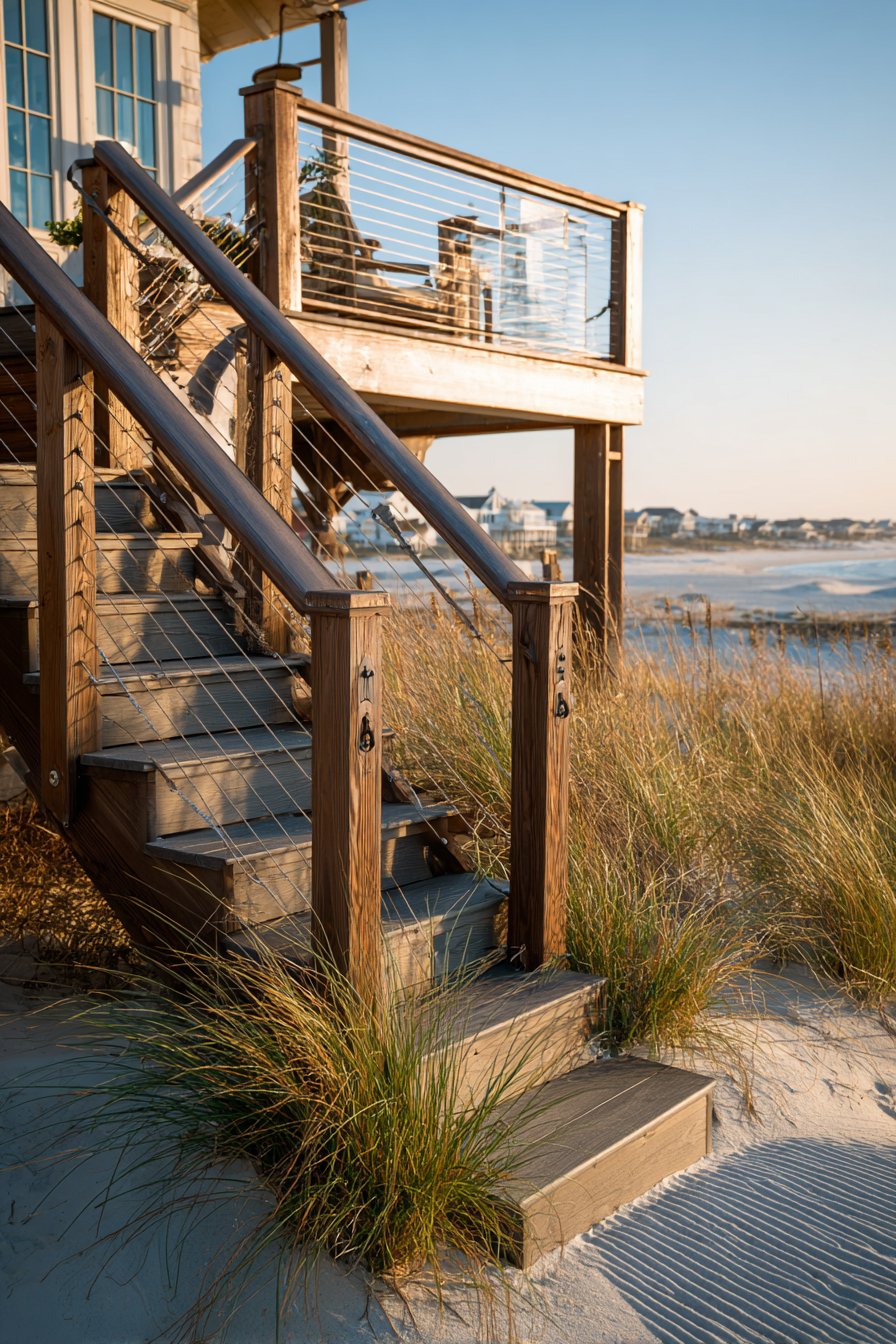
Marine-grade materials withstand harsh coastal environments in this practical design. Pressure-treated lumber framing uses stainless steel hardware resistant to salt air. Wide treads made from composite decking resist moisture and fading. The driftwood grey color complements beach settings naturally.
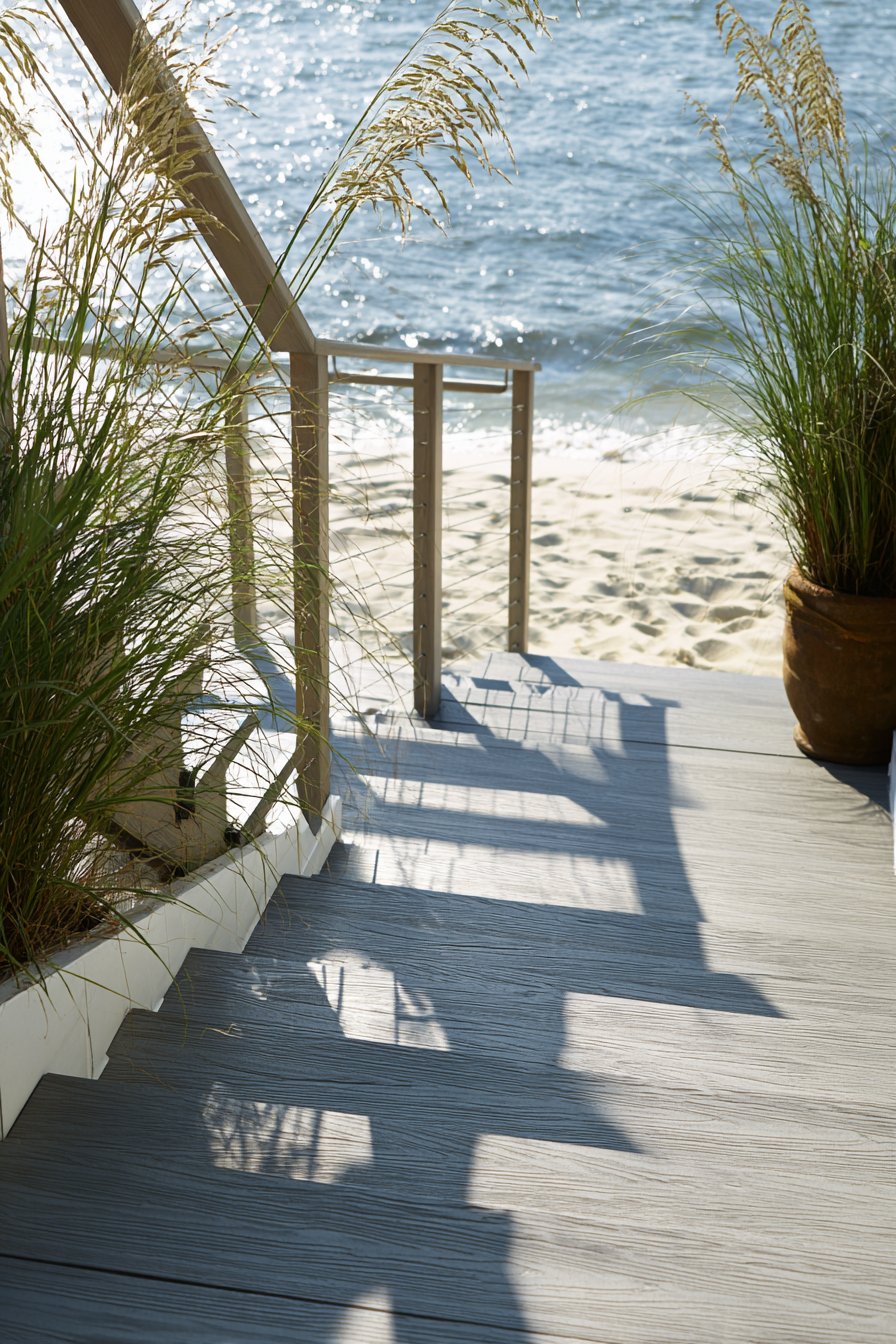
Horizontal cable railings maintain ocean views while providing necessary safety. Beach grasses planted in adjacent dunes sway with coastal breezes. These native plantings partially obscure lower stairs creating mystery. Early morning light creates long shadows across ribbed decking surfaces.
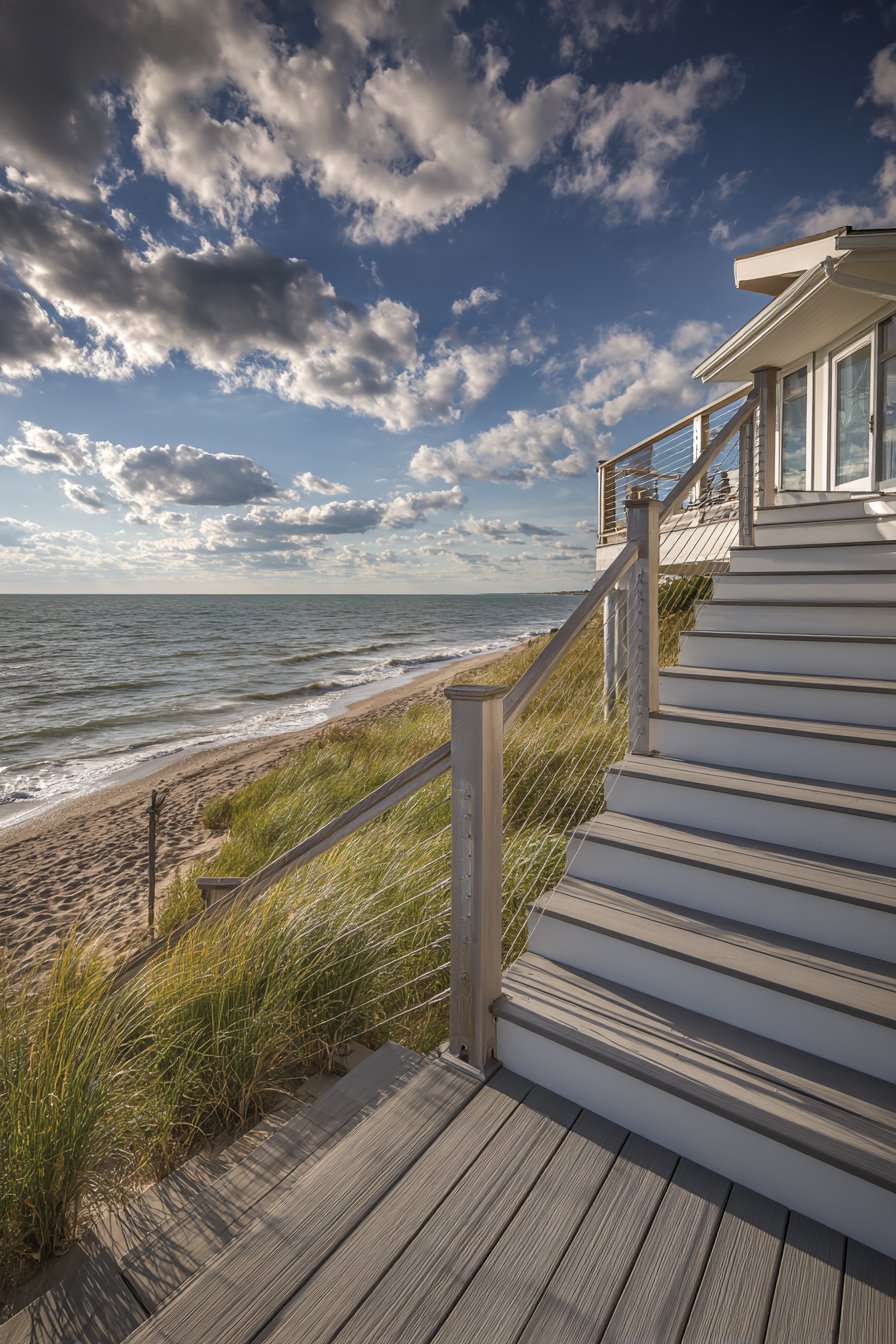
The composite decking material requires minimal maintenance compared to natural wood. The surface texture provides good traction even when wet from spray. Salt-weathered wooden posts develop attractive grey patina over time. This aging process suits the coastal aesthetic perfectly.
Wide-angle beach photography captures stairs ascending from sandy beach to elevated deck. The design demonstrates how functional structures adapt to challenging environments. The materials selected specifically address coastal durability requirements. Proper installation ensures longevity despite constant salt exposure.
Key Design Tips:
- Use marine-grade stainless steel hardware for corrosion resistance
- Choose composite decking to resist moisture and fading
- Install horizontal cable railings to preserve ocean views
- Plant native beach grasses for natural integration
- Select materials that develop attractive weathered patina
7. Natural Stone Bluestone Organic Design
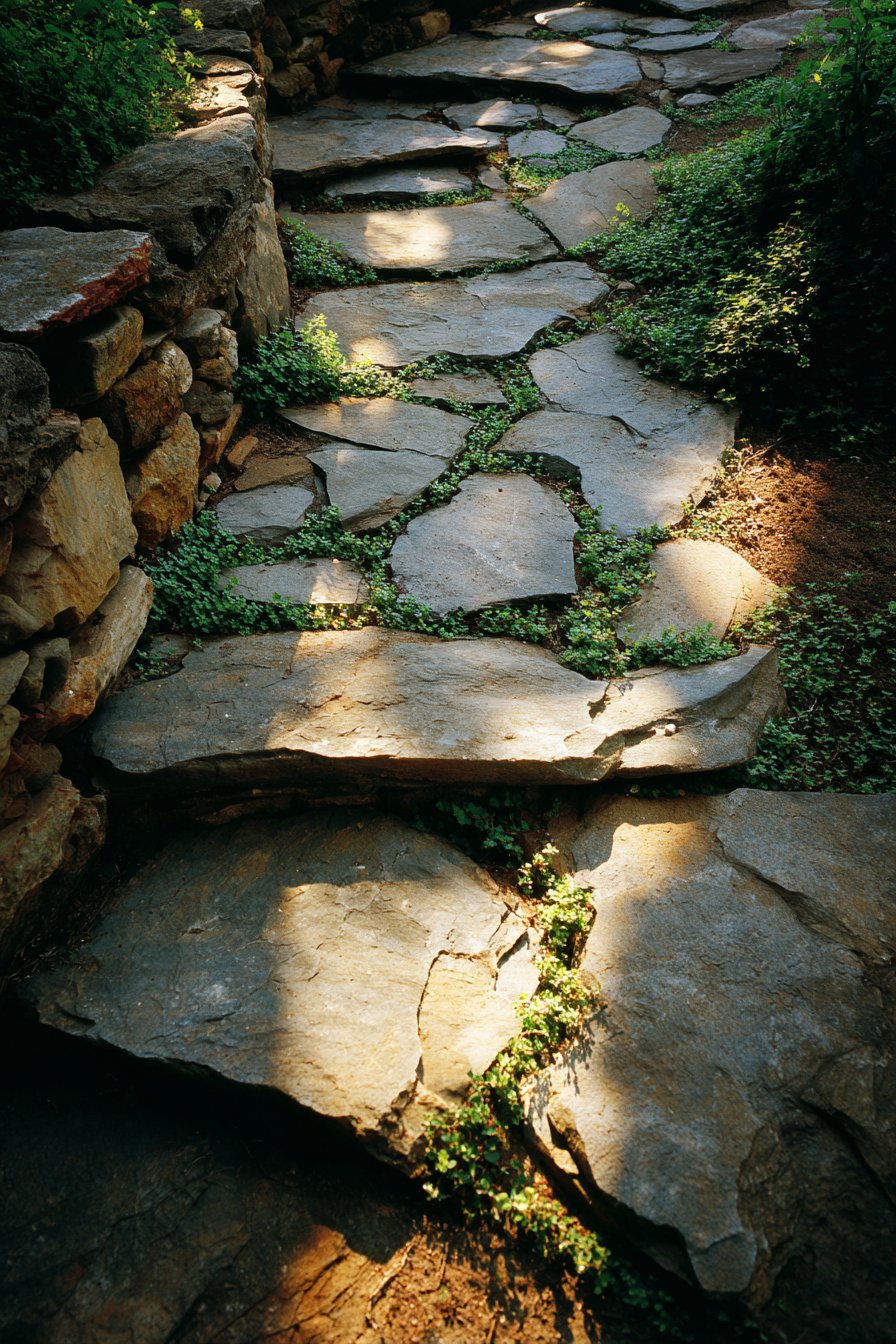
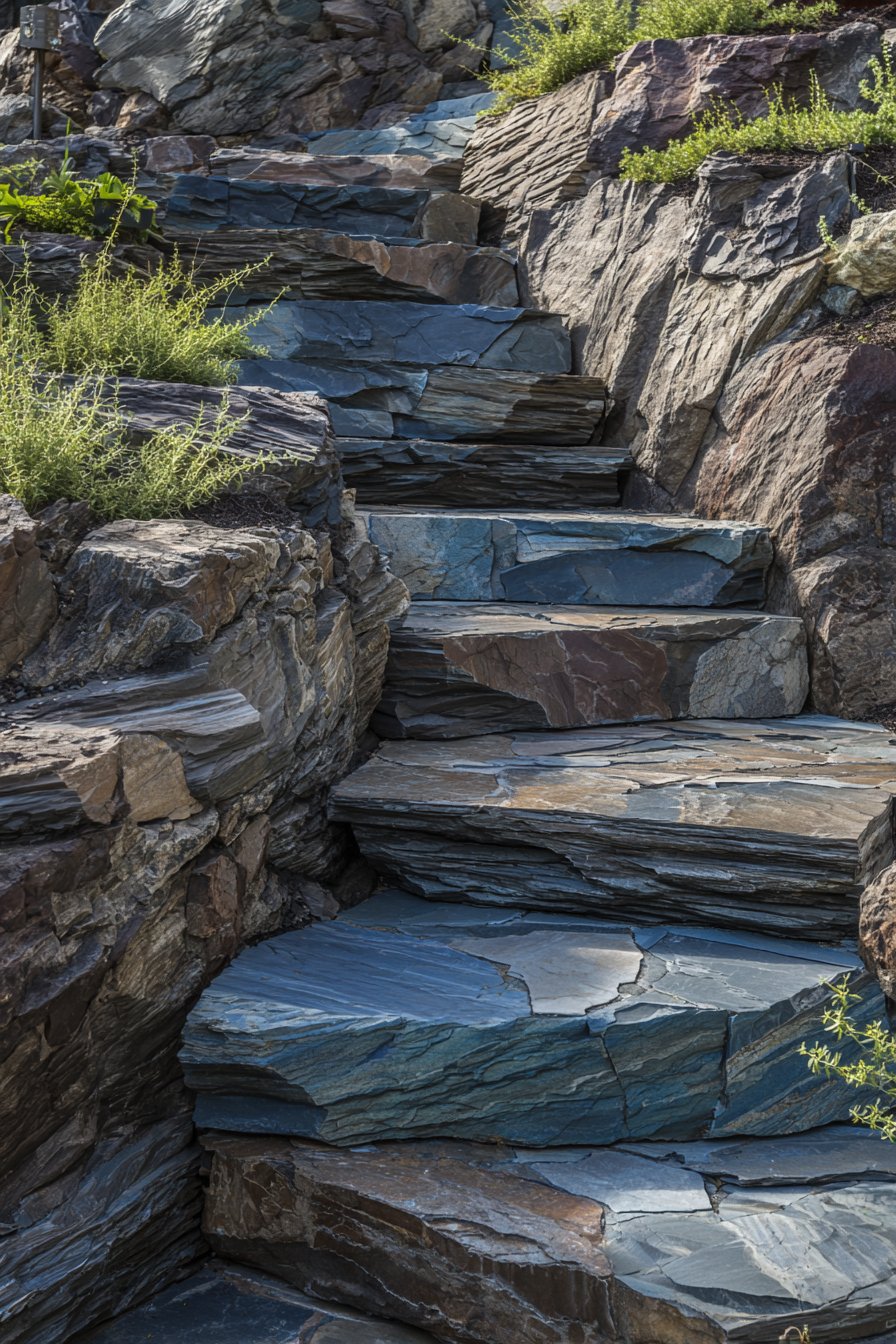
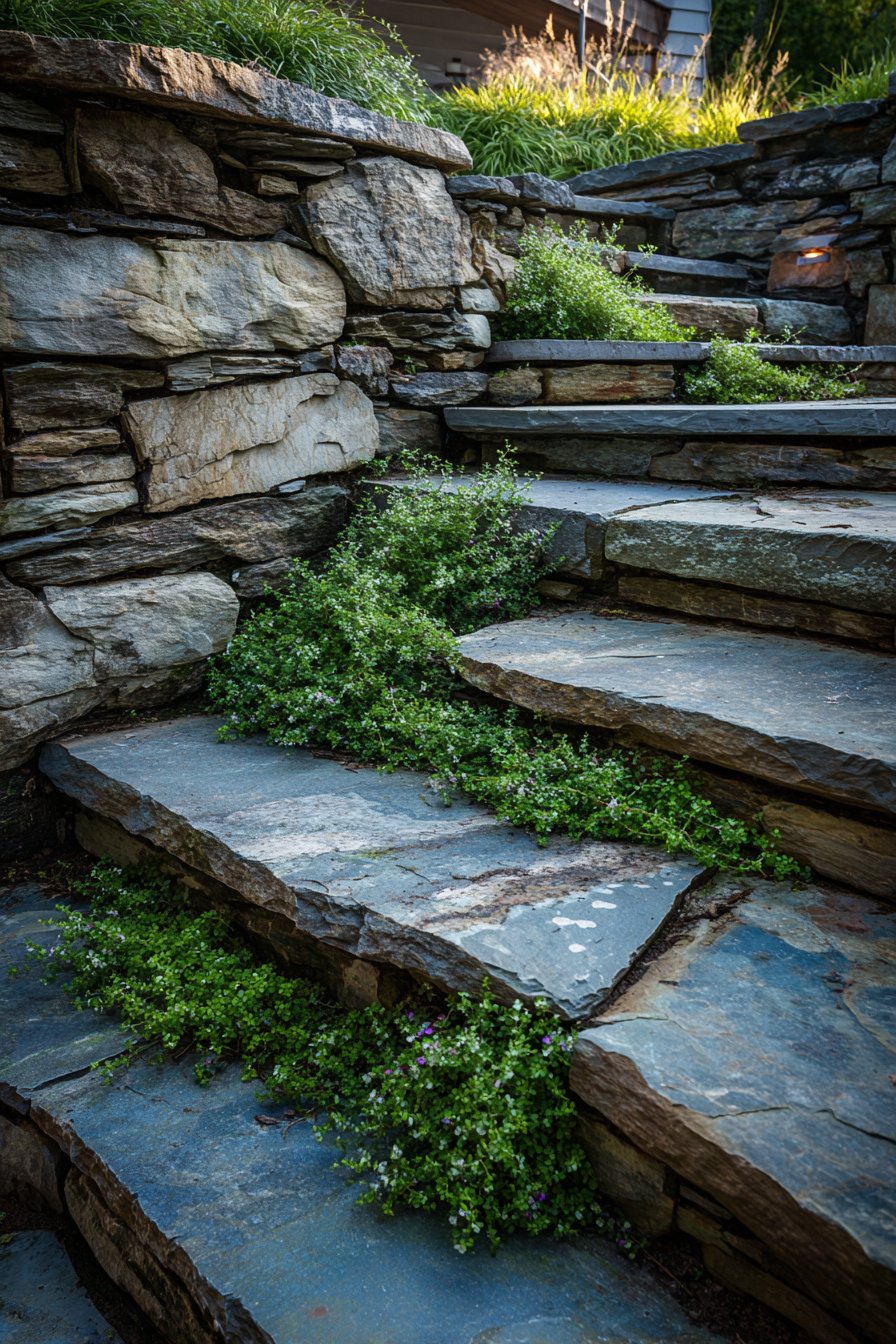
Irregularly shaped bluestone slabs create organic stairs through dry-stacking techniques. Each stone displays unique color variations from grey to blue-green. Natural cleft surfaces provide inherent texture and excellent traction. The varied thickness of each stone adds to the organic appearance.
Low-voltage path lights recessed into adjacent garden beds illuminate edges safely. Creeping thyme grows between stones releasing fragrance when stepped upon. This living groundcover softens the hardscape with delicate flowers and scent. Afternoon sunlight emphasizes the natural stone color variations beautifully.
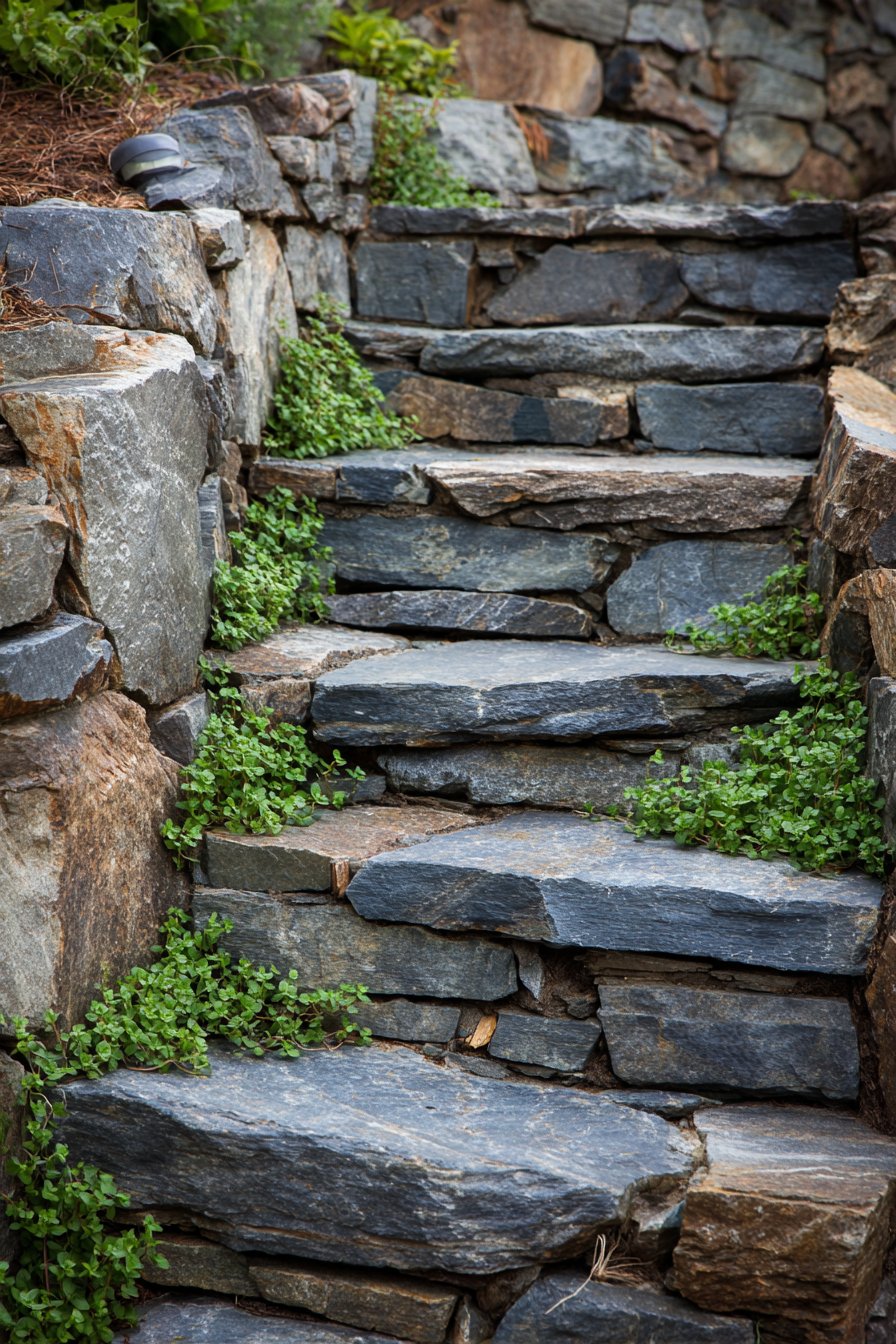
The dry-stacking construction method requires skilled placement for stability. Stones interlock naturally without mortar creating drainage between treads. This technique suits informal garden settings and naturalistic landscapes. The irregular edges and varied sizes create artistic composition.
Detail photography focuses on authentic stone textures and natural characteristics. The integration of hardscape with softscape plantings demonstrates balanced design. The bluestone material develops richer patina over years of exposure. This aging process enhances rather than degrades the overall appearance.
Key Design Tips:
- Select bluestone for natural color variations and durability
- Use dry-stacking techniques for organic appearance
- Install low-voltage lighting for safe evening navigation
- Plant creeping thyme between stones for fragrance and softness
- Embrace irregular edges as part of the natural aesthetic
8. Industrial Perforated Steel Contemporary
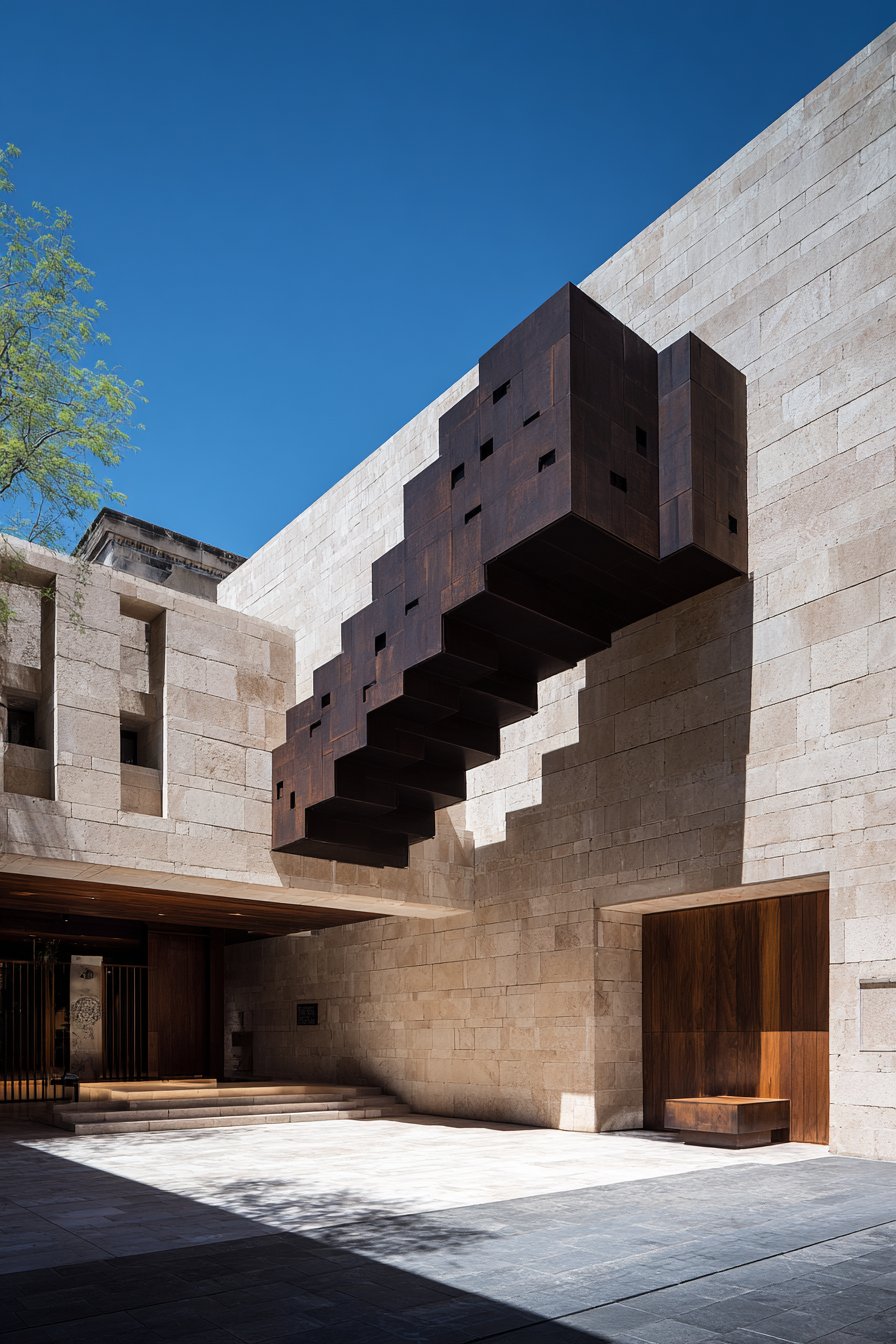
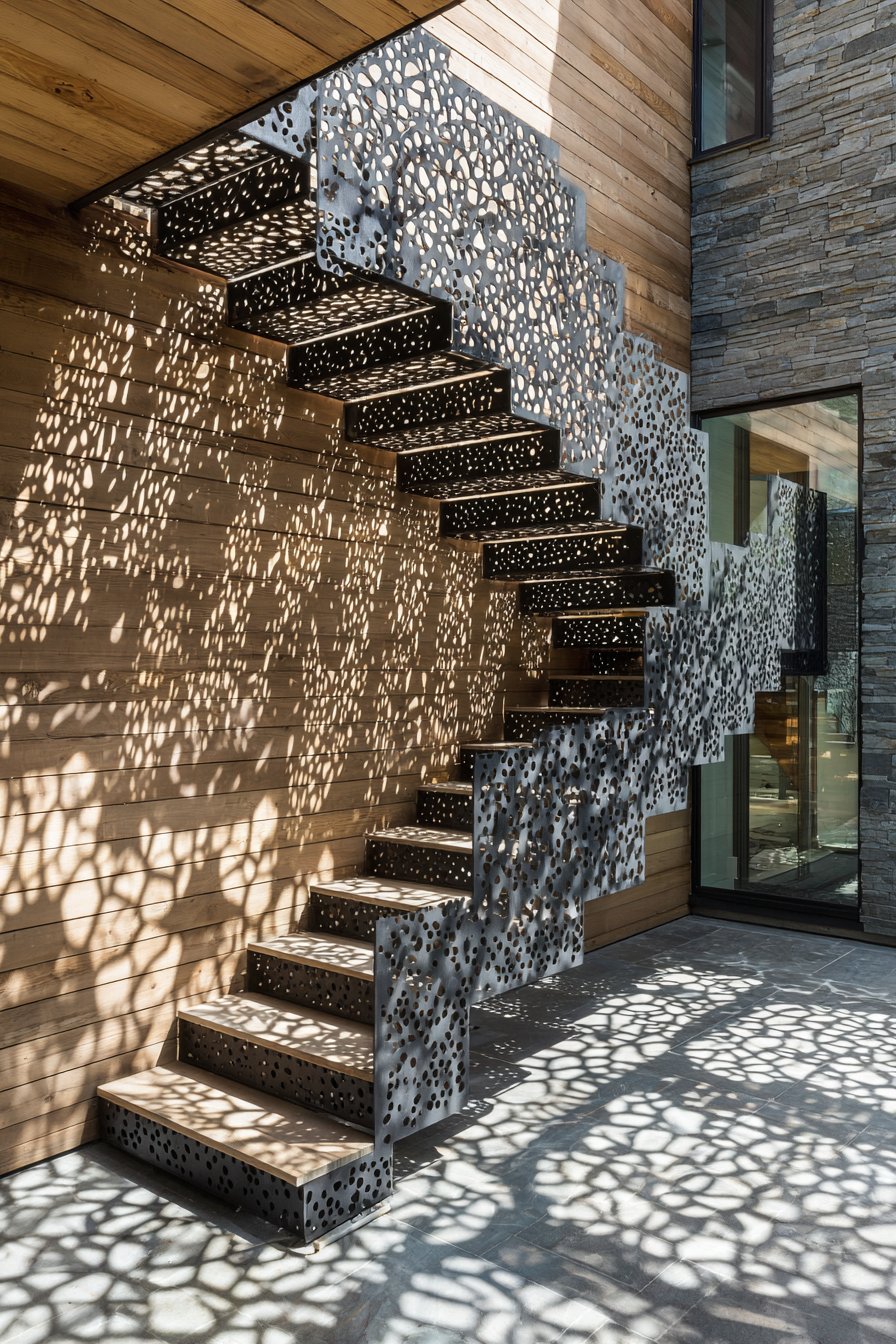
Perforated steel treads create geometric shadow patterns on adjacent walls. The industrial design features a single central stringer with cantilevered treads. Powder-coated charcoal grey finish resists weathering while maintaining refined appearance. The open design allows rainwater drainage and prevents ice accumulation.
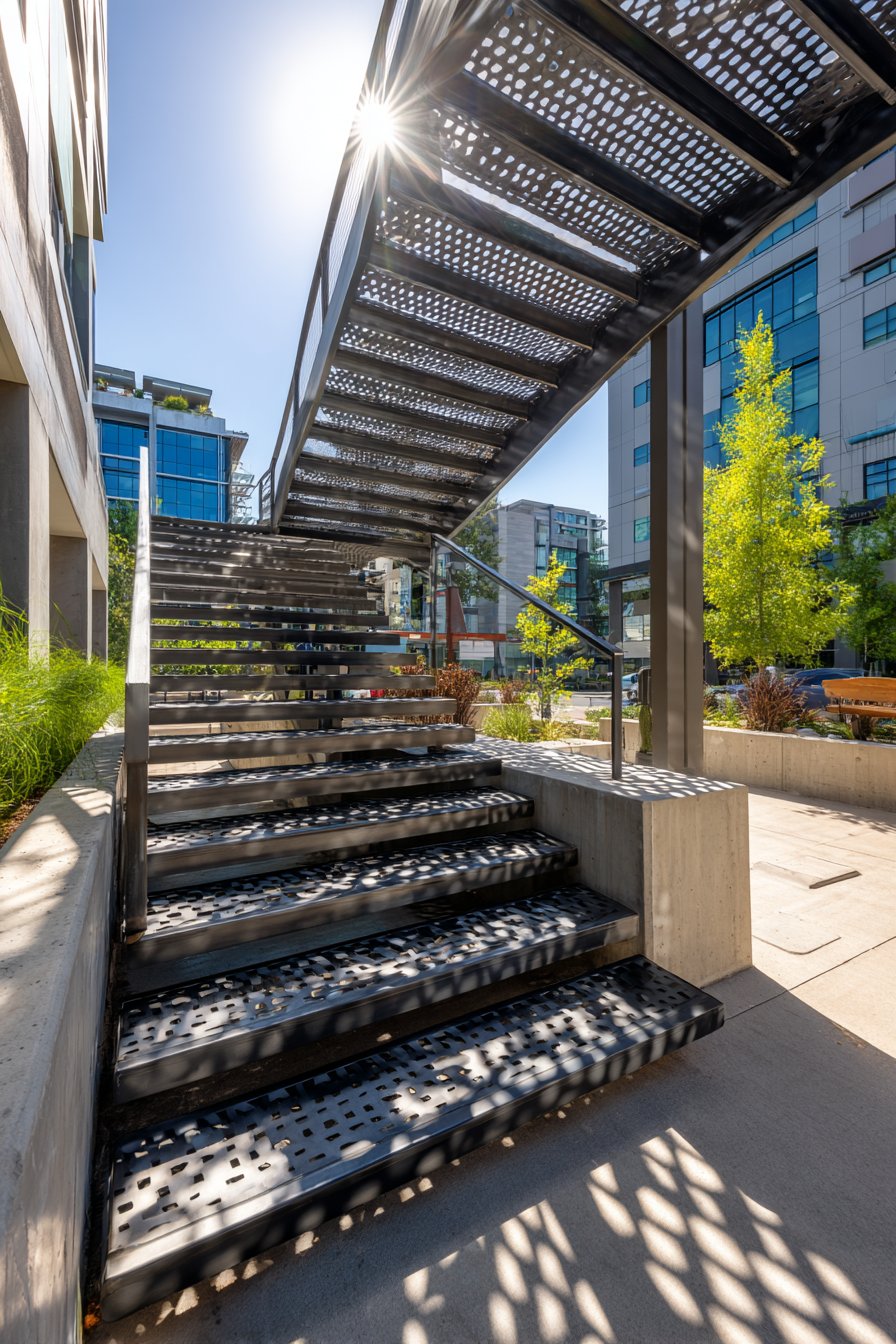
Midday overhead sun creates dramatic lattice shadows through perforations. These shadow patterns add visual interest beyond the stairs themselves. The geometric repetition creates strong graphic impact in architectural photography. The industrial aesthetic suits contemporary homes and modern landscapes.
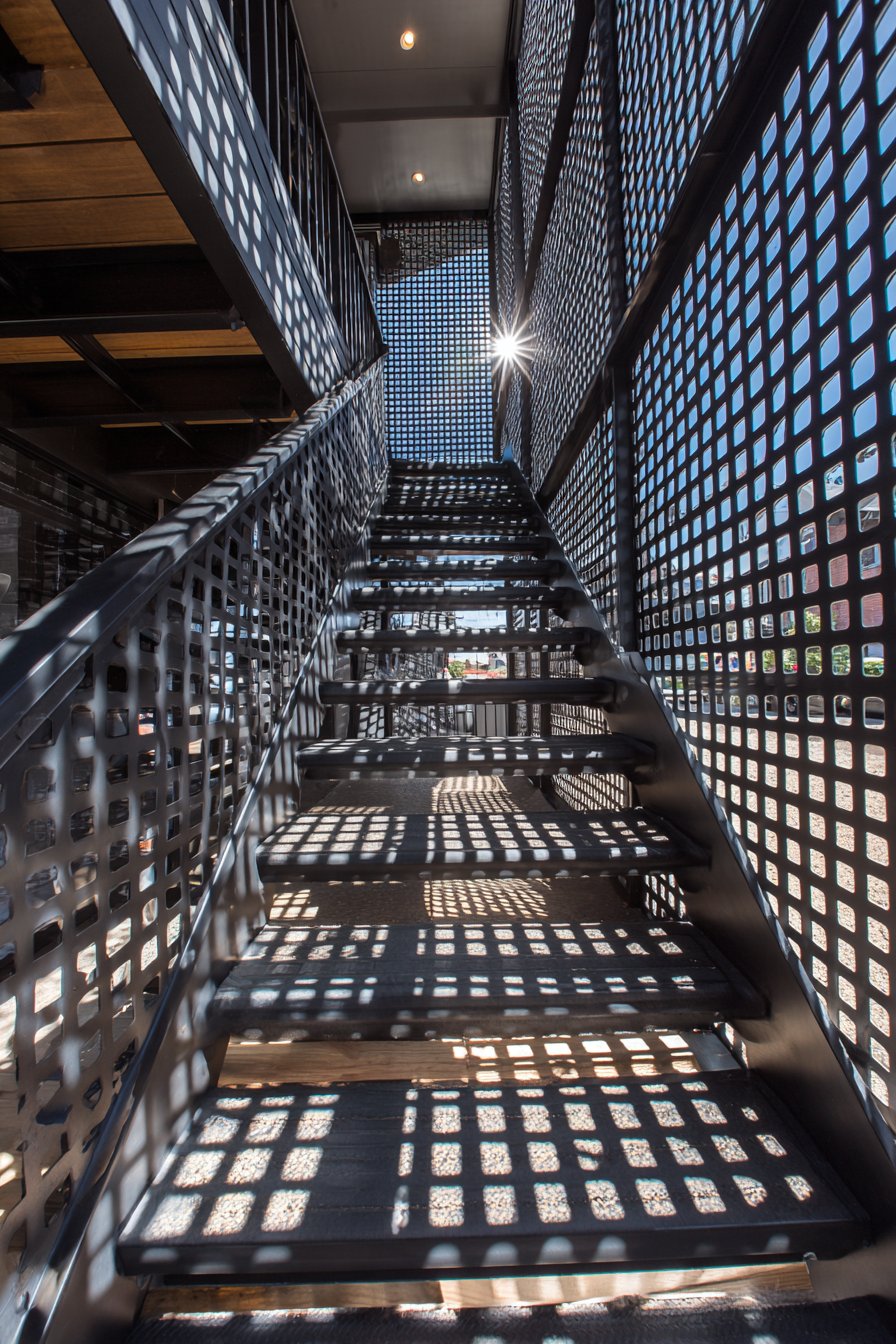
The perforated material reduces weight while maintaining structural integrity. The holes provide drainage preventing standing water and ice formation. This practical feature makes the design suitable for varied climates. The powder coating protects against rust and corrosion effectively.
Wide-angle perspectives show the full height against modern architectural backdrops. The minimal visual mass of perforated treads appears lighter than solid construction. This transparency prevents the stairs from dominating the outdoor space. The industrial materials require minimal maintenance over time.
Key Design Tips:
- Use perforated steel for drainage and reduced visual weight
- Apply powder coating for weather resistance and color consistency
- Design with central stringer for clean contemporary lines
- Position to capture dramatic shadow patterns during peak sun
- Choose industrial materials for low maintenance requirements
9. Terraced Garden Railroad Tie Design
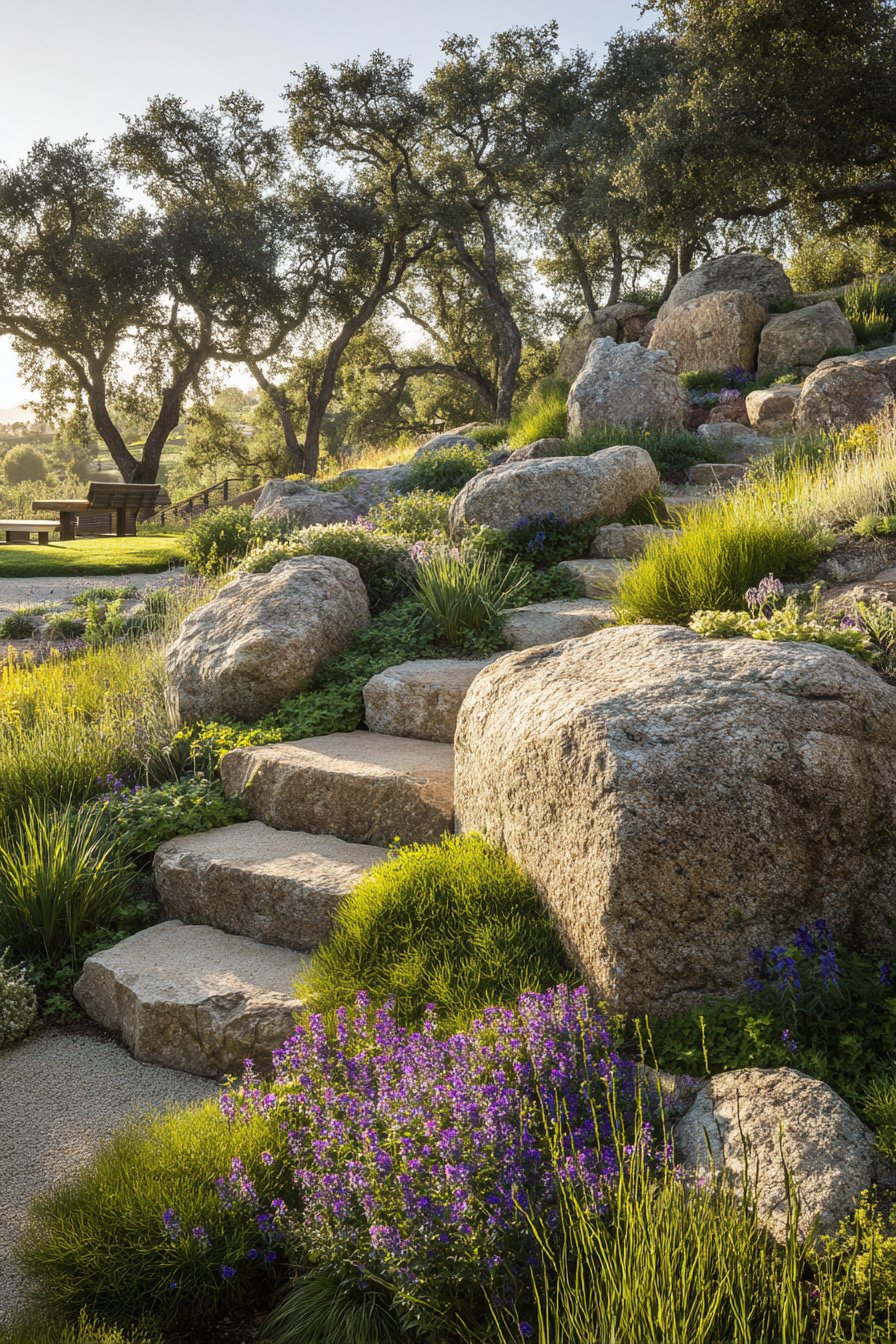
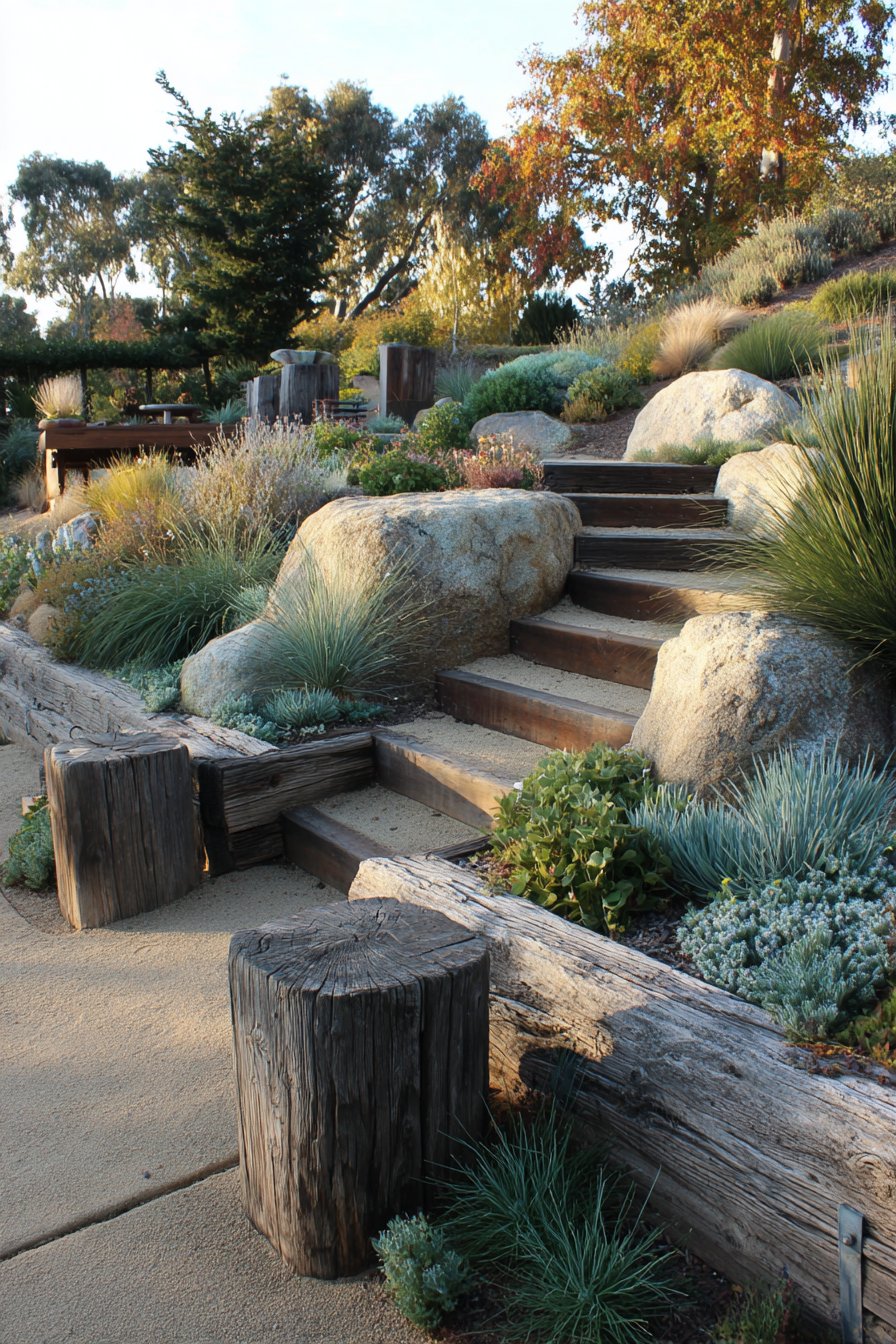
Railroad tie risers filled with decomposed granite create terraced garden stairs. Native wildflowers and ornamental grasses border each step naturally. The aged railroad ties show authentic weathering with checking and grey patina. Wide landings accommodate seating boulders placed for rest stops.
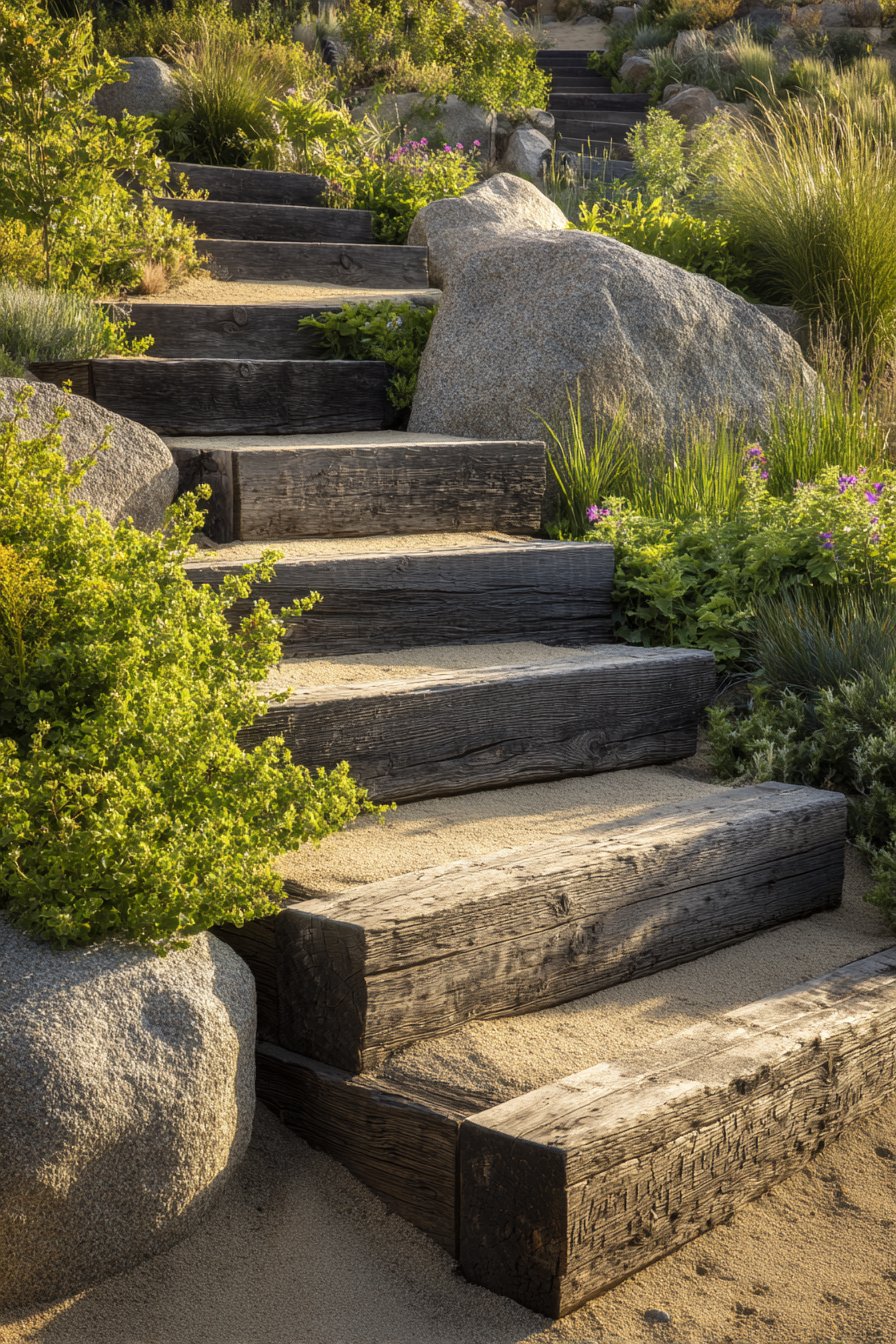
Late spring afternoon light illuminates newly emerged perennials beautifully. Long shadows cast from substantial timber risers add depth and dimension. The environmental photography captures harmonious integration with naturalistic gardens. The design prioritizes ecological integration over formal geometry.
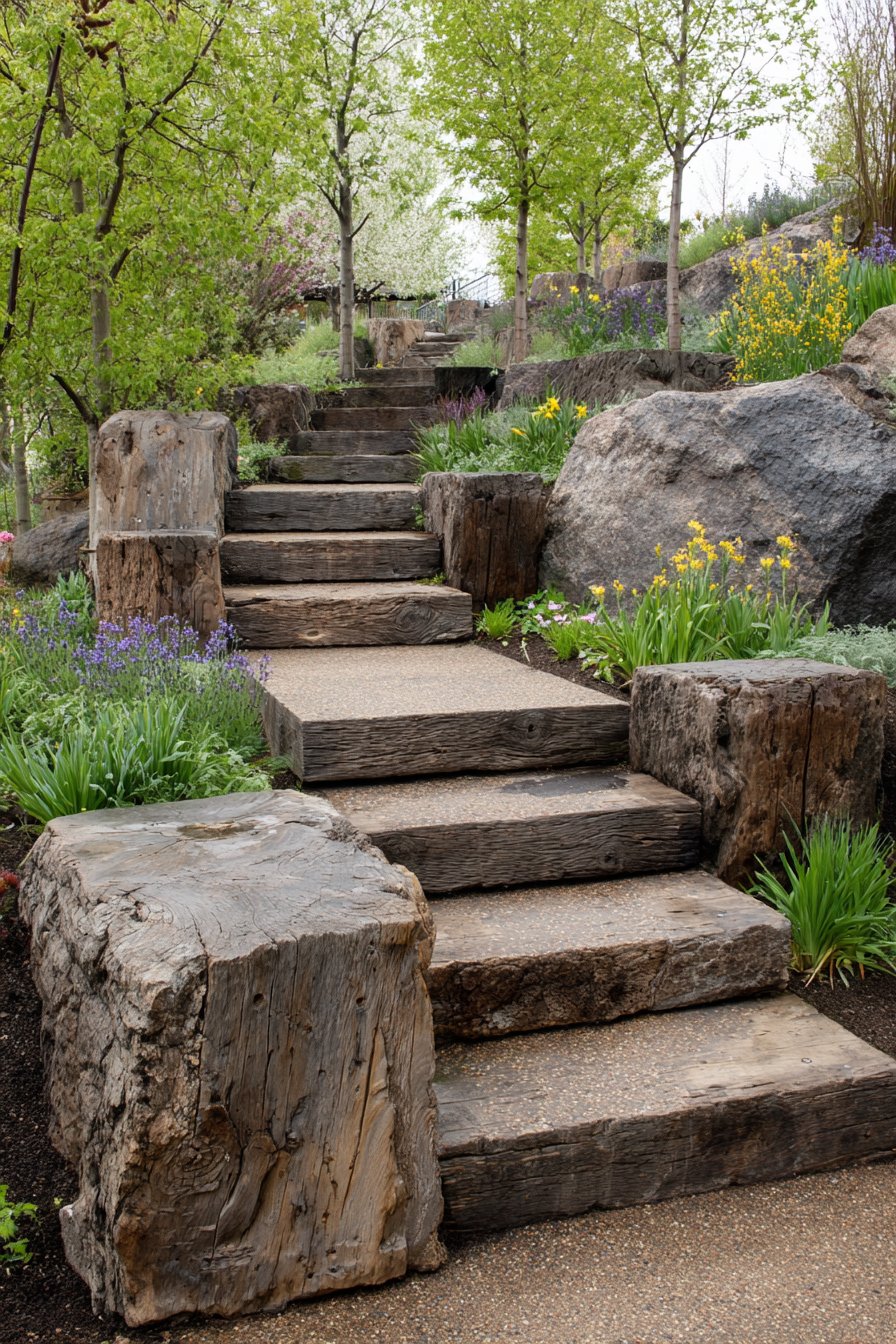
The decomposed granite tread material provides stable walking surface that drains well. This material compacts naturally over time improving stability and comfort. The warm color complements both wooden risers and surrounding plantings. Minimal maintenance requirements suit busy homeowners and natural landscapes.
The wider landings transform functional stairs into destination spaces. Seating boulders invite pauses to appreciate garden views and plantings. This thoughtful addition enhances the user experience significantly. The integration of functional pathway with naturalistic garden demonstrates skilled design.
Key Design Tips:
- Use railroad ties for substantial risers with authentic character
- Fill treads with decomposed granite for stable drainage
- Border steps with native wildflowers and ornamental grasses
- Add wide landings with seating boulders for rest areas
- Embrace natural weathering and patina development
10. Luxury Travertine Mediterranean Style
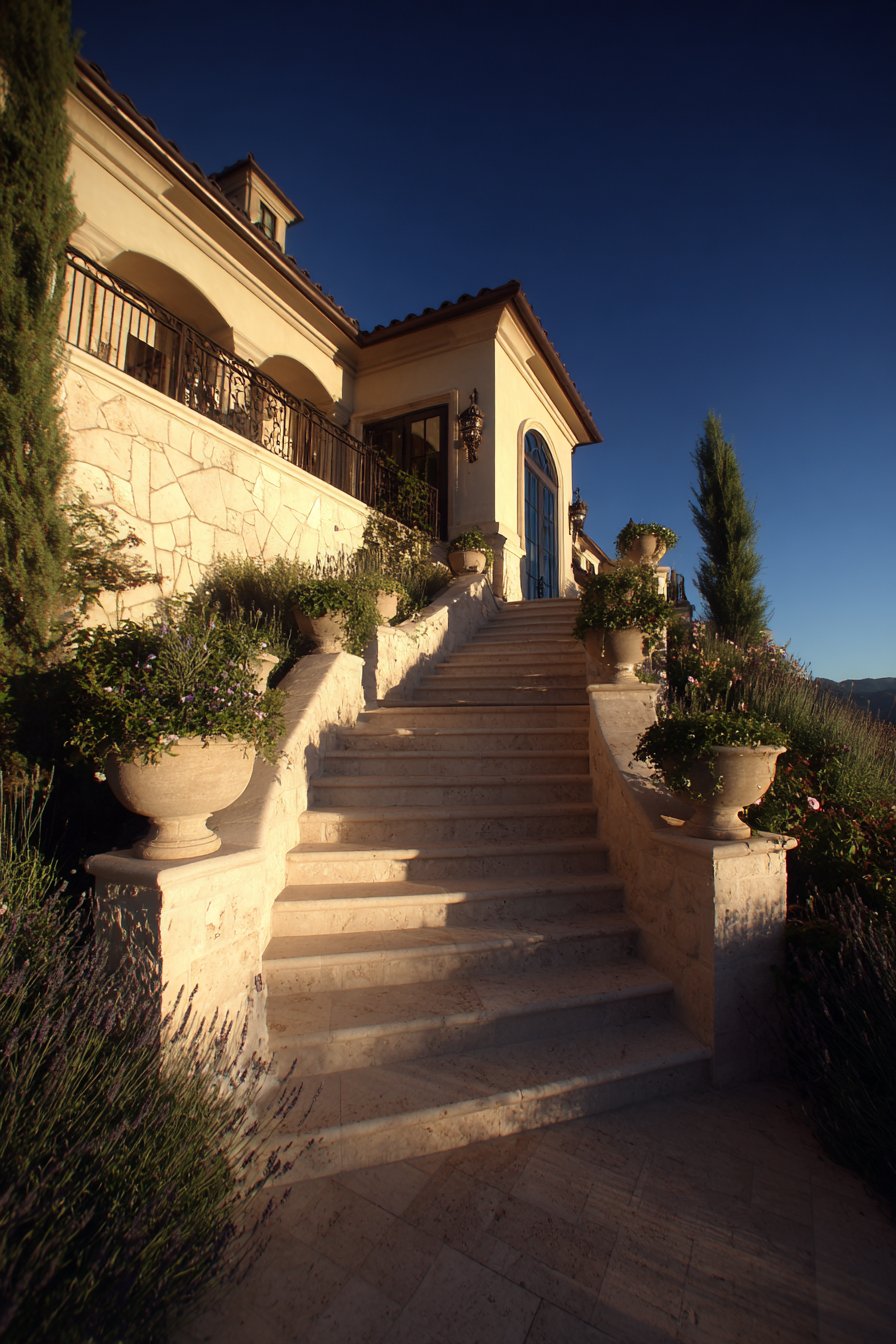
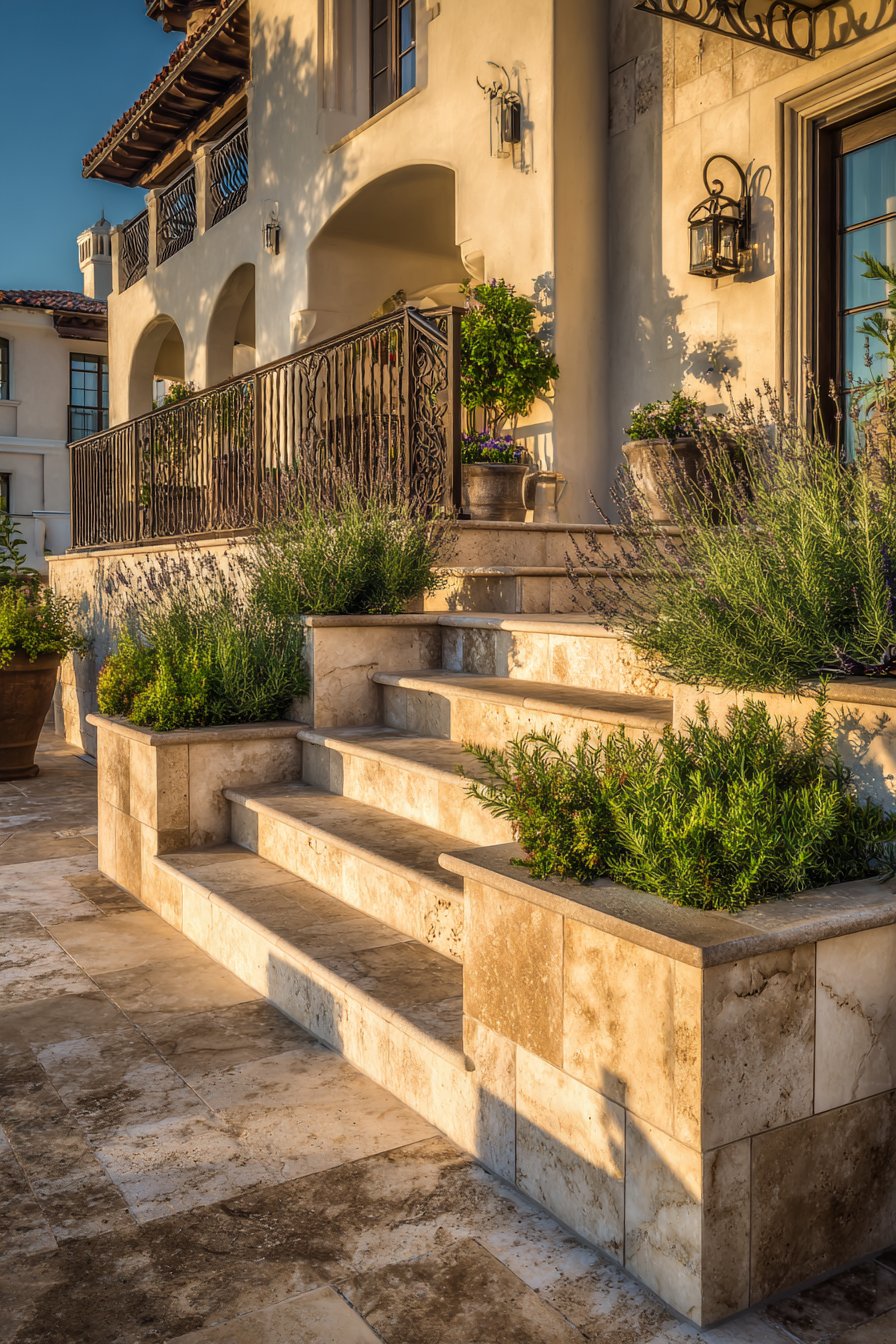
Large-format travertine tiles in chiseled finish combine elegance with slip resistance. Each tread extends generously with slight overhang creating shadow lines. Custom bronze handrails feature hammered texture connecting substantial square posts. Integrated lighting fixtures top each post providing evening illumination.
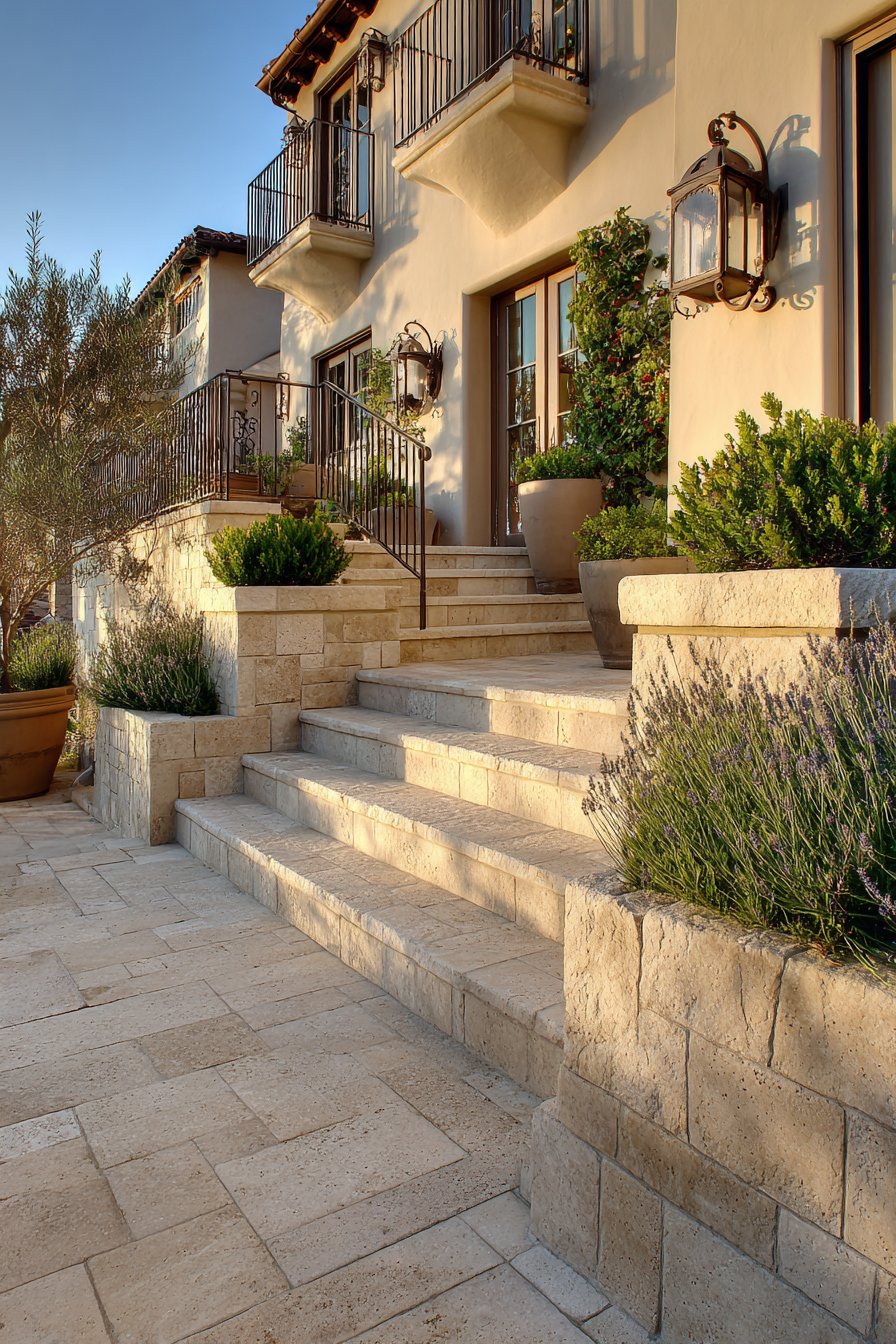
Mediterranean-style planters at landings contain fragrant herbs including rosemary and lavender. These aromatic plants release scent when brushed passing by. Golden hour sunlight warms cream and beige travertine tones beautifully. The textured surface and subtle color variations within each stone add interest.
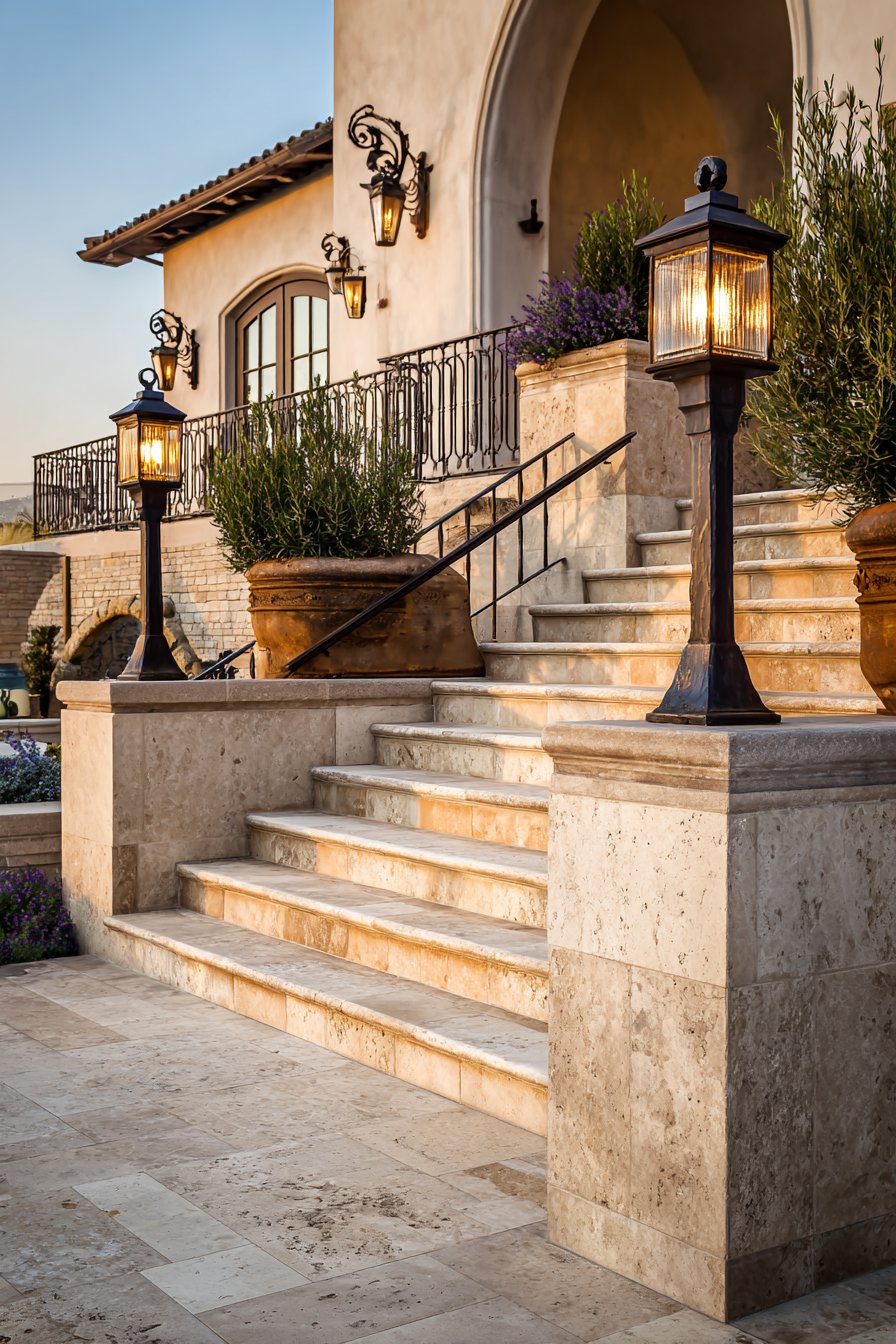
The chiseled finish provides necessary traction while maintaining refined appearance. The natural stone material develops richer patina through years of use. The generous tread depth creates comfortable ascending and descending experience. The slight overhang adds architectural detail and shadow definition.
Professional architectural photography emphasizes refined material selection and proportioning. The bronze handrails develop natural patina that enhances their beauty. The integrated post lighting creates inviting ambiance for evening use. The overall design reflects Mediterranean luxury and timeless elegance.
Key Design Tips:
- Choose travertine with chiseled finish for elegant slip resistance
- Design generous tread depth with slight overhang for shadow lines
- Install custom bronze handrails with hammered texture for luxury
- Add integrated post lighting for evening ambiance
- Plant fragrant herbs in landing planters for sensory experience
11. Modern Cor-Ten Steel Hillside Design
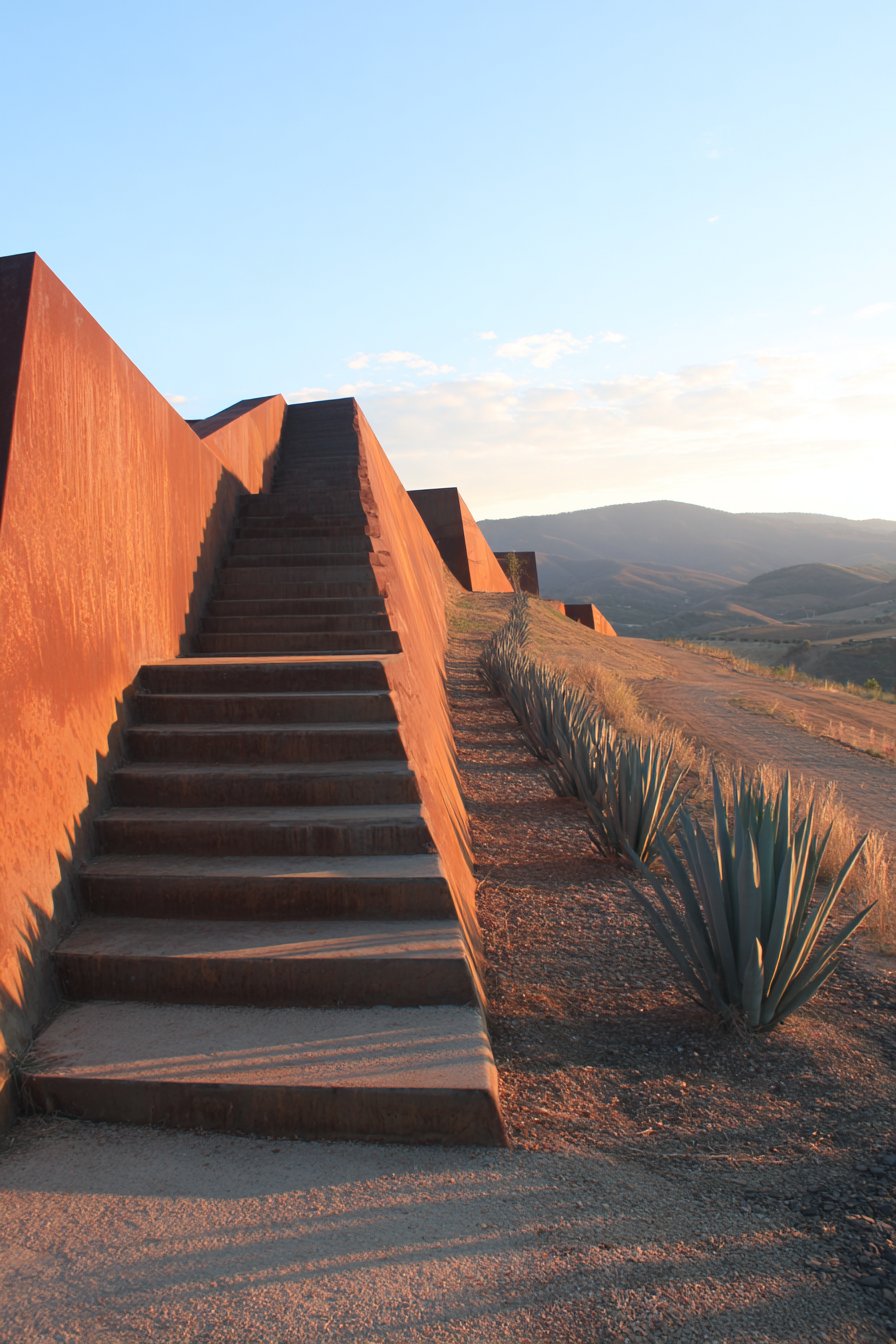
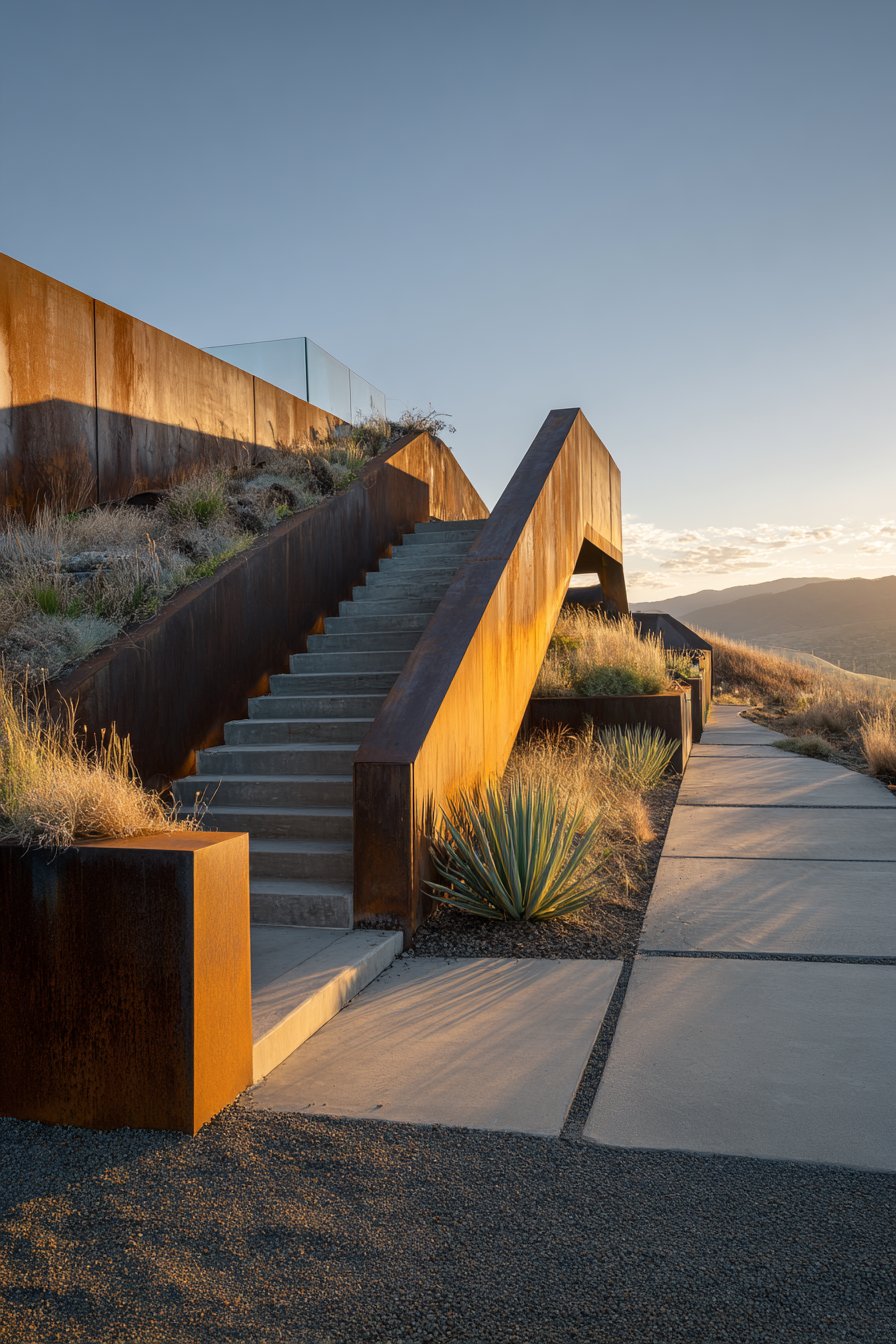
Cor-ten steel retaining walls with integrated steps create strong architectural statements. The weathered steel develops protective rust patina in rich orange-brown tones. This natural oxidation process eliminates painting and ongoing maintenance needs. Concrete treads contrast beautifully against the warm steel colors.
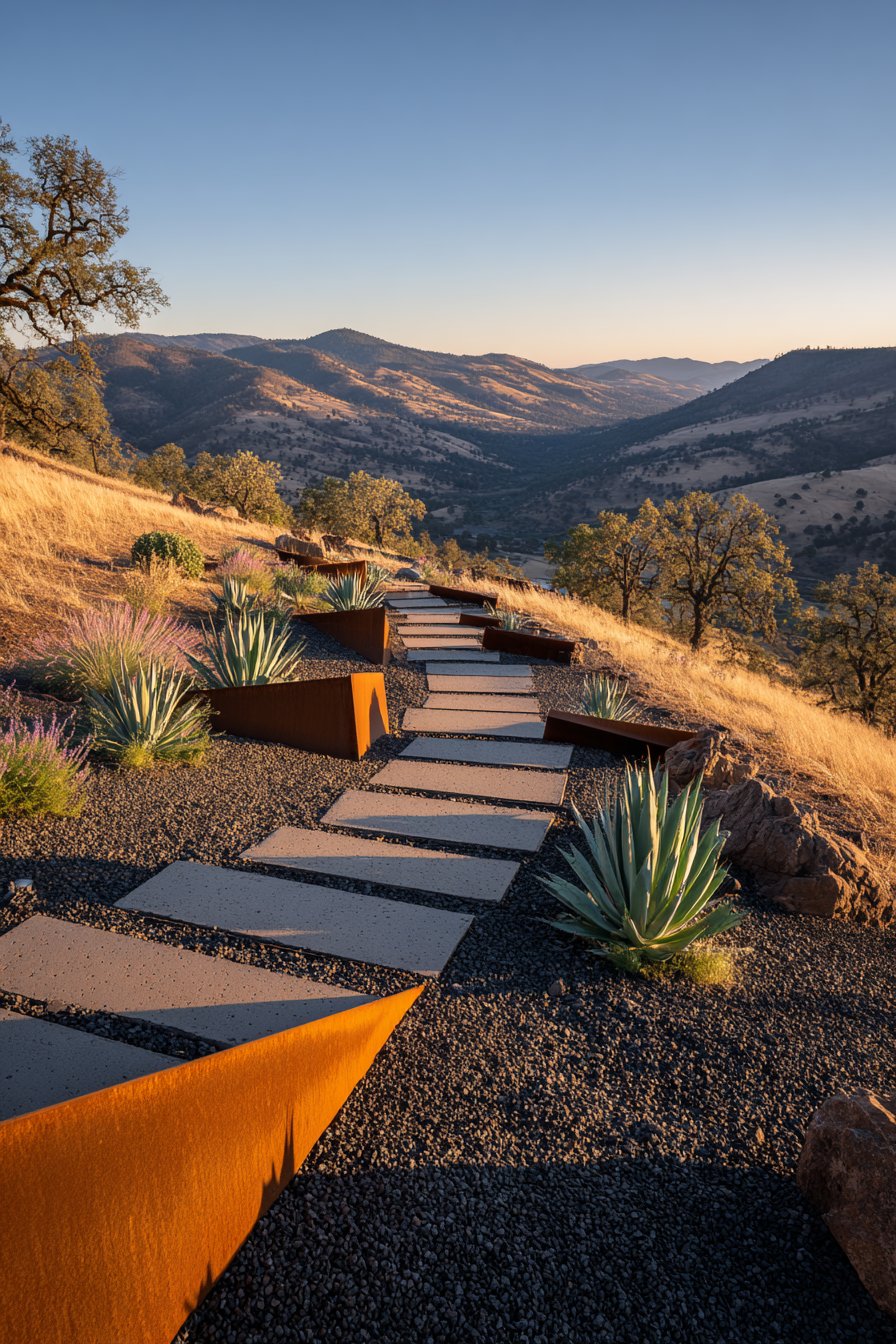
Native drought-resistant plants including agave and ornamental grasses emerge from gravel beds. These plantings suit the contemporary aesthetic while requiring minimal water. The geometric design creates bold forms against natural slope contours. Late afternoon light intensifies warm rust colors creating dramatic effects.
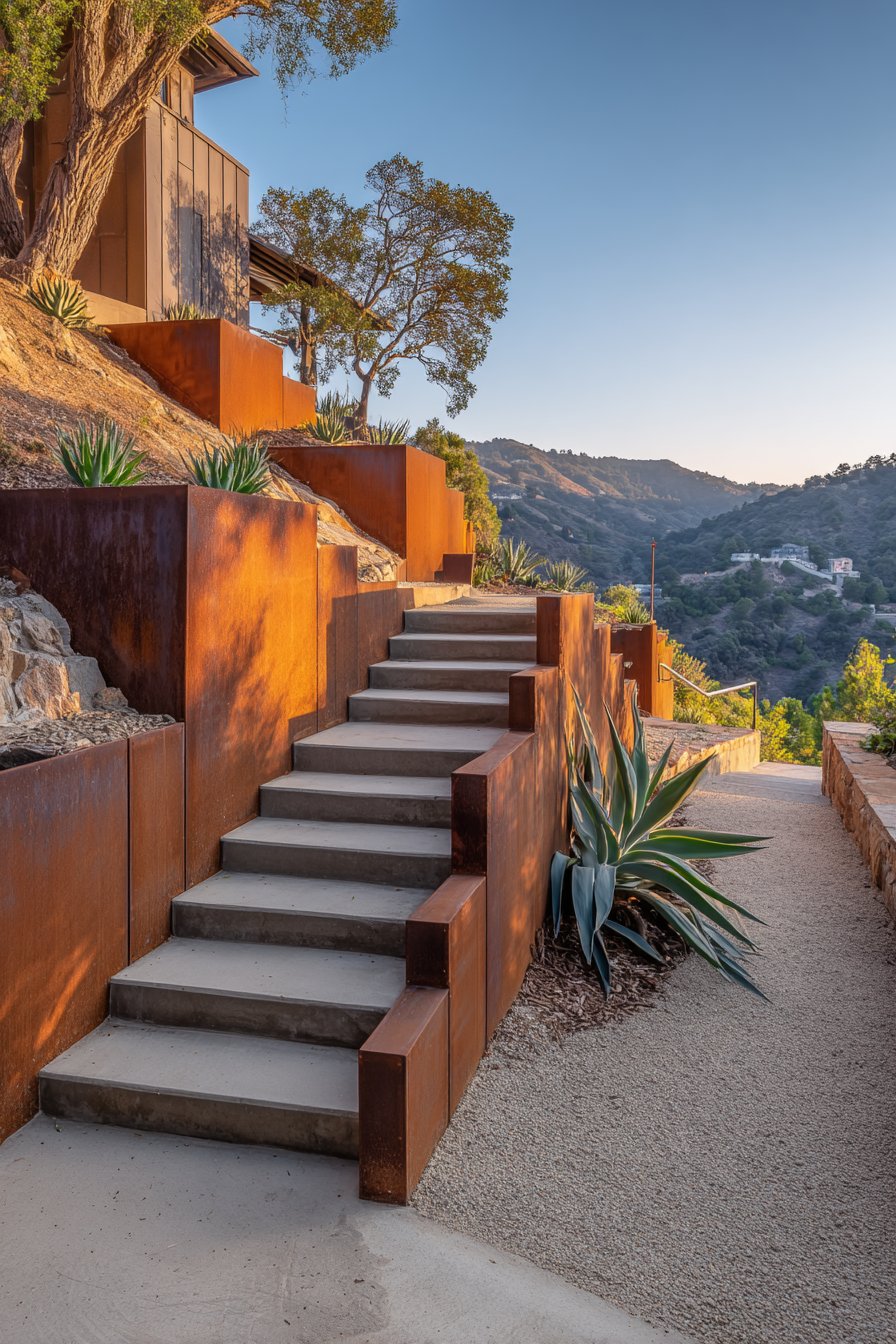
The cor-ten steel material represents sustainable design through longevity and minimal maintenance. The protective patina prevents further corrosion while adding visual interest. The material choice suits modern architecture and contemporary landscapes. Wide-angle landscape photography shows full hillside ascent with distant views.
The integration of stairs with retaining walls demonstrates efficient use of materials. The angular forms create dynamic visual rhythm through repetition. The design works particularly well on challenging hillside sites. The combination of industrial materials with drought-tolerant plants suits arid climates.
Key Design Tips:
- Use cor-ten steel for self-protecting weathered patina finish
- Combine steel with concrete treads for material contrast
- Plant drought-resistant species in gravel beds for sustainability
- Position to capture low-angle light intensifying rust colors
- Design angular forms to create bold architectural statements
12. Transitional Fieldstone and Bluestone Combination
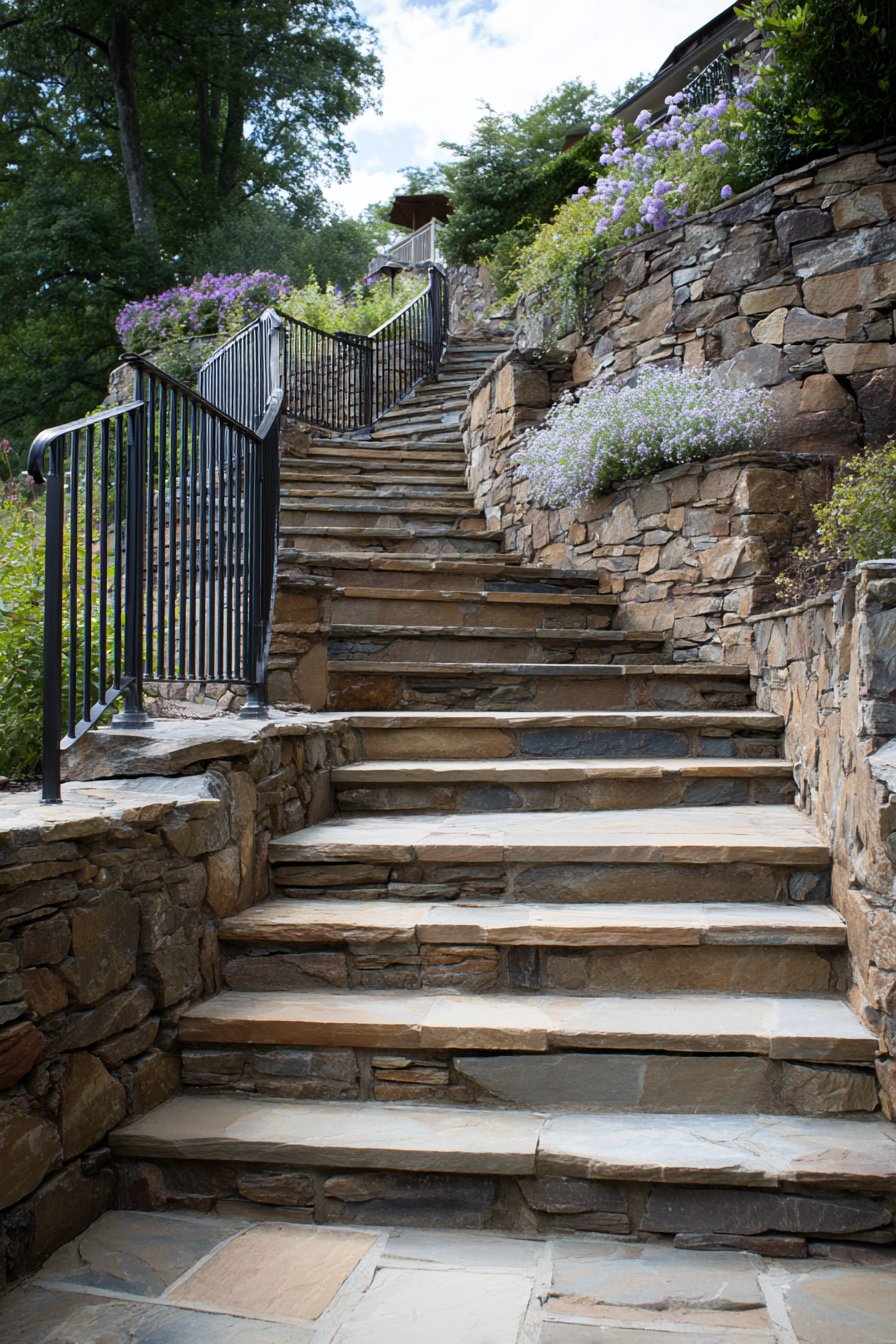
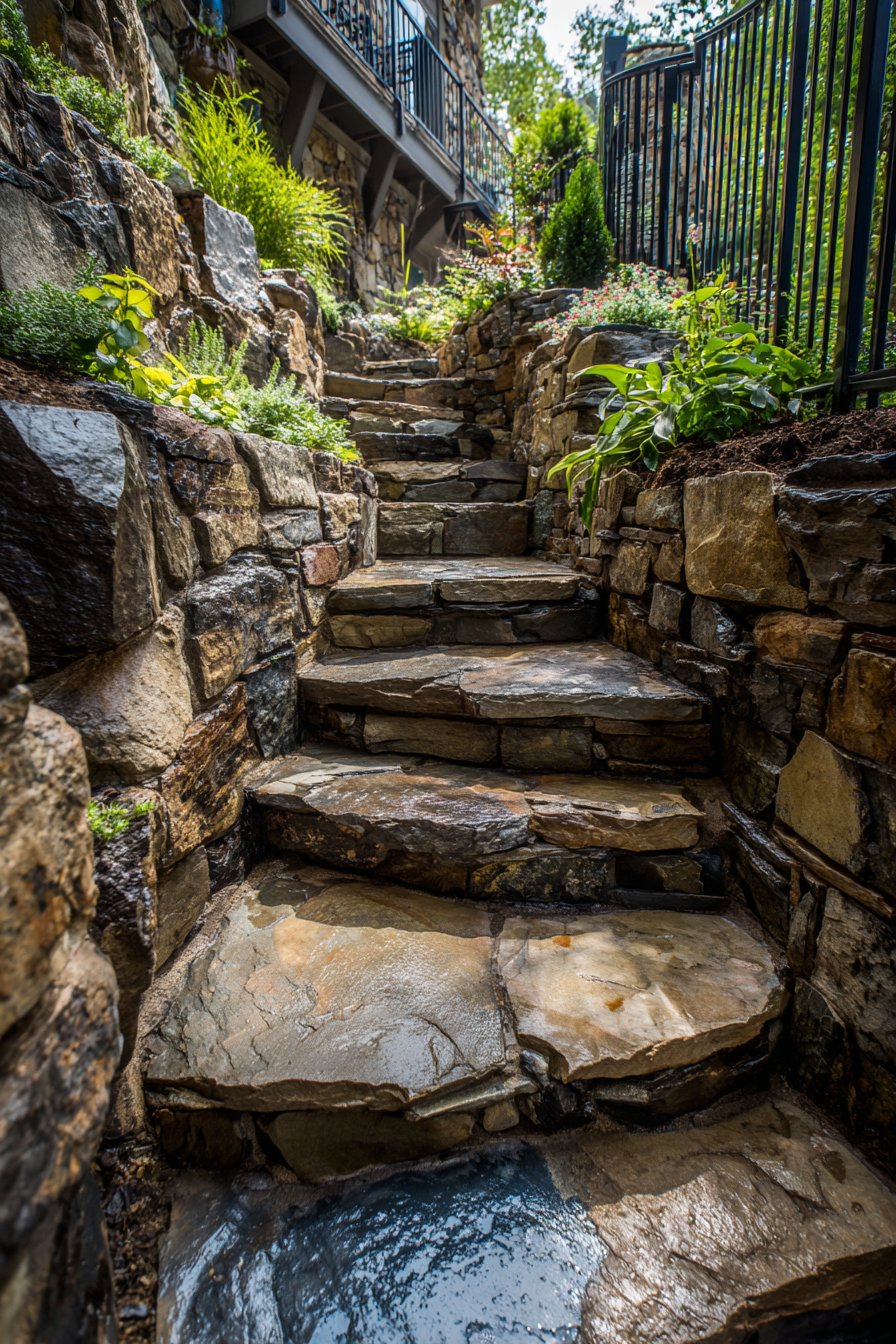
Natural fieldstone risers paired with bluestone treads create textural contrast. Mortared stone retaining walls flank both sides planted with cascading perennials. Wide intermediate landings serve as viewing platforms overlooking gardens below. Black aluminum railings with simple vertical balusters provide safety discreetly.
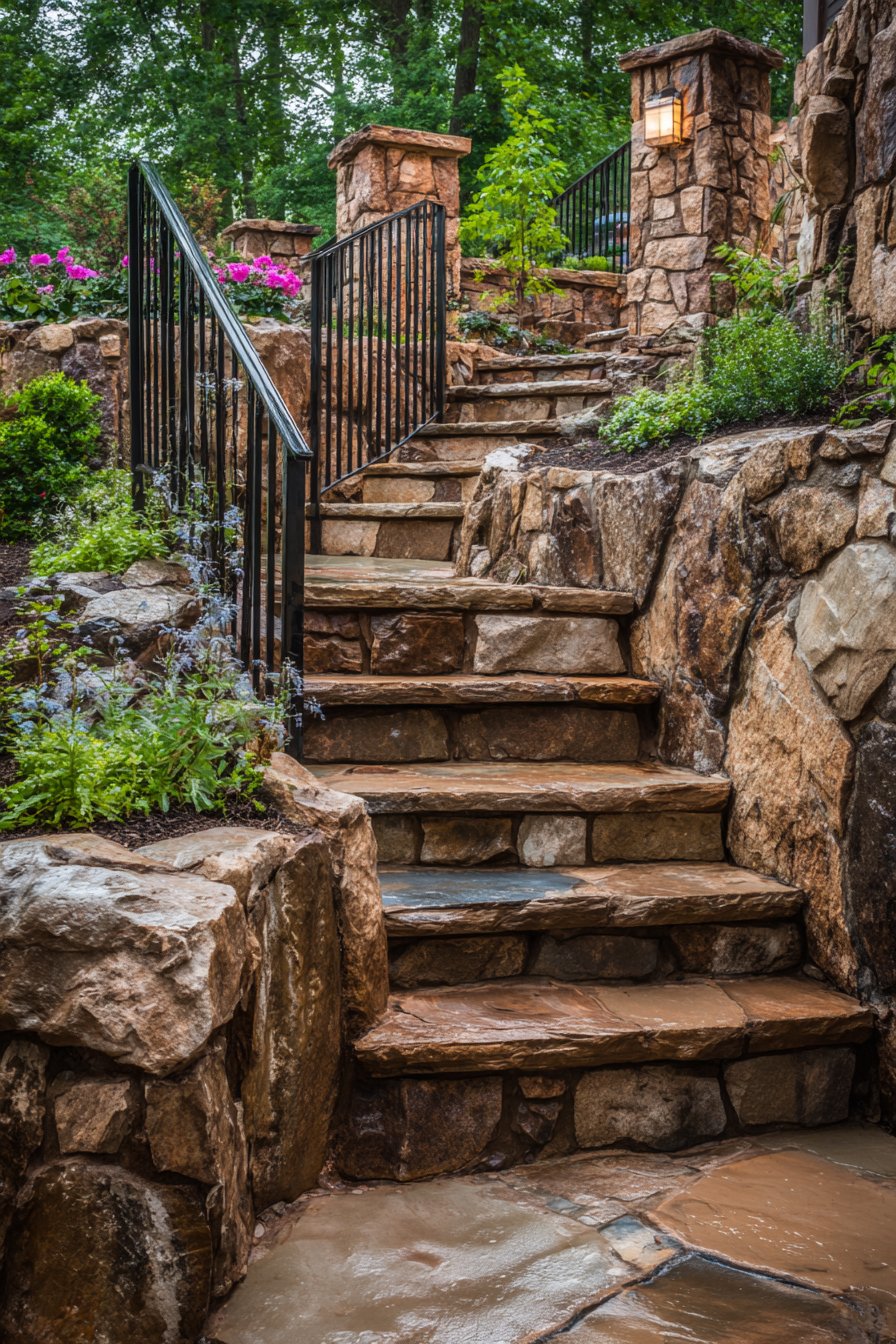
Morning sunlight illuminates varied colors within fieldstone from grey to tan to rust. Dew on bluestone treads creates subtle highlights and temporary shimmer. The craftsmanship of stonework demonstrates skilled masonry techniques. Sedum and catmint cascade over retaining walls softening hard edges.
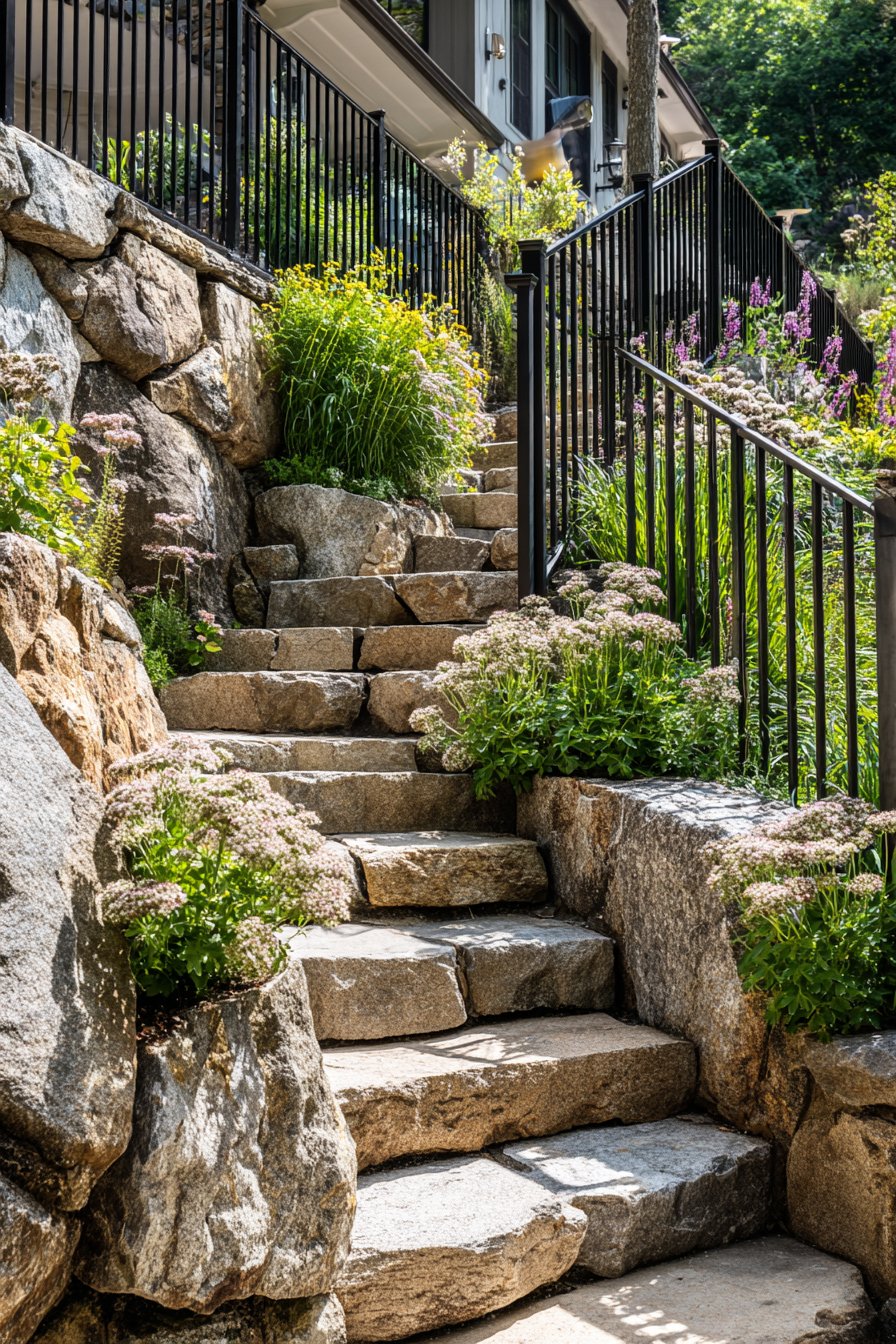
The combination of rough fieldstone and smooth bluestone creates visual interest. The textural contrast engages multiple senses while ascending the stairs. The mortared construction provides stability and longevity in all weather. The design bridges traditional and contemporary aesthetics successfully.
Architectural detail photography captures material transitions and craftsmanship quality. The wider landings provide practical benefits beyond aesthetic considerations. The viewing platform function adds value to the functional pathway. The careful plant selection complements stone colors and textures naturally.
Key Design Tips:
- Combine fieldstone risers with bluestone treads for textural contrast
- Build mortared retaining walls for structural stability
- Create wide landings as viewing platforms for garden appreciation
- Install minimal railings that don’t compete with stonework
- Plant cascading perennials to soften retaining wall edges
13. Japanese-Inspired Natural Granite Design
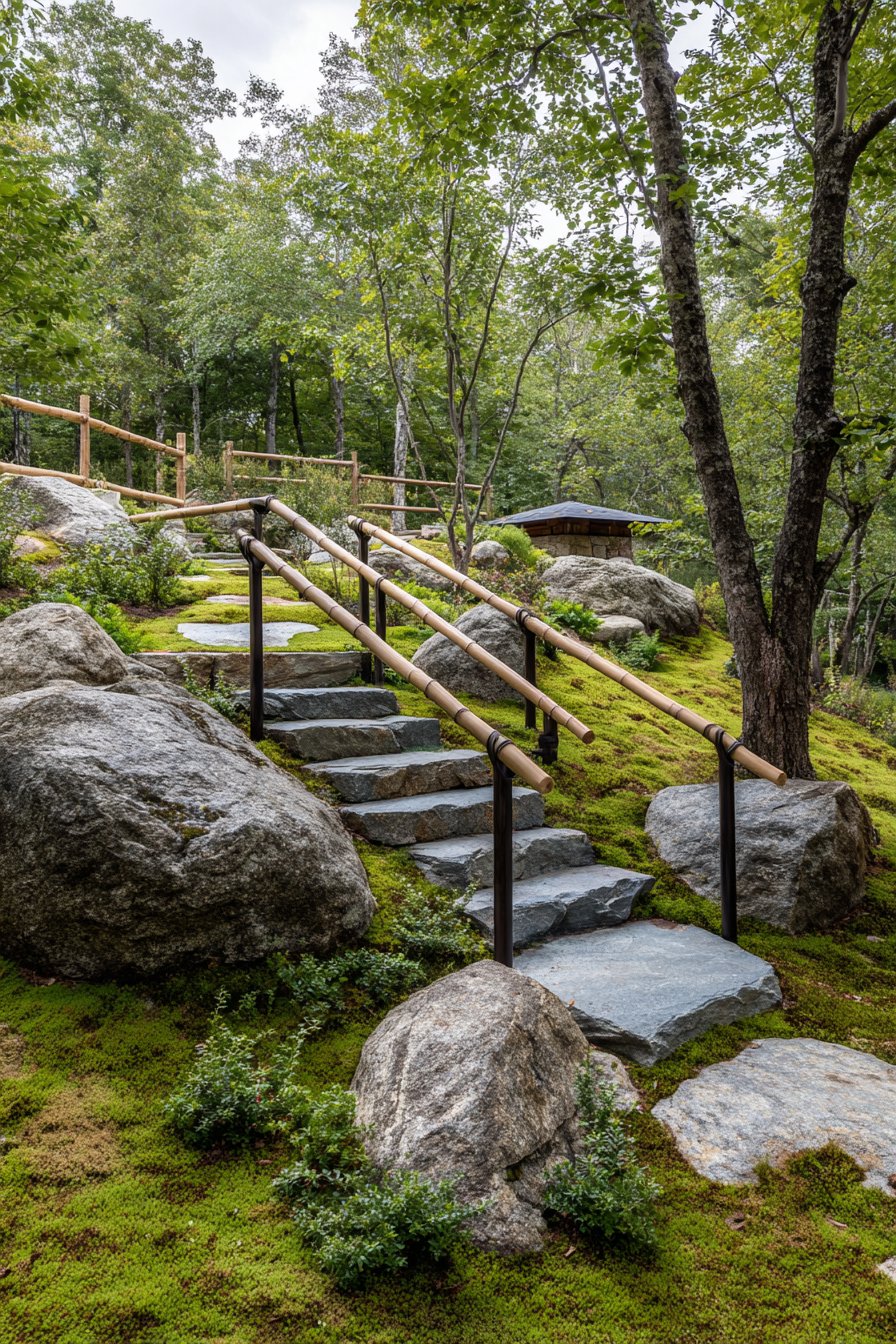
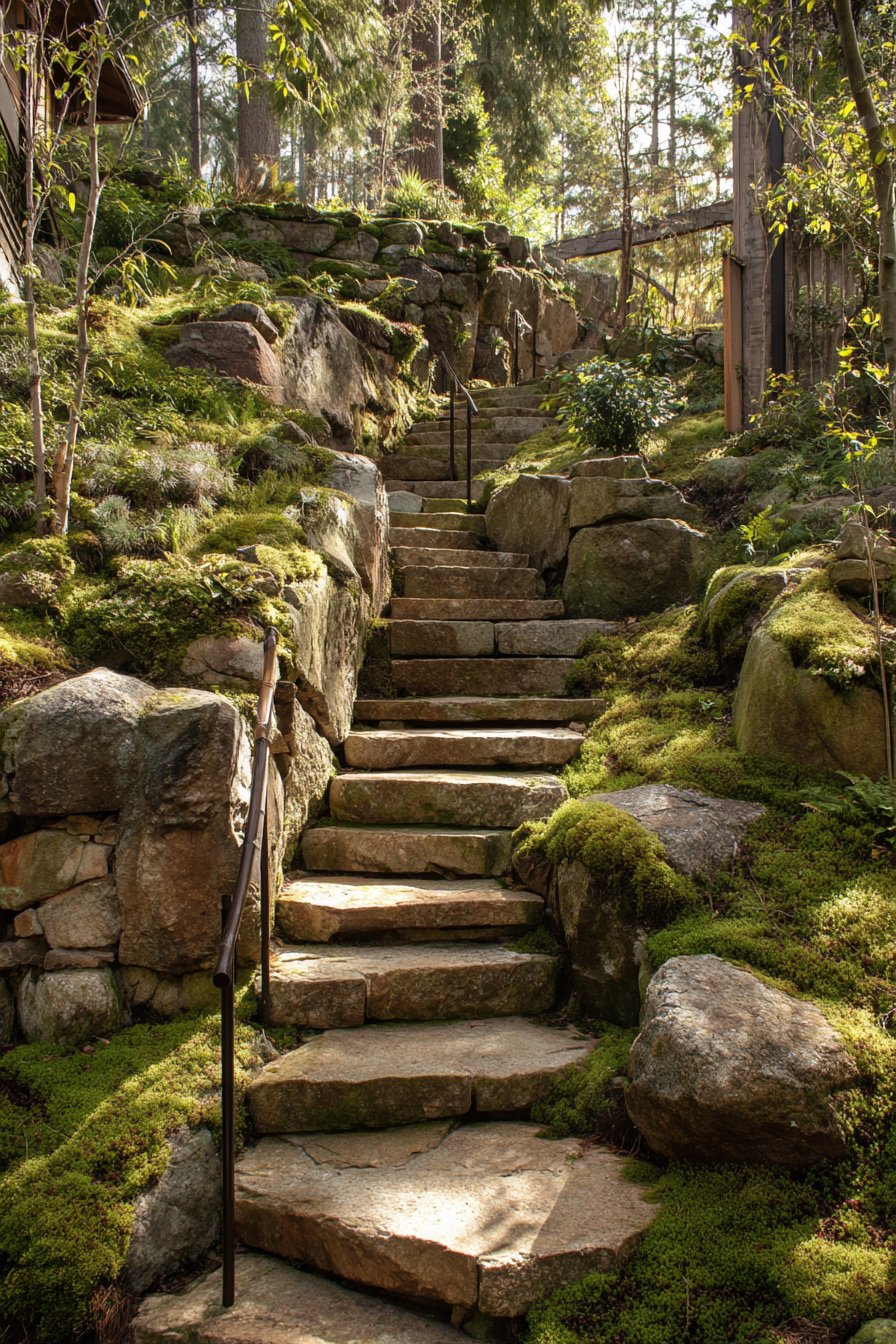
Broad granite steps with irregular edges set into moss-covered hillsides create tranquil ascent. Natural boulders anchor each side positioned as if occurring naturally. Simple bamboo handrails follow the stairs secured with black iron fittings. The design emphasizes asymmetrical balance and nature integration over geometric precision.
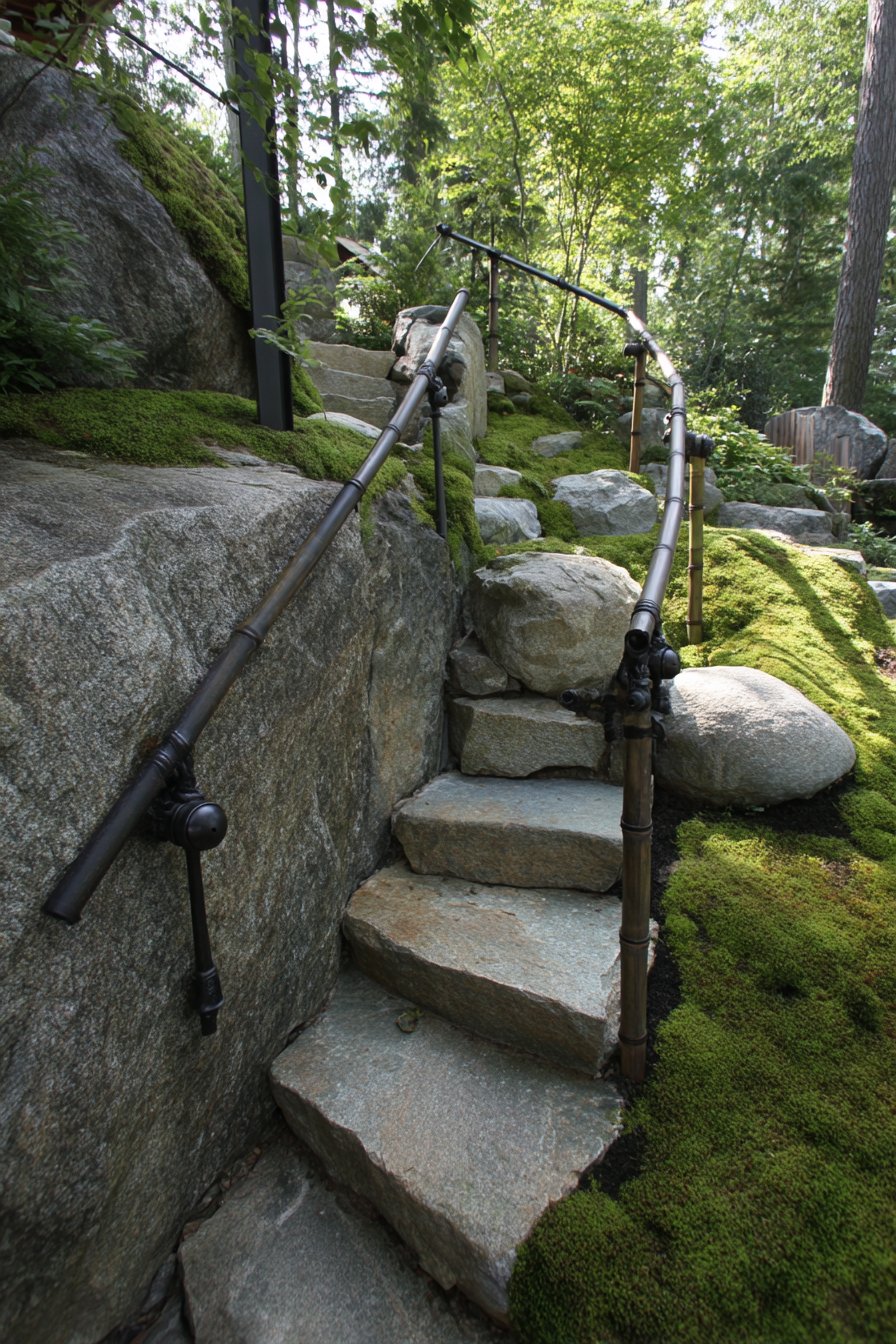
Existing mature trees provide shade creating dappled light patterns across surfaces. The interplay of sunlight and shadow changes throughout the day. Soft natural lighting during overcast conditions reveals subtle green moss tones. The grey granite variations add quiet visual interest without demanding attention.
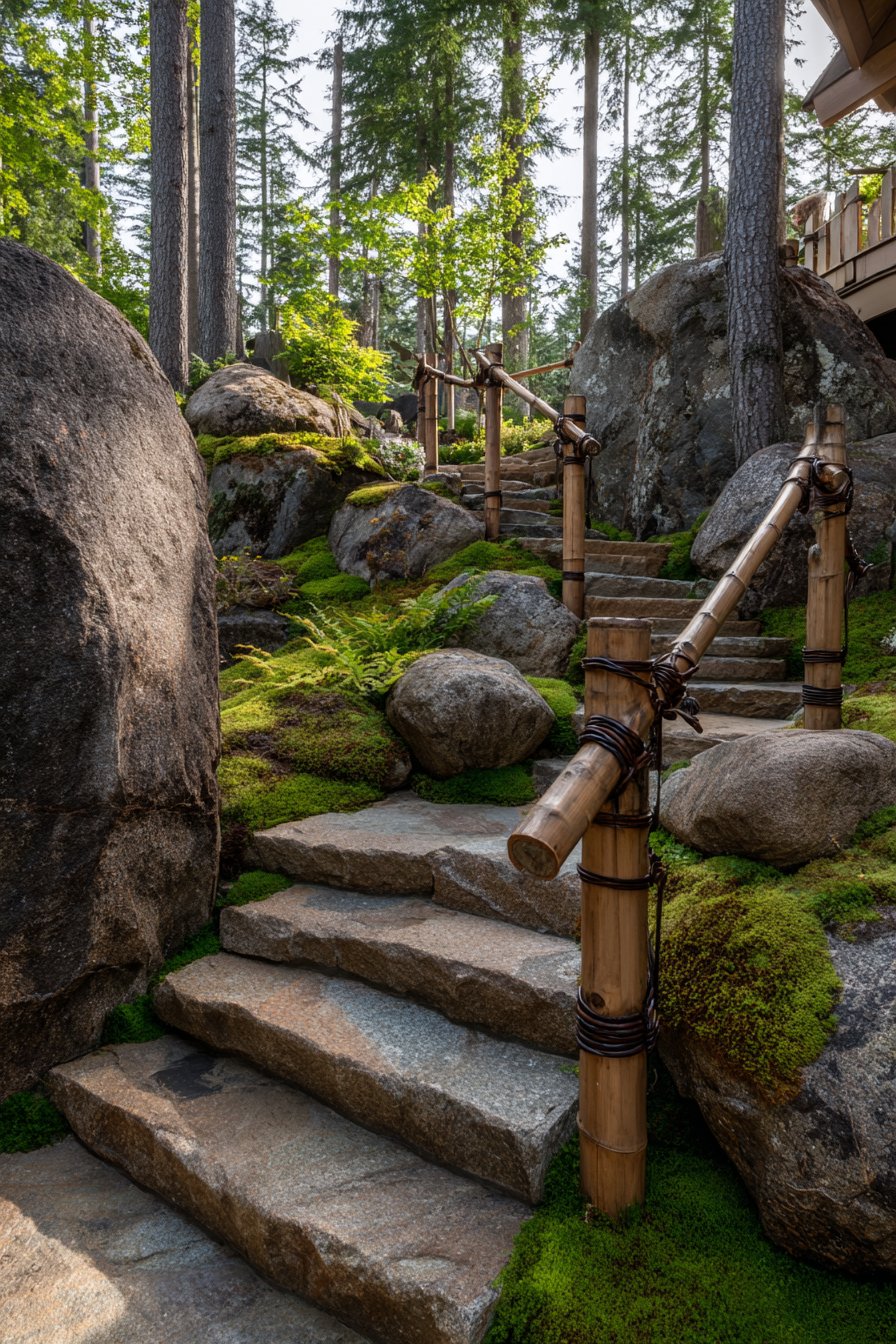
The irregular stone edges suit the Japanese design philosophy of wabi-sabi. This aesthetic celebrates imperfection and natural aging as beautiful qualities. The moss growth represents the passage of time and environmental harmony. The bamboo handrail ages naturally developing silver-grey patina over years.
Detail-oriented photography shows peaceful simplicity and thoughtful material selection. The design demonstrates restraint and careful consideration of every element. The integration with existing landscape requires minimal site disturbance. The overall effect creates contemplative spaces for mindful movement through gardens.
Key Design Tips:
- Use granite steps with irregular edges for natural appearance
- Position boulders as if occurring naturally in landscape
- Install simple bamboo handrails with honest iron joinery
- Encourage moss growth for age and environmental integration
- Design for asymmetrical balance following Japanese principles
14. Contemporary Concrete with Integrated Planters
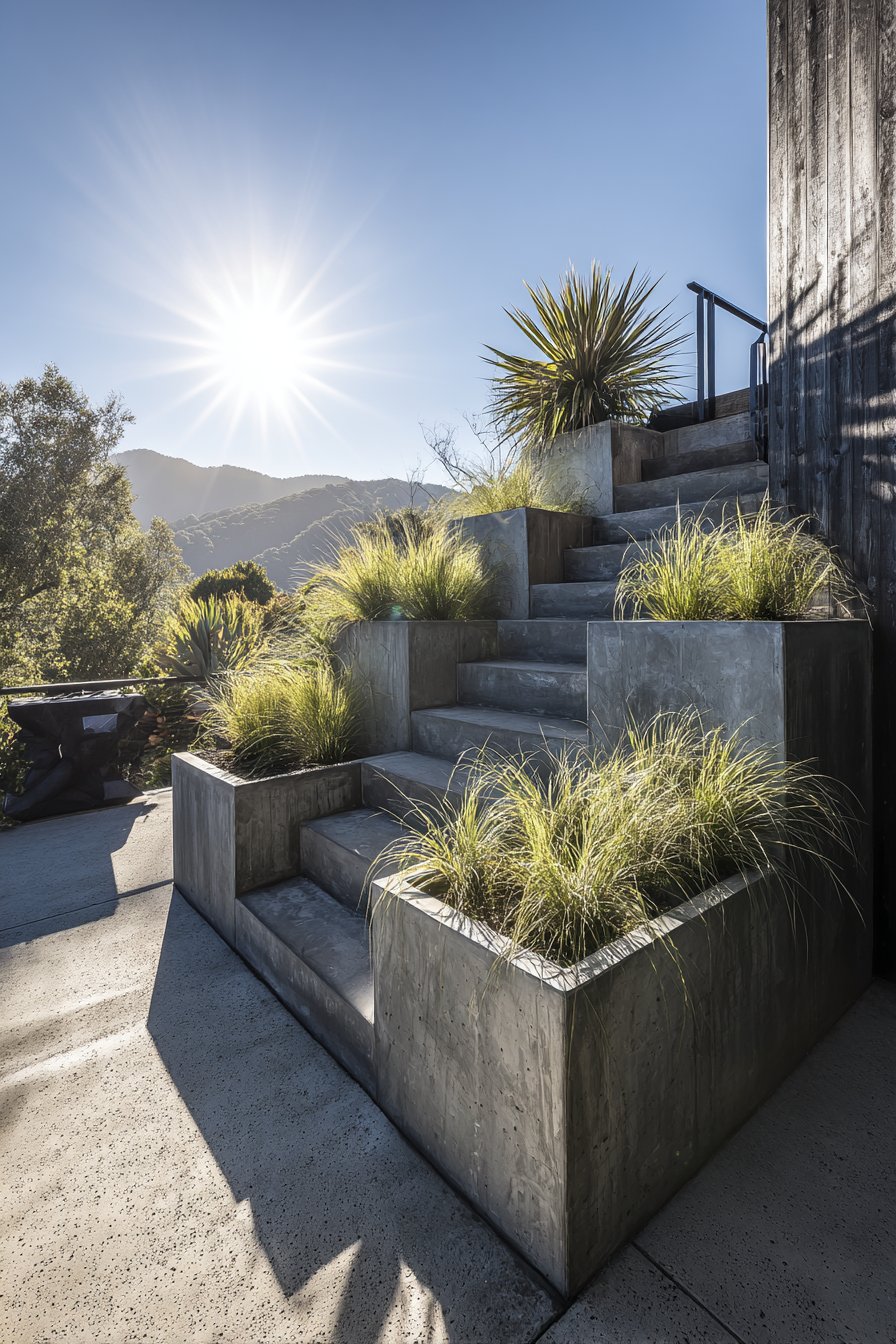
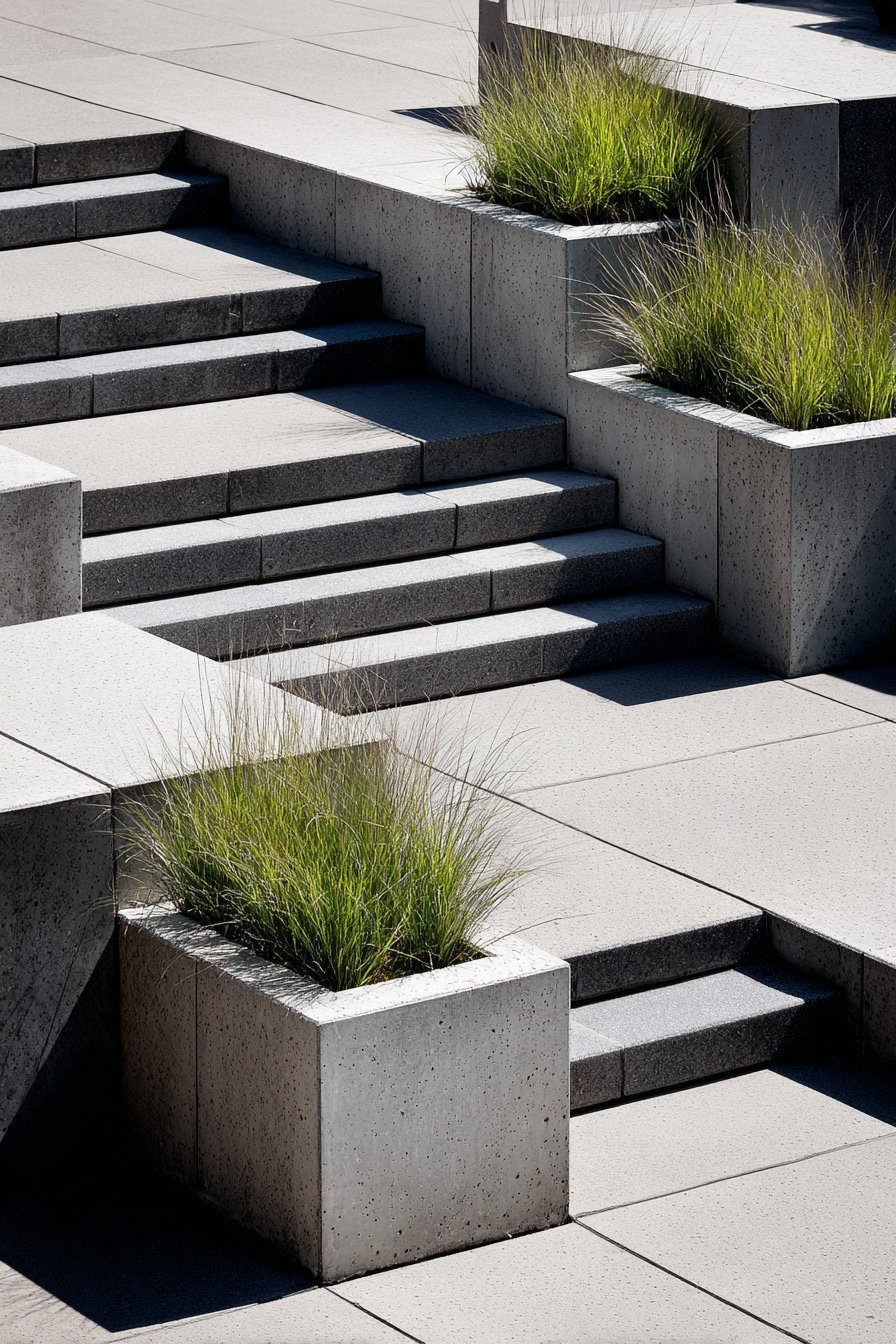
Concrete stairs with integrated planters forming risers create living architecture. Ornamental grasses soften linear architectural forms with natural movement. Each tread cantilevers slightly beyond the planter creating shadow rhythm. Board-formed texture from wooden formwork adds surface interest and authenticity.
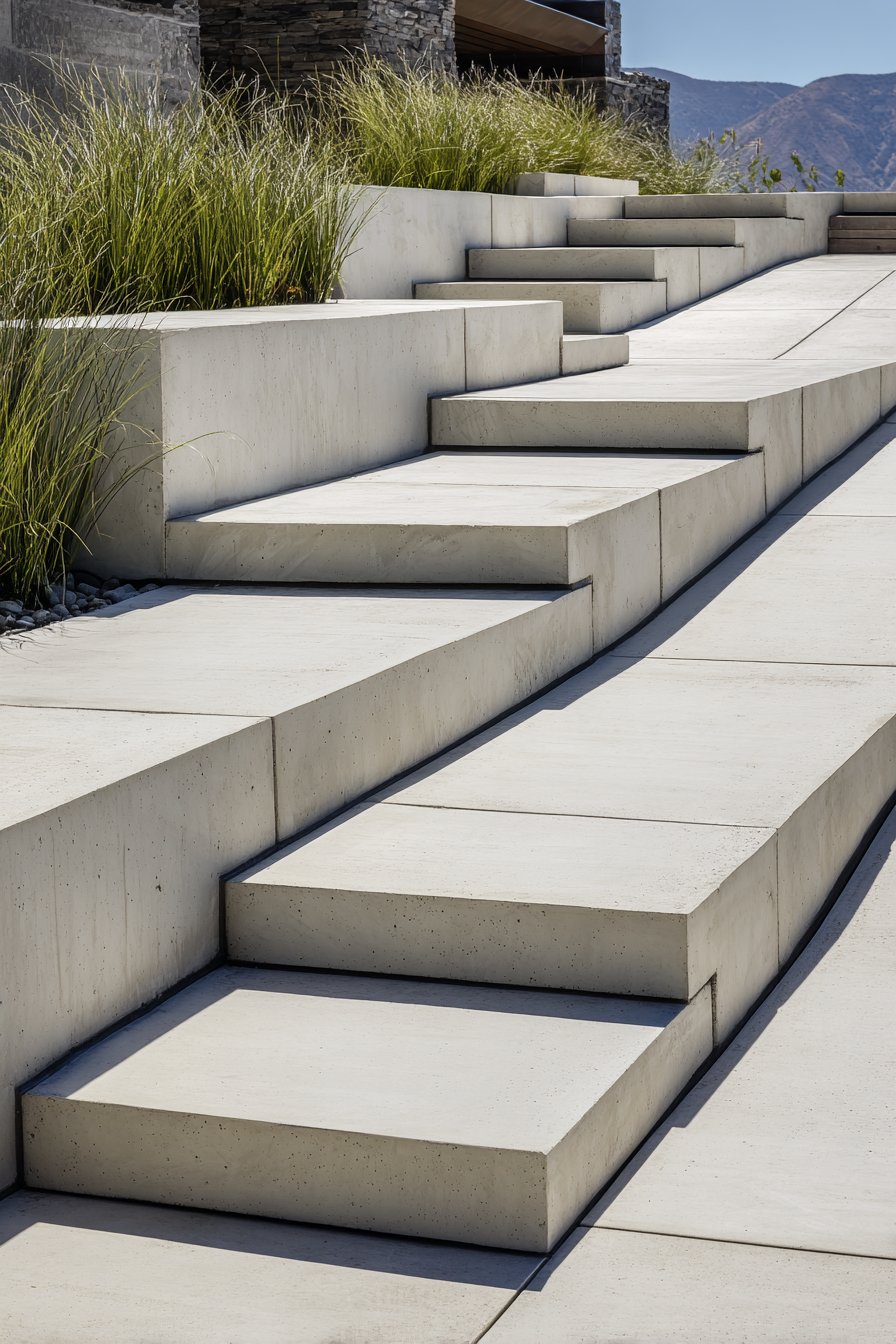
Decorative aggregate exposed on tread surfaces provides traction and visual texture. Midday bright overhead sun emphasizes geometric forms and shadow definition. The stairs connect different terrace levels in modern landscape designs. Wide-angle perspective captures full sequence and surrounding hardscape integration.
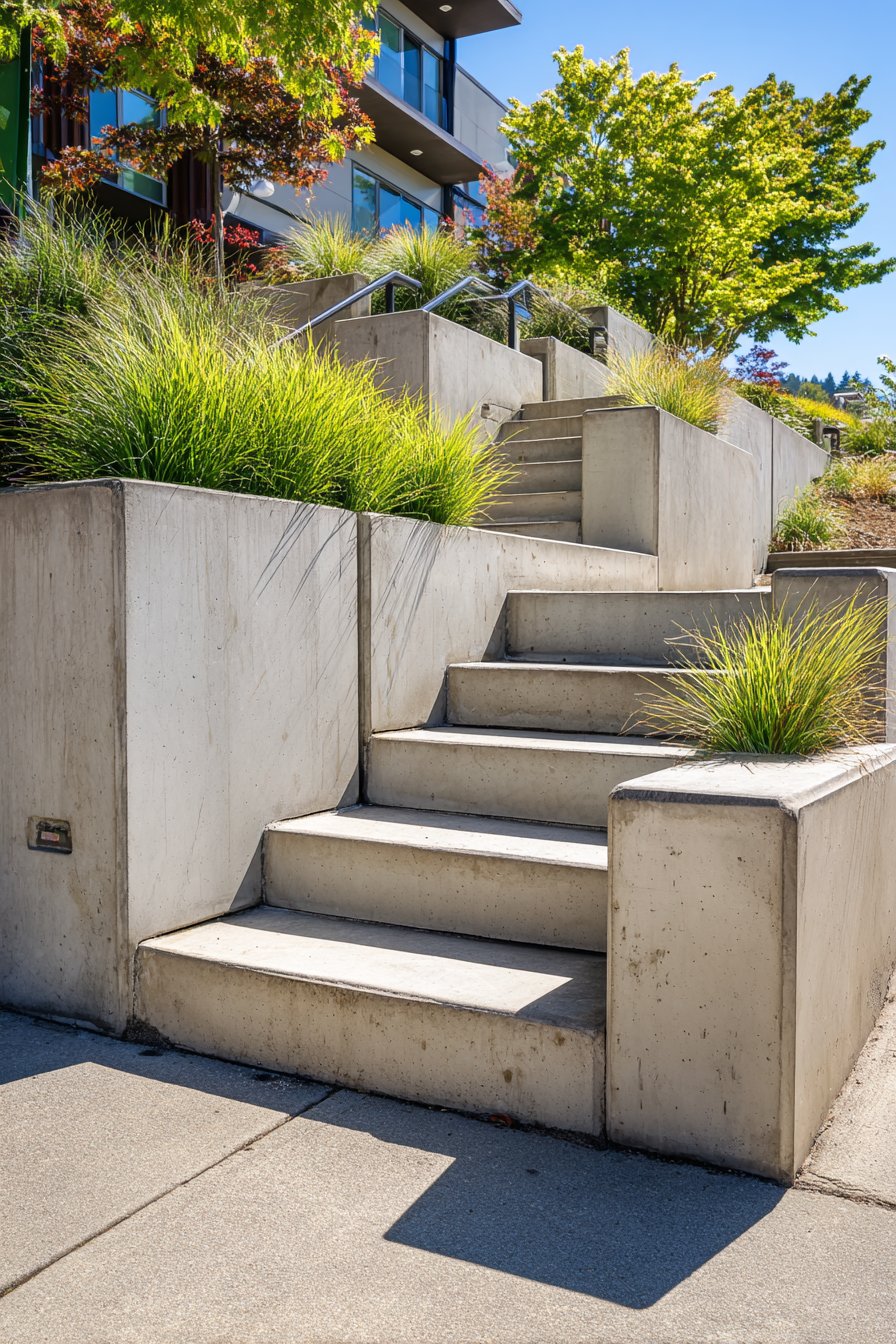
The integrated planters eliminate separate planting beds saving space and materials. The living plants change with seasons providing ever-evolving appearance. The cantilevered treads create strong horizontal lines and architectural rhythm. The board-formed texture reveals the construction process honestly.
The exposed aggregate finish combines practical traction with decorative appeal. The technique creates durable surface resistant to wear and weathering. The modern design demonstrates how functional elements become sculptural features. The integration of multiple terrace levels creates dynamic outdoor living spaces.
Key Design Tips:
- Design integrated planters as risers for space efficiency
- Plant ornamental grasses for movement and seasonal change
- Cantilever treads slightly to create shadow definition
- Use board-formed texture to reveal construction honestly
- Expose decorative aggregate for traction and visual interest
15. Woodland Natural Stone Slab Construction
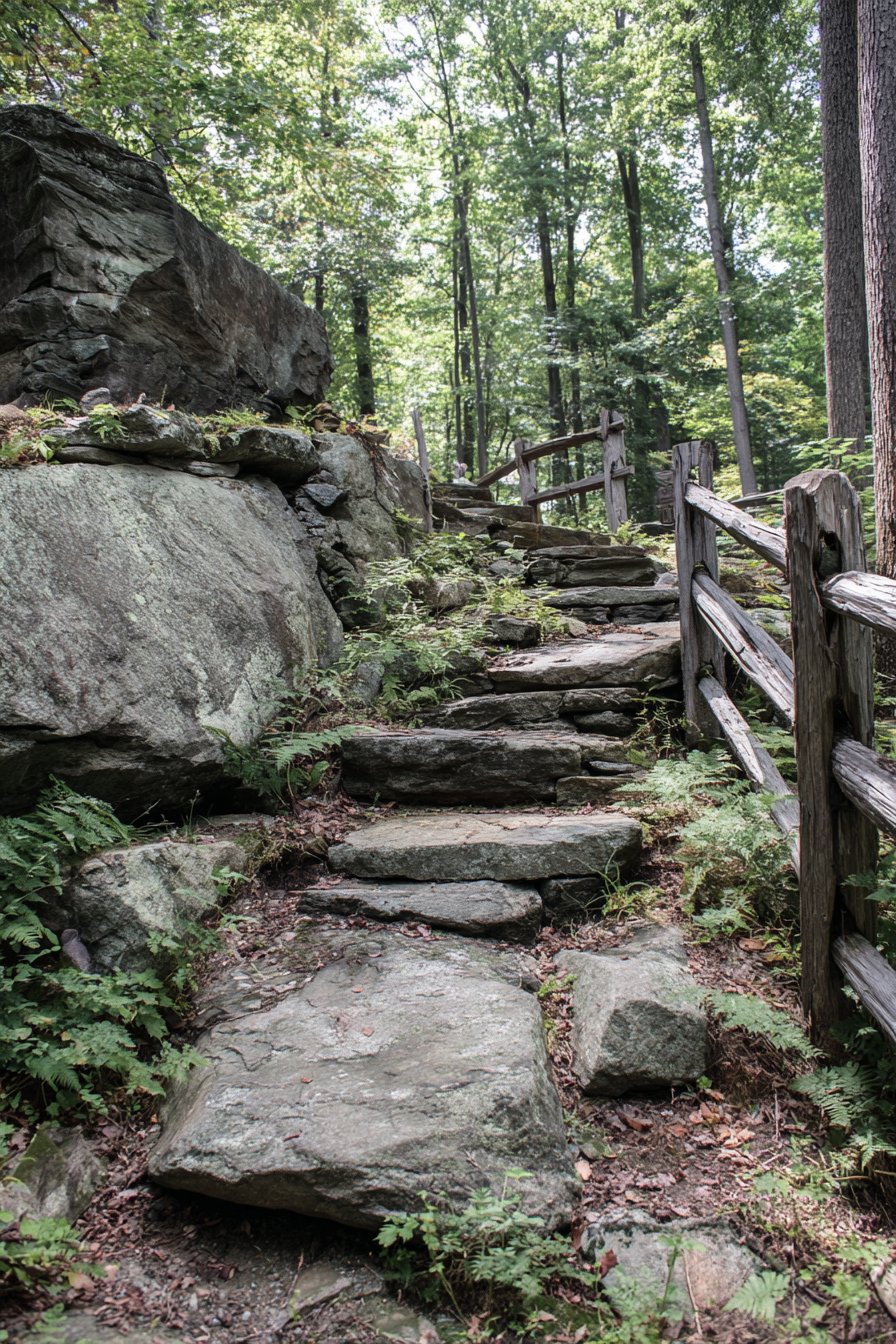
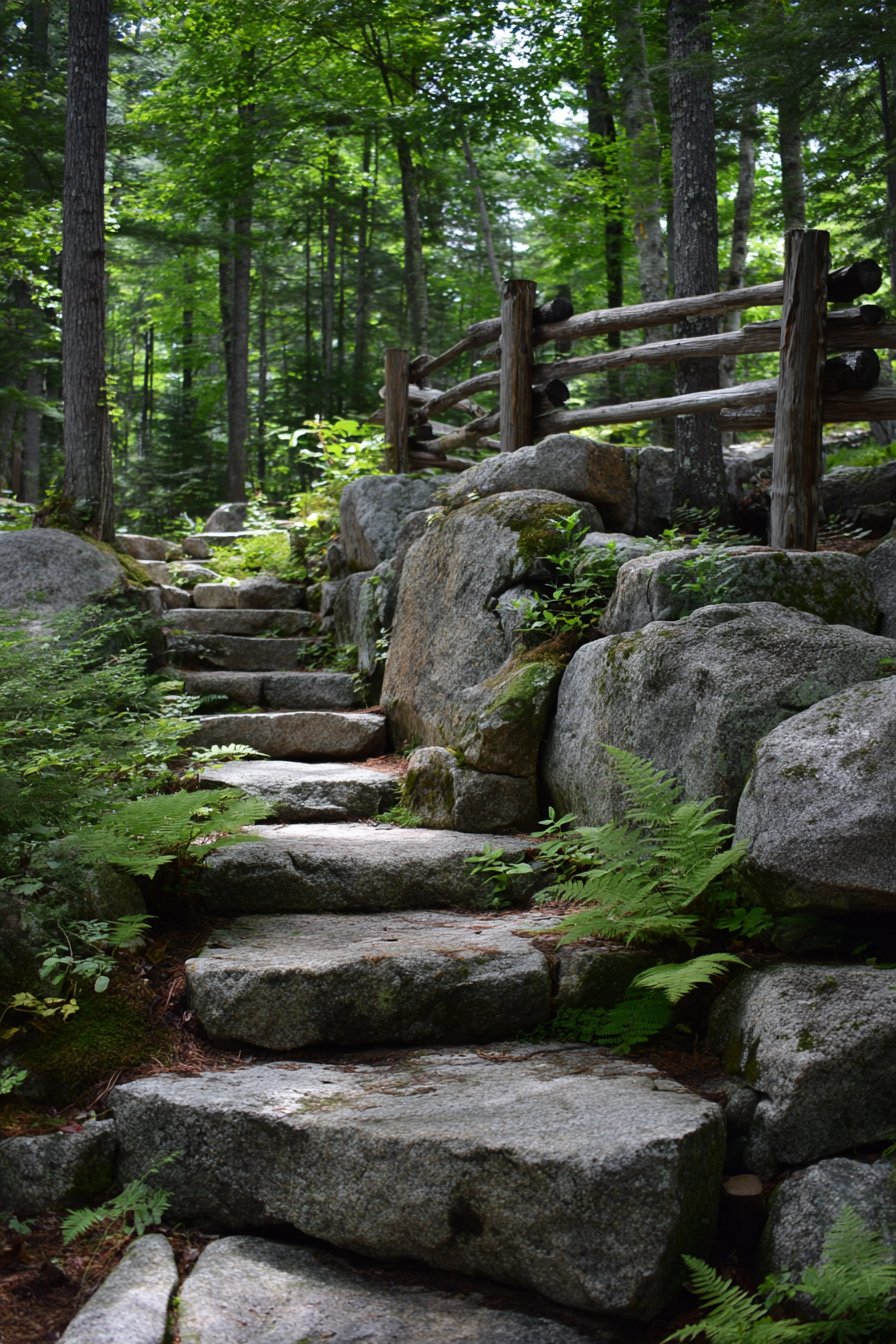
Massive locally quarried stone slabs create irregular stairs following natural terrain. Each piece displays unique size and shape requiring custom placement. The design requires minimal site disturbance preserving woodland character. Ferns and native woodland plants grow freely along edges and gaps.
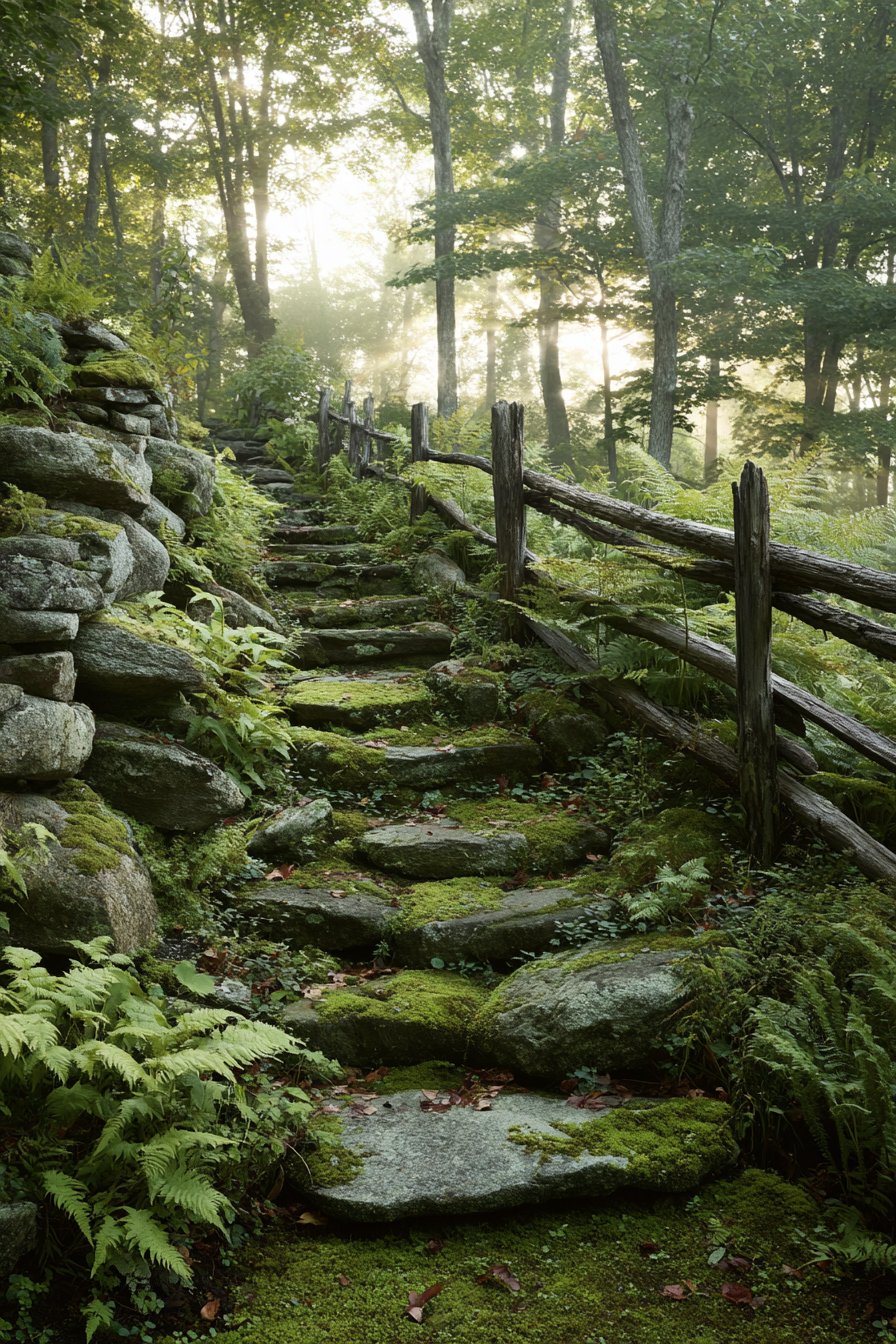
Simple split-rail chestnut fences provide downhill safety without formal detailing. Early morning mist creates atmospheric conditions as sunlight filters through canopy. The weathered stone surfaces develop lichen and moss adding age character. Environmental photography captures authentic integration with pristine natural settings.
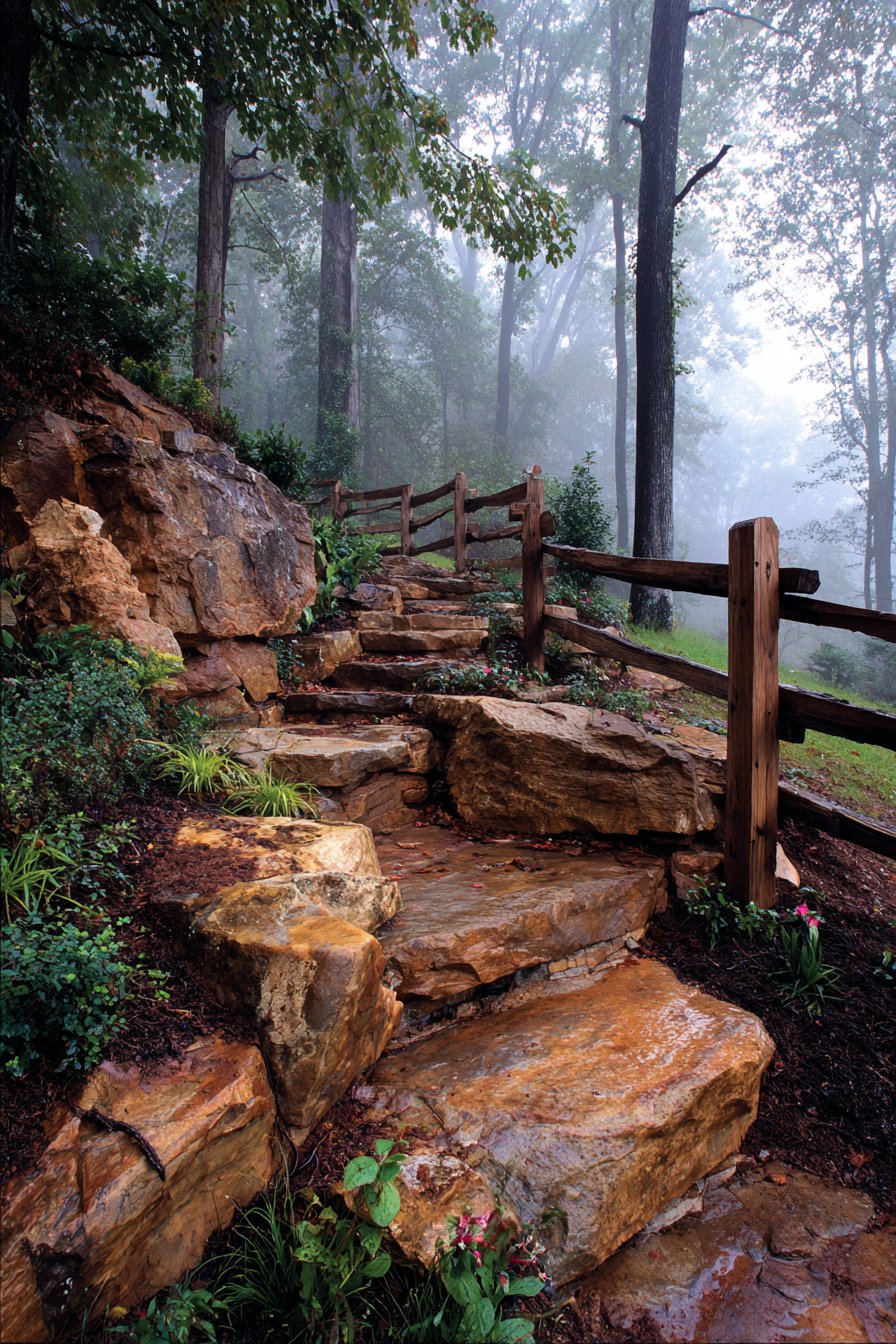
The locally quarried stone reduces transportation impact and suits regional character. The irregular stairs follow contours requiring thoughtful placement of each piece. The minimal disturbance approach preserves existing vegetation and soil structure. The split-rail fence uses natural materials consistent with woodland setting.
The design demonstrates respect for natural landscape and ecological systems. The stone slabs will outlast manufactured materials by centuries. The integration with existing forest appears almost invisible from distance. The functional pathway serves users while protecting fragile woodland ecosystems.
Key Design Tips:
- Use locally quarried stone to reduce environmental impact
- Follow natural terrain contours with irregular stair placement
- Minimize site disturbance to preserve existing vegetation
- Install simple split-rail fencing for safety without formality
- Allow native plants to grow freely along edges
16. Sculptural Folded Steel Ribbon Design
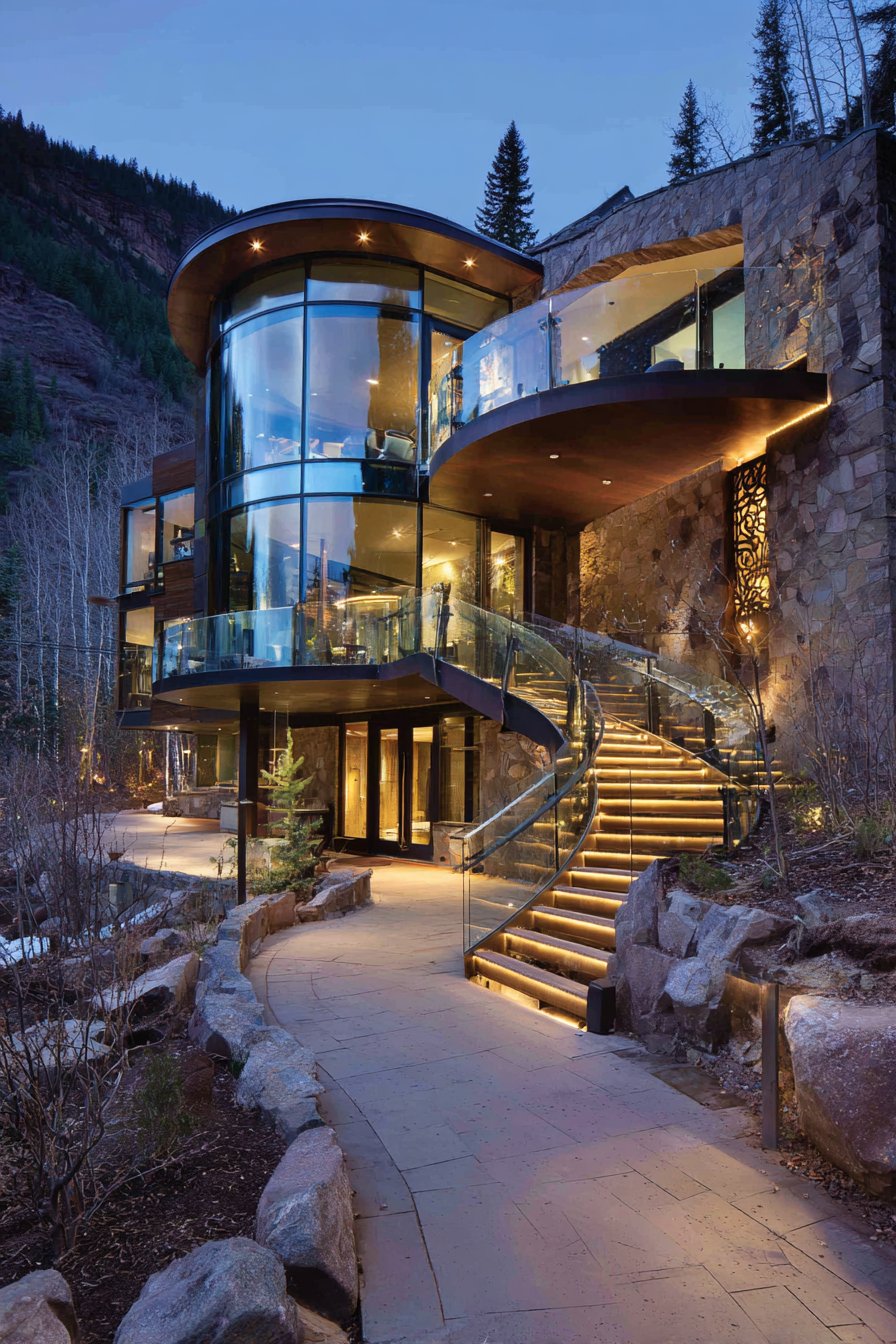
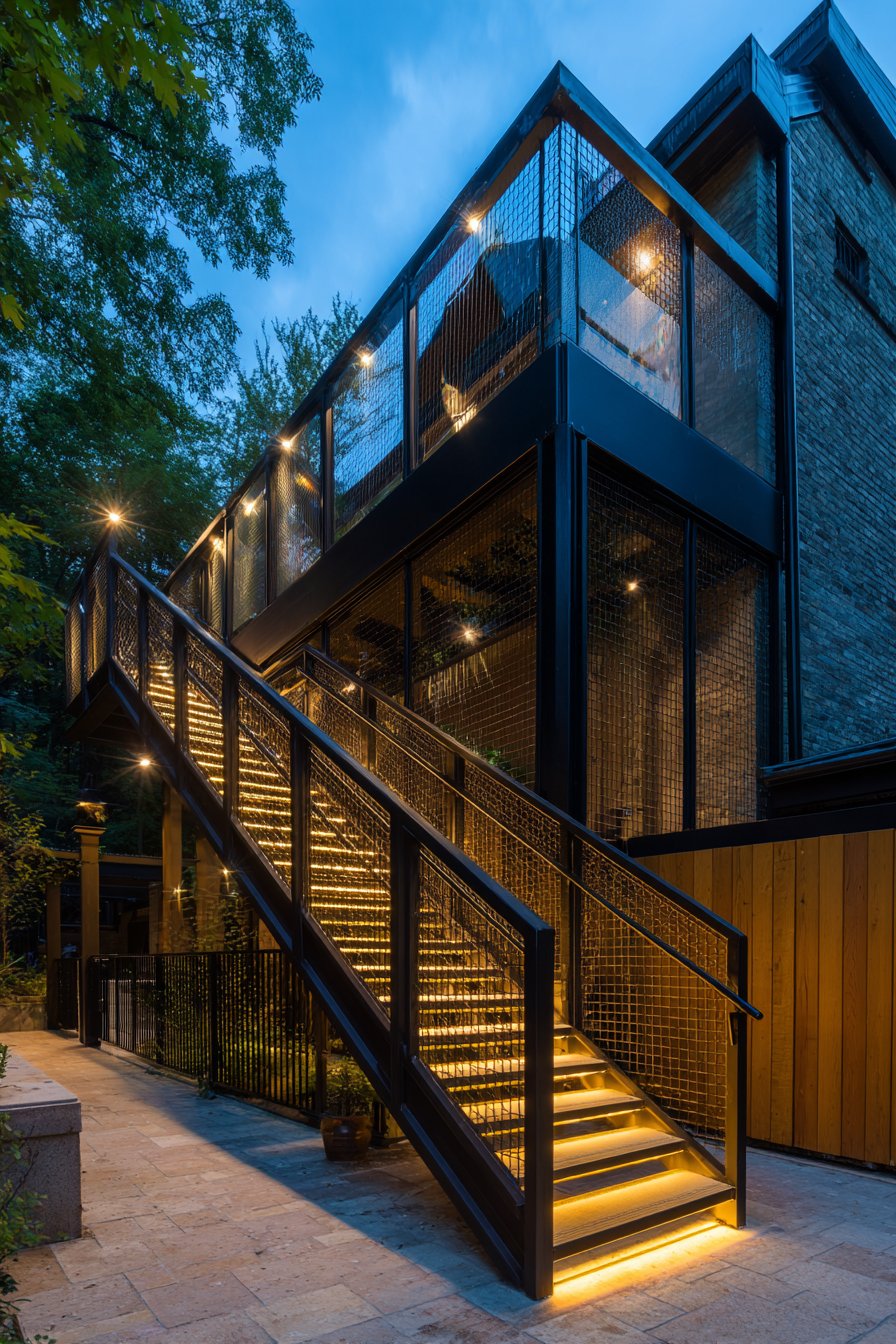
Folded steel plate construction creates continuous ribbon appearing to float. The blackened steel surface develops natural patina while maintaining strength. LED strips integrated into tread undersides provide ambient illumination after dark. Glass panel railing systems meet safety requirements while disappearing visually.
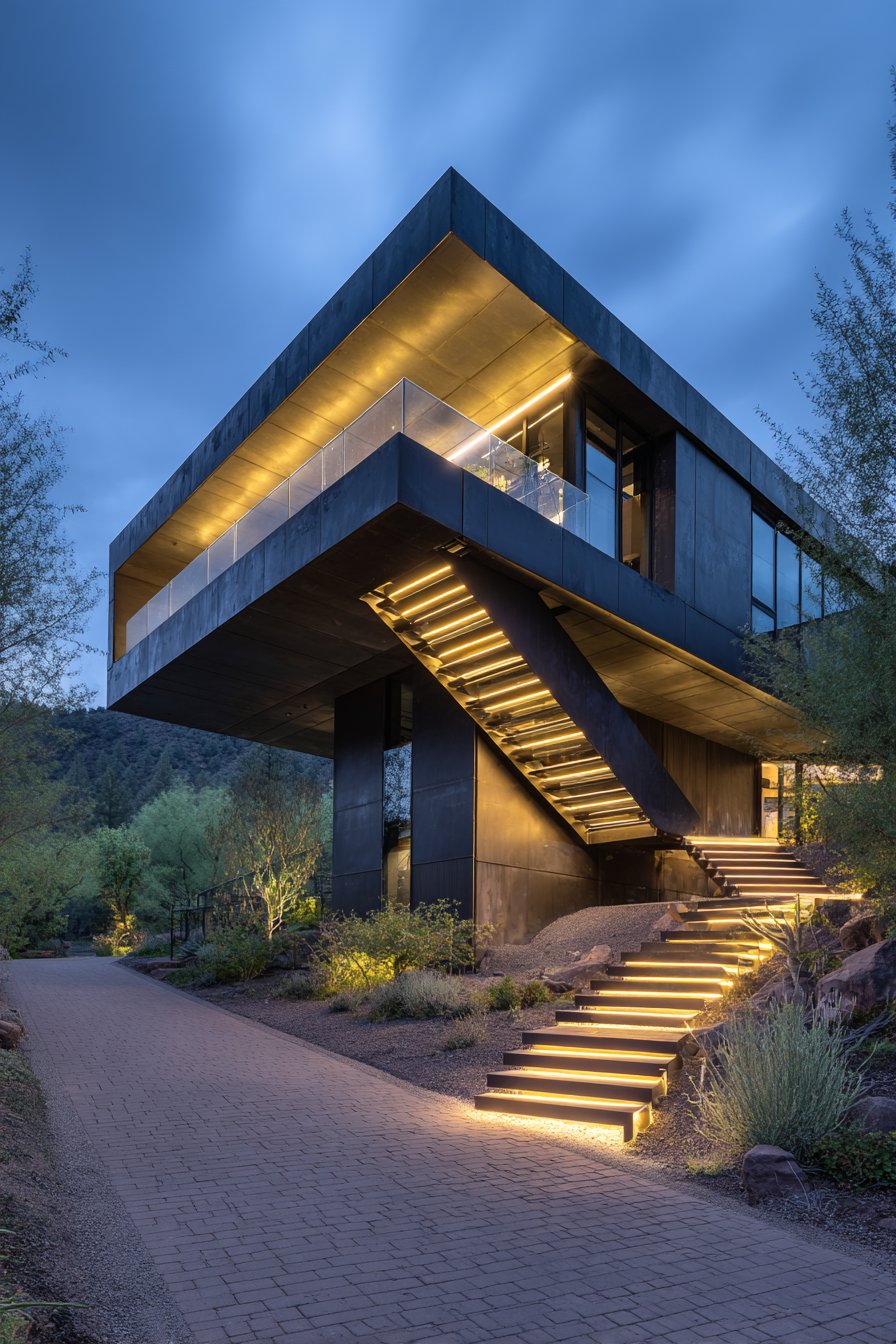
Dusk photography captures integrated lighting activating against darkening sky. The glowing pathway creates dramatic effect transforming functional stairs into art. The minimal design celebrates material properties and engineering precision. Wide-angle architectural photography emphasizes sculptural quality and lighting drama.
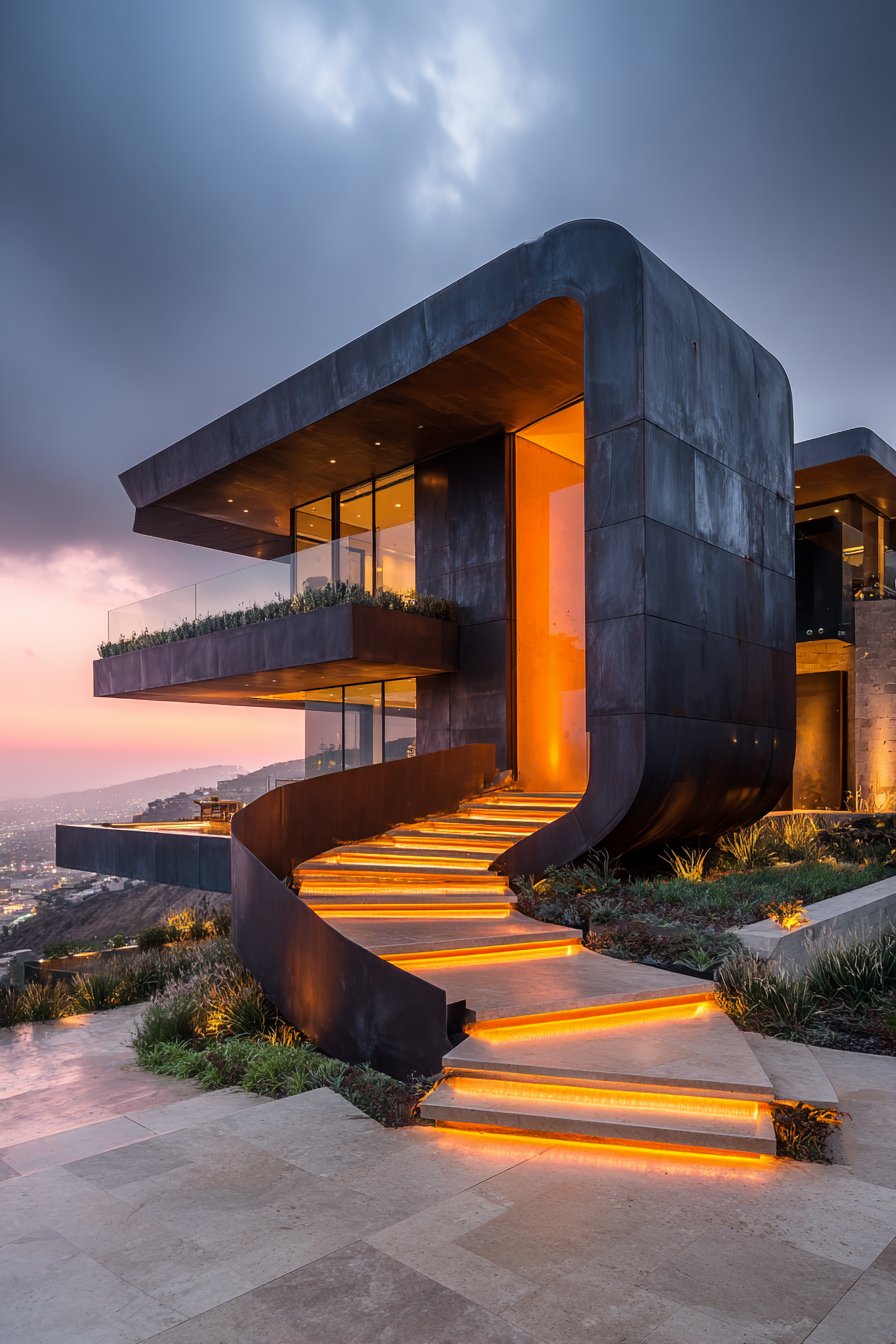
The folded steel construction demonstrates advanced fabrication techniques and engineering. The continuous form eliminates traditional stringer and tread separation. The blackened finish ages gracefully developing protective surface layer. The integrated LED lighting transforms stairs into evening landscape feature.
The glass panel railings maintain transparency preserving views and visual lightness. The combination of industrial materials and precise execution creates contemporary elegance. The sculptural approach elevates functional infrastructure to artistic statement. The design suits contemporary architecture and minimalist landscapes perfectly.
Key Design Tips:
- Use folded steel plate for continuous sculptural form
- Apply blackened finish for natural aging patina
- Integrate LED strips in tread undersides for dramatic evening lighting
- Install glass panel railings for invisible safety compliance
- Design with engineering precision for structural and aesthetic success
17. Formal Estate Limestone Construction
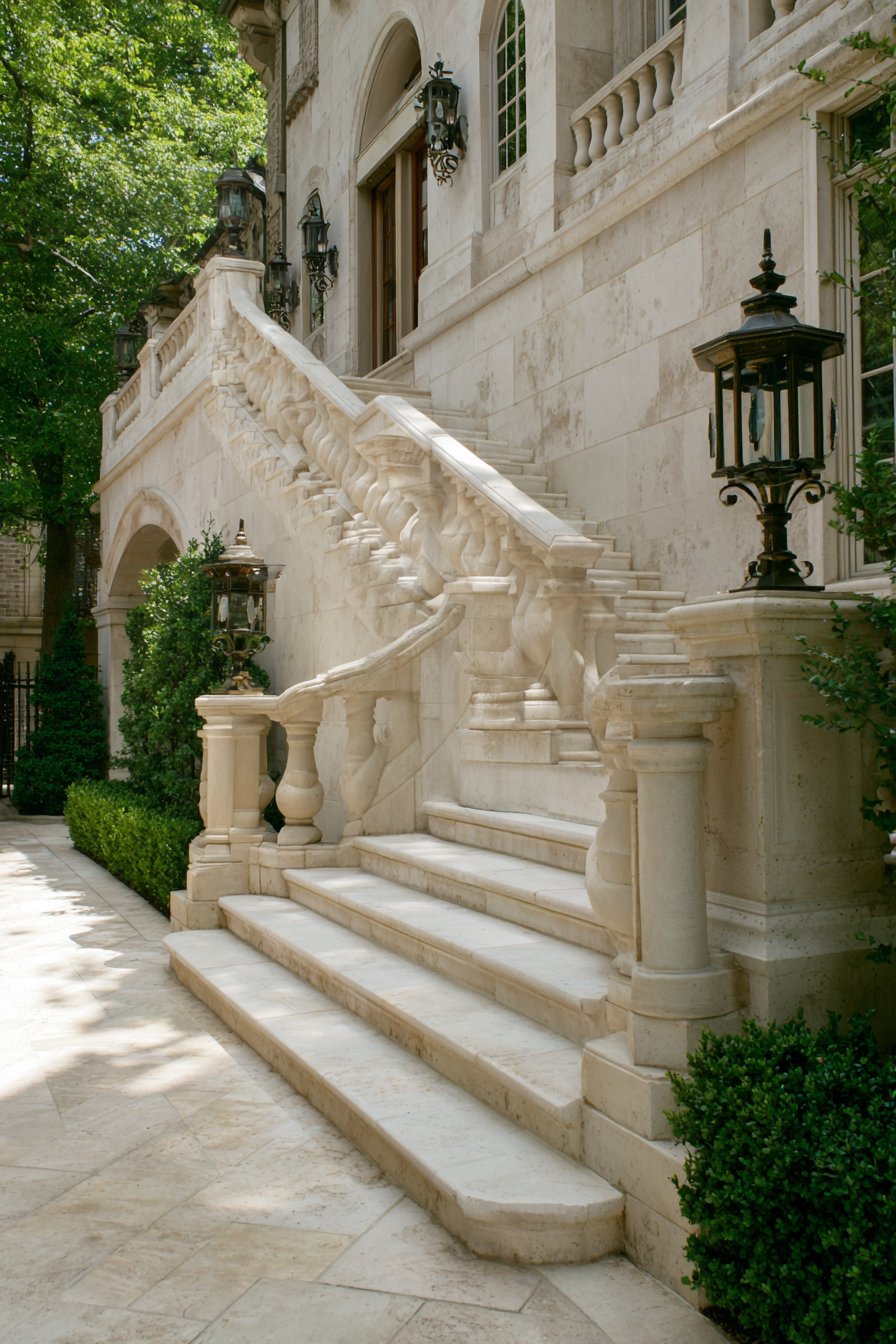
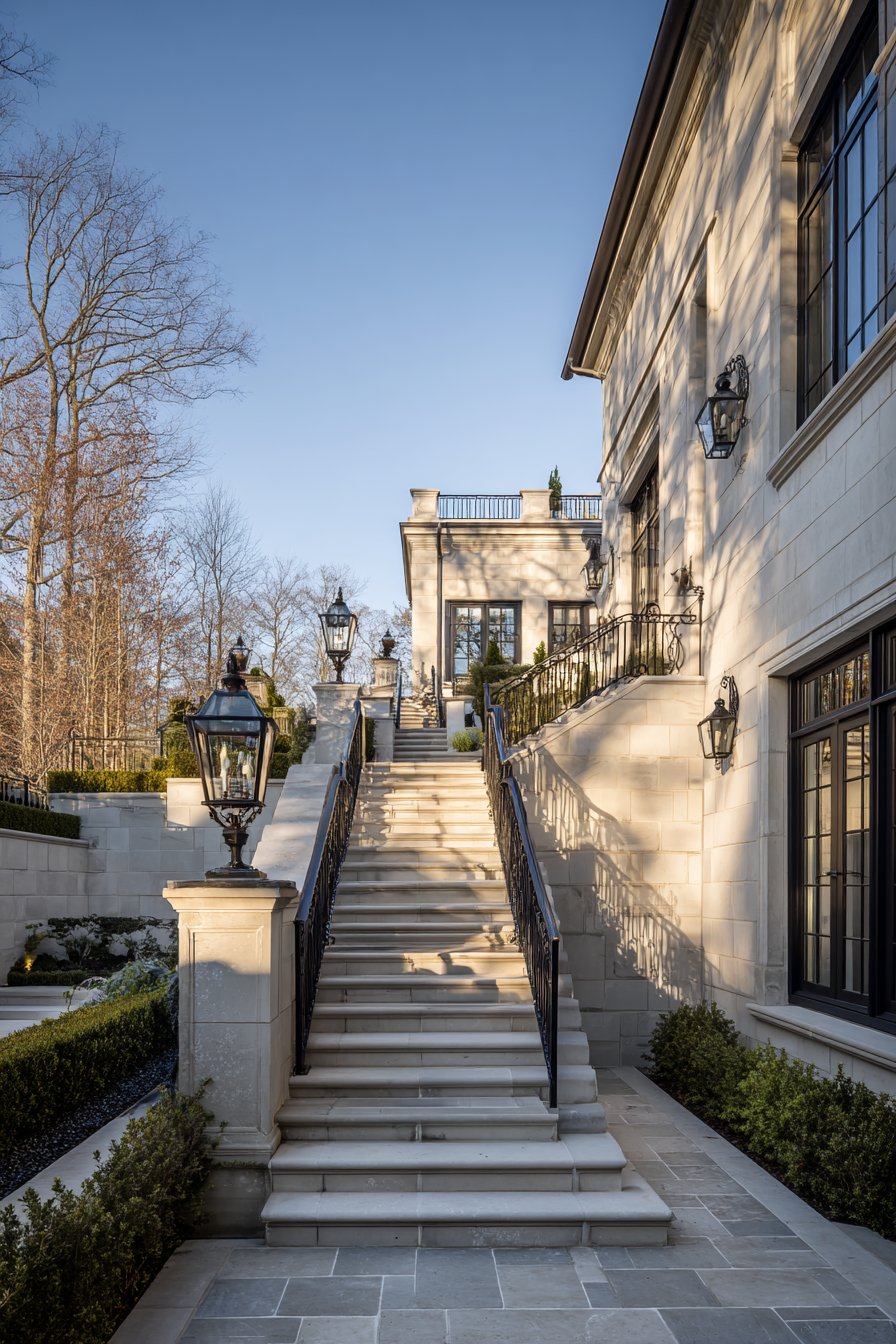
Cut limestone treads with saw-cut texture and thermal finish create formal elegance. Substantial stone balustrades with traditional turned details flank both sides. The stairs rise in three flights separated by generous landings. Manicured boxwood hedges frame the lower approach creating formal symmetry.
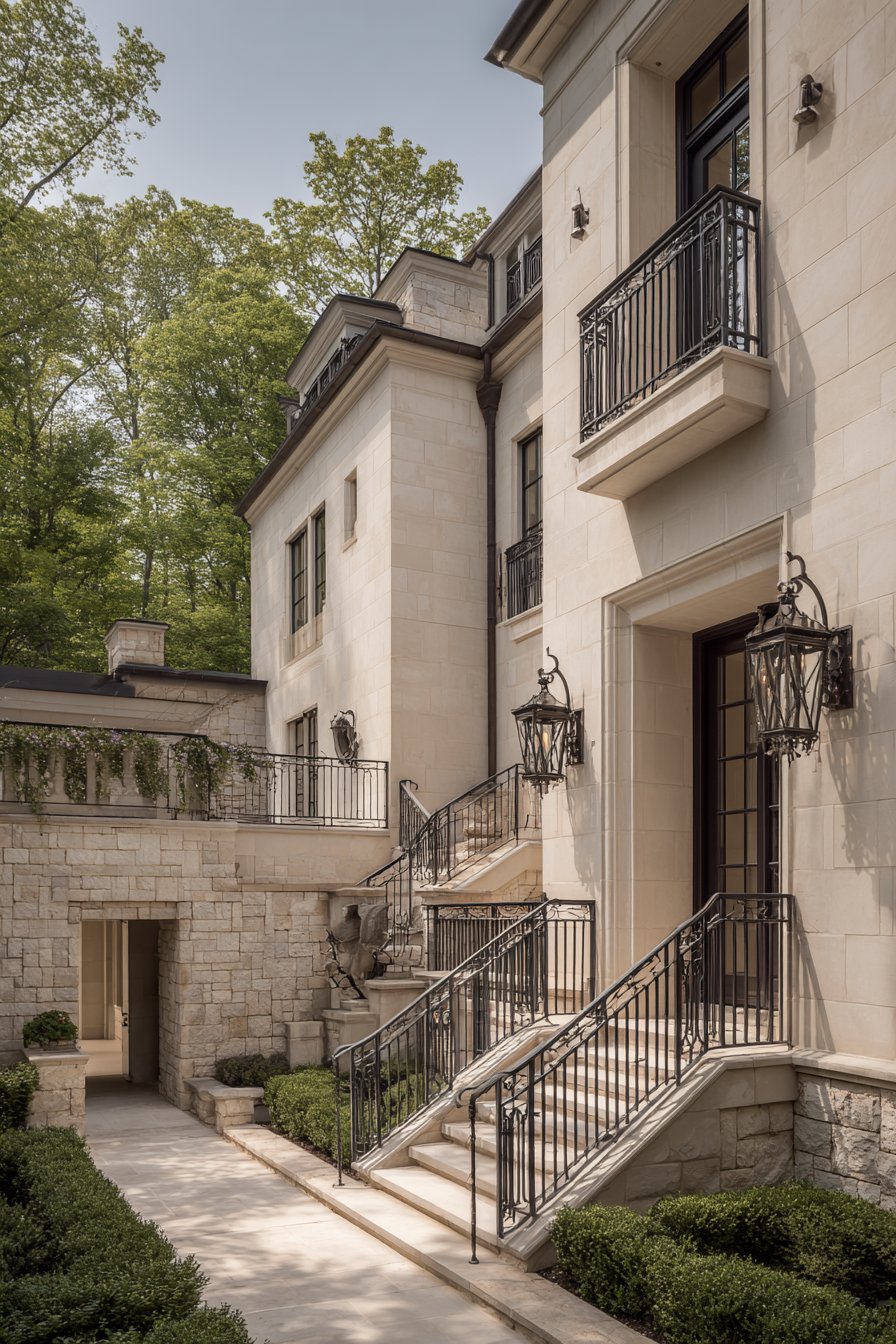
Antique bronze light fixtures provide evening illumination matching traditional aesthetic. Late afternoon sunlight rakes across limestone emphasizing cut edge precision. The thermal finish provides necessary traction while maintaining refined appearance. Classical architectural photography captures formal symmetry and material execution.
The three-flight design with landings creates architectural presence appropriate for estates. The substantial balustrades demonstrate traditional craftsmanship and material quality. The saw-cut texture provides subtle surface interest visible up close. The thermal finish creates slip resistance without appearing rough or industrial.
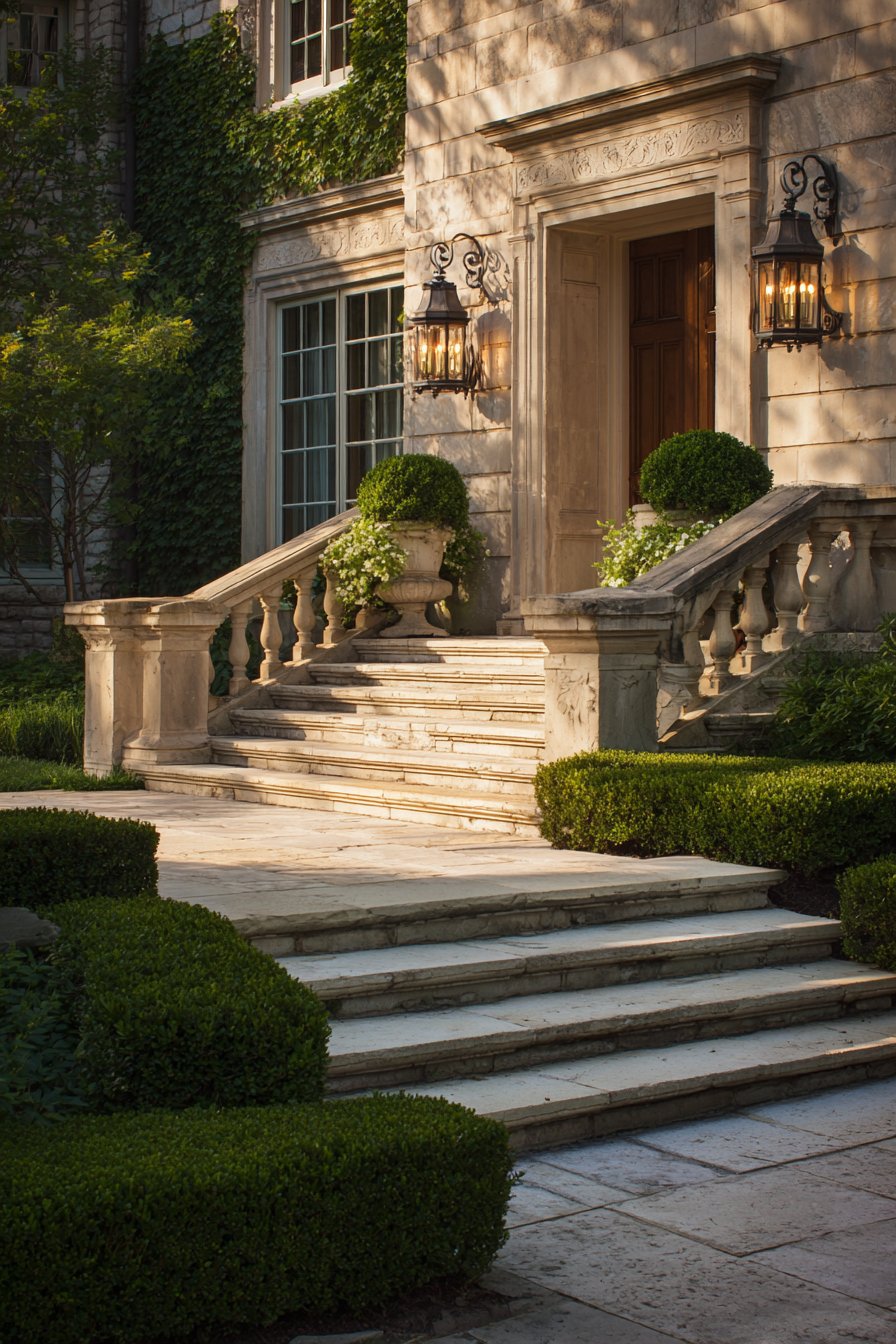
The manicured boxwood hedges reinforce formal symmetry and classical design principles. The antique bronze fixtures complement limestone color while adding warm metallic accents. The overall design reflects estate architecture and traditional landscape formality. The careful proportion and material selection create timeless elegance.
Key Design Tips:
- Use cut limestone with thermal finish for refined traction
- Design substantial balustrades with traditional turned details
- Create multiple flights with generous landings for presence
- Frame approaches with manicured boxwood hedges for formality
- Install antique bronze fixtures for traditional elegance
18. Rustic Peeled Cedar Log Construction
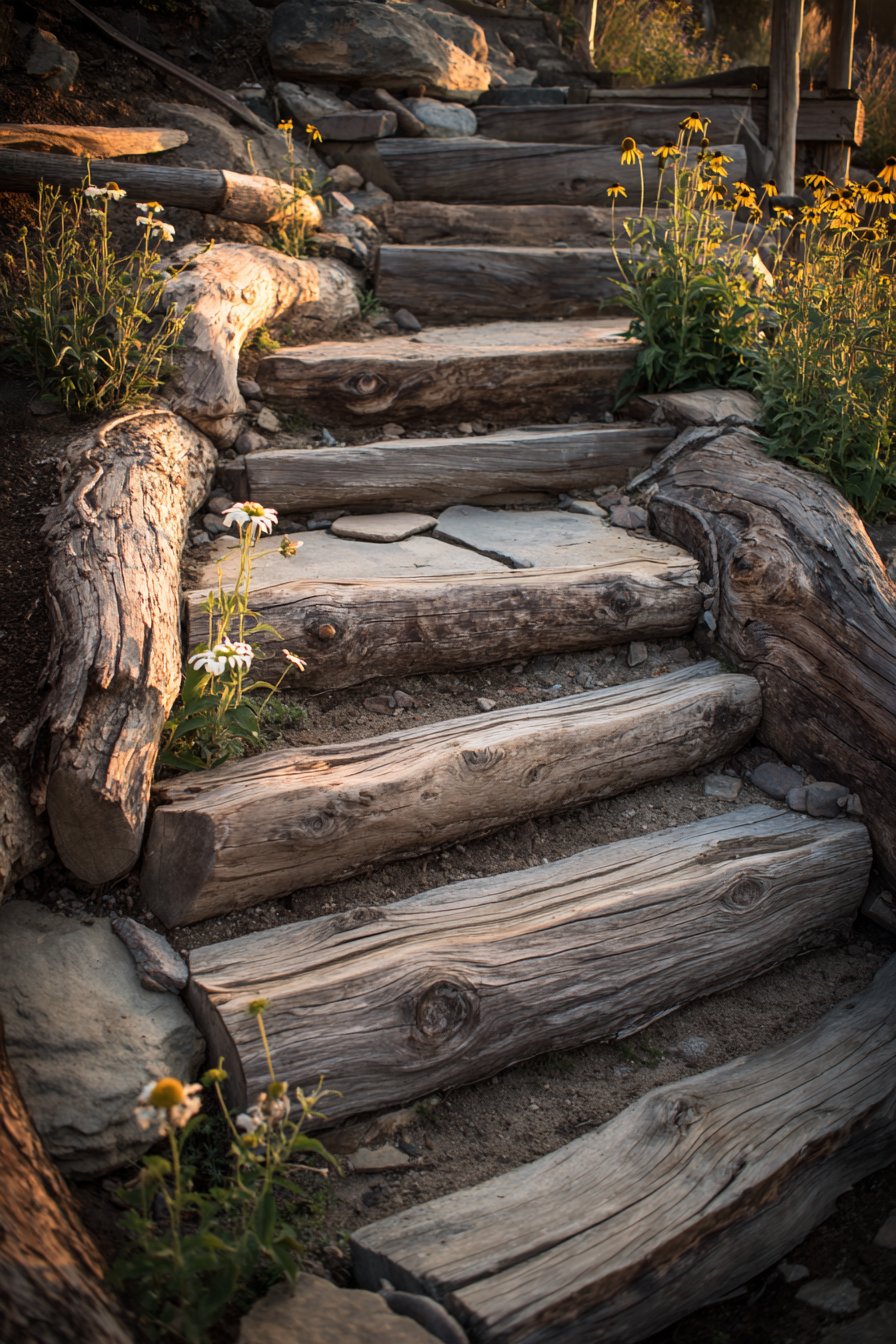
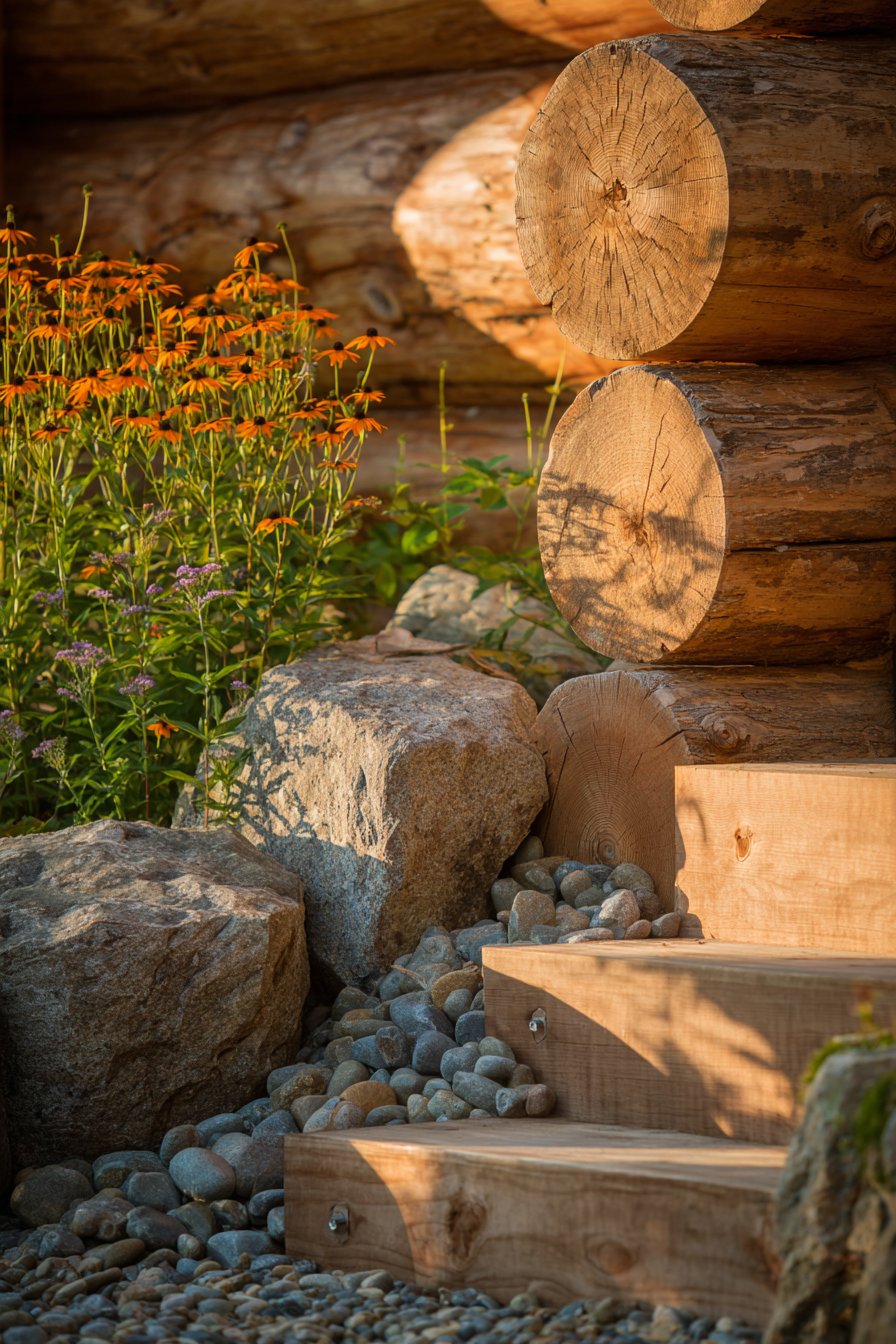
Peeled cedar logs create organic irregularity while maintaining functionality. Half-log sections secured with lag bolts form natural treads. The natural taper and curve of logs creates unique character. River rock fills gaps providing drainage and additional texture.
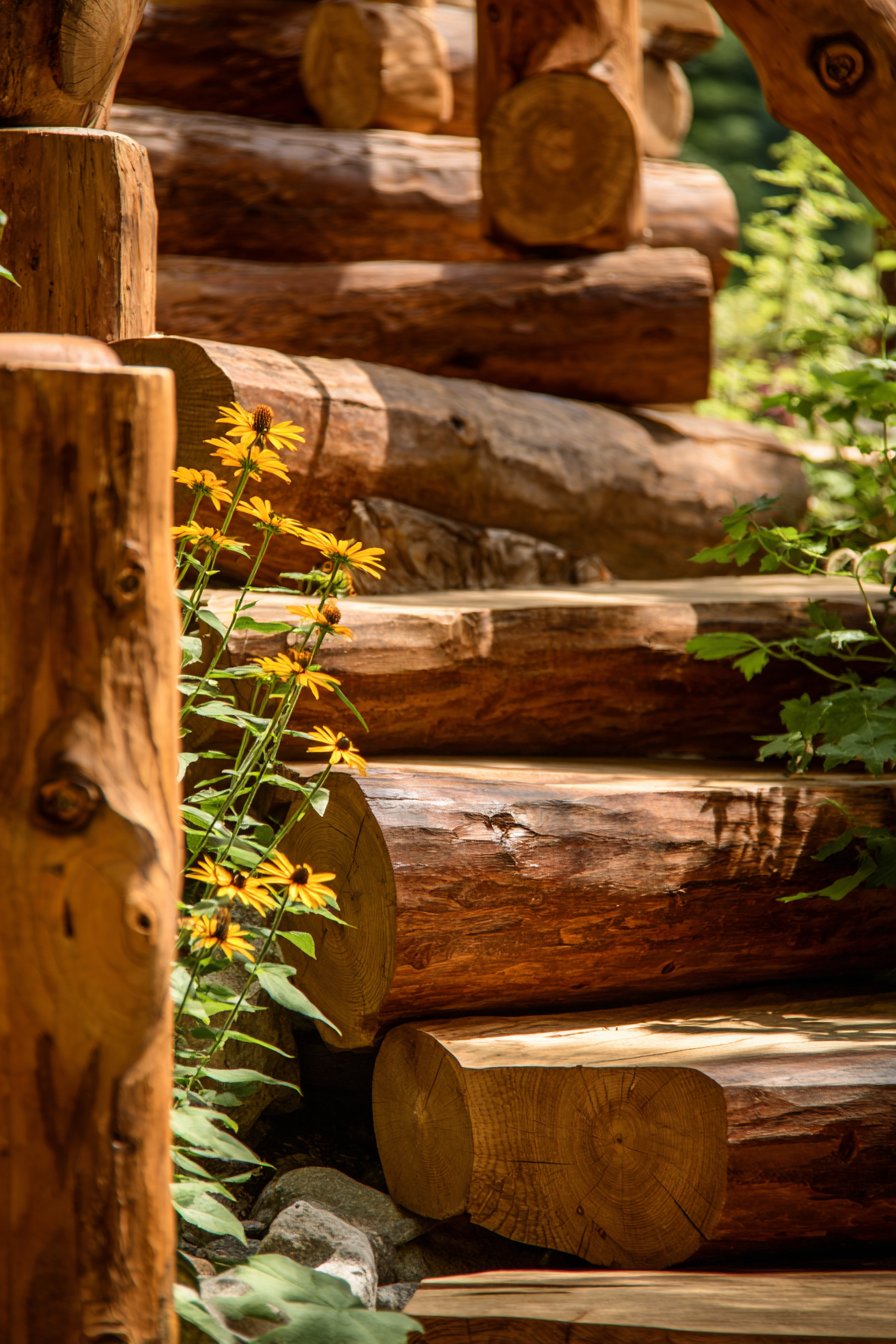
Wild bergamot and black-eyed susans grow along edges attracting pollinators. Summer afternoon sunlight highlights golden cedar tones and creates shadows. The cylindrical log forms create strong visual rhythm through repetition. Environmental detail photography shows honest joinery and natural characteristics.
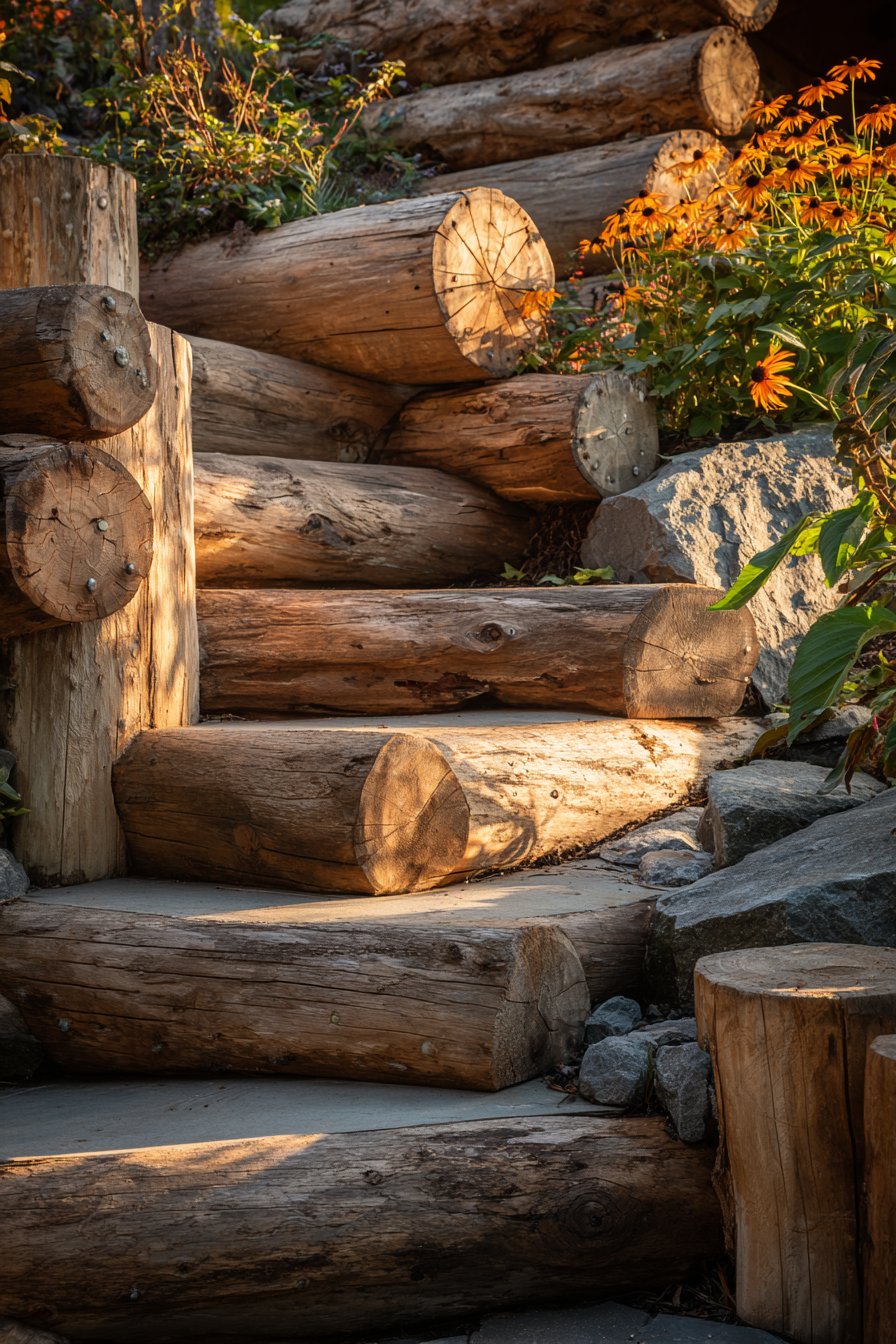
The peeled cedar maintains natural character while preventing bark deterioration. The half-log tread design provides stable walking surface with rustic charm. The lag bolt connections show honest joinery celebrating construction method. The river rock infill allows water drainage preventing ice formation.
The integration with meadow landscape feels completely organic and appropriate. The native wildflowers support pollinators adding ecological value. The cedar material resists rot naturally extending lifespan without chemicals. The design demonstrates how functional structures enhance natural settings.
Key Design Tips:
- Use peeled cedar logs for natural character and rot resistance
- Create treads from half-log sections for rustic stability
- Fill gaps with river rock for drainage and texture
- Plant native wildflowers along edges for pollinator support
- Embrace natural log taper and curve as design features
19. Contemporary Floating Reclaimed Fir Design
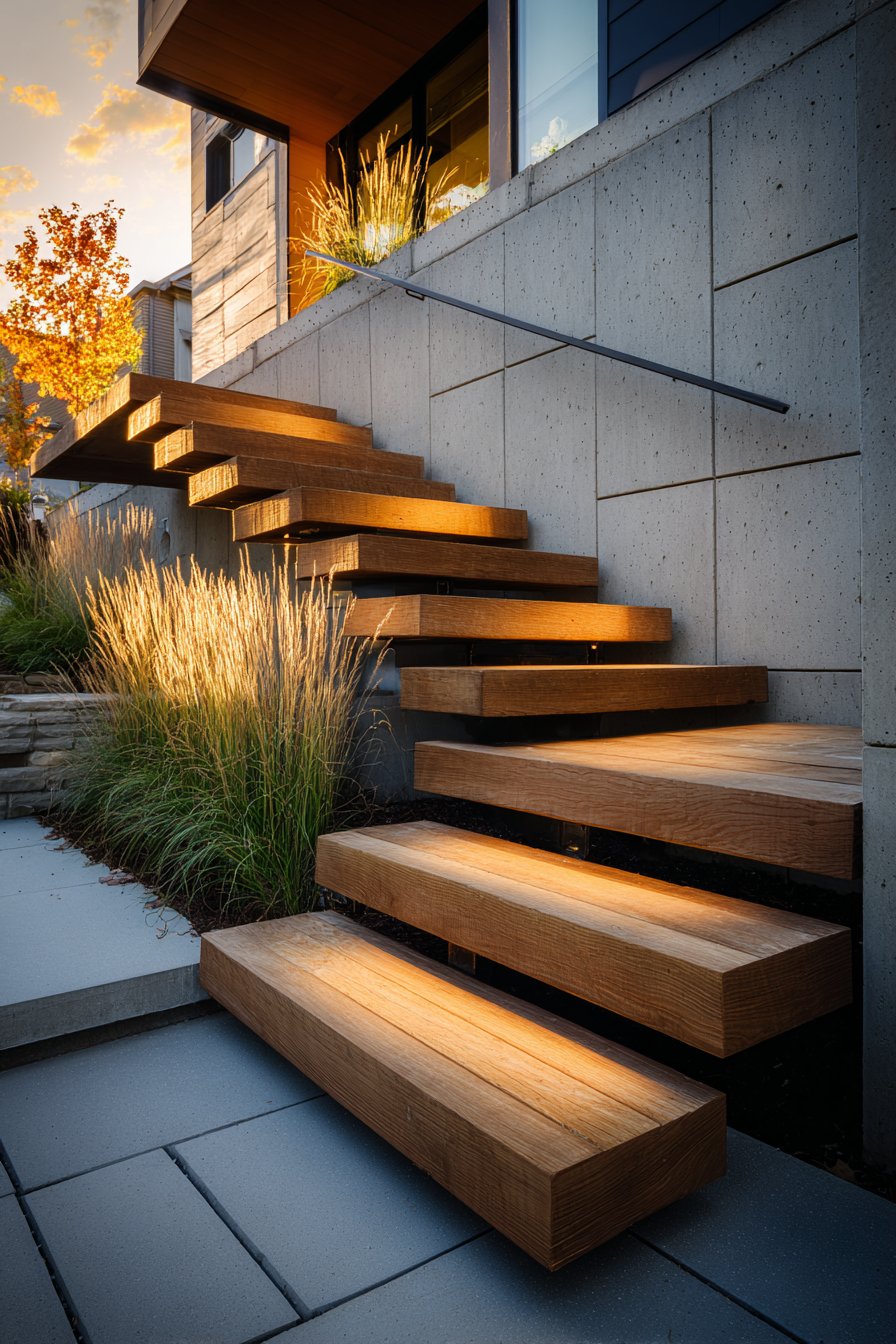
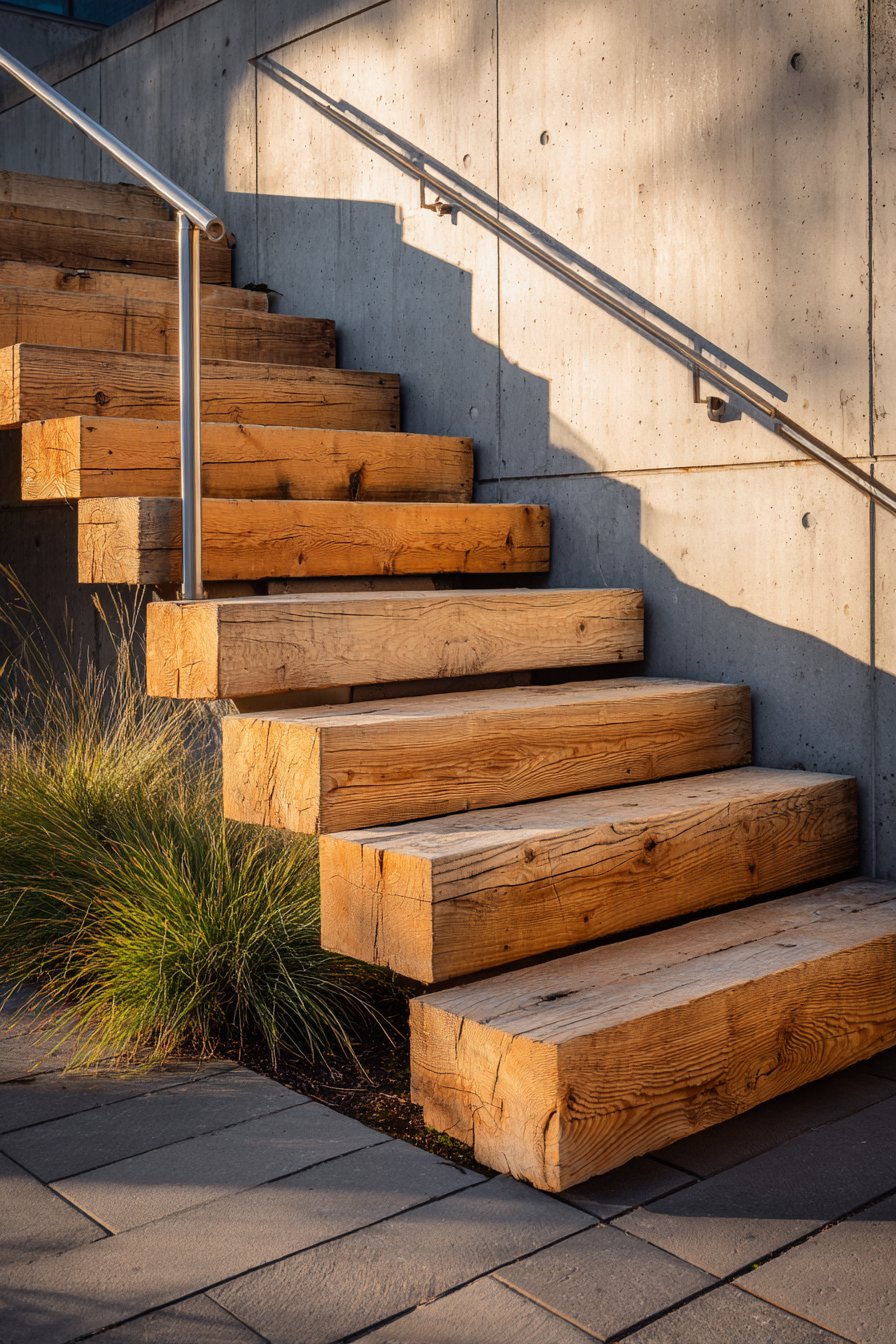
Thick reclaimed old-growth fir treads appear to float from concrete walls. The wood displays tight grain patterns and warm honey coloring. Minimalist steel handrails with clean welds provide safety minimally. Architectural grasses at base and top create soft material contrast.
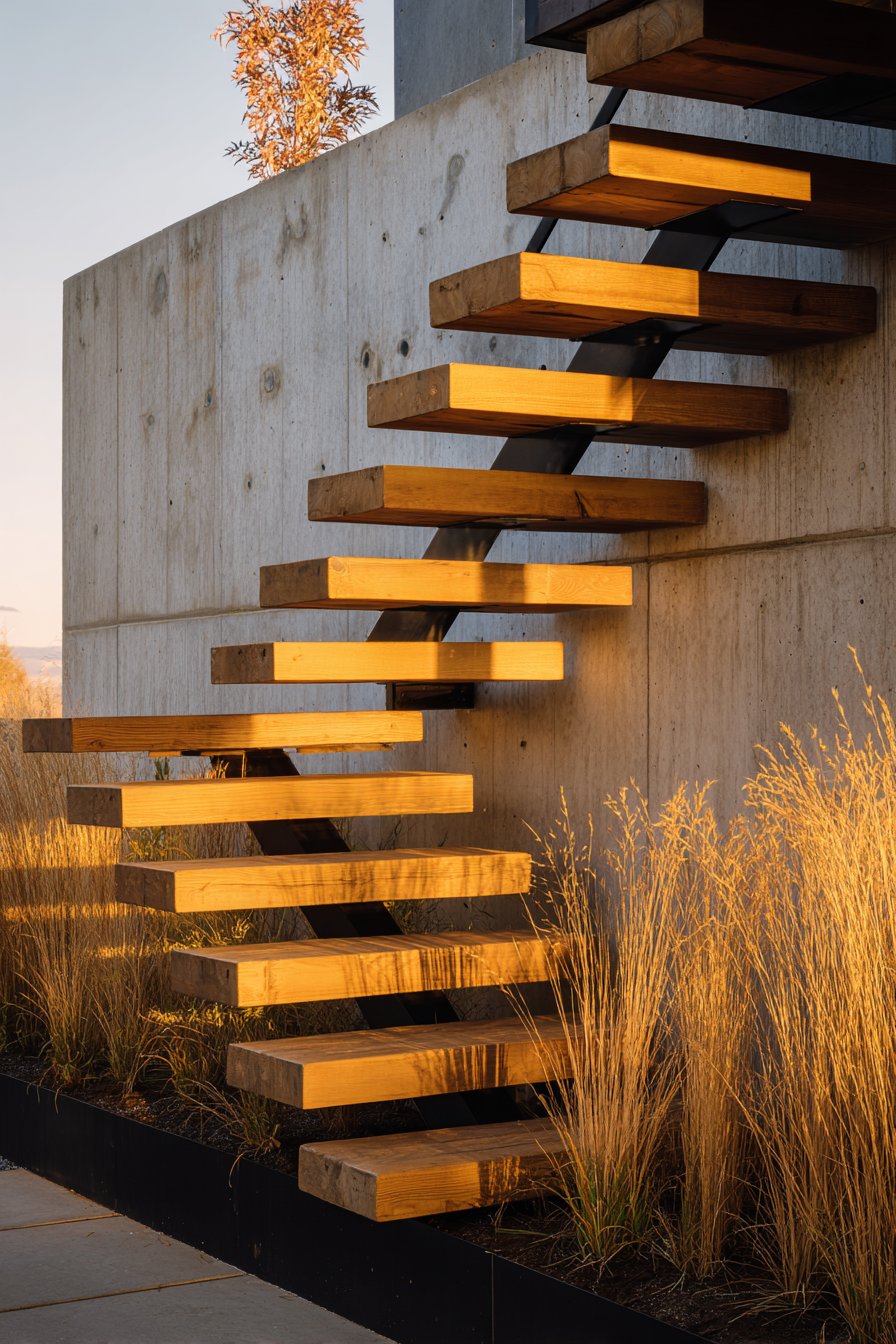
Evening golden hour light washes across wooden treads creating warm glows. Long shadows emphasize the cantilevered design and floating illusion. Modern architectural photography captures precise detailing and weightless appearance. The concealed support brackets maintain the floating visual effect.
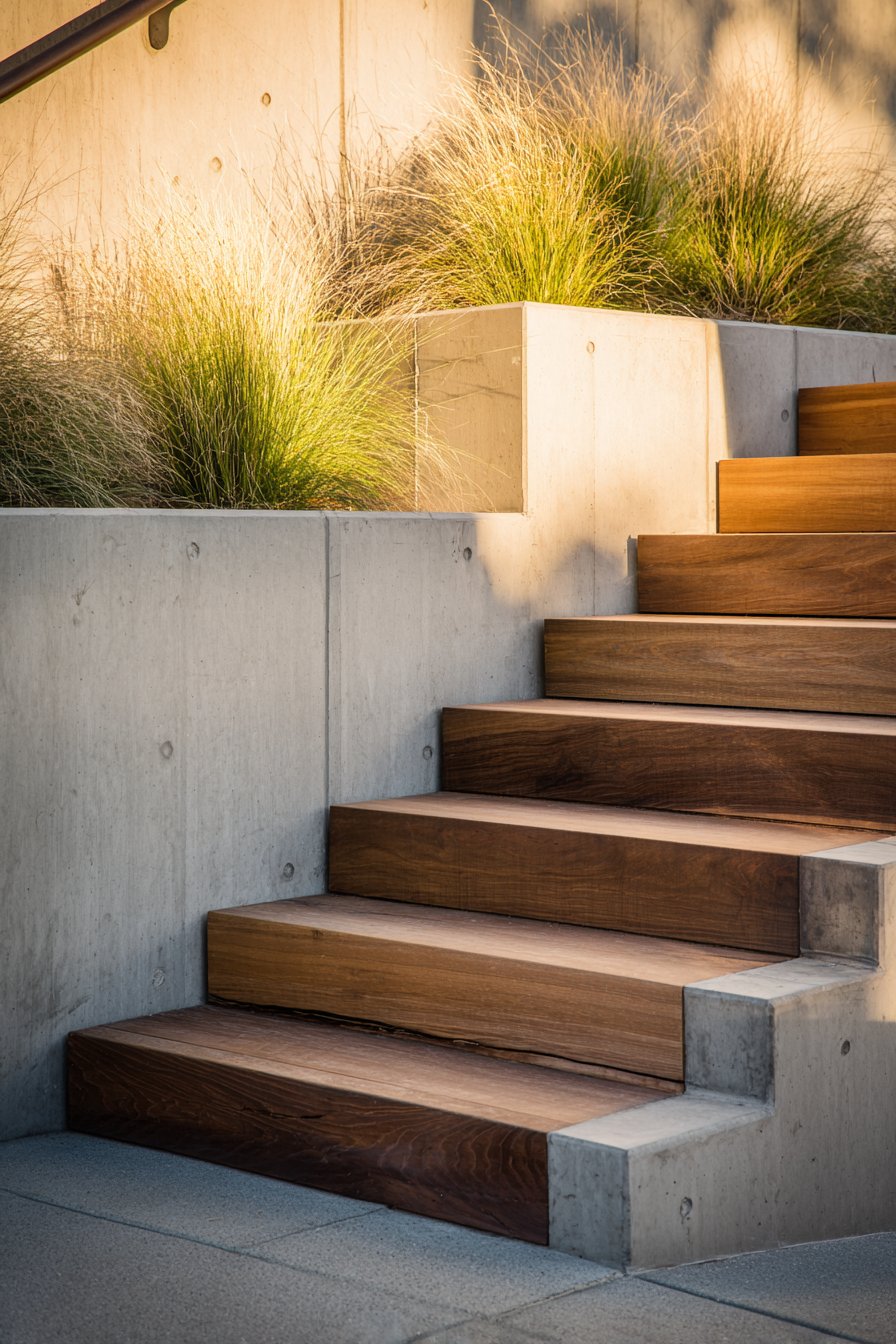
The reclaimed old-growth fir represents sustainable material use and quality. The tight grain patterns indicate slow growth and superior strength. The honey coloring warms the concrete wall creating pleasant contrast. The minimalist steel handrail demonstrates restraint and modern sensibility.
The architectural grasses soften the transition between hard materials and landscape. The cantilevered design requires engineering precision for safety and aesthetics. The floating appearance creates visual lightness despite substantial material mass. The design celebrates both modern engineering and reclaimed material beauty.
Key Design Tips:
- Source reclaimed old-growth fir for grain quality and sustainability
- Conceal support brackets to maintain floating illusion
- Install minimalist steel handrails with clean precise welds
- Plant architectural grasses for soft material contrast
- Photograph during golden hour to capture warm wood tones
20. Practical Rubber Tread Concrete Design
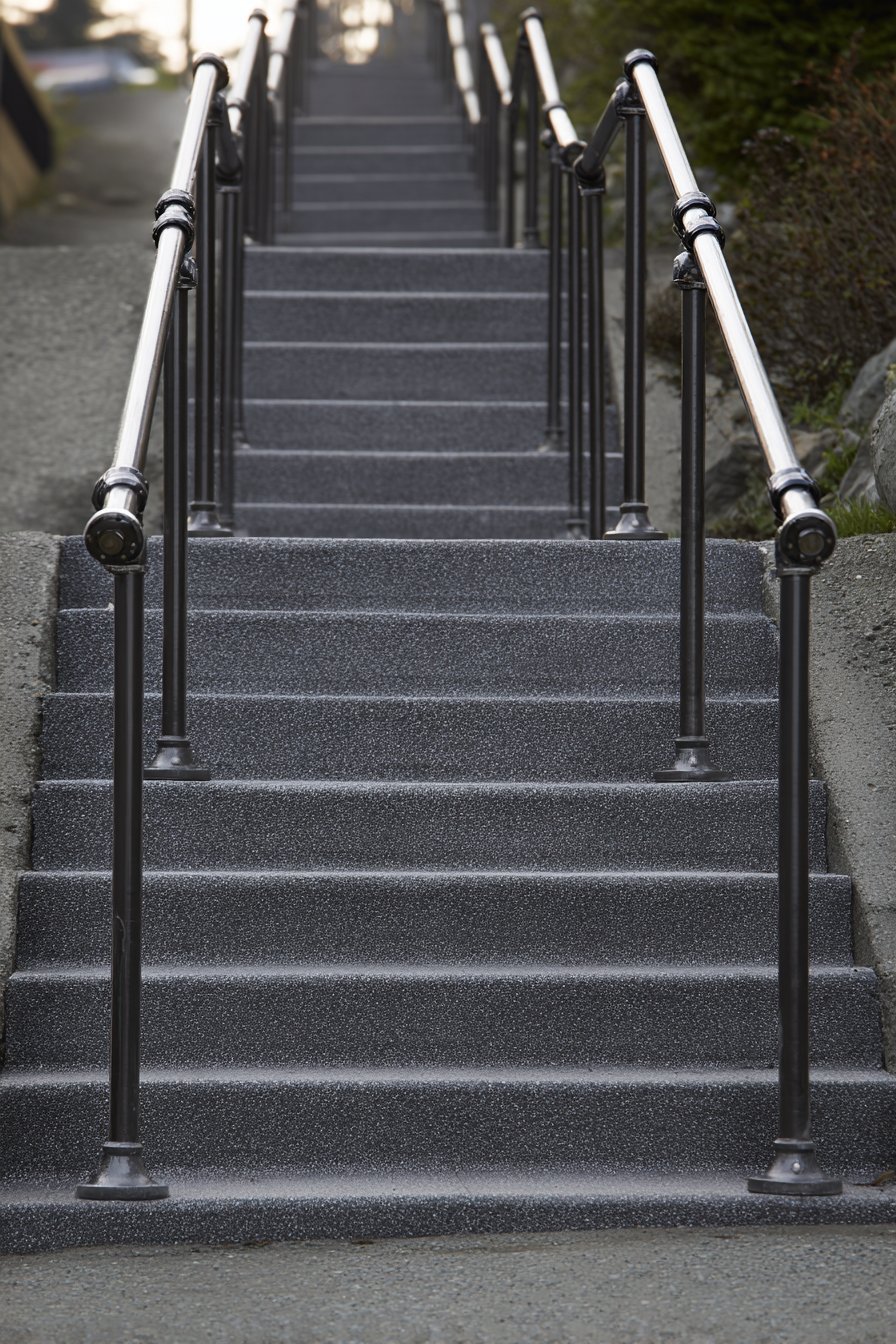
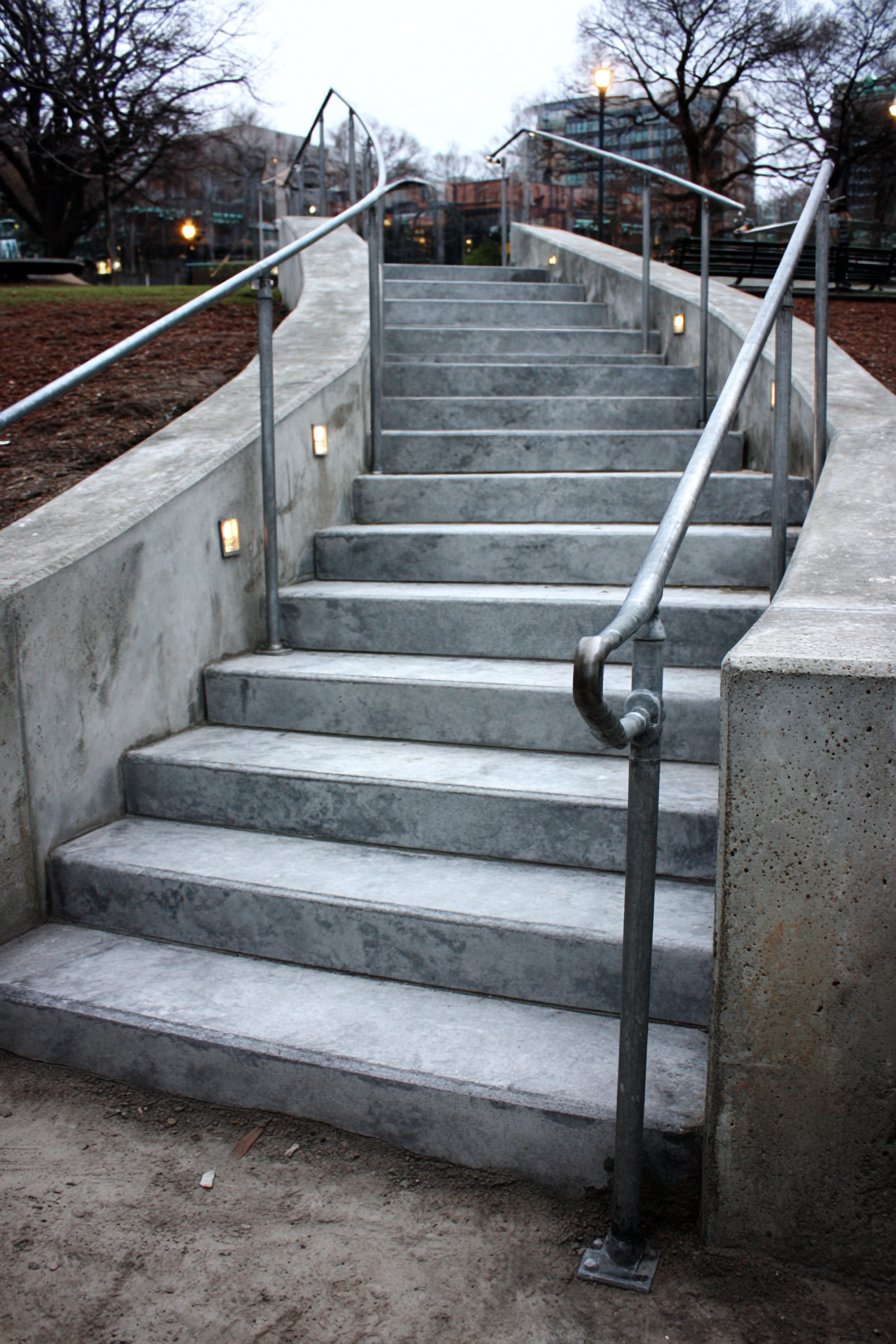
Poured concrete risers paired with recycled rubber treads create practical durability. The rubber features subtle texture in charcoal grey concealing dirt effectively. Simple galvanized steel pipe railings with industrial fittings require minimal maintenance. Wide landings every six steps provide accessibility and rest opportunities.
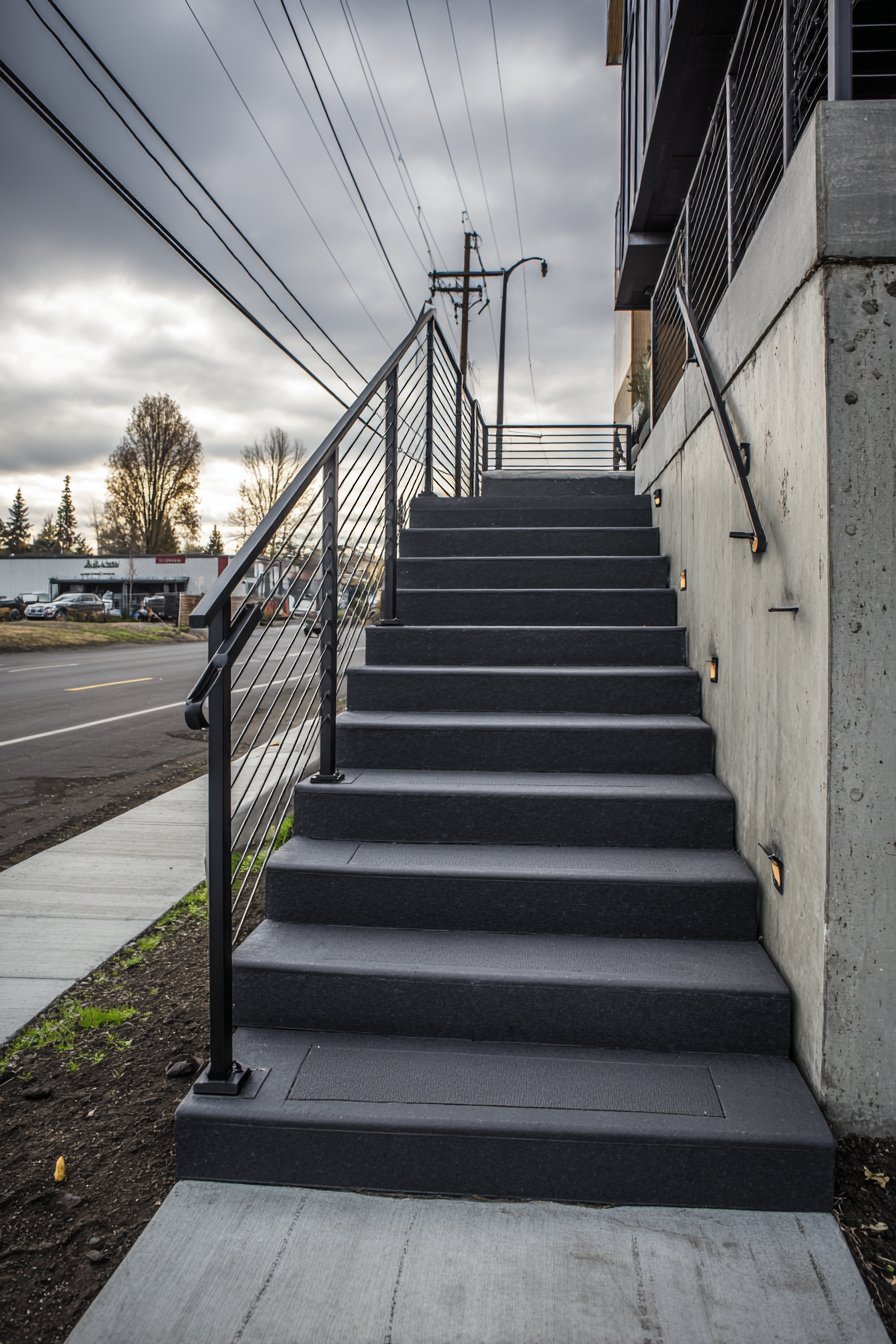
Solar-powered step lights integrated into risers activate automatically at dusk. Overcast lighting shows practical material choices and functional design priorities. Wide-angle perspective captures full accessible design features clearly. The durable materials withstand heavy use and varied weather conditions.
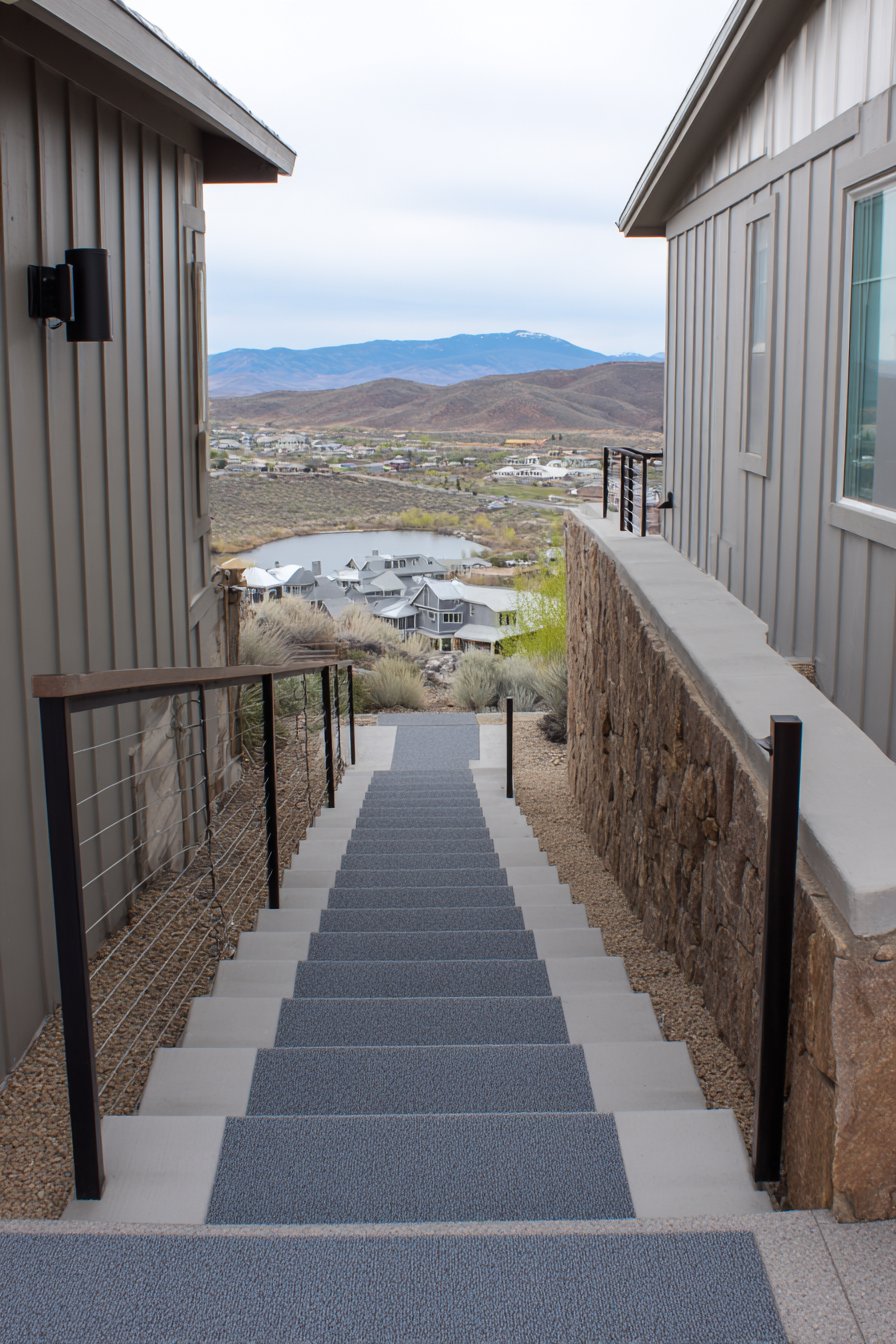
The recycled rubber treads provide superior traction and comfort underfoot. The material resists weather damage and maintains appearance over years. The charcoal grey color hides dirt and wear better than lighter alternatives. The subtle texture adds grip without appearing industrial or rough.
The galvanized steel pipe railings suit practical outdoor applications perfectly. The industrial fittings provide strength with honest utilitarian appearance. The wide landings accommodate users of varied abilities and fitness levels. The solar-powered lighting eliminates wiring while providing safety illumination.
Key Design Tips:
- Use recycled rubber treads for traction and comfort
- Choose charcoal grey to conceal dirt and wear
- Install galvanized steel pipe railings for low maintenance
- Design wide landings every six steps for accessibility
- Add solar-powered step lights for automatic safety illumination
Why These Outdoor Stair Designs Are the Best
These outdoor stair designs represent comprehensive approaches to exterior vertical transitions. Each concept demonstrates thoughtful material selection suited to specific environments and aesthetic goals. The variety showcases how stairs function as both practical infrastructure and artistic features.
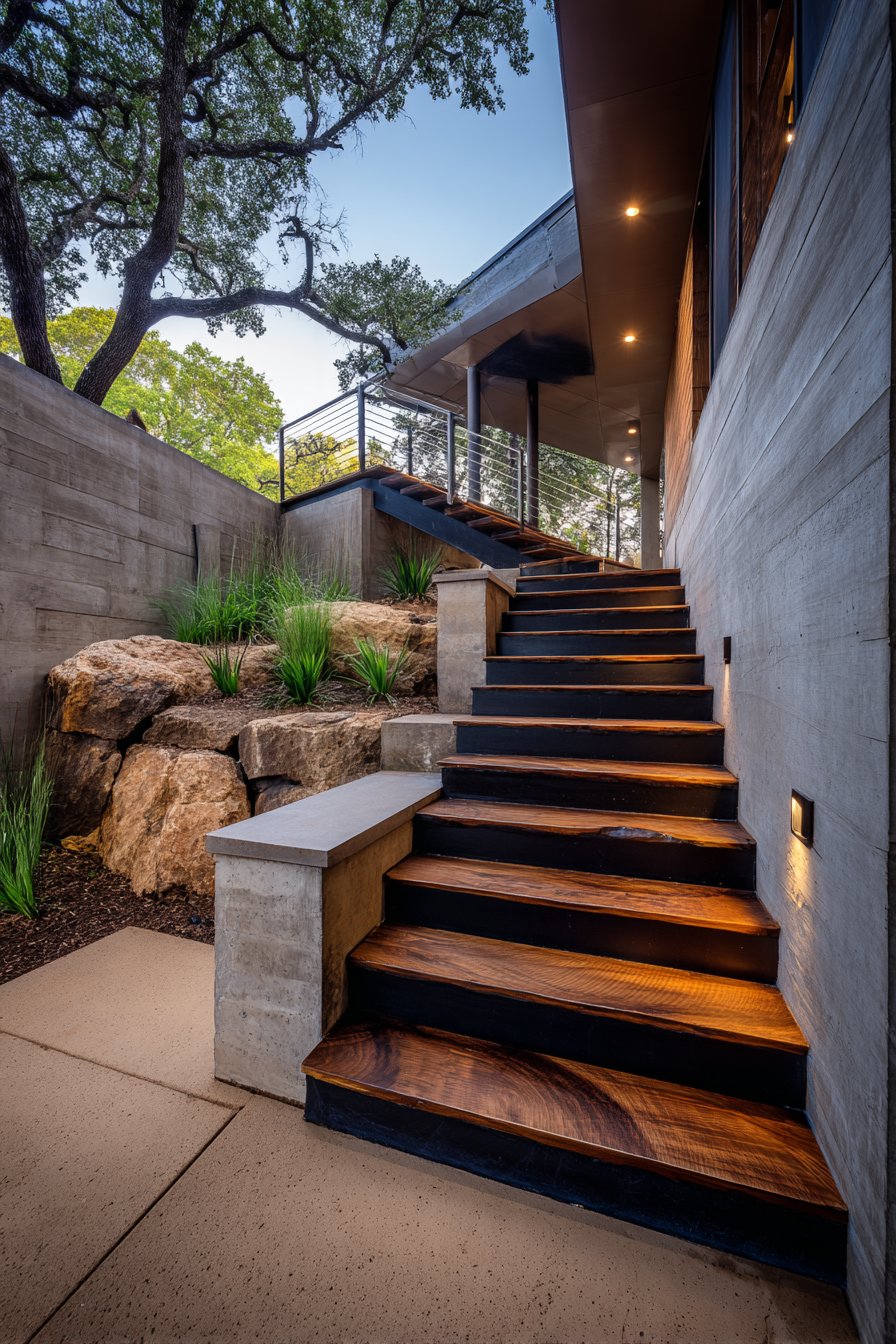
Material durability stands as the foundation of successful outdoor stair design. Natural stone, weather-resistant wood, concrete, and steel each offer distinct advantages. The designs demonstrate proper material application considering climate, exposure, and maintenance requirements. Sustainable choices like reclaimed wood and cor-ten steel provide longevity while minimizing environmental impact.
The integration of safety features with aesthetic design creates functional beauty. Railings, lighting, and tread texture all contribute to user safety. These elements receive careful design attention rather than appearing as afterthoughts. The best designs make safety features enhance rather than compromise visual appeal.
Landscape integration separates exceptional designs from merely functional stairs. The concepts show stairs working harmoniously with surrounding environments. Native plantings, natural stone placement, and terrain-following layouts demonstrate ecological sensitivity. This integration creates outdoor spaces that feel cohesive and well-planned.
Style versatility allows these designs to suit varied architectural contexts. Traditional estate limestone stairs differ dramatically from contemporary floating steel designs. Both approaches excel within their respective contexts. The diversity demonstrates outdoor stair potential across design philosophies from rustic to modern.
Color theory applications enhance material selections and planting choices. Warm wood tones complement cool steel elements creating balanced contrast. Natural stone variations provide subtle color interest without overwhelming. Strategic plant selections add seasonal color that evolves throughout the year.
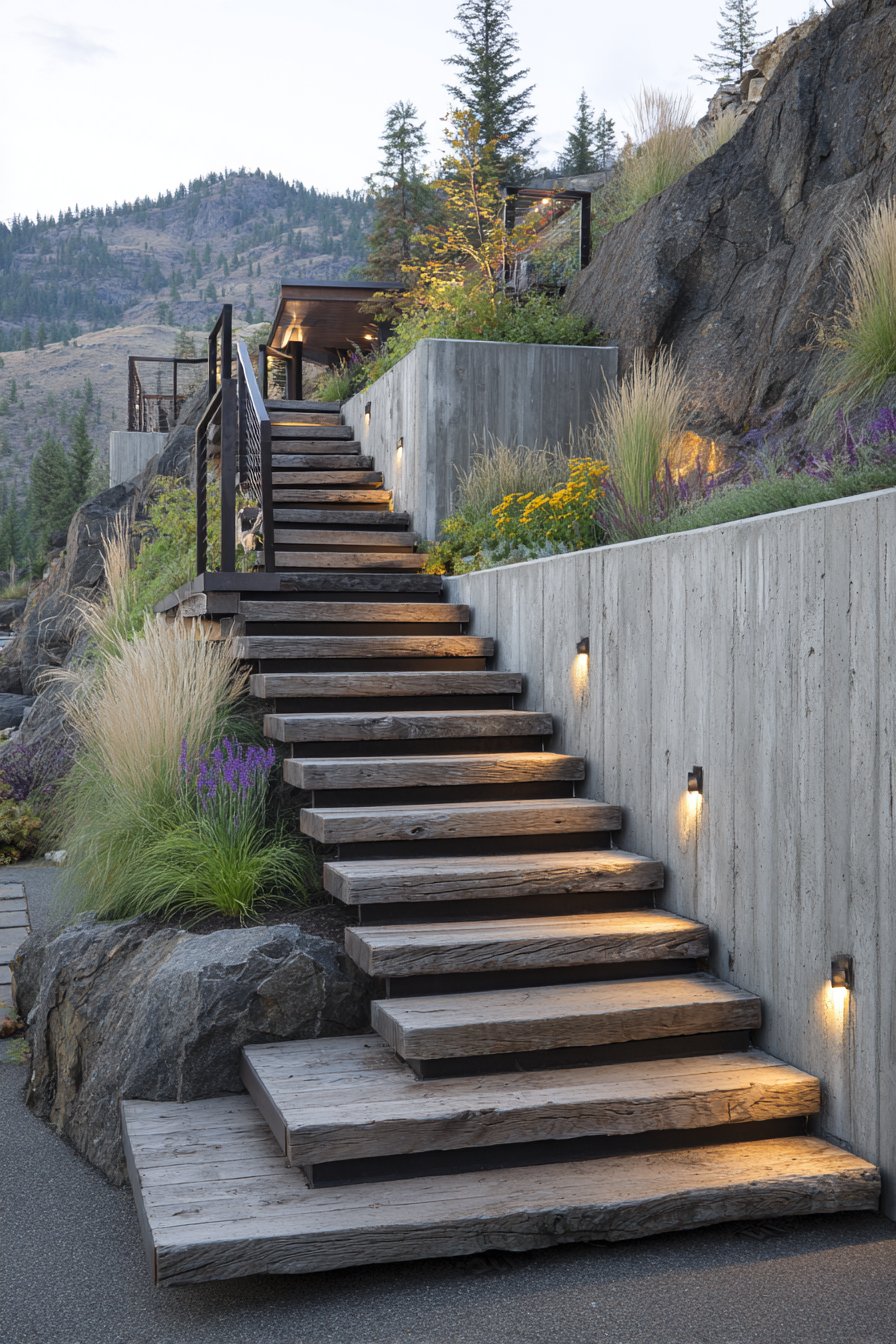
Spatial considerations address different site challenges from gentle slopes to steep hillsides. Terraced designs break long ascents into manageable sections with landings. Floating designs minimize visual obstruction preserving sight lines and views. Each approach solves specific spatial challenges while maintaining aesthetic quality.
The lighting integration transforms stairs from daytime features into evening focal points. LED strips, solar-powered step lights, and post fixtures provide practical illumination. These elements create ambiance while ensuring safe navigation after dark. The best designs integrate lighting seamlessly within the overall concept.
Conclusion
These outdoor stair designs demonstrate that functional infrastructure can become stunning landscape features. The key takeaways include thoughtful material selection, environmental integration, and safety consideration. Quality construction combined with artistic vision creates stairs that enhance properties for decades.
Successful outdoor stairs balance aesthetic appeal with practical durability. Material choices should suit climate conditions while reflecting personal style preferences. Integration with surrounding landscape creates cohesive outdoor environments. Start planning your outdoor stair project by considering site conditions and design goals. Your property deserves stairs that combine beauty with lasting functionality.