


The vintage pantry has emerged as a treasured element in modern home design. It combines practical storage with nostalgic charm. These spaces celebrate history through authentic materials and time-honored craftsmanship. The vintage aesthetic transforms ordinary storage into beautiful, functional rooms.
Today’s homeowners increasingly seek alternatives to sterile modern storage solutions. Vintage pantries offer warmth and personality that mass-produced cabinetry cannot replicate. Each piece tells a story through weathered wood and aged patina. The combination of beauty and utility creates spaces that feel both welcoming and efficient.
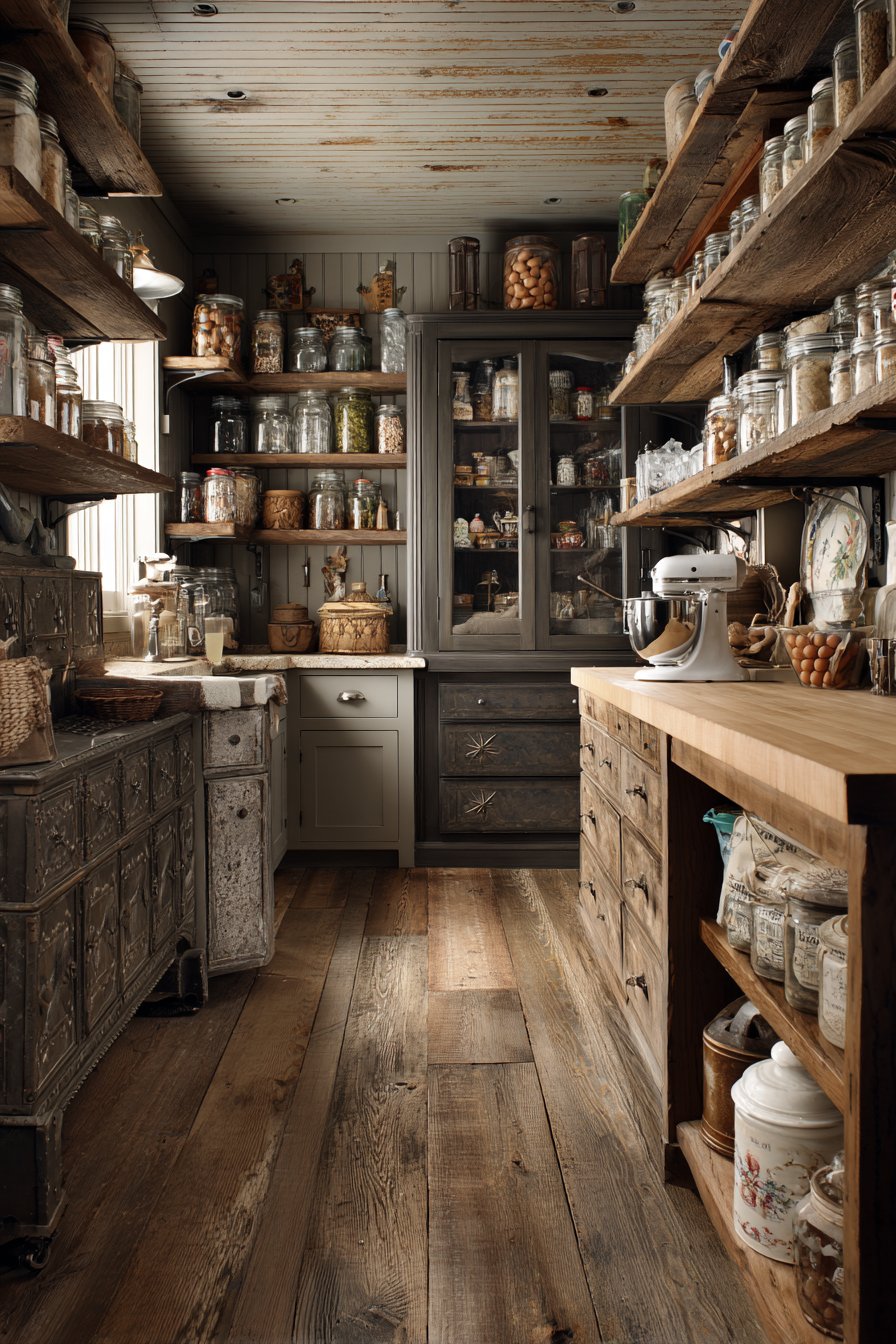
This article explores twenty stunning vintage pantry designs. Each concept showcases unique approaches to incorporating antique elements and period-authentic materials. From reclaimed barn wood shelving to restored Hoosier cabinets, these designs demonstrate timeless appeal. Whether you prefer farmhouse simplicity or Victorian elegance, these vintage pantry ideas inspire thoughtful renovation.
1. Reclaimed Barn Wood Open Shelving
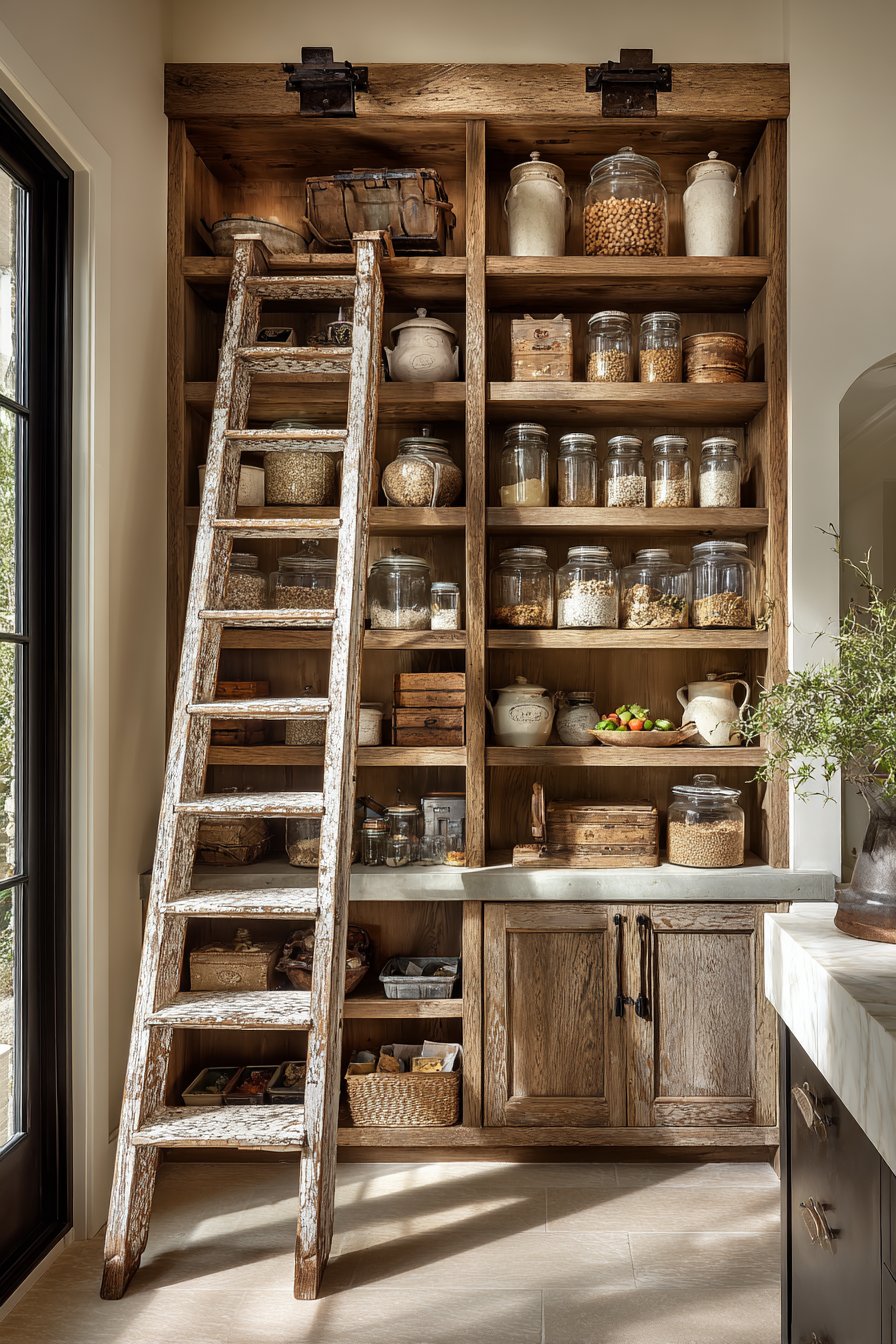
Floor-to-ceiling shelving made from reclaimed barn wood creates an immediate vintage impact. The honey-toned planks display natural grain variations and authentic weathering. Ornate metal brackets with aged patina support each shelf. Glass apothecary jars, vintage crocks, and antique tin containers line the shelves in organized beauty.
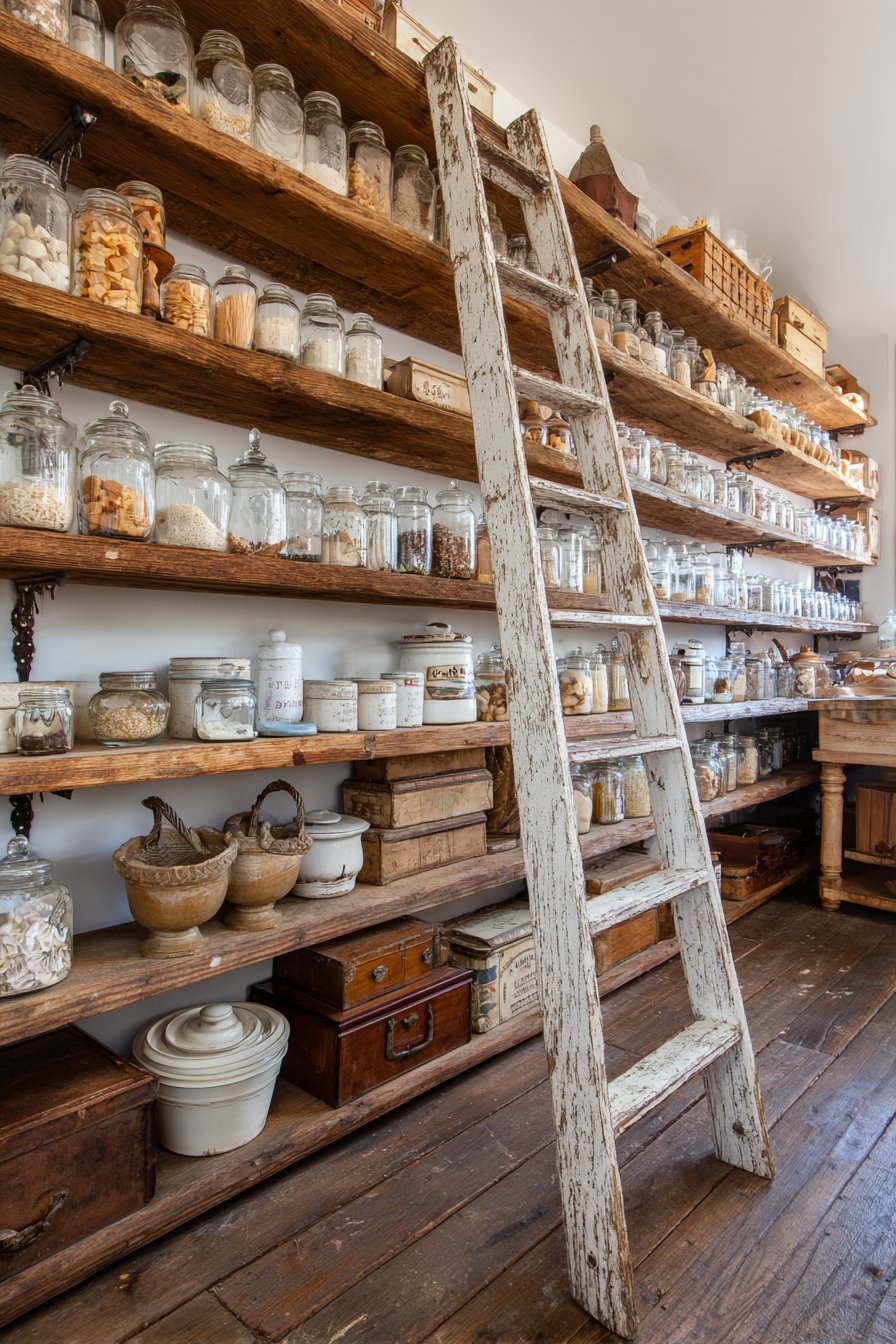
The warm wood tones establish the foundation for this design. Each plank tells its own story through saw marks and subtle imperfections. A farmhouse-style stepladder in chipped white paint leans casually against the wall. This provides both function and visual interest.
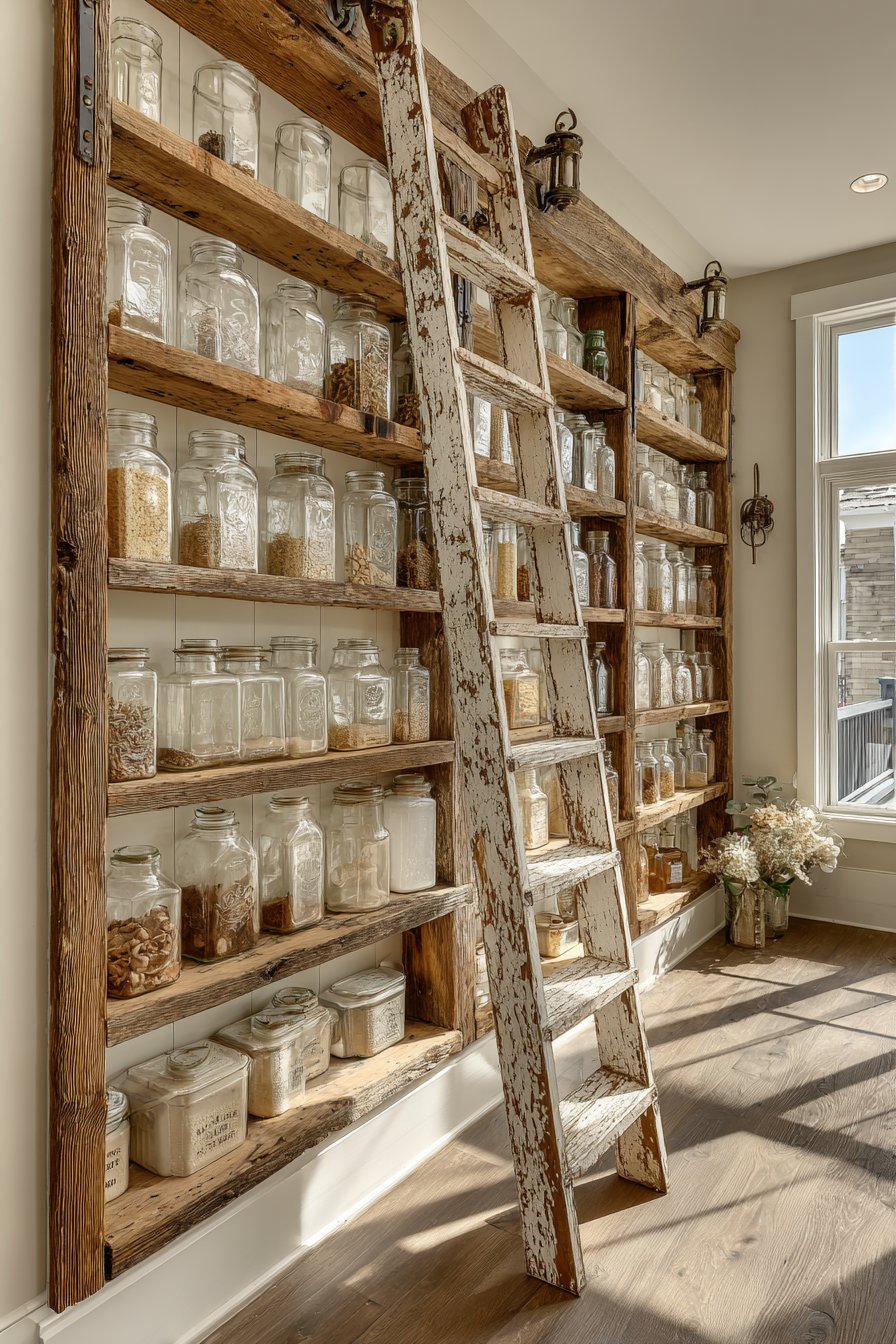
Natural light from a nearby window illuminates the space beautifully. Gentle shadows fall across the displayed items throughout the day. The interplay of light enhances the dimensional quality of aged wood. The varied textures create depth and visual richness.
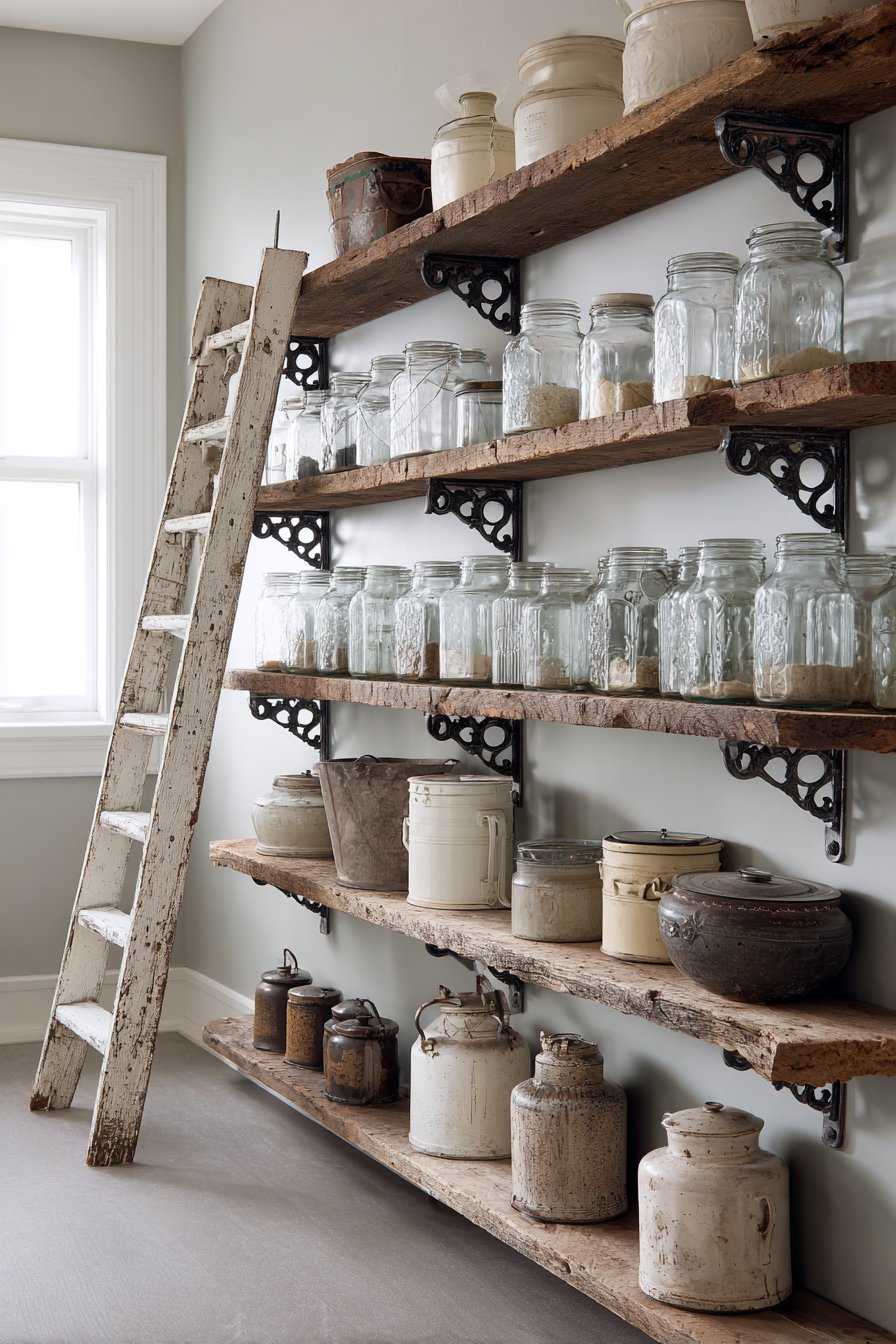
This approach maximizes storage while celebrating authentic materials. The open design keeps everything visible and accessible. Vintage containers become part of the decorative scheme. The overall effect feels both practical and deeply charming.
Key Design Tips:
- Source reclaimed barn wood from architectural salvage yards for authentic character
- Install ornate metal brackets to add Victorian-era detail and support
- Use a farmhouse stepladder for upper shelf access and decorative appeal
- Arrange glass jars and vintage containers by size for visual harmony
- Position shelving near natural light sources to highlight wood grain patterns
- Apply food-safe wood sealant to protect reclaimed wood while preserving patina
2. Antique Hoosier Cabinet Centerpiece
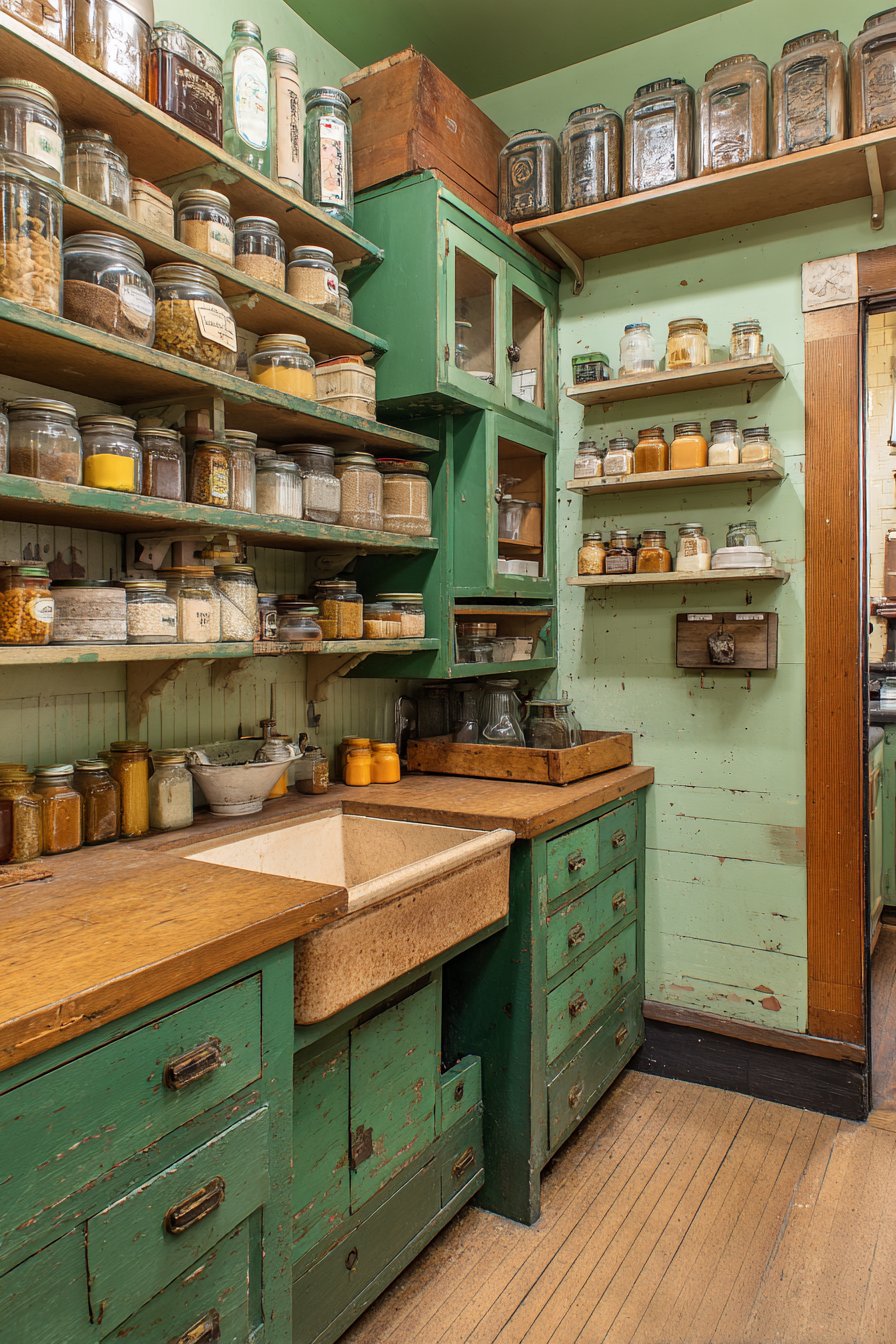
The restored Hoosier cabinet commands attention as the pantry’s focal point. Original glass-front upper cabinets display organized storage behind vintage panes. The pull-out flour bin retains its functional purpose. A porcelain work surface shows honest age-appropriate wear that adds authenticity.
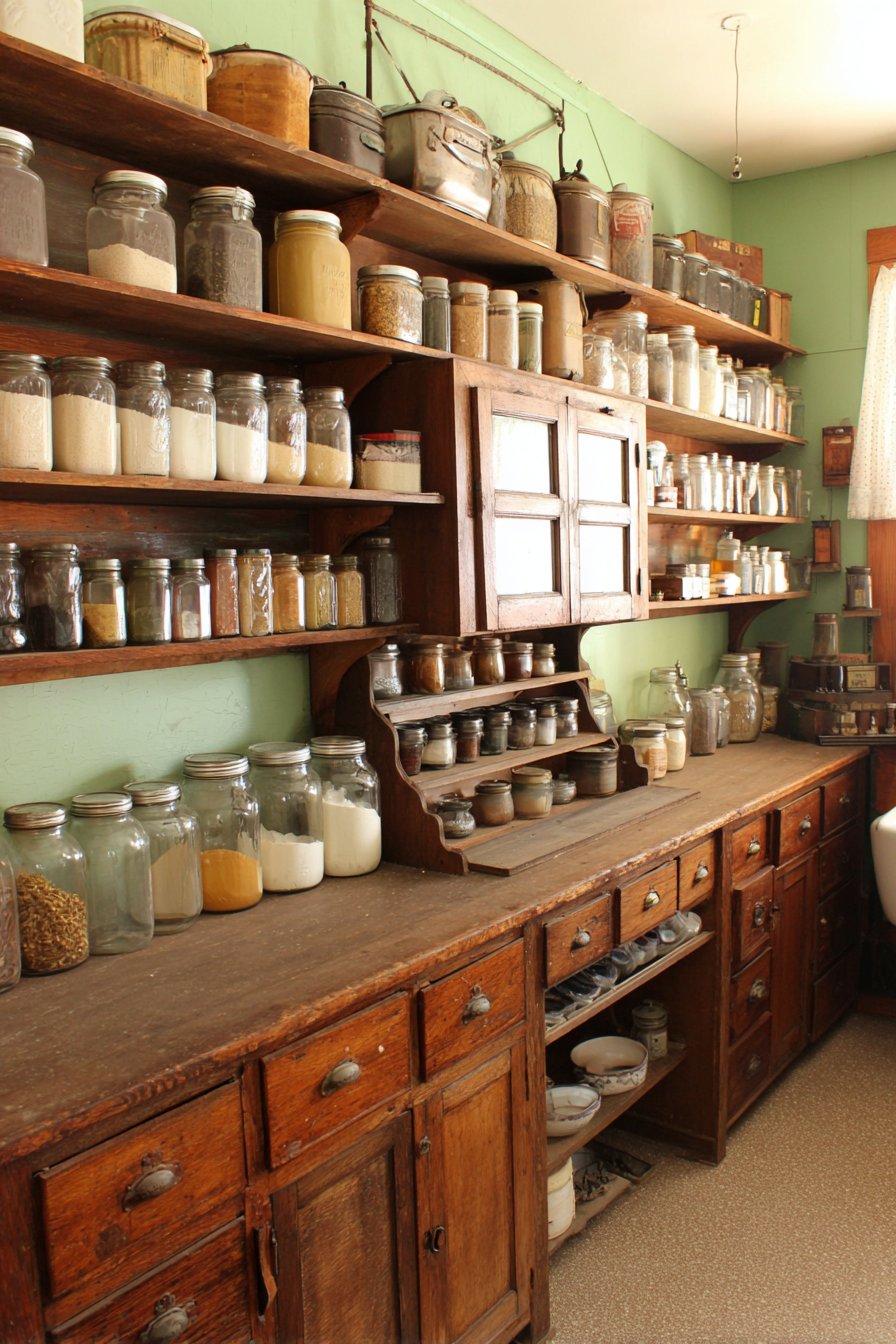
Oak construction glows with rich amber patina developed over decades. Original brass hardware displays natural tarnish that speaks to genuine age. The cabinet’s multiple compartments provide surprisingly efficient storage. Every element serves both beauty and function.
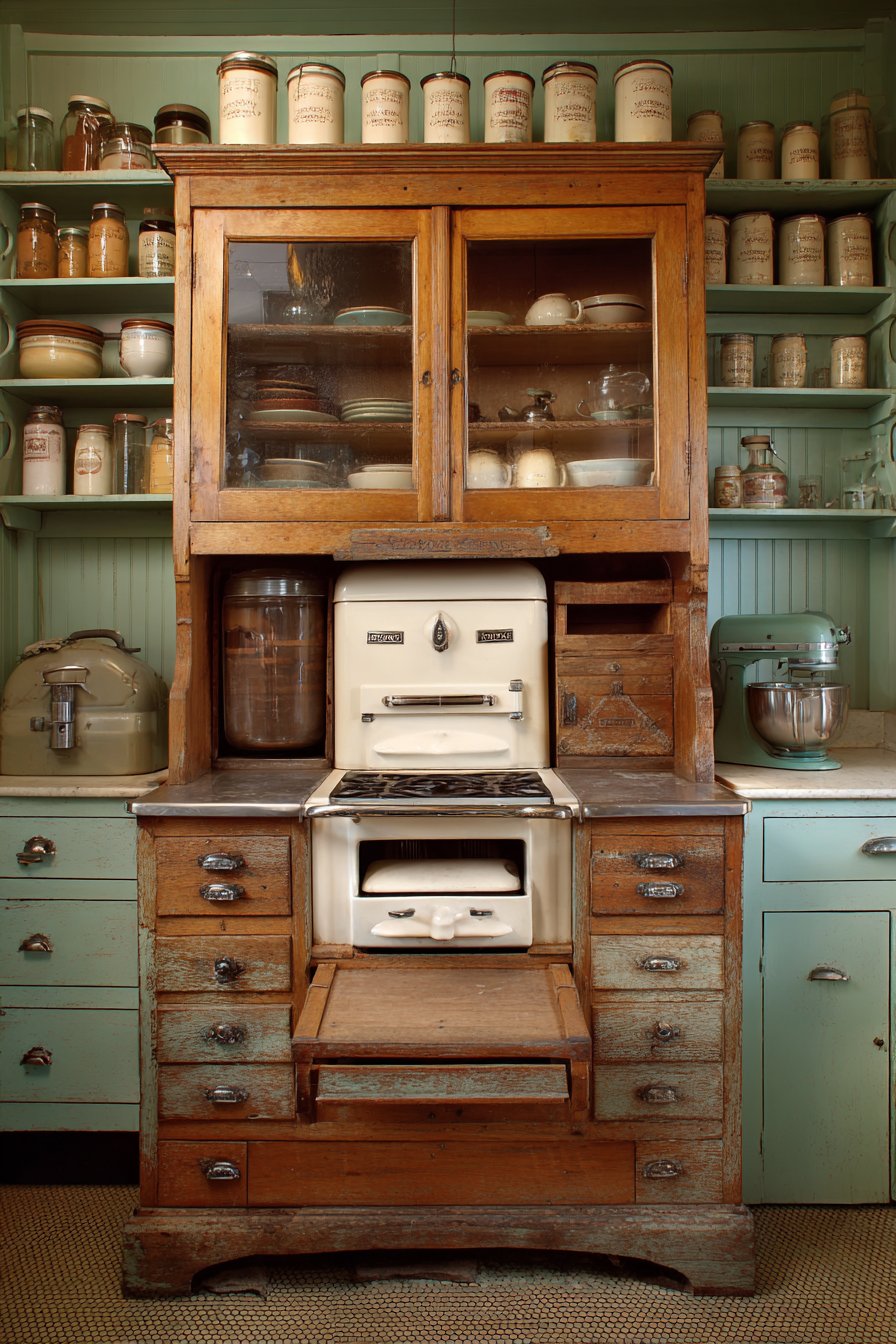
Surrounding walls painted in historic milk paint create perfect contrast. The muted sage green complements the warm oak tones beautifully. Mason jars and vintage storage tins occupy open shelving above. Natural daylight streams across the space to showcase material authenticity.
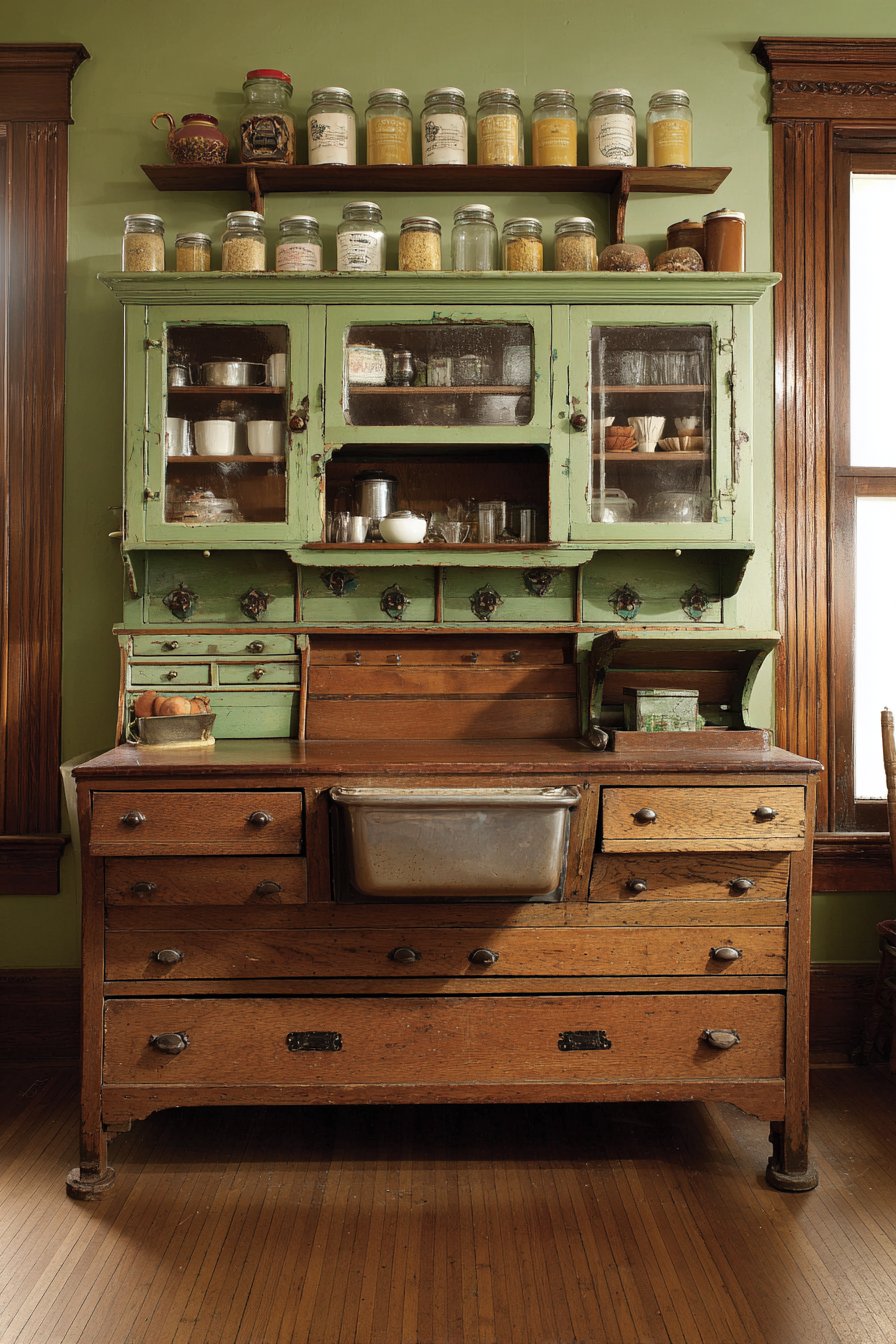
The Hoosier cabinet represents American ingenuity in kitchen efficiency. These pieces were the original “kitchen workstation” of the early 1900s. Integrating one into modern pantry design honors this practical heritage. The result combines nostalgia with contemporary storage needs.
Key Design Tips:
- Restore original hardware rather than replacing for authentic preservation
- Use milk paint on walls for a period-appropriate finish with subtle texture
- Maintain the porcelain work surface’s honest wear as character marks
- Display vintage jars behind glass doors to enhance visual appeal
- Position the cabinet where natural light highlights oak grain patterns
- Research your cabinet’s manufacturing date to appreciate its historical significance
3. Chicken Wire Cabinet Doors
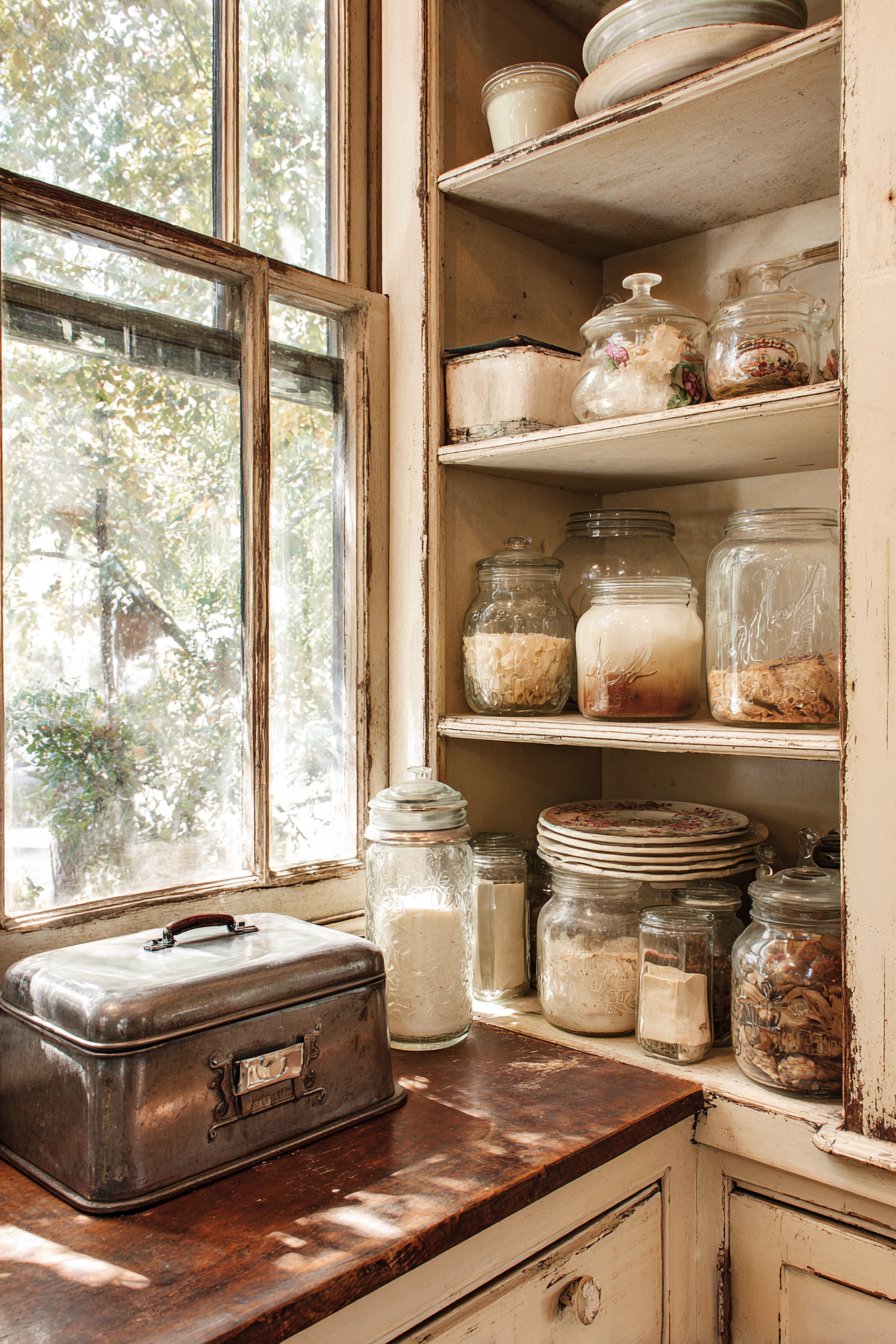
Weathered wooden frames fitted with chicken wire create charming cabinet doors. The wire allows visibility of organized vintage dishware and preserving jars. Beadboard backing painted in aged cream provides subtle backdrop. The crackling in the paint finish adds authentic vintage character.
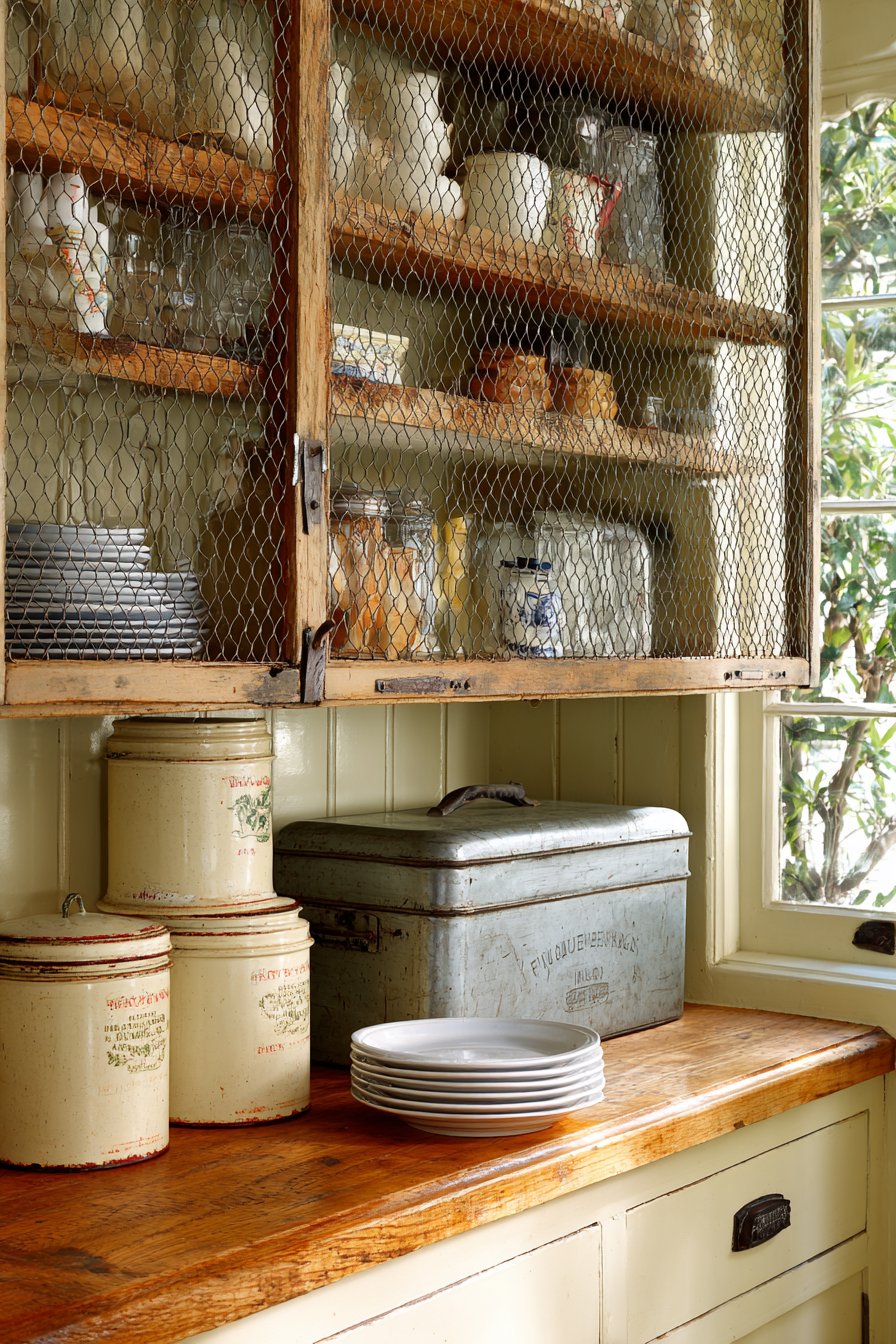
Original porcelain knobs feature hairline crazing that confirms their age. These small details contribute significantly to overall authenticity. A vintage metal bread box sits atop butcher block counters. Enamelware canisters complete the nostalgic arrangement.
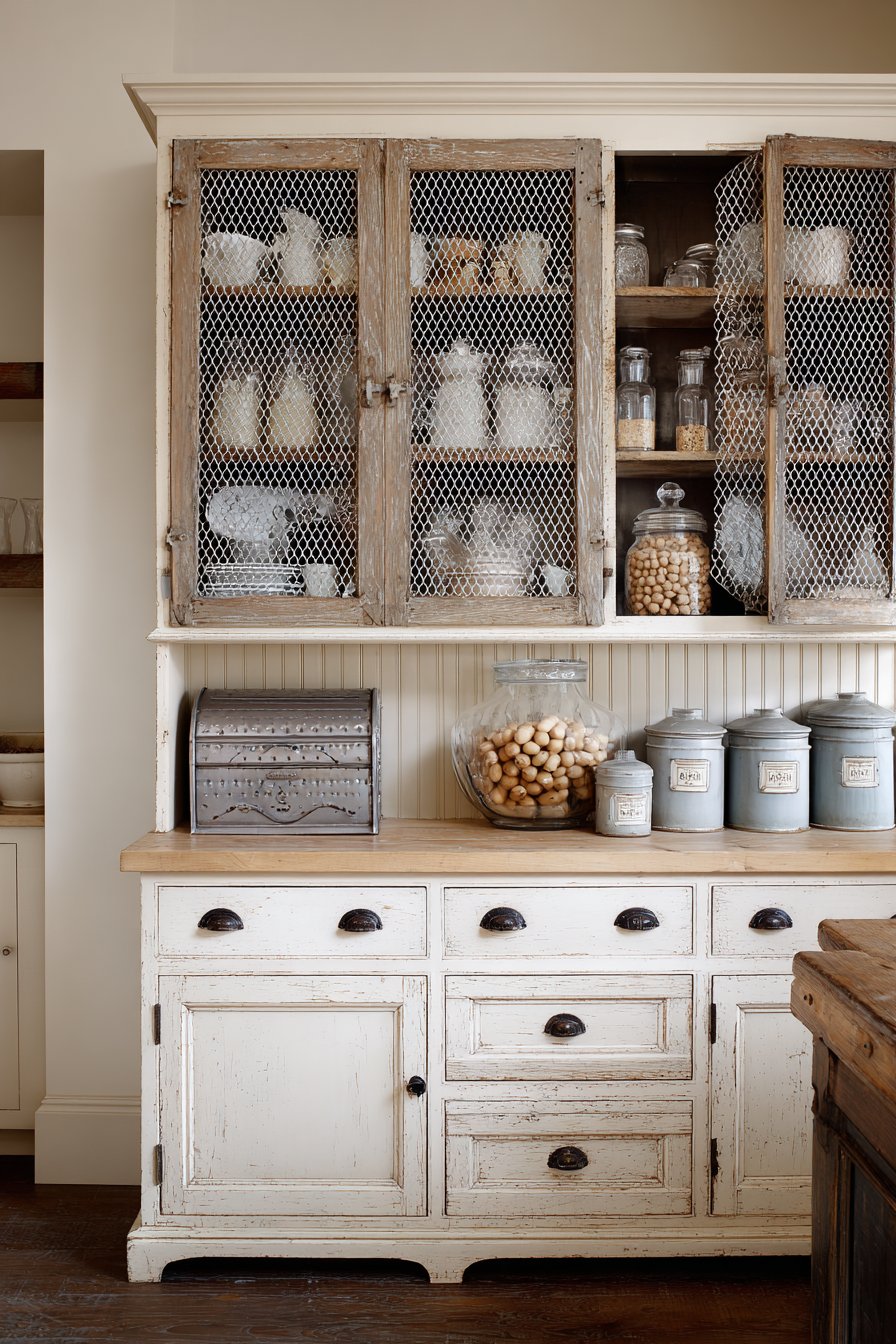
The butcher block shows honest wear patterns from decades of use. Knife marks and subtle staining tell stories of countless meal preparations. This authentic aging cannot be artificially replicated convincingly. The real thing possesses undeniable character.
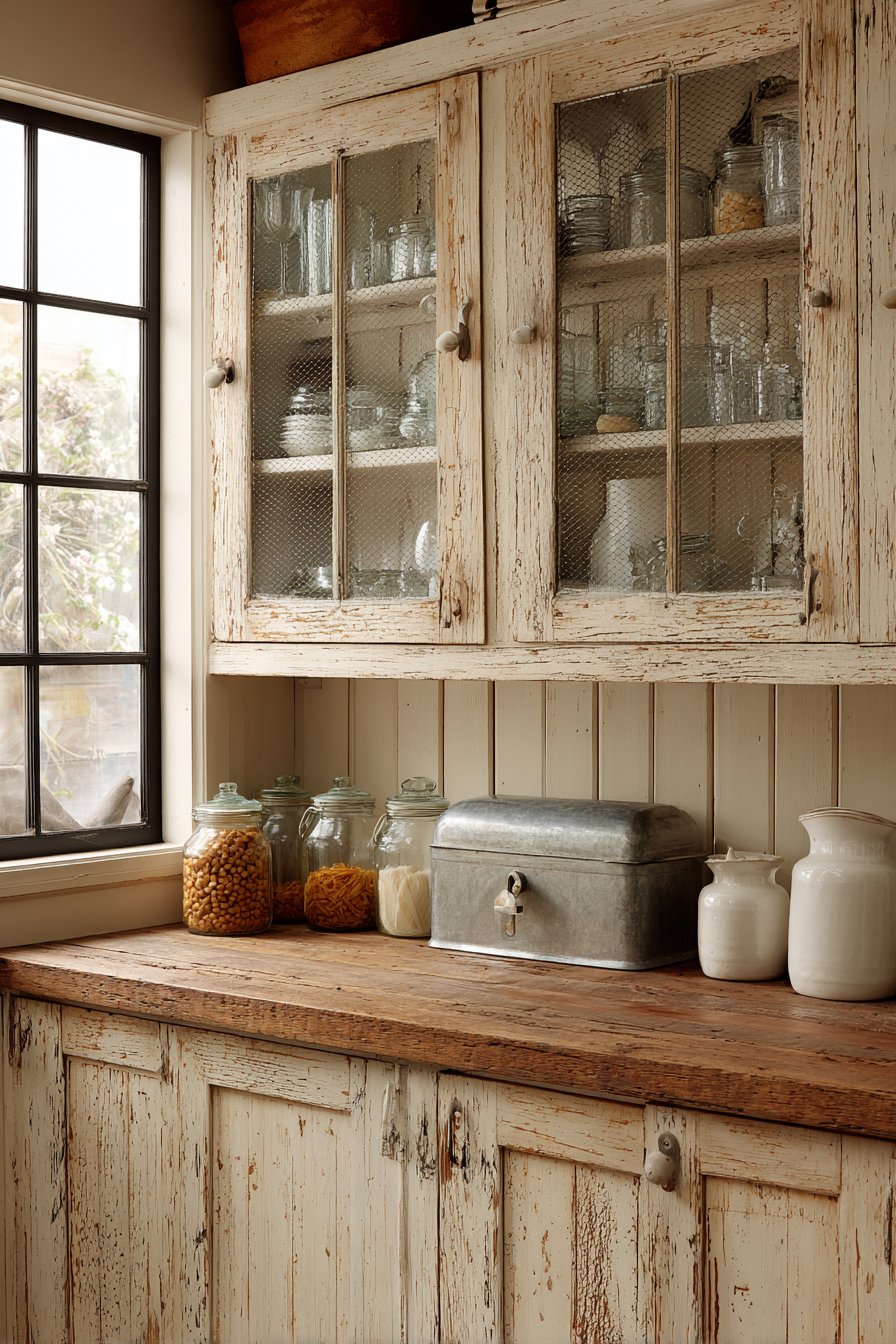
Soft window light creates natural highlights on metal and glass surfaces. The interplay between opaque and transparent elements adds visual interest. Chicken wire’s industrial texture contrasts beautifully with smooth porcelain. The layered textures create a sophisticated vintage appeal.
Key Design Tips:
- Install chicken wire in wooden frames for farmhouse authenticity
- Use beadboard backing to add dimensional texture behind wire
- Source original porcelain knobs from antique shops for genuine character
- Embrace honest wear on butcher block rather than refinishing
- Paint cabinet interiors in cream tones to brighten storage areas
- Display frequently used items behind wire doors for practical beauty
4. Antique Pie Safe with Punched Tin
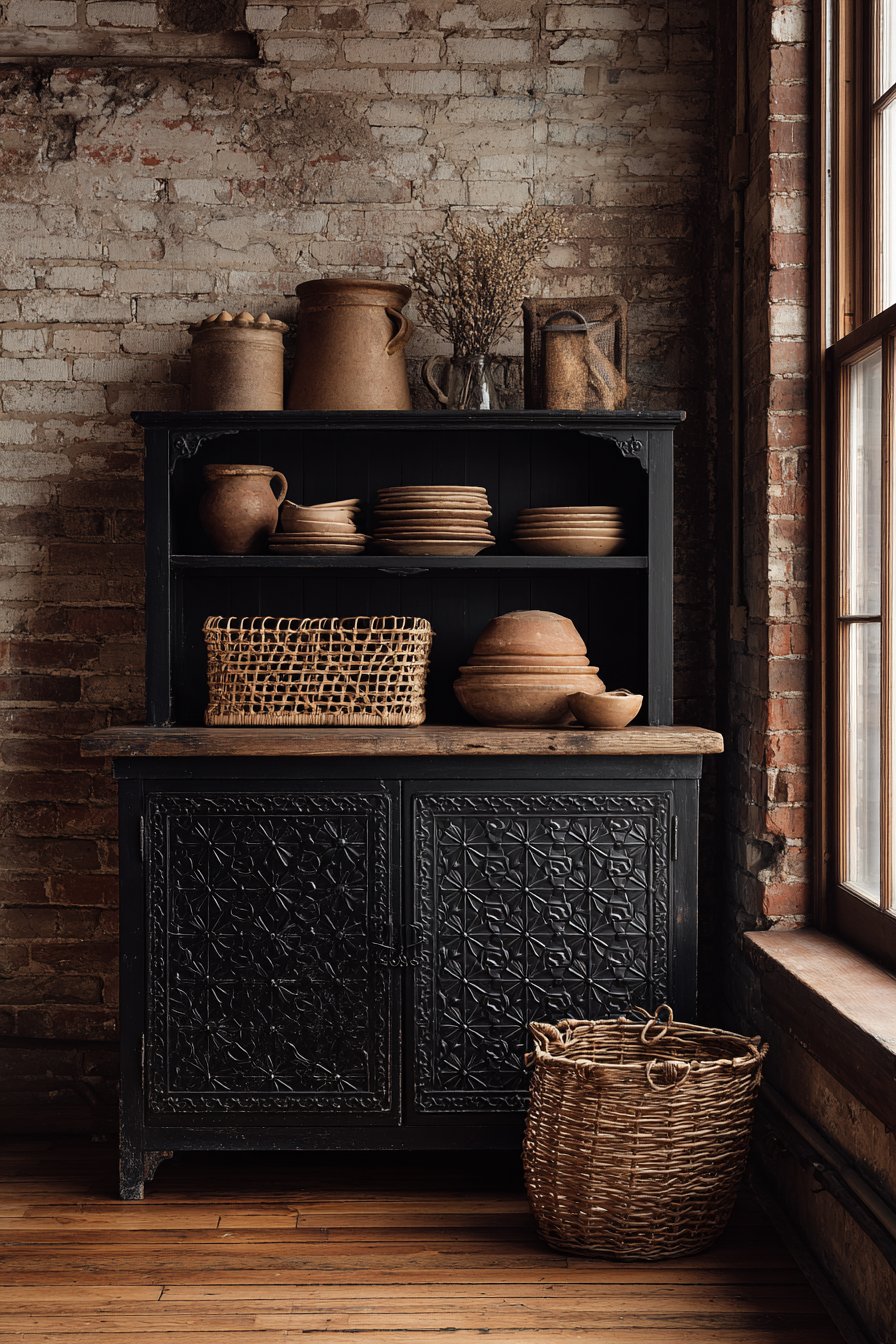
The antique pie safe stands as functional art in the pantry corner. Punched tin panel doors feature original star and wheat motifs. Pine construction displays natural aged patina with beautiful wood grain. Minor surface imperfections add character rather than detract from beauty.
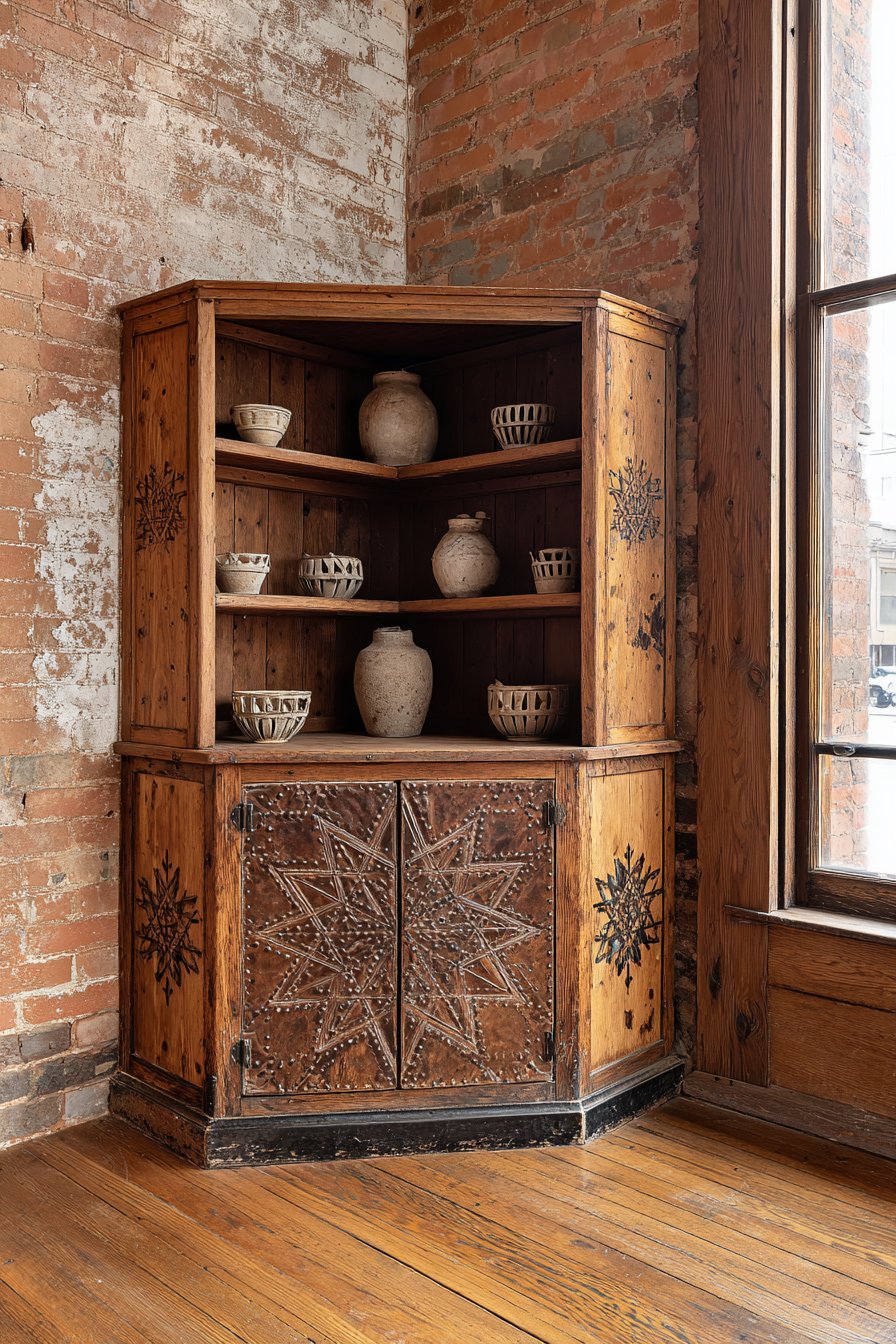
Interior shelves hold vintage stoneware crocks and wire egg baskets. The arrangement showcases both storage and display functions. Exposed brick surrounds the piece with aged mortar and subtle efflorescence. This combination of materials creates rich textural contrast.
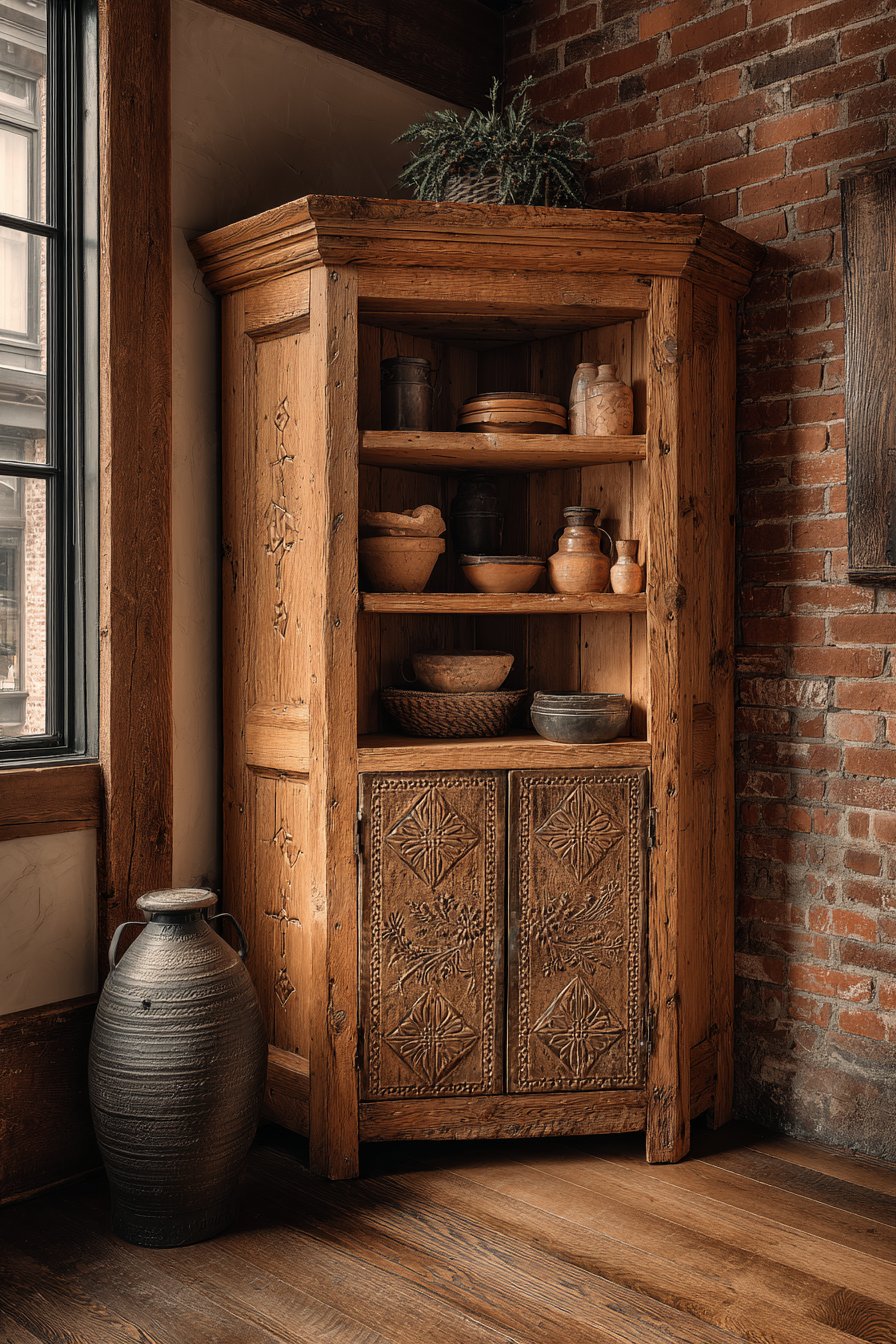
Warm natural lighting from an adjacent window illuminates the scene. The punched tin panels cast intricate shadows across the wall. These dimensional patterns change throughout the day with shifting light. The effect adds living, dynamic quality to static storage.
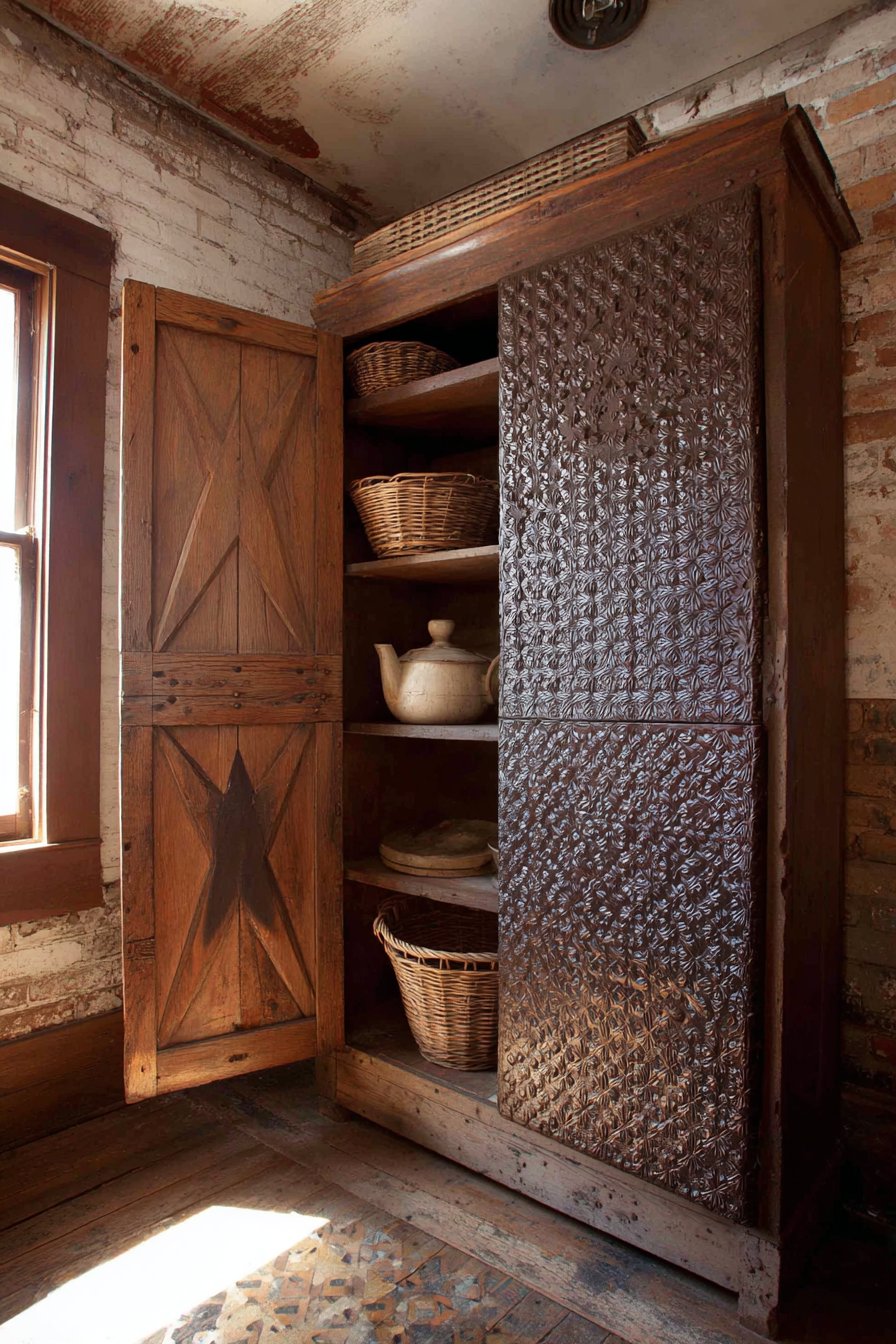
Pie safes originally protected baked goods from insects while allowing air circulation. The punched tin served both decorative and functional purposes. Modern pantry use honors this heritage while meeting contemporary needs. The piece becomes conversation starter and a practical storage solution.
Key Design Tips:
- Preserve original punched tin panels rather than replacing them
- Position pie safes near windows to create shadow patterns from tin work
- Use interior shelves for vintage stoneware and wire baskets
- Pair with exposed brick for complementary rustic textures
- Appreciate minor imperfections as authentic age markers
- Clean punched tin gently to maintain natural patina
5. Subway Tile with Industrial Shelving
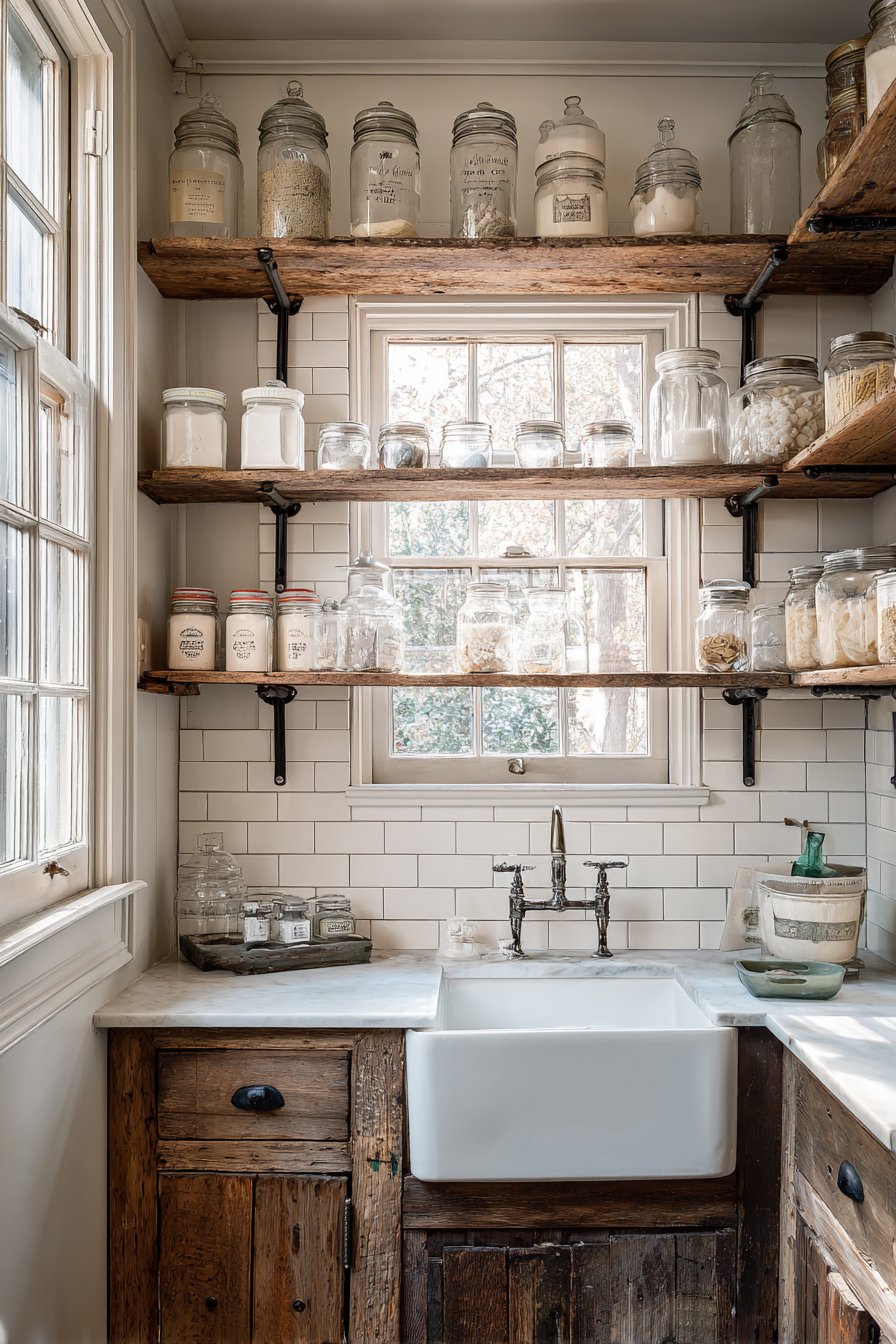
White subway tile backsplash features dark grout showing subtle aging. Reclaimed scaffolding planks serve as open shelving on black iron pipe brackets. The rough-hewn wood displays authentic saw marks and weathering. This industrial-meets-vintage combination creates distinctive character.
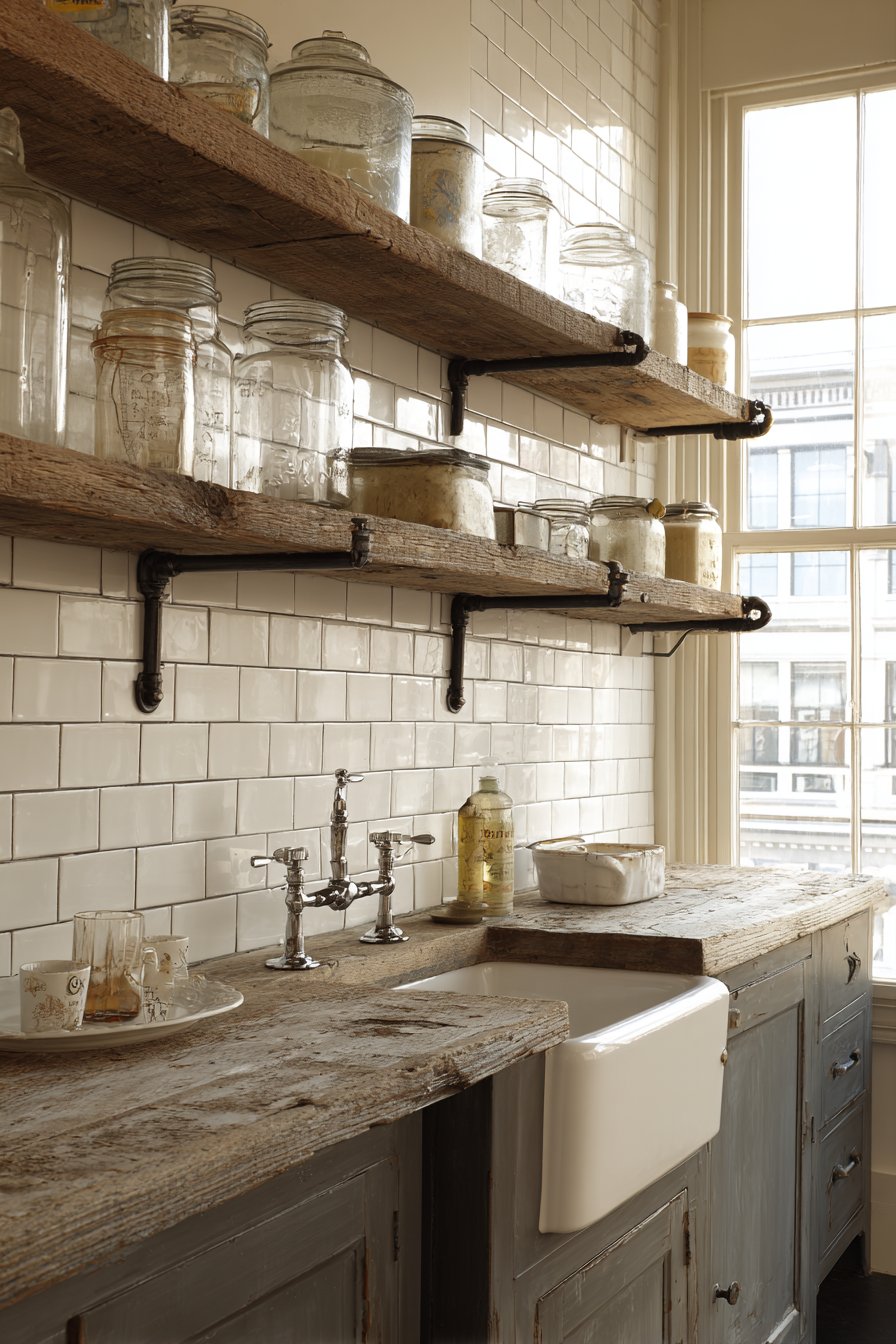
Vintage glass canisters with metal lids organize dry goods beautifully. Antique scales and enamelware containers add functional decoration. The farmhouse sink features an exposed apron front. A vintage-style bridge faucet with porcelain handles completes the look.
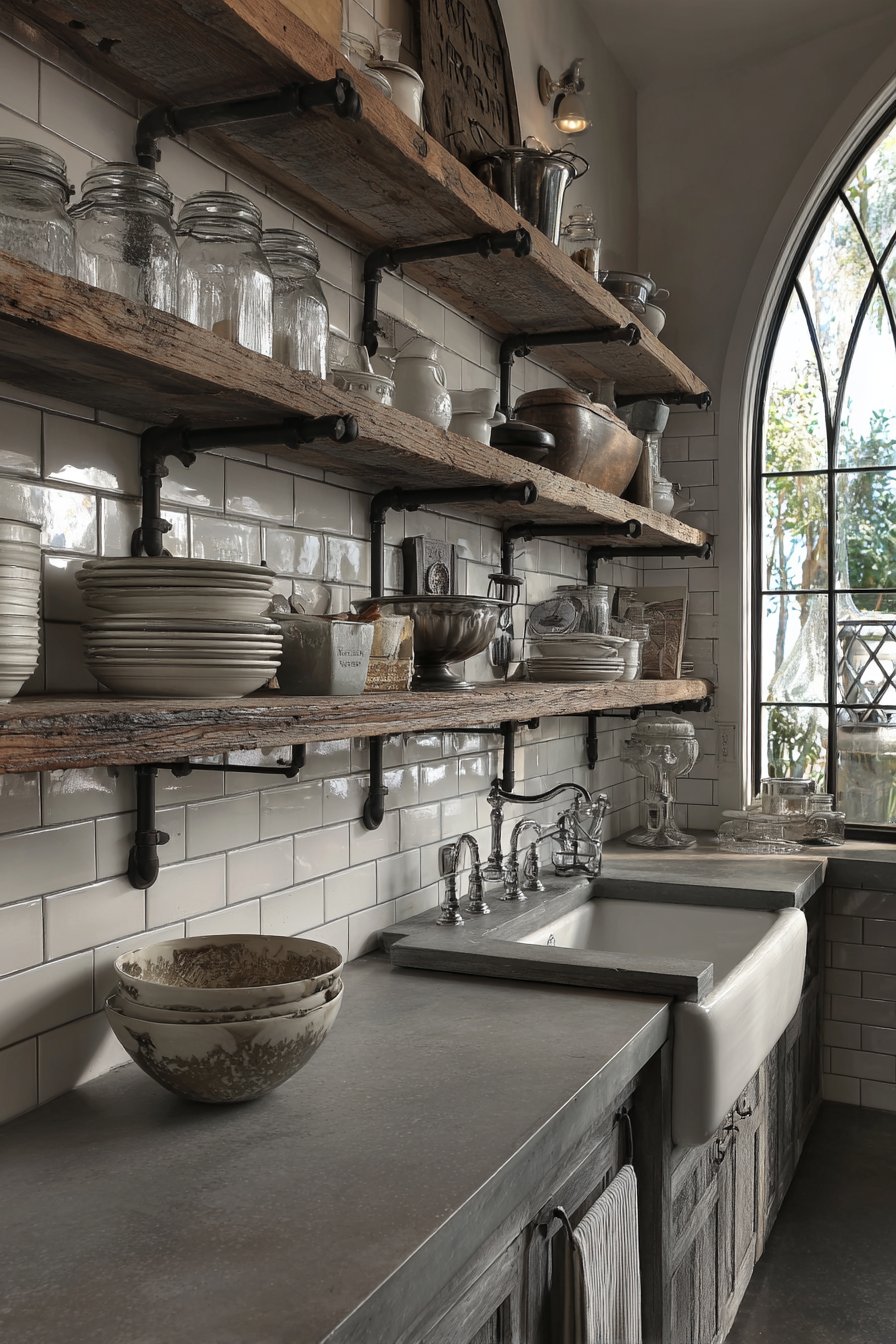
Natural light streams through a casement window with original wavy glass. The irregular panes create gentle distortions and visual interest. Light interacts with the varied textures throughout the space. Each material contributes to the overall vintage industrial aesthetic.
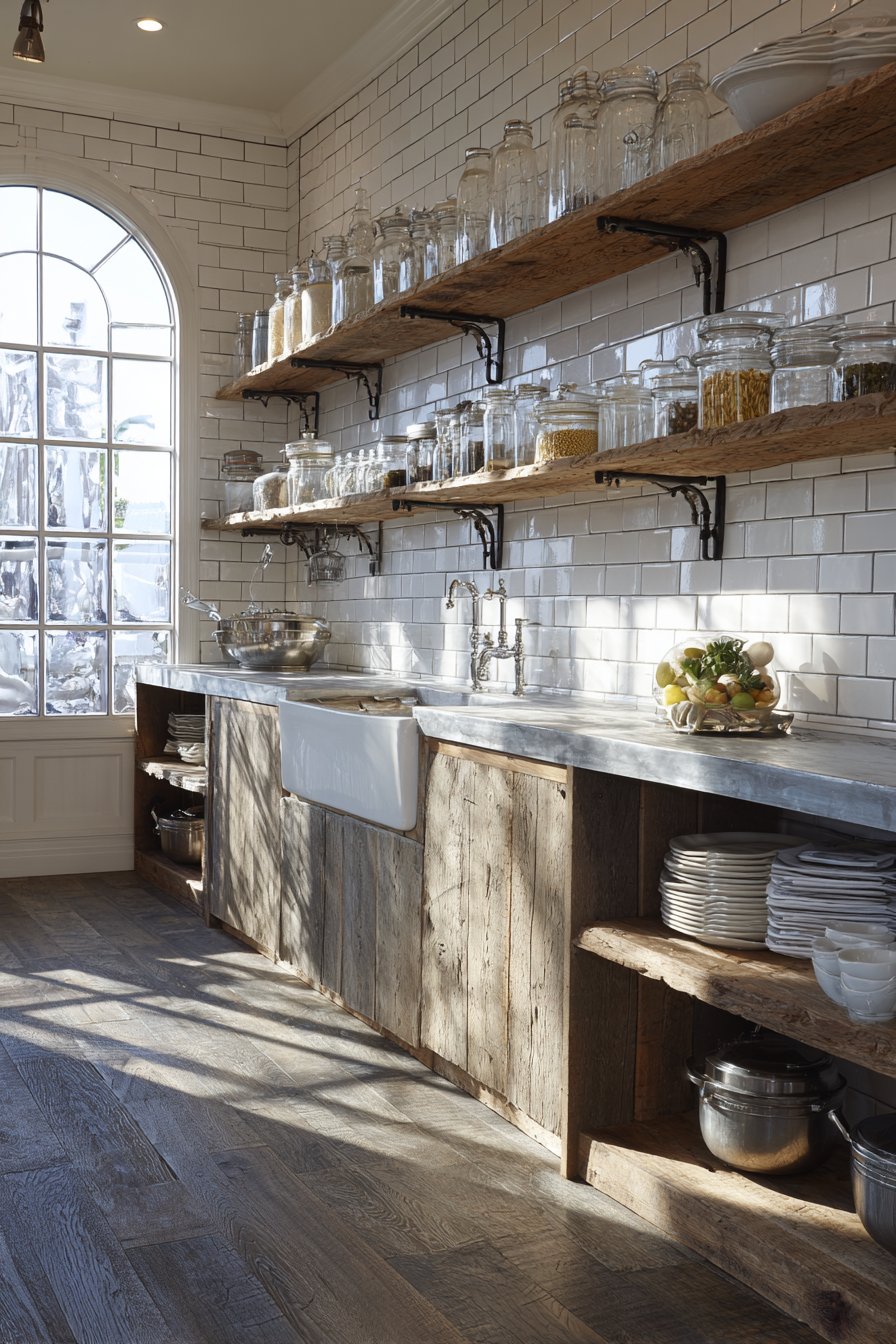
The combination of refined tile with rough wood creates an appealing contrast. Clean subway lines balance the organic nature of reclaimed planks. Black iron brackets provide strong visual anchors. The design feels both sturdy and sophisticated.
Key Design Tips:
- Use dark grout with subway tile for vintage authenticity
- Source scaffolding planks for industrial character and durability
- Install black iron pipe brackets for structural and visual strength
- Choose a farmhouse sink with exposed apron for period appeal
- Incorporate wavy glass windows to enhance vintage atmosphere
- Display vintage scales and enamelware as functional art pieces
6. Butler’s Pantry Glass Cabinets
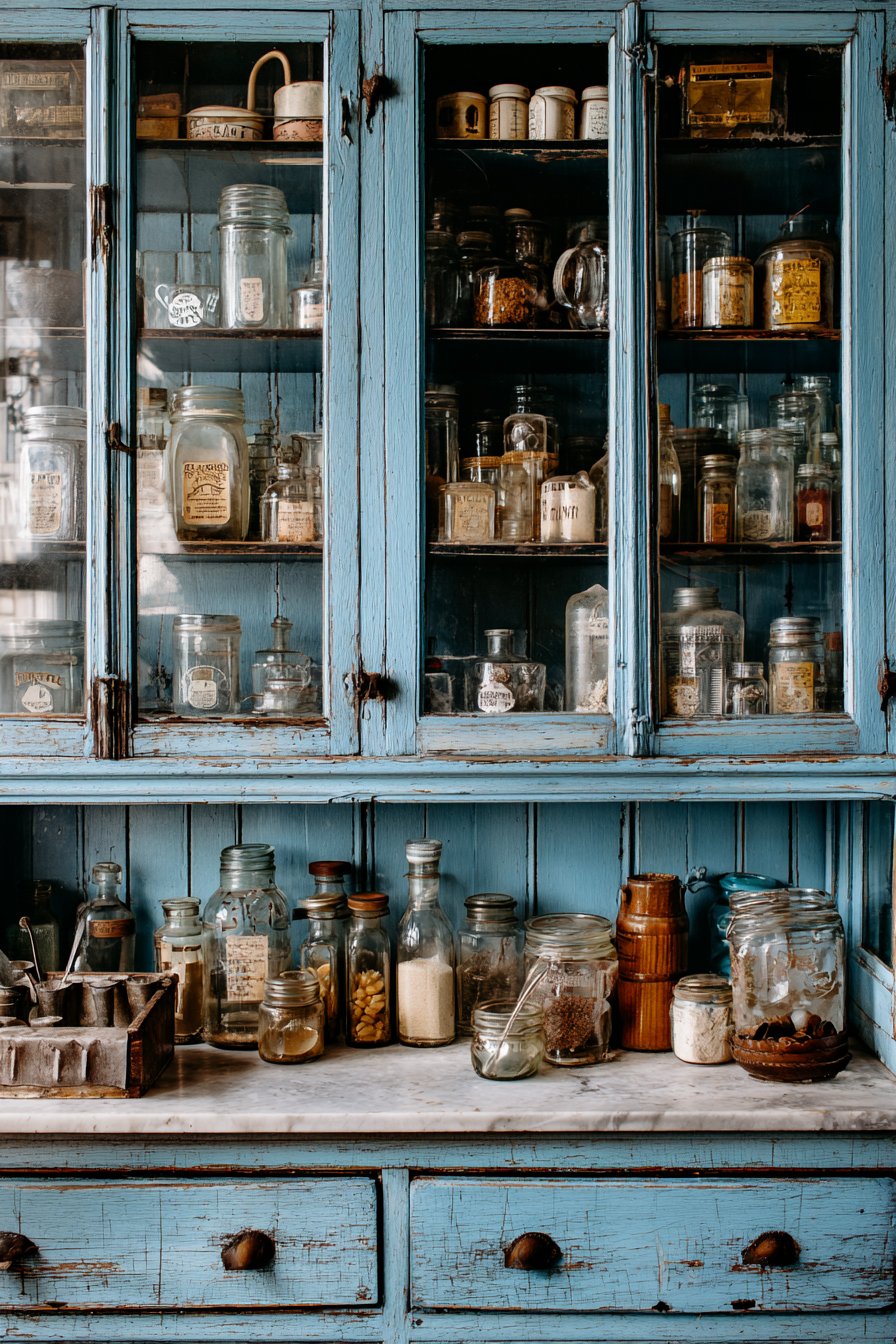
Glass-front upper cabinets crafted from salvaged windows create unique storage. Original hardware and slight glass imperfections confirm authentic age. Lower cabinetry painted in historic Williamsburg blue shows visible brushstrokes. The milk paint finish develops authentic crackling over time.
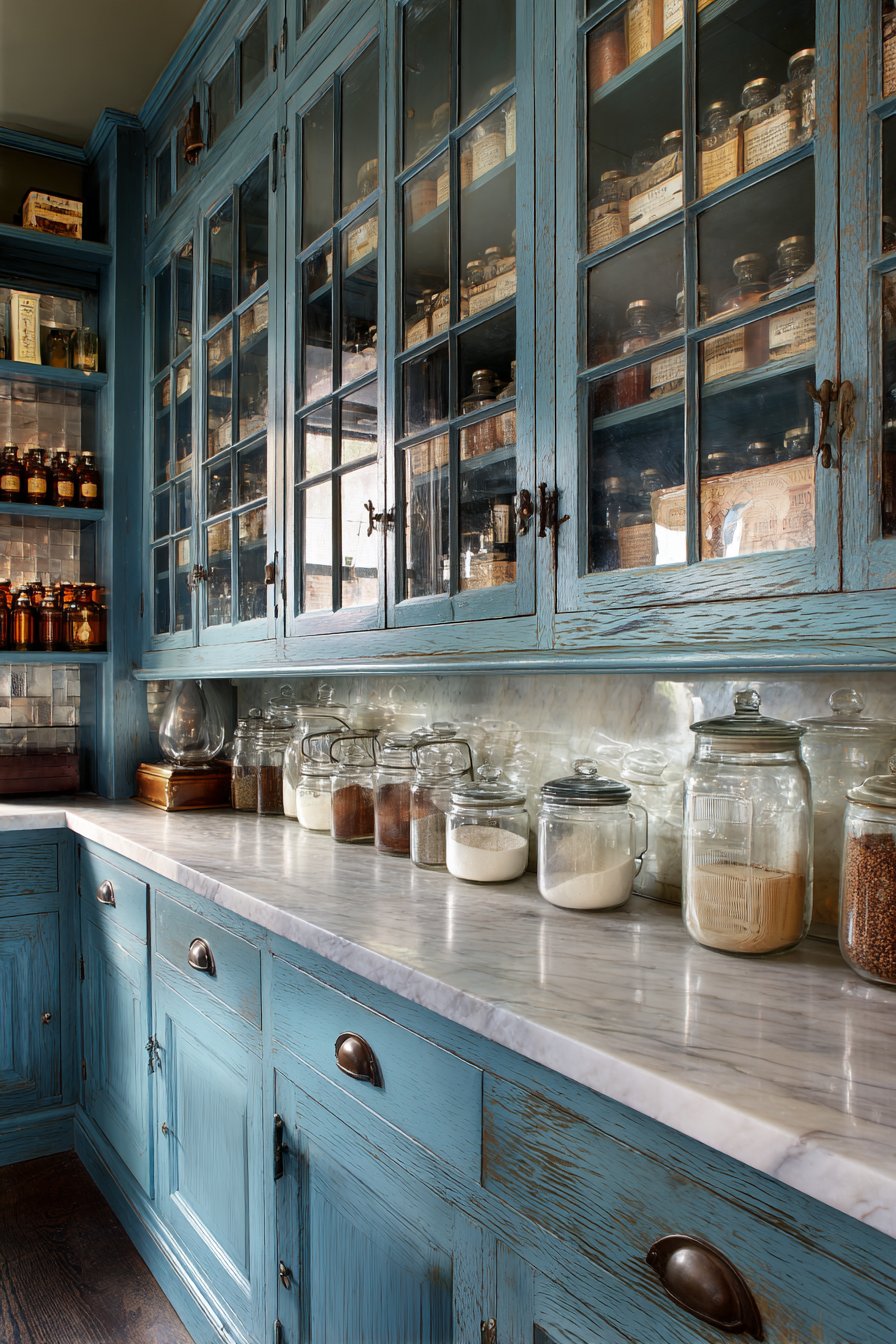
Marble countertops display natural veining and subtle edge wear. This honest aging adds to rather than diminishes the beauty. Vintage glass jars and antique measuring cups fill the cabinet interiors. Period-appropriate storage containers complete the thoughtful arrangement.
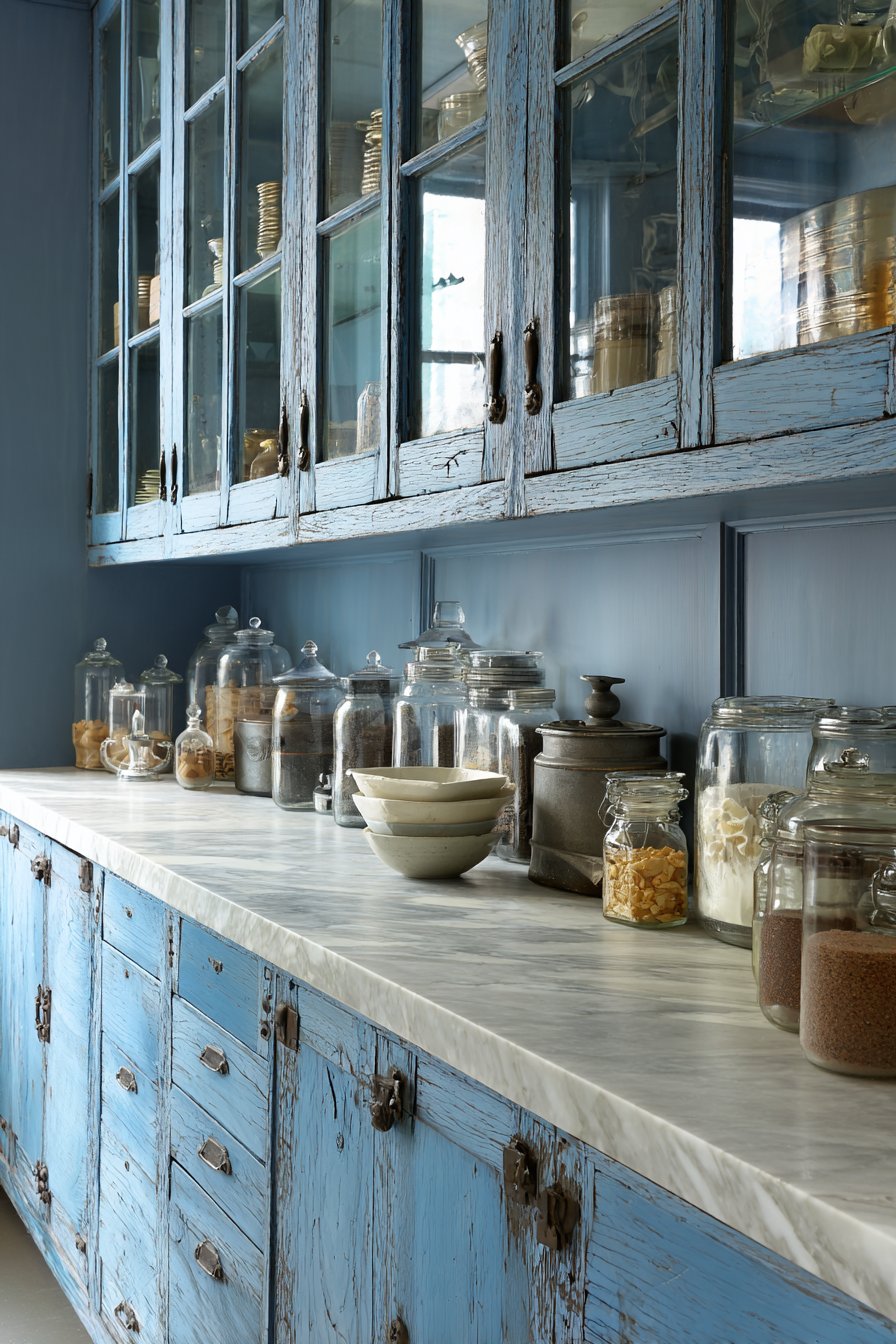
Soft diffused natural light creates gentle reflections on glass surfaces. The wavy panes distort images slightly, adding vintage charm. These imperfections make each cabinet door unique. Mass-produced modern glass cannot replicate this character.
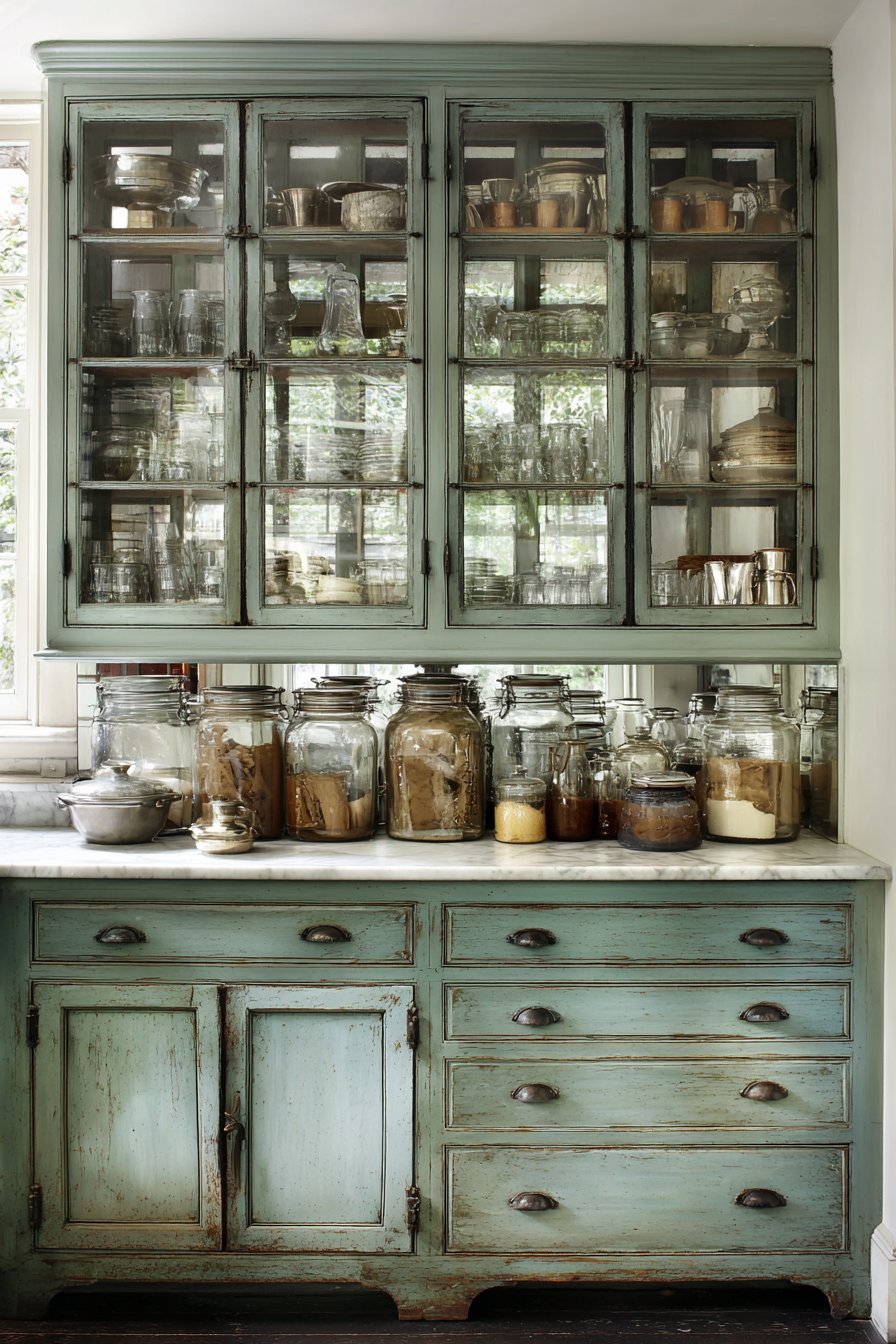
The butler’s pantry style evokes elegant estate homes of the past. This layout traditionally connected formal dining rooms with working kitchens. Modern interpretations maintain the sophisticated sensibility. The design bridges practical storage with refined aesthetics.
Key Design Tips:
- Salvage old windows for authentic glass-front cabinet doors
- Apply historic milk paint colors like Williamsburg blue for period accuracy
- Embrace visible brushstrokes as part of the handcrafted aesthetic
- Use marble countertops with natural wear rather than pristine surfaces
- Display vintage measuring implements as decorative storage elements
- Allow milk paint to naturally crackle for authentic aging
7. Repurposed Antique Dresser Storage
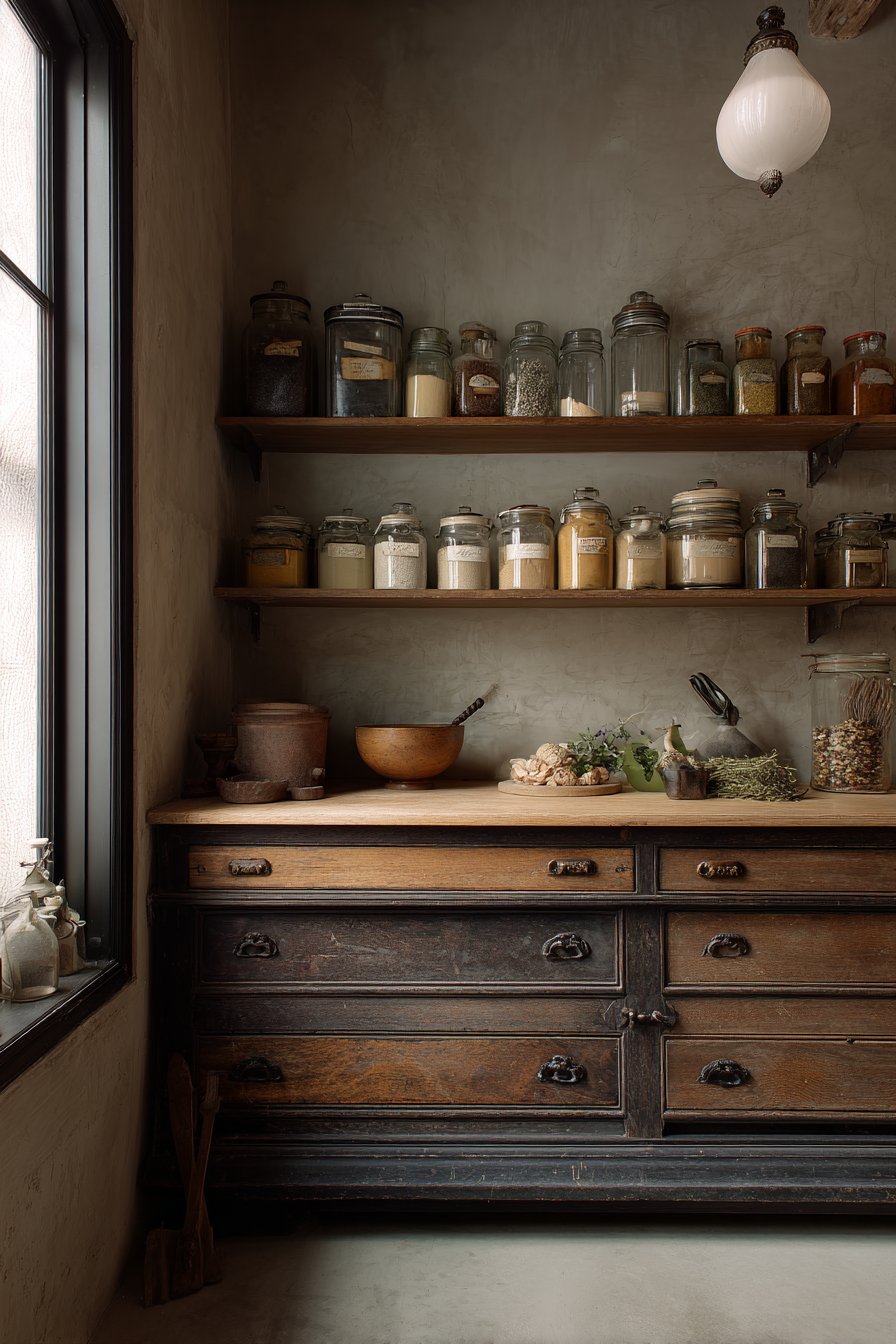
An antique dresser converted to pantry storage brings unexpected charm. Original carved wooden details and brass pulls remain intact. The walnut finish shows authentic wear at edges and handles. These use patterns document the piece’s long functional life.
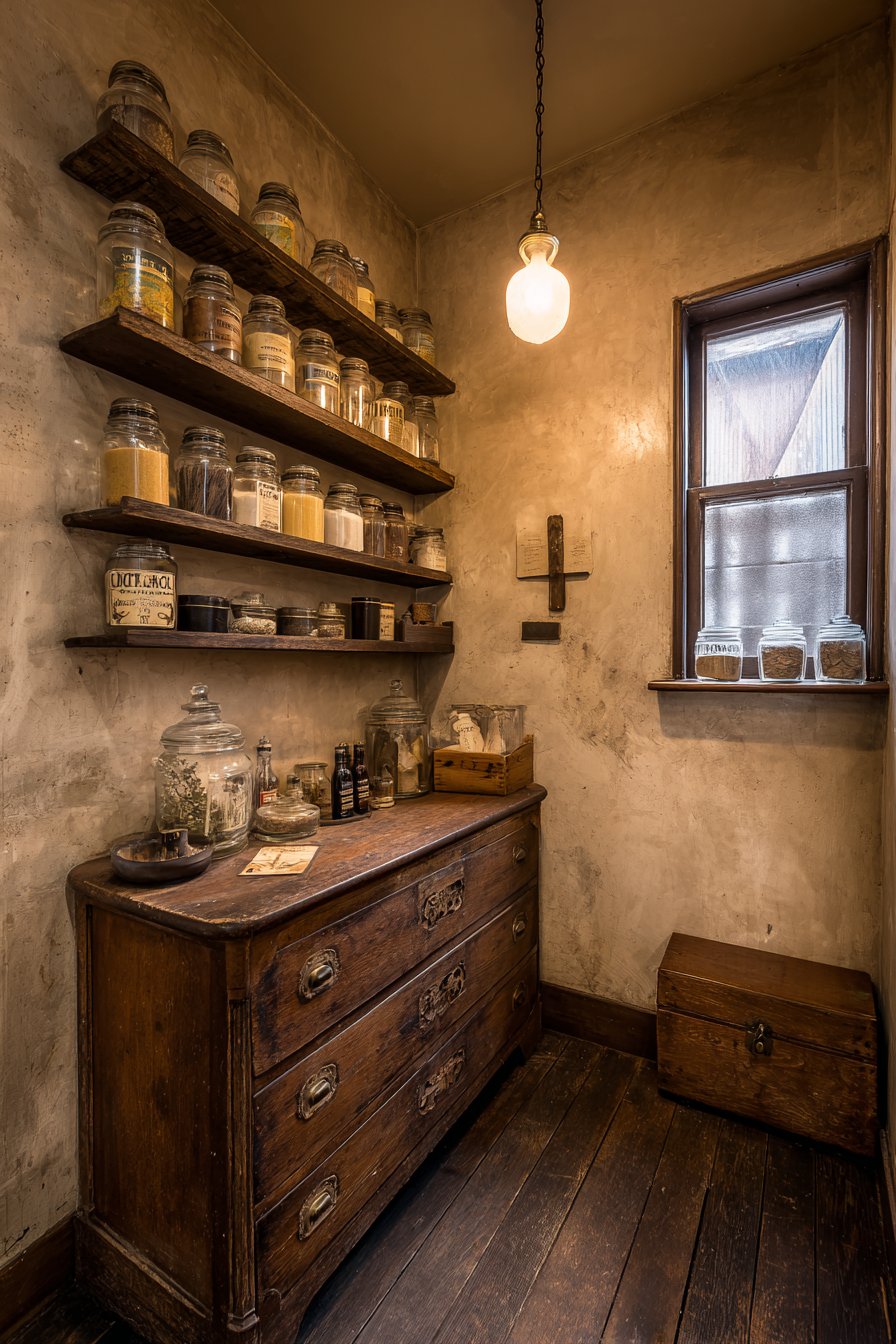
Open shelving above displays vintage tins and glass jars with bail-wire closures. Antique kitchen implements hang from hooks for accessible storage. Walls finished in historic plaster show subtle texture variations. A vintage pendant light with milk glass shade provides ambient illumination.
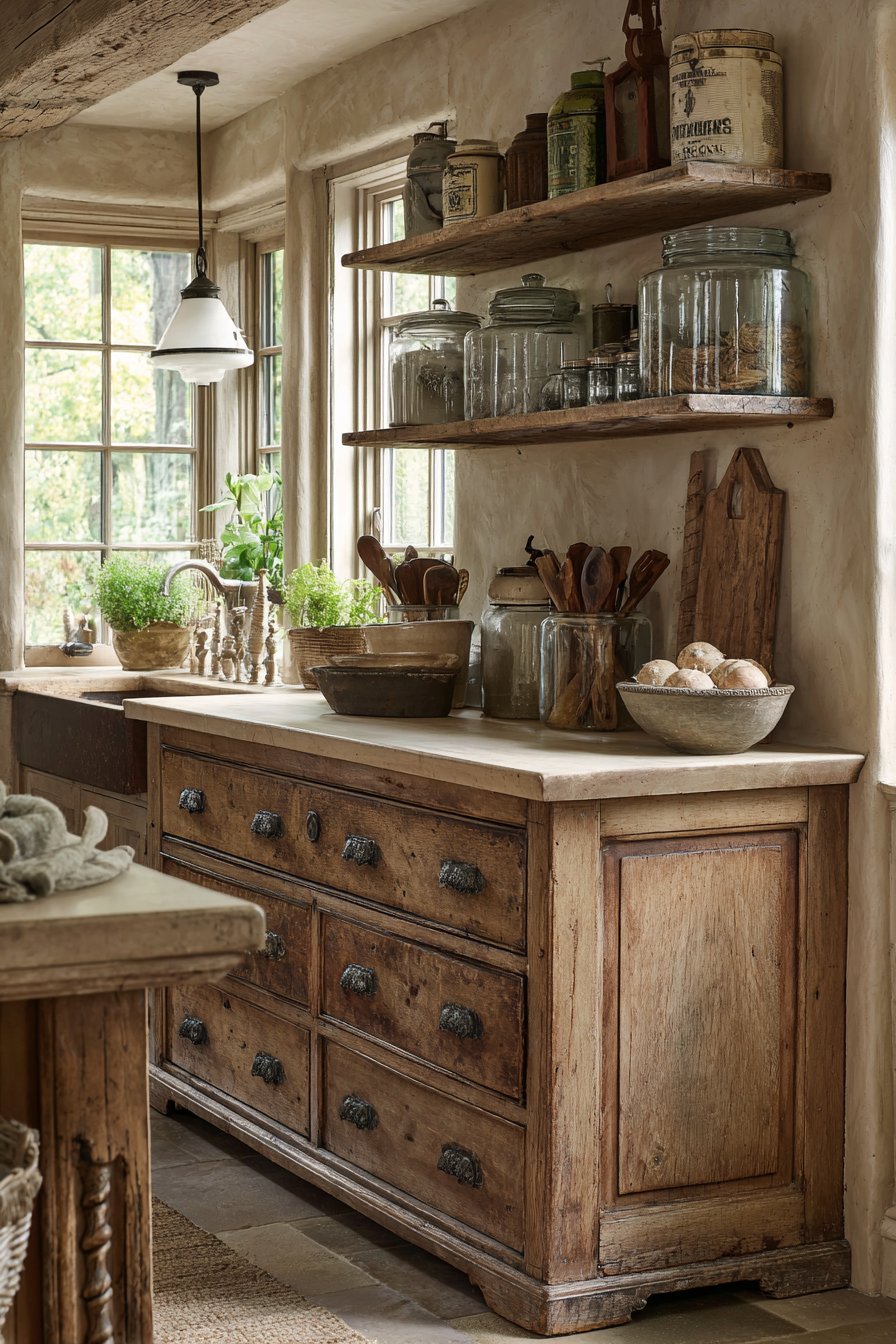
Natural window light enhances the warm wood tones throughout the day. The interplay between artificial and natural lighting creates depth. Shadows emphasize the carved details and dimensional hardware. The space feels both practical and museum-quality.
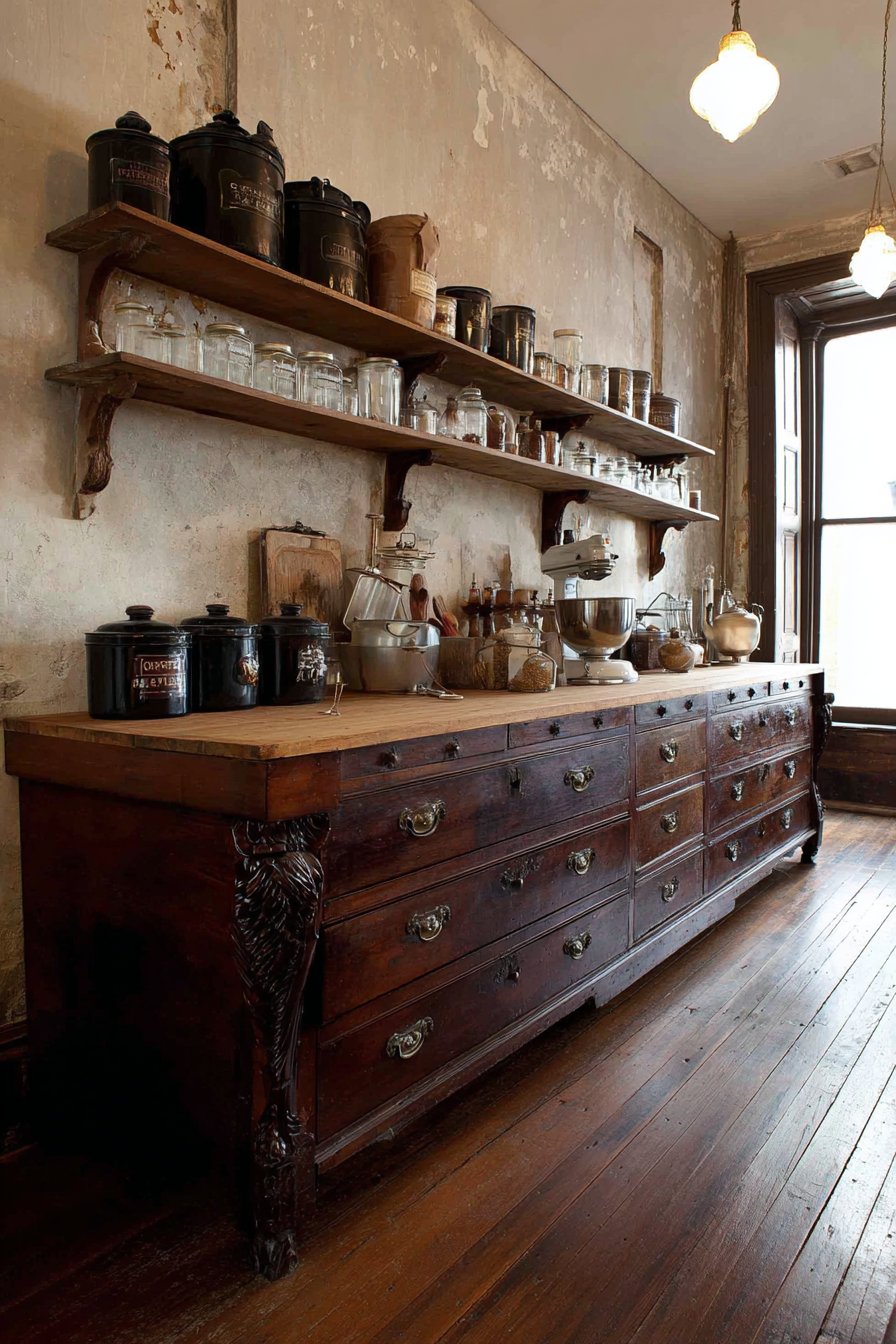
Repurposing antique furniture for pantry storage offers sustainability benefits. Quality hardwood construction outlasts modern particle board alternatives. The conversion process honors the piece’s craftsmanship while extending its usefulness. This approach combines environmental responsibility with aesthetic excellence.
Key Design Tips:
- Select dressers with original hardware for authentic character
- Remove drawers partially for open shelf-style storage options
- Display vintage kitchen implements on wall hooks near the dresser
- Use milk glass pendant lights for soft, diffused ambient lighting
- Apply food-safe sealant to interior drawers for storage safety
- Appreciate edge wear as documentation of the piece’s history
8. Mullioned Glass Built-In System
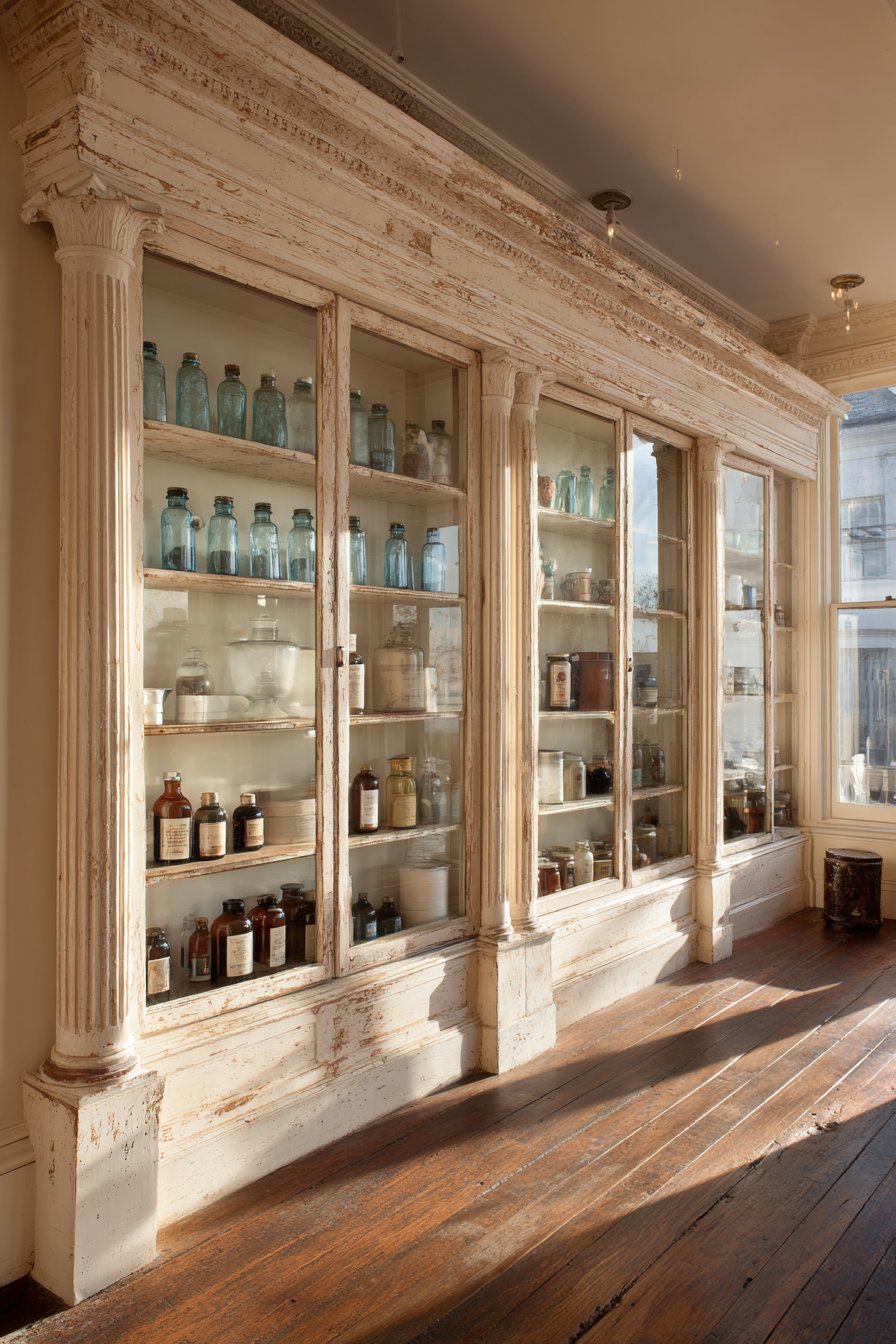
Original built-in cabinetry features mullioned glass doors with hand-blown panes. Each glass panel shows slight irregularities characteristic of period craftsmanship. Interior shelves painted in period-appropriate cream display visible brush marks. Vintage Ball jars, antique spice tins, and enamelware are organized systematically.
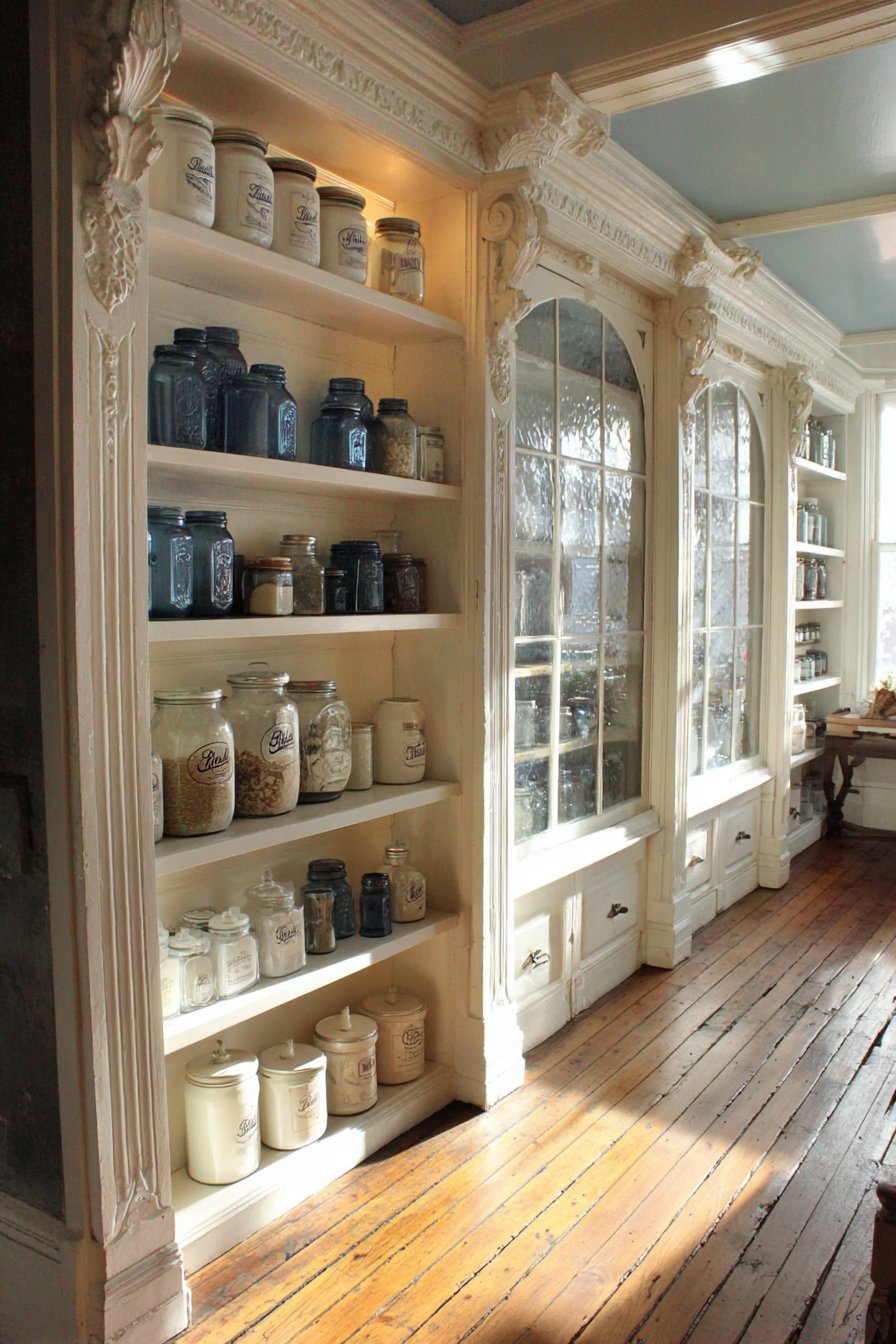
Ornate corbels and crown molding showcase layers of historic paint. The subtle crazing in paint finish confirms genuine age. Hardwood flooring displays natural patina from decades of foot traffic. This authentic wear creates warmth impossible to achieve artificially.
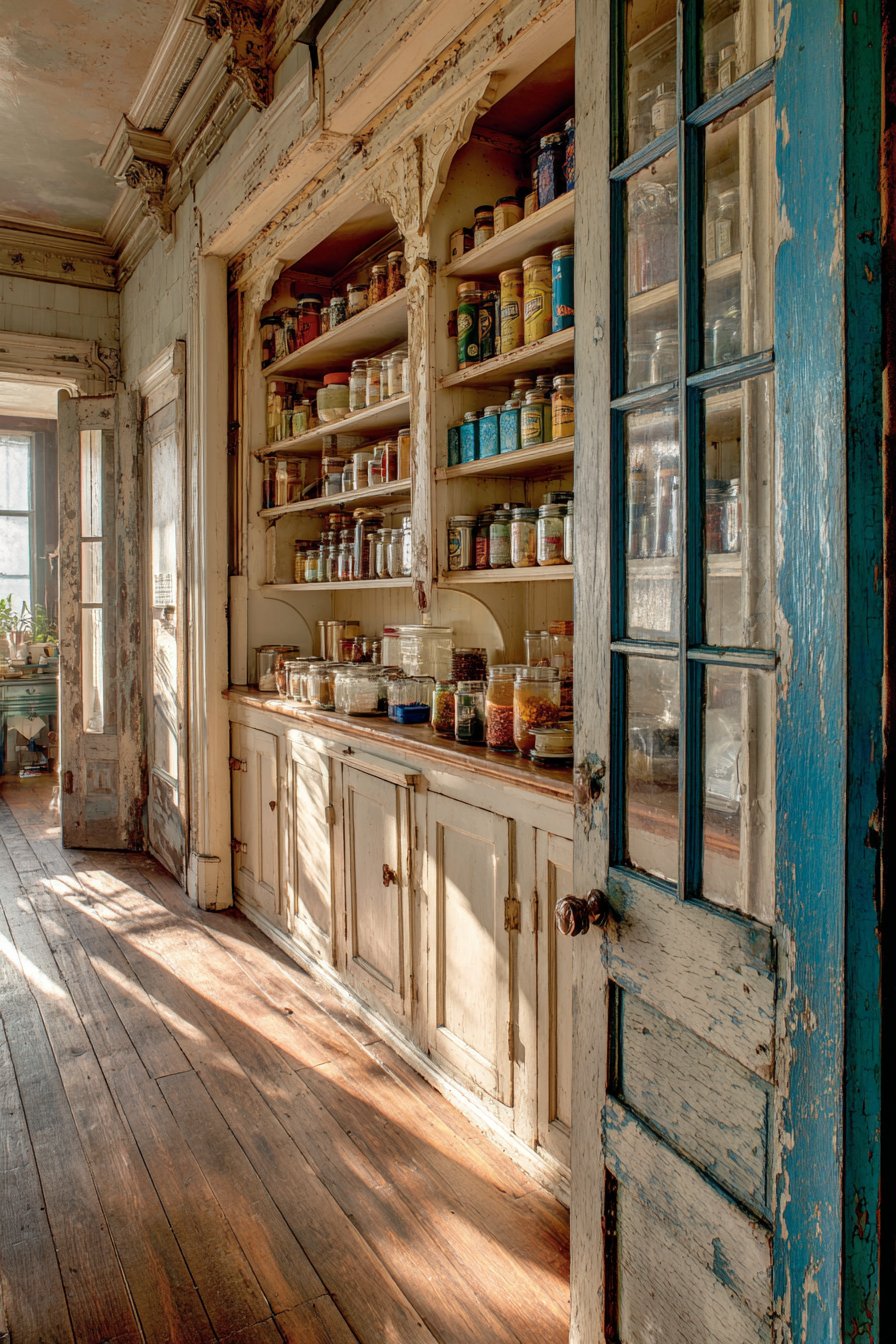
Soft morning light filters through nearby windows across the space. The glass-front doors create interesting reflections and refractions. Light interaction with hand-blown glass produces gentle distortions. These visual effects add living quality to the storage system.
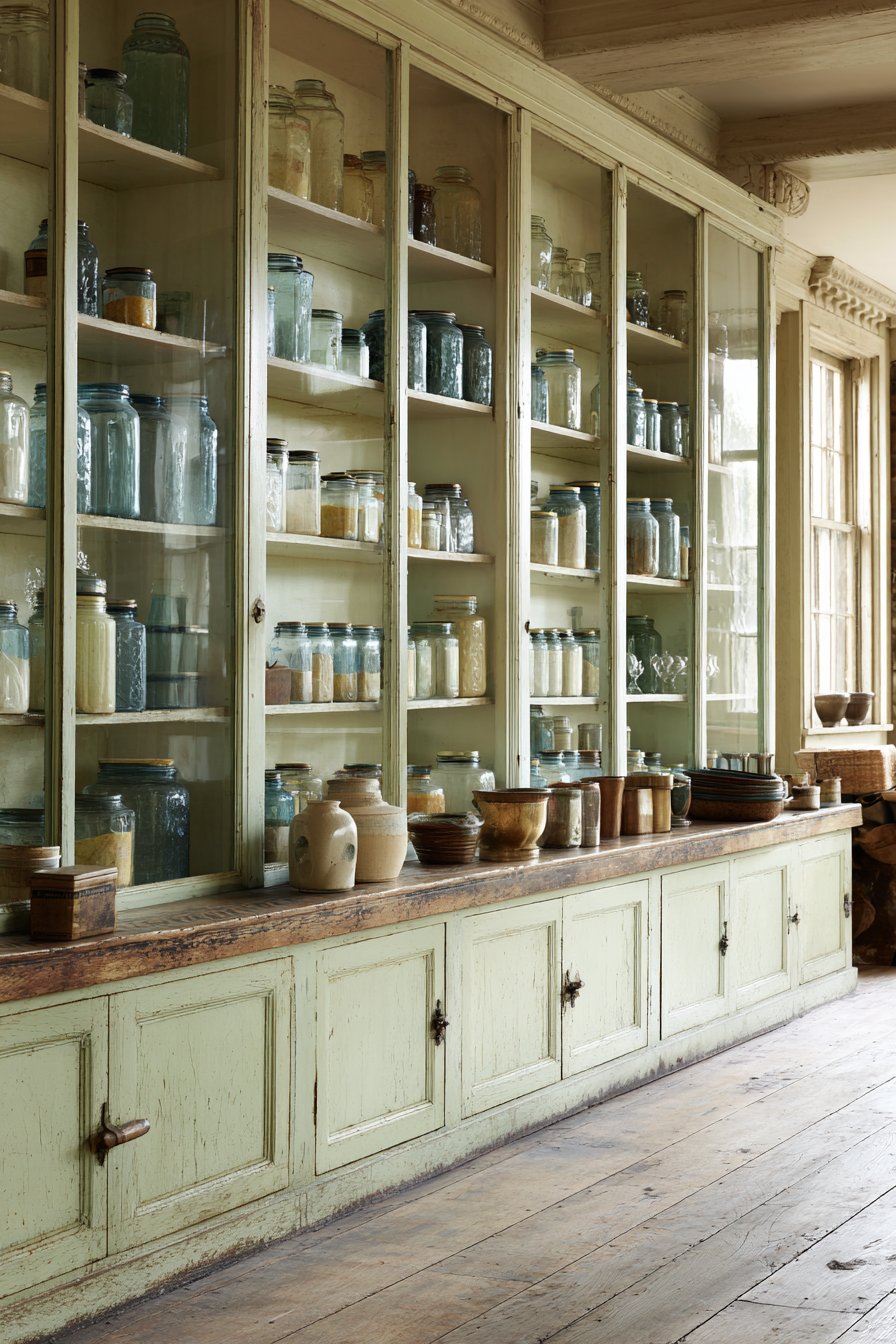
Built-in systems from the early twentieth century exemplify quality craftsmanship. Attention to architectural detail elevates functional storage to art. Modern reproductions rarely capture the same level of care. Original installations deserve preservation and celebration.
Key Design Tips:
- Preserve original hand-blown glass panes for authentic character
- Paint interior shelves in cream tones using visible brush techniques
- Maintain historic paint layers on trim rather than stripping completely
- Organize vintage containers by type for visual harmony
- Allow natural floor patina to remain as historical documentation
- Use soft natural light to enhance glass door reflections
9. Exposed Timber Ceiling with Barn Wood
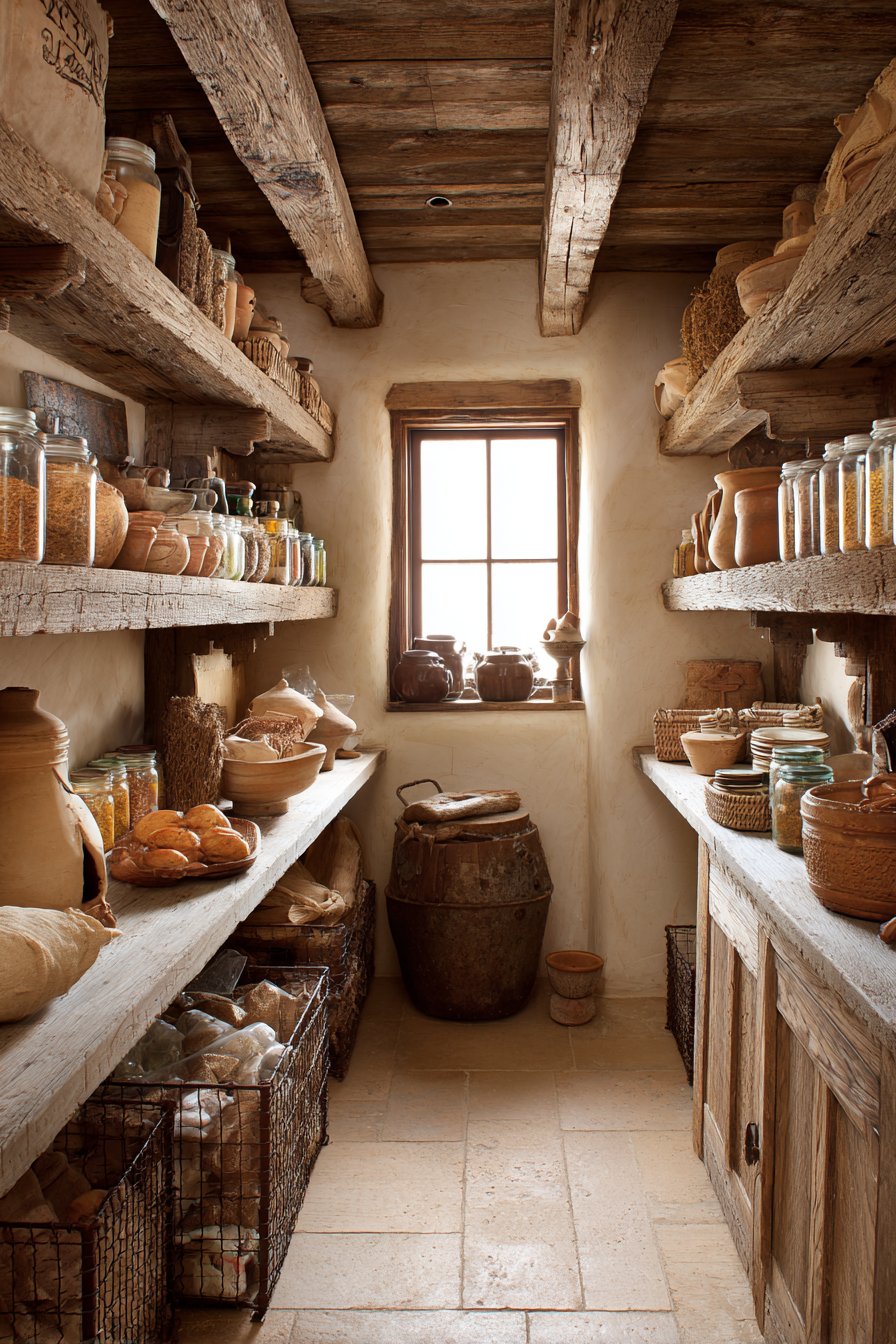
Exposed ceiling joists in rough-hewn timber show authentic adze marks. Natural checking in the wood confirms genuine age and character. Open shelving constructed from old barn planks displays vintage stoneware. Antique glass jars with zinc lids and wire storage baskets complete the arrangement.
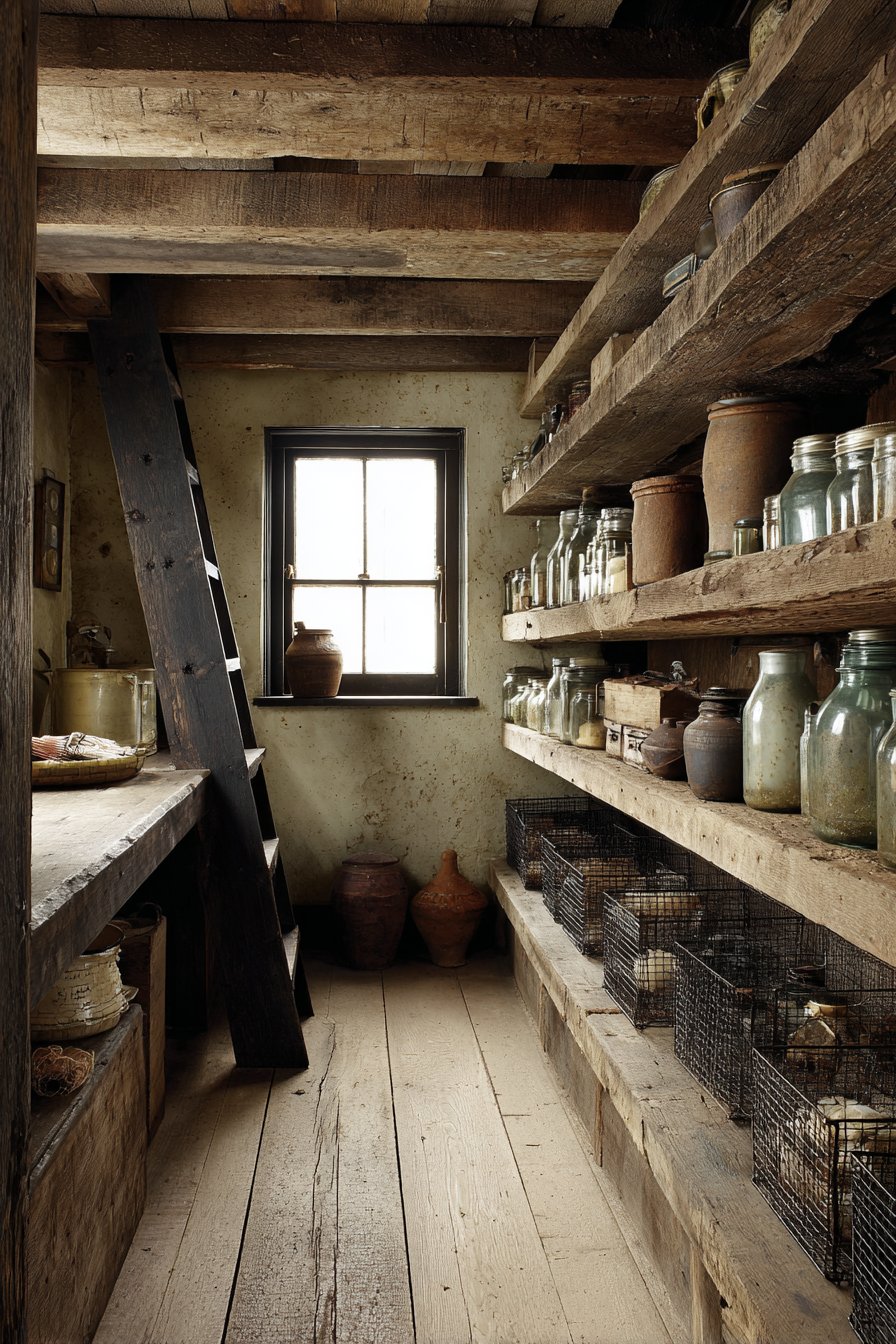
A vintage rolling library ladder on an iron track provides upper shelf access. This functional element adds significant visual interest. Walls finished in original horsehair plaster showcase visible texture. A small window with vintage hardware allows strategic natural light.
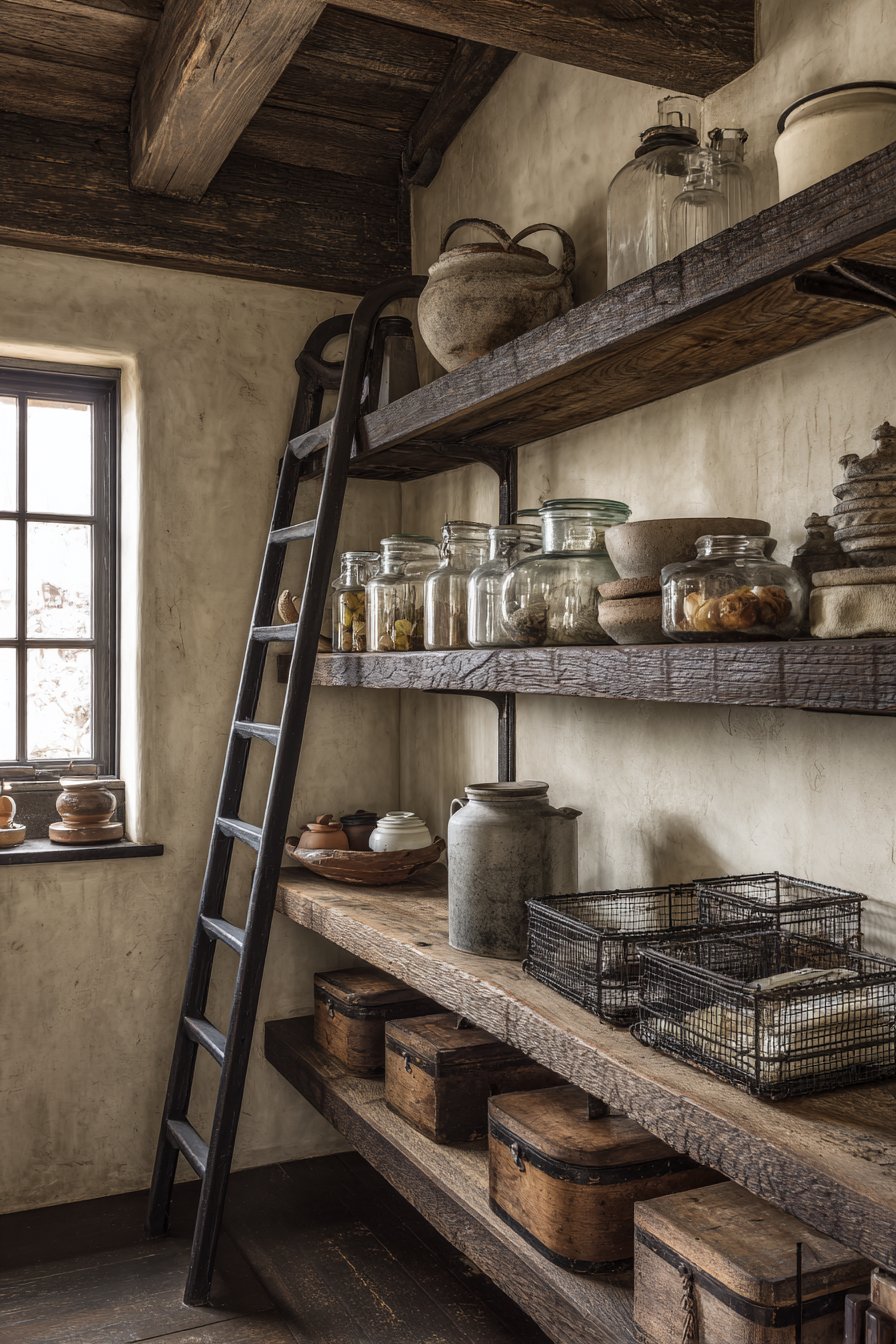
The dimensional wood grain creates fascinating shadow patterns throughout the day. Light highlights the tool marks and natural wood characteristics. These authentic details tell stories of the timber’s previous life. Modern lumber lacks this rich historical narrative.
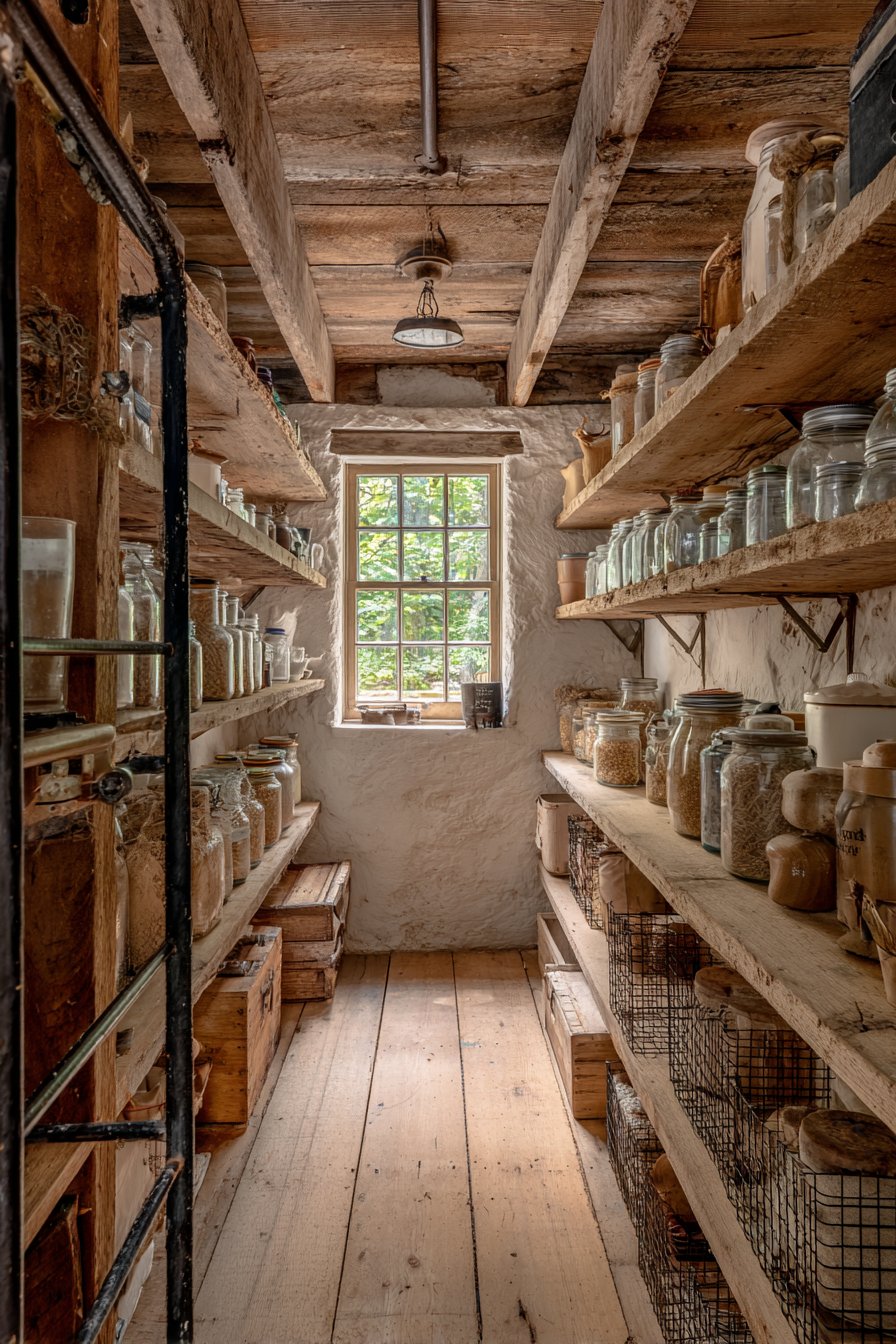
Horsehair plaster represents traditional wall finishing techniques. The material’s texture differs noticeably from modern drywall. This subtle difference contributes to overall period authenticity. Combining original plaster with reclaimed timber creates cohesive vintage character.
Key Design Tips:
- Expose original ceiling joists rather than covering with drywall
- Install rolling library ladders for practical and decorative access
- Use barn wood planks with visible saw marks for shelving
- Preserve horsehair plaster texture where possible during renovation
- Position windows to highlight dimensional timber grain patterns
- Embrace natural wood checking as authentic age markers
10. Antique Pharmacy Cabinet Collection
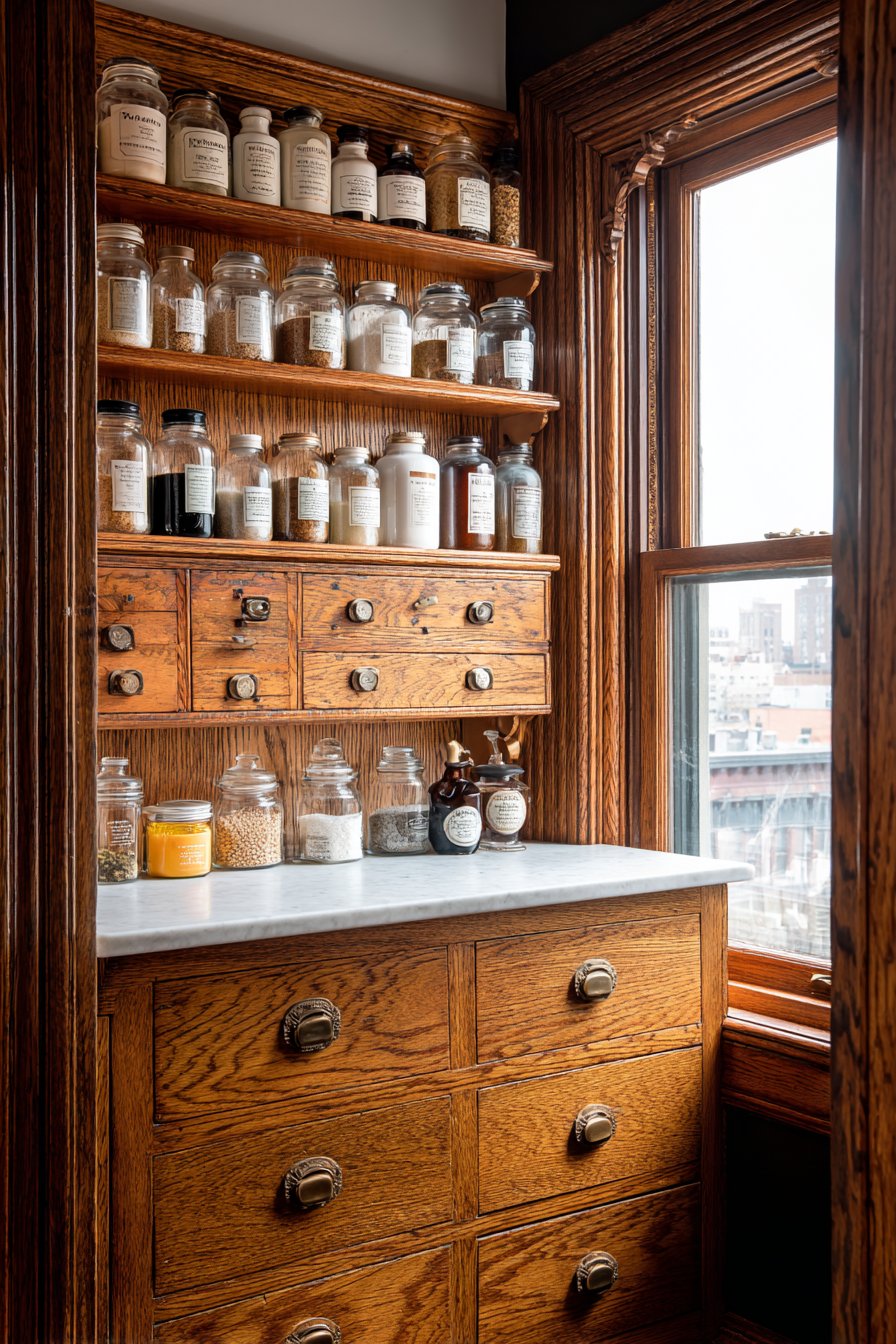
Antique pharmacy cabinets feature original apothecary labels under glass. Brass label holders display natural tarnish from decades of exposure. Porcelain knobs show hairline age cracks that confirm authenticity. The oak construction glows with honey tones from original shellac finish.
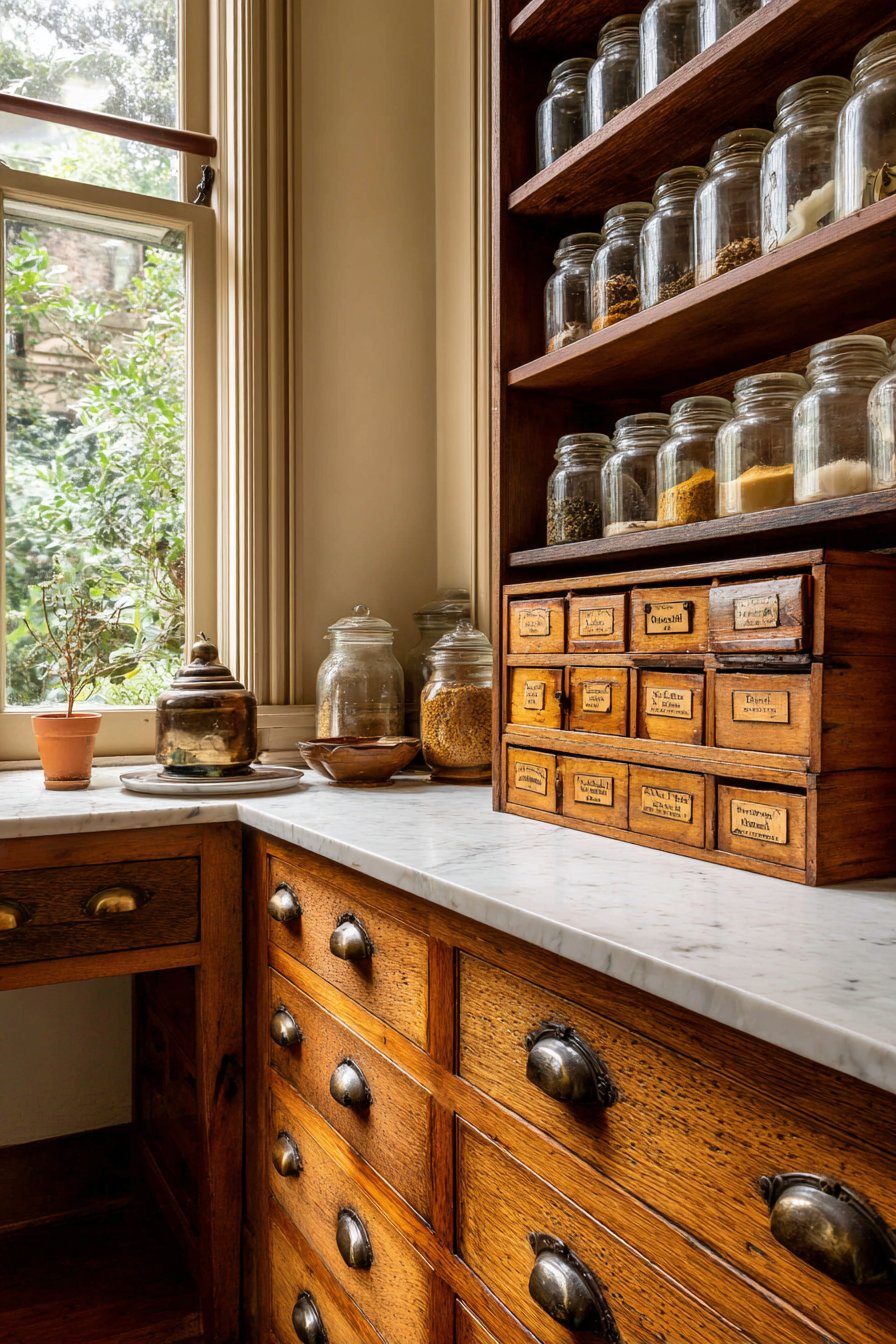
Small drawers of varying sizes provide organized spice and dry goods storage. The systematic arrangement reflects pharmaceutical precision and order. Marble top surfaces show subtle etching and wear patterns. Adjacent open shelving holds vintage glass jars with ground glass stoppers.
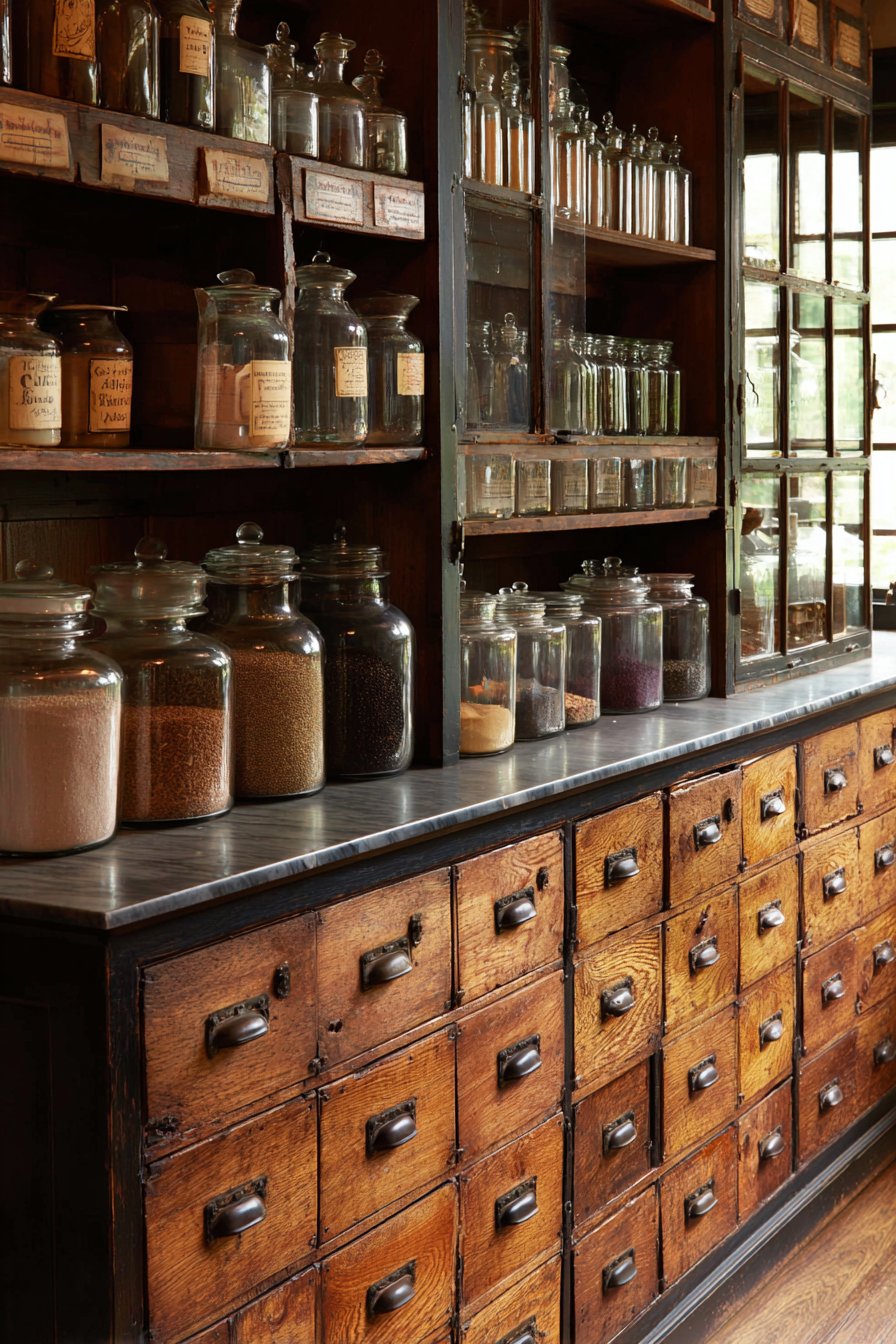
Natural light from a tall window creates highlights on brass hardware. The glass surfaces reflect and refract light throughout the space. This interplay creates visual depth and interest. The fine crazing in shellac finish catches light beautifully.
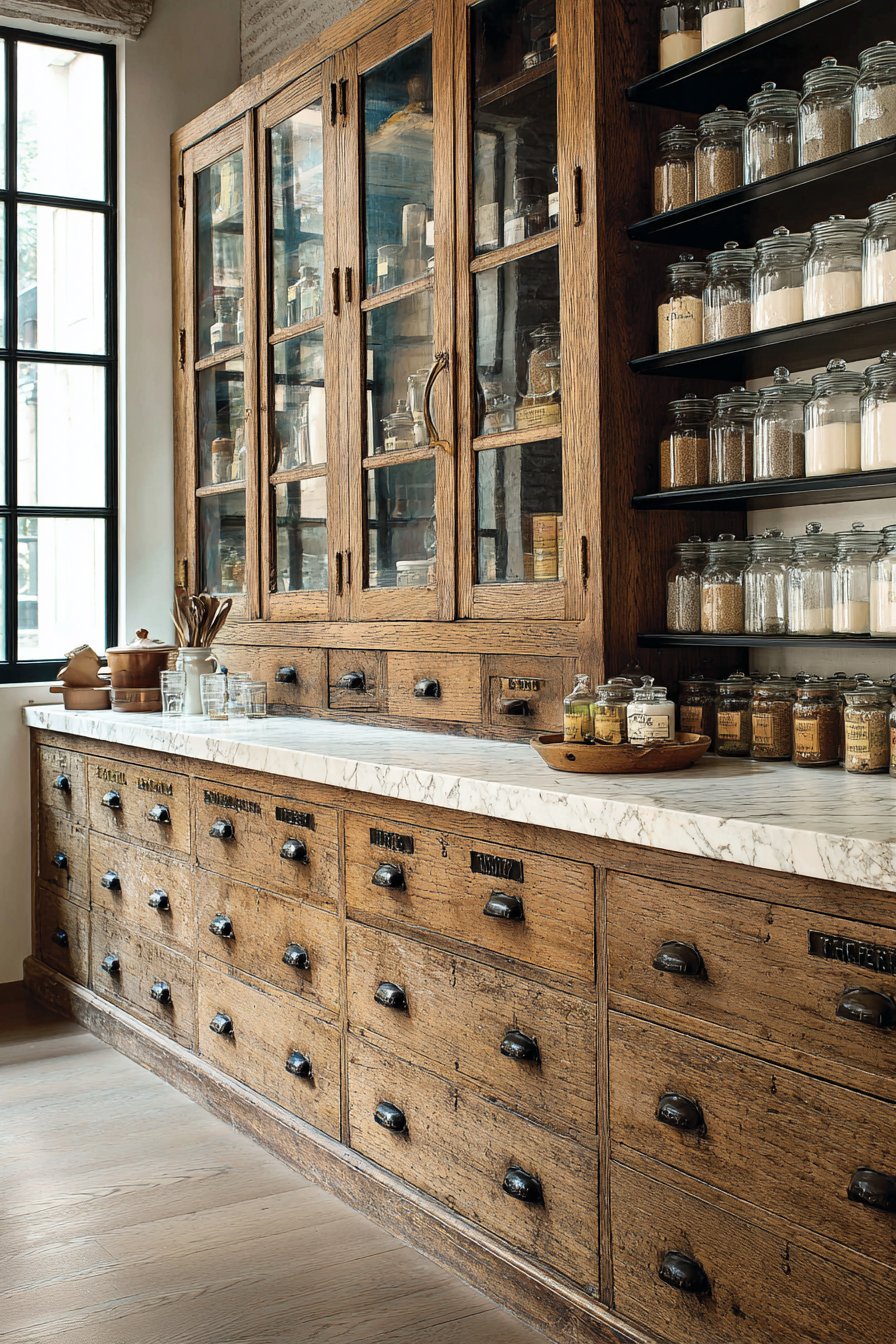
Pharmacy cabinets represent specialized storage meeting precise organizational needs. The drawer configurations served specific functional purposes. Modern pantry use honors this systematic approach to organization. Beauty and efficiency combine in these remarkable pieces.
Key Design Tips:
- Source pharmacy cabinets with original apothecary labels intact
- Preserve brass hardware tarnish as evidence of age
- Use small drawers for spice organization by type or cuisine
- Embrace hairline cracks in porcelain knobs rather than replacing
- Position near windows to highlight brass and glass details
- Apply museum wax to marble surfaces without removing etch marks
11. Beadboard Walk-In with Wire Bins
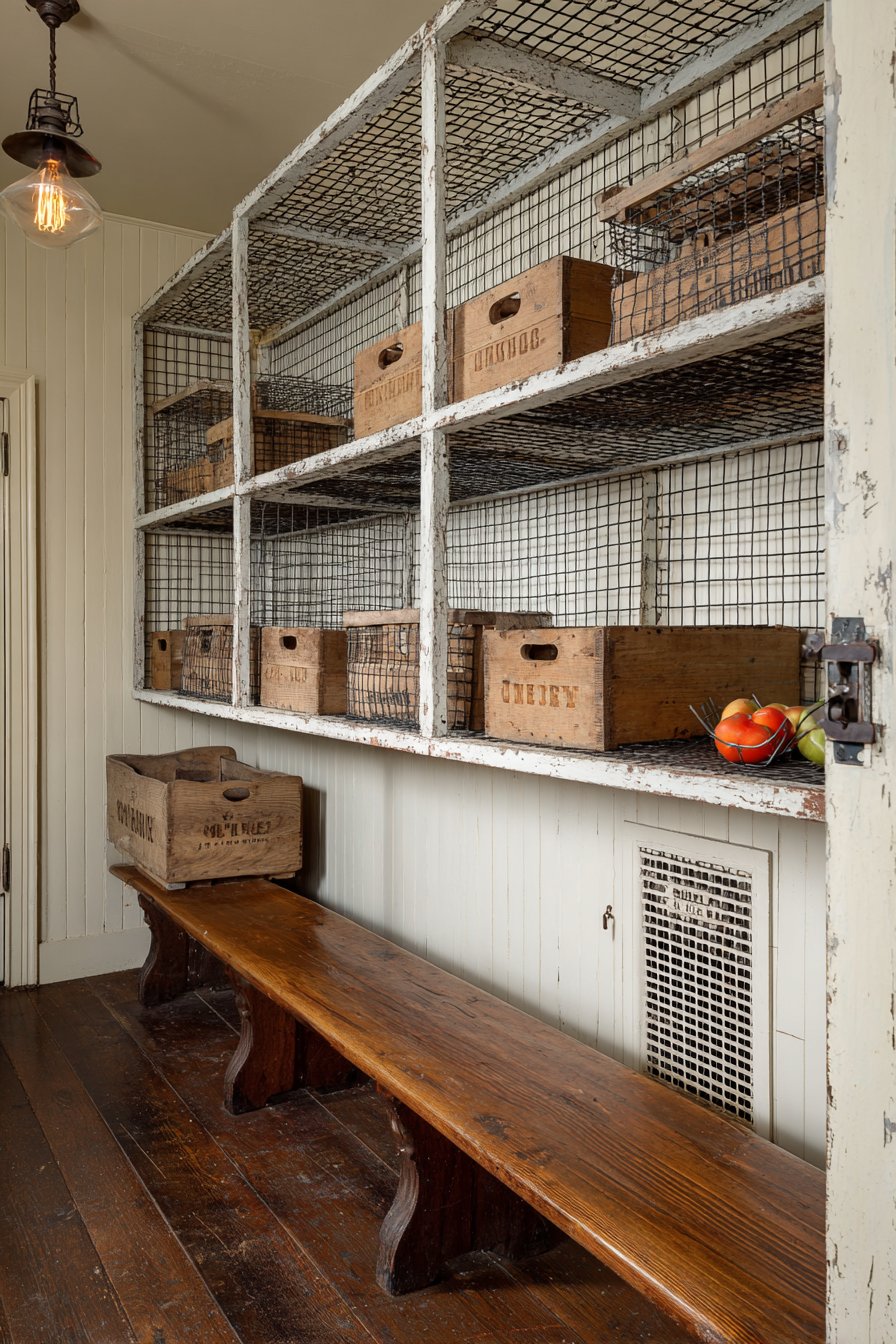
Walk-in closet walls lined with original beadboard painted in aged white. Subtle yellowing and minor paint loss in high-wear areas add authenticity. Wire mesh produce bins mounted at varying heights show rust patina. Vintage wooden crates stacked for root vegetable storage display branded labels.
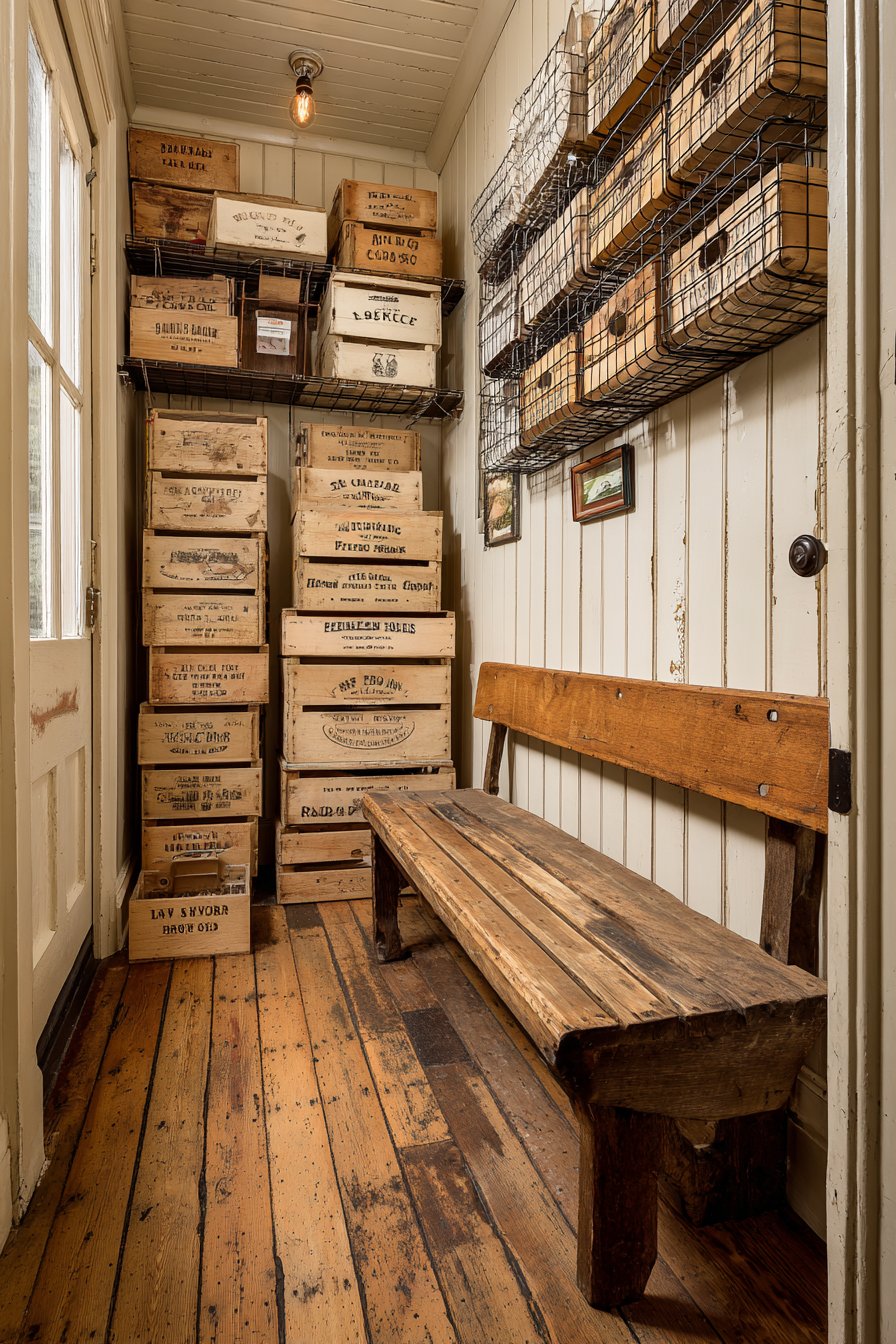
A salvaged church pew serves as seating with the original finish intact. Use patterns in the wood tell stories of countless Sunday services. Exposed light bulb in vintage porcelain socket provides ambient lighting. Natural ventilation grate in aged metal adds period authenticity.
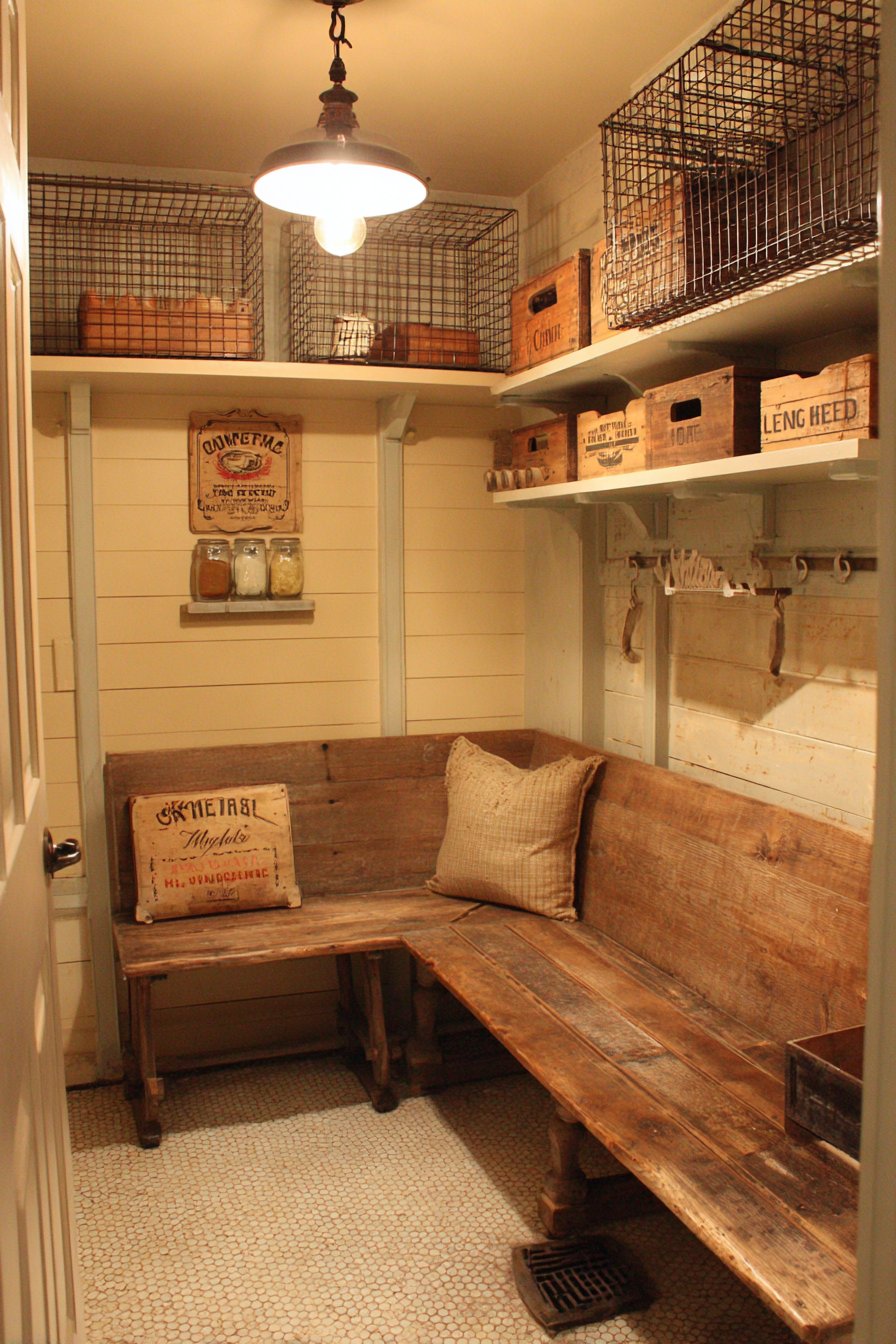
The practical vintage storage approach emphasizes function over decoration. Yet the combination of authentic materials creates undeniable beauty. Honest wear patterns document the space’s working history. This utilitarian aesthetic possesses unique charm.
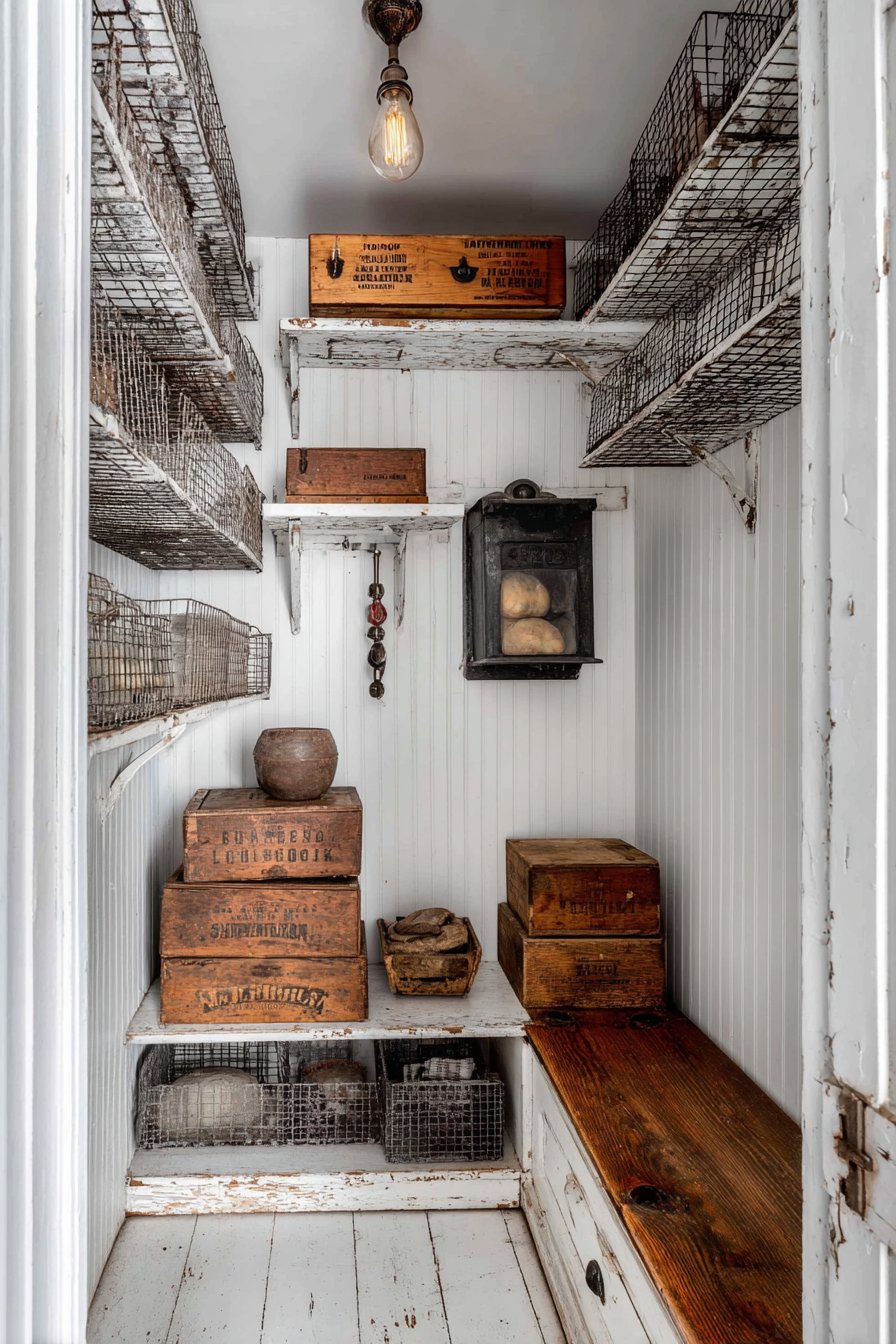
Wire produce bins allow air circulation for proper food storage. The vintage approach to pantry organization prioritized food preservation. Modern refrigeration reduced this necessity but not the appeal. These traditional methods inspire contemporary sustainable storage practices.
Key Design Tips:
- Paint beadboard in historic white with intentional aging techniques
- Install wire mesh bins at accessible heights for produce storage
- Use vintage wooden crates with original branded labels
- Incorporate salvaged seating for pantry convenience
- Choose porcelain light fixtures for authentic period lighting
- Add metal ventilation grates for both function and aesthetics
12. Restored Dry Sink Conversion
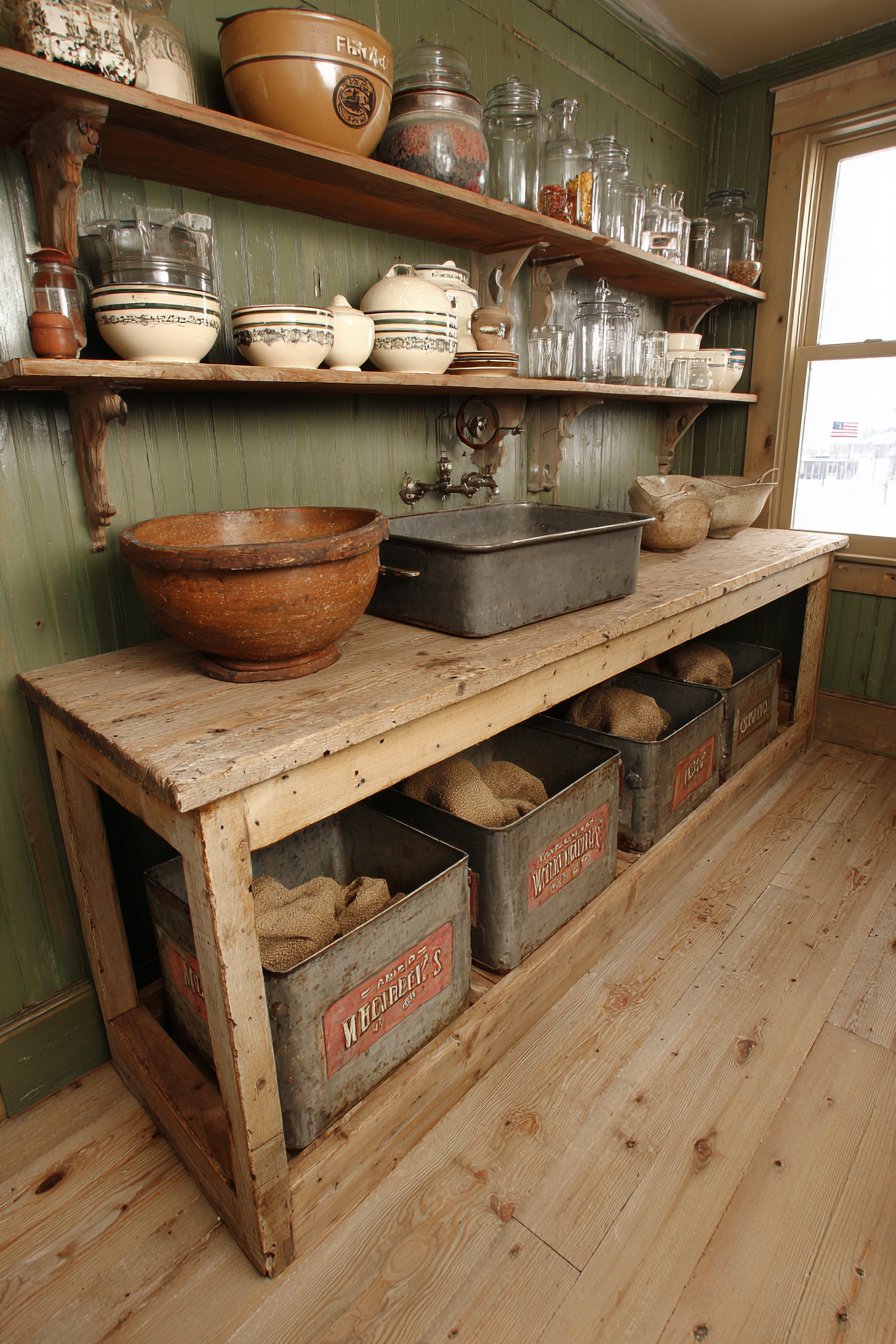
A restored dry sink converted to storage features an original zinc-lined basin. Weathered pine construction displays natural wood grain through an aged finish. Honest wear at corners and edges documents functional use. Open shelving above holds vintage stoneware mixing bowls and enamelware.
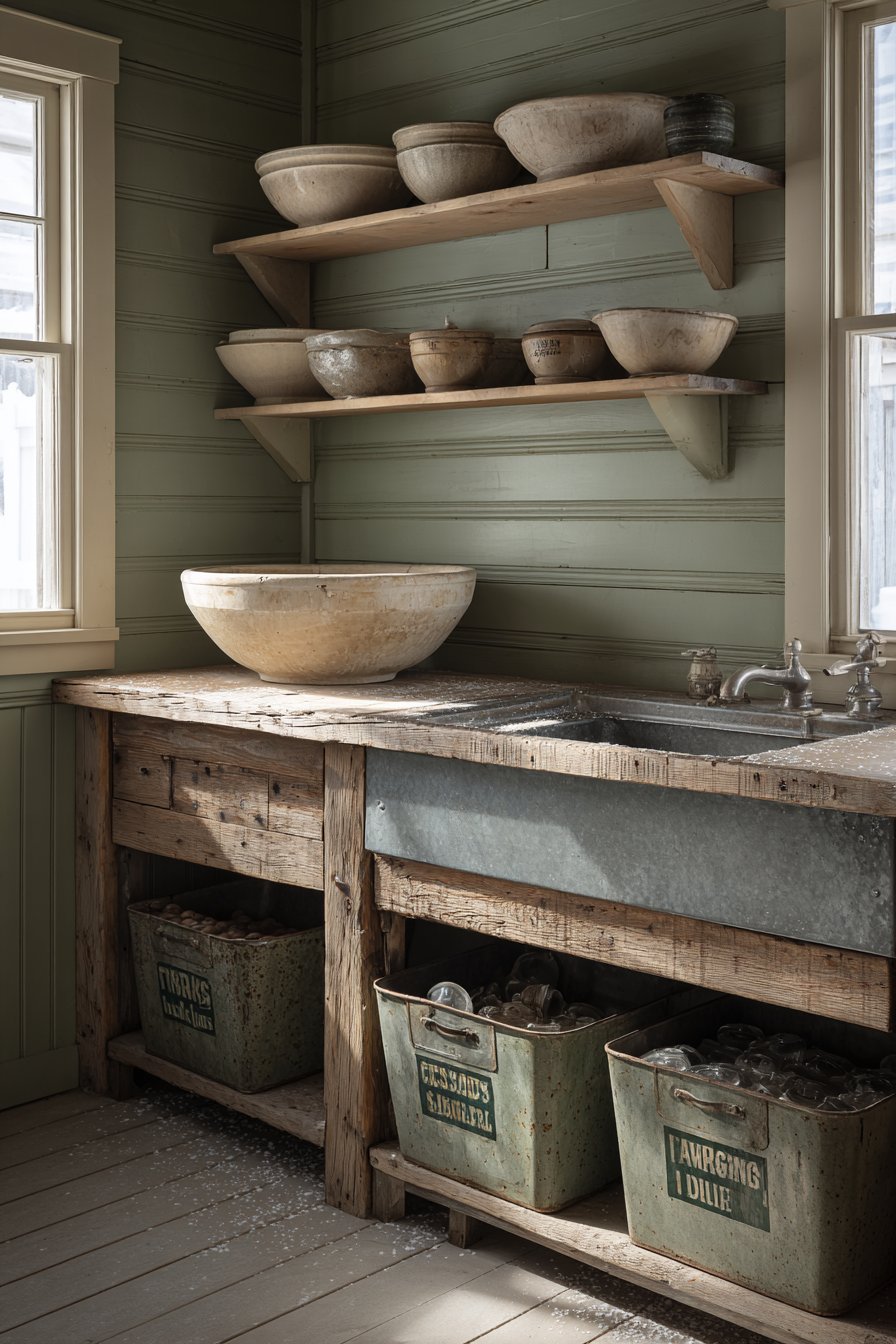
Surrounding walls clad in original tongue-and-groove paneling paint in historic green. Visible wood grain shows through the thin paint layer. Vintage metal bins with hand-painted labels provide bulk storage. Soft natural window light illuminates the varied textures and patina.
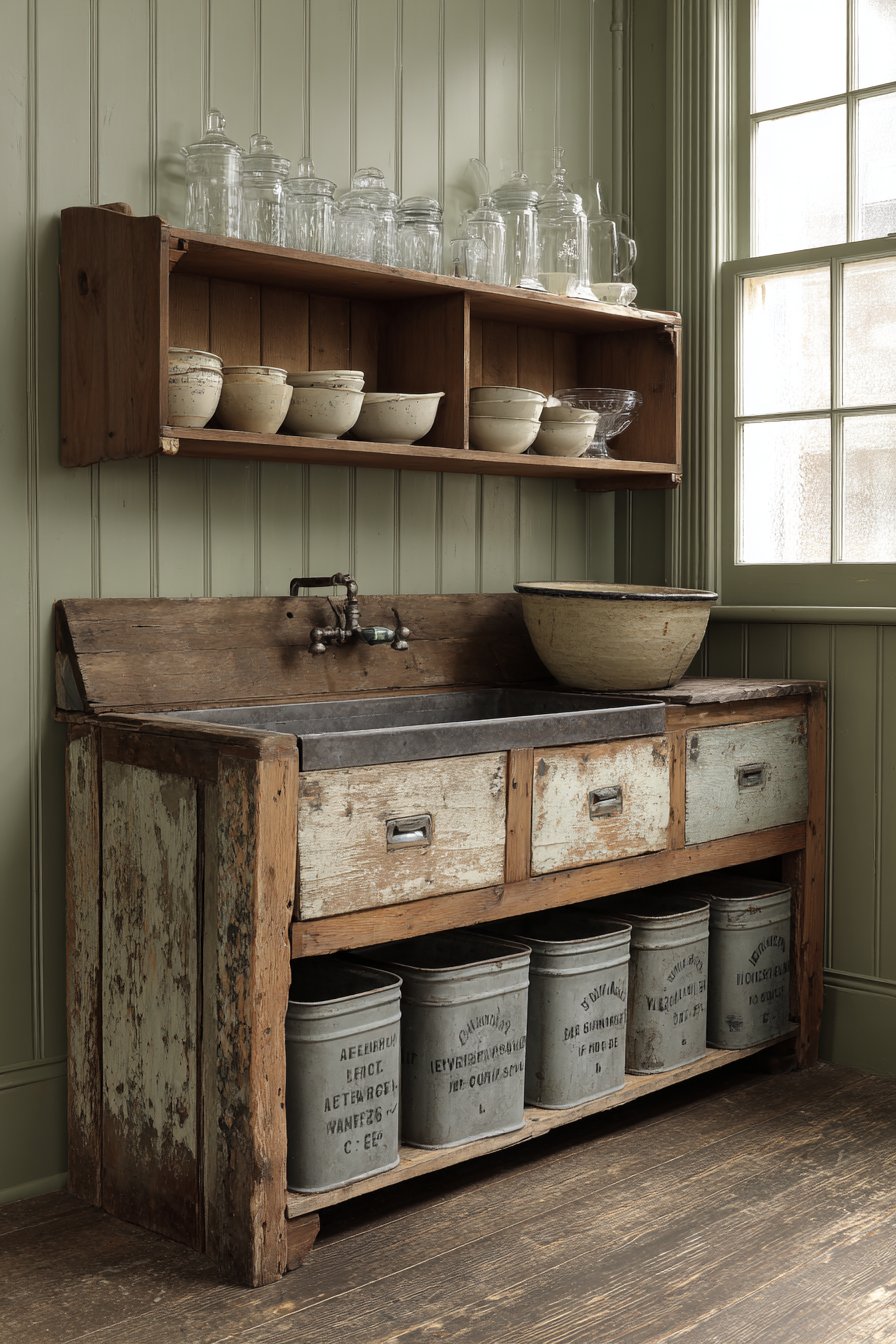
The dry sink represents pre-plumbing era functionality and ingenuity. The original zinc lining prevented water damage to wood construction. Converting these pieces for dry storage honors their craftsmanship. The adaptation extends their useful life while preserving history.
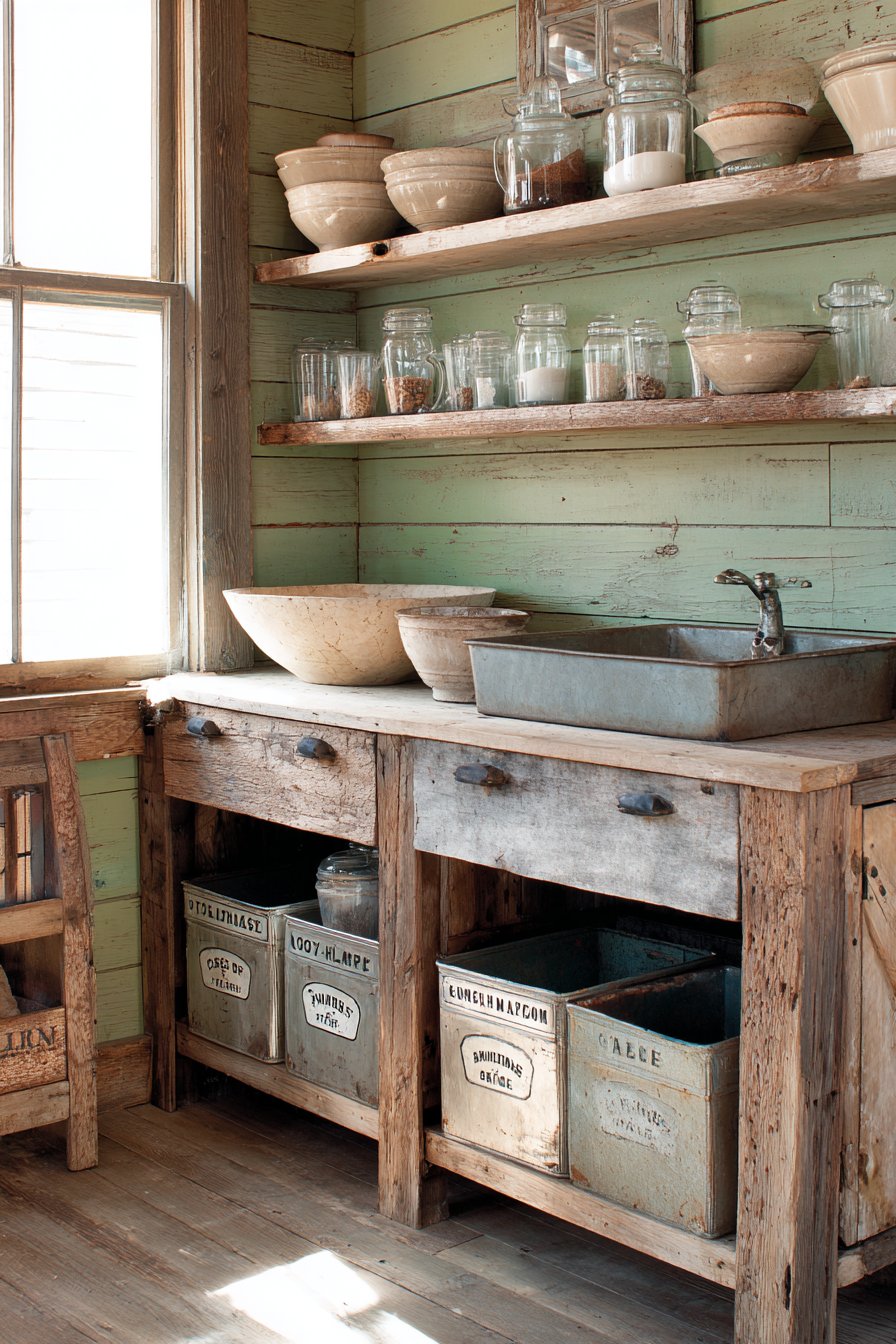
Historic green paint complements natural wood tones beautifully. The color evokes early American interior palettes. Thin paint application allows wood grain to remain visible. This technique creates depth and visual interest.
Key Design Tips:
- Preserve the original zinc lining as historical and visual feature
- Maintain weathered pine finish rather than refinishing completely
- Use tongue-and-groove paneling with visible grain through paint
- Display vintage stoneware in natural groupings by color
- Apply thin historic paint colors to allow wood grain visibility
- Add hand-painted labels to metal bins for organizational charm
13. Repurposed Antique Icebox
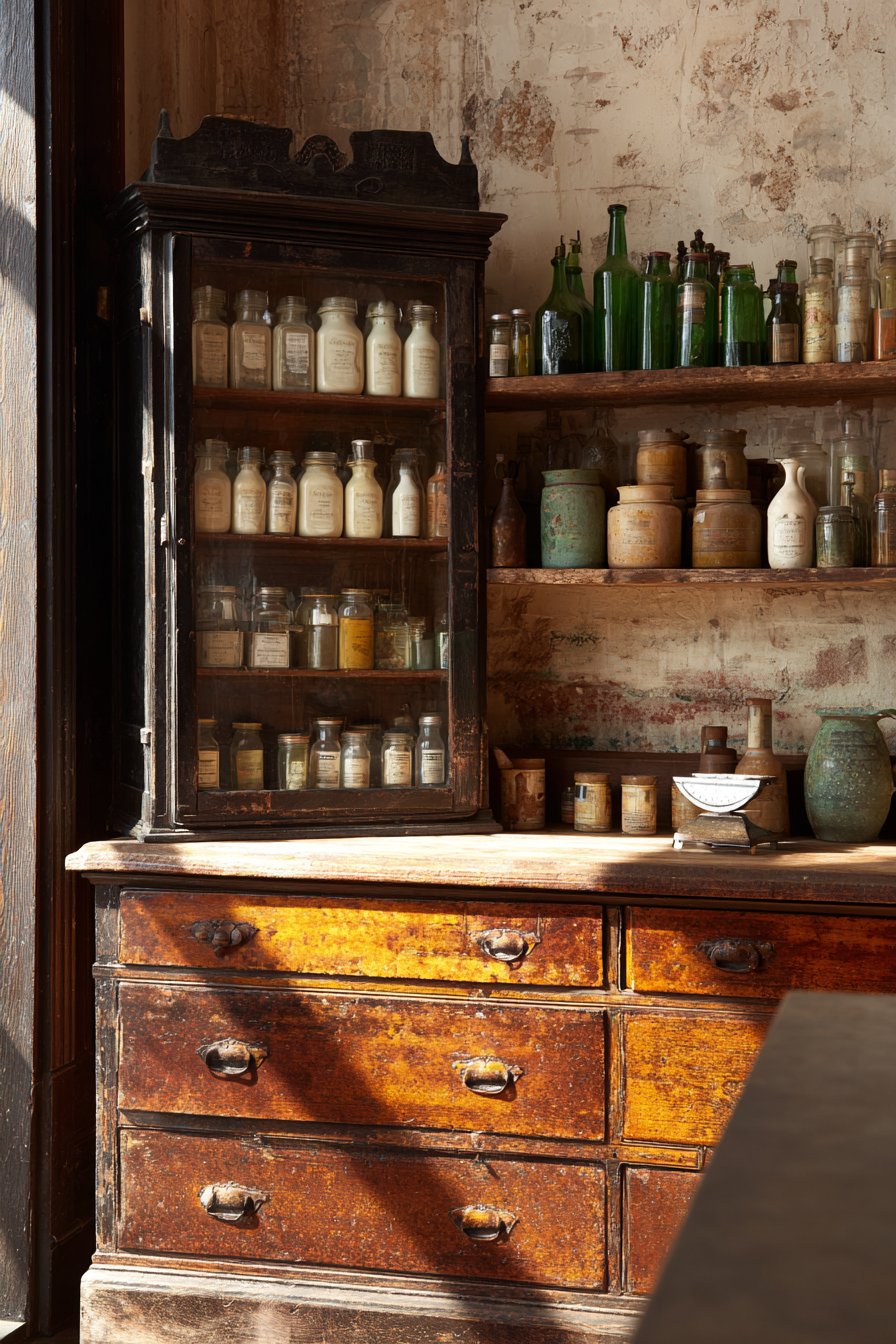
Working antique icebox repurposed for storage features original brass hardware. Oak construction displays quarter-sawn grain pattern characteristic of quality furniture. Zinc-lined interior compartments provide cool, dry storage areas. The exterior shows rich amber patina with age-appropriate surface wear.
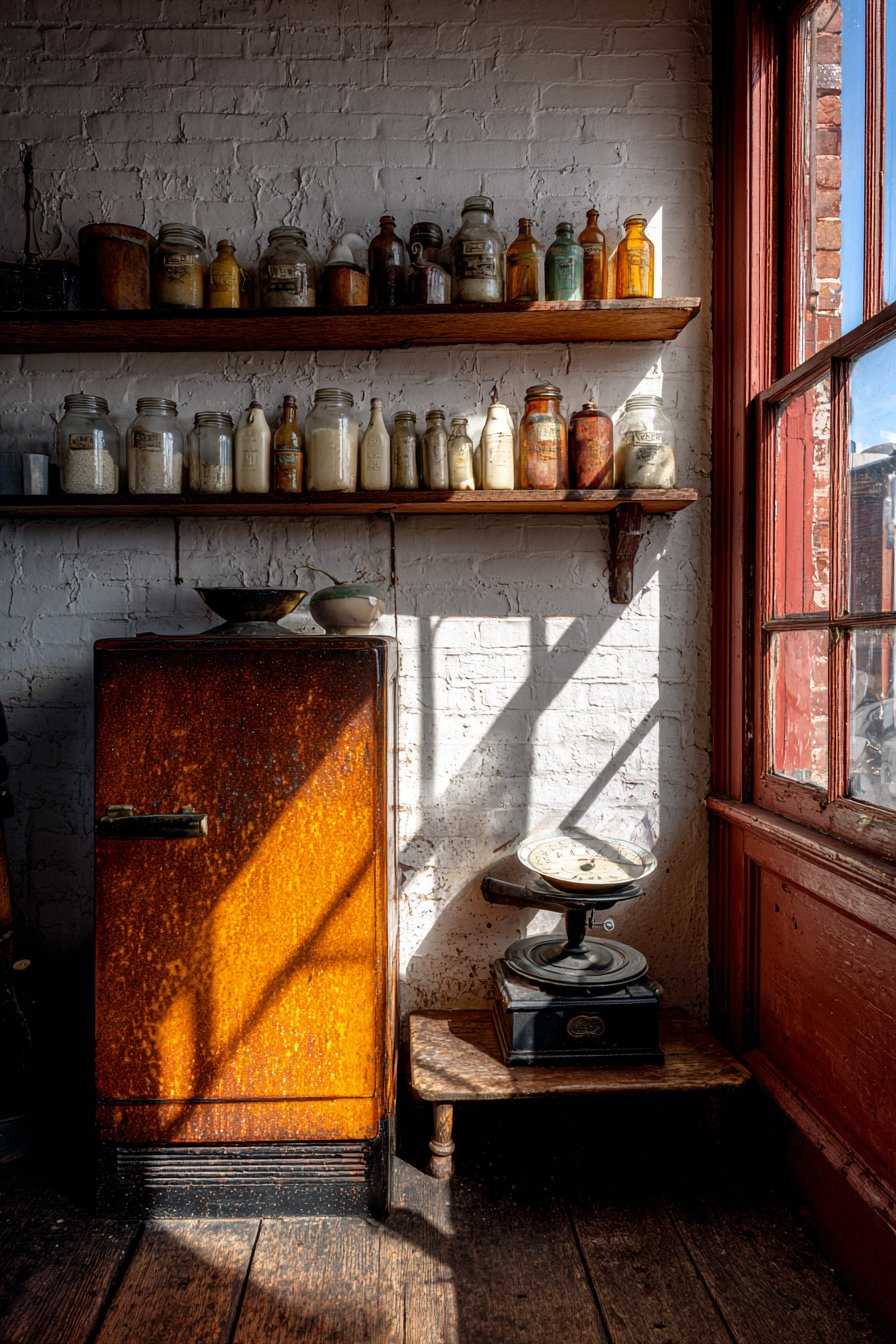
Vintage milk bottles, mason jars with wire bails, and ceramic containers arrange on adjacent shelving. Reclaimed floorboards create open shelves with authentic character. Walls finished in historic whitewash over brick show natural lime deposits. A vintage scale with cast iron base sits on the counter.
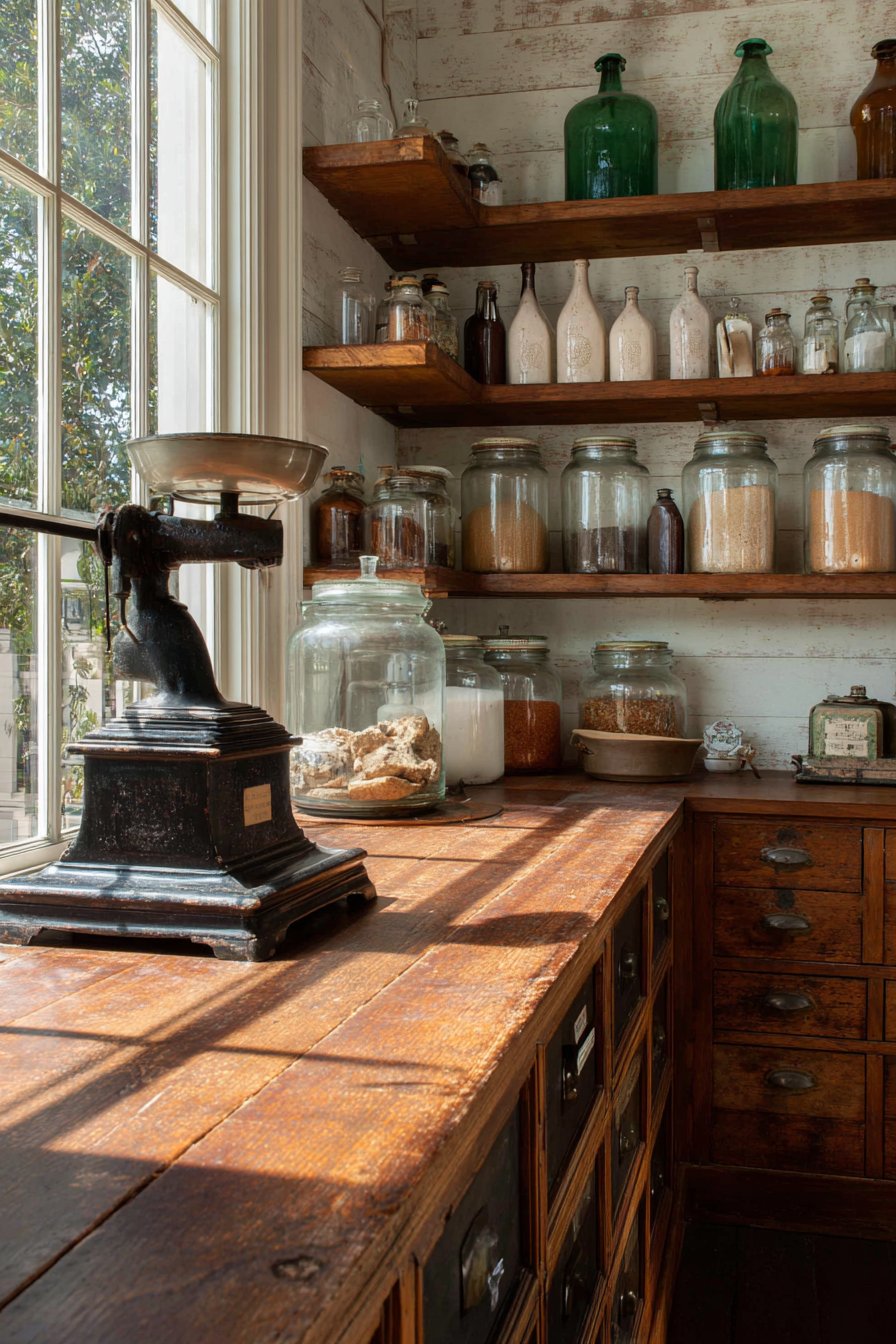
Natural light from casement windows with original hardware creates dimensional shadows. The interplay of light across varied surfaces enhances textural interest. Brass hardware glows warmly in natural illumination. The carefully curated vintage elements create cohesive design.
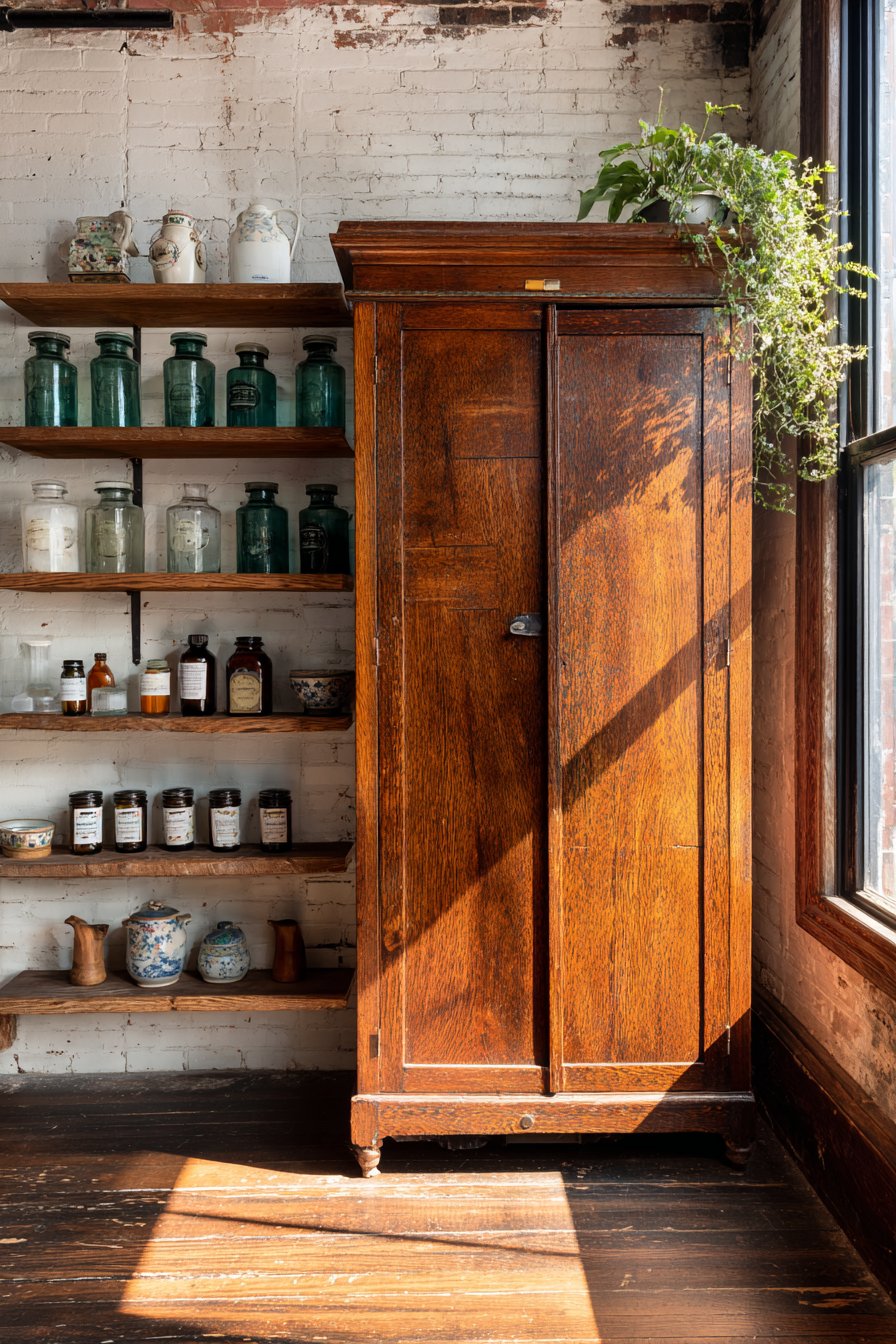
Iceboxes preceded mechanical refrigeration as food preservation tools. Oak construction with zinc lining provided insulation and moisture protection. Modern repurposing celebrates this ingenious design while meeting current needs. The pieces serve as functional art in contemporary pantries.
Key Design Tips:
- Maintain original brass hardware with natural tarnish intact
- Use zinc-lined compartments for items requiring cool storage
- Display vintage milk bottles as decorative storage elements
- Install reclaimed floorboards for shelving with authentic wear
- Apply historic whitewash over brick for traditional finish
- Position near windows to highlight quarter-sawn oak grain
14. Chicken Wire Produce Bin System
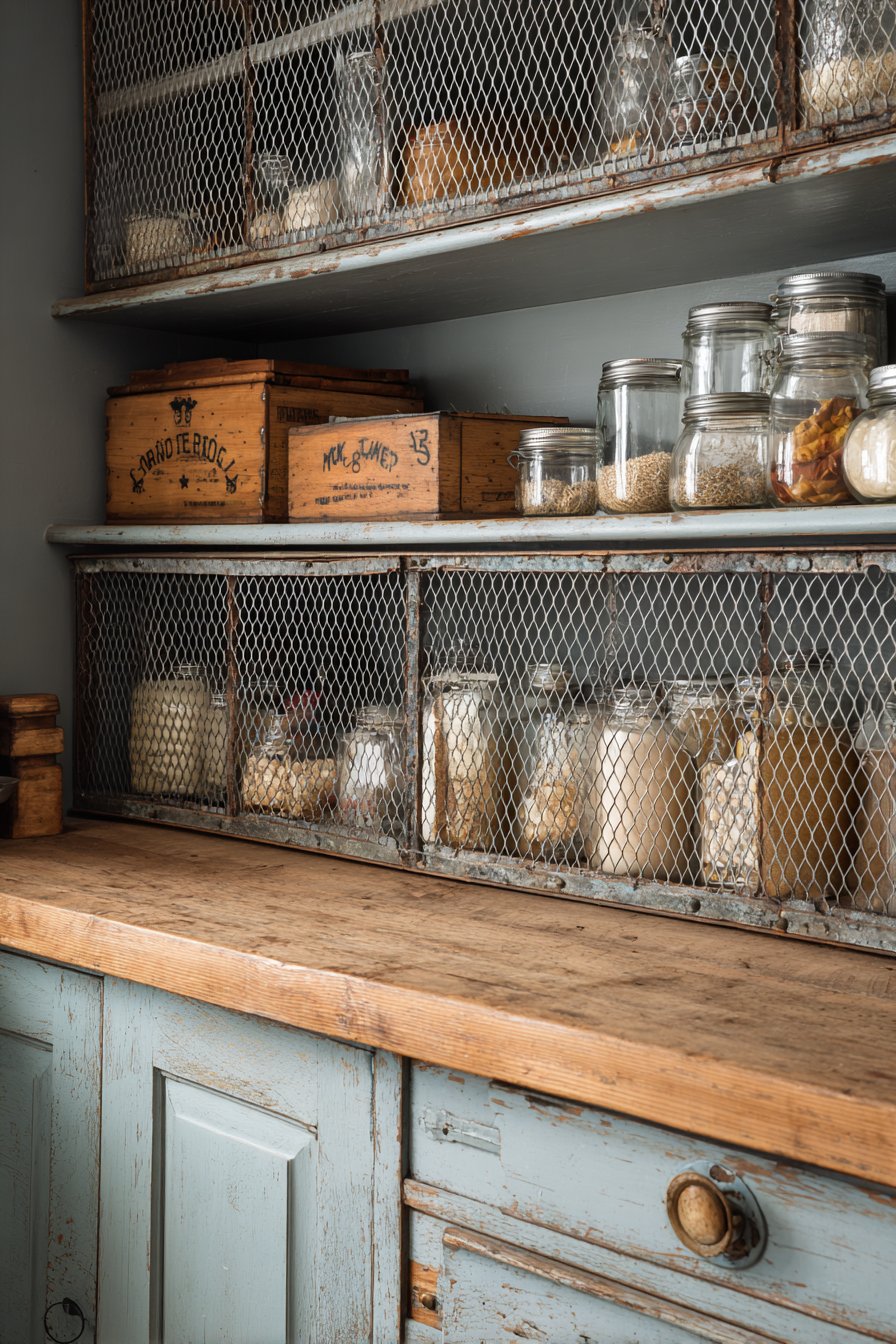
Built-in chicken wire produce bins feature hand-forged metal framework. Natural oxidation on the metal adds authentic industrial character. Surrounding pine cabinetry displays aged varnish with fine crackling. Vintage galvanized containers and wooden cheese boxes are organized on shelves.
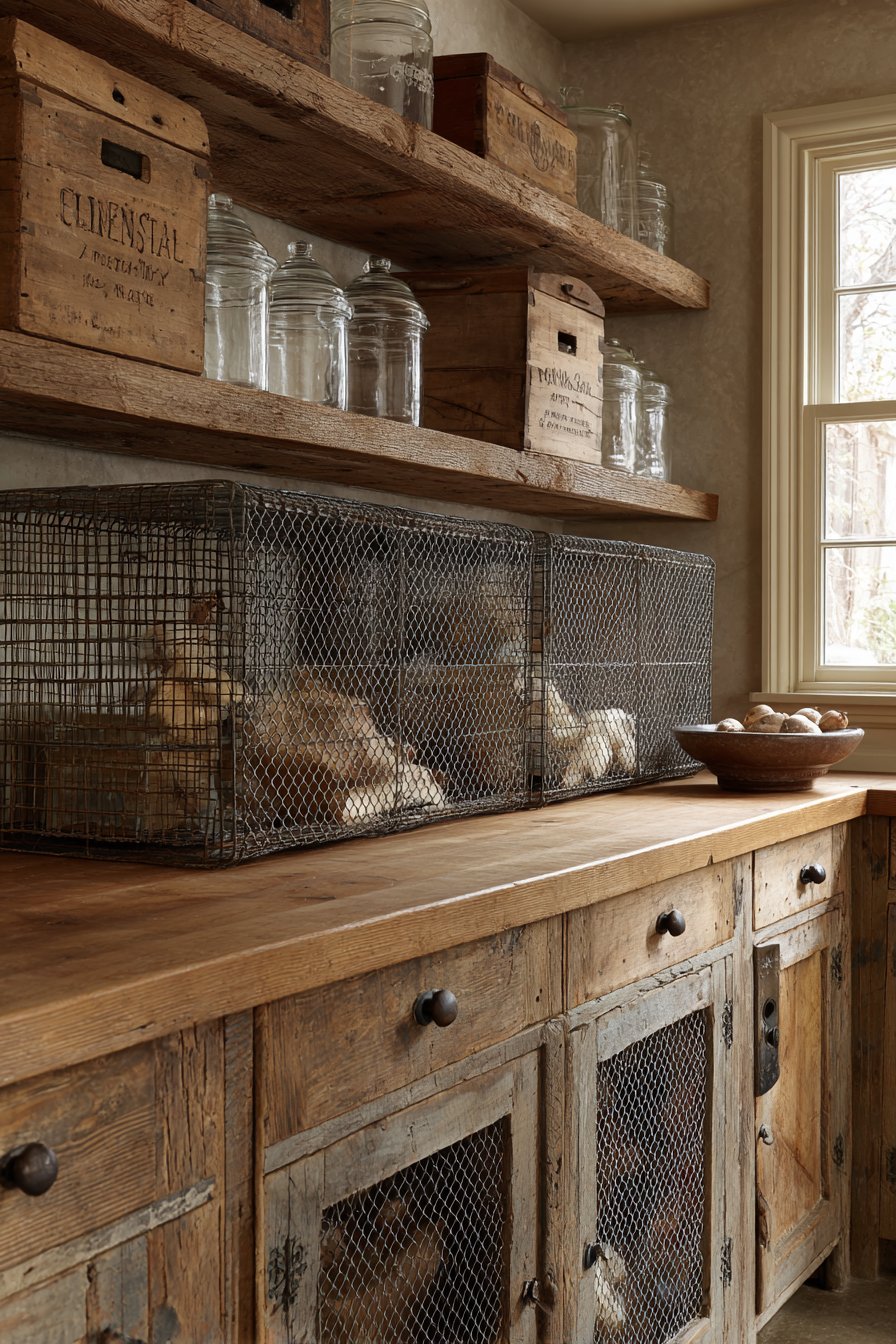
Glass canning jars create colorful display of preserved foods. Butcher block countertops show honest knife marks and wear patterns. Historic porcelain knobs with minor glaze crazing adorn drawer fronts. Soft diffused natural light highlights the layered textures throughout.
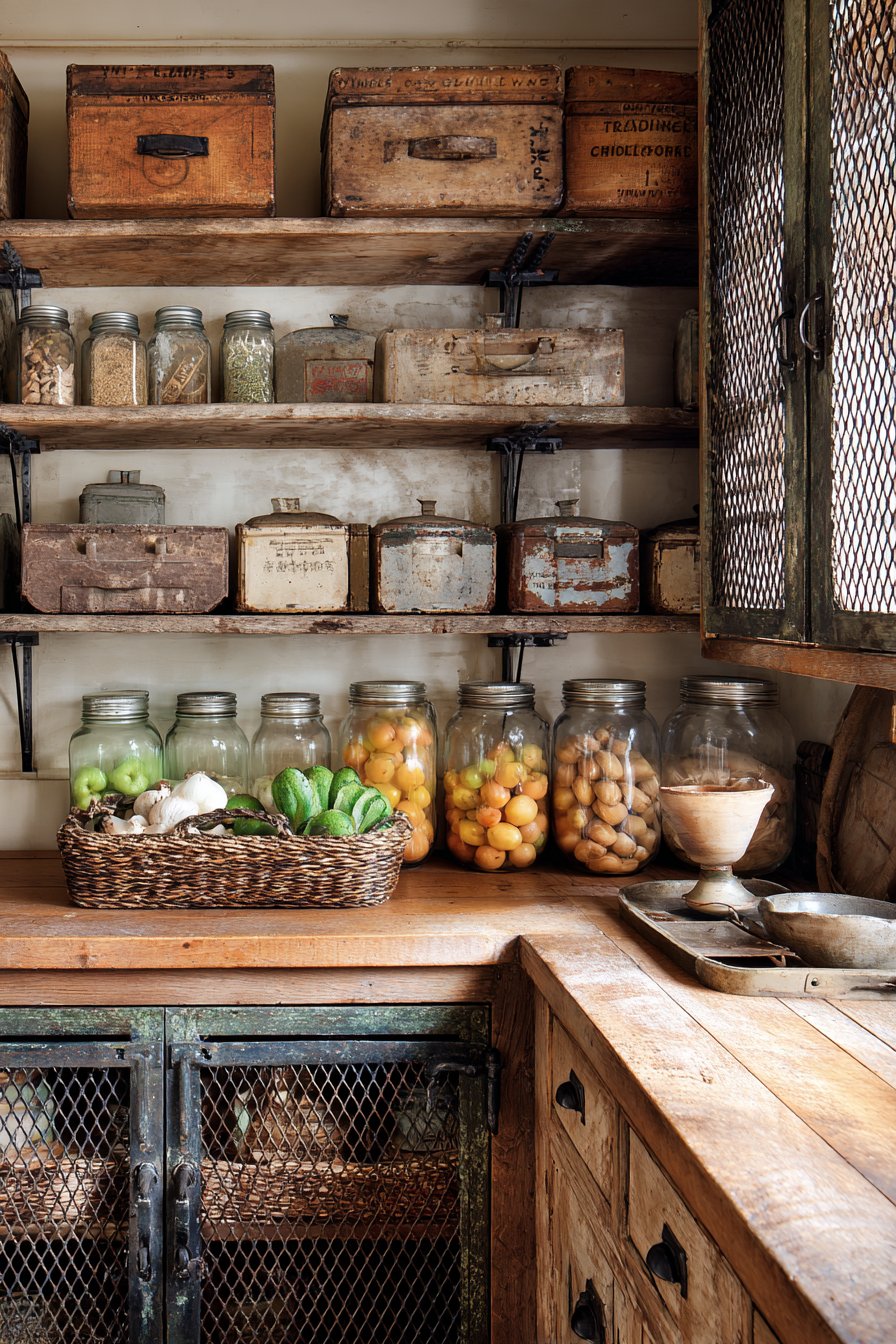
The chicken wire allows air circulation essential for produce storage. Traditional root cellars used similar ventilation principles for food preservation. Modern applications honor this practical heritage. The aesthetic appeal complements the functional benefits.
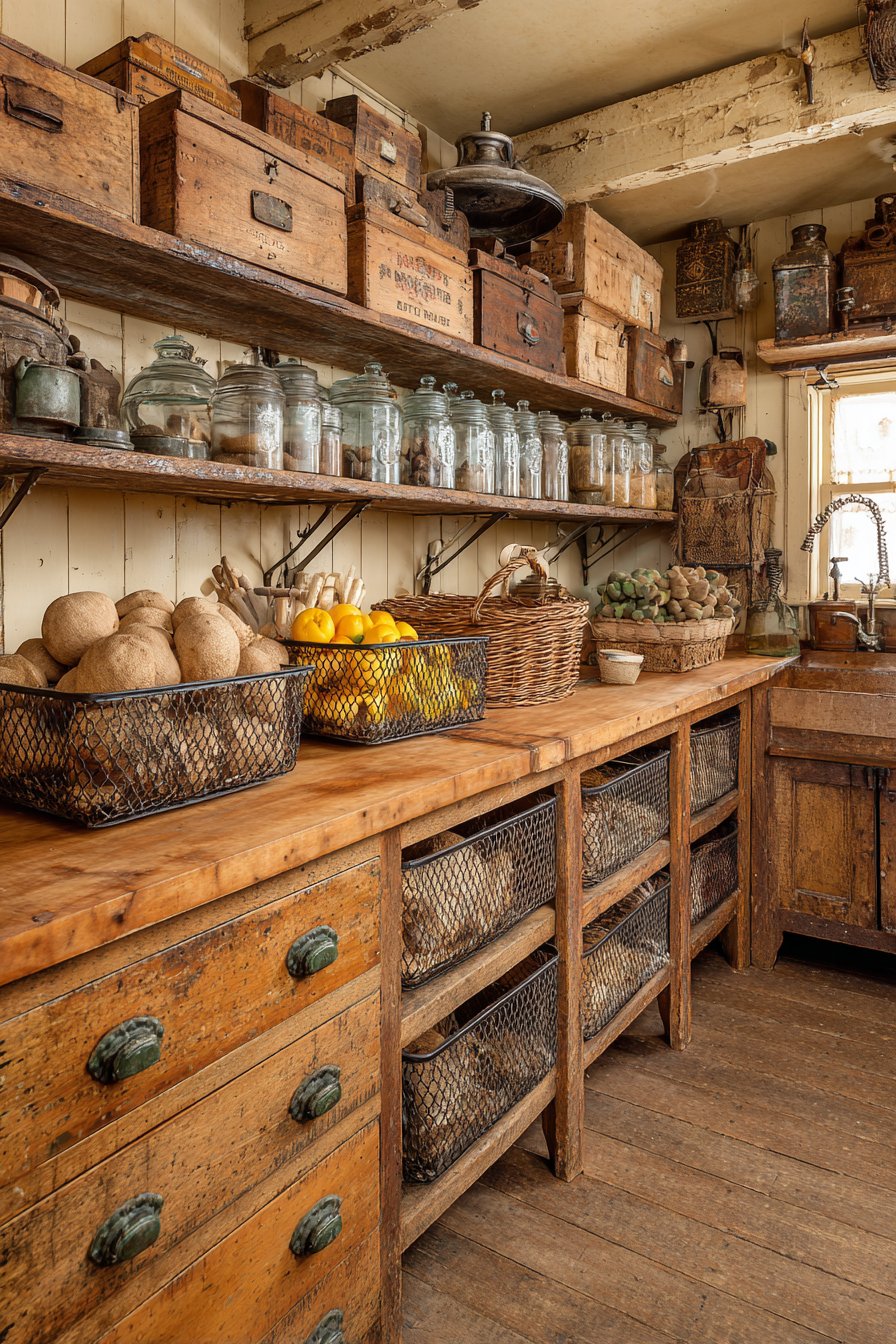
Hand-forged metal framework demonstrates artisan craftsmanship. Each piece shows individual hammer marks and shaping variations. Mass-produced modern wire lacks this handcrafted character. The authentic details elevate simple storage to artful installation.
Key Design Tips:
- Source hand-forged metal framework for authentic character
- Allow natural oxidation to develop on wire and metal components
- Use galvanized containers for dry goods storage with vintage appeal
- Display glass canning jars to add color and visual interest
- Preserve knife marks on butcher block as use documentation
- Install porcelain knobs with authentic glaze crazing intact
15. Antique Jelly Cupboard Feature
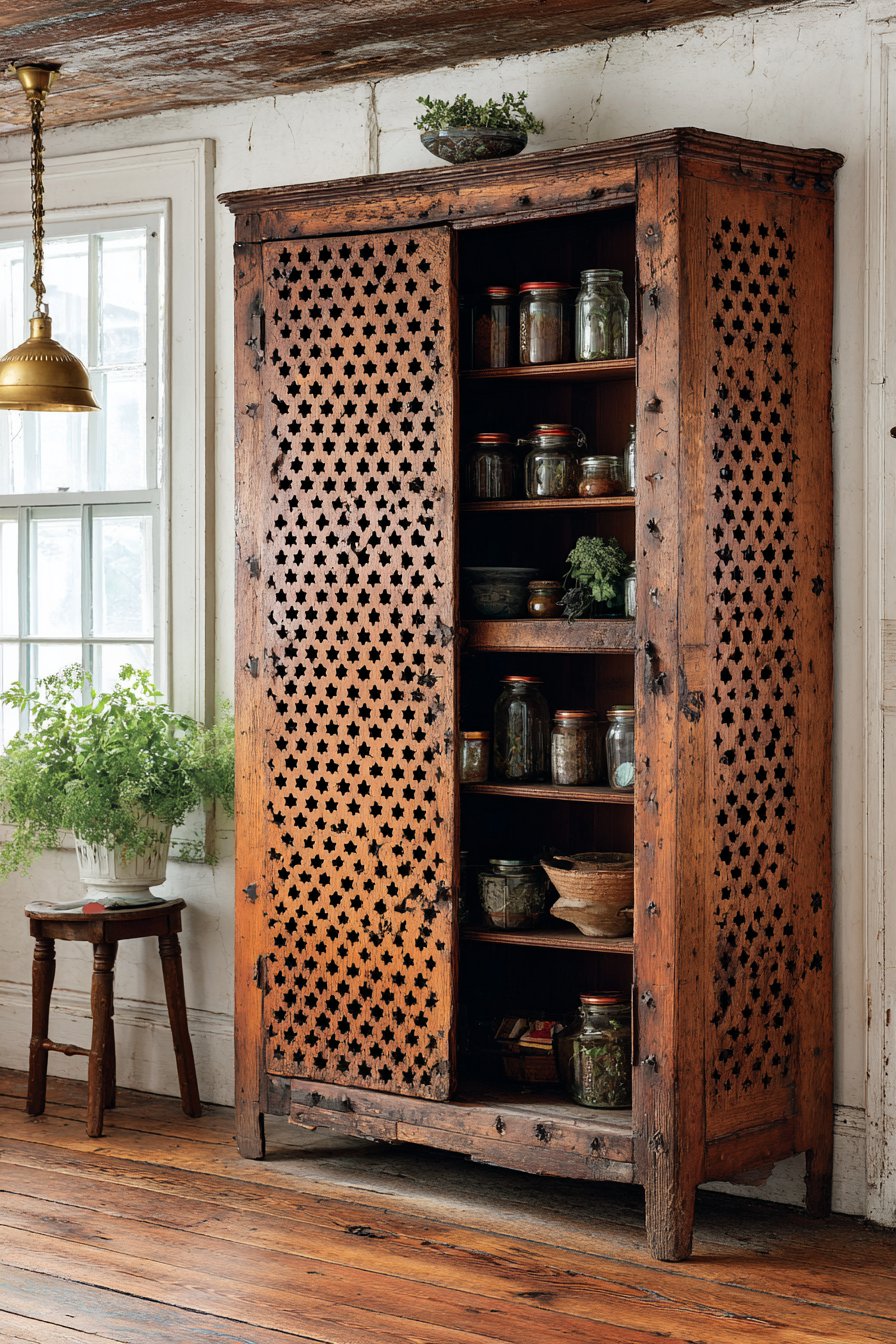
Antique jelly cupboard features pierced tin door panels with star and heart patterns. Walnut construction with hand-planed surfaces reveals visible tool marks. Interior shelves hold vintage preserved jars and cobalt-decorated crocks. Rich brown patina develops naturally at feet and door edges.
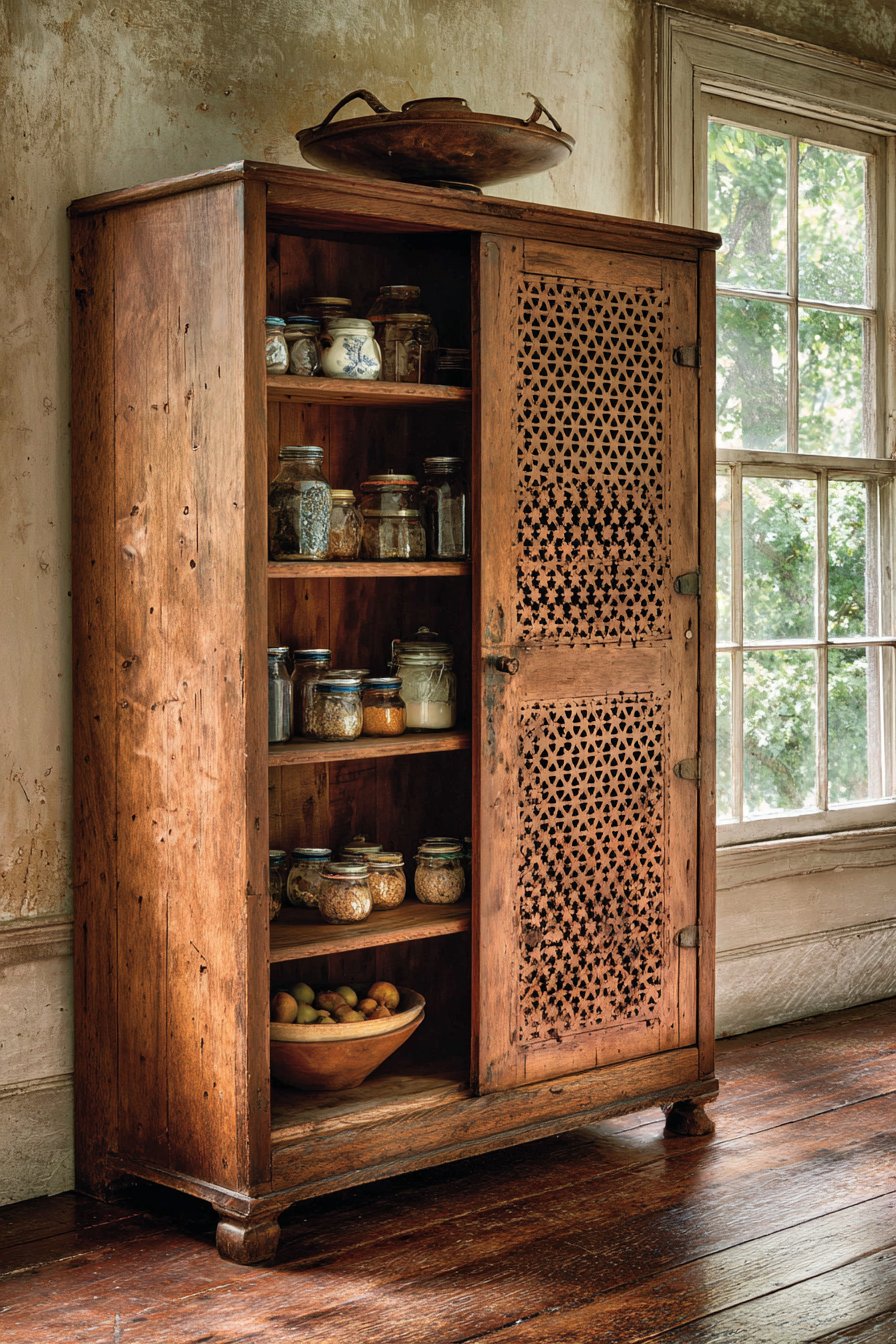
Surrounding walls finished in historic limewash show subtle texture variations. Natural settling cracks add to the authentic aged appearance. A vintage pendant light with brass fixture provides illumination. Natural window light creates gentle highlights on punched tin panels.
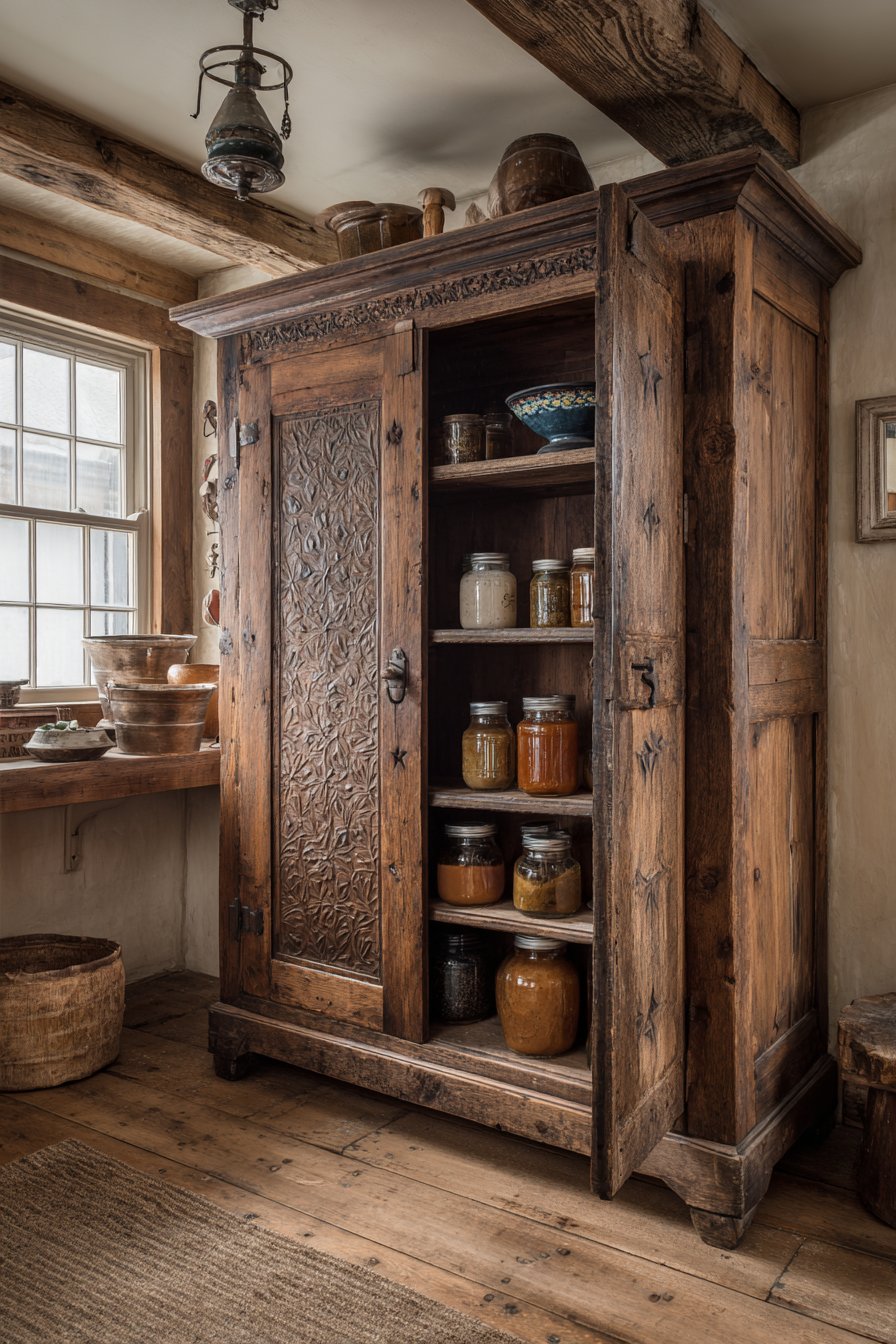
Jelly cupboards served specific storage purposes in early American kitchens. The pierced tin allowed air circulation while protecting contents from pests. These specialized pieces demonstrate thoughtful design meeting practical needs. Modern appreciation recognizes both function and beauty.
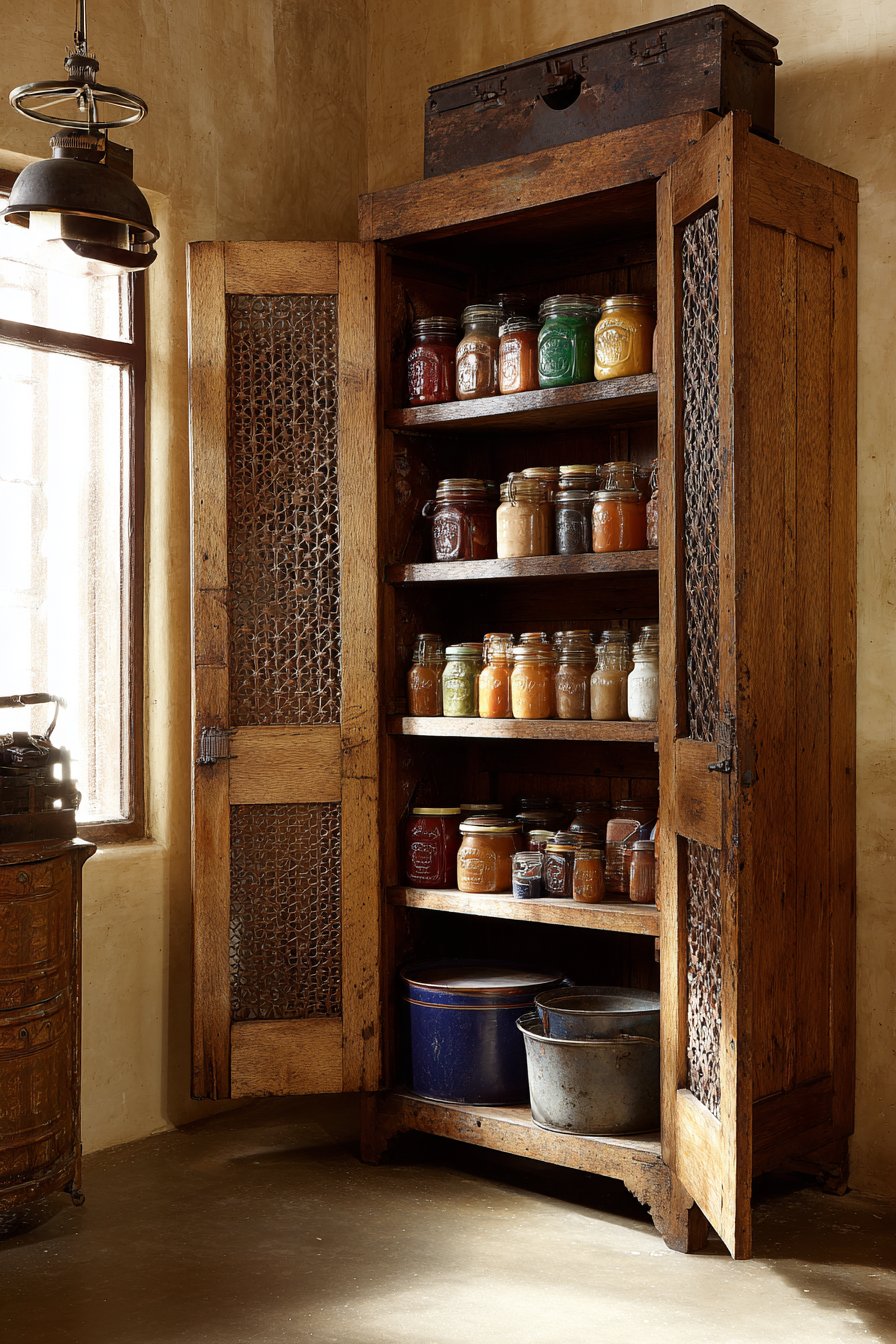
Hand-planed walnut surfaces show individual craftsman’s tool marks. These subtle variations prove genuine handwork versus machine production. The rich brown patina develops only through decades of exposure. Artificial aging techniques cannot replicate this authentic character.
Key Design Tips:
- Preserve pierced tin panels with original star and heart motifs
- Maintain hand-planed surfaces showing visible tool marks
- Display cobalt-decorated crocks for color and historical appeal
- Use historic limewash on walls for authentic texture
- Position lighting to highlight punched tin panel dimensions
- Allow natural patina at edges to remain as age documentation
16. Industrial Factory Shelving
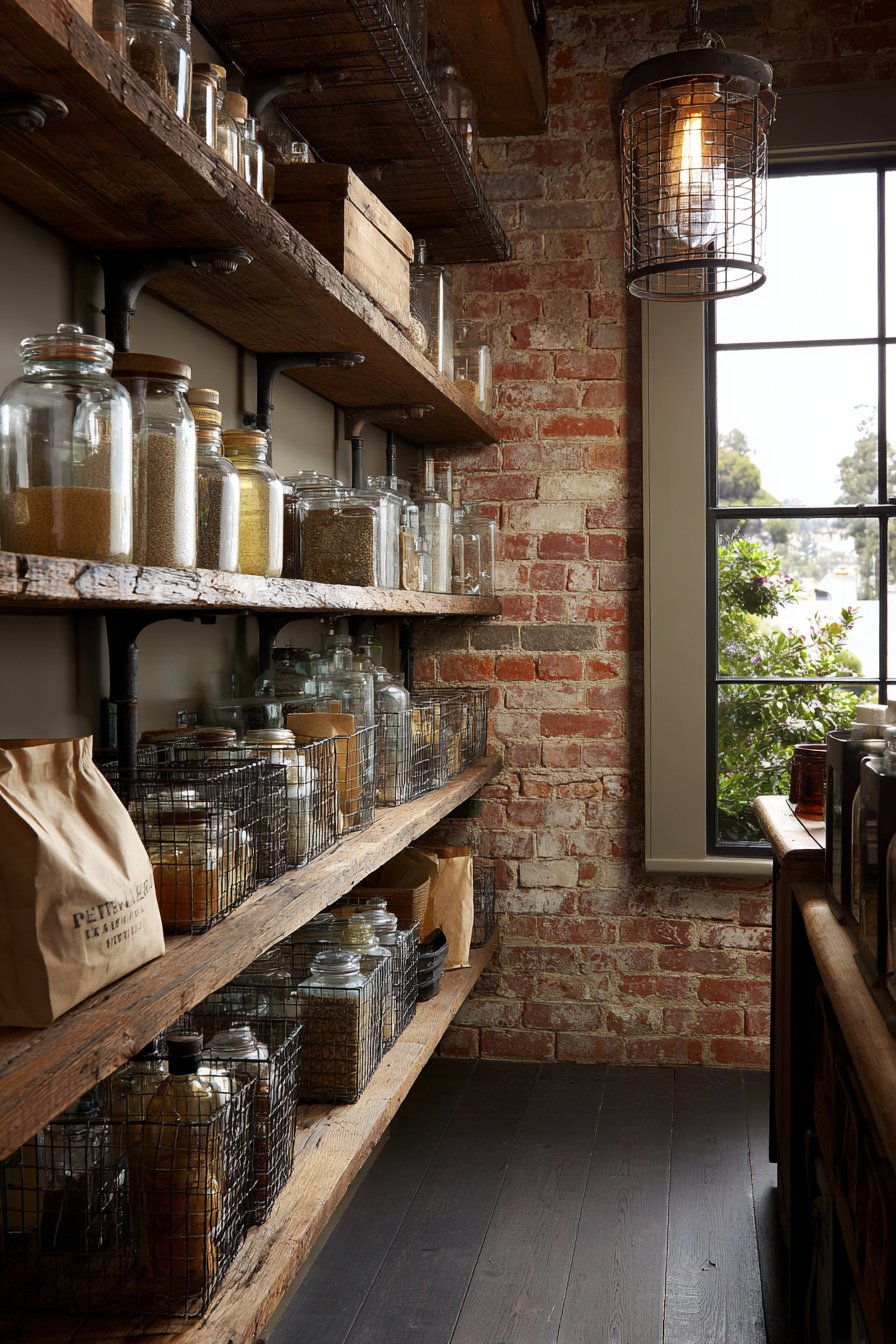
Salvaged factory shelving on cast iron brackets shows original industrial paint. Natural rust bleeding through adds an authentic aged character. Thick wooden shelves display saw marks and honest wear. Vintage glass laboratory jars and embossed metal canisters are organized across levels.
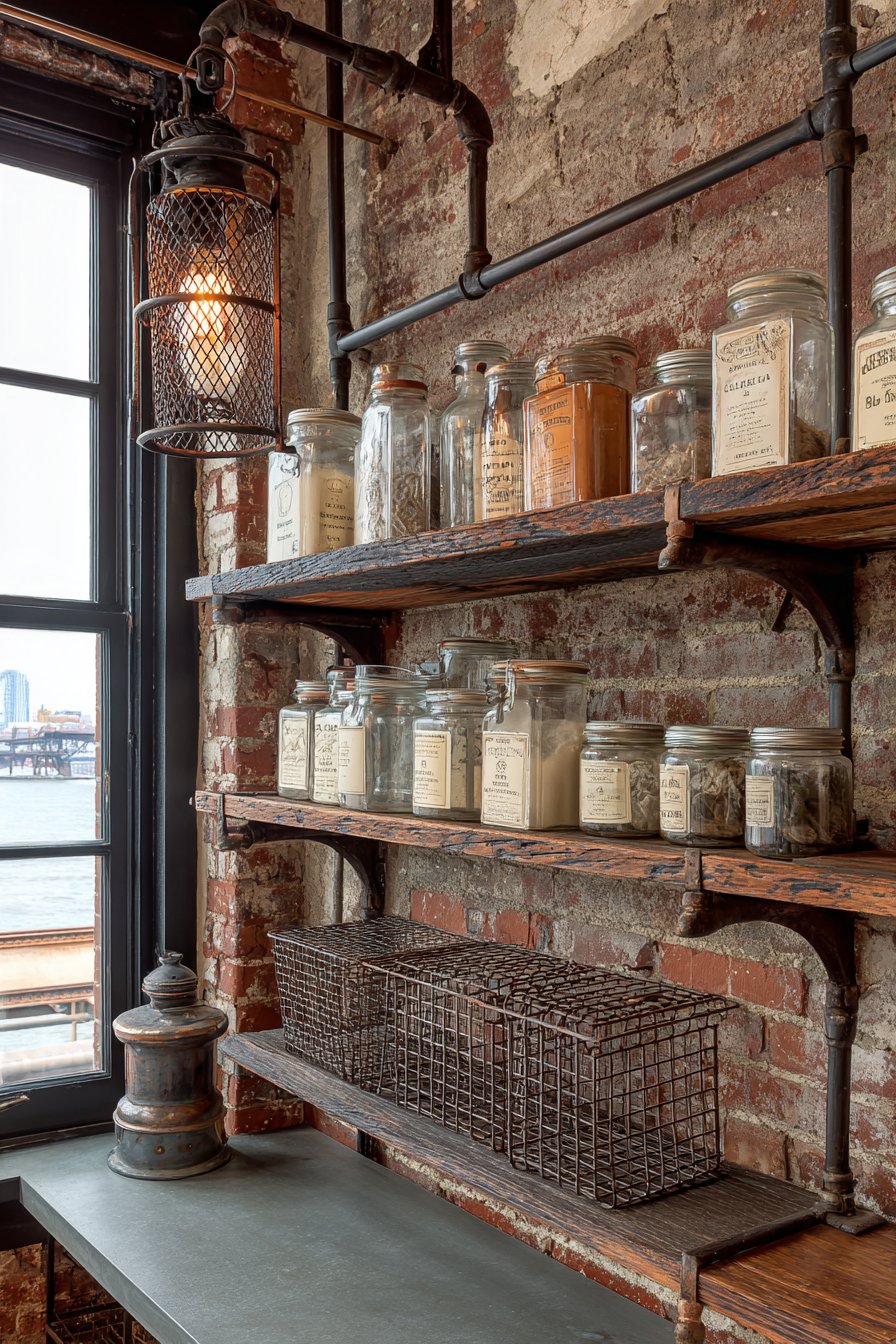
Exposed brick walls reveal original mortar with lime deposits. Minor spalling adds to the authentic industrial aesthetic. A vintage industrial light fixture with porcelain socket provides ambient lighting. Natural light from tall windows highlights dimensional industrial textures.
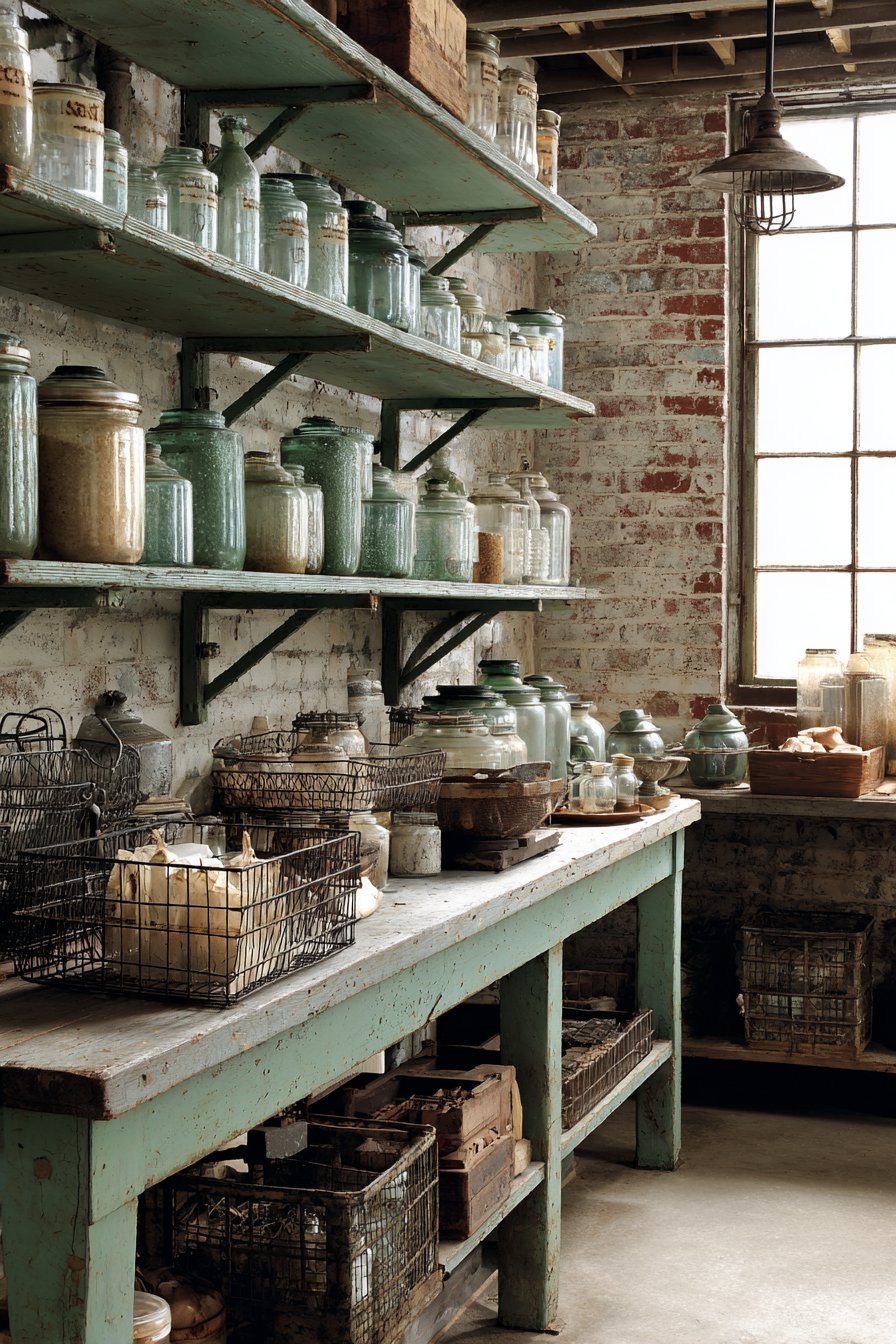
Factory shelving represents utilitarian design meeting heavy-duty storage needs. The robust construction ensures decades of reliable service. Repurposing industrial elements for residential use creates a unique character. The combination of strength and simplicity appeals to modern sensibilities.
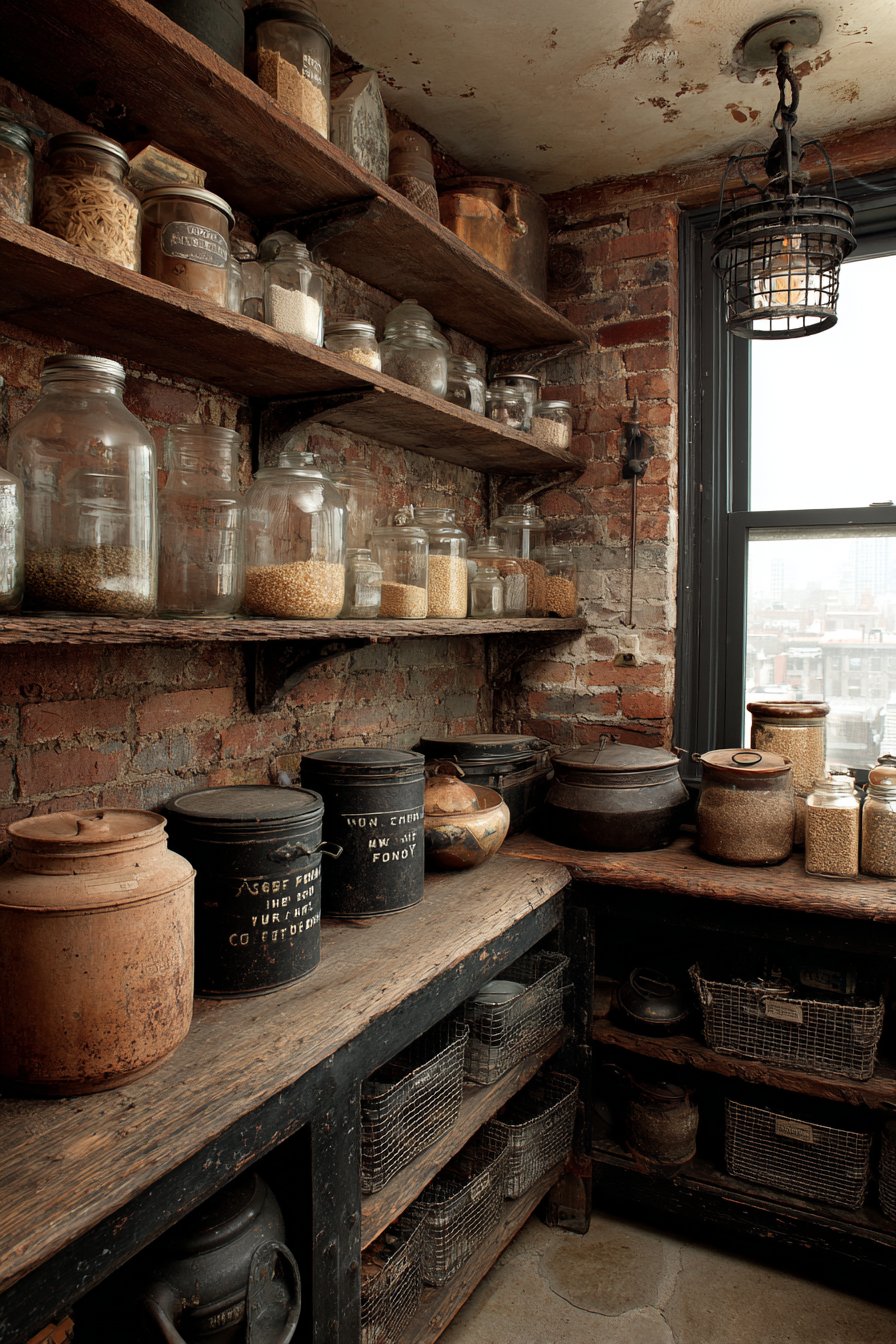
Cast iron brackets demonstrate industrial-era manufacturing capabilities. These pieces supported substantial weight in factory settings. Modern residential use barely tests their structural capacity. The over-engineered quality contributes to lasting durability.
Key Design Tips:
- Source factory shelving with original industrial paint layers
- Preserve natural rust bleeding as an authentic aging feature
- Use thick wooden shelves showing saw marks and wear
- Display glass laboratory jars for scientific vintage appeal
- Expose brick walls with original mortar and lime deposits
- Install industrial light fixtures with porcelain sockets
17. Antique Corner Cupboard Display
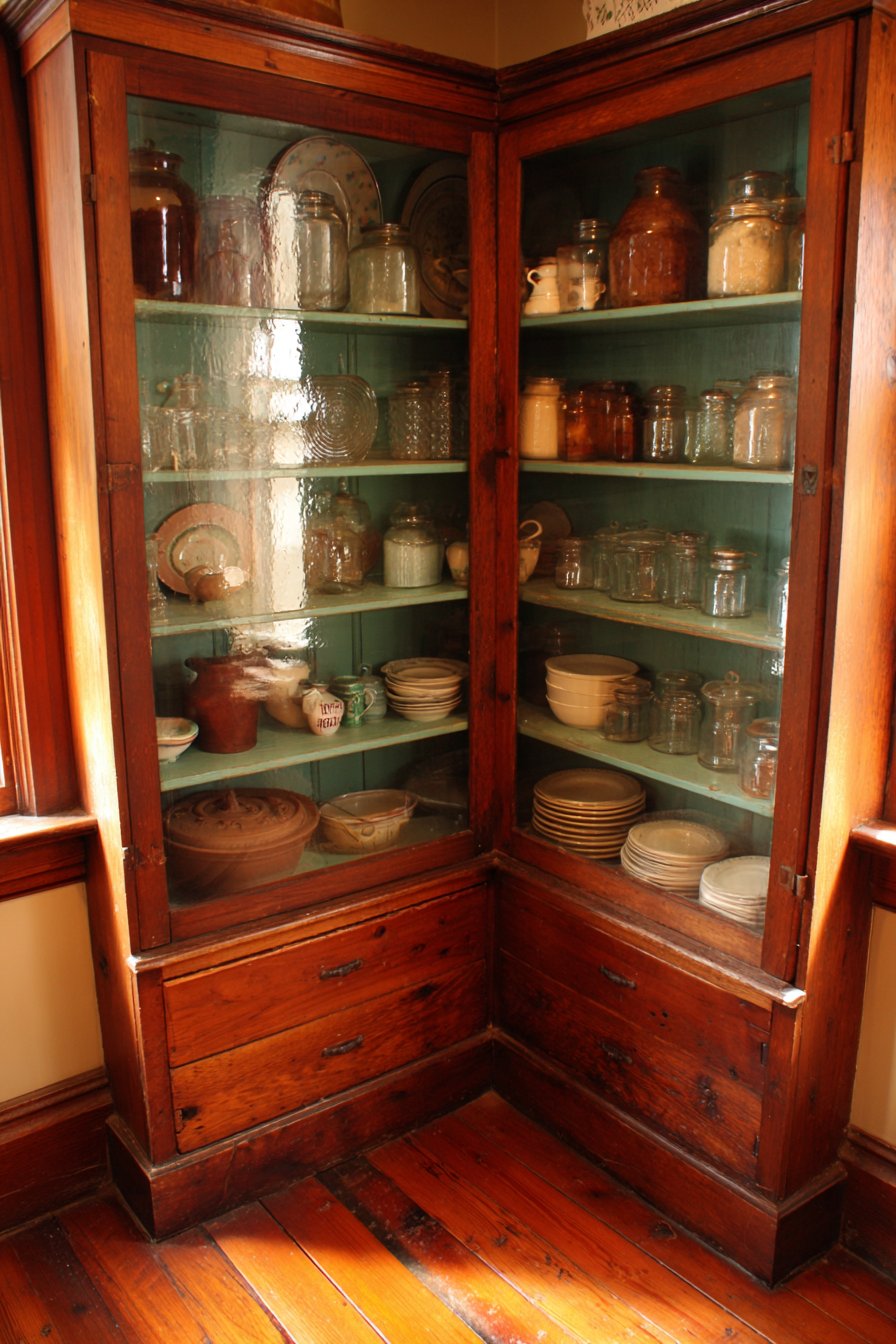
Antique corner cupboard features original glass doors with hand-blown panes. Natural imperfections and waviness in glass confirm period craftsmanship. Cherry wood construction displays deep red-brown patina from shellac finish. Fine crazing patterns in the finish add authentic aged character.
Interior shelves painted in historic blue-green hold vintage transferware plates. Antique glass jars and period ceramic containers complete the display. Original butterfly hinges show natural brass patina. Hardwood flooring displays natural wear patterns and color variations.
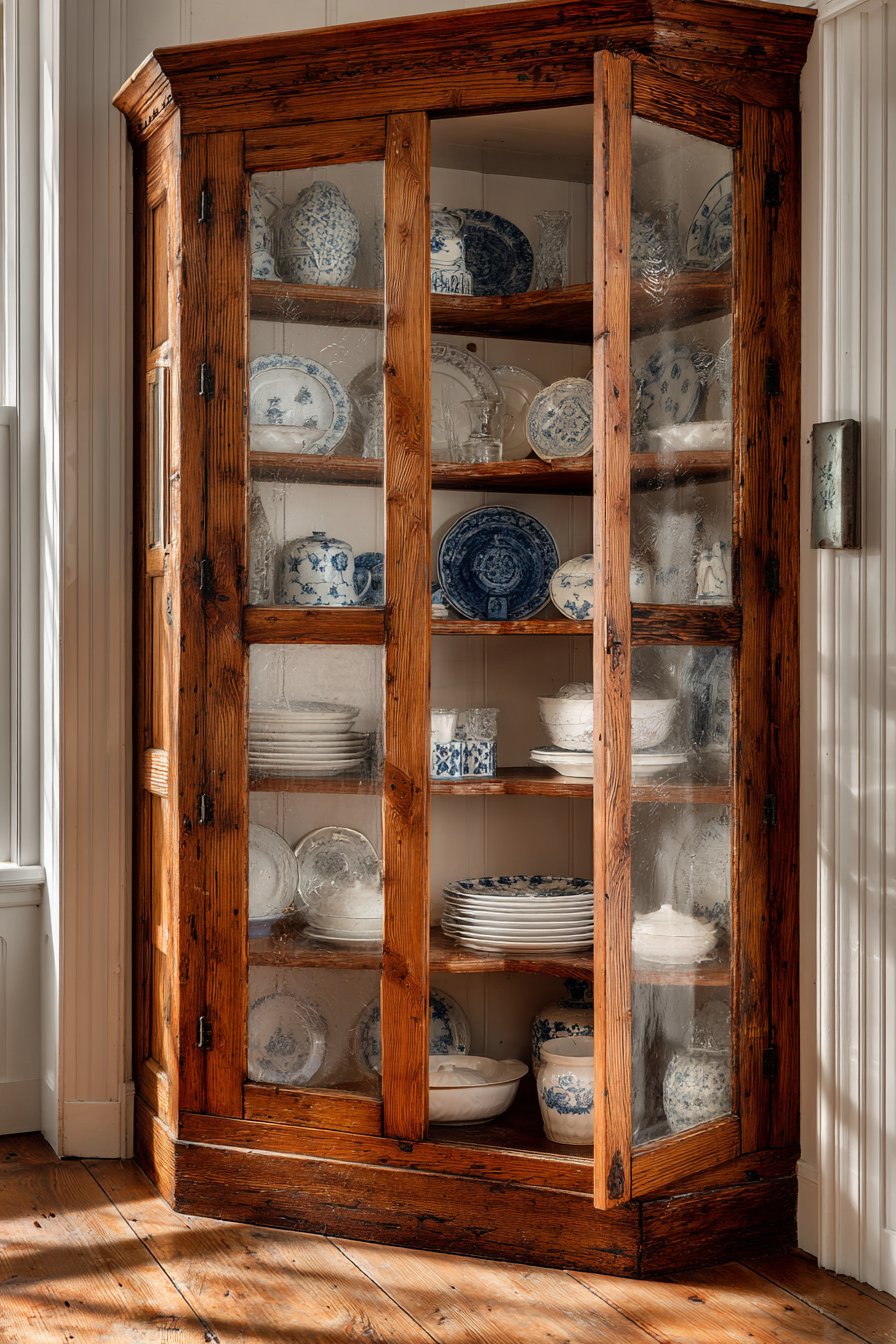
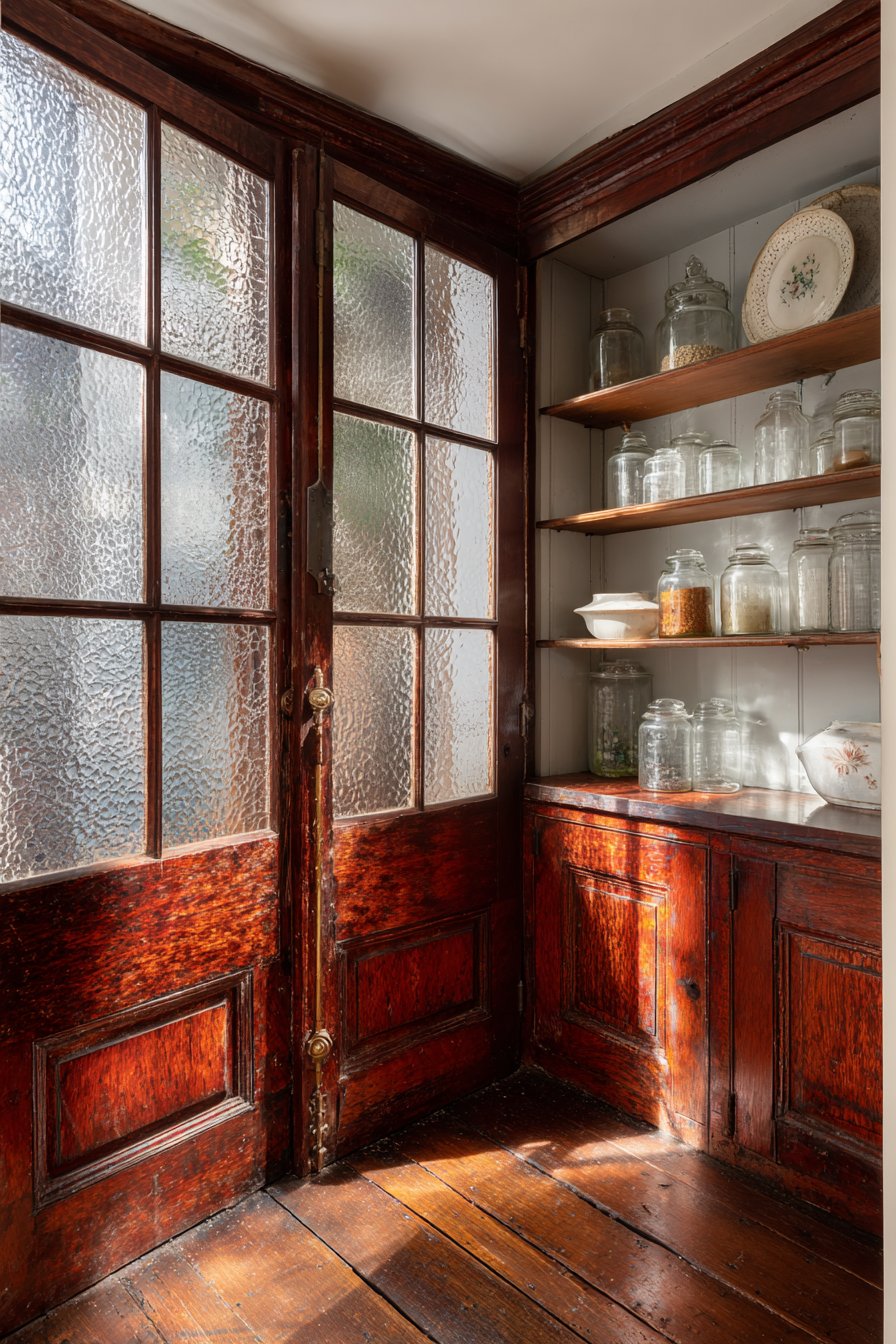
Soft natural light filtering through wavy glass creates gentle distortions. These optical effects add living quality to static displays. The hand-blown glass interacts with light differently than modern alternatives. This subtle difference contributes significantly to vintage atmosphere.
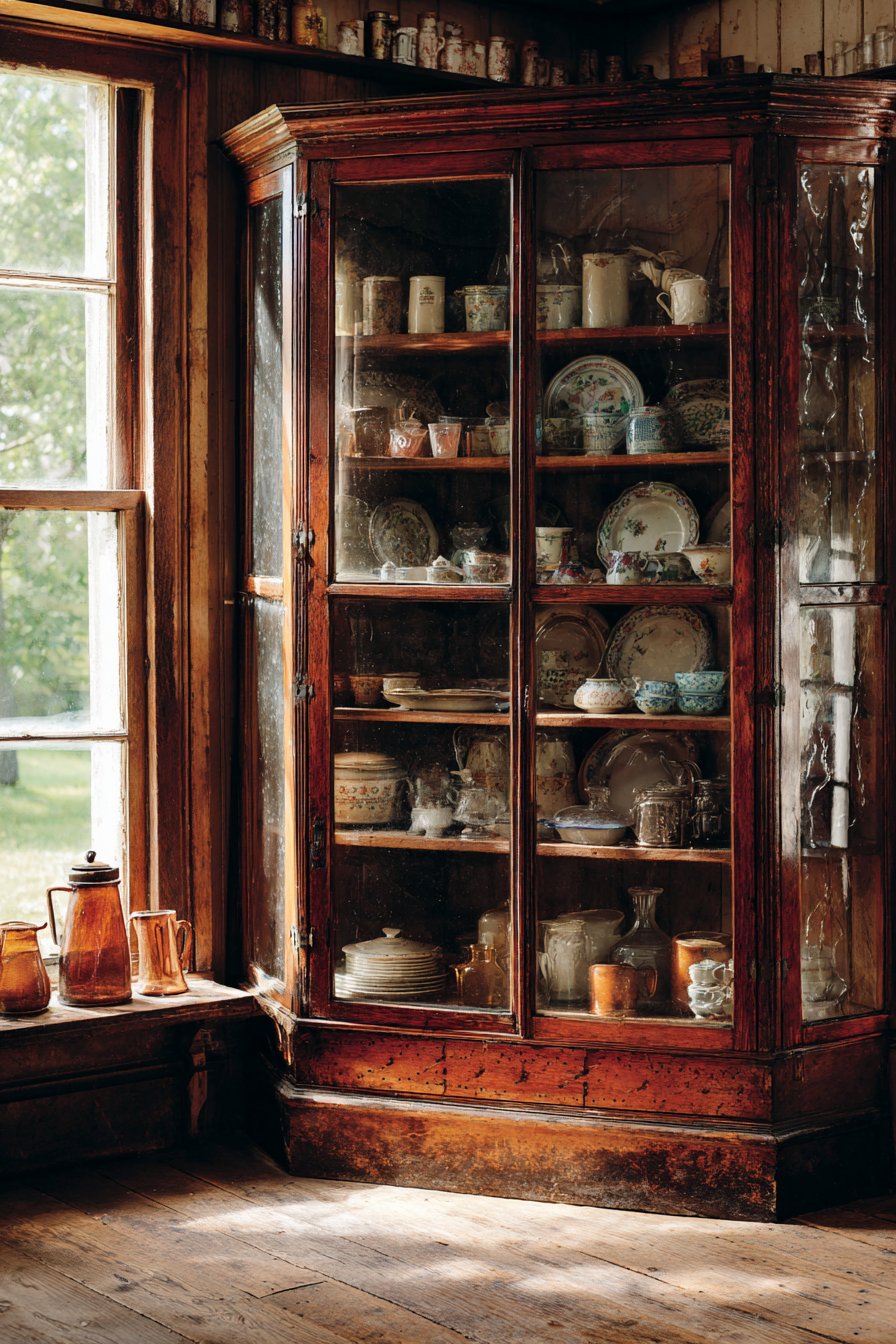
Corner cupboards maximized storage in historically smaller homes. The triangular footprint utilized otherwise wasted wall space. Original examples demonstrate both practicality and fine craftsmanship. Modern appreciation recognizes their dual nature as storage and art.
Key Design Tips:
- Preserve hand-blown glass panes with natural imperfections
- Maintain shellac finish with authentic crazing patterns
- Paint interior shelves in historic blue-green tones
- Display vintage transferware for color and pattern interest
- Keep original butterfly hinges with natural brass patina
- Allow floor wear patterns to remain as historical markers
18. Antique Bread Box Collection Display
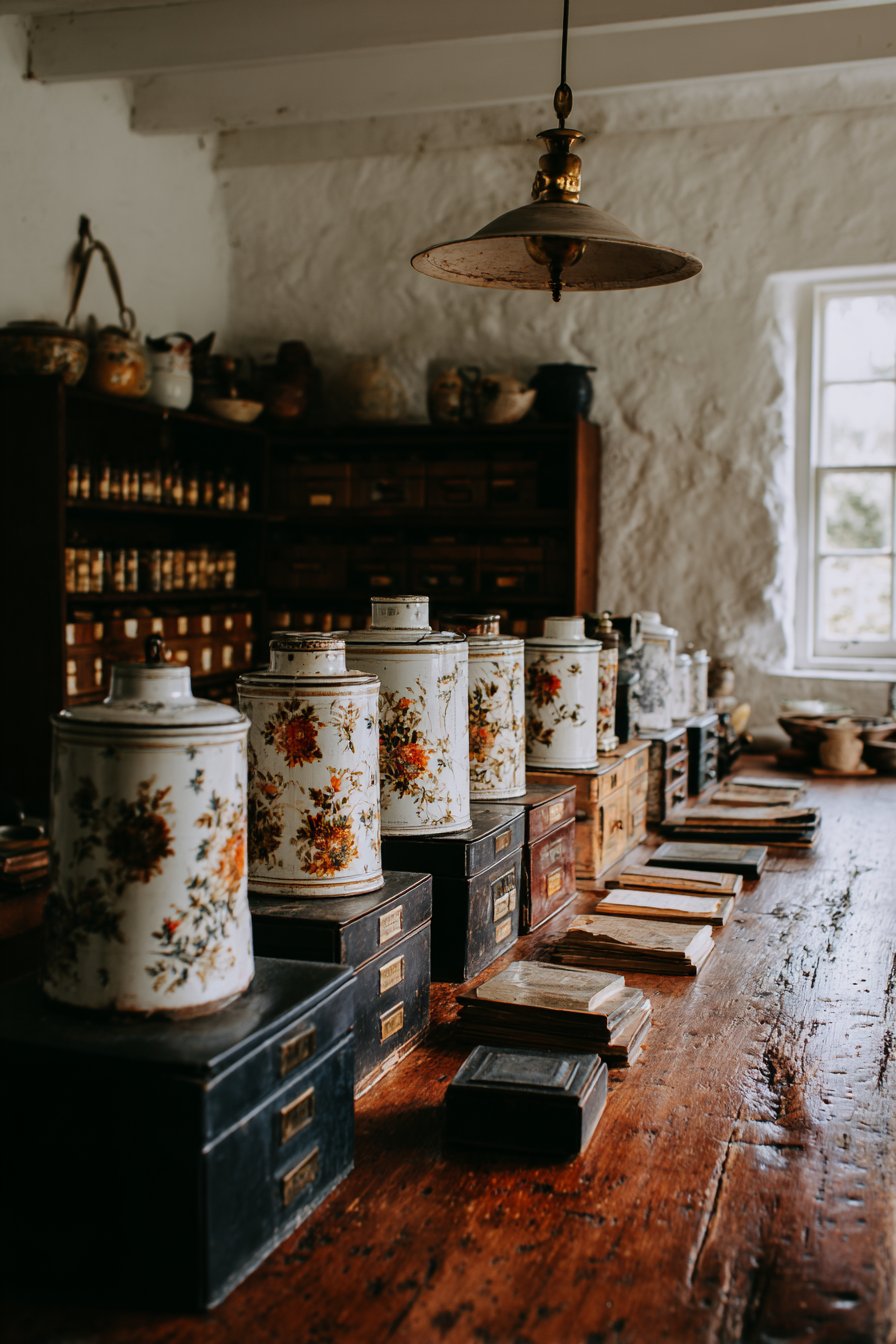
Collections of antique bread boxes and metal storage containers are arranged on open shelving. Salvaged heart pine shelving shows rich amber tones and tight grain. Vintage enamelware canisters display hand-painted floral motifs with appropriate chipping. Antique wooden spice boxes feature brass label holders showing tarnish.
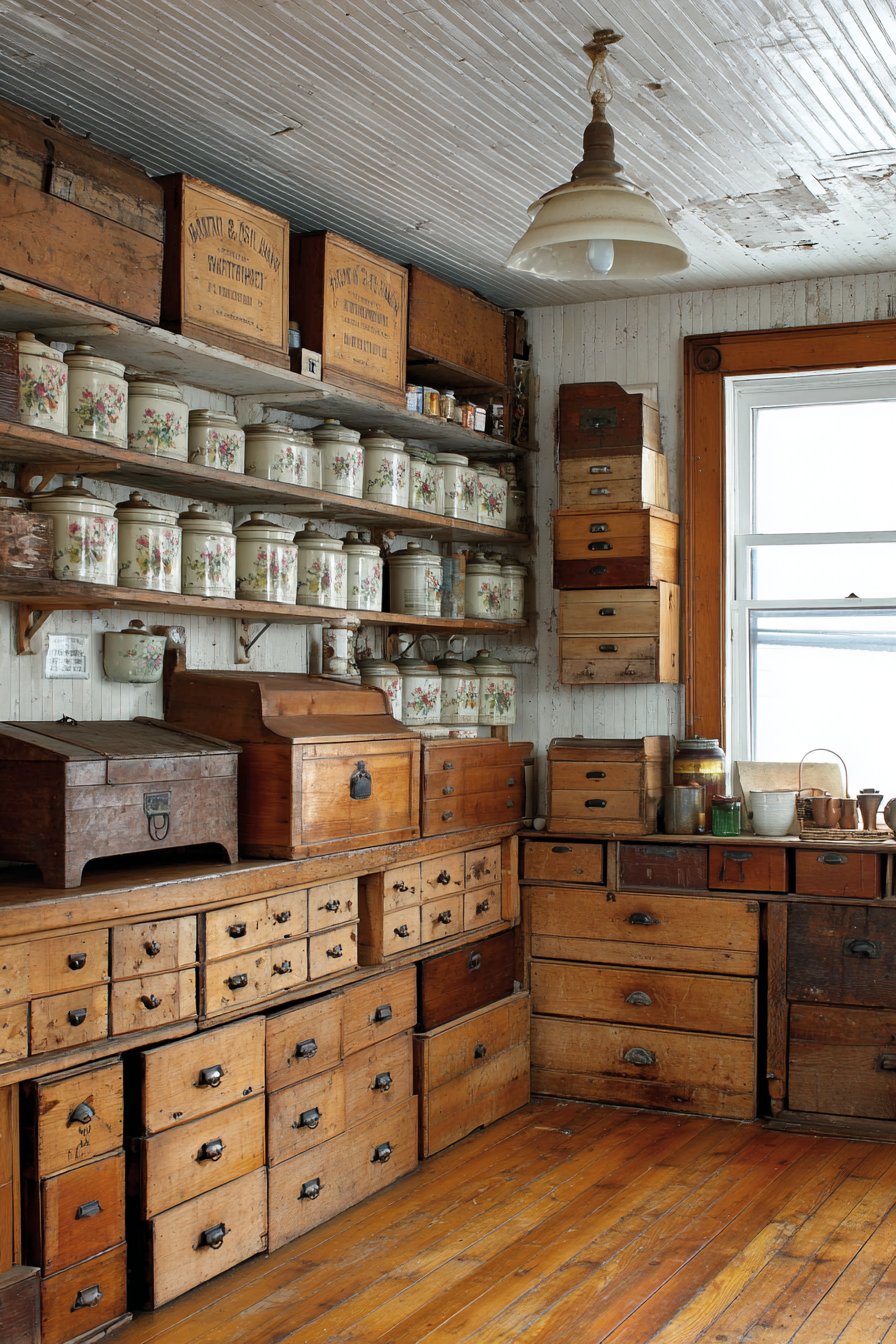
Walls covered in original plaster reveal visible trowel marks. Subtle color variations add depth and visual interest. A vintage pendant light with milk glass shade provides illumination. Natural window light creates depth across varied textures.
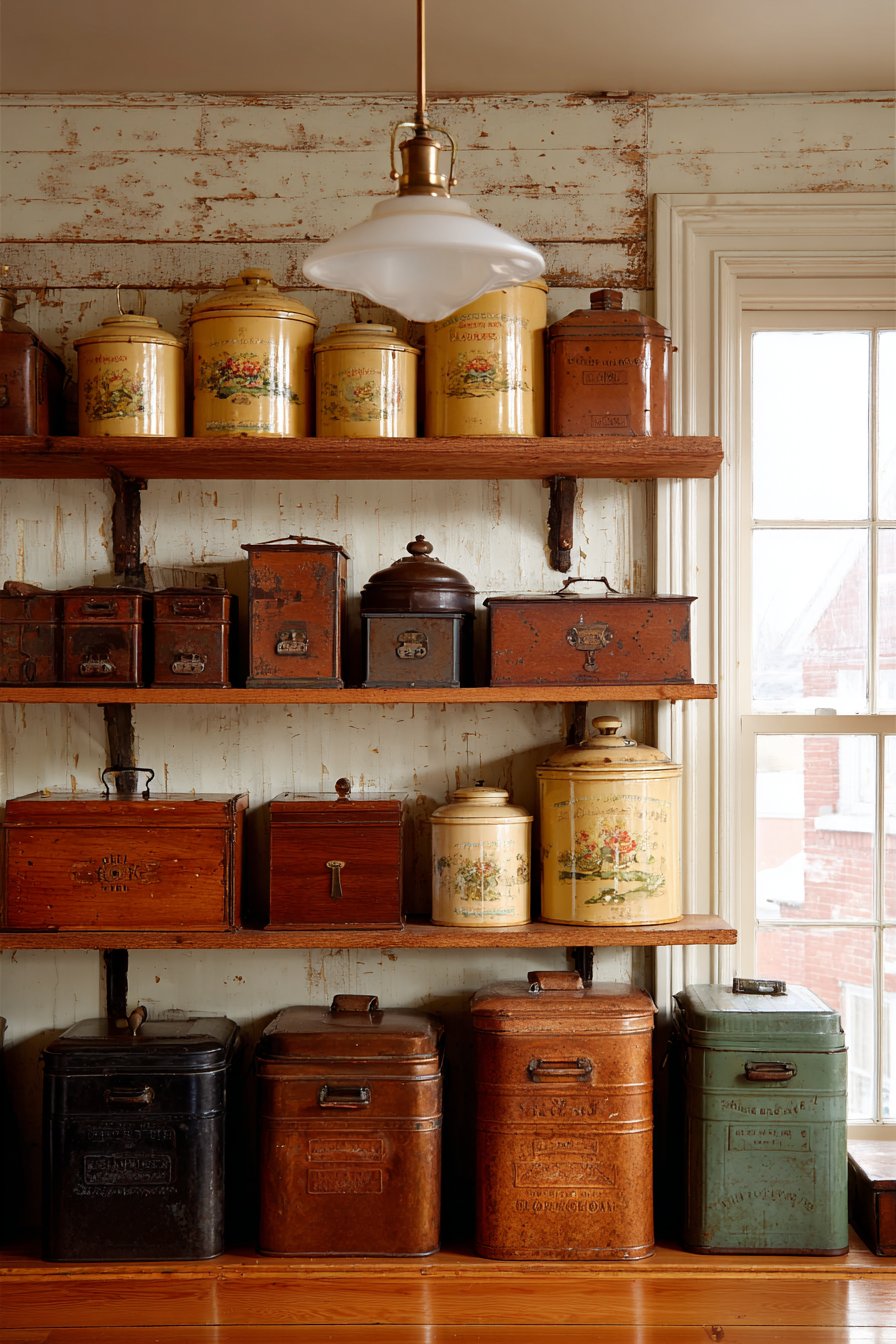
Heart pine represents premium flooring and millwork from old-growth forests. The tight grain pattern and amber coloring distinguish it from modern pine. Salvaged pieces carry both beauty and sustainability benefits. Their use honors trees that grew for centuries.
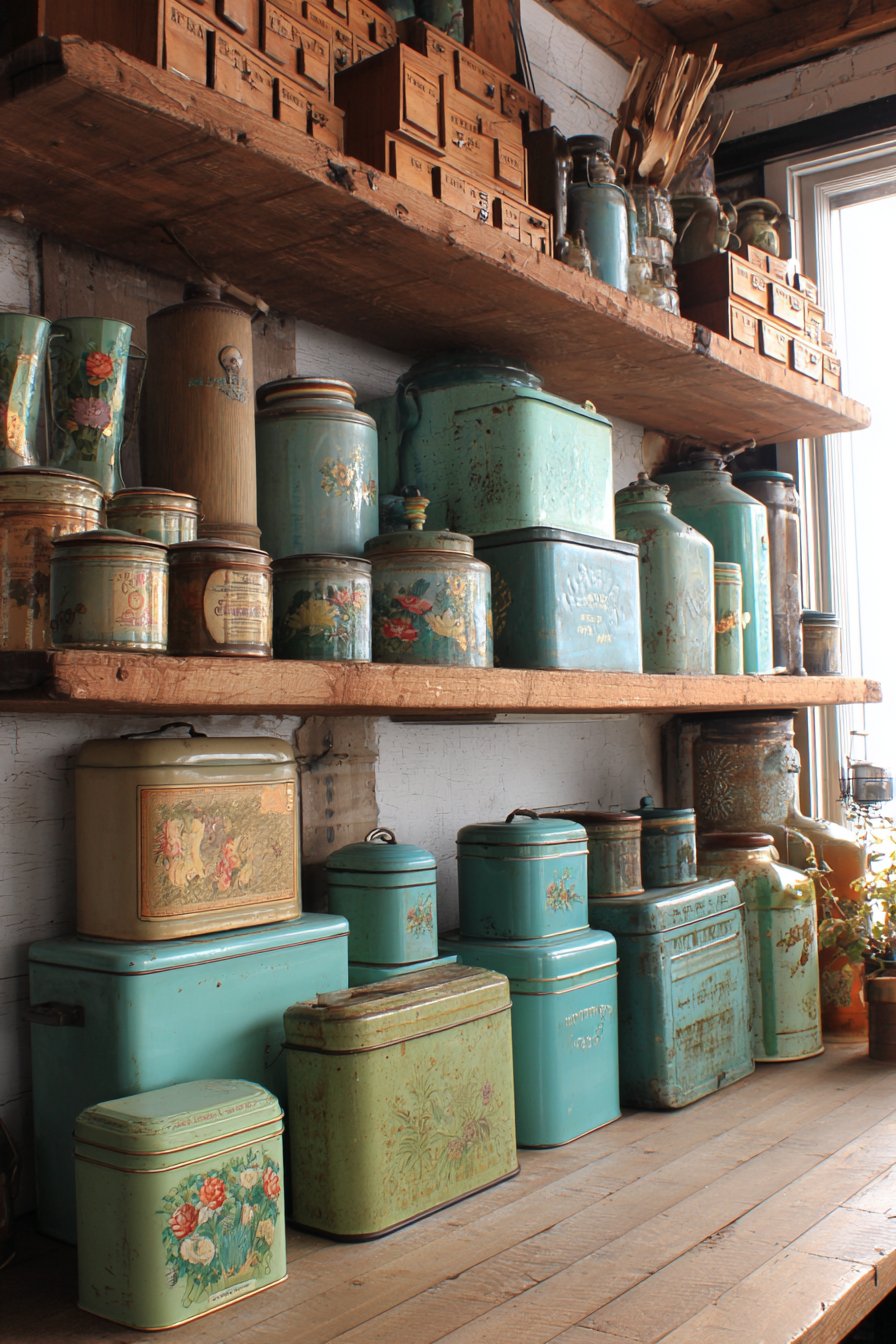
Enamelware with hand-painted decoration demonstrates artisan craftsmanship. Age-related chipping proves authentic use rather than recent manufacture. These honest wear patterns add charm and character. Pristine condition would actually reduce vintage appeal.
Key Design Tips:
- Display bread box collections grouped by size or color
- Use salvaged heart pine for shelving with rich amber tones
- Embrace age-related chipping on enamelware as authentic character
- Source wooden spice boxes with original brass label holders
- Preserve original plaster with visible trowel mark texture
- Add milk glass pendant lights for soft ambient illumination
19. Comprehensive Built-In Cabinet System
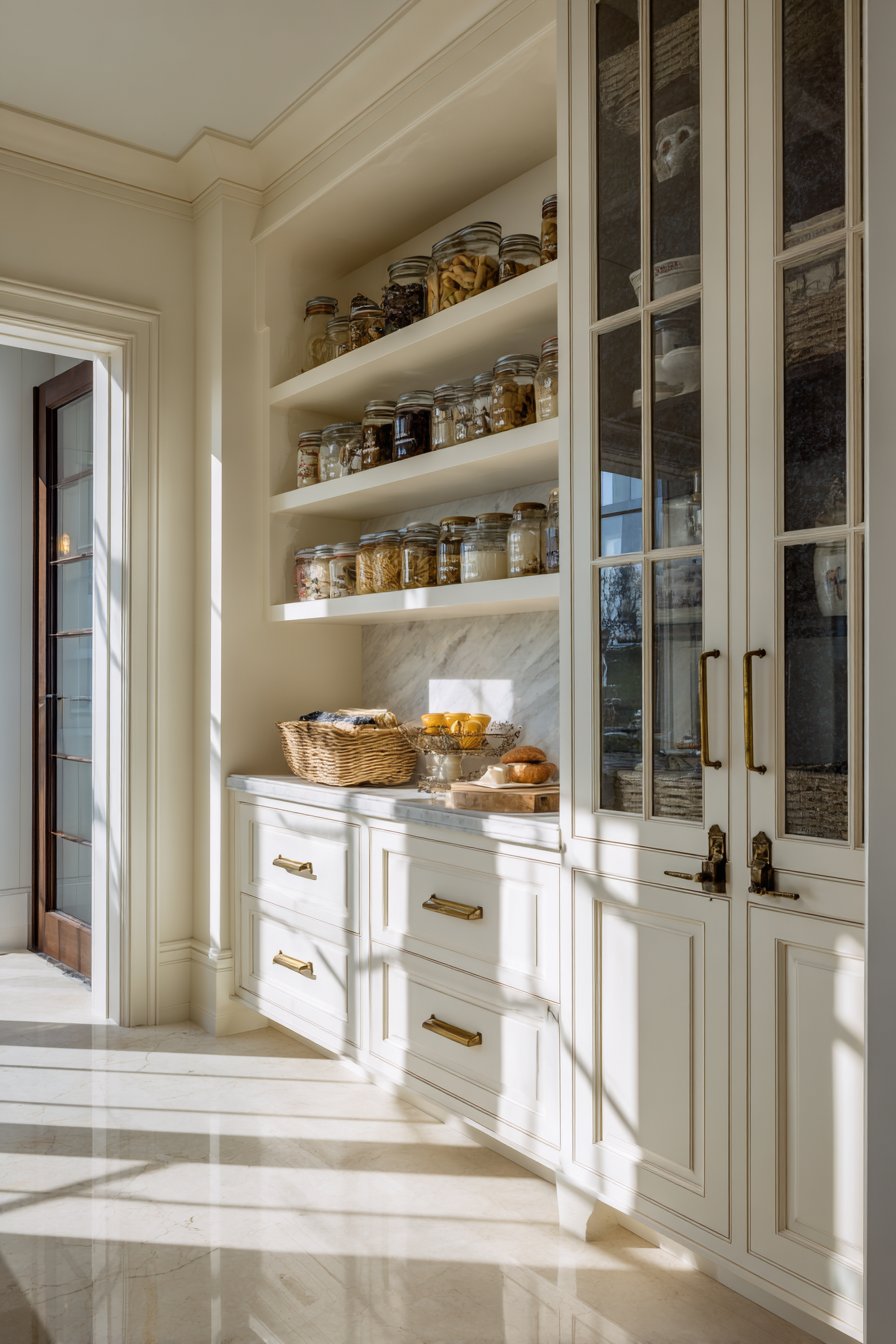
Floor-to-ceiling built-in cabinetry features mullioned glass-front doors throughout. Brass hardware shows natural patina from decades of use. Painted finish in historic cream displays subtle crazing and honest wear. Interior shelves organize vintage Mason jars, stoneware crocks, and tin containers.
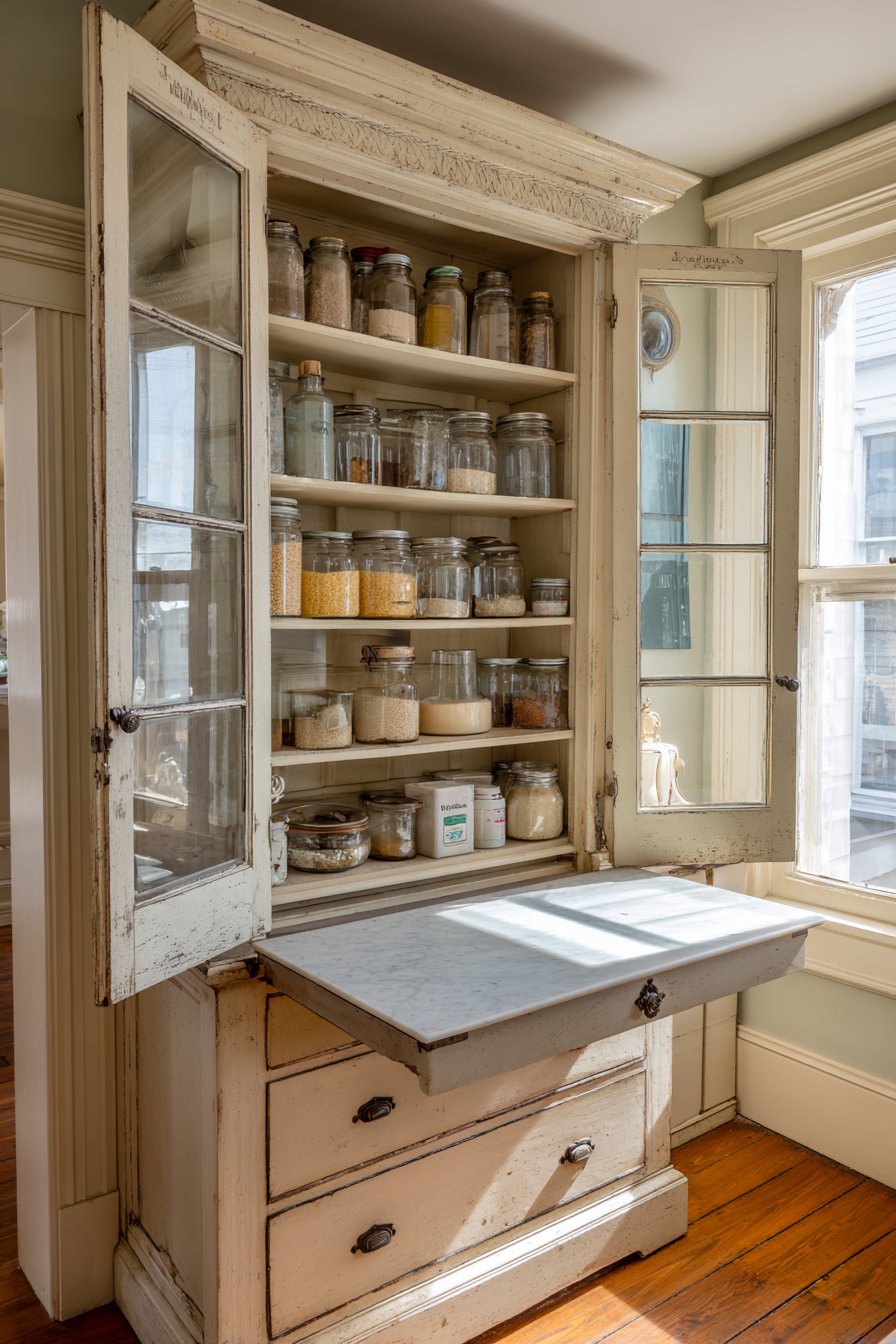
Pull-out work surface of marble shows natural veining with use staining. Original brass latches with porcelain knobs add authentic detail. Natural light from nearby windows creates soft shadows across doors. The comprehensive system provides exceptional storage density.
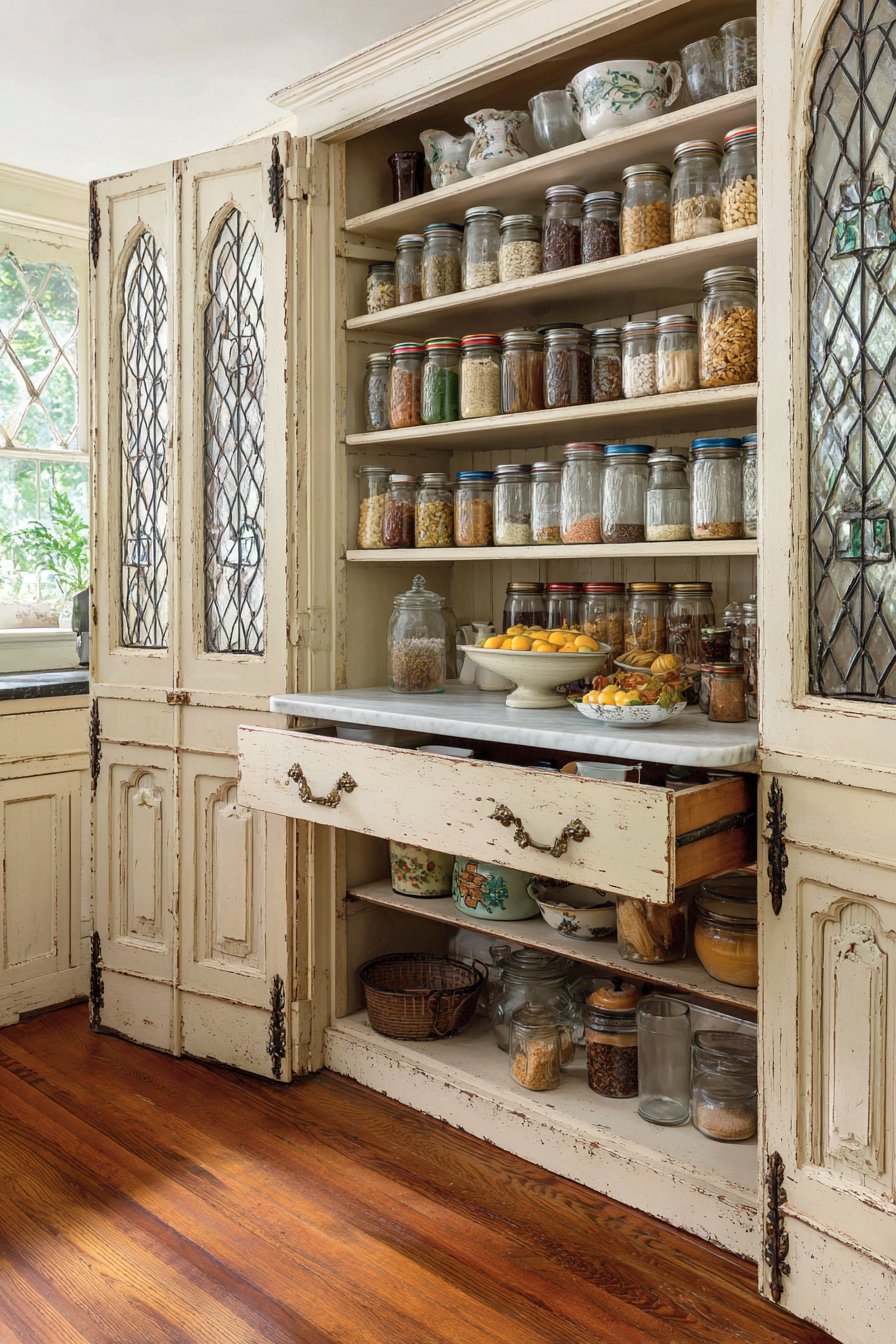
Built-in cabinetry systems represent a significant architectural investment. Original installations demonstrate commitment to quality and permanence. The integrated approach maximizes every inch of available space. Modern storage rarely achieves this level of thoughtful design.
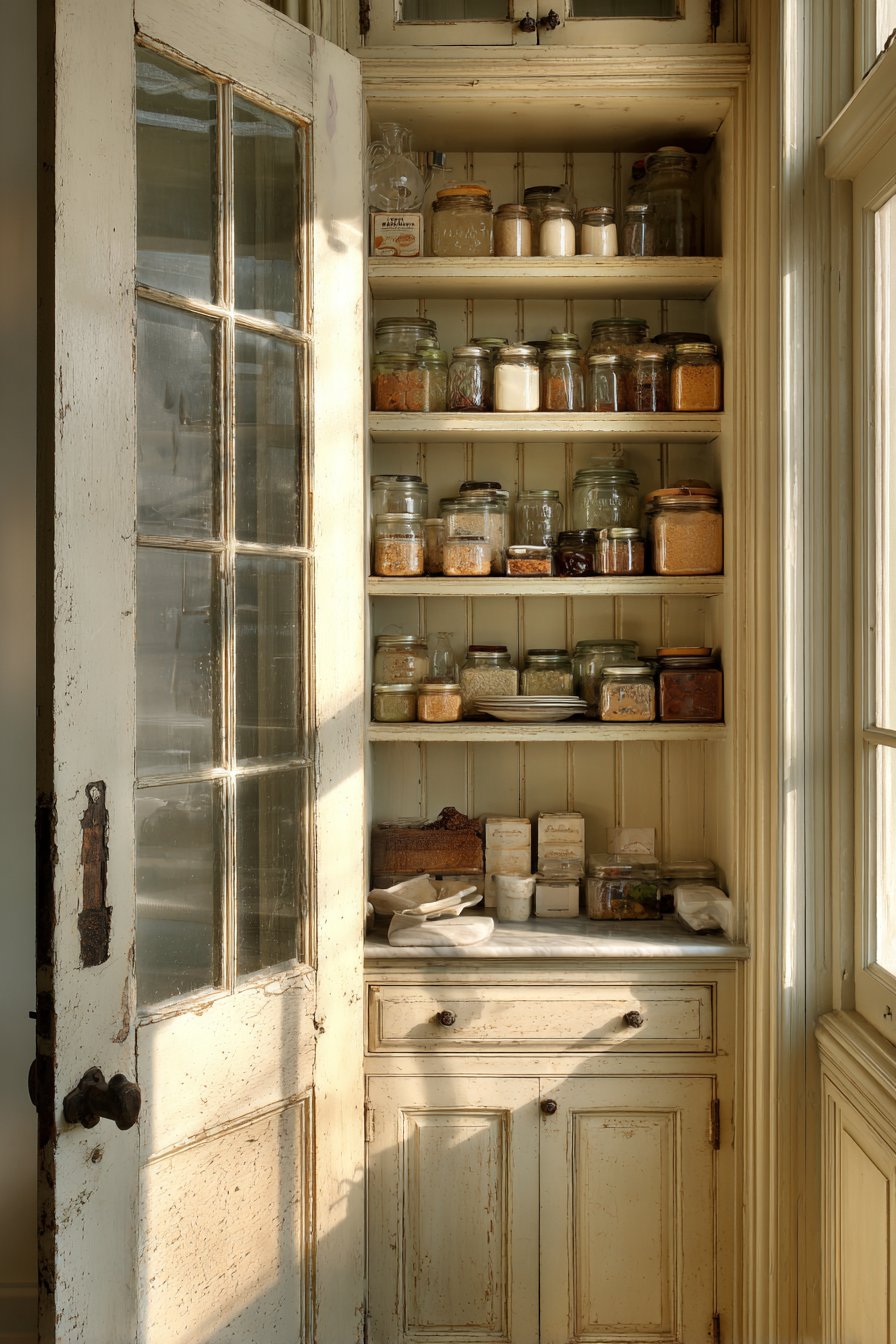
Marble work surfaces withstand decades of use with grace. Natural veining ensures each piece remains unique. Honest staining from use adds character rather than diminishes value. This authentic aging tells stories of countless meal preparations.
Key Design Tips:
- Preserve original brass hardware with natural patina intact
- Maintain historic paint with subtle crazing as an age marker
- Use pull-out marble surfaces for additional work space
- Display organized collections behind mullioned glass doors
- Keep porcelain knobs with authentic wear patterns
- Position cabinetry near windows for natural shadow play
20. Antique Welsh Dresser Showcase
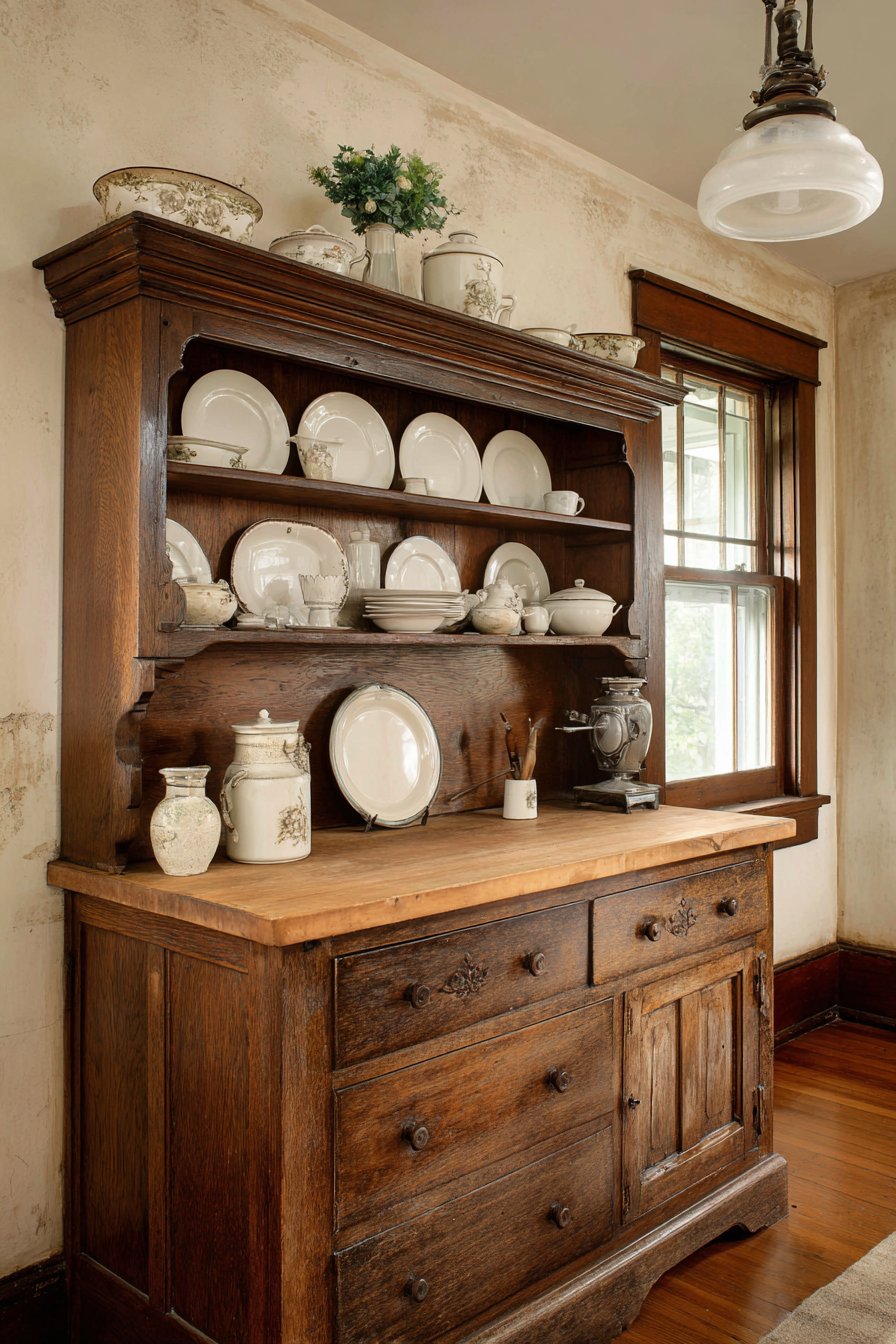
Antique Welsh dresser features plate rack displaying vintage ironstone dishes. Lower cabinets with original wooden knobs show natural wear patterns. Thick butcher block work surface displays honest knife marks and patina. Quarter-sawn oak construction glows with an aged finish and natural darkening.
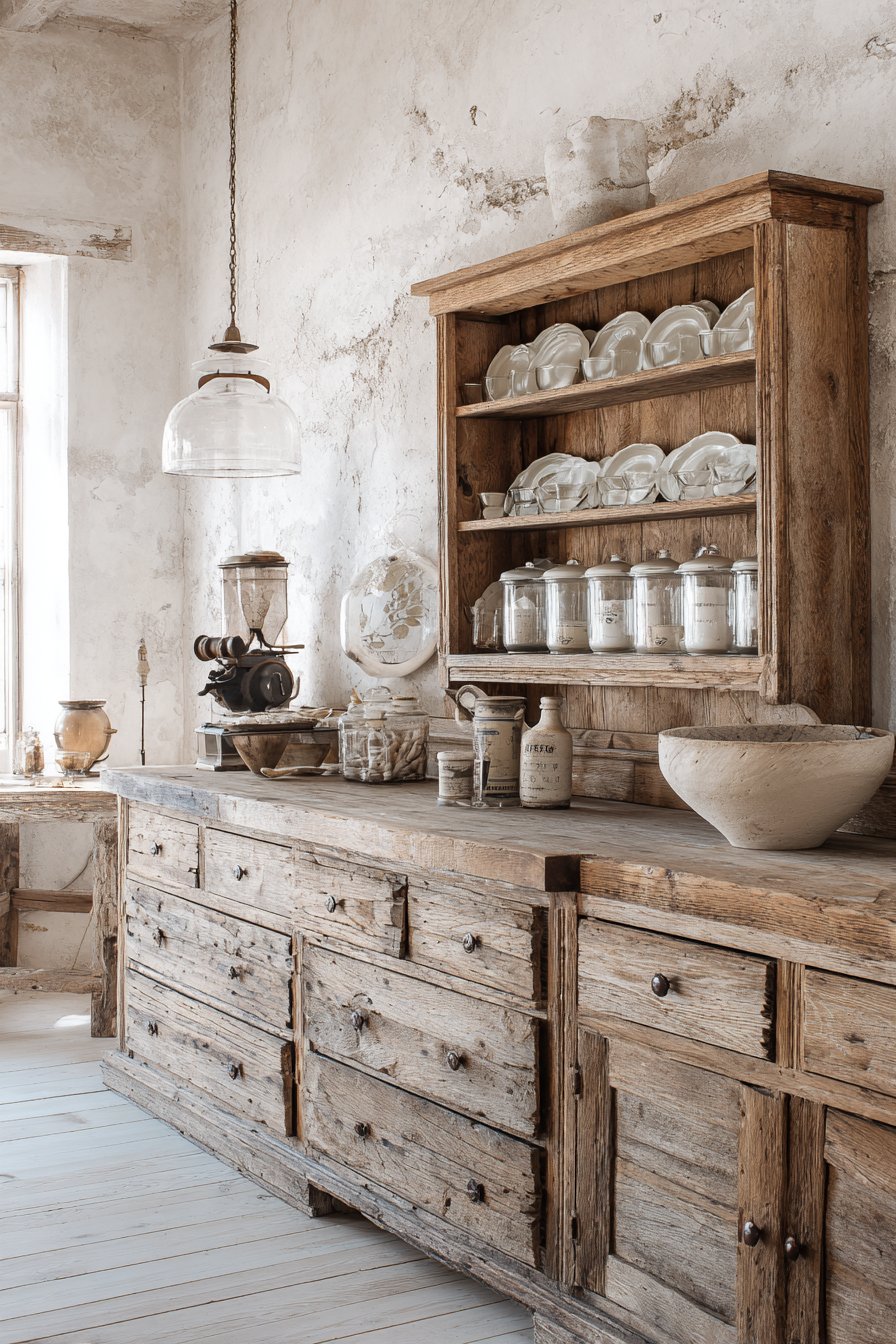
Open shelving holds vintage canisters, antique coffee grinders, and enamelware pieces. Surrounding walls finished in historic plaster show subtle texture. A vintage pendant light with a schoolhouse glass shade provides ambient lighting. Natural daylight highlights dimensional wood grain and layered textures.
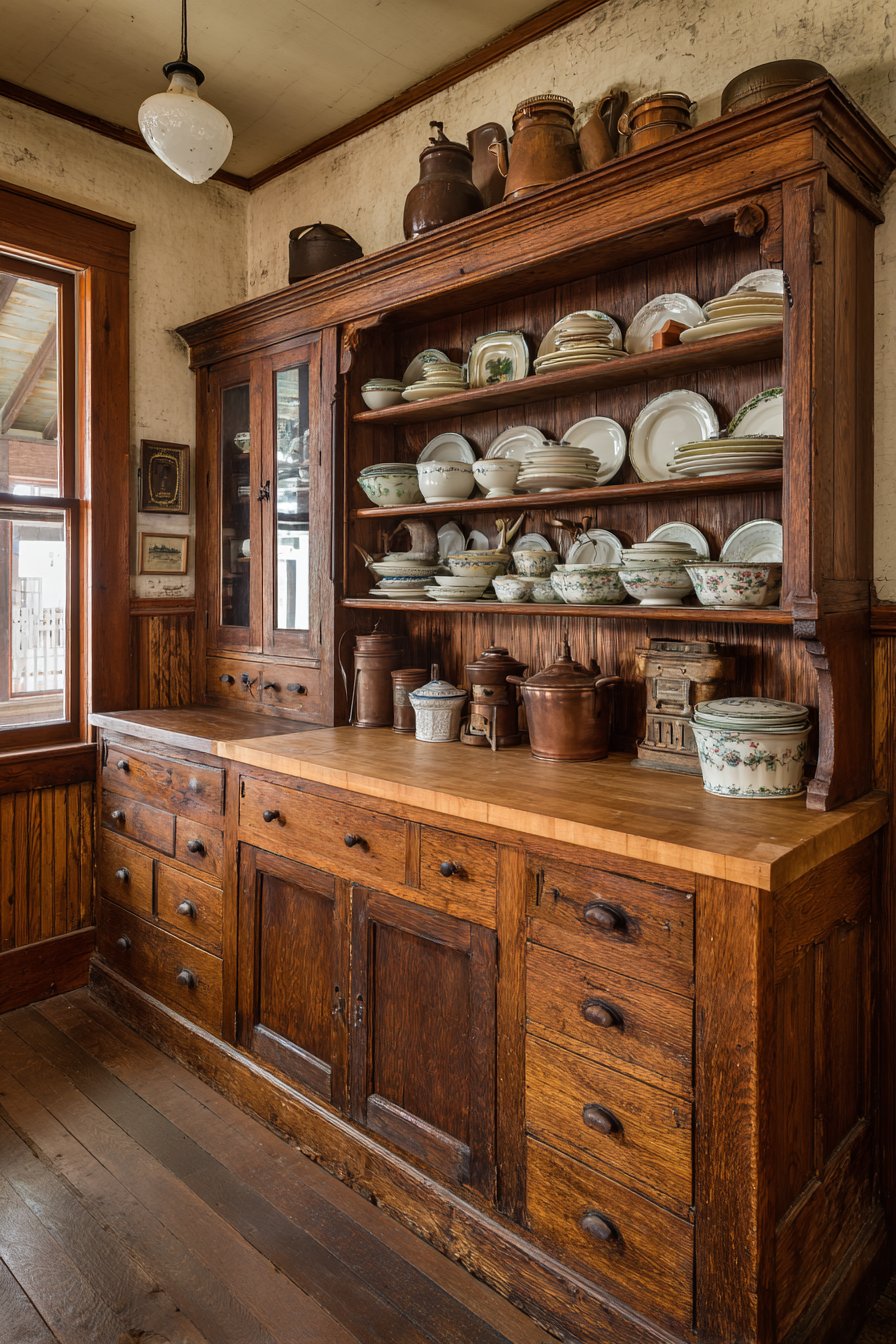
Welsh dressers represent traditional farmhouse furniture with English heritage. The combination of display and storage served practical kitchen needs. Quality oak construction ensured pieces passed through generations. Modern examples command premium prices reflecting their enduring appeal.
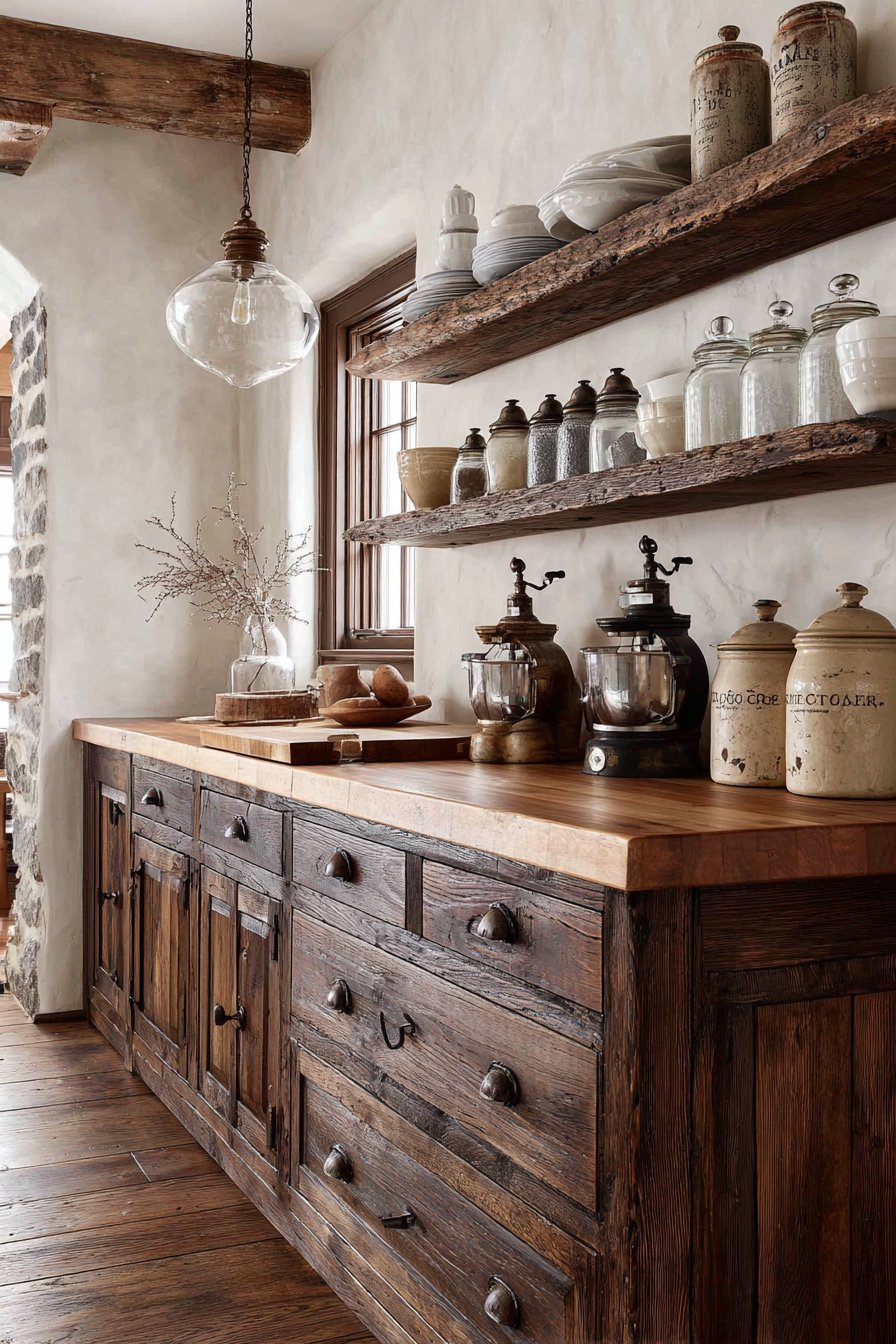
Quarter-sawn oak cutting technique produces distinctive grain patterns. This method yields superior stability and beautiful figuring. The natural darkening of oak over decades creates rich patina. New oak cannot match the warmth of genuinely aged wood.
Key Design Tips:
- Display vintage ironstone on plate rack for visual appeal
- Preserve original wooden knobs with natural wear patterns
- Use butcher block with honest knife marks as character feature
- Appreciate quarter-sawn oak grain patterns and natural darkening
- Arrange vintage canisters and enamelware by color or size
- Install schoolhouse pendant lights for authentic period lighting
Why These Vintage Pantry Designs Are the Best
These vintage pantry designs represent superior approaches to creating authentic storage spaces with enduring character. Each concept demonstrates thoughtful integration of genuine period materials and time-tested organizational principles. The designs showcase remarkable versatility across different home styles from farmhouse to Victorian to industrial aesthetics.
The incorporation of reclaimed and antique materials provides sustainability benefits while delivering unmatched visual character. Authentic barn wood, salvaged architectural elements, and genuine antique furniture possess histories that new materials cannot replicate. The natural aging processes create patina and wear patterns that artificial distressing techniques fail to achieve convincingly.
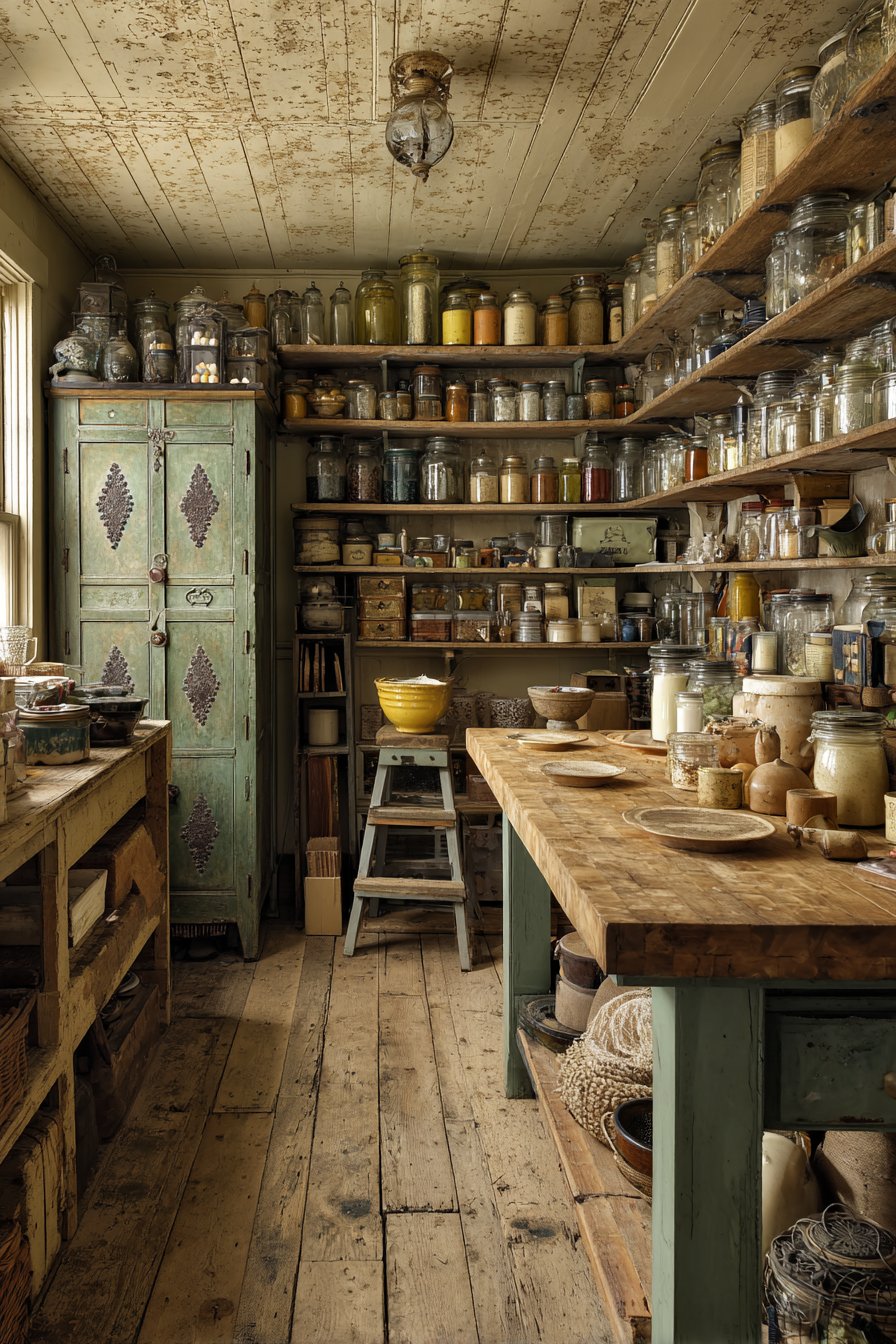
These designs excel through practical functionality combined with aesthetic beauty. Vintage storage pieces were designed during eras prioritizing durability and efficiency. Built-in systems, Hoosier cabinets, and specialized storage furniture solved real organizational challenges. Modern applications honor this practical heritage while meeting contemporary needs.
Material choices in vintage pantries emphasize natural substances that age gracefully. Solid hardwoods, natural metals like brass and iron, authentic glass, and traditional plasters develop character over time. These materials respond beautifully to daily use rather than deteriorating. The investment in quality materials yields lasting value.
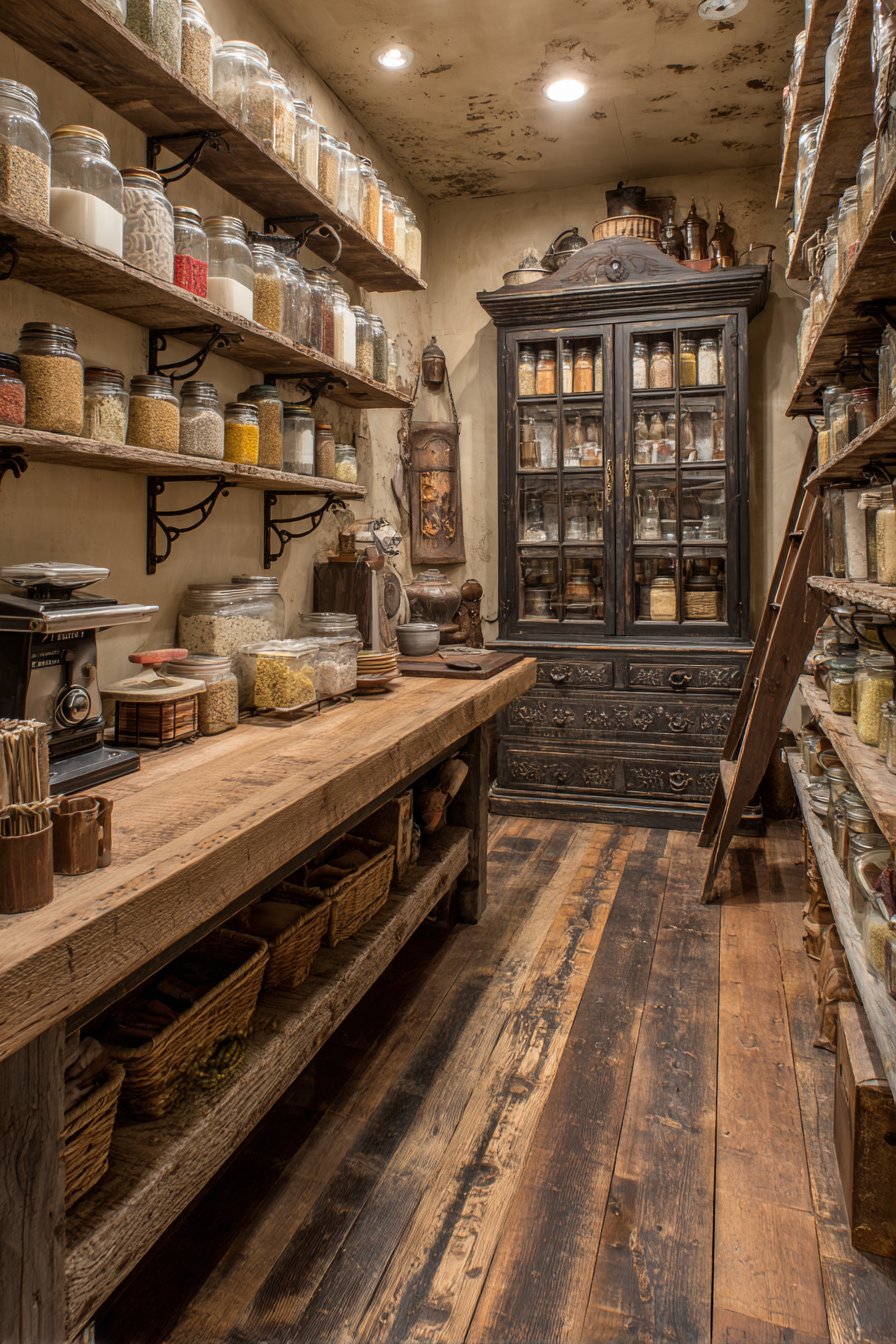
Color theory applications in vintage designs favor historic palettes and natural wood tones. Muted greens, aged creams, historic blues, and warm honey tones create cohesive schemes. These colors complement rather than compete with the rich patinas of aged materials. The overall effect feels harmonious and timeless.
Spatial considerations make vintage approaches particularly valuable for various pantry sizes. Open shelving maximizes visibility in compact spaces while built-in systems efficiently utilize every inch of larger walk-ins. The designs demonstrate that authentic character works beautifully regardless of square footage.
Conclusion
These vintage pantry designs demonstrate that authentic character emerges from genuine materials and thoughtful preservation. The key takeaways include respecting original craftsmanship, embracing honest wear patterns, and integrating antique pieces purposefully. Quality vintage elements combined with proper restoration create pantries that feel both beautiful and deeply functional.
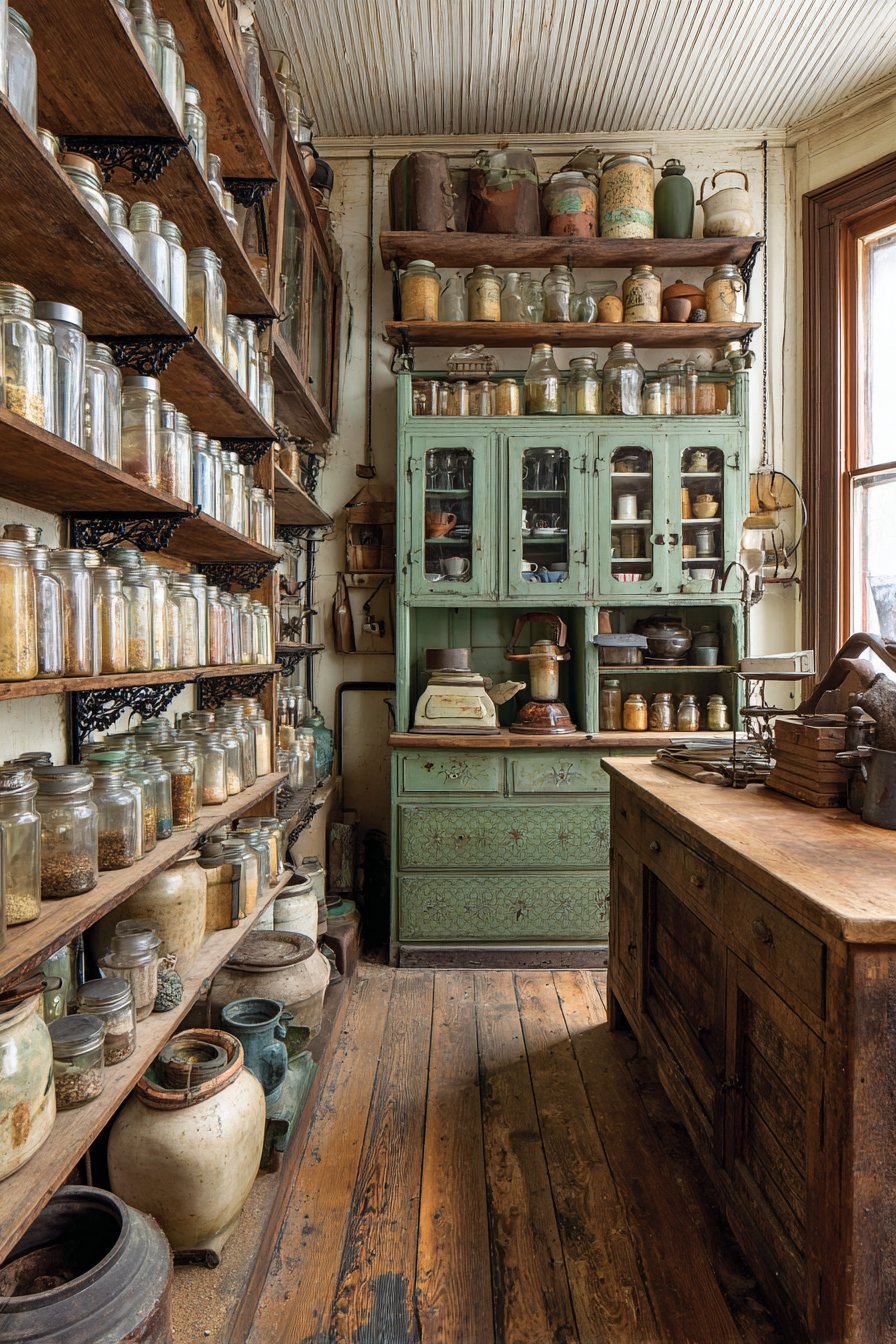
Successful vintage design balances aesthetic appeal with practical storage needs while honoring historical integrity. Start by sourcing one significant antique piece or architectural element. Build your vintage pantry gradually through careful selection of complementary materials and authentic details. Your dream vintage pantry awaits creation through patient collecting and thoughtful design planning.
