


A well-designed walk-in pantry transforms kitchen organization from chaotic to calming. This dedicated storage space offers more than shelving. It creates an efficient system that simplifies meal preparation and grocery management. The right pantry design reflects your cooking style and household needs.
Walk-in pantries have become essential features in modern home design. They provide solutions for bulk storage, small appliance organization, and specialty ingredient management. These spaces range from compact closet conversions to luxurious butler’s pantries. Each design approach offers unique benefits for different lifestyles and cooking habits.
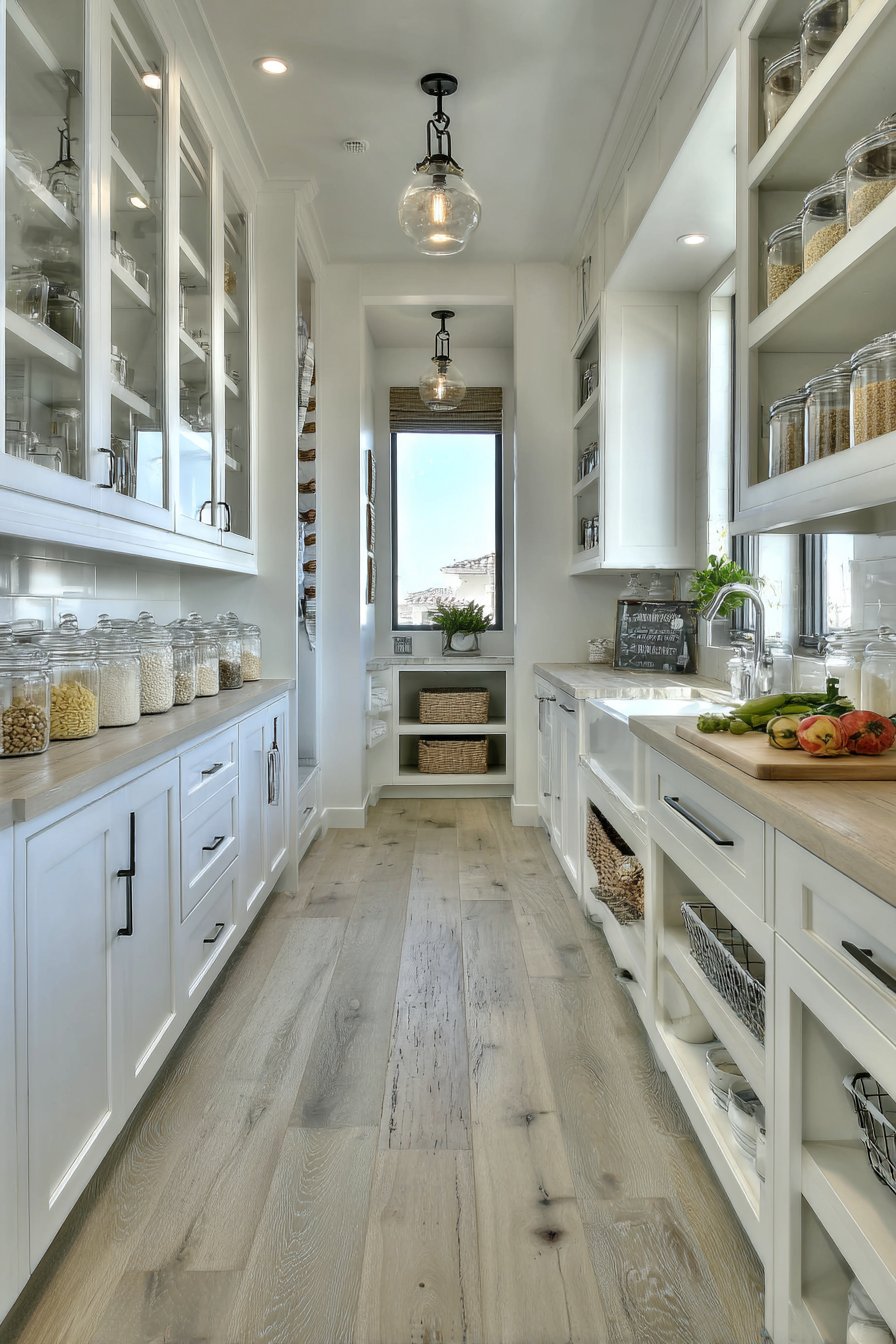
The following twenty concepts showcase diverse pantry styles and organizational strategies. From minimalist Scandinavian designs to vintage apothecary aesthetics, these ideas demonstrate versatility. Whether you’re a serious home cook or a busy parent, you’ll find inspiration. These designs prove that functional storage can be beautiful and personalized.
1. Classic White Galley Pantry with Natural Oak Accents
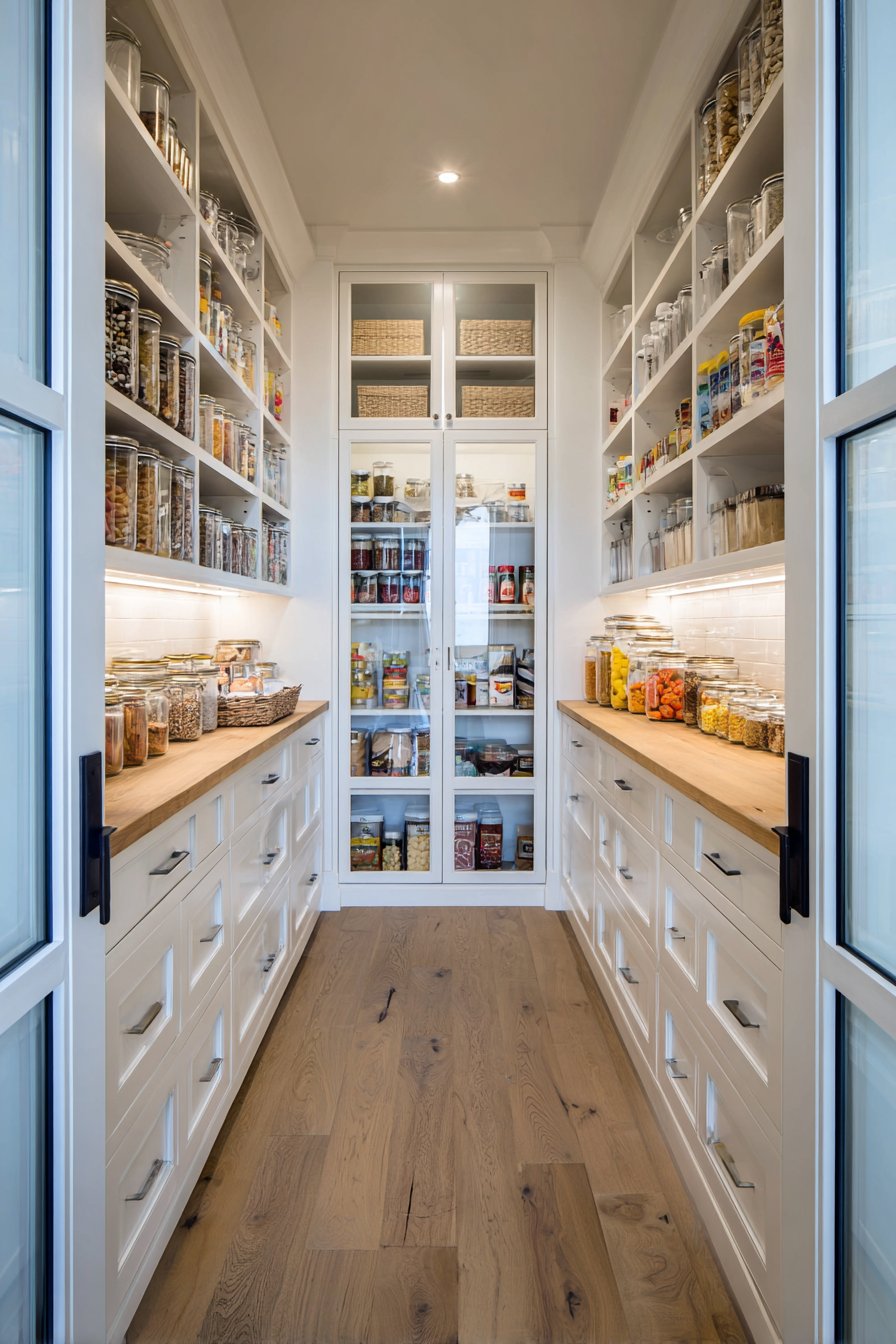
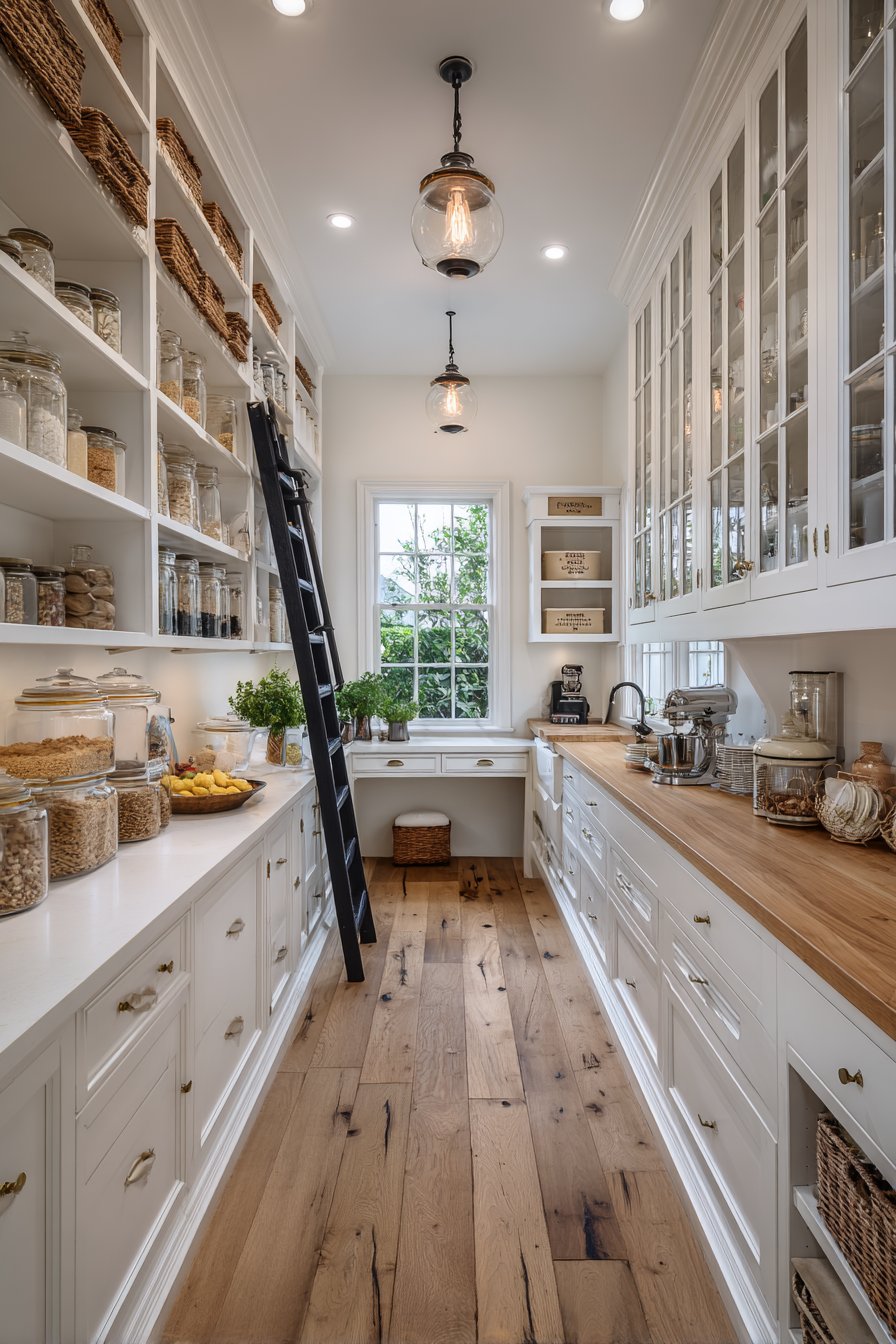
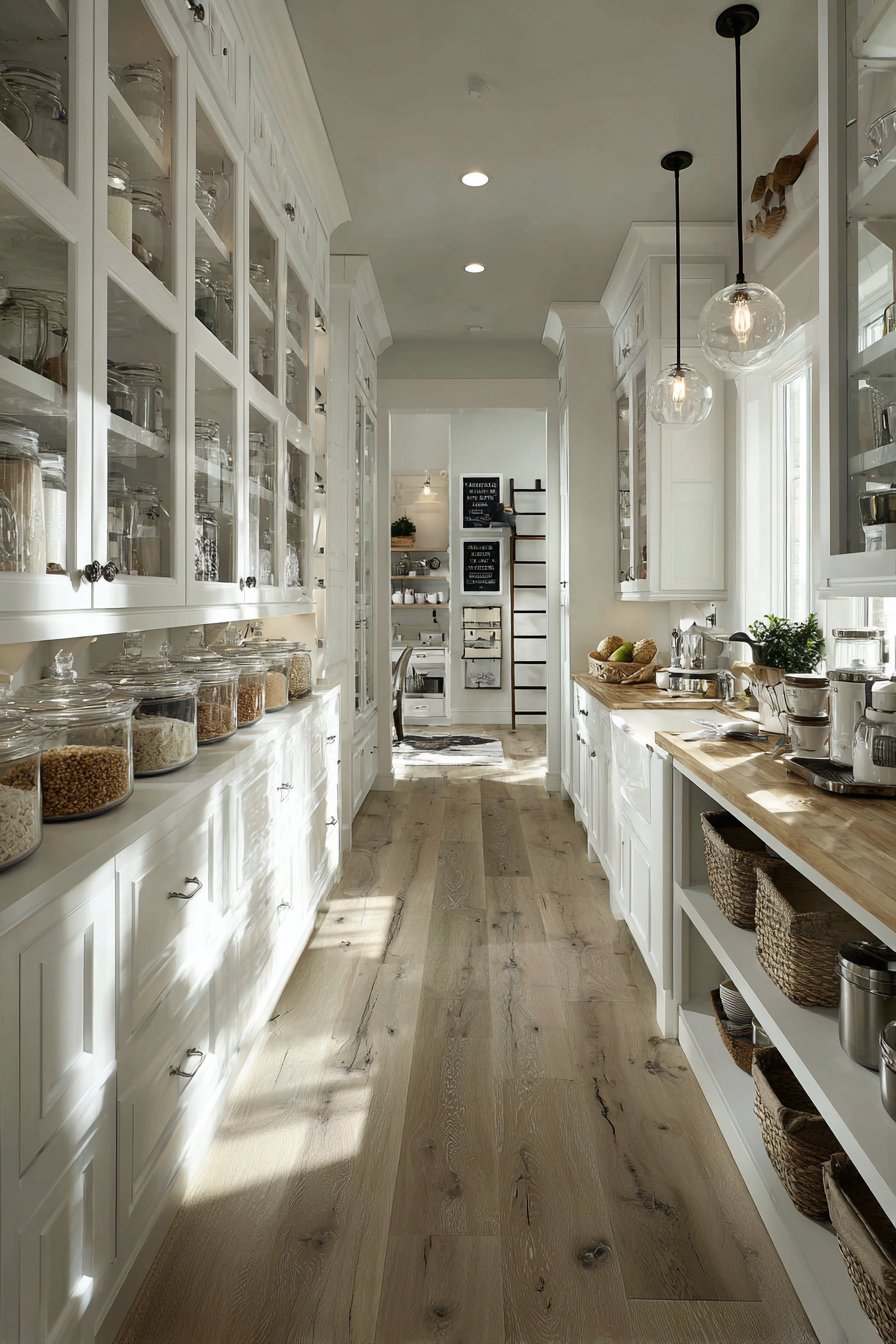
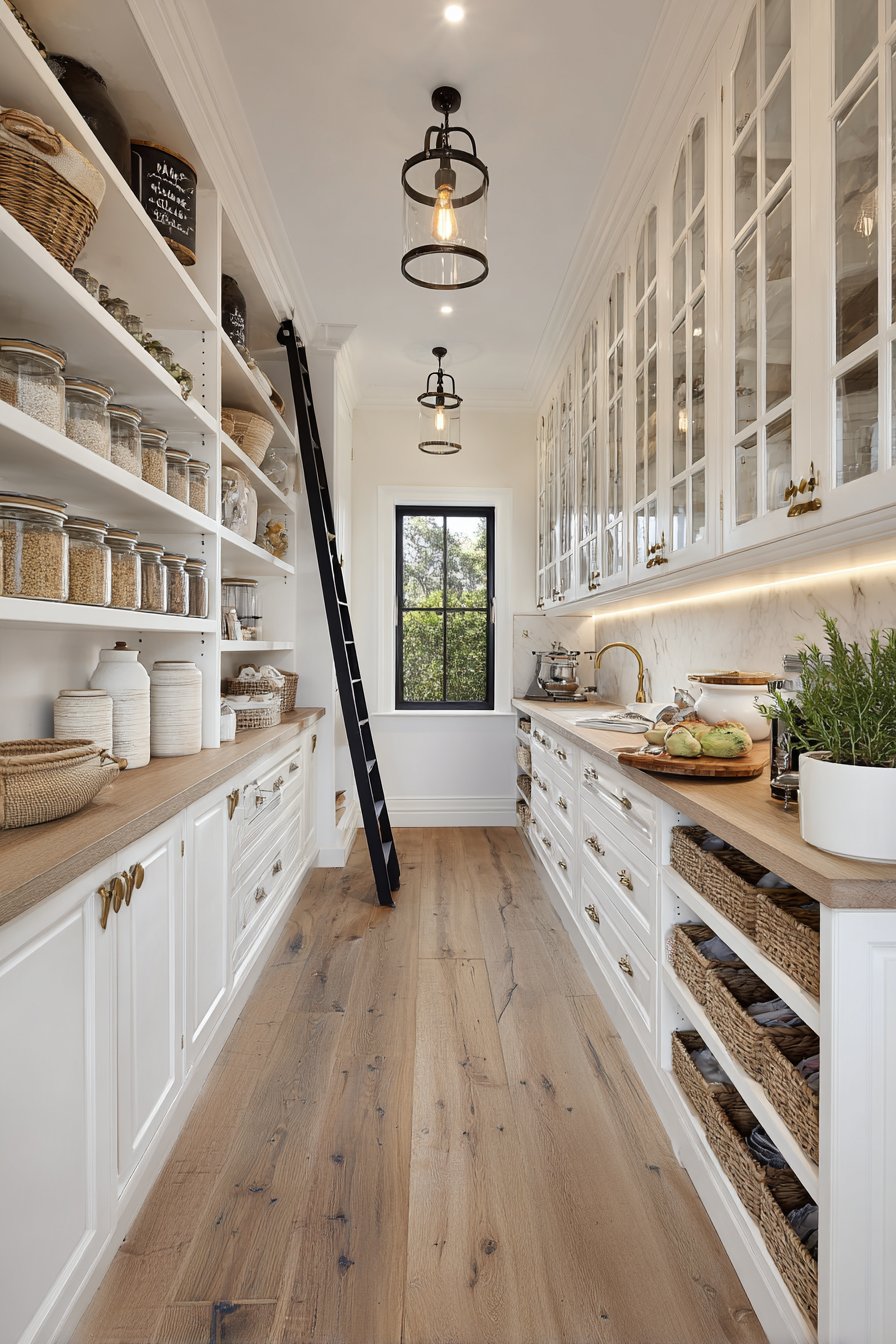
Floor-to-ceiling custom white cabinetry creates a clean foundation in this galley-style pantry. Both walls feature adjustable shelving that adapts to changing storage needs. The symmetrical layout maximizes every inch of available space. Glass-front upper cabinets display organized dishware and matching ceramic containers. This transparency makes finding items effortless while maintaining visual appeal.
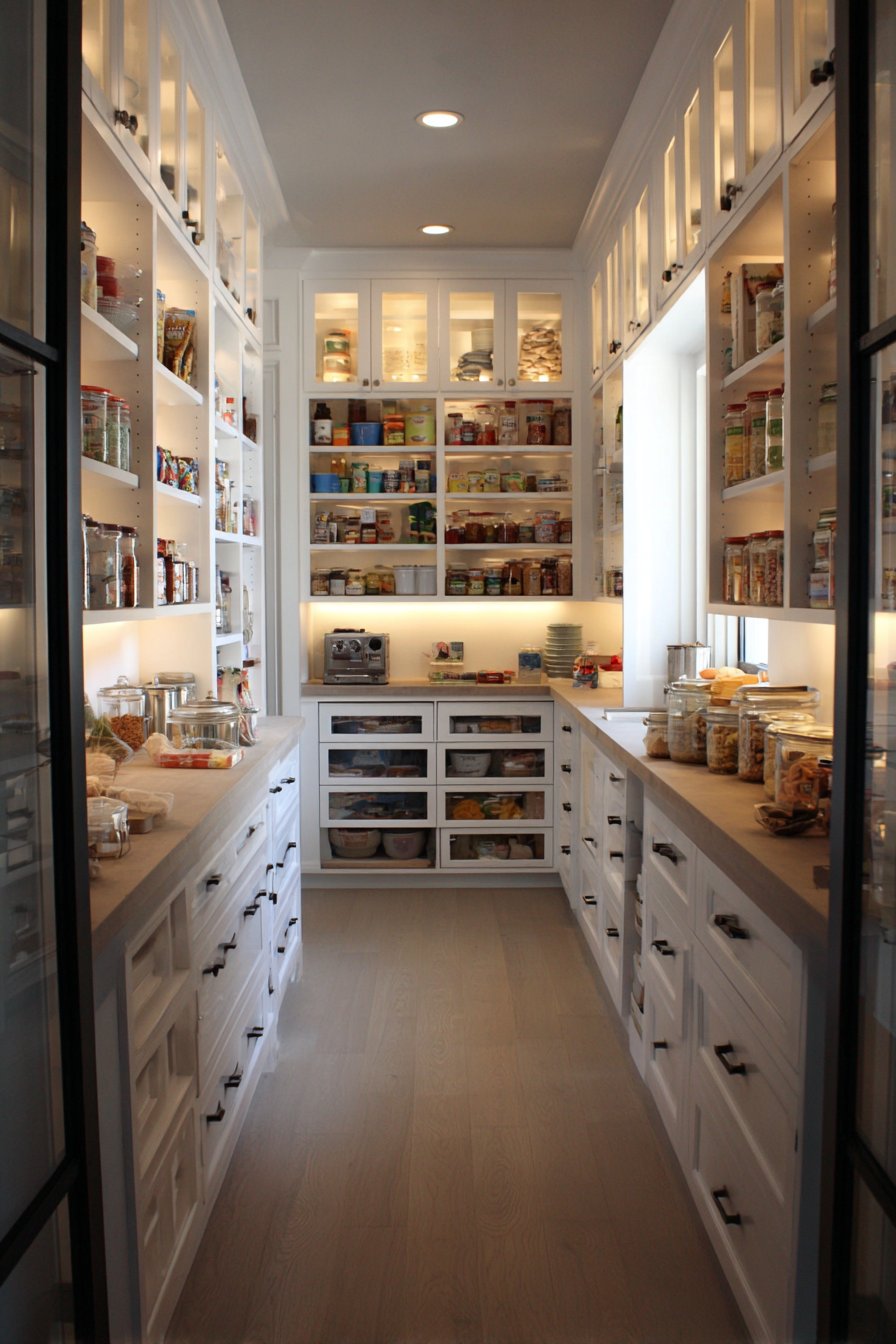
A natural oak countertop runs along one wall. This workspace serves multiple purposes throughout the day. Unpacking groceries becomes easier with a dedicated surface area. Meal prep tasks find a convenient home away from the main kitchen. The warm wood grain contrasts beautifully against crisp white cabinetry. This combination adds organic warmth to the pristine space.
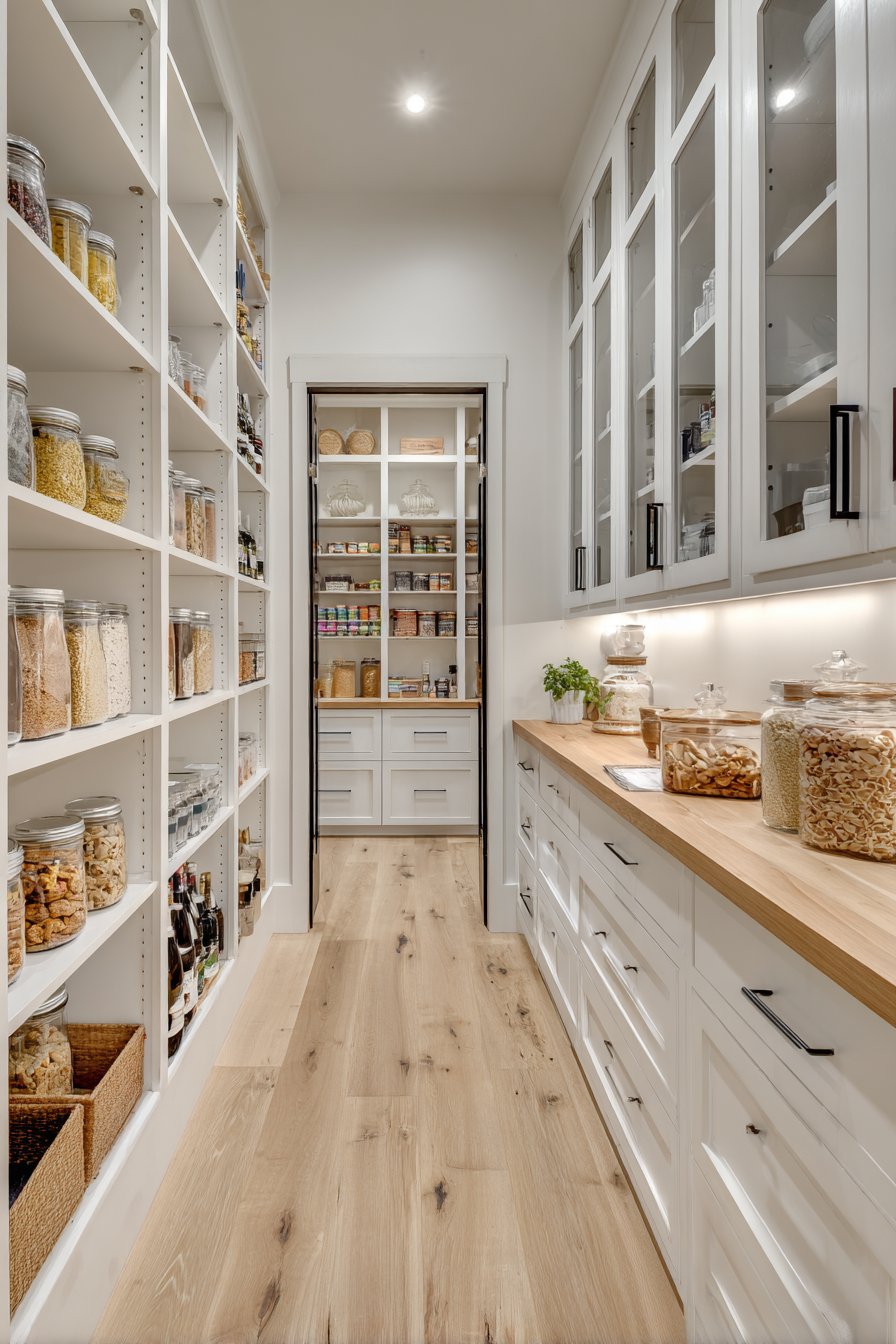
Lower drawers contain labeled bins for dry goods organization. Pull-out mechanisms provide easy access to deeper storage areas. Wire baskets in these drawers keep similar items grouped together. The system prevents forgotten ingredients from hiding in dark corners. Recessed LED lighting illuminates the entire pantry with warm white glow. Strategic placement eliminates shadows in upper shelves and lower cabinets.
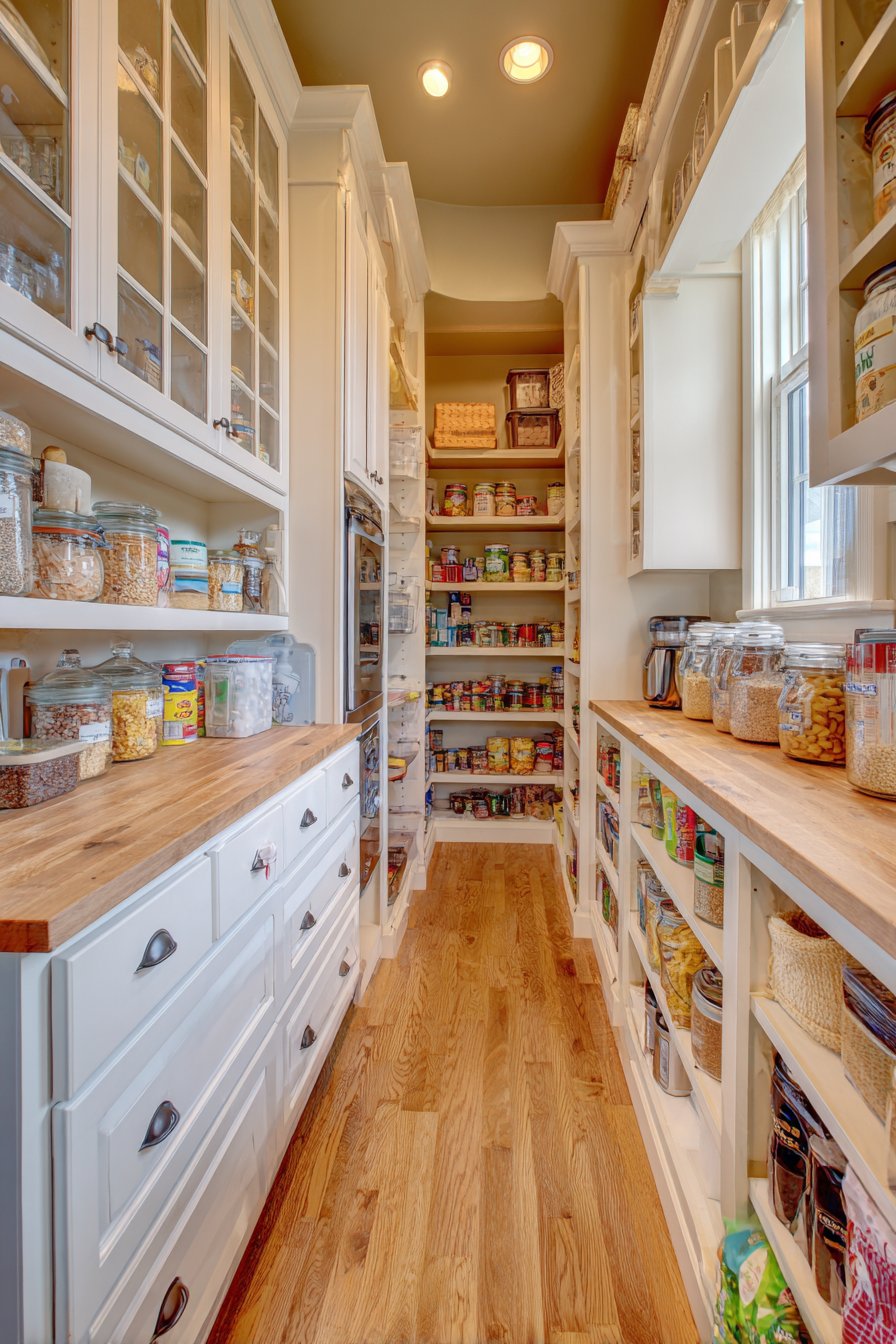
The design balances open and closed storage perfectly. Glass-front cabinets showcase attractive dishware and uniform containers. Solid doors conceal less photogenic bulk items and packaging. This approach maintains visual calm while providing comprehensive storage. Wide-plank oak flooring extends the natural material palette to ground level.
Key Design Tips:
- Install adjustable shelving to accommodate items of varying heights
- Choose glass-front upper cabinets to create visual interest and accountability
- Add a dedicated countertop workspace for grocery unpacking and meal prep
- Use recessed LED lighting to eliminate shadows and improve visibility
- Incorporate pull-out drawer organizers for small items and packaged goods
- Select warm wood tones to soften all-white cabinetry schemes
2. Industrial Farmhouse Pantry with Reclaimed Materials
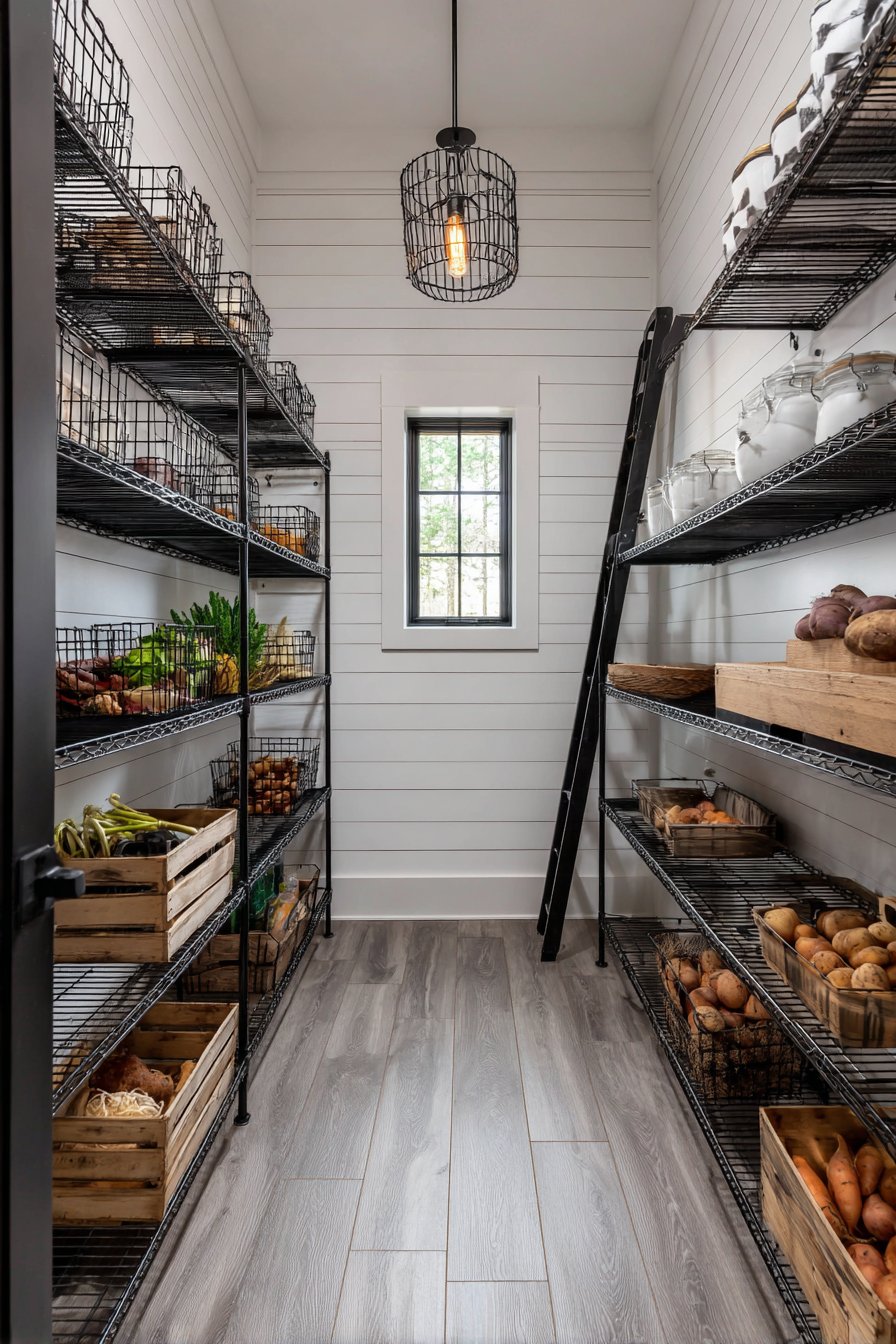
Matte black metal shelving units create strong vertical lines against white shiplap walls. The industrial framework provides sturdy support for heavy storage needs. Open shelving displays items in wire baskets and wooden crates. Bronze-finish baskets hold fresh produce at eye level. This arrangement keeps fruits and vegetables visible for healthier eating habits.
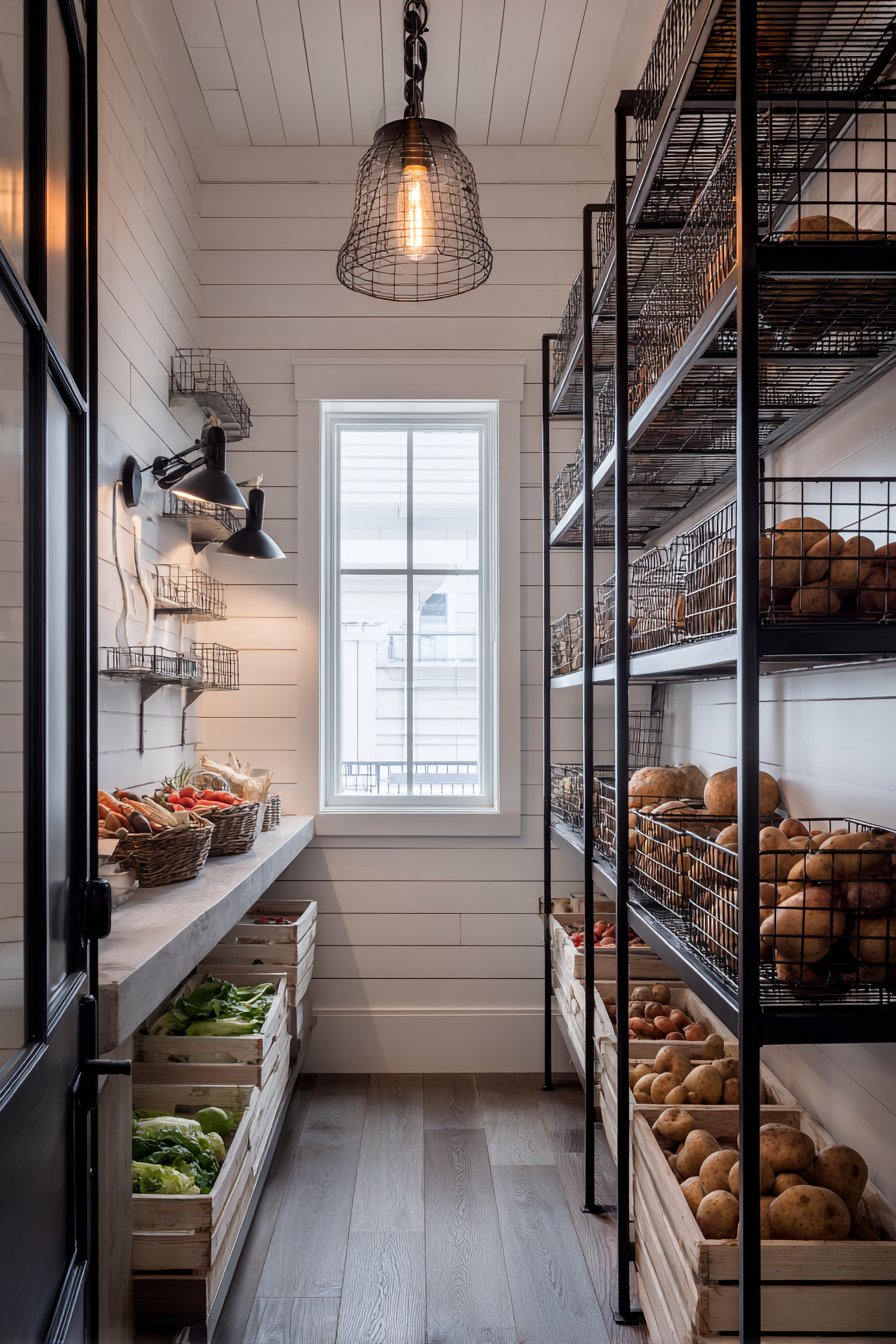
Wooden crates on lower shelves store root vegetables that prefer darker conditions. The rustic containers add textural interest while serving practical purposes. A vintage-style rolling ladder provides access to upper storage areas. This functional element doubles as an architectural detail. The ladder’s presence suggests well-stocked shelves reaching toward the ceiling.
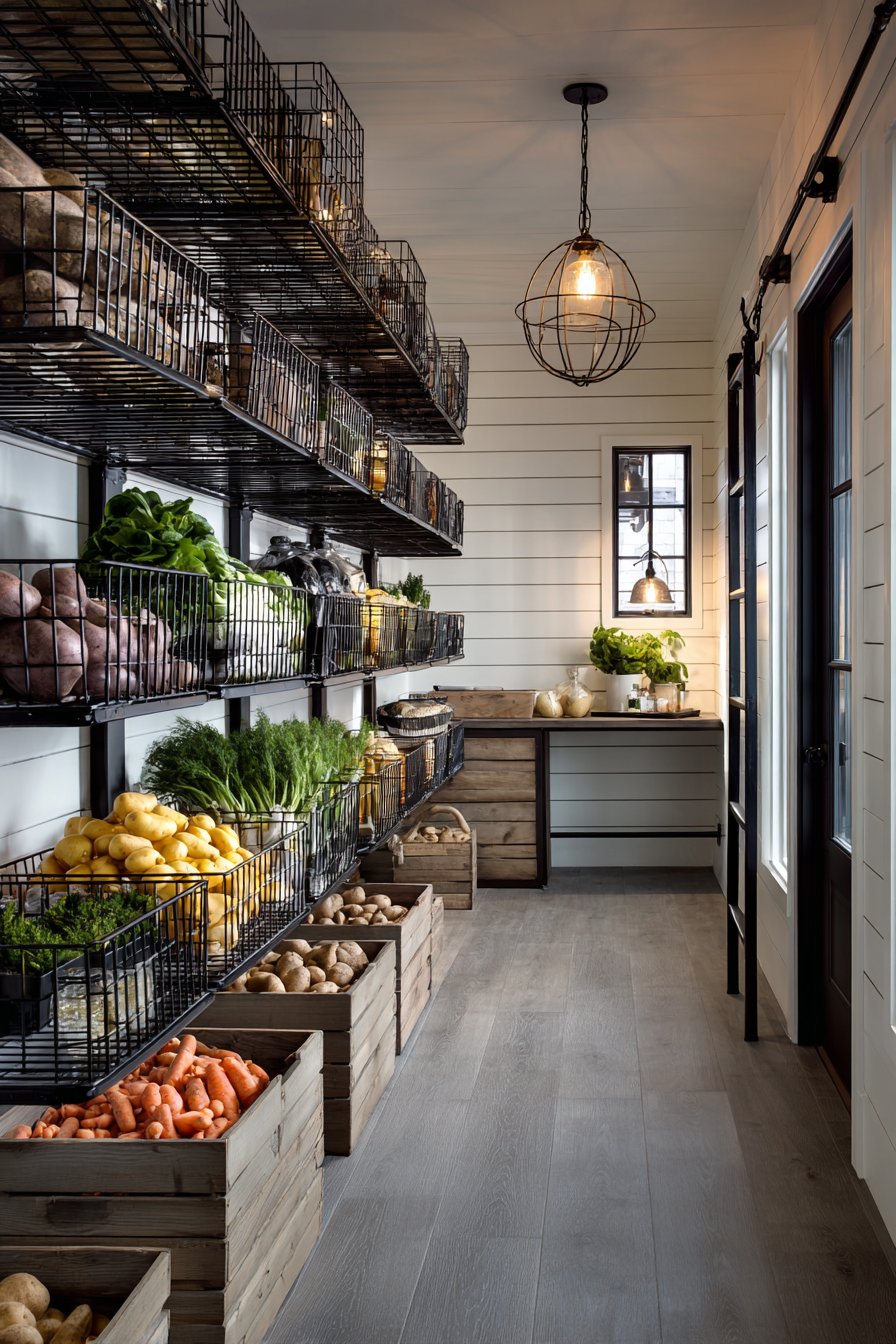
A pendant light with an Edison bulb creates warm ambient illumination. The exposed filament adds nostalgic charm to the modern storage system. Grey luxury vinyl planks feature convincing wood grain texture underfoot. This flooring choice combines durability with the warmth of natural materials. The surface resists moisture and handles heavy foot traffic effortlessly.
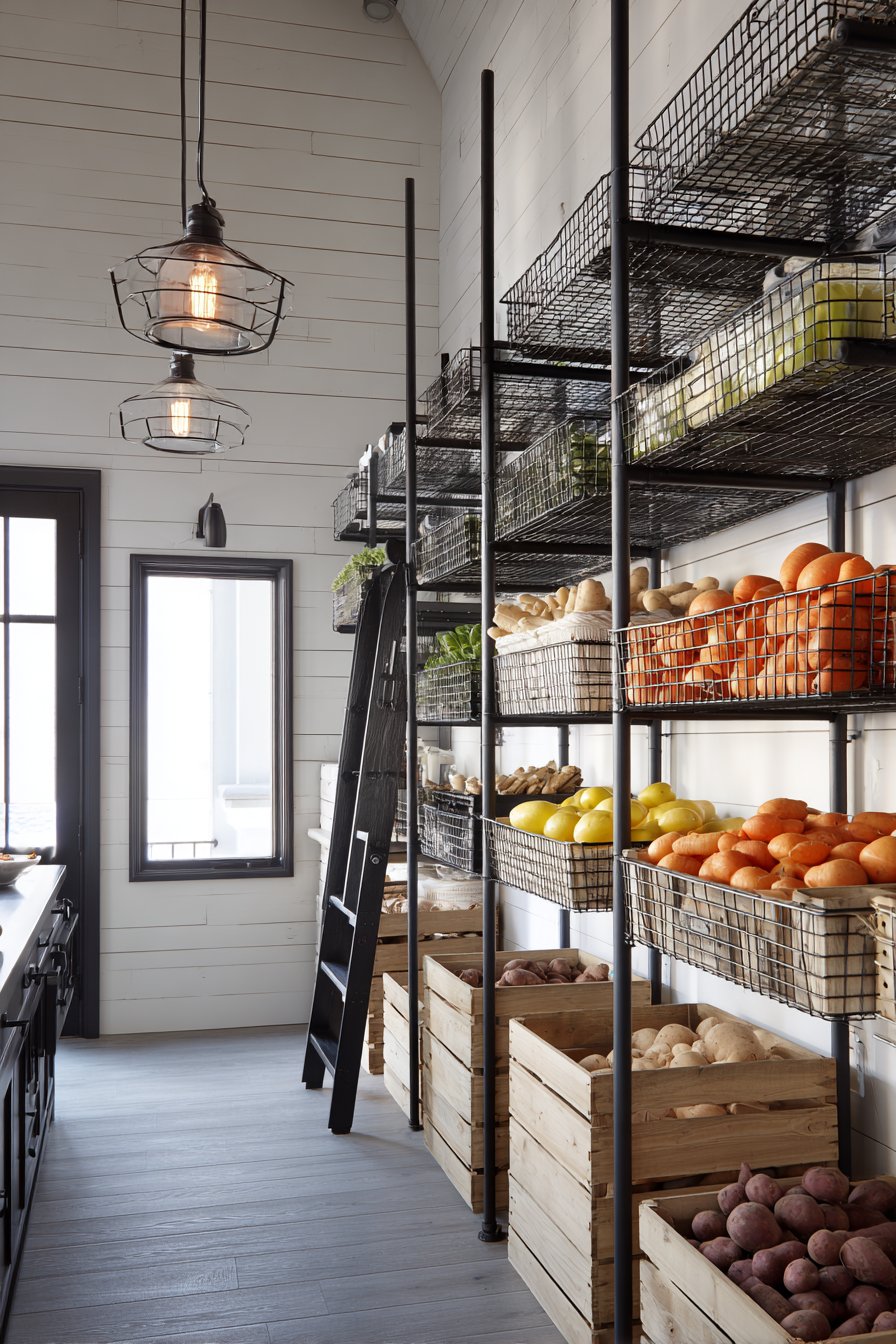
Small details complete the industrial-meets-farmhouse aesthetic throughout. Black metal shelf brackets contrast against white walls. Bronze basket finishes tie to vintage hardware details. The color palette remains intentionally limited for cohesive impact. Natural light from a small window enhances the carefully curated materials.
Key Design Tips:
- Choose matte black metal shelving for industrial character and durability
- Install shiplap walls to add farmhouse texture and visual interest
- Use wire baskets and wooden crates for flexible, attractive storage
- Add a rolling ladder for both functionality and vintage appeal
- Select luxury vinyl plank flooring for wood-look durability
- Incorporate Edison bulb fixtures for warm, nostalgic lighting
3. Compact Vertical Storage Solution for Small Spaces
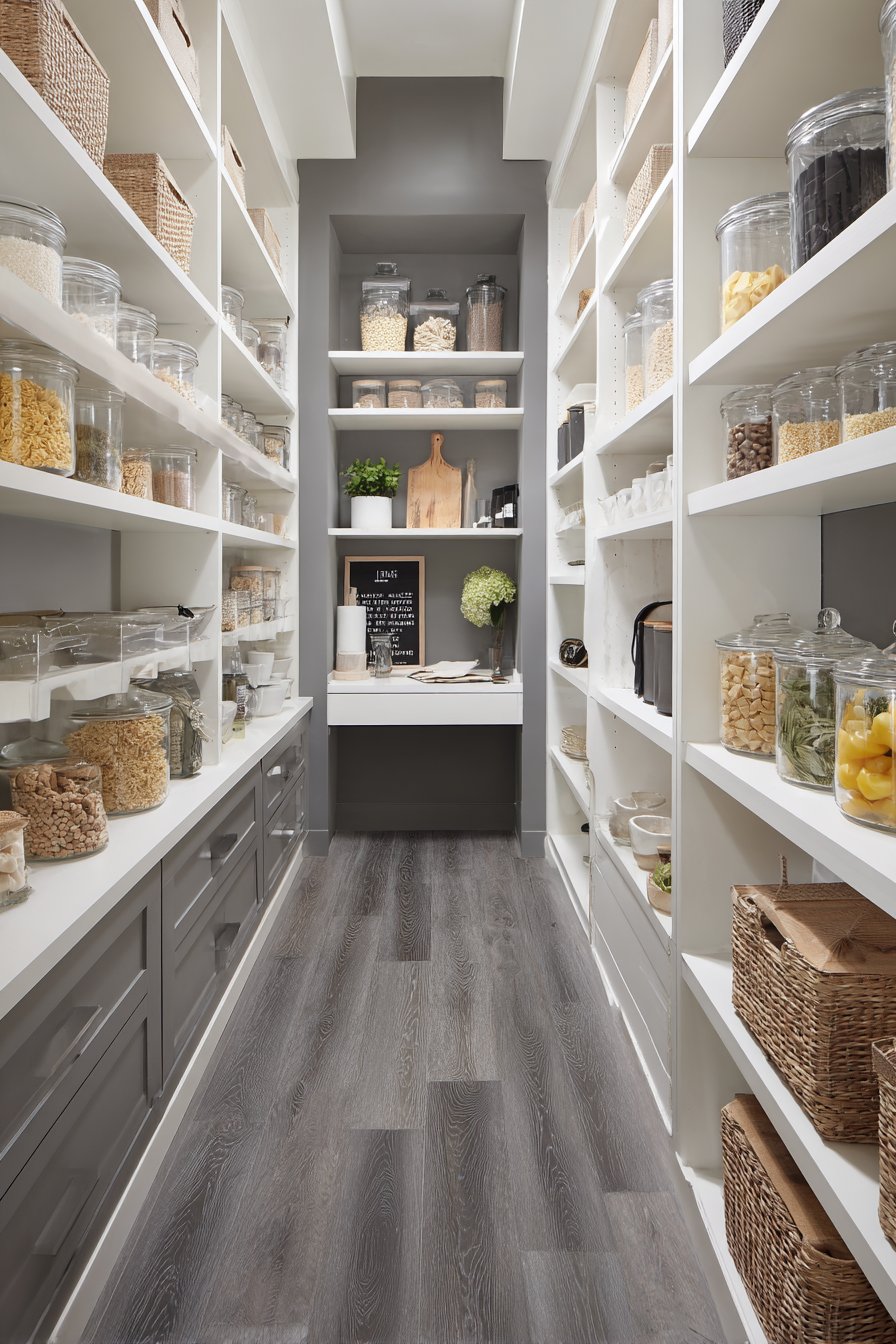
Wraparound shelving reaches eight-foot ceilings in this space-maximizing design. Every vertical inch receives a purposeful assignment. Clear acrylic containers with chalkboard labels organize pasta, grains, and baking supplies. The transparency allows instant inventory checks without opening lids. Eye-level placement keeps frequently used items within easy reach.
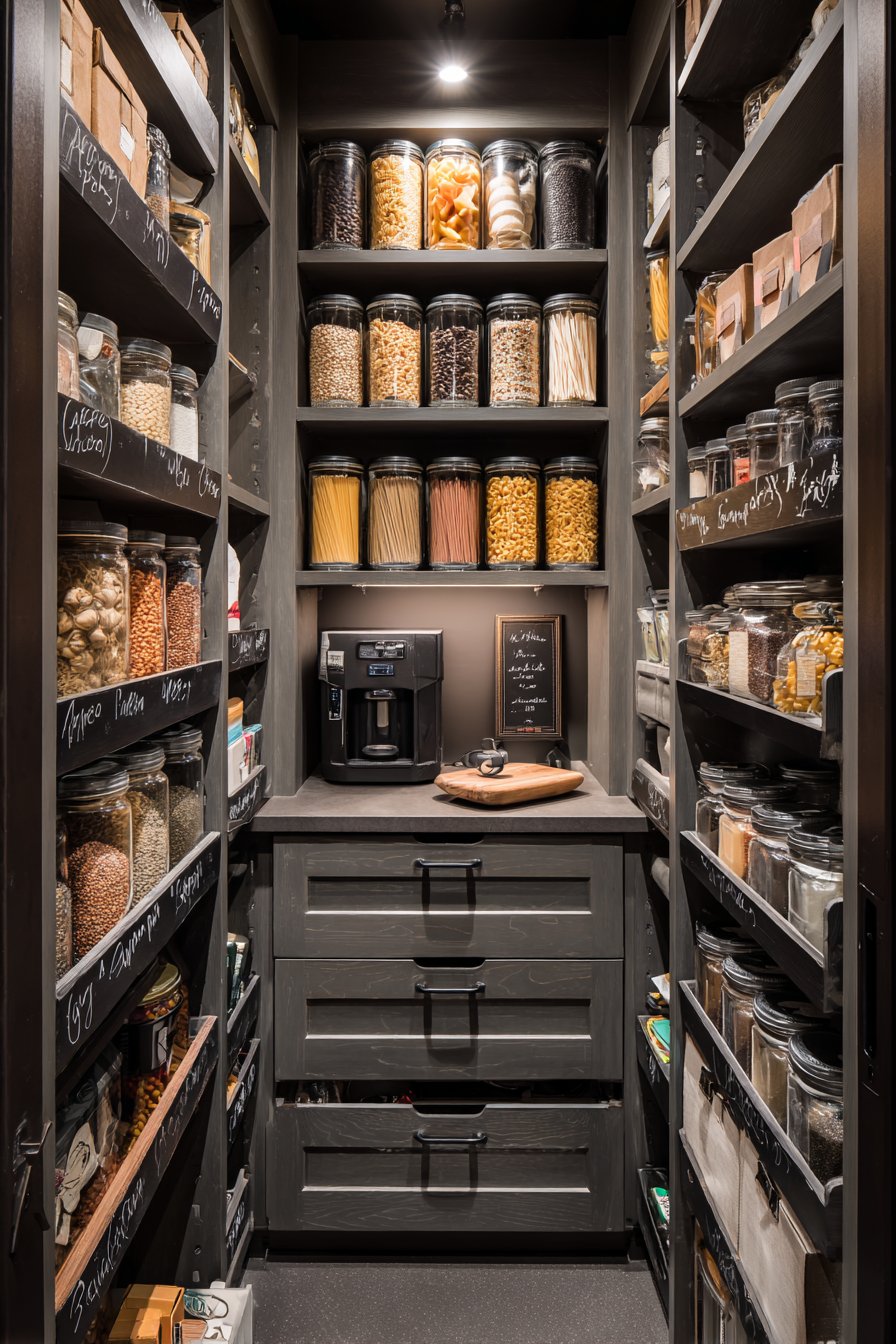
Pull-out drawers at floor level house small appliances. Coffee makers and food processors stay accessible but out of sight. This arrangement keeps countertops clear in the main kitchen. The lower storage also reduces visual clutter at eye level. A narrow built-in desk area manages kitchen paperwork and device charging. Family calendars and recipe collections find dedicated homes here.
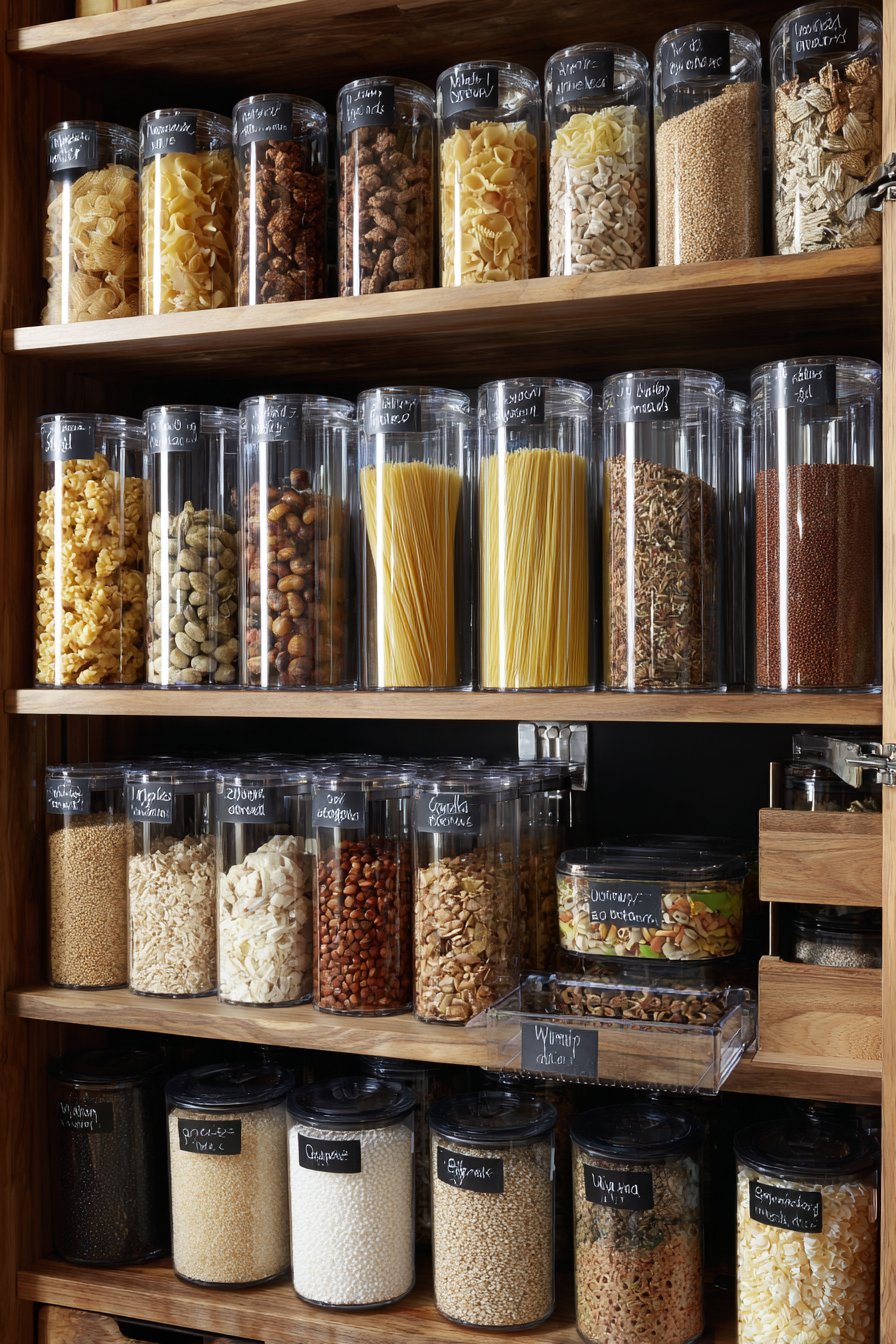
Under-shelf lighting creates visibility in deeper storage areas. LED strips mount beneath each shelf level. This lighting strategy eliminates dark corners where items disappear. The illumination helps identify containers and read labels easily. Motion sensors can activate lights automatically upon entry.
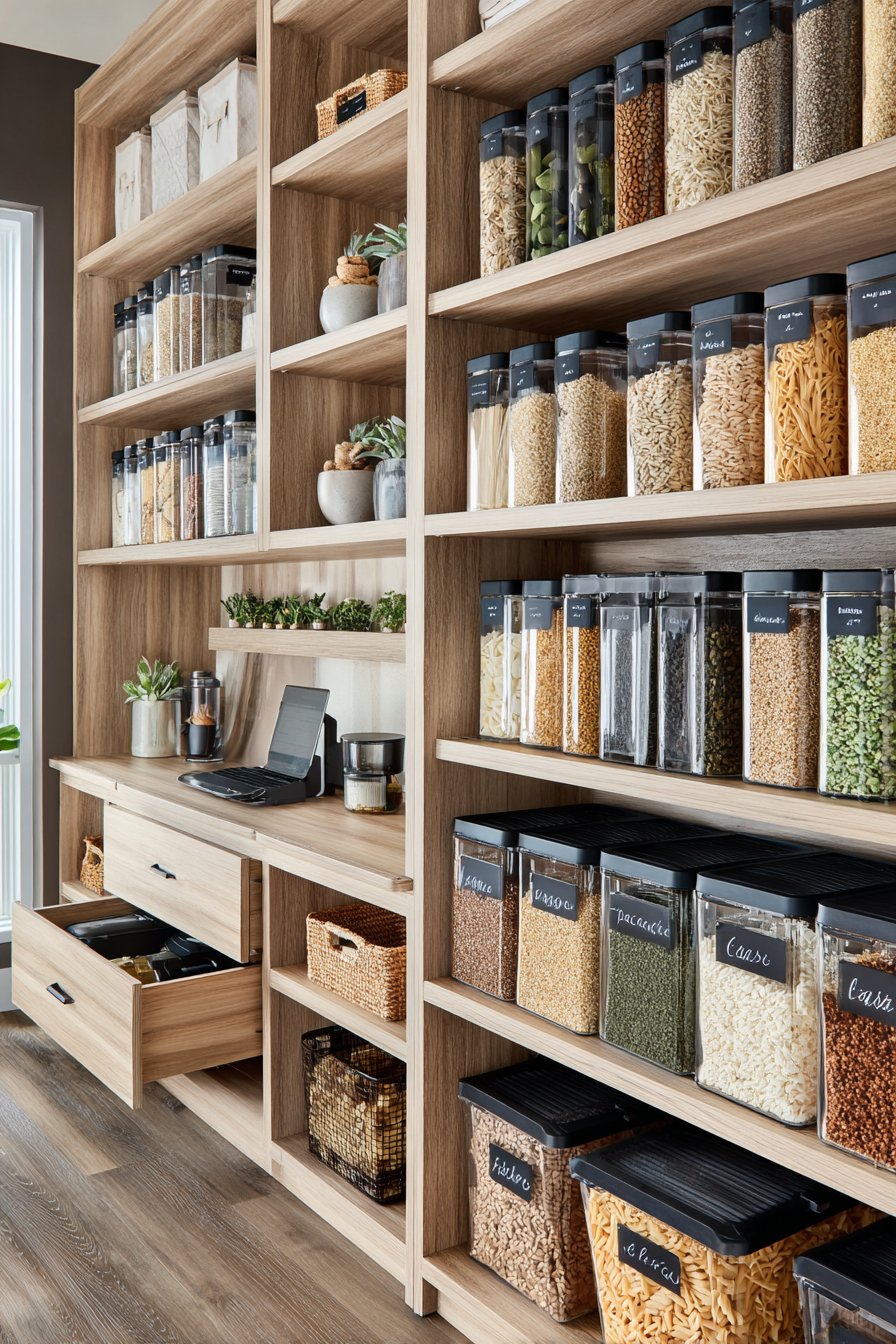
The efficient layout proves that small pantries can function beautifully. Strategic organization trumps square footage in importance. Vertical thinking multiplies storage capacity in compact footprints. The design demonstrates how thoughtful planning maximizes limited space. Every element serves multiple purposes in this hardworking pantry.
Key Design Tips:
- Maximize vertical space with shelving that reaches the ceiling
- Use clear acrylic containers to see contents at a glance
- Install pull-out drawers for small appliance storage at floor level
- Add a narrow built-in desk for kitchen management tasks
- Incorporate under-shelf LED lighting for improved visibility
- Place frequently used items at eye level for easy access
4. Luxurious Navy Blue Pantry with Brass Detailing
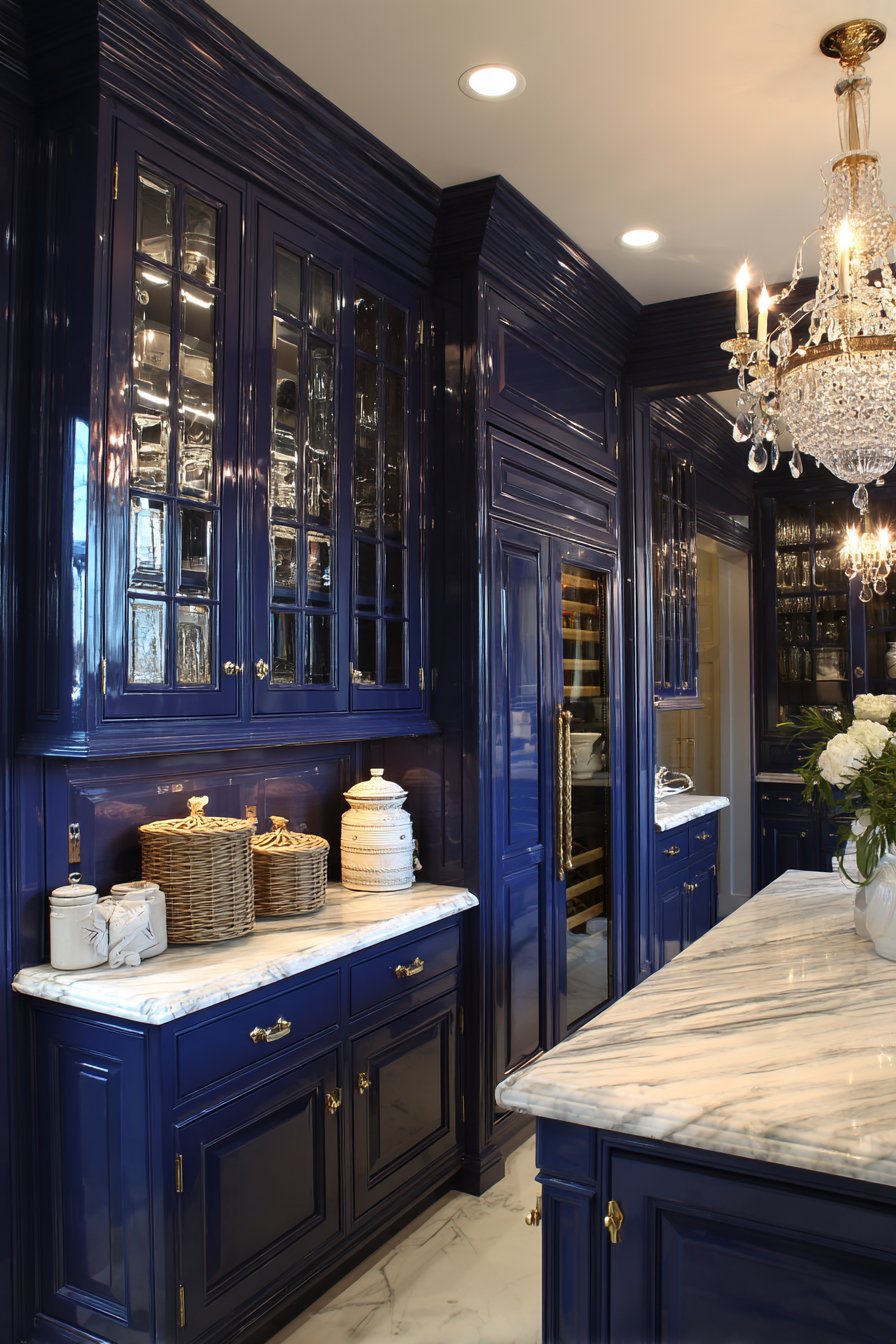
Custom navy blue cabinetry creates sophisticated drama in this upscale pantry. The deep color provides rich backdrop for brass hardware and accents. Integrated wine storage features individual bottle slots and stemware racks. This dedicated area keeps entertaining essentials organized and accessible. The design elevates the pantry beyond basic food storage.
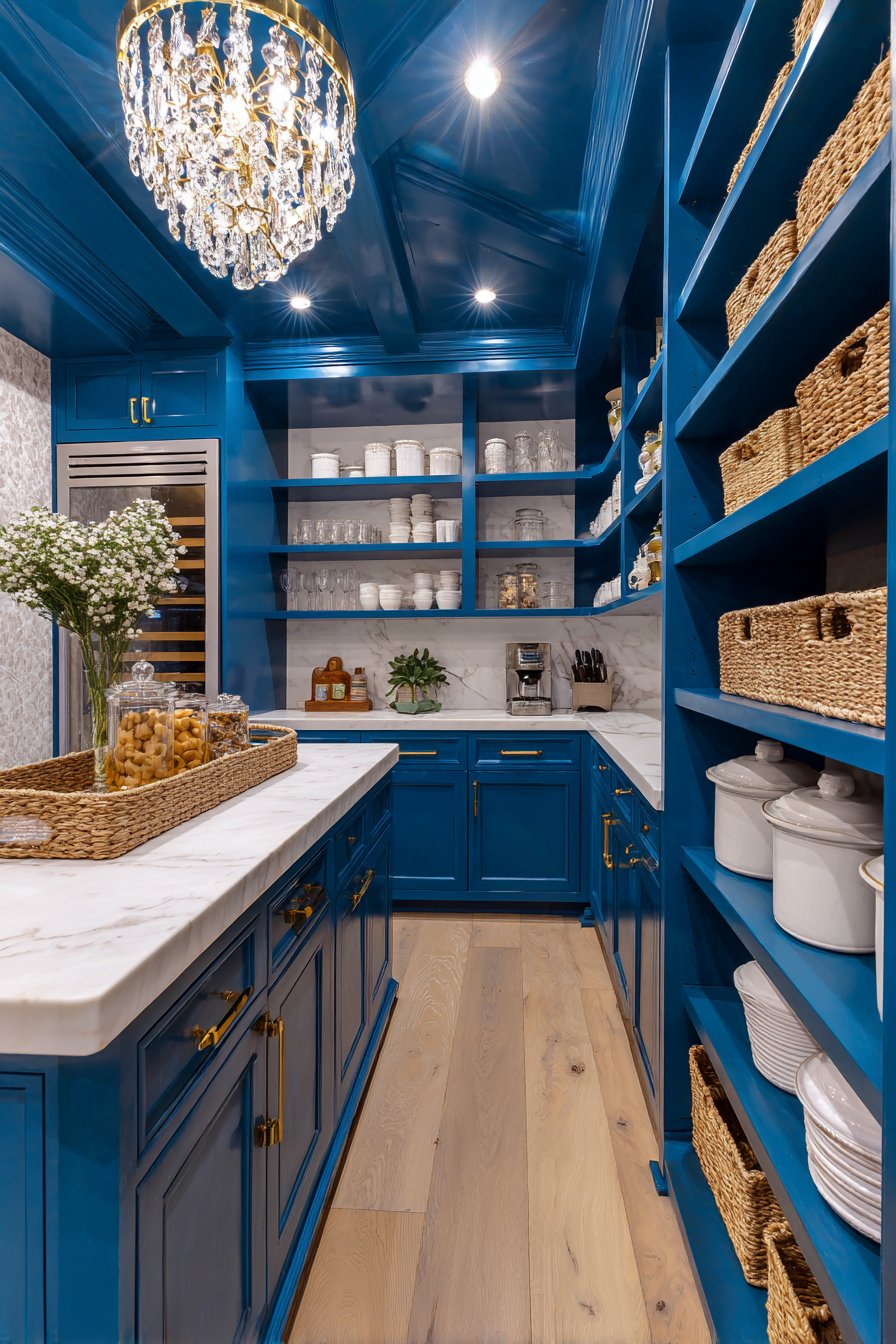
A marble-topped island occupies the center of the space. This substantial piece provides additional workspace and storage. A beverage refrigerator integrates seamlessly into the island base. Cold drinks stay conveniently located without crowding the main kitchen. The marble surface serves as an elegant prep area for entertaining tasks.
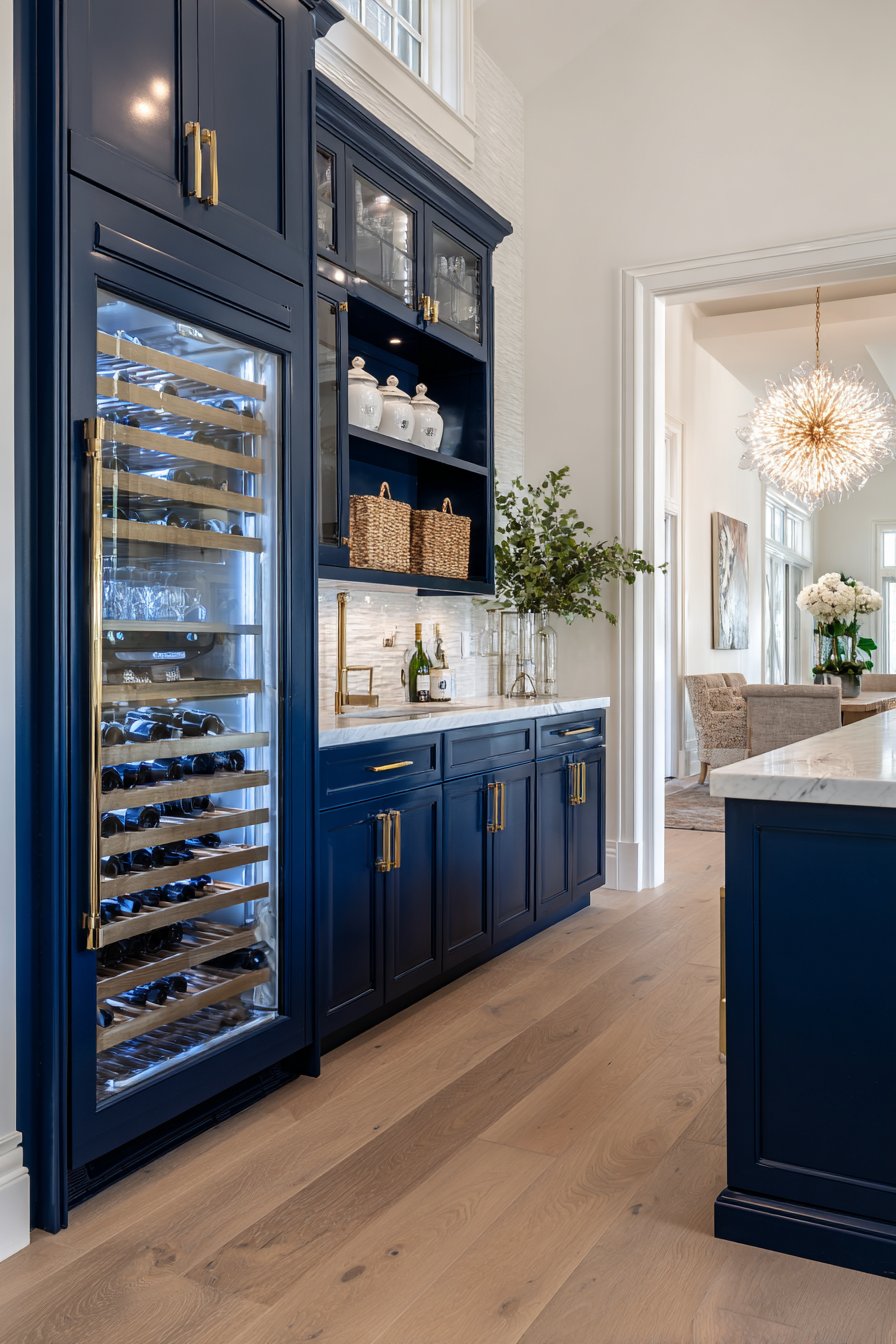
Open shelving displays matching white ceramic canisters in graduated sizes. Woven storage baskets add natural texture against the painted cabinetry. The combination of materials creates visual interest through contrast. Crown molding and detailed cabinet trim add architectural sophistication. These elements reference traditional craftsmanship and fine furniture details.
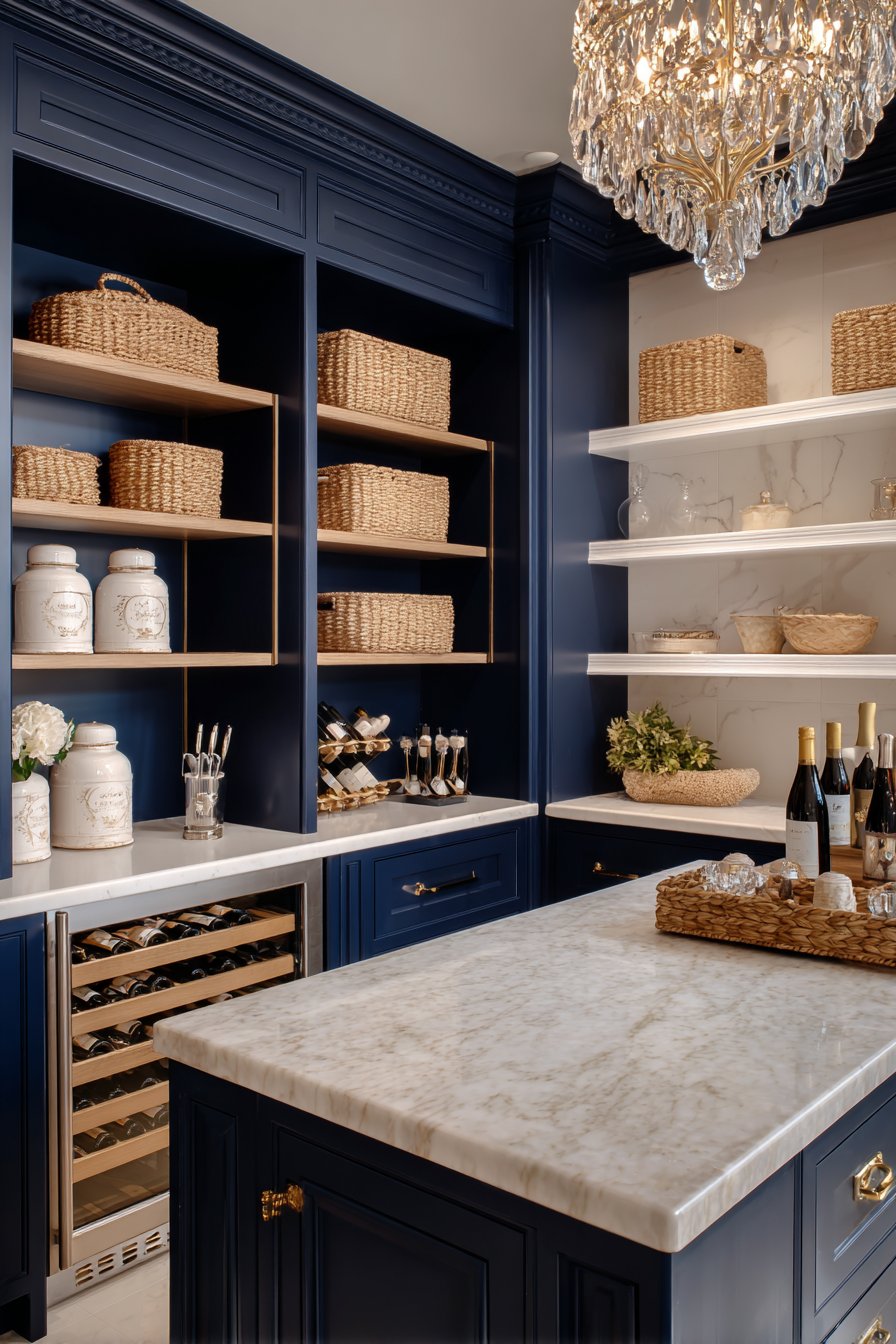
A chandelier with crystal accents provides elegant overhead lighting. The fixture becomes jewelry for the room. Multiple light sources create layered illumination throughout the space. Task lighting under cabinets supplements the ambient chandelier glow. The lighting strategy ensures both functionality and atmosphere.
Key Design Tips:
- Choose deep cabinet colors like navy for a sophisticated impact
- Install brass hardware for warm metallic contrast against dark cabinetry
- Add a center island for extra workspace and storage capacity
- Incorporate wine storage for entertaining convenience
- Use marble countertops for durable luxury and timeless appeal
- Select a statement chandelier to elevate the space
5. Rustic Farmhouse Pantry with Authentic Character
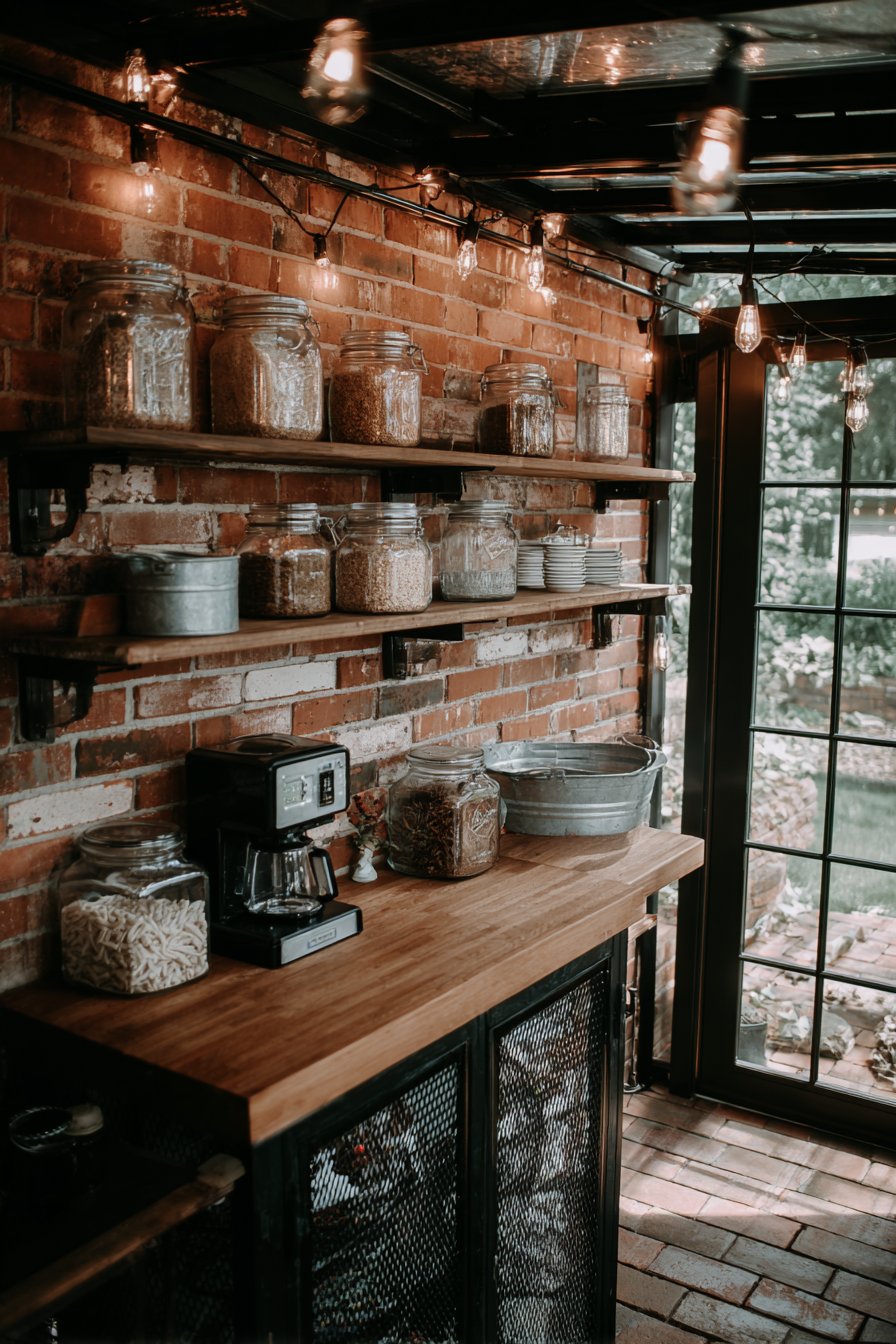
Reclaimed wood floating shelves mount against an exposed brick accent wall. The combination celebrates authentic materials and historical character. Galvanized metal bins provide durable storage with vintage appeal. Vintage glass jars display dry goods while adding decorative interest. The transparent containers showcase colorful ingredients like pasta and beans.
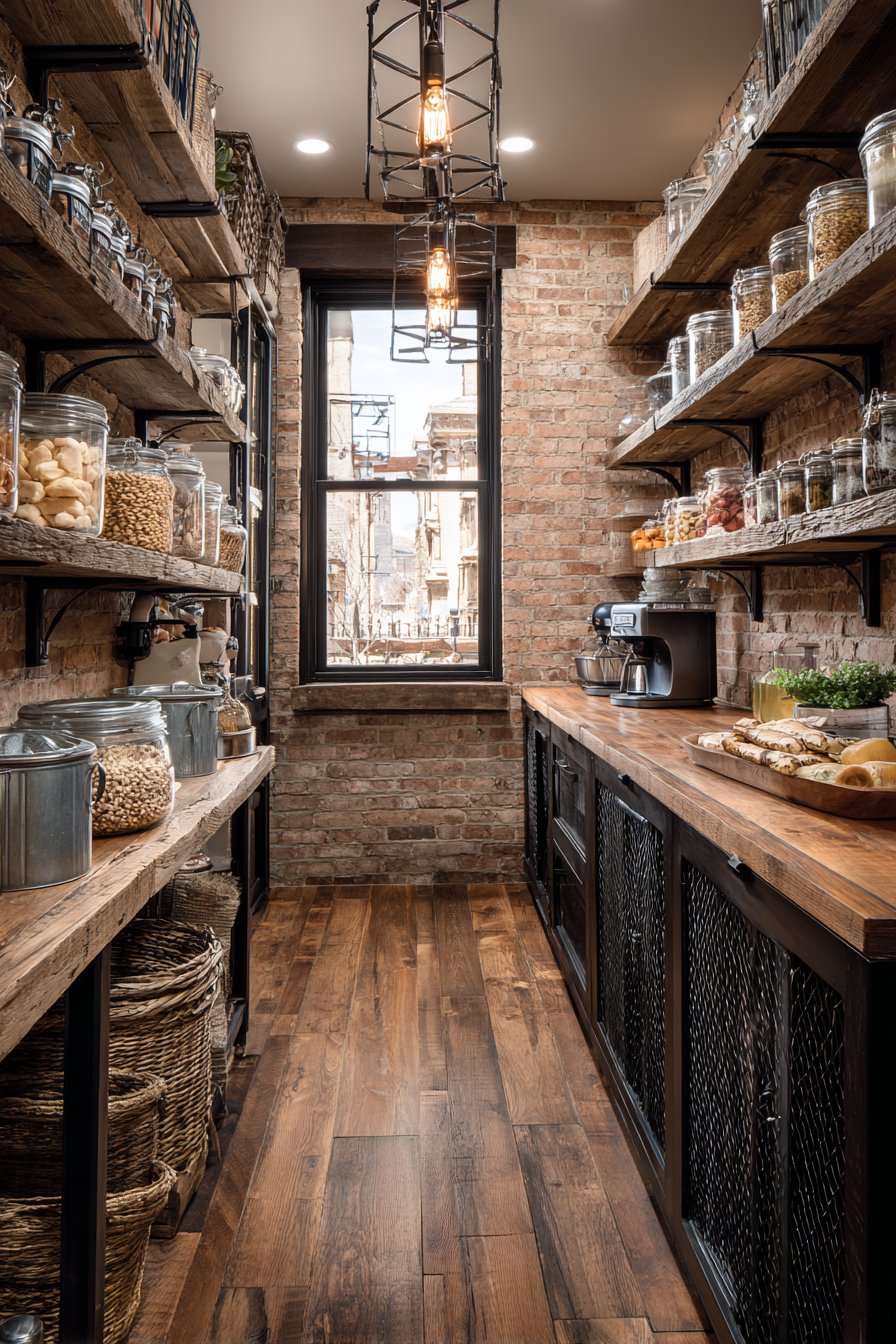
A butcher block countertop runs along one side of the pantry. This workspace serves as a dedicated coffee and beverage station. Vintage enamel canisters hold coffee, tea, and sugar supplies. The white enamelware adds classic farmhouse charm. Black lettering on cream backgrounds creates nostalgic appeal.
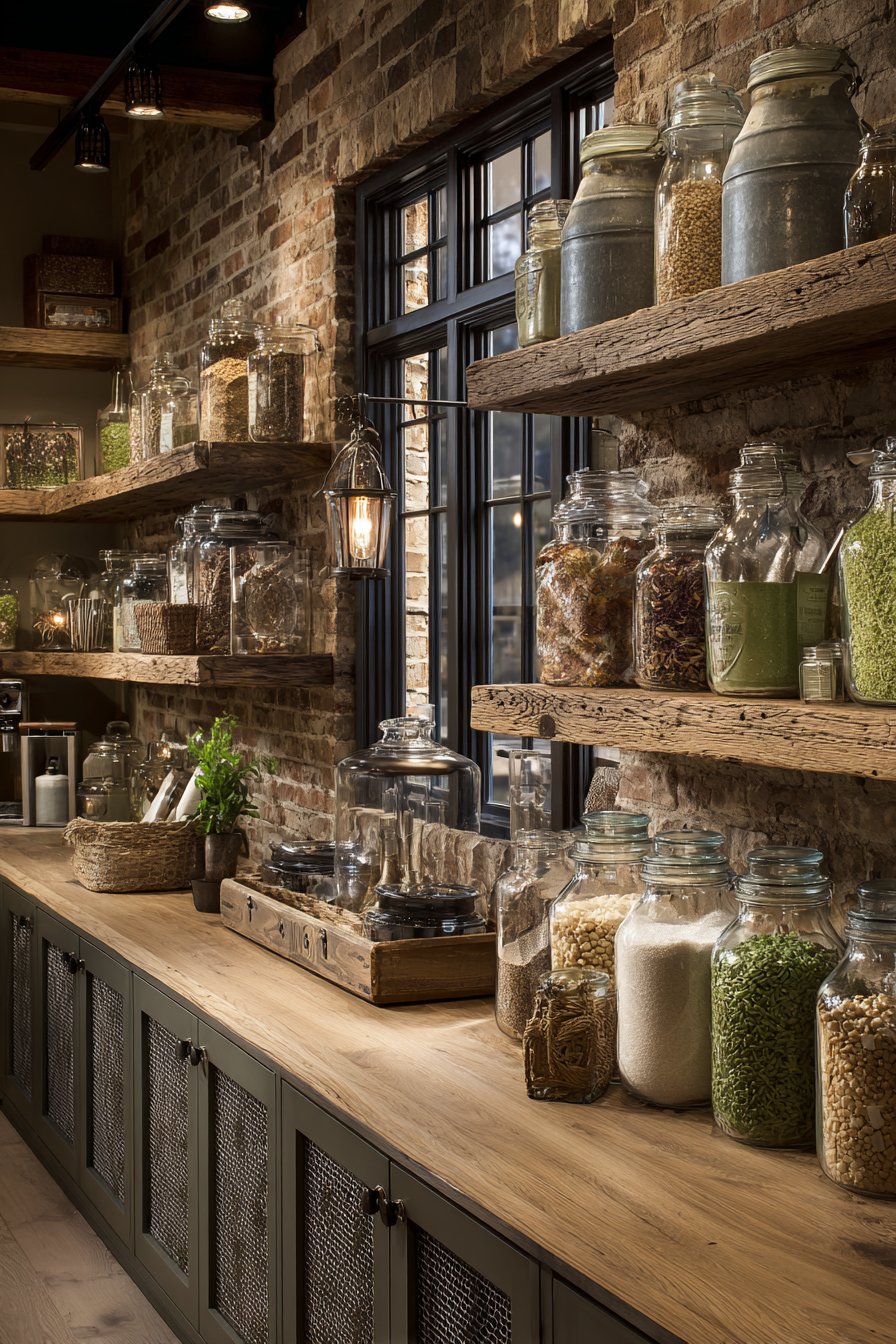
Wire mesh cabinet doors allow contents visibility while adding rustic texture. The screening provides ventilation for certain stored items. This detail references old-fashioned pie safes and vintage cabinetry. String lights add warm decorative illumination across upper areas. The soft glow creates an inviting ambiance beyond functional lighting needs.
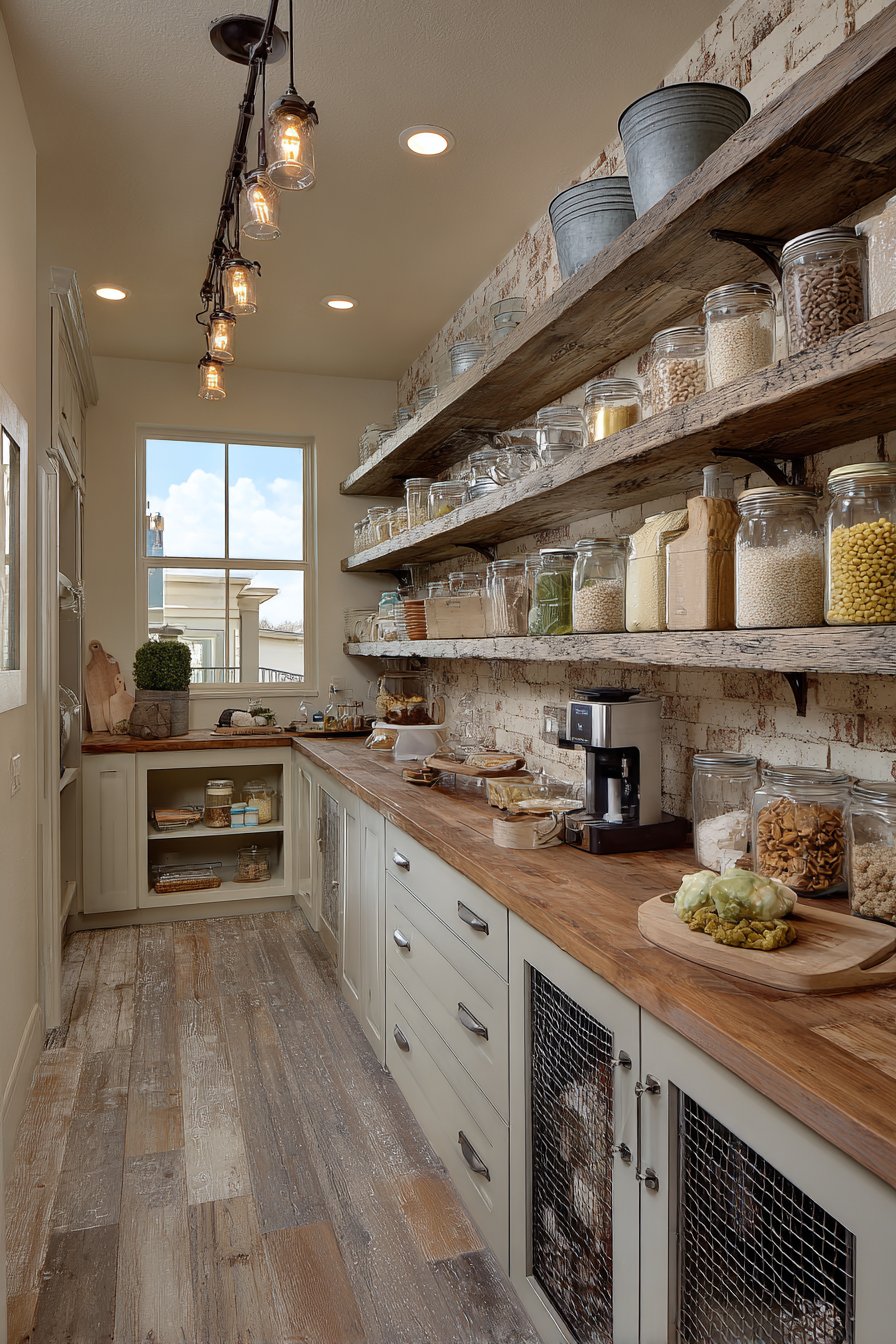
Natural daylight from a transom window highlights authentic materials throughout. Morning sun emphasizes the texture of exposed brick. The interplay of natural and artificial light creates dimensional interest. The space feels collected over time rather than purchased all at once. This lived-in quality defines successful farmhouse design.
Key Design Tips:
- Use reclaimed wood shelving for authentic character and sustainability
- Install exposed brick as an accent wall for textural interest
- Choose galvanized metal bins for durable vintage-style storage
- Create a dedicated beverage station with butcher block countertop
- Add wire mesh cabinet doors for ventilation and rustic appeal
- Incorporate string lights for warm decorative illumination
6. Utilitarian Bulk Storage for Large Families
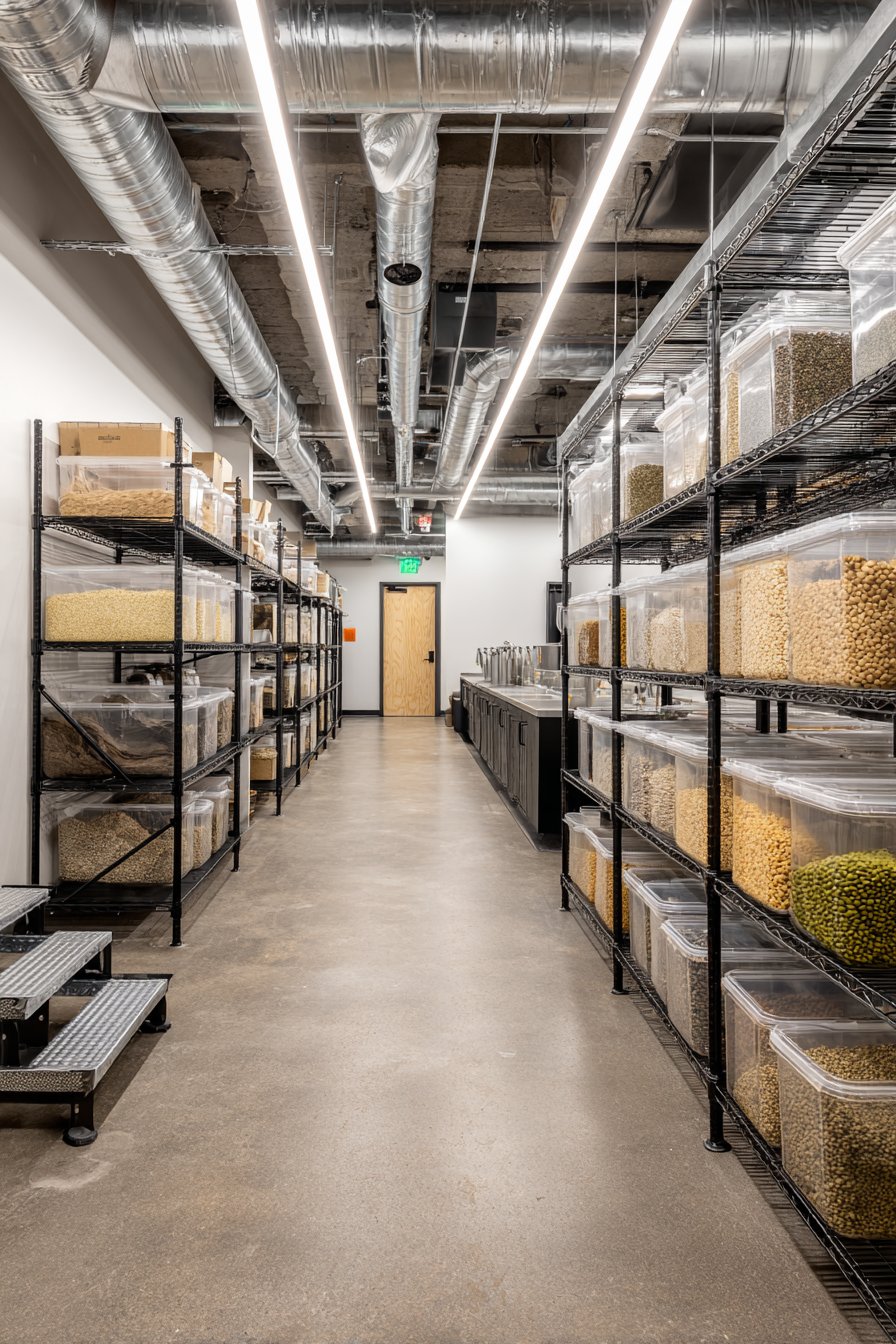
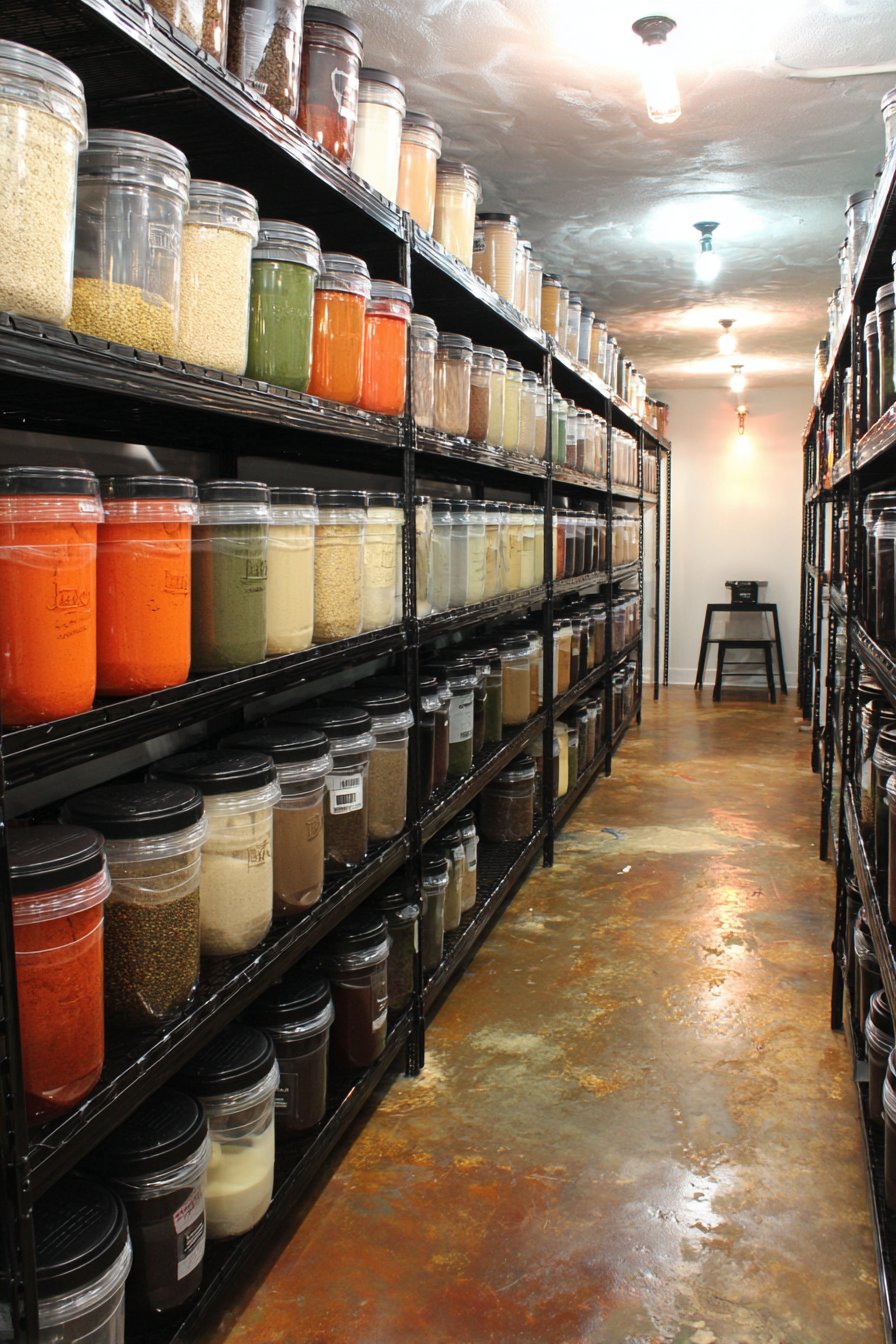
Industrial-grade metal shelving units provide robust storage capacity. The commercial kitchen organization approach handles serious volume. Large clear bins store bulk grains and legumes purchased from warehouse stores. Labeled containers keep baking supplies organized by type and frequency of use. The transparent storage makes inventory management straightforward.
A step stool provides safe access to upper shelves. The folding design stores compactly when not needed. Concrete flooring ensures durability under heavy use and traffic. The surface resists stains and moisture better than many alternatives. Fluorescent shop lights provide bright task lighting throughout. The utilitarian fixtures prioritize function over decorative appeal.
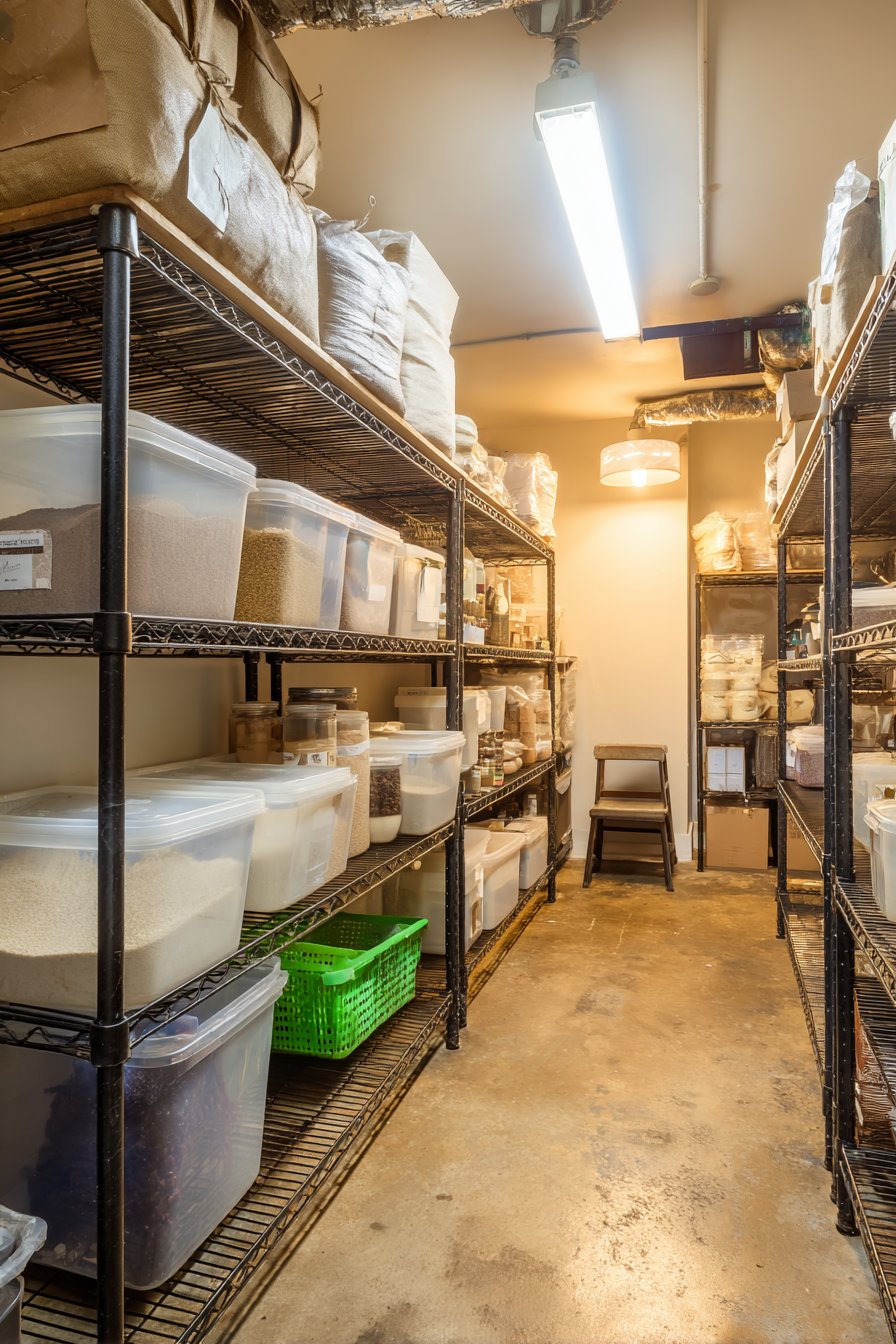
This design philosophy emphasizes practicality for large-family food storage. Form follows function in every material choice. The aesthetic celebrates efficiency rather than hiding it. Restaurant-grade organizational systems translate well to busy households. The approach reduces grocery shopping frequency through strategic bulk buying.
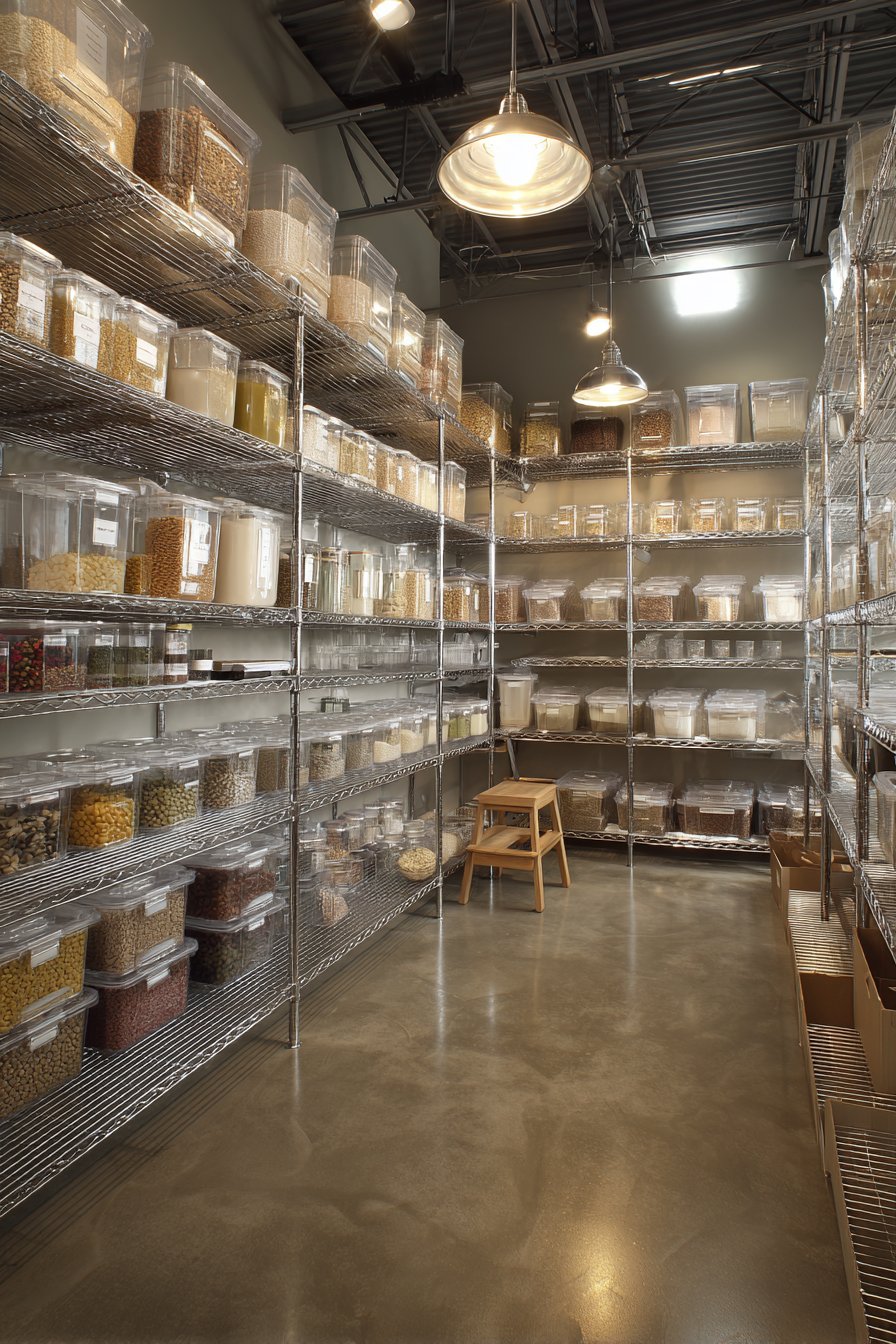
Label makers create uniform identification across all containers. Clear communication prevents confusion among multiple family members. The system scales easily as household needs change. Additional shelving units can be added without disrupting the existing organization. This flexibility makes the design sustainable long-term.
Key Design Tips:
- Choose industrial metal shelving for maximum load capacity
- Use large clear bins for bulk food storage and easy inventory
- Install concrete flooring for unmatched durability and easy cleaning
- Add a folding step stool for safe upper shelf access
- Incorporate bright fluorescent lighting for optimal visibility
- Implement a label maker system for clear organization
7. Scandinavian Minimalist Pantry with Natural Materials
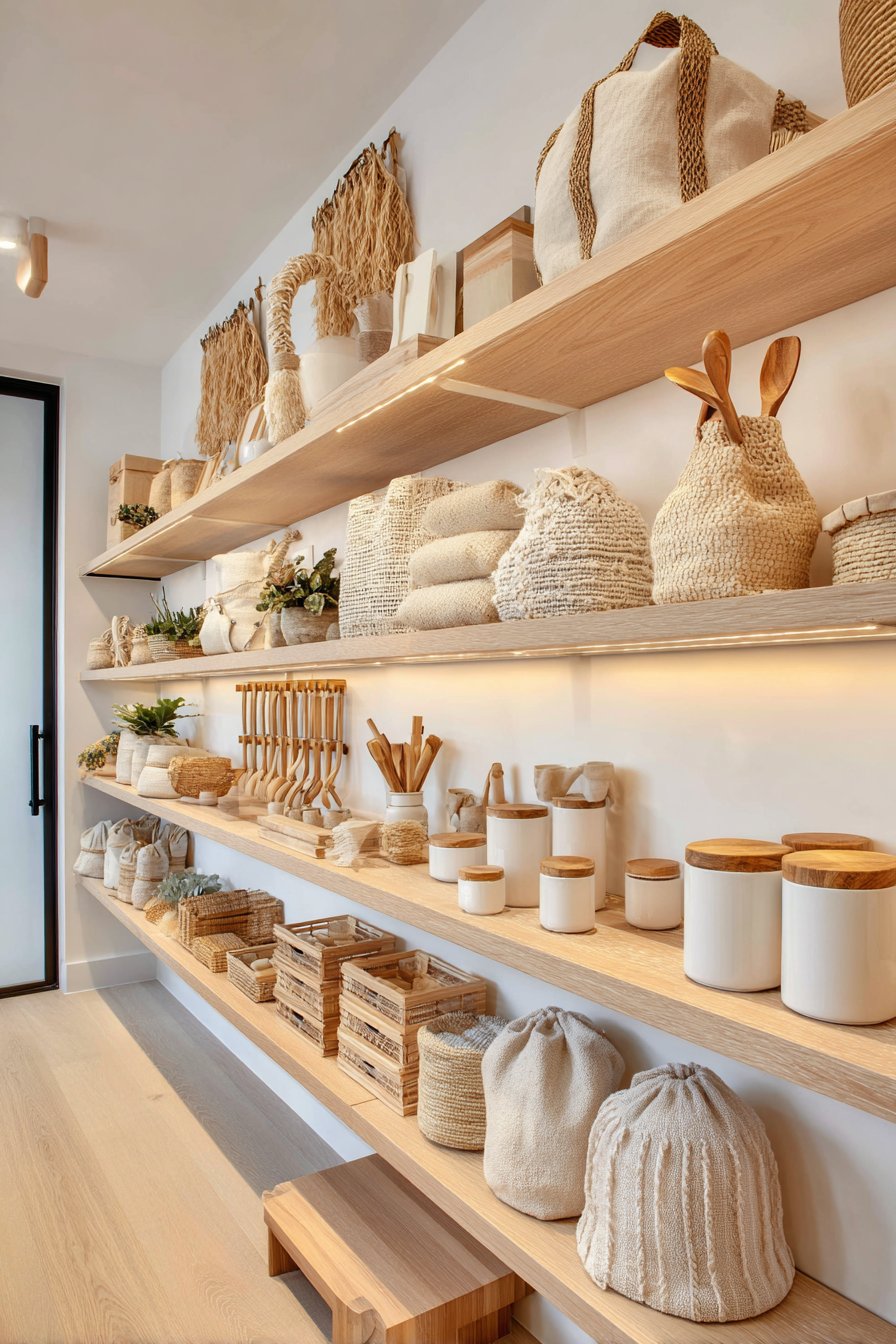
Light ash wood shelving creates a serene foundation in this Nordic-inspired space. The pale wood tone brightens the pantry naturally. Minimalist white ceramic containers maintain the clean aesthetic. Bamboo drawer organizers separate utensils and small items with precision. The natural materials align with Scandinavian design principles.
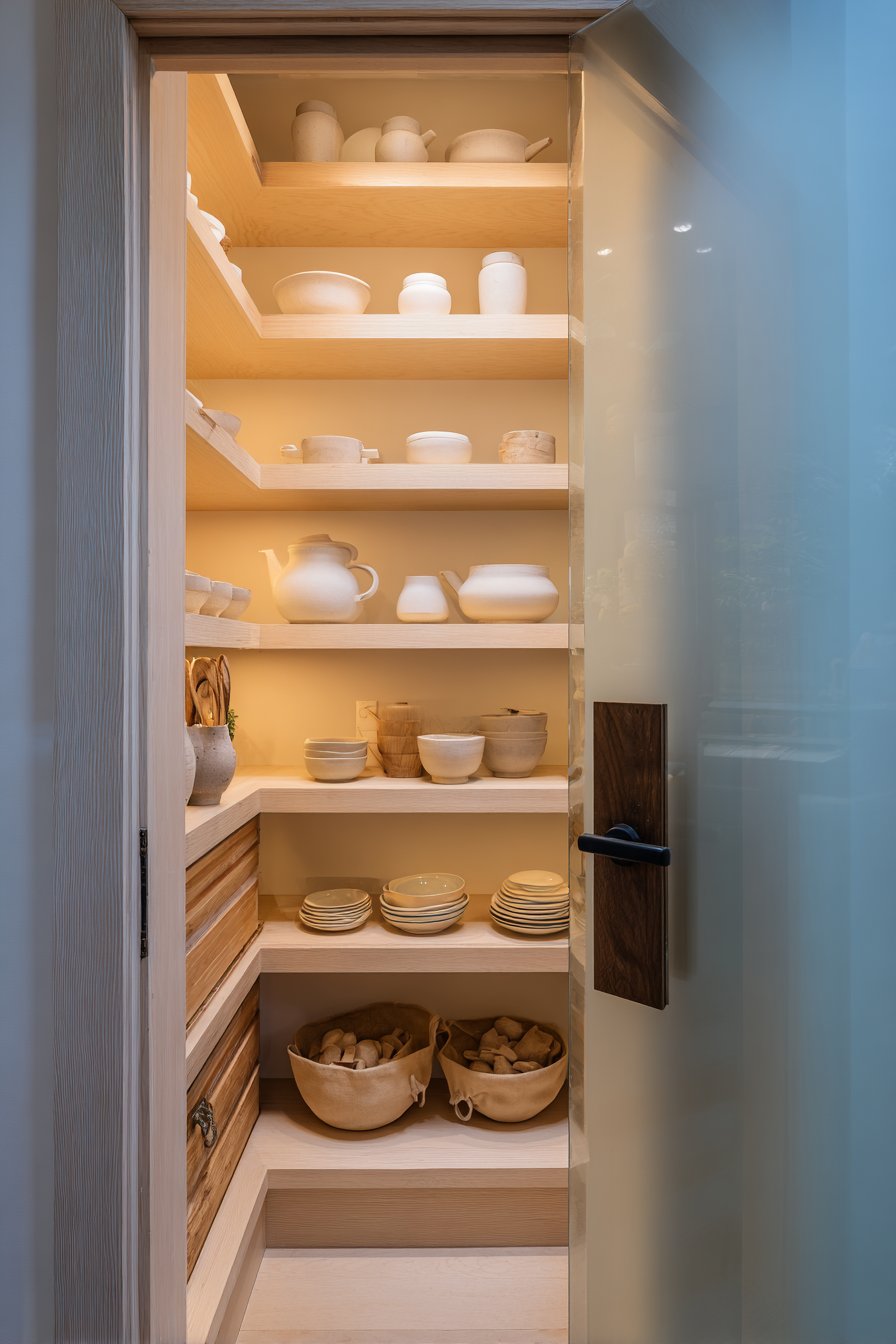
Natural linen storage bags hang from simple hooks. Root vegetables breathe properly in the fabric enclosures. This storage method combines functionality with organic beauty. A simple wooden step provides access to upper shelves. The unadorned design reflects Nordic restraint and purposefulness.
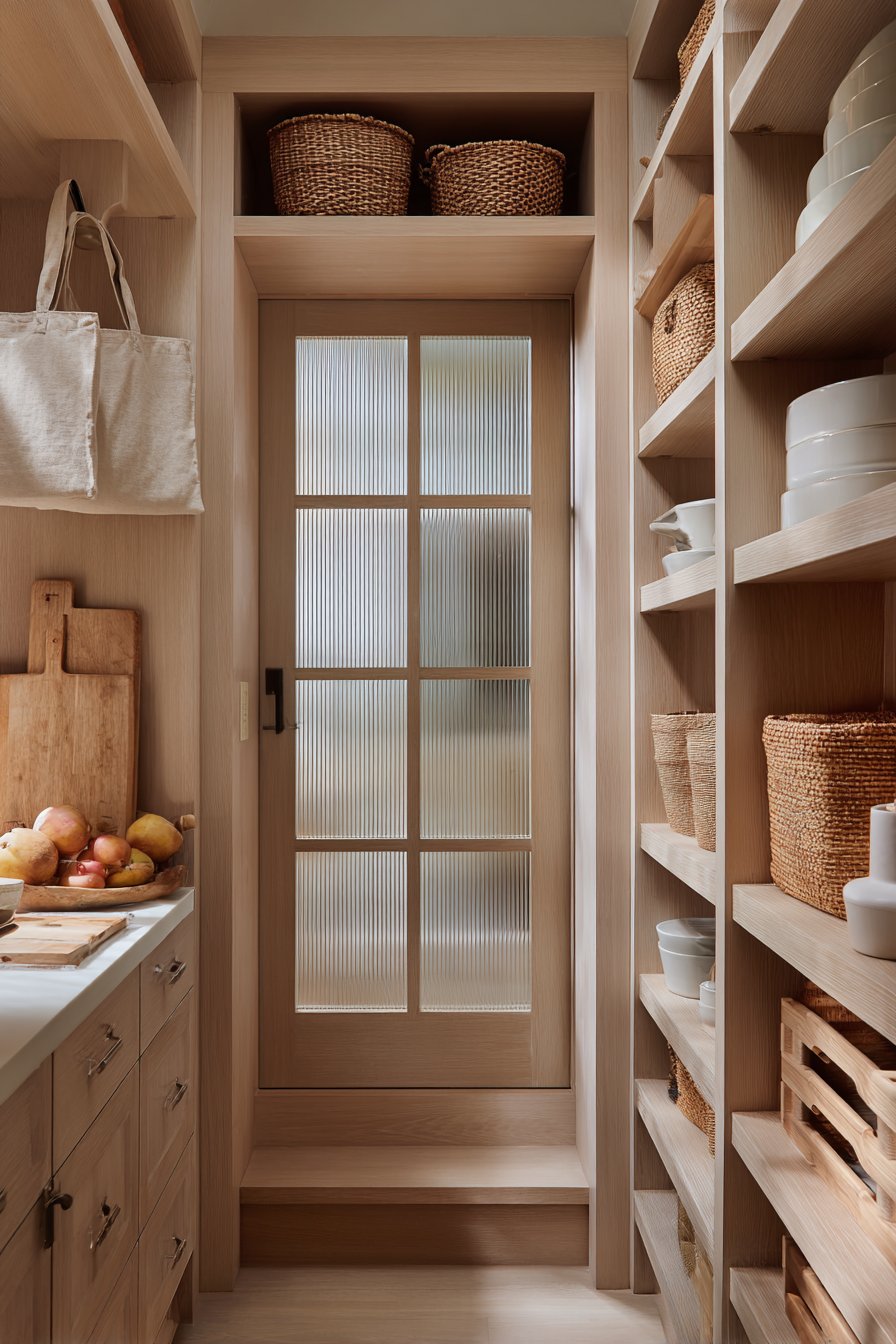
Frosted glass doors allow natural light penetration while maintaining privacy. The translucent surface diffuses harsh sunlight into gentle illumination. Soft light highlights the clean lines and thoughtful organization. The overall effect promotes calm and order. This atmosphere extends the peaceful Scandinavian aesthetic into daily life.
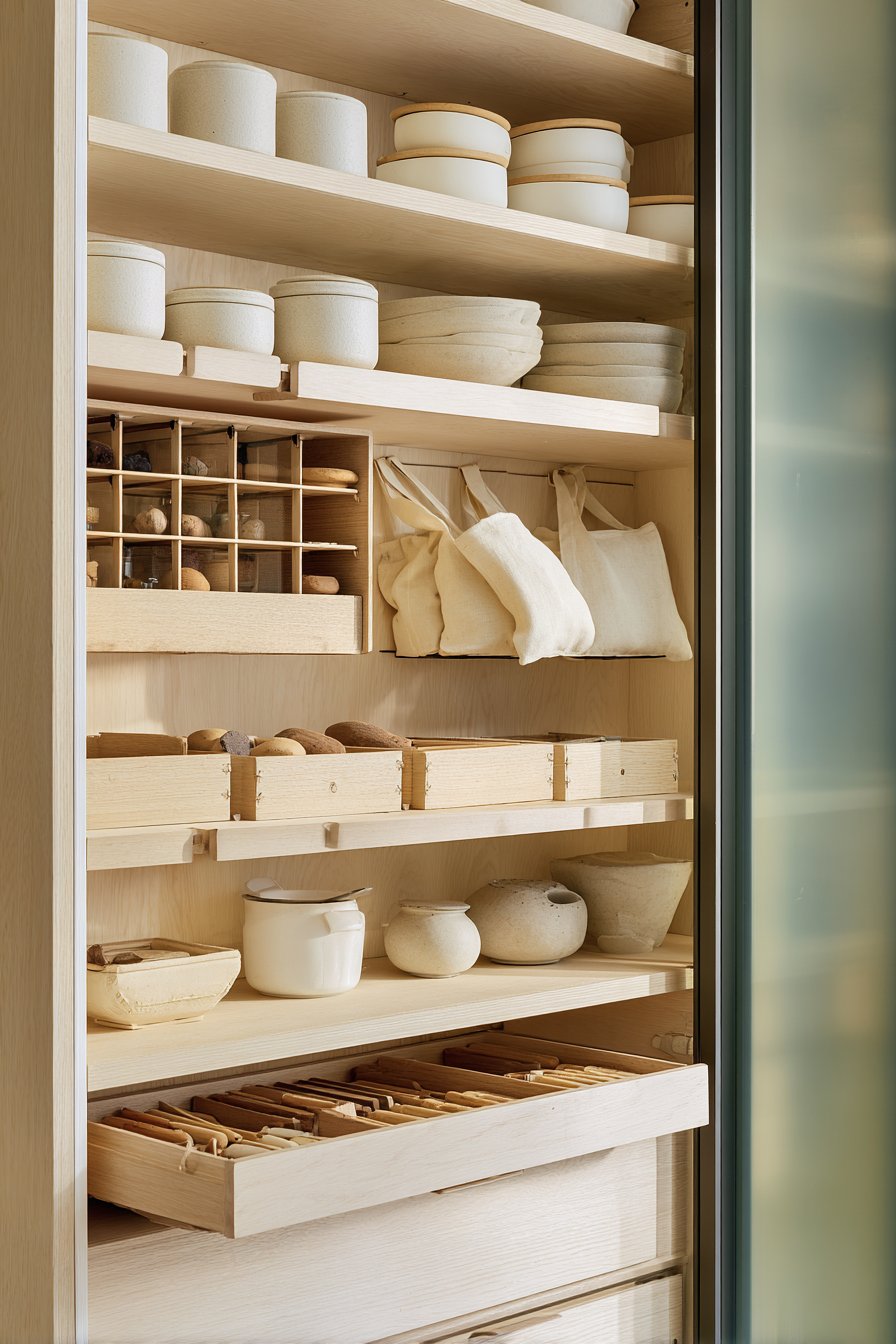
The color palette remains deliberately neutral and nature-inspired. White, pale wood, and natural linen dominate the scheme. This restraint prevents visual overwhelm in the compact space. Every element earns its place through function and beauty. The design demonstrates that simplicity creates its own elegance.
Key Design Tips:
- Select light ash wood for shelving to create Scandinavian brightness
- Use minimalist white ceramic containers for cohesive storage
- Add bamboo organizers for sustainable drawer organization
- Hang natural linen bags for breathable produce storage
- Install frosted glass doors to allow natural light while maintaining privacy
- Maintain a neutral palette of whites and natural wood tones
8. Smart Pantry with Modern Convenience Features
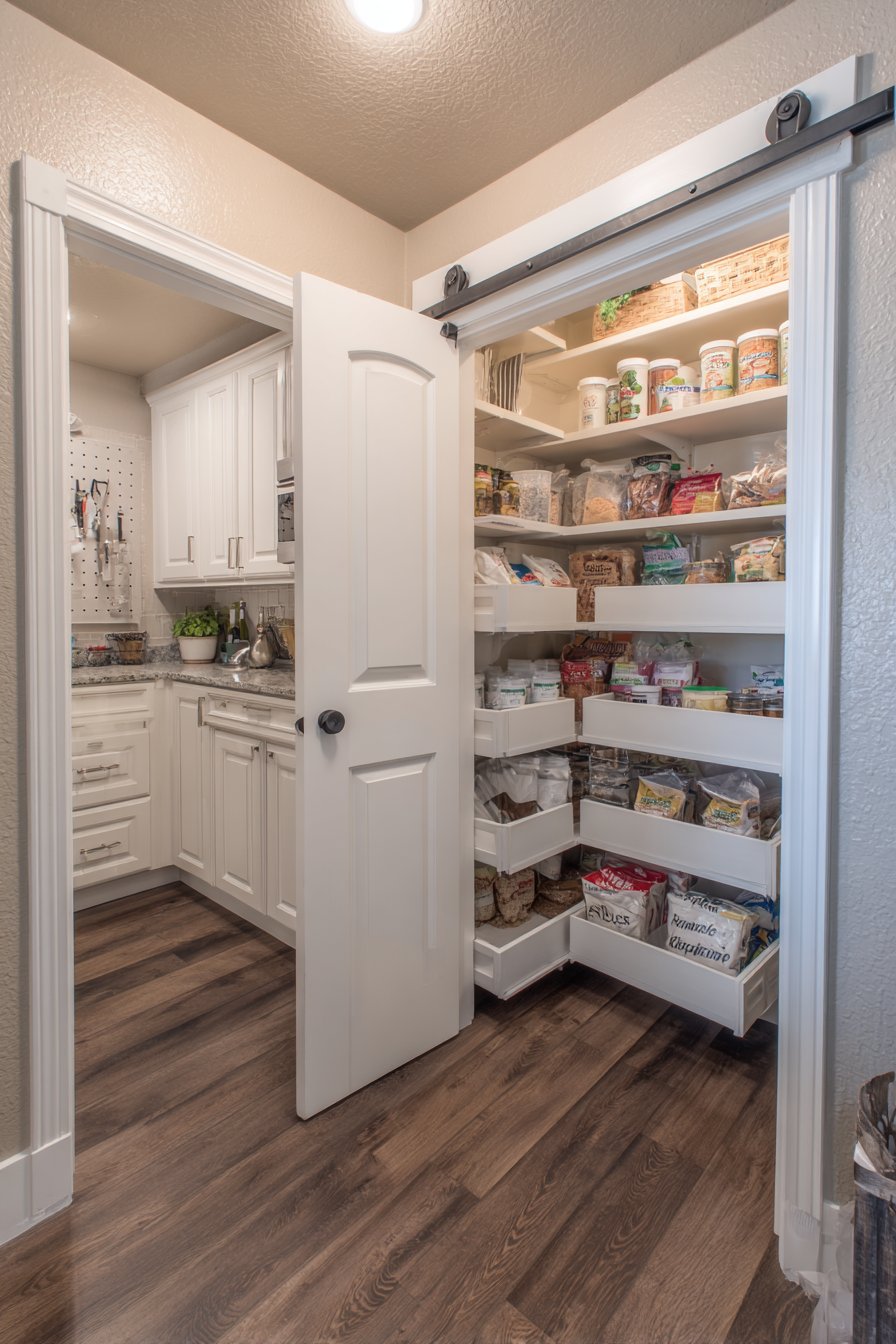
Pull-out shelving provides easy access to deep cabinet contents. The sliding mechanism prevents items from hiding in back corners. Lazy Susan corner organizers maximize awkward angular spaces. These rotating platforms make every item reachable with simple spins. Motion-sensor LED strip lighting activates automatically upon entry.
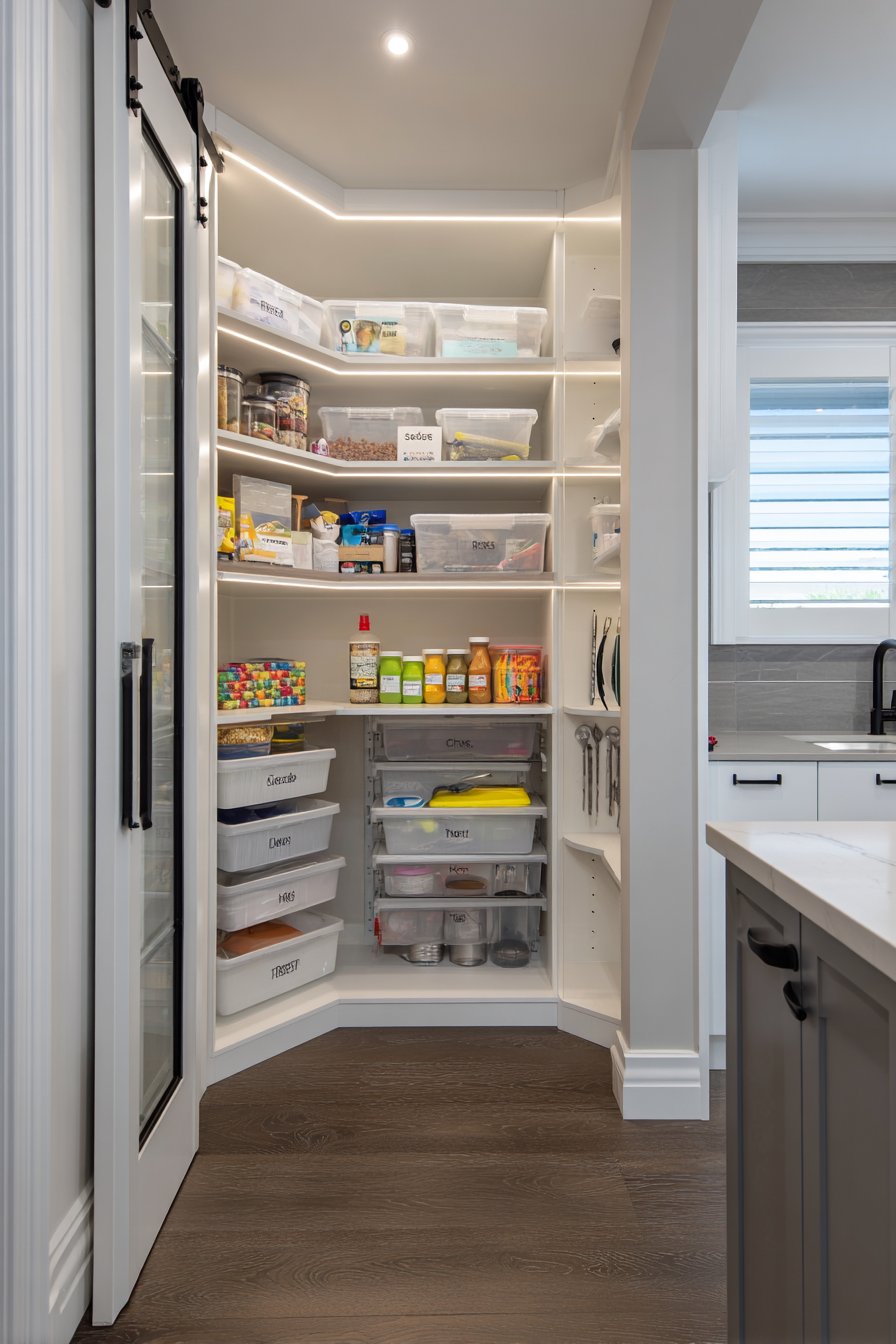
A pegboard wall section holds frequently-used tools and measuring cups. The customizable surface adapts as needs change. Hooks and holders can be repositioned without tools or permanent mounting. A sliding barn door saves hallway space outside the pantry. The space-efficient entrance doesn’t require swing clearance like traditional doors.
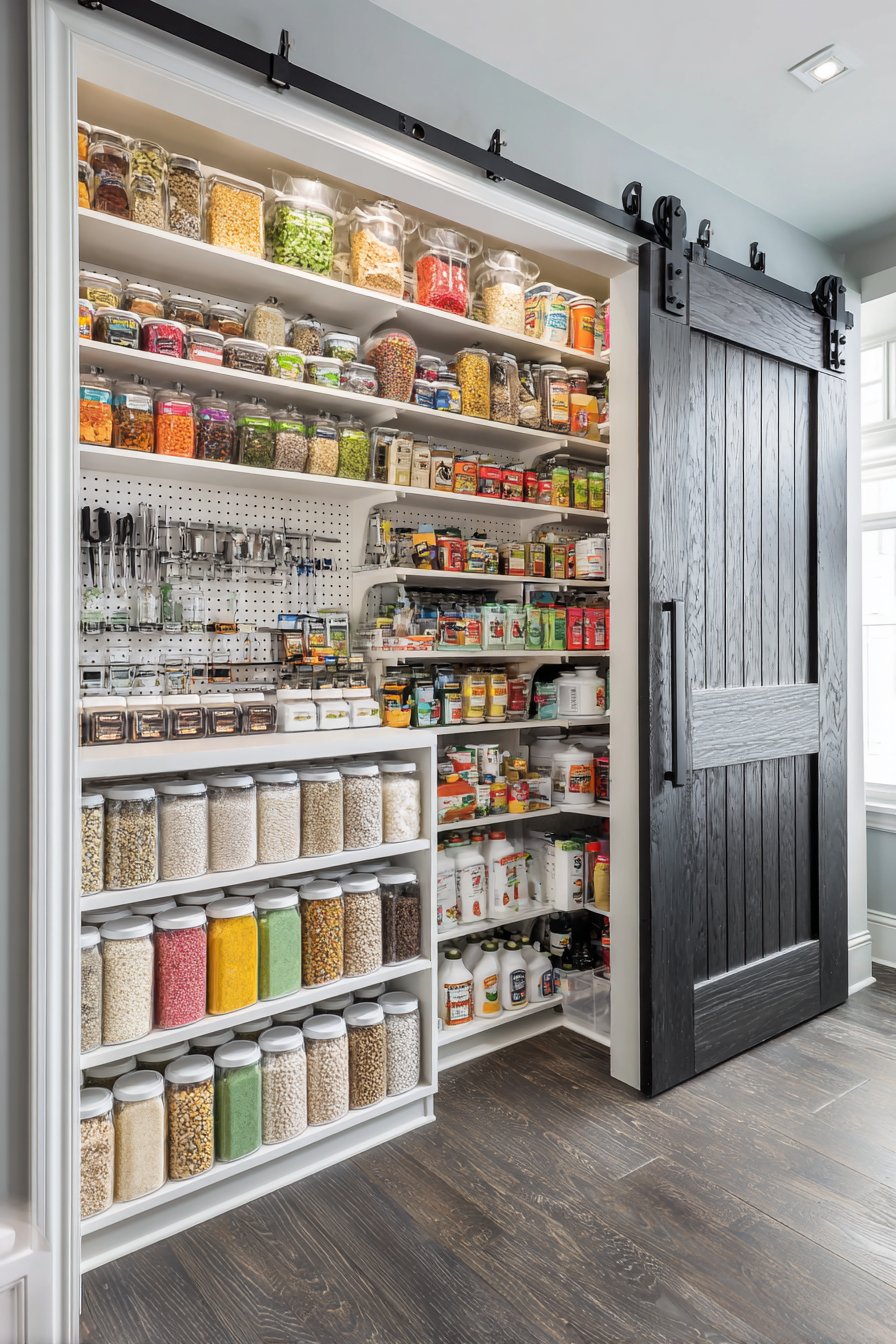
Label maker organization identifies the contents of matching white containers. The uniform system creates visual calm while improving functionality. Finding specific ingredients becomes effortless with clear labeling. The white containers stack efficiently and look cohesive on shelves. Professional organization meets residential accessibility in this design.
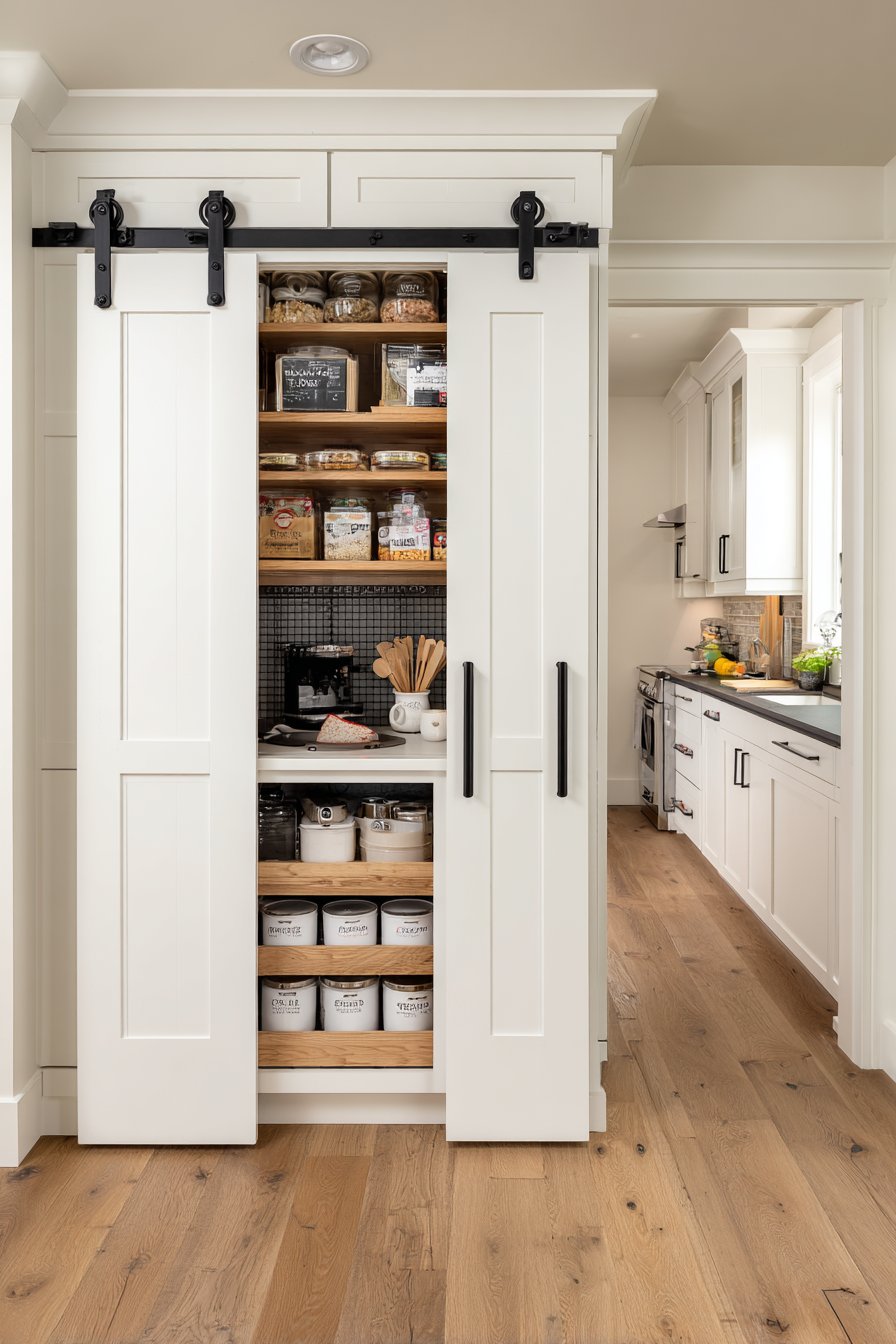
Technology integration enhances traditional pantry functions throughout. Motion sensors eliminate fumbling for light switches with full arms. The convenience features make the space more usable for all family members. Modern innovations support timeless organizational principles. The result combines cutting-edge convenience with classic pantry purposes.
Key Design Tips:
- Install pull-out shelving for easy access to deep storage areas
- Use lazy Susan organizers to maximize corner cabinet space
- Add motion-sensor lighting for hands-free illumination
- Incorporate pegboard walls for flexible tool storage
- Choose sliding barn doors to save hallway space
- Implement uniform containers with label maker identification
9. Butler’s Pantry with Elegant Serving Functionality
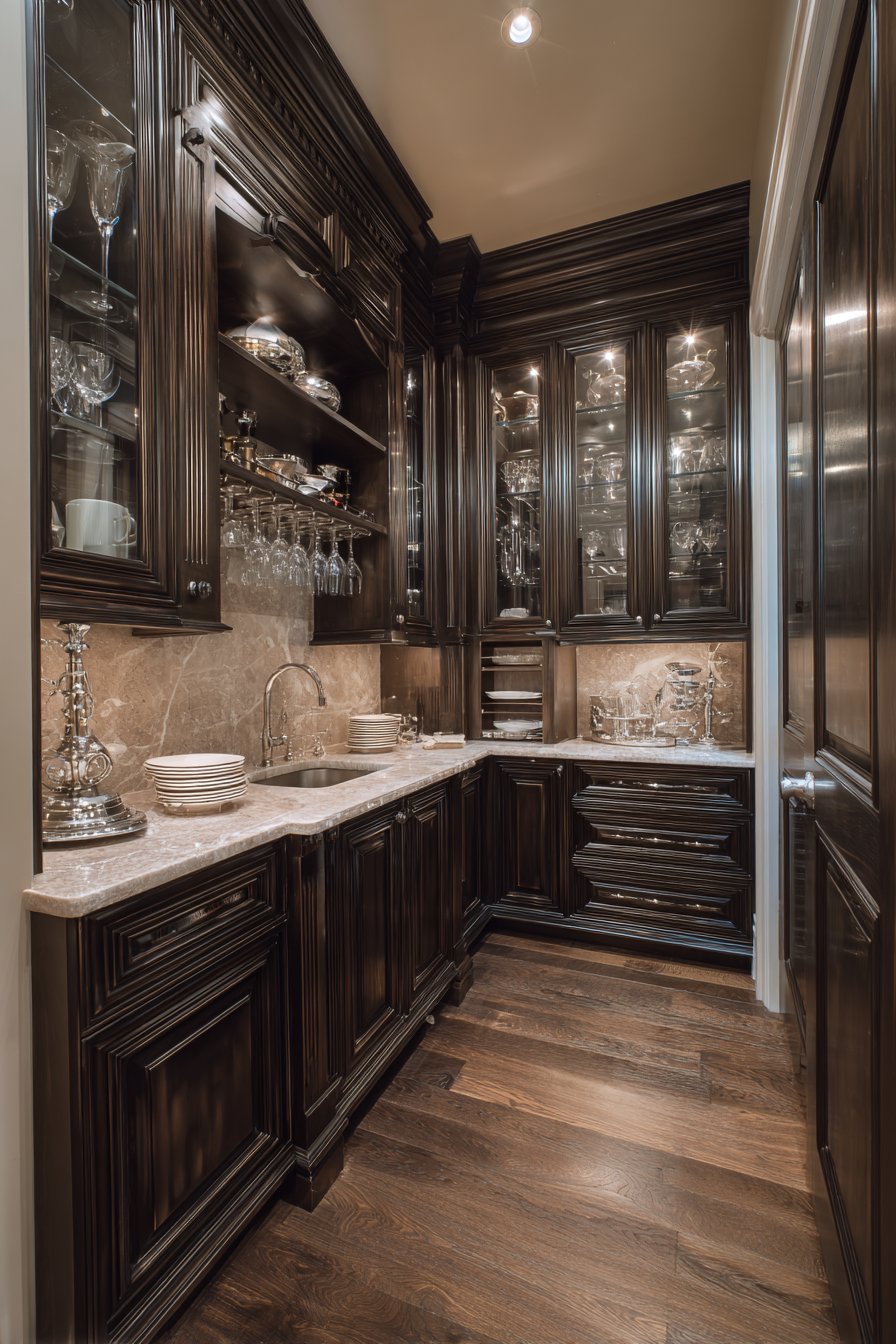
Dark walnut cabinetry creates rich sophistication in this transitional space. The pantry connects kitchen to dining room with grace. Glass-front china storage displays fine dishware and serving pieces. The transparent cabinets showcase collections while protecting them from dust. Built-in wine racks hold twenty-four bottles at proper angles.
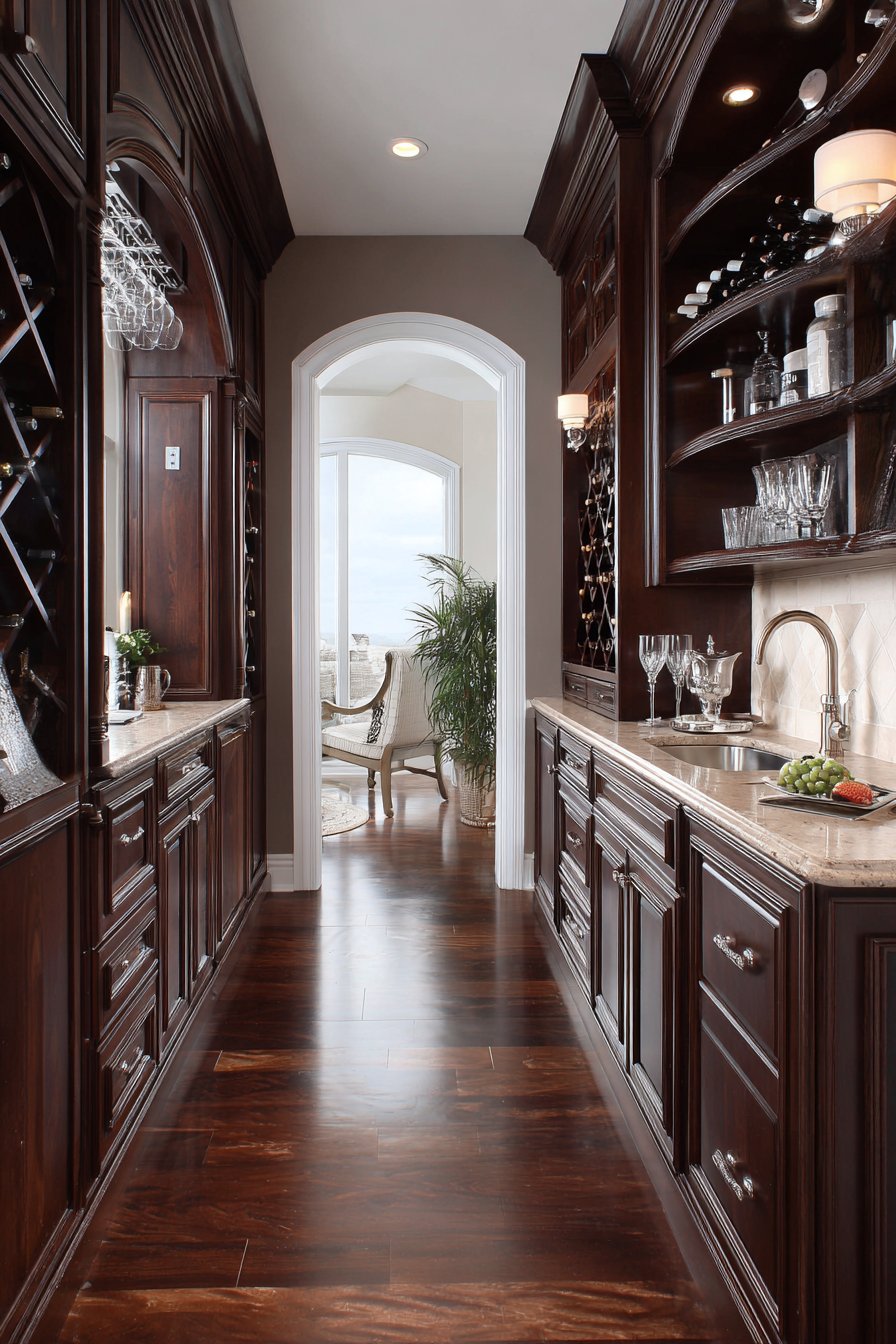
Stemware hangs overhead in specialized racks above the wine storage. The inverted glasses create visual interest while saving shelf space. Silver serving pieces display on open shelving with decorative plate rails. These cherished items become part of the room’s aesthetic. A small prep sink with a polished nickel faucet facilitates entertaining tasks.
The sink allows quick rinses without returning to the main kitchen. Glasses can be washed and refilled during parties. Serving pieces receive final polishing before use. This convenience transforms entertaining logistics. Sconce lighting creates an ambient glow along the cabinetry walls. The fixtures provide functional illumination with decorative character.
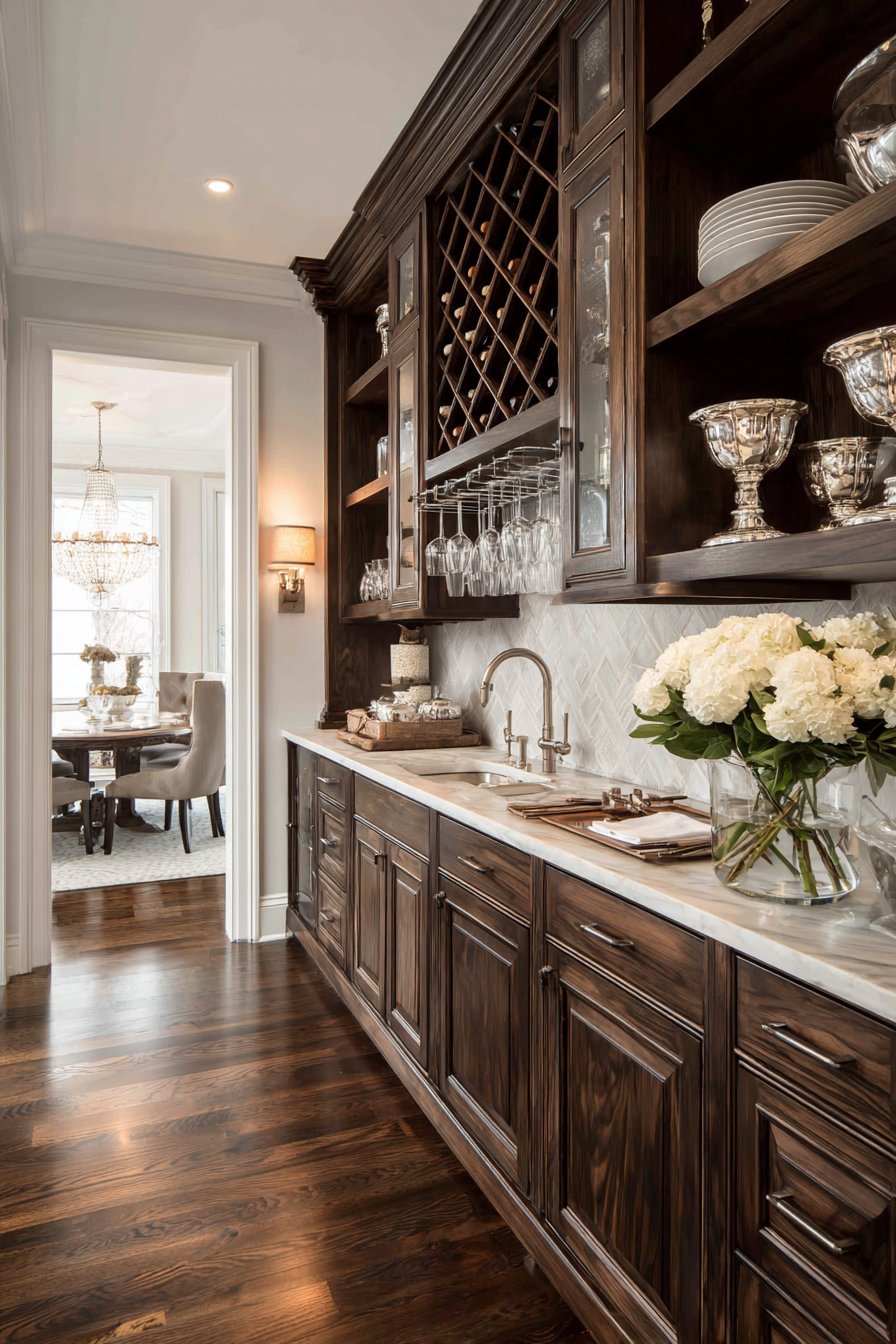
The butler’s pantry serves both storage and serving functions beautifully. The design bridges kitchen efficiency with dining room elegance. Hosts can prepare beverages and plates away from guest views. The rich wood grain adds warmth to the formal entertaining space. Traditional details meet modern convenience in this timeless design.
Key Design Tips:
- Choose dark walnut cabinetry for sophisticated traditional appeal
- Install glass-front cabinets to display china and serving pieces
- Add built-in wine storage with proper bottle positioning
- Include overhead stemware racks to save shelf space
- Incorporate a prep sink for entertaining convenience
- Use sconce lighting for ambient illumination along walls
10. Health-Focused Pantry with Wellness Organization
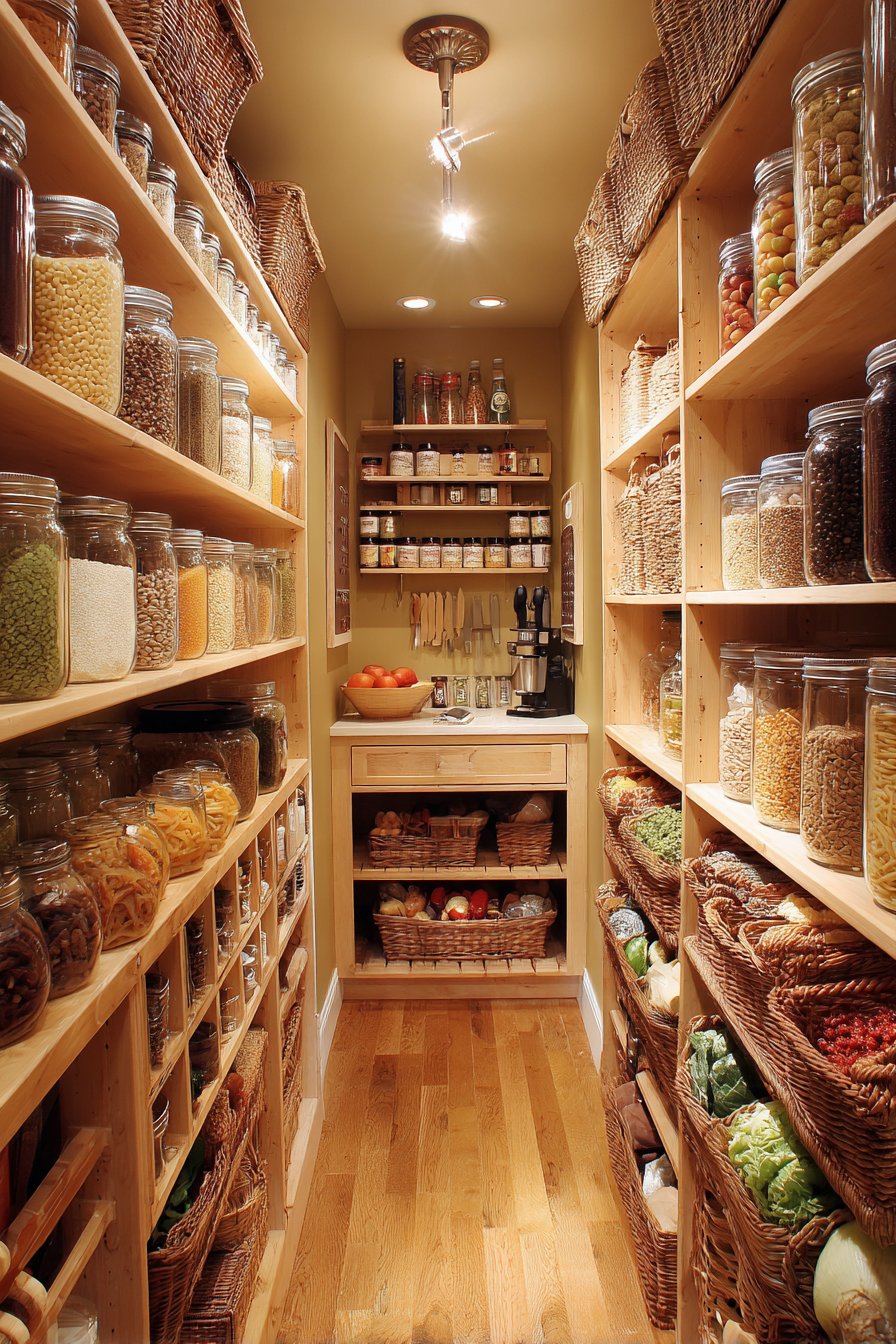
Clear categorization organizes this pantry by nutritional priorities. Whole grains occupy dedicated shelving with identifying labels. Nut and seed storage keeps healthy fats fresh and accessible. Dried fruit containers separate sweet snacks from regular ingredients. Superfood supplements are organized by type in labeled sections.
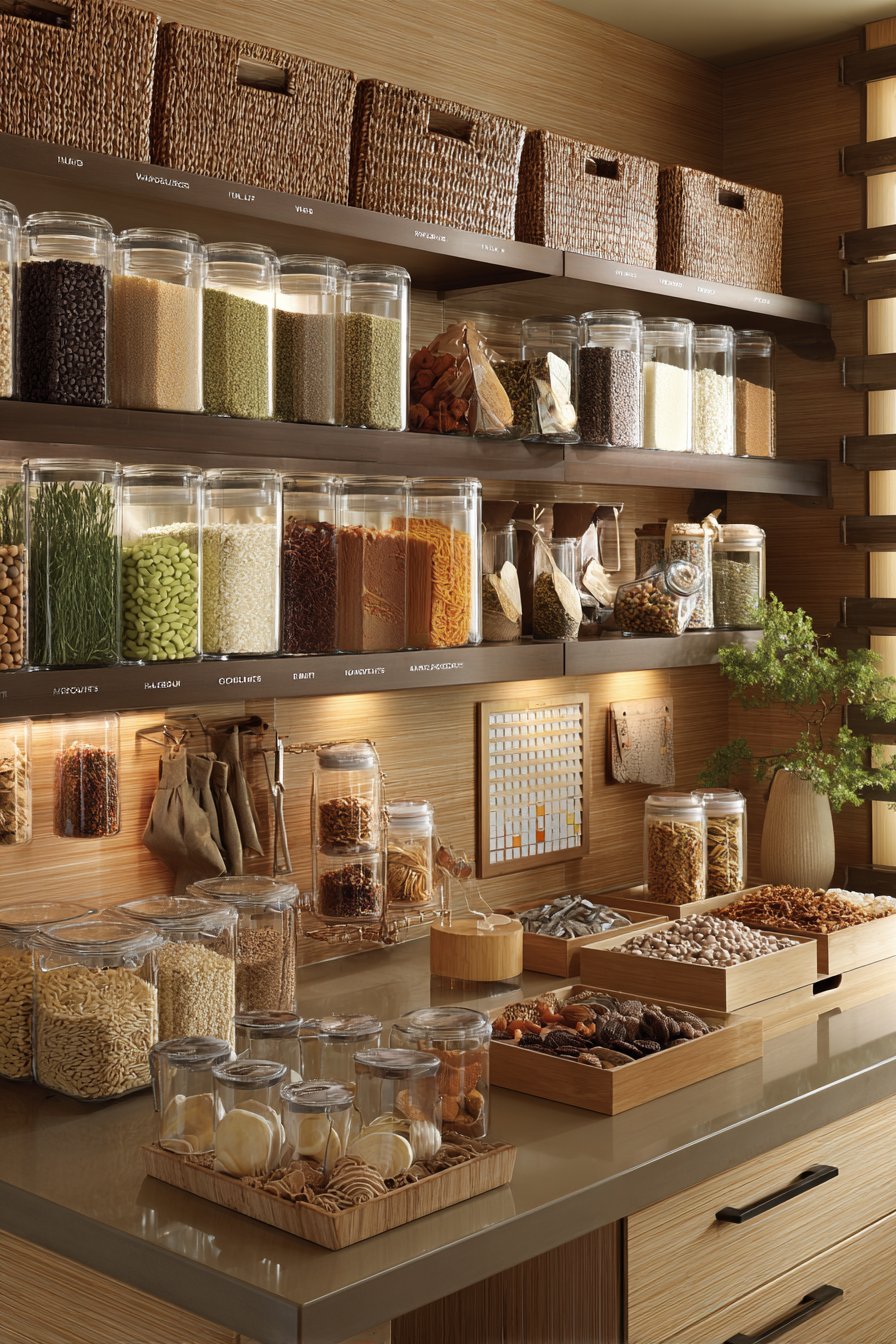
A refrigerated drawer unit stores fresh produce at the pantry level. This placement improves visibility compared to standard refrigerator crispers. Healthy snacks stay more visible and therefore get chosen more often. The meal planning station includes a magnetic calendar and recipe holder. Weekly menus can be planned while surveying available ingredients.
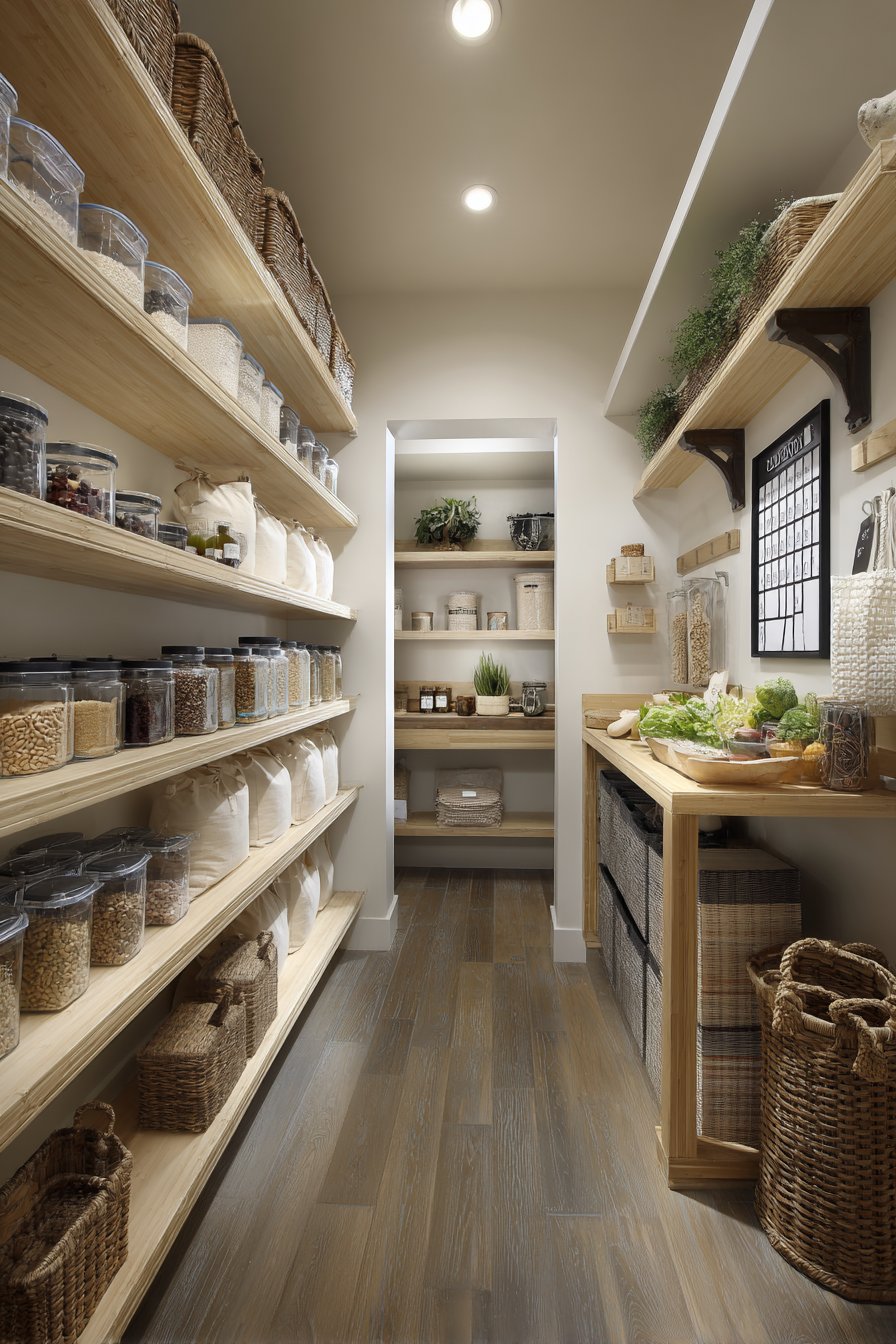
Natural bamboo shelving creates cohesive organic aesthetic throughout. Matching bamboo containers reinforce the health-conscious material choices. The sustainable materials align with wellness values. Task lighting illuminates the preparation area for reading recipes and labels. The bright light supports detailed cooking and planning work.
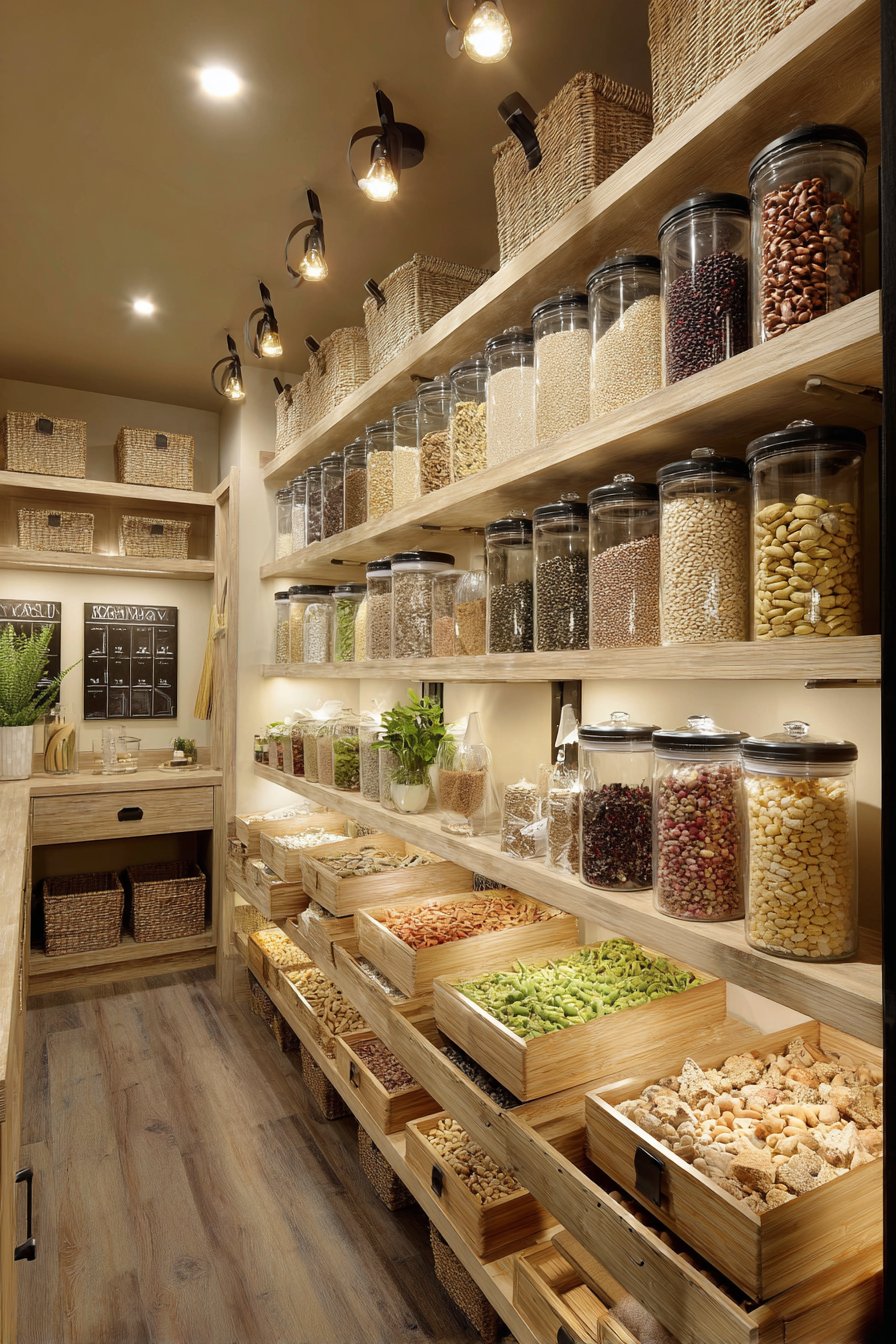
The wellness-focused organization system supports healthy eating habits naturally. Whole foods occupy prime real estate at eye level. Processed items get relegated to less convenient locations. Visual reminders of nutritious options encourage better food choices. The design proves that the organization can support lifestyle goals.
Key Design Tips:
- Organize foods by nutritional category for health-conscious choices
- Add refrigerated drawers at pantry level for fresh produce visibility
- Create a meal planning station with calendar and recipe storage
- Use natural bamboo shelving and containers for an organic aesthetic
- Install task lighting over preparation areas for recipe reading
- Place whole foods at eye level to encourage healthy choices
11. Coastal Cottage Pantry with Nautical Charm
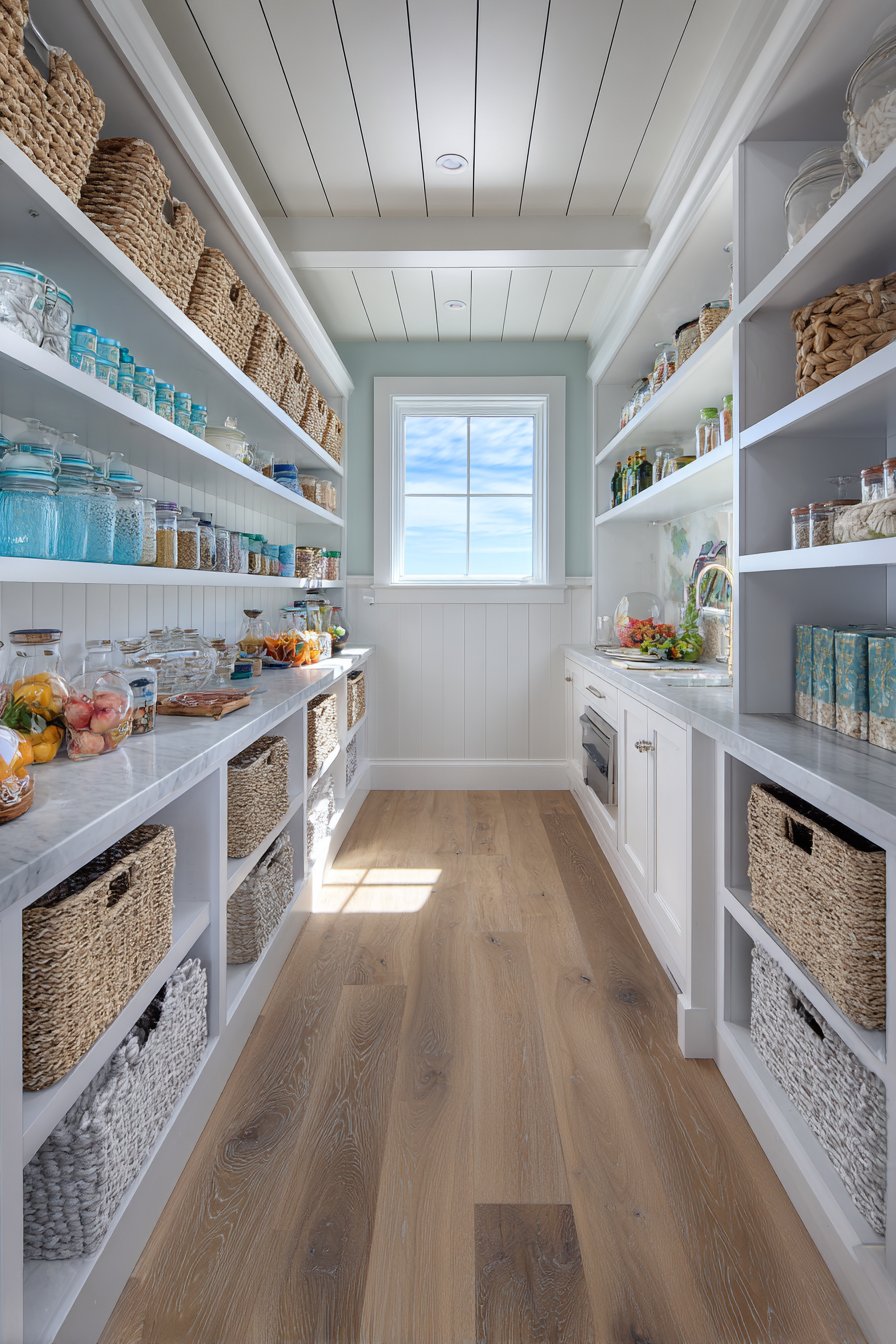
Whitewashed wood shelving creates breezy foundation in this beach-inspired space. The weathered finish suggests driftwood collected from shorelines. Rope basket storage adds natural texture with maritime references. Blue and white ceramic containers create a classic nautical color scheme. The crisp combination evokes seaside living and ocean views.
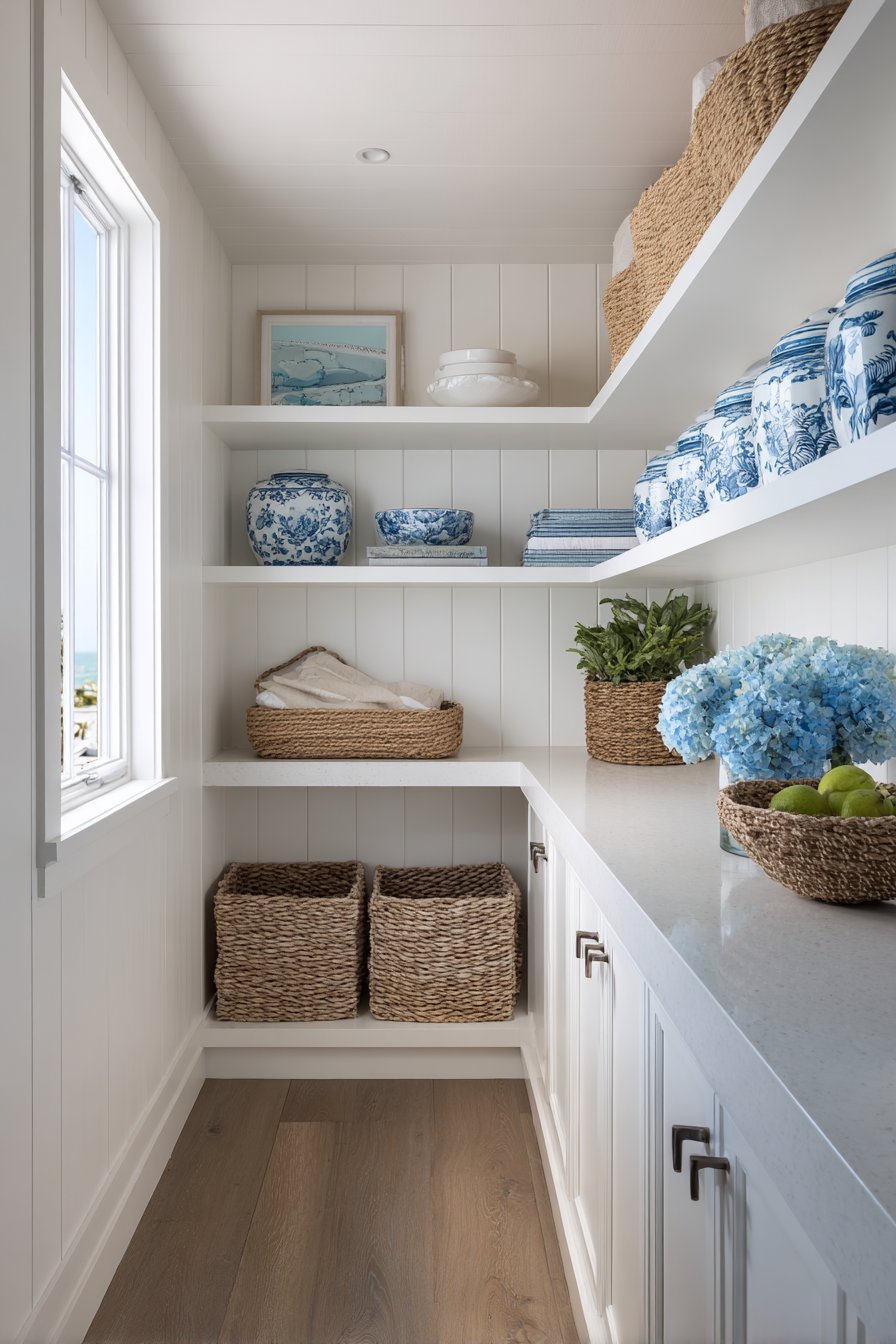
Seagrass bins hold linens and seasonal items on upper shelves. The woven natural fiber adds organic warmth to the space. Beadboard backsplash contributes cottage texture behind shelving areas. The vertical paneling references traditional beach house architecture. A porthole-style window brings natural light with nautical character.
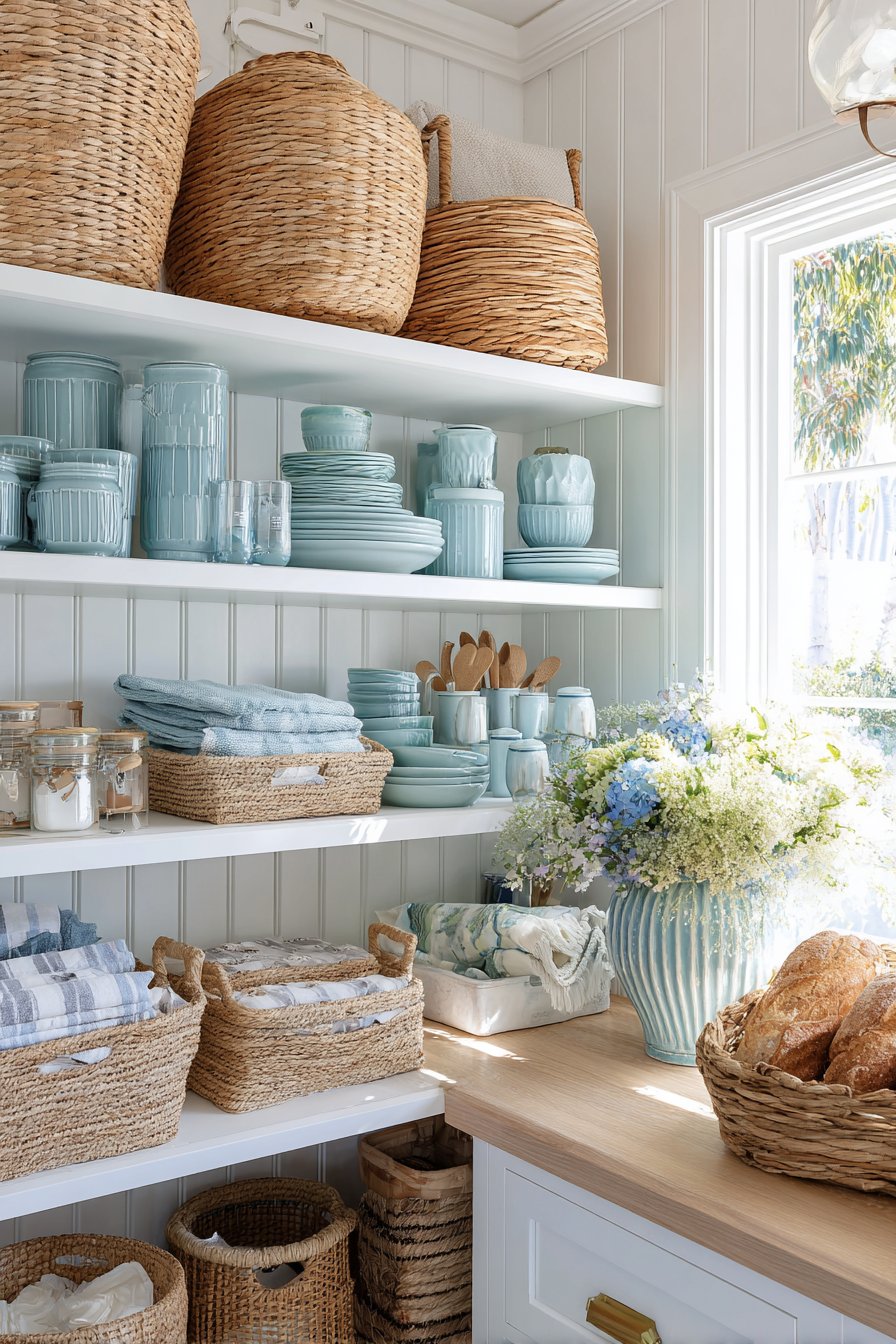
Brushed nickel hardware maintains the fresh coastal feeling throughout. The silvery metal finish suggests chrome details on boats. All fixtures coordinate to support the cohesive theme. The overall aesthetic captures relaxed beach house living. Casual organization meets coastal elegance in this charming design.
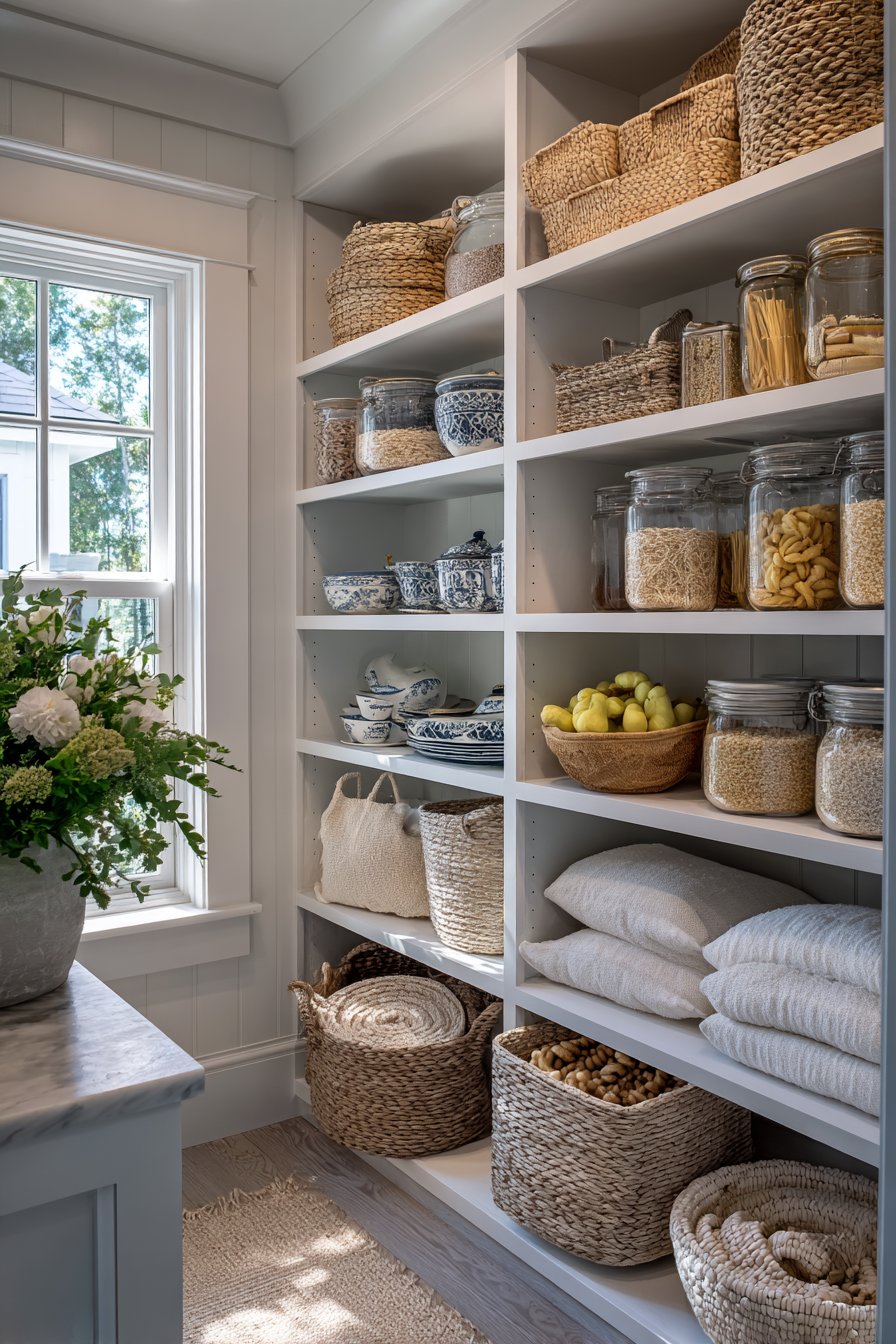
Natural light from the porthole window illuminates the space beautifully. Morning sun creates dimensional shadows across the textured surfaces. The soft illumination emphasizes the whitewashed wood grain. The pantry feels like a calm retreat from busy kitchen activity. Every element supports the serene coastal atmosphere.
Key Design Tips:
- Use whitewashed wood shelving for weathered coastal character
- Add rope baskets for natural texture and nautical references
- Choose blue and white ceramics for classic seaside color scheme
- Incorporate seagrass bins for organic texture and storage
- Install beadboard backsplash for cottage architectural detail
- Select a porthole window for natural light with coastal charm
12. Baker’s Dream Pantry with Specialized Storage
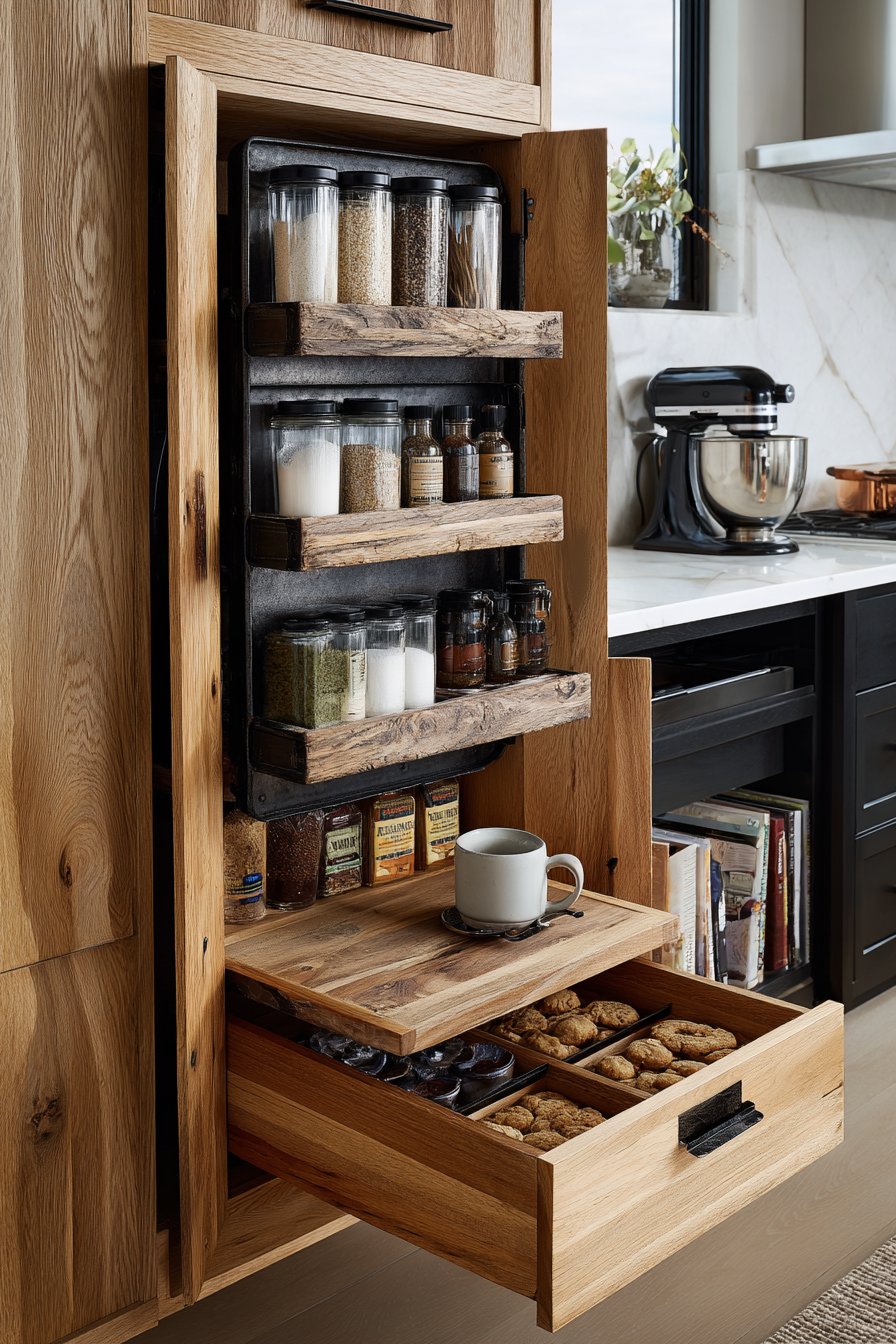
Dedicated flour and sugar storage occupies vintage-style metal bins. The large containers hold bulk quantities purchased for frequent baking. A marble pastry board pulls out from lower cabinetry when needed. The cool stone surface provides ideal dough-rolling conditions. The board stores flush with cabinets when not in use.
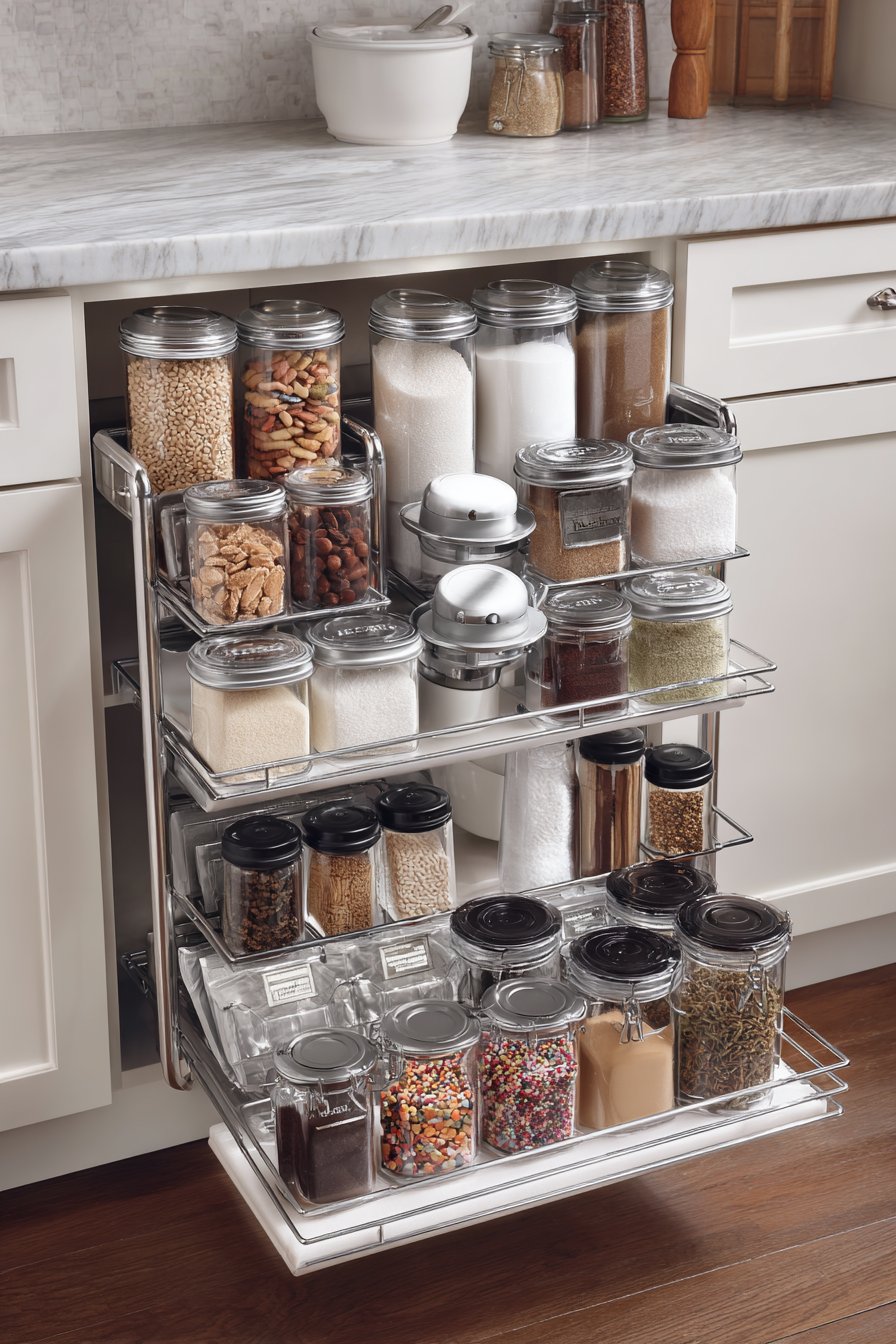
A spice rack organizes extracts and flavorings alphabetically for quick location. Vanilla, almond, and specialty flavors line up in uniform bottles. Baking pan storage features vertical dividers that separate sheet pans and muffin tins. This organization prevents scratching and makes selection effortless. A KitchenAid mixer in heritage color sits ready on lower counter space.
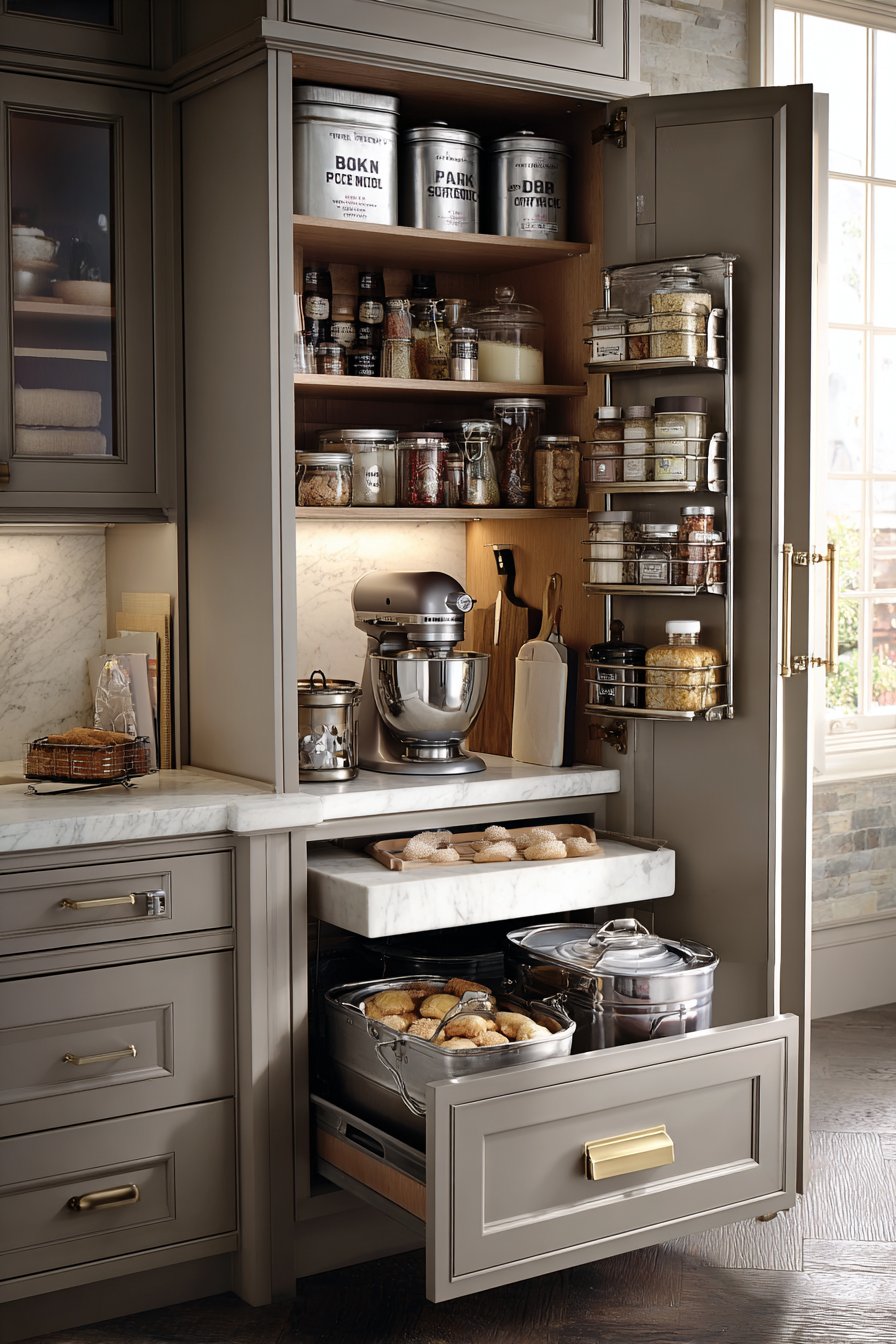
The prominent placement eliminates constant storage and retrieval. Recipe book library is organized by cuisine type and technique. Baking references occupy dedicated shelving within easy reach. Cookbooks become working tools rather than decorative objects. The specialized organization supports serious baking pursuits.
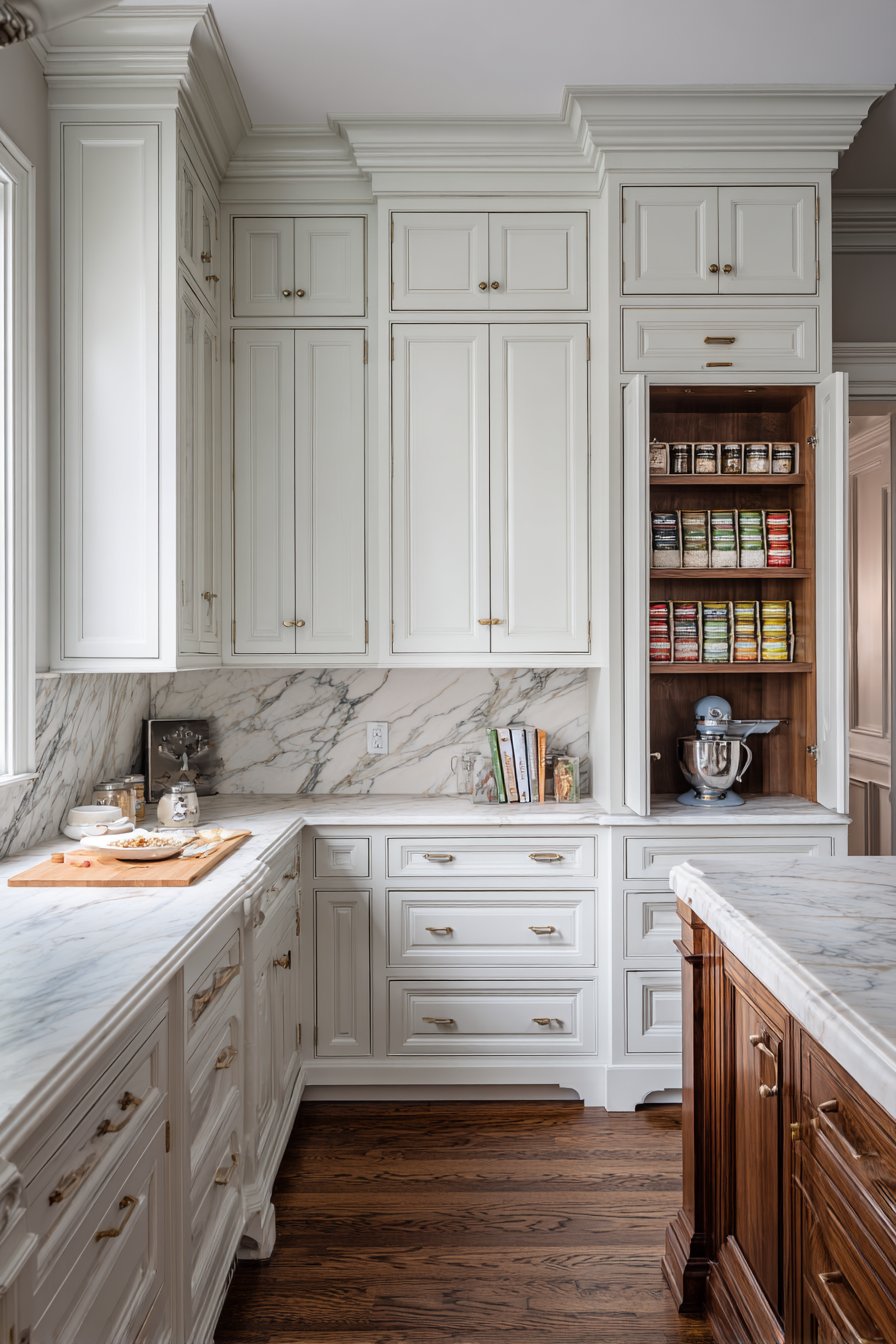
Every element serves the passionate home baker’s needs. The design prioritizes baking workflow and ingredient accessibility. Standard pantry features give way to specialized storage solutions. The space becomes dedicated workspace rather than a simple storage. This focused approach creates ultimate baking efficiency.
Key Design Tips:
- Install vintage metal bins for attractive bulk flour and sugar storage
- Add a pull-out marble pastry board for an ideal dough work surface
- Organize the spice rack alphabetically for quick flavor location
- Use vertical dividers to store baking pans without scratching
- Keep stand mixer on the counter for frequent use convenience
- Create a dedicated recipe book library organized by cuisine type
13. Eco-Friendly Pantry with Sustainable Design
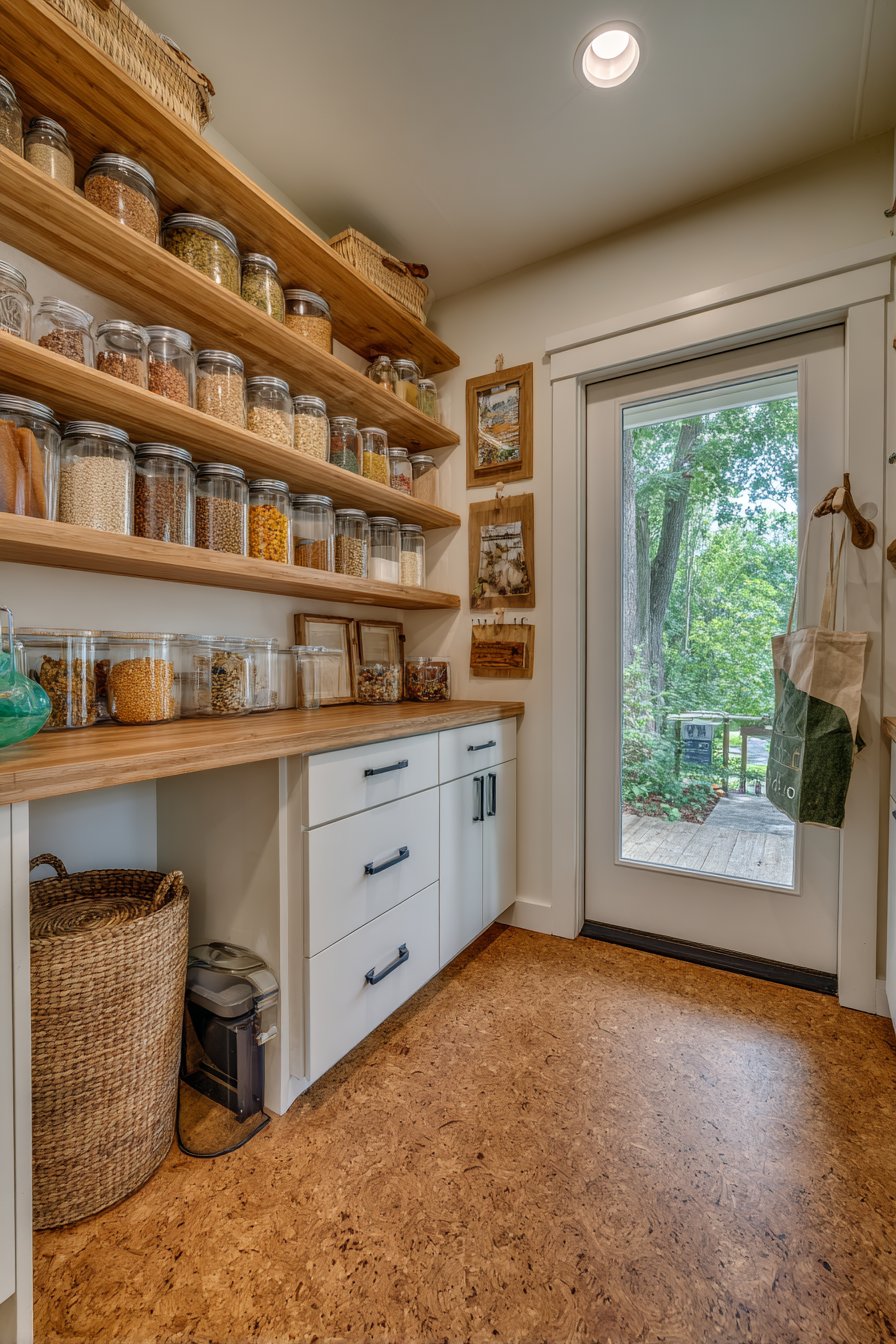
Bamboo shelving provides a renewable material foundation throughout this green pantry. The fast-growing grass offers strength comparable to hardwood. Recycled glass containers reduce reliance on plastic storage. The transparent vessels showcase colorful ingredients beautifully. Bulk food dispensers minimize packaging waste from individual portions.
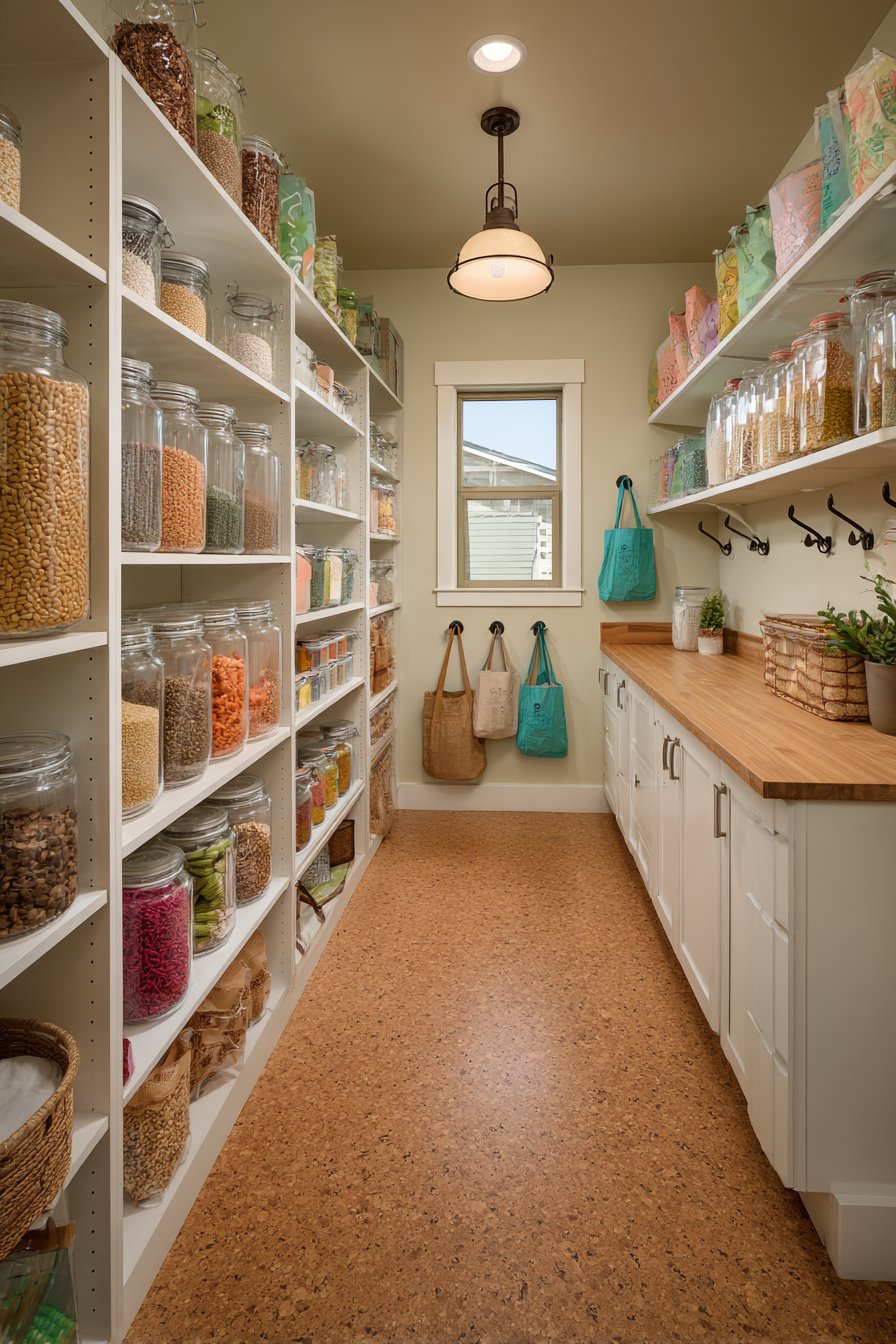
A composting bin integrates seamlessly into lower cabinetry. The enclosed system contains odors while supporting food scrap recycling. Reusable shopping bag storage hooks near the entrance encourage sustainable practices. Canvas and mesh bags stay organized and ready for market trips. Energy-efficient LED lighting throughout reduces electricity consumption.
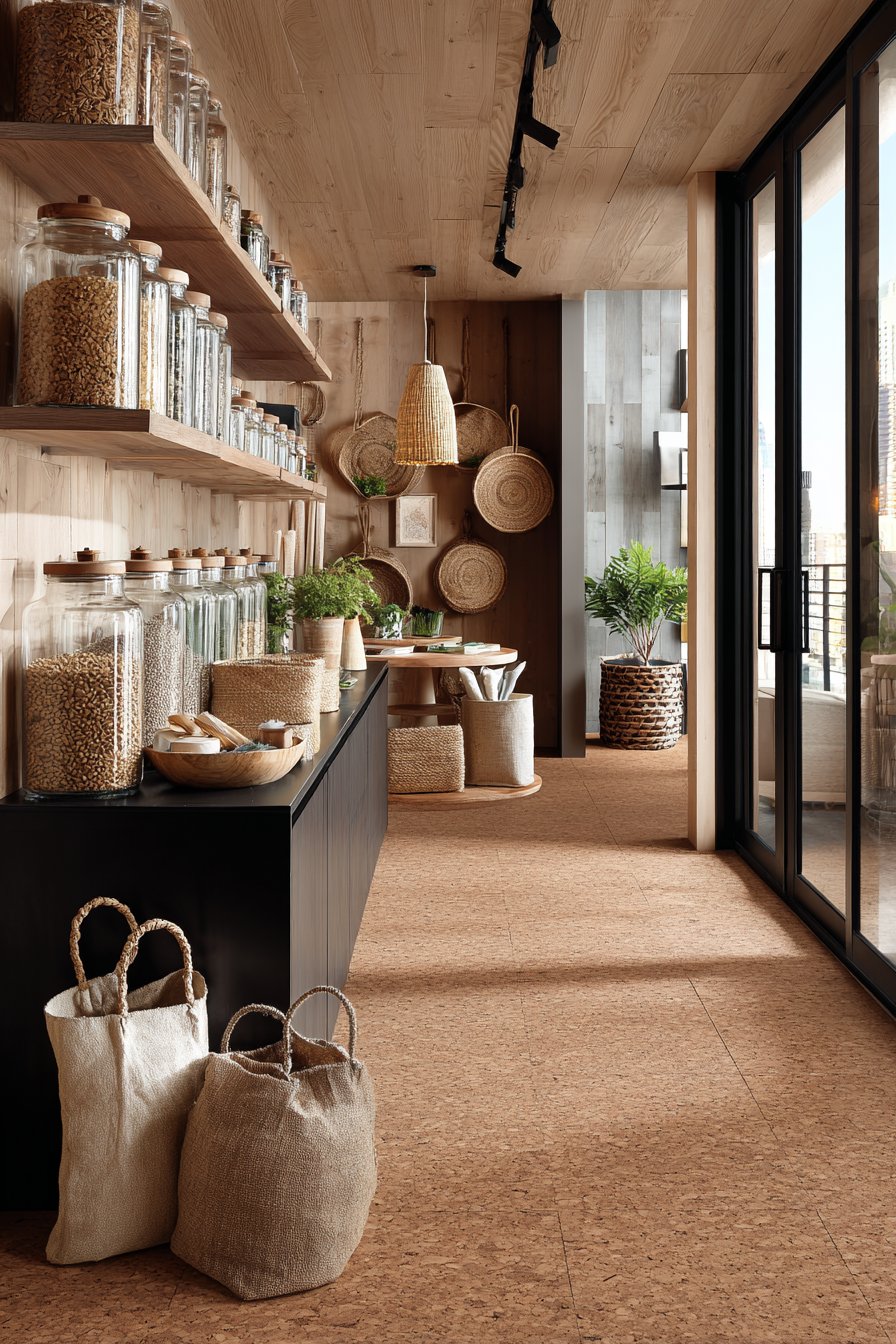
Natural cork flooring provides a sustainable foundation underfoot. The renewable bark harvest doesn’t harm cork oak trees. The surface provides cushioning comfort during long cooking sessions. The environmental consciousness extends through every material choice. Zero-waste principles guide both storage and usage patterns.
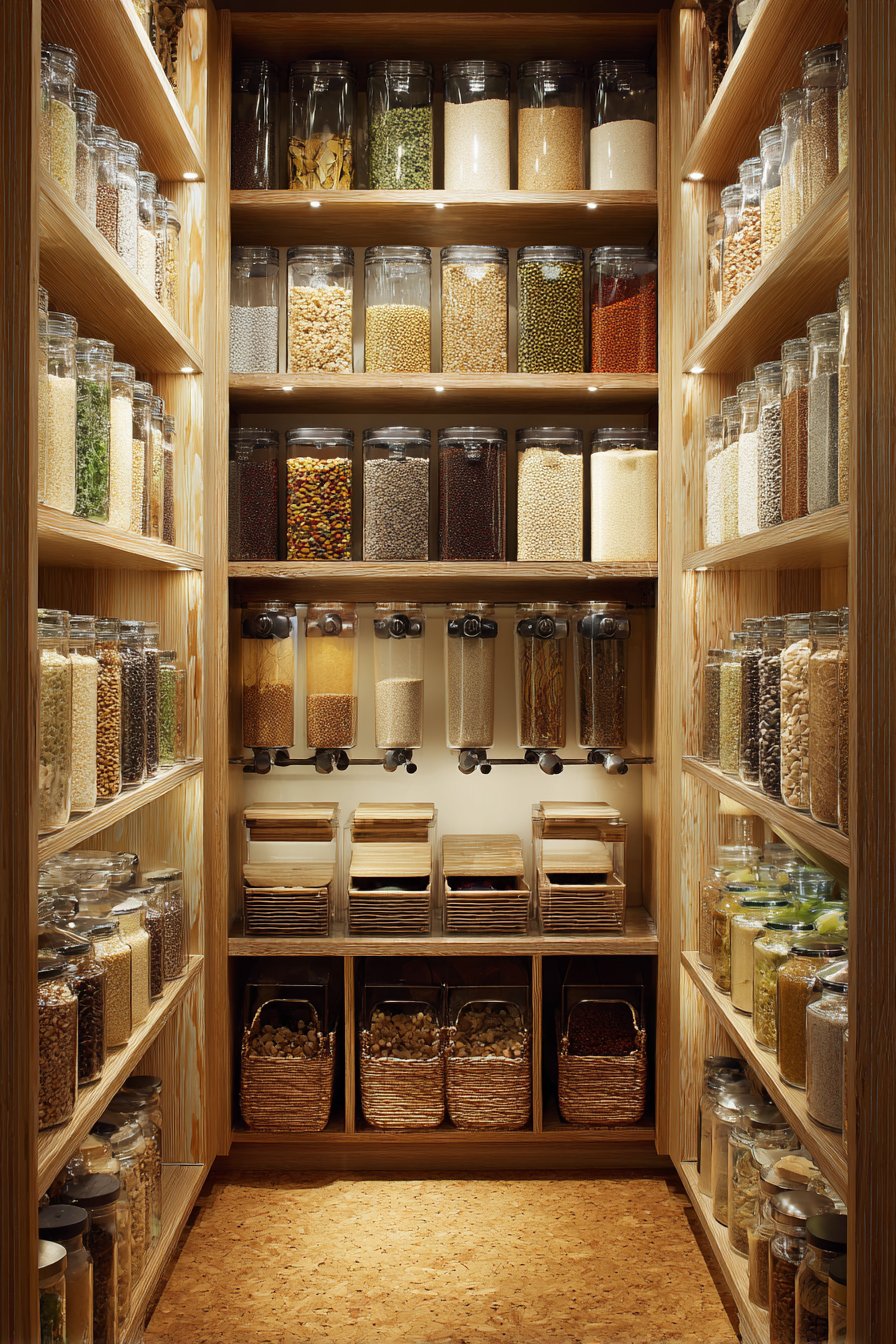
The design demonstrates that sustainability can be beautiful and functional. Eco-friendly materials don’t require aesthetic compromise. The pantry proves green choices enhance rather than limit design. Environmental responsibility becomes seamlessly integrated into daily life. The space supports values through thoughtful material selection.
Key Design Tips:
- Choose bamboo shelving for renewable sustainable material
- Use recycled glass containers instead of plastic storage
- Install bulk food dispensers to reduce packaging waste
- Add integrated composting bin for food scrap recycling
- Include reusable bag storage near entrance for shopping convenience
- Select cork flooring for renewable cushioned foundation
14. Accessible Pantry with Universal Design
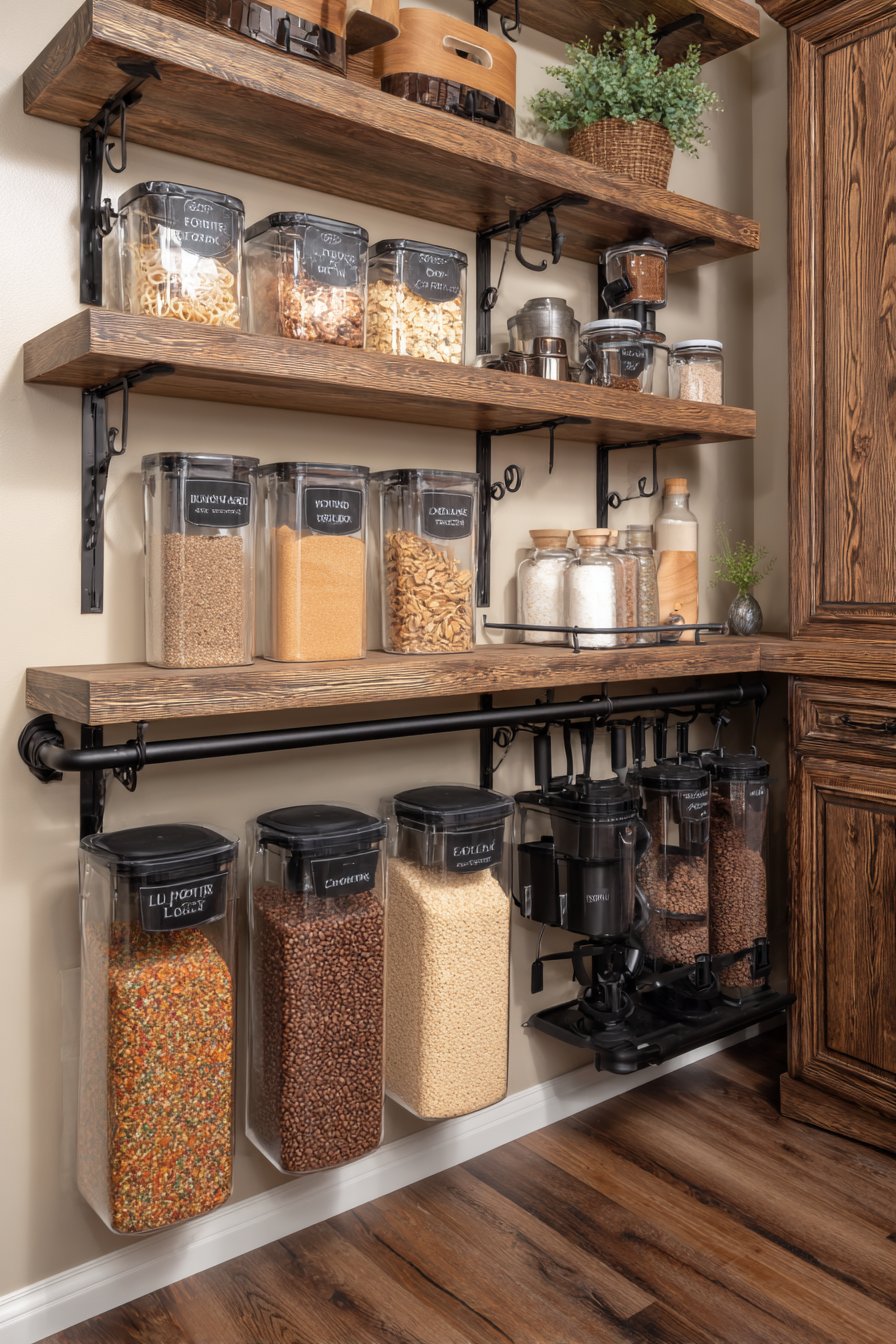
Lower shelving heights accommodate wheelchair users and children comfortably. Upper storage features pull-down mechanisms for safe access. Wide aisles allow mobility aid navigation without obstacles. The generous spacing prevents tight turns and difficult maneuvering. Touch-activated lighting eliminates reaching for switches.
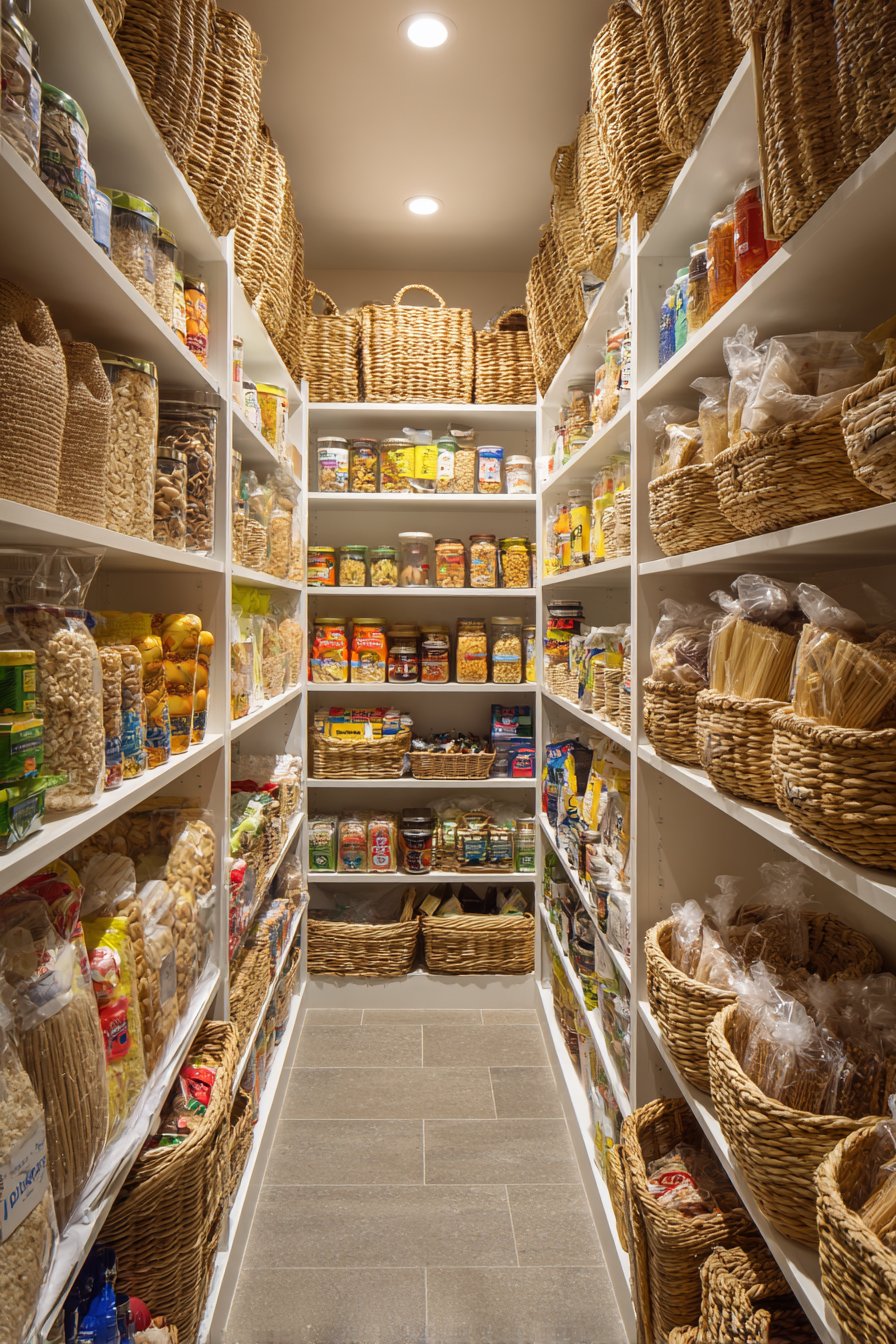
Lazy Susan units in corners prevent deep reaching into cabinets. The rotating shelves bring items to the user effortlessly. Clear labeling with large text aids those with vision impairment. High contrast between text and background improves readability. Non-slip flooring ensures safety during all weather conditions.
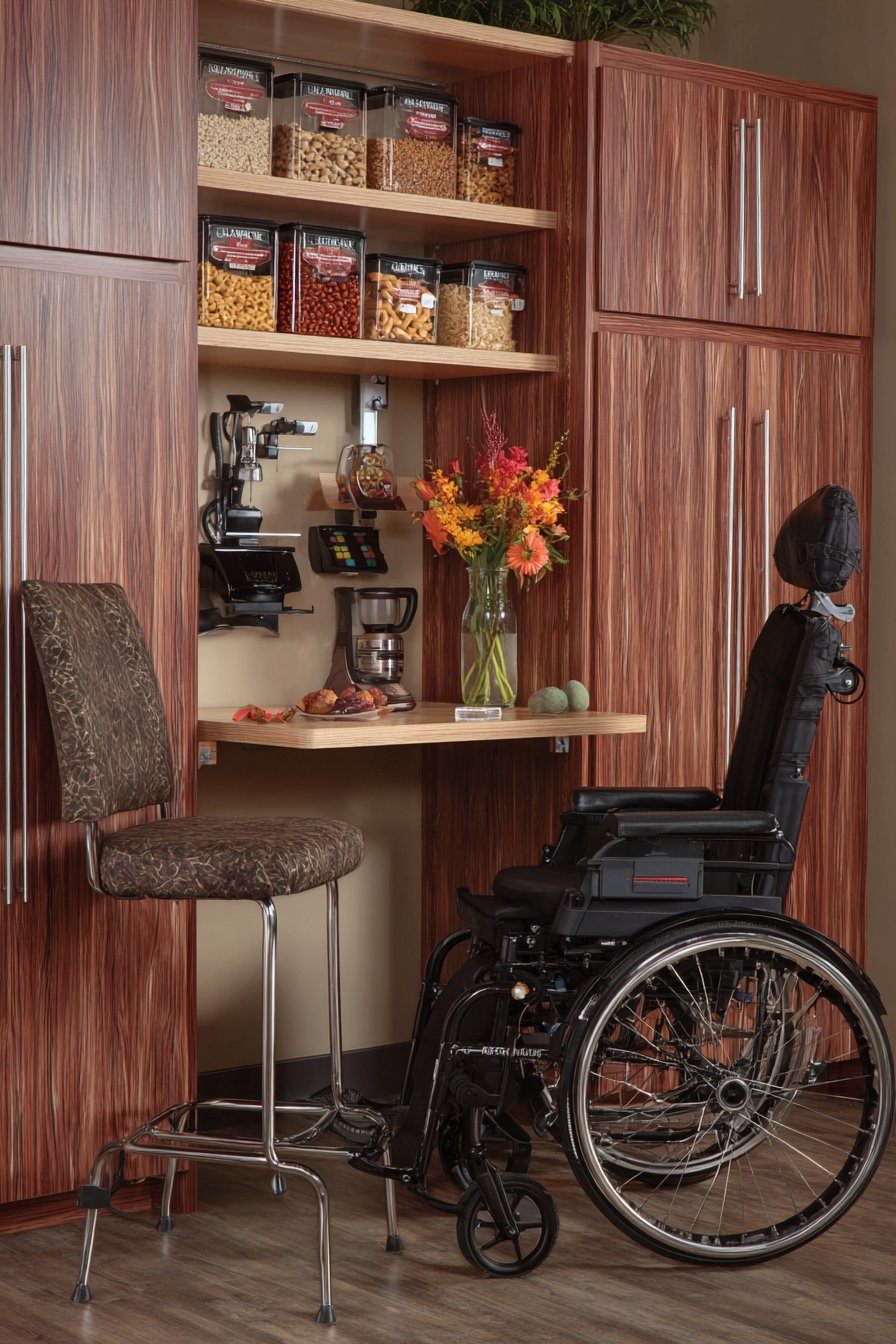
The textured surface prevents falls from wet shoes or spills. Every design choice considers diverse physical abilities and needs. The universal design principles benefit all users regardless of capability. Accessibility features add convenience for everyone in the household. The thoughtful planning creates truly inclusive space.
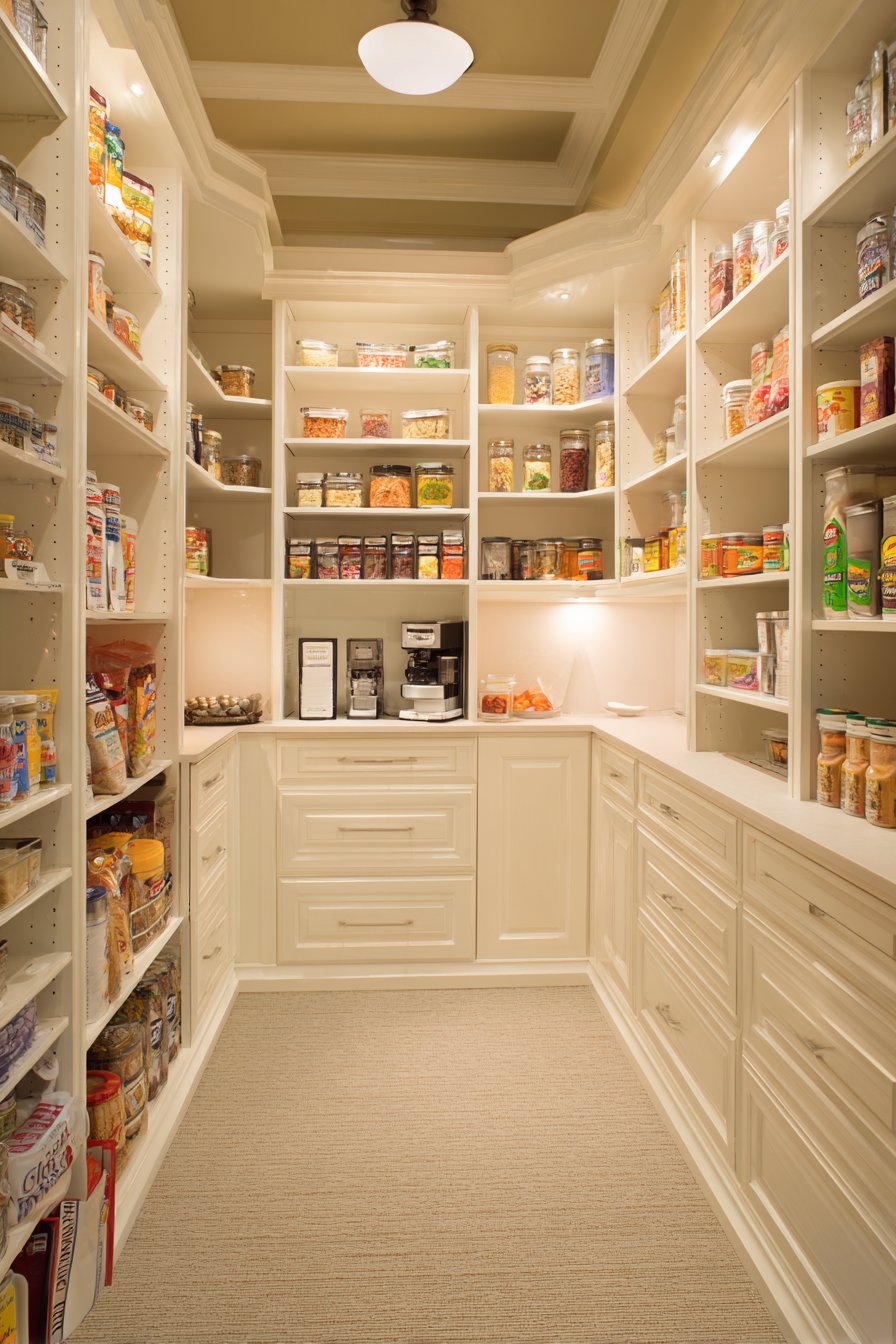
Professional consultation with occupational therapists informed the layout. Expert input ensures the design meets actual accessibility needs. The result provides dignity and independence for all users. Functional beauty serves the widest possible range of people. The pantry demonstrates that accessible design enhances rather than limits aesthetics.
Key Design Tips:
- Install shelving at accessible heights for wheelchair users and children
- Add pull-down mechanisms for safe upper storage access
- Maintain wide aisles to accommodate mobility aids comfortably
- Use touch-activated lighting to eliminate switch reaching
- Include lazy Susan corner units to prevent deep reaching
- Apply clear labeling with large high-contrast text for visibility
15. Mediterranean Pantry with European Character
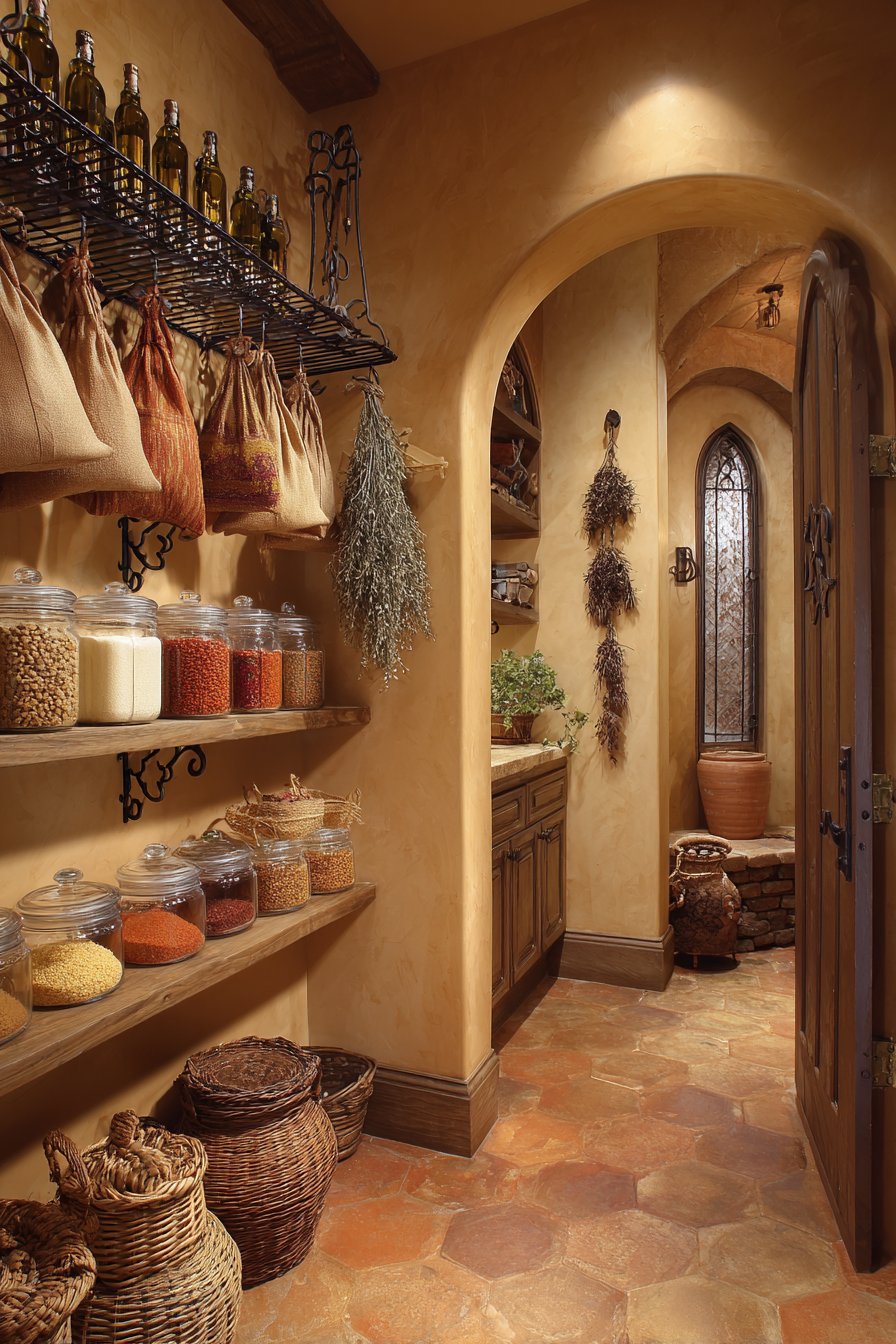
Terracotta tile flooring adds warm earthy foundation to this European-inspired space. The clay tiles reference centuries of Mediterranean design tradition. Wrought iron basket shelving creates decorative storage with Old World charm. The curved metalwork adds artistic detail beyond simple functionality. Olive oil and vinegar collections display in decorative bottles.
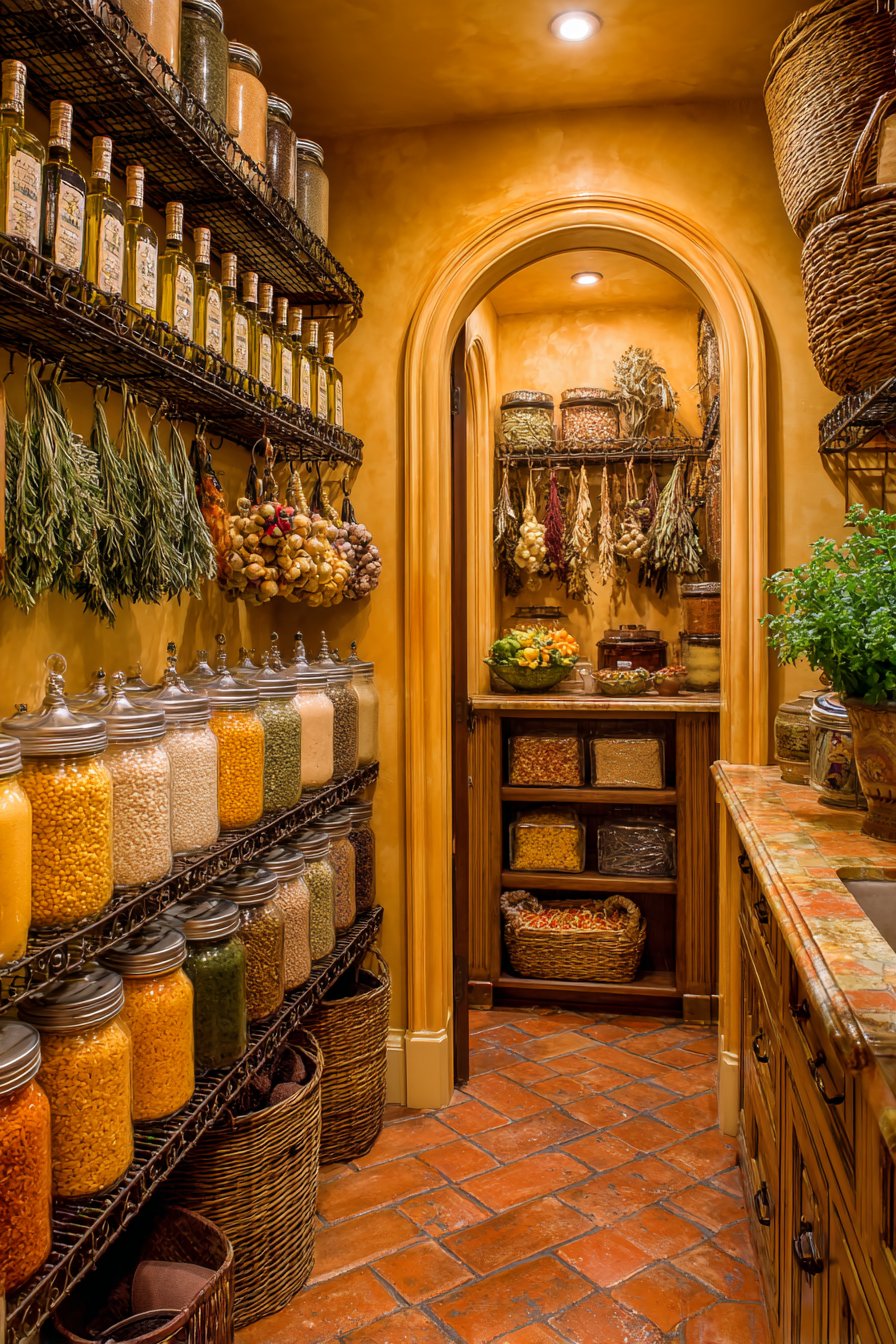
The glass vessels showcase golden and ruby liquids beautifully. Dried herbs hang from ceiling hooks in fragrant bundles. The aromatic presence enhances the sensory pantry experience. Ceramic canisters in warm earth tones store pasta and grains. The hand-painted vessels add artisanal character to functional storage.
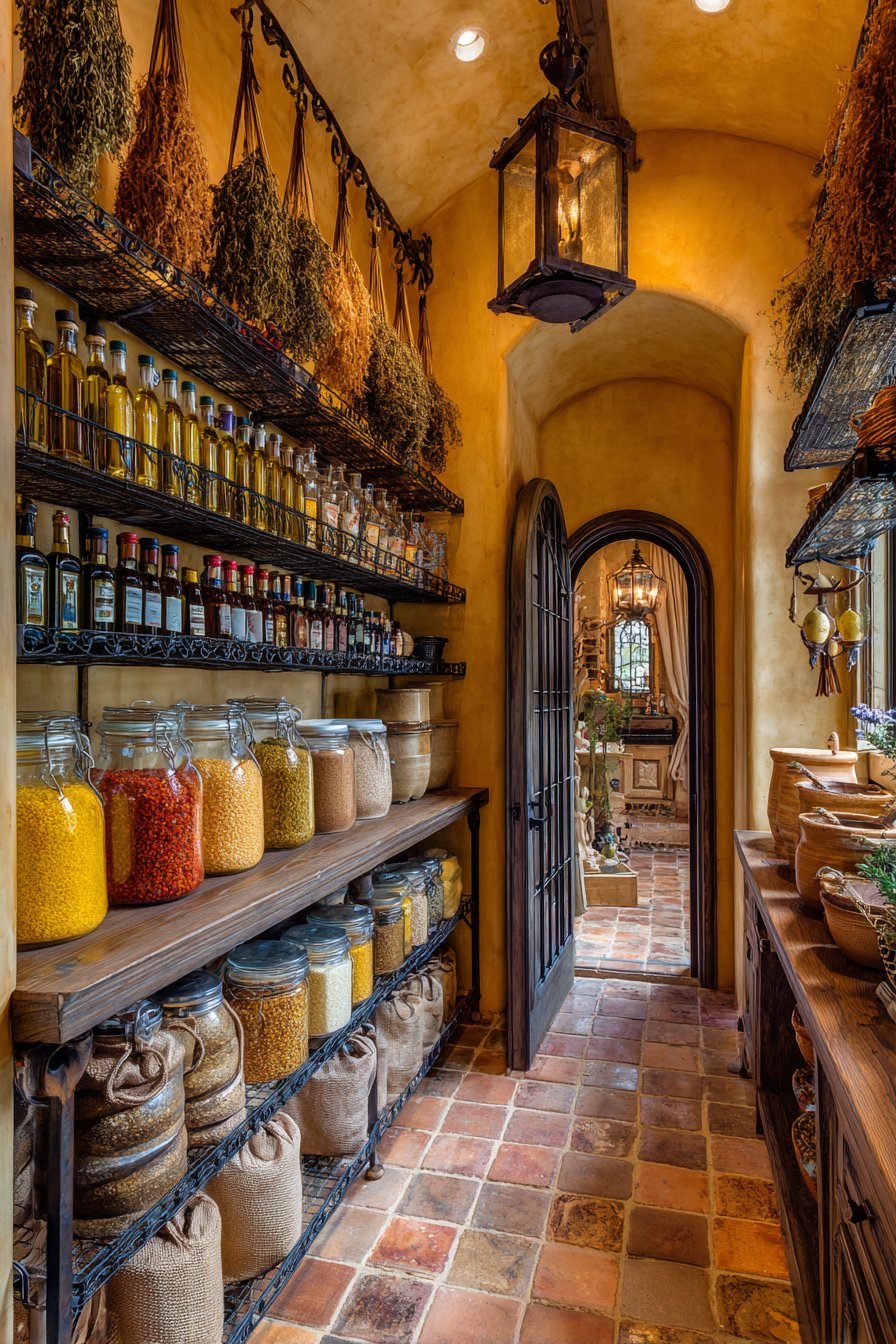
An arched doorway entrance adds architectural distinction. The curved opening references Mediterranean architecture and romance. Warm ambient lighting creates an inviting atmosphere throughout. Golden light emphasizes the terra cotta tones and iron details. The space feels transported from European countryside.
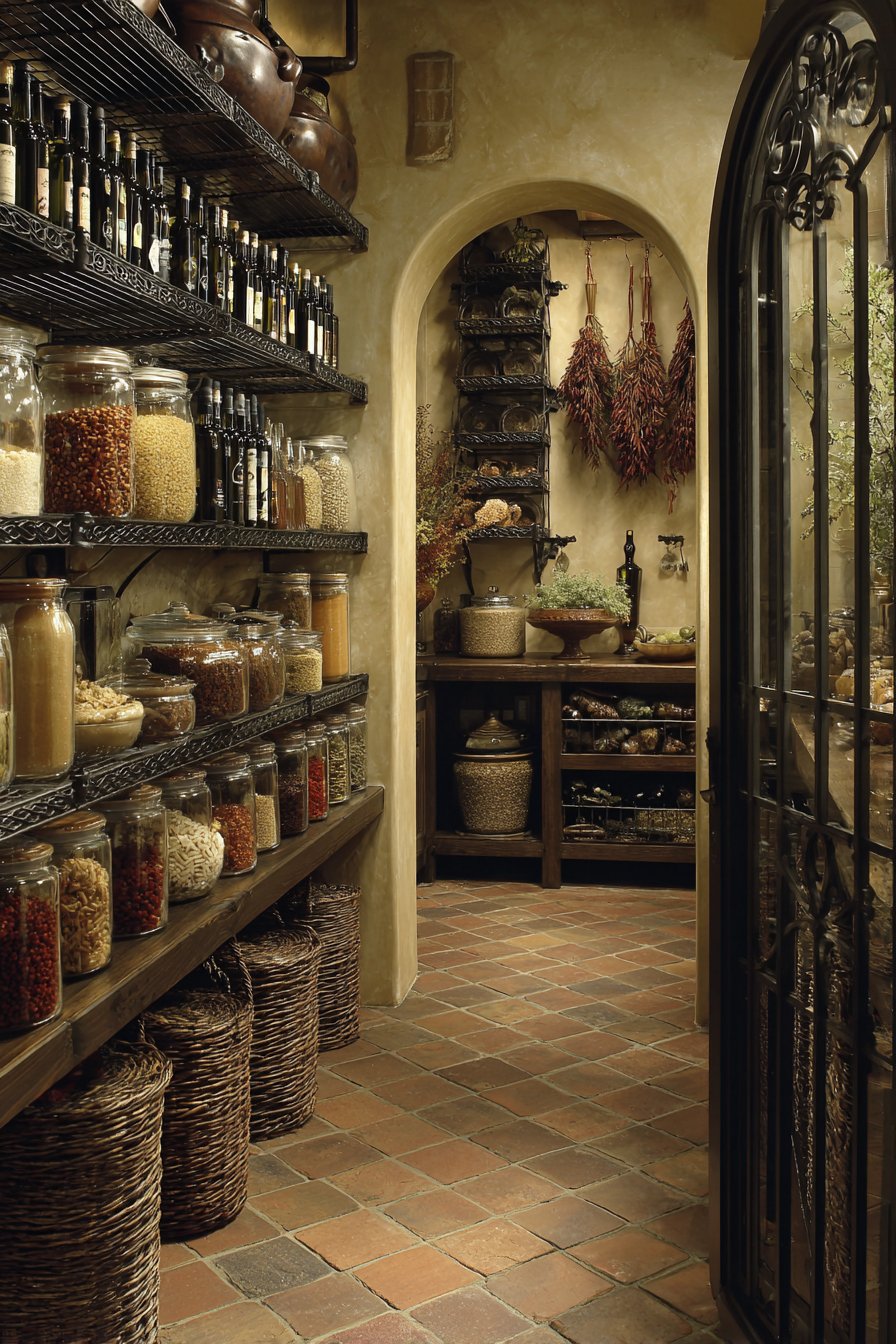
Rustic textures and warm colors dominate the material palette. Natural clay, iron, wood, and ceramic create authentic character. The design celebrates Mediterranean food culture and traditions. Every element suggests sun-drenched hillsides and harvest abundance. The pantry becomes destination rather than merely functional storage.
Key Design Tips:
- Choose terracotta tile flooring for authentic Mediterranean warmth
- Use wrought iron basket shelving for Old World decorative storage
- Display olive oil and vinegar in decorative glass bottles
- Hang dried herbs from ceiling hooks for aromatic function and beauty
- Select hand-painted ceramic canisters in earth tones
- Install arched doorway entrance for architectural character
16. Multi-Generational Pantry with Diverse Needs
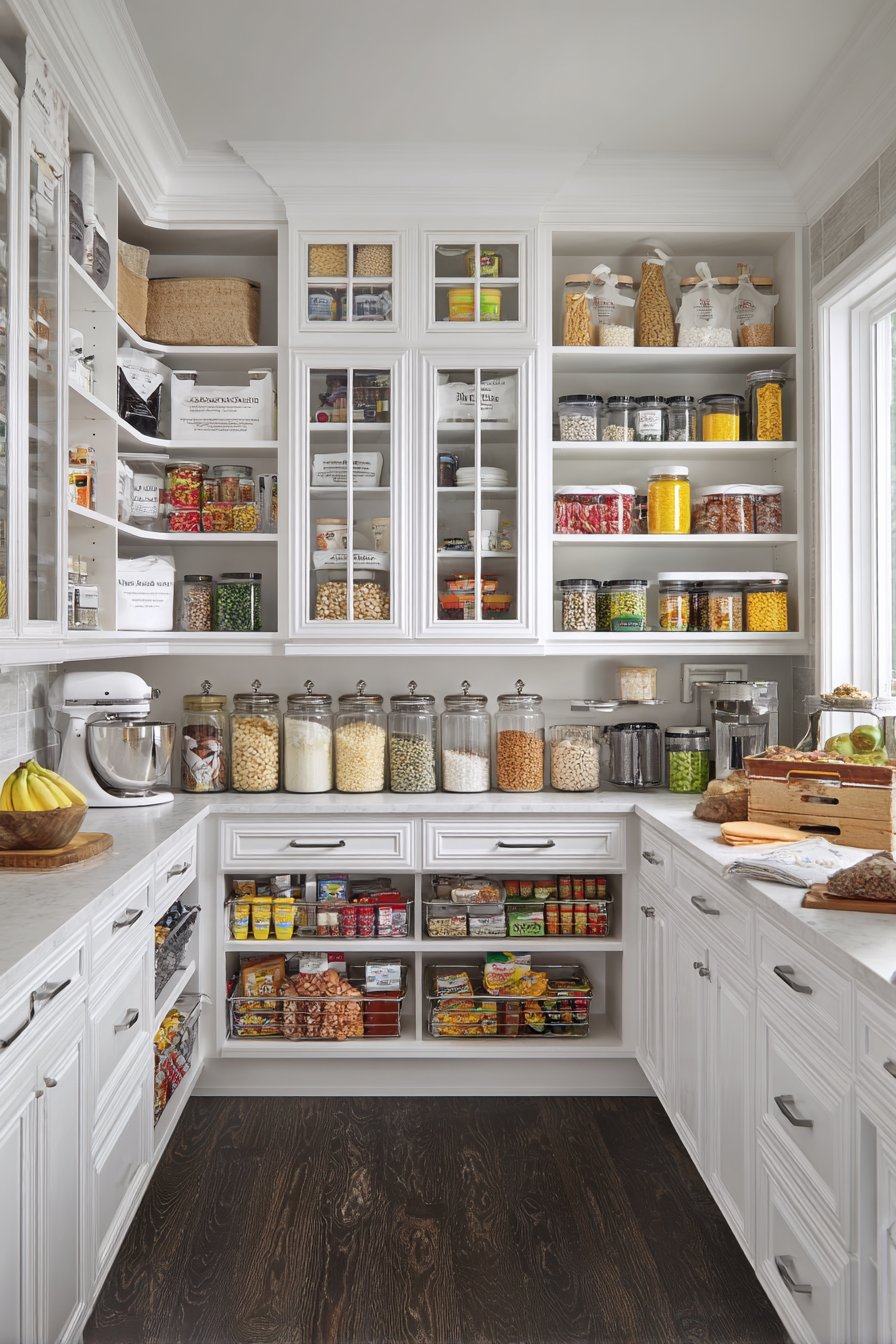
Different dietary requirements receive dedicated zones in this inclusive design. Gluten-free sections prevent cross-contamination with wheat products. Diabetic-friendly foods occupy clearly marked areas with sugar-free options. Baby food storage provides easy access for new parents and caregivers. Senior-accessible frequently-used items sit at optimal heights.
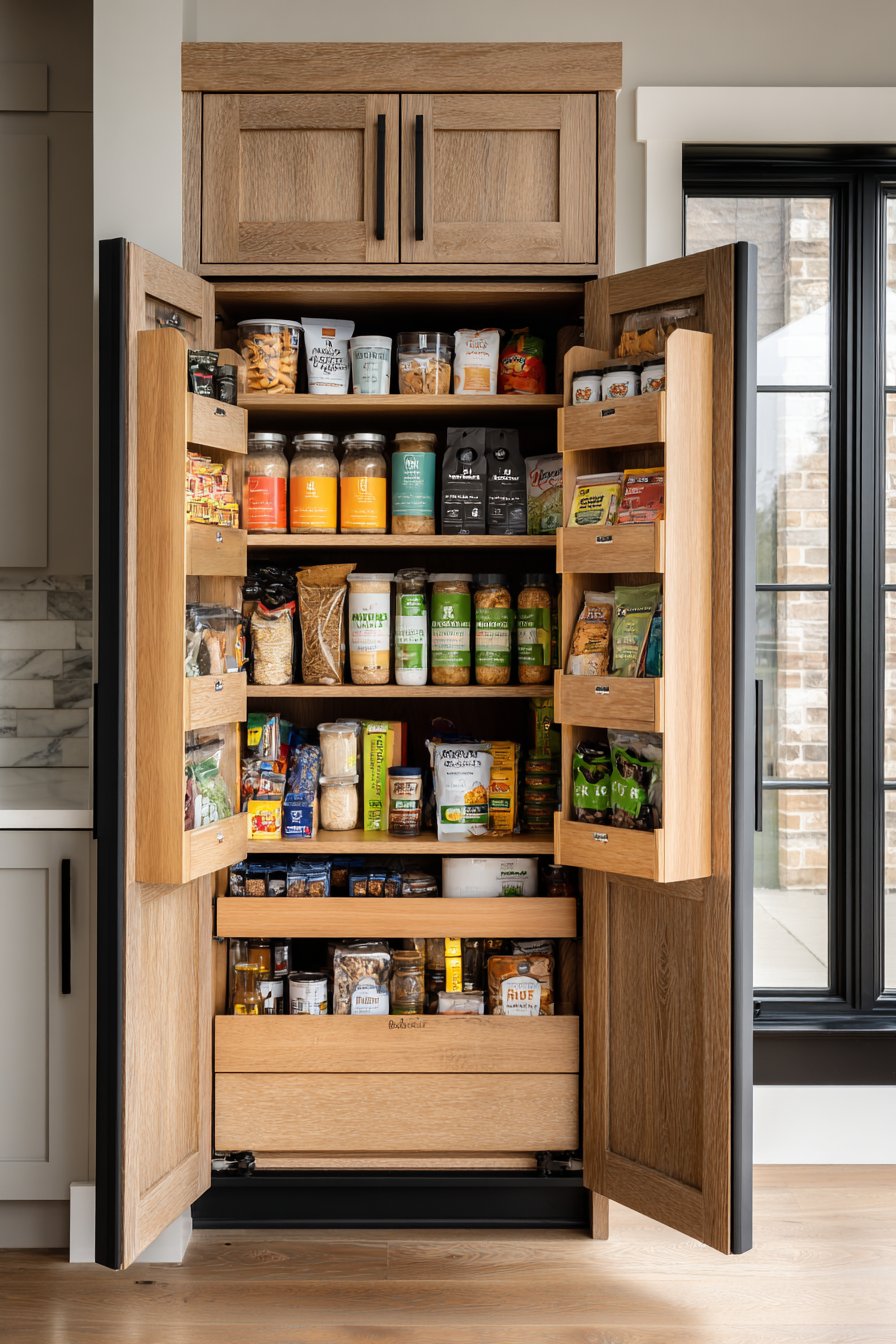
Color-coded labeling prevents accidental mixing of restricted diets. Red labels indicate allergen-containing foods. Green marks safe options for various dietary needs. Multiple prep areas accommodate simultaneous users during busy times. Family members can work independently without crowding.
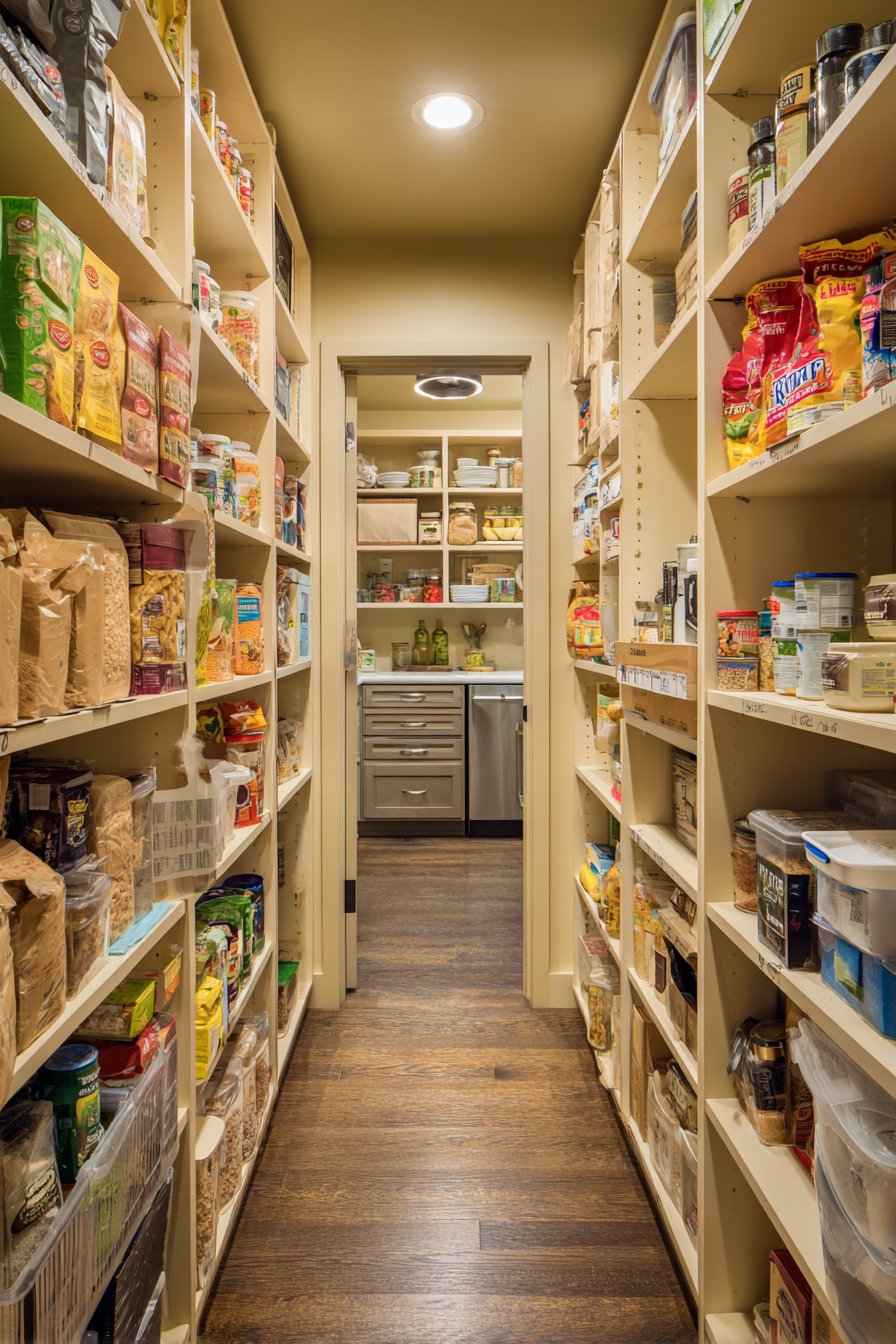
Magnifying labels assist those with vision impairment. Large print and high contrast aid easy reading. The thoughtful accommodation serves diverse family member needs. Three generations can navigate the space independently. The design respects everyone’s capabilities and requirements.
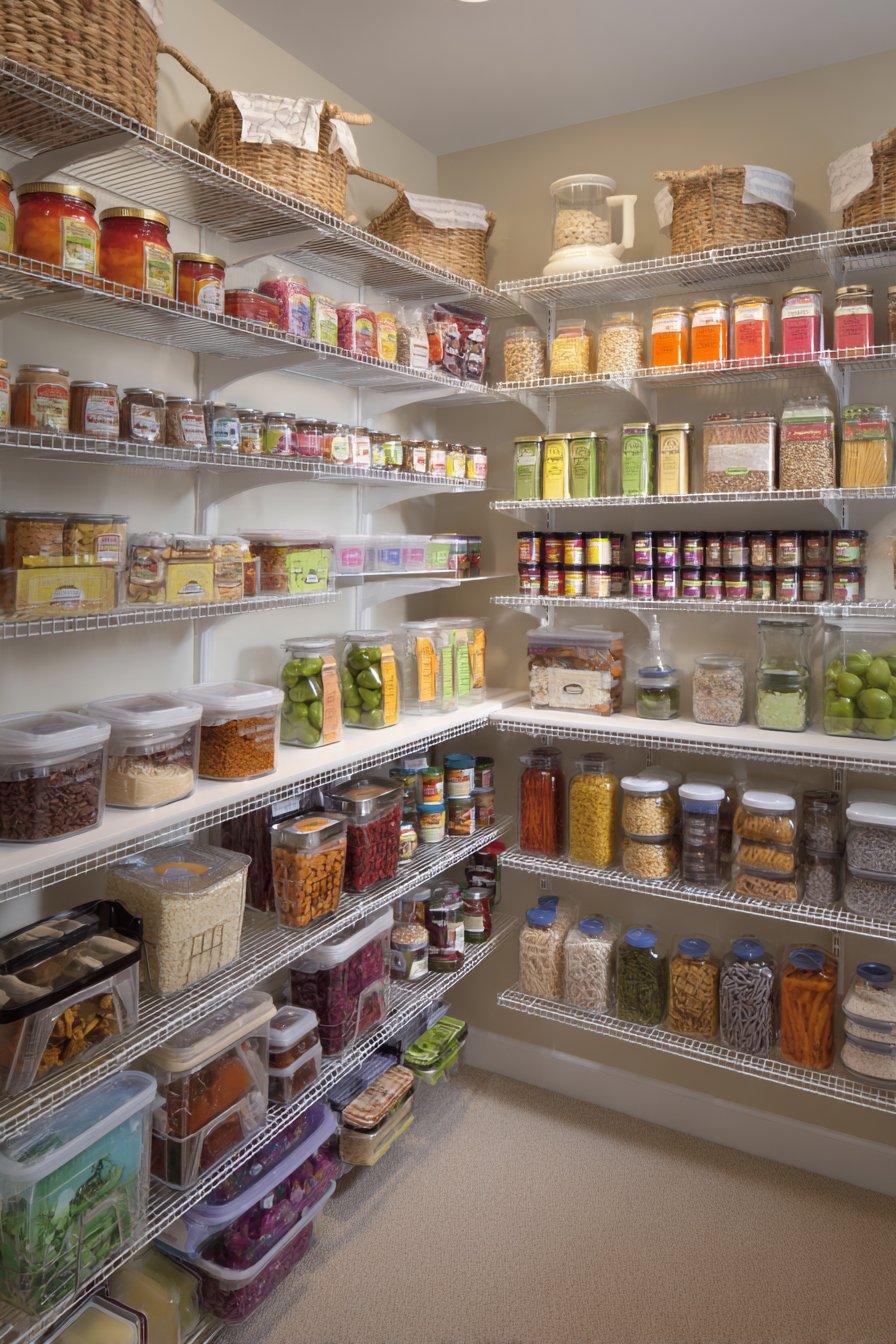
Comprehensive organization addresses real household complexity. Modern families often include varied ages and dietary needs. The pantry system acknowledges this diversity rather than ignoring it. Strategic planning creates harmony from potential chaos. The space demonstrates that inclusive design benefits everyone.
Key Design Tips:
- Create dedicated zones for different dietary requirements
- Use color-coded labels to prevent dietary cross-contamination
- Install multiple prep areas for simultaneous users
- Place senior-friendly items at easily accessible heights
- Add magnifying and large-print labels for vision support
- Maintain clear pathways for safe multi-user navigation
17. Modern Minimalist Pantry with Clean Lines
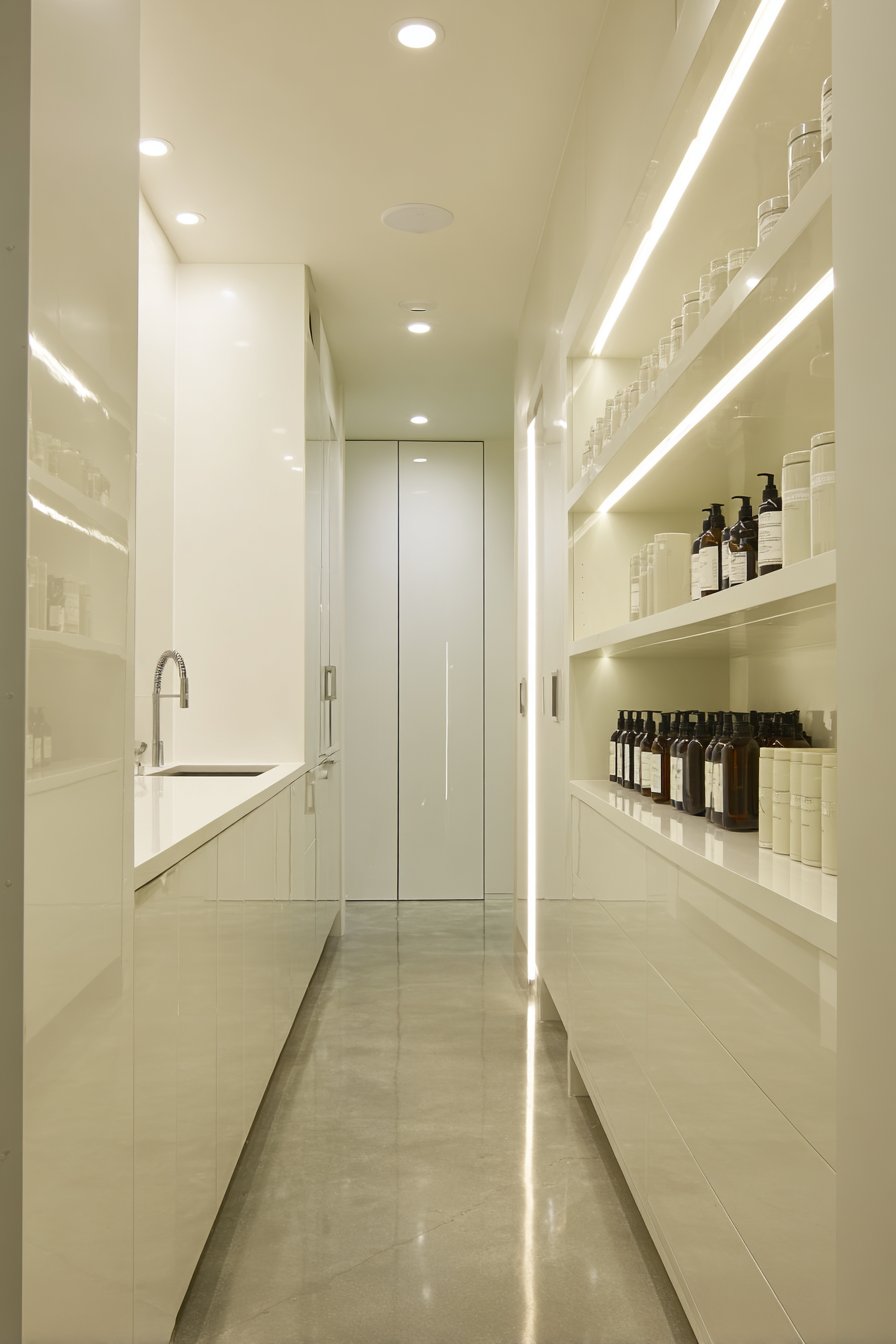
Handleless white lacquered cabinets create sleek contemporary foundation. Push-to-open mechanisms eliminate visible hardware entirely. Integrated LED lighting strips outline each shelf level precisely. The geometric illumination emphasizes clean modern lines. Hidden storage behind full-height doors conceals small appliances completely.
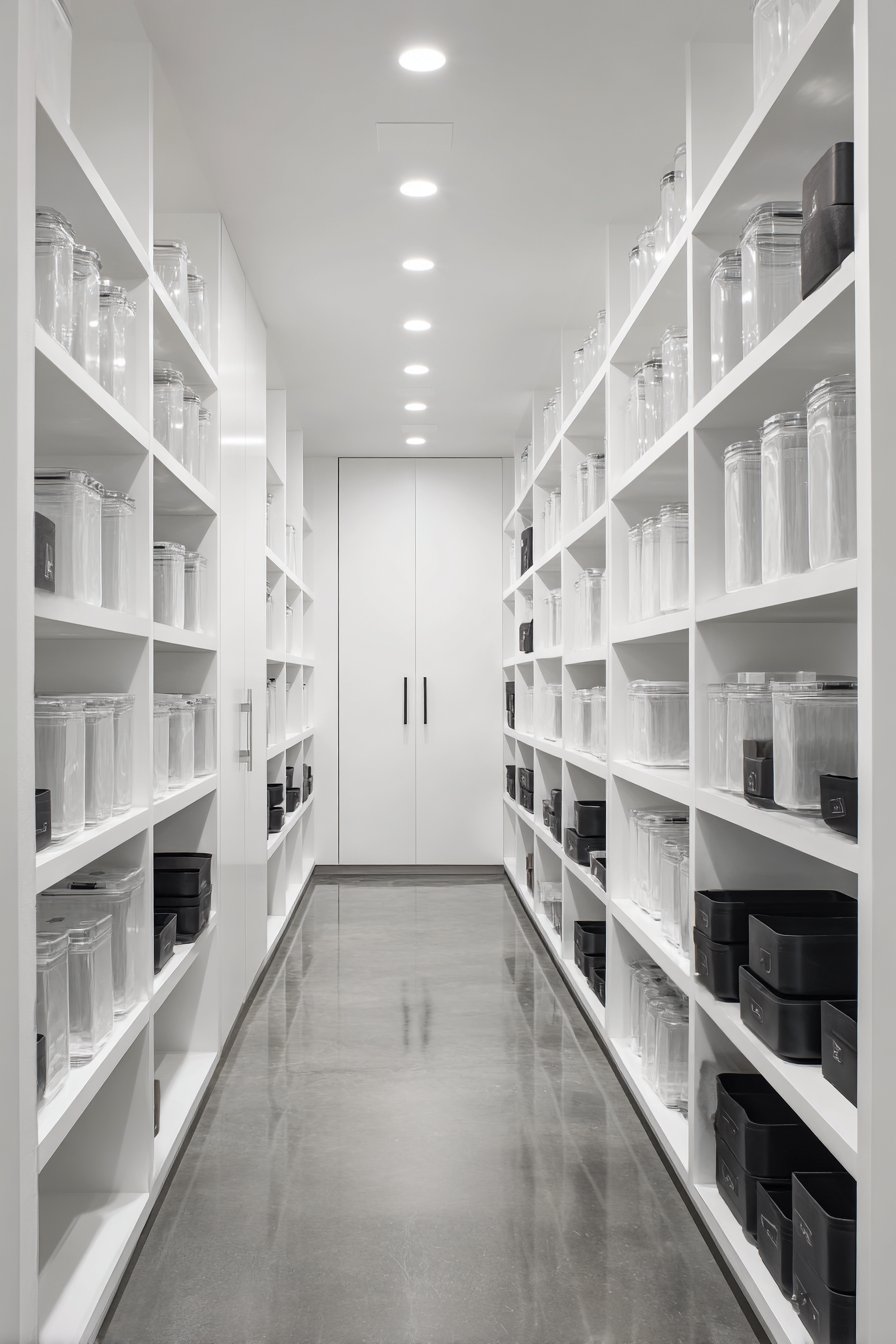
The closed storage maintains visual calm across the space. Polished concrete flooring creates an industrial-chic foundation underfoot. The smooth surface reflects light and feels substantial. Everything is stored in uniform frosted containers with minimalist black labeling. The consistent system creates order through repetition.
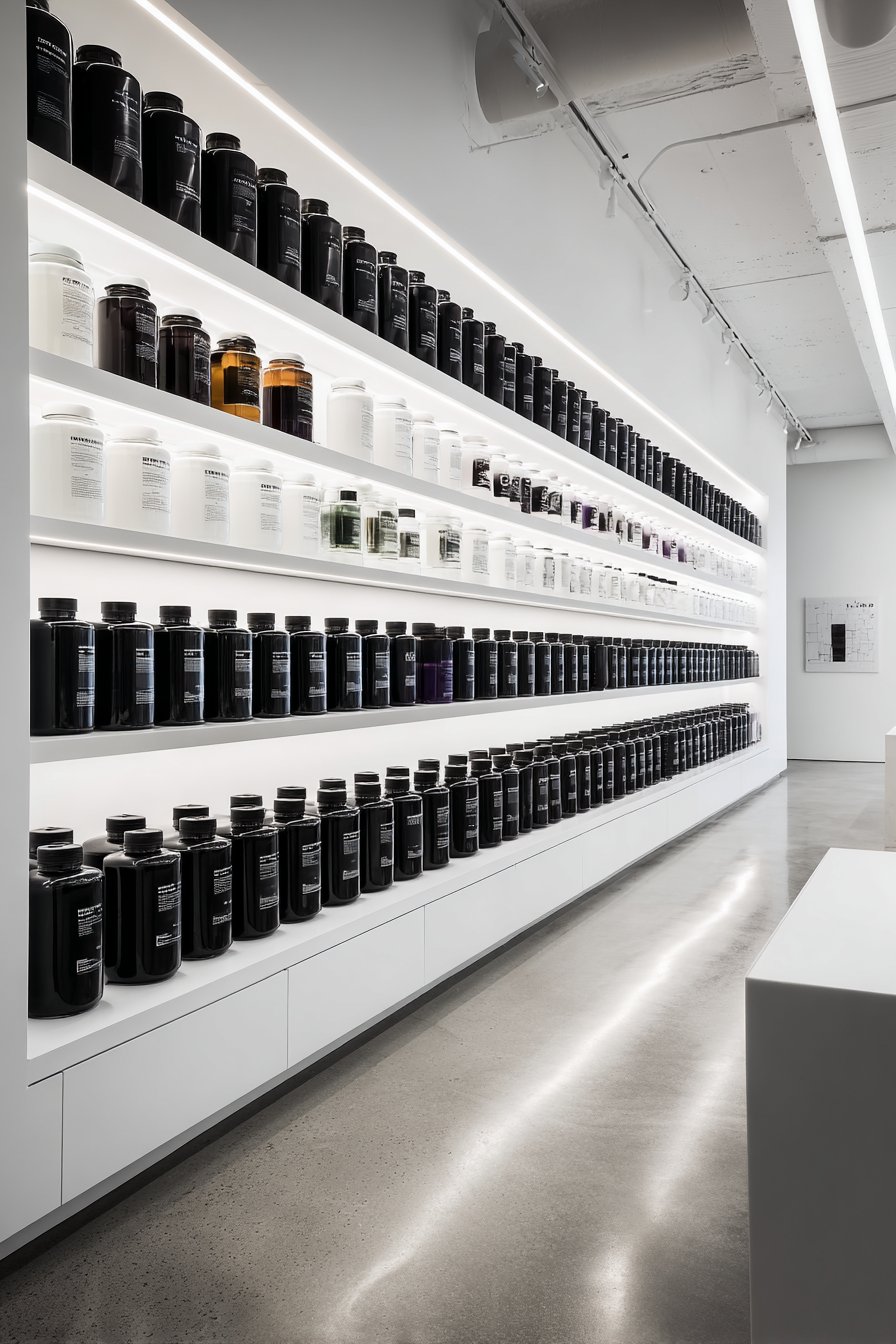
The design celebrates restraint and intentional emptiness. Negative space receives equal importance to filled areas. The contemporary aesthetic rejects ornament and decoration. Pure form and function define every element. The result feels serene and uncluttered.
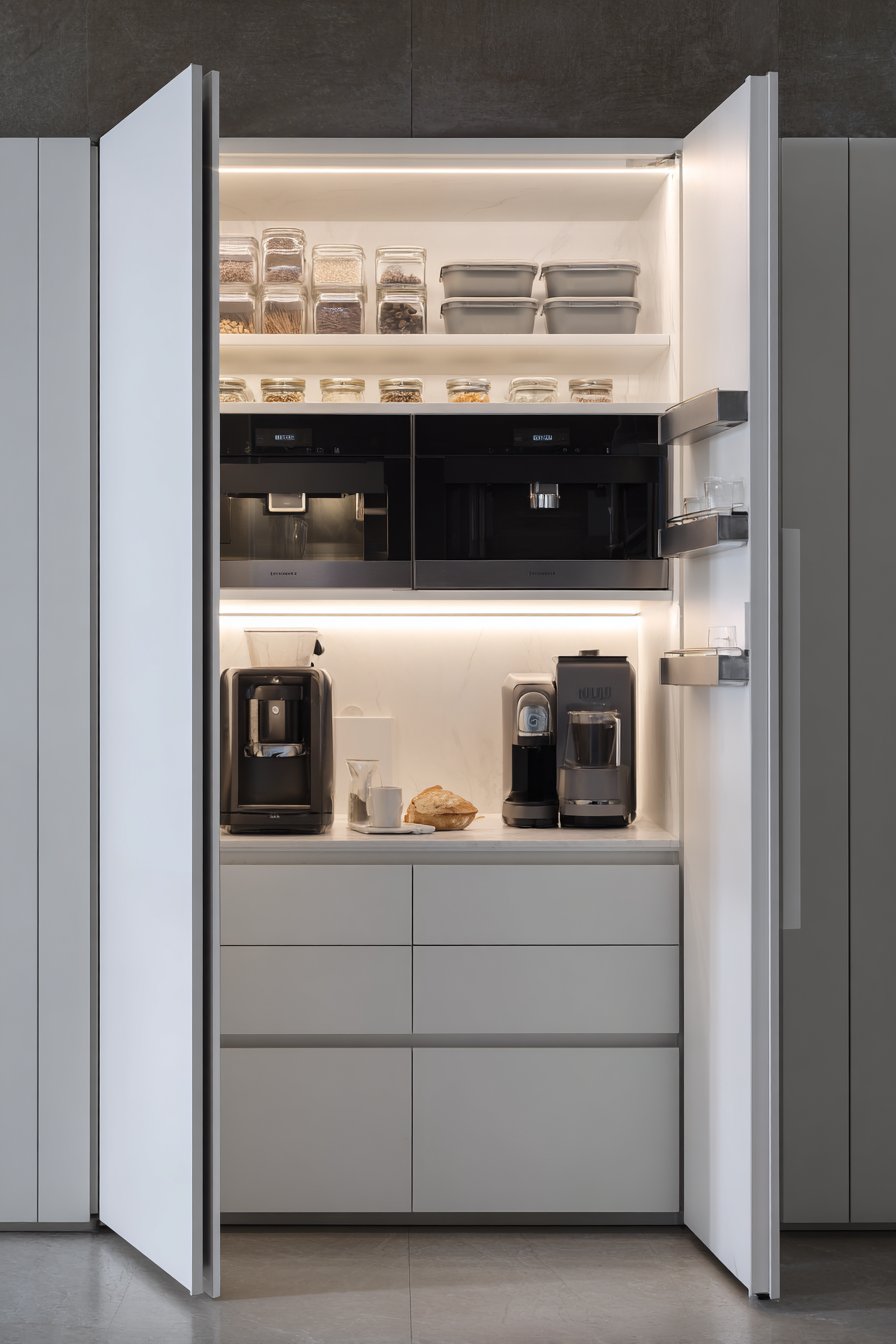
White surfaces maximize light reflection and spatial perception. The monochromatic scheme expands the visual boundaries. Bright even lighting showcases the architectural restraint. Every detail reinforces the minimalist philosophy. The pantry becomes meditation on essential storage.
Key Design Tips:
- Choose handleless lacquered cabinets for seamless modern appearance
- Install push-to-open mechanisms to eliminate visible hardware
- Add integrated LED strips to outline shelf levels
- Use full-height doors to conceal appliances and maintain calm
- Select polished concrete flooring for an industrial-modern foundation
- Store items in uniform frosted containers with minimal labeling
18. Multi-Purpose Pantry with Mudroom Integration
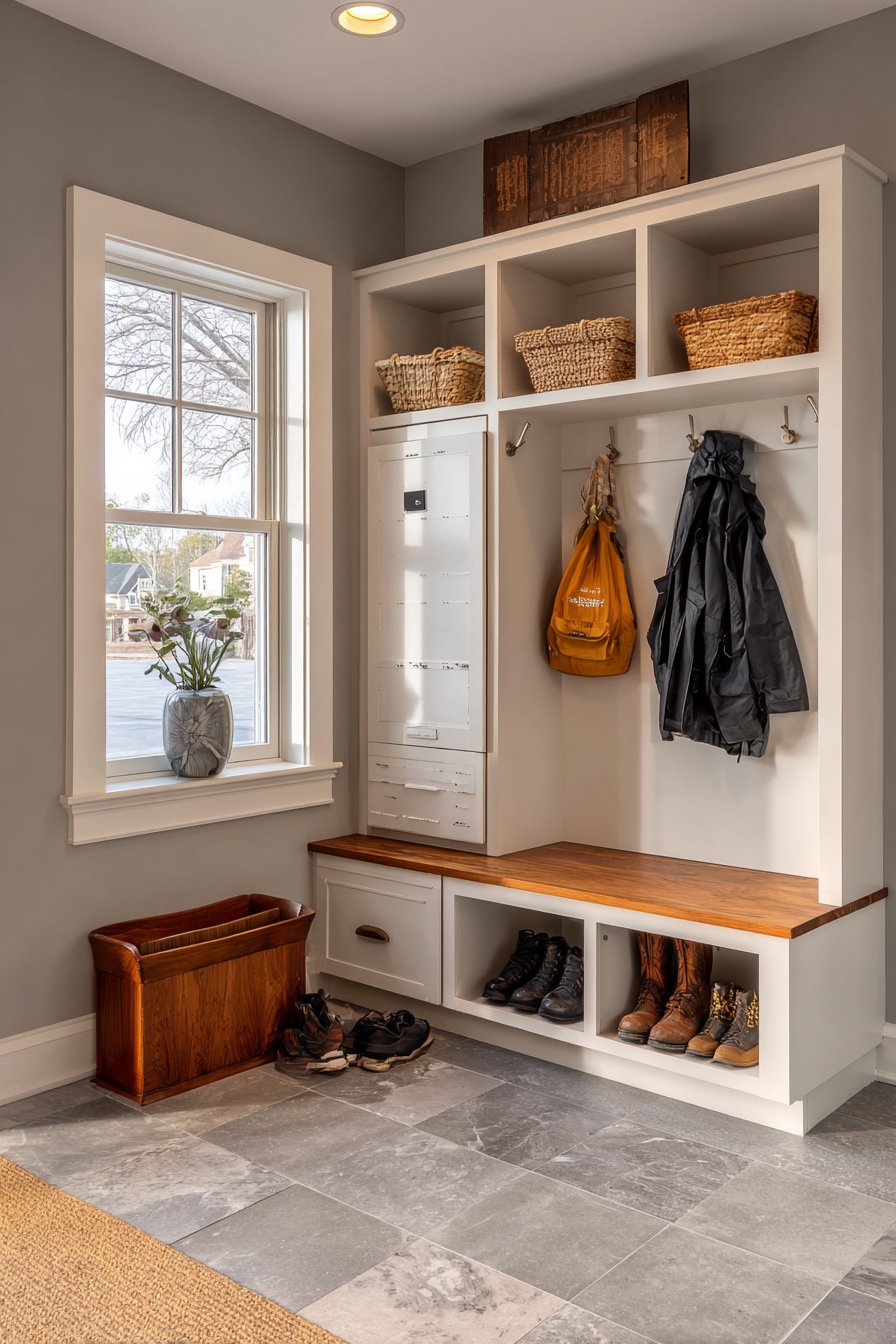
Bench seating near the entrance provides shoe removal and waiting area. The built-in furniture maximizes space efficiency. Coat hooks above the bench keep outerwear organized and accessible. Shoe storage below the bench prevents floor clutter. Food storage occupies the deeper pantry sections away from the entry.
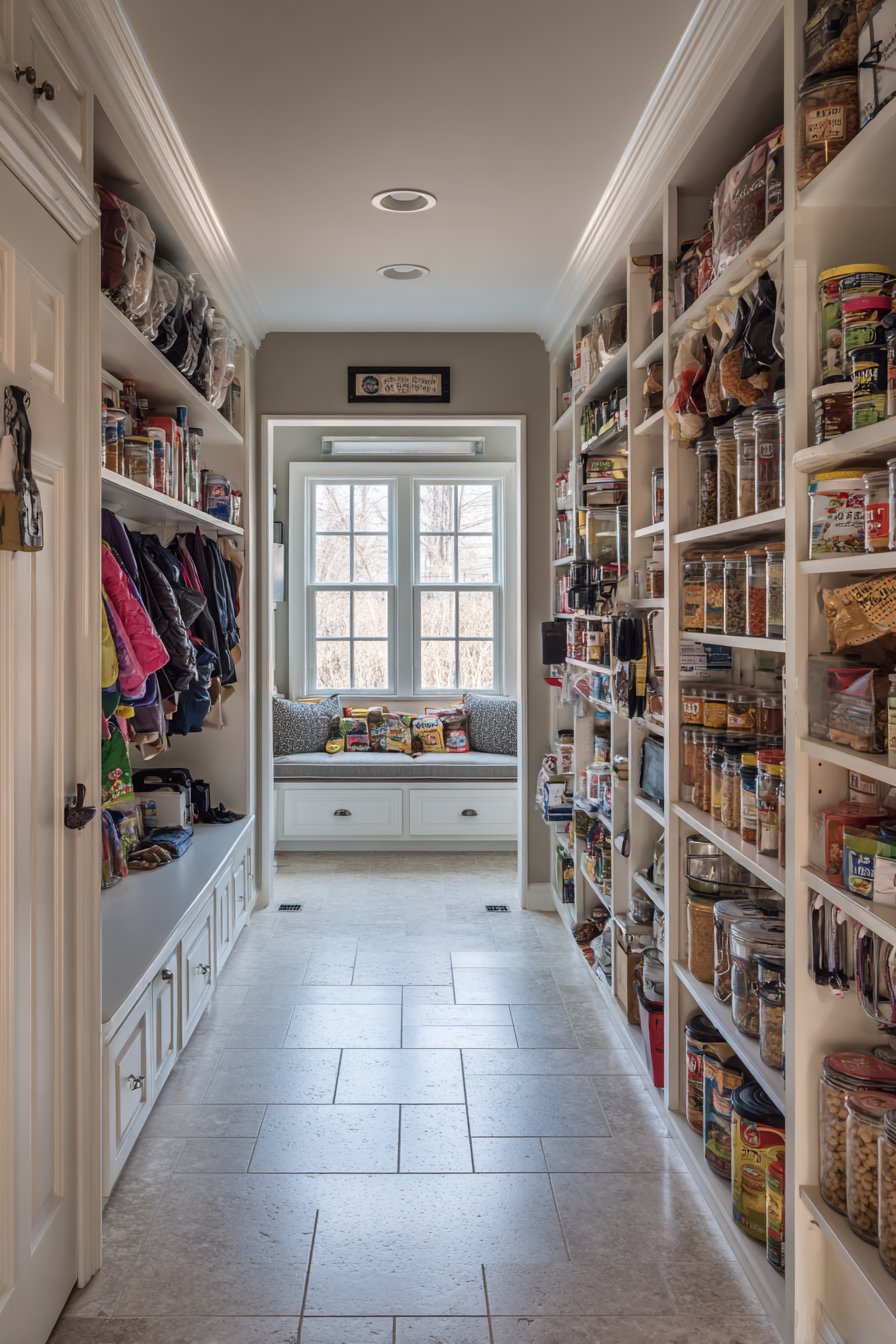
Backup supplies and bulk items fill the interior shelving. A charging station manages family devices in a designated area. Phone and tablet cables stay organized without tangling. Family calendar and mail sorting area keep household operations running smoothly. Important papers and schedules have dedicated homes.
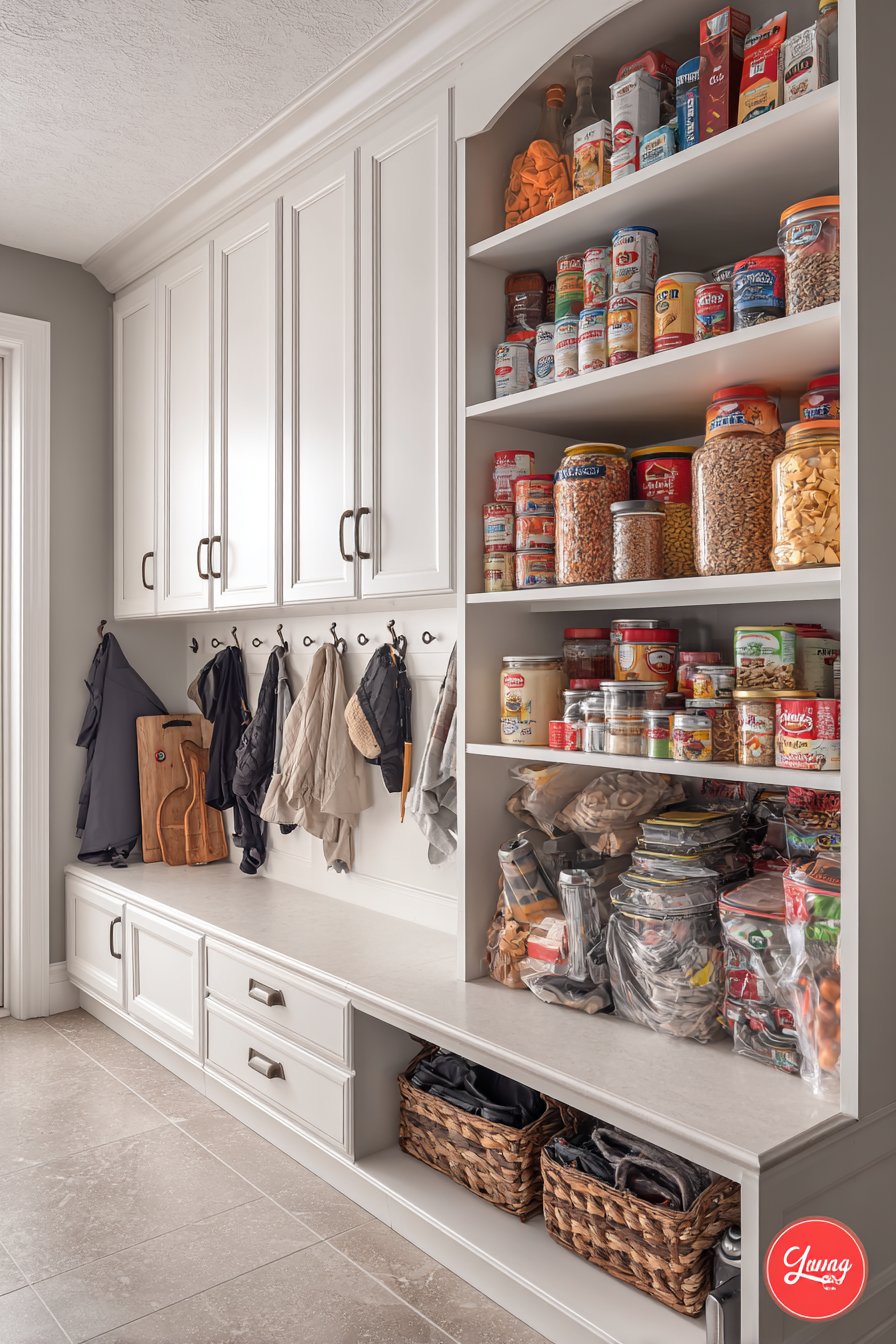
Durable tile flooring handles high traffic from outdoor footwear. The water-resistant surface tolerates wet shoes and dirty boots. The multi-purpose design combines food storage with household management. The space serves as a command center and pantry simultaneously. This dual function maximizes valuable square footage.
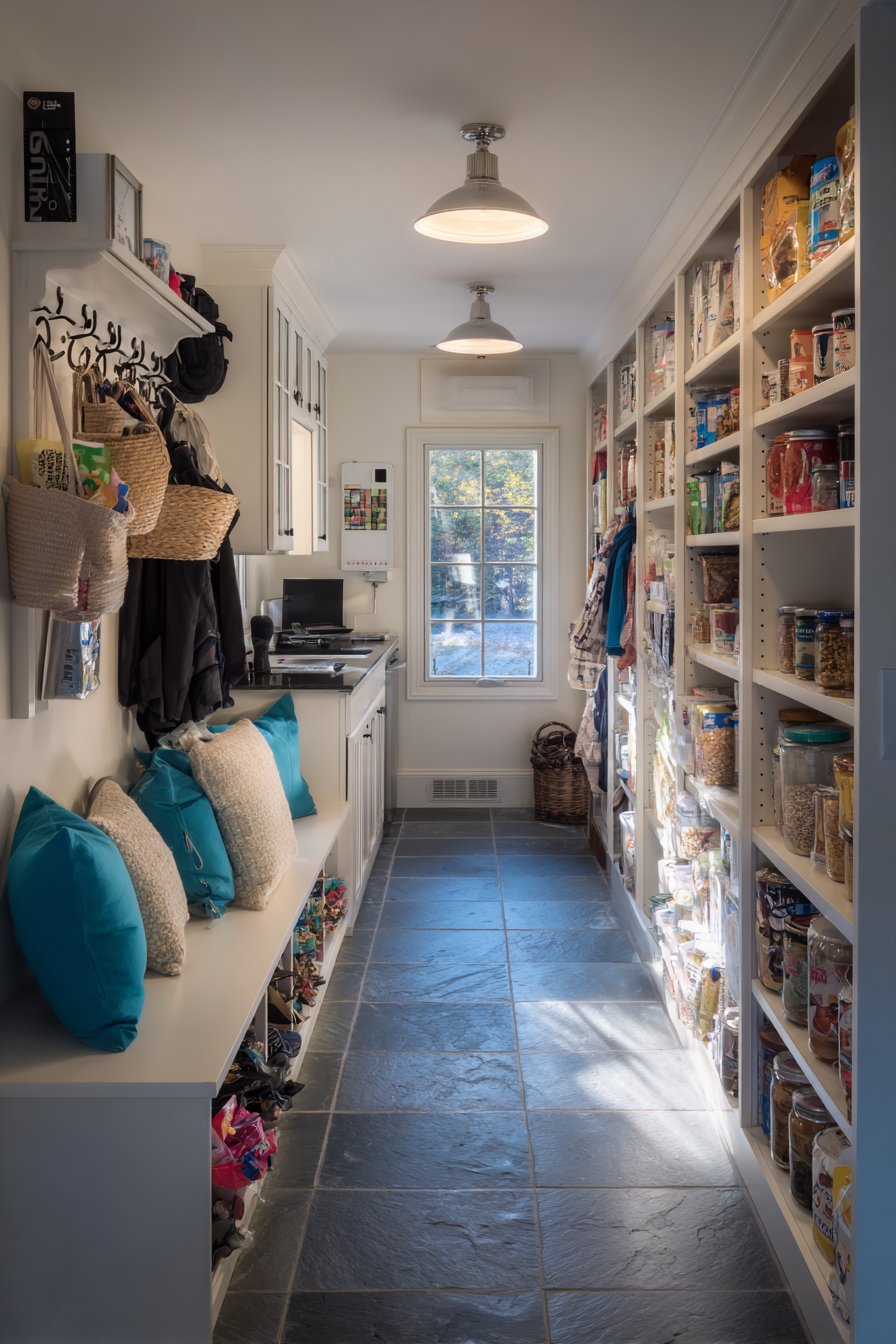
The practical combination suits modern family life perfectly. One space handles multiple daily needs efficiently. The integration prevents separate rooms for similar functions. Strategic planning creates synergy between related activities. The design demonstrates smart space utilization.
Key Design Tips:
- Add bench seating near the entrance for shoe removal convenience
- Install coat hooks and shoe storage for mudroom functionality
- Place food storage in deeper sections away from entry traffic
- Create charging station for family device management
- Include family calendar and mail sorting for household organization
- Choose durable tile flooring to handle outdoor footwear
19. Vintage Apothecary Pantry with Nostalgic Details
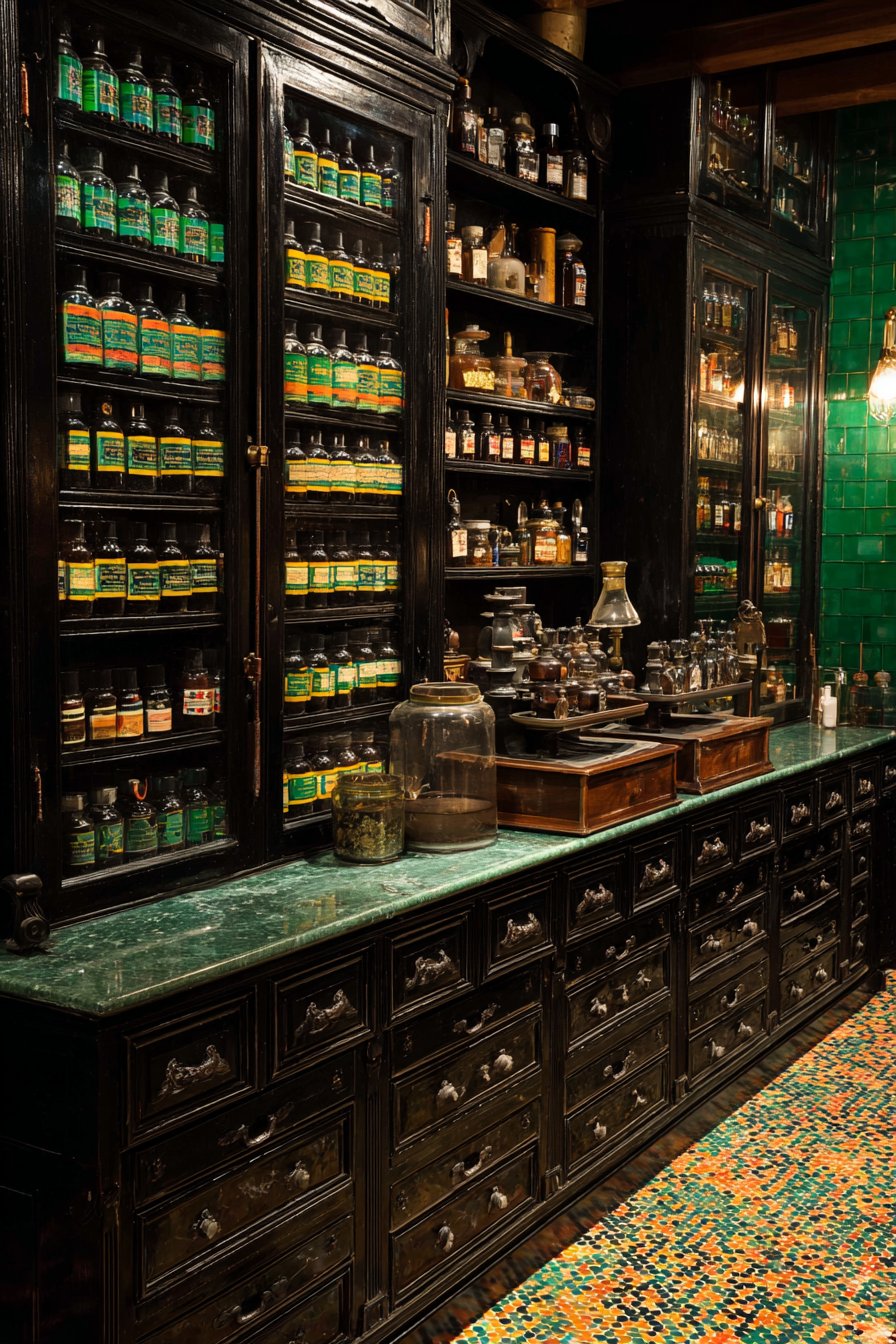
Antique glass-front cabinets showcase storage with historical character. The wavy vintage glass adds authentic period detail. Brass hardware in aged patina completes the apothecary aesthetic. Old pharmacy labels identify contents in decorative script. The vintage typography adds graphic interest and nostalgic charm.
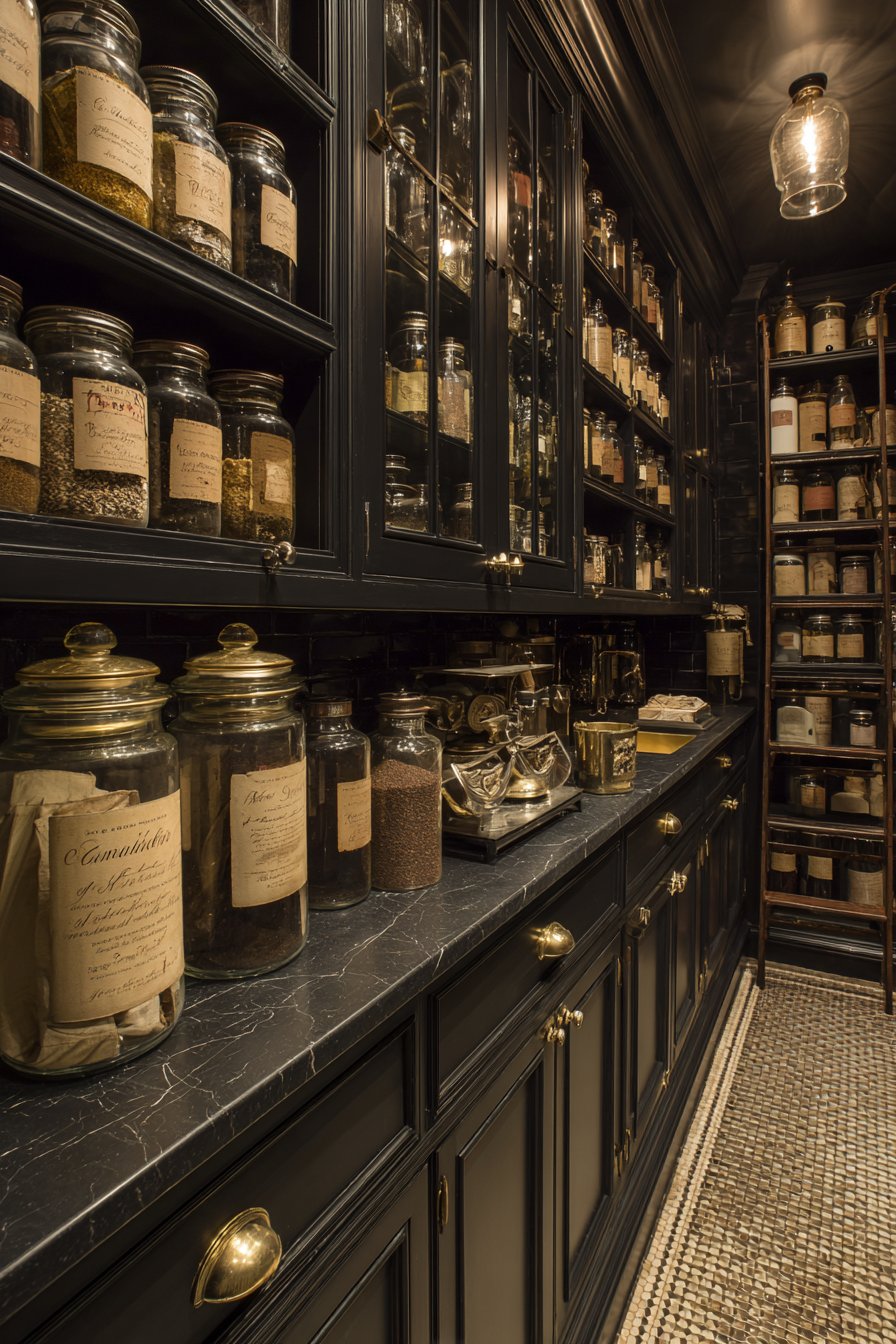
A rolling library ladder accesses upper storage shelves. The wheeled mechanism glides along ceiling-mounted track. Penny tile flooring adds period-appropriate detail underfoot. The small hexagonal tiles reference early twentieth-century design. A vintage scale sits on marble counter for measuring bulk goods.
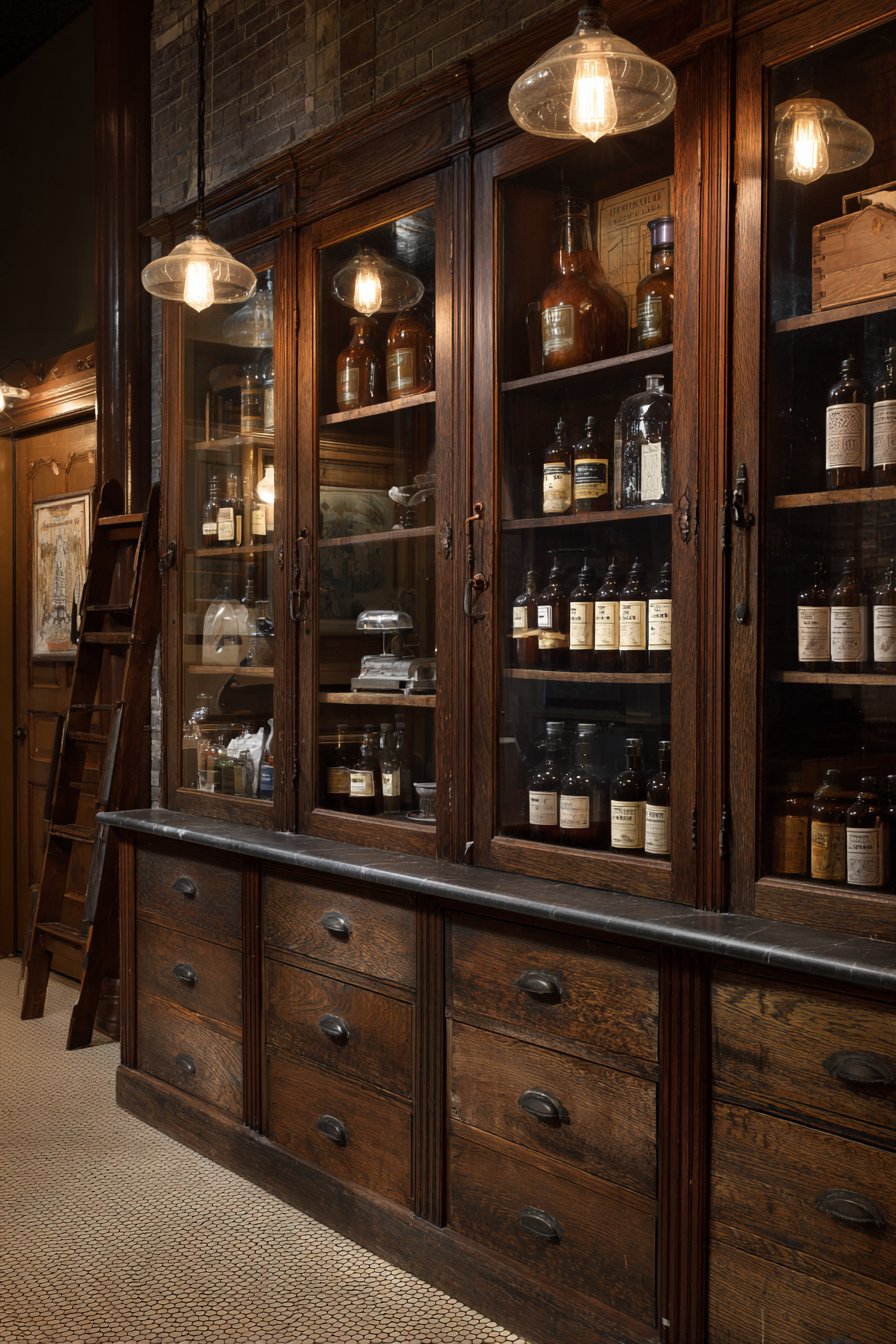
The mechanical balance adds functional decoration to the space. Reproduction Edison bulb fixtures provide authentic-looking lighting. The visible filaments glow warmly like original carbon bulbs. The collected aesthetic suggests pieces gathered over generations. Nothing appears purchased all at once.
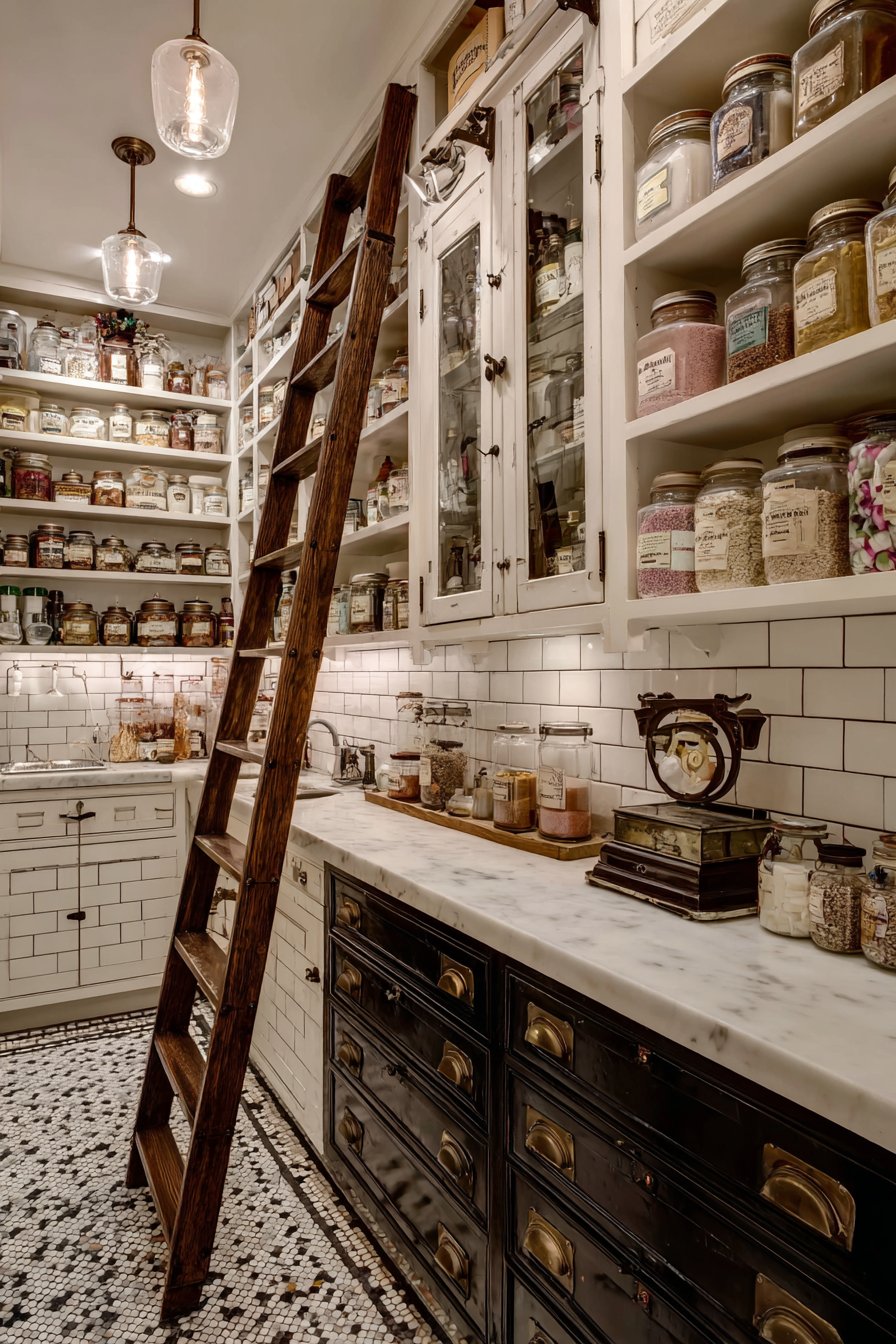
Nostalgic charm pervades every carefully chosen detail. The design celebrates pharmaceutical history and vintage retail. Modern storage needs meet historical aesthetic sensibilities. The space feels transported from another era. Functional beauty honors the past while serving present needs.
Key Design Tips:
- Choose antique glass-front cabinets for authentic vintage character
- Add brass hardware in aged patina for period authenticity
- Use vintage pharmacy labels for decorative identification
- Install rolling library ladder for functional vintage appeal
- Select penny tile flooring for early twentieth-century detail
- Incorporate reproduction Edison bulbs for nostalgic lighting
20. Professional Home Cook’s Pantry with Culinary Focus
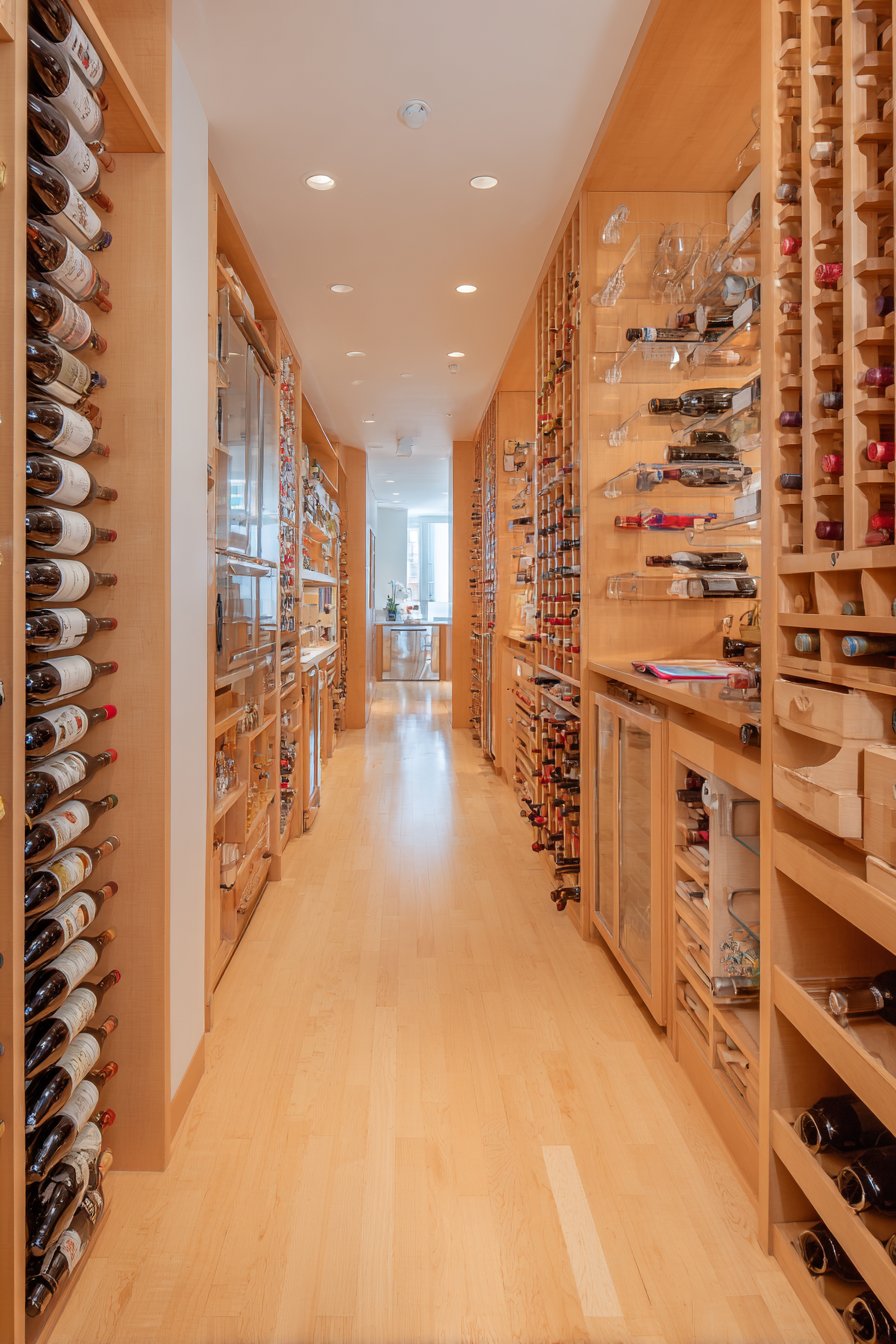
Sous vide equipment storage keeps precision cooking tools organized. Water circulators and vacuum sealer station occupy dedicated counter space. Specialty ingredient sections store molecular gastronomy supplies separately. Agar, xanthan gum, and unusual starches have designated locations. Temperature-controlled wine storage maintains optimal conditions for collection.
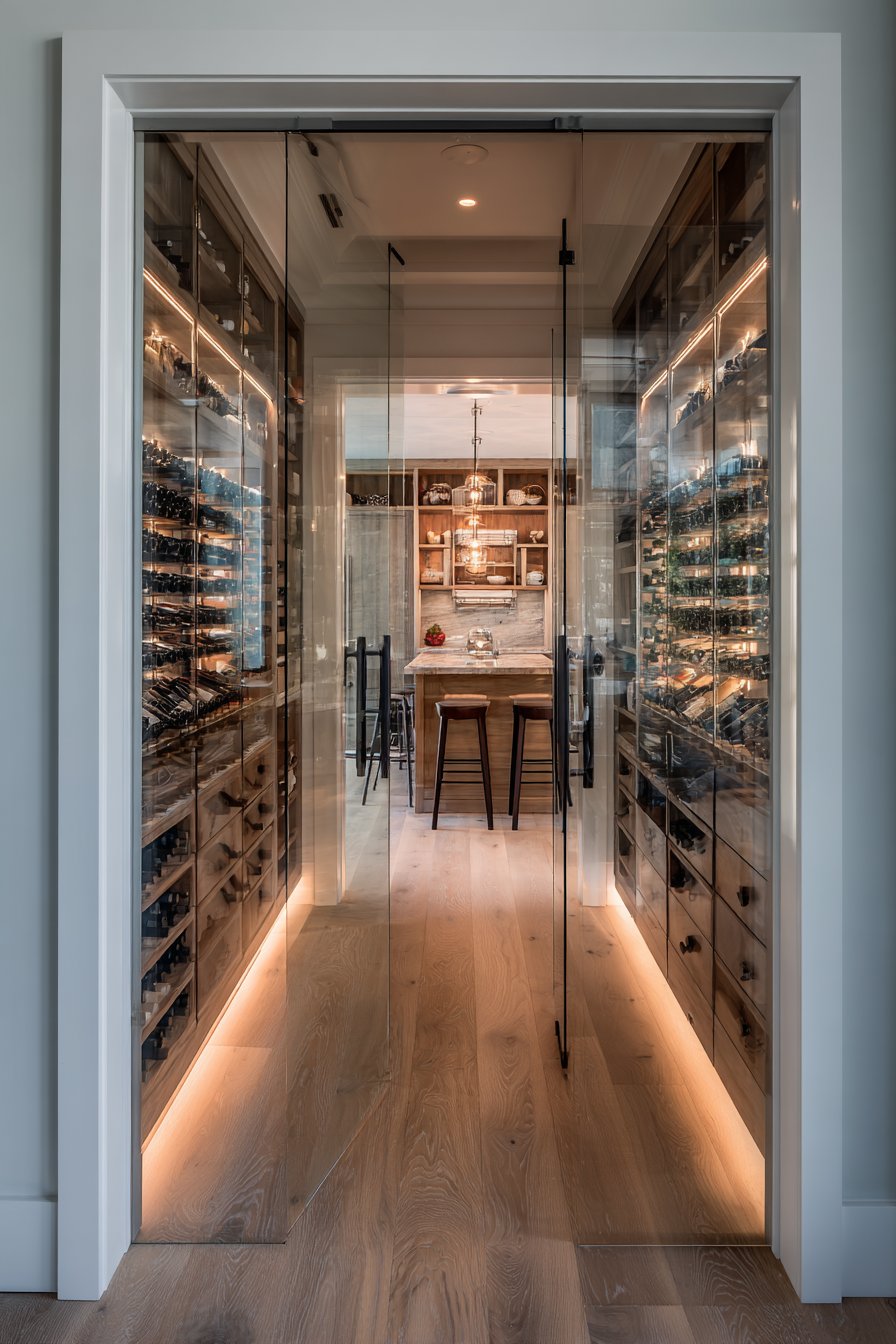
The climate system protects investment bottles properly. Knife magnet strips keep blades accessible and safely displayed. Professional cutlery deserves respectful storage and easy access. The cookbook library is organized by cooking technique rather than cuisine. Braising, roasting, and fermenting are grouped together logically.
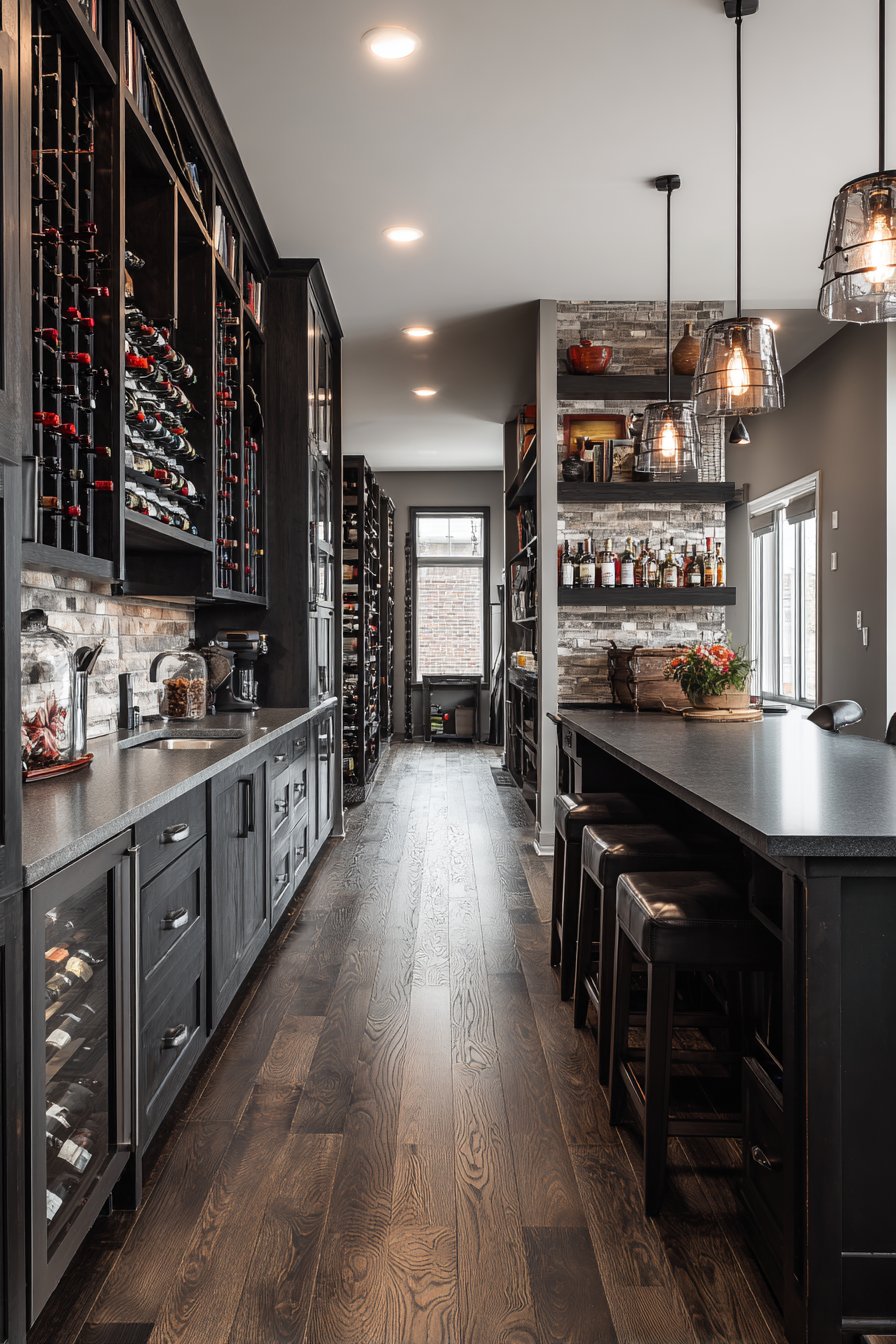
A tasting counter with bar stools allows recipe testing. The elevated surface provides a comfortable standing workspace. New dishes can be sampled before serving guests. The setup mimics professional kitchen testing stations. Studio lighting provides balanced illumination for detailed work.
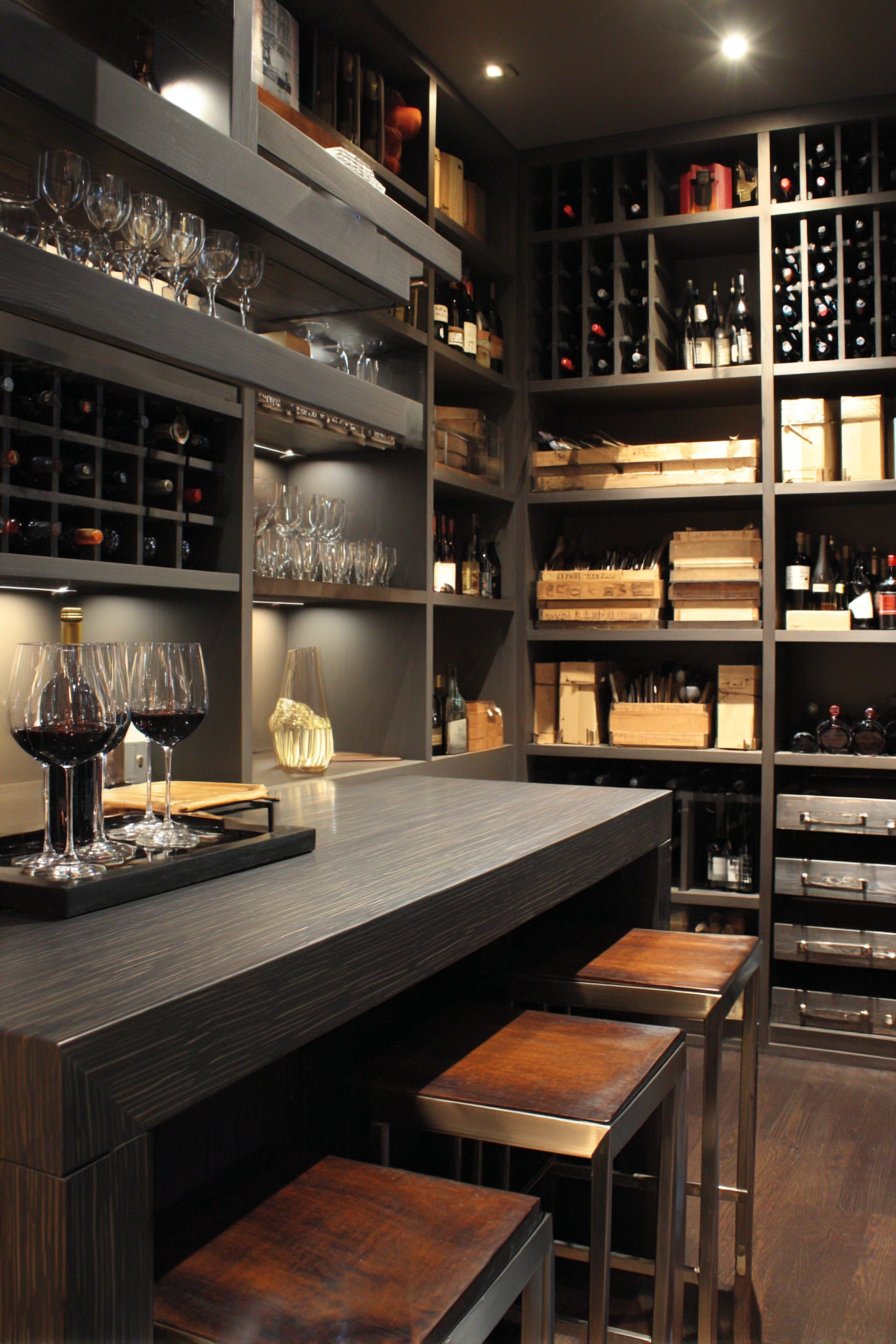
The culinary-focused design serves serious home cooking pursuits. Every element supports advanced technique and experimentation. The space rivals professional kitchen organization systems. Chef-quality planning creates an inspiring cooking environment. The pantry becomes a laboratory for gastronomic exploration.
Key Design Tips:
- Create dedicated storage for sous vide and specialty cooking equipment
- Install vacuum sealer station for professional food preservation
- Add temperature-controlled wine storage for optimal bottle conditions
- Mount magnetic knife strips for safe accessible blade storage
- Organize cookbook library by technique rather than cuisine
- Include tasting counter with seating for recipe development
Why These Walk-In Pantry Designs Work Best
These twenty walk-in pantry concepts demonstrate that effective storage combines aesthetics with functionality. Each design addresses specific household needs while maintaining visual appeal. The variety proves that pantry organization transcends one-size-fits-all solutions.
Material choices significantly impact pantry longevity and maintenance. Natural wood shelving develops character over time while laminate surfaces resist moisture damage. The selection depends on climate, budget, and aesthetic preferences. Quality materials justify higher initial costs through decades of reliable service.
Successful pantry design considers workflow and accessibility from the planning stage. Frequently used items belong at eye level within easy reach. Bulk storage occupies upper shelves and lower depths. This strategic placement reduces physical strain during daily cooking tasks. Universal design principles benefit all users regardless of physical capability.
Lighting strategy transforms pantry functionality dramatically. Layered illumination combining ambient, task, and accent lighting creates versatile spaces. LED technology provides energy efficiency with excellent color rendering. Motion sensors add convenience while reducing energy waste. Dark pantries hide expired items and create frustration.
Color theory influences both aesthetics and practical organization. White and light neutrals maximize brightness in windowless spaces. Dark cabinets create a sophisticated atmosphere in larger pantries with natural light. Color-coded organization systems prevent dietary cross-contamination and improve efficiency.
Sustainability considerations include material sourcing, energy efficiency, and food waste reduction. Bamboo shelving and cork flooring offer renewable alternatives to traditional materials. Bulk storage reduces packaging waste significantly. Visible organization prevents forgotten ingredients expiring unused. These green practices align environmental values with practical benefits.
The designs accommodate diverse cooking styles from casual meal preparation to serious culinary pursuits. Baker’s pantries prioritize specialized storage for frequent baking needs. Health-focused layouts promote nutritious eating through strategic organization. Multi-generational designs address varied dietary requirements and physical capabilities within single households.
Conclusion
These walk-in pantry designs demonstrate that storage spaces can be both beautiful and supremely functional. The key takeaways emphasize strategic organization, quality materials, and thoughtful lighting. Successful pantries reflect household cooking habits and lifestyle needs rather than following generic templates.
Start your pantry transformation by assessing current storage challenges and future requirements. Consider which organizational systems align with your cooking style and family dynamics. Quality investments in shelving, lighting, and containers provide lasting value. Your dream walk-in pantry awaits creation through careful planning and creative expression.
