


Creating a spacious living room requires more than just square footage. It demands thoughtful planning and strategic design choices. The way you arrange furniture, select colors, and utilize natural light transforms empty space into inviting sanctuary. These expansive rooms offer opportunities to experiment with multiple seating zones, dramatic architectural features, and bold design statements that smaller spaces cannot accommodate.
Spacious living rooms have become highly sought after in modern home design. They provide flexibility for entertaining large groups while maintaining intimate conversation areas. The generous proportions allow designers to explore diverse aesthetics without compromising functionality. From soaring ceilings that draw the eye upward to panoramic windows that connect interior spaces with outdoor views, these rooms showcase the best of residential architecture.
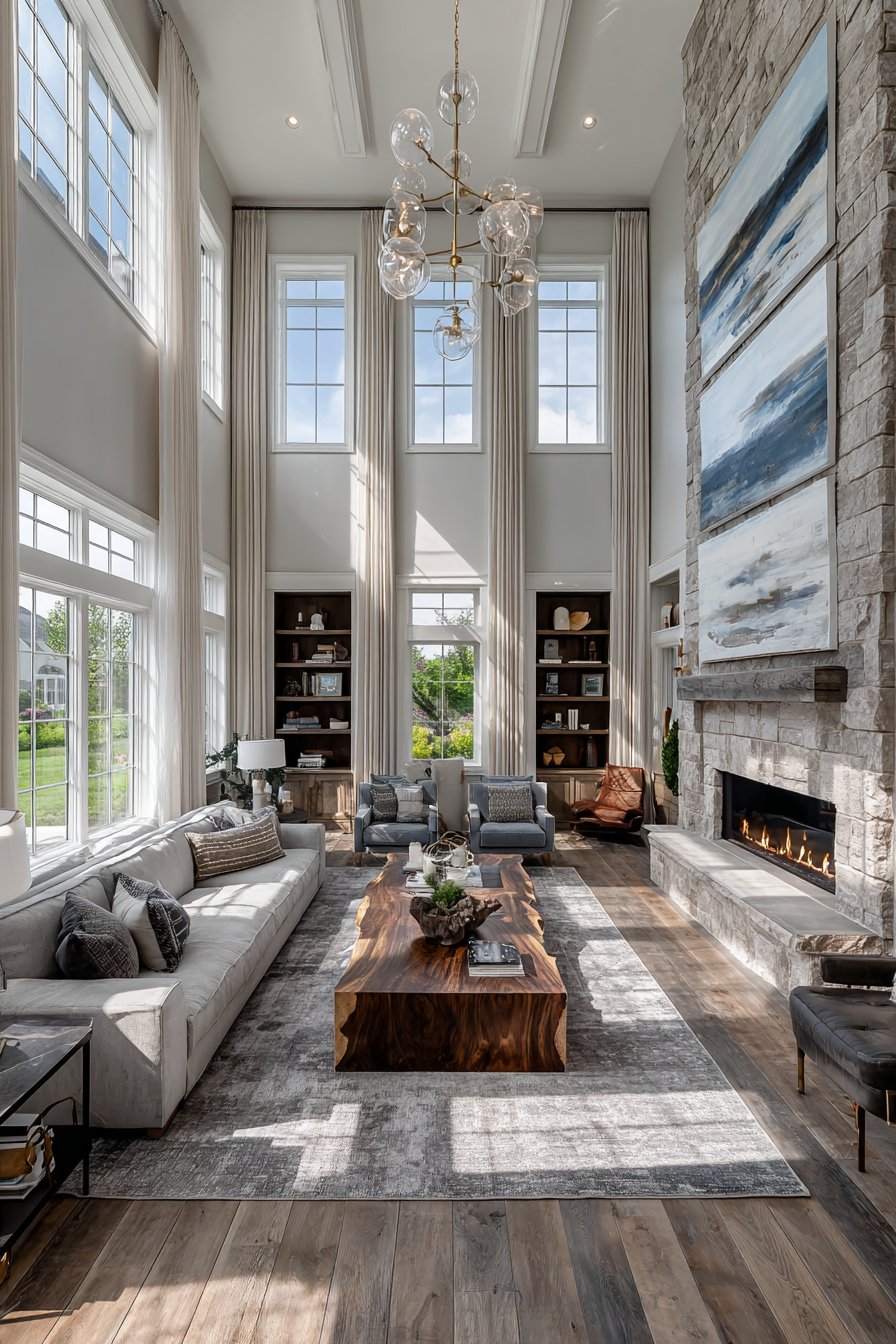
This article presents twenty distinctive approaches to spacious living room design. Each concept demonstrates unique ways to maximize impressive dimensions while maintaining warmth and livability. Whether you prefer minimalist Scandinavian simplicity or opulent art deco glamour, these designs prove that spacious rooms can feel both grand and welcoming.
1. Natural Linen Sectional with Soaring Ceilings
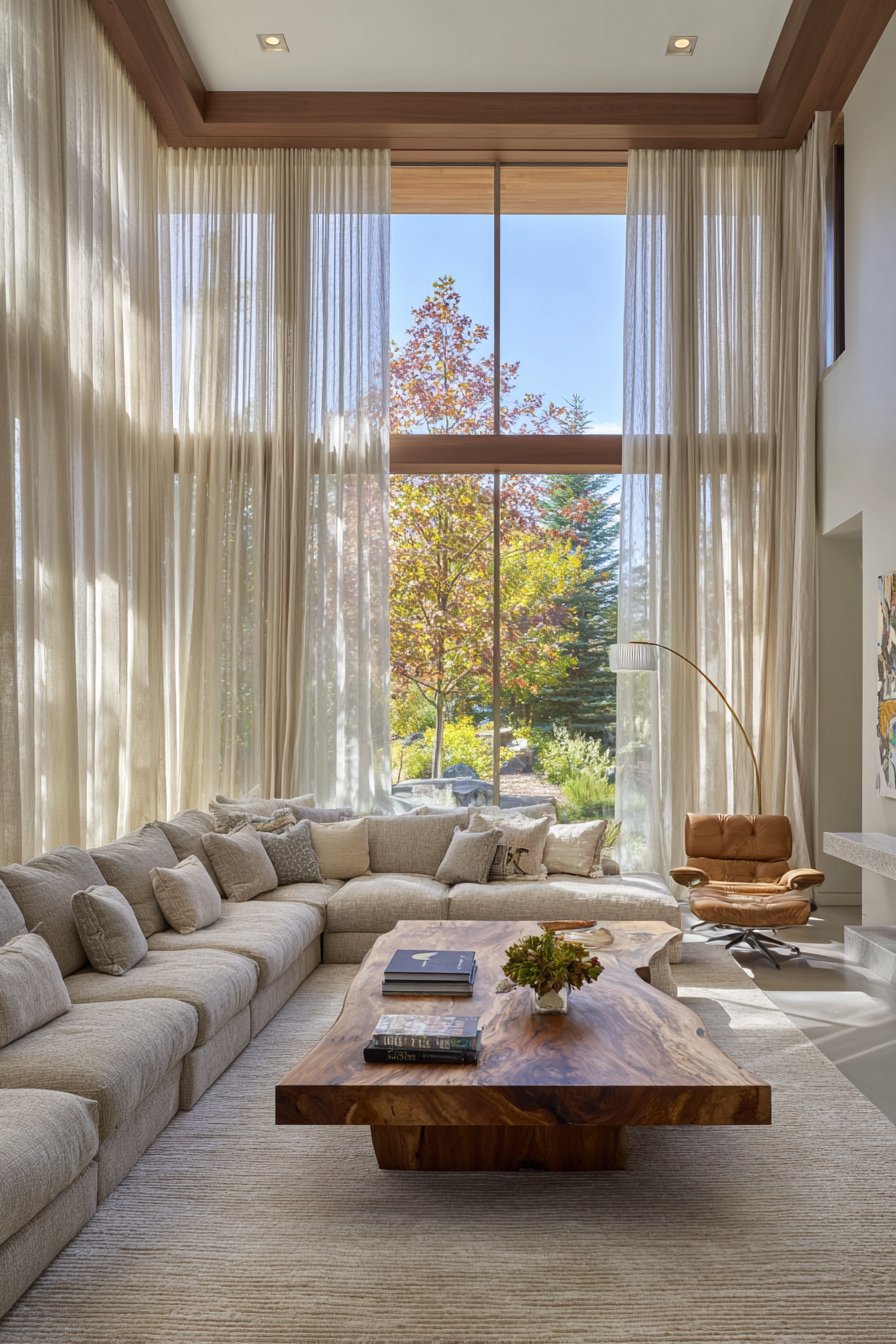
The twelve-foot ceilings create an immediate sense of grandeur in this light-filled space. A large sectional sofa in natural linen defines the main seating area without overwhelming the room. The neutral fabric choice allows architectural features to command attention. Oversized windows stretch from floor to ceiling, framed by sheer curtains that filter daylight beautifully.
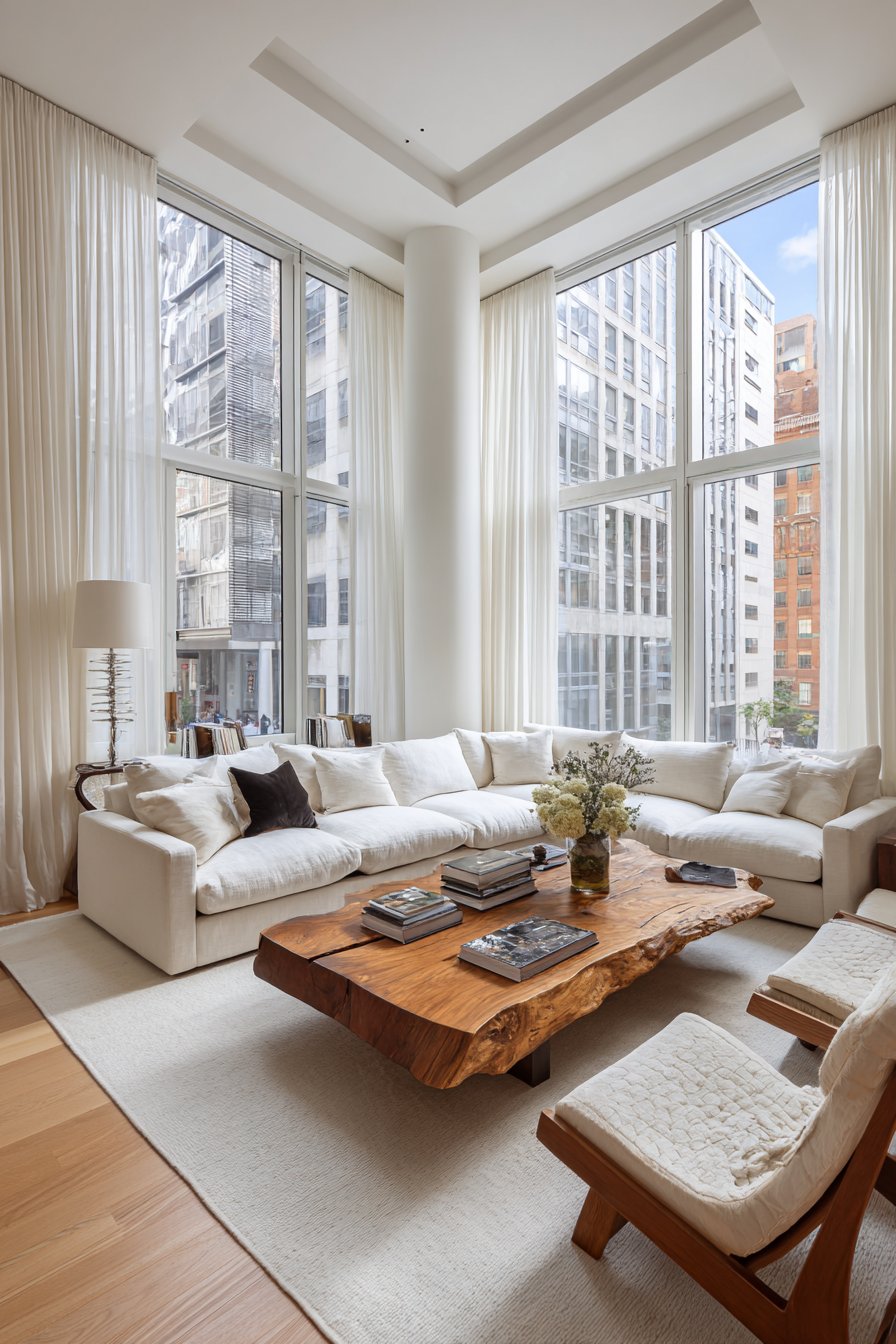
The live-edge walnut coffee table centers the seating arrangement with organic elegance. Its substantial presence anchors the furniture grouping atop a generous wool area rug. Natural wood grain patterns add warmth to the neutral color palette. The texture variations create visual interest without introducing competing colors.
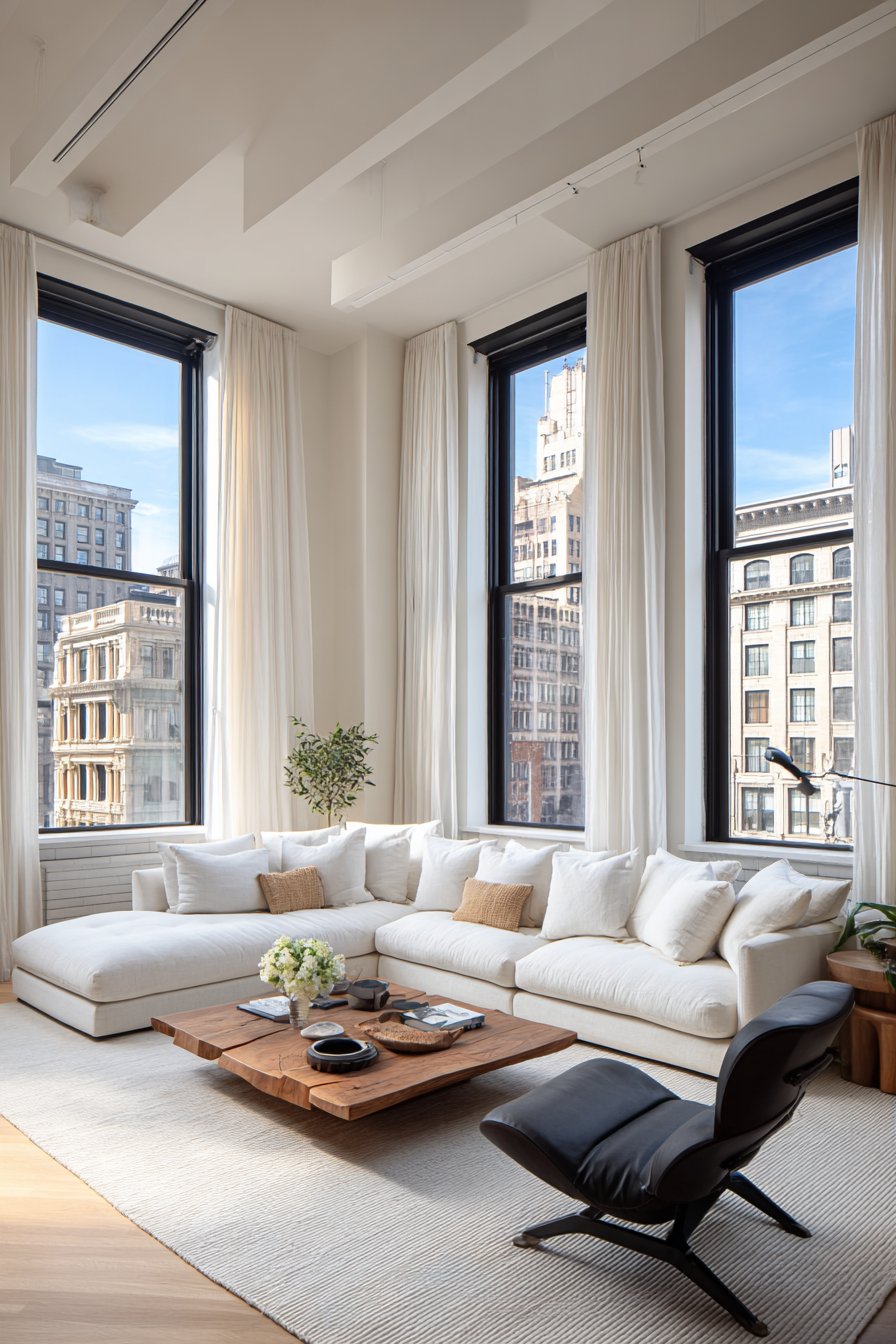
A dedicated reading corner occupies the space near the windows thoughtfully. The mid-century modern lounge chair and floor lamp create an intimate zone within the larger room. This strategic furniture placement demonstrates how spacious rooms accommodate multiple functions. The arrangement maintains abundant circulation space throughout.
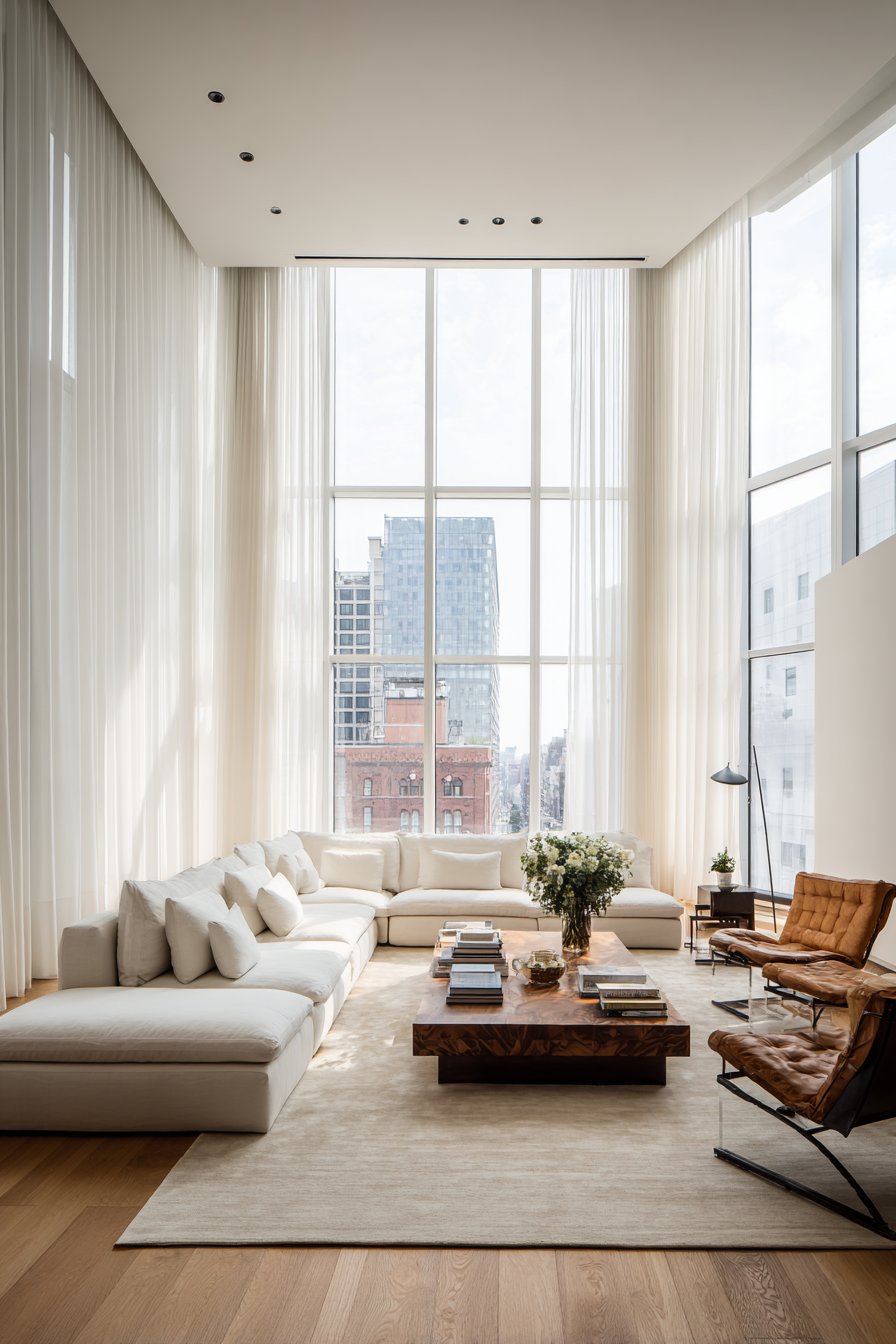
Wide-angle photography captures the room’s impressive proportions effectively. The composition emphasizes thoughtful furniture placement that maximizes the generous layout. Natural daylight floods the space, highlighting material textures and creating depth. The soaring ceilings become the defining architectural feature that elevates the entire design.
Key Design Tips:
- Position sectionals to define zones without blocking sight lines across the room
- Choose sheer curtains for floor-to-ceiling windows to maximize natural light penetration
- Incorporate substantial coffee tables that match the scale of large sectionals
- Create dedicated activity zones like reading nooks to make spacious rooms feel purposeful
- Select neutral upholstery fabrics that allow architectural features to shine
- Use generous area rugs to ground seating arrangements in expansive floor plans
2. Open Floor Plan with Distinct Functional Zones
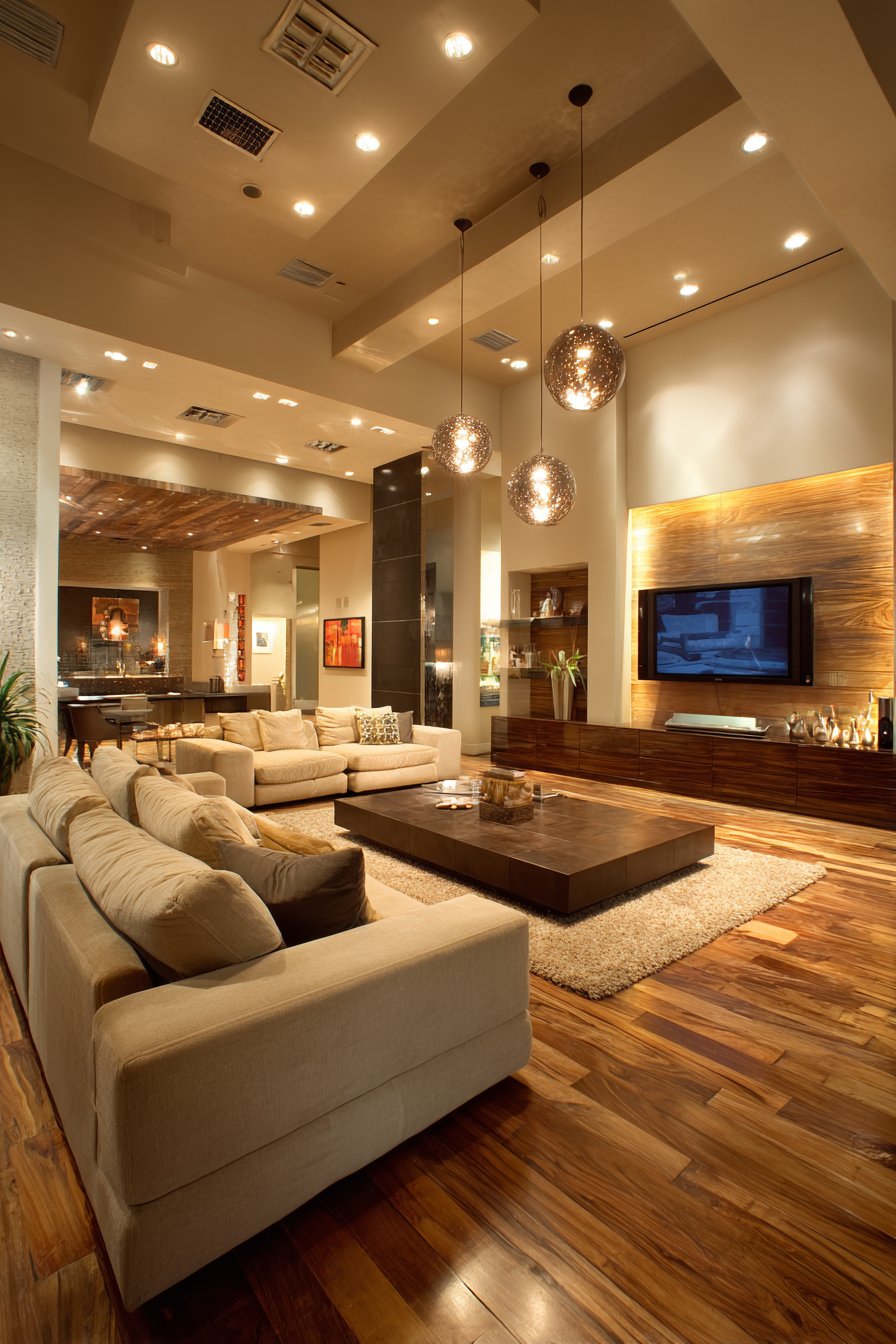
The open floor plan connects seamlessly to adjacent areas while maintaining distinct zones. Two facing sofas create an intimate conversation area despite the room’s generous dimensions. The contemporary media console spans one wall beneath a large flat-screen television. This arrangement demonstrates how spacious rooms accommodate multiple entertainment options simultaneously.
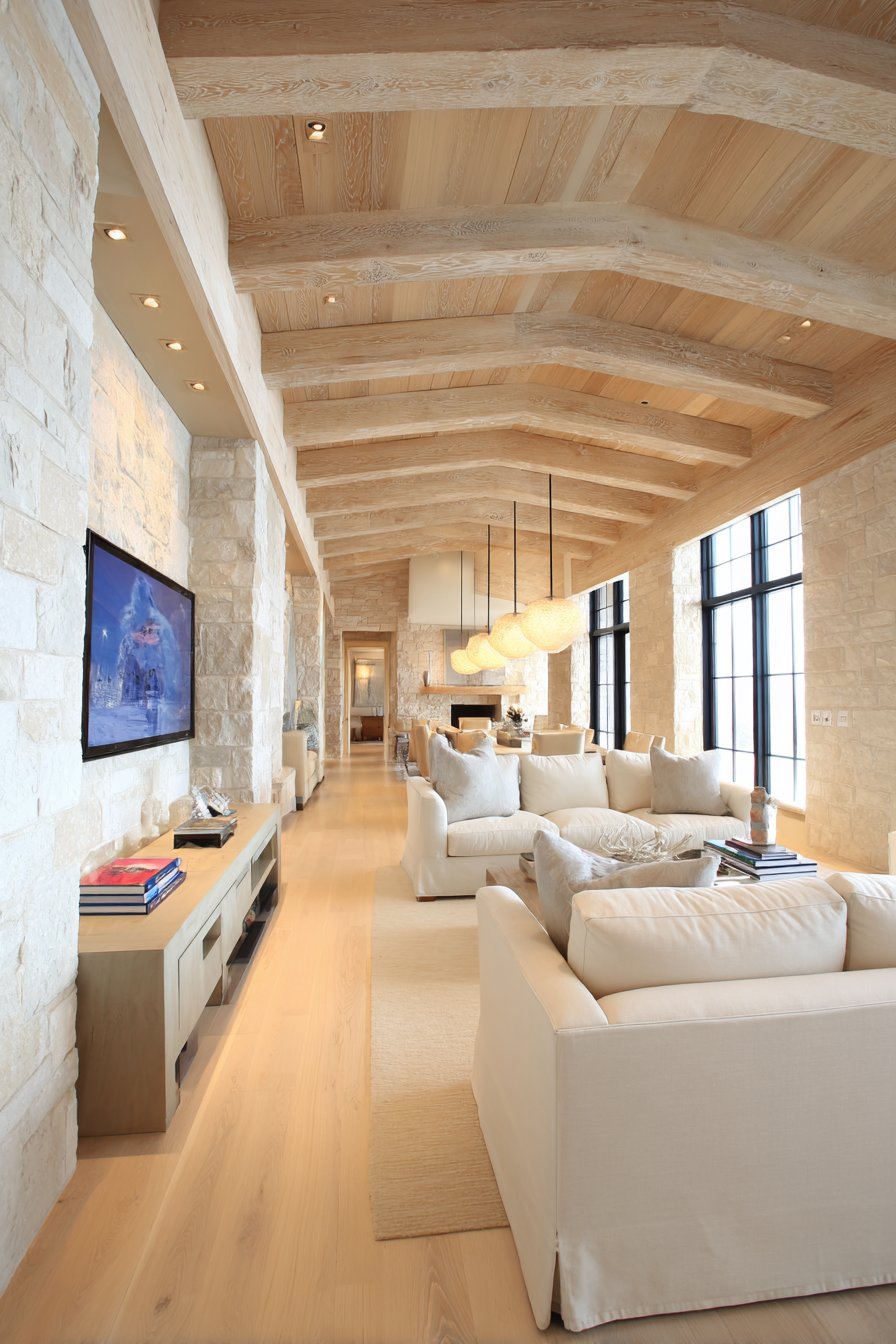
Warm oak hardwood flooring extends throughout the expansive space uniformly. The continuous flooring creates visual flow that connects different functional zones. Recessed lighting and statement pendant fixtures provide layered illumination throughout. The lighting design addresses both ambient needs and task-specific requirements effectively.
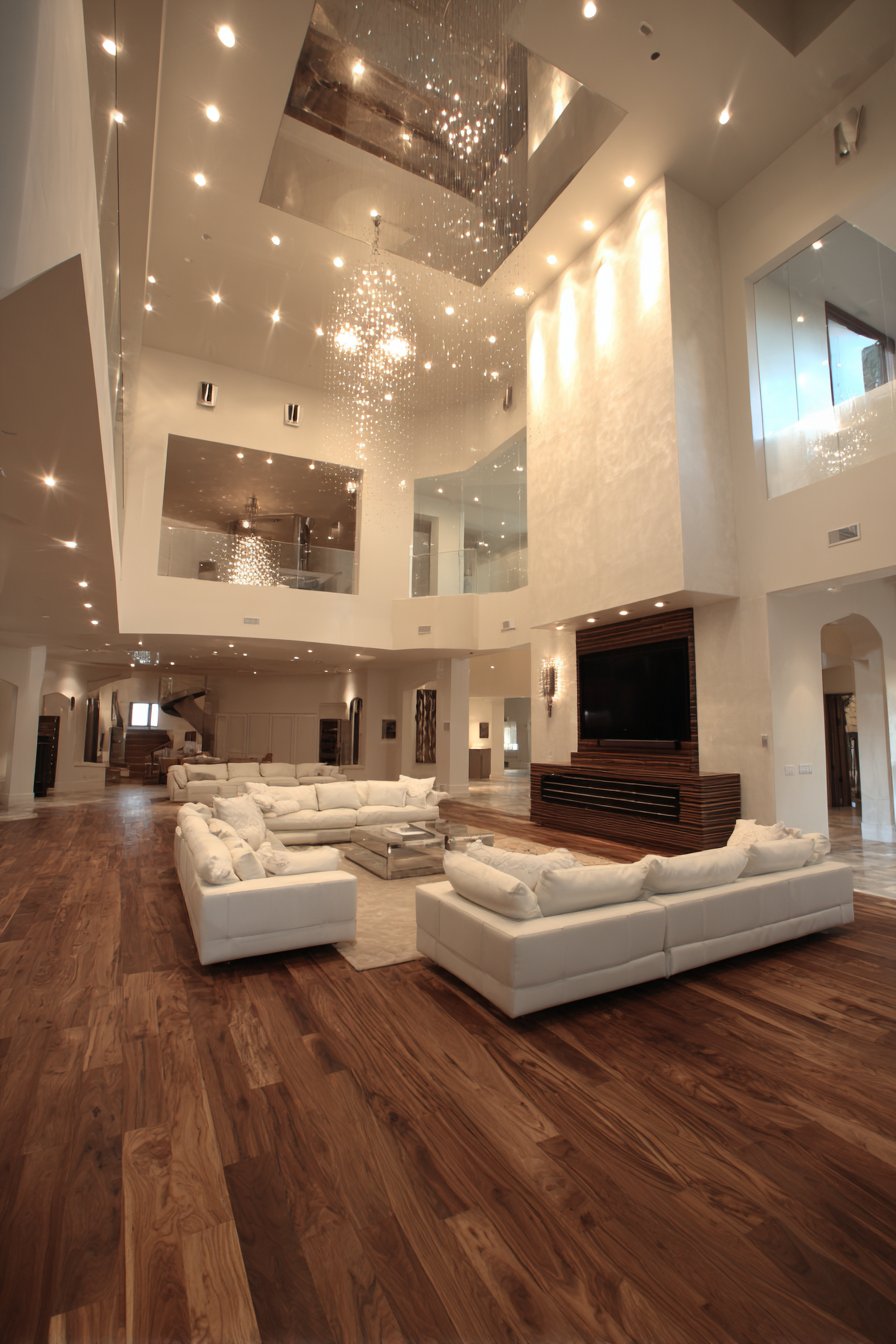
The furniture arrangement prioritizes conversation and connection between zones. Separate seating groupings allow simultaneous activities without interference. This flexibility makes the room ideal for entertaining while maintaining everyday functionality. The generous square footage prevents any single zone from overwhelming the space.
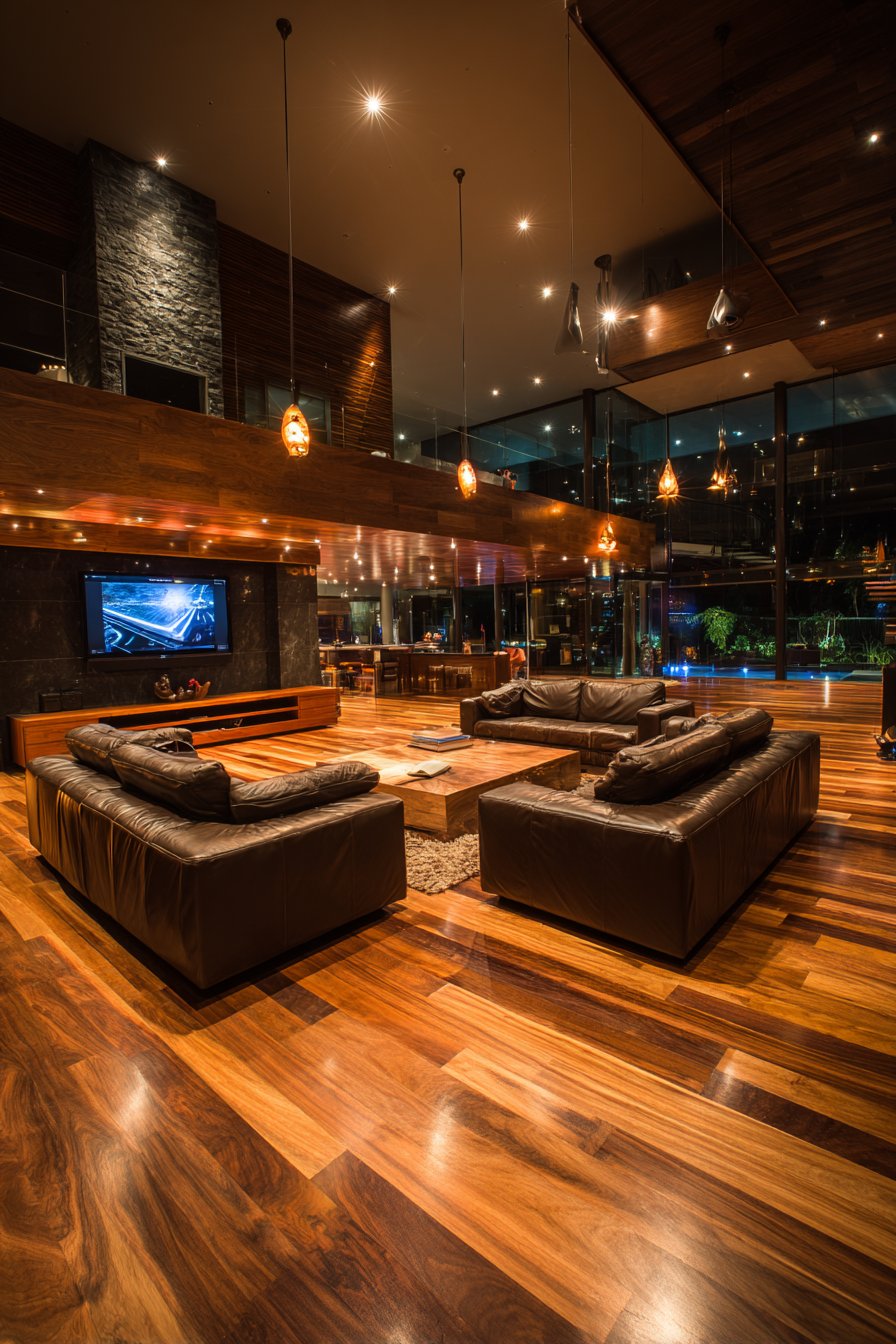
Professional photography captures how the zones relate to each other spatially. The wide-angle perspective showcases the organizational strategy that maximizes functionality. Visual flow remains uninterrupted despite multiple furniture groupings. The design proves that spacious rooms benefit from intentional zone creation rather than sparse furniture placement.
Key Design Tips:
- Define separate zones for conversation, entertainment, and relaxation in open plans
- Use furniture placement rather than walls to create distinct functional areas
- Maintain visual flow by keeping flooring consistent throughout connected spaces
- Implement layered lighting with recessed fixtures and statement pendants for flexibility
- Position media consoles along walls to preserve central floor space for circulation
- Arrange facing sofas to create intimate conversation areas within larger rooms
3. Dramatic Stone Fireplace with Exposed Beams
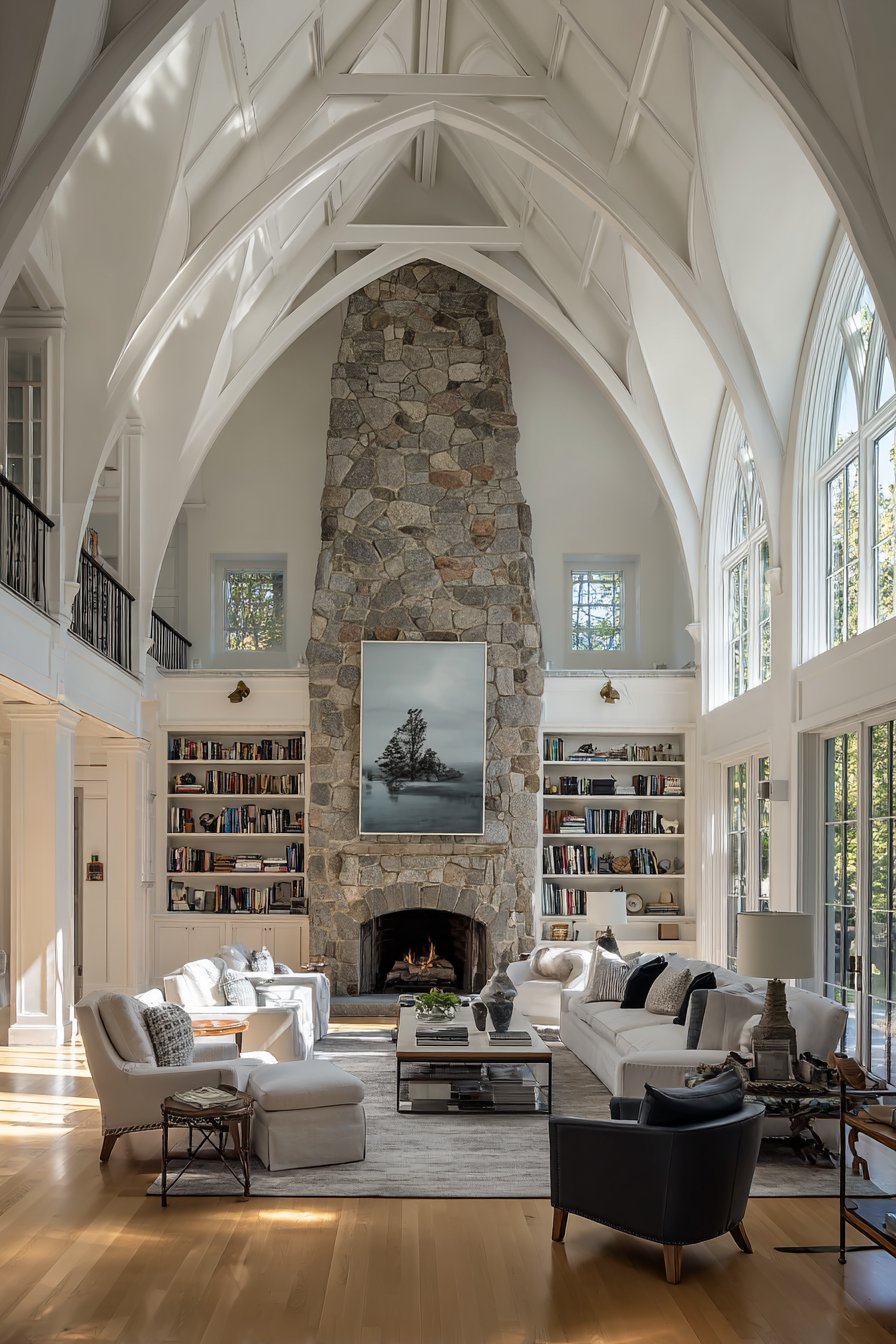
High ceilings and exposed architectural beams create an immediate visual impact. The beams painted in matte white emphasize the vertical space dramatically. A grand stone fireplace rises to the full ceiling height as the commanding focal point. Built-in shelving flanks the fireplace, displaying books and decorative objects with purpose.
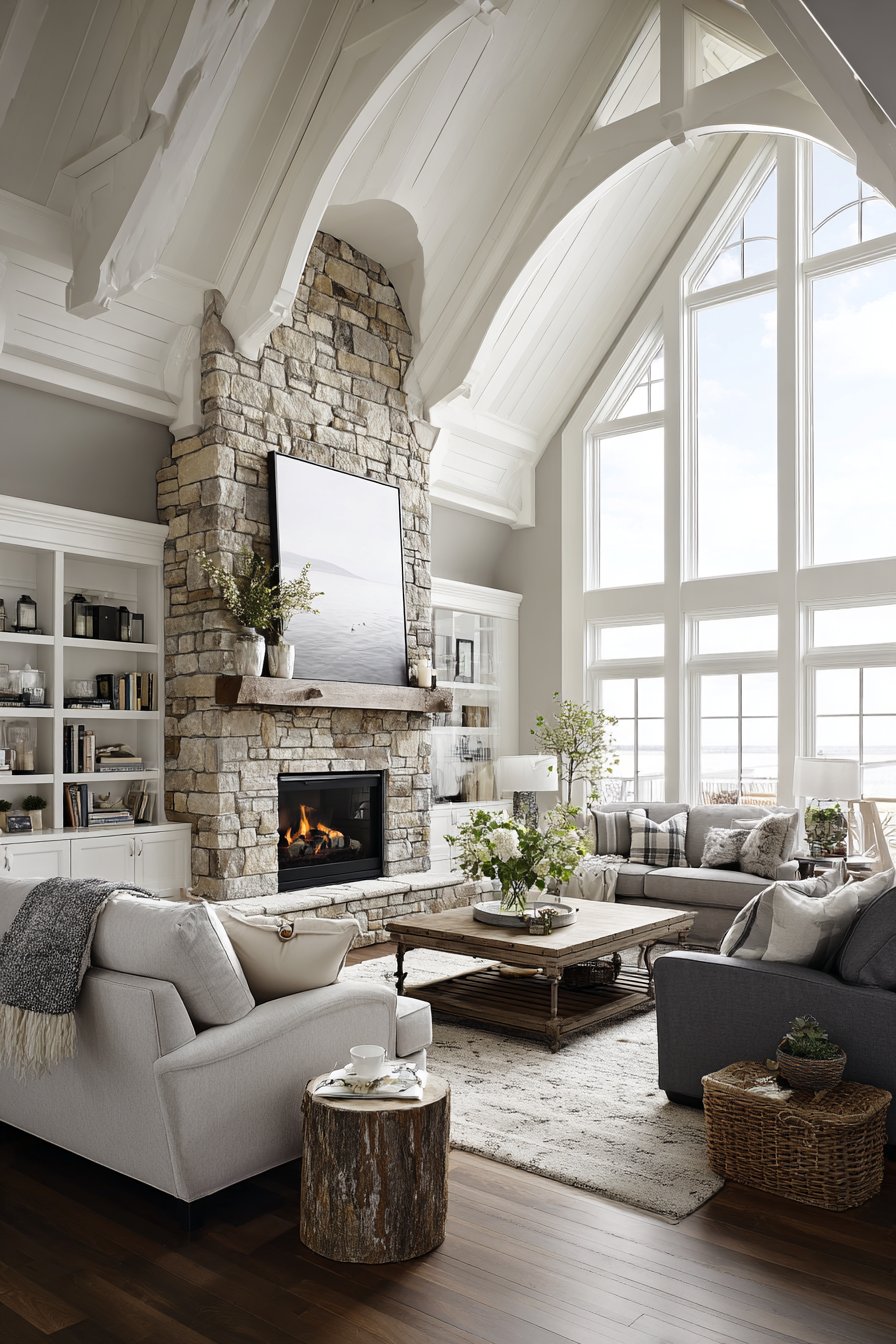
Large-scale artwork commands attention on the expansive wall space available. The generous dimensions allow art pieces that would overwhelm smaller rooms. Multiple seating options distribute across the room to accommodate various activities comfortably. This furniture variety creates a lived-in quality that prevents the space from feeling like a showroom.
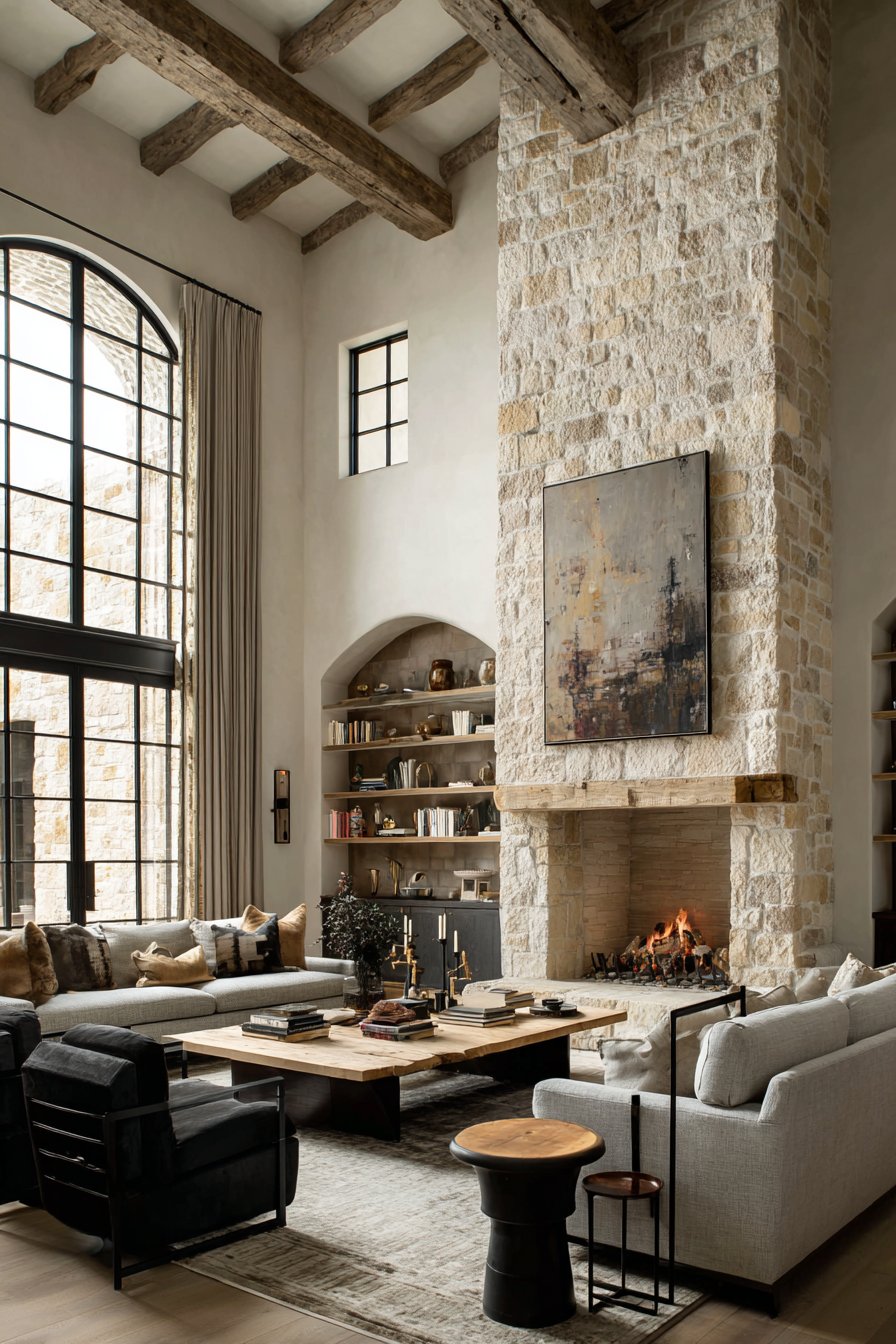
Floor-to-ceiling windows on two walls flood the room with natural light. The multiple exposures create dynamic lighting conditions throughout the day. Shadow patterns shift across surfaces, adding temporal interest to the space. The abundant natural light prevents the dramatic architectural features from feeling heavy or oppressive.
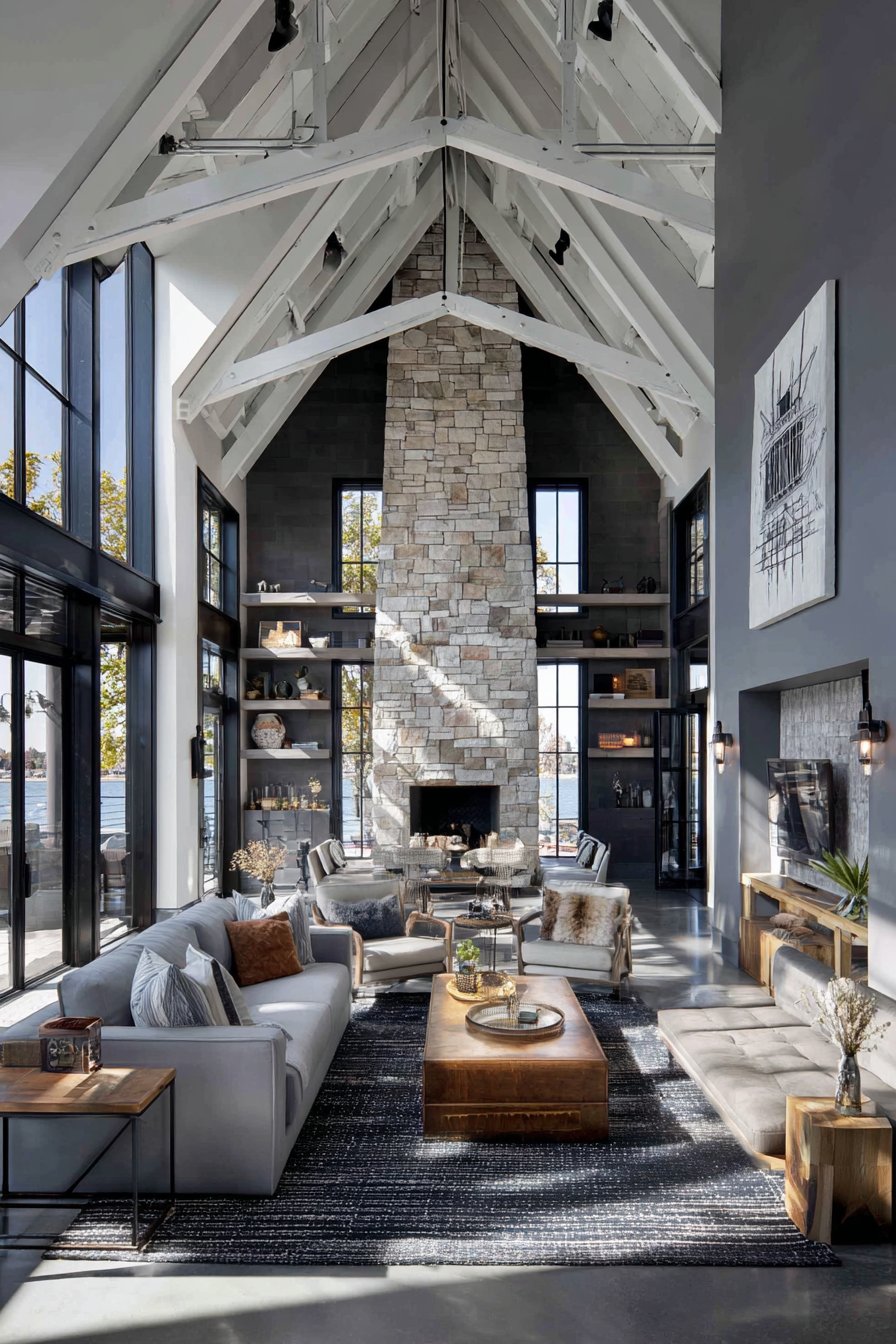
Balanced exposure in the photography highlights both architectural elements and comfortable furnishings. The impressive vertical space becomes the defining characteristic without sacrificing warmth. The design demonstrates how dramatic features enhance rather than dominate spacious rooms. Material variety in stone, wood, and fabric creates textural richness throughout.
Key Design Tips:
- Paint exposed beams in white or light colors to enhance ceiling height
- Use floor-to-ceiling fireplaces as anchor points in rooms with dramatic vertical space
- Incorporate built-in shelving flanking fireplaces for balanced architectural composition
- Select large-scale artwork appropriate to expansive wall surfaces
- Distribute multiple seating types throughout the room for activity flexibility
- Maximize natural light from multiple window exposures to prevent dramatic features from overwhelming the space
4. Sophisticated Gray and White Color Palette
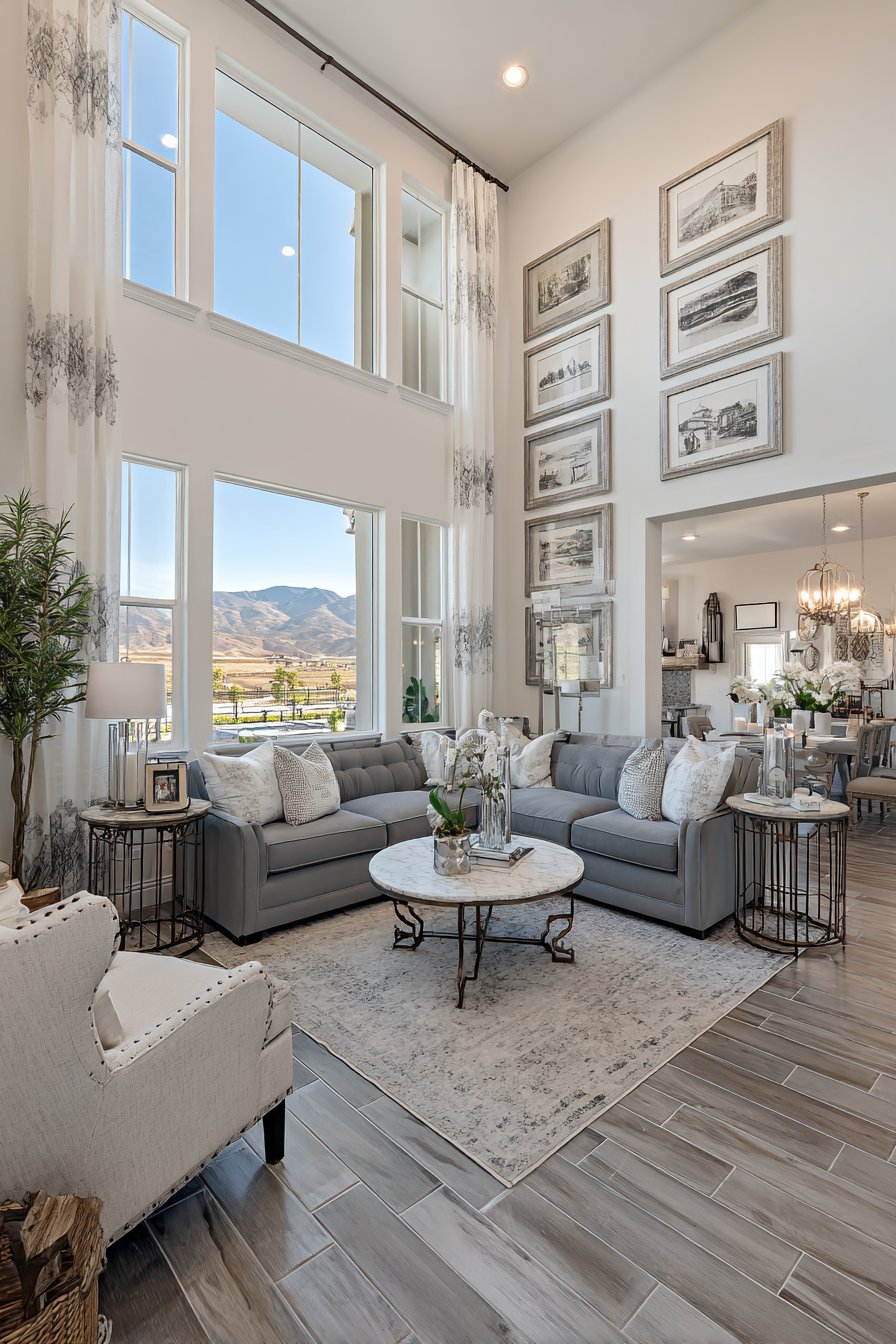
Soft grays and warm whites enhance the sense of openness throughout this elegant space. The sophisticated color palette creates visual continuity that makes the room feel even larger. A substantial L-shaped sectional faces panoramic windows with distant views. The seating arrangement prioritizes the connection to the outdoor vista.
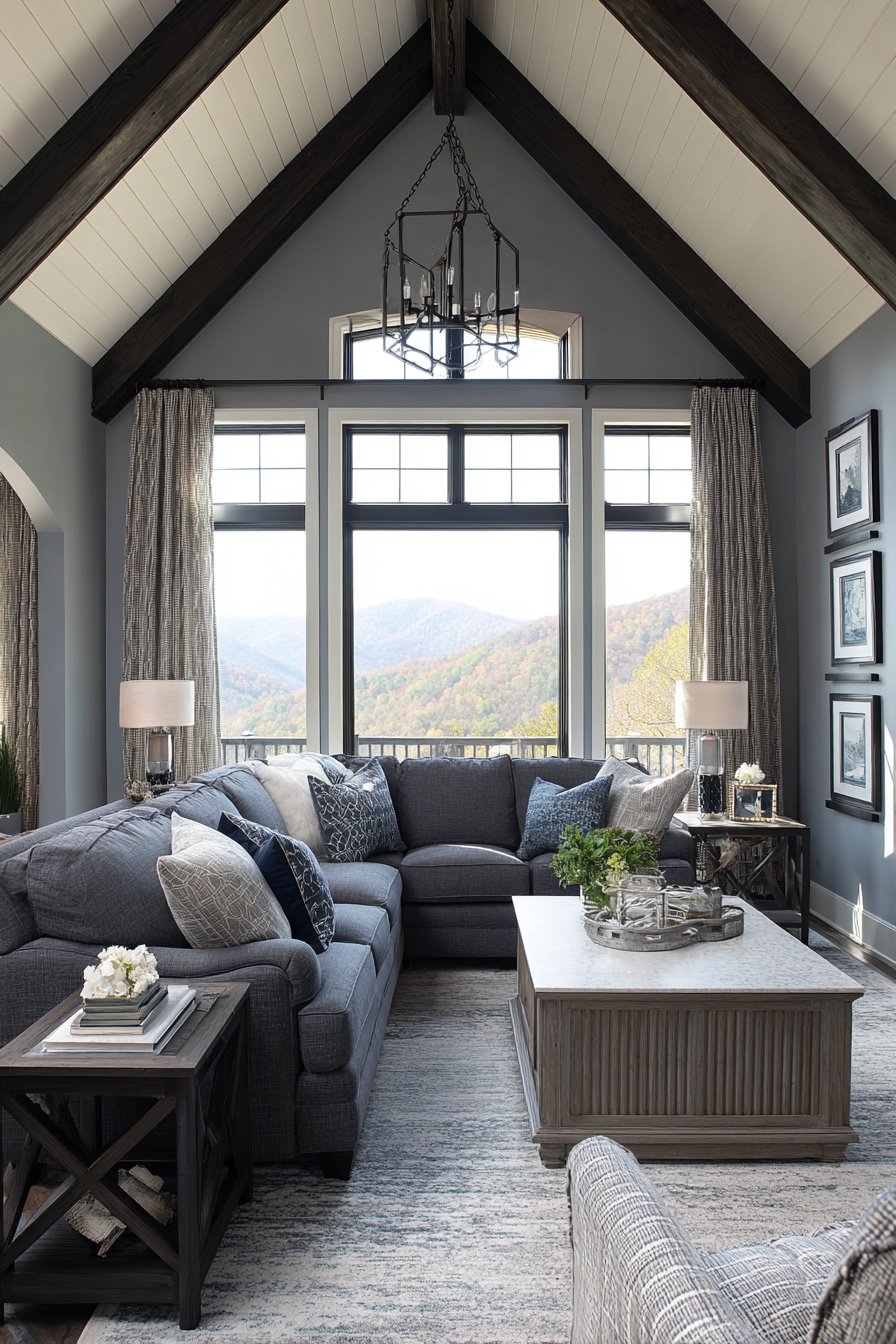
The marble-topped coffee table and matching console tables provide elegant surface areas. These polished surfaces reflect light, amplifying the room’s brightness naturally. Expansive walls feature carefully curated gallery-style artwork in consistent frames. The artwork collection adds personality without disrupting the serene color scheme.
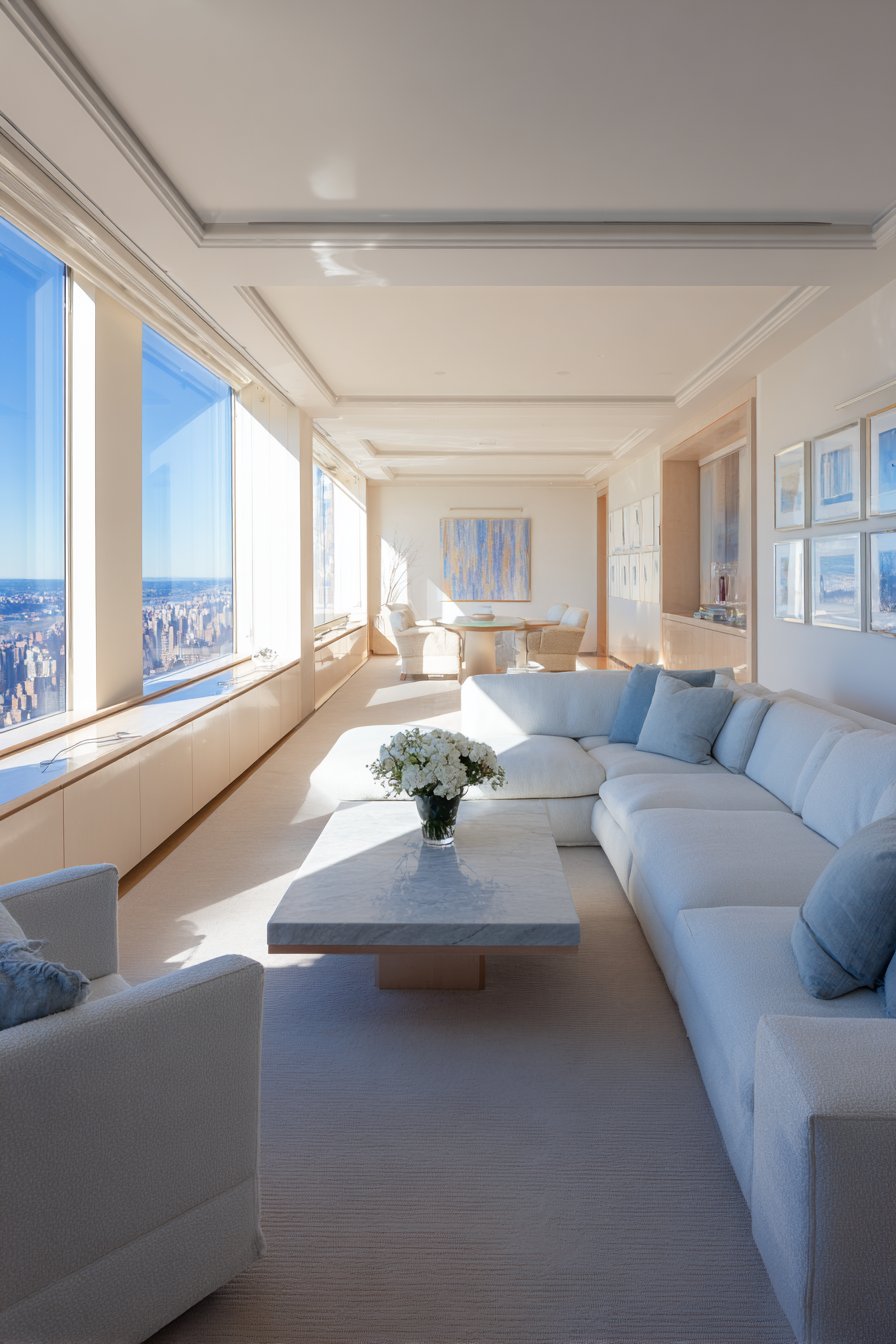
Abundant natural light from multiple window exposures creates dynamic shadows throughout the day. The changing light conditions add temporal interest to the monochromatic palette. Strategic furniture placement maintains ample circulation space despite the substantial sectional. The layout proves that large furniture pieces work well in spacious rooms when positioned thoughtfully.
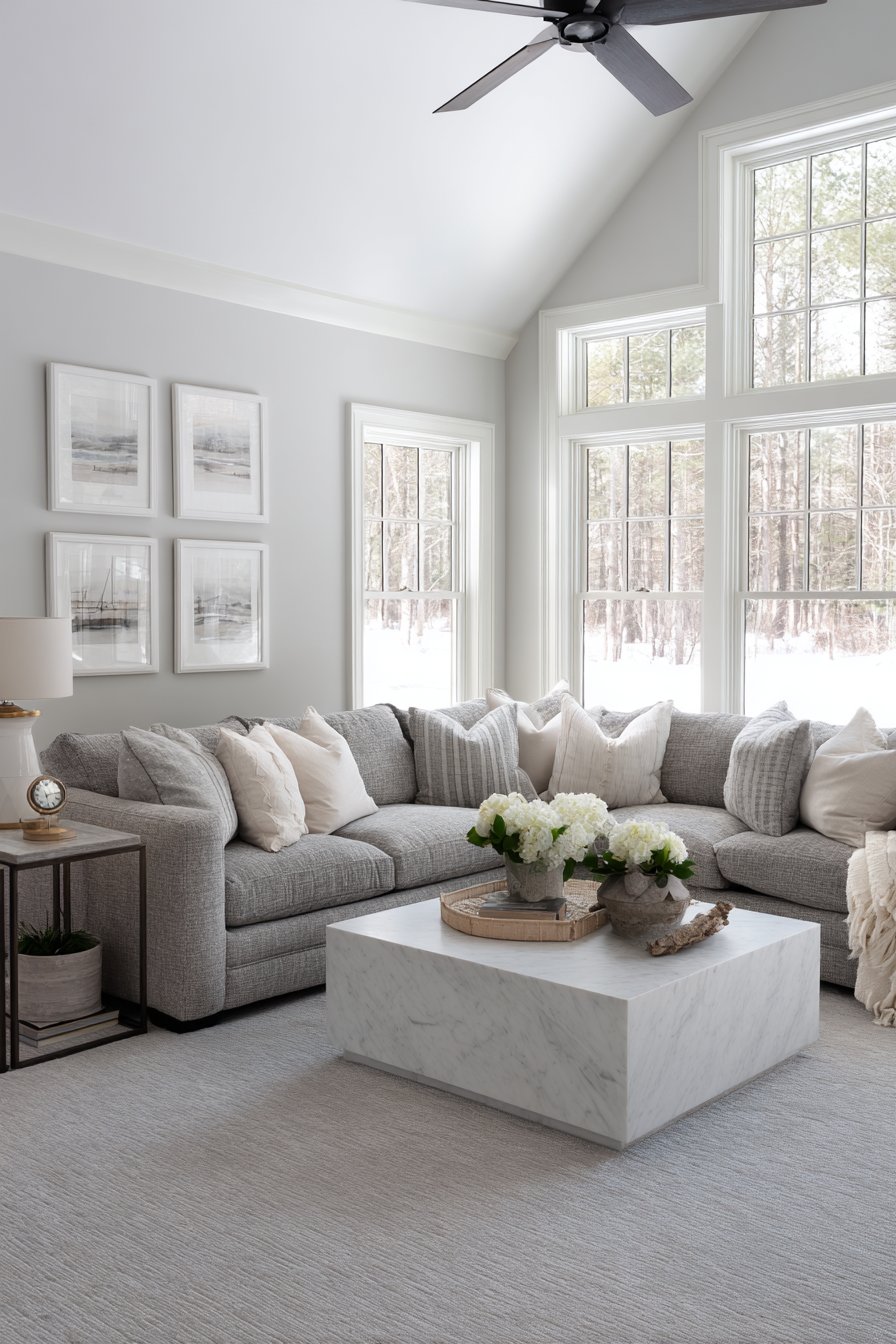
Wide-angle architectural photography emphasizes the room’s generous proportions effectively. The composition showcases how neutral colors prevent visual clutter in expansive spaces. The design demonstrates that monochromatic schemes succeed when layered with varied textures. Material diversity becomes essential for maintaining visual interest without introducing color.
Key Design Tips:
- Use monochromatic color schemes in soft grays and whites to enhance spaciousness
- Position large sectionals to face windows and capture views rather than blocking them
- Incorporate reflective surfaces like marble to amplify natural light throughout the room
- Create gallery walls with consistent framing to add personality while maintaining cohesion
- Maintain generous circulation space by leaving borders around furniture groupings
- Layer varied textures in monochromatic schemes to prevent visual monotony
5. Modern Farmhouse with Shiplap Accents
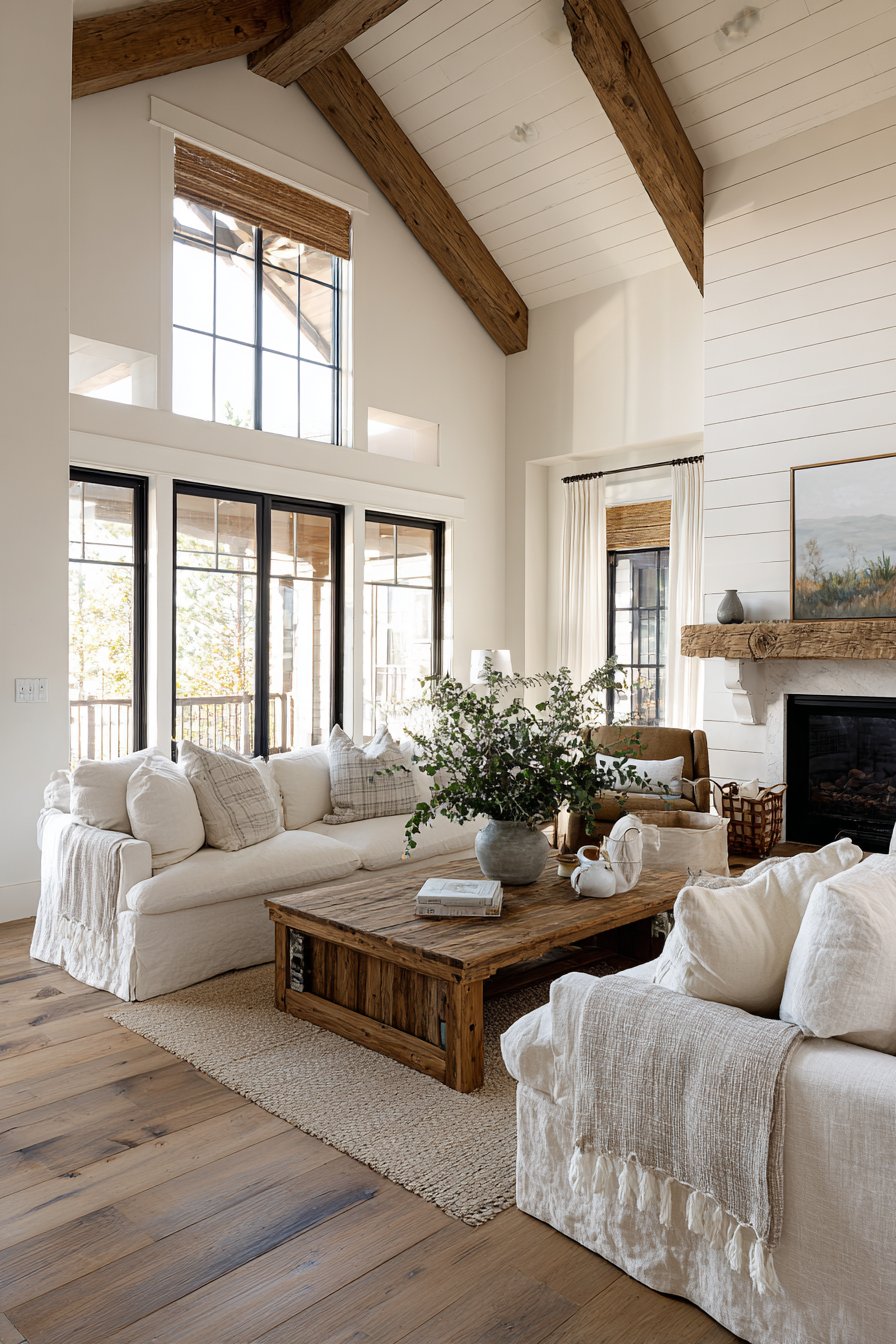
Shiplap accent walls painted in warm white create authentic farmhouse character. The textured wall treatment adds architectural interest without overwhelming the space. Matching sofas in textured neutral fabric face each other across a rustic reclaimed wood coffee table. This symmetrical arrangement creates formal balance that suits traditional farmhouse aesthetics.
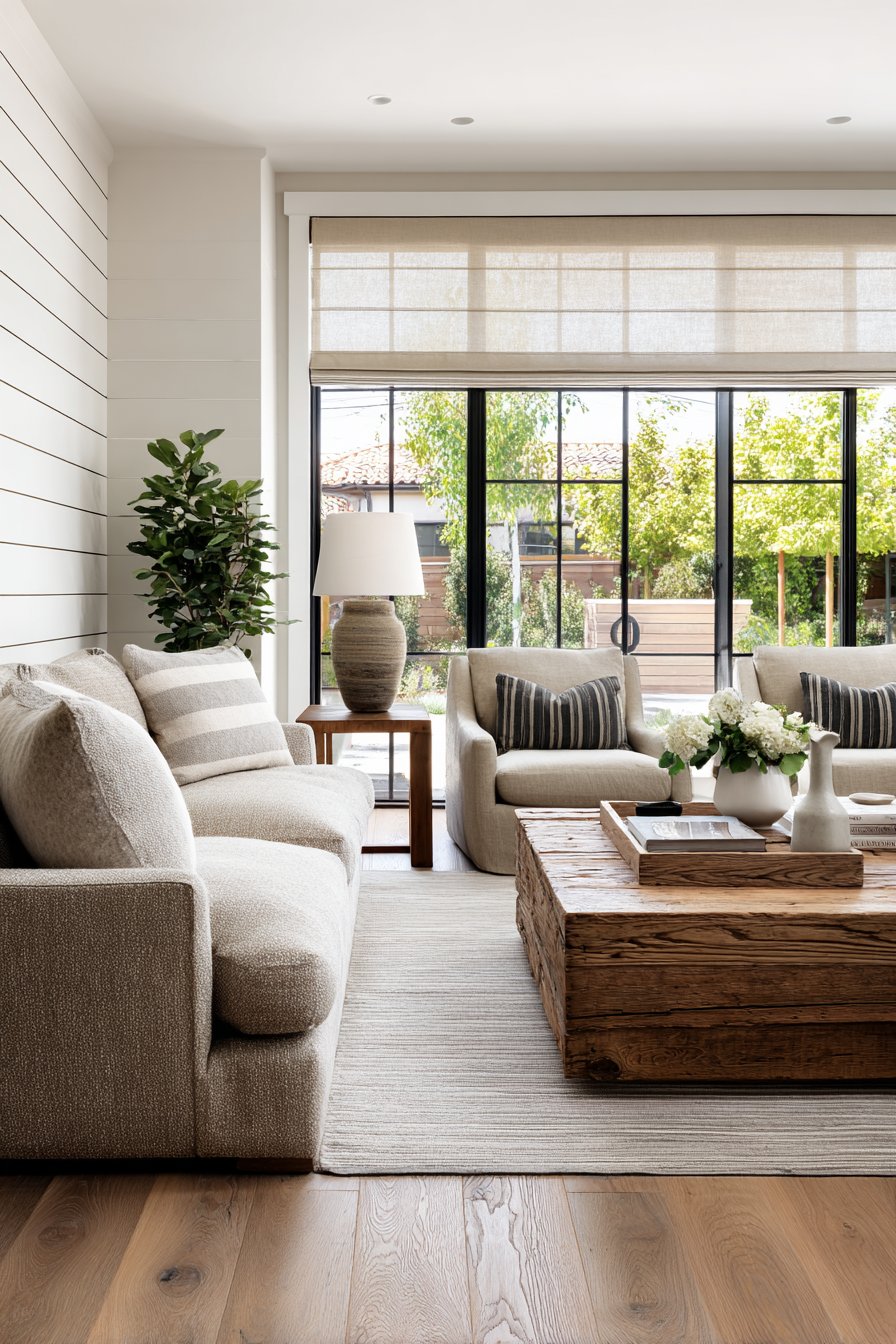
The room’s considerable width accommodates additional seating with upholstered armchairs near windows. These supplementary seating options increase capacity without crowding the primary furniture grouping. White oak flooring with visible grain patterns extends throughout the expansive space. The natural wood tones complement the rustic coffee table beautifully.
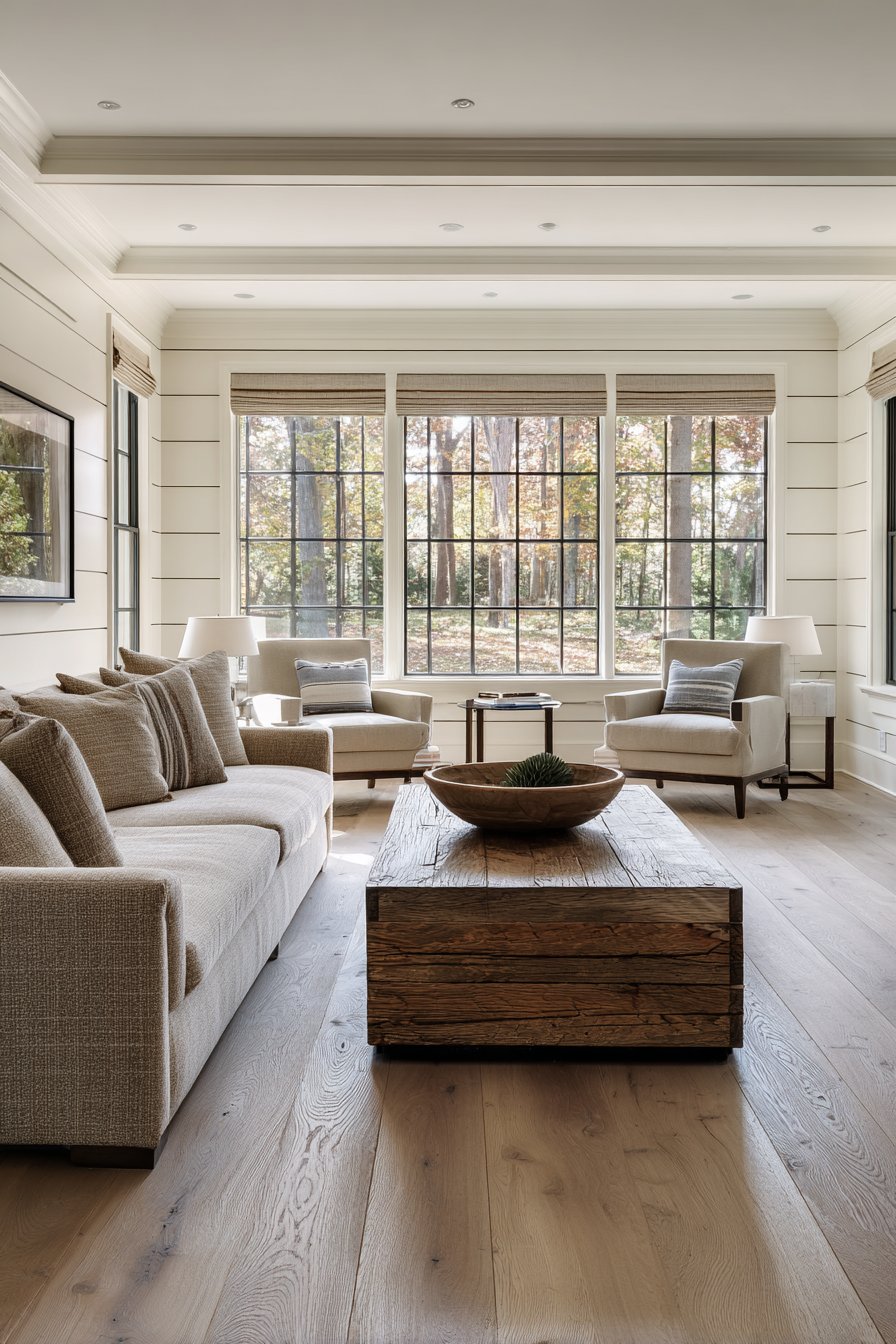
Large windows with simple Roman shades allow natural light to showcase the room’s generous dimensions. The understated window treatments maintain the farmhouse simplicity. Material choices emphasize authenticity over trend, with reclaimed wood and natural textiles predominating. This commitment to genuine materials creates lasting appeal.
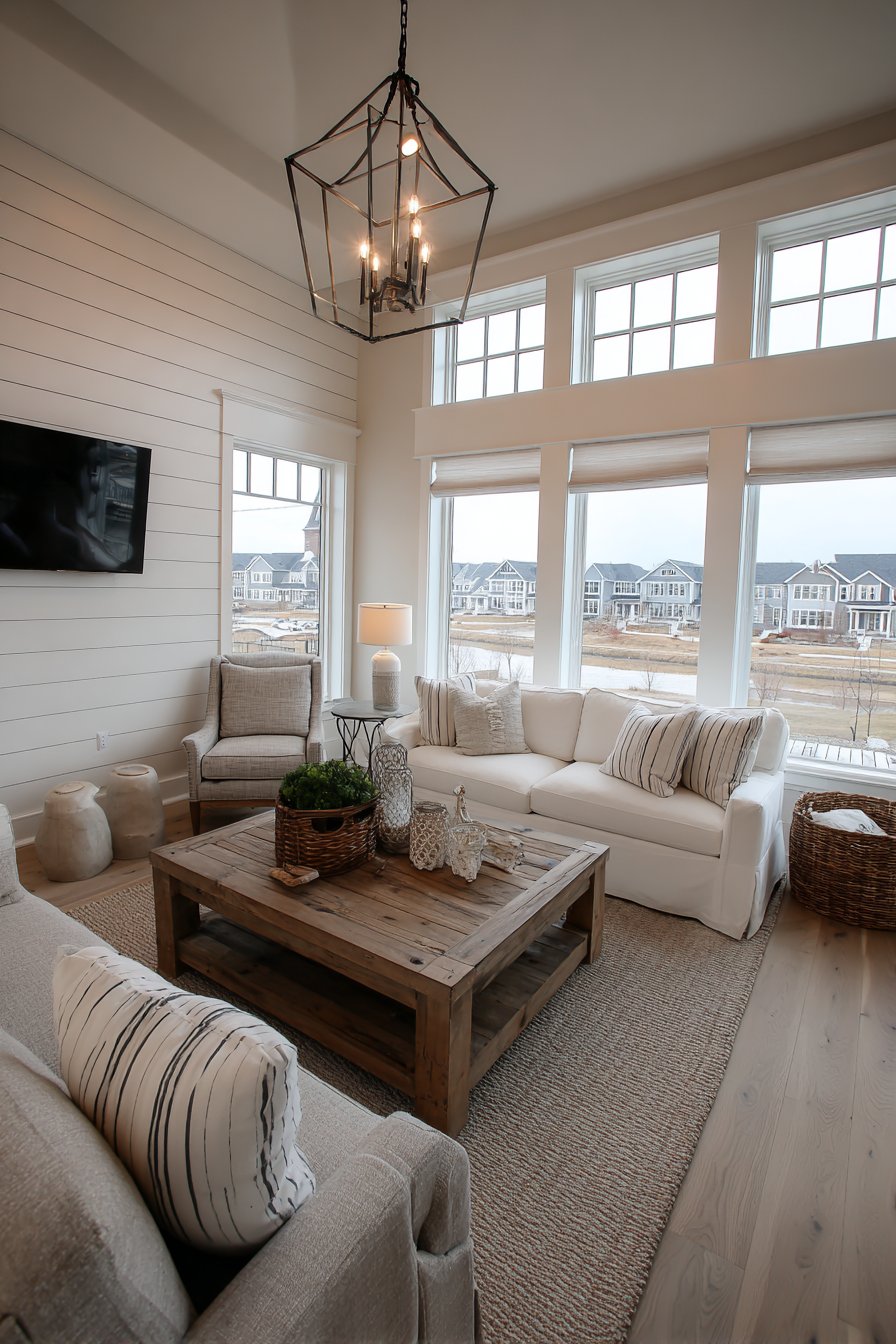
Professional interior photography captures the balanced furniture arrangement and architectural details. The composition highlights how farmhouse style adapts successfully to spacious modern homes. The design proves that rustic aesthetics work beautifully in generous room proportions. Warmth and character emerge from thoughtful material selection rather than excessive decoration.
Key Design Tips:
- Install shiplap accent walls to add farmhouse character without full-room commitment
- Arrange matching sofas facing each other for symmetrical traditional layouts
- Choose reclaimed wood coffee tables that show authentic wear and patina
- Position additional armchairs near windows to maximize natural light and views
- Select white oak flooring with visible grain to enhance farmhouse authenticity
- Use simple Roman shades that complement rather than compete with architectural details
6. Contemporary Clean Lines and Sliding Glass Doors
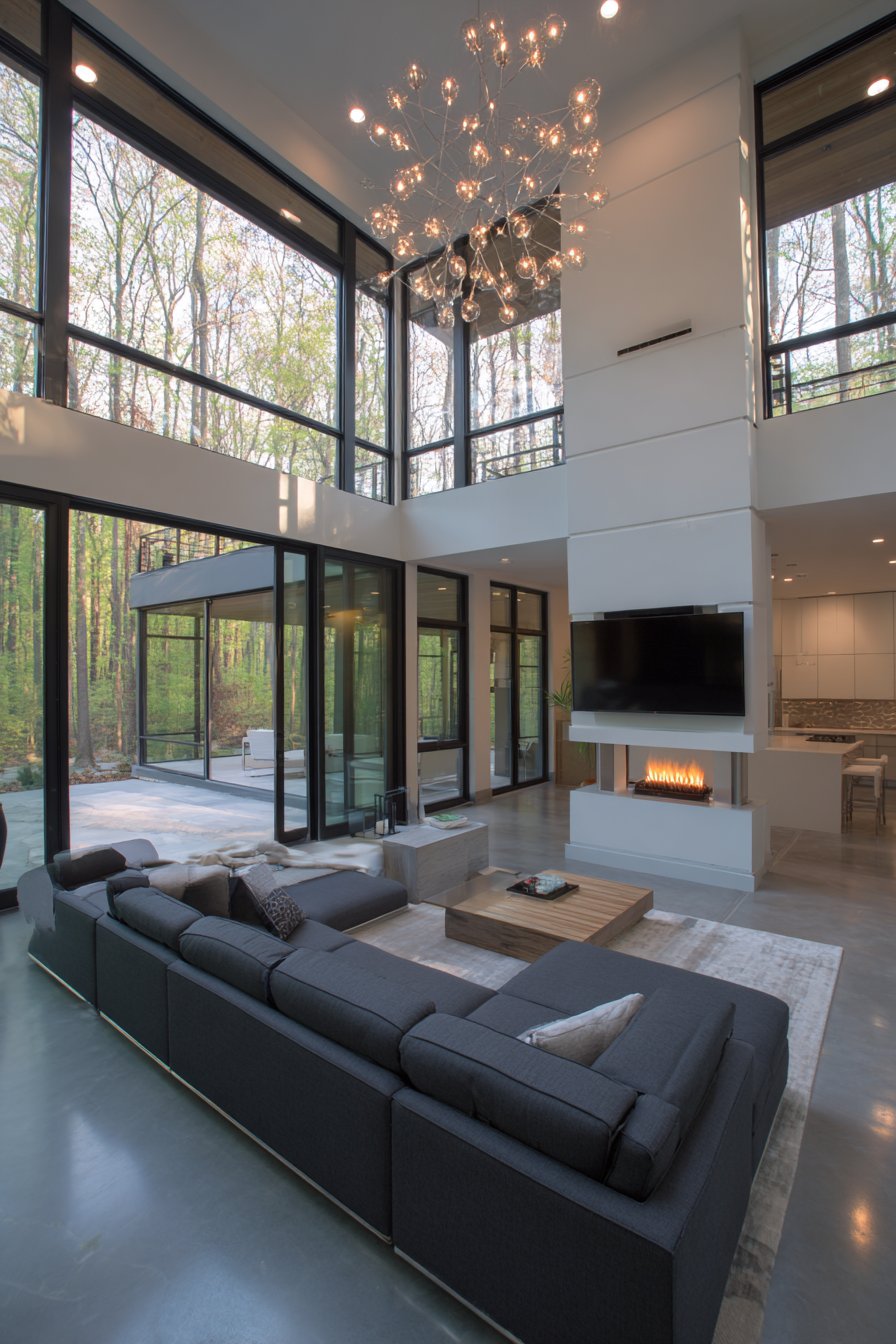
Clean lines and minimal ornamentation define this sophisticated contemporary space. A low-profile sectional in charcoal gray maximizes open floor space visibility. The streamlined furniture design emphasizes horizontal expanses rather than vertical height. A statement chandelier hangs from the high ceiling, drawing attention upward dramatically.
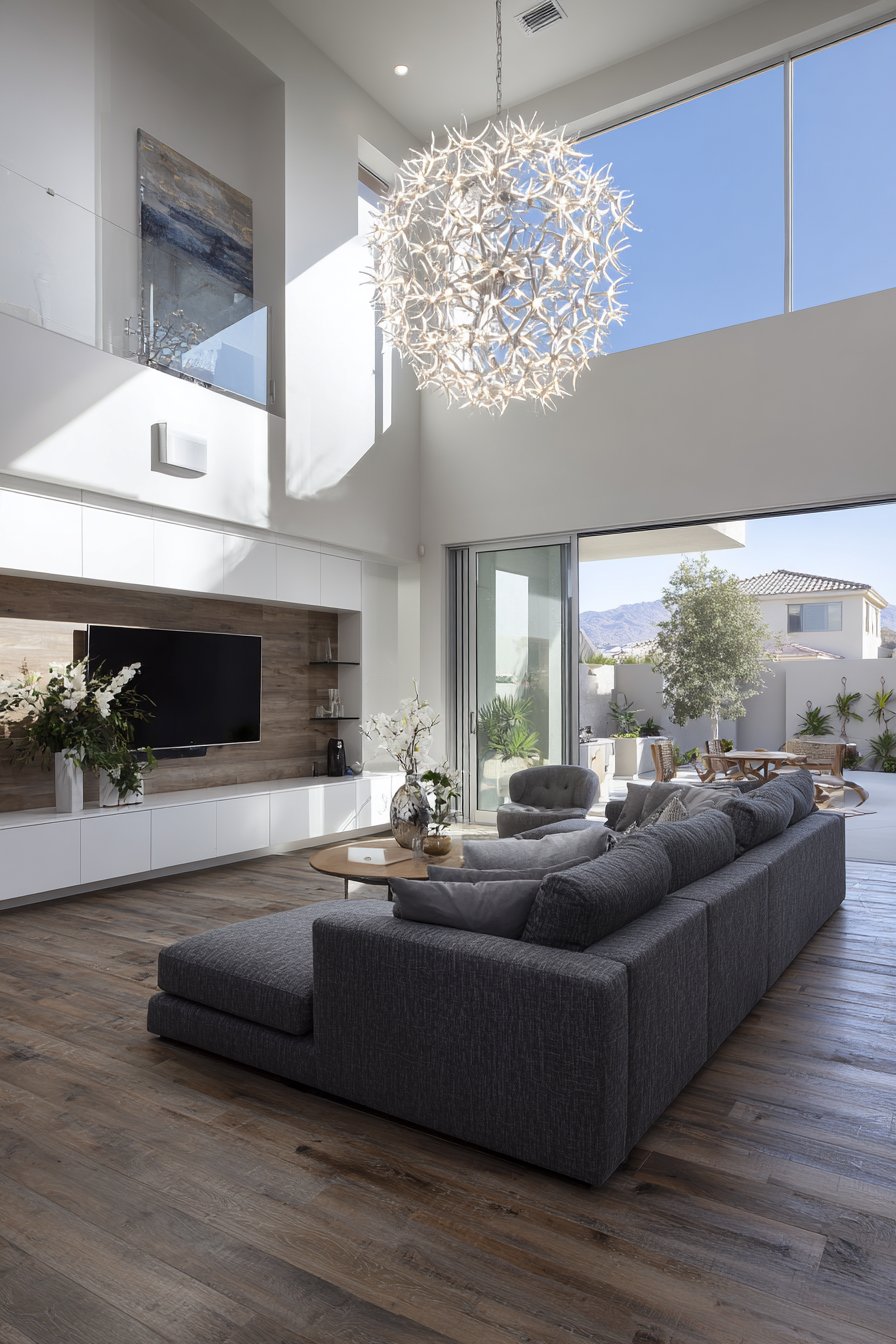
Floor-to-ceiling built-in cabinetry provides substantial storage without cluttering the room. The custom millwork integrates seamlessly with the architecture. Large sliding glass doors open completely to an outdoor area, extending the living space. This indoor-outdoor connection doubles the perceived size during suitable weather.
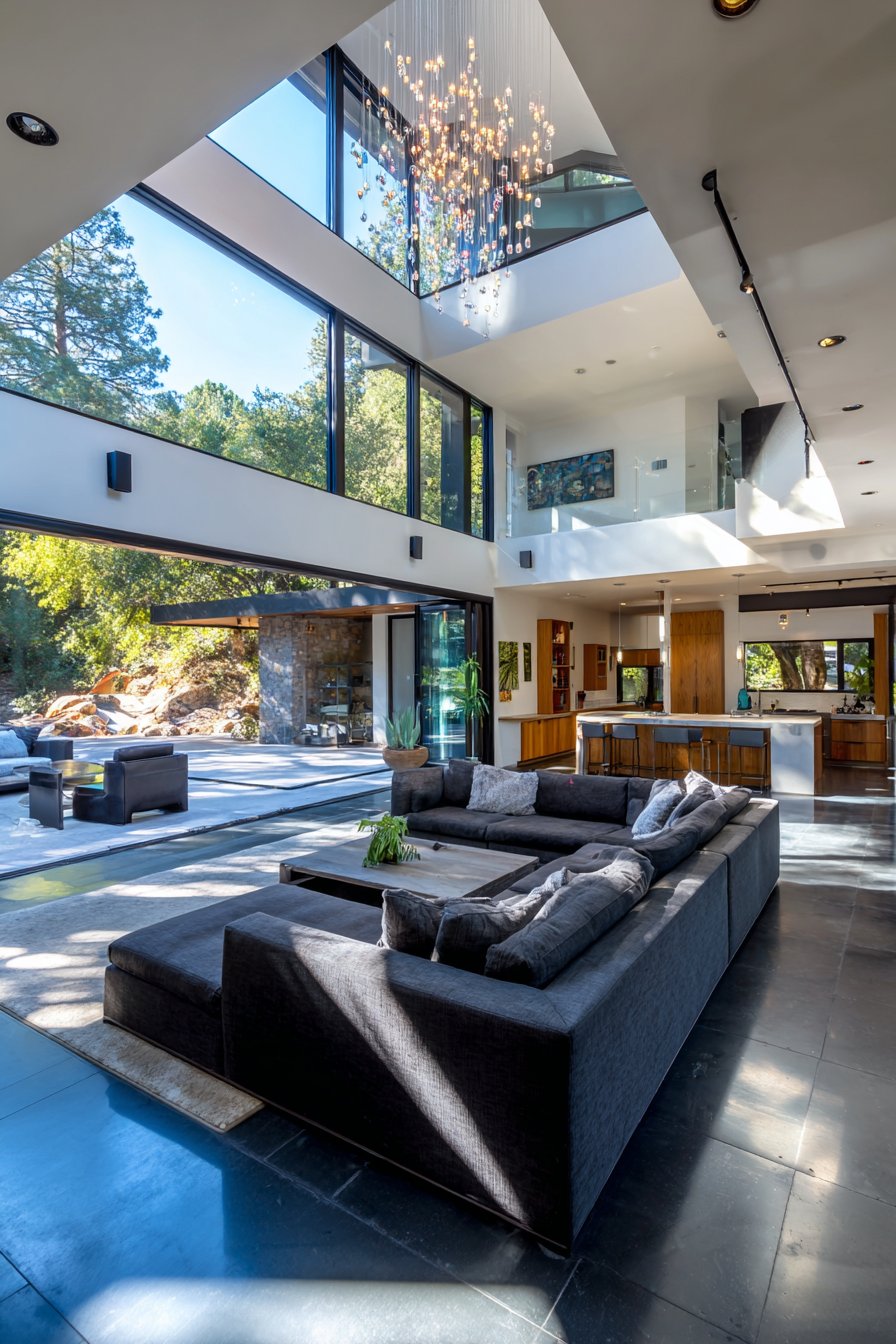
The contemporary aesthetic prioritizes function and simplicity throughout. Material palette remains limited to enhance the minimalist approach. Natural daylight streams through the glass walls, eliminating the need for extensive artificial lighting. The transparency creates visual continuity between interior and exterior spaces.
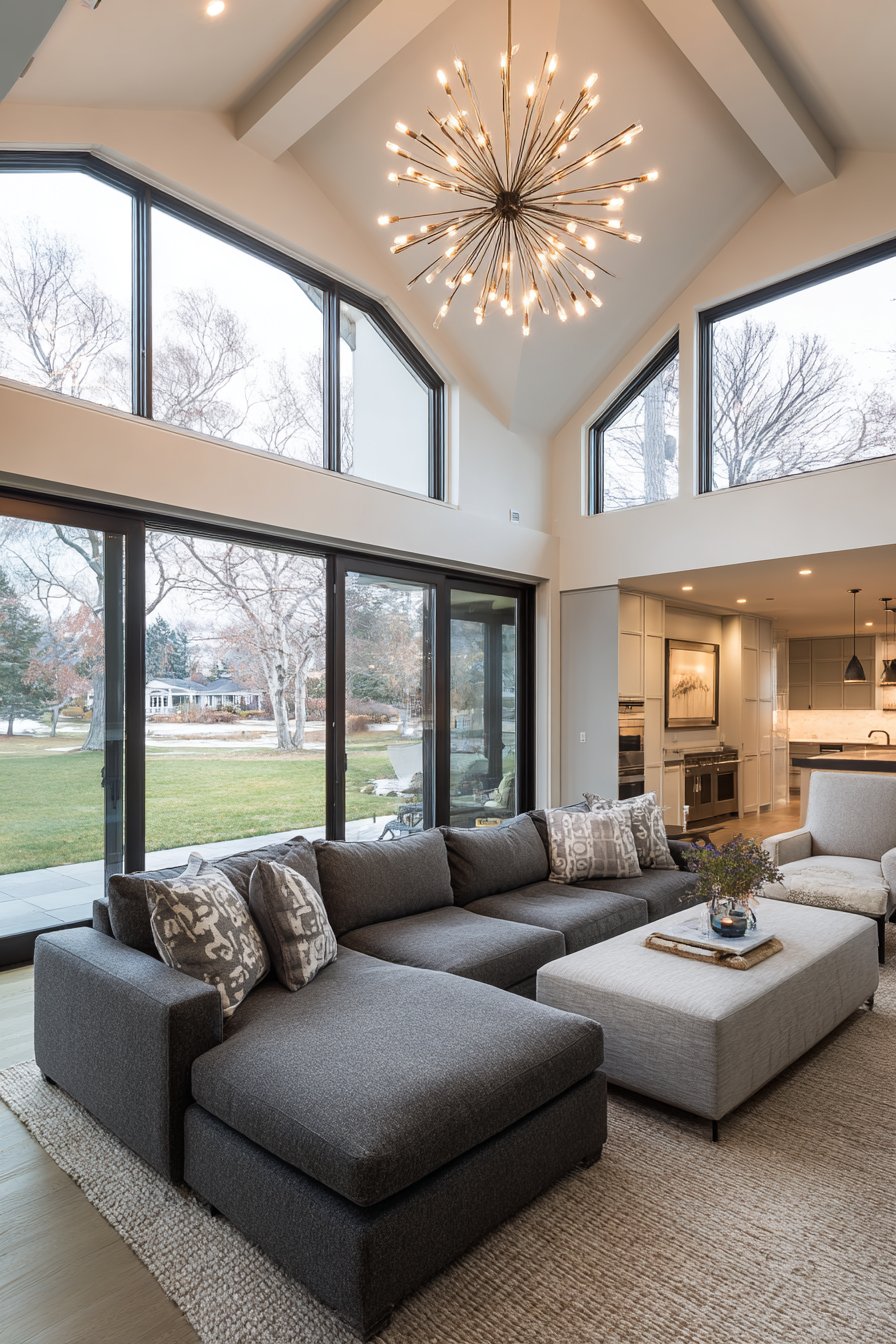
Wide-angle lens photography captures the seamless indoor-outdoor relationship effectively. The composition emphasizes the room’s impressive square footage and architectural sophistication. The design demonstrates how contemporary style maximizes spacious proportions through restraint. Less ornamentation allows the architecture itself to become the primary design element.
Key Design Tips:
- Choose low-profile sectionals that don’t obstruct sight lines in contemporary spaces
- Install floor-to-ceiling built-ins for storage that integrate with the architecture
- Use sliding glass doors to create flexible indoor-outdoor connections
- Select statement chandeliers that draw the eye upward in rooms with high ceilings
- Limit material palette to enhance minimalist contemporary aesthetics
- Maximize natural light through large glass expanses to reduce artificial lighting needs
7. Traditional Styling with Ornate Architectural Details
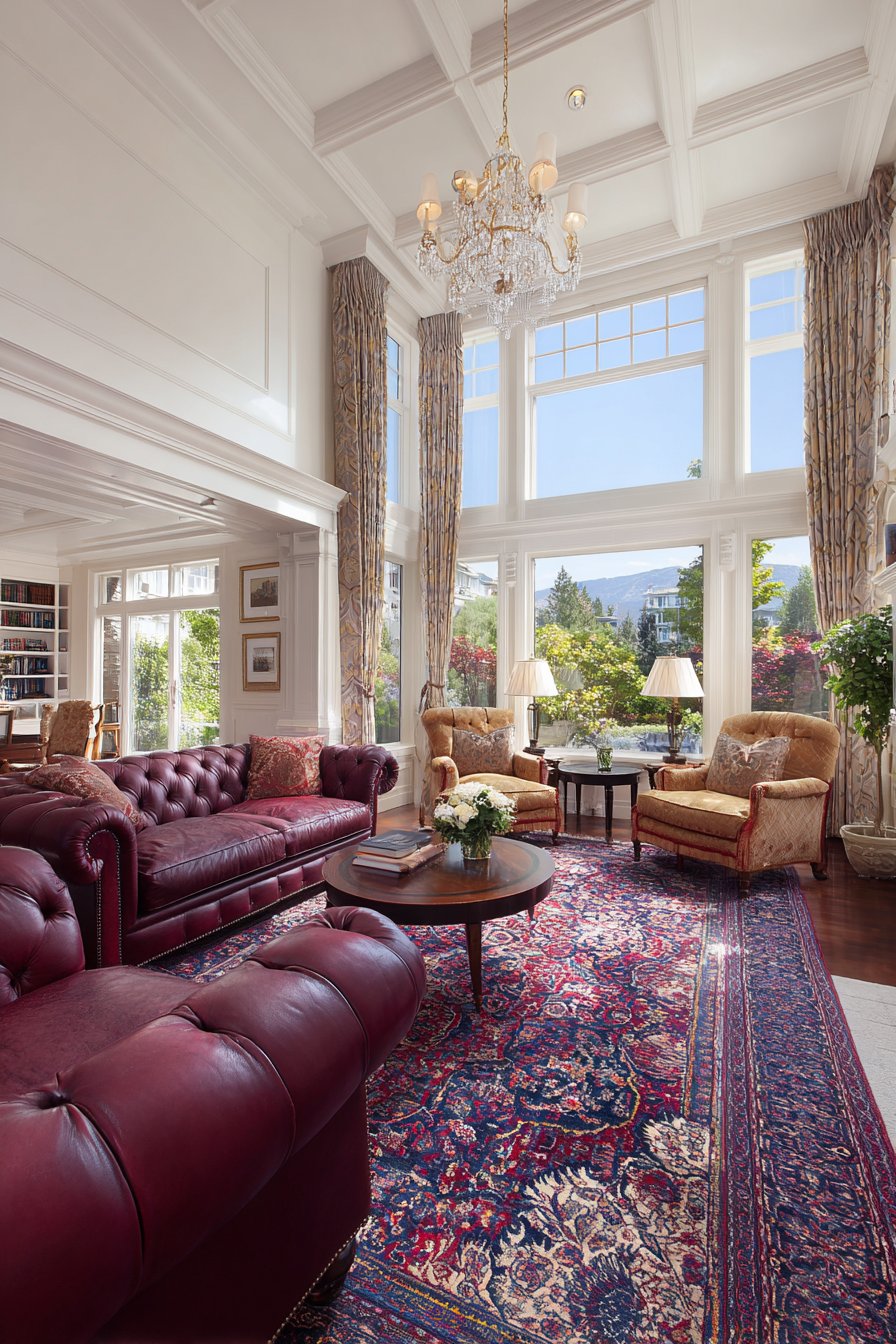
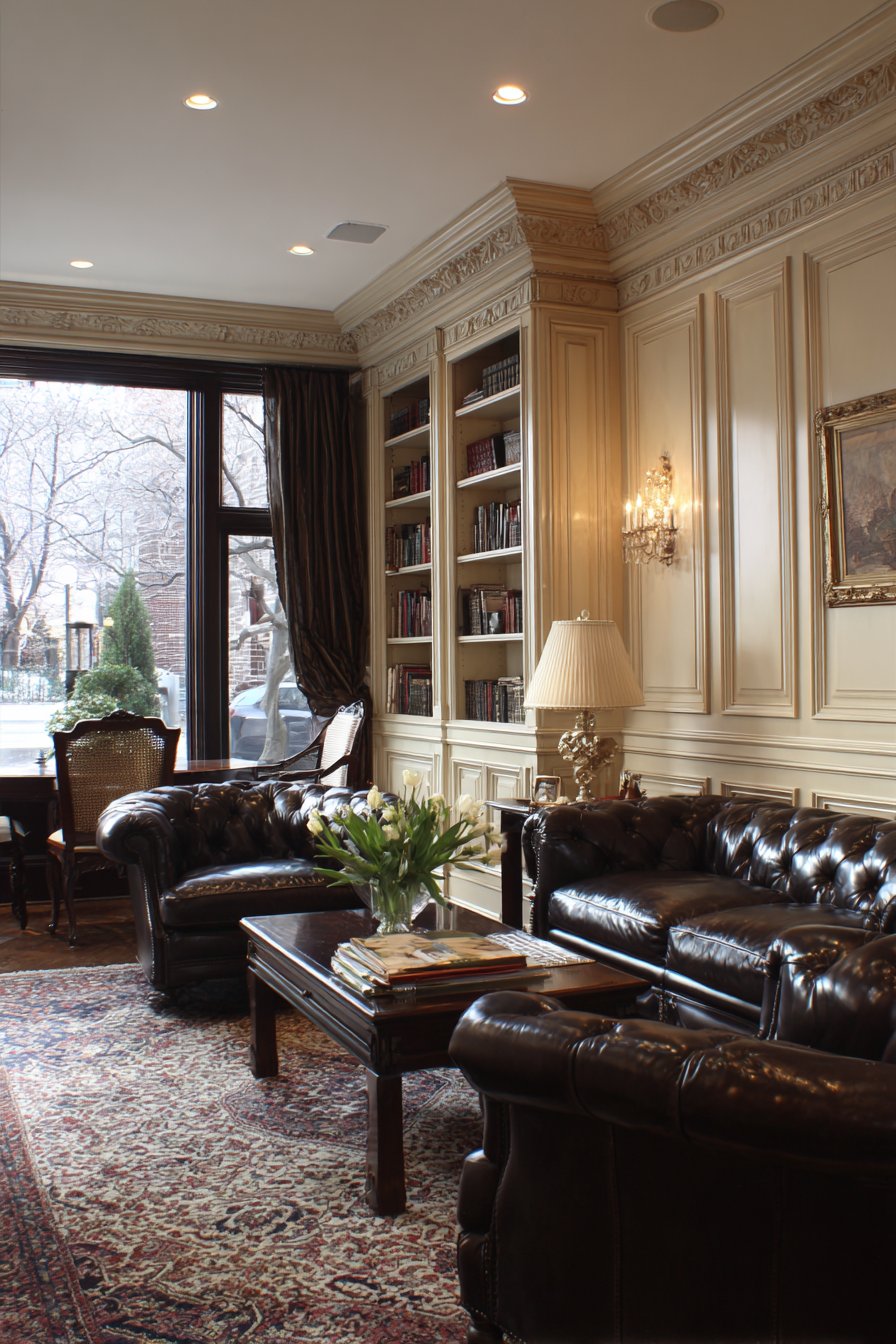
Ornate crown molding and detailed wainscoting accentuate the generous wall height beautifully. These architectural embellishments create classical elegance throughout the space. Two facing Chesterfield sofas in rich leather create a classic conversation area. The tufted leather upholstery adds luxury and timeless appeal simultaneously.
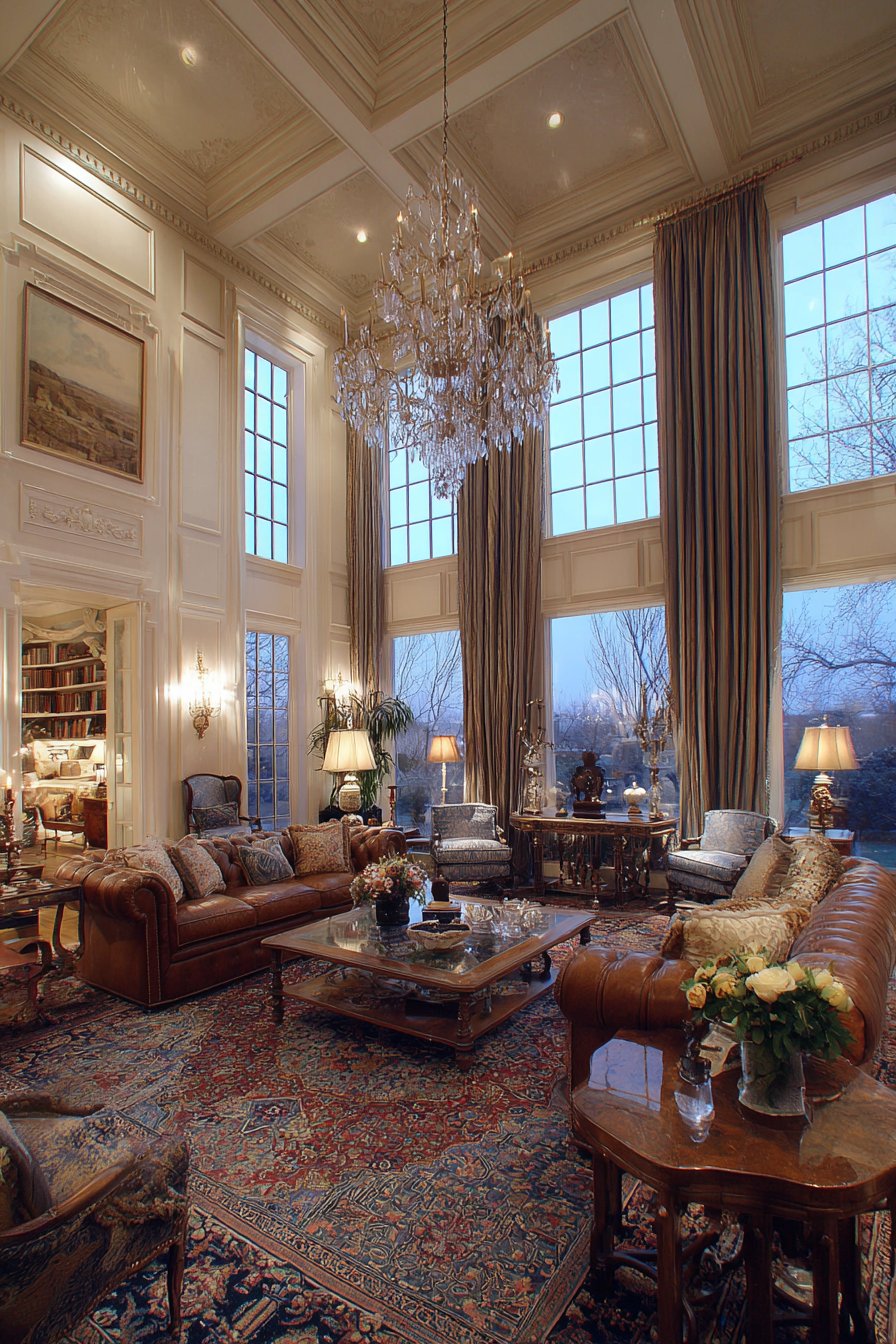
An antique Persian rug centers the seating arrangement with historical significance. The rug’s intricate patterns and aged patina add character and warmth. Additional seating includes bergère chairs positioned near built-in bookcases thoughtfully. These supplementary pieces demonstrate the room’s capacity for multiple furniture types.
A crystal chandelier provides ambient lighting with traditional elegance. Table lamps offer task lighting for reading and conversation. Tall windows with heavy drapes frame views of landscaped grounds outside. The window treatments add formality that complements the traditional architectural details.
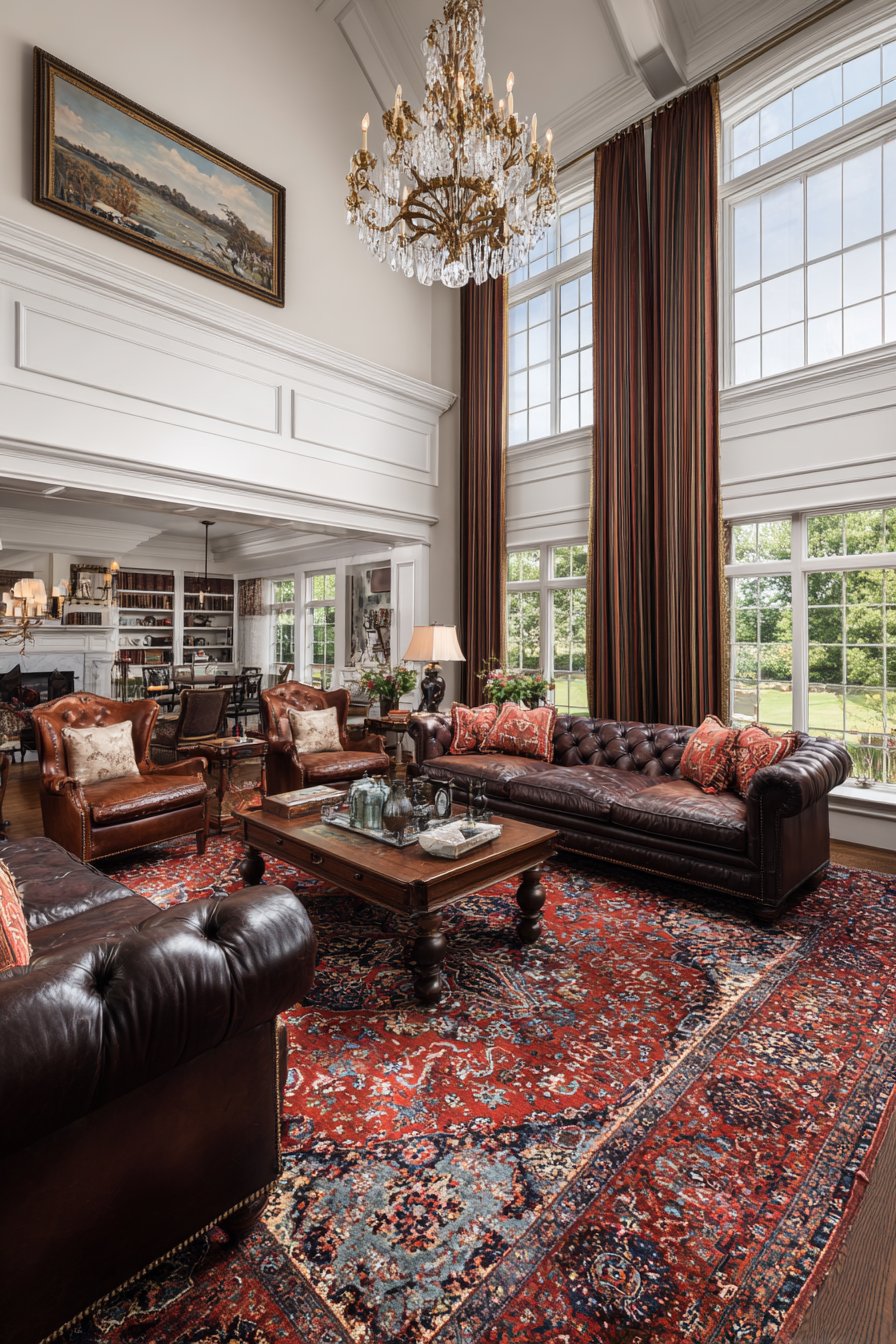
Professional photography captures the elegant proportions and formal furniture arrangement. The composition showcases how traditional style suits spacious room dimensions naturally. The design proves that classical elements gain impact when given generous proportions. Ornate details that might overwhelm smaller rooms achieve proper scale in expansive spaces.
Key Design Tips:
- Install ornate crown molding and wainscoting to emphasize wall height in traditional rooms
- Position facing Chesterfield sofas for classical symmetrical conversation arrangements
- Center antique Persian rugs under seating groups to add historical character
- Incorporate bergère chairs near built-in bookcases for additional traditional seating
- Use crystal chandeliers for ambient lighting that complements traditional aesthetics
- Hang heavy drapes at tall windows to add formality and frame exterior views
8. Coastal Aesthetic with Whitewashed Beams
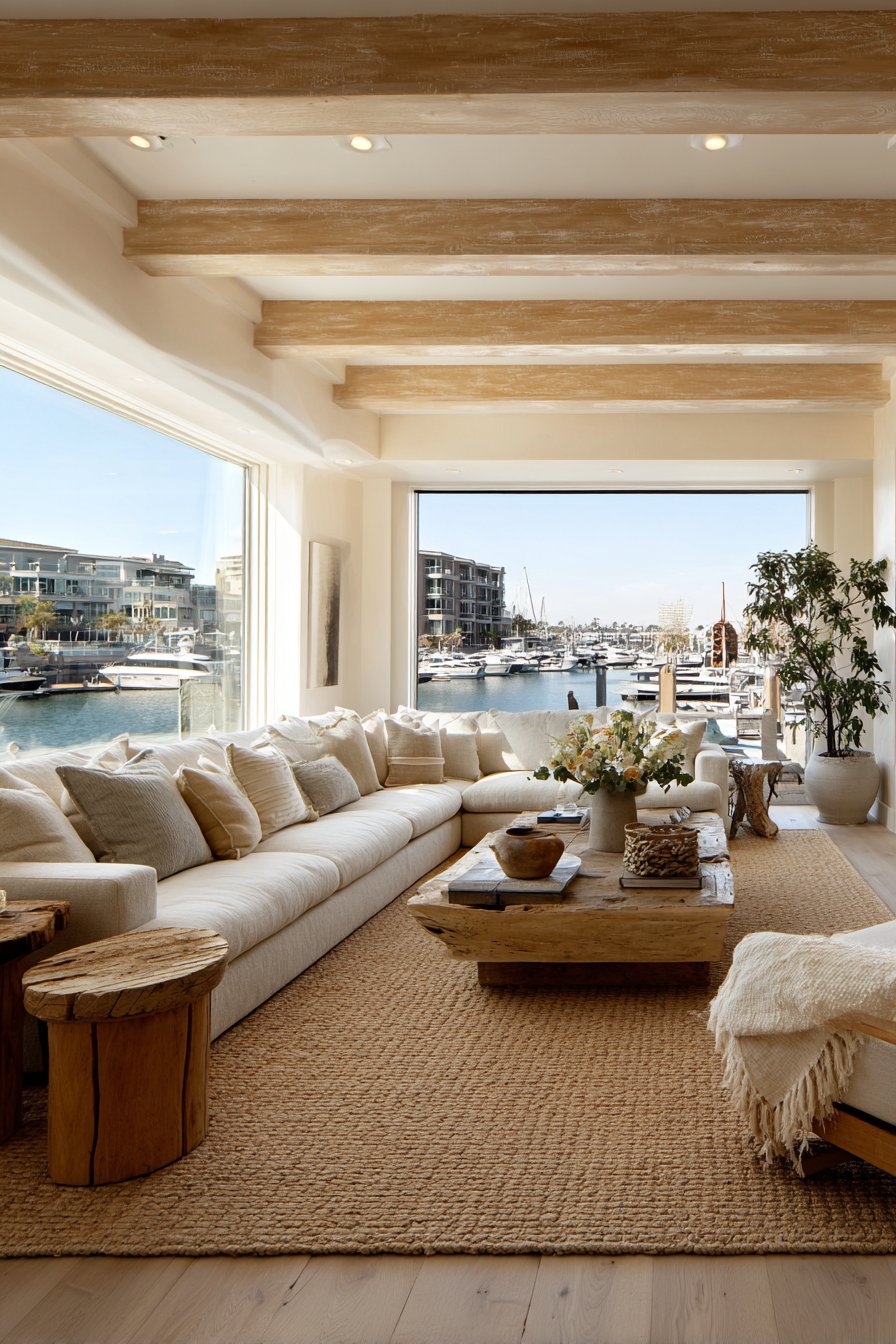
Light and airy color schemes enhance the sense of openness in this coastal retreat. Whitewashed wood ceiling beams span the expansive space with relaxed elegance. A large sectional in natural linen faces panoramic windows with unobstructed water views. The furniture placement prioritizes the connection to the waterfront setting.
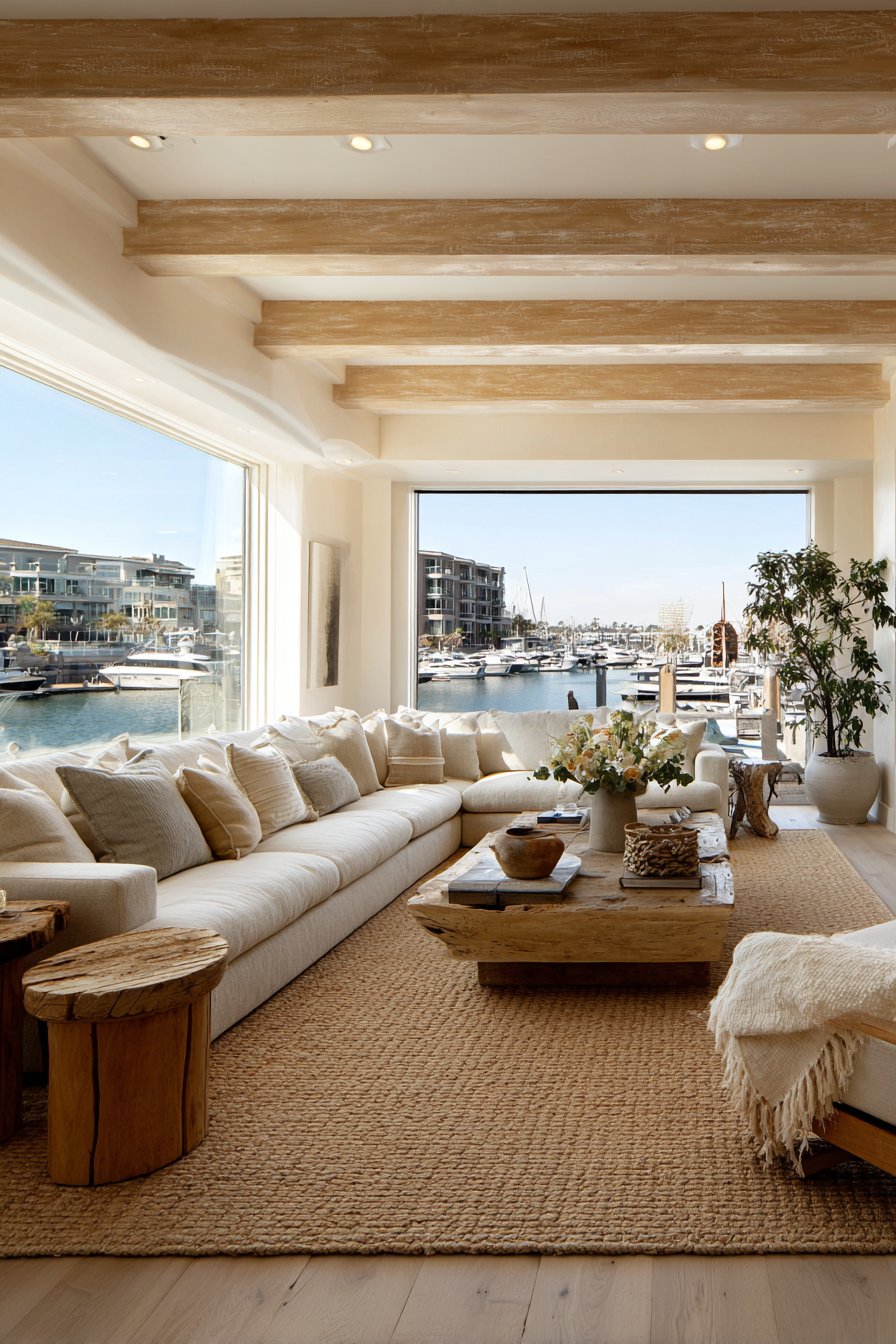
Sisal area rugs define the main seating zone while leaving generous flooring borders visible. The natural fiber adds texture without introducing competing colors. Driftwood-style coffee and side tables maintain the relaxed coastal atmosphere. These organic forms complement the water views visible through the windows.
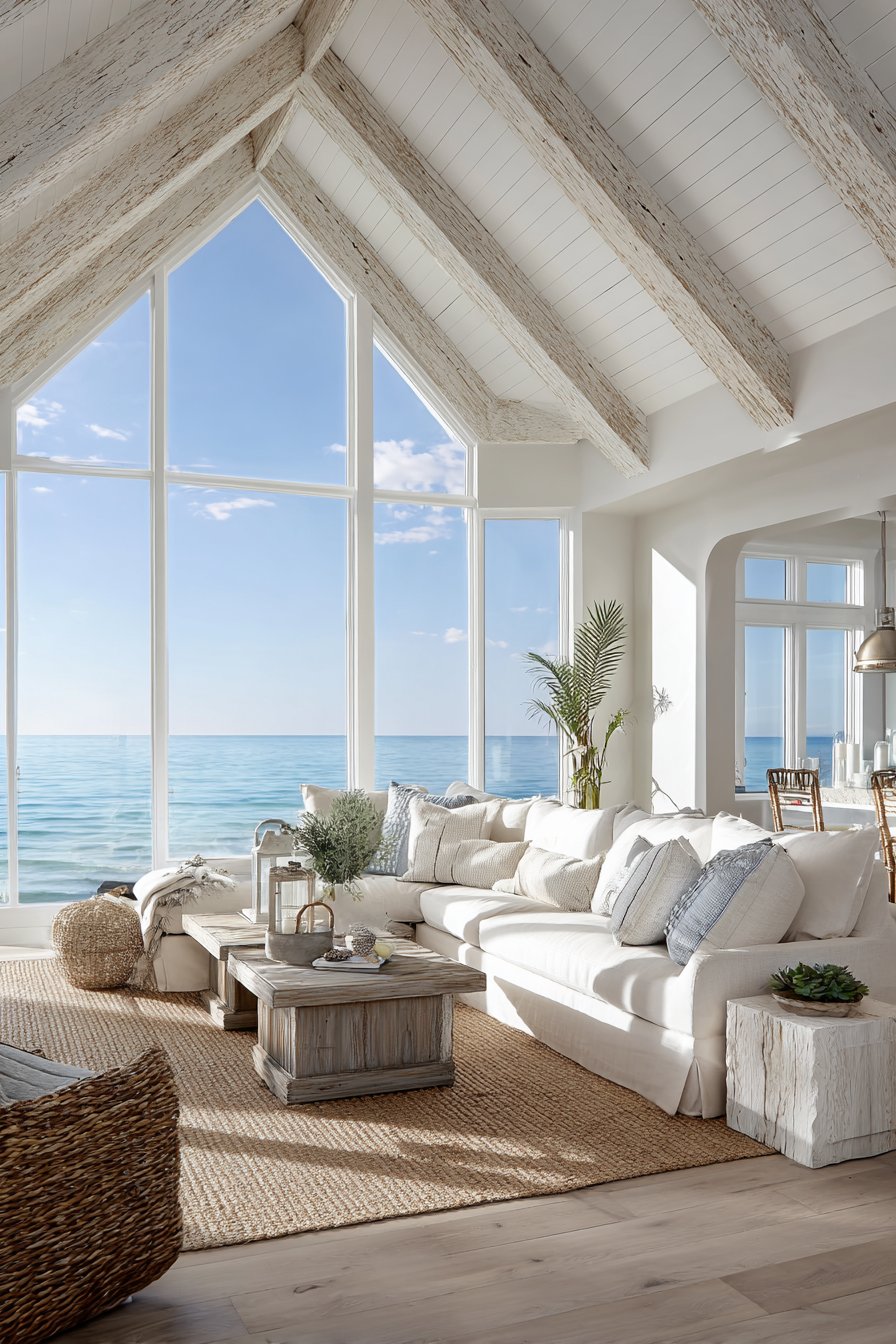
Natural morning light floods the room with soft illumination. The coastal color palette of whites, blues, and sandy neutrals reflects the outdoor environment. Material choices emphasize natural textures over polished finishes. This commitment to organic materials creates authentic coastal character.
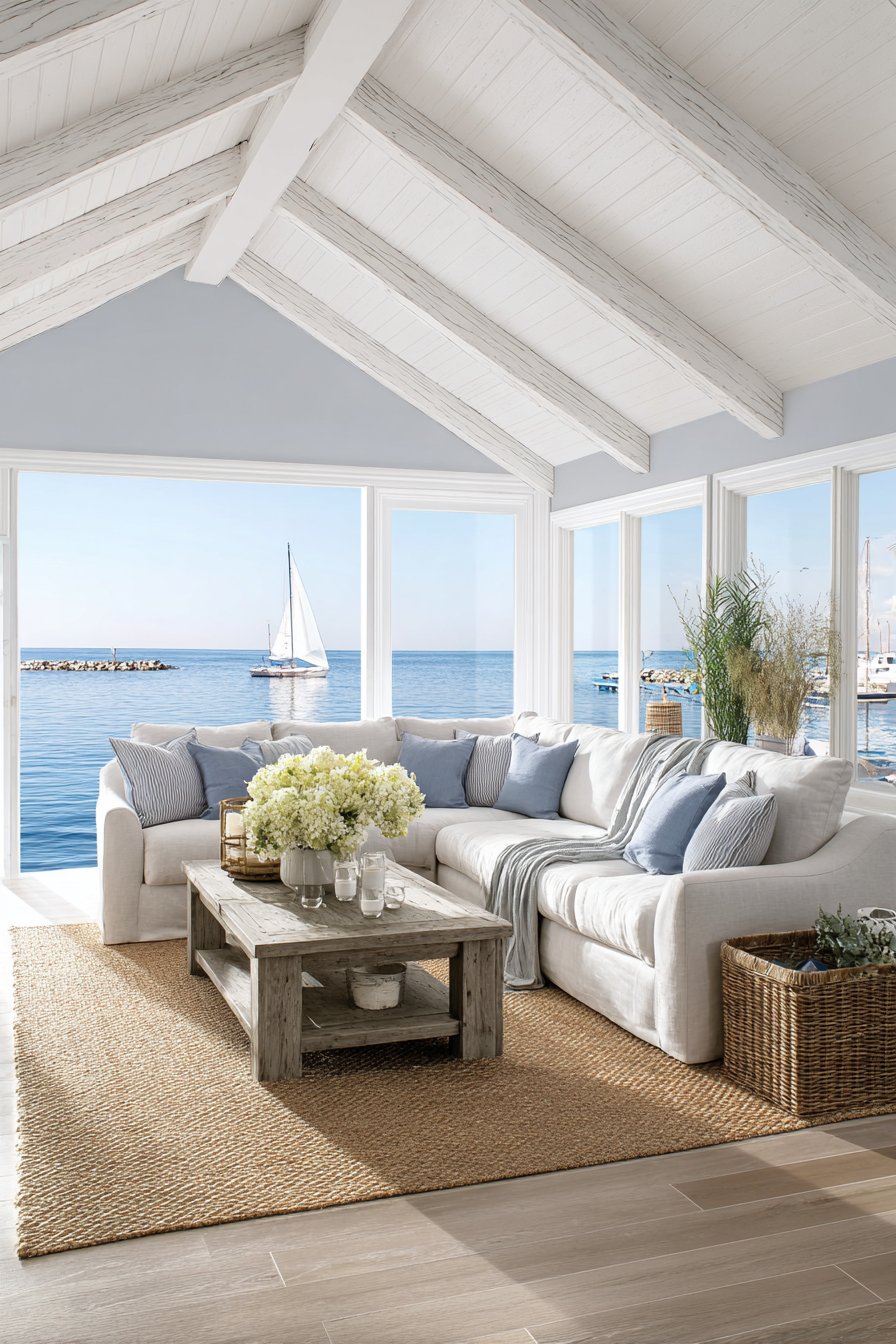
Wide-angle interior design photography emphasizes the generous dimensions and outdoor connection. The composition showcases how coastal style adapts to spacious proportions naturally. The design demonstrates that beach house aesthetics succeed through restraint rather than excess. Simplicity allows the water views to remain the primary focus.
Key Design Tips:
- Whitewash ceiling beams to create relaxed coastal character in spacious rooms
- Position sectionals to face water views and maximize the connection to outdoor settings
- Use sisal rugs with visible flooring borders to maintain lightness in coastal spaces
- Select driftwood-style tables with organic forms that complement beach aesthetics
- Keep color palettes limited to whites, blues, and sandy neutrals for authenticity
- Prioritize natural textures over polished finishes to enhance coastal atmosphere
9. Industrial Loft with Exposed Brick and Steel
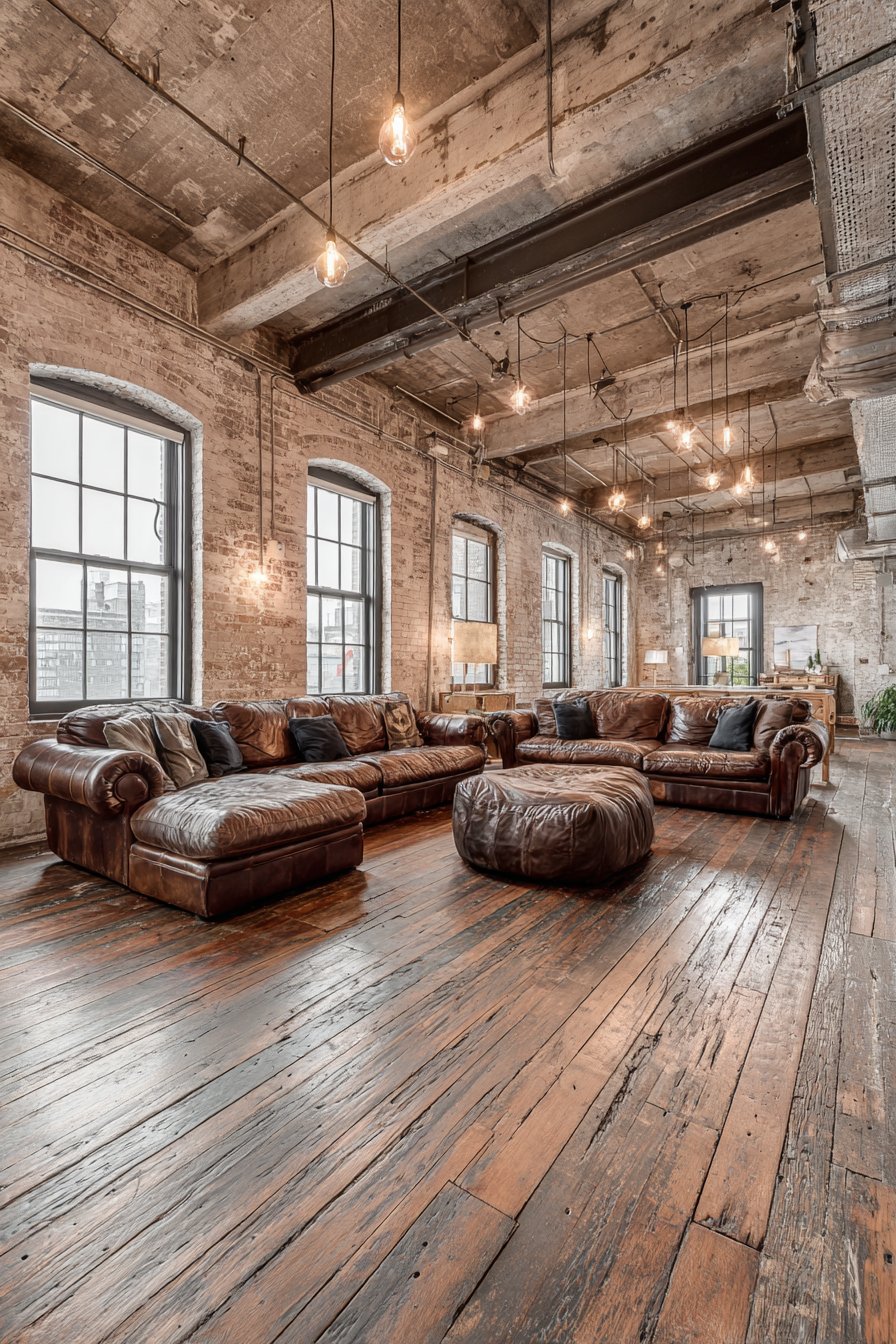
Exposed brick walls and original concrete floors create authentic industrial character. The polished concrete reflects light while maintaining raw material honesty. Soaring ceilings with exposed ductwork and steel beams emphasize the vertical volume. These architectural elements provide the room’s defining aesthetic rather than decorative additions.
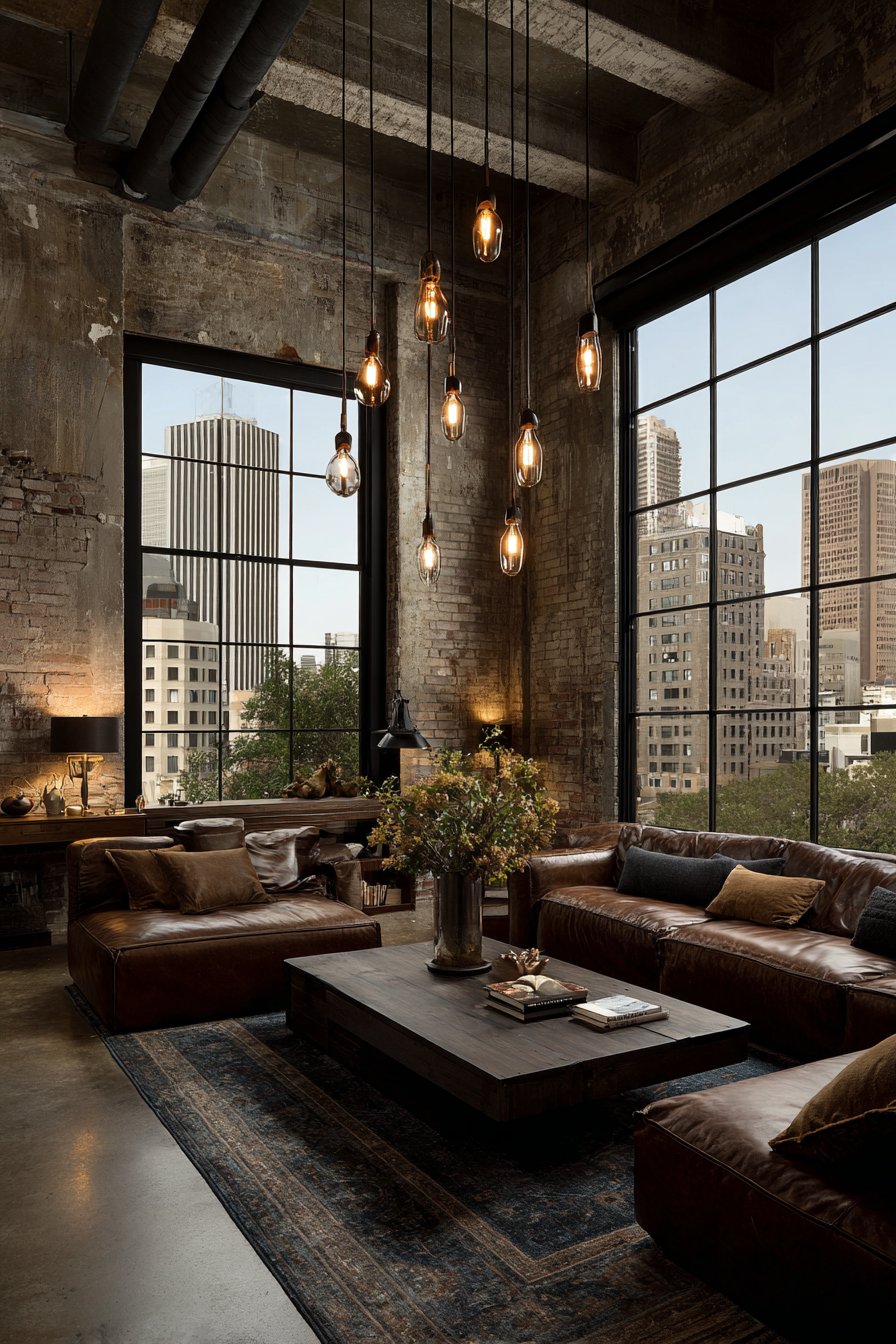
Oversized leather sofas in cognac brown anchor the main seating area substantially. The rich leather color warms the industrial materials beautifully. Vintage-style Edison bulb pendant lights provide ambient illumination with period authenticity. The lighting fixtures complement the exposed infrastructure overhead.
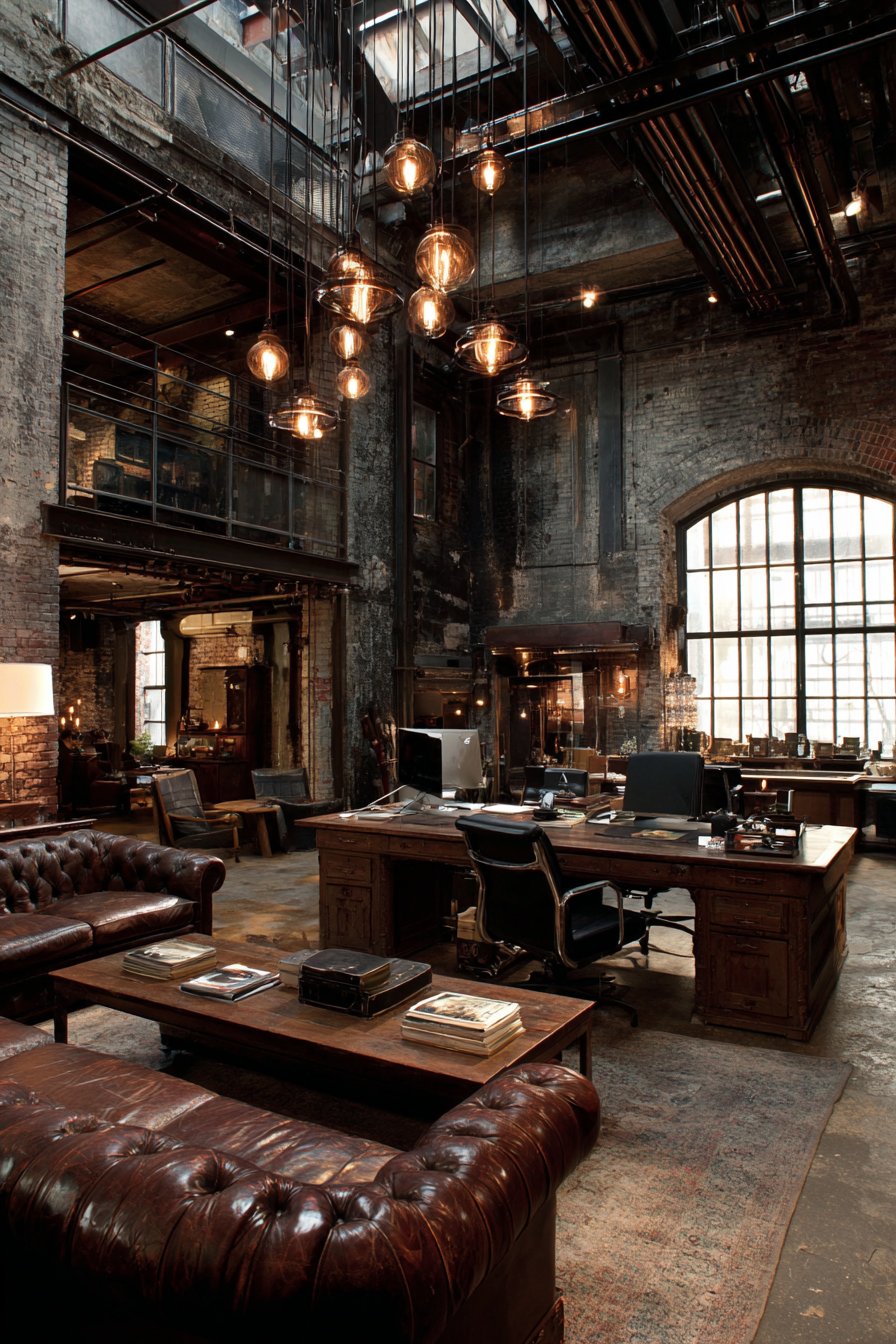
The room’s considerable depth accommodates multiple zones including a dedicated workspace. A substantial desk positioned near windows takes advantage of natural light. Large factory-style windows provide abundant daylight throughout the day. The industrial fenestration maintains architectural consistency while flooding the space with light.
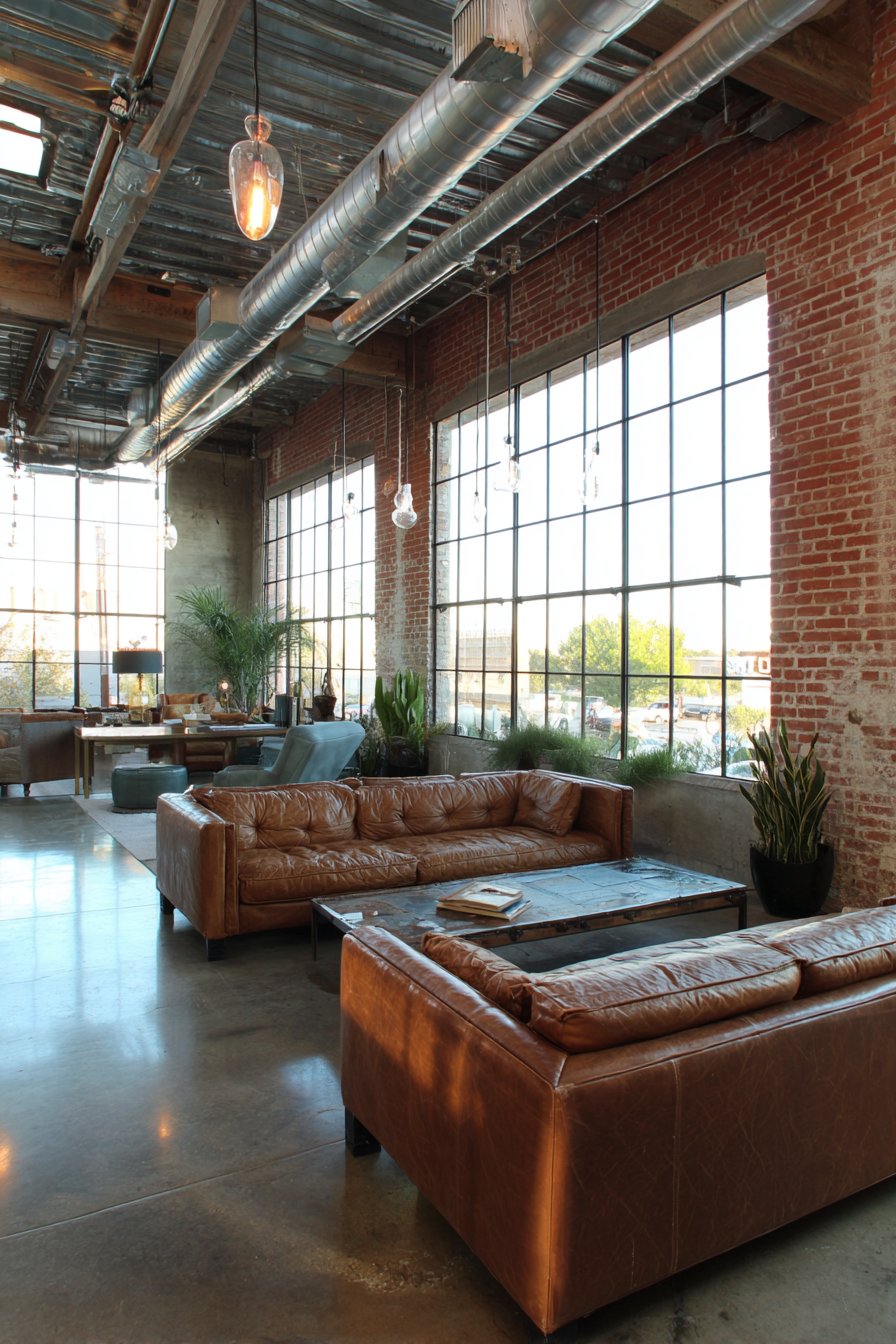
Architectural photography captures the impressive volume and raw material palette effectively. The composition showcases how industrial elements gain proper scale in spacious environments. The design proves that warehouse aesthetics require generous proportions to avoid feeling oppressive. Authentic materials and substantial furniture pieces suit the expansive dimensions naturally.
Key Design Tips:
- Preserve exposed brick walls and concrete floors for authentic industrial character
- Leave ductwork and steel beams exposed to emphasize vertical volume
- Choose oversized leather sofas in rich brown tones to warm industrial materials
- Install vintage-style Edison bulb pendants that complement exposed infrastructure
- Create multiple zones within the depth to maximize functionality
- Position workspaces near large factory-style windows for abundant natural light
10. Mid-Century Modern with Iconic Furniture Pieces
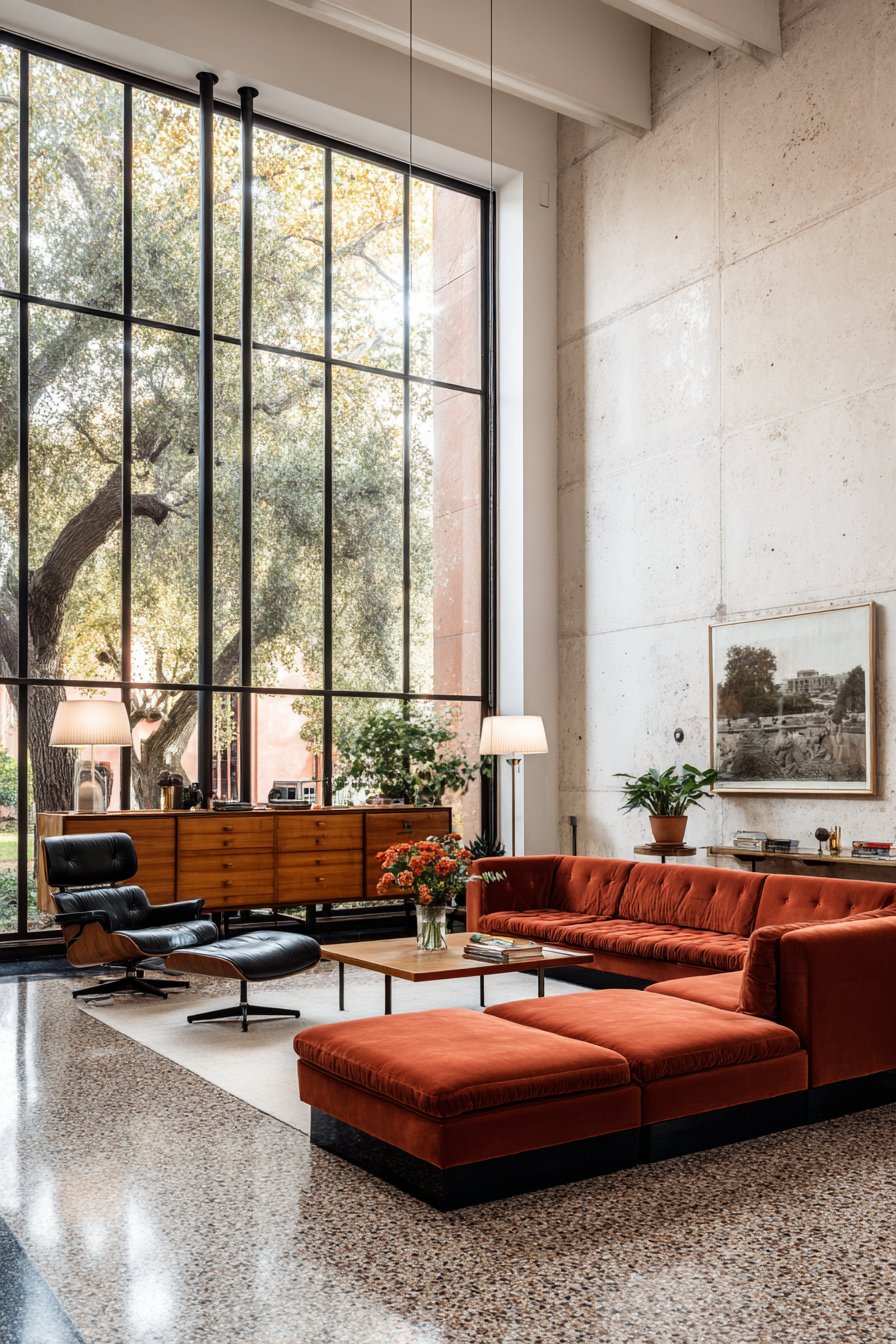
Iconic furniture pieces arranged thoughtfully highlight the generous room proportions. An Eames lounge chair and ottoman occupy one corner with sculptural presence. A teak credenza spans an entire wall opposite the seating area. These period-appropriate pieces demonstrate the quality craftsmanship of mid-century design.
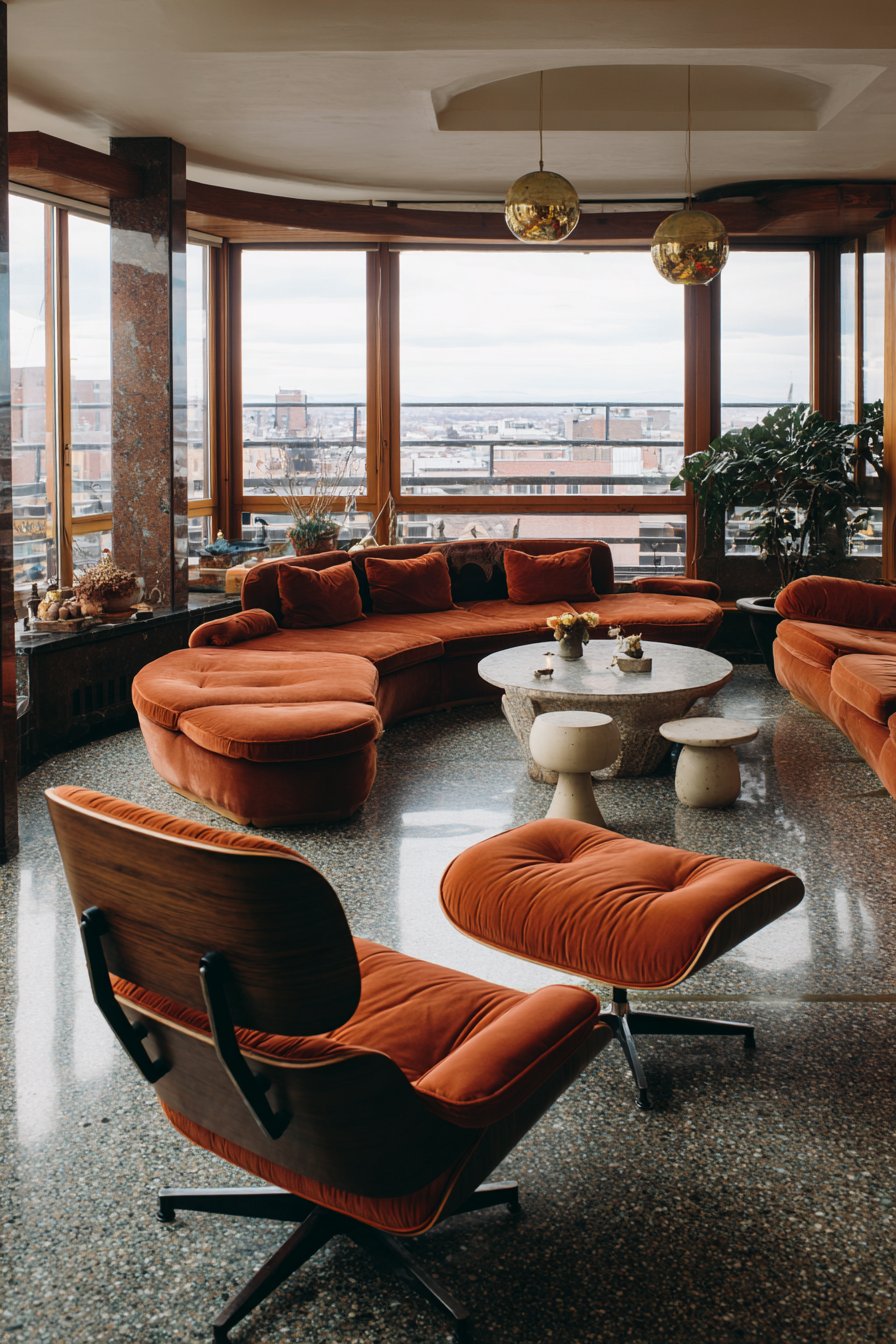
The conversation pit features a sunken seating arrangement with modular sofas in burnt orange velvet. This dramatic design element takes advantage of the room’s generous floor area. Floor-to-ceiling windows with minimal treatments showcase views and maximize natural light. The glazing emphasizes the indoor-outdoor connection central to mid-century architecture.
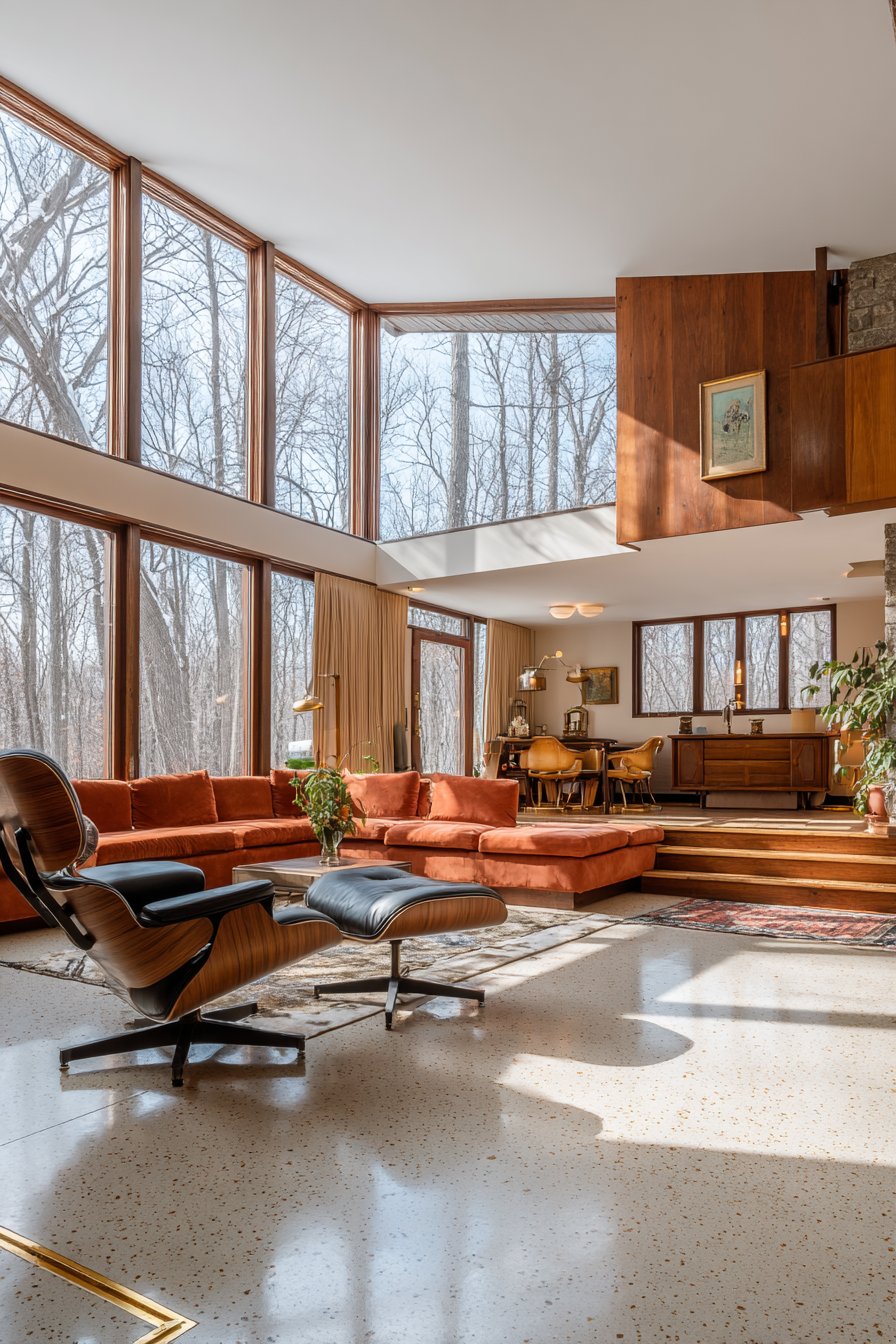
Original terrazzo flooring with brass inlays extends throughout with authentic character. The flooring material provides color and pattern without requiring area rugs. Distinct zones emerge from furniture placement rather than architectural division. This open planning reflects mid-century modern spatial philosophy.
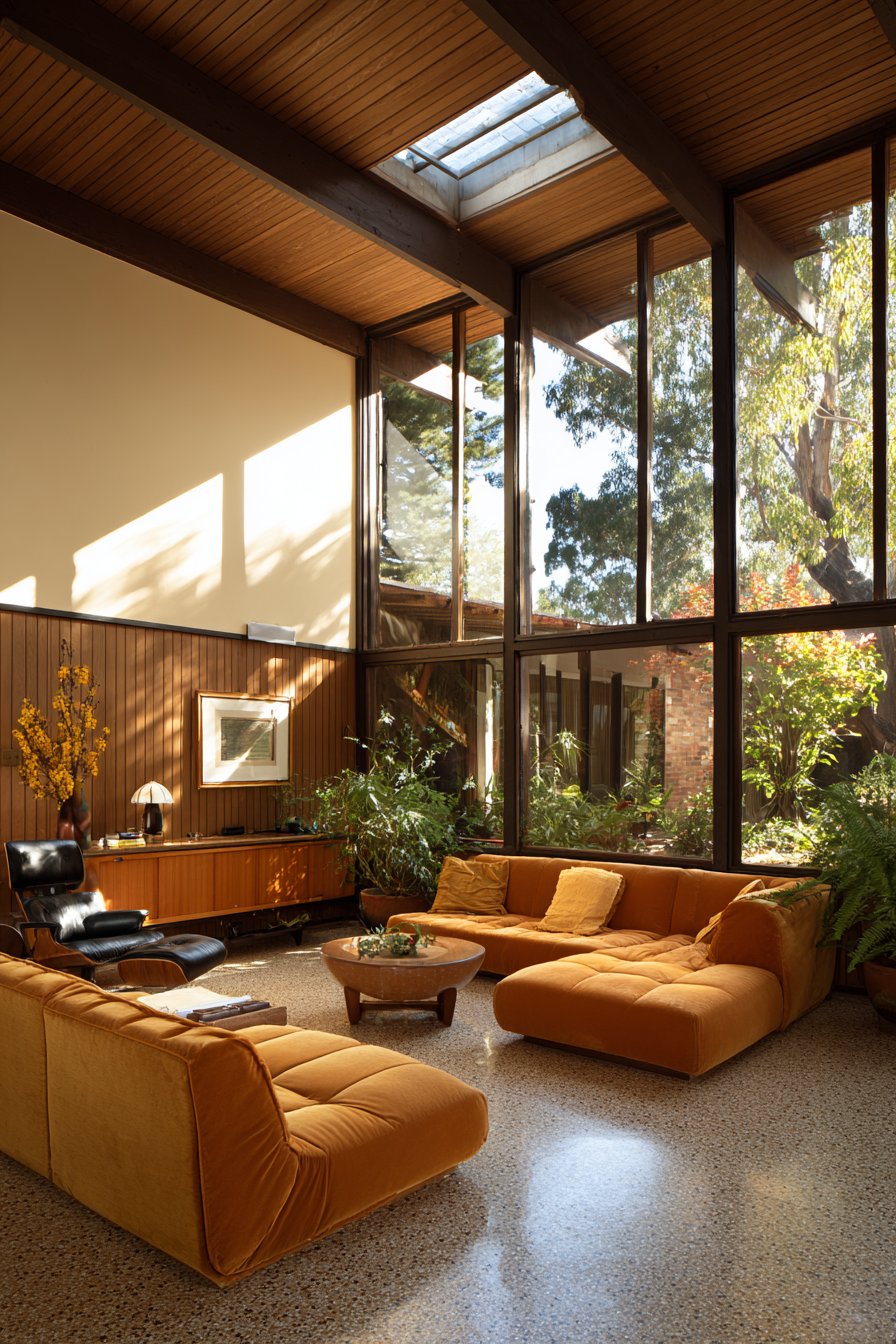
Interior design photography with wide-angle perspective captures the period furnishings within the expansive room. The composition showcases how mid-century style suits spacious proportions naturally. The design demonstrates that iconic pieces require generous space to appreciate their sculptural qualities. Restraint in furniture quantity allows each piece to command attention.
Key Design Tips:
- Feature iconic pieces like Eames chairs and teak credenzas as focal points
- Create conversation pits with sunken seating in rooms with a generous floor area
- Choose modular sofas in bold colors like burnt orange velvet for period authenticity
- Maximize floor-to-ceiling windows with minimal treatments for mid-century transparency
- Preserve original terrazzo flooring to add pattern without area rugs
- Define zones through furniture placement rather than architectural walls
11. Scandinavian Minimalism with Light Wood Floors
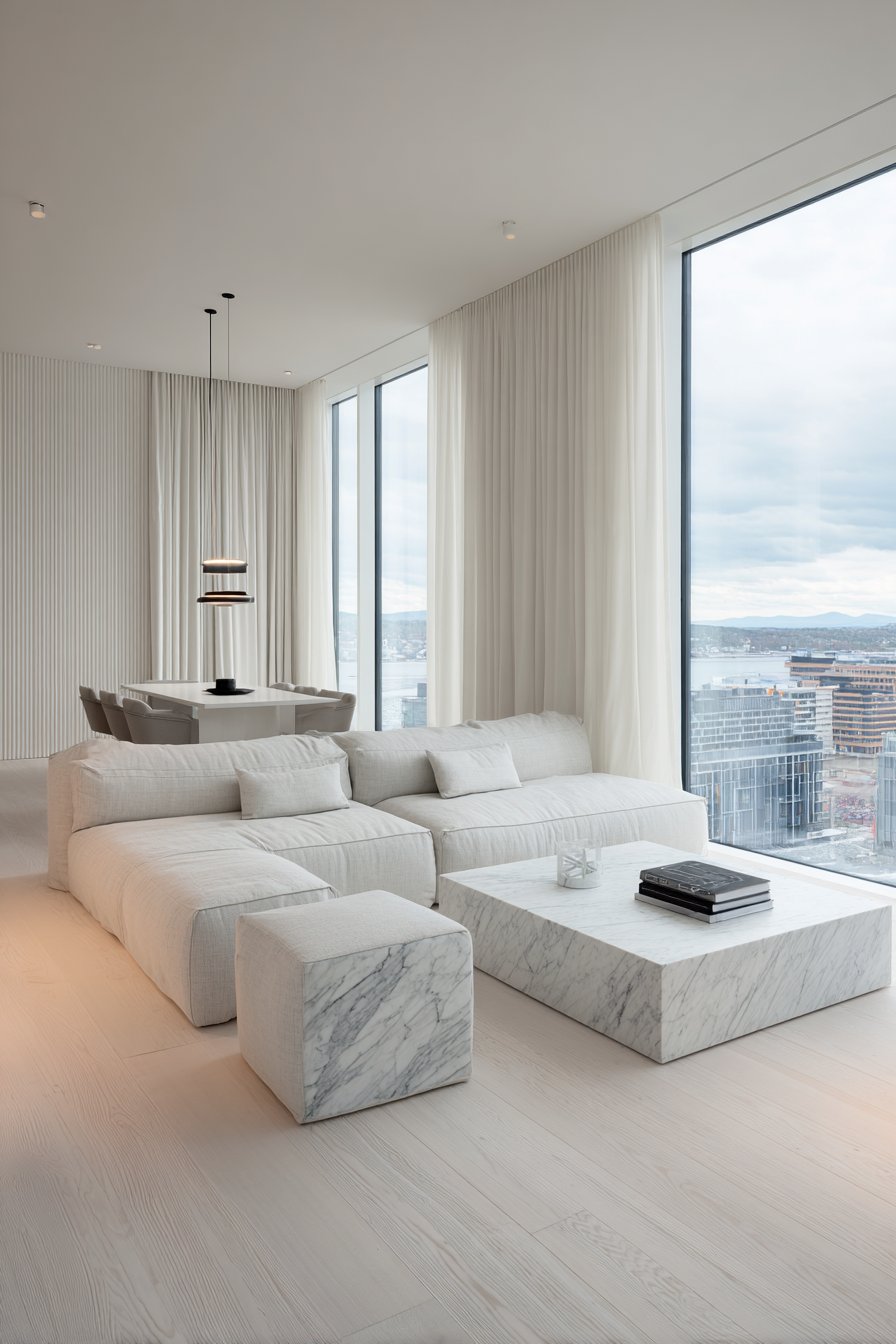
Light birch hardwood floors and white-painted walls maximize the perception of space. The minimal color palette creates brightness that enhances generous proportions. A large modular sofa in pale gray linen maintains the uncluttered aesthetic. The simple upholstery allows the architecture to remain the primary focus.
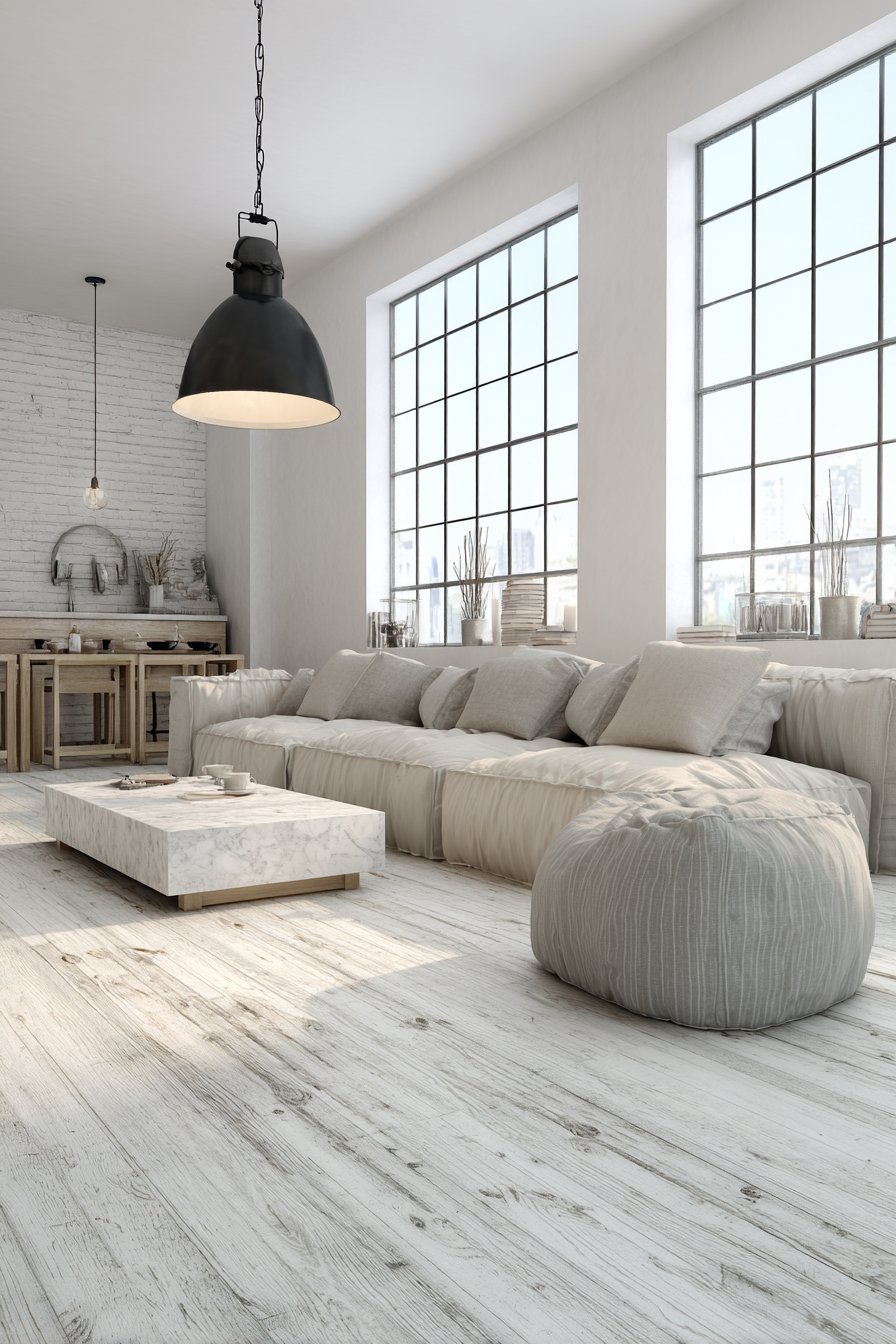
Minimalist furniture with clean lines preserves the spacious feel throughout. Each piece serves clear purpose without excess ornamentation. Oversized windows without heavy treatments allow maximum natural light penetration. The abundant daylight creates the bright, airy quality central to Scandinavian design.
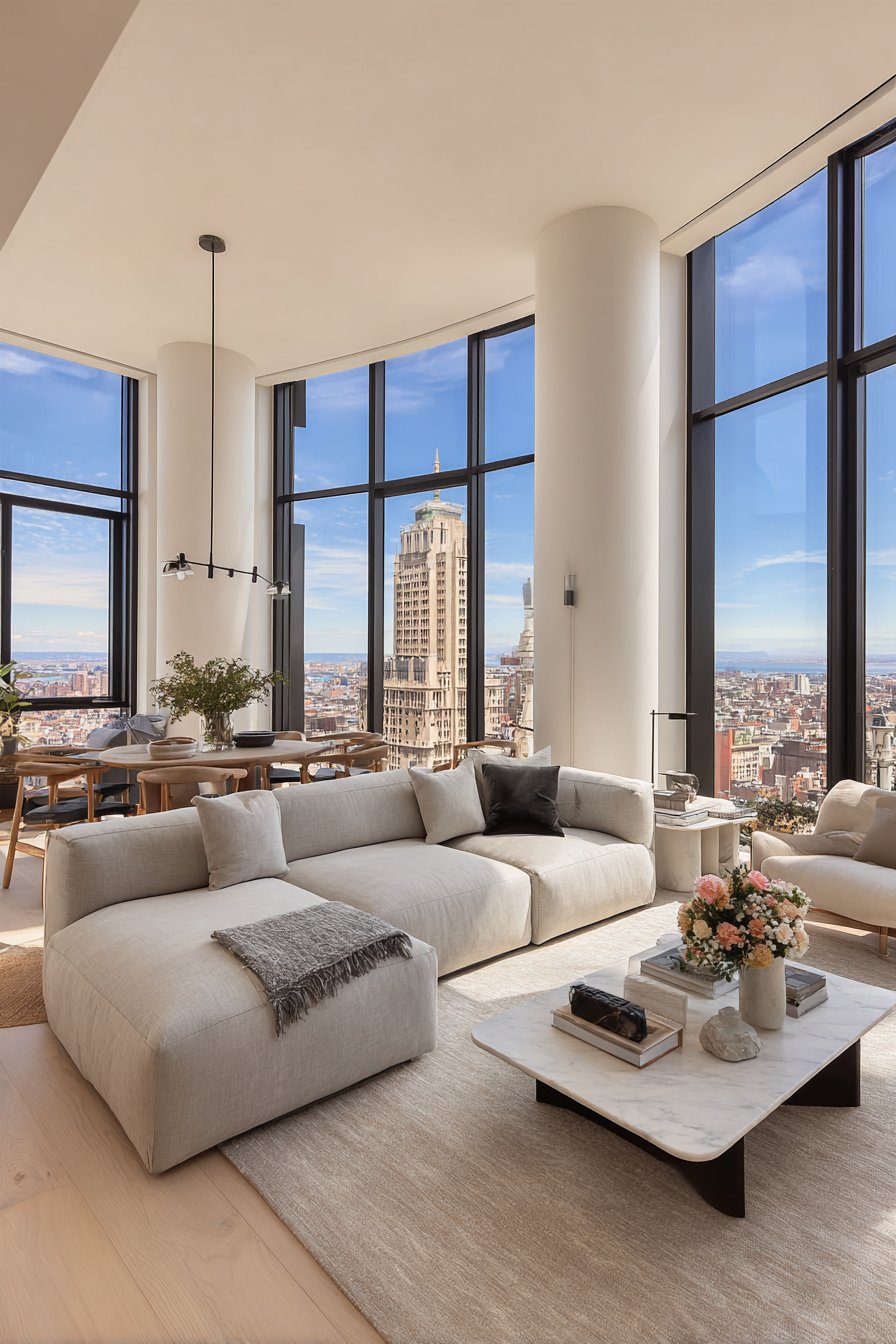
A simple pendant light in black metal provides focused lighting over the marble coffee table. The minimal fixture adds functional beauty without visual clutter. The design prioritizes quality materials over quantity of furnishings. This restraint demonstrates confidence in the power of simplicity.
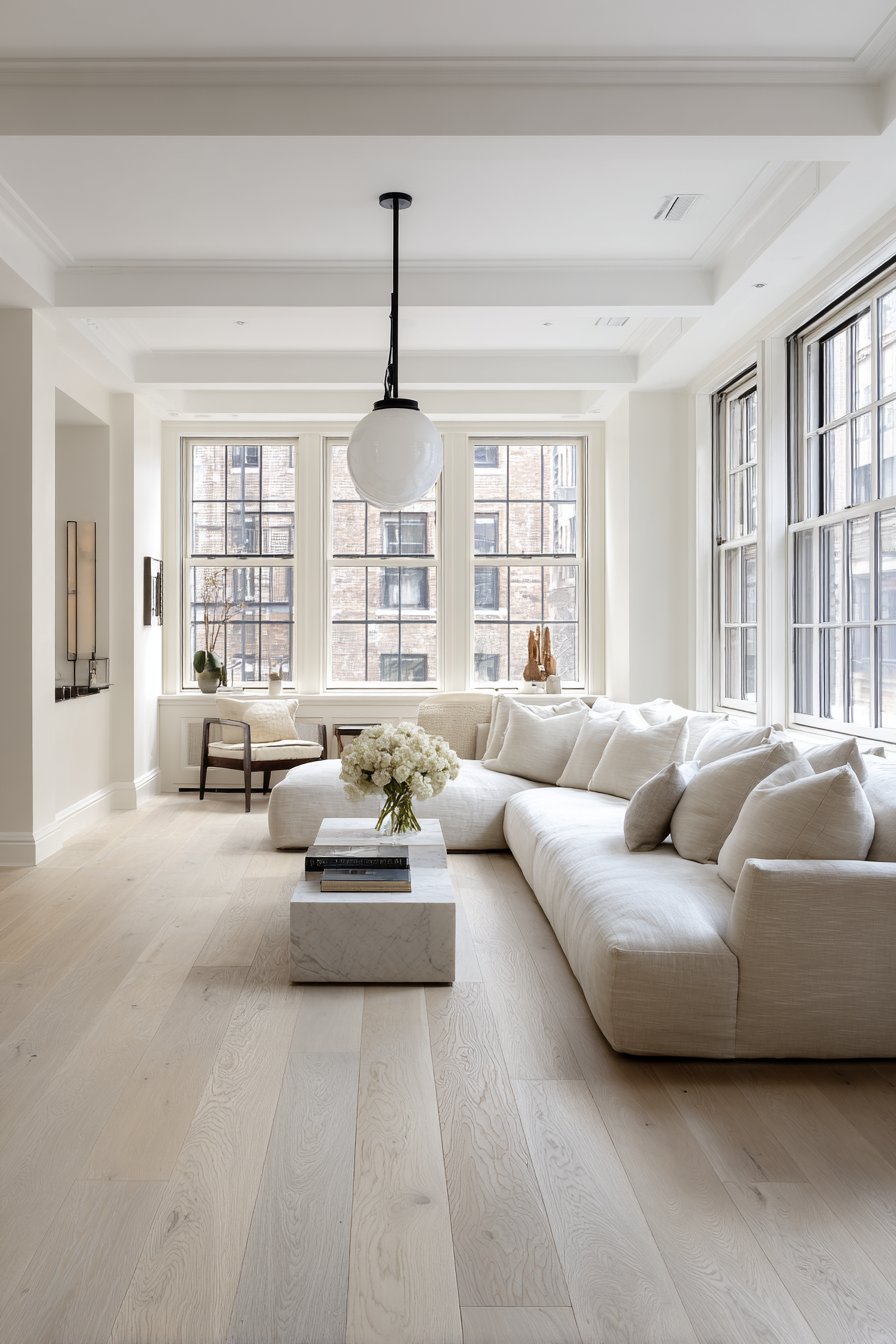
Professional interior photography captures the bright, airy quality and generous proportions. The composition showcases how Scandinavian principles enhance spacious rooms naturally. The design proves that minimalist approaches prevent impressive dimensions from feeling empty. Thoughtful material selection and quality craftsmanship create warmth within simplicity.
Key Design Tips:
- Install light birch floors and paint walls white to maximize brightness
- Choose large modular sofas in pale gray linen for Scandinavian simplicity
- Select minimalist furniture with clean lines to preserve uncluttered aesthetics
- Leave windows without heavy treatments to allow maximum natural light
- Use simple black metal pendants for focused lighting without visual clutter
- Prioritize quality materials and craftsmanship over quantity of furnishings
12. Transitional Style Blending Traditional and Contemporary
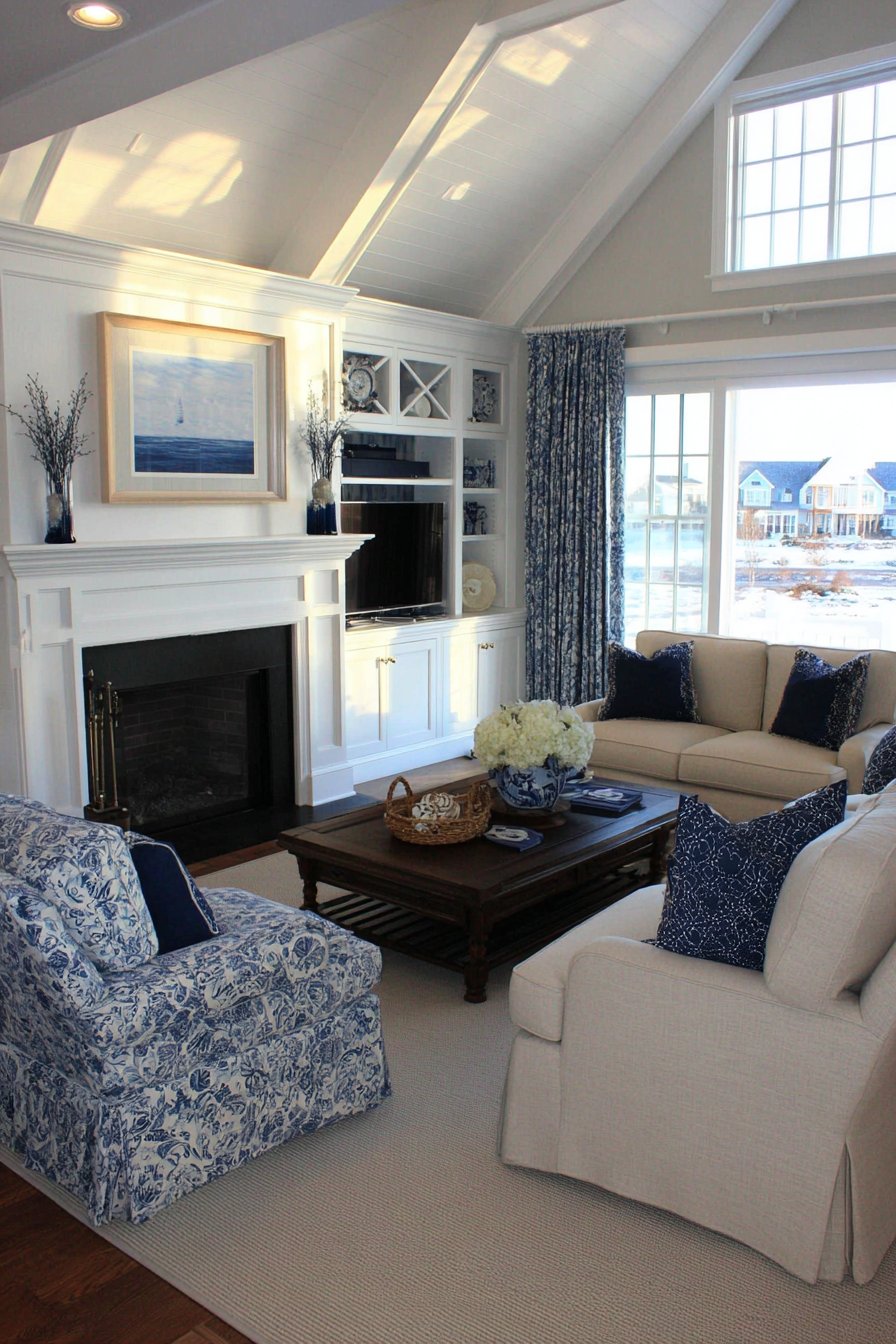
Sophisticated blends of traditional and contemporary elements span the considerable square footage. Symmetrical furniture placement with matching sofas flanking a central fireplace creates balance. The formal arrangement suits the generous room dimensions perfectly. Custom built-in cabinetry extends along one long wall providing extensive storage.
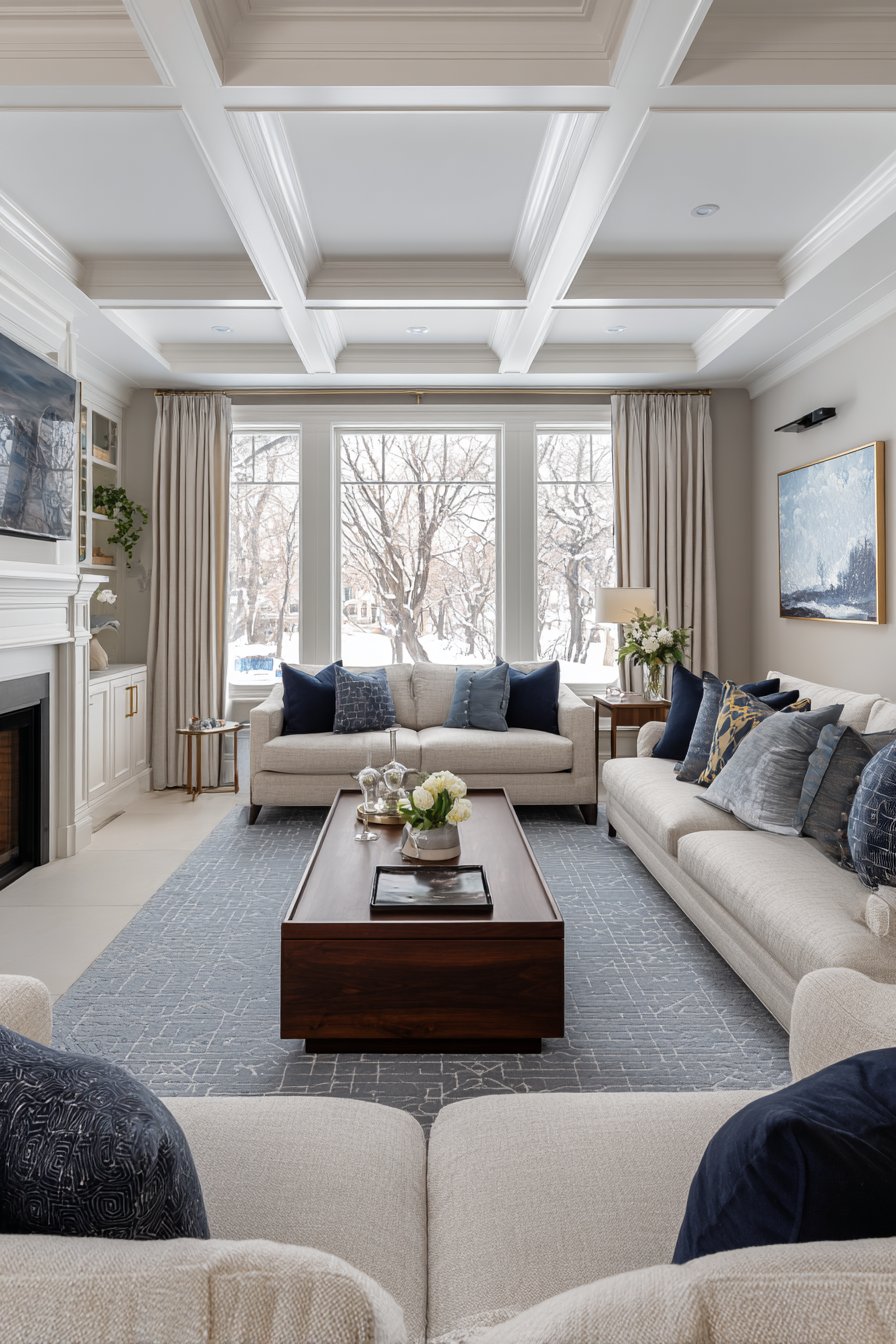
The storage integration maintains openness by avoiding freestanding furniture pieces. Soft neutrals with navy blue accents create visual interest across the expansive space. The limited color palette prevents the large room from feeling chaotic. Crown molding and coffered ceiling details emphasize the room’s impressive height.
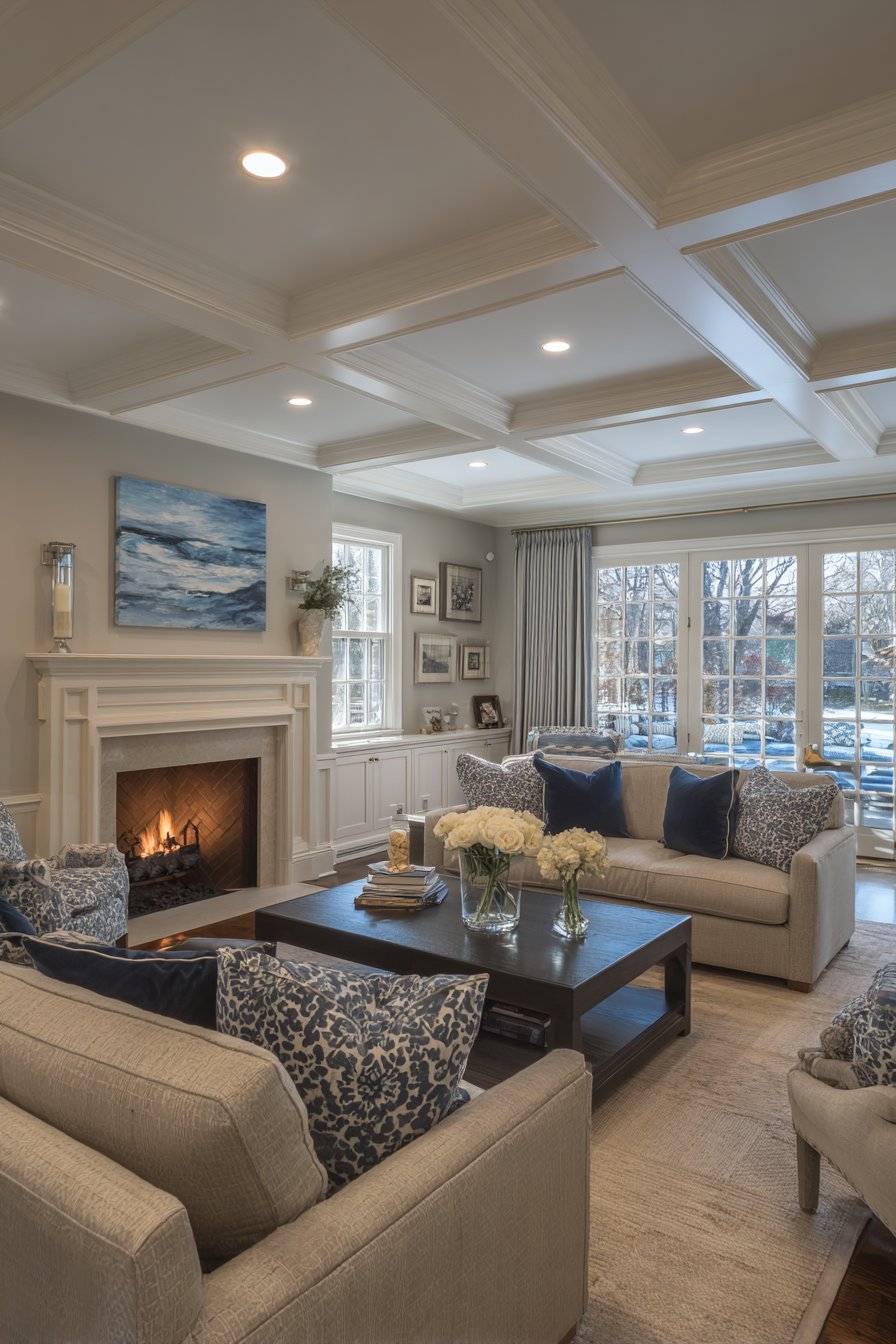
Large windows with layered window treatments control natural light effectively. The treatments combine sheers for diffusion with heavier drapes for privacy. This layering provides flexibility for different times of day and occasions. The sophisticated approach to light control demonstrates transitional style’s attention to detail.
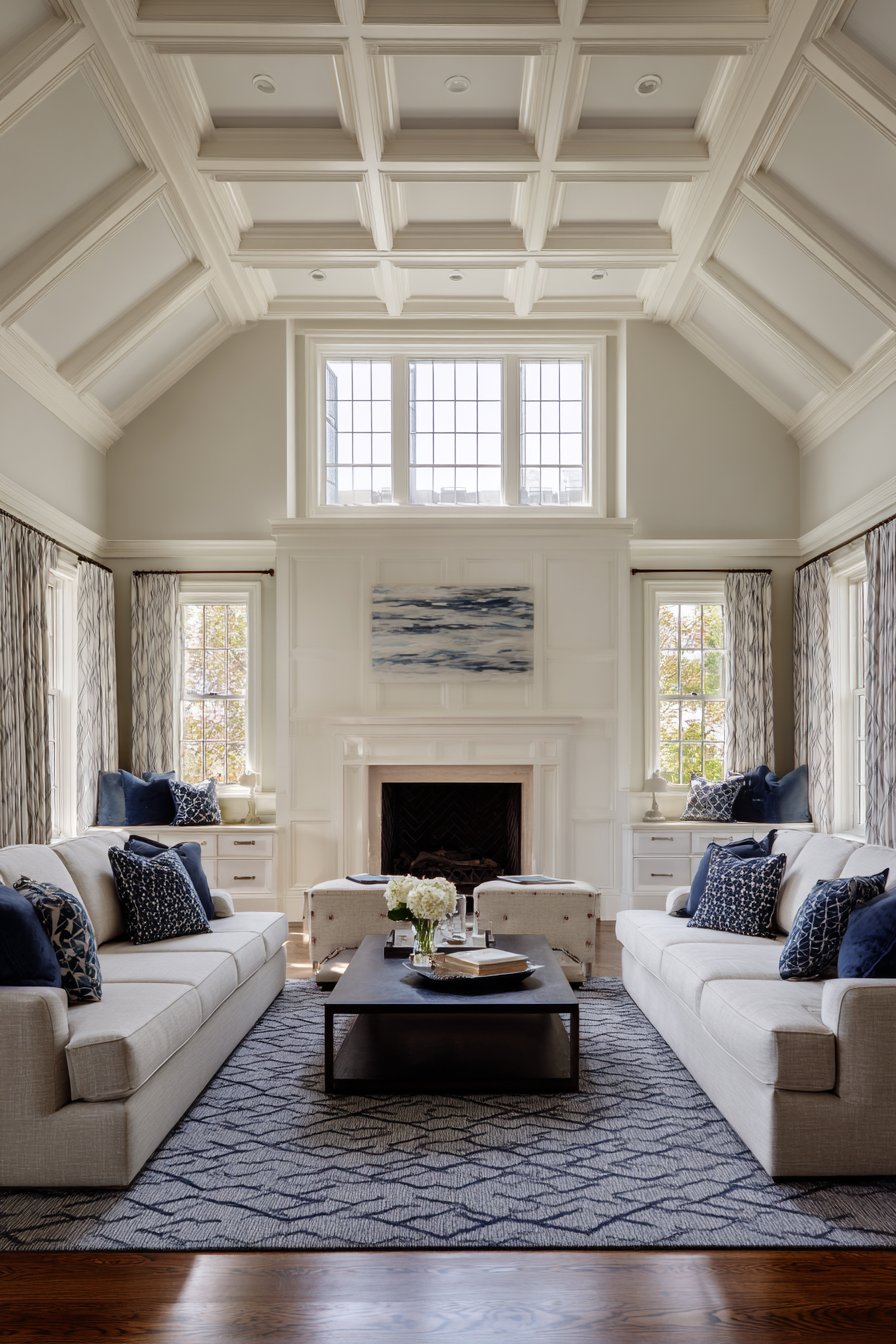
Wide-angle interior design photography showcases the balanced furniture arrangement and architectural proportions. The composition highlights how the transitional style bridges traditional and contemporary successfully. The design proves that blended aesthetics suit spacious rooms seeking timeless appeal. Neither traditional nor contemporary elements dominate, creating sophisticated balance.
Key Design Tips:
- Arrange matching sofas symmetrically flanking fireplaces for transitional balance
- Install custom built-ins along walls to provide storage without cluttering floor space
- Use soft neutral palettes with navy blue accents for sophisticated color interest
- Add crown molding and coffered ceilings to emphasize room height
- Layer window treatments with sheers and heavier drapes for light control flexibility
- Balance traditional and contemporary elements equally to avoid style dominance
13. Bohemian Eclectic with Layered Textiles
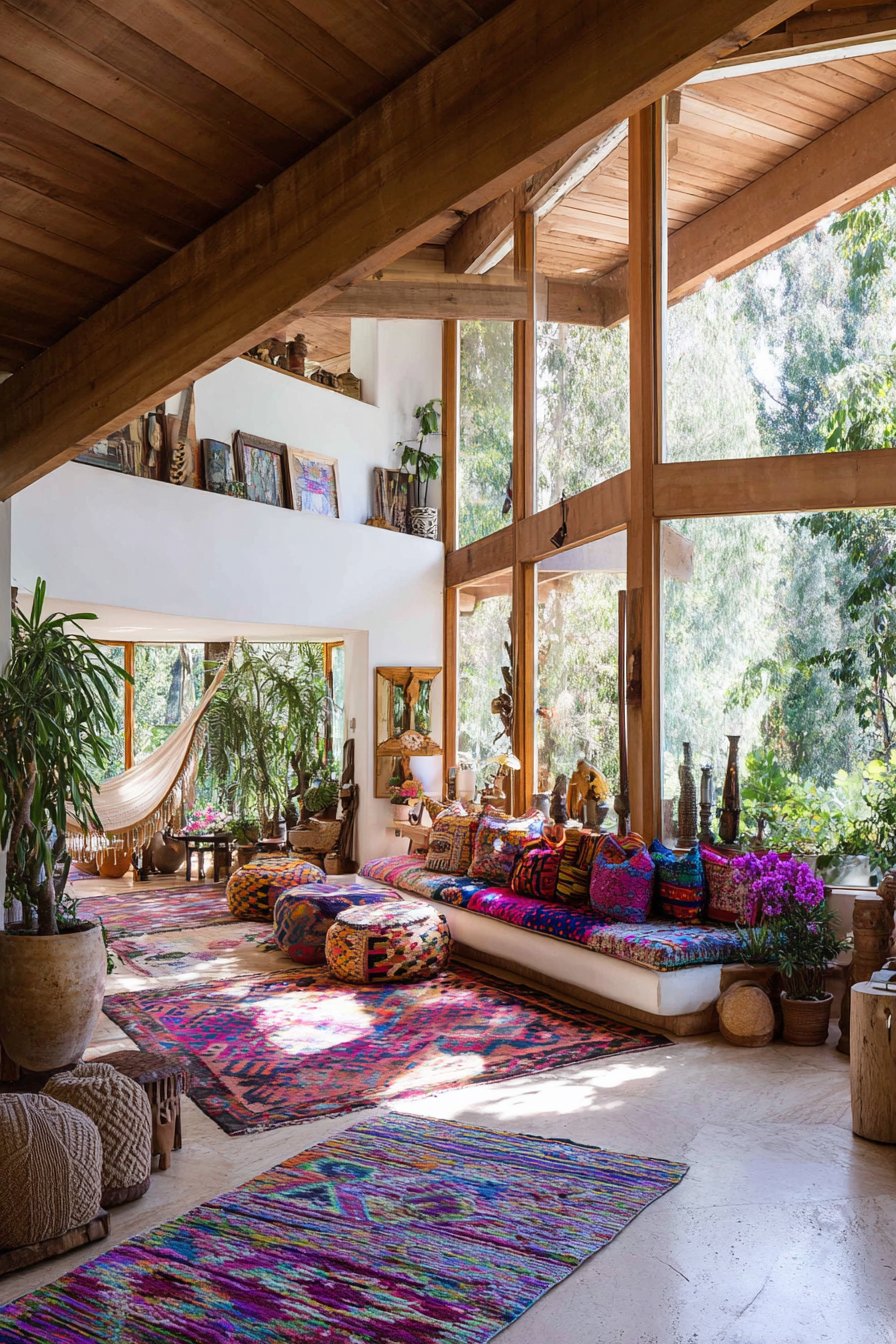
Eclectic furniture mixes distribute across the generous floor plan with artistic freedom. Multiple seating areas include low-slung sofas with colorful cushions scattered throughout. Poufs occupy various locations providing flexible additional seating. A hammock chair suspended near tall windows adds playful bohemian character.
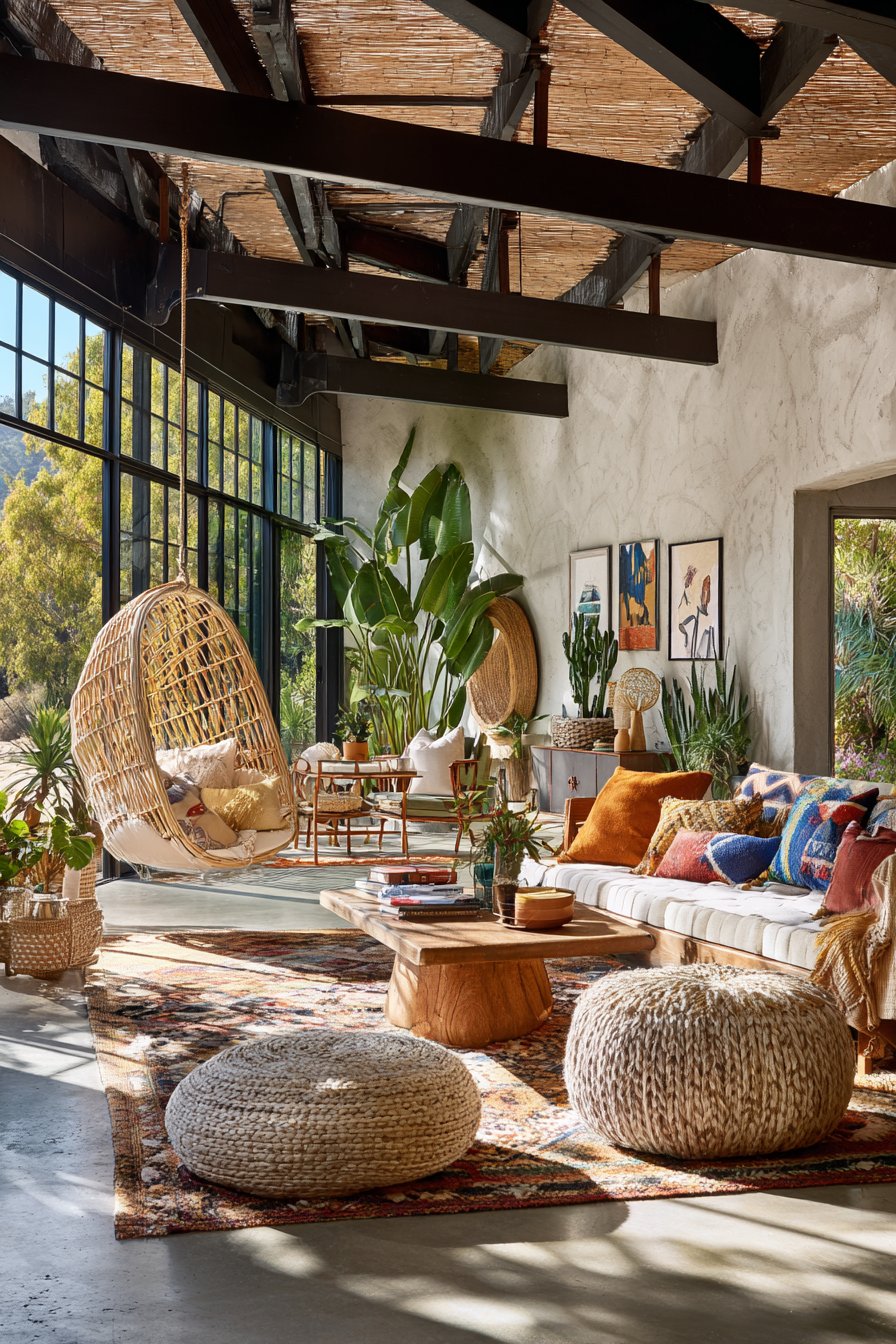
Layered area rugs in various patterns define different zones within the space. The textile layering creates visual richness without permanent commitment. Expansive walls display curated collections of artwork, mirrors, and textiles. The collected aesthetic demonstrates personality and travel experiences.
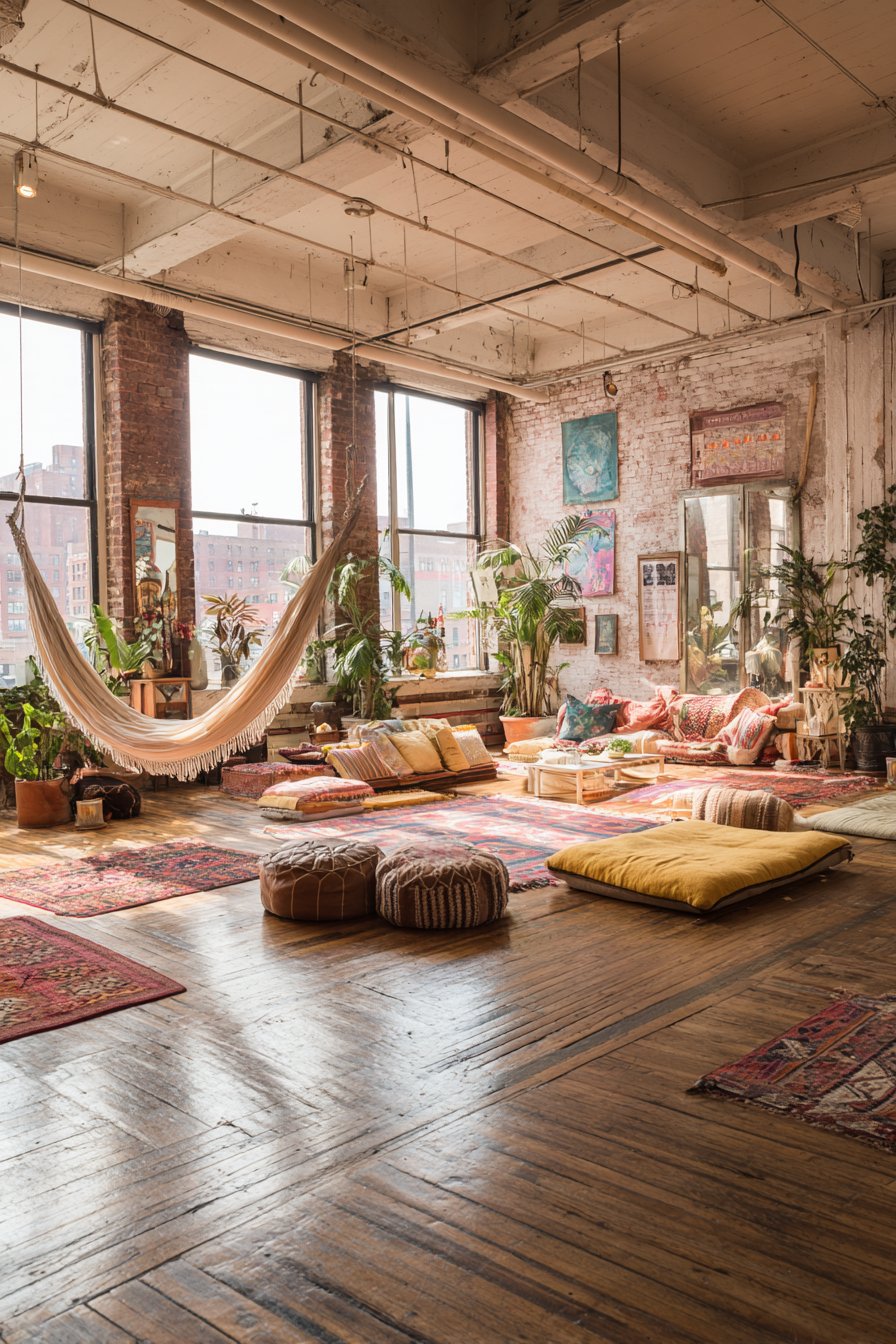
Abundant plants in various sizes occupy corners and surfaces throughout. The greenery adds life and connection to nature within the spacious interior. Natural light from multiple exposures creates dynamic patterns across surfaces. The changing light conditions enhance the collected, layered quality of the design.
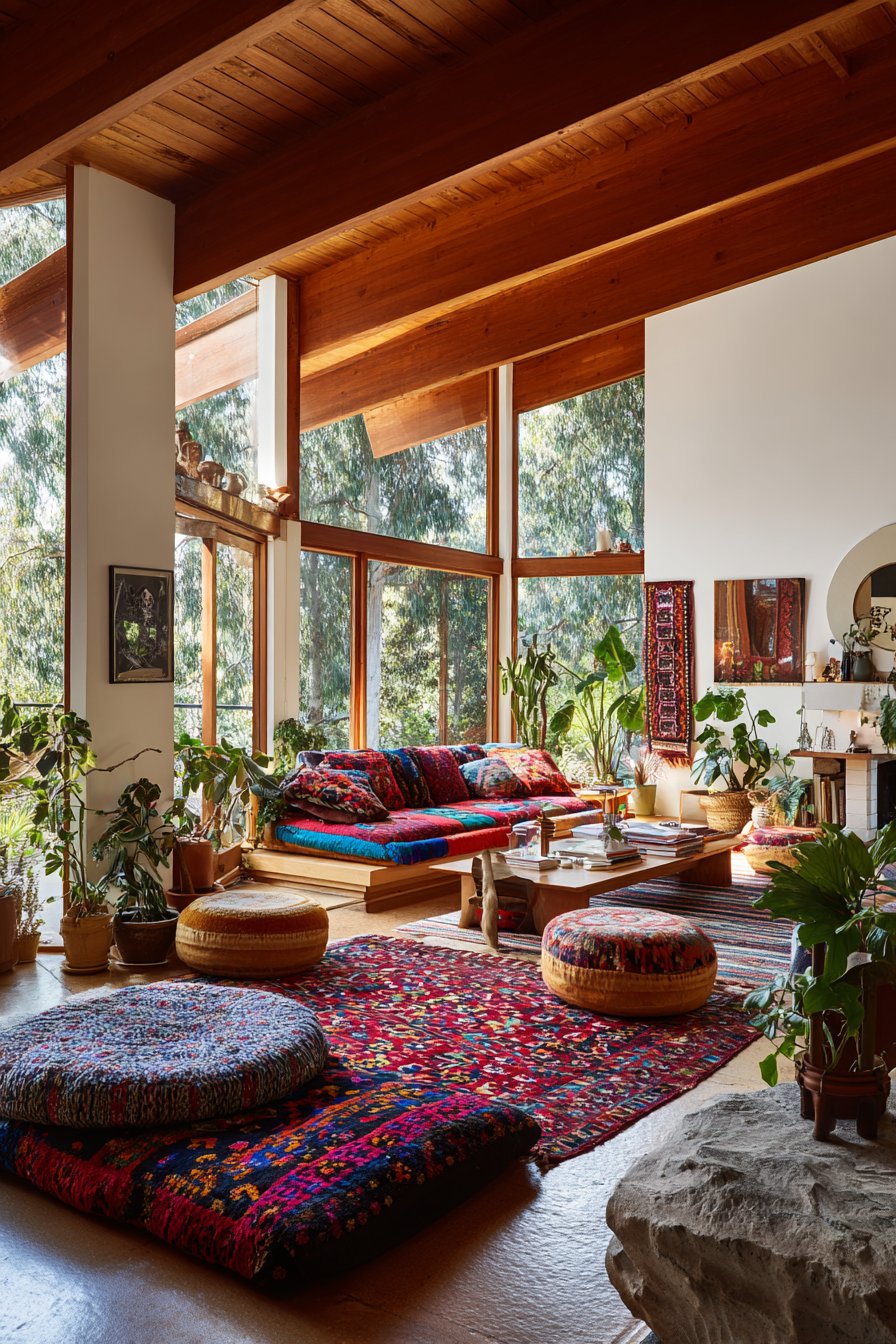
Interior photography captures the lived-in quality and diverse element accommodation. The composition showcases how spacious rooms prevent eclectic collections from feeling cluttered. The design proves that bohemian aesthetics require generous proportions to succeed. Without adequate space, collected items risk overwhelming rather than enriching interiors.
Key Design Tips:
- Mix diverse furniture styles throughout spacious rooms for bohemian character
- Layer multiple area rugs in various patterns to define zones and add textile richness
- Display curated collections of artwork, mirrors, and textiles on expansive walls
- Incorporate abundant plants in various sizes to add life and natural connection
- Add playful elements like hammock chairs near windows for an authentic bohemian spirit
- Use multiple seating types including low-slung sofas and poufs for flexible arrangements
14. Art Deco Glamour with Geometric Patterns
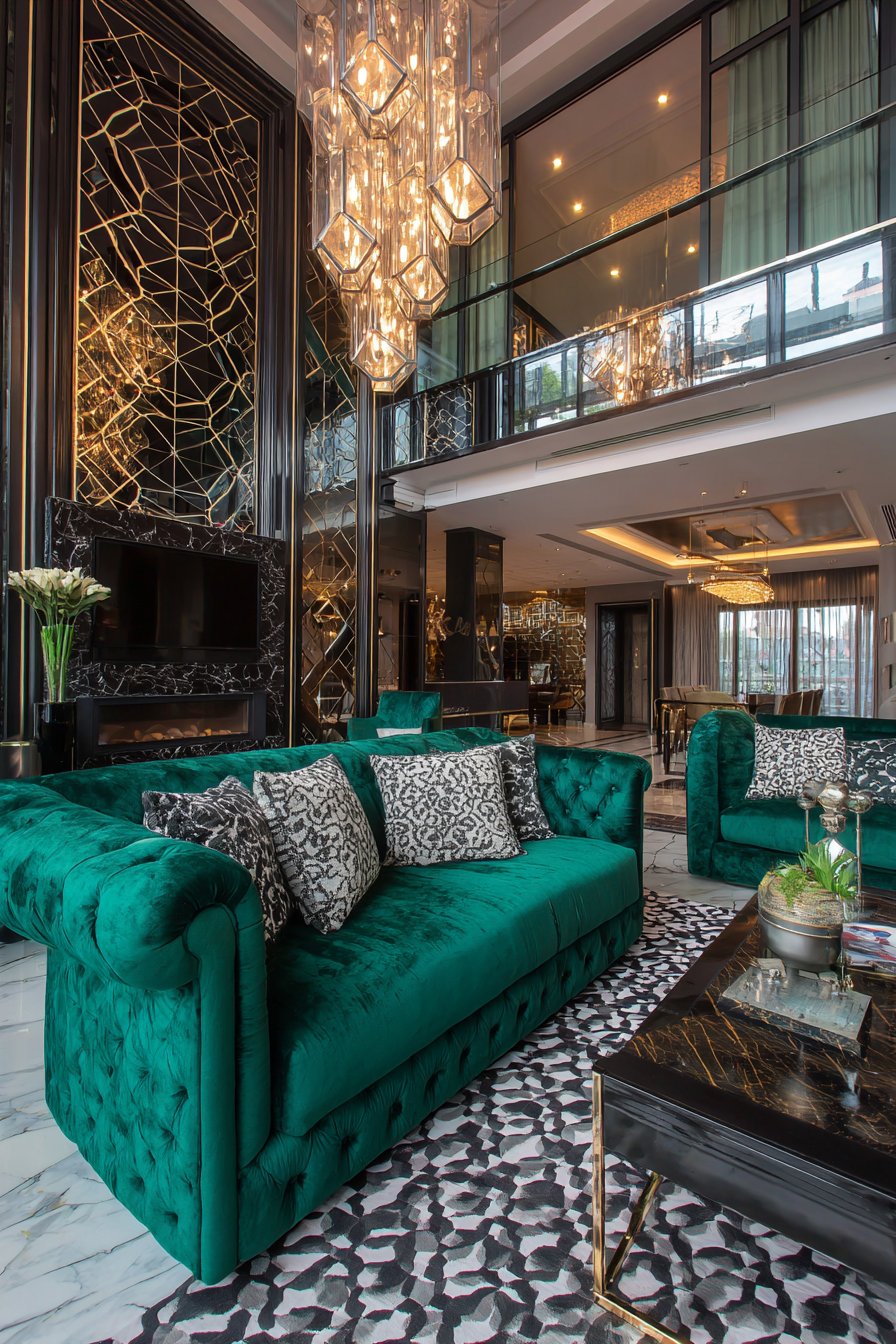
Geometric patterns and luxurious materials define this glamorous art deco space. A velvet sofa in emerald green faces a marble fireplace with brass detailing. The rich jewel tone adds drama without overwhelming the generous dimensions. Matching club chairs positioned thoughtfully create intimate conversation areas.
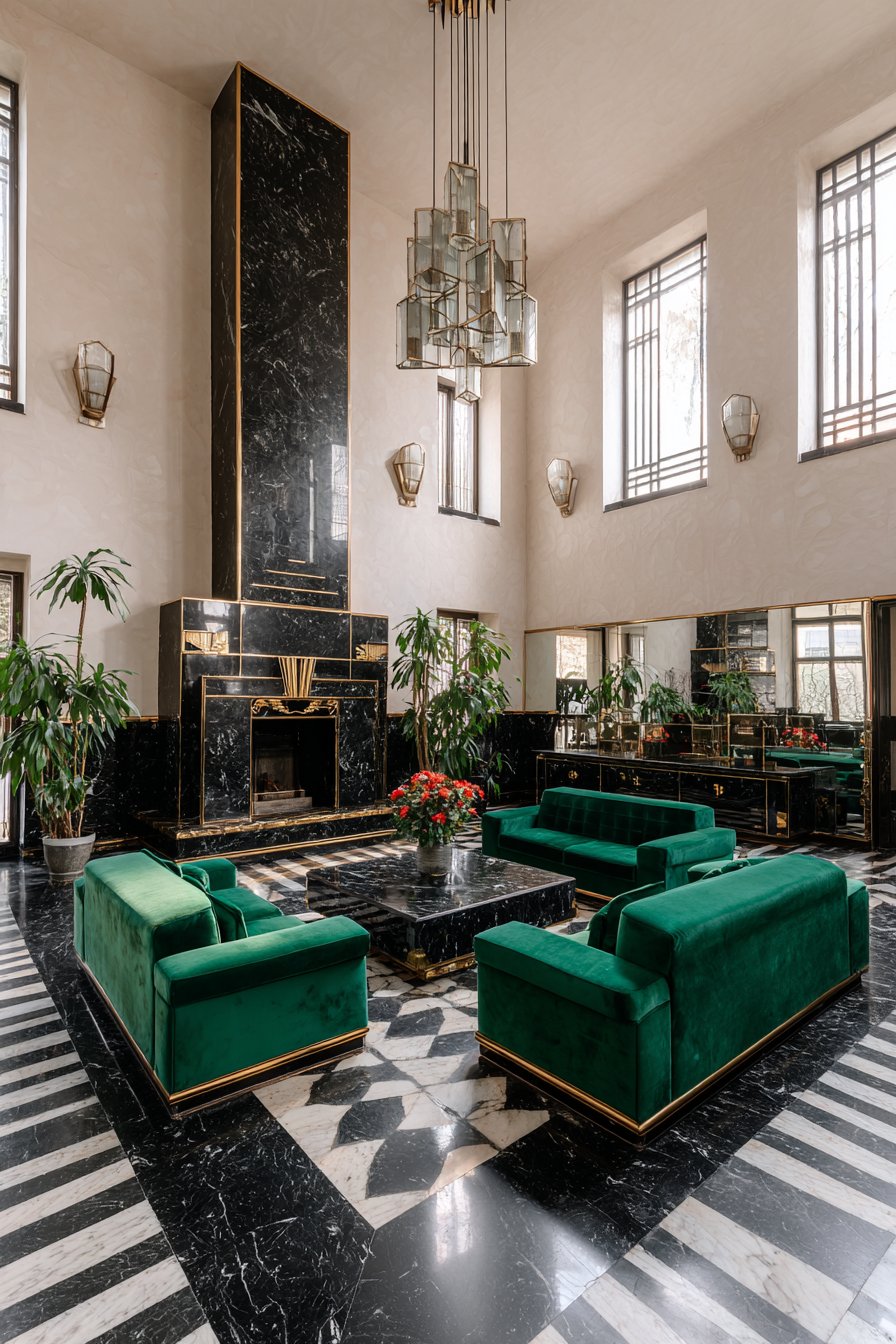
The room’s considerable width accommodates multiple seating zones comfortably. Mirrored surfaces on built-in cabinetry reflect light and enhance spatial perception. The reflective materials amplify the already impressive dimensions dramatically. A statement art deco chandelier with geometric glass elements hangs from the high ceiling.
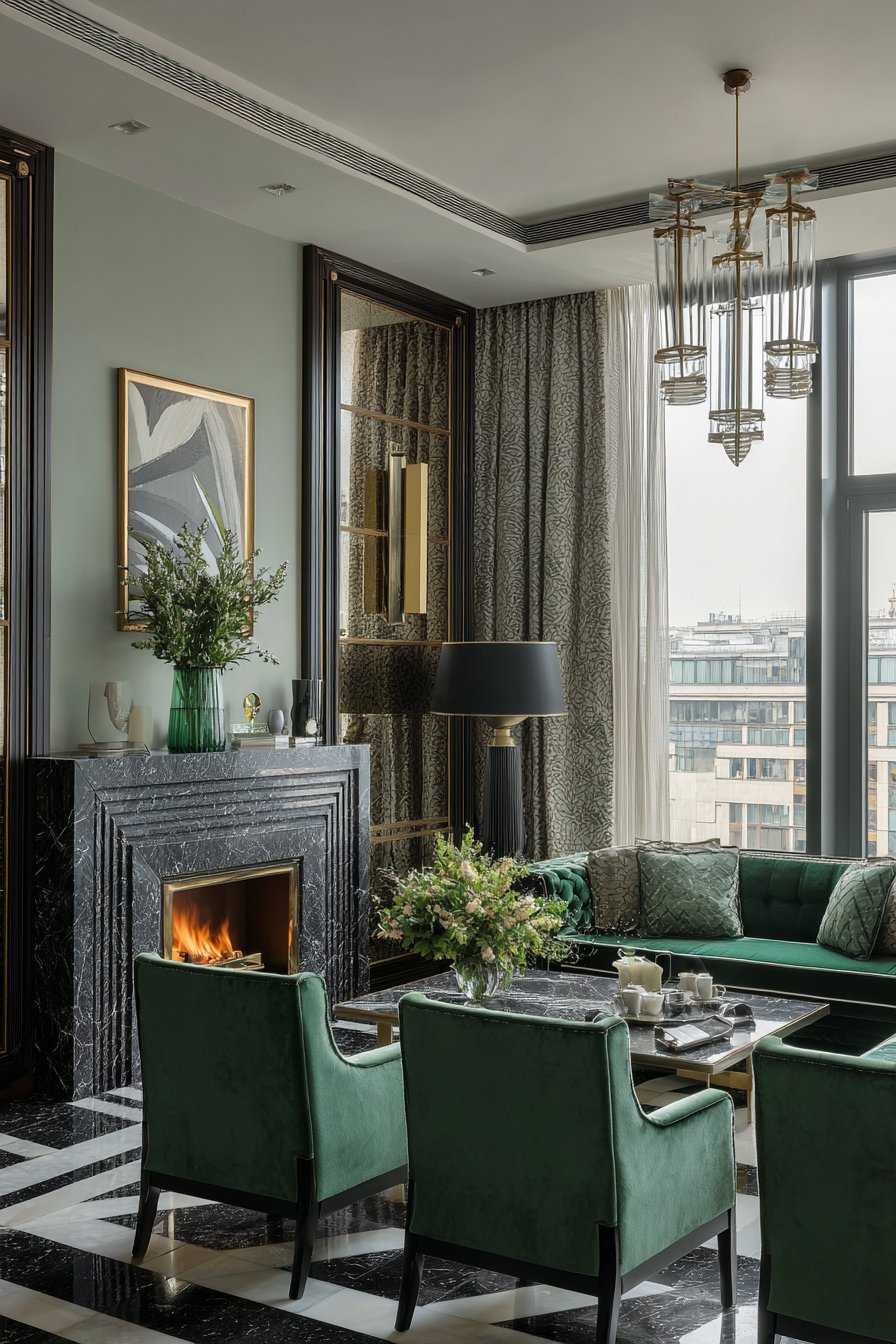
Black and white checkered marble flooring extends throughout with bold pattern. The high-contrast flooring provides geometric interest that defines the aesthetic. Brass hardware and fixtures add warm metallic accents throughout. The material palette combines luxury with sophisticated restraint.
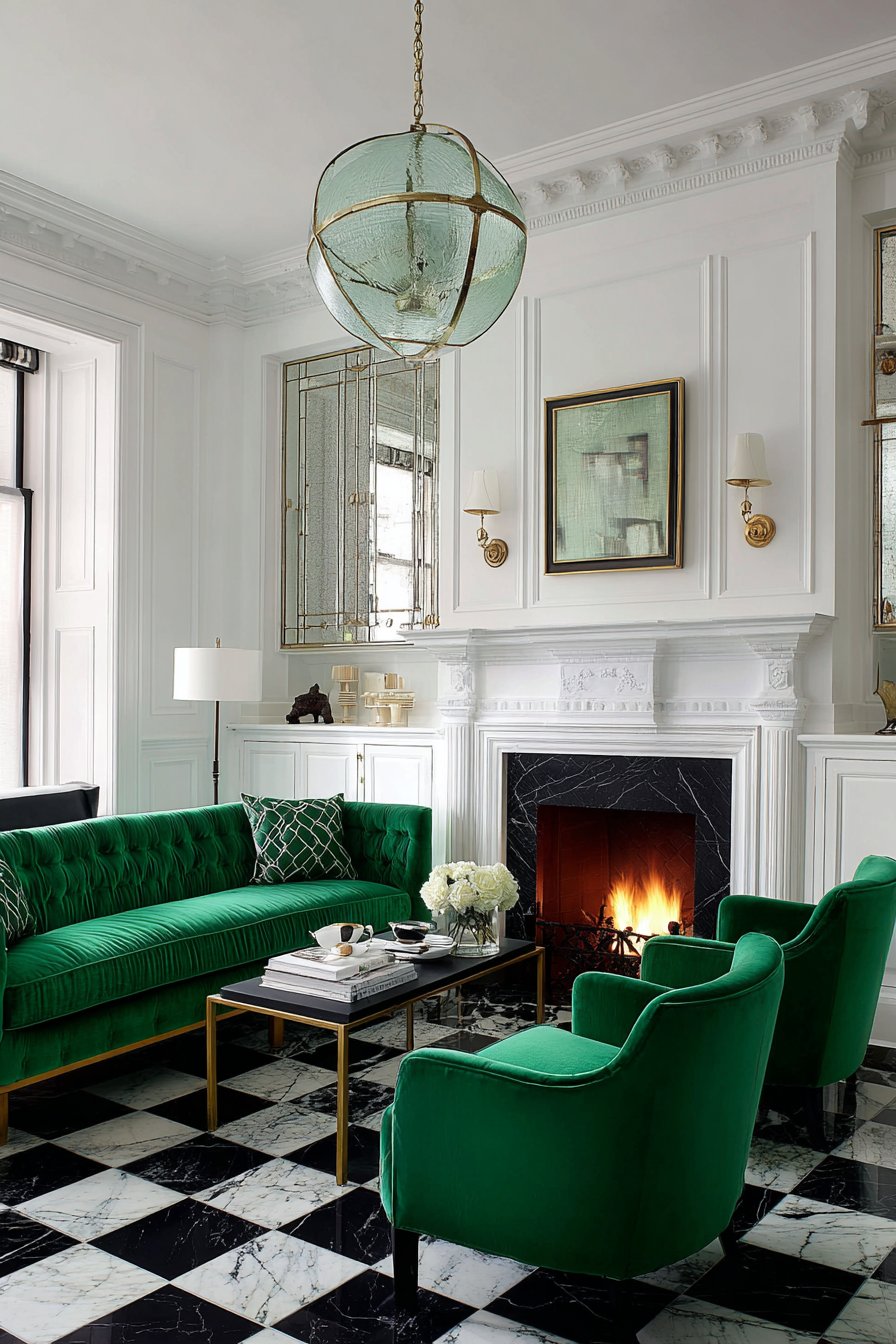
Professional interior photography with balanced exposure captures the glamorous aesthetic and generous proportions. The composition showcases how art deco style suits spacious rooms naturally. The design proves that geometric patterns and bold materials require adequate space. The generous dimensions prevent the rich aesthetic from feeling excessive or overwhelming.
Key Design Tips:
- Choose velvet sofas in jewel tones like emerald green for art deco glamour
- Face seating toward marble fireplaces with brass detailing as focal points
- Install mirrored surfaces on built-ins to reflect light and enhance spaciousness
- Select geometric glass chandeliers appropriate to art deco styling and room scale
- Use black and white checkered marble flooring for bold geometric pattern
- Add brass hardware and fixtures as warm metallic accents throughout
15. Rustic Lodge with Heavy Timber and Stone
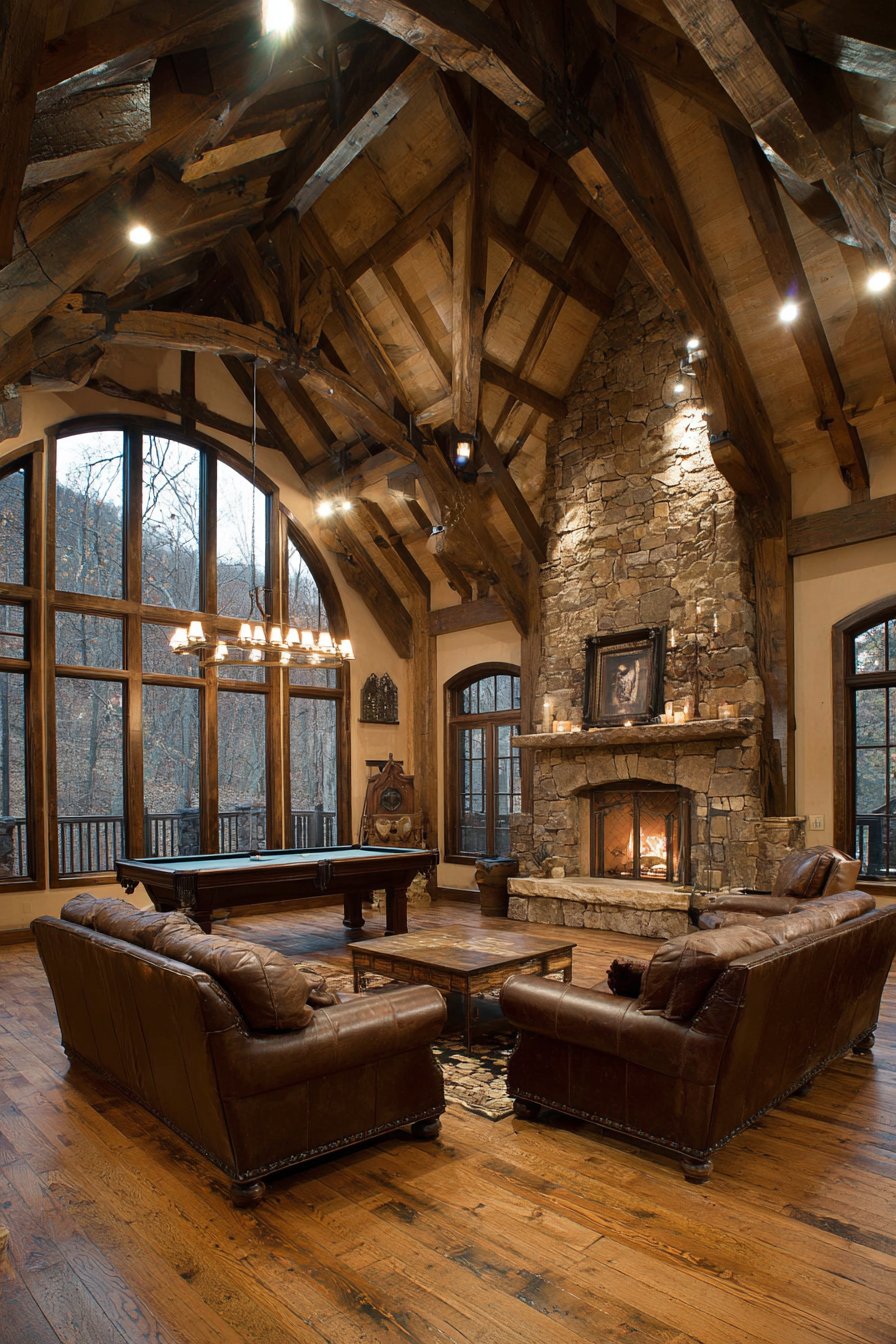
Heavy timber ceiling beams span the expansive space above a stone fireplace. The fireplace rises to the full height of the two-story room dramatically. Oversized leather furniture in rich brown tones accommodates large gatherings comfortably. The substantial furniture scale suits the impressive room dimensions perfectly.
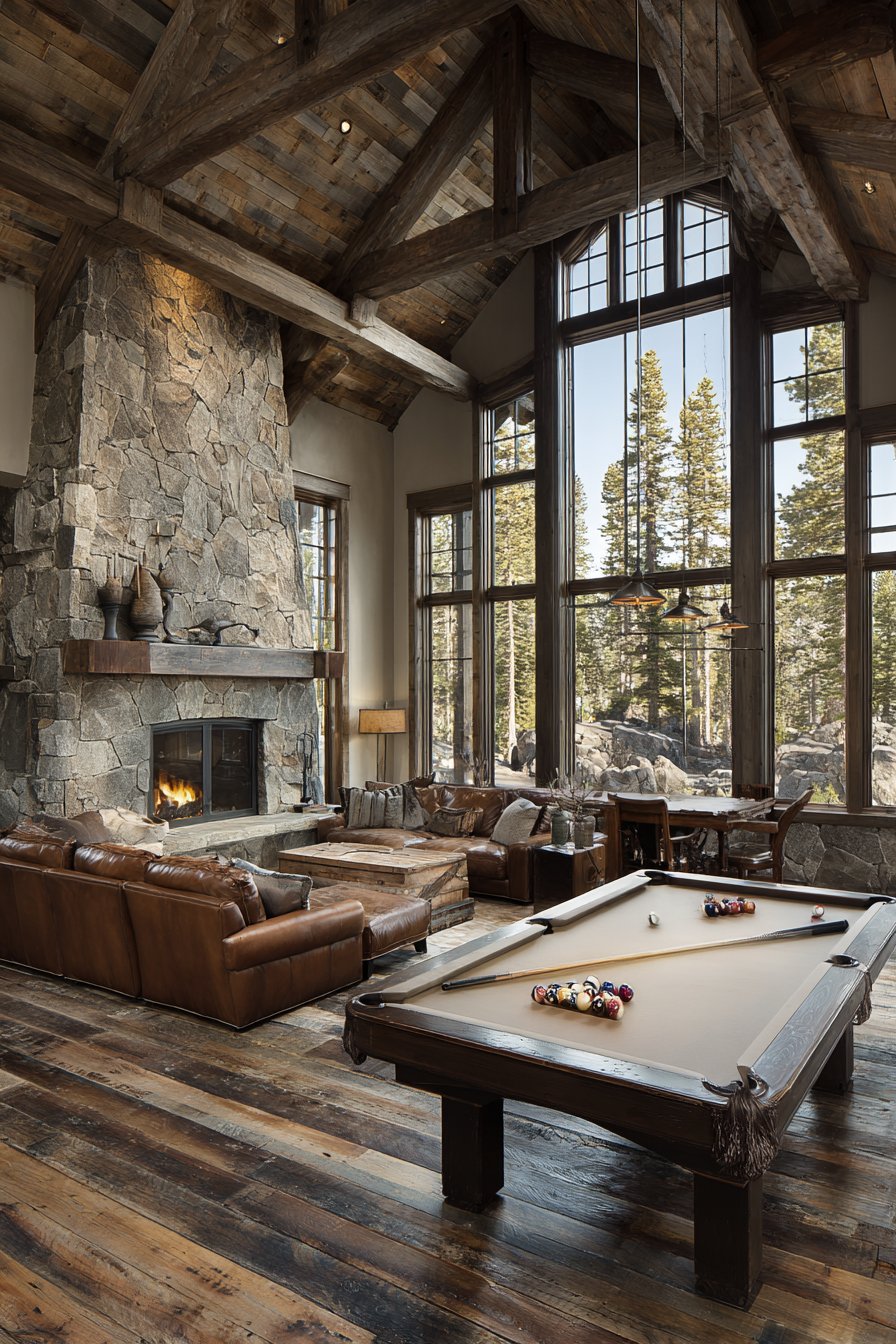
A billiards table positioned in a dedicated game area utilizes the generous square footage. This entertainment addition demonstrates the room’s capacity for multiple functions. Wide-plank reclaimed wood flooring shows authentic wear patterns with character. The rustic flooring complements the heavy timber construction beautifully.
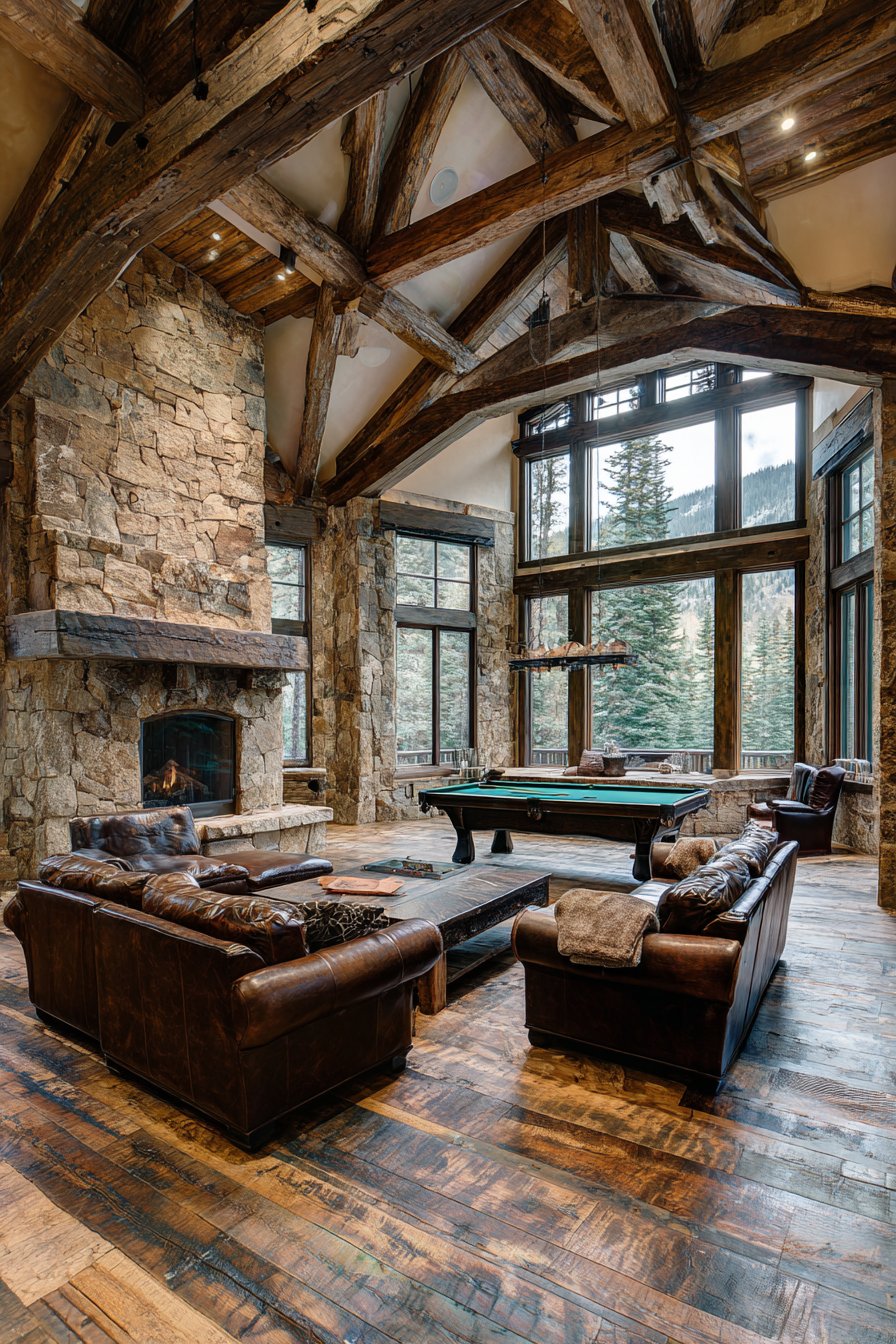
Large windows frame mountain or forest views that connect the interior to landscape. The natural surroundings become integral to the room’s design aesthetic. Material choices emphasize authentic rustic character over refined finishes. The commitment to genuine lodge materials creates lasting appeal.
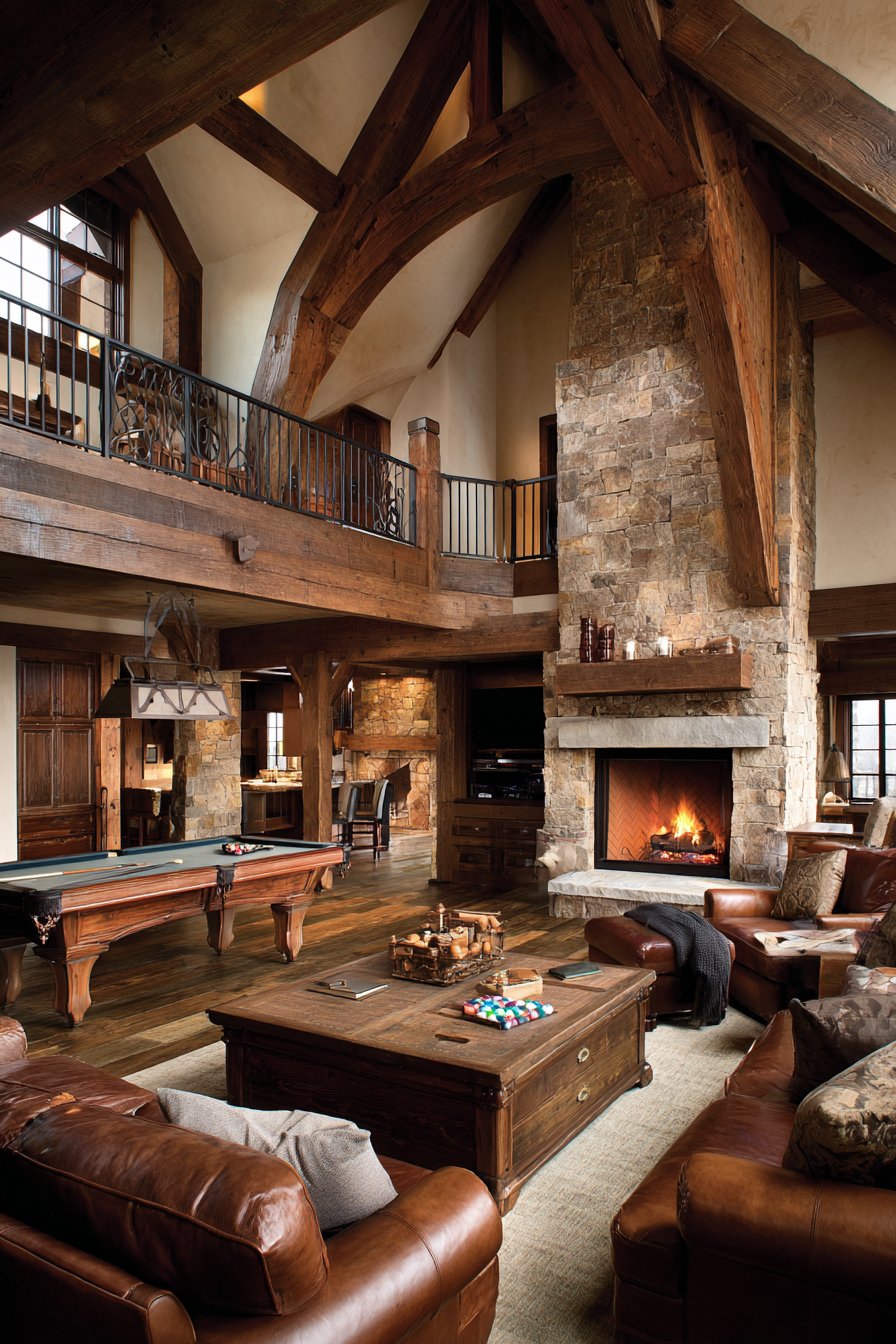
Interior design photography captures the impressive vertical and horizontal space effectively. The composition showcases substantial furniture scale appropriate for spacious rustic settings. The design proves that lodge aesthetics require generous proportions to achieve proper impact. Oversized elements that would overwhelm smaller rooms suit these dimensions naturally.
Key Design Tips:
- Install heavy timber beams that span the full ceiling width for rustic drama
- Build stone fireplaces that rise to full ceiling height in two-story rooms
- Choose oversized leather furniture in brown tones to suit lodge scale
- Include game areas with billiards tables when generous square footage permits
- Use wide-plank reclaimed wood flooring with authentic wear patterns
- Frame windows to capture mountain or forest views as design elements
16. Hollywood Regency with Dramatic Reflective Surfaces
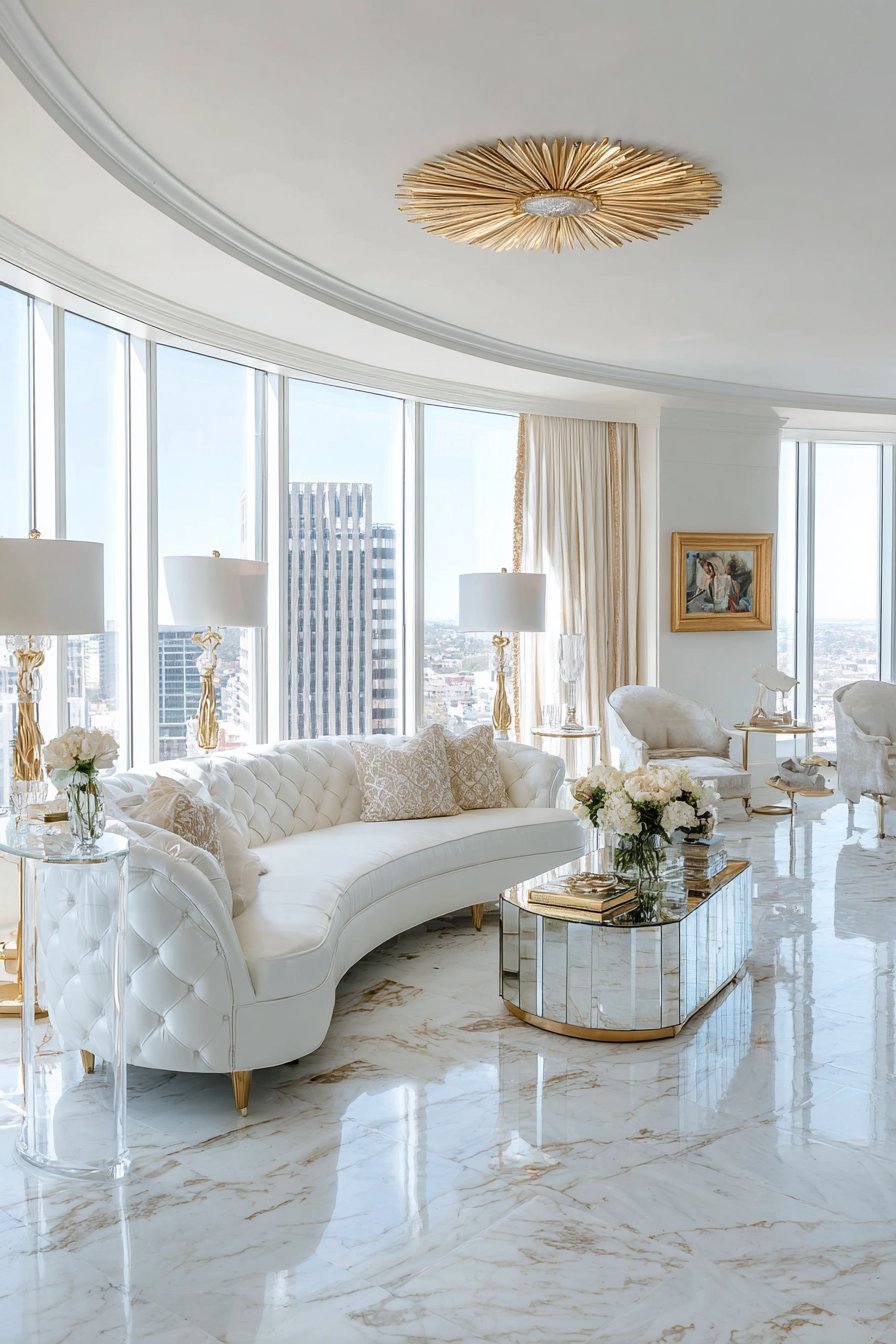
Dramatic elements are distributed across the considerable floor plan with theatrical flair. A tufted white leather sofa serves as the centerpiece beneath an oversized sunburst mirror. The bold combination creates immediate visual impact. Lucite accent tables and mirrored coffee tables maintain visual lightness despite generous proportions.
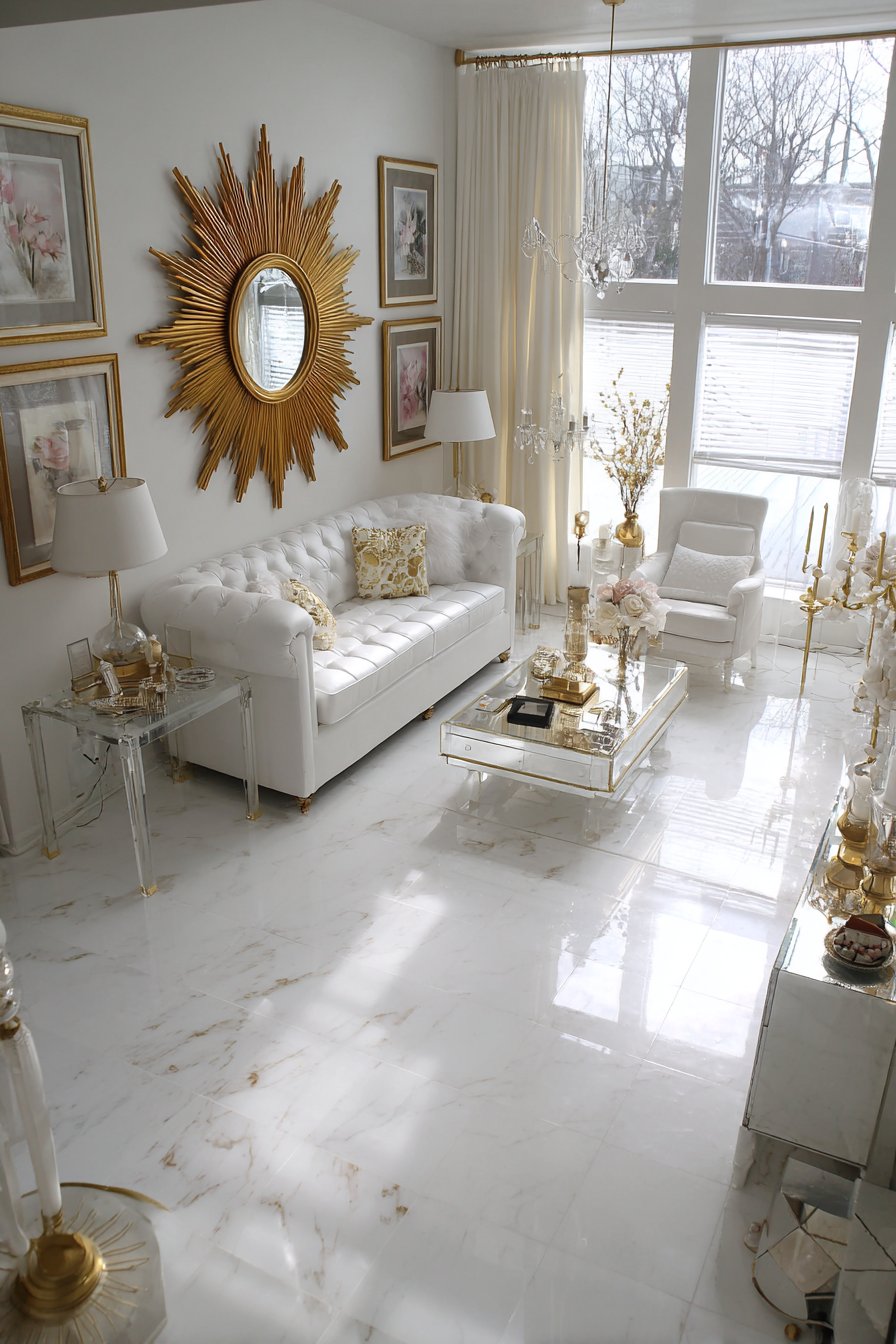
The transparent and reflective furniture prevents the spacious room from feeling heavy. Metallic gold accents appear in lamp bases, picture frames, and hardware throughout. The warm metallic tones add glamour without overwhelming the predominantly white palette. Floor-to-ceiling windows with flowing silk drapes emphasize the impressive room height.
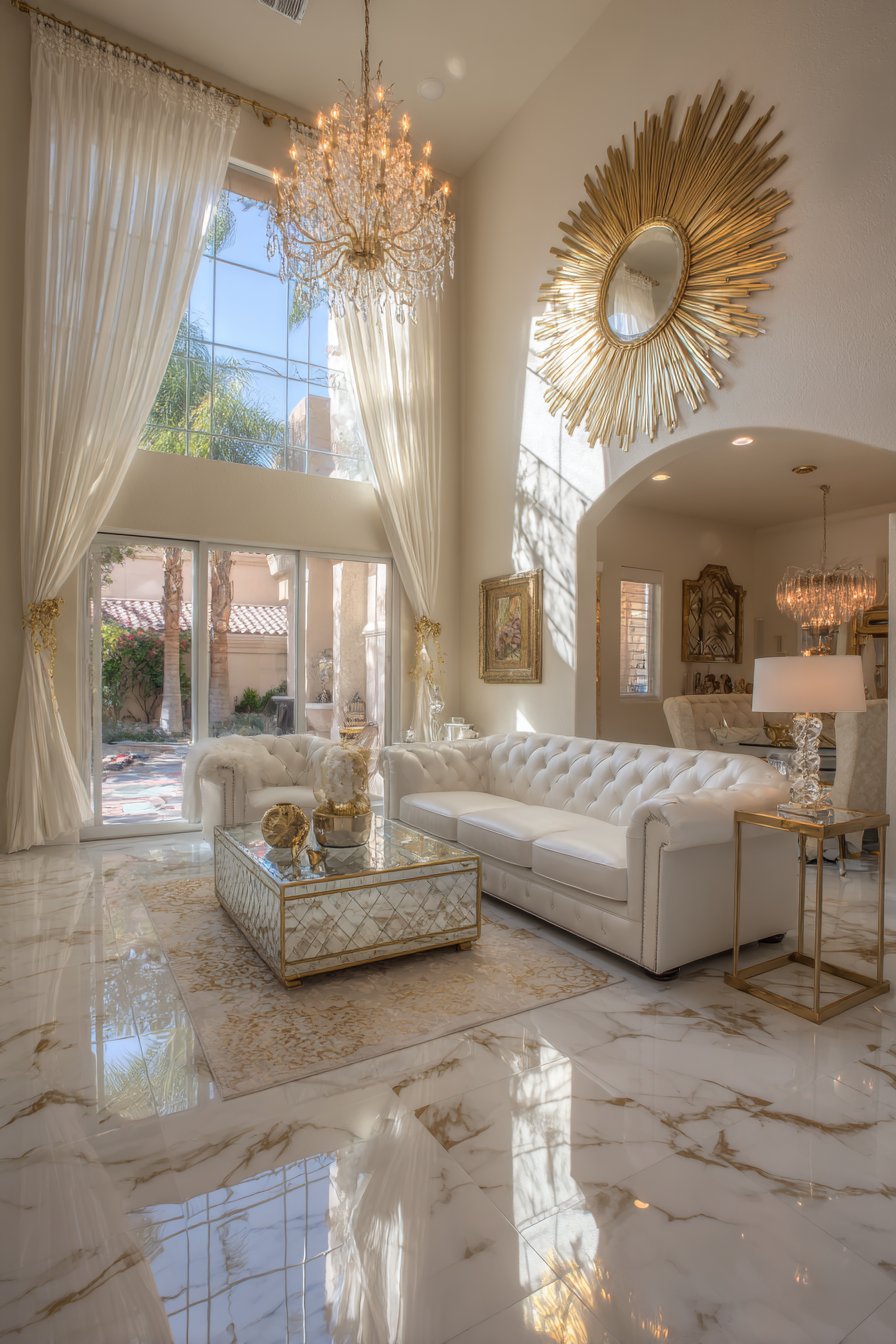
White marble flooring with gold veining extends throughout the expansive space. The luxurious stone material reinforces the glamorous Hollywood Regency aesthetic. Reflective surfaces throughout enhance the perception of even greater space. The design demonstrates confidence in dramatic choices that suit generous dimensions.
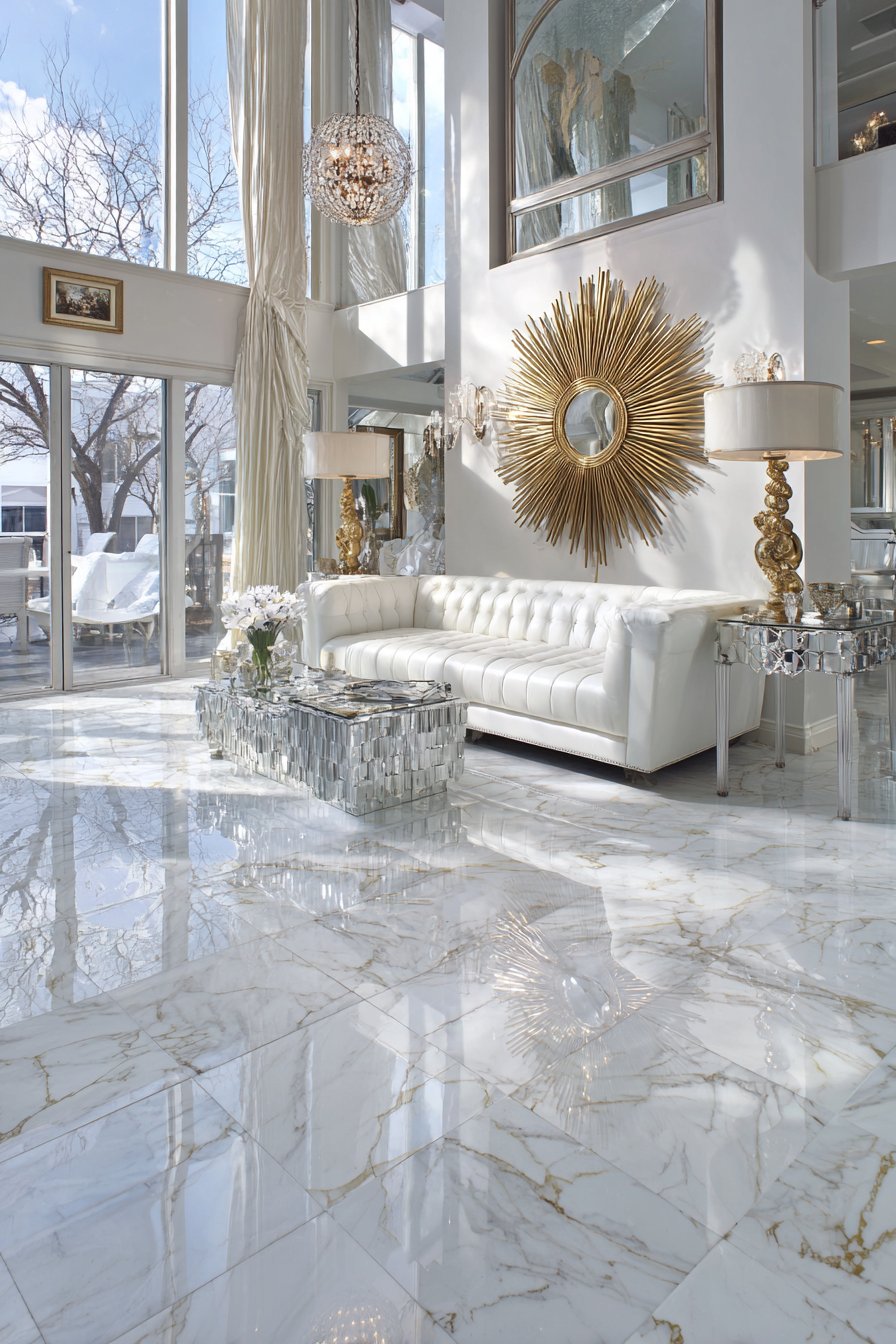
Wide-angle interior photography captures the glamorous aesthetic and spatial enhancement. The composition showcases how reflective materials amplify already impressive proportions. The design proves that Hollywood Regency style requires adequate space for dramatic elements. The theatrical approach succeeds through generous proportions that prevent excess from overwhelming.
Key Design Tips:
- Position tufted white leather sofas under oversized sunburst mirrors for drama
- Use lucite accent tables to maintain visual lightness in spacious rooms
- Add metallic gold accents in lamps, frames, and hardware for glamour
- Hang flowing silk drapes at floor-to-ceiling windows to emphasize height
- Install white marble flooring with gold veining for luxurious Hollywood Regency character
- Incorporate multiple reflective surfaces to amplify spatial perception
17. Japanese-Inspired Minimalism with Low-Profile Furniture
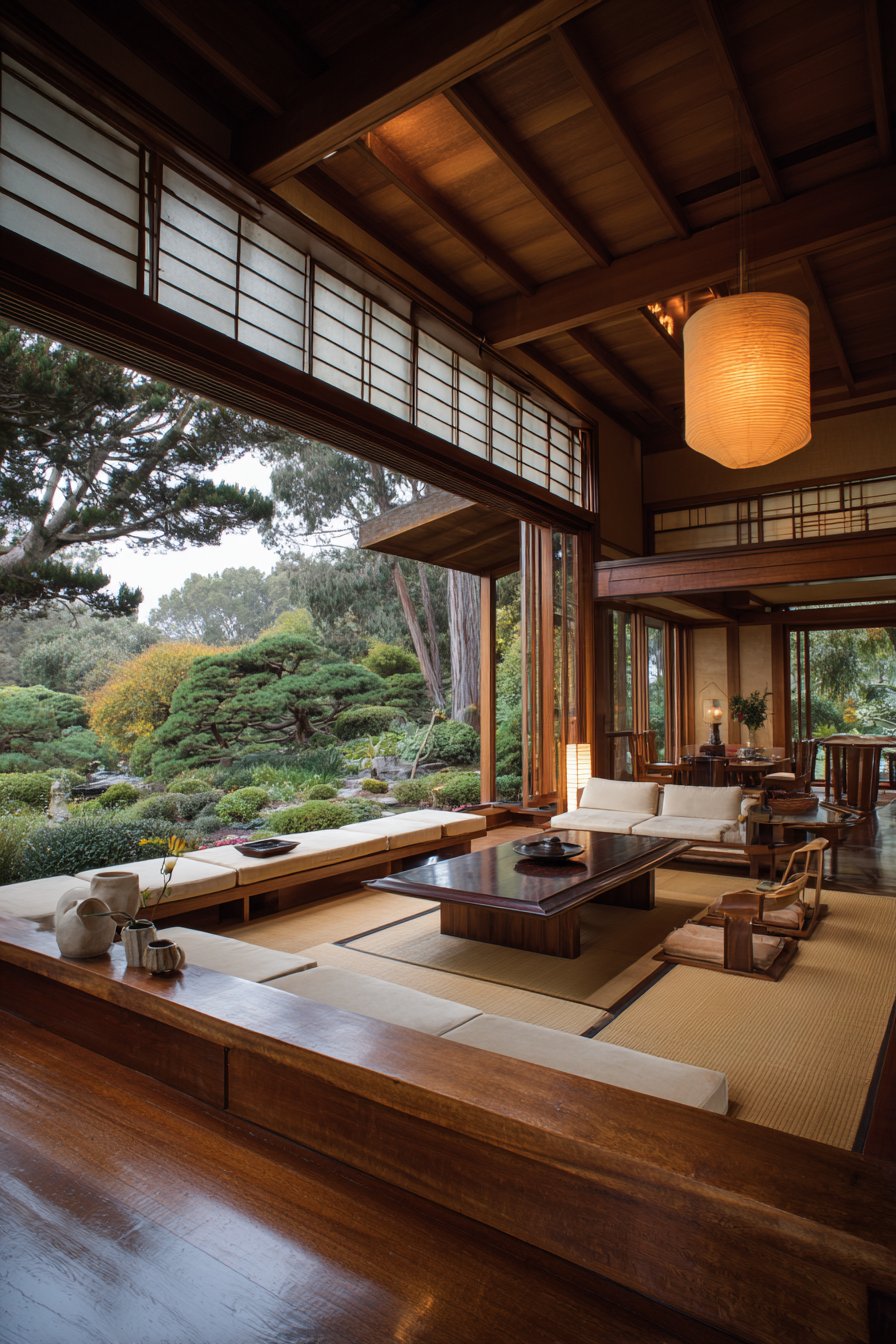
Tatami-mat-inspired area rugs and low-profile furniture emphasize horizontal expanse. The low furniture height makes the generous floor plan feel even more spacious. A sunken conversation area with built-in seating surrounds a central table. This dramatic design element requires substantial floor area to execute properly.
Shoji-screen-inspired sliding panels create flexible separation of spaces within the room. The movable panels allow spatial reconfiguration based on needs. Natural materials, including bamboo flooring, paper lantern lighting, and unfinished wood maintain zen aesthetic. The material palette demonstrates commitment to Japanese design principles.
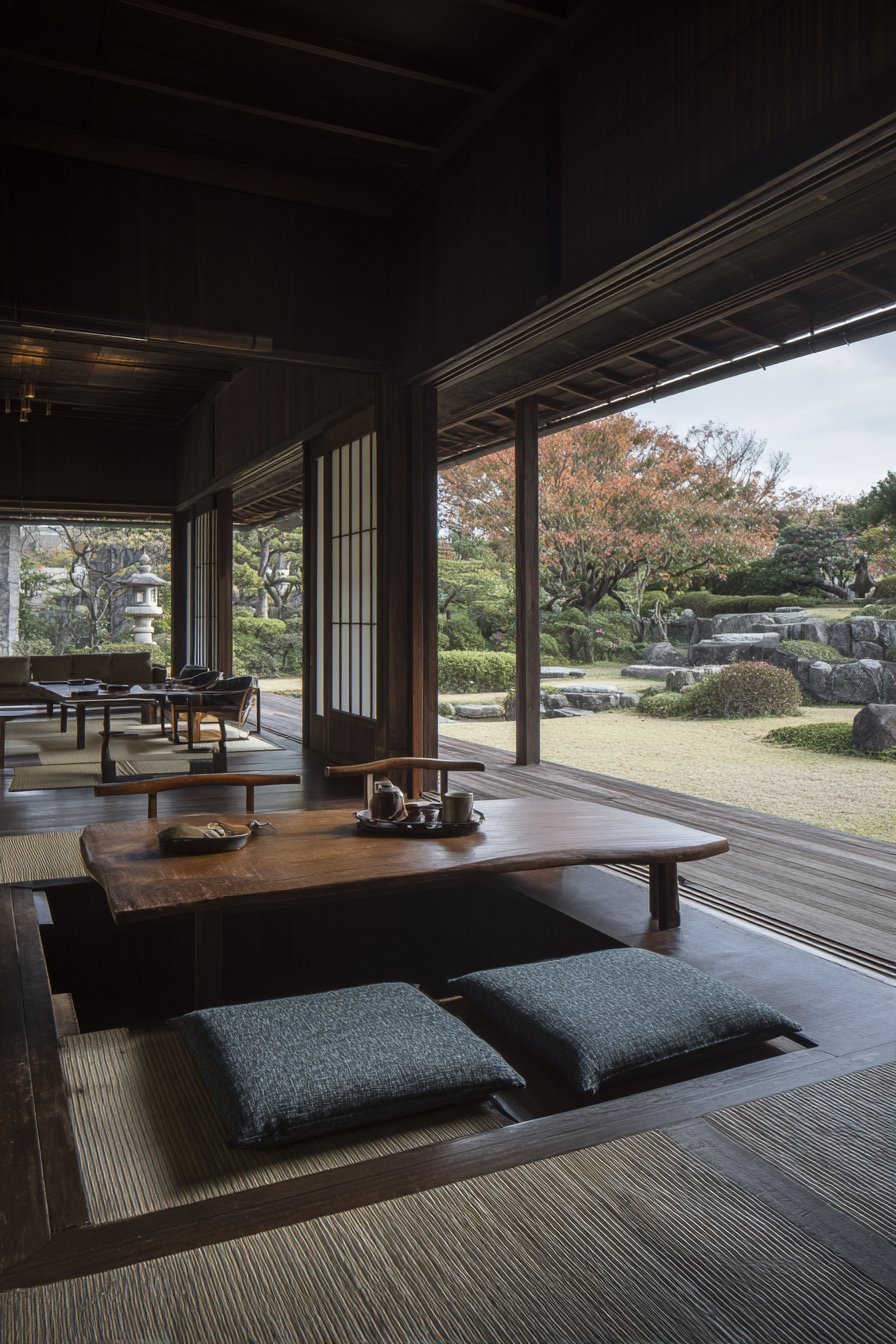
Large windows with simple treatments frame carefully composed garden views. The connection to nature remains central to the design philosophy. Minimal ornamentation allows the architecture and views to dominate attention. The restraint creates serene quality that suits contemplative living.
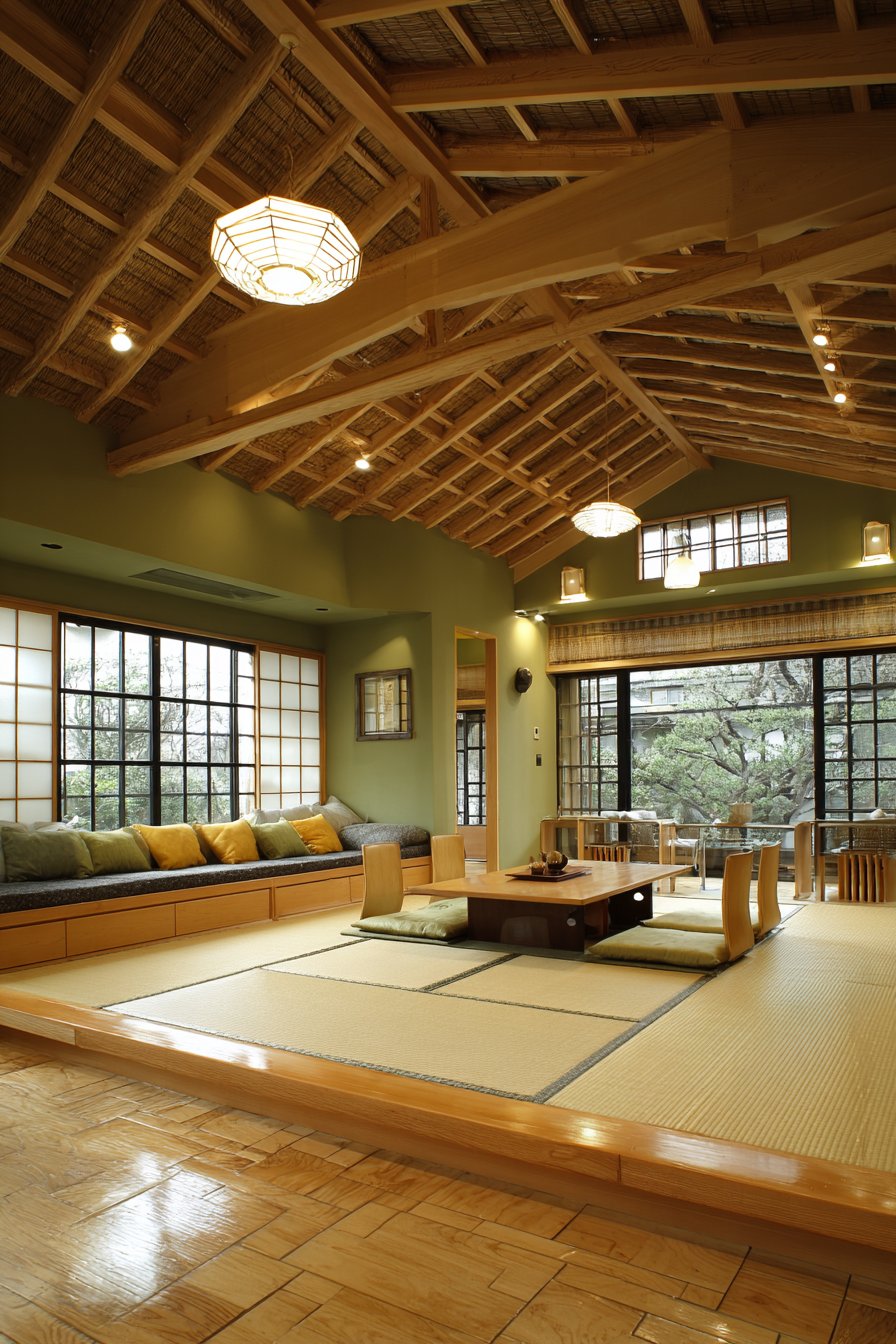
Interior photography captures the serene atmosphere and spatial generosity. The composition showcases how minimalist approaches prevent spacious rooms from feeling empty. The design proves that Japanese-inspired aesthetics require adequate proportions to succeed. The generous dimensions allow the low furniture and minimal approach to create the intended tranquility.
Key Design Tips:
- Use low-profile furniture to emphasize horizontal expanse in spacious rooms
- Create sunken conversation areas with built-in seating when floor area permits
- Install shoji-screen-inspired panels for flexible spatial reconfiguration
- Choose natural materials like bamboo flooring and paper lanterns for authenticity
- Frame carefully composed garden views through large windows with simple treatments
- Practice restraint in ornamentation to allow architecture and nature to dominate
18. Mediterranean Influence with Arched Openings
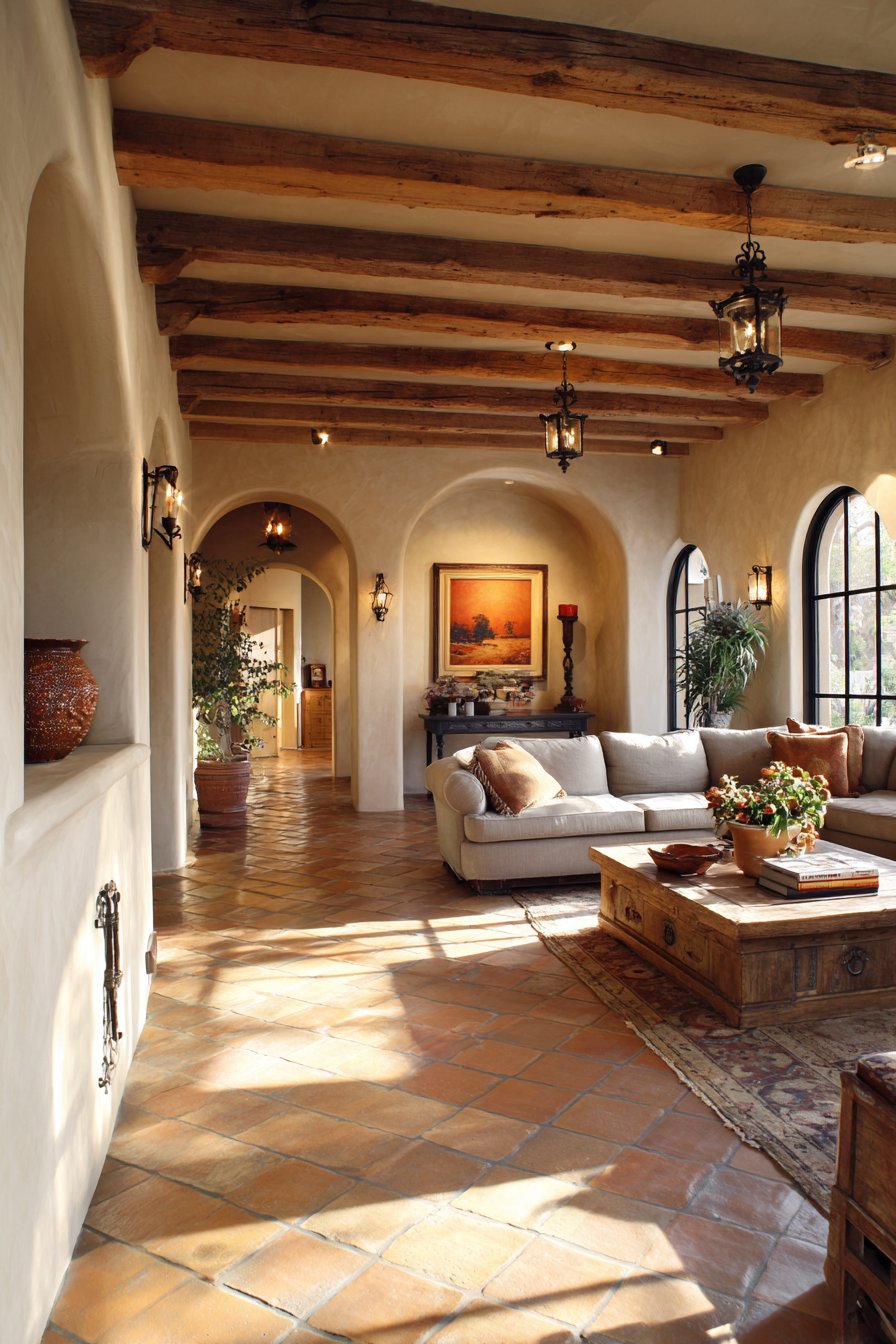
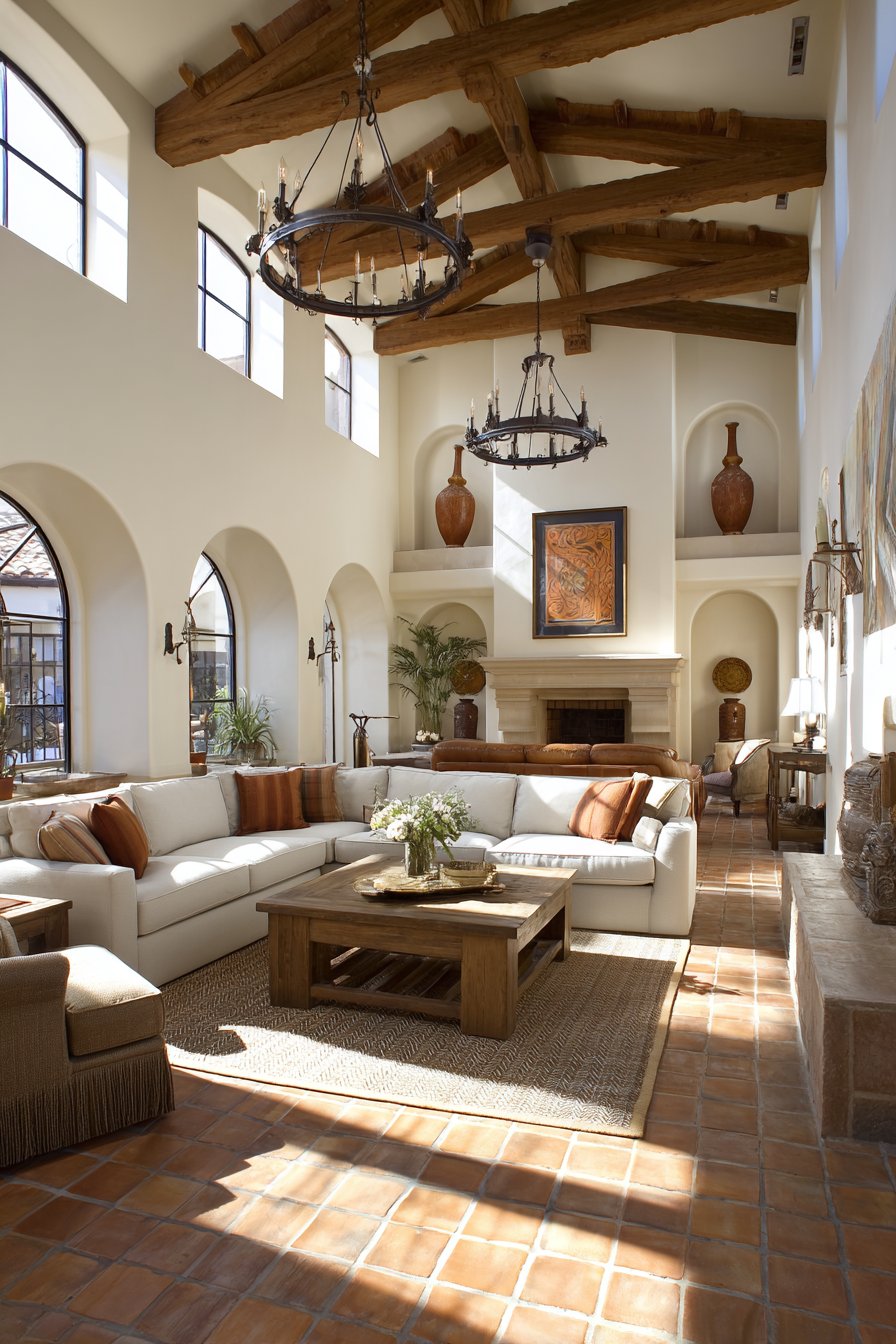
Arched doorways and windows emphasize the generous ceiling height with architectural drama. Terra cotta tile flooring extends throughout the expansive space with warm color. A large sectional sofa in neutral linen arranges around a rustic wood coffee table. The comfortable seating maintains the relaxed Mediterranean atmosphere.
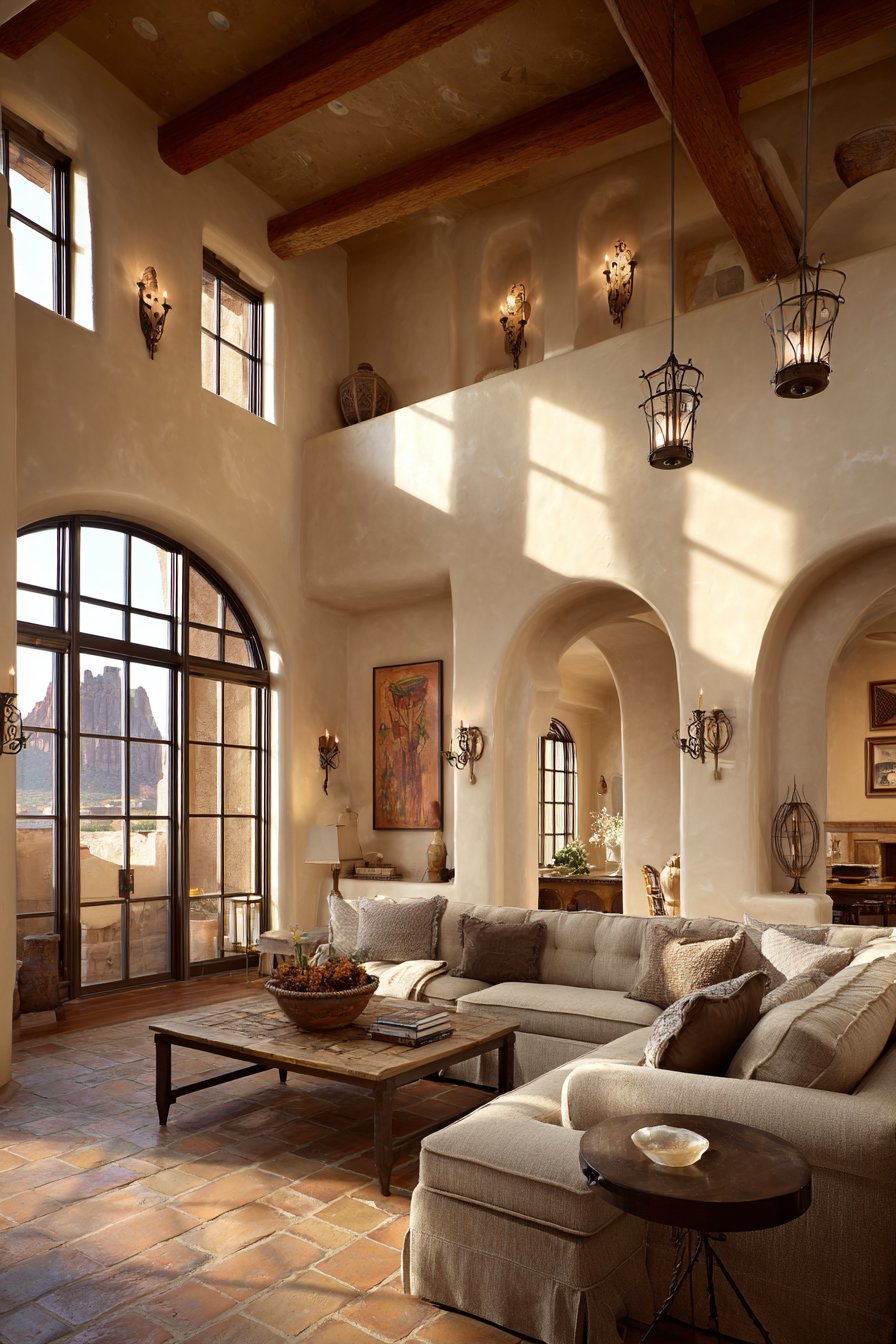
Exposed wooden ceiling beams span the considerable room width with structural presence. Built-in arched niches display decorative pottery and artwork throughout. These architectural details provide display opportunities without requiring freestanding furniture. Wrought iron light fixtures and hardware add authentic Mediterranean character.
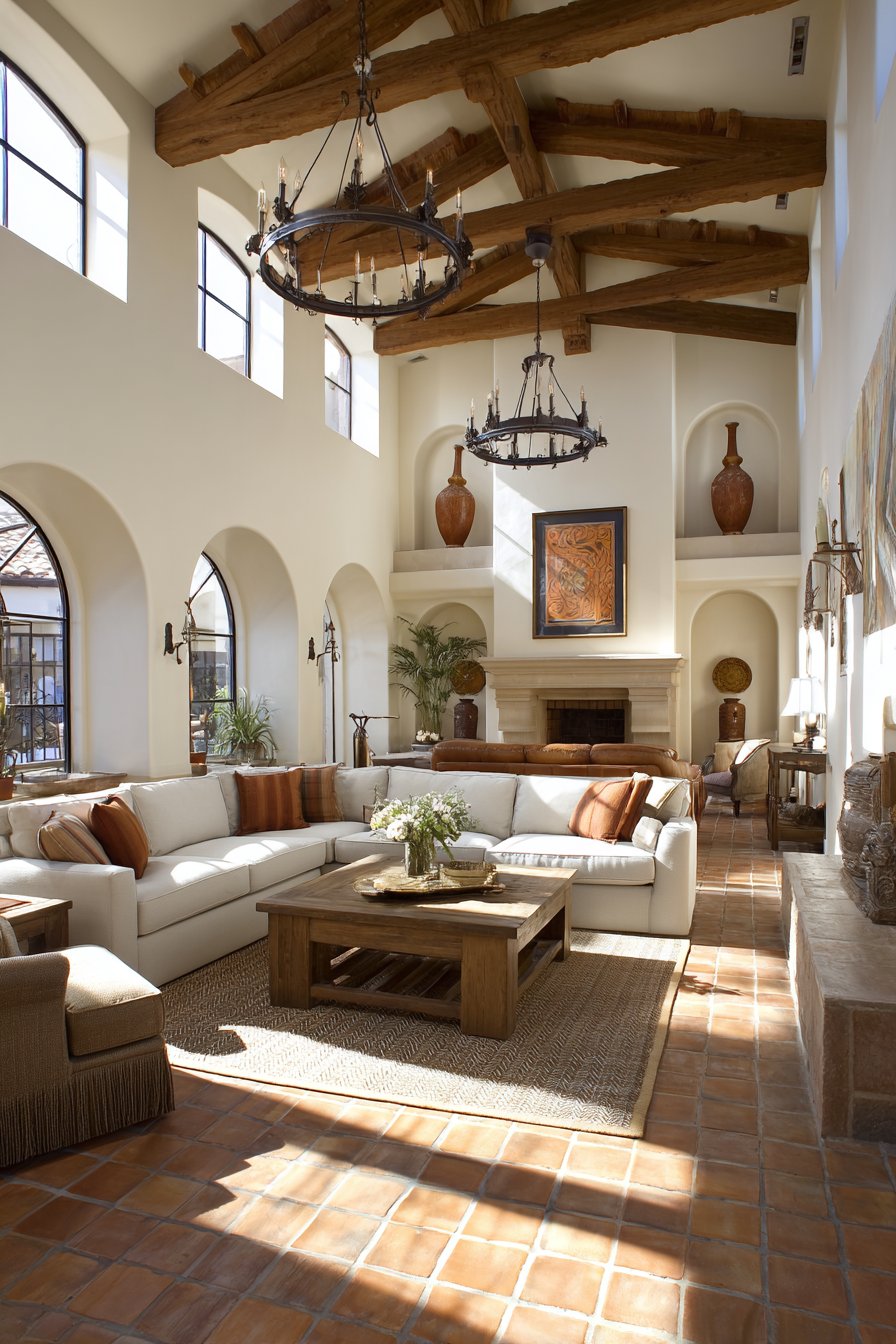
Natural light from multiple tall windows creates dramatic shadows across surfaces. The changing light patterns enhance the textured wall surfaces and tile flooring. Material choices emphasize natural textures and warm tones throughout. The authentic materials create lasting appeal that transcends temporary trends.
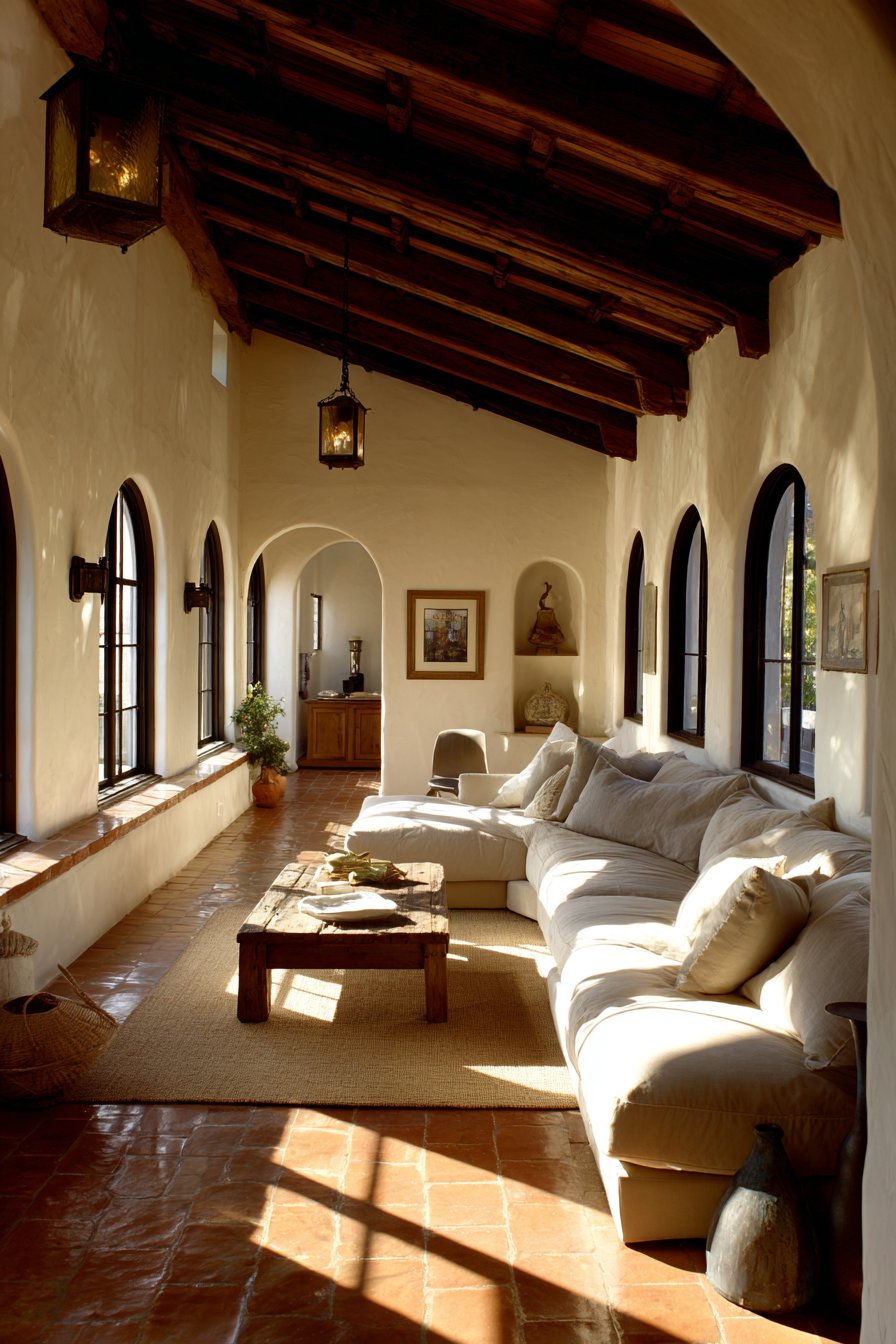
Wide-angle architectural photography captures the distinctive features and generous proportions. The composition showcases how Mediterranean style suits spacious room dimensions naturally. The design proves that arched openings and terra cotta materials require adequate space. The architectural details achieve proper scale in generous proportions.
Key Design Tips:
- Install arched doorways and windows to emphasize ceiling height dramatically
- Use terra cotta tile flooring throughout for warm Mediterranean color
- Expose wooden ceiling beams that span the full room width
- Build arched niches into walls for display without freestanding furniture
- Add wrought iron light fixtures and hardware for an authentic Mediterranean character
- Position windows to create dramatic shadow patterns across textured surfaces
19. English Country House with Traditional Chintz
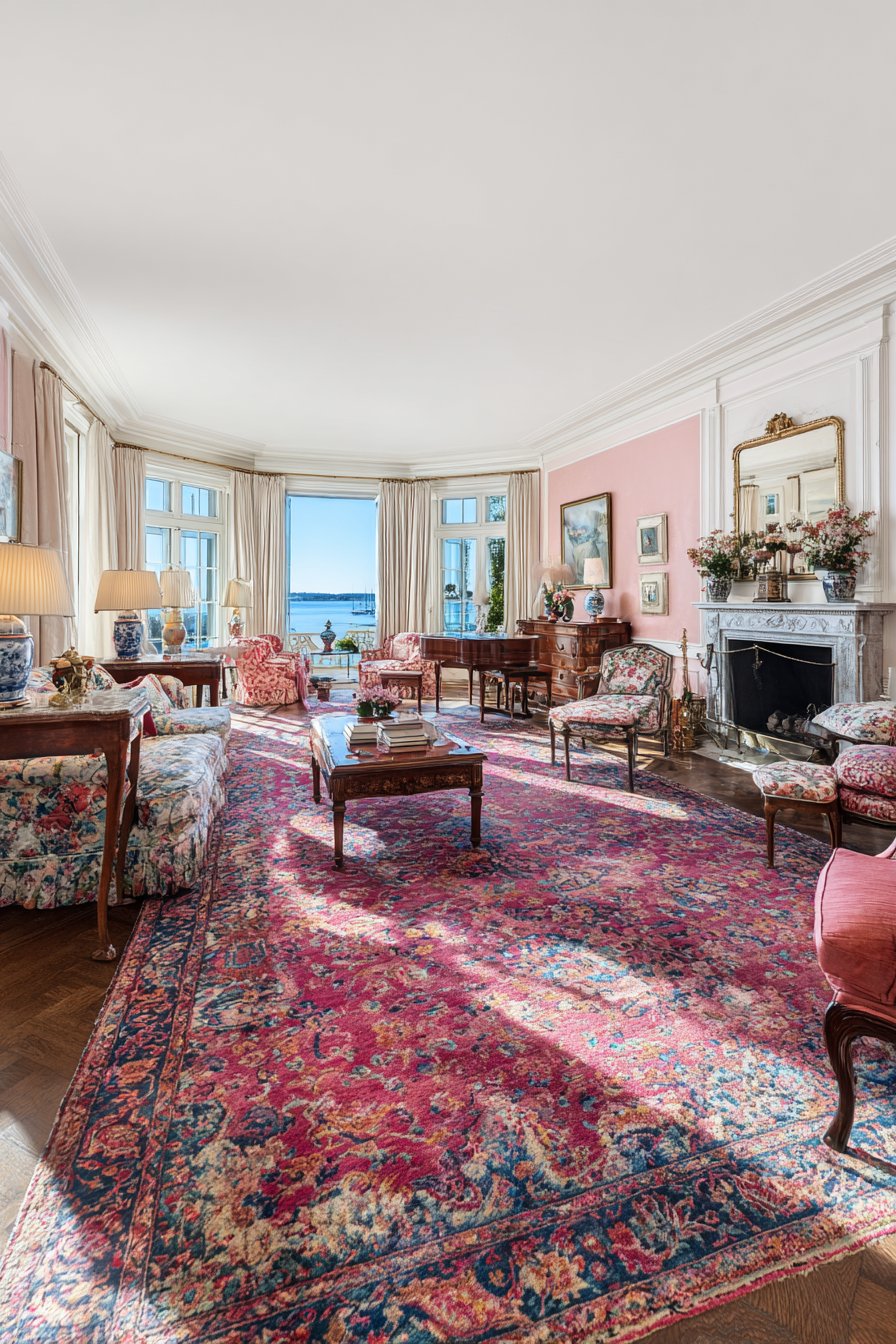
Traditional chintz fabrics and formal furniture arrangements span the impressive dimensions. Multiple seating groups include primary conversation area around the fireplace and a secondary reading zone. The room accommodates substantial antique pieces, including a secretary desk and display cabinet. These traditional furnishings demonstrate the capacity of spacious rooms for collected items.
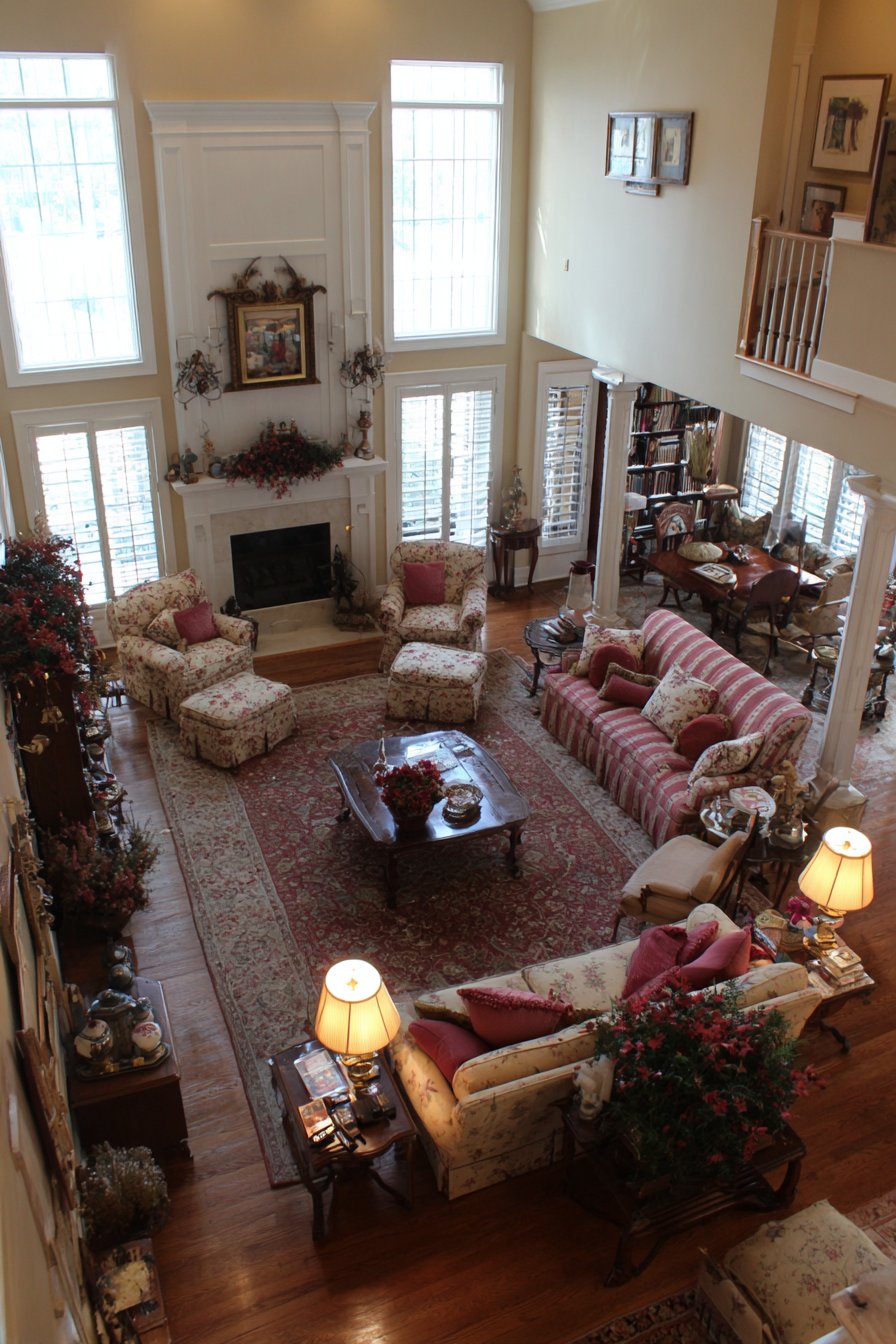
Oriental rugs layer over hardwood floors adding pattern and historical character. The rug layering creates visual richness appropriate to English country house aesthetics. Crown molding and picture rails emphasize the generous wall height with architectural detail. These traditional elements suit the formal room proportions perfectly.
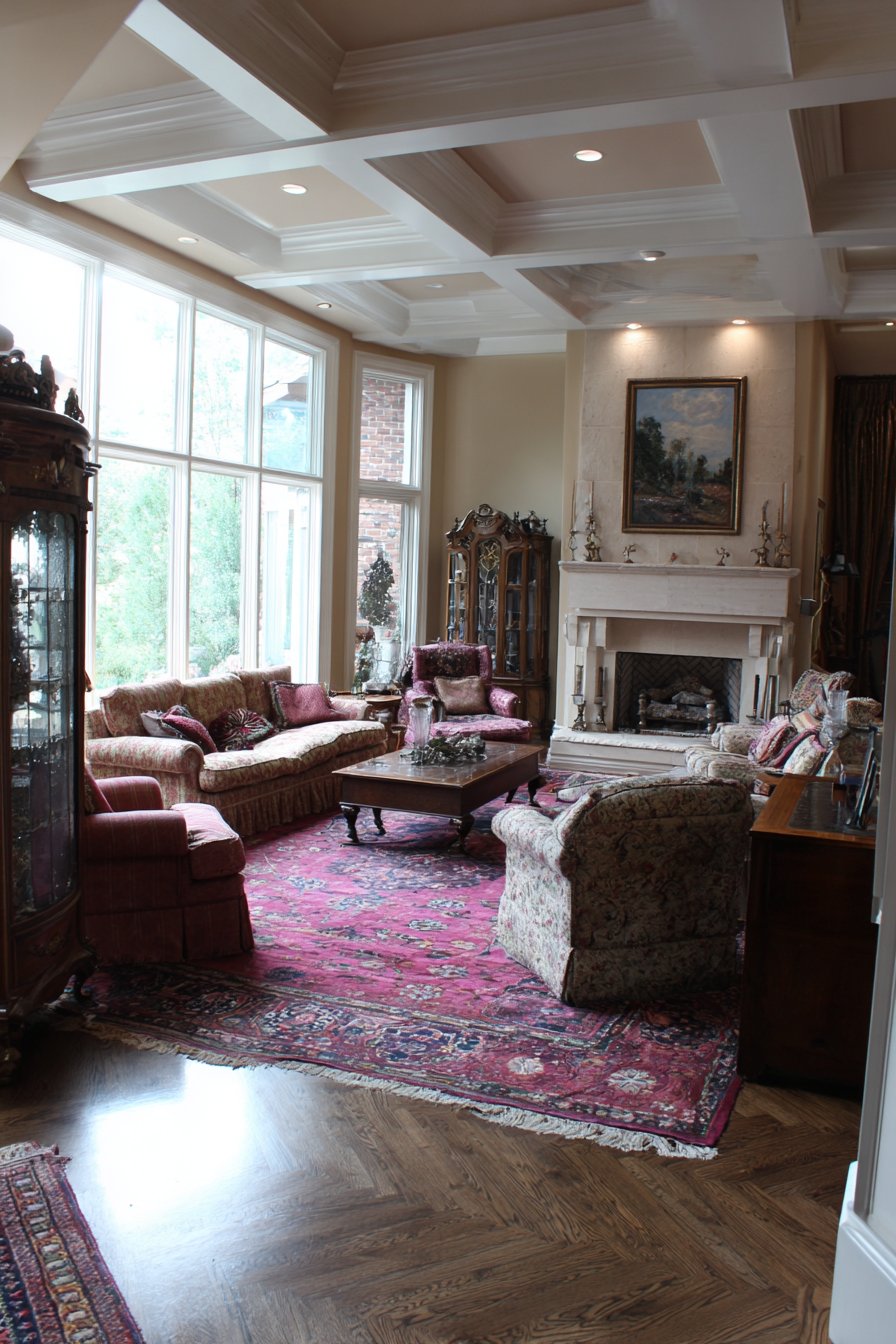
Natural daylight from south-facing windows illuminates the collected furnishings throughout the day. The abundant natural light prevents the layered traditional design from feeling dark. Quality antique pieces and traditional fabrics create authentic English country character. The commitment to genuine period elements ensures lasting appeal.
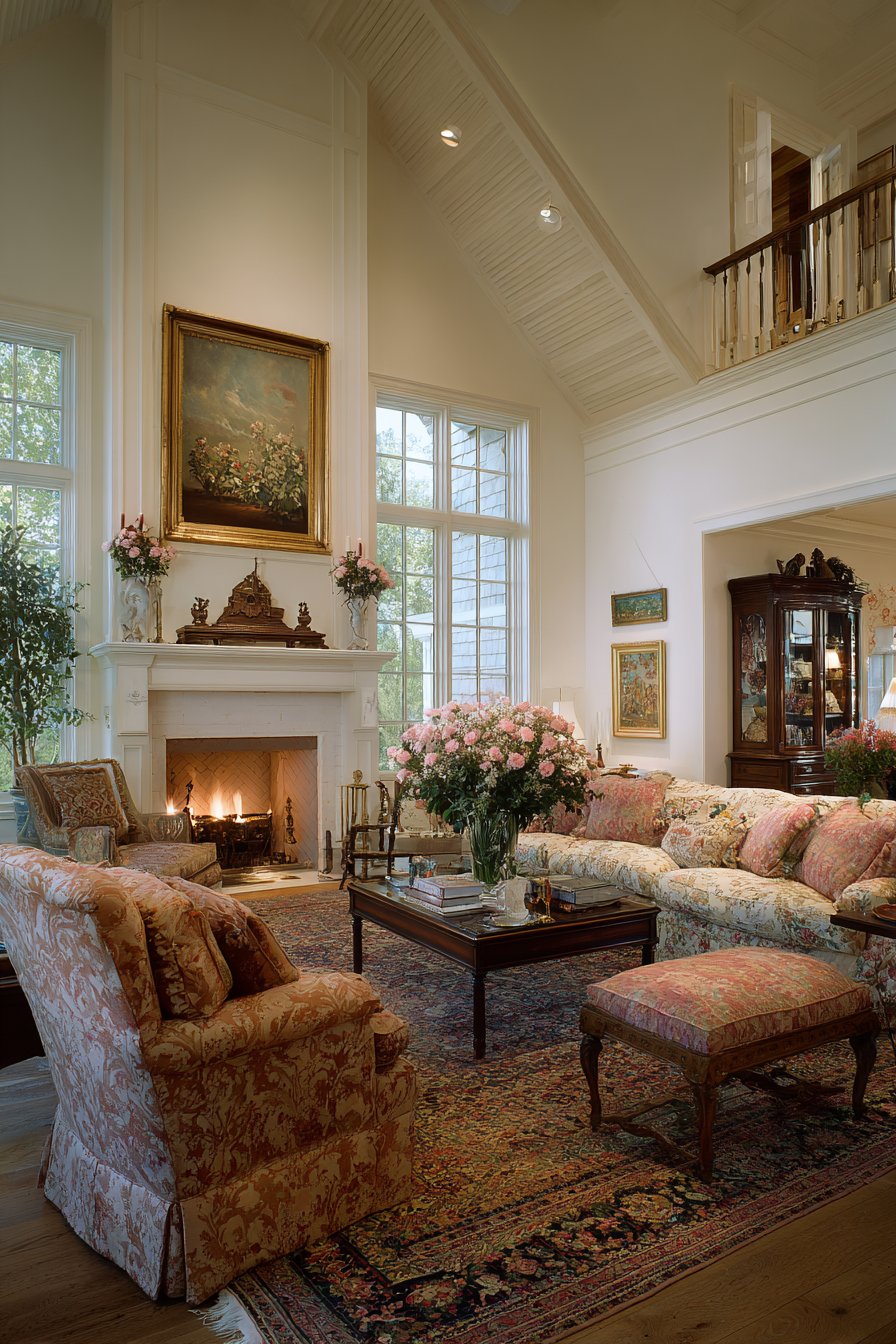
Professional interior photography captures the gracious proportions and layered design approach. The composition showcases how traditional English style suits spacious room dimensions. The design proves that collected antiques require generous space to display properly. The impressive proportions prevent multiple furniture pieces from creating clutter.
Key Design Tips:
- Use traditional chintz fabrics throughout for an authentic English country character
- Create multiple seating groups including fireplace conversation and reading areas
- Display substantial antique pieces like secretary desks and cabinets
- Layer oriental rugs over hardwood floors for pattern and historical character
- Install crown molding and picture rails to emphasize wall height
- Position rooms for south-facing natural light to illuminate collected furnishings
20. Urban Contemporary with Floor-to-Ceiling Glass
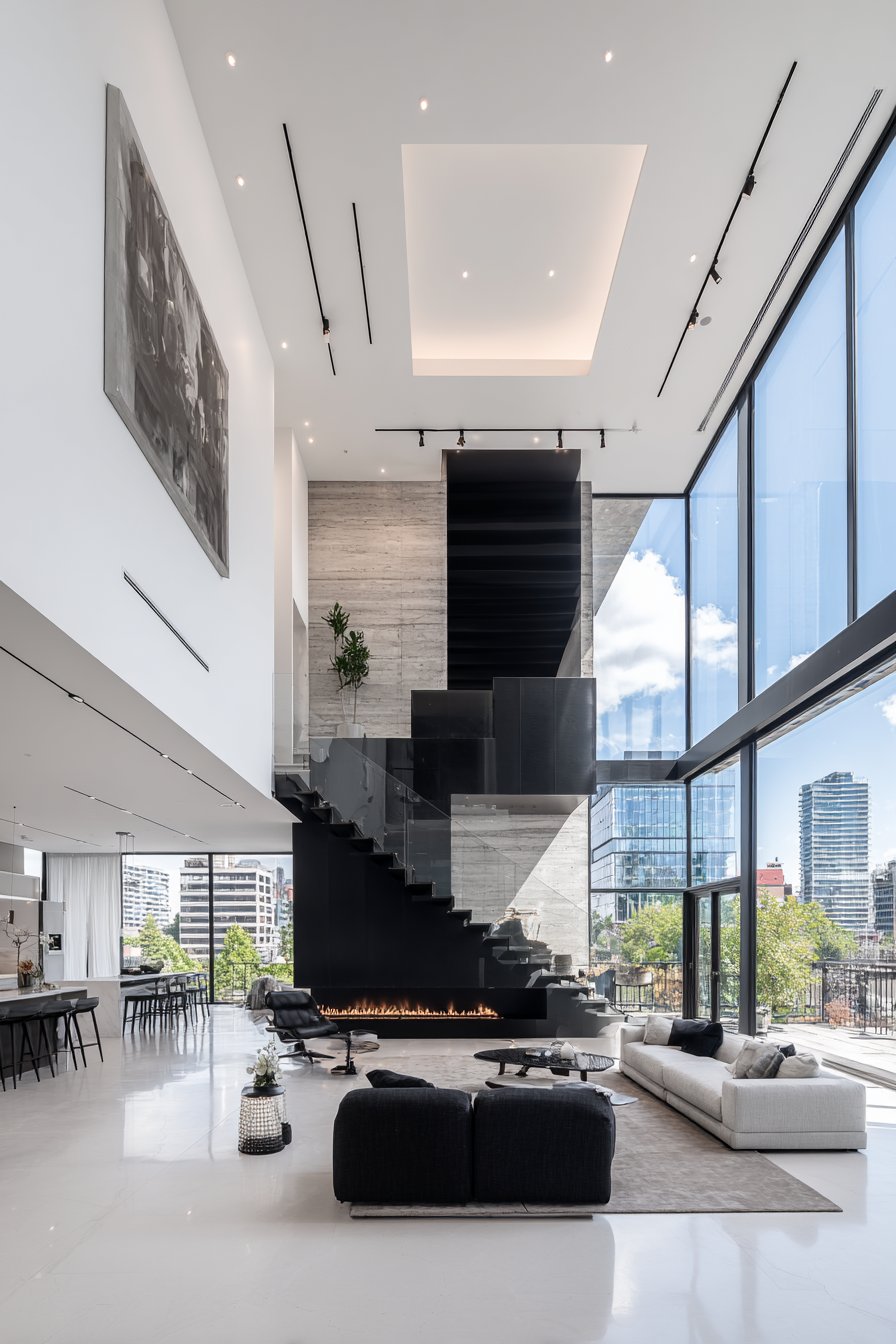
Floor-to-ceiling glass walls dissolve the boundary between interior and exterior completely. The dramatic glazing creates spectacular city views as primary design element. A floating staircase emphasizes the impressive vertical volume with sculptural presence. The architectural feature demonstrates confidence in dramatic contemporary design.
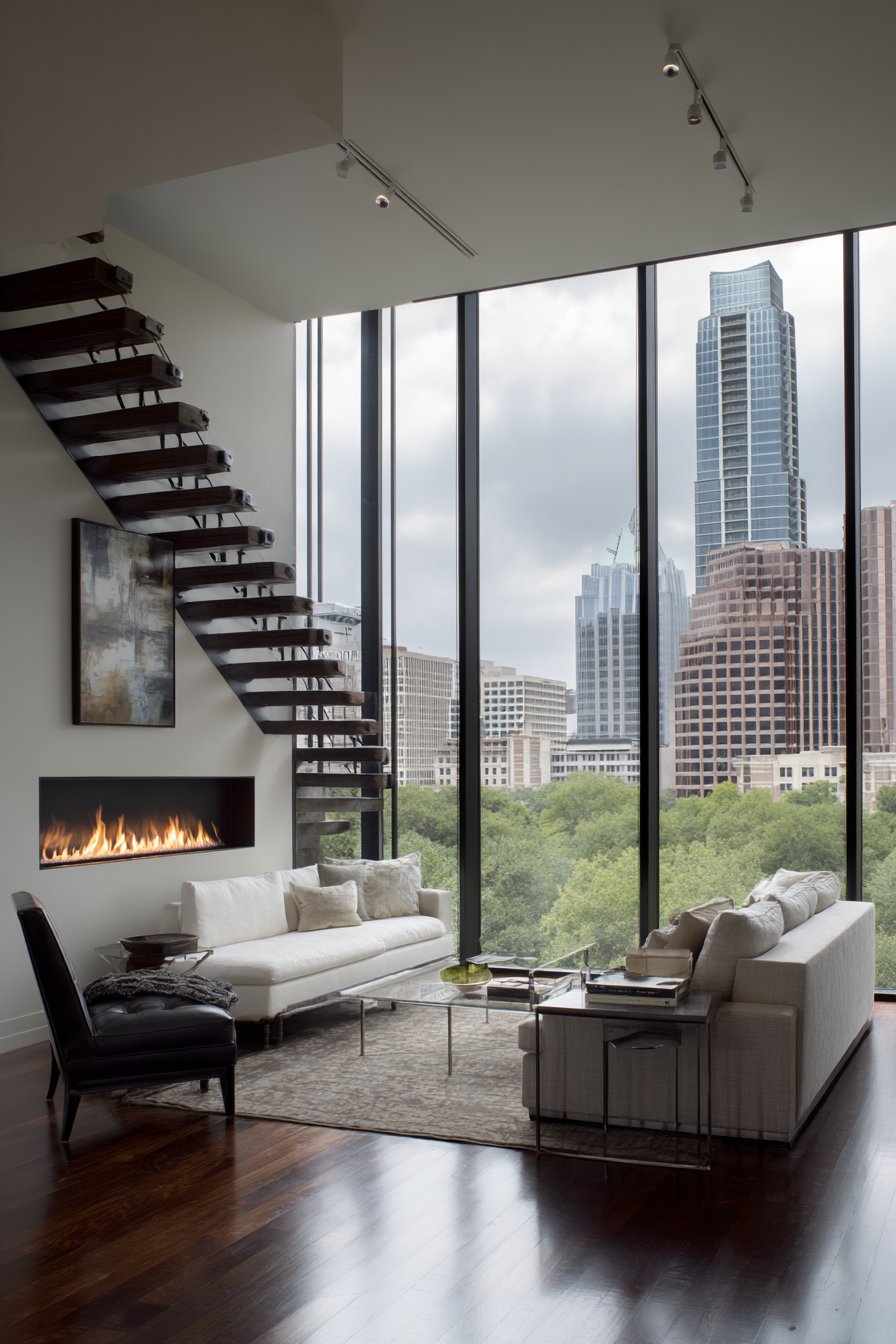
Minimalist furniture in monochromatic tones avoids competing with architecture and views. The restrained furniture selection allows the space itself to command attention. Polished concrete floors reflect light from multiple exposures throughout the day. The industrial flooring material suits the urban contemporary aesthetic perfectly.
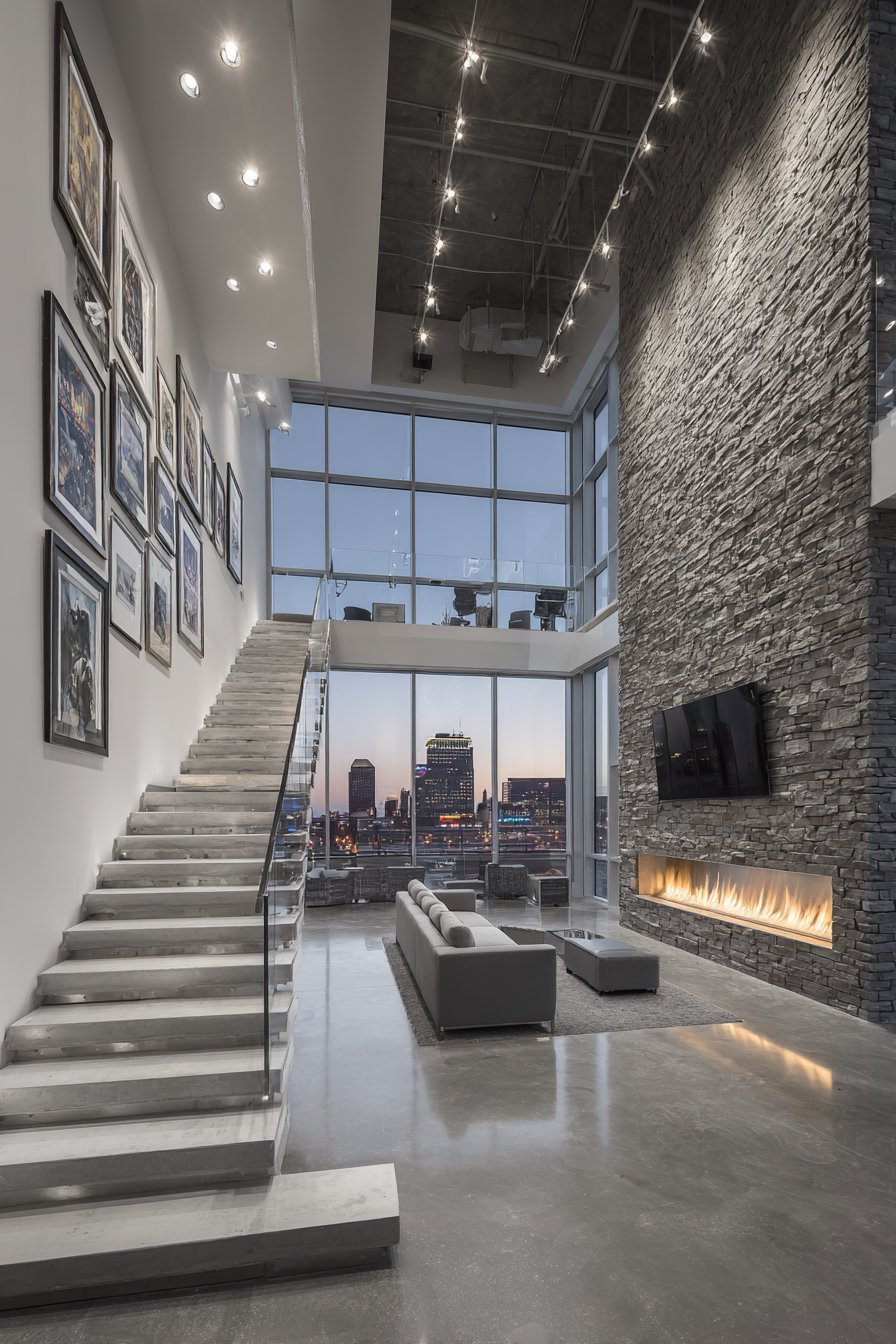
A linear gas fireplace embedded in a stone wall provides focal point without traditional bulk. Track lighting highlights artwork on the few solid walls available. The limited wall space requires careful curation of displayed pieces. The design prioritizes architecture and views over decorative elements.
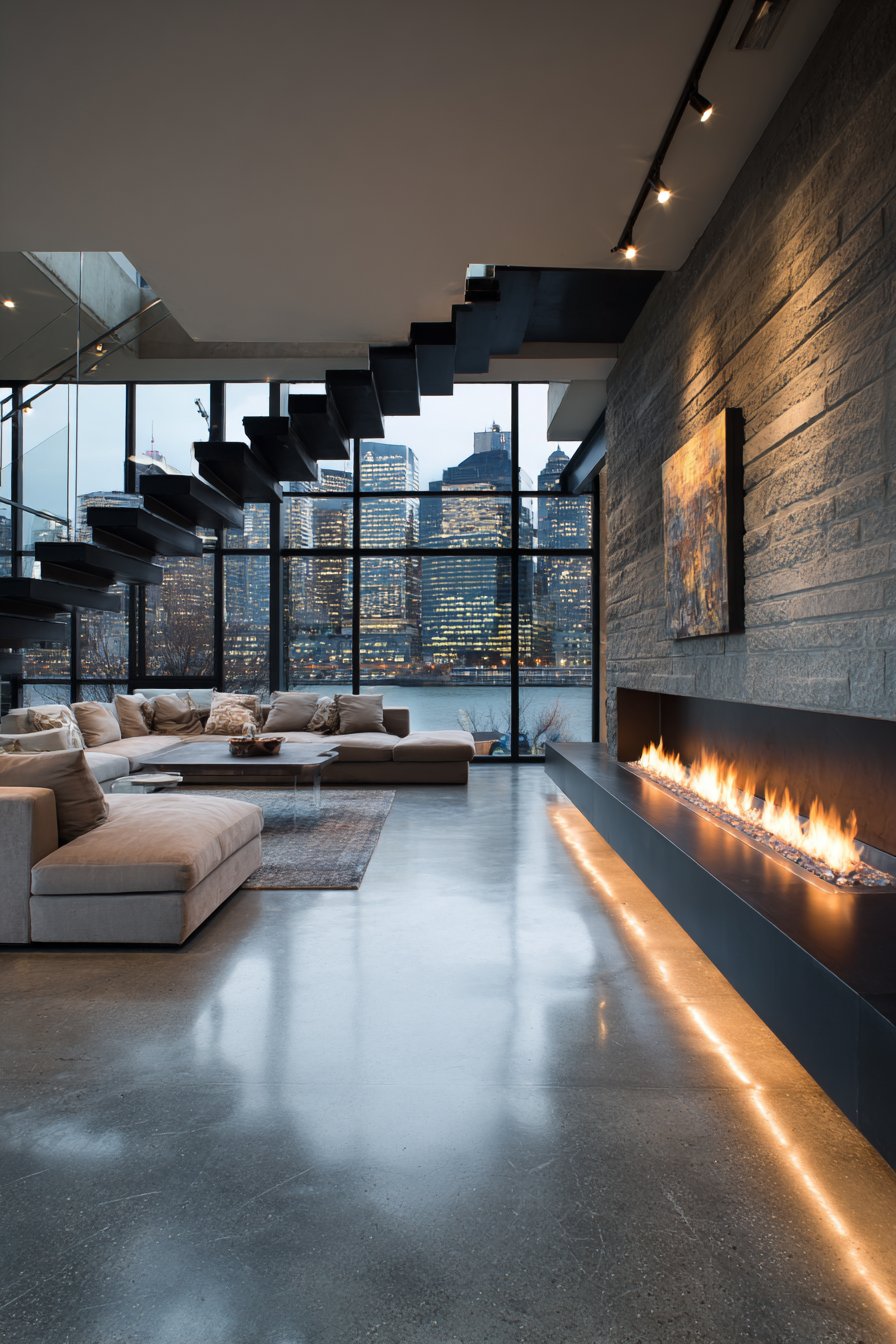
Interior design photography with wide-angle perspective captures the impressive architectural volume. The composition showcases how minimal furnishings allow spacious rooms to breathe. The design proves that contemporary style maximizes generous proportions through restraint. The transparent boundaries and minimal furniture make the space feel even larger.
Key Design Tips:
- Install floor-to-ceiling glass walls to dissolve boundaries and capture views
- Feature floating staircases as sculptural elements that emphasize vertical volume
- Choose minimalist furniture in monochromatic tones that don’t compete with the architecture
- Use polished concrete floors that reflect light and suit contemporary aesthetics
- Install linear gas fireplaces in stone walls for focal points without bulk
- Employ track lighting to highlight limited artwork on few available solid walls
Why These Spacious Living Room Designs Are the Best
These spacious living room designs represent the finest approaches to maximizing impressive proportions while maintaining warmth and livability. Each concept demonstrates thoughtful consideration of scale, furniture placement, and architectural features that define successful large-space design. The diversity of styles proves that generous dimensions accommodate everything from minimalist Scandinavian to opulent art deco aesthetics.
The most successful spacious room designs create distinct functional zones without fragmenting the space. Multiple seating areas, entertainment zones, and activity corners utilize generous square footage purposefully. This zone creation prevents expansive rooms from feeling empty while maintaining abundant circulation space. Furniture scale becomes crucial—substantial pieces that would overwhelm smaller rooms achieve proper proportion in spacious environments.
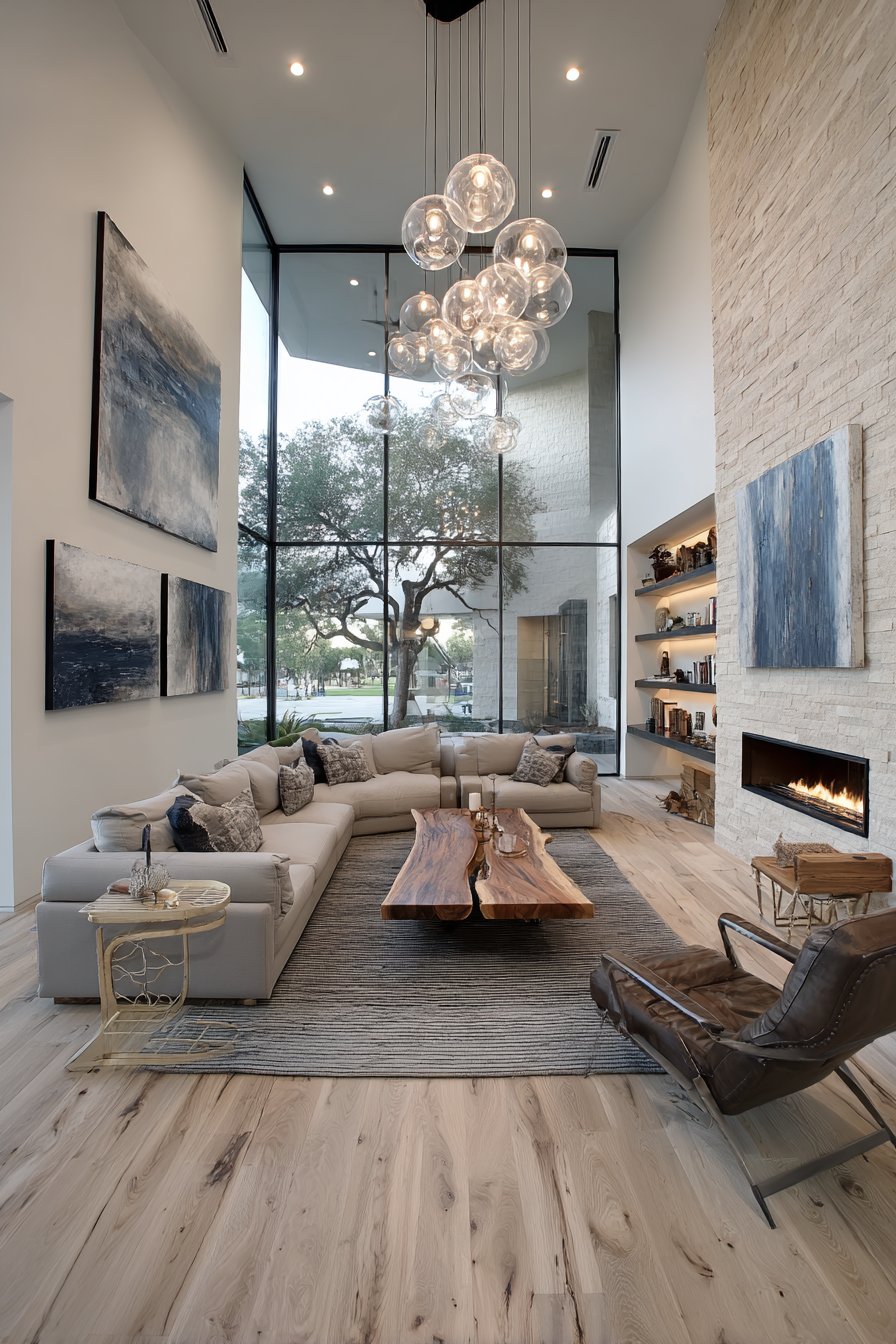
Architectural features gain dramatic impact when given generous proportions to breathe. Soaring ceilings, exposed beams, floor-to-ceiling windows, and grand fireplaces command attention without overwhelming when surrounded by adequate space. These elements become defining characteristics rather than merely decorative additions. The vertical and horizontal dimensions allow architectural drama that smaller spaces cannot accommodate.
Natural light management transforms spacious rooms from cavernous to inviting. Multiple window exposures, floor-to-ceiling glazing, and minimal window treatments maximize daylight penetration. Layered artificial lighting addresses ambient, task, and accent needs across different zones. The lighting strategy prevents dark corners while creating an atmosphere appropriate to room function.
Material selection influences whether spacious rooms feel warm or cold. Natural materials like wood flooring, stone fireplaces, and textile upholstery add warmth that prevents expansive spaces from feeling institutional. Authentic materials develop character over time, creating lived-in quality that synthetic alternatives cannot replicate. The generous proportions allow material variety without creating visual chaos.
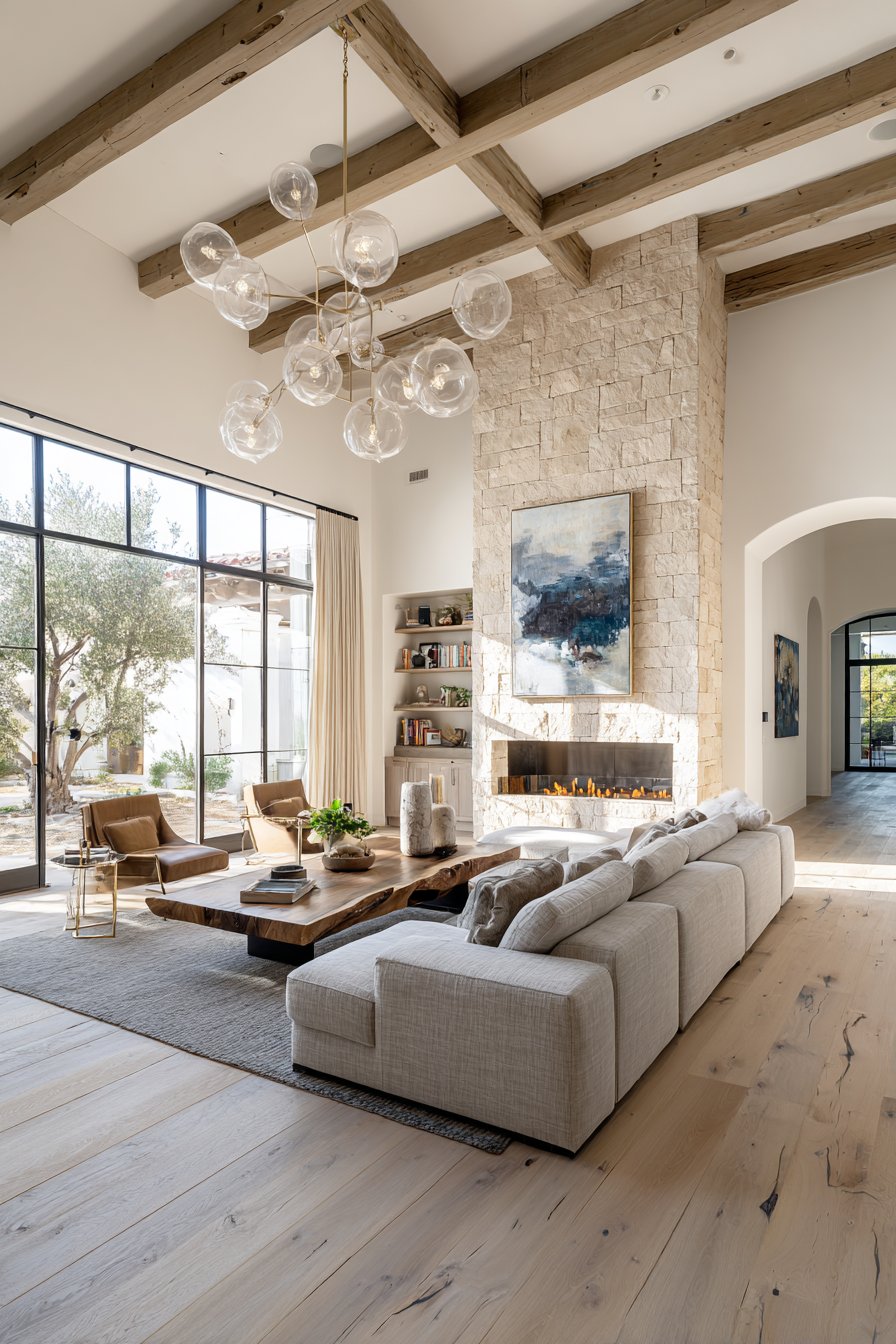
Color palettes range from monochromatic neutrals that enhance spaciousness to bold jewel tones that add drama. Successful color strategies consider how hues behave across expansive wall surfaces and whether the goal is making rooms feel even larger or more intimate. Neutral schemes work beautifully when layered with varied textures. Darker or more saturated colors can make very large rooms feel appropriately scaled.
Sustainable practices through vintage furniture, reclaimed materials, and quality investments create characterful spaces while supporting environmental responsibility. Spacious rooms accommodate substantial antique pieces and architectural salvage that smaller spaces cannot. These elements add historical depth and prevent new construction from feeling generic.
Conclusion
These twenty spacious living room designs demonstrate that generous proportions require thoughtful planning to achieve both grandeur and warmth. The key takeaways include the importance of creating distinct functional zones, selecting furniture at an appropriate scale, maximizing natural light, and incorporating architectural drama that suits impressive dimensions. Quality materials combined with careful furniture placement prevent expansive rooms from feeling either empty or cluttered.
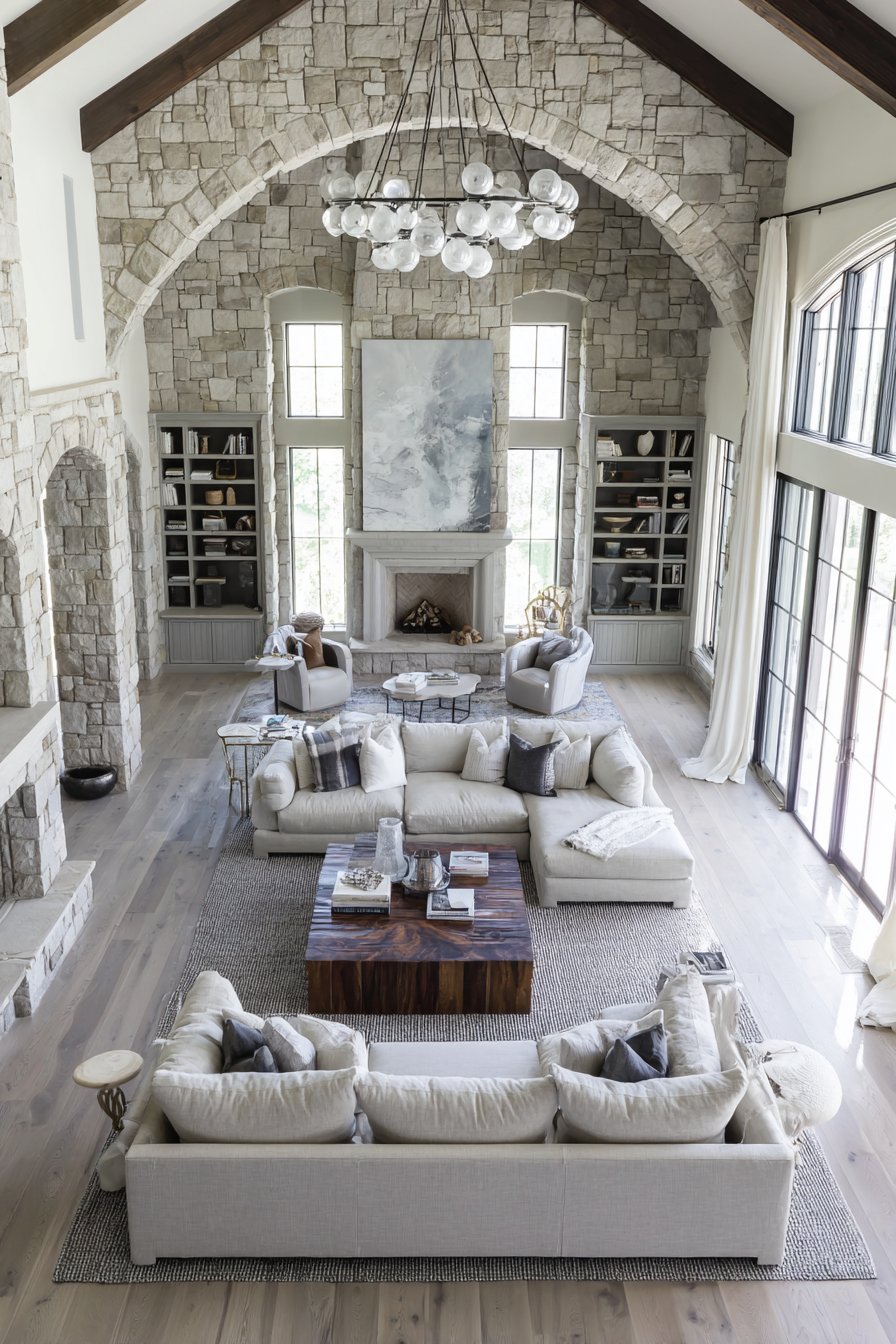
Successful spacious room design balances aesthetic ambition with practical functionality. Whether you prefer the restraint of Japanese minimalism or the opulence of Hollywood Regency, these concepts prove that generous dimensions enhance rather than complicate design goals. Start by identifying your style preferences and functional needs, then apply zone creation and appropriate furniture scale. Your dream spacious living room awaits creation through confident design choices that embrace rather than apologize for impressive proportions.
