


Creating a beautiful small living room requires thoughtful planning and strategic design choices. Limited square footage doesn’t mean sacrificing style or comfort. With the right approach, compact spaces transform into functional, inviting environments that reflect personal taste while maximizing every inch.
Small living room decor has evolved beyond simply fitting furniture into tight spaces. Modern design principles emphasize multi-functional pieces, vertical storage solutions, and visual tricks that create openness. The challenge lies in balancing aesthetic appeal with practical needs. Today’s small living rooms successfully incorporate workspace areas, entertainment zones, and relaxation corners within compact footprints.
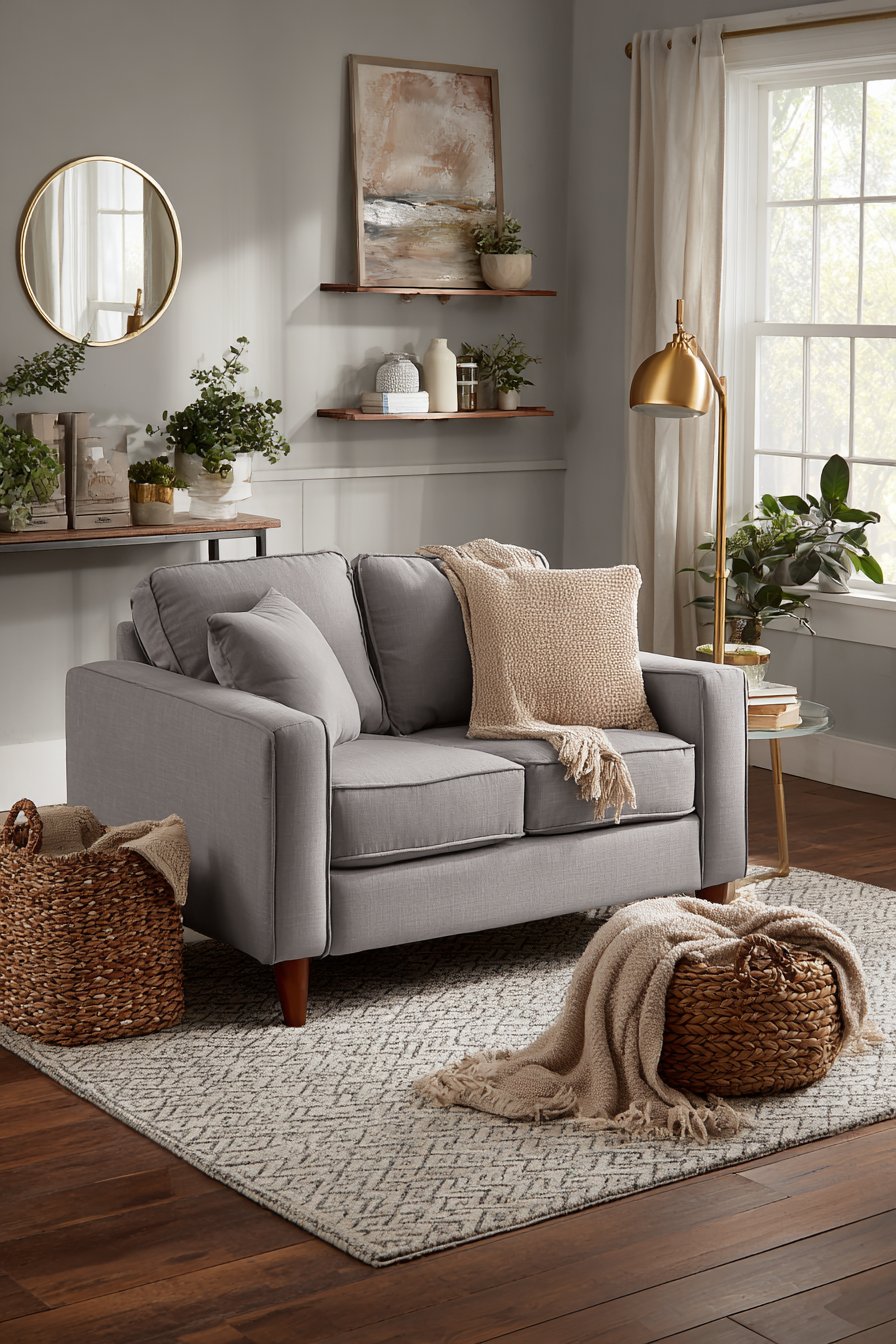
This article explores twenty distinctive approaches to small living room design. Each concept demonstrates how different styles—from minimalist Scandinavian to maximalist bohemian—can thrive in limited spaces. You’ll discover strategies for furniture selection, lighting techniques, storage solutions, and color choices. These designs prove that small living rooms can be both stylish and supremely functional when approached with creativity and intention.
1. Cozy Compact Comfort with Textured Neutrals
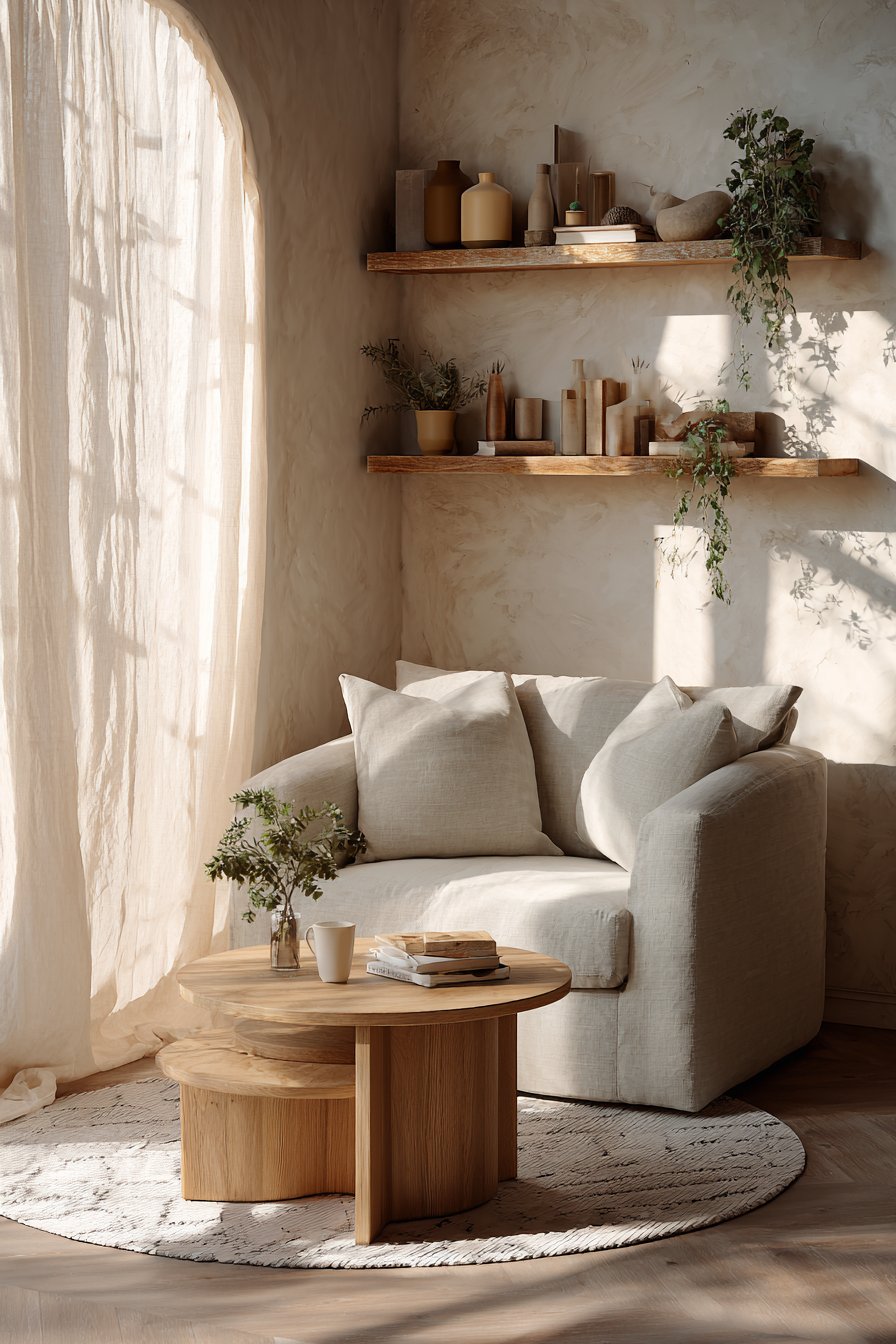
A grey linen loveseat anchors this intimate space against warm white walls featuring textured grasscloth wallpaper. The compact seating provides comfortable relaxation without overwhelming the room. Round nesting coffee tables in natural oak offer flexible surface options. They can be separated for entertaining or nested to maximize floor space during daily use.
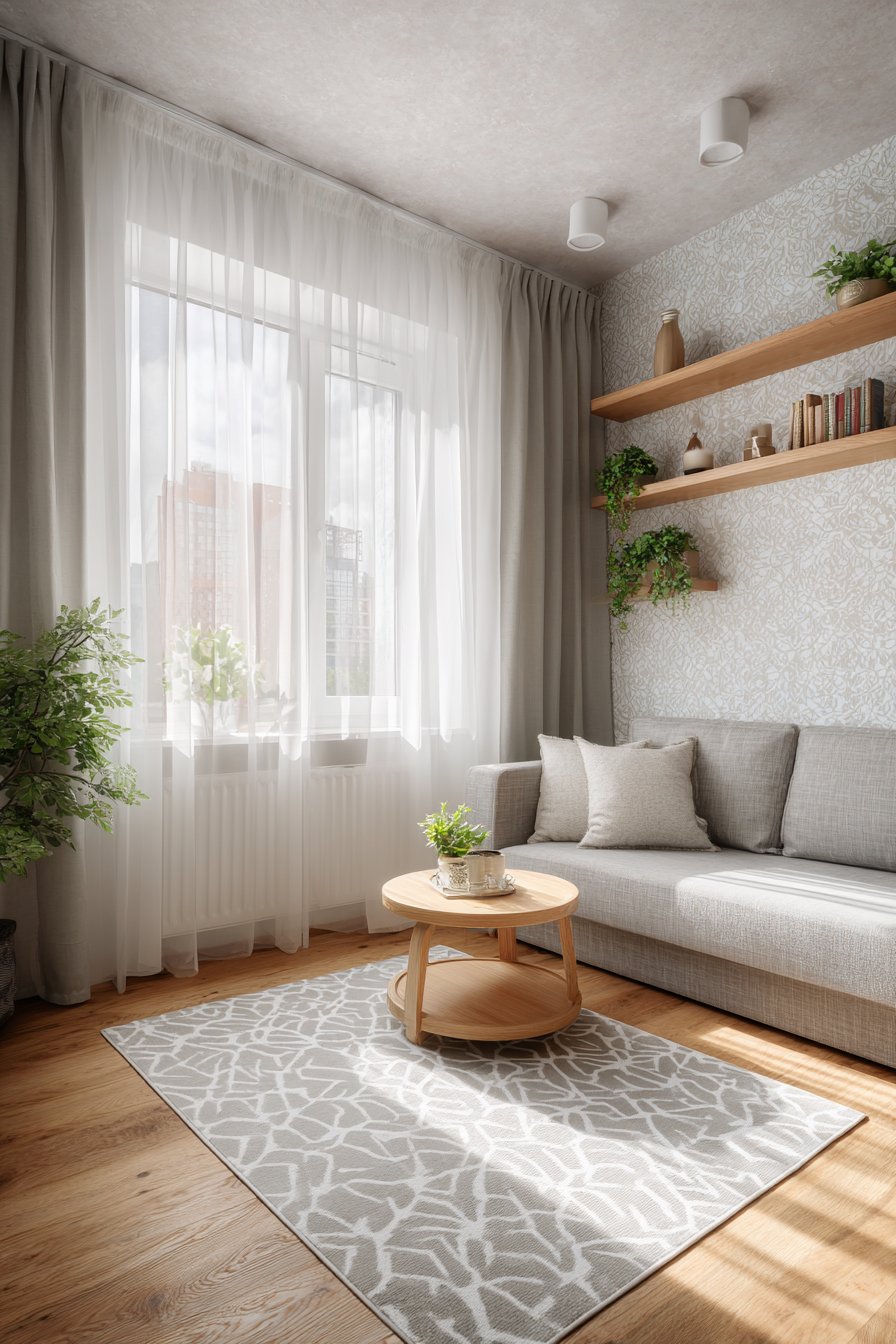
Geometric patterned area rugs define the seating zone beautifully. This visual boundary creates organization within the open layout. Floating wall-mounted shelves climb vertically along one wall. They display curated decorative objects and small potted plants. This approach maximizes storage without consuming precious floor area.
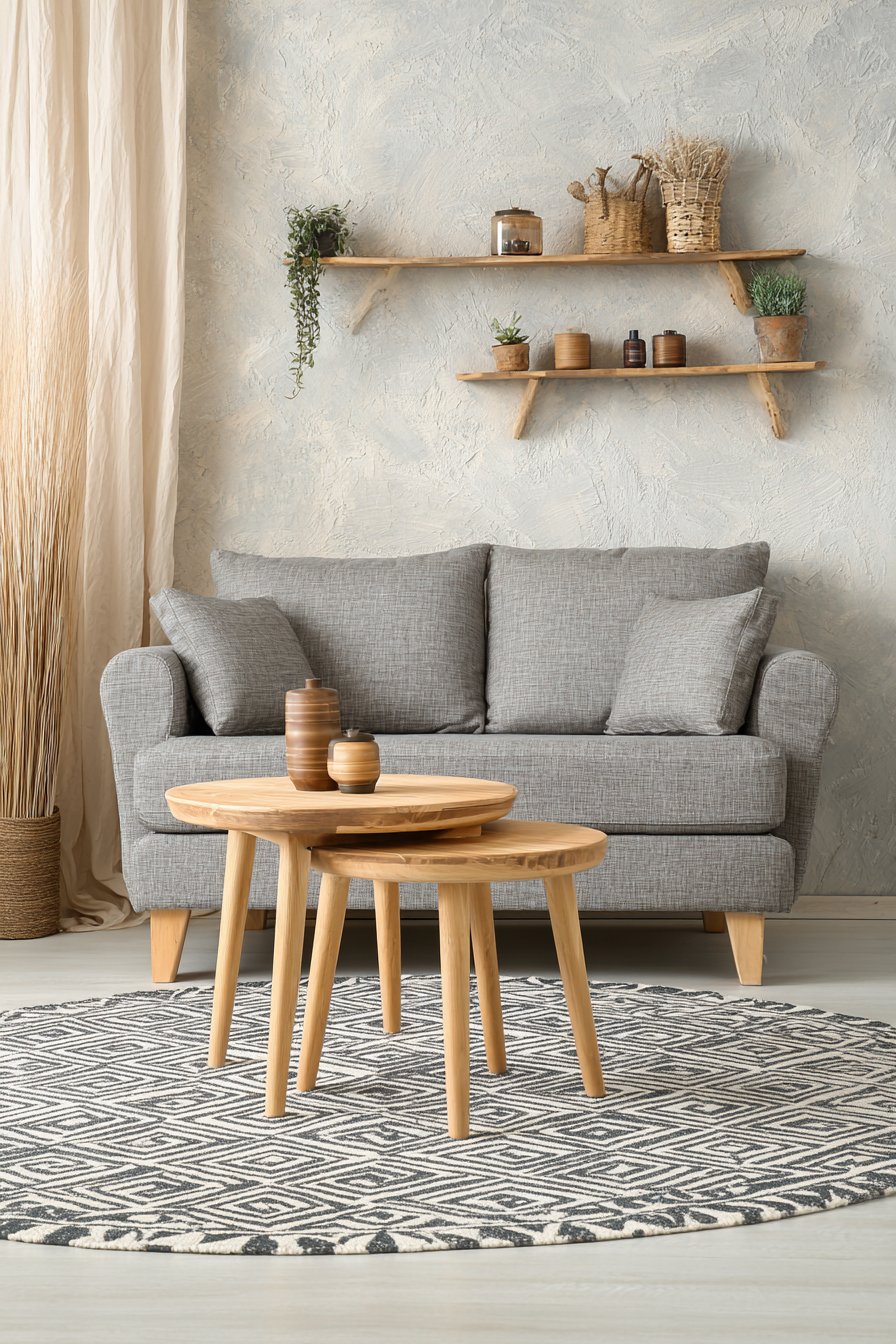
Sheer linen curtains filter natural light throughout the day. Gentle shadows emphasize the layered textures across different surfaces. The grasscloth wallpaper adds dimensional interest to vertical spaces. Soft neutrals create a cohesive palette that feels spacious and serene.
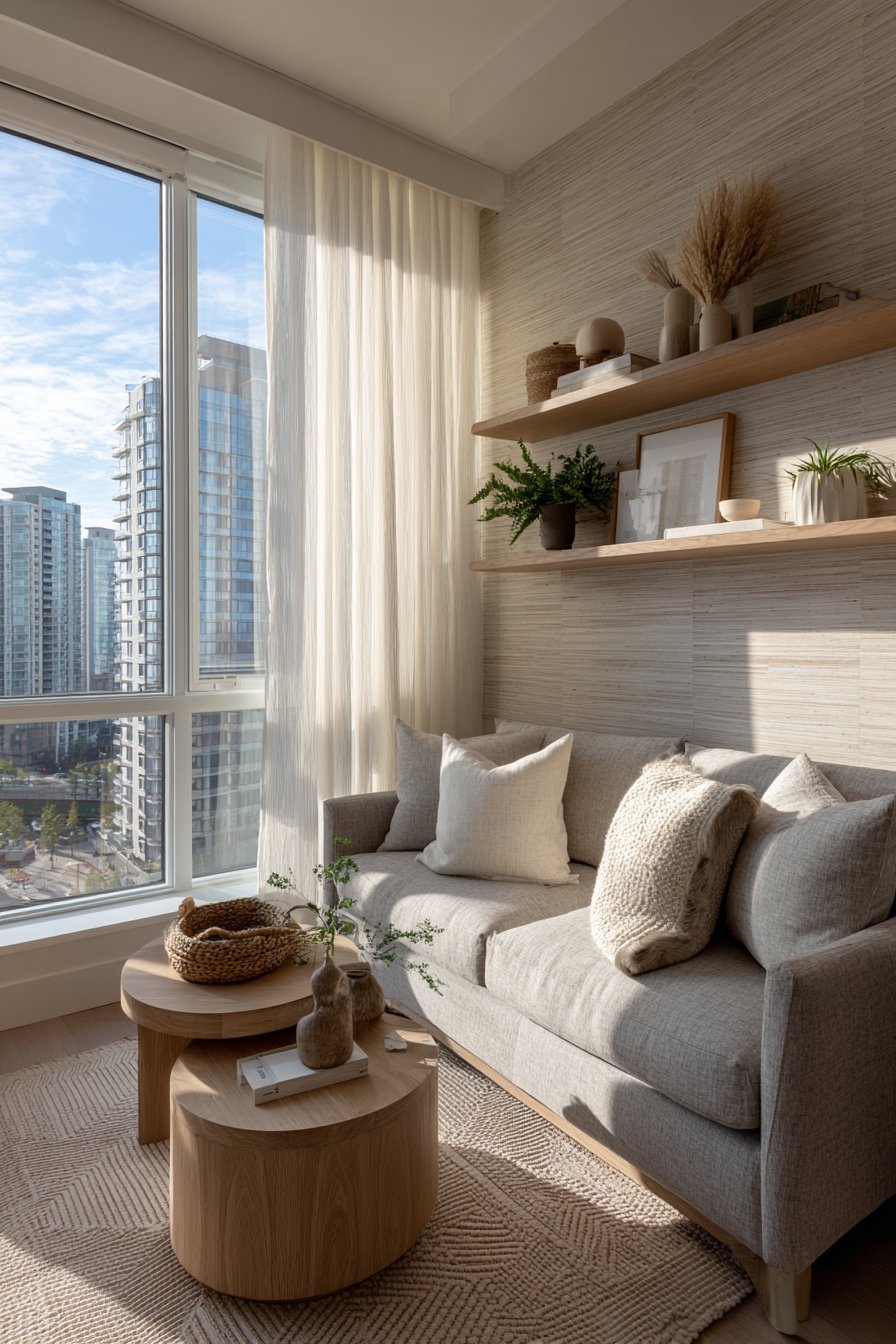
The furniture arrangement prioritizes traffic flow and functionality. Every piece serves a purpose while maintaining visual lightness. The exposed wooden legs on the loveseat preserve sightlines across the floor. This design choice prevents the room from feeling cramped or cluttered.
Key Design Tips:
- Select compact loveseats instead of full-sized sofas to maintain proportion
- Use nesting tables that adapt to different spatial needs
- Install floating shelves to utilize vertical space efficiently
- Choose sheer window treatments that maximize natural light penetration
- Layer textures within a neutral palette for visual depth without color clutter
- Ensure furniture has exposed legs to maintain visual floor space
2. Low-Profile Sectional with Strategic Placement
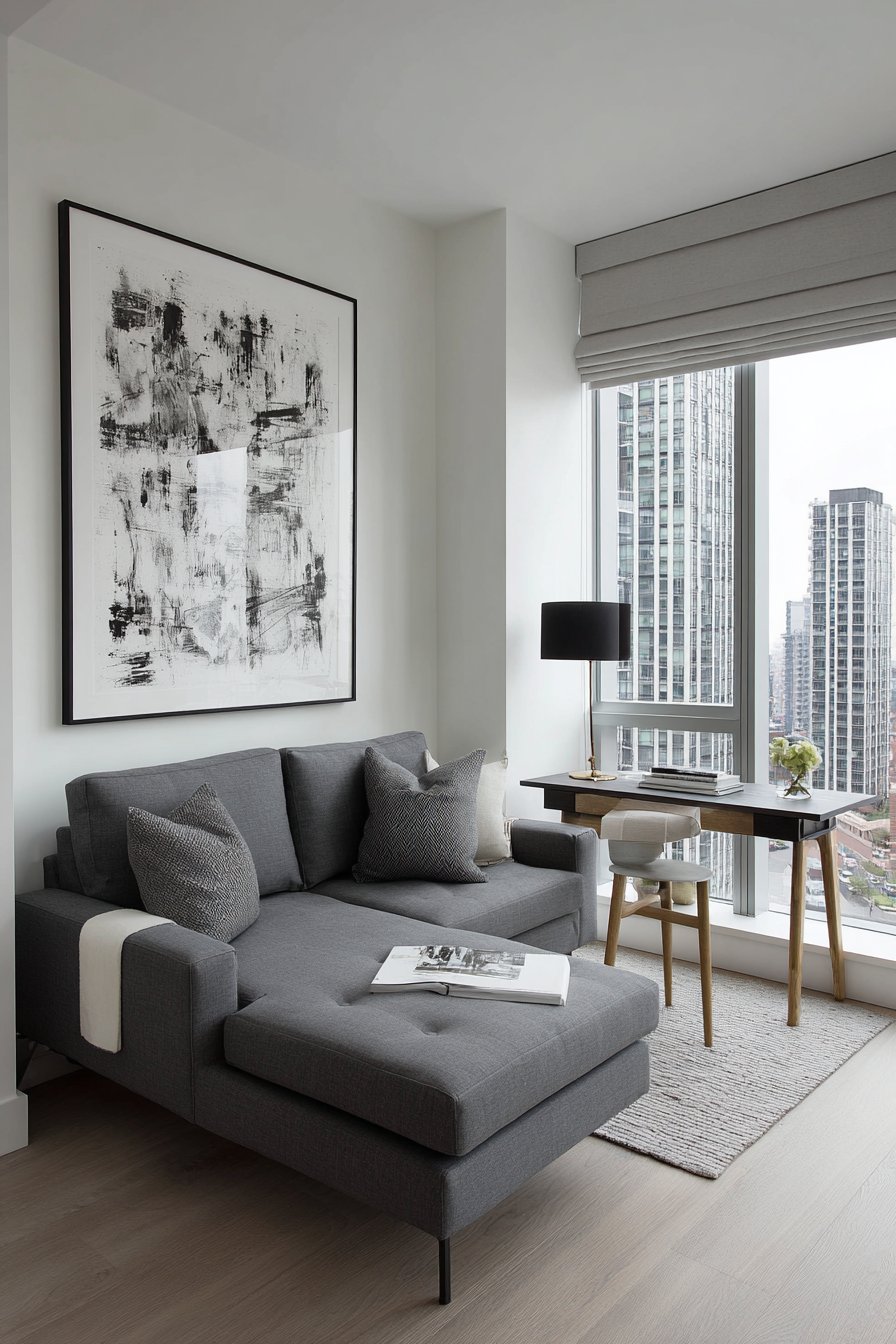
A charcoal fabric sectional features a low profile that maintains ceiling height perception. The configuration maximizes seating capacity while respecting the compact dimensions. Behind the sofa, a slim console table provides display space. This clever addition eliminates the need for separate side tables or additional furniture pieces.
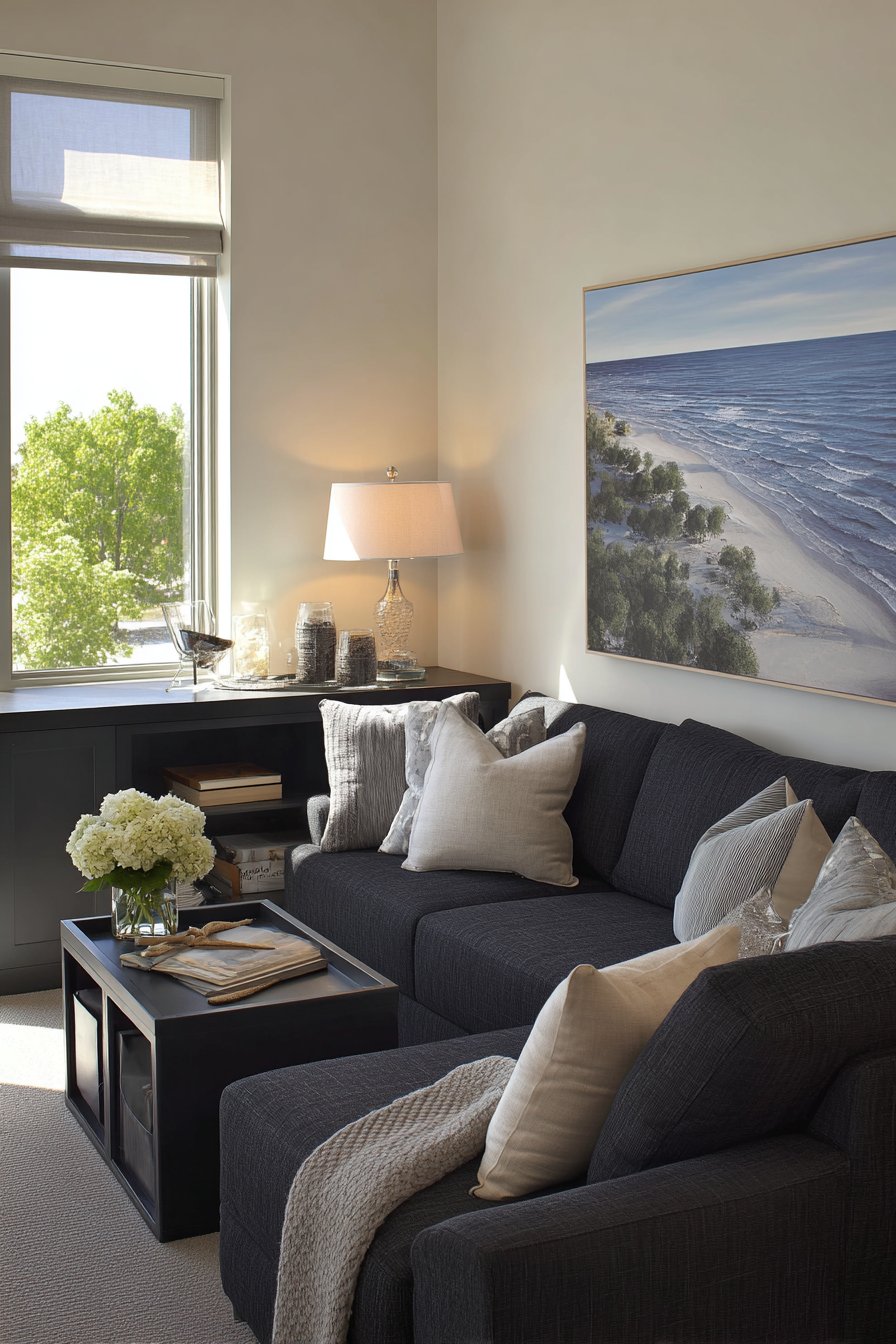
Table lamps positioned on the console create ambient lighting without floor lamps. This strategic choice preserves walkways and functional space. Large-scale artwork dominates one wall as the focal point. The oversized piece draws attention upward while maintaining an uncluttered aesthetic.
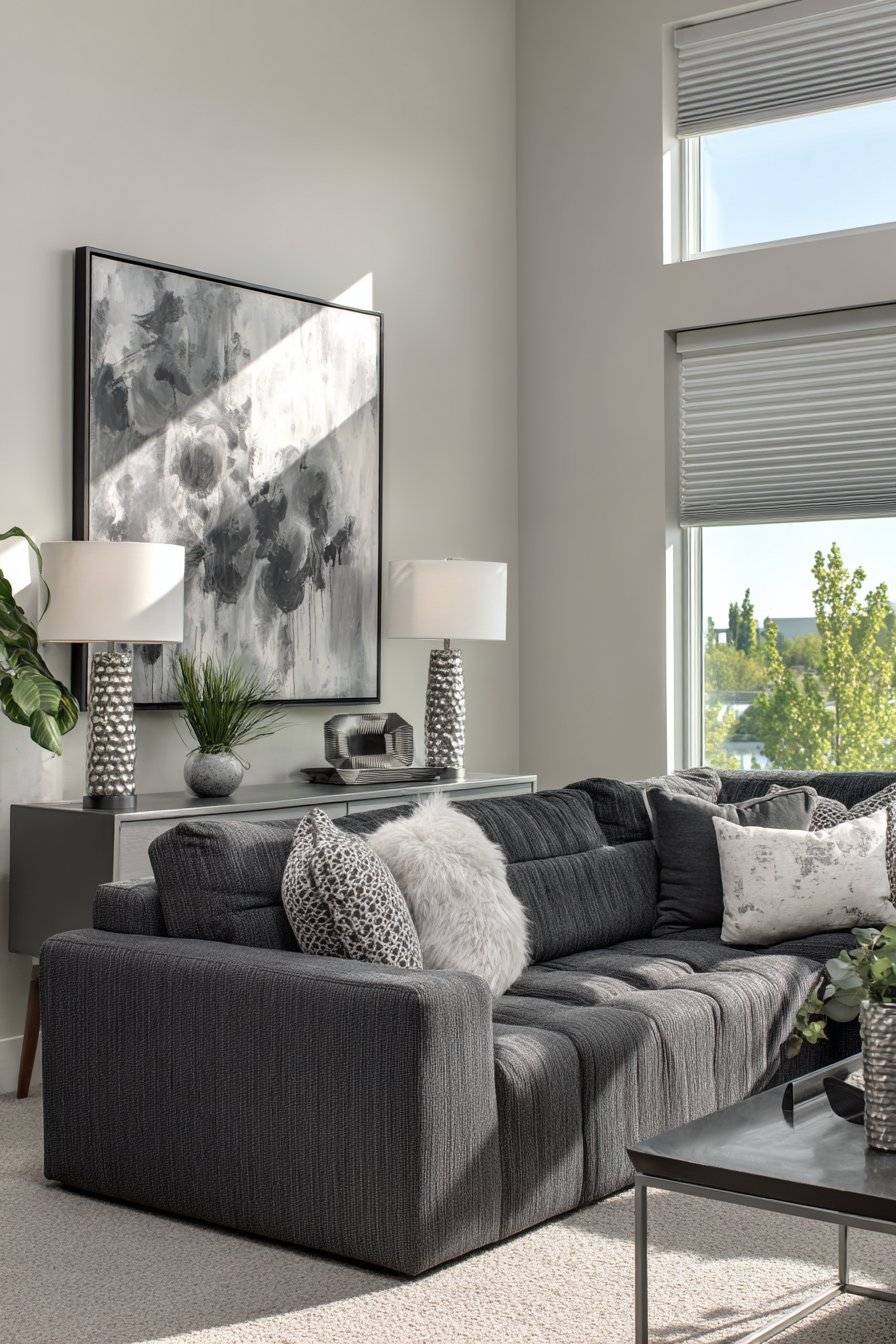
Natural morning light streams through a single window dressed simply. Roller shades offer privacy when needed without visual bulk. The minimalist window treatment approach keeps attention focused on the space itself. Clean lines throughout the design create modern sophistication.
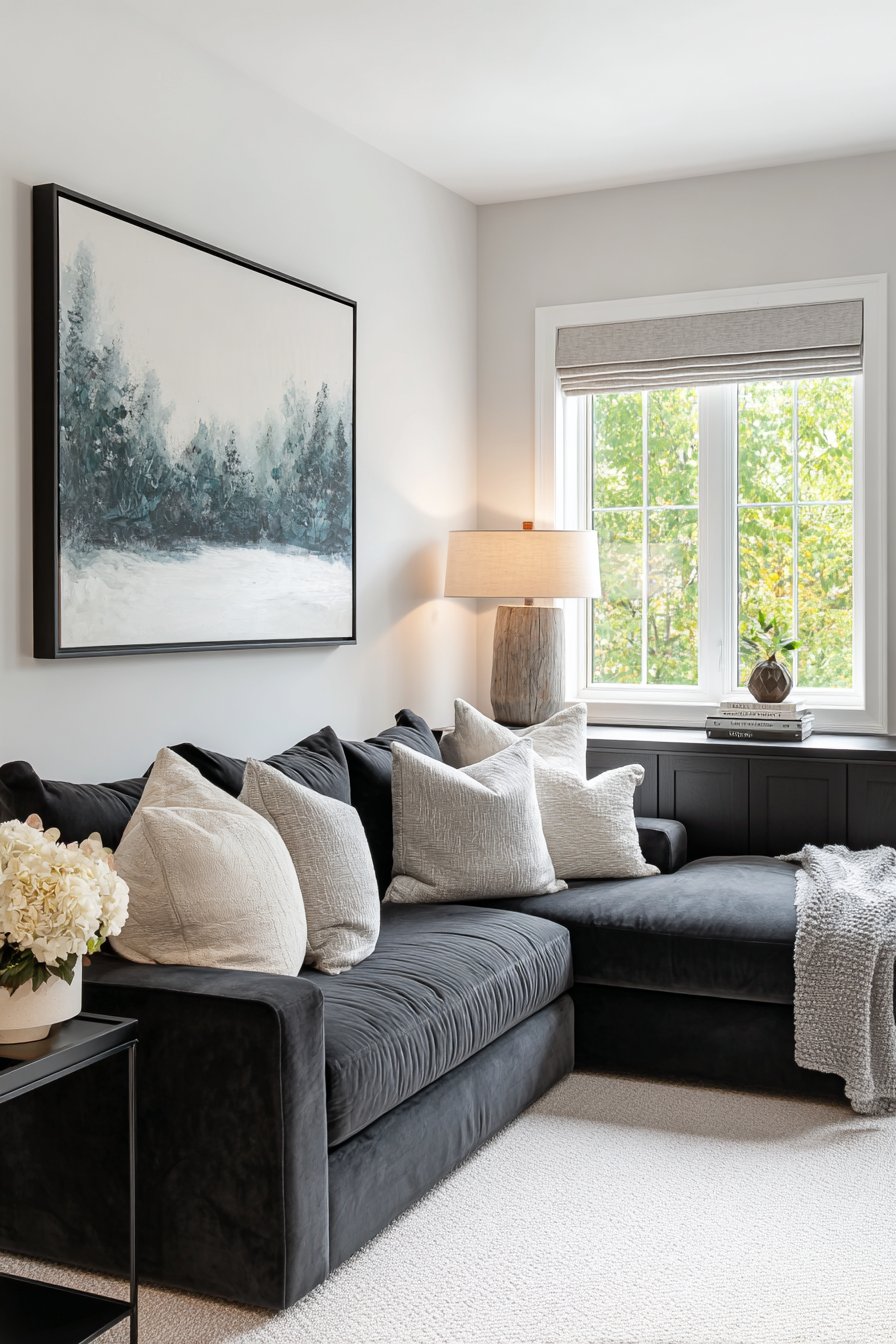
The sectional placement forms an efficient conversation area. Strategic positioning allows easy movement around the furniture. Every element serves multiple purposes in this practical arrangement. The design demonstrates that compact doesn’t mean sacrificing comfort or style.
Key Design Tips:
- Choose low-profile furniture to preserve vertical space perception
- Position console tables behind sofas for multi-functional surface area
- Select roller shades or simple treatments for minimal window bulk
- Hang oversized artwork to create visual impact without floor clutter
- Arrange sectionals to define zones while maintaining traffic flow
- Prioritize pieces that serve multiple functions simultaneously
3. Light-Reflecting Elements for Spacious Illusion
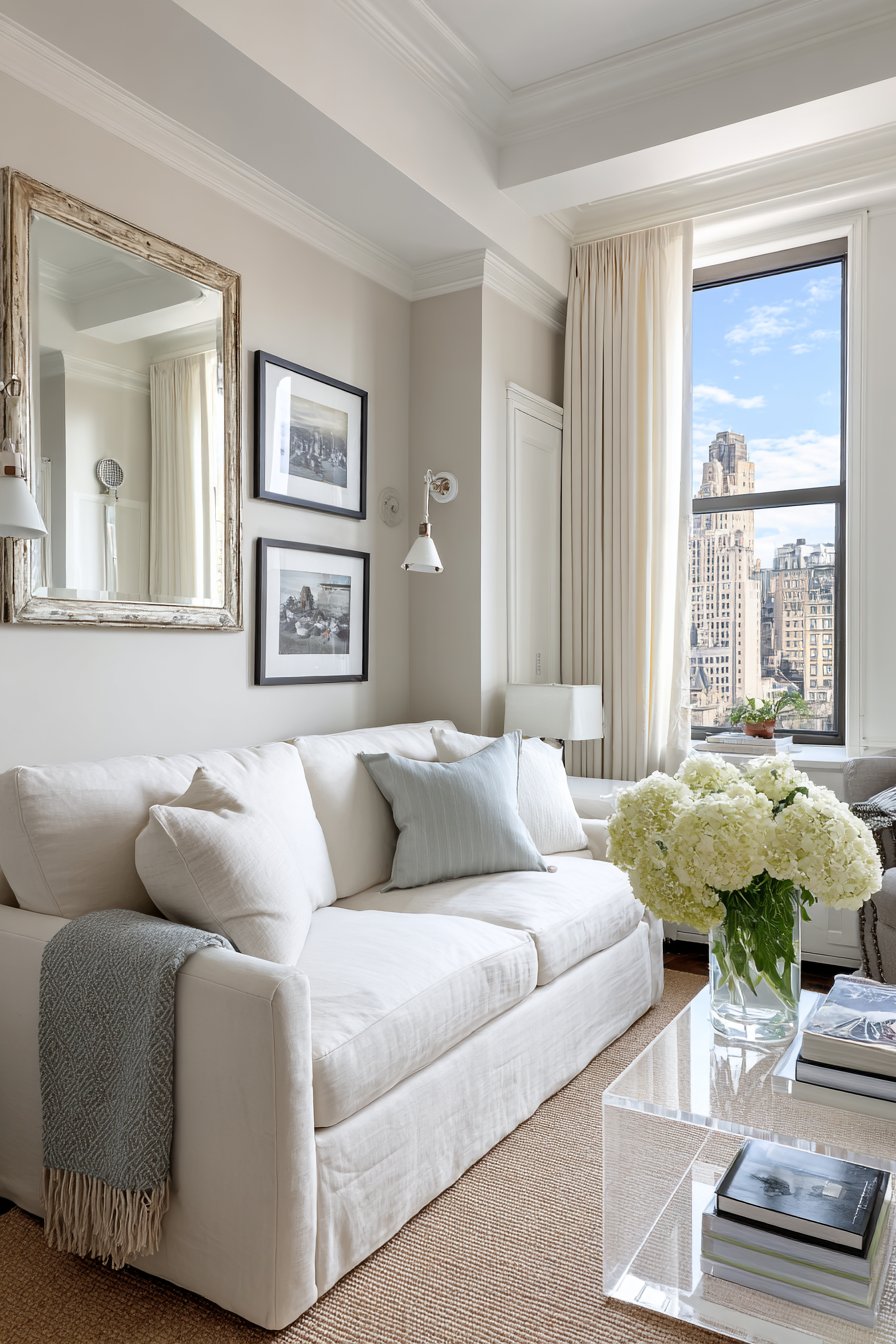
An aged brass frame mirror hangs strategically to amplify natural daylight. The reflective surface doubles the perceived space through visual trickery. A streamlined sofa in pale oatmeal linen features slim arms and exposed wooden legs. These design elements maintain visual lightness throughout the compact room.
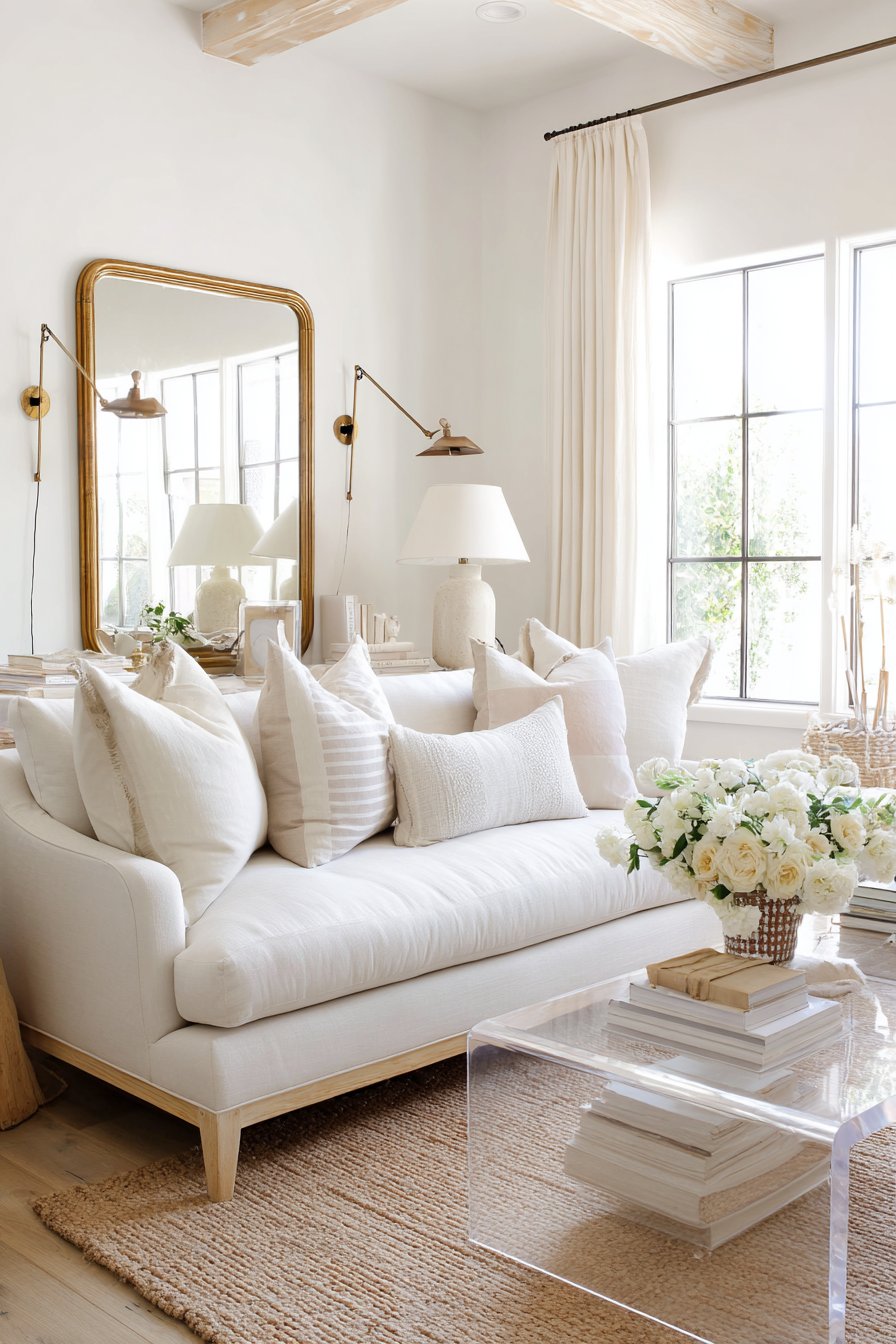
An acrylic coffee table provides function without visual weight. The transparent surface allows sightlines to continue uninterrupted across the space. A flatweave jute rug grounds the seating area with natural texture. The low-pile construction keeps the floor plane feeling open and accessible.
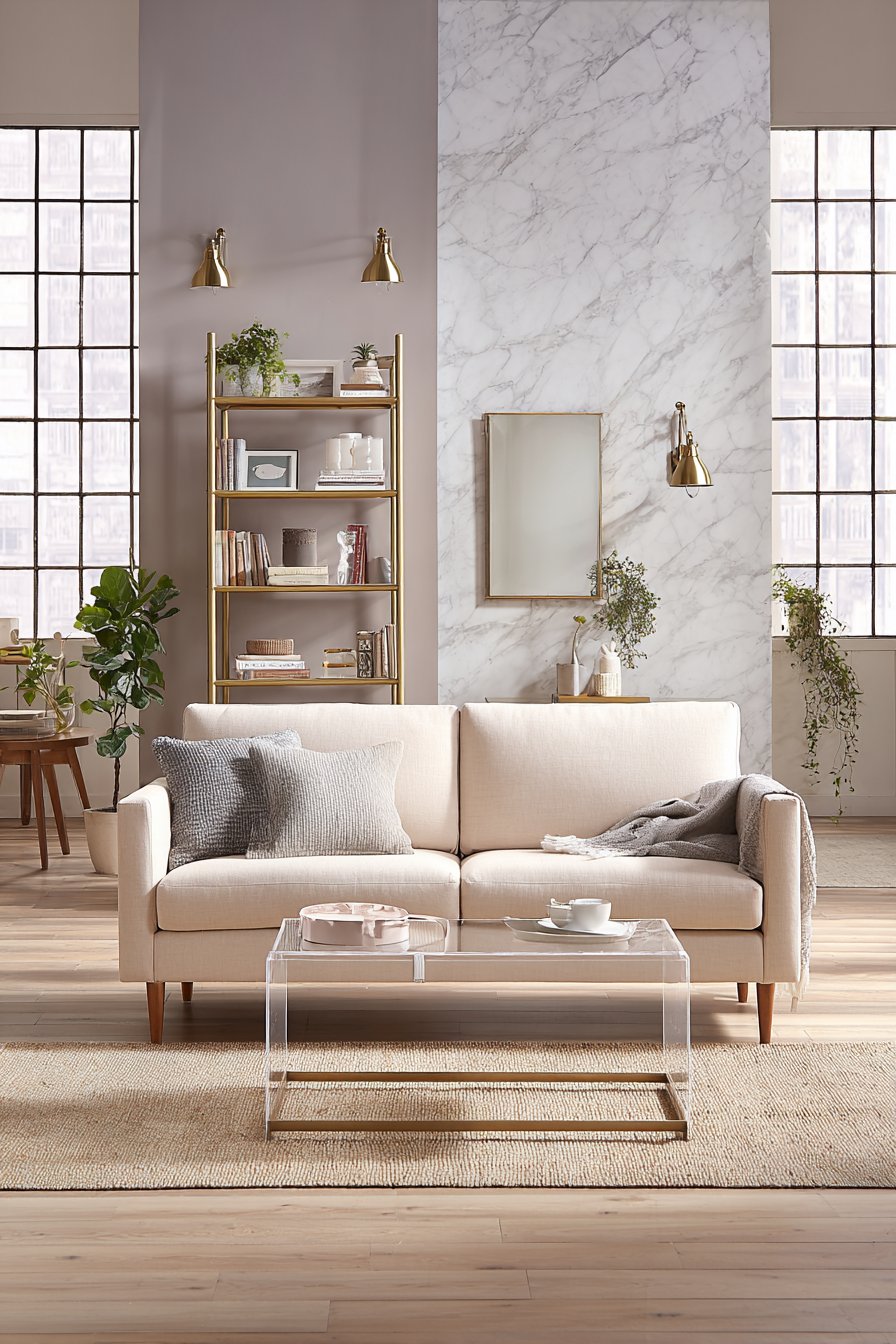
Wall-mounted swing-arm reading lamps eliminate floor lamp requirements. This thoughtful lighting choice preserves precious square footage for movement. The lamps adjust to different reading positions without consuming table space. Carefully selected neutral palette creates cohesion throughout the design.
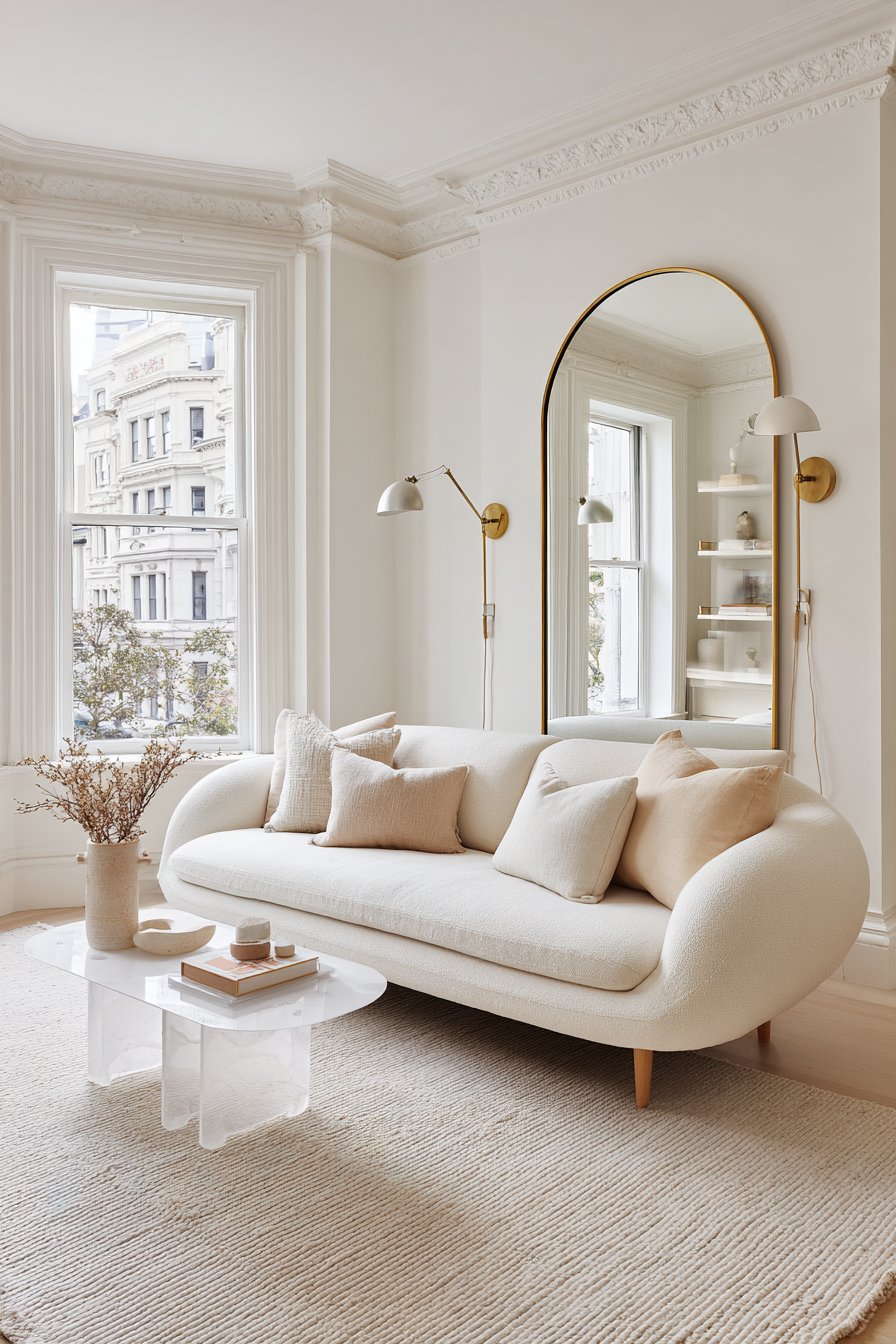
Light-reflecting elements work together to create airiness. The mirror, acrylic table, and pale fabrics bounce illumination around the room. Soft diffused lighting highlights the cohesive material selection. Every surface contributes to the expansive feeling despite actual dimensions.
Key Design Tips:
- Position mirrors opposite windows to maximize light reflection
- Select acrylic or glass tables to maintain visual transparency
- Use pale, neutral fabrics that reflect rather than absorb light
- Install wall-mounted lighting to eliminate floor lamp footprints
- Choose flatweave rugs over high-pile options for visual openness
- Coordinate materials within a light palette for cohesive brightness
4. Multifunctional Flexibility with Convertible Pieces
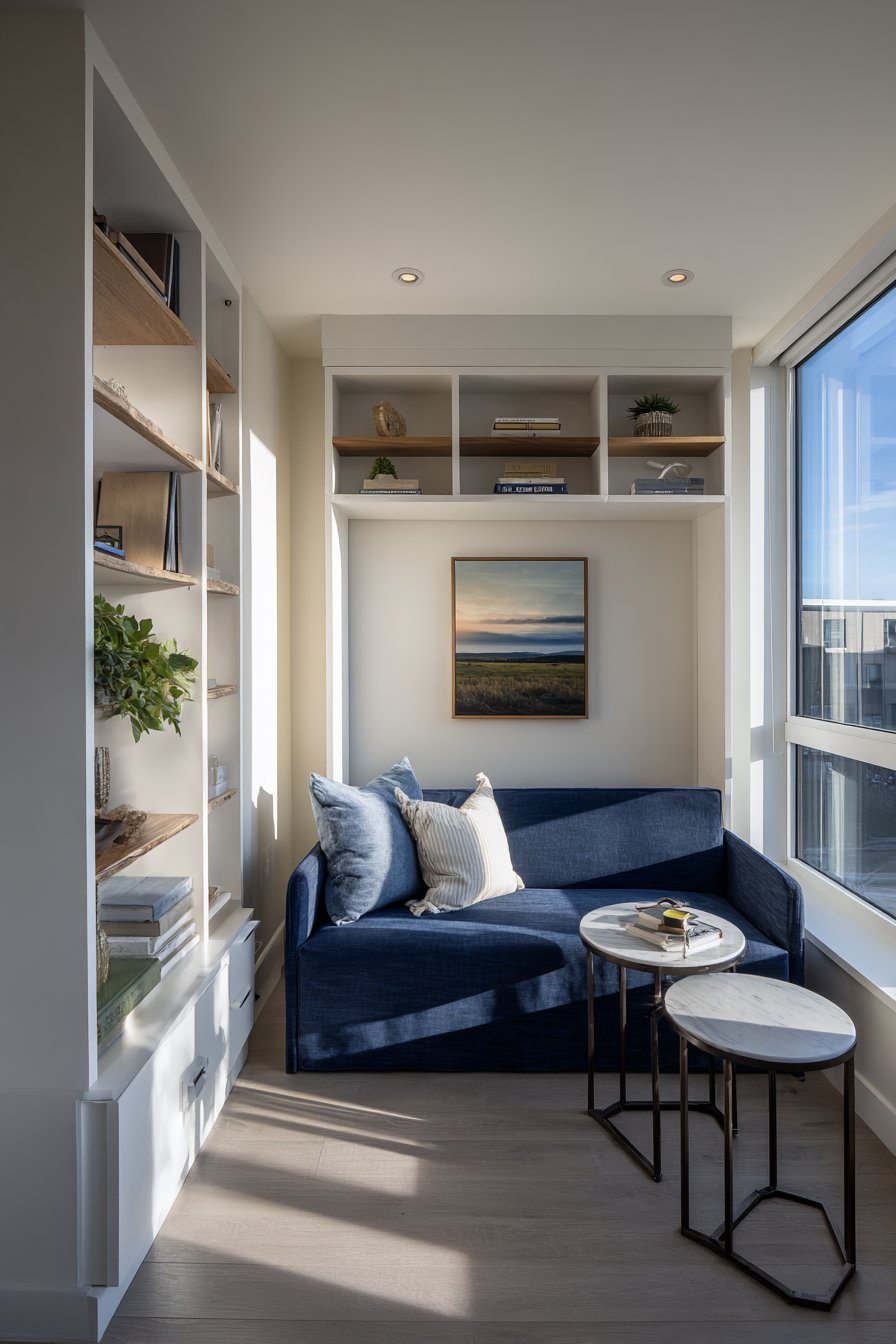
A convertible sleeper sofa in durable navy performance fabric serves dual purposes. The piece functions as daily seating while accommodating overnight guests. Nesting side tables in mixed materials provide flexible surface space. They separate when additional surfaces are needed or stack to conserve space.
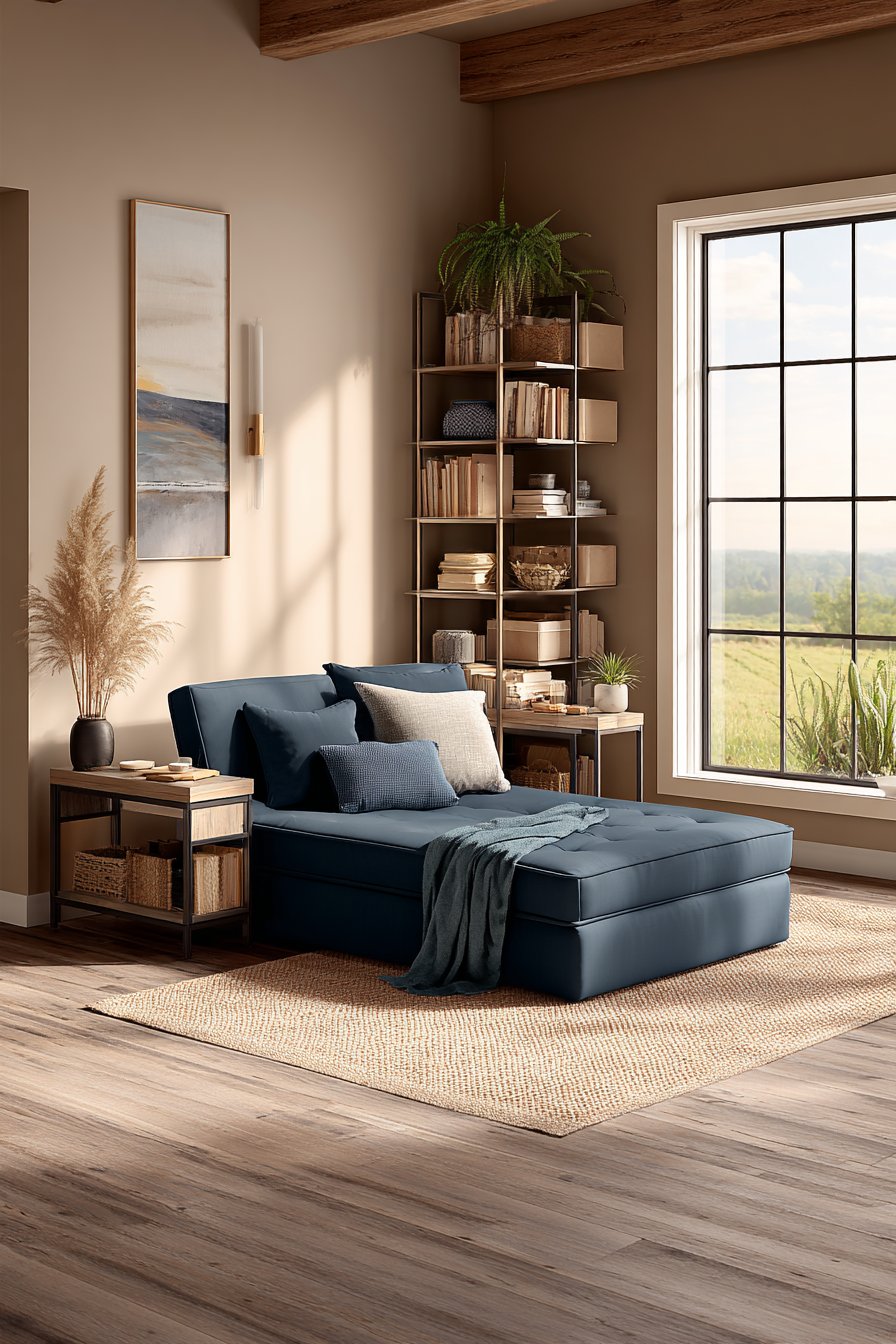
A narrow bookshelf spans floor to ceiling along one wall. The vertical storage offers extensive capacity while occupying minimal depth. Books, decorative objects, and storage baskets are organized within the shelving system. This approach keeps daily necessities accessible yet visually organized.
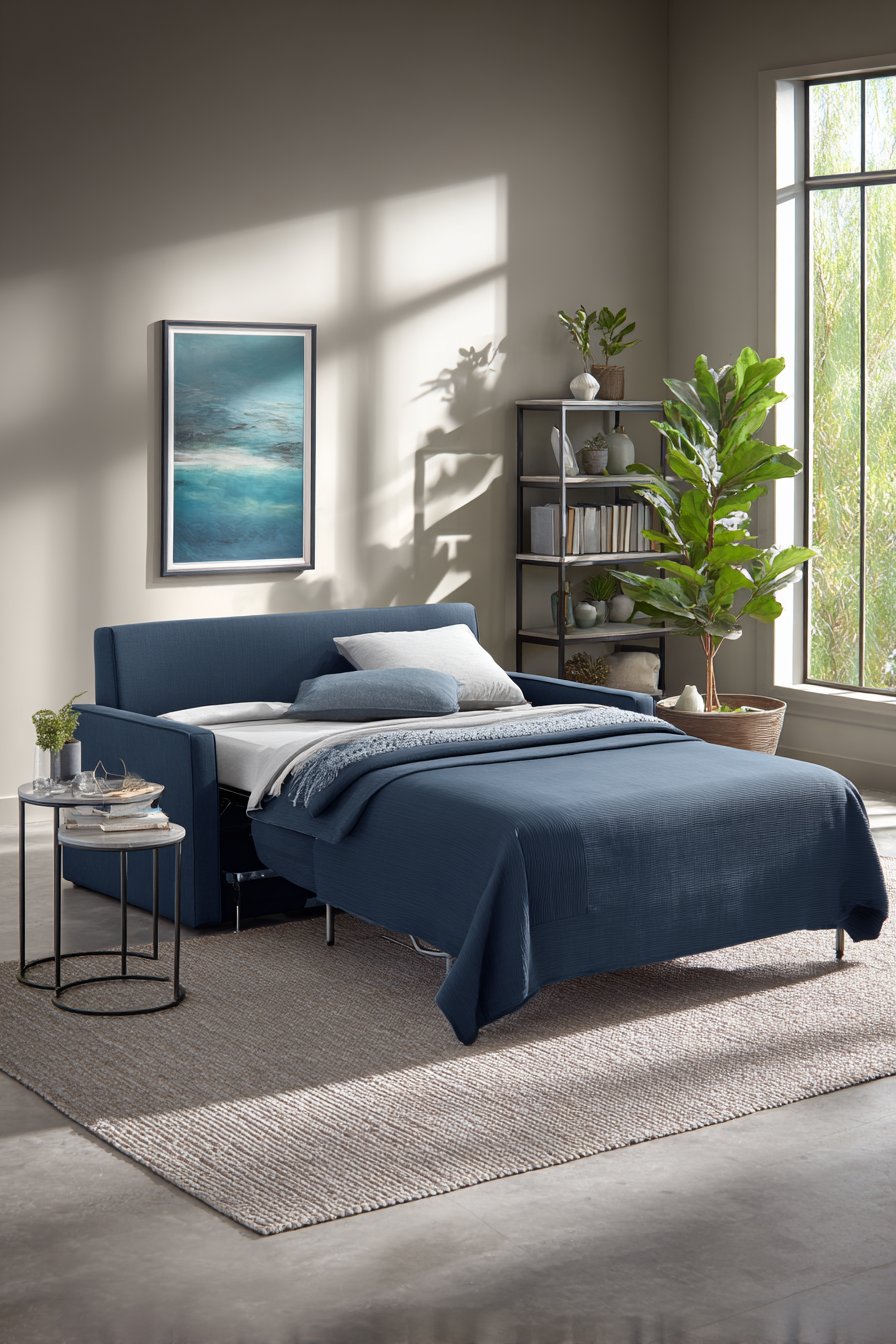
Natural afternoon light creates subtle shadows adding dimensional interest. The navy fabric introduces color without overwhelming the neutral foundation. Mixed materials across tables add textural variety to the cohesive design. Every furniture piece contributes multiple functions to the overall layout.
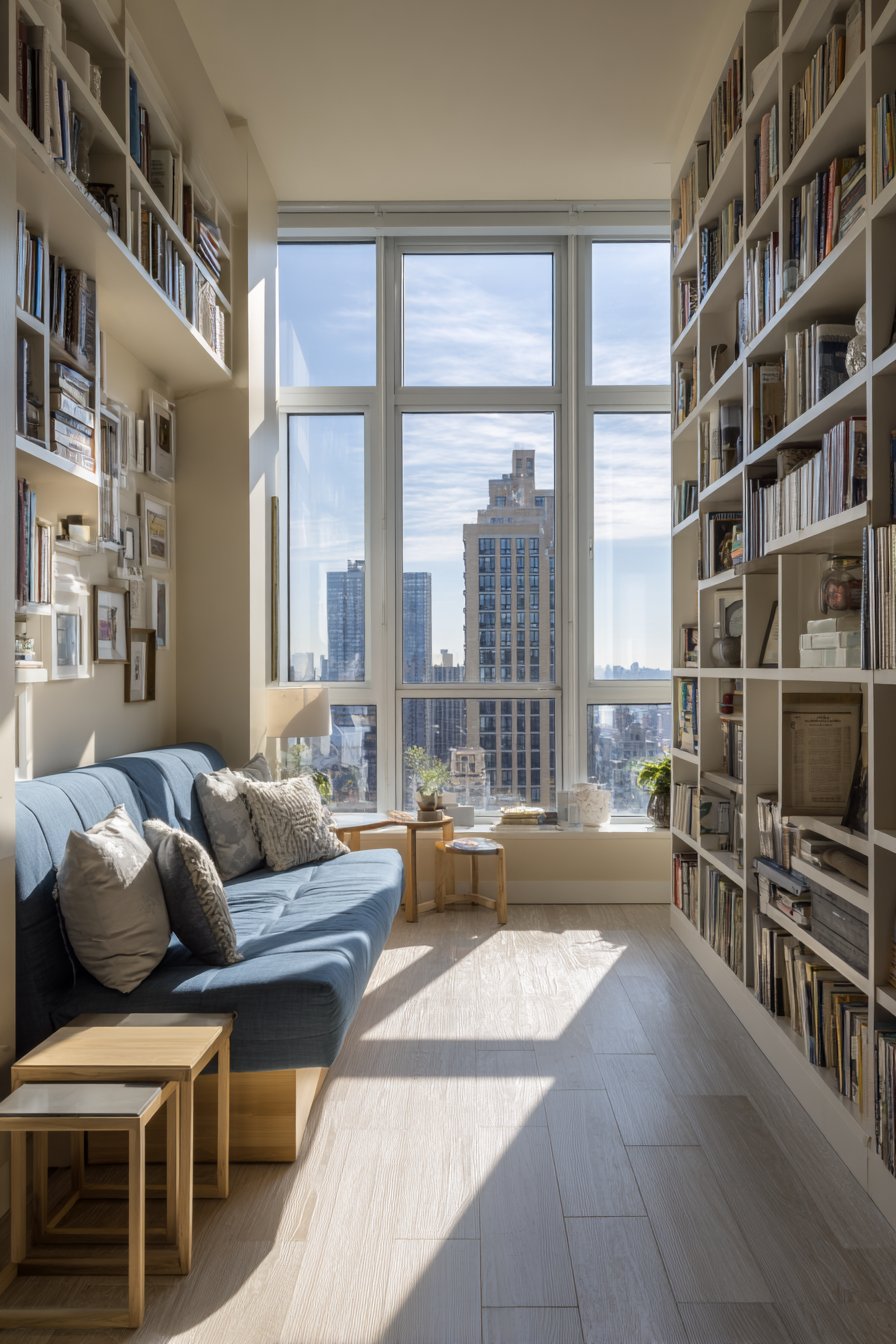
The room demonstrates small space efficiency through thoughtful selection. Dual-purpose furniture eliminates the need for separate guest accommodations. Vertical storage maximizes capacity without horizontal sprawl. The complete arrangement proves that compact living supports diverse lifestyle needs.
Key Design Tips:
- Invest in quality sleeper sofas with comfortable mattresses for dual function
- Use nesting tables that offer flexibility for different activities
- Install floor-to-ceiling shelving to maximize vertical storage capacity
- Choose performance fabrics that withstand daily use and guest accommodation
- Mix materials across accent pieces for textural interest
- Plan furniture placement to support multiple room configurations
5. Minimalist Restraint with Intentional Editing
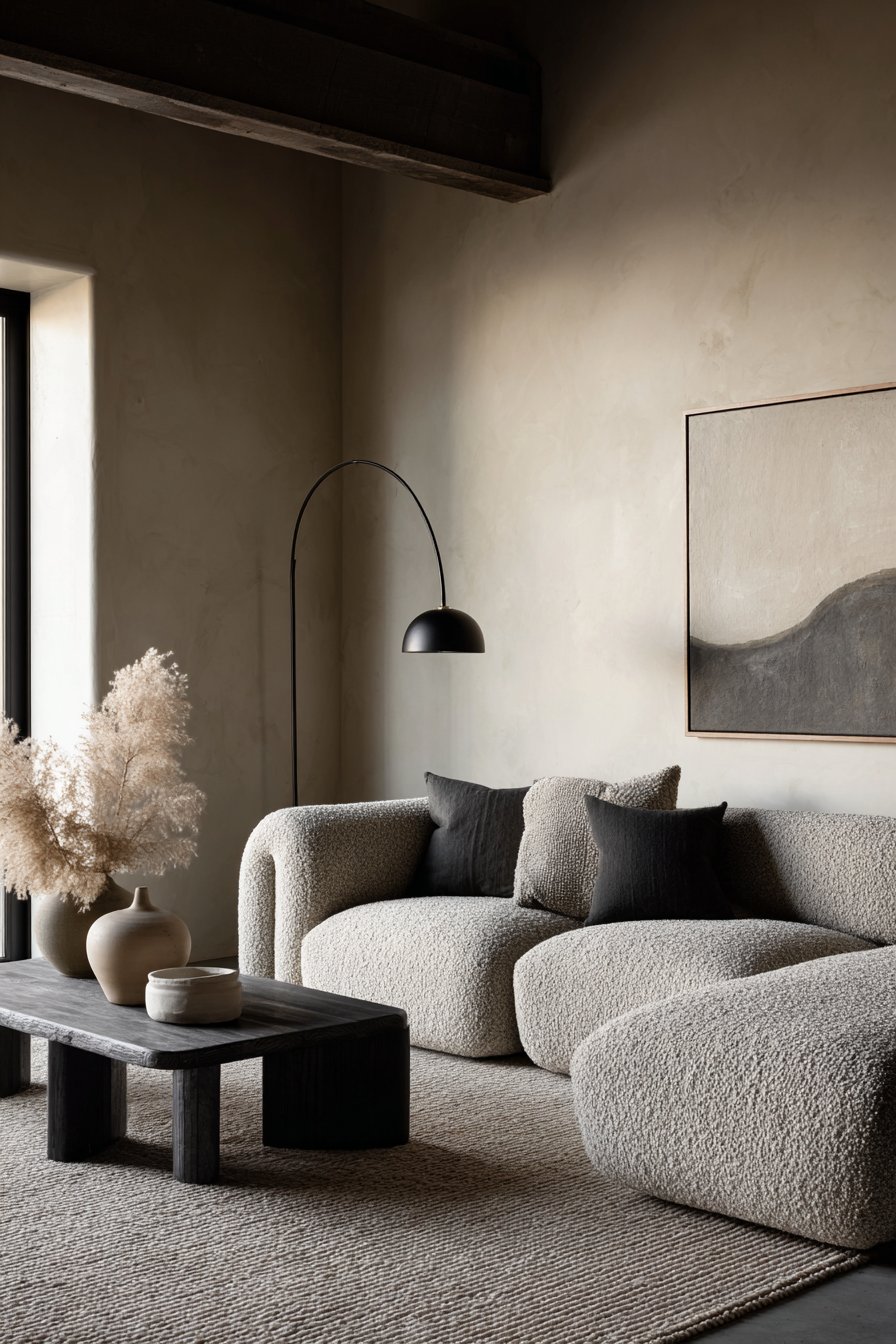
A low-slung platform sofa in textured grey upholstery features clean lines. The modest proportions suit the compact dimensions without sacrificing comfort. A simple wooden coffee table with rounded corners sits centered on neutral wool rug. The organic shape softens the geometric room while providing necessary function.
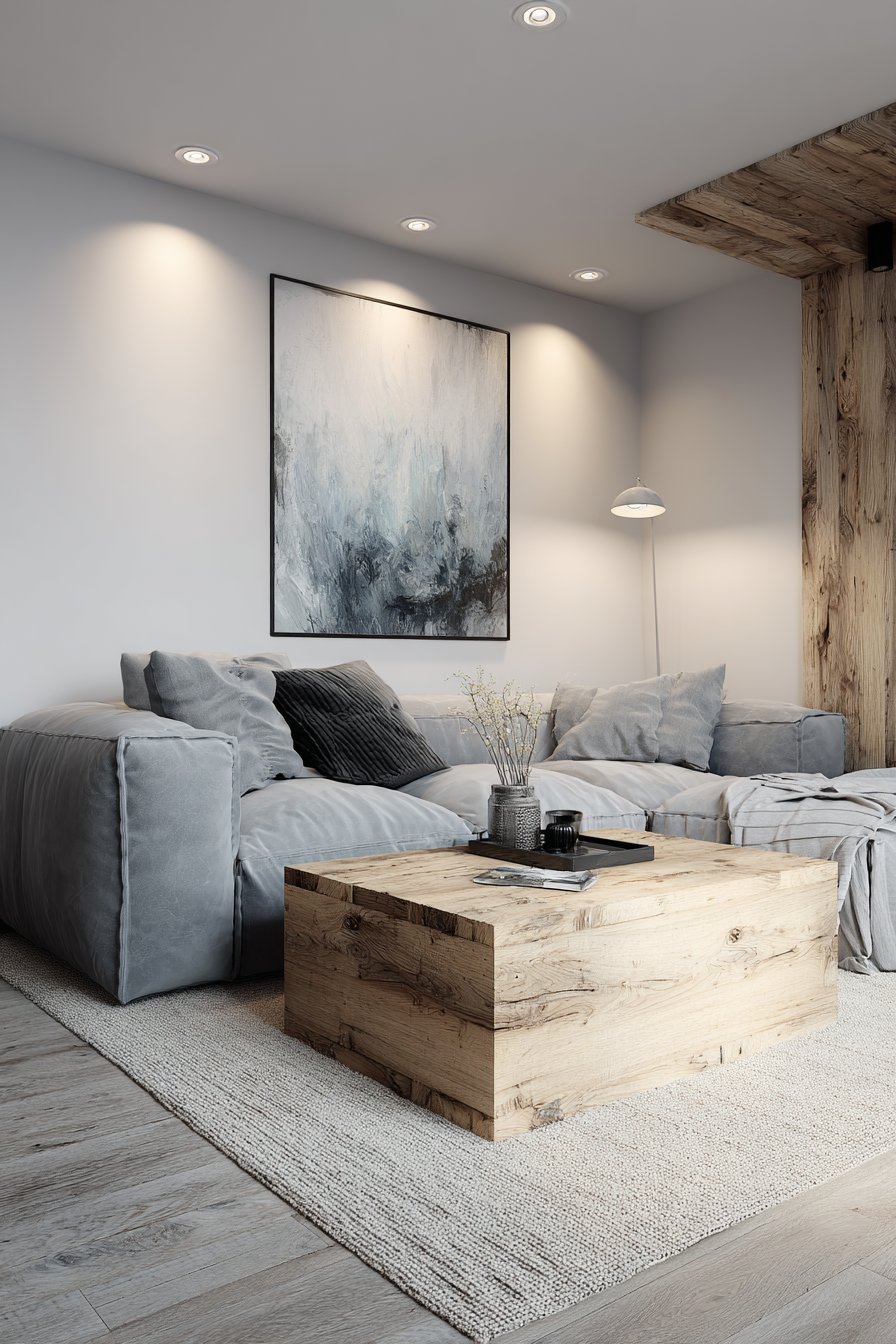
Walls remain mostly bare except for a single large-scale abstract canvas. This restraint provides visual interest without overwhelming the limited space. The artwork becomes a focal point through its isolation and scale. Recessed lighting creates even illumination supplemented by a single arc floor lamp.
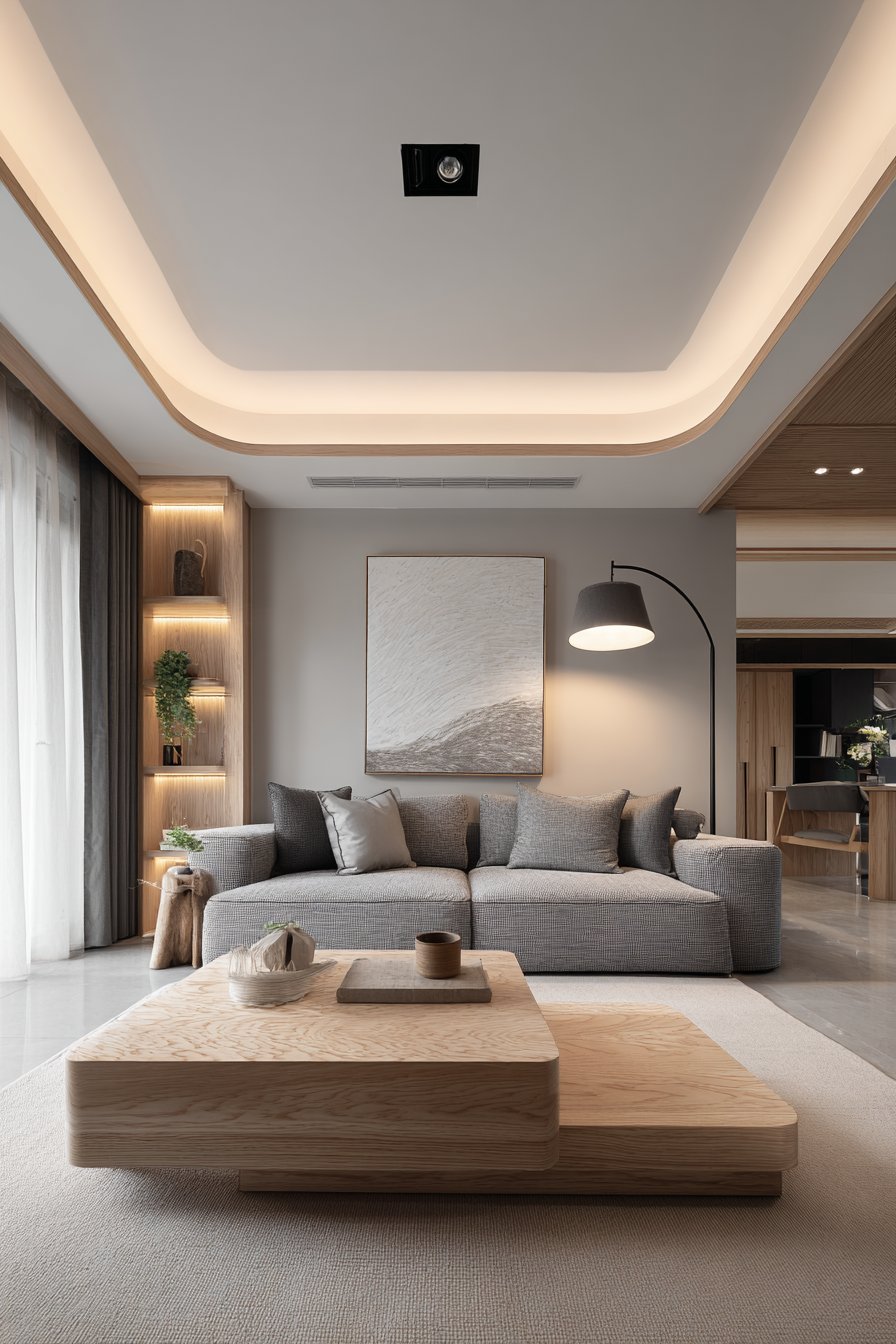
The arc lamp design allows overhead lighting without ceiling installation. Its sweeping form adds sculptural interest to the minimal palette. Layered illumination creates optimal conditions for different activities throughout the day. Deliberate restraint defines this carefully edited approach.
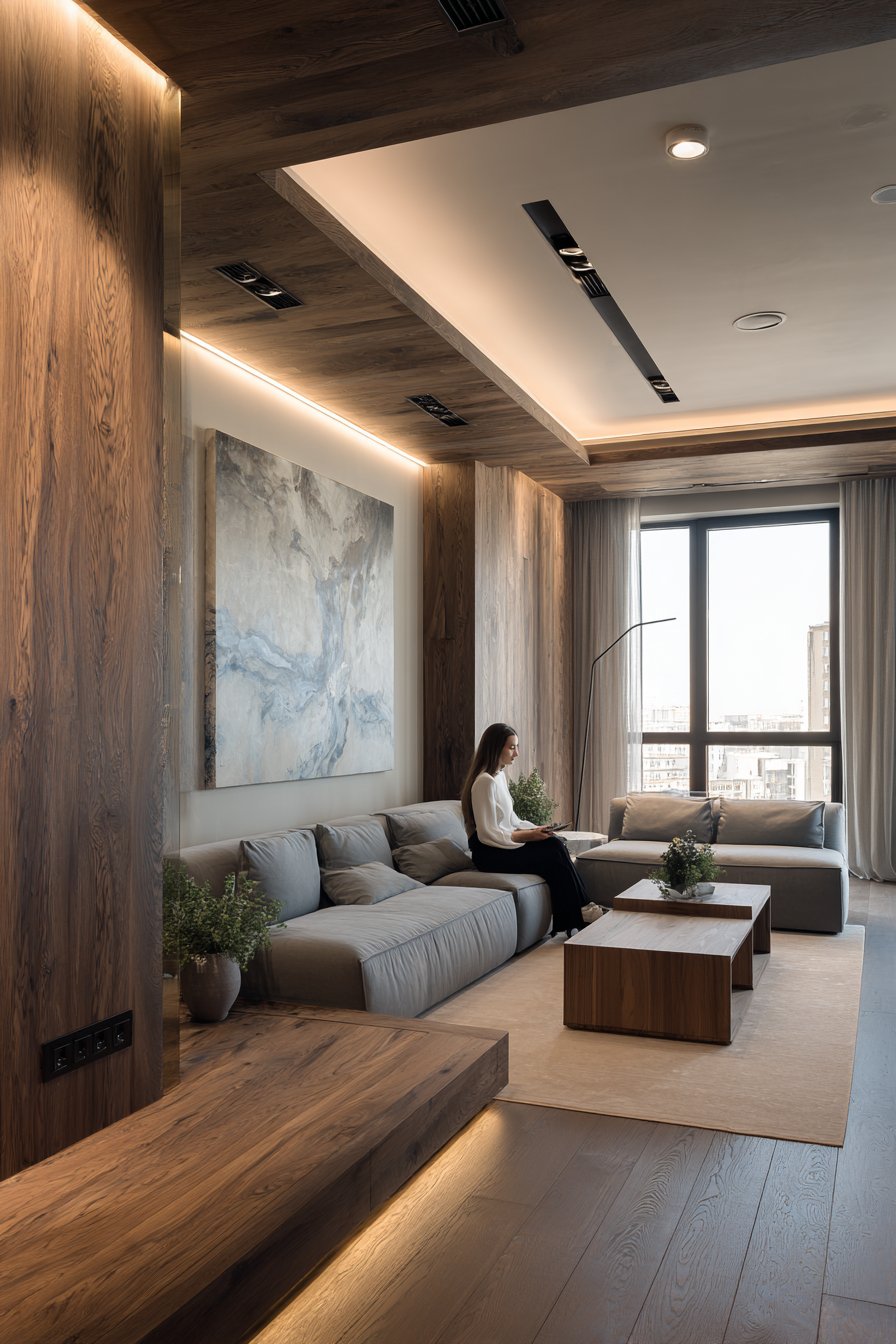
Quality prevails over quantity in every design decision. Each piece earns its place through beauty and function. The calm, uncluttered aesthetic promotes relaxation and focus. This minimalist approach proves that less truly can be more in small spaces.
Key Design Tips:
- Select platform sofas with low profiles for visual simplicity
- Choose rounded furniture corners for safety and visual softness
- Limit wall art to one statement piece for focused impact
- Layer lighting types with recessed and sculptural floor lamps
- Edit ruthlessly to include only essential, beautiful pieces
- Use neutral tones to create calm, cohesive foundations
6. Warm Earthy Tones with Textural Depth
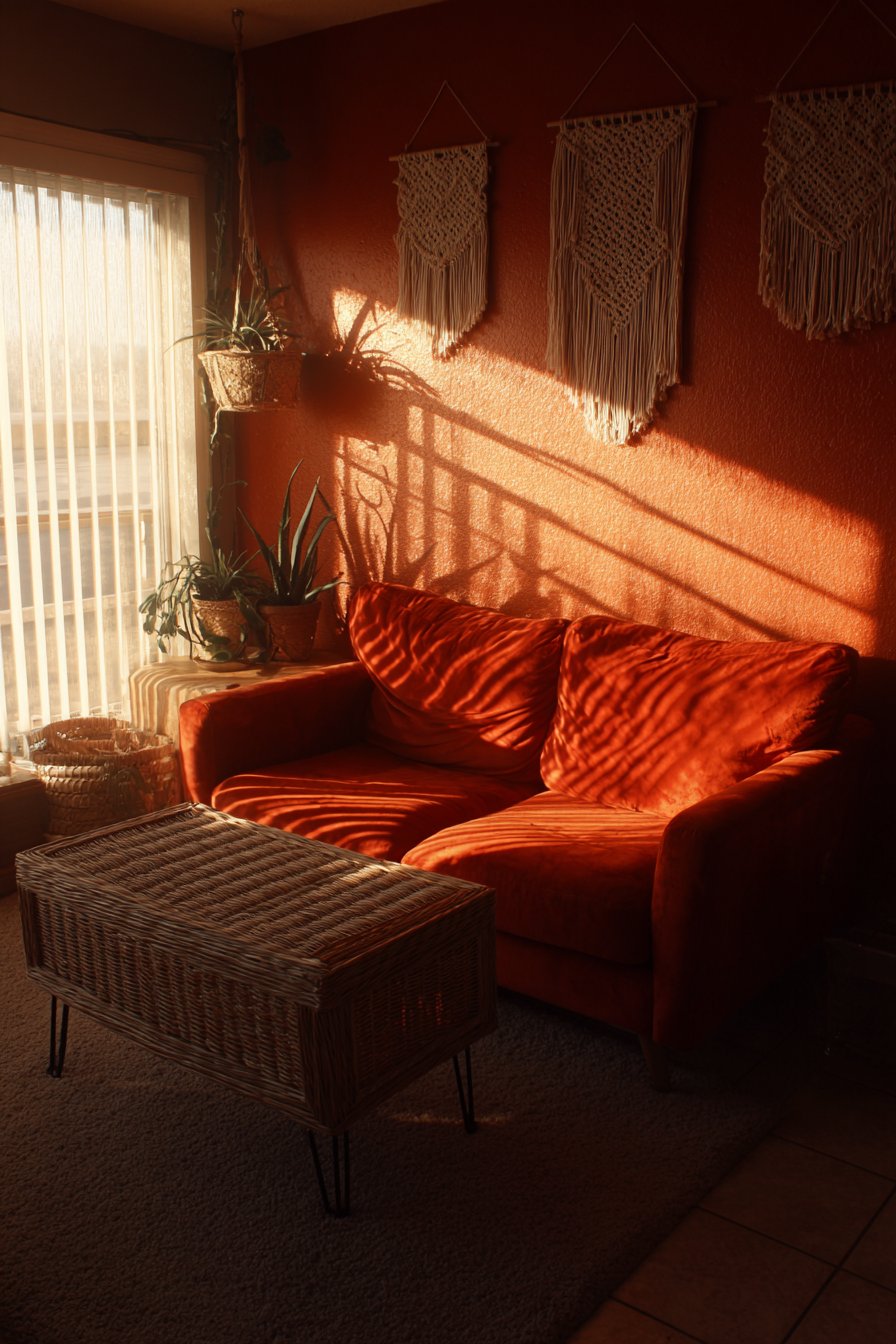
A rust-colored velvet loveseat commands attention against soft terracotta walls. The warm color palette creates immediate coziness in the intimate space. A vintage-inspired coffee table with hairpin legs maintains visual openness. The slender metal legs preserve sightlines while providing necessary surface area.
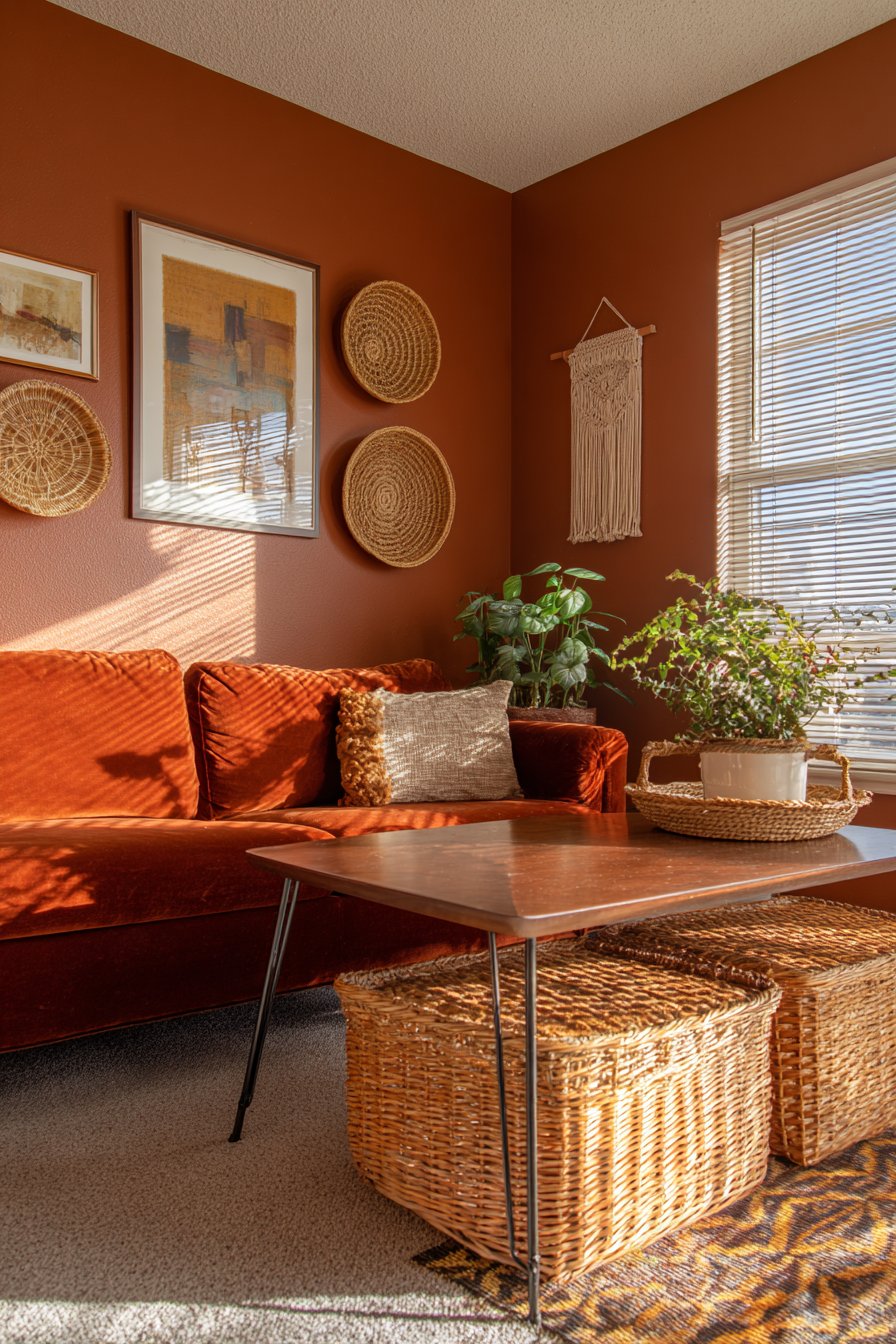
Macramé wall hangings add textural interest at various heights. The handmade pieces introduce organic patterns without consuming floor space. Woven baskets serve dual purposes as decorative elements and practical storage solutions. They conceal clutter while contributing to the natural aesthetic.
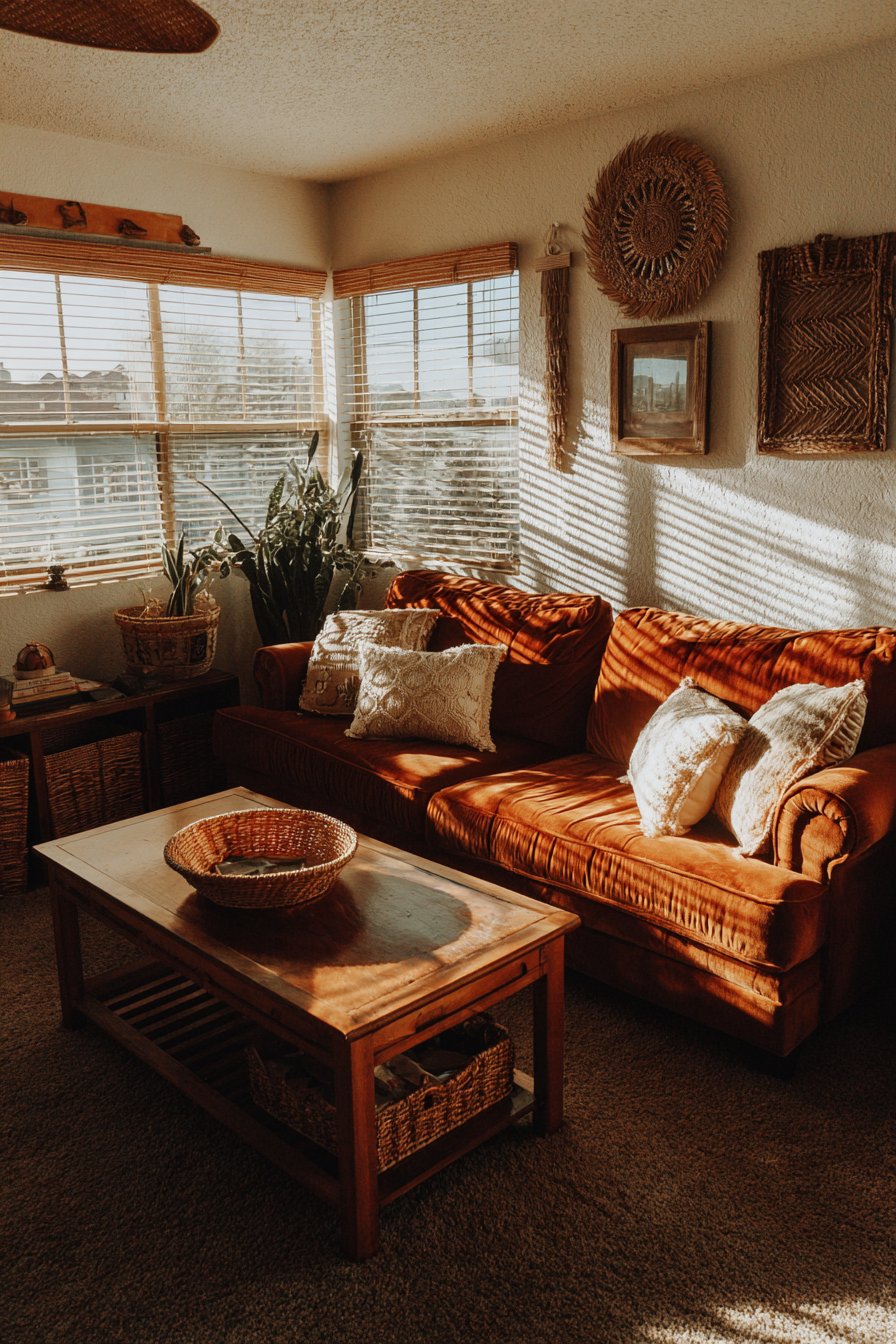
Natural fiber window treatments filter golden hour sunlight beautifully. Warm tones throughout the space intensify during late afternoon illumination. The earthy color palette creates depth through tonal variation. Terracotta walls provide a rich backdrop for the layered textiles.
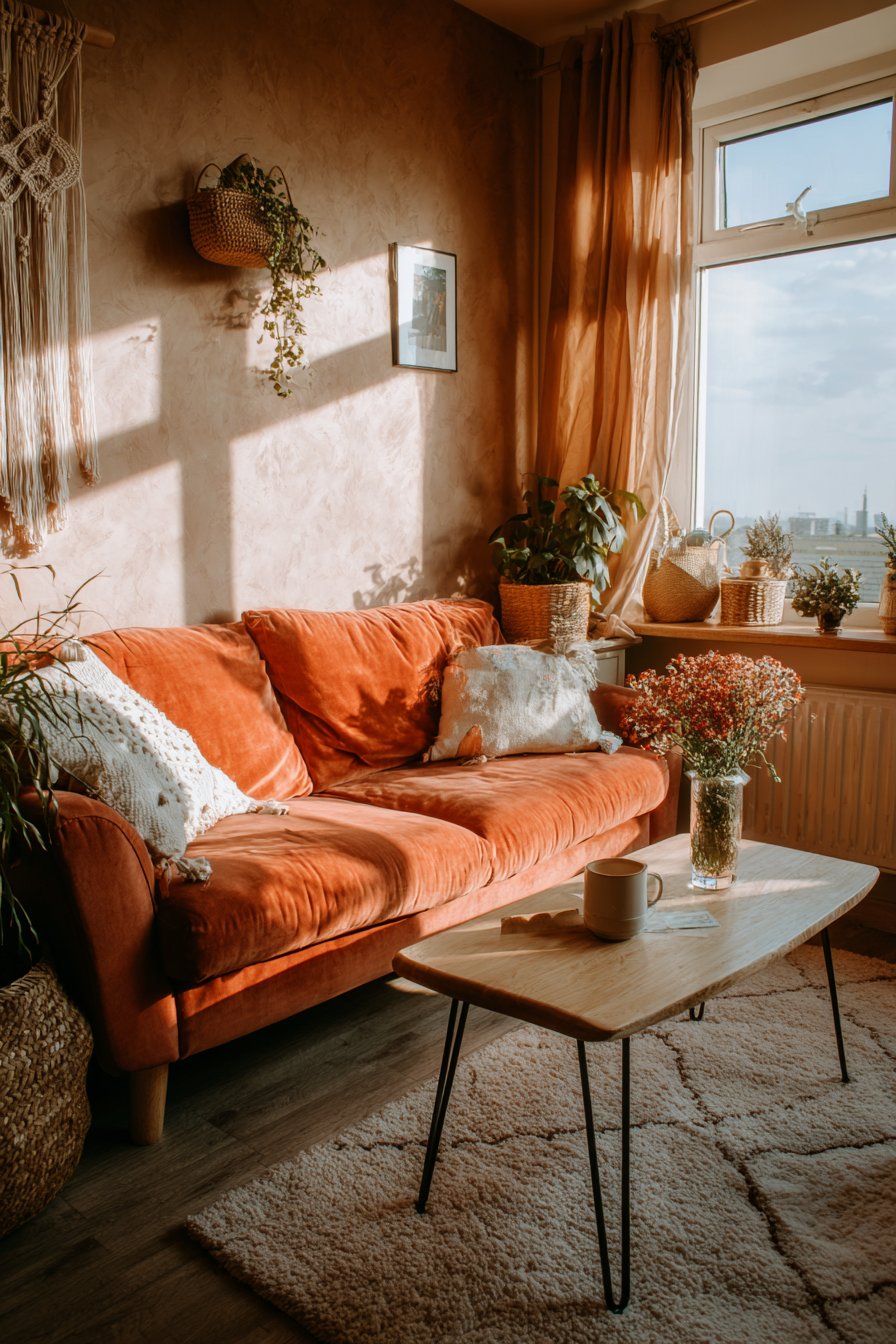
The modest furniture scale prevents the warm colors from overwhelming. Strategic placement ensures comfortable traffic flow despite the compact dimensions. Natural materials throughout create cohesion and organic warmth. This design proves that bold color works effectively in small spaces when thoughtfully applied.
Key Design Tips:
- Use warm color palettes to create cozy intimacy in small rooms
- Select furniture with hairpin or slender legs for visual lightness
- Add macramé and woven elements for texture without bulk
- Choose natural fiber window treatments that filter rather than block light
- Incorporate storage baskets that serve decorative and functional purposes
- Layer tonal variations within a single color family for depth
7. Scandinavian Simplicity with Strategic Spacing
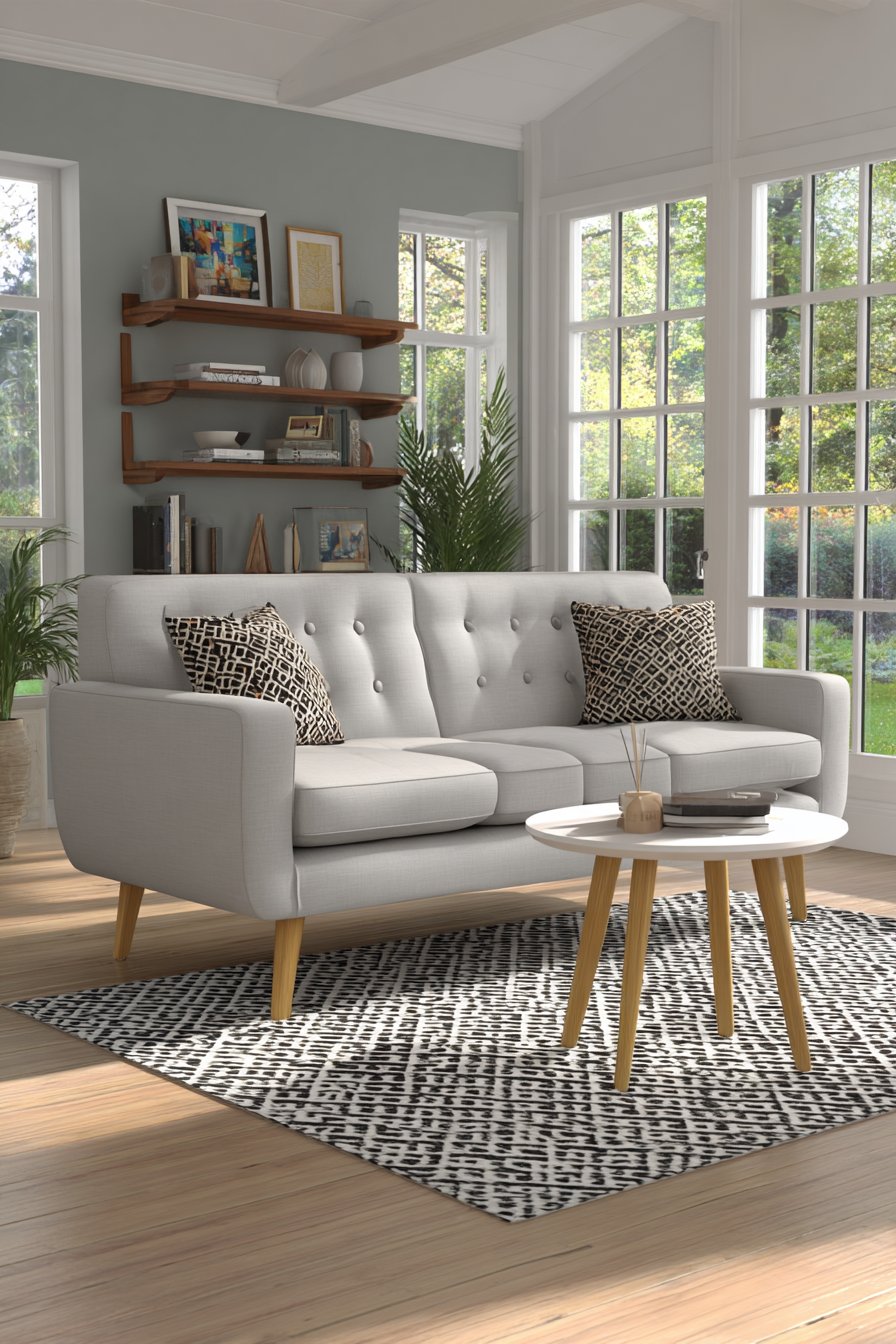
A light grey sofa with wooden legs floats slightly away from the wall. This placement creates depth perception despite the compact dimensions. A simple round coffee table in white oak centers the space. The circular form softens the room’s geometry while providing functional surface area.
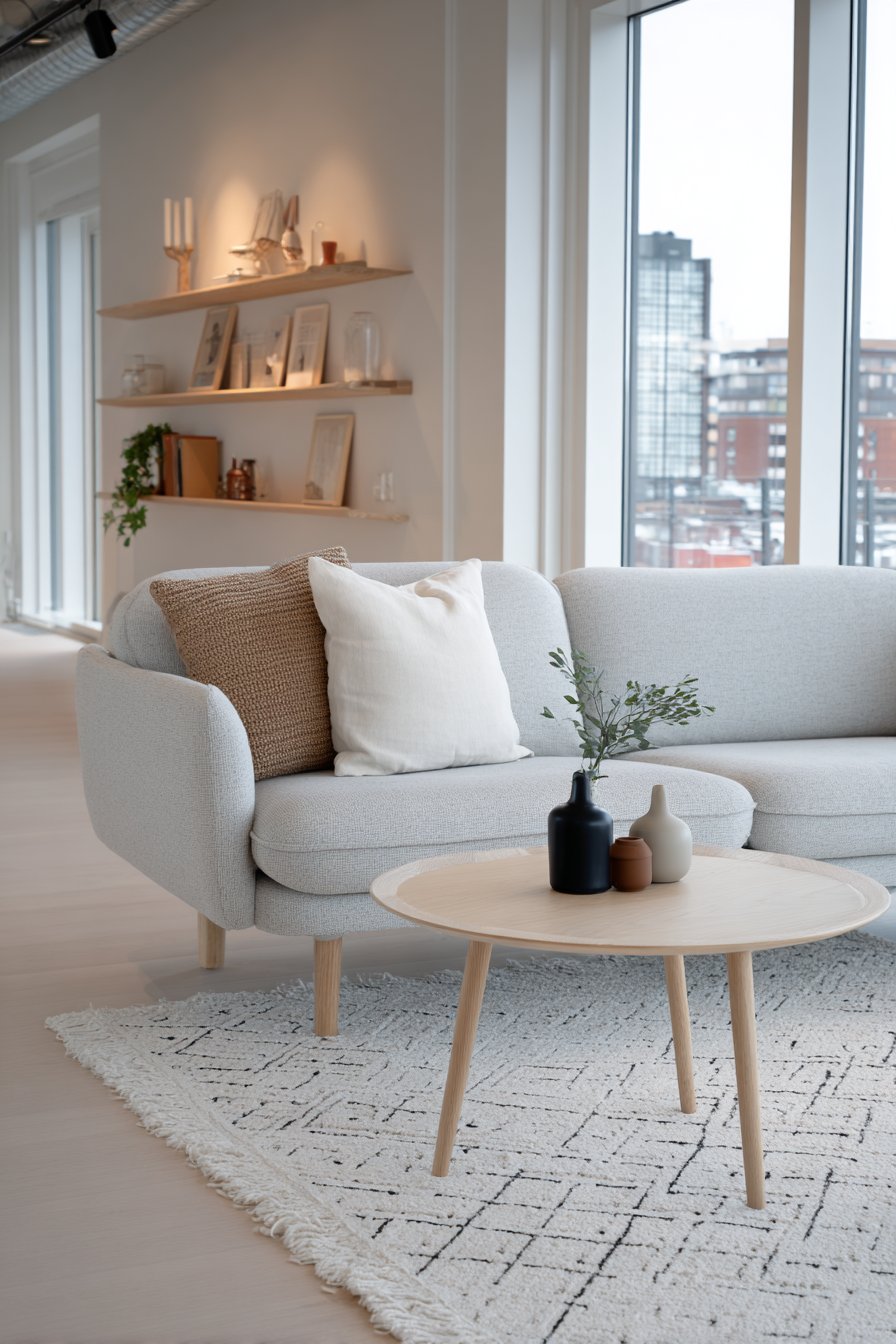
Geometric black and white area rug defines the seating zone clearly. The graphic pattern adds visual interest within the pale palette. Open shelving in natural wood displays minimal decorative objects. The vertical arrangement creates interest without cluttering horizontal surfaces.
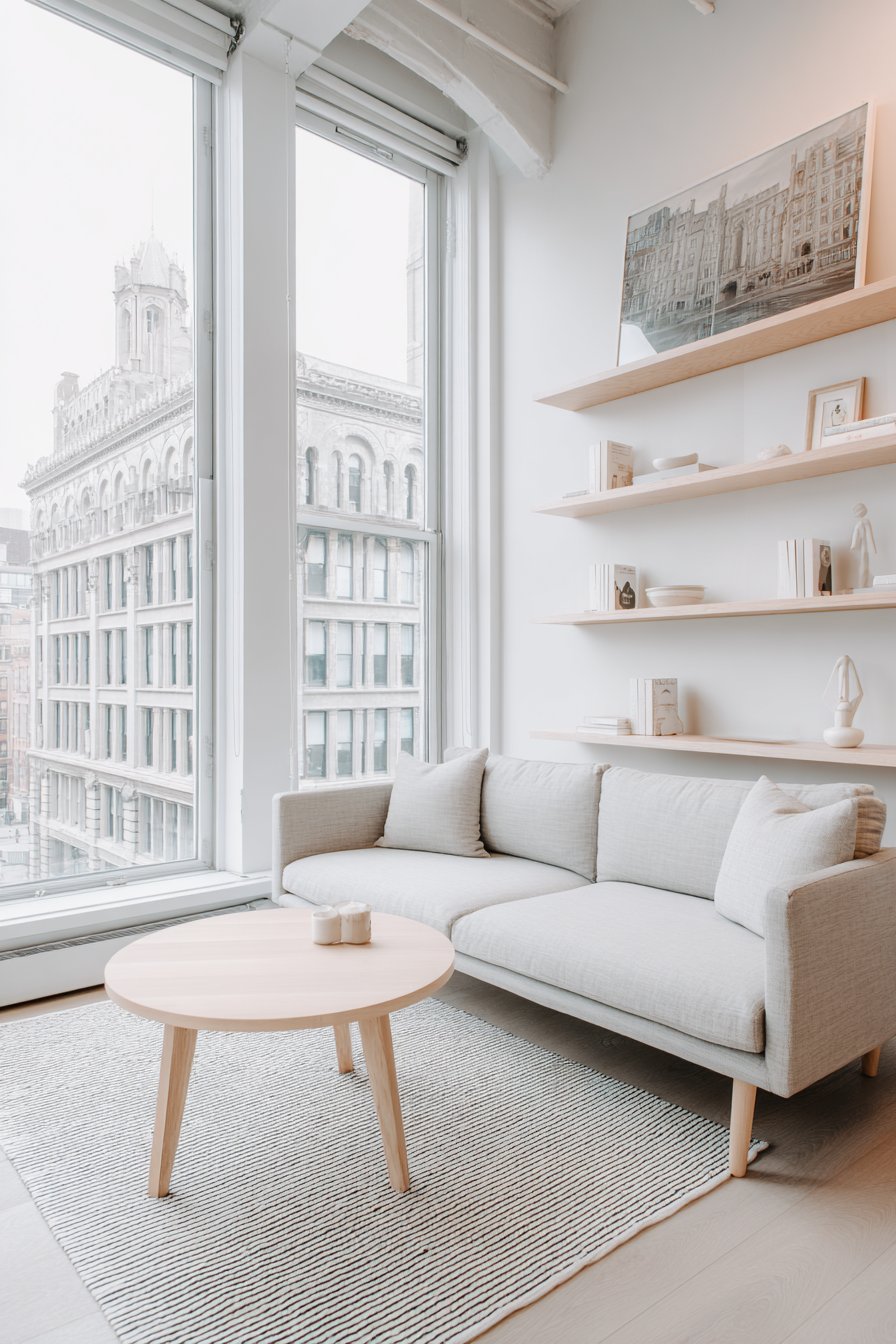
Large windows without heavy treatments maximize natural light penetration. The bright, airy quality defines Scandinavian design philosophy. Pale color palette throughout reflects and amplifies available illumination. Clean lines across all furnishings create visual simplicity.
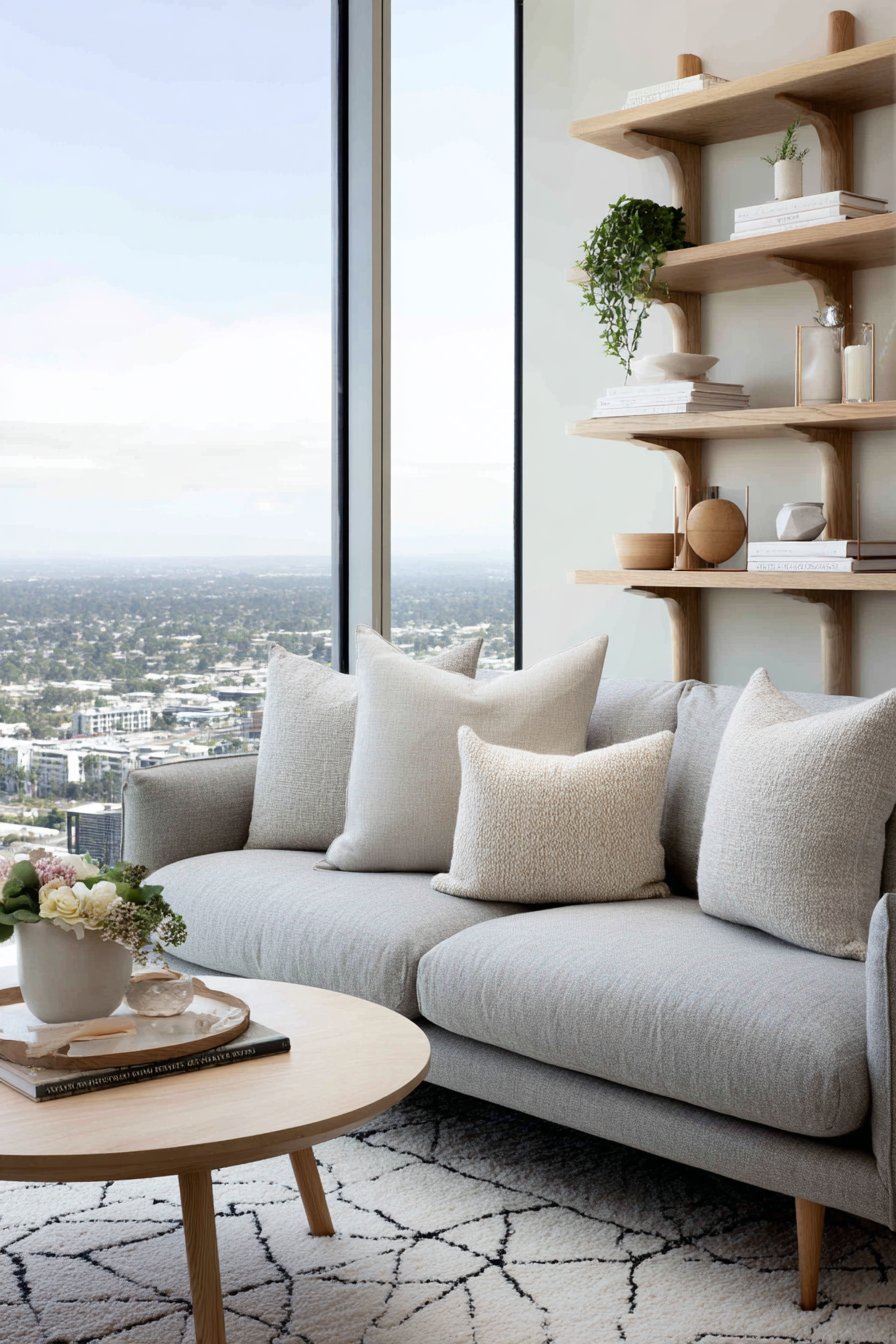
Strategic use of negative space allows the room to breathe. Every element serves a purpose without unnecessary decoration. The Nordic aesthetic prioritizes function and beauty equally. This approach demonstrates that simplicity creates its own form of richness in small spaces.
Key Design Tips:
- Float furniture away from walls to create depth perception
- Use round tables to soften rectangular room geometry
- Select pale, neutral palettes to maximize light reflection
- Display minimal objects on open shelving for curated simplicity
- Avoid heavy window treatments that block natural light
- Embrace negative space as an intentional design element
8. Bohemian Eclecticism with Vertical Interest
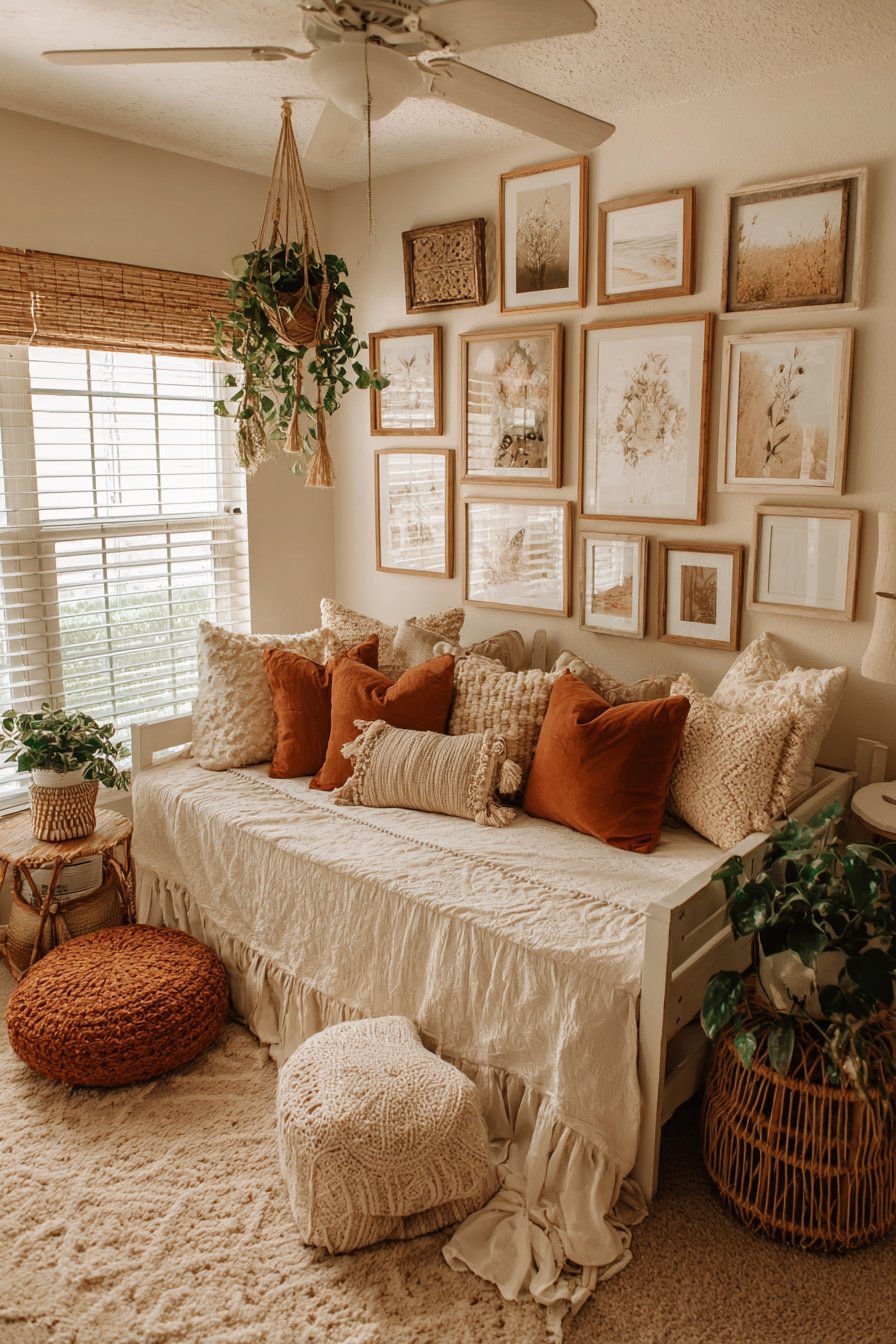
A low daybed-style sofa layers with textured throw pillows in varied hues. Terracotta, mustard, and cream create a warm, collected aesthetic. Various-sized poufs provide flexible additional seating options. They tuck away easily when floor space is needed for other activities.
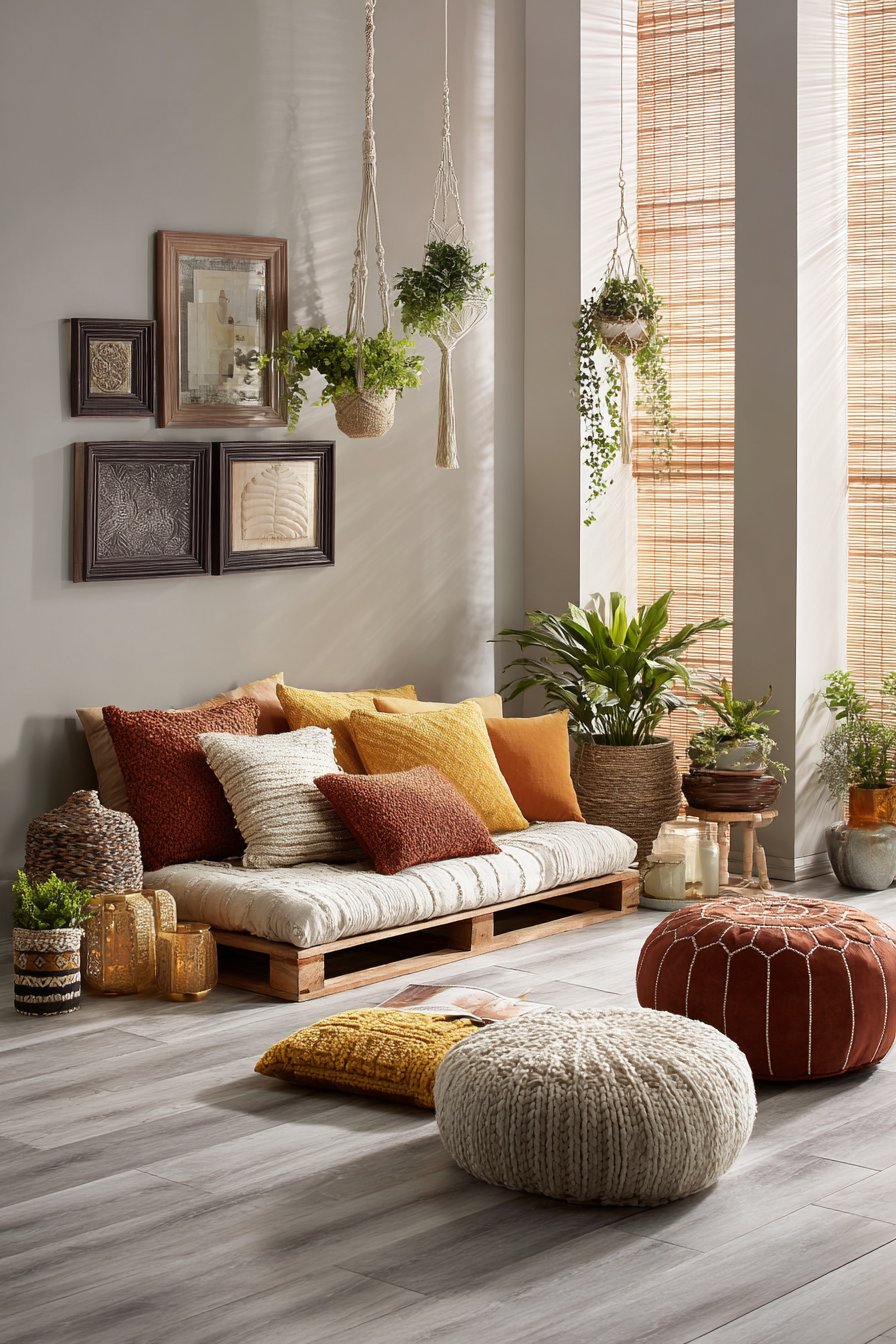
Hanging plants in macramé holders draw eyes upward strategically. The vertical greenery adds life without consuming floor area. A gallery wall of mismatched frames adds personality to vertical surfaces. The eclectic collection tells personal stories through curated display.
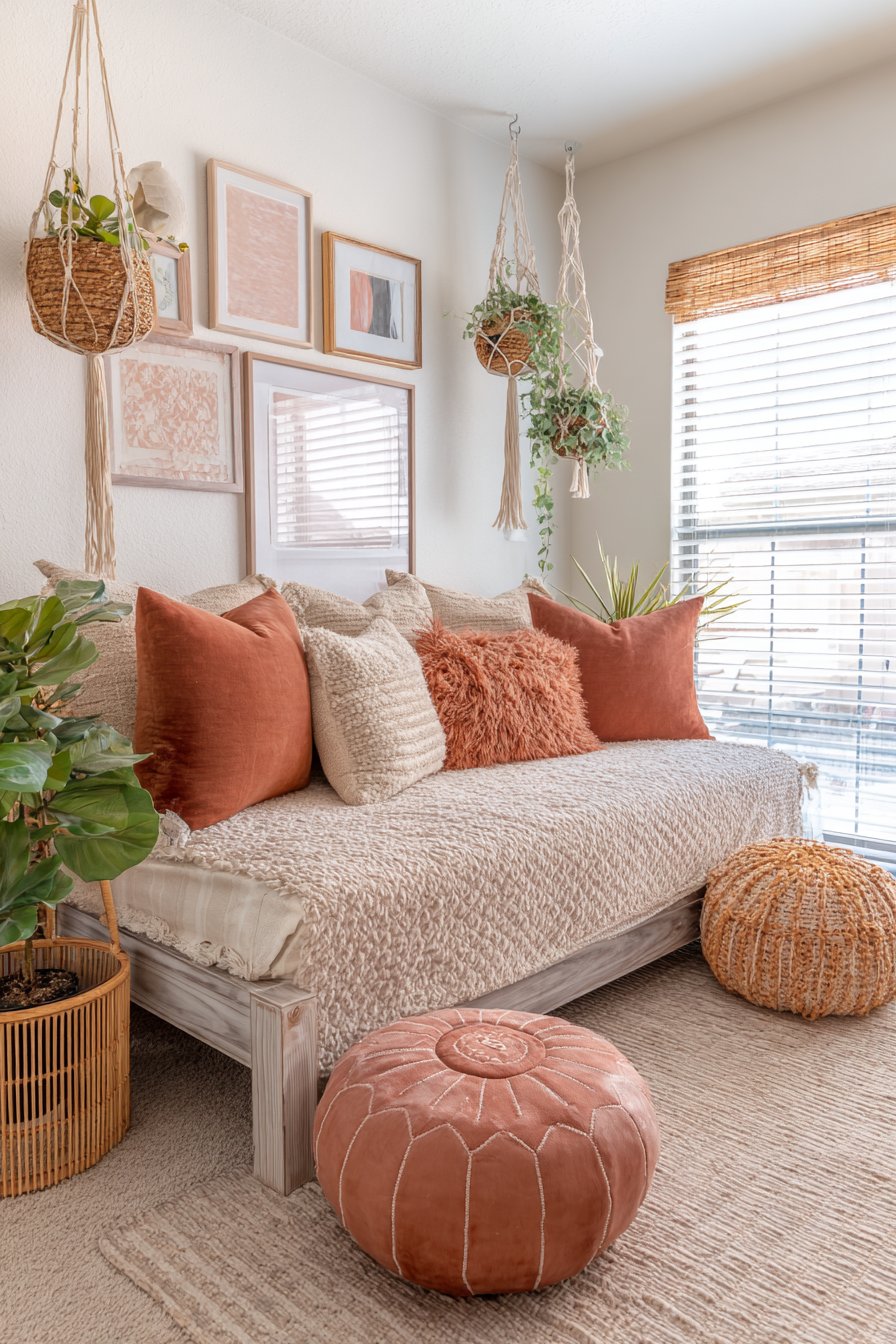
Natural woven window shades filter bright midday light softly. The organic material complements the bohemian textile layers throughout. Textured fabrics across pillows, throws, and rugs create tactile richness. The space maximizes character through layered elements rather than bulky furniture.
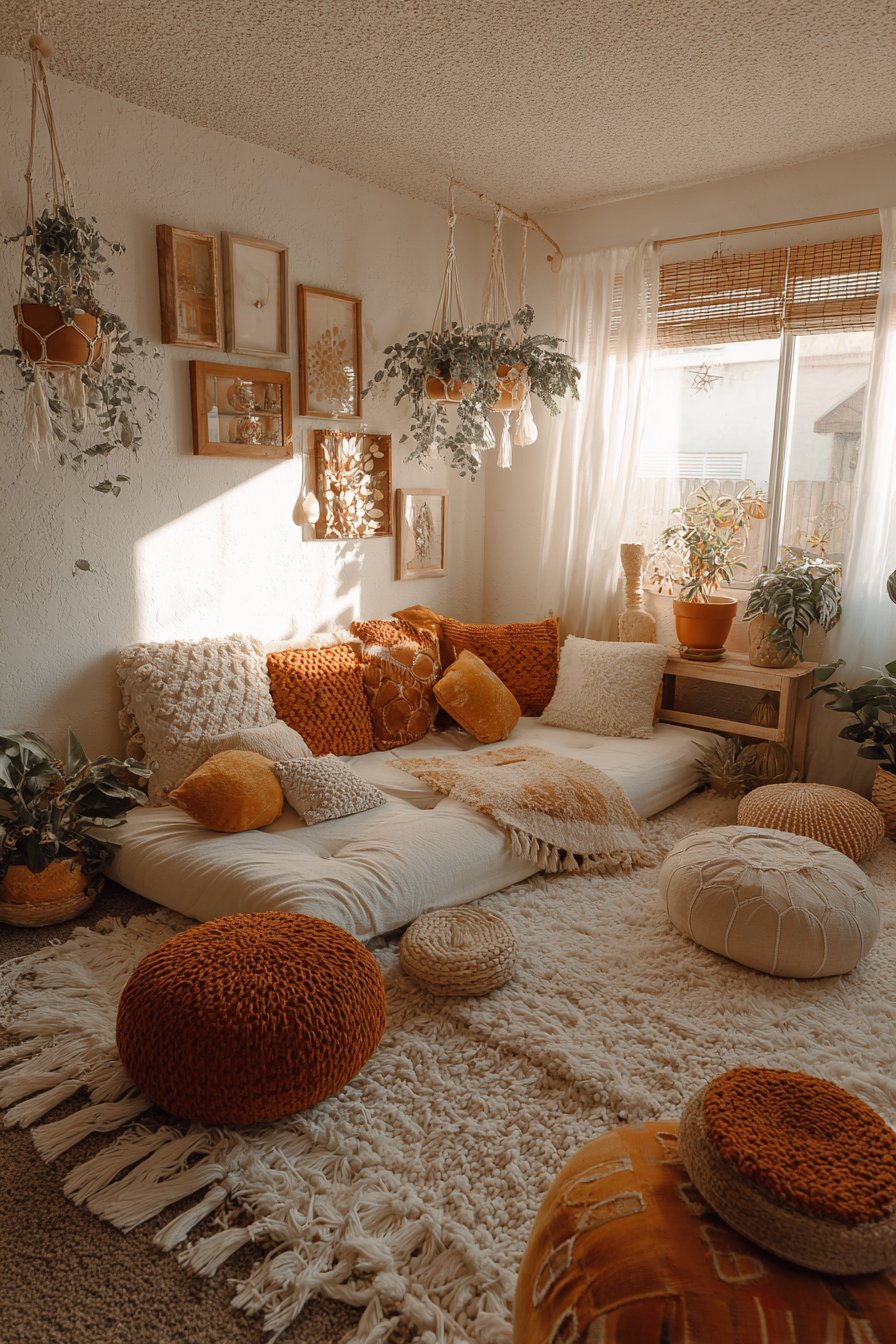
This design approach proves that eclectic style works in compact spaces. Careful curation prevents visual chaos despite the layered aesthetic. Every textile and decorative object contributes to the cohesive boho vision. The vertical emphasis maintains floor space for comfortable movement.
Key Design Tips:
- Layer textiles in coordinating warm tones for bohemian richness
- Use flexible seating like poufs that adapt to different needs
- Hang plants at varying heights to maximize vertical interest
- Create gallery walls to add personality without floor furniture
- Choose natural woven materials for window treatments
- Balance eclectic elements through color coordination and intentional placement
9. Contemporary Custom Storage with Luxe Materials
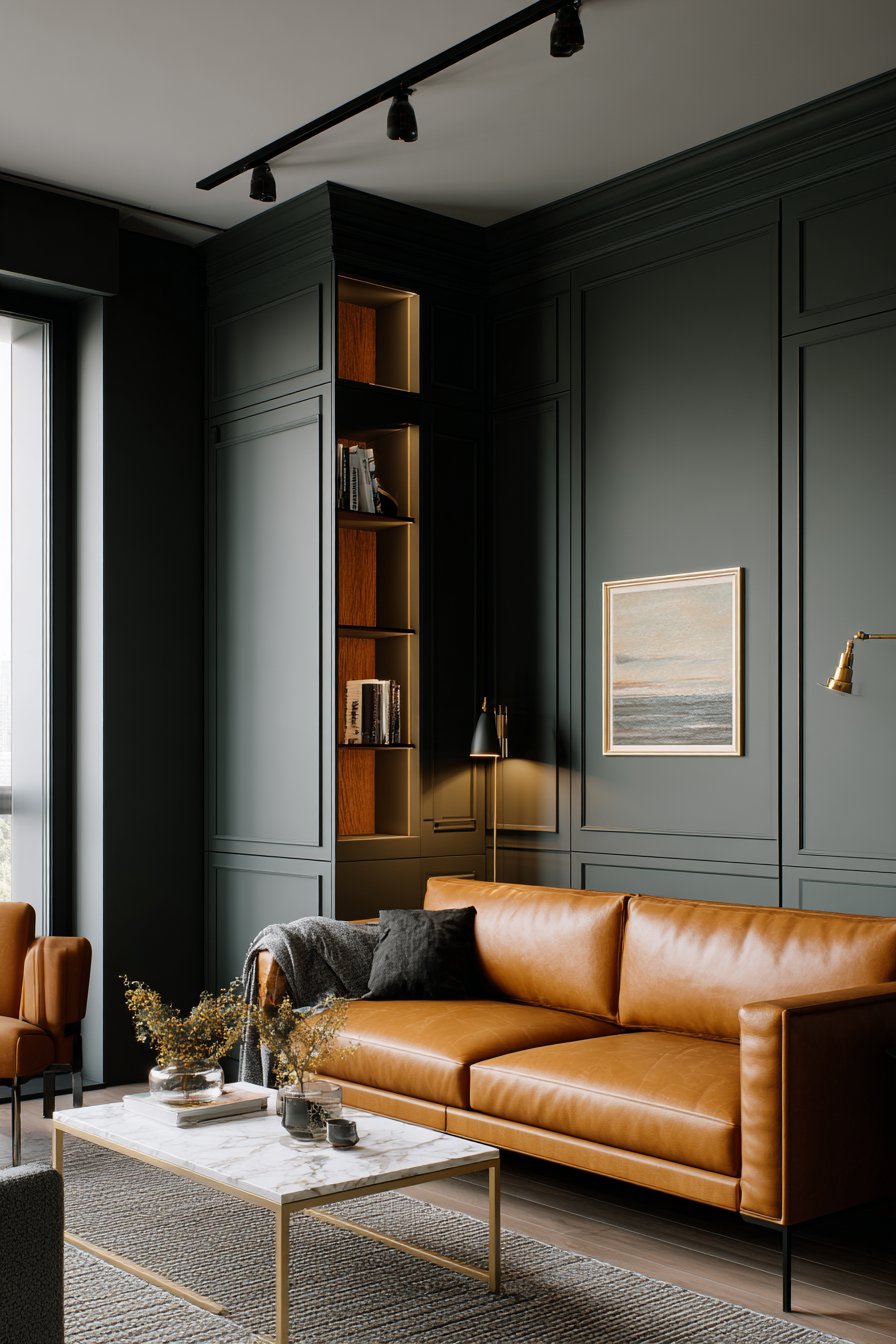
Built-in wall storage features closed lower cabinets and open upper shelving. The sophisticated dark green paint creates depth and visual interest. A streamlined sofa in caramel leather provides durable, timeless seating. The clean lines suit the compact footprint while offering lasting quality.
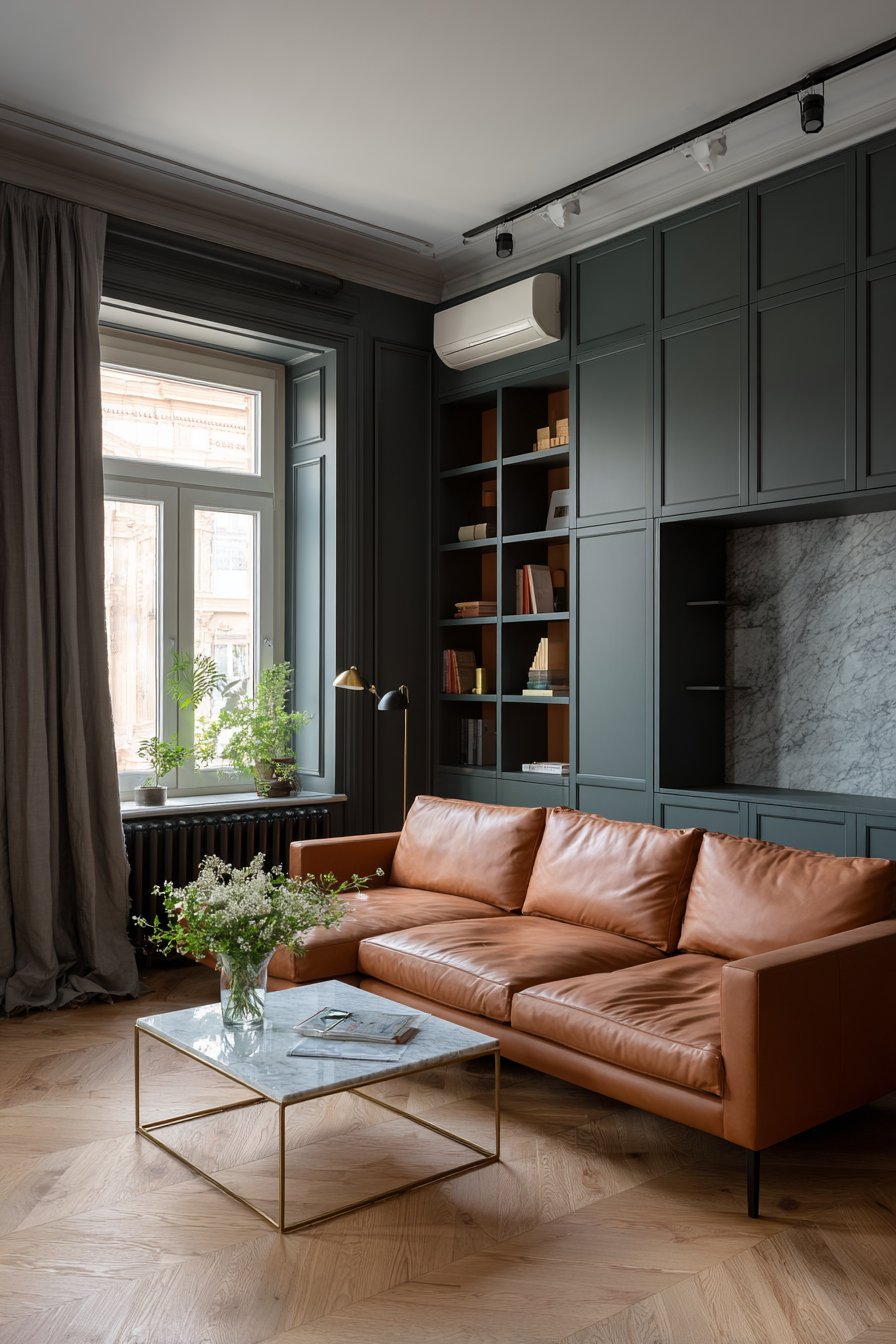
A marble-topped coffee table with gold metal base adds luxury. The refined materials elevate the small space without overwhelming it. Track lighting highlights the architectural storage details effectively. Table lamps provide ambient warmth for evening relaxation.
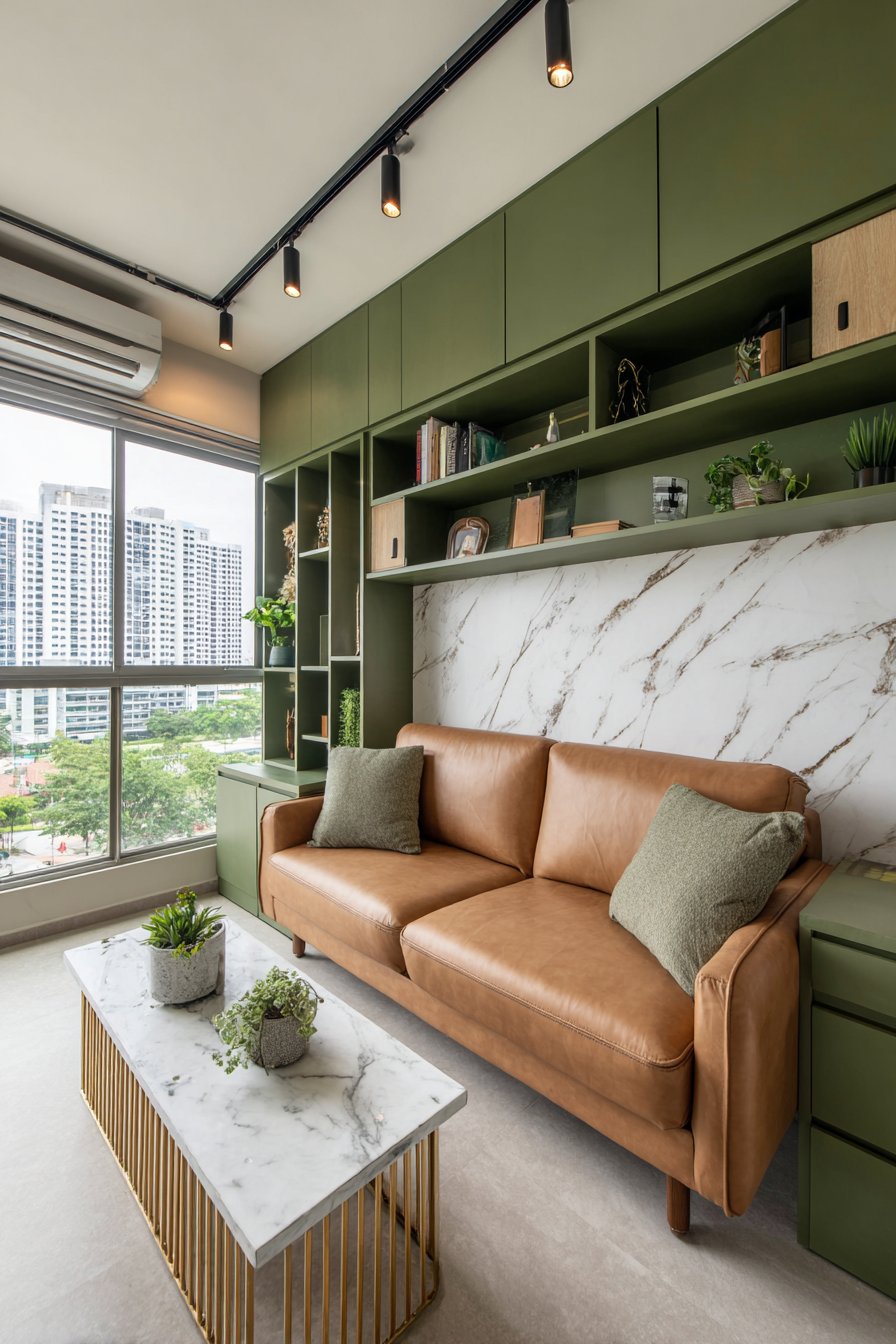
The custom storage solutions maximize every available inch efficiently. Closed cabinets conceal everyday items while open shelving displays curated objects. The proportioned furniture respects the room’s dimensions while maintaining comfort. Material quality throughout creates a polished, professional appearance.
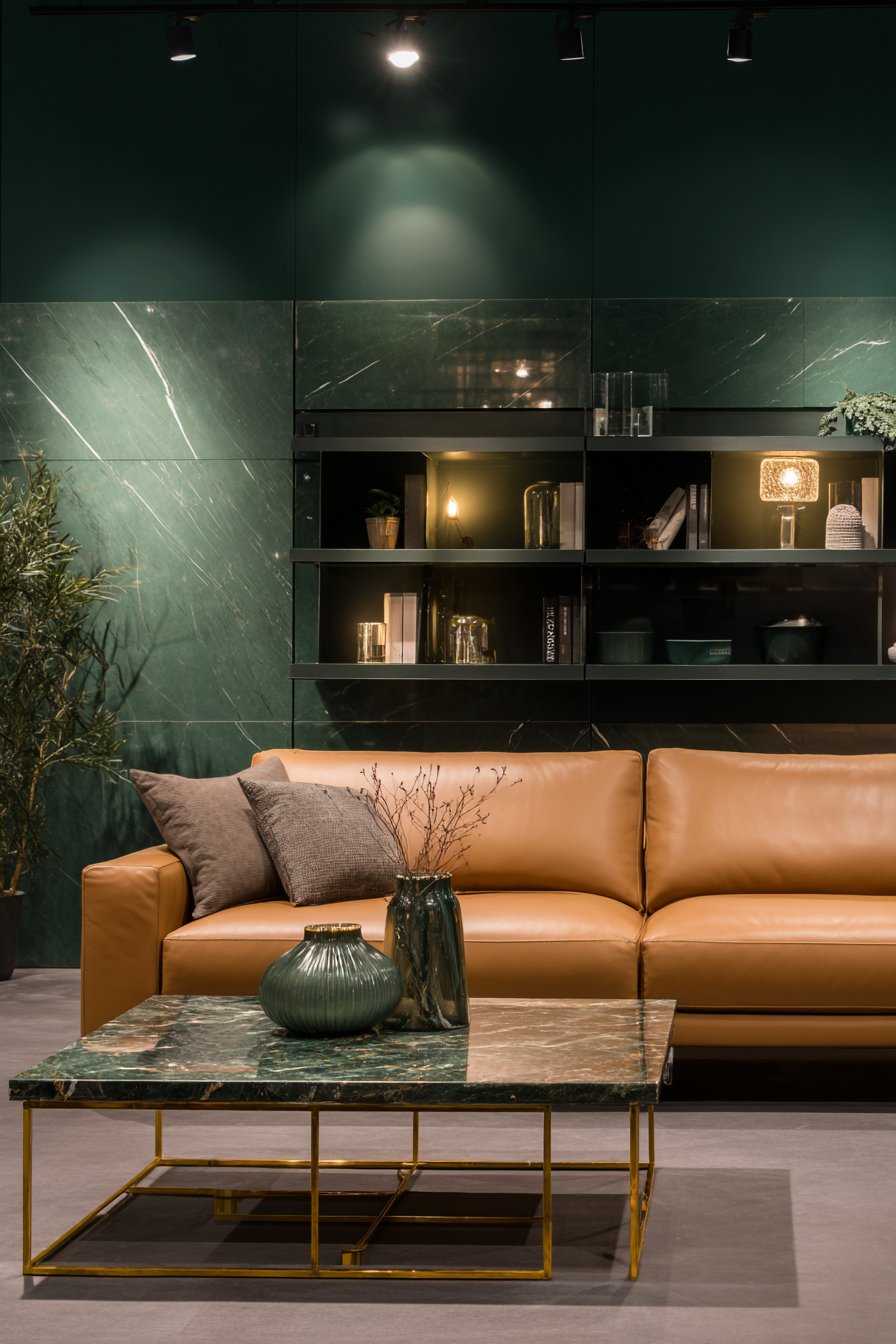
This approach demonstrates that custom solutions work beautifully in small spaces. Built-in storage eliminates the need for freestanding pieces that consume floor area. The dark green cabinetry adds richness without making the room feel smaller. Luxe materials prove that compact doesn’t mean compromising on quality or style.
Key Design Tips:
- Invest in custom built-in storage for maximum space efficiency
- Use rich, deep paint colors on storage units for sophisticated depth
- Select leather upholstery for durability and timeless appeal
- Add luxe materials like marble and brass for elevated aesthetics
- Install track lighting to highlight architectural storage features
- Balance closed and open storage for organization and display
10. Coastal Breeziness with Natural Light Focus
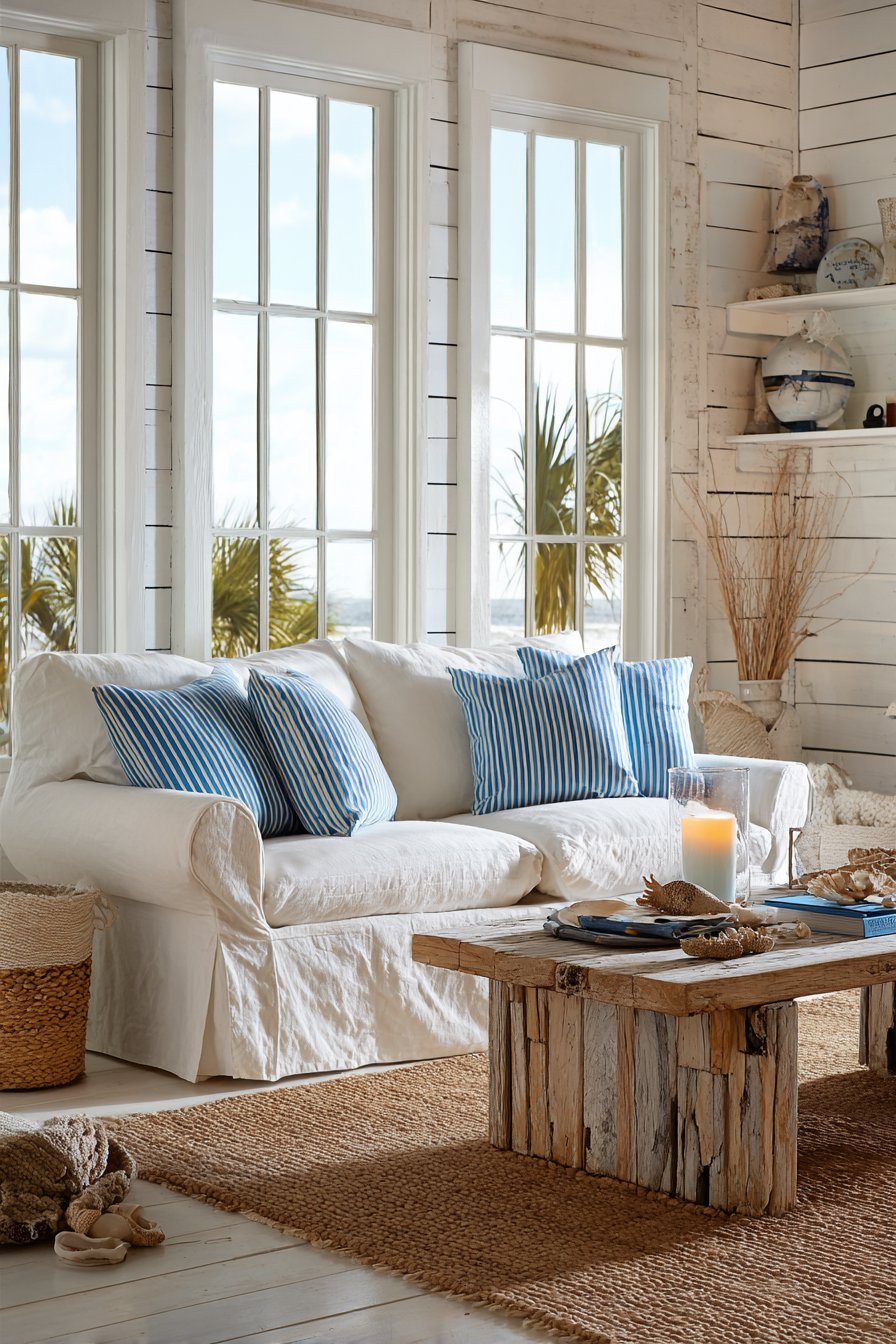
A slipcovered sofa in natural linen positions to maximize views. The casual fabric suits coastal living while offering practical washability. A driftwood coffee table brings organic sculptural form to the space. The weathered wood connects indoor spaces to natural coastal elements.
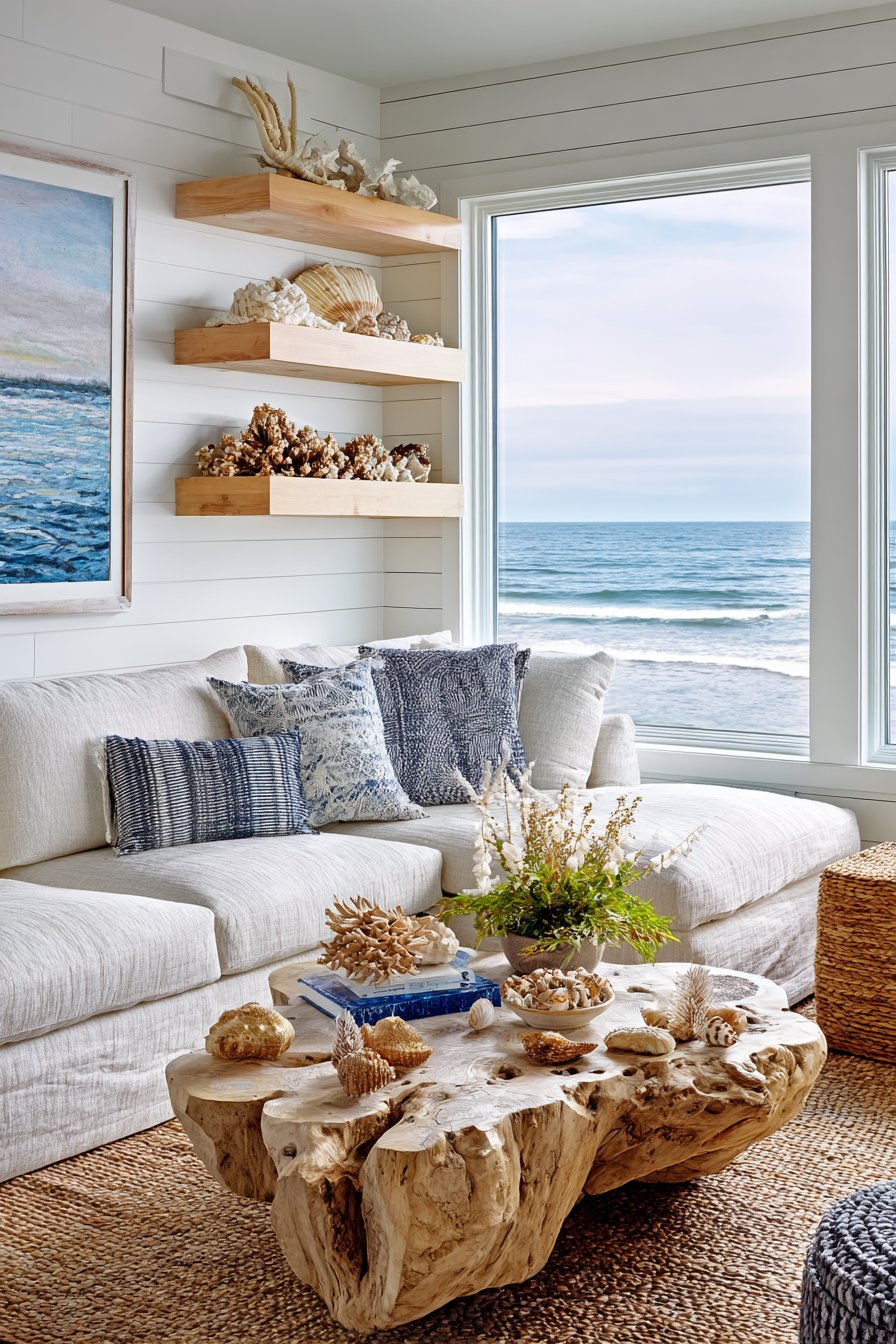
Woven seagrass rug grounds the seating area with organic texture. The natural fiber adds warmth while maintaining the fresh aesthetic. White shiplap walls reflect abundant natural light throughout the room. Blue and white striped accent pillows provide subtle nautical references.
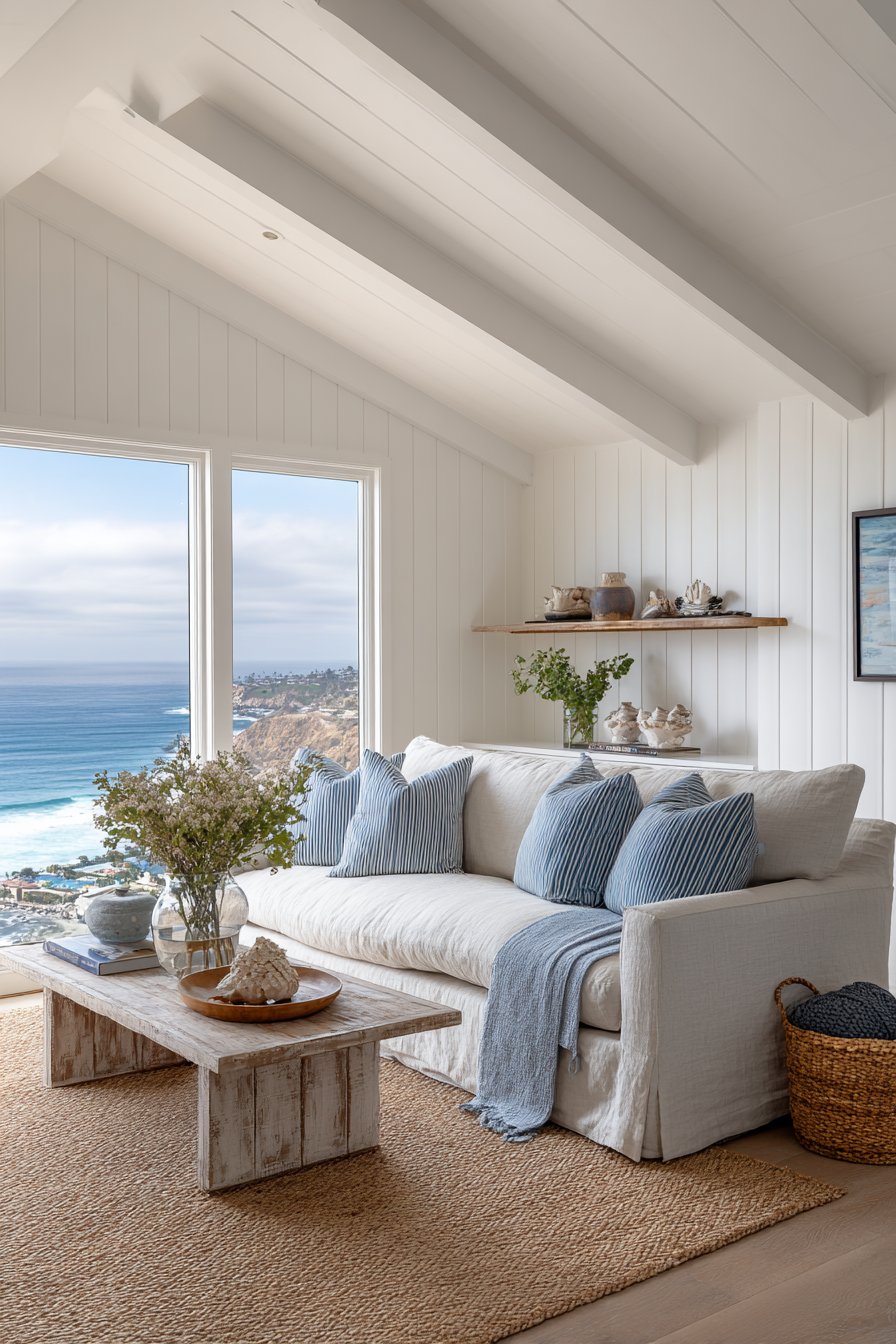
Floating shelves display collected shells and beach finds meaningfully. The curated display adds personal character without cluttering surfaces. Large windows with minimal treatments prioritize ocean or water views. The breezy aesthetic balances casual comfort with spatial constraints.
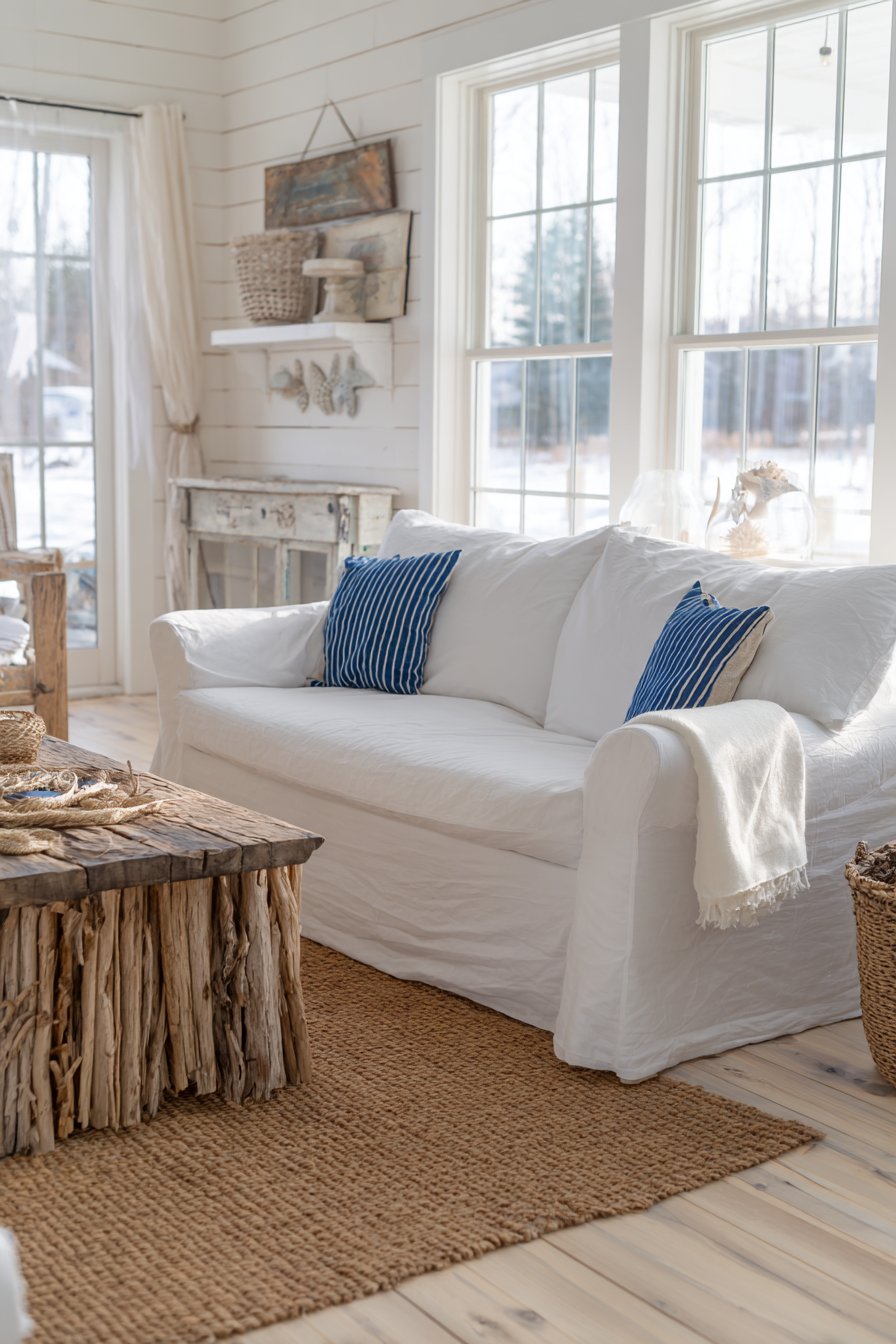
This design proves that coastal style thrives in compact dimensions. Natural materials and light colors create openness and airiness. The washable fabrics address practical concerns of beach living. Fresh, relaxed atmosphere makes the small space feel like a seaside retreat.
Key Design Tips:
- Use slipcovers for easy cleaning in high-use coastal environments
- Incorporate driftwood and natural elements for an authentic coastal character
- Select seagrass or jute rugs for organic texture
- Paint walls white or pale blue to maximize light reflection
- Display collected items on floating shelves for personal touches
- Minimize window treatments to prioritize natural views and light
11. Modern Farmhouse Blend with Industrial Accents
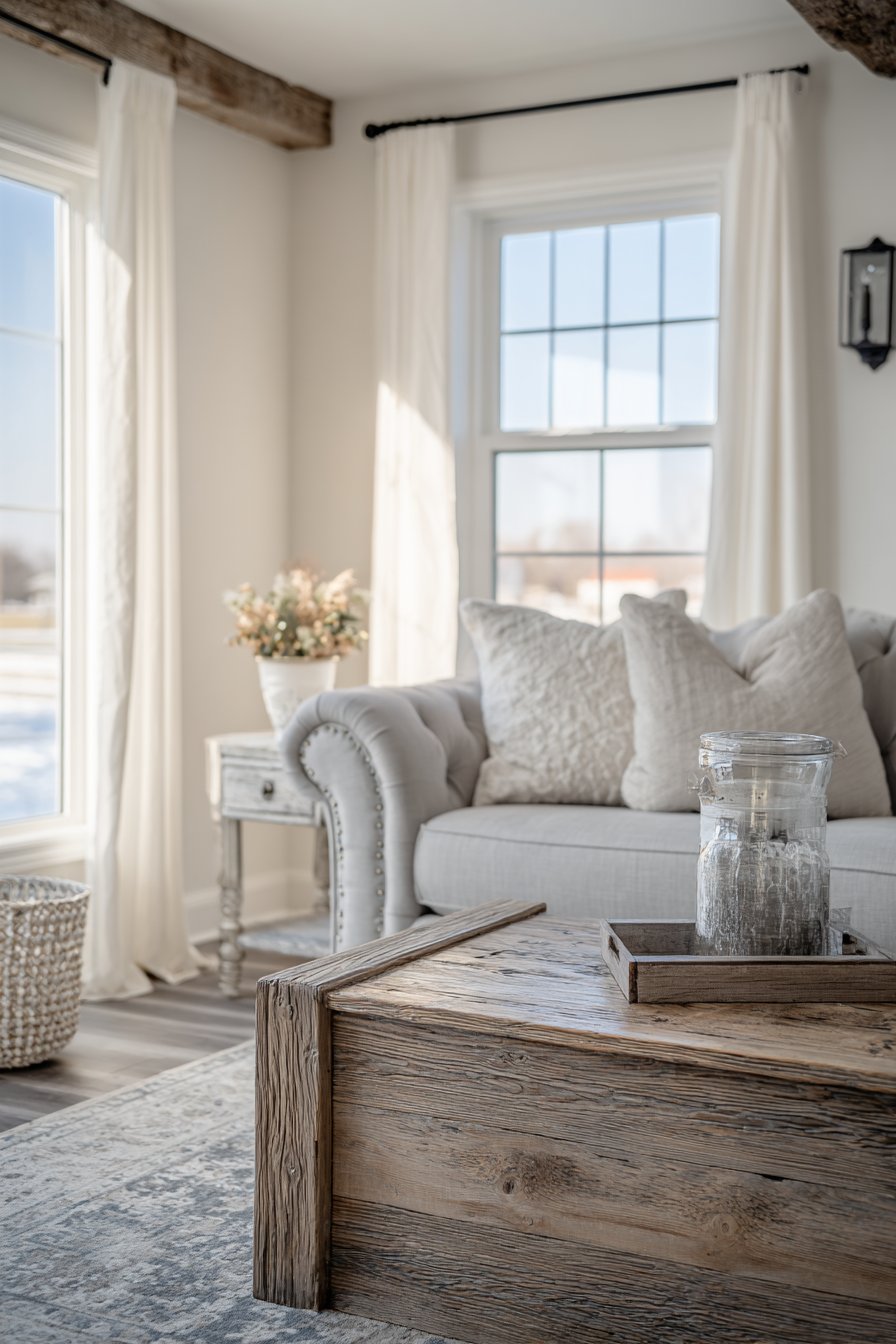
A tufted grey sofa with nailhead trim sits beneath simple windows. White cotton curtains provide softness without blocking valuable natural light. A reclaimed wood coffee table showcases visible knots and grain variations. The rustic character adds warmth to the contemporary furniture pieces.
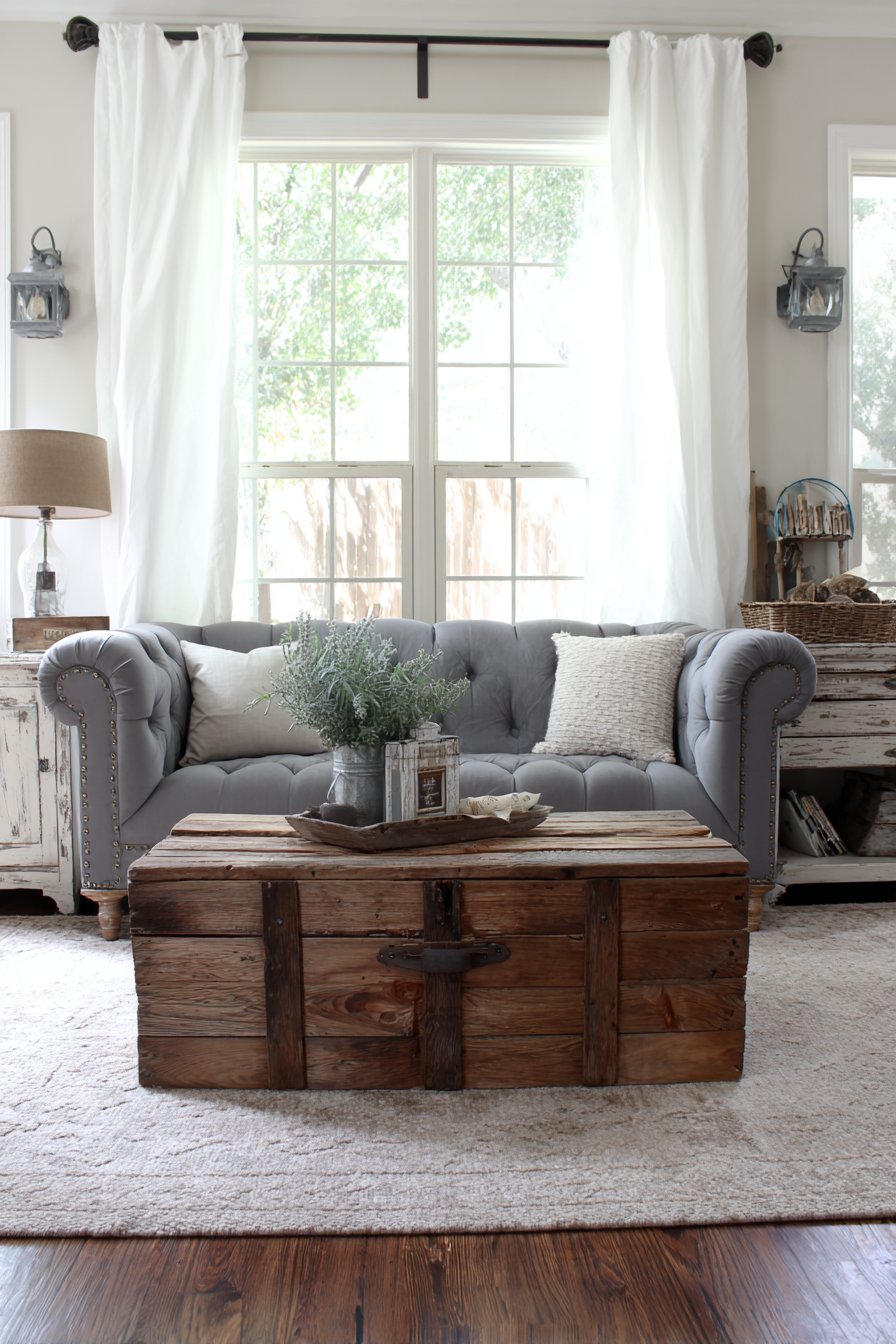
A vintage-inspired area rug defines the seating zone with pattern. The design bridges rustic and refined elements cohesively. Galvanized metal wall sconces provide industrial edge alongside a distressed white side table. The mixed finish metals add character without overwhelming the compact space.
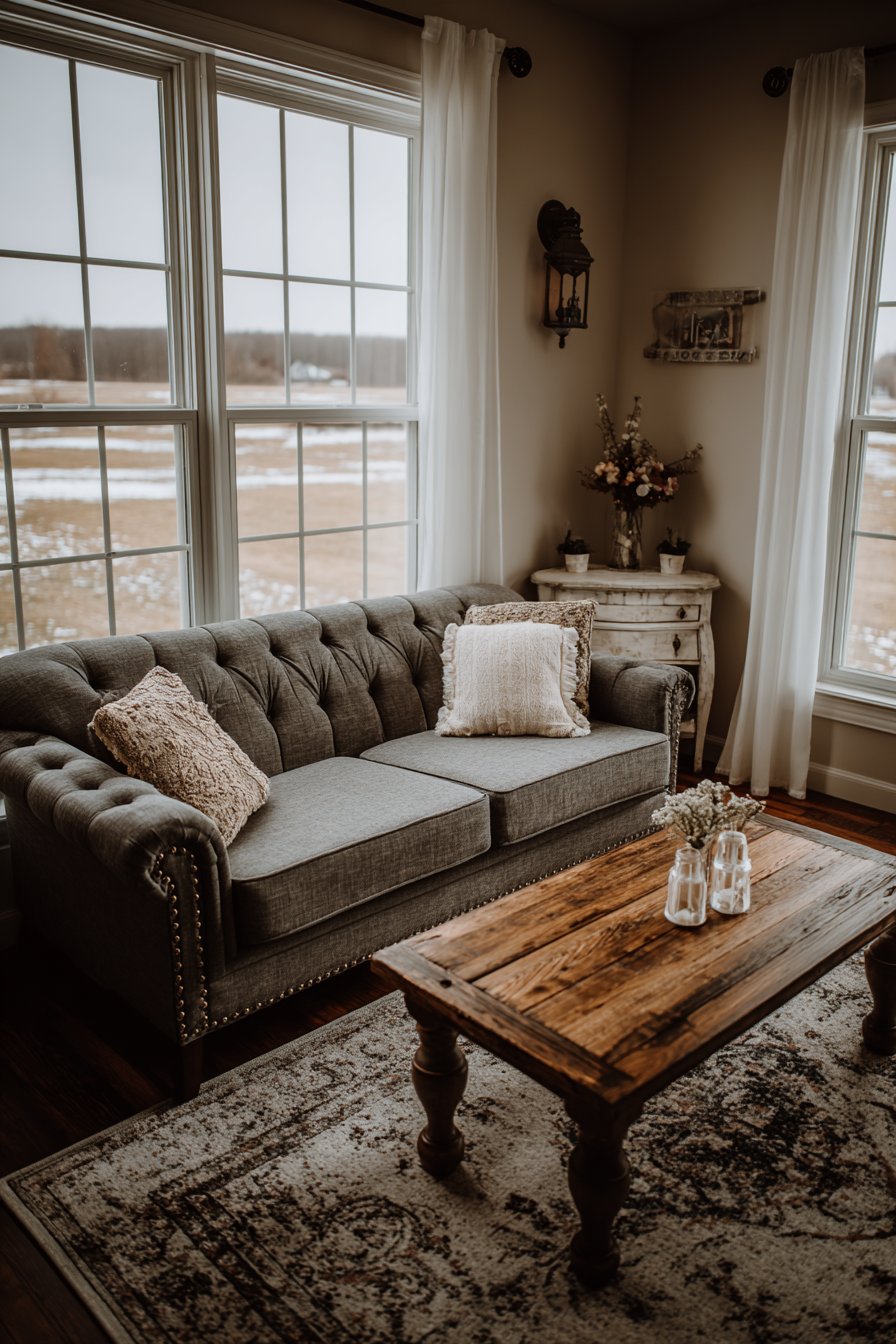
Natural morning light streams across the carefully curated elements. The modern farmhouse aesthetic celebrates imperfection and patina. Weathered and refined materials create appealing tension throughout the design. The space feels collected rather than decorated from a catalog.
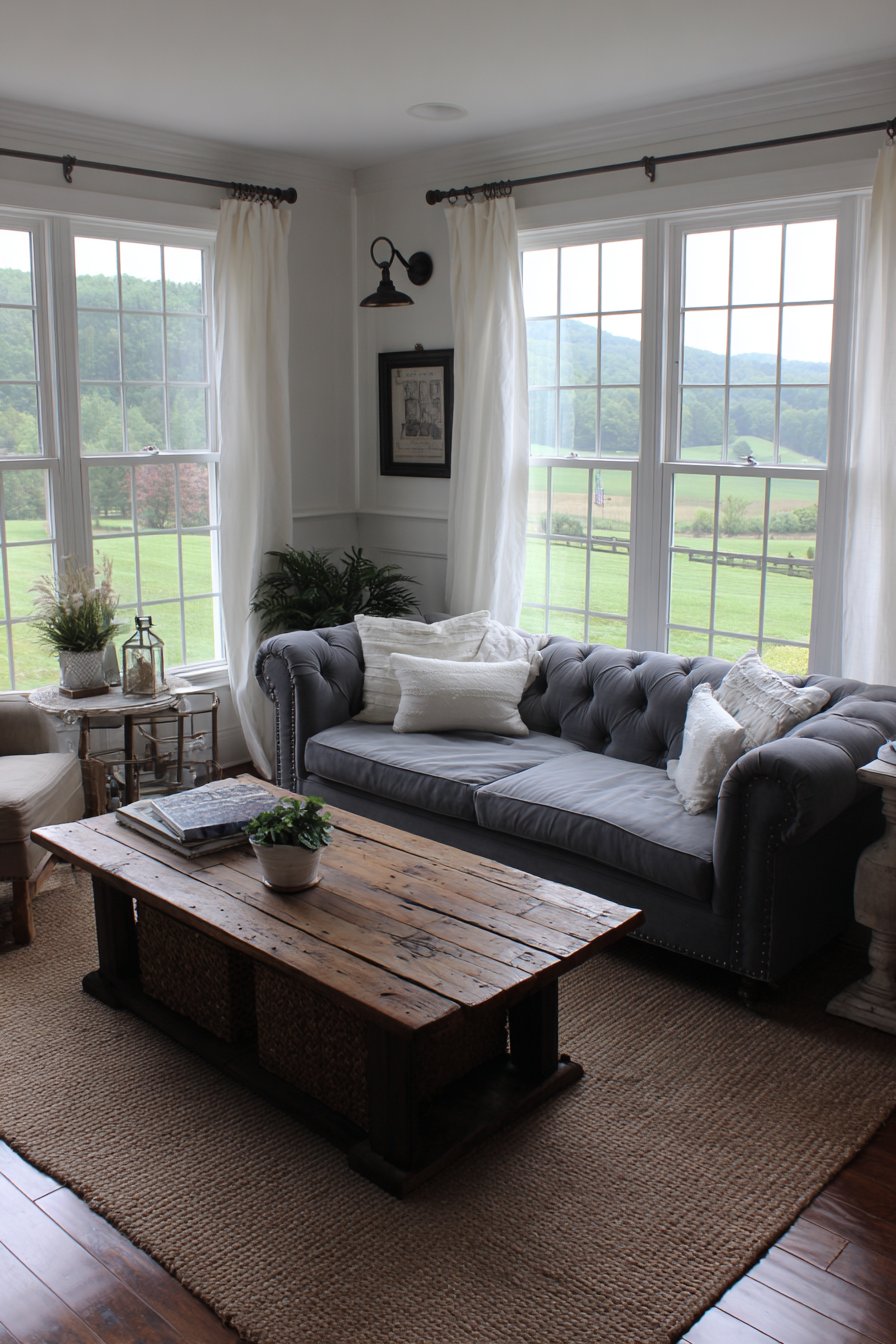
This approach demonstrates farmhouse charm through accent pieces rather than oversized furniture. Strategic selections maintain the style without sacrificing precious floor area. The blend of industrial and rustic elements creates layered visual interest. Quality materials ensure the small space feels intentional and well-designed.
Key Design Tips:
- Select tufted furniture with nailhead trim for farmhouse detailing
- Use reclaimed wood pieces for authentic rustic character
- Install wall sconces to save floor space for table lamps
- Mix metal finishes like galvanized and distressed painted pieces
- Choose simple cotton curtains that filter without blocking light
- Layer vintage-inspired textiles to add pattern and warmth
12. Urban Industrial with Exposed Architecture
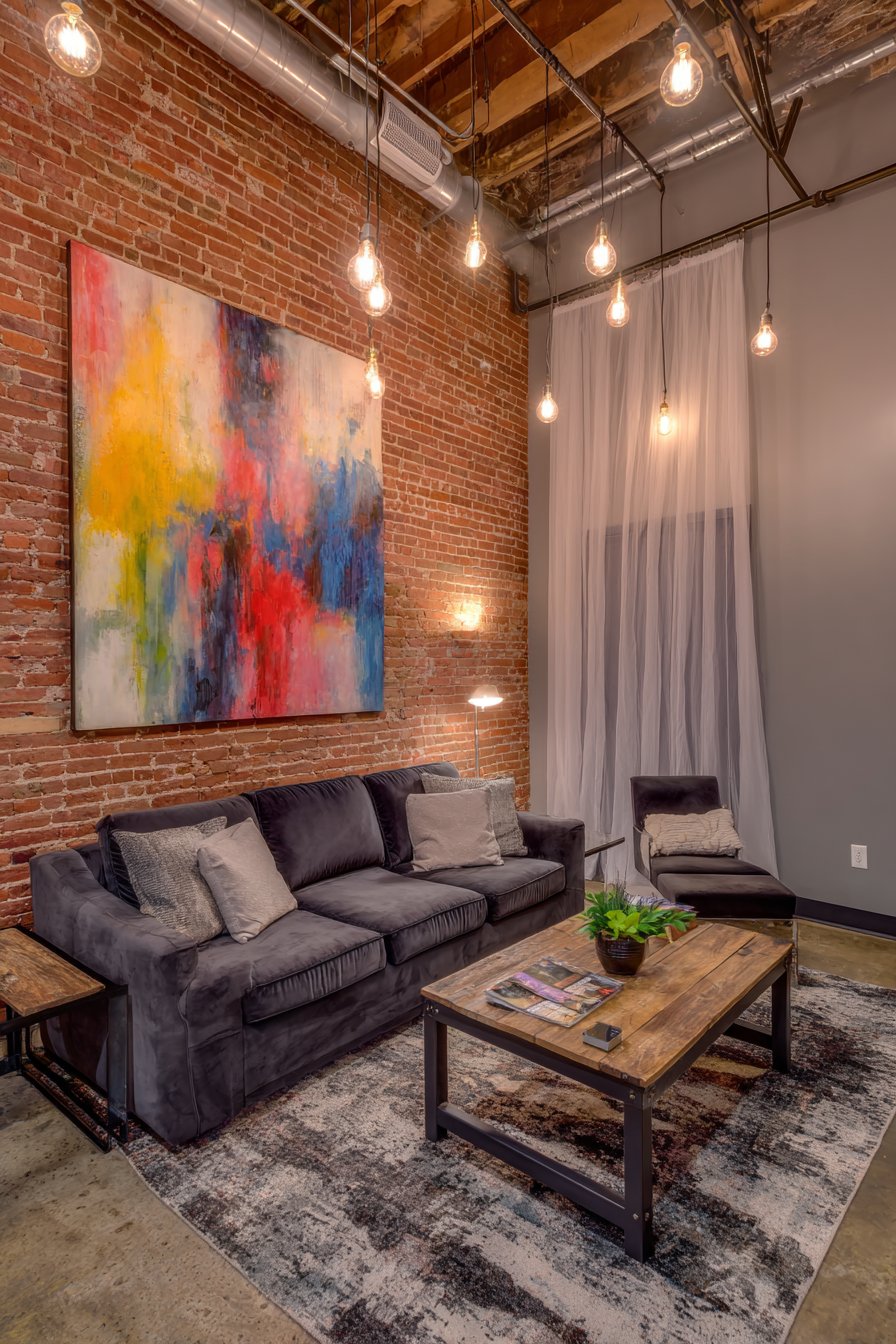
An exposed brick accent wall provides textural backdrop and character. The raw architectural element defines the space without additional decoration. A sleek charcoal velvet sofa offers refined contrast to industrial textures. The plush fabric softens the harder urban materials beautifully.
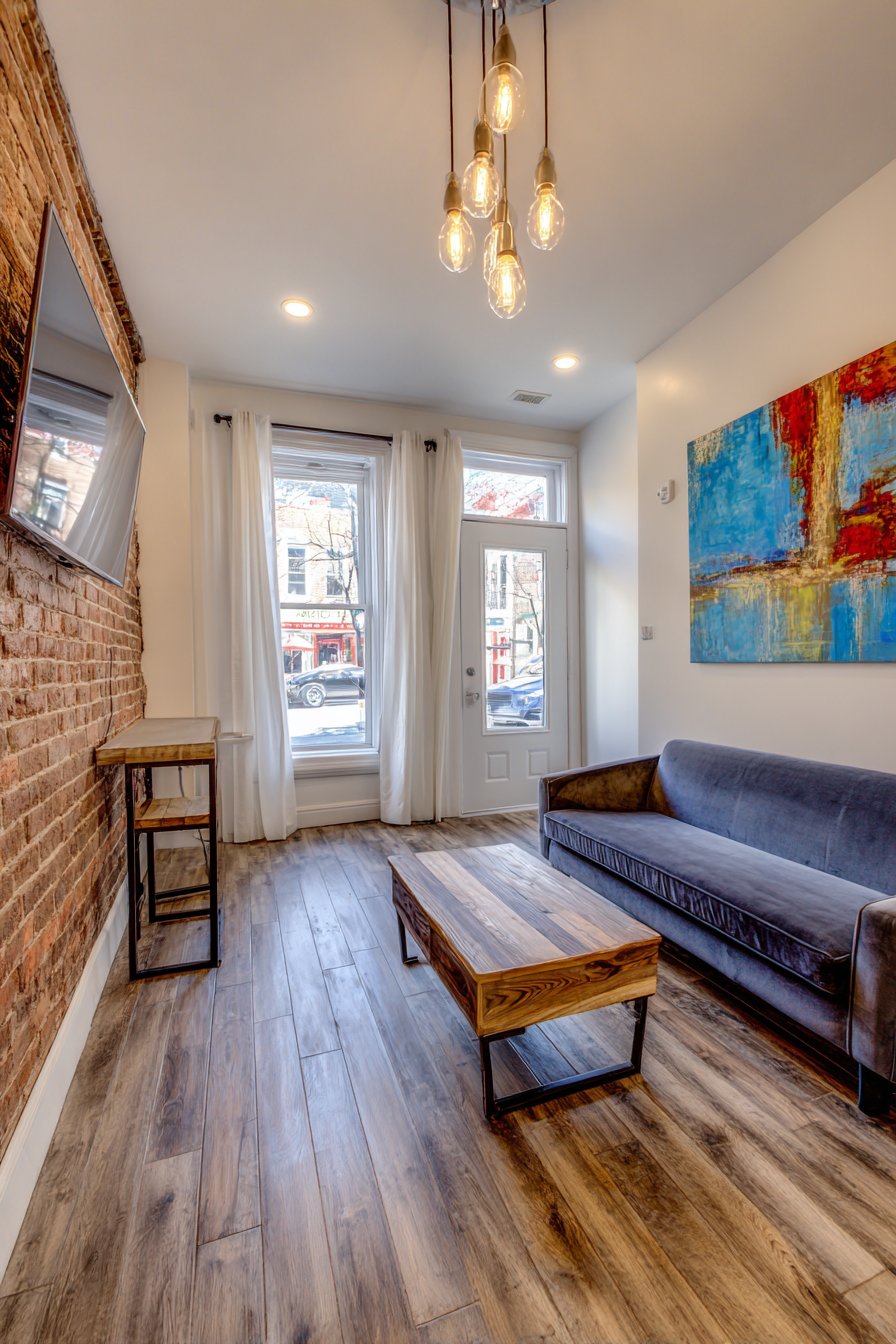
An industrial-style coffee table combines metal base with reclaimed wood top. The mixed materials bridge contemporary comfort and urban edge. Edison bulb pendant lights suspend at varying heights overhead. The vertical lighting creates visual interest without consuming floor space.
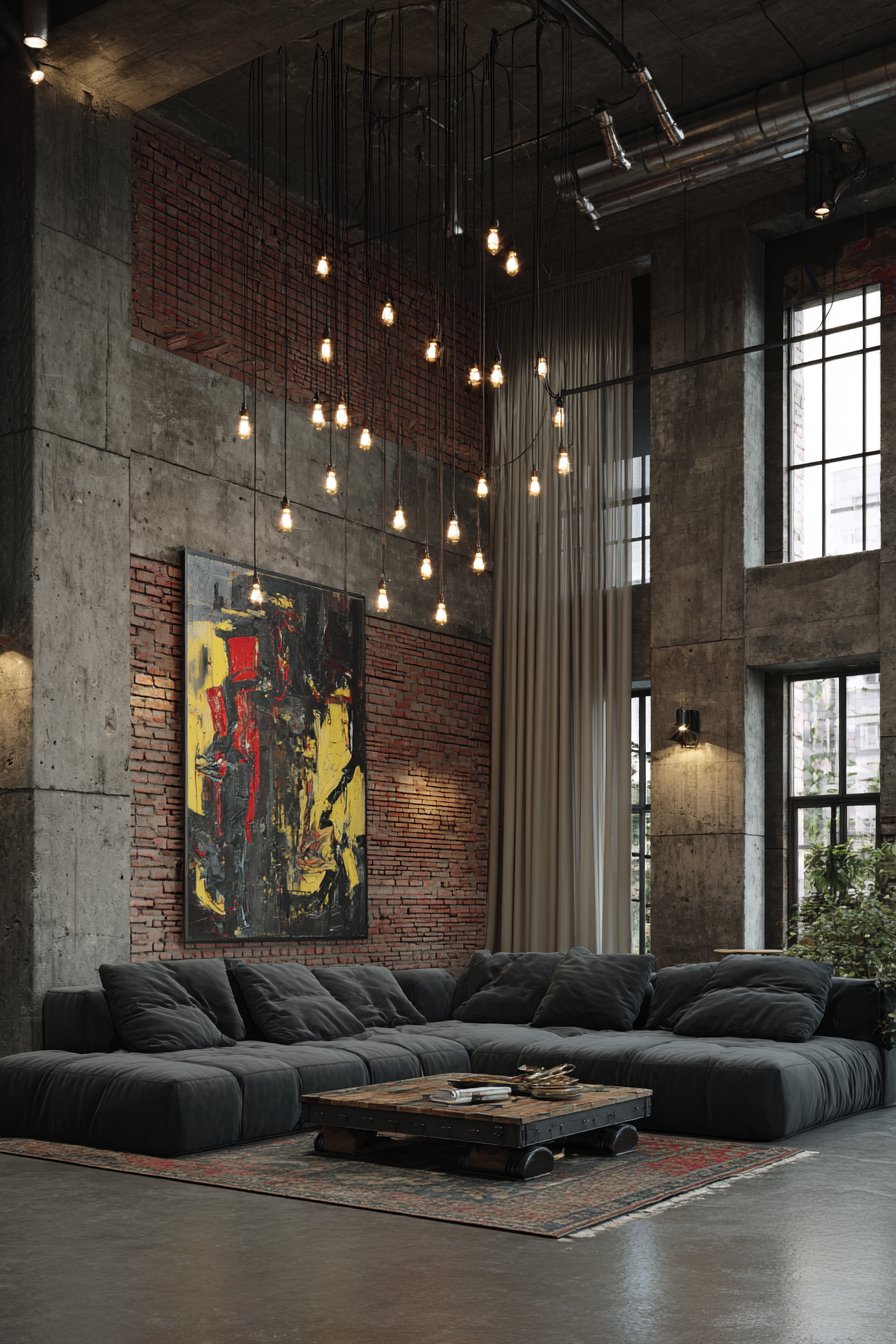
A large abstract painting in bold colors provides an unexpected focal point. The artwork adds personality and sophistication to the industrial foundation. Sheer curtains soften the raw edge while maintaining abundant natural illumination. The balanced approach prevents the space from feeling too stark or cold.
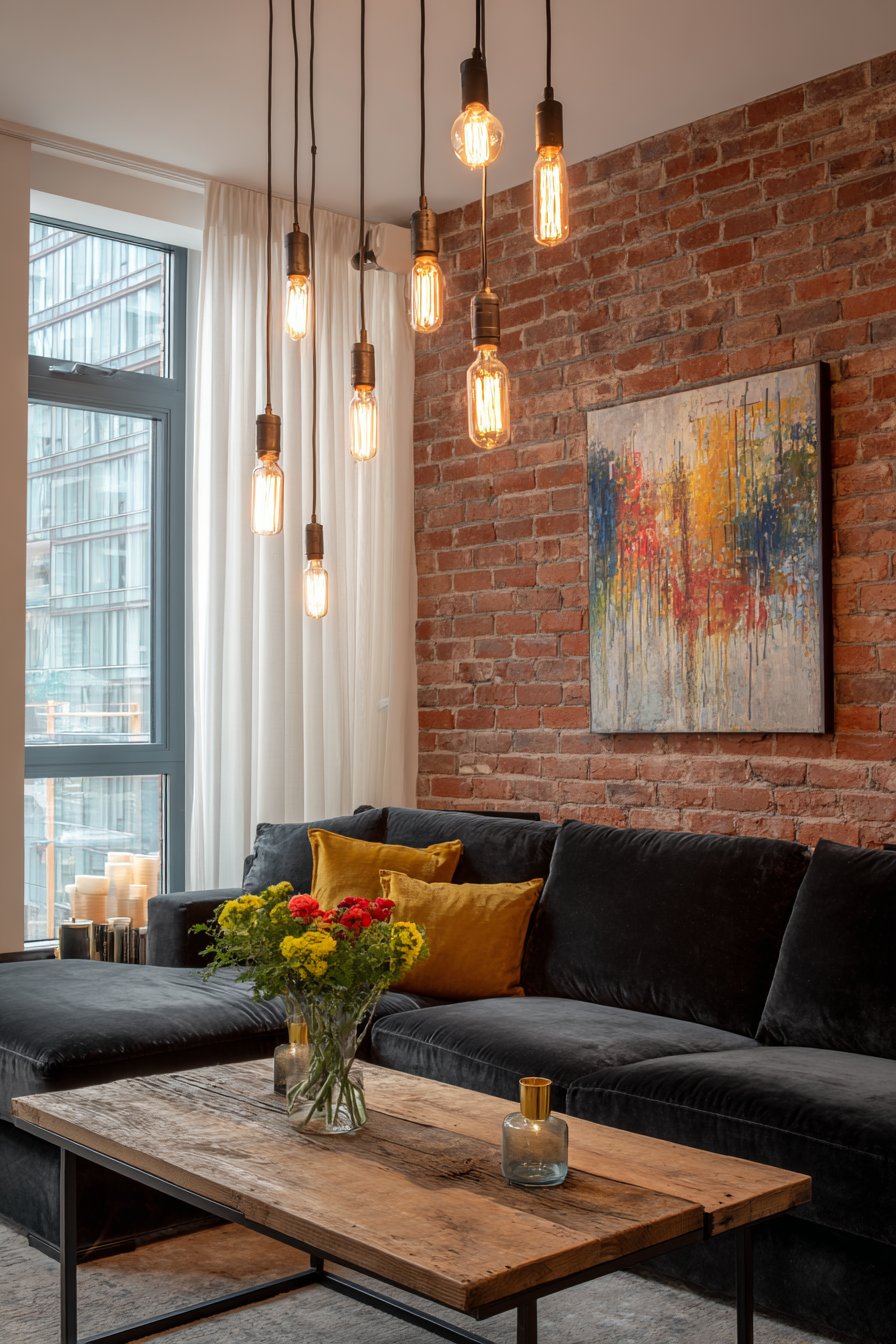
This urban design successfully merges raw architectural elements with refined furnishings. The compact setting benefits from the vertical emphasis of exposed brick and hanging lights. Multiple light sources interact beautifully with varied surface textures. The space demonstrates that industrial style works effectively in small urban apartments.
Key Design Tips:
- Celebrate existing exposed brick rather than covering architectural character
- Balance industrial elements with refined fabrics like velvet
- Hang pendant lights at varying heights for vertical visual interest
- Add bold artwork to soften and personalize industrial foundations
- Use sheer curtains to maintain light while adding softness
- Mix reclaimed wood with metal for authentic industrial aesthetic
13. Traditional Elegance in Compact Proportions
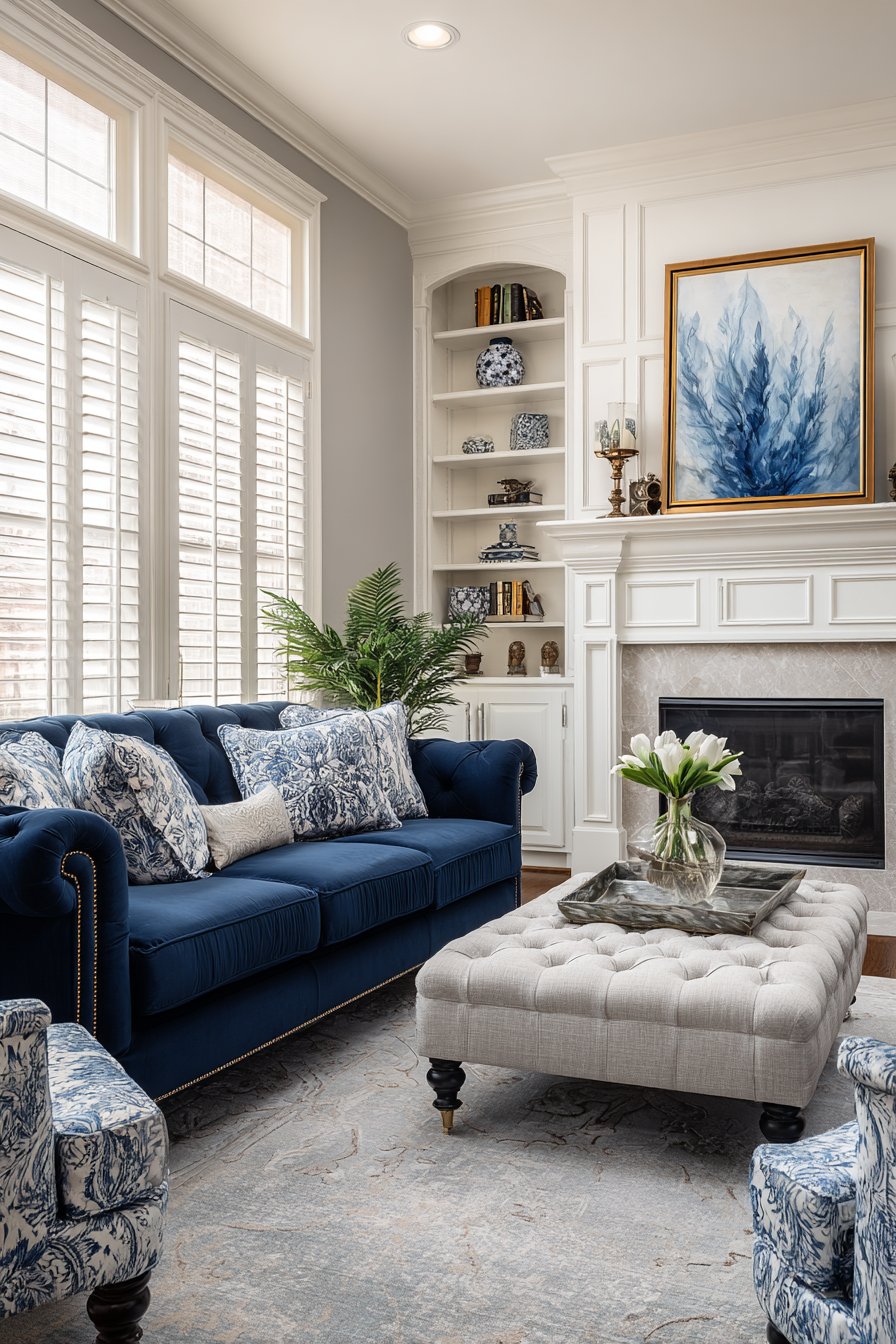
A classic rolled-arm sofa in timeless navy blue faces a fireplace. The white painted surround creates crisp architectural detail. Matching wingback chairs in complementary pattern flank the fireplace symmetrically. The traditional arrangement maintains formality within the compact dimensions.
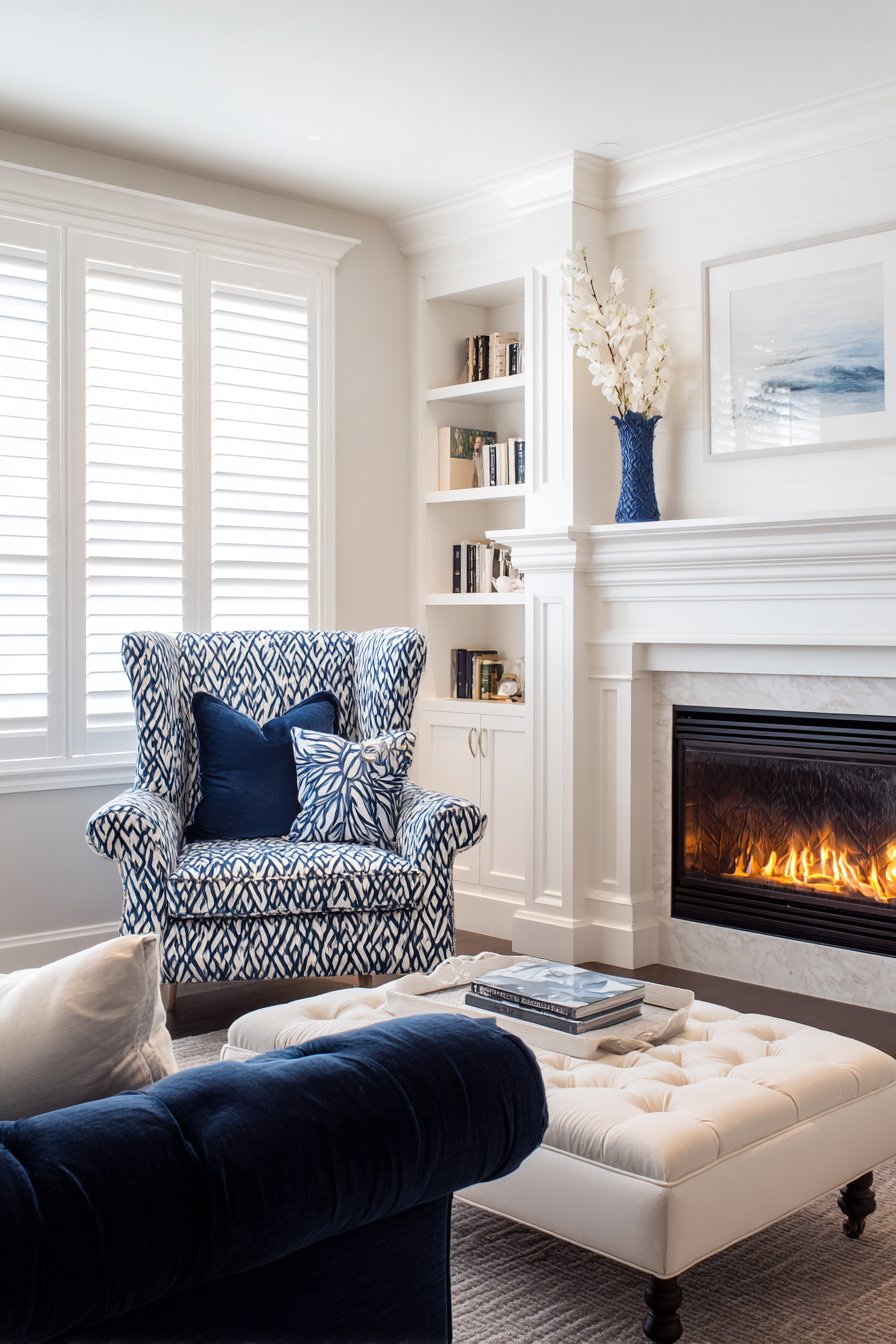
A tufted ottoman serves dual purposes as coffee table and seating. This flexibility supports different gathering configurations effectively. Built-in bookshelves maximize vertical storage along adjacent walls. The floor-to-ceiling shelving houses books and decorative objects organizationally.
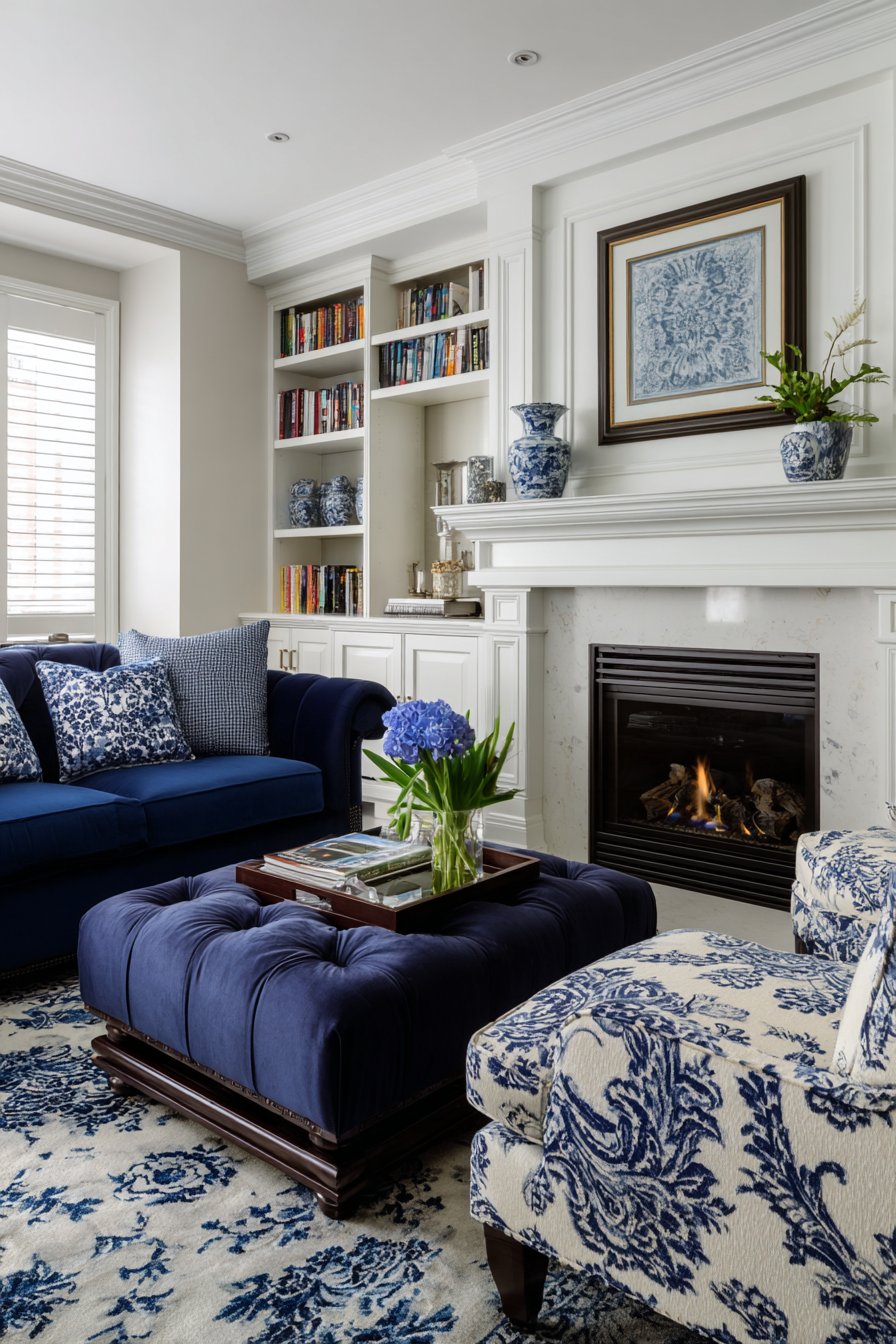
Natural afternoon light filters through plantation shutters with adjustable slats. The classic window treatment offers privacy control while maintaining style. The traditional design elements scale appropriately to suit the smaller footprint. Quality fabrics and classic silhouettes create lasting elegance.
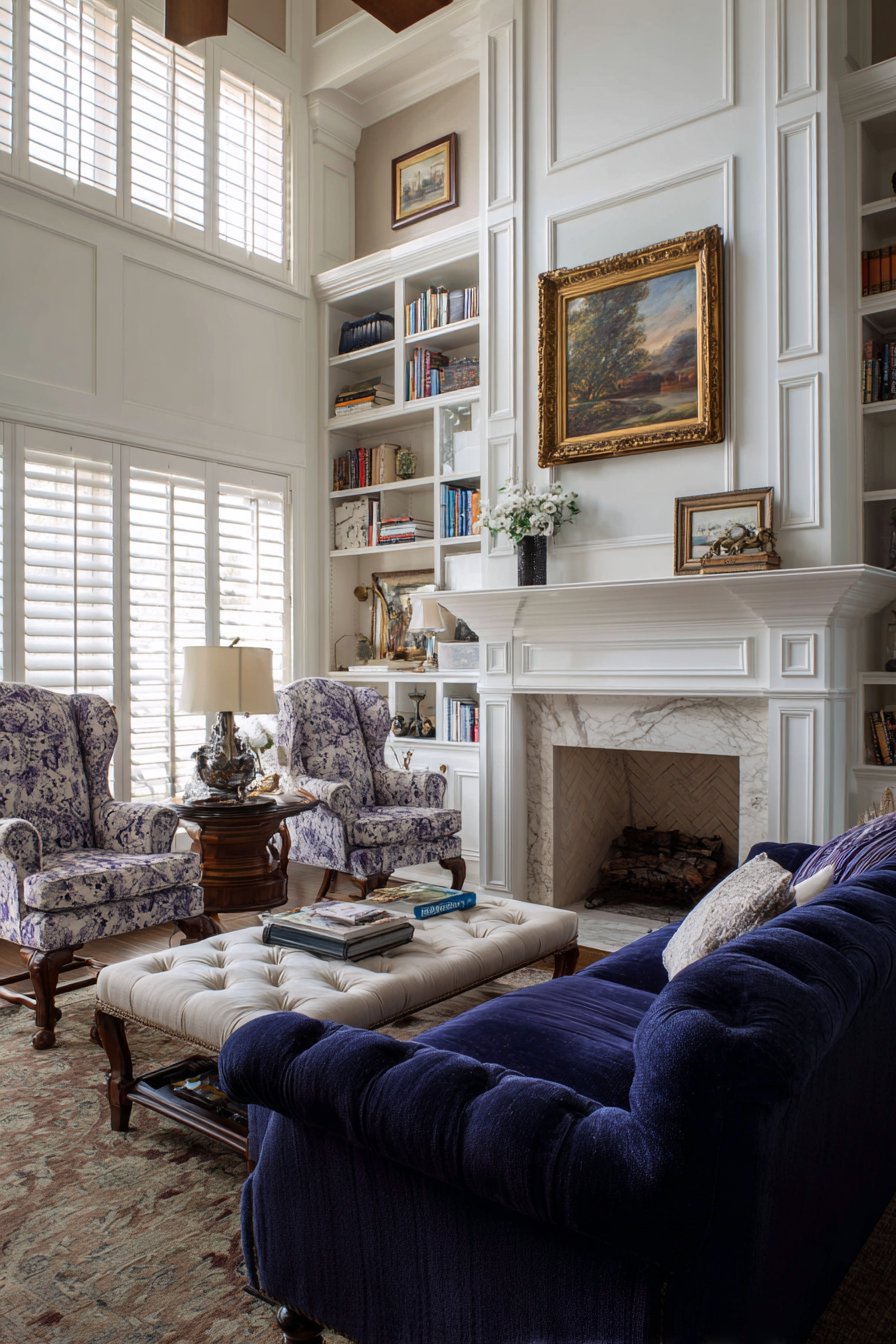
This approach proves traditional style works beautifully in compact spaces. Properly scaled furniture maintains comfort without overwhelming the room. Vertical storage solutions replace bulky freestanding cabinets effectively. The timeless aesthetic ensures the small space never feels trendy or dated.
Key Design Tips:
- Choose rolled-arm sofas in classic fabrics for traditional foundation
- Use matching pairs of chairs for symmetrical traditional arrangements
- Select tufted ottomans that serve multiple functions
- Install built-in bookshelves to maximize vertical storage capacity
- Add plantation shutters for classic window treatment with light control
- Scale traditional furniture appropriately for compact room dimensions
14. Monochromatic Sophistication Through Texture
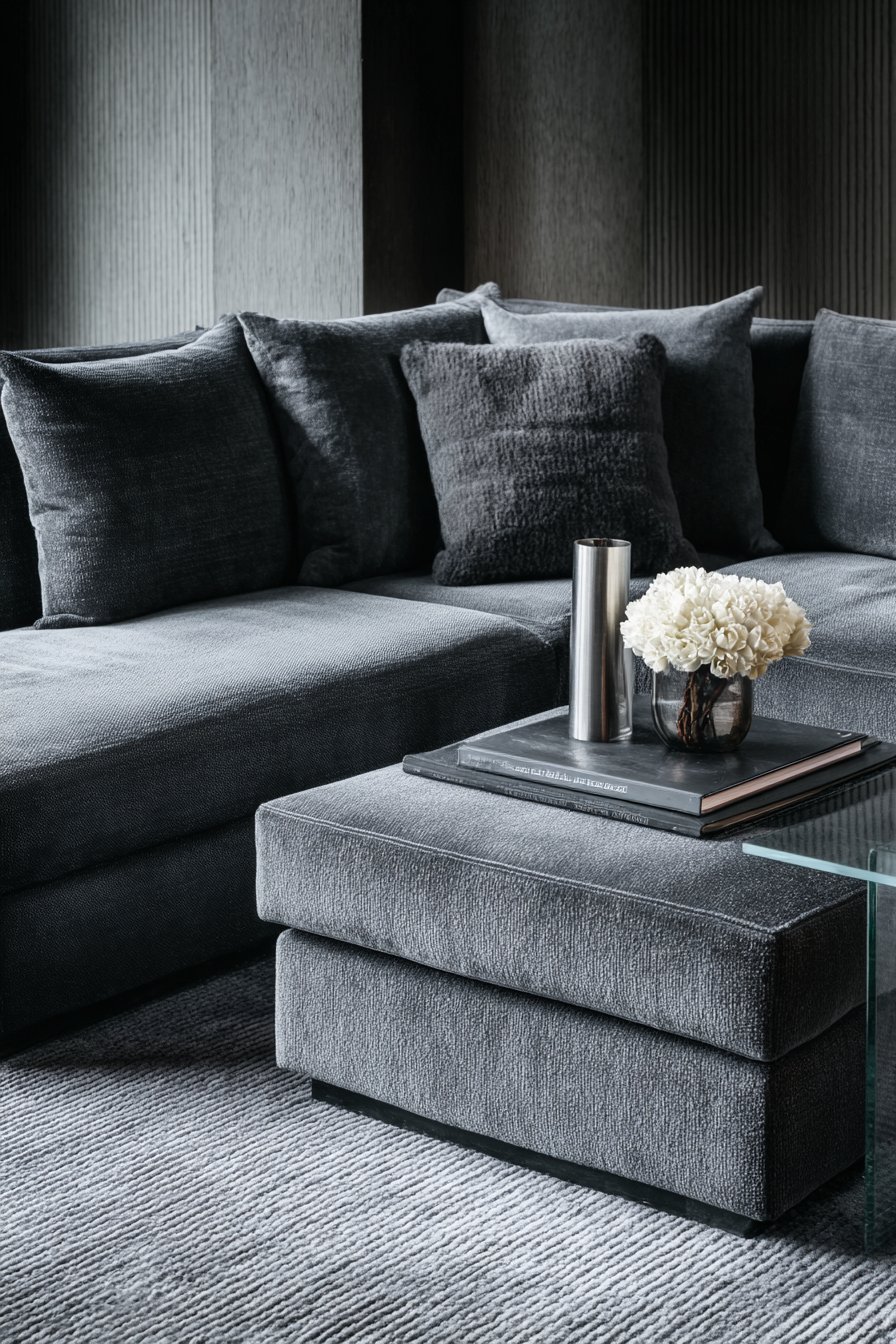
The entire space executes in shades of grey from silver to charcoal. A mid-grey sectional features clean modern lines fitted precisely to room dimensions. The monochromatic palette creates cohesion and visual expansion through continuity. A glass coffee table maintains sightlines while providing necessary function.
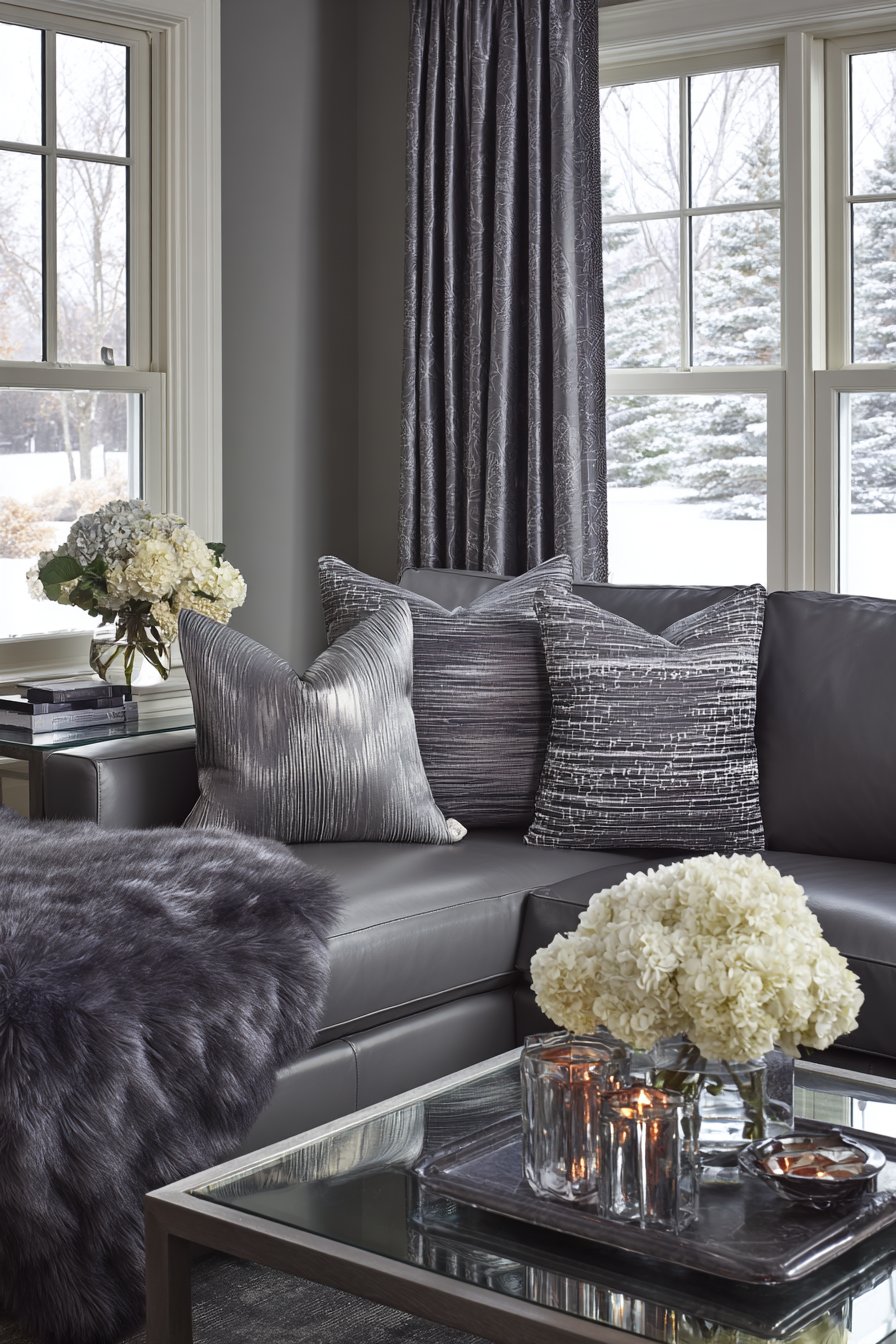
Various textures including nubby linen, smooth leather, and plush velvet create interest. The textural variation prevents the single-color palette from feeling flat or boring. Strategic accent lighting highlights the subtle tonal variations throughout the space. The sophisticated approach uses texture rather than color for depth.
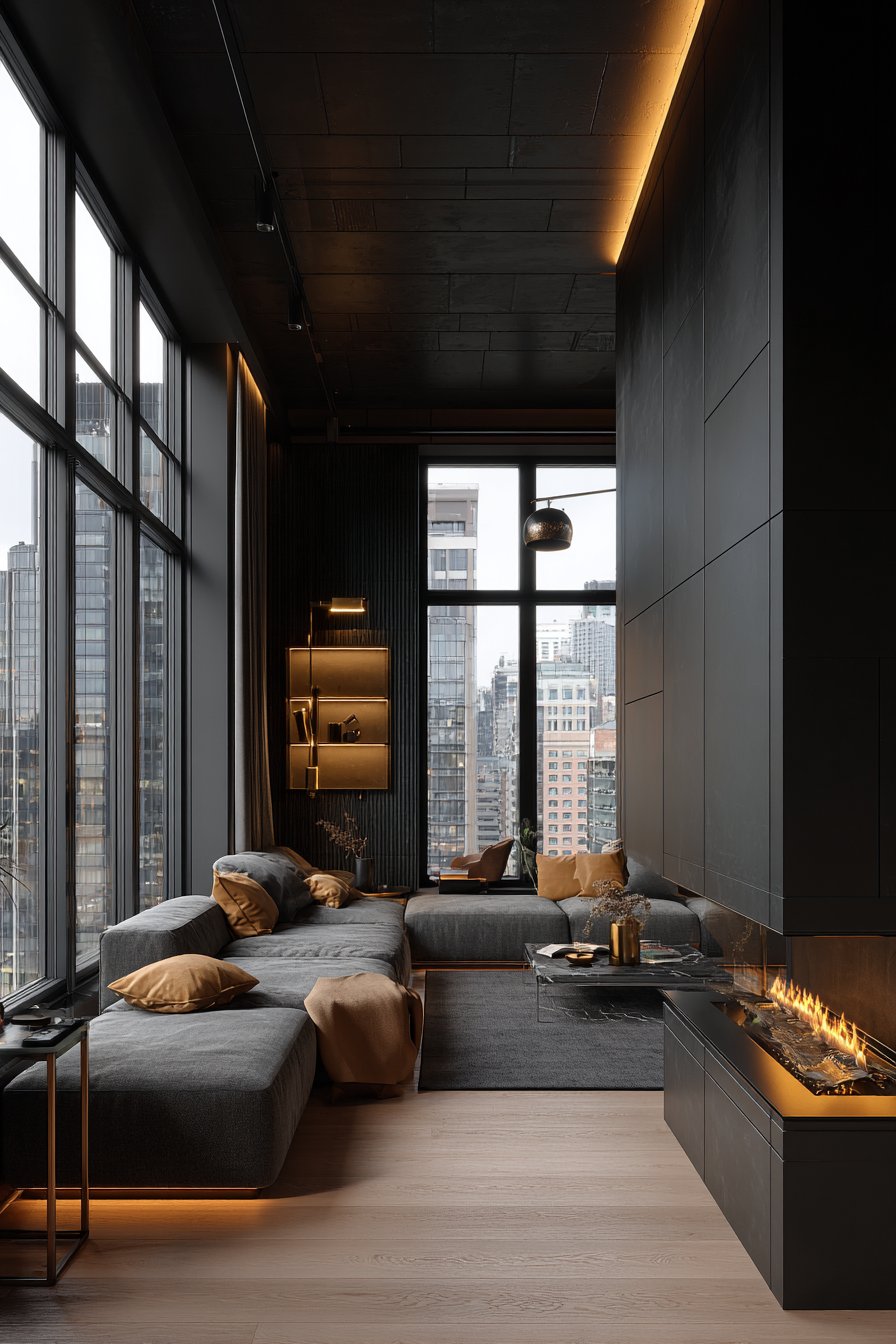
The fitted sectional maximizes seating without appearing oversized. The precise proportions demonstrate careful spatial planning and measurement. Glass surfaces preserve transparency across the compact dimensions. The refined material selection elevates the monochromatic scheme beyond simple minimalism.
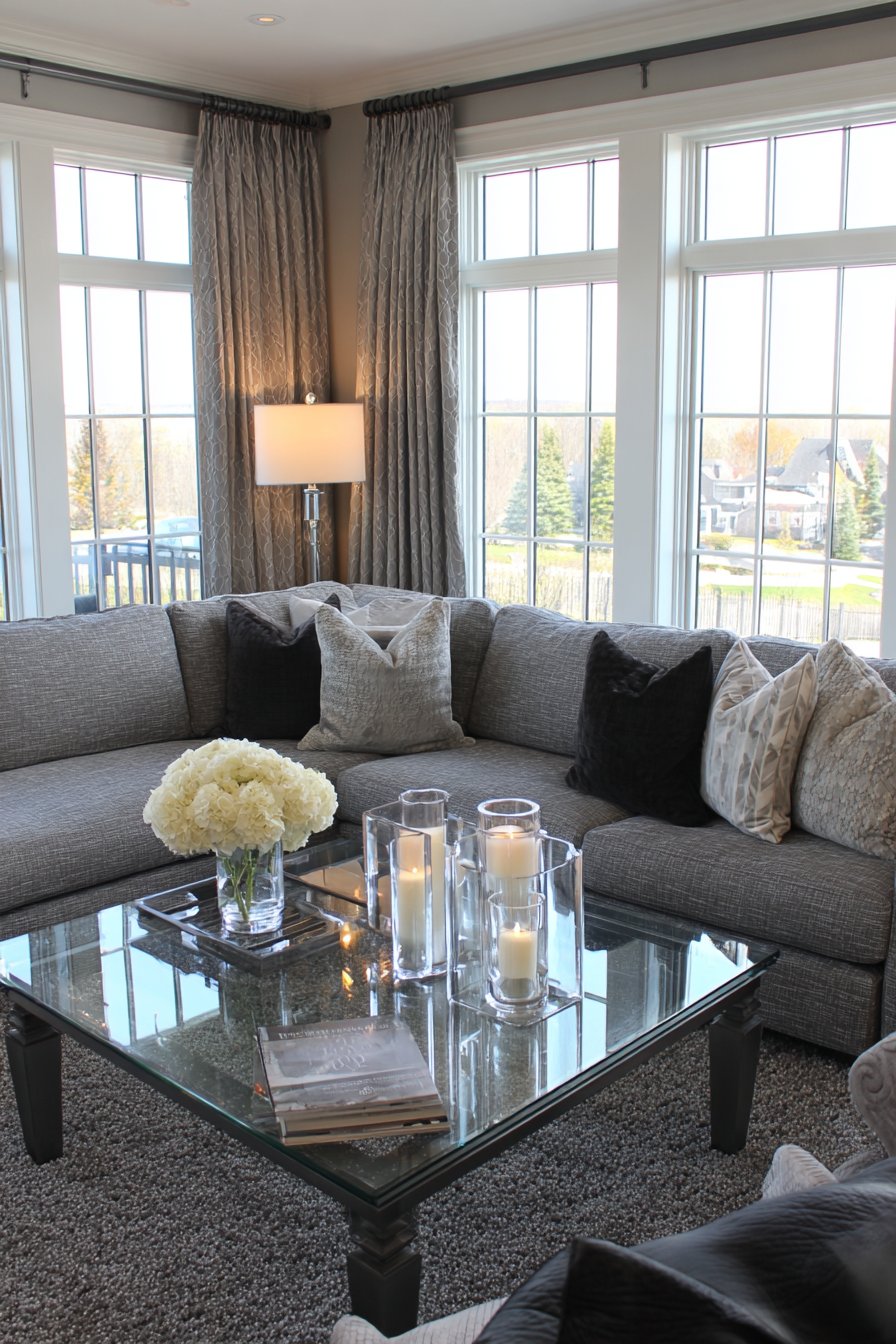
This design proves that single-color palettes work beautifully in small rooms. The tonal variation creates subtle depth and visual interest. Texture becomes the primary tool for creating dimension and appeal. The sophisticated result demonstrates advanced understanding of color and material relationships.
Key Design Tips:
- Select 5-7 tonal variations within a single color family
- Layer multiple textures to create depth without color contrast
- Use glass tables to maintain transparency in monochromatic schemes
- Install accent lighting to highlight subtle tonal shifts
- Fit furniture precisely to room dimensions for tailored appearance
- Choose high-quality materials that showcase textural differences
15. Maximalist Bold Pattern with Careful Curation
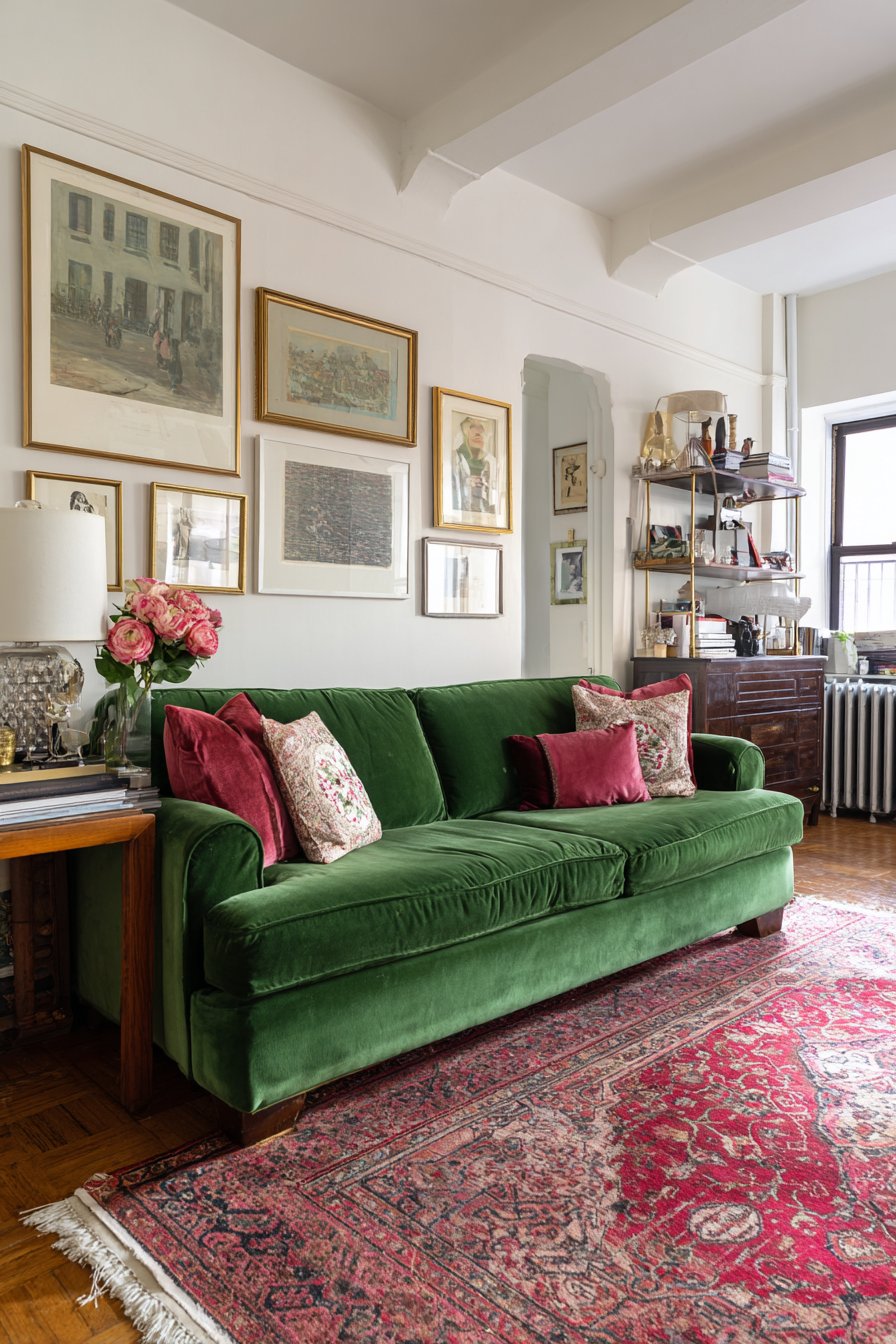
A jewel-toned velvet sofa in emerald green anchors the vibrant space. The bold furniture choice establishes the maximalist foundation confidently. Patterned throw pillows in coordinating colors layer across the seating. The collected appearance demonstrates thoughtful color coordination despite pattern mixing.
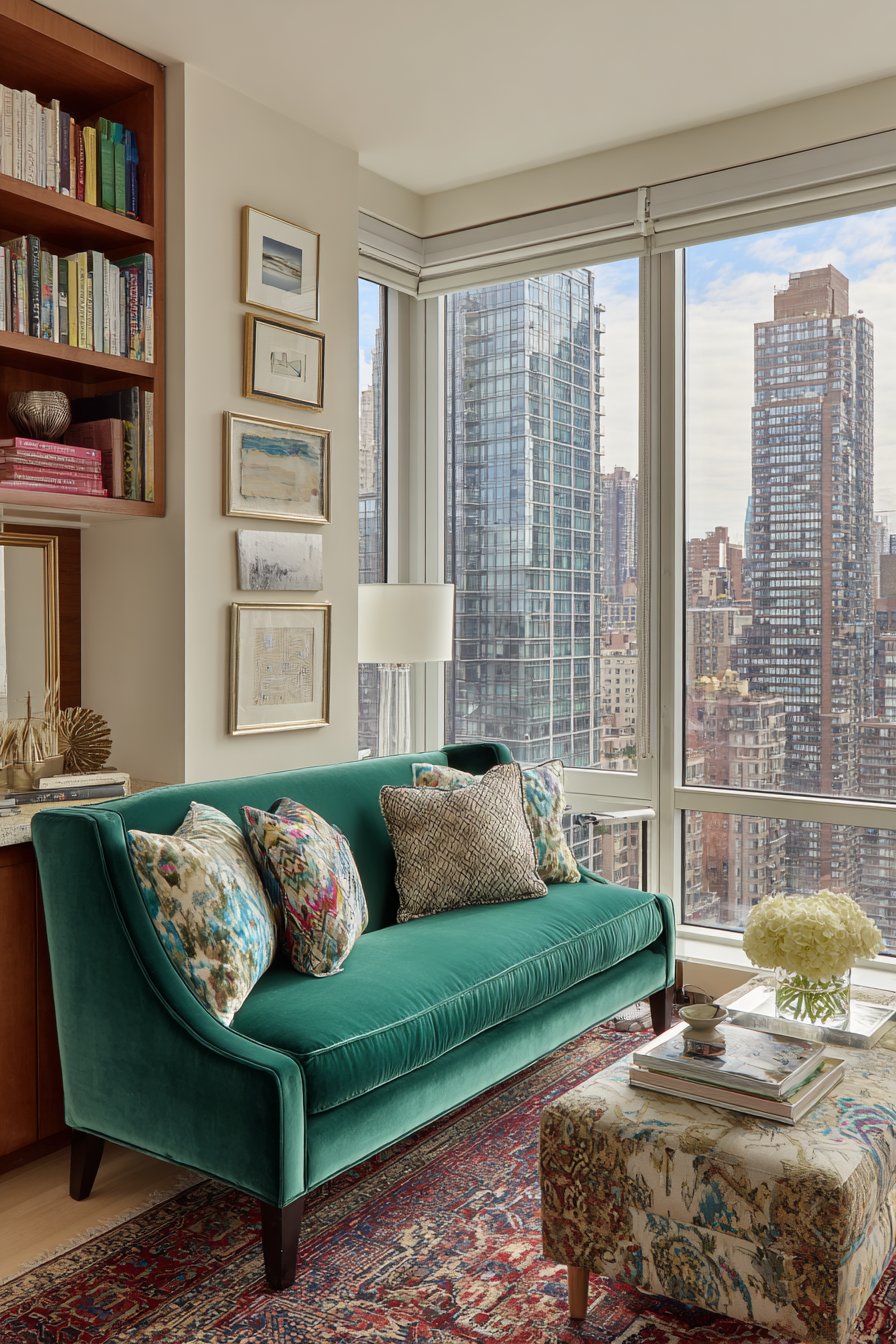
A vintage Persian rug layers over wall-to-wall carpet adding richness. The traditional rug brings history and craftsmanship to the design. Gallery walls display eclectic artwork in mismatched frames at varying heights. The curated collections create personality without descending into visual chaos.
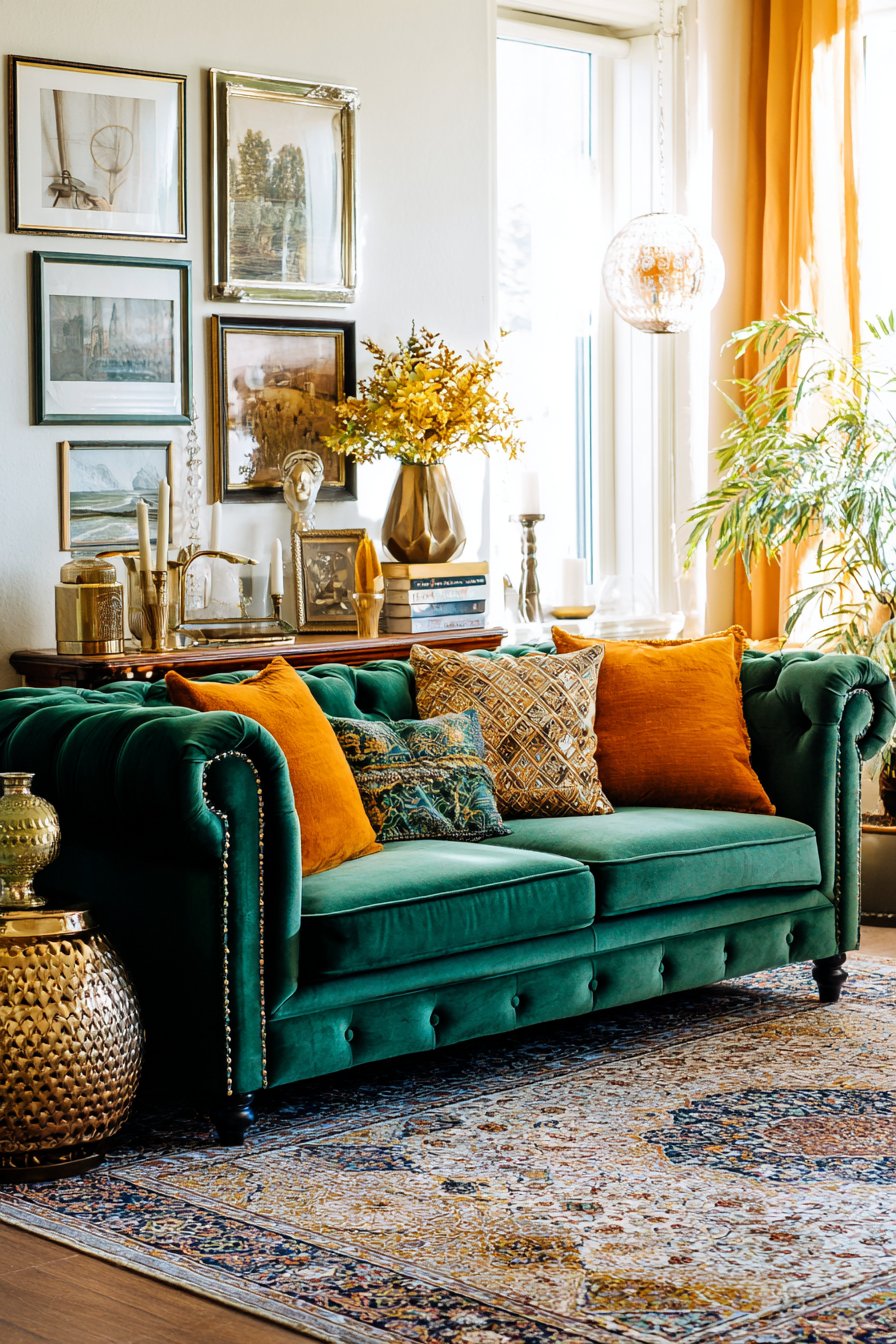
Natural light enhanced by metallic accent pieces creates sparkle throughout. The reflective surfaces add glamour to the richly colored space. Careful editing ensures every bold element earns its place. The maximalist approach requires more curation than minimalist designs but rewards with personality.
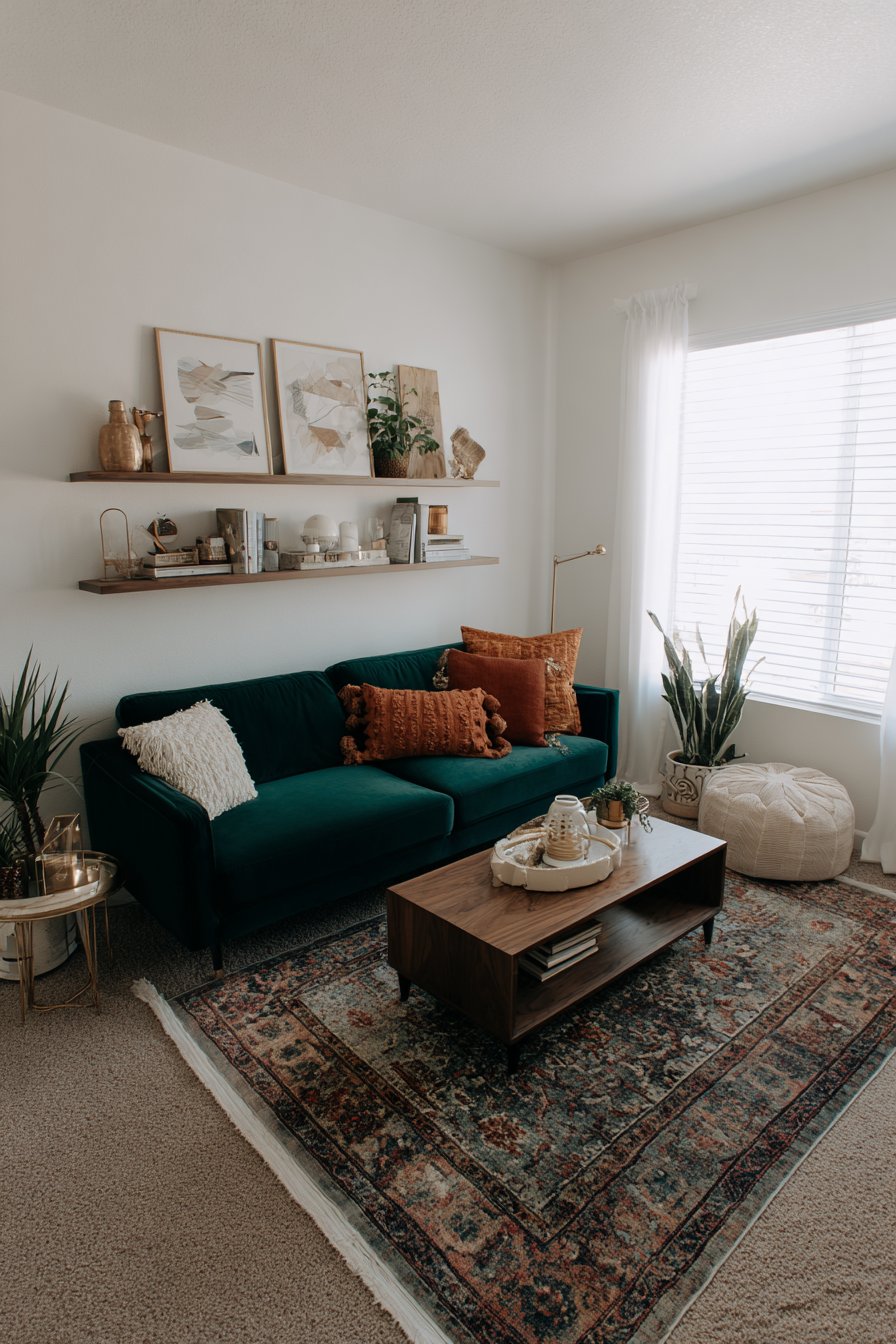
This design demonstrates that bold choices work in compact spaces. The key lies in careful color coordination and thoughtful arrangement. Pattern mixing succeeds when united by a cohesive color story. The space proves that small doesn’t require playing it safe with neutral minimalism.
Key Design Tips:
- Establish a cohesive color story before mixing patterns
- Layer rugs to add richness without permanent installation
- Curate collections carefully to avoid visual clutter
- Use metallic accents to add light-reflecting sparkle
- Create gallery walls with varied frame sizes and styles
- Edit ruthlessly to ensure every maximalist element serves the design
16. Entertainment-Optimized Layout with Hidden Technology
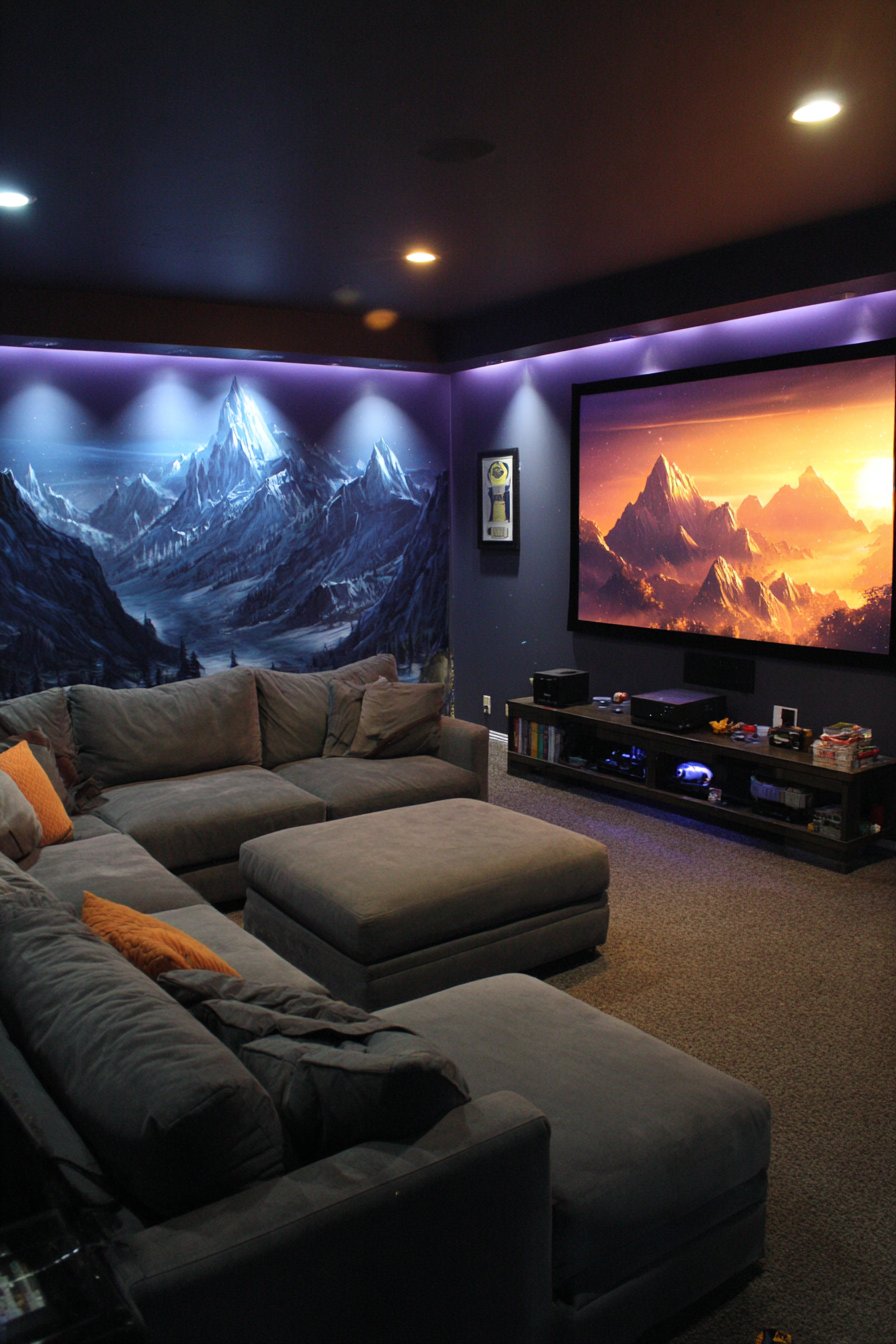
A wall-mounted television sits above a low media console. The integrated storage conceals electronics and media organizationally. A comfortable sectional in durable grey microfiber maximizes seating capacity. The practical fabric choice withstands heavy use from movie watching and entertaining.
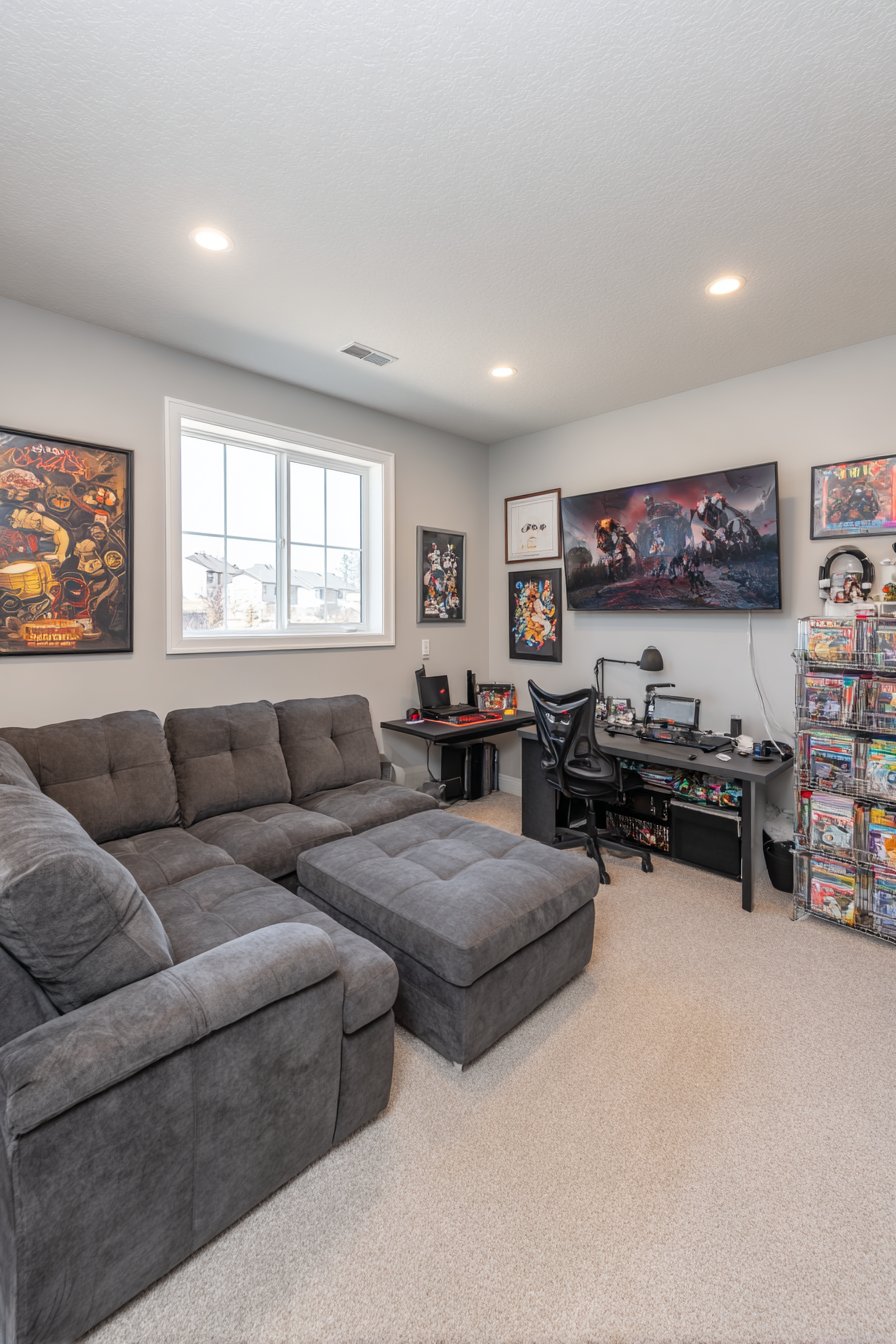
Hidden wire management maintains clean aesthetic throughout the space. Strategically placed outlets support technology without visible clutter. Dimmable recessed lighting creates optimal viewing conditions for different activities. LED strip lighting behind the television reduces eye strain during viewing.
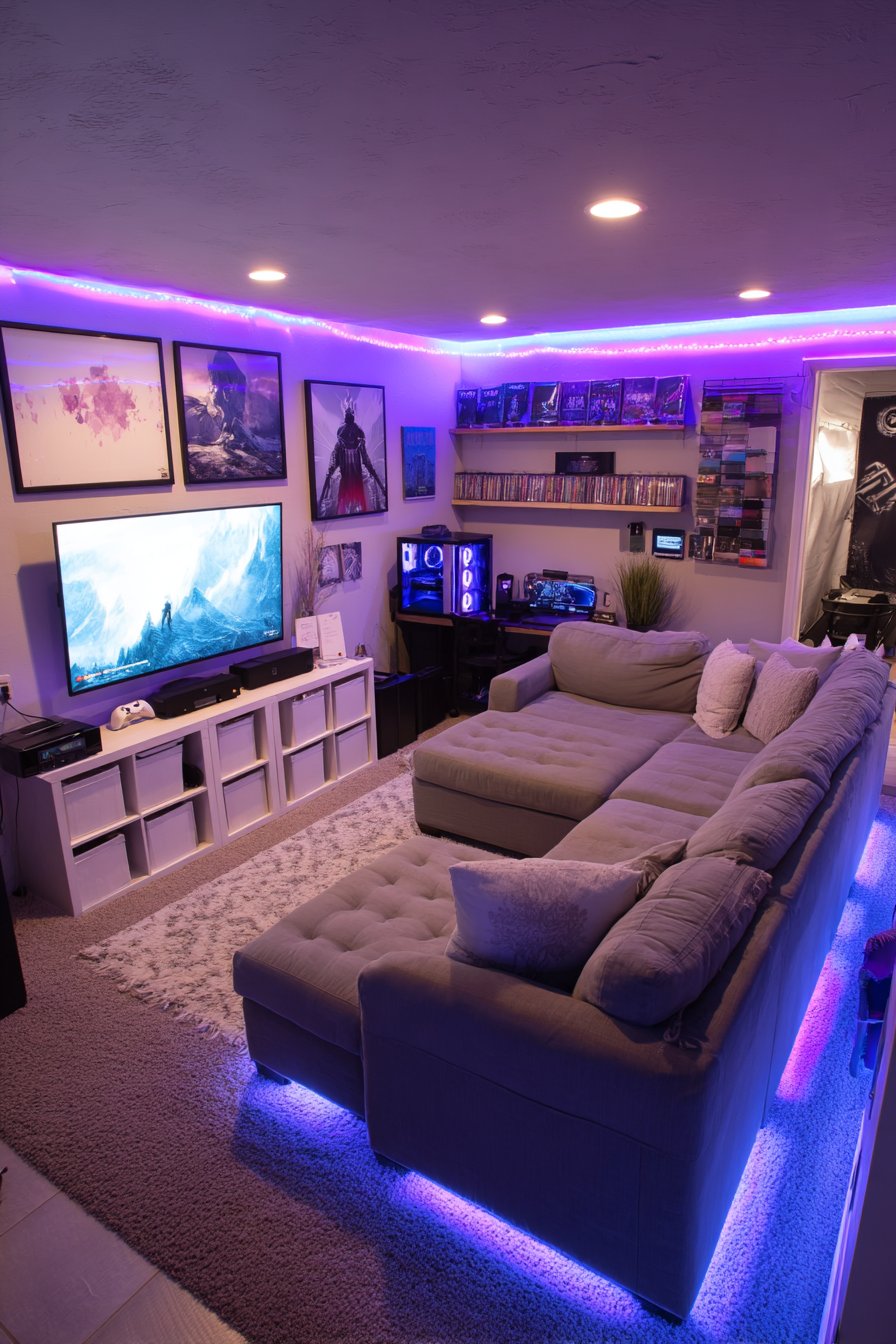
The sectional arrangement prioritizes comfortable viewing angles for multiple people. Traffic flow remains clear despite maximized seating capacity. The practical layout addresses real-world usage patterns effectively. Entertainment function drives every design decision in this purposeful arrangement.
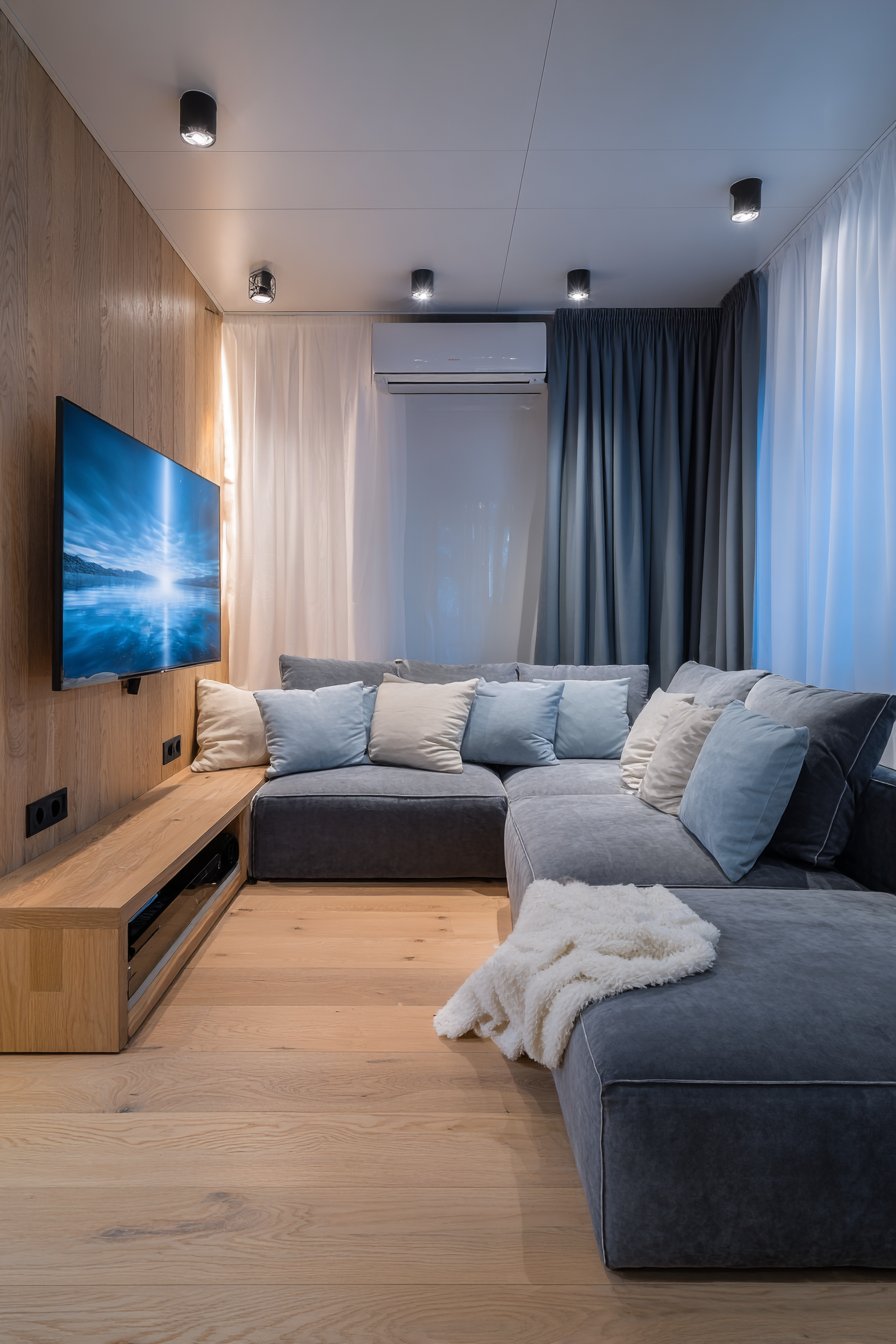
This approach demonstrates that small spaces can support serious entertainment systems. Proper planning accommodates technology without visual dominance. Multiple lighting layers support various activities beyond television viewing. The design proves that function and style coexist successfully in compact dimensions.
Key Design Tips:
- Mount televisions to save floor space for media storage
- Choose performance fabrics that withstand heavy entertainment use
- Install dimmable lighting for different viewing and activity needs
- Add LED strip lighting behind televisions to reduce eye strain
- Incorporate hidden wire management during initial setup
- Arrange seating to optimize viewing angles for multiple people
17. Work-From-Home Integration with Flexible Zones
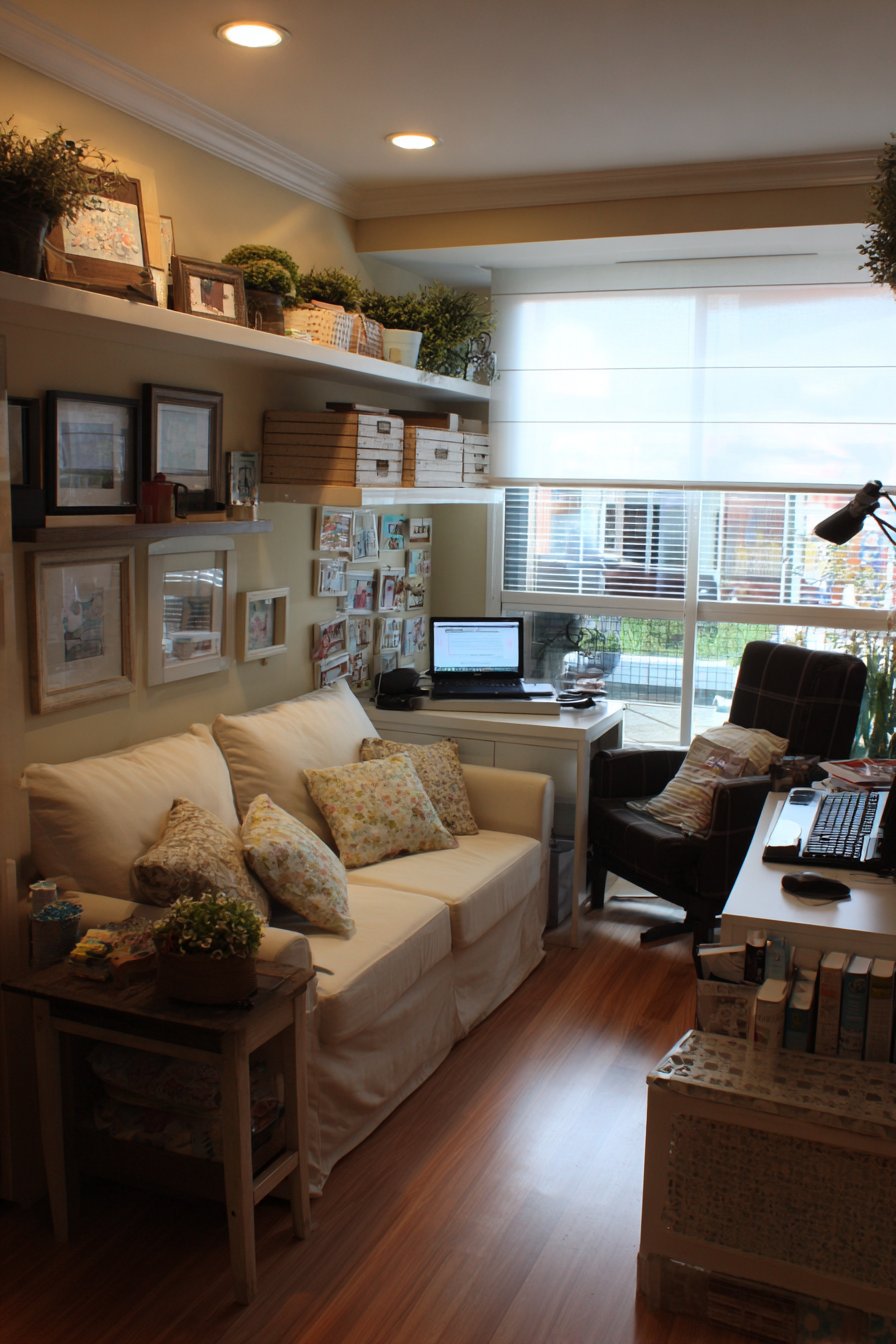
A narrow console table behind the sofa serves double duty. The placement provides decorative display space and functional laptop workspace. A comfortable reading chair near the window creates secondary work zone. The adjustable task lighting supports focused activities throughout the day.
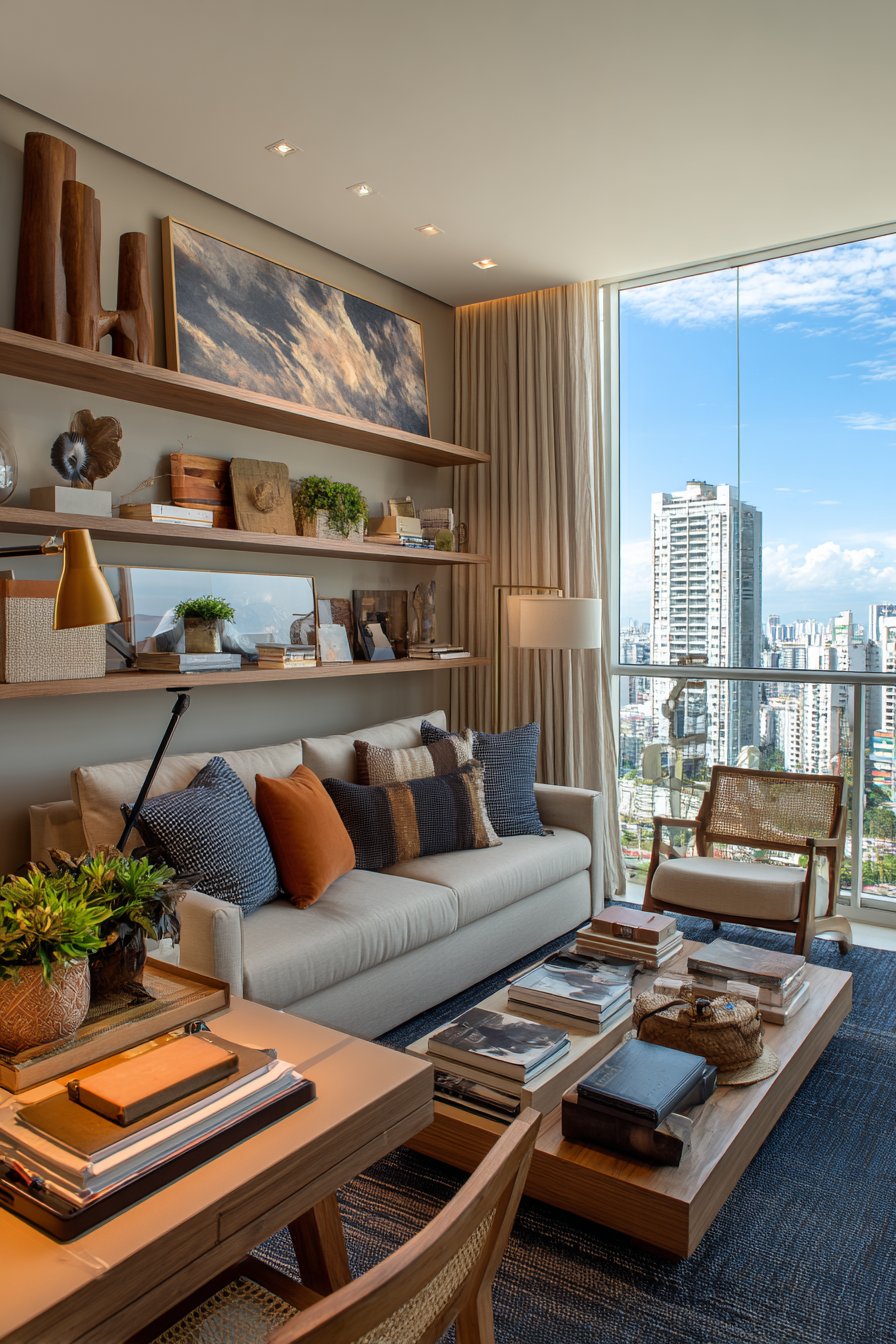
Floating shelves hold decorative objects and practical office supplies. Attractive storage boxes conceal work materials when not in use. The space transitions seamlessly between living and working functions. Natural daylight supplemented by focused task lighting supports productive work sessions.
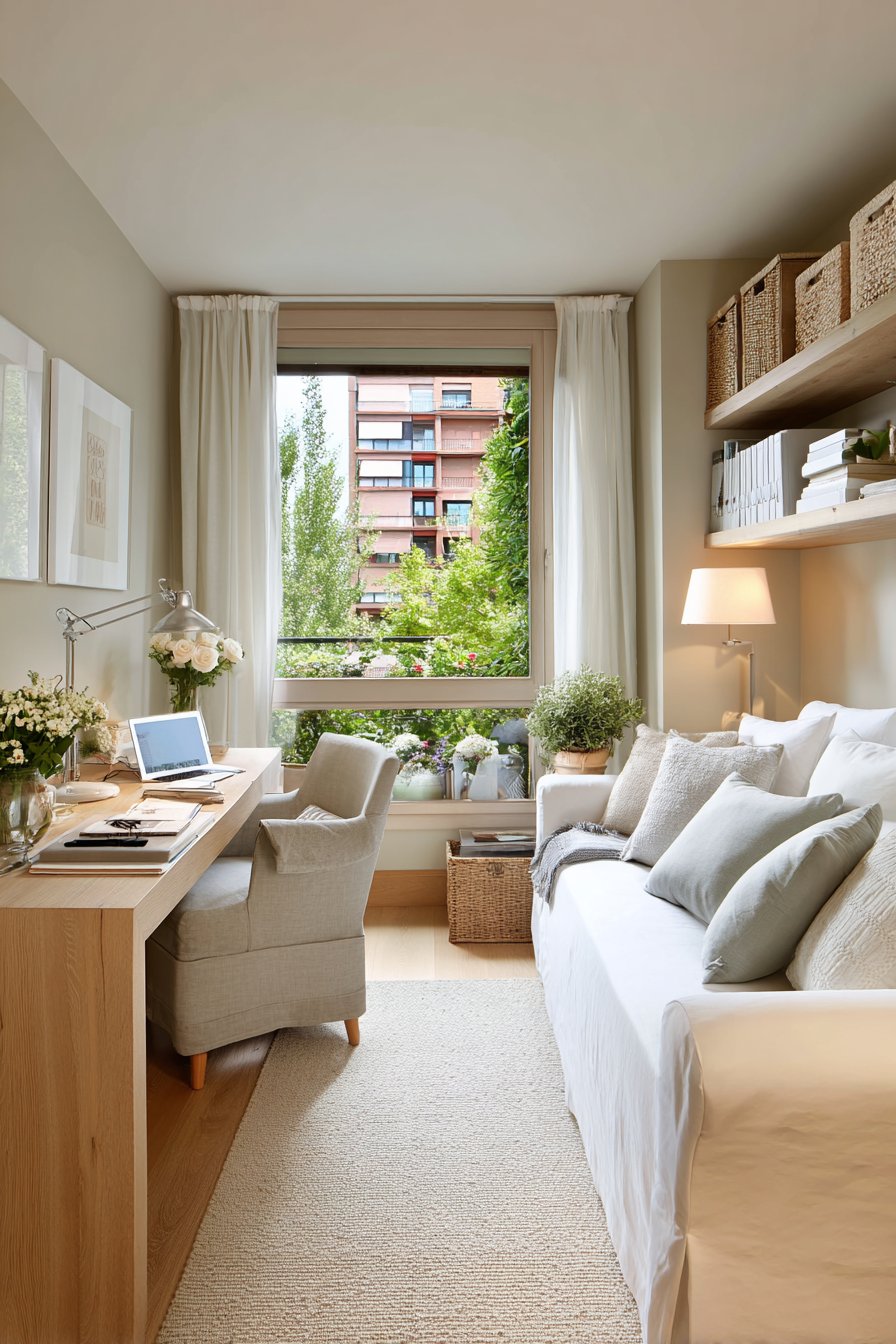
The flexible design accommodates work-from-home needs without sacrificing style. Every piece serves multiple purposes across different daily activities. The laptop workspace tucks away to become decorative display during non-working hours. The reading chair provides both work seating and relaxation spot.
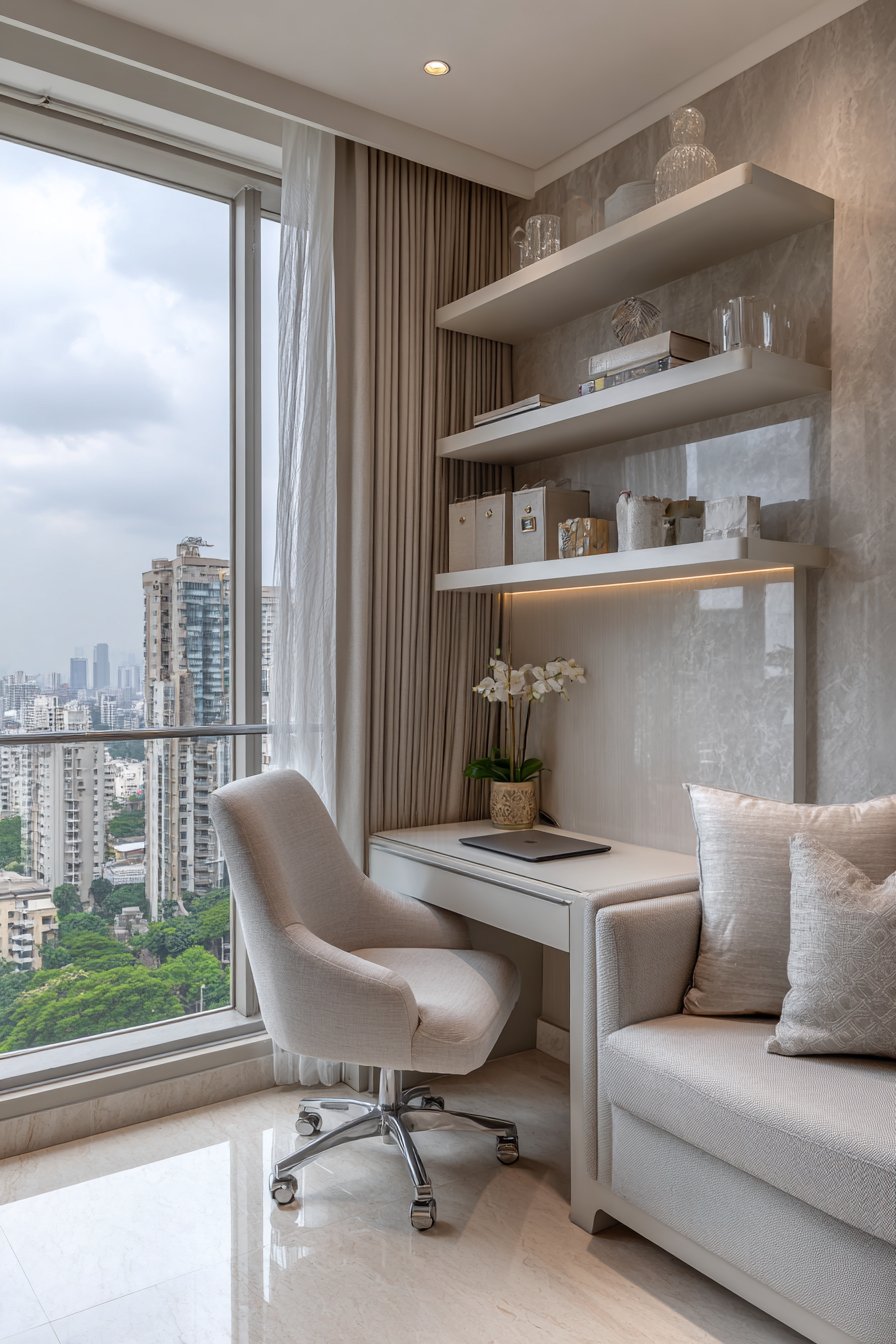
This approach addresses modern lifestyle needs in compact urban spaces. The integration proves that small living rooms can support remote work. Thoughtful planning prevents the space from feeling like a permanent office. The flexible zones adapt to different needs throughout the day and week.
Key Design Tips:
- Use console tables behind sofas for dual-purpose workspace surfaces
- Add dedicated task lighting for focused work activities
- Choose comfortable chairs that serve work and relaxation needs
- Incorporate attractive storage for organizing office supplies
- Create flexible zones that transition between functions easily
- Ensure adequate natural light supplemented by adjustable task lighting
18. Family-Friendly Durability with Safety Features
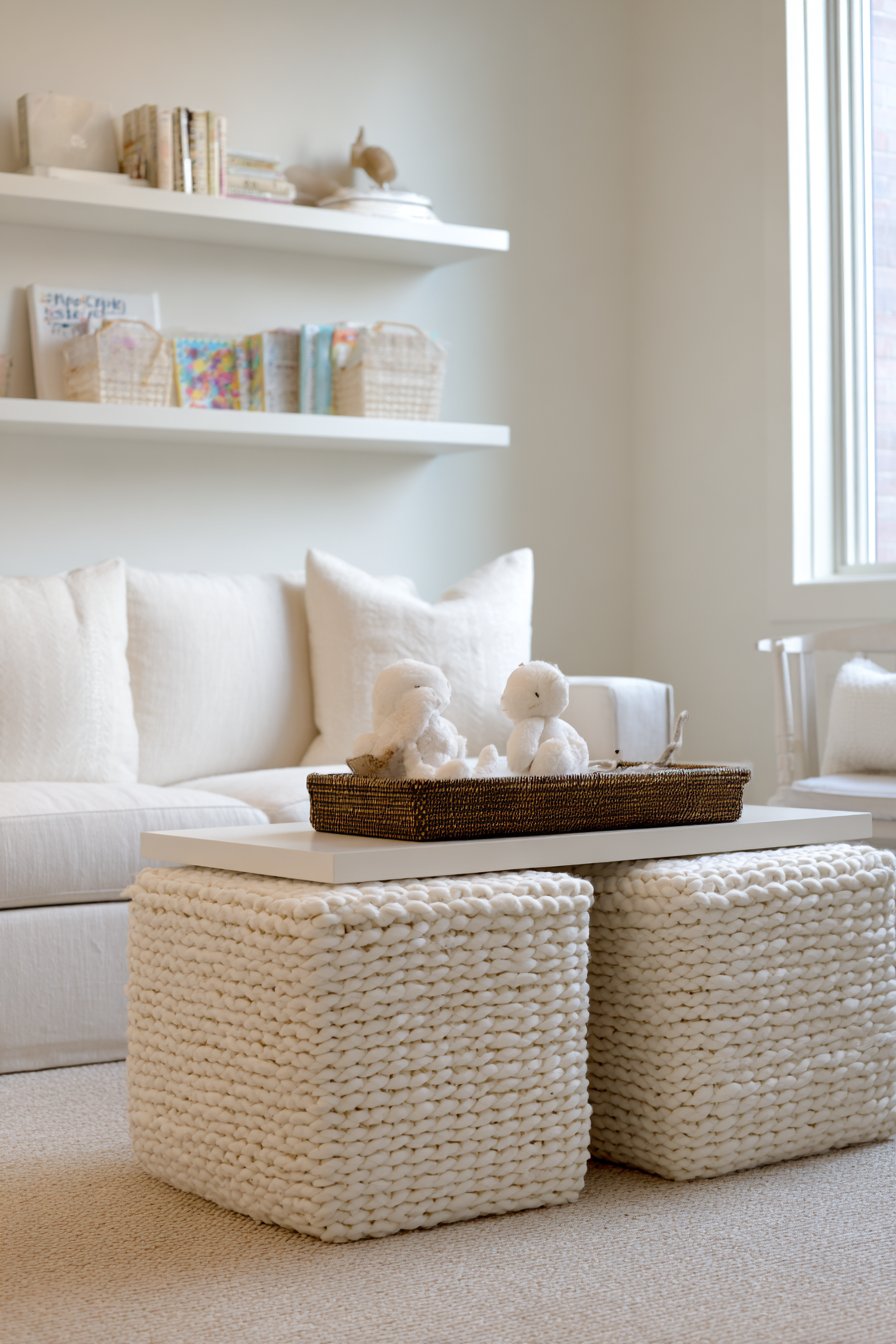
Performance fabrics and washable slipcovers dress a deeply cushioned sofa. The neutral tan color hides everyday wear from family use. A durable coffee table with rounded corners provides safety for young children. The thoughtful design prevents injuries while maintaining necessary function.
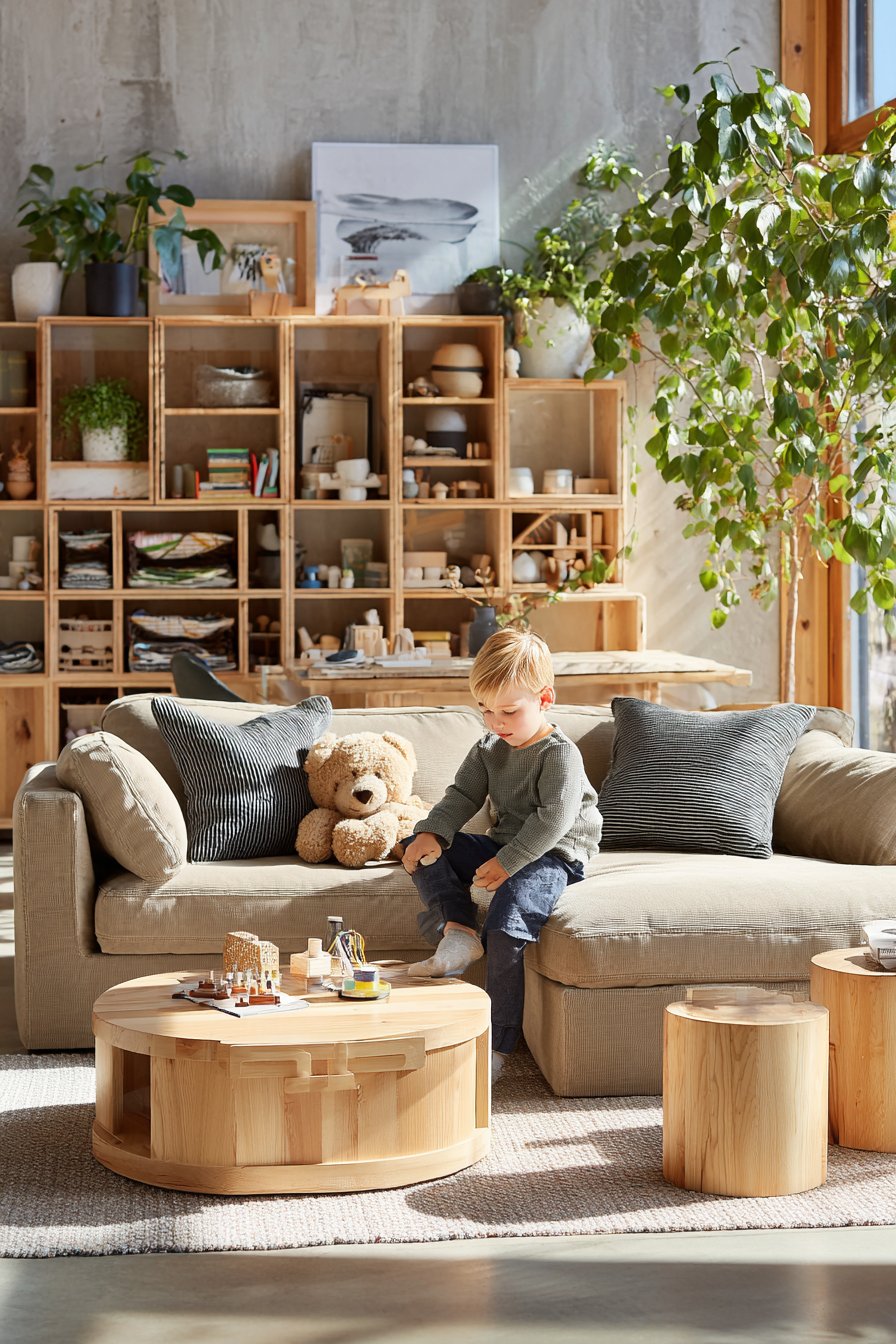
Ample storage ottomans conceal toys and clutter quickly. The closed storage maintains clean appearance between play sessions. Wall-mounted shelving keeps decorative items safely above toddler reach. The elevated display allows personal style without safety concerns.
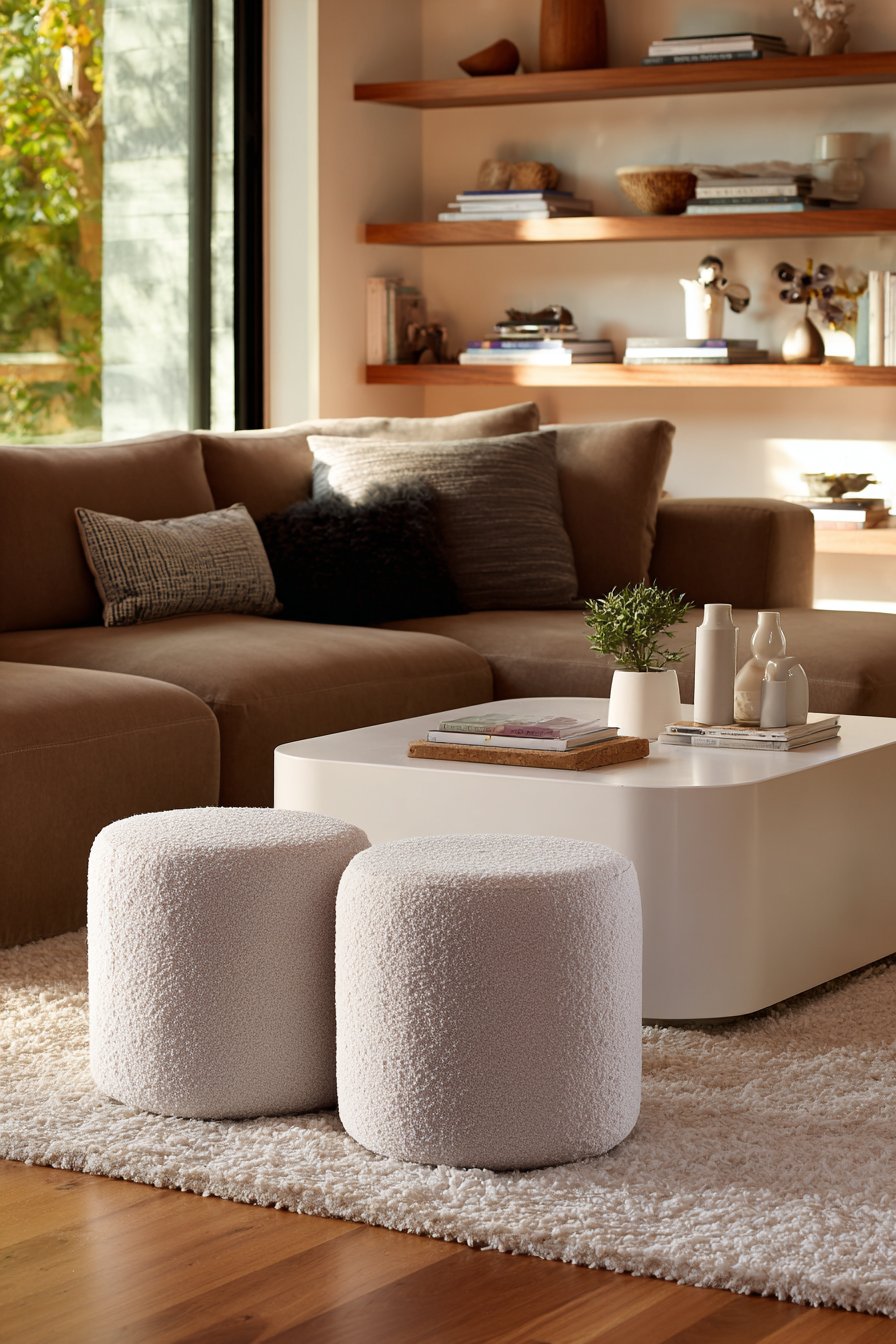
Natural afternoon light illuminates the durable, practical materials throughout. The family-friendly choices don’t compromise on style or sophistication. Strategic material selection addresses real-world concerns of households with children. The lived-in yet organized aesthetic supports daily family life.
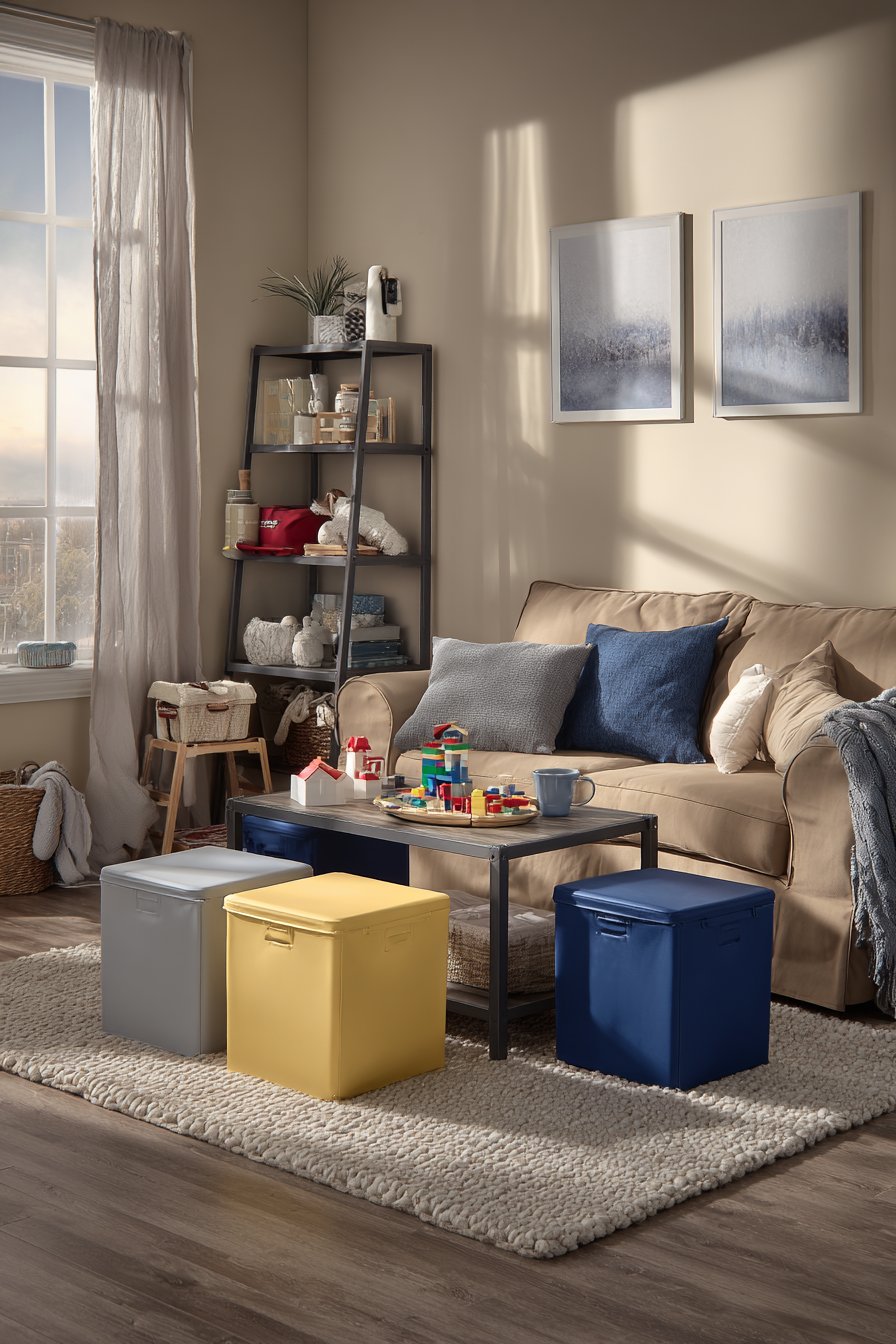
This design proves that compact spaces accommodate families successfully. Thoughtful furniture choices address both safety and style requirements. Easy-to-clean materials reduce stress around everyday accidents and spills. The approach demonstrates that family-friendly design can be beautiful and functional simultaneously.
Key Design Tips:
- Select performance fabrics that resist stains and clean easily
- Choose furniture with rounded corners for child safety
- Use storage ottomans to quickly conceal toys and clutter
- Mount shelves high enough to keep decorative items safe from toddlers
- Opt for neutral colors that hide everyday wear and tear
- Prioritize washable slipcovers for easy maintenance with children
19. Biophilic Design with Natural Material Focus
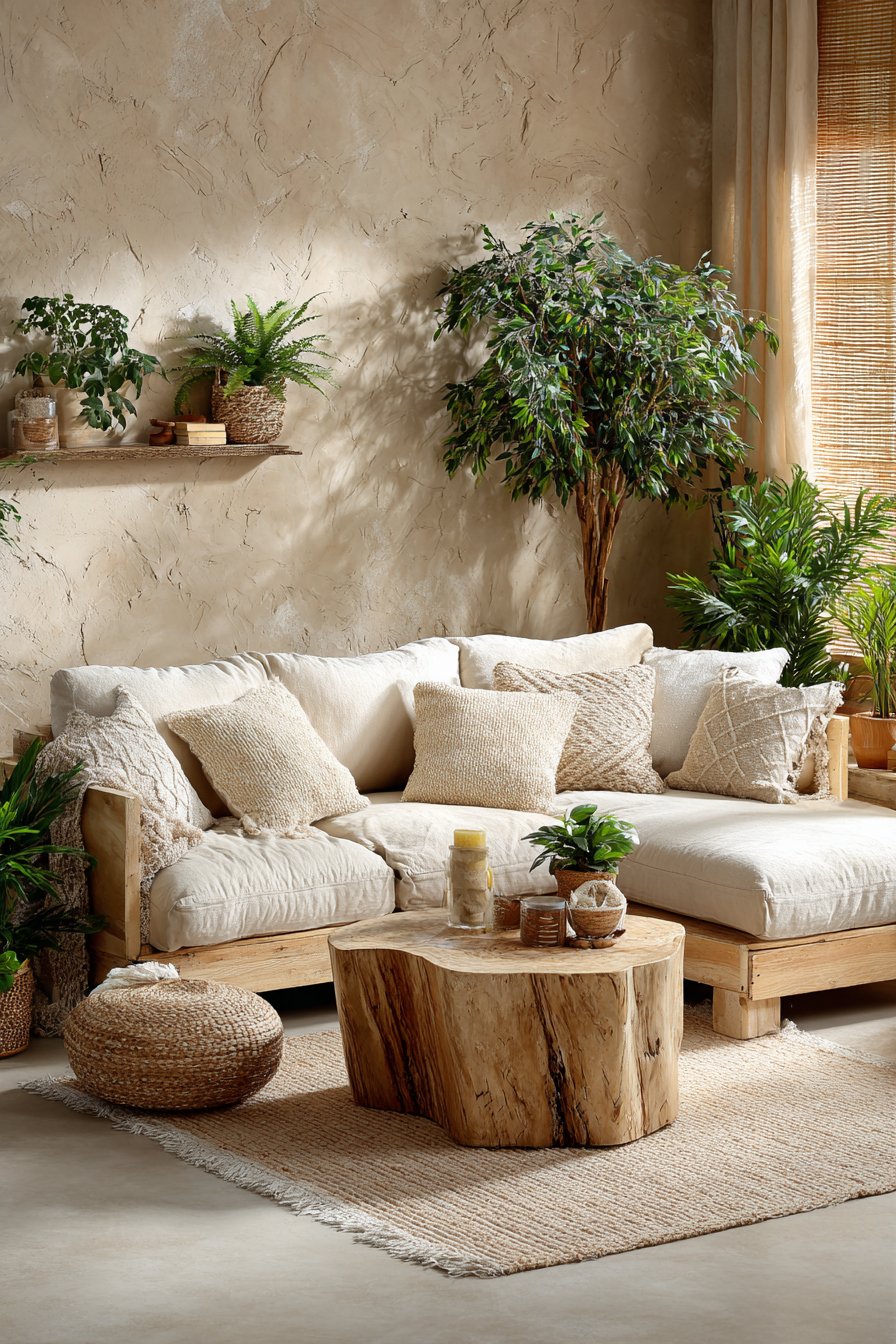
A jute sectional sofa features exposed wooden frame and natural fiber cushions. The organic materials connect indoor space to natural world. A live-edge wood coffee table showcases organic form and craftsmanship. The unique piece becomes sculptural focal point through natural beauty.
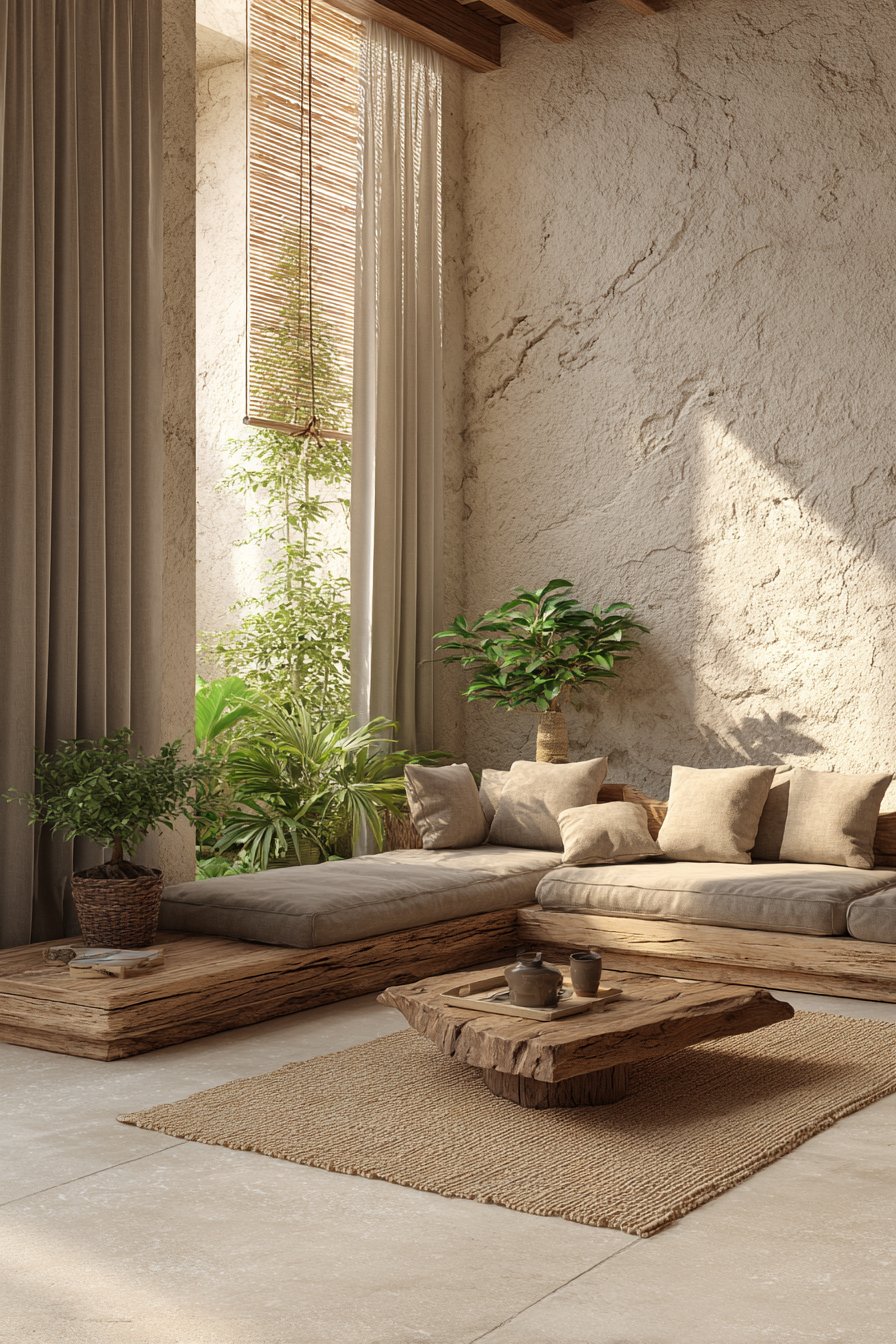
Potted plants of varying sizes create mini indoor garden atmosphere. The greenery improves air quality while adding visual life. Bamboo window shades filter natural light creating dappled patterns. The natural material complements the organic aesthetic throughout the space.
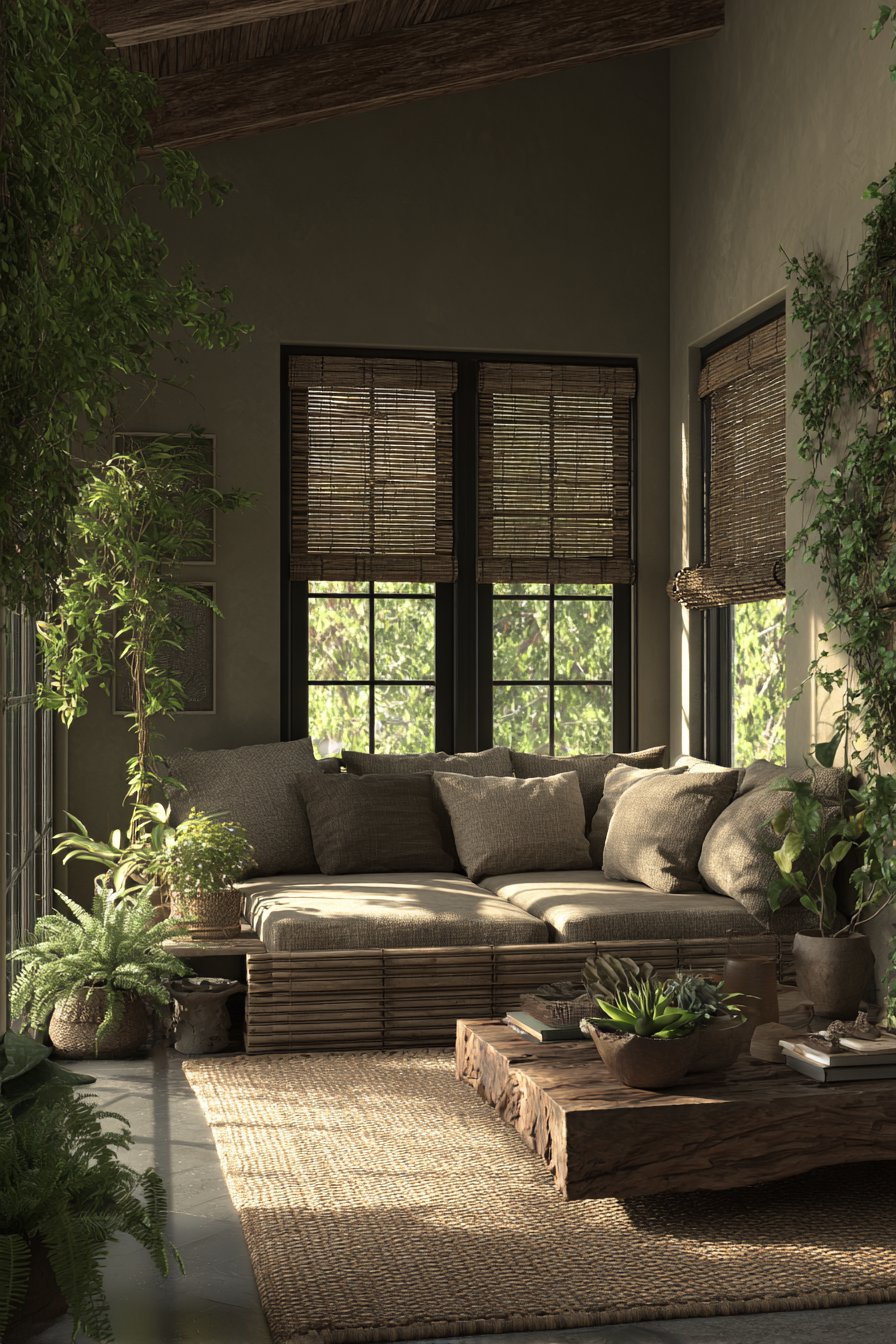
Natural fiber area rug and linen curtains complete the earth-toned palette. Limestone-colored walls provide neutral backdrop for natural materials. The sustainable materials and biophilic design principles create calm atmosphere. The grounded feeling counters urban stress through nature connection.
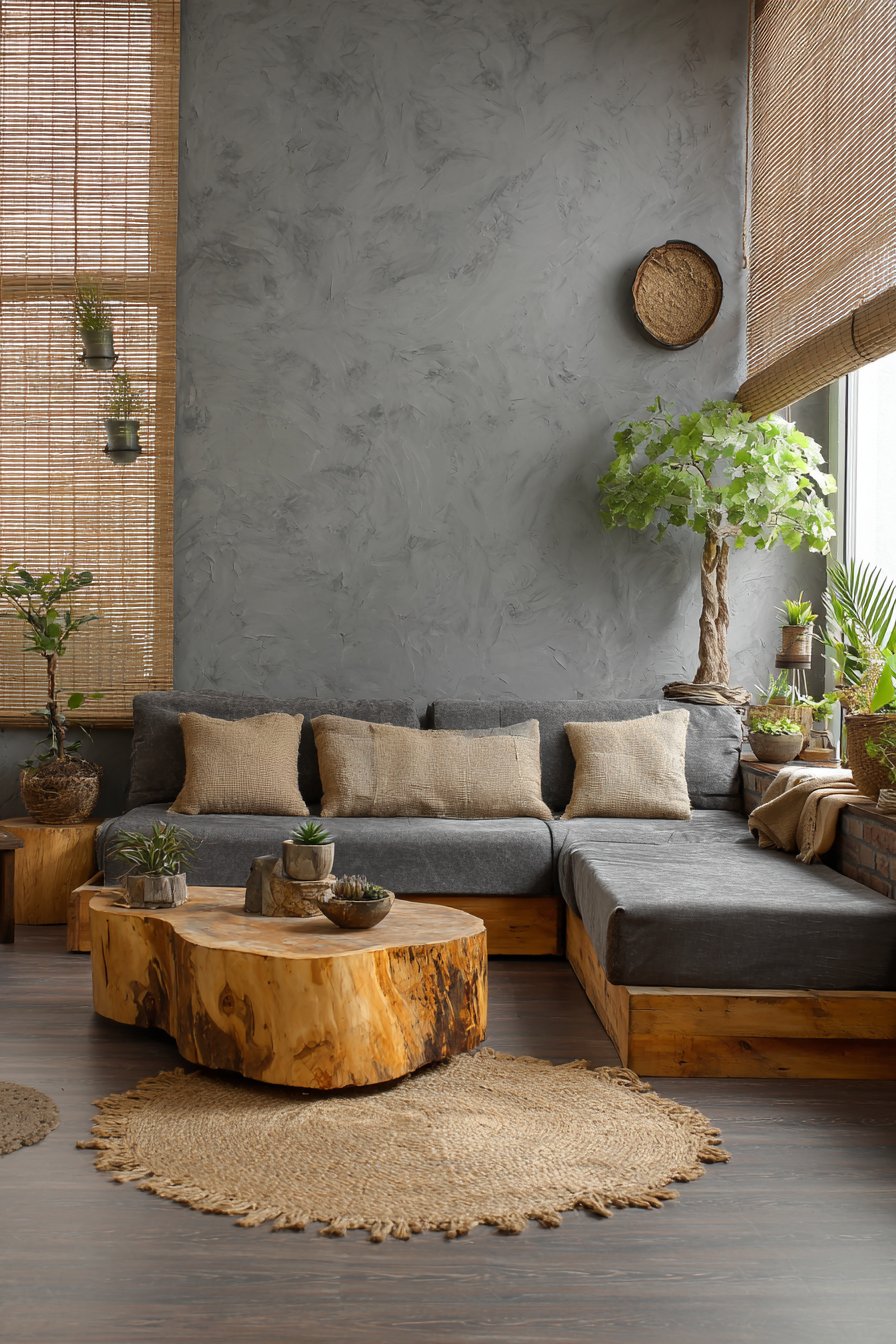
This approach demonstrates that natural materials thrive in compact spaces. The organic textures create warmth without requiring excessive decoration. Multiple plants add life without consuming significant floor area. The design proves that bringing nature indoors enhances small urban living significantly.
Key Design Tips:
- Choose furniture with exposed natural wood frames for organic aesthetic
- Incorporate live-edge wood pieces for sculptural natural beauty
- Add multiple plants at varying heights for indoor garden effect
- Use bamboo or natural fiber window treatments for filtered light
- Select earth-toned palettes that connect to natural environments
- Layer natural fiber textiles like jute, linen, and cotton
20. Smart Storage Solutions with Hidden Compartments
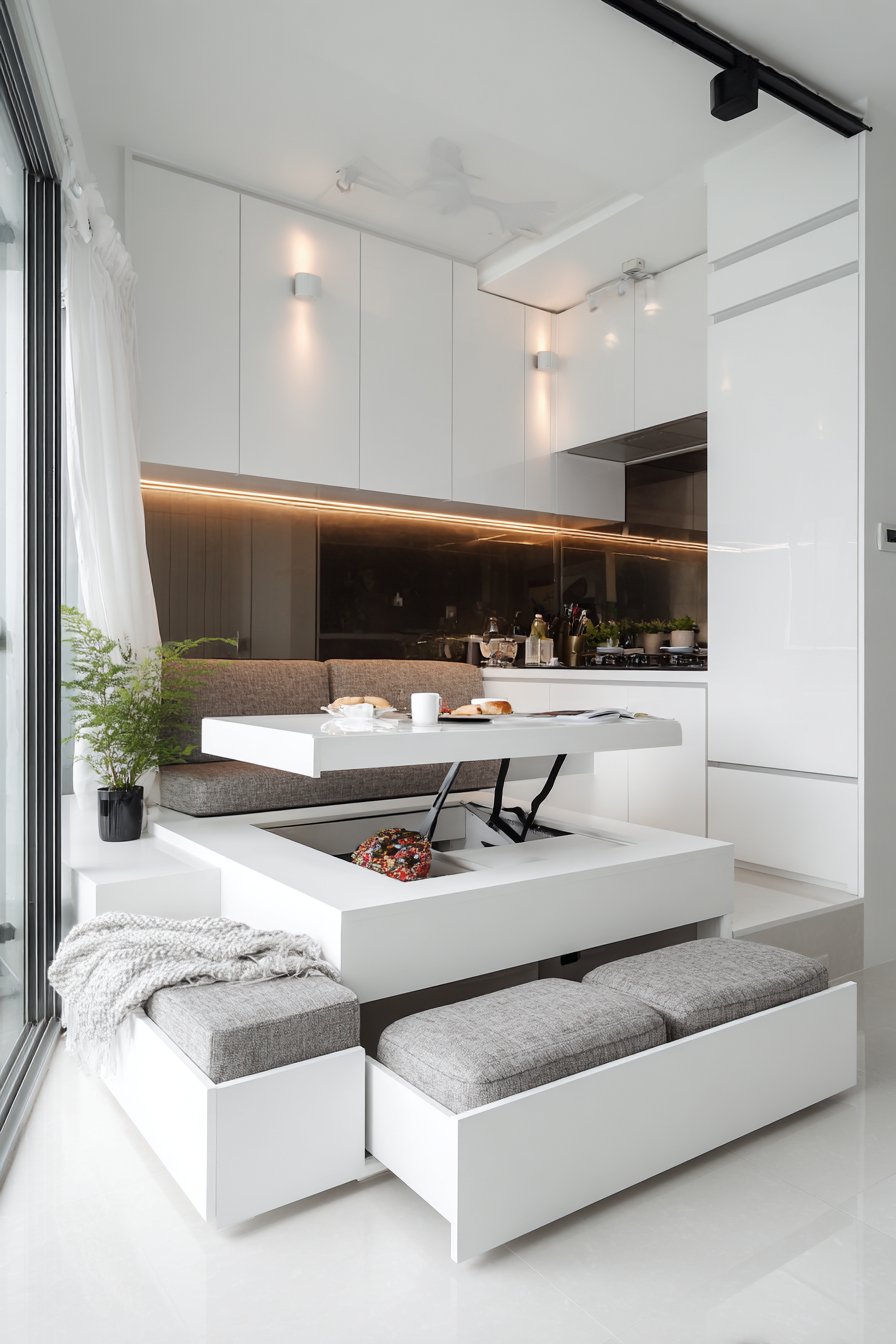
A sofa featuring built-in storage compartments beneath the seats maximizes utility. The hidden storage keeps essentials accessible yet concealed. A coffee table with lift-top mechanism reveals additional hidden storage. The clever design maintains clean surfaces while organizing necessities.
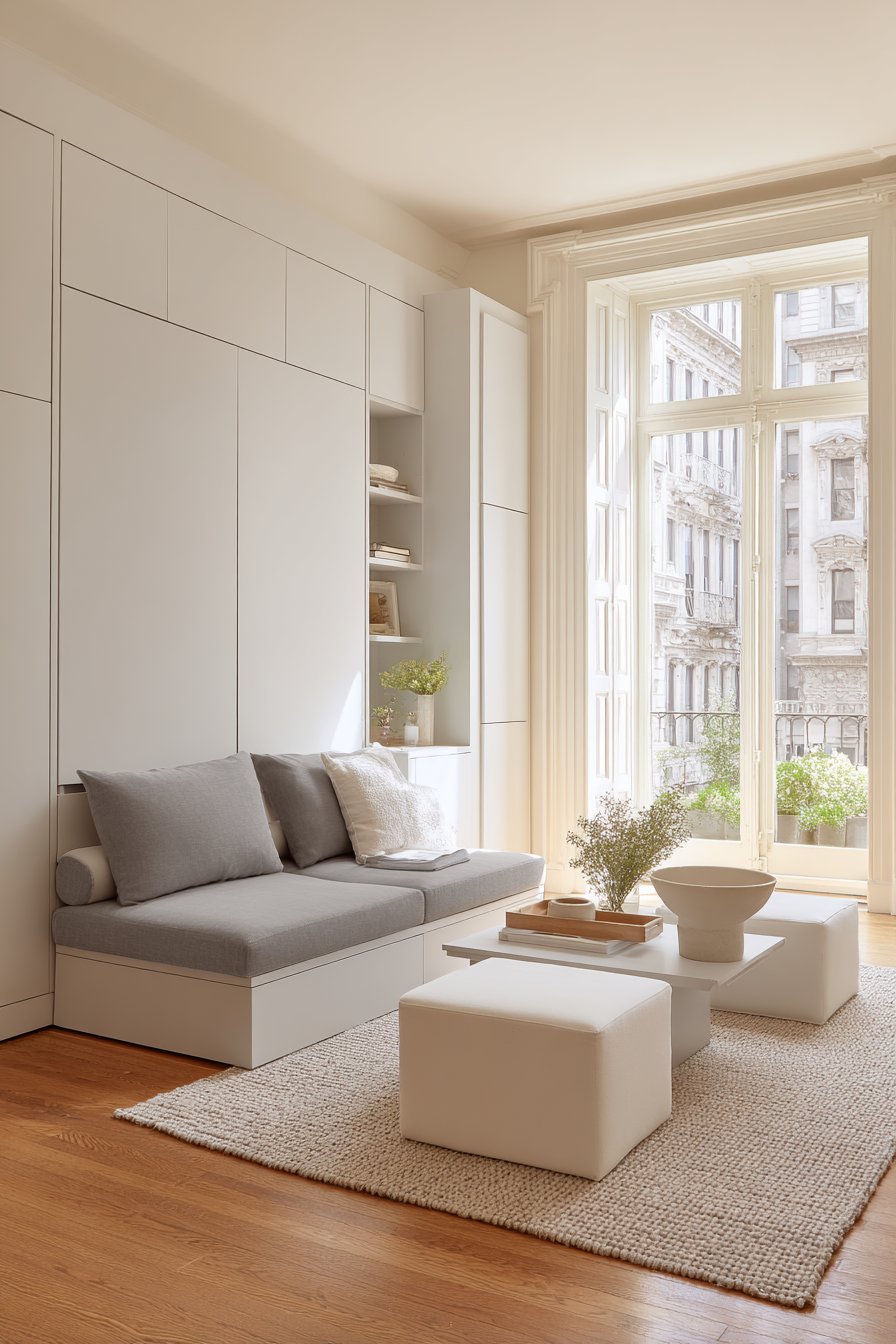
Ottomans that open to store blankets and accessories provide flexible function. The dual-purpose pieces eliminate need for separate storage furniture. Wall-mounted cabinets with doors maintain clean lines throughout. The closed storage conceals everyday items effectively without visual clutter.
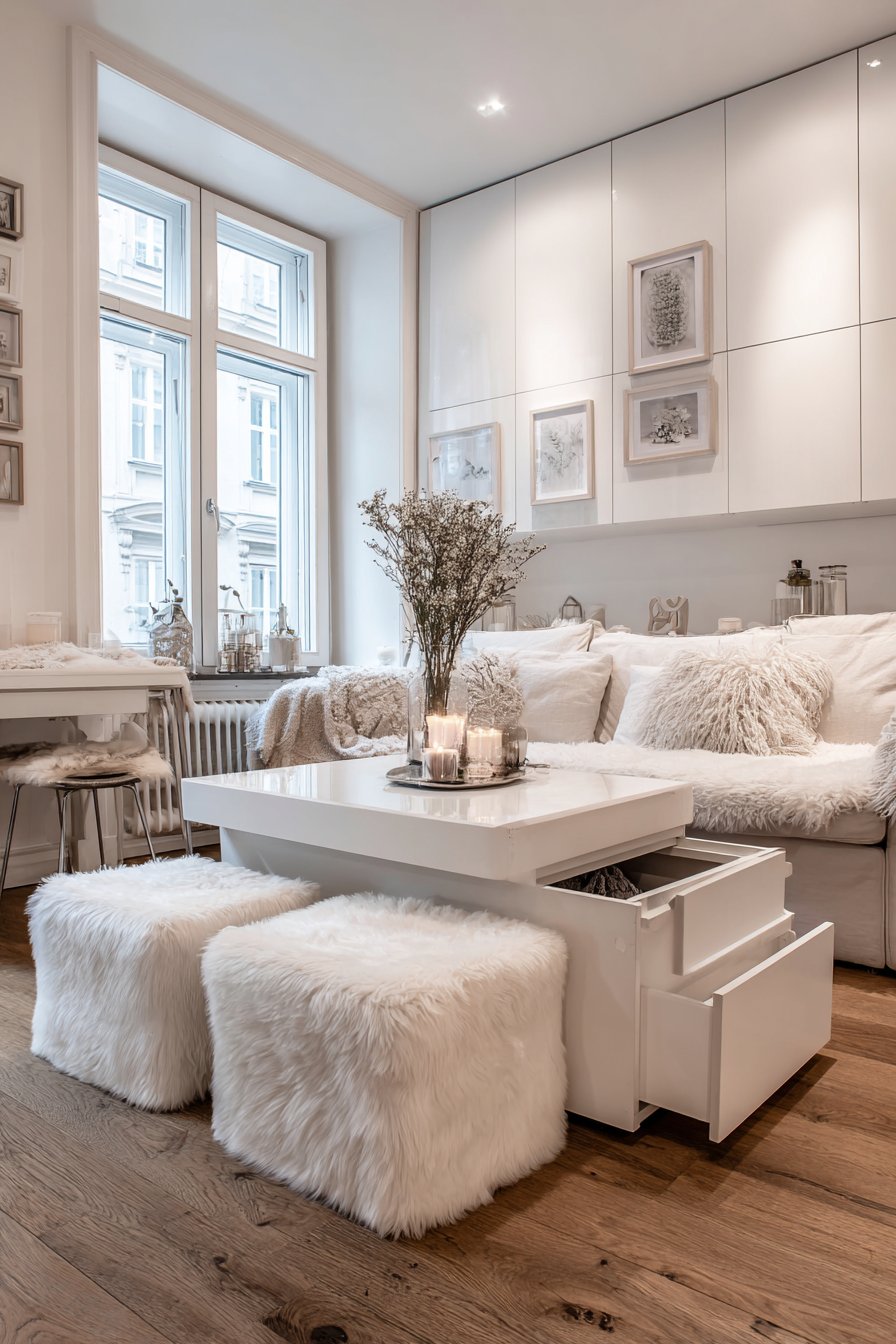
Vertical storage maximizes every available inch of the compact space. The organized aesthetic creates calm despite extensive hidden storage capacity. Even lighting emphasizes the uncluttered appearance throughout the room. The ingenious planning incorporates storage without visual bulk.
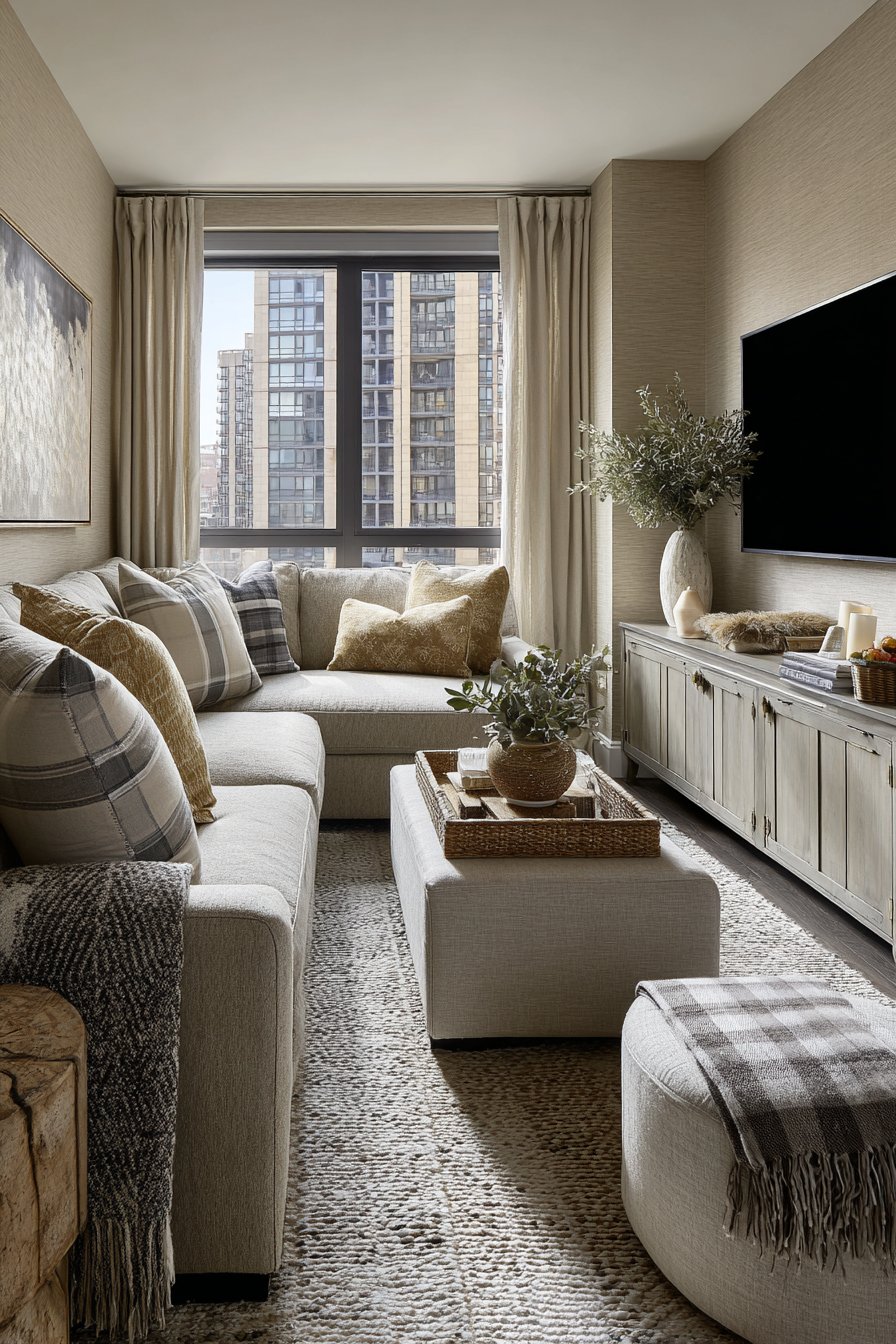
This design proves that compact spaces remain functional and beautiful simultaneously. Clever furniture selection eliminates compromise between storage and style. The extensive hidden compartments address real-world organizational needs effectively. The approach demonstrates that thoughtful planning conquers small space storage challenges successfully.
Key Design Tips:
- Invest in sofas with built-in storage compartments beneath seating
- Choose coffee tables with lift-top mechanisms for hidden storage
- Use ottomans that open to store blankets and accessories
- Install wall-mounted cabinets with doors for concealed storage
- Maximize vertical storage to preserve floor space
- Select furniture where every piece incorporates hidden storage capacity
Why These Small Living Room Designs Are the Best
These small living room designs represent exceptional approaches to maximizing compact spaces without sacrificing style or function. Each concept demonstrates sophisticated understanding of spatial planning, furniture scaling, and visual psychology. The versatility across these designs addresses diverse lifestyle needs from families to remote workers, entertaining enthusiasts to minimalist aesthetics.
The emphasis on multi-functional furniture proves essential in small spaces. Convertible sofas, nesting tables, and storage ottomans provide flexibility that static pieces cannot match. Vertical storage solutions maximize capacity without horizontal sprawl that shrinks perceived space. Wall-mounted lighting and floating shelves preserve precious floor area while providing necessary function.
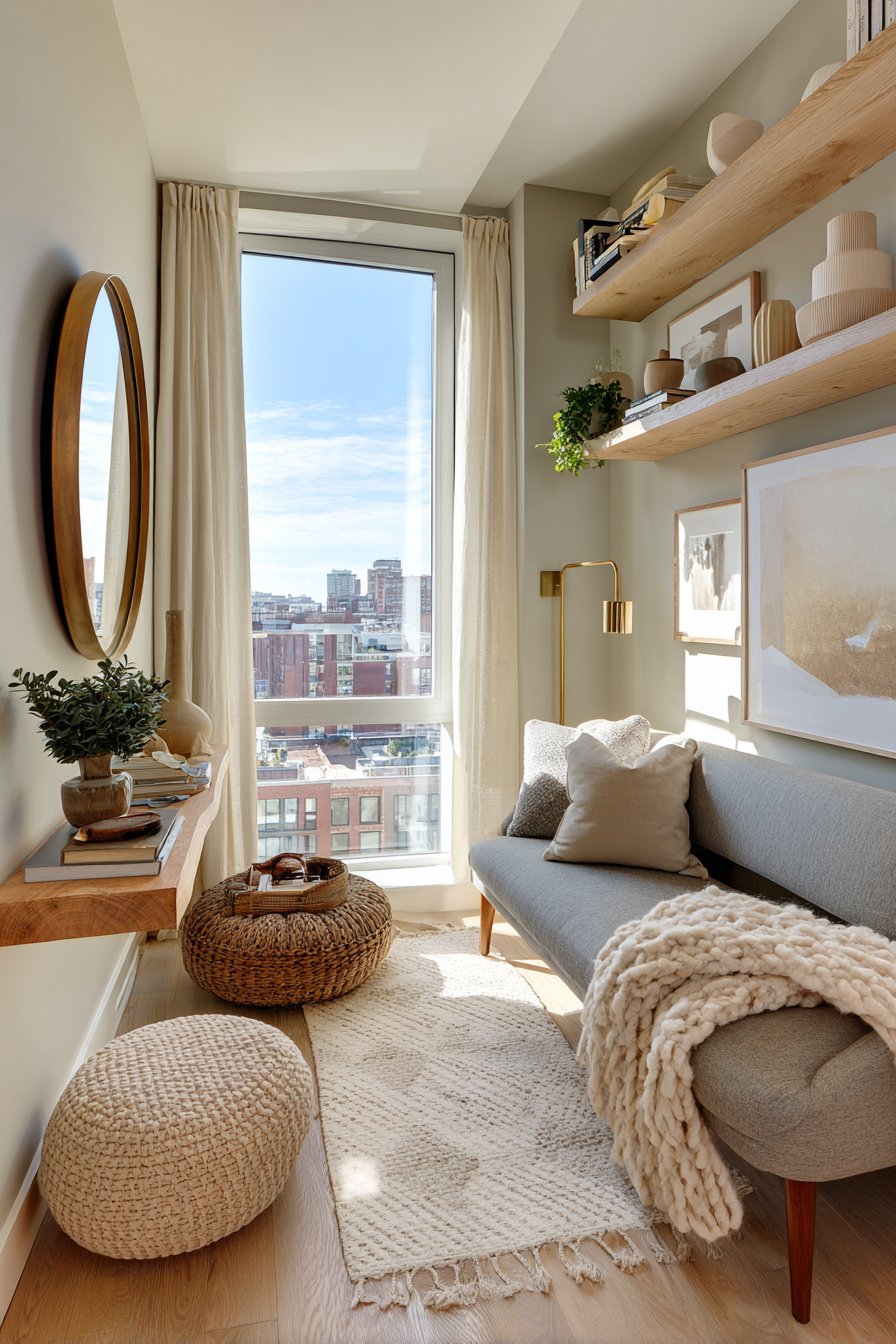
Color theory applications throughout these designs create different spatial perceptions. Light, neutral palettes reflect illumination and create openness in compact dimensions. Bold color choices when properly executed add personality without overwhelming limited square footage. Monochromatic schemes demonstrate how texture provides depth without color contrast.
Material selection significantly impacts both aesthetics and durability in small living rooms. Natural materials like wood, linen, and jute bring warmth while maintaining timeless appeal. Performance fabrics address practical concerns for families and frequent use. Quality materials ensure small spaces feel intentional rather than compromised.
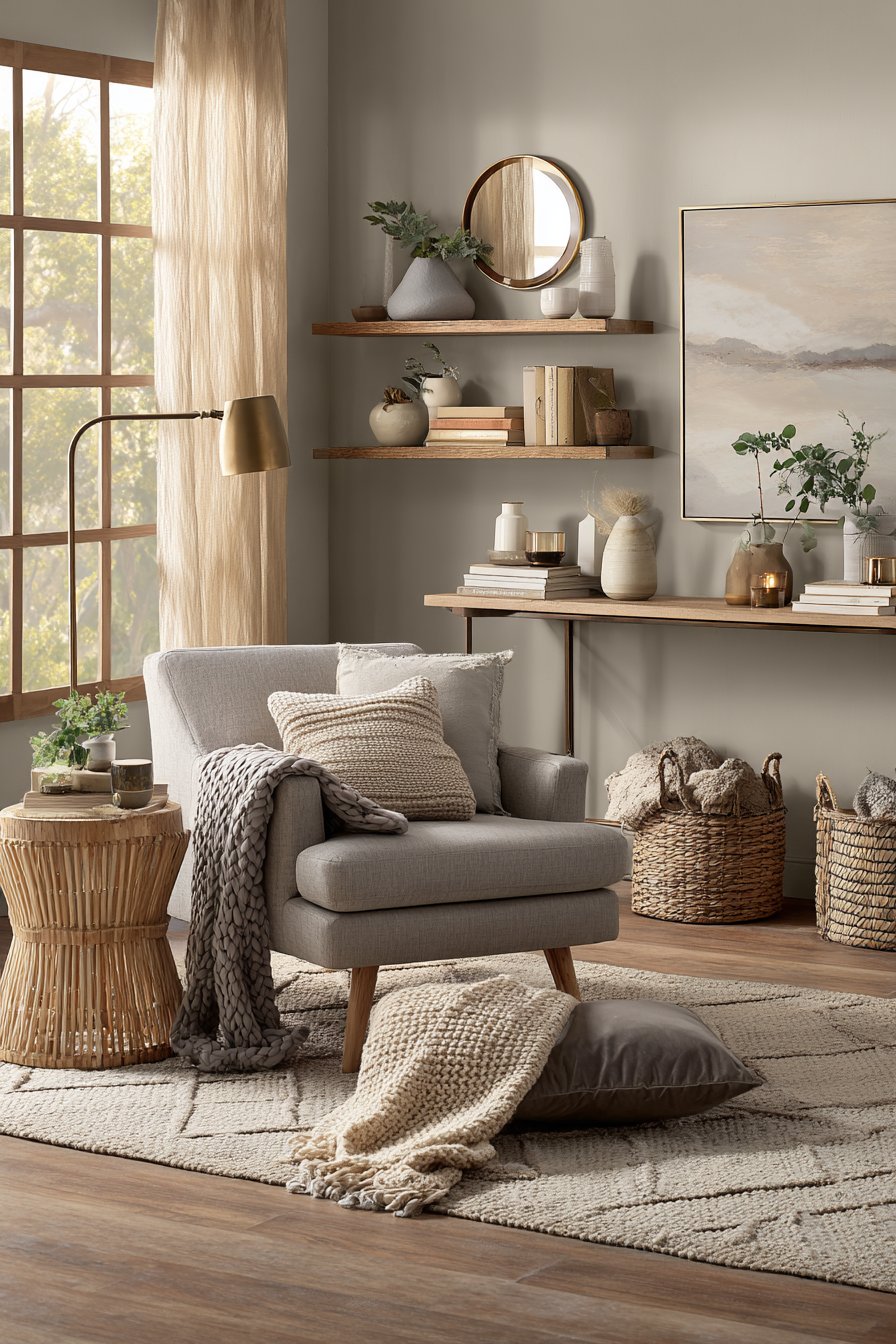
These designs succeed because they address real-world constraints while maintaining aspirational aesthetics. The incorporation of workspace zones acknowledges modern remote work needs. Family-friendly features prove that safety and style coexist successfully. Entertainment-optimized layouts demonstrate that technology integrates beautifully when properly planned. Each design balances immediate needs with lasting appeal through thoughtful material choices and flexible arrangements that adapt as lifestyles evolve.
Conclusion
These twenty small living room designs demonstrate that compact spaces offer tremendous potential for beautiful, functional living. The key takeaways include strategic furniture selection, vertical storage solutions, and multi-functional pieces that adapt to changing needs. Light-reflecting elements, thoughtful color choices, and quality materials create spaces that feel larger than their actual dimensions.
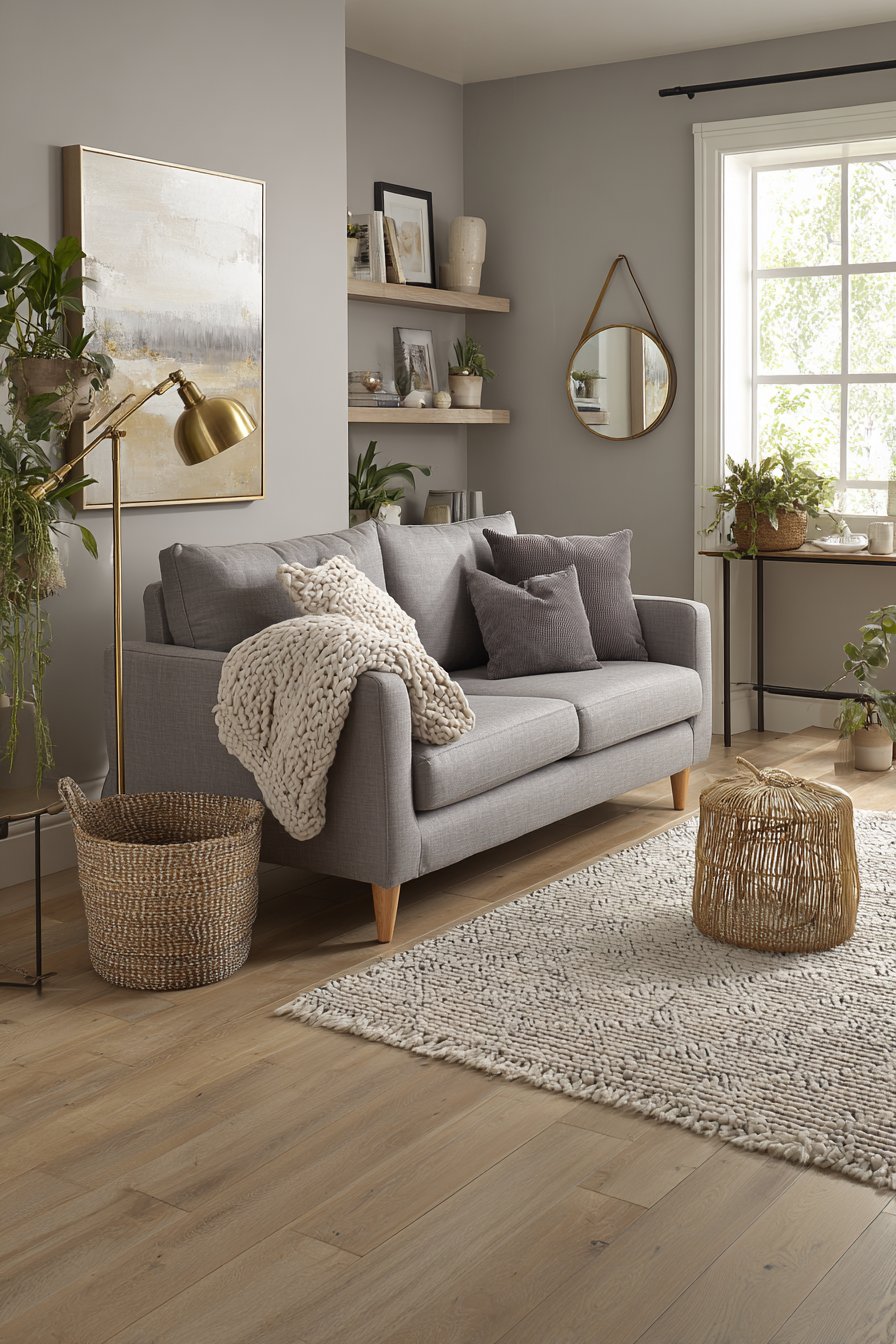
Successful small living room design requires balancing aesthetic appeal with practical requirements. Start by assessing your specific needs—whether entertainment, workspace, family activities, or quiet relaxation. Select furniture that serves multiple purposes and maintains appropriate scale. Embrace vertical storage to maximize capacity without horizontal sprawl.
Remember that small doesn’t mean sacrificing personal style or comfort. These designs prove that every aesthetic—from minimalist Scandinavian to maximalist bohemian—thrives in compact dimensions when thoughtfully executed. Experiment with these concepts in your own space, adapting ideas to suit your lifestyle and preferences. Your dream small living room awaits creation through intentional planning and creative expression.
